EP1893793B1 - Building component and method of reinforcing a building structure - Google Patents
Building component and method of reinforcing a building structure Download PDFInfo
- Publication number
- EP1893793B1 EP1893793B1 EP20060793277 EP06793277A EP1893793B1 EP 1893793 B1 EP1893793 B1 EP 1893793B1 EP 20060793277 EP20060793277 EP 20060793277 EP 06793277 A EP06793277 A EP 06793277A EP 1893793 B1 EP1893793 B1 EP 1893793B1
- Authority
- EP
- European Patent Office
- Prior art keywords
- additives
- fibre
- cement mortar
- bisoxazole
- phenylen
- Prior art date
- Legal status (The legal status is an assumption and is not a legal conclusion. Google has not performed a legal analysis and makes no representation as to the accuracy of the status listed.)
- Active
Links
Images




Classifications
-
- C—CHEMISTRY; METALLURGY
- C04—CEMENTS; CONCRETE; ARTIFICIAL STONE; CERAMICS; REFRACTORIES
- C04B—LIME, MAGNESIA; SLAG; CEMENTS; COMPOSITIONS THEREOF, e.g. MORTARS, CONCRETE OR LIKE BUILDING MATERIALS; ARTIFICIAL STONE; CERAMICS; REFRACTORIES; TREATMENT OF NATURAL STONE
- C04B28/00—Compositions of mortars, concrete or artificial stone, containing inorganic binders or the reaction product of an inorganic and an organic binder, e.g. polycarboxylate cements
- C04B28/02—Compositions of mortars, concrete or artificial stone, containing inorganic binders or the reaction product of an inorganic and an organic binder, e.g. polycarboxylate cements containing hydraulic cements other than calcium sulfates
-
- C—CHEMISTRY; METALLURGY
- C04—CEMENTS; CONCRETE; ARTIFICIAL STONE; CERAMICS; REFRACTORIES
- C04B—LIME, MAGNESIA; SLAG; CEMENTS; COMPOSITIONS THEREOF, e.g. MORTARS, CONCRETE OR LIKE BUILDING MATERIALS; ARTIFICIAL STONE; CERAMICS; REFRACTORIES; TREATMENT OF NATURAL STONE
- C04B16/00—Use of organic materials as fillers, e.g. pigments, for mortars, concrete or artificial stone; Treatment of organic materials specially adapted to enhance their filling properties in mortars, concrete or artificial stone
- C04B16/04—Macromolecular compounds
- C04B16/06—Macromolecular compounds fibrous
- C04B16/0675—Macromolecular compounds fibrous from polymers obtained otherwise than by reactions only involving carbon-to-carbon unsaturated bonds
-
- Y—GENERAL TAGGING OF NEW TECHNOLOGICAL DEVELOPMENTS; GENERAL TAGGING OF CROSS-SECTIONAL TECHNOLOGIES SPANNING OVER SEVERAL SECTIONS OF THE IPC; TECHNICAL SUBJECTS COVERED BY FORMER USPC CROSS-REFERENCE ART COLLECTIONS [XRACs] AND DIGESTS
- Y10—TECHNICAL SUBJECTS COVERED BY FORMER USPC
- Y10T—TECHNICAL SUBJECTS COVERED BY FORMER US CLASSIFICATION
- Y10T428/00—Stock material or miscellaneous articles
- Y10T428/249921—Web or sheet containing structurally defined element or component
- Y10T428/249953—Composite having voids in a component [e.g., porous, cellular, etc.]
- Y10T428/249967—Inorganic matrix in void-containing component
- Y10T428/249968—Of hydraulic-setting material
-
- Y—GENERAL TAGGING OF NEW TECHNOLOGICAL DEVELOPMENTS; GENERAL TAGGING OF CROSS-SECTIONAL TECHNOLOGIES SPANNING OVER SEVERAL SECTIONS OF THE IPC; TECHNICAL SUBJECTS COVERED BY FORMER USPC CROSS-REFERENCE ART COLLECTIONS [XRACs] AND DIGESTS
- Y10—TECHNICAL SUBJECTS COVERED BY FORMER USPC
- Y10T—TECHNICAL SUBJECTS COVERED BY FORMER US CLASSIFICATION
- Y10T428/00—Stock material or miscellaneous articles
- Y10T428/25—Web or sheet containing structurally defined element or component and including a second component containing structurally defined particles
Definitions
- the present invention relates to a building component and a method of reinforcing a building structure.
- building structures constructed of brick, plain concrete, reinforced concrete, etc.
- building structures are known to undergo slow but progressive degradation with the passing of time, caused by environmental aggression or by poor execution and/or by unsuitable choice of materials for that particular application.
- EP 1541726 discloses a cement/concrete structure which may be reinforced by embedding polybenzazole reinforcing elements into the body of the structure.
- Building structures are traditionally reinforced by applying an electrically welded mesh which wraps the structure, in order to increase its ductility.
- a reinforcement system has been developed based on the use of bands and fabrics of carbon or other fibres, which are applied using thermoplastic resin, usually epoxy resin, to ensure adhesion between the building structure and the carbon bands.
- German patent DE A 19525508 which teaches to reinforce a building structure by applying to it a mineral matrix in the form of a layer of cement mortar, then pressing a textile reinforcement mesh thereon to embed it in the cement mortar, and finally applying a second cement mortar layer of the same type as the first layer.
- EP 1245547 describes a reinforcement system consisting of applying a particular cement mortar to the component to be treated, embedding in this cement mortar layer a mesh of carbon fibres, glass fibres, aramid fibres, polyester, polyethylene or the like, and finally applying a second cement mortar layer onto the first.
- the cement mortar described in said patent enables thermohygrometric transfer between the building component and the outer environment, and presents the same fire resistance as the building structure.
- cement mortar of the type indicated in EP 1245547 together with a reinforcement structure formed of poly[benz(1,2-D:5,4-D')bisoxazole-2,6-diyl-1,4-phenylen] fibre enables mechanical results (in terms of reinforcement) to be obtained (in addition to the advantages indicated in EP 1245547 ) which are surprisingly better than the other types of reinforcement.
- said reinforcement structure is formed from a fabric (in which the weft and warp fibres are woven together) or from a mesh (in which the weft and warp fibres are mutually superposed but not woven).
- the technical aim of the present invention is therefore to provide a building component and a method of reinforcing a building structure which ensure thermohygrometric transfer between the building structure and the outside, in which the building component presents resistance to fire and to aggressive chemical environments, while at the same time presenting very high mechanical properties (in terms of reinforcement).
- the building component 1 comprises a central structure 2 consisting of the structural element to be reinforced, which may for example be brickwork, plain concrete or reinforced concrete articles.
- the central structure 2 is covered with a layer of cement mortar 3; this cement mortar is described specifically in EP 1245547 and comprises between 5% and 95% of cement, between 10% and 70% of fine inert mineral fillers having a particle size less than 700 micron, chemical additives comprising between 0.1% and 25% of unsaturated copolymer resins, between 0.05% and 2.5% of fluidifying additives and between 0.005% and 1% of thixotropic additives pertaining to the cellulose class, all the specified percentages being by weight and referred to the total weight of the cement mortar.
- this cement mortar is described specifically in EP 1245547 and comprises between 5% and 95% of cement, between 10% and 70% of fine inert mineral fillers having a particle size less than 700 micron, chemical additives comprising between 0.1% and 25% of unsaturated copolymer resins, between 0.05% and 2.5% of fluidifying additives and between 0.005% and 1% of thixotropic additives pertaining to the cellulose class, all the specified percentages being by weight and referred
- the unsaturated copolymer resins are preferably of acrylic type; the unsaturated copolymer resins and/or the fluidifying additives and/or the thixotropic additives are added to the mortar mix as a liquid mixture or in powder form.
- a reinforcement structure 4 in the form of poly[benz(1,2-D:5,4-D')bisoxazole-2,6-diyl-1,4-phenylen] fibre (CAS No. 60857-81-0) is embedded in the interior of the cement mortar layer 3, the reinforcement structure 4 being formed in particular from the poly[benz(1,2-D:5,4-D')bisoxazole-2,6-diyl-1,4-phenylen] fibre produced by the Toyobo Company under the commercial name of "zylon"; the mechanical characteristics of this fibre are indicated in Figure 1 .
- the reinforcement structure is a textile structure or a mesh structure, the characteristics of which are preferably those indicated in EP 1245547 .
- the fluidifying additives for the cement mortar are chosen from the group consisting of polymers based on polycondensed lignin, betanaphthalene or melamine-formaldehyde sulphonates, and those based on modified polyacrylate chains.
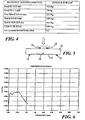
- the mix design of the concrete used for forming the test pieces was the same for all test pieces, and consisted of the mix indicated in the table of Figure 4 .
- the concrete test pieces were reinforced with a reinforcement structure 11 and were subjected to a flexure test at four points 12, 13, 14, 15, the load and deflection being measured at the centre line.
- test was conducted with controlled displacement at a test velocity of 0.01 millimetres/minute and with a load cell of 50 kN maximum capacity.
- test pieces were notched on their centre line (at 16) at the intrados, with a notch of 1 centimetre depth.
- test pieces reinforced as indicated in Figure 5 were prepared, each test piece being subjected to a flexure test at four points with the load and deflection being measured at the centre line.
- the present invention also relates to a method of reinforcing a building structure.
- the method consists of forming on the building structure to be reinforced a layer of covering cement mortar of the aforestated type, and embedding in the cement mortar layer a reinforcement structure formed of poly[benz(1,2-D:5,4-D')bisoxazole-2,6-diyl-1,4-phenylen] fibre (of CAS No. 60857-81-0).
- the reinforcement structure is suitably a mesh structure.
- the building component and the method of reinforcing a building structure of the invention are particularly advantageous as they enable reinforcements for damaged structures to be formed having superior mechanical characteristics while at the same time enabling thermohygrometric transfer between the structure and the outside and ensuring resistance even under extreme conditions such as the presence of fire or aggressive environments.
Landscapes
- Chemical & Material Sciences (AREA)
- Engineering & Computer Science (AREA)
- Ceramic Engineering (AREA)
- Chemical Kinetics & Catalysis (AREA)
- Materials Engineering (AREA)
- Structural Engineering (AREA)
- Organic Chemistry (AREA)
- Inorganic Chemistry (AREA)
- Working Measures On Existing Buildindgs (AREA)
- Reinforced Plastic Materials (AREA)
- Reinforcement Elements For Buildings (AREA)
- Laminated Bodies (AREA)
- Artificial Filaments (AREA)
- Treatments For Attaching Organic Compounds To Fibrous Goods (AREA)
- Panels For Use In Building Construction (AREA)
- Curing Cements, Concrete, And Artificial Stone (AREA)
Abstract
Description
- The present invention relates to a building component and a method of reinforcing a building structure.
- After their installation, building structures (constructed of brick, plain concrete, reinforced concrete, etc.) are known to undergo slow but progressive degradation with the passing of time, caused by environmental aggression or by poor execution and/or by unsuitable choice of materials for that particular application.
-
EP 1541726 discloses a cement/concrete structure which may be reinforced by embedding polybenzazole reinforcing elements into the body of the structure. - Building structures are traditionally reinforced by applying an electrically welded mesh which wraps the structure, in order to increase its ductility.
- However, this method presents numerous drawbacks, including installation difficulty caused by the weight and poor manageability of the electrically welded mesh, and the risk of corrosion of the electrically welded mesh, in particular in aggressive environments.
- To overcome these drawbacks, a. reinforcement system has been developed based on the use of bands and fabrics of carbon or other fibres, which are applied using thermoplastic resin, usually epoxy resin, to ensure adhesion between the building structure and the carbon bands.
- However this system has also displayed certain drawbacks, including the insufficient temperature which it is able to withstand; in this respect the temperature is limited to about 80°C by the presence of the epoxy resins, hence in the case of fire the epoxy resin degrades rapidly and causes the carbon reinforcement bands to separate very quickly from the structure.
- Further drawbacks of the use of reinforcement systems with carbon fibres derive from the noxiousness for the operator and the environment by using epoxy resins, the (very high) cost both of the epoxy resins and of the carbon bands, and finally the fact that the epoxy resins create a barrier which prevents thermohygrometric transfer between the building structure and the outside; hence in practice the moisture remains trapped within the building structure and cannot migrate naturally towards the outside.
- A further reinforcement system is described in German patent
DE A 19525508 which teaches to reinforce a building structure by applying to it a mineral matrix in the form of a layer of cement mortar, then pressing a textile reinforcement mesh thereon to embed it in the cement mortar, and finally applying a second cement mortar layer of the same type as the first layer. - However this reinforcement system presents the considerable drawback of using cement mortar formed from a mixture of cement, fillers and a styrene/acrylate dispersion in water, this latter (the styrene/acrylate dispersion in water) particularly giving the cement mortar a high fluidity which causes it to flow when applied to vertical walls; moreover, the presence of styrene/acrylate causes degradation with the formation of fissures in the dry cement mortar.
- To also overcome these drawbacks,
EP 1245547 describes a reinforcement system consisting of applying a particular cement mortar to the component to be treated, embedding in this cement mortar layer a mesh of carbon fibres, glass fibres, aramid fibres, polyester, polyethylene or the like, and finally applying a second cement mortar layer onto the first. - In particular, the cement mortar described in said patent enables thermohygrometric transfer between the building component and the outer environment, and presents the same fire resistance as the building structure.
- It has been unexpectedly observed that cement mortar of the type indicated in
EP 1245547 , together with a reinforcement structure formed of poly[benz(1,2-D:5,4-D')bisoxazole-2,6-diyl-1,4-phenylen] fibre enables mechanical results (in terms of reinforcement) to be obtained (in addition to the advantages indicated inEP 1245547 ) which are surprisingly better than the other types of reinforcement. - Specifically, said reinforcement structure is formed from a fabric (in which the weft and warp fibres are woven together) or from a mesh (in which the weft and warp fibres are mutually superposed but not woven).
- The technical aim of the present invention is therefore to provide a building component and a method of reinforcing a building structure which ensure thermohygrometric transfer between the building structure and the outside, in which the building component presents resistance to fire and to aggressive chemical environments, while at the same time presenting very high mechanical properties (in terms of reinforcement).
- The technical aim, together with these and other objects, are attained according to the present invention by a building component and a method of reinforcing a building structure in accordance with the accompanying claims.
- Further characteristics and advantages of the invention will be more apparent from the description of a preferred but non-exclusive embodiment of the component and method of the invention given with reference to the accompanying figures, which are provided by way of nonlimiting example and in which:
-
Figure 1 is a table indicating the mechanical characteristics of poly[benz(1,2-D:5,4-D')bisoxazole-2,6-diyl-1,4-phenylen] fibres (CAS No. 60857-81-0, marketed under the name "zylon"); -
Figure 2 is a table comparing the mechanical characteristics of poly[benz(1,2-D:5,4-D')bisoxazole-2,6-diyl-1,4-phenylen] fibres (CAS No. 60857-81-0, marketed under the name "zylon") with other synthetic fibres; -
Figure 3 is a table indicating the physical nature of the synthetic meshes used in carrying out the flexure tests; -
Figure 4 is a table indicating the concrete mix used to make the test pieces utilized in the flexure tests; -
Figure 5 shows the scheme for reinforcing the concrete test pieces against flexure and for reinforcing them against deformation; -
Figure 6 is a graph showing the load-deflection diagram for test pieces with polypropylene fibre mesh reinforcement; -
Figure 7 is a graph showing the load-deflection diagram for test pieces with aramid fibre mesh reinforcement; -
Figure 8 is a graph showing the load-deflection diagram for test pieces with glass fibre mesh reinforcement; -
Figure 9 is a graph showing the load-deflection diagram for test pieces with carbon fibre mesh reinforcement; -
Figure 10 is a graph showing the load-deflection diagram for test pieces with carbon fibre/aramid fibre mesh reinforcement; -
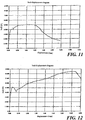
Figure 11 is a graph showing the load-deflection diagram for test pieces with carbon fibre/polyester fibre mesh reinforcement; -
Figure 12 is a graph showing the load-deflection diagram for test pieces with reinforcement formed from a mesh of poly[benz(1,2-D:5,4-D')bisoxazole-2,6-diyl-1,4-phenylen] fibres (CAS No. 60857-81-0, marketed under the name "zylon"); and -
Figure 13 is a schematic section through a building component of the invention. - With reference to said figures, a building component is shown, indicated overall by the
reference numeral 1. - The
building component 1 comprises acentral structure 2 consisting of the structural element to be reinforced, which may for example be brickwork, plain concrete or reinforced concrete articles. - The
central structure 2 is covered with a layer ofcement mortar 3; this cement mortar is described specifically inEP 1245547 and comprises between 5% and 95% of cement, between 10% and 70% of fine inert mineral fillers having a particle size less than 700 micron, chemical additives comprising between 0.1% and 25% of unsaturated copolymer resins, between 0.05% and 2.5% of fluidifying additives and between 0.005% and 1% of thixotropic additives pertaining to the cellulose class, all the specified percentages being by weight and referred to the total weight of the cement mortar. - The unsaturated copolymer resins are preferably of acrylic type; the unsaturated copolymer resins and/or the fluidifying additives and/or the thixotropic additives are added to the mortar mix as a liquid mixture or in powder form.
- A
reinforcement structure 4 in the form of poly[benz(1,2-D:5,4-D')bisoxazole-2,6-diyl-1,4-phenylen] fibre (CAS No. 60857-81-0) is embedded in the interior of thecement mortar layer 3, thereinforcement structure 4 being formed in particular from the poly[benz(1,2-D:5,4-D')bisoxazole-2,6-diyl-1,4-phenylen] fibre produced by the Toyobo Company under the commercial name of "zylon"; the mechanical characteristics of this fibre are indicated inFigure 1 . - Preferably the reinforcement structure is a textile structure or a mesh structure, the characteristics of which are preferably those indicated in
EP 1245547 . - The fluidifying additives for the cement mortar (these also being specifically described in
EP 1245547 ) are chosen from the group consisting of polymers based on polycondensed lignin, betanaphthalene or melamine-formaldehyde sulphonates, and those based on modified polyacrylate chains. - Mechanical deformation load tests were carried out on concrete test pieces of dimensions 600x150x75 millimetres reinforced against flexure by the reinforcement system indicated in
EP 1245547 ; synthetic meshes of different types were used, among which the zylon fibre, the chemical mesh nature and the mechanical characteristics of the fibres used for the tests are indicated inFigures 3 and 2 respectively. - The mix design of the concrete used for forming the test pieces was the same for all test pieces, and consisted of the mix indicated in the table of
Figure 4 . - With reference to
Figure 5 , the concrete test pieces were reinforced with a reinforcement structure 11 and were subjected to a flexure test at fourpoints - The test was conducted with controlled displacement at a test velocity of 0.01 millimetres/minute and with a load cell of 50 kN maximum capacity.
- The test pieces were notched on their centre line (at 16) at the intrados, with a notch of 1 centimetre depth.
- For each type of synthetic mesh, 25 test pieces reinforced as indicated in
Figure 5 were prepared, each test piece being subjected to a flexure test at four points with the load and deflection being measured at the centre line. - The test results are shown in
Figures 6-12 . - Specifically:
- the concrete test pieces reinforced against flexure with polypropylene fibre mesh (
Figure 6 ) showed that the polypropylene fibre had almost no capacity to ensure an increase in maximum load, and consequently were unable to form an effective structural reinforcement; - the concrete test pieces reinforced against flexure with aramid fibre mesh (
Figure 7 ) or with glass fibre mesh (Figure 8 ) showed a slight increase in maximum load, however the fibre, by unthreading from the matrix, rapidly loses its effectiveness, as shown by the descending branch of the curve; - the concrete test pieces reinforce against flexure with carbon fibre mesh (
Figure 9 ) or with a mixed carbon and aramid fibre mesh (Figure 10 ) or with a mixed carbon and polyester fibre mesh (Figure 11 ) proved to be the most effective compared with the previously tested reinforcements. In this respect, the pattern of the load/displacement curve shows an increase in maximum load and ductile behaviour of crisis type (slow descent of the second branch of the curve). - the concrete test pieces reinforced against flexure with zylon fibre mesh (
Figure 12 ) present (as shown in the figure) a load which increases to a value double that of carbon reinforcement, to considerably increase the reinforcement ductility, as can be deduced by the area subtended by the corresponding curve. - The present invention also relates to a method of reinforcing a building structure.
- The method consists of forming on the building structure to be reinforced a layer of covering cement mortar of the aforestated type, and embedding in the cement mortar layer a reinforcement structure formed of poly[benz(1,2-D:5,4-D')bisoxazole-2,6-diyl-1,4-phenylen] fibre (of CAS No. 60857-81-0).
- The reinforcement structure is suitably a mesh structure.
- It has been found in practice that the building component and the method of reinforcing a building structure of the invention are particularly advantageous as they enable reinforcements for damaged structures to be formed having superior mechanical characteristics while at the same time enabling thermohygrometric transfer between the structure and the outside and ensuring resistance even under extreme conditions such as the presence of fire or aggressive environments.
- In practice the materials used and the dimensions can be chosen at will according to requirements and to the state of the art.
Claims (15)
- A building component comprising a central structure covered by a layer of cement mortar comprising between 5% and 95% of cement, between 10% and 70% of fine inert mineral fillers having a particle size less than 700 micron, chemical additives comprising between 0.1% and 25% of unsaturated copolymer resins, between 0.05% and 2.5% of fluidifying additives and between 0.005% and 1% of thixotropic additives pertaining to the cellulose class, all the specified percentages being by weight and referred to the total weight of the cement mortar, a reinforcement structure being embedded in the cement mortar layer, characterised in that said reinforcement structure is formed of poly[benz(1,2-D:5,4-D')bisoxazole-2,6-diyl-1,4-phenylen] fibre.
- A building component as claimed in claim 1, characterised in that said unsaturated copolymer resins and/or said fluidifying additives and/or said thixotropic additives are added to the mortar mix as a liquid mixture or in powder form.
- A building component as claimed in claim 1 or 2, characterised in that said poly[benz(1,2-D:5,4-D')bisoxazole-2,6-diyl-1,4-phenylen] fibre has the CAS No. 60857-81-0.
- A building component as claimed in one of the preceding claims, characterised in that said reinforcement structure is a textile structure.
- A building component as claimed in one of the preceding claims, characterised in that said reinforcement structure is a mesh.
- A building component as claimed in one of the preceding claims, characterised in that said fluidifying additives are chosen from the group consisting of polymers based on polycondensed lignin, betanaphthalene or melamine-formaldehyde sulphonates, and those based on modified polyacrylate chains.
- A method of reinforcing a building structure, consisting of forming on the building structure to be reinforced a layer of covering cement mortar comprising between 5% and 95% of cement, between 10% and 70% of fine inert mineral fillers having a particle size less than 700 micron, chemical additives comprising between 0.1% and 25% of unsaturated copolymer resins, between 0.05% and 2.5% of fluidifying additives and between 0.005% and 1% of thixotropic additives pertaining to the cellulose class, all the specified percentages being by weight and referred to the total weight of the cement mortar, and embedding a reinforcement structure in the cement mortar layer, characterised in that the reinforcement structure is formed of poly[benz(1,2-D:5,4-D')bisoxazole-2,6-diyl-1,4-phenylen] fibre.
- A method as claimed in the preceding claim, characterised in that said unsaturated copolymer resins and/or said fluidifying additives and/or said thixotropic additives are added to the mortar mix as a liquid mixture or in powder form.
- A method as claimed in claim 7 or 8, characterised in that said poly[benz(1,2-D:5,4-D')bisoxazole-2,6-diyl-1,4-phenylen] fibre has the CAS No. 60857-81-0.
- A method as claimed in one of claims 7 and onwards, characterised in that said reinforcement structure is a textile structure.
- A method as claimed in one of claims 7 and onwards, characterised in that said reinforcement structure is a mesh.
- A method as claimed in one of claims 7 and onwards, characterised in that said fluidifying additives are chosen from the group consisting of polymers based on polycondensed lignin, betanaphthalene or melamine-formaldehyde sulphonates, and those based on modified polyacrylate chains.
- Use of a poly[benz(1,2-D:5,4-D')bisoxazole-2,6-diyl-1,4-phenylen] fibre for reinforcing a structure formed by means of a cement mortar comprising between 5% and 95% of cement, between 10% and 70% of fine inert mineral fillers having a particle size less than 700 micron, chemical additives comprising between 0.1% and 25% of unsaturated copolymer resins, between 0.05% and 2.5% of fluidifying additives and between 0.005% and 1% of thixotropic additives pertaining to the cellulose class, all the specified percentages being by weight and referred to the total weight of the cement mortar.
- Use of a fibre as claimed in the preceding claim, characterised in that said unsaturated copolymer resins and/or said fluidifying additives and/or said thixotropic additives are added to the mortar mix as a liquid mixture or in powder form.
- Use of a fibre as claimed in claim 13 or 14, characterised in that said poly[benz(1,2-D:5,4-D')bisoxazole-2,6-diyl-1,4-phenylen] fibre has the CAS No. 60857-81-0.
Priority Applications (2)
| Application Number | Priority Date | Filing Date | Title |
|---|---|---|---|
| PL06793277T PL1893793T3 (en) | 2005-11-11 | 2006-09-06 | Building component and method of reinforcing a building structure |
| CY20101101186T CY1111000T1 (en) | 2005-11-11 | 2010-12-23 | CONSTRUCTION CONSTRUCTION AND METHOD OF AID FOR BUILDING CONSTRUCTION |
Applications Claiming Priority (2)
| Application Number | Priority Date | Filing Date | Title |
|---|---|---|---|
| ITMI20052156 ITMI20052156A1 (en) | 2005-11-11 | 2005-11-11 | BUILDING CONSTRUCTION AND REINFORCEMENT METHOD OF A BUILDING STRUCTURE |
| PCT/EP2006/066076 WO2007054388A1 (en) | 2005-11-11 | 2006-09-06 | Building component and method of reinforcing a building structure |
Publications (2)
| Publication Number | Publication Date |
|---|---|
| EP1893793A1 EP1893793A1 (en) | 2008-03-05 |
| EP1893793B1 true EP1893793B1 (en) | 2010-09-29 |
Family
ID=37561227
Family Applications (1)
| Application Number | Title | Priority Date | Filing Date |
|---|---|---|---|
| EP20060793277 Active EP1893793B1 (en) | 2005-11-11 | 2006-09-06 | Building component and method of reinforcing a building structure |
Country Status (15)
| Country | Link |
|---|---|
| US (1) | US20080286553A1 (en) |
| EP (1) | EP1893793B1 (en) |
| JP (1) | JP5113758B2 (en) |
| AT (1) | ATE483045T1 (en) |
| AU (1) | AU2006311126B2 (en) |
| BR (1) | BRPI0618632A2 (en) |
| CA (1) | CA2627212C (en) |
| CY (1) | CY1111000T1 (en) |
| DE (1) | DE602006017210D1 (en) |
| ES (1) | ES2352798T3 (en) |
| IT (1) | ITMI20052156A1 (en) |
| PL (1) | PL1893793T3 (en) |
| RU (1) | RU2412128C2 (en) |
| UA (1) | UA93220C2 (en) |
| WO (1) | WO2007054388A1 (en) |
Cited By (3)
| Publication number | Priority date | Publication date | Assignee | Title |
|---|---|---|---|---|
| US9587328B2 (en) | 2011-09-21 | 2017-03-07 | Donaldson Company, Inc. | Fine fibers made from polymer crosslinked with resinous aldehyde composition |
| DE112016003442T5 (en) | 2015-07-30 | 2018-05-09 | Parexgroup S.A. | Composite system and methods of consolidation, in particular of reinforced concrete or masonry structures, hardenable or hardened matrix and textile reinforcing mesh forming this system |
| US10300415B2 (en) | 2013-03-09 | 2019-05-28 | Donaldson Company, Inc. | Fine fibers made from reactive additives |
Families Citing this family (6)
| Publication number | Priority date | Publication date | Assignee | Title |
|---|---|---|---|---|
| ITMI20091046A1 (en) * | 2009-06-12 | 2010-12-13 | Ruredil Spa | CEMENT MORTAR, REINFORCEMENT AND CONSTRUCTION STRUCTURE METHOD |
| IT1401321B1 (en) * | 2010-08-10 | 2013-07-18 | Lenzi Egisto Spa | USE OF A TEXTILE MATERIAL AS AN ACCIDENT PREVENTION BARRIER IN THE PROTECTION OF THE UTILITIES OF A QUALISANTS, A TYPE OF BUILDING MANUFACTURING, IN THE EVENT OF ANY DAMAGE TO STRUCTURAL ELEMENTS AND NOT |
| WO2012122063A1 (en) * | 2011-03-04 | 2012-09-13 | Brockwell Michael Ian | Exotensioned structural members with energy-absorbing effects |
| JP2013096182A (en) * | 2011-11-04 | 2013-05-20 | Eiji Makitani | Method for skeleton reinforcement of building |
| EP3728762B1 (en) | 2017-12-21 | 2025-07-09 | Soletanche Freyssinet | Method for reinforcing a civil engineering structure |
| IT202300012837A1 (en) * | 2023-06-21 | 2024-12-21 | Maria Sabina Cester | COMPOSITION FOR MAKING CLADDING PANELS, CLADDING PANEL FOR FURNITURE AND RELATED MANUFACTURING PROCEDURE |
Family Cites Families (13)
| Publication number | Priority date | Publication date | Assignee | Title |
|---|---|---|---|---|
| DE19731946A1 (en) * | 1997-07-24 | 1999-01-28 | Roblon As | Fastening device for pipes and other objects and method for their production |
| FR2778654B1 (en) * | 1998-05-14 | 2000-11-17 | Bouygues Sa | CONCRETE COMPRISING ORGANIC FIBERS DISPERSED IN A CEMENTITIOUS MATRIX, CONCRETE CEMENTITIOUS MATRIX AND PREMIXES |
| JP2002070323A (en) * | 2000-08-31 | 2002-03-08 | Chishin Go | Method of reinforcing concrete structure and reinforced concrete structure |
| RU2233254C2 (en) * | 2000-10-26 | 2004-07-27 | Закрытое акционерное общество "Астрин-Холдинг" | Composition for manufacture of building materials |
| US6485828B2 (en) * | 2000-12-01 | 2002-11-26 | Oji Paper Co., Ltd. | Flat synthetic fiber, method for preparing the same and non-woven fabric prepared using the same |
| ITMI20010665A1 (en) * | 2001-03-29 | 2002-09-29 | Ruredil Spa | CEMENTITIOUS MORTAR STRUCTURE AND METHOD FOR THE REINFORCEMENT OF BUILDINGS |
| WO2003041951A1 (en) * | 2001-11-13 | 2003-05-22 | Warwick Mills, Inc. | Laminate system for a durable controlled modulus flexible membrane |
| JP2003251703A (en) * | 2002-03-04 | 2003-09-09 | Toyobo Co Ltd | Fiber reinforced thermoplastic composite material |
| JP2004100098A (en) * | 2002-09-10 | 2004-04-02 | Toyobo Co Ltd | Polybenzazole fiber sheet for cement/concrete reinforcement |
| JP2004143731A (en) * | 2002-10-22 | 2004-05-20 | Toyobo Co Ltd | Polybenzasol fiber rod for reinforcing cement concrete |
| US7357982B2 (en) * | 2002-06-26 | 2008-04-15 | Toyo Boseki Kabushiki Kaisha | Polybenzazole fiber and use thereof |
| JP2004100082A (en) * | 2002-09-09 | 2004-04-02 | Toyobo Co Ltd | Polybenzazole fiber sheet for cement / concrete reinforcement |
| US8316752B2 (en) * | 2003-07-31 | 2012-11-27 | Blastgard Technologies, Inc. | Acoustic shock wave attenuating assembly |
-
2005
- 2005-11-11 IT ITMI20052156 patent/ITMI20052156A1/en unknown
-
2006
- 2006-06-09 UA UAA200807845A patent/UA93220C2/en unknown
- 2006-09-06 AT AT06793277T patent/ATE483045T1/en active
- 2006-09-06 US US12/092,015 patent/US20080286553A1/en not_active Abandoned
- 2006-09-06 WO PCT/EP2006/066076 patent/WO2007054388A1/en not_active Ceased
- 2006-09-06 DE DE200660017210 patent/DE602006017210D1/en active Active
- 2006-09-06 EP EP20060793277 patent/EP1893793B1/en active Active
- 2006-09-06 JP JP2008539369A patent/JP5113758B2/en not_active Expired - Fee Related
- 2006-09-06 AU AU2006311126A patent/AU2006311126B2/en not_active Ceased
- 2006-09-06 PL PL06793277T patent/PL1893793T3/en unknown
- 2006-09-06 ES ES06793277T patent/ES2352798T3/en active Active
- 2006-09-06 BR BRPI0618632-7A patent/BRPI0618632A2/en not_active IP Right Cessation
- 2006-09-06 CA CA 2627212 patent/CA2627212C/en not_active Expired - Fee Related
- 2006-09-06 RU RU2008123598A patent/RU2412128C2/en not_active IP Right Cessation
-
2010
- 2010-12-23 CY CY20101101186T patent/CY1111000T1/en unknown
Cited By (4)
| Publication number | Priority date | Publication date | Assignee | Title |
|---|---|---|---|---|
| US9587328B2 (en) | 2011-09-21 | 2017-03-07 | Donaldson Company, Inc. | Fine fibers made from polymer crosslinked with resinous aldehyde composition |
| US10300415B2 (en) | 2013-03-09 | 2019-05-28 | Donaldson Company, Inc. | Fine fibers made from reactive additives |
| DE112016003442T5 (en) | 2015-07-30 | 2018-05-09 | Parexgroup S.A. | Composite system and methods of consolidation, in particular of reinforced concrete or masonry structures, hardenable or hardened matrix and textile reinforcing mesh forming this system |
| US11168025B2 (en) | 2015-07-30 | 2021-11-09 | Parexgroup Sa | Composite system and consolidation method, in particular for structures made from reinforced concrete or masonry hardenable or hardened matrix and textile reinforcing mesh forming this system |
Also Published As
| Publication number | Publication date |
|---|---|
| AU2006311126B2 (en) | 2010-11-18 |
| CA2627212A1 (en) | 2007-05-18 |
| AU2006311126A1 (en) | 2007-05-18 |
| RU2412128C2 (en) | 2011-02-20 |
| JP5113758B2 (en) | 2013-01-09 |
| CY1111000T1 (en) | 2015-06-11 |
| EP1893793A1 (en) | 2008-03-05 |
| DE602006017210D1 (en) | 2010-11-11 |
| PL1893793T3 (en) | 2011-04-29 |
| JP2009515071A (en) | 2009-04-09 |
| WO2007054388A1 (en) | 2007-05-18 |
| BRPI0618632A2 (en) | 2011-09-06 |
| RU2008123598A (en) | 2009-12-20 |
| CA2627212C (en) | 2013-03-05 |
| US20080286553A1 (en) | 2008-11-20 |
| UA93220C2 (en) | 2011-01-25 |
| ES2352798T3 (en) | 2011-02-23 |
| ATE483045T1 (en) | 2010-10-15 |
| ITMI20052156A1 (en) | 2007-05-12 |
Similar Documents
| Publication | Publication Date | Title |
|---|---|---|
| CA1104436A (en) | Manufacture of articles made from a water-hardenable mass and a reinforcing element | |
| Alwesabi et al. | Impact resistance of plain and rubberized concrete containing steel and polypropylene hybrid fiber | |
| Dong et al. | Out-of-plane strengthening of unreinforced masonry walls using textile reinforced mortar added short polyvinyl alcohol fibers | |
| US5338357A (en) | Fibre reinforced shaped solid articles | |
| CA2627212C (en) | Building component and method of reinforcing a building structure | |
| CA1254496A (en) | Fabric reinforced cement structure | |
| Son et al. | Effects of the strain rate and fiber blending ratio on the tensile behavior of hooked steel fiber and polyvinyl alcohol fiber hybrid reinforced cementitious composites | |
| US20110262732A1 (en) | Reinforcement Fibers and Methods of Making and Using Same | |
| CA2761993C (en) | Cementitious mortar and method for improved reinforcement of building structures | |
| US11926957B2 (en) | Fiber products with a coating formed from aqueous polymer dispersions | |
| US20150167302A1 (en) | Fibre-reinforced mineral building material | |
| EP1245547B1 (en) | Cement mortar, structure and method for reinforcing building components | |
| Fangueiro et al. | Applications of polyesters and polyamides in civil engineering | |
| RU2803465C2 (en) | Fibrous products coated from aqueous polymer dispersions | |
| JP2025012236A (en) | Fiber sheet material for reinforcing civil engineering and building structures | |
| EP2603649A1 (en) | Use of a textile material as a safety barrier to protect users of any type of construction on the occurrence of damage to structural and non-structural elements | |
| Kruger et al. | Development of an ultra-lightweight thin film polymer modified concrete material | |
| Marthong et al. | Flexural behavior of ferrocement plates incorporating steel and PET fibers | |
| IE46542B1 (en) | Improvements in or relating to the manufacture of articlesmade from a water-hardenable mass and a reinforcing element | |
| JP2006257669A (en) | Concrete member excellent in explosion-proof properties | |
| Krasodomski | Polyolefin fibres used in cementitious composites–manufacturing, properties and application | |
| WO2006016734A1 (en) | Frc reinforced by woven fabric coated with thermoset resin and preparation method thereof | |
| PL116240B1 (en) | Prestressed laminar material | |
| Pekmezci et al. | Strain hardening cementitious composites as potential strengthening materials | |
| CZ336391A3 (en) | composite material form particles of rubber and process for producing thereof |
Legal Events
| Date | Code | Title | Description |
|---|---|---|---|
| PUAI | Public reference made under article 153(3) epc to a published international application that has entered the european phase |
Free format text: ORIGINAL CODE: 0009012 |
|
| 17P | Request for examination filed |
Effective date: 20070503 |
|
| AK | Designated contracting states |
Kind code of ref document: A1 Designated state(s): AT BE BG CH CY CZ DE DK EE ES FI FR GB GR HU IE IS IT LI LT LU LV MC NL PL PT RO SE SI SK TR |
|
| AX | Request for extension of the european patent |
Extension state: AL BA HR MK YU |
|
| RAX | Requested extension states of the european patent have changed |
Extension state: RS Payment date: 20070507 Extension state: MK Payment date: 20070507 Extension state: AL Payment date: 20070507 Extension state: HR Payment date: 20070507 Extension state: BA Payment date: 20070507 |
|
| 17Q | First examination report despatched |
Effective date: 20070429 |
|
| R17C | First examination report despatched (corrected) |
Effective date: 20080429 |
|
| GRAP | Despatch of communication of intention to grant a patent |
Free format text: ORIGINAL CODE: EPIDOSNIGR1 |
|
| GRAS | Grant fee paid |
Free format text: ORIGINAL CODE: EPIDOSNIGR3 |
|
| GRAA | (expected) grant |
Free format text: ORIGINAL CODE: 0009210 |
|
| AK | Designated contracting states |
Kind code of ref document: B1 Designated state(s): AT BE BG CH CY CZ DE DK EE ES FI FR GB GR HU IE IS IT LI LT LU LV MC NL PL PT RO SE SI SK TR |
|
| AX | Request for extension of the european patent |
Extension state: AL BA HR MK RS |
|
| REG | Reference to a national code |
Ref country code: GB Ref legal event code: FG4D |
|
| REG | Reference to a national code |
Ref country code: CH Ref legal event code: EP |
|
| REG | Reference to a national code |
Ref country code: IE Ref legal event code: FG4D |
|
| REF | Corresponds to: |
Ref document number: 602006017210 Country of ref document: DE Date of ref document: 20101111 Kind code of ref document: P |
|
| REG | Reference to a national code |
Ref country code: CH Ref legal event code: NV Representative=s name: TROESCH SCHEIDEGGER WERNER AG |
|
| REG | Reference to a national code |
Ref country code: RO Ref legal event code: EPE Ref country code: GR Ref legal event code: EP Ref document number: 20100402817 Country of ref document: GR |
|
| PG25 | Lapsed in a contracting state [announced via postgrant information from national office to epo] |
Ref country code: LT Free format text: LAPSE BECAUSE OF FAILURE TO SUBMIT A TRANSLATION OF THE DESCRIPTION OR TO PAY THE FEE WITHIN THE PRESCRIBED TIME-LIMIT Effective date: 20100929 Ref country code: FI Free format text: LAPSE BECAUSE OF FAILURE TO SUBMIT A TRANSLATION OF THE DESCRIPTION OR TO PAY THE FEE WITHIN THE PRESCRIBED TIME-LIMIT Effective date: 20100929 |
|
| REG | Reference to a national code |
Ref country code: NL Ref legal event code: VDEP Effective date: 20100929 |
|
| REG | Reference to a national code |
Ref country code: ES Ref legal event code: FG2A Effective date: 20110211 |
|
| LTIE | Lt: invalidation of european patent or patent extension |
Effective date: 20100929 |
|
| PG25 | Lapsed in a contracting state [announced via postgrant information from national office to epo] |
Ref country code: SI Free format text: LAPSE BECAUSE OF FAILURE TO SUBMIT A TRANSLATION OF THE DESCRIPTION OR TO PAY THE FEE WITHIN THE PRESCRIBED TIME-LIMIT Effective date: 20100929 |
|
| PG25 | Lapsed in a contracting state [announced via postgrant information from national office to epo] |
Ref country code: LV Free format text: LAPSE BECAUSE OF FAILURE TO SUBMIT A TRANSLATION OF THE DESCRIPTION OR TO PAY THE FEE WITHIN THE PRESCRIBED TIME-LIMIT Effective date: 20100929 Ref country code: SE Free format text: LAPSE BECAUSE OF FAILURE TO SUBMIT A TRANSLATION OF THE DESCRIPTION OR TO PAY THE FEE WITHIN THE PRESCRIBED TIME-LIMIT Effective date: 20100929 |
|
| REG | Reference to a national code |
Ref country code: PL Ref legal event code: T3 |
|
| PG25 | Lapsed in a contracting state [announced via postgrant information from national office to epo] |
Ref country code: CZ Free format text: LAPSE BECAUSE OF FAILURE TO SUBMIT A TRANSLATION OF THE DESCRIPTION OR TO PAY THE FEE WITHIN THE PRESCRIBED TIME-LIMIT Effective date: 20100929 Ref country code: NL Free format text: LAPSE BECAUSE OF FAILURE TO SUBMIT A TRANSLATION OF THE DESCRIPTION OR TO PAY THE FEE WITHIN THE PRESCRIBED TIME-LIMIT Effective date: 20100929 Ref country code: IS Free format text: LAPSE BECAUSE OF FAILURE TO SUBMIT A TRANSLATION OF THE DESCRIPTION OR TO PAY THE FEE WITHIN THE PRESCRIBED TIME-LIMIT Effective date: 20110129 Ref country code: EE Free format text: LAPSE BECAUSE OF FAILURE TO SUBMIT A TRANSLATION OF THE DESCRIPTION OR TO PAY THE FEE WITHIN THE PRESCRIBED TIME-LIMIT Effective date: 20100929 Ref country code: SK Free format text: LAPSE BECAUSE OF FAILURE TO SUBMIT A TRANSLATION OF THE DESCRIPTION OR TO PAY THE FEE WITHIN THE PRESCRIBED TIME-LIMIT Effective date: 20100929 Ref country code: PT Free format text: LAPSE BECAUSE OF FAILURE TO SUBMIT A TRANSLATION OF THE DESCRIPTION OR TO PAY THE FEE WITHIN THE PRESCRIBED TIME-LIMIT Effective date: 20110131 |
|
| PG25 | Lapsed in a contracting state [announced via postgrant information from national office to epo] |
Ref country code: GR Free format text: LAPSE BECAUSE OF NON-PAYMENT OF DUE FEES Effective date: 20110404 |
|
| PLBE | No opposition filed within time limit |
Free format text: ORIGINAL CODE: 0009261 |
|
| STAA | Information on the status of an ep patent application or granted ep patent |
Free format text: STATUS: NO OPPOSITION FILED WITHIN TIME LIMIT |
|
| PG25 | Lapsed in a contracting state [announced via postgrant information from national office to epo] |
Ref country code: DK Free format text: LAPSE BECAUSE OF FAILURE TO SUBMIT A TRANSLATION OF THE DESCRIPTION OR TO PAY THE FEE WITHIN THE PRESCRIBED TIME-LIMIT Effective date: 20100929 |
|
| REG | Reference to a national code |
Ref country code: DE Ref legal event code: R097 Ref document number: 602006017210 Country of ref document: DE Effective date: 20110630 |
|
| PGFP | Annual fee paid to national office [announced via postgrant information from national office to epo] |
Ref country code: CH Payment date: 20110928 Year of fee payment: 6 |
|
| PG25 | Lapsed in a contracting state [announced via postgrant information from national office to epo] |
Ref country code: MC Free format text: LAPSE BECAUSE OF NON-PAYMENT OF DUE FEES Effective date: 20110930 |
|
| REG | Reference to a national code |
Ref country code: IE Ref legal event code: MM4A |
|
| PG25 | Lapsed in a contracting state [announced via postgrant information from national office to epo] |
Ref country code: IE Free format text: LAPSE BECAUSE OF NON-PAYMENT OF DUE FEES Effective date: 20110906 |
|
| PGFP | Annual fee paid to national office [announced via postgrant information from national office to epo] |
Ref country code: RO Payment date: 20120903 Year of fee payment: 7 |
|
| PGFP | Annual fee paid to national office [announced via postgrant information from national office to epo] |
Ref country code: BG Payment date: 20120912 Year of fee payment: 7 Ref country code: GR Payment date: 20120820 Year of fee payment: 7 Ref country code: TR Payment date: 20120808 Year of fee payment: 7 |
|
| PGFP | Annual fee paid to national office [announced via postgrant information from national office to epo] |
Ref country code: ES Payment date: 20120810 Year of fee payment: 7 |
|
| PGFP | Annual fee paid to national office [announced via postgrant information from national office to epo] |
Ref country code: CY Payment date: 20120817 Year of fee payment: 7 Ref country code: BE Payment date: 20120903 Year of fee payment: 7 |
|
| PGFP | Annual fee paid to national office [announced via postgrant information from national office to epo] |
Ref country code: AT Payment date: 20120814 Year of fee payment: 7 |
|
| PG25 | Lapsed in a contracting state [announced via postgrant information from national office to epo] |
Ref country code: LU Free format text: LAPSE BECAUSE OF NON-PAYMENT OF DUE FEES Effective date: 20110906 |
|
| PG25 | Lapsed in a contracting state [announced via postgrant information from national office to epo] |
Ref country code: HU Free format text: LAPSE BECAUSE OF FAILURE TO SUBMIT A TRANSLATION OF THE DESCRIPTION OR TO PAY THE FEE WITHIN THE PRESCRIBED TIME-LIMIT Effective date: 20100929 |
|
| BERE | Be: lapsed |
Owner name: RUREDIL S.P.A. Effective date: 20130930 |
|
| PG25 | Lapsed in a contracting state [announced via postgrant information from national office to epo] |
Ref country code: RO Free format text: LAPSE BECAUSE OF NON-PAYMENT OF DUE FEES Effective date: 20130906 |
|
| REG | Reference to a national code |
Ref country code: CH Ref legal event code: PL |
|
| REG | Reference to a national code |
Ref country code: AT Ref legal event code: MM01 Ref document number: 483045 Country of ref document: AT Kind code of ref document: T Effective date: 20130906 |
|
| REG | Reference to a national code |
Ref country code: GR Ref legal event code: ML Ref document number: 20100402817 Country of ref document: GR Effective date: 20140403 |
|
| PG25 | Lapsed in a contracting state [announced via postgrant information from national office to epo] |
Ref country code: CY Free format text: LAPSE BECAUSE OF NON-PAYMENT OF DUE FEES Effective date: 20130906 |
|
| PG25 | Lapsed in a contracting state [announced via postgrant information from national office to epo] |
Ref country code: CH Free format text: LAPSE BECAUSE OF NON-PAYMENT OF DUE FEES Effective date: 20130930 Ref country code: LI Free format text: LAPSE BECAUSE OF NON-PAYMENT OF DUE FEES Effective date: 20130930 Ref country code: BE Free format text: LAPSE BECAUSE OF NON-PAYMENT OF DUE FEES Effective date: 20130930 |
|
| PG25 | Lapsed in a contracting state [announced via postgrant information from national office to epo] |
Ref country code: AT Free format text: LAPSE BECAUSE OF NON-PAYMENT OF DUE FEES Effective date: 20130906 Ref country code: GR Free format text: LAPSE BECAUSE OF NON-PAYMENT OF DUE FEES Effective date: 20140403 Ref country code: BG Free format text: LAPSE BECAUSE OF NON-PAYMENT OF DUE FEES Effective date: 20140630 |
|
| PG25 | Lapsed in a contracting state [announced via postgrant information from national office to epo] |
Ref country code: BG Free format text: LAPSE BECAUSE OF NON-PAYMENT OF DUE FEES Effective date: 20130930 |
|
| REG | Reference to a national code |
Ref country code: ES Ref legal event code: FD2A Effective date: 20141007 |
|
| PG25 | Lapsed in a contracting state [announced via postgrant information from national office to epo] |
Ref country code: BG Free format text: LAPSE BECAUSE OF NON-PAYMENT OF DUE FEES Effective date: 20140930 |
|
| PG25 | Lapsed in a contracting state [announced via postgrant information from national office to epo] |
Ref country code: ES Free format text: LAPSE BECAUSE OF NON-PAYMENT OF DUE FEES Effective date: 20130907 |
|
| PG25 | Lapsed in a contracting state [announced via postgrant information from national office to epo] |
Ref country code: TR Free format text: LAPSE BECAUSE OF NON-PAYMENT OF DUE FEES Effective date: 20130906 |
|
| REG | Reference to a national code |
Ref country code: FR Ref legal event code: PLFP Year of fee payment: 11 |
|
| REG | Reference to a national code |
Ref country code: FR Ref legal event code: PLFP Year of fee payment: 12 |
|
| REG | Reference to a national code |
Ref country code: FR Ref legal event code: PLFP Year of fee payment: 13 |
|
| REG | Reference to a national code |
Ref country code: DE Ref legal event code: R082 Ref document number: 602006017210 Country of ref document: DE Representative=s name: UEXKUELL & STOLBERG PARTNERSCHAFT VON PATENT- , DE Ref country code: DE Ref legal event code: R081 Ref document number: 602006017210 Country of ref document: DE Owner name: RUREGOLD S.R.L., IT Free format text: FORMER OWNER: RUREDIL S.P.A., MAILAND/MILANO, IT |
|
| PGFP | Annual fee paid to national office [announced via postgrant information from national office to epo] |
Ref country code: DE Payment date: 20190827 Year of fee payment: 14 |
|
| PGFP | Annual fee paid to national office [announced via postgrant information from national office to epo] |
Ref country code: GB Payment date: 20190912 Year of fee payment: 14 |
|
| REG | Reference to a national code |
Ref country code: DE Ref legal event code: R119 Ref document number: 602006017210 Country of ref document: DE |
|
| GBPC | Gb: european patent ceased through non-payment of renewal fee |
Effective date: 20200906 |
|
| PG25 | Lapsed in a contracting state [announced via postgrant information from national office to epo] |
Ref country code: DE Free format text: LAPSE BECAUSE OF NON-PAYMENT OF DUE FEES Effective date: 20210401 |
|
| PG25 | Lapsed in a contracting state [announced via postgrant information from national office to epo] |
Ref country code: GB Free format text: LAPSE BECAUSE OF NON-PAYMENT OF DUE FEES Effective date: 20200906 |
|
| REG | Reference to a national code |
Ref country code: GB Ref legal event code: 732E Free format text: REGISTERED BETWEEN 20211028 AND 20211103 |
|
| PGFP | Annual fee paid to national office [announced via postgrant information from national office to epo] |
Ref country code: PL Payment date: 20250902 Year of fee payment: 20 Ref country code: IT Payment date: 20250904 Year of fee payment: 20 |
|
| PGFP | Annual fee paid to national office [announced via postgrant information from national office to epo] |
Ref country code: FR Payment date: 20250925 Year of fee payment: 20 |