EP1893633B1 - Angiotensin i - converting enzyme (ace) inhibitors - Google Patents
Angiotensin i - converting enzyme (ace) inhibitors Download PDFInfo
- Publication number
- EP1893633B1 EP1893633B1 EP06744781A EP06744781A EP1893633B1 EP 1893633 B1 EP1893633 B1 EP 1893633B1 EP 06744781 A EP06744781 A EP 06744781A EP 06744781 A EP06744781 A EP 06744781A EP 1893633 B1 EP1893633 B1 EP 1893633B1
- Authority
- EP
- European Patent Office
- Prior art keywords
- ace
- synthesis
- domain
- benzoyl
- amino
- Prior art date
- Legal status (The legal status is an assumption and is not a legal conclusion. Google has not performed a legal analysis and makes no representation as to the accuracy of the status listed.)
- Active
Links
- 0 CCOC(CCC([C@@](CC(c1ccccc1)=O)Cc1ccccc1)=*)=O Chemical compound CCOC(CCC([C@@](CC(c1ccccc1)=O)Cc1ccccc1)=*)=O 0.000 description 3
- ROOLRLHDOKJOIW-NEAIJXHWSA-N C[C@@H](C(Bc1ccccc1)C(O)=O)C(CCC(C(CC(P)=O)Cc1ccccc1)=O)=O Chemical compound C[C@@H](C(Bc1ccccc1)C(O)=O)C(CCC(C(CC(P)=O)Cc1ccccc1)=O)=O ROOLRLHDOKJOIW-NEAIJXHWSA-N 0.000 description 1
Images


Classifications
-
- C—CHEMISTRY; METALLURGY
- C07—ORGANIC CHEMISTRY
- C07C—ACYCLIC OR CARBOCYCLIC COMPOUNDS
- C07C231/00—Preparation of carboxylic acid amides
- C07C231/12—Preparation of carboxylic acid amides by reactions not involving the formation of carboxamide groups
-
- C—CHEMISTRY; METALLURGY
- C07—ORGANIC CHEMISTRY
- C07C—ACYCLIC OR CARBOCYCLIC COMPOUNDS
- C07C237/00—Carboxylic acid amides, the carbon skeleton of the acid part being further substituted by amino groups
- C07C237/02—Carboxylic acid amides, the carbon skeleton of the acid part being further substituted by amino groups having the carbon atoms of the carboxamide groups bound to acyclic carbon atoms of the carbon skeleton
- C07C237/22—Carboxylic acid amides, the carbon skeleton of the acid part being further substituted by amino groups having the carbon atoms of the carboxamide groups bound to acyclic carbon atoms of the carbon skeleton having nitrogen atoms of amino groups bound to the carbon skeleton of the acid part, further acylated
-
- A—HUMAN NECESSITIES
- A61—MEDICAL OR VETERINARY SCIENCE; HYGIENE
- A61K—PREPARATIONS FOR MEDICAL, DENTAL OR TOILETRY PURPOSES
- A61K38/00—Medicinal preparations containing peptides
Definitions
- Angiotensin I-converting enzyme (ACE; EC 3.4.15.1) is a zinc-dipeptidyl carboxypeptidase that plays a key role in blood pressure regulation by converting the inactive decapeptide angiotensin I to the potent vasopressor octapeptide angiotensin II by cleavage of the carboxy-terminal dipeptide. 1 It also inactivates the vasodepressor nonapeptide bradykinin. 2,3 Thus, the inhibition of ACE has become a primary strategy in the treatment of hypertension, myocardical infarction, heart failure, and diabetic nephropathy.
- a pharmaceutical composition including a compound described above.
- the composition may be used for manufacturing medicaments for the treatment of hypertenison and/or cardiovascular disease.
- ACE is a complex two-domain enzyme, comprising an N and a C domain, each containing an active site with similar but distinct substrate specificities and chloride-activation requirements.
- the N- and C-domain sites of ACE hydrolyze angiotensin 1 (Ang I) and bradykinin (BK) at comparable rates in vitro, but in vivo it appears that the C-domain is primarily responsible for regulating blood pressure. This might suggest that a C-selective inhibitor would have a profile comparable to current mixed inhibitors, but this is not necessarily the case.
- BK is hydrolyzed by both domains and therefore selective inhibition of the C-domain site will allow some level of BK degradation to continue, catalyzed by the N-domain. This could be sufficient to prevent the excessive BK accumulation that has been observed during attacks of angioedema.
- BK potentiation by B 2 receptor resensitization is maximal when both the N- and C-domains are inhibited, suggesting that a pure C-selective inhibitor will have a lower propensity for excessive BK stimulation.
- the multiple Ang and non-Ang peptides known to be vaso-active are not hydrolyzed equally by the two domains, making it likely that the ratio of vasopressor to vasodilator peptides will differ between C-selective and mixed inhibitors.
- a highly selective C-domain inhibitor has the potential for effective blood pressure control with reduced vasodilator-related side effects.
- an N-selective inhibitor may open up novel therapeutic areas.
- the N-domain appears to play a minor role in blood pressure control in vivo.
- At least three physiologically important peptides are hydrolyzed preferentially or exclusively by the N domain: luteinizing hormone-releasing hormone (LH-RH), Ang (1-7) , and AcSDKP ( N -acetyl-seryl-aspartyl-lysyl-proline).
- LH-RH luteinizing hormone-releasing hormone
- Ang (1-7) Ang (1-7)
- AcSDKP N -acetyl-seryl-aspartyl-lysyl-proline
- AcSDKP has anti-proliferative and anti-fibrotic activities and may have utility in protecting hematopoietic stem cells against chemotherapy-induced injury and in limiting cardiac fibrosis.
- Administration of ACE inhibitors results in a 4-6-fold elevation of AcSDKP plasma levels. This may be the basis for the observed association between ACE inhibitors and anemia, and the effective treatment of altitude polycythemia by the ACE inhibitor enalaprilat.
- keto-ACE a ketomethylene derivative of the tripeptide Phe-Gly-Pro
- Ketomethylene dipeptide isosteres have proved particularly useful in the design of efficient peptidomimetic inhibitors, 15-17 and, more specifically, are excellent building blocks for HIV-1 protease inhibitors. 18-21
- keto-ACE a compound having the following properties: 12-14a and 12-14a.
- One of the methods used in the past two decades is the modified Dakin-West reaction, 13 which proceeds via the 5-oxazolone derivative, thus resulting in a racemic mixture.
- Another method 12,14a uses a Grignard reagent with 2-pyridyl thiloate, giving the keto acetal intermediate in low yield.
- Garc ⁇ a-López et al a further study.
- ketomethylene dipeptide analogues which required the use of the carcinogenic and extremely unstable reagent diazomethane.
- a number of parameters in the general synthesis of keto-ACE such as reaction yields, cost, and reaction conditions, still require optimization.
- N -Benzoyl-methyl ester 1 was prepared from L- (-)-phenylalanine in the presence of benzoyl chloride in 1,4 dioxane and 1 M NaOH solution followed by treatment with thionyl chloride and methanol to give the resulting ester in a quantitative yield.
- This N -Benzoyl-methyl ester 1 was converted into the ⁇ -veto phosphonate 2 by treatment with 8 equivalents of lithiated dimethyl methyl phosphonate in anhydrous THF at -78°C following the procedure as described by Déziel et al ( Scheme 1 ).
- reaction mixture was diluted with H 2 O (30 mL) and the extracted with EtOAc (3 x 30 mL). The combined organic extract were washed sequentially with saturated aqueous NaHCO 3 (30 mL), brine (30 mL), and dried over anhydrous MgSO 4 .
- the ACE inhibitory activity (as tabulated in Table 1) was measured by the fluorometric determination of pthaldialdehyde-derivatised histidylleucine, a product of the enzyme reaction according to the method of Almquist et al., 12 with some modifications.
- tACEdelta36NJ and N-domain inhibition using Z-Phe-His-Leu as substrate - 10 ⁇ L of 0.05 mg/mL enzyme + 120 ⁇ L inhibitor was incubated at ambient temperature for 3 hours. Inhibitor concentrations ranged from 2.0 ⁇ M to 500 ⁇ M. A 3.0 ⁇ L aliquot of this was assayed for enzyme activity using 30 ⁇ L of 1.0 mM Hip-His-Leu.
- Keto-ACE 5a and analogues 5b, 5c all showed weak inhibitory activity for ACE as compared to lisinopril.
- the tryptophan 5b derivative of keto-ACE highly C-domain specific (245-fold) and its inhibition potential is similar to that of keto-ACE 5a.
- the weaker ACE inhibitory activity of compounds 5a-c compared with lisinopril might be due to the absence of the P 1 ' residue.
- keto-ACE 5a and analogues 5b and 5c were generated with standard bond lengths and angles using the builder tool of INSIGHT II software (Accelrys Inc.) and then minimized.
- the initial position of the compounds in the active site of the catalytic C-domain of ACE was obtained by superimposing the important pharmacophoric groups of keto-ACE and analogues on the corresponding atoms of lisinopril in the tACE-lisinopril complex: After removal of the reference inhibitor (lisinopril), the structure of the inhibitor-complex was refined by running energy minimizations and molecular dynamics.
- Keto-ACE 5a and analogues 5b and 5c which presented the highest C-domain selectivity, were modeled into the testis ACE binding site occupying the S 1 , S 2 and S 2 ' subsites ( Figure 1 ). From the docking experiments, the energy-minimized bound conformer of the inhibitors in the active site of the C-domain was obtained.
- the inhibitors all exhibited a negative total potential energy of the protein-ligand interaction (-835.4 Kcal mol -1 , -933.9 Kcal mol -1 , and -799.0 Kcal mol -1 for 5a, 5b and 5c, respectively) which is an indication of the relative stability of the enzyme-ligand complex, (the value for t ACE-lisinopril complex was also found to be -890.0 Kcal mol 1 ).
- the residues forming the subsites of the C-domain active site were defined as those located at a distance less than 6.00 ⁇ from the important functionalities of inhibitors.
- Asn66 (Asn642), Asn70 (Asn646), Glu143 (Glu719), and Ser516 (Ser1092) are replaced by a Ser39, an Asp43, a Ser119, and a Asn494, respectively.
- S 2 ' subsite readily accommodated the tryptophan and the phenylalanine moieties of compounds 5b and 5c, respectively.
- the tryptophan moiety of compound 5b made contacts with Gln281 (Gln857), Phe460 (Phe1036), Ile 514 (Ile1090), Val518 (Val1094), and Pro 519 (Pro1095) residues ( Figure 2 ).
- the Ile514 (Ile1090) and Val518 (Val1094) are replaced by Val492 and Thr496, respectively, while the other residues are not conserved in the N- and C-domains.
- the benzoyl group is accommodated into the S 2 subsite, which is in agreement with the ACE inhibitory activity observed for compounds 5a, 5b, and 5c.
- the residues that made contact with the benzoyl group of compound 5b four are conserved between the C- and N-domains.
- the polar residues Asn66 (Asn642), Asn70 (Asn646), Glu143 (Glu719), and Ser516 (Ser1092) residues are replaced by polar residues Ser39, Asp43, Ser119, and Asn494 in the N-domain, respectively.
- Ser39 in the N-domain is less polar than Asn66 (Asn642) in the C-domain, since amide groups are known to be more polar than hydroxyl groups. Also, Asp43, Ser119, and Asn494 in the N-domain are more polar than their counterparts in the C-domain. These differences in polarity between the groups could favour more interactions with less-polar inhibitor side chains and decrease the affinity for the N-domain, and as such result in the increase in selectivity of compound 5b.
- the S 2' subsites of both the C- and N-domains are relatively large and can accommodate various linear and cyclic side chains without stringent preferences. It has been reported previously 27,28 that the selectivity of ACE inhibitors depends on the interactions with the S 2 ' pocket. The less polar tACE Ile514 (Ile1090) and Val518 (Val1094) residues in the S 2 ' pocket are replaced by the more polar Val492 and Thr496 residues in the N-domain. Ile514 and Val518 of the C-domain display a greater hydrophobic interaction with the bulky tryptophan moiety of compound 5b.
- keto-ACE and analogues thereof.
- the key feature of this synthesis involves a Homer-Emmons 24 olefination of the ⁇ , ⁇ -unsaturated keto-phoshonate with ethyl gyloxylate.
- the keto-ACE analogues display C-domain selectivity and their interactions with tACE were studied by a molecular modeling approach.
Landscapes
- Chemical & Material Sciences (AREA)
- Organic Chemistry (AREA)
- Chemical Kinetics & Catalysis (AREA)
- Medicines That Contain Protein Lipid Enzymes And Other Medicines (AREA)
- Peptides Or Proteins (AREA)
- Preparation Of Compounds By Using Micro-Organisms (AREA)
- Pharmaceuticals Containing Other Organic And Inorganic Compounds (AREA)
Abstract
Description
- Angiotensin I-converting enzyme (ACE; EC 3.4.15.1) is a zinc-dipeptidyl carboxypeptidase that plays a key role in blood pressure regulation by converting the inactive decapeptide angiotensin I to the potent vasopressor octapeptide angiotensin II by cleavage of the carboxy-terminal dipeptide.1 It also inactivates the vasodepressor nonapeptide bradykinin. 2,3 Thus, the inhibition of ACE has become a primary strategy in the treatment of hypertension, myocardical infarction, heart failure, and diabetic nephropathy.4 There are a number of commecially available ACE inhibitors, including captopril,5,6 lisinopril, and enalapril, which have establised themselves in the therapy of hypertension and congestive heart failure.7,8 However, undesirable side effects such as persistant cough, loss of taste, and angioedema have been associated with current-generation ACE inhibitors.9,10 Therefore, the development of novel effective drugs for the treatment of hypertension and cardiovascular diseases still remains an important goal. The recent availability of the crystal structure of the testis ACE-lisinopril complex has opened the possibility of structure-guided design of second-generation, domain-selective ACE inhibitors.11
- According to a first embodiment of the invention, there is provided a new compound (5S)-5-[(N-benzoyl)amino]-4-oxo-6-phenyl-hexanoyl-L-tryptophan.
- According to a second embodiment of the invention there is provided a pharmaceutical composition including a compound described above. The composition may be used for manufacturing medicaments for the treatment of hypertenison and/or cardiovascular disease.
-
- Figure 1
- shows a schematic representation of the principal hydrogen bonding interactions between compound 5b prepared according to the invention and the active site residues of ACE; and
- Figure 2
- shows the interactions between the benzoyl and tryptophan moieties of compound 5b with some active site residues in the S1 and S2' subsites of ACE.
- The synthesis of novel analogues of the ketomethylene isostere keto-ACE12-14, molecular docking, and inhibition constants for these compounds are described herein.
- ACE is a complex two-domain enzyme, comprising an N and a C domain, each containing an active site with similar but distinct substrate specificities and chloride-activation requirements. The N- and C-domain sites of ACE hydrolyze angiotensin 1 (Ang I) and bradykinin (BK) at comparable rates in vitro, but in vivo it appears that the C-domain is primarily responsible for regulating blood pressure. This might suggest that a C-selective inhibitor would have a profile comparable to current mixed inhibitors, but this is not necessarily the case.
- First, while Ang I is hydrolyzed predominantly by the C domain in vivo, BK is hydrolyzed by both domains and therefore selective inhibition of the C-domain site will allow some level of BK degradation to continue, catalyzed by the N-domain. This could be sufficient to prevent the excessive BK accumulation that has been observed during attacks of angioedema. Second, BK potentiation by B2 receptor resensitization is maximal when both the N- and C-domains are inhibited, suggesting that a pure C-selective inhibitor will have a lower propensity for excessive BK stimulation. Third, the multiple Ang and non-Ang peptides known to be vaso-active are not hydrolyzed equally by the two domains, making it likely that the ratio of vasopressor to vasodilator peptides will differ between C-selective and mixed inhibitors. Thus, a highly selective C-domain inhibitor has the potential for effective blood pressure control with reduced vasodilator-related side effects.
- In contrast to a C-selective inhibitor, an N-selective inhibitor may open up novel therapeutic areas. As discussed, the N-domain appears to play a minor role in blood pressure control in vivo. At least three physiologically important peptides are hydrolyzed preferentially or exclusively by the N domain: luteinizing hormone-releasing hormone (LH-RH), Ang(1-7), and AcSDKP (N-acetyl-seryl-aspartyl-lysyl-proline). The contribution of ACE to the metabolism of LH-RH and Ang(1-7) in vivo is unclear, but there is increasing evidence that ACE is the principal metabolizing enzyme for AcSDKP, a natural hemoregulatory hormone. AcSDKP has anti-proliferative and anti-fibrotic activities and may have utility in protecting hematopoietic stem cells against chemotherapy-induced injury and in limiting cardiac fibrosis. Administration of ACE inhibitors results in a 4-6-fold elevation of AcSDKP plasma levels. This may be the basis for the observed association between ACE inhibitors and anemia, and the effective treatment of altitude polycythemia by the ACE inhibitor enalaprilat.
- The pattern of keto-ACE (a ketomethylene derivative of the tripeptide Phe-Gly-Pro) inhibition of the hydrolysis of various substrates by somatic ACE indicates that it may be relatively selective for one of the ACE active sites. Deddish et al.14b showed that this was indeed the case and that the ketomethylene derivative inhibits the hydrolysis of angiotensin I and bradykinin by the C domain at concentrations 38- to 47-fold lower than by the N domain of somatic ACE.
- Ketomethylene dipeptide isosteres have proved particularly useful in the design of efficient peptidomimetic inhibitors,15-17 and, more specifically, are excellent building blocks for HIV-1 protease inhibitors.18-21
- To explore the scope of the ketomethylene dipeptide approach and to establish a practical synthetic route with the use of readily available starting material and a convenient experimental work-up, the preparation of keto-ACE was revisited. Several strategies and modifications in the synthesis of keto-ACE have been forwarded,12-14a but these synthetic approaches have certain limitations. One of the methods used in the past two decades is the modified Dakin-West reaction,13 which proceeds via the 5-oxazolone derivative, thus resulting in a racemic mixture. Another method12,14a uses a Grignard reagent with 2-pyridyl thiloate, giving the keto acetal intermediate in low yield. In a further study, García-López et al.22,23 reported the synthesis of ketomethylene dipeptide analogues, which required the use of the carcinogenic and extremely unstable reagent diazomethane. Moreover, a number of parameters in the general synthesis of keto-ACE, such as reaction yields, cost, and reaction conditions, still require optimization.
-

-
- (i) (a) benzoyl chloride, 1,4-dioxane, 1M NaOH, 0 °C, 30 min; (b) SOCl2, dry MeOH, 0 °C to rt, 24 h; (ii) (CH3O)2P(O)CH3, nBuLi, THF, -78°C; (iii) EtOOCCHO, K2CO3, EtOH, 25°C; (iv) H2, Pd/C, EtOAc, rt; (v) 0.5N LiOH, THF-MeOH (8:2 ratio), rt; (vi) (a) L-proline benzyl ester hydrochloride, EDC.HCl, HOBt, iPr2NEt (2.0 equiv), DMF/CN2Cl2, rt, 48h; (b) H2, Pd/C, EtOAc-MeOH (3:1 ratio), rt, for 5a; (vii) (a) L-tryptophan methyl ester, EDC.HCl, HOBt, iPr2NEt (1.0 equiv), DMF/CH2Cl2, rt; (b) 0.5N LiOH, THF-MeOH (8:2 ratio), rt, for 5b and (viii) (a) L-phenylalanine methyl ester hydrochloride, EDC.HCl, HOBt, iPr2NEt (2.0 equiv), DMF/CH2Cl2, rt; (b) 0.5N LiOH, THF-MeOH (8:2 ratio), rt, for 5c.
- The starting material, N-Benzoyl-methyl ester 1 was prepared from L-(-)-phenylalanine in the presence of benzoyl chloride in 1,4 dioxane and 1 M NaOH solution followed by treatment with thionyl chloride and methanol to give the resulting ester in a quantitative yield. This N-Benzoyl-methyl ester 1 was converted into the β-veto phosphonate 2 by treatment with 8 equivalents of lithiated dimethyl methyl phosphonate in anhydrous THF at -78°C following the procedure as described by Déziel et al (Scheme 1).16 The key intermediate α,β-unsaturated keto derivative 3 was obtained in excellent yield by the Horner-Emmons olefination24 of 2 with one equivalent of freshly prepared ethyl glyoxylate24, in the presence of one equivalent of potassium carbonate and dry ethanol at ambient temperature. However, it was found that the above reaction conditions gave a substantial amount of the cis-isomer [ratio, 85 : 15 (trans : cis)] without any racemisation (the ratio of the trans : cis isomer was determined from the 1H NMR spectra). Separation of the above isomeric mixture was found to be unnecessary as hydrogenation of the double-bond afforded a single product and thus the mixture was used directly in the next reaction step. The enone mixture of isomers 3 was then hydrogenated over 10% Pd on carbon to give the intermediate ketomethylene ester derivative in 80% yield (Scheme 1). This ester was hydrolysed in the presence of 0.5N-LiOH in THF-MeOH, (8:2) at room temperature followed by column chromatographic purification to give the desired acid 4 in 84% yield without any detectable racemization at the stereogenic centre. The spectroscopic data obtained for compound 4 corresponded to those reported by Almquist et al.12
- Peptide coupling of the free acid 4 with the corresponding O-protected amino acids was effected using EDC.HCl in the presence of HOBt and diisopropyl ethyl amine as a base to provide the corresponding ester products in excellent yields (88% in the case of L-proline benzyl ester hydrochloride, 90% and 92% in the case of L-tryptophan methyl ester and L-phenylalanine methyl ester hydrochloride respectively). The keto-ACE 5a was then obtained in 82% yield by catalytic hydrogenation of the benzyl ester group using 10% Pd on carbon. The spectroscopic data obtained for compound 5a corresponded to those reported by Almquist et al. 12 The methyl esters obtained when using the L-tryptophan methyl ester and L-phenylalanine methyl ester hydrochloride were saponified with aqueous 0.5N LiOH and a mixture of THF-MeOH to afford 5b and 5c in 95% and 97% yield, respectively.
- The invention will now be described in more detail with reference to the following nonlimiting examples. Compounds 5a and 5c prepared in Examples 12 and 14 are for comparison purposes and are not according to the invention.
- All reactions were carried out under a nitrogen atmosphere, unless otherwise specified. Reactions were monitored by TLC using Merck 60 F254 precoated silica gel plates. Detection was effected by observation under a UV lamp (wave-length of 254 nm) and developed with I2. Column chromatography was carried out on silica gel and the eluent mixture used is specified in each experiment. Anhydrous solvents like dichloromethane were distilled from phosphorous pentoxide and stored over molecular sieves type 4Å. All other anhydrous solvents were obtained from Aldrich or Sigma or Merck Chemical Co. All melting points were determined using a Kofler hot plate apparatus and are uncorrected. Specific rotations ([α]D) were measured at 20°C, unless otherwise specified, using a Perkin-Elmer 141 polarimeter and are recorded in units of 10-1° cm2 g-1. NMR spectra were obtained on a Varian Mercury 300 MHz or Varian Unity 400 MHz spectrometer. Chemical shifts are reported in ppm relative to the residual signal of the solvent used. The coupling constants, where specified, are given in hertz (Hz). Mass spectroscopy was carried out on a VG70SEQ instrument using the field regulation electron impact ionization in the positive mode, and 3000 resolutions in the high mode at 8 Kvolts and a scan rate of 4 sec/decade.
-

- Thionyl chloride (1.63 mL, 22.30 mmol, 2.4 eq) was added dropwise to a solution of N-benzoyl protected-L-phenylalanine (2.50 g, 9.30 mmol, 1.0 eq) in dry MeOH (30 mL) at 0°C. The reaction mixture was allowed to warm to room temperature and the solution was stirred for a further 24 h, then concentrated under vacuum. Purification of the crude by column chromatography on silica gel elution with 25% EtOAc-hexane afforded N-benzoyl-L-phenylalanine methyl ester 1 as a pale yellow viscous oil in quantitative yield: R f 0.36 (25% EtOAc-hexane); 1H NMR (300 MHz, CDCl3) δH 3.22 (2H, m, - CH2 Ph), 3.73 (3H, s, -OMe), 5.06 (1H, dd, J = 6.0,and 11.7 Hz, -CH-), 6.74 (1H, d, J = 7.5 Hz, -NH-) and 7.10-7.78 (10H, m, Ar-H).
-

- A solution of dimethyl methylphosphonate (3.06 mL, 28.27 mmol, 8.0eq) in anhydrous THF (30 mL) was cooled to -78°C and 2.5 N n-BuLi (2.66 mL, 28.60 mmol, 8.0 eq) was added dropwise. After addition, the solution was stirred at -78°C for 30 min and then a solution of compound 1 (1.00 g, 3.53 mmol, 1.0 eq) in anhydrous THF (20 mL) was added slowly. The resulting mixture was stirred at -78°C for 1 h and then at ambient temperature for 1 h. The solution was acidified with 10% AcOH (20 mL), extracted with EtOAc (3 x 50 mL). The extract was washed with 10% NaHCO3, brine, dried over anhydrous MgSO4 and evaporation of the solvent gave a crude residue, which was subjected to column chromatography on silica gel elution with 100% EtOAc afforded dimethyl [(3S)-3-[(N-benzoyl)amino]-2-axo-4-ohenyl-butyl]phosphonate 2 as a pale yellow oil (0.876 g, 66%): R f 0.34 (EtOAc); 1H NMR (300 MHz, CDCl3) δH 3.10 (2H, m, -CH2 Ph), 3.34 (2H, m, -CH2 -), 3.69 and 3.73 (6H, 2xs, 2xOMe), 5.10 (1H, m, -CH-) and 7.18-7.82 (10H, m, Ar-H).
-

- A solution of diethyl-L-tartrate (2.02 g, 9.80 mmol, 1.0eq) in anhydrous Et2O (15 mL) under N2 was cooled in an ice-water bath and the paraperiodic acid (H5IO6) (2.24,g, 9.80 mmol, 1.0 eq) was added in portion over 1 h. The resulting milky reaction mixture was then stirred for a further 2 h, until the ether become almost clear and a white solid separated. The ether phase was decanted, dried with 4 Å molecular sieves. Evaporation of the solvent gave the crude ethyl glyoxylate in ca. 80%, which was used directly in the next step without further purifications.
-

- To a stirred solution of the phosphonate 2 (1.50 g, 3.997 mmol, 1.0 eq) and freshly prepared ethyl glyoxylate (0.41 g, 3.997 mmol, 1.0 eq) in absolute EtOH (60 mL) was added anhydrous K2CO3 (0.55 g, 3.997 mmol, 1.0 eq) in small portions for a period of 15 min. The resulting mixture was stirred at room temperature for 2 h, filtered and the solution neutralized with glacial acetic acid. Evaporation of the solvent and then column chromatography on silica gel elution with 50% EtOAc-hexane afforded ethyl (E/Z)-(5S)-5-[(N-benzoyl)amino]-4-oxo-6-phenyl-2-hexenoate 3 as a clear yellow oil mixture (1.13 g, 80%) in a 85:15/trans:cis ratio: R f 0.40 and 0.42 (50% EtOAc-hexane, for cis and trans respectively); 1H NMR (400 MHz, CDCl3) δH 1.31 (3H, t, J = 7.2 Hz, CH2 CH3 ), 1.32 (3H, t, J = 7.2 Hz, CH2 CH3 ), 3.21-3.32 (4H, m, -2 x CH2 Ph), 4.12 (2H, q, J = 7.1 Hz, -OCH2 -), 4.25 (2H, q, J = 7.0 Hz, -OCH2 -), 5.22 (1H, dd, J = 6.2 and 12.0 Hz, -CH-), 5.32 (1H, m, -CH-), 6.07 and 6.47 (2H, 2xd, Jcis = 12.0 Hz, -C=CH), 6.81 and 7.19 (2H, 2xd, Jtrans = 16.0 Hz, -C=CH) and 7.11-7.76 (20H, m, Ar-H).
-

- To a stirred solution of compound 3 (1.0 g, 2.846 mmol, 1.0 eq) in dry EtOAc (50 mL) was added 10% Pd/C (0.35 g) and the resulting mixture stirred at room temperature under 1 atmosphere of hydrogen for 2 h. Filtration of the black Pd residue and evaporation of the filtrate gave a crude yellow residue. Column chromatography on silica gel elution with 33% EtOAc-hexane afforded the intermediate compound ethyl-(5S)-5-[(N-benzoyl)amino]-4-oxo-6-phenyl-hexanoate 3a as a white solid (0.794 g, 80%): mp 112-114 °C; R f 0.30 (40% EtOAc-hexane); IR (KBr) ν 1690 (CO), 1740 (CO), 3300 (CONH) cm-1: 1H NMR (300 MHz, CDCl3) δH 1.25 (3H, t, J = 7.2 Hz, CH2 CH3 ), 2.60 (2H, t, J = 6.6 Hz, -CH2 CO-), 2.81 (2H, t, J = 6.6 Hz, -CH2 CO), 3.16 (1H, dd, J = 6.9 and 14.3 Hz, -CH αPh), 3.30 (1H, dd, J = 6.9 and 14.4 Hz, -CH βPh), 4.13 (2H, q, J = 6.9 and 14.1 Hz, -OCH 2 -), 5.07 (1H, q, J = 6.6 Hz, -CH-), 6.76 (1H, d, J = 6.9 Hz, -NH-) and 7.15-7.75 (10H, m, Ar-H); 13C NMR (75 MHz, CDCl3) δC 14.1, 27.8, 35.2, 37.2, 59.4, 60.7, 127.0 (2C), 127.1 (2C), 128.6 (2C), 128.7 (2C), 129.3, 131.7, 133.9, 136.1, 166.9, 172.4 and 206.9; HRMS m/z calcd for C21H23NO4 (M+) 353.16072, found 353.16271. Anal. Calcd. for C21H23NO4: C, 71.37; H, 6.56; N, 3.96. Found: C, 70.92; H, 6.34; N, 3.89.
-

- To a stirred solution of ethyl-(5S)-5-[(N-benzoyl)amino]-4-oxo-6-phenyl-hexanoate (0.300 g, 0.8489 mmol, 1.0 eq) in THF-MeOH (8:2 ratio)(10 mL) was added 0.5N LiOH (10 mL) and the resulting mixture was stirred at room temperature for 3 h. The reaction mixture was then neutralized with glacial acetic acid and then extracted with EtOAc (3 x 25 mL). The organic extract was dried over anhydrous MgSO4 and evaporation of the solvent afforded a crude yellow residue. Column chromatography on silica gel elution with 100% EtOAc afforded (5S)-5-[(N-benzoyl)amino]-4-oxo-6-phenyl-hexanoic acid 4 as a white solid (0.232 g, 82%): mp 143-146 °C (lit.12 mp 142-143°C); R f 0.25 (EtOAc); IR (KBr) ν 1685 (CO), 1760 (CO), 3150 (COOH) cm-1; 1H NMR (400 MHz, CDCl3) δH 2.48 (2H, t, J = 6.8 Hz , -CH2 CO), 2.72 (2H, t, J = 7.0 Hz , -CH2 CO), 2.97 (1H, dd, J = 6.4 and 14.4 Hz, -CH αPh), 3.18 (1H, dd, J = 6.4 and 14.4 Hz, -CH βPh), 3.81 (2H, br s, -NH and -COOH), 4.87 (1H, t, J = 6.8 Hz, -CH-) and 7.05-7.65 (10H, m, Ar-H); 13C NMR (100 MHz, CDCl3) δC 27.5, 34.9, 36.4, 59.5, 126.8, 126.9, 127.9 128.4 (2C), 128.5 (2C), 129.1 (2C), 131.7, 133.5, 136.3, 167.9, 174.6 and 207.5; HRMS m/z calcd for C19H19NO4 (M+) 325.12854, found 353.13141.
-

- Thionyl chloride (3.10 mL, 42.38 mmol, 1.4 eq) was added dropwise to a suspension of L-phenylalanine (5.0 g, 30.27 mmol, 1.0 eq) in dry MeOH (30 mL) at 0°C. The cold bath was removed and the solution was stirred at room temperature for 24 h, then concentrated under vacuum. The residue was triturated with cold Et2O, filtered and wash with cold Et2O and the filtrate evaporated in vacuo to give the L-phenylalanine methyl ester hydrochloride as a white crystalline solid in quantitative yield; IR (KBr) ν 1740 (CO), 3305 (NH) cm-1; 1H NMR (300 MHz, CDCl3) δH 1.46 (2H, s, -NH2 ), 2.75 (1H, dd, J = 6.8 and 14.1 Hz, -CH αPh), 3.00 (1H, dd, J = 6.7 and 14.2 Hz, -CH βPh), 3.72 (3H, s, OMe), 4.65 (1H, t, J = 6.8 Hz, -CH-) and 7.10-7.30 (5H, m, Ar-H), which was sufficiently pure and used directly in the next step.
-

- Thionyl chloride (4.25 mL, 58.10 mmol, 2.4 eq) was added dropwise to a suspension of L-tryptophan (5.0 g, 24.48 mmol, 1.0 eq) in dry MeOH (50 mL) at -15°C. The cold bath was removed and the solution was stirred at room temperature for 24 h, then concentrated under vacuum at 40 °C gave a residue which was dissolved in H2O (75 mL) and then neutralized with Na2CO3 to a pH 8. Extraction with CHCl3 (3 x 50 mL) and dried over anhydrous MgSO4. Evaporation of the solvent gave the L-tryptophan methyl ester as a brick-red viscous oil (5.37g, 98%); IR (liquid film) ν 1755 (CO), 3290 (NH) cm-1; 1H NMR (300 MHz, CDCl3) δH 1.78 (2H, s, -NH2 ), 3.10 (1H, dd, J = 6.8 and 14.8 Hz, -CH αTrp), 3.32 (1H, dd, J = 6.0 and 14.8 Hz, -CH βTrp), 3.80 (3H, s, OMe), 4.50 (1H, t, J = 6.8 Hz, -CH-), 7.06 (1H, t, J = 7.4 Hz, H-5'), 7.13 (1H, t, J = 7.4 Hz, H-6'), 7.23 (1H, s, H-2'), 7.39 (1H, d, J = 7.8 Hz, H-7'), 7.55 (1H, d, J = 7.8 Hz, H-4') and 8.47 (1H, s, pyrrol NH), which was sufficiently pure and used directly in the next step.
-
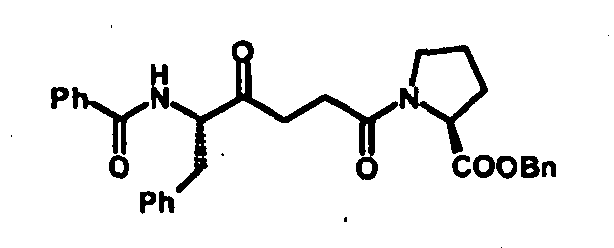
- A solution of the free acid compound 4 (100 mg, 0.3055 mmol, 1.0 eq.) and L-proline benzyl ester hydrochloride (74 mg, 0.3055 mmol, 1.0 eq.) in dry CH2Cl2 (10 mL) was cooled at 0°C. 1-Hydroxybenzotriazole hydrate (HOBt) (42 mg, 0.3055 mmol, 1.0 eq.), N-ethyl-N'-(dimethylaminopropyl)-carbodiimide hydrochloride (EDC.HCl) (59 mg, 0.3055 mmol, 1.0 eq.) and iPr2NEt (0.10 mL, 0.6110 mmol, 2.0 eq.) were added and the resulting mixture stirred at 0°C for 2 h. The cooling bath was removed and the reaction mixture then stirred for a further 48 h at room temperature. The reaction mixture was diluted with H2O (30 mL) and the extracted with EtOAc (3 x 30 mL). The combined organic extract were washed sequentially with saturated aqueous NaHCO3 (30 mL), brine (30 mL), and dried over anhydrous MgSO4. Evaporation of the solvent gave a crude residue, which was subjected to column chromatography on silica gel elution with 50% EtOAc-hexane afforded the desired compound (5S)-5-[(N-benzoyl)amino]-4-oxo-6-phenyl-hexanoyl-L-proline benzyl ester as a pale yellow viscous oil which foams (0.138 g, 88%); R f 0.23 (50% EtOAc-hexane); IR (liquid film) ν 1726 (CO), 3200 (NH) cm-1; 1H NMR (300 MHz, CDCl3) δH 1.98 (2H, m, -CH2 ), 2.21 (2H, m, -CH2 ), 2.65 (2H, m, -CH2 CO), 3.00 (1H, m, -CH αPh), 3.12 (1H, m, -CH βPh), 3.35 (2H, m, -CH2 CO), 3.60 (2H, m, -CH2 N), 4.52 (1H, m, -CHN), 5.03 (1H, m, -CH-), 5.14 (2H, dd, J = 1.8 and 8.4 Hz, -OCH2 Ph), 6.93 (1H, d, J = 6.9 Hz, -NH-) and 7.15-7.77 (15H, m, Ar-H); 13C NMR (75 MHz, CDCl3) δC 22.8, 24.7, 28.3, 28.9, 29.2, 34.1, 34.6, 36.8, 46.5, 46.9, 58.9, 59.6, 66.7, 66.8, 126.8, 126.9, 127.0, 127.9, 128.3, 128.5, 128.7 (2C), 129.4, 131.6, 133.9, 135.7, 136.7, 166.9, 170.3, 171.9 and 207.4; HRMS m/z calcd for C31H32N2O5 (M+) 512.23436, found 512.23112.
-

- The experimental procedure employed for the synthesis of (5S)-5-[(N-benzoyl)amino]-4-oxo-6-phenyl-hexanoyl-L-proline benzyl ester was followed using the free acid compound 4 (200 mg, 0.6109 mmol, 1.0 eq.), L-tryptophan methyl ester (133 mg, 0.6109 mmol, 1.0 eq.), 1-Hydroxybenzotriazole hydrate (HOBt) (83 mg, 0.6109 mmol, 1.0 eq.), N-ethyl-N'-(dimethylaminopropyl)-carbodiimide hydrochloride (EDC.HCl) (117 mg, 0.6109 mmol, 1.0 eq.), iPr2NEt (0.11 mL, 0.6110 mmol, 1.0 eq.) and dry DMF/CH2Cl2 (2:8 ratio)(10 mL). Work-up as usual and column chromatography on silica gel elution with 100% EtOAc afforded the (5S)-5-[(N-benzoyi)amino]-4-oxo-6-phenyl-hexanoyl-L-tryptophan methyl ester as a yellow solid (0.290 g, 90%); mp 88-90 °C; R f 0.50 (EtOAc); IR (KBr) ν 1760 (CO), 3230 (NH) cm-1; 1H NMR (300 MHz, CDCl3) δH 2.44 (2H, m, -CH2 CO), 2.82 (2H, m, -CH2 CO), 3.06 (1H, m, -CH αPh), 3.28 (3H, m, -CH βPh and -CH2 Trp), 3.67 (3H, s, -OMe), 4.90 (1H, m, -CH-), 4.99 (1H, m, - CH-), 6.17 (1H, dd, J = 2.7 and 7.5 Hz, -NH), 6.88 (1H, d, J = 6.9 Hz, -NH), 7.00 (1H, dd, J = 2.8 and 6.4 Hz, Trp-H-5'), 7.02-7.56 (12H, m, Ar-H), -7.68 (1H, d, J = 1.8 Hz, Trp-H-2'), 7.71 (1H, d, J = 1.8 Hz, Ar-H) and 8.27 (1H, br-s, -NH); 13C NMR (75 MHz, CDCl3) δC 27.6, 29.7, 35.0, 35.1, 36.8, 36.9, 52.3, 53.0, 59.4, 59.6, 109.9, 111.3, 118.5, 119.7, 122.2, 123.0, 127.0, 127.6 (2C), 128.5, 128.6(2C), 129.3, 131.8, 133.8, 136.1, 136.2, 167.1, 171.1, 172.3 and 207.5; HRMS m/z calcd for C31H31N3O5 (M+) 525.22637, found 525.22637.
-

- The experimental procedure employed for the synthesis of (5S)-5-[(N-benzoyl)amino]-4-oxo-6-phenyl-hexanoyl-L-proline benzyl ester was followed using the free acid compound 4 (200 mg, 0.6109 mmol, 1.0 eq.), L-phenylalanine methyl ester (110 mg, 0.6109 mmol, 1.0 eq.), 1-Hydroxybenzotriazole hydrate (HOBt) (83 mg, 0.6109 mmol, 1.0 eq.), N-ethyl-N'-(dimethylaminopropyl)-carbodiimide hydrochloride (EDC.HCl) (117 mg, 0.6109 mmol, 1.0 eq.), iPr2NEt (0.11 mL, 0.6110 mmol, 1.0 eq.) and dry DMF/CH2Cl2 (2:8 ratio)(10 mL). Work-up as usual and column chromatography on silica gel elution with 66% EtOAc-hexane afforded the (5S)-5-[(N-benzoyl)amino]-4-oxo-6-phenyl-hexanoyl-L-phenylalanine methyl ester as a cream white solid (0.274 g, 92%); mp 106-109 °C; R f 0.45 (66% EtOAc-hexane); IR (KBr) ν 1750 (CO), 3290 (NH) cm-1; 1H NMR (300 MHz, CDCl3) δH 2.50 (2H, m, -CH2 CO), 2.85 (2H, m, -CH2 CO), 3.11 (3H, m, -CH αPh and -CH2 Ph), 3.30 (1H, dd, J = 6.6 and 14.4 Hz; -CH βPh), 3.71 (3H, s, -OMe), 4.84 (1H, m, --CH-), 5.02 (1H, ddd, J = 2.4, 6.9 and 9.0 Hz, -CH-), 6.03 (1H, d, J = 7.2 Hz, -NH), 6.84 (1H, d, J = 6.0 Hz, -NH) and 7.06-7.74 (15H, m, Ar-H); 13C NMR (75 MHz, CDCl3) δC 29.6, 29.7, 35.1, 35.2, 37.0, 37.9, 52.3, 53.2, 59.4, 59.5, 127.0 (2C), 127.1, 127.2, 128.6 (2C), 128.7(2C), 129.3, 129.4 (2C), 131.7, 133.9. 135.8, 136.2, 167.0, 171.0, 171.9 and 207.4; HRMS m/z calcd for C29H30N2O5 (M+) 486.21829, found 486.21547. Anal. Calcd for C29H30N2O5: C, 71.59; H, 6.21; N, 5.96. Found: C, 71.43; H, 6.23; N, 5.76.
-

- To a stirred solution of the (5S)-5-[(N-benzoyl)amino]-4-oxo-6-phenyl-hexanoyl-L-proline benzyl ester (100 mg, 0.1951 mmol) in dry EtOAc-MeOH (3:1 ratio) (10 mL) was added 10% Pd/C (100 mg) and the resulting mixture stirred at room temperature under 1 atmosphere of hydrogen for 24 h. Filtration of the black Pd residue and evaporation of the filtrate gave a pale yellow crude residue. Column chromatography on silica gel elution with 37% MeOH-EtOAc afforded the ( 5S)-5-[(N-benzoyl)amino]-4-oxo-6-phenyl-hexanoyl-L-proline 5a as a white solid powder (68 mg, 82%): mp 148-149 °C (lit.12 mp 151-153°C); R f 0.28 (37% MeOH-EtOAc); IR (KBr) ν 1765 (CO), 3300 (broad, COOH) cm-1; 1H NMR (300 MHz, CD3OD) δH 2.01 (2H, m, -CH 2), 2.51 (4H, m, -CH2 CO and -CH2 CH2N), 2.78 (2H, m, -CH2 CO), 3.02-3.38 (4H, m -CH2 Ph and -CH2 N-), 4.84 (1H, m, -CH-), 4.98 (1H, m, -CH-) and 7.08-7.68 (10H, m, Ar-H); 13C NMR (75 MHz, CD3OD δC 22.6, 24.5, 28.6, 34.3, 36.2, 46.4, 59.9, 61.8, 126.6 (2C), 126.8 (2C), 128.4, 128.9 (2C), 129.0, 131.6, 133.5, 136.6, 136.9, 167.9, 171.0, 179.3 and 208.9; HRMS m/z calcd for C24H26N2O5 (M+) 422.18417, found 422.18417. [± The carboxylic acid and amide protons were not observed, presumably, due to rapid exchange with water in the deuteriated NMR solvent.]
-

- To a stirred solution of the compound (5S)-5-[(N-N-benzoyl)amino]-4-oxo-6-phenyl hexanoyl-L-tryptophan methyl ester (170 mg, 0.3222 mmol, 1.0 eq.) in a mixture THF-MeOH (ratio 3:2) (10 mL) was added 0.5N LiOH (5.0 mL). The resulting yellowish mixture was stirred at room temperature for 30 min during which TLC shows the complete disappearance of the starting material. The reaction mixture was then neutralized with glacial acetic acid and the extracted with EtOAc (3 x 25 mL), dried over anhydrous MgSO4 and evaporation of the solvent gave a crude residue, which was subjected to column chromatography on silica gel elation with 30% MeOH - EtOAc afforded the free acid (5S)-5-[(N-benzoyl)amino]-4-oxo-6-phenyl-hexanoyl-L-tryptophan 5b as a pale yellow solid (0.158 g, 95%); mp 171-173 °C; R f 0.38 (30% MeOH-EtOAc); IR (KBr) ν 1720 (CO), 3250 (broad, COOH) cm-1; 1H NMR (400 MHz, CDCl3) δH 2.31 (2H, m, -CH2 CO), 2.70 (2H, m, --CH2 CO), 2.96 (1H, m, -CH αPh), 3.24 (3H, m, --CH βRh and -CH2 Trp), ), 4.84 (1H, m, -CH-), 4.90 (1H, m, -CH-), 6.49 (1H, t, J = 7.2 Hz, -NH), 6.92-7.66 (16H, m, Ar-H and -NH) and 8.48 (1H, d, J = 6.0 Hz, -NH); 13C NMR (100 MHz, CDCl3) δC 27.2, 29.5, 35.0, 35.1, 36.5, 53.2, 59.5, 59.6, 109.5, 111.4, 118.5, 119.6, 122.0, 123.5, 127.0, 127.1 (2C), 127.4, 128.6, 128.7 (2C), 129.2, 132.0, 133.5, 136.1, 167.7, 172.4, 174.6 and 207.8; HRMS m/z calcd for C30H29N3O5 (M+) 511.21072, found 511.21072. [± The carboxylic acid and amide protons were not observed, presumably, due to rapid exchange with water in the deuteriated NMR solvent.]
-

- The experimental procedure employed for the synthesis of compound 5b was followed using the (5S)-5-[(N-benzoyl)amino]-4-oxo-6-phenyl-hexanoyl-L-phenylalanine methyl ester (200 mg, 0.4094 mmol, 1.0 eq.), 0.5N LiOH (5.0 mL) and a mixture THF-MeOH (ratio 3:2) (10 mL) was added 0.5N LiOH (5.0 mL). Work-up and column chromatography on silica gel elution with 20% MeOH - EtOAc afforded the free acid (5S)-5-[(N-benzoyl)amino]-4-oxo-6-phenyl-hexanoyl-L-phenylalanine 5c as a yellow oil (0.187 g, 97%); IR (liquid film) ν 1720 (CO), 3100 (broad, COOH) cm-1; 1H NMR (300 MHz, CDCl3) δH 2.46 (2H, m, -CH2 CO), 2.80 (2H, m, -CH2 CO), 3.00-3.31 (4H, m, 2 x -CH2 Ph), 4.8.1 (1H, q, J = 6.0 Hz), 4.98 (1H, ddd, J = 2.5, 7.0 and 9.0 Hz, - CH-), 6.30 (1H, m, -NH), 6.94 (1H, t, J = 9.3 Hz, Ar-H) and 7.10-7.74 (16H, m, Ar-H and -NH); 13C NMR (75 MHz, CDCl3) δC 29.1, 29.7, 35.3, 36.8, 37.3, 53.3, 59.5, 59.6, 67.7, 127.1 (2C), 127.2 (2C), 128.5, 128.6, 128.7, 129.2, 129.3, 129.4, 131.9, 133.5, 135.8, 136.1, 167.5, 172.0, 174.9 and 207.7; HRMS m/z calcd for C28H28N2O5 (M+) 472.19982, found 472.19982. [± The carboxylic acid and amide protons were not observed, presumably, due to rapid exchange with water in the deuteriated NMR solvent.]
- The ACE inhibitory activity (as tabulated in Table 1) was measured by the fluorometric determination of pthaldialdehyde-derivatised histidylleucine, a product of the enzyme reaction according to the method of Almquist et al., 12 with some modifications. For tACEdelta36NJ and N-domain inhibition using Z-Phe-His-Leu as substrate:- 10 µL of 0.05 mg/mL enzyme + 120 µL inhibitor was incubated at ambient temperature for 3 hours. Inhibitor concentrations ranged from 2.0 µM to 500 µM. A 3.0 µL aliquot of this was assayed for enzyme activity using 30 µL of 1.0 mM Hip-His-Leu. This was incubated (in triplicate) for 30 mins at 37 °C and stopped with 180 µL solution of 0.28N NaOH. To this alkalized mixture 12 µL of o-pthaldialdehyde (150 mM) was added and the mixture incubated for another 10 mins at room temperature. Reactions were stopped by adding 26 µL of 3N HCl. Fluorescence was measured at Ex = 360 nm; Em = 486 nm, 5 x 5 slit width along with a His-Leu standard calibration curve fluorometer: Varian Cary Eclipse plate reader.
- All assays included enzyme incubated with buffer in the absence of inhibitor (i.e. 0 µM inhibitor concentration). Lisinopril was also used as a positive control. The 50% inhibition (IC50) of ACE activity was calculated as the concentrations of samples that inhibited 50% of ACE activity under these conditions.
Table 1: ACE inhibition of the keto-ACE derivatives prepared above Compound Structure Ki (tACE) ZPHL Kl (N-dom) ZPHL Lisinopril 
51.0 nM 131.5 nM 5a 
1.8 µM 45.2 µM 5b 
0.8 µM 195.7 µM 5c 
23.7 µM 84.3 µM - Keto-ACE 5a and analogues 5b, 5c all showed weak inhibitory activity for ACE as compared to lisinopril. The tryptophan 5b derivative of keto-ACE highly C-domain specific (245-fold) and its inhibition potential is similar to that of keto-ACE 5a. The weaker ACE inhibitory activity of compounds 5a-c compared with lisinopril might be due to the absence of the P1' residue.
- Molecular modeling calculations were performed using the DISCOVER module of INSIGHT II (Accetrys Inc., Version 98.0) on a Silicon Graphics Octane 1 workstation. The starting structure was the X-ray crystal structure of testis ACE complexed with the known inhibitor lisinopril.11 After removing the crystallographic water molecules and adding hydrogens, the CVFF and the ESFF (metal adapted) force-fields25 were used in all energy minimizations and dynamic runs. The conjugate gradient minimization algorithm was used after running 1000 initial steps, and then 3000 cycles of molecular dynamics followed by 3000 cycles of energy minimization in an NTV ensemble, at a temperature of 300K. All calculations were carried out in a dielectric constant of 1.00 and a cut-off distance of 9.50Å. The structures of the keto-ACE 5a and analogues 5b and 5c were generated with standard bond lengths and angles using the builder tool of INSIGHT II software (Accelrys Inc.) and then minimized. The initial position of the compounds in the active site of the catalytic C-domain of ACE was obtained by superimposing the important pharmacophoric groups of keto-ACE and analogues on the corresponding atoms of lisinopril in the tACE-lisinopril complex: After removal of the reference inhibitor (lisinopril), the structure of the inhibitor-complex was refined by running energy minimizations and molecular dynamics.
- The compounds Keto-ACE 5a and analogues 5b and 5c, which presented the highest C-domain selectivity, were modeled into the testis ACE binding site occupying the S1, S2 and S2' subsites (
Figure 1 ). From the docking experiments, the energy-minimized bound conformer of the inhibitors in the active site of the C-domain was obtained. The inhibitors all exhibited a negative total potential energy of the protein-ligand interaction (-835.4 Kcal mol-1, -933.9 Kcal mol-1, and -799.0 Kcal mol-1 for 5a, 5b and 5c, respectively) which is an indication of the relative stability of the enzyme-ligand complex, (the value for t ACE-lisinopril complex was also found to be -890.0 Kcal mol 1). The residues forming the subsites of the C-domain active site were defined as those located at a distance less than 6.00 Å from the important functionalities of inhibitors. The modeling of compound 5b revealed that the phenyl group of the P1 phenylalanine interacted with the hydrophobic Val518 [Val1094 in somatic enzyme]26 and the polar Ser355 (Ser931) of the S1 subsite at distances of 2.87 Å and 4.30 Å respectively. The distance between the phenylalanine-carbonyl and the Zn-atom in the active site of the C-domain was observed to be 2.82Å for compound 5b (and 2.79 Å and 3.00 Å for compounds 5a and 5c, respectively). These values are within the range of a reasonable H-bonding interaction. Also, the modeling of compound 5b showed that the P2 phenyl group of the benzoyl moiety was accommodated into the S2 subsite and this interacted with residues Ser355 (Ser931), Trp357 (Trp933), Lys368 (Lys944) Asn66 (Asn642), Asn70 (Asn646), Glu143 (Glu719), Phe512 (Phe1088), and Ser516 (Ser1092) (Figure 2 ). - In the N-domain, Asn66 (Asn642), Asn70 (Asn646), Glu143 (Glu719), and Ser516 (Ser1092) are replaced by a Ser39, an Asp43, a Ser119, and a Asn494, respectively. Thus, these interactions might likely contribute to the domain-selectivity of the compounds 5b and 5a. The S2' subsite readily accommodated the tryptophan and the phenylalanine moieties of compounds 5b and 5c, respectively. The tryptophan moiety of compound 5b made contacts with Gln281 (Gln857), Phe460 (Phe1036), Ile 514 (Ile1090), Val518 (Val1094), and Pro 519 (Pro1095) residues (
Figure 2 ). In the N-domain of ACE, the Ile514 (Ile1090) and Val518 (Val1094) are replaced by Val492 and Thr496, respectively, while the other residues are not conserved in the N- and C-domains. These interactions might result in a contribution to domain-selectivity on the one hand and also loss of potency on the other. - Molecular docking of the energy-minimized conformers of compounds 5a, 5b, and 5c in the tACE active site showed that the selectivity of these compounds may be explained by the interactions involving the S1, S2, and S2 subsites. The bulky aromatic ring of the P1 Phe of compound 5b extended into the deep S1 pocket (
Figure 2 ). Of the residues that made contact with the P1 residue, Val518 (Val1094) and Phe391 (Phe967) are both replaced by the polar Thr496 and Tyr369 in the N-domain respectively. These substitutions increase the hydrophilicity of the S1 pocket which would be less favourable for binding a P1 phenylalanine and does not fit with the general picture that a phenyl group at this position has been shown to be significant for ACE inhibitory activity. Instead, it would likely cause steric hindrance. - From the docking results, the benzoyl group is accommodated into the S2 subsite, which is in agreement with the ACE inhibitory activity observed for compounds 5a, 5b, and 5c. Among the residues that made contact with the benzoyl group of compound 5b, four are conserved between the C- and N-domains. In the C-domain of ACE, the polar residues Asn66 (Asn642), Asn70 (Asn646), Glu143 (Glu719), and Ser516 (Ser1092) residues are replaced by polar residues Ser39, Asp43, Ser119, and Asn494 in the N-domain, respectively. However, Ser39 in the N-domain is less polar than Asn66 (Asn642) in the C-domain, since amide groups are known to be more polar than hydroxyl groups. Also, Asp43, Ser119, and Asn494 in the N-domain are more polar than their counterparts in the C-domain. These differences in polarity between the groups could favour more interactions with less-polar inhibitor side chains and decrease the affinity for the N-domain, and as such result in the increase in selectivity of compound 5b.
- The S2' subsites of both the C- and N-domains are relatively large and can accommodate various linear and cyclic side chains without stringent preferences. It has been reported previously27,28 that the selectivity of ACE inhibitors depends on the interactions with the S2' pocket. The less polar tACE Ile514 (Ile1090) and Val518 (Val1094) residues in the S2' pocket are replaced by the more polar Val492 and Thr496 residues in the N-domain. Ile514 and Val518 of the C-domain display a greater hydrophobic interaction with the bulky tryptophan moiety of compound 5b. It has recently been shown by Dive and co-workers27 that the S2' subsite can easily accommodate a tryptophan moiety, increasing C-domain selectivity. The molecular modeling results for compound 5b also revealed extra H-bondings between the indole-NH of the tryptophan moiety with
Val 518 andPro 519 of the active site, at distances of 2.43 Å and 2.73 Å, respectively. - Compound 5b showed significant ACE inhibitory potency, which might be a result of the tryptophan moiety at this position interacting with the hydrophobic S2' subsite of the enzyme through its imidazole nucleus. (Bala et al. have previously reported that a tryptophan moiety at the S2' position enhances ACE inhibitory activity).29 The free carboxylic group of the tryptophan residue interacted with the amino groups of the side chains of the Lys511 and GIn281 residues in the active site of tACE, at H-bonding distances of 1.71 Å and 1.90 Å, respectively.
- The applicant has thus developed a novel and straightforward process for the synthesis of keto-ACE and analogues thereof. The key feature of this synthesis involves a Homer-Emmons24 olefination of the α,β-unsaturated keto-phoshonate with ethyl gyloxylate. The keto-ACE analogues display C-domain selectivity and their interactions with tACE were studied by a molecular modeling approach.
-
- 1 Skeggs, L. T.; Kahn, J.R. and Shumway, N. P. (1958). The preparation and function of the hypertensin-converting enzyme, J. Exp. Med. 103, 295-299.
- 2 Erdös, E.G. (1976) Conversion of angiotensin I to angiotensin II, Am. J. Med. 60, 749-759.
- 3 Peach, M.J. (1977) Renin-angiotensin system: Biochemistry and mechanism of action, Physiol. Rev. 57, 313-370.
- 4 Ehlers, M.R.W and Riordan, J.F. (1989) Anglotensin-converting enzyme: New concepts concerning its biological role, Biochemistry, 28, 5312-5318.
- 5 Cushman, D.W.; Cheung, H.S.; Sbo, E. F. and Ondetti. M.A. (1977) Design of potent competitive inhibitors of angiotensin-converting enzyme. Carboxyalkanoyl and mercaptoalkanoyl amino acids, Biochemistry, 16, 5484-5491.
- 6 Ondetti, M.A.; Rubin, B. and Cushman, D.W. (1977) Design of specific inhibitors of angiotensin-converting enzyme: New class of orally active antihypertensive agents, Science, 196, 441-444.
- 7 Brown, N.J. and Vaughan, D.E. (1998) Angiotensin-converting enzyme inhibitors, Circulation, 97(14), 1411-1420.
- 8 Raia, Jr. J.J.; Barone, J.A.; Byerly, W.G. and Lacy, C.R. (1990) Angiotensin-converting enzyme inhibitors: A comparative review, DICP, 24(5), 506-525.
- 9 Antonios, T.F. and MacGregor, G.A. (1995) Angiotensin-converting enzyme inhibitors in hypertension: Potential problems, J. Hypertens. Suppl., 13(Suppl), S11-S16.
- 10 Israili, Z.H. and Hall, W.D.(1992) Cough and angioneutrotic edema associated with angiotensin-converting enzyme inhibitor therapy: A review of the literature and pathophysiology, Annals in Internal Medicine, 117, 234-242.
- 11 Natesh, R.; Schwager, S.L.U.; Sturrock, E.D. and Acharya, K.R. (2003) Crystal structure of the human angiotensin-converting enzyme-lisinopril complex, Nature, 421, 551-554.
- 12 Almquist, R.G.; Chao, W.-R.: Ellis, M.E. and Johnson, H.L. (1980) Synthesis and biological activity of a ketomethylene analogue of a tripeptide inhibitor of angiotensin-converting enzyme, J. Med. Chem., 23, 1392-1398.
- 13 Meyer, R.F.; Nicolaides, E.D.; Tinney, F.J.; Lunney, E.A.; Holmes, A.; Hoefle, M.L.; Smith, R.D.; Essenburg, A.D.; Kaplan, H.R. and Almquist, R.G. (1981) Novel synthesis of (S)-1-[5-(benzoylamino)-1,4-dioxo-6-phenylhexyl]-L-proline and analogues: Potent angiotensin-converting enzyme inhibitors, J. Med. Chem., 24, 964-969.
- 14
- (a) Almquist, R.G.; Crase, J.; Jennings-White, C.; Meyer, R.F.; Hoefle, M.L.; Smith, R.D.; Essenburg, A.D. and Kaplan, H.R. (1982) Derivatives of the potent angiotensin-converting enzyme inhibitors 5(S)-benzamido4-oxo-6-phenylhexanoyl-L-proline: Effect of changes at positions 2 and 5 of the hexanoic acid portion, J. Med. Chem., 25, 1292-1299.
- (b) Deddish, P.A.; Marcic, B.; Jackmann, H.L.; Wang, H.Z.; Skidgel, R.A. and Erdös, E.G. (1998) N-domain-specific substrate and C-domain inhibitors of angiotensin-converting enzyme: Angiotensin-(1-7) and Keto-ACE, Hypertension, 31, 912-917.
- 15 González-Muniz, R.; García-López, M.T.; Gómez-Monterrey, I.; Herranz, R.; Jimeno, M.L.; Suárez-Gea, M.L; Johansen, N.L.; Madsen, K.; Th⌀gersen, H.; and Suzdak, P. (1995) Ketomethylene and (Cyanomethylene)amino pseudopeptide analogues of the C-terminal hexapeptide of neurotensin, J. Med. Chem., 38, 1015-1021 and references cited therein.
- 16 Dézil, R.; Plante, R.; Caron, V.; Grenier, L.; Llinas-Brunet, M.; Duceppe, J.-S.; Malenfant, E. and Moss, N. (1998). A practical and diastereoselctive synthesis of Ketomethylene dipeptide isosteres of the type AAψ(COCH2)Asp, J. Org. Chem., 61, 2901-2903.
- 17 Benedetti, F.; Miertus, S.; Norbedo, S.; Tossi, A. and Zlatoidzky, P. (1997) Versatile and stereoselective synthesis of diamino diol dipeptide isosteres: Core units of pseudopeptide HIV protease inhibitors. J. Org. Chem., 62, 9348-9353.
- 18 Ghosh, A.K. and Fidanze, S. (1998) Transition-state mimetics for HIV protease inhibitors: Stereocontrolled synthesis of hydroxyethylene and hydroxyethylamine isosteres by ester-derived titanium enolate syn and anti-diol reactions, J. Org. Chem., 63, 6146-6152.
- 19 Benedetti, F.; Maman, P. and Norbedo, S. (2000) New synthesis of 5-amino-4-hydroxy-2,6-dimethylheptanoic acid: A hyddroxyethylene isostere of the Val-Ala dipeptide, Tetrahedron Lett., 41, 10075-10078.
- 20 Benedetti, F.; Magnan, M.; Miertus, S.; Norbedo, S.; Parat, D. and Tossi, A. (1999) Stereoselective synthesis of non symmetric dihydroxyethylene dipeptide isosteres via epoxyalcohols derived from α-amino acids, Bioorg. Med. Chem. Lett., 9, 3027-3030.
- 21 Tossi, A.; Benedetti, F.; Norbedo, S.; Skrbec, D.; Berti, F. and Romeo, D. (2003) Small hydroxyethylene-based peptidomimetics inhibiting both HIV-1 and C. albicans aspartic proteases, Bioorg. Med. Chem., 11, 4719-4727.
- 22 García-López, M.T.; González-Muñiz, R. and Harto, J.R. (1988) A simple and versatile route to ketomethylene dipeptide analogues, Tetrahedron Lett., 29, 1577-1580.
- 23 García-López, M.T.; González-Muñiz, R. and Harto, J.R. (1988) Synthesis of ketomethylene dipeptides containing basic amino acid analogues at C-terminus, Tetrahedron, 44, 5131-5138.
- 24 Kelly, T.R.; Schmidt, T.E. and Haggerty, J.G. (1972) A convenient preparation of methyl and ethyl glyoxylate, Synthesis, 544-545.
- 25 http://www.accelrys.com/support/life/discover/force-field/esffSBL:html
- 26 Soubrier, F.; Alhenc-Gelas, F.; Hubert, C.; Allegrini, J.; John, M.; Tregear, G. and Corvol, P. (1988) Two putative active centers in human angiotensin I-converting enzyme revealed by molecular cloning, Proc. Natl. Acad. Sci. U. S. A. 85, 9386-9390.
- 27 Georgiadis, D.; Cuniasse, P.; Cotton; J.; Yiotakis, A. and Dive, V. (2004) Structural determinants of RXPA380, a potent and highly selective inhibitor of the angiotensin-converting enzyme C-domain, Biochemistry, 43, 8048-8054.
- 28 Bersanetti, P.A.; Andrade, M.C.C; Casarini, D.E.; Juliano, M.A.; Nchinda, A.T.; Sturrock, E.D.; Juliano, L. and Carmona, A.K. (2004) Positional-scanning combinatorial libraries of fluorescence resonance energy transfer (FRET) peptides to define substrate specificity of angiotensin I-converting enzyme and development of selective C-domain substrates, Biochemistry, accepted in press.
- 29 Bala, M.; Pasha, M.A.Q.; Bhardwaj, D.K. and Pasha, S. (2002) Novel Peptidomimics as Angiotensin-Converting Enzymes inhibitors: A combinatorial approach, Bioorg. and Med. Chem., 10, 3685-3691.
- 30 Da, C.-S.; Han, Z.-J.; Ni, M.; Yang, F.; Liu, D.-X.; Zhou, Y.-F. and Wang, R. (2003) A convenient synthesis of piperidine-based β-amino alcohols from L-Phe and highly enantioselective addition of diethyl zinc to aldehydes, Tetrahedron: Asymmetry, 14, 659-665.
- 31 (a) Hvidt, T. and Szarek, W.A. (1988) Synthesis of enantiomerically pure β-amino-α-methylene-γ-butyrolactones by way of ozonolysis of aromatic α-amino acids, Can. J. Chem., 66(4), 779-782; (b) Peng, S. and Winterfeldt, E. (1990) Enantiomerically pure indoloquinolizines from tryptophane, Liebigs Ann. Chem., 313-318.
Claims (5)
- A compound which is of the formula 5b:

- A compound according to claim 1 for treating hypertension and/or cardiovascular disease.
- A pharmaceutical composition including a compound of claim 1.
- A pharmaceutical composition according to claim 3, for treating hypertension and/or cardiovascular disease.
- The use of a compound according to claim 1 in a method of manufacturing a medicament for use in a method of treating hypertension and/or cardiovascular disease.
Applications Claiming Priority (2)
| Application Number | Priority Date | Filing Date | Title |
|---|---|---|---|
| ZA200504366 | 2005-05-27 | ||
| PCT/IB2006/001394 WO2006126086A2 (en) | 2005-05-27 | 2006-05-29 | Angiotensin i - converting enzyme (ace) inhibitors |
Publications (2)
| Publication Number | Publication Date |
|---|---|
| EP1893633A2 EP1893633A2 (en) | 2008-03-05 |
| EP1893633B1 true EP1893633B1 (en) | 2010-09-01 |
Family
ID=37441286
Family Applications (1)
| Application Number | Title | Priority Date | Filing Date |
|---|---|---|---|
| EP06744781A Active EP1893633B1 (en) | 2005-05-27 | 2006-05-29 | Angiotensin i - converting enzyme (ace) inhibitors |
Country Status (9)
| Country | Link |
|---|---|
| US (1) | US7951834B2 (en) |
| EP (1) | EP1893633B1 (en) |
| AT (1) | ATE479700T1 (en) |
| AU (1) | AU2006250905B2 (en) |
| CA (1) | CA2609811C (en) |
| DE (1) | DE602006016600D1 (en) |
| DK (1) | DK1893633T3 (en) |
| WO (1) | WO2006126086A2 (en) |
| ZA (1) | ZA200710879B (en) |
Families Citing this family (2)
| Publication number | Priority date | Publication date | Assignee | Title |
|---|---|---|---|---|
| EP2231137B1 (en) * | 2007-12-19 | 2017-01-25 | Versitech Limited | Method of modulating membrane potential of a cell |
| CN111875497B (en) * | 2020-08-17 | 2022-11-08 | 万华化学集团股份有限公司 | Method for synthesizing ethyl glyoxylate by catalytic hydrogenation of diethyl maleate |
-
2006
- 2006-05-29 EP EP06744781A patent/EP1893633B1/en active Active
- 2006-05-29 AT AT06744781T patent/ATE479700T1/en not_active IP Right Cessation
- 2006-05-29 ZA ZA200710879A patent/ZA200710879B/en unknown
- 2006-05-29 DE DE602006016600T patent/DE602006016600D1/en active Active
- 2006-05-29 US US11/921,110 patent/US7951834B2/en active Active
- 2006-05-29 AU AU2006250905A patent/AU2006250905B2/en not_active Ceased
- 2006-05-29 DK DK06744781.3T patent/DK1893633T3/en active
- 2006-05-29 WO PCT/IB2006/001394 patent/WO2006126086A2/en not_active Ceased
- 2006-05-29 CA CA2609811A patent/CA2609811C/en active Active
Also Published As
| Publication number | Publication date |
|---|---|
| AU2006250905B2 (en) | 2011-06-09 |
| DE602006016600D1 (en) | 2010-10-14 |
| EP1893633A2 (en) | 2008-03-05 |
| AU2006250905A1 (en) | 2006-11-30 |
| WO2006126086A2 (en) | 2006-11-30 |
| CA2609811C (en) | 2013-11-12 |
| WO2006126086A3 (en) | 2007-08-23 |
| ZA200710879B (en) | 2009-02-25 |
| ATE479700T1 (en) | 2010-09-15 |
| US7951834B2 (en) | 2011-05-31 |
| DK1893633T3 (en) | 2010-12-20 |
| CA2609811A1 (en) | 2006-11-30 |
| US20090281160A1 (en) | 2009-11-12 |
Similar Documents
| Publication | Publication Date | Title |
|---|---|---|
| US5498728A (en) | Derivatives of L-tryptophanal and their use as medicinals | |
| EP1600457B1 (en) | Peptide derivatives having beta-secretase inhibitory activity | |
| JP5921679B2 (en) | Benzylamine derivatives as inhibitors of plasma kallikrein | |
| JP2001506974A (en) | Aspartate ester inhibitor of interleukin-1β converting enzyme | |
| PH26272A (en) | Cycloalkyl-substituted glutaramide pharmaceutical composition containing them and method of use thereof | |
| CS621585A2 (en) | Method of analynprolinone derivatives production | |
| US6437094B2 (en) | Peptido-mimetic compounds containing RGD sequence useful as integrin inhibitors | |
| NZ240167A (en) | Heterocyclically substituted thiol amide derivatives; medicaments, preparation, and use thereof | |
| US7951834B2 (en) | Angiotensin I-converting enzyme (ACE) inhibitors | |
| Rasetti et al. | Bioactive hydroxyethylene dipeptide isosteres with hydrophobic (P3-P1)-moieties. A novel strategy towards small non-peptide renin inhibitors | |
| US4855303A (en) | Fluorine containing renin inhibitors | |
| EP1140981B1 (en) | Tripeptide compounds useful as selective inhibitors of aminopeptidase a and corresponding pharmaceutical compositions | |
| EP0297815B1 (en) | Fluorine containing renin inhibitors | |
| EP1899365B1 (en) | Angiotensin i-converting enzyme (ace) inhibitors | |
| JPH09118662A (en) | Urea derivative | |
| US6649593B1 (en) | Modulators of SREBP processing | |
| CN101724016B (en) | A class of peptide compounds, its preparation method and use | |
| Park et al. | 2-Benzyl-3, 4-iminobutanoic acid as inhibitor of carboxypeptidase A | |
| CN102924567B (en) | Peptide compound and preparation method and use of peptide compound | |
| US7223758B2 (en) | Pyridazine derivative, pharmaceutical composition thereof, its pharmaceutical use, and process for its preparation | |
| HK1104280A1 (en) | Derivatives of 1-phenylalkanecarboxylic acids for the treatment of neurodegenerative diseases | |
| HK1104280B (en) | Derivatives of 1-phenylalkanecarboxylic acids for the treatment of neurodegenerative diseases |
Legal Events
| Date | Code | Title | Description |
|---|---|---|---|
| PUAI | Public reference made under article 153(3) epc to a published international application that has entered the european phase |
Free format text: ORIGINAL CODE: 0009012 |
|
| 17P | Request for examination filed |
Effective date: 20071227 |
|
| AK | Designated contracting states |
Kind code of ref document: A2 Designated state(s): AT BE BG CH CY CZ DE DK EE ES FI FR GB GR HU IE IS IT LI LT LU LV MC NL PL PT RO SE SI SK TR |
|
| AX | Request for extension of the european patent |
Extension state: AL BA HR MK YU |
|
| 17Q | First examination report despatched |
Effective date: 20080430 |
|
| DAX | Request for extension of the european patent (deleted) | ||
| GRAP | Despatch of communication of intention to grant a patent |
Free format text: ORIGINAL CODE: EPIDOSNIGR1 |
|
| GRAS | Grant fee paid |
Free format text: ORIGINAL CODE: EPIDOSNIGR3 |
|
| GRAA | (expected) grant |
Free format text: ORIGINAL CODE: 0009210 |
|
| AK | Designated contracting states |
Kind code of ref document: B1 Designated state(s): AT BE BG CH CY CZ DE DK EE ES FI FR GB GR HU IE IS IT LI LT LU LV MC NL PL PT RO SE SI SK TR |
|
| REG | Reference to a national code |
Ref country code: GB Ref legal event code: FG4D |
|
| REG | Reference to a national code |
Ref country code: CH Ref legal event code: EP |
|
| REG | Reference to a national code |
Ref country code: IE Ref legal event code: FG4D |
|
| REF | Corresponds to: |
Ref document number: 602006016600 Country of ref document: DE Date of ref document: 20101014 Kind code of ref document: P |
|
| REG | Reference to a national code |
Ref country code: DK Ref legal event code: T3 |
|
| REG | Reference to a national code |
Ref country code: NL Ref legal event code: VDEP Effective date: 20100901 |
|
| PG25 | Lapsed in a contracting state [announced via postgrant information from national office to epo] |
Ref country code: FI Free format text: LAPSE BECAUSE OF FAILURE TO SUBMIT A TRANSLATION OF THE DESCRIPTION OR TO PAY THE FEE WITHIN THE PRESCRIBED TIME-LIMIT Effective date: 20100901 Ref country code: AT Free format text: LAPSE BECAUSE OF FAILURE TO SUBMIT A TRANSLATION OF THE DESCRIPTION OR TO PAY THE FEE WITHIN THE PRESCRIBED TIME-LIMIT Effective date: 20100901 Ref country code: LT Free format text: LAPSE BECAUSE OF FAILURE TO SUBMIT A TRANSLATION OF THE DESCRIPTION OR TO PAY THE FEE WITHIN THE PRESCRIBED TIME-LIMIT Effective date: 20100901 |
|
| LTIE | Lt: invalidation of european patent or patent extension |
Effective date: 20100901 |
|
| PG25 | Lapsed in a contracting state [announced via postgrant information from national office to epo] |
Ref country code: CY Free format text: LAPSE BECAUSE OF FAILURE TO SUBMIT A TRANSLATION OF THE DESCRIPTION OR TO PAY THE FEE WITHIN THE PRESCRIBED TIME-LIMIT Effective date: 20100901 Ref country code: SI Free format text: LAPSE BECAUSE OF FAILURE TO SUBMIT A TRANSLATION OF THE DESCRIPTION OR TO PAY THE FEE WITHIN THE PRESCRIBED TIME-LIMIT Effective date: 20100901 Ref country code: PL Free format text: LAPSE BECAUSE OF FAILURE TO SUBMIT A TRANSLATION OF THE DESCRIPTION OR TO PAY THE FEE WITHIN THE PRESCRIBED TIME-LIMIT Effective date: 20100901 |
|
| REG | Reference to a national code |
Ref country code: CH Ref legal event code: NV Representative=s name: ISLER & PEDRAZZINI AG |
|
| PG25 | Lapsed in a contracting state [announced via postgrant information from national office to epo] |
Ref country code: LV Free format text: LAPSE BECAUSE OF FAILURE TO SUBMIT A TRANSLATION OF THE DESCRIPTION OR TO PAY THE FEE WITHIN THE PRESCRIBED TIME-LIMIT Effective date: 20100901 Ref country code: SE Free format text: LAPSE BECAUSE OF FAILURE TO SUBMIT A TRANSLATION OF THE DESCRIPTION OR TO PAY THE FEE WITHIN THE PRESCRIBED TIME-LIMIT Effective date: 20100901 Ref country code: GR Free format text: LAPSE BECAUSE OF FAILURE TO SUBMIT A TRANSLATION OF THE DESCRIPTION OR TO PAY THE FEE WITHIN THE PRESCRIBED TIME-LIMIT Effective date: 20101202 Ref country code: NL Free format text: LAPSE BECAUSE OF FAILURE TO SUBMIT A TRANSLATION OF THE DESCRIPTION OR TO PAY THE FEE WITHIN THE PRESCRIBED TIME-LIMIT Effective date: 20100901 |
|
| PG25 | Lapsed in a contracting state [announced via postgrant information from national office to epo] |
Ref country code: RO Free format text: LAPSE BECAUSE OF FAILURE TO SUBMIT A TRANSLATION OF THE DESCRIPTION OR TO PAY THE FEE WITHIN THE PRESCRIBED TIME-LIMIT Effective date: 20100901 Ref country code: PT Free format text: LAPSE BECAUSE OF FAILURE TO SUBMIT A TRANSLATION OF THE DESCRIPTION OR TO PAY THE FEE WITHIN THE PRESCRIBED TIME-LIMIT Effective date: 20110103 Ref country code: SK Free format text: LAPSE BECAUSE OF FAILURE TO SUBMIT A TRANSLATION OF THE DESCRIPTION OR TO PAY THE FEE WITHIN THE PRESCRIBED TIME-LIMIT Effective date: 20100901 Ref country code: CZ Free format text: LAPSE BECAUSE OF FAILURE TO SUBMIT A TRANSLATION OF THE DESCRIPTION OR TO PAY THE FEE WITHIN THE PRESCRIBED TIME-LIMIT Effective date: 20100901 Ref country code: IS Free format text: LAPSE BECAUSE OF FAILURE TO SUBMIT A TRANSLATION OF THE DESCRIPTION OR TO PAY THE FEE WITHIN THE PRESCRIBED TIME-LIMIT Effective date: 20110101 Ref country code: IT Free format text: LAPSE BECAUSE OF FAILURE TO SUBMIT A TRANSLATION OF THE DESCRIPTION OR TO PAY THE FEE WITHIN THE PRESCRIBED TIME-LIMIT Effective date: 20100901 Ref country code: EE Free format text: LAPSE BECAUSE OF FAILURE TO SUBMIT A TRANSLATION OF THE DESCRIPTION OR TO PAY THE FEE WITHIN THE PRESCRIBED TIME-LIMIT Effective date: 20100901 |
|
| PG25 | Lapsed in a contracting state [announced via postgrant information from national office to epo] |
Ref country code: ES Free format text: LAPSE BECAUSE OF FAILURE TO SUBMIT A TRANSLATION OF THE DESCRIPTION OR TO PAY THE FEE WITHIN THE PRESCRIBED TIME-LIMIT Effective date: 20101212 Ref country code: BE Free format text: LAPSE BECAUSE OF FAILURE TO SUBMIT A TRANSLATION OF THE DESCRIPTION OR TO PAY THE FEE WITHIN THE PRESCRIBED TIME-LIMIT Effective date: 20100901 |
|
| PLBE | No opposition filed within time limit |
Free format text: ORIGINAL CODE: 0009261 |
|
| STAA | Information on the status of an ep patent application or granted ep patent |
Free format text: STATUS: NO OPPOSITION FILED WITHIN TIME LIMIT |
|
| 26N | No opposition filed |
Effective date: 20110606 |
|
| REG | Reference to a national code |
Ref country code: DE Ref legal event code: R097 Ref document number: 602006016600 Country of ref document: DE Effective date: 20110606 |
|
| PG25 | Lapsed in a contracting state [announced via postgrant information from national office to epo] |
Ref country code: MC Free format text: LAPSE BECAUSE OF NON-PAYMENT OF DUE FEES Effective date: 20110531 |
|
| REG | Reference to a national code |
Ref country code: IE Ref legal event code: MM4A |
|
| PG25 | Lapsed in a contracting state [announced via postgrant information from national office to epo] |
Ref country code: IE Free format text: LAPSE BECAUSE OF NON-PAYMENT OF DUE FEES Effective date: 20110529 |
|
| PG25 | Lapsed in a contracting state [announced via postgrant information from national office to epo] |
Ref country code: LU Free format text: LAPSE BECAUSE OF NON-PAYMENT OF DUE FEES Effective date: 20110529 |
|
| PG25 | Lapsed in a contracting state [announced via postgrant information from national office to epo] |
Ref country code: TR Free format text: LAPSE BECAUSE OF FAILURE TO SUBMIT A TRANSLATION OF THE DESCRIPTION OR TO PAY THE FEE WITHIN THE PRESCRIBED TIME-LIMIT Effective date: 20100901 Ref country code: BG Free format text: LAPSE BECAUSE OF FAILURE TO SUBMIT A TRANSLATION OF THE DESCRIPTION OR TO PAY THE FEE WITHIN THE PRESCRIBED TIME-LIMIT Effective date: 20101201 |
|
| PG25 | Lapsed in a contracting state [announced via postgrant information from national office to epo] |
Ref country code: HU Free format text: LAPSE BECAUSE OF FAILURE TO SUBMIT A TRANSLATION OF THE DESCRIPTION OR TO PAY THE FEE WITHIN THE PRESCRIBED TIME-LIMIT Effective date: 20100901 |
|
| REG | Reference to a national code |
Ref country code: CH Ref legal event code: PUE Owner name: ANGIODESIGN (UK) LIMITED, GB Free format text: FORMER OWNER: UNIVERSITY OF CAPE TOWN, ZA |
|
| REG | Reference to a national code |
Ref country code: GB Ref legal event code: 732E Free format text: REGISTERED BETWEEN 20150220 AND 20150225 |
|
| REG | Reference to a national code |
Ref country code: DE Ref legal event code: R082 Ref document number: 602006016600 Country of ref document: DE Representative=s name: LIPPERT STACHOW PATENTANWAELTE RECHTSANWAELTE , DE Ref country code: DE Ref legal event code: R082 Ref document number: 602006016600 Country of ref document: DE Representative=s name: PATENTANWAELTE LIPPERT, STACHOW & PARTNER, DE Ref country code: DE Ref legal event code: R081 Ref document number: 602006016600 Country of ref document: DE Owner name: ANGIODESIGN (UK) LTD., WARMINSTER, GB Free format text: FORMER OWNER: UNIVERSITY OF CAPE TOWN, CAPE TOWN, ZA |
|
| REG | Reference to a national code |
Ref country code: FR Ref legal event code: TP Owner name: ANGIODESIGN (UK) LIMITED, GB Effective date: 20150907 |
|
| REG | Reference to a national code |
Ref country code: FR Ref legal event code: PLFP Year of fee payment: 11 |
|
| REG | Reference to a national code |
Ref country code: FR Ref legal event code: PLFP Year of fee payment: 12 |
|
| REG | Reference to a national code |
Ref country code: FR Ref legal event code: PLFP Year of fee payment: 13 |
|
| REG | Reference to a national code |
Ref country code: FR Ref legal event code: PLFP Year of fee payment: 18 |
|
| PGFP | Annual fee paid to national office [announced via postgrant information from national office to epo] |
Ref country code: FR Payment date: 20240328 Year of fee payment: 19 |
|
| PGFP | Annual fee paid to national office [announced via postgrant information from national office to epo] |
Ref country code: GB Payment date: 20240402 Year of fee payment: 19 |
|
| PGFP | Annual fee paid to national office [announced via postgrant information from national office to epo] |
Ref country code: DE Payment date: 20240328 Year of fee payment: 19 |
|
| PGFP | Annual fee paid to national office [announced via postgrant information from national office to epo] |
Ref country code: DK Payment date: 20240515 Year of fee payment: 19 |
|
| PGFP | Annual fee paid to national office [announced via postgrant information from national office to epo] |
Ref country code: CH Payment date: 20240602 Year of fee payment: 19 |
|
| REG | Reference to a national code |
Ref country code: DE Ref legal event code: R119 Ref document number: 602006016600 Country of ref document: DE |
|
| REG | Reference to a national code |
Ref country code: DK Ref legal event code: EBP Effective date: 20250531 |
|
| REG | Reference to a national code |
Ref country code: CH Ref legal event code: H13 Free format text: ST27 STATUS EVENT CODE: U-0-0-H10-H13 (AS PROVIDED BY THE NATIONAL OFFICE) Effective date: 20251223 |
|
| PG25 | Lapsed in a contracting state [announced via postgrant information from national office to epo] |
Ref country code: CH Free format text: LAPSE BECAUSE OF NON-PAYMENT OF DUE FEES Effective date: 20250531 |
|
| GBPC | Gb: european patent ceased through non-payment of renewal fee |
Effective date: 20250529 |
|
| PG25 | Lapsed in a contracting state [announced via postgrant information from national office to epo] |
Ref country code: GB Free format text: LAPSE BECAUSE OF NON-PAYMENT OF DUE FEES Effective date: 20250529 |
|
| PG25 | Lapsed in a contracting state [announced via postgrant information from national office to epo] |
Ref country code: DE Free format text: LAPSE BECAUSE OF NON-PAYMENT OF DUE FEES Effective date: 20251202 Ref country code: DK Free format text: LAPSE BECAUSE OF NON-PAYMENT OF DUE FEES Effective date: 20250531 |
|
| PG25 | Lapsed in a contracting state [announced via postgrant information from national office to epo] |
Ref country code: FR Free format text: LAPSE BECAUSE OF NON-PAYMENT OF DUE FEES Effective date: 20250531 |