EP1893628B1 - Synthetic gene control region - Google Patents
Synthetic gene control region Download PDFInfo
- Publication number
- EP1893628B1 EP1893628B1 EP06772695A EP06772695A EP1893628B1 EP 1893628 B1 EP1893628 B1 EP 1893628B1 EP 06772695 A EP06772695 A EP 06772695A EP 06772695 A EP06772695 A EP 06772695A EP 1893628 B1 EP1893628 B1 EP 1893628B1
- Authority
- EP
- European Patent Office
- Prior art keywords
- gene
- control region
- sequence
- cerevisiae
- yeast strain
- Prior art date
- Legal status (The legal status is an assumption and is not a legal conclusion. Google has not performed a legal analysis and makes no representation as to the accuracy of the status listed.)
- Not-in-force
Links
Images


Classifications
-
- C—CHEMISTRY; METALLURGY
- C12—BIOCHEMISTRY; BEER; SPIRITS; WINE; VINEGAR; MICROBIOLOGY; ENZYMOLOGY; MUTATION OR GENETIC ENGINEERING
- C12N—MICROORGANISMS OR ENZYMES; COMPOSITIONS THEREOF; PROPAGATING, PRESERVING, OR MAINTAINING MICROORGANISMS; MUTATION OR GENETIC ENGINEERING; CULTURE MEDIA
- C12N15/00—Mutation or genetic engineering; DNA or RNA concerning genetic engineering, vectors, e.g. plasmids, or their isolation, preparation or purification; Use of hosts therefor
- C12N15/09—Recombinant DNA-technology
- C12N15/63—Introduction of foreign genetic material using vectors; Vectors; Use of hosts therefor; Regulation of expression
- C12N15/79—Vectors or expression systems specially adapted for eukaryotic hosts
- C12N15/80—Vectors or expression systems specially adapted for eukaryotic hosts for fungi
- C12N15/81—Vectors or expression systems specially adapted for eukaryotic hosts for fungi for yeasts
Definitions
- Saccharomyces cerevisiae or baker's yeast, is widely used as a host for the expression of a variety of heterologous polypeptides. Many different proteins from a variety of species have been expressed in S. cerevisiae, some to levels of >10% of total cell protein. Typically, expression has been mediated by a plasmid containing a DNA sequence encoding the heterologous polypeptide and the gene control region that controls gene expressions in S. cerevisiae as well as other sequences required for the selection and amplification of the plasmid in both S. cerevisiae and in Escherichia coli . Alternatively, it is also possible to integrate the coding sequence and the gene control region into a S. cerevisiae chromosome and achieve high-level expression.
- heterologous polypeptides in S. cerevisiae are typically those which naturally occur in S. cerevisiae , e.g., the gene control region for the expression of the divergent GAL1 and GAL10 genes.
- heterologous gene control regions when used in S. cerevisiae cells, have generally been found to be inactive, or lead to aberrant initation of transcription.
- use of S. cerevisiae gene control regions is essential for the efficient expression of heterologous genes in S. cerevisiae cells. ( Romanos et al., YEAST 8:423-488 (1992 )).
- US-A-5407822 discloses a sequence described as an "artificial promoter" that contains the UAS1 and UAS2 upstream activation sequences of the GAL7 gene promoter of S. cerevisiae fused to the TATA component and transcription initiation region of the S. cerevisiae ADH2 promoter.
- EP-A-0258067 discloses a sequence described as a hybrid yeast promoter that contains the upstream activation sequence of the GAL1/GAL10 promoter ("GAL10UAS”) and the 5'non coding region of the PGK gene.
- the present invention relates to a synthetic gene control region, which comprises a gene regulatory sequence from a yeast strain and a promoter from a filamentous fungal strain localed downstream of the gene regulatory sequence.
- the filamentous fungal promoter can be recognized by the general transcription factors and RNA polymerase of the yeast strain.
- the synthetic gene regulatory sequence is capable of regulating transcription initiated by the filamentous fungal promoter in the yeast strain.
- the yeast strain is selected from a group consisting of Saccharomyces cerevisiae, Pichia pastoris, Hansenula polymorpha, and Yarrowia lipolytica.
- the yeast strain is Saccharomyces cerevisiae.
- the yeast strain is Pichia pastoris.
- the filamentous fungal strain can be selected from the group consisting of Ustilago maydis, Aspergillus nidulans, and Penicillium purpurogenum.
- the filamentous fungal promoter can be selected from the group consisting of the promoters for the DPM1 gene of Ustilago maydis, ArgB gene of Aspergillus nidulans, and XynA gene of Penicillium purpurogenum.
- the binding site is for a gene activator of the yeast strain.
- the binding site is a binding site for GAL4 protein of S. cerevisiae.
- the binding site comprises a sequence selected from the group consisting of SEQ ID NO: 10, 11, 12, and 15, Synthetic GAL4 binding sites.
- the gene regulatory sequence can further comprise a binding site for a gene repressor of the yeast strain.
- the binding site for a gene repressor is a binding site for the MIG1 protein of S. cerevisiae.
- the binding site for MIG1 protein comprises a sequence selected from the group consisting of SEQ ID NO: 18, 19, and 20.
- the synthetic gene control region can comprise a sequence selected from the group consisting of SEQ ID NO: 21, 22, 23, 24, 25, and 26.
- the present invention provides DNA expression vectors that comprise the synthetic gene control region, a coding sequence encoding a protein, a polypeptide, or a peptide under the control of the control region, and a yeast selection marker.
- the coding sequence can encode a eukaryotic, prokaryotic, or viral amino acid sequence. If the yeast strain is S. cerevisiae, the selection marker can be selected from the group consisting of LEU2, TRP1, URA3, and HIS3.
- the DNA expression vector can further comprise a polyadenylation signal sequence located downstream of the coding sequence.
- the DNA expression vector can further comprise a transcription terminator located downstream of the coding sequence.
- the DNA expression vector can further comprise a yeast origin of replication, such as one based on the S. cerevisiae 2 micron DNA sequence.
- the DNA expression vector can further comprises a bacterial origin of replication.
- the present invention further provides a yeast strain containing the DNA expression vector.
- the yeast strain can be selected from the group consisting of Saccharonryces cerevisiae, Pichia pastoris, Hansenula polymorpha, Yarrowia lipolytica.
- the gene control regions which are widely used in the expression of heterologous proteins in yeast are typically those which occur naturally in S. cerevisiae, (e.g., the gene control region for the expression of the divergent GAL1 and GAL10 genes) and which normally control the expression of the corresponding S. cerevisiae genes.
- the present invention provides a synthetic gene control region, which is not known to occur in nature.
- a "gene control region” is the DNA sequence that controls the transcription of a gene, i.e., the rate of transcription initiation. ( Alberts, et al., Molecular Biology of the Cell, 3rd Edition, Garland Publishing; 1994 ).
- the synthetic gene control region of the present invention can be used in the regulation of heterologous gene expression in a yeast strain.
- yeast refers to any of unicellular eukaryotic organisms that lack chlorophyll and vascular tissue, and reproduce by budding or fission, such as the genus Saccharomyces.
- the genus Saccharomyces is composed of a variety of species, including cerevisiae, carlsbergensis, norbensis, diastaticus, oviformis, uvarum, rouxii, montanus, kluyveri, and elongisporus.
- the yeast strain is Saccharomyces cerevisiae.
- S. cerevisiae is commonly used as a host for the expression of a variety of heterologous polypeptides.
- the S. cerevisiae host cell used for recombinant expression can be selected or engineered to facilitate recombinant gene expression.
- yeast strains with differing genetic backgrounds which also contained several desirable genetic markers: mnn9 mutation to prevent hyperglycosylation of secreted proteins, and prb1 and/or pep4 protease mutations to reduce problems with proteolysis ( Joyce et al., U.S. patent 5,820,870 ).
- mnn9 mutation to prevent hyperglycosylation of secreted proteins
- prb1 and/or pep4 protease mutations to reduce problems with proteolysis
- over-expression of the GAL4 transcription factor can be achieved in the host S. cerevisiae strain, to enhance expression from the control regions ( Hopper et al., U.S. Patent 5,068,185 ).
- yeast genera such as Hansenula, Candida, Torulopsis, and Pichia
- yeast genera have been shown to contain similar metabolic pathways for the utilization of methanol as a sole carbon source for growth.
- species of other yeast genera can utilize a variety of carbon sources, including galactose, for growth.
- the yeast strain can be from the families Saccharomycetaceae and Cryptococcaceae, including but not limited to species from the genera Pichia, Candida, Hansenula, Torulopsis, Kluyveromyces, and Saccharomycopsis.
- the yeast strain can also be selected from the group consisting of Pichia pastoris, Hansenula polymorpha, Yarrowia lipolytica, Klyveromyces lactis, Schizosaccharomyces pombe, and Schwanniomyces occidentalis. These yeast strains were also used as host organism for heterologous gene expression, similar to Saccharomyces cerevisiae. (See, e.g., Buckholz and Gleeson, Bio/Technology 9:1067-1072 (1991 ); Gellisen and Hollenberg, Gene 190:87-97 (1997 ); Dominguez, et al., Int. Micobiol: 1:131-142 (1998 )).
- the yeast strain is Pichia pastoris. (see, e.g. Werten, et al., Yeast 15:1087-1096 (1999 ); Cregg, et al., Mol. Biotechnol. 16, 23-52 (2000 ))
- the yeast strain is Hansenula polymorpha.
- the yeast strain is Yarrowia lipolytica. ( Muller, et al., Yeast 14:1267-1283 (1998 ); Madzak, et al., Journal of Biotechnology, 109:63-81 (2004 )).
- the present invention provides a synthetic gene control region that comprises a synthetic gene regulatory sequence comprising a binding site for a gene regulatory protein in a yeast strain, and a promoter from a filamentous fungal strain located downstream of the gene regulatory sequence.
- the synthetic gene control region is a specific DNA sequence.
- the sequence of the binding site is preferably not a sequence in the naturally-occurring gene regulatory regions of the yeast strain.
- filamentous fungus refers to any of multicellular eukaryotic organisms that lack chlorophyll and vascular tissue, and form a body mass of branched filamentous hyphae that often produce specialized fruiting bodies.
- filamentous fungi include Ustilago maydis, Aspergillus nidulans, and Penicillium purpurogenum.
- RNA polymerase and general transcription factors assemble at the promoter.
- a "promoter” is the DNA sequence where the RNA polymerase and general transcription factors assemble.
- a promoter may comprise a TATA box and the start point of transcription.
- a TATA box is a short sequence of T-A and A-T base pairs that is recognized by TFHD, a general transcription factor.
- the start point of transcription is typically located 25 base pairs downstream from the TATA box in mammalian cells. ibid. In yeast, the distance from the TATA box to the start of transcription is typically about 100 base pairs.
- the promoter of the synthetic gene control region is a promoter from a filamentous fungal strain, which can be recognized by the general transcription factors and RNA polymerase of the yeast strain, such as S. cerevisiae ( Romanos et al., YEAST 8:423-488, (1992 )).
- filamentous fungal promoters include those of the XynA gene, DPM1 gene, and the ArgB gene ( Fig. 1 ) ( Zimmerman, et al., Yeast 12:765-771(1996 ), Upshall, et al., Mol. Gen. Genet. 204:349-354 (1986 ), Chavez, et al., Biol. Res. 34:217-226 (2001 )).
- a gene regulatory sequence contains at least one binding site for a gene regulatory protein, whose presence on the DNA affects the rate of transcription initiation.
- Gene regulatory proteins include gene activators, which stimulate gene expression, and gene repressors, which repress gene expression. The rate of transcription initiation can be increased or decreased by the binding of gene regulatory proteins at the corresponding gene regulatory sequences.
- a "binding site” refers to a DNA sequence in the gene regulatory region to which a gene regulatory protein specifically binds.
- binding sites for a gene regulatory protein were originally identified from naturally-occurring gene regulatory regions. From the identified binding sites for a given gene regulatory protein, a putative consensus binding site sequence can be deduced. According to a preferred embodiment of the present invention, the binding site is a synthetic binding site.
- a "synthetic binding site" refers to the binding site that is not identified from naturally-occurring gene regulatory regions, but rather is constructed taking into account the putative consensus sequence for the gene regulatory protein.
- a eukaryotic gene regulatory sequence may be located adjacent to the promoter, far upstream of it, or even downstream of the promoter.
- the gene regulatory sequences of S. cerevisiae are usually located a few hundred base pairs upstream of the promoter.
- the S. cerevisiae gene regulatory sequences may stimulate and / or suppress the expression of the gene under its control by binding transcription factors.
- Examples of gene regulatory sequences include those from GAP ( TDH ), PGK, TPI, PHO5, ADH2, and CUP1 genes ( Romanos et al., YEAST 8:423-488, (1992 )).
- the gene regulatory sequences also determine whether a gene control region is constitutive, i.e., driving the continual expression of the gene, or inducible, i.e., driving gene expression in response to a signal.
- a gene control region for GAP ( TDH ), PGK and TPI genes are constitutive gene control regions. ( Romanos et al., YEAST 8:423-488 (1992 )).
- the gene regulatory sequence is preferably an inducible one, which regulates transcription in response to one or more signals.
- yeast expression systems such as S. cerevisiae
- the expression of many different heterologous polypeptides is often shown to be deleterious to the host cell. Consequently, there may be a selective pressure against the expression of such heterologous polypeptides, such that the only cells which accumulate in a scale-up of such a recombinant culture are those which do not express the heterologous polypeptide or express so little of the heterologous polypeptide that the culture becomes an uneconomical source of that polypeptide.
- the synthetic gene control region for recombinant gene expression is preferably an inducible gene control region.
- the gene regulatory sequence of GAL1-GAL10 genes of S. cerevisiae is an inducible gene regulatory sequence.
- the GAL1-GAL10 gene regulatory sequence is responsive to both galactose and glucose. It is involved in the regulation of galactose metabolism in S. cerevisiae, through controlled expression of the enzymes responsible for the utilization of galactose as a carbon source, e.g., GAL1 (galactokinase) and GAL10 (uridine diphosphogalactose-4-epimerase) ( Lohr et al., FASEB J. 9:777-787 (1995 )). In the absence of galactose, very little expression of these enzymes is detected.
- GAL1 and GAL10 genes are divergently transcribed.
- the GAL1-GAL10 gene control region is a sequence of approximately 606 bp located between the two genes, containing the GAL1 and GAL10 promoters and the inducible gene regulatory sequence responsive to galactose and glucose.
- the 606 bp sequence is used in pGAL110, an approximately 12.0 kbp yeast expression plasmid ( Hofmann, et al., Virology 209:506-518 (1995 )), to drive downstream cloned heterologous gene expression in S. cerevisiae.
- the GAL1-GAL10 gene regulatory sequence contains the binding sites for GAL4 protein, a yeast gene activator, which is responsive to galactose. Examples of binding sites for GAL 4 protein are presented in table 1. Table 1-1 SEQ ID NO: GAL4 binding sites References 4 CGGATTAGAAGCCGCCG West, et al., Mol. Cell Biol. 4:2467-2478 (1984 ) 5 CGGGTGACAGCCCTCCG ibid. 6 AGGAAGACTCTCCTCCG ibid. 7 CGCGCCGCACTGCTCCG ibid. 8 CGGAGGACTGTCCTCCG Bram, et al., EMBO J. 5:603-608 (1986 ) 9 CGGAGCACTCTCCTCCG Melcher, et al., Gene 247:53-61 (2000 )
- SEQ ID NO: 4-9 listed in table 1-2 are GAL4 binding sites identified in the naturally-occurring gene regulatory regions of S. cerevisiae.
- sequences of SEQ ID NO: 10-12 and SEQ ID NO: 15 listed in table 1-2 are synthetic GAL4 binding sites, which are not identified in the naturally-occurring gene regulatory regions of S. cerevisiae.
- sequences of SEQ ID NOS: 13 and 14 are GAL4 binding sites identified in the naturally occurring gene regulatory regions of S. cerevisiae.
- the GAL1-GAL10 gene regulatory sequence also contains the binding sites for MIG1 protein, a yeast gene repressor, which is responsive to glucose. Examples of binding sites for MIG1 protein are presented in table 2. Table 2-1 SEQ ID NO: Binding sites for MIG1 References 16 TATTTCTGGGGTA Nehlin, et al. EMBO J. 10:3373-3377 (1991 ) 17 GGTTTGTGGGGCC ibid.
- SEQ ID NO: 16-17 are MIG1 binding sites identified in the naturally-occurring gene regulatory regions of S. cerevisiae.
- Table 2-2 SEQ ID NO: Binding sites for MIG1 18 GCATACCGGGGCC Putative novel sequence 19 ATTATGTGGGGTA ibid. 20 AAAATCTGGGGAA ibid
- sequences of SEQ ID NO: 18-20 are synthetic MIG1 binding sites, which are not identified in the naturally-occurring gene regulatory regions of S. cerevisiae.
- Synthetic gene regulatory regions were constructed to include a filamentous fungal promoter, and binding sites for yeast transcription factors, such as GAL4 and MIG1. According to a preferred embodiment, the synthetic gene regulatory regions are repressed in the presence of glucose, and are activated in the presence of galactose and absence of glucose.
- FIG. 2 Some examples of synthetic gene regulatory regions are shown in Figure 2 , including EE2-XynA ( FIG. 2A , SEQ ID NO: 21), EE21-XynA ( Fig. 2B , SEQ ID NO: 22). EE22-XynA ( Fig. 2C , SEQ ID NO: 23), EE24-XynA ( Fig. 2D , SEQ ID NO: 24), EE25-XynA ( Fig. 2E , SEQ ID NO: 25), and EE26-XynA ( Fig. 2F , SEQ ID NO: 26).
- EE2-XynA Fig. 2A , SEQ ID NO: 21
- Fig. 2B SEQ ID NO: 22
- EE22-XynA Fig. 2C , SEQ ID NO: 23
- EE24-XynA Fig. 2D , SEQ ID NO: 24
- Fig. 2E SEQ ID NO: 25
- the present invention provides a DNA expression vector, which comprises a synthetic gene control region, a DNA sequence encoding a polypeptide under the control of the control region, and an S. cerevisiae selection marker.
- the vector can be an integrating vector, which can be integrated into yeast chromosome, or an episomal vector.
- an episomal vector In order to be maintained in S. cerevisiae cells, an episomal vector needs to contain a replication origin to be replicated.
- replication origins include yeast autonomous replication sequences ( ARS ), and sequences from native 2 ⁇ circle of S. cerevisiae.
- the ARS vector can be stabilized by yeast centromeric sequences ( CEN ). Typically the copy number of a ARS / CEN vector is about 1 or 2 per cell, while the copy number of the 2 ⁇ -based vector is about 10 or 40 per cell. ( Romanos et al., YEAST 8:423-488 (1992 ))
- the expression vector can comprise a yeast selection marker, i.e., a gene encoding a polypeptide for phenotypic selection in yeast.
- the selection marker can be an auxotrophic selection marker, including LEU2, TRP1, URA3, and HIS3, which are used in corresponding mutant strains that are auxotrophic for leucine, tryptophan, uracil, and histidine, respectively.
- the selection marker can be a dominant selection marker, such as CUP1, which confers copper-resistance to yeast. Ibid.
- the expression vector may need to be replicated in bacterial cells for molecular cloning.
- the expression vector can contain a bacterial replication origin.
- the expression vector can also comprise a bacterial selection marker, i.e., a gene encoding a polypeptide for phenotypic selection in bacteria.
- the bacterial selection marker can be an antibiotic resistance marker. Examples of bacterial selection marker include genes conferring resistance to ampicillin, kanamycin, tetracycline and chloramphenicol, respectively.
- the expression vector can contain a transcriptional terminator located downstream of the heterologous gene for efficient formation of mRNA 3' end. Terminators can be those from TRP1 , ADH1, GAP, MF ⁇ 1, and CYC1. Ibid.
- a coding sequence encoding a protein, a polypeptide, or a peptide can be put under the control of the control region in the DNA expression vector.
- the coding sequence can encode a eukaryotic, prokaryotic, or viral amino acid sequence.
- codon optimization includes use of more preferred codons. Techniques for codon optimization in different hosts are well known in the art.
- Codon optimization for a particular host is performed by replacing codons having a low or moderate usage level with codons having a high usage level.
- the percentage of optimal codons present in an encoding sequence can vary. In different embodiment the number of optimal codons (including codons initially present and codons introduced) is at least 50%, at least 75%, at least 95%, or 100% of the total number of codons.
- Codon optimization can be performed as follows:
- Yeast expression can be achieved using both optimized sequences and sequences not optimized for yeast expression.
- the GAL1-GAL10 gene control region was removed from pGAL110, through Bam HI and Xma I digestion, to form an 11.3 kbp plasmid, pFUNGL
- the synthetic gene control regions and a heterologous gene were inserted into pFUNGI.
- EE22-XynA Fig. 2C , SEQ ID NO: 23
- BB25-XynA Fig.
- SEQ ID NO: 25 were inserted into pFUNGI with or without an optimized gene encoding a heterologous protein (HP) to from pF22MCS-HP, pF25MCS and pF25MCS-HP respectively.
- the heterologous gene is also inserted into pGAL110 to form pGAL110-HP as a control.
- the vectors were used to transform S. cerevisiae strains containing a leu2 mutation to leucine prototrophy (Leu + ) by using a spheroplast transformation protocol ( Hinnen et al., Proc. Natl. Acad. Sci. USA, 75:1929-33, 1978 ).
- Transformants were selected on synthetic agar medium lacking leucine and containing 1.0 M sorbitol.
- the top and bottom synthetic agar medium lacking leucine and containing 1.0 M sorbitol were obtained from REMEL.
- Lenexa, KS catalog #09459 and 92155, respectively.
- Clonal Leu + isolates were obtained by serial growth on SD minus leucine plates (KD MEDICAL, Columbia MD).
- a 0.3 ml aliquot of the seed culture was transferred to either 5.0 ml of 5X leucine minus medium containing 1.6 % glucose, 4 % galactose or YEHDG medium for 72 hours at 28-30°C to a final OD 600 of 5-16.0/ml.
- YEHDG medium contains per liter: L-Hy-Soy peptone-Sheffield, 10 g; Yeast extract, 20 g; L-dextrose, 16 g; D (+) galactose, 40 g.
- a 1.5-ml aliquot of the seed culture was transferred to 25-ml of medium and grown as described above with shaking at 220 rpm.
- the cell pellets were broken with glass beads in 0.3 ml lysis buffer (0.1 M sodium phosphate buffer, pH 7.2, 0.5 M NaCl, 2 mM PMSF). The lysate was recovered by centrifugation. Protein concentration was determined by Pierce BCA Assay according to the manufacturer's instructions. The cell lysates were analyzed for the expression of the heterologous gene by immunoblot analysis after electrophoresis on Tris-Glycine gels (Invitrogen, Carlsbad, CA) in 1X Tris-glycine SDS buffes under reducing and denaturing conditions. The samples contained total cellular protein. The gels were Western transferred onto 0.45 micron nitrocellulose membrane filters (Invitrogen). To estimate protein size, pre-stained standards were run in parallel with the lysates.
- lysis buffer 0.1 M sodium phosphate buffer, pH 7.2, 0.5 M NaCl, 2 mM PMSF.
- the lysate was recovered by centrifugation. Protein concentration was determined by Pierce B
- the heterologous protein was expressed in E . coli and S . cerevisiae and the expression products were compared.
- the heterologous protein was expressed in all the transformed S. cerevisiae strains tested.
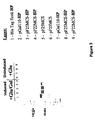
- the major protein produced by S. cerevisiae was detected by Western blot analysis (500 ng protein / lane) with a monoclonal antibody against the heterologous protein (1:5,000), and had a molecular weight of ⁇ 105-110-kDa as shown in Fig. 3 , (lanes 2, 3 and 4).
- the ⁇ 105-110-kDa protein was slightly smaller than the largest protein band detected in the sample of purified recombinant E. coli produced His-tagged heterologous protein (lane 1), as the His-tag added to the molecular weight of the control. No detectable signal was observed with an extract of a control transformant containing the vector pF25MCS alone (lane 5).
- the heterologous gene expression level in the strain transformed with pGAL110-HP is comparable to the level of expression obtained from pF25MCS-HP, but greater than that achieved with pF22MCS-HP.
- the synthetic gene regulatory region EE25-XynA is as strong as the naturally occurring GAL1-GAL10 gene regulatory region in driving the expression of a heterologous gene in S . cerevisiae.
Landscapes
- Life Sciences & Earth Sciences (AREA)
- Health & Medical Sciences (AREA)
- Genetics & Genomics (AREA)
- Engineering & Computer Science (AREA)
- Bioinformatics & Cheminformatics (AREA)
- Wood Science & Technology (AREA)
- Biomedical Technology (AREA)
- Organic Chemistry (AREA)
- Biotechnology (AREA)
- General Engineering & Computer Science (AREA)
- Chemical & Material Sciences (AREA)
- Zoology (AREA)
- Mycology (AREA)
- Microbiology (AREA)
- Physics & Mathematics (AREA)
- Plant Pathology (AREA)
- Molecular Biology (AREA)
- Biochemistry (AREA)
- General Health & Medical Sciences (AREA)
- Biophysics (AREA)
- Micro-Organisms Or Cultivation Processes Thereof (AREA)
- Preparation Of Compounds By Using Micro-Organisms (AREA)
- Saccharide Compounds (AREA)
- Measuring Or Testing Involving Enzymes Or Micro-Organisms (AREA)
Abstract
Description
- Saccharomyces cerevisiae, or baker's yeast, is widely used as a host for the expression of a variety of heterologous polypeptides. Many different proteins from a variety of species have been expressed in S. cerevisiae, some to levels of >10% of total cell protein. Typically, expression has been mediated by a plasmid containing a DNA sequence encoding the heterologous polypeptide and the gene control region that controls gene expressions in S. cerevisiae as well as other sequences required for the selection and amplification of the plasmid in both S. cerevisiae and in Escherichia coli. Alternatively, it is also possible to integrate the coding sequence and the gene control region into a S. cerevisiae chromosome and achieve high-level expression.
- The gene control regions utilized in the expression of heterologous polypeptides in S. cerevisiae are typically those which naturally occur in S. cerevisiae, e.g., the gene control region for the expression of the divergent GAL1 and GAL10 genes. In contrast, heterologous gene control regions, when used in S. cerevisiae cells, have generally been found to be inactive, or lead to aberrant initation of transcription. In has been proposed that use of S. cerevisiae gene control regions is essential for the efficient expression of heterologous genes in S. cerevisiae cells. (Romanos et al., YEAST 8:423-488 (1992)).
-
US-A-5407822 (Sanofi) discloses a sequence described as an "artificial promoter" that contains the UAS1 and UAS2 upstream activation sequences of the GAL7 gene promoter of S. cerevisiae fused to the TATA component and transcription initiation region of the S. cerevisiae ADH2 promoter.EP-A-0258067 (Delta Biotechnology Limited) discloses a sequence described as a hybrid yeast promoter that contains the upstream activation sequence of the GAL1/GAL10 promoter ("GAL10UAS") and the 5'non coding region of the PGK gene. - The references cited herein are not admitted to be prior art to the claimed invention.
- The present invention relates to a synthetic gene control region, which comprises a gene regulatory sequence from a yeast strain and a promoter from a filamentous fungal strain localed downstream of the gene regulatory sequence. The filamentous fungal promoter can be recognized by the general transcription factors and RNA polymerase of the yeast strain. The synthetic gene regulatory sequence is capable of regulating transcription initiated by the filamentous fungal promoter in the yeast strain.
- According to an embodiment of the present invention, the yeast strain is selected from a group consisting of Saccharomyces cerevisiae, Pichia pastoris, Hansenula polymorpha, and Yarrowia lipolytica. According to a preferred embodiment of the present invention, the yeast strain is Saccharomyces cerevisiae. According to an alternative embodiment of the present invention, the yeast strain is Pichia pastoris.
- The filamentous fungal strain can be selected from the group consisting of Ustilago maydis, Aspergillus nidulans, and Penicillium purpurogenum. The filamentous fungal promoter can be selected from the group consisting of the promoters for the DPM1 gene of Ustilago maydis, ArgB gene of Aspergillus nidulans, and XynA gene of Penicillium purpurogenum.
- According to an embodiment of the present invention, the binding site is for a gene activator of the yeast strain. According to a preferred embodiment of the present invention, the binding site is a binding site for GAL4 protein of S. cerevisiae. According to a further preferred embodiment of the present invention, the binding site comprises a sequence selected from the group consisting of SEQ ID NO: 10, 11, 12, and 15, Synthetic GAL4 binding sites.
- The gene regulatory sequence can further comprise a binding site for a gene repressor of the yeast strain. According to an embodiment of the present invention, the binding site for a gene repressor is a binding site for the MIG1 protein of S. cerevisiae. According to a preferred embodiment of the present invention, the binding site for MIG1 protein comprises a sequence selected from the group consisting of SEQ ID NO: 18, 19, and 20.
- According to a preferred embodiment, the synthetic gene control region can comprise a sequence selected from the group consisting of SEQ ID NO: 21, 22, 23, 24, 25, and 26.
- The present invention provides DNA expression vectors that comprise the synthetic gene control region, a coding sequence encoding a protein, a polypeptide, or a peptide under the control of the control region, and a yeast selection marker. The coding sequence can encode a eukaryotic, prokaryotic, or viral amino acid sequence. If the yeast strain is S. cerevisiae, the selection marker can be selected from the group consisting of LEU2, TRP1, URA3, and HIS3.
- The DNA expression vector can further comprise a polyadenylation signal sequence located downstream of the coding sequence. The DNA expression vector can further comprise a transcription terminator located downstream of the coding sequence. The DNA expression vector can further comprise a yeast origin of replication, such as one based on the
S. cerevisiae 2 micron DNA sequence. The DNA expression vector can further comprises a bacterial origin of replication. - The present invention further provides a yeast strain containing the DNA expression vector. The yeast strain can be selected from the group consisting of Saccharonryces cerevisiae, Pichia pastoris, Hansenula polymorpha, Yarrowia lipolytica.
- Other features and advantages of the present invention are apparent from the additional descriptions provided herein including the different examples. The provided examples illustrate different components and methodology useful in practicing the present invention. The examples do not limit the claimed invention. Based on the present disclosure the skilled artisan can identify and employ other components and methodology useful for practicing the present invention.
-
-
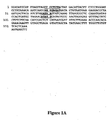
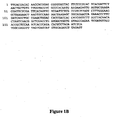
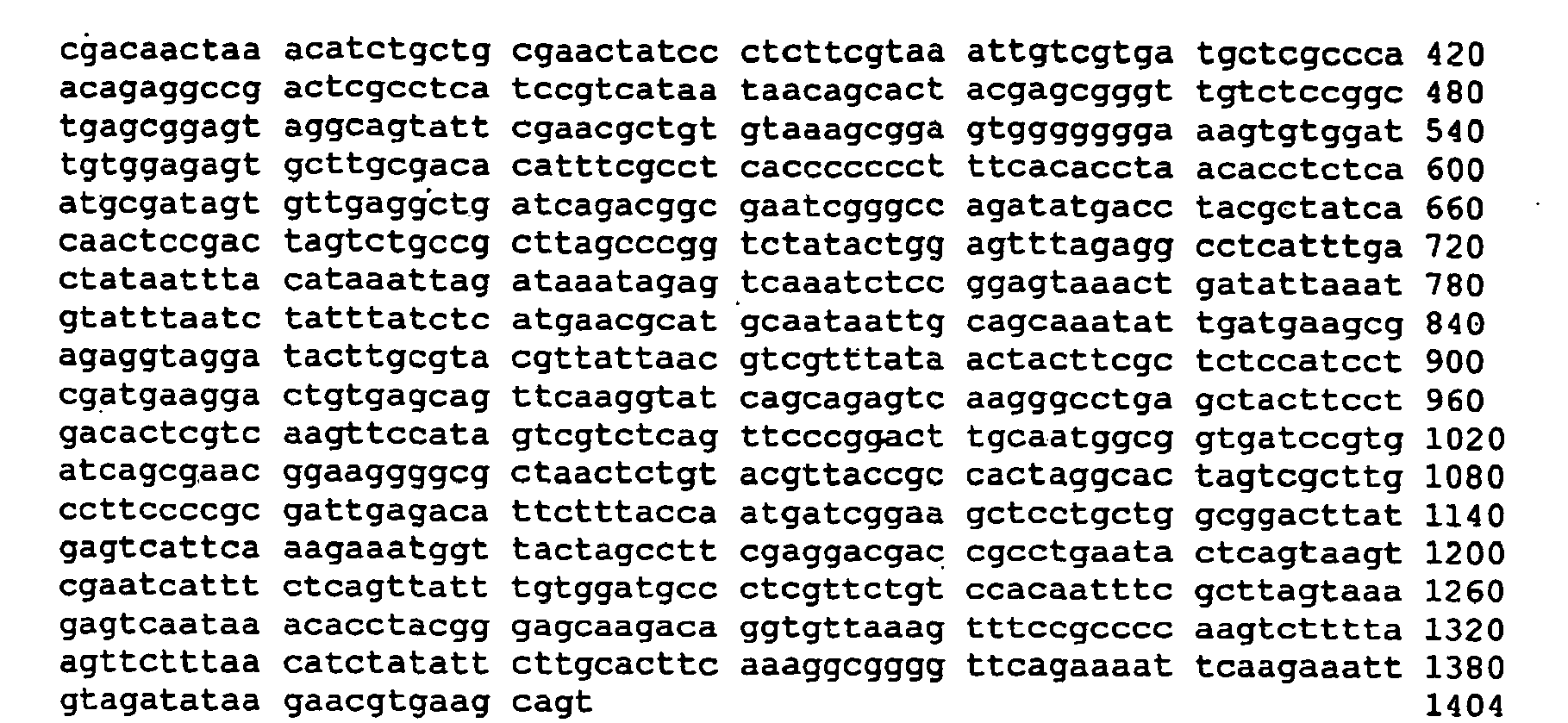
Figure 1 . The promoters from filamentous fungi. Potential TATA box, transcriptional start site indicated underlined (wave). Putative MIG1 binding site is underlined (broken). -
Figure 1A : truncated XynA promoter sequence (SEQ ID NO: 1). -
Figure 1B : DPM1 promoter sequence (SEQ ID NO: 2). -
Figure 1C : ArgB promoter sequence (SEQ ID NO: 3). -
Figure 2 . Synthetic gene control regions comprising the truncated XynA promoter and a gene regulatory region. Putative GAL4 protein binding sites are underlined. Putative MIG1 protein binding sites are underlined (broken). -
Figures 2A-2F are the DNA sequences of the synthetic gene regulatory regions. -
Figure 2A : EE2-XynA (SEQ ID NO: 21). -
Figure 2B : EE21-XynA (SEQ ID NO: 22). -
Figure 2C : EE22-XynA (SEQ ID NO: 23). -
Figure 2D : EE24-XynA (SEQ ID NO: 24). -
Figure 2E : EE25-XynA (SEQ ID NO: 25). -
Figure 2F : EE26-XynA (SEQ ID NO: 26). -
Figure 3 . The expression of a heterologous polypeptide in S. cerevisiae, driven by various synthetic gene control regions and the yeast naturally occurring GAL1-GAL10 gene control region, respectively. Lanes 2-5 are samples from yeast cells induced with galactose. Lanes 6-9 are samples from yeast cells grown in the presence of glucose and not induced with galactose. - As discussed above, the gene control regions which are widely used in the expression of heterologous proteins in yeast are typically those which occur naturally in S. cerevisiae, (e.g., the gene control region for the expression of the divergent GAL1 and GAL10 genes) and which normally control the expression of the corresponding S. cerevisiae genes. In contrast, the present invention provides a synthetic gene control region, which is not known to occur in nature. As used herein, a "gene control region" is the DNA sequence that controls the transcription of a gene, i.e., the rate of transcription initiation. (Alberts, et al., Molecular Biology of the Cell, 3rd Edition, Garland Publishing; 1994). The synthetic gene control region of the present invention can be used in the regulation of heterologous gene expression in a yeast strain.
- As used herein, the term "yeast" refers to any of unicellular eukaryotic organisms that lack chlorophyll and vascular tissue, and reproduce by budding or fission, such as the genus Saccharomyces. The genus Saccharomyces is composed of a variety of species, including cerevisiae, carlsbergensis, norbensis, diastaticus, oviformis, uvarum, rouxii, montanus, kluyveri, and elongisporus.
- According to a preferred embodiment of the present invention, the yeast strain is Saccharomyces cerevisiae. As discussed above, S. cerevisiae, is commonly used as a host for the expression of a variety of heterologous polypeptides. The S. cerevisiae host cell used for recombinant expression can be selected or engineered to facilitate recombinant gene expression. As the genetic background of a strain can greatly influence the properties of a strain for heterologous protein expression, it was desired to construct yeast strains with differing genetic backgrounds which also contained several desirable genetic markers: mnn9 mutation to prevent hyperglycosylation of secreted proteins, and prb1 and/or pep4 protease mutations to reduce problems with proteolysis (
Joyce et al., U.S. patent 5,820,870 ). For the synthetic gene control regions containing GAL4 binding sites, over-expression of the GAL4 transcription factor can be achieved in the host S. cerevisiae strain, to enhance expression from the control regions (Hopper et al., U.S. Patent 5,068,185 ). - Moreover, several yeast genera, such as Hansenula, Candida, Torulopsis, and Pichia, have been shown to contain similar metabolic pathways for the utilization of methanol as a sole carbon source for growth. Moreover, species of other yeast genera can utilize a variety of carbon sources, including galactose, for growth. The yeast strain can be from the families Saccharomycetaceae and Cryptococcaceae, including but not limited to species from the genera Pichia, Candida, Hansenula, Torulopsis, Kluyveromyces, and Saccharomycopsis.
- Specifically, the yeast strain can also be selected from the group consisting of Pichia pastoris, Hansenula polymorpha, Yarrowia lipolytica, Klyveromyces lactis, Schizosaccharomyces pombe, and Schwanniomyces occidentalis. These yeast strains were also used as host organism for heterologous gene expression, similar to Saccharomyces cerevisiae. (See, e.g., Buckholz and Gleeson, Bio/Technology 9:1067-1072 (1991); Gellisen and Hollenberg, Gene 190:87-97 (1997); Dominguez, et al., Int. Micobiol: 1:131-142 (1998)).
- According to an embodiment of the present invention, the yeast strain is Pichia pastoris. (see, e.g. Werten, et al., Yeast 15:1087-1096 (1999); Cregg, et al., Mol. Biotechnol. 16, 23-52 (2000))
- According to another embodiment of the present invention, the yeast strain is Hansenula polymorpha.
- According to an embodiment of the present invention, the yeast strain is Yarrowia lipolytica. (Muller, et al., Yeast 14:1267-1283 (1998); Madzak, et al., Journal of Biotechnology, 109:63-81 (2004)).
- The present invention provides a synthetic gene control region that comprises a synthetic gene regulatory sequence comprising a binding site for a gene regulatory protein in a yeast strain, and a promoter from a filamentous fungal strain located downstream of the gene regulatory sequence. The synthetic gene control region is a specific DNA sequence. The sequence of the binding site is preferably not a sequence in the naturally-occurring gene regulatory regions of the yeast strain.
- As used herein, the term "filamentous fungus" refers to any of multicellular eukaryotic organisms that lack chlorophyll and vascular tissue, and form a body mass of branched filamentous hyphae that often produce specialized fruiting bodies. Examples of filamentous fungi include Ustilago maydis, Aspergillus nidulans, and Penicillium purpurogenum.
- Transcription in eukaryotic cells requires that RNA polymerase and general transcription factors assemble at the promoter. As used herein, a "promoter" is the DNA sequence where the RNA polymerase and general transcription factors assemble. A promoter may comprise a TATA box and the start point of transcription. A TATA box is a short sequence of T-A and A-T base pairs that is recognized by TFHD, a general transcription factor. The start point of transcription is typically located 25 base pairs downstream from the TATA box in mammalian cells. ibid. In yeast, the distance from the TATA box to the start of transcription is typically about 100 base pairs.
- The promoter of the synthetic gene control region is a promoter from a filamentous fungal strain, which can be recognized by the general transcription factors and RNA polymerase of the yeast strain, such as S. cerevisiae (Romanos et al., YEAST 8:423-488, (1992)).
- Examples of filamentous fungal promoters include those of the XynA gene, DPM1 gene, and the ArgB gene (
Fig. 1 ) (Zimmerman, et al., Yeast 12:765-771(1996), Upshall, et al., Mol. Gen. Genet. 204:349-354 (1986), Chavez, et al., Biol. Res. 34:217-226 (2001)). - A gene regulatory sequence contains at least one binding site for a gene regulatory protein, whose presence on the DNA affects the rate of transcription initiation. Gene regulatory proteins include gene activators, which stimulate gene expression, and gene repressors, which repress gene expression. The rate of transcription initiation can be increased or decreased by the binding of gene regulatory proteins at the corresponding gene regulatory sequences. As used herein, a "binding site" refers to a DNA sequence in the gene regulatory region to which a gene regulatory protein specifically binds.
- The binding sites for a gene regulatory protein were originally identified from naturally-occurring gene regulatory regions. From the identified binding sites for a given gene regulatory protein, a putative consensus binding site sequence can be deduced. According to a preferred embodiment of the present invention, the binding site is a synthetic binding site. As used herein, a "synthetic binding site" refers to the binding site that is not identified from naturally-occurring gene regulatory regions, but rather is constructed taking into account the putative consensus sequence for the gene regulatory protein.
- A eukaryotic gene regulatory sequence may be located adjacent to the promoter, far upstream of it, or even downstream of the promoter. (Alberts, et al., Molecular Biology of the Cell, 3rd Edition, Garland Publishing; 1994). For example, the gene regulatory sequences of S. cerevisiae are usually located a few hundred base pairs upstream of the promoter. The S. cerevisiae gene regulatory sequences may stimulate and / or suppress the expression of the gene under its control by binding transcription factors. Examples of gene regulatory sequences include those from GAP (TDH), PGK, TPI, PHO5, ADH2, and CUP1 genes (Romanos et al., YEAST 8:423-488, (1992)).
- The gene regulatory sequences also determine whether a gene control region is constitutive, i.e., driving the continual expression of the gene, or inducible, i.e., driving gene expression in response to a signal. For example, the gene control regions for GAP (TDH), PGK and TPI genes are constitutive gene control regions. (Romanos et al., YEAST 8:423-488 (1992)).
- The gene regulatory sequence is preferably an inducible one, which regulates transcription in response to one or more signals. In a variety of recombinant yeast expression systems, such as S. cerevisiae, the expression of many different heterologous polypeptides is often shown to be deleterious to the host cell. Consequently, there may be a selective pressure against the expression of such heterologous polypeptides, such that the only cells which accumulate in a scale-up of such a recombinant culture are those which do not express the heterologous polypeptide or express so little of the heterologous polypeptide that the culture becomes an uneconomical source of that polypeptide. An optimal scheme for the scale-up of such a recombinant culture would be to maintain minimal or no expression of the heterologous gene during the expansion of the culture to a large volume and high cell density and then to induce the maximal expression of the heterologous gene only in the final stage of culture growth prior to product isolation. Thus, the synthetic gene control region for recombinant gene expression is preferably an inducible gene control region.
- The gene regulatory sequence of GAL1-GAL10 genes of S. cerevisiae is an inducible gene regulatory sequence. The GAL1-GAL10 gene regulatory sequence is responsive to both galactose and glucose. It is involved in the regulation of galactose metabolism in S. cerevisiae, through controlled expression of the enzymes responsible for the utilization of galactose as a carbon source, e.g., GAL1 (galactokinase) and GAL10 (uridine diphosphogalactose-4-epimerase) (Lohr et al., FASEB J. 9:777-787 (1995)). In the absence of galactose, very little expression of these enzymes is detected. If cells initially are grown on medium containing glucose, and galactose is added to the culture, these enzymes are induced coordinately by at least 1000-fold upon depletion of glucose from the media. This induction has been shown to occur at the level of messenger RNA transcription.
- Experiments have defined the gene control regions that are necessary and sufficient for galactose induction and are thereby useful four driving the expression of heterologous genes in Saccharomyces cerevisiae. GAL1 and GAL10 genes are divergently transcribed. The GAL1-GAL10 gene control region is a sequence of approximately 606 bp located between the two genes, containing the GAL1 and GAL10 promoters and the inducible gene regulatory sequence responsive to galactose and glucose. The 606 bp sequence is used in pGAL110, an approximately 12.0 kbp yeast expression plasmid (Hofmann, et al., Virology 209:506-518 (1995)), to drive downstream cloned heterologous gene expression in S. cerevisiae.
- The GAL1-GAL10 gene regulatory sequence contains the binding sites for GAL4 protein, a yeast gene activator, which is responsive to galactose. Examples of binding sites for
GAL 4 protein are presented in table 1.Table 1-1 SEQ ID NO: GAL4 binding sites References 4 CGGATTAGAAGCCGCCG West, et al., Mol. Cell Biol. 4:2467-2478 (1984) 5 CGGGTGACAGCCCTCCG ibid. 6 AGGAAGACTCTCCTCCG ibid. 7 CGCGCCGCACTGCTCCG ibid. 8 CGGAGGACTGTCCTCCG Bram, et al., EMBO J. 5:603-608 (1986) 9 CGGAGCACTCTCCTCCG Melcher, et al., Gene 247:53-61 (2000) - The sequences of SEQ ID NO: 4-9 listed in table 1-2 are GAL4 binding sites identified in the naturally-occurring gene regulatory regions of S. cerevisiae.
Table 1-2 SEQ ID NO: GAL4 binding sites 10 CGGATGACACTCCTCCG Putative novel sequence 11 CGGGCCACTGTCGTCCG ibid. 12 GGTCGAGGCCATCCCCG ibid. 13 CGGACGACTGTGGTCCG Bram, et al., EMBO J. 5:603-608 (1986) 14 CGGGCGACACTTCTCCG Bram, et al., EMBO J. 5:603-608 (1986) 15 AGGTCGAGGCCATCCCG ibid. - The sequences of SEQ ID NO: 10-12 and SEQ ID NO: 15 listed in table 1-2 are synthetic GAL4 binding sites, which are not identified in the naturally-occurring gene regulatory regions of S. cerevisiae. The sequences of SEQ ID NOS: 13 and 14 are GAL4 binding sites identified in the naturally occurring gene regulatory regions of S. cerevisiae.
- The GAL1-GAL10 gene regulatory sequence also contains the binding sites for MIG1 protein, a yeast gene repressor, which is responsive to glucose. Examples of binding sites for MIG1 protein are presented in table 2.
Table 2-1 SEQ ID NO: Binding sites for MIG1 References 16 TATTTCTGGGGTA Nehlin, et al. EMBO J. 10:3373-3377 (1991) 17 GGTTTGTGGGGCC ibid. - The sequences of SEQ ID NO: 16-17 are MIG1 binding sites identified in the naturally-occurring gene regulatory regions of S. cerevisiae.
Table 2-2 SEQ ID NO: Binding sites for MIG1 18 GCATACCGGGGCC Putative novel sequence 19 ATTATGTGGGGTA ibid. 20 AAAATCTGGGGAA ibid - The sequences of SEQ ID NO: 18-20 are synthetic MIG1 binding sites, which are not identified in the naturally-occurring gene regulatory regions of S. cerevisiae.
- Synthetic gene regulatory regions were constructed to include a filamentous fungal promoter, and binding sites for yeast transcription factors, such as GAL4 and MIG1. According to a preferred embodiment, the synthetic gene regulatory regions are repressed in the presence of glucose, and are activated in the presence of galactose and absence of glucose.
- Some examples of synthetic gene regulatory regions are shown in
Figure 2 , including EE2-XynA (Fig. 2A , SEQ ID NO: 21), EE21-XynA (Fig. 2B , SEQ ID NO: 22). EE22-XynA (Fig. 2C , SEQ ID NO: 23), EE24-XynA (Fig. 2D , SEQ ID NO: 24), EE25-XynA (Fig. 2E , SEQ ID NO: 25), and EE26-XynA (Fig. 2F , SEQ ID NO: 26). - The present invention provides a DNA expression vector, which comprises a synthetic gene control region, a DNA sequence encoding a polypeptide under the control of the control region, and an S. cerevisiae selection marker.
- The vector can be an integrating vector, which can be integrated into yeast chromosome, or an episomal vector. In order to be maintained in S. cerevisiae cells, an episomal vector needs to contain a replication origin to be replicated. Examples of replication origins include yeast autonomous replication sequences (ARS), and sequences from native 2µ circle of S. cerevisiae. The ARS vector can be stabilized by yeast centromeric sequences (CEN). Typically the copy number of a ARS/CEN vector is about 1 or 2 per cell, while the copy number of the 2µ-based vector is about 10 or 40 per cell. (Romanos et al., YEAST 8:423-488 (1992))
- The expression vector can comprise a yeast selection marker, i.e., a gene encoding a polypeptide for phenotypic selection in yeast. The selection marker can be an auxotrophic selection marker, including LEU2, TRP1, URA3, and HIS3, which are used in corresponding mutant strains that are auxotrophic for leucine, tryptophan, uracil, and histidine, respectively. The selection marker can be a dominant selection marker, such as CUP1, which confers copper-resistance to yeast. Ibid.
- The expression vector may need to be replicated in bacterial cells for molecular cloning. Thus, the expression vector can contain a bacterial replication origin. The expression vector can also comprise a bacterial selection marker, i.e., a gene encoding a polypeptide for phenotypic selection in bacteria. The bacterial selection marker can be an antibiotic resistance marker. Examples of bacterial selection marker include genes conferring resistance to ampicillin, kanamycin, tetracycline and chloramphenicol, respectively.
- The expression vector can contain a transcriptional terminator located downstream of the heterologous gene for efficient formation of mRNA 3' end. Terminators can be those from TRP1, ADH1, GAP, MFα1, and CYC1. Ibid.
- A coding sequence encoding a protein, a polypeptide, or a peptide can be put under the control of the control region in the DNA expression vector. The coding sequence can encode a eukaryotic, prokaryotic, or viral amino acid sequence.
- Due to the degeneracy of the genetic code, a large number of different encoding nucleic acid sequences can be used to code for a particular amino acid sequence. The degeneracy of the genetic code arises because almost all amino acids are encoded by different combinations of nucleotide triplets or "codons". Amino acids are encoded by codons as follows:
- A=Ala=Alanine: codons GCA, GCC, GCG, GCU
- C=Cys=Cysteine: codons UGC, UGU
- D=Asp=Aspartic acid: codons GAC, GAU
- E=Glu=Glutamic acid: codons GAA, GAG
- F=Phe=Phenylalanine: codons UUC, UUU
- G=Gly=Glycine: codons GGA, GGC, GGG, GGU
- H=His=Hisddine: codons CAC, CAU
- I=Ile=Isoleucine: codons AUA, AUC, AUU
- K=Lys=Lysine: codons AAA, AAG
- L=Leu=Leucine: codons UUA, UUG, CUA, CUC, CUG, CUU
- M=Met=Methionine: codon AUG
- N=Asn=Asparagine: codons AAC, AAU
- P=Pro=Proline: codons CCA, CCC, CCG, CCU
- Q=Gln=Glutamine: codons CAA, CAG
- R=Arg=Arginine: codons AGA, AGG, CGA, CGC, CGG, CGU
- S=Ser=Serine: codons AGC, AGU, UCA, UCC, UCG, UCU
- T=Thr=Threonine: codons ACA, ACC, ACG, ACU
- V=Val=Valine: codons GUA, GUC, GUG, GUU
- W=Trp=Tryptophan: codon UGG
- Y=Tyr=Tyrosine: codons UAC, UAU
- If desired, expression of a heterologous polypeptide in a particular host can be enhanced through codon optimization. Codon optimization includes use of more preferred codons. Techniques for codon optimization in different hosts are well known in the art.
- Codon optimization for a particular host is performed by replacing codons having a low or moderate usage level with codons having a high usage level. The percentage of optimal codons present in an encoding sequence can vary. In different embodiment the number of optimal codons (including codons initially present and codons introduced) is at least 50%, at least 75%, at least 95%, or 100% of the total number of codons.
- Codon optimization can be performed as follows:
- 1. For a particular codon, compare the wild-type codon frequency to overall codon frequency of use by yeast genes.
- 2. If the codon is not one of those commonly employed by yeast, replace it with an optimal codon for high expression in yeast cells.
- 3. Repeat steps (1) and (2) for different codons until achieving the desired level of codon optimization.
- 4. Inspect the new coding sequence for undesired sequences generated such as unwanted restriction enzyme sites, splice sites, promoters, undesirable palindrome or repeat sequences, transcription terminator sequences, and high frequency of GC bases. Remove undesired sequences using an alternative codon.
- Alternative codon usage is defined by Lathe J. Molec. Biol., 183:1-12, 1985. Codon usage in different yeast hosts is well known in the art. For example, Sharp et al., Yeast 7:657-678, 1991, describes synonymous codon usage in Saccharomyces cerevisiae.
- Yeast expression can be achieved using both optimized sequences and sequences not optimized for yeast expression.
- Techniques for recombinant gene production, introduction into a cell, and recombinant gene expression are well known in the art. Examples of such techniques are provided in references such as Ausubel, Current Protocols in Molecular Biology, John Wiley, 1987-2002, and Sambrook et al., Molecular Cloning, A Laboratory Manual, 2nd Edition, Cold Spring Harbor Laboratory Press, 1989.
- Examples are provided below to further illustrate different features of the present invention. The examples also illustrate useful methodology for practicing the invention. These examples do not limit the claimed invention.
- To analyze the ability of synthetic control regions to drive gene expression in S. cerevisiae, the GAL1-GAL10 gene control region was removed from pGAL110, through BamHI and XmaI digestion, to form an 11.3 kbp plasmid, pFUNGL The synthetic gene control regions and a heterologous gene were inserted into pFUNGI. For example, EE22-XynA (
Fig. 2C , SEQ ID NO: 23) and BB25-XynA (Fig. 2E , SEQ ID NO: 25) were inserted into pFUNGI with or without an optimized gene encoding a heterologous protein (HP) to from pF22MCS-HP, pF25MCS and pF25MCS-HP respectively. The heterologous gene is also inserted into pGAL110 to form pGAL110-HP as a control. - The vectors were used to transform S. cerevisiae strains containing a leu2 mutation to leucine prototrophy (Leu+) by using a spheroplast transformation protocol (Hinnen et al., Proc. Natl. Acad. Sci. USA, 75:1929-33, 1978).
- Transformants were selected on synthetic agar medium lacking leucine and containing 1.0 M sorbitol. The top and bottom synthetic agar medium lacking leucine and containing 1.0 M sorbitol were obtained from REMEL. Lenexa, KS (cat #09459 and 92155, respectively). Clonal Leu+ isolates were obtained by serial growth on SD minus leucine plates (KD MEDICAL, Columbia MD).
- For production in tubes, a 0.3 ml aliquot of the seed culture was transferred to either 5.0 ml of 5X leucine minus medium containing 1.6 % glucose, 4 % galactose or YEHDG medium for 72 hours at 28-30°C to a final OD600 of 5-16.0/ml. YEHDG medium contains per liter: L-Hy-Soy peptone-Sheffield, 10 g; Yeast extract, 20 g; L-dextrose, 16 g; D (+) galactose, 40 g. For production in flasks, a 1.5-ml aliquot of the seed culture was transferred to 25-ml of medium and grown as described above with shaking at 220 rpm.
- After harvesting 10 OD500 units of cells per sample, the cell pellets were broken with glass beads in 0.3 ml lysis buffer (0.1 M sodium phosphate buffer, pH 7.2, 0.5 M NaCl, 2 mM PMSF). The lysate was recovered by centrifugation. Protein concentration was determined by Pierce BCA Assay according to the manufacturer's instructions. The cell lysates were analyzed for the expression of the heterologous gene by immunoblot analysis after electrophoresis on Tris-Glycine gels (Invitrogen, Carlsbad, CA) in 1X Tris-glycine SDS buffes under reducing and denaturing conditions. The samples contained total cellular protein. The gels were Western transferred onto 0.45 micron nitrocellulose membrane filters (Invitrogen). To estimate protein size, pre-stained standards were run in parallel with the lysates.
- The heterologous protein was expressed in E. coli and S. cerevisiae and the expression products were compared.
- With the induction by galactose following depletion of glucose, the heterologous protein was expressed in all the transformed S. cerevisiae strains tested. The major protein produced by S. cerevisiae was detected by Western blot analysis (500 ng protein / lane) with a monoclonal antibody against the heterologous protein (1:5,000), and had a molecular weight of ∼105-110-kDa as shown in
Fig. 3 , (lanes 2, 3 and 4). The ∼105-110-kDa protein was slightly smaller than the largest protein band detected in the sample of purified recombinant E. coli produced His-tagged heterologous protein (lane 1), as the His-tag added to the molecular weight of the control. No detectable signal was observed with an extract of a control transformant containing the vector pF25MCS alone (lane 5). - The heterologous gene expression level in the strain transformed with pGAL110-HP is comparable to the level of expression obtained from pF25MCS-HP, but greater than that achieved with pF22MCS-HP. Hence, the synthetic gene regulatory region EE25-XynA is as strong as the naturally occurring GAL1-GAL10 gene regulatory region in driving the expression of a heterologous gene in S. cerevisiae.
- For the cells grown in glucose, no protein bands were observed on Western blots indicating that the heterologous gene was not expressed or expressed at very low levels in transformed S. cerevisiae (
Fig. 3 .lanes - Other embodiments are within the following claims. While several embodiments have been shown and described, various modifications may be made without departing from the spirit and scope of the present invention.
-
- <110> Merck & Co., Inc.
- <120> SYNTHETIC GENE CONTROL REGION
- <130> 21624Y
- <150>
60/690,321
<151> 2006-05-14 - <160> 26
- <170> FastSEQ for Windows Version 4.0
- <210> 1
<211> 318
<212> DNA
<213> Penicillium purpurogenum - <400> 1

- <210> 2
<211> 372
<212> DNA
<213> Ustilago maydis - <400> 2

- <210> 3
<211> 1404
<212> DNA
<213> Aspergillus nidulans - <400> 3

- <210> 4
<211> 17
<212> DNA
<213> Saccharomyces cerevisiae - <400> 4
cggattagaa gccgccg 17 - <210> 5
<211> 17
<212> DNA
<213> Saccharomyces cerevisiae - <400> 5
cgggtgacag ccctccg 17 - <210> 6
<211> 17
<212> DNA
<213> Saccharomyces cerevisiae - <400> 6
aggaagactc tcctccg . 17 - <210> 7
<211> 17
<212> DNA
<213> Saceharomyces cerevisiae - <400> 7
cgcgccgcac tgctccg 17 - <210> 8
<211> 17
<212> DNA
<213> Saccharomyces cerevisiae - <400> 8
cggaggactg tcctccg 17 - <210> 9
<211> 17
<212> DNA
<213> Saccharomyces cerevisiae - <400> 9
cggagcactc tcctccg 17 - <210> 10
<211> 17
<212> DNA
<213> Artificial Sequence - <220>
<223> Synthetic GAL4 Binding Site - <400> 10
cggatgacac tcctccg 17 - <210> 11
<211> 17
<212> DNA
<213> Artificial Sequence - <220>
<223> Synthetic GAL4 Binding Site - <400> 11
cgggccactg tcgtccg 17 - <210> 12
<211> 17.
<212> DNA
<213> Artificial Sequence - <220>
<223> Synthetic GAL4 Binding Site - <400> 12
ggtcgaggcc atccccg 17 - <210> 13.
<211> 17
<212> DNA
<213> Saccharomyces cerevisiae - <400> 13
cggacgactg tggtccg 17 - <210> 14
<211> 17
<212> DNA
<213> Saccharomyces cerevisiae - <400> 14
cgggcggcac tcctccg 17 - <210> 15
<211> 17
<212> DNA
<213> Artificial Sequence - <220>
<223> Synthetic GAG4 Binding Site - <400> 15
aggtcgaggc catcccg 17 - <210> 16
<211> 13
<212> DNA
<213> Saccharomyces cerevisiae - <400> 16
tatttctggg gta 13 - <210> 17
<211> 13
<212> DNA
<213> Saccharomyces cerevisiae - <400> 17
ggtttgtggg gcc 13 - <210> 18
<211> 13
<212> DNA
<213> Artificial Sequence - <220>
<223> Synthetic MIG1 Binding Site - <400> 18
gcataccggg gcc 13 - <210> 19
<211> 13
<212> DNA
<213> Artificial Sequence - <220>
<223> Synthetic MIG1 Binding Site - <400> 19
attatgtggg gta 13 - <210> 20
<211> 13
<212> DNA
<213> Artificial Sequence - <220>
<223> Synthetic MIG1 Binding Site - <400> 20
attatgtggg gta 13 - <210> 21
<211> 13
<212> DNA
<213> Artificial Sequence - <220>
<223> Synthetic Gene Regulatory Region - <400> 21
aaaatctggg gaa 13 - <210> 22
<211> 872
<212> DNA
<213> Artificial Sequence - <220>
<223> Synthetic Gene Regulatory Region - <400> 22

- <210> 23
<211> 912
<212> DNA
<213> Artificial Sequence - <220>
<223> Synthetic Gene Regulatory Region - <400> 23

- <210> 24
<211> 872
<212> DNA
<213> Artificial Sequence - <220>
<223> Synthetic Gene Regulatory Region - <400> 24

- <210> 25
<211> 908
<212> DNA
<213> Artificial Sequence - <220>
<223> Synthetic Gene Regulatory Region - <400> 25


- <210> 26
<211> 870
<212> DNA
<213> Artificial Sequence - <220>
<223> Synthetic Gene Regulatory Region - <400> 26

Claims (26)
- A synthetic gene control region comprising, a synthetic gene regulatory sequence from a yeast strain and a promoter from a filamentous fungal strain located downstream of the synthetic gene regulatory sequence; wherein the promoter can be recognized by the general transcription factors and RNA polymerase of the yeast strain;
wherein the synthetic gene regulatory sequence is capable of regulating the transcription initiated by a filamentous fungal promoter in the yeast strain. - The control region of claim 1 wherein the synthetic gene regulatory sequence comprises a binding site for a gene regulatory protein which binding site is not a sequence in the naturally-occurring gene regulatory regions of the yeast strain.
- The control region of claim 1 or 2 wherein the yeast strain is Saccharomyces cerevisiae. Pichia pastoris, Hansenula polymorpha or Yarrowia lipolytica.
- The control region of claim 1, 2 or 3 wherein the filamentous fungal strain is selected from the group consisting of Ustilago maydis, Aspergillus nidulans, and Penicillium purpurogenum.
- The control region of claim 4 wherein the promoter is selected from the group consisting of the promoters for XynA gene of Penicillium purpurogenum, DPMJ gene of Ustilago maydis, and ArgB gene of Aspergillus nidulans.
- The control region of claim 5, wherein the promoter is SEQ ID NO: 1.
- The control region of any preceding claim wherein gene regulatory sequence comprises a binding site for a gene activator of the yeast strain.
- The control region of claim 7 wherein the binding site is a binding site for GAL4 protein of S. cerevisiae.
- The control region of claim 8 wherein the binding site comprises a DNA sequence selected from the group consisting of SEQ ID NO: 10, 11, 12, and 15.
- The control region of any one of claims 1-6 wherein the gene regulatory sequence comprises a binding site for a gene repressor of the yeast strain.
- The control region of claim 7 wherein the gene regulatory sequence further comprises a binding site for a gene repressor.
- The control region of claim 11 wherein the gene regulatory sequence further comprises a binding site for the MIG1 protein of S. cerevisiae.
- The control region of claim 12 wherein the binding site for MIGI protein comprises a sequence selected from the group consisting of SEQ ID NO: 18, 19, and 20.
- The control region of claim 1 wherein the synthetic gene control region comprises a sequence selected from the group consisting of SEQ ID NO: 21, 22, 23, 24, 25, and 26.
- A DNA expression vector comprising, a synthetic gene control region of any one of claims 1-14; a coding sequence encoding a protein, polypeptide, or peptide under the control of the control region, and a yeast selection marker.
- The DNA expression vector of claim 15 further comprising a polyadenylation signal sequence located downstream of the coding sequence.
- The DNA expression vector of claim 15 further comprising a transcription terminator located downstream of the coding sequence.
- The DNA expression vector of claim 15, 16 or 17 wherein the yeast selection marker is a S. cerevisiae selection marker.
- The DNA expression vector of claim 18 wherein the S. cerevisiae selection marker is selected from the group consisting of LEU2, TRP1, URA3, and HIS3.
- The DNA expression vector of claim 1 further comprising a S. cerevisiae origin of replication.
- The DNA expression vector of claim 20 wherein the S. cerevisiae origin of replication is based on the S. cerevisiae 2 micron DNA sequence.
- The DNA expression vector of claim 15 further comprising a bacterial origin of replication.
- A yeast strain comprising a DNA expression vector of any one of claims 15-22.
- The yeast strain of claim 23 wherein the yeast strain is selected from the group consisting of Saccharomyces cerevisiae, Pichia pastoris, Hansenula polymorpha, and Yarrowia lipolytica.
- The yeast strain of claim 23 wherein the yeast strain is Saccharomyces cerevisiae.
- A method for producing a recombinant protein, polypeptide, or peptide comprising expressing the coding sequence of the yeast strain of claim 23.
Applications Claiming Priority (2)
| Application Number | Priority Date | Filing Date | Title |
|---|---|---|---|
| US69032105P | 2005-06-14 | 2005-06-14 | |
| PCT/US2006/022489 WO2006138167A1 (en) | 2005-06-14 | 2006-06-09 | Synthetic gene control region |
Publications (3)
| Publication Number | Publication Date |
|---|---|
| EP1893628A1 EP1893628A1 (en) | 2008-03-05 |
| EP1893628A4 EP1893628A4 (en) | 2008-07-23 |
| EP1893628B1 true EP1893628B1 (en) | 2010-09-22 |
Family
ID=37570761
Family Applications (1)
| Application Number | Title | Priority Date | Filing Date |
|---|---|---|---|
| EP06772695A Not-in-force EP1893628B1 (en) | 2005-06-14 | 2006-06-09 | Synthetic gene control region |
Country Status (10)
| Country | Link |
|---|---|
| US (1) | US8026082B2 (en) |
| EP (1) | EP1893628B1 (en) |
| JP (1) | JP2008543308A (en) |
| CN (1) | CN101198617A (en) |
| AT (1) | ATE482265T1 (en) |
| AU (1) | AU2006259650A1 (en) |
| CA (1) | CA2611877A1 (en) |
| DE (1) | DE602006017072D1 (en) |
| ES (1) | ES2350706T3 (en) |
| WO (1) | WO2006138167A1 (en) |
Families Citing this family (3)
| Publication number | Priority date | Publication date | Assignee | Title |
|---|---|---|---|---|
| WO2012064619A1 (en) * | 2010-11-10 | 2012-05-18 | Merck Sharp & Dohme Corp. | Pichia pastoris loci encoding enzymes in the proline biosynthetic pathway |
| CN106701754B (en) * | 2015-11-13 | 2019-06-11 | 中国农业科学院作物科学研究所 | A promoter recognized by maize RNA polymerase III and its application |
| CN113462686B (en) * | 2020-03-30 | 2023-06-02 | 中国科学院深圳先进技术研究院 | Method for preparing galactose-inducible synthetic promoter with gradient activity, and the prepared promoter and application thereof |
Family Cites Families (7)
| Publication number | Priority date | Publication date | Assignee | Title |
|---|---|---|---|---|
| US5068185A (en) * | 1986-07-10 | 1991-11-26 | Merck & Co., Inc. | Trains of yeast for the expression of heterologous genes |
| GB8620926D0 (en) | 1986-08-29 | 1986-10-08 | Delta Biotechnology Ltd | Yeast promoter |
| CA2069147A1 (en) * | 1991-05-22 | 1992-11-23 | Kazuaki Kitano | Dna and its use |
| US5407822A (en) | 1991-10-02 | 1995-04-18 | Sanofi | Artificial promoter for the expression of proteins in yeast |
| WO1996026413A1 (en) | 1995-02-24 | 1996-08-29 | Mäntsälän Saha Ky | Optical method for determining of three-dimensional form of an object |
| US5820870A (en) * | 1995-03-22 | 1998-10-13 | Merck & Co., Inc. | Recombinant human papillomavirus type 18 vaccine |
| EP1737955B1 (en) * | 2004-04-01 | 2008-12-31 | Council Of Scientific And Industrial Research | Novel temperature regulated promoters and expression vectors from s.pombe |
-
2006
- 2006-06-09 AT AT06772695T patent/ATE482265T1/en active
- 2006-06-09 DE DE602006017072T patent/DE602006017072D1/en active Active
- 2006-06-09 WO PCT/US2006/022489 patent/WO2006138167A1/en not_active Ceased
- 2006-06-09 CN CNA2006800210291A patent/CN101198617A/en active Pending
- 2006-06-09 CA CA002611877A patent/CA2611877A1/en not_active Abandoned
- 2006-06-09 EP EP06772695A patent/EP1893628B1/en not_active Not-in-force
- 2006-06-09 AU AU2006259650A patent/AU2006259650A1/en not_active Abandoned
- 2006-06-09 US US11/921,903 patent/US8026082B2/en not_active Expired - Fee Related
- 2006-06-09 ES ES06772695T patent/ES2350706T3/en active Active
- 2006-06-09 JP JP2008516951A patent/JP2008543308A/en active Pending
Non-Patent Citations (1)
| Title |
|---|
| ROMANOS M A ET AL: "FOREIGN GENE EXPRESSION IN YEAST: A REVIEW", YEAST, JOHN WILEY & SONS LTD, GB, vol. 8, 1 January 1992 (1992-01-01), pages 423 - 488, XP002930568, ISSN: 0749-503X * |
Also Published As
| Publication number | Publication date |
|---|---|
| EP1893628A4 (en) | 2008-07-23 |
| CN101198617A (en) | 2008-06-11 |
| DE602006017072D1 (en) | 2010-11-04 |
| JP2008543308A (en) | 2008-12-04 |
| ES2350706T3 (en) | 2011-01-26 |
| WO2006138167A1 (en) | 2006-12-28 |
| CA2611877A1 (en) | 2006-12-28 |
| AU2006259650A1 (en) | 2006-12-28 |
| ATE482265T1 (en) | 2010-10-15 |
| EP1893628A1 (en) | 2008-03-05 |
| US20100041097A1 (en) | 2010-02-18 |
| US8026082B2 (en) | 2011-09-27 |
Similar Documents
| Publication | Publication Date | Title |
|---|---|---|
| US11401523B2 (en) | Methods of producing promoter variants | |
| KR102253479B1 (en) | Promoter variant | |
| Schultz et al. | Regulated overproduction of the GAL4 gene product greatly increases expression from galactose-inducible promoters on multi-copy expression vectors in yeast | |
| JP2019047804A (en) | Constitutional promoter | |
| TWI853878B (en) | Carbon-source regulated protein production in a recombinant host cell | |
| US5068185A (en) | Trains of yeast for the expression of heterologous genes | |
| US8026082B2 (en) | Synthetic gene control region | |
| US8962277B2 (en) | Production cell line | |
| Trézéguet et al. | A single base pair dominates over the novel identity of an Escherichia coli tyrosine tRNA in Saccharomyces cerevisiae | |
| CA2011304C (en) | Expression vectors for the synthesis of proteins in the fission yeast schizosaccharomyces pombe | |
| JP5973563B2 (en) | Cassettes and methods for transformation and selection of yeast transformants by homologous recombination | |
| AU2016329244B2 (en) | Novel episomal plasmid vectors | |
| JPH11503318A (en) | Novel promoter for expressing proteins of interest in yeast | |
| US6613547B1 (en) | Pichia methanolica glyceraldehyde-3-phosphate dehydrogenase 1 promoter and terminator | |
| HK1251256B (en) | Promoter variants |
Legal Events
| Date | Code | Title | Description |
|---|---|---|---|
| PUAI | Public reference made under article 153(3) epc to a published international application that has entered the european phase |
Free format text: ORIGINAL CODE: 0009012 |
|
| 17P | Request for examination filed |
Effective date: 20080114 |
|
| AK | Designated contracting states |
Kind code of ref document: A1 Designated state(s): AT BE BG CH CY CZ DE DK EE ES FI FR GB GR HU IE IS IT LI LT LU LV MC NL PL PT RO SE SI SK TR |
|
| DAX | Request for extension of the european patent (deleted) | ||
| RIN1 | Information on inventor provided before grant (corrected) |
Inventor name: LOSADA, MARIA, C. Inventor name: BRYAN, JANINE Inventor name: JANSEN, KATHRIN Inventor name: BROWNLOW, MICHELLE, KAUPAS Inventor name: SCHULTZ, LOREN |
|
| A4 | Supplementary search report drawn up and despatched |
Effective date: 20080624 |
|
| RIC1 | Information provided on ipc code assigned before grant |
Ipc: C12N 1/19 20060101AFI20080618BHEP Ipc: C12N 15/81 20060101ALI20080618BHEP |
|
| DAX | Request for extension of the european patent (deleted) | ||
| 17Q | First examination report despatched |
Effective date: 20081216 |
|
| GRAP | Despatch of communication of intention to grant a patent |
Free format text: ORIGINAL CODE: EPIDOSNIGR1 |
|
| RAP1 | Party data changed (applicant data changed or rights of an application transferred) |
Owner name: MERCK SHARP & DOHME CORP. |
|
| RIN1 | Information on inventor provided before grant (corrected) |
Inventor name: JANSEN, KATHRIN Inventor name: KURTZ, MYRA Inventor name: BROWNLOW, MICHELLE, KAUPAS Inventor name: LOSADA, MARIA, C. Inventor name: BRYAN, JANINE Inventor name: SCHULTZ, LOREN |
|
| GRAS | Grant fee paid |
Free format text: ORIGINAL CODE: EPIDOSNIGR3 |
|
| GRAA | (expected) grant |
Free format text: ORIGINAL CODE: 0009210 |
|
| AK | Designated contracting states |
Kind code of ref document: B1 Designated state(s): AT BE BG CH CY CZ DE DK EE ES FI FR GB GR HU IE IS IT LI LT LU LV MC NL PL PT RO SE SI SK TR |
|
| REG | Reference to a national code |
Ref country code: GB Ref legal event code: FG4D |
|
| REG | Reference to a national code |
Ref country code: CH Ref legal event code: EP |
|
| REG | Reference to a national code |
Ref country code: NL Ref legal event code: T3 |
|
| REG | Reference to a national code |
Ref country code: IE Ref legal event code: FG4D |
|
| REF | Corresponds to: |
Ref document number: 602006017072 Country of ref document: DE Date of ref document: 20101104 Kind code of ref document: P |
|
| REG | Reference to a national code |
Ref country code: CH Ref legal event code: NV Representative=s name: SERVOPATENT GMBH |
|
| REG | Reference to a national code |
Ref country code: ES Ref legal event code: FG2A Effective date: 20110114 |
|
| PG25 | Lapsed in a contracting state [announced via postgrant information from national office to epo] |
Ref country code: LT Free format text: LAPSE BECAUSE OF FAILURE TO SUBMIT A TRANSLATION OF THE DESCRIPTION OR TO PAY THE FEE WITHIN THE PRESCRIBED TIME-LIMIT Effective date: 20100922 Ref country code: FI Free format text: LAPSE BECAUSE OF FAILURE TO SUBMIT A TRANSLATION OF THE DESCRIPTION OR TO PAY THE FEE WITHIN THE PRESCRIBED TIME-LIMIT Effective date: 20100922 |
|
| LTIE | Lt: invalidation of european patent or patent extension |
Effective date: 20100922 |
|
| PG25 | Lapsed in a contracting state [announced via postgrant information from national office to epo] |
Ref country code: PL Free format text: LAPSE BECAUSE OF FAILURE TO SUBMIT A TRANSLATION OF THE DESCRIPTION OR TO PAY THE FEE WITHIN THE PRESCRIBED TIME-LIMIT Effective date: 20100922 Ref country code: SI Free format text: LAPSE BECAUSE OF FAILURE TO SUBMIT A TRANSLATION OF THE DESCRIPTION OR TO PAY THE FEE WITHIN THE PRESCRIBED TIME-LIMIT Effective date: 20100922 |
|
| PG25 | Lapsed in a contracting state [announced via postgrant information from national office to epo] |
Ref country code: LV Free format text: LAPSE BECAUSE OF FAILURE TO SUBMIT A TRANSLATION OF THE DESCRIPTION OR TO PAY THE FEE WITHIN THE PRESCRIBED TIME-LIMIT Effective date: 20100922 Ref country code: GR Free format text: LAPSE BECAUSE OF FAILURE TO SUBMIT A TRANSLATION OF THE DESCRIPTION OR TO PAY THE FEE WITHIN THE PRESCRIBED TIME-LIMIT Effective date: 20101223 Ref country code: SE Free format text: LAPSE BECAUSE OF FAILURE TO SUBMIT A TRANSLATION OF THE DESCRIPTION OR TO PAY THE FEE WITHIN THE PRESCRIBED TIME-LIMIT Effective date: 20100922 |
|
| PG25 | Lapsed in a contracting state [announced via postgrant information from national office to epo] |
Ref country code: EE Free format text: LAPSE BECAUSE OF FAILURE TO SUBMIT A TRANSLATION OF THE DESCRIPTION OR TO PAY THE FEE WITHIN THE PRESCRIBED TIME-LIMIT Effective date: 20100922 Ref country code: IS Free format text: LAPSE BECAUSE OF FAILURE TO SUBMIT A TRANSLATION OF THE DESCRIPTION OR TO PAY THE FEE WITHIN THE PRESCRIBED TIME-LIMIT Effective date: 20110122 Ref country code: PT Free format text: LAPSE BECAUSE OF FAILURE TO SUBMIT A TRANSLATION OF THE DESCRIPTION OR TO PAY THE FEE WITHIN THE PRESCRIBED TIME-LIMIT Effective date: 20110124 Ref country code: RO Free format text: LAPSE BECAUSE OF FAILURE TO SUBMIT A TRANSLATION OF THE DESCRIPTION OR TO PAY THE FEE WITHIN THE PRESCRIBED TIME-LIMIT Effective date: 20100922 Ref country code: SK Free format text: LAPSE BECAUSE OF FAILURE TO SUBMIT A TRANSLATION OF THE DESCRIPTION OR TO PAY THE FEE WITHIN THE PRESCRIBED TIME-LIMIT Effective date: 20100922 Ref country code: CZ Free format text: LAPSE BECAUSE OF FAILURE TO SUBMIT A TRANSLATION OF THE DESCRIPTION OR TO PAY THE FEE WITHIN THE PRESCRIBED TIME-LIMIT Effective date: 20100922 |
|
| PLBE | No opposition filed within time limit |
Free format text: ORIGINAL CODE: 0009261 |
|
| STAA | Information on the status of an ep patent application or granted ep patent |
Free format text: STATUS: NO OPPOSITION FILED WITHIN TIME LIMIT |
|
| 26N | No opposition filed |
Effective date: 20110623 |
|
| PG25 | Lapsed in a contracting state [announced via postgrant information from national office to epo] |
Ref country code: DK Free format text: LAPSE BECAUSE OF FAILURE TO SUBMIT A TRANSLATION OF THE DESCRIPTION OR TO PAY THE FEE WITHIN THE PRESCRIBED TIME-LIMIT Effective date: 20100922 |
|
| REG | Reference to a national code |
Ref country code: DE Ref legal event code: R097 Ref document number: 602006017072 Country of ref document: DE Effective date: 20110623 |
|
| PGFP | Annual fee paid to national office [announced via postgrant information from national office to epo] |
Ref country code: IE Payment date: 20120529 Year of fee payment: 7 Ref country code: CH Payment date: 20120427 Year of fee payment: 7 Ref country code: NL Payment date: 20120620 Year of fee payment: 7 |
|
| PGFP | Annual fee paid to national office [announced via postgrant information from national office to epo] |
Ref country code: GB Payment date: 20120525 Year of fee payment: 7 Ref country code: FR Payment date: 20120614 Year of fee payment: 7 |
|
| PGFP | Annual fee paid to national office [announced via postgrant information from national office to epo] |
Ref country code: IT Payment date: 20120618 Year of fee payment: 7 |
|
| PGFP | Annual fee paid to national office [announced via postgrant information from national office to epo] |
Ref country code: DE Payment date: 20120629 Year of fee payment: 7 Ref country code: ES Payment date: 20120620 Year of fee payment: 7 Ref country code: BE Payment date: 20120710 Year of fee payment: 7 |
|
| PGFP | Annual fee paid to national office [announced via postgrant information from national office to epo] |
Ref country code: AT Payment date: 20120525 Year of fee payment: 7 |
|
| PG25 | Lapsed in a contracting state [announced via postgrant information from national office to epo] |
Ref country code: MC Free format text: LAPSE BECAUSE OF NON-PAYMENT OF DUE FEES Effective date: 20110630 |
|
| PG25 | Lapsed in a contracting state [announced via postgrant information from national office to epo] |
Ref country code: LU Free format text: LAPSE BECAUSE OF NON-PAYMENT OF DUE FEES Effective date: 20110609 Ref country code: CY Free format text: LAPSE BECAUSE OF FAILURE TO SUBMIT A TRANSLATION OF THE DESCRIPTION OR TO PAY THE FEE WITHIN THE PRESCRIBED TIME-LIMIT Effective date: 20100922 |
|
| PG25 | Lapsed in a contracting state [announced via postgrant information from national office to epo] |
Ref country code: TR Free format text: LAPSE BECAUSE OF FAILURE TO SUBMIT A TRANSLATION OF THE DESCRIPTION OR TO PAY THE FEE WITHIN THE PRESCRIBED TIME-LIMIT Effective date: 20100922 Ref country code: BG Free format text: LAPSE BECAUSE OF FAILURE TO SUBMIT A TRANSLATION OF THE DESCRIPTION OR TO PAY THE FEE WITHIN THE PRESCRIBED TIME-LIMIT Effective date: 20101222 |
|
| PG25 | Lapsed in a contracting state [announced via postgrant information from national office to epo] |
Ref country code: HU Free format text: LAPSE BECAUSE OF FAILURE TO SUBMIT A TRANSLATION OF THE DESCRIPTION OR TO PAY THE FEE WITHIN THE PRESCRIBED TIME-LIMIT Effective date: 20100922 |
|
| BERE | Be: lapsed |
Owner name: MERCK SHARP & DOHME CORP. Effective date: 20130630 |
|
| REG | Reference to a national code |
Ref country code: NL Ref legal event code: V1 Effective date: 20140101 |
|
| REG | Reference to a national code |
Ref country code: CH Ref legal event code: PL |
|
| REG | Reference to a national code |
Ref country code: AT Ref legal event code: MM01 Ref document number: 482265 Country of ref document: AT Kind code of ref document: T Effective date: 20130609 |
|
| GBPC | Gb: european patent ceased through non-payment of renewal fee |
Effective date: 20130609 |
|
| REG | Reference to a national code |
Ref country code: IE Ref legal event code: MM4A |
|
| REG | Reference to a national code |
Ref country code: DE Ref legal event code: R119 Ref document number: 602006017072 Country of ref document: DE Effective date: 20140101 |
|
| REG | Reference to a national code |
Ref country code: FR Ref legal event code: ST Effective date: 20140228 |
|
| PG25 | Lapsed in a contracting state [announced via postgrant information from national office to epo] |
Ref country code: BE Free format text: LAPSE BECAUSE OF NON-PAYMENT OF DUE FEES Effective date: 20130630 |
|
| PG25 | Lapsed in a contracting state [announced via postgrant information from national office to epo] |
Ref country code: NL Free format text: LAPSE BECAUSE OF NON-PAYMENT OF DUE FEES Effective date: 20140101 Ref country code: IE Free format text: LAPSE BECAUSE OF NON-PAYMENT OF DUE FEES Effective date: 20130609 Ref country code: LI Free format text: LAPSE BECAUSE OF NON-PAYMENT OF DUE FEES Effective date: 20130630 Ref country code: DE Free format text: LAPSE BECAUSE OF NON-PAYMENT OF DUE FEES Effective date: 20140101 Ref country code: GB Free format text: LAPSE BECAUSE OF NON-PAYMENT OF DUE FEES Effective date: 20130609 Ref country code: CH Free format text: LAPSE BECAUSE OF NON-PAYMENT OF DUE FEES Effective date: 20130630 |
|
| PG25 | Lapsed in a contracting state [announced via postgrant information from national office to epo] |
Ref country code: AT Free format text: LAPSE BECAUSE OF NON-PAYMENT OF DUE FEES Effective date: 20130609 Ref country code: FR Free format text: LAPSE BECAUSE OF NON-PAYMENT OF DUE FEES Effective date: 20130701 Ref country code: IT Free format text: LAPSE BECAUSE OF NON-PAYMENT OF DUE FEES Effective date: 20130609 |
|
| REG | Reference to a national code |
Ref country code: ES Ref legal event code: FD2A Effective date: 20140707 |
|
| PG25 | Lapsed in a contracting state [announced via postgrant information from national office to epo] |
Ref country code: ES Free format text: LAPSE BECAUSE OF NON-PAYMENT OF DUE FEES Effective date: 20130610 |