EP1892856A1 - Mobile station, wireless access network apparatus, mobile communication system, and intermittent reception method - Google Patents
Mobile station, wireless access network apparatus, mobile communication system, and intermittent reception method Download PDFInfo
- Publication number
- EP1892856A1 EP1892856A1 EP06766730A EP06766730A EP1892856A1 EP 1892856 A1 EP1892856 A1 EP 1892856A1 EP 06766730 A EP06766730 A EP 06766730A EP 06766730 A EP06766730 A EP 06766730A EP 1892856 A1 EP1892856 A1 EP 1892856A1
- Authority
- EP
- European Patent Office
- Prior art keywords
- discontinuous reception
- channel
- mobile station
- access network
- network apparatus
- Prior art date
- Legal status (The legal status is an assumption and is not a legal conclusion. Google has not performed a legal analysis and makes no representation as to the accuracy of the status listed.)
- Granted
Links
Images




Classifications
-
- H—ELECTRICITY
- H04—ELECTRIC COMMUNICATION TECHNIQUE
- H04B—TRANSMISSION
- H04B7/00—Radio transmission systems, i.e. using radiation field
- H04B7/24—Radio transmission systems, i.e. using radiation field for communication between two or more posts
- H04B7/26—Radio transmission systems, i.e. using radiation field for communication between two or more posts at least one of which is mobile
- H04B7/2603—Arrangements for wireless physical layer control
-
- H—ELECTRICITY
- H04—ELECTRIC COMMUNICATION TECHNIQUE
- H04B—TRANSMISSION
- H04B7/00—Radio transmission systems, i.e. using radiation field
- H04B7/24—Radio transmission systems, i.e. using radiation field for communication between two or more posts
- H04B7/26—Radio transmission systems, i.e. using radiation field for communication between two or more posts at least one of which is mobile
- H04B7/2628—Radio transmission systems, i.e. using radiation field for communication between two or more posts at least one of which is mobile using code-division multiple access [CDMA] or spread spectrum multiple access [SSMA]
- H04B7/264—Radio transmission systems, i.e. using radiation field for communication between two or more posts at least one of which is mobile using code-division multiple access [CDMA] or spread spectrum multiple access [SSMA] for data rate control
-
- H—ELECTRICITY
- H04—ELECTRIC COMMUNICATION TECHNIQUE
- H04W—WIRELESS COMMUNICATION NETWORKS
- H04W28/00—Network traffic management; Network resource management
- H04W28/02—Traffic management, e.g. flow control or congestion control
- H04W28/0215—Traffic management, e.g. flow control or congestion control based on user or device properties, e.g. MTC-capable devices
-
- H—ELECTRICITY
- H04—ELECTRIC COMMUNICATION TECHNIQUE
- H04W—WIRELESS COMMUNICATION NETWORKS
- H04W76/00—Connection management
- H04W76/20—Manipulation of established connections
- H04W76/28—Discontinuous transmission [DTX]; Discontinuous reception [DRX]
-
- H—ELECTRICITY
- H04—ELECTRIC COMMUNICATION TECHNIQUE
- H04W—WIRELESS COMMUNICATION NETWORKS
- H04W52/00—Power management, e.g. Transmission Power Control [TPC] or power classes
- H04W52/02—Power saving arrangements
- H04W52/0209—Power saving arrangements in terminal devices
- H04W52/0212—Power saving arrangements in terminal devices managed by the network, e.g. network or access point is leader and terminal is follower
- H04W52/0216—Power saving arrangements in terminal devices managed by the network, e.g. network or access point is leader and terminal is follower using a pre-established activity schedule, e.g. traffic indication frame
-
- H—ELECTRICITY
- H04—ELECTRIC COMMUNICATION TECHNIQUE
- H04W—WIRELESS COMMUNICATION NETWORKS
- H04W76/00—Connection management
- H04W76/10—Connection setup
-
- Y—GENERAL TAGGING OF NEW TECHNOLOGICAL DEVELOPMENTS; GENERAL TAGGING OF CROSS-SECTIONAL TECHNOLOGIES SPANNING OVER SEVERAL SECTIONS OF THE IPC; TECHNICAL SUBJECTS COVERED BY FORMER USPC CROSS-REFERENCE ART COLLECTIONS [XRACs] AND DIGESTS
- Y02—TECHNOLOGIES OR APPLICATIONS FOR MITIGATION OR ADAPTATION AGAINST CLIMATE CHANGE
- Y02D—CLIMATE CHANGE MITIGATION TECHNOLOGIES IN INFORMATION AND COMMUNICATION TECHNOLOGIES [ICT], I.E. INFORMATION AND COMMUNICATION TECHNOLOGIES AIMING AT THE REDUCTION OF THEIR OWN ENERGY USE
- Y02D30/00—Reducing energy consumption in communication networks
- Y02D30/70—Reducing energy consumption in communication networks in wireless communication networks
Definitions
- the present invention generally relates to a mobile station, a radio access network apparatus, a mobile communication system and a discontinuous reception method.
- a plurality of states are defined based on traffic amounts to be transmitted for the purpose of saving battery of a mobile station and improving radio resource use efficiency of a radio access network.
- defined states are a dedicated channel state (CELL_DCH) in which communication is performed using a dedicated channel when a traffic amount to be transmitted is large, a common channel state (CELL_FACH) in which communication is performed using a common channel when the traffic amount to be transmitted is small, and discontinuous reception state (CELL_PCH or URA_PCH) in which paging indicator is discontinuously received when there is no traffic to be transmitted, and transition among the states takes place according to the traffic amounts to be transmitted as shown in Fig.1 .
- CELL_DCH dedicated channel state
- CELL_FACH common channel state
- CELL_PCH or URA_PCH discontinuous reception state
- a channel setup request signal and a channel setup response signal are necessary between the mobile station 1 and the radio access network apparatus 2.
- channel setup request signal For example, an example of the channel setup request signal is described with reference to Fig.3 .
- a mobile station in the CELL_PCH state changes the state to the CELL_DCH state
- channel setup between the mobile station 1 and the radio access network apparatus 2 is described.
- the radio access network apparatus 2 sends paging information to the mobile station 1.
- the mobile station 1 reports a current cell (CELL UPDATE).
- the radio access network apparatus 2 confirms that a cell is reselected and sends a signal specifying a physical channel to be used for communication (CELL UPDATE CONFIRM).
- the mobile station 1 reports that reconfiguration of the physical channel is completed.
- control delay occurs due to channel setup process until traffic data is transmitted as a result that state transition is performed according to traffic amounts to be transmitted.
- the present invention is contrived in view of the above-mentioned problem, and an object is to provide a mobile station, a radio access network apparatus, a mobile communication system and a discontinuous reception method that can decrease control delay.
- the mobile station of the present invention is a mobile station that establishes a shared data channel and a signaling control channel and performs bidirectional communication between the mobile station and a radio access network apparatus, and that includes, as a feature, discontinuous reception means that performs discontinuous reception using the signaling control channel when performing discontinuous reception; data presence or absence decision means that determines presence or absence of traffic data addressed to the own mobile station when performing the discontinuous reception; and shared channel receiving means that, when it is determined that there is traffic data addressed to the own mobile station, receives corresponding shared data channel.
- the radio access network apparatus of the present invention is a radio access network apparatus that establishes a shared data channel and a signaling control channel and performs bidirectional communication between a mobile station and the radio access network apparatus, and the radio access network apparatus includes, as a feature:
- control load can be decreased.
- the mobile communication system of the present invention is a mobile communication system that establishes a shared data channel and a signaling control channel and performs bidirectional communication between a mobile station and a radio access network apparatus, the mobile station includes:
- the mobile station performs discontinuous reception of the signaling control channel even when the state is changed to the discontinuous reception state, switching between communication channels can be made unnecessary so that control delay due to channel setting can be decreased.
- the radio access network apparatus can transmit data without performing a channel setup procedure when transmission data arises, control load can be decreased.
- the discontinuous reception method of the present invention is a discontinuous reception method in a mobile station that establishes a shared data channel and a signaling control channel and performs bidirectional communication between the mobile station and a radio access network apparatus, the method includes, as a feature:
- a mobile station a radio access network apparatus, a mobile communication system and an discontinuous reception method that can decrease control delay can be realized.
- a mobile communication system according to an embodiment of the present invention is described with reference to Fig.4 .
- the mobile communication system includes a mobile station 100 and a radio access network apparatus 200.
- the mobile station 100 and the radio access network apparatus 200 performs bidirectional communication via a shared data channel and a signaling control channel.
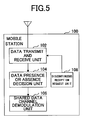
- the mobile station 100 includes a data transmit and receive unit 102 as discontinuous reception means having an antenna, a data presence or absence decision unit 102 and a discontinuous reception request unit 108 each connected to the data transmit and receive unit 102, and a shared data channel demodulation unit 106, as shared data channel receiving means, connected to the data presence or absence decision unit 104.
- the data transmit and receive unit 102 performs data transmission and reception. For example, the data transmit and receive unit 102 discontinuously receives only the signaling control channel when performing discontinuous reception.
- the data presence or absence decision unit 104 determines presence or absence of data addressed to the own mobile station 100 when receiving is performed using the signaling control channel.
- the shared data channel demodulation unit 106 demodulates the shared data channel received at a time corresponding to the signaling control channel when it is determined that there is the data addressed to the own mobile station. That is, when it is determined that there is traffic data addressed to the own mobile station, the shared data channel demodulation unit 106 receives a corresponding shared data channel.
- the discontinuous reception request unit 108 determines whether sate transition to discontinuous reception is necessary, and when determining that transition to discontinuous reception is necessary, the discontinuous reception request unit 108 reports information for requesting discontinuous reception to the radio access network apparatus 200 using an uplink signaling control channel.
- the radio access network apparatus 200 is described with reference to Fig.6 .
- the radio access network apparatus 200 includes a transmission unit 202, a discontinuous reception channel reporting unit 208, a shared data channel control unit 204 as scheduling means and a signaling control channel control unit 206 that are connected to the transmission unit 202, a discontinuous reception management unit 210 connected to the shared data channel control unit 204 and the signaling control channel control unit 206, and a discontinuous reception channel decision unit 212 connected to the discontinuous reception management unit 210 and the discontinuous reception channel reporting unit 208.
- the discontinuous reception channel decision unit 212 manages at least one of discontinuous reception start timing, a discontinuous reception period and a discontinuous reception channel.
- the discontinuous reception channel decision unit 212 determines a discontinuous reception channel of a mobile station that has changed its state to the discontinuous reception state such that the discontinuous reception channel does not overlap with other mobile stations. For example, the discontinuous reception channel decision unit 212 selects at least a part of channels of a signaling control channel as the discontinuous reception channel.
- the discontinuous reception channel decision unit 212 stores the determined discontinuous reception channel in the discontinuous reception management unit 210.
- the discontinuous reception channel reporting unit 208 reports, to the mobile station, the discontinuous reception channel determined by the discontinuous reception channel decision unit 212.
- the discontinuous reception channel reporting unit 208 reports at least one of timing at which discontinuous reception is to be performed, a discontinuous reception period and a channel to be received when performing discontinuous reception.
- the discontinuous reception management unit 210 manages states of each mobile station, for example, manages a shared data channel reception state and a discontinuous reception state. For example, the discontinuous reception management unit 210 determines whether to change the state to the discontinuous reception state.
- the discontinuous reception management unit 210 manages the discontinuous reception start timing and a discontinuous reception channel, and reports, to the after-mentioned signaling control channel control unit 206, timing at which the signaling control channel determined by the discontinuous reception channel decision unit 212 can be assigned to the mobile station in the discontinuous reception state.
- the signaling control channel control unit 206 performs scheduling based on the reported timing.
- the shared data channel control unit 204 performs scheduling in consideration of priorities of the mobile station, data amount and the like.
- the radio access network apparatus 200 includes a function of a radio control apparatus and a function of a radio base station apparatus.
- the radio control apparatus 220 is provided with the discontinuous reception management unit 210, the discontinuous reception channel decision unit 212 and the discontinuous reception channel reporting unit 208, and the radio base station apparatus 230 is provided with the shared data channel control unit 204 and the signaling control channel control unit 206.
- the radio access network apparatus 200 may be realized as the radio control apparatus 220 and the radio base station apparatus 230.
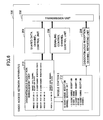
- a reception state of the mobile station 200 and reception states of the shared data channel and the signaling control channel are described with reference to Fig.8 .
- reception states of the mobile station 100 there are a shared channel (continuous) reception state and a signaling control channel discontinuous reception state.
- transition from the shared channel reception state to the signaling control channel discontinuous reception state is performed from an instruction from the radio access network apparatus 200.
- transition from the signaling control channel discontinuous reception state to the shared channel continuous reception state is performed when the mobile station 100 receives downlink data.
- the radio access network apparatus 200 transmits the downlink data in synchronization with the discontinuous reception timing of the mobile station.
- the mobile station 200 when there are receiving data or transmission data, the mobile station 200 enters in the shared data channel reception state.
- the data presence or absence decision unit 104 of the mobile station 100 that is in the shared data channel reception state receives the signaling control channel continuously, and checks whether an identifier of the own mobile station is included in the received signaling control channel (step S902).
- the identifier of the own mobile station may be directly included in the signaling control channel, or may be detected from a signal on which predetermined calculation has been preformed using the identifier of the mobile station.
- step S902:No the data presence or absence decision unit 104 receives the signaling control channel of next timing. That is, the step returns back to step S902.
- the data transmit and receive unit 102 receives the shared data channel of corresponding timing (step S904).
- the discontinuous reception channel decision unit 212 of the radio access network apparatus 200 determines that the mobile station 100 needs to change to the signaling control channel discontinuous reception state.
- the discontinuous reception channel reporting unit 208 instructs the mobile station to change to the discontinuous reception state.
- the shared data channel control unit 204 of the radio access network apparatus 200 performs measurement for determining presence or absence of downlink data.
- the discontinuous reception request unit 108 of the mobile station 100 performs measurement determining presence or absence of uplink data. For example, as a result of measurement for the presence or absence of the uplink transmission data, when there is no transmission data for a predetermined time, the discontinuous reception request unit 108 of the mobile station 100 reports that there is no transmission data to the radio access network apparatus 200.
- the discontinuous reception channel decision unit 212 of the radio access network apparatus 200 that receives information indicating there is no transmission data reports that the state changes to the signaling control channel discontinuous reception state via the discontinuous reception channel reporting unit 208.
- state transition is performed from the shared channel continuous reception state to the signaling control channel discontinuous reception state as shown in Fig. 10 .
- the data transmit and receive unit 102 of the mobile station 100 determines whether the mobile station 100 is in the discontinuous reception state (step S1102).
- the mobile station 100 in the signaling control channel discontinuous reception state receives the signaling control channel at discontinuous reception timing specified by the radio network apparatus 200.
- Step S1102:NO When the mobile station is not in the discontinuous reception state (Step S1102:NO), the process returns to step S1102.
- step S1102 when the mobile station is in the discontinuous reception state (step S1102:Yes), and when performing discontinuous reception, the data presence or absence decision unit 104 determines whether there is data addressed to the own mobile station (step S1104).
- step S1104:NO When there is no data addressed to the own mobile station, that is, if an identifier of the own mobile station is not included in downlink transmission data when discontinuously receiving the signaling control channel (step S1104:NO), the process returns to step S1102. In this case, the state does not change to the shared data channel reception state.
- the mobile station 100 may receive at least a part of the signaling control channel according to an instruction of the radio access network apparatus 200.
- step S1106 when there is data addressed to the own mobile station, that is, when the identifier of the own mobile station is stored in the signaling control channel that is discontinuously received (step S1104:Yes), the mobile station receives corresponding shared data channel (step S1106). In this case, the state is changed from the signaling control channel discontinuous reception state to the shared data channel continuous reception state.
- the signaling control channel control unit 206 of the radio access network apparatus 200 performs calling using the signaling control channel (step S1202).
- the mobile station 100 detects an identifier of the own mobile station, and changes to the shared data channel continuous reception state (step S1204).
- the mobile station 100 starts receiving the shared data channel at predetermined timing (step S1206).
- the radio access network apparatus 200 can start transmitting downlink data right after calling the mobile station 100 using the signaling control channel, so that channel switching is unnecessary.
- the mobile station, the radio access network apparatus, the mobile communication system and the discontinuous reception method according to the present invention can be applied to mobile communication systems.
Landscapes
- Engineering & Computer Science (AREA)
- Computer Networks & Wireless Communication (AREA)
- Signal Processing (AREA)
- Mobile Radio Communication Systems (AREA)
Abstract
Description
- The present invention generally relates to a mobile station, a radio access network apparatus, a mobile communication system and a discontinuous reception method.
- In a mobile communication, a plurality of states are defined based on traffic amounts to be transmitted for the purpose of saving battery of a mobile station and improving radio resource use efficiency of a radio access network.
- More particularly, defined states are a dedicated channel state (CELL_DCH) in which communication is performed using a dedicated channel when a traffic amount to be transmitted is large, a common channel state (CELL_FACH) in which communication is performed using a common channel when the traffic amount to be transmitted is small, and discontinuous reception state (CELL_PCH or URA_PCH) in which paging indicator is discontinuously received when there is no traffic to be transmitted, and transition among the states takes place according to the traffic amounts to be transmitted as shown in
Fig.1 . - For performing the state transition according to the traffic amount to be transmitted, it is necessary to switch between communication channels. In this case, for example, as shown in
Fig.2 , in a radio access network including amobile station 1 and a radioaccess network apparatus 2, a channel setup request signal and a channel setup response signal are necessary between themobile station 1 and the radioaccess network apparatus 2. - For example, an example of the channel setup request signal is described with reference to
Fig.3 . In this example, in a case in which a mobile station in the CELL_PCH state changes the state to the CELL_DCH state, channel setup between themobile station 1 and the radioaccess network apparatus 2 is described. - The radio
access network apparatus 2 sends paging information to themobile station 1. Themobile station 1 reports a current cell (CELL UPDATE). - Next, the radio
access network apparatus 2 confirms that a cell is reselected and sends a signal specifying a physical channel to be used for communication (CELL UPDATE CONFIRM). - Next, the
mobile station 1 reports that reconfiguration of the physical channel is completed. - However, there are following problems in the above-mentioned background art.
- As mentioned before, there is a problem in that control delay occurs due to channel setup process until traffic data is transmitted as a result that state transition is performed according to traffic amounts to be transmitted.
- In addition, there is a problem in that control load for the radio access network apparatus increases.
- The present invention is contrived in view of the above-mentioned problem, and an object is to provide a mobile station, a radio access network apparatus, a mobile communication system and a discontinuous reception method that can decrease control delay.
- To solve the above-mentioned object, the mobile station of the present invention is a mobile station that establishes a shared data channel and a signaling control channel and performs bidirectional communication between the mobile station and a radio access network apparatus, and that includes, as a feature,
discontinuous reception means that performs discontinuous reception using the signaling control channel when performing discontinuous reception;
data presence or absence decision means that determines presence or absence of traffic data addressed to the own mobile station when performing the discontinuous reception; and
shared channel receiving means that, when it is determined that there is traffic data addressed to the own mobile station, receives corresponding shared data channel. - By configuring like this, since discontinuous reception for the signaling control channel is performed even when the state is changed to the discontinuous reception state, switching between communication channels can be made unnecessary so that control delay due to channel setting can be decreased.
- The radio access network apparatus of the present invention is a radio access network apparatus that establishes a shared data channel and a signaling control channel and performs bidirectional communication between a mobile station and the radio access network apparatus, and the radio access network apparatus includes, as a feature:
- discontinuous reception management means that determines whether to change a state to a discontinuous reception state;
- discontinuous reception channel decision means that determines a discontinuous reception channel;
- discontinuous reception channel reporting means that reports the determined discontinuous reception channel; and
- scheduling means that, when transmission data arises, transmits a control signal using the determined discontinuous reception channel and that transmits traffic data using a corresponding shared data channel.
- By configuring like this, since data can be transmitted without performing a channel configuring procedure when transmission data arises, control load can be decreased.
- In addition, the mobile communication system of the present invention is a mobile communication system that establishes a shared data channel and a signaling control channel and performs bidirectional communication between a mobile station and a radio access network apparatus,
the mobile station includes: - discontinuous reception means that receives only the signaling control channel discontinuously when performing discontinuous reception;
- data presence or absence decision means that determines presence or absence of traffic data addressed to the own mobile station when performing the discontinuous reception; and
- shared channel receiving means that, when it is determined that there is traffic data addressed to the own mobile station, receives corresponding shared data channel, and
- the radio access network apparatus includes:
- discontinuous reception management means that determines whether to change a state to a discontinuous reception state;
- discontinuous reception channel decision means that determines a discontinuous reception channel;
- discontinuous reception channel reporting means that reports the determined discontinuous reception channel; and
- scheduling means that, when transmission data arises, transmits a control signal using the determined discontinuous reception channel and that transmits traffic data using a corresponding shared data channel.
- By configuring like this, since the mobile station performs discontinuous reception of the signaling control channel even when the state is changed to the discontinuous reception state, switching between communication channels can be made unnecessary so that control delay due to channel setting can be decreased. In addition, since the radio access network apparatus can transmit data without performing a channel setup procedure when transmission data arises, control load can be decreased.
- In addition, the discontinuous reception method of the present invention is a discontinuous reception method in a mobile station that establishes a shared data channel and a signaling control channel and performs bidirectional communication between the mobile station and a radio access network apparatus, the method includes, as a feature:
- a discontinuous reception step of performing discontinuous reception using the signal control channel when performing discontinuous reception;
- a data presence or absence decision step of determining presence or absence of traffic data addressed to the own mobile station when performing the discontinuous reception; and
- a shared channel receiving start step of starting, when it is determined that there is traffic data addressed to the own mobile station, receiving corresponding shared data channel.
- By configuring like this, since the mobile station performs discontinuous reception for the signaling control channel even when the state is changed to the discontinuous reception state, switching between communication channels can be made unnecessary so that control delay due to channel setup can be decreased.
- According to the present invention, a mobile station, a radio access network apparatus, a mobile communication system and an discontinuous reception method that can decrease control delay can be realized.
-
-
Fig.1 is a schematic diagram showing a state transition pattern when connecting to a radio access network; -
Fig.2 is a block diagram showing a radio access network apparatus and a mobile station; -
Fig.3 is a sequence diagram showing an example of a channel setup request signal; -
Fig.4 is an explanatory diagram showing a mobile communication system according to an embodiment of the present invention; -
Fig.5 is a block diagram showing a mobile station according to an embodiment of the present invention; -
Fig.6 is a block diagram showing a radio access network apparatus according to an embodiment of the present invention; -
Fig.7 is a block diagram showing a radio access network apparatus according to an embodiment of the present invention; -
Fig.8 is an explanatory diagram showing an example of reception states and state transition of a mobile station according to an embodiment of the present invention; -
Fig.9 is a flowchart showing operation of a mobile station according to an embodiment of the present invention; -
Fig. 10 is an explanatory diagram showing state transition of a mobile station according to an embodiment of the present invention; -
Fig. 11 is a flowchart showing operation of a mobile station according to an embodiment of the present invention; -
Fig.12 is a sequence diagram showing state transition from signaling control channel discontinuous reception state to shared data channel continuous reception state in a mobile station according to an embodiment of the present invention. -
- 1, 100
- mobile station
- 2, 200
- radio access network apparatus
- Next, preferred embodiments for carrying out the present invention are described with reference to figures based on the following embodiments. By the way, in all figures for explaining the embodiments, same reference symbols are used for parts having same functions, and repeated descriptions are not provided.
- A mobile communication system according to an embodiment of the present invention is described with reference to
Fig.4 . - The mobile communication system includes a
mobile station 100 and a radioaccess network apparatus 200. - The
mobile station 100 and the radioaccess network apparatus 200 performs bidirectional communication via a shared data channel and a signaling control channel. - Next, a configuration of the
mobile station 100 according to the present embodiment is described with reference toFig.5 . - The
mobile station 100 includes a data transmit and receiveunit 102 as discontinuous reception means having an antenna, a data presence orabsence decision unit 102 and a discontinuousreception request unit 108 each connected to the data transmit and receiveunit 102, and a shared datachannel demodulation unit 106, as shared data channel receiving means, connected to the data presence orabsence decision unit 104. - The data transmit and receive
unit 102 performs data transmission and reception. For example, the data transmit and receiveunit 102 discontinuously receives only the signaling control channel when performing discontinuous reception. - The data presence or
absence decision unit 104 determines presence or absence of data addressed to the ownmobile station 100 when receiving is performed using the signaling control channel. - The shared data
channel demodulation unit 106 demodulates the shared data channel received at a time corresponding to the signaling control channel when it is determined that there is the data addressed to the own mobile station. That is, when it is determined that there is traffic data addressed to the own mobile station, the shared datachannel demodulation unit 106 receives a corresponding shared data channel. - When continuously receiving the shared data channel, the discontinuous
reception request unit 108 determines whether sate transition to discontinuous reception is necessary, and when determining that transition to discontinuous reception is necessary, the discontinuousreception request unit 108 reports information for requesting discontinuous reception to the radioaccess network apparatus 200 using an uplink signaling control channel. - Next, the radio
access network apparatus 200 according to the present embodiment is described with reference toFig.6 . - The radio
access network apparatus 200 includes atransmission unit 202, a discontinuous receptionchannel reporting unit 208, a shared datachannel control unit 204 as scheduling means and a signaling controlchannel control unit 206 that are connected to thetransmission unit 202, a discontinuousreception management unit 210 connected to the shared datachannel control unit 204 and the signaling controlchannel control unit 206, and a discontinuous receptionchannel decision unit 212 connected to the discontinuousreception management unit 210 and the discontinuous receptionchannel reporting unit 208. - The discontinuous reception
channel decision unit 212 manages at least one of discontinuous reception start timing, a discontinuous reception period and a discontinuous reception channel. The discontinuous receptionchannel decision unit 212 determines a discontinuous reception channel of a mobile station that has changed its state to the discontinuous reception state such that the discontinuous reception channel does not overlap with other mobile stations. For example, the discontinuous receptionchannel decision unit 212 selects at least a part of channels of a signaling control channel as the discontinuous reception channel. In addition, the discontinuous receptionchannel decision unit 212 stores the determined discontinuous reception channel in the discontinuousreception management unit 210. - The discontinuous reception
channel reporting unit 208 reports, to the mobile station, the discontinuous reception channel determined by the discontinuous receptionchannel decision unit 212. For example, the discontinuous receptionchannel reporting unit 208 reports at least one of timing at which discontinuous reception is to be performed, a discontinuous reception period and a channel to be received when performing discontinuous reception. - The discontinuous
reception management unit 210 manages states of each mobile station, for example, manages a shared data channel reception state and a discontinuous reception state. For example, the discontinuousreception management unit 210 determines whether to change the state to the discontinuous reception state. The discontinuousreception management unit 210 manages the discontinuous reception start timing and a discontinuous reception channel, and reports, to the after-mentioned signaling controlchannel control unit 206, timing at which the signaling control channel determined by the discontinuous receptionchannel decision unit 212 can be assigned to the mobile station in the discontinuous reception state. - The signaling control
channel control unit 206 performs scheduling based on the reported timing. - The shared data
channel control unit 204 performs scheduling in consideration of priorities of the mobile station, data amount and the like. - In the present embodiment, as shown in
Fig.7 , a case is described in which the radioaccess network apparatus 200 includes a function of a radio control apparatus and a function of a radio base station apparatus. In this case, for example, theradio control apparatus 220 is provided with the discontinuousreception management unit 210, the discontinuous receptionchannel decision unit 212 and the discontinuous receptionchannel reporting unit 208, and the radiobase station apparatus 230 is provided with the shared datachannel control unit 204 and the signaling controlchannel control unit 206. - In addition, the radio
access network apparatus 200 may be realized as theradio control apparatus 220 and the radiobase station apparatus 230. - Next, a reception state of the
mobile station 200 and reception states of the shared data channel and the signaling control channel are described with reference toFig.8 . - As reception states of the
mobile station 100, there are a shared channel (continuous) reception state and a signaling control channel discontinuous reception state. In themobile station 100, transition from the shared channel reception state to the signaling control channel discontinuous reception state is performed from an instruction from the radioaccess network apparatus 200. - In addition, transition from the signaling control channel discontinuous reception state to the shared channel continuous reception state is performed when the
mobile station 100 receives downlink data. - When downlink data arises when the
mobile station 100 is in the signaling control channel discontinuous reception state, the radioaccess network apparatus 200 transmits the downlink data in synchronization with the discontinuous reception timing of the mobile station. - In the present embodiment, when there are receiving data or transmission data, the
mobile station 200 enters in the shared data channel reception state. - Next, operation of the mobile station according to the present embodiment is described with reference to
Fig.9 . - Here, an operation flow of the
mobile station 100 in the shared data channel reception state is described. - The data presence or
absence decision unit 104 of themobile station 100 that is in the shared data channel reception state receives the signaling control channel continuously, and checks whether an identifier of the own mobile station is included in the received signaling control channel (step S902). The identifier of the own mobile station may be directly included in the signaling control channel, or may be detected from a signal on which predetermined calculation has been preformed using the identifier of the mobile station. - When the identifier of the own mobile station is not included (step S902:No), the data presence or
absence decision unit 104 receives the signaling control channel of next timing. That is, the step returns back to step S902. - On the other hand, when the identifier of the own mobile station is included, the data transmit and receive
unit 102 receives the shared data channel of corresponding timing (step S904). - In the shared data channel reception state, when there is no data addressed to the own mobile station in either uplink or downlink for a predetermined time, the discontinuous reception
channel decision unit 212 of the radioaccess network apparatus 200 determines that themobile station 100 needs to change to the signaling control channel discontinuous reception state. The discontinuous receptionchannel reporting unit 208 instructs the mobile station to change to the discontinuous reception state. - In this case, for example, the shared data
channel control unit 204 of the radioaccess network apparatus 200 performs measurement for determining presence or absence of downlink data. In addition, the discontinuousreception request unit 108 of themobile station 100 performs measurement determining presence or absence of uplink data. For example, as a result of measurement for the presence or absence of the uplink transmission data, when there is no transmission data for a predetermined time, the discontinuousreception request unit 108 of themobile station 100 reports that there is no transmission data to the radioaccess network apparatus 200. - The discontinuous reception
channel decision unit 212 of the radioaccess network apparatus 200 that receives information indicating there is no transmission data reports that the state changes to the signaling control channel discontinuous reception state via the discontinuous receptionchannel reporting unit 208. - In the
mobile station 100 that receives the instruction, state transition is performed from the shared channel continuous reception state to the signaling control channel discontinuous reception state as shown inFig. 10 . - Next, operation of the
mobile station 100 is described with reference toFig. 11 . - In the following, an operation flow of the mobile station that changes to the signaling control channel discontinuous reception state is described.
- First, the data transmit and receive
unit 102 of themobile station 100 determines whether themobile station 100 is in the discontinuous reception state (step S1102). - As shown in
Fig.8 , themobile station 100 in the signaling control channel discontinuous reception state receives the signaling control channel at discontinuous reception timing specified by theradio network apparatus 200. - When the mobile station is not in the discontinuous reception state (Step S1102:NO), the process returns to step S1102.
- On the other hand, when the mobile station is in the discontinuous reception state (step S1102:Yes), and when performing discontinuous reception, the data presence or
absence decision unit 104 determines whether there is data addressed to the own mobile station (step S1104). - When there is no data addressed to the own mobile station, that is, if an identifier of the own mobile station is not included in downlink transmission data when discontinuously receiving the signaling control channel (step S1104:NO), the process returns to step S1102. In this case, the state does not change to the shared data channel reception state. The
mobile station 100 may receive at least a part of the signaling control channel according to an instruction of the radioaccess network apparatus 200. - On the other hand, when there is data addressed to the own mobile station, that is, when the identifier of the own mobile station is stored in the signaling control channel that is discontinuously received (step S1104:Yes), the mobile station receives corresponding shared data channel (step S1106). In this case, the state is changed from the signaling control channel discontinuous reception state to the shared data channel continuous reception state.
- An example of an operation flow of the mobile station is described with reference to
Fig.12 in which it changes from the signaling control channel discontinuous reception state to the shared data channel continuous reception state. - The signaling control
channel control unit 206 of the radioaccess network apparatus 200 performs calling using the signaling control channel (step S1202). - The
mobile station 100 detects an identifier of the own mobile station, and changes to the shared data channel continuous reception state (step S1204). - The
mobile station 100 starts receiving the shared data channel at predetermined timing (step S1206). - According to the present embodiment, procedures for state transition and channel switching described with reference to
Fig.3 are not necessary, and the radioaccess network apparatus 200 can start transmitting downlink data right after calling themobile station 100 using the signaling control channel, so that channel switching is unnecessary. - In addition, according to the present embodiment, since switching of communication channels between the time for normal receiving and the time for discontinuous reception, data can be directly transmitted even though transmission data arises at the time of discontinuous reception. Thus, control delay until data is received in the mobile station can be decreased. As a result, the procedure for switching communication channels becomes unnecessary so that control load of the radio access network apparatus can be decreased.
- In addition, since it is only necessary to discontinuously receive the signaling control channel also when changing to the discontinuous reception state, communication channel switching is not necessary. In addition, since data can be received without performing channel setting procedure even when transmission data arises, control delay until data is received and control load of the radio access network apparatus can be decreased.
- The mobile station, the radio access network apparatus, the mobile communication system and the discontinuous reception method according to the present invention can be applied to mobile communication systems.
- The present application claims priority based on
Japanese patent application No.2005-175778 No.2005-175778
Claims (9)
- A mobile station that establishes a shared data channel and a signaling control channel and performs bidirectional communication between the mobile station and a radio access network apparatus, comprising:discontinuous reception means that performs discontinuous reception using the signaling control channel when performing discontinuous reception;data presence or absence decision means that determines presence or absence of traffic data addressed to the own mobile station when performing the discontinuous reception; andshared channel receiving means that, when it is determined that there is traffic data addressed to the own mobile station, receives corresponding shared data channel.
- The mobile station as claimed in claim 1, comprising:discontinuous reception request means that reports information for requesting discontinuous reception using an uplink signaling control channel when performing discontinuous reception.
- A radio access network apparatus that establishes a shared data channel and a signaling control channel and performs bidirectional communication between a mobile station and the radio access network apparatus, comprising:discontinuous reception management means that determines whether to change a state to a discontinuous reception state;discontinuous reception channel decision means that determines a discontinuous reception channel;discontinuous reception channel reporting means that reports the determined discontinuous reception channel; andscheduling means that, when transmission data arises, transmits a control signal using the determined discontinuous reception channel and that transmits traffic data using a corresponding shared data channel.
- The radio access network apparatus as claimed in claim 3, wherein the discontinuous reception channel decision means selects at least a part of channels of the signaling control channel.
- The radio access network apparatus as claimed in claim 3 or 4, wherein the discontinuous reception channel reporting means reports at least a piece of information of timing for performing discontinuous reception, a discontinuous reception period and a channel that needs to be received when performing discontinuous reception.
- A mobile communication system that establishes a shared data channel and a signaling control channel and performs bidirectional communication between a mobile station and a radio access network apparatus,
the mobile station comprising:discontinuous reception means that receives only the signaling control channel discontinuously when performing discontinuous reception;data presence or absence decision means that determines presence or absence of traffic data addressed to the own mobile station when performing the discontinuous reception; andshared channel receiving means that, when it is determined that there is traffic data addressed to the own mobile station, receives corresponding shared data channel,the radio access network apparatus comprising:discontinuous reception management means that determines whether to change a state to a discontinuous reception state;discontinuous reception channel decision means that determines a discontinuous reception channel;discontinuous reception channel reporting means that reports the determined discontinuous reception channel; andscheduling means that, when transmission data arises, transmits a control signal using the determined discontinuous reception channel and that transmits traffic data using a corresponding shared data channel. - A discontinuous reception method in a mobile station that establishes a shared data channel and a signaling control channel and performs bidirectional communication between the mobile station and a radio access network apparatus, comprising:a discontinuous reception step of performing discontinuous reception using the signal control channel when performing discontinuous reception;a data presence or absence decision step of determining presence or absence of traffic data addressed to the own mobile station when performing the discontinuous reception; anda shared channel receiving start step of starting, when it is determined that there is traffic data addressed to the own mobile station, receiving corresponding shared data channel.
- The discontinuous reception method as claimed in claim 7, the discontinuous reception step comprising:a step of discontinuously receiving at least a part of channels of the signaling control channel.
- The discontinuous reception method as claimed in claim 7 or 8, the discontinuous reception step comprising:a step of receiving at least a piece of information of timing at which discontinuous reception is performed, a discontinuous reception period, and a channel to be received when performing the discontinuous reception.
Priority Applications (1)
| Application Number | Priority Date | Filing Date | Title |
|---|---|---|---|
| PL06766730T PL1892856T3 (en) | 2005-06-15 | 2006-06-14 | Mobile station, wireless access network apparatus, mobile communication system, and intermittent reception method |
Applications Claiming Priority (2)
| Application Number | Priority Date | Filing Date | Title |
|---|---|---|---|
| JP2005175778A JP2006352489A (en) | 2005-06-15 | 2005-06-15 | Mobile station, radio access network apparatus, mobile communication system, and intermittent reception method |
| PCT/JP2006/311963 WO2006134984A1 (en) | 2005-06-15 | 2006-06-14 | Mobile station, wireless access network apparatus, mobile communication system, and intermittent reception method |
Publications (3)
| Publication Number | Publication Date |
|---|---|
| EP1892856A1 true EP1892856A1 (en) | 2008-02-27 |
| EP1892856A4 EP1892856A4 (en) | 2014-07-02 |
| EP1892856B1 EP1892856B1 (en) | 2021-08-04 |
Family
ID=37532339
Family Applications (1)
| Application Number | Title | Priority Date | Filing Date |
|---|---|---|---|
| EP06766730.3A Active EP1892856B1 (en) | 2005-06-15 | 2006-06-14 | Mobile station, wireless access network apparatus, mobile communication system, and intermittent reception method |
Country Status (12)
| Country | Link |
|---|---|
| US (1) | US8340028B2 (en) |
| EP (1) | EP1892856B1 (en) |
| JP (1) | JP2006352489A (en) |
| KR (1) | KR101235574B1 (en) |
| CN (1) | CN101208883A (en) |
| BR (1) | BRPI0612292B1 (en) |
| ES (1) | ES2884824T3 (en) |
| HU (1) | HUE056015T2 (en) |
| PL (1) | PL1892856T3 (en) |
| RU (1) | RU2416164C2 (en) |
| TW (1) | TW200709705A (en) |
| WO (1) | WO2006134984A1 (en) |
Cited By (6)
| Publication number | Priority date | Publication date | Assignee | Title |
|---|---|---|---|---|
| US8145271B2 (en) | 2007-03-01 | 2012-03-27 | Ntt Docomo, Inc. | Base station apparatus and communication control method |
| US8306544B2 (en) | 2007-03-01 | 2012-11-06 | Ntt Docomo, Inc. | Base station apparatus and communication control method |
| EP1944923A3 (en) * | 2007-01-15 | 2013-01-02 | Samsung Electronics Co., Ltd. | Method and apparatus for processing uplink data by DRX-mode terminal in mobile telecommunication system |
| US8503388B2 (en) | 2007-03-01 | 2013-08-06 | Ntt Docomo, Inc. | Base station apparatus, user equipment, and communication control method |
| EP2120476A4 (en) * | 2007-03-01 | 2014-01-01 | Ntt Docomo Inc | BASE STATION DEVICE AND COMMUNICATION CONTROL METHOD |
| EP2129149A4 (en) * | 2007-03-01 | 2014-07-23 | Ntt Docomo Inc | Base station device and communication control method |
Families Citing this family (6)
| Publication number | Priority date | Publication date | Assignee | Title |
|---|---|---|---|---|
| KR20130045395A (en) | 2007-03-15 | 2013-05-03 | 인터디지탈 테크날러지 코포레이션 | Method and apparatus for reordering data in an evolved high speed packet access system |
| JP4702376B2 (en) * | 2008-02-14 | 2011-06-15 | 住友電気工業株式会社 | Base station apparatus and control information transmission condition setting method |
| CN101656978B (en) * | 2008-08-22 | 2014-01-01 | 株式会社Ntt都科摩 | Method and device for dynamically indicating user equipment to change discontinuous receiving state |
| KR101641008B1 (en) * | 2012-01-19 | 2016-07-19 | 인텔 코포레이션 | Systems and methods for service discovery |
| KR101687289B1 (en) | 2016-06-10 | 2016-12-16 | 주식회사 아하정보통신 | Signage using motion-based input signal |
| US20230175851A1 (en) * | 2021-12-07 | 2023-06-08 | Kyndryl, Inc. | Data-analysis-based navigation system assistance |
Family Cites Families (17)
| Publication number | Priority date | Publication date | Assignee | Title |
|---|---|---|---|---|
| JPH0884111A (en) * | 1994-09-09 | 1996-03-26 | Canon Inc | Wireless system |
| JP2606169B2 (en) | 1994-12-16 | 1997-04-30 | 日本電気株式会社 | Radio selective call receiver with intermittent reception function |
| US5872774A (en) * | 1997-09-19 | 1999-02-16 | Qualcomm Incorporated | Mobile station assisted timing synchronization in a CDMA communication system |
| KR100414932B1 (en) * | 1998-01-24 | 2004-04-03 | 삼성전자주식회사 | Method for communication data in cdma system |
| JPH11313370A (en) * | 1998-04-28 | 1999-11-09 | Toshiba Corp | Mobile packet communication system and its data communication device, base station device and mobile terminal device |
| EP1040689B1 (en) * | 1998-07-16 | 2013-09-11 | Samsung Electronics Co., Ltd. | Processing packet data in mobile communication system |
| JP4177924B2 (en) * | 1998-08-17 | 2008-11-05 | 富士通株式会社 | Radio communication system, mobile station used in radio communication system, base station used in radio communication system, and packet transmission method in radio communication system |
| CA2333135C (en) | 1999-04-12 | 2004-05-25 | Hyun-Jung Mun | Method for controlling gated transmission of dedicated channel in w-cdma communication system |
| JP4215926B2 (en) * | 2000-02-24 | 2009-01-28 | 株式会社Kddi研究所 | Wireless access system |
| US6377198B1 (en) * | 2000-03-20 | 2002-04-23 | Cirrus Logic Inc. | Definition of physical level of a logic output by a logic input |
| CN1243455C (en) * | 2000-04-14 | 2006-02-22 | 株式会社Ntt都科摩 | Multicast service providing system, multicast service providing method, information distributor, radio terminal, and radio base station |
| WO2003063426A1 (en) * | 2002-01-18 | 2003-07-31 | Nortel Networks Limited | Method and system for priority-based state transition for high speed data transmission and wireless access networks |
| US20050107105A1 (en) * | 2002-05-10 | 2005-05-19 | Hideji Wakabayashi | Mobile communication system, base station and mobile station |
| EP1581019A4 (en) * | 2002-11-19 | 2010-04-14 | Ntt Docomo Inc | MOBILE COMMUNICATION SYSTEM, LINE CONCENTRATOR, RADIO BASE STATION, MOBILE STATION, AND COMMUNICATION METHOD |
| JP3641268B2 (en) * | 2003-02-13 | 2005-04-20 | 株式会社東芝 | Mobile communication terminal device, control unit and control program thereof |
| ATE368977T1 (en) * | 2003-10-21 | 2007-08-15 | Alcatel Lucent | METHOD FOR ALLOCATING SUB CARRIER AND SELECTING MODULATION SCHEME IN A WIRELESS MULTI-CARRIGER TRANSMISSION SYSTEM |
| CA2563696A1 (en) * | 2004-04-19 | 2005-10-27 | Zteit Usa, Inc. | Trunking and push-to-talk mechanisms for wcdma wireless communications |
-
2005
- 2005-06-15 JP JP2005175778A patent/JP2006352489A/en active Pending
-
2006
- 2006-06-14 US US11/917,879 patent/US8340028B2/en active Active
- 2006-06-14 RU RU2008100221/09A patent/RU2416164C2/en active
- 2006-06-14 CN CNA2006800231777A patent/CN101208883A/en active Pending
- 2006-06-14 EP EP06766730.3A patent/EP1892856B1/en active Active
- 2006-06-14 KR KR1020077030984A patent/KR101235574B1/en active Active
- 2006-06-14 HU HUE06766730A patent/HUE056015T2/en unknown
- 2006-06-14 WO PCT/JP2006/311963 patent/WO2006134984A1/en not_active Ceased
- 2006-06-14 PL PL06766730T patent/PL1892856T3/en unknown
- 2006-06-14 BR BRPI0612292-2A patent/BRPI0612292B1/en active IP Right Grant
- 2006-06-14 ES ES06766730T patent/ES2884824T3/en active Active
- 2006-06-15 TW TW095121400A patent/TW200709705A/en unknown
Non-Patent Citations (3)
| Title |
|---|
| "3rd Generation Partnership Project; Technical Specification Group Radio Access Network; Physical layer procedures (TDD) (Release 6)", 3GPP STANDARD; 3GPP TS 25.224, 3RD GENERATION PARTNERSHIP PROJECT (3GPP), MOBILE COMPETENCE CENTRE ; 650, ROUTE DES LUCIOLES ; F-06921 SOPHIA-ANTIPOLIS CEDEX ; FRANCE, no. V6.5.0, 1 June 2005 (2005-06-01), pages 1-49, XP050367136, * |
| INTERDIGITAL COMM CORP: "HS-SCCH Signaling for FDD HSDPA", 3GPP DRAFT; R1-01-0226 HS-SCCH SIGNALLING_FDD, 3RD GENERATION PARTNERSHIP PROJECT (3GPP), MOBILE COMPETENCE CENTRE ; 650, ROUTE DES LUCIOLES ; F-06921 SOPHIA-ANTIPOLIS CEDEX ; FRANCE, vol. RAN WG1, no. Orlando, USA; 20020220, 20 February 2002 (2002-02-20), XP050095786, [retrieved on 2002-02-20] * |
| See also references of WO2006134984A1 * |
Cited By (9)
| Publication number | Priority date | Publication date | Assignee | Title |
|---|---|---|---|---|
| EP1944923A3 (en) * | 2007-01-15 | 2013-01-02 | Samsung Electronics Co., Ltd. | Method and apparatus for processing uplink data by DRX-mode terminal in mobile telecommunication system |
| EP3589072A1 (en) * | 2007-01-15 | 2020-01-01 | Samsung Electronics Co., Ltd. | Method and apparatus for processing uplink data by drx-mode terminal in mobile telecommunication system |
| US10681681B2 (en) | 2007-01-15 | 2020-06-09 | Samsung Electronics Co., Ltd | Method and apparatus for processing uplink data by DRX-mode terminal in mobile telecommunication system |
| US10939420B2 (en) | 2007-01-15 | 2021-03-02 | Samsung Electronics Co., Ltd | Method and apparatus for processing uplink data by DRX-mode terminal in mobile telecommunication system |
| US8145271B2 (en) | 2007-03-01 | 2012-03-27 | Ntt Docomo, Inc. | Base station apparatus and communication control method |
| US8306544B2 (en) | 2007-03-01 | 2012-11-06 | Ntt Docomo, Inc. | Base station apparatus and communication control method |
| US8503388B2 (en) | 2007-03-01 | 2013-08-06 | Ntt Docomo, Inc. | Base station apparatus, user equipment, and communication control method |
| EP2120476A4 (en) * | 2007-03-01 | 2014-01-01 | Ntt Docomo Inc | BASE STATION DEVICE AND COMMUNICATION CONTROL METHOD |
| EP2129149A4 (en) * | 2007-03-01 | 2014-07-23 | Ntt Docomo Inc | Base station device and communication control method |
Also Published As
| Publication number | Publication date |
|---|---|
| HUE056015T2 (en) | 2022-01-28 |
| CN101208883A (en) | 2008-06-25 |
| US8340028B2 (en) | 2012-12-25 |
| EP1892856A4 (en) | 2014-07-02 |
| PL1892856T3 (en) | 2022-01-10 |
| ES2884824T3 (en) | 2021-12-13 |
| EP1892856B1 (en) | 2021-08-04 |
| JP2006352489A (en) | 2006-12-28 |
| WO2006134984A1 (en) | 2006-12-21 |
| RU2416164C2 (en) | 2011-04-10 |
| KR101235574B1 (en) | 2013-02-22 |
| KR20080028897A (en) | 2008-04-02 |
| US20090219862A1 (en) | 2009-09-03 |
| TWI334287B (en) | 2010-12-01 |
| TW200709705A (en) | 2007-03-01 |
| RU2008100221A (en) | 2009-07-20 |
| BRPI0612292A2 (en) | 2010-11-03 |
| BRPI0612292B1 (en) | 2019-07-30 |
Similar Documents
| Publication | Publication Date | Title |
|---|---|---|
| US7957755B2 (en) | Mobile station, radio access network apparatus, mobile communication system and broadcast information transmitting and receiving method | |
| US7020477B2 (en) | Paging incommunication systems | |
| US7167482B1 (en) | Method and system for configuring radio interface in a communication system | |
| US20100027466A1 (en) | Signalling in mobile telecommunications | |
| EP2068585A1 (en) | Mobile station, wireless base station, mobile communication system and notification information transmitting/receiving method | |
| US12507299B2 (en) | Communication method and sidelink device | |
| KR20050098009A (en) | Synchronization for extending battery life | |
| EP3484217A1 (en) | Method and apparatus for data transmission | |
| EP2031891A1 (en) | Mobile station device, base station device, and paging method | |
| US20130225211A1 (en) | Paging Reading Conflict Management in Dual Standby Handsets | |
| EP1892856A1 (en) | Mobile station, wireless access network apparatus, mobile communication system, and intermittent reception method | |
| EP4052527A1 (en) | Method and apparatus for switching of data transmission between radio access technologies for early data transmission | |
| US6600731B2 (en) | Method and base station system for calling mobile stations for the transmission of packet data | |
| KR101176357B1 (en) | Wireless access control apparatus, mobile station and method | |
| JP2008078891A5 (en) | ||
| EP2083605A2 (en) | IT system | |
| JP2009273185A (en) | Mobile station, radio access network apparatus, mobile communication system, and intermittent reception method | |
| JPH0575528A (en) | Incoming control system and its mobile station for mobile object communication system | |
| KR20080064847A (en) | Associated Paging Indicator | |
| JP2000183801A (en) | System and method for mobile communication |
Legal Events
| Date | Code | Title | Description |
|---|---|---|---|
| PUAI | Public reference made under article 153(3) epc to a published international application that has entered the european phase |
Free format text: ORIGINAL CODE: 0009012 |
|
| 17P | Request for examination filed |
Effective date: 20071214 |
|
| AK | Designated contracting states |
Kind code of ref document: A1 Designated state(s): AT BE BG CH CY CZ DE DK EE ES FI FR GB GR HU IE IS IT LI LT LU LV MC NL PL PT RO SE SI SK TR |
|
| DAX | Request for extension of the european patent (deleted) | ||
| DAX | Request for extension of the european patent (deleted) | ||
| A4 | Supplementary search report drawn up and despatched |
Effective date: 20140604 |
|
| RIC1 | Information provided on ipc code assigned before grant |
Ipc: H04B 7/26 20060101AFI20140528BHEP |
|
| STAA | Information on the status of an ep patent application or granted ep patent |
Free format text: STATUS: EXAMINATION IS IN PROGRESS |
|
| 17Q | First examination report despatched |
Effective date: 20180219 |
|
| GRAP | Despatch of communication of intention to grant a patent |
Free format text: ORIGINAL CODE: EPIDOSNIGR1 |
|
| STAA | Information on the status of an ep patent application or granted ep patent |
Free format text: STATUS: GRANT OF PATENT IS INTENDED |
|
| INTG | Intention to grant announced |
Effective date: 20210222 |
|
| GRAS | Grant fee paid |
Free format text: ORIGINAL CODE: EPIDOSNIGR3 |
|
| GRAA | (expected) grant |
Free format text: ORIGINAL CODE: 0009210 |
|
| STAA | Information on the status of an ep patent application or granted ep patent |
Free format text: STATUS: THE PATENT HAS BEEN GRANTED |
|
| AK | Designated contracting states |
Kind code of ref document: B1 Designated state(s): AT BE BG CH CY CZ DE DK EE ES FI FR GB GR HU IE IS IT LI LT LU LV MC NL PL PT RO SE SI SK TR |
|
| RAP3 | Party data changed (applicant data changed or rights of an application transferred) |
Owner name: NTT DOCOMO, INC. |
|
| REG | Reference to a national code |
Ref country code: GB Ref legal event code: FG4D |
|
| REG | Reference to a national code |
Ref country code: AT Ref legal event code: REF Ref document number: 1418067 Country of ref document: AT Kind code of ref document: T Effective date: 20210815 |
|
| REG | Reference to a national code |
Ref country code: CH Ref legal event code: EP |
|
| REG | Reference to a national code |
Ref country code: DE Ref legal event code: R096 Ref document number: 602006060139 Country of ref document: DE |
|
| REG | Reference to a national code |
Ref country code: NL Ref legal event code: FP Ref country code: IE Ref legal event code: FG4D |
|
| REG | Reference to a national code |
Ref country code: LT Ref legal event code: MG9D |
|
| REG | Reference to a national code |
Ref country code: ES Ref legal event code: FG2A Ref document number: 2884824 Country of ref document: ES Kind code of ref document: T3 Effective date: 20211213 |
|
| REG | Reference to a national code |
Ref country code: AT Ref legal event code: MK05 Ref document number: 1418067 Country of ref document: AT Kind code of ref document: T Effective date: 20210804 |
|
| REG | Reference to a national code |
Ref country code: HU Ref legal event code: AG4A Ref document number: E056015 Country of ref document: HU |
|
| PG25 | Lapsed in a contracting state [announced via postgrant information from national office to epo] |
Ref country code: SE Free format text: LAPSE BECAUSE OF FAILURE TO SUBMIT A TRANSLATION OF THE DESCRIPTION OR TO PAY THE FEE WITHIN THE PRESCRIBED TIME-LIMIT Effective date: 20210804 Ref country code: BG Free format text: LAPSE BECAUSE OF FAILURE TO SUBMIT A TRANSLATION OF THE DESCRIPTION OR TO PAY THE FEE WITHIN THE PRESCRIBED TIME-LIMIT Effective date: 20211104 Ref country code: AT Free format text: LAPSE BECAUSE OF FAILURE TO SUBMIT A TRANSLATION OF THE DESCRIPTION OR TO PAY THE FEE WITHIN THE PRESCRIBED TIME-LIMIT Effective date: 20210804 Ref country code: LT Free format text: LAPSE BECAUSE OF FAILURE TO SUBMIT A TRANSLATION OF THE DESCRIPTION OR TO PAY THE FEE WITHIN THE PRESCRIBED TIME-LIMIT Effective date: 20210804 Ref country code: PT Free format text: LAPSE BECAUSE OF FAILURE TO SUBMIT A TRANSLATION OF THE DESCRIPTION OR TO PAY THE FEE WITHIN THE PRESCRIBED TIME-LIMIT Effective date: 20211206 Ref country code: FI Free format text: LAPSE BECAUSE OF FAILURE TO SUBMIT A TRANSLATION OF THE DESCRIPTION OR TO PAY THE FEE WITHIN THE PRESCRIBED TIME-LIMIT Effective date: 20210804 |
|
| PG25 | Lapsed in a contracting state [announced via postgrant information from national office to epo] |
Ref country code: LV Free format text: LAPSE BECAUSE OF FAILURE TO SUBMIT A TRANSLATION OF THE DESCRIPTION OR TO PAY THE FEE WITHIN THE PRESCRIBED TIME-LIMIT Effective date: 20210804 Ref country code: GR Free format text: LAPSE BECAUSE OF FAILURE TO SUBMIT A TRANSLATION OF THE DESCRIPTION OR TO PAY THE FEE WITHIN THE PRESCRIBED TIME-LIMIT Effective date: 20211105 |
|
| PG25 | Lapsed in a contracting state [announced via postgrant information from national office to epo] |
Ref country code: DK Free format text: LAPSE BECAUSE OF FAILURE TO SUBMIT A TRANSLATION OF THE DESCRIPTION OR TO PAY THE FEE WITHIN THE PRESCRIBED TIME-LIMIT Effective date: 20210804 |
|
| REG | Reference to a national code |
Ref country code: DE Ref legal event code: R097 Ref document number: 602006060139 Country of ref document: DE |
|
| PG25 | Lapsed in a contracting state [announced via postgrant information from national office to epo] |
Ref country code: SK Free format text: LAPSE BECAUSE OF FAILURE TO SUBMIT A TRANSLATION OF THE DESCRIPTION OR TO PAY THE FEE WITHIN THE PRESCRIBED TIME-LIMIT Effective date: 20210804 Ref country code: RO Free format text: LAPSE BECAUSE OF FAILURE TO SUBMIT A TRANSLATION OF THE DESCRIPTION OR TO PAY THE FEE WITHIN THE PRESCRIBED TIME-LIMIT Effective date: 20210804 Ref country code: EE Free format text: LAPSE BECAUSE OF FAILURE TO SUBMIT A TRANSLATION OF THE DESCRIPTION OR TO PAY THE FEE WITHIN THE PRESCRIBED TIME-LIMIT Effective date: 20210804 Ref country code: CZ Free format text: LAPSE BECAUSE OF FAILURE TO SUBMIT A TRANSLATION OF THE DESCRIPTION OR TO PAY THE FEE WITHIN THE PRESCRIBED TIME-LIMIT Effective date: 20210804 |
|
| PLBE | No opposition filed within time limit |
Free format text: ORIGINAL CODE: 0009261 |
|
| STAA | Information on the status of an ep patent application or granted ep patent |
Free format text: STATUS: NO OPPOSITION FILED WITHIN TIME LIMIT |
|
| 26N | No opposition filed |
Effective date: 20220506 |
|
| PG25 | Lapsed in a contracting state [announced via postgrant information from national office to epo] |
Ref country code: SI Free format text: LAPSE BECAUSE OF FAILURE TO SUBMIT A TRANSLATION OF THE DESCRIPTION OR TO PAY THE FEE WITHIN THE PRESCRIBED TIME-LIMIT Effective date: 20210804 |
|
| PG25 | Lapsed in a contracting state [announced via postgrant information from national office to epo] |
Ref country code: MC Free format text: LAPSE BECAUSE OF FAILURE TO SUBMIT A TRANSLATION OF THE DESCRIPTION OR TO PAY THE FEE WITHIN THE PRESCRIBED TIME-LIMIT Effective date: 20210804 |
|
| REG | Reference to a national code |
Ref country code: CH Ref legal event code: PL |
|
| PG25 | Lapsed in a contracting state [announced via postgrant information from national office to epo] |
Ref country code: LU Free format text: LAPSE BECAUSE OF NON-PAYMENT OF DUE FEES Effective date: 20220614 Ref country code: LI Free format text: LAPSE BECAUSE OF NON-PAYMENT OF DUE FEES Effective date: 20220630 Ref country code: IE Free format text: LAPSE BECAUSE OF NON-PAYMENT OF DUE FEES Effective date: 20220614 Ref country code: FR Free format text: LAPSE BECAUSE OF NON-PAYMENT OF DUE FEES Effective date: 20220630 Ref country code: CH Free format text: LAPSE BECAUSE OF NON-PAYMENT OF DUE FEES Effective date: 20220630 |
|
| P01 | Opt-out of the competence of the unified patent court (upc) registered |
Effective date: 20230509 |
|
| PG25 | Lapsed in a contracting state [announced via postgrant information from national office to epo] |
Ref country code: CY Free format text: LAPSE BECAUSE OF FAILURE TO SUBMIT A TRANSLATION OF THE DESCRIPTION OR TO PAY THE FEE WITHIN THE PRESCRIBED TIME-LIMIT Effective date: 20210804 |
|
| PGFP | Annual fee paid to national office [announced via postgrant information from national office to epo] |
Ref country code: PL Payment date: 20250606 Year of fee payment: 20 Ref country code: DE Payment date: 20250618 Year of fee payment: 20 |
|
| PGFP | Annual fee paid to national office [announced via postgrant information from national office to epo] |
Ref country code: GB Payment date: 20250618 Year of fee payment: 20 |
|
| PGFP | Annual fee paid to national office [announced via postgrant information from national office to epo] |
Ref country code: NL Payment date: 20250618 Year of fee payment: 20 Ref country code: BE Payment date: 20250618 Year of fee payment: 20 |
|
| PGFP | Annual fee paid to national office [announced via postgrant information from national office to epo] |
Ref country code: HU Payment date: 20250620 Year of fee payment: 20 |
|
| PGFP | Annual fee paid to national office [announced via postgrant information from national office to epo] |
Ref country code: ES Payment date: 20250728 Year of fee payment: 20 |
|
| PGFP | Annual fee paid to national office [announced via postgrant information from national office to epo] |
Ref country code: IT Payment date: 20250624 Year of fee payment: 20 |
|
| PG25 | Lapsed in a contracting state [announced via postgrant information from national office to epo] |
Ref country code: TR Free format text: LAPSE BECAUSE OF FAILURE TO SUBMIT A TRANSLATION OF THE DESCRIPTION OR TO PAY THE FEE WITHIN THE PRESCRIBED TIME-LIMIT Effective date: 20210804 |