EP1892528A1 - Use of a modulating agent that interacts with the pbd of plk proteins for modulating ifn induction - Google Patents
Use of a modulating agent that interacts with the pbd of plk proteins for modulating ifn induction Download PDFInfo
- Publication number
- EP1892528A1 EP1892528A1 EP06291358A EP06291358A EP1892528A1 EP 1892528 A1 EP1892528 A1 EP 1892528A1 EP 06291358 A EP06291358 A EP 06291358A EP 06291358 A EP06291358 A EP 06291358A EP 1892528 A1 EP1892528 A1 EP 1892528A1
- Authority
- EP
- European Patent Office
- Prior art keywords
- cardif
- plk
- seq
- protein
- modulating agent
- Prior art date
- Legal status (The legal status is an assumption and is not a legal conclusion. Google has not performed a legal analysis and makes no representation as to the accuracy of the status listed.)
- Withdrawn
Links
- 230000006698 induction Effects 0.000 title claims abstract description 81
- 102000004169 proteins and genes Human genes 0.000 title claims abstract description 22
- 108090000623 proteins and genes Proteins 0.000 title claims abstract description 22
- 101710142315 Mitochondrial antiviral-signaling protein Proteins 0.000 claims abstract description 211
- 102100023727 Mitochondrial antiviral-signaling protein Human genes 0.000 claims abstract description 210
- 101000582926 Dictyostelium discoideum Probable serine/threonine-protein kinase PLK Proteins 0.000 claims abstract description 149
- 102000014150 Interferons Human genes 0.000 claims abstract description 115
- 108010050904 Interferons Proteins 0.000 claims abstract description 115
- 229940079322 interferon Drugs 0.000 claims abstract description 113
- 108090000765 processed proteins & peptides Proteins 0.000 claims abstract description 83
- 102000014434 POLO box domains Human genes 0.000 claims abstract description 80
- 108050003399 POLO box domains Proteins 0.000 claims abstract description 80
- 230000003993 interaction Effects 0.000 claims abstract description 50
- 102000004196 processed proteins & peptides Human genes 0.000 claims abstract description 48
- 238000000034 method Methods 0.000 claims abstract description 43
- 230000027455 binding Effects 0.000 claims abstract description 39
- 229920001184 polypeptide Polymers 0.000 claims abstract description 38
- 241000700605 Viruses Species 0.000 claims abstract description 34
- 239000000203 mixture Substances 0.000 claims abstract description 34
- 238000011282 treatment Methods 0.000 claims abstract description 21
- 230000015788 innate immune response Effects 0.000 claims abstract description 18
- 230000001965 increasing effect Effects 0.000 claims abstract description 17
- 230000037361 pathway Effects 0.000 claims abstract description 16
- 238000002360 preparation method Methods 0.000 claims abstract description 13
- 238000012216 screening Methods 0.000 claims abstract description 13
- 238000011321 prophylaxis Methods 0.000 claims abstract description 9
- 238000004519 manufacturing process Methods 0.000 claims abstract description 5
- 210000004027 cell Anatomy 0.000 claims description 104
- 102100031463 Serine/threonine-protein kinase PLK1 Human genes 0.000 claims description 103
- 239000003795 chemical substances by application Substances 0.000 claims description 86
- 102100031462 Serine/threonine-protein kinase PLK2 Human genes 0.000 claims description 44
- 241000711549 Hepacivirus C Species 0.000 claims description 40
- 150000001875 compounds Chemical class 0.000 claims description 29
- 238000003556 assay Methods 0.000 claims description 26
- 239000003112 inhibitor Substances 0.000 claims description 26
- 238000012360 testing method Methods 0.000 claims description 25
- 125000000539 amino acid group Chemical group 0.000 claims description 24
- 239000012634 fragment Substances 0.000 claims description 23
- 108091005804 Peptidases Proteins 0.000 claims description 22
- 239000004365 Protease Substances 0.000 claims description 22
- 102100037486 Reverse transcriptase/ribonuclease H Human genes 0.000 claims description 22
- 125000003275 alpha amino acid group Chemical group 0.000 claims description 17
- 241001465754 Metazoa Species 0.000 claims description 13
- 230000014509 gene expression Effects 0.000 claims description 12
- 239000013598 vector Substances 0.000 claims description 12
- 230000003612 virological effect Effects 0.000 claims description 12
- 238000006467 substitution reaction Methods 0.000 claims description 10
- 101000978490 Homo sapiens Mitochondrial antiviral-signaling protein Proteins 0.000 claims description 9
- 241000711408 Murine respirovirus Species 0.000 claims description 9
- 238000012217 deletion Methods 0.000 claims description 9
- 230000037430 deletion Effects 0.000 claims description 9
- 102000056488 human MAVS Human genes 0.000 claims description 9
- 238000000338 in vitro Methods 0.000 claims description 9
- 102000040430 polynucleotide Human genes 0.000 claims description 9
- 108091033319 polynucleotide Proteins 0.000 claims description 9
- 239000002157 polynucleotide Substances 0.000 claims description 9
- 241001493065 dsRNA viruses Species 0.000 claims description 8
- 239000002773 nucleotide Substances 0.000 claims description 8
- 125000003729 nucleotide group Chemical group 0.000 claims description 8
- 238000010367 cloning Methods 0.000 claims description 7
- 210000005260 human cell Anatomy 0.000 claims description 7
- 238000003780 insertion Methods 0.000 claims description 7
- 230000037431 insertion Effects 0.000 claims description 7
- 241000711404 Avian avulavirus 1 Species 0.000 claims description 6
- 241000710188 Encephalomyocarditis virus Species 0.000 claims description 6
- 101710183160 Serine/threonine-protein kinase PLK1 Proteins 0.000 claims description 6
- 241000711975 Vesicular stomatitis virus Species 0.000 claims description 6
- 230000008859 change Effects 0.000 claims description 6
- 239000000126 substance Substances 0.000 claims description 6
- 230000001225 therapeutic effect Effects 0.000 claims description 6
- 230000028993 immune response Effects 0.000 claims description 5
- 239000000546 pharmaceutical excipient Substances 0.000 claims description 5
- 239000002671 adjuvant Substances 0.000 claims description 4
- 239000003085 diluting agent Substances 0.000 claims description 4
- 210000003527 eukaryotic cell Anatomy 0.000 claims description 4
- 210000004408 hybridoma Anatomy 0.000 claims description 4
- 238000011081 inoculation Methods 0.000 claims description 4
- 210000002966 serum Anatomy 0.000 claims description 4
- 210000005253 yeast cell Anatomy 0.000 claims description 4
- 241000710190 Cardiovirus Species 0.000 claims description 3
- 241000711920 Human orthopneumovirus Species 0.000 claims description 3
- 101710183243 Serine/threonine-protein kinase PLK2 Proteins 0.000 claims description 3
- 102100026209 Serine/threonine-protein kinase PLK3 Human genes 0.000 claims description 3
- 102100030267 Serine/threonine-protein kinase PLK4 Human genes 0.000 claims description 3
- 239000013599 cloning vector Substances 0.000 claims description 3
- 239000003937 drug carrier Substances 0.000 claims description 3
- 239000013604 expression vector Substances 0.000 claims description 3
- 210000004962 mammalian cell Anatomy 0.000 claims description 3
- 210000001236 prokaryotic cell Anatomy 0.000 claims description 3
- 241000712461 unidentified influenza virus Species 0.000 claims description 3
- 241000588724 Escherichia coli Species 0.000 claims description 2
- 241000710781 Flaviviridae Species 0.000 claims description 2
- 241000711557 Hepacivirus Species 0.000 claims description 2
- 241000711504 Paramyxoviridae Species 0.000 claims description 2
- 241000709664 Picornaviridae Species 0.000 claims description 2
- 206010035226 Plasma cell myeloma Diseases 0.000 claims description 2
- 241000711931 Rhabdoviridae Species 0.000 claims description 2
- 101710183229 Serine/threonine-protein kinase PLK4 Proteins 0.000 claims description 2
- 101710183244 Serine/threonine-protein kinase plk-3 Proteins 0.000 claims description 2
- 241000251539 Vertebrata <Metazoa> Species 0.000 claims description 2
- 230000033228 biological regulation Effects 0.000 claims description 2
- 230000016784 immunoglobulin production Effects 0.000 claims description 2
- 238000010255 intramuscular injection Methods 0.000 claims description 2
- 238000010253 intravenous injection Methods 0.000 claims description 2
- 201000000050 myeloid neoplasm Diseases 0.000 claims description 2
- 210000004989 spleen cell Anatomy 0.000 claims description 2
- 238000007920 subcutaneous administration Methods 0.000 claims description 2
- 239000003981 vehicle Substances 0.000 claims description 2
- 230000005764 inhibitory process Effects 0.000 abstract description 13
- 108010056274 polo-like kinase 1 Proteins 0.000 description 99
- 102000001284 I-kappa-B kinase Human genes 0.000 description 82
- 108060006678 I-kappa-B kinase Proteins 0.000 description 82
- 101000729945 Homo sapiens Serine/threonine-protein kinase PLK2 Proteins 0.000 description 43
- 229920002857 polybutadiene Polymers 0.000 description 30
- 230000000694 effects Effects 0.000 description 27
- 108091000080 Phosphotransferase Proteins 0.000 description 18
- 102000020233 phosphotransferase Human genes 0.000 description 18
- 230000009385 viral infection Effects 0.000 description 15
- 240000004808 Saccharomyces cerevisiae Species 0.000 description 14
- 235000014680 Saccharomyces cerevisiae Nutrition 0.000 description 14
- 108010001441 Phosphopeptides Proteins 0.000 description 13
- 239000013612 plasmid Substances 0.000 description 13
- 108091032973 (ribonucleotides)n+m Proteins 0.000 description 12
- 101000665442 Homo sapiens Serine/threonine-protein kinase TBK1 Proteins 0.000 description 12
- 102100038192 Serine/threonine-protein kinase TBK1 Human genes 0.000 description 12
- 102100037435 Antiviral innate immune response receptor RIG-I Human genes 0.000 description 11
- 239000000284 extract Substances 0.000 description 10
- 208000015181 infectious disease Diseases 0.000 description 10
- 230000008685 targeting Effects 0.000 description 10
- 238000001890 transfection Methods 0.000 description 10
- 102100027353 Interferon-induced helicase C domain-containing protein 1 Human genes 0.000 description 9
- 150000001413 amino acids Chemical class 0.000 description 9
- 230000002018 overexpression Effects 0.000 description 9
- 238000001086 yeast two-hybrid system Methods 0.000 description 9
- 102000040650 (ribonucleotides)n+m Human genes 0.000 description 8
- 230000004913 activation Effects 0.000 description 8
- 230000001939 inductive effect Effects 0.000 description 8
- 108020004414 DNA Proteins 0.000 description 7
- 208000036142 Viral infection Diseases 0.000 description 7
- 230000015572 biosynthetic process Effects 0.000 description 7
- 239000002299 complementary DNA Substances 0.000 description 7
- 230000007423 decrease Effects 0.000 description 7
- 238000003119 immunoblot Methods 0.000 description 7
- 230000001404 mediated effect Effects 0.000 description 7
- 230000019491 signal transduction Effects 0.000 description 7
- 238000003786 synthesis reaction Methods 0.000 description 7
- PEDCQBHIVMGVHV-UHFFFAOYSA-N Glycerine Chemical compound OCC(O)CO PEDCQBHIVMGVHV-UHFFFAOYSA-N 0.000 description 6
- 102000006992 Interferon-alpha Human genes 0.000 description 6
- 108010047761 Interferon-alpha Proteins 0.000 description 6
- 206010028980 Neoplasm Diseases 0.000 description 6
- 238000004458 analytical method Methods 0.000 description 6
- 238000000975 co-precipitation Methods 0.000 description 6
- 230000006870 function Effects 0.000 description 6
- OHDXDNUPVVYWOV-UHFFFAOYSA-N n-methyl-1-(2-naphthalen-1-ylsulfanylphenyl)methanamine Chemical compound CNCC1=CC=CC=C1SC1=CC=CC2=CC=CC=C12 OHDXDNUPVVYWOV-UHFFFAOYSA-N 0.000 description 6
- 230000026731 phosphorylation Effects 0.000 description 6
- 238000006366 phosphorylation reaction Methods 0.000 description 6
- 102000021350 Caspase recruitment domains Human genes 0.000 description 5
- 108091011189 Caspase recruitment domains Proteins 0.000 description 5
- 101001128814 Pandinus imperator Pandinin-1 Proteins 0.000 description 5
- 102000002689 Toll-like receptor Human genes 0.000 description 5
- 108020000411 Toll-like receptor Proteins 0.000 description 5
- 230000009471 action Effects 0.000 description 5
- 230000004663 cell proliferation Effects 0.000 description 5
- 239000003814 drug Substances 0.000 description 5
- 238000001114 immunoprecipitation Methods 0.000 description 5
- 239000002609 medium Substances 0.000 description 5
- 210000003470 mitochondria Anatomy 0.000 description 5
- 238000011275 oncology therapy Methods 0.000 description 5
- 230000001105 regulatory effect Effects 0.000 description 5
- 230000010076 replication Effects 0.000 description 5
- 230000004044 response Effects 0.000 description 5
- 208000024891 symptom Diseases 0.000 description 5
- 108090000467 Interferon-beta Proteins 0.000 description 4
- 108060001084 Luciferase Proteins 0.000 description 4
- 239000005089 Luciferase Substances 0.000 description 4
- 101150096038 PTH1R gene Proteins 0.000 description 4
- 102000004409 RNA Helicases Human genes 0.000 description 4
- 239000011324 bead Substances 0.000 description 4
- 238000004113 cell culture Methods 0.000 description 4
- 230000001413 cellular effect Effects 0.000 description 4
- 238000002474 experimental method Methods 0.000 description 4
- 238000001727 in vivo Methods 0.000 description 4
- 239000012139 lysis buffer Substances 0.000 description 4
- 230000007246 mechanism Effects 0.000 description 4
- 210000001700 mitochondrial membrane Anatomy 0.000 description 4
- 239000008194 pharmaceutical composition Substances 0.000 description 4
- 230000007115 recruitment Effects 0.000 description 4
- 239000000523 sample Substances 0.000 description 4
- 239000000758 substrate Substances 0.000 description 4
- FWMNVWWHGCHHJJ-SKKKGAJSSA-N 4-amino-1-[(2r)-6-amino-2-[[(2r)-2-[[(2r)-2-[[(2r)-2-amino-3-phenylpropanoyl]amino]-3-phenylpropanoyl]amino]-4-methylpentanoyl]amino]hexanoyl]piperidine-4-carboxylic acid Chemical compound C([C@H](C(=O)N[C@H](CC(C)C)C(=O)N[C@H](CCCCN)C(=O)N1CCC(N)(CC1)C(O)=O)NC(=O)[C@H](N)CC=1C=CC=CC=1)C1=CC=CC=C1 FWMNVWWHGCHHJJ-SKKKGAJSSA-N 0.000 description 3
- 241000894006 Bacteria Species 0.000 description 3
- 101000595548 Homo sapiens TIR domain-containing adapter molecule 1 Proteins 0.000 description 3
- 108010032038 Interferon Regulatory Factor-3 Proteins 0.000 description 3
- 102100026720 Interferon beta Human genes 0.000 description 3
- 239000012097 Lipofectamine 2000 Substances 0.000 description 3
- 108091054455 MAP kinase family Proteins 0.000 description 3
- 102000043136 MAP kinase family Human genes 0.000 description 3
- 102100038895 Myc proto-oncogene protein Human genes 0.000 description 3
- 101710135898 Myc proto-oncogene protein Proteins 0.000 description 3
- 108010057466 NF-kappa B Proteins 0.000 description 3
- 102000003945 NF-kappa B Human genes 0.000 description 3
- ONIBWKKTOPOVIA-UHFFFAOYSA-N Proline Natural products OC(=O)C1CCCN1 ONIBWKKTOPOVIA-UHFFFAOYSA-N 0.000 description 3
- 102000001253 Protein Kinase Human genes 0.000 description 3
- 210000001744 T-lymphocyte Anatomy 0.000 description 3
- 102100036073 TIR domain-containing adapter molecule 1 Human genes 0.000 description 3
- 102000004399 TNF receptor-associated factor 3 Human genes 0.000 description 3
- 108090000922 TNF receptor-associated factor 3 Proteins 0.000 description 3
- 101710150448 Transcriptional regulator Myc Proteins 0.000 description 3
- 230000009286 beneficial effect Effects 0.000 description 3
- 108010005774 beta-Galactosidase Proteins 0.000 description 3
- 210000004899 c-terminal region Anatomy 0.000 description 3
- 201000011510 cancer Diseases 0.000 description 3
- 230000022131 cell cycle Effects 0.000 description 3
- 230000005860 defense response to virus Effects 0.000 description 3
- 230000003831 deregulation Effects 0.000 description 3
- 230000001627 detrimental effect Effects 0.000 description 3
- 238000011161 development Methods 0.000 description 3
- 230000018109 developmental process Effects 0.000 description 3
- 208000037265 diseases, disorders, signs and symptoms Diseases 0.000 description 3
- 238000010494 dissociation reaction Methods 0.000 description 3
- 230000005593 dissociations Effects 0.000 description 3
- 229940079593 drug Drugs 0.000 description 3
- 238000011534 incubation Methods 0.000 description 3
- 230000011278 mitosis Effects 0.000 description 3
- 238000003032 molecular docking Methods 0.000 description 3
- 244000052769 pathogen Species 0.000 description 3
- 108060006633 protein kinase Proteins 0.000 description 3
- 210000000952 spleen Anatomy 0.000 description 3
- 230000009897 systematic effect Effects 0.000 description 3
- 230000002103 transcriptional effect Effects 0.000 description 3
- 229920000936 Agarose Polymers 0.000 description 2
- 102100026189 Beta-galactosidase Human genes 0.000 description 2
- 101100508533 Drosophila melanogaster IKKbeta gene Proteins 0.000 description 2
- DHCLVCXQIBBOPH-UHFFFAOYSA-N Glycerol 2-phosphate Chemical compound OCC(CO)OP(O)(O)=O DHCLVCXQIBBOPH-UHFFFAOYSA-N 0.000 description 2
- 101000952099 Homo sapiens Antiviral innate immune response receptor RIG-I Proteins 0.000 description 2
- 101001082073 Homo sapiens Interferon-induced helicase C domain-containing protein 1 Proteins 0.000 description 2
- 101000600434 Homo sapiens Putative uncharacterized protein encoded by MIR7-3HG Proteins 0.000 description 2
- 101000582914 Homo sapiens Serine/threonine-protein kinase PLK4 Proteins 0.000 description 2
- 101000831496 Homo sapiens Toll-like receptor 3 Proteins 0.000 description 2
- 101000637726 Homo sapiens Toll/interleukin-1 receptor domain-containing adapter protein Proteins 0.000 description 2
- 101710090028 Inositol-3-phosphate synthase 1 Proteins 0.000 description 2
- 102100029843 Interferon regulatory factor 3 Human genes 0.000 description 2
- 108090001007 Interleukin-8 Proteins 0.000 description 2
- 102000015696 Interleukins Human genes 0.000 description 2
- 108010063738 Interleukins Proteins 0.000 description 2
- KFZMGEQAYNKOFK-UHFFFAOYSA-N Isopropanol Chemical compound CC(C)O KFZMGEQAYNKOFK-UHFFFAOYSA-N 0.000 description 2
- TWRXJAOTZQYOKJ-UHFFFAOYSA-L Magnesium chloride Chemical compound [Mg+2].[Cl-].[Cl-] TWRXJAOTZQYOKJ-UHFFFAOYSA-L 0.000 description 2
- 102100022389 Nucleosome assembly protein 1-like 1 Human genes 0.000 description 2
- -1 ON01910 compound Chemical class 0.000 description 2
- 229940124158 Protease/peptidase inhibitor Drugs 0.000 description 2
- 102100037401 Putative uncharacterized protein encoded by MIR7-3HG Human genes 0.000 description 2
- 108090000944 RNA Helicases Proteins 0.000 description 2
- IWUCXVSUMQZMFG-AFCXAGJDSA-N Ribavirin Chemical compound N1=C(C(=O)N)N=CN1[C@H]1[C@H](O)[C@H](O)[C@@H](CO)O1 IWUCXVSUMQZMFG-AFCXAGJDSA-N 0.000 description 2
- 230000018199 S phase Effects 0.000 description 2
- MTCFGRXMJLQNBG-UHFFFAOYSA-N Serine Natural products OCC(N)C(O)=O MTCFGRXMJLQNBG-UHFFFAOYSA-N 0.000 description 2
- FAPWRFPIFSIZLT-UHFFFAOYSA-M Sodium chloride Chemical compound [Na+].[Cl-] FAPWRFPIFSIZLT-UHFFFAOYSA-M 0.000 description 2
- 101710172711 Structural protein Proteins 0.000 description 2
- 102000004393 TNF receptor-associated factor 2 Human genes 0.000 description 2
- 108090000925 TNF receptor-associated factor 2 Proteins 0.000 description 2
- 102000003714 TNF receptor-associated factor 6 Human genes 0.000 description 2
- 108090000009 TNF receptor-associated factor 6 Proteins 0.000 description 2
- AYFVYJQAPQTCCC-UHFFFAOYSA-N Threonine Natural products CC(O)C(N)C(O)=O AYFVYJQAPQTCCC-UHFFFAOYSA-N 0.000 description 2
- 239000004473 Threonine Substances 0.000 description 2
- 102100024324 Toll-like receptor 3 Human genes 0.000 description 2
- 102100032120 Toll/interleukin-1 receptor domain-containing adapter protein Human genes 0.000 description 2
- 108010018242 Transcription Factor AP-1 Proteins 0.000 description 2
- 102000040945 Transcription factor Human genes 0.000 description 2
- 108091023040 Transcription factor Proteins 0.000 description 2
- 102100023132 Transcription factor Jun Human genes 0.000 description 2
- 229920004890 Triton X-100 Polymers 0.000 description 2
- 239000013504 Triton X-100 Substances 0.000 description 2
- 108020000999 Viral RNA Proteins 0.000 description 2
- 102000035181 adaptor proteins Human genes 0.000 description 2
- 108091005764 adaptor proteins Proteins 0.000 description 2
- 239000003242 anti bacterial agent Substances 0.000 description 2
- 229940088710 antibiotic agent Drugs 0.000 description 2
- 230000006907 apoptotic process Effects 0.000 description 2
- 230000008901 benefit Effects 0.000 description 2
- 229940126587 biotherapeutics Drugs 0.000 description 2
- 108091092328 cellular RNA Proteins 0.000 description 2
- 239000013000 chemical inhibitor Substances 0.000 description 2
- 238000000749 co-immunoprecipitation Methods 0.000 description 2
- 238000002648 combination therapy Methods 0.000 description 2
- 238000011109 contamination Methods 0.000 description 2
- 239000013078 crystal Substances 0.000 description 2
- 238000002425 crystallisation Methods 0.000 description 2
- 230000021953 cytokinesis Effects 0.000 description 2
- 210000000805 cytoplasm Anatomy 0.000 description 2
- 210000004292 cytoskeleton Anatomy 0.000 description 2
- 230000001086 cytosolic effect Effects 0.000 description 2
- 238000001514 detection method Methods 0.000 description 2
- 201000010099 disease Diseases 0.000 description 2
- 230000007783 downstream signaling Effects 0.000 description 2
- 230000030279 gene silencing Effects 0.000 description 2
- 239000001963 growth medium Substances 0.000 description 2
- 102000057269 human PLK2 Human genes 0.000 description 2
- 238000010166 immunofluorescence Methods 0.000 description 2
- 230000002401 inhibitory effect Effects 0.000 description 2
- 238000012423 maintenance Methods 0.000 description 2
- 230000009701 normal cell proliferation Effects 0.000 description 2
- 230000001575 pathological effect Effects 0.000 description 2
- 239000000137 peptide hydrolase inhibitor Substances 0.000 description 2
- 230000002265 prevention Effects 0.000 description 2
- 230000000284 resting effect Effects 0.000 description 2
- HZCAHMRRMINHDJ-DBRKOABJSA-N ribavirin Natural products O[C@@H]1[C@H](O)[C@@H](CO)O[C@H]1N1N=CN=C1 HZCAHMRRMINHDJ-DBRKOABJSA-N 0.000 description 2
- 229960000329 ribavirin Drugs 0.000 description 2
- 238000012163 sequencing technique Methods 0.000 description 2
- 238000002741 site-directed mutagenesis Methods 0.000 description 2
- 239000011780 sodium chloride Substances 0.000 description 2
- 238000013518 transcription Methods 0.000 description 2
- 230000035897 transcription Effects 0.000 description 2
- 238000013519 translation Methods 0.000 description 2
- IHIXIJGXTJIKRB-UHFFFAOYSA-N trisodium vanadate Chemical compound [Na+].[Na+].[Na+].[O-][V]([O-])([O-])=O IHIXIJGXTJIKRB-UHFFFAOYSA-N 0.000 description 2
- 230000005748 tumor development Effects 0.000 description 2
- 238000010396 two-hybrid screening Methods 0.000 description 2
- 230000007444 viral RNA synthesis Effects 0.000 description 2
- 102100032814 ATP-dependent zinc metalloprotease YME1L1 Human genes 0.000 description 1
- 206010054196 Affect lability Diseases 0.000 description 1
- 201000004384 Alopecia Diseases 0.000 description 1
- KLSJWNVTNUYHDU-UHFFFAOYSA-N Amitrole Chemical compound NC1=NC=NN1 KLSJWNVTNUYHDU-UHFFFAOYSA-N 0.000 description 1
- 208000006820 Arthralgia Diseases 0.000 description 1
- 101100464293 Caenorhabditis elegans plk-1 gene Proteins 0.000 description 1
- 208000006154 Chronic hepatitis C Diseases 0.000 description 1
- 108091026890 Coding region Proteins 0.000 description 1
- 108700010070 Codon Usage Proteins 0.000 description 1
- 108091035707 Consensus sequence Proteins 0.000 description 1
- 102000004127 Cytokines Human genes 0.000 description 1
- 108090000695 Cytokines Proteins 0.000 description 1
- 230000004568 DNA-binding Effects 0.000 description 1
- 239000006144 Dulbecco’s modified Eagle's medium Substances 0.000 description 1
- 238000002965 ELISA Methods 0.000 description 1
- 102000004190 Enzymes Human genes 0.000 description 1
- 108090000790 Enzymes Proteins 0.000 description 1
- 102100026693 FAS-associated death domain protein Human genes 0.000 description 1
- 241000272184 Falconiformes Species 0.000 description 1
- 108010001515 Galectin 4 Proteins 0.000 description 1
- 102100039556 Galectin-4 Human genes 0.000 description 1
- 108700028146 Genetic Enhancer Elements Proteins 0.000 description 1
- 206010019233 Headaches Diseases 0.000 description 1
- 208000005176 Hepatitis C Diseases 0.000 description 1
- 108010037165 Hepatitis C virus NS3-4A serine protease Proteins 0.000 description 1
- 241000238631 Hexapoda Species 0.000 description 1
- 241000282412 Homo Species 0.000 description 1
- 101000911074 Homo sapiens FAS-associated death domain protein Proteins 0.000 description 1
- 101000979342 Homo sapiens Nuclear factor NF-kappa-B p105 subunit Proteins 0.000 description 1
- 101001059454 Homo sapiens Serine/threonine-protein kinase MARK2 Proteins 0.000 description 1
- 101000729936 Homo sapiens Serine/threonine-protein kinase PLK1 Proteins 0.000 description 1
- 101000691614 Homo sapiens Serine/threonine-protein kinase PLK3 Proteins 0.000 description 1
- 101000934888 Homo sapiens Succinate dehydrogenase cytochrome b560 subunit, mitochondrial Proteins 0.000 description 1
- 108010044240 IFIH1 Interferon-Induced Helicase Proteins 0.000 description 1
- 102000001706 Immunoglobulin Fab Fragments Human genes 0.000 description 1
- 108010054477 Immunoglobulin Fab Fragments Proteins 0.000 description 1
- 206010022004 Influenza like illness Diseases 0.000 description 1
- 102000007578 Interferon Regulatory Factor-3 Human genes 0.000 description 1
- 102000002227 Interferon Type I Human genes 0.000 description 1
- 108010014726 Interferon Type I Proteins 0.000 description 1
- 206010022998 Irritability Diseases 0.000 description 1
- 125000000769 L-threonyl group Chemical group [H]N([H])[C@]([H])(C(=O)[*])[C@](O[H])(C([H])([H])[H])[H] 0.000 description 1
- 101150053046 MYD88 gene Proteins 0.000 description 1
- 108060004795 Methyltransferase Proteins 0.000 description 1
- 102000007474 Multiprotein Complexes Human genes 0.000 description 1
- 108010085220 Multiprotein Complexes Proteins 0.000 description 1
- 241000699666 Mus <mouse, genus> Species 0.000 description 1
- 208000000112 Myalgia Diseases 0.000 description 1
- 229910020700 Na3VO4 Inorganic materials 0.000 description 1
- 206010028813 Nausea Diseases 0.000 description 1
- 102100023050 Nuclear factor NF-kappa-B p105 subunit Human genes 0.000 description 1
- 108091028043 Nucleic acid sequence Proteins 0.000 description 1
- BZQFBWGGLXLEPQ-UHFFFAOYSA-N O-phosphoryl-L-serine Natural products OC(=O)C(N)COP(O)(O)=O BZQFBWGGLXLEPQ-UHFFFAOYSA-N 0.000 description 1
- 229910019142 PO4 Inorganic materials 0.000 description 1
- 102000009658 Peptidylprolyl Isomerase Human genes 0.000 description 1
- 108010020062 Peptidylprolyl Isomerase Proteins 0.000 description 1
- 208000037581 Persistent Infection Diseases 0.000 description 1
- 102000004160 Phosphoric Monoester Hydrolases Human genes 0.000 description 1
- 108090000608 Phosphoric Monoester Hydrolases Proteins 0.000 description 1
- 101800000795 Proadrenomedullin N-20 terminal peptide Proteins 0.000 description 1
- 206010037180 Psychiatric symptoms Diseases 0.000 description 1
- 230000006819 RNA synthesis Effects 0.000 description 1
- 102100022501 Receptor-interacting serine/threonine-protein kinase 1 Human genes 0.000 description 1
- 101710138589 Receptor-interacting serine/threonine-protein kinase 1 Proteins 0.000 description 1
- 102100028904 Serine/threonine-protein kinase MARK2 Human genes 0.000 description 1
- 208000032023 Signs and Symptoms Diseases 0.000 description 1
- 206010040914 Skin reaction Diseases 0.000 description 1
- 208000013738 Sleep Initiation and Maintenance disease Diseases 0.000 description 1
- 102100025393 Succinate dehydrogenase cytochrome b560 subunit, mitochondrial Human genes 0.000 description 1
- 101000930762 Sulfolobus acidocaldarius (strain ATCC 33909 / DSM 639 / JCM 8929 / NBRC 15157 / NCIMB 11770) Signal recognition particle receptor FtsY Proteins 0.000 description 1
- 102000004398 TNF receptor-associated factor 1 Human genes 0.000 description 1
- 108090000920 TNF receptor-associated factor 1 Proteins 0.000 description 1
- 239000007983 Tris buffer Substances 0.000 description 1
- 241000700618 Vaccinia virus Species 0.000 description 1
- JXLYSJRDGCGARV-WWYNWVTFSA-N Vinblastine Natural products O=C(O[C@H]1[C@](O)(C(=O)OC)[C@@H]2N(C)c3c(cc(c(OC)c3)[C@]3(C(=O)OC)c4[nH]c5c(c4CCN4C[C@](O)(CC)C[C@H](C3)C4)cccc5)[C@@]32[C@H]2[C@@]1(CC)C=CCN2CC3)C JXLYSJRDGCGARV-WWYNWVTFSA-N 0.000 description 1
- 230000005856 abnormality Effects 0.000 description 1
- 239000004480 active ingredient Substances 0.000 description 1
- 230000002411 adverse Effects 0.000 description 1
- 230000003466 anti-cipated effect Effects 0.000 description 1
- 230000000840 anti-viral effect Effects 0.000 description 1
- 239000003443 antiviral agent Substances 0.000 description 1
- 230000004596 appetite loss Effects 0.000 description 1
- WQZGKKKJIJFFOK-FPRJBGLDSA-N beta-D-galactose Chemical compound OC[C@H]1O[C@@H](O)[C@H](O)[C@@H](O)[C@H]1O WQZGKKKJIJFFOK-FPRJBGLDSA-N 0.000 description 1
- 239000011230 binding agent Substances 0.000 description 1
- 210000004369 blood Anatomy 0.000 description 1
- 239000008280 blood Substances 0.000 description 1
- 229960000517 boceprevir Drugs 0.000 description 1
- LHHCSNFAOIFYRV-DOVBMPENSA-N boceprevir Chemical compound O=C([C@@H]1[C@@H]2[C@@H](C2(C)C)CN1C(=O)[C@@H](NC(=O)NC(C)(C)C)C(C)(C)C)NC(C(=O)C(N)=O)CC1CCC1 LHHCSNFAOIFYRV-DOVBMPENSA-N 0.000 description 1
- 239000000872 buffer Substances 0.000 description 1
- 239000000969 carrier Substances 0.000 description 1
- 230000015556 catabolic process Effects 0.000 description 1
- 230000003197 catalytic effect Effects 0.000 description 1
- 230000010261 cell growth Effects 0.000 description 1
- 239000013592 cell lysate Substances 0.000 description 1
- 230000007248 cellular mechanism Effects 0.000 description 1
- 238000005119 centrifugation Methods 0.000 description 1
- 239000013043 chemical agent Substances 0.000 description 1
- 239000003153 chemical reaction reagent Substances 0.000 description 1
- PJZPDFUUXKKDNB-KNINVFKUSA-N ciluprevir Chemical compound N([C@@H]1C(=O)N2[C@H](C(N[C@@]3(C[C@H]3\C=C/CCCCC1)C(O)=O)=O)C[C@H](C2)OC=1C2=CC=C(C=C2N=C(C=1)C=1N=C(NC(C)C)SC=1)OC)C(=O)OC1CCCC1 PJZPDFUUXKKDNB-KNINVFKUSA-N 0.000 description 1
- 239000011248 coating agent Substances 0.000 description 1
- 230000021615 conjugation Effects 0.000 description 1
- 239000000356 contaminant Substances 0.000 description 1
- 230000001276 controlling effect Effects 0.000 description 1
- 210000000172 cytosol Anatomy 0.000 description 1
- ZVTDLPBHTSMEJZ-JSZLBQEHSA-N danoprevir Chemical compound O=C([C@@]12C[C@H]1\C=C/CCCCC[C@@H](C(N1C[C@@H](C[C@H]1C(=O)N2)OC(=O)N1CC2=C(F)C=CC=C2C1)=O)NC(=O)OC(C)(C)C)NS(=O)(=O)C1CC1 ZVTDLPBHTSMEJZ-JSZLBQEHSA-N 0.000 description 1
- 230000003247 decreasing effect Effects 0.000 description 1
- 238000006731 degradation reaction Methods 0.000 description 1
- 230000001419 dependent effect Effects 0.000 description 1
- 238000013461 design Methods 0.000 description 1
- 229950006137 dexfosfoserine Drugs 0.000 description 1
- 208000035475 disorder Diseases 0.000 description 1
- 230000002222 downregulating effect Effects 0.000 description 1
- 239000000975 dye Substances 0.000 description 1
- 230000008030 elimination Effects 0.000 description 1
- 238000003379 elimination reaction Methods 0.000 description 1
- 238000001952 enzyme assay Methods 0.000 description 1
- 206010016256 fatigue Diseases 0.000 description 1
- 239000000796 flavoring agent Substances 0.000 description 1
- 235000013355 food flavoring agent Nutrition 0.000 description 1
- 238000002825 functional assay Methods 0.000 description 1
- 230000004927 fusion Effects 0.000 description 1
- 102000037865 fusion proteins Human genes 0.000 description 1
- 108020001507 fusion proteins Proteins 0.000 description 1
- 230000002496 gastric effect Effects 0.000 description 1
- 230000002068 genetic effect Effects 0.000 description 1
- 239000011521 glass Substances 0.000 description 1
- 230000013595 glycosylation Effects 0.000 description 1
- 238000006206 glycosylation reaction Methods 0.000 description 1
- 208000024963 hair loss Diseases 0.000 description 1
- 230000003676 hair loss Effects 0.000 description 1
- 231100000869 headache Toxicity 0.000 description 1
- 208000010710 hepatitis C virus infection Diseases 0.000 description 1
- HNDVDQJCIGZPNO-UHFFFAOYSA-N histidine Natural products OC(=O)C(N)CC1=CN=CN1 HNDVDQJCIGZPNO-UHFFFAOYSA-N 0.000 description 1
- 102000053621 human PLK4 Human genes 0.000 description 1
- 230000001771 impaired effect Effects 0.000 description 1
- 230000006872 improvement Effects 0.000 description 1
- 206010022437 insomnia Diseases 0.000 description 1
- 230000002452 interceptive effect Effects 0.000 description 1
- 229940047124 interferons Drugs 0.000 description 1
- 238000005304 joining Methods 0.000 description 1
- 210000003734 kidney Anatomy 0.000 description 1
- 238000011813 knockout mouse model Methods 0.000 description 1
- 238000002372 labelling Methods 0.000 description 1
- 239000003446 ligand Substances 0.000 description 1
- 230000000670 limiting effect Effects 0.000 description 1
- 239000002502 liposome Substances 0.000 description 1
- 239000006193 liquid solution Substances 0.000 description 1
- 239000006194 liquid suspension Substances 0.000 description 1
- 230000004807 localization Effects 0.000 description 1
- 230000007774 longterm Effects 0.000 description 1
- 235000021266 loss of appetite Nutrition 0.000 description 1
- 208000019017 loss of appetite Diseases 0.000 description 1
- 208000030208 low-grade fever Diseases 0.000 description 1
- 239000000314 lubricant Substances 0.000 description 1
- 238000003670 luciferase enzyme activity assay Methods 0.000 description 1
- 238000002961 luciferase induction Methods 0.000 description 1
- 229910001629 magnesium chloride Inorganic materials 0.000 description 1
- 239000006249 magnetic particle Substances 0.000 description 1
- 230000003211 malignant effect Effects 0.000 description 1
- 239000000463 material Substances 0.000 description 1
- 230000013011 mating Effects 0.000 description 1
- 239000012528 membrane Substances 0.000 description 1
- 244000005700 microbiome Species 0.000 description 1
- 239000003094 microcapsule Substances 0.000 description 1
- 230000004048 modification Effects 0.000 description 1
- 238000012986 modification Methods 0.000 description 1
- 239000003068 molecular probe Substances 0.000 description 1
- 229940126619 mouse monoclonal antibody Drugs 0.000 description 1
- 210000003205 muscle Anatomy 0.000 description 1
- 230000035772 mutation Effects 0.000 description 1
- 229930014626 natural product Natural products 0.000 description 1
- 230000008693 nausea Effects 0.000 description 1
- 231100000252 nontoxic Toxicity 0.000 description 1
- 230000003000 nontoxic effect Effects 0.000 description 1
- 238000010606 normalization Methods 0.000 description 1
- 230000005937 nuclear translocation Effects 0.000 description 1
- 102000039446 nucleic acids Human genes 0.000 description 1
- 108020004707 nucleic acids Proteins 0.000 description 1
- 150000007523 nucleic acids Chemical class 0.000 description 1
- 230000008816 organ damage Effects 0.000 description 1
- 230000001717 pathogenic effect Effects 0.000 description 1
- 230000008823 permeabilization Effects 0.000 description 1
- 239000008024 pharmaceutical diluent Substances 0.000 description 1
- NBIIXXVUZAFLBC-UHFFFAOYSA-K phosphate Chemical compound [O-]P([O-])([O-])=O NBIIXXVUZAFLBC-UHFFFAOYSA-K 0.000 description 1
- 239000010452 phosphate Substances 0.000 description 1
- 125000002467 phosphate group Chemical group [H]OP(=O)(O[H])O[*] 0.000 description 1
- BZQFBWGGLXLEPQ-REOHCLBHSA-N phosphoserine Chemical compound OC(=O)[C@@H](N)COP(O)(O)=O BZQFBWGGLXLEPQ-REOHCLBHSA-N 0.000 description 1
- USRGIUJOYOXOQJ-GBXIJSLDSA-N phosphothreonine Chemical compound OP(=O)(O)O[C@H](C)[C@H](N)C(O)=O USRGIUJOYOXOQJ-GBXIJSLDSA-N 0.000 description 1
- 239000006187 pill Substances 0.000 description 1
- 101150037009 pin1 gene Proteins 0.000 description 1
- 238000007747 plating Methods 0.000 description 1
- 239000013641 positive control Substances 0.000 description 1
- 230000023603 positive regulation of transcription initiation, DNA-dependent Effects 0.000 description 1
- 230000004481 post-translational protein modification Effects 0.000 description 1
- 239000000843 powder Substances 0.000 description 1
- 239000003755 preservative agent Substances 0.000 description 1
- 230000037452 priming Effects 0.000 description 1
- 239000000047 product Substances 0.000 description 1
- 230000002062 proliferating effect Effects 0.000 description 1
- 125000001500 prolyl group Chemical group [H]N1C([H])(C(=O)[*])C([H])([H])C([H])([H])C1([H])[H] 0.000 description 1
- 230000000069 prophylactic effect Effects 0.000 description 1
- 102000005962 receptors Human genes 0.000 description 1
- 108020003175 receptors Proteins 0.000 description 1
- 230000006798 recombination Effects 0.000 description 1
- 238000005215 recombination Methods 0.000 description 1
- 230000000754 repressing effect Effects 0.000 description 1
- 238000003757 reverse transcription PCR Methods 0.000 description 1
- 231100000430 skin reaction Toxicity 0.000 description 1
- 230000035483 skin reaction Effects 0.000 description 1
- 208000019116 sleep disease Diseases 0.000 description 1
- 208000022925 sleep disturbance Diseases 0.000 description 1
- 150000003384 small molecules Chemical class 0.000 description 1
- 238000002415 sodium dodecyl sulfate polyacrylamide gel electrophoresis Methods 0.000 description 1
- PUZPDOWCWNUUKD-UHFFFAOYSA-M sodium fluoride Chemical compound [F-].[Na+] PUZPDOWCWNUUKD-UHFFFAOYSA-M 0.000 description 1
- 239000000243 solution Substances 0.000 description 1
- 239000003381 stabilizer Substances 0.000 description 1
- 238000010186 staining Methods 0.000 description 1
- 230000000638 stimulation Effects 0.000 description 1
- 239000011550 stock solution Substances 0.000 description 1
- 238000012916 structural analysis Methods 0.000 description 1
- 210000004895 subcellular structure Anatomy 0.000 description 1
- 239000006228 supernatant Substances 0.000 description 1
- 239000000829 suppository Substances 0.000 description 1
- 239000000375 suspending agent Substances 0.000 description 1
- 230000002459 sustained effect Effects 0.000 description 1
- 239000003826 tablet Substances 0.000 description 1
- 238000002560 therapeutic procedure Methods 0.000 description 1
- 230000004797 therapeutic response Effects 0.000 description 1
- 210000001685 thyroid gland Anatomy 0.000 description 1
- 210000001519 tissue Anatomy 0.000 description 1
- 231100000331 toxic Toxicity 0.000 description 1
- 230000002588 toxic effect Effects 0.000 description 1
- 238000003146 transient transfection Methods 0.000 description 1
- 238000011269 treatment regimen Methods 0.000 description 1
- 230000001960 triggered effect Effects 0.000 description 1
- LENZDBCJOHFCAS-UHFFFAOYSA-N tris Chemical compound OCC(N)(CO)CO LENZDBCJOHFCAS-UHFFFAOYSA-N 0.000 description 1
- JLEXUIVKURIPFI-UHFFFAOYSA-N tris phosphate Chemical compound OP(O)(O)=O.OCC(N)(CO)CO JLEXUIVKURIPFI-UHFFFAOYSA-N 0.000 description 1
- 238000010798 ubiquitination Methods 0.000 description 1
- 230000034512 ubiquitination Effects 0.000 description 1
- 241000701161 unidentified adenovirus Species 0.000 description 1
- 241000701447 unidentified baculovirus Species 0.000 description 1
- 241001515965 unidentified phage Species 0.000 description 1
- 238000011144 upstream manufacturing Methods 0.000 description 1
- 238000010200 validation analysis Methods 0.000 description 1
- 229960003048 vinblastine Drugs 0.000 description 1
- JXLYSJRDGCGARV-XQKSVPLYSA-N vincaleukoblastine Chemical compound C([C@@H](C[C@]1(C(=O)OC)C=2C(=CC3=C([C@]45[C@H]([C@@]([C@H](OC(C)=O)[C@]6(CC)C=CCN([C@H]56)CC4)(O)C(=O)OC)N3C)C=2)OC)C[C@@](C2)(O)CC)N2CCC2=C1NC1=CC=CC=C21 JXLYSJRDGCGARV-XQKSVPLYSA-N 0.000 description 1
- 230000009265 virologic response Effects 0.000 description 1
Images


Classifications
-
- G—PHYSICS
- G01—MEASURING; TESTING
- G01N—INVESTIGATING OR ANALYSING MATERIALS BY DETERMINING THEIR CHEMICAL OR PHYSICAL PROPERTIES
- G01N33/00—Investigating or analysing materials by specific methods not covered by groups G01N1/00 - G01N31/00
- G01N33/48—Biological material, e.g. blood, urine; Haemocytometers
- G01N33/50—Chemical analysis of biological material, e.g. blood, urine; Testing involving biospecific ligand binding methods; Immunological testing
- G01N33/5005—Chemical analysis of biological material, e.g. blood, urine; Testing involving biospecific ligand binding methods; Immunological testing involving human or animal cells
- G01N33/5008—Chemical analysis of biological material, e.g. blood, urine; Testing involving biospecific ligand binding methods; Immunological testing involving human or animal cells for testing or evaluating the effect of chemical or biological compounds, e.g. drugs, cosmetics
- G01N33/502—Chemical analysis of biological material, e.g. blood, urine; Testing involving biospecific ligand binding methods; Immunological testing involving human or animal cells for testing or evaluating the effect of chemical or biological compounds, e.g. drugs, cosmetics for testing non-proliferative effects
- G01N33/5041—Chemical analysis of biological material, e.g. blood, urine; Testing involving biospecific ligand binding methods; Immunological testing involving human or animal cells for testing or evaluating the effect of chemical or biological compounds, e.g. drugs, cosmetics for testing non-proliferative effects involving analysis of members of signalling pathways
Definitions
- the invention relates to use of a modulating agent that interacts with the polo-box domain (PBD) of one or several polo-like kinase(s) (PLK) proteins, such as PLK1 and PLK2, for the preparation of a medicinal composition for modulating interferon (IFN) induction in a cell, and in particular for increasing IFN production in a cell.
- a modulating agent that interacts with the polo-box domain (PBD) of one or several polo-like kinase(s) (PLK) proteins, such as PLK1 and PLK2, for the preparation of a medicinal composition for modulating interferon (IFN) induction in a cell, and in particular for increasing IFN production in a cell.
- PPD polo-box domain
- PLK1 and PLK2 polo-like kinase(s)
- Such modulating agents can be used for increasing IFN production in a patient in need thereof, especially for the prophylaxis or the treatment
- the present invention also relates to methods of screening for a modulating agent having the ability to interfere with binding of PLK proteins to the Cardif protein and the ability to modulate IFN induction.
- the invention also relates to particular polypeptides and peptides, especially polypeptides and peptides derived from portions of the Cardif protein, which polypeptides or peptides, upon binding to the PBD domain of a or several PLK proteins, prevent the PLK-dependant inhibition of the IFN induction pathway and thus increase or restore IFN induction in a cell.
- TLRs Toll-like receptors
- PAMPS Pathogen-Associated Molecular Patterns
- TIR cytosolic Toll/interleukin-1 receptor domain
- Type-I interferons which include IFN- ⁇ and IFN- ⁇ (IFN- ⁇ / ⁇ ), are important elements of the innate immune response. IFN is first elicited as IFN ⁇ and then also as IFN ⁇ , and later as any type of existing IFN (in particular type-II IFN, e.g. IFN ⁇ ).
- IFN ⁇ type-II interferons
- the three major classes of IFN ( ⁇ , ⁇ and ⁇ ) have been defined based on differences in amino acid structure.
- IFN- ⁇ / ⁇ induction takes place after interaction of extracellular nucleic acids with members of the Toll like receptor family (TLRs) (1, 11, 18, 19) and after viral infection and intrusion into the cytoplasm through the interaction of viral double-stranded RNAs (dsRNAs) with specific cellular RNA helicases, such as RIG-I (retinoic-acid-inducible gene I, also called DDX58; 45) or MDA-5 (melanoma-differentiation-associated gene 5, also called Helicard; 2).
- RIG-I or MDA-5 consist in two N-terminal CARD (caspase recruitment domain), followed by an RNA helicase domain.
- Cardif contains a N-terminal CARD that interacts with both RIG-I and MDA-5 RNA helicase.
- the C-terminal part of Cardif comprises a transmembrane region that targets Cardif to the outer mitochondrial membrane. Knockout mice for cardif show impaired antiviral responses against different RNA viruses (23).
- Hepatitis C virus presents structured dsRNA regions, such as its 5'NTR and 3'NTR which can trigger IFN ⁇ induction soon after viral intrusion into the cellular host (39).
- HCV Hepatitis C virus
- NS3/4A hepatitis C virus non-structural proteins 3 and 4A protease
- the NS3/4A protease can cleave the TRIF adapter that links the IFN-inducing kinases to the dsRNA-activated TLR3 (24), thus emphasizing the importance of these two IFN signaling pathways and the necessity for the virus to inhibit them in order to favor its propagation.
- IKK ⁇ but not TBK1 colocalized strongly with Cardif at the mitochondrial membrane.
- HCV infection results in disruption of the Cardif/IKK ⁇ association, through the action of the HCV NS3/4A protease, which cleaves Cardif at residue 508 and causes dissociation of Cardif and IKK ⁇ (27).
- the inventors of the present invention used a yeast two-hybrid screen according to the ORFeome procedure (32) and performed a search for Cardif and IKK ⁇ -interacting proteins.
- This procedure revealed that the polo-like kinase PLK1 is a common partner to Cardif and IKK ⁇ and that PLK2, another member of the polo-like kinase (PLK) family, is also a partner for Cardif (see example C-1).
- Sequencing of the PLK1 and PLK2 cDNA fragments recovered from the yeast positive clones showed that interaction of PLK1 with Cardif and IKK ⁇ and interaction of PLK2 with Cardif occur via the PBD of PLK1 and PLK2.
- PLK1 and PLK2 belong to the family of the polo-like kinases (PLKs), a family of conserved serine/threonine (Thr/Ser) kinases found in organisms ranging from yeast to humans.
- PLKs polo-like kinases
- Thr/Ser serine/threonine
- the PLK family also includes PLK3 and PLK4.
- PLK proteins and in particular human PLK proteins, contain a N-terminal Serine/threonine kinase catalytic domain that is closely related to several members of the superfamily of protein kinases, and a unique C-terminal polo-box domain (PBD).
- the PBD of PLKs contains one or several polo-boxes (PB; 1 PB in human PLK4 and 2 PBs in human PLK1, 2 and 3).
- the crystal structures of the PLK1 C-terminus showed that the PBD comprises two ⁇ 6 ⁇ motifs, which correspond to the two polo-box (PB).
- the three dimensional structures of the two polo-boxes within any one PLK are similar.
- the sequence of the PBD is highly conserved among all the PLK family members.
- the PDB of PLKs functions as a single phosphopeptide-binding module and crystallisation of the human PLK1 PBD showed that the phosphopeptide binds to an interface formed between the two polo-boxes (reviewed in (3)).
- the PDB of PLKs is crucial for substrate interaction, for targeting PLK1 to specific subcellular multiprotein complexes and for regulating the kinase activity of the PLK1 (40).
- the PBD of all human PLKs binds to peptides that comprise phosphoserine (pSer) and/or phosphothreonine (pThr) and have a strong substrate affinity for Ser in the pThr/pSer-1 position and show a modest preference for proline in the pThr/pSer+1 position.
- the PBD In the absence of a bound substrate, the PBD inhibits the basal activity of the kinase domain. Phosphorylation-dependent binding of the PBD to its ligands releases the kinase domain, while simultaneously localizing polo-like kinases to specific subcellular structures.
- the PLKs play an essential role during normal cell mitosis, during cytokinesis and in the maintenance of the fidelity of the checkpoint controls.
- PLKs have been implicated in tumor development.
- deregulation of PLK1 could contribute to tumor development; PLK1 is overexpressed in human tumors and different chemical inhibitors targeting PLK1 present a high therapeutic interest for cancer therapy (40).
- PLK PLK to control IFN induction
- the ability of PLK to control IFN induction might be of importance in the cell cycle in order to restrict the IFN-mediated apoptosis-inducing program and favor cell proliferation.
- HCV infection also provokes abrogation of IFN induction by cleaving Cardif through its NS3/4A protease.
- HCV replication is tightly coupled to host cell proliferation and viral RNA synthesis was found enhanced during the S phase of the cell cycle.
- HCV chronic infection leads to development of hepatocarcinoma, and PLK1 is known to be overexpressed in human tumours.
- Several chemical inhibitors can now target the phosphopeptide docking site of PLK1 and represent a high therapeutic interest for cancer therapy.
- Standard HCV treatment includes IFN (IFN- ⁇ ), which is often combined with an antiviral drug called ribavirin, such a combination therapy being usually taken for 6 months to 1 year.
- IFN IFN- ⁇
- ribavirin an antiviral drug
- this treatment which is expensive, is associated with significant adverse effects, in particular flu-like symptoms (including a low-grade fever, chills, headache, muscle and joint aches, fatigue, and weakness), nausea and other gastrointestinal problems, loss of appetite, psychiatric symptoms (irritability, confusion, emotional instability, insomnia and sleep disturbances and a lack or concentration), thyroid abnormalities, hair loss, skin reactions and, in more severe cases, depression, organ damage, and blood conditions.
- the present invention is in particular based on the assumption that deregulation of PLK, and in particular of PLK1, for instance an excessive expression of one or several PLK(s), can lead to disruption of the Cardif/IKK ⁇ interaction and, hence, concour with the ability of NS3/4A to cleave Cardif for the abrogation of the IFN inducing pathway and the innate immune response.
- the innate immune response may be weakened through the combined action of :
- Targeting polo-like kinase 1 for cancer therapy represents a current goal and different inhibitors have been generated and are under clinical trials.
- the ON01910 compound targets PLK1 at or near the peptide-binding site, and inhibits this kinase with an IC50 of 9-10 nM. This drug is currently under clinical trial in cancer patients (38).
- ssRNA single-stranded RNA
- NDV Newcastle disease virus
- VSV vesicular stomatitis virus
- EMCV encephalomyocarditis virus
- modulating agents according to the present invention could be useful for the prevention and/or the treatment of many double-stranded or single-stranded RNA virus.
- FIG. 1 coimmunoprecipitation data showing interaction of Cardif and IKK ⁇ with PLK1-PBD and PLK2.
- 293T cells (7x 10 5 cells) were transfected with: A. 2 ⁇ g of pcDNA3.1(+) empty (1-2) or expressing the different c-Myc-Cardif constructs, full length (FL :3-5; SEQ ID NO: 2), 1-153 N-terminus (6-8; SEQ ID NO: 18) or 154-540 C-terminus (9-11; SEQ ID NO: 20) in the presence of pcDNA-Hygro-FLAG (3,6,9), pflag-PLK1-PBD (1,4,7,10) or pflag-PLK2 (2,5,8,11); B.
- Figure 2 identification of the domains of Cardif that interacts with PLK1-PBD and with IKK ⁇ . Detection of PLK1-PBD (with an anti-FLAG monoclonal antibody), or IKK ⁇ (with an anti-V5 monoclonal antibody) and of Cardif (with an anti-cMyc monoclonal antibody) by immunoblot after cotransfection of 293T cells (7x 10⁵ cells) either with PLK1-PBD ( A; 0.5 ⁇ g of pflag-PLK1-PBD) or with IKK ⁇ ( B; 5 ⁇ g of pcDNA3.1(+)V5-IKK ⁇ ), and both cases, with cardif (c-Myc-Cardif) either as full length (1-540; SEQ ID NO: 1), as the N-terminal CARD-like domain (1-153; SEQ ID NO: 17) or as the C-terminal domain of Cardif, complete (154-540; SEQ ID NO:19) or fragmented (364-540 (SEQ ID NO: 3),
- the cell extracts were subjected to immunoprecipitation with 2 ⁇ l of a monoclonal antibody directed against the c-Myc epitope.
- the presence of PLK1-PBD or of IKK ⁇ in the complexes was revealed by immunoblot using anti-FLAG or anti-V5 monoclonal antibodies.
- Expression of PLK1-PBD, IKK ⁇ and Cardif were controlled in the total cell extracts using an anti-FLAG, an anti-V5 and an anti-cMyc monoclonal antibody respectively.
- FIG. 3 effect of PLK1-PBD overexpression on Cardif/IKK ⁇ association.
- 293T cells (7x 10⁵ cells) were transfected with IKK ⁇ (lines 1-5 ;2 ⁇ g of pcDNA3.1(+)V5-IKK ⁇ ) and Cardif (lines 2-5; 2 ⁇ g of pcDNA3.1(+)c-Myc-Cardif FL) and with different concentrations of PLK1-PBD (lines 3-5; 0.1, 0.4 or 1.6 ⁇ g pflag-PLK1-PBD).
- the cell extracts were subjected to immunoprecipitation with 2 ⁇ l of a monoclonal antibody directed against the c-Myc epitope.
- IKK ⁇ The presence of IKK ⁇ in the complexes was revealed by immunoblot using anti-V5 monoclonal antibodies. Expression of IKK ⁇ , Cardif and PLK1-PBD was controlled in the total cell extracts using an anti-V5, anti-cMyc and anti-FLAG monoclonal antibody respectively.
- Figure 4 Reporter assay showing the effect of PLK1 or PLK2 overexpression on IFN induction.
- 293T cells (1.4 x 10⁵ cells) were cotransfected with IFN ⁇ -PGL3 (80 ng) and pRSV- ⁇ gal PGL3 (150 ng) in the presence of cardif full length (400 ng of the plasmid expressing pcDNA3.1 (+)c-Myc-Cardif FL) alone or in presence of two different concentrations (400ng and 2 ⁇ g) of pcDNA3.1(+)c-Myc-PLK1, pflag-PLK1-PBD or pflag-PLK2.
- Each of the PLK expressing plasmid was also expressed individually in the cells and pEF-BOS-FLAG-RIG-I ( ⁇ C) was transfected as positive control for luciferase induction. Luciferase activity was measured two days after transfection. The results are the mean of two experiments and are expressed as relative activity corresponding to the ratio of luciferase activity to the ⁇ gal expression in each sample. Expression of the different constructs was controlled by immunoblotting. In panel B , the experiment was conducted as in A, except that the Cardif plasmid was replaced by the IKK ⁇ plasmid (pcDNA3.1 (+)V5-IKK ⁇ ).
- the 293T cells were cotransfected with 80 ng of IFN ⁇ -PGL3, 150 ng of pRSV- ⁇ gal and 400 ng of the PLK plasmid.
- One series of the transfected cells was infected 24h after the onset of transfection with 40 HAU/ml of Senda ⁇ virus.
- Figure 5 Scheme illustrating the modulation of the IFN induction pathway by PLK proteins and by the HCV NS3/4A protease.
- the viral RNA double stranded RNA
- dsRNA double stranded RNA
- activated helicases associate with the Cardif protein, said Cardif protein being localized to the mitochondrial membrane.
- Activation of Cardif results in activation of transcriptional factors, in particular in the phosphorylation of IRF-3, which bind to the IFN- ⁇ promoter in the nucleus and activate the IFN- ⁇ gene.
- the IFN produced by the infected cell is then secreted to surrounding cells.
- PLK proteins and in particular PLK1, regulate the IFN induction pathway.
- the polo-box binding domain of PLK(s), which comprises one or several polo-box (PB; 2 PB in PLK1), is a phosphopeptide binding module that interacts with the Cardif protein. Interaction of PLKs with Cardif provokes inhibition of IFN induction by competition with IKK ⁇ (possibly, also with TBK1), IKK ⁇ and TBK1 being downstream partners of Cardif.
- Cardif is also a target for the HCV NS3/4A protease, which cleaves Cardif at amino acid residue 508 and causes dissociation of Cardif and IKK ⁇ . Therefore, the use of modulating agents that inhibit the Cardif/PLK association, possibly in addition to inhibitors targeting NS3/4A, could enable increasing or restoring IFN induction in a cell infected with a virus.
- the present invention relates to the use of a modulating agent for the preparation of a medicinal composition for modulating IFN induction in a cell, wherein said modulating agent interacts with the PBD of one or several PLK protein(s).
- PLK protein any poly-like kinase as defined above.
- This term includes naturally occurring allelic variants of the protein; and includes shortened proteins wherein one or more amino acid is removed from either or both ends of the full-length protein, or from an internal region of the protein, providing that the resulting molecule retains the ability of the full-length protein to interact with the Cardif protein.
- This term also includes lengthened proteins wherein one or more amino acid is added to either or both ends of the protein molecule, or to an internal location in the protein, providing that the resulting molecule retains the ability of the full-length protein to interact with the Cardif protein.
- the definition also includes proteins having substituted amino acid residues with respect to the naturally occurring allelic variants thereof, to the extent that the substituted protein does retain the ability to interact with the Cardif native protein.
- the PLK protein is preferably a vertebrate PLK, preferably of mammalian origin, including human or non-human PLKs.
- the PLK protein is preferably chosen in the group consisting of PLK-1, PLK-2, PLK-3 and PLK-4, and is more preferably PLK-1 or PLK-2.
- the PLK is the human PLK-1 (SEQ ID NO: 32) or the human PLK2 (SEQ ID NO: 42).
- the "PBD” means the polo-box domain of the PLK that comprises a phosphopeptide-binding motif, as defined herein.
- IFN induction is meant induction of IFN transcription from the genome of the cell; it encompasses IFN- ⁇ / ⁇ , which is indeed regulated primarily at the transcriptional level in cells in vivo.
- the modulating agent When the modulating agent "interacts with the PBD", it means that said modulating agent interferes either directly or indirectly on the PBD of one or several PLK protein(s). In a particular embodiment, said modulating agent acts directly on the PBD of one or several PLK proteins, i.e. said modulating agent binds to the PBD of one or several PLK protein(s).
- a “modulating agent” is any agent that modulates, i.e., modifies IFN induction, either in a normal or in a pathologic condition.
- modulates or “modulating” is meant changing, by either an increase or a decrease.
- the increase or decrease may be a change of any value between 10% and 90%, or of any value between 30% and 60%, or may be over 100% when compared with the level observed in a control cell (for example a wild type cell, which is normally proliferating and which is not infected by a virus), or the level observed in the case of reference agent.
- said “modulating agent” enables either increasing of decreasing IFN induction; through its interaction with the PBD domain of one or several PLK, said “modulating agent” influences cardif/PLK interaction, which the inventor have shown to be involved in the inhibition of IFN induction (see above). If the modulating agent favours cardif/PLK interaction, IFN induction may decrease, whereas if the modulating agent interferes with cardif/PLK interaction, it is likely increase IFN induction.
- a modulating agent as described above is used for restoring and/or increasing IFN induction in a cell, i.e., the modulating agent is used to repress the PLK-induced inhibition of IFN induction in a cell; interaction of the modulating agent with the PBD domain and in particular, binding of the modulating agent to the PBD domain of one or several PLK protein(s) interferes with the ability of PLK to interfere with cardif/IKK ⁇ interaction, i.e., alters the PLK-Cardif association and/or prevents said PLK proteins to associate with the Cardif protein, thus inhibiting and/or preventing the PLK-induced inhibition of IFN induction. As a consequence, IFN induction is restored and/or increased.
- the use of such a modulating agent that prevent PLK proteins to associate with the Cardif protein and thus prevent PLK proteins to inhibit IFN induction could enable restoring a therapeutical amount of IFN in a cell without having to administrate any IFN.
- the “modulating agent” can be any chemical compound, PBD-specific antibody, polypeptide, peptide, or other biotherapeutics that specifically binds to or interacts with the PBD domain of PLK proteins.
- Chemical agents, referred to in the art as "small molecule” compounds are typically organic, non-peptide molecules, having a molecular weight up to 10,000, preferably up to 5,000, more preferably up to 1,000, and most preferably up to 500 daltons.
- Antibodies that specifically bind to the PBD of PLK proteins can be generated using known methods.
- the antibody is specific to a mammalian ortholog of PLK polypeptide, and more preferably, to human PLK.
- Antibodies may be for example polyclonal, monoclonal, humanized or chimeric antibodies, single chain antibodies or Fab fragments. Polypeptides and peptides of the invention, suitable for their ability to act as modulating agent according to the invention are especially described hereafter.
- agent includes, but is not limited to, compounds which may be obtainable from or produced by any suitable source, whether natural or not. Where appropriate, said modulating agent may be synthesized by any chemical or biological synthesis techniques
- the modulating agent can be labelled by joining, either covalently or non-covalently, a substance that provides for a detectable signal.
- labels and conjugation techniques are known and are reported extensively in both the scientific and patent literature. Suitable labels include enzymes, substrates, cofactors, inhibitors, fluorescent moieties, chemiluminescent moieties, bioluminescent moieties, magnetic particles, and the like.
- Said modulating agent can be prepared in a "medicinal composition" containing one or more suitable diluents and/or carriers or excipients, and which may comprise other active ingredients, as in combination therapy.
- Modulating agents that are able to interact with PLK proteins, and in particular with the PBD of PLK proteins are known in the art. For example, several inhibitors that have been generated for targeting PLK1 for cancer therapy.
- the ONO1910 compound targets PLK1 at or near the peptide-binding site, and inhibits the kinase activity with an IC50 of 9-10 nM.
- this pharmacophore inhibits also a range of different kinases which lack PBD, indicating that this domain is not a specific target for ONO1910. This drug is however powerful and under current clinical trial in cancer patients (38).
- cell encompasses prokaryotic and eukaryotic cells, in particular animal, and more particularly mammalian cells such as human cells as well as non-human cells.
- this term refers to dividing or non-dividing cells as well as to cells that are infected by a virus, or to non-infected cells.
- cell is used to designate either cells in a culture or calls in the environment of an organism, especially an animal or human body. Accordingly when an effect is to be achieved in a cell, it is either to be achieved in a cell in vitro or to be achieved in a cell in vivo, i.e., in an organism, especially in a human patient.
- the cell preferably a human cell, is infected by a virus, in particular by an RNA virus.
- the cell is infected by an RNA virus that targets the IFN induction pathway, i.e., that targets the Cardif protein.
- said virus is a single-stranded or a double-stranded RNA virus, chosen among the families consisting of:
- said virus is the influenza virus or the HCV.
- a modulating agent as defined above is used for the preparation of a medicinal composition for increasing IFN induction (by repressing the PLK-induced inhibition of IFN induction) in a patient in need thereof.
- a modulating agent as defined above is used for the preparation of a medicinal composition for the prophylaxis or the treatment of a patient infected with a virus, in particular for the prophylaxis or the treatment of a patient infected with a virus that targets the IFN induction pathway.
- a modulating agent as defined above is used for restoring or increasing the innate immune response in a patient infected with a virus, especially in a patient infected with the HCV, and more especially, in a HCV-chronically infected patient.
- the patient that would benefit from the administration of the medicinal composition described herein includes any animal which can benefit from these methods.
- the patient is a human patient.
- “Prophylaxis” is understood to be any degree of inhibition of the time of onset or severity of signs or symptoms of the virus infection, including, but not limited to, the complete prevention of the virus infection. This requires that the medicinal composition is provided to the patient in advance of any symptoms. Such a prophylactic administration serves to prevent, ameliorate, and/or reduce the severity of any subsequent infection.
- Virus infection means that an RNA virus has attached to one or several cell(s) and that the viral RNA has penetrated into said cell(s).
- the modulating agent When provided as a “treatment”, the modulating agent is provided at (or shortly after) the onset of a contamination by the virus or on the occurrence of a symptom of infection or disease.
- treatment encompasses the curative effect achieved with the modulating agents of the invention and also the alleviation of the symptoms observed in a patient or the improvement of the patient's condition. It encompasses also the effects of detrimental consequences of virus infection, especially malignant states, including tumors resulting from virus infection when said effect improves the condition of the patient.
- treatment thus encompasses the slowing, interrupting, arresting or stopping of the progression of virus infection and/or detrimental consequences of virus infection; a treatment does not necessarily require the complete elimination of all disease symptoms and signs of virus infection.
- the present modulating agent may be administered to a mammalian animal, or more preferably to a human patient, who is anticipated to develop a viral infection (prophylaxis) or after the occurrence of a viral infection, especially after the symptoms of viral infection have arised (treatment).
- the medicinal composition may be administered in the form of a liquid solution or suspension, tablet, pill, powder, suppository, polymeric microcapsules or microvesicles, liposomes, and injectable or infusible solutions.
- the route of administration can include the typical routes including, for example, orally, subcutaneously, transdermally, intradermally, rectally, intramuscularly, intravenously, intra-arterially and parenterally.
- the medicinal composition further comprises a therapeutically effective amount of an inhibitor of a viral protease, especially of an inhibitor of a viral NS2/3 protease or a viral NS3/4A protease and more especially of an inhibitor of the HCV NS3/4A protease.
- a therapeutically effective amount refers to an amount effective, at dosages and for periods of time necessary, to achieve the desired therapeutic result, such as inhibition of the activity of the NS3/4A protease.
- the therapeutically effective amount may vary according to factors such as the infection state, age, sex, and weight of the individual being treated, and the ability of the compound to elicit a desired response in the individual. Dosage regimens may be adjusted to provide the optimum therapeutic response.
- a therapeutically effective amount is also one in which any toxic or detrimental effects of the compound are outweighed by the therapeutically beneficial effects.
- an “inhibitor” refers to any compound that is able to inhibit the action of the protein of interest.
- Any HCV NS3-4A protease inhibitor such as VX-950 (developed by Vertex Pharmaceuticals), ITMN 191 (developed by InterMune), BILN-2061 (developed by Boehringer Ingelheim) or SCH 503034 (developed by Schering-Plough) can be used.
- Such an inhibitor can be used either alone or in combination with other protease inhibitor(s) in the medicinal composition of the invention.
- the present invention also relates to a method of screening a test compound for its ability to interfere with the binding of the PBD domain of one or several PLK protein(s) to a Cardif protein, the method comprising the steps of:
- this method further comprises a step of:
- the present invention also relates to a method of screening a test compound for its ability to modulate (i.e. either increase or decrease) IFN induction, the method comprising the steps of:
- said PLK1 and PLK2 proteins are the human PLK1 protein (SEQ ID NO: 32; GenBank accession number NM_005030) and the human PLK2 protein (SEQ ID NO: 42; GenBank accession number NM_006622) respectively.
- a "fragment" of a PLK protein or of a PBD of a PLK protein is defined as a part of a full length wild type PLK protein or a part of a wild type PDB respectively, provided that said fragment retains the ability of said full-length PLK protein or said wild type PDB to interact with, and especially binds to a Cardif protein.
- Cardif protein used in the methods of screening described herein encompasses a portion, an analogue or a variant thereof, provided that said portion, analogue or variant retains the ability of the Cardif protein to interact with the PBD of said PLK.
- said Cardif protein is the human Cardif protein (SEQ ID NO: 2; GenBank accession number DQ181928).
- a "portion" of a Cardif protein is defined as a part of a full length wild type Cardif protein, provided that said portion retains the ability of the full-length Cardif protein to interact with, and especially binds the PBD domain of PLK proteins.
- a "variant" of a Cardif protein refers to any polypeptide or peptide modified with respect to the original polypeptide or peptide, provided that said variant retains the ability of the original polypeptide or peptide to interact with the PBD domain of PLK proteins.
- the variants differ from the original polypeptide or peptide by at least one amino acid substitution, preferably 1, 2, 3, 4 or 5 amino acid substitutions, either conservative, semi-conservative or non-conservative, or by at least one amino acid deletion or insertion, preferably 1, 2, 3, 4 or 5 deletion or insertion in the original amino acid sequence.
- the "assay system" may be cell-based (e.g. an animal, a cell, a cell lysate or a cell extract) or cell-free.
- the assay system is a cell, either a prokaryotic cell, in particular, an Escherichia coli cell, or an eukaryotic cell, in particular, a yeast cell or a human cell.
- said cell can be either infected or non-infected with a virus.
- said cell is infected by a virus, especially by the HCV.
- test compound can be any chemical compound, antibody, polypeptide, peptide, or other biotherapeutics. It is either a purified natural compound or a compound synthesized by any chemical or biological synthesis technique.
- the test compound may be fused to a peptide tag for detection, or to another tag.
- determining is meant analysing the effect of a test compound on said assay system.
- This analysis can be performed by antibody labelling, immunoprecipitation, immunofluorescence assays, ELISA, structural analysis, or any other method known to those skilled in the art.
- Such an analysis may consist, for example, in determining the quantity of PLK protein(s) which is bound to the Cardif protein before and after step (b), wherein a decrease in the quantity of the PLK protein(s) which is bound to the Cardif protein after step (b) compared to the level of quantity of the PLK protein(s) bound to the Cardif in the absence of said test compound, indicates that the test compound indeed interferes with the binding of the PBD to Cardif.
- detecting any convenient in vitro or in vivo test enabling to assess an increase or a decrease in IFN induction in said assay system relative to controls.
- the above-described screening methods of the present invention are carried out in vitro.
- the present invention also relates to a modulating agent identified by the screening methods described herein.
- the present invention also relates to a modulating agent as described herein that binds to the PBD of one or several PLK protein(s), characterized in that it is a polypeptide or a peptide.
- a “peptide” or “polypeptide” is any chain of three or more amino acids, including naturally occurring or non-naturally occurring amino acid residues or amino acid residue analogues, regardless of post-translational modification (e.g., glycosylation or phosphorylation).
- Said peptide or polypeptide may be obtainable from or produced by any suitable source, whether natural or not. Where appropriate, said peptide or polypeptide may be synthesized by any chemical or biological synthesis techniques.
- said modulating agent (as described herein), and especially said peptide or polypeptide, is able to prevent or interfere with interaction of one or several PLKs with Cardif, in particular in an in vitro test.
- the "in vitro test” may consist in a method of screening as described herein.
- the amino acid sequence of such a polypeptide or peptide comprises or consists in a sequence derived from a portion of a Cardif protein, provided that said portion of Cardif, upon binding to the PBD of one or several PLK(s), prevents or interferes with binding of said PLK(s) to Cardif in a in vitro test as described herein.
- the polypeptide or peptide of the invention is shorter than the native Cardif protein, and especially is a derived from a portion of the Cardif protein.
- the polypeptide or peptide constituting the modulating agent is such that it is capable of binding to the PBD of one or several PLKs, especially to the PBD of human PLKs such as the human PLK1.
- “Derived from” as used herein means that the polypeptide has the sequence of a portion of the Cardif protein or alternatively is modified as compared to the sequence of the wild type Cardif protein, especially the wild type human Cardif protein (SEQ ID NO: 2; GenBank accession number DQ181928). This modification may be at least one substitution, especially a conservative substitution (substitution of an amino acid with another amino acid having similar properties such that the folding or activity of the protein is not significantly affected), deletion or insertion in the amino acid sequence.
- the polypeptide or peptide is 70%, especially 80%, or in particular 90% identical to the region of Cardif from which it is derived.
- the amino acid sequence of the modulating agent comprises or consists in a sequence derived from the portion of the human Cardif protein ranging from amino acid residue 364 to amino acid residue 540 (SEQ ID NO: 4) or from the portion of the human Cardif protein ranging from amino acid residue 364 to amino acid residue 470 (SEQ ID NO: 6), provided that upon binding to the PBD domain of PLKs, said portion prevents binding of PLKs to the Cardif protein in an in vitro test, as defined above.
- the amino acid sequence of the modulating agent comprises less than 30 contiguous amino acids, preferably less than 20, more preferably less than 15, and most preferably less than 10 contiguous amino acids of the region of cardif that interacts with the PBD of PLK proteins, especially the region ranging from amino acid residue 364 to amino acid residue 540 of the human Cardif protein (SEQ ID NO: 4) or the region ranging from amino acid residue 364 to amino acid residue 470 of the human Cardif protein (SEQ ID NO: 6).
- the peptide or polypeptide of the modulating agent contains 3 to 20, especially 3 to 15, or 3 to 10, especially 3 to 8 amino acid residues.
- the amino acid sequence of the modulating agent comprises amino acid residues S (for Serine) T (for threonine) and P (for Proline), either contiguous or not, especially forming an STP or a PST motif in the sequence of the peptide or polypeptide, possibly with some repetition of all or part of these residues in the peptide or polypeptide.
- the amino acid sequence of the modulating agent comprises a sequence chosen in the group consisting of STP (SEQ ID NO: 7), STVPSKLPTSS (SEQ ID NO: 9), PINSTRA (SEQ ID NO: 11), STVPTD (SEQ ID NO: 13) and STSLGMGP (SEQ ID NO: 15) or a variant thereof, provided the S, T, and P amino acid residues are present in the variant which retains the ability to bind to the PBD of one or several PLKs.
- variant thereof refers to any peptide modified with respect to the original peptide, provided that said variant retains the ability of the original peptide to interact with the PBD domain of PLK proteins.
- the variants differ from the original peptide by at least one amino acid substitution, preferably 1, 2, 3, 4 or 5 amino acid substitutions, either conservative, semi-conservative or non-conservative, or by at least one amino acid deletion or insertion, preferably 1, 2, 3, 4 or 5 deletion or insertion in the original amino acid sequence.
- the modulating agent is a peptide chosen in the group consisting of STP (SEQ ID NO: 7), STVPSKLPTSS (SEQ ID NO: 9), PINSTRA (SEQ ID NO: 11), STVPTD (SEQ ID NO: 13) and STSLGMGP (SEQ ID NO: 15) or a variant thereof, provided the S, T, and P amino acid residues are present in the variant which retains the ability to bind to the PBD of one or several PLKs.
- a "variant thereof” is as described herein.
- the peptide chosen in the group consisting of STP (SEQ ID NO: 7), STVPSKLPTSS (SEQ ID NO: 9), PINSTRA (SEQ ID NO: 11), STVPTD (SEQ ID NO: 13) and STSLGMGP (SEQ ID NO: 15) or a variant thereof is derived from a portion of a Cardif protein, especially from a human Cardif protein, as described herein.
- the modulating agent is phosphorylated.
- the modulating agent is a phosphorylated peptide (i.e. a phosphopeptide) or a phosphorylated polypeptide.
- the peptide or polypeptide is phosphorylated on one or several S and/or T amino acid residues.
- Another aspect of the invention relates to the use of the above-described portion of the Cardif protein in the screening methods described herein, for identifying candidate modulating agent able to interfere with PLK/Cardif interaction and to modulate IFN induction.
- the present invention also relates to a polynucleotide that codes for a modulating agent as described herein.
- the nucleotide sequence of the polynucleotide according to the present invention comprises or consists in a sequence chosen in the group consisting of SEQ ID NO: 8, SEQ ID NO: 10, SEQ ID NO: 12, SEQ ID NO: 14 and SEQ ID NO: 16, or a sequence modified by insertion, deletion or substitution of one or several nucleotides(s) in SEQ ID NO: 8, SEQ ID NO: 10, SEQ ID NO: 12, SEQ ID NO: 14 and SEQ ID NO: 16 respectively, provided that said modified sequence codes for the same polypeptide as that having respectively the sequence SEQ ID NO: 7, SEQ ID NO: 9, SEQ ID NO: 11, SEQ ID NO: 13, and SEQ ID NO: 15.
- nucleotide sequences can encode the same protein as a result of the degeneracy of the genetic code.
- skilled persons may, using routine techniques, make nucleotide substitutions that do not substantially affect the activity encoded by the nucleotide sequence of the present invention to reflect the codon usage of any particular host organism in which the target is to be expressed.
- the present invention also relates to a cloning or expression vector that comprises a polynucleotide insert under the control of its regulation, cloning or expression elements consisting of a polynucleotide as described above.
- Any appropriate cloning or expression vector can be used.
- the necessary transcriptional and translational signals, including promoter/enhancer element can derive from the native cardif gene and/or its flanking regions or can be heterologous.
- a variety of host-vector expression systems may be utilized, such as mammalian cell systems infected with virus (e. g. vaccinia virus, adenovirus, etc.), insect cell systems infected with virus (e.g. baculovirus); microorganisms such as yeast containing yeast vectors, or bacteria transformed with bacteriophage, plasmid, or cosmid DNA.
- the present invention also relates to a cell culture chosen among the group consisting of primary cell cultures (i.e., a culture prepared from cells or tissues directly obtained from an animal) of bacteria or of eukaryotic cells (optionally non-human) and cell lines (i.e., populations of cells resulting from the first subculture of a primary culture or from subsequent serial passaging of the cells), characterized in that it comprises a polynucleotide or a vector as described above.
- primary cell cultures i.e., a culture prepared from cells or tissues directly obtained from an animal
- eukaryotic cells optionally non-human
- cell lines i.e., populations of cells resulting from the first subculture of a primary culture or from subsequent serial passaging of the cells
- compositions comprising one or several modulating agent(s) or the vector as described herein, and one or several pharmaceutically acceptable carrier(s), vehicles(s), diluent(s), excipient(s) or adjuvant(s) or any combination thereof.
- the pharmaceutical compositions may be for human or animal usage in human and veterinary medicine. The choice of pharmaceutical carrier, excipient or diluent can be selected with regard to the intended route of administration and standard pharmaceutical practice.
- the pharmaceutical compositions may comprise as, or in addition to, the carrier, excipient or diluent, any suitable binder(s), lubricant(s), suspending agent(s), coating agent(s), solubilising agent(s). Preservatives, stabilizers, dyes and even flavouring agents may also be provided in the pharmaceutical composition.
- the medicinal composition according to the invention further comprises an inhibitor of a viral protease, especially an inhibitor of a viral NS2/3 protease or an inhibitor of a viral NS3/4A protease and more especially an inhibitor of the HCV NS3/4A protease.
- an inhibitor of a viral protease especially an inhibitor of a viral NS2/3 protease or an inhibitor of a viral NS3/4A protease and more especially an inhibitor of the HCV NS3/4A protease.
- Said “inhibitor” is as described above.
- compositions quoted above can be formulated for enteral, parenteral, subcutaneous, intradermal, intramuscular or intravenous injection, oral administration and intranasal administration or inhalation.
- the present invention also relates to the use of a modulating agent or a medicinal composition as described herein for interfering with PLK/Cardif interaction and thus modulating IFN induction in a cell as described herein.
- the present invention relates to the use of a modulating agent or a medicinal composition as described herein for increasing IFN production in a cell as described herein.
- the present invention further relates to the use of a modulating agent or the medicinal composition as described above for the preparation of a medicinal composition for the prophylaxis or the treatment of a patient infected with a virus, especially an RNA virus, and in particular, for the treatment of a HCV infected patient.
- kits for the treatment of a HCV infected patient comprising:
- the invention also relates to a method for modulating IFN induction in a cell, comprising the step of contacting the cell with a modulating agent as defined above
- the invention further relates to a method for treating a pathological condition involving IFN induction disorder, comprising the step of administering to a patient in need thereof a modulator agent or the pharmaceutical composition as defined in the application, in an amount sufficient to prevent PLK to interfere with INF induction pathway such that the innate immune response is restored in said patient.
- the invention also relates to an antibody, either a polyclonal antibody or a monoclonal antibody, that specifically binds to a modulating agent as defined in this application.
- the invention relates to a method of preparation of a polyclonal serum against the modulating agent as defined above, comprising the following steps:
- the invention also relates to a method of preparation of monoclonal antibodies against the modulating agent as defined above, comprising the following steps:
- the Human Embryonic Kidney HEK 293T cells, the Huh-7 cell line, the Huh-7-5 cell line (5, 28) were cultured as in (8).
- the pcDNA3.1-V5-IKK ⁇ was generated by PCR on an IKK ⁇ plasmid described previously (8, 36).
- the pcDNA3.0-c-Myc-Cardif full length (FL) was described in (26).
- the Cardif N terminus 1-153 (SEQ ID NO: 18) and the Cardif constructs 1-256 (SEQ ID NO: 26), 1-360 (SEQ ID NO: 28) and 1-466 (SEQ ID NO: 30) were generated by site-directed mutagenesis according to Stratagene.
- the Cardif C terminus (154-540; SEQ ID NO: 20) was generated by PCR.
- the sequence of the PLK1 and PLK2 cDNA fragments recovered from the yeast positive colonies corresponded to their polo-box domains (PLK1 323-603 (SEQ ID NO: 35) and PLK2 453-685 (SEQ ID NO: 43) for interaction with Cardif, and PLK1 275-603 (SEQ ID NO: 33) for interaction with IKK ⁇ ).
- the full length PLK1 plasmid was obtained from Roy Goldsteyn (17).
- the PLK1 fragment was recovered from the yeast plasmid using the Gateway cloning procedure and inserted in frame 3' of a triple Flag epitope sequence into a translation optimized pCINeo vector (Promega) using recombinational cloning (Gateway, Invitrogen).
- pFlag-PLK1-PBD The entire sequence for PLK2 (SEQ ID NO: 41) was copied by RT-PCR from Huh7 cells and subcloned in the triple Flag pCINeo vector (pFlag PLK2).
- the reporter plasmid ISG56-luc was provided by Cleveland Clinic Foundation.
- the reporter AP1-luc was from Promega.
- Cells were transfected using lipofectamine 2000 (InVitrogen) and the reporter assays were performed as described (8). 18 to 24 hours before transfection, the cells were seeded in 24-well plates (Falcon; Becton Dickinson) at different concentrations depending on the cell types (100 000/well for HEK293 cells, 80 000/well for Huh-7 cells). Three hours before transfection, the cells were washed and incubated in 300 ⁇ l of culture medium deprived of antibiotics and containing 10% serum.
- lipofectamine 2000 from a 1 mg/ml stock solution ; InVitrogen
- the required amount of lipofectamine 2000 was diluted with 75 ⁇ l of antibiotic-free and serum-free DMEM and mixed for 20 min at room temperature with 75 ⁇ l of the same medium containing DNA in the required combinations, to give a final ratio of 1.2 ⁇ l Lipofectamine/ ⁇ g DNA.
- the DNA mix was adjusted to 1/10th of their total content with a plasmid expressing RSV- ⁇ -galactosidase for normalization of the data.
- 150 ⁇ l of the medium covering the cells was removed and replaced with the 150 ⁇ l of the lipofectamine/DNA mix.
- the cells were washed twice with 10% serum-antibiotic free medium and further incubated in this medium in presence of antibiotics.
- the culture medium was aspirated and the cells washed once in phosphate-buffer-saline (PBS).
- PBS phosphate-buffer-saline
- the cells in each well were then scraped and lysed in 200 ⁇ l of luciferase lysis buffer (25 mM Tris-phosphate [pH 7.6], 8 mM MgCl 2 , 1 mM dithothreitol [DTT], 0.1% Triton X-100, 15% glycerol) per well.
- luciferase lysis buffer 25 mM Tris-phosphate [pH 7.6], 8 mM MgCl 2 , 1 mM dithothreitol [DTT], 0.1% Triton X-100, 15% glycerol
- the different cells were transfected 24h after plating using lipofectamine 2000 (InVitrogen) at a concentration of 1.2 ⁇ l/ ⁇ g of DNA.
- lipofectamine 2000 InVitrogen
- the cells were washed with PBS and scraped in 300 ⁇ l of lysis buffer Buffer 20 mM Tris pH 7.5, 150 mM NaCl, 10 % Glycerol, 1% Triton X-100, 1 mM DTT) containing 1 mM sodium orthovanadate (Na3VO4), 10 mM ⁇ -glycerophosphate and 50 mM sodium fluoride (NaF) as phosphatase inhibitors as described in (40). After 20 min of incubation on ice, the cell extracts were centrifuged at 12 000 g for 20 min at 4°C, transferred to other tubes and stored at -80°C. The immunoblot analysis was performed as described (8).
- the cell extracts were incubated with 30 ⁇ l of A/G agarose beads (Santa Cruz Biotechnology) for 30 min and centrifuged for 5 min at 4°C at 3000g to clear them from non specific contaminants.
- the supernatants containing the cell extracts were then incubated with the requested antibodies overnight at 4°C, then 28 ⁇ l of A/G agarose beads was added to the mix and the incubation was continued at 4°C for 60 min.
- the mixtures were then centrifuged at 1500g for 5 min at 4°C to precipitate the complexes attached to the beads. These were subjected to three rounds of wash with 300 ⁇ l of lysis buffer and centrifugation at 1500 g.
- the beads were then resuspended in 70 ⁇ l of Laemmli lysis buffer, heated at 95°C and processed for SDS-PAGE.
- Huh7 cells were seeded at 150 000 cells/well in 24-well plates containing glass coverslips and grown overnight. Staining of mitochondria was performed with MitoTracker® Deep Red (Invitrogen/Molecular probes) and fixation and permeabilization of the cells were as described (27). Anti-Cardif antibodies were diluted 1:500, anti-PLK1 antibodies were diluted 1:200, Samples were analysis with wide-field inverted Axiovert 200M Zeiss microscope at magnification x63.
- a yeast two-hybrid screen was conducted to perform a systematic search of partners linking two important components of the IFN signaling pathway: the mitochondria-bound cytosolic protein Cardif (also referred to as IPS-1/MAVS/VISA) and the IRF3-phosphorylating kinase IKK ⁇ .
- the mitochondria-bound cytosolic protein Cardif also referred to as IPS-1/MAVS/VISA
- the IRF3-phosphorylating kinase IKK ⁇ Out of a total of 50 x 10 6 transformants obtained with a human spleen cDNA library, 27 and 80 positive colonies were obtained, respectively, when Cardif and IKK ⁇ were used as baits (Table 1).
- Table 1 results of a systematic search by a yeast two-hybrid screen of putative partners for two important components of the IFN signaling pathway, Cardif and IKK ⁇ .
- NAP1 has been previously identified through a systematic search for TBK1 (also known as NAK) partners by yeast two hybrid (16) and was shown to interact with both TBK1 and IKK ⁇ , but not with the canonical kinases IKK ⁇ and IKK ⁇ and the NEMO/IKK ⁇ . Binding of IKK ⁇ to TANK has also been previously reported (31). Therefore, identification of these two partners for IKK ⁇ provides strong validation of the present yeast screen.
- TANK binds TRAF1, -2 and -3 (9), and TRAF3 has been recently described as a novel partner for Cardif, involved in the activation of the downstream IFN inducing pathway (33). It is therefore possible that Cardif associates with IKK ⁇ through a TRAF3/TANK interaction. TRAF3 was however not depicted in the present yeast search.
- the present yeast hybrid search revealed PLK1 as the only partner common to Cardif and IKK ⁇ .
- the hit for IKK ⁇ was low (1 hit) as compared to that for Cardif (14 hits).
- PLK2 was also identified as a partner for Cardif.
- the sequence of the PLK1 and PLK2 cDNA fragments recovered from the yeast positive clones corresponded to their polo-box domains (PLK1 323-603 (SEQ ID NO: 35) and PLK2 453-685 (SEQ ID NO: 43) for interaction with Cardif, and PLK1 275-603 (SEQ ID NO: 33) for interaction with IKK ⁇ ).
- PLK1 was already found as partner for Cardif, by a previous yeast two-hybrid screen (43).
- the identification of PLK1 as partner for IKK ⁇ and PLK2 as partner for Cardif are novel findings.
- the relationships between Cardif, IKK ⁇ and the polo like kinases PLK1/2 were therefore investigate further.
- the PLK1 fragment (323-603; SEQ ID NO: 36) contains the two polo-box (PB) of PLK1 (region 407-603; SEQ ID NO: 38).
- PBDs are phosphopeptide-binding domains and crystallisation of the human PLK1 PBD showed that phosphopeptides bind to an interface formed between the two polo-boxes (reviewed in (3)).
- the coimmunoprecipitation data also allowed to confirm interaction between PLK2 in Cardif. Interestingly, the latter was detected only when PLK2 was expressed in presence of the Cardif C terminus but not in presence of full length Cardif (Figure 1 A).
- a similar experiment was performed in which 293 T cells were transfected with PLK1-PBD and IKK ⁇ .
- the polo-box domain of PLK1 is a phosphopeptide-binding motif, through which PLK can dock specific phosphorylation targets. If Cardif is a target for PLK1, this implies that Cardif has been previously marked through a priming phosphorylation.
- the pThr or pSer -containing phoshopeptide bind to one sequence contained between the two polo Box domains of PLK1.
- the preferred motifs targeted by PBD have been shown to contain S, T and binding is enhanced by the presence of a proline (3).
- the crystal structure of the PBD of PLK1 (10) with a bound phosphopeptide of sequence MQS(pT)PL (13) showed that the PLK1 Lys540 and His538 are the only residues that make direct contact with the phosphate group.
- the Cardif sequence does not contain an exact MQSTPL motif but presents several ST motifs with adjacent or close to proline residues (233 STP (SEQ ID NO: 7); 320 ST V P SKL PTS S (SEQ ID NO: 9); 349 P IN ST RA (SEQ ID NO: 11); 375 ST V PT D (SEQ ID NO: 13) and 444 ST SLGMG P (SEQ ID NO: 15)).
- the motif STP at position 233 is the motif that is the closest from the consensus sequence described by Elia et al., 2003 (13).
- the coprecipitation experiments indicated that PLK1 PBD could be recruited by Cardif between its residues 364 and 470, which gives the possibility for the sequences STVPTD, or STSLGMGP to serve as docking sites.
- PLK1 may also bind Cardif through other sites not related to phosphorylation. Therefore, in order to determine unambiguously whether PLK1 PBD recruits Cardif through its phosphopeptide recognition sites, we have generated PBD that lacks the ability to target proteins by mutating its His538 to Ala and Lys540 to Met (SEQ ID NO: 40).
- the mitochondria-bound Cardif adapter plays an important role in the innate immune response as it activates in response to viral intrusion and provoke activation of three major signaling pathways, such as MAPK, NF ⁇ B and the IRF3-phosphorylating kinases TBK1/IKK ⁇ . These pathways lead to induction of IFN and other cytokines, involved in the host defence.
- HCV has been recently shown to also target Cardif, probably in order to favour its replication and propagation.
- Cardif was cleaved at residue 508 during HCV infection through the action of the viral NS3/4A protease. This provokes disruption of Cardif from the downstream signaling pathways kinases and, in particular, provokes dissociation of Cardif and IKK ⁇ (reviewed in (20)).
- PLKs would represent an endogenous cellular mechanism to control the function of Cardif, through a different mechanism. By down regulating IFN induction and the often associated apoptosis activation, PLKs, which are important for host cell proliferation, may thus tilt the balance in favour of cell growth.
- the polo-like kinases play an essential role during mitosis, cytokinesis and in the maintenance of the fidelity of the checkpoint controls (3).
- HCV replication was noticed to be tightly coupled to host cell proliferation and viral RNA synthesis was found enhanced during the S phase of the cell cycle. Highest levels were found in exponentially growing cells, followed by a sharp decline in resting cells, suggesting that cellular factors required for RNA replication and/or translation vary in abundance and become limiting in resting cells (30).
- HCV replication was found to depend more on the integrity of a cytoskeleton than on mitosis. Indeed, cytoskeleton inhibitors such as vinblastine and nozocodazole blocked RNA synthesis in an HCV replicon cell culture system (7).
- the ONO1910 compound targets PLK1 at or near the peptide-binding site, and inhibits this kinase with an IC50 of 9-10 nM.
- this pharmacophore inhibits also a range of different kinases which lack PBD, indicating that this domain is not a specific target for ONO1910.
- This drug is however powerful and under current clinical trial in cancer patients (38).
Landscapes
- Health & Medical Sciences (AREA)
- Engineering & Computer Science (AREA)
- Life Sciences & Earth Sciences (AREA)
- Biomedical Technology (AREA)
- Immunology (AREA)
- Hematology (AREA)
- Chemical & Material Sciences (AREA)
- Urology & Nephrology (AREA)
- Molecular Biology (AREA)
- Tropical Medicine & Parasitology (AREA)
- Medicinal Chemistry (AREA)
- Microbiology (AREA)
- Biotechnology (AREA)
- Toxicology (AREA)
- Bioinformatics & Cheminformatics (AREA)
- Food Science & Technology (AREA)
- Cell Biology (AREA)
- Physics & Mathematics (AREA)
- Analytical Chemistry (AREA)
- Biochemistry (AREA)
- General Health & Medical Sciences (AREA)
- General Physics & Mathematics (AREA)
- Pathology (AREA)
- Medicines That Contain Protein Lipid Enzymes And Other Medicines (AREA)
- Investigating Or Analysing Biological Materials (AREA)
Abstract
Description
- The invention relates to use of a modulating agent that interacts with the polo-box domain (PBD) of one or several polo-like kinase(s) (PLK) proteins, such as PLK1 and PLK2, for the preparation of a medicinal composition for modulating interferon (IFN) induction in a cell, and in particular for increasing IFN production in a cell. Such modulating agents can be used for increasing IFN production in a patient in need thereof, especially for the prophylaxis or the treatment of a patient infected with a virus, and in particular, for restoring or improving the innate immune response in a HCV-chronically infected patient.
- The present invention also relates to methods of screening for a modulating agent having the ability to interfere with binding of PLK proteins to the Cardif protein and the ability to modulate IFN induction.
- The invention also relates to particular polypeptides and peptides, especially polypeptides and peptides derived from portions of the Cardif protein, which polypeptides or peptides, upon binding to the PBD domain of a or several PLK proteins, prevent the PLK-dependant inhibition of the IFN induction pathway and thus increase or restore IFN induction in a cell.
- The cellular innate immune response is triggered by a variety of pathogens, such as bacteria or viruses and is essential to limit the initial spread of these pathogens. Pathogen agents are recognized through specific motifs or PAMPS (Pathogen-Associated Molecular Patterns) by different members of the Toll-like receptors (TLRs) family. After PAMPs recognition, the cytosolic Toll/interleukin (IL)-1 receptor domain (TIR) of the TLRs interacts with adaptor proteins, including Myd88, TIRAP/ Mal and TRIF, and leads to activation of MAPKs, NF-κB and IRF3 transcription factors by several distinct or overlapping signaling pathways (4).
- Type-I interferons (IFNs), which include IFN-α and IFN-β (IFN-α/β), are important elements of the innate immune response. IFN is first elicited as IFNα and then also as IFNβ, and later as any type of existing IFN (in particular type-II IFN, e.g. IFNγ). The three major classes of IFN (α, β and γ) have been defined based on differences in amino acid structure.
- IFN-α/β induction takes place after interaction of extracellular nucleic acids with members of the Toll like receptor family (TLRs) (1, 11, 18, 19) and after viral infection and intrusion into the cytoplasm through the interaction of viral double-stranded RNAs (dsRNAs) with specific cellular RNA helicases, such as RIG-I (retinoic-acid-inducible gene I, also called DDX58; 45) or MDA-5 (melanoma-differentiation-associated
gene 5, also called Helicard; 2). RIG-I or MDA-5 consist in two N-terminal CARD (caspase recruitment domain), followed by an RNA helicase domain. Interaction of viral dsRNA with RIG-I or MDA-5 in the cytosol induces a change in the conformation of RIG-I or MDA-5. The N-terminal CARD of activated RIG-I or MDA5 then triggers IFN induction (21, 44, 45) through association with the recently identified IPS-1/MAVS/VISA/Cardif protein (22, 29, 35, 43). The particularity of this latter adapter protein, referred to here as Cardif (CARD adaptator inducing IFN-β), is to localize to the mitochondrial membrane (35). Cardif, in turn, recruits three kind of kinases, the MAPKs, the IKKαβγ complex and the TBK1/IKKε kinases, which results in activation of three essential transcription factors, AP-1 (Activator protein 1), NF-κB (nuclear factor κB) and IRF3 (IFN regulatory factor) respectively, which cooperate in induction of antiviral type I IFN. The IFN produced by an infected cell is secreted to surrounding cells. - Cardif contains a N-terminal CARD that interacts with both RIG-I and MDA-5 RNA helicase. The C-terminal part of Cardif comprises a transmembrane region that targets Cardif to the outer mitochondrial membrane. Knockout mice for cardif show impaired antiviral responses against different RNA viruses (23).
- The genome of the Hepatitis C virus (HVC) presents structured dsRNA regions, such as its 5'NTR and 3'NTR which can trigger IFNβ induction soon after viral intrusion into the cellular host (39). However, Hepatitis C virus (HCV) interferes with IFN induction through the action of its NS3/4A (hepatitis C virus
non-structural proteins - Whereas the interaction of the adapters TRIF or Cardif with their respective upstream partners TLR3 or RIG-I appears to be direct, their association with the downstream signaling pathways is complex. For instance, Cardif was shown to interact with IKKε (27, 29, 43) and TBK1 (43), not to interact with TBK1 (29) or interact with neither kinase (22). It was shown to interact with TRAF2 (43), TRAF6 (35, 43) and with FADD and RIP-1(22), however these two latter interactions were not confirmed (35). Similarly, Cardif could interact with IKKα and IKKβ (29) or not (35). In each of these cases, also, it is not known whether Cardif interacts directly with its downstream partners or if other partners are involved.
- Recently, the inventors of the present invention have showed that IKKε, but not TBK1, colocalized strongly with Cardif at the mitochondrial membrane. HCV infection results in disruption of the Cardif/IKKε association, through the action of the HCV NS3/4A protease, which cleaves Cardif at
residue 508 and causes dissociation of Cardif and IKKε (27). - To characterize further the association between Cardif and IKKε, the inventors of the present invention used a yeast two-hybrid screen according to the ORFeome procedure (32) and performed a search for Cardif and IKKε-interacting proteins. This procedure revealed that the polo-like kinase PLK1 is a common partner to Cardif and IKKε and that PLK2, another member of the polo-like kinase (PLK) family, is also a partner for Cardif (see example C-1). Sequencing of the PLK1 and PLK2 cDNA fragments recovered from the yeast positive clones showed that interaction of PLK1 with Cardif and IKKε and interaction of PLK2 with Cardif occur via the PBD of PLK1 and PLK2. These interactions were confirmed by transient transfection and coprecipitation techniques, which also revealed interaction between IKKε and PLK2 (see example C-2).
- PLK1 and PLK2 belong to the family of the polo-like kinases (PLKs), a family of conserved serine/threonine (Thr/Ser) kinases found in organisms ranging from yeast to humans. The PLK family also includes PLK3 and PLK4.
- PLK proteins, and in particular human PLK proteins, contain a N-terminal Serine/threonine kinase catalytic domain that is closely related to several members of the superfamily of protein kinases, and a unique C-terminal polo-box domain (PBD). The PBD of PLKs contains one or several polo-boxes (PB; 1 PB in human PLK4 and 2 PBs in human PLK1, 2 and 3). The crystal structures of the PLK1 C-terminus showed that the PBD comprises two β6α motifs, which correspond to the two polo-box (PB). The three dimensional structures of the two polo-boxes within any one PLK are similar. The sequence of the PBD is highly conserved among all the PLK family members.
- The PDB of PLKs functions as a single phosphopeptide-binding module and crystallisation of the human PLK1 PBD showed that the phosphopeptide binds to an interface formed between the two polo-boxes (reviewed in (3)). The PDB of PLKs is crucial for substrate interaction, for targeting PLK1 to specific subcellular multiprotein complexes and for regulating the kinase activity of the PLK1 (40). The PBD of all human PLKs binds to peptides that comprise phosphoserine (pSer) and/or phosphothreonine (pThr) and have a strong substrate affinity for Ser in the pThr/pSer-1 position and show a modest preference for proline in the pThr/pSer+1 position. In the absence of a bound substrate, the PBD inhibits the basal activity of the kinase domain. Phosphorylation-dependent binding of the PBD to its ligands releases the kinase domain, while simultaneously localizing polo-like kinases to specific subcellular structures.
- The PLKs play an essential role during normal cell mitosis, during cytokinesis and in the maintenance of the fidelity of the checkpoint controls. In addition, PLKs have been implicated in tumor development. In particular, deregulation of PLK1 could contribute to tumor development; PLK1 is overexpressed in human tumors and different chemical inhibitors targeting PLK1 present a high therapeutic interest for cancer therapy (40).
- In addition, and in contrast to a previous study that suggests that PLKs are not involved in cardif-mediated IFN induction (44), the inventors of the present invention have now provided evidences that PLK1 and PLK2 play a regulatory role to control IFN induction through Cardif upon viral infection:
- IKKε and the PBD of PLK1 interact with the same domain of Cardif, i.e., the domain from
amino acid residues 364 and 540, and more probably the domain within amino acid residues 364 and 470 (see example C-3); - overexpression of the PBD of PLK-1 interferes with Cardif/IKKε association (see example C-4);
- overexpression of the PBD of PLK1 or of the full length PLK1 or of the full length PLK2 strongly inhibits the ability of Cardif to induce IFN synthesis; in contrast, the intrinsic ability of the downstream IKKε to induce IFN is unaffected by overexpression of PLK1 or PLK2; this suggests that PLK1 and PLK2 specifically interfere with the Cardif/IKKε association in the IFN signaling pathway (see example C-5);
- PLKs can interfere with the ability of the cells to cause an antiviral response; PLK1 and PLK2 are able to strongly inhibit the increase in IFN induction observed in response to an external stimulus such as an infection by the Sendai virus (see example C-5).
- The ability of PLK to control IFN induction might be of importance in the cell cycle in order to restrict the IFN-mediated apoptosis-inducing program and favor cell proliferation.
- As indicated above, HCV infection also provokes abrogation of IFN induction by cleaving Cardif through its NS3/4A protease. Interestingly, HCV replication is tightly coupled to host cell proliferation and viral RNA synthesis was found enhanced during the S phase of the cell cycle. HCV chronic infection leads to development of hepatocarcinoma, and PLK1 is known to be overexpressed in human tumours. Several chemical inhibitors can now target the phosphopeptide docking site of PLK1 and represent a high therapeutic interest for cancer therapy.
- Standard HCV treatment includes IFN (IFN-α), which is often combined with an antiviral drug called ribavirin, such a combination therapy being usually taken for 6 months to 1 year. However, this treatment, which is expensive, is associated with significant adverse effects, in particular flu-like symptoms (including a low-grade fever, chills, headache, muscle and joint aches, fatigue, and weakness), nausea and other gastrointestinal problems, loss of appetite, psychiatric symptoms (irritability, confusion, emotional instability, insomnia and sleep disturbances and a lack or concentration), thyroid abnormalities, hair loss, skin reactions and, in more severe cases, depression, organ damage, and blood conditions. Moreover, less than half of the patients who are treated, have a sustained virologic response (defined as lack of detectable HCV RNA in the serum six months after stopping therapy). Thus, although addition of ribavirin to interferon represents a significant advance in treatment for HCV infection, there remains a need for alternative treatment regimens (in particular for less expensive and non-toxic treatments) against chronic hepatitis C.
- The present invention is in particular based on the assumption that deregulation of PLK, and in particular of PLK1, for instance an excessive expression of one or several PLK(s), can lead to disruption of the Cardif/IKKε interaction and, hence, concour with the ability of NS3/4A to cleave Cardif for the abrogation of the IFN inducing pathway and the innate immune response. In particular, in long-term HCV-infected patients, the innate immune response may be weakened through the combined action of :
- the HCV NS3/4A protease that cleaves Cardif and
- the activity of PLK proteins, in particular PLK-1, that disrupts Cardif/IKKε interaction. Therefore, the generation of inhibitors specifically abrogating the ability of PLKs to target Cardif, possibly in addition to inhibitors targeting NS3/4A, could be beneficial for the restoration of the innate immune response in HCV-chronically infected patients.
- Targeting polo-
like kinase 1 for cancer therapy represents a current goal and different inhibitors have been generated and are under clinical trials. In particular, the ON01910 compound targets PLK1 at or near the peptide-binding site, and inhibits this kinase with an IC50 of 9-10 nM. This drug is currently under clinical trial in cancer patients (38). - In view of the ability of PLK1 to target Cardif and interfere with IFN induction and, hence, the development of the innate immune response, the synthesis of peptides derived from the Cardif sequence and corresponding to phosphopeptide binding to PLK1 may lead to the generation of specific inhibitors that prevent the ability of PLK to abrogate IFN induction, and hence help to protect the innate immune response, while not affecting the normal cell proliferation.
- Moreover, previous studies suggest that other viruses have developed mechanisms for counteracting IFN induction pathway to evade from the host's immune response. Indeed, non-structural proteins NS1 and NS2 of human respiratory syncytial virus were also shown to suppress the activation and nuclear translocation of IRF-3, and to inhibit the induction of IFN-α/β (37). In addition, Cardif has recently been shown to be indispensable for response against various single-stranded RNA (ssRNA) viruses, including Newcastle disease virus (NDV; a paramyxovirus), vesicular stomatitis virus (VSV, a rhabdovirus), Sendai virus (SeV; a paramyxovirus) and encephalomyocarditis virus (EMCV, a cardiovirus) (23).
- Therefore, the use of modulating agents according to the present invention could be useful for the prevention and/or the treatment of many double-stranded or single-stranded RNA virus.
- BRIEF DESCRIPTION OF THE FIGURES
- Figure 1: coimmunoprecipitation data showing interaction of Cardif and IKKε with PLK1-PBD and PLK2. 293T cells (
7x 10⁵ cells) were transfected with: A. 2 µg of pcDNA3.1(+) empty (1-2) or expressing the different c-Myc-Cardif constructs, full length (FL :3-5; SEQ ID NO: 2), 1-153 N-terminus (6-8; SEQ ID NO: 18) or 154-540 C-terminus (9-11; SEQ ID NO: 20) in the presence of pcDNA-Hygro-FLAG (3,6,9), pflag-PLK1-PBD (1,4,7,10) or pflag-PLK2 (2,5,8,11); B. 2 µg of pcDNA3.1(+) empty (1-2) or expressing V5-IKKε (4-6) in the presence of pcDNA-Hygro-FLAG (1,4), pflag-PLK1-PBD (2 and 5) or pflag-PLK2 (3 and 6). Two days after transfection, the cell extracts were subjected to immunoprecipitation with 2 µl of a monoclonal antibody directed against the c-Myc epitope or 3µl of a monoclonal antibody directed against the V5 epitope. The presence of PLK1-PBD and PLK2 was revealed by immunoblot using a monoclonal antibody M2 anti-FLAG. Expression of the PLK, Cardif and IKKε constructs was controlled in the total cell extracts using anti-FLAG, anti-cMyc and anti-V5 monoclonal antibodies, respectively. - Figure 2: identification of the domains of Cardif that interacts with PLK1-PBD and with IKKε. Detection of PLK1-PBD (with an anti-FLAG monoclonal antibody), or IKKε (with an anti-V5 monoclonal antibody) and of Cardif (with an anti-cMyc monoclonal antibody) by immunoblot after cotransfection of 293T cells (7x 10⁵ cells) either with PLK1-PBD (A; 0.5 µg of pflag-PLK1-PBD) or with IKKε (B; 5µg of pcDNA3.1(+)V5-IKKε), and both cases, with cardif (c-Myc-Cardif) either as full length (1-540; SEQ ID NO: 1), as the N-terminal CARD-like domain (1-153; SEQ ID NO: 17) or as the C-terminal domain of Cardif, complete (154-540; SEQ ID NO:19) or fragmented (364-540 (SEQ ID NO: 3), 470-540 (SEQ ID NO: 21) and 364-503 (SEQ ID NO: 23)). Two days after transfection, the cell extracts were subjected to immunoprecipitation with 2 µl of a monoclonal antibody directed against the c-Myc epitope. The presence of PLK1-PBD or of IKKε in the complexes was revealed by immunoblot using anti-FLAG or anti-V5 monoclonal antibodies. Expression of PLK1-PBD, IKKε and Cardif were controlled in the total cell extracts using an anti-FLAG, an anti-V5 and an anti-cMyc monoclonal antibody respectively.
- Figure 3: effect of PLK1-PBD overexpression on Cardif/IKKε association. 293T cells (7x 10⁵ cells) were transfected with IKKε (lines 1-5 ;2µg of pcDNA3.1(+)V5-IKKε) and Cardif (lines 2-5; 2µg of pcDNA3.1(+)c-Myc-Cardif FL) and with different concentrations of PLK1-PBD (lines 3-5; 0.1, 0.4 or 1.6µg pflag-PLK1-PBD). Two days after transfection, the cell extracts were subjected to immunoprecipitation with 2 µl of a monoclonal antibody directed against the c-Myc epitope. The presence of IKKε in the complexes was revealed by immunoblot using anti-V5 monoclonal antibodies. Expression of IKKε, Cardif and PLK1-PBD was controlled in the total cell extracts using an anti-V5, anti-cMyc and anti-FLAG monoclonal antibody respectively.
- Figure 4: Reporter assay showing the effect of PLK1 or PLK2 overexpression on IFN induction.
In panel A, 293T cells (1.4 x 10⁵ cells) were cotransfected with IFNβ-PGL3 (80 ng) and pRSV-βgal PGL3 (150 ng) in the presence of cardif full length (400 ng of the plasmid expressing pcDNA3.1 (+)c-Myc-Cardif FL) alone or in presence of two different concentrations (400ng and 2µg) of pcDNA3.1(+)c-Myc-PLK1, pflag-PLK1-PBD or pflag-PLK2. Each of the PLK expressing plasmid was also expressed individually in the cells and pEF-BOS-FLAG-RIG-I (ΔC) was transfected as positive control for luciferase induction. Luciferase activity was measured two days after transfection. The results are the mean of two experiments and are expressed as relative activity corresponding to the ratio of luciferase activity to the βgal expression in each sample. Expression of the different constructs was controlled by immunoblotting.
In panel B, the experiment was conducted as in A, except that the Cardif plasmid was replaced by the IKKε plasmid (pcDNA3.1 (+)V5-IKKε).
In panel C, the 293T cells were cotransfected with 80 ng of IFNβ-PGL3, 150 ng of pRSV-βgal and 400 ng of the PLK plasmid. One series of the transfected cells was infected 24h after the onset of transfection with 40 HAU/ml of Sendaï virus. - Figure 5: Scheme illustrating the modulation of the IFN induction pathway by PLK proteins and by the HCV NS3/4A protease. In the cytoplasm of a cell infected by a virus, the viral RNA (double stranded RNA; dsRNA) interacts with cellular RNA helicases such as RIG-I or MDA-5 RNA. Thus activated helicases associate with the Cardif protein, said Cardif protein being localized to the mitochondrial membrane. Activation of Cardif, results in activation of transcriptional factors, in particular in the phosphorylation of IRF-3, which bind to the IFN-β promoter in the nucleus and activate the IFN-β gene. The IFN produced by the infected cell is then secreted to surrounding cells. A. PLK proteins, and in particular PLK1, regulate the IFN induction pathway. The polo-box binding domain of PLK(s), which comprises one or several polo-box (PB; 2 PB in PLK1), is a phosphopeptide binding module that interacts with the Cardif protein. Interaction of PLKs with Cardif provokes inhibition of IFN induction by competition with IKKε (possibly, also with TBK1), IKKε and TBK1 being downstream partners of Cardif. B. Cardif is also a target for the HCV NS3/4A protease, which cleaves Cardif at
amino acid residue 508 and causes dissociation of Cardif and IKKε. Therefore, the use of modulating agents that inhibit the Cardif/PLK association, possibly in addition to inhibitors targeting NS3/4A, could enable increasing or restoring IFN induction in a cell infected with a virus. - DETAILED DESCRIPTION OF THE INVENTION
- The present invention relates to the use of a modulating agent for the preparation of a medicinal composition for modulating IFN induction in a cell, wherein said modulating agent interacts with the PBD of one or several PLK protein(s).
- By "PLK protein", it is meant any poly-like kinase as defined above. This term includes naturally occurring allelic variants of the protein; and includes shortened proteins wherein one or more amino acid is removed from either or both ends of the full-length protein, or from an internal region of the protein, providing that the resulting molecule retains the ability of the full-length protein to interact with the Cardif protein. This term also includes lengthened proteins wherein one or more amino acid is added to either or both ends of the protein molecule, or to an internal location in the protein, providing that the resulting molecule retains the ability of the full-length protein to interact with the Cardif protein. The definition also includes proteins having substituted amino acid residues with respect to the naturally occurring allelic variants thereof, to the extent that the substituted protein does retain the ability to interact with the Cardif native protein.
- The PLK protein is preferably a vertebrate PLK, preferably of mammalian origin, including human or non-human PLKs. In addition, the PLK protein is preferably chosen in the group consisting of PLK-1, PLK-2, PLK-3 and PLK-4, and is more preferably PLK-1 or PLK-2. In a particular embodiment, the PLK is the human PLK-1 (SEQ ID NO: 32) or the human PLK2 (SEQ ID NO: 42).
- The "PBD" means the polo-box domain of the PLK that comprises a phosphopeptide-binding motif, as defined herein.
- By "IFN induction", is meant induction of IFN transcription from the genome of the cell; it encompasses IFN-α/β, which is indeed regulated primarily at the transcriptional level in cells in vivo.
- When the modulating agent "interacts with the PBD", it means that said modulating agent interferes either directly or indirectly on the PBD of one or several PLK protein(s). In a particular embodiment, said modulating agent acts directly on the PBD of one or several PLK proteins, i.e. said modulating agent binds to the PBD of one or several PLK protein(s).
- As used herein, a "modulating agent" is any agent that modulates, i.e., modifies IFN induction, either in a normal or in a pathologic condition.
- By "modulates" or "modulating" is meant changing, by either an increase or a decrease. The increase or decrease may be a change of any value between 10% and 90%, or of any value between 30% and 60%, or may be over 100% when compared with the level observed in a control cell (for example a wild type cell, which is normally proliferating and which is not infected by a virus), or the level observed in the case of reference agent. Thus, said "modulating agent" enables either increasing of decreasing IFN induction; through its interaction with the PBD domain of one or several PLK, said "modulating agent" influences cardif/PLK interaction, which the inventor have shown to be involved in the inhibition of IFN induction (see above). If the modulating agent favours cardif/PLK interaction, IFN induction may decrease, whereas if the modulating agent interferes with cardif/PLK interaction, it is likely increase IFN induction.
- In a preferred embodiment, a modulating agent as described above is used for restoring and/or increasing IFN induction in a cell, i.e., the modulating agent is used to repress the PLK-induced inhibition of IFN induction in a cell; interaction of the modulating agent with the PBD domain and in particular, binding of the modulating agent to the PBD domain of one or several PLK protein(s) interferes with the ability of PLK to interfere with cardif/IKKε interaction, i.e., alters the PLK-Cardif association and/or prevents said PLK proteins to associate with the Cardif protein, thus inhibiting and/or preventing the PLK-induced inhibition of IFN induction. As a consequence, IFN induction is restored and/or increased. Thus, the use of such a modulating agent that prevent PLK proteins to associate with the Cardif protein and thus prevent PLK proteins to inhibit IFN induction could enable restoring a therapeutical amount of IFN in a cell without having to administrate any IFN.
- The "modulating agent" can be any chemical compound, PBD-specific antibody, polypeptide, peptide, or other biotherapeutics that specifically binds to or interacts with the PBD domain of PLK proteins. Chemical agents, referred to in the art as "small molecule" compounds are typically organic, non-peptide molecules, having a molecular weight up to 10,000, preferably up to 5,000, more preferably up to 1,000, and most preferably up to 500 daltons. Antibodies that specifically bind to the PBD of PLK proteins can be generated using known methods. Preferably the antibody is specific to a mammalian ortholog of PLK polypeptide, and more preferably, to human PLK. Antibodies may be for example polyclonal, monoclonal, humanized or chimeric antibodies, single chain antibodies or Fab fragments. Polypeptides and peptides of the invention, suitable for their ability to act as modulating agent according to the invention are especially described hereafter.
- The term "agent" includes, but is not limited to, compounds which may be obtainable from or produced by any suitable source, whether natural or not. Where appropriate, said modulating agent may be synthesized by any chemical or biological synthesis techniques
- The modulating agent can be labelled by joining, either covalently or non-covalently, a substance that provides for a detectable signal. A wide variety of labels and conjugation techniques are known and are reported extensively in both the scientific and patent literature. Suitable labels include enzymes, substrates, cofactors, inhibitors, fluorescent moieties, chemiluminescent moieties, bioluminescent moieties, magnetic particles, and the like.
- Said modulating agent can be prepared in a "medicinal composition" containing one or more suitable diluents and/or carriers or excipients, and which may comprise other active ingredients, as in combination therapy.
- Modulating agents that are able to interact with PLK proteins, and in particular with the PBD of PLK proteins are known in the art. For example, several inhibitors that have been generated for targeting PLK1 for cancer therapy. In particular, the ONO1910 compound targets PLK1 at or near the peptide-binding site, and inhibits the kinase activity with an IC50 of 9-10 nM. However, this pharmacophore inhibits also a range of different kinases which lack PBD, indicating that this domain is not a specific target for ONO1910. This drug is however powerful and under current clinical trial in cancer patients (38).
- The term "cell" encompasses prokaryotic and eukaryotic cells, in particular animal, and more particularly mammalian cells such as human cells as well as non-human cells. In addition, this term refers to dividing or non-dividing cells as well as to cells that are infected by a virus, or to non-infected cells. Furthermore the term cell is used to designate either cells in a culture or calls in the environment of an organism, especially an animal or human body. Accordingly when an effect is to be achieved in a cell, it is either to be achieved in a cell in vitro or to be achieved in a cell in vivo, i.e., in an organism, especially in a human patient.
- In a particular embodiment, the cell, preferably a human cell, is infected by a virus, in particular by an RNA virus.
- In a more particular embodiment, the cell is infected by an RNA virus that targets the IFN induction pathway, i.e., that targets the Cardif protein.
- In a further particular embodiment, said virus is a single-stranded or a double-stranded RNA virus, chosen among the families consisting of:
- the flaviviridae, especially the genus hepacivirus, represented by the Hepatitis C virus (HCV),
- the paramyxoviridae, especially the genus paramyxovirus, comprising the Newcastle disease virus (NDV), the human respiratory syncytial virus, and the Sendai virus (SeV),
- the myxoviridae, especially the genus myxovirus, comprising the influenza virus,
- the rhabdoviridae, especially of the genus rhabdoviruses, comprising the vesicular stomatitis virus (VSV) and
- the picornaviridae, especially of the genus cardioviruses, comprising the encephalomyocarditis virus (EMCV).
- In a more particular embodiment, said virus is the influenza virus or the HCV.
- In another embodiment, a modulating agent as defined above is used for the preparation of a medicinal composition for increasing IFN induction (by repressing the PLK-induced inhibition of IFN induction) in a patient in need thereof.
- In a particular embodiment, a modulating agent as defined above is used for the preparation of a medicinal composition for the prophylaxis or the treatment of a patient infected with a virus, in particular for the prophylaxis or the treatment of a patient infected with a virus that targets the IFN induction pathway.
- In a particular embodiment, a modulating agent as defined above is used for restoring or increasing the innate immune response in a patient infected with a virus, especially in a patient infected with the HCV, and more especially, in a HCV-chronically infected patient.
- As used herein, the patient that would benefit from the administration of the medicinal composition described herein includes any animal which can benefit from these methods. In a preferred embodiment, the patient is a human patient.
- "Prophylaxis" is understood to be any degree of inhibition of the time of onset or severity of signs or symptoms of the virus infection, including, but not limited to, the complete prevention of the virus infection. This requires that the medicinal composition is provided to the patient in advance of any symptoms. Such a prophylactic administration serves to prevent, ameliorate, and/or reduce the severity of any subsequent infection.
- "Virus infection" as used herein means that an RNA virus has attached to one or several cell(s) and that the viral RNA has penetrated into said cell(s).
- When provided as a "treatment", the modulating agent is provided at (or shortly after) the onset of a contamination by the virus or on the occurrence of a symptom of infection or disease. The term "treatment" encompasses the curative effect achieved with the modulating agents of the invention and also the alleviation of the symptoms observed in a patient or the improvement of the patient's condition. It encompasses also the effects of detrimental consequences of virus infection, especially malignant states, including tumors resulting from virus infection when said effect improves the condition of the patient. The term "treatment" thus encompasses the slowing, interrupting, arresting or stopping of the progression of virus infection and/or detrimental consequences of virus infection; a treatment does not necessarily require the complete elimination of all disease symptoms and signs of virus infection.
- Thus, the present modulating agent may be administered to a mammalian animal, or more preferably to a human patient, who is anticipated to develop a viral infection (prophylaxis) or after the occurrence of a viral infection, especially after the symptoms of viral infection have arised (treatment).
- The medicinal composition may be administered in the form of a liquid solution or suspension, tablet, pill, powder, suppository, polymeric microcapsules or microvesicles, liposomes, and injectable or infusible solutions. The route of administration can include the typical routes including, for example, orally, subcutaneously, transdermally, intradermally, rectally, intramuscularly, intravenously, intra-arterially and parenterally.
- In a particular embodiment, the medicinal composition further comprises a therapeutically effective amount of an inhibitor of a viral protease, especially of an inhibitor of a viral NS2/3 protease or a viral NS3/4A protease and more especially of an inhibitor of the HCV NS3/4A protease.
- As used herein, "a therapeutically effective amount" refers to an amount effective, at dosages and for periods of time necessary, to achieve the desired therapeutic result, such as inhibition of the activity of the NS3/4A protease. The therapeutically effective amount may vary according to factors such as the infection state, age, sex, and weight of the individual being treated, and the ability of the compound to elicit a desired response in the individual. Dosage regimens may be adjusted to provide the optimum therapeutic response. A therapeutically effective amount is also one in which any toxic or detrimental effects of the compound are outweighed by the therapeutically beneficial effects.
- As used herein, an "inhibitor" refers to any compound that is able to inhibit the action of the protein of interest. Any HCV NS3-4A protease inhibitor, such as VX-950 (developed by Vertex Pharmaceuticals), ITMN 191 (developed by InterMune), BILN-2061 (developed by Boehringer Ingelheim) or SCH 503034 (developed by Schering-Plough) can be used. Such an inhibitor can be used either alone or in combination with other protease inhibitor(s) in the medicinal composition of the invention.
- The present invention also relates to a method of screening a test compound for its ability to interfere with the binding of the PBD domain of one or several PLK protein(s) to a Cardif protein, the method comprising the steps of:
- (a) providing an assay system comprising:
- a PLK protein or a fragment thereof containing the PBD or a PBD fragment that retains the ability of said PLK protein to bind to a Cardif protein, and
- a Cardif protein;
- (b) contacting said assay system with said test compound in conditions enabling the interaction between said test compound and said PLK protein or fragment thereof;
- (c) determining whether said test compound interferes with the binding of the PBD of said PLK protein(s) or fragment thereof to said Cardif Protein.
- Optionally, this method further comprises a step of:
- (d) detecting a change in IFN induction in said assay system, relative to controls.
- Furthermore, the present invention also relates to a method of screening a test compound for its ability to modulate (i.e. either increase or decrease) IFN induction, the method comprising the steps of:
- (a) providing an assay system comprising:
- a PLK protein or a fragment thereof containing the PBD or a PBD fragment that retains the ability of said PLK protein to bind to a Cardif protein, and
- a Cardif protein;
- (b) contacting the system with said test compound in conditions enabling the interaction between said test compound and said PLK protein or fragment thereof;
- (c) detecting a change in IFN induction in said assay system, relative to controls.
- Said PLK proteins and PBD used in the above-described methods of screening are as described herein. In particular embodiments, said PLK1 and PLK2 proteins are the human PLK1 protein (SEQ ID NO: 32; GenBank accession number NM_005030) and the human PLK2 protein (SEQ ID NO: 42; GenBank accession number NM_006622) respectively.
- As used herein, a "fragment" of a PLK protein or of a PBD of a PLK protein is defined as a part of a full length wild type PLK protein or a part of a wild type PDB respectively, provided that said fragment retains the ability of said full-length PLK protein or said wild type PDB to interact with, and especially binds to a Cardif protein.
- Said "Cardif protein" used in the methods of screening described herein encompasses a portion, an analogue or a variant thereof, provided that said portion, analogue or variant retains the ability of the Cardif protein to interact with the PBD of said PLK. In a particular embodiment, said Cardif protein is the human Cardif protein (SEQ ID NO: 2; GenBank accession number DQ181928).
- As used herein, a "portion" of a Cardif protein is defined as a part of a full length wild type Cardif protein, provided that said portion retains the ability of the full-length Cardif protein to interact with, and especially binds the PBD domain of PLK proteins.
- As used herein, a "variant" of a Cardif protein refers to any polypeptide or peptide modified with respect to the original polypeptide or peptide, provided that said variant retains the ability of the original polypeptide or peptide to interact with the PBD domain of PLK proteins. The variants differ from the original polypeptide or peptide by at least one amino acid substitution, preferably 1, 2, 3, 4 or 5 amino acid substitutions, either conservative, semi-conservative or non-conservative, or by at least one amino acid deletion or insertion, preferably 1, 2, 3, 4 or 5 deletion or insertion in the original amino acid sequence.
- As used herein, the "assay system" may be cell-based (e.g. an animal, a cell, a cell lysate or a cell extract) or cell-free. In a particular embodiment, the assay system is a cell, either a prokaryotic cell, in particular, an Escherichia coli cell, or an eukaryotic cell, in particular, a yeast cell or a human cell. In addition, said cell can be either infected or non-infected with a virus. In a more particular embodiment, said cell is infected by a virus, especially by the HCV.
- The "test compound" can be any chemical compound, antibody, polypeptide, peptide, or other biotherapeutics. It is either a purified natural compound or a compound synthesized by any chemical or biological synthesis technique. The test compound may be fused to a peptide tag for detection, or to another tag.
- By "determining" is meant analysing the effect of a test compound on said assay system. This analysis can be performed by antibody labelling, immunoprecipitation, immunofluorescence assays, ELISA, structural analysis, or any other method known to those skilled in the art. Such an analysis may consist, for example, in determining the quantity of PLK protein(s) which is bound to the Cardif protein before and after step (b), wherein a decrease in the quantity of the PLK protein(s) which is bound to the Cardif protein after step (b) compared to the level of quantity of the PLK protein(s) bound to the Cardif in the absence of said test compound, indicates that the test compound indeed interferes with the binding of the PBD to Cardif.
- By "detecting" is meant any convenient in vitro or in vivo test enabling to assess an increase or a decrease in IFN induction in said assay system relative to controls.
- In a preferred embodiment, the above-described screening methods of the present invention are carried out in vitro.
- The present invention also relates to a modulating agent identified by the screening methods described herein.
- The present invention also relates to a modulating agent as described herein that binds to the PBD of one or several PLK protein(s), characterized in that it is a polypeptide or a peptide.
- A "peptide" or "polypeptide" is any chain of three or more amino acids, including naturally occurring or non-naturally occurring amino acid residues or amino acid residue analogues, regardless of post-translational modification (e.g., glycosylation or phosphorylation).
- Said peptide or polypeptide may be obtainable from or produced by any suitable source, whether natural or not. Where appropriate, said peptide or polypeptide may be synthesized by any chemical or biological synthesis techniques.
- In a particular embodiment, said modulating agent (as described herein), and especially said peptide or polypeptide, is able to prevent or interfere with interaction of one or several PLKs with Cardif, in particular in an in vitro test.
- As used herein, the "in vitro test" may consist in a method of screening as described herein.
- In a particular embodiment, the amino acid sequence of such a polypeptide or peptide comprises or consists in a sequence derived from a portion of a Cardif protein, provided that said portion of Cardif, upon binding to the PBD of one or several PLK(s), prevents or interferes with binding of said PLK(s) to Cardif in a in vitro test as described herein. Accordingly, the polypeptide or peptide of the invention is shorter than the native Cardif protein, and especially is a derived from a portion of the Cardif protein. The polypeptide or peptide constituting the modulating agent is such that it is capable of binding to the PBD of one or several PLKs, especially to the PBD of human PLKs such as the human PLK1. When binding to the PBD of PLK, it prevents the interaction of said PLK with Cardif, especially prevents binding or interferes with binding of PLK with Cardif, thereby abolishing the inhibition of IFN induction through PLK in a cellular environment, especially in vivo.
- Said "portion of a Cardif protein" is described herein.
- "Derived from" as used herein means that the polypeptide has the sequence of a portion of the Cardif protein or alternatively is modified as compared to the sequence of the wild type Cardif protein, especially the wild type human Cardif protein (SEQ ID NO: 2; GenBank accession number DQ181928). This modification may be at least one substitution, especially a conservative substitution (substitution of an amino acid with another amino acid having similar properties such that the folding or activity of the protein is not significantly affected), deletion or insertion in the amino acid sequence. In a particular embodiment, the polypeptide or peptide is 70%, especially 80%, or in particular 90% identical to the region of Cardif from which it is derived.
- In a particular embodiment, the amino acid sequence of the modulating agent comprises or consists in a sequence derived from the portion of the human Cardif protein ranging from amino acid residue 364 to amino acid residue 540 (SEQ ID NO: 4) or from the portion of the human Cardif protein ranging from amino acid residue 364 to amino acid residue 470 (SEQ ID NO: 6), provided that upon binding to the PBD domain of PLKs, said portion prevents binding of PLKs to the Cardif protein in an in vitro test, as defined above.
- In particular embodiments, the amino acid sequence of the modulating agent comprises less than 30 contiguous amino acids, preferably less than 20, more preferably less than 15, and most preferably less than 10 contiguous amino acids of the region of cardif that interacts with the PBD of PLK proteins, especially the region ranging from amino acid residue 364 to
amino acid residue 540 of the human Cardif protein (SEQ ID NO: 4) or the region ranging from amino acid residue 364 to amino acid residue 470 of the human Cardif protein (SEQ ID NO: 6). - In a particular embodiment, the peptide or polypeptide of the modulating agent contains 3 to 20, especially 3 to 15, or 3 to 10, especially 3 to 8 amino acid residues.
- In a particular embodiment, the amino acid sequence of the modulating agent comprises amino acid residues S (for Serine) T (for threonine) and P (for Proline), either contiguous or not, especially forming an STP or a PST motif in the sequence of the peptide or polypeptide, possibly with some repetition of all or part of these residues in the peptide or polypeptide.
- In a particular embodiment, the amino acid sequence of the modulating agent comprises a sequence chosen in the group consisting of STP (SEQ ID NO: 7), STVPSKLPTSS (SEQ ID NO: 9), PINSTRA (SEQ ID NO: 11), STVPTD (SEQ ID NO: 13) and STSLGMGP (SEQ ID NO: 15) or a variant thereof, provided the S, T, and P amino acid residues are present in the variant which retains the ability to bind to the PBD of one or several PLKs.
- Said "variant thereof' refers to any peptide modified with respect to the original peptide, provided that said variant retains the ability of the original peptide to interact with the PBD domain of PLK proteins. The variants differ from the original peptide by at least one amino acid substitution, preferably 1, 2, 3, 4 or 5 amino acid substitutions, either conservative, semi-conservative or non-conservative, or by at least one amino acid deletion or insertion, preferably 1, 2, 3, 4 or 5 deletion or insertion in the original amino acid sequence.
- In another embodiment, the modulating agent is a peptide chosen in the group consisting of STP (SEQ ID NO: 7), STVPSKLPTSS (SEQ ID NO: 9), PINSTRA (SEQ ID NO: 11), STVPTD (SEQ ID NO: 13) and STSLGMGP (SEQ ID NO: 15) or a variant thereof, provided the S, T, and P amino acid residues are present in the variant which retains the ability to bind to the PBD of one or several PLKs. A "variant thereof" is as described herein.
- In a particular embodiment, the peptide chosen in the group consisting of STP (SEQ ID NO: 7), STVPSKLPTSS (SEQ ID NO: 9), PINSTRA (SEQ ID NO: 11), STVPTD (SEQ ID NO: 13) and STSLGMGP (SEQ ID NO: 15) or a variant thereof, is derived from a portion of a Cardif protein, especially from a human Cardif protein, as described herein.
- In another particular embodiment, the modulating agent is phosphorylated. In a further particular embodiment, the modulating agent is a phosphorylated peptide (i.e. a phosphopeptide) or a phosphorylated polypeptide. In a further particular embodiment, the peptide or polypeptide is phosphorylated on one or several S and/or T amino acid residues.
- Another aspect of the invention relates to the use of the above-described portion of the Cardif protein in the screening methods described herein, for identifying candidate modulating agent able to interfere with PLK/Cardif interaction and to modulate IFN induction.
- The present invention also relates to a polynucleotide that codes for a modulating agent as described herein.
- In a particular embodiment, the nucleotide sequence of the polynucleotide according to the present invention comprises or consists in a sequence chosen in the group consisting of SEQ ID NO: 8, SEQ ID NO: 10, SEQ ID NO: 12, SEQ ID NO: 14 and SEQ ID NO: 16, or a sequence modified by insertion, deletion or substitution of one or several nucleotides(s) in SEQ ID NO: 8, SEQ ID NO: 10, SEQ ID NO: 12, SEQ ID NO: 14 and SEQ ID NO: 16 respectively, provided that said modified sequence codes for the same polypeptide as that having respectively the sequence SEQ ID NO: 7, SEQ ID NO: 9, SEQ ID NO: 11, SEQ ID NO: 13, and SEQ ID NO: 15. It will be understood by a skilled person that numerous different nucleotide sequences can encode the same protein as a result of the degeneracy of the genetic code. In addition, it is to be understood that skilled persons may, using routine techniques, make nucleotide substitutions that do not substantially affect the activity encoded by the nucleotide sequence of the present invention to reflect the codon usage of any particular host organism in which the target is to be expressed.
- The present invention also relates to a cloning or expression vector that comprises a polynucleotide insert under the control of its regulation, cloning or expression elements consisting of a polynucleotide as described above. Any appropriate cloning or expression vector can be used. The necessary transcriptional and translational signals, including promoter/enhancer element, can derive from the native cardif gene and/or its flanking regions or can be heterologous. A variety of host-vector expression systems may be utilized, such as mammalian cell systems infected with virus (e. g. vaccinia virus, adenovirus, etc.), insect cell systems infected with virus (e.g. baculovirus); microorganisms such as yeast containing yeast vectors, or bacteria transformed with bacteriophage, plasmid, or cosmid DNA.
- The present invention also relates to a cell culture chosen among the group consisting of primary cell cultures (i.e., a culture prepared from cells or tissues directly obtained from an animal) of bacteria or of eukaryotic cells (optionally non-human) and cell lines (i.e., populations of cells resulting from the first subculture of a primary culture or from subsequent serial passaging of the cells), characterized in that it comprises a polynucleotide or a vector as described above.
- Another aspect of the invention relates to a medicinal composition comprising one or several modulating agent(s) or the vector as described herein, and one or several pharmaceutically acceptable carrier(s), vehicles(s), diluent(s), excipient(s) or adjuvant(s) or any combination thereof. The pharmaceutical compositions may be for human or animal usage in human and veterinary medicine. The choice of pharmaceutical carrier, excipient or diluent can be selected with regard to the intended route of administration and standard pharmaceutical practice. The pharmaceutical compositions may comprise as, or in addition to, the carrier, excipient or diluent, any suitable binder(s), lubricant(s), suspending agent(s), coating agent(s), solubilising agent(s). Preservatives, stabilizers, dyes and even flavouring agents may also be provided in the pharmaceutical composition.
- In a particular embodiment, the medicinal composition according to the invention further comprises an inhibitor of a viral protease, especially an inhibitor of a viral NS2/3 protease or an inhibitor of a viral NS3/4A protease and more especially an inhibitor of the HCV NS3/4A protease. Said "inhibitor" is as described above.
- All compositions quoted above can be formulated for enteral, parenteral, subcutaneous, intradermal, intramuscular or intravenous injection, oral administration and intranasal administration or inhalation.
- The present invention also relates to the use of a modulating agent or a medicinal composition as described herein for interfering with PLK/Cardif interaction and thus modulating IFN induction in a cell as described herein. In particular, the present invention relates to the use of a modulating agent or a medicinal composition as described herein for increasing IFN production in a cell as described herein.
- The present invention further relates to the use of a modulating agent or the medicinal composition as described above for the preparation of a medicinal composition for the prophylaxis or the treatment of a patient infected with a virus, especially an RNA virus, and in particular, for the treatment of a HCV infected patient.
- The invention also provides kits for the treatment of a HCV infected patient, comprising:
- one or several modulating agent(s) or a medicinal composition as described above, and
- instructions including directions for administering at least one dose of the therapeutic substance to a patient in need thereof.
- The invention also relates to a method for modulating IFN induction in a cell, comprising the step of contacting the cell with a modulating agent as defined above
- The invention further relates to a method for treating a pathological condition involving IFN induction disorder, comprising the step of administering to a patient in need thereof a modulator agent or the pharmaceutical composition as defined in the application, in an amount sufficient to prevent PLK to interfere with INF induction pathway such that the innate immune response is restored in said patient.
- The invention also relates to an antibody, either a polyclonal antibody or a monoclonal antibody, that specifically binds to a modulating agent as defined in this application.
- In addition, the invention relates to a method of preparation of a polyclonal serum against the modulating agent as defined above, comprising the following steps:
- inoculating an animal with the modulating agent as defined above, either associated with an adjuvant or adjuvant-free, to induce an immune response, and
- collecting and purifying the produced antibodies directed against the polypeptide used for the inoculation.
- Finally, the invention also relates to a method of preparation of monoclonal antibodies against the modulating agent as defined above, comprising the following steps:
- inoculating an animal, e.g. a Balb/c mouse, with the modulating agent as defined above, to induce an immune response;
- fusing spleen cells from the inoculated animal with myeloma cells to form a hybridoma;
- growing the hybridoma in conditions that allow antibody production;
- collecting and purifying the produced antibodies directed against the polypeptide used for the inoculation.
- EXAMPLES
- The invention will be further described in the following examples, which do not limit the scope of the invention described in the claims. The relevant disclosures of all references cited herein are specifically incorporated by reference.
- A. MATERIAL
- A-1. Yeast two-hybrid analysis
- ORFs corresponding to IKKε (
nucleotide 1 to 2148) and Cardif (nucleotide 1 to 1539) were fused in frame using the following primers: - Cardif-Forward:

- Cardif-Reverse:

- IKKe-Forward:

- IKKe-Reverse:

- A-2. Cell cultures
- The Human Embryonic Kidney HEK 293T cells, the Huh-7 cell line, the Huh-7-5 cell line (5, 28) were cultured as in (8).
- A-3. Plasmids
- The pcDNA3.1-V5-IKKε was generated by PCR on an IKKε plasmid described previously (8, 36). The pcDNA3.0-c-Myc-Cardif full length (FL) was described in (26). The Cardif N terminus 1-153 (SEQ ID NO: 18) and the Cardif constructs 1-256 (SEQ ID NO: 26), 1-360 (SEQ ID NO: 28) and 1-466 (SEQ ID NO: 30) were generated by site-directed mutagenesis according to Stratagene. The Cardif C terminus (154-540; SEQ ID NO: 20) was generated by PCR. The sequence of the PLK1 and PLK2 cDNA fragments recovered from the yeast positive colonies corresponded to their polo-box domains (PLK1 323-603 (SEQ ID NO: 35) and PLK2 453-685 (SEQ ID NO: 43) for interaction with Cardif, and PLK1 275-603 (SEQ ID NO: 33) for interaction with IKKε). The full length PLK1 plasmid was obtained from Roy Goldsteyn (17). The PLK1 fragment was recovered from the yeast plasmid using the Gateway cloning procedure and inserted in frame 3' of a triple Flag epitope sequence into a translation optimized pCINeo vector (Promega) using recombinational cloning (Gateway, Invitrogen). It is referred to as pFlag-PLK1-PBD. The entire sequence for PLK2 (SEQ ID NO: 41) was copied by RT-PCR from Huh7 cells and subcloned in the triple Flag pCINeo vector (pFlag PLK2). The PLK1 and PLK1 PBD with the mutations His558A and Lys540M (SEQ ID NO: 39 and 40 respectively) were generated by site-directed mutagenesis on the pMyc-PLK1 and pFlag-PLK1-PBD plasmids.
- The reporter plasmid ISG56-luc was provided by Cleveland Clinic Foundation.The reporter AP1-luc was from Promega.
- A-4. Antibodies
- The following antibodies were used:
- monoclonal antibody anti-V5 from Invitrogen ;
- monoclonal antibodies anti-c-Myc (A-14 and 9E10) and anti-PLK1 (F-8) from Santa Cruz;
- monoclonal antibody anti-FLAG (M2) from Sigma;
- polyclonal antibody against Cardif from Alexis Biochemicals;
- mouse monoclonal antibody against IKK (Mab against TBK1) from UBI
- Cy3-anti-mouse and anti-rabbit antibodies from Chemicon;
- Fluorescein- anti-Mouse and anti-Rabbit from Vector.
- B. METHODS
- B-1. Transfection and reporter assay
- Cells were transfected using lipofectamine 2000 (InVitrogen) and the reporter assays were performed as described (8). 18 to 24 hours before transfection, the cells were seeded in 24-well plates (Falcon; Becton Dickinson) at different concentrations depending on the cell types (100 000/well for HEK293 cells, 80 000/well for Huh-7 cells). Three hours before transfection, the cells were washed and incubated in 300 µl of culture medium deprived of antibiotics and containing 10% serum. The required amount of lipofectamine 2000 (from a 1 mg/ml stock solution ; InVitrogen) was diluted with 75 µl of antibiotic-free and serum-free DMEM and mixed for 20 min at room temperature with 75 µl of the same medium containing DNA in the required combinations, to give a final ratio of 1.2 µl Lipofectamine/µg DNA. For each sample, the DNA mix was adjusted to 1/10th of their total content with a plasmid expressing RSV-β-galactosidase for normalization of the data. 150 µl of the medium covering the cells was removed and replaced with the 150 µl of the lipofectamine/DNA mix. After 3h incubation with the mix, the cells were washed twice with 10% serum-antibiotic free medium and further incubated in this medium in presence of antibiotics. At 24h after transfection, the culture medium was aspirated and the cells washed once in phosphate-buffer-saline (PBS). The cells in each well were then scraped and lysed in 200 µl of luciferase lysis buffer (25 mM Tris-phosphate [pH 7.6], 8 mM MgCl2, 1 mM dithothreitol [DTT], 0.1% Triton X-100, 15% glycerol) per well. For each sample, 50 µl were mixed with 50 µl of Bright-Glo™ luciferase Assay Reagent (Promega) and analyzed for luciferase activity using the Reporter™ Microplate Luminometer (Turner designs). A different 50 µl aliquote was also taken from each sample and analysed for β-galactosidase activity using a β-galactosidase Enzyme assay system (Promega).
- B-2. Immunoblot analysis
- The different cells were transfected 24h after plating using lipofectamine 2000 (InVitrogen) at a concentration of 1.2 µl/µg of DNA. Two days after transfection, the cells were washed with PBS and scraped in 300 µl of
lysis buffer Buffer 20 mM Tris pH 7.5, 150 mM NaCl, 10 % Glycerol, 1% Triton X-100, 1 mM DTT) containing 1 mM sodium orthovanadate (Na3VO4), 10 mM β-glycerophosphate and 50 mM sodium fluoride (NaF) as phosphatase inhibitors as described in (40). After 20 min of incubation on ice, the cell extracts were centrifuged at 12 000 g for 20 min at 4°C, transferred to other tubes and stored at -80°C. The immunoblot analysis was performed as described (8). - B-3. Immunoprecipitation assay
- The cell extracts were incubated with 30 µl of A/G agarose beads (Santa Cruz Biotechnology) for 30 min and centrifuged for 5 min at 4°C at 3000g to clear them from non specific contaminants. The supernatants containing the cell extracts were then incubated with the requested antibodies overnight at 4°C, then 28 µl of A/G agarose beads was added to the mix and the incubation was continued at 4°C for 60 min. The mixtures were then centrifuged at 1500g for 5 min at 4°C to precipitate the complexes attached to the beads. These were subjected to three rounds of wash with 300 µl of lysis buffer and centrifugation at 1500 g. The beads were then resuspended in 70 µl of Laemmli lysis buffer, heated at 95°C and processed for SDS-PAGE.
- B-4. Immunofluorescence
- Huh7 cells were seeded at 150 000 cells/well in 24-well plates containing glass coverslips and grown overnight. Staining of mitochondria was performed with MitoTracker® Deep Red (Invitrogen/Molecular probes) and fixation and permeabilization of the cells were as described (27). Anti-Cardif antibodies were diluted 1:500, anti-PLK1 antibodies were diluted 1:200, Samples were analysis with wide-field inverted Axiovert 200M Zeiss microscope at magnification x63.
- C. RESULTS
- C-1. Identification ofPLK1 as one common partner to Cardif and IKKε by yeast two-hybrid screen
- A yeast two-hybrid screen was conducted to perform a systematic search of partners linking two important components of the IFN signaling pathway: the mitochondria-bound cytosolic protein Cardif (also referred to as IPS-1/MAVS/VISA) and the IRF3-phosphorylating kinase IKKε. Out of a total of 50 x 106 transformants obtained with a human spleen cDNA library, 27 and 80 positive colonies were obtained, respectively, when Cardif and IKKε were used as baits (Table 1).
- Table 1: results of a systematic search by a yeast two-hybrid screen of putative partners for two important components of the IFN signaling pathway, Cardif and IKKε.

- The majority of the partners for Cardif: PLK1 (14 positive clones), TRAF2 (9 clones) and TRAF6 (2 clones), corresponded well with those identified by a previous study, with the same frequency (43). In addition, two new partners, PLK2 and
HLA class 1 were found. Among the partners for IKKε, the majority of the clones encode for NAP1 (26 positive clones), coiled coil domain (17 clones) and TANK (9 clones). NAP1 has been previously identified through a systematic search for TBK1 (also known as NAK) partners by yeast two hybrid (16) and was shown to interact with both TBK1 and IKKε, but not with the canonical kinases IKKα and IKKβ and the NEMO/IKKγ. Binding of IKKε to TANK has also been previously reported (31). Therefore, identification of these two partners for IKKε provides strong validation of the present yeast screen. Interestingly, TANK binds TRAF1, -2 and -3 (9), and TRAF3 has been recently described as a novel partner for Cardif, involved in the activation of the downstream IFN inducing pathway (33). It is therefore possible that Cardif associates with IKKε through a TRAF3/TANK interaction. TRAF3 was however not depicted in the present yeast search. - The present yeast hybrid search revealed PLK1 as the only partner common to Cardif and IKKε. The hit for IKKε was low (1 hit) as compared to that for Cardif (14 hits). However, another member of the PLK1 family, PLK2, was also identified as a partner for Cardif. The sequence of the PLK1 and PLK2 cDNA fragments recovered from the yeast positive clones corresponded to their polo-box domains (PLK1 323-603 (SEQ ID NO: 35) and PLK2 453-685 (SEQ ID NO: 43) for interaction with Cardif, and PLK1 275-603 (SEQ ID NO: 33) for interaction with IKKε). PLK1 was already found as partner for Cardif, by a previous yeast two-hybrid screen (43). The identification of PLK1 as partner for IKKε and PLK2 as partner for Cardif are novel findings. The relationships between Cardif, IKKε and the polo like kinases PLK1/2 were therefore investigate further.
- C-2. Interaction of Cardif and IKKε with PLK1-PBD and PLK2
- To investigate the interaction of Cardif with the PLKs identified by the yeast two-hybrid, 293 T cells were transfected with vectors expressing Flag-tagged PLK1 and PLK2 constructs and c-myc-tagged Cardif. For the latter, we used constructs corresponding to its full length sequence (1-540; SEQ ID NO:2) as well as constructs encoding separately for its RIG-I binding, CARD-like N terminus domain (1-153; SEQ ID NO:18) and for its C terminus (154-540; SEQ ID NO:20). The results first confirmed the interaction of Cardif with the PLK1 fragment recovered from the yeast positive clones and showed that this interaction occurs specifically with the C terminus of Cardif. The PLK1 fragment (323-603; SEQ ID NO: 36) contains the two polo-box (PB) of PLK1 (region 407-603; SEQ ID NO: 38). PBDs are phosphopeptide-binding domains and crystallisation of the human PLK1 PBD showed that phosphopeptides bind to an interface formed between the two polo-boxes (reviewed in (3)). The coimmunoprecipitation data also allowed to confirm interaction between PLK2 in Cardif. Interestingly, the latter was detected only when PLK2 was expressed in presence of the Cardif C terminus but not in presence of full length Cardif (Figure 1 A). A similar experiment was performed in which 293 T cells were transfected with PLK1-PBD and IKKε. This allowed to confirm the interaction of PLK1-PBD with IKKε, depicted by the yeast screen. In addition, introduction of PLK2 in this assay, allowed to show that this kinase is also capable of interaction with IKKε (Figure 1 B). Therefore, these coprecipitation assays confirmed interaction of Cardif with both PLK1 and PLK2 as well as the interaction of IKKε with PLK1. In addition, this technique allowed to reveal an interaction between IKKε and PLK2, which was not detected by the yeast assay.
- C-3. PLK1-PBD and IKKε interact with the same domain of Cardif
- Different Cardif deletion mutants were generated to delineate the domains of Cardif which are involved in the recognition of PLK1 and to compare them with the Cardif domains necessary for the recruitment of IKKε. The results show that the PLK1-binding domains of Cardif are localized between the 364 and the 540 residue. It is possible that this region is located between 364 and 470, since the constructs 470-540 (SEQ ID NO: 22) could not retain PLK1. Another Cardif internal construct, comprised between 364 and 503 residue (22 Kda fragment; SEQ ID NO: 24) also did not bind PLK1, this may indicate that the transmembrane domain of Cardif and, possibly, is localization at the mitochondria outer membrane is necessary for the interaction with PLK1 (Figure 2A). In regards with binding of IKKε to Cardif, the domains 154-540 (SEQ ID NO: 20) and 364-540 (SEQ ID NO: 4) were also found to bind IKKε strongly. To the difference with the binding of Cardif to PLK1, the deletion 470-540 and the internal region 364-503 could retain significantly some IKKε. Altogether, these results show that the PLK1-binding motif of Cardif is contained within the 364 and 470 residues (SEQ ID NO: 6), within a region that binds strongly IKKε. The remaining C terminus of Cardif can still bind IKKε but with much less efficiency, indicating that IKKε can bind Cardif either directly or through other adapters but that its recruitment to Cardif is more efficient at the 364-470 region (Figure 2B). Therefore, association of PLK1 with both Cardif and IKKε revealed by the yeast two hybrid was confirmed by the coprecipitation assays which showed in addition that PLK1 can be pulled down by the the same region of Cardif that is involved in the Cardif/IKKε interaction.
- C-4. Overexpression of PLK1-PBD interferes with Cardif and IKKε association
- We then investigated whether the PLK1 PBDs could disrupt the interaction of IKKε with Cardif. 293 T cells were transfected with c-myc-Cardif full length and IKKε expressing vectors and the effect of increasing concentrations of PLK1-PBD on the Cardif/IKKε interaction was determined by coprecipitation assay. The results showed that overexpression of PLK1-PBD can profoundly affect the Cardif/IKKε association (Figure 3). The residual IKKε band that still coprecipitates with Cardif in presence of the highest dose of PLK1-PBD might represent some interaction of the kinase with Cardif which does not involve PLK1, as shown in figure 2 B.
- C-5. Overexpression of PLK1 and PLK2 inhibits IFN induction
- The above results indicates that either PLK1 is involved in the recruitment of IKKε by Cardif or that PLK1 targets the Cardif/IKKε association to dissociate it. A functional reporter assay was used to determine the effect of PLK on the IFN inducing pathway. We first found that neither PLK1, full length of its PBD domain, nor PLK2 has an intrinsic ability to induce IFN. In contrast, the ability of Cardif to induce the synthesis of IFN was strongly inhibited in presence of PLK1, either full length or its PBD domain. Induction of IFN by Cardif was also inhibited in presence of PLK2 (Figure 4A). The effect of the PLK on Cardif was specific since neither PLK1 nor PLK2 can inhibit the ability of IKKε to induce IFN (figure 4B). As PLK1 and PLK2 bind IKKε (figure 1 B) but do not interfere with its ability to induce IFN (figure 4B), we can hypothesize that these PLK interfere with the IFN inducing pathway by targeting a Cardif domain necessary for the recruitment of IKKε. Interestingly, the ability of PLK1 to inhibit the Cardif-mediated IFN induction is stronger when the PLK1-PBD domains are used in the functional assay. Inhibition by PLK2 was found to be less effective than that of PLK1 but the effect of the PLK2-PBD has not been examined.
- In order to determine the effect of the PLKs in conditions where IFN induction is provoked by an external stimilus, the cells were submitted to Sendaï virus (SeV) infection. Infection by SeV resulted in a 75-fold stimulation of transcription from the IFNβ promoter. This induction was severely inhibited in presence of PLK1 and PLK1-PBD (about 80%) and still inhibited but to a lesser extend by PLK2 (57%) (Figure 4C). Therefore these results show that the polo-like kinases can interfere with the ability of the cells to mount an antiviral response, during a viral infection.
- C-6. Effect of silencing PLK1 on IFN induction
- Since overexpression of PLK can inhibit IFN induction, it is possible that depending on the state of cell proliferation and endogenous PLK expression, these polo-like kinases can regulate Cardif expression. We are investigating the IFN induction in response to a viral infection in conditions where PLK levels are down regulated by silencing.
- C-7. Is Cardif a docking protein for PLK?
- The polo-box domain of PLK1 is a phosphopeptide-binding motif, through which PLK can dock specific phosphorylation targets. If Cardif is a target for PLK1, this implies that Cardif has been previously marked through a priming phosphorylation. The pThr or pSer -containing phoshopeptide bind to one sequence contained between the two polo Box domains of PLK1. The preferred motifs targeted by PBD have been shown to contain S, T and binding is enhanced by the presence of a proline (3). The crystal structure of the PBD of PLK1 (10) with a bound phosphopeptide of sequence MQS(pT)PL (13) showed that the PLK1 Lys540 and His538 are the only residues that make direct contact with the phosphate group. The Cardif sequence does not contain an exact MQSTPL motif but presents several ST motifs with adjacent or close to proline residues (233 STP (SEQ ID NO: 7); 320 STVPSKLPTSS (SEQ ID NO: 9); 349 PINSTRA (SEQ ID NO: 11); 375 STVPTD (SEQ ID NO: 13) and 444 STSLGMGP (SEQ ID NO: 15)).
- The motif STP at position 233 is the motif that is the closest from the consensus sequence described by Elia et al., 2003 (13). However, the coprecipitation experiments indicated that PLK1 PBD could be recruited by Cardif between its residues 364 and 470, which gives the possibility for the sequences STVPTD, or STSLGMGP to serve as docking sites. PLK1 may also bind Cardif through other sites not related to phosphorylation. Therefore, in order to determine unambiguously whether PLK1 PBD recruits Cardif through its phosphopeptide recognition sites, we have generated PBD that lacks the ability to target proteins by mutating its His538 to Ala and Lys540 to Met (SEQ ID NO: 40). We are performing reporter and coprecipitation assays to determine whether the mutant PLK can still inhibit the ability of Cardif to induce IFN and whether the Cardif constructs can still bind phosphopeptide-docking PBD mutants.
- D. DISCUSSION
- The mitochondria-bound Cardif adapter plays an important role in the innate immune response as it activates in response to viral intrusion and provoke activation of three major signaling pathways, such as MAPK, NFκB and the IRF3-phosphorylating kinases TBK1/IKKε. These pathways lead to induction of IFN and other cytokines, involved in the host defence.
- Here, we report the association of Cardif and IKKε with the endogenous proteins PLK1 and PLK2 and present evidence for a role of these proteins in controlling the IFN induction mediated by Cardif. Our results show that the PLKs can inhibit the Cardif/ IKKε association and interrupt the IFN signalling pathway. This leads to a novel function for PLK1 and PLK2, as regulators of IFN induction. The mechanism would involve recognition by these PLKs of specific Cardif motifs located at or near the motifs necessary to recruit the downstream kinases, such as IKKε.
- HCV has been recently shown to also target Cardif, probably in order to favour its replication and propagation. Cardif was cleaved at
residue 508 during HCV infection through the action of the viral NS3/4A protease. This provokes disruption of Cardif from the downstream signaling pathways kinases and, in particular, provokes dissociation of Cardif and IKKε (reviewed in (20)). PLKs would represent an endogenous cellular mechanism to control the function of Cardif, through a different mechanism. By down regulating IFN induction and the often associated apoptosis activation, PLKs, which are important for host cell proliferation, may thus tilt the balance in favour of cell growth. - Inhibition of IFN induction by the prolyl isomerase Pin1 has recently been reported (34). This work shows that pin1 binds to the IRF3 transcription factor and provokes its polyubiquitination and degradation. In a former report (12), it was shown that PLk1 can stabilize Pin1 by inhibiting its ubiquitination in human cells. Therefore, a link between these two findings lead to the hypothesis that the PLK1-mediated inhibition of IFN induction could be related to its effect on Pin1 and therefore locate downstream of Cardif. However, the work describes by Eckerdt et al shows that the kinase function of PLK1 is required to stabilize the function of Pin1. In our work, we show that the ability of PLK1 to inhibit the Cardif-mediated induction of IFN does not require its kinase function as it can be mediated only by its poloBox domain. Therefore, our data strongly suggest that PLK1 has the ability to inhibit IFN induction by Cardif through a mechanism different that the one involving Pin1.
- The polo-like kinases play an essential role during mitosis, cytokinesis and in the maintenance of the fidelity of the checkpoint controls (3). In the light of the ability of both the PLKs and the HCV NS3/4A protease to target Cardif, it is interesting to recall that HCV replication was noticed to be tightly coupled to host cell proliferation and viral RNA synthesis was found enhanced during the S phase of the cell cycle. Highest levels were found in exponentially growing cells, followed by a sharp decline in resting cells, suggesting that cellular factors required for RNA replication and/or translation vary in abundance and become limiting in resting cells (30). Recently also, HCV replication was found to depend more on the integrity of a cytoskeleton than on mitosis. Indeed, cytoskeleton inhibitors such as vinblastine and nozocodazole blocked RNA synthesis in an HCV replicon cell culture system (7).
- We postulate that deregulation of PLK1, for instance an excessive expression of PLK1, can lead to disruption of the Cardif/IKKε interaction and, hence, concour with the ability of NS3/4A to cleave Cardif for the abrogation of the IFN inducing pathway and the innate immune response (see figure 6). Therefore, inhibitors targeting PLK1, in addition to inhibitors targeting NS3/4A could be beneficial for the restoration of innate immune response in HCV-chronically infected patients. Targeting polo-
like kinase 1 for cancer therapy represents a current goal and different inhibitors have been generated and are under clinical trials. In particular, the ONO1910 compound targets PLK1 at or near the peptide-binding site, and inhibits this kinase with an IC50 of 9-10 nM. However, this pharmacophore inhibits also a range of different kinases which lack PBD, indicating that this domain is not a specific target for ONO1910. This drug is however powerful and under current clinical trial in cancer patients (38). - In view of the ability of PLK1 to target Cardif and interferes with IFN induction and, hence, the development of the innate immune response, the synthesis of peptides derived from the Cardif sequence and corresponding to phosphopeptide binding to PLK1 may lead to the generation of specific inhibitors that prevent the ability of PLK to abrogate IFN induction, and hence help to protect the innate immune response, while not affecting the normal cell proliferation.
-
- 1. Alexopoulou, L., A. C. Holt, R. Medzhitov, and R. A. Flavell. 2001. Recognition of double-stranded RNA and activation of NF-kappaB by Toll-.
- 2. Andrejeva, J., K. S. Childs, D. F. Young, T. S. Carlos, N. Stock, S. Goodbourn, and R. E. Randall. 2004. The V proteins of paramyxoviruses bind the IFN-inducible RNA helicase, mda-5, and inhibit its activation of the IFN-beta promoter. Proc Natl Acad Sci U S A 101:17264-9.
- 3. Barr, F. A., H. H. Sillje, and E. A. Nigg. 2004. Polo-like kinases and the orchestration of cell division. Nat Rev Mol Cell Biol 5:429-40.
- 4. Barton, G. M., and R. Medzhitov. 2003. Toll-like receptors signaling pathways. Science 300:1524-1625.
- 5. Blight, K. J., J. A. McKeating, and C. M. Rice. 2002. Highly permissive cell lines for subgenomic and genomic hepatitis C virus RNA replication. J Virol 76:13001-14.
- 6. Bonnet, M. C., C. Daurat, C. Ottone, and E. F. Meurs. 2006. The N terminus of PKR is responsible for activation of the NF-kB signaling pathway by interacting with the IKK complex. Cell signalliing.
- 7. Bost, A. G., D. Venable, L. Liu, and B. A. Heinz. 2003. Cytoskeletal requirements for Hepatitis C Virus (HCV) RNA synthesis in the HCV replicon Cell culture System. J Virol 77:4401-4408.
- 8. Breiman, A., N. Grandvaux, R. Lin, C. Ottone, S. Akira, M. Yoneyama, T. Fujita, J. Hiscott, and E. F. Meurs. 2005. Inhibition of RIG-I-dependent signaling to the interferon pathway during hepatitis C virus expression and restoration of signaling by IKKepsilon. J Virol 79:3969-78.
- 9. Cheng, G., and D. Baltimore. 1996. TANK, a co-inducer with TRAF2 of TNF- and CD 40L-mediated NF-kappaB activation. Genes Dev 10:963-73.
- 10. Cheng, K. Y., E. D. Lowe, J. Sinclair, E. A. Nigg, and L. N. Johnson. 2003. The crystal structure of the human polo-like kinase-1 polo box domain and its phospho-peptide complex. Embo J 22:5757-68.
- 11. Diebold, S., T. Kaisho, H. Hemmi, S. Akira, and C. Reis e Sousa. 2004. Innate antiviral responses by means of TLR7-mediated recognition of single-stranded RNA. Science.
- 12. Eckerdt, F., Yuan, J., Saxena, K., Martin, B., Kappel, S., Lindenau, C., Kramer, A., Naumann, S., Daum, S., Fischer, G., Dikic, I., Kaufmann, M. & Strebhardt, K. 2005. Polo-like kinase 1-mediated phosphorylation stabilizes Pin1 by inhibiting its ubiquitination in human cells. J Biol Chem 280, 36575-83.
- 13. Elia, A. E., L. C. Cantley, and M. B. Yaffe. 2003. Proteomic screen finds pSer/pThr-binding domain localizing Plk1 to mitotic substrates. Science 299:1228-31.
- 14. Fitzgerald, K. A., M. S.M., K. L. Faia, D. C. Rowe, E. Latz, D. T. Golenbock, A. J. Coyle, S.-M. Liao, and T. Maniatis. 2003. IKKepsilon and TBK1 are essential components of the IRF3 signaling pathway. Nature Immunology 4:491-496.
- 15. Fromont-Racine, M., R. J.C, and P. Legrain. 1997. Toward a functional analysis of the yeast genome through exhaustive two-hybrid screens. Nature Genetics 16:277-282.
- 16. Fujita, F., Y. Taniguchi, T. Kato, Y. Narita, A. Furuya, T. Ogawa, H. Sakurai, T. Joh, M. Itoh, M. Delhase, M. Karin, and M. Nakanishi. 2003. Identification of NAP1, a regulatory subunit of IkappaB kinase-related kinases that potentiates NF-kappaB signaling. Mol Cell Biol 23:7780-93.
- 17. Golsteyn, R. M., S. J. Schultz, J. Bartek, A. Ziemiecki, T. Ried, and E. A. Nigg. 1994. Cell cycle analysis and chromosomal localization of human PIk1, a putative homologue of the mitotic kinases Drosophila polo and Saccharomyces cerevisiae Cdc5. J Cell Sci 107 (Pt 6):1509-17.
- 18. Heil, F., H. Hemmi, H. Hochrein, F. Ampenberger, C. Kirschning, S. Akira, G. Lipford, H. Wagner, and S. Bauer. 2004. Species-specific recognition of single-stranded RNA via toll-.
- 19. Hemmi, H., O. Takeuchi, T. Kawai, T. Kaisho, S. Sato, H. Sanjo, M. Matsumoto, K. Hoshino, H. Wagner, K. Takeda, and S. Akira. 2000. A Toll-like receptor recognizes bacterial DNA. 408:740-745.
- 20. Hiscott, J., R. Lin, P. Nakhaei, and S. Paz. 2006. MasterCARD: a priceless link to innate immunity. Trends Mol Med 12:53-6.
- 21. Kato, H., S. Sato, M. Yoneyama, M. Yamamoto, S. Uematsu, K. Matsui, T. Tsujimura, K. Takeda, T. Fujita, O. Takeuchi, and S. Akira. 2005. Cell type-specific involvement of RIG-I in antiviral response. Immunity 23:19-28.
- 22. Kawai, T., K. Takahashi, S. Sato, C. Coban, H. Kumar, H. Kato, K. J. Ishii, O. Takeuchi, and S. Akira. 2005. IPS-1, an adaptor triggering RIG-I- and Mda5-mediated type I interferon induction. Nat Immunol.
- 23. Kumar, H., Kawai, T., Kato, H., Sato, S., Takahashi, K., Coban, C., Yamamoto, M., Uematsu, S., Ishii, K. J., Takeuchi, O., Akira, S. 2006. Essential role of IPS-1 in innate immune responses against RNA viruses. J Exp Med. 203:1795-803.
- 24. Li, K., Z. Chen, N. Kato, M. Gale, Jr., and S. M. Lemon. 2005. Distinct poly(I-C) and virus-activated signaling pathways leading to interferon-beta production in hepatocytes. J Biol Chem 280:16739-47.
- 25. Li, X. D., L. Sun, R. B. Seth, G. Pineda, and Z. J. Chen. 2005. Hepatitis C virus protease NS3/4A cleaves mitochondrial antiviral signaling protein off the mitochondria to evade innate immunity. Proc Natl Acad Sci U S A 102:17717-22.
- 26. Lin, K., R. B. Perni, A. D. Kwong, and C. Lin. 2006. VX-950, a novel hepatitis C virus (HCV) NS3-4A protease inhibitor, exhibits potent antiviral activities in HCv replicon cells. Antimicrob Agents Chemother 50:1813-22.
- 27. Lin, R., J. Lacoste, P. Nakhaei, Q. Sun, L. Yang, S. Paz, P. Wilkinson, I. Julkunen, D. Vitour, E. F. M e u r s, and J. H i s c o t t. 2006. Dissociation of a MAVS/IPS/VISA/Cardif-IKke molecular complex from the mitochondrial outer membrane by hepatitis virus C NS3/4A proteolytic cleavage. J Virol.
- 28. Lindenbach, B. D., M. J. Evans, A. J. Syder, B. Wolk, T. L. Tellinghuisen, C. C. Liu, T. Maruyama, R. O. Hynes, D. R. Burton, J. A. McKeating, and C. M. Rice. 2005. Complete replication of hepatitis C virus in cell culture. Science 309:623-626.
- 29. Meylan, E., J. Curran, K. Hofmann, D. Moradpour, M. Binder, R. Bartenschlager, and J. Tschopp. 2005. Cardif is an adaptor protein in the RIG-I antiviral pathway and is targeted by hepatitis C virus. Nature.
- 30. Pietschmann, T., V. Lohmann, G. Rutter, K. Kurpanek, and R. Bartenschlager. 2001. Characterization of cell lines carrying self-replicating hepatitis C virus RNAs. J Virol 75:1252-64.
- 31. Pomerantz, J. L., and D. Baltimore. 1999. NF-kappaB activation by a signaling complex containing TRAF2, TANK and TBK1, a novel IKK-related kinase. EMBO J 18:6694-6704.
- 32. Rual, J. F., T. Hirozane-Kishikawa, T. Hao, N. Bertin, S. Li, A. Dricot, N. Li, J. Rosenberg, P. Lamesch, P. O. Vidalain, T. R. Clingingsmith, J. L. Hartley, D. Esposito, D. Cheo, T. Moore, B. Simmons, R. Sequerra, S. Bosak, L. Doucette-Stamm, C. Le Peuch, J. Vandenhaute, M. E. Cusick, J. S. Albala, D. E. Hill, and M. Vidal. 2004. Human ORFeome version 1.1: a platform for reverse proteomics. Genome Res 14:2128-35.
- 33. Saha, S. K., E. M. Pietras, J. Q. He, J. R. Kang, S. Y. Liu, G. Oganesyan, A. Shahangian, B. Zarnegar, T. L. Shiba, Y. Wang, and G. Cheng. 2006. Regulation of antiviral responses by a direct and specific interaction between TRAF3 and Cardif. Embo J 25:3257-63.
- 34. Saitoh, T., Tun-Kyi, A., Ryo, A., Yamamoto, M., Finn, G., Fujita, T., Akira, S., Yamamoto, N., Lu, K. P. & Yamaoka, S. 2006. Negative regulation of interferon-regulatory factor 3-dependent innate antiviral response by the prolyl isomerase Pin1.
- 35. Seth, R. B., L. Sun, C. K. Ea, and Z. J. Chen. 2005. Identification and Characterization of MAVS, a Mitochondrial Antiviral Signaling Protein that Activates NF-kappaB and IRF3. Cell 122:1-14.
- 36. Sharma, S., B. R. tenOever, N. Grandvaux, G. P. Zhou, R. Lin, and J. Hiscott. 2003. Triggering the interferon antiviral response through an IKK-related pathway. Science 300:1148-51.
- 37. Spann, K. M., Tran, K. C., Collins, P. L. 2005. Effects of nonstructural proteins NS1 and NS2 of human respiratory syncytial virus on interferon .
- 38. Strebhardt, K., and A. Ullrich. 2006. Targeting polo-.
- 39. Sumpter, R., Jr., Y. M. Loo, E. Foy, K. Li, M. Yoneyama, T. Fujita, S. M. Lemon, and M. Gale, Jr. 2005. Regulating Intracellular Antiviral Defense and Permissiveness to Hepatitis C Virus RNA Replication through a Cellular RNA Helicase, RIG-I. J Virol 79:2689-99.
- 40. Tanabe, Y., T. Nishibori, L. Su, R. M. Arduini, D. P. Baker, and M. David. 2005. Cutting edge: role of STAT1, STAT3, and STAT5 in IFN-alpha beta responses in T lymphocytes. J Immunol 174:609-13.
- 41. Vidalain, P. O., M. Boxem, H. Ge, S. Li, and M. Vidal. 2004. Increasing specificity in high-throughput yeast two-hybrid experiments. Methods 32:363-70.
- 42. Walhout, A. J., R. Sordella, X. Lu, J. L. Hartley, G. F. Temple, M. A. Brasch, N. Thierry-Mieg, and M. Vidal. 2000. Protein interaction mapping in C. elegans using proteins involved in vulval development. Science 287:116-22.
- 43. Xu, L. G., Y.-Y. Wang, K.-J. Han, L.-Y. Lii, Z. Zhai, and H.-B. Shu. 2005. VISA is an adapter protein required for Virus-Triggered IFN-b Signaling. Molecular Cell 19:1-14.
- 44. Yoneyama, M., M. Kikuchi, K. Matsumoto, T. Imaizumi, M. Miyagishi, K. Taira, E. Foy, Y. M. Loo, M. Gale, Jr., S. Akira, S. Yonehara, A. Kato, and T. Fujita. 2005. Shared and Unique Functions of the DExD/H-Box Helicases RIG-I, MDA5, and LGP2 in Antiviral Innate Immunity. J Immunol 175:2851-8.
- 45. Yoneyama, M., M. Kikuchi, T. Natsukawa, N. Shinobu, T. Imaizumi, M. Miyagishi, K. Taira, S. Akira, and T. Fujita. 2004. The RNA helicase RIG-I has an essential function in double-stranded RNA-induced innate antiviral responses. Nat Immunol 5:730-7.


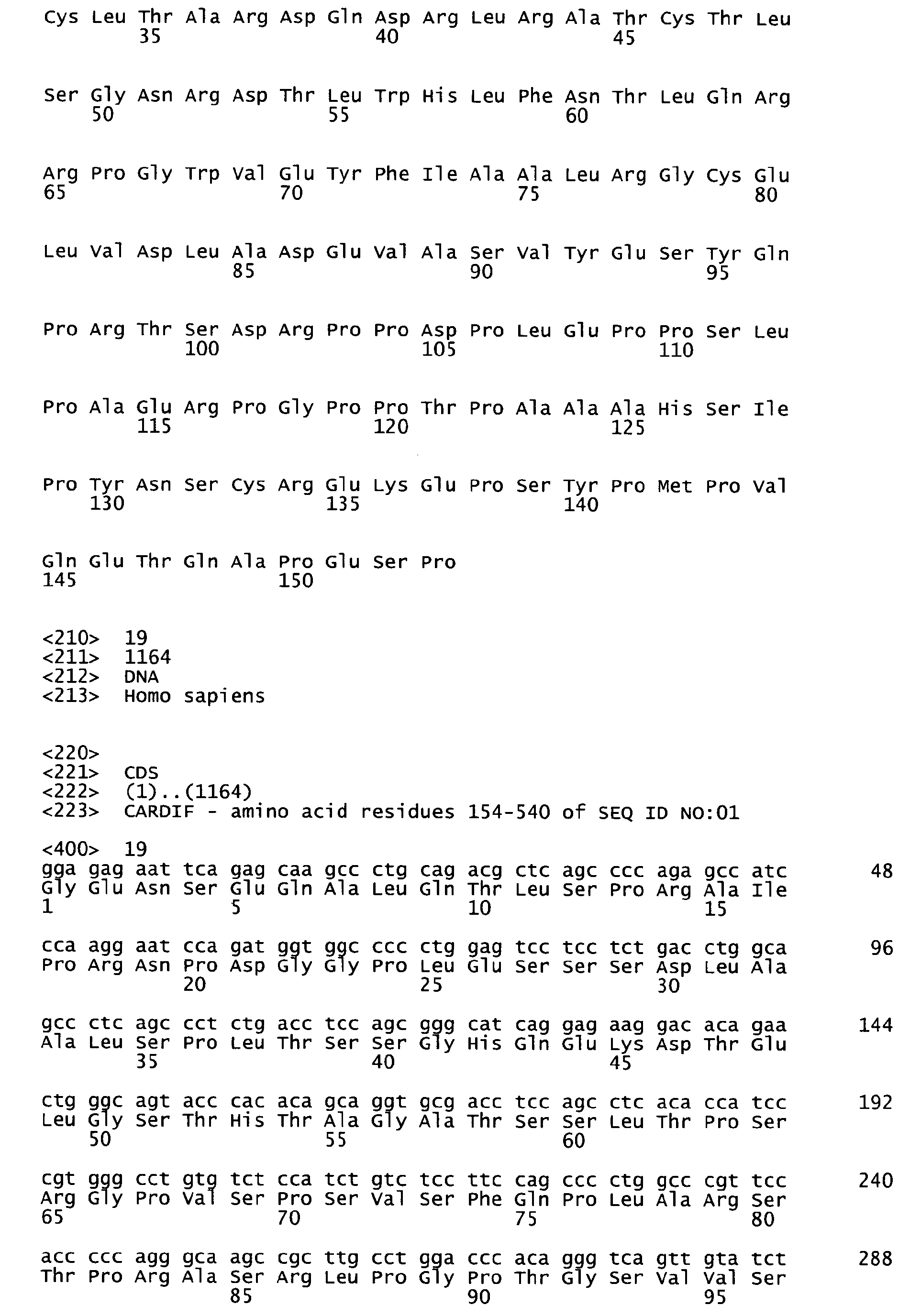


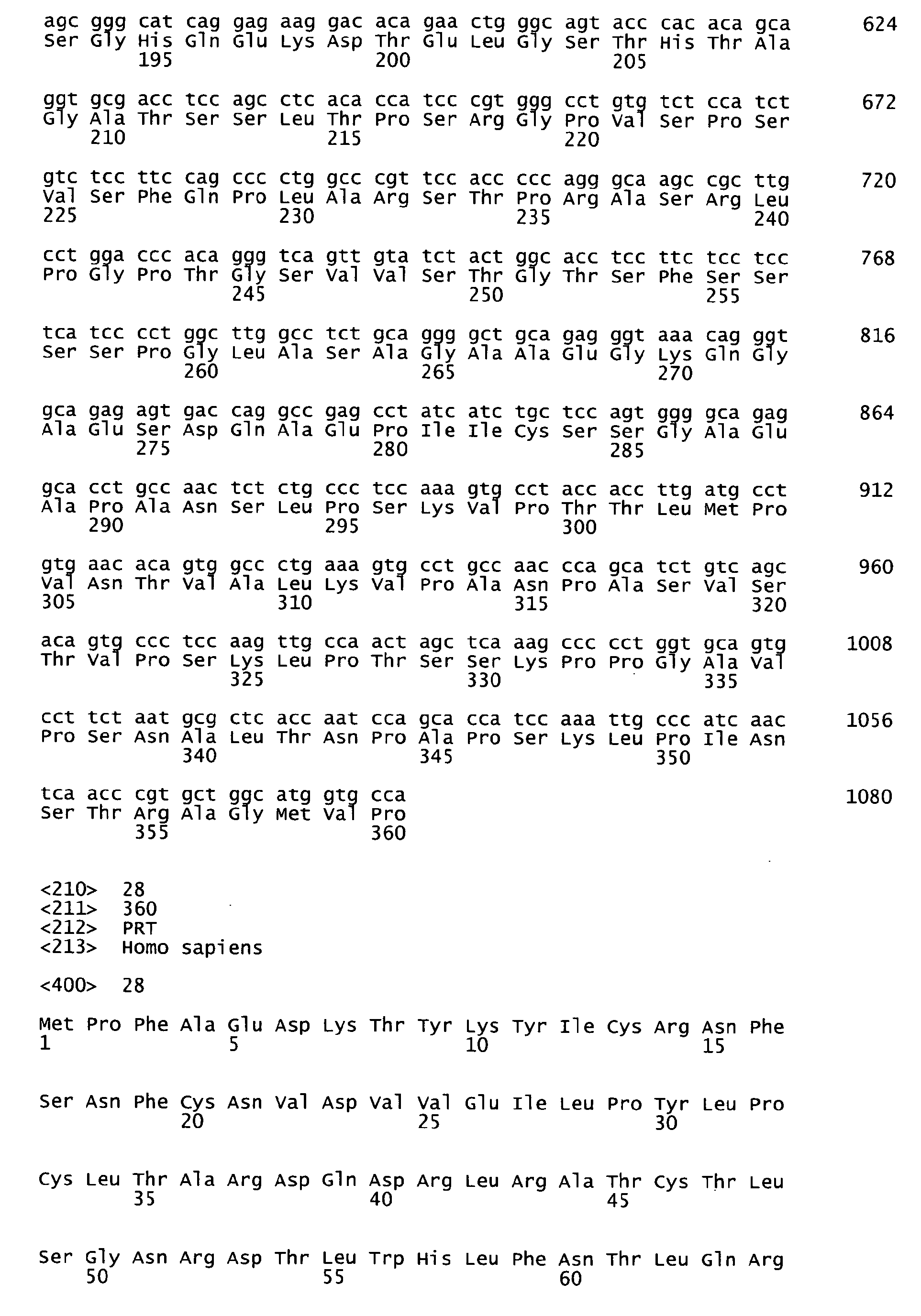


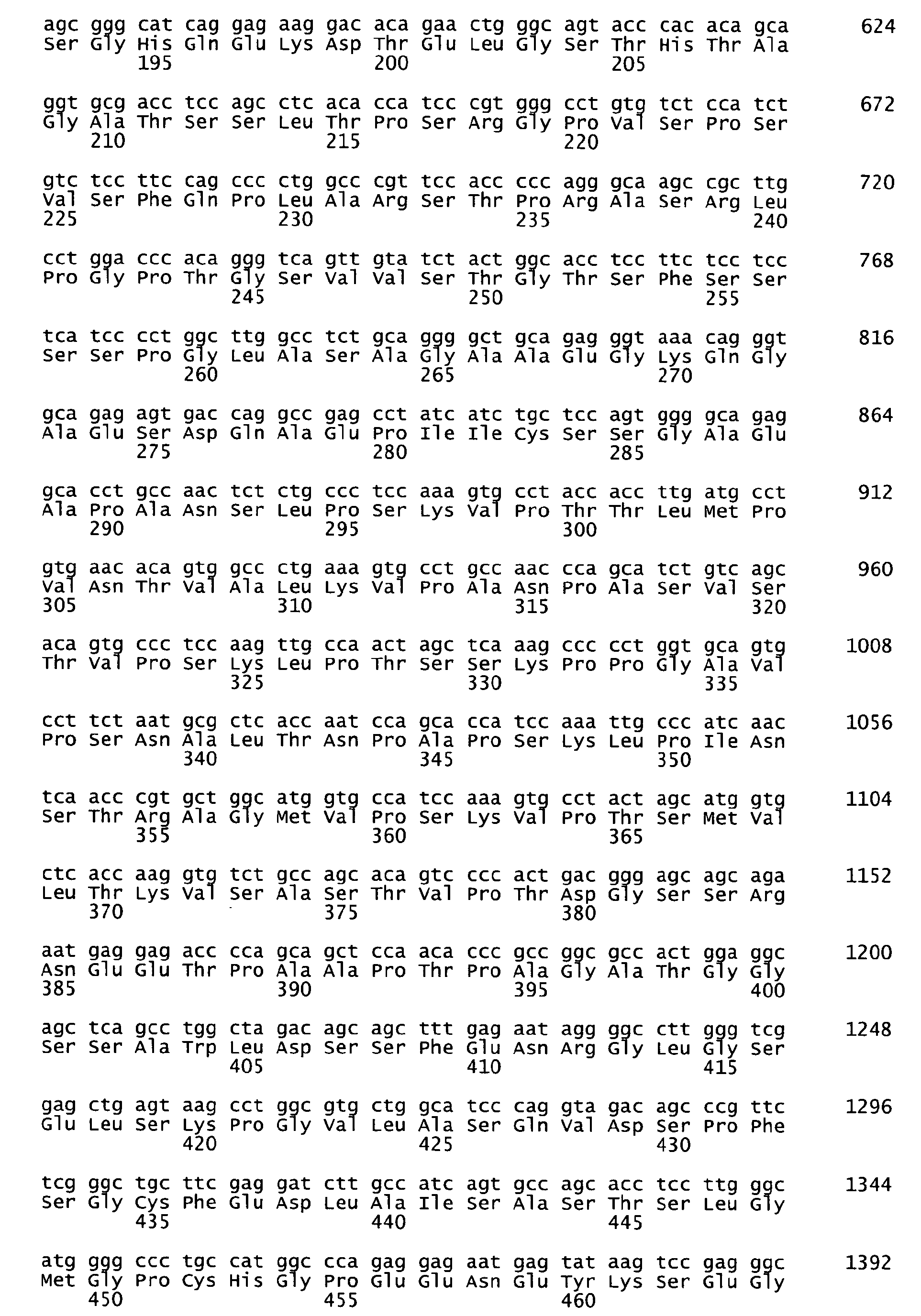


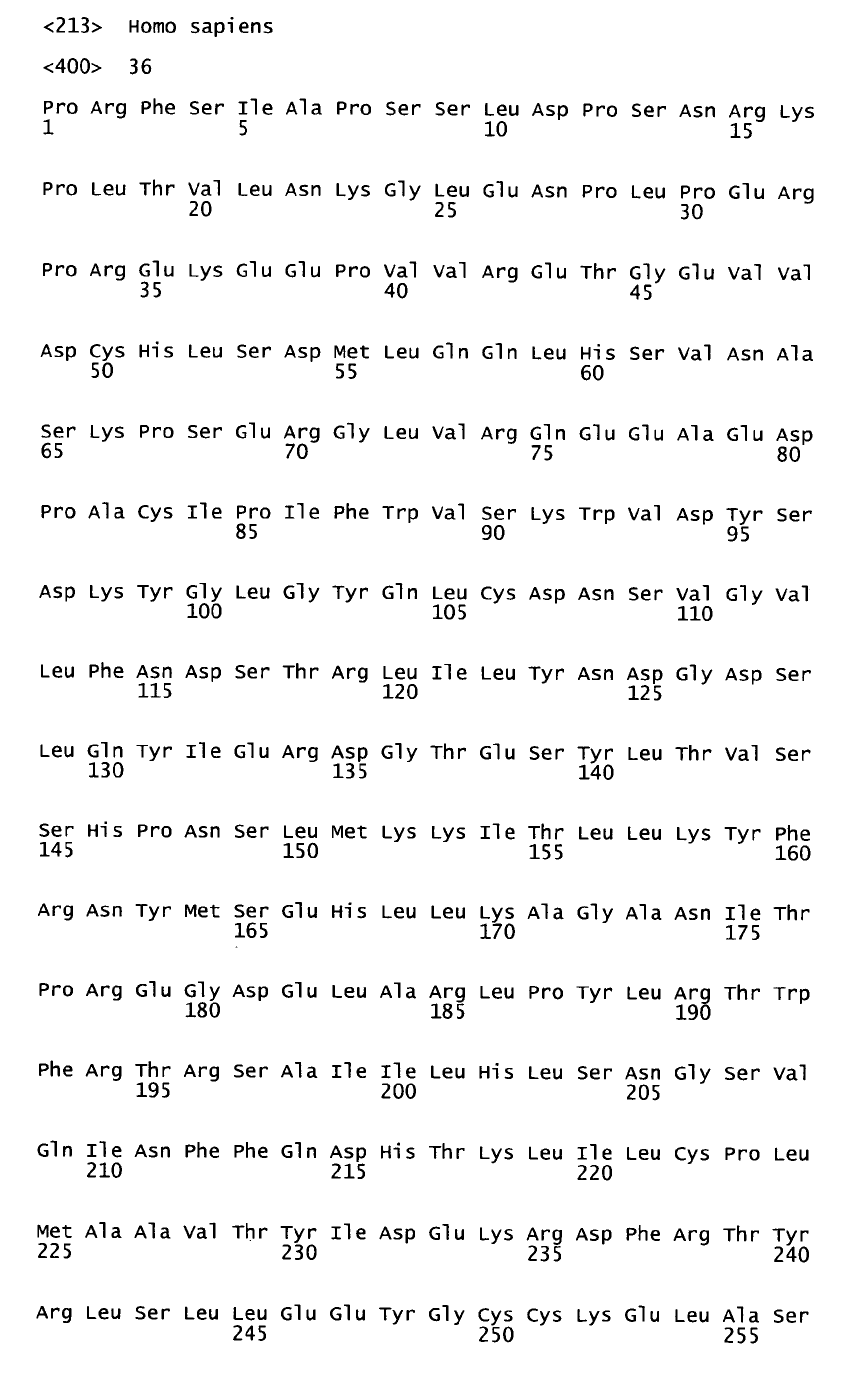


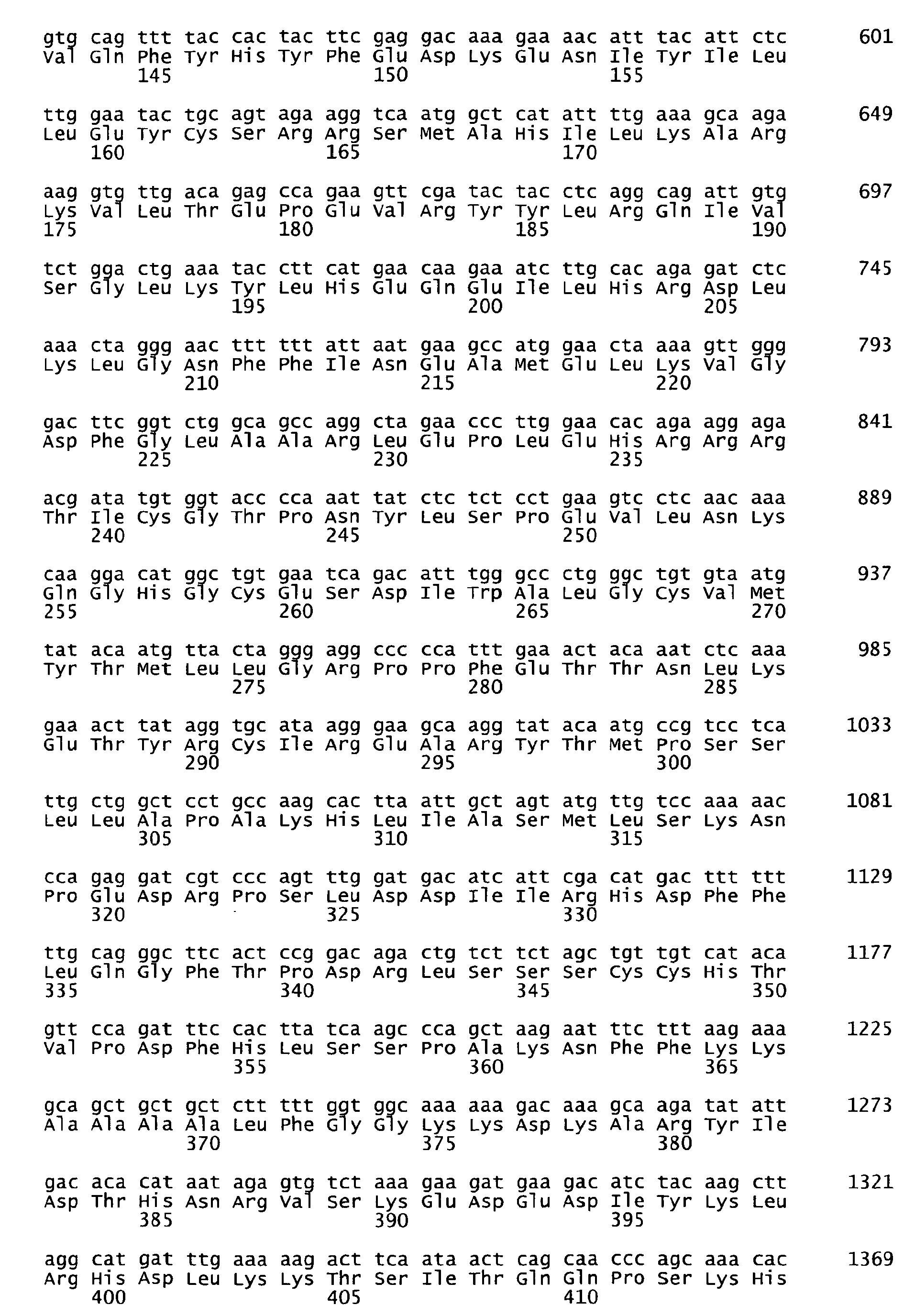


Claims (48)
- Use of a modulating agent for the preparation of a medicinal composition for modulating interferon (IFN) induction in a cell, wherein said modulating agent interacts with the polo-box domain (PBD) of one or several polo-like kinase (PLK) protein(s).
- The use according to claim 1, for restoring and/or increasing IFN induction in a cell.
- The use according to claim 1 or 2, wherein said PLK protein is a vertebrate PLK.
- The use according to any of claims 1 to 3, wherein said PLK protein is a human PLK.
- The use according to any of claims 1 to 4, wherein said PLK protein is chosen in the group consisting of PLK-1, PLK-2, PLK-3 and PLK-4.
- The use according to claim 5, wherein said PLK protein is PLK-1.
- The use according to any of claims 1 to 6, wherein said modulating agent binds to the PBD of one or several PLK protein(s).
- The use according to any of claims 1 to 7, wherein said cell is a mammalian cell.
- The use according to any of claims 1 to 8, wherein said cell is a human cell.
- The use according to any of claims 1 to 9, wherein said cell is infected by a virus.
- The use according to claim 10, wherein said virus is an RNA virus.
- The use according to claim 11, wherein said virus targets the IFN induction pathway.
- The use according to claim 12, wherein said virus is a virus chosen among the families consisting of:- the flaviviridae, especially the genus hepacivirus represented by the Hepatitis C virus (HCV),- the paramyxoviridae, especially the genus paramyxovirus, comprising the Newcastle disease virus (NDV), the human respiratory syncytial virus, and the Sendai virus (SeV),- the myxoviridae, especially the genus myxovirus, comprising the influenza virus,- the rhabdoviridae, especially of the genus rhabdoviruses, comprising the vesicular stomatitis virus (VSV) and- the picornaviridae, especially of the genus cardioviruses, comprising the encephalomyocarditis virus (EMCV).
- The use according to claim 13, wherein said virus is the HCV.
- The use according to any of claims 1 to 14, for increasing IFN induction in a patient in need thereof.
- The use according to any of claims 1 to 15, for the prophylaxis or the treatment of a patient infected with a virus that targets the IFN induction pathway.
- The use according to any of claims 1 to 16, for restoring or increasing the innate immune response in a patient infected with a virus.
- The use according to any of claims 1 to 17, for restoring or increasing the innate immune response in a patient infected with the HCV.
- The use according to any of claims 10 to 18, wherein the medicinal composition further comprises a therapeutically effective amount of an inhibitor of a viral protease.
- The use according to claim 19, wherein the medicinal composition further comprises a therapeutically effective amount of an inhibitor of a HCV protease, especially of the HCV NS3/4A protease.
- A method of screening a test compound for its ability to interfere with the binding of the PBD domain of one or several PLK to a Cardif protein, the method comprising the steps of:(a) providing an assay system comprising:- a PLK protein or a fragment thereof containing the PBD or a PBD fragment that retains the ability of said PLK protein to bind to a Cardif protein, and- a Cardif protein;(b) contacting said assay system with said test compound in conditions enabling the interaction between said test compound and said PLK protein or fragment thereof;(c) determining whether said test compound interferes with the binding of the PBD of said PLK proteins or fragment thereof to said Cardif Protein.
- The method according to claim 21, wherein said method further comprises the step of(d) detecting a change in IFN induction in said assay system, relative to controls.
- A method of screening a test compound for its ability to modulate IFN induction, the method comprising the steps of:(a) providing an assay system comprising:- a PLK protein or a fragment thereof containing the PBD or a PBD fragment that retains the ability of said PLK protein to bind to a Cardif protein, and- a Cardif protein;(b) contacting the system with said test compound in conditions enabling the interaction between said test compound and said PLK protein or fragment thereof;(c) detecting a change in IFN induction in said assay system, relative to controls.
- The method according to any of claims 21 to 23, wherein said cell is a prokaryotic cell, in particular, an Escherichia coli cell.
- The method according to any of claims 21 to 23, wherein said cell is a eukaryotic cell, in particular, a yeast cell or a human cell.
- The method according to any of claims 21 to 25, wherein said cell is infected by a virus, especially by the HCV.
- A modulating agent that binds to the PBD of one or several PLK protein(s), characterized in that it is a polypeptide or a peptide.
- The modulating agent according to claim 27, characterized in that its amino acid sequence comprises or consists in a sequence derived from a portion of a Cardif protein, provided that said portion of Cardif, upon binding to the PBD domain of one or several PLK(s), prevents binding or interferes with binding of said PLK(s) to Cardif in a in vitro test.
- The modulating agent according to claim 28 that is a peptide or a polypeptide comprising S, T and P amino acid residues, either contiguous or not in the sequence of the peptide or polypeptide.
- The modulating agent according to any of claims 27 to 29, characterized in that its amino acid sequence comprises or consists in a sequence derived from the portion of the human Cardif protein ranging from amino acid residue 364 to amino acid residue 540 (SEQ ID NO: 4).
- The modulating agent according to any of claims 27 to 30, characterized in that its amino acid sequence comprises or consists in a sequence derived from the portion of the human Cardif protein ranging from amino acid residue 364 to amino acid residue 470 (SEQ ID NO: 6).
- The modulating agent according to any of claims 27 to 31, characterized in that its amino acid sequence comprises a sequence chosen in the group consisting of STP (SEQ ID NO: 7), STVPSKLPTSS (SEQ ID NO: 9), PINSTRA (SEQ ID NO: 11), STVPTD (SEQ ID NO: 13) and STSLGMGP (SEQ ID NO: 15) or a variant thereof.
- The modulating agent according to any of claims 27 to 32, characterized in that it is a peptide chosen in the group consisting of STP (SEQ ID NO: 7), STVPSKLPTSS (SEQ ID NO: 9), PINSTRA (SEQ ID NO: 11), STVPTD (SEQ ID NO: 13) and STSLGMGP (SEQ ID NO: 15) or a variant thereof.
- The modulating agent according to any of claims 27 to 33 that is phosphorylated.
- A polynucleotide that codes for the modulating agent according to any of claims 27 to 34.
- The polynucleotide according to claim 35, characterized in that its nucleotide sequence comprises or consists in a sequence chosen in the group consisting of SEQ ID NO: 8, SEQ ID NO: 10, SEQ ID NO: 12, SEQ ID NO: 14 and SEQ ID NO: 16 or a sequence modified by insertion, deletion or substitution of one or several nucleotides(s) in SEQ ID NO: 8, SEQ ID NO: 10, SEQ ID NO: 12, SEQ ID NO: 14 and SEQ ID NO: 16 respectively, provided that said modified sequence codes for the same polypeptide as that having respectively the sequence SEQ ID NO: 7, SEQ ID NO: 9, SEQ ID NO: 11, SEQ ID NO: 13, and SEQ ID NO: 15.
- A cloning or expression vector that comprises a polynucleotide insert under the control of its regulation, cloning or expression elements consisting of a polynucleotide according to claim 35 or 36.
- A medicinal composition comprising one or several modulating agent(s) according to any of claims 27 to 34 or the vector according to claim 35, and one or several pharmaceutically acceptable carrier(s), vehicle(s), diluent(s), excipient(s) or adjuvant(s) or any combination thereof.
- The medicinal composition according to claim 38 that further comprises an inhibitor of the HCV NS3/4A protease.
- The medicinal composition according to claim 38 or 39, which is formulated for enteral, parenteral, subcutaneous, intradermal, intramuscular or intravenous injection, oral administration and intranasal administration or inhalation.
- The modulating agent according to any of claims 27 to 34 or the medicinal composition according to any of claims 36 to 38 for use for increasing IFN production in a cell.
- The modulating agent according to any of claims 27 to 34 for the preparation of a medicinal composition for the prophylaxis or the treatment of a patient infected with a virus.
- The modulating agent according to any of claims 27 to 34 for the preparation of a medicinal composition for the treatment of a HCV infected patient.
- A kit for the treatment of a HCV infected patient, comprising:- one or several modulating agent(s) according to any of claims 27 to 34 or the medicinal composition according to any of claims 38 to 40, and- instructions including directions for administering at least one dose of the therapeutic substance to a patient in need thereof.
- An antibody that specifically binds to the modulating agent according to any of claims 27 to 34.
- The antibody according to claim 45 that is a polyclonal antibody or a monoclonal antibody.
- A Method of preparation of a polyclonal serum against the modulating agent according to any of claims 27 to 34, comprising the following steps:- inoculating an animal with the modulating agent according to any of claims 27 to 34, either associated with an adjuvant or adjuvant-free, to induce an immune response;- collecting and purifying the produced antibodies directed against the polypeptide used for the inoculation.
- A Method of preparation of monoclonal antibodies against the modulating agent according to any of claims 27 to 34, comprising the following steps:- inoculating an animal, e.g. a Balb/c mouse, with the modulating agent according to any of claims 27 to 34, to induce an immune response;- fusing spleen cells from the inoculated animal with myeloma cells to form a hybridoma;- growing the hybridoma in conditions that allow antibody production;- collecting and purifying the produced antibodies directed against the polypeptide used for the inoculation.
Priority Applications (2)
| Application Number | Priority Date | Filing Date | Title |
|---|---|---|---|
| EP06291358A EP1892528A1 (en) | 2006-08-25 | 2006-08-25 | Use of a modulating agent that interacts with the pbd of plk proteins for modulating ifn induction |
| PCT/EP2007/007486 WO2008022805A2 (en) | 2006-08-25 | 2007-08-27 | Use of a modulating agent that interacts with the pbd of plk proteins for modulating ifn induction |
Applications Claiming Priority (1)
| Application Number | Priority Date | Filing Date | Title |
|---|---|---|---|
| EP06291358A EP1892528A1 (en) | 2006-08-25 | 2006-08-25 | Use of a modulating agent that interacts with the pbd of plk proteins for modulating ifn induction |
Publications (1)
| Publication Number | Publication Date |
|---|---|
| EP1892528A1 true EP1892528A1 (en) | 2008-02-27 |
Family
ID=37192508
Family Applications (1)
| Application Number | Title | Priority Date | Filing Date |
|---|---|---|---|
| EP06291358A Withdrawn EP1892528A1 (en) | 2006-08-25 | 2006-08-25 | Use of a modulating agent that interacts with the pbd of plk proteins for modulating ifn induction |
Country Status (2)
| Country | Link |
|---|---|
| EP (1) | EP1892528A1 (en) |
| WO (1) | WO2008022805A2 (en) |
Families Citing this family (2)
| Publication number | Priority date | Publication date | Assignee | Title |
|---|---|---|---|---|
| FR2940969B1 (en) * | 2009-01-09 | 2012-05-04 | Isp Investments Inc | NOVEL ANTI-AGING PEPTIDES AND COSMETIC AND / OR PHARMACEUTICAL COMPOSITION CONTAINING SAME |
| CN118178660B (en) * | 2024-05-17 | 2024-08-27 | 安徽大学 | Application of mitochondrial antiviral signal protein MAVS phosphorylation site |
Citations (2)
| Publication number | Priority date | Publication date | Assignee | Title |
|---|---|---|---|---|
| WO2004046317A2 (en) * | 2002-11-14 | 2004-06-03 | Massachusetts Institue Of Technology | Products and processes for modulating peptide-peptide binding domain interactions |
| WO2004111085A1 (en) * | 2003-06-10 | 2004-12-23 | Xantos Biomedicine Ag | Angiogenic factor and its medical use |
Family Cites Families (1)
| Publication number | Priority date | Publication date | Assignee | Title |
|---|---|---|---|---|
| US6358738B1 (en) * | 1998-05-13 | 2002-03-19 | The President And Fellows Of Harvard College | Polo box therapeutic compositions, methods, and uses therefor |
-
2006
- 2006-08-25 EP EP06291358A patent/EP1892528A1/en not_active Withdrawn
-
2007
- 2007-08-27 WO PCT/EP2007/007486 patent/WO2008022805A2/en not_active Ceased
Patent Citations (2)
| Publication number | Priority date | Publication date | Assignee | Title |
|---|---|---|---|---|
| WO2004046317A2 (en) * | 2002-11-14 | 2004-06-03 | Massachusetts Institue Of Technology | Products and processes for modulating peptide-peptide binding domain interactions |
| WO2004111085A1 (en) * | 2003-06-10 | 2004-12-23 | Xantos Biomedicine Ag | Angiogenic factor and its medical use |
Non-Patent Citations (3)
| Title |
|---|
| CHENG GUOFENG ET AL: "Inhibition of dsRNA-induced signaling in hepatitis C virus-infected cells by NS3 protease-dependent and -independent mechanisms", PROCEEDINGS OF THE NATIONAL ACADEMY OF SCIENCES OF THE UNITED STATES OF AMERICA, vol. 103, no. 22, May 2006 (2006-05-01), pages 8499 - 8504, XP002406169, ISSN: 0027-8424 * |
| SETH RASHU B ET AL: "Identification and characterization of MAVS, a mitochondrial antiviral signaling protein that activates NF-kappa B and IRF3", CELL, vol. 122, no. 5, September 2005 (2005-09-01), pages 669 - 682, XP002406168, ISSN: 0092-8674 * |
| STREBHARDT KLAUS ET AL: "Targeting polo-like kinase 1 for cancer therapy.", NATURE REVIEWS. CANCER. APR 2006, vol. 6, no. 4, April 2006 (2006-04-01), pages 321 - 330, XP002406170, ISSN: 1474-175X * |
Also Published As
| Publication number | Publication date |
|---|---|
| WO2008022805A3 (en) | 2008-05-08 |
| WO2008022805A2 (en) | 2008-02-28 |
Similar Documents
| Publication | Publication Date | Title |
|---|---|---|
| Cheng et al. | Virus-induced p38 MAPK activation facilitates viral infection | |
| Zheng et al. | SARS-CoV-2 NSP5 and N protein counteract the RIG-I signaling pathway by suppressing the formation of stress granules | |
| Lin et al. | Dissociation of a MAVS/IPS-1/VISA/Cardif-IKKε molecular complex from the mitochondrial outer membrane by hepatitis C virus NS3-4A proteolytic cleavage | |
| Wei et al. | The hepatitis B virus X protein disrupts innate immunity by downregulating mitochondrial antiviral signaling protein | |
| Jiang et al. | Mechanism of inhibiting type I interferon induction by hepatitis B virus X protein | |
| Zhang et al. | USP18 recruits USP20 to promote innate antiviral response through deubiquitinating STING/MITA | |
| Zhang et al. | The deubiquitinase CYLD is a specific checkpoint of the STING antiviral signaling pathway | |
| Wang et al. | YAP antagonizes innate antiviral immunity and is targeted for lysosomal degradation through IKKɛ-mediated phosphorylation | |
| Zhang et al. | Activation of JNK and transcriptional repressor ATF3/LRF1 through the IRE1/TRAF2 pathway is implicated in human vascular endothelial cell death by homocysteine | |
| van Zuylen et al. | Proteomic profiling of the TRAF3 interactome network reveals a new role for the ER-to-Golgi transport compartments in innate immunity | |
| Fraser et al. | The j-subunit of human translation initiation factor eIF3 is required for the stable binding of eIF3 and its subcomplexes to 40 S ribosomal subunits in vitro | |
| Clément et al. | Phosphorylation of IRF-3 on Ser 339 generates a hyperactive form of IRF-3 through regulation of dimerization and CBP association | |
| Wang et al. | Ankrd17 positively regulates RIG‐I‐like receptor (RLR)‐mediated immune signaling | |
| Arimoto et al. | UbcH8 regulates ubiquitin and ISG15 conjugation to RIG-I | |
| Zhou et al. | The kinase CK1ɛ controls the antiviral immune response by phosphorylating the signaling adaptor TRAF3 | |
| Kang et al. | Interaction of hepatitis C virus core protein with Hsp60 triggers the production of reactive oxygen species and enhances TNF-α-mediated apoptosis | |
| Masaki et al. | Involvement of annexin I and annexin II in hepatocyte proliferation: can annexins I and II be markers for proliferative hepatocytes? | |
| Kang et al. | DDB1 is a cellular substrate of NS3/4A protease and required for hepatitis C virus replication | |
| Yuan et al. | Small‐molecule inhibitors of ubiquitin‐specific protease 7 enhance type‐I interferon antiviral efficacy by destabilizing SOCS1 | |
| Zeng et al. | DYRK4 upregulates antiviral innate immunity by promoting IRF3 activation | |
| Eustace et al. | Myristoylated alanine-rich C-kinase substrate effector domain phosphorylation regulates the growth and radiation sensitization of glioblastoma | |
| US7364870B2 (en) | MK2 interacting proteins | |
| EP1892528A1 (en) | Use of a modulating agent that interacts with the pbd of plk proteins for modulating ifn induction | |
| Masumi et al. | Reduction of hepatitis C virus NS5A phosphorylation through its interaction with amphiphysin II | |
| HK1118096A (en) | Use of a modulating agent that interacts with the pbd of plk proteins for modulating ifn induction |
Legal Events
| Date | Code | Title | Description |
|---|---|---|---|
| PUAI | Public reference made under article 153(3) epc to a published international application that has entered the european phase |
Free format text: ORIGINAL CODE: 0009012 |
|
| AK | Designated contracting states |
Kind code of ref document: A1 Designated state(s): AT BE BG CH CY CZ DE DK EE ES FI FR GB GR HU IE IS IT LI LT LU LV MC NL PL PT RO SE SI SK TR |
|
| AX | Request for extension of the european patent |
Extension state: AL BA HR MK YU |
|
| RIN1 | Information on inventor provided before grant (corrected) |
Inventor name: JACOB, YVES Inventor name: TANGY, FREDERIC Inventor name: VIDALAIN, PIERRE-OLIVIER Inventor name: DABO, STEPHANIE Inventor name: VITOUR, DAMIEN Inventor name: MEURS, ELIANE |
|
| 17P | Request for examination filed |
Effective date: 20080703 |
|
| 17Q | First examination report despatched |
Effective date: 20080827 |
|
| AKX | Designation fees paid |
Designated state(s): AT BE BG CH CY CZ DE DK EE ES FI FR GB GR HU IE IS IT LI LT LU LV MC NL PL PT RO SE SI SK TR |
|
| RAP1 | Party data changed (applicant data changed or rights of an application transferred) |
Owner name: CENTRE NATIONAL DE LA RECHERCHE SCIENTIFIQUE (CNRS Owner name: INSTITUT PASTEUR |
|
| REG | Reference to a national code |
Ref country code: HK Ref legal event code: DE Ref document number: 1118096 Country of ref document: HK |
|
| STAA | Information on the status of an ep patent application or granted ep patent |
Free format text: STATUS: THE APPLICATION IS DEEMED TO BE WITHDRAWN |
|
| 18D | Application deemed to be withdrawn |
Effective date: 20091229 |
|
| REG | Reference to a national code |
Ref country code: HK Ref legal event code: WD Ref document number: 1118096 Country of ref document: HK |