EP1889398B1 - Randomized modular polynomial reduction method and hardware therefore - Google Patents
Randomized modular polynomial reduction method and hardware therefore Download PDFInfo
- Publication number
- EP1889398B1 EP1889398B1 EP06749987.1A EP06749987A EP1889398B1 EP 1889398 B1 EP1889398 B1 EP 1889398B1 EP 06749987 A EP06749987 A EP 06749987A EP 1889398 B1 EP1889398 B1 EP 1889398B1
- Authority
- EP
- European Patent Office
- Prior art keywords
- polynomial
- hardware
- word
- quotient
- degree
- Prior art date
- Legal status (The legal status is an assumption and is not a legal conclusion. Google has not performed a legal analysis and makes no representation as to the accuracy of the status listed.)
- Expired - Lifetime
Links
Images

Classifications
-
- G—PHYSICS
- G06—COMPUTING OR CALCULATING; COUNTING
- G06F—ELECTRIC DIGITAL DATA PROCESSING
- G06F17/00—Digital computing or data processing equipment or methods, specially adapted for specific functions
- G06F17/10—Complex mathematical operations
-
- G—PHYSICS
- G06—COMPUTING OR CALCULATING; COUNTING
- G06F—ELECTRIC DIGITAL DATA PROCESSING
- G06F7/00—Methods or arrangements for processing data by operating upon the order or content of the data handled
- G06F7/60—Methods or arrangements for performing computations using a digital non-denominational number representation, i.e. number representation without radix; Computing devices using combinations of denominational and non-denominational quantity representations, e.g. using difunction pulse trains, STEELE computers, phase computers
- G06F7/72—Methods or arrangements for performing computations using a digital non-denominational number representation, i.e. number representation without radix; Computing devices using combinations of denominational and non-denominational quantity representations, e.g. using difunction pulse trains, STEELE computers, phase computers using residue arithmetic
- G06F7/724—Finite field arithmetic
- G06F7/726—Inversion; Reciprocal calculation; Division of elements of a finite field
-
- G—PHYSICS
- G06—COMPUTING OR CALCULATING; COUNTING
- G06F—ELECTRIC DIGITAL DATA PROCESSING
- G06F2207/00—Indexing scheme relating to methods or arrangements for processing data by operating upon the order or content of the data handled
- G06F2207/72—Indexing scheme relating to groups G06F7/72 - G06F7/729
- G06F2207/7219—Countermeasures against side channel or fault attacks
- G06F2207/7223—Randomisation as countermeasure against side channel attacks
- G06F2207/7233—Masking, e.g. (A**e)+r mod n
Definitions
- the invention relates to arithmetic processing and calculating systems and computer-implemented methods, especially for use in cryptography applications.
- the invention relates in particular to residue arithmetic involving modular reduction of polynomials in a finite field GF(2 n ), especially computations derived from the Barrett reduction method.
- Numerous cryptographic algorithms make use of large-integer multiplication (or exponentiation) and reduction of the product to a residue value that is congruent for a specified modulus that is related to the cryptographic key.
- Some cryptographic algorithms including the AES/Rijndael block cipher and also those based on discrete logarithms and elliptic curves, perform arithmetic operations on polynomials in a finite field, such as the binary field GF(2 n ), including multiplication (or exponentiation) and modular reduction operations on such polynomials.
- Mathematical computations performed by cryptographic systems may be susceptible to power analysis and timing attacks. Therefore, it is important that computations be secured so that information about the key cannot be obtained.
- Multiplication and reduction is usually the most computationally intensive portion of a cryptographic algorithm.
- Several distinct computational techniques have been developed for efficient modular reduction, including those known as the Quisquater method, the Barrett method and the Montgomery method, along with modifications involving pre-computation and table look-up. These well-known techniques are described and compared in the prior art. See, for example: (1) A. Bosselaers et al., “Comparison of three modular reduction functions", Advances in Cryptology/Crypto '93, LNCS 773, Springer-Verlag, 1994, pp. 175-186 .
- An objective of the present invention is to provide an improvement of the Barrett modular reduction method and corresponding computing apparatus, especially as applied to polynomials, which is more secure against cryptoanalysis attacks, while still providing fast and accurate results.
- Another objective of the present invention is to provide the aforementioned improved method and apparatus which speeds up quotient estimation for use in the modular reduction of polynomials.
- a computer-implemented method for modular reduction of polynomials in a binary finite field GF(2 n ) in which a polynomial quotient used for the reduction computation is estimated (to at least the correct polynomial degree) using a precomputed scaled inverse of the polynomial modulus as a multiplier.
- the polynomial remainder resulting from the reduction is always congruent to the corresponding intermediate product relative to the specified irreducible polynomial modulus of degree n, but is typically larger (in terms of polynomial degree) than the minimal residue value and differs in a random manner for each execution. Because the estimation error is deliberately randomized, the method is more secure against cryptoanalysis. Yet the intermediate results are mathematically equivalent (congruent to the true results), and a final result may be obtained by processing a final strict reduction without randomization, thus achieving the accuracy needed for the invertibility of cryptographic operations.
- the hardware used to execute the method steps of the invention includes a random number generator to inject random error into the quotient estimation.
- a computation unit with memory access operates under the control of an operation sequencer executing firmware to carry out the word-wide multiply-accumulate steps of multi-word polynomial multiplication and modular reduction involving word-size shifts.
- the computation unit may include multiply-accumulate hardware dedicated to finite field polynomial operations, or may be selectable to perform either natural or polynomial arithmetic.
- computational hardware includes a computation unit 10 that is able to perform word-wide finite field multiply and multiply-accumulate steps on polynomial operands retrieved from memory (RAM) 12 and working registers 14.
- Registers 14 may be the same hardware registers that would be responsible for carry injection in normal integer operations.
- An operation sequencer 16 comprises logic circuitry for controlling the computation unit 10 in accord with firmware or software instructions for the set of operations to carry out the multi-word finite field polynomial multiplication (or exponentiation) and the modular reduction using an irreducible polynomial basis.
- the operation parameters, stored in registers 18 accessible by the operation sequencer 16, consist in pointers that enable the operation sequencer to locate an operand within the RAM 12, as well as information about the lengths (number of words) of the operands and the destination address of the intermediate results.
- the apparatus is substantially similar to other available hardware adapted for multi-word polynomial arithmetic operations.
- Polynomial arithmetic carried out in the binary finite field GF(2 n ) differs from natural arithmetic in ignoring carries and in the equivalence of addition and subtraction.
- the computation unit may include multiply-accumulate hardware dedicated to finite field polynomial operations, or may be dual-purpose natural/polynomial arithmetic hardware that can be selected to perform either natural or polynomial arithmetic.
- the firmware or software instructions are also similar to prior programs for executing efficient multi-word polynomial multiplication or exponentiation in word-wide segments.
- the hardware in Fig. 1 also includes a random number generator 20, which for example can be any known pseudo-random number generator circuit.
- the random number generator performs a calculation and outputs a random number whose bits are interpreted as the binary coefficients of a random polynomial to be used in the present method.
- the random number generator 20 is accessed by the computation unit 10, as directed by the operation sequencer 16 in accord with the program instructions implementing the method of the present invention, in order to inject the randomized error quantity into the quotient estimation, as described below.
- the method of the present invention is an improvement of the Barrett modular reduction technique, providing faster quotient estimation and resistance to cryptoanalytic attack, and applies the modular reduction technique to polynomials in the binary finite field GF(2 n ).
- the method is executed by the hardware in Fig. 1 .
- Modular arithmetic with polynomials is similar in some respects to modular arithmetic with integers, although extending this to polynomials over a binary finite field GF(2 n ) requires certain modifications to the basic operation.
- the byte value [01100011] is interpreted as the binary polynomial x 6 + x 5 + x + 1.
- Longer multi-byte sequences may likewise be interpreted as polynomials of higher degree, provided that, over the binary finite field GF(2 n ), the polynomial degree (m-1) is less than n, in order for the polynomial to belong to that field.
- n is the dimension of the finite field, as in GF(2 n ).
- the modulus m(x) is preferably chosen to be an irreducible polynomial (the polynomial analogue of a prime number, i.e.
- p(x) and r(x) have the same remainder upon division by m(x).
- the polynomial residue r(x) which is congruent with p(x), is the polynomial value we ultimately want.
- m(x) will be an irreducible polynomial of degree n and the residue polynomial r(x) that is sought will be of degree less than n; but p(x) and hence also q(x) can be any degree, and at least the polynomial p(x) to be reduced is often of degree larger than m, as for example when p(x) is a product.
- the basic problem in any modular reduction method is in efficiently obtaining a quotient, especially for polynomial p(x) and m(x) of large degree.
- an additional problem is in performing the reduction operation in computational hardware in a way that is secure from power analysis attacks.
- Barrett's method originally devised for integer reduction operations, involves pre-calculating and storing a scaled estimate of the modulus' reciprocal, U, and replacing the long division with multiplications and bit shifts (dividing by x) in order to estimate the quotient. With appropriate choice of parameters, the error in the quotient estimate is at most two.
- the present invention adapts Barrett's method to modular reduction of polynomial in a binary finite field and also improves upon Barrett's method with a faster estimation of the quotient and by intentionally injecting a random error into the quotient prior to computing the remainder. The resulting randomized remainder will be slightly larger than (in terms of polynomial degree), but congruent with, the residue value.
- u(x) a constant polynomial u(x) representing the scaled reciprocal of the modulus m(x)
- u x x 2 ⁇ k + 1 / m x
- u(x) is always of degree k for every modulus m(x) that is not a simple power of x.
- the polynomial p (x) can have a slightly larger degree: deg(p(x)) ⁇ 2 ⁇ k + w. This simplifies handling of the polynomial quantities in the computational hardware. This computation requires only binary finite field polynomial multiplications (without reduction) and shifts of polynomial degree.
- the random polynomial error E(x) may be generated (step 34) by any known random or pseudo-random number generator (hardware or software), where the binary value generated is interprets as a polynomial in the manner already described above.
- the polynomial degree of the error fall within a specified range, such as 0 ⁇ deg E x ⁇ w / 2
- the error should be limited to a few bits, e.g., less than half a word, i.e., deg(E(x)) ⁇ w/2. This limits the potential error contributed by the random generator to a specified number of bits, e.g. half a word, in addition to any error arising from the quotient estimation itself.
- the residue r(x) can be calculated from the remainder r' (x) by applying ordinary GF(2 n ) polynomial reduction with the modulus m(x) to obtain a polynomial value smaller than m(x).
- Randomizing the modular reduction provides security against various cryptoanalytic attacks that rely upon consistency in power usage to determine the modulus.
- the binary field polynomial reduction of p(x) modulo m(x) varies randomly from one execution to the next, while still producing an intermediate remainder r' (x) that is congruent.
- the sequence of binary field polynomial reduction at the end to generate a final residue value r(x) also varies randomly from one execution to the next because it operates upon different remainders r' (x).
- the polynomial p(x) to be reduced in this way can be obtained from a variety of different arithmetic operations, including multiplication, squaring, exponentiation, addition, etc.
- the modulus m(x) to be used can be derived in a variety of ways, most usually in cryptography from a key.
- the randomized modular reduction method of the present invention is useful in many cryptographic algorithms that rely upon such binary field GF(2 n ) polynomial reductions, including the Rijndael/AES symmetric block cipher, as well as discrete logarithm-based public-key cryptography systems.
Landscapes
- Engineering & Computer Science (AREA)
- Physics & Mathematics (AREA)
- General Physics & Mathematics (AREA)
- Theoretical Computer Science (AREA)
- Mathematical Physics (AREA)
- Pure & Applied Mathematics (AREA)
- Mathematical Optimization (AREA)
- Mathematical Analysis (AREA)
- Computational Mathematics (AREA)
- General Engineering & Computer Science (AREA)
- Data Mining & Analysis (AREA)
- Computing Systems (AREA)
- Algebra (AREA)
- Databases & Information Systems (AREA)
- Software Systems (AREA)
- Complex Calculations (AREA)
- Navigation (AREA)
Description
- The invention relates to arithmetic processing and calculating systems and computer-implemented methods, especially for use in cryptography applications. The invention relates in particular to residue arithmetic involving modular reduction of polynomials in a finite field GF(2n), especially computations derived from the Barrett reduction method.
- Numerous cryptographic algorithms make use of large-integer multiplication (or exponentiation) and reduction of the product to a residue value that is congruent for a specified modulus that is related to the cryptographic key. Some cryptographic algorithms, including the AES/Rijndael block cipher and also those based on discrete logarithms and elliptic curves, perform arithmetic operations on polynomials in a finite field, such as the binary field GF(2n), including multiplication (or exponentiation) and modular reduction operations on such polynomials. Mathematical computations performed by cryptographic systems may be susceptible to power analysis and timing attacks. Therefore, it is important that computations be secured so that information about the key cannot be obtained.
- At the same time, it is important that these computations be fast and accurate. Multiplication and reduction, whether operated upon large integers or upon polynomials in a finite field, is usually the most computationally intensive portion of a cryptographic algorithm. Several distinct computational techniques have been developed for efficient modular reduction, including those known as the Quisquater method, the Barrett method and the Montgomery method, along with modifications involving pre-computation and table look-up. These well-known techniques are described and compared in the prior art. See, for example: (1) A. Bosselaers et al., "Comparison of three modular reduction functions", Advances in Cryptology/Crypto '93, LNCS 773, Springer-Verlag, 1994, pp. 175-186. (2) Jean François Dhem, "Design of an efficient public-key cryptographic library for RISC-based smart cards", doctoral dissertation, Université catholique de Louvain, Louvain-la-Neuve, Belgium, May 1998. (3) C. H. Lim et al., "Fast Modular Reduction With Precomputation", preprint, 1999 (available from CiteSeer Scientific Literature Library, citeseer.nj.nec.com/109504.html). (4) Hollmann et al., "Method and Device for Executing a Decrypting Mechanism through Calculating a Standardized Modular Exponentiation for Thwarting Timing Attacks",
U.S. Patent No. 6,366,673 B1, Apr. 2, 2002 (based on application filed Sept. 15, 1998) (5) J-F Dhem, "Efficient Modular Reduction Algorithm in Fq[x] and Its Application to "Left to Right" Modular Multiplication in F2[x]". - An objective of the present invention is to provide an improvement of the Barrett modular reduction method and corresponding computing apparatus, especially as applied to polynomials, which is more secure against cryptoanalysis attacks, while still providing fast and accurate results.
- Another objective of the present invention is to provide the aforementioned improved method and apparatus which speeds up quotient estimation for use in the modular reduction of polynomials.
- These objects are met by a computer-implemented method for modular reduction of polynomials in a binary finite field GF(2n) in which a polynomial quotient used for the reduction computation is estimated (to at least the correct polynomial degree) using a precomputed scaled inverse of the polynomial modulus as a multiplier. The polynomial remainder resulting from the reduction is always congruent to the corresponding intermediate product relative to the specified irreducible polynomial modulus of degree n, but is typically larger (in terms of polynomial degree) than the minimal residue value and differs in a random manner for each execution. Because the estimation error is deliberately randomized, the method is more secure against cryptoanalysis. Yet the intermediate results are mathematically equivalent (congruent to the true results), and a final result may be obtained by processing a final strict reduction without randomization, thus achieving the accuracy needed for the invertibility of cryptographic operations.
- The hardware used to execute the method steps of the invention includes a random number generator to inject random error into the quotient estimation. A computation unit with memory access operates under the control of an operation sequencer executing firmware to carry out the word-wide multiply-accumulate steps of multi-word polynomial multiplication and modular reduction involving word-size shifts. The computation unit may include multiply-accumulate hardware dedicated to finite field polynomial operations, or may be selectable to perform either natural or polynomial arithmetic.
-
-
Fig. 1 is a schematic plan view of computational hardware in accord with the present invention (including a random number generator unit), which is used to execute the modular reduction method of the present invention. -
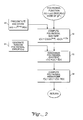
Fig. 2 is a flow diagram illustrating the general steps in the present modular reduction method. - With reference to
Fig. 1 , computational hardware includes acomputation unit 10 that is able to perform word-wide finite field multiply and multiply-accumulate steps on polynomial operands retrieved from memory (RAM) 12 andworking registers 14.Registers 14 may be the same hardware registers that would be responsible for carry injection in normal integer operations. Anoperation sequencer 16 comprises logic circuitry for controlling thecomputation unit 10 in accord with firmware or software instructions for the set of operations to carry out the multi-word finite field polynomial multiplication (or exponentiation) and the modular reduction using an irreducible polynomial basis. The operation parameters, stored inregisters 18 accessible by theoperation sequencer 16, consist in pointers that enable the operation sequencer to locate an operand within theRAM 12, as well as information about the lengths (number of words) of the operands and the destination address of the intermediate results. - As so far described, the apparatus is substantially similar to other available hardware adapted for multi-word polynomial arithmetic operations. Polynomial arithmetic carried out in the binary finite field GF(2n) differs from natural arithmetic in ignoring carries and in the equivalence of addition and subtraction. The computation unit may include multiply-accumulate hardware dedicated to finite field polynomial operations, or may be dual-purpose natural/polynomial arithmetic hardware that can be selected to perform either natural or polynomial arithmetic. Other than the details of the reduction steps, which will be described below, the firmware or software instructions are also similar to prior programs for executing efficient multi-word polynomial multiplication or exponentiation in word-wide segments.
- Unlike prior hardware of this type, the hardware in
Fig. 1 also includes arandom number generator 20, which for example can be any known pseudo-random number generator circuit. The random number generator performs a calculation and outputs a random number whose bits are interpreted as the binary coefficients of a random polynomial to be used in the present method. Here, therandom number generator 20 is accessed by thecomputation unit 10, as directed by theoperation sequencer 16 in accord with the program instructions implementing the method of the present invention, in order to inject the randomized error quantity into the quotient estimation, as described below. - With reference to
Fig. 2 , the method of the present invention is an improvement of the Barrett modular reduction technique, providing faster quotient estimation and resistance to cryptoanalytic attack, and applies the modular reduction technique to polynomials in the binary finite field GF(2n). The method is executed by the hardware inFig. 1 . - Modular arithmetic with polynomials is similar in some respects to modular arithmetic with integers, although extending this to polynomials over a binary finite field GF(2n) requires certain modifications to the basic operation. Let us first introduce polynomials over a field. To any multiple (am-1, ... a1, a0) of members of a field F, we can associate a polynomial in x of degree (m-1) : am-1xm-1 + ... a1x1 + a0x0. In the case of any binary finite field, the members of the field are {0,1} and so the polynomial coefficients ai are likewise 0 or 1. This concept adapts particularly well to computer hardware, which is binary in nature, since each bit can be interpreted as a finite field element. For example, we can associate each binary byte value [a7 a6 a5 a4 a3 a2 a1 a0] with a corresponding polynomial over GF(2n) of degree 7 (or less): a7x7 + a6x6 + a5x5 + a4x4 + a3x3 + a2x2 + a1x + a0. Hence, e.g., the byte value [01100011] is interpreted as the binary polynomial x6 + x5 + x + 1. Longer multi-byte sequences may likewise be interpreted as polynomials of higher degree, provided that, over the binary finite field GF(2n), the polynomial degree (m-1) is less than n, in order for the polynomial to belong to that field. (Note: when comparing the relative sizes of polynomial, the comparison is performed degree by degree, starting with the polynomial coefficients for the largest degree in x.) Addition and subtraction of polynomials in a field are carried out in the usual manner of adding or subtracting the coefficients for each degree separately,



- However, in a finite field, this definition must be modified in order to ensure that the product also belongs to the field. In particular, ordinary polynomial multiplication is followed by modular reduction by a modulus m(x) of degree n (where n is the dimension of the finite field, as in GF(2n). The modulus m(x) is preferably chosen to be an irreducible polynomial (the polynomial analogue of a prime number, i.e. one that cannot be factored into nontrivial polynomials over the same field.) For example, in the AES/Rijndael symmetric block cipher, operations are performed on bytes (polynomials of degree 7 or less) in the binary finite field GF(28), using the particular irreducible polynomial m(x) = x8 + x4 + x3 + x + 1 as the chosen basis for modular reduction when performing polynomial multiplication. As an example of polynomial multiplication in a binary finite field using the particular m(x) specified for AES: (x6 + x4 + x2 + x + 1) (x7 + x + 1) = (x13 + x11 + x9 + x8 + x6 + x5 + x4 + x3 + 1), which after reduction, gives (x7 + x6 + 1).
- Let F[x] be the set of polynomials all of whose coefficients are members of a field F. If the modulus m(x) is a polynomial of degree d in F[x], then for polynomials p(x), r(x) ∈ F[x], we say that p (x) is congruent to r(x) modulo m(x), written as p(x) ≡ r(x) (mod m(x)), if and only if m(x) divides the polynomial p(x) -r(x); in other words p(x) -r(x) is a polynomial multiple of m(x), that is, p(x)-r(x) = q(x) ·m(x) for some polynomial q(x) ∈ F[x].
- Equivalently, p(x) and r(x) have the same remainder upon division by m(x). Modular reduction of a polynomial p(x), which could be an ordinary product of polynomials a(x) and b(x) in F[x], i.e. p(x) = a(x) ·b(x), involves finding a polynomial quotient q(x) such that the remainder or residue r(x) is a polynomial of degree less than m(x), i.e., deg(r(x)) < d. The polynomial residue r(x), which is congruent with p(x), is the polynomial value we ultimately want. In the binary finite field GF(2n), m(x) will be an irreducible polynomial of degree n and the residue polynomial r(x) that is sought will be of degree less than n; but p(x) and hence also q(x) can be any degree, and at least the polynomial p(x) to be reduced is often of degree larger than m, as for example when p(x) is a product. In any case, the basic problem in any modular reduction method is in efficiently obtaining a quotient, especially for polynomial p(x) and m(x) of large degree. In the context of cryptographic applications, an additional problem is in performing the reduction operation in computational hardware in a way that is secure from power analysis attacks.
- Barrett's method, originally devised for integer reduction operations, involves pre-calculating and storing a scaled estimate of the modulus' reciprocal, U, and replacing the long division with multiplications and bit shifts (dividing by x) in order to estimate the quotient. With appropriate choice of parameters, the error in the quotient estimate is at most two. The present invention adapts Barrett's method to modular reduction of polynomial in a binary finite field and also improves upon Barrett's method with a faster estimation of the quotient and by intentionally injecting a random error into the quotient prior to computing the remainder. The resulting randomized remainder will be slightly larger than (in terms of polynomial degree), but congruent with, the residue value.
- Let k be the size of the polynomial modulus m(x) in degree, where


- We begin by precomputing and storing (
step 30 inFig. 2 ) a constant polynomial u(x) representing the scaled reciprocal of the modulus m(x)
- To perform a modulo reduction of p(x), we estimate a polynomial quotient q(x) (step 32) using the stored value u(x):

- For a modulus m(x) of high degree (multi-word), the operation is performed with word shifts rather than bit shifts. With a word size w, we can define u(x) = x2k+w/m(x) and estimate a quotient q(x) = ((p(x)/xk-w)· u(x))/xk+2w. In this case, the polynomial p (x) can have a slightly larger degree: deg(p(x)) ≤ 2·k + w. This simplifies handling of the polynomial quantities in the computational hardware. This computation requires only binary finite field polynomial multiplications (without reduction) and shifts of polynomial degree.
- At this stage (step 36), a random polynomial error E(x) is injected into the computed polynomial quotient to obtain a randomized quotient, q'(x) = q(x) + E(x). The random polynomial error E(x) may be generated (step 34) by any known random or pseudo-random number generator (hardware or software), where the binary value generated is interprets as a polynomial in the manner already described above. The only constraint is that the polynomial degree of the error fall within a specified range, such as

- Next, we compute (step 38) the remainder r'(x), which will be congruent (modulo m(x)) with the residue value r(x):

- The remainder r' (x) can be used in further calculations, the result of which if necessary may again be reduced. (The error remains bounded.)
- Alternatively, depending upon the needs of the particular application, the residue r(x) can be calculated from the remainder r' (x) by applying ordinary GF(2n) polynomial reduction with the modulus m(x) to obtain a polynomial value smaller than m(x).
- Randomizing the modular reduction provides security against various cryptoanalytic attacks that rely upon consistency in power usage to determine the modulus. Here, the binary field polynomial reduction of p(x) modulo m(x) varies randomly from one execution to the next, while still producing an intermediate remainder r' (x) that is congruent. The sequence of binary field polynomial reduction at the end to generate a final residue value r(x) also varies randomly from one execution to the next because it operates upon different remainders r' (x). The polynomial p(x) to be reduced in this way can be obtained from a variety of different arithmetic operations, including multiplication, squaring, exponentiation, addition, etc. Likewise, the modulus m(x) to be used can be derived in a variety of ways, most usually in cryptography from a key. The randomized modular reduction method of the present invention is useful in many cryptographic algorithms that rely upon such binary field GF(2n) polynomial reductions, including the Rijndael/AES symmetric block cipher, as well as discrete logarithm-based public-key cryptography systems.
Claims (9)
- A computer hardware-implemented cryptographic method comprising a modular polynomial reduction operation in a binary finite field, the modular polynomial reduction operation comprising:precomputing and storing (30) in memory (12) a polynomial constant u (x) representing a bit-scaled reciprocal of a multi-word polynomial modulus m(x) having a length defined by a number of words;estimating (32) an approximate polynomial quotient q(x) for a polynomial p(x) to be reduced modulo m(x), wherein said estimating is executed upon p(x) in a computation unit by a polynomial multiplication over the binary finite field by said constant u(x);characterized by:said estimating (32) further comprising performing word-size shifts;said modular polynomial reduction operation further comprising:generating (34) in a random number generator (20) a random polynomial error value E(x) having a degree that falls within a predetermined range and applying said polynomial error value to said approximate polynomial quotient to obtain a randomized polynomial quotient q'(x) = q(x) + E(x); andcalculating (38) a polynomial remainder r' (x) = p(x) + q' (x) -m(x) in said computation unit (10) said remainder r'(x) being of higher degree than said modulus m(x) but congruent to p(x) modulo m(x) and where the degree of p(x) is less than or equal to 2k+w, w being a word size in bits of the computer hardware and k being the length in bit number of the words representing the modulus m(x).
- The method of claim 1 wherein precomputing said polynomial constant u(x) is performed according to the equation u(x) = x2k+w/m(X).
- The method of claim 2 wherein the quotient is estimated as q(x) = ((p(x)/xk-w) ·u (x)) /xk+2w.
- The method of one of claims 1 to 3 wherein the random number generator has a specified error limit of one-half word, whereby 0 < deg(E(x)) < w/2.
- A computational hardware for executing a cryptographic program comprising a polynomial modular reduction operation over a binary finite field, the hardware comprising:a computation unit (10) adapted to perform word-wide finite-field multiply and accumulate steps on polynomial operands retrieved from a memory (12) and polynomial coefficient intermediate results from a set of working registers (14);a random number generator (20) for generating a random polynomial error value E(x) having a degree that falls within a predetermined range;an operations sequencer (16) comprising logic circuitry for controlling the computation unit (10) and random number generator in accord with program instructions so as to carry out the method of one of claims 1 to 4.
- The computation hardware of claim 5 further comprising operation parameter registers (18) accessible by said operations sequencer (16), said registers containing any one or more of (a) pointers for locating word-size coefficients of polynomial operands within said memory (12) or working registers (14), (b) information about word lengths of polynomial operands, and (c) destination address information for intermediate results of operation steps.
- The computation hardware of one of claims 5 and 6 wherein the pre-stored polynomial constant u(x) in said memory (12) is obtained from a precomputation according to the equation u (x) = x2k+w/m(x).
- The computation hardware of claim 7 wherein the estimation of said approximate polynomial quotient q(x) performed by said computation unit (10) under control of said operations sequencer (16) carrying out program instructions is done according to the equation

- The computation hardware of one of claims 5 to 8 wherein the random number generator (20) has a specified error limit of one-half word, whereby 0 < deg(E(x)) < w/2.
Applications Claiming Priority (3)
| Application Number | Priority Date | Filing Date | Title |
|---|---|---|---|
| FR0504779A FR2885711B1 (en) | 2005-05-12 | 2005-05-12 | METHOD AND MODULAR AND RANDOM EQUIPMENT FOR POLYNOMIAL REDUCTION |
| US11/203,939 US7805480B2 (en) | 2005-05-12 | 2005-08-15 | Randomized modular polynomial reduction method and hardware therefor |
| PCT/US2006/013795 WO2006124160A2 (en) | 2005-05-12 | 2006-04-12 | Randomized modular polynomial reduction method and hardware therefor |
Publications (3)
| Publication Number | Publication Date |
|---|---|
| EP1889398A2 EP1889398A2 (en) | 2008-02-20 |
| EP1889398A4 EP1889398A4 (en) | 2008-06-25 |
| EP1889398B1 true EP1889398B1 (en) | 2016-01-13 |
Family
ID=37431733
Family Applications (1)
| Application Number | Title | Priority Date | Filing Date |
|---|---|---|---|
| EP06749987.1A Expired - Lifetime EP1889398B1 (en) | 2005-05-12 | 2006-04-12 | Randomized modular polynomial reduction method and hardware therefore |
Country Status (3)
| Country | Link |
|---|---|
| EP (1) | EP1889398B1 (en) |
| KR (1) | KR101252318B1 (en) |
| WO (1) | WO2006124160A2 (en) |
Families Citing this family (7)
| Publication number | Priority date | Publication date | Assignee | Title |
|---|---|---|---|---|
| FR2862454A1 (en) | 2003-11-18 | 2005-05-20 | Atmel Corp | RANDOM MODULAR REDUCTION METHOD AND EQUIPMENT THEREFOR |
| FR2885711B1 (en) | 2005-05-12 | 2007-07-06 | Atmel Corp | METHOD AND MODULAR AND RANDOM EQUIPMENT FOR POLYNOMIAL REDUCTION |
| US8559625B2 (en) | 2007-08-07 | 2013-10-15 | Inside Secure | Elliptic curve point transformations |
| US8233615B2 (en) | 2008-01-15 | 2012-07-31 | Inside Secure | Modular reduction using a special form of the modulus |
| US8619977B2 (en) | 2008-01-15 | 2013-12-31 | Inside Secure | Representation change of a point on an elliptic curve |
| KR101929984B1 (en) * | 2012-05-17 | 2018-12-18 | 삼성전자주식회사 | Modular multiplicator and modular multiplication method thereof |
| KR102582082B1 (en) * | 2023-01-10 | 2023-09-22 | 강석진 | Method and system for fully homomorphic encryption based on agcd using public key |
Family Cites Families (5)
| Publication number | Priority date | Publication date | Assignee | Title |
|---|---|---|---|---|
| US20020055962A1 (en) * | 1999-11-12 | 2002-05-09 | Richard Schroeppel | Automatically solving equations in finite fields |
| DE19963407A1 (en) * | 1999-12-28 | 2001-07-12 | Giesecke & Devrient Gmbh | Portable data carrier with access protection through message alienation |
| FR2829335A1 (en) * | 2001-09-06 | 2003-03-07 | St Microelectronics Sa | METHOD FOR INTERFERING A QUANTITY SECRET CALCULATION |
| US7197527B2 (en) * | 2002-10-17 | 2007-03-27 | Telefonaktiebolaget Lm Ericsson (Publ) | Efficient arithmetic in finite fields of odd characteristic on binary hardware |
| FR2856537B1 (en) * | 2003-06-18 | 2005-11-04 | Gemplus Card Int | METHOD FOR COUNTER-MEASUREMENT BY MASKING THE ACCUMULATOR IN AN ELECTRONIC COMPONENT USING A PUBLIC KEY CRYPTOGRAPHY ALGORITHM |
-
2006
- 2006-04-12 WO PCT/US2006/013795 patent/WO2006124160A2/en not_active Ceased
- 2006-04-12 EP EP06749987.1A patent/EP1889398B1/en not_active Expired - Lifetime
- 2006-04-12 KR KR1020077029023A patent/KR101252318B1/en not_active Expired - Lifetime
Also Published As
| Publication number | Publication date |
|---|---|
| WO2006124160A2 (en) | 2006-11-23 |
| EP1889398A4 (en) | 2008-06-25 |
| EP1889398A2 (en) | 2008-02-20 |
| KR20080014857A (en) | 2008-02-14 |
| KR101252318B1 (en) | 2013-04-08 |
| WO2006124160A3 (en) | 2007-12-13 |
Similar Documents
| Publication | Publication Date | Title |
|---|---|---|
| US20110016167A1 (en) | Randomized modular polynomial reduction method and hardware therefor | |
| CN107040362B (en) | Modular multiplication apparatus and method | |
| US20110213819A1 (en) | Modular multiplication method with precomputation using one known operand | |
| US6986054B2 (en) | Attack-resistant implementation method | |
| JP3950638B2 (en) | Tamper resistant modular processing method | |
| EP2005291B1 (en) | Decryption method | |
| Walter | MIST: An efficient, randomized exponentiation algorithm for resisting power analysis | |
| US7809133B2 (en) | Randomized modular reduction method and hardware therefor | |
| Trichina et al. | Implementation of elliptic curve cryptography with built-in counter measures against side channel attacks | |
| US11502836B2 (en) | Method for performing cryptographic operations on data in a processing device, corresponding processing device and computer program product | |
| EP1816624A1 (en) | Encryption computing device | |
| WO2009091746A1 (en) | Representation change of a point on an elliptic curve | |
| US9722773B2 (en) | Method of determining a representation of a product of a first element and a second element of a finite set, method of evaluating a function applied to an element of a finite set and associated devices | |
| WO2006124160A2 (en) | Randomized modular polynomial reduction method and hardware therefor | |
| EP4307102A1 (en) | Computer-implemented method for determining a gaussian integer congruent to a given gaussian integer modulo a gaussian integer modulus, method for determining a reduction of a given gaussian integer modulo a gaussian integer modulus and cryptographic method and error-correction method | |
| Smart | Implementation Issues | |
| HK1240670A (en) | Modular multiplication device and method | |
| HK1240670A1 (en) | Modular multiplication device and method |
Legal Events
| Date | Code | Title | Description |
|---|---|---|---|
| PUAI | Public reference made under article 153(3) epc to a published international application that has entered the european phase |
Free format text: ORIGINAL CODE: 0009012 |
|
| AK | Designated contracting states |
Kind code of ref document: A2 Designated state(s): AT BE BG CH CY CZ DE DK EE ES FI FR GB GR HU IE IS IT LI LT LU LV MC NL PL PT RO SE SI SK TR |
|
| AX | Request for extension of the european patent |
Extension state: AL BA HR MK YU |
|
| 17P | Request for examination filed |
Effective date: 20080328 |
|
| RBV | Designated contracting states (corrected) |
Designated state(s): AT BE BG CH CY CZ DE DK EE ES FI FR GB GR HU IE IS IT LI LT LU LV MC NL PL PT RO SE SI SK TR |
|
| A4 | Supplementary search report drawn up and despatched |
Effective date: 20080528 |
|
| RIC1 | Information provided on ipc code assigned before grant |
Ipc: G06F 7/72 20060101AFI20080522BHEP |
|
| DAX | Request for extension of the european patent (deleted) | ||
| RBV | Designated contracting states (corrected) |
Designated state(s): DE GB |
|
| 17Q | First examination report despatched |
Effective date: 20081001 |
|
| RAP1 | Party data changed (applicant data changed or rights of an application transferred) |
Owner name: ATMEL ROUSSET S.A.S. |
|
| APBK | Appeal reference recorded |
Free format text: ORIGINAL CODE: EPIDOSNREFNE |
|
| APBN | Date of receipt of notice of appeal recorded |
Free format text: ORIGINAL CODE: EPIDOSNNOA2E |
|
| APBR | Date of receipt of statement of grounds of appeal recorded |
Free format text: ORIGINAL CODE: EPIDOSNNOA3E |
|
| APAF | Appeal reference modified |
Free format text: ORIGINAL CODE: EPIDOSCREFNE |
|
| RAP1 | Party data changed (applicant data changed or rights of an application transferred) |
Owner name: INSIDE SECURE |
|
| RAP1 | Party data changed (applicant data changed or rights of an application transferred) |
Owner name: INSIDE SECURE |
|
| APBT | Appeal procedure closed |
Free format text: ORIGINAL CODE: EPIDOSNNOA9E |
|
| GRAP | Despatch of communication of intention to grant a patent |
Free format text: ORIGINAL CODE: EPIDOSNIGR1 |
|
| INTG | Intention to grant announced |
Effective date: 20150730 |
|
| GRAS | Grant fee paid |
Free format text: ORIGINAL CODE: EPIDOSNIGR3 |
|
| GRAA | (expected) grant |
Free format text: ORIGINAL CODE: 0009210 |
|
| AK | Designated contracting states |
Kind code of ref document: B1 Designated state(s): DE GB |
|
| REG | Reference to a national code |
Ref country code: GB Ref legal event code: FG4D |
|
| REG | Reference to a national code |
Ref country code: DE Ref legal event code: R096 Ref document number: 602006047726 Country of ref document: DE |
|
| REG | Reference to a national code |
Ref country code: DE Ref legal event code: R097 Ref document number: 602006047726 Country of ref document: DE |
|
| PLBE | No opposition filed within time limit |
Free format text: ORIGINAL CODE: 0009261 |
|
| STAA | Information on the status of an ep patent application or granted ep patent |
Free format text: STATUS: NO OPPOSITION FILED WITHIN TIME LIMIT |
|
| 26N | No opposition filed |
Effective date: 20161014 |
|
| REG | Reference to a national code |
Ref country code: DE Ref legal event code: R081 Ref document number: 602006047726 Country of ref document: DE Owner name: VERIMATRIX, FR Free format text: FORMER OWNER: INSIDE SECURE, MEYREUIL, FR Ref country code: DE Ref legal event code: R081 Ref document number: 602006047726 Country of ref document: DE Owner name: RAMBUS INC., SUNNYVALE, US Free format text: FORMER OWNER: INSIDE SECURE, MEYREUIL, FR |
|
| REG | Reference to a national code |
Ref country code: DE Ref legal event code: R081 Ref document number: 602006047726 Country of ref document: DE Owner name: RAMBUS INC., SUNNYVALE, US Free format text: FORMER OWNER: VERIMATRIX, MEYREUIL, FR |
|
| REG | Reference to a national code |
Ref country code: GB Ref legal event code: 732E Free format text: REGISTERED BETWEEN 20200227 AND 20200304 |
|
| PGFP | Annual fee paid to national office [announced via postgrant information from national office to epo] |
Ref country code: DE Payment date: 20250429 Year of fee payment: 20 |
|
| PGFP | Annual fee paid to national office [announced via postgrant information from national office to epo] |
Ref country code: GB Payment date: 20250428 Year of fee payment: 20 |
|
| REG | Reference to a national code |
Ref country code: DE Ref legal event code: R071 Ref document number: 602006047726 Country of ref document: DE |
|
| REG | Reference to a national code |
Ref country code: GB Ref legal event code: PE20 Expiry date: 20260411 |