EP1887483B1 - Dynamic content based assisted information browsing - Google Patents
Dynamic content based assisted information browsing Download PDFInfo
- Publication number
- EP1887483B1 EP1887483B1 EP07017021A EP07017021A EP1887483B1 EP 1887483 B1 EP1887483 B1 EP 1887483B1 EP 07017021 A EP07017021 A EP 07017021A EP 07017021 A EP07017021 A EP 07017021A EP 1887483 B1 EP1887483 B1 EP 1887483B1
- Authority
- EP
- European Patent Office
- Prior art keywords
- keywords
- client system
- information
- information page
- ones
- Prior art date
- Legal status (The legal status is an assumption and is not a legal conclusion. Google has not performed a legal analysis and makes no representation as to the accuracy of the status listed.)
- Expired - Lifetime
Links
Images



Classifications
-
- G—PHYSICS
- G06—COMPUTING OR CALCULATING; COUNTING
- G06F—ELECTRIC DIGITAL DATA PROCESSING
- G06F16/00—Information retrieval; Database structures therefor; File system structures therefor
- G06F16/90—Details of database functions independent of the retrieved data types
- G06F16/95—Retrieval from the web
- G06F16/954—Navigation, e.g. using categorised browsing
-
- G—PHYSICS
- G06—COMPUTING OR CALCULATING; COUNTING
- G06F—ELECTRIC DIGITAL DATA PROCESSING
- G06F16/00—Information retrieval; Database structures therefor; File system structures therefor
- G06F16/90—Details of database functions independent of the retrieved data types
- G06F16/95—Retrieval from the web
- G06F16/953—Querying, e.g. by the use of web search engines
- G06F16/9537—Spatial or temporal dependent retrieval, e.g. spatiotemporal queries
Definitions
- the present invention relates to the field of computerized information retrieval and browsing. More specifically, the present invention relates to methods and apparatuses associated with dynamic content based assistance provided to facilitate information retrieval and browsing.
- Patent 5,960,429 entitled “Multiple reference hotlist for identifying frequently retrieved web pages", issued to Peercy et al, a method and apparatus for locating web pages was disclosed. Under Peercy, a count of retrievals of a web page is accumulated and the accumulated count and an address for the web page are stored in a record of a history log database. A multiple reference hotlist is formatted for the user from the records in the history log.
- the document from L.Lee GILES, Kurt D. Bollacket, Steve Lawrence “CiteSeer: An Automatic Citation Indexing System", 1998, pages 89-98 discloses an automatic citation indexing system. For instance, this automatic citation indexing system can retrieve all documents cited in a given paper.
- CiteSeer may find related documents to a given document.
- the sources of said related documents are dynamically assembled and additionally displayed on a display of a client system.
- a method is disclosed using knowledge about document components or structures, for instance the citation information.
- An automated method including automatic provision of additional display of a number of identifiers identifying information sources for assisting a user of the client system in retrieving and browsing information is disclosed.
- the additional display in response to the retrieval and display on a display of a client system a first information page responsive to user direction, the additional display is provided.
- the information source identifiers are dynamically assembled, based at least in part on the content of said first information page.
- a thumbnail corresponding to the information page identified by an information page identifier is also provided responsive to a user event.
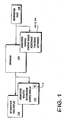
- browser 100 is augmented with a number of functions 102 and databases 104 to provide dynamic content based assistance to a user to retrieve and browse information pages. More specifically, functions 102 and databases 104 enable browser 100 to facilitate augmented provision of a number of dynamically assembled other information source identifiers 106 based at least in part on dynamically determined contents of information page 108.
- the display of information page 108 is illustrated as information page display 110.
- Information page 108 is intended to represent a broad range of informational units known in the art, including but not limited to information "documents" formed using mark-up languages, such as HTML and XML.
- functions 102 further enable browser 100 to provide thumbnails 112 of information pages corresponding to provided information source identifiers 108.
- a thumbnail of an information page is a dithered down image of the information page. Thumbnails 112 are provided to enable the user to have a rough overview of what the information page is about.
- a thumbnail is provided in response to a user event, such as when a user proximately placing a cursor "next" to an information source identifier. What constitutes "proximately placed" is application dependent.
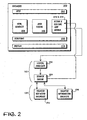
- FIG. 2 illustrates browser 100 as well as augmented functions 102 and databases 104 in further detail, in accordance with one embodiment.
- browser 100 includes conventional elements found in many browsers known in the art, HTTP interface 262, HTML web page handler 264, JAVA TM and JavaScript execution engine 266, other script interpreter 268 (e.g. CGI), display interface 270, and a number of "plug-ins" (or add-ons), shown as additional Active-X components 272-274. Included among these Active-X. components 272-274 is a component 272 that interfaces with selected ones of augmented functions 102, and a dithering module 274.
- Augmented functions 102 include lexical analyzer 282 and search engine 284, and augmented databases 104 include related keyword database 292 and related information sources database 294.
- Lexical analyzer 282 for the illustrated embodiment, is used to determine in real time, unique nouns presence in the information page browsed. In alternate embodiments, lexical analyzer 282 may be used to determine presence of other types of words/terms presence in the information page, e.g. words/terms that are specially tagged.
- Search engine 284 is used to determine in real time, presence of certain keywords in the information page being browsed, for the illustrated embodiment, using unique nouns outputs by lexical analyzer 282 . More specifically, search engine 284 uses the unique nouns to access related keyword database 292 to determine if any of the unique nouns are keywords of interest. Search engine 284 is additionally used to determine in real time, related keywords for the presence ones of the keywords of interest in the information page being browsed. For the illustrated embodiment, search engine 284 makes the determination by retrieving the related keywords stored in related keyword database 292 for a keyword of interest, when a unique noun matches the keyword of interest. Search engine 284 is further used to determine in real time, the information source identifiers to be provided in view of the determined related keywords. For the illustrated embodiment, search engine 284 makes the determination by retrieving the information source identifiers from database 294 using the determined related keywords.
- add-on dithering module 274 is used to dither a retrieved one of the information pages identified by the augmented information source identifiers, to generate a thumbnail for the information page.
- both the retrieval and dithering of the information page are performed when the thumbnail is needed.
- the information page is pre-fetched, and the dithering is performed when the thumbnail is needed.
- the information page is pre-fetched and the dithering is performed in advance before the thumbnail is needed.
- each of the enumerated functions, interface 272, dithering module 274, lexical analyzer 282, and searching engine 284 are generally known in the art, and may be implemented using any one of a number of techniques and programming languages known. Accordingly, they will not be otherwise further described.
- Figures 3a-3b illustrate one embodiment each of related keyword database 292 and information source database 294.
- related keyword database 292 as shown in Fig. 3a , is constituted with a number of tables 302.
- Stored inside each table 302 are related keyword entries 304.
- Each related keyword entry 304 includes related keywords 308 for a keyword of interest 306.
- information source database 294, as shown in Fig. 3b is constituted with a number of tables 322.
- Stored inside each table 322 are information source entries 324.
- Each information source entry 324 includes information source identifiers 328 for a related keyword 308.
- keywords of interest 306 are organized by categories or subjects.
- a series of tables may contain related keywords for various keywords of interest for Biology, Physics, Chemistry, History, Literature, and so forth; another series of tables may contain related keywords for various keywords of interest for Doctors, Dentists, Lawyers, Accountants, Financial Advisers, and so forth, and yet another series of tables may contain related keywords for various keywords of interest for Classical Music, Rock and Roll Music, Country Western Music, and so forth. There is no limitation to how the tables may be organized.
- one of the corresponding table pairs 302 and 322 is designated as the "current" table pair.
- search engine 284 accesses only table 302 of the designated "current” table pair to determine whether certain keywords of interest are presence in an information page being browsed.
- the associated information source identifiers for each determined presence ones of keywords of interest are retrieved from the corresponding information source table 322 of the designated "current" table pair.
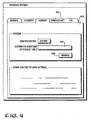
- Figure 4 illustrates a manner in which the "current" table pair may be designated, in accordance with one embodiment.
- the manner illustrated is similar to the "tab" based pop-up approach in setting browser or software options in general.
- option "pop up" 402 includes tab page 404 for setting various content related options.
- field 406 for entering the name of the keyword of interest and information source table pair to be designated as the "current" table pair.
- Field 406 has associated browse button 408 for displaying a list of table-pairs available for selection. The approach is basically known in the art, accordingly, will not be otherwise further described.
- the information contained in the various tables may be tabulated manually or using an automated process or a combination of both, by a vendor.
- the tabulation may be repeated periodically to continually refine the keywords of interest, their relationship to other keywords, as well as the associated information sources.
- Figure 5 illustrates a method of the present invention, in accordance with one embodiment.
- unique nouns of an information page are identified.
- the identification is performed by the lexical analyzer.
- the unique nouns are determined if they are to be considered as keywords of interest. In the earlier described embodiment, this is performed by the search engine accessing the related keyword database.
- the related keywords are determined for the presence ones of the keywords of interest. In the earlier described embodiment, this is also performed by the search engine accessing the related keyword database.
- the associated information sources i.e. their identifiers, are identified for each of the retrieved related keywords for the presence ones of the keywords of interest. In the earlier described embodiment this is performed by the search engine accessing the information source database.
- the information pages corresponding to the retrieved information source identifiers are pre-fetched. In one embodiment, this is performed by the browser itself.
- the retrieved information pages are dithered to generate the thumbnails to have them available for use on demand. In the earlier described embodiment, this is performed by the add-on dither module.
- Figures 6a-6d illustrate four example network environments for practicing the present invention in accordance with four embodiments.
- the embodiment of Fig. 6a represents an embodiment, where all the relevant earlier described elements, i.e. add-on interface and dither modules 272 and 274, lexical analyzer 282, search engine 284, and databases 292 and 294 are all provided to a client system 602 coupled to a network (e.g. the Internet). These relevant elements may be loaded onto client system 602 via a distribution medium (not shown) or downloaded from a distribution server (not shown). Note that a user may load/download only a subset of databases 292 and 294 tabulated by a vendor, or load/download them from multiple vendor sources.
- Fig. 6b represents an alternate embodiment, where except for information source database 294, all other relevant earlier described elements, i.e. add-on interface and dither modules 272 and 274, lexical analyzer 282, search engine 284, and databases 292 are provided to a client system 602 coupled to a network (e.g. the Internet).
- Information source database 294 is disposed on portal or service server 604 instead.
- search engine 284 upon determining the related keywords, search engine 284 would access database 294 remotely to retrieve the associated information source identifiers.
- Fig. 6c represents yet another alternate embodiment, where only add-ons 272 and 274 and lexical analyzer 282 are provided to a client system 602 coupled to a network (e.g. the internet). Otherwise, search engine 284, and databases 292 and 294 are disposed on portal or service server 604 instead. During operation, upon determining the unique nouns, lexical analyzer 282 would provide the unique nouns to search engine 284 on serer 604 instead. Search engine 284, in turn determines the keywords of interest, their related keywords, and ultimately the associated information source identifiers, and provide them to client 602, as described earlier.
- search engine 284 determines the keywords of interest, their related keywords, and ultimately the associated information source identifiers, and provide them to client 602, as described earlier.
- Fig. 6d represents yet another alternate embodiment, where all the relevant earlier described elements, i.e. interface and dither modules 272 and 274, lexical analyzer 282, search engine 284, and databases 292 and 294 are all disposed on one or more portal or service server 604 instead.
- browser 100 would keep interface 272 informed of the identity of the information page being browsed (e.g. in the case of a web page, providing interface 272 with the web page's URL).
- Interface 272 causes server 604 to obtain its own copy of the information page. Therefore, lexical analyzer 282 and search engine, would all function (using databases 292 and 294 ) as described earlier, leading to the eventual provision of the information source identifiers to client 602.
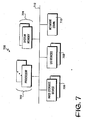
- Figure 7 illustrates one embodiment of an exemplary digital system suitable for use to practice the present invention, either as a client system or a server system.
- digital system 700 may be a desktop computer system, a laptop computer system, a palm sized computing device, a set-top box, an Internet appliance and the like.
- digital system 700 may a single or a cluster of computer systems.
- exemplary digital system 700 includes one or more processors 702 and system memory 704. Additionally, system 700 includes mass storage devices 706 (such as diskette, hard drive, CDROM and so forth), input/output devices 708 (such as keyboard, cursor control and so forth) and communication interfaces 710 (such as network interface cards, modems and so forth).
- mass storage devices 706 such as diskette, hard drive, CDROM and so forth
- input/output devices 708 such as keyboard, cursor control and so forth
- communication interfaces 710 such as network interface cards, modems and so forth.
- system bus 712 represents one or more buses. In the case of multiple buses, bridged by one or more bus bridges (not shown).
- system memory 704 and mass storage 706 are employed to store a working copy and a permanent copy of the programming instructions implementing the teachings of the present invention.
- the permanent copy of the programming instructions may be loaded into mass storage 706 in the factory, or in the field, as described earlier, through a distribution medium (not shown) or through communication interface 710 (from a distribution server (not shown).
- the constitution of these elements 702-712 are known, and accordingly will not be further described.
Landscapes
- Engineering & Computer Science (AREA)
- Databases & Information Systems (AREA)
- Theoretical Computer Science (AREA)
- Data Mining & Analysis (AREA)
- Physics & Mathematics (AREA)
- General Engineering & Computer Science (AREA)
- General Physics & Mathematics (AREA)
- Radar, Positioning & Navigation (AREA)
- Remote Sensing (AREA)
- Information Retrieval, Db Structures And Fs Structures Therefor (AREA)
- Information Transfer Between Computers (AREA)
Description
- The present invention relates to the field of computerized information retrieval and browsing. More specifically, the present invention relates to methods and apparatuses associated with dynamic content based assistance provided to facilitate information retrieval and browsing.
- With the recent advances in microprocessor, telecommunication and networking technology, increasing number of computer systems are being networked together through private and public networks, such as the Internet. Volumes of information stored on information servers (such as web servers of the World Wide Web) are now available to users of computer systems with a few clicks of a mouse button. For many users, the ease of access has actually created an information overload situation. Early solution has been to categorize as much of the information available as possible, such as the directory or index services offered by Internet portals like Yahoo and Lycos. Even then, a simple search restricted to one categorization could still result in hundreds of potential hits, requiring a large amount of user time to sort out the useless from the useful. As a result, users are frustrated, and information technology are prevented from realizing its full potential in reaching the ubiquitous state.
- Various automated techniques in assisting a user in retrieving and browsing information have been proposed and/or experimented. In
U.S. Patent 5,727,129 , entitled "Network system for profiling and actively facilitating user activities", issued to Barrett et al, a system and method for assisting a user in accessing information stored at remote network sites was disclosed. Under Barrett, an archive is maintained of remote sites accessed and instances in which the same remote sites are accessed in sequence. Statistics regarding information such as the number of times a site has been accessed, and the times a given set of sites have been accessed in sequence are maintained. Based on this information, information items are identified which the user is predicted to be likely to want to access. InU.S. Patent 5,960,429 , entitled "Multiple reference hotlist for identifying frequently retrieved web pages", issued to Peercy et al, a method and apparatus for locating web pages was disclosed. Under Peercy, a count of retrievals of a web page is accumulated and the accumulated count and an address for the web page are stored in a record of a history log database. A multiple reference hotlist is formatted for the user from the records in the history log. The document from L.Lee GILES, Kurt D. Bollacket, Steve Lawrence "CiteSeer: An Automatic Citation Indexing System", 1998, pages 89-98 discloses an automatic citation indexing system. For instance, this automatic citation indexing system can retrieve all documents cited in a given paper. The other way round, it may provide a list of papers that cite the given paper. Accordingly, browsing indexes of academic literature in electronic format will be supported. Further, CiteSeer may find related documents to a given document. The sources of said related documents are dynamically assembled and additionally displayed on a display of a client system. In order to find these related documents, a method is disclosed using knowledge about document components or structures, for instance the citation information. Each of these prior art techniques has its pros and cons. Thus, additional techniques that can further improve the ease of information retrieval and browsing, even in limited circumstances, are desired. - An automated method including automatic provision of additional display of a number of identifiers identifying information sources for assisting a user of the client system in retrieving and browsing information is disclosed. Under the method, in response to the retrieval and display on a display of a client system a first information page responsive to user direction, the additional display is provided. The information source identifiers are dynamically assembled, based at least in part on the content of said first information page. In one embodiment, a thumbnail corresponding to the information page identified by an information page identifier is also provided responsive to a user event.
- The present invention will be described by way of exemplary embodiments, but not limitations, illustrated in the accompanying drawings in which like references denote similar elements, and in which:
-
Figure 1 illustrates an overview of the present invention; -
Figure 2 illustrates the browser and the augmented dynamic content based assistance functions and databases ofFig. 1 in further detail in accordance with one embodiment; -
Figures 3a-3b illustrate one embodiment each of the related keyword database and related information source database ofFig. 2 ; -
Figure 4 illustrates a manner for designating a current table pair, in accordance with one embodiment; -
Figure 5 illustrates a method of the present invention in accordance with one embodiment; -
Figures 6a-6d illustrate four network embodiments for practicing the present invention in accordance with four embodiments; and -
Figure 7 illustrates an example digital system suitable for practicing the present invention. - In the following description, various aspects of the present invention will be described. However, it will be apparent to those skilled in the art that the present invention may be practiced with only some or all aspects of the present invention. For purposes of explanation, specific numbers, materials and configurations are set forth in order to provide a thorough understanding of the present invention. However, it will also be apparent to one skilled in the art that the present invention may be practiced without the specific details. In other instances, well known features are omitted or simplified in order not to obscure the present invention.
- Parts of the description will be presented using terms such as tables, keys, identifiers and so forth, commonly employed by those skilled in the art to convey the substance of their work to others skilled in the art. Parts of the description will be presented in terms of operations performed by a computer system, using terms such as parsing, accessing, retrieving, and so forth. As well understood by those skilled in the art, these quantities take the form of electrical, magnetic, or optical signals capable of being stored, transferred, combined, and otherwise manipulated through mechanical and electrical components of a digital system; and the term digital system include general purpose as well as special purpose data processing machines, systems, and the like, that are standalone, adjunct or embedded.
- Various operations will be described as multiple discrete steps performed in turn in a manner that is most helpful in understanding the present invention, however, the order of description should not be construed as to imply that these operations are necessarily order dependent, in particular, the order the operations are presented. Furthermore, the phrase "in one embodiment° will be used repeatedly, however the phrase does not necessarily refer to the same embodiment, although it may.
- Referring now to
Figure 1 , wherein an overview of the present invention is shown. As illustrated, in accordance with the present invention,browser 100 is augmented with a number offunctions 102 anddatabases 104 to provide dynamic content based assistance to a user to retrieve and browse information pages. More specifically,functions 102 anddatabases 104 enablebrowser 100 to facilitate augmented provision of a number of dynamically assembled otherinformation source identifiers 106 based at least in part on dynamically determined contents ofinformation page 108. (The display ofinformation page 108 is illustrated asinformation page display 110.)Information page 108 is intended to represent a broad range of informational units known in the art, including but not limited to information "documents" formed using mark-up languages, such as HTML and XML. In one embodiment,functions 102 further enablebrowser 100 to provide thumbnails 112 of information pages corresponding to providedinformation source identifiers 108. A thumbnail of an information page, as described in more detail below, is a dithered down image of the information page. Thumbnails 112 are provided to enable the user to have a rough overview of what the information page is about. In one embodiment, a thumbnail is provided in response to a user event, such as when a user proximately placing a cursor "next" to an information source identifier. What constitutes "proximately placed" is application dependent. -
Figure 2 illustratesbrowser 100 as well as augmentedfunctions 102 anddatabases 104 in further detail, in accordance with one embodiment. As illustrated,browser 100 includes conventional elements found in many browsers known in the art,HTTP interface 262, HTMLweb page handler 264, JAVA™ andJavaScript execution engine 266, other script interpreter 268 (e.g. CGI),display interface 270, and a number of "plug-ins" (or add-ons), shown as additional Active-X components 272-274. Included among these Active-X. components 272-274 is acomponent 272 that interfaces with selected ones ofaugmented functions 102, and adithering module 274.Augmented functions 102 includelexical analyzer 282 andsearch engine 284, andaugmented databases 104 includerelated keyword database 292 and relatedinformation sources database 294. -
Lexical analyzer 282, for the illustrated embodiment, is used to determine in real time, unique nouns presence in the information page browsed. In alternate embodiments,lexical analyzer 282 may be used to determine presence of other types of words/terms presence in the information page, e.g. words/terms that are specially tagged. -
Search engine 284 is used to determine in real time, presence of certain keywords in the information page being browsed, for the illustrated embodiment, using unique nouns outputs bylexical analyzer 282. More specifically,search engine 284 uses the unique nouns to accessrelated keyword database 292 to determine if any of the unique nouns are keywords of interest.Search engine 284 is additionally used to determine in real time, related keywords for the presence ones of the keywords of interest in the information page being browsed. For the illustrated embodiment,search engine 284 makes the determination by retrieving the related keywords stored inrelated keyword database 292 for a keyword of interest, when a unique noun matches the keyword of interest.Search engine 284 is further used to determine in real time, the information source identifiers to be provided in view of the determined related keywords. For the illustrated embodiment,search engine 284 makes the determination by retrieving the information source identifiers fromdatabase 294 using the determined related keywords. - Lastly, as described earlier, add-on
dithering module 274 is used to dither a retrieved one of the information pages identified by the augmented information source identifiers, to generate a thumbnail for the information page. In one embodiment, both the retrieval and dithering of the information page are performed when the thumbnail is needed. In another embodiment, the information page is pre-fetched, and the dithering is performed when the thumbnail is needed. In yet another embodiment, the information page is pre-fetched and the dithering is performed in advance before the thumbnail is needed. - Except for the role they play to collectively facilitate practice of the present invention, in and of the themselves, each of the enumerated functions,
interface 272, ditheringmodule 274,lexical analyzer 282, and searchingengine 284 are generally known in the art, and may be implemented using any one of a number of techniques and programming languages known. Accordingly, they will not be otherwise further described. -
Figures 3a-3b illustrate one embodiment each ofrelated keyword database 292 andinformation source database 294. For the illustrated embodiment,related keyword database 292, as shown inFig. 3a , is constituted with a number of tables 302. Stored inside each table 302 are relatedkeyword entries 304. Eachrelated keyword entry 304 includesrelated keywords 308 for a keyword ofinterest 306. Similarly, for the illustrated embodiment,information source database 294, as shown inFig. 3b , is constituted with a number of tables 322. Stored inside each table 322 areinformation source entries 324. Eachinformation source entry 324 includesinformation source identifiers 328 for arelated keyword 308. - For the illustrated embodiment, keywords of interest 306 (and therefore, their
related keywords 308 and associated information source identifiers 328) are organized by categories or subjects. For examples, a series of tables may contain related keywords for various keywords of interest for Biology, Physics, Chemistry, History, Literature, and so forth; another series of tables may contain related keywords for various keywords of interest for Doctors, Dentists, Lawyers, Accountants, Financial Advisers, and so forth, and yet another series of tables may contain related keywords for various keywords of interest for Classical Music, Rock and Roll Music, Country Western Music, and so forth. There is no limitation to how the tables may be organized. - For the illustrated embodiment, one of the corresponding table pairs 302 and 322 is designated as the "current" table pair. During operation,
search engine 284 accesses only table 302 of the designated "current" table pair to determine whether certain keywords of interest are presence in an information page being browsed. The associated information source identifiers for each determined presence ones of keywords of interest are retrieved from the corresponding information source table 322 of the designated "current" table pair. -
Figure 4 illustrates a manner in which the "current" table pair may be designated, in accordance with one embodiment. The manner illustrated is similar to the "tab" based pop-up approach in setting browser or software options in general. For the illustrated embodiment, option "pop up" 402 includestab page 404 for setting various content related options. Among the various settable content related options isfield 406 for entering the name of the keyword of interest and information source table pair to be designated as the "current" table pair.Field 406 has associatedbrowse button 408 for displaying a list of table-pairs available for selection. The approach is basically known in the art, accordingly, will not be otherwise further described. - The information contained in the various tables may be tabulated manually or using an automated process or a combination of both, by a vendor. The tabulation may be repeated periodically to continually refine the keywords of interest, their relationship to other keywords, as well as the associated information sources.
-
Figure 5 illustrates a method of the present invention, in accordance with one embodiment. As illustrated, at 502, unique nouns of an information page are identified. In the earlier described embodiment, the identification is performed by the lexical analyzer. At 504, the unique nouns are determined if they are to be considered as keywords of interest. In the earlier described embodiment, this is performed by the search engine accessing the related keyword database. At 506, the related keywords are determined for the presence ones of the keywords of interest. In the earlier described embodiment, this is also performed by the search engine accessing the related keyword database. At 508, the associated information sources, i.e. their identifiers, are identified for each of the retrieved related keywords for the presence ones of the keywords of interest. In the earlier described embodiment this is performed by the search engine accessing the information source database. - At 510, the information pages corresponding to the retrieved information source identifiers are pre-fetched. In one embodiment, this is performed by the browser itself. At 512, the retrieved information pages are dithered to generate the thumbnails to have them available for use on demand. In the earlier described embodiment, this is performed by the add-on dither module.
- While for ease of understanding, the method has been described with the operations being performed one after the other, first the unique nouns are determined, then the keywords of interest are determined, as so forth. Those skilled in the art will appreciate that in alternate embodiments, the various operations may be performed in an overlapped or interleaving manner. That is, as soon as a unique noun is determined, whether it is a keyword of interest may be determined, without awaiting all unique nouns to be determined. Likewise, once a keyword of interest is identified, its related keywords may be determined, without awaiting all keywords of interest to be identified. These principles apply equally to all the later operations.
-
Figures 6a-6d illustrate four example network environments for practicing the present invention in accordance with four embodiments. The embodiment ofFig. 6a represents an embodiment, where all the relevant earlier described elements, i.e. add-on interface and dithermodules lexical analyzer 282,search engine 284, anddatabases client system 602 coupled to a network (e.g. the Internet). These relevant elements may be loaded ontoclient system 602 via a distribution medium (not shown) or downloaded from a distribution server (not shown). Note that a user may load/download only a subset ofdatabases - The embodiment of
Fig. 6b represents an alternate embodiment, where except forinformation source database 294, all other relevant earlier described elements, i.e. add-on interface and dithermodules lexical analyzer 282,search engine 284, anddatabases 292 are provided to aclient system 602 coupled to a network (e.g. the Internet).Information source database 294 is disposed on portal orservice server 604 instead. During operation, upon determining the related keywords,search engine 284 would accessdatabase 294 remotely to retrieve the associated information source identifiers. - The embodiment of
Fig. 6c represents yet another alternate embodiment, where only add-ons lexical analyzer 282 are provided to aclient system 602 coupled to a network (e.g. the internet). Otherwise,search engine 284, anddatabases service server 604 instead. During operation, upon determining the unique nouns,lexical analyzer 282 would provide the unique nouns tosearch engine 284 onserer 604 instead.Search engine 284, in turn determines the keywords of interest, their related keywords, and ultimately the associated information source identifiers, and provide them toclient 602, as described earlier. - The embodiment of
Fig. 6d represents yet another alternate embodiment, where all the relevant earlier described elements, i.e. interface and dithermodules lexical analyzer 282,search engine 284, anddatabases service server 604 instead. During operation,browser 100 would keepinterface 272 informed of the identity of the information page being browsed (e.g. in the case of a web page, providinginterface 272 with the web page's URL).Interface 272 causesserver 604 to obtain its own copy of the information page. Therefore,lexical analyzer 282 and search engine, would all function (usingdatabases 292 and 294) as described earlier, leading to the eventual provision of the information source identifiers toclient 602. -
Figure 7 illustrates one embodiment of an exemplary digital system suitable for use to practice the present invention, either as a client system or a server system. As a client system,digital system 700 may be a desktop computer system, a laptop computer system, a palm sized computing device, a set-top box, an Internet appliance and the like. As a server,digital system 700 may a single or a cluster of computer systems. As shown, exemplarydigital system 700 includes one ormore processors 702 andsystem memory 704. Additionally,system 700 includes mass storage devices 706 (such as diskette, hard drive, CDROM and so forth), input/output devices 708 (such as keyboard, cursor control and so forth) and communication interfaces 710 (such as network interface cards, modems and so forth). The elements are coupled to each other viasystem bus 712, which represents one or more buses. In the case of multiple buses, bridged by one or more bus bridges (not shown). Each of these elements perform its conventional functions known in the art. In particular,system memory 704 andmass storage 706 are employed to store a working copy and a permanent copy of the programming instructions implementing the teachings of the present invention. The permanent copy of the programming instructions may be loaded intomass storage 706 in the factory, or in the field, as described earlier, through a distribution medium (not shown) or through communication interface 710 (from a distribution server (not shown). The constitution of these elements 702-712 are known, and accordingly will not be further described. - Thus, a novel method and apparatus for dynamically assisting a user in information retrieval and browsing, based on the content of an information page has been described. While the present invention has been described in terms of the above illustrated embodiments, those skilled in the art will recognize that the invention is not.limited to the embodiments described. The present invention can be practiced with modification and alteration within the scope of the appended claims. The description is thus to be regarded as illustrative instead of restrictive on the present invention.
Claims (31)
- An automated method performed in a client system (602) for assisting a user of the client system (602) in retrieving and browsing information, the method comprising:retrieving, by the client system, and displaying on a display (110) of the client system (602) a first information page (108) responsive to user direction; andadditionally displaying on the first information page a plurality of dynamically assembled information source identifiers (106) identifying a plurality of information sources (328) for user selection, wherein the information source identifiers (106) are dynamically assembled, based at least in part on dynamically determined content of said first information page (108) as retrieved by the client system.
- The method of claim 1, wherein said additional displaying comprises performing on said client system (602) in real time, analysis of the first information page (108) to determine presence of first keywords (306).
- The method of claim 2, wherein said analysis comprises performing on said client system (602) in real time, scanning (502) of said first information page (108) for unique nouns presence, accessing a current table (302) of keywords on the client system (602) to determine (504) if any of the unique nouns are to be considered as keywords, and outputting those unique nouns that should be so considered as the presence ones of said first keywords (306).
- The method of claim 3, wherein the method further comprises designating to a browser (100) of the client system (602) a first of a plurality of tables (302) of keywords on the client system (602) as the current table (302) of keywords of the client system (602).
- The method of claim 4, wherein the method further comprises loading/downloading said plurality of tables (302) of keywords onto the client system (602).
- The method of claim 2, wherein said additional displaying further comprises performing on said client system (602) in real time, retrieval of second keywords (308) related to the presence ones of first keywords (306) from one or more tables (304) of related keywords (308) on said client system (602), using said presence ones of first keywords (306).
- The method of claim 1, wherein said additional displaying further comprises performing on said client system (602) in real time, retrieval of information source identifiers (106) identifying information sources (328) having information associated with the second keywords (308) from one or more information source tables (322) on said client system (602), using said second keywords (308).
- The method of claim 7, wherein the method further comprises loading/downloading said one ore more tables (322) of information sources onto the client system (602).
- The method of claim 1, wherein said additional displaying further comprises performing on the client system (602) in real time, assembly of the plurality of information source identifiers (106) dynamically identified based at least in part on presence ones of first keywords (306) in said information page (108).
- The method of claim 1, wherein said additional displaying comprises performing on the client system (602) in real time, transmission to a server (604) a selected one of a locator of the first information page (108), a plurality of unique nouns of the first information page (108), a plurality of first keywords (306) present in the first information page (108), and a plurality of second keywords (308) related to the first keywords (306).
- The method of claim 1, wherein said first information page (108) is an information page constituted using a mark-up language, and said information sources comprise servers serving information pages so constituted.
- The method of claim 1, wherein the method further comprises additionally displaying on said display a thumbnail (112) of a second information page corresponding to a first of the identified information sources.
- The method of claim 9 and 12, wherein said display of the thumbnail (112) is responsive to a user event.
- The method of claim 12 or 13, wherein said additional displaying of a thumbnail (112) comprises performing on said client system (602) in real time, a selected one of retrieving said thumbnail (112) and retrieving said second information page and dithering said retrieved second information page to form said thumbnail (112).
- The method of claim 12 or 13, wherein said additional displaying of a thumbnail (112) is made responsive to proximate placement of a cursor next to a first information source identifier corresponding to said first information source.
- An automated method performed in a server system (604) for facilitating provision of assistance to a user of a networked client system (602) to retrieve and browse information, the method comprising:receiving from said client system (602) dynamically determined unique nouns or dynamically determined presence ones of first keywords (306) in a first information page (108) being browsed on said client system (602); andin response, providing to said client system (602) a plurality of information source identifiers (106) identifying a plurality information sources (328), based at least in part on said received presence ones of unique nouns / first keywords (306).
- The method of claim 16, further comprising dynamically determining presence ones of first keywords (306) in said information page (108) using said received unique nouns; and said providing of information source identifiers (106) to said client system (602) is made based at least in part on said dynamically determined presence ones of first keywords (306).
- The method of claim 16 or 17, wherein the method further comprises dynamically determining related second keywords (308) of said presence ones of first keywords (306); and said providing of information source identifiers (106) to said client system (602) is further made based at least in part on said dynamically determined related second keywords (308).
- An automated method performed in a server system (604) for facilitating provision of assistance to a user of a networked client system (602) to retrieve and browse information, the method comprising:receiving from said client system (602) a locator of a first information page (108) being browsed on said client system (602); andin response, providing to said client system (602) a plurality of information source identifiers (106) identifying a plurality of information sources (328), based at least in part on dynamically determined content of the first information page (108).
- The method of claim 19, wherein the method further comprises retrieving said first information page (108) and dynamically determining presence ones of first keywords (306) in said information page (108); and said providing of information source identifiers (106) to said client system (602) is made based at least in part on said dynamically determined presence ones of first keywords (306).
- The method of claim 20, wherein the method further comprises dynamically determining related second keywords (308) of said presence ones of first keywords (306); and said providing of information source identifiers (106) to said client system (602) is further made based at least in part on said dynamically determined related second keywords (308).
- The method of anyone of claims 16 to 21, wherein the method further comprises providing to said client system (602) a thumbnail (112) of a second information page corresponding to a first of said information source identifiers (106).
- The method of claim 22, wherein the method further comprises retrieving said second information page and dithering said second information page to form said thumbnail (112).
- A client system (602) comprising:a browser (100) to facilitate viewing of a first retrieved information page (108); anda keyword database (104, 292) coupled to the browser (100), having first plurality of keywords (306) to facilitate determination of presence ones of first keywords (306) in said first retrieved information page (108) being viewed,characterized in that the keyword database has second plurality of keywords (308), the second keywords (308) being related to said first keywords (306) to facilitate determination of related second keywords (308) of said presence ones of first keywords (306), to facilitate augmented provision by said browser (100) a plurality of dynamically assembled information source identifiers (106) identifying a plurality of information sources (328) based at least in part on said related second keywords (308).
- The client system (602) of claim 24, wherein the browser (100) is augmented with a lexical analyzer (282) to facilitate determination of unique nouns in said first retrieved information page (108) being browsed, for use in said determination of presence ones of first keywords (306) in said first retrieved information page (108) being browsed.
- The client system (602) of claim 24, wherein the client system (602) further comprises an information source database (294) having said second keywords (308) and a plurality of associated information source identifiers (106) to facilitate said augmented provision of dynamically assembled information source identifiers (106) by said browser (100).
- The client system (602) of claim 24, wherein the client system (602) further comprises a dithering module (274) to dither a second retrieved information page to generate a thumbnail (112) of the second retrieved information page.
- A server system (604) comprising:a network interface (272) to couple the server system (604) to a network;an information source database (294) having a first plurality of keywords and a plurality of associated information source identifiers (106) to facilitate augmented provision by a browser (100) of a coupled client system (602) dynamically assembled information source identifiers (106), based at least in part on dynamically determined content of a first retrieved information page (108) being browsed on said client system (602).
- The server system of claim 28, further comprising
a keyword database (292), having a second plurality of keywords (308) and said first plurality of keywords (306), the first keywords (306) being related to said second keywords (308) to facilitate determination of presence ones of first keywords (306) in said first retrieved information page (108) being viewed, and to facilitate determination of related second keywords (308) of said presence ones of first keywords (306) for use to perform said facilitation of augmented provision by said browser (100) of a plurality of dynamically assembled information source identifiers (106). - The server system (604) of claim 28, wherein the server system (604) further comprises a lexical analyzer (282) to facilitate determination of unique nouns in said first retrieved information page (108) being browsed, for use in said determination of presence ones of first keywords (306) in said first retrieved information page (108) being browsed.
- The server system (604) of claim 28, wherein the server system (604) further comprises a dithering module (274) to dither a second retrieved information page to generate a thumbnail (112) of the second retrieved information page.
Applications Claiming Priority (2)
| Application Number | Priority Date | Filing Date | Title |
|---|---|---|---|
| US45232899A | 1999-11-30 | 1999-11-30 | |
| EP00982330A EP1415243B1 (en) | 1999-11-30 | 2000-11-30 | Dynamic content based assisted information browsing |
Related Parent Applications (2)
| Application Number | Title | Priority Date | Filing Date |
|---|---|---|---|
| EP00982330A Division EP1415243B1 (en) | 1999-11-30 | 2000-11-30 | Dynamic content based assisted information browsing |
| EP00982330.3 Division | 2000-11-30 |
Publications (2)
| Publication Number | Publication Date |
|---|---|
| EP1887483A1 EP1887483A1 (en) | 2008-02-13 |
| EP1887483B1 true EP1887483B1 (en) | 2011-09-21 |
Family
ID=23796059
Family Applications (3)
| Application Number | Title | Priority Date | Filing Date |
|---|---|---|---|
| EP07021312A Withdrawn EP1906318A1 (en) | 1999-11-30 | 2000-11-30 | Dynamic content based assisted information browsing |
| EP00982330A Expired - Lifetime EP1415243B1 (en) | 1999-11-30 | 2000-11-30 | Dynamic content based assisted information browsing |
| EP07017021A Expired - Lifetime EP1887483B1 (en) | 1999-11-30 | 2000-11-30 | Dynamic content based assisted information browsing |
Family Applications Before (2)
| Application Number | Title | Priority Date | Filing Date |
|---|---|---|---|
| EP07021312A Withdrawn EP1906318A1 (en) | 1999-11-30 | 2000-11-30 | Dynamic content based assisted information browsing |
| EP00982330A Expired - Lifetime EP1415243B1 (en) | 1999-11-30 | 2000-11-30 | Dynamic content based assisted information browsing |
Country Status (4)
| Country | Link |
|---|---|
| EP (3) | EP1906318A1 (en) |
| AU (1) | AU1937901A (en) |
| DE (1) | DE60042462D1 (en) |
| WO (1) | WO2001041001A2 (en) |
Family Cites Families (1)
| Publication number | Priority date | Publication date | Assignee | Title |
|---|---|---|---|---|
| US6160554A (en) * | 1998-03-19 | 2000-12-12 | Hewlett Packard Company | Computer file content preview window |
-
2000
- 2000-11-30 AU AU19379/01A patent/AU1937901A/en not_active Abandoned
- 2000-11-30 EP EP07021312A patent/EP1906318A1/en not_active Withdrawn
- 2000-11-30 DE DE60042462T patent/DE60042462D1/en not_active Expired - Lifetime
- 2000-11-30 EP EP00982330A patent/EP1415243B1/en not_active Expired - Lifetime
- 2000-11-30 EP EP07017021A patent/EP1887483B1/en not_active Expired - Lifetime
- 2000-11-30 WO PCT/US2000/032667 patent/WO2001041001A2/en not_active Ceased
Also Published As
| Publication number | Publication date |
|---|---|
| WO2001041001A2 (en) | 2001-06-07 |
| DE60042462D1 (en) | 2009-08-06 |
| EP1887483A1 (en) | 2008-02-13 |
| AU1937901A (en) | 2001-06-12 |
| WO2001041001A3 (en) | 2004-02-19 |
| EP1906318A1 (en) | 2008-04-02 |
| EP1415243B1 (en) | 2009-06-24 |
| WO2001041001A9 (en) | 2002-07-25 |
| EP1415243A2 (en) | 2004-05-06 |
Similar Documents
| Publication | Publication Date | Title |
|---|---|---|
| US6490575B1 (en) | Distributed network search engine | |
| US6247021B1 (en) | Searchable bookmark sets as an internet advertising medium | |
| US6848077B1 (en) | Dynamically creating hyperlinks to other web documents in received world wide web documents based on text terms in the received document defined as of interest to user | |
| KR100289298B1 (en) | Named bookmark set | |
| US7299298B2 (en) | Web address converter for dynamic web pages | |
| US6907423B2 (en) | Search engine interface and method of controlling client searches | |
| US6182065B1 (en) | Method and system for weighting the search results of a database search engine | |
| US5890172A (en) | Method and apparatus for retrieving data from a network using location identifiers | |
| US6782430B1 (en) | Invalid link recovery | |
| US7058944B1 (en) | Event driven system and method for retrieving and displaying information | |
| US6789076B1 (en) | System, method and program for augmenting information retrieval in a client/server network using client-side searching | |
| US9223895B2 (en) | System and method for contextual commands in a search results page | |
| CA2346156C (en) | Method and system for website overview | |
| EP1072984A2 (en) | Method and system for providing native language query service | |
| WO2006121269A1 (en) | Personalized search method and system for enabling the method | |
| US7895337B2 (en) | Systems and methods of generating a content aware interface | |
| US20050125412A1 (en) | Web crawling | |
| KR20120120459A (en) | Search system presenting active abstracts including linked terms | |
| US20030110210A1 (en) | Information communication system | |
| US20070162524A1 (en) | Network document management | |
| US20020059223A1 (en) | Locator based assisted information browsing | |
| KR100390855B1 (en) | method and system of service providing on internet | |
| EP1415243B1 (en) | Dynamic content based assisted information browsing | |
| KR19990078876A (en) | Information search method by URL input | |
| US20060190534A1 (en) | Method and system for browsing a plurality of information items |
Legal Events
| Date | Code | Title | Description |
|---|---|---|---|
| PUAI | Public reference made under article 153(3) epc to a published international application that has entered the european phase |
Free format text: ORIGINAL CODE: 0009012 |
|
| 17P | Request for examination filed |
Effective date: 20070830 |
|
| AC | Divisional application: reference to earlier application |
Ref document number: 1415243 Country of ref document: EP Kind code of ref document: P |
|
| AK | Designated contracting states |
Kind code of ref document: A1 Designated state(s): AT BE CH CY DE DK ES FI FR GB GR IE IT LI LU MC NL PT SE TR |
|
| 17Q | First examination report despatched |
Effective date: 20080717 |
|
| AKX | Designation fees paid |
Designated state(s): DE FI FR GB SE |
|
| GRAP | Despatch of communication of intention to grant a patent |
Free format text: ORIGINAL CODE: EPIDOSNIGR1 |
|
| GRAS | Grant fee paid |
Free format text: ORIGINAL CODE: EPIDOSNIGR3 |
|
| GRAA | (expected) grant |
Free format text: ORIGINAL CODE: 0009210 |
|
| AC | Divisional application: reference to earlier application |
Ref document number: 1415243 Country of ref document: EP Kind code of ref document: P |
|
| AK | Designated contracting states |
Kind code of ref document: B1 Designated state(s): DE FI FR GB SE |
|
| REG | Reference to a national code |
Ref country code: GB Ref legal event code: FG4D |
|
| REG | Reference to a national code |
Ref country code: DE Ref legal event code: R096 Ref document number: 60046468 Country of ref document: DE Effective date: 20111208 |
|
| PG25 | Lapsed in a contracting state [announced via postgrant information from national office to epo] |
Ref country code: SE Free format text: LAPSE BECAUSE OF FAILURE TO SUBMIT A TRANSLATION OF THE DESCRIPTION OR TO PAY THE FEE WITHIN THE PRESCRIBED TIME-LIMIT Effective date: 20110921 Ref country code: FI Free format text: LAPSE BECAUSE OF FAILURE TO SUBMIT A TRANSLATION OF THE DESCRIPTION OR TO PAY THE FEE WITHIN THE PRESCRIBED TIME-LIMIT Effective date: 20110921 |
|
| PLBE | No opposition filed within time limit |
Free format text: ORIGINAL CODE: 0009261 |
|
| STAA | Information on the status of an ep patent application or granted ep patent |
Free format text: STATUS: NO OPPOSITION FILED WITHIN TIME LIMIT |
|
| 26N | No opposition filed |
Effective date: 20120622 |
|
| REG | Reference to a national code |
Ref country code: DE Ref legal event code: R097 Ref document number: 60046468 Country of ref document: DE Effective date: 20120622 |
|
| PGFP | Annual fee paid to national office [announced via postgrant information from national office to epo] |
Ref country code: DE Payment date: 20121130 Year of fee payment: 13 Ref country code: FR Payment date: 20121113 Year of fee payment: 13 |
|
| PGFP | Annual fee paid to national office [announced via postgrant information from national office to epo] |
Ref country code: GB Payment date: 20121025 Year of fee payment: 13 |
|
| GBPC | Gb: european patent ceased through non-payment of renewal fee |
Effective date: 20131130 |
|
| REG | Reference to a national code |
Ref country code: FR Ref legal event code: ST Effective date: 20140731 |
|
| REG | Reference to a national code |
Ref country code: DE Ref legal event code: R119 Ref document number: 60046468 Country of ref document: DE Effective date: 20140603 |
|
| PG25 | Lapsed in a contracting state [announced via postgrant information from national office to epo] |
Ref country code: DE Free format text: LAPSE BECAUSE OF NON-PAYMENT OF DUE FEES Effective date: 20140603 |
|
| PG25 | Lapsed in a contracting state [announced via postgrant information from national office to epo] |
Ref country code: FR Free format text: LAPSE BECAUSE OF NON-PAYMENT OF DUE FEES Effective date: 20131202 Ref country code: GB Free format text: LAPSE BECAUSE OF NON-PAYMENT OF DUE FEES Effective date: 20131130 |