EP1886695A1 - Pharmaceutical combination of an aldosterone synthase inhibitor and a glucocorticoid receptor antagonist or a cortisol synthesis inhibitor or a corticotropin releasing factor antagonist - Google Patents
Pharmaceutical combination of an aldosterone synthase inhibitor and a glucocorticoid receptor antagonist or a cortisol synthesis inhibitor or a corticotropin releasing factor antagonist Download PDFInfo
- Publication number
- EP1886695A1 EP1886695A1 EP06116145A EP06116145A EP1886695A1 EP 1886695 A1 EP1886695 A1 EP 1886695A1 EP 06116145 A EP06116145 A EP 06116145A EP 06116145 A EP06116145 A EP 06116145A EP 1886695 A1 EP1886695 A1 EP 1886695A1
- Authority
- EP
- European Patent Office
- Prior art keywords
- cortisol
- formula
- syndrome
- pharmaceutically acceptable
- synthesis inhibitor
- Prior art date
- Legal status (The legal status is an assumption and is not a legal conclusion. Google has not performed a legal analysis and makes no representation as to the accuracy of the status listed.)
- Withdrawn
Links
- 239000003850 glucocorticoid receptor antagonist Substances 0.000 title claims abstract description 27
- 229940126013 glucocorticoid receptor antagonist Drugs 0.000 title claims abstract description 25
- 229940123338 Aldosterone synthase inhibitor Drugs 0.000 title claims abstract description 21
- 229940126165 cortisol synthesis inhibitor Drugs 0.000 title claims abstract description 21
- 229940122010 Corticotropin releasing factor antagonist Drugs 0.000 title 1
- 239000002769 corticotropin releasing factor antagonist Substances 0.000 title 1
- JYGXADMDTFJGBT-VWUMJDOOSA-N hydrocortisone Chemical compound O=C1CC[C@]2(C)[C@H]3[C@@H](O)C[C@](C)([C@@](CC4)(O)C(=O)CO)[C@@H]4[C@@H]3CCC2=C1 JYGXADMDTFJGBT-VWUMJDOOSA-N 0.000 claims abstract description 76
- 229960000890 hydrocortisone Drugs 0.000 claims abstract description 38
- 239000000275 Adrenocorticotropic Hormone Substances 0.000 claims abstract description 29
- 101800000414 Corticotropin Proteins 0.000 claims abstract description 29
- IDLFZVILOHSSID-OVLDLUHVSA-N corticotropin Chemical compound C([C@@H](C(=O)N[C@@H](CO)C(=O)N[C@@H](CCSC)C(=O)N[C@@H](CCC(O)=O)C(=O)N[C@@H](CC=1NC=NC=1)C(=O)N[C@@H](CC=1C=CC=CC=1)C(=O)N[C@@H](CCCNC(N)=N)C(=O)N[C@@H](CC=1C2=CC=CC=C2NC=1)C(=O)NCC(=O)N[C@@H](CCCCN)C(=O)N1[C@@H](CCC1)C(=O)N[C@@H](C(C)C)C(=O)NCC(=O)N[C@@H](CCCCN)C(=O)N[C@@H](CCCCN)C(=O)N[C@@H](CCCNC(N)=N)C(=O)N[C@@H](CCCNC(N)=N)C(=O)N1[C@@H](CCC1)C(=O)N[C@@H](C(C)C)C(=O)N[C@@H](CCCCN)C(=O)N[C@@H](C(C)C)C(=O)N[C@@H](CC=1C=CC(O)=CC=1)C(=O)N1[C@@H](CCC1)C(=O)N[C@@H](CC(N)=O)C(=O)NCC(=O)N[C@@H](C)C(=O)N[C@@H](CCC(O)=O)C(=O)N[C@@H](CC(O)=O)C(=O)N[C@@H](CCC(O)=O)C(=O)N[C@@H](CO)C(=O)N[C@@H](C)C(=O)N[C@@H](CCC(O)=O)C(=O)N[C@@H](C)C(=O)N[C@@H](CC=1C=CC=CC=1)C(=O)N1[C@@H](CCC1)C(=O)N[C@@H](CC(C)C)C(=O)N[C@@H](CCC(O)=O)C(=O)N[C@@H](CC=1C=CC=CC=1)C(O)=O)NC(=O)[C@@H](N)CO)C1=CC=C(O)C=C1 IDLFZVILOHSSID-OVLDLUHVSA-N 0.000 claims abstract description 29
- 229960000258 corticotropin Drugs 0.000 claims abstract description 29
- 238000003786 synthesis reaction Methods 0.000 claims abstract description 29
- 239000003112 inhibitor Substances 0.000 claims abstract description 26
- 150000003839 salts Chemical class 0.000 claims abstract description 23
- 102000016983 Releasing hormones receptors Human genes 0.000 claims abstract description 20
- 108070000025 Releasing hormones receptors Proteins 0.000 claims abstract description 20
- 239000003814 drug Substances 0.000 claims abstract description 15
- 229940123502 Hormone receptor antagonist Drugs 0.000 claims abstract description 13
- 208000001145 Metabolic Syndrome Diseases 0.000 claims abstract description 13
- 201000000690 abdominal obesity-metabolic syndrome Diseases 0.000 claims abstract description 12
- 208000037265 diseases, disorders, signs and symptoms Diseases 0.000 claims abstract description 11
- 201000010099 disease Diseases 0.000 claims abstract description 10
- 238000011282 treatment Methods 0.000 claims abstract description 10
- 238000004519 manufacturing process Methods 0.000 claims abstract description 9
- 230000002265 prevention Effects 0.000 claims abstract description 5
- 150000001875 compounds Chemical class 0.000 claims description 30
- PQSUYGKTWSAVDQ-ZVIOFETBSA-N Aldosterone Chemical compound C([C@@]1([C@@H](C(=O)CO)CC[C@H]1[C@@H]1CC2)C=O)[C@H](O)[C@@H]1[C@]1(C)C2=CC(=O)CC1 PQSUYGKTWSAVDQ-ZVIOFETBSA-N 0.000 claims description 23
- PQSUYGKTWSAVDQ-UHFFFAOYSA-N Aldosterone Natural products C1CC2C3CCC(C(=O)CO)C3(C=O)CC(O)C2C2(C)C1=CC(=O)CC2 PQSUYGKTWSAVDQ-UHFFFAOYSA-N 0.000 claims description 23
- 229960002478 aldosterone Drugs 0.000 claims description 23
- 201000009395 primary hyperaldosteronism Diseases 0.000 claims description 18
- 208000014311 Cushing syndrome Diseases 0.000 claims description 16
- 206010020772 Hypertension Diseases 0.000 claims description 14
- 230000015572 biosynthetic process Effects 0.000 claims description 12
- 208000001072 type 2 diabetes mellitus Diseases 0.000 claims description 11
- 206010022489 Insulin Resistance Diseases 0.000 claims description 10
- 230000001965 increasing effect Effects 0.000 claims description 10
- 239000008194 pharmaceutical composition Substances 0.000 claims description 9
- 206010012601 diabetes mellitus Diseases 0.000 claims description 7
- 238000000034 method Methods 0.000 claims description 7
- 230000002792 vascular Effects 0.000 claims description 7
- 208000016998 Conn syndrome Diseases 0.000 claims description 6
- 206010020571 Hyperaldosteronism Diseases 0.000 claims description 6
- 208000008589 Obesity Diseases 0.000 claims description 6
- 208000010125 myocardial infarction Diseases 0.000 claims description 6
- 235000020824 obesity Nutrition 0.000 claims description 6
- 208000013846 primary aldosteronism Diseases 0.000 claims description 6
- 239000003087 receptor blocking agent Substances 0.000 claims description 6
- VKHAHZOOUSRJNA-GCNJZUOMSA-N mifepristone Chemical group C1([C@@H]2C3=C4CCC(=O)C=C4CC[C@H]3[C@@H]3CC[C@@]([C@]3(C2)C)(O)C#CC)=CC=C(N(C)C)C=C1 VKHAHZOOUSRJNA-GCNJZUOMSA-N 0.000 claims description 5
- XMAYWYJOQHXEEK-OZXSUGGESA-N (2R,4S)-ketoconazole Chemical compound C1CN(C(=O)C)CCN1C(C=C1)=CC=C1OC[C@@H]1O[C@@](CN2C=NC=C2)(C=2C(=CC(Cl)=CC=2)Cl)OC1 XMAYWYJOQHXEEK-OZXSUGGESA-N 0.000 claims description 4
- 201000001320 Atherosclerosis Diseases 0.000 claims description 4
- 102000008186 Collagen Human genes 0.000 claims description 4
- 108010035532 Collagen Proteins 0.000 claims description 4
- 206010048554 Endothelial dysfunction Diseases 0.000 claims description 4
- 206010016654 Fibrosis Diseases 0.000 claims description 4
- 208000002705 Glucose Intolerance Diseases 0.000 claims description 4
- 229920001436 collagen Polymers 0.000 claims description 4
- 208000029078 coronary artery disease Diseases 0.000 claims description 4
- 230000008694 endothelial dysfunction Effects 0.000 claims description 4
- 230000004761 fibrosis Effects 0.000 claims description 4
- 229960004125 ketoconazole Drugs 0.000 claims description 4
- 208000011580 syndromic disease Diseases 0.000 claims description 4
- CLPFFLWZZBQMAO-UHFFFAOYSA-N 4-(5,6,7,8-tetrahydroimidazo[1,5-a]pyridin-5-yl)benzonitrile Chemical group C1=CC(C#N)=CC=C1C1N2C=NC=C2CCC1 CLPFFLWZZBQMAO-UHFFFAOYSA-N 0.000 claims description 3
- 208000020576 Adrenal disease Diseases 0.000 claims description 3
- 206010061588 Adrenal neoplasm Diseases 0.000 claims description 3
- 206010002383 Angina Pectoris Diseases 0.000 claims description 3
- BQENDLAVTKRQMS-SBBGFIFASA-L Carbenoxolone sodium Chemical group [Na+].[Na+].C([C@H]1C2=CC(=O)[C@H]34)[C@@](C)(C([O-])=O)CC[C@]1(C)CC[C@@]2(C)[C@]4(C)CC[C@@H]1[C@]3(C)CC[C@H](OC(=O)CCC([O-])=O)C1(C)C BQENDLAVTKRQMS-SBBGFIFASA-L 0.000 claims description 3
- 206010007559 Cardiac failure congestive Diseases 0.000 claims description 3
- 208000002177 Cataract Diseases 0.000 claims description 3
- 206010009900 Colitis ulcerative Diseases 0.000 claims description 3
- 208000007342 Diabetic Nephropathies Diseases 0.000 claims description 3
- 208000032131 Diabetic Neuropathies Diseases 0.000 claims description 3
- 206010012689 Diabetic retinopathy Diseases 0.000 claims description 3
- 208000010228 Erectile Dysfunction Diseases 0.000 claims description 3
- 208000007530 Essential hypertension Diseases 0.000 claims description 3
- 206010019280 Heart failures Diseases 0.000 claims description 3
- 208000001826 Marfan syndrome Diseases 0.000 claims description 3
- 206010036618 Premenstrual syndrome Diseases 0.000 claims description 3
- 208000001647 Renal Insufficiency Diseases 0.000 claims description 3
- 208000006011 Stroke Diseases 0.000 claims description 3
- 208000025865 Ulcer Diseases 0.000 claims description 3
- 201000006704 Ulcerative Colitis Diseases 0.000 claims description 3
- 229960000530 carbenoxolone Drugs 0.000 claims description 3
- 208000018631 connective tissue disease Diseases 0.000 claims description 3
- 208000033679 diabetic kidney disease Diseases 0.000 claims description 3
- 239000003937 drug carrier Substances 0.000 claims description 3
- 229950011548 fadrozole Drugs 0.000 claims description 3
- 206010061989 glomerulosclerosis Diseases 0.000 claims description 3
- 201000001881 impotence Diseases 0.000 claims description 3
- 201000006370 kidney failure Diseases 0.000 claims description 3
- 208000002780 macular degeneration Diseases 0.000 claims description 3
- 229960004465 metyrapone Drugs 0.000 claims description 3
- FJLBFSROUSIWMA-UHFFFAOYSA-N metyrapone Chemical compound C=1C=CN=CC=1C(C)(C)C(=O)C1=CC=CN=C1 FJLBFSROUSIWMA-UHFFFAOYSA-N 0.000 claims description 3
- 201000009104 prediabetes syndrome Diseases 0.000 claims description 3
- 238000007634 remodeling Methods 0.000 claims description 3
- 208000017520 skin disease Diseases 0.000 claims description 3
- 230000004083 survival effect Effects 0.000 claims description 3
- KVJXBPDAXMEYOA-CXANFOAXSA-N trilostane Chemical compound OC1=C(C#N)C[C@]2(C)[C@H]3CC[C@](C)([C@H](CC4)O)[C@@H]4[C@@H]3CC[C@@]32O[C@@H]31 KVJXBPDAXMEYOA-CXANFOAXSA-N 0.000 claims description 3
- 229960001670 trilostane Drugs 0.000 claims description 3
- 230000036269 ulceration Effects 0.000 claims description 3
- UKCVAQGKEOJTSR-PFEQFJNWSA-N 4-[(5r)-5,6,7,8-tetrahydroimidazo[1,5-a]pyridin-5-yl]benzonitrile;hydrochloride Chemical compound Cl.C1=CC(C#N)=CC=C1[C@@H]1N2C=NC=C2CCC1 UKCVAQGKEOJTSR-PFEQFJNWSA-N 0.000 claims description 2
- JWBOIMRXGHLCPP-UHFFFAOYSA-N Chloditan Chemical compound C=1C=CC=C(Cl)C=1C(C(Cl)Cl)C1=CC=C(Cl)C=C1 JWBOIMRXGHLCPP-UHFFFAOYSA-N 0.000 claims description 2
- 229960003248 mifepristone Drugs 0.000 claims description 2
- 229960000350 mitotane Drugs 0.000 claims description 2
- 239000000203 mixture Substances 0.000 abstract description 7
- 150000003431 steroids Chemical class 0.000 description 15
- 230000000694 effects Effects 0.000 description 14
- 239000003862 glucocorticoid Substances 0.000 description 14
- 238000012360 testing method Methods 0.000 description 13
- 241001465754 Metazoa Species 0.000 description 11
- 229940079593 drug Drugs 0.000 description 10
- OMFXVFTZEKFJBZ-UHFFFAOYSA-N Corticosterone Natural products O=C1CCC2(C)C3C(O)CC(C)(C(CC4)C(=O)CO)C4C3CCC2=C1 OMFXVFTZEKFJBZ-UHFFFAOYSA-N 0.000 description 9
- 108010009911 Cytochrome P-450 CYP11B2 Proteins 0.000 description 9
- 239000003795 chemical substances by application Substances 0.000 description 9
- OMFXVFTZEKFJBZ-HJTSIMOOSA-N corticosterone Chemical compound O=C1CC[C@]2(C)[C@H]3[C@@H](O)C[C@](C)([C@H](CC4)C(=O)CO)[C@@H]4[C@@H]3CCC2=C1 OMFXVFTZEKFJBZ-HJTSIMOOSA-N 0.000 description 9
- 102100024329 Cytochrome P450 11B2, mitochondrial Human genes 0.000 description 8
- 210000004369 blood Anatomy 0.000 description 8
- 239000008280 blood Substances 0.000 description 8
- 210000004027 cell Anatomy 0.000 description 8
- 230000005764 inhibitory process Effects 0.000 description 8
- 230000028327 secretion Effects 0.000 description 8
- 102400000739 Corticotropin Human genes 0.000 description 7
- 102000004190 Enzymes Human genes 0.000 description 7
- 108090000790 Enzymes Proteins 0.000 description 7
- 230000004044 response Effects 0.000 description 7
- 230000001629 suppression Effects 0.000 description 7
- 108010049356 Steroid 11-beta-Hydroxylase Proteins 0.000 description 6
- 210000004404 adrenal cortex Anatomy 0.000 description 6
- 238000002474 experimental method Methods 0.000 description 6
- 230000002401 inhibitory effect Effects 0.000 description 6
- NOESYZHRGYRDHS-UHFFFAOYSA-N insulin Chemical compound N1C(=O)C(NC(=O)C(CCC(N)=O)NC(=O)C(CCC(O)=O)NC(=O)C(C(C)C)NC(=O)C(NC(=O)CN)C(C)CC)CSSCC(C(NC(CO)C(=O)NC(CC(C)C)C(=O)NC(CC=2C=CC(O)=CC=2)C(=O)NC(CCC(N)=O)C(=O)NC(CC(C)C)C(=O)NC(CCC(O)=O)C(=O)NC(CC(N)=O)C(=O)NC(CC=2C=CC(O)=CC=2)C(=O)NC(CSSCC(NC(=O)C(C(C)C)NC(=O)C(CC(C)C)NC(=O)C(CC=2C=CC(O)=CC=2)NC(=O)C(CC(C)C)NC(=O)C(C)NC(=O)C(CCC(O)=O)NC(=O)C(C(C)C)NC(=O)C(CC(C)C)NC(=O)C(CC=2NC=NC=2)NC(=O)C(CO)NC(=O)CNC2=O)C(=O)NCC(=O)NC(CCC(O)=O)C(=O)NC(CCCNC(N)=N)C(=O)NCC(=O)NC(CC=3C=CC=CC=3)C(=O)NC(CC=3C=CC=CC=3)C(=O)NC(CC=3C=CC(O)=CC=3)C(=O)NC(C(C)O)C(=O)N3C(CCC3)C(=O)NC(CCCCN)C(=O)NC(C)C(O)=O)C(=O)NC(CC(N)=O)C(O)=O)=O)NC(=O)C(C(C)CC)NC(=O)C(CO)NC(=O)C(C(C)O)NC(=O)C1CSSCC2NC(=O)C(CC(C)C)NC(=O)C(NC(=O)C(CCC(N)=O)NC(=O)C(CC(N)=O)NC(=O)C(NC(=O)C(N)CC=1C=CC=CC=1)C(C)C)CC1=CN=CN1 NOESYZHRGYRDHS-UHFFFAOYSA-N 0.000 description 6
- 230000001404 mediated effect Effects 0.000 description 6
- 229940037128 systemic glucocorticoids Drugs 0.000 description 6
- 102000004277 11-beta-hydroxysteroid dehydrogenases Human genes 0.000 description 5
- 108090000874 11-beta-hydroxysteroid dehydrogenases Proteins 0.000 description 5
- WQZGKKKJIJFFOK-GASJEMHNSA-N Glucose Natural products OC[C@H]1OC(O)[C@H](O)[C@@H](O)[C@@H]1O WQZGKKKJIJFFOK-GASJEMHNSA-N 0.000 description 5
- 230000009471 action Effects 0.000 description 5
- 239000005557 antagonist Substances 0.000 description 5
- 230000036772 blood pressure Effects 0.000 description 5
- 230000006870 function Effects 0.000 description 5
- 239000008103 glucose Substances 0.000 description 5
- 108090000623 proteins and genes Proteins 0.000 description 5
- 239000003270 steroid hormone Substances 0.000 description 5
- 230000001225 therapeutic effect Effects 0.000 description 5
- 210000001519 tissue Anatomy 0.000 description 5
- 241000282414 Homo sapiens Species 0.000 description 4
- 208000037171 Hypercorticoidism Diseases 0.000 description 4
- 201000005255 adrenal gland hyperfunction Diseases 0.000 description 4
- 238000013459 approach Methods 0.000 description 4
- 231100000673 dose–response relationship Toxicity 0.000 description 4
- 229940088597 hormone Drugs 0.000 description 4
- 239000005556 hormone Substances 0.000 description 4
- 230000002503 metabolic effect Effects 0.000 description 4
- 239000002395 mineralocorticoid Substances 0.000 description 4
- 239000000825 pharmaceutical preparation Substances 0.000 description 4
- 230000003285 pharmacodynamic effect Effects 0.000 description 4
- 230000000144 pharmacologic effect Effects 0.000 description 4
- 102000005962 receptors Human genes 0.000 description 4
- 108020003175 receptors Proteins 0.000 description 4
- 210000002966 serum Anatomy 0.000 description 4
- 230000003637 steroidlike Effects 0.000 description 4
- 239000003826 tablet Substances 0.000 description 4
- 238000011287 therapeutic dose Methods 0.000 description 4
- 101800000733 Angiotensin-2 Proteins 0.000 description 3
- 102400000345 Angiotensin-2 Human genes 0.000 description 3
- CZGUSIXMZVURDU-JZXHSEFVSA-N Ile(5)-angiotensin II Chemical compound C([C@@H](C(=O)N[C@@H]([C@@H](C)CC)C(=O)N[C@@H](CC=1NC=NC=1)C(=O)N1[C@@H](CCC1)C(=O)N[C@@H](CC=1C=CC=CC=1)C([O-])=O)NC(=O)[C@@H](NC(=O)[C@H](CCCNC(N)=[NH2+])NC(=O)[C@@H]([NH3+])CC([O-])=O)C(C)C)C1=CC=C(O)C=C1 CZGUSIXMZVURDU-JZXHSEFVSA-N 0.000 description 3
- DGAQECJNVWCQMB-PUAWFVPOSA-M Ilexoside XXIX Chemical compound C[C@@H]1CC[C@@]2(CC[C@@]3(C(=CC[C@H]4[C@]3(CC[C@@H]5[C@@]4(CC[C@@H](C5(C)C)OS(=O)(=O)[O-])C)C)[C@@H]2[C@]1(C)O)C)C(=O)O[C@H]6[C@@H]([C@H]([C@@H]([C@H](O6)CO)O)O)O.[Na+] DGAQECJNVWCQMB-PUAWFVPOSA-M 0.000 description 3
- 102000004877 Insulin Human genes 0.000 description 3
- 108090001061 Insulin Proteins 0.000 description 3
- 230000005856 abnormality Effects 0.000 description 3
- 229950006323 angiotensin ii Drugs 0.000 description 3
- 230000008901 benefit Effects 0.000 description 3
- 230000008859 change Effects 0.000 description 3
- 238000006243 chemical reaction Methods 0.000 description 3
- 230000001419 dependent effect Effects 0.000 description 3
- 238000011161 development Methods 0.000 description 3
- 230000018109 developmental process Effects 0.000 description 3
- 230000002124 endocrine Effects 0.000 description 3
- 230000004217 heart function Effects 0.000 description 3
- RAXXELZNTBOGNW-UHFFFAOYSA-N imidazole Natural products C1=CNC=N1 RAXXELZNTBOGNW-UHFFFAOYSA-N 0.000 description 3
- 229940125396 insulin Drugs 0.000 description 3
- 210000003734 kidney Anatomy 0.000 description 3
- 230000003907 kidney function Effects 0.000 description 3
- 239000002609 medium Substances 0.000 description 3
- 230000010120 metabolic dysregulation Effects 0.000 description 3
- 230000003389 potentiating effect Effects 0.000 description 3
- 239000011734 sodium Substances 0.000 description 3
- 229910052708 sodium Inorganic materials 0.000 description 3
- 238000002560 therapeutic procedure Methods 0.000 description 3
- 210000002700 urine Anatomy 0.000 description 3
- FUFLCEKSBBHCMO-UHFFFAOYSA-N 11-dehydrocorticosterone Natural products O=C1CCC2(C)C3C(=O)CC(C)(C(CC4)C(=O)CO)C4C3CCC2=C1 FUFLCEKSBBHCMO-UHFFFAOYSA-N 0.000 description 2
- HFSXHZZDNDGLQN-ZVIOFETBSA-N 18-hydroxycorticosterone Chemical compound C([C@]1(CO)[C@@H](C(=O)CO)CC[C@H]1[C@@H]1CC2)[C@H](O)[C@@H]1[C@]1(C)C2=CC(=O)CC1 HFSXHZZDNDGLQN-ZVIOFETBSA-N 0.000 description 2
- MPDGHEJMBKOTSU-YKLVYJNSSA-N 18beta-glycyrrhetic acid Chemical compound C([C@H]1C2=CC(=O)[C@H]34)[C@@](C)(C(O)=O)CC[C@]1(C)CC[C@@]2(C)[C@]4(C)CC[C@@H]1[C@]3(C)CC[C@H](O)C1(C)C MPDGHEJMBKOTSU-YKLVYJNSSA-N 0.000 description 2
- 208000004611 Abdominal Obesity Diseases 0.000 description 2
- 108010078554 Aromatase Proteins 0.000 description 2
- 102000014654 Aromatase Human genes 0.000 description 2
- 108091003079 Bovine Serum Albumin Proteins 0.000 description 2
- 102100024332 Cytochrome P450 11B1, mitochondrial Human genes 0.000 description 2
- 208000032928 Dyslipidaemia Diseases 0.000 description 2
- OHCQJHSOBUTRHG-KGGHGJDLSA-N FORSKOLIN Chemical compound O=C([C@@]12O)C[C@](C)(C=C)O[C@]1(C)[C@@H](OC(=O)C)[C@@H](O)[C@@H]1[C@]2(C)[C@@H](O)CCC1(C)C OHCQJHSOBUTRHG-KGGHGJDLSA-N 0.000 description 2
- 206010016807 Fluid retention Diseases 0.000 description 2
- 102000003676 Glucocorticoid Receptors Human genes 0.000 description 2
- 108090000079 Glucocorticoid Receptors Proteins 0.000 description 2
- 208000019025 Hypokalemia Diseases 0.000 description 2
- 208000017170 Lipid metabolism disease Diseases 0.000 description 2
- 108090000375 Mineralocorticoid Receptors Proteins 0.000 description 2
- 102100021316 Mineralocorticoid receptor Human genes 0.000 description 2
- 241000699670 Mus sp. Species 0.000 description 2
- NPYPAHLBTDXSSS-UHFFFAOYSA-N Potassium ion Chemical compound [K+] NPYPAHLBTDXSSS-UHFFFAOYSA-N 0.000 description 2
- 101100497944 Rhizopus delemar (strain RA 99-880 / ATCC MYA-4621 / FGSC 9543 / NRRL 43880) cyp11 gene Proteins 0.000 description 2
- MUMGGOZAMZWBJJ-DYKIIFRCSA-N Testostosterone Chemical compound O=C1CC[C@]2(C)[C@H]3CC[C@](C)([C@H](CC4)O)[C@@H]4[C@@H]3CCC2=C1 MUMGGOZAMZWBJJ-DYKIIFRCSA-N 0.000 description 2
- 230000001919 adrenal effect Effects 0.000 description 2
- 210000004100 adrenal gland Anatomy 0.000 description 2
- 230000009286 beneficial effect Effects 0.000 description 2
- WQZGKKKJIJFFOK-VFUOTHLCSA-N beta-D-glucose Chemical compound OC[C@H]1O[C@@H](O)[C@H](O)[C@@H](O)[C@@H]1O WQZGKKKJIJFFOK-VFUOTHLCSA-N 0.000 description 2
- 230000000903 blocking effect Effects 0.000 description 2
- 229940098773 bovine serum albumin Drugs 0.000 description 2
- 150000001720 carbohydrates Chemical class 0.000 description 2
- 235000014633 carbohydrates Nutrition 0.000 description 2
- 230000024245 cell differentiation Effects 0.000 description 2
- 230000002255 enzymatic effect Effects 0.000 description 2
- 230000029142 excretion Effects 0.000 description 2
- 239000003163 gonadal steroid hormone Substances 0.000 description 2
- 210000002216 heart Anatomy 0.000 description 2
- 230000033444 hydroxylation Effects 0.000 description 2
- 238000005805 hydroxylation reaction Methods 0.000 description 2
- 230000002267 hypothalamic effect Effects 0.000 description 2
- 150000002460 imidazoles Chemical class 0.000 description 2
- 230000001976 improved effect Effects 0.000 description 2
- 230000003834 intracellular effect Effects 0.000 description 2
- 230000004060 metabolic process Effects 0.000 description 2
- 230000002085 persistent effect Effects 0.000 description 2
- 229940037129 plain mineralocorticoids for systemic use Drugs 0.000 description 2
- 230000036470 plasma concentration Effects 0.000 description 2
- 208000024896 potassium deficiency disease Diseases 0.000 description 2
- 102000004169 proteins and genes Human genes 0.000 description 2
- 238000003127 radioimmunoassay Methods 0.000 description 2
- 230000009467 reduction Effects 0.000 description 2
- 239000003488 releasing hormone Substances 0.000 description 2
- 208000015658 resistant hypertension Diseases 0.000 description 2
- 238000011627 spontaneously hypertensive obese rat Methods 0.000 description 2
- 239000000126 substance Substances 0.000 description 2
- UFTFJSFQGQCHQW-UHFFFAOYSA-N triformin Chemical compound O=COCC(OC=O)COC=O UFTFJSFQGQCHQW-UHFFFAOYSA-N 0.000 description 2
- 238000005303 weighing Methods 0.000 description 2
- RUDATBOHQWOJDD-UHFFFAOYSA-N (3beta,5beta,7alpha)-3,7-Dihydroxycholan-24-oic acid Natural products OC1CC2CC(O)CCC2(C)C2C1C1CCC(C(CCC(O)=O)C)C1(C)CC2 RUDATBOHQWOJDD-UHFFFAOYSA-N 0.000 description 1
- MCKLJFJEQRYRQT-MGNSQDQZSA-N (3β,20r)-cholest-5-ene-3,20-diol Chemical compound C1C=C2C[C@@H](O)CC[C@]2(C)[C@@H]2[C@@H]1[C@@H]1CC[C@H]([C@](C)(O)CCCC(C)C)[C@@]1(C)CC2 MCKLJFJEQRYRQT-MGNSQDQZSA-N 0.000 description 1
- DBLOJPKZEOYNBN-SQNIBIBYSA-N (8s,13s,14s)-13-methyl-2,6,7,8,11,12,14,15,16,17-decahydro-1h-cyclopenta[a]phenanthren-3-one Chemical compound C1CC2=CC(=O)CCC2=C2[C@@H]1[C@@H]1CCC[C@@]1(C)CC2 DBLOJPKZEOYNBN-SQNIBIBYSA-N 0.000 description 1
- KKKDZZRICRFGSD-UHFFFAOYSA-N 1-benzylimidazole Chemical compound C1=CN=CN1CC1=CC=CC=C1 KKKDZZRICRFGSD-UHFFFAOYSA-N 0.000 description 1
- 229940123967 11-beta-hydroxylase inhibitor Drugs 0.000 description 1
- FUFLCEKSBBHCMO-KJQYFISQSA-N 11-dehydrocorticosterone Chemical compound O=C1CC[C@]2(C)[C@H]3C(=O)C[C@](C)([C@H](CC4)C(=O)CO)[C@@H]4[C@@H]3CCC2=C1 FUFLCEKSBBHCMO-KJQYFISQSA-N 0.000 description 1
- NVKAWKQGWWIWPM-ABEVXSGRSA-N 17-β-hydroxy-5-α-Androstan-3-one Chemical compound C1C(=O)CC[C@]2(C)[C@H]3CC[C@](C)([C@H](CC4)O)[C@@H]4[C@@H]3CC[C@H]21 NVKAWKQGWWIWPM-ABEVXSGRSA-N 0.000 description 1
- VOXZDWNPVJITMN-ZBRFXRBCSA-N 17β-estradiol Chemical compound OC1=CC=C2[C@H]3CC[C@](C)([C@H](CC4)O)[C@@H]4[C@@H]3CCC2=C1 VOXZDWNPVJITMN-ZBRFXRBCSA-N 0.000 description 1
- VFTQRHWULYJKCI-UHFFFAOYSA-N 3-(1-adamantyl)-6,7,8,9-tetrahydro-5h-[1,2,4]triazolo[4,3-a]azepine Chemical compound C1CCCCN2C(C34CC5CC(C4)CC(C3)C5)=NN=C21 VFTQRHWULYJKCI-UHFFFAOYSA-N 0.000 description 1
- JDNJXLRTPBLZRF-UHFFFAOYSA-N 3-(4-aminophenyl)-3-ethyl-4-methylpiperidine-2,6-dione Chemical compound C=1C=C(N)C=CC=1C1(CC)C(C)CC(=O)NC1=O JDNJXLRTPBLZRF-UHFFFAOYSA-N 0.000 description 1
- STLUNQZEUDXBQE-UHFFFAOYSA-N 3-(6-chloro-3-methyl-1h-inden-2-yl)pyridine Chemical compound C1C2=CC(Cl)=CC=C2C(C)=C1C1=CC=CN=C1 STLUNQZEUDXBQE-UHFFFAOYSA-N 0.000 description 1
- 102000009878 3-Hydroxysteroid Dehydrogenases Human genes 0.000 description 1
- XHLKOHSAWQPOFO-UHFFFAOYSA-N 5-phenyl-1h-imidazole Chemical compound N1C=NC=C1C1=CC=CC=C1 XHLKOHSAWQPOFO-UHFFFAOYSA-N 0.000 description 1
- 208000006468 Adrenal Cortex Neoplasms Diseases 0.000 description 1
- 206010001367 Adrenal insufficiency Diseases 0.000 description 1
- 108010088751 Albumins Proteins 0.000 description 1
- 102000009027 Albumins Human genes 0.000 description 1
- 208000005223 Alkalosis Diseases 0.000 description 1
- 206010002091 Anaesthesia Diseases 0.000 description 1
- 210000002237 B-cell of pancreatic islet Anatomy 0.000 description 1
- 206010055113 Breast cancer metastatic Diseases 0.000 description 1
- ROBVIMPUHSLWNV-UHFFFAOYSA-N CCC(CCC(N1)=O)(c(cc2)ccc2N)C1=O Chemical compound CCC(CCC(N1)=O)(c(cc2)ccc2N)C1=O ROBVIMPUHSLWNV-UHFFFAOYSA-N 0.000 description 1
- UXGPHQQFKHTHMD-SVBPBHIXSA-N C[C@@]1(COc(cc2)ccc2N(CC2)CCN2C(C)=O)O[C@@](C[n]2cncc2)(c(ccc(Cl)c2)c2Cl)OC1 Chemical compound C[C@@]1(COc(cc2)ccc2N(CC2)CCN2C(C)=O)O[C@@](C[n]2cncc2)(c(ccc(Cl)c2)c2Cl)OC1 UXGPHQQFKHTHMD-SVBPBHIXSA-N 0.000 description 1
- 208000024172 Cardiovascular disease Diseases 0.000 description 1
- 206010065941 Central obesity Diseases 0.000 description 1
- 208000021910 Cerebral Arterial disease Diseases 0.000 description 1
- MFYSYFVPBJMHGN-ZPOLXVRWSA-N Cortisone Chemical compound O=C1CC[C@]2(C)[C@H]3C(=O)C[C@](C)([C@@](CC4)(O)C(=O)CO)[C@@H]4[C@@H]3CCC2=C1 MFYSYFVPBJMHGN-ZPOLXVRWSA-N 0.000 description 1
- MFYSYFVPBJMHGN-UHFFFAOYSA-N Cortisone Natural products O=C1CCC2(C)C3C(=O)CC(C)(C(CC4)(O)C(=O)CO)C4C3CCC2=C1 MFYSYFVPBJMHGN-UHFFFAOYSA-N 0.000 description 1
- 108010015742 Cytochrome P-450 Enzyme System Proteins 0.000 description 1
- 102000002004 Cytochrome P-450 Enzyme System Human genes 0.000 description 1
- SUZLHDUTVMZSEV-UHFFFAOYSA-N Deoxycoleonol Natural products C12C(=O)CC(C)(C=C)OC2(C)C(OC(=O)C)C(O)C2C1(C)C(O)CCC2(C)C SUZLHDUTVMZSEV-UHFFFAOYSA-N 0.000 description 1
- KCXVZYZYPLLWCC-UHFFFAOYSA-N EDTA Chemical compound OC(=O)CN(CC(O)=O)CCN(CC(O)=O)CC(O)=O KCXVZYZYPLLWCC-UHFFFAOYSA-N 0.000 description 1
- 238000012286 ELISA Assay Methods 0.000 description 1
- 238000008157 ELISA kit Methods 0.000 description 1
- UKCVAQGKEOJTSR-UHFFFAOYSA-N Fadrozole hydrochloride Chemical compound Cl.C1=CC(C#N)=CC=C1C1N2C=NC=C2CCC1 UKCVAQGKEOJTSR-UHFFFAOYSA-N 0.000 description 1
- 208000036391 Genetic obesity Diseases 0.000 description 1
- 206010018429 Glucose tolerance impaired Diseases 0.000 description 1
- MPDGHEJMBKOTSU-UHFFFAOYSA-N Glycyrrhetinsaeure Natural products C12C(=O)C=C3C4CC(C)(C(O)=O)CCC4(C)CCC3(C)C1(C)CCC1C2(C)CCC(O)C1(C)C MPDGHEJMBKOTSU-UHFFFAOYSA-N 0.000 description 1
- 235000006200 Glycyrrhiza glabra Nutrition 0.000 description 1
- 244000303040 Glycyrrhiza glabra Species 0.000 description 1
- 241000282412 Homo Species 0.000 description 1
- 206010060378 Hyperinsulinaemia Diseases 0.000 description 1
- PIWKPBJCKXDKJR-UHFFFAOYSA-N Isoflurane Chemical compound FC(F)OC(Cl)C(F)(F)F PIWKPBJCKXDKJR-UHFFFAOYSA-N 0.000 description 1
- 229940118465 Isomerase inhibitor Drugs 0.000 description 1
- 241000124008 Mammalia Species 0.000 description 1
- 208000010428 Muscle Weakness Diseases 0.000 description 1
- 206010028372 Muscular weakness Diseases 0.000 description 1
- 108020005497 Nuclear hormone receptor Proteins 0.000 description 1
- 206010030113 Oedema Diseases 0.000 description 1
- 201000002451 Overnutrition Diseases 0.000 description 1
- 102000004316 Oxidoreductases Human genes 0.000 description 1
- 108090000854 Oxidoreductases Proteins 0.000 description 1
- 208000004880 Polyuria Diseases 0.000 description 1
- 229940123788 Progesterone receptor antagonist Drugs 0.000 description 1
- 241000700159 Rattus Species 0.000 description 1
- 241000283984 Rodentia Species 0.000 description 1
- 101000744001 Ruminococcus gnavus (strain ATCC 29149 / VPI C7-9) 3beta-hydroxysteroid dehydrogenase Proteins 0.000 description 1
- 229940124639 Selective inhibitor Drugs 0.000 description 1
- 206010041277 Sodium retention Diseases 0.000 description 1
- IUJDSEJGGMCXSG-UHFFFAOYSA-N Thiopental Chemical compound CCCC(C)C1(CC)C(=O)NC(=S)NC1=O IUJDSEJGGMCXSG-UHFFFAOYSA-N 0.000 description 1
- 238000010162 Tukey test Methods 0.000 description 1
- 208000032594 Vascular Remodeling Diseases 0.000 description 1
- MZINZEIGLOWYED-BGZMIMFDSA-N [(8r,9s,10r,13s,14s,17s)-10,13-dimethyl-3-oxo-6,7,8,9,11,12,14,15,16,17-decahydrocyclopenta[a]phenanthren-17-yl]urea Chemical compound O=C1C=C[C@]2(C)[C@H]3CC[C@](C)([C@H](CC4)NC(N)=O)[C@@H]4[C@@H]3CCC2=C1 MZINZEIGLOWYED-BGZMIMFDSA-N 0.000 description 1
- YVNQAIFQFWTPLQ-UHFFFAOYSA-O [4-[[4-(4-ethoxyanilino)phenyl]-[4-[ethyl-[(3-sulfophenyl)methyl]amino]-2-methylphenyl]methylidene]-3-methylcyclohexa-2,5-dien-1-ylidene]-ethyl-[(3-sulfophenyl)methyl]azanium Chemical compound C1=CC(OCC)=CC=C1NC1=CC=C(C(=C2C(=CC(C=C2)=[N+](CC)CC=2C=C(C=CC=2)S(O)(=O)=O)C)C=2C(=CC(=CC=2)N(CC)CC=2C=C(C=CC=2)S(O)(=O)=O)C)C=C1 YVNQAIFQFWTPLQ-UHFFFAOYSA-O 0.000 description 1
- XJLXINKUBYWONI-DQQFMEOOSA-N [[(2r,3r,4r,5r)-5-(6-aminopurin-9-yl)-3-hydroxy-4-phosphonooxyoxolan-2-yl]methoxy-hydroxyphosphoryl] [(2s,3r,4s,5s)-5-(3-carbamoylpyridin-1-ium-1-yl)-3,4-dihydroxyoxolan-2-yl]methyl phosphate Chemical compound NC(=O)C1=CC=C[N+]([C@@H]2[C@H]([C@@H](O)[C@H](COP([O-])(=O)OP(O)(=O)OC[C@@H]3[C@H]([C@@H](OP(O)(O)=O)[C@@H](O3)N3C4=NC=NC(N)=C4N=C3)O)O2)O)=C1 XJLXINKUBYWONI-DQQFMEOOSA-N 0.000 description 1
- 239000004480 active ingredient Substances 0.000 description 1
- 230000001154 acute effect Effects 0.000 description 1
- 210000001789 adipocyte Anatomy 0.000 description 1
- 201000005179 adrenal carcinoma Diseases 0.000 description 1
- 201000005188 adrenal gland cancer Diseases 0.000 description 1
- 210000001943 adrenal medulla Anatomy 0.000 description 1
- 208000017515 adrenocortical insufficiency Diseases 0.000 description 1
- 230000002776 aggregation Effects 0.000 description 1
- 238000004220 aggregation Methods 0.000 description 1
- 230000002340 alkalosis Effects 0.000 description 1
- 230000037005 anaesthesia Effects 0.000 description 1
- 238000004458 analytical method Methods 0.000 description 1
- 229960003473 androstanolone Drugs 0.000 description 1
- 239000003242 anti bacterial agent Substances 0.000 description 1
- 230000000843 anti-fungal effect Effects 0.000 description 1
- 229940088710 antibiotic agent Drugs 0.000 description 1
- 239000002220 antihypertensive agent Substances 0.000 description 1
- 229940030600 antihypertensive agent Drugs 0.000 description 1
- 239000002246 antineoplastic agent Substances 0.000 description 1
- 230000004071 biological effect Effects 0.000 description 1
- 230000008827 biological function Effects 0.000 description 1
- 210000004556 brain Anatomy 0.000 description 1
- 239000002775 capsule Substances 0.000 description 1
- 238000012754 cardiac puncture Methods 0.000 description 1
- 150000003943 catecholamines Chemical class 0.000 description 1
- 238000004113 cell culture Methods 0.000 description 1
- 239000006143 cell culture medium Substances 0.000 description 1
- 238000005119 centrifugation Methods 0.000 description 1
- 230000002490 cerebral effect Effects 0.000 description 1
- RUDATBOHQWOJDD-BSWAIDMHSA-N chenodeoxycholic acid Chemical compound C([C@H]1C[C@H]2O)[C@H](O)CC[C@]1(C)[C@@H]1[C@@H]2[C@@H]2CC[C@H]([C@@H](CCC(O)=O)C)[C@@]2(C)CC1 RUDATBOHQWOJDD-BSWAIDMHSA-N 0.000 description 1
- 229960001091 chenodeoxycholic acid Drugs 0.000 description 1
- 230000001684 chronic effect Effects 0.000 description 1
- 230000027288 circadian rhythm Effects 0.000 description 1
- 238000003776 cleavage reaction Methods 0.000 description 1
- 239000011248 coating agent Substances 0.000 description 1
- 238000000576 coating method Methods 0.000 description 1
- OHCQJHSOBUTRHG-UHFFFAOYSA-N colforsin Natural products OC12C(=O)CC(C)(C=C)OC1(C)C(OC(=O)C)C(O)C1C2(C)C(O)CCC1(C)C OHCQJHSOBUTRHG-UHFFFAOYSA-N 0.000 description 1
- 238000002648 combination therapy Methods 0.000 description 1
- 238000011284 combination treatment Methods 0.000 description 1
- 230000001447 compensatory effect Effects 0.000 description 1
- 230000001010 compromised effect Effects 0.000 description 1
- 230000001054 cortical effect Effects 0.000 description 1
- 239000003246 corticosteroid Substances 0.000 description 1
- 229960001334 corticosteroids Drugs 0.000 description 1
- 229960004544 cortisone Drugs 0.000 description 1
- GGERVOWULWKCTQ-SXFTZYMTSA-N ctk3i7850 Chemical compound OC1=C(C#N)C[C@]2(C)[C@H]3CC[C@](C)(C(CC4)=O)[C@@H]4[C@@H]3CC[C@@]32O[C@@H]31 GGERVOWULWKCTQ-SXFTZYMTSA-N 0.000 description 1
- 231100000433 cytotoxic Toxicity 0.000 description 1
- 229940127089 cytotoxic agent Drugs 0.000 description 1
- 230000001472 cytotoxic effect Effects 0.000 description 1
- 230000007812 deficiency Effects 0.000 description 1
- 238000013461 design Methods 0.000 description 1
- 208000035475 disorder Diseases 0.000 description 1
- 239000002934 diuretic Substances 0.000 description 1
- 230000001882 diuretic effect Effects 0.000 description 1
- 230000000857 drug effect Effects 0.000 description 1
- 238000003370 dye binding method Methods 0.000 description 1
- 230000002526 effect on cardiovascular system Effects 0.000 description 1
- 239000003792 electrolyte Substances 0.000 description 1
- 230000002708 enhancing effect Effects 0.000 description 1
- 229960003720 enoxolone Drugs 0.000 description 1
- 230000007613 environmental effect Effects 0.000 description 1
- 239000002532 enzyme inhibitor Substances 0.000 description 1
- 210000002919 epithelial cell Anatomy 0.000 description 1
- 210000000981 epithelium Anatomy 0.000 description 1
- CETKWEWBSMKADK-GSXVSZIWSA-N epostane Chemical compound C([C@]1(C)[C@@](C)(O)CC[C@H]1[C@@H]1CC2)C[C@@H]1[C@]1(C)[C@]32O[C@]3(C)C(O)=C(C#N)C1 CETKWEWBSMKADK-GSXVSZIWSA-N 0.000 description 1
- 229950002674 epostane Drugs 0.000 description 1
- 229960005309 estradiol Drugs 0.000 description 1
- 229930182833 estradiol Natural products 0.000 description 1
- 229940010344 estradiol / estrone Drugs 0.000 description 1
- NPUKDXXFDDZOKR-LLVKDONJSA-N etomidate Chemical compound CCOC(=O)C1=CN=CN1[C@H](C)C1=CC=CC=C1 NPUKDXXFDDZOKR-LLVKDONJSA-N 0.000 description 1
- 229960001690 etomidate Drugs 0.000 description 1
- 238000011156 evaluation Methods 0.000 description 1
- 239000000284 extract Substances 0.000 description 1
- 239000003925 fat Substances 0.000 description 1
- 230000001605 fetal effect Effects 0.000 description 1
- 238000005048 flame photometry Methods 0.000 description 1
- 229930003949 flavanone Natural products 0.000 description 1
- 150000002208 flavanones Chemical class 0.000 description 1
- 235000011981 flavanones Nutrition 0.000 description 1
- 235000021588 free fatty acids Nutrition 0.000 description 1
- 210000001035 gastrointestinal tract Anatomy 0.000 description 1
- 238000003304 gavage Methods 0.000 description 1
- 230000002068 genetic effect Effects 0.000 description 1
- 230000004110 gluconeogenesis Effects 0.000 description 1
- 230000009229 glucose formation Effects 0.000 description 1
- 230000014101 glucose homeostasis Effects 0.000 description 1
- LPLVUJXQOOQHMX-QWBHMCJMSA-N glycyrrhizinic acid Chemical compound O([C@@H]1[C@@H](O)[C@H](O)[C@H](O[C@@H]1O[C@@H]1C([C@H]2[C@]([C@@H]3[C@@]([C@@]4(CC[C@@]5(C)CC[C@@](C)(C[C@H]5C4=CC3=O)C(O)=O)C)(C)CC2)(C)CC1)(C)C)C(O)=O)[C@@H]1O[C@H](C(O)=O)[C@@H](O)[C@H](O)[C@H]1O LPLVUJXQOOQHMX-QWBHMCJMSA-N 0.000 description 1
- 239000008187 granular material Substances 0.000 description 1
- 238000005469 granulation Methods 0.000 description 1
- 230000003179 granulation Effects 0.000 description 1
- 230000002440 hepatic effect Effects 0.000 description 1
- 210000001320 hippocampus Anatomy 0.000 description 1
- 210000005260 human cell Anatomy 0.000 description 1
- 201000001421 hyperglycemia Diseases 0.000 description 1
- 230000003451 hyperinsulinaemic effect Effects 0.000 description 1
- 201000008980 hyperinsulinism Diseases 0.000 description 1
- 208000006575 hypertriglyceridemia Diseases 0.000 description 1
- 230000004179 hypothalamic–pituitary–adrenal axis Effects 0.000 description 1
- 210000000987 immune system Anatomy 0.000 description 1
- 238000003018 immunoassay Methods 0.000 description 1
- 238000000099 in vitro assay Methods 0.000 description 1
- 238000001727 in vivo Methods 0.000 description 1
- 230000000415 inactivating effect Effects 0.000 description 1
- 230000001939 inductive effect Effects 0.000 description 1
- 208000037493 inherited obesity Diseases 0.000 description 1
- 230000003914 insulin secretion Effects 0.000 description 1
- 229940079865 intestinal antiinfectives imidazole derivative Drugs 0.000 description 1
- 229960002725 isoflurane Drugs 0.000 description 1
- 239000003394 isomerase inhibitor Substances 0.000 description 1
- 208000017169 kidney disease Diseases 0.000 description 1
- 210000000265 leukocyte Anatomy 0.000 description 1
- 230000000670 limiting effect Effects 0.000 description 1
- 238000012417 linear regression Methods 0.000 description 1
- 230000004130 lipolysis Effects 0.000 description 1
- 235000011477 liquorice Nutrition 0.000 description 1
- 230000007774 longterm Effects 0.000 description 1
- 210000005075 mammary gland Anatomy 0.000 description 1
- 208000030159 metabolic disease Diseases 0.000 description 1
- 239000002207 metabolite Substances 0.000 description 1
- 238000002156 mixing Methods 0.000 description 1
- 102000006255 nuclear receptors Human genes 0.000 description 1
- 108020004017 nuclear receptors Proteins 0.000 description 1
- 238000001543 one-way ANOVA Methods 0.000 description 1
- 235000020823 overnutrition Nutrition 0.000 description 1
- 230000001590 oxidative effect Effects 0.000 description 1
- 238000007911 parenteral administration Methods 0.000 description 1
- 230000008506 pathogenesis Effects 0.000 description 1
- 230000007310 pathophysiology Effects 0.000 description 1
- 208000030613 peripheral artery disease Diseases 0.000 description 1
- 238000001050 pharmacotherapy Methods 0.000 description 1
- 208000028591 pheochromocytoma Diseases 0.000 description 1
- 230000006461 physiological response Effects 0.000 description 1
- 238000013105 post hoc analysis Methods 0.000 description 1
- 229910001414 potassium ion Inorganic materials 0.000 description 1
- 230000008569 process Effects 0.000 description 1
- 238000012545 processing Methods 0.000 description 1
- 230000001737 promoting effect Effects 0.000 description 1
- 201000001474 proteinuria Diseases 0.000 description 1
- 230000009103 reabsorption Effects 0.000 description 1
- 230000036454 renin-angiotensin system Effects 0.000 description 1
- 230000003938 response to stress Effects 0.000 description 1
- 230000002441 reversible effect Effects 0.000 description 1
- 210000003079 salivary gland Anatomy 0.000 description 1
- 239000000523 sample Substances 0.000 description 1
- VXBAJLGYBMTJCY-NSCUHMNNSA-N sb1317 Chemical compound N=1C2=CC=NC=1NC(C=1)=CC=CC=1CN(C)C\C=C\CCOC1=CC=CC2=C1 VXBAJLGYBMTJCY-NSCUHMNNSA-N 0.000 description 1
- 230000007017 scission Effects 0.000 description 1
- 230000018448 secretion by cell Effects 0.000 description 1
- MCAHWIHFGHIESP-UHFFFAOYSA-L selenite(2-) Chemical compound [O-][Se]([O-])=O MCAHWIHFGHIESP-UHFFFAOYSA-L 0.000 description 1
- 230000028201 sequestering of triglyceride Effects 0.000 description 1
- 238000009097 single-agent therapy Methods 0.000 description 1
- 230000003381 solubilizing effect Effects 0.000 description 1
- 241000894007 species Species 0.000 description 1
- 238000011699 spontaneously hypertensive rat Methods 0.000 description 1
- 238000013222 sprague-dawley male rat Methods 0.000 description 1
- 238000007619 statistical method Methods 0.000 description 1
- 230000000365 steroidogenetic effect Effects 0.000 description 1
- 230000004936 stimulating effect Effects 0.000 description 1
- 230000000638 stimulation Effects 0.000 description 1
- 239000002438 stress hormone Substances 0.000 description 1
- 238000012916 structural analysis Methods 0.000 description 1
- 238000010254 subcutaneous injection Methods 0.000 description 1
- 239000007929 subcutaneous injection Substances 0.000 description 1
- 239000000829 suppository Substances 0.000 description 1
- 230000002459 sustained effect Effects 0.000 description 1
- 210000000106 sweat gland Anatomy 0.000 description 1
- 208000024891 symptom Diseases 0.000 description 1
- 229960003604 testosterone Drugs 0.000 description 1
- 230000036962 time dependent Effects 0.000 description 1
- 230000030968 tissue homeostasis Effects 0.000 description 1
- -1 transferring Chemical compound 0.000 description 1
- 150000003626 triacylglycerols Chemical class 0.000 description 1
- 210000005239 tubule Anatomy 0.000 description 1
- 230000002485 urinary effect Effects 0.000 description 1
- 238000005353 urine analysis Methods 0.000 description 1
- 210000005166 vasculature Anatomy 0.000 description 1
- 239000003981 vehicle Substances 0.000 description 1
- 210000003462 vein Anatomy 0.000 description 1
- XLYOFNOQVPJJNP-UHFFFAOYSA-N water Substances O XLYOFNOQVPJJNP-UHFFFAOYSA-N 0.000 description 1
- 210000001235 zona fasciculata Anatomy 0.000 description 1
- 210000003368 zona glomerulosa Anatomy 0.000 description 1
Classifications
-
- A—HUMAN NECESSITIES
- A61—MEDICAL OR VETERINARY SCIENCE; HYGIENE
- A61K—PREPARATIONS FOR MEDICAL, DENTAL OR TOILETRY PURPOSES
- A61K31/00—Medicinal preparations containing organic active ingredients
- A61K31/33—Heterocyclic compounds
- A61K31/395—Heterocyclic compounds having nitrogen as a ring hetero atom, e.g. guanethidine or rifamycins
- A61K31/495—Heterocyclic compounds having nitrogen as a ring hetero atom, e.g. guanethidine or rifamycins having six-membered rings with two or more nitrogen atoms as the only ring heteroatoms, e.g. piperazine or tetrazines
- A61K31/4985—Pyrazines or piperazines ortho- or peri-condensed with heterocyclic ring systems
-
- A—HUMAN NECESSITIES
- A61—MEDICAL OR VETERINARY SCIENCE; HYGIENE
- A61K—PREPARATIONS FOR MEDICAL, DENTAL OR TOILETRY PURPOSES
- A61K45/00—Medicinal preparations containing active ingredients not provided for in groups A61K31/00 - A61K41/00
- A61K45/06—Mixtures of active ingredients without chemical characterisation, e.g. antiphlogistics and cardiaca
-
- A—HUMAN NECESSITIES
- A61—MEDICAL OR VETERINARY SCIENCE; HYGIENE
- A61P—SPECIFIC THERAPEUTIC ACTIVITY OF CHEMICAL COMPOUNDS OR MEDICINAL PREPARATIONS
- A61P5/00—Drugs for disorders of the endocrine system
- A61P5/38—Drugs for disorders of the endocrine system of the suprarenal hormones
- A61P5/42—Drugs for disorders of the endocrine system of the suprarenal hormones for decreasing, blocking or antagonising the activity of mineralocorticosteroids
-
- A—HUMAN NECESSITIES
- A61—MEDICAL OR VETERINARY SCIENCE; HYGIENE
- A61P—SPECIFIC THERAPEUTIC ACTIVITY OF CHEMICAL COMPOUNDS OR MEDICINAL PREPARATIONS
- A61P5/00—Drugs for disorders of the endocrine system
- A61P5/38—Drugs for disorders of the endocrine system of the suprarenal hormones
- A61P5/46—Drugs for disorders of the endocrine system of the suprarenal hormones for decreasing, blocking or antagonising the activity of glucocorticosteroids
Definitions
- the invention relates to pharmaceutical compositions and methods for achieving a therapeutic effect including, but not limited to, the treatment of the metabolic syndrome, including obesity, insulin resistance, hypertension, dyslipidemia and atherosclerosis, in an animal, preferably a mammal including a human subject or a companion animal, using (i) an aldosterone synthase inhibitor or a pharmaceutically acceptable salt thereof in combination with (ii) a glucocorticoid receptor antagonist or a pharmaceutically acceptable salt thereof and/or (iii) a cortisol synthesis inhibitor or a pharmaceutically acceptable salt thereof, (iv) and/or a cortisol re-synthesis inhibitor or a pharmaceutically acceptable salt thereof, (v) and/or a corticotrophin-releasing hormone receptor antagonist or a pharmaceutically acceptable salt thereof and (vi) a pharmaceutically acceptable carrier.
- an aldosterone synthase inhibitor or a pharmaceutically acceptable salt thereof in combination with (ii) a glucocorticoid receptor antagonist or a
- the metabolic syndrome is often defined as a state of metabolic dysregulation characterized by insulin resistance and a predisposition to type 2 diabetes, central and visceral obesity, hypertension and dyslipidemia.
- the metabolic syndrome is associated with a marked increased incidence of coronary, cerebral and peripheral artery disease.
- a combination of overnutrition, physical inactivity, endocrine imbalance as well as genetic and environmental factors interacts to produce a state of metabolic dysregulation that leads to obesity, insulin resistance and hypertension.
- An endocrine imbalance underlying the state of metabolic dysregulation can be mediated by the adrenal gland steroid hormones cortisol and aldosterone.
- Disorders of the adrenal cortex and medulla can result in glucose intolerance or overt diabetes as well as in water retention and hypertension.
- Cushing's syndrome characterized by excessive secretion of glucocorticoids, impairs glucose tolerance primarily by causing insulin resistance and enhancing hepatic glucose production.
- phaeochromocytoma and hyperaldosteronism via the respective actions of catecholamines and hypokalemia on the pancreatic beta-cell, impair glucose tolerance primarily by inhibiting insulin release.
- plasma aldosterone levels determine vascular stiffness, regulate the salt balance and thus blood pressure.
- the primary biological function of the glucocorticoid cortisol is to regulate the production and the availability of carbohydrates for the brain and other metabolically active tissues. Increased cortisol production and secretion is a normal physiological response to stress and leads to the essential mobilization of fats, proteins and carbohydrates to meet an increased demand for energy by the body. Glucocorticoids are potent antagonists of insulin and when in excess can promote insulin resistance and obesity. Chronically excessive cortisol release describes the condition of Cushing's syndrome.
- Cushing syndrome may be produced on one hand by hypersynthesis of cortisol, which may be generated by an adrenocortical tumor, or be produced on the other hand as the consequence of excessive stimulation of the adrenal cortex by adrenocorticotropic hormone (ACTH) whose secretion is mainly controlled by the hypothalamic corticotrophin-releasing hormone (CRH).
- the first form is referred to as primary hypercortisolism, and the second form as secondary hypercortisolism.
- An excessive and persistent cortisol secretion may also accompany a stress response, which may lead to depression, hyperglycemia and to suppression of the immune system.
- metabolic and Cushing's syndromes share many features, suggesting that abnormalities of glucocorticoid hormone action may contribute to the pathogenesis by promoting lipolysis and triglyceride storage, inducing gluconeogenesis, hypertension and fat cell differentiation.
- the state of excessive aldosterone secretion may lead to sodium and water retention, high blood pressure, hypokalemia, alkalosis, muscle weakness, polyuria, edemas, vasculitits, increased collagen formation, vascular remodeling, tissue fibrosis and endothelial dysfunction.
- the glucocorticoid receptor is ubiquitously expressed and regulates, either directly or indirectly, target genes involved in glucose homeostasis and cell differentiation.
- the mineralcorticoid receptor is found in epithelial tissues (e.g. kidney, gastrointestinal tract, salivary and sweat glands) as well as in non-epithelial cells (heart, hippocampus, vasculature, mammary gland or leukocytes) and regulates genes involved in salt and tissue homeostasis. Recently, also non-genomic responses to these steroids have been postulated.
- Cortisol is a steroidal hormone which is synthesized almost exclusively in the zona fasciculata of the adrenal cortex by the cytochrome P450 enzyme 11- ⁇ -hydroxylase (CYP11B1). Cortisol production is controlled by ACTH and a negative feedback loop via the hypothalamic-pituitary-adrenal axis.
- the main regulators of intracellular glucocorticoid levels are 11 ⁇ -hydroxysteroid dehydrogenase (HSD) enzymes.
- 11 ⁇ -HSD type 1 is an NADP(H)-dependent enzyme that acts primarily as a reductase, converting the inactive 11-keto metabolites cortisone (in humans) or 11-dehydrocorticosterone (in rodents) into the active glucocorticoids cortisol or corticosterone, respectively.
- 11 ⁇ -HSD type 1 is expressed in most tissue types and potentiates the action of endogenous glucocortocids by increasing their local concentration due to re-synthesis.
- 11 ⁇ -HSD type 2 is an NAD(H)-dependent enzyme that catalyzes the reverse reaction, oxidizing active glucocorticoids to their inactive 11-keto forms.
- 11 ⁇ -HSD type 1 is widely expressed, 11 ⁇ -HSD type 2 expression is limited to tissues that express the mineralocorticoid receptor. By inactivating cortisol, 11 ⁇ -HSD type 2 prevents it from binding to the mineralcorticoid receptor, thus conferring aldosterone specificity on the receptor.
- Aldosterone is a steroidal hormone that is mainly synthesized in the zona glomerulosa of the adrenal cortex by the enzyme aldosterone synthase (CYP11B2).
- the aldosterone synthase mediates the rate limiting conversion of 18-hydroxy-corticosterone into aldosterone.
- the synthesis and secretion of aldosterone is controlled by angiotensin II (Ang II), potassium (K+) excess and sodium (Na+) deficiency, as well as by adrenocorticotropic hormone.
- Ang II angiotensin II
- K+ potassium
- Na+ sodium
- an object of the instant invention is a pharmaceutical composition
- a pharmaceutical composition comprising
- composition also relates to combinations of at least two different active compounds within one of the groups of cortisol suppressing agents, for example, two or more glucocorticoid receptor antagonists.
- the inhibition of the enzymes 11 ⁇ -hydroxylase (CYP11B1) and aldosterone synthase (CYP11B2) by compounds such as described by formula (V -X) and formula (XIII) may be tested by following in vitro assay.
- the human cell line NCI-H295R that was originally isolated from an adrenal carcinoma is extensively described in the literature for its stimulus-dependent steroid hormone secretion.
- the cells have the physiological characteristics of zonally undifferentiated human fetal adrenal cells, with the ability to produce the steroid hormones of each of the three phenotypically distinct zones found in the adult adrenal cortex.
- the NCI-295R cells are cultured in Dulbecco's Modified Eagle'Ham F-12 medium (DME/F12) that is supplemented with Ultroser SF serum (Soprachem, Cergy-Saint-Christophe, France) as well as insulin, transferring, selenit (I-T-S, Becton Dickinson Biosciences, Franklin Lakes, NJ, USA) and antibiotics in 75 cm 2 cell culture flasks at a temperature of 37 °C and a 95% air/5% CO2 humidified atmosphere.
- DME/F12 Dulbecco's Modified Eagle'Ham F-12 medium
- Ultroser SF serum Soprachem, Cergy- Saint-Christophe, France
- I-T-S Selenit
- Becton Dickinson Biosciences Franklin Lakes, NJ, USA
- the cells are subsequently transferred in a 24-well plate and seeded in presence of DME/F12 medium that is supplemented with 0.1% bovine serum albumin instead of Ultroser SF serum.
- the experiment is initiated by incubating the cells for 72 h in DME/F12 medium supplemented with 0.1% bovine serum albumin and test compounds in presence or absence of cell stimulatory agents.
- the test compound or the mixture of test compounds is added in a concentration range of 0.2 nanomolar to 20 micromolar.
- cell-stimulatory agents may serve angiotensin-II (at 10 or 100 nanomolar concentration), potassium ions (at 16 millimolar), forskolin (at 10 micromolar) or a combination of two agents.
- the cellular secretion of aldosterone, cortisol, corticosterone and estradiol/estrone into the cell culture medium can be quantitatively assessed with commercially available immuno-assays and specific monoclonal antibodies according to the manufacturer's instructions.
- the degree of secretion of a selective steroid is used as a measure of enzyme activity, respectively enzyme inhibition in presence of absence of a test compound.
- the dose-dependent enzyme inhibitory activity of a compound is reflected in an inhibition curve that is characterized by an IC50 value.
- the IC50 values for active test compounds are generated by simple linear regression analysis to establish inhibition curves without data weighing.
- the combinations of the present invention of an aldosterone synthase inhibitor and a cortisol synthesis inhibitor show inhibitory effects with minimal concentrations of about 10 -3 to about 10 -10 mol/l.
- cortisol- and aldosterone-reducing effects of combinations of the present invention can be tested in vivo by the following protocol: Adult male Sprague Dawley rats, weighing between 125 and 150 grams are kept individually housed under the usual conditions of light and temperature. At 16:00 h on the first day of the experiment, the animals receive a subcutaneous injection of the depot ACTH in a dose of 1.0 mg/kg of weight (SYNACTEN-Depot, Novartis, Basel, CH). Pilot studies show that this ACTH dose increased plasma aldosterone and corticosterone significantly by approximately 10-fold and 15-fold, respectively, over a period of up to 18 hours.
- the animals At 8:00 h in the morning of the second day, the animals, divided into test groups of 5 animals receive administered either water or a test compound in a variable dose range of 0.01 - 10 mg/kg orally by gavage. Subsequently, blood samples are taken in EDTA-treated Eppendorf tubes after various time intervals ranging from 0.5 h to 12 h. Plasma samples are obtained by centrifugation of the blood and can be stored at -20°C. The plasma samples are tested for their steroid content using commercially available steroid-specific radioimmunoassay. The time-dependent reduction of plasma steroid levels upon administration of a test compound is used as measure for pharmacodynamic efficacy and selectivity.
- the combinations according to the present invention comprising an aldosterone synthase inhibitor formula (XV-XVI) for example or a pharmaceutically acceptable salt thereof together with a glucocorticoid receptor blocker of formula (I-IV) for example or a pharmaceutically acceptable salt thereof, or a cortisol synthesis inhibitor of formula (V-X), respectively a cortisol re-synthesis inhibitor of formula (XI-XII) or a pharmaceutically acceptable salt thereof, respectively a corticotrophin-releasing hormone receptor antagonist of formula (XIII-XIV) can be administered by various routes of administration but are tested in this example upon oral administration. Each agent can be tested over a wide range of dosages to determine the optimal drug level for each agent in combination to elicit the maximal response.
- the obese spontaneously hypertensive rat (SHROB, Koletsky rat) is a unique strain with genetic obesity, hypertriglyceridemia, hyperinsulinemia, renal disease with proteinuria and genetically determined hypertension, all characteristics paralleling the human metabolic syndrome.
- SHROB rats have exaggerated circadian rhythms and abnormalities in hypothalamic function leading the hypersecretion of corticosterone. Despite multiple metabolic derangements, insulin resistance and hypertension are independent in this model.
- the combination therapy can be compared to that of the monotherapy groups by determining the change in plasma steroid parameters and change is single or multiple disease parameters. All values are represented as the group mean ⁇ SEM. Statistical significance is obtained when p ⁇ 0.05.
- the AUC values for each of the treatment groups can be compared statistically using a one-way ANOVA followed by the appropriate post-hoc analysis, for example by performing a Tukey's test.
- the experiments are, typically, carried out with 5 treatment groups consisting of:
- the blood pressure of the mice will be monitored continuously via chronically implanted telemetric devices.
- an ALZET minipump may be applied in order to release subcutaneously at a constant rate a low dose of angiotensin II.
- blood samples will be taken from tail vein and by cardiac puncture, respectively under isoflurane anesthesia.
- the plasma samples are subjected to blood chemistry. Blood chemistry may determine the concentrations of aldosterone, corticosterone, glucose, and triglycerides.
- kidneys and heart of the animals will be collected and subjected to weight and structural analysis.
- the dose 1, 2 and 3 are selected in prior pilot experiments using the SHROB rat model to achieve a pharmacological effect of low, intermediate and high potency, respectively.
- Low is defined as a sub-therapeutic dose with a minimal plasma steroid level change and pharmacodynamic effect.
- Intermediate is defined as a therapeutic dose with normalizing plasma steroid levels and optimal pharmacodynamic effects.
- High is defined as a supratherapeutic dose with maximal plasma steroid suppression and pharmacodynamic response.
- the low dose may range from 0.05 mg/kg/day to 2 mg/kg/day, the intermediate dose from 0.2 mg/kg/day to 8 mg/kg/day and the high dose from 1 mg/kg/day to 40 mg/kg/day.
- the low dose may range from 0.5 mg/kg/day to 10 mg/kg/day, the intermediate dose from 10 mg/kg/day to 100 mg/kg/day and the high dose from 100 mg/kg/day to 500 mg/kg/day.
- the low dose may range from 0.5 mg/kg/day to 20 mg/kg/day, the intermediate dose from 10 mg/kg/day to 50 mg/kg/day and the high dose from 50 mg/kg/day to 200 mg/kg/day.
- Serum is separated from nonheparinized blood.
- the mice are individually housed in metabolic cages and 24 hour urine collected on 1 ml HCl 6 N.
- the concentrations of the steroids aldosterone, corticosterone, estradiol, dihydroepiandrostendione and dihydrotestosterone are measured by radioimmunoassays.
- Blood glucose is determined at various time points from tail bleeds using a glucometer.
- Plasma insulin is assayed using an ELISA kit.
- Plasma triglyceride and free fatty acid concentrations are measured using an enzymatic colometric test.
- Protein concentration in the urine is determined by the Coomassie blue G dye-binding method and urinary albumin by an ELISA assay.
- the concentrations of Na+ and K+ are measured by flame photometry.
- the animal studies reveal for an aldosterone-synthase inhibitor a dose-dependent suppression of aldosterone plasma levels and aldosterone-mediated effects on blood pressure as well as cardiac and kidney function.
- a suppression of corticosterone plasma levels is observed.
- the administration of a glucocorticoid or a corticotrophin-releasing hormone receptor antagonist reveals a dose-dependent suppression of corticosterone-mediated effects on glycemia and triglyceridemia as well as insulin resistance.
- an increase in plasma sexsteroid hormone levels is observed with a glucocorticoid receptor antagonist.
- the administration of a cortisol synthesis inhibitor or a cortisol re-synthesis inhibitor results in a dose-dependent reduction in plasma glucose and triglyceride concentrations.
- the combined administration of an aldosterone synthase inhibitor and a glucocorticoid receptor/corticotrophin-releasing hormone antagonist or cortisol synthesis/re-synthesis inhibitor reveals a therapeutic effect on aldosterone-mediated blood pressure as well as cardiac and kidney function as well as a therapeutic effect on corticosterone-mediated plasma glycemia and triglyceridemia as well as cardiac and kidney function.
- the individual drugs applied in combination at therapeutic doses each yield a more potent effect on cardiorenal function than applied individually and the effect is not compromised by changes in plasma steroid levels i.e. stress hormones and sex-hormones.
- the animal studies indicate that the combined administration of an aldosterone synthase inhibitor and a glucocorticoid receptor antagonist and/or a cortisol synthesis inhibitor and/or a cortisol re-synthesis inhibitor and/or a corticotrophin-releasing hormone receptor antagonist may represent an effective therapy of conditions characterized by an aggregation of multiple diseases as defined for the metabolic syndrome.
- the invention of combined administration of an aldosterone synthase inhibitor together with a glucocorticoid blocking/suppressing agent relates also to a method for the prevention of, delay of progression of, treatment of a disease or condition selected from the group consisting of adrenal disease, primary aldosteronism, hyperaldosteronism, adrenal incidentalomas, essential hypertension and treatment-resistent hypertension, cushing's syndrome, insulin resistance, impaired glucose tolerance, diabetes mellitus type I and type II, obesity, metabolic syndrome, syndrome X, diabetic and non-diabetic nephropathy, glomerulosclerosis, diabetic retinopathy, macular degeneration, cataracts, diabetic neuropathy, foot, ulcerations, ulcerative colitis, erectile dysfunction, premenstrual syndrome, angina pectoris, congestive heart failure, renal failure, myocardial infarction, survival post-myocardial infarction, coronary heart disease, stroke, vascular restinosis, skin
- the methods comprise the administration to a warm-blooded animal, including man, in need thereof a jointly effective amount of a combination of an aldosterone synthase inhibitor and a glucocorticoid receptor antagonist, or a cortisol synthesis inhibitor, or a cortisol re-synthesis inhibitor, or a corticotrophin-releasing hormone receptor antagonist or a combination of said antagonists and inhibitors.
- the combined administration of an aldosterone synthase inhibitor together with a glucocorticoid receptor antagonist or a cortisol synthesis inhibitor, or a cortisol re-synthesis inhibitor, or a corticotrophin-releasing hormone receptor blocker may represent a better tolerated and therefore safer therapy of conditions characterized by endocrine dysbalance.
- the benefits when applying the composition of the present invention are that lower doses of the individual drugs to be combined can be used to diminish the incidence of side effects. Lower doses may also imply that the dosages need to be applied less frequently.
- the therapeutically effective amounts of the individual drugs according to the present invention can be administered simultaneously or sequentially in any order, separately or in fixed combination.
- the present invention likewise relates to a "kit-of-parts", for example, in the sense that the components to be combined can be dosed independently or by use of different fixed combinations with distinguished amounts of the components.
- the parts of the kit of parts can then e.g. be administered simultaneously or chronologically staggered, that is at different time points and with equal or different time intervals for any part of the kit parts.
- the time intervals are chosen such that the effect on the treated disease or condition in the combined use of the parts is larger and better tolerated than the effect that would be obtained by use of only one of the components.
- the invention furthermore relates to a commercial package comprising the combination according to the present invention together with instructions for simultaneous, separate or sequential use.
- the pharmaceutical preparations comprising the pharmacological active compound or combination of compounds either alone or together with customary pharmaceutical auxiliary substances are for enteral, such as oral, and rectal or parenteral administration to homeotherms.
- the pharmaceutical preparations may consist from 1 % to 80% of the active compound or combination of compounds.
- Pharmaceutical preparations for enteral or parenteral and also for ocular administration are, for example, in unit dose forms such as coated tablets, tablets, capsules or suppositories and also ampoules. These are prepared in a manner that is known per se, for example using conventional mixing, granulation, coating, solubilizing or lyophilizing processes.
- the pharmaceutical preparations for oral use can be obtained and, if required or necessary, by processing the mixture or granulate into tablets or coated tablet cores after having added auxiliary substances.
- the dosage of the active compounds can depend on a variety of factors, such as mode of administration, homeothermic species, age and/or individual condition.
- Preferred dosages for the active drugs of the pharmaceutical combination according to the present invention are therapeutically effective dosages, especially those inferior or equal to the commercial recommendation of the individual active drug.
- an approximate daily dose for an aldosterone synthase inhibitor as represented by compounds of formula (XV-XVI) may range from 0.2 mg to 200 mg per person per day, respectively from 5 to approximately 1000 mg for a glucocorticoid receptor antagonist as represented by RU-38486 of formula (I), and from 100 to 800 mg for a cortisol synthesis inhibitor as represented by ketoconazole of formula (V) and from 20 to 500 mg for a cortisol re-synthesis inhibitor as represented by carbenoxolone of formula (XI).
- the daily administration may be divided preferably into 1 to 4 single doses which may, for example be of the same size. Usually children receive about half of the adult dose.
- the dose necessary for each individual can be monitored, for example by measuring the serum concentration of the active drugs and or the plasma steroid hormone levels and adjusted to an optimal level.
Landscapes
- Health & Medical Sciences (AREA)
- Life Sciences & Earth Sciences (AREA)
- General Health & Medical Sciences (AREA)
- Veterinary Medicine (AREA)
- Public Health (AREA)
- Chemical & Material Sciences (AREA)
- Animal Behavior & Ethology (AREA)
- Pharmacology & Pharmacy (AREA)
- Medicinal Chemistry (AREA)
- Bioinformatics & Cheminformatics (AREA)
- General Chemical & Material Sciences (AREA)
- Organic Chemistry (AREA)
- Engineering & Computer Science (AREA)
- Chemical Kinetics & Catalysis (AREA)
- Nuclear Medicine, Radiotherapy & Molecular Imaging (AREA)
- Endocrinology (AREA)
- Diabetes (AREA)
- Epidemiology (AREA)
- Pharmaceuticals Containing Other Organic And Inorganic Compounds (AREA)
Abstract
The invention relates to a pharmaceutical combination comprising (a) an aldosterone synthase inhibitor or a pharmaceutically acceptable salt thereof, and (b) a glucocorticoid receptor antagonist or a cortisol synthesis inhibitor or a cortisol re-synthesis inhibitor or a corticotrophin-releasing hormone receptor antagonist or combinations thereof or in each case a pharmaceutically acceptable salt thereof. Said composition is useful for the manufacture of a medicament, in particular for the manufacture of a medicament for the prevention of, delay of progression of treatment of a disease or condition characterized by the metabolic syndrome.
Description
- The invention relates to pharmaceutical compositions and methods for achieving a therapeutic effect including, but not limited to, the treatment of the metabolic syndrome, including obesity, insulin resistance, hypertension, dyslipidemia and atherosclerosis, in an animal, preferably a mammal including a human subject or a companion animal, using (i) an aldosterone synthase inhibitor or a pharmaceutically acceptable salt thereof in combination with (ii) a glucocorticoid receptor antagonist or a pharmaceutically acceptable salt thereof and/or (iii) a cortisol synthesis inhibitor or a pharmaceutically acceptable salt thereof, (iv) and/or a cortisol re-synthesis inhibitor or a pharmaceutically acceptable salt thereof, (v) and/or a corticotrophin-releasing hormone receptor antagonist or a pharmaceutically acceptable salt thereof and (vi) a pharmaceutically acceptable carrier.
- An aggregate of signs and symptoms that constitute together the picture of a disease is commonly named a syndrome. The metabolic syndrome is often defined as a state of metabolic dysregulation characterized by insulin resistance and a predisposition to type 2 diabetes, central and visceral obesity, hypertension and dyslipidemia. Thus, the metabolic syndrome is associated with a marked increased incidence of coronary, cerebral and peripheral artery disease. A combination of overnutrition, physical inactivity, endocrine imbalance as well as genetic and environmental factors interacts to produce a state of metabolic dysregulation that leads to obesity, insulin resistance and hypertension.
- An endocrine imbalance underlying the state of metabolic dysregulation can be mediated by the adrenal gland steroid hormones cortisol and aldosterone. Disorders of the adrenal cortex and medulla can result in glucose intolerance or overt diabetes as well as in water retention and hypertension. Cushing's syndrome, characterized by excessive secretion of glucocorticoids, impairs glucose tolerance primarily by causing insulin resistance and enhancing hepatic glucose production. On the other hand, phaeochromocytoma and hyperaldosteronism, via the respective actions of catecholamines and hypokalemia on the pancreatic beta-cell, impair glucose tolerance primarily by inhibiting insulin release. In addition, plasma aldosterone levels determine vascular stiffness, regulate the salt balance and thus blood pressure.
- The primary biological function of the glucocorticoid cortisol is to regulate the production and the availability of carbohydrates for the brain and other metabolically active tissues. Increased cortisol production and secretion is a normal physiological response to stress and leads to the essential mobilization of fats, proteins and carbohydrates to meet an increased demand for energy by the body. Glucocorticoids are potent antagonists of insulin and when in excess can promote insulin resistance and obesity. Chronically excessive cortisol release describes the condition of Cushing's syndrome. Cushing syndrome may be produced on one hand by hypersynthesis of cortisol, which may be generated by an adrenocortical tumor, or be produced on the other hand as the consequence of excessive stimulation of the adrenal cortex by adrenocorticotropic hormone (ACTH) whose secretion is mainly controlled by the hypothalamic corticotrophin-releasing hormone (CRH). The first form is referred to as primary hypercortisolism, and the second form as secondary hypercortisolism. An excessive and persistent cortisol secretion may also accompany a stress response, which may lead to depression, hyperglycemia and to suppression of the immune system. Thus, metabolic and Cushing's syndromes share many features, suggesting that abnormalities of glucocorticoid hormone action may contribute to the pathogenesis by promoting lipolysis and triglyceride storage, inducing gluconeogenesis, hypertension and fat cell differentiation.
- Aldosterone regulates electrolyte excretion and intravascular volume mainly through its effects on the distal tubules and cortical collecting ducts of the kidney by increasing sodium (Na+) reabsorption and potassium (K+) excretion. The state of excessive aldosterone secretion may lead to sodium and water retention, high blood pressure, hypokalemia, alkalosis, muscle weakness, polyuria, edemas, vasculitits, increased collagen formation, vascular remodeling, tissue fibrosis and endothelial dysfunction. Recent clinical evaluations indicate that primary hyperaldosteronism is common in subjects with resistant hypertension. Resistant hypertension has been conventionally defined as persistently elevated blood pressure in spite of use of three or more antihypertensive agents of different classes, one of which is a diuretic.
- Cortisol and aldosterone exert most of their biological effects by binding to their respective intracellular nuclear receptors. In the hormone-bound state, these receptors specifically bind to and modulate the activity of target gene promoters thus eleciting hormone specific genomic responses. The glucocorticoid receptor is ubiquitously expressed and regulates, either directly or indirectly, target genes involved in glucose homeostasis and cell differentiation. The mineralcorticoid receptor is found in epithelial tissues (e.g. kidney, gastrointestinal tract, salivary and sweat glands) as well as in non-epithelial cells (heart, hippocampus, vasculature, mammary gland or leukocytes) and regulates genes involved in salt and tissue homeostasis. Recently, also non-genomic responses to these steroids have been postulated.
- Cortisol is a steroidal hormone which is synthesized almost exclusively in the zona fasciculata of the adrenal cortex by the cytochrome P450 enzyme 11-β-hydroxylase (CYP11B1). Cortisol production is controlled by ACTH and a negative feedback loop via the hypothalamic-pituitary-adrenal axis. The main regulators of intracellular glucocorticoid levels are 11β-hydroxysteroid dehydrogenase (HSD) enzymes. 11β-HSD type 1 is an NADP(H)-dependent enzyme that acts primarily as a reductase, converting the inactive 11-keto metabolites cortisone (in humans) or 11-dehydrocorticosterone (in rodents) into the active glucocorticoids cortisol or corticosterone, respectively. 11β-HSD type 1 is expressed in most tissue types and potentiates the action of endogenous glucocortocids by increasing their local concentration due to re-synthesis. 11β-HSD type 2 is an NAD(H)-dependent enzyme that catalyzes the reverse reaction, oxidizing active glucocorticoids to their inactive 11-keto forms. Although 11β-HSD type 1 is widely expressed, 11β-HSD type 2 expression is limited to tissues that express the mineralocorticoid receptor. By inactivating cortisol, 11β-HSD type 2 prevents it from binding to the mineralcorticoid receptor, thus conferring aldosterone specificity on the receptor.
- Against this background, it has been reasoned that subtle abnormalities of steroid biosynthesis or metabolism may contribute to the pathophysiology of the metabolic syndrome. Four pharmacological strategies have been proposed to block excessive cortisol actions: A) the administration of a glucocorticoid receptor antagonist; B) the application of a cortisol synthesis inhibitor, C) the development of a cortisol re-synthesis inhibitor by blocking 11β-hydroxysteroid dehydrogenase type I and D) the use of a corticotrophin-releasing hormone receptor antagonist.
- A) Steroidal glucocorticoid receptor antagonist had been derived from the glucocorticoid scaffold. For instance,
RU 38486 RU-43044 RU 38486 US 6,380,223 B1 ,US 6,436,986 B1 ,US 6,468,975 B1 ,US 2002/0147336 A1 ,US 2002/0107235 A1 ,US 2004/0014741 A1 ,US 2004/0176595 A1 ,WO 2004/009017 A2 ,WO 2004/110385 A2 ,WO 2004/111015 A1 ,US 2004/0266758 A1 ,US 2004/0266831 A1 ,WO 2001/16128 A1 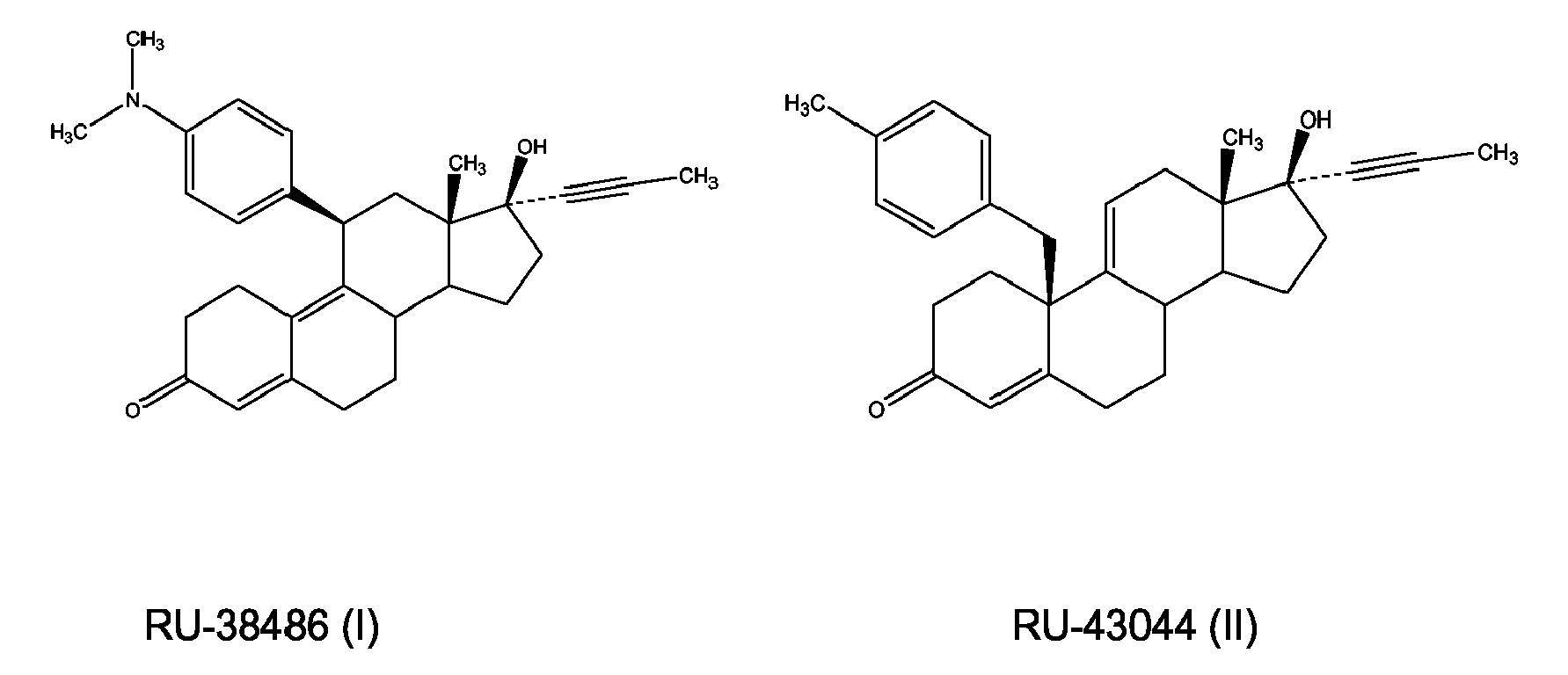

- B) Cortisol synthesis inhibitory properties have been ascribed to several drugs. For instance, ketoconazol, formula (V) was initially developed as an anti-fungal therapy. The drug inhibits unselectively the synthesis corticosteroids and at higher doses the synthesis of testosterone as observed by Pont et al., (1982) Ann. Intern. Med 97, 370-372; Engelhardt et al. (1983) Klin. Wochenschr. 61, 373-375; Van Tyle (1984) Pharmacotherapy 4, 343-373. Recently, the use of ketoconazole in cardiovascular and metabolic diseases has been claimed by e.g.
US 6,274582 B1 ,US 6,642,236 B1 ,US 2006/0014758 A1 . Aminogluthetimide, formula (VI) inhibits side-chain cleavage to produce medical adrenalectomy and furthermore several steroidogenic hydroxylation steps as described by Schteingart and Conn (1967) J. Clin. Endocrinol. Metab. 27, 1657-1666; Wipple et al. Steroids (1981) 37, 673-679; Lambert et al. (1984) Mol. Cell. Endocrinol 37, 115-120;. Therefore, aminogluthetimide induces adrenal insufficiency of both, glucocorticoids and mineralocorticoids in patients. Metyrapone, formula (VII) is an unselective 11 β-hydroxylase inhibitor and also used as a diagnostic tool for adrenal function. Trilostane, formula (VIII) is a steroidal 3β-hydroxysteroid dehydrogenase / delta 5-4 isomerase inhibitor in the adrenal cortex. The administration of trilostane results in the inhibition of the synthesis of both, mineralocorticoids and glucocorticods. A similar profile had been observed with CGS-16949A as noted by Lamberts et al. (1989) J. Clin. Endocrinol. Metab. 69, 896-901. Other drugs shown to inhibited cortisol output such as etomidate, epostane, thiopentone, ketotrilostane were described by Lambert et al. (1986) Ann. Clin. Biochem. 23, 225-229. Finally, mitotane, formula (IX) is a chemotherapeutic agent which is cytotoxic to the adrenal gland as studied by Touitou et al. (1979) J. Endocrinol. 82, 87-94. Several other analogous compounds were identified as 11-β-hydroxylase inhibitors such as 4-phenylimidazole, 1-benzylimidazole, 17-β-ureido-1,4-androstadien-3-one, SU-8000, 4-methyl-aminoglutethimide and 20-α-hydroxycholesterol as diescribed by Whipple et al. (1981) Steroids 37, 673-679. Recently, Ulmschneider et al. (2005) J. Med. Chem. 48, 1563-1575, described selective 11-β-hydroxylase (CYP11 B1) inhibitors that are derived from formula (X).


- C) The selective inhibition of cortisol re-synthesis by blockade of 11β-hydroxysteroid dehydrogenase type I to prevent the conversion of inactive glucocorticoid metabolites into active glucocorticoids in metabolically active tissues is a novel approach that is being investigated. The potential to inhibit 11β-hydroxysteroid dehydrogenase type I has been shown with liquorice extracts, glycyrrhetinic acid and carbenoxolone, formula (XI) as described by Andrews et al. (2003) J. Clin. Endocrinol. Metab. 88, 285-291; Li eta I. (2004) 53, 600-606. Chenodeoxycholic acid and metyrapone have also been described as enzyme inhibitors by Morris et al. (2004) 53, 811-816; Sampath-Kumar et al. (1997) 62, 195-199. Other structures such as perhydoquinolylbenzamides and flavanones have been characterized as 11β-hydroxysteroid dehydrogenase type I inhibitors by Coppola et al. (2005) Metabolism 48, 6696-6712 and Schweizer at al. (2003) Mol. Cell. Endocrinol. 212, 41-49. Compound 544, formula (XII) is described in the literature as a potent and enzyme selective inhibitor.

- D) Antagonists of the corticotrophin-releasing hormone receptors have been identified and described, for example by Chen et al. (1997) in J. Med. Chem. 40, 1749-1754 reporting the discovery of CP-154526, formula (XIII) or by Chen et al. (2004) in J. Med. Chem. 47, 4787-4798 reporting the identification of compound 26h, formula (XIV). Furthermore, patents and patent applications report novel corticotrophin-releasing hormone receptor antagonists such as, for example
US 6492520 B1 ,US 6245769 B1 ,US 5880135 ,EP 0691128 B1 ,WO 99/11643 US 2001/0025042 A1 ,US 2003/0229091 A1 ,WO 02/089814 A1 
- Aldosterone is a steroidal hormone that is mainly synthesized in the zona glomerulosa of the adrenal cortex by the enzyme aldosterone synthase (CYP11B2). The aldosterone synthase mediates the rate limiting conversion of 18-hydroxy-corticosterone into aldosterone. The synthesis and secretion of aldosterone is controlled by angiotensin II (Ang II), potassium (K+) excess and sodium (Na+) deficiency, as well as by adrenocorticotropic hormone. After the development of mineralocorticoid receptor blockers, a new pharmacological approach has been described to reduce excessive aldosterone actions. The approach consists in inhibiting aldosterone synthase (CYP11 B2), the rate-limiting and final enzymatic step for aldosterone synthesis.
- The imidazoles are a class of synthetic compounds that inhibit various cytochrome P450-mediated steroid hydroxylations. Certain imidazole derivatives have been described that exert inhibitory effects on aldosterone synthase (cf
US 5057521 ,JP 97-071586 WO 2001/76574 A2 WO 2004/046145 A1 ,WO 2004/014914 A1 ,WO 2005/118581 A1 ,WO 2005/118557 A2 ,WO 2005/118541 A2 . Fadrozole of formula (XV) (cf.US patents 4617307 and4889861 ), for example, is an imidazole that has been described by Demers et al. (1990) in the J. Clin. Endocrinol. Metab. 70, 1162-1166, to block specifically aromatase (CYP19) at daily dosages of 1-2 mg in postmenopausal patients with metastatic breast cancer yet at doses of 16 mg daily produced significant suppression of both basal and ACTH-stimulated aldosterone production. This effect was accompanied by a significant rise in the blood 18-hydroxy-corticosterone/aldosterone ratio consistent with an aldosterone synthase inhibition. - Recently, the fadrozole enantiomer FAD286, (+)-(5R)-4-(5,6,7,8-tetrahydro-imidazo[1,5-a]pyridine-5-yl)benzonitrile hydrochloride of formula (XVI) (cf.
WO 2001/76574 A2 
- The combined administration of an aldosterone synthase inhibitor together with an cortisol-suppressing agent, be it in form of a glucocorticoid receptor antagonist or a cortisol synthesis inhibitor or a cortisol re-synthesis inhibitor or a corticotrophin-releasing hormone receptor antagonist or a combination of said antagonists and inhibitors, in conditions characterized by hyperaldosteronism and hypercortisolism such as described for the metabolic syndrome offer the following benefits:
- (i) Treatment of multiple risk factors
- (ii) Improved therapeutic profile
- (iii) Improved safety profile
- The term "benefit" as used herein means that the effect achieved with the methods and compositions of the present invention is greater than the sum of the effects that result from methods and compositions comprising the active ingredients of this invention separately.
- Thus, an object of the instant invention is a pharmaceutical composition comprising
- (a) an aldosterone synthase inhibitor or a pharmaceutically acceptable salt thereof,
- (b) - a glucocorticoid receptor antagonist or
- a cortisol synthesis inhibitor or
- a cortisol re-synthesis inhibitor or
- a corticotrophin-releasing hormone receptor blocker or
- any combination of a glucocorticoid receptor antagonist, a cortisol synthesis inhibitor, a cortisol re-synthesis inhibitor and a corticotrophin-releasing hormone receptor blocker,
- (c) a pharmaceutically acceptable carrier.
- Above composition also relates to combinations of at least two different active compounds within one of the groups of cortisol suppressing agents, for example, two or more glucocorticoid receptor antagonists.
- A person skilled in the pertinent art is fully enabled to select a relevant and standard animal test model to show the hereinafter indicated therapeutic indications and beneficial effects. For example, the beneficial effects can be demonstrated in a test system as follows:
- The inhibition of the enzymes 11 β-hydroxylase (CYP11B1) and aldosterone synthase (CYP11B2) by compounds such as described by formula (V -X) and formula (XIII) may be tested by following in vitro assay. The human cell line NCI-H295R that was originally isolated from an adrenal carcinoma is extensively described in the literature for its stimulus-dependent steroid hormone secretion. The cells have the physiological characteristics of zonally undifferentiated human fetal adrenal cells, with the ability to produce the steroid hormones of each of the three phenotypically distinct zones found in the adult adrenal cortex.
- The NCI-295R cells (American Type Culture Collection, ATCC, Rockville, MD, USA) are cultured in Dulbecco's Modified Eagle'Ham F-12 medium (DME/F12) that is supplemented with Ultroser SF serum (Soprachem, Cergy-Saint-Christophe, France) as well as insulin, transferring, selenit (I-T-S, Becton Dickinson Biosciences, Franklin Lakes, NJ, USA) and antibiotics in 75 cm2 cell culture flasks at a temperature of 37 °C and a 95% air/5% CO2 humidified atmosphere. The cells are subsequently transferred in a 24-well plate and seeded in presence of DME/F12 medium that is supplemented with 0.1% bovine serum albumin instead of Ultroser SF serum. The experiment is initiated by incubating the cells for 72 h in DME/F12 medium supplemented with 0.1% bovine serum albumin and test compounds in presence or absence of cell stimulatory agents. The test compound or the mixture of test compounds is added in a concentration range of 0.2 nanomolar to 20 micromolar. As cell-stimulatory agents may serve angiotensin-II (at 10 or 100 nanomolar concentration), potassium ions (at 16 millimolar), forskolin (at 10 micromolar) or a combination of two agents. The cellular secretion of aldosterone, cortisol, corticosterone and estradiol/estrone into the cell culture medium can be quantitatively assessed with commercially available immuno-assays and specific monoclonal antibodies according to the manufacturer's instructions.
- The degree of secretion of a selective steroid is used as a measure of enzyme activity, respectively enzyme inhibition in presence of absence of a test compound. The dose-dependent enzyme inhibitory activity of a compound is reflected in an inhibition curve that is characterized by an IC50 value. The IC50 values for active test compounds are generated by simple linear regression analysis to establish inhibition curves without data weighing. The inhibition curve is generated by fitting a 4-parameter logistic function to the raw data of the samples using the least squares approach. The function is described as follows:

with: - a = minimum
- b = slope
- c= IC50
- d = maximum
- x = inhibitor concentrations
- The combinations of the present invention of an aldosterone synthase inhibitor and a cortisol synthesis inhibitor show inhibitory effects with minimal concentrations of about 10-3 to about 10-10 mol/l.
- The cortisol- and aldosterone-reducing effects of combinations of the present invention can be tested in vivo by the following protocol: Adult male Sprague Dawley rats, weighing between 125 and 150 grams are kept individually housed under the usual conditions of light and temperature. At 16:00 h on the first day of the experiment, the animals receive a subcutaneous injection of the depot ACTH in a dose of 1.0 mg/kg of weight (SYNACTEN-Depot, Novartis, Basel, CH). Pilot studies show that this ACTH dose increased plasma aldosterone and corticosterone significantly by approximately 10-fold and 15-fold, respectively, over a period of up to 18 hours. At 8:00 h in the morning of the second day, the animals, divided into test groups of 5 animals receive administered either water or a test compound in a variable dose range of 0.01 - 10 mg/kg orally by gavage. Subsequently, blood samples are taken in EDTA-treated Eppendorf tubes after various time intervals ranging from 0.5 h to 12 h. Plasma samples are obtained by centrifugation of the blood and can be stored at -20°C. The plasma samples are tested for their steroid content using commercially available steroid-specific radioimmunoassay. The time-dependent reduction of plasma steroid levels upon administration of a test compound is used as measure for pharmacodynamic efficacy and selectivity.
- The combinations according to the present invention comprising an aldosterone synthase inhibitor formula (XV-XVI) for example or a pharmaceutically acceptable salt thereof together with a glucocorticoid receptor blocker of formula (I-IV) for example or a pharmaceutically acceptable salt thereof, or a cortisol synthesis inhibitor of formula (V-X), respectively a cortisol re-synthesis inhibitor of formula (XI-XII) or a pharmaceutically acceptable salt thereof, respectively a corticotrophin-releasing hormone receptor antagonist of formula (XIII-XIV) can be administered by various routes of administration but are tested in this example upon oral administration. Each agent can be tested over a wide range of dosages to determine the optimal drug level for each agent in combination to elicit the maximal response. Each study is best performed in which the effects of the combination treatment group are determined at the same time as the individual components are evaluated. Although drug effects may be observed with acute administration (such as day 1), it is preferable to observe metabolic responses to steroid hormone suppression in a chronic setting as shown below in which experiments are done over a two to seven week observation period. The long-term study is of sufficient duration to allow for the full development of compensatory responses to occur and therefore, the observed effect will most likely depict the actual responses of the test system representing sustained or persistent effects.
- The obese spontaneously hypertensive rat (SHROB, Koletsky rat) is a unique strain with genetic obesity, hypertriglyceridemia, hyperinsulinemia, renal disease with proteinuria and genetically determined hypertension, all characteristics paralleling the human metabolic syndrome. SHROB rats have exaggerated circadian rhythms and abnormalities in hypothalamic function leading the hypersecretion of corticosterone. Despite multiple metabolic derangements, insulin resistance and hypertension are independent in this model.
- The combination therapy can be compared to that of the monotherapy groups by determining the change in plasma steroid parameters and change is single or multiple disease parameters. All values are represented as the group mean ± SEM. Statistical significance is obtained when p < 0.05. The AUC values for each of the treatment groups can be compared statistically using a one-way ANOVA followed by the appropriate post-hoc analysis, for example by performing a Tukey's test.
- The experiments are, typically, carried out with 5 treatment groups consisting of:
- Control animals
- SHROB plus vehicle
- SHROB plus aldosterone synthase inhibitor of formula (XV-XVI) at dose 1, 2, 3
- SHROB plus glucocorticoid receptor antagonist of formula (I-IV) at dose 1, 2, 3
- SHROB plus aldosterone synthase inhibitor at dose 1, 2, 3 and glucocorticoid receptor antagonist of formula (I-IV) at dose 1, 2, 3;
- It will be appreciated that above defined last and penultimate treatment groups may be composed of more than one cortisol suppressing agent, as contemplated throughout this invention, for instance:
- SHROB plus glucocorticoid receptor antagonist of formula (I-IV) at dose 1, 2, 3 and/or cortisol synthesis inhibitor of formula (V-X) at dose 1, 2, 3 and/or cortisol re-synthesis inhibitor of formula (XI-XII) at dose 1, 2, 3; and/or corticotrophin-releasing hormone receptor antagonist of formula (XIII-XIV) at dose 1, 2, 3
- SHROB plus aldosterone synthase inhibitor at dose 1, 2, 3 and glucocorticoid receptor antagonist of formula (I-IV) at dose 1, 2, 3; and/or cortisol synthesis inhibitor of formula (V-X) at dose 1, 2, 3; and/or cortisol re-synthesis inhibitor of formula (XI-XII) at dose 1, 2, 3; and/or corticotrophin-releasing hormone receptor antagonist of formula (XIII-XIV) at dose 1, 2, 3.
- The blood pressure of the mice will be monitored continuously via chronically implanted telemetric devices. In order to stimulate the renin angiotensin system an ALZET minipump may be applied in order to release subcutaneously at a constant rate a low dose of angiotensin II. Two hours after the last administration of the test compounds, blood samples will be taken from tail vein and by cardiac puncture, respectively under isoflurane anesthesia. The plasma samples are subjected to blood chemistry. Blood chemistry may determine the concentrations of aldosterone, corticosterone, glucose, and triglycerides. At the end of the study, kidneys and heart of the animals will be collected and subjected to weight and structural analysis.
- The dose 1, 2 and 3 are selected in prior pilot experiments using the SHROB rat model to achieve a pharmacological effect of low, intermediate and high potency, respectively. Low is defined as a sub-therapeutic dose with a minimal plasma steroid level change and pharmacodynamic effect. Intermediate is defined as a therapeutic dose with normalizing plasma steroid levels and optimal pharmacodynamic effects. High is defined as a supratherapeutic dose with maximal plasma steroid suppression and pharmacodynamic response. For an aldosterone synthase inhibitor of formula (XV-XVI) for example, the low dose may range from 0.05 mg/kg/day to 2 mg/kg/day, the intermediate dose from 0.2 mg/kg/day to 8 mg/kg/day and the high dose from 1 mg/kg/day to 40 mg/kg/day. Accordingly, for a glucocorticoid receptor antagonist of formula (I-IV) or a corticotrophin-releasing hormone receptor antagonist of formula (XIII-XIV) for example, the low dose may range from 0.5 mg/kg/day to 10 mg/kg/day, the intermediate dose from 10 mg/kg/day to 100 mg/kg/day and the high dose from 100 mg/kg/day to 500 mg/kg/day. For a cortisol synthesis inhibitor of formula (V-X) or a cortisol re-synthesis inhibitor of formula (XI-XII) for example, the low dose may range from 0.5 mg/kg/day to 20 mg/kg/day, the intermediate dose from 10 mg/kg/day to 50 mg/kg/day and the high dose from 50 mg/kg/day to 200 mg/kg/day.
- Serum is separated from nonheparinized blood. For urine analysis, the mice are individually housed in metabolic cages and 24 hour urine collected on 1 ml HCl 6 N. The concentrations of the steroids aldosterone, corticosterone, estradiol, dihydroepiandrostendione and dihydrotestosterone are measured by radioimmunoassays. Blood glucose is determined at various time points from tail bleeds using a glucometer. Plasma insulin is assayed using an ELISA kit. Plasma triglyceride and free fatty acid concentrations are measured using an enzymatic colometric test. Protein concentration in the urine is determined by the Coomassie blue G dye-binding method and urinary albumin by an ELISA assay. The concentrations of Na+ and K+ are measured by flame photometry.
- The animal studies reveal for an aldosterone-synthase inhibitor a dose-dependent suppression of aldosterone plasma levels and aldosterone-mediated effects on blood pressure as well as cardiac and kidney function. At the supra-therapeutic doses a suppression of corticosterone plasma levels is observed. The administration of a glucocorticoid or a corticotrophin-releasing hormone receptor antagonist reveals a dose-dependent suppression of corticosterone-mediated effects on glycemia and triglyceridemia as well as insulin resistance. At the supratherapeutic doses an increase in plasma sexsteroid hormone levels is observed with a glucocorticoid receptor antagonist. The administration of a cortisol synthesis inhibitor or a cortisol re-synthesis inhibitor results in a dose-dependent reduction in plasma glucose and triglyceride concentrations.
- The combined administration of an aldosterone synthase inhibitor and a glucocorticoid receptor/corticotrophin-releasing hormone antagonist or cortisol synthesis/re-synthesis inhibitor reveals a therapeutic effect on aldosterone-mediated blood pressure as well as cardiac and kidney function as well as a therapeutic effect on corticosterone-mediated plasma glycemia and triglyceridemia as well as cardiac and kidney function. The individual drugs applied in combination at therapeutic doses each yield a more potent effect on cardiorenal function than applied individually and the effect is not compromised by changes in plasma steroid levels i.e. stress hormones and sex-hormones.
- The animal studies indicate that the combined administration of an aldosterone synthase inhibitor and a glucocorticoid receptor antagonist and/or a cortisol synthesis inhibitor and/or a cortisol re-synthesis inhibitor and/or a corticotrophin-releasing hormone receptor antagonist may represent an effective therapy of conditions characterized by an aggregation of multiple diseases as defined for the metabolic syndrome. Accordingly, the invention of combined administration of an aldosterone synthase inhibitor together with a glucocorticoid blocking/suppressing agent relates also to a method for the prevention of, delay of progression of, treatment of a disease or condition selected from the group consisting of adrenal disease, primary aldosteronism, hyperaldosteronism, adrenal incidentalomas, essential hypertension and treatment-resistent hypertension, cushing's syndrome, insulin resistance, impaired glucose tolerance, diabetes mellitus type I and type II, obesity, metabolic syndrome, syndrome X, diabetic and non-diabetic nephropathy, glomerulosclerosis, diabetic retinopathy, macular degeneration, cataracts, diabetic neuropathy, foot, ulcerations, ulcerative colitis, erectile dysfunction, premenstrual syndrome, angina pectoris, congestive heart failure, renal failure, myocardial infarction, survival post-myocardial infarction, coronary heart disease, stroke, vascular restinosis, skin and connective tissue disorders, marfan syndrome, hypertension with increased formation of collagen, fibrosis, remodeling and endothelial dysfunction, atherosclerosis and vascular compliance, diseases and conditions characterized by hyperaldosteronism or relative aldosterone excess along with hypercortisolism or relative cortisol excess.
- The methods comprise the administration to a warm-blooded animal, including man, in need thereof a jointly effective amount of a combination of an aldosterone synthase inhibitor and a glucocorticoid receptor antagonist, or a cortisol synthesis inhibitor, or a cortisol re-synthesis inhibitor, or a corticotrophin-releasing hormone receptor antagonist or a combination of said antagonists and inhibitors. The combined administration of an aldosterone synthase inhibitor together with a glucocorticoid receptor antagonist or a cortisol synthesis inhibitor, or a cortisol re-synthesis inhibitor, or a corticotrophin-releasing hormone receptor blocker may represent a better tolerated and therefore safer therapy of conditions characterized by endocrine dysbalance. The benefits when applying the composition of the present invention are that lower doses of the individual drugs to be combined can be used to diminish the incidence of side effects. Lower doses may also imply that the dosages need to be applied less frequently.
- The therapeutically effective amounts of the individual drugs according to the present invention can be administered simultaneously or sequentially in any order, separately or in fixed combination. In a variation thereof, the present invention likewise relates to a "kit-of-parts", for example, in the sense that the components to be combined can be dosed independently or by use of different fixed combinations with distinguished amounts of the components. The parts of the kit of parts can then e.g. be administered simultaneously or chronologically staggered, that is at different time points and with equal or different time intervals for any part of the kit parts. Preferably, the time intervals are chosen such that the effect on the treated disease or condition in the combined use of the parts is larger and better tolerated than the effect that would be obtained by use of only one of the components.
- The invention furthermore relates to a commercial package comprising the combination according to the present invention together with instructions for simultaneous, separate or sequential use.
- The pharmaceutical preparations comprising the pharmacological active compound or combination of compounds either alone or together with customary pharmaceutical auxiliary substances are for enteral, such as oral, and rectal or parenteral administration to homeotherms. For example, the pharmaceutical preparations may consist from 1 % to 80% of the active compound or combination of compounds. Pharmaceutical preparations for enteral or parenteral and also for ocular administration are, for example, in unit dose forms such as coated tablets, tablets, capsules or suppositories and also ampoules. These are prepared in a manner that is known per se, for example using conventional mixing, granulation, coating, solubilizing or lyophilizing processes. Thus, the pharmaceutical preparations for oral use can be obtained and, if required or necessary, by processing the mixture or granulate into tablets or coated tablet cores after having added auxiliary substances.
- The dosage of the active compounds can depend on a variety of factors, such as mode of administration, homeothermic species, age and/or individual condition. Preferred dosages for the active drugs of the pharmaceutical combination according to the present invention are therapeutically effective dosages, especially those inferior or equal to the commercial recommendation of the individual active drug. Normally, in the case of oral administration for a patient of approximately 75 kg in weight, an approximate daily dose for an aldosterone synthase inhibitor as represented by compounds of formula (XV-XVI) may range from 0.2 mg to 200 mg per person per day, respectively from 5 to approximately 1000 mg for a glucocorticoid receptor antagonist as represented by
RU-38486 - The dose necessary for each individual can be monitored, for example by measuring the serum concentration of the active drugs and or the plasma steroid hormone levels and adjusted to an optimal level.
Claims (9)
- A pharmaceutical composition comprising(a) an aldosterone synthase inhibitor or a pharmaceutically acceptable salt thereof,(b)- a glucocorticoid receptor antagonist or- a cortisol synthesis inhibitor or- a cortisol re-synthesis inhibitor or- a corticotrophin-releasing hormone receptor blocker or- any combination of a glucocorticoid receptor antagonist, a cortisol synthesis inhibitor, a cortisol re-synthesis inhibitor and a corticotrophin-releasing hormone receptor blockerand in each case a pharmaceutically acceptable salt thereof, and(c) a pharmaceutically acceptable carrier.
- A pharmaceutical composition according to claim 1 wherein said aldosterone synthase inhibitor is fadrozole (compound of formula (XV)), or (+)-(5R)-4-(5,6,7,8-tetrahydro-imidazo[1,5-a]pyridine-5-yl)benzonitrile hydrochloride (compound of formula (XVI)), or in each case a pharmaceutically acceptable salt thereof
- A pharmaceutical composition according to claim 1 or 2 wherein said glucocorticoid receptor antagonist is mifepristone (compound of formula (I)), or a pharmaceutically acceptable salt thereof..
- A pharmaceutical composition according to any of claims 1 to 3 wherein said cortisol synthesis inhibitor is ketoconazole (compound of formula (V)), aminogluthetimide (compound of formula (VI)), metyrapone,(compound of formula (VII)) trilostane (compound of formula (VIII)), mitotane (compound of formula (IX)) or in each case a pharmaceutically acceptable salt thereof.
- A pharmaceutical composition according to claim 1 to 4 wherein said cortisol re-synthesis inhibitor is carbenoxolone (compound of formula (XI)), or a pharmaceutically acceptable salt thereof.
- A pharmaceutical composition according to claim 1 to 4 wherein said corticotrophin-releasing hormone receptor blocker is a compound of formula (XIII) or (XIV),
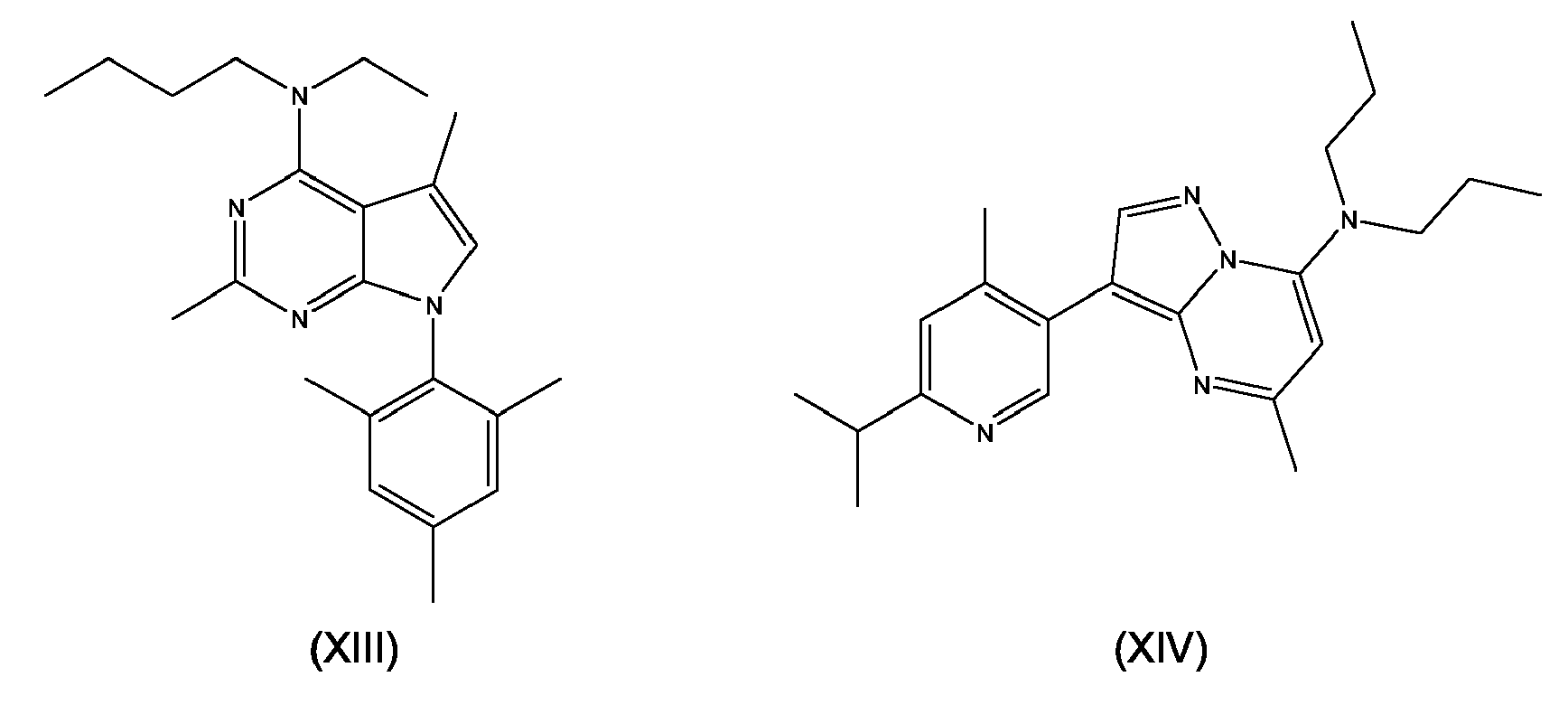
- Use of a combination comprisinga. an aldosterone synthase inhibitor or a pharmaceutically acceptable salt thereof, andb. a glucocorticoid receptor antagonist or a cortisol synthesis inhibitor or a cortisol re-synthesis inhibitor or a corticotrophin-releasing hormone receptor antagonist or combinations thereof or in each case a pharmaceutically acceptable salt thereoffor the manufacture of a medicament, in particular for the manufacture of a medicament for the prevention of, delay of progression of treatment of a disease or condition characterized by the metabolic syndrome.
- Use according to claim 7 for the manufacture of a medicament for the prevention of, delay of progression of treatment of a disease or condition characterized by hyperaldosteronism or aldosterone excess as well as hypercortisolims or cortisol excess such as adrenal disease, primary aldosteronism, primary hyperaldosteronism, adrenal incidentalomas, essential hypertension and treatment-resistent hypertension, Cushing's syndrome, insulin resistance, impaired glucose tolerance, diabetes mellitus type I and type II, obesity, metabolic syndrome, syndrome X, cushing's syndrome, diabetic and non-diabetic nephropathy, glomerulosclerosis, diabetic retinopathy, macular degeneration, cataracts, diabetic neuropathy, foot, ulcerations, ulcerative colitis, erectile dysfunction, premenstrual syndrome, angina pectoris, congestive heart failure, renal failure, myocardial infarction, survival post-myocardial infarction, coronary heart disease, stroke, vascular restinosis, skin and connective tissue disorders, Marfan syndrome, hypertension with increased formation of collagen, fibrosis, atherosclerosis and vascular compliance, remodeling and endothelial dysfunction.
- A method for the prevention of, delay of progression of, treatment of a disease or condition characterized by hyperaldosteronism or aldosterone excess as well as hypercortisolims or cortisol excess such as adrenal disease, primary aldosteronism, primary hyperaldosteronism, adrenal incidentalomas, essential hypertension and treatment-resistent hypertension, Cushing's syndrome, insulin resistance, impaired glucose tolerance, diabetes mellitus type I and type II, obesity, metabolic syndrome, syndrome X, cushing's syndrome, diabetic and non-diabetic nephropathy, glomerulosclerosis, diabetic retinopathy, macular degeneration, cataracts, diabetic neuropathy, foot, ulcerations, ulcerative colitis, erectile dysfunction, premenstrual syndrome, angina pectoris, congestive heart failure, renal failure, myocardial infarction, survival post-myocardial infarction, coronary heart disease, stroke, vascular restinosis, skin and connective tissue disorders, Marfan syndrome, hypertension with increased formation of collagen, fibrosis, atherosclerosis and vascular compliance, remodeling and endothelial dysfunction
characterized in that an effective amount of a pharmaceutical composition according to any of claims 1 to 6 is used.
Priority Applications (1)
| Application Number | Priority Date | Filing Date | Title |
|---|---|---|---|
| EP06116145A EP1886695A1 (en) | 2006-06-27 | 2006-06-27 | Pharmaceutical combination of an aldosterone synthase inhibitor and a glucocorticoid receptor antagonist or a cortisol synthesis inhibitor or a corticotropin releasing factor antagonist |
Applications Claiming Priority (1)
| Application Number | Priority Date | Filing Date | Title |
|---|---|---|---|
| EP06116145A EP1886695A1 (en) | 2006-06-27 | 2006-06-27 | Pharmaceutical combination of an aldosterone synthase inhibitor and a glucocorticoid receptor antagonist or a cortisol synthesis inhibitor or a corticotropin releasing factor antagonist |
Publications (1)
| Publication Number | Publication Date |
|---|---|
| EP1886695A1 true EP1886695A1 (en) | 2008-02-13 |
Family
ID=36997697
Family Applications (1)
| Application Number | Title | Priority Date | Filing Date |
|---|---|---|---|
| EP06116145A Withdrawn EP1886695A1 (en) | 2006-06-27 | 2006-06-27 | Pharmaceutical combination of an aldosterone synthase inhibitor and a glucocorticoid receptor antagonist or a cortisol synthesis inhibitor or a corticotropin releasing factor antagonist |
Country Status (1)
| Country | Link |
|---|---|
| EP (1) | EP1886695A1 (en) |
Cited By (33)
| Publication number | Priority date | Publication date | Assignee | Title |
|---|---|---|---|---|
| WO2010052445A1 (en) * | 2008-11-07 | 2010-05-14 | University Of Sheffield | Medicament and method of diagnosis |
| WO2010136493A1 (en) | 2009-05-28 | 2010-12-02 | Novartis Ag | Substituted aminopropionic derivatives as neprilysin inhibitors |
| WO2011061271A1 (en) | 2009-11-20 | 2011-05-26 | Novartis Ag | Substituted carbamoylmethylamino acetic acid derivatives as novel nep inhibitors |
| WO2012065956A1 (en) | 2010-11-16 | 2012-05-24 | Novartis Ag | Substituted amino bisphenyl pentanoic acid derivatives as nep inhibitors |
| WO2012065953A1 (en) | 2010-11-16 | 2012-05-24 | Novartis Ag | Substituted carbamoylcycloalkyl acetic acid derivatives as nep inhibitors |
| EP2532350A1 (en) * | 2007-10-17 | 2012-12-12 | Laboratoire HRA Pharma | Pharmaceutical combination of a glucocorticoid receptor antagonist and a cortisol synthesis inhibitor for treating cushing's syndrome |
| WO2013008164A2 (en) | 2011-07-08 | 2013-01-17 | Novartis Ag | Method of treating atherosclerosis in high triglyceride subjects |
| EP2567959A1 (en) | 2011-09-12 | 2013-03-13 | Sanofi | 6-(4-Hydroxy-phenyl)-3-styryl-1H-pyrazolo[3,4-b]pyridine-4-carboxylic acid amide derivatives as kinase inhibitors |
| US8609862B2 (en) | 2010-01-14 | 2013-12-17 | Novartis Ag | Use of an adrenal hormone-modifying agent |
| GB2503396A (en) * | 2008-11-07 | 2013-12-25 | Univ Sheffield | Treatment of subclinical Cushing's syndrome and/or incidentaloma |
| WO2014081702A2 (en) | 2012-11-20 | 2014-05-30 | Novartis Ag | Synthetic linear apelin mimetics for the treatment of heart failure |
| WO2014126979A1 (en) | 2013-02-14 | 2014-08-21 | Novartis Ag | Substituted bisphenyl butanoic phosphonic acid derivatives as nep (neutral endopeptidase) inhibitors |
| WO2015013169A2 (en) | 2013-07-25 | 2015-01-29 | Novartis Ag | Bioconjugates of synthetic apelin polypeptides |
| WO2015013168A1 (en) | 2013-07-25 | 2015-01-29 | Novartis Ag | Cyclic polypeptides for the treatment of heart failure |
| WO2015116947A1 (en) * | 2014-02-01 | 2015-08-06 | University Of Connecticut | Itraconazole analogues and methods of use thereof |
| EP3048100A1 (en) | 2009-05-28 | 2016-07-27 | Novartis AG | Substituted aminobutyric derivatives as neprilysin inhibitors |
| WO2016116842A1 (en) | 2015-01-23 | 2016-07-28 | Novartis Ag | Synthetic apelin fatty acid conjugates with improved half-life |
| WO2018073788A1 (en) | 2016-10-21 | 2018-04-26 | Novartis Ag | Naphthyridinone derivatives and their use in the treatment of arrhythmia |
| WO2018078049A1 (en) * | 2016-10-27 | 2018-05-03 | Damian Pharma Ag | Aldosterone synthase inhibitor |
| CN109890389A (en) * | 2016-10-27 | 2019-06-14 | 达米安制药股份公司 | Aldosterone synthase inhibitors |
| WO2019154416A1 (en) | 2018-02-07 | 2019-08-15 | Novartis Ag | Substituted bisphenyl butanoic ester derivatives as nep inhibitors |
| WO2019211394A1 (en) * | 2018-05-03 | 2019-11-07 | Damian Pharma Ag | R-fadrozole for use in the treatment of aldostonerism |
| CN111171049A (en) * | 2018-11-09 | 2020-05-19 | 山东轩竹医药科技有限公司 | Tyrosine kinase inhibitors and uses thereof |
| WO2020110008A1 (en) | 2018-11-27 | 2020-06-04 | Novartis Ag | Cyclic pentamer compounds as proprotein convertase subtilisin/kexin type 9 (pcsk9) inhibitors for the treatment of metabolic disorder |
| WO2020110011A1 (en) | 2018-11-27 | 2020-06-04 | Novartis Ag | Cyclic peptides as proprotein convertase subtilisin/kexin type 9 (pcsk9) inhibitors for the treatment of metabolic disorders |
| WO2020110009A1 (en) | 2018-11-27 | 2020-06-04 | Novartis Ag | Cyclic tetramer compounds as proprotein convertase subtilisin/kexin type 9 (pcsk9) inhibitors for the treatment of metabolic disorders |
| US10842800B2 (en) | 2017-03-01 | 2020-11-24 | Corcept Therapeutics, Inc. | Concomitant administration of glucocorticoid receptor modulators and CYP3A inhibitors |
| US11285145B2 (en) | 2020-05-27 | 2022-03-29 | Corcept Therapeutics Incorporated | Concomitant administration of glucocorticoid receptor modulator relacorilant and paclitaxel, a dual substrate of CYP2C8 and CYP3A4 |
| US11390613B2 (en) | 2017-08-20 | 2022-07-19 | University Of Connecticut | Azole analogues and methods of use thereof |
| WO2023084449A1 (en) | 2021-11-12 | 2023-05-19 | Novartis Ag | Diaminocyclopentylpyridine derivatives for the treatment of a disease or disorder |
| WO2023094965A1 (en) | 2021-11-23 | 2023-06-01 | Novartis Ag | Naphthyridinone derivatives for the treatment of a disease or disorder |
| WO2024241229A1 (en) | 2023-05-24 | 2024-11-28 | Novartis Ag | Naphthyridinone derivatives for the treatment of a disease or disorder |
| US12435067B2 (en) | 2019-08-09 | 2025-10-07 | University Of Connecticut | Truncated itraconazole analogues and methods of use thereof |
Citations (7)
| Publication number | Priority date | Publication date | Assignee | Title |
|---|---|---|---|---|
| WO1996004912A1 (en) * | 1994-08-09 | 1996-02-22 | Metabolic Syndrome I Gbg Ab | Use of ketoconazole and related substances in medicaments for treatment of type ii diabetes |
| EP0903146A1 (en) * | 1997-09-23 | 1999-03-24 | Applied Research Systems ARS Holdings N.V. | 21-Hydroy-6,19-oxidoprogesterone (210h-60p) as antiglucocorticoid |
| EP1097709A2 (en) * | 1999-10-29 | 2001-05-09 | Pfizer Products Inc. | Use of corticotropin releasing factor antagonists for treating syndrome X |
| WO2001052833A1 (en) * | 2000-01-21 | 2001-07-26 | Cortendo Ab | Compositions for delivery of a cortisol antagonist |
| WO2005118557A2 (en) * | 2004-05-28 | 2005-12-15 | Speedel Experimenta Ag | Heterocyclic compounds and their use as aldosterone synthase inhibitors |
| WO2005118541A2 (en) * | 2004-05-28 | 2005-12-15 | Speedel Experimenta Ag | Heterocyclic compounds and their use as aldosterone synthase inhibitors |
| WO2006005726A2 (en) * | 2004-07-09 | 2006-01-19 | Speedel Experimenta Ag | Heterocyclic compounds |
-
2006
- 2006-06-27 EP EP06116145A patent/EP1886695A1/en not_active Withdrawn
Patent Citations (7)
| Publication number | Priority date | Publication date | Assignee | Title |
|---|---|---|---|---|
| WO1996004912A1 (en) * | 1994-08-09 | 1996-02-22 | Metabolic Syndrome I Gbg Ab | Use of ketoconazole and related substances in medicaments for treatment of type ii diabetes |
| EP0903146A1 (en) * | 1997-09-23 | 1999-03-24 | Applied Research Systems ARS Holdings N.V. | 21-Hydroy-6,19-oxidoprogesterone (210h-60p) as antiglucocorticoid |
| EP1097709A2 (en) * | 1999-10-29 | 2001-05-09 | Pfizer Products Inc. | Use of corticotropin releasing factor antagonists for treating syndrome X |
| WO2001052833A1 (en) * | 2000-01-21 | 2001-07-26 | Cortendo Ab | Compositions for delivery of a cortisol antagonist |
| WO2005118557A2 (en) * | 2004-05-28 | 2005-12-15 | Speedel Experimenta Ag | Heterocyclic compounds and their use as aldosterone synthase inhibitors |
| WO2005118541A2 (en) * | 2004-05-28 | 2005-12-15 | Speedel Experimenta Ag | Heterocyclic compounds and their use as aldosterone synthase inhibitors |
| WO2006005726A2 (en) * | 2004-07-09 | 2006-01-19 | Speedel Experimenta Ag | Heterocyclic compounds |
Non-Patent Citations (5)
| Title |
|---|
| BAEHR V ET AL: "THE METABOLIC SYNDROME X AND PERIPHERAL CORTISOL SYNTHESIS", EXPERIMENTAL AND CLINICAL ENDOCRINOLOGY AND DIABETES, JOHANN AMBROSIUS BARTH, DE, vol. 110, no. 7, 2002, pages 313 - 318, XP008015667, ISSN: 0947-7349 * |
| CHU JAMES W ET AL: "Successful long-term treatment of refractory Cushing's disease with high-dose mifepristone (RU 486)", JOURNAL OF CLINICAL ENDOCRINOLOGY AND METABOLISM, vol. 86, no. 8, August 2001 (2001-08-01), pages 3568 - 3573, XP002410091, ISSN: 0021-972X * |
| FALLO F ET AL: "Prevalence and characteristics of the metabolic syndrome in primary aldosteronism", JOURNAL OF CLINICAL ENDOCRINOLOGY AND METABOLISM 2006 UNITED STATES, vol. 91, no. 2, February 2006 (2006-02-01), pages 454 - 459, XP009075525, ISSN: 0021-972X 0021-972X * |
| MELLIN VIRGINIE ET AL: "Long-term aldosterone synthase inhibition improves cardiac function and myocardial structure in chronic heart failure", CIRCULATION, vol. 110, no. 17, Suppl. S, October 2004 (2004-10-01), & 77TH SCIENTIFIC MEETING OF THE AMERICAN-HEART-ASSOCIATION; NEW ORLEANS, LA, USA; NOVEMBER 07 -10, 2004, pages 513 - 514, XP009075442, ISSN: 0009-7322 * |
| VOETS M ET AL: "Synthesis and evaluation of heteroaryl-substituted dihydronaphthalenes and indenes: potent and selective inhibitors of aldosterone synthase (CYP11B2) for the treatment of congestive heart failure and myocardial fibrosis", JOURNAL OF MEDICINAL CHEMISTRY, AMERICAN CHEMICAL SOCIETY. WASHINGTON, US, vol. 49, no. 7, 8 March 2006 (2006-03-08), pages 2222 - 2231, XP002386733, ISSN: 0022-2623 * |
Cited By (69)
| Publication number | Priority date | Publication date | Assignee | Title |
|---|---|---|---|---|
| EP2532350A1 (en) * | 2007-10-17 | 2012-12-12 | Laboratoire HRA Pharma | Pharmaceutical combination of a glucocorticoid receptor antagonist and a cortisol synthesis inhibitor for treating cushing's syndrome |
| GB2477256B (en) * | 2008-11-07 | 2013-12-25 | Univ Sheffield | Determination of predisposition towards subclinical Cushing's syndrome or incidentaloma |
| WO2010052445A1 (en) * | 2008-11-07 | 2010-05-14 | University Of Sheffield | Medicament and method of diagnosis |
| GB2477256A (en) * | 2008-11-07 | 2011-07-27 | Univ Sheffield | Medicament and method of diagnosis |
| US9216221B2 (en) | 2008-11-07 | 2015-12-22 | University Of Sheffield | Medicament and method of diagnosis for treating subclinical Cushing's syndrome |
| EP3607942A1 (en) * | 2008-11-07 | 2020-02-12 | University of Sheffield | Medicament and method of diagnosis |
| GB2503396A (en) * | 2008-11-07 | 2013-12-25 | Univ Sheffield | Treatment of subclinical Cushing's syndrome and/or incidentaloma |
| WO2010136493A1 (en) | 2009-05-28 | 2010-12-02 | Novartis Ag | Substituted aminopropionic derivatives as neprilysin inhibitors |
| EP3048100A1 (en) | 2009-05-28 | 2016-07-27 | Novartis AG | Substituted aminobutyric derivatives as neprilysin inhibitors |
| EP2594556A1 (en) | 2009-05-28 | 2013-05-22 | Novartis AG | Substituted aminopropionic derivatives as neprilysin inhibitors |
| EP2594557A1 (en) | 2009-05-28 | 2013-05-22 | Novartis AG | Substituted aminopropionic derivatives as neprilysin inhibitors |
| EP2735561A1 (en) | 2009-11-20 | 2014-05-28 | Novartis AG | Substituted carbamoylmethylamino acetic acid derivatives as novel NEP inhibitors |
| WO2011061271A1 (en) | 2009-11-20 | 2011-05-26 | Novartis Ag | Substituted carbamoylmethylamino acetic acid derivatives as novel nep inhibitors |
| US8609862B2 (en) | 2010-01-14 | 2013-12-17 | Novartis Ag | Use of an adrenal hormone-modifying agent |
| US9434754B2 (en) | 2010-01-14 | 2016-09-06 | Novartis Ag | Use of an adrenal hormone-modifying agent |
| WO2012065953A1 (en) | 2010-11-16 | 2012-05-24 | Novartis Ag | Substituted carbamoylcycloalkyl acetic acid derivatives as nep inhibitors |
| WO2012065956A1 (en) | 2010-11-16 | 2012-05-24 | Novartis Ag | Substituted amino bisphenyl pentanoic acid derivatives as nep inhibitors |
| WO2013008164A2 (en) | 2011-07-08 | 2013-01-17 | Novartis Ag | Method of treating atherosclerosis in high triglyceride subjects |
| EP2567959A1 (en) | 2011-09-12 | 2013-03-13 | Sanofi | 6-(4-Hydroxy-phenyl)-3-styryl-1H-pyrazolo[3,4-b]pyridine-4-carboxylic acid amide derivatives as kinase inhibitors |
| WO2014081702A2 (en) | 2012-11-20 | 2014-05-30 | Novartis Ag | Synthetic linear apelin mimetics for the treatment of heart failure |
| WO2014126979A1 (en) | 2013-02-14 | 2014-08-21 | Novartis Ag | Substituted bisphenyl butanoic phosphonic acid derivatives as nep (neutral endopeptidase) inhibitors |
| WO2015013168A1 (en) | 2013-07-25 | 2015-01-29 | Novartis Ag | Cyclic polypeptides for the treatment of heart failure |
| WO2015013169A2 (en) | 2013-07-25 | 2015-01-29 | Novartis Ag | Bioconjugates of synthetic apelin polypeptides |
| WO2015116947A1 (en) * | 2014-02-01 | 2015-08-06 | University Of Connecticut | Itraconazole analogues and methods of use thereof |
| US9650365B2 (en) | 2014-02-01 | 2017-05-16 | University Of Connecticut | Itraconazole analogues and methods of use thereof |
| US9839636B2 (en) | 2014-02-01 | 2017-12-12 | University Of Connecticut | Itraconazole analogues and methods of use thereof |
| WO2016116842A1 (en) | 2015-01-23 | 2016-07-28 | Novartis Ag | Synthetic apelin fatty acid conjugates with improved half-life |
| WO2018073788A1 (en) | 2016-10-21 | 2018-04-26 | Novartis Ag | Naphthyridinone derivatives and their use in the treatment of arrhythmia |
| EP4141006A1 (en) | 2016-10-21 | 2023-03-01 | Novartis AG | Naphthyridinone derivatives and their use in the treatment of arrhythmia |
| KR20230037680A (en) * | 2016-10-27 | 2023-03-16 | 다미안 파르마 에이쥐 | Aldosterone synthase inhibitor |
| CN109890389B (en) * | 2016-10-27 | 2022-07-01 | 达米安制药股份公司 | Aldosterone synthase inhibitors |
| US12202827B2 (en) | 2016-10-27 | 2025-01-21 | Damian Pharma Ag | Aldosterone synthase inhibitor |
| JP2019532975A (en) * | 2016-10-27 | 2019-11-14 | ダミアン ファーマ アーゲー | Aldosterone synthase inhibitor |
| KR20190071715A (en) * | 2016-10-27 | 2019-06-24 | 다미안 파르마 에이쥐 | Aldosterone synthase inhibitor |
| AU2022201401B2 (en) * | 2016-10-27 | 2024-02-15 | Damian Pharma Ag | Aldosterone synthase inhibitor |
| IL266056B2 (en) * | 2016-10-27 | 2023-08-01 | Damian Pharma Ag | Aldosterone synthase inhibitor |
| IL266056B1 (en) * | 2016-10-27 | 2023-04-01 | Damian Pharma Ag | Aldosterone synthase inhibitor |
| WO2018078049A1 (en) * | 2016-10-27 | 2018-05-03 | Damian Pharma Ag | Aldosterone synthase inhibitor |
| US10822332B2 (en) | 2016-10-27 | 2020-11-03 | Damian Pharma Ag | Aldosterone synthase inhibitor |
| CN109890389A (en) * | 2016-10-27 | 2019-06-14 | 达米安制药股份公司 | Aldosterone synthase inhibitors |
| JP2022176994A (en) * | 2016-10-27 | 2022-11-30 | ダミアン ファーマ アーゲー | Aldosterone synthase inhibitor |
| US11447491B2 (en) | 2016-10-27 | 2022-09-20 | Damian Pharma Ag | Aldosterone synthase inhibitor |
| CN114853755A (en) * | 2016-10-27 | 2022-08-05 | 达米安制药股份公司 | Aldosterone synthase inhibitors |
| AU2017350484B2 (en) * | 2016-10-27 | 2021-12-02 | Damian Pharma Ag | Aldosterone synthase inhibitor |
| US10842800B2 (en) | 2017-03-01 | 2020-11-24 | Corcept Therapeutics, Inc. | Concomitant administration of glucocorticoid receptor modulators and CYP3A inhibitors |
| US11969435B2 (en) | 2017-03-01 | 2024-04-30 | Corcept Therapeutics, Inc. | Concomitant administration of glucocorticoid receptor modulators and CYP3A inhibitors |
| US12097210B2 (en) | 2017-03-01 | 2024-09-24 | Corcept Therapeutics, Inc. | Concomitant administration of glucocorticoid receptor modulators and CYP3A inhibitors |
| US11390613B2 (en) | 2017-08-20 | 2022-07-19 | University Of Connecticut | Azole analogues and methods of use thereof |
| WO2019154416A1 (en) | 2018-02-07 | 2019-08-15 | Novartis Ag | Substituted bisphenyl butanoic ester derivatives as nep inhibitors |
| EP3778557A1 (en) | 2018-02-07 | 2021-02-17 | Novartis AG | Combinations comprising a substituted biphenylbutanoic ester derivative as nep inhibitor and valsartan |
| WO2019211394A1 (en) * | 2018-05-03 | 2019-11-07 | Damian Pharma Ag | R-fadrozole for use in the treatment of aldostonerism |
| AU2019262310B2 (en) * | 2018-05-03 | 2025-03-13 | Damian Pharma Ag | R-fadrozole for use in the treatment of aldostonerism |
| CN112055590A (en) * | 2018-05-03 | 2020-12-08 | 达米安制药股份公司 | R-fadrozole for the treatment of aldosteronism |
| US11992479B2 (en) | 2018-05-03 | 2024-05-28 | Damian Pharma Ag | R-fadrozole for use in the treatment of aldostonerism |
| JP2024102067A (en) * | 2018-05-03 | 2024-07-30 | ダミアン ファーマ アーゲー | R-fadrozole for use in the treatment of aldosteronism |
| IL278241B1 (en) * | 2018-05-03 | 2024-08-01 | Damian Pharma Ag | R-fadrozole for use in the treatment of aldosteronism |
| CN111171049A (en) * | 2018-11-09 | 2020-05-19 | 山东轩竹医药科技有限公司 | Tyrosine kinase inhibitors and uses thereof |
| CN111171049B (en) * | 2018-11-09 | 2021-06-04 | 山东轩竹医药科技有限公司 | Tyrosine kinase inhibitors and uses thereof |
| WO2020110009A1 (en) | 2018-11-27 | 2020-06-04 | Novartis Ag | Cyclic tetramer compounds as proprotein convertase subtilisin/kexin type 9 (pcsk9) inhibitors for the treatment of metabolic disorders |
| WO2020110011A1 (en) | 2018-11-27 | 2020-06-04 | Novartis Ag | Cyclic peptides as proprotein convertase subtilisin/kexin type 9 (pcsk9) inhibitors for the treatment of metabolic disorders |
| WO2020110008A1 (en) | 2018-11-27 | 2020-06-04 | Novartis Ag | Cyclic pentamer compounds as proprotein convertase subtilisin/kexin type 9 (pcsk9) inhibitors for the treatment of metabolic disorder |
| US12435067B2 (en) | 2019-08-09 | 2025-10-07 | University Of Connecticut | Truncated itraconazole analogues and methods of use thereof |
| US11944617B2 (en) | 2020-05-27 | 2024-04-02 | Corcept Therapeutics Incorporated | Concomitant administration of glucocorticoid receptor modulator relacorilant and paclitaxel, a dual substrate of CYP2C8 and CYP3A4 |
| US11285145B2 (en) | 2020-05-27 | 2022-03-29 | Corcept Therapeutics Incorporated | Concomitant administration of glucocorticoid receptor modulator relacorilant and paclitaxel, a dual substrate of CYP2C8 and CYP3A4 |
| US12589094B2 (en) | 2020-05-27 | 2026-03-31 | Corcept Therapeutics Incorporated | Concomitant administration of glucocorticoid receptor modulator relacorilant and paclitaxel, a dual substrate of CYP2C8 and CYP3A4 |
| WO2023084449A1 (en) | 2021-11-12 | 2023-05-19 | Novartis Ag | Diaminocyclopentylpyridine derivatives for the treatment of a disease or disorder |
| WO2023094965A1 (en) | 2021-11-23 | 2023-06-01 | Novartis Ag | Naphthyridinone derivatives for the treatment of a disease or disorder |
| EP4656240A1 (en) | 2021-11-23 | 2025-12-03 | Novartis AG | Naphthyridinone derivatives for the treatment of a disease or disorder |
| WO2024241229A1 (en) | 2023-05-24 | 2024-11-28 | Novartis Ag | Naphthyridinone derivatives for the treatment of a disease or disorder |
Similar Documents
| Publication | Publication Date | Title |
|---|---|---|
| AU2022263460B2 (en) | CRF1 receptor antagonists for the treatment of congenital adrenal hyperplasia | |
| KR20210153056A (en) | How to improve insulin sensitivity | |
| Rigel et al. | Pharmacodynamic and pharmacokinetic characterization of the aldosterone synthase inhibitor FAD286 in two rodent models of hyperaldosteronism: comparison with the 11β-hydroxylase inhibitor metyrapone | |
| US20040067918A1 (en) | Combination of an aldosterone receptor antagonist and nicotinic acid or a nicotinic acid derivative | |
| CA2407699A1 (en) | Use of an aldosterone antagonist for the treatment or prophylaxis of aldosterone-mediated pathogenic effects | |
| EP4076470B1 (en) | Treatment of, and differential diagnosis between, acth-dependent cushing's syndrome and acth-independent cushing's syndrome | |
| EP1842543A1 (en) | Pharmaceutical composition coprising an aldosterone synthase inhibitor and a mineralcorticoid receptor antagonist | |
| HK40116454A (en) | Crf1 receptor antagonists for the treatment of congenital adrenal hyperplasia | |
| HK40030956A (en) | Crf1 receptor antagonists for the treatment of congenital adrenal hyperplasia | |
| JP2005523302A (en) | Combination of aldosterone receptor antagonist and fibric acid derivative | |
| HK1231749B (en) | Crf1 receptor antagonists for the treatment of congenital adrenal hyperplasia |
Legal Events
| Date | Code | Title | Description |
|---|---|---|---|
| PUAI | Public reference made under article 153(3) epc to a published international application that has entered the european phase |
Free format text: ORIGINAL CODE: 0009012 |
|
| AK | Designated contracting states |
Kind code of ref document: A1 Designated state(s): AT BE BG CH CY CZ DE DK EE ES FI FR GB GR HU IE IS IT LI LT LU LV MC NL PL PT RO SE SI SK TR |
|
| AX | Request for extension of the european patent |
Extension state: AL BA HR MK YU |
|
| AKX | Designation fees paid | ||
| REG | Reference to a national code |
Ref country code: DE Ref legal event code: 8566 |
|
| STAA | Information on the status of an ep patent application or granted ep patent |
Free format text: STATUS: THE APPLICATION IS DEEMED TO BE WITHDRAWN |
|
| 18D | Application deemed to be withdrawn |
Effective date: 20080814 |