EP1886660A1 - Antimicrobial hand wash - Google Patents
Antimicrobial hand wash Download PDFInfo
- Publication number
- EP1886660A1 EP1886660A1 EP07252834A EP07252834A EP1886660A1 EP 1886660 A1 EP1886660 A1 EP 1886660A1 EP 07252834 A EP07252834 A EP 07252834A EP 07252834 A EP07252834 A EP 07252834A EP 1886660 A1 EP1886660 A1 EP 1886660A1
- Authority
- EP
- European Patent Office
- Prior art keywords
- acid
- primary
- hand wash
- base
- antimicrobial
- Prior art date
- Legal status (The legal status is an assumption and is not a legal conclusion. Google has not performed a legal analysis and makes no representation as to the accuracy of the status listed.)
- Granted
Links
Images
Classifications
-
- C—CHEMISTRY; METALLURGY
- C11—ANIMAL OR VEGETABLE OILS, FATS, FATTY SUBSTANCES OR WAXES; FATTY ACIDS THEREFROM; DETERGENTS; CANDLES
- C11D—DETERGENT COMPOSITIONS; USE OF SINGLE SUBSTANCES AS DETERGENTS; SOAP OR SOAP-MAKING; RESIN SOAPS; RECOVERY OF GLYCEROL
- C11D3/00—Other compounding ingredients of detergent compositions covered in group C11D1/00
- C11D3/48—Medical, disinfecting agents, disinfecting, antibacterial, germicidal or antimicrobial compositions
-
- A—HUMAN NECESSITIES
- A61—MEDICAL OR VETERINARY SCIENCE; HYGIENE
- A61K—PREPARATIONS FOR MEDICAL, DENTAL OR TOILETRY PURPOSES
- A61K8/00—Cosmetics or similar toiletry preparations
- A61K8/18—Cosmetics or similar toiletry preparations characterised by the composition
- A61K8/30—Cosmetics or similar toiletry preparations characterised by the composition containing organic compounds
- A61K8/33—Cosmetics or similar toiletry preparations characterised by the composition containing organic compounds containing oxygen
- A61K8/36—Carboxylic acids; Salts or anhydrides thereof
- A61K8/361—Carboxylic acids having more than seven carbon atoms in an unbroken chain; Salts or anhydrides thereof
-
- A—HUMAN NECESSITIES
- A61—MEDICAL OR VETERINARY SCIENCE; HYGIENE
- A61K—PREPARATIONS FOR MEDICAL, DENTAL OR TOILETRY PURPOSES
- A61K8/00—Cosmetics or similar toiletry preparations
- A61K8/18—Cosmetics or similar toiletry preparations characterised by the composition
- A61K8/30—Cosmetics or similar toiletry preparations characterised by the composition containing organic compounds
- A61K8/33—Cosmetics or similar toiletry preparations characterised by the composition containing organic compounds containing oxygen
- A61K8/36—Carboxylic acids; Salts or anhydrides thereof
- A61K8/365—Hydroxycarboxylic acids; Ketocarboxylic acids
-
- A—HUMAN NECESSITIES
- A61—MEDICAL OR VETERINARY SCIENCE; HYGIENE
- A61K—PREPARATIONS FOR MEDICAL, DENTAL OR TOILETRY PURPOSES
- A61K8/00—Cosmetics or similar toiletry preparations
- A61K8/18—Cosmetics or similar toiletry preparations characterised by the composition
- A61K8/30—Cosmetics or similar toiletry preparations characterised by the composition containing organic compounds
- A61K8/40—Cosmetics or similar toiletry preparations characterised by the composition containing organic compounds containing nitrogen
- A61K8/41—Amines
-
- A—HUMAN NECESSITIES
- A61—MEDICAL OR VETERINARY SCIENCE; HYGIENE
- A61P—SPECIFIC THERAPEUTIC ACTIVITY OF CHEMICAL COMPOUNDS OR MEDICINAL PREPARATIONS
- A61P31/00—Antiinfectives, i.e. antibiotics, antiseptics, chemotherapeutics
- A61P31/02—Local antiseptics
-
- A—HUMAN NECESSITIES
- A61—MEDICAL OR VETERINARY SCIENCE; HYGIENE
- A61Q—SPECIFIC USE OF COSMETICS OR SIMILAR TOILETRY PREPARATIONS
- A61Q17/00—Barrier preparations; Preparations brought into direct contact with the skin for affording protection against external influences, e.g. sunlight, X-rays or other harmful rays, corrosive materials, bacteria or insect stings
- A61Q17/005—Antimicrobial preparations
-
- A—HUMAN NECESSITIES
- A61—MEDICAL OR VETERINARY SCIENCE; HYGIENE
- A61Q—SPECIFIC USE OF COSMETICS OR SIMILAR TOILETRY PREPARATIONS
- A61Q19/00—Preparations for care of the skin
- A61Q19/10—Washing or bathing preparations
-
- C—CHEMISTRY; METALLURGY
- C11—ANIMAL OR VEGETABLE OILS, FATS, FATTY SUBSTANCES OR WAXES; FATTY ACIDS THEREFROM; DETERGENTS; CANDLES
- C11D—DETERGENT COMPOSITIONS; USE OF SINGLE SUBSTANCES AS DETERGENTS; SOAP OR SOAP-MAKING; RESIN SOAPS; RECOVERY OF GLYCEROL
- C11D11/00—Special methods for preparing compositions containing mixtures of detergents
- C11D11/04—Special methods for preparing compositions containing mixtures of detergents by chemical means, e.g. by sulfonating in the presence of other compounding ingredients followed by neutralising
-
- C—CHEMISTRY; METALLURGY
- C11—ANIMAL OR VEGETABLE OILS, FATS, FATTY SUBSTANCES OR WAXES; FATTY ACIDS THEREFROM; DETERGENTS; CANDLES
- C11D—DETERGENT COMPOSITIONS; USE OF SINGLE SUBSTANCES AS DETERGENTS; SOAP OR SOAP-MAKING; RESIN SOAPS; RECOVERY OF GLYCEROL
- C11D17/00—Detergent materials or soaps characterised by their shape or physical properties
- C11D17/08—Liquid soap, e.g. for dispensers; capsuled
-
- C—CHEMISTRY; METALLURGY
- C11—ANIMAL OR VEGETABLE OILS, FATS, FATTY SUBSTANCES OR WAXES; FATTY ACIDS THEREFROM; DETERGENTS; CANDLES
- C11D—DETERGENT COMPOSITIONS; USE OF SINGLE SUBSTANCES AS DETERGENTS; SOAP OR SOAP-MAKING; RESIN SOAPS; RECOVERY OF GLYCEROL
- C11D3/00—Other compounding ingredients of detergent compositions covered in group C11D1/00
- C11D3/48—Medical, disinfecting agents, disinfecting, antibacterial, germicidal or antimicrobial compositions
- C11D3/485—Halophors, e.g. iodophors
-
- C—CHEMISTRY; METALLURGY
- C11—ANIMAL OR VEGETABLE OILS, FATS, FATTY SUBSTANCES OR WAXES; FATTY ACIDS THEREFROM; DETERGENTS; CANDLES
- C11D—DETERGENT COMPOSITIONS; USE OF SINGLE SUBSTANCES AS DETERGENTS; SOAP OR SOAP-MAKING; RESIN SOAPS; RECOVERY OF GLYCEROL
- C11D9/00—Compositions of detergents based essentially on soap
- C11D9/002—Non alkali-metal soaps
-
- C—CHEMISTRY; METALLURGY
- C11—ANIMAL OR VEGETABLE OILS, FATS, FATTY SUBSTANCES OR WAXES; FATTY ACIDS THEREFROM; DETERGENTS; CANDLES
- C11D—DETERGENT COMPOSITIONS; USE OF SINGLE SUBSTANCES AS DETERGENTS; SOAP OR SOAP-MAKING; RESIN SOAPS; RECOVERY OF GLYCEROL
- C11D9/00—Compositions of detergents based essentially on soap
- C11D9/04—Compositions of detergents based essentially on soap containing compounding ingredients other than soaps
- C11D9/22—Organic compounds, e.g. vitamins
- C11D9/26—Organic compounds, e.g. vitamins containing oxygen
-
- C—CHEMISTRY; METALLURGY
- C11—ANIMAL OR VEGETABLE OILS, FATS, FATTY SUBSTANCES OR WAXES; FATTY ACIDS THEREFROM; DETERGENTS; CANDLES
- C11D—DETERGENT COMPOSITIONS; USE OF SINGLE SUBSTANCES AS DETERGENTS; SOAP OR SOAP-MAKING; RESIN SOAPS; RECOVERY OF GLYCEROL
- C11D9/00—Compositions of detergents based essentially on soap
- C11D9/04—Compositions of detergents based essentially on soap containing compounding ingredients other than soaps
- C11D9/22—Organic compounds, e.g. vitamins
- C11D9/30—Organic compounds, e.g. vitamins containing nitrogen
Definitions
- the present invention generally relates to antimicrobial compositions, and, more particularly, relates to soaps that include an efficacy boosting chemical derived from the neutralization of a nitrogeneous base with a neutralizing acid.
- True soaps are created through a saponification reaction in which fats, more appropriately, fatty acids, are neutralized with a base. To ensure that the reaction is driven to completion, it is common practice to employ an excess of base. Because soaps are generally compatible with antimicrobial agents, they are often used in liquid antimicrobial hand washes. Such soap-based antimicrobial hand washes are found in numerous markets including healthcare, food services, and consumer.
- Antimicrobial agents are selected from a variety of classes, including bisguanidine (e.g., chlorhexidine digluconate), diphenyl compounds, benzyl alcohols, trihalocarbanilides, quaternary ammonium compounds, ethoxylated phenols, and phenolic compounds, such as halo-substituted phenolic compounds, like p-chloro-m-xylenol (known as "pcmx”) and 2,4,4'-trichloro-2'hydroxy-diphenylether (known as "triclosan”). Although these antimicrobial agents are used in numerous hand wash formulations, they are not without some detrimental properties. Antimicrobial agents are typically irritating to the skin.
- bisguanidine e.g., chlorhexidine digluconate
- diphenyl compounds e.g., benzyl alcohols
- trihalocarbanilides e.g., quaternary ammonium compounds
- wash formulation Another important concern for a wash formulation is the aesthetics of the product. For example, the public has come to associated foaming ability with cleaning ability, and, as a result, consumers are less likely to purchase a wash formulation that does not foam while washing. This consumer perception drives those in the market to formulate washing products which produce copious amounts of foam. As mentioned above, irritancy is a concern. The color and odor of a wash formulation is also important. When soaps are used in conjunction with antimicrobial agents, they do not present the best of each of these desired properties. Although the presence of the soap allows for a reduction in the amount of antimicrobial agent while maintaining a relatively high log kill, antimicrobial soap products tend to irritate the skin. Thusly, skin conditioning agents need added to produce an aesthetically pleasing hand wash.
- This invention involves the creation of a soap through a saponification reaction and the creation of an amine salt for inclusion in the soap.
- “primary” relates to those acids and bases employed in the saponification reaction
- “secondary” relates to those acids and bases employed to create the amine salt, although, when a nitrogenous base is employed, it can serve as both the primary and the secondary base.
- “Nitrogenous base” refers to bases that include at least one nitrogen bound to no more than three substituents.
- this invention provides an antimicrobial hand wash comprising a soap and the reaction product of a nitrogenous base neutralized with a neutralizing acid selected from anhydrides, organic acids, and inorganic acids.
- this invention provides an antimicrobial hand wash comprising a soap; an antimicrobial agent; and the reaction product of monoethanolamine neutralized with lactic acid.
- an antimicrobial hand wash is produced.
- Soap is produced through the saponification of a primary fatty acid with a primary nitrogenous base, wherein the mole to mole ratio for alkalinity of the primary nitrogenous base to free primary fatty acid is from about 1.5:1 to 3:1 such that there exists an excess of primary nitrogenous base after the saponification.
- the excess primary nitrogenous base is reacted with a secondary acid added to the soap produced as above, the secondary acid being selected from the group consisting of carboxylic acids, organic acid anhydrides and mixed acid anhydrides to create an amine salt.
- the hand wash herein includes a soap; an antimicrobial agent; and an amine salt.
- the soap is made through a saponification reaction between a primary fatty acid and a primary base.
- the amine salt is created through the neutralization of a nitrogenous base with a secondary acid.
- the primary base may be a hydroxide; a nitrogenous base; an oxide of a group I element, calcium, strontium, or barium; or the conjugate base of a weak acid.
- the selection of the primary base can affect the process methods that can be practiced to produce the hand wash.
- the amine salt may be created either by neutralizing excess primary nitrogenous base left over after completion of the saponification reaction, in which case it is present in the soap, at creation, or by neutralizing the same primary nitrogenous base or a different secondary nitrogenous base in a separate process, in which case it is subsequently added to the soap created in the saponification reaction.
- the primary base is chosen to be a hydroxide; an oxide of Group I, calcium, strontium, or barium; or the conjugate base of a weak acid
- the amine salt cannot be created by neutralizing an excess of that base, and a secondary nitrogenous base is neutralized to create the amine salt.
- a secondary acid is employed to neutralize the excess nitrogenous base or secondary nitrogenous base as the case may be.
- “primary” relates to those acids and bases employed in the saponification reaction
- “secondary” relates to those acids and bases employed to create the amine salt, although, when a nitrogenous base is employed, it can serve as both the primary and the secondary base.
- the amine salt created via the acid-base neutralization between the secondary acid and either an excess primary nitrogenous base or a secondary nitrogenous base is found to have surprising antimicrobial properties when combined with an antibacterial agent.
- the soap is made from a primary fatty acid and a primary base.
- the primary fatty acid may be derived from crude fats or selected carboxylic acids, although it is typically less desirable to employ the crude fats.
- the crude fats include known animal fats, vegetable oils and the like, and generally have a glycerol linked with at least 1, but no greater than three fatty acids.
- the carboxylic acids which are more preferred, may be selected from carboxylic acids having from 6 to 40 carbon atoms in the main fatty chain. In other embodiments, the carboxylic acids are chosen to have from 6 to 20 carbon atoms in the main fatty chain.
- Suitable carboxylic acids include, and are not limited to, arachidic acid, arachidonic acid, beeswax acid, behenic acid, coconut acid, corn acid, cottonseed acid, erucic acid, hydrogenated coconut acid, hydrogenated menhaden acid, hydrogenated palm acid, hydrogenated tallow acid, hydroxystearic acid, isomerized linoleic acid, isomerized safflower acid, isostearic acid, lauric acid, linoleic acid, myristic acid, oleic acid, olive acid, palm acid, palmitic acid, palm kernel acid, peanut acid, pelargonic acid, rapeseed acid, rice bran acid, ricinoleic acid, safflower acid, soy acid, stearic acid, sunflower seed acid, tall oil acid, tallow acid, undecanoic acid, undecylenic acid, and wheat germ acid. Mixtures of the forgoing might also be employed. In particular embodiments, lauric acid is preferred
- Various primary bases can be selected for the saponification reaction, including hydroxides, nitrogenous bases, oxides of Group I, Ca, Sr, or Ba, and conjugate bases of weak acids.
- a nitrogenous base is ultimately employed to create the desired amine salt component of the hand wash, and thus if a nitrogenous base is not employed as the primary base for the saponfication reaction, one must be employed as a secondary base to create the amine salt. If a nitrogenous base is used as the primary base, the amine salt can be formed directly in the soap solution. More particularly, an excess of nitrogenous base can be used in the saponification reaction, and, once that reaction is complete, the excess can be neutralized by a secondary acid to create the amine salt in situ.
- the processes for creating the hand wash are disclosed more fully below.
- the nitrogenous base can be selected from ammonia and virtually any hydroxylated nitrogenous base.
- Suitable nitrogenous bases include, but are not limited to, 2-aminobutanol, aminoethyl propanediol, aminomethyl propanol, aminopropanediol, bis-hydroxyethyl tromethamine, butyl diethanolamine, butylethanolamine, dibutyl dthanolamine, diethanolamine, diisopropanolamine, diisopropylamine, dimethyl isopropanolamine, monoethanolamine, dimethyl monoethanolamine, ethyl ethanolamine, isopropanolamine, isopropylamine, methylethanolamine, methylglucamine, morpholine, triethanolamine, triispropanolamine, tromethamine. Mixtures of the forgoing might also be employed. In particular embodiments, monoethanolamine is preferred.
- the other primary bases suitable for use include hydroxides such as calcium hydroxide, lithium hydroxide, potassium hydroxide, and sodium hydroxide; metal oxides such as calcium oxide, and sodium oxide; and conjugate bases of weak acids such as dipotassium phosphate, disodium phosphate, magnesium carbonate, pentapotassium triphosphate, petnasodium trisphosphate, potassium carbonate, sodium carbonate, tetrapotassium pyrophosphate, tetrasodium pyrophosphate, and trisodium phosphate. If one or more of these other primary bases is employed as the primary base, and there is not sufficient excess nitrogenous base (if any) employed, the nitrogenous base is to be employed as a secondary base.
- hydroxides such as calcium hydroxide, lithium hydroxide, potassium hydroxide, and sodium hydroxide
- metal oxides such as calcium oxide, and sodium oxide
- conjugate bases of weak acids such as dipotassium phosphate, disodium phosphate, magnesium carbonate, pent
- the secondary acid used to neutralize either an excess of nitrogenous base or a secondary nitrogenous base may generally be selected from the acid classes of anhydrides and organic and inorganic acids.
- Appropriate organic compounds include, but are not limited to, carboxylic acids, organic acid anhydrides and mixed acid anhydrides.
- a non-exhaustive list of useful secondary acids as neutralizing agents includes linear carboxylic acids such as acetic acid, lactic acid, and glycolic acid; homocyclic carboxylic acids such as acetylsalicylic acid; hetrocyclic carboxylic acids such as nicotinic acid; aromatic carboxylic acids such as benzoic acid; branched aliphatic carboxylic acids such as isopropanoic acid; polyprotic carboxylic acids such as oxalic acid and succinic acid; and organic and mixed anhydrides such as benzoic acid anhydride and mixed phosphoanhydride.
- linear carboxylic acids such as acetic acid, lactic acid, and glycolic acid
- homocyclic carboxylic acids such as acetylsalicylic acid
- hetrocyclic carboxylic acids such as nicotinic acid
- aromatic carboxylic acids such as benzoic acid
- branched aliphatic carboxylic acids such as isopropanoic acid
- Suitable inorganic acids may include, but are not limited to, strong and weak polyprotic acids such as sulfuric acid and phosphoric acid; monoprotic weak acids such as sodium bisulfate; monoprotic strong acids such as hydrogen halides and perchloric acid; and inorganic acid anhydrides such as carbon dioxide.
- strong and weak polyprotic acids such as sulfuric acid and phosphoric acid
- monoprotic weak acids such as sodium bisulfate
- monoprotic strong acids such as hydrogen halides and perchloric acid
- inorganic acid anhydrides such as carbon dioxide.
- lactic acid is most preferred.
- the antimicrobial hand wash contains at least one antimicrobial agent, which is generally appreciated as a term of art for those compounds that produce acceptable time-kill antimicrobial activity to be suitable for sanitizing. More specifically, the hand wash herein has efficacious properties against both Gram-positive and Gram-negative microorganisms.
- the terms "antimicrobial agent” is to cover compositions that have greater than 2 log kill reduction on both Gram-negative bacteria, specifically Klebsiella pheumoniae, and Gram-positive bacteria, specifically Staphylococcus aureus.
- the antimicrobial agent of the hand wash is selected from the group consisting of bisguanidines, quaternary ammonium compounds, benzyl alcohols, trihalocarbanilides, iodine containing compounds, and phenolic compounds. Mixtures of the forgoing might also be employed. In particular embodiments, phenolic compounds are employed.
- phenol-based antimicrobial agents useful in this invention are exemplified by the following compounds, and may be used alone or in combination:
- the phenol-based antimicrobial agent is selected from triclosan, 2,2'-dihydroxy-5,5'-dibromodiphenyl ether, pcmx, ortho-phenylphenol, and mixtures thereof.
- additional compounds are typically used to produce an acceptable hand wash for consumer use.
- These compounds include, but are not limited to, foam modifying agents, pH adjusting agents, emollients, humectants, skin conditioning agents, dyes and fragrances.
- foam modifying agents include, but are not limited to, foam modifying agents, pH adjusting agents, emollients, humectants, skin conditioning agents, dyes and fragrances.
- they may be employed in amounts and for reasons known in the
- the saponification reaction is carried out with near equivalence of primary nitrogenous base and primary fatty acid, such that there is not a significant excess of the primary base present after saponification.
- the amine salt is added to the soap solution rather than being created therein, as in the super dosing process.
- the mole to mole ratio for alkalinity to free fatty acid is preferably from about 1.5:1 to 3:1, as opposed to the 0.8:1 to 1.25:1 ratios generally practiced in saponification reactions.
- the excess nitrogenous base is backtitrated with a second acid to an alkalinity to total acid ratio from about 0.8:1 to 1.25:1, wherein "total acid ratio" takes into account the number of moles of both the primary fatty acid employed in the saponification reaction and the secondary acid employed to create the amine salt.
- total acid ratio takes into account the number of moles of both the primary fatty acid employed in the saponification reaction and the secondary acid employed to create the amine salt.
- the mole to mole ratio for alkalinity to free fatty acid is substantially 1:1, such that there is an insubstantial amount of excess base at the completion of the saponification reaction.
- This process is most likely used when the primary base employed is not a nitrogenous base, and thus cannot contribute to provide the amine salt in situ as in the super dosing process.
- the amine salt can either be created in a separate process, or even purchased, and added to the soap solution, or it can be created by adding a secondary nitrogenous base to the soap solution and thereafter neutralizing it with a secondary acid.
- the amine salt could be added to be present in virtually any amount, it is preferable added to comprise up to about 20% of the final hand wash formula, by weight.
- the pH of the solution should be similar.
- the preferred pH is between 7 and 10.5.
- the invention goes against common day teachings by using a large amount of excess base, and then the excess base is titrated with a second acid to an alkalinity to total acid ratio from about 0.8:1 to 1.25:1. Normal saponification processes occur at alkalinity to fatty acid ratio from about 0.8:1 to 1.25:1.
- the antimicrobial agent has a limited solubility in water, as is the case, for example, with phenol derivative antimicrobial agents
- the antimicrobial agent is added to the soap solution as part of an "active premix," which is a solution of the antimicrobial agent dissolved in a hydric solvent.
- the hydric solvent should be chosen from either monohydric solvents, such as alcohols, or polyhydric solvents, such as glycols. The most preferred compounds are short carbon chain polyhydric compounds, on the order of eight or less carbons, but longer chains can be used.
- the sole use of the solvent is to dissolve the antimicrobial agent; it is therefore pertinent that the solvent have the ability to readily dissolve the desired antimicrobial agent or agents.
- the antimicrobial agent may be added anytime after the completion of the saponification reaction.
- the antimicrobial agent comprises from about 0.01 to 10 wt% of the final formula; in other embodiments, from 0.05 to 7.5 wt%; and in yet other embodiments, from 0.1 to 1 wt%.
- the hand wash formulations of this invention are typically comprised of from about 0.01 to 17.5 weight percent (wt%) of the primary fatty acid; from about 0.005 to 25 wt% of the primary base; and from about 0.01 to 10 wt% of the antimicrobial agent.
- the primary fatty acid comprises from about 0.05 to 17.5 wt% of the final formula, and in yet other embodiments, from about 0.1 to 15 wt%.
- the primary nitrogenous base comprises from about 0.025 to 25 wt% of the final formula; in other embodiments, from about 0.05 to 22 wt%.
- the secondary base whether it is the same as the primary base or not, can be identified as any amount of base that exceeds that needed for equivalent saponfication.
- the secondary base is from about 0.005 to 22.5 wt%, in yet other embodiments, from about 0.025 to 22.5 wt%, and more particular from about 0.05 to 20 wt%.
- the secondary acid comprises from about 0.008 to 25 wt%, in yet other embodiments from about 0.04 to 25 wt%, and more particular from about 0.09 to 22.5 wt% of the hand wash formula.
- monoethanolamine is both the primary and secondary base, and it is reacted with lactic acid as the secondary acid to produce an amine salt, believed to be monoethanolammonium lactate.
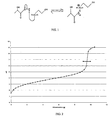
- Figure 1 shows the chemical reaction. As pictured the acid and base react in a one mole to one mole ratio. Lactic acid is a monoprotic acid, and this proton is the one transferred during this reaction, creating a carboxylate anion. The amine group found in monoethanolamine accepts the proton from the lactic acid via the lone pair of electrons on the nitrogen. This proton then creates an ammonium cation.
- the reaction occurs spontaneously, and there is one distinct characteristic of the reactants that determine the quality of this reaction that need to be examined.
- the reaction generates heat and the temperature needs to be monitored because of detrimental effects at high temperatures. With higher temperature, the oxidation of monoethanolamine via the loss of the amine group is expedited.
- the reaction should be carried out slowly so the heat generated can dissipate and not degrade the monoethanolamine. This can be a concern with other nitrogenous bases, and should be taken into account to avoid negatively impacting the reaction.
- the pH is determined by a complex equilibrium between both the weak conjugate base and weak conjugate acid of the product. Monoethanolammonium will donate the proton picked up from the lactic acid to water. Also, the absorption of a proton via the negative portion of lactic acid occurs.
- B represents monoethanolamine and A represents lactate Beginning with the conjugate acid dissociation: 1.
- lactic acid, pK a of 3.86, and monoethanolamine, pK b of 4.56 the pH at the equivalence point should be 6.65. This is experimentally verified in Fig. 2. Because of the spontaneity of the reaction the ratio of acid to base can be in any proportion, although near equivalence is most desired.
- the resulting solution varies slightly in appearance depending on the reaction conditions. If the reaction is carried out slowly and the heat is allowed to dissipate the solution can be colorless, but if the reaction is done quickly and heat builds up, then the solution will turn to an amber color because of the oxidation of monoethanolamine.
- the solution also has a slightly honey-like odor.
- One inherent observation is an increase in the viscosity of the solution. Starting from two water thin liquids, the final solution has a viscosity of about 1500 to 3000 centipoise.
- the most preferred embodiment contains halogenated diphenylether.
- pcmx and/or triclosan is most desired. These two compounds, and most specifically triclosan, interact with the amine salt to produce a more efficacious hand wash.
- Triclosan has a pK a value of 7.4, so, at the desired pH of the hand wash, the triclosan will be disassociated and have a negative charge. The positive charge on the amine is attracted to the negative charge on the triclosan and, thus, the triclosan is chelated and prevented from precipitating.
- the antimicrobial properties of the hand wash containing an amine salt are improved compared to hand washes without. This improvement is seen both in the broad spectrum inhibition and the quick inhibition.
- the triclosan was dissolved in dipropylene glycol, to make an "active premix.”
- the monoethanolamine was added to the water and then the lauric acid was added. After allowing the saponification process to complete, lactic acid was added to neutralize the excess base, and was added until the solution was brought to a pH of 9.25.
- the active premix was then added to the solution to create the antimicrobial hand wash.
- the ingredient amounts were as follows: Excess Base: Control 1 Control 2: Water q.s. to 100 g q.s. to 100 g q.s. to 100 g Lauric Acid 5 g 5 g 5 g Monoethanolamine 3.833 g 1.7 g 3.833 g Lactic Acid q.s.
- Control 1 log reduction 0.6
- Excess Base log reduction 4.0
- Control 2 log reduction 1.3
- the neutralized excess base improves the antimicrobial properties of the hand wash.
- alternate acids were considered for use in neutralizing excess base present after the saponification reaction, i.e, to replace the lactic acid specifically used in Example 1.
- the samples were made in accordance with Example 1, except that the lactic acid was replaced with alternate acids.
- a sample was also created having excess base and no second acid addition.
- the samples were adjusted to pH: 9.2 +/- 0.10 with each acid, and then tested for log reduction properties.
- the amount of monoethanolammonium lactate is directly proportional to the log reduction.
- the hand wash here is a preferred hand wash containing optional ingredients that are generally appreciated for their beneficial properties in hand wash formulations.
- the production process involves dissolving pcmx in dipropylene glycol, saponifying the lauric acid with monoethanolamine, and adding the remaining ingredients to the water.
Landscapes
- Life Sciences & Earth Sciences (AREA)
- Chemical & Material Sciences (AREA)
- Health & Medical Sciences (AREA)
- Organic Chemistry (AREA)
- Chemical Kinetics & Catalysis (AREA)
- Wood Science & Technology (AREA)
- Oil, Petroleum & Natural Gas (AREA)
- Engineering & Computer Science (AREA)
- General Health & Medical Sciences (AREA)
- Public Health (AREA)
- Veterinary Medicine (AREA)
- Animal Behavior & Ethology (AREA)
- Epidemiology (AREA)
- Birds (AREA)
- Emergency Medicine (AREA)
- Dermatology (AREA)
- Medicinal Chemistry (AREA)
- Nuclear Medicine, Radiotherapy & Molecular Imaging (AREA)
- Pharmacology & Pharmacy (AREA)
- General Chemical & Material Sciences (AREA)
- Oncology (AREA)
- Communicable Diseases (AREA)
- Detergent Compositions (AREA)
- Cosmetics (AREA)
- Agricultural Chemicals And Associated Chemicals (AREA)
Abstract
Description
- The present invention generally relates to antimicrobial compositions, and, more particularly, relates to soaps that include an efficacy boosting chemical derived from the neutralization of a nitrogeneous base with a neutralizing acid.
- True soaps are created through a saponification reaction in which fats, more appropriately, fatty acids, are neutralized with a base. To ensure that the reaction is driven to completion, it is common practice to employ an excess of base. Because soaps are generally compatible with antimicrobial agents, they are often used in liquid antimicrobial hand washes. Such soap-based antimicrobial hand washes are found in numerous markets including healthcare, food services, and consumer.
- Antimicrobial agents are selected from a variety of classes, including bisguanidine (e.g., chlorhexidine digluconate), diphenyl compounds, benzyl alcohols, trihalocarbanilides, quaternary ammonium compounds, ethoxylated phenols, and phenolic compounds, such as halo-substituted phenolic compounds, like p-chloro-m-xylenol (known as "pcmx") and 2,4,4'-trichloro-2'hydroxy-diphenylether (known as "triclosan"). Although these antimicrobial agents are used in numerous hand wash formulations, they are not without some detrimental properties. Antimicrobial agents are typically irritating to the skin. And while skin irritancy is a concern for any cosmetic or drug formulation, it is even more pertinent to hand washes because of the sensitivity of the body areas treated. There is a need to minimize the amount of antimicrobial agent present in a hand wash formulation, in order to minimize the irritancy thereof. But by reducing the amount of antibacterial agent present, it is expected that the antimicrobial properties of the hand wash will also be reduced, and, thus, there exist competing desires to reduce antimicrobial agents while maintaining antimicrobial efficacy.
- Another important concern for a wash formulation is the aesthetics of the product. For example, the public has come to associated foaming ability with cleaning ability, and, as a result, consumers are less likely to purchase a wash formulation that does not foam while washing. This consumer perception drives those in the market to formulate washing products which produce copious amounts of foam. As mentioned above, irritancy is a concern. The color and odor of a wash formulation is also important. When soaps are used in conjunction with antimicrobial agents, they do not present the best of each of these desired properties. Although the presence of the soap allows for a reduction in the amount of antimicrobial agent while maintaining a relatively high log kill, antimicrobial soap products tend to irritate the skin. Thusly, skin conditioning agents need added to produce an aesthetically pleasing hand wash.
- This invention involves the creation of a soap through a saponification reaction and the creation of an amine salt for inclusion in the soap. Herein, "primary" relates to those acids and bases employed in the saponification reaction, while "secondary" relates to those acids and bases employed to create the amine salt, although, when a nitrogenous base is employed, it can serve as both the primary and the secondary base. "Nitrogenous base" refers to bases that include at least one nitrogen bound to no more than three substituents.
- In one embodiment, this invention provides an antimicrobial hand wash comprising a soap and the reaction product of a nitrogenous base neutralized with a neutralizing acid selected from anhydrides, organic acids, and inorganic acids.
- In another embodiment, this invention provides an antimicrobial hand wash comprising a soap; an antimicrobial agent; and the reaction product of monoethanolamine neutralized with lactic acid.
- In a process in accordance with this invention, an antimicrobial hand wash is produced. Soap is produced through the saponification of a primary fatty acid with a primary nitrogenous base, wherein the mole to mole ratio for alkalinity of the primary nitrogenous base to free primary fatty acid is from about 1.5:1 to 3:1 such that there exists an excess of primary nitrogenous base after the saponification. The excess primary nitrogenous base is reacted with a secondary acid added to the soap produced as above, the secondary acid being selected from the group consisting of carboxylic acids, organic acid anhydrides and mixed acid anhydrides to create an amine salt.
-
- Fig. 1 is a hypothesized reaction between lactic acid and monoethanolamine, in accordance with an embodiment of this invention reduced to practice; and
- Fig. 2 is a titration curve for monoethanolamine-lactic acid neutralization that experimentally verifies the correctness of the equation derived herein below respecting such neutralization.
- The hand wash herein includes a soap; an antimicrobial agent; and an amine salt. The soap is made through a saponification reaction between a primary fatty acid and a primary base. The amine salt is created through the neutralization of a nitrogenous base with a secondary acid.
- The primary base may be a hydroxide; a nitrogenous base; an oxide of a group I element, calcium, strontium, or barium; or the conjugate base of a weak acid. As will be seen herein, the selection of the primary base can affect the process methods that can be practiced to produce the hand wash. With nitrogenous bases, the amine salt may be created either by neutralizing excess primary nitrogenous base left over after completion of the saponification reaction, in which case it is present in the soap, at creation, or by neutralizing the same primary nitrogenous base or a different secondary nitrogenous base in a separate process, in which case it is subsequently added to the soap created in the saponification reaction. If the primary base is chosen to be a hydroxide; an oxide of Group I, calcium, strontium, or barium; or the conjugate base of a weak acid, the amine salt cannot be created by neutralizing an excess of that base, and a secondary nitrogenous base is neutralized to create the amine salt.
- A secondary acid is employed to neutralize the excess nitrogenous base or secondary nitrogenous base as the case may be. Thus, as already stated, "primary" relates to those acids and bases employed in the saponification reaction, while "secondary" relates to those acids and bases employed to create the amine salt, although, when a nitrogenous base is employed, it can serve as both the primary and the secondary base. The amine salt created via the acid-base neutralization between the secondary acid and either an excess primary nitrogenous base or a secondary nitrogenous base is found to have surprising antimicrobial properties when combined with an antibacterial agent.
- The soap is made from a primary fatty acid and a primary base. The primary fatty acid may be derived from crude fats or selected carboxylic acids, although it is typically less desirable to employ the crude fats. The crude fats include known animal fats, vegetable oils and the like, and generally have a glycerol linked with at least 1, but no greater than three fatty acids. The carboxylic acids, which are more preferred, may be selected from carboxylic acids having from 6 to 40 carbon atoms in the main fatty chain. In other embodiments, the carboxylic acids are chosen to have from 6 to 20 carbon atoms in the main fatty chain.
- Suitable carboxylic acids include, and are not limited to, arachidic acid, arachidonic acid, beeswax acid, behenic acid, coconut acid, corn acid, cottonseed acid, erucic acid, hydrogenated coconut acid, hydrogenated menhaden acid, hydrogenated palm acid, hydrogenated tallow acid, hydroxystearic acid, isomerized linoleic acid, isomerized safflower acid, isostearic acid, lauric acid, linoleic acid, myristic acid, oleic acid, olive acid, palm acid, palmitic acid, palm kernel acid, peanut acid, pelargonic acid, rapeseed acid, rice bran acid, ricinoleic acid, safflower acid, soy acid, stearic acid, sunflower seed acid, tall oil acid, tallow acid, undecanoic acid, undecylenic acid, and wheat germ acid. Mixtures of the forgoing might also be employed. In particular embodiments, lauric acid is preferred.
- Various primary bases can be selected for the saponification reaction, including hydroxides, nitrogenous bases, oxides of Group I, Ca, Sr, or Ba, and conjugate bases of weak acids. A nitrogenous base is ultimately employed to create the desired amine salt component of the hand wash, and thus if a nitrogenous base is not employed as the primary base for the saponfication reaction, one must be employed as a secondary base to create the amine salt. If a nitrogenous base is used as the primary base, the amine salt can be formed directly in the soap solution. More particularly, an excess of nitrogenous base can be used in the saponification reaction, and, once that reaction is complete, the excess can be neutralized by a secondary acid to create the amine salt in situ. The processes for creating the hand wash are disclosed more fully below.
- The nitrogenous base, whether primary or secondary, can be selected from ammonia and virtually any hydroxylated nitrogenous base. Suitable nitrogenous bases include, but are not limited to, 2-aminobutanol, aminoethyl propanediol, aminomethyl propanol, aminopropanediol, bis-hydroxyethyl tromethamine, butyl diethanolamine, butylethanolamine, dibutyl dthanolamine, diethanolamine, diisopropanolamine, diisopropylamine, dimethyl isopropanolamine, monoethanolamine, dimethyl monoethanolamine, ethyl ethanolamine, isopropanolamine, isopropylamine, methylethanolamine, methylglucamine, morpholine, triethanolamine, triispropanolamine, tromethamine. Mixtures of the forgoing might also be employed. In particular embodiments, monoethanolamine is preferred.
- The other primary bases suitable for use include hydroxides such as calcium hydroxide, lithium hydroxide, potassium hydroxide, and sodium hydroxide; metal oxides such as calcium oxide, and sodium oxide; and conjugate bases of weak acids such as dipotassium phosphate, disodium phosphate, magnesium carbonate, pentapotassium triphosphate, petnasodium trisphosphate, potassium carbonate, sodium carbonate, tetrapotassium pyrophosphate, tetrasodium pyrophosphate, and trisodium phosphate. If one or more of these other primary bases is employed as the primary base, and there is not sufficient excess nitrogenous base (if any) employed, the nitrogenous base is to be employed as a secondary base.
- The secondary acid used to neutralize either an excess of nitrogenous base or a secondary nitrogenous base may generally be selected from the acid classes of anhydrides and organic and inorganic acids. Appropriate organic compounds include, but are not limited to, carboxylic acids, organic acid anhydrides and mixed acid anhydrides. A non-exhaustive list of useful secondary acids as neutralizing agents includes linear carboxylic acids such as acetic acid, lactic acid, and glycolic acid; homocyclic carboxylic acids such as acetylsalicylic acid; hetrocyclic carboxylic acids such as nicotinic acid; aromatic carboxylic acids such as benzoic acid; branched aliphatic carboxylic acids such as isopropanoic acid; polyprotic carboxylic acids such as oxalic acid and succinic acid; and organic and mixed anhydrides such as benzoic acid anhydride and mixed phosphoanhydride. Suitable inorganic acids may include, but are not limited to, strong and weak polyprotic acids such as sulfuric acid and phosphoric acid; monoprotic weak acids such as sodium bisulfate; monoprotic strong acids such as hydrogen halides and perchloric acid; and inorganic acid anhydrides such as carbon dioxide. In particular embodiments, lactic acid is most preferred.
- The antimicrobial hand wash contains at least one antimicrobial agent, which is generally appreciated as a term of art for those compounds that produce acceptable time-kill antimicrobial activity to be suitable for sanitizing. More specifically, the hand wash herein has efficacious properties against both Gram-positive and Gram-negative microorganisms. For purposes of this disclosure, the terms "antimicrobial agent" is to cover compositions that have greater than 2 log kill reduction on both Gram-negative bacteria, specifically Klebsiella pheumoniae, and Gram-positive bacteria, specifically Staphylococcus aureus.
- In particular embodiments, the antimicrobial agent of the hand wash is selected from the group consisting of bisguanidines, quaternary ammonium compounds, benzyl alcohols, trihalocarbanilides, iodine containing compounds, and phenolic compounds. Mixtures of the forgoing might also be employed. In particular embodiments, phenolic compounds are employed.
- The phenol-based antimicrobial agents useful in this invention are exemplified by the following compounds, and may be used alone or in combination:
- (a) 2-Hydroxydiphenyl Compounds


U.S. Pat. No. 6,113,933 , incorporated herein by reference. - (b) Phenol Derivatives

Specific examples of phenol derivatives include, but are not limited to, chlorophenols (o-, m-, p-), 2,4-dichlorophenol, p-nitrophenol, picric acid, xylenol, p-chloro-m-xylenol, cresols (o-, m-, p-), p-chloro-m-cresol, pyrocatechol, resorcinol, 4-n-hexylresorcinol, pyrogallol, phloroglucin, carvacrol, thymol, p-chlorothymol, o-phenylphenol, o-benzylphenol, p-chloro-o-benzylphenol, phenol, 4-ethylphenol, and 4-phenolsulfonic acid. Other phenol derivatives are listed inWO 98/55096 U.S. Pat. No. 6,113,933 , incorporated herein by reference. - (c) Diphenyl Compounds

- In particular embodiments, the phenol-based antimicrobial agent is selected from triclosan, 2,2'-dihydroxy-5,5'-dibromodiphenyl ether, pcmx, ortho-phenylphenol, and mixtures thereof.
- As known, additional compounds are typically used to produce an acceptable hand wash for consumer use. These compounds include, but are not limited to, foam modifying agents, pH adjusting agents, emollients, humectants, skin conditioning agents, dyes and fragrances. Herein, they may be employed in amounts and for reasons known in the
- There are two processes by which the hand wash of this invention might be created. In accordance with a process that is described herein as "super basing," the saponification reaction between the primary nitrogenous base and the primary fatty acid is carried out in an aqueous solution with an excess of primary nitrogenous base. Although it is normal for saponification reactions to be carried out with an excess of base present, this invention adds to this general practice by creating an amine salt from the excess base in situ. After the saponification is complete, excess base is backtitrated with the secondary acid to create the amine salt directly within the soap solution. In accordance with a process that is described herein as "equivalent saponification," the saponification reaction is carried out with near equivalence of primary nitrogenous base and primary fatty acid, such that there is not a significant excess of the primary base present after saponification. The amine salt is added to the soap solution rather than being created therein, as in the super dosing process.
- In the super dosing process, which employs a primary nitrogenous base and a primary fatty acid in the saponification reaction, the mole to mole ratio for alkalinity to free fatty acid is preferably from about 1.5:1 to 3:1, as opposed to the 0.8:1 to 1.25:1 ratios generally practiced in saponification reactions. After completion of the saponification, the excess nitrogenous base is backtitrated with a second acid to an alkalinity to total acid ratio from about 0.8:1 to 1.25:1, wherein "total acid ratio" takes into account the number of moles of both the primary fatty acid employed in the saponification reaction and the secondary acid employed to create the amine salt. These ratios are preferred only. It should be appreciated that the amine salt could be produced to be present in virtually any amount, although the disclosed ratios are preferred due to cost considerations.
- In the equivalent saponification process, the mole to mole ratio for alkalinity to free fatty acid is substantially 1:1, such that there is an insubstantial amount of excess base at the completion of the saponification reaction. This process is most likely used when the primary base employed is not a nitrogenous base, and thus cannot contribute to provide the amine salt in situ as in the super dosing process. The amine salt can either be created in a separate process, or even purchased, and added to the soap solution, or it can be created by adding a secondary nitrogenous base to the soap solution and thereafter neutralizing it with a secondary acid. Although, again, the amine salt could be added to be present in virtually any amount, it is preferable added to comprise up to about 20% of the final hand wash formula, by weight.
- For either saponification technique the pH of the solution should be similar. The preferred pH is between 7 and 10.5.
- The invention goes against common day teachings by using a large amount of excess base, and then the excess base is titrated with a second acid to an alkalinity to total acid ratio from about 0.8:1 to 1.25:1. Normal saponification processes occur at alkalinity to fatty acid ratio from about 0.8:1 to 1.25:1.
- If the antimicrobial agent has a limited solubility in water, as is the case, for example, with phenol derivative antimicrobial agents, the antimicrobial agent is added to the soap solution as part of an "active premix," which is a solution of the antimicrobial agent dissolved in a hydric solvent. The hydric solvent should be chosen from either monohydric solvents, such as alcohols, or polyhydric solvents, such as glycols. The most preferred compounds are short carbon chain polyhydric compounds, on the order of eight or less carbons, but longer chains can be used. The sole use of the solvent is to dissolve the antimicrobial agent; it is therefore pertinent that the solvent have the ability to readily dissolve the desired antimicrobial agent or agents. The antimicrobial agent, whether in a premix or alone, may be added anytime after the completion of the saponification reaction. In accordance with particular embodiments, the antimicrobial agent comprises from about 0.01 to 10 wt% of the final formula; in other embodiments, from 0.05 to 7.5 wt%; and in yet other embodiments, from 0.1 to 1 wt%.
- The hand wash formulations of this invention are typically comprised of from about 0.01 to 17.5 weight percent (wt%) of the primary fatty acid; from about 0.005 to 25 wt% of the primary base; and from about 0.01 to 10 wt% of the antimicrobial agent. In particular embodiments, the primary fatty acid comprises from about 0.05 to 17.5 wt% of the final formula, and in yet other embodiments, from about 0.1 to 15 wt%. In particular embodiments, the primary nitrogenous base comprises from about 0.025 to 25 wt% of the final formula; in other embodiments, from about 0.05 to 22 wt%. The secondary base, whether it is the same as the primary base or not, can be identified as any amount of base that exceeds that needed for equivalent saponfication. The secondary base is from about 0.005 to 22.5 wt%, in yet other embodiments, from about 0.025 to 22.5 wt%, and more particular from about 0.05 to 20 wt%. The secondary acid comprises from about 0.008 to 25 wt%, in yet other embodiments from about 0.04 to 25 wt%, and more particular from about 0.09 to 22.5 wt% of the hand wash formula.
- In accordance with a particular embodiment reduced to practice, monoethanolamine is both the primary and secondary base, and it is reacted with lactic acid as the secondary acid to produce an amine salt, believed to be monoethanolammonium lactate. Figure 1 shows the chemical reaction. As pictured the acid and base react in a one mole to one mole ratio. Lactic acid is a monoprotic acid, and this proton is the one transferred during this reaction, creating a carboxylate anion. The amine group found in monoethanolamine accepts the proton from the lactic acid via the lone pair of electrons on the nitrogen. This proton then creates an ammonium cation.
- The reaction occurs spontaneously, and there is one distinct characteristic of the reactants that determine the quality of this reaction that need to be examined. First, the reaction generates heat and the temperature needs to be monitored because of detrimental effects at high temperatures. With higher temperature, the oxidation of monoethanolamine via the loss of the amine group is expedited. The reaction should be carried out slowly so the heat generated can dissipate and not degrade the monoethanolamine. This can be a concern with other nitrogenous bases, and should be taken into account to avoid negatively impacting the reaction.
- For the generation of just the amine salt, the pH is determined by a complex equilibrium between both the weak conjugate base and weak conjugate acid of the product. Monoethanolammonium will donate the proton picked up from the lactic acid to water. Also, the absorption of a proton via the negative portion of lactic acid occurs. The derivation of the equation to calculate the pH based on the acid and base used to create the salt is shown below:
B represents monoethanolamine and A represents lactate Beginning with the conjugate acid dissociation:1. BH+ + OH- ↔ B + H2O [B]/([OH-]*[BH+]) 1/Kb Consider the disassociation of water: 2. H2O + H2O ↔ OH- + H3O+ [OH-]*[H3O+] Kw Combine equation 1 and 2: 3. BH+ + 2H2O + OH- ↔ B + OH- + H3O+ + H2O [OH-]*[ H3O+]*([B]/[OH-]*[ BH+]) Kw/Kb The like terms cancel leaving: 4. BH+ + H2O ↔ B + H3O+ ([H3O+]*[B])/[BH+] Kw/Kb Now consider the disassociation of the acid: 5. HA + H2O ↔ A- + H3O+ ([A-]*[H3O+])/[HA] Ka Combine equations 4 and 5: 6. BH+ + 2H2O + HA ↔ B + A- + 2H3O+ ([A-]*[H3O+])/[HA]*([ H3O+]*[B])/[ BH+] Kw*Ka/Kb [A-] is equal to [BH+] at the equivalence point and assert that [HA] is equal to [B] 7. BH+ + 2H2O + HA ↔ B + A- + 2H3O+ [H3O+]*[H3O+] Kw*Ka/Kb Manipulate the equation to produce the pH of the solution: 8. BH+ + 2H2O + HA ↔ B + A- + 2H3O+ pH = -log(sqrt(Kw*Ka/Kb)) - Per the preferred embodiments, lactic acid, pKa of 3.86, and monoethanolamine, pKb of 4.56, the pH at the equivalence point should be 6.65. This is experimentally verified in Fig. 2. Because of the spontaneity of the reaction the ratio of acid to base can be in any proportion, although near equivalence is most desired.
- The resulting solution varies slightly in appearance depending on the reaction conditions. If the reaction is carried out slowly and the heat is allowed to dissipate the solution can be colorless, but if the reaction is done quickly and heat builds up, then the solution will turn to an amber color because of the oxidation of monoethanolamine. The solution also has a slightly honey-like odor. One inherent observation is an increase in the viscosity of the solution. Starting from two water thin liquids, the final solution has a viscosity of about 1500 to 3000 centipoise.
- Although there are numerous antimicrobial agents, the most preferred embodiment contains halogenated diphenylether. Most specifically, the use of pcmx and/or triclosan is most desired. These two compounds, and most specifically triclosan, interact with the amine salt to produce a more efficacious hand wash. The hypothesis governing this trend is described as charge interaction between the negatively charged triclosan substitutents, chlorines and the hydroxyl group, and the positive charge found on the amine group. Triclosan has a pKa value of 7.4, so, at the desired pH of the hand wash, the triclosan will be disassociated and have a negative charge. The positive charge on the amine is attracted to the negative charge on the triclosan and, thus, the triclosan is chelated and prevented from precipitating.
- The antimicrobial properties of the hand wash containing an amine salt are improved compared to hand washes without. This improvement is seen both in the broad spectrum inhibition and the quick inhibition. A log reduction of 2 on hard to kill organisms, specifically Staphylococcus aureus (MRSA) (ATCC# 33591) at 30 second exposure time, is desired and, as such, this hand wash provides greater than 2 log reduction of both the Gram positive Staphylococcus aureus (MRSA) (ATCC# 33591) and Shigella dysenteriae (ATCC# 13313).
- While making soap through a saponification reaction of a primary nitrogenous base with a primary fatty acid, the addition of excess base was examined. Because the high pH resulting from excess base would be irritating and detrimental to the skin care properties of the hand wash, the excess base was neutralized with a second water soluble acid. For a first control (Control 1), a hand wash made without excess base was tested along side the hand wash containing excess base neutralized with the second acid. A second control (Control 2) excess base is present, but is not subsequently neutralized with the second acid. The hand washes included antimicrobial agent, namely triclosan. The base was monoethanolamine. The first acid was lauric acid, and the second was lactic acid.
- The triclosan was dissolved in dipropylene glycol, to make an "active premix." The monoethanolamine was added to the water and then the lauric acid was added. After allowing the saponification process to complete, lactic acid was added to neutralize the excess base, and was added until the solution was brought to a pH of 9.25. The active premix was then added to the solution to create the antimicrobial hand wash. The ingredient amounts were as follows:
Excess Base: Control 1Control 2: Water q.s. to 100 g q.s. to 100 g q.s. to 100 g Lauric Acid 5 g 5 g 5 g Monoethanolamine 3.833 g 1.7 g 3.833 g Lactic Acid q.s. to pH 9.25 N/A N/A Dipropylene Glycol 3 g 3 g 3 g Triclosan 0.3 g 0.3 g 0.3 g pH: 9.22 pH: 9.21 pH: 10.30 Control 1 : log reduction 0.6 Excess Base: log reduction 4.0 Control 2: log reduction 1.3 - Because there is a boost in the efficacy of the product due to the use of excess primary nitrogenous base and a secondary neutralizing acid, alternate bases were tested. The focus was to find suitable weaker bases that might be used, because weaker bases should further reduce the degree of skin irritation experienced when using a resultant antimicrobial hand wash. Samples were made using the same procedure as in Example 1, but with alternate bases. Because the bases had different molecular masses, the percentage used in each sample was different. This was done in order to ensure that the same number of moles were present in each sample, thus allowing for the same concentration of amine salt in the final hand wash. As mentioned the same formulation was used as in Example 1, but with the base, monoethanolamine, replaced with the following:
Alternate Bases Triethanolamine 9.355 g Equistar, USA Aminomethylpropanol (AMP-95) 5.525 g ANGUS Chemical, USA Tetrahydroxypropyl ethylenediamine (Neutrol TE) 10.29 g BASF, USA - Log reductions were calculated as follows:
Triethanolamine hand wash 4.1 AMP-95 hand wash 1.4 Neutrol TE hand wash 1.7 - Despite having better skin compatability due to the fact that they employ weaker bases, the log reductions for these antimicrobial hand washes were not as high as that for the monoethanolamine-based antimicrobial hand wash of Example 1.
- In this example, alternate acids were considered for use in neutralizing excess base present after the saponification reaction, i.e, to replace the lactic acid specifically used in Example 1. The samples were made in accordance with Example 1, except that the lactic acid was replaced with alternate acids. A sample was also created having excess base and no second acid addition. The samples were adjusted to pH: 9.2 +/- 0.10 with each acid, and then tested for log reduction properties. The acids tested were as follows:
Acid Amount pH Log Reduction None N/A 10.15 1.6 Hydrochloric acid 47.66 g 9.19 3.1 Phosphoric acid 1.52 g 9.17 3.5 Sulfuric acid 12.20 g 9.18 3.4 Ascorbic acid 4.68 g 9.17 4.4 Malic acid* 1.87 g 9.12 2.8 Succinic acid 1.75 g 9.17 2.8 Glycolic acid 2.04 g 9.16 3.0 Acetic acid 43.68 g 9.19 2.2 - From the high pH sample, it is plain to see the amine salt is important for the efficacious properties of the hand wash. Of the different acids tested, all drastically improved the log reduction values for the hand wash. The hydrochloric, sulfuric, and acetic acid required large amounts of acid because the two solutions were dilute compared to the other acids (either concentrated in solution or crystals).
- In this example, tests were run to determine whether the base neutralized with the second amine acid (i.e., the amine salt) must be created in the hand wash from excess base left over from an initial saponification reaction or if it could be added as a separate addition to a soap solution produced without excess base. Monoethanolamine and lactic acid were neutralized in water in a separate "neutralization solution," i.e., the monoethanolamine is not present as excess in a saponfication reaction. The neutralization solution was made as follows:
122.34 g Water 45.81 g Monoethanolamine 76.90 g Lactic acid - The monoethanolamine was dissolved in the water, and the lactic acid was slowly added to the solution, because, if added too quickly, the heat not dissipated from the neutralization reaction would degrade the monoethanolamine. The degradation can be seen by a color change from a clear colorless mixture to a dark amber hue. A hand wash was made per Example 1 procedures, but without excess base (monoethanolamine). The solution was then split into four separate solutions so that the neutralization solution could be added in differing amounts.
Hand Wash Formula Water q.s. to 100 g Lauric Acid 5 g Monoethanolamine 1.7 g Dipropylene Glycol 3 g Tricloan 0.3 g Neutralization solution See Table below. Sample Amount Formula Amount Neutralization solution Amount water Log Reduction A 87.2 g 12.8 g 0 g 4.7 B 87.2 g 6.4 g 6.4 g 3.7 C 87.2 g 3.2 g 8.6 g 3.1 D 87.2g 0 g 12.8g 2.1 - The amount of monoethanolammonium lactate is directly proportional to the log reduction.
- The hand wash here is a preferred hand wash containing optional ingredients that are generally appreciated for their beneficial properties in hand wash formulations. The production process involves dissolving pcmx in dipropylene glycol, saponifying the lauric acid with monoethanolamine, and adding the remaining ingredients to the water.
Chemical Amount Supplier Water q.s. to 100g - Ethyl Alcohol 10 g Grain Processing Corp., USA Lauric Acid 5 g Proctor & Gamble, USA Monoethanolamine 3.833 g Equistar Chemicals, USA Dipropylene Glycol 3 g Huntsman, USA Lactic Acid 90% USP 2.733 g Purac, USA Polozamer 124 1 g BASF, USA PCMX 0.505 g Netchem Inc, Canada Versene 100 0.5 g BASF, USA Methyl Paraben 0.3 g RITA Corp., USA Propyl Paraben 0.3 g RITA Corp., USA Sodium Metabisulfite 0.1 g Esseco General Chemistry, USA - The sample was then inoculated into samples containing a microorganism in duplicate. One of the two samples was neutralized at 15 seconds and the second at 30 seconds. The samples were then plated and incubated for later counting. The data are represented below.
Microorganism ATCC Num. Exposure Time Log10 Reduction Percent Reduction Acinetobacter baumannii 19606 15 sec. 4.1775 99.9934 Campylobacter jejuni 29428 15 sec. 5.0453 99.9991 Citrobacter freundii 8090 15 sec. 4.1351 99.9927 Clostridium perfringens 13124 15 sec. 6.9345 99.9999 Enterococcus faecalis 51575 15 sec. 6.2822 99.9999 30 sec. 6.2822 99.9999 Enterococcus faecium 51559 15 sec. 5.8921 99.9999 30 sec. 5.8921 99.9999 Escherichia coli 11229 15 sec. 3.7889 99.9837 Escherichia coli 43888 15 sec. 3.7520 99.9823 Klebsiella pneumoniae 13883 15 sec. 3.6385 99.9770 Listeria monocytogenes 7644 15 sec. 6.5378 99.9999 Pseudomonas aeruginosa 15442 15 sec. 3.7818 99.9235 Salmonella choleraesuis 13076 15 sec. 4.0550 99.9912 Salmonella cholerasius 14028 15 sec. 3.9138 99.9878 Shigella dysenteriae 13313 15 sec. 3.9217 99.9880 Shigella sonnei 11060 15 sec. 3.9004 99.9874 Staphylococcus aureus 6538 15 sec. 6.0645 99.9999 30 sec. 6.0645 99.9999 Staphylococcus aureus 33591 15 sec. 1.9860 98.9672 30 sec. 2.3486 99.5519 The sample has broad spectrum, quick acting activity against these 17 tested organism. - In light of the foregoing, it should thus be evident that the process of the present invention, providing an antimicrobial hand wash, substantially improves the art. While only the preferred embodiments of the present invention have been described in detail hereinabove, the present invention is not to be limited thereto or thereby. Rather, the scope of the invention shall include all modifications and variations that fall within the scope of the attached claims.
Claims (12)
- An antimicrobial hand wash comprising:a soap; andthe reaction product of a nitrogenous base neutralized with a neutralizing acid selected from anhydrides, organic acids, and inorganic acids.
- The antimicrobial hand wash of claim 1, wherein said soap is produced through a saponification reaction between a primary base and a primary fatty acid, wherein said primary base is selected from the group consisting of hydroxides; ammonia, alcohol-containing nitrogenous bases; oxides of group I elements, calcium, strontium, or barium; and conjugated bases of weak acids; and said primary fatty acid is selected from the group consisting of fatty acids derived from crude fats and carboxylic acids having from 6 to 40 carbon atoms in the main fatty chain.
- The antimicrobial hand wash of claim 2, wherein said primary base is a nitrogenous base selected from 2-aminobutanol, aminoethyl propanediol, aminomethyl propanol, aminopropanediol, bis-hydroxyethyl tromethamine, butyl diethanolamine, butylethanolamine, dibutyl dthanolamine, diethanolamine, diisopropanolamine, diisopropylamine, dimethyl isopropanolamine, monoethanolamine, dimethyl monoethanolamine, ethyl ethanolamine, isopropanolamine, isopropylamine, methylethanolamine, methylglucamine, morpholine, triethanolamine, triispropanolamine, tromethamine, and mixtures thereof.
- The antimicrobial hand wash of claim 3, wherein said primary fatty acid is a carboxylic acid selected from the group consisting of arachidic acid, arachidonic acid, beeswax acid, behenic acid, capric acid, caproic acid, caprylic acid, C10-40 hydroxyalkyl acid, C32-36 isoalkyl acid, coconut acid, corn acid, cottonseed acid, erucic acid, hydrogenated coconut acid, hydrogenated menhaden acid, hydrogenated palm acid, hydrogenated tallow acid, hydroxystearic acid, isomerized linoleic acid, isomerized safflower acid, isostearic acid, lauric acid, linoleic acid, myristic acid, oleic acid, olive acid, palm acid, palmitic acid, palm kernel acid, peanut acid, pelargonic acid, rapeseed acid, rice bran acid, ricinoleic acid, safflower acid, soy acid, stearic acid, sunflower seed acid, tall oil acid, tallow acid, undecanoic acid, undecylenic acid, and wheat germ acid.
- The antimicrobial hand wash of claim 4, wherein said nitrogenous base neutralized with said neutralizing acid is selected from selected from ammonia, 2-aminobutanol, aminoethyl propanediol, aminomethyl propanol, aminopropanediol, bis-hydroxyethyl tromethamine, butyl diethanolamine, butylethanolamine, dibutyl dthanolamine, diethanolamine, diisopropanolamine, diisopropylamine, dimethyl isopropanolamine, monoethanolamine, dimethyl monoethanolamine, ethyl ethanolamine, isopropanolamine, isopropylamine, methylethanolamine, methylglucamine, morpholine, triethanolamine, triispropanolamine, tromethamine, and mixtures thereof.
- The antimicrobial hand wash of claim 5, wherein said neutralizing acid is selected from the group consisting of carboxylic acids, organic acid anhydrides and mixed acid anhydrides.
- The antimicrobial hand wash of claim 6, wherein said neutralizing acid is selected from the group consisting of acetic acid, lactic acid, glycolic acid, acetylsalicylic acid, nicotinic acid, benzoic acid, isopropanoic acid, oxalic acid, succinic acid, benzoic acid anhydride, mixed phosphoanhydride, and mixtures thereof.
- The antimicrobial hand wash of claim 7, wherein said primary base is monoethanolamine, said nitrogenous base neutralized with said neutralizing acid is monoethanolamine, and said neutralizing acid is lactic acid.
- The antimicrobial hand wash of claim 1, further comprising an antimicrobial agent selected from the group consisting of bisguanidines, quaternary ammonium compounds, benzyl alcohols, trihalocarbanilides, iodine containing compounds, phenolic compounds, and mixtures thereof.
- A process for producing an antimicrobial hand wash comprising the steps of:producing a soap through the saponification of a primary fatty acid with a primary nitrogenous base, wherein the mole to mole ratio for alkalinity of the primary nitrogenous base to free primary fatty acid is from about 1.5:1 to 3:1 such that there exists an excess of primary nitrogenous base after the saponification;reacting the excess primary nitrogenous base with a secondary acid selected from the group consisting of carboxylic acids, organic acid anhydrides and mixed acid anhydrides to create an amine salt.
- The process of claim 10, wherein the primary fatty acid is selected from the group consisting of fatty acids derived from crude fats and carboxylic acids having from 6 to 40 carbon atoms in the main fatty chain.
- The process of claim 10, further comprising the steps of:dissolving a phenol-based antimicrobial agent in a hydric solvent to create an active premix; andmixing the active premix with the soap.
Applications Claiming Priority (1)
| Application Number | Priority Date | Filing Date | Title |
|---|---|---|---|
| US11/494,473 US20080026974A1 (en) | 2006-07-27 | 2006-07-27 | Antimicrobial hand wash |
Publications (2)
| Publication Number | Publication Date |
|---|---|
| EP1886660A1 true EP1886660A1 (en) | 2008-02-13 |
| EP1886660B1 EP1886660B1 (en) | 2010-11-03 |
Family
ID=38578602
Family Applications (1)
| Application Number | Title | Priority Date | Filing Date |
|---|---|---|---|
| EP07252834A Not-in-force EP1886660B1 (en) | 2006-07-27 | 2007-07-17 | Antimicrobial hand wash |
Country Status (11)
| Country | Link |
|---|---|
| US (3) | US20080026974A1 (en) |
| EP (1) | EP1886660B1 (en) |
| JP (1) | JP2008056912A (en) |
| AT (1) | ATE486568T1 (en) |
| AU (1) | AU2007203322B2 (en) |
| BR (1) | BRPI0703313A (en) |
| CA (1) | CA2594270C (en) |
| DE (1) | DE602007010213D1 (en) |
| DK (1) | DK1886660T3 (en) |
| ES (1) | ES2352158T3 (en) |
| PT (1) | PT1886660E (en) |
Cited By (2)
| Publication number | Priority date | Publication date | Assignee | Title |
|---|---|---|---|---|
| EP2150107A1 (en) * | 2007-05-04 | 2010-02-10 | The Procter and Gamble Company | Antimicrobial compositions, products, and methods of use |
| WO2016115639A1 (en) | 2015-01-23 | 2016-07-28 | Biocidium Biopharmaceuticals Inc. | Anti-bacterial compositions |
Families Citing this family (34)
| Publication number | Priority date | Publication date | Assignee | Title |
|---|---|---|---|---|
| US7842725B2 (en) | 2008-07-24 | 2010-11-30 | Ecolab USA, Inc. | Foaming alcohol compositions with selected dimethicone surfactants |
| KR101632091B1 (en) * | 2008-10-20 | 2016-06-20 | 유니레버 엔.브이. | An antimicrobial composition |
| WO2011036048A1 (en) | 2009-09-24 | 2011-03-31 | Unilever Nv | Disinfecting agent comprising eugenol, terpineol and thymol |
| US20110081305A1 (en) * | 2009-10-02 | 2011-04-07 | Steven Cochran | Compositions comprising a skin-lightening resorcinol and a skin darkening agent |
| US20110081430A1 (en) | 2009-10-02 | 2011-04-07 | Simarna Kaur | COMPOSITIONS COMPRISING AN NFkB-INHIBITOR AND A TROPOELASTIN PROMOTER |
| US8906432B2 (en) * | 2009-10-02 | 2014-12-09 | Johnson & Johnson Consumer Companies, Inc. | Compositions comprising an NFκB-inhibitor and a non-retinoid collagen promoter |
| IN2012DN02441A (en) * | 2009-10-02 | 2015-08-21 | Johnson & Johnson Consumer | |
| US8084504B2 (en) | 2009-10-02 | 2011-12-27 | Johnson & Johnson Consumer Companies, Inc. | High-clarity aqueous concentrates of 4-hexylresorcinol |
| BR112013013085B1 (en) | 2010-12-07 | 2018-02-14 | Unilever N.V. | Oral Care Composition, Mouth Rinse, Toothpaste, Toothpaste, Method for Disinfecting Oral Cavity and Use of a Composition |
| EA024551B1 (en) | 2011-11-03 | 2016-09-30 | Юнилевер Н.В. | Personal cleaning composition |
| CN104640965A (en) | 2012-05-30 | 2015-05-20 | 科莱恩金融(Bvi)有限公司 | N-methyl-N-acylglucamine-containing composition |
| US20140086859A1 (en) | 2012-09-24 | 2014-03-27 | Johnson & Johnson Consumer Companies, Inc. | Low oil compositions comprising a 4-substituted resorcinol and a high carbon chain ester |
| KR101508987B1 (en) | 2013-01-29 | 2015-04-08 | 부산대학교 산학협력단 | Ecofriendly Antimicrobial Agent Composition Used for Vegetable Oil and Preparation Method of the Same |
| DE102014005771A1 (en) | 2014-04-23 | 2015-10-29 | Clariant International Ltd. | Use of aqueous drift-reducing compositions |
| US20160000858A1 (en) | 2014-07-07 | 2016-01-07 | Gojo Industries, Inc. | Compositions and methods for mitigating skin irritation and enhancing skin barrier function |
| DE202015008045U1 (en) | 2015-10-09 | 2015-12-09 | Clariant International Ltd. | Universal pigment dispersions based on N-alkylglucamines |
| DE102015219651A1 (en) * | 2015-10-09 | 2017-04-13 | Clariant International Ltd. | Compositions containing sugar amine and fatty acid |
| DE102016207877A1 (en) | 2016-05-09 | 2017-11-09 | Clariant International Ltd | Stabilizers for silicate paints |
| US11104868B2 (en) | 2016-07-26 | 2021-08-31 | Colgate-Palmolive Company | Liquid cleansing compositions with an antibacterial system and method of manufacturing thereof |
| CA3052047A1 (en) | 2017-02-13 | 2018-08-16 | Wintermute Biomedical, Inc. | Anti-pathogenic therapeutic compositions |
| CN110520103B (en) * | 2017-04-10 | 2023-04-04 | 花王株式会社 | Skin cleanser composition |
| WO2018190264A1 (en) * | 2017-04-10 | 2018-10-18 | 花王株式会社 | Skin cleanser composition |
| WO2018190265A1 (en) * | 2017-04-10 | 2018-10-18 | 花王株式会社 | Skin cleanser composition |
| US11185482B2 (en) | 2017-05-01 | 2021-11-30 | Gojo Industries, Inc. | Alcohol containing low-water cleansing composition |
| CN108048242B (en) * | 2017-11-30 | 2020-11-13 | 广东嘉丹婷日用品有限公司 | Antibacterial laundry detergent and preparation method thereof |
| US20190269589A1 (en) * | 2018-03-01 | 2019-09-05 | Gojo Industries, Inc. | Alcohol-based hand conditioners for repeated use |
| MX2021003810A (en) * | 2018-10-01 | 2021-07-06 | Wintermute Biomedical Inc | Therapeutic compositions. |
| CN109825386B (en) * | 2019-01-29 | 2021-09-10 | 丰益油脂科技(东莞)有限公司 | Soap grain containing organic sodium gluconate and environment-friendly soap |
| JP2022012236A (en) * | 2020-07-01 | 2022-01-17 | 株式会社ニイタカ | Composition for sterilization and virus deactivation |
| EP4176031A1 (en) | 2020-07-06 | 2023-05-10 | Ecolab USA Inc. | Peg-modified castor oil based compositions for microemulsifying and removing multiple oily soils |
| WO2022010893A1 (en) | 2020-07-06 | 2022-01-13 | Ecolab Usa Inc. | Foaming mixed alcohol/water compositions comprising a combination of alkyl siloxane and a hydrotrope/solubilizer |
| JP2023534927A (en) | 2020-07-06 | 2023-08-15 | エコラボ ユーエスエー インコーポレイティド | Foaming alcohol/water blend composition containing structured alkoxylated siloxane |
| WO2024041888A1 (en) * | 2022-08-23 | 2024-02-29 | Unilever Ip Holdings B.V. | A skin cleansing composition |
| WO2024141403A1 (en) | 2022-12-29 | 2024-07-04 | Unilever Ip Holdings B.V. | Anhydrous cleansing composition |
Citations (3)
| Publication number | Priority date | Publication date | Assignee | Title |
|---|---|---|---|---|
| US3996148A (en) * | 1974-07-25 | 1976-12-07 | Pierre Fusey | Basic detergent for liquid lyes |
| WO1996006152A2 (en) * | 1994-08-25 | 1996-02-29 | Ciba Specialty Chemicals Holding Inc. | Surface-active formulations |
| WO2000066079A1 (en) * | 1999-04-30 | 2000-11-09 | Colgate-Palmolive Company | Antibacterial liquid hand cleaning compositions |
Family Cites Families (7)
| Publication number | Priority date | Publication date | Assignee | Title |
|---|---|---|---|---|
| PH18373A (en) * | 1982-02-02 | 1985-06-13 | Unilever Nv | Skin treatment composition |
| US5712232A (en) * | 1994-09-20 | 1998-01-27 | Kao Corporation | Aqueous liquid cleansing composition |
| US5641480A (en) * | 1994-12-08 | 1997-06-24 | Lever Brothers Company, Division Of Conopco, Inc. | Hair care compositions comprising heteroatom containing alkyl aldonamide compounds |
| JP3227694B2 (en) * | 1996-12-11 | 2001-11-12 | 花王株式会社 | Framed soap composition |
| US6479442B1 (en) * | 1999-05-05 | 2002-11-12 | Access Business Group International Llc | Hydrotrope and skin conditioning agents for use in liquid detergent compositions |
| GB0120006D0 (en) * | 2001-08-16 | 2001-10-10 | Boots Co Plc | Hair dye compositions |
| US7517842B2 (en) * | 2006-11-10 | 2009-04-14 | Gojo Industries, Inc. | Antimicrobial wash formulations including amidoamine-based cationic surfactants |
-
2006
- 2006-07-27 US US11/494,473 patent/US20080026974A1/en not_active Abandoned
-
2007
- 2007-07-17 AU AU2007203322A patent/AU2007203322B2/en not_active Ceased
- 2007-07-17 DE DE602007010213T patent/DE602007010213D1/en active Active
- 2007-07-17 ES ES07252834T patent/ES2352158T3/en active Active
- 2007-07-17 EP EP07252834A patent/EP1886660B1/en not_active Not-in-force
- 2007-07-17 DK DK07252834.2T patent/DK1886660T3/en active
- 2007-07-17 AT AT07252834T patent/ATE486568T1/en not_active IP Right Cessation
- 2007-07-17 PT PT07252834T patent/PT1886660E/en unknown
- 2007-07-23 CA CA2594270A patent/CA2594270C/en not_active Expired - Fee Related
- 2007-07-26 BR BRPI0703313-3A patent/BRPI0703313A/en not_active Application Discontinuation
- 2007-07-27 JP JP2007195824A patent/JP2008056912A/en not_active Withdrawn
-
2009
- 2009-05-01 US US12/434,355 patent/US7851424B2/en not_active Expired - Fee Related
-
2011
- 2011-04-27 US US13/095,284 patent/US8372790B2/en not_active Expired - Fee Related
Patent Citations (3)
| Publication number | Priority date | Publication date | Assignee | Title |
|---|---|---|---|---|
| US3996148A (en) * | 1974-07-25 | 1976-12-07 | Pierre Fusey | Basic detergent for liquid lyes |
| WO1996006152A2 (en) * | 1994-08-25 | 1996-02-29 | Ciba Specialty Chemicals Holding Inc. | Surface-active formulations |
| WO2000066079A1 (en) * | 1999-04-30 | 2000-11-09 | Colgate-Palmolive Company | Antibacterial liquid hand cleaning compositions |
Cited By (7)
| Publication number | Priority date | Publication date | Assignee | Title |
|---|---|---|---|---|
| EP2150107A1 (en) * | 2007-05-04 | 2010-02-10 | The Procter and Gamble Company | Antimicrobial compositions, products, and methods of use |
| WO2016115639A1 (en) | 2015-01-23 | 2016-07-28 | Biocidium Biopharmaceuticals Inc. | Anti-bacterial compositions |
| CN107735083A (en) * | 2015-01-23 | 2018-02-23 | 拜奥斯迪姆生物制药有限公司 | Bactericidal composition |
| EP3247347A4 (en) * | 2015-01-23 | 2018-11-21 | Biocidium Biopharmaceuticals Inc. | Anti-bacterial compositions |
| US10716305B2 (en) | 2015-01-23 | 2020-07-21 | Biocidium Biopharmaceuticals Inc. | Anti-bacterial compositions |
| CN107735083B (en) * | 2015-01-23 | 2021-06-29 | 拜奥斯迪姆知识产权控股公司 | Antibacterial composition |
| US11363814B2 (en) | 2015-01-23 | 2022-06-21 | Biocidium Ip Holdco, Co. | Anti-bacterial compositions |
Also Published As
| Publication number | Publication date |
|---|---|
| DE602007010213D1 (en) | 2010-12-16 |
| PT1886660E (en) | 2011-02-10 |
| EP1886660B1 (en) | 2010-11-03 |
| US20080026974A1 (en) | 2008-01-31 |
| DK1886660T3 (en) | 2011-01-31 |
| AU2007203322B2 (en) | 2011-10-13 |
| ATE486568T1 (en) | 2010-11-15 |
| CA2594270C (en) | 2015-03-10 |
| US20110263471A1 (en) | 2011-10-27 |
| CA2594270A1 (en) | 2008-01-27 |
| JP2008056912A (en) | 2008-03-13 |
| US20090209443A1 (en) | 2009-08-20 |
| BRPI0703313A (en) | 2008-03-11 |
| AU2007203322A1 (en) | 2008-02-14 |
| ES2352158T3 (en) | 2011-02-16 |
| US7851424B2 (en) | 2010-12-14 |
| US8372790B2 (en) | 2013-02-12 |
Similar Documents
| Publication | Publication Date | Title |
|---|---|---|
| EP1886660B1 (en) | Antimicrobial hand wash | |
| AU665548B2 (en) | Blended carboxylic acid sanitizer | |
| EP1857535B1 (en) | Antimicrobial hand wash formulations | |
| US7517842B2 (en) | Antimicrobial wash formulations including amidoamine-based cationic surfactants | |
| US9044403B2 (en) | Sporicidal hand sanitizing lotion | |
| CN108066164B (en) | Transparent composite cleaning composition and preparation method thereof | |
| JP3098541B2 (en) | Sanitary composition | |
| CN104546522A (en) | Composition with high-efficiency broad-spectrum antibacterial capacity and application of composition in cosmetics | |
| EP2768473A2 (en) | Triclosan-free antibacterial soap | |
| CN105873443A (en) | Antimicrobial compositions containing low concentrations of food allowed organic acids and amine oxide amphoteric surfactants | |
| US20050186281A1 (en) | Antimicrobial sanitizing composition | |
| US20050019355A1 (en) | Skin antiseptic and disinfectant | |
| JP2004352635A (en) | Disinfecting and / or disinfecting compositions | |
| KR102049844B1 (en) | Stable liquid composition for preserve of cosmetic comprising PCA ethyl cocoyl arginate | |
| US4547307A (en) | Cake of soap with deodorizing action | |
| DE3723976A1 (en) | Disinfectant having a virucidal activity | |
| EP4577176A1 (en) | A skin cleansing composition | |
| EP4493286B1 (en) | A solid cleansing composition | |
| JP6533362B2 (en) | Skin body antiseptic cleaner composition |
Legal Events
| Date | Code | Title | Description |
|---|---|---|---|
| PUAI | Public reference made under article 153(3) epc to a published international application that has entered the european phase |
Free format text: ORIGINAL CODE: 0009012 |
|
| AK | Designated contracting states |
Kind code of ref document: A1 Designated state(s): AT BE BG CH CY CZ DE DK EE ES FI FR GB GR HU IE IS IT LI LT LU LV MC MT NL PL PT RO SE SI SK TR |
|
| AX | Request for extension of the european patent |
Extension state: AL BA HR MK YU |
|
| RAP1 | Party data changed (applicant data changed or rights of an application transferred) |
Owner name: GOJO INDUSTRIES, INC. |
|
| 17P | Request for examination filed |
Effective date: 20080707 |
|
| 17Q | First examination report despatched |
Effective date: 20080828 |
|
| AKX | Designation fees paid |
Designated state(s): AT BE BG CH CY CZ DE DK EE ES FI FR GB GR HU IE IS IT LI LT LU LV MC MT NL PL PT RO SE SI SK TR |
|
| GRAP | Despatch of communication of intention to grant a patent |
Free format text: ORIGINAL CODE: EPIDOSNIGR1 |
|
| GRAS | Grant fee paid |
Free format text: ORIGINAL CODE: EPIDOSNIGR3 |
|
| GRAA | (expected) grant |
Free format text: ORIGINAL CODE: 0009210 |
|
| AK | Designated contracting states |
Kind code of ref document: B1 Designated state(s): AT BE BG CH CY CZ DE DK EE ES FI FR GB GR HU IE IS IT LI LT LU LV MC MT NL PL PT RO SE SI SK TR |
|
| REG | Reference to a national code |
Ref country code: GB Ref legal event code: FG4D |
|
| REG | Reference to a national code |
Ref country code: CH Ref legal event code: EP |
|
| REG | Reference to a national code |
Ref country code: IE Ref legal event code: FG4D |
|
| REF | Corresponds to: |
Ref document number: 602007010213 Country of ref document: DE Date of ref document: 20101216 Kind code of ref document: P |
|
| REG | Reference to a national code |
Ref country code: DK Ref legal event code: T3 |
|
| REG | Reference to a national code |
Ref country code: PT Ref legal event code: SC4A Free format text: AVAILABILITY OF NATIONAL TRANSLATION Effective date: 20110203 |
|
| REG | Reference to a national code |
Ref country code: ES Ref legal event code: FG2A Effective date: 20110204 |
|
| REG | Reference to a national code |
Ref country code: NL Ref legal event code: VDEP Effective date: 20101103 |
|
| LTIE | Lt: invalidation of european patent or patent extension |
Effective date: 20101103 |
|
| PG25 | Lapsed in a contracting state [announced via postgrant information from national office to epo] |
Ref country code: LT Free format text: LAPSE BECAUSE OF FAILURE TO SUBMIT A TRANSLATION OF THE DESCRIPTION OR TO PAY THE FEE WITHIN THE PRESCRIBED TIME-LIMIT Effective date: 20101103 |
|
| PG25 | Lapsed in a contracting state [announced via postgrant information from national office to epo] |
Ref country code: BG Free format text: LAPSE BECAUSE OF FAILURE TO SUBMIT A TRANSLATION OF THE DESCRIPTION OR TO PAY THE FEE WITHIN THE PRESCRIBED TIME-LIMIT Effective date: 20110203 Ref country code: LV Free format text: LAPSE BECAUSE OF FAILURE TO SUBMIT A TRANSLATION OF THE DESCRIPTION OR TO PAY THE FEE WITHIN THE PRESCRIBED TIME-LIMIT Effective date: 20101103 Ref country code: SE Free format text: LAPSE BECAUSE OF FAILURE TO SUBMIT A TRANSLATION OF THE DESCRIPTION OR TO PAY THE FEE WITHIN THE PRESCRIBED TIME-LIMIT Effective date: 20101103 Ref country code: FI Free format text: LAPSE BECAUSE OF FAILURE TO SUBMIT A TRANSLATION OF THE DESCRIPTION OR TO PAY THE FEE WITHIN THE PRESCRIBED TIME-LIMIT Effective date: 20101103 Ref country code: NL Free format text: LAPSE BECAUSE OF FAILURE TO SUBMIT A TRANSLATION OF THE DESCRIPTION OR TO PAY THE FEE WITHIN THE PRESCRIBED TIME-LIMIT Effective date: 20101103 Ref country code: SI Free format text: LAPSE BECAUSE OF FAILURE TO SUBMIT A TRANSLATION OF THE DESCRIPTION OR TO PAY THE FEE WITHIN THE PRESCRIBED TIME-LIMIT Effective date: 20101103 Ref country code: AT Free format text: LAPSE BECAUSE OF FAILURE TO SUBMIT A TRANSLATION OF THE DESCRIPTION OR TO PAY THE FEE WITHIN THE PRESCRIBED TIME-LIMIT Effective date: 20101103 Ref country code: IS Free format text: LAPSE BECAUSE OF FAILURE TO SUBMIT A TRANSLATION OF THE DESCRIPTION OR TO PAY THE FEE WITHIN THE PRESCRIBED TIME-LIMIT Effective date: 20110303 |
|
| PG25 | Lapsed in a contracting state [announced via postgrant information from national office to epo] |
Ref country code: GR Free format text: LAPSE BECAUSE OF FAILURE TO SUBMIT A TRANSLATION OF THE DESCRIPTION OR TO PAY THE FEE WITHIN THE PRESCRIBED TIME-LIMIT Effective date: 20110204 |
|
| PG25 | Lapsed in a contracting state [announced via postgrant information from national office to epo] |
Ref country code: CZ Free format text: LAPSE BECAUSE OF FAILURE TO SUBMIT A TRANSLATION OF THE DESCRIPTION OR TO PAY THE FEE WITHIN THE PRESCRIBED TIME-LIMIT Effective date: 20101103 Ref country code: EE Free format text: LAPSE BECAUSE OF FAILURE TO SUBMIT A TRANSLATION OF THE DESCRIPTION OR TO PAY THE FEE WITHIN THE PRESCRIBED TIME-LIMIT Effective date: 20101103 |
|
| PG25 | Lapsed in a contracting state [announced via postgrant information from national office to epo] |
Ref country code: SK Free format text: LAPSE BECAUSE OF FAILURE TO SUBMIT A TRANSLATION OF THE DESCRIPTION OR TO PAY THE FEE WITHIN THE PRESCRIBED TIME-LIMIT Effective date: 20101103 Ref country code: RO Free format text: LAPSE BECAUSE OF FAILURE TO SUBMIT A TRANSLATION OF THE DESCRIPTION OR TO PAY THE FEE WITHIN THE PRESCRIBED TIME-LIMIT Effective date: 20101103 Ref country code: PL Free format text: LAPSE BECAUSE OF FAILURE TO SUBMIT A TRANSLATION OF THE DESCRIPTION OR TO PAY THE FEE WITHIN THE PRESCRIBED TIME-LIMIT Effective date: 20101103 |
|
| PLBE | No opposition filed within time limit |
Free format text: ORIGINAL CODE: 0009261 |
|
| STAA | Information on the status of an ep patent application or granted ep patent |
Free format text: STATUS: NO OPPOSITION FILED WITHIN TIME LIMIT |
|
| 26N | No opposition filed |
Effective date: 20110804 |
|
| REG | Reference to a national code |
Ref country code: DE Ref legal event code: R097 Ref document number: 602007010213 Country of ref document: DE Effective date: 20110804 |
|
| PG25 | Lapsed in a contracting state [announced via postgrant information from national office to epo] |
Ref country code: IT Free format text: LAPSE BECAUSE OF FAILURE TO SUBMIT A TRANSLATION OF THE DESCRIPTION OR TO PAY THE FEE WITHIN THE PRESCRIBED TIME-LIMIT Effective date: 20101103 Ref country code: MT Free format text: LAPSE BECAUSE OF FAILURE TO SUBMIT A TRANSLATION OF THE DESCRIPTION OR TO PAY THE FEE WITHIN THE PRESCRIBED TIME-LIMIT Effective date: 20101103 |
|
| PG25 | Lapsed in a contracting state [announced via postgrant information from national office to epo] |
Ref country code: MC Free format text: LAPSE BECAUSE OF NON-PAYMENT OF DUE FEES Effective date: 20110731 |
|
| REG | Reference to a national code |
Ref country code: CH Ref legal event code: PL |
|
| REG | Reference to a national code |
Ref country code: IE Ref legal event code: MM4A |
|
| PG25 | Lapsed in a contracting state [announced via postgrant information from national office to epo] |
Ref country code: CH Free format text: LAPSE BECAUSE OF NON-PAYMENT OF DUE FEES Effective date: 20110731 Ref country code: LI Free format text: LAPSE BECAUSE OF NON-PAYMENT OF DUE FEES Effective date: 20110731 |
|
| PG25 | Lapsed in a contracting state [announced via postgrant information from national office to epo] |
Ref country code: IE Free format text: LAPSE BECAUSE OF NON-PAYMENT OF DUE FEES Effective date: 20110717 |
|
| PG25 | Lapsed in a contracting state [announced via postgrant information from national office to epo] |
Ref country code: CY Free format text: LAPSE BECAUSE OF EXPIRATION OF PROTECTION Effective date: 20101103 Ref country code: LU Free format text: LAPSE BECAUSE OF NON-PAYMENT OF DUE FEES Effective date: 20110717 |
|
| PG25 | Lapsed in a contracting state [announced via postgrant information from national office to epo] |
Ref country code: TR Free format text: LAPSE BECAUSE OF FAILURE TO SUBMIT A TRANSLATION OF THE DESCRIPTION OR TO PAY THE FEE WITHIN THE PRESCRIBED TIME-LIMIT Effective date: 20101103 |
|
| PG25 | Lapsed in a contracting state [announced via postgrant information from national office to epo] |
Ref country code: HU Free format text: LAPSE BECAUSE OF FAILURE TO SUBMIT A TRANSLATION OF THE DESCRIPTION OR TO PAY THE FEE WITHIN THE PRESCRIBED TIME-LIMIT Effective date: 20101103 |
|
| REG | Reference to a national code |
Ref country code: FR Ref legal event code: PLFP Year of fee payment: 10 |
|
| PGFP | Annual fee paid to national office [announced via postgrant information from national office to epo] |
Ref country code: GB Payment date: 20160728 Year of fee payment: 10 Ref country code: DE Payment date: 20160720 Year of fee payment: 10 Ref country code: DK Payment date: 20160727 Year of fee payment: 10 |
|
| PGFP | Annual fee paid to national office [announced via postgrant information from national office to epo] |
Ref country code: FR Payment date: 20160719 Year of fee payment: 10 Ref country code: PT Payment date: 20160718 Year of fee payment: 10 |
|
| PGFP | Annual fee paid to national office [announced via postgrant information from national office to epo] |
Ref country code: ES Payment date: 20160721 Year of fee payment: 10 Ref country code: BE Payment date: 20160801 Year of fee payment: 10 |
|
| REG | Reference to a national code |
Ref country code: DE Ref legal event code: R082 Ref document number: 602007010213 Country of ref document: DE Representative=s name: KLUNKER IP PATENTANWAELTE PARTG MBB, DE |
|
| REG | Reference to a national code |
Ref country code: DE Ref legal event code: R119 Ref document number: 602007010213 Country of ref document: DE |
|
| REG | Reference to a national code |
Ref country code: DK Ref legal event code: EBP Effective date: 20170731 |
|
| GBPC | Gb: european patent ceased through non-payment of renewal fee |
Effective date: 20170717 |
|
| REG | Reference to a national code |
Ref country code: FR Ref legal event code: ST Effective date: 20180330 |
|
| PG25 | Lapsed in a contracting state [announced via postgrant information from national office to epo] |
Ref country code: DE Free format text: LAPSE BECAUSE OF NON-PAYMENT OF DUE FEES Effective date: 20180201 Ref country code: GB Free format text: LAPSE BECAUSE OF NON-PAYMENT OF DUE FEES Effective date: 20170717 |
|
| PG25 | Lapsed in a contracting state [announced via postgrant information from national office to epo] |
Ref country code: FR Free format text: LAPSE BECAUSE OF NON-PAYMENT OF DUE FEES Effective date: 20170731 Ref country code: PT Free format text: LAPSE BECAUSE OF NON-PAYMENT OF DUE FEES Effective date: 20180117 |
|
| REG | Reference to a national code |
Ref country code: BE Ref legal event code: MM Effective date: 20170731 |
|
| PG25 | Lapsed in a contracting state [announced via postgrant information from national office to epo] |
Ref country code: DK Free format text: LAPSE BECAUSE OF NON-PAYMENT OF DUE FEES Effective date: 20170731 |
|
| PG25 | Lapsed in a contracting state [announced via postgrant information from national office to epo] |
Ref country code: BE Free format text: LAPSE BECAUSE OF NON-PAYMENT OF DUE FEES Effective date: 20170731 |
|
| REG | Reference to a national code |
Ref country code: ES Ref legal event code: FD2A Effective date: 20181106 |
|
| PG25 | Lapsed in a contracting state [announced via postgrant information from national office to epo] |
Ref country code: ES Free format text: LAPSE BECAUSE OF NON-PAYMENT OF DUE FEES Effective date: 20170718 |