EP1885131A1 - Iterative image compression for limited file sizes - Google Patents
Iterative image compression for limited file sizes Download PDFInfo
- Publication number
- EP1885131A1 EP1885131A1 EP06270076A EP06270076A EP1885131A1 EP 1885131 A1 EP1885131 A1 EP 1885131A1 EP 06270076 A EP06270076 A EP 06270076A EP 06270076 A EP06270076 A EP 06270076A EP 1885131 A1 EP1885131 A1 EP 1885131A1
- Authority
- EP
- European Patent Office
- Prior art keywords
- compression
- image
- compressed image
- degree
- algorithm
- Prior art date
- Legal status (The legal status is an assumption and is not a legal conclusion. Google has not performed a legal analysis and makes no representation as to the accuracy of the status listed.)
- Withdrawn
Links
- 230000006835 compression Effects 0.000 title claims abstract description 55
- 238000007906 compression Methods 0.000 title claims abstract description 55
- 238000000034 method Methods 0.000 claims description 10
- 230000000007 visual effect Effects 0.000 abstract description 2
- 238000010586 diagram Methods 0.000 description 2
- 238000012986 modification Methods 0.000 description 2
- 230000004048 modification Effects 0.000 description 2
- 230000005540 biological transmission Effects 0.000 description 1
- 230000000694 effects Effects 0.000 description 1
- 238000005259 measurement Methods 0.000 description 1
- 239000007787 solid Substances 0.000 description 1
Images
Classifications
-
- H—ELECTRICITY
- H04—ELECTRIC COMMUNICATION TECHNIQUE
- H04N—PICTORIAL COMMUNICATION, e.g. TELEVISION
- H04N19/00—Methods or arrangements for coding, decoding, compressing or decompressing digital video signals
- H04N19/50—Methods or arrangements for coding, decoding, compressing or decompressing digital video signals using predictive coding
- H04N19/59—Methods or arrangements for coding, decoding, compressing or decompressing digital video signals using predictive coding involving spatial sub-sampling or interpolation, e.g. alteration of picture size or resolution
-
- H—ELECTRICITY
- H04—ELECTRIC COMMUNICATION TECHNIQUE
- H04N—PICTORIAL COMMUNICATION, e.g. TELEVISION
- H04N19/00—Methods or arrangements for coding, decoding, compressing or decompressing digital video signals
- H04N19/10—Methods or arrangements for coding, decoding, compressing or decompressing digital video signals using adaptive coding
- H04N19/102—Methods or arrangements for coding, decoding, compressing or decompressing digital video signals using adaptive coding characterised by the element, parameter or selection affected or controlled by the adaptive coding
- H04N19/124—Quantisation
- H04N19/126—Details of normalisation or weighting functions, e.g. normalisation matrices or variable uniform quantisers
-
- H—ELECTRICITY
- H04—ELECTRIC COMMUNICATION TECHNIQUE
- H04N—PICTORIAL COMMUNICATION, e.g. TELEVISION
- H04N19/00—Methods or arrangements for coding, decoding, compressing or decompressing digital video signals
- H04N19/10—Methods or arrangements for coding, decoding, compressing or decompressing digital video signals using adaptive coding
- H04N19/102—Methods or arrangements for coding, decoding, compressing or decompressing digital video signals using adaptive coding characterised by the element, parameter or selection affected or controlled by the adaptive coding
- H04N19/132—Sampling, masking or truncation of coding units, e.g. adaptive resampling, frame skipping, frame interpolation or high-frequency transform coefficient masking
-
- H—ELECTRICITY
- H04—ELECTRIC COMMUNICATION TECHNIQUE
- H04N—PICTORIAL COMMUNICATION, e.g. TELEVISION
- H04N19/00—Methods or arrangements for coding, decoding, compressing or decompressing digital video signals
- H04N19/10—Methods or arrangements for coding, decoding, compressing or decompressing digital video signals using adaptive coding
- H04N19/134—Methods or arrangements for coding, decoding, compressing or decompressing digital video signals using adaptive coding characterised by the element, parameter or criterion affecting or controlling the adaptive coding
- H04N19/146—Data rate or code amount at the encoder output
- H04N19/152—Data rate or code amount at the encoder output by measuring the fullness of the transmission buffer
-
- H—ELECTRICITY
- H04—ELECTRIC COMMUNICATION TECHNIQUE
- H04N—PICTORIAL COMMUNICATION, e.g. TELEVISION
- H04N19/00—Methods or arrangements for coding, decoding, compressing or decompressing digital video signals
- H04N19/10—Methods or arrangements for coding, decoding, compressing or decompressing digital video signals using adaptive coding
- H04N19/169—Methods or arrangements for coding, decoding, compressing or decompressing digital video signals using adaptive coding characterised by the coding unit, i.e. the structural portion or semantic portion of the video signal being the object or the subject of the adaptive coding
- H04N19/17—Methods or arrangements for coding, decoding, compressing or decompressing digital video signals using adaptive coding characterised by the coding unit, i.e. the structural portion or semantic portion of the video signal being the object or the subject of the adaptive coding the unit being an image region, e.g. an object
- H04N19/172—Methods or arrangements for coding, decoding, compressing or decompressing digital video signals using adaptive coding characterised by the coding unit, i.e. the structural portion or semantic portion of the video signal being the object or the subject of the adaptive coding the unit being an image region, e.g. an object the region being a picture, frame or field
-
- H—ELECTRICITY
- H04—ELECTRIC COMMUNICATION TECHNIQUE
- H04N—PICTORIAL COMMUNICATION, e.g. TELEVISION
- H04N19/00—Methods or arrangements for coding, decoding, compressing or decompressing digital video signals
- H04N19/10—Methods or arrangements for coding, decoding, compressing or decompressing digital video signals using adaptive coding
- H04N19/189—Methods or arrangements for coding, decoding, compressing or decompressing digital video signals using adaptive coding characterised by the adaptation method, adaptation tool or adaptation type used for the adaptive coding
- H04N19/192—Methods or arrangements for coding, decoding, compressing or decompressing digital video signals using adaptive coding characterised by the adaptation method, adaptation tool or adaptation type used for the adaptive coding the adaptation method, adaptation tool or adaptation type being iterative or recursive
-
- H—ELECTRICITY
- H04—ELECTRIC COMMUNICATION TECHNIQUE
- H04N—PICTORIAL COMMUNICATION, e.g. TELEVISION
- H04N19/00—Methods or arrangements for coding, decoding, compressing or decompressing digital video signals
- H04N19/60—Methods or arrangements for coding, decoding, compressing or decompressing digital video signals using transform coding
Definitions
- This invention relates to compression of image data for storage or transmission.
- Image compression systems are well known. The invention will be described with particular reference to the JPEG system, but may be used with other systems also.
- JPEG compression is commonly used in applications such as cameras.
- the camera system is set up to impose a limit on the size of a compressed image.
- the size of the limit is chosen based on the specifications of the phone and its camera system, but a typical value could be 12 kbyte. It will be appreciated that this value could be lower or higher based on the specification of the phone, and that of course, the value could be different by an order of magnitude when referring to other devices.
- Such limits can be imposed by forming a compressed image at a first compression factor, comparing the byte size of the compressed image against the size limit and, if the size limit is exceeded, forming a second compressed limit at a higher compression factor.
- An object of the present invention is to overcome or mitigate such problems, and to automatically adjust the processing of the image data to produce a more visually acceptable result.
- the present invention provides a method of forming a compressed image, comprising:
- the predetermined condition is that step (c) would call for a degree of compression above a predetermined threshold.
- the predetermined condition is that the light level is below a predetermined threshold. Both conditions may be applied simultaneously.
- the compression algorithm is typically a still image compression algorithm, suitably the JPEG algorithm.
- the invention is also applicable to video images.
- the method is advantageously carried out within a digital camera.
- the invention provides apparatus for forming a compressed image, comprising:
- the scaler is controlled by the comparison means to reduce the pixel resolution whenever the comparison means would generate a compression control signal calling for a degree of compression above a predetermined threshold.
- the scaler may be controlled by light intensity measuring means to reduce the pixel resolution whenever the light intensity is below a predetermined threshold.
- the apparatus may be embodied in a co-processor for operation with an image sensing integrated circuit.
- the apparatus will typically be incorporated within an image sensor or a camera.
- a further aspect of the invention is a mobile phone incorporating such a camera.
- an image 10 is compressed at 12 according to a JPEG algorithm to produce a compressed image 14, the JPEG algorithm applying a degree of compression Q.
- the compressed image data is compared at 16 with a threshold size, for example 12 kbyte. If less than the threshold, the image data is output at 18 to a memory. If greater than the threshold, Q is increased to give a greater degree of compression and the comparison is repeated.
- the original image 10 is passed through a scaler 20 before undergoing compression.
- the scaler 20 defaults to applying zero scaling so that its output 22 is an image which is 1:1 with the input image 10.
- the scaler 20 is operated to scale down the input image to have a smaller number of pixels, in other words to reduce the pixel resolution of the image.
- an input image which contains 1024 by 736 pixels might be reduced to 676 by 486 pixels.
- the overall result of such an operation is that the reproduced image has a lower pixel resolution but significantly less compression artefacts, whereby the subjective visual quality to the end user is much more acceptable.
- the predetermined limit value of Q can readily be determined empirically.
- Fig. 3 illustrates a modification in which the scaler 20 is not controlled by the compression factor Q, but in accordance with light level L.
- Lower light levels cause the image signal to contain more noise across the image, and also noise on individual pixels, which can cause undesirably high levels of compression. The effect of this can be reduced by scaling to a lower pixel resolution before compression.
- Fig. 4 illustrates a further modification in which scaling is controlled by both Q and L.
- a measurement of incident light level can readily be derived from pixel values of the image sensor itself, or from a separate light intensity sensor.
- the invention may be applied to other types of image compression, for example GIF or PNG.
- the invention could also be applied to video compression such as MPEG, but this would require the scaling to be reversed at the viewing end.
- the invention may conveniently be implemented within the signal processing circuitry of a solid state image sensor, or of a camera, where the appropriate means for scaling and for compression will already be present. This is particularly useful for applications with limited memory available such as cameras in mobile phones.
- the requisite circuitry can for example be formed in a co-processor arranged for operation with the image sensing IC. It is also to be appreciated that the invention can also be applied in other situations, such as in image processing or editing on a PC.
Landscapes
- Engineering & Computer Science (AREA)
- Multimedia (AREA)
- Signal Processing (AREA)
- Compression Or Coding Systems Of Tv Signals (AREA)
- Studio Devices (AREA)
- Compression Of Band Width Or Redundancy In Fax (AREA)
Abstract
Description
- This invention relates to compression of image data for storage or transmission.
- Image compression systems are well known. The invention will be described with particular reference to the JPEG system, but may be used with other systems also.
- JPEG compression is commonly used in applications such as cameras. In many uses, for example in cameras incorporated in mobile phones, there are severe memory limitations and the camera system is set up to impose a limit on the size of a compressed image. The size of the limit is chosen based on the specifications of the phone and its camera system, but a typical value could be 12 kbyte. It will be appreciated that this value could be lower or higher based on the specification of the phone, and that of course, the value could be different by an order of magnitude when referring to other devices.
- Such limits can be imposed by forming a compressed image at a first compression factor, comparing the byte size of the compressed image against the size limit and, if the size limit is exceeded, forming a second compressed limit at a higher compression factor.
- Many scenes will give an acceptable image within such a limit, but where a scene contains a significant amount of fine detail the resulting compressed image will frequently be of unacceptable quality, with the impression of being formed of excessively large pixels. A similar problem can exist as a result of low light levels rather than excessive detail.
- An object of the present invention is to overcome or mitigate such problems, and to automatically adjust the processing of the image data to produce a more visually acceptable result.
- Accordingly, the present invention provides a method of forming a compressed image, comprising:
- (a) subjecting image data representing a source image to a compression algorithm having a controllable degree of compression, to form a compressed image;
- (b) comparing the data size of the compressed image with a predetermined limit value; and
- (c) if the data size of the compressed image exceeds said limit value, increasing the degree of compression and repeating steps (a) and (b);
- Preferably, the predetermined condition is that step (c) would call for a degree of compression above a predetermined threshold. Alternatively, the predetermined condition is that the light level is below a predetermined threshold. Both conditions may be applied simultaneously.
- The compression algorithm is typically a still image compression algorithm, suitably the JPEG algorithm. However, the invention is also applicable to video images.
- The method is advantageously carried out within a digital camera.
- From another aspect, the invention provides apparatus for forming a compressed image, comprising:
- (a) image compression means for forming a compressed image from image data representing a source image by applying a compression algorithm having a controllable degree of compression;
- (b) comparison means for comparing the data size of the compressed image with a predetermined limit value and for generating a compression control signal if the data size of the compressed image exceeds said limit value to increase the degree of compression;
- Preferably, the scaler is controlled by the comparison means to reduce the pixel resolution whenever the comparison means would generate a compression control signal calling for a degree of compression above a predetermined threshold.
- Alternatively or additionally, the scaler may be controlled by light intensity measuring means to reduce the pixel resolution whenever the light intensity is below a predetermined threshold.
- The apparatus may be embodied in a co-processor for operation with an image sensing integrated circuit.
- The apparatus will typically be incorporated within an image sensor or a camera.
- A further aspect of the invention is a mobile phone incorporating such a camera.
- An embodiment of the invention will now be described, by way of example only, with reference to the drawings, in which:
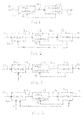
- Fig. 1 is a block diagram of a known compression system;
- Fig. 2 is a block diagram of one embodiment of the present invention; and
- Figs. 3 and 4 illustrate compression systems according to further embodiments.
- Referring to Figure 1, in a known compression scheme, an image 10 is compressed at 12 according to a JPEG algorithm to produce a
compressed image 14, the JPEG algorithm applying a degree of compression Q. The compressed image data is compared at 16 with a threshold size, for example 12 kbyte. If less than the threshold, the image data is output at 18 to a memory. If greater than the threshold, Q is increased to give a greater degree of compression and the comparison is repeated. - As discussed above, if the image contains much fine detail, this process can lead to a result which is visually unsatisfactory.
- Referring now to Fig. 2, similar items are denoted by similar reference numerals. In this case however, the original image 10 is passed through a
scaler 20 before undergoing compression. Thescaler 20 defaults to applying zero scaling so that itsoutput 22 is an image which is 1:1 with the input image 10. However, if the result of the comparison at 16 is such that a Q above a predetermined value would be required, thescaler 20 is operated to scale down the input image to have a smaller number of pixels, in other words to reduce the pixel resolution of the image. As one example, an input image which contains 1024 by 736 pixels might be reduced to 676 by 486 pixels. - The overall result of such an operation is that the reproduced image has a lower pixel resolution but significantly less compression artefacts, whereby the subjective visual quality to the end user is much more acceptable. The predetermined limit value of Q can readily be determined empirically.
- The use of a scaler in this manner is a particularly convenient solution, as many image sensors and cameras incorporate a scaler as a standard facility, frequently for the purpose of matching a standard image sensor to a variety of screen sizes (for example in mobile phones). Therefore, in many instances it is possible to incorporate the present invention in existing devices with no or minimal extra circuitry.
- Fig. 3 illustrates a modification in which the
scaler 20 is not controlled by the compression factor Q, but in accordance with light level L. Lower light levels cause the image signal to contain more noise across the image, and also noise on individual pixels, which can cause undesirably high levels of compression. The effect of this can be reduced by scaling to a lower pixel resolution before compression. - Fig. 4 illustrates a further modification in which scaling is controlled by both Q and L.
- A measurement of incident light level can readily be derived from pixel values of the image sensor itself, or from a separate light intensity sensor.
- Although described with reference to JPEG compression of still images, the invention may be applied to other types of image compression, for example GIF or PNG. The invention could also be applied to video compression such as MPEG, but this would require the scaling to be reversed at the viewing end.
- The invention may conveniently be implemented within the signal processing circuitry of a solid state image sensor, or of a camera, where the appropriate means for scaling and for compression will already be present. This is particularly useful for applications with limited memory available such as cameras in mobile phones. The requisite circuitry can for example be formed in a co-processor arranged for operation with the image sensing IC. It is also to be appreciated that the invention can also be applied in other situations, such as in image processing or editing on a PC.
Claims (13)
- A method of forming a compressed image, comprising:(a) subjecting image data representing a source image to a compression algorithm having a controllable degree of compression, to form a compressed image;(b) comparing the data size of the compressed image with a predetermined limit value; and(c) if the data size of the compressed image exceeds said limit value, increasing the degree of compression and repeating steps (a) and (b);characterised in that the source image is selectively scaled to a reduced pixel resolution before being subjected to the compression algorithm when a predetermined condition applies.
- A method according to claim 1, in which the predetermined condition is that step (c) would call for a degree of compression above a predetermined threshold.
- A method according to claim 1 or claim 2, in which the predetermined condition is that the light level is below a predetermined threshold.
- A method according to any preceding claim, in which the compression algorithm is a still image compression algorithm.
- A method according to claim 4, in which the algorithm is the JPEG algorithm.
- A method according to any preceding claim, in which the method is carried out within a digital camera.
- Apparatus for forming a compressed image, comprising:(a) image compression means for forming a compressed image from image data representing a source image by applying a compression algorithm having a controllable degree of compression;(b) comparison means for comparing the data size of the compressed image with a predetermined limit value and for generating a compression control signal if the data size of the compressed image exceeds said limit value to increase the degree of compression;characterised by a scaler interposed between the source image and the image compression means and to selectively operable to reduce the pixel resolution of the image whenever a predetermined condition applies.
- Apparatus according to claim 7, in which the scaler is controlled by the comparison means to reduce the pixel resolution whenever the comparison means would generate a compression control signal calling for a degree of compression above a predetermined threshold.
- Apparatus according to claim 7 or claim 8, in which the scaler is controlled by light intensity measuring means to reduce the pixel resolution whenever the light intensity is below a predetermined threshold.
- An image sensor incorporating the apparatus of any of claims 7 to 9.
- A camera incorporating the apparatus of any of claims 7 to 9.
- A mobile phone incorporating the camera of claim 11.
- A co-processor for operation with an image sensing integrated circuit, comprising the apparatus of any of claims 6 to 9.
Priority Applications (2)
| Application Number | Priority Date | Filing Date | Title |
|---|---|---|---|
| EP06270076A EP1885131A1 (en) | 2006-08-04 | 2006-08-04 | Iterative image compression for limited file sizes |
| US11/833,416 US7929794B2 (en) | 2006-08-04 | 2007-08-03 | Method and apparatus for image data compression |
Applications Claiming Priority (1)
| Application Number | Priority Date | Filing Date | Title |
|---|---|---|---|
| EP06270076A EP1885131A1 (en) | 2006-08-04 | 2006-08-04 | Iterative image compression for limited file sizes |
Publications (1)
| Publication Number | Publication Date |
|---|---|
| EP1885131A1 true EP1885131A1 (en) | 2008-02-06 |
Family
ID=37667449
Family Applications (1)
| Application Number | Title | Priority Date | Filing Date |
|---|---|---|---|
| EP06270076A Withdrawn EP1885131A1 (en) | 2006-08-04 | 2006-08-04 | Iterative image compression for limited file sizes |
Country Status (2)
| Country | Link |
|---|---|
| US (1) | US7929794B2 (en) |
| EP (1) | EP1885131A1 (en) |
Cited By (2)
| Publication number | Priority date | Publication date | Assignee | Title |
|---|---|---|---|---|
| ITPD20110376A1 (en) * | 2011-11-29 | 2013-05-30 | Sincrotrone Trieste S C P A | METHOD FOR SIGNAL PROCESSING AND EQUIPMENT FOR THE PERFORMANCE OF THIS METHOD |
| GB2503234A (en) * | 2012-06-19 | 2013-12-25 | British Broadcasting Corp | Video Coding and Decoding Using Compression Control Rules |
Families Citing this family (7)
| Publication number | Priority date | Publication date | Assignee | Title |
|---|---|---|---|---|
| JP5612807B2 (en) * | 2007-03-13 | 2014-10-22 | セイコーエプソン株式会社 | Image transmission method determination method, image supply system, image supply apparatus, program, and computer-readable recording medium |
| US8385971B2 (en) | 2008-08-19 | 2013-02-26 | Digimarc Corporation | Methods and systems for content processing |
| DE102009031546B4 (en) * | 2009-07-02 | 2016-09-01 | Siemens Healthcare Gmbh | Method for processing detector data of a radiation detector, compression device and imaging device |
| EP2315445A1 (en) * | 2009-10-09 | 2011-04-27 | Vidast Oy | Video compression |
| US8533564B2 (en) * | 2009-12-23 | 2013-09-10 | Sandisk Technologies Inc. | System and method of error correction of control data at a memory device |
| ITTO20110577A1 (en) * | 2011-06-30 | 2012-12-31 | Stmicroelectronics Malta Ltd | ENCAPSULATION FOR A MEMS SENSOR AND ITS MANUFACTURING PROCEDURE |
| US20230004533A1 (en) * | 2021-07-01 | 2023-01-05 | Microsoft Technology Licensing, Llc | Hybrid intermediate stream format |
Citations (1)
| Publication number | Priority date | Publication date | Assignee | Title |
|---|---|---|---|---|
| US20040028139A1 (en) * | 2002-08-06 | 2004-02-12 | Andre Zaccarin | Video encoding |
Family Cites Families (2)
| Publication number | Priority date | Publication date | Assignee | Title |
|---|---|---|---|---|
| US6792153B1 (en) * | 1999-11-11 | 2004-09-14 | Canon Kabushiki Kaisha | Image processing method and apparatus, and storage medium |
| US7747097B2 (en) * | 2006-06-16 | 2010-06-29 | Seiko Epson Corporation | Method for simple hardware implementation of JPEG size limiter |
-
2006
- 2006-08-04 EP EP06270076A patent/EP1885131A1/en not_active Withdrawn
-
2007
- 2007-08-03 US US11/833,416 patent/US7929794B2/en not_active Expired - Fee Related
Patent Citations (1)
| Publication number | Priority date | Publication date | Assignee | Title |
|---|---|---|---|---|
| US20040028139A1 (en) * | 2002-08-06 | 2004-02-12 | Andre Zaccarin | Video encoding |
Non-Patent Citations (1)
| Title |
|---|
| ABRAHAM A S ET AL: "Bandwidth-Aware Video Encoding with Adaptive Image scaling", PROCEEDINGS OF THE 2004 IEEE INTERNATIONAL CONFERENCE ON MULTIMEDIA AND EXPO (ICME 2004), vol. 1, 27 June 2004 (2004-06-27), IEEE, Piscataway, NJ, USA, pages 157 - 160, XP010770768, ISBN: 0-7803-8603-5 * |
Cited By (4)
| Publication number | Priority date | Publication date | Assignee | Title |
|---|---|---|---|---|
| ITPD20110376A1 (en) * | 2011-11-29 | 2013-05-30 | Sincrotrone Trieste S C P A | METHOD FOR SIGNAL PROCESSING AND EQUIPMENT FOR THE PERFORMANCE OF THIS METHOD |
| WO2013079516A1 (en) * | 2011-11-29 | 2013-06-06 | Elettra - Sincrotrone Trieste S.C.P.A. | Signal processing method and apparatus for implementing said method |
| GB2503234A (en) * | 2012-06-19 | 2013-12-25 | British Broadcasting Corp | Video Coding and Decoding Using Compression Control Rules |
| GB2503234B (en) * | 2012-06-19 | 2019-08-21 | British Broadcasting Corp | Video coding and decoding |
Also Published As
| Publication number | Publication date |
|---|---|
| US7929794B2 (en) | 2011-04-19 |
| US20080031533A1 (en) | 2008-02-07 |
Similar Documents
| Publication | Publication Date | Title |
|---|---|---|
| US7929794B2 (en) | Method and apparatus for image data compression | |
| KR101521041B1 (en) | Method and system for weighted encoding | |
| CN100539636C (en) | Image data processing apparatus and image data processing method | |
| US20090154821A1 (en) | Method and an apparatus for creating a combined image | |
| CN107818553B (en) | Image gray value adjusting method and device | |
| EP3836534A1 (en) | Imaging control method, apparatus, electronic device, and computer-readable storage medium | |
| US8538174B2 (en) | Image processing device | |
| JP5191224B2 (en) | Image processing device | |
| EP4095793A1 (en) | Method and apparatus for generating low bit width hdr image, storage medium, and terminal | |
| KR20180072548A (en) | Encoding and decoding of image data | |
| EP0826197A1 (en) | Method and apparatus for pixel level luminance adjustment | |
| JP6685198B2 (en) | Imaging device, control method thereof, and program | |
| US7750972B2 (en) | Digital camera | |
| CN110999301A (en) | Bit depth efficient image processing | |
| US20120092521A1 (en) | Image processing apparatus having function of correcting image based on ambient illumination, and image processing method | |
| US7777816B2 (en) | Apparatus and method for image adjustment | |
| US6677994B1 (en) | Image processing apparatus method of the same and camera apparatus | |
| JP2002288650A (en) | Image processing apparatus and digital camera, image processing method, recording medium | |
| US9007492B2 (en) | Image processing device and imaging device | |
| EP4058976B1 (en) | Device and method for pre-processing image data for a computer vision application | |
| US20110181744A1 (en) | Imaging apparatus and method for controlling image compression ratio of the same | |
| KR102282464B1 (en) | Image processing apparatus and image processing method | |
| US11037527B2 (en) | Display apparatus and display method | |
| JPH02105686A (en) | Digital recorder for still picture | |
| CN1740891A (en) | Method and device for converting a high dynamic range image into a low dynamic range image |
Legal Events
| Date | Code | Title | Description |
|---|---|---|---|
| PUAI | Public reference made under article 153(3) epc to a published international application that has entered the european phase |
Free format text: ORIGINAL CODE: 0009012 |
|
| AK | Designated contracting states |
Kind code of ref document: A1 Designated state(s): AT BE BG CH CY CZ DE DK EE ES FI FR GB GR HU IE IS IT LI LT LU LV MC NL PL PT RO SE SI SK TR |
|
| AX | Request for extension of the european patent |
Extension state: AL BA HR MK YU |
|
| 17P | Request for examination filed |
Effective date: 20080710 |
|
| 17Q | First examination report despatched |
Effective date: 20080808 |
|
| AKX | Designation fees paid |
Designated state(s): DE FR GB IT |
|
| STAA | Information on the status of an ep patent application or granted ep patent |
Free format text: STATUS: THE APPLICATION IS DEEMED TO BE WITHDRAWN |
|
| 18D | Application deemed to be withdrawn |
Effective date: 20090219 |