EP1884525A1 - Polymerisation catalyst system based on oxime-ether ligands - Google Patents
Polymerisation catalyst system based on oxime-ether ligands Download PDFInfo
- Publication number
- EP1884525A1 EP1884525A1 EP06291272A EP06291272A EP1884525A1 EP 1884525 A1 EP1884525 A1 EP 1884525A1 EP 06291272 A EP06291272 A EP 06291272A EP 06291272 A EP06291272 A EP 06291272A EP 1884525 A1 EP1884525 A1 EP 1884525A1
- Authority
- EP
- European Patent Office
- Prior art keywords
- oxime
- ligand
- group
- ether
- ethylene
- Prior art date
- Legal status (The legal status is an assumption and is not a legal conclusion. Google has not performed a legal analysis and makes no representation as to the accuracy of the status listed.)
- Withdrawn
Links
- 239000003446 ligand Substances 0.000 title claims abstract description 35
- SQDFHQJTAWCFIB-UHFFFAOYSA-N n-methylidenehydroxylamine Chemical compound ON=C SQDFHQJTAWCFIB-UHFFFAOYSA-N 0.000 title claims abstract description 17
- 239000003054 catalyst Substances 0.000 title claims description 25
- VGGSQFUCUMXWEO-UHFFFAOYSA-N Ethene Chemical compound C=C VGGSQFUCUMXWEO-UHFFFAOYSA-N 0.000 claims abstract description 20
- 239000005977 Ethylene Substances 0.000 claims abstract description 20
- 239000004711 α-olefin Substances 0.000 claims abstract description 6
- 229920000642 polymer Polymers 0.000 claims description 20
- 125000000217 alkyl group Chemical group 0.000 claims description 12
- 238000000034 method Methods 0.000 claims description 12
- 125000004432 carbon atom Chemical group C* 0.000 claims description 11
- 125000001424 substituent group Chemical group 0.000 claims description 9
- 125000003118 aryl group Chemical group 0.000 claims description 8
- 150000002923 oximes Chemical class 0.000 claims description 8
- 230000003213 activating effect Effects 0.000 claims description 7
- 125000001797 benzyl group Chemical group [H]C1=C([H])C([H])=C(C([H])=C1[H])C([H])([H])* 0.000 claims description 7
- 125000001997 phenyl group Chemical group [H]C1=C([H])C([H])=C(*)C([H])=C1[H] 0.000 claims description 7
- 239000003795 chemical substances by application Substances 0.000 claims description 6
- 229910052751 metal Inorganic materials 0.000 claims description 6
- 239000002184 metal Substances 0.000 claims description 6
- -1 phenyl compound Chemical group 0.000 claims description 6
- CPOFMOWDMVWCLF-UHFFFAOYSA-N methyl(oxo)alumane Chemical group C[Al]=O CPOFMOWDMVWCLF-UHFFFAOYSA-N 0.000 claims description 5
- 239000000178 monomer Substances 0.000 claims description 5
- UFHFLCQGNIYNRP-UHFFFAOYSA-N Hydrogen Chemical compound [H][H] UFHFLCQGNIYNRP-UHFFFAOYSA-N 0.000 claims description 4
- 229910052736 halogen Inorganic materials 0.000 claims description 4
- 125000005843 halogen group Chemical group 0.000 claims description 4
- 125000000623 heterocyclic group Chemical group 0.000 claims description 4
- 229910052739 hydrogen Inorganic materials 0.000 claims description 4
- 239000001257 hydrogen Substances 0.000 claims description 4
- 238000004519 manufacturing process Methods 0.000 claims description 4
- LIKMAJRDDDTEIG-UHFFFAOYSA-N 1-hexene Chemical compound CCCCC=C LIKMAJRDDDTEIG-UHFFFAOYSA-N 0.000 claims description 3
- AGEZXYOZHKGVCM-UHFFFAOYSA-N benzyl bromide Chemical group BrCC1=CC=CC=C1 AGEZXYOZHKGVCM-UHFFFAOYSA-N 0.000 claims description 3
- 125000002496 methyl group Chemical group [H]C([H])([H])* 0.000 claims description 3
- 229910052759 nickel Inorganic materials 0.000 claims description 3
- 230000000737 periodic effect Effects 0.000 claims description 3
- 239000002243 precursor Substances 0.000 claims description 3
- UQRONKZLYKUEMO-UHFFFAOYSA-N 4-methyl-1-(2,4,6-trimethylphenyl)pent-4-en-2-one Chemical group CC(=C)CC(=O)Cc1c(C)cc(C)cc1C UQRONKZLYKUEMO-UHFFFAOYSA-N 0.000 claims description 2
- 150000001450 anions Chemical class 0.000 claims description 2
- 150000001768 cations Chemical class 0.000 claims description 2
- 229910052804 chromium Inorganic materials 0.000 claims description 2
- 230000000536 complexating effect Effects 0.000 claims description 2
- 150000003983 crown ethers Chemical class 0.000 claims description 2
- 125000000113 cyclohexyl group Chemical group [H]C1([H])C([H])([H])C([H])([H])C([H])(*)C([H])([H])C1([H])[H] 0.000 claims description 2
- 125000000524 functional group Chemical group 0.000 claims description 2
- 125000002541 furyl group Chemical group 0.000 claims description 2
- 125000002887 hydroxy group Chemical group [H]O* 0.000 claims description 2
- 229910052742 iron Inorganic materials 0.000 claims description 2
- 125000001449 isopropyl group Chemical group [H]C([H])([H])C([H])(*)C([H])([H])[H] 0.000 claims description 2
- 125000004108 n-butyl group Chemical group [H]C([H])([H])C([H])([H])C([H])([H])C([H])([H])* 0.000 claims description 2
- 229910052763 palladium Inorganic materials 0.000 claims description 2
- 239000002798 polar solvent Substances 0.000 claims description 2
- 125000004076 pyridyl group Chemical group 0.000 claims description 2
- ZMXDDKWLCZADIW-UHFFFAOYSA-N N,N-Dimethylformamide Chemical compound CN(C)C=O ZMXDDKWLCZADIW-UHFFFAOYSA-N 0.000 description 12
- YXFVVABEGXRONW-UHFFFAOYSA-N Toluene Chemical compound CC1=CC=CC=C1 YXFVVABEGXRONW-UHFFFAOYSA-N 0.000 description 12
- HEDRZPFGACZZDS-MICDWDOJSA-N Trichloro(2H)methane Chemical compound [2H]C(Cl)(Cl)Cl HEDRZPFGACZZDS-MICDWDOJSA-N 0.000 description 12
- WYURNTSHIVDZCO-UHFFFAOYSA-N Tetrahydrofuran Chemical group C1CCOC1 WYURNTSHIVDZCO-UHFFFAOYSA-N 0.000 description 11
- 238000009826 distribution Methods 0.000 description 8
- 239000002904 solvent Substances 0.000 description 8
- OKKJLVBELUTLKV-UHFFFAOYSA-N Methanol Chemical compound OC OKKJLVBELUTLKV-UHFFFAOYSA-N 0.000 description 6
- 230000000694 effects Effects 0.000 description 5
- YLQBMQCUIZJEEH-UHFFFAOYSA-N tetrahydrofuran Natural products C=1C=COC=1 YLQBMQCUIZJEEH-UHFFFAOYSA-N 0.000 description 5
- VYPSYNLAJGMNEJ-UHFFFAOYSA-N Silicium dioxide Chemical compound O=[Si]=O VYPSYNLAJGMNEJ-UHFFFAOYSA-N 0.000 description 4
- 230000015572 biosynthetic process Effects 0.000 description 4
- 150000001875 compounds Chemical class 0.000 description 4
- 238000002451 electron ionisation mass spectrometry Methods 0.000 description 4
- 239000000203 mixture Substances 0.000 description 4
- 238000003756 stirring Methods 0.000 description 4
- 239000011651 chromium Substances 0.000 description 3
- 150000004696 coordination complex Chemical class 0.000 description 3
- PXHVJJICTQNCMI-UHFFFAOYSA-N nickel Substances [Ni] PXHVJJICTQNCMI-UHFFFAOYSA-N 0.000 description 3
- 239000003921 oil Substances 0.000 description 3
- 235000019198 oils Nutrition 0.000 description 3
- 239000000758 substrate Substances 0.000 description 3
- 238000003786 synthesis reaction Methods 0.000 description 3
- CSCPPACGZOOCGX-UHFFFAOYSA-N Acetone Chemical compound CC(C)=O CSCPPACGZOOCGX-UHFFFAOYSA-N 0.000 description 2
- ZOXJGFHDIHLPTG-UHFFFAOYSA-N Boron Chemical compound [B] ZOXJGFHDIHLPTG-UHFFFAOYSA-N 0.000 description 2
- RTZKZFJDLAIYFH-UHFFFAOYSA-N Diethyl ether Chemical compound CCOCC RTZKZFJDLAIYFH-UHFFFAOYSA-N 0.000 description 2
- 239000004411 aluminium Substances 0.000 description 2
- 229910052782 aluminium Inorganic materials 0.000 description 2
- XAGFODPZIPBFFR-UHFFFAOYSA-N aluminium Chemical compound [Al] XAGFODPZIPBFFR-UHFFFAOYSA-N 0.000 description 2
- 229910052796 boron Inorganic materials 0.000 description 2
- 230000003197 catalytic effect Effects 0.000 description 2
- 238000002360 preparation method Methods 0.000 description 2
- 239000000377 silicon dioxide Substances 0.000 description 2
- 125000004209 (C1-C8) alkyl group Chemical group 0.000 description 1
- JUPOVYMKJCUADS-HKOYGPOVSA-N C/C(/CN(Cc1ccc[o]1)Cc1ccccc1)=N\Oc(cccc1)c1C#N Chemical compound C/C(/CN(Cc1ccc[o]1)Cc1ccccc1)=N\Oc(cccc1)c1C#N JUPOVYMKJCUADS-HKOYGPOVSA-N 0.000 description 1
- 229910021554 Chromium(II) chloride Inorganic materials 0.000 description 1
- GDHXJNRAJRCGMX-UHFFFAOYSA-N N#Cc(cccc1)c1F Chemical compound N#Cc(cccc1)c1F GDHXJNRAJRCGMX-UHFFFAOYSA-N 0.000 description 1
- 235000019502 Orange oil Nutrition 0.000 description 1
- POQKGIPYRUOMMU-UHFFFAOYSA-N [O-]B[O-].C1=CC=CC=C1[C+](C=1C=CC=CC=1)C1=CC=CC=C1.C1=CC=CC=C1[C+](C=1C=CC=CC=1)C1=CC=CC=C1 Chemical compound [O-]B[O-].C1=CC=CC=C1[C+](C=1C=CC=CC=1)C1=CC=CC=C1.C1=CC=CC=C1[C+](C=1C=CC=CC=1)C1=CC=CC=C1 POQKGIPYRUOMMU-UHFFFAOYSA-N 0.000 description 1
- WFQDTOYDVUWQMS-UHFFFAOYSA-N [O-][N+](c(cc1)ccc1F)=O Chemical compound [O-][N+](c(cc1)ccc1F)=O WFQDTOYDVUWQMS-UHFFFAOYSA-N 0.000 description 1
- PWKNBLFSJAVFAB-UHFFFAOYSA-N [O-][N+](c(cccc1)c1F)=O Chemical compound [O-][N+](c(cccc1)c1F)=O PWKNBLFSJAVFAB-UHFFFAOYSA-N 0.000 description 1
- 125000005234 alkyl aluminium group Chemical group 0.000 description 1
- PNEYBMLMFCGWSK-UHFFFAOYSA-N aluminium oxide Inorganic materials [O-2].[O-2].[O-2].[Al+3].[Al+3] PNEYBMLMFCGWSK-UHFFFAOYSA-N 0.000 description 1
- 238000004458 analytical method Methods 0.000 description 1
- 239000012298 atmosphere Substances 0.000 description 1
- 150000001844 chromium Chemical class 0.000 description 1
- XBWRJSSJWDOUSJ-UHFFFAOYSA-L chromium(ii) chloride Chemical compound Cl[Cr]Cl XBWRJSSJWDOUSJ-UHFFFAOYSA-L 0.000 description 1
- 238000010668 complexation reaction Methods 0.000 description 1
- 125000004093 cyano group Chemical group *C#N 0.000 description 1
- 125000004122 cyclic group Chemical group 0.000 description 1
- 230000003247 decreasing effect Effects 0.000 description 1
- 238000007872 degassing Methods 0.000 description 1
- 238000000113 differential scanning calorimetry Methods 0.000 description 1
- 150000008423 fluorobenzenes Chemical class 0.000 description 1
- 238000004817 gas chromatography Methods 0.000 description 1
- 239000000499 gel Substances 0.000 description 1
- 229910052500 inorganic mineral Inorganic materials 0.000 description 1
- 239000011707 mineral Substances 0.000 description 1
- PYLWMHQQBFSUBP-UHFFFAOYSA-N monofluorobenzene Chemical compound FC1=CC=CC=C1 PYLWMHQQBFSUBP-UHFFFAOYSA-N 0.000 description 1
- 239000010502 orange oil Substances 0.000 description 1
- 239000012005 post-metallocene catalyst Substances 0.000 description 1
- 239000002516 radical scavenger Substances 0.000 description 1
- 239000000376 reactant Substances 0.000 description 1
- 230000035484 reaction time Effects 0.000 description 1
- 230000009257 reactivity Effects 0.000 description 1
- 238000010898 silica gel chromatography Methods 0.000 description 1
- 239000007787 solid Substances 0.000 description 1
- 229910052723 transition metal Inorganic materials 0.000 description 1
- 150000003624 transition metals Chemical class 0.000 description 1
Images

Classifications
-
- C—CHEMISTRY; METALLURGY
- C07—ORGANIC CHEMISTRY
- C07D—HETEROCYCLIC COMPOUNDS
- C07D307/00—Heterocyclic compounds containing five-membered rings having one oxygen atom as the only ring hetero atom
- C07D307/02—Heterocyclic compounds containing five-membered rings having one oxygen atom as the only ring hetero atom not condensed with other rings
- C07D307/34—Heterocyclic compounds containing five-membered rings having one oxygen atom as the only ring hetero atom not condensed with other rings having two or three double bonds between ring members or between ring members and non-ring members
- C07D307/38—Heterocyclic compounds containing five-membered rings having one oxygen atom as the only ring hetero atom not condensed with other rings having two or three double bonds between ring members or between ring members and non-ring members with substituted hydrocarbon radicals attached to ring carbon atoms
- C07D307/52—Radicals substituted by nitrogen atoms not forming part of a nitro radical
-
- C—CHEMISTRY; METALLURGY
- C08—ORGANIC MACROMOLECULAR COMPOUNDS; THEIR PREPARATION OR CHEMICAL WORKING-UP; COMPOSITIONS BASED THEREON
- C08F—MACROMOLECULAR COMPOUNDS OBTAINED BY REACTIONS ONLY INVOLVING CARBON-TO-CARBON UNSATURATED BONDS
- C08F10/00—Homopolymers and copolymers of unsaturated aliphatic hydrocarbons having only one carbon-to-carbon double bond
-
- C—CHEMISTRY; METALLURGY
- C08—ORGANIC MACROMOLECULAR COMPOUNDS; THEIR PREPARATION OR CHEMICAL WORKING-UP; COMPOSITIONS BASED THEREON
- C08F—MACROMOLECULAR COMPOUNDS OBTAINED BY REACTIONS ONLY INVOLVING CARBON-TO-CARBON UNSATURATED BONDS
- C08F10/00—Homopolymers and copolymers of unsaturated aliphatic hydrocarbons having only one carbon-to-carbon double bond
- C08F10/02—Ethene
-
- C—CHEMISTRY; METALLURGY
- C08—ORGANIC MACROMOLECULAR COMPOUNDS; THEIR PREPARATION OR CHEMICAL WORKING-UP; COMPOSITIONS BASED THEREON
- C08F—MACROMOLECULAR COMPOUNDS OBTAINED BY REACTIONS ONLY INVOLVING CARBON-TO-CARBON UNSATURATED BONDS
- C08F110/00—Homopolymers of unsaturated aliphatic hydrocarbons having only one carbon-to-carbon double bond
- C08F110/02—Ethene
Definitions
- This invention relates to the field of oxime-ether ligands and their use in catalyst system for the polymerisation and oligomerisation of ethylene and alpha-olefins.
- the present invention discloses oxime-ether ligands of general formula I wherein wherein R 1 , R 2 , R 3 , R' 3 and R 4 are each independently selected from hydrogen or alkyl group having from 1 to 20 carbon atoms, or aryl group having from 3 to 18 carbon atoms or heterocycles or wherein two neighbouring R 1 can be linked together to form a ring and wherein R 5 is a alkyl, benzyl or phenyl compound of formula wherein there is at least one substituent Y on the phenyl group, and each Y is the same or different and at least one Y is an electron attracting group.
- the other Y substituents can be steric substituents such as for example alkyl or aryl groups.
- the electron attracting group Y is NO 2 or CN.
- R 1 and R 2 can each be independently selected from isopropyl, n-butyl, benzyl, cyclohexyl, pyridyl, formulathylpyridine, thiényl,quenyl, furyl, furfuryl, phenyl, mesityl.
- R 3 and R' 3 are preferably hydrogen and R 4 is preferably an alkyl group having from 1 to 6 carbon atoms, more preferably methyl.
- the invention also discloses a process for preparing an oxime-ether ligand that comprises the steps of:
- the preparation of the ligand can typically be represented by the following scheme. wherein R 1 , R 2 and R 5 are as described hereabove.
- the catalyst component is then prepared by complexing the ligand with a metallic precursor MX v in a ligand to metal ratio of from 1/1 to 2/1.
- the metallic precursor and the ligand are placed in a solvent and they are allowed to react under stirring for a period of time of from 2 to 10 hours at a temperature of from 10 to 80 °C preferably at room temperature (about 25 °C).
- Metal M is selected from groups 6 to 10 of the Periodic Table. Preferably, it is Cr, Fe, Co, Ni, Pd, more preferably it is nickel. X is halogen and v is the valence of M.
- the solvent is polar or apolar.
- it is tetrahydrofuran (THF).
- An active catalyst system is then prepared by adding an activating agent having an ionising action.
- any activating agent having an ionising action known in the art may be used for activating the monooxime catalyst component.
- it can be selected from aluminium-containing or boron-containing compounds.
- the aluminium-containing compounds comprise aluminoxane and/or alkyl aluminium.
- the aluminoxanes are preferred and may comprise oligomeric linear and/or cyclic alkyl aluminoxanes represented by the formula: for oligomeric, linear aluminoxanes and for oligomeric, cyclic aluminoxane, wherein n is 1-40, preferably 10-20, m is 3-40, preferably 3-20 and R is a C 1 -C 8 alkyl group and preferably methyl.
- Suitable boron-containing activating agents that can be used comprise a triphenylcarbenium boronate such as tetrakis-pentafluorophenyl-boratotriphenylcarbenium as described in EP-A-0427696 , or those of the general formula [L'-H] + [B Ar 1 Ar 2 X 3 X 4 ]- as described in EP-A-0277004 (page 6, line 30 to page 7, line 7).
- the preferred activating agent is aluminoxane.
- the amount of aluminoxane necessary to activate the catalyst component is selected to have a AI/M ratio of from 100 to 3000, preferably about 1000.
- the catalyst system can also be supported.
- the support if present can be a porous mineral oxide, advantageously selected from silica, alumina and mixtures thereof. Preferably it is silica.
- the present invention also discloses a method for oligomerising and for homo- or copolymerising ethylene and alpha-olefins that comprises the steps of:
- the polymerisation and oligomerisation method is not particularly limited and it can be carried out at a temperature of from 20 to 85°C and under a pressure of from 0.5 to 50 bars.
- the pressure is of at least 15 bars, more preferably of at least 20 bars.
- the preferred monomers and comonomers are selected from ethylene, propylene and hexene.
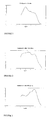
- Figure 1 represents the molecular weight distribution of the polymer obtained with a catalyst system based on metallic complex C1.
- Figure 2 represents the molecular weight distribution of the polymer obtained with a catalyst system based on metallic complex C2.
- Figure 3 represents the molecular weight distribution of the polymer obtained with a catalyst system based on metallic complex C3.
- Figure 4 represents the molecular weight distribution of the polymer obtained with a catalyst system based on metallic complex C4.
- Ligand L2 (1-benzyl-furan-2-ylmethyl-amino)-propan-2-one 0 -(2-nitro-phenyl)-oxime.
- Ligand L3 1-(benzyl-furan-2-ylmethyl-amino)-propan-2-one 0 -(4-nitro-phenyl)-oxime.
- All catalyst components were activated with methylaluminoxane (MAO) with a ratio Al/Cr of 1000, the solvent was toluene, the polymerisation temperature was of 35 °C and the ethylene pressure was of 15 bars.
- MAO methylaluminoxane
- the metallic complex was added to a MAO solution (30% in toluene, 730 equ.), and the mixture was stirred for a period of time of 5 to 10 minutes.
- a scavenger solution consisting of MAO (30% , 270 equ.)
- the temperature was increased to its target value of 35 °C and the ethylene pressure was increased to 15 bars. These conditions were maintained during the reaction time of one hour.
- the activity is measured with respect to the polymer production.
- the ethylene consumption curves showed very little decrease.
- the oligomer analysis carried out by gas chromatography showed predominantly the formation of alpha-oligomers, with a proportion of up to 95 %.
- all systems had a similar Shultz-Flory type oligomer distribution up to C 24 .
- the C 6 /(C 4 +C 6 ) ratio was in the range 0.57 to 0.60.
- the polymers were studied by Gel permeation Chromatographt (GPC) and by Differential Scanning Calorimetry (DSC).
- the polidispersity index PI is the ratio Mw/Mn of the weight average molecular weight Mw over the number average molecular weight Mn.
- Their properties are summarised in Table III. TABLE III. Metal complex Mn kD Mw kD PI Tm °C C1 8177 301100 36.8 125.0 C2 8770 558768 63.7 126.9 C3 10464 646838 61.8 114.7 C4 5599 148652 26.6 127.3
- the molecular weight distributions of the polymers produced with catalyst systems based on C1 to C4 are represented respectively in Figures 1 to 4. it can be seen that the polymers prepared with C1 to C3 have a large polydispersity index and a multimodal molecular weight distribution.
- the polymer formed with complex C4 has a monomodal molecular weight distribution.
- the polymerisation of ethylene should be carried at an ethylene pressure of at least 15 bars, more preferably of at least 20 bars.
Landscapes
- Chemical & Material Sciences (AREA)
- Organic Chemistry (AREA)
- Health & Medical Sciences (AREA)
- Chemical Kinetics & Catalysis (AREA)
- Medicinal Chemistry (AREA)
- Polymers & Plastics (AREA)
- Organic Low-Molecular-Weight Compounds And Preparation Thereof (AREA)
- Transition And Organic Metals Composition Catalysts For Addition Polymerization (AREA)
Abstract
Description
- This invention relates to the field of oxime-ether ligands and their use in catalyst system for the polymerisation and oligomerisation of ethylene and alpha-olefins.
- There exists a multitude of catalyst systems available for polymerising or oligomerising ethylene and alpha-olefins, but there is a growing need for finding new systems capable to tailor polymers with very specific properties. More and more post-metallocene catalyst components based on early or late transition metals from
Groups 3 to 10 of the Periodic Table have recently been investigated such as for example those disclosed in Gibson and al. review (Gibson, V.C.; Spitzmesser, S.K., Chem. Rev. 2003, 103, p. 283). But there is still a need to improve either the specificities or the performances of these systems. - It is an aim of the present invention to prepare a polymerisation catalyst system based on oxime-ether ligands.
- It is also an aim of the present invention to use oxime-ether ligand-based catalyst system for the homo- or co-polymerisation of ethylene and alpha-olefins.
- Accordingly, the present invention discloses oxime-ether ligands of general formula I

wherein R5 is a alkyl, benzyl or phenyl compound of formula
- The other Y substituents, if present, can be steric substituents such as for example alkyl or aryl groups.
- Preferably, the electron attracting group Y is NO2 or CN.
- Among the preferred embodiments according to the present invention, R1 and R2 can each be independently selected from isopropyl, n-butyl, benzyl, cyclohexyl, pyridyl, méthylpyridine, thiényl, thényl, furyl, furfuryl, phenyl, mesityl. R3 and R'3 are preferably hydrogen and R4 is preferably an alkyl group having from 1 to 6 carbon atoms, more preferably methyl.
- The invention also discloses a process for preparing an oxime-ether ligand that comprises the steps of:
- a) providing an oxime ligand of formula II

- b) deprotonating the OH group of the oxime ligand in the presence of a base;
- c) in the presence of a polar solvent; and
- d) optionally in the presence of a crown ether able to trap the cation from the base of step b).
- e) reacting the anion obtained from steps b), c) and d) with R5-X wherein X is a halogen, and R5 is alkyl or aryl, preferably R5-X is BnBr where Bn is benzyl, or a phenyl group carrying a fluor substitutent and at least one other substituent Y that is an electron attracting group.
- The preparation of the ligand can typically be represented by the following scheme.

- The catalyst component is then prepared by complexing the ligand with a metallic precursor MXv in a ligand to metal ratio of from 1/1 to 2/1. The metallic precursor and the ligand are placed in a solvent and they are allowed to react under stirring for a period of time of from 2 to 10 hours at a temperature of from 10 to 80 °C preferably at room temperature (about 25 °C).
- Metal M is selected from
groups 6 to 10 of the Periodic Table. Preferably, it is Cr, Fe, Co, Ni, Pd, more preferably it is nickel. X is halogen and v is the valence of M. - The solvent is polar or apolar. Preferably it is tetrahydrofuran (THF).
- An active catalyst system is then prepared by adding an activating agent having an ionising action.
- Any activating agent having an ionising action known in the art may be used for activating the monooxime catalyst component. For example, it can be selected from aluminium-containing or boron-containing compounds. The aluminium-containing compounds comprise aluminoxane and/or alkyl aluminium.
- The aluminoxanes are preferred and may comprise oligomeric linear and/or cyclic alkyl aluminoxanes represented by the formula:


wherein n is 1-40, preferably 10-20, m is 3-40, preferably 3-20 and R is a C1-C8 alkyl group and preferably methyl. - Suitable boron-containing activating agents that can be used comprise a triphenylcarbenium boronate such as tetrakis-pentafluorophenyl-boratotriphenylcarbenium as described in
EP-A-0427696 , or those of the general formula [L'-H] + [B Ar1 Ar2 X3 X4]- as described inEP-A-0277004 (page 6, line 30 topage 7, line 7). - The preferred activating agent is aluminoxane. The amount of aluminoxane necessary to activate the catalyst component is selected to have a AI/M ratio of from 100 to 3000, preferably about 1000.
- The catalyst system can also be supported. The support if present can be a porous mineral oxide, advantageously selected from silica, alumina and mixtures thereof. Preferably it is silica.
- The present invention also discloses a method for oligomerising and for homo- or copolymerising ethylene and alpha-olefins that comprises the steps of:
- a) injecting the active catalyst system into the reactor;
- b) injecting the monomer and optional comonomer into the reactor;
- c) maintaining under polymerising conditions;
- d) retrieving the oligomers and polymers.
- The polymerisation and oligomerisation method is not particularly limited and it can be carried out at a temperature of from 20 to 85°C and under a pressure of from 0.5 to 50 bars. Preferably, the pressure is of at least 15 bars, more preferably of at least 20 bars.
- The preferred monomers and comonomers are selected from ethylene, propylene and hexene.
- Figure 1 represents the molecular weight distribution of the polymer obtained with a catalyst system based on metallic complex C1.
- Figure 2 represents the molecular weight distribution of the polymer obtained with a catalyst system based on metallic complex C2.
- Figure 3 represents the molecular weight distribution of the polymer obtained with a catalyst system based on metallic complex C3.
- Figure 4 represents the molecular weight distribution of the polymer obtained with a catalyst system based on metallic complex C4.
- In a balloon containing 1.75 mmol of oxime ligand, 25 mL of dimethylformamide (DMF) were added, then 1.75 mmol of NaH. The mixture was kept under stirring for a period of time of one hour. 1.75 mmol of BnBr were then added and stirring was maintained for a period of time of 20 hours. The solvent was vaporised and the mixture was purified by silica gel chromatography to obtain the resulting oxime-ether with a yield of 91 % as a pale yellow oil.
- The following scheme was used:

- The compound was characterised by NMR.
RMN 1H (300 MHz, CDCl3) □ : 7.28-7.40 (m, 11 H), 6.34 (m, 1 H), 6.17 (m, 1 H), 5.13 (s, 2H), 3.60 (s, 2H), 3.58 (s, 2H), 3.13 (s, 2H), 1.96 (s, 3H);
RMN 13C (75 MHz, COCl3) □ : 157.1, 152.2, 142.0, 138.9, 138.3, 128.9, 128.3, 128.2, 127.8, 127.6, 127.0, 110.1, 108.9, 75.4, 57.4, 57.3, 49.5, 13.1;
EIMS m/z [M-CH2C4H3O]+ 267.1498, calcd for C17H19N2O 267.1497; Anal. Calcd C, 75.83; H, 6.94; N, 8.04. Found: C, 75.83; H, 6.89; N, 8.02 - The introduction of a simple phenyl group was impossible for lack of reactivity of fluorobenzene. Fluorinated derivatives activated with electro-attracting substituents were selected.
The general procedure was the same as that used for the preparation of O-benzyle oxime-ether ligands and the following scheme was used.

- Specific amounts of reactants and solvents were selected according to each substituted fluorobenzene.
- For Y = NO2


- The compound was characterised by NMR.
RMN 1H (300 MHz, CDCl3) □ : 7.97 (dd, J1 = 1.5 Hz, J2 = 8.3 Hz, 1H), 7.74 (dd, J1 = 1.1 Hz, J2 = 8.3 Hz, 1 H), 7.57 (td, J1 = 1.5 Hz, J2 = 7.9 Hz, 1 H), 7.26-7.42 (m, 7H), 7.06 (td, J1 = 1.5 Hz, J2 = 7.9 Hz, 1 H), 6.35 (dd, J1 = 1.9 Hz, J2 = 3.4 Hz, 1 H), 6.23 (d, J = 3.0 Hz, 1 H), 3.67 (s, 2H), 3.64 (s, 2H), 3.27 (s, 2H), 2.17 (s, 3H);
RMN 13C (75 MHz, CDCl3) □ : 163.6, 153.1, 151.9, 142.2, 138.5, 137.3, 134.5, 129.0, 128.9, 128.8, 128.4, 127.3, 125.5, 121.2, 117.1, 110.2, 109.1, 57.8, 56.7, 49.8, 14.3;
EIMS m/z [M-CH2C4H3O]+ 298.1197, calcd for C16H16N3O3 298.1192; Anal. Calcd C, 66.48; H, 5.58; N, 11.07. Found: C, 67.22; H, 6.04; N, 10.32. -


NMR results were as follows.
RMN 1H (300 MHz, CDCl3) □ : 8. 21 (m, 2H), 7.25-7.39 (m, 8H), 6.36 (dd, J1 = 1.9 Hz, J2 = 3.0 Hz, 1 H), 6.24 (d, J = 3.0 Hz, 1 H), 3.68 (s, 2H), 3.66 (s, 2H), 3.29 (s, 2H), 2.11 (s, 3H);
RMN 13C (75 MHz, COCl3) □ : 164.1, 162.8, 151.8, 142.2, 138.5, 128.9, 128.4, 127.3, 125.7,114.3, 110.2, 109.1, 57.8, 56.9, 49.9, 13.8;
EIMS m/z [M-CH2Ph]+ 288.0991, calcd for C14H14N3O4 288.0984; Anal. Calcd C, 66.48; H, 5.58; N, 11.07. Found: C, 66.97; H, 5.61; N, 11.03. -

- 1.5 equivalents of fluorinated derivative substrate were used for 1 equivalent of NaH and 1 equivalent of oxime. The solvent was DMF.

- NMR results were as follows.
RMN 1H (300 MHz, CDCl3) □ : 7.52-7.56 (m, 3H), 7.26-7.42 (m, 7H), 7.01-7.06 (m, 1 H), 6.35 (dd, J1 = 1.9 Hz, J2 = 3.4 Hz, 1 H), 6.23 (d, J = 3.0 Hz, 1 H), 3.68 (s, 2H), 3.65 (s, 2H), 3.28 (s, 2H), 2.17 (s, 3H);
RMN 13C (75 MHz, CDCl3) □ : 163.1, 161.0, 151.9, 142.2, 138.5, 134.3, 133.0, 128.9, 128.4, 127.3, 121.8, 116.0, 114.9, 110.2, 109.1, 99.4, 57.8, 56.7, 49.8, 13.9;
EIMS m/z [M]+ 359.1638, calcd for C22H21N3O2 359.1634; Anal. Calcd C, 73.52; H, 5.89; N, 11.69. Found: C, 73.47; H, 5.91; N, 11.66. - In a glove box, CrCl2 was introduced in a Schlenk and a solution of the ligand in THF was added: the metal concentration was of 3.10-2 mol/L. The complexation reaction was carried out for a period of time of 6 hours under stirring and then THF was eliminated under vacuum. The solid residue was washed three times with ether in order to eliminate all residual ligand and then dried under vacuum.
- The amounts of ligand and metallic complex are summarised in Table I.
TABLE I. Catalyst component Ligand used Proportions metal/ligand Complex colour C1 L1 1/1.2 Green C2 L2 1/1 Brown C3 L3 1/1.2 Brown C4 L4 1/1.2 Green - All catalyst components were activated with methylaluminoxane (MAO) with a ratio Al/Cr of 1000, the solvent was toluene, the polymerisation temperature was of 35 °C and the ethylene pressure was of 15 bars.
- The metallic complex was added to a MAO solution (30% in toluene, 730 equ.), and the mixture was stirred for a period of time of 5 to 10 minutes. In the reactor under inert atmosphere were successively added 50 mL of toluene, a scavenger solution consisting of MAO (30% , 270 equ.), completed to 5 mL with toluene and the solution of activated metallic complex. The temperature was increased to its target value of 35 °C and the ethylene pressure was increased to 15 bars. These conditions were maintained during the reaction time of one hour.
- After degassing, the oligomers and polymers were retrieved. The polymer was washed with MeOH/
HCl 5% then with MeOH and finally with acetone. It was then dried under vacuum overnight. The results are reported in Table II.TABLE II. Metal complex Cata µmol Activity KgPE/molCr/h Consumption KgC2H4/molCr/h Polymer/oligomer C1 8.6 31 2187 1/70 C2 9.4 79 1960 1/25 C3 9.6 32 1790 1/56 C4 10.2 100 1356 1/14 - The activity is measured with respect to the polymer production.
The ethylene consumption curves showed very little decrease. - It can be seen that the catalytic systems of the present invention produce simultaneously oligomers and polymers, with a predominance for oligomers. Several catalytic species are thus probably simultaneously present.
- Ethylene consumption for all complexes was high. In ethylene polymerisation, ligand C4, functionalised with a cyano group, was the most active and gave the highest polymer/oligomer ratio.
- The oligomer analysis carried out by gas chromatography showed predominantly the formation of alpha-oligomers, with a proportion of up to 95 %. In addition, all systems had a similar Shultz-Flory type oligomer distribution up to C24. The C6/(C4+C6) ratio was in the range 0.57 to 0.60.
- The polymers were studied by Gel permeation Chromatographt (GPC) and by Differential Scanning Calorimetry (DSC). The polidispersity index PI is the ratio Mw/Mn of the weight average molecular weight Mw over the number average molecular weight Mn. Their properties are summarised in Table III.
TABLE III. Metal complex Mn kD Mw kD PI Tm °C C1 8177 301100 36.8 125.0 C2 8770 558768 63.7 126.9 C3 10464 646838 61.8 114.7 C4 5599 148652 26.6 127.3 - The molecular weight distributions of the polymers produced with catalyst systems based on C1 to C4 are represented respectively in Figures 1 to 4. it can be seen that the polymers prepared with C1 to C3 have a large polydispersity index and a multimodal molecular weight distribution. The polymer formed with complex C4 has a monomodal molecular weight distribution.
- The influence of polymerisation temperature and ethylene pressure have been studied for the catalyst systems based on metallic complexes C1 and C4. The results are displayed in Table IV.
TABLE IV. Metal complex T °C P bar Cr µmol Activity KgPE/molCr/h Consump. KgC2/molCr/h Poly/oligo C1 35 15 8.6 31 2187 1/70 60 15 10.6 20 2309 1/115 35 24 5.7 101 2333 1 /23 C4 35 15 10.3 100 1356 1/14 60 15 9.3 37 1914 1/52 35 24 9.3 299 2784 1/9 - It can be seen that for the two catalyst systems studied, an increase in temperature increased the ethylene consumption but reduced the activity in polymer production and the ratio of polymer to oligomer. It was also observed that the stability of the catalyst system decreased with increasing temperature.
- Increasing the pressure had a positive impact on all counts: it increased the activity, the ethylene consumption, the polymer to oligomer ratio and the stability.
- Preferably, the polymerisation of ethylene should be carried at an ethylene pressure of at least 15 bars, more preferably of at least 20 bars.
Claims (17)
- An oxime-ether ligand of formula I

wherein R5 is a alkyl, benzyl or phenyl compound of formula
- The oxime-ether ligand of claim 1 wherein additional Y substituents are steric substituents selected from alkyl and aryl goups having up to 12 carbon atoms.
- The oxime-ether ligand of claim 1 or claim 2 wherein R1 and R2 are independently selected from isopropyl, n-butyl, benzyl, cyclohexyl, pyridyl, méthylpyridine, thiényl, thényl, furyl, furfuryl, phenyl or mesityl.
- The oxime-ether ligand of any one of claims 1 to 3 wherein R3 and R'3 are hydrogen.
- The oxime-ether ligand of any one of the preceding claims wherein R4 is an alkyl group having,from 1 to 6 carbon atoms, preferably methyl.
- A method for preparing the oxime-ether ligand of any one of claims 1 to 5 that comprises the steps of:a) providing an oxime ligand of formula II
 b) deprotonating the OH group of the oxime ligand in the presence of a base;c) in the presence of a polar solvent; andd) optionally in the presence of a crown ether able to trap the cation from the base of step b).e) reacting the anion obtained from steps b), c) and d) with R5-X wherein X is a halogen, and R5 is alkyl or aryl,
 - The process of claim 6 wherein R5-X is BnBr where Bn is benzyl.
- The process of claim 6 wherein R5-X is a phenyl group carrying a fluor substitutent and at least one other substituent Y that is an electron attracting group.
- The process of claim 8 wherein Y is an electron attracting group selected from CN or NO2.
- A process for preparing a catalyst component by complexing the oxime-ether ligang of any one of claims 1 to 5 with metallic precursor MXv wherein M is a metal Group 6 to 10 of the Periodic Table, X is halogen and v is the valence of M, and wherein the ratio ligand/metal of 1:1 to 2:1.
- The process of claim 10 wherein the metal is Cr, Fe, Co, Ni, Pd.
- A metallic component obtainable by the process of claim 10 or claim 11.
- An active catalyst system comprising the metallic component of claim 12 and an activating agent having an ionising action.
- The active catalyst system of claim 13 wherein the activating agent is methylaluminoxane.
- A process for oligomerising and for homopolymerising ethylene and alpha-olefins that comprises the steps of:a) injecting the active catalyst system into the reactor;b) injecting the monomer and optional comonomer into the reactor;c) maintaining under polymerising conditions;d) retrieving the oligomers and polymers.
- The process of claim 15 wherein the monomer is ethylene, propylene or 1-hexene, preferably ethylene.
- The process of claim 15 or 16 wherein the monomer is ethylene and the ethylene pressure is of at least 20 bars.
Priority Applications (6)
| Application Number | Priority Date | Filing Date | Title |
|---|---|---|---|
| EP06291272A EP1884525A1 (en) | 2006-08-03 | 2006-08-03 | Polymerisation catalyst system based on oxime-ether ligands |
| US12/376,100 US20110152485A1 (en) | 2006-08-03 | 2007-07-26 | Polymerisation Catalyst System based on Oxime-Ether Ligands |
| EP07787951A EP2046841B1 (en) | 2006-08-03 | 2007-07-26 | Polymerisation catalyst system based on oxime-ether ligands |
| AT07787951T ATE459656T1 (en) | 2006-08-03 | 2007-07-26 | POLYMERIZATION CATALYST SYSTEM BASED ON OXIMETHER LIGANDS |
| DE602007005142T DE602007005142D1 (en) | 2006-08-03 | 2007-07-26 | POLYMERIZATION CATALYST SYSTEM BASED ON OXIMETHER LIGANDS |
| PCT/EP2007/057734 WO2008015160A1 (en) | 2006-08-03 | 2007-07-26 | Polymerisation catalyst system based on oxime-ether ligands |
Applications Claiming Priority (1)
| Application Number | Priority Date | Filing Date | Title |
|---|---|---|---|
| EP06291272A EP1884525A1 (en) | 2006-08-03 | 2006-08-03 | Polymerisation catalyst system based on oxime-ether ligands |
Publications (1)
| Publication Number | Publication Date |
|---|---|
| EP1884525A1 true EP1884525A1 (en) | 2008-02-06 |
Family
ID=37499676
Family Applications (2)
| Application Number | Title | Priority Date | Filing Date |
|---|---|---|---|
| EP06291272A Withdrawn EP1884525A1 (en) | 2006-08-03 | 2006-08-03 | Polymerisation catalyst system based on oxime-ether ligands |
| EP07787951A Not-in-force EP2046841B1 (en) | 2006-08-03 | 2007-07-26 | Polymerisation catalyst system based on oxime-ether ligands |
Family Applications After (1)
| Application Number | Title | Priority Date | Filing Date |
|---|---|---|---|
| EP07787951A Not-in-force EP2046841B1 (en) | 2006-08-03 | 2007-07-26 | Polymerisation catalyst system based on oxime-ether ligands |
Country Status (5)
| Country | Link |
|---|---|
| US (1) | US20110152485A1 (en) |
| EP (2) | EP1884525A1 (en) |
| AT (1) | ATE459656T1 (en) |
| DE (1) | DE602007005142D1 (en) |
| WO (1) | WO2008015160A1 (en) |
Families Citing this family (2)
| Publication number | Priority date | Publication date | Assignee | Title |
|---|---|---|---|---|
| CN103894230B (en) * | 2012-12-28 | 2016-04-06 | 中国石油天然气股份有限公司 | Preparation and application of a supported iron-based catalyst |
| EP2816051B1 (en) * | 2013-06-19 | 2015-11-04 | Scg Chemicals Co. Ltd. | Catalyst for olefin polymerization, method for its preparation and use thereof |
Family Cites Families (3)
| Publication number | Priority date | Publication date | Assignee | Title |
|---|---|---|---|---|
| US6204216B1 (en) * | 1999-04-15 | 2001-03-20 | Equistar Chemicals, L.P. | Olefin polymerization catalysts containing amine derivatives |
| EP1746112A1 (en) * | 2005-07-19 | 2007-01-24 | Total Petrochemicals Research Feluy | Polymerisation catalyst system based on monooxime ligands |
| EP1746111A1 (en) * | 2005-07-19 | 2007-01-24 | Total Petrochemicals Research Feluy | Polymerisation catalyst system based on dioxime ligands |
-
2006
- 2006-08-03 EP EP06291272A patent/EP1884525A1/en not_active Withdrawn
-
2007
- 2007-07-26 AT AT07787951T patent/ATE459656T1/en not_active IP Right Cessation
- 2007-07-26 EP EP07787951A patent/EP2046841B1/en not_active Not-in-force
- 2007-07-26 WO PCT/EP2007/057734 patent/WO2008015160A1/en not_active Ceased
- 2007-07-26 DE DE602007005142T patent/DE602007005142D1/en not_active Expired - Fee Related
- 2007-07-26 US US12/376,100 patent/US20110152485A1/en not_active Abandoned
Non-Patent Citations (3)
| Title |
|---|
| FISCHER, H. P. ET AL: "Fragmentation of .alpha.-amino ketoximes. Beckmann reactions of the second type. I. Fragmentation reactions. 4", HELVETICA CHIMICA ACTA , 45, 2539-53 CODEN: HCACAV; ISSN: 0018-019X, 1962, XP009076378 * |
| FISCHER, H. P. ET AL: "Preparation and determination of configuration of syn- and anti-.alpha.-aminoketoxime derivatives", HELVETICA CHIMICA ACTA , 45, 2528-38 CODEN: HCACAV; ISSN: 0018-019X, 1962, XP009076377 * |
| JONES, RAYMOND C. F. ET AL: "A chiral imidazoline nitrone; a cycloaddition route to imidazoisoxazoles and pyrroloimidazoles", SYNLETT , (7), 967-970 CODEN: SYNLES; ISSN: 0936-5214, 2000, XP002411995 * |
Also Published As
| Publication number | Publication date |
|---|---|
| ATE459656T1 (en) | 2010-03-15 |
| US20110152485A1 (en) | 2011-06-23 |
| WO2008015160A1 (en) | 2008-02-07 |
| EP2046841B1 (en) | 2010-03-03 |
| EP2046841A1 (en) | 2009-04-15 |
| DE602007005142D1 (en) | 2010-04-15 |
Similar Documents
| Publication | Publication Date | Title |
|---|---|---|
| Britovsek et al. | Bis (imino) pyridyl iron and cobalt complexes: the effect of nitrogen substituents on ethylene oligomerisation and polymerisation | |
| Köppl et al. | Substituted 1-(2-pyridyl)-2-azaethene-(N, N)-nickel dibromide complexes as catalyst precursors for homogeneous and heterogeneous ethylene polymerization | |
| US7273940B2 (en) | Catalysts for the polymerization of unsaturated compounds | |
| EP1994006B1 (en) | Polymerisation of ethylene and alpha-olefins with imino-quinolinol complexes | |
| EP1994040B1 (en) | Polymerisation of ethylene and alpha-olefins with phosphino-iminophenol complexes | |
| EP2046841B1 (en) | Polymerisation catalyst system based on oxime-ether ligands | |
| van der Ende et al. | Ti (IV) Complexes with Bidentate O‐Chelating N‐Heterocyclic Carbenes for Use in the Homopolymerization of Ethylene and Its Copolymerization with Cyclic Olefins | |
| EP2268651B1 (en) | Sterically emcumbered bidentate and tridentate naphthoxy-imine metallic complexes | |
| EP2003125A1 (en) | New tridentate ligand compounds with imino furan units, method for manufacturing said compounds, and their use in the preparation of catalysts for the homopolymerisation and copolymerisation of ethylene and alpha-olefins | |
| EP1849791A1 (en) | Polymerisation of ethylene and alpha-olefins with pyridino-iminophenol complexes | |
| CN115785163B (en) | Late transition metal complex, and preparation method and application thereof | |
| Lee et al. | Novel nickel catalysts containing tetradentate chelating ligands for the polymerization of norbornene | |
| EP1746112A1 (en) | Polymerisation catalyst system based on monooxime ligands | |
| CN118146272A (en) | A type of acenaphthenyl diimide Ni (II) catalyst containing dibenzocycloheptyl and its preparation method and application | |
| EP2167517B1 (en) | Catalysts systems based on carbonylamino fulvenes | |
| KR101187233B1 (en) | Polymerisation of ethylene and alpha-olefins with catalyst systems based on binam derived ligands | |
| EP2089399B1 (en) | Polymerisation of ethylene and alpha olefins with single site catalysts having an anionic scorpion-like ligand | |
| EP2167518B1 (en) | Catalyst components based on fulvene complexes | |
| EP1754723A1 (en) | Single site catalyst systems having a scorpion-like structure | |
| EP1746111A1 (en) | Polymerisation catalyst system based on dioxime ligands | |
| EP1899060B1 (en) | Catalyst systems based on macrocyclic ligands | |
| EP1842860A1 (en) | Catalyst components based on ferrocenyl complexes used for olefin polymerisation | |
| CN121045022A (en) | A nitrogen-oxygen ligand, its preparation method, a neutral nickel complex thereof, its preparation method and application | |
| Redshaw et al. | George JP Britovsek, Vernon C. Gibson,* Brian S. Kimberley, b Sergio Mastroianni |
Legal Events
| Date | Code | Title | Description |
|---|---|---|---|
| PUAI | Public reference made under article 153(3) epc to a published international application that has entered the european phase |
Free format text: ORIGINAL CODE: 0009012 |
|
| AK | Designated contracting states |
Kind code of ref document: A1 Designated state(s): AT BE BG CH CY CZ DE DK EE ES FI FR GB GR HU IE IS IT LI LT LU LV MC NL PL PT RO SE SI SK TR |
|
| AX | Request for extension of the european patent |
Extension state: AL BA HR MK YU |
|
| 17P | Request for examination filed |
Effective date: 20080806 |
|
| 17Q | First examination report despatched |
Effective date: 20080904 |
|
| AKX | Designation fees paid |
Designated state(s): AT BE BG CH CY CZ DE DK EE ES FI FR GB GR HU IE IS IT LI LT LU LV MC NL PL PT RO SE SI SK TR |
|
| STAA | Information on the status of an ep patent application or granted ep patent |
Free format text: STATUS: THE APPLICATION IS DEEMED TO BE WITHDRAWN |
|
| 18D | Application deemed to be withdrawn |
Effective date: 20090115 |