EP1882483A2 - Medical implant bearing material - Google Patents
Medical implant bearing material Download PDFInfo
- Publication number
- EP1882483A2 EP1882483A2 EP07252973A EP07252973A EP1882483A2 EP 1882483 A2 EP1882483 A2 EP 1882483A2 EP 07252973 A EP07252973 A EP 07252973A EP 07252973 A EP07252973 A EP 07252973A EP 1882483 A2 EP1882483 A2 EP 1882483A2
- Authority
- EP
- European Patent Office
- Prior art keywords
- bearing material
- active agent
- surface active
- bearing
- fatty alcohol
- Prior art date
- Legal status (The legal status is an assumption and is not a legal conclusion. Google has not performed a legal analysis and makes no representation as to the accuracy of the status listed.)
- Granted
Links
Images



Classifications
-
- A—HUMAN NECESSITIES
- A61—MEDICAL OR VETERINARY SCIENCE; HYGIENE
- A61L—METHODS OR APPARATUS FOR STERILISING MATERIALS OR OBJECTS IN GENERAL; DISINFECTION, STERILISATION OR DEODORISATION OF AIR; CHEMICAL ASPECTS OF BANDAGES, DRESSINGS, ABSORBENT PADS OR SURGICAL ARTICLES; MATERIALS FOR BANDAGES, DRESSINGS, ABSORBENT PADS OR SURGICAL ARTICLES
- A61L27/00—Materials for grafts or prostheses or for coating grafts or prostheses
- A61L27/50—Materials characterised by their function or physical properties, e.g. injectable or lubricating compositions, shape-memory materials, surface modified materials
-
- A—HUMAN NECESSITIES
- A61—MEDICAL OR VETERINARY SCIENCE; HYGIENE
- A61L—METHODS OR APPARATUS FOR STERILISING MATERIALS OR OBJECTS IN GENERAL; DISINFECTION, STERILISATION OR DEODORISATION OF AIR; CHEMICAL ASPECTS OF BANDAGES, DRESSINGS, ABSORBENT PADS OR SURGICAL ARTICLES; MATERIALS FOR BANDAGES, DRESSINGS, ABSORBENT PADS OR SURGICAL ARTICLES
- A61L27/00—Materials for grafts or prostheses or for coating grafts or prostheses
- A61L27/14—Macromolecular materials
- A61L27/16—Macromolecular materials obtained by reactions only involving carbon-to-carbon unsaturated bonds
-
- A—HUMAN NECESSITIES
- A61—MEDICAL OR VETERINARY SCIENCE; HYGIENE
- A61L—METHODS OR APPARATUS FOR STERILISING MATERIALS OR OBJECTS IN GENERAL; DISINFECTION, STERILISATION OR DEODORISATION OF AIR; CHEMICAL ASPECTS OF BANDAGES, DRESSINGS, ABSORBENT PADS OR SURGICAL ARTICLES; MATERIALS FOR BANDAGES, DRESSINGS, ABSORBENT PADS OR SURGICAL ARTICLES
- A61L27/00—Materials for grafts or prostheses or for coating grafts or prostheses
- A61L27/14—Macromolecular materials
- A61L27/18—Macromolecular materials obtained otherwise than by reactions only involving carbon-to-carbon unsaturated bonds
-
- C—CHEMISTRY; METALLURGY
- C08—ORGANIC MACROMOLECULAR COMPOUNDS; THEIR PREPARATION OR CHEMICAL WORKING-UP; COMPOSITIONS BASED THEREON
- C08L—COMPOSITIONS OF MACROMOLECULAR COMPOUNDS
- C08L23/00—Compositions of homopolymers or copolymers of unsaturated aliphatic hydrocarbons having only one carbon-to-carbon double bond; Compositions of derivatives of such polymers
- C08L23/02—Compositions of homopolymers or copolymers of unsaturated aliphatic hydrocarbons having only one carbon-to-carbon double bond; Compositions of derivatives of such polymers not modified by chemical after-treatment
- C08L23/04—Homopolymers or copolymers of ethene
- C08L23/06—Polyethylene
-
- C—CHEMISTRY; METALLURGY
- C08—ORGANIC MACROMOLECULAR COMPOUNDS; THEIR PREPARATION OR CHEMICAL WORKING-UP; COMPOSITIONS BASED THEREON
- C08L—COMPOSITIONS OF MACROMOLECULAR COMPOUNDS
- C08L53/00—Compositions of block copolymers containing at least one sequence of a polymer obtained by reactions only involving carbon-to-carbon unsaturated bonds; Compositions of derivatives of such polymers
-
- C—CHEMISTRY; METALLURGY
- C08—ORGANIC MACROMOLECULAR COMPOUNDS; THEIR PREPARATION OR CHEMICAL WORKING-UP; COMPOSITIONS BASED THEREON
- C08L—COMPOSITIONS OF MACROMOLECULAR COMPOUNDS
- C08L71/00—Compositions of polyethers obtained by reactions forming an ether link in the main chain; Compositions of derivatives of such polymers
- C08L71/02—Polyalkylene oxides
Definitions
- This invention relates to a bearing material for a medical implant.
- Medical implants employ a polymeric material such as ultrahigh molecular weight polyethylene (UHMWPE) as the bearing material which articulates against a hard counterface, for example, a metallic counterface, of the implant.
- UHMWPE ultrahigh molecular weight polyethylene
- the polymeric material tends to wear during use with concomitant production of wear debris comprising microscopic particles of the polymer. These particles can cause adverse reactions such as inflammation and deterioration of cell tissues, or osteolysis of the tissues.
- the foregoing shows that there exists a need for a medical implant or medical implant part, such as the bearing material, which has a reduced wear rate.
- the present invention provides such an implant or implant part.
- the present invention also provides a method for reducing the wear rate.
- the invention provides a bearing material of a medical implant comprising a polymer such as UHMWPE and a surface active agent that is not covalently bonded to the polymer.
- the bearing material has one or more advantages, for example, a reduced wear rate, reduced amount of wear debris production, and/or reduced osteolytic potential.
- the surface active agent can act as a boundary lubricant and reduce the friction between the polymer of the bearing material when it articulates against the hard counterface.
- the bearing material of the invention made of UHMWPE and containing a surface agent can provide a lower wear rate than a bearing material made of crosslinked UHMWPE.
- the surface active agent can be anionic, cationic, non-ionic, or amphoteric.
- the surface active agent can comprise both hydrophilic and hydrophobic moieties or segments.
- the surface active agent can be a block copolymer.
- the surface active agent can include an alkoxylated hydrophilic moiety and a hydrophobic moiety.
- the hydrophilic moiety can include one or more ethoxyl groups.
- the hydrophobic moiety can include one or more alkanol, alkenol, aromatic alcohol, alkylamine, alkenyl amine, alkyl aromatic alcohol, alkanoic acid, alkenoic acid, or any combination thereof.
- the present invention also provides a method of reducing the wear rate of a polymeric bearing material of a medical implant when it articulates against a hard counterface in the presence of synovial fluid, the method comprising providing a surface active agent in the synovial fluid in close proximity to the bearing surface, the hard counterface, or both.
- the present invention arises from the observation that surface active agents reduce the friction, and/or provide a lubricating effect, between a polymer surface articulating against a hard counterface in a fluid medium such as serum containing a protein. Accordingly, in an embodiment, the invention provides a bearing material of a medical implant comprising a polymer and a surface active agent that is not covalently bonded to the polymer, wherein the bearing material is adopted for articulating against a hard counterface of the medical implant.
- the bearing material in accordance with the invention can be that of any suitable medical implant or medical implant part.
- suitable medical implants or medical implant parts include, but are not limited to, the acetabular cup, the insert or liner of the acetabular cup, or trunnion bearings (e.g., between the modular head and the stem) of artificial hip joints, the tibial plateau, patellar button (patello-femoral articulation), and trunnion or other bearing components of artificial knee joints, the talar surface (tibiotalar articulation) and other bearing components of artificial ankle joints, the radio-numeral joint, ulno-humeral joint, and other bearing components of artificial elbow joints, the glenoro-humeral articulation and other bearing components of artificial shoulder joints, intervertebral disk replacements and facet joint replacements for the spine, temporo-mandibular joints (jaw), and finger joints.
- the polymer of the bearing material can be made of any suitable polymer, specifically polyethylene, particularly ultrahigh molecular weight polyethylene (UHMWPE), which typically has a weight average molecular weight of about 400,000 atomic mass units or more.
- UHMWPE ultrahigh molecular weight polyethylene
- the term "ultrahigh molecular weight polyethylene” refers to a polyethylene polymer having a weight average molecular weight of about 400,000 atomic mass units or more.
- the ultrahigh molecular weight polyethylene has a weight average molecular weight of about 1,000,000 (e.g., about 2,000,000 or about 3,000,000) atomic mass units or more.
- the weight average molecular weight of the ultrahigh molecular weight polyethylene is less than 10,000,000 atomic mass units or less, more preferably about 6,000,000 atomic mass units or less.
- Ultrahigh molecular weight polyethylene suitable for use in the invention includes, but is not limited to, commercially available ultrahigh molecular weight polyethylene, such as GUR 1050 (weight average molecular weight of about 5,000,000 to about 6,000,000 atomic mass units) or GUR 1020 (weight average molecular weight of about 3,000,000 to about 4,000,000 atomic mass units) powdered ultrahigh molecular weight polyethylene from Ticona (Summit, N.J.).
- the surface active agent which contains both hydrophobic and hydrophilic moieties or segments, can be any suitable surface active agent, for example, anionic, cationic, nonionic, or amphoteric, preferably nonionic.
- the surface active agent is an added (exogenous) surface active agent, and does not refer to any surface active agent that may be present in the synovial fluid naturally.
- the surface active agent can be of any suitable molecular weight, for example, from about 100 to about 20,000 g.mole -1 or more, and in embodiments from about 1000 to about 20,000 g.mole -1 .
- the nonionic surface active agent comprises a block copolymer of hydrophilic and hydrophobic blocks, for example, the surface active agent is block copolymer of the type A-B, A-B-A, or B-A-B or a combination thereof, wherein A is a hydrophilic block and B is a hydrophobic block.
- A is polyethylene oxide (PEO) and B is polypropylene oxide (PPO).
- PEO polyethylene oxide
- PPO polypropylene oxide
- a suitable surface active agent is available from BASF Corp. (Florham Park, N.J.) under the trade mark PLURONIC F127, which has a molecular weight of about 12,600 g.mole -1 .
- the nonionic surface active agent comprises an alkoxylated hydrophilic moiety, such as an ethoxylated moiety, and a hydrophobic moiety.
- An alkoxylated hydrophilic moiety can include from about 3 to about 110 alkylene oxide units, from about 10 to about 80 alkylene oxide units, or from about 20 to about 50 alkylene oxide units.
- an alkoxylated hydrophilic moiety can include from about 3 to about 10, from about 11 to about 25, from about 26 to about 40, from about 41 to about 60, from about 61 to about 80, or from about 81 to about 110 alkylene oxide units.
- the hydrophobic moiety can include a moiety obtainable from an alkanol, alkenol, aromatic alcohol, alkylamine, alkenyl amine, alkyl aromatic alcohol, alkanoic acid, alkenoic acid, or any combination thereof.
- the hydrophobic moiety can include a C 8 -C 100 alkyl chain, such as a C 10 -C 50 or a C 15 -C 30 alkyl or alkenyl chain.
- the alkoxylated or ethoxylated fatty alcohol can include a C 8 -C 11 , C 12 -C 14 , C 13 -C 15 , C 16 -C 18 , C 19 -C 20 , C 21 -C 23 , C 24 -C 26 , C 27 -C 30 , C 31 -C 35 , C 36 -C 40 , C 40 -C 45 , or C 45 -C 50 , a C 50 -C 55 , C 55 -C 60 , C 60 -C 65 , C 65 -C 70 , C 70 -C 75 , C 75 -C 80 , C 80 -C 85 , C 85 -C 90 , C 90 - 95 or C 95 -C 100 alkyl or alkenyl chain.
- Non-ionic surface active agents that include an alkoxylated hydrophilic moiety and a hydrophobic moiety may be purchased commercially.
- BASF Corp. France Pacific Park, N.J.
- Ethoxylated fatty alcohols include LUTENSOL type A to N, (e.g., type A4N, A7N, A79N, and A8N) and LUTENSOL type AT, e.g., types AT 11, AT 18, AT 25, AT 50, and AT 80).
- Other surface active agents include ethoxylated oxo alcohols available as LUTENSOL types AO and TO, ethoxylated Guerbet alcohols available as LUTENSOL types XP and XL, ethoxylated alkyl phenol alcohols available as LUTENSOL type AP, ethoxylated alkyl amines available as LUTENSOL type FA.
- Baker Petrolite (Sugarland, TX) is another supplier of nonionic surface active agents, including a series of ethoxylated fatty acid alcohols supplied under the Unithox trade mark.
- the surface active agent can have a hydrophilic-lipophilic balance (HLB) value of from about 4 to about 24, for example from about 7 to about 10, from about 10 to about 12, from about 12 to about 14, from about 14 to about 16, from about 16 to about 19 or from about 19 to about 24.
- HLB hydrophilic-lipophilic balance
- surface active agent can have an HLB value of approximately any one of the following nearest integers: 4, 5, 6, 7, 8, 9, 10, 11, 12, 13, 14, 15, 16, 17, 18, 19, 20, 21, 22, 23, or 24. HLB values can be calculated according to the system introduced by W.C. Griffin.
- the surface active agent can be incorporated into the bearing material in any suitable amount, for example, in an amount of about 0.01% by weight or more, e.g., from about 0.1% to about 5%, and preferably from about 0.5% to about 1% by weight of the bearing material.
- the wear rate of the polymer is reduced at least by a factor of about 2, preferably 5, and more preferably about 10, relative to the unmodified polymer, particularly when the surface active agent is added at a level of 1% to the fluid, e.g., synovial fluid or serum.
- the agent sold under the trade mark PLURONIC F127 reduces the wear rate of UHMWPE by a factor of 10 when added to the serum at a level of 1% by weight of the serum.
- Wear rate and the coefficient of friction can be determined by methods known in the art, for example, by measuring the loss of weight or the normal force in the pin-on-disk method.
- the invention also provides a method of reducing the wear rate of a polymeric bearing material of a medical implant, the bearing material having a bearing surface, the bearing surface articulating against a hard counterface of the medical implant in the presence of synovial fluid, the method comprising providing a surface active agent in the synovial fluid in close proximity to the bearing surface, the hard counterface, or both.
- the bearing material includes a surface active agent that migrates to the interface between the bearing surface and the synovial fluid.
- the surface active agent can be included in the bearing material by any suitable method, for example, by molding, ram extrusion, or infiltration of the finished polymeric (e.g., UHMWPE) article with the surface active agent in a suitable solvent.
- a suitable solvent for example, powdered or pelletized UHMWPE and a surface active agent can be blended, e.g., dry blended, at a desired concentration and the resulting blend can be molded by compression molding or ram extrusion.
- UHMWPE and a surface active agent can be blended in an aqueous solution to form an aqueous dispersion containing a suitable amount of a surface active agent, e.g., more than 0.1%, from about 0.1% to about 5% or from about 0.5% to about 1% by weight of UHMWPE.
- the dispersion can be poured into a suitable tray and frozen at -80 °C.
- the tray can be loaded into a freeze dryer and a vacuum applied.
- the water can be removed by sublimation leaving a uniform dispersion of surface active agent and UHMWPE powder. This powder can be added to a mold and processed under temperature and pressure to produce a molded article.
- the surface active agent can be originally distributed throughout the bearing material or only present on the small portion thereof, e.g., at the surface.
- the surface active agent can be present in a surface layer having a thickness of about 0.5 mm or more, e.g., from about 0.5 mm to about 2 mm or more.
- the internal volume of the compression mould can be filled entirely with a blend of the polymer and the surface active agent, or alternatively, a portion of the internal volume can be filled with the blend, and the remaining volume filled with the polymer. In the latter case, the surface active agent will be contained in the surface of the bearing material.
- the bearing material can be immersed in a solution of the surface active agent at a suitable temperature and for suitable length of time to obtain a sufficient concentration of the surface active agent in the polymer.
- the solvent can be removed by suitable drying.
- the hard counterface includes a surface active agent and releases the surface active agent into the synovial fluid in close proximity to the hard counterface.
- the surface active agent can be included in a hydrogel which can be incorporated into a porous support in close proximity to the articulating surfaces.
- the hydrogel can be formed from hydrophobic and hydrophilic macromers, for example as disclosed in US-6916857 and US-6846875 . The resulting hydrogel can be loaded with a surface active agent. The hydrogel can be coated on the hard counterface.
- the surface active agent can be provided by injecting the surface active agent into the synovial fluid. If the surface active agent is injected into the fluid, in accordance with an embodiment of the invention, it can be injected, for example, in an amount of about 0.01% by weight or more, e.g., from about 0.1 to about 5%, and preferably from about 0.5 to about 1% by weight of the fluid.
- the surface active agent can be provided such that it elutes from a non-articulating portion of the medical implant.
- the surface active agent is originally present in the serum (or synovial fluid) or in the bulk of the polymer, it migrates to the interface between the polymer and the serum due to the reduction of surface energy.
- the hard counterface of the implant can be made of any suitable material, e.g., metallic, ceramic, or a combination thereof. Suitable metals include titanium, tantalum, and stainless steel. Typically, the hard counterfaces are formed from a metallic alloy that will exhibit appropriate strength and flexure in use. Examples of metallic alloys that may be used include titanium alloys, such as a titanium-aluminum-vanadium alloy, and cobalt-chromium alloys, such as a cobalt-chromium-molybdenum alloy, and stainless steel. In a specific example, the hard counterface comprises cobalt-chromium-molybdenum alloy.
- This example illustrates an advantage of the surface active agent in accordance with an embodiment of the invention, namely, it reduces the wear rate of UHMWPE.
- UHMWPE pins 18 mm (0.7 inch) long and 9.5 mm (0.375 inch) diameter, are manufactured from GUR 1020 resin ram extruded into bar stock. The pins are sterilized by irradiation.
- Metal counterfaces 38 mm (1.5 inch) diameter and 12.7 mm (0.5 inch) thick, are fabricated from cast 68% cobalt, 26% chromium, 6% molybdenum, and 0.2% carbon. The counterfaces are hot isostatic pressed and homogenized by heat treatment and polished to an average surface roughness of between 10 and 20 nm. Three disks are obtained for each wear test group.
- a sample pairing chart including same identifications is set out in the following table.
- Sample group Pin Disk Station S1 2B 1 Serum and surface active agent S2 5B 2 S3 6 3 W1 7 4 Water W2 8 5 W3 9 6 4 43 4 Serum 5 44 5 6 45 6
- the wear tests are conducted on a Pin-on-Disk (POD) machine (AMTI (Watertown, MA) OrthoPOD).
- POD Pin-on-Disk
- the pins move in a 10 mm by 10 mm square pattern with respect to the disk, providing a maximum amount of cross shear motion.
- a Paul loading cycle with a peak of 330N is applied ( Paul, J., Forces transmitted by joints in the human body, Proc. Inst. Mech. Eng., 181, 8-15 (1967) ).
- the frequency is 1.6 Hz.
- Six, 0.33 million-cycle data collection intervals are performed for 1.98 million cycle test duration. Water lost by evaporation is replenished approximately every 24 hours.
- the test lubricant is discarded at the end of each test interval, and fresh lubricant is added.
- each sample pair is rotated clockwise one station for the next interval.
- All of the samples are tested in all of the stations.
- Three different lubricants are tested: Reverse Osmosis treated water, Bovine serum from Hyclone Inc. (Logan, UT) (diluted to 90% of the initial concentration and treated with EDTA and sodium azide), and the bovine serum formulation above containing 1% by weight PLURONIC F127 surfactant. Bulk serum temperature is maintained at 37 ⁇ 1°C.
- Gravimetric data is obtained from the pins as follows.
- the pins are cleaned and weighed in a microbalance with 0.01 mg resolution.
- the balance is calibrated with standard weights. Corrections for fluid uptake are applied using standard soak control pins.
- Contact profilometry of the disks is performed on a Taylor-Hobson Form Talysurf Series II Profilometer. A cut off length of 250 ⁇ m, a 100:1 bandwidth, and a gauge range of 1 mm are used. Two pairs of perpendicular traces are taken on each sample. Pictures of the pins are taken with a Nikon Epiphot 200/300 Inverted Microscope (metallograph). Pictures of the disks are taken with a Nikon D1 Digital Camera.
- Fig. 2A and 2B depict the wear rate of UHMWPE pins.
- the wear rate of the pins is less when a surface active agent is employed.
- This example demonstrates the reduction in the coefficient of friction between the polymer surface and the hard counterface.
- Friction data is collected on the same type of pins and disks illustrated in Example 1.
- the data are obtained on an AMTI OrthoPOD Pin-on-Disk tester equipped with multiaxis strain gauges.
- the coefficient of friction is calculated by dividing the normal force by the in plane force during the same 10 mm by 10 mm test pattern and Paul load cycle used in wear testing.
- the friction data is collected over a small portion of the test pattern between the peaks of the Paul loading curve.
- Fig. 3 depicts the reduction in the coefficient of friction brought about by the use of the surfactant. Each point in Fig. 3 is the average of approximately 30 data points.
- This example illustrates a method of incorporating a non-ionic surface active agent into the UHMWPE.
- UHMWPE is fabricated with one or both of two ethoxylated fatty alcohols having the nominal formulas C38(EO)11 and C38(EO)103.
- the ethoxylated fatty alcohols are available from Baker Petrolite (Sugarland, TX) in neat form (as Unithox 450 with an HLB value of 10 and Unithox 490 with an HLB value of 18, respectively) or as aqueous dispersions (Unithox D100 and Petrolite D1038, respectively).
- the procedure begins by preparing an aqueous dispersion of UHMWPE GUR 1020 grade powder with the D100 and/or D1038 ethoxylate at a level of 1% by weight of the UHMWPE material.
- the dispersion is prepared, it is poured into at least one suitable tray and frozen at -80 °C. The tray is then loaded into a freeze dryer and a vacuum is pulled on the frozen dispersion. The water is removed by sublimation, leaving a uniform dispersion of ethoxylate and UHMWPE powder. This powder is then added to a 89 mm (3.5 inch) diameter mould and processed under temperature and pressure to produce a moulded article.
Landscapes
- Health & Medical Sciences (AREA)
- Chemical & Material Sciences (AREA)
- Dermatology (AREA)
- Medicinal Chemistry (AREA)
- Oral & Maxillofacial Surgery (AREA)
- Transplantation (AREA)
- Epidemiology (AREA)
- Life Sciences & Earth Sciences (AREA)
- Animal Behavior & Ethology (AREA)
- General Health & Medical Sciences (AREA)
- Public Health (AREA)
- Veterinary Medicine (AREA)
- Chemical Kinetics & Catalysis (AREA)
- Materials For Medical Uses (AREA)
- Prostheses (AREA)
Abstract
Description
- This invention relates to a bearing material for a medical implant.
- Medical implants employ a polymeric material such as ultrahigh molecular weight polyethylene (UHMWPE) as the bearing material which articulates against a hard counterface, for example, a metallic counterface, of the implant. The polymeric material, however, tends to wear during use with concomitant production of wear debris comprising microscopic particles of the polymer. These particles can cause adverse reactions such as inflammation and deterioration of cell tissues, or osteolysis of the tissues.
- Attempts have been made to reduce the wear rate of the bearing material, particularly UHMWPE, for example, by modifying the bulk properties of the polymer. Approaches to modify the bulk properties of the bearing material include radiation crosslinking of the polymer and stabilizing the associated free radicals against oxidation. While highly crosslinked UHMWPE has wear rates lower than the uncrosslinked material, the highly crosslinked material also tends to produce finer wear debris with higher osteolytic potential.
- The foregoing shows that there exists a need for a medical implant or medical implant part, such as the bearing material, which has a reduced wear rate. The present invention provides such an implant or implant part. The present invention also provides a method for reducing the wear rate.
- The invention provides a bearing material of a medical implant comprising a polymer such as UHMWPE and a surface active agent that is not covalently bonded to the polymer. The bearing material has one or more advantages, for example, a reduced wear rate, reduced amount of wear debris production, and/or reduced osteolytic potential. The surface active agent can act as a boundary lubricant and reduce the friction between the polymer of the bearing material when it articulates against the hard counterface. The bearing material of the invention made of UHMWPE and containing a surface agent can provide a lower wear rate than a bearing material made of crosslinked UHMWPE.
- The surface active agent can be anionic, cationic, non-ionic, or amphoteric. The surface active agent can comprise both hydrophilic and hydrophobic moieties or segments. In one embodiment, the surface active agent can be a block copolymer. In another embodiment, the surface active agent can include an alkoxylated hydrophilic moiety and a hydrophobic moiety. The hydrophilic moiety can include one or more ethoxyl groups. The hydrophobic moiety can include one or more alkanol, alkenol, aromatic alcohol, alkylamine, alkenyl amine, alkyl aromatic alcohol, alkanoic acid, alkenoic acid, or any combination thereof.
- The present invention also provides a method of reducing the wear rate of a polymeric bearing material of a medical implant when it articulates against a hard counterface in the presence of synovial fluid, the method comprising providing a surface active agent in the synovial fluid in close proximity to the bearing surface, the hard counterface, or both.
- The present invention arises from the observation that surface active agents reduce the friction, and/or provide a lubricating effect, between a polymer surface articulating against a hard counterface in a fluid medium such as serum containing a protein. Accordingly, in an embodiment, the invention provides a bearing material of a medical implant comprising a polymer and a surface active agent that is not covalently bonded to the polymer, wherein the bearing material is adopted for articulating against a hard counterface of the medical implant.
- The bearing material in accordance with the invention can be that of any suitable medical implant or medical implant part. Suitable medical implants or medical implant parts include, but are not limited to, the acetabular cup, the insert or liner of the acetabular cup, or trunnion bearings (e.g., between the modular head and the stem) of artificial hip joints, the tibial plateau, patellar button (patello-femoral articulation), and trunnion or other bearing components of artificial knee joints, the talar surface (tibiotalar articulation) and other bearing components of artificial ankle joints, the radio-numeral joint, ulno-humeral joint, and other bearing components of artificial elbow joints, the glenoro-humeral articulation and other bearing components of artificial shoulder joints, intervertebral disk replacements and facet joint replacements for the spine, temporo-mandibular joints (jaw), and finger joints.
- The polymer of the bearing material can be made of any suitable polymer, specifically polyethylene, particularly ultrahigh molecular weight polyethylene (UHMWPE), which typically has a weight average molecular weight of about 400,000 atomic mass units or more. As utilized herein, the term "ultrahigh molecular weight polyethylene" refers to a polyethylene polymer having a weight average molecular weight of about 400,000 atomic mass units or more. Preferably, the ultrahigh molecular weight polyethylene has a weight average molecular weight of about 1,000,000 (e.g., about 2,000,000 or about 3,000,000) atomic mass units or more. Typically, the weight average molecular weight of the ultrahigh molecular weight polyethylene is less than 10,000,000 atomic mass units or less, more preferably about 6,000,000 atomic mass units or less. Ultrahigh molecular weight polyethylene suitable for use in the invention includes, but is not limited to, commercially available ultrahigh molecular weight polyethylene, such as GUR 1050 (weight average molecular weight of about 5,000,000 to about 6,000,000 atomic mass units) or GUR 1020 (weight average molecular weight of about 3,000,000 to about 4,000,000 atomic mass units) powdered ultrahigh molecular weight polyethylene from Ticona (Summit, N.J.).
- The surface active agent, which contains both hydrophobic and hydrophilic moieties or segments, can be any suitable surface active agent, for example, anionic, cationic, nonionic, or amphoteric, preferably nonionic. The surface active agent is an added (exogenous) surface active agent, and does not refer to any surface active agent that may be present in the synovial fluid naturally. The surface active agent can be of any suitable molecular weight, for example, from about 100 to about 20,000 g.mole-1 or more, and in embodiments from about 1000 to about 20,000 g.mole-1. In an embodiment, the nonionic surface active agent comprises a block copolymer of hydrophilic and hydrophobic blocks, for example, the surface active agent is block copolymer of the type A-B, A-B-A, or B-A-B or a combination thereof, wherein A is a hydrophilic block and B is a hydrophobic block. As an example, A is polyethylene oxide (PEO) and B is polypropylene oxide (PPO). A suitable surface active agent is available from BASF Corp. (Florham Park, N.J.) under the trade mark PLURONIC F127, which has a molecular weight of about 12,600 g.mole-1.
- In another embodiment, the nonionic surface active agent comprises an alkoxylated hydrophilic moiety, such as an ethoxylated moiety, and a hydrophobic moiety. An alkoxylated hydrophilic moiety can include from about 3 to about 110 alkylene oxide units, from about 10 to about 80 alkylene oxide units, or from about 20 to about 50 alkylene oxide units. For example, an alkoxylated hydrophilic moiety can include from about 3 to about 10, from about 11 to about 25, from about 26 to about 40, from about 41 to about 60, from about 61 to about 80, or from about 81 to about 110 alkylene oxide units. The hydrophobic moiety can include a moiety obtainable from an alkanol, alkenol, aromatic alcohol, alkylamine, alkenyl amine, alkyl aromatic alcohol, alkanoic acid, alkenoic acid, or any combination thereof. For example, the hydrophobic moiety can include a C8-C100 alkyl chain, such as a C10-C50 or a C15-C30 alkyl or alkenyl chain. In specific examples, the alkoxylated or ethoxylated fatty alcohol can include a C8-C11, C12-C14, C13-C15, C16-C18, C19-C20, C21-C23, C24-C26, C27-C30, C31-C35, C36-C40, C40-C45, or C45-C50, a C50-C55, C55-C60, C60-C65, C65-C70, C70-C75, C75-C80, C80-C85, C85-C90, C90-95 or C95-C100 alkyl or alkenyl chain.
- Non-ionic surface active agents that include an alkoxylated hydrophilic moiety and a hydrophobic moiety may be purchased commercially. For example, BASF Corp. (Florham Park, N.J.) offers a number of products under the LUTENSOL trade mark. Ethoxylated fatty alcohols include LUTENSOL type A to N, (e.g., type A4N, A7N, A79N, and A8N) and LUTENSOL type AT, e.g., types AT 11, AT 18, AT 25,
AT 50, and AT 80). Other surface active agents include ethoxylated oxo alcohols available as LUTENSOL types AO and TO, ethoxylated Guerbet alcohols available as LUTENSOL types XP and XL, ethoxylated alkyl phenol alcohols available as LUTENSOL type AP, ethoxylated alkyl amines available as LUTENSOL type FA. Baker Petrolite (Sugarland, TX) is another supplier of nonionic surface active agents, including a series of ethoxylated fatty acid alcohols supplied under the Unithox trade mark. - The surface active agent can have a hydrophilic-lipophilic balance (HLB) value of from about 4 to about 24, for example from about 7 to about 10, from about 10 to about 12, from about 12 to about 14, from about 14 to about 16, from about 16 to about 19 or from about 19 to about 24. For example, surface active agent can have an HLB value of approximately any one of the following nearest integers: 4, 5, 6, 7, 8, 9, 10, 11, 12, 13, 14, 15, 16, 17, 18, 19, 20, 21, 22, 23, or 24. HLB values can be calculated according to the system introduced by W.C. Griffin. See, e.g., "Classification of Surface-Active Agents by 'HLB,"' Journal of the Society of Cosmetic Chemists 1: 311 (1949), "Calculation of HLB Values of Non-Ionic Surfactants," Journal of the Society of Cosmetic Chemists 5: 259 (1954), and Encyclopedia of Chemical Technology Vol. 8, Wiley, New York (1965).
- The surface active agent can be incorporated into the bearing material in any suitable amount, for example, in an amount of about 0.01% by weight or more, e.g., from about 0.1% to about 5%, and preferably from about 0.5% to about 1% by weight of the bearing material.
- The wear rate of the polymer, particularly UHMWPE, is reduced at least by a factor of about 2, preferably 5, and more preferably about 10, relative to the unmodified polymer, particularly when the surface active agent is added at a level of 1% to the fluid, e.g., synovial fluid or serum. For example, the agent sold under the trade mark PLURONIC F127 reduces the wear rate of UHMWPE by a factor of 10 when added to the serum at a level of 1% by weight of the serum. Wear rate and the coefficient of friction can be determined by methods known in the art, for example, by measuring the loss of weight or the normal force in the pin-on-disk method.
- The invention also provides a method of reducing the wear rate of a polymeric bearing material of a medical implant, the bearing material having a bearing surface, the bearing surface articulating against a hard counterface of the medical implant in the presence of synovial fluid, the method comprising providing a surface active agent in the synovial fluid in close proximity to the bearing surface, the hard counterface, or both. In an embodiment, the bearing material includes a surface active agent that migrates to the interface between the bearing surface and the synovial fluid.
- The surface active agent can be included in the bearing material by any suitable method, for example, by molding, ram extrusion, or infiltration of the finished polymeric (e.g., UHMWPE) article with the surface active agent in a suitable solvent. Thus, for example, powdered or pelletized UHMWPE and a surface active agent can be blended, e.g., dry blended, at a desired concentration and the resulting blend can be molded by compression molding or ram extrusion. For example, UHMWPE and a surface active agent can be blended in an aqueous solution to form an aqueous dispersion containing a suitable amount of a surface active agent, e.g., more than 0.1%, from about 0.1% to about 5% or from about 0.5% to about 1% by weight of UHMWPE. The dispersion can be poured into a suitable tray and frozen at -80 °C. The tray can be loaded into a freeze dryer and a vacuum applied. The water can be removed by sublimation leaving a uniform dispersion of surface active agent and UHMWPE powder. This powder can be added to a mold and processed under temperature and pressure to produce a molded article.
- The surface active agent can be originally distributed throughout the bearing material or only present on the small portion thereof, e.g., at the surface. Thus, for example, the surface active agent can be present in a surface layer having a thickness of about 0.5 mm or more, e.g., from about 0.5 mm to about 2 mm or more. The internal volume of the compression mould can be filled entirely with a blend of the polymer and the surface active agent, or alternatively, a portion of the internal volume can be filled with the blend, and the remaining volume filled with the polymer. In the latter case, the surface active agent will be contained in the surface of the bearing material.
- Alternatively, the bearing material can be immersed in a solution of the surface active agent at a suitable temperature and for suitable length of time to obtain a sufficient concentration of the surface active agent in the polymer. The solvent can be removed by suitable drying.
- In another embodiment, the hard counterface includes a surface active agent and releases the surface active agent into the synovial fluid in close proximity to the hard counterface. For example, the surface active agent can be included in a hydrogel which can be incorporated into a porous support in close proximity to the articulating surfaces. For example, the hydrogel can be formed from hydrophobic and hydrophilic macromers, for example as disclosed in
US-6916857 andUS-6846875 . The resulting hydrogel can be loaded with a surface active agent. The hydrogel can be coated on the hard counterface. - The surface active agent can be provided by injecting the surface active agent into the synovial fluid. If the surface active agent is injected into the fluid, in accordance with an embodiment of the invention, it can be injected, for example, in an amount of about 0.01% by weight or more, e.g., from about 0.1 to about 5%, and preferably from about 0.5 to about 1% by weight of the fluid.
- The surface active agent can be provided such that it elutes from a non-articulating portion of the medical implant.
- Whether the surface active agent is originally present in the serum (or synovial fluid) or in the bulk of the polymer, it migrates to the interface between the polymer and the serum due to the reduction of surface energy.
- The hard counterface of the implant can be made of any suitable material, e.g., metallic, ceramic, or a combination thereof. Suitable metals include titanium, tantalum, and stainless steel. Typically, the hard counterfaces are formed from a metallic alloy that will exhibit appropriate strength and flexure in use. Examples of metallic alloys that may be used include titanium alloys, such as a titanium-aluminum-vanadium alloy, and cobalt-chromium alloys, such as a cobalt-chromium-molybdenum alloy, and stainless steel. In a specific example, the hard counterface comprises cobalt-chromium-molybdenum alloy.
- The invention is described below with reference to the accompanying drawings, in which:
- Figure 1 depicts the known wear rate of UHMWPE bearing material against various counterfaces as a function of the concentration of proteins in the serum.
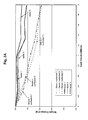
- Figure 2A depicts the weight change of UHMWPE pin as it rubs against cast CoCrMo counterfaces in water and in bovine calf serum plus 1% by weight surface active agent in accordance with an embodiment of the invention.
- Figure 2B depicts the weight change of the UHMWPE pins in bovine calf serum only.
- Figure 3 depicts the coefficient of friction between UHMWPE pins and CoCrMo counterfaces as a function of the number of cycles in serum (diamonds), 1% by weight surface active agent (triangles), and serum plus 1% by weight surface active agent (x), in accordance with an embodiment of the invention.
- It is known that proteins tend to alter the wear rate of UHMWPE. For example, as shown in Fig. 1, the wear rate increases with increasing protein concentration up to a certain protein concentration. Beyond this concentration, the wear rate tends to decrease. In accordance with the present invention, by the use of a surface active agent, it is possible to reduce the wear rate even further. As depicted in Figure 2, the wear rate of UHMWPE in a serum containing 1% surface active agent is less than that in serum alone. Further, as shown in Figure 3, the coefficient of friction of UHMWPE against Co-Cr-Mo counterface is decreased by the use of a surface active agent in the serum.
- This example illustrates an advantage of the surface active agent in accordance with an embodiment of the invention, namely, it reduces the wear rate of UHMWPE.
- UHMWPE pins, 18 mm (0.7 inch) long and 9.5 mm (0.375 inch) diameter, are manufactured from GUR 1020 resin ram extruded into bar stock. The pins are sterilized by irradiation. Metal counterfaces, 38 mm (1.5 inch) diameter and 12.7 mm (0.5 inch) thick, are fabricated from cast 68% cobalt, 26% chromium, 6% molybdenum, and 0.2% carbon. The counterfaces are hot isostatic pressed and homogenized by heat treatment and polished to an average surface roughness of between 10 and 20 nm. Three disks are obtained for each wear test group. A sample pairing chart including same identifications is set out in the following table.
Sample group Pin Disk Station S1 2B 1 Serum and surface active agent S2 5B 2 S3 6 3 W1 7 4 Water W2 8 5 W3 9 6 4 43 4 Serum 5 44 5 6 45 6 - The wear tests are conducted on a Pin-on-Disk (POD) machine (AMTI (Watertown, MA) OrthoPOD). The pins move in a 10 mm by 10 mm square pattern with respect to the disk, providing a maximum amount of cross shear motion. A Paul loading cycle with a peak of 330N is applied (Paul, J., Forces transmitted by joints in the human body, Proc. Inst. Mech. Eng., 181, 8-15 (1967)). The frequency is 1.6 Hz. Six, 0.33 million-cycle data collection intervals are performed for 1.98 million cycle test duration. Water lost by evaporation is replenished approximately every 24 hours. The test lubricant is discarded at the end of each test interval, and fresh lubricant is added.
- After each data collection interval, each sample pair is rotated clockwise one station for the next interval. During the course of the test all of the samples are tested in all of the stations. Three different lubricants are tested: Reverse Osmosis treated water, Bovine serum from Hyclone Inc. (Logan, UT) (diluted to 90% of the initial concentration and treated with EDTA and sodium azide), and the bovine serum formulation above containing 1% by weight PLURONIC F127 surfactant. Bulk serum temperature is maintained at 37 ± 1°C.
- Gravimetric data is obtained from the pins as follows. The pins are cleaned and weighed in a microbalance with 0.01 mg resolution. The balance is calibrated with standard weights. Corrections for fluid uptake are applied using standard soak control pins. Contact profilometry of the disks is performed on a Taylor-Hobson Form Talysurf Series II Profilometer. A cut off length of 250 µm, a 100:1 bandwidth, and a gauge range of 1 mm are used. Two pairs of perpendicular traces are taken on each sample. Pictures of the pins are taken with a Nikon Epiphot 200/300 Inverted Microscope (metallograph). Pictures of the disks are taken with a Nikon D1 Digital Camera.
- Fig. 2A and 2B depict the wear rate of UHMWPE pins. The wear rate of the pins is less when a surface active agent is employed.
- This example demonstrates the reduction in the coefficient of friction between the polymer surface and the hard counterface.
- Friction data is collected on the same type of pins and disks illustrated in Example 1. The data are obtained on an AMTI OrthoPOD Pin-on-Disk tester equipped with multiaxis strain gauges. The coefficient of friction is calculated by dividing the normal force by the in plane force during the same 10 mm by 10 mm test pattern and Paul load cycle used in wear testing. The friction data is collected over a small portion of the test pattern between the peaks of the Paul loading curve. Fig. 3 depicts the reduction in the coefficient of friction brought about by the use of the surfactant. Each point in Fig. 3 is the average of approximately 30 data points.
- This example illustrates a method of incorporating a non-ionic surface active agent into the UHMWPE.
- UHMWPE is fabricated with one or both of two ethoxylated fatty alcohols having the nominal formulas C38(EO)11 and C38(EO)103. The ethoxylated fatty alcohols are available from Baker Petrolite (Sugarland, TX) in neat form (as Unithox 450 with an HLB value of 10 and Unithox 490 with an HLB value of 18, respectively) or as aqueous dispersions (Unithox D100 and Petrolite D1038, respectively). The procedure begins by preparing an aqueous dispersion of UHMWPE GUR 1020 grade powder with the D100 and/or D1038 ethoxylate at a level of 1% by weight of the UHMWPE material. Once the dispersion is prepared, it is poured into at least one suitable tray and frozen at -80 °C. The tray is then loaded into a freeze dryer and a vacuum is pulled on the frozen dispersion. The water is removed by sublimation, leaving a uniform dispersion of ethoxylate and UHMWPE powder. This powder is then added to a 89 mm (3.5 inch) diameter mould and processed under temperature and pressure to produce a moulded article.
Claims (17)
- A bearing material of a medical implant comprising a polymer and a surface active agent which is not covalently bonded to the polymer, in which the bearing material can be used for articulating against a hard counterface of the medical implant.
- The bearing material of claim 1, in which the polymer comprises polyethylene.
- The bearing material of claim 2, in which the polyethylene is ultrahigh molecular weight polyethylene (UHMWPE).
- The bearing material of claim 1, in which the surface active agent is an anionic, cationic, nonionic, or amphoteric surface active agent.
- The bearing material of claim 4, in which the surface active agent is a nonionic surface active agent.
- The bearing material of claim 5, in which the nonionic surface active agent comprises an alkoxylated hydrophilic moiety and a hydrophobic moiety.
- The bearing material of claim 6, in which the alkoxylated hydrophilic moiety is an ethoxylated moiety.
- The bearing material of claim 6, in which the hydrophobic moiety is selected from the group consisting of alkanol, alkenol, aromatic alcohol, alkylamine, alkenyl amine, alkyl aromatic alcohol, alkanoic acid, alkenoic acid, and any combination thereof.
- The bearing material of claim 7, in which the nonionic surface active agent is an alkoxylated fatty alcohol.
- The bearing material of claim 9, in which the hydrophobic moiety of the alkoxylated fatty alcohol includes a C8 to C100 alkyl or alkenyl chain.
- The bearing material of claim 10, in which the hydrophobic moiety of the alkoxylated fatty alcohol includes a C10 to C50 alkyl or alkenyl chain.
- The bearing material of claim 11, in which the hydrophobic moiety of the alkoxylated fatty alcohol includes a C15 to C30 alkyl or alkenyl chain.
- The bearing material of claim 9, in which the hydrophilic moiety of the alkoxylated fatty alcohol includes from about 3 to about 110 ethylene oxide units.
- The bearing material of claim 13, in which the hydrophilic moiety of the alkoxylated fatty alcohol includes from about 10 to about 80 ethylene oxide units.
- The bearing material of claim 14, in which the hydrophilic moiety of the alkoxylated fatty alcohol includes from about 20 to about 50 ethylene oxide units.
- The bearing material of claim 10, in which the hydrophilic moiety of the alkoxylated fatty alcohol includes from about 3 to about 110 ethylene oxide units.
- A method of reducing the wear rate of a polymeric bearing material of a medical implant, said bearing material having a bearing surface, said bearing surface articulating against a hard counterface of the medical implant in the presence of synovial fluid, the method comprising providing a surface active agent in the synovial fluid in close proximity to the bearing surface, the hard counterface, or both.
Applications Claiming Priority (1)
| Application Number | Priority Date | Filing Date | Title |
|---|---|---|---|
| US11/494,932 US20070232762A1 (en) | 2006-03-31 | 2006-07-28 | Bearing material of medical implant having reduced wear rate and method for reducing wear rate |
Publications (3)
| Publication Number | Publication Date |
|---|---|
| EP1882483A2 true EP1882483A2 (en) | 2008-01-30 |
| EP1882483A3 EP1882483A3 (en) | 2008-03-26 |
| EP1882483B1 EP1882483B1 (en) | 2011-03-16 |
Family
ID=38800777
Family Applications (1)
| Application Number | Title | Priority Date | Filing Date |
|---|---|---|---|
| EP07252973A Not-in-force EP1882483B1 (en) | 2006-07-28 | 2007-07-27 | Medical implant bearing material |
Country Status (7)
| Country | Link |
|---|---|
| US (1) | US20070232762A1 (en) |
| EP (1) | EP1882483B1 (en) |
| JP (1) | JP2008036422A (en) |
| AT (1) | ATE501743T1 (en) |
| AU (1) | AU2007203508A1 (en) |
| CA (1) | CA2595090A1 (en) |
| DE (1) | DE602007013149D1 (en) |
Cited By (1)
| Publication number | Priority date | Publication date | Assignee | Title |
|---|---|---|---|---|
| US9579205B2 (en) | 2013-09-12 | 2017-02-28 | Ronen Shavit | Liners for medical joint implants with improved wear-resistance |
Families Citing this family (9)
| Publication number | Priority date | Publication date | Assignee | Title |
|---|---|---|---|---|
| ES2441608T3 (en) * | 2005-08-18 | 2014-02-05 | Zimmer Gmbh | Ultra-high molecular weight polyethylene articles and methods for forming ultra-high molecular weight polyethylene articles |
| EP2486948B1 (en) * | 2007-04-10 | 2018-02-21 | Zimmer, Inc. | An antioxidant stabilized crosslinked ultra-high molecular weight polyethylene for medical device applications |
| US8664290B2 (en) * | 2007-04-10 | 2014-03-04 | Zimmer, Inc. | Antioxidant stabilized crosslinked ultra-high molecular weight polyethylene for medical device applications |
| EP2249887B1 (en) | 2008-01-30 | 2017-06-21 | Zimmer, Inc. | Othopedic component of low stiffness |
| CN102307945B (en) * | 2008-11-20 | 2015-07-01 | 捷迈有限责任公司 | polyethylene material |
| US8399535B2 (en) | 2010-06-10 | 2013-03-19 | Zimmer, Inc. | Polymer [[s]] compositions including an antioxidant |
| US9708467B2 (en) | 2013-10-01 | 2017-07-18 | Zimmer, Inc. | Polymer compositions comprising one or more protected antioxidants |
| CA2942565A1 (en) | 2014-03-12 | 2015-09-17 | Zimmer, Inc. | Melt-stabilized ultra high molecular weight polyethylene and method of making the same |
| US10265891B2 (en) | 2014-12-03 | 2019-04-23 | Zimmer, Inc. | Antioxidant-infused ultra high molecular weight polyethylene |
Family Cites Families (23)
| Publication number | Priority date | Publication date | Assignee | Title |
|---|---|---|---|---|
| NL262650A (en) * | 1960-03-23 | |||
| US3954927A (en) * | 1973-02-05 | 1976-05-04 | Sun Ventures, Inc. | Method of making porous objects of ultra high molecular weight polyethylene |
| US4199647A (en) * | 1977-11-30 | 1980-04-22 | Basf Wyandotte Corporation | Fiber lubricants derived from polyethoxylated and polyoxyalkylated reaction products of an alpha-olefin epoxide and a fatty alcohol |
| US4454612A (en) * | 1980-05-07 | 1984-06-19 | Biomet, Inc. | Prosthesis formation having solid and porous polymeric components |
| US5082655A (en) * | 1984-07-23 | 1992-01-21 | Zetachron, Inc. | Pharmaceutical composition for drugs subject to supercooling |
| US4778601A (en) * | 1984-10-09 | 1988-10-18 | Millipore Corporation | Microporous membranes of ultrahigh molecular weight polyethylene |
| US4880843A (en) * | 1988-03-28 | 1989-11-14 | Hoechst Celanese Corporation | Composition and process for making porous articles from ultra high molecular weight polyethylene |
| US5641502A (en) * | 1995-06-07 | 1997-06-24 | United States Surgical Corporation | Biodegradable moldable surgical material |
| AUPN723395A0 (en) * | 1995-12-19 | 1996-01-18 | Macnaught Medical Pty Limited | Lubrication methods |
| AU1926100A (en) * | 1998-11-30 | 2000-06-19 | Regents Of The University Of California, The | Plasma-assisted surface modification of polymers for medical device applications |
| DK1168934T3 (en) * | 1999-04-12 | 2008-05-13 | Cornell Res Foundation Inc | Hydrogel forming system with hydrophobic and hydrophilic components |
| US6846875B2 (en) * | 2000-04-10 | 2005-01-25 | Pharmacia Groningen Bv | Hydrogels and methods for their production |
| EP2275052A1 (en) * | 2000-04-27 | 2011-01-19 | Orthopaedic Hospital | Oxidation-resistant and wear-resistant polyethylenes for human joint replacements and methods for making them |
| EP1290241A1 (en) * | 2000-06-06 | 2003-03-12 | Henkel Kommanditgesellschaft auf Aktien | Coating for cold working metals |
| US6818172B2 (en) * | 2000-09-29 | 2004-11-16 | Depuy Products, Inc. | Oriented, cross-linked UHMWPE molding for orthopaedic applications |
| US7662954B2 (en) * | 2001-10-30 | 2010-02-16 | Colorado State University Research Foundation | Outer layer having entanglement of hydrophobic polymer host and hydrophilic polymer guest |
| US20040068322A1 (en) * | 2002-10-04 | 2004-04-08 | Ferree Bret A. | Reduced-friction artificial joints and components therefor |
| US20060085080A1 (en) * | 2002-10-11 | 2006-04-20 | Cartificial A/S | Medical device comprising a bio-compatible polymeric product with a layered structure |
| AU2004211991B2 (en) * | 2003-02-12 | 2011-03-31 | Syncera, Inc. | Random and non-random alkylene oxide polymer alloy compositions |
| US20050065307A1 (en) * | 2003-09-19 | 2005-03-24 | Depuy Products, Inc. | Medical implant or medical implant part comprising porous UHMWPE and process for producing the same |
| US7205051B2 (en) * | 2003-09-30 | 2007-04-17 | Depuy Products, Inc. | Medical implant or medical implant part |
| US7335697B2 (en) * | 2004-12-23 | 2008-02-26 | Depuy Products, Inc. | Polymer composition comprising cross-linked polyethylene and methods for making the same |
| US7812098B2 (en) * | 2006-03-31 | 2010-10-12 | Depuy Products, Inc. | Bearing material of medical implant having reduced wear rate and method for reducing wear rate |
-
2006
- 2006-07-28 US US11/494,932 patent/US20070232762A1/en not_active Abandoned
-
2007
- 2007-07-27 AT AT07252973T patent/ATE501743T1/en not_active IP Right Cessation
- 2007-07-27 JP JP2007196337A patent/JP2008036422A/en not_active Abandoned
- 2007-07-27 DE DE602007013149T patent/DE602007013149D1/en active Active
- 2007-07-27 CA CA002595090A patent/CA2595090A1/en not_active Abandoned
- 2007-07-27 AU AU2007203508A patent/AU2007203508A1/en not_active Abandoned
- 2007-07-27 EP EP07252973A patent/EP1882483B1/en not_active Not-in-force
Non-Patent Citations (1)
| Title |
|---|
| PAUL, J.: "Forces transmitted by joints in the human body", PROC. INST. MECH. ENG., vol. 181, 1967, pages 8 - 15 |
Cited By (1)
| Publication number | Priority date | Publication date | Assignee | Title |
|---|---|---|---|---|
| US9579205B2 (en) | 2013-09-12 | 2017-02-28 | Ronen Shavit | Liners for medical joint implants with improved wear-resistance |
Also Published As
| Publication number | Publication date |
|---|---|
| EP1882483A3 (en) | 2008-03-26 |
| JP2008036422A (en) | 2008-02-21 |
| US20070232762A1 (en) | 2007-10-04 |
| DE602007013149D1 (en) | 2011-04-28 |
| ATE501743T1 (en) | 2011-04-15 |
| EP1882483B1 (en) | 2011-03-16 |
| CA2595090A1 (en) | 2008-01-28 |
| AU2007203508A1 (en) | 2008-02-14 |
Similar Documents
| Publication | Publication Date | Title |
|---|---|---|
| EP1882483B1 (en) | Medical implant bearing material | |
| EP1839685B1 (en) | Bearing material for a medical implant | |
| EP1891987B1 (en) | Medical implant bearing material | |
| Firkins et al. | A novel low wearing differential hardness, ceramic-on-metal hip joint prosthesis | |
| Oral et al. | Crosslinked polyethylene | |
| AU2002245513B2 (en) | Cross-linked ultra-high molecular weight polyethylene for use as medical implant | |
| ROSE et al. | On the origins of high in vivo wear rates in polyethylene components of total joint prostheses. | |
| EP4157154B1 (en) | Medical implant for cartilage replacement and method of making such implant | |
| EP3746139B1 (en) | Functionally graded polymer knee implant for enhanced fixation, wear resistance, and mechanical properties and the fabrication thereof | |
| AU2004216616A1 (en) | Medical implant or medical implant part and method for producing the same | |
| Pritchett | Very large diameter polymer acetabular liners show promising wear simulator results | |
| EP4157913B1 (en) | Polymer composition and method of making a medical implant | |
| John | The effect of serum protein concentration on wear rates in a hip simulator | |
| Sitton et al. | Residue analysis on RPVOT test samples for single and multiple antioxidants chemistry for turbine lubricants | |
| Abela et al. | Elastomers for the development of orthopaedic implants-a review | |
| Kraft | Impact of the processing history on the wear performance of a PEEK-on-PEEK bearing for cervical total disc replacement | |
| HK40040274B (en) | Functionally graded polymer knee implant for enhanced fixation, wear resistance, and mechanical properties and the fabrication thereof | |
| HK40040274A (en) | Functionally graded polymer knee implant for enhanced fixation, wear resistance, and mechanical properties and the fabrication thereof | |
| Oral et al. | Crosslinked polyethylene | |
| Laberge et al. | Paper X (i) Use of a polyethylene coating to improve the biotribology of a hemiarthroplasty implant |
Legal Events
| Date | Code | Title | Description |
|---|---|---|---|
| PUAI | Public reference made under article 153(3) epc to a published international application that has entered the european phase |
Free format text: ORIGINAL CODE: 0009012 |
|
| AK | Designated contracting states |
Kind code of ref document: A2 Designated state(s): AT BE BG CH CY CZ DE DK EE ES FI FR GB GR HU IE IS IT LI LT LU LV MC MT NL PL PT RO SE SI SK TR |
|
| AX | Request for extension of the european patent |
Extension state: AL BA HR MK YU |
|
| PUAL | Search report despatched |
Free format text: ORIGINAL CODE: 0009013 |
|
| AK | Designated contracting states |
Kind code of ref document: A3 Designated state(s): AT BE BG CH CY CZ DE DK EE ES FI FR GB GR HU IE IS IT LI LT LU LV MC MT NL PL PT RO SE SI SK TR |
|
| AX | Request for extension of the european patent |
Extension state: AL BA HR MK YU |
|
| RIC1 | Information provided on ipc code assigned before grant |
Ipc: A61L 27/50 20060101ALI20080215BHEP Ipc: A61L 27/14 20060101AFI20071214BHEP Ipc: A61L 27/18 20060101ALI20080215BHEP Ipc: A61L 27/16 20060101ALI20080215BHEP |
|
| 17P | Request for examination filed |
Effective date: 20080502 |
|
| 17Q | First examination report despatched |
Effective date: 20080625 |
|
| AKX | Designation fees paid |
Designated state(s): AT BE BG CH CY CZ DE DK EE ES FI FR GB GR HU IE IS IT LI LT LU LV MC MT NL PL PT RO SE SI SK TR |
|
| GRAP | Despatch of communication of intention to grant a patent |
Free format text: ORIGINAL CODE: EPIDOSNIGR1 |
|
| GRAS | Grant fee paid |
Free format text: ORIGINAL CODE: EPIDOSNIGR3 |
|
| GRAA | (expected) grant |
Free format text: ORIGINAL CODE: 0009210 |
|
| AK | Designated contracting states |
Kind code of ref document: B1 Designated state(s): AT BE BG CH CY CZ DE DK EE ES FI FR GB GR HU IE IS IT LI LT LU LV MC MT NL PL PT RO SE SI SK TR |
|
| REG | Reference to a national code |
Ref country code: GB Ref legal event code: FG4D |
|
| REG | Reference to a national code |
Ref country code: CH Ref legal event code: EP Ref country code: CH Ref legal event code: NV Representative=s name: E. BLUM & CO. AG PATENT- UND MARKENANWAELTE VSP |
|
| REG | Reference to a national code |
Ref country code: IE Ref legal event code: FG4D |
|
| REF | Corresponds to: |
Ref document number: 602007013149 Country of ref document: DE Date of ref document: 20110428 Kind code of ref document: P |
|
| REG | Reference to a national code |
Ref country code: DE Ref legal event code: R096 Ref document number: 602007013149 Country of ref document: DE Effective date: 20110428 |
|
| REG | Reference to a national code |
Ref country code: NL Ref legal event code: VDEP Effective date: 20110316 |
|
| PG25 | Lapsed in a contracting state [announced via postgrant information from national office to epo] |
Ref country code: LT Free format text: LAPSE BECAUSE OF FAILURE TO SUBMIT A TRANSLATION OF THE DESCRIPTION OR TO PAY THE FEE WITHIN THE PRESCRIBED TIME-LIMIT Effective date: 20110316 Ref country code: GR Free format text: LAPSE BECAUSE OF FAILURE TO SUBMIT A TRANSLATION OF THE DESCRIPTION OR TO PAY THE FEE WITHIN THE PRESCRIBED TIME-LIMIT Effective date: 20110617 Ref country code: ES Free format text: LAPSE BECAUSE OF FAILURE TO SUBMIT A TRANSLATION OF THE DESCRIPTION OR TO PAY THE FEE WITHIN THE PRESCRIBED TIME-LIMIT Effective date: 20110627 Ref country code: SE Free format text: LAPSE BECAUSE OF FAILURE TO SUBMIT A TRANSLATION OF THE DESCRIPTION OR TO PAY THE FEE WITHIN THE PRESCRIBED TIME-LIMIT Effective date: 20110316 Ref country code: LV Free format text: LAPSE BECAUSE OF FAILURE TO SUBMIT A TRANSLATION OF THE DESCRIPTION OR TO PAY THE FEE WITHIN THE PRESCRIBED TIME-LIMIT Effective date: 20110316 |
|
| LTIE | Lt: invalidation of european patent or patent extension |
Effective date: 20110316 |
|
| PG25 | Lapsed in a contracting state [announced via postgrant information from national office to epo] |
Ref country code: SI Free format text: LAPSE BECAUSE OF FAILURE TO SUBMIT A TRANSLATION OF THE DESCRIPTION OR TO PAY THE FEE WITHIN THE PRESCRIBED TIME-LIMIT Effective date: 20110316 Ref country code: AT Free format text: LAPSE BECAUSE OF FAILURE TO SUBMIT A TRANSLATION OF THE DESCRIPTION OR TO PAY THE FEE WITHIN THE PRESCRIBED TIME-LIMIT Effective date: 20110316 Ref country code: FI Free format text: LAPSE BECAUSE OF FAILURE TO SUBMIT A TRANSLATION OF THE DESCRIPTION OR TO PAY THE FEE WITHIN THE PRESCRIBED TIME-LIMIT Effective date: 20110316 Ref country code: CY Free format text: LAPSE BECAUSE OF FAILURE TO SUBMIT A TRANSLATION OF THE DESCRIPTION OR TO PAY THE FEE WITHIN THE PRESCRIBED TIME-LIMIT Effective date: 20110316 Ref country code: BG Free format text: LAPSE BECAUSE OF FAILURE TO SUBMIT A TRANSLATION OF THE DESCRIPTION OR TO PAY THE FEE WITHIN THE PRESCRIBED TIME-LIMIT Effective date: 20110616 |
|
| PG25 | Lapsed in a contracting state [announced via postgrant information from national office to epo] |
Ref country code: BE Free format text: LAPSE BECAUSE OF FAILURE TO SUBMIT A TRANSLATION OF THE DESCRIPTION OR TO PAY THE FEE WITHIN THE PRESCRIBED TIME-LIMIT Effective date: 20110316 |
|
| PG25 | Lapsed in a contracting state [announced via postgrant information from national office to epo] |
Ref country code: EE Free format text: LAPSE BECAUSE OF FAILURE TO SUBMIT A TRANSLATION OF THE DESCRIPTION OR TO PAY THE FEE WITHIN THE PRESCRIBED TIME-LIMIT Effective date: 20110316 Ref country code: PT Free format text: LAPSE BECAUSE OF FAILURE TO SUBMIT A TRANSLATION OF THE DESCRIPTION OR TO PAY THE FEE WITHIN THE PRESCRIBED TIME-LIMIT Effective date: 20110718 |
|
| PG25 | Lapsed in a contracting state [announced via postgrant information from national office to epo] |
Ref country code: IS Free format text: LAPSE BECAUSE OF FAILURE TO SUBMIT A TRANSLATION OF THE DESCRIPTION OR TO PAY THE FEE WITHIN THE PRESCRIBED TIME-LIMIT Effective date: 20110716 Ref country code: SK Free format text: LAPSE BECAUSE OF FAILURE TO SUBMIT A TRANSLATION OF THE DESCRIPTION OR TO PAY THE FEE WITHIN THE PRESCRIBED TIME-LIMIT Effective date: 20110316 Ref country code: RO Free format text: LAPSE BECAUSE OF FAILURE TO SUBMIT A TRANSLATION OF THE DESCRIPTION OR TO PAY THE FEE WITHIN THE PRESCRIBED TIME-LIMIT Effective date: 20110316 Ref country code: CZ Free format text: LAPSE BECAUSE OF FAILURE TO SUBMIT A TRANSLATION OF THE DESCRIPTION OR TO PAY THE FEE WITHIN THE PRESCRIBED TIME-LIMIT Effective date: 20110316 |
|
| PG25 | Lapsed in a contracting state [announced via postgrant information from national office to epo] |
Ref country code: NL Free format text: LAPSE BECAUSE OF FAILURE TO SUBMIT A TRANSLATION OF THE DESCRIPTION OR TO PAY THE FEE WITHIN THE PRESCRIBED TIME-LIMIT Effective date: 20110316 Ref country code: MT Free format text: LAPSE BECAUSE OF FAILURE TO SUBMIT A TRANSLATION OF THE DESCRIPTION OR TO PAY THE FEE WITHIN THE PRESCRIBED TIME-LIMIT Effective date: 20110316 |
|
| PLBE | No opposition filed within time limit |
Free format text: ORIGINAL CODE: 0009261 |
|
| STAA | Information on the status of an ep patent application or granted ep patent |
Free format text: STATUS: NO OPPOSITION FILED WITHIN TIME LIMIT |
|
| 26N | No opposition filed |
Effective date: 20111219 |
|
| PG25 | Lapsed in a contracting state [announced via postgrant information from national office to epo] |
Ref country code: PL Free format text: LAPSE BECAUSE OF FAILURE TO SUBMIT A TRANSLATION OF THE DESCRIPTION OR TO PAY THE FEE WITHIN THE PRESCRIBED TIME-LIMIT Effective date: 20110316 Ref country code: DK Free format text: LAPSE BECAUSE OF FAILURE TO SUBMIT A TRANSLATION OF THE DESCRIPTION OR TO PAY THE FEE WITHIN THE PRESCRIBED TIME-LIMIT Effective date: 20110316 Ref country code: MC Free format text: LAPSE BECAUSE OF NON-PAYMENT OF DUE FEES Effective date: 20110731 |
|
| REG | Reference to a national code |
Ref country code: CH Ref legal event code: PL |
|
| GBPC | Gb: european patent ceased through non-payment of renewal fee |
Effective date: 20110727 |
|
| REG | Reference to a national code |
Ref country code: DE Ref legal event code: R097 Ref document number: 602007013149 Country of ref document: DE Effective date: 20111219 |
|
| REG | Reference to a national code |
Ref country code: FR Ref legal event code: ST Effective date: 20120330 |
|
| REG | Reference to a national code |
Ref country code: IE Ref legal event code: MM4A |
|
| PG25 | Lapsed in a contracting state [announced via postgrant information from national office to epo] |
Ref country code: CH Free format text: LAPSE BECAUSE OF NON-PAYMENT OF DUE FEES Effective date: 20110731 Ref country code: DE Free format text: LAPSE BECAUSE OF NON-PAYMENT OF DUE FEES Effective date: 20120201 Ref country code: FR Free format text: LAPSE BECAUSE OF NON-PAYMENT OF DUE FEES Effective date: 20110801 Ref country code: LI Free format text: LAPSE BECAUSE OF NON-PAYMENT OF DUE FEES Effective date: 20110731 |
|
| REG | Reference to a national code |
Ref country code: DE Ref legal event code: R119 Ref document number: 602007013149 Country of ref document: DE Effective date: 20120201 |
|
| PG25 | Lapsed in a contracting state [announced via postgrant information from national office to epo] |
Ref country code: IT Free format text: LAPSE BECAUSE OF FAILURE TO SUBMIT A TRANSLATION OF THE DESCRIPTION OR TO PAY THE FEE WITHIN THE PRESCRIBED TIME-LIMIT Effective date: 20110316 |
|
| PG25 | Lapsed in a contracting state [announced via postgrant information from national office to epo] |
Ref country code: GB Free format text: LAPSE BECAUSE OF NON-PAYMENT OF DUE FEES Effective date: 20110727 |
|
| PG25 | Lapsed in a contracting state [announced via postgrant information from national office to epo] |
Ref country code: IE Free format text: LAPSE BECAUSE OF NON-PAYMENT OF DUE FEES Effective date: 20110727 |
|
| PG25 | Lapsed in a contracting state [announced via postgrant information from national office to epo] |
Ref country code: LU Free format text: LAPSE BECAUSE OF NON-PAYMENT OF DUE FEES Effective date: 20110727 |
|
| PG25 | Lapsed in a contracting state [announced via postgrant information from national office to epo] |
Ref country code: TR Free format text: LAPSE BECAUSE OF FAILURE TO SUBMIT A TRANSLATION OF THE DESCRIPTION OR TO PAY THE FEE WITHIN THE PRESCRIBED TIME-LIMIT Effective date: 20110316 |
|
| PG25 | Lapsed in a contracting state [announced via postgrant information from national office to epo] |
Ref country code: HU Free format text: LAPSE BECAUSE OF FAILURE TO SUBMIT A TRANSLATION OF THE DESCRIPTION OR TO PAY THE FEE WITHIN THE PRESCRIBED TIME-LIMIT Effective date: 20110316 |