EP1876764A1 - Mobile communication apparatus and channel switching method for ad-hoc communication - Google Patents
Mobile communication apparatus and channel switching method for ad-hoc communication Download PDFInfo
- Publication number
- EP1876764A1 EP1876764A1 EP07111802A EP07111802A EP1876764A1 EP 1876764 A1 EP1876764 A1 EP 1876764A1 EP 07111802 A EP07111802 A EP 07111802A EP 07111802 A EP07111802 A EP 07111802A EP 1876764 A1 EP1876764 A1 EP 1876764A1
- Authority
- EP
- European Patent Office
- Prior art keywords
- communication
- channel
- base station
- communication channel
- infrastructure
- Prior art date
- Legal status (The legal status is an assumption and is not a legal conclusion. Google has not performed a legal analysis and makes no representation as to the accuracy of the status listed.)
- Granted
Links
Images




Classifications
-
- H—ELECTRICITY
- H04—ELECTRIC COMMUNICATION TECHNIQUE
- H04W—WIRELESS COMMUNICATION NETWORKS
- H04W88/00—Devices specially adapted for wireless communication networks, e.g. terminals, base stations or access point devices
- H04W88/02—Terminal devices
- H04W88/06—Terminal devices adapted for operation in multiple networks or having at least two operational modes, e.g. multi-mode terminals
-
- H—ELECTRICITY
- H04—ELECTRIC COMMUNICATION TECHNIQUE
- H04W—WIRELESS COMMUNICATION NETWORKS
- H04W72/00—Local resource management
- H04W72/50—Allocation or scheduling criteria for wireless resources
- H04W72/54—Allocation or scheduling criteria for wireless resources based on quality criteria
-
- H—ELECTRICITY
- H04—ELECTRIC COMMUNICATION TECHNIQUE
- H04W—WIRELESS COMMUNICATION NETWORKS
- H04W92/00—Interfaces specially adapted for wireless communication networks
- H04W92/02—Inter-networking arrangements
Definitions
- a mobile communication apparatus operable to perform a first wireless communication via a base station and a second wireless communication directly communicating with a different mobile communication apparatus.
- the mobile communication apparatus includes a communication channel recognition unit that recognizes an infrastructure communication channel that does not interfere with a first communication performed within a wireless area of the base station among a plurality of first communication channels allocated for the first communication.
- the apparatus also includes a communication channel substitution controller that control a channel so that a second communication is switched to the first communication channel recognized by the communication channel recognition unit and the second communication uses the first communication channel.
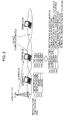
- Fig. 2 is an explanatory diagram of a first embodiment of the present apparatus.
- Fig. 5 is an explanatory diagram of a third embodiment of the present apparatus.
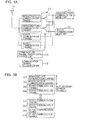
- Fig. 1A shows exemplary main functional units of a mobile communication apparatus according to an embodiment of the present apparatus.
- the mobile communication apparatus includes an infrastructure communication mode unit 1-1, an ad-hoc communication mode unit 1-2, a selector switch 1-3, a communication channel substitution control unit 1-4, a communication channel recognition unit 1-5, and an antenna 1-6.
- the infrastructure communication mode unit 1-1 performs wireless communication via a base station.
- the ad-hoc communication mode unit 1-2 directly performs wireless communication with another mobile communication apparatus.
- the selector switch 1-3 performs switching of whether an infrastructure communication channel is used for infrastructure communication or ad-hoc communication.
- the communication channel substitution control unit 1-4 controls switching of the selector switch 1-3.
- An infrastructure communication channel and an ad-hoc communication channel may be time-division multiplexed at the same frequency or may use different frequency bands.
- an infrastructure communication channel and an ad-hoc communication channel that are time-division multiplexed channels using shorter time slots or that are channels using a carrier sense multiple access (CSMA) method or the like. They may be used in a plurality of mobile communication apparatuses.
- CSMA carrier sense multiple access
- the broadcast information transmitted from the base station using the common control channel does not reach the terminal #3.
- the terminal #3 recognizes that the terminal #3 is located at a position sufficiently far from the infrastructure communication area.
- the infrastructure communication channel CH1 or CH2 is used for ad-hoc communication.
- the terminal #3 performs ad-hoc communication with the terminal #2 using the infrastructure communication channel CH1 or CH2.
- the terminal #3 Since the terminal #3 is operable to continue ad-hoc communication using the infrastructure communication channel CH1 or CH2, the terminal #2 continues to receive the infrastructure communication channel CH1 or CH2 from the terminal #3.
- the terminals #1 and #2 are located within the wireless area of the base station, that is, within the range of the infrastructure communication area.
- the terminal #3 is located at a position close to the infrastructure communication area outside the infrastructure communication area.
- the terminal #4 is located in an area remote from the infrastructure communication area.
- the terminal #3 Since the terminal #3 is operable to continue ad-hoc communication using an infrastructure communication sub-frame, the terminal #2 continues to receive ad-hoc communication from the terminal #3.
Landscapes
- Engineering & Computer Science (AREA)
- Computer Networks & Wireless Communication (AREA)
- Signal Processing (AREA)
- Mobile Radio Communication Systems (AREA)
- Small-Scale Networks (AREA)
Abstract
Description
- The present apparatus and method relate to mobile communication apparatuses and channel switching methods for ad-hoc communication. This apparatus and method comprise a mobile phone terminal, a PHS (the Personal Handy phone System) terminal, a portable personal computer, or an in-vehicle communication apparatus and channel switching method for ad-hoc communication that uses such a mobile communication apparatus, and they can communicate with an infrastructure communication mode and an ad hoc communication mode while moving.
- In general, it is well known that wireless local-area network (LAN) systems include an infrastructure communication mode and an ad-hoc communication mode. In the infrastructure communication mode, each of a plurality of portable stations (for example, personal computers) is operable to communicate via a base station (that is, a wireless access point) located in a fixed position. In the ad-hoc communication mode, neighboring stations are operable to directly perform wireless communication with each other.
- In general wireless LAN systems, the infrastructure communication mode and the ad-hoc communication mode do not take into consideration communication to be performed by mobile communication apparatuses used in vehicles, such as automobiles, moving at a high speed. Sufficient work has not been undertaken for the realization of infrastructure communication and ad-hoc communication intended to be used by mobile communication apparatuses that perform communication while moving at a high speed.
- A method for optimally switching a wireless communication medium mode is described in
Japanese Unexamined Patent Application Publication No. 2004-248180 - A wireless LAN communication system capable of achieving automatic switching between an infrastructure communication mode and an ad-hoc communication mode under specific conditions is described in
Japanese Unexamined Patent Application. Publication No. 2004-128785 Japanese Unexamined Patent Application Publication No. 11-55318 - Wireless communication systems are operable to implementing communication in both the infrastructure communication mode, in which a mobile communication apparatus that performs communication while moving at a high speed performs wireless communication via a base station (that is, an access point), and the ad-hoc communication mode, in which mobile communication apparatuses that perform communication while moving at a high speed directly perform wireless communication with each other. When an infrastructure communication channel used by a mobile communication apparatus for communication with a base station and an ad-hoc communication channel used for communication between mobile communication apparatuses are used, it is necessary to further increase the number of channels that can be used for ad-hoc communication while preventing ad-hoc communication from interfering with infrastructure communication.
- Accordingly, an embodiment of one aspect of the present invention comprises an apparatus and method that achieves effective utilization of an infrastructure communication channel while preventing a deterioration in the quality of a first (that is infrastructure) communication affected by a transmission signal used in a second (that is ad-hoc) communication. Preferably, the number of channels that can be used for a second communication is increased.
- According- to an of one aspect of the present apparatus, a mobile communication apparatus operable to perform a first wireless communication via a base station and a second wireless communication directly communicating with a different mobile communication apparatus is provided. The mobile communication apparatus includes a communication channel recognition unit that recognizes an infrastructure communication channel that does not interfere with a first communication performed within a wireless area of the base station among a plurality of first communication channels allocated for the first communication. The apparatus also includes a communication channel substitution controller that control a channel so that a second communication is switched to the first communication channel recognized by the communication channel recognition unit and the second communication uses the first communication channel.
- The communication channel recognition unit may recognize a first communication channel that can be used for a second communication in accordance with a reception state of a signal in a common control channel transmitted from the base station or channel identification information indicating a first communication channel transmitted from the base station using the common control channel.
- The communication channel recognition unit may recognize a first communication channel that can be used as a substitute in accordance with information indicating that a first communication is performed or channel identification information indicating that a channel that is used for the first communication. The first communication channel identification information is preferably transmitted from a different mobile communication apparatus using a second communication channel.
- The communication channel recognition unit may recognize a first communication channel that can be used for a second communication in accordance with position information of each of a plurality of base stations stored in advance. The channel identification information indicates a first communication channel that is used by each base station, and present position information is obtained by a positioning device.
- The communication channel recognition unit may recognize a first communication channel that can be used for a second communication in accordance with a reception state of a synchronization establishing signal transmitted from the base station or channel identification information indicated by the synchronization establishing signal.
- According to an embodiment of another aspect of the present method, a channel switching method for performing communication in a first communication which the mobile communication apparatus performs wireless communication via a base station and a second communication which the mobile communication apparatus directly performs wireless communication with a different mobile communication apparatus is provided. The channel switching method includes: (a) recognizing a first communication channel that does not interfere with a first communication performed within a wireless area of the base station among a plurality of first communication channels allocated for first communication; and (b) controlling such that a channel used for ad-hoc communication is switched to the first communication channel recognized in the step (b) and the second communication uses the first communication channel.
- According to an embodiment of another aspect of the present apparatus, a mobile communication apparatus operable to communicate in a first communication mode via a base station and a second communication, mode directly communicating with a different mobile communication apparatus is provided. The mobile communication apparatus includes a communication channel recognition unit that recognizes an unused channel for the first communication mode that does not interfere with communication in the first communication mode performed within a wireless area of the base station among a plurality of channels for the first communication mode.
- The apparatus may also include a communication channel substitution controller that controls such that a channel used for the second communication mode is switched to the unused channel for the first communication mode recognized by the communication channel recognition unit and the communication in the second communication mode uses the unused channel for the first communication mode.
- Fig. 1 shows main functional units of a mobile communication apparatus according to an embodiment of the present apparatus.
- Fig. 2 is an explanatory diagram of a first embodiment of the present apparatus.
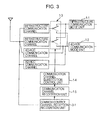
- Fig. 3 shows exemplary main functional units of a terminal used in the first embodiment.
- Fig. 4 shows exemplary main functional units of a terminal used in a second embodiment of the present apparatus.
- Fig. 5 is an explanatory diagram of a third embodiment of the present apparatus.
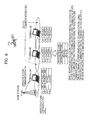
- Fig. 6 shows exemplary main functional units of a terminal used in the third embodiment.
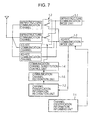
- Fig. 7 shows exemplary main functional units of a terminal used in a fourth embodiment of the present apparatus.
- Fig. 8 is an explanatory diagram of a fifth embodiment of the present apparatus.
- Fig. 9 shows exemplary main functional units of a terminal used in the fifth embodiment.
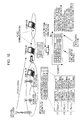
- Fig. 10 is an explanatory diagram of a sixth embodiment of the present apparatus.
- Fig. 11 shows an exemplary channel substitution control method in the sixth embodiment.
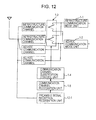
- Fig. 12 shows exemplary main functional units of a terminal used in the sixth embodiment.
- Fig. 1A shows exemplary main functional units of a mobile communication apparatus according to an embodiment of the present apparatus. Referring to Fig. 1A, the mobile communication apparatus includes an infrastructure communication mode unit 1-1, an ad-hoc communication mode unit 1-2, a selector switch 1-3, a communication channel substitution control unit 1-4, a communication channel recognition unit 1-5, and an antenna 1-6.
The infrastructure communication mode unit 1-1 performs wireless communication via a base station. The ad-hoc communication mode unit 1-2 directly performs wireless communication with another mobile communication apparatus. The selector switch 1-3 performs switching of whether an infrastructure communication channel is used for infrastructure communication or ad-hoc communication. The communication channel substitution control unit 1-4 controls switching of the selector switch 1-3. The communication channel recognition unit 1-5 recognizes an available infrastructure communication channel.
Furthermore, this apparatus provides a signal processing unit or the like to process a communication signal transmitted and received with the infrastructure communication mode unit 1-1 and the ad-hoc communication mode unit 1-2 in a baseband band.
However, since the signal processing unit or the like is not directly related to the present apparatus, the signal processing unit or the like is not shown in Fig. 1A. - When the mobile communication apparatus (hereinafter, referred to as a "terminal") performs communication in a place remote from a wireless area of the base station or when an infrastructure communication channel (that is, an unused infrastructure communication channel) which is not used in the wireless area of the base station exists, the communication channel recognition unit 1-5 recognizes that an infrastructure communication channel (that is, an unused infrastructure communication channel) that can be used for ad-hoc communication exists, and informs the communication channel substitution control unit 1-4 of the infrastructure communication channel that it can be used as a substitute.
- When the infrastructure communication channel that can be used as a substitute reported by the communication channel recognition unit 1-5 exists, the communication channel substitution control unit 1-4 controls the selector switch 1-3 to switch the communication mode to the ad-hoc communication mode so that the ad-hoc communication mode unit 1-2 can perform ad-hoc communication using the infrastructure communication channel that can be used as a substitute.
- Accordingly, as shown in Fig. 1B, this apparatus can be used, and communication channels CH1 and CH2 can be allocated to infrastructure communication channels as substitutes for ad-hoc communication channels.
This apparatus can be used in combination with communication channels CH1, CH2, CH3, CH4 as ad-hoc communication, channels whereas only communication channel CH3, CH4 were allocated to ad-hoc communication channels in an original device. Consequently, the number of available ad-hoc communication channels can be increased without affecting infrastructure communication with the base station. - An infrastructure communication channel and an ad-hoc communication channel may be time-division multiplexed at the same frequency or may use different frequency bands. In addition, an infrastructure communication channel and an ad-hoc communication channel that are time-division multiplexed channels using shorter time slots or that are channels using a carrier sense multiple access (CSMA) method or the like. They may be used in a plurality of mobile communication apparatuses.
- Terminals for recognizing an infrastructure communication channel that can be used as a substitute will be described as follows. A first embodiment of the present system will be described with reference to Fig. 2.
Referring to Fig. 2, aterminal # 1 is located within a wireless area of a base station, that is, within the range of an infrastructure communication area. Aterminal # 2 is located outside the infrastructure communication area and is approaching the infrastructure communication area. Aterminal # 3 is located in an area remote from the infrastructure communication area. - In the wireless communication system according to the first embodiment, a base station transmits broadcast information to let a terminal recognize the existence of a base station at a transmission power level stronger than the level of transmission power used in ad-hoc communication between terminals with the common control channel which all terminals can recognize.
When theterminal # 2 is located at a position that is sufficiently far from the infrastructure communication area, the broadcast information transmitted from the base station using the common control channel does not reach theterminal # 2. Thus, theterminal # 2 recognizes that using the infrastructure communication channel CH1 or CH2 for ad-hoc communication does not interfere with infrastructure communication. The infrastructure communication channel CH1 or CH2 is used for ad-hoc communication. Thus, the channels CH1 to CH4 can be used for ad-hoc communication. - The broadcast information transmitted from the base station using the common control channel does not reach the
terminal # 3. Thus, theterminal # 3 recognizes that theterminal # 3 is located at a position sufficiently far from the infrastructure communication area. Similarly to the case of theterminal # 2, the infrastructure communication channel CH1 or CH2 is used for ad-hoc communication. Thus, for example, theterminal # 3 performs ad-hoc communication with theterminal # 2 using the infrastructure communication channel CH1 or CH2. - However, when the
terminal # 2 enters the area where the information transmitted from the base station using the common control channel reaches during the use of the infrastructure communication channel CH1 or CH2 for ad-hoc communication, theterminal # 2 recognizes that the use of the infrastructure communication channel CH1 or CH2 for ad-hoc communication interferes with infrastructure communication in accordance with a reception state of the common control channel transmitted from the base station. Thus, theterminal # 2 stops transmission in the ad-hoc communication using the infrastructure communication channel CH1 or CH2, and performs transmission in ad-hoc communication using the ad-hoc communication channel CH3 or CH4. - Since the
terminal # 3 is operable to continue ad-hoc communication using the infrastructure communication channel CH1 or CH2, theterminal # 2 continues to receive the infrastructure communication channel CH1 or CH2 from theterminal # 3. - Fig. 3 shows main functional units of a terminal used in the first embodiment. The functional units shown in Fig. 3 are different from the functional units shown in Fig. 1 in that a common control channel reception recognition unit 3-1 is also included. The common control channel reception recognition unit 3-1 recognizes that the base station is located near the terminal in accordance with reception of a signal in the common control channel transmitted from the base station, and informs the communication channel recognition unit 1-5 of recognition information indicating the recognition of the existence of the base station. The communication channel recognition unit 1-5 recognizes that an infrastructure communication channel may be used as a substitute in accordance with the recognition information transmitted from the common control channel reception recognition unit 3-1.
- A second embodiment of the present system will be described. In the second embodiment, similarly to the first embodiment, the base station transmits, using the common control channel that can be recognized by all the terminals in the wireless communication system, information for causing a terminal to recognize channel identification information indicating an infrastructure communication channel that is being used by the base station at a transmission power level stronger than the level of transmission power used for ad-hoc communication between terminals.
- The terminal always monitors the common control channel, and uses an infrastructure communication channel other than the channel indicated by the channel identification information transmitted from the base station using the common control channel for ad-hoc communication. When the terminal receives from the base station channel identification information indicating the infrastructure communication channel that is being used, the ad-hoc communication using the infrastructure communication channel is stopped. Then, the terminal continues ad-hoc communication using an ad-hoc communication channel or an infrastructure communication channel that can be used for ad-hoc communication, which is other than the infrastructure communication channel indicated by the channel identification information.
- Fig. 4 shows main functional units of a terminal used in the second embodiment. The main functional units shown in Fig. 4 are different from the main functional units shown in Fig. 3 in that a channel identification information recognition unit 4-1 that recognizes channel identification information indicating an infrastructure communication channel that is being used is also included. The channel identification information recognition unit 4-1 recognizes an infrastructure communication channel that is being used in accordance with channel identification information transmitted from the base station using the common control channel, and informs the communication channel recognition unit 1-5 of recognition information indicating the recognition of the infrastructure communication channel that is being used. The communication channel recognition unit 1-5 recognizes an infrastructure communication channel that can be used as a substitute in accordance with the recognition information.
- A third embodiment of the present apparatus will be described with reference to Fig. 5. Referring to Fig. 5, the
terminals # 1 and #2 are located within the wireless area of the base station, that is, within the range of the infrastructure communication area. Theterminal # 3 is located at a position close to the infrastructure communication area outside the infrastructure communication area. Theterminal # 4 is located in an area remote from the infrastructure communication area. - Since the
terminals # 3 and #4 receive no information, theterminals # 3 and #4 use the infrastructure communication channel CH1 or CH2 for ad-hoc communication. When starting infrastructure communication with the base station using an infrastructure communication channel, theterminal # 2 informs the neighboringterminal # 3 of information indicating that infrastructure communication performed using an ad-hoc communication channel. The information transmitted from theterminal # 2 using the ad-hoc communication channel is transmitted at a transmission power level stronger than the level of transmission power used for normal ad-hoc communication. - When the
terminal # 3 receives the information, theterminal # 3 stops the use of the infrastructure communication channel CH1 or CH2 for ad-hoc communication, and performs transmission in ad-hoc communication using the ad-hoc communication channel CH3 or CH4. Since theterminal # 4 is operable to continue ad-hoc communication using the infrastructure communication channel CH1 or CH2, theterminal # 3 continues to receive the infrastructure communication channel CH1 or CH2 from theterminal # 4. - Fig. 6 shows main functional units of a terminal used in the third embodiment. The main functional units shown in Fig. 6 are different from the main functional units shown in Fig. 1 in that an information informing unit 6-1 that transmits information indicating that infrastructure communication is being performed and an information recognition unit 6-2 that recognizes information indicating that infrastructure communication is being performed are further provided. When infrastructure communication starts, the information informing unit 6-1 generates information indicating the start of infrastructure communication and transmits the generated information to the ad-hoc communication mode unit 1-2. Then, the ad-hoc communication mode unit 1-2 informs a neighboring terminal of the information via ad-hoc communication.
- The information recognition unit 6-2 recognizes information indicating that infrastructure communication is being performed and transmitted from another terminal through the ad-hoc communication mode unit 1-2, and informs the communication channel recognition unit 1-5 of the information. Then, the communication channel recognition unit 1-5 stops the use of an infrastructure communication channel for ad-hoc communication in accordance with the information, and uses an ad-hoc communication channel for ad-hoc communication.
- A fourth embodiment of the present apparatus will be described. In the fourth embodiment, similarly to the third embodiment, when the
terminal # 2 starts infrastructure communication with the base station using an infrastructure communication channel, theterminal # 2 informs the neighboringterminal # 3 of channel identification information indicating the infrastructure communication channel that is being used for the infrastructure communication, using an ad-hoe communication channel. The information transmitted from theterminal # 2 using the ad-hoc communication channel is transmitted at a transmission power level stronger than the level of transmission power used for normal ad-hoc communication. - When the
terminal # 3 receives the information, theterminal # 3 stops the use of the infrastructure communication channel CH1 orCH 2 indicated by the channel identification information for ad-hoc communication and performs ad-hoc communication using the ad-hoc communication channel CH3 or CH4 or an available infrastructure communication channel. Since theterminal # 4 is capable of continuing ad-hoc communication using the infrastructure communication channel CH1 or CH2, theterminal # 3 continues to receive the infrastructure communication channel CH1 or CH2 from theterminal # 4. - Fig. 7 shows main functional units of a terminal used in the fourth embodiment. The main functional units shown in Fig. 7 are different from the main functional units shown in Fig. 6 in that the information informing unit 6-1 and the information recognition unit 6-2 shown in Fig. 6 are replaced with a channel identification information informing unit 7-1 that transmits channel identification information indicating an infrastructure communication channel that is being used and a channel identification information recognition unit 7-2 that recognizes channel identification information indicating an infrastructure communication channel that is being used.
- When infrastructure communication starts, the channel identification information informing unit 7-1 informs the ad-hoc communication mode unit 1-2 of channel identification information indicating an infrastructure communication channel that is being used for the infrastructure communication. Then, the ad-hoc communication mode unit 1-2 informs a neighboring terminal of the channel identification information via ad-hoc communication.
- The channel identification information recognition unit 7-2 recognizes channel identification information indicating an infrastructure communication channel that is being used and transmitted from a neighboring terminal via the ad-hoc communication mode unit 1-2, and informs the communication channel recognition unit 1-5 of the channel identification information. Then, the communication channel recognition unit 1-5 stops the use of the infrastructure communication channel that is being used by the neighboring terminal for ad-hoc communication, and causes ad-hoc communication to be performed using a different communication channel.
- A fifth embodiment of the present apparatus will be described with reference to Fig. 8. Referring to Fig. 8, the
terminal # 1 locates within the infrastructure communication area. Theterminal # 2 locates outside the infrastructure communication area and is approaching the infrastructure communication area. Theterminal # 3 locates in an area remote from the infrastructure communication area. - Each of the
terminals # 1 to #3 stores the installation location of each of a plurality of base stations and identification information indicating an infrastructure communication channel that is being used by each of the plurality of base stations. Each of theterminals # 1 to #3 also recognizes the positional relationship between the terminal and each of the plurality of base stations using a positioning device, such as a global positioning system (GPS). When each of theterminals # 1 to #3 recognizes that the terminal located at a position far enough not to interfere with infrastructure communication in the wireless area of a neighboring base station even if ad-hoc communication is performed by using an infrastructure communication channel for ad-hoc communication, the terminal performs transmission by using the infrastructure communication channel that is being used by the base station for ad- hoc communication. - However, when the terminal recognizes that the terminal is approaching the base station and that infrastructure communication will be interfered with, the terminal stops the use of the infrastructure communication channel for ad-hoc communication. In the example shown in Fig. 8, when the
terminal # 2 located at a position sufficiently far from the infrastructure communication area, theterminal # 2 uses the infrastructure communication channel CH1 or CH2 for ad-hoc communication. Thus, the channels CH1 to CH4 can be used for ad-hoc communication. - However, when the
terminal # 2 recognizes that it is approaching the infrastructure communication area during the use of the infrastructure communication channel CH1 or CH2 for ad-hoc communication, theterminal # 2 stops transmission in ad-hoc communication using the infrastructure communication channel CH1 or CH2 and performs transmission in ad-hoc communication using the ad-hoc communication channel CH3 or CH4. Since theterminal # 3 is operable to continue ad-hoc communication using the infrastructure communication channel CH1 or CH2, theterminal # 2 continues to receive the infrastructure communication channel CH1 or CH2 from theterminal # 3. - Fig. 9 shows main functional units of a terminal used in the fifth embodiment. The main functional units shown in Fig. 9 are different from the main functional units shown in Fig. 1 in that an information storage unit 9-1 that stores position information of each of a plurality of base stations and infrastructure communication channel identification information and a positioning device 9-2, such as a GPS, are also included. The information storage unit 9-1 stores in advance position information of each of a plurality of base stations and infrastructure communication channel identification information, and outputs the information to the communication channel recognition unit 1-5.
- The positioning device 9-2 acquires present position information of the terminal using a GPS or the like, and transmits the information to the communication channel recognition unit 1-5. The communication channel recognition unit 1-5 recognizes, in accordance with the received information, whether or not the terminal is located in a position where ad-hoc communication performed by the terminal using an infrastructure communication channel interferes with infrastructure communication. If it is determined that infrastructure communication is interfered with, the terminal stops the use of the infrastructure communication channel for ad-hoc communication, and uses an ad-hoc communication channel for ad-hoc communication.
- A sixth embodiment of the present apparatus will be described with reference to Fig. 10. Referring to Fig. 10, base stations are categorized into wide-area and medium-area base stations depending on the size of the communication area. The
terminal # 1 may be located within wireless areas of a wide-area base station and a medium-areabase station # 2. Theterminal # 2 is located outside the wireless area of the wide-area base station and is approaching the wireless communication area of the wide-area base station. Theterminal # 3 may be located in an area remote from the wireless area of the wide-area base station. The wireless area of the wide-area base station includes the medium-areabase stations # 1 and #2. In the sixth embodiment, infrastructure communication and ad-hoc communication are multiplexed, as shown in Fig. 11. That is, within each of repetitive frames each having a certain time length, infrastructure communication and ad-hoc communication are time-division multiplexed by a time zone of infrastructure communication (hereinafter, referred to as an infrastructure communication sub-frame) and a time zone of an ad-hoc communication (hereinafter, referred to as an ad-hoc communication sub-frame). In the infrastructure communication sub-frame, the wide-area base station and the medium-areabase stations # 1 and #2 shown in Fig. 10 perform communication using sub-channels CH1, CH2, and CH3, respectively, which are different orthogonal frequency division multiple access (OFDMA) sub-channels. Each of the three base stations transmits a signal for allowing a terminal to establish synchronization with the base station (hereinafter, referred to as a "preamble signal") using a sub-channel allocated to the base station, and performs transmission and reception of information to and from the terminal. Substitution ef a channel is controlled on the basis of a preamble signal transmitted from the wide-area base station. The terminal performs ad-hoc communication in an ad-hoc communication sub-frame in accordance with autonomous distributed control access method, such as a carrier sense multiple access with collision avoidance (CSMA/CA) method. In the sixth embodiment, a plurality of sub-channels is not provided in an ad-hoc communication sub-frame, unlike the case of infrastructure communication. However, a plurality of sub-channels may be provided in an ad-hoc communication sub-frame by using a technique, such as the orthogonal frequency division multiple access method. - Concerning preamble signals (represented based on a hexadecimal numbering system) transmitted from the wide-area base station and the medium-area base stations, a preamble signal transmitted from the wide-area base station is represented as "0x01E52A9B3," a preamble signal transmitted from the medium-area
base station # 1 is represented as "0xC96FF8AB1," and a preamble signal transmitted from the medium-areabase station # 2 is represented as "0xA1F5CE648." - In the wireless communication system according to the sixth embodiment, each of the base stations transmits a preamble signal that can be recognized by all the terminals. With the use of preamble signals that differ depending on the base station, a terminal is operable to identify an individual base station. In addition, a preamble signal transmitted from each of the base stations is different from a preamble signal used in ad-hoc communication. In the vicinity of the boundary between an infrastructure communication area and an ad-hoc communication area, when ad-hoc communication and transmission of a preamble signal from a base station are performed at the same time, a terminal cannot correctly receive the preamble signal transmitted from the base station due to the occurrence of interference. However, if the ad-hoc communication is performed in accordance with a system, such as CSMA/CA, in which a communication wait time for sensing a carrier wave is generated, the terminal is operable to receive the preamble signal transmitted from the base station during the communication wait time. After establishing synchronization with the base station by receiving the preamble signal transmitted from the base station, the terminal receives information transmitted from the base station and transmits information to the base station. Since the
terminal # 1 is located within the wireless area of the wide-area base station and the wireless area of the medium-areabase station # 2, theterminal # 1 performs infrastructure communication with the wide-area base station and the medium-areabase station # 2 and performs ad-hoc communication in an ad-hoc communication sub-frame. When theterminal # 2 is located at a position sufficiently far from the wireless area of the wide-area base station, since a preamble signal transmitted from the wide-area base station does not reach theterminal # 2, theterminal # 2 recognizes that using all the frame time zones for ad-hoc communication does not interfere with infrastructure communication performed by the wide-area base station, the medium-areabase station # 1, and the medium-areabase station # 2. Thus, all the frame time zones can be used for ad-hoc communication. - Similarly, since a preamble signal transmitted from the wide-area base station does not reach the
terminal # 3, theterminal # 3 recognizes that theterminal # 3 is sufficiently far from the infrastructure communication area. Thus, similarly to the case of theterminal # 2, theterminal # 3 uses all the channel time zones for ad-hoc communication, and, for example, periodically performs ad-hoc communication with theterminal # 2. - However, when the
terminal # 2 enters the area where the preamble signal transmitted from the wide-area base station reaches during the use of an infrastructure communication sub-frame for ad-hoc communication, theterminal # 2 recognizes, in accordance with the preamble signal transmitted from the wide-area base station, the use of the infrastructure communication sub-frame for ad-hoc communication interferes with infrastructure communication. Thus, theterminal # 2 stops transmission in the ad-hoc communication using the infrastructure communication sub-frame, and performs ad-hoc communication in a time in which the infrastructure communication is not performed, that is, in an ad-hoc communication sub-frame. A terminal recognizes information on the length of an ad-hoc communication sub-frame in accordance with information on a preamble signal or the like transmitted from the wide-area base station and information set in advance inside the terminal. - Since the
terminal # 3 is operable to continue ad-hoc communication using an infrastructure communication sub-frame, theterminal # 2 continues to receive ad-hoc communication from theterminal # 3. - Fig. 12 shows main functional units of a terminal used in the sixth embodiment. The main functional units shown in Fig. 12 are different from the main functional units shown in Fig. 1 in that a preamble signal reception recognition unit 12-1 is further provided. The preamble signal reception recognition unit 12-1 recognizes, in accordance with reception of a preamble signal transmitted from the wide-area base station, that the wide-area base station exists near the terminal, and informs the communication channel recognition unit 1-5 of information indicating the recognition of the existence of the wide-area base station. If the received preamble signal includes information on the length of an infrastructure communication sub-frame, the terminal also informs the communication channel recognition unit 1-5 the information on the length of the infrastructure communication sub-frame. When receiving from the preamble signal reception recognition unit 12-1 the information indicating the reception of the preamble signal, the communication channel recognition unit 1-5 transmits to the communication channel substitution control unit 1-4 switching control information indicating switching of an infrastructure communication channel from the ad-hoc communication mode unit 1-2 to the infrastructure communication mode unit 1-1. When receiving the switching control information, the communication channel substitution control unit 1-4 transmits to the selector switch 1-3 a control signal for switching the infrastructure communication channel from the ad-hoc communication mode unit 1-2 to the infrastructure communication mode unit 1-1. When the selector switch 1-3 receives the control signal for switching, the selector switch 1-3 performs switching of the infrastructure communication channel from the ad-hoc communication mode unit 1-2 to the infrastructure communication mode unit 1-1. In response to the switching, the communication using the infrastructure communication sub-frame is stopped.
- In addition, when the reception of the preamble signal transmitted from the wide-area base station is completed, the preamble signal reception recognition unit 12-1 informs the communication channel recognition unit 1-5 of the completion of the reception of the preamble signal. When the communication channel recognition unit 1-5 receives the information indicating the completion of the reception of the preamble signal from the preamble signal reception recognition unit 12-1, the communication channel recognition unit 1-5 transmits to the communication channel substitution control unit 1-4 switching control information indicating switching of the infrastructure communication channel from the infrastructure communication mode unit 1-1 to the ad-hoc communication mode unit 1-2. When the communication channel substitution control unit 1-4 receives the switching control information, the communication channel substitution control unit 1-4 transmits to the selector switch 1-3 a control signal for switching the infrastructure communication channel from the infrastructure communication mode unit 1-1 to the ad-hoc communication mode unit 1-2. When the selector switch 1-3 receives the control signal for switching, the selector switch 1-3 performs switching of the infrastructure communication channel from the infrastructure communication mode unit 1-1 to the ad-hoc communication mode unit 1-2. In response to the switching, the ad-hoc communication using the infrastructure communication sub-frame is resumed.
- In addition, by transmitting a preamble signal with a high transmission power, ad-hoc communication using an infrastructure communication sub-frame can be stopped at a position remote from the wide-area base station.
- Although methods for controlling the start and end timings of substitution of a communication channel have been explained individually in the foregoing embodiments, a plurality of methods may be combined together in order to achieve a higher reliability in the substitution control for a communication channel.
In any of the above aspects, the various features may be implemented in hardware, or as software modules running on one or more processors. Features of one aspect may be applied to any of the other aspects.
The invention also provides a computer program or a computer program product for carrying out any of the methods described herein, and a computer readable medium having stored thereon a program for carrying out any of the methods described herein. A computer program embodying the invention may be stored on a computer-readable medium, or it could, for example, be in the form of a signal such as a downloadable data signal provided from an Internet website, or it could be in any other form.
Claims (7)
- A mobile communication apparatus operable to perform a first wireless communication via a base station and a second wireless communication directly communicating with a different mobile communication apparatus, comprising:a communication channel recognition unit that recognizes a first communication channel which does not interfere with the first communication within a wireless area of the base station among a plurality of infrastructure communication channels allocated for the first communication; anda communication channel substitution controller operable to switch a channel used for the second communication to the first communication channel recognized by the communication channel recognition unit, wherein the second communication uses the first communication channel.
- The mobile communication apparatus according to claim 1, wherein the communication channel recognition unit recognizes a first communication channel that can be used for ad-hoc communication in accordance with a reception state of a signal in a common control channel transmitted from the base station or channel identification information indicating a first communication channel transmitted from the base station using the common control channel.
- The mobile communication apparatus according to claim 1 or 2, wherein the communication channel recognition unit recognizes a first communication channel that can be used as a substitute in accordance with information indicating that a first communication is performed or channel identification information indicating a channel that is used for the first communication, which is transmitted from the different mobile communication apparatus using a second communication channel.
- The mobile communication apparatus according to any of claims 1 to 3, wherein the communication channel recognition unit recognizes a first communication channel that can be used for the second communication in accordance with position information of each of a plurality of base stations stored in advance, channel identification information indicating an infrastructure communication channel that is used by each base station, and present position information obtained by a positioning device.
- The mobile communication apparatus according to any of claims 1 to 4, wherein the communication channel recognition unit recognizes a first communication channel that can be used for second communication in accordance with a reception state of a synchronization establishing signal transmitted from the base station or channel identification information indicated by the synchronization establishing signal.
- A channel switching method for performing communication in a first communication in which the mobile communication apparatus performs wireless communication via a base station and a second communication in which the mobile communication apparatus directly performs wireless communication with a different mobile communication apparatus, comprising:(a) recognizing a first communication channel that does not interfere with the first communication performed within a wireless area of the base station among a plurality of first communication channels allocated for the first communication; and(b) controlling such that a channel used for second communication is switched to the first communication channel recognized in the step (a) and the second communication uses the second communication channel.
- A mobile communication apparatus operable to perform communication in a first communication mode via a base station and a second communication mode directly communicating with a different mobile communication apparatus, comprising:a communication channel recognition unit that recognizes an unused channel for the first communication mode that does not interfere with communication in the first communication mode performed within a wireless area of the base station among a plurality of channels for the first communication mode; anda communication channel substitution controller that switches a channel used for the second communication mode to the unused channel for the first communication mode recognized by the communication channel recognition unit, wherein the communication in the second communication mode uses the unused channel for the first communication mode.
Applications Claiming Priority (1)
| Application Number | Priority Date | Filing Date | Title |
|---|---|---|---|
| JP2006188270A JP4802897B2 (en) | 2006-07-07 | 2006-07-07 | Mobile communication device and ad hoc communication channel switching method |
Publications (2)
| Publication Number | Publication Date |
|---|---|
| EP1876764A1 true EP1876764A1 (en) | 2008-01-09 |
| EP1876764B1 EP1876764B1 (en) | 2016-03-09 |
Family
ID=38647224
Family Applications (1)
| Application Number | Title | Priority Date | Filing Date |
|---|---|---|---|
| EP07111802.0A Ceased EP1876764B1 (en) | 2006-07-07 | 2007-07-05 | Mobile communication apparatus and channel switching method for ad-hoc communication |
Country Status (3)
| Country | Link |
|---|---|
| US (1) | US7889694B2 (en) |
| EP (1) | EP1876764B1 (en) |
| JP (1) | JP4802897B2 (en) |
Cited By (3)
| Publication number | Priority date | Publication date | Assignee | Title |
|---|---|---|---|---|
| EP2111065A1 (en) | 2008-04-18 | 2009-10-21 | Alcatel-Lucent Deutschland AG | Method for assigning communication resources to a mobile radio device |
| WO2009114370A3 (en) * | 2008-03-10 | 2009-11-12 | Marvell World Trade Ltd. | Coexistence and collocation of remote network and local network radios |
| CN102057728A (en) * | 2008-06-06 | 2011-05-11 | 诺基亚西门子通信公司 | Cell-selective network access |
Families Citing this family (13)
| Publication number | Priority date | Publication date | Assignee | Title |
|---|---|---|---|---|
| WO2008136106A1 (en) | 2007-04-25 | 2008-11-13 | Fujitsu Limited | Mobile radio communication system having radio resource sharing function |
| JP5193823B2 (en) | 2008-11-20 | 2013-05-08 | 三洋電機株式会社 | Notification method and radio apparatus |
| JP5272917B2 (en) * | 2009-06-18 | 2013-08-28 | 富士通株式会社 | Wireless communication system, terminal apparatus, and wireless communication method in wireless communication system |
| US8428629B2 (en) * | 2010-03-31 | 2013-04-23 | Qualcomm Incorporated | Methods and apparatus for determining a communications mode and/or using a determined communications mode |
| US8447315B2 (en) * | 2010-06-03 | 2013-05-21 | Nokia Corporation | Method and apparatus for facilitating device-to-device communication |
| JP5479564B2 (en) * | 2012-12-07 | 2014-04-23 | パナソニック株式会社 | Transmission method and terminal device |
| JP2013132085A (en) * | 2013-03-29 | 2013-07-04 | Nokia Siemens Networks Oy | Cell-selective network access |
| CN104519577B (en) * | 2013-09-27 | 2019-08-30 | 中兴通讯股份有限公司 | Communication resource management method, device and system |
| JP5680237B2 (en) * | 2014-02-12 | 2015-03-04 | パナソニックIpマネジメント株式会社 | Transmission method and terminal device |
| JP6417587B2 (en) * | 2014-08-27 | 2018-11-07 | セイコーエプソン株式会社 | Wireless communication apparatus and wireless communication method |
| JP5895176B2 (en) * | 2015-01-06 | 2016-03-30 | パナソニックIpマネジメント株式会社 | Transmission method and terminal device |
| JP2017103826A (en) * | 2017-03-09 | 2017-06-08 | セイコーエプソン株式会社 | Wireless communication apparatus and wireless communication method |
| US12126435B2 (en) * | 2022-01-10 | 2024-10-22 | Qualcomm Incorporated | Integrated access and backhaul node to repeater conversion |
Citations (6)
| Publication number | Priority date | Publication date | Assignee | Title |
|---|---|---|---|---|
| JPH1155318A (en) | 1997-08-05 | 1999-02-26 | Nec Corp | Mobile terminal and control method thereof |
| US20020155846A1 (en) | 2001-04-24 | 2002-10-24 | Matsushita Electric Industrial Co., Ltd. | Wireless communication system |
| US20030053437A1 (en) | 2001-09-17 | 2003-03-20 | Microsoft Corporation | System and method for coordinating bandwidth usage of a communication channel by wireless network nodes |
| WO2006001633A1 (en) | 2004-06-25 | 2006-01-05 | Yeon Keun Kim | Spangle press for fabricating spangles |
| WO2006016330A1 (en) * | 2004-08-10 | 2006-02-16 | Koninklijke Philips Electronics N.V. | Method and apparatus for dynamic frequency reuse |
| EP1804437A1 (en) * | 2005-12-09 | 2007-07-04 | Fujitsu Limited | Mobile communication apparatus and channel switching method of ad-hoc communication |
Family Cites Families (9)
| Publication number | Priority date | Publication date | Assignee | Title |
|---|---|---|---|---|
| US7433691B1 (en) * | 2002-03-25 | 2008-10-07 | Meshnetworks, Inc. | System and method for enabling an access point in an ad-hoc wireless network with fixed wireless routers and wide area network (WAN) access points to identify the location of subscriber device |
| JP3792632B2 (en) | 2002-10-01 | 2006-07-05 | Necインフロンティア株式会社 | Wireless LAN communication system |
| JP2004147015A (en) * | 2002-10-23 | 2004-05-20 | Canon Inc | Wireless communication device |
| US7103314B2 (en) * | 2002-12-27 | 2006-09-05 | Atheros Communications, Inc. | System and method of conforming wireless devices to worldwide regulations |
| JP3632693B2 (en) | 2003-02-17 | 2005-03-23 | Kddi株式会社 | Method for switching between different wireless communication media and method for measuring communication state thereof |
| EP1631109A1 (en) * | 2003-06-05 | 2006-03-01 | Keio University | Radio communication apparatus, radio communication method, communication channel assigning method and assigning apparatus |
| WO2005018161A1 (en) * | 2003-08-19 | 2005-02-24 | Keio University | Radio communication device, ad hoc system, and communication system |
| JP2006173708A (en) * | 2004-12-13 | 2006-06-29 | Canon Inc | Communications system |
| JP4763334B2 (en) * | 2005-04-28 | 2011-08-31 | ルネサスエレクトロニクス株式会社 | Wireless ad hoc communication system and communication terminal synchronization method in wireless ad hoc communication system |
-
2006
- 2006-07-07 JP JP2006188270A patent/JP4802897B2/en not_active Expired - Fee Related
-
2007
- 2007-07-05 EP EP07111802.0A patent/EP1876764B1/en not_active Ceased
- 2007-07-06 US US11/822,527 patent/US7889694B2/en not_active Expired - Fee Related
Patent Citations (6)
| Publication number | Priority date | Publication date | Assignee | Title |
|---|---|---|---|---|
| JPH1155318A (en) | 1997-08-05 | 1999-02-26 | Nec Corp | Mobile terminal and control method thereof |
| US20020155846A1 (en) | 2001-04-24 | 2002-10-24 | Matsushita Electric Industrial Co., Ltd. | Wireless communication system |
| US20030053437A1 (en) | 2001-09-17 | 2003-03-20 | Microsoft Corporation | System and method for coordinating bandwidth usage of a communication channel by wireless network nodes |
| WO2006001633A1 (en) | 2004-06-25 | 2006-01-05 | Yeon Keun Kim | Spangle press for fabricating spangles |
| WO2006016330A1 (en) * | 2004-08-10 | 2006-02-16 | Koninklijke Philips Electronics N.V. | Method and apparatus for dynamic frequency reuse |
| EP1804437A1 (en) * | 2005-12-09 | 2007-07-04 | Fujitsu Limited | Mobile communication apparatus and channel switching method of ad-hoc communication |
Cited By (11)
| Publication number | Priority date | Publication date | Assignee | Title |
|---|---|---|---|---|
| WO2009114370A3 (en) * | 2008-03-10 | 2009-11-12 | Marvell World Trade Ltd. | Coexistence and collocation of remote network and local network radios |
| US8345607B2 (en) | 2008-03-10 | 2013-01-01 | Marvell World Trade Ltd. | Coexistence and collocation of remote network and local network radios |
| US8565183B2 (en) | 2008-03-10 | 2013-10-22 | Marvell World Trade Ltd. | Method and apparatus for preventing interference between collocated transceivers |
| US8855079B2 (en) | 2008-03-10 | 2014-10-07 | Marvell World Trade Ltd. | Method and apparatus for, based on communication of a first physical layer device, permitting transmission of data to a second physical layer device collocated with the first physical layer device |
| EP2111065A1 (en) | 2008-04-18 | 2009-10-21 | Alcatel-Lucent Deutschland AG | Method for assigning communication resources to a mobile radio device |
| CN102057728A (en) * | 2008-06-06 | 2011-05-11 | 诺基亚西门子通信公司 | Cell-selective network access |
| CN102057728B (en) * | 2008-06-06 | 2017-05-17 | 诺基亚通信公司 | cell-selective network access |
| CN107277892A (en) * | 2008-06-06 | 2017-10-20 | 诺基亚通信公司 | The network insertion of cell selectivity |
| US10555242B2 (en) | 2008-06-06 | 2020-02-04 | Hmd Global Oy | Cell-selective network access |
| US10638406B2 (en) | 2008-06-06 | 2020-04-28 | Hmd Global Oy | Cell-selective network access |
| CN107277892B (en) * | 2008-06-06 | 2020-08-11 | Hmd全球公司 | Cell-selective network access |
Also Published As
| Publication number | Publication date |
|---|---|
| JP2008017317A (en) | 2008-01-24 |
| JP4802897B2 (en) | 2011-10-26 |
| EP1876764B1 (en) | 2016-03-09 |
| US20080008132A1 (en) | 2008-01-10 |
| US7889694B2 (en) | 2011-02-15 |
Similar Documents
| Publication | Publication Date | Title |
|---|---|---|
| EP1876764A1 (en) | Mobile communication apparatus and channel switching method for ad-hoc communication | |
| EP2245763B1 (en) | Realizing fdd capability by leveraging existing tdd technology | |
| US8270390B2 (en) | Wireless communication system | |
| US7873377B1 (en) | Background scan process for wireless devices | |
| US5818918A (en) | Personal handy phone system | |
| JP4968332B2 (en) | Mobile radio communication system having radio resource sharing function | |
| EP1796418A1 (en) | Channel assigning method and system for radio base station group | |
| US20080130620A1 (en) | Method and system for collision avoidance | |
| KR20090038345A (en) | Data transmission / reception method of terminal, data transmission / reception method of base station and mobile communication terminal | |
| EP1804437A1 (en) | Mobile communication apparatus and channel switching method of ad-hoc communication | |
| JP2012520036A (en) | Method and apparatus for avoiding interference caused by asynchronous in relay TDD system | |
| KR20150049947A (en) | Adaptive dual banded mimo wifi apparatus, and operation method thereof | |
| JP2005026816A (en) | Wireless system | |
| EP2083605B1 (en) | Mode-switching apparatus in an in-vehicle communication system | |
| WO2006107459A1 (en) | Methods for informing mobile stations of control channel architectures | |
| CN106488478B (en) | Vehicle terminal, road side equipment and communication method thereof | |
| JP4996758B1 (en) | Information processing apparatus and communication control method | |
| JP3950081B2 (en) | Wireless relay method and apparatus | |
| US9853710B2 (en) | Relay apparatus specifying frequency offset based on connection history and method thereof | |
| US20090201859A1 (en) | Communication Device And Method | |
| JP4380220B2 (en) | Wireless relay device | |
| EP0954111A1 (en) | Radio communications apparatus and method of communicating control data for use in a radio communications apparatus | |
| JP2000261858A (en) | Radio communication method, radio communication system, radio base station and radio mobile station used in this radio communication system | |
| JP2011009901A (en) | On-board device and channel deciding method | |
| US8295828B2 (en) | Mobile terminal, mobile communication system, base station searching method, and storage medium storing base station searching program |
Legal Events
| Date | Code | Title | Description |
|---|---|---|---|
| PUAI | Public reference made under article 153(3) epc to a published international application that has entered the european phase |
Free format text: ORIGINAL CODE: 0009012 |
|
| AK | Designated contracting states |
Kind code of ref document: A1 Designated state(s): AT BE BG CH CY CZ DE DK EE ES FI FR GB GR HU IE IS IT LI LT LU LV MC MT NL PL PT RO SE SI SK TR |
|
| AX | Request for extension of the european patent |
Extension state: AL BA HR MK YU |
|
| 17P | Request for examination filed |
Effective date: 20080707 |
|
| AKX | Designation fees paid |
Designated state(s): DE FR GB |
|
| 17Q | First examination report despatched |
Effective date: 20120404 |
|
| REG | Reference to a national code |
Ref country code: DE Ref legal event code: R079 Ref document number: 602007045100 Country of ref document: DE Free format text: PREVIOUS MAIN CLASS: H04L0012280000 Ipc: H04W0088060000 |
|
| RIC1 | Information provided on ipc code assigned before grant |
Ipc: H04W 92/02 20090101ALN20150722BHEP Ipc: H04W 72/08 20090101ALN20150722BHEP Ipc: H04W 88/06 20090101AFI20150722BHEP |
|
| GRAP | Despatch of communication of intention to grant a patent |
Free format text: ORIGINAL CODE: EPIDOSNIGR1 |
|
| INTG | Intention to grant announced |
Effective date: 20150909 |
|
| GRAS | Grant fee paid |
Free format text: ORIGINAL CODE: EPIDOSNIGR3 |
|
| GRAA | (expected) grant |
Free format text: ORIGINAL CODE: 0009210 |
|
| AK | Designated contracting states |
Kind code of ref document: B1 Designated state(s): DE FR GB |
|
| REG | Reference to a national code |
Ref country code: GB Ref legal event code: FG4D |
|
| REG | Reference to a national code |
Ref country code: DE Ref legal event code: R096 Ref document number: 602007045100 Country of ref document: DE |
|
| REG | Reference to a national code |
Ref country code: FR Ref legal event code: PLFP Year of fee payment: 10 |
|
| REG | Reference to a national code |
Ref country code: DE Ref legal event code: R097 Ref document number: 602007045100 Country of ref document: DE |
|
| PLBE | No opposition filed within time limit |
Free format text: ORIGINAL CODE: 0009261 |
|
| STAA | Information on the status of an ep patent application or granted ep patent |
Free format text: STATUS: NO OPPOSITION FILED WITHIN TIME LIMIT |
|
| 26N | No opposition filed |
Effective date: 20161212 |
|
| REG | Reference to a national code |
Ref country code: FR Ref legal event code: PLFP Year of fee payment: 11 |
|
| PGFP | Annual fee paid to national office [announced via postgrant information from national office to epo] |
Ref country code: FR Payment date: 20170613 Year of fee payment: 11 |
|
| PGFP | Annual fee paid to national office [announced via postgrant information from national office to epo] |
Ref country code: DE Payment date: 20170627 Year of fee payment: 11 Ref country code: GB Payment date: 20170705 Year of fee payment: 11 |
|
| REG | Reference to a national code |
Ref country code: DE Ref legal event code: R119 Ref document number: 602007045100 Country of ref document: DE |
|
| GBPC | Gb: european patent ceased through non-payment of renewal fee |
Effective date: 20180705 |
|
| PG25 | Lapsed in a contracting state [announced via postgrant information from national office to epo] |
Ref country code: DE Free format text: LAPSE BECAUSE OF NON-PAYMENT OF DUE FEES Effective date: 20190201 Ref country code: GB Free format text: LAPSE BECAUSE OF NON-PAYMENT OF DUE FEES Effective date: 20180705 Ref country code: FR Free format text: LAPSE BECAUSE OF NON-PAYMENT OF DUE FEES Effective date: 20180731 |