EP1873969A1 - Limited-Use Data Rates in a Wireless Local Area Network - Google Patents
Limited-Use Data Rates in a Wireless Local Area Network Download PDFInfo
- Publication number
- EP1873969A1 EP1873969A1 EP06116088A EP06116088A EP1873969A1 EP 1873969 A1 EP1873969 A1 EP 1873969A1 EP 06116088 A EP06116088 A EP 06116088A EP 06116088 A EP06116088 A EP 06116088A EP 1873969 A1 EP1873969 A1 EP 1873969A1
- Authority
- EP
- European Patent Office
- Prior art keywords
- mobile station
- access point
- data rates
- duration
- communicate
- Prior art date
- Legal status (The legal status is an assumption and is not a legal conclusion. Google has not performed a legal analysis and makes no representation as to the accuracy of the status listed.)
- Granted
Links
Images


Classifications
-
- H—ELECTRICITY
- H04—ELECTRIC COMMUNICATION TECHNIQUE
- H04W—WIRELESS COMMUNICATION NETWORKS
- H04W28/00—Network traffic management; Network resource management
- H04W28/16—Central resource management; Negotiation of resources or communication parameters, e.g. negotiating bandwidth or QoS [Quality of Service]
- H04W28/18—Negotiating wireless communication parameters
- H04W28/22—Negotiating communication rate
-
- H—ELECTRICITY
- H04—ELECTRIC COMMUNICATION TECHNIQUE
- H04W—WIRELESS COMMUNICATION NETWORKS
- H04W36/00—Hand-off or reselection arrangements
- H04W36/16—Performing reselection for specific purposes
- H04W36/165—Performing reselection for specific purposes for reducing network power consumption
-
- H—ELECTRICITY
- H04—ELECTRIC COMMUNICATION TECHNIQUE
- H04W—WIRELESS COMMUNICATION NETWORKS
- H04W48/00—Access restriction; Network selection; Access point selection
- H04W48/16—Discovering, processing access restriction or access information
Definitions
- the invention generally relates to wireless local area networks (WLAN) and to cellular networks.
- WLAN wireless local area networks
- embodiments of the invention relate to roaming of a dual-mode mobile communication device from a WLAN to a cellular network.
- IEEE 802.11 In accordance with the Institute of Electrical and Electronics Engineers (IEEE) 802.11 standards, wireless communication between a mobile station (STA) and an access point (AP) is possible at data rates that are predefined in the standards.
- IEEE standard 802.11b permits communication in 1, 2, 5.5 and 11 Mbps (Mega bits per second).
- IEEE standard 802.11a permits communication in 6, 9, 12, 18, 24, 36, 48 and 54 Mbps.
- IEEE standard 802.11g permits communication in any of the data rates defined in IEEE standard 802.11b and IEEE standard 802.11a, and dictates that support for 1, 2, 5.5, 11, 6, 12 and 24 Mbps is mandatory.
- the intent behind multiple rates is to permit rate usage which best suits the current STA/AP link quality.
- Various factors may affect the quality of the link, for example, the distance between the STA and the AP, and increases of electromagnetic noise over the medium connecting the STA and the AP.
- SNR signal-to-noise ratio
- the link rate selection algorithm is not specified in IEEE 802.11 but is left up to vendor implementations.
- the STA is responsible for triggering handoffs.
- a negative consequence of this is that a STA may continue to use a link and operate at data rates which are lower than what may be available should the STA handoff to a different AP. That is, in response to decreases in link quality, the station may continue to drop its data rate rather than to scan for an AP which could provide a higher rate link. When this is true the capacity of the network is affected since the station is continuing to use an unnecessarily low data rate.
- APs prevent stations from communicating with them at data rates below certain specified site-dependent values, even though this contradicts the requirements of current IEEE 802.11 standards. STAs are forced to search for a better AP when these limits are reached. For example, in IEEE 802.11, an AP advertises supported data rates in its Beacon broadcasts. These rates are part of its "BSS Basic Rate Set". By specifying a minimum supported rate the AP can enforce a lower limit on the data rates used in its basic service set (BSS). This will help prevent the capacity-lowering behaviour discussed above.
- BSS Basic Rate Set basic service set
- the minimum rate specified by the AP would typically be a function of the surrounding Wi-Fi coverage deployment, i.e., in a dense deployment where low quality links are rare, the minimum advertised data rate could be set higher than in a sparse deployment.
- the above mechanism is geared towards maintaining high capacity in heavy coverage situations.
- a STA may not be able to find another WLAN to connect to. If the STA is capable also of cellular communication, it may search for a cellular base station and may connect to one if found. A handover from a WLAN to a cellular network may take quite some time, and the mobile station may lose the connection with the WLAN before establishing a connection with the cellular network. If the mobile station is involved in a real-time communication application, for example, a telephone conversation, the application may be interrupted.
- the problem to be solved is that strict enforcement of minimum data rates for communication between a STA and an AP can lead to disruptions in communication applications.
- the solution is to have an AP advertise a wider range of data rates with even lower minimum data rates and to permit, under certain conditions, a STA to communicate with the AP using one or more of the lower data rates advertised by the AP.
- the permission may be granted to a STA for a limited period of time.
- a non-exhaustive list of such conditions includes that the communications are of real-time data, that the STA has an active voice connection in progress, and that the STA is about to perform a handoff to another network, for example, a cellular network.
- An AP may advertise the lower data rates to STAs in its vicinity and may communicate with a STA over one or more of the lower data rates only if the STA cannot communicate with it over one of the higher data rates.
- An AP that permits a STA to communicate over one or more of the lower data rates may inform the STA that permission is granted and may inform the STA for how long the permission is granted.
- a STA may actively request an AP for permission to communicate with it over one or more of the lower data rates.
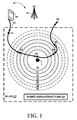
- Figure 1 is an illustration of an exemplary communications system comprising a wireless local area network, a mobile station and a cellular base station, according to some embodiments of the invention
- FIG. 2 shows an exemplary WLAN management frame according to some embodiments of the invention
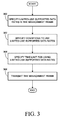
- FIG 3 is a flowchart of an exemplary method for a WLAN access point to prepare and transmit the management frame of Figure 2, according to some embodiments of the invention
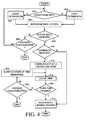
- FIG. 4 is a flowchart of an exemplary simplified method for a WLAN access point, according to some embodiments of the invention.
- Figure 5 is a block diagram of an exemplary access point, according to some embodiments of the invention.
- an AP advertises its supported data rates in a Supported Rates Information Element (IE) and possibly also in an optional Extended Supported Rates IE, both of which are included in management frames.
- IE Supported Rates Information Element
- a non-exhaustive list of examples for management frames that include a Supported Rates IE includes probe requests, probe responses, authentication requests, authentication responses, association requests, association responses and beacon frames.
- violations of the AP's minimum advertised supported data rate are permitted under certain conditions. These violations will allow a STA to operate at link data rates that are lower than the minimum advertised supported data rate.
- the AP may place time constraints on how long a STA can operate the link at rates below the minimum advertised supported data rate. Once a STA starts operating the link at a rate below the minimum advertised supported data rate, the AP may signal to the STA how much time is left before the time constraint is reached.
- FIG 1 is an illustration of an exemplary communications system 50 comprising a WLAN 52, a mobile station 54 and a cellular communication base station 56.
- WLAN 52 comprises access points (APs), for example, AP 1.
- WLAN 52 comprises a wired infrastructure 58 to connect WLAN 52 to other networks (not shown).
- APs of WLAN 52 may be connected to infrastructure 58 via wired and/or wireless links.
- WLAN 52, or parts of WLAN 52 may be a "mesh" WLAN, in which one or more APs are connected to infrastructure 58 indirectly through other APs. If WLAN 52 or part of WLAN 52 is a mesh WLAN, WLAN 52 may comprise one or more mesh points. Wired links, mesh points and APs other than AP 1 are not shown in Figure 1 so as not to obscure the description of the embodiments of the invention.
- cellular communication base station 56 is able to communicate with cellular communication base station 56 using one or more cellular communication standards.
- cellular communication base station 56 provides a uniform cellular coverage for the area containing WLAN 52.
- a non-exhaustive list of examples for standards with which base station 56 and mobile station 54 may comply comprises Direct Sequence - Code Division Multiple Access (DS-CDMA) cellular radiotelephone communication, Global System for Mobile Communications (GSM) cellular radiotelephone, North American Digital Cellular (NADC) cellular radiotelephone, Time Division Multiple Access (TDMA), Extended-TDMA (E-TDMA) cellular radiotelephone, wideband CDMA (WCDMA), General Packet Radio Service (GPRS), Enhanced Data for GSM Evolution (EDGE), 3G and 4G communication.
- DS-CDMA Direct Sequence - Code Division Multiple Access
- GSM Global System for Mobile Communications
- NADC North American Digital Cellular
- TDMA Time Division Multiple Access
- E-TDMA Extended-TDMA
- WCDMA Wideband CDMA
- GPRS General Packet Radio Service
- EDGE Enhanced Data for GSM Evolution
- the actual data rate at which an access point communicates with a mobile station is not higher than the supported data rates, and it generally declines as the distance of the mobile station from the access point increases. Moreover, the actual data rate generally declines as the electromagnetic interference at the vicinity of the access point increases. In a simplified manner, decreases in the feasible communication data rate are schematically illustrated in Figure 1 by concentric circles around AP 1.
- AP 1 is compatible with 802.11g.
- AP 1 is programmed or hardwired so its supported data rates are 54, 48, 36, 24, 18, 12 and 11 Mbps.
- the feasible communication data rate of AP 1 within circle 10 is 54 Mbps.
- the feasible communication data rate of AP 1 within circular bands 11, 12, 13, 14, 15 and 16 is 48, 24, 11, 5.5, 2 and 1 Mbps, respectively.
- AP 1 may permit a mobile station to communicate with AP 1 for a limited duration of time at a data rate that is lower than the minimal data rate advertised in a Supported Rates IE, a Extended Supported Rates IE or any other similarly advertised IE. To that end, AP 1 may store in its memory identifications of one or more supported limited-use data rates, the one or more conditions to be met, and the permitted duration of time.
- FIG. 2 shows an exemplary management frame 200 of AP 1, according to embodiments of the invention
- Figure 3 shows a flowchart of an exemplary method for AP 1 to prepare and transmit management frame 200.
- Management frame 200 may optionally include a Supported Rates IE 202 in accordance with current or future IEEE 802.11 standards and may optionally include an Extended Supported Rates IE 204 in accordance with current or future IEEE 802.11 standards.
- Data rates 54, 48, 36, 24, 18, 12 and 11 Mbps may be identified by IE 202 and/or IE 204.
- AP 1 may include in management frame 200 an IE 206 that specifies the supported limited-use data rates (300).
- AP 1 may optionally specify in a field 208 of frame 200 the one or more conditions that must be met in order for a mobile station to use a limited-use data rate (302).
- AP 1 may optionally specify in a field 210 of frame 200 the duration of time for which the mobile station is permitted to use a limited-use data rate (304).
- AP 1 may transmit frame 200 (306).
- station 54 is carried by a user along a trajectory 60 through locations 61-66. At location 61, station 54 cannot communicate with AP 1. Station 54 initiates a WLAN connectivity sequence in order to connect to an AP, however, it cannot find one.
- a WLAN connectivity sequence comprises probing, authentication and association, and may comprise other processes, for example, an IEEE 802.11X authentication process.
- station 54 completes a WLAN connectivity sequence with AP 1 and can communicate with AP 1 at an actual data rate that is not higher than 11 Mbps since location 62 is within circular band 13.
- AP 1 may be configured, for example, with a supported limited-use data rate of 5.5 Mbps and a permitted duration of approximately 10 to 20 seconds. AP 1 may also be configured to grant permissions to communicate at supported limited-use data rates only to mobile stations that communicate real time data, for example, VoIP (voice over Internet protocol) and video streaming, and to provide that support only if the mobile stations are about to roam from WLAN 52 to a cellular network. AP 1 and station 54 may use signaling between them to verify whether roaming of station 54 from WLAN 52 to a cellular network is imminent. The time duration may be set to a value which would be sufficient for executing the handoff from the WLAN to the cellular network.
- VoIP voice over Internet protocol
- AP 1 may verify, for example, from signaling between AP 1 and station 54, whether the conditions to use limited-use data rates are met by station 54 (400). For example, AP 1 may recognize that station 54 is involved in a VoIP session through AP 1 and that roaming of station 54 from WLAN 52 to a cellular network is imminent.
- AP 1 may grant permission to station 54 to communicate with AP 1 at a limited-used data rate (402) and may optionally inform station 54 of this (404). If the conditions are not met, AP 1 may deny station 54 permission to communicate with AP 1 at a limited-used data rate (403) and may optionally inform station 54 of this (404).
- AP 1 may continue to check the conditions at 400, as the status may change. For example, while at location 62, station 54 may be involved in data communication and therefore, according to the example, AP 1 may deny station 54 permission to use limited-use data rates. However, at location 63 station 54 may be involved in a voice conversation and, according to the example, AP 1 may grant permission to station 54 to use limited-use data rates.
- station 54 disconnects from AP 1 (checked at 408), the method ends. While at location 64, station 54 and AP 1 may communicate frames of the voice conversation at a supported data rate that is no higher than 11 Mbps. At location 65, the feasible data rate drops to 5.5 Mbps and station 54 can communicate with AP 1 only at limited-use data rates. AP 1 recognizes that communication with station 54 is possible only at limited-use data rates (checked at 406), and AP 1 checks whether permission to use the limited-use data rates is currently granted or denied to station 54 (410).
- AP 1 may disconnect station 54 (412) and the method ends. If permission is currently denied, AP 1 communicates with station 54 at a limited-use data rate (414) and starts counting the duration of the communication at a limited-use data rate (416). Whether the duration of time for which station 54 is permitted to use a limited-use data rate has passed is checked (418), and if station 54 disconnects before the end of the permitted duration (420), the method ends. Otherwise, AP 1 may optionally alert station 54 of the permitted time remaining (422) and the method continues to 416. For example, AP 1 may transmit a frame directed to station 54 that comprises an indication of what remains of the duration of time. If the permitted duration of time for communication at a limited-use data rate has expired, AP 1 disconnects station 54 (412) and the method ends.
- FIG. 5 is a block diagram of an exemplary access point 500, according to some embodiments of the invention.
- AP 500 comprises a processor 502 and a memory 504 coupled to processor 502.
- Memory 504 comprises identifications 70, 71 and 72 of the one or more supported limited-use data rates, the one or more conditions and the permitted duration of time, respectively.
- Memory 504 also comprises code 505 that, when executed by processor 502, may implement the methods described herein.
- AP 500 comprises a wireless communication interface 506, compatible with one or more standards of the family of IEEE 802.11 wireless communication standards.
- Wireless communication interface 506 is coupled to processor 502 and comprises at least a baseband controller 508, a radio 510, and an antenna 512.
- AP 500 may optionally comprise an additional wireless communication interface 514, compatible with one or more standards of the family of IEEE 802.11 wireless communication standards.
- Wireless communication interface 514 is coupled to processor 502 and comprises at least a baseband controller 516, a radio 518, and an antenna 520.
- AP 500 may optionally comprise a wired communication adapter 522, for example, an Ethernet adapter.
- AP 500 may be able to establish communication sessions with other devices, such as mobile stations and/or other access points.
- AP 500 comprises a power system 524 and a connector 526 coupled to power system 524.
- AP 500 may optionally comprise a power source 528 coupled to power system 524.
- Connector 526 is connectable to an external power source (not shown) to provide power for charging power source 528 and/or for operating AP 500.
- Power system 524 provides electrical coupling between the external power source and power source 528, and provides electrical coupling between power source 528 and the electrical components of AP 500 (e.g. processor 502, memory 504, and the like). As part of the electrical coupling between the external power source and power source 528, power system 524 may control the charging of power source 528 with electrical charge drawn from the external power source.
- processor 502 includes any combination of microprocessors, microcontrollers, central processing units (CPU), digital signal processors (DSP), reduced instruction set computers (RISC), complex instruction set computers (CISC) and the like.
- processors 502 may comprise more than one processing unit, may be part of an application specific integrated circuit (ASIC) or may be a part of an application specific standard product (ASSP).
- ASIC application specific integrated circuit
- ASSP application specific standard product
- a non-exhaustive list of examples for memory 504 includes any combination of a) local memory, bulk storage, cache memory b) semiconductor devices such as registers, latches, read only memory (ROM), mask ROM, electrically erasable programmable read only memory devices (EEPROM), flash memory devices, non-volatile random access memory devices (NVRAM), synchronous dynamic random access memory (SDRAM) devices, RAMBUS dynamic random access memory (RDRAM) devices, double data rate (DDR) memory devices, static random access memory (SRAM), universal serial bus (USB) removable memory, and the like; c) optical devices, such as compact disk read only memory (CD ROM), and the like; and d) magnetic devices, such as a hard disk, a floppy disk, a magnetic tape, and the like.
- semiconductor devices such as registers, latches, read only memory (ROM), mask ROM, electrically erasable programmable read only memory devices (EEPROM), flash memory devices, non-volatile random access memory devices (NVRAM), synchronous
- a non-exhaustive list of examples for power source 528 includes one or more Ni-Cd (Nickel Cadmium) batteries, one or more Ni-MH (Nickel-Metal Hydride) batteries, one or more Lithium Ion batteries, one or more rechargeable Alkaline batteries, one or more capacitors, one or more super-capacitors, and any other suitable power source.
- a non-exhaustive list of examples for an external power source includes an AC power source, a DC power source, wind-power-conversion power source, solar-power-conversion power source.
- antennae 512 and 520 includes dipole antennae, monopole antennae, multilayer ceramic antennae, planar inverted-F antennae, loop antennae, shot antennae, dual antennae, omnidirectional antenna and any other suitable antennae.
- a non-exhaustive list of examples for mobile station 54 includes a wireless-enabled laptop, a wireless-enabled cellphone, a wireless-enabled personal digital assistant (PDA), a wireless-enabled video camera, a wireless-enabled gaming console, a wireless Internet Protocol (IP) phone and any other suitable mobile station.
- PDA personal digital assistant
- IP Internet Protocol
- the example described above relates to a handoff of a mobile station from an IEEE 802.11 wireless network to a cellular network
- embodiments of the invention are applicable to other situations in which a mobile station needs to communicate with an access point at a lower data rate than those advertised in the Supported Rates IE, Extended Supported Rates IE or any other similarly advertised IE.
- the handoff may be to a non-cellular network.
- the handoff may be within an IEEE 802.11 WLAN but from an access point that is part of one Extended Service Set (ESS) to another access point that is part of a different ESS.
- the different ESS may be in a different IP subnetwork.
- Such a handoff may last up to several seconds, and it may be beneficial to extend the connection of the mobile station to the current access point.
Landscapes
- Engineering & Computer Science (AREA)
- Quality & Reliability (AREA)
- Computer Networks & Wireless Communication (AREA)
- Signal Processing (AREA)
- Mobile Radio Communication Systems (AREA)
Abstract
Description
- The invention generally relates to wireless local area networks (WLAN) and to cellular networks. In particular, embodiments of the invention relate to roaming of a dual-mode mobile communication device from a WLAN to a cellular network.
- In accordance with the Institute of Electrical and Electronics Engineers (IEEE) 802.11 standards, wireless communication between a mobile station (STA) and an access point (AP) is possible at data rates that are predefined in the standards. IEEE standard 802.11b permits communication in 1, 2, 5.5 and 11 Mbps (Mega bits per second). IEEE standard 802.11a permits communication in 6, 9, 12, 18, 24, 36, 48 and 54 Mbps. IEEE standard 802.11g permits communication in any of the data rates defined in IEEE standard 802.11b and IEEE standard 802.11a, and dictates that support for 1, 2, 5.5, 11, 6, 12 and 24 Mbps is mandatory.
- The intent behind multiple rates is to permit rate usage which best suits the current STA/AP link quality. Various factors may affect the quality of the link, for example, the distance between the STA and the AP, and increases of electromagnetic noise over the medium connecting the STA and the AP. As the quality of the link decreases, mobile stations will drop to lower rates, which require less signal-to-noise ratio (SNR) for reliable packet transmission performance. The link rate selection algorithm is not specified in IEEE 802.11 but is left up to vendor implementations.
- In IEEE 802.11 the STA is responsible for triggering handoffs. A negative consequence of this is that a STA may continue to use a link and operate at data rates which are lower than what may be available should the STA handoff to a different AP. That is, in response to decreases in link quality, the station may continue to drop its data rate rather than to scan for an AP which could provide a higher rate link. When this is true the capacity of the network is affected since the station is continuing to use an unnecessarily low data rate.
- To prevent capacity loss due to these effects, some APs prevent stations from communicating with them at data rates below certain specified site-dependent values, even though this contradicts the requirements of current IEEE 802.11 standards. STAs are forced to search for a better AP when these limits are reached. For example, in IEEE 802.11, an AP advertises supported data rates in its Beacon broadcasts. These rates are part of its "BSS Basic Rate Set". By specifying a minimum supported rate the AP can enforce a lower limit on the data rates used in its basic service set (BSS). This will help prevent the capacity-lowering behaviour discussed above. The minimum rate specified by the AP would typically be a function of the surrounding Wi-Fi coverage deployment, i.e., in a dense deployment where low quality links are rare, the minimum advertised data rate could be set higher than in a sparse deployment. The above mechanism is geared towards maintaining high capacity in heavy coverage situations.
- However, when leaving the area covered by APs of a WLAN, a STA may not be able to find another WLAN to connect to. If the STA is capable also of cellular communication, it may search for a cellular base station and may connect to one if found. A handover from a WLAN to a cellular network may take quite some time, and the mobile station may lose the connection with the WLAN before establishing a connection with the cellular network. If the mobile station is involved in a real-time communication application, for example, a telephone conversation, the application may be interrupted.
- The problem to be solved is that strict enforcement of minimum data rates for communication between a STA and an AP can lead to disruptions in communication applications. The solution is to have an AP advertise a wider range of data rates with even lower minimum data rates and to permit, under certain conditions, a STA to communicate with the AP using one or more of the lower data rates advertised by the AP. The permission may be granted to a STA for a limited period of time. A non-exhaustive list of such conditions includes that the communications are of real-time data, that the STA has an active voice connection in progress, and that the STA is about to perform a handoff to another network, for example, a cellular network. An AP may advertise the lower data rates to STAs in its vicinity and may communicate with a STA over one or more of the lower data rates only if the STA cannot communicate with it over one of the higher data rates. An AP that permits a STA to communicate over one or more of the lower data rates may inform the STA that permission is granted and may inform the STA for how long the permission is granted. A STA may actively request an AP for permission to communicate with it over one or more of the lower data rates.
- Embodiments are illustrated by way of example and not limitation in the figures of the accompanying drawings, in which like reference numerals indicate corresponding, analogous or similar elements, and in which:
- Figure 1 is an illustration of an exemplary communications system comprising a wireless local area network, a mobile station and a cellular base station, according to some embodiments of the invention;
- Figure 2 shows an exemplary WLAN management frame according to some embodiments of the invention;
- Figure 3 is a flowchart of an exemplary method for a WLAN access point to prepare and transmit the management frame of Figure 2, according to some embodiments of the invention;
- Figure 4 is a flowchart of an exemplary simplified method for a WLAN access point, according to some embodiments of the invention; and
- Figure 5 is a block diagram of an exemplary access point, according to some embodiments of the invention.
- It will be appreciated that for simplicity and clarity of illustration, elements shown in the figures have not necessarily been drawn to scale. For example, the dimensions of some of the elements may be exaggerated relative to other elements for clarity.
- In the following detailed description, numerous specific details are set forth in order to provide a thorough understanding of embodiments. However it will be understood by those of ordinary skill in the art that the embodiments may be practiced without these specific details. In other instances, well-known methods, procedures, components and circuits have not been described in detail so as not to obscure the embodiments.
- Whilst there are a number of different wireless LAN architectures and the present invention is not limited to any particular one, the following description is generally written using the terminology applied in the ANSI/IEEE 802.11 Standards ("Wireless LAN Medium Access Control and Physical Layer Specifications"). It will be obvious to those of ordinary skill in the art how to modify the following for other existing WLAN standards or future related standards. It will also be obvious to those of ordinary skill in the art how to modify the following for other AP-STA protocols which achieve the same effect of data rate advertisement, such as information elements that are sent, for example, according to Cisco CCX (Cisco Compatible Extensions) procedures.
- According to current IEEE 802.11 standards, an AP advertises its supported data rates in a Supported Rates Information Element (IE) and possibly also in an optional Extended Supported Rates IE, both of which are included in management frames. A non-exhaustive list of examples for management frames that include a Supported Rates IE includes probe requests, probe responses, authentication requests, authentication responses, association requests, association responses and beacon frames.
- In some embodiments of the invention, violations of the AP's minimum advertised supported data rate are permitted under certain conditions. These violations will allow a STA to operate at link data rates that are lower than the minimum advertised supported data rate. The AP may place time constraints on how long a STA can operate the link at rates below the minimum advertised supported data rate. Once a STA starts operating the link at a rate below the minimum advertised supported data rate, the AP may signal to the STA how much time is left before the time constraint is reached.
- Figure 1 is an illustration of an
exemplary communications system 50 comprising aWLAN 52, amobile station 54 and a cellularcommunication base station 56.WLAN 52 comprises access points (APs), for example,AP 1.WLAN 52 comprises a wiredinfrastructure 58 to connectWLAN 52 to other networks (not shown). - APs of WLAN 52 may be connected to
infrastructure 58 via wired and/or wireless links.WLAN 52, or parts ofWLAN 52, may be a "mesh" WLAN, in which one or more APs are connected toinfrastructure 58 indirectly through other APs. IfWLAN 52 or part ofWLAN 52 is a mesh WLAN,WLAN 52 may comprise one or more mesh points. Wired links, mesh points and APs other thanAP 1 are not shown in Figure 1 so as not to obscure the description of the embodiments of the invention. -
Station 54 is able to communicate with cellularcommunication base station 56 using one or more cellular communication standards. For simplicity of the explanation, cellularcommunication base station 56 provides a uniform cellular coverage for thearea containing WLAN 52. - A non-exhaustive list of examples for standards with which
base station 56 andmobile station 54 may comply comprises Direct Sequence - Code Division Multiple Access (DS-CDMA) cellular radiotelephone communication, Global System for Mobile Communications (GSM) cellular radiotelephone, North American Digital Cellular (NADC) cellular radiotelephone, Time Division Multiple Access (TDMA), Extended-TDMA (E-TDMA) cellular radiotelephone, wideband CDMA (WCDMA), General Packet Radio Service (GPRS), Enhanced Data for GSM Evolution (EDGE), 3G and 4G communication. - The actual data rate at which an access point communicates with a mobile station is not higher than the supported data rates, and it generally declines as the distance of the mobile station from the access point increases. Moreover, the actual data rate generally declines as the electromagnetic interference at the vicinity of the access point increases. In a simplified manner, decreases in the feasible communication data rate are schematically illustrated in Figure 1 by concentric circles around
AP 1. - In this example,
AP 1 is compatible with 802.11g.AP 1 is programmed or hardwired so its supported data rates are 54, 48, 36, 24, 18, 12 and 11 Mbps. The feasible communication data rate ofAP 1 withincircle 10 is 54 Mbps. The feasible communication data rate ofAP 1 withincircular bands - If certain conditions are met,
AP 1 may permit a mobile station to communicate withAP 1 for a limited duration of time at a data rate that is lower than the minimal data rate advertised in a Supported Rates IE, a Extended Supported Rates IE or any other similarly advertised IE. To that end,AP 1 may store in its memory identifications of one or more supported limited-use data rates, the one or more conditions to be met, and the permitted duration of time. - Figure 2 shows an
exemplary management frame 200 ofAP 1, according to embodiments of the invention, and Figure 3 shows a flowchart of an exemplary method forAP 1 to prepare and transmitmanagement frame 200.Management frame 200 may optionally include a SupportedRates IE 202 in accordance with current or future IEEE 802.11 standards and may optionally include an Extended SupportedRates IE 204 in accordance with current or future IEEE 802.11 standards.Data rates IE 202 and/orIE 204. -
AP 1 may include inmanagement frame 200 anIE 206 that specifies the supported limited-use data rates (300). -
AP 1 may optionally specify in afield 208 offrame 200 the one or more conditions that must be met in order for a mobile station to use a limited-use data rate (302).AP 1 may optionally specify in afield 210 offrame 200 the duration of time for which the mobile station is permitted to use a limited-use data rate (304).AP 1 may transmit frame 200 (306). - Returning to Figure 1,
station 54 is carried by a user along atrajectory 60 through locations 61-66. Atlocation 61,station 54 cannot communicate withAP 1.Station 54 initiates a WLAN connectivity sequence in order to connect to an AP, however, it cannot find one. A WLAN connectivity sequence comprises probing, authentication and association, and may comprise other processes, for example, an IEEE 802.11X authentication process. - At
location 62,station 54 completes a WLAN connectivity sequence withAP 1 and can communicate withAP 1 at an actual data rate that is not higher than 11 Mbps sincelocation 62 is withincircular band 13. -
AP 1 may be configured, for example, with a supported limited-use data rate of 5.5 Mbps and a permitted duration of approximately 10 to 20 seconds.AP 1 may also be configured to grant permissions to communicate at supported limited-use data rates only to mobile stations that communicate real time data, for example, VoIP (voice over Internet protocol) and video streaming, and to provide that support only if the mobile stations are about to roam fromWLAN 52 to a cellular network.AP 1 andstation 54 may use signaling between them to verify whether roaming ofstation 54 fromWLAN 52 to a cellular network is imminent. The time duration may be set to a value which would be sufficient for executing the handoff from the WLAN to the cellular network. - Reference is now made in addition to Figure 4, which shows a flowchart of an exemplary method for
AP 1, according to embodiments of the invention.AP 1 may verify, for example, from signaling betweenAP 1 andstation 54, whether the conditions to use limited-use data rates are met by station 54 (400). For example,AP 1 may recognize thatstation 54 is involved in a VoIP session throughAP 1 and that roaming ofstation 54 fromWLAN 52 to a cellular network is imminent. - If the conditions are met,
AP 1 may grant permission to station 54 to communicate withAP 1 at a limited-used data rate (402) and may optionally informstation 54 of this (404). If the conditions are not met,AP 1 may denystation 54 permission to communicate withAP 1 at a limited-used data rate (403) and may optionally informstation 54 of this (404). - As long as the actual data rate is one that is indicated in
IEs station 54 is connected to AP 1 (408),AP 1 may continue to check the conditions at 400, as the status may change. For example, while atlocation 62,station 54 may be involved in data communication and therefore, according to the example,AP 1 may denystation 54 permission to use limited-use data rates. However, atlocation 63station 54 may be involved in a voice conversation and, according to the example,AP 1 may grant permission to station 54 to use limited-use data rates. - If
station 54 disconnects from AP 1 (checked at 408), the method ends. While atlocation 64,station 54 andAP 1 may communicate frames of the voice conversation at a supported data rate that is no higher than 11 Mbps. At location 65, the feasible data rate drops to 5.5 Mbps andstation 54 can communicate withAP 1 only at limited-use data rates.AP 1 recognizes that communication withstation 54 is possible only at limited-use data rates (checked at 406), andAP 1 checks whether permission to use the limited-use data rates is currently granted or denied to station 54 (410). - If permission is currently denied,
AP 1 may disconnect station 54 (412) and the method ends. If permission is currently granted,AP 1 communicates withstation 54 at a limited-use data rate (414) and starts counting the duration of the communication at a limited-use data rate (416). Whether the duration of time for whichstation 54 is permitted to use a limited-use data rate has passed is checked (418), and ifstation 54 disconnects before the end of the permitted duration (420), the method ends. Otherwise,AP 1 may optionally alertstation 54 of the permitted time remaining (422) and the method continues to 416. For example,AP 1 may transmit a frame directed to station 54 that comprises an indication of what remains of the duration of time. If the permitted duration of time for communication at a limited-use data rate has expired,AP 1 disconnects station 54 (412) and the method ends. - Figure 5 is a block diagram of an
exemplary access point 500, according to some embodiments of the invention.AP 500 comprises aprocessor 502 and amemory 504 coupled toprocessor 502.Memory 504 comprisesidentifications Memory 504 also comprisescode 505 that, when executed byprocessor 502, may implement the methods described herein. -
AP 500 comprises awireless communication interface 506, compatible with one or more standards of the family of IEEE 802.11 wireless communication standards.Wireless communication interface 506 is coupled toprocessor 502 and comprises at least abaseband controller 508, aradio 510, and anantenna 512. -
AP 500 may optionally comprise an additional wireless communication interface 514, compatible with one or more standards of the family of IEEE 802.11 wireless communication standards. Wireless communication interface 514 is coupled toprocessor 502 and comprises at least a baseband controller 516, aradio 518, and anantenna 520.AP 500 may optionally comprise awired communication adapter 522, for example, an Ethernet adapter. - By way of
wireless communication interface 506 and/or wireless communication interface 514,AP 500 may be able to establish communication sessions with other devices, such as mobile stations and/or other access points. -
AP 500 comprises apower system 524 and aconnector 526 coupled topower system 524.AP 500 may optionally comprise apower source 528 coupled topower system 524.Connector 526 is connectable to an external power source (not shown) to provide power for chargingpower source 528 and/or for operatingAP 500.Power system 524 provides electrical coupling between the external power source andpower source 528, and provides electrical coupling betweenpower source 528 and the electrical components of AP 500 (e.g. processor 502,memory 504, and the like). As part of the electrical coupling between the external power source andpower source 528,power system 524 may control the charging ofpower source 528 with electrical charge drawn from the external power source. - A non-exhaustive list of examples for
processor 502 includes any combination of microprocessors, microcontrollers, central processing units (CPU), digital signal processors (DSP), reduced instruction set computers (RISC), complex instruction set computers (CISC) and the like. Furthermore,processors 502 may comprise more than one processing unit, may be part of an application specific integrated circuit (ASIC) or may be a part of an application specific standard product (ASSP). - A non-exhaustive list of examples for
memory 504 includes any combination of a) local memory, bulk storage, cache memory b) semiconductor devices such as registers, latches, read only memory (ROM), mask ROM, electrically erasable programmable read only memory devices (EEPROM), flash memory devices, non-volatile random access memory devices (NVRAM), synchronous dynamic random access memory (SDRAM) devices, RAMBUS dynamic random access memory (RDRAM) devices, double data rate (DDR) memory devices, static random access memory (SRAM), universal serial bus (USB) removable memory, and the like; c) optical devices, such as compact disk read only memory (CD ROM), and the like; and d) magnetic devices, such as a hard disk, a floppy disk, a magnetic tape, and the like. - A non-exhaustive list of examples for
power source 528 includes one or more Ni-Cd (Nickel Cadmium) batteries, one or more Ni-MH (Nickel-Metal Hydride) batteries, one or more Lithium Ion batteries, one or more rechargeable Alkaline batteries, one or more capacitors, one or more super-capacitors, and any other suitable power source. A non-exhaustive list of examples for an external power source includes an AC power source, a DC power source, wind-power-conversion power source, solar-power-conversion power source. - A non-exhaustive list of examples for
antennae - A non-exhaustive list of examples for
mobile station 54 includes a wireless-enabled laptop, a wireless-enabled cellphone, a wireless-enabled personal digital assistant (PDA), a wireless-enabled video camera, a wireless-enabled gaming console, a wireless Internet Protocol (IP) phone and any other suitable mobile station. - Although the example described above relates to a handoff of a mobile station from an IEEE 802.11 wireless network to a cellular network, embodiments of the invention are applicable to other situations in which a mobile station needs to communicate with an access point at a lower data rate than those advertised in the Supported Rates IE, Extended Supported Rates IE or any other similarly advertised IE. For example, the handoff may be to a non-cellular network. In another example, the handoff may be within an IEEE 802.11 WLAN but from an access point that is part of one Extended Service Set (ESS) to another access point that is part of a different ESS. The different ESS may be in a different IP subnetwork. Such a handoff may last up to several seconds, and it may be beneficial to extend the connection of the mobile station to the current access point.
- Although the subject matter has been described in language specific to structural features and/or methodological acts, it is to be understood that the subject matter defined in the appended claims is not necessarily limited to the specific features or acts described above. Rather, the specific features and acts described above are disclosed as example forms of implementing the claims.
Claims (18)
- A method in a wireless access point (1, 500), the method comprising:advertising data rates that are supported by said wireless access point (1, 500); andpermitting a mobile station (54) to conduct communications with said access point (1, 500) at one or more lower data rates of said advertised data rates only if said mobile station (54) satisfies one or more conditions.
- The method of claim 1, wherein said one or more conditions comprises that said mobile station (54) has an active real time connection in progress and/or that said mobile station (54) has an active voice connection in progress.
- The method of claim 1 or claim 2, wherein said one or more conditions comprises that said mobile station (54) is about to perform a handoff to another network (56).
- The method of claim 3, further comprising:recognizing from signaling with said mobile station (54) that said mobile station (54) is about to perform said handoff.
- The method of any one of claims 1 to 4, further comprising:advertising said one or more conditions, and/or communicating with said mobile station (54) at said one or more lower data rates when said mobile station (54) is unable to communicate with said access point (1, 500) at a higher data rate than said one or more lower data rates.
- The method of any one of claims 1 to 5, further comprising:limiting a duration of said communications.
- The method of any one of claims 1 to 5, further comprising:limiting a duration of said communications to an amount of time that is sufficient for said mobile station (54) to perform a handoff from said access point (1, 500) to another network (56).
- The method of claim 6 or claim 7, further comprising:advertising a permitted duration of said communications, and/or informing said mobile station (54) how much time of said duration remains.
- The method of claim 3 or claim 7, wherein said other network (56) is a cellular network.
- The method of any one of claims 1 to 9, further comprising:receiving a request from a mobile station (54) for permission to communicate with said access point (1, 500) at one of said one or more lower data rates; andinforming said mobile station (54) whether said permission has been granted.
- A method in a mobile station (54), the method comprising:signaling to an access point (1, 500) that a handoff of said mobile station (54) from said access point (1, 500) to another type of network is imminent; andrequesting from said access point (1, 500) permission to communicate with said access point (1, 500) at a limited-use supported data rate.
- The method of claim 11, wherein said wireless network is a cellular network.
- A wireless access point (1, 500) comprising:a wireless communication interface (506) through which said access point (1, 500) is able to communicate with a mobile station (54) associated with said access point (1, 500);a processor (502) coupled to said wireless communication interface (506); anda memory (504) coupled to said processor (502) to store indications (70) of one or more limited-use supported data rates, indications (71) of one or more conditions, an indication (72) of a duration of time, and executable code means (505) which, when executed by said processor (502), are arranged to permit said mobile station (54), if said conditions are met, to communicate with said access point (1, 500) at said data rates for said duration of time after said executable code means has determined that said mobile station (54) is not able to communicate with said access point (1, 500) at a higher data rate.
- The wireless access point (1, 500) of claim 13, wherein said executable code means (505), when executed by said processor (502), are further arranged:to recognize from a transmission received from said mobile station (54) via said interface (506) that said conditions are met, prior to permitting said mobile station (54) to communicate with said access point (1, 500) at said data rates for said duration of time, and/orto transmit via said interface (506) a management frame having incorporated therein an indication of said one or more limited-use supported data rates, and/orto incorporate in said management frame an indication of said one or more condition and/or an indication of said duration of time.
- The wireless access point (1, 500) of claim 13 or claim 14, wherein said limited-use supported data rates, said conditions and said duration are configurable.
- A mobile station (54) comprising:means for signaling to an access point (1, 500) that a handoff of said mobile station (54) from said access point (1, 500) to another type of network is imminent; andmeans for requesting from said access point (1, 500) permission to communicate with said access point (1, 500) at a limited-use supported data rate.
- A computer program product comprising a machine readable medium embodying program code executable by a processor of a computing device or system for causing said computing device or system to implement the method of any one of claims 1 to 10 or the method of claim 11 or claim 12.
- A communication network comprising the wireless access point (1, 500) of any one of claims 13 to 15 and at least one mobile station (54) according to claim 16.
Priority Applications (4)
| Application Number | Priority Date | Filing Date | Title |
|---|---|---|---|
| EP06116088A EP1873969B1 (en) | 2006-06-26 | 2006-06-26 | Limited-use data rates in a wireless local area network |
| EP11172378.9A EP2391064B1 (en) | 2006-06-26 | 2006-06-26 | Limited-use data rates in a wireless local area network |
| CA2768846A CA2768846C (en) | 2006-06-26 | 2007-04-26 | Limited-use data rates in a wireless local area network |
| CA2607798A CA2607798C (en) | 2006-06-26 | 2007-04-26 | Limited-use data rates in a wireless local area network |
Applications Claiming Priority (1)
| Application Number | Priority Date | Filing Date | Title |
|---|---|---|---|
| EP06116088A EP1873969B1 (en) | 2006-06-26 | 2006-06-26 | Limited-use data rates in a wireless local area network |
Related Child Applications (2)
| Application Number | Title | Priority Date | Filing Date |
|---|---|---|---|
| EP11172378.9A Division EP2391064B1 (en) | 2006-06-26 | 2006-06-26 | Limited-use data rates in a wireless local area network |
| EP11172378.9 Division-Into | 2011-07-01 |
Publications (3)
| Publication Number | Publication Date |
|---|---|
| EP1873969A1 true EP1873969A1 (en) | 2008-01-02 |
| EP1873969A8 EP1873969A8 (en) | 2008-02-20 |
| EP1873969B1 EP1873969B1 (en) | 2012-06-06 |
Family
ID=37502184
Family Applications (2)
| Application Number | Title | Priority Date | Filing Date |
|---|---|---|---|
| EP11172378.9A Not-in-force EP2391064B1 (en) | 2006-06-26 | 2006-06-26 | Limited-use data rates in a wireless local area network |
| EP06116088A Active EP1873969B1 (en) | 2006-06-26 | 2006-06-26 | Limited-use data rates in a wireless local area network |
Family Applications Before (1)
| Application Number | Title | Priority Date | Filing Date |
|---|---|---|---|
| EP11172378.9A Not-in-force EP2391064B1 (en) | 2006-06-26 | 2006-06-26 | Limited-use data rates in a wireless local area network |
Country Status (2)
| Country | Link |
|---|---|
| EP (2) | EP2391064B1 (en) |
| CA (2) | CA2607798C (en) |
Cited By (3)
| Publication number | Priority date | Publication date | Assignee | Title |
|---|---|---|---|---|
| EP2915376B1 (en) * | 2012-09-18 | 2020-06-10 | Nokia Technologies Oy | Association in wireless network |
| CN116321311A (en) * | 2023-03-23 | 2023-06-23 | 恒玄科技(北京)有限公司 | A wireless communication method, control system and medium for WiFi stations |
| WO2023168548A1 (en) * | 2022-03-07 | 2023-09-14 | Qualcomm Incorporated | Wireless range extension for communications in a wireless communication network |
Citations (2)
| Publication number | Priority date | Publication date | Assignee | Title |
|---|---|---|---|---|
| WO2001011833A1 (en) * | 1999-08-06 | 2001-02-15 | Berkeley Concept Research Corporation | High-speed wireless network with a reliable wireless low bit-rate channel |
| US20040023660A1 (en) * | 2002-08-01 | 2004-02-05 | David Ben-Eli | Common resource allocation in a wireless system or the like |
Family Cites Families (1)
| Publication number | Priority date | Publication date | Assignee | Title |
|---|---|---|---|---|
| US8165148B2 (en) * | 2003-01-13 | 2012-04-24 | Qualcomm Incorporated | System and method for rate assignment |
-
2006
- 2006-06-26 EP EP11172378.9A patent/EP2391064B1/en not_active Not-in-force
- 2006-06-26 EP EP06116088A patent/EP1873969B1/en active Active
-
2007
- 2007-04-26 CA CA2607798A patent/CA2607798C/en not_active Expired - Fee Related
- 2007-04-26 CA CA2768846A patent/CA2768846C/en not_active Expired - Fee Related
Patent Citations (2)
| Publication number | Priority date | Publication date | Assignee | Title |
|---|---|---|---|---|
| WO2001011833A1 (en) * | 1999-08-06 | 2001-02-15 | Berkeley Concept Research Corporation | High-speed wireless network with a reliable wireless low bit-rate channel |
| US20040023660A1 (en) * | 2002-08-01 | 2004-02-05 | David Ben-Eli | Common resource allocation in a wireless system or the like |
Cited By (3)
| Publication number | Priority date | Publication date | Assignee | Title |
|---|---|---|---|---|
| EP2915376B1 (en) * | 2012-09-18 | 2020-06-10 | Nokia Technologies Oy | Association in wireless network |
| WO2023168548A1 (en) * | 2022-03-07 | 2023-09-14 | Qualcomm Incorporated | Wireless range extension for communications in a wireless communication network |
| CN116321311A (en) * | 2023-03-23 | 2023-06-23 | 恒玄科技(北京)有限公司 | A wireless communication method, control system and medium for WiFi stations |
Also Published As
| Publication number | Publication date |
|---|---|
| CA2607798A1 (en) | 2007-12-26 |
| CA2768846C (en) | 2013-12-24 |
| EP1873969B1 (en) | 2012-06-06 |
| CA2607798C (en) | 2014-03-11 |
| EP2391064B1 (en) | 2017-11-29 |
| EP1873969A8 (en) | 2008-02-20 |
| EP2391064A1 (en) | 2011-11-30 |
| CA2768846A1 (en) | 2007-12-26 |
Similar Documents
| Publication | Publication Date | Title |
|---|---|---|
| EP3253121B1 (en) | Method and access gateway for seamless mobility in a network environment | |
| US8958799B2 (en) | Wireless device based inter radio access technology handover initiation | |
| US11035884B2 (en) | Multiple network probing | |
| US20230292288A1 (en) | Scheduling and transmission of system information | |
| US12267910B2 (en) | Sidelink relay selection and re-selection in wireless communication | |
| WO2017214767A1 (en) | Method, terminal, and base station for use in data transmission | |
| US11277463B2 (en) | Application mobility enhancements | |
| CN105637932B (en) | Method for transmitting information, wireless network control device and network access point | |
| JP7582447B2 (en) | Cell selection or reselection method, information transmission method and device | |
| US8594063B2 (en) | Limited-use data rates in a wireless local area network | |
| US12408107B2 (en) | Slice selection method and terminal device | |
| US20190082382A1 (en) | Adaptive discovery process for wireless devices | |
| CN112789895B (en) | A switching method and device, terminal and network equipment | |
| US20240107628A1 (en) | Method, device and computer program product for wireless communication | |
| EP4354961A1 (en) | Assisted roaming | |
| CA2607798C (en) | Limited-use data rates in a wireless local area network | |
| CN117479264A (en) | Wireless communication method and terminal device | |
| US20260025838A1 (en) | Method and Apparatus for Channel Occupancy Time | |
| CA3119202A1 (en) | Method for indicating terminal capability, method for obtaining terminal capability, method for indicating capability identifier, method for obtaining capability identifier, and communications device | |
| CN108463008B (en) | WLAN state reporting method, device and system | |
| CN108696930A (en) | Apparatus and method for handling radio access technology capabilities | |
| CN108029050A (en) | Management to inter-frequency measurements | |
| WO2025065398A1 (en) | Systems and methods of transmission mode switching for ambient iot devices | |
| EP3713374A1 (en) | Method for accessing wireless local area network, terminal device, and network device |
Legal Events
| Date | Code | Title | Description |
|---|---|---|---|
| PUAI | Public reference made under article 153(3) epc to a published international application that has entered the european phase |
Free format text: ORIGINAL CODE: 0009012 |
|
| 17P | Request for examination filed |
Effective date: 20060626 |
|
| AK | Designated contracting states |
Kind code of ref document: A1 Designated state(s): AT BE BG CH CY CZ DE DK EE ES FI FR GB GR HU IE IS IT LI LT LU LV MC NL PL PT RO SE SI SK TR |
|
| AX | Request for extension of the european patent |
Extension state: AL BA HR MK YU |
|
| RAP1 | Party data changed (applicant data changed or rights of an application transferred) |
Owner name: RESEARCH IN MOTION LIMITED Owner name: MCMASTER UNIVERSITY |
|
| AKX | Designation fees paid |
Designated state(s): AT BE BG CH CY CZ DE DK EE ES FI FR GB GR HU IE IS IT LI LT LU LV MC NL PL PT RO SE SI SK TR |
|
| AXX | Extension fees paid |
Extension state: AL Payment date: 20060626 Extension state: MK Payment date: 20060626 Extension state: HR Payment date: 20060626 Extension state: BA Payment date: 20060626 Extension state: RS Payment date: 20060626 |
|
| 17Q | First examination report despatched |
Effective date: 20090723 |
|
| DAC | Divisional application: reference to earlier application (deleted) | ||
| RTI1 | Title (correction) |
Free format text: LIMITED-USE DATA RATES IN A WIRELESS LOCAL AREA NETWORK |
|
| GRAP | Despatch of communication of intention to grant a patent |
Free format text: ORIGINAL CODE: EPIDOSNIGR1 |
|
| RIC1 | Information provided on ipc code assigned before grant |
Ipc: H04L 12/28 20060101AFI20111213BHEP Ipc: H04W 28/22 20090101ALI20111213BHEP Ipc: H04L 12/56 20060101ALI20111213BHEP |
|
| GRAS | Grant fee paid |
Free format text: ORIGINAL CODE: EPIDOSNIGR3 |
|
| GRAA | (expected) grant |
Free format text: ORIGINAL CODE: 0009210 |
|
| AK | Designated contracting states |
Kind code of ref document: B1 Designated state(s): AT BE BG CH CY CZ DE DK EE ES FI FR GB GR HU IE IS IT LI LT LU LV MC NL PL PT RO SE SI SK TR |
|
| AX | Request for extension of the european patent |
Extension state: AL BA HR MK RS |
|
| REG | Reference to a national code |
Ref country code: GB Ref legal event code: FG4D |
|
| REG | Reference to a national code |
Ref country code: CH Ref legal event code: EP Ref country code: AT Ref legal event code: REF Ref document number: 561468 Country of ref document: AT Kind code of ref document: T Effective date: 20120615 |
|
| REG | Reference to a national code |
Ref country code: IE Ref legal event code: FG4D |
|
| REG | Reference to a national code |
Ref country code: DE Ref legal event code: R096 Ref document number: 602006029911 Country of ref document: DE Effective date: 20120802 |
|
| REG | Reference to a national code |
Ref country code: NL Ref legal event code: T3 |
|
| PG25 | Lapsed in a contracting state [announced via postgrant information from national office to epo] |
Ref country code: FI Free format text: LAPSE BECAUSE OF FAILURE TO SUBMIT A TRANSLATION OF THE DESCRIPTION OR TO PAY THE FEE WITHIN THE PRESCRIBED TIME-LIMIT Effective date: 20120606 Ref country code: CY Free format text: LAPSE BECAUSE OF FAILURE TO SUBMIT A TRANSLATION OF THE DESCRIPTION OR TO PAY THE FEE WITHIN THE PRESCRIBED TIME-LIMIT Effective date: 20120606 Ref country code: SE Free format text: LAPSE BECAUSE OF FAILURE TO SUBMIT A TRANSLATION OF THE DESCRIPTION OR TO PAY THE FEE WITHIN THE PRESCRIBED TIME-LIMIT Effective date: 20120606 Ref country code: LT Free format text: LAPSE BECAUSE OF FAILURE TO SUBMIT A TRANSLATION OF THE DESCRIPTION OR TO PAY THE FEE WITHIN THE PRESCRIBED TIME-LIMIT Effective date: 20120606 |
|
| REG | Reference to a national code |
Ref country code: AT Ref legal event code: MK05 Ref document number: 561468 Country of ref document: AT Kind code of ref document: T Effective date: 20120606 |
|
| REG | Reference to a national code |
Ref country code: LT Ref legal event code: MG4D Effective date: 20120606 |
|
| PG25 | Lapsed in a contracting state [announced via postgrant information from national office to epo] |
Ref country code: GR Free format text: LAPSE BECAUSE OF FAILURE TO SUBMIT A TRANSLATION OF THE DESCRIPTION OR TO PAY THE FEE WITHIN THE PRESCRIBED TIME-LIMIT Effective date: 20120907 Ref country code: SI Free format text: LAPSE BECAUSE OF FAILURE TO SUBMIT A TRANSLATION OF THE DESCRIPTION OR TO PAY THE FEE WITHIN THE PRESCRIBED TIME-LIMIT Effective date: 20120606 Ref country code: LV Free format text: LAPSE BECAUSE OF FAILURE TO SUBMIT A TRANSLATION OF THE DESCRIPTION OR TO PAY THE FEE WITHIN THE PRESCRIBED TIME-LIMIT Effective date: 20120606 |
|
| PG25 | Lapsed in a contracting state [announced via postgrant information from national office to epo] |
Ref country code: BE Free format text: LAPSE BECAUSE OF FAILURE TO SUBMIT A TRANSLATION OF THE DESCRIPTION OR TO PAY THE FEE WITHIN THE PRESCRIBED TIME-LIMIT Effective date: 20120606 Ref country code: SK Free format text: LAPSE BECAUSE OF FAILURE TO SUBMIT A TRANSLATION OF THE DESCRIPTION OR TO PAY THE FEE WITHIN THE PRESCRIBED TIME-LIMIT Effective date: 20120606 Ref country code: RO Free format text: LAPSE BECAUSE OF FAILURE TO SUBMIT A TRANSLATION OF THE DESCRIPTION OR TO PAY THE FEE WITHIN THE PRESCRIBED TIME-LIMIT Effective date: 20120606 Ref country code: IS Free format text: LAPSE BECAUSE OF FAILURE TO SUBMIT A TRANSLATION OF THE DESCRIPTION OR TO PAY THE FEE WITHIN THE PRESCRIBED TIME-LIMIT Effective date: 20121006 Ref country code: CZ Free format text: LAPSE BECAUSE OF FAILURE TO SUBMIT A TRANSLATION OF THE DESCRIPTION OR TO PAY THE FEE WITHIN THE PRESCRIBED TIME-LIMIT Effective date: 20120606 Ref country code: AT Free format text: LAPSE BECAUSE OF FAILURE TO SUBMIT A TRANSLATION OF THE DESCRIPTION OR TO PAY THE FEE WITHIN THE PRESCRIBED TIME-LIMIT Effective date: 20120606 Ref country code: MC Free format text: LAPSE BECAUSE OF NON-PAYMENT OF DUE FEES Effective date: 20120630 Ref country code: EE Free format text: LAPSE BECAUSE OF FAILURE TO SUBMIT A TRANSLATION OF THE DESCRIPTION OR TO PAY THE FEE WITHIN THE PRESCRIBED TIME-LIMIT Effective date: 20120606 |
|
| REG | Reference to a national code |
Ref country code: CH Ref legal event code: PL |
|
| REG | Reference to a national code |
Ref country code: CH Ref legal event code: PL |
|
| PG25 | Lapsed in a contracting state [announced via postgrant information from national office to epo] |
Ref country code: PT Free format text: LAPSE BECAUSE OF FAILURE TO SUBMIT A TRANSLATION OF THE DESCRIPTION OR TO PAY THE FEE WITHIN THE PRESCRIBED TIME-LIMIT Effective date: 20121008 Ref country code: IT Free format text: LAPSE BECAUSE OF FAILURE TO SUBMIT A TRANSLATION OF THE DESCRIPTION OR TO PAY THE FEE WITHIN THE PRESCRIBED TIME-LIMIT Effective date: 20120606 Ref country code: PL Free format text: LAPSE BECAUSE OF FAILURE TO SUBMIT A TRANSLATION OF THE DESCRIPTION OR TO PAY THE FEE WITHIN THE PRESCRIBED TIME-LIMIT Effective date: 20120606 |
|
| REG | Reference to a national code |
Ref country code: IE Ref legal event code: MM4A |
|
| PLBE | No opposition filed within time limit |
Free format text: ORIGINAL CODE: 0009261 |
|
| STAA | Information on the status of an ep patent application or granted ep patent |
Free format text: STATUS: NO OPPOSITION FILED WITHIN TIME LIMIT |
|
| PG25 | Lapsed in a contracting state [announced via postgrant information from national office to epo] |
Ref country code: IE Free format text: LAPSE BECAUSE OF NON-PAYMENT OF DUE FEES Effective date: 20120626 Ref country code: CH Free format text: LAPSE BECAUSE OF NON-PAYMENT OF DUE FEES Effective date: 20120630 Ref country code: DK Free format text: LAPSE BECAUSE OF FAILURE TO SUBMIT A TRANSLATION OF THE DESCRIPTION OR TO PAY THE FEE WITHIN THE PRESCRIBED TIME-LIMIT Effective date: 20120606 Ref country code: LI Free format text: LAPSE BECAUSE OF NON-PAYMENT OF DUE FEES Effective date: 20120630 Ref country code: ES Free format text: LAPSE BECAUSE OF FAILURE TO SUBMIT A TRANSLATION OF THE DESCRIPTION OR TO PAY THE FEE WITHIN THE PRESCRIBED TIME-LIMIT Effective date: 20120917 |
|
| 26N | No opposition filed |
Effective date: 20130307 |
|
| REG | Reference to a national code |
Ref country code: DE Ref legal event code: R097 Ref document number: 602006029911 Country of ref document: DE Effective date: 20130307 |
|
| PG25 | Lapsed in a contracting state [announced via postgrant information from national office to epo] |
Ref country code: BG Free format text: LAPSE BECAUSE OF FAILURE TO SUBMIT A TRANSLATION OF THE DESCRIPTION OR TO PAY THE FEE WITHIN THE PRESCRIBED TIME-LIMIT Effective date: 20120906 |
|
| PG25 | Lapsed in a contracting state [announced via postgrant information from national office to epo] |
Ref country code: TR Free format text: LAPSE BECAUSE OF FAILURE TO SUBMIT A TRANSLATION OF THE DESCRIPTION OR TO PAY THE FEE WITHIN THE PRESCRIBED TIME-LIMIT Effective date: 20120606 |
|
| PG25 | Lapsed in a contracting state [announced via postgrant information from national office to epo] |
Ref country code: LU Free format text: LAPSE BECAUSE OF NON-PAYMENT OF DUE FEES Effective date: 20120626 |
|
| PG25 | Lapsed in a contracting state [announced via postgrant information from national office to epo] |
Ref country code: HU Free format text: LAPSE BECAUSE OF FAILURE TO SUBMIT A TRANSLATION OF THE DESCRIPTION OR TO PAY THE FEE WITHIN THE PRESCRIBED TIME-LIMIT Effective date: 20060626 |
|
| REG | Reference to a national code |
Ref country code: FR Ref legal event code: PLFP Year of fee payment: 11 |
|
| REG | Reference to a national code |
Ref country code: FR Ref legal event code: PLFP Year of fee payment: 12 |
|
| REG | Reference to a national code |
Ref country code: FR Ref legal event code: PLFP Year of fee payment: 13 |
|
| PGFP | Annual fee paid to national office [announced via postgrant information from national office to epo] |
Ref country code: NL Payment date: 20190626 Year of fee payment: 14 |
|
| PGFP | Annual fee paid to national office [announced via postgrant information from national office to epo] |
Ref country code: FR Payment date: 20190625 Year of fee payment: 14 |
|
| PGFP | Annual fee paid to national office [announced via postgrant information from national office to epo] |
Ref country code: GB Payment date: 20190627 Year of fee payment: 14 Ref country code: DE Payment date: 20190627 Year of fee payment: 14 |
|
| REG | Reference to a national code |
Ref country code: DE Ref legal event code: R119 Ref document number: 602006029911 Country of ref document: DE |
|
| REG | Reference to a national code |
Ref country code: NL Ref legal event code: MM Effective date: 20200701 |
|
| GBPC | Gb: european patent ceased through non-payment of renewal fee |
Effective date: 20200626 |
|
| PG25 | Lapsed in a contracting state [announced via postgrant information from national office to epo] |
Ref country code: GB Free format text: LAPSE BECAUSE OF NON-PAYMENT OF DUE FEES Effective date: 20200626 Ref country code: FR Free format text: LAPSE BECAUSE OF NON-PAYMENT OF DUE FEES Effective date: 20200630 Ref country code: NL Free format text: LAPSE BECAUSE OF NON-PAYMENT OF DUE FEES Effective date: 20200701 |
|
| PG25 | Lapsed in a contracting state [announced via postgrant information from national office to epo] |
Ref country code: DE Free format text: LAPSE BECAUSE OF NON-PAYMENT OF DUE FEES Effective date: 20210101 |