EP1870807A2 - Software and methods to detect and correct data structure - Google Patents
Software and methods to detect and correct data structure Download PDFInfo
- Publication number
- EP1870807A2 EP1870807A2 EP07010205A EP07010205A EP1870807A2 EP 1870807 A2 EP1870807 A2 EP 1870807A2 EP 07010205 A EP07010205 A EP 07010205A EP 07010205 A EP07010205 A EP 07010205A EP 1870807 A2 EP1870807 A2 EP 1870807A2
- Authority
- EP
- European Patent Office
- Prior art keywords
- data
- data structure
- error
- value
- variable
- Prior art date
- Legal status (The legal status is an assumption and is not a legal conclusion. Google has not performed a legal analysis and makes no representation as to the accuracy of the status listed.)
- Withdrawn
Links
Images




Classifications
-
- G—PHYSICS
- G06—COMPUTING OR CALCULATING; COUNTING
- G06F—ELECTRIC DIGITAL DATA PROCESSING
- G06F11/00—Error detection; Error correction; Monitoring
- G06F11/07—Responding to the occurrence of a fault, e.g. fault tolerance
- G06F11/08—Error detection or correction by redundancy in data representation, e.g. by using checking codes
- G06F11/10—Adding special bits or symbols to the coded information, e.g. parity check, casting out 9's or 11's
- G06F11/1008—Adding special bits or symbols to the coded information, e.g. parity check, casting out 9's or 11's in individual solid state devices
-
- G—PHYSICS
- G06—COMPUTING OR CALCULATING; COUNTING
- G06F—ELECTRIC DIGITAL DATA PROCESSING
- G06F11/00—Error detection; Error correction; Monitoring
- G06F11/28—Error detection; Error correction; Monitoring by checking the correct order of processing
Definitions
- the present invention relates generally to software and methods to detect and correct bit errors in data. More particularly, the present invention relates to the use of such software and methods in intelligent electronic devices.
- RAM random access memory
- EPROM erasable programmable read only memory
- ROM read only memory
- RAM random access memory
- EPROM erasable programmable read only memory
- ROM read only memory
- RAM random access memory
- EPROM erasable programmable read only memory
- ROM read only memory
- magnetic and optical disks or the like.
- RAM random access memory
- EPROM erasable programmable read only memory
- ROM read only memory
- magnetic and optical disks or the like.
- a known method to safeguard data accuracy is to use additional electronic hardware circuits to verify and correct data corruption in data streams during sending and receiving data.
- Such circuit functions include encoding, decoding, insertion of error codes into the data streams, detecting and correcting data errors using elaborate and complex algorithms that add delays.
- Some examples of such techniques and circuits are disclosed in U.S. patents Nos. 6,983,414 and 5,844,918 , respectively.
- Using hardware circuits for data error correction techniques in data communication is well established, but the implementation is complex and costly. Also, these approaches are impossible to implement when the memory is integrated with the central processing unit (CPU) in the same electronic device. It is therefore desirable to have a method that checks and corrects data errors without added unreliability and without added hardware cost.
- a general object of the present invention is, therefore, to therefore provide methods to detect and correct bit errors in data.
- Another object of the present invention is to check and correct data errors in memory storage devices.
- a further object of the present invention is to use known algorithms to perform error check and error corrections.
- Yet another object of the present invention is to provide single-bit error-detection and correction to the data without altering the data format, thereby permitting un-encoded data to be accessed quickly and easily
- a still further object of the present invention is to provide firmware programming to implement the methods of the present invention, wherein the firmware may be embedded in a microcontroller or field programmable gate array (FPGA).
- FPGA field programmable gate array
- Another object of the present invention is to implement the methods of the present invention in an intelligent electronic device (IED).
- IED intelligent electronic device
- the present invention relates to using a software method to detect and correct bit errors in data.
- the software method comprising the steps of 1) specifying to a compiler a variable wherein the variable includes an error checking code; 2) calculating an error checking code value indicative of the variable; 3) storing the variable; 4) retrieving the variable upon demand; 5) performing an error check and error correction to the variable.
- variable includes data of defined size with the error checking code appended to the data.
- error checking code includes data specific for performing error checking and error correction to the data.
- the method utilizes a variety of algorithms to perform error check and error corrections on the data.
- algorithms may include a Hamming Code, a modified Hamming Code, a Bose-Chaudhuri-Hocquenghem (BCH) code and a CRC parity check.
- BCH Bose-Chaudhuri-Hocquenghem
- Memory storage devices may include volatile and non-volatile memory devices such as RAM, FLASH, ROM, PROM, EPROM, magnetic and optical disks, or the like.
- the method checks and corrects data errors in digital communication data stream or in a computing platform where a data buffer is available to store the data. Yet in another embodiment, the method appends the error checking code with encoding information that allows single-bit error-detection and correction to the data without altering the data format; thus allowing the unencoded data to be accessed quickly and easily.
- the method is implemented through firmware programming.
- the firmware is embedded in a microcontroller or FPGA.
- the method is implemented in an IED having a data buffer.
- IEDs include memory storage devices, computing platforms, I/O processors, network devices, communication equipment, protection and control devices, or the like.
- This invention implements detection and correction of errors in memory using a software approach.
- the invention can be applied to any computing architecture without affecting reliability or cost.
- the present invention is directed to software or firmware (collectively referred to as "software") which may be stored on or in a computer readable medium.
- the computer readable medium thus contains instructions or code segments, that when executed by a data processor, perform steps relating to the methods of detecting and correcting bit errors in data in accordance with the present invention.
- the computer readable medium is used by a data processor to carry out the method steps of 1) specifying to a compiler a variable wherein the variable includes an error checking code; 2) calculating an error checking code value indicative of the variable; 3) storing the variable; 4) retrieving the variable upon demand; 5) performing an error check and error correction to the variable.
- Further code segments on the computer readable medium may be used by a data processor to carry out the steps of storing and retrieving the data structure directly onto the storage area without additional encoding and decoding circuitry, encoding and decoding the data structure without altering the data structure format during storing and retrieving from the storage area, detecting and correcting double bit errors, communicating the data structure through wired or wireless communication, or communicating the data structure through optical or magnetic devices.
- FIG. 1A illustrates a prior art data interface which performs software tasks in an IED.
- FIG. 1B illustrates another prior art data interface which performs software tasks in an IED.
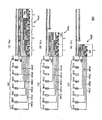
- FIGS. 2A to 2C illustrate an embodiment of the present invention within a memory where data of different sizes can be specified in a software program.
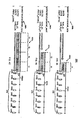
- FIGS. 3A to 3C illustrate an embodiment of the present invention within a processor 250 in a microcontroller performing encoding functions to various data sizes by an error checking code.
- FIGS. 4A to 4C illustrate one of the unused checking data bits in accordance with the present invention.
- FIG. 5 illustrates an embodiment of specifying a function to store data in accordance with the present invention.
- FIG. 6 illustrates an embodiment of specifying a function to receive data in accordance with the present invention.
- a Data Acquisition Process 104 acquires data 103 from a Data Interface 102.
- the data 105 is stored in an allocated memory Acquired Data storage area 106.
- the data 105 stored is usually the same size as the data 103 acquired.
- a Filtering Process 108 runs at a similar rate, or slower than the Data Acquisition Process 104.
- the Filtering Process 108 retrieves new data 107 from the Acquired Data storage area 106, and old results data 109 from a Filtered Data storage area 110, and calculates a new data 109 that is stored in the Filtered Data storage area 110.
- the data stored in Filtered Data storage area 110 is often larger than the input data 109.
- a Calculation Process 112 can run at a similar rate, or slower than the Filtering Process 108.
- a Calculation Process 112 retrieves one or more data 111 items from the Filtered Data storage area 110, and old results data 113 from a Processed Data area 114, and calculates a new result data 113 that is stored in the Processed Data storage area 114.
- the Calculation Process may be a null operation in some operations.
- the data stored 113 is usually of similar size to the input data 111.
- a Decision Process 116 can run at a similar rate, or slower than the Calculation Process 112.
- the Decision Process 116 retrieves new data 115 from the Processed Data storage area 114, and compares the new data 115 with a preset value to produce data 117 that is stored in a Decision Result storage area 118.
- the data 117 stored is usually only a few bits in size.
- a memory 200 such as a semiconductor memory.
- data stored in memory 200 can be corrupted by alpha particles and similar radiation events. The probability of corruption is low, but non-zero. IEDs, such as protective relays, are normally activated for extended periods (often years in duration), so they are more likely to experience a data corruption that could cause a false decision result.
- one of the aspects of the present invention is directed to a method of safeguarding all the critical data in storage areas 106, 110, 114 and 118 to be retrieved as data 119 in a Decision Execution Process 120.
- FIG. 1A also illustrates the relative time scale for each task performed.
- the Filtering Process 108, the Calculation Process 112, the Decision Process 116 and the Decision Execution Process 120 are performed in a microcontroller.
- Any bit errors in the data whether caused by radiation or noise jitter can be detected and corrected by software method by first specifying error checking codes when storing data 105, 109, 113 and 117 in the corresponding storage areas 106, 110, 114 and 118.
- the error checking code checks and corrects bit error in the data stream during data retrieval process.
- the software bit error correction method will be further described in FIGS. 3 and 4.
- FIG. 1B illustrates another prior art data interface performed by software tasks in an IED.
- each software task such as from a preceding process 152, current software process 160 and subsequent process 172 runs from time-to-time, depending upon the application.
- the software tasks 152, 160 and 172 may not be synchronized, so data 154, 158, 164, 166 and 170 each created by respective task may reside in a storage area 156, 162 and 168 for a long time before it is used by the next task.
- the Software Process 160 reads new data 158 from the Input Data storage area 156.
- the Software Process 160 will also read data 164 from its Local Data storage area 162. Local Data 164 may have been created during previous iterations of the Software Process 160.
- the Software Process 160 creates new data 166 that is stored in an Output Data storage area 168.
- the Software Process 160 will also write new data 164 into the Local Data storage area 162 for use by subsequent process iterations of the Software Process 160.
- FIGS. 2A to 2C illustrate an embodiment of the present invention within a memory where data of different sizes can be specified in a software program.
- a programmer would specify the data size to a compiler, such as in 'C' code, using instructions 220a, 240a and 260a similar to those shown on the left side of FIGS. 2A to 2C specifying unprotected raw data.
- UINT8 in FIG. 2A would specify in the storage area 8 bits (1 byte) of raw data 202.
- UINT16 in FIG. 2B would specify in the storage area 16 bits (2 bytes) of raw data 204
- UINT32 in FIG. 2C would specify in the storage area 32 bits (4 bytes) of raw data 206.
- the names used are not important; all that matters is that the compiler understands that a particular name corresponds with only one size of data in the storage.
- a method of specifying protected data in the storage areas, such as in memory 200 using Instructions 220b, 240b and 260b, is illustrated at the right side of FIGS. 2A to 2C.
- Each of these instructions 220b, 240b and 260b specifies functions and respective data variables including raw data 202, 204 and 206 of corresponding data size, and an additional byte of storage for error checking codes 212, 214 and 216 forming respective protected data structures 202a, 204a and 206a.
- the order of the raw data 202 to 206 within the instructions 220b to 260b is not important.
- the additional byte of storage can contain a function that checks the contents of the raw data 202 to 206 in the storage area such as storage areas 106, 110, 114 and 118 shown in FIG. 1A; allowing error detection and correction when the respective data 107, 109, 111, 113, 115, 117 and 119 are retrieved from the memory 200.
- This checking method includes encoding and parity checks that are described below.
- the programmer In order to store the protected data structure in memory 200, the programmer must create a function that accepts the respective raw data 202 to 206; creates the respective error checking codes 212 to 216 (encoding and parity checks) that are executed in the compiler through the respective instructions 220b to 260b; and then stores the protected data structures 202a to 206a into the allocated space in memory 200.
- the programmer To retrieve the respective raw data 202 to 206 from memory 200, the programmer must specify a function within instructions 220b to 260b that reads the protected data structures 202a to 206a from the allocated spaces; checks the raw data 202 to 206 for errors (decoding and parity checks); corrects any errors; and then passes the respective raw data 202 to 206 to the calling function.
- Embedded within the error checking codes 212 to 216 are checking data that perform error detection and correction algorithms (encoding, decoding, parity checks). If there is no error, the stored raw data 202 to 206 and the retrieved raw data 202 to 206 from the memory 200 will be unchanged. Otherwise, any single-bit error in the retrieved raw data 202 to 206 will be corrected through the function of retrieval instruction.
- Each of the specified functions is included within the instructions, for example using 'C' code to specify functions to the compiler in the processor 250.
- a modified Hamming Code is a common algorithm to detect and correct single-bit errors. The only requirements are that sufficient storage is allocated for the error checking code with checking data, and that the same algorithm is used for storing and retrieving a specific data size. Different data sizes can have different encoding schemes, error detection and correction schemes.
- FIGS. 3A to 3C illustrate an embodiment of the invention within a processor 250 in a micro-controller performing encoding functions to various data sizes by the error checking code.
- the error checking codes 212 to 216 include respective checking data bits 212a to 212h, 214a to 214h and 216a to 216h.
- Each of the checking data bits 212a to 212d, 214a to 214e and 216a to 216f in the respective error checking codes 212, 214 and 216 is a parity bit for a group of bits in the raw data 202, 204 and 206.
- checking data bit 212a in FIG. 3A is a parity bit to a group of five bits (bit 0,1,3,4,6) forming an encoding sequence 212ah in the raw data 202.
- checking data bit 212b is a parity bit to a group of five bits (bit 0, 2,3,5,6) forming an encoding sequence 212bh; checking data bit 212c is a parity bit to a group of four bits (bit 1,2,3,7) forming an encoding sequence 212ch; and checking data bit 212d is a parity bit to a group of four bits (bit 4,5,6,7) forming an encoding sequence 212dh, and so forth.
- the encoding sequences 212ah to 212dh with the raw data 202 constitute a protected data structure 202a with an encoded byte 1.
- the encoding sequences 212ah to 212dh within the error checking code 212 correspond to the type of algorithm selected by the programmer. In this embodiment, the algorithm selected for illustration is a modified Hamming Code.
- five checking data bits 214a to 214e within the error checking code 214 correspond to five encoding sequences 214ah to 214eh with the raw data 204 constituting a protected data structure of 204a with encoded bytes 1 and 2.
- six checking data bits 216a to 216f within the error checking code 216 correspond to six encoding sequences 216ah to 216fh constituting a protected data structure 206a of encoded bytes 1 to 4.
- Each applicable checking data bit 212a to 212d, 214a to 214e and 216a to 216f is set to a value that gives even parity when combined with the corresponding bits in the raw data 202, 204 and 206.
- sequence of the encoding checking data bits 212a to 212d in the error checking code 212 be consecutive.
- the programmer can specify any sequence of checking data bits 212a to 212h within the error checking code 212 to perform the data encoding function in the protected data structures 202a to 206a.
- FIGS. 4A to 4C illustrate an embodiment of the invention within a processor 250 in a microcontroller performing an optional parity check for the complete data structure.
- FIGS. 4A to 4C also illustrate that one of the unused checking data bits such as 212e, 214f and 216g can be used to perform respective parity checks 212eh to 216eh for the complete data structures 202a to 206a.
- the parity check functions 212eh to 216eh check the overall parity including the prior checking data bits 212a to 212d, 214a to 214e and 216a to 216f in the data structures 202a, 204a and 206a.
- the optional parity checks 212eh to 216eh provide detection of double bit errors through instructions from software or firmware codes.
- the encoding function in the instructions 220b, 240b and 260b is a modified Hamming Code designed such that the corruption of any single-bit error will be detected, and the location of the corrupt bit in the protected data 202a, 204a and 206a is indicated by the pattern of check bits 212e, 214h and 216g; where an even parity sum check for each raw data bit 202, 204 and 206 and the check bits 212e, 214h and 216g are expected.
- Any remaining unused checking data bits (212f to 212h, 214g and 214h, 216h) in the error checking codes 212, 214 and 216 are set to zero.
- the programmer can specify a compiler instruction to include a function that accepts the raw data; creates the checking data and adds it into the data structure; and then stores the completed protected data structure into the allocated space in memory 200.
- the programmer must specify in the compiler instruction to include a function that reads the data structure from the allocated space from memory 200; checks the data structure for errors; corrects any errors; and then passes the raw data to the calling code.
- One example uses the following functions to store and retrieve protected data structure:
- the function put_protected_byte stores one byte of raw data into a PROT_BYTE data structure in memory. It is called with two parameters, the address of the PROT_BYTE data structure, and the value of the raw data.
- the function get_protected_byte retrieves one byte of raw data from a PROT_BYTE data structure in memory. It is called with two parameters, the address of the PROT_BYTE data structure, and the address of the raw data. The function returns a value of SUCCESS or FAILURE.
- the function put_protected_word stores one word of raw data into a PROT_WORD data structure in memory. It is called with two parameters, the address of the PROT_WORD data structure, and the value of the raw data.
- the function get_protected_word retrieves one word of raw data from a PROT_WORD data structure in memory. It is called with two parameters, the address of the PROT_WORD data structure, and the address of the raw data. The function returns a value of SUCCESS or FAILURE.
- the function put_protected_long stores one long word of raw data into a PROT_LONG data structure in memory. It is called with two parameters, the address of the PROT_LONG data structure, and the value of the raw data.
- the function get_protected_long retrieves one long word of raw data from a PROT_LONG data structure in memory. It is called with two parameters, the address of the PROT_LONG data structure, and the address of the raw data. The function returns a value of SUCCESS or FAILURE.
- the correction of single bit errors may use two look-up tables.
- One look -up table for errors in the raw data and another look-up table for errors in the checking data.
- the two look-up tables are:
- FIG. 5 illustrates an embodiment of specifying a function to store data.
- the method is initiated at bubble 502 by a put command.
- calling function raw data is copied into a temporary data structure.
- a function is performed at block 506 to calculate checking data from the temporary data structure.
- the checking data is then copied into the temporary data structure at block 508.
- the temporary data structure is copied into a memory data structure. The method then returns at bubble 512 to await the next put command.
- FIG. 6 illustrates an embodiment of specifying a function to receive data.
- the method is initiated at bubble 602 by a get command.
- the memory data structure such as that provided at block 510 in FIG. 5, is copied into a temporary data structure.
- a function is performed at block 606 to calculate checking data from the temporary data structure.
- Decision block 608 determines if there is any error in the temporary data structure. If so, data in the temporary data structure is corrected at block 610. If not, or if the data was corrected at block 610, the method proceeds to block 61-2 where the raw data from the temporary data structure is copied into calling function raw data. The method then returns at bubble 614 to await the next get command.
- the present invention also encompasses software or firmware (collectively referred to as "software") for performing the methods.
- the software may be stored on or in a computer readable medium, such as on a compact disk (CD), volatile and non-volatile memories such as random access memory (RAM), FLASH memory, erasable programmable read only memory (EPROM), read only memory (ROM), magnetic and optical disks, or the like.
- the computer readable medium contains instructions or code segments, that when executed by a data processor, perform steps relating to the methods of detecting and correcting bit errors in data in accordance with the present invention.
- the computer readable medium is used by a data processor to carry out the method steps of 1) specifying to a compiler a variable wherein the variable includes an error checking code; 2) calculating an error checking code value indicative of the variable; 3) storing the variable; 4) retrieving the variable upon demand; 5) performing an error check and error correction to the variable.
- further code segments on the computer readable medium may be used by a data processor to carry out the steps of storing and retrieving the data structure directly onto the storage area without additional encoding and decoding circuitry, encoding and decoding the data structure without altering the data structure format during storing and retrieving from the storage area, detecting and correcting double bit errors, communicating the data structure through wired or wireless communication, or communicating the data structure through optical or magnetic devices.
- this method of appending an error checking code to the data uses software functions to perform encoding, single-bit error detection using parity checks and error correction; and maintains the format of the data and allows the un-encoded data to be accessed quickly and easily.
- the method utilizes a variety of known algorithms to perform error check and error corrections on the data, including Hamming Codes, Bose-Chaudhuri-Hocquenghem (BCH), CRC parity checks or modifications of encoding and decoding algorithms.
- the method checks and corrects data errors in memory storage devices.
- the memory storage devices include volatile and non-volatile memory devices such as RAM, FLASH, ROM, PROM, EPROM, magnetic and optical disks, or the like.
- the method can apply the same principle to check and correct data errors in a digital communication data stream or in a computing platform where a data buffer is available to store the data.
- the method may be implemented through firmware programming.
- the firmware may be embedded in a microcontroller or FPGA.
- the method may be implemented in an IED having a data buffer.
- IEDs include memory storage devices, computing platforms, I/O processors, network devices, storage networks, communication equipment, protection and control devices, or the like.
- the present invention can be applied to any computing architecture without affecting reliability or cost.
Landscapes
- Engineering & Computer Science (AREA)
- Theoretical Computer Science (AREA)
- Quality & Reliability (AREA)
- Physics & Mathematics (AREA)
- General Engineering & Computer Science (AREA)
- General Physics & Mathematics (AREA)
- Detection And Correction Of Errors (AREA)
- Techniques For Improving Reliability Of Storages (AREA)
Abstract
Description
- This patent application is a non-provisional of prior provisional patent application Serial No.
60/816,206; filed on 23 June 2006 - The present invention relates generally to software and methods to detect and correct bit errors in data. More particularly, the present invention relates to the use of such software and methods in intelligent electronic devices.
- Data are stored and retrieved from memory devices including volatile and non-volatile memories such as random access memory (RAM), FLASH memory, erasable programmable read only memory (EPROM), read only memory (ROM), magnetic and optical disks, or the like. Memories made of high-density integrated circuits are susceptible to transient single-bit errors caused by alpha particles, cosmic rays and similar radiation. Alpha particles are found in lead solder and packaging materials. These events cause transient single-bit data errors, but do not cause permanent damage to the stored data. The transient single-bit data error corruptions are widely known as "Soft RAM Errors" if occurred in RAM memories. Soft RAM Errors, if uncorrected, can produce significant impacts to certain system operations. For instance, corrupted data bits can cause an intelligent electronic device (IED) such as a protection relay or another IED connected to the protection relay in an electric power grid to trip unnecessarily; disrupting manufacturing and causing productivity losses in affected areas.
- Many previous inventions describe methods that add additional electronic circuits to the semiconductor memory to detect and correct errors in the data stored in the memory. A disadvantage with these inventions is that the additional circuits reduce the reliability, and increase the cost of the memory system. In addition, these inventions are usually inflexible since they are designed to correct one size of data only.
- A known method to safeguard data accuracy is to use additional electronic hardware circuits to verify and correct data corruption in data streams during sending and receiving data. Such circuit functions include encoding, decoding, insertion of error codes into the data streams, detecting and correcting data errors using elaborate and complex algorithms that add delays. Some examples of such techniques and circuits are disclosed in
U.S. patents Nos. 6,983,414 and5,844,918 , respectively. Using hardware circuits for data error correction techniques in data communication is well established, but the implementation is complex and costly. Also, these approaches are impossible to implement when the memory is integrated with the central processing unit (CPU) in the same electronic device. It is therefore desirable to have a method that checks and corrects data errors without added unreliability and without added hardware cost. - A general object of the present invention is, therefore, to therefore provide methods to detect and correct bit errors in data.
- Another object of the present invention is to check and correct data errors in memory storage devices.
- A further object of the present invention is to use known algorithms to perform error check and error corrections.
- Yet another object of the present invention is to provide single-bit error-detection and correction to the data without altering the data format, thereby permitting un-encoded data to be accessed quickly and easily
- A still further object of the present invention is to provide firmware programming to implement the methods of the present invention, wherein the firmware may be embedded in a microcontroller or field programmable gate array (FPGA).
- Another object of the present invention is to implement the methods of the present invention in an intelligent electronic device (IED).
- The present invention relates to using a software method to detect and correct bit errors in data. In an embodiment, the software method comprising the steps of 1) specifying to a compiler a variable wherein the variable includes an error checking code; 2) calculating an error checking code value indicative of the variable; 3) storing the variable; 4) retrieving the variable upon demand; 5) performing an error check and error correction to the variable.
- In an embodiment, the variable includes data of defined size with the error checking code appended to the data. In another embodiment, the error checking code includes data specific for performing error checking and error correction to the data.
- Yet in another embodiment, the method utilizes a variety of algorithms to perform error check and error corrections on the data. Such algorithms may include a Hamming Code, a modified Hamming Code, a Bose-Chaudhuri-Hocquenghem (BCH) code and a CRC parity check.
- In an embodiment, the method checks and corrects data errors in memory storage devices. Memory storage devices may include volatile and non-volatile memory devices such as RAM, FLASH, ROM, PROM, EPROM, magnetic and optical disks, or the like.
- In another embodiment, the method checks and corrects data errors in digital communication data stream or in a computing platform where a data buffer is available to store the data. Yet in another embodiment, the method appends the error checking code with encoding information that allows single-bit error-detection and correction to the data without altering the data format; thus allowing the unencoded data to be accessed quickly and easily.
- Yet in another embodiment, the method is implemented through firmware programming. In another embodiment, the firmware is embedded in a microcontroller or FPGA.
- In an embodiment, the method is implemented in an IED having a data buffer. Some of the IEDs include memory storage devices, computing platforms, I/O processors, network devices, communication equipment, protection and control devices, or the like.
- This invention implements detection and correction of errors in memory using a software approach. The invention can be applied to any computing architecture without affecting reliability or cost.
- In a further embodiment, the present invention is directed to software or firmware (collectively referred to as "software") which may be stored on or in a computer readable medium. The computer readable medium thus contains instructions or code segments, that when executed by a data processor, perform steps relating to the methods of detecting and correcting bit errors in data in accordance with the present invention. The computer readable medium is used by a data processor to carry out the method steps of 1) specifying to a compiler a variable wherein the variable includes an error checking code; 2) calculating an error checking code value indicative of the variable; 3) storing the variable; 4) retrieving the variable upon demand; 5) performing an error check and error correction to the variable. Further code segments on the computer readable medium may be used by a data processor to carry out the steps of storing and retrieving the data structure directly onto the storage area without additional encoding and decoding circuitry, encoding and decoding the data structure without altering the data structure format during storing and retrieving from the storage area, detecting and correcting double bit errors, communicating the data structure through wired or wireless communication, or communicating the data structure through optical or magnetic devices.
- The invention, together with its objects and the advantages thereof, may best be understood by reference to the following description taken in conjunction with the accompanying drawings, in which like reference numerals identify like elements in the figures, and in which:
- FIG. 1A illustrates a prior art data interface which performs software tasks in an IED.
- FIG. 1B illustrates another prior art data interface which performs software tasks in an IED.
- FIGS. 2A to 2C illustrate an embodiment of the present invention within a memory where data of different sizes can be specified in a software program.
- FIGS. 3A to 3C illustrate an embodiment of the present invention within a
processor 250 in a microcontroller performing encoding functions to various data sizes by an error checking code. - FIGS. 4A to 4C illustrate one of the unused checking data bits in accordance with the present invention.
- FIG. 5 illustrates an embodiment of specifying a function to store data in accordance with the present invention.
- FIG. 6 illustrates an embodiment of specifying a function to receive data in accordance with the present invention.
- It will be understood that the present invention may be embodied in other specific forms without departing from the spirit thereof. The present examples and embodiments, therefore, are to be considered in all respects as illustrative and not restrictive, and the invention is not to be limited to the details presented herein.
- Software tasks in an
IED 100 perform a plurality of functions. With reference to FIG. 1A, most frequently aData Acquisition Process 104 acquires data 103 from aData Interface 102. Thedata 105 is stored in an allocated memory Acquired Data storage area 106. Thedata 105 stored is usually the same size as the data 103 acquired. - A
Filtering Process 108 runs at a similar rate, or slower than theData Acquisition Process 104. TheFiltering Process 108 retrievesnew data 107 from the Acquired Data storage area 106, andold results data 109 from a FilteredData storage area 110, and calculates anew data 109 that is stored in the FilteredData storage area 110. The data stored in FilteredData storage area 110 is often larger than theinput data 109. - A
Calculation Process 112 can run at a similar rate, or slower than theFiltering Process 108. ACalculation Process 112 retrieves one ormore data 111 items from the FilteredData storage area 110, andold results data 113 from a ProcessedData area 114, and calculates anew result data 113 that is stored in the ProcessedData storage area 114. The Calculation Process may be a null operation in some operations. The data stored 113 is usually of similar size to theinput data 111. - A
Decision Process 116 can run at a similar rate, or slower than theCalculation Process 112. TheDecision Process 116 retrievesnew data 115 from the ProcessedData storage area 114, and compares thenew data 115 with a preset value to produce data 117 that is stored in a DecisionResult storage area 118. The data 117 stored is usually only a few bits in size. - As a result of the speed of response normally required, all of the
storage areas memory 200, such as a semiconductor memory. As noted elsewhere, data stored inmemory 200 can be corrupted by alpha particles and similar radiation events. The probability of corruption is low, but non-zero. IEDs, such as protective relays, are normally activated for extended periods (often years in duration), so they are more likely to experience a data corruption that could cause a false decision result. Thus, one of the aspects of the present invention is directed to a method of safeguarding all the critical data instorage areas data 119 in aDecision Execution Process 120. - FIG. 1A also illustrates the relative time scale for each task performed. In an embodiment, the
Filtering Process 108, theCalculation Process 112, theDecision Process 116 and theDecision Execution Process 120 are performed in a microcontroller. - Any bit errors in the data whether caused by radiation or noise jitter can be detected and corrected by software method by first specifying error checking codes when storing
data storage areas - FIG. 1B illustrates another prior art data interface performed by software tasks in an IED. In another embodiment, each software task such as from a preceding
process 152, current software process 160 andsubsequent process 172 runs from time-to-time, depending upon the application. Thesoftware tasks data - The Software Process 160 reads
new data 158 from the Input Data storage area 156. The Software Process 160 will also read data 164 from its Local Data storage area 162. Local Data 164 may have been created during previous iterations of the Software Process 160. The Software Process 160 creates new data 166 that is stored in an Output Data storage area 168. The Software Process 160 will also write new data 164 into the Local Data storage area 162 for use by subsequent process iterations of the Software Process 160. - FIGS. 2A to 2C illustrate an embodiment of the present invention within a memory where data of different sizes can be specified in a software program. Normally, a programmer would specify the data size to a compiler, such as in 'C' code, using
instructions 220a, 240a and 260a similar to those shown on the left side of FIGS. 2A to 2C specifying unprotected raw data. For illustration, UINT8 in FIG. 2A would specify in the storage area 8 bits (1 byte) ofraw data 202. UINT16 in FIG. 2B would specify in the storage area 16 bits (2 bytes) ofraw data 204, and UINT32 in FIG. 2C would specify in the storage area 32 bits (4 bytes) ofraw data 206. The names used are not important; all that matters is that the compiler understands that a particular name corresponds with only one size of data in the storage. - A method of specifying protected data in the storage areas, such as in
memory 200 usingInstructions instructions raw data error checking codes data structures raw data 202 to 206 within theinstructions 220b to 260b is not important. - The additional byte of storage, as
error checking codes 212 to 216 in theinstructions 220b to 260b, can contain a function that checks the contents of theraw data 202 to 206 in the storage area such asstorage areas respective data memory 200. This checking method includes encoding and parity checks that are described below. - In order to store the protected data structure in
memory 200, the programmer must create a function that accepts the respectiveraw data 202 to 206; creates the respectiveerror checking codes 212 to 216 (encoding and parity checks) that are executed in the compiler through therespective instructions 220b to 260b; and then stores the protecteddata structures 202a to 206a into the allocated space inmemory 200. - Similarly, to retrieve the respective
raw data 202 to 206 frommemory 200, the programmer must specify a function withininstructions 220b to 260b that reads the protecteddata structures 202a to 206a from the allocated spaces; checks theraw data 202 to 206 for errors (decoding and parity checks); corrects any errors; and then passes the respectiveraw data 202 to 206 to the calling function. Embedded within theerror checking codes 212 to 216 are checking data that perform error detection and correction algorithms (encoding, decoding, parity checks). If there is no error, the storedraw data 202 to 206 and the retrievedraw data 202 to 206 from thememory 200 will be unchanged. Otherwise, any single-bit error in the retrievedraw data 202 to 206 will be corrected through the function of retrieval instruction. - There may be one or more functions to store protected data (depending upon the data size and the programmer's style) and one or more functions to retrieve protected data. Each of the specified functions is included within the instructions, for example using 'C' code to specify functions to the compiler in the
processor 250. - For illustration purposes, if the programmer wishes to allocate storage for an 8-bit data variable that is unprotected, he/she would write:
                              [0070]
                                    [0070] UINT8
                                       variable_name;
                              [0070]
                              [0070]
                                    [0070] PROT_BYTE
                                      variable_name;
                              [0070]
                              [0070]
                                    [0070] UINT16
                                      variable_name;
                               [0070]
                               [0070]
                                     [0070] PROT_WORD
                                       variable_name;
                               [0070]
                               [0070]
                                     [0070] VOID
                                       put_protected_byte(PROT_BYT
                               E*, UINT8);
                                     [0070] VOID
                                       put_protected_word(PROT_WO
                              RD*, UINT16);
                                     [0070] VOID
                                       put_protected_long(PROT_LO
                              NG*, UINT32*);
                               [0070]
                               [0070] and functions to retrieve
                              protected data structures 202a to 206a:
                               [0070]
                                    [0070] RESULT
                                       get_protected_byte(PROT_BYT
                              E*, UINT8*);
                                    [0070] RESULT
                                       get_protected_word(PROT_WO
                              RD*, UINT16*);
                                    [0070] RESULT
                                       get_protected_long(PROT_LO
                              NG*, UINT32*);
                               [0070]
                              [0070]
     2 encoded byte (Hamming Code algorithm)
     3 encoded byte (Hamming Code algorithm)
     4 encoded byte (Hamming Code algorithm)
     5 encoded byte (Hamming Code algorithm)
                              [0070]
     1 VOID put_protected_byte (PROT_BYTE *data_ptr, UINT8
        raw_data)
     2 {
           i. PROT _BYTE temp_data;
           ii. UINT16 parity_data;
           iii. UINT8 checking_data;

           iv. /* Put the raw data into a temporary data structure */
           v. temp_data.byte_pr = raw_data;

           vi. /* Initialize the checking data to zeroes */
          vii. temp_data.code_b_pr = 0;

          viii. /* Calculate the hamming code */
          ix. checking_data = hamming_check_byte (&temp_data);

           x. /* Add checking data to the temporary data structure */
          xi. temp_data.code_b_pr = checking_data;

          xii. /* Adjust double error check bit, as required */
         xiii. parity_data = temp_data.byte_pr ^ temp_data.code_b_pr;

         xiv. if (calc_parity(parity_data) I = 0)
                 1. temp_data. code_b_pr ^ = 0x10;

         xv. /* Then store the temporary data structure into memory */
         xvi. *data_ptr = temp_data;
     3 }
      1 RESULT get_protected_byte(PROT_BYTE *byte_ptr, UINT8
         *data_ptr)
      2 {
            i. PROT_BYTE temp_data;
            ii. UINT16 parity_data;
           iii. RESULT return_value;
           iv. UINT8 decode_result;

           v. /* get the data structure from memory */
           vi. temp_data = *byte_ptr;

          vii. /* Check the data structure for errors */
          viii. decode_result = hamming_check_byte(&temp_data);

           ix. if (decode_result I = 0)
           x. {
                 1. /* Soft error occurred, so report it */
                 2. diag_flag_set(DIAG_SOFT_RAM);

                 3. /* Correct any single errors in the raw data */
                 4. temp_data.byte_pr ^=
                    Bit_Mask_Data[decode_result];
                 5. /* Correct any single errors in the checking data */
                 6. temp_data.code_b_pr ^=
                    Bit_Mask_Code[decode_result];
          xi. }

          xii. /* Update the raw data in the calling function */
         xiii. *data_ptr = temp_data.byte_pr;
          xiv. /* Check the data structure for multiple errors */
           xv. parity_data = temp_jata.byte_pr ^ temp_data.code_b_pr;
          xvi. if (calc_parity(parity_data) == 0)
          xvii. {
                 1. /* No errors, so retrieval was successful */
                 2. return_value = SUCCESS;
         xviii. }
          xix. else
          xx. {
                 1. /* Multiple errors detected, so failed retrieval */
                 2. return_value = FAILURE;
          xxi. }

         xxii. return return_value;
     3 }
     1 VOID put_protected_word (PROT_WORD *data_ptr, UINT16
        raw_data)
     2 {
           i. PROT_WORD temp_data;
           ii. UlNT16 parity_data;
          iii. UINT8 checking_data;
           iv. /* Put the raw data into a temporary data structure */
            v. temp_data.word_pr = raw_data;

           vi. /* Initialize the checking data to zeroes */
           vii. temp_data.code_w_pr = 0;

          viii. /* Calculate the hamming code */
           ix. checking_data = hamming_check_word (&temp_data);

           x. /* Add checking data to the temporary data structure */
           xi. temp_data.code_w_pr = checking_data;

           xii. /* Adjust double error check bit, as required */
          xiii. parity_data = temp_data.word_pr ^ temp_data.code_w_pr;

          xiv. if (calc_parity(parity_data) I= 0)
                 1, temp_data.code_w_pr ^= 0x20;

          xv. /* Then store the temporary data structure into memory */
          xvi. *data_ptr = temp_data;
     3 }
     1 RESULT get_protected_word(PROT_WORD *word_ptr, U)NT16
        *data_ptr)
     2 {
           i. PROT_WORD temp_data;
            ii. UINT16 parity_data;
            iii. RESULT return_value;
           iv. UINT8 decode_result;

            v. /* get the data structure from memory */
           vi. temp_data = *word_ptr;

           vii. /* Check the data structure for errors */
          viii. decode_result = hamming_check_word(&temp_data);

           ix. if (decode_result I = 0)
            x. {
                 1. /* Soft error occurred, so report it */
                 2. diag_flag_set(DIAG _SOFT_RAM);

                 3. /* Correct any single errors in the raw data */
                 4. if (decode_result ⇐ 12)
                 5. {
   /* Correct single bit error in least significant byte of raw data */
     temp_data.word_pr ∧=
     3 (UINT16)Bit_Mask_Data[decode_result];
                 1. }
                 2. else if (decode_result <= 21)
                 3. {
  /* Correct single bit error in most significant byte of raw data */
                       a. temp_data.word_pr ^=
                       b. ((UINT16)Bit_Mask_Data[decode_resutt]<<8);
                 4. }

                 5. if (decode_result <= 21)
                6. {
                      a. /* Correct any single errors in the checking
                         data*/
                      b. temp_data.code_w_pr ^ =
                      c. Bit_Mask_Code[decode_result];
                7. }
          ii. }

          iii. /* Update the raw data in the calling function */
          iv. *data_ptr = temp_data.word_pr;

          v. /* Check the data structure for multiple errors */
          vi. parity_data = temp_data.word_pr ^temp_data.code_w_pr;
         vii. if (calc_parity(parity_data) == 0)
         viii. {
                1. /* No errors, so retrieval was successful */
                2. return_value = SUCCESS;
          ix. }
          x. else
         xi. {
                1. /* Multiple errors detected, so failed retrieval */
                2. return_value = FAILURE;
         xii. }

        xiii. return return_value;
    4 }
     1 VOID put_protected_long (PROT_LONG *data_ptr, UINT32
       raw_data)
    2 {
           i. PROT_LONG temp_data;
          ii. UINT16 parity_data;
          iii. UINT8 checking_data;

          iv. /* Put the raw data into a temporary data structure */
          v. temp_data.long_pr = raw_data;

          vi. /* Initialize the checking data to zeroes */
         vii. temp data.code_l_pr = 0;

         viii. /* Calculate the hamming code */
          ix. checking_data = hamming_check_long (&temp_data);

          x. /* Add checking data to the temporary data structure */
          xi. temp_data.code_l_pr = checking_data;

         xii. /* Adjust double error check bit, as required */
         xiii. parity_data = (UINT16) temp_data.long_pr
                1. ^ (UINT16)(temp_data.long_pr>> 16)
                2. ^ temp_data.code_I_pr;

        xiv. if (calc_parity(parity_data) != 0)
                1. temp_data.code_l_pr ^= 0x40;
          xv. /* Then store the temporary data structure into memory */
          xvi. *data_ptr = temp_data;
      3 }
      1 RESULT get_protected_long(PROT _LONG *long_ptr, UINT32
        *data_ptr)
     2 {
            i. PROT_LONG temp_data;
           ii. UINT16 parity_data;
           iii. RESULT return_value;
           iv. UINT8 decode_result;

           v. /* get the data structure from memory */
          vi. temp_data = *long_ptr;

          vii. /* Check the data structure for errors */
         viii. decode_result = hamming_check_byte(&temp_data);

          ix. if (decode_result I = 0)
          x. {
                 1. /* Soft error occurred, so report it */
                2. diag_flag_set(DIAG_SOFT_RAM);
                3. /* Correct any single errors in the raw data */
                4. if (decode_result <= 12)
                5. {
  /* Correct single bit error in least significant byte of raw data */
     temp_data.long_pr ^=
     3 (UINT32)Bit_Mask_Data[decode_result];
                 1. }
                 2. else if (decode_result <= 21)
                 3. {
  /* Correct single bit error in next significant byte of raw data */
                      a. temp_data.long_pr ^=
                       b. ((UINT32)Bit_Mask_Data[decode_result]<< 8);
                 4. }
                 5. else if (decode_result <= 29)
                6. {
  /* Correct single bit error in next significant byte of raw data */
                      a. temp_data.long_pr ^=
                      b. ((UINT32)Bit_Mask_Data[decode_result] <<
                         16) ;
                7. }
                8. else if (decode_result <= 37)
                9. {
  /* Correct single bit error in most significant byte of raw data */
                      a. temp_data.long_pr ^=
                      b. ((UINT32)Bit_Mask_Data[decode_result]<<
                         24);
                10.}

                11. if (decode_result <= 37)
                12.{
                      a. /* Correct any single errors in the checking
                         data */
                       b. temp_data.code_w_pr ^=
                       c. Bit_Mask_Code[decode_result];
                 13.)
           ii. }

           iii. /* Update the raw data in the calling function */
           iv. *data_ptr = temp_data.long_pr;

           v. /* Check the data structure for multiple errors */
          vi. parity_data = (UINT16) temp_data.long_pr
                 1. ^ (UINT16)(temp_data.long_pr >> 16)
                 2. ^ temp_data.code_l_pr;
          vii. if (calc_parity(parity_data) == 0)
         viii. {
                 1. /* No errors, so retrieval was successful */
                2. return_value = SUCCESS;
          ix. }
          x. else
          xi. {
                1. /* Multiple errors detected, so failed retrieval */
                2. return_value = FAILURE;
         xii. }

         xiii. return return_value;
    4 }
   const static UINT8 Bit_Mask_Data[39] =
   {
   0x00, /* This is the no error case */
   0x00. /* Check bit 0 */
   0x00, /* Check bit 1 */
   0x01, /* Data bit 0 */
   0x00, /* Check bit 2 */
   0x02, 0x04, 0x08, /* Data bits 1-3 */
   0x00, /* Check bit 3 */
                 1. /* Data bits 4 - 10 */
  0x10, 0x20, 0x40, 0x80, 0x01, 0x02, 0x04,
  OX00, /* Check bit 4 */
                 2. /* Data bits 11-18 */
  Ox08, 0x10, 0x20, 0x40, 0x80, 0x01, 0x02, 0x04,
                 3. /* Data bits 19-25 */
  0x08, 0x10, 0x20,0x40, 0x80, Ox01, 0x02,
  0x00, /* Check bit 5 */
                 4. /* Data bits 26 - 31 */
  0x04, 0x08, 0x10, 0x20, 0x40, 0x80
  };

  const static UINT8 Bit_Mask_Code[39] =
  {
  0x00, /* This is the no error case */
  0x01, /* Check bit 0 */
  0x02, /* Check bit 1 */
  0x00, /* Data bit 0 */
  0x04, /* Check bit 2 */
  0x00, 0x00, 0x00, /* Data bits 1-3 */
  0x08, /* Check bit 3 */
                5. /* Data bits 4 -10 */
  0x00, 0x00, 0x00, 0x00, 0x00, 0x00, 0x00,
  0x10, /* Check bit 4 */
                6. /* Data bits 11 - 18 */
  0x00, 0x00, 0x00, 0x00, 0x00, 0x00, 0x00, 0x00,
                7. /* Data bits 19-25 */
  0x00, 0x00, 0x00, 0x00, 0x00, 0x00, 0x00,
  0x20, /* Check bit 5 */
                8. /* Data bits 26 - 31 */
  0x00, 0x00, 0x00, 0x00, 0x00, 0x00
  };
Claims (33)
- A method to detect and correct bit errors in a data structure with software or firmware instructions comprising the steps of:specifying to a compiler a storage area with a variable wherein the variable includes a data value corresponding to its data size and an error checking code;calculating an error checking code value indicative of a corresponding data structure value;storing the variable with the error checking code value;retrieving the variable upon demand;detecting an error on the data value using the error checking code value; andcorrecting the error upon detection of an error on the data value.
- The method of claim 1, wherein the software or firmware instructions store and retrieve the data structure directly onto the storage area without additional encoding and decoding circuitry.
- The method of claim 1, wherein the storage area includes volatile and non-volatile memories.
- The method of claim 3, wherein the volatile and non-volatile memories include high density semiconductor integrated circuit memory arrays.
- The method of claim 3, wherein the non-volatile memories include magnetic and optical storage media.
- The method of claim 1, wherein the firmware instructions are embedded in a microcontroller.
- The method of claim 1, wherein the firmware instructions are embedded in a field programmable gate array.
- The method of claim 1, further comprising the steps of:encoding and decoding the data structure without altering the data structure format during storing and retrieving from the storage area.
- The method of claim 1, wherein the error checking code comprises checking data bits to encode and parity check the data value at each data position.
- The method of claim 1, wherein the error checking code comprises checking data bits to parity check the data value at each data position.
- The method of claim 9, wherein the error checking code further comprises a checking data bit to parity check the entire data structure.
- The method of claim 10, further comprising the step of:detecting and correcting any double bit errors.
- The method of claim 1, wherein the error checking code follows an algorithm to detect and correct for a single-bit error.
- The method of claim 12, wherein the algorithm is selected from a group of methods consisting of a Hamming Code, a modified Hamming Code, a Bose-Chaudhuri-Hocquenghem, a CRC parity checks, and combinations thereof.
- The method of claim 1, wherein the data structure is part of a digital communication data stream.
- The method of claim 1, wherein the storage area is a data buffer or main memory storage device within an intelligent electronic device.
- The method of claim 1, wherein a storage area is part of a storage network.
- The method of claim 16, wherein the intelligent electronic device comprises one selected from a group consisting of: a computing platform, an I/O processor, a network device, a storage network, a communication equipment, an optical device, and a protection, automation, metering, measurement or control device.
- The method of claim 1, further comprising the step of:communicating the data structure through wired or wireless communication.
- The method of claim 1, further comprising the step of:communicating the data structure through optical or magnetic devices.
- The method of claim 1, wherein the data value is from raw data.
- A method to store a data structure into memory with software or firmware instructions comprising the steps of:specifying to a compiler a storage area with a variable wherein the variable includes a data value corresponding to its data size and an error checking code;calculating an error checking code value indicative of a corresponding data structure value; andstoring the variable with the error checking code value.
- The method of Claim 22, said method further comprising steps to retrieve the data structure from memory with software or firmware instructions including the steps of:specifying to a compiler a storage area with a variable wherein the variable includes a data value corresponding to its data size and an error checking code;retrieving the variable upon demand;detecting for an error on the data value using the error checking code value; andcorrecting the error upon detection of an error on the data value.
- A method to encode a data structure on a data stream with software or firmware instructions comprising the steps of:specifying to a compiler a storage area with a variable wherein the variable includes a data value corresponding to its data size and an error checking code;calculating an error checking code value indicative of a corresponding data structure value; andstoring the variable with the error checking code value.
- The method of Claim 24, said method further comprising steps to decode the data structure on a data stream with software or firmware instructions including the steps of:specifying to a compiler a storage area with a variable wherein the variable includes a data value corresponding to its data size and an error checking code;retrieving the variable upon demand;detecting for an error on the data value using the error checking code value; andcorrecting the error upon detection of an error on the data value.
- In a method to detect and correct bit errors in a data structure with software or firmware instructions, a step to store data, said step to store data comprising the steps of:copying calling function raw data into a temporary data structure; calculating checking data from the temporary data structure;copying the checking data into the temporary data structure; andcopying the temporary data structure with the checking data into a memory data structure.
- The method of Claim 26, said method further comprising steps to detect and correct bit errors in a data structure with software or firmware instructions, a step to retrieve data, said step to retrieve data including the steps of:copying the memory data structure into a temporary data structure;calculating checking data from the temporary data structure;determining if there is any error in the temporary data structure;correcting any errors in the temporary data structure; andcopying raw data from the temporary data structure into calling function raw data.
- A computer readable medium containing instructions that when executed by a data processor performs steps, comprising the steps of:specifying to a compiler a storage area with a variable wherein the variable includes a data value corresponding to its data size and an error checking code;calculating an error checking code value indicative of a corresponding data structure value;storing the variable with the error checking code value;retrieving the variable upon demand;detecting an error on the data value using the error checking code value; andcorrecting the error upon detection of an error on the data value.
- The computer readable medium of claim 28, further comprising the step of:storing and retrieving the data structure directly onto the storage area without additional encoding and decoding circuitry.
- The computer readable medium of claim 28, further comprising the step of:encoding and decoding the data structure without altering the data structure format during storing and retrieving from the storage area.
- The computer readable medium of claim 28, further comprising the step of:detecting and correcting any double bit errors.
- The computer readable medium of claim 28, further comprising the step of:communicating the data structure through wired or wireless communication.
- The computer readable medium of claim 28, further comprising the step of:communicating the data structure through optical or magnetic devices.
Applications Claiming Priority (2)
| Application Number | Priority Date | Filing Date | Title |
|---|---|---|---|
| US81620606P | 2006-06-23 | 2006-06-23 | |
| US11/691,975 US8024639B2 (en) | 2006-06-23 | 2007-03-27 | Software and methods to detect and correct data structure |
Publications (2)
| Publication Number | Publication Date |
|---|---|
| EP1870807A2 true EP1870807A2 (en) | 2007-12-26 |
| EP1870807A3 EP1870807A3 (en) | 2009-05-13 |
Family
ID=38610815
Family Applications (1)
| Application Number | Title | Priority Date | Filing Date |
|---|---|---|---|
| EP07010205A Withdrawn EP1870807A3 (en) | 2006-06-23 | 2007-05-23 | Software and methods to detect and correct data structure |
Country Status (6)
| Country | Link |
|---|---|
| US (1) | US8024639B2 (en) |
| EP (1) | EP1870807A3 (en) |
| AU (1) | AU2007202363B9 (en) |
| BR (1) | BRPI0702760A (en) |
| CA (1) | CA2585094A1 (en) |
| MX (1) | MX2007007532A (en) |
Families Citing this family (14)
| Publication number | Priority date | Publication date | Assignee | Title |
|---|---|---|---|---|
| US20080155293A1 (en) * | 2006-09-29 | 2008-06-26 | Schweitzer Engineering Laboratories, Inc. | Apparatus, systems and methods for reliably detecting faults within a power distribution system |
| US20080080114A1 (en) * | 2006-09-29 | 2008-04-03 | Schweitzer Engineering Laboratories, Inc. | Apparatus, systems and methods for reliably detecting faults within a power distribution system |
| CN101419495B (en) * | 2007-10-22 | 2012-05-30 | 国际商业机器公司 | Method and device for reducing I /O power in computer system and the computer system |
| CA2693243A1 (en) * | 2009-02-17 | 2010-08-17 | Manta Test Systems Inc. | System and method for performing automated testing of protective relay equipment |
| US8441768B2 (en) | 2010-09-08 | 2013-05-14 | Schweitzer Engineering Laboratories Inc | Systems and methods for independent self-monitoring |
| CN102043683B (en) * | 2010-12-27 | 2013-04-24 | 北京握奇数据系统有限公司 | Smart card and method for operating data in smart card memory |
| US9007731B2 (en) | 2012-03-26 | 2015-04-14 | Schweitzer Engineering Laboratories, Inc. | Leveraging inherent redundancy in a multifunction IED |
| US20140173392A1 (en) * | 2012-12-19 | 2014-06-19 | Advanced Micro Devices, Inc. | Hardware enforced protection of software data structures |
| TWI516927B (en) * | 2013-06-14 | 2016-01-11 | 群聯電子股份有限公司 | Data writing method, memory controller and memory storage apparatus |
| US10467096B2 (en) * | 2015-07-31 | 2019-11-05 | Pure Storage, Inc. | Securely storing data in a dispersed storage network |
| KR20180110482A (en) * | 2017-03-29 | 2018-10-10 | 에스케이하이닉스 주식회사 | System and method for testing memory |
| US11323362B2 (en) | 2020-08-07 | 2022-05-03 | Schweitzer Engineering Laboratories, Inc. | Resilience to single event upsets in software defined networks |
| US11606281B2 (en) | 2021-05-20 | 2023-03-14 | Schweitzer Engineering Laboratories, Inc. | Real-time digital data degradation detection |
| US12013752B2 (en) * | 2022-06-16 | 2024-06-18 | Advanced Micro Devices, Inc. | Host-level error detection and fault correction |
Family Cites Families (55)
| Publication number | Priority date | Publication date | Assignee | Title |
|---|---|---|---|---|
| ES414664A1 (en) | 1973-05-11 | 1976-05-16 | Arteche Instr | Overcurrent protection system with variable inverse-time characteristic |
| US4296475A (en) | 1978-12-19 | 1981-10-20 | U.S. Philips Corporation | Word-organized, content-addressable memory |
| US4506362A (en) | 1978-12-22 | 1985-03-19 | Gould Inc. | Systematic memory error detection and correction apparatus and method |
| JPS5797151A (en) | 1980-12-10 | 1982-06-16 | Hitachi Ltd | Instruction storage device |
| US4493081A (en) | 1981-06-26 | 1985-01-08 | Computer Automation, Inc. | Dynamic memory with error correction on refresh |
| US4534031A (en) | 1982-08-02 | 1985-08-06 | News Log International | Coded data on a record carrier and method for encoding same |
| US4530431A (en) | 1982-12-06 | 1985-07-23 | Syn-Energy, Inc. | Center flow feeder and vibratory conveyor |
| JPS59176939A (en) | 1983-03-28 | 1984-10-06 | Hitachi Ltd | Device for controlling code error |
| JPS59196698A (en) | 1983-04-22 | 1984-11-08 | Hitachi Ltd | Voice coil |
| JPS61207128A (en) | 1985-03-07 | 1986-09-13 | 三菱電機株式会社 | Anti-time limiting relay |
| JPH0244921A (en) | 1988-08-05 | 1990-02-14 | Fujitsu Ltd | Error detecting circuit |
| US5627716A (en) | 1990-12-28 | 1997-05-06 | Eaton Corporation | Overcurrent protection device |
| US6055145A (en) | 1990-12-28 | 2000-04-25 | Eaton Corporation | Overcurrent protection device with visual indicators for trip and programming functions |
| US5276690A (en) | 1992-01-30 | 1994-01-04 | Intel Corporation | Apparatus utilizing dual compare logic for self checking of functional redundancy check (FRC) logic |
| US5533195A (en) | 1993-07-01 | 1996-07-02 | Larochelle; Paul E. | Testing tool for diagnosing defective computer system devices |
| US5610929A (en) * | 1994-03-11 | 1997-03-11 | Fujitsu Limited | Multibyte error correcting system |
| US5555250A (en) | 1994-10-14 | 1996-09-10 | Compaq Computer Corporation | Data error detection and correction system |
| US5844918A (en) | 1995-11-28 | 1998-12-01 | Sanyo Electric Co., Ltd. | Digital transmission/receiving method, digital communications method, and data receiving apparatus |
| JPH09246995A (en) | 1996-03-13 | 1997-09-19 | Mitsubishi Electric Corp | Code error detection circuit |
| US5872722A (en) | 1996-09-04 | 1999-02-16 | Eaton Corporation | Apparatus and method for adjustment and coordination of circuit breaker trip curves through graphical manipulation |
| US5987393A (en) | 1997-02-20 | 1999-11-16 | Abb Power T&D Company Inc. | Method of configuring a microprocessor-based relay for use in overcurrent protection |
| US6138253A (en) | 1997-05-29 | 2000-10-24 | Oracle Corporation | Method and apparatus for reporting errors in a computer system |
| US5856903A (en) | 1997-11-12 | 1999-01-05 | General Electric Company | Matching overcurrent characteristic curves |
| US5974529A (en) | 1998-05-12 | 1999-10-26 | Mcdonnell Douglas Corp. | Systems and methods for control flow error detection in reduced instruction set computer processors |
| US6195767B1 (en) | 1998-09-14 | 2001-02-27 | Phillip M. Adams | Data corruption detection apparatus and method |
| US6233716B1 (en) | 1998-09-24 | 2001-05-15 | Sun Microsystems, Inc. | Technique for partitioning data to correct memory part failures |
| FR2784475B1 (en) | 1998-10-12 | 2000-12-29 | Centre Nat Etd Spatiales | METHOD FOR PROCESSING AN ELECTRONIC SYSTEM SUBJECT TO TRANSIENT ERROR CONSTRAINTS |
| JP4182641B2 (en) * | 1998-10-21 | 2008-11-19 | ソニー株式会社 | Data processing apparatus and method, and recording apparatus and method |
| WO2000029927A2 (en) | 1998-11-19 | 2000-05-25 | X/Net Associates, Inc. | A method and system for loading instructions into an executing process |
| US6292911B1 (en) | 1998-12-17 | 2001-09-18 | Cirrus Logic, Inc. | Error detection scheme for a high-speed data channel |
| US6397355B1 (en) | 1999-03-29 | 2002-05-28 | International Business Machines Corporation | System, method, and program for automatic error detection while utilizing a software state machine for carrying out the process flow of a software program |
| US6473880B1 (en) | 1999-06-01 | 2002-10-29 | Sun Microsystems, Inc. | System and method for protecting data and correcting bit errors due to component failures |
| US6453440B1 (en) | 1999-08-04 | 2002-09-17 | Sun Microsystems, Inc. | System and method for detecting double-bit errors and for correcting errors due to component failures |
| US6594774B1 (en) | 1999-09-07 | 2003-07-15 | Microsoft Corporation | Method and apparatus for monitoring computer system objects to improve system reliability |
| US6457146B1 (en) | 1999-09-30 | 2002-09-24 | Silicon Graphics, Inc. | Method and apparatus for processing errors in a computer system |
| US6983414B1 (en) | 2001-03-30 | 2006-01-03 | Cisco Technology, Inc. | Error insertion circuit for SONET forward error correction |
| US7331043B2 (en) * | 2001-06-26 | 2008-02-12 | Sun Microsystems, Inc. | Detecting and mitigating soft errors using duplicative instructions |
| US6874107B2 (en) | 2001-07-24 | 2005-03-29 | Xilinx, Inc. | Integrated testing of serializer/deserializer in FPGA |
| US6886116B1 (en) | 2001-07-26 | 2005-04-26 | Emc Corporation | Data storage system adapted to validate error detection logic used in such system |
| US6961890B2 (en) * | 2001-08-16 | 2005-11-01 | Hewlett-Packard Development Company, L.P. | Dynamic variable-length error correction code |
| EP1438662A2 (en) | 2001-10-11 | 2004-07-21 | Altera Corporation | Error detection on programmable logic resources |
| US7345860B2 (en) | 2001-10-17 | 2008-03-18 | Square D Company | Load recognition and series arc detection using load current/line voltage normalization algorithms |
| US20030115538A1 (en) | 2001-12-13 | 2003-06-19 | Micron Technology, Inc. | Error correction in ROM embedded DRAM |
| US20040153918A1 (en) * | 2002-04-08 | 2004-08-05 | Matsushita Electric Industrial Co., | Tamper-resistant computer program product |
| US6959411B2 (en) * | 2002-06-21 | 2005-10-25 | Mediatek Inc. | Intelligent error checking method and mechanism |
| US6973613B2 (en) | 2002-06-28 | 2005-12-06 | Sun Microsystems, Inc. | Error detection/correction code which detects and corrects component failure and which provides single bit error correction subsequent to component failure |
| US7000151B2 (en) * | 2002-07-18 | 2006-02-14 | Hewlett-Packard Development Company, L.P. | System and method for providing run-time type checking |
| US20040153902A1 (en) | 2003-01-21 | 2004-08-05 | Nexflash Technologies, Inc. | Serial flash integrated circuit having error detection and correction |
| EP1443624A1 (en) | 2003-01-31 | 2004-08-04 | Viserge Limited | Fault control and restoration in a multi-feed power network |
| CN1762102A (en) * | 2003-03-20 | 2006-04-19 | 皇家飞利浦电子股份有限公司 | Method and device for building a variable-length error-correcting code |
| WO2005052795A1 (en) * | 2003-11-28 | 2005-06-09 | Koninklijke Philips Electronics N.V. | Method and means for securing or verifying respectively a program that can be executed in a data processing unit |
| AU2005239263B2 (en) * | 2004-04-28 | 2008-12-04 | Samsung Electronics Co., Ltd. | Apparatus and method for coding/decoding block low density parity check code with variable block length |
| JP2005353238A (en) | 2004-06-14 | 2005-12-22 | Renesas Technology Corp | Associative memory |
| US7350131B2 (en) * | 2005-01-22 | 2008-03-25 | Cisco Technology, Inc. | Error protecting groups of data words |
| US7810017B2 (en) * | 2006-03-20 | 2010-10-05 | Micron Technology, Inc. | Variable sector-count ECC |
-
2007
- 2007-03-27 US US11/691,975 patent/US8024639B2/en active Active
- 2007-04-17 CA CA002585094A patent/CA2585094A1/en not_active Abandoned
- 2007-05-23 EP EP07010205A patent/EP1870807A3/en not_active Withdrawn
- 2007-05-24 AU AU2007202363A patent/AU2007202363B9/en not_active Ceased
- 2007-06-21 MX MX2007007532A patent/MX2007007532A/en active IP Right Grant
- 2007-06-22 BR BRPI0702760-5A patent/BRPI0702760A/en not_active IP Right Cessation
Also Published As
| Publication number | Publication date |
|---|---|
| US8024639B2 (en) | 2011-09-20 |
| AU2007202363A1 (en) | 2008-01-17 |
| AU2007202363B2 (en) | 2009-07-16 |
| BRPI0702760A (en) | 2008-02-19 |
| US20070300121A1 (en) | 2007-12-27 |
| EP1870807A3 (en) | 2009-05-13 |
| MX2007007532A (en) | 2008-12-16 |
| AU2007202363B9 (en) | 2009-08-13 |
| CA2585094A1 (en) | 2007-12-23 |
Similar Documents
| Publication | Publication Date | Title |
|---|---|---|
| AU2007202363B2 (en) | Software and methods to detect and correct data structure | |
| KR100645058B1 (en) | Memory Management Techniques to Improve Data Reliability | |
| US7823043B2 (en) | Corruption-resistant data porting with multiple error correction schemes | |
| KR101557572B1 (en) | Memory circuits, method for accessing a memory and method for repairing a memory | |
| US8181094B2 (en) | System to improve error correction using variable latency and associated methods | |
| US8176391B2 (en) | System to improve miscorrection rates in error control code through buffering and associated methods | |
| US5974529A (en) | Systems and methods for control flow error detection in reduced instruction set computer processors | |
| CN103187104B (en) | The error correction method of DRAM memory | |
| US20100293436A1 (en) | System for Error Control Coding for Memories of Different Types and Associated Methods | |
| US9189327B2 (en) | Error-correcting code distribution for memory systems | |
| US7870473B2 (en) | Error detection device for an address decoder, and device for error detection for an address decoder | |
| US20080140869A1 (en) | Circuits and Methods for Correcting Errors in Downloading Firmware | |
| CN101395583A (en) | Electronic circuit with a memory matrix that stores pages including extra data | |
| JP2001056769A (en) | Method and device for reading out stored code word | |
| TW580803B (en) | Intelligent error checking method and apparatus | |
| KR970706656A (en) | CRC / EDC Checker System (CRC / EDC CHECKER SYSTEM) | |
| US20050015649A1 (en) | Method and system for correcting errors in a memory device | |
| US11809272B2 (en) | Error correction code offload for a serially-attached memory device | |
| US11861180B2 (en) | Error correction in memory system | |
| US20190294497A1 (en) | Method of implementing error correction code used by memory storage apparatus and memory storage apparatus using the same | |
| CN101128802B (en) | Method for data protection and device for carrying out the same | |
| JP2005011386A (en) | Error correction apparatus | |
| CN112464298B (en) | Memory controller and data protection method | |
| KR102696725B1 (en) | Turbo product codes for nand flash | |
| JPH06274421A (en) | Data guarantee method |
Legal Events
| Date | Code | Title | Description |
|---|---|---|---|
| PUAI | Public reference made under article 153(3) epc to a published international application that has entered the european phase |
Free format text: ORIGINAL CODE: 0009012 |
|
| AK | Designated contracting states |
Kind code of ref document: A2 Designated state(s): AT BE BG CH CY CZ DE DK EE ES FI FR GB GR HU IE IS IT LI LT LU LV MC MT NL PL PT RO SE SI SK TR |
|
| AX | Request for extension of the european patent |
Extension state: AL BA HR MK YU |
|
| PUAL | Search report despatched |
Free format text: ORIGINAL CODE: 0009013 |
|
| AK | Designated contracting states |
Kind code of ref document: A3 Designated state(s): AT BE BG CH CY CZ DE DK EE ES FI FR GB GR HU IE IS IT LI LT LU LV MC MT NL PL PT RO SE SI SK TR |
|
| AX | Request for extension of the european patent |
Extension state: AL BA HR MK RS |
|
| AKX | Designation fees paid | ||
| STAA | Information on the status of an ep patent application or granted ep patent |
Free format text: STATUS: THE APPLICATION IS DEEMED TO BE WITHDRAWN |
|
| 18D | Application deemed to be withdrawn |
Effective date: 20091114 |
|
| REG | Reference to a national code |
Ref country code: DE Ref legal event code: 8566 |