EP1868184A1 - Speech recognition system with user profiles management - Google Patents
Speech recognition system with user profiles management Download PDFInfo
- Publication number
- EP1868184A1 EP1868184A1 EP07011522A EP07011522A EP1868184A1 EP 1868184 A1 EP1868184 A1 EP 1868184A1 EP 07011522 A EP07011522 A EP 07011522A EP 07011522 A EP07011522 A EP 07011522A EP 1868184 A1 EP1868184 A1 EP 1868184A1
- Authority
- EP
- European Patent Office
- Prior art keywords
- profile
- user
- command
- active
- user profiles
- Prior art date
- Legal status (The legal status is an assumption and is not a legal conclusion. Google has not performed a legal analysis and makes no representation as to the accuracy of the status listed.)
- Granted
Links
Images


Classifications
-
- G—PHYSICS
- G10—MUSICAL INSTRUMENTS; ACOUSTICS
- G10L—SPEECH ANALYSIS TECHNIQUES OR SPEECH SYNTHESIS; SPEECH RECOGNITION; SPEECH OR VOICE PROCESSING TECHNIQUES; SPEECH OR AUDIO CODING OR DECODING
- G10L15/00—Speech recognition
- G10L15/26—Speech to text systems
Definitions
- the invention relates to speech recognition systems, and more specifically to a speech recognition and device control system including a user profile management component and method for hot-swapping user profiles during runtime.
- Speech recognition is the process by which an acoustic signal received by microphone is converted to a set of text words, numbers, or symbols by a computer. These recognized words then can be used in a variety of computer software applications for purposes such as document preparation, data entry, and command and control.
- speech recognition systems may be used in modem operating rooms to control various medical systems and devices.
- a surgeon or other user by giving a simple voice command, may direct the functionality of a device controlled by the speech recognition system. For example, the surgeon may deliver a voice command to adjust a patient table or adjust the pressure of a pump.
- a component e.g., a call system
- communication channels e.g., an Ethernet connection, device bus, etc.
- a speech recognition system is also connected providing the voice driven user interface and recognition software.
- voice command When a voice command is issued, the command may be recognized and converted to a text string. If it is successfully identified as valid command corresponding to one of the connected devices, the system will send an appropriate signal so that the desired control action is taken.
- Speech recognition systems are generally customizable for a particular user. For example, a user may customize particular settings of the system. A user may further configure or train the system to recognize his or her particular voice and custom commands. Customization and configuration is performed at the time of initializing the system or upon restarting the system. As such, prior art systems are not customizable or reconfigurable during use and without interruption. Therefore when a second user desires to operate the system, the system must rebooted and/or restarted to reconfigure the system for the second user. In an operating room setting where time is critical, such delay is highly undesirable.
- a speech recognition and control system continuously operable by two or more users, including a receiver for receiving a speech input, a processor in communication with the receiver, a database in communication with the processor, the database including a plurality of user profiles, profile management software executing on the processor for determining an active profile from the plurality of user profiles, and software executing on the processor for identifying at least one command from the speech input based on the active profile.
- the profile management software switches the active profile from a first one of the plurality of user profiles to a second one of the plurality of user profiles upon receiving a profile selection indicative of the second one of the plurality of profiles.
- the profile management software may switch the active profile during runtime of the speech recognition system.
- a method of recognizing and implementing spoken commands in a voice-driven device control system including the steps of determining an active profile from one of a plurality of user profiles, receiving a speech input, recognizing at least one command from the speech input based on the active profile; and implementing the at least one command.
- the step of determining an active profile may include receiving a user selection indicative of a user profile and activating the user profile without restarting, rebooting and/or resetting the voice-driven device control system.
- Also provided is a method of switching users of a speech recognition system during runtime including the steps of receiving a user selection, determining a user profile corresponding to the user selection, comparing the user profile to an active profile to determine conflicts between the user profile and the active profile, and activating the user profile if no conflicts exist between the user profile and the active profile.
- the method may include an additional step of generating a notification indicative of a conflict or a new active profile.
- FIG. 1 is a schematic diagram of a system according to the present invention.
- FIG. 2 is a schematic diagram of a processor of the system shown in FIG. 1.
- FIG. 3 is a schematic diagram of a user interface of the system shown in FIG. 1.
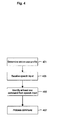
- FIG. 4 is a method of recognizing and implementing spoken commands employable by the system shown in FIG. 1.
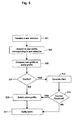
- FIG. 5 is a method of switching users during runtime employable by the system shown in FIG. 1.
- FIG. 1 shows a speech recognition and device control system according to the present invention.
- the system may be useful for any number of applications including, for example, control of devices and/or processes in a medical operating room.
- the system may further be useful for any number of industrial and/or scientific applications.
- the system according to the present invention is continuously operable by two or more users.
- the system includes one or more receivers 104 for receiving speech input 102.
- the receiver 104 may be any instrument or device for receiving an incoming sound or sound wave and converting it into a digital waveform and/or an electric current or electric energy (e.g., speech data 106).
- the receiver 104 may be a microphone.
- the speech input 102 received by the receiver 104 may be any spoken utterance from a user such as a spoken word or phrase, or a collection of words or phrases.
- the speech input 102 preferably includes words or phrases indicative of one or more commands which a user desires to be communicated to and/or implemented by the system.
- the system further includes one or more processors 108.
- the processor 108 may be any device, system, or part thereof that controls at least one operation or receives and/or execute one or more software programs.
- the processor 108 may, for example, be one of a digital signal processor, a microcontroller, a microprocessor, or a computer programmable logic device. It should be noted that the functionality associated with the processor 108 may be centralized or distributed, whether locally or remotely.
- the processor 108 is in communication with the receiver 104 and may receive information from the receiver 104, such as the speech data 106, As will be described in detail below, the processor 108 and other components associated therewith may then transmit or otherwise communicate a command 114 to a device 116, user interface 118, or any other system or apparatus in communication with the processor 108.
- the system according to the present invention also includes at least one database, storage, and/or data collection including a plurality of user profiles, e.g., 110.
- Each user profile 110 of the system may include any number of user preferences, settings or parameters pertaining to a particular user's use of the system.
- a user profile 110 may include a speech recognition profile pertaining to a user.
- the speech recognition profile may include pronunciation data or any data generated as a result of speech recognition training by the particular user.
- the speech recognition profile may further include one or more language models, e.g., specific to the particular user or general to all users of the system.
- a user profile 110 may further include a display or user interface preferences profile, e.g., including any number of settings or parameters related to the user interface 118.
- the user profile 110 may also include a device preferences profile including preferences, settings and parameters pertaining to any number of particular devices operable by the system.
- the user profile 110 may further include a feedback preferences profile identifying the types of feedback the user desires (e.g., notifications, alerts, etc.) and/or the manner in which feedback is desired (e.g., audio, visual, etc).
- a user profile 110 may include many other preferences, settings, parameters and profiles.
- the system further includes any number of devices, such as device 116 shown in FIG. 1.
- a device 116 may be any device or group of devices operable by the system.
- the device 116 may be medical device, instrument, tool or system, e.g., in an operating room.
- the device 116 may further be a scientific or industrial device, instrument, tool or system.
- Each device 116 may receive commands 114 from the system.
- Some devices 116 may also provide feedback or other data to the system.
- the system also includes at least one user interface 118 (e.g., graphical user interface).
- the user interface 118 may be any device for displaying or otherwise providing information or feedback to a user and/or receiving input or information from the user.
- the user interface 118 may include any number of components such as a monitor or display, a keypad, keyboard, a touch-screen, a mouse, and/or an audio output.
- the user interface 118 further includes the receiver 104.
- FIG. 2 shows an exemplary processor 108 of the system.
- the processor 108 includes any number of software applications or processes executing thereon.
- the software of the system may be stored or located either local or remote to the processor 108, e.g., in a database and/or temporary memory.
- the system includes a profile manager 210 for determining an active profile from the plurality of user profiles 110.
- the profile manager 210 may be embodied in hardware, software or a combination thereof,
- the profile manager 210 may include profile management software executing on the processor 108 as shown in FIG. 2.
- the system according to the present invention may be used by two or more users (e.g., simultaneously or consecutively).
- Each of the users may have a user profile 110 accessible by the profile manager 210 and/or processor 108 and identifiable by a unique user identifier.
- the profile manager 210 provides a means for determining which of the user profiles 110 is the active profile of the system at any given time.
- the profile manager 210 further provides means for switching the active profile during runtime of the system, e.g., without restarting, rebooting and/or resetting the system and processor 108.
- the profile manager 210 may switch the active profile from a first one of the plurality of user profiles (e.g., corresponding to a first one of the present users of the system) to a second one of the plurality of user profiles (e.g., corresponding to a second one of the present users of the system) after receiving a profile selection indicative of the second one of the plurality of profiles.
- the profile or user selection may be a spoken selection (e.g., speech input 102). For example, a user may speak his or her unique identifier, such as a unique code or the user's name (e.g., "Dr. Smith"), to switch the active profile. A user may also manually select a new active profile via the user interface 118.
- the selection may further be an automatic selection or switch provided by the system. For example, the system may recognize a new user's voice (e.g., corresponding to a user profile 110) and automatically switch profiles accordingly.
- the profile manager 210 compares the current active profile to the selected profile to determine if any potential conflicts exist prior to switching the active profile. For example, the profile manager 210 may check for any conflicting device preferences or settings pertaining to a device currently in use by the system. The profile manager 210 may further check any number of other settings, preferences, and parameters in each profile to ensure a failsafe and smooth switch and/or transition. If a conflict is found, the profile manager 210 generates an alert or notification to the system's user or users. The alert may be audible or visual. In some cases, the alert may prompt the users for input to resolve the conflict.
- the system may generate a notification of the active profile switch.
- the user interface 118 continuously displays the unique identifier corresponding to the active profile.
- the notification therefore may include changing the display to indicate the unique identifier corresponding to the new active profile.
- the display may also be accompanied by an audible notification as desired.
- the system also includes a recognizer 220 for recognizing or identifying at least one potential command (e.g., a word or phrase) or a command 114 from the speech input 102 or speech data 106.
- the recognizer 220 may be embodied in hardware, software or a combination thereof.
- the recognizer 220 may include recognizer software executing on the processor 108 as shown in FIG. 2.
- the recognizer 220 may identify the command 114 based on the active profile.
- the recognizer 220 may access the active user's speech recognition profile and/or language model and identify a command 114 based at least in part on information contained thereon.
- the recognizer 220 may further access or employ any number of language models applicable to all users of the system in identifying the potential command or command 114 (not shown).
- the system further includes a command controller 230 for implementing the at least one command (e.g., 114) and communicating with any number of devices or systems.
- the command controller 230 may determine a device associated with the potential command or command 114 identified by the recognizer 220.
- the command controller 230 may employ information and device preferences contained in the user profile 110.
- the command controller 230 may also employ any number of other components, applications and other means in implementing a command.
- the command controller 230 may then transmit or communicate the command 114 to a device 116 or user interface 118 (shown in FIG. 1).
- FIG. 3 shows an exemplary user interface 118.
- the user interface 118 may include one or more monitors or displays 320.
- the display 320 is a touch-screen display enabling a user to make selections or provide manual input 322 to the system by touching or tapping the display 320.
- the user interface 118 may also include any other means to provide manual input 322 including, but not limited to, a keyboard, keypad, switches, a mouse, or a joystick.
- the exemplary user interface 118 also includes an audio output 310 or speaker.
- the audio output 310 may provide users with audio feedback from the system, notifications, alerts, etc.
- Some embodiments of the user interface 118 also include the receiver 104.
- FIG. 4 shows a method of recognizing and implementing spoken commands employable by the system shown in FIG. 1.
- the method includes a first step 401 of determining an active profile from one of a plurality of user profiles.
- the step 401 may be executed by the profile manager 210 of the system.
- the profile manager 210 may, for example, receive a user selection indicative of a particular user profile (e.g., unique user identifier). Upon receiving the selection, or after completing a conflict check, the profile manager 210 may activate the user profile during runtime and without restarting, rebooting and/or resetting the voice-driven device control system.
- the method also includes a step 403 of receiving a speech input.
- the speech input may be indicative of a command to be implemented by the system or a device operable by the system.
- the system may then identify or recognize at least one potential command or command from the speech input, e.g., based on information, settings or preferences contained in the active profile (step 405).
- the command or commands identified by the system may next be processed and implemented (step 407). For example, a command may be implemented by one or more corresponding devices operable by the system.
- FIG. 5 shows a method of switching users during runtime employable by system shown in FIG. 1.
- the method includes a step 501 of receiving a user or profile selection.
- the selection may be received as a speech input, manual input, an automatic selection (e.g., based on the system's recognition of a particular user's voice), or a combination thereof.
- the user selection preferably includes a unique user identifier such as a code, name, or any other identifier.
- a user profile corresponding to the user selection is then determined (step 503). Determining the user profile may include querying the database of user profiles 110.
- the selected user profile is compared to the current active profile to determine if any conflicts or potential conflicts exist between the user profile and the active profile (steps 505-507). If no conflicts exist, the selected user profile is activated (step 509).
- the user profile may be activated immediately, or in some embodiments, upon confirmation of the switch by one or both users.
- a notification of the switch in active profiles is then provided to
- a notification or alert is generated (step 513).
- the alert may include a request for user input to resolve the conflict. If the conflict is resolved (step 515), the active profile is switched and the users notified (step 511).
- a speech recognition and control system continuously operable by two or more users, including a receiver for receiving a speech input, a processor in communication with the receiver, a database in communication with the processor, the database including a plurality of user profiles, prof le management software executing on the processor for determining an active profile from the plurality of user profiles, and software executing on the processor for identifying at least one command from the speech input based on the active profile.
Landscapes
- Engineering & Computer Science (AREA)
- Computational Linguistics (AREA)
- Health & Medical Sciences (AREA)
- Audiology, Speech & Language Pathology (AREA)
- Human Computer Interaction (AREA)
- Physics & Mathematics (AREA)
- Acoustics & Sound (AREA)
- Multimedia (AREA)
- User Interface Of Digital Computer (AREA)
- Information Retrieval, Db Structures And Fs Structures Therefor (AREA)
Abstract
Description
- The invention relates to speech recognition systems, and more specifically to a speech recognition and device control system including a user profile management component and method for hot-swapping user profiles during runtime.
- Speech recognition is the process by which an acoustic signal received by microphone is converted to a set of text words, numbers, or symbols by a computer. These recognized words then can be used in a variety of computer software applications for purposes such as document preparation, data entry, and command and control. For example, speech recognition systems may be used in modem operating rooms to control various medical systems and devices. A surgeon or other user, by giving a simple voice command, may direct the functionality of a device controlled by the speech recognition system. For example, the surgeon may deliver a voice command to adjust a patient table or adjust the pressure of a pump.
- To enable speech recognition in an operating room, medical devices and/or other equipment are connected with a component (e.g., a call system) through communication channels (e.g., an Ethernet connection, device bus, etc.). A speech recognition system is also connected providing the voice driven user interface and recognition software. When a voice command is issued, the command may be recognized and converted to a text string. If it is successfully identified as valid command corresponding to one of the connected devices, the system will send an appropriate signal so that the desired control action is taken.
- Speech recognition systems are generally customizable for a particular user. For example, a user may customize particular settings of the system. A user may further configure or train the system to recognize his or her particular voice and custom commands. Customization and configuration is performed at the time of initializing the system or upon restarting the system. As such, prior art systems are not customizable or reconfigurable during use and without interruption. Therefore when a second user desires to operate the system, the system must rebooted and/or restarted to reconfigure the system for the second user. In an operating room setting where time is critical, such delay is highly undesirable.
- It is therefore desired to provide a speech recognition system and method including an improved means of user customization and configuration. It is further desired to provide a speech recognition system and method operable by two or more users continuously.
- According, it is an object of the present invention to provide a speech recognition and control system having a user profile management system.
- It is a further object to provide a speech recognition and control system continuously operable by two or more users and having a quick, smooth, and failsafe means to change user profiles during use.
- These and other objectives are achieved by providing a speech recognition and control system continuously operable by two or more users, including a receiver for receiving a speech input, a processor in communication with the receiver, a database in communication with the processor, the database including a plurality of user profiles, profile management software executing on the processor for determining an active profile from the plurality of user profiles, and software executing on the processor for identifying at least one command from the speech input based on the active profile. In one embodiment, the profile management software switches the active profile from a first one of the plurality of user profiles to a second one of the plurality of user profiles upon receiving a profile selection indicative of the second one of the plurality of profiles. The profile management software may switch the active profile during runtime of the speech recognition system.
- Further provided is a method of recognizing and implementing spoken commands in a voice-driven device control system including the steps of determining an active profile from one of a plurality of user profiles, receiving a speech input, recognizing at least one command from the speech input based on the active profile; and implementing the at least one command. The step of determining an active profile may include receiving a user selection indicative of a user profile and activating the user profile without restarting, rebooting and/or resetting the voice-driven device control system.
- Also provided is a method of switching users of a speech recognition system during runtime, including the steps of receiving a user selection, determining a user profile corresponding to the user selection, comparing the user profile to an active profile to determine conflicts between the user profile and the active profile, and activating the user profile if no conflicts exist between the user profile and the active profile. The method may include an additional step of generating a notification indicative of a conflict or a new active profile.
- FIG. 1 is a schematic diagram of a system according to the present invention.
- FIG. 2 is a schematic diagram of a processor of the system shown in FIG. 1.
- FIG. 3 is a schematic diagram of a user interface of the system shown in FIG. 1.
- FIG. 4 is a method of recognizing and implementing spoken commands employable by the system shown in FIG. 1.
- FIG. 5 is a method of switching users during runtime employable by the system shown in FIG. 1.
- FIG. 1 shows a speech recognition and device control system according to the present invention. The system may be useful for any number of applications including, for example, control of devices and/or processes in a medical operating room. The system may further be useful for any number of industrial and/or scientific applications. As will be described, the system according to the present invention is continuously operable by two or more users.
- The system includes one or
more receivers 104 forreceiving speech input 102. Thereceiver 104 may be any instrument or device for receiving an incoming sound or sound wave and converting it into a digital waveform and/or an electric current or electric energy (e.g., speech data 106). For example, thereceiver 104 may be a microphone. Thespeech input 102 received by thereceiver 104 may be any spoken utterance from a user such as a spoken word or phrase, or a collection of words or phrases. Thespeech input 102 preferably includes words or phrases indicative of one or more commands which a user desires to be communicated to and/or implemented by the system. - The system further includes one or
more processors 108. Theprocessor 108 may be any device, system, or part thereof that controls at least one operation or receives and/or execute one or more software programs. Theprocessor 108 may, for example, be one of a digital signal processor, a microcontroller, a microprocessor, or a computer programmable logic device. It should be noted that the functionality associated with theprocessor 108 may be centralized or distributed, whether locally or remotely. Theprocessor 108 is in communication with thereceiver 104 and may receive information from thereceiver 104, such as thespeech data 106, As will be described in detail below, theprocessor 108 and other components associated therewith may then transmit or otherwise communicate acommand 114 to adevice 116,user interface 118, or any other system or apparatus in communication with theprocessor 108. - The system according to the present invention also includes at least one database, storage, and/or data collection including a plurality of user profiles, e.g., 110. Each
user profile 110 of the system may include any number of user preferences, settings or parameters pertaining to a particular user's use of the system. For example, auser profile 110 may include a speech recognition profile pertaining to a user. The speech recognition profile may include pronunciation data or any data generated as a result of speech recognition training by the particular user. The speech recognition profile may further include one or more language models, e.g., specific to the particular user or general to all users of the system. - A
user profile 110 may further include a display or user interface preferences profile, e.g., including any number of settings or parameters related to theuser interface 118. Theuser profile 110 may also include a device preferences profile including preferences, settings and parameters pertaining to any number of particular devices operable by the system. Theuser profile 110 may further include a feedback preferences profile identifying the types of feedback the user desires (e.g., notifications, alerts, etc.) and/or the manner in which feedback is desired (e.g., audio, visual, etc). As one of ordinary skill in the art will understand, however, auser profile 110 may include many other preferences, settings, parameters and profiles. - The system further includes any number of devices, such as
device 116 shown in FIG. 1. Adevice 116 may be any device or group of devices operable by the system. For example, thedevice 116 may be medical device, instrument, tool or system, e.g., in an operating room. Thedevice 116 may further be a scientific or industrial device, instrument, tool or system. Eachdevice 116 may receivecommands 114 from the system. Somedevices 116 may also provide feedback or other data to the system. The system also includes at least one user interface 118 (e.g., graphical user interface). Theuser interface 118 may be any device for displaying or otherwise providing information or feedback to a user and/or receiving input or information from the user. For example, theuser interface 118 may include any number of components such as a monitor or display, a keypad, keyboard, a touch-screen, a mouse, and/or an audio output. In some embodiments, theuser interface 118 further includes thereceiver 104. - FIG. 2 shows an
exemplary processor 108 of the system. Theprocessor 108 includes any number of software applications or processes executing thereon. As one of ordinary skill in the art will understand, the software of the system may be stored or located either local or remote to theprocessor 108, e.g., in a database and/or temporary memory. As shown, the system includes aprofile manager 210 for determining an active profile from the plurality of user profiles 110. Theprofile manager 210 may be embodied in hardware, software or a combination thereof, For example, theprofile manager 210 may include profile management software executing on theprocessor 108 as shown in FIG. 2. - The system according to the present invention may be used by two or more users (e.g., simultaneously or consecutively). Each of the users may have a
user profile 110 accessible by theprofile manager 210 and/orprocessor 108 and identifiable by a unique user identifier. Theprofile manager 210 provides a means for determining which of the user profiles 110 is the active profile of the system at any given time. Theprofile manager 210 further provides means for switching the active profile during runtime of the system, e.g., without restarting, rebooting and/or resetting the system andprocessor 108. - The
profile manager 210 may switch the active profile from a first one of the plurality of user profiles (e.g., corresponding to a first one of the present users of the system) to a second one of the plurality of user profiles (e.g., corresponding to a second one of the present users of the system) after receiving a profile selection indicative of the second one of the plurality of profiles. The profile or user selection may be a spoken selection (e.g., speech input 102). For example, a user may speak his or her unique identifier, such as a unique code or the user's name (e.g., "Dr. Smith"), to switch the active profile. A user may also manually select a new active profile via theuser interface 118. The selection may further be an automatic selection or switch provided by the system. For example, the system may recognize a new user's voice (e.g., corresponding to a user profile 110) and automatically switch profiles accordingly. - After or upon receiving a profile selection, the
profile manager 210 compares the current active profile to the selected profile to determine if any potential conflicts exist prior to switching the active profile. For example, theprofile manager 210 may check for any conflicting device preferences or settings pertaining to a device currently in use by the system. Theprofile manager 210 may further check any number of other settings, preferences, and parameters in each profile to ensure a failsafe and smooth switch and/or transition. If a conflict is found, theprofile manager 210 generates an alert or notification to the system's user or users. The alert may be audible or visual. In some cases, the alert may prompt the users for input to resolve the conflict. - If no conflicts or potential conflicts are found, or upon the resolution of a potential conflict, the system may generate a notification of the active profile switch. In one embodiment, the
user interface 118 continuously displays the unique identifier corresponding to the active profile. The notification therefore may include changing the display to indicate the unique identifier corresponding to the new active profile. The display may also be accompanied by an audible notification as desired. - Shown in FIG. 2, the system also includes a
recognizer 220 for recognizing or identifying at least one potential command (e.g., a word or phrase) or acommand 114 from thespeech input 102 orspeech data 106. Therecognizer 220 may be embodied in hardware, software or a combination thereof. For example, therecognizer 220 may include recognizer software executing on theprocessor 108 as shown in FIG. 2. Therecognizer 220 may identify thecommand 114 based on the active profile. For example, therecognizer 220 may access the active user's speech recognition profile and/or language model and identify acommand 114 based at least in part on information contained thereon. Therecognizer 220 may further access or employ any number of language models applicable to all users of the system in identifying the potential command or command 114 (not shown). - The system further includes a
command controller 230 for implementing the at least one command (e.g., 114) and communicating with any number of devices or systems. Thecommand controller 230 may determine a device associated with the potential command orcommand 114 identified by therecognizer 220. For example, thecommand controller 230 may employ information and device preferences contained in theuser profile 110. As one of ordinary skill in the art will understand, thecommand controller 230 may also employ any number of other components, applications and other means in implementing a command. Thecommand controller 230 may then transmit or communicate thecommand 114 to adevice 116 or user interface 118 (shown in FIG. 1). - FIG. 3 shows an
exemplary user interface 118. Theuser interface 118 may include one or more monitors or displays 320. In some embodiments, thedisplay 320 is a touch-screen display enabling a user to make selections or providemanual input 322 to the system by touching or tapping thedisplay 320. Theuser interface 118 may also include any other means to providemanual input 322 including, but not limited to, a keyboard, keypad, switches, a mouse, or a joystick. Theexemplary user interface 118 also includes anaudio output 310 or speaker. Theaudio output 310 may provide users with audio feedback from the system, notifications, alerts, etc. Some embodiments of theuser interface 118 also include thereceiver 104. - FIG. 4 shows a method of recognizing and implementing spoken commands employable by the system shown in FIG. 1. The method includes a
first step 401 of determining an active profile from one of a plurality of user profiles. Thestep 401 may be executed by theprofile manager 210 of the system. Theprofile manager 210 may, for example, receive a user selection indicative of a particular user profile (e.g., unique user identifier). Upon receiving the selection, or after completing a conflict check, theprofile manager 210 may activate the user profile during runtime and without restarting, rebooting and/or resetting the voice-driven device control system. - The method also includes a
step 403 of receiving a speech input. The speech input may be indicative of a command to be implemented by the system or a device operable by the system. The system may then identify or recognize at least one potential command or command from the speech input, e.g., based on information, settings or preferences contained in the active profile (step 405). The command or commands identified by the system may next be processed and implemented (step 407). For example, a command may be implemented by one or more corresponding devices operable by the system. - FIG. 5 shows a method of switching users during runtime employable by system shown in FIG. 1. The method includes a
step 501 of receiving a user or profile selection. The selection may be received as a speech input, manual input, an automatic selection (e.g., based on the system's recognition of a particular user's voice), or a combination thereof. The user selection preferably includes a unique user identifier such as a code, name, or any other identifier. A user profile corresponding to the user selection is then determined (step 503). Determining the user profile may include querying the database of user profiles 110. The selected user profile is compared to the current active profile to determine if any conflicts or potential conflicts exist between the user profile and the active profile (steps 505-507). If no conflicts exist, the selected user profile is activated (step 509). The user profile may be activated immediately, or in some embodiments, upon confirmation of the switch by one or both users. A notification of the switch in active profiles is then provided to the users (step 511). - If a conflict or potential conflict is found between the selected profile and active profile, a notification or alert is generated (step 513). The alert may include a request for user input to resolve the conflict. If the conflict is resolved (step 515), the active profile is switched and the users notified (step 511).
- Although the invention has been described with reference to a particular arrangement of parts, features and the like, these are not intended to exhaust all possible arrangements or features, and indeed many modifications and variations will be ascertainable to those of skill in the art.
- In order to summarize, a speech recognition and control system continuously operable by two or more users is provided, including a receiver for receiving a speech input, a processor in communication with the receiver, a database in communication with the processor, the database including a plurality of user profiles, prof le management software executing on the processor for determining an active profile from the plurality of user profiles, and software executing on the processor for identifying at least one command from the speech input based on the active profile.
Claims (25)
- A speech recognition and control system continuously operable by two or more users, comprising:a receiver for receiving a speech input;a processor in communication with said receiver ;a database in communication with said processor, said database including a plurality of user profiles;profile management software executing on said processor for determining an active profile from the plurality of user profiles; andsoftware executing on said processor for identifying at least one command from the speech input based on the active profile.
- The system according to claim 1, wherein said profile management software switches the active profile from a first one of the plurality of user profiles to a second one of the plurality of user profiles after receiving a profile selection indicative of the second one of the plurality of profiles.
- The system according to claim 2, wherein said profile management software switches the active profile during runtime of the speech recognition and control system.
- The system according to claim 2, further comprising:software for generating a notification upon switching the active profile.
- The system according to claim 4, wherein the software for generating a notification generates at least one of an audio notification and a visual notification.
- The system according to claim 4, wherein the notification includes a user identifier corresponding to the active profile.
- The system according to claim 2, wherein the profile selection is one of a spoken selection, a manual selection, and an automatic selection.
- The system according to claim 2, wherein the profile selection includes a unique user identifier.
- The system according to claim 2, wherein said profile management software compares the first one of the plurality of user profiles to the second one of the plurality of user profiles to determine potential conflicts between the first and second profiles prior to switching the active profile.
- The system according to claim 9 wherein said profile management software generates an alert if a potential conflict is found.
- The system according to claim 1, wherein each of the plurality of user profiles includes at least one of a speech recognition profile, a display preferences profile, a device preferences profile, and a feedback preferences profile.
- The system according to claim 1, wherein one of the plurality of user profiles is a default profile.
- The system according to claim 1, wherein one or more of the plurality of user profiles is editable by said profile management software.
- The system according to claim 1, further comprising:software executing on said processor for implementing the at least one command.
- A speech recognition and control system continuously operable by two or more users, comprising:a receiver for receiving a speech input;a database including a plurality of user profiles;a profile manager for determining an active profile from the plurality of user profiles;a recognizer for identifying at least one potential command from the speech input based on the active profile;a command controller for determining at least one device command from the at least one potential command and implementing the at least one device command.
- The system according to claim 15, wherein said profile manager switches the active profile from a first one of the plurality of user profiles to a second one of the plurality of user profiles during runtime of the speech recognition and control system.
- The system according to claim 15,
wherein said recognizer determines the particular one of the two or more users providing the speech input based on voice recognition, and
wherein said profile manager switches the active profile to one of the plurality of user profiles corresponding to the particular user. - A method of recognizing and implementing spoken commands in a voice-driven device control system, comprising the steps of:determining an active profile from one of a plurality of user profiles;receiving a speech input;recognizing at least one command from the speech input based on the active profile; andimplementing the at least one command.
- The method according to claim 18, wherein said step of determining an active profile includes receiving a user selection indicative of a user profile and activating the user profile without restarting the voice-driven device control system.
- The method according to claim 18, wherein said step of implementing the command includes transmitting the command to at least one device operable by the voice-driven device control system.
- A method of switching users of a speech recognition and control system during runtime, comprising the steps of:receiving a user selection;determining a user profile corresponding to the user selection;comparing the user profile to an active profile to determine conflicts between the user profile and the active profile; andactivating the user profile if no conflicts exist between the user profile and the active profile.
- The method according to claim 21, further comprising the step of:generating a notification, the notification indicative of one of a conflict and a new active profile.
- The method according to claim 21, wherein said step of determining a user profile includes querying a database of a plurality of user profiles.
- The method according to claim 21, wherein the user selection is received as one of a speech input, a manual selection, and an automatic selection.
- The method according to claim 21, wherein the user selection includes a unique user identifier.
Applications Claiming Priority (1)
| Application Number | Priority Date | Filing Date | Title |
|---|---|---|---|
| US11/455,248 US8015014B2 (en) | 2006-06-16 | 2006-06-16 | Speech recognition system with user profiles management component |
Publications (2)
| Publication Number | Publication Date |
|---|---|
| EP1868184A1 true EP1868184A1 (en) | 2007-12-19 |
| EP1868184B1 EP1868184B1 (en) | 2015-04-15 |
Family
ID=38229045
Family Applications (1)
| Application Number | Title | Priority Date | Filing Date |
|---|---|---|---|
| EP07011522.5A Active EP1868184B1 (en) | 2006-06-16 | 2007-06-13 | Speech recognition system with user profiles management |
Country Status (4)
| Country | Link |
|---|---|
| US (1) | US8015014B2 (en) |
| EP (1) | EP1868184B1 (en) |
| JP (1) | JP4699411B2 (en) |
| CA (1) | CA2576758C (en) |
Cited By (2)
| Publication number | Priority date | Publication date | Assignee | Title |
|---|---|---|---|---|
| EP2945155A1 (en) * | 2014-05-16 | 2015-11-18 | Ford Global Technologies, LLC | Device and method for speech recognition, particularly in a vehicle |
| DE102018106388A1 (en) | 2018-03-19 | 2019-09-19 | gimya.solution UG (haftungsbeschränkt) | Device and method for controlling and / or regulating medical devices |
Families Citing this family (31)
| Publication number | Priority date | Publication date | Assignee | Title |
|---|---|---|---|---|
| US8688459B2 (en) * | 2007-10-08 | 2014-04-01 | The Regents Of The University Of California | Voice-controlled clinical information dashboard |
| US20110066944A1 (en) | 2009-09-14 | 2011-03-17 | Barton James M | Multifunction Multimedia Device |
| US8682145B2 (en) * | 2009-12-04 | 2014-03-25 | Tivo Inc. | Recording system based on multimedia content fingerprints |
| JP5673330B2 (en) * | 2011-04-25 | 2015-02-18 | 株式会社デンソー | Voice input device |
| WO2012169679A1 (en) * | 2011-06-10 | 2012-12-13 | 엘지전자 주식회사 | Display apparatus, method for controlling display apparatus, and voice recognition system for display apparatus |
| JP2013178644A (en) * | 2012-02-28 | 2013-09-09 | Toshiba Corp | Medical information communication testing device |
| US10068288B2 (en) * | 2012-12-17 | 2018-09-04 | Capital One Financial Corporation | Systems and methods for providing a user interface for facilitating personal payment transactions |
| US9812130B1 (en) * | 2014-03-11 | 2017-11-07 | Nvoq Incorporated | Apparatus and methods for dynamically changing a language model based on recognized text |
| US10643616B1 (en) * | 2014-03-11 | 2020-05-05 | Nvoq Incorporated | Apparatus and methods for dynamically changing a speech resource based on recognized text |
| US9620106B2 (en) | 2014-07-30 | 2017-04-11 | At&T Intellectual Property I, L.P. | System and method for personalization in speech recogniton |
| WO2016173865A1 (en) * | 2015-04-29 | 2016-11-03 | Koninklijke Philips N.V. | Method of and apparatus for operating a device by members of a group |
| WO2018047326A1 (en) * | 2016-09-12 | 2018-03-15 | 富士機械製造株式会社 | Assistance device |
| US10013971B1 (en) * | 2016-12-29 | 2018-07-03 | Google Llc | Automated speech pronunciation attribution |
| KR102412202B1 (en) * | 2017-01-03 | 2022-06-27 | 삼성전자주식회사 | Refrigerator and method of displaying information thereof |
| DK179549B1 (en) | 2017-05-16 | 2019-02-12 | Apple Inc. | Far-field extension for digital assistant services |
| JP6606301B1 (en) * | 2017-05-16 | 2019-11-13 | アップル インコーポレイテッドApple Inc. | Long-distance extension of digital assistant service |
| US10504513B1 (en) * | 2017-09-26 | 2019-12-10 | Amazon Technologies, Inc. | Natural language understanding with affiliated devices |
| US10715604B1 (en) * | 2017-10-26 | 2020-07-14 | Amazon Technologies, Inc. | Remote system processing based on a previously identified user |
| US10567515B1 (en) | 2017-10-26 | 2020-02-18 | Amazon Technologies, Inc. | Speech processing performed with respect to first and second user profiles in a dialog session |
| CN116959420A (en) * | 2018-04-16 | 2023-10-27 | 谷歌有限责任公司 | Automatically determine a language for speech recognition of spoken utterances received via an automated assistant interface |
| CN109065058B (en) * | 2018-09-30 | 2024-03-15 | 合肥鑫晟光电科技有限公司 | Voice communication method, device and system |
| US11620103B2 (en) | 2019-05-31 | 2023-04-04 | Apple Inc. | User interfaces for audio media control |
| US11010121B2 (en) | 2019-05-31 | 2021-05-18 | Apple Inc. | User interfaces for audio media control |
| US10867608B1 (en) | 2019-05-31 | 2020-12-15 | Apple Inc. | Multi-user configuration |
| JP6977004B2 (en) * | 2019-08-23 | 2021-12-08 | サウンドハウンド,インコーポレイテッド | In-vehicle devices, methods and programs for processing vocalizations |
| US12381880B2 (en) | 2020-10-12 | 2025-08-05 | Apple Inc. | Media service configuration |
| US12405717B2 (en) | 2020-10-26 | 2025-09-02 | Apple Inc. | Methods and user interfaces for handling user requests |
| US11960615B2 (en) | 2021-06-06 | 2024-04-16 | Apple Inc. | Methods and user interfaces for voice-based user profile management |
| US12021806B1 (en) | 2021-09-21 | 2024-06-25 | Apple Inc. | Intelligent message delivery |
| WO2023076187A2 (en) * | 2021-10-25 | 2023-05-04 | Exxo, Inc. | Systems and methods for query source identification and response |
| US12321667B2 (en) | 2022-07-14 | 2025-06-03 | Becton, Dickinson And Company | Contactless control of physiological monitors |
Citations (2)
| Publication number | Priority date | Publication date | Assignee | Title |
|---|---|---|---|---|
| US20010032085A1 (en) | 1999-12-24 | 2001-10-18 | Goedeke Steven D. | Automatic voice and data recognition for implanted medical device instrument systems |
| US6462500B1 (en) | 2000-04-27 | 2002-10-08 | Alm | Operating table control system and operating table comprising such a system |
Family Cites Families (23)
| Publication number | Priority date | Publication date | Assignee | Title |
|---|---|---|---|---|
| US6646541B1 (en) * | 1996-06-24 | 2003-11-11 | Computer Motion, Inc. | General purpose distributed operating room control system |
| US6463361B1 (en) * | 1994-09-22 | 2002-10-08 | Computer Motion, Inc. | Speech interface for an automated endoscopic system |
| US7053752B2 (en) * | 1996-08-06 | 2006-05-30 | Intuitive Surgical | General purpose distributed operating room control system |
| US5970457A (en) * | 1995-10-25 | 1999-10-19 | Johns Hopkins University | Voice command and control medical care system |
| US6496099B2 (en) * | 1996-06-24 | 2002-12-17 | Computer Motion, Inc. | General purpose distributed operating room control system |
| US6642836B1 (en) * | 1996-08-06 | 2003-11-04 | Computer Motion, Inc. | General purpose distributed operating room control system |
| US5915001A (en) * | 1996-11-14 | 1999-06-22 | Vois Corporation | System and method for providing and using universally accessible voice and speech data files |
| JP2000305596A (en) | 1999-04-23 | 2000-11-02 | Sony Corp | Voice recognition device and navigation device |
| US6266635B1 (en) * | 1999-07-08 | 2001-07-24 | Contec Medical Ltd. | Multitasking interactive voice user interface |
| US6601026B2 (en) * | 1999-09-17 | 2003-07-29 | Discern Communications, Inc. | Information retrieval by natural language querying |
| US6587818B2 (en) * | 1999-10-28 | 2003-07-01 | International Business Machines Corporation | System and method for resolving decoding ambiguity via dialog |
| US6591239B1 (en) * | 1999-12-09 | 2003-07-08 | Steris Inc. | Voice controlled surgical suite |
| US6993119B1 (en) * | 2000-08-09 | 2006-01-31 | Bellsouth Intellectual Property Corporation | Network and method for providing a flexible call forwarding telecommunications service with automatic speech recognition capability |
| US7117159B1 (en) * | 2001-09-26 | 2006-10-03 | Sprint Spectrum L.P. | Method and system for dynamic control over modes of operation of voice-processing in a voice command platform |
| JP3970080B2 (en) * | 2002-04-16 | 2007-09-05 | キヤノン株式会社 | Movie playback apparatus, movie playback method and computer program thereof |
| US7286749B2 (en) * | 2002-04-16 | 2007-10-23 | Canon Kabushiki Kaisha | Moving image playback apparatus, moving image playback method, and computer program thereof with determining of first voice period which represents a human utterance period and second voice period other than the first voice period |
| US7693720B2 (en) * | 2002-07-15 | 2010-04-06 | Voicebox Technologies, Inc. | Mobile systems and methods for responding to natural language speech utterance |
| US20050180464A1 (en) * | 2002-10-01 | 2005-08-18 | Adondo Corporation | Audio communication with a computer |
| DE602004020247D1 (en) | 2003-10-21 | 2009-05-07 | Johnson Controls Tech Co | SYSTEM AND METHOD FOR SELECTING A USER LANGUAGE PROFILE FOR A DEVICE IN A VEHICLE |
| US8233592B2 (en) * | 2003-11-10 | 2012-07-31 | Nuance Communications, Inc. | Personal home voice portal |
| US20050288930A1 (en) * | 2004-06-09 | 2005-12-29 | Vaastek, Inc. | Computer voice recognition apparatus and method |
| US7949529B2 (en) * | 2005-08-29 | 2011-05-24 | Voicebox Technologies, Inc. | Mobile systems and methods of supporting natural language human-machine interactions |
| US20070219792A1 (en) * | 2006-03-20 | 2007-09-20 | Nu Echo Inc. | Method and system for user authentication based on speech recognition and knowledge questions |
-
2006
- 2006-06-16 US US11/455,248 patent/US8015014B2/en not_active Expired - Fee Related
-
2007
- 2007-01-31 CA CA2576758A patent/CA2576758C/en active Active
- 2007-03-23 JP JP2007077381A patent/JP4699411B2/en not_active Expired - Fee Related
- 2007-06-13 EP EP07011522.5A patent/EP1868184B1/en active Active
Patent Citations (2)
| Publication number | Priority date | Publication date | Assignee | Title |
|---|---|---|---|---|
| US20010032085A1 (en) | 1999-12-24 | 2001-10-18 | Goedeke Steven D. | Automatic voice and data recognition for implanted medical device instrument systems |
| US6462500B1 (en) | 2000-04-27 | 2002-10-08 | Alm | Operating table control system and operating table comprising such a system |
Cited By (3)
| Publication number | Priority date | Publication date | Assignee | Title |
|---|---|---|---|---|
| EP2945155A1 (en) * | 2014-05-16 | 2015-11-18 | Ford Global Technologies, LLC | Device and method for speech recognition, particularly in a vehicle |
| DE102018106388A1 (en) | 2018-03-19 | 2019-09-19 | gimya.solution UG (haftungsbeschränkt) | Device and method for controlling and / or regulating medical devices |
| WO2019179888A1 (en) | 2018-03-19 | 2019-09-26 | gimya.solution UG (haftungsbeschränkt) | Device and method for controlling and/or regulating medical devices |
Also Published As
| Publication number | Publication date |
|---|---|
| CA2576758A1 (en) | 2007-12-16 |
| JP2007334301A (en) | 2007-12-27 |
| US20070294081A1 (en) | 2007-12-20 |
| CA2576758C (en) | 2012-11-13 |
| US8015014B2 (en) | 2011-09-06 |
| JP4699411B2 (en) | 2011-06-08 |
| EP1868184B1 (en) | 2015-04-15 |
Similar Documents
| Publication | Publication Date | Title |
|---|---|---|
| CA2576758C (en) | Speech recognition system with user profiles management component | |
| EP1801780B1 (en) | Simultaneous support of isolated and connected phrase command recognition in automatic speech recognition systems | |
| EP1909264B1 (en) | System and method for hazard mitigation in voice-driven control applications | |
| JP6887031B2 (en) | Methods, electronics, home appliances networks and storage media | |
| JP5208246B2 (en) | Voice input device having a period of interest | |
| US8798997B2 (en) | Method and system for dynamic creation of contexts | |
| JP6675078B2 (en) | Misrecognition and correction method, misrecognition and correction device, and misrecognition and correction program | |
| JP6636303B2 (en) | Interactive device, interactive device, control method of interactive device, control program, and recording medium | |
| CN110010122B (en) | Nursing bed voice control method | |
| KR102031893B1 (en) | The method for operating bidet with speech recognition funtion | |
| CN113975078A (en) | Massage control method based on artificial intelligence and related equipment | |
| WO2019234392A1 (en) | An apparatus and method | |
| JPH08335094A (en) | Voice input method and apparatus for implementing this method | |
| JP2013257448A (en) | Speech recognition device |
Legal Events
| Date | Code | Title | Description |
|---|---|---|---|
| PUAI | Public reference made under article 153(3) epc to a published international application that has entered the european phase |
Free format text: ORIGINAL CODE: 0009012 |
|
| AK | Designated contracting states |
Kind code of ref document: A1 Designated state(s): AT BE BG CH CY CZ DE DK EE ES FI FR GB GR HU IE IS IT LI LT LU LV MC MT NL PL PT RO SE SI SK TR |
|
| AX | Request for extension of the european patent |
Extension state: AL BA HR MK YU |
|
| 17P | Request for examination filed |
Effective date: 20080528 |
|
| 17Q | First examination report despatched |
Effective date: 20080630 |
|
| AKX | Designation fees paid |
Designated state(s): DE FR GB IT |
|
| GRAP | Despatch of communication of intention to grant a patent |
Free format text: ORIGINAL CODE: EPIDOSNIGR1 |
|
| INTG | Intention to grant announced |
Effective date: 20141117 |
|
| GRAS | Grant fee paid |
Free format text: ORIGINAL CODE: EPIDOSNIGR3 |
|
| GRAA | (expected) grant |
Free format text: ORIGINAL CODE: 0009210 |
|
| AK | Designated contracting states |
Kind code of ref document: B1 Designated state(s): DE FR GB IT |
|
| REG | Reference to a national code |
Ref country code: GB Ref legal event code: FG4D |
|
| REG | Reference to a national code |
Ref country code: DE Ref legal event code: R096 Ref document number: 602007041031 Country of ref document: DE Effective date: 20150528 |
|
| REG | Reference to a national code |
Ref country code: DE Ref legal event code: R097 Ref document number: 602007041031 Country of ref document: DE |
|
| PG25 | Lapsed in a contracting state [announced via postgrant information from national office to epo] |
Ref country code: IT Free format text: LAPSE BECAUSE OF NON-PAYMENT OF DUE FEES Effective date: 20150613 |
|
| PLBE | No opposition filed within time limit |
Free format text: ORIGINAL CODE: 0009261 |
|
| STAA | Information on the status of an ep patent application or granted ep patent |
Free format text: STATUS: NO OPPOSITION FILED WITHIN TIME LIMIT |
|
| 26N | No opposition filed |
Effective date: 20160118 |
|
| PGRI | Patent reinstated in contracting state [announced from national office to epo] |
Ref country code: IT Effective date: 20160412 |
|
| REG | Reference to a national code |
Ref country code: FR Ref legal event code: PLFP Year of fee payment: 10 |
|
| REG | Reference to a national code |
Ref country code: FR Ref legal event code: PLFP Year of fee payment: 11 |
|
| REG | Reference to a national code |
Ref country code: FR Ref legal event code: PLFP Year of fee payment: 12 |
|
| PGFP | Annual fee paid to national office [announced via postgrant information from national office to epo] |
Ref country code: IT Payment date: 20180522 Year of fee payment: 13 |
|
| PG25 | Lapsed in a contracting state [announced via postgrant information from national office to epo] |
Ref country code: IT Free format text: LAPSE BECAUSE OF NON-PAYMENT OF DUE FEES Effective date: 20190613 |
|
| P01 | Opt-out of the competence of the unified patent court (upc) registered |
Effective date: 20230527 |
|
| PGFP | Annual fee paid to national office [announced via postgrant information from national office to epo] |
Ref country code: DE Payment date: 20250626 Year of fee payment: 19 |
|
| PGFP | Annual fee paid to national office [announced via postgrant information from national office to epo] |
Ref country code: GB Payment date: 20250618 Year of fee payment: 19 |
|
| PGFP | Annual fee paid to national office [announced via postgrant information from national office to epo] |
Ref country code: FR Payment date: 20250624 Year of fee payment: 19 |