EP1867338A1 - Pharmaceutical composition comprising apolipoproteins for the treatment of human diseases - Google Patents
Pharmaceutical composition comprising apolipoproteins for the treatment of human diseases Download PDFInfo
- Publication number
- EP1867338A1 EP1867338A1 EP06114741A EP06114741A EP1867338A1 EP 1867338 A1 EP1867338 A1 EP 1867338A1 EP 06114741 A EP06114741 A EP 06114741A EP 06114741 A EP06114741 A EP 06114741A EP 1867338 A1 EP1867338 A1 EP 1867338A1
- Authority
- EP
- European Patent Office
- Prior art keywords
- apol
- inhibitor
- nucleotide sequence
- apolipoprotein
- activator
- Prior art date
- Legal status (The legal status is an assumption and is not a legal conclusion. Google has not performed a legal analysis and makes no representation as to the accuracy of the status listed.)
- Ceased
Links
- 108010071619 Apolipoproteins Proteins 0.000 title claims abstract description 47
- 102000007592 Apolipoproteins Human genes 0.000 title claims abstract description 47
- 239000008194 pharmaceutical composition Substances 0.000 title claims abstract description 10
- 201000010099 disease Diseases 0.000 title claims description 7
- 208000037265 diseases, disorders, signs and symptoms Diseases 0.000 title claims description 7
- 239000003112 inhibitor Substances 0.000 claims abstract description 47
- 239000002773 nucleotide Substances 0.000 claims abstract description 30
- 125000003729 nucleotide group Chemical group 0.000 claims abstract description 30
- 239000012190 activator Substances 0.000 claims abstract description 29
- 239000013598 vector Substances 0.000 claims abstract description 16
- 239000012634 fragment Substances 0.000 claims abstract description 15
- 239000003937 drug carrier Substances 0.000 claims abstract description 4
- 230000002823 anti-activator Effects 0.000 claims abstract description 3
- 239000008024 pharmaceutical diluent Substances 0.000 claims abstract description 3
- 206010028980 Neoplasm Diseases 0.000 claims description 13
- 201000011510 cancer Diseases 0.000 claims description 12
- 230000002265 prevention Effects 0.000 claims description 9
- 108090000765 processed proteins & peptides Proteins 0.000 claims description 9
- 108090000994 Catalytic RNA Proteins 0.000 claims description 8
- 102000053642 Catalytic RNA Human genes 0.000 claims description 8
- 108091092562 ribozyme Proteins 0.000 claims description 8
- 239000000203 mixture Substances 0.000 claims description 7
- 108091028043 Nucleic acid sequence Proteins 0.000 claims description 6
- 230000033115 angiogenesis Effects 0.000 claims description 6
- 206010061218 Inflammation Diseases 0.000 claims description 5
- 230000000692 anti-sense effect Effects 0.000 claims description 5
- 239000003814 drug Substances 0.000 claims description 5
- 230000004054 inflammatory process Effects 0.000 claims description 5
- 206010003210 Arteriosclerosis Diseases 0.000 claims description 4
- 208000023275 Autoimmune disease Diseases 0.000 claims description 4
- 208000012902 Nervous system disease Diseases 0.000 claims description 4
- 208000025966 Neurological disease Diseases 0.000 claims description 4
- 208000011775 arteriosclerosis disease Diseases 0.000 claims description 4
- 238000004519 manufacturing process Methods 0.000 claims description 4
- 102000004196 processed proteins & peptides Human genes 0.000 claims description 4
- 201000000980 schizophrenia Diseases 0.000 claims description 4
- 229920001184 polypeptide Polymers 0.000 claims description 2
- 210000004027 cell Anatomy 0.000 description 36
- 108090000623 proteins and genes Proteins 0.000 description 31
- 235000018102 proteins Nutrition 0.000 description 26
- 102000004169 proteins and genes Human genes 0.000 description 26
- 230000006907 apoptotic process Effects 0.000 description 24
- 210000003712 lysosome Anatomy 0.000 description 13
- 230000001868 lysosomic effect Effects 0.000 description 13
- 230000000694 effects Effects 0.000 description 11
- 230000037361 pathway Effects 0.000 description 11
- 230000014509 gene expression Effects 0.000 description 9
- 238000000034 method Methods 0.000 description 9
- 102100021569 Apoptosis regulator Bcl-2 Human genes 0.000 description 8
- 101000971171 Homo sapiens Apoptosis regulator Bcl-2 Proteins 0.000 description 8
- 101000793429 Homo sapiens Apolipoprotein L1 Proteins 0.000 description 7
- 230000004913 activation Effects 0.000 description 7
- 239000012528 membrane Substances 0.000 description 7
- 230000017074 necrotic cell death Effects 0.000 description 7
- 230000002588 toxic effect Effects 0.000 description 7
- 102100030762 Apolipoprotein L1 Human genes 0.000 description 6
- 102000051485 Bcl-2 family Human genes 0.000 description 6
- 108700038897 Bcl-2 family Proteins 0.000 description 6
- 102000015779 HDL Lipoproteins Human genes 0.000 description 6
- 108010010234 HDL Lipoproteins Proteins 0.000 description 6
- 241000282412 Homo Species 0.000 description 6
- 102000014944 Lysosome-Associated Membrane Glycoproteins Human genes 0.000 description 6
- 108010064171 Lysosome-Associated Membrane Glycoproteins Proteins 0.000 description 6
- 206010028851 Necrosis Diseases 0.000 description 6
- 108060008682 Tumor Necrosis Factor Proteins 0.000 description 6
- 102000000852 Tumor Necrosis Factor-alpha Human genes 0.000 description 6
- 210000002889 endothelial cell Anatomy 0.000 description 6
- 230000002132 lysosomal effect Effects 0.000 description 6
- 230000009758 senescence Effects 0.000 description 6
- MZOFCQQQCNRIBI-VMXHOPILSA-N (3s)-4-[[(2s)-1-[[(2s)-1-[[(1s)-1-carboxy-2-hydroxyethyl]amino]-4-methyl-1-oxopentan-2-yl]amino]-5-(diaminomethylideneamino)-1-oxopentan-2-yl]amino]-3-[[2-[[(2s)-2,6-diaminohexanoyl]amino]acetyl]amino]-4-oxobutanoic acid Chemical compound OC[C@@H](C(O)=O)NC(=O)[C@H](CC(C)C)NC(=O)[C@H](CCCN=C(N)N)NC(=O)[C@H](CC(O)=O)NC(=O)CNC(=O)[C@@H](N)CCCCN MZOFCQQQCNRIBI-VMXHOPILSA-N 0.000 description 5
- 230000001640 apoptogenic effect Effects 0.000 description 5
- 210000000987 immune system Anatomy 0.000 description 5
- 230000008569 process Effects 0.000 description 5
- 210000002966 serum Anatomy 0.000 description 5
- 241000894006 Bacteria Species 0.000 description 4
- 102000011727 Caspases Human genes 0.000 description 4
- 108010076667 Caspases Proteins 0.000 description 4
- 102100025064 Cellular tumor antigen p53 Human genes 0.000 description 4
- 101000721661 Homo sapiens Cellular tumor antigen p53 Proteins 0.000 description 4
- 210000001744 T-lymphocyte Anatomy 0.000 description 4
- 230000002424 anti-apoptotic effect Effects 0.000 description 4
- 230000030833 cell death Effects 0.000 description 4
- 210000002472 endoplasmic reticulum Anatomy 0.000 description 4
- 230000003834 intracellular effect Effects 0.000 description 4
- 230000004807 localization Effects 0.000 description 4
- 230000008824 lysosomal permeabilization Effects 0.000 description 4
- 210000003470 mitochondria Anatomy 0.000 description 4
- 210000003463 organelle Anatomy 0.000 description 4
- 230000002018 overexpression Effects 0.000 description 4
- 230000000861 pro-apoptotic effect Effects 0.000 description 4
- 239000000523 sample Substances 0.000 description 4
- 239000003053 toxin Substances 0.000 description 4
- 231100000765 toxin Toxicity 0.000 description 4
- 102000005600 Cathepsins Human genes 0.000 description 3
- 108010084457 Cathepsins Proteins 0.000 description 3
- 108010073254 Colicins Proteins 0.000 description 3
- 102000004127 Cytokines Human genes 0.000 description 3
- 108090000695 Cytokines Proteins 0.000 description 3
- 102100037850 Interferon gamma Human genes 0.000 description 3
- 108010074328 Interferon-gamma Proteins 0.000 description 3
- 108090000862 Ion Channels Proteins 0.000 description 3
- 102000004310 Ion Channels Human genes 0.000 description 3
- 241000124008 Mammalia Species 0.000 description 3
- 102100035548 Protein Bop Human genes 0.000 description 3
- 108050008794 Protein Bop Proteins 0.000 description 3
- 108010076504 Protein Sorting Signals Proteins 0.000 description 3
- 240000004808 Saccharomyces cerevisiae Species 0.000 description 3
- 230000033228 biological regulation Effects 0.000 description 3
- 210000004899 c-terminal region Anatomy 0.000 description 3
- 210000000805 cytoplasm Anatomy 0.000 description 3
- 230000034994 death Effects 0.000 description 3
- 230000028993 immune response Effects 0.000 description 3
- 230000002101 lytic effect Effects 0.000 description 3
- 230000001404 mediated effect Effects 0.000 description 3
- 238000002493 microarray Methods 0.000 description 3
- 210000001700 mitochondrial membrane Anatomy 0.000 description 3
- 244000045947 parasite Species 0.000 description 3
- 244000052769 pathogen Species 0.000 description 3
- 230000008823 permeabilization Effects 0.000 description 3
- 241000894007 species Species 0.000 description 3
- 231100000331 toxic Toxicity 0.000 description 3
- 208000000230 African Trypanosomiasis Diseases 0.000 description 2
- 108010052469 Apolipoprotein L1 Proteins 0.000 description 2
- 102000018757 Apolipoprotein L1 Human genes 0.000 description 2
- 241000389783 Bulbonaricus brucei Species 0.000 description 2
- 102000003952 Caspase 3 Human genes 0.000 description 2
- 108090000397 Caspase 3 Proteins 0.000 description 2
- 102100030497 Cytochrome c Human genes 0.000 description 2
- 108010075031 Cytochromes c Proteins 0.000 description 2
- 101150082208 DIABLO gene Proteins 0.000 description 2
- 102100033189 Diablo IAP-binding mitochondrial protein Human genes 0.000 description 2
- 101710101225 Diablo IAP-binding mitochondrial protein Proteins 0.000 description 2
- 102000004895 Lipoproteins Human genes 0.000 description 2
- 108090001030 Lipoproteins Proteins 0.000 description 2
- 241001465754 Metazoa Species 0.000 description 2
- 241000699666 Mus <mouse, genus> Species 0.000 description 2
- 241000699670 Mus sp. Species 0.000 description 2
- 102000035195 Peptidases Human genes 0.000 description 2
- 108091005804 Peptidases Proteins 0.000 description 2
- 108091093037 Peptide nucleic acid Proteins 0.000 description 2
- 102100038777 Protein capicua homolog Human genes 0.000 description 2
- 241000700605 Viruses Species 0.000 description 2
- 125000000129 anionic group Chemical group 0.000 description 2
- 238000003782 apoptosis assay Methods 0.000 description 2
- 239000012472 biological sample Substances 0.000 description 2
- 210000004369 blood Anatomy 0.000 description 2
- 239000008280 blood Substances 0.000 description 2
- 210000004204 blood vessel Anatomy 0.000 description 2
- 230000004663 cell proliferation Effects 0.000 description 2
- HVYWMOMLDIMFJA-DPAQBDIFSA-N cholesterol Chemical compound C1C=C2C[C@@H](O)CC[C@]2(C)[C@@H]2[C@@H]1[C@@H]1CC[C@H]([C@H](C)CCCC(C)C)[C@@]1(C)CC2 HVYWMOMLDIMFJA-DPAQBDIFSA-N 0.000 description 2
- 238000003776 cleavage reaction Methods 0.000 description 2
- 230000007423 decrease Effects 0.000 description 2
- 230000002121 endocytic effect Effects 0.000 description 2
- 230000012202 endocytosis Effects 0.000 description 2
- 230000003511 endothelial effect Effects 0.000 description 2
- 210000003038 endothelium Anatomy 0.000 description 2
- 239000003862 glucocorticoid Substances 0.000 description 2
- 208000029080 human African trypanosomiasis Diseases 0.000 description 2
- 239000000411 inducer Substances 0.000 description 2
- 230000006698 induction Effects 0.000 description 2
- 238000003780 insertion Methods 0.000 description 2
- 230000037431 insertion Effects 0.000 description 2
- 210000004698 lymphocyte Anatomy 0.000 description 2
- 230000007246 mechanism Effects 0.000 description 2
- 230000028161 membrane depolarization Effects 0.000 description 2
- 125000004573 morpholin-4-yl group Chemical group N1(CCOCC1)* 0.000 description 2
- 210000000056 organ Anatomy 0.000 description 2
- 239000002245 particle Substances 0.000 description 2
- 230000010399 physical interaction Effects 0.000 description 2
- 210000002826 placenta Anatomy 0.000 description 2
- 210000002442 prefrontal cortex Anatomy 0.000 description 2
- 230000005522 programmed cell death Effects 0.000 description 2
- 230000007017 scission Effects 0.000 description 2
- 201000002612 sleeping sickness Diseases 0.000 description 2
- 239000007787 solid Substances 0.000 description 2
- 231100000419 toxicity Toxicity 0.000 description 2
- 230000001988 toxicity Effects 0.000 description 2
- 230000005945 translocation Effects 0.000 description 2
- 230000032258 transport Effects 0.000 description 2
- 230000001960 triggered effect Effects 0.000 description 2
- 230000003384 trypanolytic effect Effects 0.000 description 2
- 230000003827 upregulation Effects 0.000 description 2
- TZCPCKNHXULUIY-RGULYWFUSA-N 1,2-distearoyl-sn-glycero-3-phosphoserine Chemical compound CCCCCCCCCCCCCCCCCC(=O)OC[C@H](COP(O)(=O)OC[C@H](N)C(O)=O)OC(=O)CCCCCCCCCCCCCCCCC TZCPCKNHXULUIY-RGULYWFUSA-N 0.000 description 1
- 108020005544 Antisense RNA Proteins 0.000 description 1
- 102100037325 Apolipoprotein L6 Human genes 0.000 description 1
- 201000001320 Atherosclerosis Diseases 0.000 description 1
- 108700000712 BH3 Interacting Domain Death Agonist Proteins 0.000 description 1
- 102000055105 BH3 Interacting Domain Death Agonist Human genes 0.000 description 1
- 102100026596 Bcl-2-like protein 1 Human genes 0.000 description 1
- 206010006187 Breast cancer Diseases 0.000 description 1
- 208000026310 Breast neoplasm Diseases 0.000 description 1
- 241000244203 Caenorhabditis elegans Species 0.000 description 1
- 102000003908 Cathepsin D Human genes 0.000 description 1
- 108090000258 Cathepsin D Proteins 0.000 description 1
- 206010008342 Cervix carcinoma Diseases 0.000 description 1
- 108010062745 Chloride Channels Proteins 0.000 description 1
- 102000011045 Chloride Channels Human genes 0.000 description 1
- VEXZGXHMUGYJMC-UHFFFAOYSA-M Chloride anion Chemical compound [Cl-] VEXZGXHMUGYJMC-UHFFFAOYSA-M 0.000 description 1
- 102000005927 Cysteine Proteases Human genes 0.000 description 1
- 108010005843 Cysteine Proteases Proteins 0.000 description 1
- 241000252212 Danio rerio Species 0.000 description 1
- 102000016607 Diphtheria Toxin Human genes 0.000 description 1
- 108010053187 Diphtheria Toxin Proteins 0.000 description 1
- 241000206602 Eukaryota Species 0.000 description 1
- ZWZWYGMENQVNFU-UHFFFAOYSA-N Glycerophosphorylserin Natural products OC(=O)C(N)COP(O)(=O)OCC(O)CO ZWZWYGMENQVNFU-UHFFFAOYSA-N 0.000 description 1
- 241000282575 Gorilla Species 0.000 description 1
- 101000806784 Homo sapiens Apolipoprotein L6 Proteins 0.000 description 1
- 102000001483 Initiator Caspases Human genes 0.000 description 1
- 108010054031 Initiator Caspases Proteins 0.000 description 1
- 102100026720 Interferon beta Human genes 0.000 description 1
- 108010047761 Interferon-alpha Proteins 0.000 description 1
- 102000006992 Interferon-alpha Human genes 0.000 description 1
- 108090000467 Interferon-beta Proteins 0.000 description 1
- ROHFNLRQFUQHCH-YFKPBYRVSA-N L-leucine Chemical compound CC(C)C[C@H](N)C(O)=O ROHFNLRQFUQHCH-YFKPBYRVSA-N 0.000 description 1
- ROHFNLRQFUQHCH-UHFFFAOYSA-N Leucine Natural products CC(C)CC(N)C(O)=O ROHFNLRQFUQHCH-UHFFFAOYSA-N 0.000 description 1
- 108700005084 Multigene Family Proteins 0.000 description 1
- 102000003945 NF-kappa B Human genes 0.000 description 1
- 108010057466 NF-kappa B Proteins 0.000 description 1
- 238000000636 Northern blotting Methods 0.000 description 1
- 206010033128 Ovarian cancer Diseases 0.000 description 1
- 206010061535 Ovarian neoplasm Diseases 0.000 description 1
- 206010035148 Plague Diseases 0.000 description 1
- 241000288906 Primates Species 0.000 description 1
- 239000004365 Protease Substances 0.000 description 1
- 108010090931 Proto-Oncogene Proteins c-bcl-2 Proteins 0.000 description 1
- 102000013535 Proto-Oncogene Proteins c-bcl-2 Human genes 0.000 description 1
- 241000700159 Rattus Species 0.000 description 1
- 238000012300 Sequence Analysis Methods 0.000 description 1
- 108020004459 Small interfering RNA Proteins 0.000 description 1
- 241000251131 Sphyrna Species 0.000 description 1
- RYYWUUFWQRZTIU-UHFFFAOYSA-N Thiophosphoric acid Chemical compound OP(O)(S)=O RYYWUUFWQRZTIU-UHFFFAOYSA-N 0.000 description 1
- 241000223105 Trypanosoma brucei Species 0.000 description 1
- 241001442397 Trypanosoma brucei rhodesiense Species 0.000 description 1
- 208000006105 Uterine Cervical Neoplasms Diseases 0.000 description 1
- 241000607479 Yersinia pestis Species 0.000 description 1
- 240000008042 Zea mays Species 0.000 description 1
- 235000007244 Zea mays Nutrition 0.000 description 1
- 230000002159 abnormal effect Effects 0.000 description 1
- 230000002378 acidificating effect Effects 0.000 description 1
- 125000000217 alkyl group Chemical group 0.000 description 1
- 238000004458 analytical method Methods 0.000 description 1
- 230000019552 anatomical structure morphogenesis Effects 0.000 description 1
- 230000003110 anti-inflammatory effect Effects 0.000 description 1
- 230000005775 apoptotic pathway Effects 0.000 description 1
- 210000003719 b-lymphocyte Anatomy 0.000 description 1
- 230000001580 bacterial effect Effects 0.000 description 1
- 230000027455 binding Effects 0.000 description 1
- 230000031018 biological processes and functions Effects 0.000 description 1
- 230000015572 biosynthetic process Effects 0.000 description 1
- 210000000601 blood cell Anatomy 0.000 description 1
- 125000002091 cationic group Chemical group 0.000 description 1
- 230000005779 cell damage Effects 0.000 description 1
- 210000000170 cell membrane Anatomy 0.000 description 1
- 238000002659 cell therapy Methods 0.000 description 1
- 230000001413 cellular effect Effects 0.000 description 1
- 230000030570 cellular localization Effects 0.000 description 1
- 201000010881 cervical cancer Diseases 0.000 description 1
- 235000012000 cholesterol Nutrition 0.000 description 1
- 230000000295 complement effect Effects 0.000 description 1
- 210000000172 cytosol Anatomy 0.000 description 1
- 230000006378 damage Effects 0.000 description 1
- 238000012217 deletion Methods 0.000 description 1
- 230000037430 deletion Effects 0.000 description 1
- 230000001419 dependent effect Effects 0.000 description 1
- 238000011161 development Methods 0.000 description 1
- 230000018109 developmental process Effects 0.000 description 1
- 239000003085 diluting agent Substances 0.000 description 1
- 230000008030 elimination Effects 0.000 description 1
- 238000003379 elimination reaction Methods 0.000 description 1
- 238000005516 engineering process Methods 0.000 description 1
- 230000007613 environmental effect Effects 0.000 description 1
- 210000003527 eukaryotic cell Anatomy 0.000 description 1
- 230000001747 exhibiting effect Effects 0.000 description 1
- 210000002950 fibroblast Anatomy 0.000 description 1
- 230000004545 gene duplication Effects 0.000 description 1
- 238000001415 gene therapy Methods 0.000 description 1
- 230000012010 growth Effects 0.000 description 1
- 210000003494 hepatocyte Anatomy 0.000 description 1
- 230000013632 homeostatic process Effects 0.000 description 1
- 239000005556 hormone Substances 0.000 description 1
- 229940088597 hormone Drugs 0.000 description 1
- 102000057641 human APOL1 Human genes 0.000 description 1
- 230000002209 hydrophobic effect Effects 0.000 description 1
- 230000005661 hydrophobic surface Effects 0.000 description 1
- 238000000338 in vitro Methods 0.000 description 1
- 238000001727 in vivo Methods 0.000 description 1
- 230000004941 influx Effects 0.000 description 1
- 230000015788 innate immune response Effects 0.000 description 1
- 230000003993 interaction Effects 0.000 description 1
- 230000002452 interceptive effect Effects 0.000 description 1
- 210000004020 intracellular membrane Anatomy 0.000 description 1
- 150000002500 ions Chemical class 0.000 description 1
- 230000002427 irreversible effect Effects 0.000 description 1
- 231100000518 lethal Toxicity 0.000 description 1
- 230000001665 lethal effect Effects 0.000 description 1
- 150000002632 lipids Chemical class 0.000 description 1
- -1 lipids ions Chemical class 0.000 description 1
- 210000002540 macrophage Anatomy 0.000 description 1
- 238000012423 maintenance Methods 0.000 description 1
- 108020004999 messenger RNA Proteins 0.000 description 1
- 230000004060 metabolic process Effects 0.000 description 1
- 108091070501 miRNA Proteins 0.000 description 1
- 239000002679 microRNA Substances 0.000 description 1
- 230000002438 mitochondrial effect Effects 0.000 description 1
- 230000006667 mitochondrial pathway Effects 0.000 description 1
- 230000004048 modification Effects 0.000 description 1
- 238000012986 modification Methods 0.000 description 1
- OHDXDNUPVVYWOV-UHFFFAOYSA-N n-methyl-1-(2-naphthalen-1-ylsulfanylphenyl)methanamine Chemical compound CNCC1=CC=CC=C1SC1=CC=CC2=CC=CC=C12 OHDXDNUPVVYWOV-UHFFFAOYSA-N 0.000 description 1
- 210000002569 neuron Anatomy 0.000 description 1
- 230000007935 neutral effect Effects 0.000 description 1
- 238000006386 neutralization reaction Methods 0.000 description 1
- 108020004707 nucleic acids Proteins 0.000 description 1
- 102000039446 nucleic acids Human genes 0.000 description 1
- 150000007523 nucleic acids Chemical class 0.000 description 1
- 230000003204 osmotic effect Effects 0.000 description 1
- 230000020477 pH reduction Effects 0.000 description 1
- 238000013081 phylogenetic analysis Methods 0.000 description 1
- 230000035479 physiological effects, processes and functions Effects 0.000 description 1
- 239000013612 plasmid Substances 0.000 description 1
- 239000011148 porous material Substances 0.000 description 1
- 230000001686 pro-survival effect Effects 0.000 description 1
- 230000000750 progressive effect Effects 0.000 description 1
- 230000000770 proinflammatory effect Effects 0.000 description 1
- 229940024999 proteolytic enzymes for treatment of wounds and ulcers Drugs 0.000 description 1
- 244000000040 protozoan parasite Species 0.000 description 1
- 230000008943 replicative senescence Effects 0.000 description 1
- 230000004044 response Effects 0.000 description 1
- 230000000717 retained effect Effects 0.000 description 1
- 230000000698 schizophrenic effect Effects 0.000 description 1
- 230000028327 secretion Effects 0.000 description 1
- 230000009919 sequestration Effects 0.000 description 1
- 150000003384 small molecules Chemical class 0.000 description 1
- 230000009870 specific binding Effects 0.000 description 1
- 230000035882 stress Effects 0.000 description 1
- 230000004083 survival effect Effects 0.000 description 1
- 230000008961 swelling Effects 0.000 description 1
- 229940037128 systemic glucocorticoids Drugs 0.000 description 1
- 238000002560 therapeutic procedure Methods 0.000 description 1
- 210000001519 tissue Anatomy 0.000 description 1
- 231100000721 toxic potential Toxicity 0.000 description 1
- 230000009466 transformation Effects 0.000 description 1
- 150000003626 triacylglycerols Chemical class 0.000 description 1
- 210000003606 umbilical vein Anatomy 0.000 description 1
- 238000011144 upstream manufacturing Methods 0.000 description 1
- 230000002792 vascular Effects 0.000 description 1
- 230000035899 viability Effects 0.000 description 1
- 238000005406 washing Methods 0.000 description 1
Images


Classifications
-
- A—HUMAN NECESSITIES
- A61—MEDICAL OR VETERINARY SCIENCE; HYGIENE
- A61K—PREPARATIONS FOR MEDICAL, DENTAL OR TOILETRY PURPOSES
- A61K38/00—Medicinal preparations containing peptides
- A61K38/16—Peptides having more than 20 amino acids; Gastrins; Somatostatins; Melanotropins; Derivatives thereof
- A61K38/17—Peptides having more than 20 amino acids; Gastrins; Somatostatins; Melanotropins; Derivatives thereof from animals; from humans
-
- A—HUMAN NECESSITIES
- A61—MEDICAL OR VETERINARY SCIENCE; HYGIENE
- A61P—SPECIFIC THERAPEUTIC ACTIVITY OF CHEMICAL COMPOUNDS OR MEDICINAL PREPARATIONS
- A61P25/00—Drugs for disorders of the nervous system
- A61P25/18—Antipsychotics, i.e. neuroleptics; Drugs for mania or schizophrenia
-
- A—HUMAN NECESSITIES
- A61—MEDICAL OR VETERINARY SCIENCE; HYGIENE
- A61P—SPECIFIC THERAPEUTIC ACTIVITY OF CHEMICAL COMPOUNDS OR MEDICINAL PREPARATIONS
- A61P29/00—Non-central analgesic, antipyretic or antiinflammatory agents, e.g. antirheumatic agents; Non-steroidal antiinflammatory drugs [NSAID]
-
- A—HUMAN NECESSITIES
- A61—MEDICAL OR VETERINARY SCIENCE; HYGIENE
- A61P—SPECIFIC THERAPEUTIC ACTIVITY OF CHEMICAL COMPOUNDS OR MEDICINAL PREPARATIONS
- A61P35/00—Antineoplastic agents
Definitions
- the present invention is related to an inhibitor directed against apolipoproteins, selected from the group consisting of apolipoprotein (apoL) family (apoL-I to apoL-VI, preferably apoL-III, apoL-II and/or apoL-I).
- apolipoprotein (apoL) family apoL-I to apoL-VI, preferably apoL-III, apoL-II and/or apoL-I).
- Another aspect of the present invention concerns a pharmaceutical composition
- a pharmaceutical composition comprising an adequate pharmaceutical carrier or diluent and an element selected from the group consisting of an apolipoprotein and the inhibitor of the invention, preferably, apoL-III, apoL-II, apoL-IV, apoL-V or ApoL-VI inhibitors, an apolipoprotein (preferably apoL-III, apoL-II, apoL-IV, apoL-V or apoL-VI), nucleotide sequences encoding these apolipoproteins, vectors comprising them, cells transformed by these nucleotide sequences and expressing these apolipoproteins or cells transformed by these nucleotide sequences encoding these inhibitors and expressing these inhibitors.
- an apolipoprotein preferably apoL-III, apoL-II, apoL-IV, apoL-V or apoL-VI
- nucleotide sequences encoding
- a further aspect of the present invention is related to the use of this pharmaceutical composition for the manufacture of a medicament in the treatment and/or the prevention of various diseases, preferably selected from the group consisting of cancer (through necrosis senescence or apoptosis, (control of programmed cell-death)) inflammation, arteriosclerosis, angiogenesis and regulation of the immune system (modulating the immune response of a patient, especially for the treatment or the prevention of auto-immune diseases), neurological disorders (including schizophrenia) .
- various diseases preferably selected from the group consisting of cancer (through necrosis senescence or apoptosis, (control of programmed cell-death)) inflammation, arteriosclerosis, angiogenesis and regulation of the immune system (modulating the immune response of a patient, especially for the treatment or the prevention of auto-immune diseases), neurological disorders (including schizophrenia) .
- ApoL-I was identified as a component of a minor subclass of HDL particles in human blood [1]. This protein is encoded by a gene belonging to a multigene family that contains six members organised as a cluster on the 22q13.1 locus [2, 3]. DueLinked to its association with lipoproteins that participate in the transport of cholesterol, apoL-I was, and still is, considered as playing a role in the transport and metabolism of lipids. Some correlations between the serum levels of apoL-I and triglycerides appeared to support this hypothesis [4, 5].
- African trypanosomes are flagellated protozoan parasites responsible for major plagues of the continent.
- T. b. Trypanosoma brucei rhodesiense and T. b. gambiense can grow in humans where they cause a lethal disease termed sleeping sickness.
- the T. b. brucei subspecies is readily lyzed by human serum.
- Studies aiming at understanding the mechanism of resistance of T. b. rhodesiense to this lytic activity allowed the identification of apoL-I as trypanolytic factor 1[6].
- apoL-I The toxic activity of apoL-I on T. b. brucei was recently analyzed into some detail [7].
- ApoL-I is targeted to the lysosome of the parasite, following active endocytosis of the carrier lipoproteins [8].
- the progressive acidification occurring during endocytosis probably releases the toxin from HDLs and allows its insertion into the lysosomal membrane.
- ApoL-I was found capable of generating anionic pores in various biological membranes. This activity is responsible for the toxic effect of apoL-I on trypanosomes. It triggers uncontrolled influx of chloride from the cytoplasm to the lysosome, and leads to continuous osmotic swelling of this compartment, followed by and subsequent cell death.
- apoL-I apoL-I [7]
- This protein contains a pore-forming domain whose organisation resembles that of bacterial colicins, diphtheria toxin and the mammalian Bcl-2 family members: a long hydrophobic hairpin surrounded by a bundle of amphipathic alpha helices.
- the pore-forming domain of apoL-I is unable to reach the target membrane without the presence of an adjacent membrane-addressing domain.
- This domain consists of a pH-sensitive hairpin bridging two alpha helices.
- the last domain is a long amphipathic alpha helix with a leucine zipper. This helix that is not required for the toxic activity of the protein, on trypanosomes as well as on other cell types.
- ApoL-I can be distinguished from the other members of the family due to the presence of an additional sequence encoding an N-terminal signal peptide, probably arisen after tandem duplication and responsible for the secretion of this protein in the serum.
- the other members do not possess such a signal peptide sequence, and are believed to be intracellular. Sequence analysis predicts them to be targeted to the endoplasmic reticulum (apoL-I,-II, -IV, -VI) or to the cytoplasm (apoL-III, -V) [3], but the cellular localisation of these proteins remains to be determined.
- alternative splicing generates rare splice mRNA variants that encode a putative signal peptide [2], but none of these proteins has yet been detected in the serum.
- apoL-V and apoL-VI appear to be more evolutionarily divergent [3]. This is paralleled by the relative distance of these two genes from the others in the genomic cluster.
- ApoL-I was identified only in humans and Gorilla [9, 10].
- apoL homologues are present in a variety of mammalian species, always organised as a cluster but with a variable number of members (mice have as many as 14 members while rats have only 8). some with Rapid gene duplication makes it difficult to delineate homologues of individual human apoLs outside the primate lineage.
- Non-mammalian species such as zebrafish also appear to contain members of the family.
- apoL-III seems to be the ancestor gene of the apoL-I-apoL-IV cluster [11], and this particular member exhibits the highest homology with apoLs from other organisms.
- the closest homologue to apoLs is a protein termed verge (Vascular Early Response Gene), which is conserved between mice and humans and may thus represent an early divergent protein that arose from this family [12].
- verge Vascular Early Response Gene
- Other distantly related members can be found in Caenorhabditis elegans and Zea mays [7, 12] .
- the present invention aims to provide a new pharmaceutical composition for improving the treatment and/or the prevention of various diseases affecting humans, especially cancer (through necrosis senescence and/or apoptosis), inflammation, arteriosclerosis, angiogenesis and neurological disorders, including schizophrenia.
- the present invention aims also to provide such composition for improving modulation of an immune response of a patient, especially for the treatment and/or the prevention of autoimmune diseases.
- a first aspect of the present invention is related to an inhibitor or an activator of apolipoproteins.
- apolipoproteins are molecules, which belong to an apolipoprotein (apoL) family (apoL-I to apoL-VI).
- said apolipoproteins are human mammal apolipoproteins, preferably human apolipoproteins.
- These inhibitors or activators are molecules, which interact with these apolipoproteins for modulating their activity.
- inhibitors or activators are antibodies or peptides (preferably monoclonal antibodies or hypervariable specific portion thereof) directed against (to) these apolipoproteins and which are able to modulate (inhibit, reduce or improve) the activity of these apolipoproteins.
- these inhibitors are not the SRA proteins or a portion thereof and do not include inhibitors directed against apoL-I protein.
- inhibitors or activators can be lipids ions or synthetic molecules.
- these inhibitors or activators are natural peptides obtained from a human sample, which may interact specifically with these apolipoproteins, preferably against apoL-III, but possibly also against apoL-II, apoL-IV, apoL-V and/or apoL-VI.
- Another aspect of the present invention is related to the nucleotide sequence encoding the inhibitor or activator peptide, according to the invention or a portion thereof interacting with the apolipoprotein and to the vector comprising this nucleotide sequence.
- a further aspect of the present invention is related to a cell transformed by this nucleotide sequence or a vector and encoding and possibly expressing the inhibitor or activator peptide.
- the present invention is also related to a method for recovering from a human sample (such as a blood sample) the inhibitor or activator according to the invention and directed against an apolipoprotein, preferably against apoL-III, apoL-I and/or apoL-II.
- This method comprises the steps of:
- the present invention is also related to these mammals, preferably to these human inhibitors molecules recovered by said method and directed against apolipoproteins.
- a further aspect of the present invention is related to a pharmaceutical composition
- a pharmaceutical composition comprising a pharmaceutically acceptable carrier or diluent, and an element selected from the group consisting of an inhibitor or activator directed against (to) an apolipoprotein or a fragment thereof (including an inhibitor directed against apoL-I SRA or a fragment thereof included), a nucleotide sequence encoding this inhibitor or activator, a vector comprising this nucleotide sequence, the cell transformed by the nucleotide sequence or the vector, an apolipoprotein (apoL-I to apoL-VI), a nucleotide sequence encoding this apolipoprotein, a vector comprising this nucleotide sequence, a cell transformed by this nucleotide sequence or this vector, or a mixture thereof.
- an inhibitor or activator directed against (to) an apolipoprotein or a fragment thereof including an inhibitor directed against apoL-I SRA or a fragment thereof included
- the present invention is also related to the use of the pharmaceutical composition according to the invention for the manufacture of a medicament in the treatment and/or the prevention of various diseases, especially the treatment of cancer (through necrosis, senescence or apoptosis) inflammation, arteriosclerosis, angiogenesis, and neurological disorders including schizophrenia.
- the present invention is also related to the use of this medicament for the immune system of a patient in the treatment and/or the prevention of autoimmune diseases.
- the present invention is also related to a method of treatment of a mammal subject, including a human patient, which comprises the step of administrating a sufficient amount of the pharmaceutical composition according to the invention for the treatment and/or the prevention of these diseases, or for modulating the immune system.
- a preferred embodiment of the present invention is related to the use of apoL-III, possibly in combination with another apolipoprotein, inhibitor or activator of apoliproteins for the manufacture of a medicament for the treatment and/or the prevention of cancer, especially through necrosis senescence or apoptosis of cells, more preferably through necrosis or apoptosis of human blood cells.
- the molecule according to the invention is used for obtaining an efficient treatment, preferably the destruction of cancer cells through necrosis (senescence or apoptosis) following the formation of ionic channels in the membrane of these cells. Therefore, all the above described apolipoproteins may be used for a similar function.
- apoL The original function of apoL might be ionic channels of intracellular membranes. They could play a role in the regulation of organelle and/or cellular or cell volume, or maintenance of membrane potential.
- organelle One obvious concerned organelle would be the lysosome, as it is the target compartment for apoL-I [7].
- chloride channels of the CIC family are known to act on the endosomal compartment, but it is clear that other players remain to be discovered, since the absence of endolysosomal CICs did not affect the control of the lysosomal pH and volume [13].
- apolipoproteins, their inhibitors or activators, or their encoding sequences could also be used in gene therapy or cellular therapy, possibly in combination with a suitable vector expressed in a specific cell. Therefore, another aspect of the present invention concerns a vector comprising a nucleotide sequence encoding at least one of these apolipoproteins or one or more inhibitors (or activators) directed against (to) these apolipoproteins.
- the vector can be a plasmid, a virus, a cationic vesicle, or any other suitable molecule able to obtain the transformation of a cell, preferably a cancer cell and possibly an expression of the corresponding encoded polypeptide in the cell or by the cell.
- inhibitor or activator could be a nucleotide sequence which is complementary to the nucleotide sequence encoding the apolipoprotein.
- nucleotide sequence examples include antisense mRNA, SiRNA, miRNA or other interference nucleotide sequences having alternative antisense structural type such as phosphorothiate, Morpholino, PNA (peptide nucleic acid), LNA (locked nucleic acid), and 2'-O alkyl oligo. All these antisense structural types have been used as antisense therapy technologies.
- Another example of inhibitor or activator nucleotide sequences are ribozymes. Examples of ribozymes are Harpin ribozymes, Hammerhead ribozymes and synthetic ribozymes which may comprise ribozyme activity inhibitors, such as a small molecule inhibitor or Morpholino antisense oligo.
- Another aspect of the present invention concerns an anti-inhibitor or anti-activator molecule which is directed against the inhibitor or activator according to the invention and that could be a peptide or a nucleotide sequence (including antisensense sequences or ribozyme sequences), specifically directed against the inhibitor or activator peptide or nucleotide sequence. Preferably for avoiding its binding to an apolipoprotein.
- Fig. 1 is representing three distinctive domains of apoL-I.
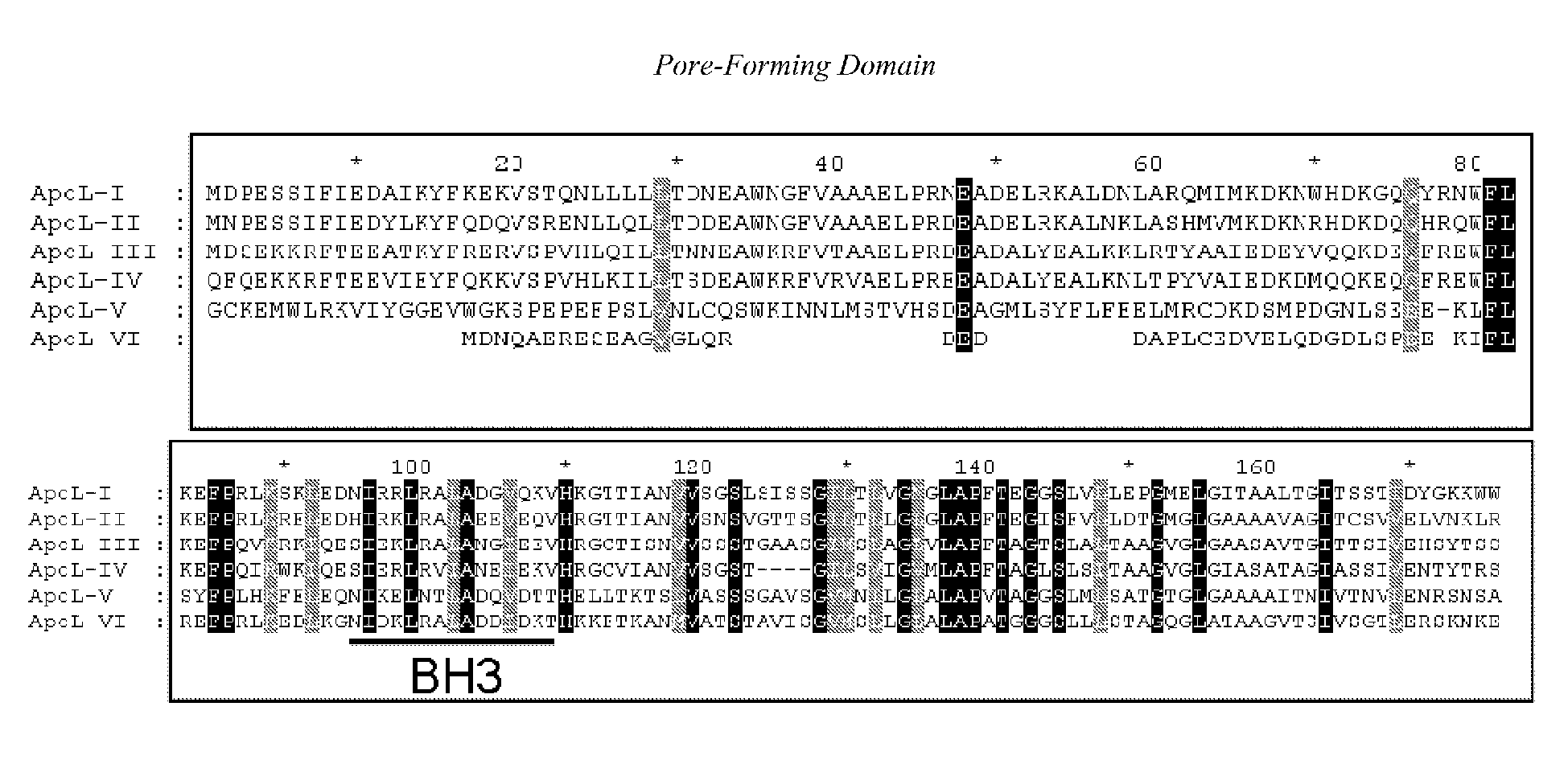
- Fig. 2 represents the BH3 domain in apoL-I to apoL-V involved in pore-forming.
- Apoptosis death executioners are members of the caspase family of proteases, which upon activation cleave vital proteins and activate other proteolytic enzymes [14]. These caspases may act either independently or in concert with another key protein family involved in programmed cell death: the Bcl-2 family [14-16].
- This family is composed of both pro- (such as Bid, Bax, Bcl-Xs, Bak, Bad, Bim, Puma) and anti- (such as Bcl-2, Bcl-xL, Bcl-w) apoptotic proteins, and is characterized by the presence of one or several Bcl-2 homology signature motifs (BH1 to BH4).
- pro- such as Bid, Bax, Bcl-Xs, Bak, Bad, Bim, Puma
- anti- such as Bcl-2, Bcl-xL, Bcl-w
- pro-apoptotic molecules (Bax, Bak) undergo conformational remodelling that allows their translocation to the mitochondrial membrane, causing the depolarization and permeabilization of this membrane. Cytochrome c and Smac/Diablo are released from the mitochondrion into the cytoplasm, which activates the caspase pathway.
- Bcl-2 family acts upstream from irreversible cellular damage, they play a pivotal role in deciding whether a cell will die or not.
- members of the Bcl-2 family Following the insertion of members of the Bcl-2 family into the mitochondrial membrane different members of this Bcl-family share a colicin pore-forming-like domain [18], and both pro- and anti-apoptotic members have been shown to possess ionic pore-forming activity in vitro [19-22]. Both characteristics, the presence of a colicin-like pore-forming domain and the capacity to conduct ions, have been found and described for apoL-I [7] . ApoLs and Bcl-2 share the same phylogenetic distribution: absence in bacteria and yeast, presence in metazoans.
- apoL expression appears to be very low, being undetectable by Northern blot analysis. Upregulation of putative prodeath proteins in cancer cells might look puzzling at first sight. However, the BH3-only protein subset of the Bcl-2 family is implicated in the first events of the apoptotic pathway, as they act as sensors of different death stimuli. Cancer cells are still in contact with death stimuli, but in some way they escape them.
- ApoL transcripts are present in a wide variety of organs [2, 3, 11]. As apoL-I, apoL-II and apoL-III gene expression is restricted to the endothelium lining blood vessels [11, 35], this wide expression pattern might be explained by the presence of endothelial cells in various organs. In endothelial cells, which are primary targets of cytokine-induced cell death, apoLs are strongly induced by the pro-inflammatory cytokines TNF- ⁇ [11, 35] and IFN- ⁇ [36]. Similarly, the related protein verge, which is also restricted to the endothelium, is overexpressed by TNF- ⁇ [12].
- ApoL-I transcripts were also detected in macrophages, placenta and neurones of the prefrontal cortex [3, 11, 35, 38]. The high expression level in the placenta [3] might be related to extensive angiogenesis [39] that involves not only cellular proliferation, but also regression of endothelial cells during involution of capillary networks, probably through an apoptotic process [40, 41].
- microarray data demonstrated selective expression of apoL-III (and to a lesser extent apoL-I and apoL-II) in immune T and B cells.
- a candidate target site is the lysosome, given the optimal preference of apoL-I activity of apoL-I at acidic pH and the localization of this protein in the lysosomal membrane of trypanosomes [7], but predictions based on the sequence suggest a localisation in the endoplasmic reticulum [3].
- this localisation could be multiple and influenced by the environmental conditions, as seen in the case of Bcl-2, which in addition to the mitochondrion, can prevent membrane leak in the lysosome [45] and in the endoplasmic reticulum [46].
- apoptosis The classical target organelle of apoptosis is the mitochondrion, but increasing evidence reveals that cell death (apoptosis, parapoptosis) can be triggered from alternative organelles such as the Golgi, the endoplasmic reticulum or the lysosome [15, 17, 43].
- a variety of inducers including the well-known p53 protein, trigger an apoptotic process where permeabilization of the lysosomal membrane precedes activation of Bax and depolarization of the mitochondrial membrane is preceded by a perturbation of the lysosomal membrane [47-49].
- cathepsin D can trigger activation of Bax [50]
- inhibitors of cathepsin those proteins preventted further apoptosis tic events [50, 51].
- cathepsins released from lysosomes can generate truncated versions of Bid that are able to induce activation of Bax [52]
- it would seem that in vivo, activation of the mitochondrial pathway by lysosomal permeabilization is Bid-independent [50, 53, 54].
- apoL-III transcripts characterize the cell types (T lymphocytes and endothelial cells) where TNF- ⁇ + IFN- ⁇ -induced apoptosis operates through both mitochondrial and lysosomal pathways, while in other cell types (HeLa and HEK293), the lysosomal pathway is absent [54].
- the apoptotic effect induced by overexpression of apoL-VI in p53-depleted cells was found to be Bid-independent [26], similarly to what occurs in lysosome-mediated apoptosis triggered by TNF- ⁇ +IFN- ⁇ in HUVE (Human Umbilical Vein Endothelial) cells [54].
- the ultimate decision of a cell to die or survive generally depends on the ratio between pro- and anti-apoptotic stimuli. Particularly crucial is the ratio between pro- and anti-apoptotic Bcl-2 family members, as anti-apoptotic members are known to neutralise their toxic counterparts by physical interaction through the BH3 motif [16, 17] Therefore, we propose that pro-survival proteins like Bcl-2 could interact with apoLs to block their activity.
- T. b. rhodesiense and T. b. gambiense are resistant to the toxin and can grow in humans, causing sleeping sickness.
- the mechanism of resistance of T. b. rhodesiense has been elucidated [6, 57].
- This parasite expresses a protein (Serum Resistance-Associated protein, or SRA) that confers resistance through physical interaction with the C-terminal helix of apoL-I. Removal of this helix from apoL-I retained its full lytic activity of apoL-I, both on trypanosomes and on bacteria [6, 7].
- SRA Serum Resistance-Associated protein
- the SRA-interacting helix is totally dispensable for the activity of apoL-I.
- the C-terminal helix was found to be the most conserved domain between the various apoL family members, whether from humans (Fig. 1) or from other mammals.
- T. b. rhodesiense might have acquired resistance by neutralisation of apoL-I through its cognate, conserved control domain.
- mammalian "SRA-like" proteins may be involved in the natural control of apoL toxic activity through interaction with the C-terminal helix of these proteins.
- apoLs represent a new family of intracellular ionic channels, particularly in lymphocytes and endothelial cells. These proteins are induced by inflammation, and could be could be involved in cytokine-induced apoptosis in those cell types.
- Biological processes possibly concerned by apoLs include cancer, atherosclerosis, angiogenesis and regulation of the immune system.
- microarray studies have revealed that apoL-I, apoL-II and apoL-IV transcripts are highly increased in prefrontal cortex of schizophrenic patients [38].
Landscapes
- Health & Medical Sciences (AREA)
- Life Sciences & Earth Sciences (AREA)
- Public Health (AREA)
- Chemical & Material Sciences (AREA)
- Medicinal Chemistry (AREA)
- Veterinary Medicine (AREA)
- Pharmacology & Pharmacy (AREA)
- Animal Behavior & Ethology (AREA)
- General Health & Medical Sciences (AREA)
- Bioinformatics & Cheminformatics (AREA)
- Engineering & Computer Science (AREA)
- Organic Chemistry (AREA)
- General Chemical & Material Sciences (AREA)
- Nuclear Medicine, Radiotherapy & Molecular Imaging (AREA)
- Chemical Kinetics & Catalysis (AREA)
- Proteomics, Peptides & Aminoacids (AREA)
- Gastroenterology & Hepatology (AREA)
- Immunology (AREA)
- Zoology (AREA)
- Epidemiology (AREA)
- Pain & Pain Management (AREA)
- Rheumatology (AREA)
- Psychiatry (AREA)
- Biomedical Technology (AREA)
- Neurology (AREA)
- Neurosurgery (AREA)
- Medicines That Contain Protein Lipid Enzymes And Other Medicines (AREA)
Abstract
The present invention is related to a pharmaceutical composition comprising an adequate pharmaceutical carrier or diluent and an element selected from the group consisting of:
- apolipoprotein apoL-Ill;
- a pharmaceutically active fragment of this apolipoprotein apoL-Ill;
- a nucleotide sequence encoding this apolipoprotein apoL-Ill or said fragment;
- a vector comprising said nucleotide sequence;
- a cell transformed by said nucleotide sequence or said vector;
- an inhibitor or activator directed against said apolipoprotein apoL-Ill, its fragment or its nucleotide sequence,
- an anti-inhibitor or anti-activator directed against said inhibitor or activator or its encoding nucleotide sequence.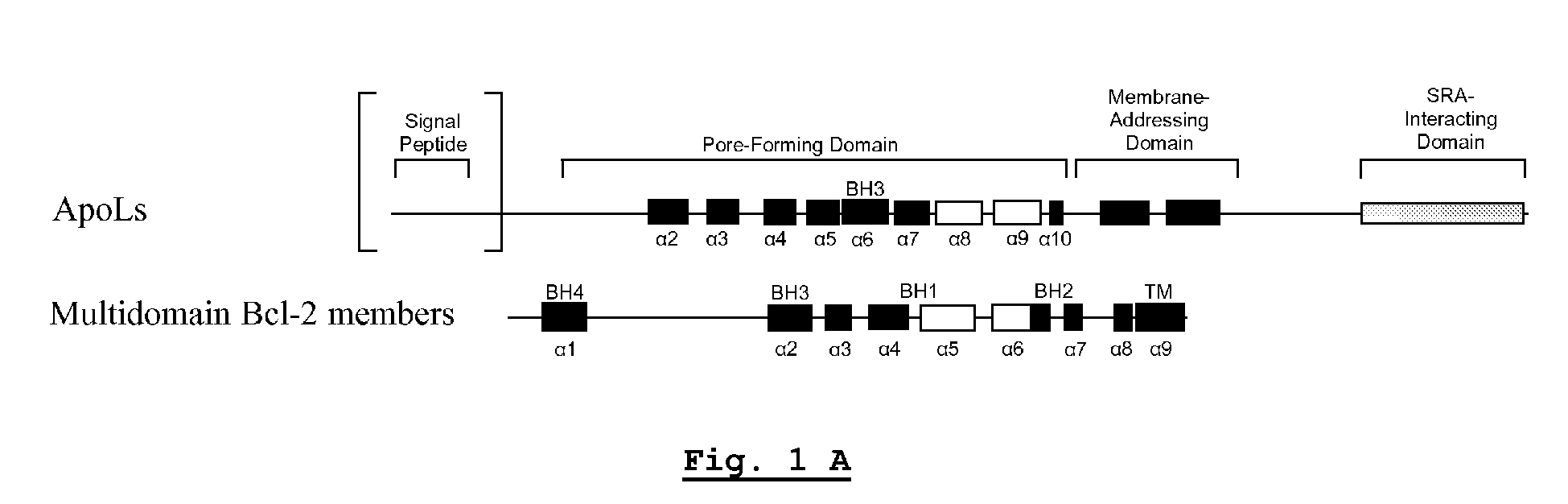
- apolipoprotein apoL-Ill;
- a pharmaceutically active fragment of this apolipoprotein apoL-Ill;
- a nucleotide sequence encoding this apolipoprotein apoL-Ill or said fragment;
- a vector comprising said nucleotide sequence;
- a cell transformed by said nucleotide sequence or said vector;
- an inhibitor or activator directed against said apolipoprotein apoL-Ill, its fragment or its nucleotide sequence,
- an anti-inhibitor or anti-activator directed against said inhibitor or activator or its encoding nucleotide sequence.
Description
- The present invention is related to an inhibitor directed against apolipoproteins, selected from the group consisting of apolipoprotein (apoL) family (apoL-I to apoL-VI, preferably apoL-III, apoL-II and/or apoL-I).
- Another aspect of the present invention concerns a pharmaceutical composition comprising an adequate pharmaceutical carrier or diluent and an element selected from the group consisting of an apolipoprotein and the inhibitor of the invention, preferably, apoL-III, apoL-II, apoL-IV, apoL-V or ApoL-VI inhibitors, an apolipoprotein (preferably apoL-III, apoL-II, apoL-IV, apoL-V or apoL-VI), nucleotide sequences encoding these apolipoproteins, vectors comprising them, cells transformed by these nucleotide sequences and expressing these apolipoproteins or cells transformed by these nucleotide sequences encoding these inhibitors and expressing these inhibitors.
- A further aspect of the present invention is related to the use of this pharmaceutical composition for the manufacture of a medicament in the treatment and/or the prevention of various diseases, preferably selected from the group consisting of cancer (through necrosis senescence or apoptosis, (control of programmed cell-death)) inflammation, arteriosclerosis, angiogenesis and regulation of the immune system (modulating the immune response of a patient, especially for the treatment or the prevention of auto-immune diseases), neurological disorders (including schizophrenia) .
- ApoL-I was identified as a component of a minor subclass of HDL particles in human blood [1]. This protein is encoded by a gene belonging to a multigene family that contains six members organised as a cluster on the 22q13.1 locus [2, 3]. DueLinked to its association with lipoproteins that participate in the transport of cholesterol, apoL-I was, and still is, considered as playing a role in the transport and metabolism of lipids. Some correlations between the serum levels of apoL-I and triglycerides appeared to support this hypothesis [4, 5].
- African trypanosomes are flagellated protozoan parasites responsible for major plagues of the continent. In particular, two Trypanosoma brucei subspecies (T. b. Trypanosoma brucei rhodesiense and T. b. gambiense) can grow in humans where they cause a lethal disease termed sleeping sickness. Although morphologically indistinguishable from these pathogens, the T. b. brucei subspecies is readily lyzed by human serum. Studies aiming at understanding the mechanism of resistance of T. b. rhodesiense to this lytic activity allowed the identification of apoL-I as trypanolytic factor 1[6].
- The toxic activity of apoL-I on T. b. brucei was recently analyzed into some detail [7]. ApoL-I is targeted to the lysosome of the parasite, following active endocytosis of the carrier lipoproteins [8]. The progressive acidification occurring during endocytosis probably releases the toxin from HDLs and allows its insertion into the lysosomal membrane. ApoL-I was found capable of generating anionic pores in various biological membranes. This activity is responsible for the toxic effect of apoL-I on trypanosomes. It triggers uncontrolled influx of chloride from the cytoplasm to the lysosome, and leads to continuous osmotic swelling of this compartment, followed by and subsequent cell death.
- During studies on the trypanolytic activity of apoL-I, experimental data obtained on the basis of model predictions allowed the definition of three distinctive domains in apoL-I [7] (Fig. 1). This protein contains a pore-forming domain whose organisation resembles that of bacterial colicins, diphtheria toxin and the mammalian Bcl-2 family members: a long hydrophobic hairpin surrounded by a bundle of amphipathic alpha helices. As in colicins, the pore-forming domain of apoL-I is unable to reach the target membrane without the presence of an adjacent membrane-addressing domain. This domain consists of a pH-sensitive hairpin bridging two alpha helices. At neutral pH this domain exhibits a hydrophobic surface that would allow the protein to associate with HDLs . The last domain is a long amphipathic alpha helix with a leucine zipper. This helix that is not required for the toxic activity of the protein, on trypanosomes as well as on other cell types.
- ApoL-I can be distinguished from the other members of the family due to the presence of an additional sequence encoding an N-terminal signal peptide, probably arisen after tandem duplication and responsible for the secretion of this protein in the serum. The other members do not possess such a signal peptide sequence, and are believed to be intracellular. Sequence analysis predicts them to be targeted to the endoplasmic reticulum (apoL-I,-II, -IV, -VI) or to the cytoplasm (apoL-III, -V) [3], but the cellular localisation of these proteins remains to be determined. In the cases of apoL-III and apoL-IV, alternative splicing generates rare splice mRNA variants that encode a putative signal peptide [2], but none of these proteins has yet been detected in the serum.
- Phylogenetic analysis reveals that the apoLs are closely related, although apoL-V and apoL-VI appear to be more evolutionarily divergent [3]. This is paralleled by the relative distance of these two genes from the others in the genomic cluster. ApoL-I was identified only in humans and Gorilla [9, 10]. However, apoL homologues are present in a variety of mammalian species, always organised as a cluster but with a variable number of members (mice have as many as 14 members while rats have only 8). some with Rapid gene duplication makes it difficult to delineate homologues of individual human apoLs outside the primate lineage. Non-mammalian species such as zebrafish also appear to contain members of the family. Based on genomic evidence, apoL-III seems to be the ancestor gene of the apoL-I-apoL-IV cluster [11], and this particular member exhibits the highest homology with apoLs from other organisms. The closest homologue to apoLs is a protein termed verge (Vascular Early Response Gene), which is conserved between mice and humans and may thus represent an early divergent protein that arose from this family [12]. Other distantly related members can be found in Caenorhabditis elegans and Zea mays [7, 12] .
- Based on the effect of apoL-I on trypanosomes and its demonstrated anionic pore-forming activity of this protein in various cell types and biological membranes [7].
- The present invention aims to provide a new pharmaceutical composition for improving the treatment and/or the prevention of various diseases affecting humans, especially cancer (through necrosis senescence and/or apoptosis), inflammation, arteriosclerosis, angiogenesis and neurological disorders, including schizophrenia.
- The present invention aims also to provide such composition for improving modulation of an immune response of a patient, especially for the treatment and/or the prevention of autoimmune diseases.
- A first aspect of the present invention is related to an inhibitor or an activator of apolipoproteins. According to the invention apolipoproteins are molecules, which belong to an apolipoprotein (apoL) family (apoL-I to apoL-VI).
- Preferably, said apolipoproteins are human mammal apolipoproteins, preferably human apolipoproteins. These inhibitors or activators are molecules, which interact with these apolipoproteins for modulating their activity.
- An example of these inhibitors or activators are antibodies or peptides (preferably monoclonal antibodies or hypervariable specific portion thereof) directed against (to) these apolipoproteins and which are able to modulate (inhibit, reduce or improve) the activity of these apolipoproteins. Preferably, these inhibitors are not the SRA proteins or a portion thereof and do not include inhibitors directed against apoL-I protein.
- These inhibitors or activators can be lipids ions or synthetic molecules.
- Preferably, these inhibitors or activators are natural peptides obtained from a human sample, which may interact specifically with these apolipoproteins, preferably against apoL-III, but possibly also against apoL-II, apoL-IV, apoL-V and/or apoL-VI.
- Another aspect of the present invention is related to the nucleotide sequence encoding the inhibitor or activator peptide, according to the invention or a portion thereof interacting with the apolipoprotein and to the vector comprising this nucleotide sequence.
- A further aspect of the present invention is related to a cell transformed by this nucleotide sequence or a vector and encoding and possibly expressing the inhibitor or activator peptide.
- The present invention is also related to a method for recovering from a human sample (such as a blood sample) the inhibitor or activator according to the invention and directed against an apolipoprotein, preferably against apoL-III, apoL-I and/or apoL-II. This method comprises the steps of:
- fixing this apolipoprotein or a portion thereof upon a solid support;
- contacting the biological sample with this fixed apolipoprotein or a fragment thereof and obtaining a specific binding between the inhibitor present in the sample and this fixed apolipoprotein protein or its fragment;
- washing the biological sample in order to recover the inhibitor or activator molecule bound to the apolipoprotein or its fragment and,
- possibly eluting the solid support, in order to recover the inhibitor or activator.
- The present invention is also related to these mammals, preferably to these human inhibitors molecules recovered by said method and directed against apolipoproteins.
- A further aspect of the present invention is related to a pharmaceutical composition comprising a pharmaceutically acceptable carrier or diluent, and an element selected from the group consisting of an inhibitor or activator directed against (to) an apolipoprotein or a fragment thereof (including an inhibitor directed against apoL-I SRA or a fragment thereof included), a nucleotide sequence encoding this inhibitor or activator, a vector comprising this nucleotide sequence, the cell transformed by the nucleotide sequence or the vector, an apolipoprotein (apoL-I to apoL-VI), a nucleotide sequence encoding this apolipoprotein, a vector comprising this nucleotide sequence, a cell transformed by this nucleotide sequence or this vector, or a mixture thereof.
- The present invention is also related to the use of the pharmaceutical composition according to the invention for the manufacture of a medicament in the treatment and/or the prevention of various diseases, especially the treatment of cancer (through necrosis, senescence or apoptosis) inflammation, arteriosclerosis, angiogenesis, and neurological disorders including schizophrenia.
- The present invention is also related to the use of this medicament for the immune system of a patient in the treatment and/or the prevention of autoimmune diseases.
- The present invention is also related to a method of treatment of a mammal subject, including a human patient, which comprises the step of administrating a sufficient amount of the pharmaceutical composition according to the invention for the treatment and/or the prevention of these diseases, or for modulating the immune system.
- A preferred embodiment of the present invention is related to the use of apoL-III, possibly in combination with another apolipoprotein, inhibitor or activator of apoliproteins for the manufacture of a medicament for the treatment and/or the prevention of cancer, especially through necrosis senescence or apoptosis of cells, more preferably through necrosis or apoptosis of human blood cells.
- Preferably, the molecule according to the invention is used for obtaining an efficient treatment, preferably the destruction of cancer cells through necrosis (senescence or apoptosis) following the formation of ionic channels in the membrane of these cells. Therefore, all the above described apolipoproteins may be used for a similar function.
- The original function of apoL might be ionic channels of intracellular membranes. They could play a role in the regulation of organelle and/or cellular or cell volume, or maintenance of membrane potential. One obvious concerned organelle would be the lysosome, as it is the target compartment for apoL-I [7]. Several chloride channels of the CIC family are known to act on the endosomal compartment, but it is clear that other players remain to be discovered, since the absence of endolysosomal CICs did not affect the control of the lysosomal pH and volume [13].
- These apolipoproteins, their inhibitors or activators, or their encoding sequences could also be used in gene therapy or cellular therapy, possibly in combination with a suitable vector expressed in a specific cell. Therefore, another aspect of the present invention concerns a vector comprising a nucleotide sequence encoding at least one of these apolipoproteins or one or more inhibitors (or activators) directed against (to) these apolipoproteins.
- The vector can be a plasmid, a virus, a cationic vesicle, or any other suitable molecule able to obtain the transformation of a cell, preferably a cancer cell and possibly an expression of the corresponding encoded polypeptide in the cell or by the cell.
- Another example of the inhibitor or activator according to the invention could be a nucleotide sequence which is complementary to the nucleotide sequence encoding the apolipoprotein. Examples of such nucleotide sequence are antisense mRNA, SiRNA, miRNA or other interference nucleotide sequences having alternative antisense structural type such as phosphorothiate, Morpholino, PNA (peptide nucleic acid), LNA (locked nucleic acid), and 2'-O alkyl oligo. All these antisense structural types have been used as antisense therapy technologies. Another example of inhibitor or activator nucleotide sequences are ribozymes. Examples of ribozymes are Harpin ribozymes, Hammerhead ribozymes and synthetic ribozymes which may comprise ribozyme activity inhibitors, such as a small molecule inhibitor or Morpholino antisense oligo.
- Another aspect of the present invention concerns an anti-inhibitor or anti-activator molecule which is directed against the inhibitor or activator according to the invention and that could be a peptide or a nucleotide sequence (including antisensense sequences or ribozyme sequences), specifically directed against the inhibitor or activator peptide or nucleotide sequence. Preferably for avoiding its binding to an apolipoprotein.
- Fig. 1 is representing three distinctive domains of apoL-I.
- Fig. 2 represents the BH3 domain in apoL-I to apoL-V involved in pore-forming.
- In metazoans, apoptosis leads to the selective removal of useless, damaged or dangerous cells from the body, avoiding the abrupt dispersal of intracellular content. This evolutionary conserved process is essential for morphogenesis and tissue sculpting during development and homeostasis throughout life. Apoptosis death executioners are members of the caspase family of proteases, which upon activation cleave vital proteins and activate other proteolytic enzymes [14]. These caspases may act either independently or in concert with another key protein family involved in programmed cell death: the Bcl-2 family [14-16]. This family is composed of both pro- (such as Bid, Bax, Bcl-Xs, Bak, Bad, Bim, Puma) and anti- (such as Bcl-2, Bcl-xL, Bcl-w) apoptotic proteins, and is characterized by the presence of one or several Bcl-2 homology signature motifs (BH1 to BH4). Various proteins containing only the BH3 motif (termed BH3-only proteins) can sense different stress conditions and initiate apoptosis [17]. Through different stimuli (e.g. truncated Bid), pro-apoptotic molecules (Bax, Bak) undergo conformational remodelling that allows their translocation to the mitochondrial membrane, causing the depolarization and permeabilization of this membrane. Cytochrome c and Smac/Diablo are released from the mitochondrion into the cytoplasm, which activates the caspase pathway.
- As the Bcl-2 family acts upstream from irreversible cellular damage, they play a pivotal role in deciding whether a cell will die or not. Following the insertion of members of the Bcl-2 family into the mitochondrial membrane different members of this Bcl-family share a colicin pore-forming-like domain [18], and both pro- and anti-apoptotic members have been shown to possess ionic pore-forming activity in vitro [19-22]. Both characteristics, the presence of a colicin-like pore-forming domain and the capacity to conduct ions, have been found and described for apoL-I [7] . ApoLs and Bcl-2 share the same phylogenetic distribution: absence in bacteria and yeast, presence in metazoans. Even though the Bcl-2 proteins family is not present in yeast and bacteria, evidence demonstrated their potential for toxic activity was demonstrated in those organisms [23-25], as was also shown for apoL-I [7]. Moreover, in a screen for novel BH3-only proteins apoL-VI was selected [26]. In fact, the presence of a BH3 domain in helix 6 of the pore-forming domain [7] could characterize the entire apoL family, as shown in Fig. 2. Furthermore, over expression of apoL-VI in cancer cells devoid of p53 led to typical characteristic signs effects of apoptosis such as induction of initiator caspases 8 and 9, and release of cytochrome c and smac/Diablo from the mitochondrion [26]. Significantly, induction of caspases 3 and 9, translocation of phosphatidylserine in the plasma membrane toxic effect of apoL-VI was lost upon deletion of dependent on the presence of the putative BH3 motif.
- In accordance with a role in cell survival, a growing number of reports point to significant modification (increase or decrease) of the expression level of apoLs in several cancers, particularly cervical cancer, ovarian cancer and breast cancer [27-30]. Under normal conditions, apoL expression appears to be very low, being undetectable by Northern blot analysis. Upregulation of putative prodeath proteins in cancer cells might look puzzling at first sight. However, the BH3-only protein subset of the Bcl-2 family is implicated in the first events of the apoptotic pathway, as they act as sensors of different death stimuli. Cancer cells are still in contact with death stimuli, but in some way they escape them. Therefore, it is possible that this escape occurs downstream from the steps targeted by apoLs, accounting for the upregulation of these sensors. Interestingly, apoLs are also upregulated in some virus infected cells [30, 31], and apoL-I was shown to be the most upregulated gene during replicative senescence [32, 33]. Although the biological significance of senescence is not fully understood, it may be seen as a process of escape from apoptosis. One of the strategies, along with apoptosis and quiescent-like growth arrest, to counteract abnormal cell proliferation [34].
- ApoL transcripts are present in a wide variety of organs [2, 3, 11]. As apoL-I, apoL-II and apoL-III gene expression is restricted to the endothelium lining blood vessels [11, 35], this wide expression pattern might be explained by the presence of endothelial cells in various organs. In endothelial cells, which are primary targets of cytokine-induced cell death, apoLs are strongly induced by the pro-inflammatory cytokines TNF-α [11, 35] and IFN-γ [36]. Similarly, the related protein verge, which is also restricted to the endothelium, is overexpressed by TNF-α [12]. IFN-α and IFN-β regulate apoLs transcripts levels [30, 31], while apoL-III expression activates the NF-κB pathway [37]. ApoL-I transcripts were also detected in macrophages, placenta and neurones of the prefrontal cortex [3, 11, 35, 38]. The high expression level in the placenta [3] might be related to extensive angiogenesis [39] that involves not only cellular proliferation, but also regression of endothelial cells during involution of capillary networks, probably through an apoptotic process [40, 41]. Finally, microarray data demonstrated selective expression of apoL-III (and to a lesser extent apoL-I and apoL-II) in immune T and B cells. Taken together, these observations raise the possibility that apoLs are involved in processes linked to cytokine-induced cell death, particularly in the endothelial and immune systems. In lymphocytes, apoptosis can be induced by the anti-inflammatory glucocorticoid hormones [42], but necrotic cell death pathways also appear to be important to control the decline of the immune response and the elimination of autoreactive cells [43]. Although these processes are still poorly understood, they are both blocked by Bcl-2 [42, 43]. Given the probable presence of the Bcl-2 interacting motif BH3 in apoLs, these proteins are possible candidates for this function. In support of this hypothesis, microarray data indicate that glucocorticoids modulate the expression of apoL-III in Jurkat T lymphocytes [44].
- The intracellular localisation of apoLs is totally unknown. A candidate target site is the lysosome, given the optimal preference of apoL-I activity of apoL-I at acidic pH and the localization of this protein in the lysosomal membrane of trypanosomes [7], but predictions based on the sequence suggest a localisation in the endoplasmic reticulum [3]. Obviously, this localisation could be multiple and influenced by the environmental conditions, as seen in the case of Bcl-2, which in addition to the mitochondrion, can prevent membrane leak in the lysosome [45] and in the endoplasmic reticulum [46].
- The classical target organelle of apoptosis is the mitochondrion, but increasing evidence reveals that cell death (apoptosis, parapoptosis) can be triggered from alternative organelles such as the Golgi, the endoplasmic reticulum or the lysosome [15, 17, 43]. In particular, a variety of inducers, including the well-known p53 protein, trigger an apoptotic process where permeabilization of the lysosomal membrane precedes activation of Bax and depolarization of the mitochondrial membrane is preceded by a perturbation of the lysosomal membrane [47-49]. The release of the lysosomal cysteine proteases cathepsins into the cytosol appears to play a key role in this pathway, as cathepsin D can trigger activation of Bax [50], and inhibitors of cathepsin those proteins preventted further apoptosis tic events [50, 51]. Although cathepsins released from lysosomes can generate truncated versions of Bid that are able to induce activation of Bax [52], it would seem that in vivo, activation of the mitochondrial pathway by lysosomal permeabilization is Bid-independent [50, 53, 54]. Even very well-known apoptotic inducers such as p53 were shown to act partially through the lysosome. The factors responsible for permeabilization of the lysosomal membrane are still unknown, although In addition, Bax was recently reported to has been shown to partially localise into the lysosomal membrane of apoptotic fibroblastse [49], while in mouse hepatocytes the Bax-activator Bid appeared to be involved in lysosomal permeabilization induced by TNF-α [55]. However, in T lymphocytes exhibiting lysosome-mediated apoptosis, no trace of activated Bax was detectable in lysosomes, and depletion of Bax did not impede lysosomal membrane permeabilization [50]. Similarly, in mouse embryonic fibroblasts the absence of Bax did not prevent normal lysosome-initiated apoptosis [48, 51]. The factors involved in lysosomal permeabilization could contain the interactive BH3 motif, and, since this process appears to be pathway is inhibited by Bcl-2, demonstrating cross-talk between the two pathways [45]. Interestingly, high levels of apoL-III transcripts characterize the cell types (T lymphocytes and endothelial cells) where TNF-α + IFN-γ-induced apoptosis operates through both mitochondrial and lysosomal pathways, while in other cell types (HeLa and HEK293), the lysosomal pathway is absent [54]. Moreover, the apoptotic effect induced by overexpression of apoL-VI in p53-depleted cells was found to be Bid-independent [26], similarly to what occurs in lysosome-mediated apoptosis triggered by TNF-α +IFN-γ in HUVE (Human Umbilical Vein Endothelial) cells [54]. One characteristic of the lysosomal pathway is activation of caspase 3 that is Bid-independent. Interestingly, the apoptotic effect induced by over expression of apoL-VI in cancer cells was found to involve caspase 3 cleavage without Bid cleavage, suggesting activation of the lysosomal pathway. Altogether, these observations suggest a possible involvement of apoLs in the lysosome-mediated pathway of apoptosis.
- In the case of apoL-I, HDL sequestration might prevent this toxin to target any cell type when circulating in blood vessels, but after release from the carrier particles in the endocytic compartment of trypanosomes, physiological levels of apoL-I (around 8 pg/ml) readily lyze the parasites [6]. Interestingly, Staphyloccocus aureus L-forms are sensitive to the particular minor HDL subfraction that contains apoL-I [56], suggesting that different pathogens might be sensitive to the same toxin. The general toxicity exhibited by apoL-I on all various cell types tested (bacteria, yeast, trypanosomes and eukaryotic cells) [7] suggests a role of this protein in human innate immunity.
- It is probable that not only pathogens, but also human endocytic cells take up HDL-bound apoL-I. Obviously these cells must cope with apoL-I toxicity, raising the general question of the control of apoLs. Under normal conditions apoLs seem to be expressed at very low levels. However, the viability of endothelial cells does not appear to be affected by the strong overexpression of apoL-I, apoL-II and apoL-III induced by TNF-α treatment [11]. Therefore, the toxic potential of apoLs must clearly be controlled in these cells.
- The ultimate decision of a cell to die or survive generally depends on the ratio between pro- and anti-apoptotic stimuli. Particularly crucial is the ratio between pro- and anti-apoptotic Bcl-2 family members, as anti-apoptotic members are known to neutralise their toxic counterparts by physical interaction through the BH3 motif [16, 17] Therefore, we propose that pro-survival proteins like Bcl-2 could interact with apoLs to block their activity.
- In addition, the studies on the resistance of some African trypanosomes to the lytic effect of apoL-I offers another very seducing possibility. T. b. rhodesiense and T. b. gambiense are resistant to the toxin and can grow in humans, causing sleeping sickness. The mechanism of resistance of T. b. rhodesiense has been elucidated [6, 57]. This parasite expresses a protein (Serum Resistance-Associated protein, or SRA) that confers resistance through physical interaction with the C-terminal helix of apoL-I. Removal of this helix from apoL-I retained its full lytic activity of apoL-I, both on trypanosomes and on bacteria [6, 7]. Thus, the SRA-interacting helix is totally dispensable for the activity of apoL-I. Despite this observation, the C-terminal helix was found to be the most conserved domain between the various apoL family members, whether from humans (Fig. 1) or from other mammals. Altogether, these findings suggest that T. b. rhodesiense might have acquired resistance by neutralisation of apoL-I through its cognate, conserved control domain. In other words, mammalian "SRA-like" proteins may be involved in the natural control of apoL toxic activity through interaction with the C-terminal helix of these proteins.
- The absence of apoLs from lower eukaryotes, coupled to the wide distribution and remarkable expansion of the apoL family between mammalian species, point to an important function linked to the physiology of complex organisms. Based on the available information, apoLs represent a new family of intracellular ionic channels, particularly in lymphocytes and endothelial cells. These proteins are induced by inflammation, and could be could be involved in cytokine-induced apoptosis in those cell types. Biological processes possibly concerned by apoLs include cancer, atherosclerosis, angiogenesis and regulation of the immune system. In addition, microarray studies have revealed that apoL-I, apoL-II and apoL-IV transcripts are highly increased in prefrontal cortex of schizophrenic patients [38].
Claims (7)
- A pharmaceutical composition comprising an adequate pharmaceutical carrier or diluent and an element selected from the group consisting of:- apolipoprotein apoL-III;- a pharmaceutically active fragment of this apolipoprotein apoL-III;- a nucleotide sequence encoding said apolipoprotein apoL-III or said fragment;- a vector comprising said nucleotide sequence;- a cell transformed by said nucleotide sequence or said vector;- an inhibitor or activator directed against said apolipoprotein apoL-III, its fragment or its nucleotide sequence,- an anti-inhibitor or anti-activator directed against said inhibitor or activator or its encoding nucleotide sequence.
- The composition according to claim 1, which further comprises an element selected from the group consisting of :- apolipoprotein apoL-II;- apolipoprotein apoL-I;- pharmaceutically active fragment of this apolipoprotein apoL-II and/or apoL-I;- nucleotide sequences encoding said apolipoprotein apoL-II, apoL-I or their fragments;- vector(s) comprising said nucleotide sequence(s);- cells transformed by said nucleotide sequence(s) or said vector(s); and- inhibitor(s) or activator(s) directed against said apolipoproteins apoL-II, apoLIII, their fragment, their nucleotide sequence and/or,- anti-inhibitor(s) directed against said inhibitor(s) or activator(s) or encoding nucleotide sequence(s).
- The composition according to claim 1 or 2, wherein the inhibitor or activator is a peptide inhibitor.
- The composition according to claim 1 or 2, wherein the inhibitor or activator is an antisense nucleotide sequence or a ribozyme.
- The composition according to any of the preceding claims, wherein the inhibitor or activator is a (monoclonal) antibody or a specific hypervariable portion thereof.
- The composition of claims 1 to 3, wherein the inhibitor is the SRA polypeptide or an active fragment thereof.
- Use of the pharmaceutical composition according to any of the preceding claims for the manufacture of a medicament in the treatment and/or the prevention of a disease selected from the group consisting of cancer, inflammation, arteriosclerosis, angiogenesis and/or neurological disorders including schizophrenia and autoimmune diseases.
Priority Applications (4)
| Application Number | Priority Date | Filing Date | Title |
|---|---|---|---|
| EP06114741A EP1867338A1 (en) | 2006-05-30 | 2006-05-30 | Pharmaceutical composition comprising apolipoproteins for the treatment of human diseases |
| US12/300,569 US20090162333A1 (en) | 2006-05-30 | 2007-05-25 | Pharmaceutical composition comprising apolipoproteins for the treatment of human diseases |
| PCT/EP2007/055128 WO2007138023A1 (en) | 2006-05-30 | 2007-05-25 | Pharmaceutical composition comprising apolipoproteins for the treatment of human diseases |
| EP07729552A EP2029158A1 (en) | 2006-05-30 | 2007-05-25 | Pharmaceutical composition comprising apolipoproteins for the treatment of human diseases |
Applications Claiming Priority (1)
| Application Number | Priority Date | Filing Date | Title |
|---|---|---|---|
| EP06114741A EP1867338A1 (en) | 2006-05-30 | 2006-05-30 | Pharmaceutical composition comprising apolipoproteins for the treatment of human diseases |
Publications (1)
| Publication Number | Publication Date |
|---|---|
| EP1867338A1 true EP1867338A1 (en) | 2007-12-19 |
Family
ID=37102456
Family Applications (2)
| Application Number | Title | Priority Date | Filing Date |
|---|---|---|---|
| EP06114741A Ceased EP1867338A1 (en) | 2006-05-30 | 2006-05-30 | Pharmaceutical composition comprising apolipoproteins for the treatment of human diseases |
| EP07729552A Withdrawn EP2029158A1 (en) | 2006-05-30 | 2007-05-25 | Pharmaceutical composition comprising apolipoproteins for the treatment of human diseases |
Family Applications After (1)
| Application Number | Title | Priority Date | Filing Date |
|---|---|---|---|
| EP07729552A Withdrawn EP2029158A1 (en) | 2006-05-30 | 2007-05-25 | Pharmaceutical composition comprising apolipoproteins for the treatment of human diseases |
Country Status (3)
| Country | Link |
|---|---|
| US (1) | US20090162333A1 (en) |
| EP (2) | EP1867338A1 (en) |
| WO (1) | WO2007138023A1 (en) |
Cited By (1)
| Publication number | Priority date | Publication date | Assignee | Title |
|---|---|---|---|---|
| WO2012095508A1 (en) * | 2011-01-13 | 2012-07-19 | Universite Libre De Bruxelles | Apol3 for use in the treatment of trypanosoma infectious diseases |
Families Citing this family (67)
| Publication number | Priority date | Publication date | Assignee | Title |
|---|---|---|---|---|
| JP5713377B2 (en) | 2005-12-28 | 2015-05-07 | ザ スクリプス リサーチ インスティテュート | Natural antisense and non-coding RNA transcripts as drug targets |
| EP2101819B1 (en) | 2006-11-20 | 2013-01-09 | President and Fellows of Harvard College | Methods, compositions, and kits for treating pain and pruritis |
| CA2739464C (en) | 2008-10-03 | 2020-03-31 | Curna, Inc. | Treatment of apolipoprotein-a1 related diseases by inhibition of natural antisense transcript to apolipoprotein-a1 |
| KR101829469B1 (en) | 2008-12-04 | 2018-03-30 | 큐알엔에이, 인크. | Treatment of erythropoietin (epo) related diseases by inhibition of natural antisense transcript to epo |
| MX2011005912A (en) | 2008-12-04 | 2011-06-17 | Opko Curna Llc | Treatment of vascular endothelial growth factor (vegf) related diseases by inhibition of natural antisense transcript to vegf. |
| KR101866152B1 (en) | 2008-12-04 | 2018-06-08 | 큐알엔에이, 인크. | Treatment of tumor suppressor gene related diseases by inhibition of natural antisense transcript to the gene |
| WO2010093904A2 (en) | 2009-02-12 | 2010-08-19 | Curna, Inc. | Treatment of brain derived neurotrophic factor (bdnf) related diseases by inhibition of natural antisense transcript to bdnf |
| EP2408919B1 (en) | 2009-03-16 | 2017-10-18 | CuRNA, Inc. | Treatment of nuclear factor (erythroid-derived 2)-like 2 (nrf2) related diseases by inhibition of natural antisense transcript to nrf2 |
| EP2408920B1 (en) | 2009-03-17 | 2017-03-08 | CuRNA, Inc. | Treatment of delta-like 1 homolog (dlk1) related diseases by inhibition of natural antisense transcript to dlk1 |
| CN102459596B (en) | 2009-05-06 | 2016-09-07 | 库尔纳公司 | Treatment of Lipid Transport and Metabolism Gene-Associated Diseases by Inhibition of Natural Antisense Transcripts Targeting Lipid Transport and Metabolism Genes |
| WO2010129746A2 (en) | 2009-05-06 | 2010-11-11 | Curna, Inc. | Treatment of tristetraproline (ttp) related diseases by inhibition of natural antisense transcript to ttp |
| WO2010129861A2 (en) | 2009-05-08 | 2010-11-11 | Curna, Inc. | Treatment of dystrophin family related diseases by inhibition of natural antisense transcript to dmd family |
| WO2010135329A2 (en) | 2009-05-18 | 2010-11-25 | Curna, Inc. | Treatment of reprogramming factor related diseases by inhibition of natural antisense transcript to a reprogramming factor |
| CN102549158B (en) | 2009-05-22 | 2017-09-26 | 库尔纳公司 | By suppressing to treat the disease that TFE3 is related to IRS albumen 2 (IRS2) for transcription factor E3 (TFE3) natural antisense transcript |
| CA2764683A1 (en) | 2009-05-28 | 2010-12-02 | Joseph Collard | Treatment of antiviral gene related diseases by inhibition of natural antisense transcript to an antiviral gene |
| CN102612560B (en) | 2009-06-16 | 2017-10-17 | 库尔纳公司 | By suppressing to treat the related diseases of PON1 for the natural antisense transcript of PON1 (PON1) |
| JP5944311B2 (en) | 2009-06-16 | 2016-07-05 | クルナ・インコーポレーテッド | Treatment of collagen gene-related diseases by suppression of natural antisense transcripts against collagen genes |
| US8859515B2 (en) | 2009-06-24 | 2014-10-14 | Curna, Inc. | Treatment of tumor necrosis factor receptor 2 (TNFR2) related diseases by inhibition of natural antisense transcript to TNFR2 |
| CA2765815A1 (en) | 2009-06-26 | 2010-12-29 | Opko Curna, Llc | Treatment of down syndrome gene related diseases by inhibition of natural antisense transcript to a down syndrome gene |
| EP2995303A1 (en) | 2009-07-10 | 2016-03-16 | President and Fellows of Harvard College | Permanently charged sodium and calcium channel blockers as anti-inflammatory agents |
| US20120252869A1 (en) | 2009-07-24 | 2012-10-04 | Opko Curna, Llc | Treatment of sirtuin (sirt) related diseases by inhibition of natural antisense transcript to a sirtuin (sirt) |
| JP6128848B2 (en) | 2009-08-05 | 2017-05-17 | クルナ・インコーポレーテッド | Treatment of insulin gene (INS) -related diseases by suppression of natural antisense transcripts against the insulin gene (INS) |
| CA2770104C (en) | 2009-08-11 | 2019-03-19 | Opko Curna, Llc | Treatment of adiponectin (adipoq) related diseases by inhibition of natural antisense transcript to an adiponectin (adipoq) |
| WO2011022606A2 (en) | 2009-08-21 | 2011-02-24 | Curna, Inc. | Treatment of 'c terminus of hsp70-interacting protein' (chip) related diseases by inhibition of natural antisense transcript to chip |
| KR101892760B1 (en) | 2009-08-25 | 2018-08-28 | 큐알엔에이, 인크. | Treatment of 'iq motif containing gtpase activating protein' (iqgap) related diseases by inhibition of natural antisense transcript to iqgap |
| KR101802540B1 (en) | 2009-09-25 | 2017-11-28 | 큐알엔에이, 인크. | Treatment of filaggrin (flg) related diseases by modulation of flg expression and activity |
| WO2011084455A2 (en) | 2009-12-16 | 2011-07-14 | Opko Curna, Llc. | Treatment of membrane bound transcription factor peptidase, site 1 (mbtps1) related diseases by inhibition of natural antisense transcript to mbtps1 |
| JP6031356B2 (en) | 2009-12-23 | 2016-11-24 | カッパーアールエヌエー,インコーポレイテッド | Treatment of uncoupling protein 2 (UCP2) -related diseases by inhibition of natural antisense transcripts against UCP2. |
| ES2661387T3 (en) | 2009-12-23 | 2018-03-28 | Curna, Inc. | Treatment of diseases related to hepatocyte growth factor (hgf) by inhibition of the natural antisense transcript to hgf |
| US8962585B2 (en) | 2009-12-29 | 2015-02-24 | Curna, Inc. | Treatment of tumor protein 63 (p63) related diseases by inhibition of natural antisense transcript to p63 |
| KR101838305B1 (en) | 2009-12-29 | 2018-03-13 | 큐알엔에이, 인크. | Treatment of nuclear respiratory factor 1 (nrf1) related diseases by inhibition of natural antisense transcript to nrf1 |
| DK2519632T3 (en) | 2009-12-31 | 2018-07-23 | Curna Inc | TREATMENT OF INSULIN RECEPTOR SUBSTRATE 2- (IRS2) RELATED DISEASES BY INHIBITION OF NATURAL ANTISENSE TRANSCRIPTION TO IRS2 AND TRANSCRIPTION FACTOR E3 (TFE3) |
| EP2521784B1 (en) | 2010-01-04 | 2017-12-06 | CuRNA, Inc. | Treatment of interferon regulatory factor 8 (irf8) related diseases by inhibition of natural antisense transcript to irf8 |
| CN102822342B (en) | 2010-01-06 | 2017-05-10 | 库尔纳公司 | Treatment of Pancreatic Developmental Gene-Related Diseases by Inhibiting Natural Antisense Transcripts of Pancreatic Developmental Genes |
| US9200277B2 (en) | 2010-01-11 | 2015-12-01 | Curna, Inc. | Treatment of sex hormone binding globulin (SHBG) related diseases by inhibition of natural antisense transcript to SHBG |
| CN102782135A (en) | 2010-01-25 | 2012-11-14 | 库尔纳公司 | Treatment of RNase H1 related diseases by inhibition of natural antisense transcript to RNase H1 |
| WO2011103528A2 (en) | 2010-02-22 | 2011-08-25 | Opko Curna Llc | Treatment of pyrroline-5-carboxylate reductase 1 (pycr1) related diseases by inhibition of natural antisense transcript to pycr1 |
| CA2795145C (en) | 2010-04-02 | 2019-01-22 | Curna, Inc. | Treatment of colony-stimulating factor 3 (csf3) related diseases by inhibition of natural antisense transcript to csf3 |
| KR101900962B1 (en) | 2010-04-09 | 2018-09-20 | 큐알엔에이, 인크. | Treatment of fibroblast growth factor 21 (fgf21) related diseases by inhibition of natural antisense transcript to fgf21 |
| US9023355B2 (en) | 2010-04-13 | 2015-05-05 | Beth Israel Deaconess Medical Center, Inc. | Compositions and methods for treating renal disease |
| US9828637B2 (en) | 2010-04-18 | 2017-11-28 | Wake Forest University Health Sciences | Methods of predicting predisposition to or risk of kidney disease |
| USRE49076E1 (en) | 2010-04-18 | 2022-05-17 | Beth Israel Deaconess Medical Center, Inc. | Compositions and methods for treating renal disease |
| WO2011139387A1 (en) | 2010-05-03 | 2011-11-10 | Opko Curna, Llc | Treatment of sirtuin (sirt) related diseases by inhibition of natural antisense transcript to a sirtuin (sirt) |
| TWI531370B (en) | 2010-05-14 | 2016-05-01 | 可娜公司 | Treatment of PAR4-related diseases by inhibiting PAR4 natural anti-strand transcript |
| CA2799207C (en) | 2010-05-26 | 2019-03-26 | Curna, Inc. | Treatment of atonal homolog 1 (atoh1) related diseases by inhibition of natural antisense transcript to atoh1 |
| RU2620978C2 (en) | 2010-05-26 | 2017-05-30 | Курна, Инк. | Treatment of diseases associated with methionine sulfoxide reductase a (msra), by msra natural antisense transcript inhibition |
| KR101914309B1 (en) | 2010-06-23 | 2018-11-02 | 큐알엔에이, 인크. | Treatment of sodium channel voltage-gated, alpha subunit (scna) related diseases by inhibition of natural abtisense transcript to scna |
| NO2593547T3 (en) | 2010-07-14 | 2018-04-14 | ||
| CA2813901C (en) | 2010-10-06 | 2019-11-12 | Curna, Inc. | Treatment of sialidase 4 (neu4) related diseases by inhibition of natural antisense transcript to neu4 |
| JP6049623B2 (en) | 2010-10-22 | 2016-12-21 | カッパーアールエヌエー,インコーポレイテッド | Treatment of IDUA-related diseases by inhibition of natural antisense transcripts to α-L-iduronidase (IDUA) |
| US10000752B2 (en) | 2010-11-18 | 2018-06-19 | Curna, Inc. | Antagonat compositions and methods of use |
| WO2012071238A2 (en) | 2010-11-23 | 2012-05-31 | Opko Curna Llc | Treatment of nanog related diseases by inhibition of natural antisense transcript to nanog |
| RU2620980C2 (en) | 2011-06-09 | 2017-05-30 | Курна, Инк. | Treatment of diseases associated with frataxin (fxn), by inhibiting natural antisense fxn transcript |
| US10583128B2 (en) | 2011-09-06 | 2020-03-10 | Curna, Inc. | Treatment of diseases related to alpha subunits of sodium channels, voltage-gated (SCNxA) with small molecules |
| EP2825648B1 (en) | 2012-03-15 | 2018-09-05 | CuRNA, Inc. | Treatment of brain derived neurotrophic factor (bdnf) related diseases by inhibition of natural antisense transcript to bdnf |
| WO2014085154A1 (en) | 2012-11-27 | 2014-06-05 | Beth Israel Deaconess Medical Center, Inc. | Methods for treating renal disease |
| WO2017024037A1 (en) | 2015-08-03 | 2017-02-09 | President And Fellows Of Harvard College | Charged ion channel blockers and methods for use |
| IL316397A (en) | 2018-05-22 | 2024-12-01 | Ionis Pharmaceuticals Inc | Modulators of apol1 expression |
| US10780083B1 (en) | 2019-03-11 | 2020-09-22 | Nocion Therapeutics, Inc. | Charged ion channel blockers and methods for use |
| US10786485B1 (en) | 2019-03-11 | 2020-09-29 | Nocion Therapeutics, Inc. | Charged ion channel blockers and methods for use |
| BR112021017809A2 (en) | 2019-03-11 | 2021-11-23 | Nocion Therapeutics Inc | Ester-substituted ion channel blockers and methods for use |
| EP3937945A4 (en) | 2019-03-11 | 2023-01-04 | Nocion Therapeutics, Inc. | CHARGED ION CHANNEL BLOCKERS AND METHODS OF USE |
| MA55307A (en) | 2019-03-11 | 2022-01-19 | Nocion Therapeutics Inc | CHARGED ION CHANNEL BLOCKERS AND METHODS OF USE |
| US10933055B1 (en) | 2019-11-06 | 2021-03-02 | Nocion Therapeutics, Inc. | Charged ion channel blockers and methods for use |
| WO2021091585A1 (en) | 2019-11-06 | 2021-05-14 | Nocion Therapeutics, Inc. | Charged ion channel blockers and methods for use |
| US12162851B2 (en) | 2020-03-11 | 2024-12-10 | Nocion Therapeutics, Inc. | Charged ion channel blockers and methods for use |
| JP7708777B2 (en) | 2020-03-11 | 2025-07-15 | ノシオン セラピューティクス,インコーポレイテッド | Charged ion channel blockers and methods of use - Patents.com |
Citations (1)
| Publication number | Priority date | Publication date | Assignee | Title |
|---|---|---|---|---|
| WO2004083403A2 (en) * | 2003-03-18 | 2004-09-30 | Applera Corporation | Genetic polymorphisms associated with rheumatoid arthritis, methods of detection and uses thereof |
-
2006
- 2006-05-30 EP EP06114741A patent/EP1867338A1/en not_active Ceased
-
2007
- 2007-05-25 WO PCT/EP2007/055128 patent/WO2007138023A1/en not_active Ceased
- 2007-05-25 US US12/300,569 patent/US20090162333A1/en not_active Abandoned
- 2007-05-25 EP EP07729552A patent/EP2029158A1/en not_active Withdrawn
Patent Citations (1)
| Publication number | Priority date | Publication date | Assignee | Title |
|---|---|---|---|---|
| WO2004083403A2 (en) * | 2003-03-18 | 2004-09-30 | Applera Corporation | Genetic polymorphisms associated with rheumatoid arthritis, methods of detection and uses thereof |
Non-Patent Citations (6)
| Title |
|---|
| DATABASE EPO Proteins [online] 23 November 2004 (2004-11-23), "Sequence 149 from Patent WO2004083403.", XP002404153, retrieved from EBI accession no. EPOP:CQ925116 Database accession no. CQ925116 * |
| DUCHATEAU P N ET AL: "Apolipoprotein L gene family: Tissue-specific expression, splicing, promoter regions", JOURNAL OF LIPID RESEARCH, BETHESDA, MD, US, vol. 42, no. 4, April 2001 (2001-04-01), pages 620 - 630, XP002247906, ISSN: 0022-2275 * |
| HORREVOETS A J G ET AL: "VASCULAR ENDOTHELIAL GENES THAT ARE RESPONSIVE TO TUMOR NECROSIS FACTOR-ALPHA IN VITRO ARE EXPRESSED IN ATHEROSCLEROTIC LESIONS, INCLUDING INHIBITOR OF APOPTOSIS PROTEIN-1, STANNIN, AND TWO NOVEL GENES", BLOOD, W.B. SAUNDERS, PHILADELPHIA, VA, US, vol. 93, no. 10, 15 May 1999 (1999-05-15), pages 3418 - 3431, XP002936412, ISSN: 0006-4971 * |
| MONAJEMI HOUSHANG ET AL: "The apolipoprotein L gene cluster has emerged recently in evolution and is expressed in human vascular tissue", GENOMICS, vol. 79, no. 4, April 2002 (2002-04-01), pages 539 - 546, XP002404090, ISSN: 0888-7543 * |
| PAGE N M ET AL: "The Human Apolipoprotein L Gene Cluster: Identification, Classification, and Sites of Distribution", GENOMICS, ACADEMIC PRESS, SAN DIEGO, US, vol. 74, no. 1, 15 May 2001 (2001-05-15), pages 71 - 78, XP004432227, ISSN: 0888-7543 * |
| VANHOLLEBEKE B ET AL: "The function of apolipoproteins L.", CELLULAR AND MOLECULAR LIFE SCIENCES : CMLS. SEP 2006, vol. 63, no. 17, September 2006 (2006-09-01), pages 1937 - 1944, XP002404091, ISSN: 1420-682X * |
Cited By (1)
| Publication number | Priority date | Publication date | Assignee | Title |
|---|---|---|---|---|
| WO2012095508A1 (en) * | 2011-01-13 | 2012-07-19 | Universite Libre De Bruxelles | Apol3 for use in the treatment of trypanosoma infectious diseases |
Also Published As
| Publication number | Publication date |
|---|---|
| US20090162333A1 (en) | 2009-06-25 |
| WO2007138023A1 (en) | 2007-12-06 |
| EP2029158A1 (en) | 2009-03-04 |
Similar Documents
| Publication | Publication Date | Title |
|---|---|---|
| US20090162333A1 (en) | Pharmaceutical composition comprising apolipoproteins for the treatment of human diseases | |
| Vanhollebeke et al. | The function of apolipoproteins L | |
| Olson et al. | Syntaxin 4, VAMP2, and/or VAMP3/cellubrevin are functional target membrane and vesicle SNAP receptors for insulin-stimulated GLUT4 translocation in adipocytes | |
| Youle et al. | The BCL-2 protein family: opposing activities that mediate cell death | |
| EP1966240B3 (en) | Lactoferrin peptides useful as cell-penetrating peptides | |
| Hasegawa et al. | ASC-mediated NF-κB activation leading to interleukin-8 production requires caspase-8 and is inhibited by CLARP | |
| Nakagami et al. | Modification of a novel angiogenic peptide, AG30, for the development of novel therapeutic agents | |
| JP6669501B2 (en) | Compositions and methods for reducing skin pigmentation | |
| Lindholm et al. | Neuronal apoptosis inhibitory protein: structural requirements for hippocalcin binding and effects on survival of NGF-dependent sympathetic neurons | |
| Narahara et al. | Actin binding LIM 1 (abLIM1) negatively controls osteoclastogenesis by regulating cell migration and fusion | |
| EP1465927B1 (en) | Bag3 antibodies to be used in research, diagnostics and therapy for cell death-involving diseases | |
| KR101638156B1 (en) | Pharmaceutical composition for preventing or treating hepatitis C virus infectious disease | |
| Lau | Cytotoxicity of nitric oxide donors in smooth muscle cells is dependent on phenotype, and mainly due to apoptosis | |
| WO2006098074A1 (en) | Apoptosis inducing agent for prostate carcinoma cell | |
| Shirani et al. | The relation between thermodynamic and structural properties and cellular uptake of peptides containing tryptophan and arginine | |
| Li et al. | Discovery of novel caeridins from the skin secretion of the Australian White’s Tree Frog, Litoria caerulea | |
| Li et al. | Anti-Toxoplasma gondii effects of XYP1-derived peptides and regulatory mechanisms of XYP1 | |
| WO2004081030A2 (en) | Peptides selectively lethal to malignant and transformed mammalian cells | |
| CN101891824B (en) | A blood vessel targeting soluble fusion protein TrxHis-hDll1-RGD | |
| KR101071305B1 (en) | NF-κB Inhibitor containing ARH1 protein or gene encoding the same | |
| CA2182310A1 (en) | Pp32: a newly identified cd45-associated protein | |
| Cai et al. | Different effects of p58PITSLRE on the apoptosis induced by etoposide, cycloheximide and serum-withdrawal in human hepatocarcinoma cells | |
| US20260124231A1 (en) | Oligonucleotide encoding a tissue inhibitor of metalloproteases protein for medical use in mammals | |
| WO2009113965A1 (en) | Isthmin derivatives for use in treating angiogenesis | |
| Wang | A Novel Bioactive Peptide from the Skin Secretion of the Chinese Brown Frog, Rana Chensinensis |
Legal Events
| Date | Code | Title | Description |
|---|---|---|---|
| PUAI | Public reference made under article 153(3) epc to a published international application that has entered the european phase |
Free format text: ORIGINAL CODE: 0009012 |
|
| AK | Designated contracting states |
Kind code of ref document: A1 Designated state(s): AT BE BG CH CY CZ DE DK EE ES FI FR GB GR HU IE IS IT LI LT LU LV MC NL PL PT RO SE SI SK TR |
|
| AX | Request for extension of the european patent |
Extension state: AL BA HR MK YU |
|
| STAA | Information on the status of an ep patent application or granted ep patent |
Free format text: STATUS: THE APPLICATION HAS BEEN REFUSED |
|
| 18R | Application refused |
Effective date: 20080129 |