EP1866255B1 - Method and system for utilizing activated sludge in a ballasted flocculation process to remove bod and suspended solids - Google Patents
Method and system for utilizing activated sludge in a ballasted flocculation process to remove bod and suspended solids Download PDFInfo
- Publication number
- EP1866255B1 EP1866255B1 EP20060739196 EP06739196A EP1866255B1 EP 1866255 B1 EP1866255 B1 EP 1866255B1 EP 20060739196 EP20060739196 EP 20060739196 EP 06739196 A EP06739196 A EP 06739196A EP 1866255 B1 EP1866255 B1 EP 1866255B1
- Authority
- EP
- European Patent Office
- Prior art keywords
- activated sludge
- mixed liquor
- ballasted flocculation
- wastewater
- line
- Prior art date
- Legal status (The legal status is an assumption and is not a legal conclusion. Google has not performed a legal analysis and makes no representation as to the accuracy of the status listed.)
- Expired - Lifetime
Links
Images


Classifications
-
- C—CHEMISTRY; METALLURGY
- C02—TREATMENT OF WATER, WASTE WATER, SEWAGE, OR SLUDGE
- C02F—TREATMENT OF WATER, WASTE WATER, SEWAGE, OR SLUDGE
- C02F1/00—Treatment of water, waste water, or sewage
- C02F1/52—Treatment of water, waste water, or sewage by flocculation or precipitation of suspended impurities
- C02F1/5281—Installations for water purification using chemical agents
-
- C—CHEMISTRY; METALLURGY
- C02—TREATMENT OF WATER, WASTE WATER, SEWAGE, OR SLUDGE
- C02F—TREATMENT OF WATER, WASTE WATER, SEWAGE, OR SLUDGE
- C02F3/00—Biological treatment of water, waste water, or sewage
- C02F3/02—Aerobic processes
- C02F3/12—Activated sludge processes
-
- B—PERFORMING OPERATIONS; TRANSPORTING
- B01—PHYSICAL OR CHEMICAL PROCESSES OR APPARATUS IN GENERAL
- B01D—SEPARATION
- B01D21/00—Separation of suspended solid particles from liquids by sedimentation
- B01D21/0039—Settling tanks provided with contact surfaces, e.g. baffles, particles
- B01D21/0045—Plurality of essentially parallel plates
-
- B—PERFORMING OPERATIONS; TRANSPORTING
- B01—PHYSICAL OR CHEMICAL PROCESSES OR APPARATUS IN GENERAL
- B01D—SEPARATION
- B01D21/00—Separation of suspended solid particles from liquids by sedimentation
- B01D21/10—Settling tanks with multiple outlets for the separated liquids
- B01D21/12—Settling tanks with multiple outlets for the separated liquids with moving scrapers
- B01D21/14—Settling tanks with multiple outlets for the separated liquids with moving scrapers with rotating scrapers
-
- B—PERFORMING OPERATIONS; TRANSPORTING
- B01—PHYSICAL OR CHEMICAL PROCESSES OR APPARATUS IN GENERAL
- B01D—SEPARATION
- B01D21/00—Separation of suspended solid particles from liquids by sedimentation
- B01D21/24—Feed or discharge mechanisms for settling tanks
- B01D21/2488—Feed or discharge mechanisms for settling tanks bringing about a partial recirculation of the liquid, e.g. for introducing chemical aids
-
- C—CHEMISTRY; METALLURGY
- C02—TREATMENT OF WATER, WASTE WATER, SEWAGE, OR SLUDGE
- C02F—TREATMENT OF WATER, WASTE WATER, SEWAGE, OR SLUDGE
- C02F1/00—Treatment of water, waste water, or sewage
- C02F1/52—Treatment of water, waste water, or sewage by flocculation or precipitation of suspended impurities
- C02F1/5236—Treatment of water, waste water, or sewage by flocculation or precipitation of suspended impurities using inorganic agents
-
- C—CHEMISTRY; METALLURGY
- C02—TREATMENT OF WATER, WASTE WATER, SEWAGE, OR SLUDGE
- C02F—TREATMENT OF WATER, WASTE WATER, SEWAGE, OR SLUDGE
- C02F1/00—Treatment of water, waste water, or sewage
- C02F1/52—Treatment of water, waste water, or sewage by flocculation or precipitation of suspended impurities
- C02F1/54—Treatment of water, waste water, or sewage by flocculation or precipitation of suspended impurities using organic material
- C02F1/56—Macromolecular compounds
-
- C—CHEMISTRY; METALLURGY
- C02—TREATMENT OF WATER, WASTE WATER, SEWAGE, OR SLUDGE
- C02F—TREATMENT OF WATER, WASTE WATER, SEWAGE, OR SLUDGE
- C02F2103/00—Nature of the water, waste water, sewage or sludge to be treated
- C02F2103/008—Originating from marine vessels, ships and boats, e.g. bilge water or ballast water
-
- C—CHEMISTRY; METALLURGY
- C02—TREATMENT OF WATER, WASTE WATER, SEWAGE, OR SLUDGE
- C02F—TREATMENT OF WATER, WASTE WATER, SEWAGE, OR SLUDGE
- C02F2305/00—Use of specific compounds during water treatment
- C02F2305/12—Inert solids used as ballast for improving sedimentation
-
- Y—GENERAL TAGGING OF NEW TECHNOLOGICAL DEVELOPMENTS; GENERAL TAGGING OF CROSS-SECTIONAL TECHNOLOGIES SPANNING OVER SEVERAL SECTIONS OF THE IPC; TECHNICAL SUBJECTS COVERED BY FORMER USPC CROSS-REFERENCE ART COLLECTIONS [XRACs] AND DIGESTS
- Y02—TECHNOLOGIES OR APPLICATIONS FOR MITIGATION OR ADAPTATION AGAINST CLIMATE CHANGE
- Y02W—CLIMATE CHANGE MITIGATION TECHNOLOGIES RELATED TO WASTEWATER TREATMENT OR WASTE MANAGEMENT
- Y02W10/00—Technologies for wastewater treatment
- Y02W10/10—Biological treatment of water, waste water, or sewage
Definitions
- the present invention relates to the treatment of water or wastewater, and more particularly to a combination activated sludge - ballasted flocculation process that is effective to remove both BOD and suspended solids.
- ballasted flocculation Water and wastewater treatment processes sometimes use ballasted flocculation to clarify water or wastewater.
- a ballasted flocculation process allows for faster settling of the flocculated material that is formed in the process.
- the faster settling of the ballasted floc allows for very high overflow rates in the clarifier or settling tank, and therefore allows the footprint of the total treatment system to be significantly smaller than conventional clarifiers.
- start-up and optimation times for ballasted flocculation systems are generally shorter due to the decreased hydraulic retention times of the system.
- Ballasted flocculation treatment systems employ a physical/chemical process and remove mostly particulate and colloidal solids present in the raw water or wastewater stream. Due to the physical/chemical nature of the solids removed, often times the process does not remove dissolved constituents. Of particular interest in treating water or wastewater is soluble BOD. Soluble BOD and particulate BOD are components of total BOD. While ballasted flocculation processes may achieve greater than 85% particulate BOD removal, these processes do not efficiently remove soluble BOD.
- the present invention relates to a water or wastewater treatment system and process that includes both an activated sludge system and a ballasted flocculation system.
- the water or wastewater treatment system includes one or more connecting lines that extend between the activated sludge system and the ballasted flocculation system.
- Activated sludge in the form of mixed liquor or return activated sludge is directed from the activated sludge system to the ballasted flocculation system.
- the total system is effective to remove BOD, including soluble BOD, and suspended solids.
- water or wastewater is directed into an activated sludge system and mixed with return activated sludge in a reactor to form mixed liquor. At least a portion of the mixed liquor of the activated sludge system, or at least a portion of the return activated sludge of the activated sludge system, is directed to and through a ballasted flocculation system.
- soluble BOD is removed from the water or wastewater by the activated sludge while suspended solids are removed from the water or wastewater by the ballasted flocculation system.
- an activated sludge system and a ballasted flocculation system are operated in parallel.
- a first water or wastewater influent stream is directed into the activated sludge system.
- a second water or wastewater stream is directed into the ballasted flocculation system.
- activated sludge in the form of mixed liquor or return activated sludge is directed from the activated sludge system to a mixing chamber that receives the second water or wastewater stream.
- the water or wastewater is mixed with the mixed liquor or return activated sludge to form mixed liquor that is directed from the mixing chamber through the ballasted flocculation system.
- soluble BOD in the second water or wastewater stream is removed by the activity of the activated sludge and suspended solids and other particulate contaminants are removed from the same water or wastewater stream by the ballasted flocculation process.
- the present invention entails a ballasted flocculation process for treating water or wastewater where activated sludge is mixed with water or wastewater to be treated such that BOD, including soluble BOD, is removed as well as suspended solids.
- BOD including soluble BOD
- water and wastewater are interchangeable and the use of either term is intended to encompass the other.
- ballasted flocculation process generally entails a chemical and physical process where contaminants such as suspended solids aggregate around insoluble granular materials such as microsand to form ballasted floc particles.
- the ballasted floc particles comprised of sand, suspended solids, and other contaminants are settled in a settling tank, producing a separated, clarified effluent.
- the settled sludge including the granular material as well as solids and other contaminants, is directed to a separator which separates the granular material from the sludge.
- the separated granular material is recycled back through the ballasted flocculation process.
- the separated sludge can be recycled to an activated sludge system or can simply be discharged and subsequently treated.
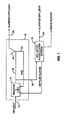
- FIG. 1 there is shown therein a combined activated sludge system, indicated generally by the numeral 12, and a ballasted flocculation system 10.
- activated sludge is transferred from the activated sludge system 12 to the ballasted flocculation system 10.
- the activated sludge system 12 includes an influent line 14 that is operative to direct water or wastewater to be treated into a reactor 16. Downstream from the reactor 16 is a clarifier 18. A return activated sludge (RAS) line 20 extends from the clarifier 18 back to the reactor 16. A line 22 extends from the reactor 16 to the clarifier 18. Clarifier 18 includes an outlet line 24 for directing clarified effluent from the clarifier 18.
- RAS return activated sludge
- Activated sludge system 12 can be designed to operate under aerobic, anoxic, and anaerobic conditions, or a combination of any one of these three basic activated sludge process conditions.
- Reactor 16 would typically include one or more mixers and could be provided with other means for aerating the contents thereof.
- Various types of mixers or aerators can be used to mix and/or aerate the mixed liquor in reactor 16.
- water or wastewater is directed into the reactor 16 and mixed with return activated sludge that is transferred from the bottom of clarifier 18 to the reactor 16 through line 20.
- the water or wastewater influent and return activated sludge form what is sometimes referred to as mixed liquor within reactor 16 is held therein a selected time period and, as noted above, can be mixed, and in the case of an aerobic process subjected to aeration.
- the mixed liquor in reactor 16 is directed through line 22 to the clarifier 18 where activated sludge settles to the bottom of the clarifier 18 and is eventually directed back to the reactor 16 via line 20.
- Clarified effluent is directed from the clarifier via line 24.
- the treatment system also includes a ballasted flocculation system 10.
- Line 26 is communicably connected between line 22 and the ballasted flocculation system 10.
- a portion of the mixed liquor passing from the reactor 16 is directed through line 26 into and through the ballasted flocculation process 10.
- the other portion of the mixed liquor passing in line 22 is directed to the clarifier 18.
- the mixed liquor passing to the ballasted flocculation system 10 via line 26 is subjected to a ballasted flocculation process.
- a ballasted flocculation process a coagulant, flocculant and insoluble granular material is mixed with the water or wastewater which in this case is in the form of a mixed liquor.
- the ballasted floc particles comprised of sand, suspended solids and other contaminants are settled. Because the water or wastewater that entered influent line 14 has been subjected to an activated sludge process and a ballasted flocculation process, it follows that the activated sludge will have the effect of removing soluble BOD from the water or wastewater and the clarifier 18 along with the ballasted flocculation system 10 will effectively clarify or remove suspended solids and other contaminants from the mixed liquor passing therethrough.
- the ballasted flocculation system 10 functions as a clarifier. That is, both the clarifier 18 forming a part of the activated sludge system 12, and the ballasted flocculation system 10 perform a clarification function. Indeed, both clarifier 18 and the ballasted flocculation system 10 function in parallel to clarify the water or wastewater that esters the activated sludge system through influent line 14.
- FIG. 2 another system or process is disclosed that involves treating water or wastewater with activated sludge and a ballasted flocculation process.
- the system disclosed in Figure 2 comprises an activated sludge system 12 and a ballasted flocculation system 10.
- Influent line 50 is directed into the activated sludge system 12 while influent line 52 is directed to a mixing chamber 54 and then to the ballasted flocculation system 10.
- a line 56 extends from the reactor 16 of the activated sludge system 12 to the mixing chamber 54.
- Mixing chamber 54 would typically be provided with a mixer for mixing the influent water or wastewater with the mixed liquor from the reactor 16.
- conventional aeration means can be provided in the mixing chamber 54 to aerate the mixed liquor therein.
- a line 58 extends between the mixing chamber 54 and the ballasted flocculation system 10. Hence, mixed liquor contained in mixing chamber 54 is directed to the ballasted flocculation system 10.
- the system disclosed therein is effective to simultaneously treat two separate influent streams.
- Water or wastewater entering influent line 50 is treated through a conventional activated sludge process and produces a clarified effluent via line 24 that leads from the clarifier 18.
- Water or wastewater entering influent line 52 is treated in the mixing chamber 54 as well as by the ballasted flocculation system 10.
- Activated sludge in the form of return activated sludge (RAS) or mixed liquor can be utilized and mixed with the influent in the mixing chamber 54.
- the term activated sludge is meant to encompass return activated sludge (RAS) or concentrated activated sludge such as the type that is typically returned from the clarifier 18 to the reactor 16 in an activated sludge process.
- activated sludge encompasses mixed liquor which is formed by mixing water or wastewater influent with the return activated sludge. In both cases, the important point is that activated sludge, whether concentrated or diluted, is being utilized in a process that directly or indirectly involves a ballasted flocculation process.
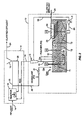
- FIG. 3 there is shown a system and process that is similar to the system and process shown in Figure 1 , but wherein the ballasted flocculation system 10 is shown in more detail.
- Mixed liquor from reactor 16 is directed to the ballasted flocculation system 10 via line 26.
- Various controls can be exercised in line 26. For example, pH and turbidity can be sensed and monitored.
- the mixed liquor traveling in line 26 to the ballasted flocculation system 10 is subjected to a ballasted flocculation process.
- a coagulant R1 is added in line 26 or at some point in the ballasted flocculation system.
- An in-line mixer Z1 (which is optional) is operative to mix the coagulant R1 with the mixed liquor.
- the ballasted flocculation system 10 may include a separate coagulation tank with a mixer for mixing the coagulant with the water, wastewater, or mixed liquor.
- Coagulant R1 may comprise various compositions such as aluminum sulfate and ferric chloride. Dosages of coagulant R1 can vary greatly based on the conditions of the mixed liquor.
- the mixed liquor passing in line 26 to the ballasted flocculation system 10 is referred to as Qa.
- Flow Qa is directed into the ballasted flocculation system 10 and in particular to injection tank T1.
- Injection tank T1 includes a mixer M1.
- Disposed adjacent or over injection tank T1 is a hydrocyclone S.
- Hydrocyclone S is a conventional apparatus that is used in water and wastewater treatment to separate insoluble granular material (microsand) from sludge or floc surrounding the granular material.
- a feed line 60 extends down from the hydrocyclone S. Insoluble granular material is directed down the feed line 60 into the injection tank T1. Also communicably connected to the feed line 60 is a flocculant line for injecting a reactant such as a polymer into either the injection tank T1 or an adjacent disposed maturation tank T2.
- Polymer R2 can comprise various compositions. An example of an appropriate polymer is polyacrylamide polymer. Dosages of this polymer are generally less than 2.0 mg/l for wastewater treatment. However, these dosages can also vary based on the conditions of the mixed liquor and local regulations.
- Maturation tank T2 is separated from injection tank T1 by a partial partition or wall 62. Note that wall 62 includes a lower opening that permits flow from injection tank T1 to maturation tank T2. Flow passing under the partition wall 18 is referred to as flow Qb.
- polymer R2 which is a flocculant
- the flocculant injection lines extend down each side of the partition wall enabling the flocculant to be injected on either side thereof.
- the flocculant in the form of polymer R2 can be combined with the insoluble granular material, such as microsand, and fed into the injection tank T1 via the feed line 60.
- Settling tank T3 includes a surrounding wall structure. Lamella Z2 in the form of plates or tubes is optional. Disposed above the lamella Z2 is a collection trough 64 which can be optional. Settling tank T3 includes a settling tank scraper M3. As illustrated in Figure 3 , the flow passing from the maturation tank T2 to the settling tank T3 is referred to as flow Qc.
- Settling tank T3 is designed or adapted to collect or receive settled sludge about the bottom thereof. This settled sludge about a central portion of the settling tank T3 and directed through line 68 to a pump P.
- the settled sludge collected in settling tank T3 and conveyed by pump P includes the insoluble granular material with floc aggregated around the granular material.
- This settled sludge is pumped from pump P through lines 66 to the hydrocyclone S.
- the insoluble granular material which is typically microsand, is separated from the sludge and recycled through the process via feed line 60.
- Hydrocyclone S separates the sludge which includes solids and directs the separated sludge into line 70.
- Line 70 can extend to the activated sludge system 12 and particularly the reactor 16. Hence the settled sludge produced by the ballasted flocculation system 10 can be recycled to the reactor 16. In some cases, the settled sludge separated by the hydrocyclone S can be directed from the wastewater treatment system for further treatment.
- influent water/wastewater is directed into the activated sludge system 12 via line 14.
- Mixed liquor formed in the reactor 16 is directed through line 26 into and through the ballasted flocculation system 10.
- the mixed liquor is treated with the activated sludge and this treatment is, in conventional fashion, effective to reduce the soluble BOD in the influent water or wastewater.
- the ballasted flocculation system 10 along with the clarifier 18 is effective to clarify the mixed liquor formed in the reactor 16.
- the ballasted flocculation system 10 would be effective to remove approximately 90% to 100% of the total suspended solids (TSS) in the mixed liquor.
- TSS total suspended solids
- FIG 4 the process therein is similar to that illustrated in Figure 2 but with the ballasted flocculation system expanded to show the individual components and processes thereof.
- either mixed liquor from the reactor 16 is directed via line 56 to the mixing chamber 54, or in the alternative return activated sludge passing in line 20 is directed through line 56' to the mixing chamber 54 where the same is mixed with water or wastewater influent entering through line 52.
- the chamber is provided with a mixer or some other form of mixing for mixing the same with water or wastewater influent and hence forms mixed liquor in chamber 54.
- This mixed liquor in chamber 54 is directed through the ballasted flocculation system 10 just described above.
- the soluble BOD present in the clarified effluent leaving the ballasted flocculation system 10 will be approximately 50% of the soluble BOD present in the influent entering line 52.
- a ballasted flocculation system with the addition of activated sludge, can be utilized to remove soluble BOD and suspended solids from a water or wastewater stream.
- activated sludge can be introduced by utilizing either mixed liquor or activated sludge that is being returned from the clarifier to a reactor in an activated sludge process.
- activated sludge it is meant to encompass any activated sludge no matter how concentrated and would include return activated sludge as well as mixed liquor.
Landscapes
- Life Sciences & Earth Sciences (AREA)
- Chemical & Material Sciences (AREA)
- Environmental & Geological Engineering (AREA)
- Hydrology & Water Resources (AREA)
- Engineering & Computer Science (AREA)
- Water Supply & Treatment (AREA)
- Organic Chemistry (AREA)
- General Chemical & Material Sciences (AREA)
- Chemical Kinetics & Catalysis (AREA)
- Biodiversity & Conservation Biology (AREA)
- Microbiology (AREA)
- Activated Sludge Processes (AREA)
- Separation Of Suspended Particles By Flocculating Agents (AREA)
- Purification Treatments By Anaerobic Or Anaerobic And Aerobic Bacteria Or Animals (AREA)
Description
- The present invention relates to the treatment of water or wastewater, and more particularly to a combination activated sludge - ballasted flocculation process that is effective to remove both BOD and suspended solids.
- Water and wastewater treatment processes sometimes use ballasted flocculation to clarify water or wastewater. A ballasted flocculation process allows for faster settling of the flocculated material that is formed in the process. The faster settling of the ballasted floc allows for very high overflow rates in the clarifier or settling tank, and therefore allows the footprint of the total treatment system to be significantly smaller than conventional clarifiers. Furthermore, compared to other conventional clarification systems, start-up and optimation times for ballasted flocculation systems are generally shorter due to the decreased hydraulic retention times of the system.
- Ballasted flocculation treatment systems employ a physical/chemical process and remove mostly particulate and colloidal solids present in the raw water or wastewater stream. Due to the physical/chemical nature of the solids removed, often times the process does not remove dissolved constituents. Of particular interest in treating water or wastewater is soluble BOD. Soluble BOD and particulate BOD are components of total BOD. While ballasted flocculation processes may achieve greater than 85% particulate BOD removal, these processes do not efficiently remove soluble BOD.
- Therefore, there has been and continues to be a need for a ballasted flocculation system that will effectively remove soluble BOD.
- The present invention relates to a water or wastewater treatment system and process that includes both an activated sludge system and a ballasted flocculation system. The water or wastewater treatment system includes one or more connecting lines that extend between the activated sludge system and the ballasted flocculation system. Activated sludge in the form of mixed liquor or return activated sludge is directed from the activated sludge system to the ballasted flocculation system. Hence, the total system is effective to remove BOD, including soluble BOD, and suspended solids.
- In one particular embodiment, water or wastewater is directed into an activated sludge system and mixed with return activated sludge in a reactor to form mixed liquor. At least a portion of the mixed liquor of the activated sludge system, or at least a portion of the return activated sludge of the activated sludge system, is directed to and through a ballasted flocculation system. Hence, soluble BOD is removed from the water or wastewater by the activated sludge while suspended solids are removed from the water or wastewater by the ballasted flocculation system.
- In another embodiment, an activated sludge system and a ballasted flocculation system are operated in parallel. A first water or wastewater influent stream is directed into the activated sludge system. A second water or wastewater stream is directed into the ballasted flocculation system. However, activated sludge in the form of mixed liquor or return activated sludge is directed from the activated sludge system to a mixing chamber that receives the second water or wastewater stream. Here, the water or wastewater is mixed with the mixed liquor or return activated sludge to form mixed liquor that is directed from the mixing chamber through the ballasted flocculation system. Hence, soluble BOD in the second water or wastewater stream is removed by the activity of the activated sludge and suspended solids and other particulate contaminants are removed from the same water or wastewater stream by the ballasted flocculation process.
- Other objects and advantages of the present invention will become apparent and obvious from a study of the following description and the accompanying drawings which are merely illustrative of such invention.
-
-
Figure 1 is a schematic illustration of one process embodiment that utilizes ballasted flocculation and activated sludge to treat water or wastewater. -
Figure 2 is a schematic illustration of a second process embodiment that employs ballasted flocculation and activated sludge to treat water or wastewater. -
Figure 3 is another schematic illustration that is similar to theFigure 1 process, of a process that utilizes ballasted flocculation and activated sludge to treat water or wastewater. -
Figure 4 is another schematic illustration, similar to theFigure 2 process, that utilizes ballasted flocculation and activated sludge to treat water or wastewater. - The present invention entails a ballasted flocculation process for treating water or wastewater where activated sludge is mixed with water or wastewater to be treated such that BOD, including soluble BOD, is removed as well as suspended solids. As used herein, the terms water and wastewater are interchangeable and the use of either term is intended to encompass the other.
- Before reviewing the processes and systems shown in
Figures 1 - 4 , it may be beneficial to briefly review ballasted flocculation. A ballasted flocculation process generally entails a chemical and physical process where contaminants such as suspended solids aggregate around insoluble granular materials such as microsand to form ballasted floc particles. Through a settling process, the ballasted floc particles comprised of sand, suspended solids, and other contaminants are settled in a settling tank, producing a separated, clarified effluent. The settled sludge, including the granular material as well as solids and other contaminants, is directed to a separator which separates the granular material from the sludge. In most cases, the separated granular material is recycled back through the ballasted flocculation process. As will be appreciated from subsequent discussion, the separated sludge can be recycled to an activated sludge system or can simply be discharged and subsequently treated. - Turning to
Figure 1 , there is shown therein a combined activated sludge system, indicated generally by thenumeral 12, and a ballastedflocculation system 10. As will be appreciated from subsequent portions of the disclosure, activated sludge is transferred from the activatedsludge system 12 to the ballastedflocculation system 10. - More particularly, and with respect to
Figure 1 , the activatedsludge system 12 includes aninfluent line 14 that is operative to direct water or wastewater to be treated into areactor 16. Downstream from thereactor 16 is aclarifier 18. A return activated sludge (RAS)line 20 extends from theclarifier 18 back to thereactor 16. Aline 22 extends from thereactor 16 to theclarifier 18.Clarifier 18 includes anoutlet line 24 for directing clarified effluent from theclarifier 18. - Activated
sludge system 12 can be designed to operate under aerobic, anoxic, and anaerobic conditions, or a combination of any one of these three basic activated sludge process conditions.Reactor 16 would typically include one or more mixers and could be provided with other means for aerating the contents thereof. Various types of mixers or aerators can be used to mix and/or aerate the mixed liquor inreactor 16. Typically, water or wastewater is directed into thereactor 16 and mixed with return activated sludge that is transferred from the bottom ofclarifier 18 to thereactor 16 throughline 20. Together, the water or wastewater influent and return activated sludge form what is sometimes referred to as mixed liquor withinreactor 16 is held therein a selected time period and, as noted above, can be mixed, and in the case of an aerobic process subjected to aeration. The mixed liquor inreactor 16 is directed throughline 22 to theclarifier 18 where activated sludge settles to the bottom of theclarifier 18 and is eventually directed back to thereactor 16 vialine 20. In conventional fashion, a portion of the return activated sludge can be wasted. Clarified effluent is directed from the clarifier vialine 24. - As seen in
Figure 1 , the treatment system also includes a ballastedflocculation system 10.Line 26 is communicably connected betweenline 22 and the ballastedflocculation system 10. Hence, a portion of the mixed liquor passing from thereactor 16 is directed throughline 26 into and through the ballastedflocculation process 10. In a preferred process, the other portion of the mixed liquor passing inline 22 is directed to theclarifier 18. The mixed liquor passing to the ballastedflocculation system 10 vialine 26 is subjected to a ballasted flocculation process. As discussed above, in a typical ballasted flocculation process, a coagulant, flocculant and insoluble granular material is mixed with the water or wastewater which in this case is in the form of a mixed liquor. Through a settling process in the ballasted flocculation system, the ballasted floc particles comprised of sand, suspended solids and other contaminants are settled. Because the water or wastewater that enteredinfluent line 14 has been subjected to an activated sludge process and a ballasted flocculation process, it follows that the activated sludge will have the effect of removing soluble BOD from the water or wastewater and theclarifier 18 along with the ballastedflocculation system 10 will effectively clarify or remove suspended solids and other contaminants from the mixed liquor passing therethrough. - In the case of the embodiment illustrated in
Figure 1 , the ballastedflocculation system 10 functions as a clarifier. That is, both theclarifier 18 forming a part of the activatedsludge system 12, and the ballastedflocculation system 10 perform a clarification function. Indeed, bothclarifier 18 and the ballastedflocculation system 10 function in parallel to clarify the water or wastewater that esters the activated sludge system throughinfluent line 14. - There are numerous applications for the general system shown in
Figure 1 . In the way of an example, conventional activated sludge systems such as that shown inFigure 1 can be expanded to have increased capacity by adding the ballastedflocculation system 10. In some activated sludge systems, clarification of the water or wastewater is the limiting process. Hence, additional clarification capacity can be added, cost effectively, to an existing activated sludge system by adding a ballasted flocculation system such as illustrated inFigure 1 . - Turning to
Figure 2 , another system or process is disclosed that involves treating water or wastewater with activated sludge and a ballasted flocculation process. The system disclosed inFigure 2 comprises an activatedsludge system 12 and a ballastedflocculation system 10. In this case, there are two influent lines,line Influent line 50 is directed into the activatedsludge system 12 whileinfluent line 52 is directed to a mixingchamber 54 and then to the ballastedflocculation system 10. Aline 56 extends from thereactor 16 of the activatedsludge system 12 to the mixingchamber 54. Mixingchamber 54 would typically be provided with a mixer for mixing the influent water or wastewater with the mixed liquor from thereactor 16. In addition, conventional aeration means can be provided in the mixingchamber 54 to aerate the mixed liquor therein. Aline 58 extends between the mixingchamber 54 and the ballastedflocculation system 10. Hence, mixed liquor contained in mixingchamber 54 is directed to the ballastedflocculation system 10. - In the
Figure 2 embodiment, it is seen that the system disclosed therein is effective to simultaneously treat two separate influent streams. Water or wastewater enteringinfluent line 50 is treated through a conventional activated sludge process and produces a clarified effluent vialine 24 that leads from theclarifier 18. Water or wastewater enteringinfluent line 52 is treated in the mixingchamber 54 as well as by the ballastedflocculation system 10. Activated sludge in the form of return activated sludge (RAS) or mixed liquor can be utilized and mixed with the influent in the mixingchamber 54. Herein, the term activated sludge is meant to encompass return activated sludge (RAS) or concentrated activated sludge such as the type that is typically returned from theclarifier 18 to thereactor 16 in an activated sludge process. Further, the term activated sludge encompasses mixed liquor which is formed by mixing water or wastewater influent with the return activated sludge. In both cases, the important point is that activated sludge, whether concentrated or diluted, is being utilized in a process that directly or indirectly involves a ballasted flocculation process. - Turning to
Figure 3 , there is shown a system and process that is similar to the system and process shown inFigure 1 , but wherein the ballastedflocculation system 10 is shown in more detail. Mixed liquor fromreactor 16 is directed to the ballastedflocculation system 10 vialine 26. Various controls can be exercised inline 26. For example, pH and turbidity can be sensed and monitored. In any event, the mixed liquor traveling inline 26 to the ballastedflocculation system 10 is subjected to a ballasted flocculation process. A coagulant R1 is added inline 26 or at some point in the ballasted flocculation system. An in-line mixer Z1 (which is optional) is operative to mix the coagulant R1 with the mixed liquor. In some cases, the ballastedflocculation system 10 may include a separate coagulation tank with a mixer for mixing the coagulant with the water, wastewater, or mixed liquor. Coagulant R1 may comprise various compositions such as aluminum sulfate and ferric chloride. Dosages of coagulant R1 can vary greatly based on the conditions of the mixed liquor. - For purposes of reference, the mixed liquor passing in
line 26 to the ballastedflocculation system 10 is referred to as Qa. Flow Qa is directed into the ballastedflocculation system 10 and in particular to injection tank T1. Injection tank T1 includes a mixer M1. Disposed adjacent or over injection tank T1 is a hydrocyclone S. Hydrocyclone S is a conventional apparatus that is used in water and wastewater treatment to separate insoluble granular material (microsand) from sludge or floc surrounding the granular material. - As illustrated in
Figure 3 , afeed line 60 extends down from the hydrocyclone S. Insoluble granular material is directed down thefeed line 60 into the injection tank T1. Also communicably connected to thefeed line 60 is a flocculant line for injecting a reactant such as a polymer into either the injection tank T1 or an adjacent disposed maturation tank T2. Polymer R2 can comprise various compositions. An example of an appropriate polymer is polyacrylamide polymer. Dosages of this polymer are generally less than 2.0 mg/l for wastewater treatment. However, these dosages can also vary based on the conditions of the mixed liquor and local regulations. Maturation tank T2 is separated from injection tank T1 by a partial partition orwall 62. Note thatwall 62 includes a lower opening that permits flow from injection tank T1 to maturation tank T2. Flow passing under thepartition wall 18 is referred to as flow Qb. - Disposed in maturation tank T2 is a mixer M2. As illustrated in
Figure 3 , polymer R2, which is a flocculant, can be injected into the injection tank T1 or the maturation tank T2. Note that the flocculant injection lines extend down each side of the partition wall enabling the flocculant to be injected on either side thereof. Further, as noted above, the flocculant in the form of polymer R2 can be combined with the insoluble granular material, such as microsand, and fed into the injection tank T1 via thefeed line 60. - Disposed adjacent maturation tank T2 is a settling tank T3. Settling tank T3 includes a surrounding wall structure. Lamella Z2 in the form of plates or tubes is optional. Disposed above the lamella Z2 is a
collection trough 64 which can be optional. Settling tank T3 includes a settling tank scraper M3. As illustrated inFigure 3 , the flow passing from the maturation tank T2 to the settling tank T3 is referred to as flow Qc. - Settling tank T3 is designed or adapted to collect or receive settled sludge about the bottom thereof. This settled sludge about a central portion of the settling tank T3 and directed through
line 68 to a pump P. As will be appreciated from subsequent portions of the disclosure, the settled sludge collected in settling tank T3 and conveyed by pump P includes the insoluble granular material with floc aggregated around the granular material. This settled sludge is pumped from pump P throughlines 66 to the hydrocyclone S. There, the insoluble granular material, which is typically microsand, is separated from the sludge and recycled through the process viafeed line 60. Hydrocyclone S separates the sludge which includes solids and directs the separated sludge intoline 70.Line 70 can extend to the activatedsludge system 12 and particularly thereactor 16. Hence the settled sludge produced by the ballastedflocculation system 10 can be recycled to thereactor 16. In some cases, the settled sludge separated by the hydrocyclone S can be directed from the wastewater treatment system for further treatment. - Therefore, in the case of the system and method illustrated in
Figure 3 , influent water/wastewater is directed into the activatedsludge system 12 vialine 14. Mixed liquor formed in thereactor 16 is directed throughline 26 into and through the ballastedflocculation system 10. Hence the mixed liquor is treated with the activated sludge and this treatment is, in conventional fashion, effective to reduce the soluble BOD in the influent water or wastewater. Further, the ballastedflocculation system 10 along with theclarifier 18 is effective to clarify the mixed liquor formed in thereactor 16. - In a process such as illustrated in
Figure 3 , it is contemplated that the ballastedflocculation system 10 would be effective to remove approximately 90% to 100% of the total suspended solids (TSS) in the mixed liquor. In pilot studies conducted based on a primary influent into the activated sludge system of approximately 90 -100 GPM, it was found that the mixed liquor suspended solid (MLSS) was approximately 2,000 - 3,000 mg/L. The test indicated that the TSS of the effluent from the ballasted flocculation process was approximately 0 - 4 mg/l. - Turning to
Figure 4 , the process therein is similar to that illustrated inFigure 2 but with the ballasted flocculation system expanded to show the individual components and processes thereof. Here, either mixed liquor from thereactor 16 is directed vialine 56 to the mixingchamber 54, or in the alternative return activated sludge passing inline 20 is directed through line 56' to the mixingchamber 54 where the same is mixed with water or wastewater influent entering throughline 52. In any event, whether mixed liquor or return activated sludge is directed to mixingchamber 54, the chamber is provided with a mixer or some other form of mixing for mixing the same with water or wastewater influent and hence forms mixed liquor inchamber 54. This mixed liquor inchamber 54 is directed through the ballastedflocculation system 10 just described above. - It is contemplated that the soluble BOD present in the clarified effluent leaving the ballasted
flocculation system 10 will be approximately 50% of the soluble BOD present in theinfluent entering line 52. - In tables 1, 2, 3, 4, 5, and 6, there is provided pilot test studies for a system and process similar to the
figure 4 that indicate the removal rate for total and soluble BOD as well as soluble COD and TSS. The tables show various test results where the MLSS concentration of the mixed liquor directed into the mixingchamber 54 varied, and where the contact time in the mixingchamber 54 varied.


- From the foregoing discussion, it is seen where a ballasted flocculation system, with the addition of activated sludge, can be utilized to remove soluble BOD and suspended solids from a water or wastewater stream. In the case of the
Figures 2 and4 embodiments, it is seen that activated sludge can be introduced by utilizing either mixed liquor or activated sludge that is being returned from the clarifier to a reactor in an activated sludge process. Where the term activated sludge is utilized, it is meant to encompass any activated sludge no matter how concentrated and would include return activated sludge as well as mixed liquor.
Claims (12)
- A wastewater treatment system, comprising:an activated sludge system (12) including at least one reactor (16), a clarifier (18) and a return activated sludge line (20) for conveying return activated sludge from the clarifier to the reactor to form mixed liquor;a ballasted flocculation system (10) having one or more tanks and a settling zone and disposed in a non-series relationship with the activated sludge system; anda mixed liquor or activated sludge supply line connected between the activated sludge system (16) and the ballasted flocculation system (10) for transferring mixed liquor or activated sludge directly or indirectly to the ballasted flocculation system.
- The wastewater treatment system of claim 1 wherein the clarifier of the activated sludge system and the ballasted flocculation system are disposed in parallel relationship.
- The water or wastewater treatment system of claim 1 wherein the supply line includes a mixed liquor supply line (26) for conveying mixed liquor from the reactor (16) of the activated sludge system (12) to the ballasted flocculation system (10) for clarification.
- The water or wastewater treatment system of claim 1 including a mixing chamber (54) upstream of the ballasted flocculation system (10), and wherein the mixed liquor or activated sludge supply line (56) leads to the mixing chamber, and wherein mixed liquor or activated sludge can be conveyed from the activated sludge system (12) to the mixing chamber for mixing with wastewater influent therein.
- The water or wastewater treatment system of claim 4 wherein the activated sludge system (12) and the ballasted flocculation system (10) are parallel, and wherein the activated sludge system (12) includes an influent line (50) for receiving a first water or wastewater influent stream, and wherein there is a second influent line (51) for receiving a second water or wastewater influent stream.
- A method of treating wastewater comprising:directing all or substantially all the wastewater to be treated into an activated sludge system having at least one reactor and a clarifier;returning activated sludge from the clarifier to the reactor and mixing the activated sludge with the wastewater to form mixed liquor;directing a portion of the mixed liquor through the activated sludge system and to the clarifier where the clarifier produces a first clarified effluent;directing, directly or indirectly, another portion of the mixed liquor from the activated sludge system to the ballasted flocculation system disposed in a non-series relationship with the activated sludge system ; andclarifying the other portion of the mixed liquor in the ballasted flocculation system to produce a second clarified effluent.
- The method of claim 6 wherein there is provided a mixed liquor line extending from the activated sludge system to the ballasted flocculation system and wherein the method entails directing directly said other portion of mixed liquor through the mixed liquor line into the ballasted flocculation system.
- The method of claim 7 wherein said other portion of mixed liquor is not mixed with other wastewater prior to entering the ballasted flocculation system.
- The method of claim 6 wherein the ballasted flocculation system includes at least one mixing tank, wherein there is provided a line between the activated sludge system and the mixing tank of the ballasted flocculation system and wherein the method entails directing said other portion of the mixed liquor through the line to the mixing tank of the ballasted flocculation system.
- The method of anyone of claims 6 to 9 including producing sludge in the ballasted flocculation system and returning the produced sludge from the ballasted flocculation system to the activated sludge system.
- The method of claim 9 or claim 10 wherein both the activated sludge produced in the activated sludge system and the sludge produced by the ballasted flocculation system are returned to at least one reactor in the activated sludge system and mixed with wastewater to form the mixed liquor.
- The method of claim 6 wherein substantially all of the wastewater to be treated is mixed with return activated sludge in the activated sludge system to form mixed liquor in the activated sludge system.
Applications Claiming Priority (2)
| Application Number | Priority Date | Filing Date | Title |
|---|---|---|---|
| US11/086,849 US7153431B2 (en) | 2005-03-22 | 2005-03-22 | Method and system for utilizing activated sludge in a ballasted flocculation process to remove BOD and suspended solids |
| PCT/US2006/010311 WO2006102362A2 (en) | 2005-03-22 | 2006-03-22 | Activated sludge process wtth ballasted flocculation |
Publications (3)
| Publication Number | Publication Date |
|---|---|
| EP1866255A2 EP1866255A2 (en) | 2007-12-19 |
| EP1866255A4 EP1866255A4 (en) | 2012-01-25 |
| EP1866255B1 true EP1866255B1 (en) | 2013-07-31 |
Family
ID=37024545
Family Applications (1)
| Application Number | Title | Priority Date | Filing Date |
|---|---|---|---|
| EP20060739196 Expired - Lifetime EP1866255B1 (en) | 2005-03-22 | 2006-03-22 | Method and system for utilizing activated sludge in a ballasted flocculation process to remove bod and suspended solids |
Country Status (8)
| Country | Link |
|---|---|
| US (1) | US7153431B2 (en) |
| EP (1) | EP1866255B1 (en) |
| JP (1) | JP2008534258A (en) |
| AU (1) | AU2006227100B2 (en) |
| CA (1) | CA2601228C (en) |
| DK (1) | DK1866255T3 (en) |
| ES (1) | ES2432142T3 (en) |
| WO (1) | WO2006102362A2 (en) |
Families Citing this family (23)
| Publication number | Priority date | Publication date | Assignee | Title |
|---|---|---|---|---|
| US8454831B2 (en) * | 2005-10-28 | 2013-06-04 | Veolia Water Solutions & Technologies Support | Biological and ballasetd flocculation treatment of wastewater |
| FR2902418B1 (en) * | 2005-10-28 | 2008-10-24 | Otv Sa | METHOD AND INSTALLATION FOR WATER TREATMENT INTEGRATING FIXED BACTERIAL BIOLOGICAL TREATMENT AND FLOCCULATION-DECANTATION |
| US7407582B2 (en) * | 2006-01-13 | 2008-08-05 | Otv Sa S.A. | Combination activated sludge—ballasted flocculation process |
| US20110036771A1 (en) | 2007-01-09 | 2011-02-17 | Steven Woodard | Ballasted anaerobic system and method for treating wastewater |
| AU2008205247B2 (en) | 2007-01-09 | 2010-07-01 | Evoqua Water Technologies Llc | A system and method for removing dissolved contaminants, particulate contaminants, and oil contaminants from industrial waste water |
| US8470172B2 (en) * | 2007-01-09 | 2013-06-25 | Siemens Industry, Inc. | System for enhancing a wastewater treatment process |
| US20100213123A1 (en) | 2007-01-09 | 2010-08-26 | Marston Peter G | Ballasted sequencing batch reactor system and method for treating wastewater |
| WO2008086010A1 (en) * | 2007-01-09 | 2008-07-17 | Cambridge Water Technology, Inc. | System and method for enhancing an activated sludge process |
| US7323108B1 (en) * | 2007-04-17 | 2008-01-29 | I. Kruger, Inc. | Combined biological and ballasted flocculation process for treating wastewater |
| US7828976B2 (en) * | 2007-06-22 | 2010-11-09 | I. Kruger, Inc. | Method of removing phosphorus from wastewater |
| US8435409B2 (en) | 2010-05-28 | 2013-05-07 | Ecolab Usa Inc. | Activated sludge process in wastewater treatment |
| US8715498B2 (en) | 2011-02-09 | 2014-05-06 | Tervita Corporation | System and apparatus for treating well flow-back and produced water or other wastewater |
| US20120285894A1 (en) | 2011-05-13 | 2012-11-15 | Frank Leslie Smiddy | System and method for the treatment of wastewater |
| US9828262B2 (en) * | 2012-03-26 | 2017-11-28 | Veolia Water Solutions & Technologies Support | Method for removing calcium, barium, magnesium and strontium from frac flowback |
| AU2013274900A1 (en) | 2012-06-11 | 2014-11-27 | Evoqua Water Technologies Llc | Treatment using fixed film processes and ballasted settling |
| US9255025B2 (en) | 2012-07-20 | 2016-02-09 | ProAct Services Corporation | Method for the treatment of wastewater |
| EP2900352A1 (en) | 2012-09-26 | 2015-08-05 | Evoqua Water Technologies LLC | System for measuring the concentration of magnetic ballast in a slurry |
| AU2013335265B2 (en) * | 2012-10-22 | 2017-12-21 | Evoqua Water Technologies Llc | Wastewater overflow systems and methods |
| JP5992371B2 (en) * | 2013-06-26 | 2016-09-14 | 住友重機械エンバイロメント株式会社 | Coagulation sedimentation activated sludge treatment system and operation method thereof |
| EP4034506A4 (en) | 2019-11-08 | 2023-07-26 | Evoqua Water Technologies LLC | Accelerated settlement of flocs after electrocoagulation/electrochemical process using ballasted flocculation |
| WO2022192921A1 (en) | 2021-03-12 | 2022-09-15 | Hampton Roads Sanitation District | Method and apparatus for multi-deselection in wastewater treatment |
| EP4304993A4 (en) | 2021-03-12 | 2025-02-19 | Hampton Roads Sanitation District | METHOD AND DEVICE FOR NUTRIENT REMOVAL USING ANOXIC BIOFILMS |
| WO2025259402A1 (en) | 2024-06-11 | 2025-12-18 | Veolia Water Solutions & Technologies Support | Process for biologically treating wet weather flows |
Family Cites Families (11)
| Publication number | Priority date | Publication date | Assignee | Title |
|---|---|---|---|---|
| JPS58214395A (en) * | 1982-06-09 | 1983-12-13 | Ichikawa Keori Kk | Treatment of waste water |
| DK158893C (en) * | 1988-06-27 | 1991-01-21 | Krueger As I | PROCEDURE AND PLANT FOR BIOLOGICAL CLEANING OF WASTE WATER BY THE ACTIVE SLAM METHOD |
| US5192441A (en) * | 1989-02-14 | 1993-03-09 | Omnium De Traitements Et De Valorisation (Otv) | Process and installation for biological treatment, e.g. by nitrification and/or denitrification, of an effluent including nitrated pollution |
| FR2719235B1 (en) | 1994-05-02 | 1996-07-19 | Omnium Traitement Valorisa | Process and installation for clarifying biological sludge by decantation. |
| DE69513205T2 (en) * | 1994-07-14 | 2000-05-11 | Krueger A/S, Soborg | METHOD AND DEVICE FOR THE PURIFICATION OF WASTE WATER BY THE ACTIVATED SLUDGE METHOD |
| US5536407A (en) * | 1995-02-21 | 1996-07-16 | I. Kruger, Inc. | Nitrification and denitrification wastewater treatment process |
| US5650069A (en) * | 1995-09-08 | 1997-07-22 | Kruger, Inc. | Dual-stage biological process for removing nitrogen from wastewater |
| FR2739094B1 (en) * | 1995-09-21 | 1997-12-19 | Omnium Traitement Valorisa | PROCESS AND PLANT FOR DESSABLING AND PHYSICO-CHEMICAL DECANTATION OF URBAN OR INDUSTRIAL EFFLUENTS |
| WO1999001387A1 (en) * | 1997-07-04 | 1999-01-14 | Krüger A/S | Method for biological purification of waste water by the activated sludge method and apparatus for carrying out the method |
| US6783679B1 (en) * | 1999-10-19 | 2004-08-31 | Pmc Technologies, Inc. | Waste treatment process |
| FR2801878B1 (en) * | 1999-12-03 | 2002-02-22 | Degremont | METHOD AND PLANT FOR CLARIFYING LIQUIDS AND SUSPENSIONS BY MEASURED FLOCCULATION AND DECANTATION |
-
2005
- 2005-03-22 US US11/086,849 patent/US7153431B2/en not_active Expired - Lifetime
-
2006
- 2006-03-22 EP EP20060739196 patent/EP1866255B1/en not_active Expired - Lifetime
- 2006-03-22 WO PCT/US2006/010311 patent/WO2006102362A2/en not_active Ceased
- 2006-03-22 ES ES06739196T patent/ES2432142T3/en not_active Expired - Lifetime
- 2006-03-22 CA CA 2601228 patent/CA2601228C/en not_active Expired - Lifetime
- 2006-03-22 DK DK06739196T patent/DK1866255T3/en active
- 2006-03-22 JP JP2008503104A patent/JP2008534258A/en active Pending
- 2006-03-22 AU AU2006227100A patent/AU2006227100B2/en not_active Ceased
Also Published As
| Publication number | Publication date |
|---|---|
| CA2601228A1 (en) | 2006-09-28 |
| EP1866255A2 (en) | 2007-12-19 |
| AU2006227100A1 (en) | 2006-09-28 |
| JP2008534258A (en) | 2008-08-28 |
| US7153431B2 (en) | 2006-12-26 |
| WO2006102362A3 (en) | 2007-04-12 |
| EP1866255A4 (en) | 2012-01-25 |
| ES2432142T3 (en) | 2013-11-29 |
| CA2601228C (en) | 2013-08-27 |
| DK1866255T3 (en) | 2013-11-04 |
| WO2006102362A2 (en) | 2006-09-28 |
| AU2006227100B2 (en) | 2011-07-14 |
| US20060213832A1 (en) | 2006-09-28 |
Similar Documents
| Publication | Publication Date | Title |
|---|---|---|
| US7563366B2 (en) | System for removing BOD and suspended solids through an activated sludge process and a ballasted flocculation process | |
| US7153431B2 (en) | Method and system for utilizing activated sludge in a ballasted flocculation process to remove BOD and suspended solids | |
| US7323108B1 (en) | Combined biological and ballasted flocculation process for treating wastewater | |
| CN101568493B (en) | Systems and methods for intensifying activated sludge processes | |
| EP2173452B1 (en) | Method of removing phosphorus from wastewater | |
| US7563373B2 (en) | Removal of phosphorous from wastewater | |
| CN113735378B (en) | Sewage treatment system and method for denitrification and dephosphorization | |
| US20240140837A1 (en) | Treatment of Liquid Streams Containing High Concentrations of Solids Using Ballasted Clarification | |
| CN109020087A (en) | Comprehensive treatment process of high-pollution wastewater by mixing ethylene waste lye with desulfurization wastewater | |
| KR101087673B1 (en) | Sewage treatment system and method | |
| CN104245595A (en) | Coagulation/flocculation apparatus for the treatment of a hydraulic flow, and implementation process | |
| CN206955821U (en) | Multiple-effect separator | |
| JP2023161382A (en) | wastewater treatment system | |
| HK1130461B (en) | Wastewater treatment through an activated sludge process and a ballasted flocculation process | |
| KR102822696B1 (en) | Apparatus for separation by air flotation and method for treating wastewaters using the same | |
| CA2555875C (en) | Removal of phosphorous from wastewater | |
| Hayter et al. | REDUCTION OF TOTAL SUSPENDED SOLIDS AND PHOSPHORUS CONCENTRATIONS IN SALMON‐SMOLT HATCHERY EFFLUENT USING CHEMICAL TREATMENT | |
| CN107324464A (en) | Multiple-effect separator and method |
Legal Events
| Date | Code | Title | Description |
|---|---|---|---|
| PUAI | Public reference made under article 153(3) epc to a published international application that has entered the european phase |
Free format text: ORIGINAL CODE: 0009012 |
|
| 17P | Request for examination filed |
Effective date: 20071018 |
|
| AK | Designated contracting states |
Kind code of ref document: A2 Designated state(s): AT BE BG CH CY CZ DE DK EE ES FI FR GB GR HU IE IS IT LI LT LU LV MC NL PL PT RO SE SI SK TR |
|
| DAX | Request for extension of the european patent (deleted) | ||
| RAP1 | Party data changed (applicant data changed or rights of an application transferred) |
Owner name: OTV S.A. |
|
| RAP1 | Party data changed (applicant data changed or rights of an application transferred) |
Owner name: VEOLIA WATER SOLUTIONS & TECHNOLOGIES SUPPORT |
|
| RIC1 | Information provided on ipc code assigned before grant |
Ipc: C02F 3/12 20060101ALI20111205BHEP Ipc: C02F 3/02 20060101AFI20111205BHEP Ipc: C02F 1/52 20060101ALI20111205BHEP |
|
| A4 | Supplementary search report drawn up and despatched |
Effective date: 20111228 |
|
| RIC1 | Information provided on ipc code assigned before grant |
Ipc: C02F 3/12 20060101ALI20111220BHEP Ipc: C02F 1/52 20060101ALI20111220BHEP Ipc: C02F 3/02 20060101AFI20111220BHEP |
|
| GRAP | Despatch of communication of intention to grant a patent |
Free format text: ORIGINAL CODE: EPIDOSNIGR1 |
|
| GRAS | Grant fee paid |
Free format text: ORIGINAL CODE: EPIDOSNIGR3 |
|
| GRAA | (expected) grant |
Free format text: ORIGINAL CODE: 0009210 |
|
| AK | Designated contracting states |
Kind code of ref document: B1 Designated state(s): AT BE BG CH CY CZ DE DK EE ES FI FR GB GR HU IE IS IT LI LT LU LV MC NL PL PT RO SE SI SK TR |
|
| REG | Reference to a national code |
Ref country code: GB Ref legal event code: FG4D Ref country code: CH Ref legal event code: EP |
|
| REG | Reference to a national code |
Ref country code: AT Ref legal event code: REF Ref document number: 624511 Country of ref document: AT Kind code of ref document: T Effective date: 20130815 |
|
| REG | Reference to a national code |
Ref country code: IE Ref legal event code: FG4D |
|
| REG | Reference to a national code |
Ref country code: DE Ref legal event code: R096 Ref document number: 602006037627 Country of ref document: DE Effective date: 20130926 |
|
| REG | Reference to a national code |
Ref legal event code: T3 Effective date: 20131028 Ref country code: DK |
|
| REG | Reference to a national code |
Ref country code: SE Ref legal event code: TRGR |
|
| REG | Reference to a national code |
Ref country code: NL Ref legal event code: T3 |
|
| REG | Reference to a national code |
Ref country code: AT Ref legal event code: MK05 Ref document number: 624511 Country of ref document: AT Kind code of ref document: T Effective date: 20130731 |
|
| REG | Reference to a national code |
Ref country code: LT Ref legal event code: MG4D |
|
| PG25 | Lapsed in a contracting state [announced via postgrant information from national office to epo] |
Ref country code: PT Free format text: LAPSE BECAUSE OF FAILURE TO SUBMIT A TRANSLATION OF THE DESCRIPTION OR TO PAY THE FEE WITHIN THE PRESCRIBED TIME-LIMIT Effective date: 20131202 Ref country code: AT Free format text: LAPSE BECAUSE OF FAILURE TO SUBMIT A TRANSLATION OF THE DESCRIPTION OR TO PAY THE FEE WITHIN THE PRESCRIBED TIME-LIMIT Effective date: 20130731 Ref country code: IS Free format text: LAPSE BECAUSE OF FAILURE TO SUBMIT A TRANSLATION OF THE DESCRIPTION OR TO PAY THE FEE WITHIN THE PRESCRIBED TIME-LIMIT Effective date: 20131130 Ref country code: LT Free format text: LAPSE BECAUSE OF FAILURE TO SUBMIT A TRANSLATION OF THE DESCRIPTION OR TO PAY THE FEE WITHIN THE PRESCRIBED TIME-LIMIT Effective date: 20130731 Ref country code: CY Free format text: LAPSE BECAUSE OF FAILURE TO SUBMIT A TRANSLATION OF THE DESCRIPTION OR TO PAY THE FEE WITHIN THE PRESCRIBED TIME-LIMIT Effective date: 20130703 |
|
| PG25 | Lapsed in a contracting state [announced via postgrant information from national office to epo] |
Ref country code: PL Free format text: LAPSE BECAUSE OF FAILURE TO SUBMIT A TRANSLATION OF THE DESCRIPTION OR TO PAY THE FEE WITHIN THE PRESCRIBED TIME-LIMIT Effective date: 20130731 Ref country code: FI Free format text: LAPSE BECAUSE OF FAILURE TO SUBMIT A TRANSLATION OF THE DESCRIPTION OR TO PAY THE FEE WITHIN THE PRESCRIBED TIME-LIMIT Effective date: 20130731 Ref country code: GR Free format text: LAPSE BECAUSE OF FAILURE TO SUBMIT A TRANSLATION OF THE DESCRIPTION OR TO PAY THE FEE WITHIN THE PRESCRIBED TIME-LIMIT Effective date: 20131101 Ref country code: SI Free format text: LAPSE BECAUSE OF FAILURE TO SUBMIT A TRANSLATION OF THE DESCRIPTION OR TO PAY THE FEE WITHIN THE PRESCRIBED TIME-LIMIT Effective date: 20130731 Ref country code: LV Free format text: LAPSE BECAUSE OF FAILURE TO SUBMIT A TRANSLATION OF THE DESCRIPTION OR TO PAY THE FEE WITHIN THE PRESCRIBED TIME-LIMIT Effective date: 20130731 |
|
| PG25 | Lapsed in a contracting state [announced via postgrant information from national office to epo] |
Ref country code: CY Free format text: LAPSE BECAUSE OF FAILURE TO SUBMIT A TRANSLATION OF THE DESCRIPTION OR TO PAY THE FEE WITHIN THE PRESCRIBED TIME-LIMIT Effective date: 20130731 |
|
| PG25 | Lapsed in a contracting state [announced via postgrant information from national office to epo] |
Ref country code: RO Free format text: LAPSE BECAUSE OF FAILURE TO SUBMIT A TRANSLATION OF THE DESCRIPTION OR TO PAY THE FEE WITHIN THE PRESCRIBED TIME-LIMIT Effective date: 20130731 Ref country code: SK Free format text: LAPSE BECAUSE OF FAILURE TO SUBMIT A TRANSLATION OF THE DESCRIPTION OR TO PAY THE FEE WITHIN THE PRESCRIBED TIME-LIMIT Effective date: 20130731 Ref country code: CZ Free format text: LAPSE BECAUSE OF FAILURE TO SUBMIT A TRANSLATION OF THE DESCRIPTION OR TO PAY THE FEE WITHIN THE PRESCRIBED TIME-LIMIT Effective date: 20130731 Ref country code: EE Free format text: LAPSE BECAUSE OF FAILURE TO SUBMIT A TRANSLATION OF THE DESCRIPTION OR TO PAY THE FEE WITHIN THE PRESCRIBED TIME-LIMIT Effective date: 20130731 |
|
| PLBE | No opposition filed within time limit |
Free format text: ORIGINAL CODE: 0009261 |
|
| STAA | Information on the status of an ep patent application or granted ep patent |
Free format text: STATUS: NO OPPOSITION FILED WITHIN TIME LIMIT |
|
| 26N | No opposition filed |
Effective date: 20140502 |
|
| REG | Reference to a national code |
Ref country code: DE Ref legal event code: R097 Ref document number: 602006037627 Country of ref document: DE Effective date: 20140502 |
|
| PG25 | Lapsed in a contracting state [announced via postgrant information from national office to epo] |
Ref country code: LU Free format text: LAPSE BECAUSE OF FAILURE TO SUBMIT A TRANSLATION OF THE DESCRIPTION OR TO PAY THE FEE WITHIN THE PRESCRIBED TIME-LIMIT Effective date: 20140322 |
|
| REG | Reference to a national code |
Ref country code: FR Ref legal event code: ST Effective date: 20141128 |
|
| REG | Reference to a national code |
Ref country code: IE Ref legal event code: MM4A |
|
| PG25 | Lapsed in a contracting state [announced via postgrant information from national office to epo] |
Ref country code: IE Free format text: LAPSE BECAUSE OF NON-PAYMENT OF DUE FEES Effective date: 20140322 Ref country code: FR Free format text: LAPSE BECAUSE OF NON-PAYMENT OF DUE FEES Effective date: 20140331 |
|
| PG25 | Lapsed in a contracting state [announced via postgrant information from national office to epo] |
Ref country code: BG Free format text: LAPSE BECAUSE OF FAILURE TO SUBMIT A TRANSLATION OF THE DESCRIPTION OR TO PAY THE FEE WITHIN THE PRESCRIBED TIME-LIMIT Effective date: 20130731 Ref country code: MC Free format text: LAPSE BECAUSE OF FAILURE TO SUBMIT A TRANSLATION OF THE DESCRIPTION OR TO PAY THE FEE WITHIN THE PRESCRIBED TIME-LIMIT Effective date: 20130731 |
|
| PG25 | Lapsed in a contracting state [announced via postgrant information from national office to epo] |
Ref country code: TR Free format text: LAPSE BECAUSE OF FAILURE TO SUBMIT A TRANSLATION OF THE DESCRIPTION OR TO PAY THE FEE WITHIN THE PRESCRIBED TIME-LIMIT Effective date: 20130731 Ref country code: HU Free format text: LAPSE BECAUSE OF FAILURE TO SUBMIT A TRANSLATION OF THE DESCRIPTION OR TO PAY THE FEE WITHIN THE PRESCRIBED TIME-LIMIT; INVALID AB INITIO Effective date: 20060322 |
|
| PGFP | Annual fee paid to national office [announced via postgrant information from national office to epo] |
Ref country code: SE Payment date: 20181219 Year of fee payment: 14 |
|
| PGFP | Annual fee paid to national office [announced via postgrant information from national office to epo] |
Ref country code: GB Payment date: 20190329 Year of fee payment: 14 Ref country code: IT Payment date: 20190321 Year of fee payment: 14 Ref country code: CH Payment date: 20190329 Year of fee payment: 14 |
|
| PGFP | Annual fee paid to national office [announced via postgrant information from national office to epo] |
Ref country code: DK Payment date: 20190325 Year of fee payment: 14 Ref country code: NL Payment date: 20190329 Year of fee payment: 14 |
|
| PGFP | Annual fee paid to national office [announced via postgrant information from national office to epo] |
Ref country code: DE Payment date: 20190329 Year of fee payment: 14 Ref country code: ES Payment date: 20190424 Year of fee payment: 14 |
|
| PGFP | Annual fee paid to national office [announced via postgrant information from national office to epo] |
Ref country code: BE Payment date: 20190328 Year of fee payment: 14 |
|
| REG | Reference to a national code |
Ref country code: DE Ref legal event code: R119 Ref document number: 602006037627 Country of ref document: DE |
|
| REG | Reference to a national code |
Ref country code: CH Ref legal event code: PL |
|
| REG | Reference to a national code |
Ref country code: DK Ref legal event code: EBP Effective date: 20200331 |
|
| REG | Reference to a national code |
Ref country code: NL Ref legal event code: MM Effective date: 20200401 |
|
| REG | Reference to a national code |
Ref country code: BE Ref legal event code: MM Effective date: 20200331 |
|
| PG25 | Lapsed in a contracting state [announced via postgrant information from national office to epo] |
Ref country code: NL Free format text: LAPSE BECAUSE OF NON-PAYMENT OF DUE FEES Effective date: 20200401 |
|
| PG25 | Lapsed in a contracting state [announced via postgrant information from national office to epo] |
Ref country code: SE Free format text: LAPSE BECAUSE OF NON-PAYMENT OF DUE FEES Effective date: 20200323 Ref country code: LI Free format text: LAPSE BECAUSE OF NON-PAYMENT OF DUE FEES Effective date: 20200331 Ref country code: CH Free format text: LAPSE BECAUSE OF NON-PAYMENT OF DUE FEES Effective date: 20200331 Ref country code: DE Free format text: LAPSE BECAUSE OF NON-PAYMENT OF DUE FEES Effective date: 20201001 |
|
| PG25 | Lapsed in a contracting state [announced via postgrant information from national office to epo] |
Ref country code: BE Free format text: LAPSE BECAUSE OF NON-PAYMENT OF DUE FEES Effective date: 20200331 |
|
| GBPC | Gb: european patent ceased through non-payment of renewal fee |
Effective date: 20200322 |
|
| PG25 | Lapsed in a contracting state [announced via postgrant information from national office to epo] |
Ref country code: DK Free format text: LAPSE BECAUSE OF NON-PAYMENT OF DUE FEES Effective date: 20200331 Ref country code: GB Free format text: LAPSE BECAUSE OF NON-PAYMENT OF DUE FEES Effective date: 20200322 |
|
| REG | Reference to a national code |
Ref country code: ES Ref legal event code: FD2A Effective date: 20210804 |
|
| PG25 | Lapsed in a contracting state [announced via postgrant information from national office to epo] |
Ref country code: IT Free format text: LAPSE BECAUSE OF NON-PAYMENT OF DUE FEES Effective date: 20200322 |
|
| PG25 | Lapsed in a contracting state [announced via postgrant information from national office to epo] |
Ref country code: ES Free format text: LAPSE BECAUSE OF NON-PAYMENT OF DUE FEES Effective date: 20200323 |
|
| P01 | Opt-out of the competence of the unified patent court (upc) registered |
Effective date: 20230527 |