EP1860713B1 - Composé d'insertion du lithium utilisable comme matière active cathodique d'un générateur électrochimique rechargeable au lithium - Google Patents
Composé d'insertion du lithium utilisable comme matière active cathodique d'un générateur électrochimique rechargeable au lithium Download PDFInfo
- Publication number
- EP1860713B1 EP1860713B1 EP07010232A EP07010232A EP1860713B1 EP 1860713 B1 EP1860713 B1 EP 1860713B1 EP 07010232 A EP07010232 A EP 07010232A EP 07010232 A EP07010232 A EP 07010232A EP 1860713 B1 EP1860713 B1 EP 1860713B1
- Authority
- EP
- European Patent Office
- Prior art keywords
- lithium
- spinel
- mixture
- compound
- compound according
- Prior art date
- Legal status (The legal status is an assumption and is not a legal conclusion. Google has not performed a legal analysis and makes no representation as to the accuracy of the status listed.)
- Ceased
Links
- 150000001875 compounds Chemical class 0.000 title claims description 66
- WHXSMMKQMYFTQS-UHFFFAOYSA-N Lithium Chemical compound [Li] WHXSMMKQMYFTQS-UHFFFAOYSA-N 0.000 title claims description 32
- 229910052744 lithium Inorganic materials 0.000 title claims description 32
- 239000011149 active material Substances 0.000 title claims description 10
- 238000003780 insertion Methods 0.000 title description 2
- 230000037431 insertion Effects 0.000 title description 2
- PXHVJJICTQNCMI-UHFFFAOYSA-N nickel Substances [Ni] PXHVJJICTQNCMI-UHFFFAOYSA-N 0.000 claims description 75
- 229910052596 spinel Inorganic materials 0.000 claims description 54
- 239000011029 spinel Substances 0.000 claims description 54
- 239000000203 mixture Substances 0.000 claims description 44
- 229910052759 nickel Inorganic materials 0.000 claims description 26
- 229910052782 aluminium Inorganic materials 0.000 claims description 13
- 229910052719 titanium Inorganic materials 0.000 claims description 13
- 230000015572 biosynthetic process Effects 0.000 claims description 12
- 238000000034 method Methods 0.000 claims description 12
- 238000010438 heat treatment Methods 0.000 claims description 10
- 230000008569 process Effects 0.000 claims description 10
- 238000003786 synthesis reaction Methods 0.000 claims description 9
- 238000004519 manufacturing process Methods 0.000 claims description 8
- 229910016884 MnIII Inorganic materials 0.000 claims description 6
- 229910016887 MnIV Inorganic materials 0.000 claims description 6
- NUJOXMJBOLGQSY-UHFFFAOYSA-N manganese dioxide Chemical compound O=[Mn]=O NUJOXMJBOLGQSY-UHFFFAOYSA-N 0.000 claims description 6
- 229910052751 metal Inorganic materials 0.000 claims description 6
- 239000002184 metal Substances 0.000 claims description 6
- AMWRITDGCCNYAT-UHFFFAOYSA-L manganese oxide Inorganic materials [Mn].O[Mn]=O.O[Mn]=O AMWRITDGCCNYAT-UHFFFAOYSA-L 0.000 claims description 5
- 229910006148 NiII Inorganic materials 0.000 claims description 4
- XGZVUEUWXADBQD-UHFFFAOYSA-L lithium carbonate Chemical compound [Li+].[Li+].[O-]C([O-])=O XGZVUEUWXADBQD-UHFFFAOYSA-L 0.000 claims description 3
- 229910052808 lithium carbonate Inorganic materials 0.000 claims description 3
- 229910004915 Li1−zNi1+zO2 Inorganic materials 0.000 claims description 2
- 229910014217 MyO4 Inorganic materials 0.000 claims description 2
- 238000002360 preparation method Methods 0.000 claims description 2
- 238000000227 grinding Methods 0.000 claims 1
- GNRSAWUEBMWBQH-UHFFFAOYSA-N nickel(II) oxide Inorganic materials [Ni]=O GNRSAWUEBMWBQH-UHFFFAOYSA-N 0.000 claims 1
- 239000011572 manganese Substances 0.000 description 75
- PWHULOQIROXLJO-UHFFFAOYSA-N Manganese Chemical compound [Mn] PWHULOQIROXLJO-UHFFFAOYSA-N 0.000 description 17
- 229910052748 manganese Inorganic materials 0.000 description 17
- OKTJSMMVPCPJKN-UHFFFAOYSA-N Carbon Chemical compound [C] OKTJSMMVPCPJKN-UHFFFAOYSA-N 0.000 description 14
- 229910001416 lithium ion Inorganic materials 0.000 description 14
- 239000010936 titanium Substances 0.000 description 14
- 230000001351 cycling effect Effects 0.000 description 11
- 229910013290 LiNiO 2 Inorganic materials 0.000 description 10
- HBBGRARXTFLTSG-UHFFFAOYSA-N Lithium ion Chemical compound [Li+] HBBGRARXTFLTSG-UHFFFAOYSA-N 0.000 description 10
- 229910002804 graphite Inorganic materials 0.000 description 10
- 239000010439 graphite Substances 0.000 description 10
- 239000000463 material Substances 0.000 description 10
- 230000000694 effects Effects 0.000 description 8
- 230000003647 oxidation Effects 0.000 description 8
- 238000007254 oxidation reaction Methods 0.000 description 8
- 239000004480 active ingredient Substances 0.000 description 7
- 229910052802 copper Inorganic materials 0.000 description 7
- 239000010949 copper Substances 0.000 description 7
- 238000006138 lithiation reaction Methods 0.000 description 7
- 238000012360 testing method Methods 0.000 description 7
- 229910013716 LiNi Inorganic materials 0.000 description 6
- 239000003792 electrolyte Substances 0.000 description 6
- XEEYBQQBJWHFJM-UHFFFAOYSA-N iron Substances [Fe] XEEYBQQBJWHFJM-UHFFFAOYSA-N 0.000 description 6
- -1 magnesium aluminate Chemical class 0.000 description 6
- 239000002243 precursor Substances 0.000 description 6
- 150000003839 salts Chemical class 0.000 description 6
- 229910052566 spinel group Inorganic materials 0.000 description 6
- RTAQQCXQSZGOHL-UHFFFAOYSA-N Titanium Chemical compound [Ti] RTAQQCXQSZGOHL-UHFFFAOYSA-N 0.000 description 5
- XAGFODPZIPBFFR-UHFFFAOYSA-N aluminium Chemical compound [Al] XAGFODPZIPBFFR-UHFFFAOYSA-N 0.000 description 5
- 238000012512 characterization method Methods 0.000 description 5
- 230000005518 electrochemistry Effects 0.000 description 5
- 239000002904 solvent Substances 0.000 description 5
- RYGMFSIKBFXOCR-UHFFFAOYSA-N Copper Chemical compound [Cu] RYGMFSIKBFXOCR-UHFFFAOYSA-N 0.000 description 4
- 229910012851 LiCoO 2 Inorganic materials 0.000 description 4
- 229910013870 LiPF 6 Inorganic materials 0.000 description 4
- 239000002033 PVDF binder Substances 0.000 description 4
- 210000004027 cell Anatomy 0.000 description 4
- 239000002131 composite material Substances 0.000 description 4
- 238000002848 electrochemical method Methods 0.000 description 4
- 238000011066 ex-situ storage Methods 0.000 description 4
- 229910052742 iron Inorganic materials 0.000 description 4
- 229910052749 magnesium Inorganic materials 0.000 description 4
- 239000011777 magnesium Substances 0.000 description 4
- MMIPFLVOWGHZQD-UHFFFAOYSA-N manganese(3+) Chemical compound [Mn+3] MMIPFLVOWGHZQD-UHFFFAOYSA-N 0.000 description 4
- 229920002981 polyvinylidene fluoride Polymers 0.000 description 4
- 230000009466 transformation Effects 0.000 description 4
- 229910010413 TiO 2 Inorganic materials 0.000 description 3
- 239000011230 binding agent Substances 0.000 description 3
- 229910052799 carbon Inorganic materials 0.000 description 3
- 238000006243 chemical reaction Methods 0.000 description 3
- 150000005676 cyclic carbonates Chemical class 0.000 description 3
- 229910052760 oxygen Inorganic materials 0.000 description 3
- 230000002441 reversible effect Effects 0.000 description 3
- 239000000243 solution Substances 0.000 description 3
- IJGRMHOSHXDMSA-UHFFFAOYSA-N Atomic nitrogen Chemical compound N#N IJGRMHOSHXDMSA-UHFFFAOYSA-N 0.000 description 2
- OIFBSDVPJOWBCH-UHFFFAOYSA-N Diethyl carbonate Chemical compound CCOC(=O)OCC OIFBSDVPJOWBCH-UHFFFAOYSA-N 0.000 description 2
- KMTRUDSVKNLOMY-UHFFFAOYSA-N Ethylene carbonate Chemical compound O=C1OCCO1 KMTRUDSVKNLOMY-UHFFFAOYSA-N 0.000 description 2
- 229910013188 LiBOB Inorganic materials 0.000 description 2
- 229910015643 LiMn 2 O 4 Inorganic materials 0.000 description 2
- 229910018540 Si C Inorganic materials 0.000 description 2
- QAOWNCQODCNURD-UHFFFAOYSA-N Sulfuric acid Chemical compound OS(O)(=O)=O QAOWNCQODCNURD-UHFFFAOYSA-N 0.000 description 2
- 102220522310 THAP domain-containing protein 1_Y50A_mutation Human genes 0.000 description 2
- GWEVSGVZZGPLCZ-UHFFFAOYSA-N Titan oxide Chemical compound O=[Ti]=O GWEVSGVZZGPLCZ-UHFFFAOYSA-N 0.000 description 2
- 239000003575 carbonaceous material Substances 0.000 description 2
- 239000011262 electrochemically active material Substances 0.000 description 2
- 238000011065 in-situ storage Methods 0.000 description 2
- 229910000765 intermetallic Inorganic materials 0.000 description 2
- QSZMZKBZAYQGRS-UHFFFAOYSA-N lithium;bis(trifluoromethylsulfonyl)azanide Chemical compound [Li+].FC(F)(F)S(=O)(=O)[N-]S(=O)(=O)C(F)(F)F QSZMZKBZAYQGRS-UHFFFAOYSA-N 0.000 description 2
- 229910052750 molybdenum Inorganic materials 0.000 description 2
- 238000005580 one pot reaction Methods 0.000 description 2
- 229920000642 polymer Polymers 0.000 description 2
- 229920001343 polytetrafluoroethylene Polymers 0.000 description 2
- 239000004810 polytetrafluoroethylene Substances 0.000 description 2
- 239000007774 positive electrode material Substances 0.000 description 2
- KMUONIBRACKNSN-UHFFFAOYSA-N potassium dichromate Chemical compound [K+].[K+].[O-][Cr](=O)(=O)O[Cr]([O-])(=O)=O KMUONIBRACKNSN-UHFFFAOYSA-N 0.000 description 2
- RUOJZAUFBMNUDX-UHFFFAOYSA-N propylene carbonate Chemical compound CC1COC(=O)O1 RUOJZAUFBMNUDX-UHFFFAOYSA-N 0.000 description 2
- 239000011541 reaction mixture Substances 0.000 description 2
- 238000006479 redox reaction Methods 0.000 description 2
- 229910010271 silicon carbide Inorganic materials 0.000 description 2
- 239000012086 standard solution Substances 0.000 description 2
- 239000000725 suspension Substances 0.000 description 2
- 229910052723 transition metal Inorganic materials 0.000 description 2
- 150000003624 transition metals Chemical class 0.000 description 2
- HCUOEKSZWPGJIM-YBRHCDHNSA-N (e,2e)-2-hydroxyimino-6-methoxy-4-methyl-5-nitrohex-3-enamide Chemical compound COCC([N+]([O-])=O)\C(C)=C\C(=N/O)\C(N)=O HCUOEKSZWPGJIM-YBRHCDHNSA-N 0.000 description 1
- SMZOUWXMTYCWNB-UHFFFAOYSA-N 2-(2-methoxy-5-methylphenyl)ethanamine Chemical compound COC1=CC=C(C)C=C1CCN SMZOUWXMTYCWNB-UHFFFAOYSA-N 0.000 description 1
- JAHNSTQSQJOJLO-UHFFFAOYSA-N 2-(3-fluorophenyl)-1h-imidazole Chemical compound FC1=CC=CC(C=2NC=CN=2)=C1 JAHNSTQSQJOJLO-UHFFFAOYSA-N 0.000 description 1
- NIXOWILDQLNWCW-UHFFFAOYSA-N 2-Propenoic acid Natural products OC(=O)C=C NIXOWILDQLNWCW-UHFFFAOYSA-N 0.000 description 1
- BUPLCMMXKFWTTA-UHFFFAOYSA-N 4-methylidene-1,3-dioxetan-2-one Chemical compound C=C1OC(=O)O1 BUPLCMMXKFWTTA-UHFFFAOYSA-N 0.000 description 1
- HRPVXLWXLXDGHG-UHFFFAOYSA-N Acrylamide Chemical compound NC(=O)C=C HRPVXLWXLXDGHG-UHFFFAOYSA-N 0.000 description 1
- 229910018072 Al 2 O 3 Inorganic materials 0.000 description 1
- LSNNMFCWUKXFEE-UHFFFAOYSA-M Bisulfite Chemical compound OS([O-])=O LSNNMFCWUKXFEE-UHFFFAOYSA-M 0.000 description 1
- BVKZGUZCCUSVTD-UHFFFAOYSA-L Carbonate Chemical compound [O-]C([O-])=O BVKZGUZCCUSVTD-UHFFFAOYSA-L 0.000 description 1
- 229910016876 Fe(NH4)2(SO4)2 Inorganic materials 0.000 description 1
- 229910015015 LiAsF 6 Inorganic materials 0.000 description 1
- 229910013063 LiBF 4 Inorganic materials 0.000 description 1
- 229910013684 LiClO 4 Inorganic materials 0.000 description 1
- 229910015645 LiMn Inorganic materials 0.000 description 1
- 229910013872 LiPF Inorganic materials 0.000 description 1
- 101150058243 Lipf gene Proteins 0.000 description 1
- 229910006705 Li—Ni—O Inorganic materials 0.000 description 1
- CERQOIWHTDAKMF-UHFFFAOYSA-N Methacrylic acid Chemical compound CC(=C)C(O)=O CERQOIWHTDAKMF-UHFFFAOYSA-N 0.000 description 1
- 229910020068 MgAl Inorganic materials 0.000 description 1
- 229910017125 Ni0.75Mn2.15Ti0.1O4 Inorganic materials 0.000 description 1
- 229920002614 Polyether block amide Polymers 0.000 description 1
- 238000003991 Rietveld refinement Methods 0.000 description 1
- 229910020813 Sn-C Inorganic materials 0.000 description 1
- 229910018732 Sn—C Inorganic materials 0.000 description 1
- 229910000831 Steel Inorganic materials 0.000 description 1
- 238000002441 X-ray diffraction Methods 0.000 description 1
- 239000002253 acid Substances 0.000 description 1
- 239000013543 active substance Substances 0.000 description 1
- 125000005907 alkyl ester group Chemical group 0.000 description 1
- PNEYBMLMFCGWSK-UHFFFAOYSA-N aluminium oxide Inorganic materials [O-2].[O-2].[O-2].[Al+3].[Al+3] PNEYBMLMFCGWSK-UHFFFAOYSA-N 0.000 description 1
- 239000003125 aqueous solvent Substances 0.000 description 1
- 238000003556 assay Methods 0.000 description 1
- 230000008901 benefit Effects 0.000 description 1
- 125000000484 butyl group Chemical group [H]C([*])([H])C([H])([H])C([H])([H])C([H])([H])[H] 0.000 description 1
- 238000003490 calendering Methods 0.000 description 1
- 239000006229 carbon black Substances 0.000 description 1
- 150000004649 carbonic acid derivatives Chemical class 0.000 description 1
- 230000015556 catabolic process Effects 0.000 description 1
- 150000001768 cations Chemical class 0.000 description 1
- 229910017052 cobalt Inorganic materials 0.000 description 1
- 239000010941 cobalt Substances 0.000 description 1
- GUTLYIVDDKVIGB-UHFFFAOYSA-N cobalt atom Chemical compound [Co] GUTLYIVDDKVIGB-UHFFFAOYSA-N 0.000 description 1
- 239000000571 coke Substances 0.000 description 1
- 239000002482 conductive additive Substances 0.000 description 1
- 239000004020 conductor Substances 0.000 description 1
- 238000001816 cooling Methods 0.000 description 1
- 229920001577 copolymer Polymers 0.000 description 1
- 229910052593 corundum Inorganic materials 0.000 description 1
- 239000013078 crystal Substances 0.000 description 1
- 238000002484 cyclic voltammetry Methods 0.000 description 1
- 230000006378 damage Effects 0.000 description 1
- 230000007812 deficiency Effects 0.000 description 1
- 230000002950 deficient Effects 0.000 description 1
- 230000006735 deficit Effects 0.000 description 1
- 238000006731 degradation reaction Methods 0.000 description 1
- 210000001787 dendrite Anatomy 0.000 description 1
- 238000000151 deposition Methods 0.000 description 1
- 238000001514 detection method Methods 0.000 description 1
- 239000003085 diluting agent Substances 0.000 description 1
- IEJIGPNLZYLLBP-UHFFFAOYSA-N dimethyl carbonate Chemical compound COC(=O)OC IEJIGPNLZYLLBP-UHFFFAOYSA-N 0.000 description 1
- 230000008034 disappearance Effects 0.000 description 1
- 238000004090 dissolution Methods 0.000 description 1
- 229920001971 elastomer Polymers 0.000 description 1
- 239000000806 elastomer Substances 0.000 description 1
- 238000003487 electrochemical reaction Methods 0.000 description 1
- 229910052733 gallium Inorganic materials 0.000 description 1
- 229910021397 glassy carbon Inorganic materials 0.000 description 1
- 238000010952 in-situ formation Methods 0.000 description 1
- 238000010348 incorporation Methods 0.000 description 1
- 230000002452 interceptive effect Effects 0.000 description 1
- 229910003473 lithium bis(trifluoromethanesulfonyl)imide Inorganic materials 0.000 description 1
- 150000002642 lithium compounds Chemical class 0.000 description 1
- MHCFAGZWMAWTNR-UHFFFAOYSA-M lithium perchlorate Chemical compound [Li+].[O-]Cl(=O)(=O)=O MHCFAGZWMAWTNR-UHFFFAOYSA-M 0.000 description 1
- 229910001486 lithium perchlorate Inorganic materials 0.000 description 1
- 229910001496 lithium tetrafluoroborate Inorganic materials 0.000 description 1
- ACFSQHQYDZIPRL-UHFFFAOYSA-N lithium;bis(1,1,2,2,2-pentafluoroethylsulfonyl)azanide Chemical compound [Li+].FC(F)(F)C(F)(F)S(=O)(=O)[N-]S(=O)(=O)C(F)(F)C(F)(F)F ACFSQHQYDZIPRL-UHFFFAOYSA-N 0.000 description 1
- MCVFFRWZNYZUIJ-UHFFFAOYSA-M lithium;trifluoromethanesulfonate Chemical compound [Li+].[O-]S(=O)(=O)C(F)(F)F MCVFFRWZNYZUIJ-UHFFFAOYSA-M 0.000 description 1
- 230000007774 longterm Effects 0.000 description 1
- LVHBHZANLOWSRM-UHFFFAOYSA-N methylenebutanedioic acid Natural products OC(=O)CC(=C)C(O)=O LVHBHZANLOWSRM-UHFFFAOYSA-N 0.000 description 1
- 230000005012 migration Effects 0.000 description 1
- 238000013508 migration Methods 0.000 description 1
- 239000007773 negative electrode material Substances 0.000 description 1
- 229910052758 niobium Inorganic materials 0.000 description 1
- 229910052757 nitrogen Inorganic materials 0.000 description 1
- 239000003960 organic solvent Substances 0.000 description 1
- 230000033116 oxidation-reduction process Effects 0.000 description 1
- 239000001301 oxygen Substances 0.000 description 1
- 229920003229 poly(methyl methacrylate) Polymers 0.000 description 1
- 229920002239 polyacrylonitrile Polymers 0.000 description 1
- 229920000728 polyester Polymers 0.000 description 1
- 239000004926 polymethyl methacrylate Substances 0.000 description 1
- 239000004800 polyvinyl chloride Substances 0.000 description 1
- 229920000915 polyvinyl chloride Polymers 0.000 description 1
- 230000001737 promoting effect Effects 0.000 description 1
- 230000009467 reduction Effects 0.000 description 1
- 238000006722 reduction reaction Methods 0.000 description 1
- 229920006395 saturated elastomer Polymers 0.000 description 1
- 239000007787 solid Substances 0.000 description 1
- 239000004071 soot Substances 0.000 description 1
- 229910001220 stainless steel Inorganic materials 0.000 description 1
- 239000010935 stainless steel Substances 0.000 description 1
- 239000007858 starting material Substances 0.000 description 1
- 239000010959 steel Substances 0.000 description 1
- 238000006467 substitution reaction Methods 0.000 description 1
- 239000002562 thickening agent Substances 0.000 description 1
- OGIDPMRJRNCKJF-UHFFFAOYSA-N titanium oxide Inorganic materials [Ti]=O OGIDPMRJRNCKJF-UHFFFAOYSA-N 0.000 description 1
- 229910001428 transition metal ion Inorganic materials 0.000 description 1
- 229910052720 vanadium Inorganic materials 0.000 description 1
- 229910001845 yogo sapphire Inorganic materials 0.000 description 1
- 229910052725 zinc Inorganic materials 0.000 description 1
Images


Classifications
-
- H—ELECTRICITY
- H01—ELECTRIC ELEMENTS
- H01M—PROCESSES OR MEANS, e.g. BATTERIES, FOR THE DIRECT CONVERSION OF CHEMICAL ENERGY INTO ELECTRICAL ENERGY
- H01M10/00—Secondary cells; Manufacture thereof
- H01M10/05—Accumulators with non-aqueous electrolyte
- H01M10/052—Li-accumulators
-
- C—CHEMISTRY; METALLURGY
- C01—INORGANIC CHEMISTRY
- C01G—COMPOUNDS CONTAINING METALS NOT COVERED BY SUBCLASSES C01D OR C01F
- C01G53/00—Compounds of nickel
- C01G53/40—Complex oxides containing nickel and at least one other metal element
- C01G53/42—Complex oxides containing nickel and at least one other metal element containing alkali metals, e.g. LiNiO2
-
- C—CHEMISTRY; METALLURGY
- C01—INORGANIC CHEMISTRY
- C01G—COMPOUNDS CONTAINING METALS NOT COVERED BY SUBCLASSES C01D OR C01F
- C01G53/00—Compounds of nickel
- C01G53/40—Complex oxides containing nickel and at least one other metal element
- C01G53/42—Complex oxides containing nickel and at least one other metal element containing alkali metals, e.g. LiNiO2
- C01G53/44—Complex oxides containing nickel and at least one other metal element containing alkali metals, e.g. LiNiO2 containing manganese
- C01G53/54—Complex oxides containing nickel and at least one other metal element containing alkali metals, e.g. LiNiO2 containing manganese of the type (Mn2O4)-, e.g. Li(NixMn2-x)O4 or Li(MyNixMn2-x-y)O4
-
- H—ELECTRICITY
- H01—ELECTRIC ELEMENTS
- H01M—PROCESSES OR MEANS, e.g. BATTERIES, FOR THE DIRECT CONVERSION OF CHEMICAL ENERGY INTO ELECTRICAL ENERGY
- H01M4/00—Electrodes
- H01M4/02—Electrodes composed of, or comprising, active material
- H01M4/36—Selection of substances as active materials, active masses, active liquids
- H01M4/48—Selection of substances as active materials, active masses, active liquids of inorganic oxides or hydroxides
- H01M4/50—Selection of substances as active materials, active masses, active liquids of inorganic oxides or hydroxides of manganese
- H01M4/505—Selection of substances as active materials, active masses, active liquids of inorganic oxides or hydroxides of manganese of mixed oxides or hydroxides containing manganese for inserting or intercalating light metals, e.g. LiMn2O4 or LiMn2OxFy
-
- H—ELECTRICITY
- H01—ELECTRIC ELEMENTS
- H01M—PROCESSES OR MEANS, e.g. BATTERIES, FOR THE DIRECT CONVERSION OF CHEMICAL ENERGY INTO ELECTRICAL ENERGY
- H01M4/00—Electrodes
- H01M4/02—Electrodes composed of, or comprising, active material
- H01M4/36—Selection of substances as active materials, active masses, active liquids
- H01M4/48—Selection of substances as active materials, active masses, active liquids of inorganic oxides or hydroxides
- H01M4/52—Selection of substances as active materials, active masses, active liquids of inorganic oxides or hydroxides of nickel, cobalt or iron
- H01M4/525—Selection of substances as active materials, active masses, active liquids of inorganic oxides or hydroxides of nickel, cobalt or iron of mixed oxides or hydroxides containing iron, cobalt or nickel for inserting or intercalating light metals, e.g. LiNiO2, LiCoO2 or LiCoOxFy
-
- C—CHEMISTRY; METALLURGY
- C01—INORGANIC CHEMISTRY
- C01P—INDEXING SCHEME RELATING TO STRUCTURAL AND PHYSICAL ASPECTS OF SOLID INORGANIC COMPOUNDS
- C01P2002/00—Crystal-structural characteristics
- C01P2002/30—Three-dimensional structures
- C01P2002/32—Three-dimensional structures spinel-type (AB2O4)
-
- C—CHEMISTRY; METALLURGY
- C01—INORGANIC CHEMISTRY
- C01P—INDEXING SCHEME RELATING TO STRUCTURAL AND PHYSICAL ASPECTS OF SOLID INORGANIC COMPOUNDS
- C01P2002/00—Crystal-structural characteristics
- C01P2002/50—Solid solutions
- C01P2002/52—Solid solutions containing elements as dopants
-
- C—CHEMISTRY; METALLURGY
- C01—INORGANIC CHEMISTRY
- C01P—INDEXING SCHEME RELATING TO STRUCTURAL AND PHYSICAL ASPECTS OF SOLID INORGANIC COMPOUNDS
- C01P2002/00—Crystal-structural characteristics
- C01P2002/50—Solid solutions
- C01P2002/52—Solid solutions containing elements as dopants
- C01P2002/54—Solid solutions containing elements as dopants one element only
-
- C—CHEMISTRY; METALLURGY
- C01—INORGANIC CHEMISTRY
- C01P—INDEXING SCHEME RELATING TO STRUCTURAL AND PHYSICAL ASPECTS OF SOLID INORGANIC COMPOUNDS
- C01P2002/00—Crystal-structural characteristics
- C01P2002/80—Crystal-structural characteristics defined by measured data other than those specified in group C01P2002/70
- C01P2002/82—Crystal-structural characteristics defined by measured data other than those specified in group C01P2002/70 by IR- or Raman-data
-
- C—CHEMISTRY; METALLURGY
- C01—INORGANIC CHEMISTRY
- C01P—INDEXING SCHEME RELATING TO STRUCTURAL AND PHYSICAL ASPECTS OF SOLID INORGANIC COMPOUNDS
- C01P2004/00—Particle morphology
- C01P2004/80—Particles consisting of a mixture of two or more inorganic phases
-
- C—CHEMISTRY; METALLURGY
- C01—INORGANIC CHEMISTRY
- C01P—INDEXING SCHEME RELATING TO STRUCTURAL AND PHYSICAL ASPECTS OF SOLID INORGANIC COMPOUNDS
- C01P2006/00—Physical properties of inorganic compounds
- C01P2006/40—Electric properties
-
- H—ELECTRICITY
- H01—ELECTRIC ELEMENTS
- H01M—PROCESSES OR MEANS, e.g. BATTERIES, FOR THE DIRECT CONVERSION OF CHEMICAL ENERGY INTO ELECTRICAL ENERGY
- H01M4/00—Electrodes
- H01M4/02—Electrodes composed of, or comprising, active material
- H01M4/13—Electrodes for accumulators with non-aqueous electrolyte, e.g. for lithium-accumulators; Processes of manufacture thereof
- H01M4/131—Electrodes based on mixed oxides or hydroxides, or on mixtures of oxides or hydroxides, e.g. LiCoOx
-
- H—ELECTRICITY
- H01—ELECTRIC ELEMENTS
- H01M—PROCESSES OR MEANS, e.g. BATTERIES, FOR THE DIRECT CONVERSION OF CHEMICAL ENERGY INTO ELECTRICAL ENERGY
- H01M4/00—Electrodes
- H01M4/02—Electrodes composed of, or comprising, active material
- H01M4/36—Selection of substances as active materials, active masses, active liquids
- H01M4/48—Selection of substances as active materials, active masses, active liquids of inorganic oxides or hydroxides
- H01M4/485—Selection of substances as active materials, active masses, active liquids of inorganic oxides or hydroxides of mixed oxides or hydroxides for inserting or intercalating light metals, e.g. LiTi2O4 or LiTi2OxFy
-
- Y—GENERAL TAGGING OF NEW TECHNOLOGICAL DEVELOPMENTS; GENERAL TAGGING OF CROSS-SECTIONAL TECHNOLOGIES SPANNING OVER SEVERAL SECTIONS OF THE IPC; TECHNICAL SUBJECTS COVERED BY FORMER USPC CROSS-REFERENCE ART COLLECTIONS [XRACs] AND DIGESTS
- Y02—TECHNOLOGIES OR APPLICATIONS FOR MITIGATION OR ADAPTATION AGAINST CLIMATE CHANGE
- Y02E—REDUCTION OF GREENHOUSE GAS [GHG] EMISSIONS, RELATED TO ENERGY GENERATION, TRANSMISSION OR DISTRIBUTION
- Y02E60/00—Enabling technologies; Technologies with a potential or indirect contribution to GHG emissions mitigation
- Y02E60/10—Energy storage using batteries
Definitions
- the invention relates to a compound for use as a positive electrode active material of a rechargeable lithium electrochemical generator.
- This compound is suitable for high voltage operation, especially at a voltage greater than 4.5 volts with respect to Li / Li + .
- the rechargeable lithium electrochemical cell incorporating this compound has improved service life and power capability.
- the current lithium-ion battery (carbon-based anode and cathode made of doped LiNiO 2 or LiCoO 2 or LiMn 2 O 4 undoped) is limited in terms of mass and volume energy, values ranging from 160 to 200 Wh / kg and 430 to 500 Wh / l.
- Active materials for a positive electrode of a lithium-ion generator capable of operating at a voltage greater than 4.5 V relative to the Li + / Li pair, are known from the prior art. They are called "5V active ingredients”.
- the patent application FR 2,831,993 discloses a material capable of reversibly inserting lithium and which can be used as a positive active ingredient of a lithium electrochemical generator.
- This material can operate at a voltage greater than 4.5 V relative to the Li + / Li pair.
- This material is a lithiated manganese oxide obtained by substitution of a fraction of manganese by the elements M and M 'and its crystallographic structure is of the spinel type, that is to say that the oxygen ions form a compact cubic type assembly. with centered faces, the cations occupying octahedral and tetrahedral sites of these assemblages.
- a typical crystallographic structure is that of magnesium aluminate MgAl 2 O 4 . (Fd3m space group)
- the degree of oxidation of manganese in this material is IV. All the manganese of this material is at the oxidation degree IV. The discharge of almost all of the capacity electrochemical of such a material is obtained for a potential greater than 4.5V.
- a lithium-ion type electrochemical generator incorporating this positive material has the disadvantage of poor performance in high current discharge (or fast discharge) and low life under cycling conditions of use.
- the patent US 6,337,158 discloses a lithium battery comprising a positive active material which is a composite oxide of manganese and lithium.
- This composite has the structure of a spinel. It is represented by the formula Li x Mn 2- y 2 Ni y M z O 4 , where M is at least one element selected from the group consisting of Fe, Co, Ti, V, Mg, Zn, Ga, Nb, Mo and Cu; and 0.02 ⁇ x ⁇ 1.10; 0.25 ⁇ y ⁇ 0.60 and 0 ⁇ z ⁇ 1.10. It is said that this composite has a discharge potential in relation to lithium of 4.5 V or more.
- the invention provides a compound that can be used as an active ingredient of a positive electrode of a generator lithium-ion battery.
- This compound has an average discharge voltage greater than 4.5V with respect to the Li + / Li couple, about 4.7V.
- the discharge voltage curve of the compound according to the invention has two discharge trays, one at 4V, the other at a potential greater than 4.5V.
- the molar percentage of spinel type crystalline phase is 75 to 98%, preferably 85 to 96%.
- the molar percentage of cubic crystalline phase is from 1 to 10%, preferably from 2 to 6%.
- the molar percentage of rhombohedral crystalline phase is from 0.5 to 15%, preferably from 1 to 10%.
- a 1.
- x 0.07 and y ⁇ 0.09.
- the subject of the invention is also the use of a compound according to the invention, for the manufacture of an electrode capable of operating at a potential greater than 4.5 V relative to the Li + / Li pair.
- the invention also provides a positive electrode for lithium electrochemical generator comprising an active material comprising the compound according to the invention.
- the invention further provides an electrochemical lithium generator comprising at least one positive electrode according to the invention.
- the discharge voltage curve has a plateau at a voltage greater than or equal to approximately 4.5 V, and a plateau at a voltage of approximately 4 V.
- the temperature of step e) is between 730 and 800 ° C.
- the lithium-based compound is Li 2 CO 3 .
- the amount of nickel present in the mixture before synthesis of the spinel phase corresponds to a stoichiometric index of nickel ranging from 0.47 to 0.52.
- the amount of nickel present in the mixture before synthesis of the spinel phase corresponds to a stoichiometric nickel index ranging from 0.49 to 0.51.
- the compound according to the invention comprises three crystalline phases.
- the first phase is a spinel-type crystalline phase of formula LiaNi II 0.5-x Mn III 2x Mn IV 1.5-xy M y O 4 in which M is selected from the group consisting of Ti and A1, or a mixture thereof; 0.8 ⁇ a ⁇ 1.3; 0 ⁇ x ⁇ 0.15; 0 ⁇ y ⁇ 0.15;
- Ni II , Mn III and Mn IV respectively denote the nickel with the oxidation degree 2, the manganese with the degree of oxidation 3 and 4.
- a 1.
- 0 , 05 ⁇ 2 ⁇ x 1 , 5 - x - there ⁇ 0 , 10 and preferably x 0.07 and y ⁇ 0.09.
- the length of each plate is proportional to the quantity of each electrochemically active species.
- the 4V plateau length generally represents from 1 to 15% of the total electrochemical capacity of the spinel.
- the 5V plateau length generally represents 85 to 99% of the total electrochemical capacity of the spinel.
- the presence of a plate at 4V has the advantage of allowing a control of the state of charge of the positive electrode.
- the Applicant has found that the presence of Mn III does not have the effect of increasing the rate of dissolution of manganese in the electrolyte.
- the positive electrode retains its stability and a good life under cycling conditions. It has also been found that the absence of Mn III in a 5V spinel compound leads to a poorly conductive material and therefore to electrochemical performance of Unsatisfactory generator: poor fast discharge ability and loss of capacity in cycling.
- the second phase of the compound according to the invention is a cubic crystalline phase of formula Li 1 -t Ni 1 + t O in which
- the third phase of the compound according to the invention is a rhombohedral crystalline phase of formula Li 1 -z Ni 1 + z O 2 in which 0 ⁇ z ⁇ 1.
- the second phase and the third phase are called adjoint phases.
- the adjoined phases are not electrochemically active forms. Unlike the conventional lamellar phases of lithium-ion electrochemistry such as LiCo0 2 and doped LiNiO 2 , the adjoined phases do not participate, with the exception of the first charge, in the increase of electrical capacitance of the electrode. They have the effect of improving the electrical conductivity of the compound without interfering with the electrochemistry of the spinel phase.
- the conventional lamellar phases of lithium-ion electrochemistry such as LiCoO 2 and doped LiNiO 2 are electrochemically active and deteriorate at high potential (4.9 V relative to Li + / Li).
- the three crystalline phases of the compound according to the invention are obtained by a process making it possible to manufacture them simultaneously, from a single reaction mixture. This process is therefore a so-called "one pot” process.
- the amount of nickel present in the mixture before synthesis of the spinel phase corresponds to a stoichiometric nickel index ranging from 0.47 to 0.52, preferably from 0.49 to 0.51.
- a heating temperature of between 700 ° C. and 820 ° C. in step e) is preferably chosen for obtaining the compound according to the invention. Indeed, heating at a temperature of between 700 ° C. and 820 ° C., preferably between 730 ° C. and 800 ° C., makes it possible, on the one hand, to form the spinel phase a) which is deficient in nickel and rich in manganese III and on the other hand the concomitant formation of the adjoining phases b) Li 1 -t Ni 1 + t O and c) Li 1 -z Ni 1 + z O 2 .
- the percentage of Mn III is generally from 1 to 15% of Mn IV.
- the invention does not relate to a method for preparing a spinel-type compound in which the adjoining phases are mixed with the phase spinel after obtaining it, that is to say an ex-situ addition of the phases.
- the Applicant has found that the presence of Mn III increases the intrinsic electrical conductivity of the compound and induces the electrochemical behavior in two trays as described above.
- the length of the plate of the compound thus comprises two parts. A first part at about 4V representing 1 to 15% of the total electrochemical capacity. A second part at about 4.7V representing 85 to 99% of the total electrochemical capacity.
- the level of Mn III can be evaluated by oxidation-reduction assay by salt of Mohr Fe (NH 4 ) 2 (SO 4 ) 2 in a strong acid medium.
- a spinel sample of known mass is placed in an Erlenmeyer flask.
- a known volume of a standard solution of Mohr salt and 6 N sulfuric acid is added.
- a stream of nitrogen is bubbled through the plugged Erlenmeyer flask.
- the mixture is heated until completely dissolved.
- the excess of unreacted Mohr salt is titrated with a standard solution of K 2 Cr 2 O 7 potassium dichromate.
- Li 1 -t Ni 1 + t O cubic and Li 1 -z Ni 1 + z O 2 rhombohedral phases are possible by X-ray diffraction. These phases Li 1 -t Ni 1 + t 0 cubic and Li 1- z Ni 1 + z O 2 rhombohedral are easily distinguishable from NiO or doped LiNiO 2 or LiCoO 2 by the position of the lines in 2 ⁇ and by Rietveld refinement of the X diffraction profile.
- the spinel phase obtained by this process has an improved intrinsic electrical conductivity.
- the combination of the Mn III- rich spinel phase with the adjoined phases makes it possible to obtain an electrochemically active compound that can be used for the manufacture of an electrode capable of operating at a potential greater than 4.5 V compared to Li + / Li.
- the compound is used as the active material of a positive electrode of a lithium generator, the loss of capacity of this generator during cycling is less.
- the subject of the invention is also a positive electrochemical rechargeable electrode electrode containing, as electrochemically active material, the compound as described above.
- This compound has the property of reversibly inserting lithium.
- the electrode generally consists of a conductive support serving as a current collector and at least one layer containing the active material. This layer is produced by depositing on the support a paste containing the electrochemically active material, a polymeric binder, a diluent and optionally conductive additives.
- the binder can contain one or more of the following components: polyvinylidene fluoride (PVdF) and its copolymers, polytetrafluoroethylene (PTFE), polyacrylonitrile, polymethylmethacrylate or butyl, polyvinylchloride, polyvinylformal, polyesters and polyether amide blocks, polymers of acrylic acid, methacrylic acid, acrylamide, itaconic acid, sulfonic acid, elastomers and cellulosic compounds.
- PVdF polyvinylidene fluoride
- PTFE polytetrafluoroethylene
- PTFE polytetrafluoroethylene
- polyacrylonitrile polymethylmethacrylate or butyl
- polyvinylchloride polyvinylformal
- polyesters and polyether amide blocks polymers of acrylic acid, methacrylic acid, acrylamide, itaconic acid, sulfonic acid, elastomers and cellulosic compounds.
- the method of manufacturing an electrode containing the compound described above comprises the following steps.
- the binder is put as a solution or suspension in a solvent.
- the pulverulent active substance and possibly manufacturing auxiliaries such as, for example, a thickener, are added to the solution or suspension.
- the viscosity of the paste is adjusted and at least one face of a current collector is covered with dough to form an active layer.
- the collector coated with said active layer is dried and calendered to form the electrode.
- the current collector is preferably a two-dimensional conductive support, such as a solid or perforated strip, based on carbon or metal, for example copper, aluminum, nickel, steel, stainless steel or aluminum.
- the Positive electrode collector is aluminum and the collector of the negative electrode is copper or aluminum.
- the negative collector is aluminum. In case of overdischarge or inversion of the accumulator, it avoids the short-circuit by copper dendrites when the collector is copper.
- the present invention also relates to a rechargeable lithium electrochemical generator whose mass and volume energies are improved by the use of a cathodic active material of high discharge voltage.
- the generator according to the invention has a discharge voltage curve with a plateau at a voltage greater than or equal to approximately 4.5 V, and a plateau at a voltage of approximately 4 V.
- the negative electrode is a lithium insertion compound selected from a carbon material and a lithium mixed oxide and a transition metal.
- the anodic active material may be selected from a carbonaceous material such as graphite, coke, carbon black and vitreous carbon and a mixed oxide of lithium and a transition metal such as nickel, cobalt or titanium. It can also be a composite Si-C, Sn-C or an intermetallic compound.
- the positive electrode, and the negative electrode, or anode during the discharge frame a separator and are impregnated with electrolyte.
- the electrolyte is a conventional electrolyte in the art of lithium-ion generators. It may consist of a solution of a lithium conductive salt dissolved in a non-aqueous solvent.
- This solvent may be a solvent or a mixture of solvents chosen from common organic solvents, in particular saturated cyclic carbonates, unsaturated cyclic carbonates, non-cyclic carbonates and alkyl esters.
- the lithium conductive salt may be lithium perchlorate LiClO 4 , lithium bis oxalatoborate LiBOB, lithium hexafluoroarsenate LiAsF 6 , lithium hexafluorophosphate LiPF 6 , lithium tetrafluoroborate LiBF 4 , lithium trifluoromethanesulfonate LiCF 3 SO 3 , lithium trifluoromethanesulfonimide LiN (CF 3 SO 2 ) 2 (LiTFSI), lithium trifluoromethanesulfonemethide LiC (CF 3 SO 2 ) 3 (LiTFSM) or lithium bisperfluoroethylsulfonimide LiN (C 2 F 5 SO 2 ) 2 (BETI).
- the compound according to the invention can also be used in the positive electrode of a lithium polymer electrochemical generator.
- the electrochemical generator according to the invention is particularly well suited as a power source for portable applications, space, aeronautics, telecommunications, the power supply of electric and hybrid vehicles, industrial applications or emergency lighting.
- the spinel compound of Example 1 was synthesized by first making 950 ° C a precursor from 0.77 mol NiO and 0.747 mol of Mn 3 O 4, or 2.23 mole of Mn.
- the lithiation of the precursor was then carried out at 700 ° C. with Li 2 CO 3 .
- the spinel compound does not contain titanium.
- the percentage of manganese at oxidation state IV relative to the total manganese is 100%.
- the spinel compound of Example 2 was synthesized by first producing at 950 ° C a precursor from 0.75 mole of NiO, 2.15 mole of MnO 2 and 0.1 mole of TiO 2 .
- the precursor obtained is Ni 0.75 Mn 2.15 Ti 0.1 O 4 .
- Lithiation was then carried out at 700 ° C. with Li 2 CO 3 .
- the compound LiNi II 0.50 Mn IV 1.42 Ti IV 0.08 O 4 is formed .
- the stoichiometric index of nickel in the spinel compound obtained is equal to 0.50.
- the synthesized spinel compound contains titanium whose stoichiometric fraction index is 0.08.
- the percentage of manganese at oxidation state IV relative to the total manganese is 100%.
- the spinel compound of Example 3 was synthesized by first producing at 950 ° C a precursor from 0.75 mole of NiO, 2.15 mole of MnO 2 and 0.10 mole of TiO 2 .
- the precursor formed is Ni 0.75 Mn 2.15 TiO , 1 O 4 .
- the lithiation is then carried out at 750 ° C. with Li 2 CO 3 to form the spinel of formula LiNi II 0.43 Mn III 0.14 Mn IV 1.35 Ti IV 0.08 O 4 . It can be seen that when the lithiation temperature is higher than 700 ° C., the spinel phase is depleted of nickel (nickel index of 0.43 instead of 0.5 in example 2) and is enriched in Mn III. .
- the Mn III / Mn IV ratio is 0.10.
- the nickel comes out of the spinel but to form lithiated phases (Li-Ni-O system).
- the starting compounds are the same as for example 3 but the lithiation was carried out at 800 ° C instead of 750 ° C.
- the spinel compound obtained contains titanium whose stoichiometric fraction is 0.08
- the Mn III / Mn IV ratio is 0.15.
- a further increase in temperature brings out even more nickel from the spinel phase (stoichiometric nickel index of 0.4 instead of 0.43 in Example 3) and increases the amount of Mn III in spinel.
- Example 2 The compound of Example 2 is mixed with 5% Co-Mn-doped LiNiO 2 added phase to verify the effect of a such ex-situ addition during the manufacture of the electrode and not in-situ during the synthesis of spinel.
- Example 1 Example 2
- Example 3 Example 4
- Example 5 Synthesis temperature 700 ° C. 700 ° C.
- the salts used are LiPF 6 and LiBOB.
- the solvent is a mixture of carbonates selected from ethylene carbonate (EC), propylene carbonate (PC), dimethyl carbonate (DMC), diethyl carbonate (DEC), vinylidene carbonate (VC).
- Table 1 compares the ratios between the capacity discharged at the C / 10 discharge regime and the capacity discharged at the C / 20 regime for Examples 1-5.
- I1 compare also the ratio of the capacity discharged to the C / 5 discharge regime and the capacity discharged to the C / 20 regime.
- the capacity discharged at the C / 10 discharge regime is higher for Examples 3 and 4 according to the invention than for Examples 1, 2 and 5 outside the invention.
- the difference in performance between Examples 3 and 4 and Examples 1, 2 and 5 is even more significant for a faster C / 5 discharge.
- the capacities restored for a C / 5 discharge are 97.9% and 95.9% respectively for Examples 3 and 4, whereas they are respectively only 92.1%, 91.4% and 91.6% for examples 1, 2 and 5.
- Table 1 also indicates the manganese content measured after cycling the compounds for 4 cycles.
- the manganese content measured in the electrolyte is representative of the stability of the compound in cycling. High manganese content indicates low stability of the compound.
- the compounds of Examples 1 and 2 contain a cubic crystalline phase Li 1 -t Ni 1 + t 0 and a rhombohedral crystalline phase Li 1 - z Ni 1 + z O 2 but do not contain Mn III .
- the measured Manganese content is 360 and 460 ppm respectively; which is high compared with Examples 3 and 4.
- the compounds of Examples 3 and 4 contain Mn III , a cubic crystalline phase Li 1 -t Ni 1 + t 0 and a rhombohedral crystal phase Li 1 -z Ni 1 + z O 2 .
- the measured manganese content is 90 and 80 ppm respectively, ie approximately 4 times lower than Examples 1 and 2.
- the presence of Mn III , but also of Li 1 -t Ni 1 + t cubic phase and / or Li 1-z Ni 1 + z O 2 rhombohedral reduces the loss of capacity in cycling and thus improves the life cycle.
- the presence of Mn III and adjoining phases causes a slight decrease in the reversible capacity.
- the charge / discharge curves of Examples 3 and 4 according to the invention indicate the presence of two trays, one at about 4V and the other at 4.7V.
- LiNiO 2 phase improves the electronic conductivity in the first cycle ( Figure 1 ), but not enough to ensure the electrode has a good conductivity with fast charge / discharge regime (C / 5, Figure 3 ).
- the 4 / 5A generator comprising the active ingredient of Example 2, outside the invention, can be cycled for about 100 cycles.
- the loss of capacity is 20% after these 100 cycles.
- the 4 / 5A generator comprising the active ingredient of example 4, according to the invention can be cycled for about 150 cycles for the same loss of capacity, which represents a lifetime gain of 50%.
- Table 2 compares the capacities of these two generators 4 / 5A during a fast discharge test at the D / 2 and D regimes. The loss of capacity in cycling is greater for the generator comprising the active ingredient of the Example 2 as for the generator of Example 4.
- Table 2.a graphite / LiPF ⁇ sub> 6 ⁇ / sub> -EC-PC-3D TM / spinel from ex. 2 4 / 5A: graphite / spinel of Example 2 Q / g (mAh / g) Q / Q C / 10 C / 10 118 100% D / 2 114 97% D 96 81% 4 / 5A: graphite / spinel of Example 4 Q / g (mAh / g) Q / QC / 10 C / 10 119 100% D / 2 117 98% D 113 95%
Landscapes
- Chemical & Material Sciences (AREA)
- Inorganic Chemistry (AREA)
- Organic Chemistry (AREA)
- Chemical Kinetics & Catalysis (AREA)
- Electrochemistry (AREA)
- General Chemical & Material Sciences (AREA)
- Engineering & Computer Science (AREA)
- Manufacturing & Machinery (AREA)
- Battery Electrode And Active Subsutance (AREA)
- Secondary Cells (AREA)
Description
- L'invention se rapporte à un composé destiné à être utilisé comme matière active pour électrode positive d'un générateur électrochimique rechargeable au lithium. Ce composé est adapté au fonctionnement à haute tension, notamment à une tension supérieure à 4,5 Volts par rapport à Li/Li+. Le générateur électrochimique rechargeable au lithium incorporant ce composé présente une durée de vie et une aptitude à la puissance améliorées.
- L'accumulateur lithium-ion actuel (anode à base de carbone et cathode à base de LiNiO2 dopé ou de LiCoO2 ou de LiMn2O4 non dopé) est limité en termes d'énergie massique et volumique, à des valeurs allant de 160 à 200 Wh/kg et de 430 à 500 Wh/l.
- Les applications électroniques, notamment de type «portables», requièrent de plus en plus d'énergie. Cette course à l'énergie est aujourd'hui principalement limitée par l'électrode négative à base de carbone (anode), qui a certes une longue durée de vie, mais une capacité limitée (environ 300-350 mAh/g réversible). L'énergie massique/volumique de l'accumulateur lithium-ion est également limitée par la tension moyenne de fonctionnement du matériau actif de l'électrode positive (cathode). La tension de fonctionnement moyenne en décharge du matériau actif est de 3,6V pour LiNiO2 dopé, 3,7V pour LiCoO2 et 3,8V pour LiMn2O4 non dopé. Cette limitation est principalement imposée par le niveau de sécurité de l'accumulateur Li-ion à l'état chargé.
- La demande du marché pour des batteries de haute énergie pourrait donc être comblée par l'utilisation de nouvelles matières actives négatives plus capacitives telles que celles à base de Si-C, ou celles à base de composés intermétalliques, mais aussi par des matières actives positives fonctionnant à plus haute tension que 4 V. Un accroissement de 1 Volt de la tension de fonctionnement de l'électrode positive lithium-ion est susceptible d'induire, suivant la capacité atteinte (110-130 mAh/g) par l'électrode positive, un accroissement de l'énergie massique et/ou volumique de 10 à 15% de l'ensemble électrode positive, séparateur et électrode négative (« stack électrochimique »).
- Des matières actives pour électrode positive de générateur lithium-ion, aptes à fonctionner à une tension supérieure à 4,5 V par rapport au couple Li+/Li, sont connues de l'art antérieur. Elles sont appelées « matières actives 5V ».
- Par exemple, la demande de brevet
FR 2 831 993 - Ce matériau a pour formule :
LiMn2-X-yMxM'yO4
avec x > 0 ; y > 0 et x+y > 0,5 ;
M = Ni, Co ;
M'= Ti, Al, Co, Mo - Le degré d'oxydation du manganèse dans ce matériau est de IV. Tout le manganèse de ce matériau est au degré d'oxydation IV. La décharge de la quasi-totalité de la capacité électrochimique d'un tel matériau est obtenue pour un potentiel supérieur à 4,5V.
- Un générateur électrochimique de type lithium-ion incorporant ce matériau positif a cependant l'inconvénient de présenter des performances médiocres en décharge sous courant fort (ou décharge rapide) et une faible durée de vie dans des conditions d'utilisation en cyclage.
- L'article intitulé "Preparation and electrochemical properties of high-voltage cathode materials, LiMyNi0.5-yMn1.5O4 (M=Fe, Cu, Al, Mg ; y=0.0-0.4)" paru dans Journal of Power Sources 115, (2003), 332-345., décrit une spinelle de formule LiMyNi0.5-yMn1,5O4 dans laquelle M est choisi parmi Fe, Cu, Al et Mg et y est compris entre 0 et 0,4. Les résultats d'études de voltammétrie cyclique menées sur ces spinelles montrent une première zone d'activité électrochimique vers 4 volt et une seconde zone au dessus de 4,4V. L'activité électrochimique 4V est due au couple Mn4+/Mn3+, et l'activité «5V» est due aux réactions rédox du nickel et des autres ions de métaux de transition.
- Le brevet
US 6 337 158 décrit un accumulateur au lithium comprenant une matière active positive qui est un oxyde composite de manganèse et de lithium. Ce composite a la structure d'une spinelle. Il est représenté par la formule LixMn2-y-zNiyMzO4, où M est au moins un élément choisi dans le groupe consistant en Fe, Co, Ti, V, Mg, Zn, Ga, Nb, Mo et Cu ; et 0,02 ≤ x ≤ 1,10 ; 0,25 ≤ y ≤ 0,60 et 0 < z ≤ 1,10. Il est dit que ce composite possède un potentiel de décharge par rapport au lithium de 4,5 V ou plus. - On recherche donc un générateur électrochimique lithium-ion :
- apte à fonctionner à une tension supérieure à 4,5 V,
- présentant de bonnes performances en décharge rapide (aptitude à la puissance),
- offrant une durée de vie en cyclage améliorée.
- L'invention propose un composé pouvant être utilisé comme matière active d'une électrode positive d'un générateur lithium-ion. Ce composé présente une tension moyenne de décharge supérieure à 4,5V par rapport au couple Li+/Li, environ 4,7V.
- Ce composé comprend:
- a) une phase cristalline de type spinelle de formule
LiaNiII 0,5-xMnIII 2xMnIV 1,5-x-yMyO4
dans laquelle
M est choisi dans le groupe comprenant les éléments Ti et Al, ou un mélange de ceux-ci;
0,8 < a < 1,3 ;
0 < x ≤ 0,15 ;
0 < y ≤ 0,15 ; - b) une phase cristalline cubique de formule
Li1-tNi1+tO
dans laquelle 0 ≤ t ≤ 1 ; et
- c) une phase cristalline rhomboédrique de formule
Li1-zNi1+zO2
dans laquelle 0 ≤ z ≤ 1.
- La courbe de tension en décharge du composé selon l'invention présente deux plateaux de décharge, l'un à 4V, l'autre à un potentiel supérieur à 4,5V.
- Selon un mode de réalisation, 0 < x ≤ 0,10.
- Selon un mode de réalisation, le pourcentage molaire de phase cristalline de type spinelle est de 75 à 98 %, de préférence de 85 à 96 %.
- Selon un mode de réalisation, le pourcentage molaire de phase cristalline cubique est de 1 à 10 %, de préférence de 2 à 6 %.
- Selon un mode de réalisation, le pourcentage molaire de phase cristalline rhomboédrique est de 0,5 à 15 %, de préférence de 1 à 10%.
- Selon un mode de réalisation, a=1.
- Selon un autre mode de réalisation,

- Selon un autre mode de réalisation,

- Selon un autre mode de réalisation, x = 0,07 et y < 0,09.
- L'invention a encore pour objet l'utilisation d'un composé selon l'invention, pour la fabrication d'une électrode apte à fonctionner à un potentiel supérieur à 4,5 V par rapport au couple Li+/Li.
- L'invention fournit encore une électrode positive pour générateur électrochimique au lithium comprenant une matière active comprenant le composé selon l'invention.
- L'invention fournit encore un générateur électrochimique au lithium comprenant au moins une électrode positive selon l'invention.
- Selon un mode de réalisation, dans le générateur selon l'invention, la courbe de tension de décharge présente un plateau à une tension supérieure ou égale à environ 4,5 V, et un plateau à une tension d'environ 4 V.
- Ce composé est préparé par un procédé permettant la formation concomitante des trois phases a), b) et c) à partir d'un seul mélange réactionnel (« formation one pot »). Ce procédé comprend les étapes consistant à :
- a) fournir un mélange de NiO, MnO2 ou Mn3O4, et un oxyde de métal M; M étant choisi dans le groupe comprenant les éléments Ti et Al, ou un mélange de ceux-ci;
- b) broyer le mélange,
- c) chauffer le mélange à une température supérieure à 900°C,
- d) ajouter au mélange un composé à base de lithium,
- e) chauffer le mélange à une température comprise entre 700°C et 820°C.
- Selon un mode de réalisation, la température de l'étape e) est comprise entre 730 et 800°C.
- Selon un mode de réalisation, le composé à base de lithium est Li2CO3.
- Selon un mode de réalisation, la quantité de nickel présente dans le mélange avant synthèse de la phase spinelle, correspond à un indice stoechiométrique du nickel allant de 0,47 à 0,52.
- Selon un mode de réalisation, la quantité de nickel présente dans le mélange avant synthèse de la phase spinelle, correspond à un indice stoechiométrique du nickel allant de 0,49 à 0,51.
-
-
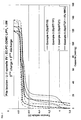
Figure 1 : caractérisation électrochimique en piles boutons (versus Li) des spinelles des exemples 2, 3, 4 et 5 (1er cycle, régime lent de décharge: C/20). -
Figure 2 : caractérisation électrochimique en piles boutons (versus Li) des spinelles des exemples 2, 3, 4 et 5 (3ème cycle, régime lent de décharge: C/20). -
Figure 3 : caractérisation électrochimique en piles boutons (versus Li) des spinelles des exemples 2, 3, 4 et 5 (10ème cycle, régime rapide de décharge: C/5). Capacités respectives ramenées à 100%. -
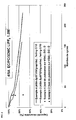
Figure 4 : cyclage de longue durée (décharge en C/10, température ambiante) d'éléments 4/5 A de définitions électrochimiques :- graphite /LiPF6-EC-PC-3DMC/ spinelle de l'exemple 2
- graphite /LiPF6-EC-PC-3DMC/ spinelle de l'exemple 4.
- Tests de puissance sur ces mêmes éléments à D/2 et D.
- Le composé selon l'invention comprend trois phases cristallines.
- La première phase est une phase cristalline de type spinelle de formule LiaNiII 0,5-xMnIII 2xMnIV 1,5-x-yMyO4 dans laquelle
M est choisi dans le groupe comprenant les éléments Ti et A1, ou un mélange de ceux-ci;
0,8 < a < 1,3 ;
0 < x ≤ 0,15 ;
0 < y ≤ 0,15 ; - NiII, MnIII et MnIV désignent respectivement le nickel au degré d'oxydation 2, le manganèse au degré d'oxydation 3 et 4.
- Selon un mode de réalisation, a=1 .
- Selon un mode de réalisation,

- Selon un mode de réalisation,

- Les réactions électrochimiques se produisant au cours de la charge de la spinelle selon l'invention sont les suivantes :
- Pour un potentiel inférieur à 4,5 V par rapport à Li, il se produit la transformation de MnIII en MnIV.
- Pour un potentiel supérieur à 4,5 V par rapport à Li, il se produit la transformation de NiII en NiIV.
- La courbe de charge de la spinelle selon l'invention comporte donc deux parties :
- un plateau à une tension inférieure à 4,5V vs. Li+/Li, (environ 4V), relatif à la réaction : MnIII → MnIV (plateau dit « 4V »),
- un plateau à une tension supérieure à 4,5V vs. Li+/Li, (environ 4,7V), relatif à la réaction: NiII → NiIV (« plateau dit « 5V ») .
- La longueur de chaque plateau est proportionnelle à la quantité de chaque espèce électrochimiquement active. La longueur de plateau 4V représente généralement de 1 à 15% de la capacité électrochimique totale de la spinelle. La longueur de plateau 5V représente généralement de 85 à 99% de la capacité électrochimique totale de la spinelle.
- Il résulte de la présence de MnIII une valeur de tension légèrement abaissée par rapport au composé spinelle « 5V » de l'art antérieur, mais en revanche, cette tension de fonctionnement plus basse limite l'oxydation de l'électrolyte.
- La présence d'un plateau à 4V a comme avantage de permettre un contrôle de l'état de charge de l'électrode positive.
- La demanderesse a constaté que la présence de MnIII n'a pas pour effet d'augmenter la vitesse de dissolution du manganèse dans l'électrolyte. L'électrode positive conserve sa stabilité et une bonne durée de vie dans des conditions de cyclage. Il a par ailleurs été constaté que l'absence de MnIII dans un composé spinelle de type 5V conduit à un matériau peu conducteur et donc à des performances électrochimiques du générateur peu satisfaisantes : mauvaise aptitude à la décharge rapide et perte de capacité en cyclage.
- La seconde phase du composé selon l'invention est une phase cristalline cubique de formule Li1-tNi1+tO dans laquelle
- 0 ≤ t ≤ 1.
- La troisième phase du composé selon l'invention est une phase cristalline rhomboédrique de formule Li1-zNi1+zO2 dans laquelle 0 ≤ z ≤ 1.
- La seconde phase et la troisième phase sont dites phases adjointes.
- Les phases adjointes ne sont pas des formes électrochimiquement actives. Contrairement aux phases lamellaires classiques de l'électrochimie lithium-ion telles que LiCo02 et LiNi02 dopé, les phases adjointes ne participent pas, à l'exception de la première charge, à l'augmentation de capacité électrique de l'électrode. Elles ont pour effet d'améliorer la conductivité électrique du composé sans interférer avec l'électrochimie de la phase spinelle.
- Au contraire, les phases lamellaires classiques de l'électrochimie lithium-ion telles que LiCoO2 et LiNiO2 dopé sont électrochimiquement actives et se détériorent à haut potentiel (4,9 V par rapport à Li+/Li).
- Les trois phases cristallines du composé selon l'invention sont obtenues par un procédé permettant de les fabriquer simultanément, à partir d'un seul mélange réactionnel. Ce procédé est donc un procédé dit « one pot ».
- Le procédé de préparation du composé de l'invention comprend les étapes suivantes :
- a) on fournit un mélange de NiO, MnO2 ou Mn3O4, et un oxyde de métal M; M étant choisi dans le groupe comprenant les éléments Ti et Al, ou un mélange de ceux-ci. On peut par exemple utiliser TiO2 et/ou Al2O3.
- b) on broie et éventuellement on tamise le mélange,
- c) on chauffe le mélange à une température supérieure à 900°C, de préférence à 950°C. Le chauffage permet de synthétiser un promoteur de la spinelle.
- d) on ajoute au mélange un composé à base de lithium, tel que le carbonate de lithium Li2CO3.
- e) on chauffe le mélange à une température comprise entre 700°C et 820°C afin de réaliser la lithiation du promoteur.
- Selon un mode de réalisation, la quantité de nickel présente dans le mélange avant synthèse de la phase spinelle, correspond à un indice stoechiométrique du nickel allant de 0,47 à 0,52, de préférence de 0,49 à 0,51.
- Une température de chauffage comprise entre 700°C et 820°C à l'étape e) est choisie de préférence pour l'obtention du composé selon l'invention. En effet, un chauffage à une température comprise entre 700°C et 820°C, de préférence entre 730°C et 800°C, permet d'une part la formation de la phase spinelle a) déficitaire en nickel et riche en manganèse III et d'autre part la formation concomitante des phases adjointes b) Li1-tNi1+tO et c) Li1-zNi1+zO2.
- Au cours du chauffage, il se produit une migration d'une fraction x de la quantité de nickel initialement présente dans le mélange, depuis la phase spinelle vers les phases adjointes b) Li1-tNi1+tO et c) Li1-zNi1+zO2. Ceci explique le déficit en nickel dans la phase spinelle a) du composé selon l'invention. Ce déficit est représenté par la valeur de l'indice stoechiométrique 0,5-x du nickel, qui est inférieure strictement à 0,5.
- On a constaté que la proportion de manganèse III dans la phase spinelle était proportionnelle à la température de chauffage de l'étape e). Toutefois, un chauffage au-delà de 830°C ou plus provoque plus ou moins la dégradation de la structure de la phase spinelle.
- Le pourcentage de MnIII représente généralement de 1 à 15 % du MnIV.
- A titre d'exemples :
- pour une synthèse réalisée à 750°C : le ratio MnIII/MnIV est égal à 0,10 (x = 0,07).
- pour une synthèse réalisée à 800°C : le ratio MnIII/MnIV est égal à 0,15 (x = 0,10).
- Selon un mode de réalisation, l'invention ne concerne pas un mode de préparation d'un composé de type spinelle dans lequel les phases adjointes seraient mélangées à la phase spinelle après obtention de celle-ci, c'est-à-dire un ajout ex-situ des phases adjointes.
- Les exemples ci-après montrent que l'addition ex-situ des phases adjointes donne de moins bons résultats que dans le cas de leur formation in-situ.
- La Demanderesse a constaté que la présence de MnIII augmentait la conductivité électrique intrinsèque du composé et induisait le comportement électrochimique en deux plateaux tel que décrit ci-avant.
- La longueur du plateau du composé comprend donc deux parties. Une première partie à environ 4V représentant de 1 à 15% de la capacité électrochimique totale. Une seconde partie à environ 4,7V représentant de 85 à 99% de la capacité électrochimique totale.
- Le taux de MnIII peut être évalué par dosage oxydoréduction par le sel de Mohr Fe(NH4)2(SO4)2 en milieu acide fort. Une prise d'essai de spinelle de masse connue est placée dans un erlenmeyer. Un volume connu d'une solution titrée de sel de Mohr et de l'acide sulfurique 6 N sont ajoutés. On fait barboter dans l'erlenmeyer bouché un courant d'azote. On chauffe le mélange jusqu'à sa dissolution totale. Au cours de la réaction d'oxydo-réduction, il se produit la réduction des espèces MnIV et MnIII en MnII et l'oxydation du FeII en FerIII. Après refroidissement du mélange, on dose par une solution titrée de dichromate de potassium K2Cr2O7, l'excès de sel de Mohr n'ayant pas réagi.
- La détection des phases Li1-tNi1+tO cubique et Li1-zNi1+zO2 rhomboédrique est possible par diffraction des rayons X. Ces phases Li1-tNi1+tO cubique et Li1-zNi1+zO2 rhomboédrique sont facilement différenciables de NiO ou de LiNiO2 dopé ou de LiCo02 par la position des raies en 2θ et par affinement Rietveld du profil de diffraction X.
- La phase spinelle obtenue par ce procédé présente une conductivité électrique intrinsèque améliorée. L'association de la phase spinelle riche en MnIII avec les phases adjointes permet d'obtenir un composé électrochimiquement actif pouvant être utilisé pour la fabrication d'une électrode apte à fonctionner à un potentiel supérieur à 4,5V par rapport à Li+/Li. Lorsque le composé est utilisé comme matière active d'une électrode positive d'un générateur au lithium, la perte de capacité de ce générateur au cours du cyclage est moindre.
- L'invention a aussi pour objet une électrode positive de générateur électrochimique rechargeable au lithium contenant comme matière électrochimiquement active, le composé tel que décrit précédemment. Ce composé possède la propriété d'insérer réversiblement du lithium.
- L'électrode est généralement constituée d'un support conducteur servant de collecteur de courant et d'au moins une couche contenant la matière active. Cette couche est réalisée par dépôt sur le support d'une pâte contenant la matière électrochimiquement active, un liant polymère, un diluant et éventuellement des additifs conducteurs.
- Le liant peut contenir un ou plusieurs des composants suivants : le polyfluorure de vinylidène (PVdF) et ses copolymères, le polytétrafluoroéthylène (PTFE), le polyacrylonitrile, le polyméthacrylate de méthyle ou de butyle, le polychlorure de vinyle, le polyvinylformal, les polyesters et les polyéthers blocs amides, les polymères de l'acide acrylique, l'acide méthacrylique, l'acrylamide, l'acide itaconique, l'acide sulfonique, les élastomères et les composés cellulosiques.
- Le procédé de fabrication d'une électrode contenant le composé décrit précédemment comprend les étapes suivantes. On met le liant sous forme de solution ou de suspension dans un solvant. Pour former une pâte, on ajoute à la solution ou suspension la matière active pulvérulente et éventuellement des auxiliaires de fabrication comme par exemple un épaississant. On ajuste la viscosité de la pâte et on recouvre de pâte au moins une face d'un collecteur de courant pour former une couche active. On sèche et on calandre le collecteur recouvert de ladite couche active pour former l'électrode.
- Le collecteur de courant est de préférence un support conducteur bidimensionnel, comme un feuillard plein ou perforé, à base de carbone ou de métal, par exemple en cuivre, aluminium, nickel, acier, inox ou aluminium. De préférence, le collecteur de l'électrode positive est en aluminium et le collecteur de l'électrode négative est en cuivre ou en aluminium. Avantageusement, le collecteur négatif est en aluminium. En cas de surdécharge ou d'inversion de l'accumulateur, on évite ainsi la mise en court-circuit par dendrites de cuivre lorsque le collecteur est en cuivre.
- La présente invention se rapporte également à un générateur électrochimique rechargeable au lithium dont les énergies massique et volumique sont améliorées par l'utilisation d'une matière active cathodique de tension de décharge élevée.
- Le générateur selon l'invention, présente une courbe de tension de décharge avec un plateau à une tension supérieure ou égale à environ 4,5 V, et un plateau à une tension d'environ 4 V.
- L'électrode négative (anode) est un composé d'insertion du lithium choisi parmi un matériau carboné et un oxyde mixte de lithium et d'un métal de transition. La matière active anodique peut être choisie parmi un matériau carboné comme le graphite, le coke, le noir de carbone et le carbone vitreux et un oxyde mixte de lithium et d'un métal de transition comme le nickel, le cobalt ou le titane. Elle peut également être un composite Si-C, Sn-C ou un composé intermétallique.
- L'électrode positive, et l'électrode négative, ou anode lors de la décharge, encadrent un séparateur et sont imprégnées d'électrolyte.
- L'électrolyte est un électrolyte classique dans l'art des générateurs lithium-ion. Il peut être constitué par une solution d'un sel conducteur de lithium dissous dans un solvant non aqueux. Ce solvant peut être un solvant ou un mélange de solvants choisi parmi les solvants organiques usuels notamment les carbonates cycliques saturés, les carbonates cycliques insaturés, les carbonates non-cycliques, les esters d'alkyle.
- Le sel conducteur de lithium peut être le perchlorate de lithium LiClO4, le lithium bis oxalatoborate LiBOB, l'hexafluoroarsénate de lithium LiAsF6, l'hexafluorophosphate de lithium LiPF6, le tétrafluoroborate de lithium LiBF4, le trifluorométhanesulfonate de lithium LiCF3SO3, le trifluorométhanesulfonimide de lithium LiN (CF3SO2)2 (LiTFSI), le trifluorométhanesulfoneméthide de lithium LiC(CF3SO2)3 (LiTFSM) ou le bisperfluoroéthylsulfonimide de lithium LiN (C2F5SO2)2 (BETI).
- Le composé selon l'invention peut également être utilisé dans l'électrode positive d'un générateur électrochimique de type lithium polymère.
- Le générateur électrochimique selon l'invention est particulièrement bien adapté comme source d'énergie pour les applications portables, spatiales, aéronautiques, les télécommunications, l'alimentation des véhicules électriques et hybrides, les applications industrielles ou l'éclairage de secours.
- Les exemples suivants illustrent l'invention sans la limiter.
- Les caractéristiques physico-chimiques et électrochimiques des composés obtenus dans les exemples 1 à 5 suivants figurent dans le Tableau 1.
- Le composé spinelle de l'exemple 1 a été synthétisé en fabriquant d'abord à 950°C un précurseur à partir de 0,77 mole de NiO et 0,747 mole de Mn3O4, soit 2,23 mole de Mn.
- La lithiation du précurseur a ensuite été réalisée à 700°C avec Li2CO3.
- Le composé spinelle ne contient pas de titane.
- Le pourcentage de manganèse au degré d'oxydation IV par rapport au total de manganèse est de 100%.
- Le composé spinelle de l'exemple 2 a été synthétisé en fabriquant d'abord à 950°C un précurseur à partir de 0,75 mole de NiO, 2,15 mole de MnO2 et 0,1 mole de TiO2. Le précurseur obtenu est Ni0,75Mn2,15Ti0,1O4.
- Une lithiation a ensuite été réalisée à 700°C avec Li2CO3. A 700°C, il se forme le composé LiNiII 0,50MnIV 1,42TiIV 0,08O4. L'indice stoechiométrique du nickel dans le composé spinelle obtenu est égal à 0,50.
- Le composé spinelle synthétisé contient du titane dont l'indice fraction stoechiométrique est de 0,08.
- Le pourcentage de manganèse au degré d'oxydation IV par rapport au total de manganèse est de 100%.
- On peut noter la disparition de la phase NiO présente dans l'exemple 1, le titane favorisant l'incorporation du nickel dans la phase spinelle à 700°C.
- Le composé spinelle de l'exemple 3 a été synthétisé en fabriquant d'abord à 950°C un précurseur à partir de 0,75 mole de NiO, 2,15 mole de MnO2 et 0,10 mole de TiO2. Le précurseur formé est Ni0,75Mn2,15Ti0,1O4.
- La lithiation est ensuite réalisée à 750°C avec Li2CO3 pour former la spinelle de formule LiNiII 0.43MnIII 0,14MnIV 1,35TiIV 0,08O4. On constate que lorsque la température de lithiation est supérieure à 700°C, la phase spinelle s'appauvrit en nickel (indice du nickel de 0,43 au lieu de 0,5 dans l'exemple 2) et s'enrichit en MnIII.
- Le ratio MnIII/MnIV est de 0,10. Le nickel ressort de la spinelle mais pour former des phases lithiées (système Li-Ni-O).
- Les composés de départ sont les mêmes que pour l'exemple 3 mais la lithiation a été réalisée à 800°C au lieu de 750°C.
- Le composé spinelle obtenu contient du titane dont la fraction stoechiométrique est de 0,08
- Le ratio MnIII/MnIV est de 0,15. Un accroissement supplémentaire de la température fait sortir encore plus de nickel de la phase spinelle (indice stoechiométrique du nickel de 0,4 au lieu de 0,43 dans l'example 3) et accroît la quantité de MnIII dans la spinelle.
- Le composé de l'exemple 2 est mélangé avec 5% de phase adjointe LiNiO2 dopée par Co-Mn pour vérifier l'effet d'une telle addition ex-situ lors de la fabrication de l'électrode et non in-situ lors de la synthèse de la spinelle.
Tableau I Caractéristiques Exemple 1 Exemple 2 Exemple 3 Exemple 4 Exemple 5 Température de synthèse 700°C 700°C 750°C 800°C Exemple 2 + 5% LiNiO2 (rhomboédrique) (NMC) Affinement structural Formule de la spinelle LiNiII 0.50MnIV 1.50O4 LiNiII 0.50MnIV 1.42TiIV 0.08O4 LiNiII 0.43MnIII 0.14MnIV 1.35TiIV 0.08O4 LiNiII 0.40MnIII 0.20MnIV 1.32TiIV 0.80O4 MnIII/MnIV ε ε 0.10 0.15 Spinelle (%) 96.8 97.9 94.3 88.2 NiO 0.3 - - - Li1-tni1+tO cubique 2.7 1.5 3.8 3.4 Li1-zni1+zO2 rhomboédrique 0.2 0.6 19 8.4 Electrochimie vs Li Capacité rever. (mAh/g) 133 134 129 124 120 Capacité irrév. (mAh/g) 11 10 16 13 22 Perte capacité (%-cycle) 0.10 0.34 0.08 0.10 0.22 % capacity C/10 vs C/20 97.8% 97.2% 98.9% 98.9% 96.9% %capacity C/5 vs C/20 92.1% 91.4% 979% 959% 916% Electrochimie / graphite Mn (ppm) après 4 cycles 360 460 90 80 100 - Les composés spinelle « 5V » synthétisés ont été utilisés comme cathodes de générateurs de type Li-ion. Des caractérisations en pile-boutons [Li métal // spinelle « 5V »] ont été réalisées, ainsi que des caractérisations en accumulateurs complets (4/5A), face à des matériaux négatifs du type graphite.
- Les électrodes positives fabriquées à partir des matériaux spinelle « 5V » comprennent :
- 86% spinelle « 5V »
- 4% Y50A (suie)
- 4% UF2 (graphite) et
- 6% PVDF
- Les sels utilisés sont LiPF6 et LiBOB. Le solvant est un mélange de carbonates choisis parmi le carbonate d'ethylène (EC), le carbonate de propylène (PC), le carbonate de diméthyle (DMC), le carbonate de diéthyle (DEC), le carbonate de vinylidène (VC).
- Les résultats des tests de caractérisation des pile-boutons [Li métal // spinelle « 5V »] sont représentés
Figures 1 ;2 et3 . - Les générateurs complets de type 4/5A ont été soumis à un test de cyclage de longue durée afin d'estimer leur durée de vie. Ce test comprend des décharges lentes au régime de C/10. Au 30ème cycle, un test de décharge rapide aux régimes de D/2 et D a été effectué. Les résultats des tests de caractérisation de ces générateurs complets (4/5A) sont représentés
Figure 4 et Tableau 2. - Les caractéristiques en cyclage d'électrodes comprenant les composés des exemples 2 à 5 (versus Li) sont reportées sur la
Figure 1 (décharge en C/20, 1er cycle), sur laFigure 2 (décharge en C/20, 3ème cycle) et sur laFigure 3 (décharge en C/5). - Le Tableau 1 compare les rapports entre la capacité déchargée au régime de décharge de C/10 et la capacité déchargée au régime de C/20 pour les exemples 1-5. I1 compare également les rapports entre la capacité déchargée au régime de décharge de C/5 et la capacité déchargée au régime de C/20.
- La capacité déchargée au régime de décharge de C/10 est supérieure pour les exemples 3 et 4 selon l'invention à celle des exemples 1, 2 et 5 hors invention. La différence de performances entre les exemples 3 et 4 et les exemples 1, 2 et 5 est encore plus significative pour une décharge plus rapide en C/5. En effet, les capacités restituées pour une décharge en C/5 sont respectivement de 97,9% et 95,9% pour les exemples 3 et 4, alors qu'elles ne sont respectivement que de 92,1%, 91,4% et 91,6% pour les exemples 1, 2 et 5.
- Le Tableau 1 indique également la teneur en manganèse mesurée après cyclage des composés pendant 4 cycles. La teneur en manganèse mesurée dans l'électrolyte est représentative de la stabilité du composé en cyclage. Une teneur élevée en manganèse indique une faible stabilité du composé.
- Les composés des exemples 1 et 2 contiennent une phase cristalline cubique Li1-tNi1+tO et une phase cristalline rhomboédrique Li1-zNi1+zO2 mais ne contiennent pas de MnIII. La teneur en Manganèse mesurée est de 360 et 460 ppm respectivement ; ce qui est élevé en comparaison avec les exemples 3 et 4.
- Les composés des exemples 3 et 4 contiennent du MnIII, une phase cristalline cubique Li1-tNi1+tO et une phase cristalline rhomboédrique Li1-zNi1+zO2. La teneur en manganèse mesurée est de 90 et 80 ppm respectivement, soit environ 4 fois plus faible que les exemples 1 et 2. La présence de MnIII, mais aussi de phases adjointes Li1-tNi1+tO cubique et/ou Li1-zNi1+zO2 rhomboédrique réduit la perte de capacité en cyclage en donc améliore la durée de vie en cyclage. La présence de MnIII et de phases adjointes engendre une baisse légère de la capacité réversible.
- Les courbes de charge/décharge des exemples 3 et 4 selon l'invention indiquent la présence de deux plateaux, l'un à environ 4V et l'autre à 4,7V.
- L'addition de 5% de phase LiNiO2 à la spinelle de l'exemple 2 améliore la conductivité électronique au premier cycle (
Figure 1 ), mais pas suffisamment pour assurer à l'électrode une bonne conductivité à régime de charge/décharge rapide (C/5,Figure 3 ). Par ailleurs, la destruction de la phase LiNiO2 (Li1-zNi1+zO2 pour z=1) à tension élevée (4,9V) induit un accroissement notable de l'irréversibilité du premier cycle électrochimique, avec une perte totale de l'activité à « 4V » intrinsèque à la phase LiNiO2 (Li1-zNi1+zO2 pour z=1). En effet, le plateau « 4V » observé en charge ne se retrouve pas en décharge, contrairement aux spinelles des exemples 3 et 4, où le plateau « 4V » relatif à la réaction MnIII ↔ MnIV se retrouve en charge comme en décharge (Figure 2 ). Par voie de conséquence, la capacité réversible observée est plus faible (120 mAh/g). - L'effet de l'addition de phases adjointes ex-situ ne donne pas des performances aussi bonnes que dans l'invention où les phases adjointes sont fabriquées in-situ.
- Le générateur 4/5A comprenant la matière active de l'exemple 2, hors invention, peut être cyclé pendant environ 100 cycles. La perte de capacité est de 20% après ces 100 cycles.
- Le générateur 4/5A comprenant la matière active de l'exemple 4, selon l'invention, peut être cyclé pendant environ 150 cycles pour la même perte de capacité, ce qui représente un gain en durée de vie de 50%.
- Le Tableau 2 compare les capacités de ces deux générateurs 4/5A au cours d'un test de décharge rapide aux régimes de D/2 et D. La perte de capacité en cyclage est plus importante pour le générateur comprenant la matière active de l'exemple 2 que pour le générateur de l'exemple 4.
- La durée de vie en cyclage et l'aptitude à la décharge rapide des générateurs selon l'invention est donc améliorée.
Tableau 2.a: graphite/LiPF6-EC-PC-3DMC/spinelle de l'ex. 2 4/5A : graphite / spinelle de l'exemple 2 Q/g (mAh/g) Q / Q C/10 C/10 118 100 % D/2 114 97 % D 96 81 % Tableau 2.b: graphite/LiPF6-EC-PC-3DMC/spinelle de l'ex. 4 4/5A : graphite / spinelle de l'exemple 4 Q/g (mAh/g) Q / Q C/10 C/10 119 100 % D/2 117 98 % D 113 95 %
Claims (18)
- Composé comprenant :a) une phase cristalline de type spinelle de formule
LiaNiII 0,5-xMnIII 2xMnIV 1,5-x-yMyO4 dans laquelle
M est choisi dans le groupe comprenant les éléments Ti et Al, ou un mélange de ceux-ci;0,8 < a < 1,3 ;0 < x ≤ 0,15 ;0 < y ≤ 0,15 ;b) une phase cristalline cubique de formule Li1-tNi1+tO dans laquelle 0 ≤ t ≤ 1 ; etc) une phase cristalline rhomboédrique de formule Li1-zNi1+zO2 dans laquelle 0 ≤ z < 1. - Composé selon la revendication 1, dans lequel 0 < x ≤ 0,10.
- Composé selon la revendication 1 ou 2, dans lequel le pourcentage molaire de phase cristalline de type spinelle est de 75 à 98 %, de préférence de 85 à 96 %.
- Composé selon l'une des revendications précédentes, dans lequel le pourcentage molaire de phase cristalline cubique est de 1 à 10 %, de préférence de 2 à 6 %.
- Composé selon l'une des revendications précédentes, dans lequel le pourcentage molaire de phase cristalline rhomboédrique est de 0,5 à 15 %, de préférence de 1 à 10%.
- Composé selon l'une des revendications précédentes, dans lequel a=1.
- Composé selon l'une des revendications précédentes, dans lequel

- Composé selon la revendication 7, dans lequel

- Composé selon la revendication 8, dans lequel x = 0,07 et y < 0,09.
- Utilisation d'un composé selon l'une des revendications 1 à 9, pour la fabrication d'une électrode apte à fonctionner à un potentiel supérieur à 4,5 V par rapport au couple Li+/Li.
- Electrode positive pour générateur électrochimique au lithium comprenant une matière active comprenant le composé selon l'une des revendications 1 à 9.
- Générateur électrochimique au lithium comprenant au moins une électrode positive selon la revendication 11.
- Générateur selon la revendication 12, dont la courbe de tension de décharge présente un plateau à une tension supérieure ou égale à environ 4,5 V, et un plateau à une tension d'environ 4 V.
- Procédé pour la préparation d'un composé selon les revendications 1 à 9 comprenant les étapes consistant à :a) fournir un mélange de NiO, MnO2 ou Mn3O4, et un oxyde de métal M; M étant choisi dans le groupe comprenant les éléments Ti et Al, ou un mélange de ceux-ci;b) broyer le mélange,c) chauffer le mélange à une température supérieure à 900°C,d) ajouter au mélange un composé à base de lithium,e) chauffer le mélange à une température comprise entre 700°C et 820°C.
- Procédé selon la revendication 14 dans lequel la température de l'étape e) est comprise entre 730 et 800°C.
- Procédé selon l'une des revendications 14 à 15, dans lequel le composé à base de lithium est Li2CO3.
- Procédé selon l'une des revendications 14 à 16, dans lequel la quantité de nickel présente dans le mélange avant synthèse de la phase spinelle, correspond à un indice stoechiométrique du nickel allant de 0,47 à 0,52.
- Procédé selon la revendication 17, dans lequel la quantité de nickel présente dans le mélange avant synthèse de la phase spinelle, correspond à un indice stoechiométrique du nickel allant de 0,49 à 0,51.
Applications Claiming Priority (1)
| Application Number | Priority Date | Filing Date | Title |
|---|---|---|---|
| FR0604670A FR2901640B1 (fr) | 2006-05-24 | 2006-05-24 | Compose d'insertion du lithium utilisable comme matiere active cathodique d'un generateur electrochimique rechargeable au lithium |
Publications (2)
| Publication Number | Publication Date |
|---|---|
| EP1860713A1 EP1860713A1 (fr) | 2007-11-28 |
| EP1860713B1 true EP1860713B1 (fr) | 2010-09-01 |
Family
ID=37497457
Family Applications (1)
| Application Number | Title | Priority Date | Filing Date |
|---|---|---|---|
| EP07010232A Ceased EP1860713B1 (fr) | 2006-05-24 | 2007-05-23 | Composé d'insertion du lithium utilisable comme matière active cathodique d'un générateur électrochimique rechargeable au lithium |
Country Status (4)
| Country | Link |
|---|---|
| US (1) | US7799459B2 (fr) |
| EP (1) | EP1860713B1 (fr) |
| DE (1) | DE602007008786D1 (fr) |
| FR (1) | FR2901640B1 (fr) |
Families Citing this family (5)
| Publication number | Priority date | Publication date | Assignee | Title |
|---|---|---|---|---|
| FR2969382B1 (fr) | 2010-12-17 | 2022-11-18 | Centre Nat Rech Scient | Élément memristif et mémoire électronique basée sur de tels éléments |
| JP5720899B2 (ja) * | 2011-03-31 | 2015-05-20 | 戸田工業株式会社 | マンガンニッケル複合酸化物粒子粉末及びその製造方法、非水電解質二次電池用正極活物質粒子粉末の製造方法及び非水電解質二次電池 |
| JP2013205016A (ja) * | 2012-03-27 | 2013-10-07 | Sumitomo Metal Mining Co Ltd | 遊離残留塩素の分析方法 |
| CN112142124B (zh) | 2015-09-17 | 2023-04-07 | 三井金属矿业株式会社 | 尖晶石型含锂镍锰的复合氧化物 |
| GB2613894B (en) * | 2021-12-20 | 2025-01-22 | Dyson Technology Ltd | A cathode composition |
Family Cites Families (7)
| Publication number | Priority date | Publication date | Assignee | Title |
|---|---|---|---|---|
| US5962166A (en) * | 1997-08-18 | 1999-10-05 | Covalent Associates, Inc. | Ultrahigh voltage mixed valence materials |
| JP3634694B2 (ja) * | 1998-12-18 | 2005-03-30 | 三洋電機株式会社 | リチウム二次電池 |
| US6709788B2 (en) * | 2001-05-11 | 2004-03-23 | Denso Corporation | Lithium secondary cell and method of producing lithium nickel metal oxide positive electrode therefor |
| KR100406816B1 (ko) * | 2001-06-05 | 2003-11-21 | 삼성에스디아이 주식회사 | 리튬 이차 전지용 양극 활물질의 제조 방법 |
| FR2831993A1 (fr) * | 2001-11-08 | 2003-05-09 | Cit Alcatel | Compose d'insertion du lithium a haute tension utilisable comme matiere active cathodique de generateur electrochimique rechargeable au lithium |
| US7011907B2 (en) * | 2001-11-27 | 2006-03-14 | Nec Corporation | Secondary battery cathode active material, secondary battery cathode and secondary battery using the same |
| KR100437340B1 (ko) * | 2002-05-13 | 2004-06-25 | 삼성에스디아이 주식회사 | 리튬 이차 전지용 양극 활물질의 제조 방법 |
-
2006
- 2006-05-24 FR FR0604670A patent/FR2901640B1/fr not_active Expired - Fee Related
-
2007
- 2007-05-23 EP EP07010232A patent/EP1860713B1/fr not_active Ceased
- 2007-05-23 DE DE602007008786T patent/DE602007008786D1/de active Active
- 2007-05-24 US US11/753,035 patent/US7799459B2/en not_active Expired - Fee Related
Also Published As
| Publication number | Publication date |
|---|---|
| FR2901640A1 (fr) | 2007-11-30 |
| DE602007008786D1 (de) | 2010-10-14 |
| EP1860713A1 (fr) | 2007-11-28 |
| FR2901640B1 (fr) | 2008-09-12 |
| US7799459B2 (en) | 2010-09-21 |
| US20080093581A1 (en) | 2008-04-24 |
Similar Documents
| Publication | Publication Date | Title |
|---|---|---|
| EP3719883B1 (fr) | Matériau actif d'électrode négative pour batterie secondaire au lithium, électrode négative contenant ledit matériau pour batterie secondaire au lithium, et batterie secondaire au lithium | |
| EP1917691B1 (fr) | Materiau d'electrode positive haute tension de structure spinelle a base de nickel et de manganese pour accumulateurs au lithium | |
| EP1903627B1 (fr) | Matériau actif de cathode pour une batterie au lithium | |
| EP2212964B1 (fr) | Batterie secondaire au lithium à électrolyte non aqueux | |
| EP2318315B1 (fr) | Matériau d'électrode positive formé d'un oxyde de type lamellaire pour accumulateur au lithium. | |
| EP1909345B1 (fr) | Matériau actif à cathode pour une batterie au lithium | |
| JP4873000B2 (ja) | 非水電解質二次電池用正極活物質および非水電解質二次電池 | |
| EP2044645B1 (fr) | Additif à groupes cyano pour électrolyte non-aqueux et dispositif électrochimique l'utilisant | |
| EP3793009B1 (fr) | Procédés de fabrication de matériau actif composite au lithium pour électrode négative et électrode négative composite au lithium | |
| EP4089756A1 (fr) | Procédé de pré-lithiation et batterie secondaire au lithium-ion pré-lithiée | |
| EP4091990A1 (fr) | Procédé de préparation de matériau actif d'électrode positive | |
| EP4060761A1 (fr) | Cathode pour batterie secondaire, son procédé de fabrication et batterie secondaire au lithium la comprenant | |
| US5698338A (en) | Solid secondary lithium cell based on Lix Niy Co1-y VO4< or=x< or=1.1 and 0<y<1 cathode material | |
| KR20150048658A (ko) | 리튬 이차전지 | |
| EP3714498B1 (fr) | Utilisation d'un mélange de sels à titre d'additif dans une batterie au lithium gélifiée | |
| EP2916374A1 (fr) | Cellule secondaire au lithium | |
| EP1860713A1 (fr) | Compose d'insertion du lithium utilisable comme matiere active cathodique d'un generateur electrochimique rechargeable au lithium | |
| KR20200065625A (ko) | 리튬 이차전지 및 그 제조방법 | |
| KR20190032241A (ko) | 이차전지용 양극 및 이를 포함하는 이차전지 | |
| EP1311013A2 (fr) | Composé d'insertion du lithium à haute tension utilisable comme matière active cathodique de générateur électrochimique rechargeable au lithium | |
| WO2013008189A2 (fr) | Phosphate de manganese lithie et materiau composite le comprenant | |
| EP3714499B1 (fr) | Utilisation du nitrate de lithium en tant que seul sel de lithium dans une batterie au lithium gélifiée | |
| EP2895428B1 (fr) | Materiau d'electrode positive pour accumulateur lithium-ion | |
| EP3317912B1 (fr) | Composé utilisé en tant qu'additif dans un électrolyte pour batterie à circulation d'ions | |
| KR102604921B1 (ko) | 리튬 전이 금속 산화물, 리튬 이차 전지용 양극 첨가제 및 이를 포함하는 리튬 이차 전지 |
Legal Events
| Date | Code | Title | Description |
|---|---|---|---|
| PUAI | Public reference made under article 153(3) epc to a published international application that has entered the european phase |
Free format text: ORIGINAL CODE: 0009012 |
|
| AK | Designated contracting states |
Kind code of ref document: A1 Designated state(s): AT BE BG CH CY CZ DE DK EE ES FI FR GB GR HU IE IS IT LI LT LU LV MC MT NL PL PT RO SE SI SK TR |
|
| AX | Request for extension of the european patent |
Extension state: AL BA HR MK YU |
|
| 17P | Request for examination filed |
Effective date: 20080528 |
|
| AKX | Designation fees paid |
Designated state(s): DE FR GB |
|
| 17Q | First examination report despatched |
Effective date: 20080721 |
|
| GRAP | Despatch of communication of intention to grant a patent |
Free format text: ORIGINAL CODE: EPIDOSNIGR1 |
|
| GRAS | Grant fee paid |
Free format text: ORIGINAL CODE: EPIDOSNIGR3 |
|
| GRAA | (expected) grant |
Free format text: ORIGINAL CODE: 0009210 |
|
| AK | Designated contracting states |
Kind code of ref document: B1 Designated state(s): DE FR GB |
|
| REG | Reference to a national code |
Ref country code: GB Ref legal event code: FG4D Free format text: NOT ENGLISH |
|
| REF | Corresponds to: |
Ref document number: 602007008786 Country of ref document: DE Date of ref document: 20101014 Kind code of ref document: P |
|
| PLBE | No opposition filed within time limit |
Free format text: ORIGINAL CODE: 0009261 |
|
| STAA | Information on the status of an ep patent application or granted ep patent |
Free format text: STATUS: NO OPPOSITION FILED WITHIN TIME LIMIT |
|
| 26N | No opposition filed |
Effective date: 20110606 |
|
| REG | Reference to a national code |
Ref country code: DE Ref legal event code: R097 Ref document number: 602007008786 Country of ref document: DE Effective date: 20110606 |
|
| REG | Reference to a national code |
Ref country code: FR Ref legal event code: PLFP Year of fee payment: 10 |
|
| REG | Reference to a national code |
Ref country code: FR Ref legal event code: PLFP Year of fee payment: 11 |
|
| REG | Reference to a national code |
Ref country code: FR Ref legal event code: PLFP Year of fee payment: 12 |
|
| PGFP | Annual fee paid to national office [announced via postgrant information from national office to epo] |
Ref country code: GB Payment date: 20190529 Year of fee payment: 13 |
|
| PGFP | Annual fee paid to national office [announced via postgrant information from national office to epo] |
Ref country code: DE Payment date: 20200525 Year of fee payment: 14 |
|
| GBPC | Gb: european patent ceased through non-payment of renewal fee |
Effective date: 20200523 |
|
| PG25 | Lapsed in a contracting state [announced via postgrant information from national office to epo] |
Ref country code: GB Free format text: LAPSE BECAUSE OF NON-PAYMENT OF DUE FEES Effective date: 20200523 |
|
| REG | Reference to a national code |
Ref country code: DE Ref legal event code: R119 Ref document number: 602007008786 Country of ref document: DE |
|
| PG25 | Lapsed in a contracting state [announced via postgrant information from national office to epo] |
Ref country code: DE Free format text: LAPSE BECAUSE OF NON-PAYMENT OF DUE FEES Effective date: 20211201 |
|
| PGFP | Annual fee paid to national office [announced via postgrant information from national office to epo] |
Ref country code: FR Payment date: 20220503 Year of fee payment: 16 |
|
| PG25 | Lapsed in a contracting state [announced via postgrant information from national office to epo] |
Ref country code: FR Free format text: LAPSE BECAUSE OF NON-PAYMENT OF DUE FEES Effective date: 20230531 |