EP1860193A1 - Promoter-activity modulation for branched-chain amino acid production - Google Patents
Promoter-activity modulation for branched-chain amino acid production Download PDFInfo
- Publication number
- EP1860193A1 EP1860193A1 EP06010527A EP06010527A EP1860193A1 EP 1860193 A1 EP1860193 A1 EP 1860193A1 EP 06010527 A EP06010527 A EP 06010527A EP 06010527 A EP06010527 A EP 06010527A EP 1860193 A1 EP1860193 A1 EP 1860193A1
- Authority
- EP
- European Patent Office
- Prior art keywords
- promoters
- promoter
- ilva
- group
- branched
- Prior art date
- Legal status (The legal status is an assumption and is not a legal conclusion. Google has not performed a legal analysis and makes no representation as to the accuracy of the status listed.)
- Withdrawn
Links
- 150000005693 branched-chain amino acids Chemical class 0.000 title claims abstract description 23
- 238000004519 manufacturing process Methods 0.000 title claims description 20
- 230000000694 effects Effects 0.000 title description 9
- 238000000034 method Methods 0.000 claims abstract description 33
- 239000013598 vector Substances 0.000 claims abstract description 33
- KZSNJWFQEVHDMF-BYPYZUCNSA-N L-valine Chemical compound CC(C)[C@H](N)C(O)=O KZSNJWFQEVHDMF-BYPYZUCNSA-N 0.000 claims abstract description 32
- 108090000623 proteins and genes Proteins 0.000 claims abstract description 26
- KZSNJWFQEVHDMF-UHFFFAOYSA-N Valine Natural products CC(C)C(N)C(O)=O KZSNJWFQEVHDMF-UHFFFAOYSA-N 0.000 claims abstract description 24
- 239000004474 valine Substances 0.000 claims abstract description 24
- 230000008569 process Effects 0.000 claims abstract description 19
- 101150095957 ilvA gene Proteins 0.000 claims abstract description 12
- 101150043028 ilvD gene Proteins 0.000 claims abstract description 12
- 101150105723 ilvD1 gene Proteins 0.000 claims abstract description 12
- 101150099953 ilvE gene Proteins 0.000 claims abstract description 12
- 101150033780 ilvB gene Proteins 0.000 claims abstract description 9
- 101150087199 leuA gene Proteins 0.000 claims abstract description 9
- 238000012262 fermentative production Methods 0.000 claims abstract description 3
- 239000013612 plasmid Substances 0.000 claims description 26
- 244000005700 microbiome Species 0.000 claims description 21
- 238000000855 fermentation Methods 0.000 claims description 9
- 230000004151 fermentation Effects 0.000 claims description 9
- 241000894006 Bacteria Species 0.000 claims description 8
- 241000186216 Corynebacterium Species 0.000 claims description 8
- 108020004511 Recombinant DNA Proteins 0.000 claims description 8
- 230000001965 increasing effect Effects 0.000 claims description 7
- 241000186031 Corynebacteriaceae Species 0.000 claims description 6
- 241000186146 Brevibacterium Species 0.000 claims description 5
- 230000002238 attenuated effect Effects 0.000 claims description 5
- 230000035772 mutation Effects 0.000 abstract description 21
- AGPKZVBTJJNPAG-WHFBIAKZSA-N L-isoleucine Chemical compound CC[C@H](C)[C@H](N)C(O)=O AGPKZVBTJJNPAG-WHFBIAKZSA-N 0.000 abstract description 20
- 229960000310 isoleucine Drugs 0.000 abstract description 20
- AGPKZVBTJJNPAG-UHFFFAOYSA-N isoleucine Natural products CCC(C)C(N)C(O)=O AGPKZVBTJJNPAG-UHFFFAOYSA-N 0.000 abstract description 17
- ROHFNLRQFUQHCH-YFKPBYRVSA-N L-leucine Chemical compound CC(C)C[C@H](N)C(O)=O ROHFNLRQFUQHCH-YFKPBYRVSA-N 0.000 abstract description 11
- ROHFNLRQFUQHCH-UHFFFAOYSA-N Leucine Natural products CC(C)CC(N)C(O)=O ROHFNLRQFUQHCH-UHFFFAOYSA-N 0.000 abstract description 7
- 210000000349 chromosome Anatomy 0.000 abstract description 6
- 238000010276 construction Methods 0.000 abstract description 6
- 108091028043 Nucleic acid sequence Proteins 0.000 abstract description 2
- 230000006696 biosynthetic metabolic pathway Effects 0.000 abstract description 2
- 239000012634 fragment Substances 0.000 description 53
- 241000186226 Corynebacterium glutamicum Species 0.000 description 40
- 239000013615 primer Substances 0.000 description 31
- 229960004295 valine Drugs 0.000 description 26
- 108020004414 DNA Proteins 0.000 description 17
- 229940024606 amino acid Drugs 0.000 description 17
- 150000001413 amino acids Chemical class 0.000 description 17
- 239000000203 mixture Substances 0.000 description 15
- 229930027917 kanamycin Natural products 0.000 description 14
- SBUJHOSQTJFQJX-NOAMYHISSA-N kanamycin Chemical compound O[C@@H]1[C@@H](O)[C@H](O)[C@@H](CN)O[C@@H]1O[C@H]1[C@H](O)[C@@H](O[C@@H]2[C@@H]([C@@H](N)[C@H](O)[C@@H](CO)O2)O)[C@H](N)C[C@@H]1N SBUJHOSQTJFQJX-NOAMYHISSA-N 0.000 description 14
- 229960000318 kanamycin Drugs 0.000 description 14
- 229930182823 kanamycin A Natural products 0.000 description 14
- 210000004027 cell Anatomy 0.000 description 13
- 241000588724 Escherichia coli Species 0.000 description 11
- 238000012163 sequencing technique Methods 0.000 description 10
- 239000011543 agarose gel Substances 0.000 description 9
- 230000037430 deletion Effects 0.000 description 9
- 238000012217 deletion Methods 0.000 description 9
- 241001485655 Corynebacterium glutamicum ATCC 13032 Species 0.000 description 8
- 241000620209 Escherichia coli DH5[alpha] Species 0.000 description 8
- 230000015572 biosynthetic process Effects 0.000 description 8
- 230000007613 environmental effect Effects 0.000 description 8
- 230000014509 gene expression Effects 0.000 description 8
- 229960003136 leucine Drugs 0.000 description 8
- 238000005215 recombination Methods 0.000 description 8
- 230000006798 recombination Effects 0.000 description 8
- 239000003155 DNA primer Substances 0.000 description 7
- 238000006243 chemical reaction Methods 0.000 description 7
- 238000002703 mutagenesis Methods 0.000 description 7
- 231100000350 mutagenesis Toxicity 0.000 description 7
- 108090000790 Enzymes Proteins 0.000 description 6
- 102000004190 Enzymes Human genes 0.000 description 6
- LFQSCWFLJHTTHZ-UHFFFAOYSA-N Ethanol Chemical compound CCO LFQSCWFLJHTTHZ-UHFFFAOYSA-N 0.000 description 6
- 238000012986 modification Methods 0.000 description 6
- 230000004048 modification Effects 0.000 description 6
- 238000010369 molecular cloning Methods 0.000 description 6
- 108091008146 restriction endonucleases Proteins 0.000 description 6
- 101150025220 sacB gene Proteins 0.000 description 6
- 238000013459 approach Methods 0.000 description 5
- 239000013611 chromosomal DNA Substances 0.000 description 5
- 238000005516 engineering process Methods 0.000 description 5
- 230000001665 lethal effect Effects 0.000 description 5
- 238000001556 precipitation Methods 0.000 description 5
- 230000001105 regulatory effect Effects 0.000 description 5
- TYEYBOSBBBHJIV-UHFFFAOYSA-M 2-oxobutanoate Chemical compound CCC(=O)C([O-])=O TYEYBOSBBBHJIV-UHFFFAOYSA-M 0.000 description 4
- 238000004458 analytical method Methods 0.000 description 4
- 238000010367 cloning Methods 0.000 description 4
- 230000037361 pathway Effects 0.000 description 4
- 239000013589 supplement Substances 0.000 description 4
- GHOKWGTUZJEAQD-ZETCQYMHSA-N (D)-(+)-Pantothenic acid Chemical compound OCC(C)(C)[C@@H](O)C(=O)NCCC(O)=O GHOKWGTUZJEAQD-ZETCQYMHSA-N 0.000 description 3
- QTBSBXVTEAMEQO-UHFFFAOYSA-N Acetic acid Chemical compound CC(O)=O QTBSBXVTEAMEQO-UHFFFAOYSA-N 0.000 description 3
- PEDCQBHIVMGVHV-UHFFFAOYSA-N Glycerine Chemical compound OCC(O)CO PEDCQBHIVMGVHV-UHFFFAOYSA-N 0.000 description 3
- 229930182844 L-isoleucine Natural products 0.000 description 3
- OKKJLVBELUTLKV-UHFFFAOYSA-N Methanol Chemical compound OC OKKJLVBELUTLKV-UHFFFAOYSA-N 0.000 description 3
- LCTONWCANYUPML-UHFFFAOYSA-M Pyruvate Chemical compound CC(=O)C([O-])=O LCTONWCANYUPML-UHFFFAOYSA-M 0.000 description 3
- 238000010364 biochemical engineering Methods 0.000 description 3
- 230000002068 genetic effect Effects 0.000 description 3
- 238000003780 insertion Methods 0.000 description 3
- 230000037431 insertion Effects 0.000 description 3
- 239000002609 medium Substances 0.000 description 3
- 235000015097 nutrients Nutrition 0.000 description 3
- 239000000758 substrate Substances 0.000 description 3
- 230000002103 transcriptional effect Effects 0.000 description 3
- QHKABHOOEWYVLI-UHFFFAOYSA-N 3-methyl-2-oxobutanoic acid Chemical compound CC(C)C(=O)C(O)=O QHKABHOOEWYVLI-UHFFFAOYSA-N 0.000 description 2
- RZVAJINKPMORJF-UHFFFAOYSA-N Acetaminophen Chemical compound CC(=O)NC1=CC=C(O)C=C1 RZVAJINKPMORJF-UHFFFAOYSA-N 0.000 description 2
- 108010000700 Acetolactate synthase Proteins 0.000 description 2
- 101000583086 Bunodosoma granuliferum Delta-actitoxin-Bgr2b Proteins 0.000 description 2
- 101100465553 Dictyostelium discoideum psmB6 gene Proteins 0.000 description 2
- 108700039691 Genetic Promoter Regions Proteins 0.000 description 2
- 239000004395 L-leucine Substances 0.000 description 2
- 235000019454 L-leucine Nutrition 0.000 description 2
- KDXKERNSBIXSRK-UHFFFAOYSA-N Lysine Natural products NCCCCC(N)C(O)=O KDXKERNSBIXSRK-UHFFFAOYSA-N 0.000 description 2
- 239000004472 Lysine Substances 0.000 description 2
- 108091034117 Oligonucleotide Proteins 0.000 description 2
- ISWSIDIOOBJBQZ-UHFFFAOYSA-N Phenol Chemical compound OC1=CC=CC=C1 ISWSIDIOOBJBQZ-UHFFFAOYSA-N 0.000 description 2
- 101100169519 Pyrococcus abyssi (strain GE5 / Orsay) dapAL gene Proteins 0.000 description 2
- 240000004808 Saccharomyces cerevisiae Species 0.000 description 2
- 235000014680 Saccharomyces cerevisiae Nutrition 0.000 description 2
- 230000036983 biotransformation Effects 0.000 description 2
- 101150011371 dapA gene Proteins 0.000 description 2
- 238000013461 design Methods 0.000 description 2
- 239000003814 drug Substances 0.000 description 2
- 230000006872 improvement Effects 0.000 description 2
- 238000000338 in vitro Methods 0.000 description 2
- 239000000543 intermediate Substances 0.000 description 2
- 235000013379 molasses Nutrition 0.000 description 2
- 229940014662 pantothenate Drugs 0.000 description 2
- 235000019161 pantothenic acid Nutrition 0.000 description 2
- 239000011713 pantothenic acid Substances 0.000 description 2
- 239000002243 precursor Substances 0.000 description 2
- 238000002708 random mutagenesis Methods 0.000 description 2
- 238000012552 review Methods 0.000 description 2
- 238000002741 site-directed mutagenesis Methods 0.000 description 2
- 239000000126 substance Substances 0.000 description 2
- 239000006228 supernatant Substances 0.000 description 2
- 238000003786 synthesis reaction Methods 0.000 description 2
- OWEGMIWEEQEYGQ-UHFFFAOYSA-N 100676-05-9 Natural products OC1C(O)C(O)C(CO)OC1OCC1C(O)C(O)C(O)C(OC2C(OC(O)C(O)C2O)CO)O1 OWEGMIWEEQEYGQ-UHFFFAOYSA-N 0.000 description 1
- YYAYLSOQGBAUHK-UHFFFAOYSA-N 2-(1,3-thiazol-2-ylamino)propanoic acid Chemical compound OC(=O)C(C)NC1=NC=CS1 YYAYLSOQGBAUHK-UHFFFAOYSA-N 0.000 description 1
- 229920001817 Agar Polymers 0.000 description 1
- KHOITXIGCFIULA-UHFFFAOYSA-N Alophen Chemical compound C1=CC(OC(=O)C)=CC=C1C(C=1N=CC=CC=1)C1=CC=C(OC(C)=O)C=C1 KHOITXIGCFIULA-UHFFFAOYSA-N 0.000 description 1
- GUBGYTABKSRVRQ-XLOQQCSPSA-N Alpha-Lactose Chemical compound O[C@@H]1[C@@H](O)[C@@H](O)[C@@H](CO)O[C@H]1O[C@@H]1[C@@H](CO)O[C@H](O)[C@H](O)[C@H]1O GUBGYTABKSRVRQ-XLOQQCSPSA-N 0.000 description 1
- 244000063299 Bacillus subtilis Species 0.000 description 1
- 235000014469 Bacillus subtilis Nutrition 0.000 description 1
- 241000186145 Corynebacterium ammoniagenes Species 0.000 description 1
- 241000807905 Corynebacterium glutamicum ATCC 14067 Species 0.000 description 1
- WQZGKKKJIJFFOK-QTVWNMPRSA-N D-mannopyranose Chemical compound OC[C@H]1OC(O)[C@@H](O)[C@@H](O)[C@@H]1O WQZGKKKJIJFFOK-QTVWNMPRSA-N 0.000 description 1
- 238000001712 DNA sequencing Methods 0.000 description 1
- 241000206602 Eukaryota Species 0.000 description 1
- 229930091371 Fructose Natural products 0.000 description 1
- 239000005715 Fructose Substances 0.000 description 1
- RFSUNEUAIZKAJO-ARQDHWQXSA-N Fructose Chemical compound OC[C@H]1O[C@](O)(CO)[C@@H](O)[C@@H]1O RFSUNEUAIZKAJO-ARQDHWQXSA-N 0.000 description 1
- 206010064571 Gene mutation Diseases 0.000 description 1
- WQZGKKKJIJFFOK-GASJEMHNSA-N Glucose Natural products OC[C@H]1OC(O)[C@H](O)[C@@H](O)[C@@H]1O WQZGKKKJIJFFOK-GASJEMHNSA-N 0.000 description 1
- 101100028493 Haloferax volcanii (strain ATCC 29605 / DSM 3757 / JCM 8879 / NBRC 14742 / NCIMB 2012 / VKM B-1768 / DS2) pan2 gene Proteins 0.000 description 1
- 241000238631 Hexapoda Species 0.000 description 1
- 150000008575 L-amino acids Chemical class 0.000 description 1
- GUBGYTABKSRVRQ-QKKXKWKRSA-N Lactose Natural products OC[C@H]1O[C@@H](O[C@H]2[C@H](O)[C@@H](O)C(O)O[C@@H]2CO)[C@H](O)[C@@H](O)[C@H]1O GUBGYTABKSRVRQ-QKKXKWKRSA-N 0.000 description 1
- GUBGYTABKSRVRQ-PICCSMPSSA-N Maltose Natural products O[C@@H]1[C@@H](O)[C@H](O)[C@@H](CO)O[C@@H]1O[C@@H]1[C@@H](CO)OC(O)[C@H](O)[C@H]1O GUBGYTABKSRVRQ-PICCSMPSSA-N 0.000 description 1
- 241000124008 Mammalia Species 0.000 description 1
- 241001465754 Metazoa Species 0.000 description 1
- 241000320412 Ogataea angusta Species 0.000 description 1
- 208000012868 Overgrowth Diseases 0.000 description 1
- 241000235061 Pichia sp. Species 0.000 description 1
- 241000607715 Serratia marcescens Species 0.000 description 1
- VMHLLURERBWHNL-UHFFFAOYSA-M Sodium acetate Chemical compound [Na+].CC([O-])=O VMHLLURERBWHNL-UHFFFAOYSA-M 0.000 description 1
- 229920002472 Starch Polymers 0.000 description 1
- 101100125907 Streptomyces coelicolor (strain ATCC BAA-471 / A3(2) / M145) ilvC1 gene Proteins 0.000 description 1
- 229930006000 Sucrose Natural products 0.000 description 1
- CZMRCDWAGMRECN-UGDNZRGBSA-N Sucrose Chemical compound O[C@H]1[C@H](O)[C@@H](CO)O[C@@]1(CO)O[C@@H]1[C@H](O)[C@@H](O)[C@H](O)[C@@H](CO)O1 CZMRCDWAGMRECN-UGDNZRGBSA-N 0.000 description 1
- AYFVYJQAPQTCCC-UHFFFAOYSA-N Threonine Natural products CC(O)C(N)C(O)=O AYFVYJQAPQTCCC-UHFFFAOYSA-N 0.000 description 1
- 239000004473 Threonine Substances 0.000 description 1
- 108010006873 Threonine Dehydratase Proteins 0.000 description 1
- JLCPHMBAVCMARE-UHFFFAOYSA-N [3-[[3-[[3-[[3-[[3-[[3-[[3-[[3-[[3-[[3-[[3-[[5-(2-amino-6-oxo-1H-purin-9-yl)-3-[[3-[[3-[[3-[[3-[[3-[[5-(2-amino-6-oxo-1H-purin-9-yl)-3-[[5-(2-amino-6-oxo-1H-purin-9-yl)-3-hydroxyoxolan-2-yl]methoxy-hydroxyphosphoryl]oxyoxolan-2-yl]methoxy-hydroxyphosphoryl]oxy-5-(5-methyl-2,4-dioxopyrimidin-1-yl)oxolan-2-yl]methoxy-hydroxyphosphoryl]oxy-5-(6-aminopurin-9-yl)oxolan-2-yl]methoxy-hydroxyphosphoryl]oxy-5-(6-aminopurin-9-yl)oxolan-2-yl]methoxy-hydroxyphosphoryl]oxy-5-(6-aminopurin-9-yl)oxolan-2-yl]methoxy-hydroxyphosphoryl]oxy-5-(6-aminopurin-9-yl)oxolan-2-yl]methoxy-hydroxyphosphoryl]oxyoxolan-2-yl]methoxy-hydroxyphosphoryl]oxy-5-(5-methyl-2,4-dioxopyrimidin-1-yl)oxolan-2-yl]methoxy-hydroxyphosphoryl]oxy-5-(4-amino-2-oxopyrimidin-1-yl)oxolan-2-yl]methoxy-hydroxyphosphoryl]oxy-5-(5-methyl-2,4-dioxopyrimidin-1-yl)oxolan-2-yl]methoxy-hydroxyphosphoryl]oxy-5-(5-methyl-2,4-dioxopyrimidin-1-yl)oxolan-2-yl]methoxy-hydroxyphosphoryl]oxy-5-(6-aminopurin-9-yl)oxolan-2-yl]methoxy-hydroxyphosphoryl]oxy-5-(6-aminopurin-9-yl)oxolan-2-yl]methoxy-hydroxyphosphoryl]oxy-5-(4-amino-2-oxopyrimidin-1-yl)oxolan-2-yl]methoxy-hydroxyphosphoryl]oxy-5-(4-amino-2-oxopyrimidin-1-yl)oxolan-2-yl]methoxy-hydroxyphosphoryl]oxy-5-(4-amino-2-oxopyrimidin-1-yl)oxolan-2-yl]methoxy-hydroxyphosphoryl]oxy-5-(6-aminopurin-9-yl)oxolan-2-yl]methoxy-hydroxyphosphoryl]oxy-5-(4-amino-2-oxopyrimidin-1-yl)oxolan-2-yl]methyl [5-(6-aminopurin-9-yl)-2-(hydroxymethyl)oxolan-3-yl] hydrogen phosphate Polymers Cc1cn(C2CC(OP(O)(=O)OCC3OC(CC3OP(O)(=O)OCC3OC(CC3O)n3cnc4c3nc(N)[nH]c4=O)n3cnc4c3nc(N)[nH]c4=O)C(COP(O)(=O)OC3CC(OC3COP(O)(=O)OC3CC(OC3COP(O)(=O)OC3CC(OC3COP(O)(=O)OC3CC(OC3COP(O)(=O)OC3CC(OC3COP(O)(=O)OC3CC(OC3COP(O)(=O)OC3CC(OC3COP(O)(=O)OC3CC(OC3COP(O)(=O)OC3CC(OC3COP(O)(=O)OC3CC(OC3COP(O)(=O)OC3CC(OC3COP(O)(=O)OC3CC(OC3COP(O)(=O)OC3CC(OC3COP(O)(=O)OC3CC(OC3COP(O)(=O)OC3CC(OC3COP(O)(=O)OC3CC(OC3COP(O)(=O)OC3CC(OC3CO)n3cnc4c(N)ncnc34)n3ccc(N)nc3=O)n3cnc4c(N)ncnc34)n3ccc(N)nc3=O)n3ccc(N)nc3=O)n3ccc(N)nc3=O)n3cnc4c(N)ncnc34)n3cnc4c(N)ncnc34)n3cc(C)c(=O)[nH]c3=O)n3cc(C)c(=O)[nH]c3=O)n3ccc(N)nc3=O)n3cc(C)c(=O)[nH]c3=O)n3cnc4c3nc(N)[nH]c4=O)n3cnc4c(N)ncnc34)n3cnc4c(N)ncnc34)n3cnc4c(N)ncnc34)n3cnc4c(N)ncnc34)O2)c(=O)[nH]c1=O JLCPHMBAVCMARE-UHFFFAOYSA-N 0.000 description 1
- 241000319304 [Brevibacterium] flavum Species 0.000 description 1
- 238000009825 accumulation Methods 0.000 description 1
- 239000008272 agar Substances 0.000 description 1
- 230000001195 anabolic effect Effects 0.000 description 1
- 239000003674 animal food additive Substances 0.000 description 1
- 230000003466 anti-cipated effect Effects 0.000 description 1
- 230000000340 anti-metabolite Effects 0.000 description 1
- 230000000692 anti-sense effect Effects 0.000 description 1
- 229940100197 antimetabolite Drugs 0.000 description 1
- 239000002256 antimetabolite Substances 0.000 description 1
- QVGXLLKOCUKJST-UHFFFAOYSA-N atomic oxygen Chemical compound [O] QVGXLLKOCUKJST-UHFFFAOYSA-N 0.000 description 1
- WQZGKKKJIJFFOK-VFUOTHLCSA-N beta-D-glucose Chemical compound OC[C@H]1O[C@@H](O)[C@H](O)[C@@H](O)[C@@H]1O WQZGKKKJIJFFOK-VFUOTHLCSA-N 0.000 description 1
- GUBGYTABKSRVRQ-QUYVBRFLSA-N beta-maltose Chemical compound OC[C@H]1O[C@H](O[C@H]2[C@H](O)[C@@H](O)[C@H](O)O[C@@H]2CO)[C@H](O)[C@@H](O)[C@@H]1O GUBGYTABKSRVRQ-QUYVBRFLSA-N 0.000 description 1
- 230000001851 biosynthetic effect Effects 0.000 description 1
- 238000004364 calculation method Methods 0.000 description 1
- 238000011088 calibration curve Methods 0.000 description 1
- 239000001913 cellulose Substances 0.000 description 1
- 229920002678 cellulose Polymers 0.000 description 1
- 235000010980 cellulose Nutrition 0.000 description 1
- 239000003153 chemical reaction reagent Substances 0.000 description 1
- 230000000295 complement effect Effects 0.000 description 1
- 230000021615 conjugation Effects 0.000 description 1
- 239000000470 constituent Substances 0.000 description 1
- 230000003247 decreasing effect Effects 0.000 description 1
- 238000001212 derivatisation Methods 0.000 description 1
- 238000001514 detection method Methods 0.000 description 1
- 238000011161 development Methods 0.000 description 1
- 238000001962 electrophoresis Methods 0.000 description 1
- 230000005284 excitation Effects 0.000 description 1
- 239000013613 expression plasmid Substances 0.000 description 1
- 238000000605 extraction Methods 0.000 description 1
- 230000009123 feedback regulation Effects 0.000 description 1
- 230000004907 flux Effects 0.000 description 1
- 235000013305 food Nutrition 0.000 description 1
- 239000002778 food additive Substances 0.000 description 1
- 235000013373 food additive Nutrition 0.000 description 1
- 238000013467 fragmentation Methods 0.000 description 1
- 238000006062 fragmentation reaction Methods 0.000 description 1
- 238000012224 gene deletion Methods 0.000 description 1
- 238000007429 general method Methods 0.000 description 1
- 238000010353 genetic engineering Methods 0.000 description 1
- 230000030414 genetic transfer Effects 0.000 description 1
- 235000003869 genetically modified organism Nutrition 0.000 description 1
- 239000008103 glucose Substances 0.000 description 1
- 239000001963 growth medium Substances 0.000 description 1
- 101150090497 ilvC gene Proteins 0.000 description 1
- 101150077793 ilvH gene Proteins 0.000 description 1
- 101150060643 ilvN gene Proteins 0.000 description 1
- 230000001771 impaired effect Effects 0.000 description 1
- 238000001727 in vivo Methods 0.000 description 1
- 230000001939 inductive effect Effects 0.000 description 1
- 238000009655 industrial fermentation Methods 0.000 description 1
- 239000003978 infusion fluid Substances 0.000 description 1
- 230000010354 integration Effects 0.000 description 1
- 238000004255 ion exchange chromatography Methods 0.000 description 1
- 150000002519 isoleucine derivatives Chemical class 0.000 description 1
- 239000008101 lactose Substances 0.000 description 1
- -1 leucine analogue α-aminobutyrate Chemical class 0.000 description 1
- 239000000463 material Substances 0.000 description 1
- 239000002207 metabolite Substances 0.000 description 1
- 108020004707 nucleic acids Proteins 0.000 description 1
- 150000007523 nucleic acids Chemical class 0.000 description 1
- 102000039446 nucleic acids Human genes 0.000 description 1
- 229910052760 oxygen Inorganic materials 0.000 description 1
- 239000001301 oxygen Substances 0.000 description 1
- 101150081585 panB gene Proteins 0.000 description 1
- 230000036961 partial effect Effects 0.000 description 1
- 239000002245 particle Substances 0.000 description 1
- ZWLUXSQADUDCSB-UHFFFAOYSA-N phthalaldehyde Chemical compound O=CC1=CC=CC=C1C=O ZWLUXSQADUDCSB-UHFFFAOYSA-N 0.000 description 1
- 238000003752 polymerase chain reaction Methods 0.000 description 1
- 239000000047 product Substances 0.000 description 1
- 238000011002 quantification Methods 0.000 description 1
- 230000002829 reductive effect Effects 0.000 description 1
- 230000008844 regulatory mechanism Effects 0.000 description 1
- 230000003362 replicative effect Effects 0.000 description 1
- QEVHRUUCFGRFIF-MDEJGZGSSA-N reserpine Chemical compound O([C@H]1[C@@H]([C@H]([C@H]2C[C@@H]3C4=C(C5=CC=C(OC)C=C5N4)CCN3C[C@H]2C1)C(=O)OC)OC)C(=O)C1=CC(OC)=C(OC)C(OC)=C1 QEVHRUUCFGRFIF-MDEJGZGSSA-N 0.000 description 1
- 238000010839 reverse transcription Methods 0.000 description 1
- 238000004007 reversed phase HPLC Methods 0.000 description 1
- 239000000523 sample Substances 0.000 description 1
- 239000001632 sodium acetate Substances 0.000 description 1
- 235000017281 sodium acetate Nutrition 0.000 description 1
- 239000008107 starch Substances 0.000 description 1
- 235000019698 starch Nutrition 0.000 description 1
- 238000003756 stirring Methods 0.000 description 1
- 239000005720 sucrose Substances 0.000 description 1
- 238000013518 transcription Methods 0.000 description 1
- 230000035897 transcription Effects 0.000 description 1
- 230000022846 transcriptional attenuation Effects 0.000 description 1
- 238000011144 upstream manufacturing Methods 0.000 description 1
- 150000003680 valines Chemical class 0.000 description 1
Images


Classifications
-
- C—CHEMISTRY; METALLURGY
- C12—BIOCHEMISTRY; BEER; SPIRITS; WINE; VINEGAR; MICROBIOLOGY; ENZYMOLOGY; MUTATION OR GENETIC ENGINEERING
- C12P—FERMENTATION OR ENZYME-USING PROCESSES TO SYNTHESISE A DESIRED CHEMICAL COMPOUND OR COMPOSITION OR TO SEPARATE OPTICAL ISOMERS FROM A RACEMIC MIXTURE
- C12P13/00—Preparation of nitrogen-containing organic compounds
- C12P13/04—Alpha- or beta- amino acids
- C12P13/08—Lysine; Diaminopimelic acid; Threonine; Valine
-
- C—CHEMISTRY; METALLURGY
- C12—BIOCHEMISTRY; BEER; SPIRITS; WINE; VINEGAR; MICROBIOLOGY; ENZYMOLOGY; MUTATION OR GENETIC ENGINEERING
- C12N—MICROORGANISMS OR ENZYMES; COMPOSITIONS THEREOF; PROPAGATING, PRESERVING, OR MAINTAINING MICROORGANISMS; MUTATION OR GENETIC ENGINEERING; CULTURE MEDIA
- C12N15/00—Mutation or genetic engineering; DNA or RNA concerning genetic engineering, vectors, e.g. plasmids, or their isolation, preparation or purification; Use of hosts therefor
- C12N15/09—Recombinant DNA-technology
- C12N15/11—DNA or RNA fragments; Modified forms thereof; Non-coding nucleic acids having a biological activity
- C12N15/52—Genes encoding for enzymes or proenzymes
-
- C—CHEMISTRY; METALLURGY
- C12—BIOCHEMISTRY; BEER; SPIRITS; WINE; VINEGAR; MICROBIOLOGY; ENZYMOLOGY; MUTATION OR GENETIC ENGINEERING
- C12N—MICROORGANISMS OR ENZYMES; COMPOSITIONS THEREOF; PROPAGATING, PRESERVING, OR MAINTAINING MICROORGANISMS; MUTATION OR GENETIC ENGINEERING; CULTURE MEDIA
- C12N15/00—Mutation or genetic engineering; DNA or RNA concerning genetic engineering, vectors, e.g. plasmids, or their isolation, preparation or purification; Use of hosts therefor
- C12N15/09—Recombinant DNA-technology
- C12N15/63—Introduction of foreign genetic material using vectors; Vectors; Use of hosts therefor; Regulation of expression
- C12N15/74—Vectors or expression systems specially adapted for prokaryotic hosts other than E. coli, e.g. Lactobacillus, Micromonospora
- C12N15/77—Vectors or expression systems specially adapted for prokaryotic hosts other than E. coli, e.g. Lactobacillus, Micromonospora for Corynebacterium; for Brevibacterium
-
- C—CHEMISTRY; METALLURGY
- C12—BIOCHEMISTRY; BEER; SPIRITS; WINE; VINEGAR; MICROBIOLOGY; ENZYMOLOGY; MUTATION OR GENETIC ENGINEERING
- C12P—FERMENTATION OR ENZYME-USING PROCESSES TO SYNTHESISE A DESIRED CHEMICAL COMPOUND OR COMPOSITION OR TO SEPARATE OPTICAL ISOMERS FROM A RACEMIC MIXTURE
- C12P13/00—Preparation of nitrogen-containing organic compounds
- C12P13/04—Alpha- or beta- amino acids
- C12P13/06—Alanine; Leucine; Isoleucine; Serine; Homoserine
Definitions
- the present invention is directed to the production of branched-chain amino acids.
- the present invention deals with genetically modified organisms, which are capable of producing these amino acids by fermentation.
- Amino acids produced by micro-organisms in industrial fermentation of cheap substrates like molasses, acetic acid and ethanol are used as feed and food additives in agriculture and food industry, as constituents of infusion solutions, as therapeutics in medicine and as reagents in chemical and pharmaceutical industry.
- the branched-chain amino acids (L-isoleucine, L-valine, L-leucine) are essential for human and animals and their production is therefore of great importance.
- Amino acids are produced by various bacteria like Escherichia coli, Serratia marcescens and by a number of strains of coryneform bacteria (corynebacteria) such as Corynebacterium and Brevibacterium. Since corynebacteria have been shown to produce various amino acids efficiently, methods of random mutagenesis and selection are employed to improve the performance characteristics of the producing strains. In addition to wild-type strains, amino acids are thus produced by auxotrophic or bradytrophic mutants, regulatory mutants and combined (auxotrophic and regulatory) mutants.
- corynebacteria coryneform bacteria
- strains were obtained which are resistant to antimetabolites, such as an isoleucine analogue isoleucine hydroxyamate [ Journal of Bacteriology 110:761-763 (1972) ], the valine analogue 2-thiazolealanine [ Agricultural and Biological Chemistry 39:1319-1322 (1975) ] or the leucine analogue ⁇ -aminobutyrate [ Bioscience Biotechnology Biochemistry 60:1386-1387 (1996) ] or which are auxotrophic for regulatorily significant metabolites and produce e.g. branched-chain amino acids [ Journal of General and Applied Microbiology 7: 52-69 (1961) , Journal of General and Applied Microbiology 7: 41-51 (1961) ].
- antimetabolites such as an isoleucine analogue isoleucine hydroxyamate [ Journal of Bacteriology 110:761-763 (1972) ], the valine analogue 2-thiazolealanine [ Agricultural and Biological Chemistry 39:1319-1322 (1975) ]
- Improvements of the process of amino acid production may relate also to measures concerning fermentation technology, for example stirring and oxygen supply, or to the composition of the nutrient media, such as for example sugar concentration during fermentation, or to separating and purifying the product by, for example, ion exchange chromatography, or to the intrinsic performance characteristics of the microorganism itself.
- Corynebacterium glutamicum producers of valine may be constructed by cloning the genes ilvBNC, ilvD and ilvE in a multicopy plasmid [( Applied and Environmental Microbiology 65:1973-1979 (1999) , Applied and Environmental Microbiology 68:2246-2250 (2002) ]. Deletions of the genes ilvA, panB and/or panC improve its production ( EP1155139 B1 ). Valine yield may also be increased by using feedback-resistant mutants of acetohydroxy acid synthase (AHAS) in E. coli (Patent Application Publication US 2002/0037562 A1 ) and in C. glutamicum (Feedback Resistant Acetohydroxy Acid Synthetase Mutants. European Patent Application No. 03014640.1 ).
- AHAS acetohydroxy acid synthase
- promoters of different strength could be constitutive, inducible or synthetic.
- native promoters may be altered by deletions, insertions and mutagenesis to modulate their activity.
- the structure of promoters of coryneform bacteria has been described [ Microbiology 142:1297-1349 (1996) , Journal of Biotechnology 104:311-323 (2003) ]. Mutagenesis and analysis of the dapA promoter provided promoter variants showing a wide range of activities [ Journal of Bacteriology 181:6188-6191 (1999) ].
- the goal of present invention is to create a new way of how to produce branched-chain amino acids by micro-organisms more superior than known from the prior art. That is to say that micro-organisms are to be established which allow to generate said amino acids by fermentation in an advantageous manner from an economic and ecological point of view.
- Claims 1 to 6 are directed to the process according to the invention.
- Claims 7 to 9 cover special promoters, recombinant DNA, plasmids, vectors, phages and micro-organisms.
- Claim 10 encompasses the use of present micro-organisms for the production of branched-chain amino acids.
- a genetically modified bacterium of the genus of coryneform bacteria like Corynebacterium or Brevibacterium, in which the promoter strength of one or more of the promoters selected from the group consisting of P-panX, P-ilvA and P-leuA is attenuated and the promoter strength of one or more of the promoters selected from the group consisting of P-ilvB, P-ilvC, P-ilvD and P-ilvE is increased, above-mentioned goal is arrived at in an easy but nonetheless surprising manner.
- both branched-chain amino acids isoleucine and valine may be produced predominantly.
- the amount of 2-ketobutyrate present in the cell may be further increased [ Applied and Environmental Microbiology 65:1973-1979 (1999) ; Applied and Environmental Microbiology 68:2246-2250 (2202 )]. Therefore, through a slight modification within the microorganism, valine is more efficiently produced by the process according to the invention.
- Preferred micro-organisms are those which are derived from branched-chain amino acid-producing Corynebacterium or Brevibacterium. These micro-organisms are able to produce said amino acids from glucose, sucrose, lactose, mannose, fructose, maltose, molasses, starch, cellulose or from glycerol and ethanol.
- the species Corynebacterium glutamicum may in particular be mentioned, which is known in specialist circles for its ability to produce enantiomerically enriched amino acids, preferably L-amino acids.
- Suitable strains of the genus Corynebacterium, in particular of the species Corynebacterium glutamicum, are in particular the known wild type strains
- micro-organisms are used for present process which are composed of a genetically modified bacterium being derived from a bacterium selected from the group consisting of ATCC13032 and genetically related organisms like mutants of ATCC13032, for example the feedback resistant mutants M13 described in European patent application EP03014640.1 .
- P-panX denotes promoters for the genes involved in the bio-transformation of 2-ketoisovalerate to pantothenate in coryneform bacteria (Fig. 1).
- promoters of panB- and/or panC-genes are attenuated to support the flux of intermediates towards valine production by lowering the overall activity for the pantothenate synthesis.
- Promoters of the genes which code for the enzymes of the pathways competing with the valine or isoleucine synthesis and draining off the valine precursors may be attenuated.
- the promoter strength of P-leuA and/or P-ilvA is attenuated for higher isoleucine and/or valine production.
- Promoters serve to regulate the gene expression in organisms. In micro-organisms these promoters can be identified according to the skilled worker's knowledge [ Microbiolology 142: 1297-1309 (1996) ; Journal of Biotechnology 104:325-34 (2003) ]. For example, special core sequences of these promoters, known as -10 and -35 hexamers, are located somewhat upstream the transcriptional start point of each gene. Preferably the extended -10 hexamers (-10 region) are to be the modified to regulate the respective gene expression. Especially preferred is a process wherein the sense - 10 promoter regions used for
- the present invention is directed to promoters for genes of coryneform bacteria, like Corynebacterium or Brevibacterium, selected from the group consisting of ilvA, leuA, ilvB, ilvD and ilvE comprising respective -10-motifs depicted above. Included are also the respective antisense sequences.
- a further embodiment of the present invention is a recombinant DNA comprising instant promoter sequences and the respective genes selected from the group consisting of ilvA, leuA, ilvB, ilvD and ilvE.
- Still another embodiment is directed to micro-organisms, plasmids, vectors and phages comprising the recombinant DNA just mentioned.
- suitable phages, plasmids or vectors are any of the variants available for this purpose to those skilled in the art.
- Such entities can be found in Studier et al., Methods Enzymol. 1990, 185, 61-69 , or in the brochures issued by Roche Biochemicals, Invitrogen, Novagen, Promega, New England Biolabs, Clontech or Gibco BRL, Particularly preferred plasmids and vectors can be found in DNA cloning: a practical approach, Volume I-III, edited by D.M.
- Plasmids with which the gene construct containing the nucleic acid according to the invention can very particularly preferably be cloned into the host organism are: pKK-177-3H (Roche Biochemicals), pBTac (Roche Biochemicals), pKK-233-3 (Amersham Pharmacia Biotech), pLex (Invitrogen) or the vectors of the pET (Novagen) or pUC-series like pUC18 or pUC19, respectively.
- a plasmid pKSAC45 according to Fig. 2. This plasmid is a new E. coli vector, which is easily transferred to Corynebacterium glutamicum by electrotransformation [ FEMS Microbiology Letters 53:299-303 (1989) ; see Example 1].
- Micro-organisms being preferably used for performing the process of the present invention are already discussed above.
- Other micro-organisms which are preferably applied in instant invention, for example to amplify the recombinant DNA, are known to the skilled worker.
- Micro-organisms which may be referred to in this respect are e.g. yeasts such as Hansenula polymorpha, Pichia sp., Saccharomyces cerevisiae, prokaryotes, E. coli, Bacillus subtilis or eukaryota, such as mammal cells, insect cells.
- Strains of E. coli are preferably used for this purpose. The following are very particularly preferred: E.
- present invention relates to the use of a microorganism as described above for the fermentative production of branched-chain amino acids.
- Amino acids are often produced under the conditions of growth limitation brought about by shortage of some essential substrate [ Applied Microbiology and Biotechnology 38:259-262 (1992) , Applied and Environmental Microbiology 60:133-140 (1994) ].
- the strains bradytrophic for one of the branched-chain amino acids are used (Patent application WO01/09286 A1 ).
- Valine producers of C. glutamicum are usually constructed by a deletion of the ilvA gene [ Applied and Environmental Microbiology 68:2246-2250 (2002) ]. Due to this deletion, no 2-ketobutyrate is formed in the cells of such strains and only pyruvate may serve as a substrate for the enzyme AHAS.
- the strains are thus isoleucine auxotrophs and this amino acid must be supplemented into the minimal growth medium. It was shown that production of valine is maximal under the conditions of isoleucine limitation. Under isoleucine shortage, transcriptional attenuation which controls the ilvBNC operon expression is partially relieved and activity of the enzymes coded by the genes of the operon is increased.
- This invention describes strains bradytrophic for leucine and/or isoleucine, being superior in producing valine.
- Modifications of the promoters leading to the production of branched-chain amino acids can be constructed in the chromosome.
- the method for manipulations within the C. glutamicum chromosome was described by Schwarzer and Pühler [ Bio/Technology 9:84-87 (1991) ].
- the weak mutant variants of promoters P-ilvA and P-leuA cause growth limitation of the respective strains. Growth limitation is thus introduced without necessity to supplement the strains by the required nutrient (isoleucine or leucine). In such fermentation the yield is maximized by growing the bradytrophic strain, which forms a limited concentration of a required nutrient without a possibility of overgrowth of the cells.
- promoters P-ilvB, P-ilvD and P-ilvE are purposefully mutated to create promoters with higher activity. These stronger promoters of some genes may increase production of isoleucine and valine. By accumulation of the promoter modifications, strains with higher amino acid production are constructed. In addition to modify promoters, a mutation M13 of the enzyme AHAS (Feedback Resistant Mutants. European Patent Application No. 03014640.1 ) resulting in a feedback-resistant strain contributes to the increase of the amino acid's yield.
- AHAS eedback Resistant Mutants. European Patent Application No. 03014640.1
- the promoters and recombinant DNA according to the invention are prepared by genetic engineering methods known to those skilled in the art ( Sambrook et al. 1989. Molecular Cloning: A Laboratory Manual, 2nd edition, Cold Spring Harbor Laboratory Press ; Balbas P. & Bolivar F. 1990, Design and construction of expression plasmid vectors in E. coli, Methods Enzymology 185, 14-37 ; Vectors: A Survey of Molecular Cloning Vectors and Their Uses. R.L. Rodriguez & D.T. Denhardt, eds: 205-225 ).
- micro-organisms for the production of branched-chain amino acids like for example: gene deletions, gene mutations, promoter insertions, deletions of regulatory sequences.
- micro-organisms having one or more modifications selected from the group consisting of ⁇ ilvA, ⁇ panB, PilvBMDEL, ilvNM13, PilvAM1CG, PilvDM14, PilvEM6, PleuAM3A, pECKAilvBNC in addition.
- the BgIII-digested fragment is ligated with the vector pK45 [ Applied Microbiology and Biotechnology 61, 523-527 (2003) ] linearized also by BgIII.
- E. coli DH5 ⁇ cells are transformed with the ligation mixture and transformants containing the resulting plasmid pKSAC45 (vector in E. coli DH5 ⁇ deposited under DSM 18214) are selected on agar plates containing kanamycin (20 mg/l).
- the identity of the resulting construct pKSAC45 is confirmed by restriction analysis, PCR and partial DNA sequencing. Its restriction and genetic map is shown in Fig. 2.
- the transcriptional start points (TSP) pertinent to the respective promoters are localised by primer extension analysis [ Microbiology 142:1297-1309 (1996) , Microbiology 144:915-927 (1998) ] as follows: The DNA fragments carrying the promoter regions of the genes ilvN, ilvD and ilvE are cloned in the promoter-probe vector pET2 [ Biotechnology Techniques 12:743-746 (1998) ].
- pETP-ilvN The resulting plasmids pETP-ilvN, pETP-ilvD and pETP-ilvE are transferred by electrotransformation into C. glutamicum ATCC13032.
- the primer extension analysis is carried out using the oligonucleotide primer CM4 (GAAAATCTCGTCGAAGCTCG) [ Microbiology 142:1297-1309 (1996) ] complementary to the sequence of the vector pET2 and using 30 ⁇ g total RNA.
- the reverse transcription and DNA electrophoresis is carried out as described [ Microbiology 144:915-927 (1998) ].
- the acquired information on the core promoter sequences is utilized for the design of mutations in the promoters.
- the fragment A1 (760 bp) is amplified.
- the fragment A2 (760 bp) is amplified.
- the fragment 81 (646 bp) is amplified.
- the fragment B2 (646 bp) is amplified.
- chromosomal DNA of C. glutamicum ATCC13032 is used in all cases. The resulting DNA fragments are separated in the agarose gel, isolated and purified by precipitation.
- Second PCR Using primers ILVAIF3 and ILVAIR2 and template fragments A1 + B1 or A2 + B2 (mixed in a molar ratio 1:1), a mixture 1 of fragments M1CG and M1CTG or mixture 2 of fragments M2CG and M2CGA (1384 bp) with mutations in the promoter P-ilvA are amplified.
- the clones in which the double recombination event occurred are identified using the positive selection based on the conditional lethal effect of the sacB gene in C. glutamicum [ Applied and Environmental Microbiology 60:756-759 (1994) ].
- the clones free of the vector sequences and carrying the mutations, are analysed by PCR and sequencing using the automatic sequencer ABI PRISM 3100 (Perkin Elmer).
- ilvBNC operon Transcription of the ilvBNC operon is regulated by the transcriptional attenuator, which controls the ilvB promoter [ Journal of Bacteriology 175:5595-5603 (1993) , Journal of Bioscience and Bioengineering 90:501-507 (2000) ].
- a deletion of the attenuator (211 bp) is constructed in C. glutamicum ilvBNC operon.
- First PCR Using the primers DELATTF and ATT3 the fragment A (611 bp) is amplified. Using the primers ATT4 and DELATTR the fragment B (617 bp) is amplified. As a template, chromosomal DNA from C. glutamicum ATCC13032 is used in both cases. The resulting DNA fragments are separated in the agarose gel, isolated and purified by precipitation.
- Second PCR Using the primers DELATTF and DELATTR and template fragments A + B (mixed in a molar ratio 1:1), a fragment C (1218 bp) with the deleted ilvB attenuator is amplified. The fragment is digested by the restriction enzyme EcoRI and ligated with the plasmid pKSAC45 digested also by EcoRI. Cells of E. coli DH5 ⁇ are transformed by the ligation mixture and transformants were selected on the plates with kanamycin.
- Plasmid DNA is isolated from the resulting clones and the desired clone with the deletion within the ilvB attenuator (PilvBMDEL) iss identified by sequencing (SEQ. ID NO: 37, wild-type sequence: SEQ. ID NO: 36).
- the construct of pKSAC45 with modified ilvB promoter (P-ilvBDEL) is transferred to C. glutamicum by electrotransformation and the kanamycin-resistant clones are selected.
- the clones in which the double recombination event occurred are identified using the positive selection based on the conditional lethal effect of the sacB gene in C. glutamicum.
- the clones free of the vector sequences and carrying the mutations, are analysed by PCR and sequencing using the automatic sequencer ABI PRISM 3100 (Perkin Elmer).
- Second PCR Using primers INSILVDF4 and INSILVDR and template fragments A7 + B7 or A14 + B14 (mixed in a molar ratio 1:1), fragment named M7 or fragment named M14 (1191 bp) with mutations in the promoter P-ilvD were amplified.
- the resulting constructs of the vector pKSAC45 carrying the 1384-bp fragment with mutant promoters P-ilvDM7 or P-ilvDM14 are isolated and transferred to C. glutamicum by electrotransformation. Kanamycin-resistant clones were selected on the plates containing kanamycin.
- the clones in which the double recombination event occurred are identified using the positive selection based on the conditional lethal effect of the sacB gene in C. glutamicum.
- the clones free of the vector sequences and carrying the mutations, are analysed by PCR and sequencing using the automatic sequencer ABI PRISM 3100 (Perkin Elmer).
- P-ilvE Modified ilvE promoters
- PROILVEF tcgaattctttgcgcagacccg (SEQ. ID NO: 19)
- PROILVER ctgaattccaccggtgaagtaag (SEQ. ID NO: 20)
- PILVEM4F gtagcaagtttaccttcaaatccatgacg (SEQ. ID NO: 21)
- PILVEM4R cgtcatggatttgaaggtaaacttgctac SEQ. ID NO: 22
- PILVEM5F gtagcaagtgtgccttaaaatccatgacg (SEQ. ID NO: 23)
- PILVEM5R cgtcatggattttaaggcacacttgctac (SEQ. ID NO: 24)
- First PCR Using the primers PROILVEF and PILVEM4R the fragment A1 (677 bp) is amplified. Using the primers PROILVEF and PROILEM5R the fragment A2 (677 bp) is amplified. Using the primers PILVEM4F and PROILVER the fragment B1 (563 bp) is amplified. Using the primers PILVEM5F and PROILVER the fragment B2 (563 bp) is amplified. Chromosomal DNA of C. glutamicum ATCC13032 is used as a template in all cases. The resulting DNA fragments are separated in the agarose gel, isolated and purified by precipitation.
- Second PCR Using primers PROILVEF and PROILVER and template fragments A1 + B1 or A2 + B2 (mixed in a molar ratio 1:1), the fragments M4ATC or M5AG (1211 bp) with mutations in the promoter P-ilvE are amplified.
- the resulting constructs of the vector pKSAC45 carrying the 1207-bp fragment with mutated promoter are isolated and transferred to C. glutamicum by electrotransformation. Kanamycin-resistant clones are selected on the plates containing kanamycin.
- the clones in which the double recombination event occurred are identified using the positive selection based on the conditional lethal effect of the sacB gene in C. glutamicum.
- the clones free of the vector sequences and carrying the mutations, are analysed by PCR and sequencing using the automatic sequencer ABI PRISM 3100 (Perkin Elmer).
- P-leuA Modified leuA promoters
- the primers used are: LEUAIF1 ccgaattcgccgaactgaaatct (SEQ. ID NO: 25) LEUAIR1 tcgaattctttgaagcccatctg (SEQ. ID NO: 26) PLEUAM2F gttgtt(g/t)ca(t/g)gcttcaccacat (SEQ. ID NO: 27) PLEUAM2R atgtggtgaagc(a/c)tg(c/a)aacaac (SEQ. ID NO: 28) PLEUAM3F gttgttg(t/a)atgcatcaccacat (SEQ. ID NO: 29) PLEUAM3R atgtggtgatgcat(a/t)caacaac (SEQ. ID NO: 30)
- First PCR Using the primers LEUAIF1 and PLEAM2R the fragment A1 (694 bp) is amplified. Using the primers LEUAIF1 and PLEUAM3R the fragment A2 (694 bp) is amplified. Using the primers PLEUAM2F and LEUAIRI the fragment B1 (472 bp) is amplified. Using the primers PLEUAM3F and LEUAIR1 the fragment B2 (472 bp) is amplified. As a template, chromosomal DNA of C. glutamicum ATCC13032 is used in all cases. The resulting DNA fragments are separated in the agarose gel, isolated and purified by precipitation.
- Second PCR Using the primers LEUAIF1 and LEUAIR1 and template fragments A1 + B1 or A2 + B2 (mixed in a molar ratio 1:1), mixture 1 of fragments 2C, 2CG and 2TCG or mixture 2 of fragments M3A and M3AA (1144 bp) with mutations in the promoter P-leuA are amplified.
- Plasmid DNA is isolated from the resulting clones and the individual mutations within leuA promoter are determined by sequencing.
- the mutant promoters P-leuA M2C (SEQ. ID NO: 45), M2CG (SEQ. ID NO: 46), P-leuA M2TCG (SEQ. ID NO: 47), P-leuA M3A (SEQ. ID NO: 48), P-leuA M3AA (SEQ. ID NO: 49) were identified (wild-type sequence: SEQ. ID NO: 44).
- the constructs pKSAC46+promoter are transferred to C. glutamicum by electrotransformation and the kanamycin-resistant clones are selected.
- the clones in which the double recombination event occurred are identified using the positive selection based on the conditional lethal effect of the sacB gene in C. glutamicum.
- the clones free of the vector sequences and carrying the mutations, are analysed by PCR and sequencing using the automatic sequencer ABI PRISM 3100 (Perkin Elmer).
- the strains were cultivated for 48 h in the medium CGXII (60 ml in 500-ml flasks, 30°C, 120 rpm).
- L-isoleucine (0-9 mM) and D-pantothenate (0.5 ⁇ M) were added to the cultures of strains with deletions ⁇ ilvA and ⁇ panB, respectively.
- L-isoleucine nor L-leucine was added to the cultures of strains with leaky isoleucine or leucine phenotype.
- No supplements were added to the cultures of wild-type strain and of the strain with only mutation ilvNM13. Supernatant of 1ml aliquot, harvested from a culture, was used for determination of valine concentration.
- Valine concentration in the medium was determined by reversed-phase HPLC (HP1090; Hewlett-Packard, Waldbronn, Germany) with a fluorimetric detection (excitation at 230 nm, emission at 450 nm) after automatic precolumn derivatization with ortho-phthaldialdehyde.
- ODS Hypersil column was used (particle size 5 ⁇ m, 200 ⁇ 2.1 mm; Thermo Electron, USA).
- the buffer gradient consisted of a polar phase (0.05 M sodium acetate of pH 7.2) and non-polar phase (methanol). Quantification was done by calculation of valine concentration from calibration curve. The results are shown in Table 1. Table 1.
Landscapes
- Genetics & Genomics (AREA)
- Life Sciences & Earth Sciences (AREA)
- Engineering & Computer Science (AREA)
- Health & Medical Sciences (AREA)
- Organic Chemistry (AREA)
- Chemical & Material Sciences (AREA)
- Zoology (AREA)
- Wood Science & Technology (AREA)
- Bioinformatics & Cheminformatics (AREA)
- Biotechnology (AREA)
- General Engineering & Computer Science (AREA)
- Biomedical Technology (AREA)
- Microbiology (AREA)
- Biochemistry (AREA)
- General Health & Medical Sciences (AREA)
- Molecular Biology (AREA)
- Plant Pathology (AREA)
- Biophysics (AREA)
- Physics & Mathematics (AREA)
- Chemical Kinetics & Catalysis (AREA)
- General Chemical & Material Sciences (AREA)
- Preparation Of Compounds By Using Micro-Organisms (AREA)
- Micro-Organisms Or Cultivation Processes Thereof (AREA)
Abstract
Description
- The present invention is directed to the production of branched-chain amino acids. In particular, the present invention deals with genetically modified organisms, which are capable of producing these amino acids by fermentation.
- Amino acids produced by micro-organisms in industrial fermentation of cheap substrates like molasses, acetic acid and ethanol are used as feed and food additives in agriculture and food industry, as constituents of infusion solutions, as therapeutics in medicine and as reagents in chemical and pharmaceutical industry. The branched-chain amino acids (L-isoleucine, L-valine, L-leucine) are essential for human and animals and their production is therefore of great importance.
- Amino acids are produced by various bacteria like Escherichia coli, Serratia marcescens and by a number of strains of coryneform bacteria (corynebacteria) such as Corynebacterium and Brevibacterium. Since corynebacteria have been shown to produce various amino acids efficiently, methods of random mutagenesis and selection are employed to improve the performance characteristics of the producing strains. In addition to wild-type strains, amino acids are thus produced by auxotrophic or bradytrophic mutants, regulatory mutants and combined (auxotrophic and regulatory) mutants.
- Using chemical or physical mutagenesis, strains were obtained which are resistant to antimetabolites, such as an isoleucine analogue isoleucine hydroxyamate [Journal of Bacteriology 110:761-763 (1972)], the valine analogue 2-thiazolealanine [Agricultural and Biological Chemistry 39:1319-1322 (1975)] or the leucine analogue α-aminobutyrate [Bioscience Biotechnology Biochemistry 60:1386-1387 (1996)] or which are auxotrophic for regulatorily significant metabolites and produce e.g. branched-chain amino acids [Journal of General and Applied Microbiology 7: 52-69 (1961), Journal of General and Applied Microbiology 7: 41-51 (1961)].
- Improvements of the process of amino acid production may relate also to measures concerning fermentation technology, for example stirring and oxygen supply, or to the composition of the nutrient media, such as for example sugar concentration during fermentation, or to separating and purifying the product by, for example, ion exchange chromatography, or to the intrinsic performance characteristics of the microorganism itself.
- With the expansion of methods of recombinant DNA technology, the genetic techniques have also been used for improvement of strains of Corynebacterium, which produce branched-chain amino acids by amplifying individual biosynthesis genes for branched-chain amino acids and for investigating the effect on their production [For reviews on this subject see: Antonie van Leeuwenhoek 64:145-163 (1993), Amino Acids 6:281-272 (1994), Critical Reviews in Biotechnology 15:73-103 (1995), Annals of the New York Academy of Science 782:25-39 (1996), Journal of Biotechnology 56:167-182 (1997), Advances in Biochemical Engineering/Biotechnology 73:9-29 (2001), Advances in Biochemical Engineering/Biotechnology 79:59-112 (2003), Journal of Biotechnology 104:287-299 (2003)].
- The biosynthesis of isoleucine, valine and leucine is closely connected. The scheme of biosynthesis of branched-chain amino acids in Corynebacterium glutamicum is shown in Fig. 1. In the parallel pathways, four enzymes (coded by the genes ilvBN, ilvC, ilvD and ilvE) catalyse the steps converting two molecules of pyruvate to valine and homologous steps converting 2-ketobutyrate and pyruvate to isoleucine. 2-ketobutyrate arises from threonine in a reaction catalysed by threonine dehydratase (coded by ilvA), specific for isoleucine pathway. Leucine-specific pathway starts from 2-ketoisovalerate, which is also the direct precursor of valine (Fig. 1).
- Corynebacterium glutamicum producers of valine may be constructed by cloning the genes ilvBNC, ilvD and ilvE in a multicopy plasmid [(Applied and Environmental Microbiology 65:1973-1979 (1999), Applied and Environmental Microbiology 68:2246-2250 (2002)]. Deletions of the genes ilvA, panB and/or panC improve its production (
EP1155139 B1 ). Valine yield may also be increased by using feedback-resistant mutants of acetohydroxy acid synthase (AHAS) in E. coli (Patent Application PublicationUS 2002/0037562 A1 ) and in C. glutamicum (Feedback Resistant Acetohydroxy Acid Synthetase Mutants.European Patent Application No. 03014640.1 - An alternative approach to adjust gene expression is to express the genes from chosen promoters of different strength. These promoters could be constitutive, inducible or synthetic. In another approach, native promoters may be altered by deletions, insertions and mutagenesis to modulate their activity. The structure of promoters of coryneform bacteria has been described [Microbiology 142:1297-1349 (1996), Journal of Biotechnology 104:311-323 (2003)]. Mutagenesis and analysis of the dapA promoter provided promoter variants showing a wide range of activities [Journal of Bacteriology 181:6188-6191 (1999)]. Mutations in the core -10 region have been studied and promoters with increased or decreased activity have been created [Journal of Bacteriology 181:6188-6191 (1999)]. Mutations, which strengthened the dapA promoter, were then introduced into the chromosome for development of C. glutamicum strains producing lysine (
EP 1067193 A1 , Advances in Biochemical Engineering/Biotechnology 73:9-29 (2001). This approach was used to construct a superior lysine producer. - The goal of present invention is to create a new way of how to produce branched-chain amino acids by micro-organisms more superior than known from the prior art. That is to say that micro-organisms are to be established which allow to generate said amino acids by fermentation in an advantageous manner from an economic and ecological point of view.
- This objective is achieved according to a process embraced by instant claims. Claims 1 to 6 are directed to the process according to the invention. Claims 7 to 9 cover special promoters, recombinant DNA, plasmids, vectors, phages and micro-organisms. Claim 10 encompasses the use of present micro-organisms for the production of branched-chain amino acids.
- By applying in a process for the production of branched-chain amino acids by fermentation a genetically modified bacterium of the genus of coryneform bacteria, like Corynebacterium or Brevibacterium, in which the promoter strength of one or more of the promoters selected from the group consisting of P-panX, P-ilvA and P-leuA is attenuated and the promoter strength of one or more of the promoters selected from the group consisting of P-ilvB, P-ilvC, P-ilvD and P-ilvE is increased, above-mentioned goal is arrived at in an easy but nonetheless surprising manner. The mere modulation of promoter strengths along the line of genes of the amino acid's biosynthetic pathway of the microorganism used lead to organisms being superior to those known in the art. This is even more surprising considering the fact that the biosynthesis of such amino acids is based on a complicated in vivo regulatory-mechanism on genetic level, which easily can be disturbed by interrupting or increasing the flow of each intermediate encountered during the bio-transformation focussed at.
- According to the invention both branched-chain amino acids isoleucine and valine may be produced predominantly. However, by lowering the amount of 2-ketobutyrate present in the cell, the amount of valine prepared by fermentation may be further increased [Applied and Environmental Microbiology 65:1973-1979 (1999); Applied and Environmental Microbiology 68:2246-2250 (2202)]. Therefore, through a slight modification within the microorganism, valine is more efficiently produced by the process according to the invention.
- Preferred micro-organisms, applied in the present process, are those which are derived from branched-chain amino acid-producing Corynebacterium or Brevibacterium. These micro-organisms are able to produce said amino acids from glucose, sucrose, lactose, mannose, fructose, maltose, molasses, starch, cellulose or from glycerol and ethanol. Within the genus Corynebacterium, the species Corynebacterium glutamicum may in particular be mentioned, which is known in specialist circles for its ability to produce enantiomerically enriched amino acids, preferably L-amino acids.
- Suitable strains of the genus Corynebacterium, in particular of the species Corynebacterium glutamicum, are in particular the known wild type strains
- Corynebacterium glutamicum ATCC13032
- Brevibacterium flavum ATCC14067
- Brevibacterium lactofermentum ATCC13869 and
- Brevibacterium divaricatum ATCC14020
- Corynebacterium glutamicum ATCC14309
- Corynebacterium glutamicum ATCC14310
- Corynebacterium glutamicum ATCC14311
- Corynebacterium glutamicum ATCC15168
- Corynebacterium ammoniagenes ATCC 6871,
- Corynebacterium glutamicum ATCC 21885
- Brevibacterium flavum ATCC 21889
- Corynebacterium glutamicum DSM 12455
- Corynebacterium glutamicum FERM-P 9325
- Brevibacterium lactofermentum FERM-P 9324
- Brevibacterium lactofermentum FERM-BP 1763.
- Most preferably micro-organisms are used for present process which are composed of a genetically modified bacterium being derived from a bacterium selected from the group consisting of ATCC13032 and genetically related organisms like mutants of ATCC13032, for example the feedback resistant mutants M13 described in European patent application
EP03014640.1 - P-panX denotes promoters for the genes involved in the bio-transformation of 2-ketoisovalerate to pantothenate in coryneform bacteria (Fig. 1). Preferably in a process according to the invention promoters of panB- and/or panC-genes are attenuated to support the flux of intermediates towards valine production by lowering the overall activity for the pantothenate synthesis.
- Promoters of the genes which code for the enzymes of the pathways competing with the valine or isoleucine synthesis and draining off the valine precursors may be attenuated. By this approach, for example the promoter strength of P-leuA and/or P-ilvA is attenuated for higher isoleucine and/or valine production.
- Promoters serve to regulate the gene expression in organisms. In micro-organisms these promoters can be identified according to the skilled worker's knowledge [Microbiolology 142: 1297-1309 (1996); Journal of Biotechnology 104:325-34 (2003)]. For example, special core sequences of these promoters, known as -10 and -35 hexamers, are located somewhat upstream the transcriptional start point of each gene. Preferably the extended -10 hexamers (-10 region) are to be the modified to regulate the respective gene expression. Especially preferred is a process wherein the sense - 10 promoter regions used for
- a) ilvA are selected from the group consisting
of CACAGT, CACTGT; - b) ilvD are selected from the group consisting
of CACTGTGCTATAGTGTAAT, CAAAGCACTGTGGTATAAT; - c) ilvE are selected from the group consisting
of TGTGGTACAAT, TGTGGTACCAT - d) leuA are selected from the group consisting
of CATGCT, CAGGCT, CTGGCT, TATGCA, GAATGCA. - In another embodiment the present invention is directed to promoters for genes of coryneform bacteria, like Corynebacterium or Brevibacterium, selected from the group consisting of ilvA, leuA, ilvB, ilvD and ilvE comprising respective -10-motifs depicted above. Included are also the respective antisense sequences.
- A further embodiment of the present invention is a recombinant DNA comprising instant promoter sequences and the respective genes selected from the group consisting of ilvA, leuA, ilvB, ilvD and ilvE.
- Still another embodiment is directed to micro-organisms, plasmids, vectors and phages comprising the recombinant DNA just mentioned.
In principle, suitable phages, plasmids or vectors are any of the variants available for this purpose to those skilled in the art. Such entities can be found in Studier et al., Methods Enzymol. 1990, 185, 61-69, or in the brochures issued by Roche Biochemicals, Invitrogen, Novagen, Promega, New England Biolabs, Clontech or Gibco BRL, Particularly preferred plasmids and vectors can be found in DNA cloning: a practical approach, Volume I-III, edited by D.M. Glover, IRL Press Ltd., Oxford, Washington DC, 1985, 1987; Denhardt, D.T. and Colasanti, J.: A survey of vectors for regulating expression of cloned DNA in E. coli. In: Rodriguez, R.L. and Denhardt, D.T. (eds). Vectors, Butterworth, Stoneham, MA, 1987, pp. 179-204; Gene expression technology. In: Goeddel, D.V. (eds), Methods in Enzymology, Volume 185, Academic Press, Inc., San Diego, 1990; Sambrook, J., Fritsch, E.F. and Maniatis. T. 1989. Molecular cloning: a laboratory manual, 2nd ed. Cold Spring Harbor Laboratory Press, Cold Spring Harbor, N.Y.
Plasmids with which the gene construct containing the nucleic acid according to the invention can very particularly preferably be cloned into the host organism are: pKK-177-3H (Roche Biochemicals), pBTac (Roche Biochemicals), pKK-233-3 (Amersham Pharmacia Biotech), pLex (Invitrogen) or the vectors of the pET (Novagen) or pUC-series like pUC18 or pUC19, respectively.
Especially preferred is a plasmid pKSAC45 according to Fig. 2. This plasmid is a new E. coli vector, which is easily transferred to Corynebacterium glutamicum by electrotransformation [FEMS Microbiology Letters 53:299-303 (1989); see Example 1]. - Micro-organisms being preferably used for performing the process of the present invention are already discussed above. Other micro-organisms which are preferably applied in instant invention, for example to amplify the recombinant DNA, are known to the skilled worker. Micro-organisms which may be referred to in this respect are e.g. yeasts such as Hansenula polymorpha, Pichia sp., Saccharomyces cerevisiae, prokaryotes, E. coli, Bacillus subtilis or eukaryota, such as mammal cells, insect cells. Strains of E. coli are preferably used for this purpose. The following are very particularly preferred: E. coli XL1 Blue, NM 522, JM101, JM109, JM105, RR1, DH5α, TOP 10- or HB101. Also the processes used for this purpose are well-known to a person skilled in the art (Sambrook, J.; Fritsch, E. F. and Maniatis, T. (1989), Molecular cloning: a laboratory manual, 2nd ed., Cold Spring Harbor Laboratory Press, New York).
- In a last embodiment present invention relates to the use of a microorganism as described above for the fermentative production of branched-chain amino acids.
- Amino acids are often produced under the conditions of growth limitation brought about by shortage of some essential substrate [Applied Microbiology and Biotechnology 38:259-262 (1992), Applied and Environmental Microbiology 60:133-140 (1994)]. For the production of other than branched-chain amino acids, the strains bradytrophic for one of the branched-chain amino acids are used (Patent application
WO01/09286 A1 - Valine producers of C. glutamicum are usually constructed by a deletion of the ilvA gene [Applied and Environmental Microbiology 68:2246-2250 (2002)]. Due to this deletion, no 2-ketobutyrate is formed in the cells of such strains and only pyruvate may serve as a substrate for the enzyme AHAS. The strains are thus isoleucine auxotrophs and this amino acid must be supplemented into the minimal growth medium. It was shown that production of valine is maximal under the conditions of isoleucine limitation. Under isoleucine shortage, transcriptional attenuation which controls the ilvBNC operon expression is partially relieved and activity of the enzymes coded by the genes of the operon is increased.
- This invention describes strains bradytrophic for leucine and/or isoleucine, being superior in producing valine. The decrease of gene expression in P-panX, P-ilvA and P-leuA necessary therefore can be achieved by purposeful mutagenesis of the promoter's -10 hexamer motives.
Modifications of the promoters leading to the production of branched-chain amino acids can be constructed in the chromosome. The method for manipulations within the C. glutamicum chromosome (gene disruption and replacement) was described by Schwarzer and Pühler [Bio/Technology 9:84-87 (1991)]. General method for creating mutations, deletions, insertions and replacements using PCR was described by Horton [Molecular Biotechnology 3:93-99 (1995)]. The DNA fragments carrying the desired modifications are cloned in the E. coli vector which does not replicate in C. glutamicum such as pSUP301 [Bio/Technology 1:784-791 (1983)], or pK18mobsacB [Journal of Bacteriology 174:5462-5465 (1992)]. The vector constructs may be transferred to C. glutamicum by conjugation [Applied and Environmental Microbiology 60:756-759 (1994)]. In this regard it is referred to the new E. coli vector pKSAC45 (vector in E. coli DH5α deposited under DSM 18214), which is easily transferred to C. glutamicum by electrotransformation [FEMS Microbiology Letters 53:299-303 (1989); Example 1]. - The weak mutant variants of promoters P-ilvA and P-leuA cause growth limitation of the respective strains. Growth limitation is thus introduced without necessity to supplement the strains by the required nutrient (isoleucine or leucine). In such fermentation the yield is maximized by growing the bradytrophic strain, which forms a limited concentration of a required nutrient without a possibility of overgrowth of the cells.
- In addition to promoters with low activity, promoters P-ilvB, P-ilvD and P-ilvE are purposefully mutated to create promoters with higher activity. These stronger promoters of some genes may increase production of isoleucine and valine. By accumulation of the promoter modifications, strains with higher amino acid production are constructed. In addition to modify promoters, a mutation M13 of the enzyme AHAS (Feedback Resistant Mutants.
European Patent Application No. 03014640.1 - The promoters and recombinant DNA according to the invention are prepared by genetic engineering methods known to those skilled in the art (Sambrook et al. 1989. Molecular Cloning: A Laboratory Manual, 2nd edition, Cold Spring Harbor Laboratory Press; Balbas P. & Bolivar F. 1990, Design and construction of expression plasmid vectors in E. coli, Methods Enzymology 185, 14-37; Vectors: A Survey of Molecular Cloning Vectors and Their Uses. R.L. Rodriguez & D.T. Denhardt, eds: 205-225). As regards the general procedure (PCR, cloning, expression etc.), reference may also be made to the following literature and the material cited therein: Sambrook J., Fritsch E.F., Maniatis T. (1989). Molecular Cloning. Cold Spring Harbor Laboratory Press; Vectors: A Survey of Molecular Cloning Vectors and Their Uses. R.L. Rodriguez & D.T. Denhardt, II.
Procedure for improving the promoters according to the invention by mutagenesis methods are state of the art like e.g. saturation mutagenesis (A.R. Oliphant, A.L. Nussbaum, K. Struhl (1986) Cloning of random sequence oligonucleotides, Gene 44, 177-183), random mutagenesis (R.C. Caldwell, G.F. Joyce (1992) Randomization of genes by PCR mutagenesis, PCR Methods Appl. 2, 28-33), recombination methods such as shuffling (W.P. Stemmer (1994) DNA shuffling by random fragmentation and reassembly: In vitro recombination for molecular evolution, Proc. Natl. Acad. Sci. USA 91, 10747-10751), L-shuffling (EP 1104457 ) or StEP (H. Zhao, L. Giver, Z. Shao, J. Affholter, F. Arnold (1998) Molecular evolution by staggered extension process (StEP) in vitro recombination, Nat. Biotechnol. 16, 258-261), and site-directed mutagenesis (S.N. Ho, H.D. Hunt, R.M. Horton, J.K. Pullen, L.R. Pease (1989) Site-directed mutagenesis by overlap extension using the polymerase chain reaction, Gene 77, 248-254). The novel DNA sequences obtained are preferably transferred into phages, vectors or plasmids and further into host organism by the methods described above. - It is superfluous to note that among those modifications according to the invention further measures may be present in a microorganism for the production of branched-chain amino acids like for example: gene deletions, gene mutations, promoter insertions, deletions of regulatory sequences.
In particular it is preferred to construct micro-organisms having one or more modifications selected from the group consisting of ΔilvA, ΔpanB, PilvBMDEL, ilvNM13, PilvAM1CG, PilvDM14, PilvEM6, PleuAM3A, pECKAilvBNC in addition. - An exemplified general protocol for working the invention is given as follows: For genetic transfer of DNA fragments with modified promoters into Corynebacterium glutamicum cells and their vector-free integration into the chromosome, a vector replicating only in Escherichia coli is constructed. The 1387-bp fragment carrying the sacB gene is amplified by PCR using the oligonucleotide primers SACBF1 (SEQ. ID NO: 1) and SACBR1 (SEQ. ID NO: 2) with the target sites for the restriction enzyme BgIII appended to their 5' ends. The plasmid pK18mobsacB [Gene 145:69-73 (1994)] is used as a template. The BgIII-digested fragment is ligated with the vector pK45 [Applied Microbiology and Biotechnology 61, 523-527 (2003)] linearized also by BgIII. After ligation, E. coli DH5α cells are transformed with the ligation mixture and transformants containing the resulting plasmid pKSAC45 (vector in E. coli DH5α deposited under DSM 18214) are selected on agar plates containing kanamycin (20 mg/l). The identity of the resulting construct pKSAC45 is confirmed by restriction analysis, PCR and partial DNA sequencing. Its restriction and genetic map is shown in Fig. 2.
- In order to reveal the actual key sequences of the promoters (promoter core sequences, i.e. -10 and -35 regions; see SEQ. ID NO.: 50-52) of the genes involved in branched-chain amino acid biosynthesis, which have not as yet been described (P-ilvN, P-ilvD and P-ilvE), the transcriptional start points (TSP) pertinent to the respective promoters are localised by primer extension analysis [Microbiology 142:1297-1309 (1996), Microbiology 144:915-927 (1998)] as follows: The DNA fragments carrying the promoter regions of the genes ilvN, ilvD and ilvE are cloned in the promoter-probe vector pET2 [Biotechnology Techniques 12:743-746 (1998)]. The resulting plasmids pETP-ilvN, pETP-ilvD and pETP-ilvE are transferred by electrotransformation into C. glutamicum ATCC13032. Total RNA from the strains C. glutamicum (pETP-ilvN), C. glutamicum (pETP-ilvD) and C. glutamicum (pETP-ilvE) is isolated using the hot phenol extraction [Molecular Microbiology 6:317-26 (1992)]. The primer extension analysis is carried out using the oligonucleotide primer CM4 (GAAAATCTCGTCGAAGCTCG) [Microbiology 142:1297-1309 (1996)] complementary to the sequence of the vector pET2 and using 30 µg total RNA. The reverse transcription and DNA electrophoresis is carried out as described [Microbiology 144:915-927 (1998)]. The acquired information on the core promoter sequences is utilized for the design of mutations in the promoters.
- Construction of the modified ilvA promoters (P-ilvA) is performed using two successive PCR reactions and 4 oligonucleotide primers [Gene 102:67-70 (1991)].
- The primers used:
ILVAIF3 aggaattctagccgctcattttatgt (SEQ. ID NO: 3) ILVAIR2 aagaattccgccaccgccga (SEQ. ID NO: 4) PILVAM1F gagaagatcac(a/t)gtagtcaacc (SEQ. ID NO: 5) PILVAM1R ggttgactac(t/a)gtgatcttctc (SEQ. ID NO: 6) PILVAM2F gagaagattccag(t/a)agtcaacc (SEQ. ID NO: 7) PILVAM2R ggttgact(a/t)ctggaatcttctc (SEQ. ID NO: 8) - First PCR: Using the primers ILVAIF3 and PILVAM1 R, the fragment A1 (760 bp) is amplified. Using the primers ILVAIF3 and PILVAM2R the fragment A2 (760 bp) is amplified. Using the primers PILVAM1F and ILVAIR2 the fragment 81 (646 bp) is amplified. Using the primers PILVAM2F and ILVAIR2 the fragment B2 (646 bp) is amplified. As a template, chromosomal DNA of C. glutamicum ATCC13032 is used in all cases. The resulting DNA fragments are separated in the agarose gel, isolated and purified by precipitation.
- Second PCR: Using primers ILVAIF3 and ILVAIR2 and template fragments A1 + B1 or A2 + B2 (mixed in a molar ratio 1:1), a mixture 1 of fragments M1CG and M1CTG or
mixture 2 of fragments M2CG and M2CGA (1384 bp) with mutations in the promoter P-ilvA are amplified. - These mixtures are digested by the restriction enzyme EcoRl and the resulting fragments are isolated from the agarose gel. The plasmid pKSAC45 is digested by EcoRI and ligated with the isolated fragments. Cells of E. coli DH5α are transformed with the ligation mixture and transformants are selected on the plates with kanamycin. Plasmid DNA is isolated from the resulting clones and the individual mutations within ilvA promoter are determined by sequencing. The mutant promoters P-ilvA M1CG (SEQ. ID NO: 32), P-ilvA M1CTG (SEQ. ID NO: 33), P-ilvA M2CG (SEQ. ID NO: 34), P-ilvA M2CGA (SEQ. ID NO: 35) are identified (wild type sequence: SEQ. ID NO: 31).
- The resulting constructs of the vector pKSAC45 carrying the 1384-bp fragments with mutated promoters are isolated and transferred to C. glutamicum by electrotransformation [FEMS Microbiology Letters 53:299-303 (1989)]. Kanamycin-resistant clones were selected on the plates containing kanamycin.
- The clones in which the double recombination event occurred are identified using the positive selection based on the conditional lethal effect of the sacB gene in C. glutamicum [Applied and Environmental Microbiology 60:756-759 (1994)]. The clones free of the vector sequences and carrying the mutations, are analysed by PCR and sequencing using the automatic sequencer ABI PRISM 3100 (Perkin Elmer).
- Construction of the modified ilvB promoter (P-ilvB) is performed using PCR reactions and 4 oligonucleotide primers [Molecular Biotechnology 3:93-99 (1995)].
- The primers used:
DELATTF gtgaattcgacaacgatgccg (SEQ. ID NO: 9) DELATTR gggaattccaccagaacagggcc (SEQ. ID NO: 10) ATT3 caagccaagcgaataatggttatggtgtgtca (SEQ. ID NO: 11) ATT4 accattattcgcttggcttggacgggtcc (SEQ. 1D NO: 12) - Transcription of the ilvBNC operon is regulated by the transcriptional attenuator, which controls the ilvB promoter [Journal of Bacteriology 175:5595-5603 (1993), Journal of Bioscience and Bioengineering 90:501-507 (2000)]. Using the designed oligonucleotide primers and two successive PCR reactions, a deletion of the attenuator (211 bp) is constructed in C. glutamicum ilvBNC operon.
- First PCR: Using the primers DELATTF and ATT3 the fragment A (611 bp) is amplified. Using the primers ATT4 and DELATTR the fragment B (617 bp) is amplified. As a template, chromosomal DNA from C. glutamicum ATCC13032 is used in both cases. The resulting DNA fragments are separated in the agarose gel, isolated and purified by precipitation.
- Second PCR: Using the primers DELATTF and DELATTR and template fragments A + B (mixed in a molar ratio 1:1), a fragment C (1218 bp) with the deleted ilvB attenuator is amplified. The fragment is digested by the restriction enzyme EcoRI and ligated with the plasmid pKSAC45 digested also by EcoRI. Cells of E. coli DH5α are transformed by the ligation mixture and transformants were selected on the plates with kanamycin.
- Plasmid DNA is isolated from the resulting clones and the desired clone with the deletion within the ilvB attenuator (PilvBMDEL) iss identified by sequencing (SEQ. ID NO: 37, wild-type sequence: SEQ. ID NO: 36). The construct of pKSAC45 with modified ilvB promoter (P-ilvBDEL) is transferred to C. glutamicum by electrotransformation and the kanamycin-resistant clones are selected.
- The clones in which the double recombination event occurred are identified using the positive selection based on the conditional lethal effect of the sacB gene in C. glutamicum. The clones free of the vector sequences and carrying the mutations, are analysed by PCR and sequencing using the automatic sequencer ABI PRISM 3100 (Perkin Elmer).
- Construction of the modified ilvD promoters (P-ilvD) is performed using two successive PCR reactions and 4 oligonucleotide primers.
- The primers used:
INSILVRF4 tactgcagtctaaaatcatccacg (SEQ. ID NO: 13) INSILVDR cgctgcaggagccacaggttgg (SEQ. ID NO: 14) PILVDM7F tgcgtcactgtgctatagtaataag (SEQ. ID NO: 15) PILVDM7R cttattacactatagcacagtgacgca (SEQ. ID NO: 16) PILVDM14F tcaaagcactgtggtataataagcc (SEQ. ID NO: 17) PILVDM14R ggcttattataccacagtgctttgacgca (SEQ. ID NO: 18) - First PCR: Using the primers INSILVDF4 and PILVDM7R, the fragment A7 (482 bp) is amplified. Using the primers INSILVDF4 and PILVDM14R the fragment A14 (484 bp) is amplified. Using the primers PILVDM7F and INSILVDR the fragment B7 (736 bp) is amplified. Using the primers PILVDM14F and INSILVDR the fragment B14 (732 bp) is amplified. As a template, chromosomal DNA of C. glutamicum ATCC13032 is used in all cases. The resulting DNA fragments are separated in the agarose gel, isolated and purified by precipitation.
- Second PCR: Using primers INSILVDF4 and INSILVDR and template fragments A7 + B7 or A14 + B14 (mixed in a molar ratio 1:1), fragment named M7 or fragment named M14 (1191 bp) with mutations in the promoter P-ilvD were amplified.
- These mixtures are digested by the restriction enzyme Pstl and the resulting fragments are isolated from the agarose gel. The plasmid pKSAC45 is digested PstI and ligated with the isolated fragments. Cells of E. coli DH5α are transformed with the ligation mixture and transformants are selected on the plates with kanamycin (30 mg/l). Plasmid DNA is isolated from the resulting clones and the individual mutations within ilvD promoter are determined by sequencing. The mutant promoters P-ilvDM7 (SEQ. ID NO: 39) and P-ilvDM14 (SEQ. ID NO: 40) are identified (wild type sequence: SEQ. ID NO: 38).
- The resulting constructs of the vector pKSAC45 carrying the 1384-bp fragment with mutant promoters P-ilvDM7 or P-ilvDM14 are isolated and transferred to C. glutamicum by electrotransformation. Kanamycin-resistant clones were selected on the plates containing kanamycin.
- The clones in which the double recombination event occurred are identified using the positive selection based on the conditional lethal effect of the sacB gene in C. glutamicum. The clones free of the vector sequences and carrying the mutations, are analysed by PCR and sequencing using the automatic sequencer ABI PRISM 3100 (Perkin Elmer).
- Modified ilvE promoters (P-ilvE) are constructed using PCR reactions and 4 oligonucleotide primers.
- The primers used:
PROILVEF tcgaattctttgcgcagacccg (SEQ. ID NO: 19) PROILVER ctgaattccaccggtgaagtaag (SEQ. ID NO: 20) PILVEM4F gtagcaagtttaccttcaaatccatgacg (SEQ. ID NO: 21) PILVEM4R cgtcatggatttgaaggtaaacttgctac (SEQ. ID NO: 22) PILVEM5F gtagcaagtgtgccttaaaatccatgacg (SEQ. ID NO: 23) PILVEM5R cgtcatggattttaaggcacacttgctac (SEQ. ID NO: 24) - First PCR: Using the primers PROILVEF and PILVEM4R the fragment A1 (677 bp) is amplified. Using the primers PROILVEF and PROILEM5R the fragment A2 (677 bp) is amplified. Using the primers PILVEM4F and PROILVER the fragment B1 (563 bp) is amplified. Using the primers PILVEM5F and PROILVER the fragment B2 (563 bp) is amplified. Chromosomal DNA of C. glutamicum ATCC13032 is used as a template in all cases. The resulting DNA fragments are separated in the agarose gel, isolated and purified by precipitation.
- Second PCR: Using primers PROILVEF and PROILVER and template fragments A1 + B1 or A2 + B2 (mixed in a molar ratio 1:1), the fragments M4ATC or M5AG (1211 bp) with mutations in the promoter P-ilvE are amplified.
- These mixtures were digested by the restriction enzyme EcoRI and the resulting fragments are isolated from the agarose gel. The plasmid pKSAC45 is digested EcoRI and ligated with the isolated fragments. Cells of E. coli DH5α are transformed with the ligation mixture and transformants are selected on the plates with kanamycin. Plasmid DNA is isolated from the resulting clones and the individual mutations within ilvE promoter are determined by sequencing. The mutant promoters P-ilvE M4ATC (SEQ. ID NO: 42), P-ilvE M5AG (SEQ. ID NO: 43) are identified (wild type sequence: SEQ. ID NO: 41).
- The resulting constructs of the vector pKSAC45 carrying the 1207-bp fragment with mutated promoter are isolated and transferred to C. glutamicum by electrotransformation. Kanamycin-resistant clones are selected on the plates containing kanamycin.
- The clones in which the double recombination event occurred are identified using the positive selection based on the conditional lethal effect of the sacB gene in C. glutamicum. The clones free of the vector sequences and carrying the mutations, are analysed by PCR and sequencing using the automatic sequencer ABI PRISM 3100 (Perkin Elmer).
- Modified leuA promoters (P-leuA) are constructed using PCR reactions and 4 oligonucleotide primers.
- The primers used are:
LEUAIF1 ccgaattcgccgaactgaaatct (SEQ. ID NO: 25) LEUAIR1 tcgaattctttgaagcccatctg (SEQ. ID NO: 26) PLEUAM2F gttgtt(g/t)ca(t/g)gcttcaccacat (SEQ. ID NO: 27) PLEUAM2R atgtggtgaagc(a/c)tg(c/a)aacaac (SEQ. ID NO: 28) PLEUAM3F gttgttg(t/a)atgcatcaccacat (SEQ. ID NO: 29) PLEUAM3R atgtggtgatgcat(a/t)caacaac (SEQ. ID NO: 30) - First PCR: Using the primers LEUAIF1 and PLEAM2R the fragment A1 (694 bp) is amplified. Using the primers LEUAIF1 and PLEUAM3R the fragment A2 (694 bp) is amplified. Using the primers PLEUAM2F and LEUAIRI the fragment B1 (472 bp) is amplified. Using the primers PLEUAM3F and LEUAIR1 the fragment B2 (472 bp) is amplified. As a template, chromosomal DNA of C. glutamicum ATCC13032 is used in all cases. The resulting DNA fragments are separated in the agarose gel, isolated and purified by precipitation.
- Second PCR: Using the primers LEUAIF1 and LEUAIR1 and template fragments A1 + B1 or A2 + B2 (mixed in a molar ratio 1:1), mixture 1 of fragments 2C, 2CG and 2TCG or
mixture 2 of fragments M3A and M3AA (1144 bp) with mutations in the promoter P-leuA are amplified. - These mixtures are digested by the restriction enzyme EcoRI and the resulting fragments were isolated from the agarose gel. The plasmid pKSAC45 is digested by EcoRI and ligated with the isolated fragments. Cells of E. coli DH5α are transformed by the ligation mixture and transformants were selected on the plates with kanamycin.
- Plasmid DNA is isolated from the resulting clones and the individual mutations within leuA promoter are determined by sequencing. The mutant promoters P-leuA M2C (SEQ. ID NO: 45), M2CG (SEQ. ID NO: 46), P-leuA M2TCG (SEQ. ID NO: 47), P-leuA M3A (SEQ. ID NO: 48), P-leuA M3AA (SEQ. ID NO: 49) were identified (wild-type sequence: SEQ. ID NO: 44).
- The constructs pKSAC46+promoter are transferred to C. glutamicum by electrotransformation and the kanamycin-resistant clones are selected. The clones in which the double recombination event occurred are identified using the positive selection based on the conditional lethal effect of the sacB gene in C. glutamicum. The clones free of the vector sequences and carrying the mutations, are analysed by PCR and sequencing using the automatic sequencer ABI PRISM 3100 (Perkin Elmer).
- As can be seen from the appendant results, present strategy leads to superior valine and optionally isoleucine producer strains. It is noteworthy that more than 3-fold increases in fermentation property for these amino acids are achieved by merely changing the promoter sequences in an ingenious manner (ilvNM13 vs. itvNM13, PleuAM2TCG). This was neither anticipated nor made obvious by the prior art.
- L-valine production
- Various strains obtained by introducing modified promoters and mutation ilvAM13 into the chromosome and the plasmid pECKAilvBNC into the cell of C. glutamicum were cultivated in the minimal medium CGXII [(Journal of Bacteriology 175:5595-5603, (1993)] and concentration of produced valine in the supernatant of the culture was determined in the following manner:
- The strains were cultivated for 48 h in the medium CGXII (60 ml in 500-ml flasks, 30°C, 120 rpm). L-isoleucine (0-9 mM) and D-pantothenate (0.5 µM) were added to the cultures of strains with deletions ΔilvA and ΔpanB, respectively. Neither L-isoleucine nor L-leucine was added to the cultures of strains with leaky isoleucine or leucine phenotype. No supplements were added to the cultures of wild-type strain and of the strain with only mutation ilvNM13. Supernatant of 1ml aliquot, harvested from a culture, was used for determination of valine concentration. Valine concentration in the medium was determined by reversed-phase HPLC (HP1090; Hewlett-Packard, Waldbronn, Germany) with a fluorimetric detection (excitation at 230 nm, emission at 450 nm) after automatic precolumn derivatization with ortho-phthaldialdehyde. ODS Hypersil column was used (particle size 5 µm, 200×2.1 mm; Thermo Electron, USA). The buffer gradient consisted of a polar phase (0.05 M sodium acetate of pH 7.2) and non-polar phase (methanol). Quantification was done by calculation of valine concentration from calibration curve. The results are shown in Table 1.
Table 1. Production of L-valine by the strains of Corynebacterium glutamicum Strain of Corynebacterium glutamicum ATCC13032 Production of L-valine (mM) Wild type 1 ilvNM13 23 ilvNM13 PilvEM6C 27 ilvNM13 PilvDM14 29 ilvNM13 PilvDM7 35 ilvNM13 PilvDM14 PilvEM6C 32 ilvNM13 PilvDM7 PilvEM6C 38 ilvNM13 PleuAM2C 38 ilvNM13 PleuAM2CG 55 ilvNM13 PleuAM2TCG 77 ilvNM13 PleuAM3A 45 ilvNM13 PleuAM3AA 46 ilvNM13 PilvAM1CTG 40 ilvNM13 PilvAM1CG 40 ΔilvA ΔpanB 35 ΔilvA ΔpanB ilvNM13 95 ΔpanB ilvNM13 PilvAM1CG 64 ΔpanB ilvNM13 PilvAM1CG PilvDM14 PilvEM6C 105 ΔpanB ilvNM13 PiIvAMICG PilvDM7 PilvEM6C 115 ΔilvA ΔpanB ilvNM13 +plasmid pECKAilvBNC 145 ΔpanB ilvNM13 PiIvAM1CG PilvDM7 PilvEM6C +plasmid pECKAilvBNC 162 


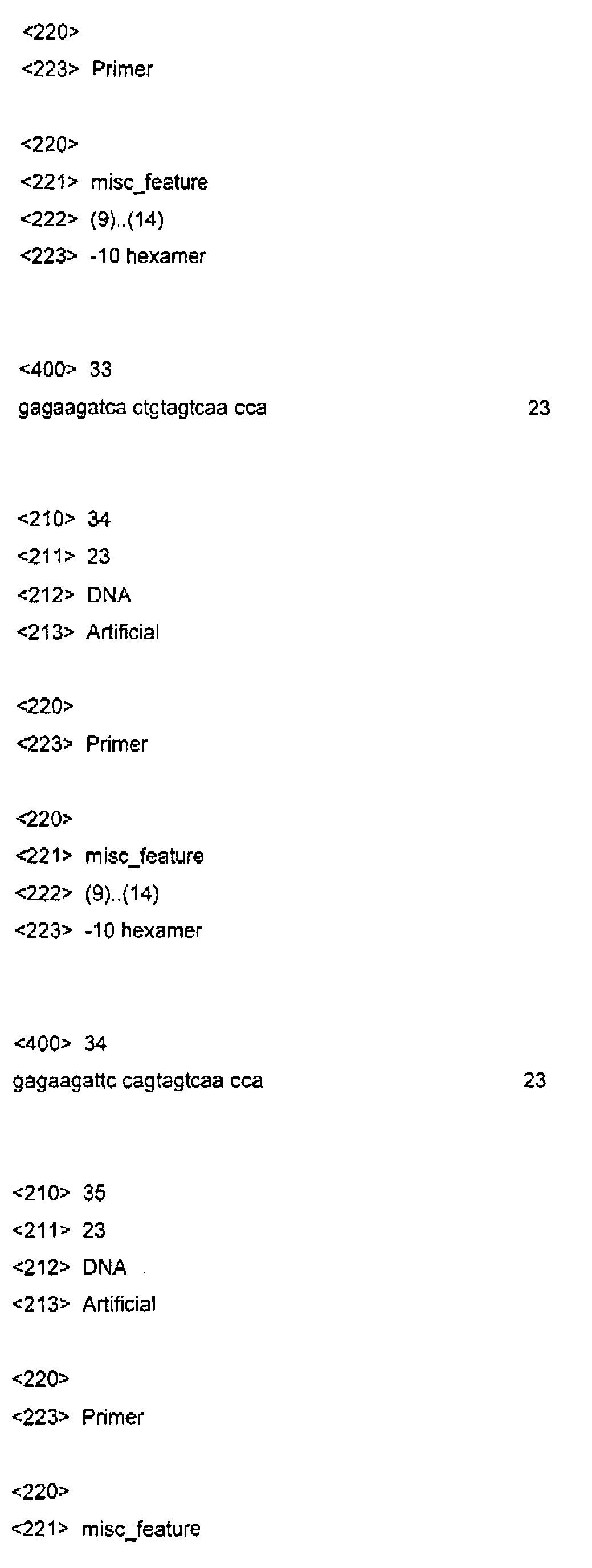


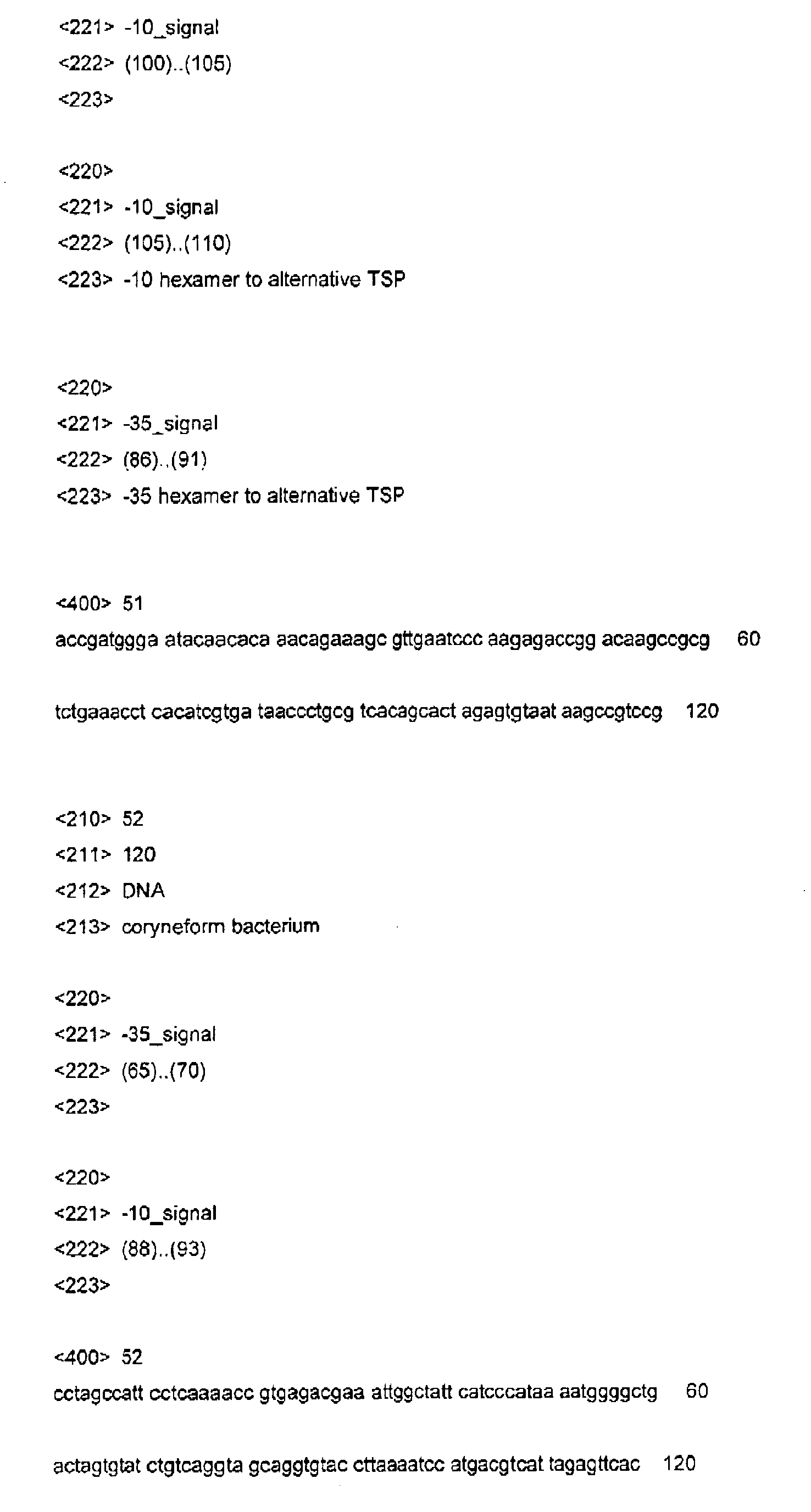
such as for example the isoleucine producing strains
Claims (10)
- Process for the production of branched-chain amino acids by fermentation of a genetically modified bacterium of the genus Corynebacterium or Brevibacterium by attenuation of the promoter strength of one or more of the promoters selected from the group consisting of P-panX, P-ilvA and P-leuA and increasing the promoter strength of one or more of the promoters selected from the group consisting of P-ilvB, P-ilvC, P-ilvD and P-ilvE.
- Process according to claim 1, wherein the branched-chain amino acid is valine.
- Process according to claim 1 and/or claim 2, wherein the genetically modified bacterium is derived from a bacterium selected from the ATCC13032 and genetically related organisms like mutants of ATCC13032.
- Process according to one or more of the preceding claims, wherein P-panX denotes promoters of panB- and/or panC-genes.
- Process according to one or more of the preceding claims, wherein the promoter strength of P-ilvA and/or P-leuA is attenuated.
- Process according to one or more of the preceding claims, wherein the -10-promoter-regions used fora) ilvA are selected from the group consisting
of CACAGT, GACTGT;b) ilvD are selected from the group consisting
of CACTGTGCTATAGTGTAAT, CAAAGCACTGTGGTATAAT;c) ilvE are selected from the group consisting
of TGTGGTACAAT, TGTGGTACCATd) leuA are selected from the group consisting
of CATGCT, CAGGCT, CTGGCT, TATGCA, GAATGCA. - Promoter sequences for genes of Coryneform bacteria selected from the group consisting of ilvA, leuA, ilvD and ilvE comprising respective -10-motifs depicted in claim 6.
- Recombinant DNA comprising promoter sequences of claim 7 and the respective genes selected from the group consisting of ilvA, leuA, ilvB, ilvD and ilvE.
- Micro-organisms, plasmids, vectors and phages comprising the recombinant DNA of claim 8.
- Use of a microorganism of claim 9 for the fermentative production of branched-chain amino acids.
Priority Applications (1)
| Application Number | Priority Date | Filing Date | Title |
|---|---|---|---|
| EP06010527A EP1860193A1 (en) | 2006-05-22 | 2006-05-22 | Promoter-activity modulation for branched-chain amino acid production |
Applications Claiming Priority (1)
| Application Number | Priority Date | Filing Date | Title |
|---|---|---|---|
| EP06010527A EP1860193A1 (en) | 2006-05-22 | 2006-05-22 | Promoter-activity modulation for branched-chain amino acid production |
Publications (1)
| Publication Number | Publication Date |
|---|---|
| EP1860193A1 true EP1860193A1 (en) | 2007-11-28 |
Family
ID=36754699
Family Applications (1)
| Application Number | Title | Priority Date | Filing Date |
|---|---|---|---|
| EP06010527A Withdrawn EP1860193A1 (en) | 2006-05-22 | 2006-05-22 | Promoter-activity modulation for branched-chain amino acid production |
Country Status (1)
| Country | Link |
|---|---|
| EP (1) | EP1860193A1 (en) |
Cited By (5)
| Publication number | Priority date | Publication date | Assignee | Title |
|---|---|---|---|---|
| WO2008088104A1 (en) | 2007-01-17 | 2008-07-24 | Korea Advanced Institute Of Science And Technology | Mutant microorganism having improved production ability of branched amino acid and method for preparing branched amino acid using the same |
| WO2013160124A1 (en) * | 2012-04-27 | 2013-10-31 | Evonik Industries Ag | Feedback-resistant alpha-isopropylmalate synthases |
| RU2753996C1 (en) * | 2020-10-05 | 2021-08-25 | Федеральное государственное бюджетное учреждение "Государственный научно-исследовательский институт генетики и селекции промышленных микроорганизмов Национального исследовательского центра "Курчатовский институт" (НИЦ "Курчатовский институт" - ГосНИИгенетика) | Bacterium corynebacterium glutamicum with increased ability to produce l-valine and method for producing l-valine using this bacterium |
| RU2794946C1 (en) * | 2019-09-02 | 2023-04-26 | СиДжей ЧеилДжеданг Корпорейшн | New promoter and method for obtaining the desired substance using it |
| CN117586998A (en) * | 2022-08-15 | 2024-02-23 | 廊坊梅花生物技术开发有限公司 | A dihydroxy acid dehydratase mutant and its recombinant microorganism and application |
Citations (2)
| Publication number | Priority date | Publication date | Assignee | Title |
|---|---|---|---|---|
| DE19907567A1 (en) * | 1999-02-22 | 2000-08-24 | Forschungszentrum Juelich Gmbh | Microbial production of L-valine useful as medicine and in nutrition comprises growing bacteria that have increased activity of selected genes, e.g. dihydroxyacid dehydratase |
| DE102004046933A1 (en) * | 2004-09-28 | 2006-03-30 | Forschungszentrum Jülich GmbH | Process for the fermentative production of L-valine and microorganism suitable therefor |
-
2006
- 2006-05-22 EP EP06010527A patent/EP1860193A1/en not_active Withdrawn
Patent Citations (2)
| Publication number | Priority date | Publication date | Assignee | Title |
|---|---|---|---|---|
| DE19907567A1 (en) * | 1999-02-22 | 2000-08-24 | Forschungszentrum Juelich Gmbh | Microbial production of L-valine useful as medicine and in nutrition comprises growing bacteria that have increased activity of selected genes, e.g. dihydroxyacid dehydratase |
| DE102004046933A1 (en) * | 2004-09-28 | 2006-03-30 | Forschungszentrum Jülich GmbH | Process for the fermentative production of L-valine and microorganism suitable therefor |
Non-Patent Citations (3)
| Title |
|---|
| HÜSER ANDREA T ET AL: "Rational design of a Corynebacterium glutamicum pantothenate production strain and its characterization by metabolic flux analysis and genome-wide transcriptional profiling.", APPLIED AND ENVIRONMENTAL MICROBIOLOGY. JUN 2005, vol. 71, no. 6, June 2005 (2005-06-01), pages 3255 - 3268, XP002394437, ISSN: 0099-2240 * |
| LEYVAL D ET AL: "Characterisation of the enzyme activities involved in the valine biosynthetic pathway in a valine-producing strain of Corynebacterium glutamicum", JOURNAL OF BIOTECHNOLOGY, ELSEVIER SCIENCE PUBLISHERS, AMSTERDAM, NL, vol. 104, no. 1-3, 2003, pages 241 - 252, XP002380799, ISSN: 0168-1656 * |
| VASICOVA PAVLA ET AL: "Analysis of the Corynebacterium glutamicum dapA promoter", JOURNAL OF BACTERIOLOGY, WASHINGTON, DC, US, vol. 181, no. 19, October 1999 (1999-10-01), pages 6188 - 6191, XP002211212, ISSN: 0021-9193 * |
Cited By (7)
| Publication number | Priority date | Publication date | Assignee | Title |
|---|---|---|---|---|
| WO2008088104A1 (en) | 2007-01-17 | 2008-07-24 | Korea Advanced Institute Of Science And Technology | Mutant microorganism having improved production ability of branched amino acid and method for preparing branched amino acid using the same |
| EP2038403A4 (en) * | 2007-01-17 | 2009-12-30 | Korea Advanced Inst Sci & Tech | MUTANT MICROORGANISM WITH INCREASED PRODUCTION ABILITY FOR BRANCHED AMINO ACIDS AND METHOD FOR THE PRODUCTION OF BRANCHED AMINO ACIDS THEREWITH |
| WO2013160124A1 (en) * | 2012-04-27 | 2013-10-31 | Evonik Industries Ag | Feedback-resistant alpha-isopropylmalate synthases |
| US9347048B2 (en) | 2012-04-27 | 2016-05-24 | Evonik Technochemie Gmbh | Feedback-resistant alpha-isopropylmalate synthases |
| RU2794946C1 (en) * | 2019-09-02 | 2023-04-26 | СиДжей ЧеилДжеданг Корпорейшн | New promoter and method for obtaining the desired substance using it |
| RU2753996C1 (en) * | 2020-10-05 | 2021-08-25 | Федеральное государственное бюджетное учреждение "Государственный научно-исследовательский институт генетики и селекции промышленных микроорганизмов Национального исследовательского центра "Курчатовский институт" (НИЦ "Курчатовский институт" - ГосНИИгенетика) | Bacterium corynebacterium glutamicum with increased ability to produce l-valine and method for producing l-valine using this bacterium |
| CN117586998A (en) * | 2022-08-15 | 2024-02-23 | 廊坊梅花生物技术开发有限公司 | A dihydroxy acid dehydratase mutant and its recombinant microorganism and application |
Similar Documents
| Publication | Publication Date | Title |
|---|---|---|
| US10113190B2 (en) | Method for producing L-leucine, L-valine, L-isoleucine, α-ketoisovalerate, α-keto-beta-methylvalerate, or α-ketoisocaproate using recombinant Corynebacteria that contain the ilvBN operon which can be induced by propionate | |
| JP4380305B2 (en) | Method for producing L-amino acid by fermentation | |
| EP2841568B1 (en) | Feedback-resistant alpha-isopropylmalate synthases | |
| CN103555721B (en) | Improved promoter and method for producing L-lysine using the same | |
| EP3109318B1 (en) | Microorganisms for producing putrescine or ornithine and process for producing putrescine or ornithine using them | |
| KR20040004496A (en) | Processes for enhanced production of pantothenate | |
| WO2005075625A1 (en) | MICROORGANISM PRODUCING L-THREONINE HAVING INACTIVATED ga1R GENE, METHOD OF PRODUCING THE SAME AND METHOD OF PRODUCING L-THREONINE USING THE MICROORGANISM | |
| CN100523197C (en) | Feedback-resistant acetohydroxy acid synthetase mutants | |
| US6911329B2 (en) | Process for the fermentative preparation of D-pantothenic acid using coryneform bacteria | |
| JP5227789B2 (en) | Method for fermentative production of L-amino acids | |
| KR101564753B1 (en) | Recombinant vector comprising start codon derived from Coryne form bacteria, transformed host cell and method for producing amino acid using the same | |
| EP1860193A1 (en) | Promoter-activity modulation for branched-chain amino acid production | |
| EP1320586A1 (en) | Process for the fermentative preparation of d-pantothenic acid using coryneform bacteria | |
| EP2397545B1 (en) | Method for producing amino acid | |
| US20030087400A1 (en) | Process for the fermentative production of L-lysine using coryneform bacteria | |
| KR20080052593A (en) | Amino acid production method using microorganism | |
| DK1591520T3 (en) | Microorganism producing L-threonine and having an inactivated tyR gene, process for its production and method for producing L-threonine using the microorganism | |
| US20090181435A1 (en) | Method for Determining L-Serine, Gene Sequene, Vectors and Micro-Organisms | |
| CA3153110C (en) | Improved promoter and method for producing desired substance using same | |
| KR20170024324A (en) | Gene coding lysine decarboxylase derived from H. alvei, recombinant vector, host cell and method for producing cadaverine using the same |
Legal Events
| Date | Code | Title | Description |
|---|---|---|---|
| PUAI | Public reference made under article 153(3) epc to a published international application that has entered the european phase |
Free format text: ORIGINAL CODE: 0009012 |
|
| 17P | Request for examination filed |
Effective date: 20060522 |
|
| AK | Designated contracting states |
Kind code of ref document: A1 Designated state(s): AT BE BG CH CY CZ DE DK EE ES FI FR GB GR HU IE IS IT LI LT LU LV MC NL PL PT RO SE SI SK TR |
|
| AX | Request for extension of the european patent |
Extension state: AL BA HR MK YU |
|
| AKX | Designation fees paid | ||
| RAP1 | Party data changed (applicant data changed or rights of an application transferred) |
Owner name: EVONIK DEGUSSA GMBH |
|
| REG | Reference to a national code |
Ref country code: DE Ref legal event code: 8566 |
|
| STAA | Information on the status of an ep patent application or granted ep patent |
Free format text: STATUS: THE APPLICATION IS DEEMED TO BE WITHDRAWN |
|
| 18D | Application deemed to be withdrawn |
Effective date: 20080529 |