EP1858563B1 - Medical device having antithrombotic and lubricious properties - Google Patents
Medical device having antithrombotic and lubricious properties Download PDFInfo
- Publication number
- EP1858563B1 EP1858563B1 EP05707699.4A EP05707699A EP1858563B1 EP 1858563 B1 EP1858563 B1 EP 1858563B1 EP 05707699 A EP05707699 A EP 05707699A EP 1858563 B1 EP1858563 B1 EP 1858563B1
- Authority
- EP
- European Patent Office
- Prior art keywords
- coating
- suppressor
- activating enzyme
- fixer
- medical treatment
- Prior art date
- Legal status (The legal status is an assumption and is not a legal conclusion. Google has not performed a legal analysis and makes no representation as to the accuracy of the status listed.)
- Expired - Lifetime
Links
- 230000002785 anti-thrombosis Effects 0.000 title description 26
- 239000003146 anticoagulant agent Substances 0.000 title description 6
- 239000011248 coating agent Substances 0.000 claims description 70
- 238000000576 coating method Methods 0.000 claims description 70
- 230000003213 activating effect Effects 0.000 claims description 33
- 230000020764 fibrinolysis Effects 0.000 claims description 33
- 239000000758 substrate Substances 0.000 claims description 33
- 102000004190 Enzymes Human genes 0.000 claims description 32
- 108090000790 Enzymes Proteins 0.000 claims description 32
- 229940088598 enzyme Drugs 0.000 claims description 32
- 108090000435 Urokinase-type plasminogen activator Proteins 0.000 claims description 21
- 102000003990 Urokinase-type plasminogen activator Human genes 0.000 claims description 21
- 229960005356 urokinase Drugs 0.000 claims description 21
- 229920000669 heparin Polymers 0.000 claims description 18
- 239000000243 solution Substances 0.000 claims description 17
- HTTJABKRGRZYRN-UHFFFAOYSA-N Heparin Chemical compound OC1C(NC(=O)C)C(O)OC(COS(O)(=O)=O)C1OC1C(OS(O)(=O)=O)C(O)C(OC2C(C(OS(O)(=O)=O)C(OC3C(C(O)C(O)C(O3)C(O)=O)OS(O)(=O)=O)C(CO)O2)NS(O)(=O)=O)C(C(O)=O)O1 HTTJABKRGRZYRN-UHFFFAOYSA-N 0.000 claims description 16
- 229960002897 heparin Drugs 0.000 claims description 16
- 238000004519 manufacturing process Methods 0.000 claims description 13
- 238000000034 method Methods 0.000 claims description 13
- 229920003002 synthetic resin Polymers 0.000 claims description 11
- 239000000057 synthetic resin Substances 0.000 claims description 11
- 229920002614 Polyether block amide Polymers 0.000 claims description 10
- 229920001577 copolymer Polymers 0.000 claims description 9
- XJRBAMWJDBPFIM-UHFFFAOYSA-N methyl vinyl ether Chemical compound COC=C XJRBAMWJDBPFIM-UHFFFAOYSA-N 0.000 claims description 9
- 150000003242 quaternary ammonium salts Chemical class 0.000 claims description 9
- 239000004677 Nylon Substances 0.000 claims description 8
- 230000000694 effects Effects 0.000 claims description 8
- FPYJFEHAWHCUMM-UHFFFAOYSA-N maleic anhydride Chemical compound O=C1OC(=O)C=C1 FPYJFEHAWHCUMM-UHFFFAOYSA-N 0.000 claims description 8
- 229920001778 nylon Polymers 0.000 claims description 8
- 229920002635 polyurethane Polymers 0.000 claims description 7
- 239000004814 polyurethane Substances 0.000 claims description 7
- 239000012670 alkaline solution Substances 0.000 claims description 6
- SBHRWOBHKASWGU-UHFFFAOYSA-M tridodecyl(methyl)azanium;chloride Chemical group [Cl-].CCCCCCCCCCCC[N+](C)(CCCCCCCCCCCC)CCCCCCCCCCCC SBHRWOBHKASWGU-UHFFFAOYSA-M 0.000 claims description 6
- 102000015081 Blood Coagulation Factors Human genes 0.000 claims description 5
- 108010039209 Blood Coagulation Factors Proteins 0.000 claims description 5
- 239000003114 blood coagulation factor Substances 0.000 claims description 5
- 229940019700 blood coagulation factors Drugs 0.000 claims description 5
- 239000003960 organic solvent Substances 0.000 claims description 5
- 102000007625 Hirudins Human genes 0.000 claims description 4
- 108010007267 Hirudins Proteins 0.000 claims description 4
- 108010023197 Streptokinase Proteins 0.000 claims description 4
- 102000012607 Thrombomodulin Human genes 0.000 claims description 4
- 108010079274 Thrombomodulin Proteins 0.000 claims description 4
- 108090000373 Tissue Plasminogen Activator Proteins 0.000 claims description 4
- 102000003978 Tissue Plasminogen Activator Human genes 0.000 claims description 4
- 238000001035 drying Methods 0.000 claims description 4
- 229920001971 elastomer Polymers 0.000 claims description 4
- 239000000806 elastomer Substances 0.000 claims description 4
- 229940006607 hirudin Drugs 0.000 claims description 4
- WQPDUTSPKFMPDP-OUMQNGNKSA-N hirudin Chemical compound C([C@@H](C(=O)N[C@@H](CCC(O)=O)C(=O)N[C@@H](CCC(O)=O)C(=O)N[C@@H]([C@@H](C)CC)C(=O)N1[C@@H](CCC1)C(=O)N[C@@H](CCC(O)=O)C(=O)N[C@@H](CCC(O)=O)C(=O)N[C@@H](CC=1C=CC(OS(O)(=O)=O)=CC=1)C(=O)N[C@@H](CC(C)C)C(=O)N[C@@H](CCC(N)=O)C(O)=O)NC(=O)[C@H](CC(O)=O)NC(=O)CNC(=O)[C@H](CC(O)=O)NC(=O)[C@H](CC(N)=O)NC(=O)[C@H](CC=1NC=NC=1)NC(=O)[C@H](CO)NC(=O)[C@H](CCC(N)=O)NC(=O)[C@H]1N(CCC1)C(=O)[C@H](CCCCN)NC(=O)[C@H]1N(CCC1)C(=O)[C@@H](NC(=O)CNC(=O)[C@H](CCC(O)=O)NC(=O)CNC(=O)[C@@H](NC(=O)[C@@H](NC(=O)[C@H]1NC(=O)[C@H](CCC(N)=O)NC(=O)[C@H](CC(N)=O)NC(=O)[C@H](CCCCN)NC(=O)[C@H](CCC(O)=O)NC(=O)CNC(=O)[C@H](CC(O)=O)NC(=O)[C@H](CO)NC(=O)CNC(=O)[C@H](CC(C)C)NC(=O)[C@H]([C@@H](C)CC)NC(=O)[C@@H]2CSSC[C@@H](C(=O)N[C@@H](CCC(O)=O)C(=O)NCC(=O)N[C@@H](CO)C(=O)N[C@@H](CC(N)=O)C(=O)N[C@H](C(=O)N[C@H](C(NCC(=O)N[C@@H](CCC(N)=O)C(=O)NCC(=O)N[C@@H](CC(N)=O)C(=O)N[C@@H](CCCCN)C(=O)N2)=O)CSSC1)C(C)C)NC(=O)[C@H](CC(C)C)NC(=O)[C@H]1NC(=O)[C@H](CC(C)C)NC(=O)[C@H](CC(N)=O)NC(=O)[C@H](CCC(N)=O)NC(=O)CNC(=O)[C@H](CO)NC(=O)[C@H](CCC(O)=O)NC(=O)[C@H]([C@@H](C)O)NC(=O)[C@@H](NC(=O)[C@H](CC(O)=O)NC(=O)[C@@H](NC(=O)[C@H](CC=2C=CC(O)=CC=2)NC(=O)[C@@H](NC(=O)[C@@H](N)C(C)C)C(C)C)[C@@H](C)O)CSSC1)C(C)C)[C@@H](C)O)[C@@H](C)O)C1=CC=CC=C1 WQPDUTSPKFMPDP-OUMQNGNKSA-N 0.000 claims description 4
- 229920000915 polyvinyl chloride Polymers 0.000 claims description 4
- 239000004800 polyvinyl chloride Substances 0.000 claims description 4
- 230000005855 radiation Effects 0.000 claims description 4
- 230000001954 sterilising effect Effects 0.000 claims description 4
- 229960005202 streptokinase Drugs 0.000 claims description 4
- 229960000187 tissue plasminogen activator Drugs 0.000 claims description 4
- 108010088842 Fibrinolysin Proteins 0.000 claims description 3
- 238000007654 immersion Methods 0.000 claims description 3
- 229940012957 plasmin Drugs 0.000 claims description 3
- 230000003014 reinforcing effect Effects 0.000 claims description 3
- 229940127218 antiplatelet drug Drugs 0.000 claims 2
- 239000000106 platelet aggregation inhibitor Substances 0.000 claims 2
- 150000003863 ammonium salts Chemical class 0.000 claims 1
- HEMHJVSKTPXQMS-UHFFFAOYSA-M Sodium hydroxide Chemical compound [OH-].[Na+] HEMHJVSKTPXQMS-UHFFFAOYSA-M 0.000 description 12
- 239000008280 blood Substances 0.000 description 12
- 210000004369 blood Anatomy 0.000 description 12
- 208000007536 Thrombosis Diseases 0.000 description 11
- 230000000052 comparative effect Effects 0.000 description 11
- 239000000203 mixture Substances 0.000 description 11
- KWYUFKZDYYNOTN-UHFFFAOYSA-M Potassium hydroxide Chemical compound [OH-].[K+] KWYUFKZDYYNOTN-UHFFFAOYSA-M 0.000 description 6
- 239000007864 aqueous solution Substances 0.000 description 5
- 230000015572 biosynthetic process Effects 0.000 description 5
- 238000005470 impregnation Methods 0.000 description 5
- 239000000126 substance Substances 0.000 description 5
- 210000004204 blood vessel Anatomy 0.000 description 4
- 230000000977 initiatory effect Effects 0.000 description 4
- 238000005728 strengthening Methods 0.000 description 4
- XLYOFNOQVPJJNP-UHFFFAOYSA-N water Chemical compound O XLYOFNOQVPJJNP-UHFFFAOYSA-N 0.000 description 4
- 239000002504 physiological saline solution Substances 0.000 description 3
- 230000000717 retained effect Effects 0.000 description 3
- 238000004659 sterilization and disinfection Methods 0.000 description 3
- CSCPPACGZOOCGX-UHFFFAOYSA-N Acetone Chemical compound CC(C)=O CSCPPACGZOOCGX-UHFFFAOYSA-N 0.000 description 2
- FAPWRFPIFSIZLT-UHFFFAOYSA-M Sodium chloride Chemical compound [Na+].[Cl-] FAPWRFPIFSIZLT-UHFFFAOYSA-M 0.000 description 2
- 230000000702 anti-platelet effect Effects 0.000 description 2
- 230000023555 blood coagulation Effects 0.000 description 2
- 238000006243 chemical reaction Methods 0.000 description 2
- ZFGMDIBRIDKWMY-PASTXAENSA-N heparin Chemical compound CC(O)=N[C@@H]1[C@@H](O)[C@H](O)[C@@H](COS(O)(=O)=O)O[C@@H]1O[C@@H]1[C@@H](C(O)=O)O[C@@H](O[C@H]2[C@@H]([C@@H](OS(O)(=O)=O)[C@@H](O[C@@H]3[C@@H](OC(O)[C@H](OS(O)(=O)=O)[C@H]3O)C(O)=O)O[C@@H]2O)CS(O)(=O)=O)[C@H](O)[C@H]1O ZFGMDIBRIDKWMY-PASTXAENSA-N 0.000 description 2
- 229960001008 heparin sodium Drugs 0.000 description 2
- 229920000642 polymer Polymers 0.000 description 2
- DSUFPYCILZXJFF-UHFFFAOYSA-N 4-[[4-[[4-(pentoxycarbonylamino)cyclohexyl]methyl]cyclohexyl]carbamoyloxy]butyl n-[4-[[4-(butoxycarbonylamino)cyclohexyl]methyl]cyclohexyl]carbamate Chemical compound C1CC(NC(=O)OCCCCC)CCC1CC1CCC(NC(=O)OCCCCOC(=O)NC2CCC(CC3CCC(CC3)NC(=O)OCCCC)CC2)CC1 DSUFPYCILZXJFF-UHFFFAOYSA-N 0.000 description 1
- QGZKDVFQNNGYKY-UHFFFAOYSA-O Ammonium Chemical compound [NH4+] QGZKDVFQNNGYKY-UHFFFAOYSA-O 0.000 description 1
- UXVMQQNJUSDDNG-UHFFFAOYSA-L Calcium chloride Chemical compound [Cl-].[Cl-].[Ca+2] UXVMQQNJUSDDNG-UHFFFAOYSA-L 0.000 description 1
- 239000002253 acid Substances 0.000 description 1
- 125000004018 acid anhydride group Chemical group 0.000 description 1
- 230000002378 acidificating effect Effects 0.000 description 1
- 230000002965 anti-thrombogenic effect Effects 0.000 description 1
- 239000011230 binding agent Substances 0.000 description 1
- 230000036760 body temperature Effects 0.000 description 1
- 239000007853 buffer solution Substances 0.000 description 1
- 239000001110 calcium chloride Substances 0.000 description 1
- 229910001628 calcium chloride Inorganic materials 0.000 description 1
- 125000003178 carboxy group Chemical group [H]OC(*)=O 0.000 description 1
- 239000003795 chemical substances by application Substances 0.000 description 1
- 238000003745 diagnosis Methods 0.000 description 1
- 238000007598 dipping method Methods 0.000 description 1
- 201000010099 disease Diseases 0.000 description 1
- 208000037265 diseases, disorders, signs and symptoms Diseases 0.000 description 1
- 239000012153 distilled water Substances 0.000 description 1
- UPBDXRPQPOWRKR-UHFFFAOYSA-N furan-2,5-dione;methoxyethene Chemical compound COC=C.O=C1OC(=O)C=C1 UPBDXRPQPOWRKR-UHFFFAOYSA-N 0.000 description 1
- 210000004400 mucous membrane Anatomy 0.000 description 1
- 230000000737 periodic effect Effects 0.000 description 1
- 229920005862 polyol Polymers 0.000 description 1
- 150000003077 polyols Chemical class 0.000 description 1
- -1 quaternary ammonium salts tridodecylmethylammonium chloride Chemical class 0.000 description 1
- 238000009877 rendering Methods 0.000 description 1
- 239000011780 sodium chloride Substances 0.000 description 1
- 230000002195 synergetic effect Effects 0.000 description 1
Images
Classifications
-
- A—HUMAN NECESSITIES
- A61—MEDICAL OR VETERINARY SCIENCE; HYGIENE
- A61L—METHODS OR APPARATUS FOR STERILISING MATERIALS OR OBJECTS IN GENERAL; DISINFECTION, STERILISATION OR DEODORISATION OF AIR; CHEMICAL ASPECTS OF BANDAGES, DRESSINGS, ABSORBENT PADS OR SURGICAL ARTICLES; MATERIALS FOR BANDAGES, DRESSINGS, ABSORBENT PADS OR SURGICAL ARTICLES
- A61L33/00—Antithrombogenic treatment of surgical articles, e.g. sutures, catheters, prostheses, or of articles for the manipulation or conditioning of blood; Materials for such treatment
- A61L33/0005—Use of materials characterised by their function or physical properties
- A61L33/0011—Anticoagulant, e.g. heparin, platelet aggregation inhibitor, fibrinolytic agent, other than enzymes, attached to the substrate
- A61L33/0029—Anticoagulant, e.g. heparin, platelet aggregation inhibitor, fibrinolytic agent, other than enzymes, attached to the substrate using an intermediate layer of polymer
-
- A—HUMAN NECESSITIES
- A61—MEDICAL OR VETERINARY SCIENCE; HYGIENE
- A61L—METHODS OR APPARATUS FOR STERILISING MATERIALS OR OBJECTS IN GENERAL; DISINFECTION, STERILISATION OR DEODORISATION OF AIR; CHEMICAL ASPECTS OF BANDAGES, DRESSINGS, ABSORBENT PADS OR SURGICAL ARTICLES; MATERIALS FOR BANDAGES, DRESSINGS, ABSORBENT PADS OR SURGICAL ARTICLES
- A61L29/00—Materials for catheters, medical tubing, cannulae, or endoscopes or for coating catheters
- A61L29/04—Macromolecular materials
- A61L29/049—Mixtures of macromolecular compounds
-
- A—HUMAN NECESSITIES
- A61—MEDICAL OR VETERINARY SCIENCE; HYGIENE
- A61L—METHODS OR APPARATUS FOR STERILISING MATERIALS OR OBJECTS IN GENERAL; DISINFECTION, STERILISATION OR DEODORISATION OF AIR; CHEMICAL ASPECTS OF BANDAGES, DRESSINGS, ABSORBENT PADS OR SURGICAL ARTICLES; MATERIALS FOR BANDAGES, DRESSINGS, ABSORBENT PADS OR SURGICAL ARTICLES
- A61L29/00—Materials for catheters, medical tubing, cannulae, or endoscopes or for coating catheters
- A61L29/14—Materials characterised by their function or physical properties, e.g. lubricating compositions
-
- A—HUMAN NECESSITIES
- A61—MEDICAL OR VETERINARY SCIENCE; HYGIENE
- A61L—METHODS OR APPARATUS FOR STERILISING MATERIALS OR OBJECTS IN GENERAL; DISINFECTION, STERILISATION OR DEODORISATION OF AIR; CHEMICAL ASPECTS OF BANDAGES, DRESSINGS, ABSORBENT PADS OR SURGICAL ARTICLES; MATERIALS FOR BANDAGES, DRESSINGS, ABSORBENT PADS OR SURGICAL ARTICLES
- A61L33/00—Antithrombogenic treatment of surgical articles, e.g. sutures, catheters, prostheses, or of articles for the manipulation or conditioning of blood; Materials for such treatment
- A61L33/0005—Use of materials characterised by their function or physical properties
- A61L33/0011—Anticoagulant, e.g. heparin, platelet aggregation inhibitor, fibrinolytic agent, other than enzymes, attached to the substrate
- A61L33/0017—Anticoagulant, e.g. heparin, platelet aggregation inhibitor, fibrinolytic agent, other than enzymes, attached to the substrate using a surface active agent
Definitions
- the present invention relates to a medical treatment device wherein a coating having an antithrombotic property and Lubricity is formed on the surface of a catheter, for example, and also a method for manufacturing the same.
- medical treatment devices are those which are punctured into and left to remain in blood vessels such as catheters or guide needles used by inserting into a catheter Since such medical treatment devices are foreign substances to the blood, when the medical treatment device makes contact with blood in blood vessel, a blood coagulation reaction may take place and a thrombus block may be formed, As a result of such formation of thrombus blocks, there are some cases in which not only is the original objective, treatment or diagnosis of diseases, not achieved but new complications are generated by the thrombus which may be severe. Therefore, antithrombotic property is required for the medical device contacting blood in the blood vessel.
- a coating of a copolymer of methyl vinyl ether with maleic acid anhydride which is to be a binder for polyurethane and urokinase is formed on the surface of a substrate comprising polyurethane and then urokinase is contained in the coating by means of impregnation or the like (refer, for example, to Patent Document 1).
- lubricity is required of such a medical treatment device for preventing damage to mucous membranes or for attenuating pain in patients when the device is inserted into the body.
- US 5,135,516 describes a method for rendering a medical device lubricious and antithrombogenic by coating the device with a thin coating of a lubricious polymer including acid groups (e.g. carboxyl groups) and applying ammonium cation (e.g. quaternary ammonium salt) and heparin and thereafter applying a buffer solution.
- acid groups e.g. carboxyl groups
- ammonium cation e.g. quaternary ammonium salt
- the present invention has been achieved in view of such circumstances and its object is to provide a medical treatment device wherein the antithrombotic property and lubricity of a coating formed on the surface can be maintained in a stable state for a long period and also to provide a method for manufacturing the same
- characteristic features of the medical treatment device concerning the present invention are that a fibrinolysis activating enzyme fixer for fixation of fibrinolysis activating enzyme, a suppressor fixer for fixation of suppressor which suppresses blood coagulation factor activity and a fixing reinforcer for reinforcing fixing action of the fibrinolysis activating enzyme fixer and the suppressor fixer, are dissolved in an organic solvent to manufacture a mixture solution for coating, the mixture solution for coating is applied on the surface of a substrate comprising synthetic resin to form a coating and, at the same time, the fibrinolysis activating enzyme, the suppressor or both the fibrinolysis activating enzyme and the suppressor are combined with the coating.
- the coating formed on the surface of the substrate contains a fibrinolysis activating enzyme bonded to the substrate by a fibrinolysis activating enzyme fixer, a suppressor which is bonded to the substrate by a suppressor fixer or both the fibrinolysis activating enzyme and the suppressor. Both the fibrinolysis activating enzyme and the suppressor have an antithrombotic property.
- the coating contains a fixation promoter which enhances the durability of the antithrombotic property by strengthening the close contact of both the fibrinolysis activating enzyme fixer and the suppressor fixer to the coating.
- a synergistic effect is achieved due to the use of both a fibrinolysis activating enzyme and a suppressor whereby far better antithrombotic property and durability are attained compared to the antithrombotic property and durability of the medical device having a coating containing either the fibrinolysis activating enzyme or the suppressor but not both.
- a fibrinolysis activating enzyme or the suppressor is used but not both together, an excellent effect can be achieved as well.
- compositional characteristic of the medical treatment device is that an alkaline treatment comprising impregnation in an alkaline solution is applied to a predetermined part of a substrate on which a coating has been formed by application of the mixture solution for coating.
- This alkaline treatment of a coating formed on a substrate, on the surface of the medical treatment device is carried out so that lubricity as generated when the device is moisturized.
- the alkaline treatment at that time is conducted by impregnation of the formed coating in an alkaline solution such as sodium hydroxide or potassium hydroxide for a predetermined time.
- the alkaline treatment need be applied only to the part of the medical treatment device which needs to have lubricity
- the treatment may be conducted to all of the parts which are inserted into body or may be conducted to the leading end part only.
- a fixer for a fibrinolysis activating enzyme a copolymer of methyl vinyl ether with maleic acid anhydride may be used while, with regard to a fixing reinforcer for strengthening refixing action, a polyether block amide may be used.
- the suppressor fixer may be a quaternary ammonium salt, and the quaternary ammonium salt may be tridodecylmethyl ammonium chloride. Since, among the quaternary ammonium salts tridodecylmethylammonium chloride is characterized by excellent close adhesion to synthetic resins, it is able to achieve a particularly pronounced effect
- the fibrinolysis activating enzyme may be urokinase, streptokinase, tissue plasminogen activator, plasmin or prinolase.
- the suppressor may be heparin, hirudin, thrombomodulin or an antiplatelet substance.
- the synthetic resin constituting the substrate is polyurethane, polyvinyl chloride, nylon or nylon elastomer.
- affinity between the substrate and the fixing reinforcer for strengthening the fixing agent, such as polyether block amide, increases, whereby the antithrombotic property and durability of the formed coating are improved.
- a compositional characteristic of a method for the manufacture of a medical treatment device is that it comprises a step for the manufacture of a mixture solution for coating in which a fibrinolysis activating enzyme fixer for fixation of fibrinolysis activating enzyme, a suppressor fixer for fixation of suppressor which suppresses blood coagulation factor activity and a fixing reinforcer for strengthening fixing action of the fibrinolysis activating enzyme fixer and the suppressor fixer are dissolved in an organic solvent, a step for the formation of a coating in which the mixture solution for coating is applied on the surface of a substrate comprising a synthetic resin to form a coating and a step for impregnation in which the fibrinolysis activating enzyme, the suppressor or both the fibrinolysis activating enzyme and the suppressor are impregnated in the coating.
- an alkaline treatment step wherein a predetermined part of the substrate whereupon the coating is formed is immersed in an alkaline solution.
- an alkaline treatment step wherein a predetermined part of the substrate whereupon the coating is formed is immersed in an alkaline solution.
- a copolymer of methyl vinyl ether with maleic acid anhydride may be used as a fixer for fibrinolysis activating enzyme
- a quaternary ammonium salt may be used as a fixer for suppressor
- a polyether block amide may be used as a fixing reinforcer for fixing action
- urokinase may be used as a fibrinolysis activating enzyme
- heparin may be used as a suppressor.
- Another constitutional characteristic of the medical devices according to the present invention is that, after the coating step formation, there is provided a drying step where the coating is subjected to a drying treatment at a temperature range from room temperature to 80°C.
- a drying step where the coating is subjected to a drying treatment at a temperature range from room temperature to 80°C.
- Another constitutional characteristic of the method for the manufacture of medical treatment device according to the present invention is that, after the step for impregnation, there is provided a sterilizing step where the coating is sterilized by gamma radiation.
- the sterilization by gamma radiation acts upon molecules of the substance directly, without utilisation of heat and chemical reaction and, therefore, safe and sure sterilization can be efficiently carried out.
- urokinase can be fixed to the medical treatment device while sufficiently retaining the effectiveness of the urokinase, so that it is possible to manufacture a safer medical treatment device as well
- a substrate comprising a synthetic resin is immersed in a mixture solution for coating which is prepared by dissolving a copolymer of methyl vinyl ether with maleic acid anhydride, a quaternary ammonium salt and a polyether block amide in an organic solvent, whereby a coating is formed on the surface of the substrate.
- a mixture solution for coating which is prepared by dissolving a copolymer of methyl vinyl ether with maleic acid anhydride, a quaternary ammonium salt and a polyether block amide in an organic solvent, whereby a coating is formed on the surface of the substrate.
- urokinase and heparin are present for a long period and antithrombotic property and durability thereof are effectively achieved.
- a predetermined part of the coating can be immersed in an alkaline solution for a predetermined time to conduct an alkaline treatment.
- lubricity can be given to the coating.
- Antithrombotic property, lubricity and durability thereof in the medical treatment device prepared as such will be illustrated in the following Examples 1 and 2.
- Tridodecylmethylammonium chloride (trade name: Tridodecylmethylammonium Chloride, manufactured by Polysciences; hereinafter referred to as "C”) was added to a mixture solution wherein a 2% solution of a copolymer of methyl vinyl ether with maleic acid anhydride (trade name: Gantrez AN-159, manufactured by ISP (international Specialty Products) ; hereinafter referred to as "A") in acetone was mixed with a 2% solution of a polyether block amide (trade name: Pebax 2533 SA, manufactured by Atochem; hereinafter referred to as "B”) in THF in a ratio of 1.5:1, whereby A:B:C was made 3:2:1, to prepare a mixture solution for coating.
- the substrate surface including the coating was irradi ated with 40 kGY of gamma radiation for sterilisation.
- the substrate used was a tube made of polyurethane (trade name: Tecoflex; manufactured by Thermedics), of which the diameter was 14G and the full length was 20 cm.
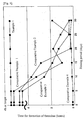
- the coating formed in the inner area of the tube was subjected to the following antithrombotic test, The same antithrombotic test was carried out for the coating formed on the inner coating of a medical treatment device according to the Comparative Examples and also for the tube itself. The result of those tests is shown in Fig. 1 .
- an aqueous solution of Na + and Ca 2+ in the same concentrations as in plasma (wherein 8,307 mg of NaCl and 278 mg of CaCl 2 were dissolved in 1 liter of distilled water) and kept at 37°C, the same as body temperature was prepared.
- the aqueous solution was passed into an inner area of the tube at a flow rate of 20 ml/hour for 0, 1, 5, 10, 15, 20, 25 or 30 days to rinse the coating formed in the inner area.
- 0.1 ml of human whole blood was placed into the inner area of the tube at room temperature and both ends of the tube was connected and sealed to form a loop.
- Fig. 1 the abscissa shows the period of rinsing é(day(s)) and the ordinate shows time (hour(s)) for generation of thrombus.
- Comparative Examples 1 and 2 a commercially available product wherein urokinase was fixed on the surface of the tube was used and, in Comparative Example 3, the same wherein heparin sodium was fixed on the surface of the tube was used.
- Comparative Example 4 a product wherein no coating had been formed on the surface of the tube was used.
- Example 1 effective amounts of urokinase and heparin remained in the coating whereby the antithrombotic property was maintained in any of the cases in which the rinsing period was 0 to 30 day(s).
- Comparative Examples 1 to 3 it was presumed that effective amounts of urokinase and heparin remained in the coating, that is, antithrombotic property was maintained, when the rinsing period was 1 to 5 day(s) while, when the rinsing period was 10 to 30 days, it was concluded that an effective amount of urokinase or heparin did not remain in the coating. On the basis of these results, it is presumed that the longer the rinsing period, the less the residual amounts of urokinase and heparin.
- the medical treatment device according to Example 1 is superior to any of the medical treatment devices of Comparative Examples 1 to 4 in the degree and durability of antithrombotic property That is because both urokinase and heparin are fixed to the substrate by a methyl vinyl ether/maleic acid anhydride copolymer and tridodecylmethylammonium chloride, respectively, and further because the fixation is reinforced by a polyether block amide. As a result, it is now possible to prepare a medical treatment device wherein a durable antithrombotic property of the surface is achieved.
- Example 2 The substrate in the step for the manufacture of the test sample for Example 1 was immersed in a mixture solution for coating, dried under reduced pressure at 60°C for 3 hours and subjected to an alkaline treatment wherein the lubricated part of the substrate was immersed for 3 minutes in a 0 .1N aqueous solution of sodium hydroxide. After the substrate was removed from the sodium hydroxide solution, it was dried under reduced pressure at 60°C for 3 hours. All other steps were the same as those in the manufacture of the test sample for Example 1 to prepare the test sample which will be called Example 2.
- the test for surface lubricity was conducted for the test samples of Example 2 and the above-mentioned Comparative Examples 1 to 4 The result is shown in the following Table 1. [Table 1] Initial Lubricity Lubricity after 50 Rubbings Lubricity after Immersion in Warm Water Example 2 OO OO OO Comparative Examples 1 to 4 ⁇ ⁇ ⁇
- the surface lubricity test was conducted on the basis of feeling or touching, the surface of each test sample being touched by the finger.
- the case in which lubricity was good was marked "OO"
- the case in which some lubricity was noted was marked “o” (in the present test, such a result was not obtained)
- the case in which lubricity was poor was marked " ⁇ ”.
- the above surface lubricity test was carried out for the initial state, after 50 rubbings and after immersion in warm water.
- the initial lubricity was tested by feeling with the finger a test sample that was unchanged since manufacture, and the lubricity after 50 rubbings was tested by feeling with the finger a test sample that had been wetted with physiological saline and rubbed by the finger 50 times.
- the lubricity after dipping in warm water was tested by feeling with the finger after the test sample had been immersed in a physiological saline of 50°C for 24 hours.
- Example 2 lubricity was good in all cases while, in Comparative Examples 1 to 4, lubricity was poor in all cases. From the above, it is concluded that, when a coating on the substrate is subjected to an alkaline treatment, a good lubricity can be achieved and further that the lubricity can be maintained for long time.
- the test sample of Example 2 shows the same effect, to the same extent, as the test sample of Example 1.
- a coating prepared by application of a mixture solution for coating comprising a copolymer of methyl vinyl ether with maleic acid anhydride, a quaternary ammonium salt and a polyether block amide dissolved in an organic solvent, on the surface of a substrate comprising a synthetic resin and also by impregnating urokinase and heparin therein, whereby an excellent antithrombotic property is achieved
- urokinase and heparin contained in the coating are present in the coating for a long period and, therefore, the antithrombotic property is maintained for a long period.
- the present invention is not limited to the above-mentioned Examples and can be modified.
- a fibrinolysis activating enzyme it is also possible to use streptokinase, tissue plasminogen activator, plasmin, prinolase, etc. instead of urokinase
- a suppressor for suppressing blood coagulation it is possible to use hirudin, thrombomodulin, antiplatelet substance, etc, instead of heparin.
- a synthetic resin comprising the substrate it is also possible to use polyvinyl chloride, nylon, nylon elastomer, etc, instead of polyurethane.
- potassium hydroxide, etc. instead of sodium hydroxide.
- Fig 1 is a graph which shows the relation between thrombus formation time and rinsing period.
Landscapes
- Health & Medical Sciences (AREA)
- Epidemiology (AREA)
- Life Sciences & Earth Sciences (AREA)
- Animal Behavior & Ethology (AREA)
- General Health & Medical Sciences (AREA)
- Public Health (AREA)
- Veterinary Medicine (AREA)
- Chemical & Material Sciences (AREA)
- Engineering & Computer Science (AREA)
- Materials Engineering (AREA)
- Hematology (AREA)
- Surgery (AREA)
- Materials For Medical Uses (AREA)
Description
- The present invention relates to a medical treatment device wherein a coating having an antithrombotic property and Lubricity is formed on the surface of a catheter, for example, and also a method for manufacturing the same.
- Among medical treatment devices are those which are punctured into and left to remain in blood vessels such as catheters or guide needles used by inserting into a catheter Since such medical treatment devices are foreign substances to the blood, when the medical treatment device makes contact with blood in blood vessel, a blood coagulation reaction may take place and a thrombus block may be formed, As a result of such formation of thrombus blocks, there are some cases in which not only is the original objective, treatment or diagnosis of diseases, not achieved but new complications are generated by the thrombus which may be severe. Therefore, antithrombotic property is required for the medical device contacting blood in the blood vessel.
- With regard to a method for the manufacture of such medical devices having an antithrombotic property, there is a method whereby a coating of a copolymer of methyl vinyl ether with maleic acid anhydride which is to be a binder for polyurethane and urokinase is formed on the surface of a substrate comprising polyurethane and then urokinase is contained in the coating by means of impregnation or the like (refer, for example, to Patent Document 1). In addition, lubricity is required of such a medical treatment device for preventing damage to mucous membranes or for attenuating pain in patients when the device is inserted into the body. With regard to such medical treatment devices having lubricity, there is a product in which a fibrinolysis activating substance is bonded to a cross-linked coating comprising polyol and polymer having an acid anhydride group whereby lubricity is expressed upon being moisturized (refer, for example, to Patent Document 2).
- Patent Document 1: Japanese Patent Laid-Open No.
63/98,384 - Patent Document 2: Japanese Patent Laid-Open No.
10/248, 918 -
US 5,135,516 describes a method for rendering a medical device lubricious and antithrombogenic by coating the device with a thin coating of a lubricious polymer including acid groups (e.g. carboxyl groups) and applying ammonium cation (e.g. quaternary ammonium salt) and heparin and thereafter applying a buffer solution. - Among the medical treatment devices as mentioned above, there is a catheter which is used in a state of being retained in a blood vessel of a patient for as long as one month. However, a coating for expressing an antithrombotic property in the above-mentioned conventional medical treatment device has insufficient durability and could not be used for a long period. In addition, lubricity could not be maintained for a long period.
- The present invention has been achieved in view of such circumstances and its object is to provide a medical treatment device wherein the antithrombotic property and lubricity of a coating formed on the surface can be maintained in a stable state for a long period and also to provide a method for manufacturing the same
- In order to achieve the above-mentioned object, characteristic features of the medical treatment device concerning the present invention are that a fibrinolysis activating enzyme fixer for fixation of fibrinolysis activating enzyme, a suppressor fixer for fixation of suppressor which suppresses blood coagulation factor activity and a fixing reinforcer for reinforcing fixing action of the fibrinolysis activating enzyme fixer and the suppressor fixer, are dissolved in an organic solvent to manufacture a mixture solution for coating, the mixture solution for coating is applied on the surface of a substrate comprising synthetic resin to form a coating and, at the same time, the fibrinolysis activating enzyme, the suppressor or both the fibrinolysis activating enzyme and the suppressor are combined with the coating.
- In the thus constituted medical treatment device, the coating formed on the surface of the substrate contains a fibrinolysis activating enzyme bonded to the substrate by a fibrinolysis activating enzyme fixer, a suppressor which is bonded to the substrate by a suppressor fixer or both the fibrinolysis activating enzyme and the suppressor. Both the fibrinolysis activating enzyme and the suppressor have an antithrombotic property. In addition, the coating contains a fixation promoter which enhances the durability of the antithrombotic property by strengthening the close contact of both the fibrinolysis activating enzyme fixer and the suppressor fixer to the coating. Accordingly, in the medical treatment device of the present invention, a synergistic effect is achieved due to the use of both a fibrinolysis activating enzyme and a suppressor whereby far better antithrombotic property and durability are attained compared to the antithrombotic property and durability of the medical device having a coating containing either the fibrinolysis activating enzyme or the suppressor but not both. Incidentally, even when either the fibrinolysis activating enzyme or the suppressor is used but not both together, an excellent effect can be achieved as well.
- Another compositional characteristic of the medical treatment device according to the present invention is that an alkaline treatment comprising impregnation in an alkaline solution is applied to a predetermined part of a substrate on which a coating has been formed by application of the mixture solution for coating. This alkaline treatment of a coating formed on a substrate, on the surface of the medical treatment device, is carried out so that lubricity as generated when the device is moisturized. The alkaline treatment at that time is conducted by impregnation of the formed coating in an alkaline solution such as sodium hydroxide or potassium hydroxide for a predetermined time. The alkaline treatment need be applied only to the part of the medical treatment device which needs to have lubricity For example, when the medical treatment device is a catheter, the treatment may be conducted to all of the parts which are inserted into body or may be conducted to the leading end part only.
- With regard to a fixer for a fibrinolysis activating enzyme, a copolymer of methyl vinyl ether with maleic acid anhydride may be used while, with regard to a fixing reinforcer for strengthening refixing action, a polyether block amide may be used. The suppressor fixer may be a quaternary ammonium salt, and the quaternary ammonium salt may be tridodecylmethyl ammonium chloride. Since, among the quaternary ammonium salts tridodecylmethylammonium chloride is characterized by excellent close adhesion to synthetic resins, it is able to achieve a particularly pronounced effect
- The fibrinolysis activating enzyme may be urokinase, streptokinase, tissue plasminogen activator, plasmin or prinolase. The suppressor may be heparin, hirudin, thrombomodulin or an antiplatelet substance.
- Still another constitutional characteristic of the medical treatment device according to the present invention is that the synthetic resin constituting the substrate is polyurethane, polyvinyl chloride, nylon or nylon elastomer. As a result, affinity between the substrate and the fixing reinforcer for strengthening the fixing agent, such as polyether block amide, increases, whereby the antithrombotic property and durability of the formed coating are improved.
- A compositional characteristic of a method for the manufacture of a medical treatment device according to the present invention is that it comprises a step for the manufacture of a mixture solution for coating in which a fibrinolysis activating enzyme fixer for fixation of fibrinolysis activating enzyme, a suppressor fixer for fixation of suppressor which suppresses blood coagulation factor activity and a fixing reinforcer for strengthening fixing action of the fibrinolysis activating enzyme fixer and the suppressor fixer are dissolved in an organic solvent, a step for the formation of a coating in which the mixture solution for coating is applied on the surface of a substrate comprising a synthetic resin to form a coating and a step for impregnation in which the fibrinolysis activating enzyme, the suppressor or both the fibrinolysis activating enzyme and the suppressor are impregnated in the coating.
- After the coating formation step, it is also possible to add an alkaline treatment step wherein a predetermined part of the substrate whereupon the coating is formed is immersed in an alkaline solution. As a result, not only an antithrombotic property but also Lubricity can be achieved in the medical treatment device. In such a case, a copolymer of methyl vinyl ether with maleic acid anhydride may be used as a fixer for fibrinolysis activating enzyme, a quaternary ammonium salt may be used as a fixer for suppressor, a polyether block amide may be used as a fixing reinforcer for fixing action, urokinase may be used as a fibrinolysis activating enzyme and heparin may be used as a suppressor. As a result, a coating having an antithrombotic property on the substrate surface can be formed in a stable manner by a simple treatment step which thus can be applied to actual mass-production
- Another constitutional characteristic of the medical devices according to the present invention is that, after the coating step formation, there is provided a drying step where the coating is subjected to a drying treatment at a temperature range from room temperature to 80°C. As a result, a coating having sufficient and stable antithrombotic property can be formed by a simple treatment step which in addition can be applied to various medical treatment devices which are deformed by a high temperature treatment, such as catheters.
- Another constitutional characteristic of the method for the manufacture of medical treatment device according to the present invention is that, after the step for impregnation, there is provided a sterilizing step where the coating is sterilized by gamma radiation. The sterilization by gamma radiation acts upon molecules of the substance directly, without utilisation of heat and chemical reaction and, therefore, safe and sure sterilization can be efficiently carried out. As a result, urokinase can be fixed to the medical treatment device while sufficiently retaining the effectiveness of the urokinase, so that it is possible to manufacture a safer medical treatment device as well
- In the medical treatment device according to the present invention, a substrate comprising a synthetic resin is immersed in a mixture solution for coating which is prepared by dissolving a copolymer of methyl vinyl ether with maleic acid anhydride, a quaternary ammonium salt and a polyether block amide in an organic solvent, whereby a coating is formed on the surface of the substrate. When the substrate upon which the coating is formed is immersed in an aqueous solution containing urokinase and heparin, urokinase and heparin is incorporated into the coating.
- In this coating, urokinase and heparin are present for a long period and antithrombotic property and durability thereof are effectively achieved. Also, after a coating is formed on the substrate surface, a predetermined part of the coating can be immersed in an alkaline solution for a predetermined time to conduct an alkaline treatment. As a result, lubricity can be given to the coating. Antithrombotic property, lubricity and durability thereof in the medical treatment device prepared as such will be illustrated in the following Examples 1 and 2.
- Tridodecylmethylammonium chloride (trade name: Tridodecylmethylammonium Chloride, manufactured by Polysciences; hereinafter referred to as "C") was added to a mixture solution wherein a 2% solution of a copolymer of methyl vinyl ether with maleic acid anhydride (trade name: Gantrez AN-159, manufactured by ISP (international Specialty Products) ; hereinafter referred to as "A") in acetone was mixed with a 2% solution of a polyether block amide (trade name: Pebax 2533 SA, manufactured by Atochem; hereinafter referred to as "B") in THF in a ratio of 1.5:1, whereby A:B:C was made 3:2:1, to prepare a mixture solution for coating.
- A substrate was immersed in this mixture solution for coating, removed, dried under reduced pressure for 3 hours at a drying temperature of 60°C, immersed at 5°C for 24 hours into a 0.7% solution of heparin sodium (manufactured by Diosynth) mixed in acidic physiological saline (pH = 4..6) containing 300 IU/ml of urokinase (manufactured by JCR), removed and dried in vacuo to form a coating on the surface of the substrate. The substrate surface including the coating was irradi ated with 40 kGY of gamma radiation for sterilisation.
- The substrate used was a tube made of polyurethane (trade name: Tecoflex; manufactured by Thermedics), of which the diameter was 14G and the full length was 20 cm. The coating formed in the inner area of the tube was subjected to the following antithrombotic test, The same antithrombotic test was carried out for the coating formed on the inner coating of a medical treatment device according to the Comparative Examples and also for the tube itself. The result of those tests is shown in
Fig. 1 . - In the antithrombotic test, an aqueous solution of Na+ and Ca2+ in the same concentrations as in plasma (wherein 8,307 mg of NaCl and 278 mg of CaCl2 were dissolved in 1 liter of distilled water) and kept at 37°C, the same as body temperature was prepared. The aqueous solution was passed into an inner area of the tube at a flow rate of 20 ml/hour for 0, 1, 5, 10, 15, 20, 25 or 30 days to rinse the coating formed in the inner area. After that, 0.1 ml of human whole blood was placed into the inner area of the tube at room temperature and both ends of the tube was connected and sealed to form a loop.
- The tube loop was rotated at the rate of 5 r.p.m. and the time it took for the blood to lose fluidity was measured as equivalent to the time for thrombus generation. In this operation, while the blood remained at the lower side of the rotating tube loop, it was judged that the blood had fluidity, and when blood began to rotate together with the tube loop, it was judged that fluidity was lost For determining each rinsing time, n=5 data on the whole blood of five persons was averaged.
- In
Fig. 1 . the abscissa shows the period of rinsing é(day(s)) and the ordinate shows time (hour(s)) for generation of thrombus. In Comparative Examples 1 and 2, a commercially available product wherein urokinase was fixed on the surface of the tube was used and, in Comparative Example 3, the same wherein heparin sodium was fixed on the surface of the tube was used. In Comparative Example 4, a product wherein no coating had been formed on the surface of the tube was used. - As will be apparent from the test result shown in
Fig. 1 , in the case of Example 1, blood retained fluidity and no thrombus was generated even after 4 hours from the initiation of the test in all cases in which the rinsing period was from 0 to 30 day(s). On the contrary, in Comparative Examples 1 to 3, blood retained fluidity and no thrombus was generated even after 4 hours from the initiation of the test when the rinsing period was 0 to 5 day(s) while, when the rinsing period was 10 to 30 days, blood lost fluidity and thrombus was generated within 4 hours from initiation of the test. In addition, in these cases, there was noted the tendency that the longer the rinsing period, the shorter the thrombus generation time. In Comparative Example 4, thrombus was generated within 20 minutes from the initiation of the test in all cases in which the rinsing period was from 0 to 30 day(s). - From these results, it is concluded that, in Example 1, effective amounts of urokinase and heparin remained in the coating whereby the antithrombotic property was maintained in any of the cases in which the rinsing period was 0 to 30 day(s). In Comparative Examples 1 to 3, it was presumed that effective amounts of urokinase and heparin remained in the coating, that is, antithrombotic property was maintained, when the rinsing period was 1 to 5 day(s) while, when the rinsing period was 10 to 30 days, it was concluded that an effective amount of urokinase or heparin did not remain in the coating. On the basis of these results, it is presumed that the longer the rinsing period, the less the residual amounts of urokinase and heparin.
- From the above results, it may be concluded that the medical treatment device according to Example 1 is superior to any of the medical treatment devices of Comparative Examples 1 to 4 in the degree and durability of antithrombotic property That is because both urokinase and heparin are fixed to the substrate by a methyl vinyl ether/maleic acid anhydride copolymer and tridodecylmethylammonium chloride, respectively, and further because the fixation is reinforced by a polyether block amide. As a result, it is now possible to prepare a medical treatment device wherein a durable antithrombotic property of the surface is achieved.
- The substrate in the step for the manufacture of the test sample for Example 1 was immersed in a mixture solution for coating, dried under reduced pressure at 60°C for 3 hours and subjected to an alkaline treatment wherein the lubricated part of the substrate was immersed for 3 minutes in a 0 .1N aqueous solution of sodium hydroxide. After the substrate was removed from the sodium hydroxide solution, it was dried under reduced pressure at 60°C for 3 hours. All other steps were the same as those in the manufacture of the test sample for Example 1 to prepare the test sample which will be called Example 2. The test for surface lubricity was conducted for the test samples of Example 2 and the above-mentioned Comparative Examples 1 to 4 The result is shown in the following Table 1.
[Table 1] Initial Lubricity Lubricity after 50 Rubbings Lubricity after Immersion in Warm Water Example 2 OO OO OO Comparative Examples 1 to 4 × × × - The surface lubricity test was conducted on the basis of feeling or touching, the surface of each test sample being touched by the finger. The case in which lubricity was good was marked "OO", the case in which some lubricity was noted was marked "o" (in the present test, such a result was not obtained) and the case in which lubricity was poor was marked "×". The above surface lubricity test was carried out for the initial state, after 50 rubbings and after immersion in warm water. The initial lubricity was tested by feeling with the finger a test sample that was unchanged since manufacture, and the lubricity after 50 rubbings was tested by feeling with the finger a test sample that had been wetted with physiological saline and rubbed by the finger 50 times. The lubricity after dipping in warm water was tested by feeling with the finger after the test sample had been immersed in a physiological saline of 50°C for 24 hours.
- As shown in Table 1, the result was that, in Example 2, lubricity was good in all cases while, in Comparative Examples 1 to 4, lubricity was poor in all cases. From the above, it is concluded that, when a coating on the substrate is subjected to an alkaline treatment, a good lubricity can be achieved and further that the lubricity can be maintained for long time.. With regard to the antithrombotic property, the test sample of Example 2 shows the same effect, to the same extent, as the test sample of Example 1.
- As mentioned above, in the medical treatment device according to the present invention, there is a coating prepared by application of a mixture solution for coating, comprising a copolymer of methyl vinyl ether with maleic acid anhydride, a quaternary ammonium salt and a polyether block amide dissolved in an organic solvent, on the surface of a substrate comprising a synthetic resin and also by impregnating urokinase and heparin therein, whereby an excellent antithrombotic property is achieved In addition, urokinase and heparin contained in the coating are present in the coating for a long period and, therefore, the antithrombotic property is maintained for a long period. When an alkaline treatment is further applied to a predetermined part of the surface of the substrate, a good lubricity can be achieved for a long period. As a result, it is possible to produce a medical treatment device of great practical value.
- Incidentally, the present invention is not limited to the above-mentioned Examples and can be modified. For example, with regard to a fibrinolysis activating enzyme, it is also possible to use streptokinase, tissue plasminogen activator, plasmin, prinolase, etc. instead of urokinase With regard to a suppressor for suppressing blood coagulation, it is possible to use hirudin, thrombomodulin, antiplatelet substance, etc, instead of heparin. With regard to a synthetic resin comprising the substrate, it is also possible to use polyvinyl chloride, nylon, nylon elastomer, etc, instead of polyurethane. With regard to an alkaline aqueous solution, it is also possible to use potassium hydroxide, etc. instead of sodium hydroxide.
-
Fig 1 is a graph which shows the relation between thrombus formation time and rinsing period.
Claims (10)
- A medical treatment device comprising:a substrate comprising a synthetic resin; anda coating on a surface of the substrate, the coating comprising either or both of:(i) a fibrinolysis activating enzyme selected from the group consisting of urokinase, streptokinase, tissue plasminogen activator, and prinolase, and(ii) a suppressor selected from the group consisting of heparin, hirudin, thrombomodulin, and antiplatelet agents for suppressing blood coagulation factor activityin combination with a a copolymer of methyl vinyl ether with maleic acid anhydride as a fibrinolysis activating enzyme fixer for fixation of the fibrinolysis activating enzyme, a quaternaary ammonium salt as a suppressor fixer for fixation of the suppressor which suppresses blood coagulation factor activity, anda polyether block amide as a fixing reinforcer for reinforcing the fixing action of the fibrinolysis activating enzyme fixer and the suppressor fixer.
- The medical treatment device according to claim 1, wherein a portion of the coating is impregnated with an alkaline solution.
- The medical treatment device according to claim 1, wherein the quaternary ammonium salt is tridodecylmethylammonium chloride.
- The medical treatment device according to claim 1, wherein the synthetic resin is selected from the group consisting of polyurethane, polyvinyl chloride, nylon, and nylon elastomers.
- A method for the manufacture of a medical treatment device comprising:providing a medical treatment device comprising a substrate comprising a synthetic resin having a surface;forming a solution for a coating by combiningin an organic solvent a copolymer of methyl vinyl ether with maleic acid anhydride as a fibrinolysis activating enzyme fixer for fixation of a fibrinolysis activating enzyme, a quaternary ammonium salt as a suppressor fixer for fixation of a suppressor which suppresses blood coagulation factor activity and a polyether block amide as a fixing reinforcer for reinforcing fixing action of the fibrinolysis activating enzyme fixer and the suppressor fixer;applying the coating solution to the surface of the substrate; and obtaining a medical device possessing a coating on its surface; andimpregnating the coating with one or both of the fibrinolysis activating enzyme and the suppressor, the fibrinolysis activating enzyme selected from the group consisting of urokinase, streptokinase, tissue plasminogen activator, plasmin, and prinolase and the suppressor selected from the group consisting of heparin, hirudin, thrombomodulin. and antiplatelet agents.
- The method according to claim 5, further comprising subjecting a portion of the coating to an alkaline treatment by immersion in an alkaline solution.
- The method according to claim 5, further comprising drying the coating at a temperature from room temperature to 80°C.
- The method according to claim 5, further comprising sterilizing the coating by exposing the coating to gamma radiation.
- The method according to claim 5, wherein the quaternary ammonium salt is tridodecylmethylammonium chloride.
- The method according to claim 5, wherein the substrate comprises a synthetic resin selected from the group consisting of polyurethane, polyvinyl chloride, nylon, and nylon elastomers.
Applications Claiming Priority (1)
| Application Number | Priority Date | Filing Date | Title |
|---|---|---|---|
| PCT/EP2005/002258 WO2006094521A1 (en) | 2005-03-03 | 2005-03-03 | Medical treatment device and method for manufacturing the same |
Publications (2)
| Publication Number | Publication Date |
|---|---|
| EP1858563A1 EP1858563A1 (en) | 2007-11-28 |
| EP1858563B1 true EP1858563B1 (en) | 2016-07-27 |
Family
ID=35545619
Family Applications (1)
| Application Number | Title | Priority Date | Filing Date |
|---|---|---|---|
| EP05707699.4A Expired - Lifetime EP1858563B1 (en) | 2005-03-03 | 2005-03-03 | Medical device having antithrombotic and lubricious properties |
Country Status (5)
| Country | Link |
|---|---|
| US (1) | US20090306605A1 (en) |
| EP (1) | EP1858563B1 (en) |
| CN (1) | CN101146558B (en) |
| CA (1) | CA2599609C (en) |
| WO (1) | WO2006094521A1 (en) |
Families Citing this family (5)
| Publication number | Priority date | Publication date | Assignee | Title |
|---|---|---|---|---|
| JP5117702B2 (en) | 2006-10-12 | 2013-01-16 | 日本コヴィディエン株式会社 | Medical device and method for manufacturing medical device |
| CN101885909B (en) * | 2010-07-08 | 2012-01-25 | 东南大学 | Preparation process for polyurethane material |
| JP5690631B2 (en) | 2011-03-30 | 2015-03-25 | 日本コヴィディエン株式会社 | Lubricating medical device and method for manufacturing the same |
| US10155100B2 (en) | 2014-03-27 | 2018-12-18 | Covidien Lp | Catheter positioning |
| CN113384758B (en) * | 2021-06-18 | 2022-10-04 | 海思盖德(苏州)生物医学科技有限公司 | Anticoagulation coating composition and preparation method and application thereof |
Family Cites Families (16)
| Publication number | Priority date | Publication date | Assignee | Title |
|---|---|---|---|---|
| US4678660A (en) * | 1984-12-07 | 1987-07-07 | Deseret Medical, Inc. | Thermoplastic polyurethane anticoagulant alloy coating |
| US4917686A (en) * | 1985-12-16 | 1990-04-17 | Colorado Biomedical, Inc. | Antimicrobial device and method |
| JPH0716410B2 (en) | 1986-10-13 | 1995-03-01 | ユニチカ株式会社 | Enzyme immobilization method |
| US5069899A (en) * | 1989-11-02 | 1991-12-03 | Sterilization Technical Services, Inc. | Anti-thrombogenic, anti-microbial compositions containing heparin |
| US5135516A (en) * | 1989-12-15 | 1992-08-04 | Boston Scientific Corporation | Lubricious antithrombogenic catheters, guidewires and coatings |
| DE4226810C1 (en) * | 1992-08-13 | 1994-01-27 | Theodor Dipl Ing Krall | Hoses and other objects made of plastic for medical use, which are not colonized by germs and processes for their manufacture |
| US5380299A (en) * | 1993-08-30 | 1995-01-10 | Med Institute, Inc. | Thrombolytic treated intravascular medical device |
| US5670558A (en) * | 1994-07-07 | 1997-09-23 | Terumo Kabushiki Kaisha | Medical instruments that exhibit surface lubricity when wetted |
| US5624704A (en) * | 1995-04-24 | 1997-04-29 | Baylor College Of Medicine | Antimicrobial impregnated catheters and other medical implants and method for impregnating catheters and other medical implants with an antimicrobial agent |
| JP3776194B2 (en) | 1997-03-14 | 2006-05-17 | ユニチカ株式会社 | Medical device and method for manufacturing the same |
| US6416546B1 (en) * | 1997-06-04 | 2002-07-09 | Unitika Ltd. | Medical device and production method thereof |
| JPH114883A (en) * | 1997-06-18 | 1999-01-12 | Toray Ind Inc | Antithrombotic medical materials |
| US6673053B2 (en) * | 1999-05-07 | 2004-01-06 | Scimed Life Systems, Inc. | Hydrophilic lubricity coating for medical devices comprising an antiblock agent |
| US6756059B2 (en) * | 2001-08-20 | 2004-06-29 | Skinvisible Pharmaceuticals, Inc. | Topical composition, topical composition precursor, and methods for manufacturing and using |
| CN1182216C (en) * | 2002-07-18 | 2004-12-29 | 浙江大学 | Medical coating material composition for improving biocompatibility of biomedical devices |
| CN1448144A (en) * | 2003-04-28 | 2003-10-15 | 浙江大学 | Coating liquid for improving anticoagulant performance of surface of biomedical device and coating method |
-
2005
- 2005-03-03 CA CA2599609A patent/CA2599609C/en not_active Expired - Fee Related
- 2005-03-03 EP EP05707699.4A patent/EP1858563B1/en not_active Expired - Lifetime
- 2005-03-03 WO PCT/EP2005/002258 patent/WO2006094521A1/en not_active Ceased
- 2005-03-03 US US11/885,307 patent/US20090306605A1/en not_active Abandoned
- 2005-03-03 CN CN2005800492838A patent/CN101146558B/en not_active Expired - Fee Related
Also Published As
| Publication number | Publication date |
|---|---|
| WO2006094521A1 (en) | 2006-09-14 |
| US20090306605A1 (en) | 2009-12-10 |
| EP1858563A1 (en) | 2007-11-28 |
| CN101146558B (en) | 2012-11-07 |
| CA2599609A1 (en) | 2006-09-14 |
| CN101146558A (en) | 2008-03-19 |
| CA2599609C (en) | 2013-08-13 |
Similar Documents
| Publication | Publication Date | Title |
|---|---|---|
| Lamba | Polyurethanes in biomedical applications | |
| EP2065061B1 (en) | A method for protecting the hydrophilic coating of a catheter during sterilisation using radiation | |
| US6340465B1 (en) | Lubricious coatings for medical devices | |
| US6273875B1 (en) | Medical devices having improved antimicrobial/antithrombogenic properties | |
| US4326532A (en) | Antithrombogenic articles | |
| CN105025943A (en) | Devices with anti-thrombogenic and anti-microbial treatment | |
| EP0217771A1 (en) | Method of forming an improved hydrophilic coating on a polymer surface | |
| JP2010501266A (en) | Polycarbonate polyurethane vein access device | |
| CA2599609C (en) | Medical treatment device and method for manufacturing the same | |
| US20160022882A1 (en) | Medical implements and medical implement production methods | |
| Evangelista et al. | Coating of two polyetoer-polyurethanes and polyethylene with a heparin-poly-(vinyl alcohol) hydrogel | |
| Crabtree | Clinical biodurability of aliphatic polyether based polyurethanes as peritoneal dialysis catheters | |
| EP0426486B1 (en) | Anti-thromobogenic, and/or anti-microbial composition | |
| JP4626005B2 (en) | Hemocompatible composition and medical device coated therewith | |
| JP7345485B2 (en) | Alcohol-resistant silicone-treated polycarbonate polyurethane and medical devices incorporating it | |
| JP2005103238A (en) | Medical device and manufacturing method thereof | |
| JPH04285561A (en) | Sterilization method for medical material and manufacture of medical instrument | |
| HK1114797A (en) | Medical treatment device and method for manufacturing the same | |
| KR20070108278A (en) | Medical treatment device and manufacturing method thereof | |
| JP2003225300A (en) | Medical device and manufacturing method thereof | |
| JP4143903B2 (en) | Manufacturing method of medical device | |
| JPH067426A (en) | Medical tool with lubricative surface when wetted and its manufacture | |
| JP2001017536A (en) | Medical device and manufacturing method thereof | |
| JPH04146763A (en) | Gelatinous material sticking method to medical substrate | |
| JPH11299880A (en) | Catheter |
Legal Events
| Date | Code | Title | Description |
|---|---|---|---|
| PUAI | Public reference made under article 153(3) epc to a published international application that has entered the european phase |
Free format text: ORIGINAL CODE: 0009012 |
|
| 17P | Request for examination filed |
Effective date: 20071002 |
|
| AK | Designated contracting states |
Kind code of ref document: A1 Designated state(s): AT BE BG CH CY CZ DE DK EE ES FI FR GB GR HU IE IS IT LI LT LU MC NL PL PT RO SE SI SK TR |
|
| DAX | Request for extension of the european patent (deleted) | ||
| 17Q | First examination report despatched |
Effective date: 20110322 |
|
| GRAP | Despatch of communication of intention to grant a patent |
Free format text: ORIGINAL CODE: EPIDOSNIGR1 |
|
| INTG | Intention to grant announced |
Effective date: 20160216 |
|
| RIN1 | Information on inventor provided before grant (corrected) |
Inventor name: AMANO, KENICHI Inventor name: SANO, TOMOKAZU Inventor name: NISHITANI, KYOKO |
|
| GRAS | Grant fee paid |
Free format text: ORIGINAL CODE: EPIDOSNIGR3 |
|
| GRAA | (expected) grant |
Free format text: ORIGINAL CODE: 0009210 |
|
| AK | Designated contracting states |
Kind code of ref document: B1 Designated state(s): AT BE BG CH CY CZ DE DK EE ES FI FR GB GR HU IE IS IT LI LT LU MC NL PL PT RO SE SI SK TR |
|
| REG | Reference to a national code |
Ref country code: GB Ref legal event code: FG4D |
|
| REG | Reference to a national code |
Ref country code: CH Ref legal event code: EP |
|
| REG | Reference to a national code |
Ref country code: AT Ref legal event code: REF Ref document number: 815272 Country of ref document: AT Kind code of ref document: T Effective date: 20160815 |
|
| REG | Reference to a national code |
Ref country code: IE Ref legal event code: FG4D |
|
| REG | Reference to a national code |
Ref country code: DE Ref legal event code: R096 Ref document number: 602005049818 Country of ref document: DE |
|
| REG | Reference to a national code |
Ref country code: LT Ref legal event code: MG4D |
|
| REG | Reference to a national code |
Ref country code: NL Ref legal event code: MP Effective date: 20160727 |
|
| REG | Reference to a national code |
Ref country code: AT Ref legal event code: MK05 Ref document number: 815272 Country of ref document: AT Kind code of ref document: T Effective date: 20160727 |
|
| PG25 | Lapsed in a contracting state [announced via postgrant information from national office to epo] |
Ref country code: FI Free format text: LAPSE BECAUSE OF FAILURE TO SUBMIT A TRANSLATION OF THE DESCRIPTION OR TO PAY THE FEE WITHIN THE PRESCRIBED TIME-LIMIT Effective date: 20160727 Ref country code: IS Free format text: LAPSE BECAUSE OF FAILURE TO SUBMIT A TRANSLATION OF THE DESCRIPTION OR TO PAY THE FEE WITHIN THE PRESCRIBED TIME-LIMIT Effective date: 20161127 Ref country code: IT Free format text: LAPSE BECAUSE OF FAILURE TO SUBMIT A TRANSLATION OF THE DESCRIPTION OR TO PAY THE FEE WITHIN THE PRESCRIBED TIME-LIMIT Effective date: 20160727 Ref country code: LT Free format text: LAPSE BECAUSE OF FAILURE TO SUBMIT A TRANSLATION OF THE DESCRIPTION OR TO PAY THE FEE WITHIN THE PRESCRIBED TIME-LIMIT Effective date: 20160727 Ref country code: NL Free format text: LAPSE BECAUSE OF FAILURE TO SUBMIT A TRANSLATION OF THE DESCRIPTION OR TO PAY THE FEE WITHIN THE PRESCRIBED TIME-LIMIT Effective date: 20160727 |
|
| REG | Reference to a national code |
Ref country code: FR Ref legal event code: PLFP Year of fee payment: 13 |
|
| PG25 | Lapsed in a contracting state [announced via postgrant information from national office to epo] |
Ref country code: PL Free format text: LAPSE BECAUSE OF FAILURE TO SUBMIT A TRANSLATION OF THE DESCRIPTION OR TO PAY THE FEE WITHIN THE PRESCRIBED TIME-LIMIT Effective date: 20160727 Ref country code: SE Free format text: LAPSE BECAUSE OF FAILURE TO SUBMIT A TRANSLATION OF THE DESCRIPTION OR TO PAY THE FEE WITHIN THE PRESCRIBED TIME-LIMIT Effective date: 20160727 Ref country code: PT Free format text: LAPSE BECAUSE OF FAILURE TO SUBMIT A TRANSLATION OF THE DESCRIPTION OR TO PAY THE FEE WITHIN THE PRESCRIBED TIME-LIMIT Effective date: 20161128 Ref country code: AT Free format text: LAPSE BECAUSE OF FAILURE TO SUBMIT A TRANSLATION OF THE DESCRIPTION OR TO PAY THE FEE WITHIN THE PRESCRIBED TIME-LIMIT Effective date: 20160727 Ref country code: GR Free format text: LAPSE BECAUSE OF FAILURE TO SUBMIT A TRANSLATION OF THE DESCRIPTION OR TO PAY THE FEE WITHIN THE PRESCRIBED TIME-LIMIT Effective date: 20161028 Ref country code: BE Free format text: LAPSE BECAUSE OF FAILURE TO SUBMIT A TRANSLATION OF THE DESCRIPTION OR TO PAY THE FEE WITHIN THE PRESCRIBED TIME-LIMIT Effective date: 20160727 Ref country code: ES Free format text: LAPSE BECAUSE OF FAILURE TO SUBMIT A TRANSLATION OF THE DESCRIPTION OR TO PAY THE FEE WITHIN THE PRESCRIBED TIME-LIMIT Effective date: 20160727 |
|
| PG25 | Lapsed in a contracting state [announced via postgrant information from national office to epo] |
Ref country code: EE Free format text: LAPSE BECAUSE OF FAILURE TO SUBMIT A TRANSLATION OF THE DESCRIPTION OR TO PAY THE FEE WITHIN THE PRESCRIBED TIME-LIMIT Effective date: 20160727 Ref country code: RO Free format text: LAPSE BECAUSE OF FAILURE TO SUBMIT A TRANSLATION OF THE DESCRIPTION OR TO PAY THE FEE WITHIN THE PRESCRIBED TIME-LIMIT Effective date: 20160727 |
|
| REG | Reference to a national code |
Ref country code: DE Ref legal event code: R097 Ref document number: 602005049818 Country of ref document: DE |
|
| PG25 | Lapsed in a contracting state [announced via postgrant information from national office to epo] |
Ref country code: DK Free format text: LAPSE BECAUSE OF FAILURE TO SUBMIT A TRANSLATION OF THE DESCRIPTION OR TO PAY THE FEE WITHIN THE PRESCRIBED TIME-LIMIT Effective date: 20160727 Ref country code: BG Free format text: LAPSE BECAUSE OF FAILURE TO SUBMIT A TRANSLATION OF THE DESCRIPTION OR TO PAY THE FEE WITHIN THE PRESCRIBED TIME-LIMIT Effective date: 20161027 Ref country code: SK Free format text: LAPSE BECAUSE OF FAILURE TO SUBMIT A TRANSLATION OF THE DESCRIPTION OR TO PAY THE FEE WITHIN THE PRESCRIBED TIME-LIMIT Effective date: 20160727 Ref country code: CZ Free format text: LAPSE BECAUSE OF FAILURE TO SUBMIT A TRANSLATION OF THE DESCRIPTION OR TO PAY THE FEE WITHIN THE PRESCRIBED TIME-LIMIT Effective date: 20160727 |
|
| PLBE | No opposition filed within time limit |
Free format text: ORIGINAL CODE: 0009261 |
|
| STAA | Information on the status of an ep patent application or granted ep patent |
Free format text: STATUS: NO OPPOSITION FILED WITHIN TIME LIMIT |
|
| 26N | No opposition filed |
Effective date: 20170502 |
|
| PG25 | Lapsed in a contracting state [announced via postgrant information from national office to epo] |
Ref country code: SI Free format text: LAPSE BECAUSE OF FAILURE TO SUBMIT A TRANSLATION OF THE DESCRIPTION OR TO PAY THE FEE WITHIN THE PRESCRIBED TIME-LIMIT Effective date: 20160727 |
|
| REG | Reference to a national code |
Ref country code: CH Ref legal event code: PL |
|
| PG25 | Lapsed in a contracting state [announced via postgrant information from national office to epo] |
Ref country code: MC Free format text: LAPSE BECAUSE OF FAILURE TO SUBMIT A TRANSLATION OF THE DESCRIPTION OR TO PAY THE FEE WITHIN THE PRESCRIBED TIME-LIMIT Effective date: 20160727 |
|
| REG | Reference to a national code |
Ref country code: IE Ref legal event code: MM4A |
|
| PG25 | Lapsed in a contracting state [announced via postgrant information from national office to epo] |
Ref country code: LU Free format text: LAPSE BECAUSE OF NON-PAYMENT OF DUE FEES Effective date: 20170303 |
|
| REG | Reference to a national code |
Ref country code: GB Ref legal event code: 732E Free format text: REGISTERED BETWEEN 20180111 AND 20180117 |
|
| PG25 | Lapsed in a contracting state [announced via postgrant information from national office to epo] |
Ref country code: LI Free format text: LAPSE BECAUSE OF NON-PAYMENT OF DUE FEES Effective date: 20170331 Ref country code: CH Free format text: LAPSE BECAUSE OF NON-PAYMENT OF DUE FEES Effective date: 20170331 Ref country code: IE Free format text: LAPSE BECAUSE OF NON-PAYMENT OF DUE FEES Effective date: 20170303 |
|
| REG | Reference to a national code |
Ref country code: FR Ref legal event code: PLFP Year of fee payment: 14 |
|
| REG | Reference to a national code |
Ref country code: FR Ref legal event code: TP Owner name: CARDINAL HEALTH IRELAND UNLIMITED COMPANY, IE Effective date: 20180629 |
|
| PG25 | Lapsed in a contracting state [announced via postgrant information from national office to epo] |
Ref country code: HU Free format text: LAPSE BECAUSE OF FAILURE TO SUBMIT A TRANSLATION OF THE DESCRIPTION OR TO PAY THE FEE WITHIN THE PRESCRIBED TIME-LIMIT; INVALID AB INITIO Effective date: 20050303 |
|
| PG25 | Lapsed in a contracting state [announced via postgrant information from national office to epo] |
Ref country code: CY Free format text: LAPSE BECAUSE OF NON-PAYMENT OF DUE FEES Effective date: 20160727 |
|
| PG25 | Lapsed in a contracting state [announced via postgrant information from national office to epo] |
Ref country code: TR Free format text: LAPSE BECAUSE OF FAILURE TO SUBMIT A TRANSLATION OF THE DESCRIPTION OR TO PAY THE FEE WITHIN THE PRESCRIBED TIME-LIMIT Effective date: 20160727 |
|
| PGFP | Annual fee paid to national office [announced via postgrant information from national office to epo] |
Ref country code: DE Payment date: 20200327 Year of fee payment: 16 Ref country code: GB Payment date: 20200327 Year of fee payment: 16 |
|
| REG | Reference to a national code |
Ref country code: GB Ref legal event code: 732E Free format text: REGISTERED BETWEEN 20200514 AND 20200520 |
|
| PGFP | Annual fee paid to national office [announced via postgrant information from national office to epo] |
Ref country code: FR Payment date: 20200325 Year of fee payment: 16 |
|
| REG | Reference to a national code |
Ref country code: DE Ref legal event code: R119 Ref document number: 602005049818 Country of ref document: DE |
|
| GBPC | Gb: european patent ceased through non-payment of renewal fee |
Effective date: 20210303 |
|
| PG25 | Lapsed in a contracting state [announced via postgrant information from national office to epo] |
Ref country code: GB Free format text: LAPSE BECAUSE OF NON-PAYMENT OF DUE FEES Effective date: 20210303 Ref country code: FR Free format text: LAPSE BECAUSE OF NON-PAYMENT OF DUE FEES Effective date: 20210331 Ref country code: DE Free format text: LAPSE BECAUSE OF NON-PAYMENT OF DUE FEES Effective date: 20211001 |