EP1857816A1 - Method of screening therapeutic agent for irritable bowel syndrome - Google Patents
Method of screening therapeutic agent for irritable bowel syndrome Download PDFInfo
- Publication number
- EP1857816A1 EP1857816A1 EP06712387A EP06712387A EP1857816A1 EP 1857816 A1 EP1857816 A1 EP 1857816A1 EP 06712387 A EP06712387 A EP 06712387A EP 06712387 A EP06712387 A EP 06712387A EP 1857816 A1 EP1857816 A1 EP 1857816A1
- Authority
- EP
- European Patent Office
- Prior art keywords
- screening
- bowel syndrome
- irritable bowel
- test substance
- therapeutic agent
- Prior art date
- Legal status (The legal status is an assumption and is not a legal conclusion. Google has not performed a legal analysis and makes no representation as to the accuracy of the status listed.)
- Granted
Links
Images

Classifications
-
- G—PHYSICS
- G01—MEASURING; TESTING
- G01N—INVESTIGATING OR ANALYSING MATERIALS BY DETERMINING THEIR CHEMICAL OR PHYSICAL PROPERTIES
- G01N33/00—Investigating or analysing materials by specific methods not covered by groups G01N1/00 - G01N31/00
- G01N33/48—Biological material, e.g. blood, urine; Haemocytometers
- G01N33/50—Chemical analysis of biological material, e.g. blood, urine; Testing involving biospecific ligand binding methods; Immunological testing
- G01N33/5005—Chemical analysis of biological material, e.g. blood, urine; Testing involving biospecific ligand binding methods; Immunological testing involving human or animal cells
- G01N33/5008—Chemical analysis of biological material, e.g. blood, urine; Testing involving biospecific ligand binding methods; Immunological testing involving human or animal cells for testing or evaluating the effect of chemical or biological compounds, e.g. drugs, cosmetics
- G01N33/5082—Supracellular entities, e.g. tissue, organisms
- G01N33/5088—Supracellular entities, e.g. tissue, organisms of vertebrates
-
- A—HUMAN NECESSITIES
- A61—MEDICAL OR VETERINARY SCIENCE; HYGIENE
- A61P—SPECIFIC THERAPEUTIC ACTIVITY OF CHEMICAL COMPOUNDS OR MEDICINAL PREPARATIONS
- A61P1/00—Drugs for disorders of the alimentary tract or the digestive system
-
- G—PHYSICS
- G01—MEASURING; TESTING
- G01N—INVESTIGATING OR ANALYSING MATERIALS BY DETERMINING THEIR CHEMICAL OR PHYSICAL PROPERTIES
- G01N2800/00—Detection or diagnosis of diseases
- G01N2800/06—Gastro-intestinal diseases
- G01N2800/065—Bowel diseases, e.g. Crohn, ulcerative colitis, IBS
Definitions
- This invention relates to a method of screening medicaments, particularly a method of screening a therapeutic agent for irritable bowel syndrome.
- IBS Irritable bowel syndrome
- the cause for IBS is complex and it is considered that abnormality of autonomic nervous system, mainly, due to the mental stress is the base and the abnormal bowel movement and stomachache caused by this further become stresses and worsen the morbid state (e.g., see Non-patent Reference 1).
- a conditioned fear stressed animal model is known as an animal model which is used for the evaluation of antipsychotic drugs used in the treatment of depression and the like.
- the rat shows a freezing behavior (freezing) as a behavior related to fear or uneasiness. It has been reported that such freezing behavior is suppressed by anxiolytic drugs or sedatives such as diazepam and midazolam (e.g., see Non-patent Reference 4).
- the present invention relates to a method of screening a therapeutic agent for irritable bowel syndrome, which comprises administering a test substance to a conditioned fear stressed animal model, and measuring an evacuation condition and a bowel movement.
- the present invention relates to a method of screening a therapeutic agent for irritable bowel syndrome, which comprises giving an unpleasant experience to a small mammal under a certain specific condition, administering a test substance to the small mammal after a passage of a predetermined period of time, placing it under the same condition again, and then measuring an evacuation condition and/or a bowel movement.
- the screening method which further comprises measuring freezing behavior.
- it is a screening method which comprises administering a test substances to a conditioned fear stressed animal model, and 1) selecting a test substance which improves evacuation condition and bowel movement and also does not exert influence upon the freezing behavior, or 2) selecting a test substance which improves evacuation condition and bowel movement and also improves the freezing behavior.
- the screening method of the present invention is superior from the viewpoint that abnormal evacuation based purely on a mental stress can be evaluated, in comparison with the conventional method which uses an animal model in which abnormal evacuation was induced by a restraint stress or a drug. On the other hand, this is also useful as an evaluation system for determining whether a substance whose efficacy for irritable bowel syndrome patients has been reported improves the abnormal evacuation by controlling stress-based emotional behavior or improves the abnormal evacuation by improving abnormal bowel movement.
- the screening method of the present invention can also achieve selective screening for a substance which can treat irritable bowel syndrome without showing antipsychotic activity and thus shows less risk of causing adverse side effects. On the other hand, it is also excellent as a method for selectively screening for a substance which can treat irritable bowel syndrome by alleviating mental stress which is considered to be the main cause for irritable bowel syndrome.
- the conditioned fear stressed animal model to be used in the present invention is an animal model to which a mental stress is applied by giving an unpleasant experience to a small animal under a certain specific condition, and again placing it under the same condition after a passage of a predetermined period of time.
- the specific condition include a condition under which a small mammal is put into a box or cage having such a degree of size that its body is not confined, so that it cannot escape from an unpleasant experience.
- Conditioning for an unpleasant experience can be strengthened by generating a sound or irradiating light for a certain period of time, though not limited thereto.
- a small mammal is put into a box, a warning sound is generated for a period of from several seconds to scores of seconds, and then an unpleasant experience of for a period of from several seconds to scores of seconds and a simultaneous irradiation of light are repeated from several times to scores of times.
- Examples of the unpleasant experience include loading of a reversible stimulus to the body, such as electric shock or a shock by heat to limb.
- the certain period of time between the fear conditioning and the test after administration of a test substance is not particularly limited with the proviso that it is a period of time of such a degree that the stressed state by fear conditioning is calmed down but the conditioning is not forgotten. For example, approximately from several hours to 48 hours can be cited, and approximately from 20 to 24 hours is more preferable.
- Examples of the small mammal include rat, mouse, Mongolian gerbil, rabbit, guinea pig, hamster and the like.
- Sex, week of age, body weight, the presence of delivery and the like of the small mammal are not particularly limited as long as it can be employed in the intended screening.
- the conditioned fear stressed animal model can be produced in accordance with the conventionally known methods (e.g., Non-patent References 5, 6 and 7) or by optionally modifying the conventionally known methods.
- Measurement of the evacuation condition can be carried out by the observation of the number of evacuations, weight of feces and the state of feces or the measurement of the content of moisture, though not limited thereto.
- Measurement of the bowel movement can be carried out by the measurement of proximal large intestine transport ability by the marker method shown in Example 2 ( Journal of Pharmacology and Experimental Therapeutics, 1993, vol. 266, p. 74 - 80 ), the measurement of distal large intestine transport ability by the beads discharge method shown in Example 3 ( British Journal of Pharmacology, 1999, no. 128, p. 1554 - 69, 1999 , no. 128, p.
- the freezing behavior is a state in which it does not show movement other than the movement accompanying breathing, for a predetermined period of time (e.g., from 10 to 30 seconds) or more.
- a test substance which improves evacuation condition and bowel movement and also does not exert influence upon the freezing behavior means that the test substance does not shorten or prolong the time of period of freezing behavior at such a dose that it improves evacuation condition and bowel movement.
- the term "improves freezing behavior” means that the test substance shortens the time of period of freezing behavior at such a dose that it improves evacuation condition and bowel movement.
- test substance known or novel synthetic compounds, peptides, proteins and the like, as well as, for example, tissue extracts of warm blooded mammals, cell culture supernatants and the like, can be used.
- Administration of the test substance is carried out by oral administration, intravenous administration, transdermal administration and the like, in accordance with the characteristics of the test substance, of which oral administration is most preferable.
- the test substance is orally administered, a method in which it is made into a liquid state by dissolving in water or an organic solvent and forcedly administered to an animal using a syringe, dropping pipette or the like is preferable.
- the period of time after administration of the test substance until the test can be optionally adjusted based on the species of the small animal and administration method of the test substance. For example, in the case of the rats used in the following examples, about 1 hour after the administration is desirable in the case of oral administration, but in the case of intravenous administration, the test can be carried out in 5 to 30 minutes after the administration.
- a fear-unconditioned normal small mammal namely a small mammal which was placed under a certain specific condition but did not give an unpleasant experience
- a normal group a normal group and used as the comparative control with the fear conditioned (CFS) group.
- mice Male Sprague-Dawley rats (6 weeks of age, CLEA Japan) were used. The rats which passed 1 week or more after their receipt were divided into groups of 12 animals per group in such a manner that their average values and standard deviations of body weight became almost the same.
- the electric shock conditions were set in accordance with the results of preliminary examinations. That is, the rats were put into an electric shock device (17 x 17 x 39 cm, CB 2000 type, O'Hara) having an electrode set in the floor, and after 3 seconds of warning sound, their conditioning was carried out by applying an electric current of 2 mA at the maximum for 5 seconds per once per minute, a total of 15 times, and irradiating light at the time of the electric shock using 3 electric bulbs of 40 w.
- the control group was put into the electric shock device by the same protocol, but without applying the electric shock. From 18 to 24 hours thereafter, each drug to be tested was orally administered to each animal by force at a dose of 5 mL/kg, they were again put into the electric shock device 1 hour thereafter, and then a conditioned fear stress (CFS) loading was carried out by applying 3 seconds of warning sound and subsequent 5 seconds of light irradiation for 30 minutes.
- CFS conditioned fear stress
- the number of evacuations was recorded after 2, 4, 6, 8, 10, 15, 20, 25 and 30 minutes of the commencement of the CFS loading, and wet weights of feces were measured by recovering the feces at the time of the completion of the measurement.
- the feces were dried at 70°C for 22 hours and then their dry weights were measured to calculate the moisture content.
- the evacuations just after putting them into the measuring device were excluded from the measured values of the number of evacuations and feces weights.
- freezing behavior freezes a case of not moving at all during 30 seconds other than the movement accompanied by breathing was evaluated as the freezing behavior.
- the evaluation times were set to 0, 1, 3, 5, 7, 9, 12, 13, 14, 17, 18, 19, 22, 23, 24, 27, 28 and 29 minutes after the CFS loading, and the measurement was carried out at intervals of 30 seconds per minute.
- the ratio (%) of showing the freezing behavior by each animal was calculated in 3 plots of from 0 to 9 minutes (Block 1), from 10 to 19 minutes (Block 2) and from 20 to 29 minutes (Block 3) after the loading.
- Example 1 Male Sprague-Dawley rats (6 to 7 weeks of age, CLEA Japan) were used. The rats which passed about 1 week after their receipt were used in the test.
- the electric shock conditions were set in accordance with Example 1. That is, the rats were put into an electric shock device (17 x 17 x 39 cm, CB 2000 type, O'Hara) having an electrode set in the floor, and after 3 seconds of warning sound, their conditioning was carried out by applying an electric current of 2.5 mA for 5 seconds per minute per once, a total of 15 times, and irradiating light at the time of the electric shock using 3 electric bulbs of 40 w. The normal group was put into the electric shock device by the same protocol, but without applying the electric shock.
- each drug to be tested was orally administered to each animal by force at a dose of 5 mL/kg, they were again put into the electric shock device 1 hour thereafter, and then a conditioned fear stress (CFS) loading was carried out by applying 3 seconds of warning sound and subsequent 5 seconds of light irradiation for 30 minutes.
- CFS conditioned fear stress
- Measurement of proximal large intestine transport ability by a marker method was carried out by modifying the method of Kadowaki et al. (Journal of Pharmacology and Experimental Therapeutics, 1993, vol. 266, p. 74 - 80 ). That is, abdominal part of each rat was subjected to median incision (about 1 cm) under pentobarbital (50 mg/kg ip) anesthesia, and the ileocecal junction was extracted. A large intestinal part of about 1 cm from the connecting part was extracted from the neck by inserting canula (SP 50). The animals were individually reared for 5 days until the test, under conditions of free ingestion and free drinking.
- Kadowaki et al. Journal of Pharmacology and Experimental Therapeutics, 1993, vol. 266, p. 74 - 80 . That is, abdominal part of each rat was subjected to median incision (about 1 cm) under pentobarbital (50 mg/kg ip) anesthesia, and the ileocecal junction
- a Carmine Red solution (0.2 mL of 0.5% methyl cellulose solution containing 3 g of Carmine Red and 5 g of acacia) was injected trough the canula, CFS was loaded for 30 minutes by the aforementioned method, and then the animals were sacrificed by a decapitation device.
- CFS methyl cellulose solution containing 3 g of Carmine Red and 5 g of acacia
- the large intestine transport ability was calculated as (marker shifting distance) ⁇ (whole length) x 100.
- the proximal large intestine transport ability 30 minutes after CFS loading was measured. Since the proximal large intestine transport ability of the CFS group was significantly increased in comparison with the normal group, it was suggested that the abnormal evacuation by this evaluation system is based on the abnormal acceleration of bowel movement, by conforming to the morbid state (Fig. 3).
- ramosetron hydrochloride 0.1 mg/kg
- alosetron hydrochloride 0.3 mg/kg
- cilansetron hydrochloride 0.3 mg/kg
- loperamide hydrochloride 10 mg/kg
- Example 1 Male Sprague-Dawley rats (6 to 7 weeks of age, CLEA Japan) were used. The rats which passed about 1 week after their receipt were used in the test by 12 animals per group.
- the electric shock conditions were set in accordance with Example 1. That is, the rats were put into an electric shock device (17 x 17 x 39 cm, CB 2000 type, O'Hara) having an electrode set in the floor, and after 3 seconds of warning sound, their conditioning was carried out by applying an electric current of 2.5 mA for 5 seconds per minute per once, a total of 15 times, and irradiating light at the time of the electric shock using 3 electric bulbs of 40 w. The normal group was put into the electric shock device by the same protocol, but without applying the electric shock.
- each drug to be tested was orally administered to each animal by force at a dose of 5 mL/kg, they were again put into the electric shock device 1 hour thereafter, and then a conditioned fear stress (CFS) loading was carried out by applying 3 seconds of warning sound and subsequent 5 seconds of light irradiation for 30 minutes.
- CFS conditioned fear stress
- Measurement of large intestine transport ability by a beads discharge method was carried out by modifying the method of Negri et al. (British Journal of Pharmacology, 1999, no. 128, p. 1554 - 60 ). That is, under light ether anesthesia, silicon beads (3 mm in diameter) were inserted in a length of 3 cm into the rectum side from the anus part using a silicon rod. After waking, the silicon rod was immediately removed to carry out CFS loading. The CFS loading starting time and silicon beads discharging time were recorded, and the measurement finishing time was set to 90 minutes in CFS group and 8 hours in normal group after the starting of the measurement. The distal large intestine transport ability (mm/min) was calculated as 30 mm ⁇ required beads discharge time (min).
Landscapes
- Health & Medical Sciences (AREA)
- Life Sciences & Earth Sciences (AREA)
- Engineering & Computer Science (AREA)
- Biomedical Technology (AREA)
- Immunology (AREA)
- Chemical & Material Sciences (AREA)
- Hematology (AREA)
- Cell Biology (AREA)
- Molecular Biology (AREA)
- Urology & Nephrology (AREA)
- General Health & Medical Sciences (AREA)
- Medicinal Chemistry (AREA)
- Bioinformatics & Cheminformatics (AREA)
- Tropical Medicine & Parasitology (AREA)
- Microbiology (AREA)
- Food Science & Technology (AREA)
- Biotechnology (AREA)
- Physics & Mathematics (AREA)
- Analytical Chemistry (AREA)
- Biochemistry (AREA)
- Toxicology (AREA)
- General Physics & Mathematics (AREA)
- Pathology (AREA)
- General Chemical & Material Sciences (AREA)
- Chemical Kinetics & Catalysis (AREA)
- Nuclear Medicine, Radiotherapy & Molecular Imaging (AREA)
- Organic Chemistry (AREA)
- Pharmacology & Pharmacy (AREA)
- Animal Behavior & Ethology (AREA)
- Public Health (AREA)
- Veterinary Medicine (AREA)
- Investigating Or Analysing Biological Materials (AREA)
- Medicines That Contain Protein Lipid Enzymes And Other Medicines (AREA)
- Pharmaceuticals Containing Other Organic And Inorganic Compounds (AREA)
Abstract
Description
- This invention relates to a method of screening medicaments, particularly a method of screening a therapeutic agent for irritable bowel syndrome.
- Irritable bowel syndrome (IBS) is a functional bowel disorder which does not cause an organic lesion in intestinal tissues but shows symptoms such as stomachache, abdominal inflation feeling and the like as well as abnormal bowel movement, which is classified into 3 types of a diarrhea-predominant type, a constipation-predominant type and an alternating type. The cause for IBS is complex and it is considered that abnormality of autonomic nervous system, mainly, due to the mental stress is the base and the abnormal bowel movement and stomachache caused by this further become stresses and worsen the morbid state (e.g., see Non-patent Reference 1).
Conventionally, an animal model in which abnormal evacuation is induced by a stress of restraint or by a drug has been used in the screening of a therapeutic agent for irritable bowel syndrome. As the former case, there are reports on an animal model in which the evacuation frequency was accelerated by inserting a rat under non-fasting into a restraint gage to apply stress thereto and on an animal model in which diarrhea was expressed by applying a stress to a fasting rat in the same manner. As the latter case, there are reports on an animal model in which the evacuation frequency was accelerated by administering TRH to a rat under non-fasting and on an animal model in which diarrhea was expressed by administering 5HT, PGE2 or castor oil to a mouse (e.g., see Non-patentReferences 2 and 3). - On the other hand, a conditioned fear stressed animal model is known as an animal model which is used for the evaluation of antipsychotic drugs used in the treatment of depression and the like. For example, when a foot shock is applied to a rat in a shock box and the rat is again put into the same shock box 24 hours thereafter, the rat shows a freezing behavior (freezing) as a behavior related to fear or uneasiness. It has been reported that such freezing behavior is suppressed by anxiolytic drugs or sedatives such as diazepam and midazolam (e.g., see Non-patent Reference 4).
In addition, it has been reported that bowel movement is also accelerated in this conditioned fear stressed animal model in addition to the freezing behavior, and it has been reported that a depression treating agent fluoxetine suppressed both of freezing behavior and bowel movement (e.g., see Non-patentReferences 5, 6 and 7). -
- Non-patent Reference 1: Journal of Clinical Psychology, 2001, no. 62, p. 38 - 45
- Non-patent Reference 2: The Journal of Pharmacology and Experimental Therapeutics, 1992, vol. 261, no. 1, p. 297 - 303
- Non-patent Reference 3: Gastroenterology, 1988, vol. 94, p. 611 - 621
- Non-patent Reference 4: Behavioral Neuroscience, 1988, vol. 102, no. 2, p. 233 - 243
- Non-patent Reference 5: Pharmacology Biochemistry and Behavior, 1993, vol. 44, p. 371 - 374
- Non-patent Reference 6: Gastroenterology, 1991, vol. 100, p. 964 - 970
- Non-patent Reference 7: Brain Research, 2000, vol. 855, p. 58 - 66
- In order to create a novel therapeutic agent for irritable bowel syndrome, screening using an animal model that can efficiently evaluate a large number of test substances is essential. However, it is hard to say said that the conventionally used animal models sufficiently reflect morbid state of the irritable bowel syndrome generated by a mental stress. That is, an animal model in which abnormal evacuation was induced by a stress of restraint has strong physical stimuli factors such as pressure to the abdominal part where influence on the bowel movement cannot be avoided and pain and the like, so that it is not possible to certainly say that the resulting abnormal evacuation is due to a mental stress. On the other hand, in the case of an animal model for a drug-induced abnormal evacuation, a large amount of a stress-related substance is administered exogenously, so that a possibility of generating interaction between a test substance and a biological substance cannot be excluded.
Accordingly, the present inventors have conducted extensive studies with the aim of developing a screening method which reflects morbid state of irritable bowel syndrome. - As a result, it was found that a conditioned fear stressed animal model is effective in evaluating therapeutic agents for irritable bowel syndrome. In addition, it was confirmed that ramosetron hydrochloride and the like, wherein their efficacy for patients of irritable bowel syndrome has been confirmed, can improve evacuation condition and bowel movement in the conditioned fear stressed animal model without exerting influence upon freezing behavior, thus resulting in the accomplishment of the present invention.
That is, the present invention relates to a method of screening a therapeutic agent for irritable bowel syndrome, which comprises administering a test substance to a conditioned fear stressed animal model, and measuring an evacuation condition and a bowel movement. In other words, the present invention relates to a method of screening a therapeutic agent for irritable bowel syndrome, which comprises giving an unpleasant experience to a small mammal under a certain specific condition, administering a test substance to the small mammal after a passage of a predetermined period of time, placing it under the same condition again, and then measuring an evacuation condition and/or a bowel movement. Preferably, it is the screening method which further comprises measuring freezing behavior. Illustratively, it is a screening method which comprises administering a test substances to a conditioned fear stressed animal model, and 1) selecting a test substance which improves evacuation condition and bowel movement and also does not exert influence upon the freezing behavior, or 2) selecting a test substance which improves evacuation condition and bowel movement and also improves the freezing behavior. - By the present invention, therapeutic agents for irritable bowel syndrome developed by mental stress can be evaluated efficiently. The screening method of the present invention is superior from the viewpoint that abnormal evacuation based purely on a mental stress can be evaluated, in comparison with the conventional method which uses an animal model in which abnormal evacuation was induced by a restraint stress or a drug. On the other hand, this is also useful as an evaluation system for determining whether a substance whose efficacy for irritable bowel syndrome patients has been reported improves the abnormal evacuation by controlling stress-based emotional behavior or improves the abnormal evacuation by improving abnormal bowel movement. In addition, the screening method of the present invention can also achieve selective screening for a substance which can treat irritable bowel syndrome without showing antipsychotic activity and thus shows less risk of causing adverse side effects. On the other hand, it is also excellent as a method for selectively screening for a substance which can treat irritable bowel syndrome by alleviating mental stress which is considered to be the main cause for irritable bowel syndrome.
-
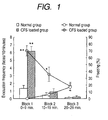
- Fig. 1 is a graph showing changes in freezing behavior and the number of evacuations after CFS loading. (Average value ± SEM of 12 cases for each group, * <0.05, ** <0.01 based on normal group (Student's t test))
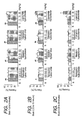
- Fig. 2 is a graph showing effect of drugs to be tested on freezing behavior after CFS loading. Average value ± SEM of 12 cases for each group, N: normal group, C: control group, # <0.05, ## <0.01 based on normal group (Student's t test), * <0.05 based on control group (Dunnett test)
- Fig. 3 is a graph showing effect of drugs to be tested on the acceleration of proximal large intestine transport ability after CFS loading. Average value ± SEM of 13 cases for each group, N: normal group, C: control group, RAM: ramosetron hydrochloride, ALO: alosetron hydrochloride, CIL: cilansetron hydrochloride, LOP: loperamide hydrochloride, ## <0.01 based on normal group (Student's t test), ** <0.01 based on control group (Dunnett test)
- The following describes the present invention further in detail.
The conditioned fear stressed animal model to be used in the present invention is an animal model to which a mental stress is applied by giving an unpleasant experience to a small animal under a certain specific condition, and again placing it under the same condition after a passage of a predetermined period of time.
Examples of the specific condition include a condition under which a small mammal is put into a box or cage having such a degree of size that its body is not confined, so that it cannot escape from an unpleasant experience. Conditioning for an unpleasant experience can be strengthened by generating a sound or irradiating light for a certain period of time, though not limited thereto. In a preferred example, a small mammal is put into a box, a warning sound is generated for a period of from several seconds to scores of seconds, and then an unpleasant experience of for a period of from several seconds to scores of seconds and a simultaneous irradiation of light are repeated from several times to scores of times. - Examples of the unpleasant experience include loading of a reversible stimulus to the body, such as electric shock or a shock by heat to limb.
The certain period of time between the fear conditioning and the test after administration of a test substance is not particularly limited with the proviso that it is a period of time of such a degree that the stressed state by fear conditioning is calmed down but the conditioning is not forgotten. For example, approximately from several hours to 48 hours can be cited, and approximately from 20 to 24 hours is more preferable.
Examples of the small mammal include rat, mouse, Mongolian gerbil, rabbit, guinea pig, hamster and the like. Sex, week of age, body weight, the presence of delivery and the like of the small mammal are not particularly limited as long as it can be employed in the intended screening.
The conditioned fear stressed animal model can be produced in accordance with the conventionally known methods (e.g.,Non-patent References 5, 6 and 7) or by optionally modifying the conventionally known methods. - Measurement of the evacuation condition can be carried out by the observation of the number of evacuations, weight of feces and the state of feces or the measurement of the content of moisture, though not limited thereto.
Measurement of the bowel movement can be carried out by the measurement of proximal large intestine transport ability by the marker method shown in Example 2 (Journal of Pharmacology and Experimental Therapeutics, 1993, vol. 266, p. 74 - 80), the measurement of distal large intestine transport ability by the beads discharge method shown in Example 3 (British Journal of Pharmacology, 1999, no. 128, p. 1554 - 69, 1999, no. 128, p. 1554 - 60), further by the method in which the movement is measured by arranging a sensor on the large intestine (Gastroenterology, 1991, vol. 100, p. 964 - 970) and the like, though not limited thereto.
The freezing behavior (freezing) is a state in which it does not show movement other than the movement accompanying breathing, for a predetermined period of time (e.g., from 10 to 30 seconds) or more.
The term "a test substance which improves evacuation condition and bowel movement and also does not exert influence upon the freezing behavior" means that the test substance does not shorten or prolong the time of period of freezing behavior at such a dose that it improves evacuation condition and bowel movement. In the same manner, the term "improves freezing behavior" means that the test substance shortens the time of period of freezing behavior at such a dose that it improves evacuation condition and bowel movement. - As the test substance, known or novel synthetic compounds, peptides, proteins and the like, as well as, for example, tissue extracts of warm blooded mammals, cell culture supernatants and the like, can be used.
Administration of the test substance is carried out by oral administration, intravenous administration, transdermal administration and the like, in accordance with the characteristics of the test substance, of which oral administration is most preferable. When the test substance is orally administered, a method in which it is made into a liquid state by dissolving in water or an organic solvent and forcedly administered to an animal using a syringe, dropping pipette or the like is preferable.
The period of time after administration of the test substance until the test can be optionally adjusted based on the species of the small animal and administration method of the test substance. For example, in the case of the rats used in the following examples, about 1 hour after the administration is desirable in the case of oral administration, but in the case of intravenous administration, the test can be carried out in 5 to 30 minutes after the administration. - In carrying out the screening method of the present invention, it is desirable that a fear-unconditioned normal small mammal, namely a small mammal which was placed under a certain specific condition but did not give an unpleasant experience, is regarded as a normal group and used as the comparative control with the fear conditioned (CFS) group.
- The present invention is described further in detail in the following based on examples, but the invention is not limited to these examples.
- Male Sprague-Dawley rats (6 weeks of age, CLEA Japan) were used. The rats which passed 1 week or more after their receipt were divided into groups of 12 animals per group in such a manner that their average values and standard deviations of body weight became almost the same. The electric shock conditions were set in accordance with the results of preliminary examinations. That is, the rats were put into an electric shock device (17 x 17 x 39 cm, CB 2000 type, O'Hara) having an electrode set in the floor, and after 3 seconds of warning sound, their conditioning was carried out by applying an electric current of 2 mA at the maximum for 5 seconds per once per minute, a total of 15 times, and irradiating light at the time of the electric shock using 3 electric bulbs of 40 w. The control group was put into the electric shock device by the same protocol, but without applying the electric shock. From 18 to 24 hours thereafter, each drug to be tested was orally administered to each animal by force at a dose of 5 mL/kg, they were again put into the
electric shock device 1 hour thereafter, and then a conditioned fear stress (CFS) loading was carried out by applying 3 seconds of warning sound and subsequent 5 seconds of light irradiation for 30 minutes. - The number of evacuations was recorded after 2, 4, 6, 8, 10, 15, 20, 25 and 30 minutes of the commencement of the CFS loading, and wet weights of feces were measured by recovering the feces at the time of the completion of the measurement. In addition, the feces were dried at 70°C for 22 hours and then their dry weights were measured to calculate the moisture content. In this connection, the evacuations just after putting them into the measuring device were excluded from the measured values of the number of evacuations and feces weights.
Regarding the measurement of freezing behavior (freezing), a case of not moving at all during 30 seconds other than the movement accompanied by breathing was evaluated as the freezing behavior. The evaluation times were set to 0, 1, 3, 5, 7, 9, 12, 13, 14, 17, 18, 19, 22, 23, 24, 27, 28 and 29 minutes after the CFS loading, and the measurement was carried out at intervals of 30 seconds per minute. The ratio (%) of showing the freezing behavior by each animal was calculated in 3 plots of from 0 to 9 minutes (Block 1), from 10 to 19 minutes (Block 2) and from 20 to 29 minutes (Block 3) after the loading. - In comparison with the normal group, significant difference was not found regarding the weight gain after the CFS loading until the measurement, so that it was confirmed that invasion by the conditioning using electric shock is low. The freezing behavior as an emotional behavior when rats receive a stress was found starting just after the CFS loading, and among the 30 minutes of measuring time, it was significant in the plots of from 0 to 9 minutes (Block 1) and from 10 to 19 minutes (Block 2) in comparison with the normal group (Fig. 1). In addition, significant increase in the number of evacuations was found in 0 to 10 minutes after the CFS loading, a period when strong freezing behavior can be found, in comparison with the normal group.
- In order to examine whether or not the substances whose therapeutic efficacy on irritable bowel syndrome patients have been reported also show efficacy on the abnormal evacuation found by this evaluation system, effects of 5-HT3 receptor antagonists ramosetron hydrochloride, alosetron hydrochloride and cilansetron hydrochloride and an antidiarrheal drug loperamide hydrochloride were examined. These drugs to be tested dose-dependently lowered the wet feces weights increased by the conditioned fear stress (CFS) loading, and ED50 values of the controlling ratio was as shown in Table 1. The ED50 value was calculated by the linear regression (n = 12).
[Table 1] Drugs to be tested ED50 value (mg/kg) Ramosetron hydrochloride 0.012 Alosetron hydrochloride 0.078 Cilansetron hydrochloride 0.094 Loperamide hydrochloride 9.000 - During the observation period of 30 minutes after the CFS loading, all of the drugs tested, ramosetron hydrochloride, alosetron hydrochloride and cilansetron hydrochloride, did not exert influence upon the conditioned fear stress (CFS)-induced freezing behavior at all of the doses tested, so that it was confirmed that these substances do not exert influence upon stress reactions (Fig. 2). On the other hand, loperamide hydrochloride dose-dependently prolonged the freezing behavior-expressing time of 20 to 29 minutes after CFS loading (Block 3), and its action was significant at a dose of 30 mg/kg (Fig. 2). From this result, it is considered that loperamide hydrochloride an action other than its abnormal evacuation improving action.
- Male Sprague-Dawley rats (6 to 7 weeks of age, CLEA Japan) were used. The rats which passed about 1 week after their receipt were used in the test. The electric shock conditions were set in accordance with Example 1. That is, the rats were put into an electric shock device (17 x 17 x 39 cm, CB 2000 type, O'Hara) having an electrode set in the floor, and after 3 seconds of warning sound, their conditioning was carried out by applying an electric current of 2.5 mA for 5 seconds per minute per once, a total of 15 times, and irradiating light at the time of the electric shock using 3 electric bulbs of 40 w. The normal group was put into the electric shock device by the same protocol, but without applying the electric shock. From 20 to 24 hours thereafter, each drug to be tested was orally administered to each animal by force at a dose of 5 mL/kg, they were again put into the
electric shock device 1 hour thereafter, and then a conditioned fear stress (CFS) loading was carried out by applying 3 seconds of warning sound and subsequent 5 seconds of light irradiation for 30 minutes. - Measurement of proximal large intestine transport ability by a marker method was carried out by modifying the method of Kadowaki et al. (Journal of Pharmacology and Experimental Therapeutics, 1993, vol. 266, p. 74 - 80). That is, abdominal part of each rat was subjected to median incision (about 1 cm) under pentobarbital (50 mg/kg ip) anesthesia, and the ileocecal junction was extracted. A large intestinal part of about 1 cm from the connecting part was extracted from the neck by inserting canula (SP 50). The animals were individually reared for 5 days until the test, under conditions of free ingestion and free drinking. A Carmine Red solution (0.2 mL of 0.5% methyl cellulose solution containing 3 g of Carmine Red and 5 g of acacia) was injected trough the canula, CFS was loaded for 30 minutes by the aforementioned method, and then the animals were sacrificed by a decapitation device. By quickly carrying out median incision, large intestine starting part-anus part was extracted, and the whole length and marker shifting distance were measured using the canula insertion part as the starting point. The large intestine transport ability (%) was calculated as (marker shifting distance) ÷ (whole length) x 100.
- By injecting the Carmine Red solution into the large intestine starting part, the proximal large
intestine transport ability 30 minutes after CFS loading was measured. Since the proximal large intestine transport ability of the CFS group was significantly increased in comparison with the normal group, it was suggested that the abnormal evacuation by this evaluation system is based on the abnormal acceleration of bowel movement, by conforming to the morbid state (Fig. 3). In addition, the ramosetron hydrochloride (0.1 mg/kg), alosetron hydrochloride (0.3 mg/kg), cilansetron hydrochloride (0.3 mg/kg) and loperamide hydrochloride (10 mg/kg), which significantly suppressed CFS-induced abnormal evacuation, lowered the proximal large intestine transport rate increased by the CFS loading. - Male Sprague-Dawley rats (6 to 7 weeks of age, CLEA Japan) were used. The rats which passed about 1 week after their receipt were used in the test by 12 animals per group. The electric shock conditions were set in accordance with Example 1. That is, the rats were put into an electric shock device (17 x 17 x 39 cm, CB 2000 type, O'Hara) having an electrode set in the floor, and after 3 seconds of warning sound, their conditioning was carried out by applying an electric current of 2.5 mA for 5 seconds per minute per once, a total of 15 times, and irradiating light at the time of the electric shock using 3 electric bulbs of 40 w. The normal group was put into the electric shock device by the same protocol, but without applying the electric shock. From 20 to 24 hours thereafter, each drug to be tested was orally administered to each animal by force at a dose of 5 mL/kg, they were again put into the
electric shock device 1 hour thereafter, and then a conditioned fear stress (CFS) loading was carried out by applying 3 seconds of warning sound and subsequent 5 seconds of light irradiation for 30 minutes. - Measurement of large intestine transport ability by a beads discharge method was carried out by modifying the method of Negri et al. (British Journal of Pharmacology, 1999, no. 128, p. 1554 - 60). That is, under light ether anesthesia, silicon beads (3 mm in diameter) were inserted in a length of 3 cm into the rectum side from the anus part using a silicon rod. After waking, the silicon rod was immediately removed to carry out CFS loading. The CFS loading starting time and silicon beads discharging time were recorded, and the measurement finishing time was set to 90 minutes in CFS group and 8 hours in normal group after the starting of the measurement. The distal large intestine transport ability (mm/min) was calculated as 30 mm ÷ required beads discharge time (min).
- The results are shown in Table 2. When the conditioned fear stress (CFS) was loaded, the distal large intestine transport rate was increased in comparison with the normal group. In addition, ramosetron hydrochloride (0.1 mg/kg), alosetron hydrochloride (0.3 mg/kg), cilansetron hydrochloride (0.3 mg/kg) and loperamide hydrochloride (10 mg/kg) lowered the distal large intestine transport rate which was increased by the CFS loading.
[Table 2] Administration groups Dose (mg/kg) Distal large intestine transport ability (mm/min) Normal group - 0.38 Control group - 13.70 # Ramosetron hydrochloride 0.1 4.93 ** Alosetron hydrochloride 0.3 5.04 * Cilansetron hydrochloride 0.3 5.06 ** Loperamide hydrochloride 10 3.64 ** # P< 0.01 based on normal group (Student's t test)
* P <0.05, ** P < 0.01 based on control group (Steel test) - By the screening method of the present invention, therapeutic agents for irritable bowel syndrome developed by mental stress can be evaluated efficiently.
Claims (5)
- A method of screening a therapeutic agent for irritable bowel syndrome, which comprises administering a test substance to a conditioned fear stressed animal model, and measuring an evacuation condition and/or a bowel movement.
- A method of screening a therapeutic agent for irritable bowel syndrome, which comprises giving an unpleasant experience to a small mammal under a certain specific condition, administering a test substance to the small mammal after a passage of a predetermined period of time, placing the animal under the same condition again, and then measuring an evacuation condition and/or a bowel movement.
- The screening method described in claim 1 or 2, which further comprises measuring freezing behavior.
- The screening method described in claim 3, wherein a test substance which improves evacuation condition and bowel movement and also does not exert influence upon freezing behavior is selected.
- The screening method described in claim 3, wherein a test substance which improves evacuation condition and bowel movement and also improves freezing behavior is selected.
Applications Claiming Priority (2)
| Application Number | Priority Date | Filing Date | Title |
|---|---|---|---|
| JP2005021151 | 2005-01-28 | ||
| PCT/JP2006/301205 WO2006080385A1 (en) | 2005-01-28 | 2006-01-26 | Method of screening therapeutic agent for irritable bowel syndrome |
Publications (3)
| Publication Number | Publication Date |
|---|---|
| EP1857816A1 true EP1857816A1 (en) | 2007-11-21 |
| EP1857816A4 EP1857816A4 (en) | 2008-10-22 |
| EP1857816B1 EP1857816B1 (en) | 2010-03-10 |
Family
ID=36740412
Family Applications (1)
| Application Number | Title | Priority Date | Filing Date |
|---|---|---|---|
| EP06712387A Expired - Lifetime EP1857816B1 (en) | 2005-01-28 | 2006-01-26 | Method of screening therapeutic agent for irritable bowel syndrome |
Country Status (8)
| Country | Link |
|---|---|
| US (1) | US20080010691A1 (en) |
| EP (1) | EP1857816B1 (en) |
| JP (1) | JP4725579B2 (en) |
| AT (1) | ATE460663T1 (en) |
| CA (1) | CA2596057A1 (en) |
| DE (1) | DE602006012811D1 (en) |
| ES (1) | ES2340195T3 (en) |
| WO (1) | WO2006080385A1 (en) |
Families Citing this family (1)
| Publication number | Priority date | Publication date | Assignee | Title |
|---|---|---|---|---|
| JP6444584B2 (en) * | 2013-03-25 | 2018-12-26 | 国立大学法人東京農工大学 | Method for determining stress exposure in domestic mice |
Family Cites Families (5)
| Publication number | Priority date | Publication date | Assignee | Title |
|---|---|---|---|---|
| JP4316793B2 (en) * | 1997-08-19 | 2009-08-19 | 三菱化学株式会社 | Treatment for irritable bowel syndrome |
| KR20020092891A (en) * | 1999-07-15 | 2002-12-12 | 리서치 디벨럽먼트 파운데이션 | Corticotropin releasing factor receptor 2 deficient mice and uses thereof |
| US20040034882A1 (en) * | 1999-07-15 | 2004-02-19 | Vale Wylie W. | Corticotropin releasing factor receptor 2 deficient mice and uses thereof |
| AU2003241988A1 (en) * | 2002-05-31 | 2003-12-19 | Ajinomoto Co., Inc. | Chronic stress-related disease model animal and method of constructing the same |
| KR20050111318A (en) * | 2003-01-13 | 2005-11-24 | 다이노젠 파마세우티컬스, 인코포레이티드 | Method of treating functional bowel disorders |
-
2006
- 2006-01-26 JP JP2007500564A patent/JP4725579B2/en not_active Expired - Fee Related
- 2006-01-26 DE DE602006012811T patent/DE602006012811D1/en not_active Expired - Lifetime
- 2006-01-26 AT AT06712387T patent/ATE460663T1/en not_active IP Right Cessation
- 2006-01-26 EP EP06712387A patent/EP1857816B1/en not_active Expired - Lifetime
- 2006-01-26 US US11/794,946 patent/US20080010691A1/en not_active Abandoned
- 2006-01-26 WO PCT/JP2006/301205 patent/WO2006080385A1/en not_active Ceased
- 2006-01-26 ES ES06712387T patent/ES2340195T3/en not_active Expired - Lifetime
- 2006-01-26 CA CA002596057A patent/CA2596057A1/en not_active Abandoned
Also Published As
| Publication number | Publication date |
|---|---|
| JPWO2006080385A1 (en) | 2008-06-19 |
| JP4725579B2 (en) | 2011-07-13 |
| US20080010691A1 (en) | 2008-01-10 |
| EP1857816A4 (en) | 2008-10-22 |
| ES2340195T3 (en) | 2010-05-31 |
| EP1857816B1 (en) | 2010-03-10 |
| CA2596057A1 (en) | 2006-08-03 |
| DE602006012811D1 (en) | 2010-04-22 |
| ATE460663T1 (en) | 2010-03-15 |
| WO2006080385A1 (en) | 2006-08-03 |
Similar Documents
| Publication | Publication Date | Title |
|---|---|---|
| Engin et al. | Anxiolytic and antidepressant effects of intracerebroventricularly administered somatostatin: behavioral and neurophysiological evidence | |
| Engin et al. | Anxiolytic-and antidepressant-like properties of ketamine in behavioral and neurophysiological animal models | |
| Tanida et al. | Olfactory stimulation with scent of essential oil of grapefruit affects autonomic neurotransmission and blood pressure | |
| Behnood-Rod et al. | Evaluation of the rewarding effects of mitragynine and 7‐hydroxymitragynine in an intracranial self-stimulation procedure in male and female rats | |
| Hackler et al. | 5-Hydroxytryptamine2C receptor contribution to m-chlorophenylpiperazine and N-methyl-β-carboline-3-carboxamide-induced anxiety-like behavior and limbic brain activation | |
| Goecke et al. | Evaluating postoperative analgesics in mice using telemetry | |
| De Araújo et al. | Anxiogenic effects of substance P and its 7–11 C terminal, but not the 1–7 N terminal, injected into the dorsal periaqueductal gray☆ | |
| Deng et al. | Estrogen affects neuropathic pain through upregulating N-methyl-D-aspartate acid receptor 1 expression in the dorsal root ganglion of rats | |
| JP2010501597A (en) | Method for inhibiting respiratory depression using positive allosteric AMPA receptor modulators | |
| KR20210009422A (en) | Methods and compositions for treating and/or preventing the progression and/or expression of age-related neurodegeneration | |
| McAllister et al. | The effects of chronic fluoxetine treatment following injury of medial frontal cortex in mice | |
| Gholami et al. | The effect of dorsal hippocampal administration of nicotinic and muscarinic cholinergic ligands on pentylenetetrazol-induced generalized seizures in rats | |
| Yamada et al. | Preadolescent tobacco smoke exposure leads to acute nicotine dependence but does not affect the rewarding effects of nicotine or nicotine withdrawal in adulthood in rats | |
| Barletta et al. | The pharmacokinetics and analgesic effects of extended‐release buprenorphine administered subcutaneously in healthy dogs | |
| Fabian et al. | Pharmacokinetics of single-dose intramuscular and subcutaneous injections of buprenorphine in common marmosets (Callithrix jacchus) | |
| EP1857816B1 (en) | Method of screening therapeutic agent for irritable bowel syndrome | |
| Taber et al. | Neurochemical, pharmacokinetic, and behavioral effects of the novel selective serotonin reuptake inhibitor BMS-505130 | |
| Baca-Alonso et al. | Neurotrophic effects of GH and GnRH in a full sciatic nerve transection model in male rats | |
| Morrow et al. | (S)-(−)-HA-966, a γ-Hydroxybutyrate-Like Agent, Prevents Enhanced Mesocorticolimbic Dopamine Metabolism and Behavioral Correlates of Restraint Stress, Conditioned Fear and Cocaine Sensitization | |
| Wu et al. | Activation of CB1 receptors on GABAergic interneurons in the ventrolateral orbital cortex induces analgesia | |
| Gariepy et al. | Contribution of the central dopaminergic system in the anti-hypertensive effect of kinin B1 receptor antagonists in two rat models of hypertension | |
| García del Barco et al. | Therapeutic effect of the combined use of growth hormone releasing peptide-6 and epidermal growth factor in an axonopathy model | |
| Okuda et al. | Trazodone hydrochloride attenuates thermal hyperalgesia in a chronic constriction injury rat model | |
| Vasilev et al. | Age-related differences in MK-801-and amphetamine-induced locomotor and stereotypic activities of rats | |
| Asmundsson et al. | Effects of ventrolateral medullary NMDA-receptor antagonism on biogenic amines and pressor response to muscle contraction |
Legal Events
| Date | Code | Title | Description |
|---|---|---|---|
| PUAI | Public reference made under article 153(3) epc to a published international application that has entered the european phase |
Free format text: ORIGINAL CODE: 0009012 |
|
| 17P | Request for examination filed |
Effective date: 20070718 |
|
| AK | Designated contracting states |
Kind code of ref document: A1 Designated state(s): AT BE BG CH CY CZ DE DK EE ES FI FR GB GR HU IE IS IT LI LT LU LV MC NL PL PT RO SE SI SK TR |
|
| DAX | Request for extension of the european patent (deleted) | ||
| A4 | Supplementary search report drawn up and despatched |
Effective date: 20080919 |
|
| 17Q | First examination report despatched |
Effective date: 20090415 |
|
| GRAP | Despatch of communication of intention to grant a patent |
Free format text: ORIGINAL CODE: EPIDOSNIGR1 |
|
| GRAS | Grant fee paid |
Free format text: ORIGINAL CODE: EPIDOSNIGR3 |
|
| GRAA | (expected) grant |
Free format text: ORIGINAL CODE: 0009210 |
|
| AK | Designated contracting states |
Kind code of ref document: B1 Designated state(s): AT BE BG CH CY CZ DE DK EE ES FI FR GB GR HU IE IS IT LI LT LU LV MC NL PL PT RO SE SI SK TR |
|
| REG | Reference to a national code |
Ref country code: GB Ref legal event code: FG4D |
|
| REG | Reference to a national code |
Ref country code: CH Ref legal event code: EP |
|
| REG | Reference to a national code |
Ref country code: NL Ref legal event code: T3 Ref country code: IE Ref legal event code: FG4D |
|
| REF | Corresponds to: |
Ref document number: 602006012811 Country of ref document: DE Date of ref document: 20100422 Kind code of ref document: P |
|
| REG | Reference to a national code |
Ref country code: ES Ref legal event code: FG2A Ref document number: 2340195 Country of ref document: ES Kind code of ref document: T3 |
|
| PG25 | Lapsed in a contracting state [announced via postgrant information from national office to epo] |
Ref country code: LT Free format text: LAPSE BECAUSE OF FAILURE TO SUBMIT A TRANSLATION OF THE DESCRIPTION OR TO PAY THE FEE WITHIN THE PRESCRIBED TIME-LIMIT Effective date: 20100310 |
|
| LTIE | Lt: invalidation of european patent or patent extension |
Effective date: 20100310 |
|
| PG25 | Lapsed in a contracting state [announced via postgrant information from national office to epo] |
Ref country code: PL Free format text: LAPSE BECAUSE OF FAILURE TO SUBMIT A TRANSLATION OF THE DESCRIPTION OR TO PAY THE FEE WITHIN THE PRESCRIBED TIME-LIMIT Effective date: 20100310 Ref country code: FI Free format text: LAPSE BECAUSE OF FAILURE TO SUBMIT A TRANSLATION OF THE DESCRIPTION OR TO PAY THE FEE WITHIN THE PRESCRIBED TIME-LIMIT Effective date: 20100310 Ref country code: AT Free format text: LAPSE BECAUSE OF FAILURE TO SUBMIT A TRANSLATION OF THE DESCRIPTION OR TO PAY THE FEE WITHIN THE PRESCRIBED TIME-LIMIT Effective date: 20100310 Ref country code: SI Free format text: LAPSE BECAUSE OF FAILURE TO SUBMIT A TRANSLATION OF THE DESCRIPTION OR TO PAY THE FEE WITHIN THE PRESCRIBED TIME-LIMIT Effective date: 20100310 Ref country code: LV Free format text: LAPSE BECAUSE OF FAILURE TO SUBMIT A TRANSLATION OF THE DESCRIPTION OR TO PAY THE FEE WITHIN THE PRESCRIBED TIME-LIMIT Effective date: 20100310 |
|
| PG25 | Lapsed in a contracting state [announced via postgrant information from national office to epo] |
Ref country code: BE Free format text: LAPSE BECAUSE OF FAILURE TO SUBMIT A TRANSLATION OF THE DESCRIPTION OR TO PAY THE FEE WITHIN THE PRESCRIBED TIME-LIMIT Effective date: 20100310 Ref country code: CY Free format text: LAPSE BECAUSE OF FAILURE TO SUBMIT A TRANSLATION OF THE DESCRIPTION OR TO PAY THE FEE WITHIN THE PRESCRIBED TIME-LIMIT Effective date: 20100310 Ref country code: EE Free format text: LAPSE BECAUSE OF FAILURE TO SUBMIT A TRANSLATION OF THE DESCRIPTION OR TO PAY THE FEE WITHIN THE PRESCRIBED TIME-LIMIT Effective date: 20100310 Ref country code: GR Free format text: LAPSE BECAUSE OF FAILURE TO SUBMIT A TRANSLATION OF THE DESCRIPTION OR TO PAY THE FEE WITHIN THE PRESCRIBED TIME-LIMIT Effective date: 20100611 Ref country code: RO Free format text: LAPSE BECAUSE OF FAILURE TO SUBMIT A TRANSLATION OF THE DESCRIPTION OR TO PAY THE FEE WITHIN THE PRESCRIBED TIME-LIMIT Effective date: 20100310 Ref country code: SE Free format text: LAPSE BECAUSE OF FAILURE TO SUBMIT A TRANSLATION OF THE DESCRIPTION OR TO PAY THE FEE WITHIN THE PRESCRIBED TIME-LIMIT Effective date: 20100310 |
|
| PG25 | Lapsed in a contracting state [announced via postgrant information from national office to epo] |
Ref country code: IS Free format text: LAPSE BECAUSE OF FAILURE TO SUBMIT A TRANSLATION OF THE DESCRIPTION OR TO PAY THE FEE WITHIN THE PRESCRIBED TIME-LIMIT Effective date: 20100710 Ref country code: CZ Free format text: LAPSE BECAUSE OF FAILURE TO SUBMIT A TRANSLATION OF THE DESCRIPTION OR TO PAY THE FEE WITHIN THE PRESCRIBED TIME-LIMIT Effective date: 20100310 Ref country code: BG Free format text: LAPSE BECAUSE OF FAILURE TO SUBMIT A TRANSLATION OF THE DESCRIPTION OR TO PAY THE FEE WITHIN THE PRESCRIBED TIME-LIMIT Effective date: 20100610 Ref country code: SK Free format text: LAPSE BECAUSE OF FAILURE TO SUBMIT A TRANSLATION OF THE DESCRIPTION OR TO PAY THE FEE WITHIN THE PRESCRIBED TIME-LIMIT Effective date: 20100310 |
|
| PLBE | No opposition filed within time limit |
Free format text: ORIGINAL CODE: 0009261 |
|
| STAA | Information on the status of an ep patent application or granted ep patent |
Free format text: STATUS: NO OPPOSITION FILED WITHIN TIME LIMIT |
|
| PG25 | Lapsed in a contracting state [announced via postgrant information from national office to epo] |
Ref country code: PT Free format text: LAPSE BECAUSE OF FAILURE TO SUBMIT A TRANSLATION OF THE DESCRIPTION OR TO PAY THE FEE WITHIN THE PRESCRIBED TIME-LIMIT Effective date: 20100712 Ref country code: DK Free format text: LAPSE BECAUSE OF FAILURE TO SUBMIT A TRANSLATION OF THE DESCRIPTION OR TO PAY THE FEE WITHIN THE PRESCRIBED TIME-LIMIT Effective date: 20100310 |
|
| 26N | No opposition filed |
Effective date: 20101213 |
|
| PG25 | Lapsed in a contracting state [announced via postgrant information from national office to epo] |
Ref country code: MC Free format text: LAPSE BECAUSE OF NON-PAYMENT OF DUE FEES Effective date: 20110131 |
|
| REG | Reference to a national code |
Ref country code: CH Ref legal event code: PL |
|
| REG | Reference to a national code |
Ref country code: IE Ref legal event code: MM4A |
|
| PG25 | Lapsed in a contracting state [announced via postgrant information from national office to epo] |
Ref country code: CH Free format text: LAPSE BECAUSE OF NON-PAYMENT OF DUE FEES Effective date: 20110131 Ref country code: LI Free format text: LAPSE BECAUSE OF NON-PAYMENT OF DUE FEES Effective date: 20110131 |
|
| PG25 | Lapsed in a contracting state [announced via postgrant information from national office to epo] |
Ref country code: IE Free format text: LAPSE BECAUSE OF NON-PAYMENT OF DUE FEES Effective date: 20110126 |
|
| PGFP | Annual fee paid to national office [announced via postgrant information from national office to epo] |
Ref country code: IT Payment date: 20120116 Year of fee payment: 7 |
|
| PGFP | Annual fee paid to national office [announced via postgrant information from national office to epo] |
Ref country code: DE Payment date: 20130123 Year of fee payment: 8 Ref country code: GB Payment date: 20130123 Year of fee payment: 8 Ref country code: ES Payment date: 20130123 Year of fee payment: 8 Ref country code: FR Payment date: 20130204 Year of fee payment: 8 |
|
| PG25 | Lapsed in a contracting state [announced via postgrant information from national office to epo] |
Ref country code: LU Free format text: LAPSE BECAUSE OF NON-PAYMENT OF DUE FEES Effective date: 20110126 |
|
| PGFP | Annual fee paid to national office [announced via postgrant information from national office to epo] |
Ref country code: NL Payment date: 20130116 Year of fee payment: 8 |
|
| PG25 | Lapsed in a contracting state [announced via postgrant information from national office to epo] |
Ref country code: TR Free format text: LAPSE BECAUSE OF FAILURE TO SUBMIT A TRANSLATION OF THE DESCRIPTION OR TO PAY THE FEE WITHIN THE PRESCRIBED TIME-LIMIT Effective date: 20100310 |
|
| PG25 | Lapsed in a contracting state [announced via postgrant information from national office to epo] |
Ref country code: HU Free format text: LAPSE BECAUSE OF FAILURE TO SUBMIT A TRANSLATION OF THE DESCRIPTION OR TO PAY THE FEE WITHIN THE PRESCRIBED TIME-LIMIT Effective date: 20100310 |
|
| REG | Reference to a national code |
Ref country code: DE Ref legal event code: R119 Ref document number: 602006012811 Country of ref document: DE |
|
| REG | Reference to a national code |
Ref country code: NL Ref legal event code: V1 Effective date: 20140801 |
|
| GBPC | Gb: european patent ceased through non-payment of renewal fee |
Effective date: 20140126 |
|
| REG | Reference to a national code |
Ref country code: DE Ref legal event code: R119 Ref document number: 602006012811 Country of ref document: DE Effective date: 20140801 |
|
| PG25 | Lapsed in a contracting state [announced via postgrant information from national office to epo] |
Ref country code: NL Free format text: LAPSE BECAUSE OF NON-PAYMENT OF DUE FEES Effective date: 20140801 Ref country code: DE Free format text: LAPSE BECAUSE OF NON-PAYMENT OF DUE FEES Effective date: 20140801 |
|
| REG | Reference to a national code |
Ref country code: FR Ref legal event code: ST Effective date: 20140930 |
|
| PG25 | Lapsed in a contracting state [announced via postgrant information from national office to epo] |
Ref country code: GB Free format text: LAPSE BECAUSE OF NON-PAYMENT OF DUE FEES Effective date: 20140126 Ref country code: FR Free format text: LAPSE BECAUSE OF NON-PAYMENT OF DUE FEES Effective date: 20140131 |
|
| REG | Reference to a national code |
Ref country code: ES Ref legal event code: FD2A Effective date: 20150327 |
|
| PG25 | Lapsed in a contracting state [announced via postgrant information from national office to epo] |
Ref country code: ES Free format text: LAPSE BECAUSE OF NON-PAYMENT OF DUE FEES Effective date: 20140127 |
|
| PG25 | Lapsed in a contracting state [announced via postgrant information from national office to epo] |
Ref country code: IT Free format text: LAPSE BECAUSE OF NON-PAYMENT OF DUE FEES Effective date: 20140126 |