EP1852471B1 - Method for the selective removal of aromatic and / or phenolic components from a construction material comprising asphalt containing coal tar pitch and the contaminated sub-base of the road constructions - Google Patents
Method for the selective removal of aromatic and / or phenolic components from a construction material comprising asphalt containing coal tar pitch and the contaminated sub-base of the road constructions Download PDFInfo
- Publication number
- EP1852471B1 EP1852471B1 EP06113597.6A EP06113597A EP1852471B1 EP 1852471 B1 EP1852471 B1 EP 1852471B1 EP 06113597 A EP06113597 A EP 06113597A EP 1852471 B1 EP1852471 B1 EP 1852471B1
- Authority
- EP
- European Patent Office
- Prior art keywords
- water
- benzo
- aromatic
- pah
- asphalt
- Prior art date
- Legal status (The legal status is an assumption and is not a legal conclusion. Google has not performed a legal analysis and makes no representation as to the accuracy of the status listed.)
- Expired - Lifetime
Links
Images
Classifications
-
- C—CHEMISTRY; METALLURGY
- C08—ORGANIC MACROMOLECULAR COMPOUNDS; THEIR PREPARATION OR CHEMICAL WORKING-UP; COMPOSITIONS BASED THEREON
- C08L—COMPOSITIONS OF MACROMOLECULAR COMPOUNDS
- C08L95/00—Compositions of bituminous materials, e.g. asphalt, tar, pitch
-
- B—PERFORMING OPERATIONS; TRANSPORTING
- B08—CLEANING
- B08B—CLEANING IN GENERAL; PREVENTION OF FOULING IN GENERAL
- B08B3/00—Cleaning by methods involving the use or presence of liquid or steam
- B08B3/04—Cleaning involving contact with liquid
- B08B3/08—Cleaning involving contact with liquid the liquid having chemical or dissolving effect
Definitions
- the present invention concerns a method for the selective removal of aromatic and / or phenolic components from construction material comprising asphalt containing coal tar pitch and the contaminated sub-base of the road constructions
- coal tar pitch (tar) was frequently used as binder for asphalt pavements in almost all European countries. These materials contain environmentally hazardous, toxic, mutagenic and carcinogenic compounds at high concentration.
- Asphalt containing tar is classified as a hazardous waste (Hazardous Waste Directive 91/689/EEC, chapter 6.1) under the European Waste Catalogue: List of Hazardous Wastes, Commission Decision [COM (2001) 216 final] item 17.03.01. (Commission Decision 94/3/EC establishing a list of wastes pursuant to Article 1(a) of Council Directive 75/442/EEC on waste and Council Decision 94/904/EC establishing a list of hazardous waste pursuant to Article 1(4) of Council Directive 91/689/EEC on hazardous waste [Part 17 is "Construction And Demolition Wastes (Including Road Construction). The part 17 03 concerns asphalt, tar and tarred products. (17 03 01 asphalt containing tar, 17 03 02 asphalt not containing tar, 17 03 03 tar and tar products)].
- Incineration of asphalt containing coal tar at temperatures above 1000°C using a gas or oil fired rotary kiln has been suggested.
- This method may be very effective with regard to the destruction of PAHs and other hazardous substances as they are essentially oxidized to carbon dioxide and water.
- the mechanical properties of the thus obtained material do not meet the requirements for the recycling of the materials for road pavements anymore as a dust-like product is obtained.
- Another disadvantage of the method is the high energy demand because the whole material including the tar and aggregate has to be heated above 1000°C. Special flue gas treatment is also necessary.
- EP 0624692 describes a method for the surface-cleaning of roads aimed at removing oil and grease where water stored at temperature of up to 150°C in a pressure tank is sprayed on the road surface.
- a method for the selective removal of aromatic and / or phenolic components from a construction material comprising asphalt containing coal tar pitch and the contaminated sub-base of the road constructions wherein the construction material is contacted with water in the liquid state at temperatures between 150 - 290°C and pressures between 5 - 80 bar and the aromatic and /or phenolic components are transferred from the asphalt into the water.
- This method allows separating hazardous substances like PAHs and phenols for the construction material comprising asphalt containing coal tar pitch and the contaminated sub-base of the road constructions or from asphalt pavement containing tar as a binder with the help of an environmentally friendly liquid and energy.
- the extracted hazardous substances present a low volume as compared to the staring material.
- the extracted hazardous substances may thus be burnt or disposed of in another environmentally friendly way much more easily since the volume is considerably lower than the volume of the starting material.
- the construction material is preferably contacted with water in the liquid state at temperatures between 170°C and 290°C and in particular between 240°C and 270°C.
- the pressure has to be set in a way so that the water remains in liquid state.
- the pressure is set preferably from about two to five bars above the pressure at which the water would be boiling at the chosen temperature.
- the method may be used either batch wise or continuously i.e. the construction material may be immerged in water in the liquid state at temperatures between 150 - 290°C and pressures between 5 - 80 bar and remain in the water for 0.5 to 3 hours or water may be sprayed onto the asphalt to extract the PAH and phenols selectively.
- the asphalt is preferably crushed or milled to an average particle size of less than 15 mm, more preferably to less than 10 mm and most preferably to less than 5 mm.
- the aromatic and /or phenolic components may then be extracted from the water and the water may then be recycled.
- the pH of the water is changed - preferably lowered - before the extraction of the aromatic and / or phenolic components from the water.
- the aromatic and /or phenolic components to be extracted from the asphalt are selected - in a preferred embodiment - from the group consisting of polycyclic aromatic hydrocarbons and phenols like naphthalene, acenaphthylene, acenaphtene, fluorene, phenanthrene, anthracene, fluoranthene, pyrene, benzo(a)anthracene, chrysene, benzo(b)fluoranthene, benzo(k)fluoranthene, benzo(a)pyrene, indeno(1,2,3-cd)pyrene, dibenzo(a,h)anthracene, benzo(g,h,i)perylene.
- polycyclic aromatic hydrocarbons and phenols like naphthalene, acenaphthylene, acenaphtene, fluorene, phenanthrene, anthracene, fluoranthene,
- the invention also concerns a process for recycling a construction material comprising asphalt containing coal tar pitch and the contaminated sub-base of the road constructions wherein the construction material is crushed and treated according to the method described above.
- the invention also concerns the use of the recycled construction material obtained according to the process described above for the road construction.
- the developed analysis method is as follows: A three-step batch extraction under sonication was developed to extract contaminants from asphalt. 5 ml CH 2 Cl 2 are applied per g asphalt, sonication is applied for 15 minutes and the solid residue and supernatant are separated by centrifugation. To the combined extracts a defined amount of C 23 is added as internal standard. Then 100 ⁇ l of the organic extracts in CH 2 Cl 2 obtained as described above are deposited on a small, dry, silica gel column (55 mm x 5 mm) for purification. A Pasteur pipette can be used for that purpose. The first fraction (1000 ⁇ l) eluted with CH 2 Cl 2 contains the PAH. This fraction can be directly injected into the GC applying a standard method for separation of the 16 EPA PAHs.
- GC-FID analyses were carried out on a gas chromatograph equipped with an on-column injector, a flame ionisation detector (FID) at 300 °C and a HP-5 fused silica column (30 m x 0.32 mm i.d., 0.25 ⁇ m film thickness). Hydrogen was used as carrier gas (constant flow 2.5 ml/min). Temperature program was as follows: 40°-150°C (10°C/min), 150°C-300°C (4°C/min), isothermal 300°C. The concentration of the 16 EPA PAHs determined from this analysis is listed in Table 1 . The total amount of 3600 mg/kg is more than twice the amount found after cold extraction (1600 mg/kg).
- Quantification by GC-MS is theoretically more precise and reliable than quantification by gas chromatography (GC) using a flame ionisation detector as described above. The latter is, in turn, more adequate for a rapid evaluation and monitoring of the efficiency of the treatments on site.
- GC gas chromatography
- the selected mode of detection is single ion monitoring (SIM).
- SIM single ion monitoring
- the ions monitored were m/z 128, 152, 154, 166, 178, 202, 228, 252, 276, 278 corresponding to the molecular masses of the 16 PAH of the EPA list to be quantified and m/z 57 and 324 for the C 23 n-alkane, the internal standard.
- Individual calibration curves were established allowing to evaluate the response factor of the various PAH compared to the n-C 23 standard.
- solutions of standards containing the 16 PAH of the EPA list at various concentrations (from 10 ⁇ g/L to 20 mg/L) and a known concentration of the n- C 23 standard fixed at 5.00 mg/L have been prepared.
- the concentration of the internal standard was in the range of the concentration of the n-C 23 standard in the PAH fractions isolated from the road asphalt samples for quantification.
- GC-MS analyses were carried out on a Varian 1200L spectrometer connected to a Varian CP-3800 gas chromatograph equipped with a Varian CP-8410 autosampler, a Varian 1079 injector and with a Restek RTX5-MS column (60m x 0.25mm x 0.1 ⁇ m film thickness). Temperature program: 45°C (1min), 40°C-150°C (10°C/min), 150°C-300°C (4°C/min), isothermal 300°C. Mass spectra were obtained at 70 eV (electron impact) and helium was used as carrier gas (constant flow: 1.7ml/min).
- the analysis method is as follows: the asphalt sample is subjected to a soxhlet extraction with CH 2 Cl 2 (2 ml solvent per g asphalt) during 4 hours.
- the extract was purified on a silica column following the protocol described above. From the eluted solution the CH 2 Cl 2 was evaporated under rotation at 100 mbar and the residue was filled up to a defined volume with methanol. The methanolic solution could be directly injected into HPLC.
- An elution gradient reversed phase HPLC method using a standard CIS column was developed for an appropriate separation of the 16 EPA PAHs, since no specialized PAH column was available.
- the recovery for the complete sample preparation procedure was determined for each individual PAH (between 81% for naphthalene and 99% for phenanthrene). Quantification was carried out using individual external calibration. The use of a UV photodiode array detector enabled peak identification and individual optimisation of selective detection wavelengths.
- HPLC analysis yields higher PAH concentrations than GC due to the lower separation efficiency and the influences of the complex matrix
- a method on a C18 reversed phase column was developed as follows: HPLC Apparatus: Alliance (Waters, Germany); Column: Nucleodur C18 Gravity, 5 jam, 150 x 4 mm column (Macherey & Nagel, Diiren, Germany); Gradient: A: water, B: acetonitrile, mixtures given in volume percent, 0..3 min: 60 % B isocratically, 3..30 min: 60 %..100 % B linear gradient, 30..32 min: 100 % B for cleaning the column, T: 38 °C, Flowrate: 1 ml/min.
- the asphalt sample was also subjected to a soxhlet extraction with CH 2 Cl 2 (2 ml solvent per g asphalt) during 4 hours.
- a liquid-liquid extraction method was developed transferring the phenols from the CH 2 Cl 2 phase into an alkaline aqueous solution at pH 14. The recovery of this step in the presence of matrix was determined (100% for phenol, but only 34% for 1,3,5 trimethylphenol.
- the alkaline solution is neutralized, filtered and directly injected into HPLC.
- An isocratic reversed phase HPLC method using a special CIS column with polar modification was developed for an appropriate separation of the 10 selected phenols. Quantification of the phenols is carried out using individual external calibration. The use of a UV photodiode array detector enables peak identification. For the application to the asphalt samples, trace determination capability was required, since several phenols are present below 1 mg/ml.
- HPLC-Apparatus Summit System (Dionex, Germering, Germany); Column: ProntoSil CIS ACE EPS 120 A, 3 ⁇ j.m (Bischoff, Leonberg), 150 x 4 mm column; Elution Program: A: water, B: acetonitrile, mixtures given in volume percent, 0..17 min: 35 % B isocratical separation, 17..19 min: 35%..100% B linear gradient for column cleaning; T: 38 °C; Flowrate: 1.7ml/min.
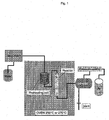
- the device developed for the dynamic extraction of asphalt containing tar with water at high temperature is presented in Figure 1 .
- Approximately 14g of sample can be treated with the developed device. Due to the dimension of the reactor, small stones in the 5 mm diameter range have been selected to perform the experiments in order to avoid plugging of the pipes by the fine particles.
- the reactor is filled with the sample and closed.
- a pressure higher than that normally required maintaining the water in the liquid state at the selected temperature is applied to the system (e.g. 50 bar (resp. 60 bar) for an experiment at 250°C (resp. 270°C), whereas only 40 bar (resp. 64 bar) at least are necessary to have liquid water at this temperature).
- the system is filled with water up to the collector and the oven is heated at the selected temperature. After stabilization of the temperature, water is pumped through the whole system at a flow of 0.66 or 1.00 ml/min for 2 to 4 hours and is collected in the collector autoclave. After cooling to a temperature below 100°C, the recovered aqueous phase and the solid residue were extracted with CH 2 Cl 2 and the PAH isolated and quantified according to the developed quantification method.
- the CH 2 Cl 2 extract of the aqueous phase was also yellow to brownish with a fluorescent aspect whereas the extract of the stones was black indicating that it contains most of the binder. Consequently, the PAHs have been predominantly removed from the binder by solubilisation in the aqueous phase. This is an important result since it shows that PAH can be removed selectively from asphalt containing tar by water extraction at high temperature without removing the binder, which can certainly be recycled.
- Table 5 Amounts of PAH (in mg/Kg of solid material of starting sample 2702/4) in the aqueous phase and in the solid residue after a dynamic extraction experiment with water (1.00 ml/min, 120ml) at 250°C. Solid Residue Water Removed PAH 1 .
- sample 2702/4 is heavily contaminated as compared to asphalt containing tar sample which are more generally encountered. They contain generally less than 1000 mg PAH per kg of solid material. So, the absolute amount of PAH which could be removed under the used conditions were significantly higher, even at 250°C, than the overall content of the average asphalt containing tar sample which will have to be recycled.
- sample 2702/7 (see Table 7) was chosen for that purpose. Quantification performed on a homogeneous milled sample from asphalt 2702/7 using the GC-FID described above showed that it contains 2242 mg/Kg of the 16 PAH from the EPA list. As was the case for sample 2702/4, the extraction experiments have been performed on a selection of stones with 5 mm diameter ideally fitting in the reactor.
- Table 7 summarizes the extraction yields obtained.
- the data in the first column indicate the PAH content of the solid residue after having pumped 240ml (2 x 120ml) water through the reactor.
- the second column (“water 1") indicates the PAH content of the first 120 ml and the second column (“water 2”) the PAH content of the additional 120 ml.
- the fourth and fifth columns give the extraction yields after respectively 120 ml and 240 ml.
- Table 7 Amounts of PAH (in mg/kg solid material of starting sample 2702/7) in the solid residue after extraction with 240 ml of water and in the aqueous phases after extraction with 2x120ml (1.00 ml/min) of water at 250°C.
- Benzo(b)fluoranthene 26 100 37 61% 84% 12.
- Benzo(a)pyrene 16 45 17 58% 79% 14.
- lndeno(1,2,3-cd)pyrene 18 19 10 41% 61% 15.
Landscapes
- Chemical & Material Sciences (AREA)
- Chemical Kinetics & Catalysis (AREA)
- Engineering & Computer Science (AREA)
- Civil Engineering (AREA)
- Materials Engineering (AREA)
- Structural Engineering (AREA)
- Health & Medical Sciences (AREA)
- Medicinal Chemistry (AREA)
- Polymers & Plastics (AREA)
- Organic Chemistry (AREA)
- General Chemical & Material Sciences (AREA)
- Extraction Or Liquid Replacement (AREA)
Description
- The present invention concerns a method for the selective removal of aromatic and / or phenolic components from construction material comprising asphalt containing coal tar pitch and the contaminated sub-base of the road constructions
- Until 1980, coal tar pitch (tar) was frequently used as binder for asphalt pavements in almost all European countries. These materials contain environmentally hazardous, toxic, mutagenic and carcinogenic compounds at high concentration.
- Asphalt containing tar is classified as a hazardous waste (Hazardous Waste Directive 91/689/EEC, chapter 6.1) under the European Waste Catalogue: List of Hazardous Wastes, Commission Decision [COM (2001) 216 final] item 17.03.01. (Commission Decision 94/3/EC establishing a list of wastes pursuant to Article 1(a) of Council Directive 75/442/EEC on waste and Council Decision 94/904/EC establishing a list of hazardous waste pursuant to Article 1(4) of Council Directive 91/689/EEC on hazardous waste [Part 17 is "Construction And Demolition Wastes (Including Road Construction). The part 17 03 concerns asphalt, tar and tarred products. (17 03 01 asphalt containing tar, 17 03 02 asphalt not containing tar, 17 03 03 tar and tar products)].
- Nowadays the old pavements, which were constructed using tar as a binder, are generally in bad condition, since the tar was aged. Hence, there is a need to remove these old pavements. In the European Union, a solution for more than 2.5 billion tons of hot mix mixture (aggregate + tar) has to be found. It has also been found that some of the tar or its components percolated or leached into the lower layers or the sub-base of the roads during the years.
- For the time being however, there is no environmentally friendly method available to recycle such asphalt containing tar and the contaminated sub-base of the road constructions. Placing it in a landfill is not acceptable solution, since the product will always remain hazardous. The directives on landfill depositing asphalt containing tar are already very restrictive in some European countries and it can be foreseen that other countries will follow this trend. The first step will be a tremendous increase of the prizes for depositing and later a total depositing interdiction is likely to occur in many countries.
- Under defined conditions, like cold mixing and cold application in the construction procedure, a limited reuse of asphalt containing tar in road construction is possible, as long as it is guaranteed, that the contaminated material is completely shielded in the roadbed and no elution or evaporation of the PAHs or phenols is possible. This method, however, does not solve the problem but only passes it on to the next generations.
- Incineration of asphalt containing coal tar at temperatures above 1000°C using a gas or oil fired rotary kiln has been suggested. This method may be very effective with regard to the destruction of PAHs and other hazardous substances as they are essentially oxidized to carbon dioxide and water. However, the mechanical properties of the thus obtained material do not meet the requirements for the recycling of the materials for road pavements anymore as a dust-like product is obtained. Another disadvantage of the method is the high energy demand because the whole material including the tar and aggregate has to be heated above 1000°C. Special flue gas treatment is also necessary.
-
EP 0624692 describes a method for the surface-cleaning of roads aimed at removing oil and grease where water stored at temperature of up to 150°C in a pressure tank is sprayed on the road surface. - Taking the high treatment costs and the unsolved problems with regard to the aggregate destruction into consideration, this is no favorable approach. Moreover, there is no industrial scale plant in operation that fulfils the requirements to incinerate asphalt-containing tar.
- There is thus a need for an environmentally friendly way of treating asphalt pavements containing tar as a binder.
- It is an object of the present invention to provide a method for treating asphalt pavement containing tar and the contaminated sub-base of the road constructions in an environmentally friendly way.
- According to the present invention, there is proposed a method for the selective removal of aromatic and / or phenolic components from a construction material comprising asphalt containing coal tar pitch and the contaminated sub-base of the road constructions wherein the construction material is contacted with water in the liquid state at temperatures between 150 - 290°C and pressures between 5 - 80 bar and the aromatic and /or phenolic components are transferred from the asphalt into the water.
- This method allows separating hazardous substances like PAHs and phenols for the construction material comprising asphalt containing coal tar pitch and the contaminated sub-base of the road constructions or from asphalt pavement containing tar as a binder with the help of an environmentally friendly liquid and energy. The extracted hazardous substances present a low volume as compared to the staring material. The extracted hazardous substances may thus be burnt or disposed of in another environmentally friendly way much more easily since the volume is considerably lower than the volume of the starting material.
- The construction material is preferably contacted with water in the liquid state at temperatures between 170°C and 290°C and in particular between 240°C and 270°C. The pressure has to be set in a way so that the water remains in liquid state. The pressure is set preferably from about two to five bars above the pressure at which the water would be boiling at the chosen temperature.
- The method may be used either batch wise or continuously i.e. the construction material may be immerged in water in the liquid state at temperatures between 150 - 290°C and pressures between 5 - 80 bar and remain in the water for 0.5 to 3 hours or water may be sprayed onto the asphalt to extract the PAH and phenols selectively.
- The asphalt is preferably crushed or milled to an average particle size of less than 15 mm, more preferably to less than 10 mm and most preferably to less than 5 mm.
- The aromatic and /or phenolic components may then be extracted from the water and the water may then be recycled.
- According to another preferred embodiment, the pH of the water is changed - preferably lowered - before the extraction of the aromatic and / or phenolic components from the water.
- The aromatic and /or phenolic components to be extracted from the asphalt are selected - in a preferred embodiment - from the group consisting of polycyclic aromatic hydrocarbons and phenols like naphthalene, acenaphthylene, acenaphtene, fluorene, phenanthrene, anthracene, fluoranthene, pyrene, benzo(a)anthracene, chrysene, benzo(b)fluoranthene, benzo(k)fluoranthene, benzo(a)pyrene, indeno(1,2,3-cd)pyrene, dibenzo(a,h)anthracene, benzo(g,h,i)perylene.
- According to another aspect, the invention also concerns a process for recycling a construction material comprising asphalt containing coal tar pitch and the contaminated sub-base of the road constructions wherein the construction material is crushed and treated according to the method described above.
- According to yet another aspect, the invention also concerns the use of the recycled construction material obtained according to the process described above for the road construction.
- Preferred embodiments of the invention will now be described with reference to the accompanying drawings in which:
- Fig. 1:
- Experimental setup developed for the dynamic water extraction of asphalt containing tar at high temperature;
- It was a mandatory prerequisite to develop appropriate methods for a reliable analysis of the asphalt samples for their PAH and phenol content. The focus was put on the exhaustive extraction of the original samples, since it became obvious after the first preliminary results, that the cold extraction with dichloromethane (CH2Cl2), exhibited an extraction rate far below the yield achieved with sonification or soxhlet.
- The next step was to develop an appropriate clean-up procedure for the dichloromethane extracts. This had to be carried out individually with respect to the different requirements in HPLC- and GC-Analysis. Finally, an individual method for accurate quantification had to be established for both HPLC and GC. All methods and analytical results are described in the following.
- The developed analysis method is as follows: A three-step batch extraction under sonication was developed to extract contaminants from asphalt. 5 ml CH2Cl2 are applied per g asphalt, sonication is applied for 15 minutes and the solid residue and supernatant are separated by centrifugation. To the combined extracts a defined amount of C23 is added as internal standard. Then 100 µl of the organic extracts in CH2Cl2 obtained as described above are deposited on a small, dry, silica gel column (55 mm x 5 mm) for purification. A Pasteur pipette can be used for that purpose. The first fraction (1000 µl) eluted with CH2Cl2 contains the PAH. This fraction can be directly injected into the GC applying a standard method for separation of the 16 EPA PAHs.
- Quantification of PAHs using a flame ionisation detector is carried out relative to C23 n-alkane, as an internal standard, considering the individual ratio of C-atoms. Applying alternatively the highly selective mass spectrometric detection, individual calibration curves (relative to C23) were recorded and considered for quantification. The methods were validated for application with the original course asphalt sample and with a fine homogeneous powder obtained by milling.
- A later fraction from the chromatographic clean-up on a silica gel column comprised the phenols. A qualitative phenol analysis was performed with GC-MS, but the phenols were not quantified from GC analysis. Phenol determination was carried out with HPLC and is described later.
- Three major conclusions can be drawn from this set of analytical experiments:
- 1. The sonication batch extraction (3x15 minutes) yields respectively high extraction rates as soxhlet extraction
- 2. Milling of the asphalt sample to a fine powder prior to aliquotation and extraction is mandatory for a reliable analysis, since the original sample cannot be sufficiently homogenized
- 3. Since the PAH contents found with this method were significantly more important than those measured by CH2Cl2 extraction at low temperature, it must be concluded that the CH2Cl2 extraction at low temperature (refrigerator) is not exhaustive
- GC-FID analyses were carried out on a gas chromatograph equipped with an on-column injector, a flame ionisation detector (FID) at 300 °C and a HP-5 fused silica column (30 m x 0.32 mm i.d., 0.25 µm film thickness). Hydrogen was used as carrier gas (constant flow 2.5 ml/min). Temperature program was as follows: 40°-150°C (10°C/min), 150°C-300°C (4°C/min), isothermal 300°C. The concentration of the 16 EPA PAHs determined from this analysis is listed in Table 1. The total amount of 3600 mg/kg is more than twice the amount found after cold extraction (1600 mg/kg). As a medium contaminated sample, 2702/4 was selected to perform most of the experiments for development of the treatment procedure.
Table 1: Amounts of PAH measured in mg/Kg solid material in sample 2702/4 by GC-FID with measured response factor. COMPOUND Concentration in mg/Kg 1 . Naphthalene 15 2. Acenaphthylene <0.1 3. Acenaphtene 94 4. Fluorene 112 5. Phenanthrene 1145 6. Anthracene 311 7. Fluoranthene 542 8. Pyrene 392 9. Benzo(a)anthracene 193 10. Chrysene 149 11. Benzo(b)fluoranthene 243 sum of Benzo(b)fluoranthene and 12. Benzo(k)fluoranthene Benzo(k)fluoranthene (not resolved by GC) 13. Benzo(a)pyrene 184 14. Indeno(1,2,3-cd)pyrene 94 15. Dibenzo(a,h)anthracene 26 16. Benzo(g,h,i)perylene 87 Sum of the 16 PAH: 3587mg/Kg - Quantification by GC-MS is theoretically more precise and reliable than quantification by gas chromatography (GC) using a flame ionisation detector as described above. The latter is, in turn, more adequate for a rapid evaluation and monitoring of the efficiency of the treatments on site.
- For the selectivity and the sensitivity of the GC-MS method, the selected mode of detection is single ion monitoring (SIM). The ions monitored were m/z 128, 152, 154, 166, 178, 202, 228, 252, 276, 278 corresponding to the molecular masses of the 16 PAH of the EPA list to be quantified and m/z 57 and 324 for the C23 n-alkane, the internal standard. Individual calibration curves were established allowing to evaluate the response factor of the various PAH compared to the n-C23 standard. For that purpose, solutions of standards containing the 16 PAH of the EPA list at various concentrations (from 10 µg/L to 20 mg/L) and a known concentration of the n- C23 standard fixed at 5.00 mg/L have been prepared. The concentration of the internal standard was in the range of the concentration of the n-C23 standard in the PAH fractions isolated from the road asphalt samples for quantification. The complete GC-MS conditions were as follows: GC-MS analyses were carried out on a Varian 1200L spectrometer connected to a Varian CP-3800 gas chromatograph equipped with a Varian CP-8410 autosampler, a Varian 1079 injector and with a Restek RTX5-MS column (60m x 0.25mm x 0.1 µm film thickness). Temperature program: 45°C (1min), 40°C-150°C (10°C/min), 150°C-300°C (4°C/min), isothermal 300°C. Mass spectra were obtained at 70 eV (electron impact) and helium was used as carrier gas (constant flow: 1.7ml/min). In the case of the experiment described in Task I-V, the column used was different: HP5-MS (J&W) (30 m x 0.25 mm, 0.1 µm film thickness). All other conditions were identical. Full scan: 50-400 uma; scan time: 0.4 s.
- The quantitative results obtained in the SIM mode according to the procedure described above are given in Table 2. The concentrations are lower than those obtained with the non-selective flame ionization detector. This result must be considered the most accurate achievable by gas chromatography.
Table 2: Amounts of PAH in mg/Kg solid material of sample 2702/4 determined by the GC-MS quantification method COMPOUND Concentration in mg/Kg 1 . Naphthalene 9 2. Acenaphthylene <0.1 3. Acenaphtene 97 4. Fluorene 133 5. Phenanthrene 955 6. Anthracene 261 7. Fluoranthene 550 8. Pyrene 407 9. Benzo(a)anthracene 136 10. Chrysene 129 11. Benzo(b)fluoranthene 85 12. Benzo(k)fluoranthene 60 13. Benzo(a)pyrene 126 14. Indeno(1,2,3-cd) pyrene 69 15. Dibenzo(a,h)anthracene 19 16. Benzo(g,h,i)perylene 67 Sum of the 16 PAH 3103 mg/Kg - The analysis method is as follows: the asphalt sample is subjected to a soxhlet extraction with CH2Cl2 (2 ml solvent per g asphalt) during 4 hours. The extract was purified on a silica column following the protocol described above. From the eluted solution the CH2Cl2 was evaporated under rotation at 100 mbar and the residue was filled up to a defined volume with methanol. The methanolic solution could be directly injected into HPLC. An elution gradient reversed phase HPLC method using a standard CIS column was developed for an appropriate separation of the 16 EPA PAHs, since no specialized PAH column was available. The recovery for the complete sample preparation procedure was determined for each individual PAH (between 81% for naphthalene and 99% for phenanthrene). Quantification was carried out using individual external calibration. The use of a UV photodiode array detector enabled peak identification and individual optimisation of selective detection wavelengths.
- HPLC analysis yields higher PAH concentrations than GC due to the lower separation efficiency and the influences of the complex matrix
- A method on a C18 reversed phase column was developed as follows: HPLC Apparatus: Alliance (Waters, Germany); Column: Nucleodur C18 Gravity, 5 jam, 150 x 4 mm column (Macherey & Nagel, Diiren, Germany); Gradient: A: water, B: acetonitrile, mixtures given in volume percent, 0..3 min: 60 % B isocratically, 3..30 min: 60 %..100 % B linear gradient, 30..32 min: 100 % B for cleaning the column, T: 38 °C, Flowrate: 1 ml/min.
- The data are in good agreement with the GC-FID results determined.
Table 3: Concentration of PAHs quantified by selective detection in sample 2702/4. PAH Concentration in mg/kg selective detection Naphthalene 19 Acenaphthylene - Acenaphthene 78 Fluorene 104 Phenanthrene 874 Anthracene 164 Fluoranthene 661 Pyrene 436 Benzo(a)anthracene 265 Chrysene 195 Benzo(b)fluoranthene 210 Benzo(k)fluoranthene 226 Benzo(a)pyrene 124 Dibenzo(a,h)anthracene 19 Benzo(g,h,i)perylene 60 Indeno(1,2,3-cd)pyrene 63 Sum of PAH's 3499 - The asphalt sample was also subjected to a soxhlet extraction with CH2Cl2 (2 ml solvent per g asphalt) during 4 hours. For purification of this extract, a liquid-liquid extraction method was developed transferring the phenols from the CH2Cl2 phase into an alkaline aqueous solution at pH 14. The recovery of this step in the presence of matrix was determined (100% for phenol, but only 34% for 1,3,5 trimethylphenol. The alkaline solution is neutralized, filtered and directly injected into HPLC. An isocratic reversed phase HPLC method using a special CIS column with polar modification was developed for an appropriate separation of the 10 selected phenols. Quantification of the phenols is carried out using individual external calibration. The use of a UV photodiode array detector enables peak identification. For the application to the asphalt samples, trace determination capability was required, since several phenols are present below 1 mg/ml.
- The developed HPLC comprised the following components and parameters: HPLC-Apparatus: Summit System (Dionex, Germering, Germany); Column: ProntoSil CIS ACE EPS 120 A, 3 \j.m (Bischoff, Leonberg), 150 x 4 mm column; Elution Program: A: water, B: acetonitrile, mixtures given in volume percent, 0..17 min: 35 % B isocratical separation, 17..19 min: 35%..100% B linear gradient for column cleaning; T: 38 °C; Flowrate: 1.7ml/min.
- The quantitative results for the selected 1-ring and 2-ring phenols are listed in Table 4. Although these concentrations appear negligible relative to the PAH concentrations, they are above the maximum level for unlimited asphalt recycling. Moreover, they markedly exceed the concentrations deducible from the phenol index measured at AGROLAB (see Table 6). This indicates that the phenol extraction is not exhaustive at refrigerator temperature and without sonification, either.
Table 4: Concentration of phenols determined with the 4 h Soxhlet extraction from sample 2702/4 (fine powder) Peak identification Substance Concentration in the solid sample in mg/kg 1. Phenol 3.8 2. (2 unresolved substances) 3-and 4-Methyl phenol 3.2 3. 2-Methyl phenol 1.0 4. 2,6-Dimethyl phenol 5.2 5. 4- Ethyl phenol 1.0 6. 2,4-Dimethyl phenol 1.0 7. 2-Naphthol 0.2 8. 2,4,6-Trimethyl phenol 1.0 9. 1-Naphthol not found Sum of all phenols 16.4 - The device developed for the dynamic extraction of asphalt containing tar with water at high temperature is presented in
Figure 1 . Approximately 14g of sample can be treated with the developed device. Due to the dimension of the reactor, small stones in the 5 mm diameter range have been selected to perform the experiments in order to avoid plugging of the pipes by the fine particles. - The reactor is filled with the sample and closed. A pressure higher than that normally required maintaining the water in the liquid state at the selected temperature is applied to the system (e.g. 50 bar (resp. 60 bar) for an experiment at 250°C (resp. 270°C), whereas only 40 bar (resp. 64 bar) at least are necessary to have liquid water at this temperature). The system is filled with water up to the collector and the oven is heated at the selected temperature. After stabilization of the temperature, water is pumped through the whole system at a flow of 0.66 or 1.00 ml/min for 2 to 4 hours and is collected in the collector autoclave. After cooling to a temperature below 100°C, the recovered aqueous phase and the solid residue were extracted with CH2Cl2 and the PAH isolated and quantified according to the developed quantification method.
- Quantification of the 16 PAH of the list showed an overall extraction yield of 85% which is far better than those obtained by other methods. The extraction yields for the individual components (Table 5) were of course strongly dependent on the molecular weights (or number of aromatic rings) since di-aromatics such as naphthalene and fluorene could be completely removed whereas the extraction yield was of 75% for chrysene and dropped to approximately 30% for hexacyclic compounds. From the aspect of the aqueous phase obtained from sample 2702/4 at 250°C, it was obvious that, under the used conditions, the binder has not been removed from the stones since it was not black but rather turbid with a yellowish to brownish colour. The CH2Cl2 extract of the aqueous phase was also yellow to brownish with a fluorescent aspect whereas the extract of the stones was black indicating that it contains most of the binder. Consequently, the PAHs have been predominantly removed from the binder by solubilisation in the aqueous phase. This is an important result since it shows that PAH can be removed selectively from asphalt containing tar by water extraction at high temperature without removing the binder, which can certainly be recycled.
Table 5: Amounts of PAH (in mg/Kg of solid material of starting sample 2702/4) in the aqueous phase and in the solid residue after a dynamic extraction experiment with water (1.00 ml/min, 120ml) at 250°C. Solid Residue Water Removed PAH 1 . Naphthalene <0.1 34 100% 2. Acenaphthylene <0.1 <0.1 - 3. Acenaphtene <0.1 163 100% 4. Fluorene <0.1 143 100% 5. Phenanthrene 37 1194 97% 6. Anthracene 15 282 95% 7. Fluoranthene 79 735 90% 8. Pyrene 71 601 89% 9. Benzo(a)anthracene 64 167 72% 10. Chrysene 55 161 75% 11. Benzo(b)fluoranthene 149 188 56% 12. Benzo(k)fluoranthene (11+12) (11+12) (11+12) 13. Benzo(a)pyrene 53 82 61% 14. Indeno(1,2,3-cd)pyrene 72 33 32% 15. Dibenzo(a,h)anthracene 23 8 26% 16. Benzo(g,h,i)perylene 74 35 32% Sum of the 16 PAH 692 mg/Kg 3826 mg/Kg 85% - Higher temperature (270°C) increased extraction yields as illustrated by Table 6. Thus, at 270°C, an overall extraction yield of 95% could be reached on sample 2702/4. The di-, tri- and tetracyclic aromatic hydrocarbons could be almost completely removed as well as more than 80% of the pentacyclic compounds and almost 60% of the higher members of the EPA list. These figures clearly demonstrate that PAHs can be almost completely removed with the exception of a small proportion of the higher members of the EPA list.
Table 6: Amounts of PAH (in mg/kg solid material of starting sample 2702/4) in the aqueous phase and in the solid residue after dynamic extraction with water at (0.66 mi/min, 120ml) 270°C. Solid Residue Water Removed PAH Water 1. Naphthalene <0.1 21 100% 2. Acenaphthylene <0.1 0.1 - 3. Acenaphtene <0.1 112 100% 4. Fluorene <0.1 143 100% 5. Phenanthrene <0.1 1355 100% 6. Anthracene O.I 349 100% 7. Fluoranthene 5 988 99% 8. Pyrene 8 783 99% 9. Benzo(a)anthracene 12 287 96% 10. Chrysene 11 300 96% 11. Benzo(b)fluoranthene 67 382 85% 12. Benzo(k)fluoranthene (11+12) (11+12) (11+12) 13. Benzo(a)pyrene 43 185 81 % 14.Indeno(1,2,3-cd)pyrene 63 82 57% 15. Dibenzo(a,h)anthracene 15 19 57% 16. Benzo(g,h,i)peryiene 67 84 56% Sum of the 16 PAH 291 mg/Kg 5090 mg/Kg 95% - It should be mentioned that sample 2702/4 is heavily contaminated as compared to asphalt containing tar sample which are more generally encountered. They contain generally less than 1000 mg PAH per kg of solid material. So, the absolute amount of PAH which could be removed under the used conditions were significantly higher, even at 250°C, than the overall content of the average asphalt containing tar sample which will have to be recycled.
- Therefore, a less contaminated sample was subjected to dynamic water extraction at 250°C under conditions very similar to those used for sample 2702/4. Sample 2702/7 (see Table 7) was chosen for that purpose. Quantification performed on a homogeneous milled sample from asphalt 2702/7 using the GC-FID described above showed that it contains 2242 mg/Kg of the 16 PAH from the EPA list. As was the case for sample 2702/4, the extraction experiments have been performed on a selection of stones with 5 mm diameter ideally fitting in the reactor.
- Table 7 summarizes the extraction yields obtained. The data in the first column indicate the PAH content of the solid residue after having pumped 240ml (2 x 120ml) water through the reactor. The second column ("water 1") indicates the PAH content of the first 120 ml and the second column ("water 2") the PAH content of the additional 120 ml. The fourth and fifth columns give the extraction yields after respectively 120 ml and 240 ml.
Table 7: Amounts of PAH (in mg/kg solid material of starting sample 2702/7) in the solid residue after extraction with 240 ml of water and in the aqueous phases after extraction with 2x120ml (1.00 ml/min) of water at 250°C. Solid Residue (after 240ml) Water 1 Water 2 Removed PAH after 120ml Removed PAH after 240ml 1. Naphthalene <0.1 21 1 97% 100% 2. Acenaphthylene <0.1 <0.1 O.I - - 3. Acenaphtene <0.1 72 2 97% 100% 4. Fluorene <0.1 56 3 95% 100% 5. Phenanthrene <0.1 366 22 94% 100% 6. Anthracene <0.1 59 4 94% 100% 7. Fluoranthene 4 329 35 90% 99% 8. Pyrene 3 207 25 88% 99% 9. Benzo(a)anthracene 7 94 22 76% 94% 10. Chrysene 7 92 22 76% 95% 11. Benzo(b)fluoranthene 26 100 37 61% 84% 12. Benzo(k)fluoranthene (11+12) (11+12) (11+12) (11+12) (11+12) 13. Benzo(a)pyrene 16 45 17 58% 79% 14. lndeno(1,2,3-cd)pyrene 18 19 10 41% 61% 15. Dibenzo(a,h)anthracene 4 5 3 41% 66% 16. Benzo(g,h,i)perylene 17 18 8 42% 60% Sum of the 16 PAH 102 mg/Kg 1483 mg/Kg 211 mg/Kg 83% 94% - An almost complete removal of the PAH from a less contaminated sample could be achieved with water at 250°C. Extraction rates of the same order of magnitude as those observed in the case of sample 2702/4 at 270°C could be attained at 250°C but twice the amount of water was required.
Table 8: Extraction yields determined for the 16 PAH of the EPA list after extraction with 120 ml of water at 250°C performed on approximately 14 g of sample 2702/4 (col.1), sample 2702/7 (col.2) and sample 2702/7 after a preliminary extraction step performed at 250°C with 120 ml of water (col.3). The initial PAH content (Init. Cont.) of the 3 samples is indicated at the top of the columns. Removed PAH 2702/4 (120ml) Init. Cont. 4518 mg/Kg Removed PAH 2702/7 (120ml) Init. Cont. 1796 mg/Kg Removed PAH 2702/7 (add. 120ml) Init. Cont. 3 13 mg/Kg 1. Naphthalene 100% 97% 100% 2. Acenaphthylene - - - 3. Acenaphtene 100% 97% 100% 4. Fluorene 100% 95% 100% 5. Phenanthrene 97% 94% 100% 6. Anthracene 95% 94% 100% 7. Fluoranthene 90% 90% 90% 8. Pyrene 89% 88% 88% 9. Benzo(a)anthracene 72% 76% 77% 10 Chrysene 75% 76% 76% 11. Benzo(b)fluoranthene 56% 61% 58% 12. Benzo(k)fluoranthene (11+12) (11+12) (11+12) 13. Benzo(a)pyrene 61% 58% 53% 14.Indeno(1,2,3-cd)pyrene 32% 41% 35% 15 . Dibenzo(a,h)anthracene 26% 41% 39% 16. Benzo(g,h,i)perylene 32% 42% 32% Sum of the 16 PAH 85% 83% 67% - The extraction yields for sample 2702/7 after the first 120 ml have been pumped through the reactor at 250°C can be compared with those obtained for sample 2702/4 under similar conditions (Table 5 above). Although the overall PAH contents of both samples are different (as well as the absolute amounts of PAH extracted), the extraction yields are very similar: 83-85% for the overall extraction yields, almost 100% for di- and tricyclic PAHs -75% for tetracyclic PAHs like chrysene, ~60% for benzo(a)pyrene and 30-40% for the hexacyclic compounds. In addition, taking into account that the amount of sample 2702/4 treated contains approximately 60 mg PAH and that the solubility of benzo(a)pyrene is of approximately 1.1 mg/ml, the 120ml water used in the case of the reported experiments should be sufficient to solubilize the whole PAH fraction from the treated sample since the di-, tri-and tetracyclic PAH are certainly more soluble than benzo(a)pyrene. It seems, thus, that solubility of aromatics is not the only factor influencing the extraction process. If this would have been the case, it is likely also that we would, for instance, have completely removed the PAH of sample 2702/7 under conditions (250°C, 120ml) which allowed a removal of 85% of the PAH from sample 2702/4 since the absolute amount removed from sample 2702/4 (~52.5mg corresponding to 3826 mg/kg in the experiment reported above) is higher than the global PAH content of the treated sample 2702/7 (~21.9 mg corresponding to 1796 mg/kg). In addition, the extraction yields for the various PAHs when sample 2702/7 was extracted with additional 120 ml are again very comparable (columns 3 in Table 21 and Figure 21), although the initial content of this pre-extracted sample is of only 313 mg/kg (3.81 mg absolute content). Of course the global extraction yield (67%) is different in this case due to the fact that the solid residue which has been treated with additional 120ml is relatively enriched in the higher PAH (tetra- to hexacyclics) as compared to untreated sample 2702/7.
- The application of the dynamic water extraction at 270°C to asphalt sample 2702/4 was also characterized for its phenol removal capacity. Therefore the dichloromethane extracts were prepared. In the extract from the treated asphalt, all phenols were below the detection limits (<0.2 mg/kg). The analysis of the extract from the process water, a similar pattern and global phenol content was found as in the original sample, with a slightly higher amount of 2,4-dimethylphenol and 2-naphthol.
- Two conclusions can be drawn from these results:
- 1. The dynamic heated water extraction enables complete phenol removal from asphalt containing tar samples
- 2. There is only a slight phenol generation from non-substituted aromatics during the dynamic water extraction procedure at a temperature of 270°C
Claims (11)
- A method for the selective removal of aromatic and / or phenolic components from a construction material comprising asphalt containing coal tar pitch and the contaminated sub-base of the road constructions wherein the construction material is contacted with water in liquid phase at temperatures between 150 - 290°C and pressures between 5 - 80 bar and the aromatic and /or phenolic components are transferred from the asphalt into the water.
- Method according to claim 1, wherein the construction material is contacted with water in the liquid state at temperatures between 170°C and 290°C and in particular between 240°C and 270°C.
- Method according to claim 1 or 2, wherein the pressure is set from two to five bars above the pressure at which the water would be boiling at the chosen temperature.
- Method according to any of the preceding claims, wherein the method is used batch wise.
- Method according to any of the claims 1 to 3, wherein the method is used continuously
- Method according to any of the preceding claims, wherein the aromatic and /or phenolic components are extracted from the water and the water is recycled.
- Method according to claim 6, wherein the pH of the water is changed before the extraction.
- Method according to any of the preceding claims, wherein the aromatic and /or phenolic components are selected from the group consisting of polycyclic aromatic hydrocarbons and phenols.
- Method according to claim 8, wherein the aromatic and /or phenolic components are selected from the group consisting of naphthalene, acenaphthylene, acenaphtene, fluorene, phenanthrene, anthracene, fluoranthene, pyrene, benzo(a)anthracene, chrysene, benzo(b)fluoranthene, benzo(k)fluoranthene, benzo(a)pyrene, indeno(1,2,3-cd)pyrene, dibenzo(a,h)anthracene, benzo(g,h,i)perylene.
- A process for recycling a construction material comprising asphalt containing coal tar pitch and the contaminated sub-base of the road constructions wherein the construction material is crushed and treated according to the method of any of the claims 1 to 9.
- Use of the recycled construction material obtained according to the process of claim 10 for the road construction.
Priority Applications (1)
| Application Number | Priority Date | Filing Date | Title |
|---|---|---|---|
| EP06113597.6A EP1852471B1 (en) | 2006-05-05 | 2006-05-05 | Method for the selective removal of aromatic and / or phenolic components from a construction material comprising asphalt containing coal tar pitch and the contaminated sub-base of the road constructions |
Applications Claiming Priority (1)
| Application Number | Priority Date | Filing Date | Title |
|---|---|---|---|
| EP06113597.6A EP1852471B1 (en) | 2006-05-05 | 2006-05-05 | Method for the selective removal of aromatic and / or phenolic components from a construction material comprising asphalt containing coal tar pitch and the contaminated sub-base of the road constructions |
Publications (2)
| Publication Number | Publication Date |
|---|---|
| EP1852471A1 EP1852471A1 (en) | 2007-11-07 |
| EP1852471B1 true EP1852471B1 (en) | 2013-12-11 |
Family
ID=36928939
Family Applications (1)
| Application Number | Title | Priority Date | Filing Date |
|---|---|---|---|
| EP06113597.6A Expired - Lifetime EP1852471B1 (en) | 2006-05-05 | 2006-05-05 | Method for the selective removal of aromatic and / or phenolic components from a construction material comprising asphalt containing coal tar pitch and the contaminated sub-base of the road constructions |
Country Status (1)
| Country | Link |
|---|---|
| EP (1) | EP1852471B1 (en) |
Family Cites Families (1)
| Publication number | Priority date | Publication date | Assignee | Title |
|---|---|---|---|---|
| DE9307097U1 (en) * | 1993-05-10 | 1994-09-22 | MABO Fahrzeug- und Anlagenbau, Entsorgungs-Systeme, Umwelttechnologie GmbH & Co., UTEF Forschung KG, 59302 Oelde | Working machine for removing oil or grease traces on traffic surface surfaces and the like. |
-
2006
- 2006-05-05 EP EP06113597.6A patent/EP1852471B1/en not_active Expired - Lifetime
Also Published As
| Publication number | Publication date |
|---|---|
| EP1852471A1 (en) | 2007-11-07 |
Similar Documents
| Publication | Publication Date | Title |
|---|---|---|
| Berset et al. | Comparison of different drying, extraction and detection techniques for the determination of priority polycyclic aromatic hydrocarbons in background contaminated soil samples | |
| Silva et al. | Use of solvent extraction to remediate soils contaminated with hydrocarbons | |
| Bodzek et al. | Determination of polycyclic aromatic compounds and heavy metals in sludges from biological sewage treatment plants | |
| Skoczyńska et al. | Analysis of recycled rubber: Development of an analytical method and determination of polycyclic aromatic hydrocarbons and heterocyclic aromatic compounds in rubber matrices | |
| Alonso et al. | Determination of priority phenolic compounds in soil samples by various extraction methods followed by liquid chromatography–atmospheric pressure chemical ionisation mass spectrometry | |
| Miege et al. | Optimization, validation and comparison of various extraction techniques for the trace determination of polycyclic aromatic hydrocarbons in sewage sludges by liquid chromatography coupled to diode-array and fluorescence detection | |
| Haglund et al. | Determination of polychlorinated naphthalenes in polychlorinated biphenyl products via capillary gas chromatography—mass spectrometry after separation by gel permeation chromatography | |
| Yu et al. | Supercritical fluid extraction of coal tar contaminated soil | |
| Miege et al. | Selective immunoclean-up followed by liquid or gas chromatography for the monitoring of polycyclic aromatic hydrocarbons in urban waste water and sewage sludges used for soil amendment | |
| Wang et al. | Determination of chlorobenzenes in water by solid-phase extraction and gas chromatography–mass spectrometry | |
| Biache et al. | Low temperature oxidation of a coking plant soil organic matter and its major constituents: an experimental approach to simulate a long term evolution | |
| Martí et al. | Polychlorinated naphthalenes in groundwater samples from the Llobregat aquifer (Spain) | |
| Espadaler et al. | Assessment of polychlorinated naphthalenes in aquifer samples for drinking water purposes | |
| Jie et al. | Multiresidual analysis of organochlorine pesticides, polychlorinated biphenyls and polycyclic aromatic hydrocarbons in marine shellfishes by gas chromatography-ion trap mass spectrometry | |
| McGregor et al. | Ultra resolution chemical fingerprinting of dense non-aqueous phase liquids from manufactured gas plants by reversed phase comprehensive two-dimensional gas chromatography | |
| EP1852471A1 (en) | Method for the selective removal of aromatic and / or phenolic components from a construction material comprising asphalt containing coal tar pitch and the contaminated sub-base of the road constructions | |
| Nishi et al. | Development of a safer and improved analytical method for polycyclic aromatic hydrocarbons in creosote products | |
| Nerin et al. | Determination of polyaromatic hydrocarbons and some related compounds in industrial waste oils by GPC-HPLC-UV | |
| Colmsjö et al. | Group separation of PCDDs, PCDFs, PACs and aliphatic compounds on an amino bonded stationary phase for HPLC | |
| US7365236B2 (en) | Generation of a creosote-like mixture, or recovery of metals, or both from preserved wood by reaction in supercritical water | |
| Semard et al. | Use of comprehensive two-dimensional gas chromatography for the broad screening of hazardous contaminants in urban wastewaters | |
| Heaton et al. | Rapid separation of polycyclic aromatic hydrocarbons by packed column supercritical fluid chromatography | |
| Thompson et al. | Determination of polycyclic aromatic hydrocarbons in oyster tissues by high-performance liquid chromatography with ultraviolet and fluorescence detection | |
| Disdier et al. | Analysis by GC-MS of monocyclic and polycyclic aromatic hydrocarbons in thermolysed waste products | |
| Matthiessen | Use of a keeper to enhance the recovery of volatile polycyclic aromatic hydrocarbons in HPLC analysis |
Legal Events
| Date | Code | Title | Description |
|---|---|---|---|
| PUAI | Public reference made under article 153(3) epc to a published international application that has entered the european phase |
Free format text: ORIGINAL CODE: 0009012 |
|
| AK | Designated contracting states |
Kind code of ref document: A1 Designated state(s): AT BE BG CH CY CZ DE DK EE ES FI FR GB GR HU IE IS IT LI LT LU LV MC NL PL PT RO SE SI SK TR |
|
| AX | Request for extension of the european patent |
Extension state: AL BA HR MK YU |
|
| 17P | Request for examination filed |
Effective date: 20080310 |
|
| 17Q | First examination report despatched |
Effective date: 20080519 |
|
| AKX | Designation fees paid |
Designated state(s): AT BE BG CH CY CZ DE DK EE ES FI FR GB GR HU IE IS IT LI LT LU LV MC NL PL PT RO SE SI SK TR |
|
| GRAP | Despatch of communication of intention to grant a patent |
Free format text: ORIGINAL CODE: EPIDOSNIGR1 |
|
| INTG | Intention to grant announced |
Effective date: 20130702 |
|
| GRAS | Grant fee paid |
Free format text: ORIGINAL CODE: EPIDOSNIGR3 |
|
| GRAA | (expected) grant |
Free format text: ORIGINAL CODE: 0009210 |
|
| AK | Designated contracting states |
Kind code of ref document: B1 Designated state(s): AT BE BG CH CY CZ DE DK EE ES FI FR GB GR HU IE IS IT LI LT LU LV MC NL PL PT RO SE SI SK TR |
|
| REG | Reference to a national code |
Ref country code: GB Ref legal event code: FG4D |
|
| REG | Reference to a national code |
Ref country code: CH Ref legal event code: EP |
|
| REG | Reference to a national code |
Ref country code: AT Ref legal event code: REF Ref document number: 644592 Country of ref document: AT Kind code of ref document: T Effective date: 20140115 |
|
| REG | Reference to a national code |
Ref country code: IE Ref legal event code: FG4D |
|
| REG | Reference to a national code |
Ref country code: DE Ref legal event code: R096 Ref document number: 602006039559 Country of ref document: DE Effective date: 20140206 |
|
| REG | Reference to a national code |
Ref country code: NL Ref legal event code: T3 |
|
| PG25 | Lapsed in a contracting state [announced via postgrant information from national office to epo] |
Ref country code: SE Free format text: LAPSE BECAUSE OF FAILURE TO SUBMIT A TRANSLATION OF THE DESCRIPTION OR TO PAY THE FEE WITHIN THE PRESCRIBED TIME-LIMIT Effective date: 20131211 Ref country code: LT Free format text: LAPSE BECAUSE OF FAILURE TO SUBMIT A TRANSLATION OF THE DESCRIPTION OR TO PAY THE FEE WITHIN THE PRESCRIBED TIME-LIMIT Effective date: 20131211 Ref country code: FI Free format text: LAPSE BECAUSE OF FAILURE TO SUBMIT A TRANSLATION OF THE DESCRIPTION OR TO PAY THE FEE WITHIN THE PRESCRIBED TIME-LIMIT Effective date: 20131211 |
|
| REG | Reference to a national code |
Ref country code: LT Ref legal event code: MG4D |
|
| PG25 | Lapsed in a contracting state [announced via postgrant information from national office to epo] |
Ref country code: CY Free format text: LAPSE BECAUSE OF FAILURE TO SUBMIT A TRANSLATION OF THE DESCRIPTION OR TO PAY THE FEE WITHIN THE PRESCRIBED TIME-LIMIT Effective date: 20131211 Ref country code: LV Free format text: LAPSE BECAUSE OF FAILURE TO SUBMIT A TRANSLATION OF THE DESCRIPTION OR TO PAY THE FEE WITHIN THE PRESCRIBED TIME-LIMIT Effective date: 20131211 |
|
| PG25 | Lapsed in a contracting state [announced via postgrant information from national office to epo] |
Ref country code: EE Free format text: LAPSE BECAUSE OF FAILURE TO SUBMIT A TRANSLATION OF THE DESCRIPTION OR TO PAY THE FEE WITHIN THE PRESCRIBED TIME-LIMIT Effective date: 20131211 Ref country code: IS Free format text: LAPSE BECAUSE OF FAILURE TO SUBMIT A TRANSLATION OF THE DESCRIPTION OR TO PAY THE FEE WITHIN THE PRESCRIBED TIME-LIMIT Effective date: 20140411 |
|
| PG25 | Lapsed in a contracting state [announced via postgrant information from national office to epo] |
Ref country code: ES Free format text: LAPSE BECAUSE OF FAILURE TO SUBMIT A TRANSLATION OF THE DESCRIPTION OR TO PAY THE FEE WITHIN THE PRESCRIBED TIME-LIMIT Effective date: 20131211 Ref country code: RO Free format text: LAPSE BECAUSE OF FAILURE TO SUBMIT A TRANSLATION OF THE DESCRIPTION OR TO PAY THE FEE WITHIN THE PRESCRIBED TIME-LIMIT Effective date: 20131211 Ref country code: PT Free format text: LAPSE BECAUSE OF FAILURE TO SUBMIT A TRANSLATION OF THE DESCRIPTION OR TO PAY THE FEE WITHIN THE PRESCRIBED TIME-LIMIT Effective date: 20140411 Ref country code: CZ Free format text: LAPSE BECAUSE OF FAILURE TO SUBMIT A TRANSLATION OF THE DESCRIPTION OR TO PAY THE FEE WITHIN THE PRESCRIBED TIME-LIMIT Effective date: 20131211 Ref country code: PL Free format text: LAPSE BECAUSE OF FAILURE TO SUBMIT A TRANSLATION OF THE DESCRIPTION OR TO PAY THE FEE WITHIN THE PRESCRIBED TIME-LIMIT Effective date: 20131211 Ref country code: SK Free format text: LAPSE BECAUSE OF FAILURE TO SUBMIT A TRANSLATION OF THE DESCRIPTION OR TO PAY THE FEE WITHIN THE PRESCRIBED TIME-LIMIT Effective date: 20131211 |
|
| REG | Reference to a national code |
Ref country code: DE Ref legal event code: R097 Ref document number: 602006039559 Country of ref document: DE |
|
| PLBE | No opposition filed within time limit |
Free format text: ORIGINAL CODE: 0009261 |
|
| STAA | Information on the status of an ep patent application or granted ep patent |
Free format text: STATUS: NO OPPOSITION FILED WITHIN TIME LIMIT |
|
| PG25 | Lapsed in a contracting state [announced via postgrant information from national office to epo] |
Ref country code: DK Free format text: LAPSE BECAUSE OF FAILURE TO SUBMIT A TRANSLATION OF THE DESCRIPTION OR TO PAY THE FEE WITHIN THE PRESCRIBED TIME-LIMIT Effective date: 20131211 |
|
| 26N | No opposition filed |
Effective date: 20140912 |
|
| REG | Reference to a national code |
Ref country code: DE Ref legal event code: R097 Ref document number: 602006039559 Country of ref document: DE Effective date: 20140912 |
|
| REG | Reference to a national code |
Ref country code: CH Ref legal event code: PL |
|
| GBPC | Gb: european patent ceased through non-payment of renewal fee |
Effective date: 20140505 |
|
| PG25 | Lapsed in a contracting state [announced via postgrant information from national office to epo] |
Ref country code: CH Free format text: LAPSE BECAUSE OF NON-PAYMENT OF DUE FEES Effective date: 20140531 Ref country code: LI Free format text: LAPSE BECAUSE OF NON-PAYMENT OF DUE FEES Effective date: 20140531 Ref country code: MC Free format text: LAPSE BECAUSE OF FAILURE TO SUBMIT A TRANSLATION OF THE DESCRIPTION OR TO PAY THE FEE WITHIN THE PRESCRIBED TIME-LIMIT Effective date: 20131211 |
|
| REG | Reference to a national code |
Ref country code: IE Ref legal event code: MM4A |
|
| PG25 | Lapsed in a contracting state [announced via postgrant information from national office to epo] |
Ref country code: SI Free format text: LAPSE BECAUSE OF FAILURE TO SUBMIT A TRANSLATION OF THE DESCRIPTION OR TO PAY THE FEE WITHIN THE PRESCRIBED TIME-LIMIT Effective date: 20131211 |
|
| PG25 | Lapsed in a contracting state [announced via postgrant information from national office to epo] |
Ref country code: IE Free format text: LAPSE BECAUSE OF NON-PAYMENT OF DUE FEES Effective date: 20140505 |
|
| PG25 | Lapsed in a contracting state [announced via postgrant information from national office to epo] |
Ref country code: GB Free format text: LAPSE BECAUSE OF NON-PAYMENT OF DUE FEES Effective date: 20140505 |
|
| REG | Reference to a national code |
Ref country code: FR Ref legal event code: PLFP Year of fee payment: 11 |
|
| PGFP | Annual fee paid to national office [announced via postgrant information from national office to epo] |
Ref country code: NL Payment date: 20160317 Year of fee payment: 11 Ref country code: LU Payment date: 20160307 Year of fee payment: 11 |
|
| PG25 | Lapsed in a contracting state [announced via postgrant information from national office to epo] |
Ref country code: BG Free format text: LAPSE BECAUSE OF FAILURE TO SUBMIT A TRANSLATION OF THE DESCRIPTION OR TO PAY THE FEE WITHIN THE PRESCRIBED TIME-LIMIT Effective date: 20131211 |
|
| PGFP | Annual fee paid to national office [announced via postgrant information from national office to epo] |
Ref country code: BE Payment date: 20160315 Year of fee payment: 11 Ref country code: FR Payment date: 20160315 Year of fee payment: 11 |
|
| PG25 | Lapsed in a contracting state [announced via postgrant information from national office to epo] |
Ref country code: GR Free format text: LAPSE BECAUSE OF FAILURE TO SUBMIT A TRANSLATION OF THE DESCRIPTION OR TO PAY THE FEE WITHIN THE PRESCRIBED TIME-LIMIT Effective date: 20140312 Ref country code: IT Free format text: LAPSE BECAUSE OF FAILURE TO SUBMIT A TRANSLATION OF THE DESCRIPTION OR TO PAY THE FEE WITHIN THE PRESCRIBED TIME-LIMIT Effective date: 20131211 |
|
| PG25 | Lapsed in a contracting state [announced via postgrant information from national office to epo] |
Ref country code: HU Free format text: LAPSE BECAUSE OF FAILURE TO SUBMIT A TRANSLATION OF THE DESCRIPTION OR TO PAY THE FEE WITHIN THE PRESCRIBED TIME-LIMIT; INVALID AB INITIO Effective date: 20060505 Ref country code: TR Free format text: LAPSE BECAUSE OF FAILURE TO SUBMIT A TRANSLATION OF THE DESCRIPTION OR TO PAY THE FEE WITHIN THE PRESCRIBED TIME-LIMIT Effective date: 20131211 |
|
| PGFP | Annual fee paid to national office [announced via postgrant information from national office to epo] |
Ref country code: DE Payment date: 20160316 Year of fee payment: 11 |
|
| PGFP | Annual fee paid to national office [announced via postgrant information from national office to epo] |
Ref country code: AT Payment date: 20160317 Year of fee payment: 11 |
|
| PG25 | Lapsed in a contracting state [announced via postgrant information from national office to epo] |
Ref country code: LU Free format text: LAPSE BECAUSE OF NON-PAYMENT OF DUE FEES Effective date: 20170531 |
|
| REG | Reference to a national code |
Ref country code: DE Ref legal event code: R119 Ref document number: 602006039559 Country of ref document: DE |
|
| REG | Reference to a national code |
Ref country code: NL Ref legal event code: MM Effective date: 20170601 |
|
| REG | Reference to a national code |
Ref country code: AT Ref legal event code: MM01 Ref document number: 644592 Country of ref document: AT Kind code of ref document: T Effective date: 20170505 |
|
| PG25 | Lapsed in a contracting state [announced via postgrant information from national office to epo] |
Ref country code: AT Free format text: LAPSE BECAUSE OF NON-PAYMENT OF DUE FEES Effective date: 20170505 |
|
| REG | Reference to a national code |
Ref country code: FR Ref legal event code: ST Effective date: 20180131 |
|
| PG25 | Lapsed in a contracting state [announced via postgrant information from national office to epo] |
Ref country code: LU Free format text: LAPSE BECAUSE OF NON-PAYMENT OF DUE FEES Effective date: 20170505 Ref country code: NL Free format text: LAPSE BECAUSE OF NON-PAYMENT OF DUE FEES Effective date: 20170601 |
|
| REG | Reference to a national code |
Ref country code: BE Ref legal event code: MM Effective date: 20170531 |
|
| PG25 | Lapsed in a contracting state [announced via postgrant information from national office to epo] |
Ref country code: DE Free format text: LAPSE BECAUSE OF NON-PAYMENT OF DUE FEES Effective date: 20171201 |
|
| PG25 | Lapsed in a contracting state [announced via postgrant information from national office to epo] |
Ref country code: FR Free format text: LAPSE BECAUSE OF NON-PAYMENT OF DUE FEES Effective date: 20170531 |
|
| PG25 | Lapsed in a contracting state [announced via postgrant information from national office to epo] |
Ref country code: BE Free format text: LAPSE BECAUSE OF NON-PAYMENT OF DUE FEES Effective date: 20170531 |