EP1849765A1 - Method for producing pyrimidine compound - Google Patents
Method for producing pyrimidine compound Download PDFInfo
- Publication number
- EP1849765A1 EP1849765A1 EP06713355A EP06713355A EP1849765A1 EP 1849765 A1 EP1849765 A1 EP 1849765A1 EP 06713355 A EP06713355 A EP 06713355A EP 06713355 A EP06713355 A EP 06713355A EP 1849765 A1 EP1849765 A1 EP 1849765A1
- Authority
- EP
- European Patent Office
- Prior art keywords
- group
- substituent
- compound
- formula
- production method
- Prior art date
- Legal status (The legal status is an assumption and is not a legal conclusion. Google has not performed a legal analysis and makes no representation as to the accuracy of the status listed.)
- Withdrawn
Links
- 0 C[C@]1C*CC1 Chemical compound C[C@]1C*CC1 0.000 description 4
Classifications
-
- C—CHEMISTRY; METALLURGY
- C07—ORGANIC CHEMISTRY
- C07D—HETEROCYCLIC COMPOUNDS
- C07D239/00—Heterocyclic compounds containing 1,3-diazine or hydrogenated 1,3-diazine rings
- C07D239/02—Heterocyclic compounds containing 1,3-diazine or hydrogenated 1,3-diazine rings not condensed with other rings
- C07D239/24—Heterocyclic compounds containing 1,3-diazine or hydrogenated 1,3-diazine rings not condensed with other rings having three or more double bonds between ring members or between ring members and non-ring members
- C07D239/28—Heterocyclic compounds containing 1,3-diazine or hydrogenated 1,3-diazine rings not condensed with other rings having three or more double bonds between ring members or between ring members and non-ring members with hetero atoms or with carbon atoms having three bonds to hetero atoms with at the most one bond to halogen, directly attached to ring carbon atoms
- C07D239/32—One oxygen, sulfur or nitrogen atom
- C07D239/38—One sulfur atom
-
- C—CHEMISTRY; METALLURGY
- C07—ORGANIC CHEMISTRY
- C07C—ACYCLIC OR CARBOCYCLIC COMPOUNDS
- C07C67/00—Preparation of carboxylic acid esters
- C07C67/30—Preparation of carboxylic acid esters by modifying the acid moiety of the ester, such modification not being an introduction of an ester group
- C07C67/31—Preparation of carboxylic acid esters by modifying the acid moiety of the ester, such modification not being an introduction of an ester group by introduction of functional groups containing oxygen only in singly bound form
-
- C—CHEMISTRY; METALLURGY
- C07—ORGANIC CHEMISTRY
- C07C—ACYCLIC OR CARBOCYCLIC COMPOUNDS
- C07C69/00—Esters of carboxylic acids; Esters of carbonic or haloformic acids
- C07C69/66—Esters of carboxylic acids having esterified carboxylic groups bound to acyclic carbon atoms and having any of the groups OH, O—metal, —CHO, keto, ether, acyloxy, groups, groups, or in the acid moiety
- C07C69/73—Esters of carboxylic acids having esterified carboxylic groups bound to acyclic carbon atoms and having any of the groups OH, O—metal, —CHO, keto, ether, acyloxy, groups, groups, or in the acid moiety of unsaturated acids
- C07C69/738—Esters of keto-carboxylic acids or aldehydo-carboxylic acids
-
- C—CHEMISTRY; METALLURGY
- C07—ORGANIC CHEMISTRY
- C07D—HETEROCYCLIC COMPOUNDS
- C07D239/00—Heterocyclic compounds containing 1,3-diazine or hydrogenated 1,3-diazine rings
- C07D239/02—Heterocyclic compounds containing 1,3-diazine or hydrogenated 1,3-diazine rings not condensed with other rings
- C07D239/24—Heterocyclic compounds containing 1,3-diazine or hydrogenated 1,3-diazine rings not condensed with other rings having three or more double bonds between ring members or between ring members and non-ring members
- C07D239/28—Heterocyclic compounds containing 1,3-diazine or hydrogenated 1,3-diazine rings not condensed with other rings having three or more double bonds between ring members or between ring members and non-ring members with hetero atoms or with carbon atoms having three bonds to hetero atoms with at the most one bond to halogen, directly attached to ring carbon atoms
- C07D239/32—One oxygen, sulfur or nitrogen atom
- C07D239/42—One nitrogen atom
Definitions
- the present invention relates to a production method of a pyrimidine compound useful as an intermediate for synthesizing a pharmaceutical product.
- HMGCoA reductase inhibitors EP 0022478 and JP-A-5-178841
- anti-HIV drugs JP-A-2004-508421
- calcium channel antagonists WO02/022588
- a method shown in the following scheme which comprises reacting cinnamic acid derivative (1) with methylisothiourea to give dihydropyrimidine derivative (2), and dehydrogenating (2) to give pyrimidine compound (3) is known ( WO02/022588 )
- the phosphorylation reagent to be used is expensive, and the yield is 20 - 55%, which is not satisfactory.
- the method is also associated with the problems of difficult removal, from the desired product, of a phosphorylation reagent remaining after the conversion to enol phosphorate (5) and a phosphoric acid derivative eliminated during cyclization.
- the method is associated with problems in that the cost increases since methyl trifluoromethanesulfonate and cesium carbonate used for enol etherification are expensive, methyl trifluoromethanesulfonate is highly toxic, which is unpreferable from the aspects of safety and hygiene, and a considerable amount of C-methyl form is byproduced during enol etherification.
- An object of the present invention is to provide an industrially advantageous production method of a pyrimidine compound useful as a synthetic intermediate for a pharmaceutical product.
- the present inventors have conducted intensive studies in an attempt to solve the above-mentioned problems and established a synthetic route permitting safe production of the pyrimidine compound at a low cost and in a high yield, which resulted in the completion of the present invention. Accordingly, the present invention provides the following [1] - [15].
- the "lower alkyl group" for R 3 is a linear or branched chain alkyl preferably having 1 - 6, more preferably 1 or 2, carbon atoms and, for example, methyl group, ethyl group, n-propyl group, isopropyl group and the like can be mentioned. Of these, methyl group and ethyl group are preferable.
- the "lower alkyl group optionally having substituent(s)" for R 1 , R 2 , R 4 , R 5 , R 6 , R 7 or X is the above-mentioned alkyl group optionally substituted by one or more of the following substituents, and when the number of the substituents is two or more, they may be the same or different.
- substituents include nitro group, linear or branched chain alkoxy group (preferable carbon atoms: 1 - 6, e.g., methoxy group and the like), halogen atom (e.g., chlorine atom, fluorine atom and the like), hydroxyl group and the like.
- the "aryl” of the "aryl group optionally having substituent(s)" for R 1 , R 2 , R 4 , R 5 , R 6 , R 7 and X is an aryl group having preferably 6 - 10, carbon atoms and, for example, phenyl group, 1-naphthyl group, 2-naphthyl group and the like can be mentioned.
- the aryl group may be substituted by one or more substituents below. When the number of the substituents is two or more, they may be the same or different.
- substituents examples include nitro group, linear or branched chain alkoxy group (preferable carbon atoms: 1 - 6, e.g., methoxy group and the like), halogen atom (e.g., chlorine atom, fluorine atom and the like), linear or branched chain alkyl group (preferable carbon atoms: 1 - 4, e.g., methyl group, ethyl group, propyl group and the like), hydroxyl group and the like.
- linear or branched chain alkoxy group preferable carbon atoms: 1 - 6, e.g., methoxy group and the like
- halogen atom e.g., chlorine atom, fluorine atom and the like
- linear or branched chain alkyl group preferable carbon atoms: 1 - 4, e.g., methyl group, ethyl group, propyl group and the like
- hydroxyl group and the like examples include nitro group, linear or
- the "aralkyl group" of the "aralkyl group optionally having substituent(s)" for R 1 , R 2 , R 5 , R 6 and X is aralkyl group wherein the aryl moiety is aryl group preferably having 6 - 10, more preferably 6, carbon atoms and the alkyl moiety is linear or branched chain alkyl group preferably having 1 - 6 carbon atoms.
- aryl moiety is aryl group preferably having 6 - 10, more preferably 6, carbon atoms and the alkyl moiety is linear or branched chain alkyl group preferably having 1 - 6 carbon atoms.
- benzyl group and the like can be mentioned.
- the aralkyl group may be substituted by one or more substituents below. When the number of the substituents is two or more, they may be the same or different.
- substituents include nitro group, linear or branched chain alkoxy group (preferable carbon atoms: 1 - 6, e.g., methoxy group and the like), halogen atom (e.g., chlorine atom, fluorine atom and the like), linear or branched chain alkyl group (preferable carbon atoms: 1 - 4, e.g., methyl group, ethyl group, propyl group and the like), hydroxyl group and the like.
- Examples of the "aliphatic hetero ring" optionally formed by R 5 and R 6 together with the adjacent nitrogen atom include 5- or 6-membered aliphatic hetero ring containing a carbon atom and at least one nitrogen atom and also optionally containing 1 - 3 hetero atoms selected from oxygen atom, sulfur atom and nitrogen atom, such as pyrrolidine, piperidine, morpholine, thiomorpholine, piperazine and the like.
- the aliphatic hetero ring may be substituted by one or more substituents below.
- substituents include nitro group, linear or branched chain alkoxy group (carbon atoms: 1 - 6, e.g., methoxy group and the like), halogen atom (e.g., chlorine atom, fluorine atom and the like), linear or branched chain alkyl group (preferable carbon atoms: 1 - 4, e.g., methyl group, ethyl group, propyl group and the like), hydroxyl group and the like.
- Examples of the carboxylate group represented by Q include methoxycarbonyl group, ethoxycarbonyl group, propoxycarbonyl group, tert-butoxycarbonyl group, benzyloxycarbonyl group and the like.
- a methoxycarbonyl group and an ethoxycarbonyl group are preferable.
- hydrogen atom, methyl group, phenyl group, methoxy group, methylthio group, benzylthio group, amino group, methylamino group or N-methanesulfonyl-N-methylamino group is preferable, and hydrogen atom, methylthio group or methylamino group is more preferable.
- R 1 methyl group or isopropyl group is preferable.
- R 2 methyl group or aryl group optionally having substituent(s) is preferable, and methyl group, 4-fluorophenyl group or 2,4-dimethylphenyl group is more preferable.
- Compound (I), (I'), (I"), (VI), (VI') and (VII) have a pyrimidine ring, and can form a salt such as an inorganic acid salt (e.g., hydrochloride, sulfate and the like), an organic acid salt (e.g., acetate, trifluoroacetate, tosylate, mesylate and the like) and the like.
- a salt such as an inorganic acid salt (e.g., hydrochloride, sulfate and the like), an organic acid salt (e.g., acetate, trifluoroacetate, tosylate, mesylate and the like) and the like.
- compound (V) those generally commercially available in the form of a salt such as an inorganic acid salt (e.g., hydrochloride, sulfate and the like), an organic acid salt (e.g., acetate, trifluoroacetate, tosylate, mesylate and the like) and the like can be used.
- an inorganic acid salt e.g., hydrochloride, sulfate and the like
- organic acid salt e.g., acetate, trifluoroacetate, tosylate, mesylate and the like
- Compound (II) is generally present as a tautomer mixture of enol forms represented by the following formulas (IIa) and (IIb) (hereinafter to be also referred to as compound (IIa) and compound (IIb), respectively). wherein each symbol and the wavy line are as defined above.
- a simple reference to compound (II) means compound (II), compound (IIa), compound (IIb) or even a mixture thereof.
- the production method of the present invention is characterized in that it contains the following step (a) shown by the following reaction scheme. wherein each symbol and the wavy line are as defined above.
- the pyrimidine ring can be constructed in a high yield by employing economical and highly safe ortho ester (III) as an enolation agent in such synthetic route, particularly step (a).
- Step (a) can be performed, for example, by mixing compound (II) and ortho ester (III) in a solvent or without a solvent.
- the order of addition of respective reagents is not particularly limited and they can be added successively or simultaneously.
- a commercially available product is preferably used and, for example, trimethyl orthoformate, triethyl orthoformate, trimethyl orthoacetate, triethyl orthoacetate, methyl orthopropionate, triethyl orthopropionate, trimethyl orthobutyrate, triethyl orthobutyrate, trimethyl orthobenzoate and the like, particularly, trimethyl orthoacetate, trimethyl orthobenzoate, trimethyl orthobutyrate and triethyl orthobutyrate are preferable.
- the amount of orthoester (III) to be used is generally 0.8 - 30 equivalents, preferably 1 - 5 equivalents, relative to compound (II). When the amount of orthoester (III) is smaller than this range, the reaction tends to proceed slowly.
- an acid is preferably added as a catalyst to promote the reaction.
- the acid include sulfuric acid, methanesulfonic acid, toluenesulfonic acid and the like, with preference given to sulfuric acid, methanesulfonic acid and toluenesulfonic acid.
- the amount of the acid to be used is generally 0.001 - 0.1 equivalent, preferably 0.005 - 0.05 equivalent, relative to compound (II). When the amount of the acid to be used is smaller than this range, the reaction tends to proceed slowly.
- a drying agent is preferably added to remove a trace amount of water contained in the reaction mixture.
- the drying agent include magnesium sulfate, molecular sieve, sodium sulfate and the like, with preference given to magnesium sulfate and molecular sieve.
- the amount of the drying agent to be used is generally 0.1-fold weight to 20-fold weight, preferably 0.2-fold weight to 2-fold weight, relative to compound (II). When the amount of the drying agent to be used is smaller than this range, the yield tends to decrease.
- step (a) may be performed in a solvent, it is preferably performed without a solvent.
- the solvent may be any as long as it does not inhibit this reaction, for example, hydrocarbon solvent (e.g., toluene, benzene and the like) and the like can be mentioned, which may be used alone or in a combination of two or more kinds thereof, and toluene is preferable.
- the amount of the solvent to be used is 1-fold weight to 30-fold weight, preferably 5-fold weight to 20-fold weight, relative to compound (II).
- Step (a) is generally performed within the range of from 50°C to the reflux temperature of the solvent or the ortho ester (III) to be used (preferably 60°C to 150°C).
- the reaction time is generally 0.5 hr - overnight (preferably 1 hr - 8 hr) within the above-mentioned temperature range.
- the reaction mixture contains one of compound (IVa) and compound (IVb), or a mixture thereof.
- a mixture of compound (IVa) and compound (IVb) can be subjected to step (b) without particular separation.
- Compound (IVa) and/or compound (IVb) can be isolated and purified by a conventional method.
- Compound (IVa) and/or compound (IVb) can be isolated by, after completion of the reaction, where necessary, extracting with ethyl acetate, methyl-butyl-ether etc., washing with water, aqueous acidic solution (e.g., hydrochloric acid, sulfuric acid and the like) or aqueous alkali solution (e.g., saturated aqueous sodium hydrogen carbonate, brine and the like) and the like, and concentrating the organic layer obtained by partitioning.
- aqueous acidic solution e.g., hydrochloric acid, sulfuric acid and the like
- aqueous alkali solution e.g., saturated aqueous sodium hydrogen carbonate, brine and the like
- compound (IVa) and/or compound (IVb) can be purified by, but is not limited to, performing crystallization by adding a crystallization solvent (e.g., ethers (e.g., diethyl ether, THF and the like), acetone, acetonitrile, hydrocarbon solvent (e.g., toluene, benzene, hexane, heptane and the like), a halogen solvent (e.g., dichloromethane, dichloroethane and the like), alcohols (e.g., methanol, ethanol, isopropanol and the like), water, a mixed solvent thereof and the like), silica gel column chromatography or distillation.
- a crystallization solvent e.g., ethers (e.g., diethyl ether, THF and the like), acetone, acetonitrile, hydrocarbon solvent (e.g., toluene, benzene,
- Compound (II), which is a starting material for step (a), can be produced by a known method (e.g., JP-A-6-256318 ), or a commercially available product can also be used.
- Compound (IV) wherein one of R 1a and R 2a is an isopropyl group and the other is a 4-fluorophenyl group is useful as an intermediate for Crestor, a cholesterol lowering agent.
- Step (b) can be performed, for example, by mixing compound (IVa) and/or compound (IVb) and compound (V) in a solvent.
- the order of addition of respective reagents is not particularly limited and they can be added successively or simultaneously.
- Compound (V) used in step (b) is generally in the form of a commercially available stable salt.
- the salt of compound (V) for example, acid addition salts such as hydrochloride, sulfate, acetate and the like can be mentioned.
- an acid addition salt of compound (V) When an acid addition salt of compound (V) is to be used in step (b), it can be neutralized with a base in a solvent.
- the salt is once converted to a free form, followed by reaction with compound (IVa) and/or compound (IVb).
- a salt of compound (V) and compound (IVa) and/or compound (IVb) are dissolved in a solvent, followed by addition of a base to allow reaction.
- the base to be used for neutralization is not particularly limited and, for example, sodium hydroxide, potassium hydroxide, sodium carbonate, potassium carbonate, triethylamine, sodium methoxide, sodium ethoxide and the like can be used.
- the amount of the base to be used is not particularly limited as long as it can convert the salt of compound (V) to a free form. From the economical viewpoint, it is generally 0.8 - 3 equivalents, preferably 1 - 1.5 equivalents, relative to the salt of compound (V).
- the solvent usable for step (b) may be any as long as it does not inhibit the reaction and, for example, esters (e.g., ethyl acetate, propyl acetate, butyl acetate and the like), nitriles (e.g., acetonitrile and the like), alcohols (e.g., methanol, ethanol, isopropyl alcohol and the like) and the like can be mentioned, which may be used alone or in a combination of two or more kinds thereof, and acetonitrile, ethyl acetate or ethanol is preferable.
- the amount of the solvent to be used is 2-fold weight to 30-fold weight, preferably 5-fold weight to 20-fold weight, relative to compound (IVa) and/or compound (IVb).
- Step (b) is generally performed within the range of from 0°C to the reflux temperature of the solvent to be used (preferably 40°C to 100°C).
- the reaction time is generally 0.5 hr - 30 hr (preferably 1 hr - 20 hr) within the above-mentioned temperature range.
- Compound (I) obtained in step (b) can be isolated and purified by a conventional method.
- compound (I) can be isolated by, after completion of the reaction, where necessary, extracting with ethyl acetate etc., washing with water, aqueous acidic solution (e.g., hydrochloric acid, sulfuric acid and the like), aqueous alkali solution (e.g., saturated aqueous sodium hydrogen carbonate and the like) or brine and the like, and concentrating the organic layer obtained by partitioning.
- aqueous acidic solution e.g., hydrochloric acid, sulfuric acid and the like
- aqueous alkali solution e.g., saturated aqueous sodium hydrogen carbonate and the like
- brine and the like concentrating the organic layer obtained by partitioning.
- compound (I) can be purified by, but is not limited to, performing crystallization by adding a crystallization solvent (e.g., ethers (e.g., diethyl ether, THF and the like), acetone, acetonitrile, hydrocarbon solvent (e.g., toluene, benzene, hexane, heptane and the like), a halogen solvent (e.g., dichloromethane, dichloroethane and the like), alcohols (e.g., methanol, ethanol, isopropanol and the like), water, a mixed solvent thereof and the like), or silica gel column chromatography.
- a crystallization solvent e.g., ethers (e.g., diethyl ether, THF and the like), acetone, acetonitrile, hydrocarbon solvent (e.g., toluene, benzene, hexane, heptane
- Compound (VII) is known to be useful as an important synthetic intermediate for Crestor, a cholesterol lowering agent having HMGCoA reductase inhibitory activity.
- Compound (VII) can be produced from compound (I'), among compound (I) produced by the present invention, as a starting material by the method described in JP-A-5-178841 shown in the following scheme or a method analogous thereto. wherein Q and n are as defined above.
- Compound (VI) wherein n is 1, namely, compound (VI'), is a novel compound, which requires a smaller amount of the oxidant to be used as compared to compound wherein n is 2, and is economical.
- Compound (VII) can also be produced from compound (I") as a starting material by the method described in JP-A-6-256318 shown in the following scheme. wherein Q is as defined above.
- Example 1 mixture of methyl-2-(4-fluorobenzoyl)-3-methoxy-3-isopropylpropenoate and methyl-3-(4-fluorophenyl)-3-methoxy-2-isobutyryl-propenoate
- Example 7 methyl 4-(4-fluorophenyl)-6-isopropyl-2-methylthiopyrimidine-5-carboxylate
- Methylisothiourea sulfate (3.72 g, 13.36 mmol) and sodium carbonate (3.03 g, 28.55 mmol) were added to acetonitrile (50 ml), and the mixture was stirred at room temperature for 30 min.
- Methyl-2-(4-fluorobenzoyl)-3-methoxy-3-isopropylpropenoate (5.00 g, 17.83 mmol) was added, and the mixture was stirred at 80°C overnight.
- the reaction mixture was concentrated, ethyl acetate (60 ml) was added, and the mixture was washed successively with water and saturated brine. The organic layer was dried over sodium sulfate, and the drying agent was filtered off.
- Example 8 methyl 4-(4-fluorophenyl)-6-isopropyl-2-methylaminopyrimidine-5-carboxylate
- Example 12 methyl 4-(4-fluorophenyl)-6-isopropyl-2-methylthiopyrimidine-5-carboxylate
- Example 13 methyl 4-(4-fluorophenyl)-6-isopropyl-2-methylsulfonylpyrimidine-5-carboxylate
- Example 14 methyl 4-(4-fluorophenyl)-6-isopropyl-2-(N-methanesulfonyl-N-methylamino)-pyrimidine-5-carboxylate
- Example 15 methyl 4-(4-fluorophenyl)-6-isopropyl-2-methylsulfinylpyrimidine-5-carboxylate
- Example 16 methyl 4-(4-fluorophenyl)-6-isopropyl-2-(N-methanesulfonyl-N-methylamino)-pyrimidine-5-carboxylate
- Example 17 methyl 4-(4-fluorophenyl)-6-isopropyl-2-(N-methanesulfonyl-N-methylamino)-pyrimidine-5-carboxylate
- the reaction mixture was analyzed by HPLC under the same conditions as in Example 2, and production of methyl 2-(4-fluorobenzoyl)-3-methoxy-3-isopropylpropenoate (37%) as well as a C-methylated form, methyl 2-(4-fluorobenzoyl)-2,4-dimethyl-3-oxo-pentanoate (45%), as a byproduct were confirmed.
Landscapes
- Chemical & Material Sciences (AREA)
- Organic Chemistry (AREA)
- Pharmaceuticals Containing Other Organic And Inorganic Compounds (AREA)
- Organic Low-Molecular-Weight Compounds And Preparation Thereof (AREA)
- Low-Molecular Organic Synthesis Reactions Using Catalysts (AREA)
Abstract

Description
- The present invention relates to a production method of a pyrimidine compound useful as an intermediate for synthesizing a pharmaceutical product.
- A pyrimidine compound represented by the formula (I):

EP 0022478 andJP-A-5-178841 JP-A-2004-508421 WO02/022588 - As the production method of the pyrimidine compound, a method shown in the following scheme, which comprises reacting cinnamic acid derivative (1) with methylisothiourea to give dihydropyrimidine derivative (2), and dehydrogenating (2) to give pyrimidine compound (3) is known (
WO02/022588 
- In this method, however, when 2,3-dichloro-5,6-dichloro-p-benzoquinone (DDQ) is used for dehydrogenation, the cost increases since DDQ is expensive, and when manganese dioxide is used for dehydrogenation, heavy metal wastes requiring processing are produced. As mentioned above, various problems occur due to dehydrogenation and, moreover, the yield is not satisfactory.
- As other method, a method shown in the following scheme, which comprises leading benzoylacetate (4) to enol phosphate (5), and reacting (5) with methylisothiourea or methylguanidine has been reported (
JP-A-6-256318 
- According to this method, however, the phosphorylation reagent to be used is expensive, and the yield is 20 - 55%, which is not satisfactory. The method is also associated with the problems of difficult removal, from the desired product, of a phosphorylation reagent remaining after the conversion to enol phosphorate (5) and a phosphoric acid derivative eliminated during cyclization.
- As still another method, a method shown in the following scheme, which comprises converting methyl diacetylacetate (6) to methyl enol ether (7) using methyl trifluoromethanesulfonate and cesium carbonate, and reacting (7) with formamidine is described (Bioorganic & Medicinal Chemistry Letters, 2003, vol. 13, No. 4, p.709-712).

- However, the method is associated with problems in that the cost increases since methyl trifluoromethanesulfonate and cesium carbonate used for enol etherification are expensive, methyl trifluoromethanesulfonate is highly toxic, which is unpreferable from the aspects of safety and hygiene, and a considerable amount of C-methyl form is byproduced during enol etherification.
- An object of the present invention is to provide an industrially advantageous production method of a pyrimidine compound useful as a synthetic intermediate for a pharmaceutical product.
- The present inventors have conducted intensive studies in an attempt to solve the above-mentioned problems and established a synthetic route permitting safe production of the pyrimidine compound at a low cost and in a high yield, which resulted in the completion of the present invention. Accordingly, the present invention provides the following [1] - [15].
- [1] A production method of a compound represented by the following formula (IVa):


- [2] A production method of a compound represented by the formula (I):

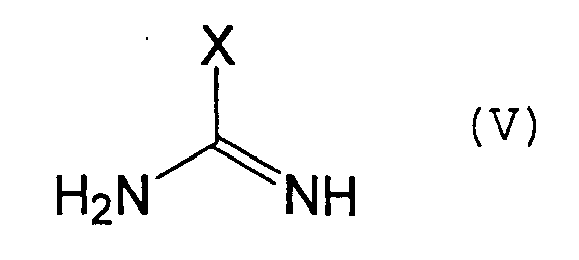
- [3] The production method of the above-mentioned [2], wherein X is a hydrogen atom, a methyl group, a phenyl group, a methoxy group, a methylthio group, a benzylthio group, an amino group, a methylamino group or an N-methanesulfonyl-N-methylamino group.
- [4] The production method of any one of the above-mentioned [1] to [3], wherein R1 is a methyl group or an isopropyl group, and R2 is a methyl group or an aryl group optionally having substituent(s).
- [5] The production method of any one of the above-mentioned [1] to [4], wherein Q is a methoxycarbonyl group or an ethoxycarbonyl group.
- [6] The production method of the above-mentioned [2], wherein X is a methylthio group, R1 is an isopropyl group, and R2 is a 4-fluorophenyl group.
- [7] A production method of a compound represented by the formula (VII) :


reacting the obtained compound (VI) or a salt thereof with N-methyl-methanesulfonamide. - [8] The production method of the above-mentioned [7], wherein Q is a methoxycarbonyl group.
- [9] The production method of the above-mentioned [2], wherein X is a methylamino group, R1 is an isopropyl group, and R2 is a 4-fluorophenyl group.
- [10] A production method of compound (VII) or a salt thereof, which comprises reacting a compound represented by the formula (I") :

- [11] The production method of the above-mentioned [10], wherein Q is a methoxycarbonyl group.
- [12] A compound represented by the formula (IV):

- [13] The compound of the above-mentioned [12], wherein one of R1a and R2a is an isopropyl group, and the other is a 4-fluorophenyl group.
- [14] A compound represented by the formula (VI'):

- [15] The compound of the above-mentioned [14], wherein Q is a methoxycarbonyl group or a salt thereof.
- The present invention is explained in detail in the following.
- The "lower alkyl group" for R3 is a linear or branched chain alkyl preferably having 1 - 6, more preferably 1 or 2, carbon atoms and, for example, methyl group, ethyl group, n-propyl group, isopropyl group and the like can be mentioned. Of these, methyl group and ethyl group are preferable.
- The "lower alkyl group optionally having substituent(s)" for R1, R2, R4, R5, R6, R7 or X is the above-mentioned alkyl group optionally substituted by one or more of the following substituents, and when the number of the substituents is two or more, they may be the same or different. Examples of the substituent include nitro group, linear or branched chain alkoxy group (preferable carbon atoms: 1 - 6, e.g., methoxy group and the like), halogen atom (e.g., chlorine atom, fluorine atom and the like), hydroxyl group and the like.
- The "aryl" of the "aryl group optionally having substituent(s)" for R1, R2, R4, R5, R6, R7 and X is an aryl group having preferably 6 - 10, carbon atoms and, for example, phenyl group, 1-naphthyl group, 2-naphthyl group and the like can be mentioned. The aryl group may be substituted by one or more substituents below. When the number of the substituents is two or more, they may be the same or different. Examples of the substituent include nitro group, linear or branched chain alkoxy group (preferable carbon atoms: 1 - 6, e.g., methoxy group and the like), halogen atom (e.g., chlorine atom, fluorine atom and the like), linear or branched chain alkyl group (preferable carbon atoms: 1 - 4, e.g., methyl group, ethyl group, propyl group and the like), hydroxyl group and the like.
- The "aralkyl group" of the "aralkyl group optionally having substituent(s)" for R1, R2, R5, R6 and X is aralkyl group wherein the aryl moiety is aryl group preferably having 6 - 10, more preferably 6, carbon atoms and the alkyl moiety is linear or branched chain alkyl group preferably having 1 - 6 carbon atoms. For example, benzyl group and the like can be mentioned.
- The aralkyl group may be substituted by one or more substituents below. When the number of the substituents is two or more, they may be the same or different. Examples of the substituent include nitro group, linear or branched chain alkoxy group (preferable carbon atoms: 1 - 6, e.g., methoxy group and the like), halogen atom (e.g., chlorine atom, fluorine atom and the like), linear or branched chain alkyl group (preferable carbon atoms: 1 - 4, e.g., methyl group, ethyl group, propyl group and the like), hydroxyl group and the like.
- Examples of the "aliphatic hetero ring" optionally formed by R5 and R6 together with the adjacent nitrogen atom include 5- or 6-membered aliphatic hetero ring containing a carbon atom and at least one nitrogen atom and also optionally containing 1 - 3 hetero atoms selected from oxygen atom, sulfur atom and nitrogen atom, such as pyrrolidine, piperidine, morpholine, thiomorpholine, piperazine and the like.
- The aliphatic hetero ring may be substituted by one or more substituents below. When the number of the substituents is two or more, they may be the same or different. Examples of the substituent include nitro group, linear or branched chain alkoxy group (carbon atoms: 1 - 6, e.g., methoxy group and the like), halogen atom (e.g., chlorine atom, fluorine atom and the like), linear or branched chain alkyl group (preferable carbon atoms: 1 - 4, e.g., methyl group, ethyl group, propyl group and the like), hydroxyl group and the like.
- Examples of the carboxylate group represented by Q include methoxycarbonyl group, ethoxycarbonyl group, propoxycarbonyl group, tert-butoxycarbonyl group, benzyloxycarbonyl group and the like. A methoxycarbonyl group and an ethoxycarbonyl group are preferable.
- Now, preferable embodiments of each symbol are explained below.
- As the X, hydrogen atom, methyl group, phenyl group, methoxy group, methylthio group, benzylthio group, amino group, methylamino group or N-methanesulfonyl-N-methylamino group is preferable, and hydrogen atom, methylthio group or methylamino group is more preferable.
- As the R1, methyl group or isopropyl group is preferable.
- As the R2, methyl group or aryl group optionally having substituent(s) is preferable, and methyl group, 4-fluorophenyl group or 2,4-dimethylphenyl group is more preferable.
- Compound (I), (I'), (I"), (VI), (VI') and (VII) have a pyrimidine ring, and can form a salt such as an inorganic acid salt (e.g., hydrochloride, sulfate and the like), an organic acid salt (e.g., acetate, trifluoroacetate, tosylate, mesylate and the like) and the like.
- As compound (V), those generally commercially available in the form of a salt such as an inorganic acid salt (e.g., hydrochloride, sulfate and the like), an organic acid salt (e.g., acetate, trifluoroacetate, tosylate, mesylate and the like) and the like can be used.
- Compound (II) is generally present as a tautomer mixture of enol forms represented by the following formulas (IIa) and (IIb) (hereinafter to be also referred to as compound (IIa) and compound (IIb), respectively).

- In the present invention, a simple reference to compound (II) means compound (II), compound (IIa), compound (IIb) or even a mixture thereof.
- The production method of the present invention is characterized in that it contains the following step (a) shown by the following reaction scheme.

- The pyrimidine ring can be constructed in a high yield by employing economical and highly safe ortho ester (III) as an enolation agent in such synthetic route, particularly step (a).
- Steps (a) - (b) are explained below.
- Step (a) can be performed, for example, by mixing compound (II) and ortho ester (III) in a solvent or without a solvent. The order of addition of respective reagents is not particularly limited and they can be added successively or simultaneously.
- As the ortho ester (III) used in step (a), a commercially available product is preferably used and, for example, trimethyl orthoformate, triethyl orthoformate, trimethyl orthoacetate, triethyl orthoacetate, methyl orthopropionate, triethyl orthopropionate, trimethyl orthobutyrate, triethyl orthobutyrate, trimethyl orthobenzoate and the like, particularly, trimethyl orthoacetate, trimethyl orthobenzoate, trimethyl orthobutyrate and triethyl orthobutyrate are preferable.
- The amount of orthoester (III) to be used is generally 0.8 - 30 equivalents, preferably 1 - 5 equivalents, relative to compound (II). When the amount of orthoester (III) is smaller than this range, the reaction tends to proceed slowly.
- For step (a), an acid is preferably added as a catalyst to promote the reaction. Examples of the acid include sulfuric acid, methanesulfonic acid, toluenesulfonic acid and the like, with preference given to sulfuric acid, methanesulfonic acid and toluenesulfonic acid. The amount of the acid to be used is generally 0.001 - 0.1 equivalent, preferably 0.005 - 0.05 equivalent, relative to compound (II). When the amount of the acid to be used is smaller than this range, the reaction tends to proceed slowly.
- In step (a), a drying agent is preferably added to remove a trace amount of water contained in the reaction mixture. Examples of the drying agent include magnesium sulfate, molecular sieve, sodium sulfate and the like, with preference given to magnesium sulfate and molecular sieve. The amount of the drying agent to be used is generally 0.1-fold weight to 20-fold weight, preferably 0.2-fold weight to 2-fold weight, relative to compound (II). When the amount of the drying agent to be used is smaller than this range, the yield tends to decrease.
- While step (a) may be performed in a solvent, it is preferably performed without a solvent. When a solvent is used, the solvent may be any as long as it does not inhibit this reaction, for example, hydrocarbon solvent (e.g., toluene, benzene and the like) and the like can be mentioned, which may be used alone or in a combination of two or more kinds thereof, and toluene is preferable. The amount of the solvent to be used is 1-fold weight to 30-fold weight, preferably 5-fold weight to 20-fold weight, relative to compound (II).
- Step (a) is generally performed within the range of from 50°C to the reflux temperature of the solvent or the ortho ester (III) to be used (preferably 60°C to 150°C). The reaction time is generally 0.5 hr - overnight (preferably 1 hr - 8 hr) within the above-mentioned temperature range.
- After the completion of step (a), the reaction mixture contains one of compound (IVa) and compound (IVb), or a mixture thereof. However, a mixture of compound (IVa) and compound (IVb) can be subjected to step (b) without particular separation.
- Compound (IVa) and/or compound (IVb) can be isolated and purified by a conventional method. Compound (IVa) and/or compound (IVb) can be isolated by, after completion of the reaction, where necessary, extracting with ethyl acetate, methyl-butyl-ether etc., washing with water, aqueous acidic solution (e.g., hydrochloric acid, sulfuric acid and the like) or aqueous alkali solution (e.g., saturated aqueous sodium hydrogen carbonate, brine and the like) and the like, and concentrating the organic layer obtained by partitioning. Moreover, compound (IVa) and/or compound (IVb) can be purified by, but is not limited to, performing crystallization by adding a crystallization solvent (e.g., ethers (e.g., diethyl ether, THF and the like), acetone, acetonitrile, hydrocarbon solvent (e.g., toluene, benzene, hexane, heptane and the like), a halogen solvent (e.g., dichloromethane, dichloroethane and the like), alcohols (e.g., methanol, ethanol, isopropanol and the like), water, a mixed solvent thereof and the like), silica gel column chromatography or distillation. In addition, compound (IVa) and/or compound (IVb) can be subjected to the next step without purification.
- Compound (II), which is a starting material for step (a), can be produced by a known method (e.g.,
JP-A-6-256318 - Compound (IVa) and compound (IVb) obtained in step (a), excluding a compound wherein R1, R2 and R3 are methyl groups and Q is a methoxycarbonyl group, namely, compound (IV), is a novel compound, and is a useful synthetic intermediate for various pharmaceutical products.
- Compound (IV) wherein one of R1a and R2a is an isopropyl group and the other is a 4-fluorophenyl group is useful as an intermediate for Crestor, a cholesterol lowering agent.
- Step (b) can be performed, for example, by mixing compound (IVa) and/or compound (IVb) and compound (V) in a solvent. The order of addition of respective reagents is not particularly limited and they can be added successively or simultaneously.
- Compound (V) used in step (b) is generally in the form of a commercially available stable salt. As the salt of compound (V), for example, acid addition salts such as hydrochloride, sulfate, acetate and the like can be mentioned.
- When an acid addition salt of compound (V) is to be used in step (b), it can be neutralized with a base in a solvent. In this case, for example, the salt is once converted to a free form, followed by reaction with compound (IVa) and/or compound (IVb). Alternatively, for example, a salt of compound (V) and compound (IVa) and/or compound (IVb) are dissolved in a solvent, followed by addition of a base to allow reaction. The base to be used for neutralization is not particularly limited and, for example, sodium hydroxide, potassium hydroxide, sodium carbonate, potassium carbonate, triethylamine, sodium methoxide, sodium ethoxide and the like can be used. The amount of the base to be used is not particularly limited as long as it can convert the salt of compound (V) to a free form. From the economical viewpoint, it is generally 0.8 - 3 equivalents, preferably 1 - 1.5 equivalents, relative to the salt of compound (V).
- The solvent usable for step (b) may be any as long as it does not inhibit the reaction and, for example, esters (e.g., ethyl acetate, propyl acetate, butyl acetate and the like), nitriles (e.g., acetonitrile and the like), alcohols (e.g., methanol, ethanol, isopropyl alcohol and the like) and the like can be mentioned, which may be used alone or in a combination of two or more kinds thereof, and acetonitrile, ethyl acetate or ethanol is preferable. The amount of the solvent to be used is 2-fold weight to 30-fold weight, preferably 5-fold weight to 20-fold weight, relative to compound (IVa) and/or compound (IVb).
- Step (b) is generally performed within the range of from 0°C to the reflux temperature of the solvent to be used (preferably 40°C to 100°C). The reaction time is generally 0.5 hr - 30 hr (preferably 1 hr - 20 hr) within the above-mentioned temperature range.
- Compound (I) obtained in step (b) can be isolated and purified by a conventional method. For example, compound (I) can be isolated by, after completion of the reaction, where necessary, extracting with ethyl acetate etc., washing with water, aqueous acidic solution (e.g., hydrochloric acid, sulfuric acid and the like), aqueous alkali solution (e.g., saturated aqueous sodium hydrogen carbonate and the like) or brine and the like, and concentrating the organic layer obtained by partitioning. Moreover, compound (I) can be purified by, but is not limited to, performing crystallization by adding a crystallization solvent (e.g., ethers (e.g., diethyl ether, THF and the like), acetone, acetonitrile, hydrocarbon solvent (e.g., toluene, benzene, hexane, heptane and the like), a halogen solvent (e.g., dichloromethane, dichloroethane and the like), alcohols (e.g., methanol, ethanol, isopropanol and the like), water, a mixed solvent thereof and the like), or silica gel column chromatography. In addition, compound (I) can be used as a synthetic intermediate without purification.
- Compound (VII) is known to be useful as an important synthetic intermediate for Crestor, a cholesterol lowering agent having HMGCoA reductase inhibitory activity.
- Compound (VII) can be produced from compound (I'), among compound (I) produced by the present invention, as a starting material by the method described in
JP-A-5-178841 
- Compound (VI) wherein n is 1, namely, compound (VI'), is a novel compound, which requires a smaller amount of the oxidant to be used as compared to compound wherein n is 2, and is economical.
- Compound (VII) can also be produced from compound (I") as a starting material by the method described in
JP-A-6-256318 
- The present invention is explained in more detail in the following by referring to Examples, which are not to be construed as limitative. The starting material, methyl-3-(4-fluorophenyl)-3-hydroxy-2-isobutyryl-propenoate, was obtained in the same manner as in Example 1 of
JP-A-6-256318 - To methyl-3-(4-fluorophenyl)-3-hydroxy-2-isobutyrylpropenoate (1.0 g, 3.75 mmol) were added trimethyl orthobutyrate (2.3 g, 15.5 mmol), magnesium sulfate (300 mg) and sulfuric acid (10 mg), and the mixture was heated under reflux for 3 hr. Methyl-tert-butyl-ether (MTBE) was added, the precipitate was filtrated, and the filtrate was concentrated under reduced pressure. The residue was purified by silica gel chromatography to give a regioisomer mixture of the title compound. It was detected as a regioisomer mixture in NMR spectrum.
1H-NMR(CDCl3) δ 0.93(1.5H, d, J=6.6Hz), 1.20(4.5H, d, J=6.9Hz), 2.36-2.46(0.25H, m), 2.97-3.05(0.75H, m), 3.46(2.25H, s), 3.52(2.25H, s), 3.55(0.75H, s), 3.82(0.75H, s), 7.12-7.16(2H, m), 7.34-7.37(2H, s) - To methyl-3-(4-fluorophenyl)-3-hydroxy-2-isobutyrylpropenoate (100 mg, 0.38 mmol) were added trimethyl orthobutyrate (1.0 g, 6.75 mmol), a molecular sieve (100 mg) and sulfuric acid (2 µl), and the mixture was heated at 140°C for 1 hr. After cooling, MTBE was added and the precipitate was filtrated. The filtrate was analyzed by HPLC and confirmed to contain methyl-2-(4-fluorobenzoyl)-3-methoxy-3-isopropylpropenoate (85.3 mg, 0.11 mmol).
- HPLC analysis conditions:
- column: Inertsil ODS-2 4.6 mm×150φ
- column temperature: 40°C
- detection wavelength: 254 nm
- mobile phase: Buffer (NaH2PO4, pH 4.5):CH3CN=40:60
- flow rate: 0.8 ml/min.
- To methyl-3-(4-fluorophenyl)-3-hydroxy-2-isobutyrylpropenoate (100 mg, 0.38 mmol) were added trimethyl orthobutyrate (1.0 g, 6.75 mmol) and magnesium sulfate (100 mg), and the mixture was heated to 140°C and stirred for 1 hr. After cooling, MTBE was added, and the precipitate was filtrated. The filtrate was analyzed by HPLC under the same conditions as in Example 2 and confirmed to contain the title compound (83.2 mg, 0.30 mmol).
- To methyl-3-(4-fluorophenyl)-3-hydroxy-2-isobutyrylpropenoate (100 mg, 0.38 mmol) were added trimethyl orthoacetate (1.0 g, 8.33 mmol), magnesium sulfate (100 mg) and sulfuric acid (2 µl), and the mixture was heated to 140°C and stirred for 1 hr. The reaction mixture was analyzed by HPLC under the same conditions as in Example 2 and confirmed to contain the title compound (60.1 mg, 0.21 mmol).
- To methyl-3-(4-fluorophenyl)-3-hydroxy-2-isobutyrylpropenoate (100 mg, 0.38 mmol) were added trimethyl orthobenzoate (1.0 g, 5.49 mmol), magnesium sulfate (100 mg) and sulfuric acid (2 µl), and the mixture was heated to 140°C and stirred for 1 hr. The reaction mixture was analyzed by HPLC under the same conditions as in Example 2 and confirmed to contain the title compound (53.7 mg, 0.19 mmol).
- To ethyl-diacetoacetate (510 mg, 2.96 mmol) were added triethyl orthobutyrate (845 mg, 4.39 mmol), magnesium sulfate (200 mg) and sulfuric acid (5 µl), and the mixture was heated at 140°C for 6 hr. MTBE was added, and the precipitate was filtrated. The filtrate was concentrated under reduced pressure, and the residue was purified by silica gel column chromatography to give an oil containing ethyl-2-(1-ethoxyethylidene)-acetoacetate (449 mg, 2.24 mmol).
1H-NMR(CDCl3) δ 1.21(6H, m), 2.18(1.2H, s), 2.34(3.6H, s), 2.43(1.2H, s), 4.04-4.10(2H, m), 4.17(2H, q, J=7.2Hz), 4.28(1H, q, J=7.2Hz) - Methylisothiourea sulfate (3.72 g, 13.36 mmol) and sodium carbonate (3.03 g, 28.55 mmol) were added to acetonitrile (50 ml), and the mixture was stirred at room temperature for 30 min. Methyl-2-(4-fluorobenzoyl)-3-methoxy-3-isopropylpropenoate (5.00 g, 17.83 mmol) was added, and the mixture was stirred at 80°C overnight. The reaction mixture was concentrated, ethyl acetate (60 ml) was added, and the mixture was washed successively with water and saturated brine. The organic layer was dried over sodium sulfate, and the drying agent was filtered off. The filtrate was concentrated to dryness, and the residue was purified by silica gel column chromatography (hexane-ethyl acetate) to give methyl 4-(4-fluorophenyl)-6-isopropyl-2-methylthiopyrimidine-5-carboxylate (4.82 g, 15.04 mmol).
1H-NMR(CDCl3) δ 1.31(6H, d, J=6.7Hz), 2.61 (1H, s), 3.17 (1H, hep, J=6.7Hz), 3.70(3H, s), 7.10-7.15(2H, m), 7.62-67(2H, m) - 1-Methylguanidine hydrochloride (391 mg, 3.57 mmol) and sodium carbonate (378 mg, 3.57 mmol) were added to acetonitrile (8 ml). After stirring the mixture at room temperature for 30 min, methyl-2-(4-fluorobenzoyl)-3-methoxy-3-isopropylpropenoate (500 mg, 1.78 mmol) was added, and the mixture was stirred at 80°C overnight. The reaction mixture was analyzed by HPLC under the same conditions as in Example 2, and the production of methyl 4-(4-fluorophenyl)-6-isopropyl-2-methylaminopyrimidine-5-carboxylate (448 mg, 1.48 mmol) was confirmed. By a treatment in the same manner as in Example 7, the title compound was obtained.
1H-NMR(CDCl3) δ 1.26(6H, d, J=6.6Hz), 3.05(3H, d, J=5.1Hz), 3.15(1H, hep, J=6.6Hz), 3.61(3H, s), 5.30(1H, br), 7.08-7.12(2H, m), 7.52-7.60(2H, m) - Methylisothiourea sulfate (40 mg, 0.14 mmol) and sodium carbonate (32 mg, 0.30 mmol) were suspended in acetonitrile (1 ml), ethyl-2-(1-ethoxyethylidene)-acetoacetate (60 mg, 0.30 mmol) was added, and the mixture was stirred at 80°C overnight. The reaction mixture was cooled, and washed successively with water and saturated brine. After concentration under reduced pressure, the residue was purified by silica gel chromatography to give the title compound (46 mg, 0.20 mmol).
1H-NMR(CDCl3) δ 1.40(3H, t, J=7.1Hz), 2.50(3H, s), 2.57(3H, s), 4.20(2H, q, J=7.1Hz) - To a suspension of formamidine acetate (100 mg, 0.96 mmol) in ethanol (1 ml) was added a solution (331 mg) of 21% sodium ethoxide in ethanol. Ethyl-2-(1-ethoxyethylidene)-acetoacetate (192 mg, 0.96 mmol) was added, and the mixture was stirred at 80°C for 3 hrs. After concentration under reduced pressure, the residue was purified by silica gel chromatography to give the title compound (78 mg, 0.43 mmol).
1H-NMR(CDCl3) δ 1.42(3H, t, J=7.2Hz), 2.55(6H, s), 4.47(2H, q, J=7.2Hz), 9.02(1H, s) - To ethyl diacetoacetate (510 mg, 2.96 mmol) were added trimethyl orthobutyrate (845 mg, 4.39 mmol), magnesium sulfate (200 mg) and sulfuric acid (5 µl), and the mixture was stirred at 140°C for 4 hr in an oil bath. The reaction mixture was concentrated under reduced pressure. The residue was added to a suspension of methylisothiourea sulfate (412 mg, 1.48 mmol) and sodium carbonate (320 mg, 3.01 mmol) in ethyl acetate, and the mixture was stirred at 80°C overnight. After cooling, the mixture was washed successively with water and saturated brine, and concentrated under reduced pressure. The residue was purified by silica gel chromatography to give the title compound (365 mg, 1.61 mmol).
- To methyl 3-(4-fluorophenyl)-3-hydroxy-2-isobutyrylpropenoate (1.0 g, 3.75 mmol) were added trimethyl orthobutyrate (1.0 g, 6.75 mmol), magnesium sulfate (400 mg) and sulfuric acid (10 mg), and the mixture was stirred at 140°C for 3 hr in an oil bath. The reaction mixture was concentrated. The residue was added to a suspension of methylisothiourea sulfate (520 mg, 1.87 mmol) and sodium carbonate (400 mg, 3.77 mmol) in ethyl acetate, and the mixture was stirred at 80°C overnight. After the reaction, the reaction mixture was washed successively with water and saturated brine. The organic layer was dried over sodium sulfate, filtrated, and the filtrate was concentrated. Methanol was added to the residue and the mixture was stirred. The precipitate was filtrated, and dried under reduced pressure to give methyl 4-(4-fluorophenyl)-6-isopropyl-2-methylthiopyrimidine-5-carboxylate (747 mg, 2.33 mmol).
- Methyl 4-(4-fluorophenyl)-6-isopropyl-2-methylthiopyrimidine-5-carboxylate (1.50 g, 4.68 mmol) was dissolved in dichloromethane (30 ml), m-chloroperbenzoic acid (2.23 g, 11.70 mmol) was added under ice-cooling, and the mixture was stirred at room temperature overnight. Water (10 ml) was added to the reaction mixture, and the mixture was filtrated to separate the layers. The organic layer was washed with saturated aqueous sodium hydrogen carbonate and saturated brine. The organic layer was concentrated to dryness to give the title compound (1.59 g, 4.53 mmol).
1H-NMR(CDCl3) δ 1.37(6H, d, J=6.7Hz), 3.21(1H, hep, J=6.7Hz), 3.42 (1H, s), 3.81(3H, s), 7.16-7.20(2H, m), 7.74-7.78(2H, m) - Methyl 4-(4-fluorophenyl)-6-isopropyl-2-methylsulfonylpyrimidine-5-carboxylate (1.59 g, 4.53 mmol) was dissolved in butyl acetate, potassium carbonate (776 mg, 5.61 mmol) and methylmethanesulfonamide (564 mg, 5.16 mmol) were added, and the mixture was stirred at 90°C for 3 hr. The reaction mixture was washed with water and saturated brine. The organic layer was concentrated, and crystallized from methanol. The obtained crystals were filtrated and dried to give the title compound (1.68 g, 4.40 mmol).
1H-NMR(CDCl3) δ 1.31(6H, d, J=6.7Hz), 3.18(1H, hep, J=6.7Hz), 3.52(1H, s), 3.60(3H, s), 3.69(3H, s), 7.10-7.16(2H, m), 7.64-7.70(2H, m) - Methyl 4-(4-fluorophenyl)-6-isopropyl-2-methylthiopyrimidine-5-carboxylate (157 mg, 0.49 mmol) was dissolved in chloroform (2 ml), a solution of m-chloroperbenzoic acid (2.23 g, 0.65 mmol) in dichloromethane was added dropwise under ice-cooling over 30 min, and the mixture was stirred at room temperature for 2 hr. The reaction mixture was washed successively with water, saturated aqueous sodium hydrogencarbonate and saturated brine. The organic layer was concentrated to dryness to give the title compound (156 mg, 0.46 mmol).
1H-NMR(CDCl3) δ 1.37 (6H, d, J=6.6Hz), 3.05 (1H, s), 3.20 (1H, hep, J=6.6Hz), 3.79(3H, s), 7.10-7.17(2H, m), 7.74-7.78(2H, m) - Methyl 4-(4-fluorophenyl)-6-isopropyl-2-methylsulfinylpyrimidine-5-carboxylate (156 mg, 0.46 mmol) was dissolved in butyl acetate, potassium carbonate (70 mg, 0.51 mmol) and methylmethanesulfonamide (55 mg, 0.50 mmol) were added, and the mixture was stirred at 90°C overnight. The reaction mixture was washed with water and saturated brine. The organic layer was concentrated and methanol was added. The crystals were filtrated and dried to give the title compound (146 mg, 0.39 mmol).
- Methyl 4-(4-fluorophenyl)-6-isopropyl-2-methylaminopyrimidine-5-carboxylate (100 mg, 0.33 mmol) was dissolved in DMF (2 ml), 55% NaH (16 mg, 0.35 mmol) was added, and the mixture was stirred at room temperature for 15 min. Methanesulfonyl chloride (34 µl) was added, and the mixture was stirred for 1 hr. The reaction mixture was concentrated and purified by silica gel chromatography to give the title compound (78 mg, 0.20 mmol).
- Methyl 3-(4-fluorophenyl)-3-hydroxy-2-isobutyrylpropenoate (2.25 g, 8.5 mmol) was dissolved in acetonitrile (30 ml), sodium carbonate (1.35 g, 12.8 mmol) and methyl sulfate (1.18 g, 9.4 mmol) were added, and the mixture was stirred at 80°C overnight. The reaction mixture was concentrated, ethyl acetate was added, and the mixture was washed successively with water and saturated brine. The organic layer was concentrated, and the residue was purified by silica gel chromatography to give methyl 2-(4-fluorobenzoyl)-3-methoxy-3-isopropylpropenoate (0.80 g, 2.9 mmol). As a byproduct, C-methylated form, methyl 2-(4-fluorobenzoyl)-2,4-dimethyl-3-oxo-pentanoate (0.61 mg, 2.2 mmol), was also isolated.
- Methyl 3-(4-fluorophenyl)-3-hydroxy-2-isobutyrylpropenoate (92 mg, 0.35 mmol) was dissolved in acetonitrile (2 ml), and cesium carbonate (113 mg, 0.41 mmol) was added. Under ice-cooling, methyl trifluoromethanesulfonate (39 µl, 0.36 mmol) was added dropwise, and the mixture was stirred at room temperature for 3 hrs. The reaction mixture was analyzed by HPLC under the same conditions as in Example 2, and production of methyl 2-(4-fluorobenzoyl)-3-methoxy-3-isopropylpropenoate (37%) as well as a C-methylated form, methyl 2-(4-fluorobenzoyl)-2,4-dimethyl-3-oxo-pentanoate (45%), as a byproduct were confirmed.
- According to the method of the present invention, use of ortho esters, which are economical and low toxic, in enol etherification of compound (II) suppresses C-alkylation, and affords compound (IVa) and/or compound (IVb) in a high yield. As a result, compound (I) and compound (VII) can be produced in a high yield.
- This application is based on a patent application No. 2005-027065 filed in Japan, the contents of which are incorporated in full herein by this reference.
Claims (15)
- A production method of a compound represented by the following formula (IVa) :


- A production method of a compound represented by the formula (I) :


- The production method of claim 2, wherein X is a hydrogen atom, a methyl group, a phenyl group, a methoxy group, a methylthio group, a benzylthio group, an amino group, a methylamino group or an N-methanesulfonyl-N-methylamino group.
- The production method of any one of claims 1 to 3, wherein R1 is a methyl group or an isopropyl group, and R2 is a methyl group or an aryl group optionally having substituent(s).
- The production method of any one of claims 1 to 4, wherein Q is a methoxycarbonyl group or an ethoxycarbonyl group.
- The production method of claim 2, wherein X is a methylthio group, R1 is an isopropyl group, and R2 is a 4-fluorophenyl group.
- A production method of a compound represented by the formula (VII):


reacting the obtained compound represented by the formula (VI) or a salt thereof with N-methyl-methanesulfonamide. - The production method of claim 7, wherein Q is a methoxycarbonyl group.
- The production method of claim 2, wherein X is a methylamino group, R1 is an isopropyl group, and R2 is a 4-fluorophenyl group.
- A production method of a compound represented by the formula (VII):


- The production method of claim 10, wherein Q is a methoxycarbonyl group.
- A compound represented by the formula (IV):

- The compound of claim 12, wherein one of R1a and R2a is an isopropyl group, and the other is a 4-fluorophenyl group.
- A compound represented by the formula (VI'):
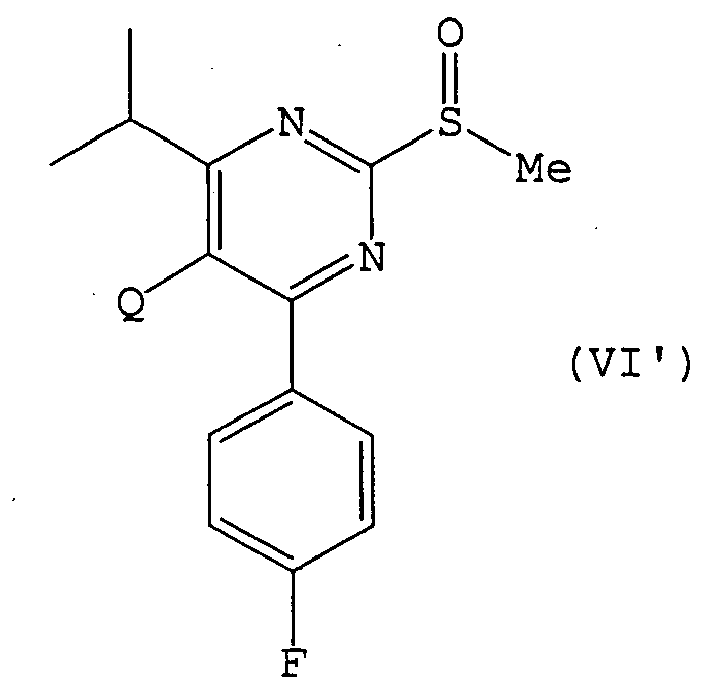
- The compound of claim 14, wherein Q is a methoxycarbonyl group or a salt thereof.
Applications Claiming Priority (2)
| Application Number | Priority Date | Filing Date | Title |
|---|---|---|---|
| JP2005027065 | 2005-02-02 | ||
| PCT/JP2006/302212 WO2006083012A1 (en) | 2005-02-02 | 2006-02-02 | Method for producing pyrimidine compound |
Publications (2)
| Publication Number | Publication Date |
|---|---|
| EP1849765A1 true EP1849765A1 (en) | 2007-10-31 |
| EP1849765A4 EP1849765A4 (en) | 2010-05-05 |
Family
ID=36777377
Family Applications (1)
| Application Number | Title | Priority Date | Filing Date |
|---|---|---|---|
| EP06713355A Withdrawn EP1849765A4 (en) | 2005-02-02 | 2006-02-02 | Method for producing pyrimidine compound |
Country Status (4)
| Country | Link |
|---|---|
| US (1) | US20080009622A1 (en) |
| EP (1) | EP1849765A4 (en) |
| JP (1) | JPWO2006083012A1 (en) |
| WO (1) | WO2006083012A1 (en) |
Families Citing this family (5)
| Publication number | Priority date | Publication date | Assignee | Title |
|---|---|---|---|---|
| ME00498B (en) | 2005-05-06 | 2011-10-10 | Du Pont | Method for preparation of optionally 2-substituted 1,6-dihydro-6-oxo-4-pyrimidinecarboxylic acids |
| US8871142B2 (en) | 2008-05-22 | 2014-10-28 | DePuy Synthes Products, LLC | Implants with roughened surfaces |
| CN104744256B (en) * | 2013-12-27 | 2017-01-04 | 北京乐威泰克医药技术有限公司 | Prepare 2-(alkoxyalkylene)-3-oxo carboxylic acid ester, the method for pyrimidine compound and the ferrum purposes as catalyst |
| CN109796414B (en) * | 2019-02-26 | 2022-05-20 | 中国药科大学 | Method for continuously preparing rosuvastatin intermediate by adopting micro-channel modular reaction device |
| CN114853681A (en) * | 2022-05-27 | 2022-08-05 | 南京工业大学 | A kind of preparation method of pyrimidine heterocyclic amidinocarboxylate compound |
Family Cites Families (5)
| Publication number | Priority date | Publication date | Assignee | Title |
|---|---|---|---|---|
| JP2648897B2 (en) * | 1991-07-01 | 1997-09-03 | 塩野義製薬株式会社 | Pyrimidine derivatives |
| JP3197971B2 (en) * | 1993-03-01 | 2001-08-13 | 塩野義製薬株式会社 | Method for synthesizing 5-carboalkoxypyrimidine derivative |
| WO2002022588A1 (en) * | 2000-09-14 | 2002-03-21 | Ajinomoto Co.,Inc. | Novel pyrimidine derivative and novel pyridine derivative |
| MXPA03002325A (en) * | 2000-09-15 | 2003-06-24 | Anormed Inc | Chemokine receptor binding heterocyclic compounds. |
| WO2005007608A2 (en) * | 2003-07-10 | 2005-01-27 | Schering Corporation | Process for the preparation and purification of 2-(alkoxyalkylidene)-3-ketoalkanoic acid esters from 3-ketoalkanoic acid esters |
-
2006
- 2006-02-02 EP EP06713355A patent/EP1849765A4/en not_active Withdrawn
- 2006-02-02 JP JP2007501686A patent/JPWO2006083012A1/en active Pending
- 2006-02-02 WO PCT/JP2006/302212 patent/WO2006083012A1/en not_active Ceased
-
2007
- 2007-08-02 US US11/832,758 patent/US20080009622A1/en not_active Abandoned
Also Published As
| Publication number | Publication date |
|---|---|
| EP1849765A4 (en) | 2010-05-05 |
| JPWO2006083012A1 (en) | 2008-06-26 |
| WO2006083012A1 (en) | 2006-08-10 |
| US20080009622A1 (en) | 2008-01-10 |
Similar Documents
| Publication | Publication Date | Title |
|---|---|---|
| EP1417180B1 (en) | Preparation of aminopyrimidine compounds | |
| EP2024341B1 (en) | Novel process for statins and its pharmaceutically acceptable salts thereof | |
| EP2526099B1 (en) | Improved process for the preparation of amide intermediates and their use thereof | |
| US8212034B2 (en) | Process for preparing rosuvastatin calcium | |
| US8394956B2 (en) | Process for preparing pyrimidine propenaldehyde | |
| US20080009622A1 (en) | Method for producing pyrimidine compound | |
| EP0605392B1 (en) | Process for producing methoxyminoacetamide compounds | |
| EP2264015A1 (en) | Key intermediates for the synthesis of rosuvastatin or pharmaceutically acceptable salts thereof | |
| EP0990647B1 (en) | Process for producing quinolone derivatives | |
| US5266697A (en) | Process for the production of 2-substituted 4,6-dialkoxypyrimidines | |
| EP1982983B1 (en) | Improved process for producing moxonidine | |
| FI101535B (en) | Process for the preparation of (4-amino-3,5-dichloro-6-fluoro-2-pyridinyloxy) acetic acid ester | |
| US20080015353A1 (en) | Process for production of 4-acetylpyrimidines and crystals thereof | |
| JPH06256318A (en) | Method for synthesizing 5-carboalkoxypyrimidine derivative | |
| ZA200406469B (en) | Stereoselective alkylation of chiral 2-methyl-4-protected piperazines. | |
| CN1151137C (en) | Preparation method of thiobarbituric acid derivative | |
| HU223139B1 (en) | Process for producing 2-substituted 5-chloroimidazol-4-carbaldehydes | |
| JPH035466A (en) | Method for producing phenoxyethylaminopyrimidine derivatives | |
| KR100212636B1 (en) | Novel Process for Preparation of Herbicidal Pyrimidyloxybenzoic Acid Oxime Esters | |
| CZ107297A3 (en) | Process for preparing substituted derivatives of pyrimidine | |
| WO2007086559A1 (en) | Method for producing tetrahydropyran compound | |
| HK1064384B (en) | Preparation of aminopyrimidine compounds | |
| JPH07179433A (en) | Process for producing phenoxymethylpyrimidine derivative | |
| JP2001058983A (en) | Production of 1-substituted-5-hydroxy-imidazoline-2,4- diones and 1-substituted-5-alkoxy-imidazoline-2,4-diones | |
| JP2003342267A (en) | Method for producing epoxybutanoic acid esters |
Legal Events
| Date | Code | Title | Description |
|---|---|---|---|
| PUAI | Public reference made under article 153(3) epc to a published international application that has entered the european phase |
Free format text: ORIGINAL CODE: 0009012 |
|
| 17P | Request for examination filed |
Effective date: 20070822 |
|
| AK | Designated contracting states |
Kind code of ref document: A1 Designated state(s): AT BE BG CH CY CZ DE DK EE ES FI FR GB GR HU IE IS IT LI LT LU LV MC NL PL PT RO SE SI SK TR |
|
| DAX | Request for extension of the european patent (deleted) | ||
| A4 | Supplementary search report drawn up and despatched |
Effective date: 20100407 |
|
| RIC1 | Information provided on ipc code assigned before grant |
Ipc: C07C 69/738 20060101ALI20100326BHEP Ipc: C07C 67/31 20060101AFI20060815BHEP Ipc: C07D 239/38 20060101ALI20100326BHEP Ipc: C07D 239/42 20060101ALI20100326BHEP |
|
| STAA | Information on the status of an ep patent application or granted ep patent |
Free format text: STATUS: THE APPLICATION HAS BEEN WITHDRAWN |
|
| 18W | Application withdrawn |
Effective date: 20100624 |