EP1847541A1 - Fused pyrimidine derivative and uses thereof - Google Patents
Fused pyrimidine derivative and uses thereof Download PDFInfo
- Publication number
- EP1847541A1 EP1847541A1 EP06713347A EP06713347A EP1847541A1 EP 1847541 A1 EP1847541 A1 EP 1847541A1 EP 06713347 A EP06713347 A EP 06713347A EP 06713347 A EP06713347 A EP 06713347A EP 1847541 A1 EP1847541 A1 EP 1847541A1
- Authority
- EP
- European Patent Office
- Prior art keywords
- group
- substituent
- optionally
- atom
- ring
- Prior art date
- Legal status (The legal status is an assumption and is not a legal conclusion. Google has not performed a legal analysis and makes no representation as to the accuracy of the status listed.)
- Withdrawn
Links
- 150000003230 pyrimidines Chemical class 0.000 title description 2
- 125000001424 substituent group Chemical group 0.000 claims abstract description 785
- 150000001875 compounds Chemical class 0.000 claims abstract description 391
- 125000000623 heterocyclic group Chemical group 0.000 claims abstract description 265
- 125000004430 oxygen atom Chemical group O* 0.000 claims abstract description 231
- 229910052717 sulfur Inorganic materials 0.000 claims abstract description 201
- 125000004434 sulfur atom Chemical group 0.000 claims abstract description 201
- 125000004435 hydrogen atom Chemical group [H]* 0.000 claims abstract description 88
- 150000003839 salts Chemical class 0.000 claims abstract description 24
- 125000003118 aryl group Chemical group 0.000 claims abstract description 13
- 125000006591 (C2-C6) alkynylene group Chemical group 0.000 claims abstract description 12
- 239000008177 pharmaceutical agent Substances 0.000 claims abstract description 5
- 125000001183 hydrocarbyl group Chemical group 0.000 claims abstract 18
- 125000002619 bicyclic group Chemical group 0.000 claims description 202
- 125000004432 carbon atom Chemical group C* 0.000 claims description 176
- 125000005842 heteroatom Chemical group 0.000 claims description 175
- 229910052757 nitrogen Inorganic materials 0.000 claims description 175
- 125000004433 nitrogen atom Chemical group N* 0.000 claims description 175
- 125000002924 primary amino group Chemical group [H]N([H])* 0.000 claims description 143
- 238000000034 method Methods 0.000 claims description 134
- 125000004429 atom Chemical group 0.000 claims description 119
- 229910052799 carbon Inorganic materials 0.000 claims description 118
- 125000004169 (C1-C6) alkyl group Chemical group 0.000 claims description 114
- 125000005915 C6-C14 aryl group Chemical group 0.000 claims description 103
- 125000001997 phenyl group Chemical group [H]C1=C([H])C([H])=C(*)C([H])=C1[H] 0.000 claims description 87
- 125000002887 hydroxy group Chemical group [H]O* 0.000 claims description 63
- 125000004191 (C1-C6) alkoxy group Chemical group 0.000 claims description 59
- 125000004454 (C1-C6) alkoxycarbonyl group Chemical group 0.000 claims description 50
- 125000006552 (C3-C8) cycloalkyl group Chemical group 0.000 claims description 50
- 125000003178 carboxy group Chemical group [H]OC(*)=O 0.000 claims description 49
- 239000003795 chemical substances by application Substances 0.000 claims description 43
- 229910052736 halogen Inorganic materials 0.000 claims description 43
- 150000002367 halogens Chemical class 0.000 claims description 43
- 125000004093 cyano group Chemical group *C#N 0.000 claims description 42
- 238000004519 manufacturing process Methods 0.000 claims description 39
- 125000003917 carbamoyl group Chemical group [H]N([H])C(*)=O 0.000 claims description 35
- 125000003710 aryl alkyl group Chemical group 0.000 claims description 32
- 125000005843 halogen group Chemical group 0.000 claims description 30
- YLQBMQCUIZJEEH-UHFFFAOYSA-N Furan Chemical group C=1C=COC=1 YLQBMQCUIZJEEH-UHFFFAOYSA-N 0.000 claims description 28
- 125000003342 alkenyl group Chemical group 0.000 claims description 25
- 125000000217 alkyl group Chemical group 0.000 claims description 25
- 125000000304 alkynyl group Chemical group 0.000 claims description 25
- 125000002496 methyl group Chemical group [H]C([H])([H])* 0.000 claims description 22
- 230000001419 dependent effect Effects 0.000 claims description 19
- 229940002612 prodrug Drugs 0.000 claims description 19
- 239000000651 prodrug Substances 0.000 claims description 19
- 230000004720 fertilization Effects 0.000 claims description 18
- 239000003163 gonadal steroid hormone Substances 0.000 claims description 18
- 238000011282 treatment Methods 0.000 claims description 18
- 125000002485 formyl group Chemical group [H]C(*)=O 0.000 claims description 16
- 230000016087 ovulation Effects 0.000 claims description 15
- 230000003449 preventive effect Effects 0.000 claims description 15
- 206010006187 Breast cancer Diseases 0.000 claims description 13
- 208000026310 Breast neoplasm Diseases 0.000 claims description 13
- 206010028980 Neoplasm Diseases 0.000 claims description 13
- 206010060862 Prostate cancer Diseases 0.000 claims description 13
- 208000000236 Prostatic Neoplasms Diseases 0.000 claims description 13
- YTPLMLYBLZKORZ-UHFFFAOYSA-N Thiophene Chemical group C=1C=CSC=1 YTPLMLYBLZKORZ-UHFFFAOYSA-N 0.000 claims description 13
- 125000006590 (C2-C6) alkenylene group Chemical group 0.000 claims description 12
- 230000002265 prevention Effects 0.000 claims description 12
- 125000003161 (C1-C6) alkylene group Chemical group 0.000 claims description 11
- 125000000882 C2-C6 alkenyl group Chemical group 0.000 claims description 11
- 208000037265 diseases, disorders, signs and symptoms Diseases 0.000 claims description 11
- 230000002980 postoperative effect Effects 0.000 claims description 11
- 201000009273 Endometriosis Diseases 0.000 claims description 10
- 201000010099 disease Diseases 0.000 claims description 10
- 208000024827 Alzheimer disease Diseases 0.000 claims description 9
- 206010051482 Prostatomegaly Diseases 0.000 claims description 9
- 208000002495 Uterine Neoplasms Diseases 0.000 claims description 9
- 208000006155 precocious puberty Diseases 0.000 claims description 9
- 206010046766 uterine cancer Diseases 0.000 claims description 9
- 208000007913 Pituitary Neoplasms Diseases 0.000 claims description 8
- 206010046798 Uterine leiomyoma Diseases 0.000 claims description 8
- 125000004453 alkoxycarbonyl group Chemical group 0.000 claims description 8
- 208000010916 pituitary tumor Diseases 0.000 claims description 8
- 238000011321 prophylaxis Methods 0.000 claims description 8
- 208000002874 Acne Vulgaris Diseases 0.000 claims description 7
- 201000004384 Alopecia Diseases 0.000 claims description 7
- 201000000736 Amenorrhea Diseases 0.000 claims description 7
- 206010001928 Amenorrhoea Diseases 0.000 claims description 7
- 208000005171 Dysmenorrhea Diseases 0.000 claims description 7
- 206010013935 Dysmenorrhoea Diseases 0.000 claims description 7
- 206010068042 Premature ovulation Diseases 0.000 claims description 7
- 206010036618 Premenstrual syndrome Diseases 0.000 claims description 7
- 206010000496 acne Diseases 0.000 claims description 7
- 231100000540 amenorrhea Toxicity 0.000 claims description 7
- 239000002474 gonadorelin antagonist Substances 0.000 claims description 7
- 230000003676 hair loss Effects 0.000 claims description 7
- 208000000509 infertility Diseases 0.000 claims description 7
- 230000036512 infertility Effects 0.000 claims description 7
- 231100000535 infertility Toxicity 0.000 claims description 7
- 208000002551 irritable bowel syndrome Diseases 0.000 claims description 7
- 210000001161 mammalian embryo Anatomy 0.000 claims description 7
- 201000010065 polycystic ovary syndrome Diseases 0.000 claims description 7
- 238000002054 transplantation Methods 0.000 claims description 7
- 125000002147 dimethylamino group Chemical group [H]C([H])([H])N(*)C([H])([H])[H] 0.000 claims description 6
- 230000001939 inductive effect Effects 0.000 claims description 6
- 241000124008 Mammalia Species 0.000 claims description 5
- 230000033228 biological regulation Effects 0.000 claims description 5
- 239000003433 contraceptive agent Substances 0.000 claims description 5
- 230000002254 contraceptive effect Effects 0.000 claims description 5
- 125000000392 cycloalkenyl group Chemical group 0.000 claims description 5
- 125000000753 cycloalkyl group Chemical group 0.000 claims description 5
- BHVIKFQZEOSJBG-UHFFFAOYSA-N 3-[4-(3,4-dihydro-2h-quinolin-1-ylsulfonyl)thiophen-2-yl]-5-(hydroxymethyl)-1h-thieno[3,4-d]pyrimidine-2,4-dione Chemical compound C1CCC2=CC=CC=C2N1S(=O)(=O)C1=CSC(N2C(=O)NC3=CSC(=C3C2=O)CO)=C1 BHVIKFQZEOSJBG-UHFFFAOYSA-N 0.000 claims description 4
- XRQCWMNHKDTZFS-UHFFFAOYSA-N 3-[4-[ethyl(phenyl)carbamoyl]thiophen-2-yl]-2,4-dioxo-1h-thieno[3,4-d]pyrimidine-5-carboxylic acid Chemical compound C=1SC(N2C(C3=C(C(O)=O)SC=C3NC2=O)=O)=CC=1C(=O)N(CC)C1=CC=CC=C1 XRQCWMNHKDTZFS-UHFFFAOYSA-N 0.000 claims description 4
- VQIIKUKCNOVCGH-UHFFFAOYSA-N methyl 3-[4-(3,4-dihydro-2h-quinolin-1-ylsulfonyl)thiophen-2-yl]-2,4-dioxo-1h-thieno[3,4-d]pyrimidine-5-carboxylate Chemical compound C1CCC2=CC=CC=C2N1S(=O)(=O)C1=CSC(N2C(=O)NC3=CSC(=C3C2=O)C(=O)OC)=C1 VQIIKUKCNOVCGH-UHFFFAOYSA-N 0.000 claims description 4
- 230000006698 induction Effects 0.000 claims description 2
- 101000857870 Squalus acanthias Gonadoliberin Proteins 0.000 abstract description 13
- NMJREATYWWNIKX-UHFFFAOYSA-N GnRH Chemical compound C1CCC(C(=O)NCC(N)=O)N1C(=O)C(CC(C)C)NC(=O)C(CC=1C2=CC=CC=C2NC=1)NC(=O)CNC(=O)C(NC(=O)C(CO)NC(=O)C(CC=1C2=CC=CC=C2NC=1)NC(=O)C(CC=1NC=NC=1)NC(=O)C1NC(=O)CC1)CC1=CC=C(O)C=C1 NMJREATYWWNIKX-UHFFFAOYSA-N 0.000 abstract description 11
- 230000003042 antagnostic effect Effects 0.000 abstract description 7
- -1 pyrimidine compound Chemical class 0.000 description 434
- 150000002430 hydrocarbons Chemical group 0.000 description 115
- 238000006243 chemical reaction Methods 0.000 description 71
- 125000006615 aromatic heterocyclic group Chemical group 0.000 description 43
- 125000002950 monocyclic group Chemical group 0.000 description 43
- 239000002904 solvent Substances 0.000 description 43
- RTZKZFJDLAIYFH-UHFFFAOYSA-N Diethyl ether Chemical compound CCOCC RTZKZFJDLAIYFH-UHFFFAOYSA-N 0.000 description 39
- 125000005115 alkyl carbamoyl group Chemical group 0.000 description 38
- 238000002360 preparation method Methods 0.000 description 37
- YMWUJEATGCHHMB-UHFFFAOYSA-N Dichloromethane Chemical compound ClCCl YMWUJEATGCHHMB-UHFFFAOYSA-N 0.000 description 36
- 125000002252 acyl group Chemical group 0.000 description 36
- ZMXDDKWLCZADIW-UHFFFAOYSA-N N,N-Dimethylformamide Chemical compound CN(C)C=O ZMXDDKWLCZADIW-UHFFFAOYSA-N 0.000 description 30
- WYURNTSHIVDZCO-UHFFFAOYSA-N Tetrahydrofuran Chemical compound C1CCOC1 WYURNTSHIVDZCO-UHFFFAOYSA-N 0.000 description 30
- 239000003814 drug Substances 0.000 description 30
- UHOVQNZJYSORNB-UHFFFAOYSA-N Benzene Chemical compound C1=CC=CC=C1 UHOVQNZJYSORNB-UHFFFAOYSA-N 0.000 description 27
- KWYUFKZDYYNOTN-UHFFFAOYSA-M Potassium hydroxide Chemical compound [OH-].[K+] KWYUFKZDYYNOTN-UHFFFAOYSA-M 0.000 description 27
- HEMHJVSKTPXQMS-UHFFFAOYSA-M Sodium hydroxide Chemical compound [OH-].[Na+] HEMHJVSKTPXQMS-UHFFFAOYSA-M 0.000 description 27
- ZMANZCXQSJIPKH-UHFFFAOYSA-N Triethylamine Chemical compound CCN(CC)CC ZMANZCXQSJIPKH-UHFFFAOYSA-N 0.000 description 27
- 150000001924 cycloalkanes Chemical class 0.000 description 27
- 239000002585 base Substances 0.000 description 26
- CSCPPACGZOOCGX-UHFFFAOYSA-N Acetone Chemical compound CC(C)=O CSCPPACGZOOCGX-UHFFFAOYSA-N 0.000 description 24
- WEVYAHXRMPXWCK-UHFFFAOYSA-N Acetonitrile Chemical compound CC#N WEVYAHXRMPXWCK-UHFFFAOYSA-N 0.000 description 24
- HEDRZPFGACZZDS-UHFFFAOYSA-N Chloroform Chemical compound ClC(Cl)Cl HEDRZPFGACZZDS-UHFFFAOYSA-N 0.000 description 24
- WMFOQBRAJBCJND-UHFFFAOYSA-M Lithium hydroxide Chemical compound [Li+].[OH-] WMFOQBRAJBCJND-UHFFFAOYSA-M 0.000 description 24
- 229940079593 drug Drugs 0.000 description 23
- 235000002639 sodium chloride Nutrition 0.000 description 22
- ZWEHNKRNPOVVGH-UHFFFAOYSA-N 2-Butanone Chemical compound CCC(C)=O ZWEHNKRNPOVVGH-UHFFFAOYSA-N 0.000 description 21
- XEKOWRVHYACXOJ-UHFFFAOYSA-N Ethyl acetate Chemical compound CCOC(C)=O XEKOWRVHYACXOJ-UHFFFAOYSA-N 0.000 description 21
- YXFVVABEGXRONW-UHFFFAOYSA-N Toluene Chemical compound CC1=CC=CC=C1 YXFVVABEGXRONW-UHFFFAOYSA-N 0.000 description 21
- 239000000047 product Substances 0.000 description 21
- 125000006553 (C3-C8) cycloalkenyl group Chemical group 0.000 description 20
- QTBSBXVTEAMEQO-UHFFFAOYSA-N Acetic acid Chemical compound CC(O)=O QTBSBXVTEAMEQO-UHFFFAOYSA-N 0.000 description 18
- IAZDPXIOMUYVGZ-UHFFFAOYSA-N Dimethylsulphoxide Chemical compound CS(C)=O IAZDPXIOMUYVGZ-UHFFFAOYSA-N 0.000 description 18
- CDBYLPFSWZWCQE-UHFFFAOYSA-L Sodium Carbonate Chemical compound [Na+].[Na+].[O-]C([O-])=O CDBYLPFSWZWCQE-UHFFFAOYSA-L 0.000 description 18
- 125000005116 aryl carbamoyl group Chemical group 0.000 description 18
- BWHMMNNQKKPAPP-UHFFFAOYSA-L potassium carbonate Chemical compound [K+].[K+].[O-]C([O-])=O BWHMMNNQKKPAPP-UHFFFAOYSA-L 0.000 description 18
- 125000004738 (C1-C6) alkyl sulfinyl group Chemical group 0.000 description 17
- 125000004739 (C1-C6) alkylsulfonyl group Chemical group 0.000 description 17
- 239000002253 acid Substances 0.000 description 17
- 230000002411 adverse Effects 0.000 description 17
- 238000009833 condensation Methods 0.000 description 17
- 230000005494 condensation Effects 0.000 description 17
- 125000006700 (C1-C6) alkylthio group Chemical group 0.000 description 16
- LFQSCWFLJHTTHZ-UHFFFAOYSA-N Ethanol Chemical compound CCO LFQSCWFLJHTTHZ-UHFFFAOYSA-N 0.000 description 16
- JUJWROOIHBZHMG-UHFFFAOYSA-N Pyridine Chemical compound C1=CC=NC=C1 JUJWROOIHBZHMG-UHFFFAOYSA-N 0.000 description 16
- 125000005196 alkyl carbonyloxy group Chemical group 0.000 description 16
- 125000005530 alkylenedioxy group Chemical group 0.000 description 16
- 125000000449 nitro group Chemical group [O-][N+](*)=O 0.000 description 16
- 125000005844 heterocyclyloxy group Chemical group 0.000 description 15
- 125000004468 heterocyclylthio group Chemical group 0.000 description 15
- 239000000203 mixture Substances 0.000 description 15
- UIIMBOGNXHQVGW-UHFFFAOYSA-M Sodium bicarbonate Chemical compound [Na+].OC([O-])=O UIIMBOGNXHQVGW-UHFFFAOYSA-M 0.000 description 14
- VLKZOEOYAKHREP-UHFFFAOYSA-N n-Hexane Chemical compound CCCCCC VLKZOEOYAKHREP-UHFFFAOYSA-N 0.000 description 14
- 230000035484 reaction time Effects 0.000 description 14
- 108020003175 receptors Proteins 0.000 description 14
- 239000007858 starting material Substances 0.000 description 14
- RYHBNJHYFVUHQT-UHFFFAOYSA-N 1,4-Dioxane Chemical compound C1COCCO1 RYHBNJHYFVUHQT-UHFFFAOYSA-N 0.000 description 13
- 150000002170 ethers Chemical class 0.000 description 13
- 102000005962 receptors Human genes 0.000 description 13
- VEXZGXHMUGYJMC-UHFFFAOYSA-N Hydrochloric acid Chemical compound Cl VEXZGXHMUGYJMC-UHFFFAOYSA-N 0.000 description 12
- OKKJLVBELUTLKV-UHFFFAOYSA-N Methanol Chemical compound OC OKKJLVBELUTLKV-UHFFFAOYSA-N 0.000 description 12
- JLTDJTHDQAWBAV-UHFFFAOYSA-N N,N-dimethylaniline Chemical compound CN(C)C1=CC=CC=C1 JLTDJTHDQAWBAV-UHFFFAOYSA-N 0.000 description 12
- 150000001338 aliphatic hydrocarbons Chemical class 0.000 description 12
- 125000001769 aryl amino group Chemical group 0.000 description 12
- 125000000484 butyl group Chemical group [H]C([*])([H])C([H])([H])C([H])([H])C([H])([H])[H] 0.000 description 11
- 230000000694 effects Effects 0.000 description 11
- 125000001495 ethyl group Chemical group [H]C([H])([H])C([H])([H])* 0.000 description 11
- 125000004051 hexyl group Chemical group [H]C([H])([H])C([H])([H])C([H])([H])C([H])([H])C([H])([H])C([H])([H])* 0.000 description 11
- 229940088597 hormone Drugs 0.000 description 11
- 239000005556 hormone Substances 0.000 description 11
- 239000003112 inhibitor Substances 0.000 description 11
- 230000002401 inhibitory effect Effects 0.000 description 11
- 125000000959 isobutyl group Chemical group [H]C([H])([H])C([H])(C([H])([H])[H])C([H])([H])* 0.000 description 11
- 125000001449 isopropyl group Chemical group [H]C([H])([H])C([H])(*)C([H])([H])[H] 0.000 description 11
- 125000001147 pentyl group Chemical group C(CCCC)* 0.000 description 11
- 125000001436 propyl group Chemical group [H]C([*])([H])C([H])([H])C([H])([H])[H] 0.000 description 11
- 125000002914 sec-butyl group Chemical group [H]C([H])([H])C([H])([H])C([H])(*)C([H])([H])[H] 0.000 description 11
- 125000000999 tert-butyl group Chemical group [H]C([H])([H])C(*)(C([H])([H])[H])C([H])([H])[H] 0.000 description 11
- 125000004916 (C1-C6) alkylcarbonyl group Chemical group 0.000 description 10
- 125000005974 C6-C14 arylcarbonyl group Chemical group 0.000 description 10
- FBPFZTCFMRRESA-KVTDHHQDSA-N D-Mannitol Chemical compound OC[C@@H](O)[C@@H](O)[C@H](O)[C@H](O)CO FBPFZTCFMRRESA-KVTDHHQDSA-N 0.000 description 10
- QAOWNCQODCNURD-UHFFFAOYSA-N Sulfuric acid Chemical compound OS(O)(=O)=O QAOWNCQODCNURD-UHFFFAOYSA-N 0.000 description 10
- 125000005135 aryl sulfinyl group Chemical group 0.000 description 10
- 125000004391 aryl sulfonyl group Chemical group 0.000 description 10
- 125000005914 C6-C14 aryloxy group Chemical group 0.000 description 9
- SJRJJKPEHAURKC-UHFFFAOYSA-N N-Methylmorpholine Chemical compound CN1CCOCC1 SJRJJKPEHAURKC-UHFFFAOYSA-N 0.000 description 9
- DNIAPMSPPWPWGF-UHFFFAOYSA-N Propylene glycol Chemical compound CC(O)CO DNIAPMSPPWPWGF-UHFFFAOYSA-N 0.000 description 9
- 229910052783 alkali metal Inorganic materials 0.000 description 9
- 125000005110 aryl thio group Chemical group 0.000 description 9
- 239000003102 growth factor Substances 0.000 description 9
- DMEGYFMYUHOHGS-UHFFFAOYSA-N heptamethylene Natural products C1CCCCCC1 DMEGYFMYUHOHGS-UHFFFAOYSA-N 0.000 description 9
- 229930195733 hydrocarbon Natural products 0.000 description 9
- 229910000027 potassium carbonate Inorganic materials 0.000 description 9
- 235000011181 potassium carbonates Nutrition 0.000 description 9
- 229910000029 sodium carbonate Inorganic materials 0.000 description 9
- 239000000126 substance Substances 0.000 description 9
- WKBOTKDWSSQWDR-UHFFFAOYSA-N Bromine atom Chemical compound [Br] WKBOTKDWSSQWDR-UHFFFAOYSA-N 0.000 description 8
- LYCAIKOWRPUZTN-UHFFFAOYSA-N Ethylene glycol Chemical compound OCCO LYCAIKOWRPUZTN-UHFFFAOYSA-N 0.000 description 8
- WTKZEGDFNFYCGP-UHFFFAOYSA-N Pyrazole Chemical group C=1C=NNC=1 WTKZEGDFNFYCGP-UHFFFAOYSA-N 0.000 description 8
- 229910000288 alkali metal carbonate Inorganic materials 0.000 description 8
- 150000008041 alkali metal carbonates Chemical class 0.000 description 8
- 150000008044 alkali metal hydroxides Chemical class 0.000 description 8
- 150000001412 amines Chemical class 0.000 description 8
- 239000003153 chemical reaction reagent Substances 0.000 description 8
- 229910052801 chlorine Inorganic materials 0.000 description 8
- 150000002148 esters Chemical class 0.000 description 8
- 229940121381 gonadotrophin releasing hormone (gnrh) antagonists Drugs 0.000 description 8
- NOESYZHRGYRDHS-UHFFFAOYSA-N insulin Chemical compound N1C(=O)C(NC(=O)C(CCC(N)=O)NC(=O)C(CCC(O)=O)NC(=O)C(C(C)C)NC(=O)C(NC(=O)CN)C(C)CC)CSSCC(C(NC(CO)C(=O)NC(CC(C)C)C(=O)NC(CC=2C=CC(O)=CC=2)C(=O)NC(CCC(N)=O)C(=O)NC(CC(C)C)C(=O)NC(CCC(O)=O)C(=O)NC(CC(N)=O)C(=O)NC(CC=2C=CC(O)=CC=2)C(=O)NC(CSSCC(NC(=O)C(C(C)C)NC(=O)C(CC(C)C)NC(=O)C(CC=2C=CC(O)=CC=2)NC(=O)C(CC(C)C)NC(=O)C(C)NC(=O)C(CCC(O)=O)NC(=O)C(C(C)C)NC(=O)C(CC(C)C)NC(=O)C(CC=2NC=NC=2)NC(=O)C(CO)NC(=O)CNC2=O)C(=O)NCC(=O)NC(CCC(O)=O)C(=O)NC(CCCNC(N)=N)C(=O)NCC(=O)NC(CC=3C=CC=CC=3)C(=O)NC(CC=3C=CC=CC=3)C(=O)NC(CC=3C=CC(O)=CC=3)C(=O)NC(C(C)O)C(=O)N3C(CCC3)C(=O)NC(CCCCN)C(=O)NC(C)C(O)=O)C(=O)NC(CC(N)=O)C(O)=O)=O)NC(=O)C(C(C)CC)NC(=O)C(CO)NC(=O)C(C(C)O)NC(=O)C1CSSCC2NC(=O)C(CC(C)C)NC(=O)C(NC(=O)C(CCC(N)=O)NC(=O)C(CC(N)=O)NC(=O)C(NC(=O)C(N)CC=1C=CC=CC=1)C(C)C)CC1=CN=CN1 NOESYZHRGYRDHS-UHFFFAOYSA-N 0.000 description 8
- 125000003367 polycyclic group Chemical group 0.000 description 8
- XLYOFNOQVPJJNP-UHFFFAOYSA-N water Substances O XLYOFNOQVPJJNP-UHFFFAOYSA-N 0.000 description 8
- ZCYVEMRRCGMTRW-UHFFFAOYSA-N 7553-56-2 Chemical group [I] ZCYVEMRRCGMTRW-UHFFFAOYSA-N 0.000 description 7
- 239000004215 Carbon black (E152) Substances 0.000 description 7
- ZAMOUSCENKQFHK-UHFFFAOYSA-N Chlorine atom Chemical compound [Cl] ZAMOUSCENKQFHK-UHFFFAOYSA-N 0.000 description 7
- FZWLAAWBMGSTSO-UHFFFAOYSA-N Thiazole Chemical group C1=CSC=N1 FZWLAAWBMGSTSO-UHFFFAOYSA-N 0.000 description 7
- 239000003098 androgen Substances 0.000 description 7
- GDTBXPJZTBHREO-UHFFFAOYSA-N bromine Substances BrBr GDTBXPJZTBHREO-UHFFFAOYSA-N 0.000 description 7
- 229910052794 bromium Inorganic materials 0.000 description 7
- PFKFTWBEEFSNDU-UHFFFAOYSA-N carbonyldiimidazole Chemical compound C1=CN=CN1C(=O)N1C=CN=C1 PFKFTWBEEFSNDU-UHFFFAOYSA-N 0.000 description 7
- 230000010261 cell growth Effects 0.000 description 7
- 239000000460 chlorine Substances 0.000 description 7
- 239000000328 estrogen antagonist Substances 0.000 description 7
- 229910052740 iodine Inorganic materials 0.000 description 7
- 150000002576 ketones Chemical class 0.000 description 7
- WCPAKWJPBJAGKN-UHFFFAOYSA-N oxadiazole Chemical compound C1=CON=N1 WCPAKWJPBJAGKN-UHFFFAOYSA-N 0.000 description 7
- 239000002798 polar solvent Substances 0.000 description 7
- 229910000028 potassium bicarbonate Inorganic materials 0.000 description 7
- 239000011736 potassium bicarbonate Substances 0.000 description 7
- 235000015497 potassium bicarbonate Nutrition 0.000 description 7
- TYJJADVDDVDEDZ-UHFFFAOYSA-M potassium hydrogencarbonate Chemical compound [K+].OC([O-])=O TYJJADVDDVDEDZ-UHFFFAOYSA-M 0.000 description 7
- 229940086066 potassium hydrogencarbonate Drugs 0.000 description 7
- 230000000069 prophylactic effect Effects 0.000 description 7
- UMJSCPRVCHMLSP-UHFFFAOYSA-N pyridine Natural products COC1=CC=CN=C1 UMJSCPRVCHMLSP-UHFFFAOYSA-N 0.000 description 7
- 239000011541 reaction mixture Substances 0.000 description 7
- 238000006722 reduction reaction Methods 0.000 description 7
- 229910000030 sodium bicarbonate Inorganic materials 0.000 description 7
- 235000017557 sodium bicarbonate Nutrition 0.000 description 7
- 150000003852 triazoles Chemical class 0.000 description 7
- RGSFGYAAUTVSQA-UHFFFAOYSA-N Cyclopentane Chemical compound C1CCCC1 RGSFGYAAUTVSQA-UHFFFAOYSA-N 0.000 description 6
- AOJJSUZBOXZQNB-TZSSRYMLSA-N Doxorubicin Chemical compound O([C@H]1C[C@@](O)(CC=2C(O)=C3C(=O)C=4C=CC=C(C=4C(=O)C3=C(O)C=21)OC)C(=O)CO)[C@H]1C[C@H](N)[C@H](O)[C@H](C)O1 AOJJSUZBOXZQNB-TZSSRYMLSA-N 0.000 description 6
- PXGOKWXKJXAPGV-UHFFFAOYSA-N Fluorine Chemical compound FF PXGOKWXKJXAPGV-UHFFFAOYSA-N 0.000 description 6
- OFBQJSOFQDEBGM-UHFFFAOYSA-N Pentane Chemical compound CCCCC OFBQJSOFQDEBGM-UHFFFAOYSA-N 0.000 description 6
- RWRDLPDLKQPQOW-UHFFFAOYSA-N Pyrrolidine Chemical compound C1CCNC1 RWRDLPDLKQPQOW-UHFFFAOYSA-N 0.000 description 6
- 229920002472 Starch Polymers 0.000 description 6
- DTQVDTLACAAQTR-UHFFFAOYSA-N Trifluoroacetic acid Chemical compound OC(=O)C(F)(F)F DTQVDTLACAAQTR-UHFFFAOYSA-N 0.000 description 6
- 235000011054 acetic acid Nutrition 0.000 description 6
- 230000009471 action Effects 0.000 description 6
- 239000000051 antiandrogen Substances 0.000 description 6
- 238000007796 conventional method Methods 0.000 description 6
- 229910052731 fluorine Inorganic materials 0.000 description 6
- 239000011737 fluorine Substances 0.000 description 6
- 235000010355 mannitol Nutrition 0.000 description 6
- 239000002184 metal Substances 0.000 description 6
- BDAGIHXWWSANSR-UHFFFAOYSA-N methanoic acid Natural products OC=O BDAGIHXWWSANSR-UHFFFAOYSA-N 0.000 description 6
- 125000006239 protecting group Chemical group 0.000 description 6
- 230000028327 secretion Effects 0.000 description 6
- 239000007787 solid Substances 0.000 description 6
- 239000008107 starch Substances 0.000 description 6
- 235000019698 starch Nutrition 0.000 description 6
- 229940124597 therapeutic agent Drugs 0.000 description 6
- 125000003601 C2-C6 alkynyl group Chemical group 0.000 description 5
- 239000000579 Gonadotropin-Releasing Hormone Substances 0.000 description 5
- ZCQWOFVYLHDMMC-UHFFFAOYSA-N Oxazole Chemical compound C1=COC=N1 ZCQWOFVYLHDMMC-UHFFFAOYSA-N 0.000 description 5
- 150000008065 acid anhydrides Chemical class 0.000 description 5
- 230000001919 adrenal effect Effects 0.000 description 5
- 125000005428 anthryl group Chemical group [H]C1=C([H])C([H])=C2C([H])=C3C(*)=C([H])C([H])=C([H])C3=C([H])C2=C1[H] 0.000 description 5
- 239000002246 antineoplastic agent Substances 0.000 description 5
- 239000003886 aromatase inhibitor Substances 0.000 description 5
- 150000004945 aromatic hydrocarbons Chemical class 0.000 description 5
- 229940127089 cytotoxic agent Drugs 0.000 description 5
- 125000002883 imidazolyl group Chemical group 0.000 description 5
- 229910052751 metal Inorganic materials 0.000 description 5
- 125000002971 oxazolyl group Chemical group 0.000 description 5
- 239000000546 pharmaceutical excipient Substances 0.000 description 5
- 239000012071 phase Substances 0.000 description 5
- YNPNZTXNASCQKK-UHFFFAOYSA-N phenanthrene Chemical compound C1=CC=C2C3=CC=CC=C3C=CC2=C1 YNPNZTXNASCQKK-UHFFFAOYSA-N 0.000 description 5
- 230000009467 reduction Effects 0.000 description 5
- 230000002483 superagonistic effect Effects 0.000 description 5
- LMDZBCPBFSXMTL-UHFFFAOYSA-N 1-ethyl-3-(3-dimethylaminopropyl)carbodiimide Chemical compound CCN=C=NCCCN(C)C LMDZBCPBFSXMTL-UHFFFAOYSA-N 0.000 description 4
- 125000001637 1-naphthyl group Chemical group [H]C1=C([H])C([H])=C2C(*)=C([H])C([H])=C([H])C2=C1[H] 0.000 description 4
- 125000001622 2-naphthyl group Chemical group [H]C1=C([H])C([H])=C2C([H])=C(*)C([H])=C([H])C2=C1[H] 0.000 description 4
- 229940122815 Aromatase inhibitor Drugs 0.000 description 4
- 108010024118 Hypothalamic Hormones Proteins 0.000 description 4
- 102000015611 Hypothalamic Hormones Human genes 0.000 description 4
- 102000004877 Insulin Human genes 0.000 description 4
- 108090001061 Insulin Proteins 0.000 description 4
- AFVFQIVMOAPDHO-UHFFFAOYSA-N Methanesulfonic acid Chemical compound CS(O)(=O)=O AFVFQIVMOAPDHO-UHFFFAOYSA-N 0.000 description 4
- YNAVUWVOSKDBBP-UHFFFAOYSA-N Morpholine Chemical compound C1COCCN1 YNAVUWVOSKDBBP-UHFFFAOYSA-N 0.000 description 4
- NWIBSHFKIJFRCO-WUDYKRTCSA-N Mytomycin Chemical compound C1N2C(C(C(C)=C(N)C3=O)=O)=C3[C@@H](COC(N)=O)[C@@]2(OC)[C@@H]2[C@H]1N2 NWIBSHFKIJFRCO-WUDYKRTCSA-N 0.000 description 4
- UFWIBTONFRDIAS-UHFFFAOYSA-N Naphthalene Chemical compound C1=CC=CC2=CC=CC=C21 UFWIBTONFRDIAS-UHFFFAOYSA-N 0.000 description 4
- NBIIXXVUZAFLBC-UHFFFAOYSA-N Phosphoric acid Chemical compound OP(O)(O)=O NBIIXXVUZAFLBC-UHFFFAOYSA-N 0.000 description 4
- GLUUGHFHXGJENI-UHFFFAOYSA-N Piperazine Chemical compound C1CNCCN1 GLUUGHFHXGJENI-UHFFFAOYSA-N 0.000 description 4
- NQRYJNQNLNOLGT-UHFFFAOYSA-N Piperidine Chemical compound C1CCNCC1 NQRYJNQNLNOLGT-UHFFFAOYSA-N 0.000 description 4
- FAPWRFPIFSIZLT-UHFFFAOYSA-M Sodium chloride Chemical compound [Na+].[Cl-] FAPWRFPIFSIZLT-UHFFFAOYSA-M 0.000 description 4
- NKANXQFJJICGDU-QPLCGJKRSA-N Tamoxifen Chemical compound C=1C=CC=CC=1C(/CC)=C(C=1C=CC(OCCN(C)C)=CC=1)/C1=CC=CC=C1 NKANXQFJJICGDU-QPLCGJKRSA-N 0.000 description 4
- 150000001298 alcohols Chemical class 0.000 description 4
- 239000005557 antagonist Substances 0.000 description 4
- MWPLVEDNUUSJAV-UHFFFAOYSA-N anthracene Chemical compound C1=CC=CC2=CC3=CC=CC=C3C=C21 MWPLVEDNUUSJAV-UHFFFAOYSA-N 0.000 description 4
- ZSIQJIWKELUFRJ-UHFFFAOYSA-N azepane Chemical compound C1CCCNCC1 ZSIQJIWKELUFRJ-UHFFFAOYSA-N 0.000 description 4
- 125000004744 butyloxycarbonyl group Chemical group 0.000 description 4
- XBDQKXXYIPTUBI-UHFFFAOYSA-N dimethylselenoniopropionate Natural products CCC(O)=O XBDQKXXYIPTUBI-UHFFFAOYSA-N 0.000 description 4
- 125000003754 ethoxycarbonyl group Chemical group C(=O)(OCC)* 0.000 description 4
- 125000005935 hexyloxycarbonyl group Chemical group 0.000 description 4
- 239000000601 hypothalamic hormone Substances 0.000 description 4
- 229940043650 hypothalamic hormone Drugs 0.000 description 4
- 229940125396 insulin Drugs 0.000 description 4
- 125000005929 isobutyloxycarbonyl group Chemical group [H]C([H])([H])C([H])(C([H])([H])[H])C([H])([H])OC(*)=O 0.000 description 4
- 125000005928 isopropyloxycarbonyl group Chemical group [H]C([H])([H])C([H])(OC(*)=O)C([H])([H])[H] 0.000 description 4
- 239000007788 liquid Substances 0.000 description 4
- HQKMJHAJHXVSDF-UHFFFAOYSA-L magnesium stearate Chemical compound [Mg+2].CCCCCCCCCCCCCCCCCC([O-])=O.CCCCCCCCCCCCCCCCCC([O-])=O HQKMJHAJHXVSDF-UHFFFAOYSA-L 0.000 description 4
- 125000001160 methoxycarbonyl group Chemical group [H]C([H])([H])OC(*)=O 0.000 description 4
- 230000004048 modification Effects 0.000 description 4
- 238000012986 modification Methods 0.000 description 4
- 125000004573 morpholin-4-yl group Chemical group N1(CCOCC1)* 0.000 description 4
- 230000001590 oxidative effect Effects 0.000 description 4
- 125000001148 pentyloxycarbonyl group Chemical group 0.000 description 4
- 125000005561 phenanthryl group Chemical group 0.000 description 4
- 125000004742 propyloxycarbonyl group Chemical group 0.000 description 4
- 125000000714 pyrimidinyl group Chemical group 0.000 description 4
- 125000005930 sec-butyloxycarbonyl group Chemical group [H]C([H])([H])C([H])([H])C([H])(OC(*)=O)C([H])([H])[H] 0.000 description 4
- 125000005931 tert-butyloxycarbonyl group Chemical group [H]C([H])([H])C(OC(*)=O)(C([H])([H])[H])C([H])([H])[H] 0.000 description 4
- 150000003536 tetrazoles Chemical class 0.000 description 4
- FCEHBMOGCRZNNI-UHFFFAOYSA-N 1-benzothiophene Chemical compound C1=CC=C2SC=CC2=C1 FCEHBMOGCRZNNI-UHFFFAOYSA-N 0.000 description 3
- 125000001462 1-pyrrolyl group Chemical group [*]N1C([H])=C([H])C([H])=C1[H] 0.000 description 3
- 108010070743 3(or 17)-beta-hydroxysteroid dehydrogenase Proteins 0.000 description 3
- CNXPMPWLWIKCNK-UHFFFAOYSA-N 3-[3-(3,4-dihydro-2h-quinolin-1-ylsulfonyl)phenyl]-1h-thieno[3,2-d]pyrimidine-2,4-dione Chemical compound C1CCC2=CC=CC=C2N1S(=O)(=O)C1=CC(N2C(=O)C=3SC=CC=3NC2=O)=CC=C1 CNXPMPWLWIKCNK-UHFFFAOYSA-N 0.000 description 3
- BMYNFMYTOJXKLE-UHFFFAOYSA-N 3-azaniumyl-2-hydroxypropanoate Chemical compound NCC(O)C(O)=O BMYNFMYTOJXKLE-UHFFFAOYSA-N 0.000 description 3
- OSWFIVFLDKOXQC-UHFFFAOYSA-N 4-(3-methoxyphenyl)aniline Chemical compound COC1=CC=CC(C=2C=CC(N)=CC=2)=C1 OSWFIVFLDKOXQC-UHFFFAOYSA-N 0.000 description 3
- 125000002373 5 membered heterocyclic group Chemical group 0.000 description 3
- 125000004070 6 membered heterocyclic group Chemical group 0.000 description 3
- WVDDGKGOMKODPV-UHFFFAOYSA-N Benzyl alcohol Chemical compound OCC1=CC=CC=C1 WVDDGKGOMKODPV-UHFFFAOYSA-N 0.000 description 3
- 229920002134 Carboxymethyl cellulose Polymers 0.000 description 3
- PMPVIKIVABFJJI-UHFFFAOYSA-N Cyclobutane Chemical compound C1CCC1 PMPVIKIVABFJJI-UHFFFAOYSA-N 0.000 description 3
- XDTMQSROBMDMFD-UHFFFAOYSA-N Cyclohexane Chemical compound C1CCCCC1 XDTMQSROBMDMFD-UHFFFAOYSA-N 0.000 description 3
- LVZWSLJZHVFIQJ-UHFFFAOYSA-N Cyclopropane Chemical compound C1CC1 LVZWSLJZHVFIQJ-UHFFFAOYSA-N 0.000 description 3
- 102100034067 Dehydrogenase/reductase SDR family member 11 Human genes 0.000 description 3
- 102000001301 EGF receptor Human genes 0.000 description 3
- 108060006698 EGF receptor Proteins 0.000 description 3
- 102400001368 Epidermal growth factor Human genes 0.000 description 3
- 101800003838 Epidermal growth factor Proteins 0.000 description 3
- 102000018233 Fibroblast Growth Factor Human genes 0.000 description 3
- 108050007372 Fibroblast Growth Factor Proteins 0.000 description 3
- 108700012941 GNRH1 Proteins 0.000 description 3
- 241000282414 Homo sapiens Species 0.000 description 3
- 229920002153 Hydroxypropyl cellulose Polymers 0.000 description 3
- DGAQECJNVWCQMB-PUAWFVPOSA-M Ilexoside XXIX Chemical compound C[C@@H]1CC[C@@]2(CC[C@@]3(C(=CC[C@H]4[C@]3(CC[C@@H]5[C@@]4(CC[C@@H](C5(C)C)OS(=O)(=O)[O-])C)C)[C@@H]2[C@]1(C)O)C)C(=O)O[C@H]6[C@@H]([C@H]([C@@H]([C@H](O6)CO)O)O)O.[Na+] DGAQECJNVWCQMB-PUAWFVPOSA-M 0.000 description 3
- 108090000723 Insulin-Like Growth Factor I Proteins 0.000 description 3
- 102400000058 Neuregulin-1 Human genes 0.000 description 3
- 108090000556 Neuregulin-1 Proteins 0.000 description 3
- MUBZPKHOEPUJKR-UHFFFAOYSA-N Oxalic acid Chemical compound OC(=O)C(O)=O MUBZPKHOEPUJKR-UHFFFAOYSA-N 0.000 description 3
- 229910019142 PO4 Inorganic materials 0.000 description 3
- YGYAWVDWMABLBF-UHFFFAOYSA-N Phosgene Chemical compound ClC(Cl)=O YGYAWVDWMABLBF-UHFFFAOYSA-N 0.000 description 3
- XYFCBTPGUUZFHI-UHFFFAOYSA-N Phosphine Natural products P XYFCBTPGUUZFHI-UHFFFAOYSA-N 0.000 description 3
- 229940122294 Phosphorylase inhibitor Drugs 0.000 description 3
- 102000013275 Somatomedins Human genes 0.000 description 3
- CZMRCDWAGMRECN-UGDNZRGBSA-N Sucrose Chemical compound O[C@H]1[C@H](O)[C@@H](CO)O[C@@]1(CO)O[C@@H]1[C@H](O)[C@@H](O)[C@H](O)[C@@H](CO)O1 CZMRCDWAGMRECN-UGDNZRGBSA-N 0.000 description 3
- 229930006000 Sucrose Natural products 0.000 description 3
- UCKMPCXJQFINFW-UHFFFAOYSA-N Sulphide Chemical compound [S-2] UCKMPCXJQFINFW-UHFFFAOYSA-N 0.000 description 3
- 238000010521 absorption reaction Methods 0.000 description 3
- 239000004480 active ingredient Substances 0.000 description 3
- 125000004442 acylamino group Chemical group 0.000 description 3
- 239000003329 adenohypophysis hormone Substances 0.000 description 3
- 229940009456 adriamycin Drugs 0.000 description 3
- 150000001408 amides Chemical class 0.000 description 3
- IOJUPLGTWVMSFF-UHFFFAOYSA-N benzothiazole Chemical compound C1=CC=C2SC=NC2=C1 IOJUPLGTWVMSFF-UHFFFAOYSA-N 0.000 description 3
- 239000011230 binding agent Substances 0.000 description 3
- 230000037396 body weight Effects 0.000 description 3
- 239000000872 buffer Substances 0.000 description 3
- 235000010948 carboxy methyl cellulose Nutrition 0.000 description 3
- 239000001768 carboxy methyl cellulose Substances 0.000 description 3
- 239000008112 carboxymethyl-cellulose Substances 0.000 description 3
- 229940105329 carboxymethylcellulose Drugs 0.000 description 3
- 235000010980 cellulose Nutrition 0.000 description 3
- 229920002678 cellulose Polymers 0.000 description 3
- 239000001913 cellulose Substances 0.000 description 3
- KRKNYBCHXYNGOX-UHFFFAOYSA-N citric acid Chemical compound OC(=O)CC(O)(C(O)=O)CC(O)=O KRKNYBCHXYNGOX-UHFFFAOYSA-N 0.000 description 3
- 239000012043 crude product Substances 0.000 description 3
- WJTCGQSWYFHTAC-UHFFFAOYSA-N cyclooctane Chemical compound C1CCCCCCC1 WJTCGQSWYFHTAC-UHFFFAOYSA-N 0.000 description 3
- 239000004914 cyclooctane Substances 0.000 description 3
- RAFNCPHFRHZCPS-UHFFFAOYSA-N di(imidazol-1-yl)methanethione Chemical compound C1=CN=CN1C(=S)N1C=CN=C1 RAFNCPHFRHZCPS-UHFFFAOYSA-N 0.000 description 3
- HCUYBXPSSCRKRF-UHFFFAOYSA-N diphosgene Chemical compound ClC(=O)OC(Cl)(Cl)Cl HCUYBXPSSCRKRF-UHFFFAOYSA-N 0.000 description 3
- 239000003937 drug carrier Substances 0.000 description 3
- 229940116977 epidermal growth factor Drugs 0.000 description 3
- 239000000262 estrogen Substances 0.000 description 3
- 229940126864 fibroblast growth factor Drugs 0.000 description 3
- 235000019253 formic acid Nutrition 0.000 description 3
- XLXSAKCOAKORKW-AQJXLSMYSA-N gonadorelin Chemical compound C([C@@H](C(=O)NCC(=O)N[C@@H](CC(C)C)C(=O)N[C@@H](CCCNC(N)=N)C(=O)N1[C@@H](CCC1)C(=O)NCC(N)=O)NC(=O)[C@H](CO)NC(=O)[C@H](CC=1C2=CC=CC=C2NC=1)NC(=O)[C@H](CC=1N=CNC=1)NC(=O)[C@H]1NC(=O)CC1)C1=CC=C(O)C=C1 XLXSAKCOAKORKW-AQJXLSMYSA-N 0.000 description 3
- 150000008282 halocarbons Chemical class 0.000 description 3
- 229920003063 hydroxymethyl cellulose Polymers 0.000 description 3
- 229940031574 hydroxymethyl cellulose Drugs 0.000 description 3
- 235000010977 hydroxypropyl cellulose Nutrition 0.000 description 3
- 239000001863 hydroxypropyl cellulose Substances 0.000 description 3
- RAXXELZNTBOGNW-UHFFFAOYSA-N imidazole Natural products C1=CNC=N1 RAXXELZNTBOGNW-UHFFFAOYSA-N 0.000 description 3
- 239000007951 isotonicity adjuster Substances 0.000 description 3
- 229940043355 kinase inhibitor Drugs 0.000 description 3
- GFIJNRVAKGFPGQ-LIJARHBVSA-N leuprolide Chemical compound CCNC(=O)[C@@H]1CCCN1C(=O)[C@H](CCCNC(N)=N)NC(=O)[C@H](CC(C)C)NC(=O)[C@@H](CC(C)C)NC(=O)[C@@H](NC(=O)[C@H](CO)NC(=O)[C@H](CC=1C2=CC=CC=C2NC=1)NC(=O)[C@H](CC=1N=CNC=1)NC(=O)[C@H]1NC(=O)CC1)CC1=CC=C(O)C=C1 GFIJNRVAKGFPGQ-LIJARHBVSA-N 0.000 description 3
- 229960004338 leuprorelin Drugs 0.000 description 3
- 125000002757 morpholinyl group Chemical group 0.000 description 3
- 239000003921 oil Substances 0.000 description 3
- 235000019198 oils Nutrition 0.000 description 3
- 150000007524 organic acids Chemical class 0.000 description 3
- 239000007800 oxidant agent Substances 0.000 description 3
- VLTRZXGMWDSKGL-UHFFFAOYSA-N perchloric acid Chemical class OCl(=O)(=O)=O VLTRZXGMWDSKGL-UHFFFAOYSA-N 0.000 description 3
- 239000008194 pharmaceutical composition Substances 0.000 description 3
- NBIIXXVUZAFLBC-UHFFFAOYSA-K phosphate Chemical compound [O-]P([O-])([O-])=O NBIIXXVUZAFLBC-UHFFFAOYSA-K 0.000 description 3
- 239000010452 phosphate Substances 0.000 description 3
- 229910000073 phosphorus hydride Inorganic materials 0.000 description 3
- 230000026731 phosphorylation Effects 0.000 description 3
- 238000006366 phosphorylation reaction Methods 0.000 description 3
- 239000003757 phosphotransferase inhibitor Substances 0.000 description 3
- 239000001267 polyvinylpyrrolidone Substances 0.000 description 3
- 229920000036 polyvinylpyrrolidone Polymers 0.000 description 3
- 235000013855 polyvinylpyrrolidone Nutrition 0.000 description 3
- 239000003755 preservative agent Substances 0.000 description 3
- 108090000765 processed proteins & peptides Proteins 0.000 description 3
- 125000003226 pyrazolyl group Chemical group 0.000 description 3
- PBMFSQRYOILNGV-UHFFFAOYSA-N pyridazine Chemical compound C1=CC=NN=C1 PBMFSQRYOILNGV-UHFFFAOYSA-N 0.000 description 3
- 125000004076 pyridyl group Chemical group 0.000 description 3
- 239000011734 sodium Substances 0.000 description 3
- 229910052708 sodium Inorganic materials 0.000 description 3
- FVAUCKIRQBBSSJ-UHFFFAOYSA-M sodium iodide Chemical compound [Na+].[I-] FVAUCKIRQBBSSJ-UHFFFAOYSA-M 0.000 description 3
- 239000005720 sucrose Substances 0.000 description 3
- 239000000375 suspending agent Substances 0.000 description 3
- 150000004867 thiadiazoles Chemical group 0.000 description 3
- ZWZVWGITAAIFPS-UHFFFAOYSA-N thiophosgene Chemical compound ClC(Cl)=S ZWZVWGITAAIFPS-UHFFFAOYSA-N 0.000 description 3
- UCPYLLCMEDAXFR-UHFFFAOYSA-N triphosgene Chemical compound ClC(Cl)(Cl)OC(=O)OC(Cl)(Cl)Cl UCPYLLCMEDAXFR-UHFFFAOYSA-N 0.000 description 3
- VBEQCZHXXJYVRD-GACYYNSASA-N uroanthelone Chemical compound C([C@@H](C(=O)N[C@H](C(=O)N[C@@H](CS)C(=O)N[C@@H](CC(N)=O)C(=O)N[C@@H](CS)C(=O)N[C@H](C(=O)N[C@@H]([C@@H](C)CC)C(=O)NCC(=O)N[C@@H](CC=1C=CC(O)=CC=1)C(=O)N[C@@H](CO)C(=O)NCC(=O)N[C@@H](CC(O)=O)C(=O)N[C@@H](CCCNC(N)=N)C(=O)N[C@@H](CS)C(=O)N[C@@H](CCC(N)=O)C(=O)N[C@@H]([C@@H](C)O)C(=O)N[C@@H](CCCNC(N)=N)C(=O)N[C@@H](CC(O)=O)C(=O)N[C@@H](CC(C)C)C(=O)N[C@@H](CCCNC(N)=N)C(=O)N[C@@H](CC=1C2=CC=CC=C2NC=1)C(=O)N[C@@H](CC=1C2=CC=CC=C2NC=1)C(=O)N[C@@H](CCC(O)=O)C(=O)N[C@@H](CC(C)C)C(=O)N[C@@H](CCCNC(N)=N)C(O)=O)C(C)C)[C@@H](C)O)NC(=O)[C@H](CO)NC(=O)[C@H](CC(O)=O)NC(=O)[C@H](CC(C)C)NC(=O)[C@H](CO)NC(=O)[C@H](CCC(O)=O)NC(=O)[C@@H](NC(=O)[C@H](CC=1NC=NC=1)NC(=O)[C@H](CCSC)NC(=O)[C@H](CS)NC(=O)[C@@H](NC(=O)CNC(=O)CNC(=O)[C@H](CC(N)=O)NC(=O)[C@H](CC(C)C)NC(=O)[C@H](CS)NC(=O)[C@H](CC=1C=CC(O)=CC=1)NC(=O)CNC(=O)[C@H](CC(O)=O)NC(=O)[C@H](CC=1C=CC(O)=CC=1)NC(=O)[C@H](CO)NC(=O)[C@H](CO)NC(=O)[C@H]1N(CCC1)C(=O)[C@H](CS)NC(=O)CNC(=O)[C@H]1N(CCC1)C(=O)[C@H](CC=1C=CC(O)=CC=1)NC(=O)[C@H](CO)NC(=O)[C@@H](N)CC(N)=O)C(C)C)[C@@H](C)CC)C1=CC=C(O)C=C1 VBEQCZHXXJYVRD-GACYYNSASA-N 0.000 description 3
- TXUICONDJPYNPY-UHFFFAOYSA-N (1,10,13-trimethyl-3-oxo-4,5,6,7,8,9,11,12,14,15,16,17-dodecahydrocyclopenta[a]phenanthren-17-yl) heptanoate Chemical compound C1CC2CC(=O)C=C(C)C2(C)C2C1C1CCC(OC(=O)CCCCCC)C1(C)CC2 TXUICONDJPYNPY-UHFFFAOYSA-N 0.000 description 2
- FNQJDLTXOVEEFB-UHFFFAOYSA-N 1,2,3-benzothiadiazole Chemical compound C1=CC=C2SN=NC2=C1 FNQJDLTXOVEEFB-UHFFFAOYSA-N 0.000 description 2
- JYEUMXHLPRZUAT-UHFFFAOYSA-N 1,2,3-triazine Chemical compound C1=CN=NN=C1 JYEUMXHLPRZUAT-UHFFFAOYSA-N 0.000 description 2
- 125000001399 1,2,3-triazolyl group Chemical group N1N=NC(=C1)* 0.000 description 2
- 125000001376 1,2,4-triazolyl group Chemical group N1N=C(N=C1)* 0.000 description 2
- BDNKZNFMNDZQMI-UHFFFAOYSA-N 1,3-diisopropylcarbodiimide Chemical compound CC(C)N=C=NC(C)C BDNKZNFMNDZQMI-UHFFFAOYSA-N 0.000 description 2
- OGYGFUAIIOPWQD-UHFFFAOYSA-N 1,3-thiazolidine Chemical compound C1CSCN1 OGYGFUAIIOPWQD-UHFFFAOYSA-N 0.000 description 2
- 125000004973 1-butenyl group Chemical group C(=CCC)* 0.000 description 2
- 125000004972 1-butynyl group Chemical group [H]C([H])([H])C([H])([H])C#C* 0.000 description 2
- VBICKXHEKHSIBG-UHFFFAOYSA-N 1-monostearoylglycerol Chemical compound CCCCCCCCCCCCCCCCCC(=O)OCC(O)CO VBICKXHEKHSIBG-UHFFFAOYSA-N 0.000 description 2
- 125000004214 1-pyrrolidinyl group Chemical group [H]C1([H])N(*)C([H])([H])C([H])([H])C1([H])[H] 0.000 description 2
- BAXOFTOLAUCFNW-UHFFFAOYSA-N 1H-indazole Chemical compound C1=CC=C2C=NNC2=C1 BAXOFTOLAUCFNW-UHFFFAOYSA-N 0.000 description 2
- KJUGUADJHNHALS-UHFFFAOYSA-N 1H-tetrazole Chemical group C=1N=NNN=1 KJUGUADJHNHALS-UHFFFAOYSA-N 0.000 description 2
- ZKAMEFMDQNTDFK-UHFFFAOYSA-N 1h-imidazo[4,5-b]pyrazine Chemical compound C1=CN=C2NC=NC2=N1 ZKAMEFMDQNTDFK-UHFFFAOYSA-N 0.000 description 2
- XWIYUCRMWCHYJR-UHFFFAOYSA-N 1h-pyrrolo[3,2-b]pyridine Chemical compound C1=CC=C2NC=CC2=N1 XWIYUCRMWCHYJR-UHFFFAOYSA-N 0.000 description 2
- HZAXFHJVJLSVMW-UHFFFAOYSA-N 2-Aminoethan-1-ol Chemical compound NCCO HZAXFHJVJLSVMW-UHFFFAOYSA-N 0.000 description 2
- GTEZSHJBMRWRIG-UHFFFAOYSA-N 2-amino-3-[4-(naphthalene-2-carbonyloxy)phenyl]propanoic acid Chemical group C1=CC(CC(N)C(O)=O)=CC=C1OC(=O)C1=CC=C(C=CC=C2)C2=C1 GTEZSHJBMRWRIG-UHFFFAOYSA-N 0.000 description 2
- 125000004974 2-butenyl group Chemical group C(C=CC)* 0.000 description 2
- 125000000069 2-butynyl group Chemical group [H]C([H])([H])C#CC([H])([H])* 0.000 description 2
- WRMNZCZEMHIOCP-UHFFFAOYSA-N 2-phenylethanol Chemical compound OCCC1=CC=CC=C1 WRMNZCZEMHIOCP-UHFFFAOYSA-N 0.000 description 2
- 125000000094 2-phenylethyl group Chemical group [H]C1=C([H])C([H])=C(C([H])=C1[H])C([H])([H])C([H])([H])* 0.000 description 2
- VSWICNJIUPRZIK-UHFFFAOYSA-N 2-piperideine Chemical compound C1CNC=CC1 VSWICNJIUPRZIK-UHFFFAOYSA-N 0.000 description 2
- 125000003903 2-propenyl group Chemical group [H]C([*])([H])C([H])=C([H])[H] 0.000 description 2
- RSEBUVRVKCANEP-UHFFFAOYSA-N 2-pyrroline Chemical compound C1CC=CN1 RSEBUVRVKCANEP-UHFFFAOYSA-N 0.000 description 2
- MGADZUXDNSDTHW-UHFFFAOYSA-N 2H-pyran Chemical compound C1OC=CC=C1 MGADZUXDNSDTHW-UHFFFAOYSA-N 0.000 description 2
- HXDRHIVZXXJJCF-UHFFFAOYSA-N 3-[2-chloro-5-(3,4-dihydro-2h-quinolin-1-ylsulfonyl)phenyl]-n-methyl-2,4-dioxo-1h-thieno[3,4-d]pyrimidine-5-carboxamide Chemical compound C1CCC2=CC=CC=C2N1S(=O)(=O)C1=CC=C(Cl)C(N2C(=O)NC3=CSC(=C3C2=O)C(=O)NC)=C1 HXDRHIVZXXJJCF-UHFFFAOYSA-N 0.000 description 2
- JKQUUAJKLLOTKV-UHFFFAOYSA-N 3-[2-chloro-5-(5,6,7,8-tetrahydrothieno[3,2-b]azepin-4-ylsulfonyl)thiophen-3-yl]-2,4-dioxo-1h-thieno[3,4-d]pyrimidine-5-carboxylic acid Chemical compound O=C1C2=C(C(=O)O)SC=C2NC(=O)N1C(=C(S1)Cl)C=C1S(=O)(=O)N1CCCCC2=C1C=CS2 JKQUUAJKLLOTKV-UHFFFAOYSA-N 0.000 description 2
- PBBZKPMZNXKELW-UHFFFAOYSA-N 3-[3-(3,4-dihydro-2h-quinolin-1-ylsulfonyl)phenyl]-5-(1-hydroxyethyl)-1h-thieno[3,4-d]pyrimidine-2,4-dione Chemical compound C1CCC2=CC=CC=C2N1S(=O)(=O)C1=CC(N2C(=O)NC3=CSC(=C3C2=O)C(O)C)=CC=C1 PBBZKPMZNXKELW-UHFFFAOYSA-N 0.000 description 2
- ZRKHAYLOJBNDTJ-UHFFFAOYSA-N 3-[3-(3,4-dihydro-2h-quinolin-1-ylsulfonyl)phenyl]-5-(5-methyl-1,3,4-oxadiazol-2-yl)-1h-thieno[3,4-d]pyrimidine-2,4-dione Chemical compound O1C(C)=NN=C1C1=C2C(=O)N(C=3C=C(C=CC=3)S(=O)(=O)N3C4=CC=CC=C4CCC3)C(=O)NC2=CS1 ZRKHAYLOJBNDTJ-UHFFFAOYSA-N 0.000 description 2
- VHYFNPMBLIVWCW-UHFFFAOYSA-N 4-Dimethylaminopyridine Chemical compound CN(C)C1=CC=NC=C1 VHYFNPMBLIVWCW-UHFFFAOYSA-N 0.000 description 2
- GAMYYCRTACQSBR-UHFFFAOYSA-N 4-azabenzimidazole Chemical compound C1=CC=C2NC=NC2=N1 GAMYYCRTACQSBR-UHFFFAOYSA-N 0.000 description 2
- GUBGYTABKSRVRQ-XLOQQCSPSA-N Alpha-Lactose Chemical compound O[C@@H]1[C@@H](O)[C@@H](O)[C@@H](CO)O[C@H]1O[C@@H]1[C@@H](CO)O[C@H](O)[C@H](O)[C@H]1O GUBGYTABKSRVRQ-XLOQQCSPSA-N 0.000 description 2
- QGZKDVFQNNGYKY-UHFFFAOYSA-N Ammonia Chemical compound N QGZKDVFQNNGYKY-UHFFFAOYSA-N 0.000 description 2
- 102000000827 Anterior Pituitary Hormones Human genes 0.000 description 2
- 108010001897 Anterior Pituitary Hormones Proteins 0.000 description 2
- CIWBSHSKHKDKBQ-JLAZNSOCSA-N Ascorbic acid Chemical compound OC[C@H](O)[C@H]1OC(=O)C(O)=C1O CIWBSHSKHKDKBQ-JLAZNSOCSA-N 0.000 description 2
- 241000283690 Bos taurus Species 0.000 description 2
- 125000005947 C1-C6 alkylsulfonyloxy group Chemical group 0.000 description 2
- ZYUZLEUJKZZXNN-UHFFFAOYSA-N C1=CC(CC(N)C(O)=O)=CC=C1OS(=O)(=O)C1=CC=C(C=CC=C2)C2=C1 Chemical group C1=CC(CC(N)C(O)=O)=CC=C1OS(=O)(=O)C1=CC=C(C=CC=C2)C2=C1 ZYUZLEUJKZZXNN-UHFFFAOYSA-N 0.000 description 2
- SSUFDOMYCBCHML-UHFFFAOYSA-N CCCCC[S](=O)=O Chemical group CCCCC[S](=O)=O SSUFDOMYCBCHML-UHFFFAOYSA-N 0.000 description 2
- VTYYLEPIZMXCLO-UHFFFAOYSA-L Calcium carbonate Chemical compound [Ca+2].[O-]C([O-])=O VTYYLEPIZMXCLO-UHFFFAOYSA-L 0.000 description 2
- 241000282693 Cercopithecidae Species 0.000 description 2
- 102000007644 Colony-Stimulating Factors Human genes 0.000 description 2
- 108010071942 Colony-Stimulating Factors Proteins 0.000 description 2
- CMSMOCZEIVJLDB-UHFFFAOYSA-N Cyclophosphamide Chemical compound ClCCN(CCCl)P1(=O)NCCCO1 CMSMOCZEIVJLDB-UHFFFAOYSA-N 0.000 description 2
- FBPFZTCFMRRESA-FSIIMWSLSA-N D-Glucitol Natural products OC[C@H](O)[C@H](O)[C@@H](O)[C@H](O)CO FBPFZTCFMRRESA-FSIIMWSLSA-N 0.000 description 2
- FBPFZTCFMRRESA-JGWLITMVSA-N D-glucitol Chemical compound OC[C@H](O)[C@@H](O)[C@H](O)[C@H](O)CO FBPFZTCFMRRESA-JGWLITMVSA-N 0.000 description 2
- QOSSAOTZNIDXMA-UHFFFAOYSA-N Dicylcohexylcarbodiimide Chemical compound C1CCCCC1N=C=NC1CCCCC1 QOSSAOTZNIDXMA-UHFFFAOYSA-N 0.000 description 2
- LCGLNKUTAGEVQW-UHFFFAOYSA-N Dimethyl ether Chemical compound COC LCGLNKUTAGEVQW-UHFFFAOYSA-N 0.000 description 2
- 102000004190 Enzymes Human genes 0.000 description 2
- 108090000790 Enzymes Proteins 0.000 description 2
- 241000283073 Equus caballus Species 0.000 description 2
- 102000003951 Erythropoietin Human genes 0.000 description 2
- 108090000394 Erythropoietin Proteins 0.000 description 2
- 241000282326 Felis catus Species 0.000 description 2
- 108090000386 Fibroblast Growth Factor 1 Proteins 0.000 description 2
- 102100031706 Fibroblast growth factor 1 Human genes 0.000 description 2
- 102000003972 Fibroblast growth factor 7 Human genes 0.000 description 2
- 108090000385 Fibroblast growth factor 7 Proteins 0.000 description 2
- GHASVSINZRGABV-UHFFFAOYSA-N Fluorouracil Chemical compound FC1=CNC(=O)NC1=O GHASVSINZRGABV-UHFFFAOYSA-N 0.000 description 2
- ZHNUHDYFZUAESO-UHFFFAOYSA-N Formamide Chemical compound NC=O ZHNUHDYFZUAESO-UHFFFAOYSA-N 0.000 description 2
- VZCYOOQTPOCHFL-OWOJBTEDSA-N Fumaric acid Chemical compound OC(=O)\C=C\C(O)=O VZCYOOQTPOCHFL-OWOJBTEDSA-N 0.000 description 2
- WQZGKKKJIJFFOK-GASJEMHNSA-N Glucose Natural products OC[C@H]1OC(O)[C@H](O)[C@@H](O)[C@@H]1O WQZGKKKJIJFFOK-GASJEMHNSA-N 0.000 description 2
- PEDCQBHIVMGVHV-UHFFFAOYSA-N Glycerine Chemical compound OCC(O)CO PEDCQBHIVMGVHV-UHFFFAOYSA-N 0.000 description 2
- 229940125497 HER2 kinase inhibitor Drugs 0.000 description 2
- 108090000100 Hepatocyte Growth Factor Proteins 0.000 description 2
- 102100021866 Hepatocyte growth factor Human genes 0.000 description 2
- MHAJPDPJQMAIIY-UHFFFAOYSA-N Hydrogen peroxide Chemical compound OO MHAJPDPJQMAIIY-UHFFFAOYSA-N 0.000 description 2
- 229940124139 Hydroxysteroid dehydrogenase inhibitor Drugs 0.000 description 2
- WRYCSMQKUKOKBP-UHFFFAOYSA-N Imidazolidine Chemical compound C1CNCN1 WRYCSMQKUKOKBP-UHFFFAOYSA-N 0.000 description 2
- SIKJAQJRHWYJAI-UHFFFAOYSA-N Indole Chemical compound C1=CC=C2NC=CC2=C1 SIKJAQJRHWYJAI-UHFFFAOYSA-N 0.000 description 2
- 102100020873 Interleukin-2 Human genes 0.000 description 2
- 108010002350 Interleukin-2 Proteins 0.000 description 2
- XEEYBQQBJWHFJM-UHFFFAOYSA-N Iron Chemical compound [Fe] XEEYBQQBJWHFJM-UHFFFAOYSA-N 0.000 description 2
- UQSXHKLRYXJYBZ-UHFFFAOYSA-N Iron oxide Chemical compound [Fe]=O UQSXHKLRYXJYBZ-UHFFFAOYSA-N 0.000 description 2
- KFZMGEQAYNKOFK-UHFFFAOYSA-N Isopropanol Chemical compound CC(C)O KFZMGEQAYNKOFK-UHFFFAOYSA-N 0.000 description 2
- FBOZXECLQNJBKD-ZDUSSCGKSA-N L-methotrexate Chemical compound C=1N=C2N=C(N)N=C(N)C2=NC=1CN(C)C1=CC=C(C(=O)N[C@@H](CCC(O)=O)C(O)=O)C=C1 FBOZXECLQNJBKD-ZDUSSCGKSA-N 0.000 description 2
- XNSAINXGIQZQOO-UHFFFAOYSA-N L-pyroglutamyl-L-histidyl-L-proline amide Natural products NC(=O)C1CCCN1C(=O)C(NC(=O)C1NC(=O)CC1)CC1=CN=CN1 XNSAINXGIQZQOO-UHFFFAOYSA-N 0.000 description 2
- 108010021290 LHRH Receptors Proteins 0.000 description 2
- 102000008238 LHRH Receptors Human genes 0.000 description 2
- GUBGYTABKSRVRQ-QKKXKWKRSA-N Lactose Natural products OC[C@H]1O[C@@H](O[C@H]2[C@H](O)[C@@H](O)C(O)O[C@@H]2CO)[C@H](O)[C@@H](O)[C@H]1O GUBGYTABKSRVRQ-QKKXKWKRSA-N 0.000 description 2
- FYYHWMGAXLPEAU-UHFFFAOYSA-N Magnesium Chemical compound [Mg] FYYHWMGAXLPEAU-UHFFFAOYSA-N 0.000 description 2
- 229930195725 Mannitol Natural products 0.000 description 2
- 241001465754 Metazoa Species 0.000 description 2
- HSHXDCVZWHOWCS-UHFFFAOYSA-N N'-hexadecylthiophene-2-carbohydrazide Chemical compound CCCCCCCCCCCCCCCCNNC(=O)c1cccs1 HSHXDCVZWHOWCS-UHFFFAOYSA-N 0.000 description 2
- JGFZNNIVVJXRND-UHFFFAOYSA-N N,N-Diisopropylethylamine (DIPEA) Chemical compound CCN(C(C)C)C(C)C JGFZNNIVVJXRND-UHFFFAOYSA-N 0.000 description 2
- FXHOOIRPVKKKFG-UHFFFAOYSA-N N,N-Dimethylacetamide Chemical compound CN(C)C(C)=O FXHOOIRPVKKKFG-UHFFFAOYSA-N 0.000 description 2
- LRHPLDYGYMQRHN-UHFFFAOYSA-N N-Butanol Chemical compound CCCCO LRHPLDYGYMQRHN-UHFFFAOYSA-N 0.000 description 2
- PCLIMKBDDGJMGD-UHFFFAOYSA-N N-bromosuccinimide Chemical compound BrN1C(=O)CCC1=O PCLIMKBDDGJMGD-UHFFFAOYSA-N 0.000 description 2
- JRNVZBWKYDBUCA-UHFFFAOYSA-N N-chlorosuccinimide Chemical compound ClN1C(=O)CCC1=O JRNVZBWKYDBUCA-UHFFFAOYSA-N 0.000 description 2
- 108010025020 Nerve Growth Factor Proteins 0.000 description 2
- 102000015336 Nerve Growth Factor Human genes 0.000 description 2
- PXHVJJICTQNCMI-UHFFFAOYSA-N Nickel Chemical compound [Ni] PXHVJJICTQNCMI-UHFFFAOYSA-N 0.000 description 2
- 241000283973 Oryctolagus cuniculus Species 0.000 description 2
- 206010033128 Ovarian cancer Diseases 0.000 description 2
- 206010061535 Ovarian neoplasm Diseases 0.000 description 2
- WYNCHZVNFNFDNH-UHFFFAOYSA-N Oxazolidine Chemical compound C1COCN1 WYNCHZVNFNFDNH-UHFFFAOYSA-N 0.000 description 2
- KDLHZDBZIXYQEI-UHFFFAOYSA-N Palladium Chemical compound [Pd] KDLHZDBZIXYQEI-UHFFFAOYSA-N 0.000 description 2
- 108010057150 Peplomycin Proteins 0.000 description 2
- KFSLWBXXFJQRDL-UHFFFAOYSA-N Peracetic acid Chemical compound CC(=O)OO KFSLWBXXFJQRDL-UHFFFAOYSA-N 0.000 description 2
- 108010038512 Platelet-Derived Growth Factor Proteins 0.000 description 2
- 102000010780 Platelet-Derived Growth Factor Human genes 0.000 description 2
- 239000002202 Polyethylene glycol Substances 0.000 description 2
- KYQCOXFCLRTKLS-UHFFFAOYSA-N Pyrazine Chemical compound C1=CN=CC=N1 KYQCOXFCLRTKLS-UHFFFAOYSA-N 0.000 description 2
- CZPWVGJYEJSRLH-UHFFFAOYSA-N Pyrimidine Chemical compound C1=CN=CN=C1 CZPWVGJYEJSRLH-UHFFFAOYSA-N 0.000 description 2
- KAESVJOAVNADME-UHFFFAOYSA-N Pyrrole Chemical compound C=1C=CNC=1 KAESVJOAVNADME-UHFFFAOYSA-N 0.000 description 2
- SMWDFEZZVXVKRB-UHFFFAOYSA-N Quinoline Chemical compound N1=CC=CC2=CC=CC=C21 SMWDFEZZVXVKRB-UHFFFAOYSA-N 0.000 description 2
- 229940123934 Reductase inhibitor Drugs 0.000 description 2
- WQDUMFSSJAZKTM-UHFFFAOYSA-N Sodium methoxide Chemical compound [Na+].[O-]C WQDUMFSSJAZKTM-UHFFFAOYSA-N 0.000 description 2
- DKGAVHZHDRPRBM-UHFFFAOYSA-N Tert-Butanol Chemical compound CC(C)(C)O DKGAVHZHDRPRBM-UHFFFAOYSA-N 0.000 description 2
- MUMGGOZAMZWBJJ-DYKIIFRCSA-N Testostosterone Chemical compound O=C1CC[C@]2(C)[C@H]3CC[C@](C)([C@H](CC4)O)[C@@H]4[C@@H]3CCC2=C1 MUMGGOZAMZWBJJ-DYKIIFRCSA-N 0.000 description 2
- 239000000627 Thyrotropin-Releasing Hormone Substances 0.000 description 2
- 101800004623 Thyrotropin-releasing hormone Proteins 0.000 description 2
- 102400000336 Thyrotropin-releasing hormone Human genes 0.000 description 2
- 229910021626 Tin(II) chloride Inorganic materials 0.000 description 2
- GWEVSGVZZGPLCZ-UHFFFAOYSA-N Titan oxide Chemical compound O=[Ti]=O GWEVSGVZZGPLCZ-UHFFFAOYSA-N 0.000 description 2
- 102000004887 Transforming Growth Factor beta Human genes 0.000 description 2
- 108090001012 Transforming Growth Factor beta Proteins 0.000 description 2
- GSEJCLTVZPLZKY-UHFFFAOYSA-N Triethanolamine Chemical compound OCCN(CCO)CCO GSEJCLTVZPLZKY-UHFFFAOYSA-N 0.000 description 2
- HCHKCACWOHOZIP-UHFFFAOYSA-N Zinc Chemical compound [Zn] HCHKCACWOHOZIP-UHFFFAOYSA-N 0.000 description 2
- DPXJVFZANSGRMM-UHFFFAOYSA-N acetic acid;2,3,4,5,6-pentahydroxyhexanal;sodium Chemical compound [Na].CC(O)=O.OCC(O)C(O)C(O)C(O)C=O DPXJVFZANSGRMM-UHFFFAOYSA-N 0.000 description 2
- 125000002777 acetyl group Chemical group [H]C([H])([H])C(*)=O 0.000 description 2
- 230000010933 acylation Effects 0.000 description 2
- 238000005917 acylation reaction Methods 0.000 description 2
- 239000000556 agonist Substances 0.000 description 2
- 230000029936 alkylation Effects 0.000 description 2
- 238000005804 alkylation reaction Methods 0.000 description 2
- HSFWRNGVRCDJHI-UHFFFAOYSA-N alpha-acetylene Natural products C#C HSFWRNGVRCDJHI-UHFFFAOYSA-N 0.000 description 2
- 229910000147 aluminium phosphate Inorganic materials 0.000 description 2
- 125000003277 amino group Chemical group 0.000 description 2
- 239000003963 antioxidant agent Substances 0.000 description 2
- 230000003078 antioxidant effect Effects 0.000 description 2
- 235000006708 antioxidants Nutrition 0.000 description 2
- 125000005279 aryl sulfonyloxy group Chemical group 0.000 description 2
- SRSXLGNVWSONIS-UHFFFAOYSA-N benzenesulfonic acid Chemical compound OS(=O)(=O)C1=CC=CC=C1 SRSXLGNVWSONIS-UHFFFAOYSA-N 0.000 description 2
- 229940092714 benzenesulfonic acid Drugs 0.000 description 2
- 125000003785 benzimidazolyl group Chemical group N1=C(NC2=C1C=CC=C2)* 0.000 description 2
- 125000003236 benzoyl group Chemical group [H]C1=C([H])C([H])=C(C([H])=C1[H])C(*)=O 0.000 description 2
- SESFRYSPDFLNCH-UHFFFAOYSA-N benzyl benzoate Chemical compound C=1C=CC=CC=1C(=O)OCC1=CC=CC=C1 SESFRYSPDFLNCH-UHFFFAOYSA-N 0.000 description 2
- 125000001797 benzyl group Chemical group [H]C1=C([H])C([H])=C(C([H])=C1[H])C([H])([H])* 0.000 description 2
- WQZGKKKJIJFFOK-VFUOTHLCSA-N beta-D-glucose Chemical compound OC[C@H]1O[C@@H](O)[C@H](O)[C@@H](O)[C@@H]1O WQZGKKKJIJFFOK-VFUOTHLCSA-N 0.000 description 2
- 230000027455 binding Effects 0.000 description 2
- 239000008280 blood Substances 0.000 description 2
- 210000004369 blood Anatomy 0.000 description 2
- DKPFZGUDAPQIHT-UHFFFAOYSA-N butyl acetate Chemical compound CCCCOC(C)=O DKPFZGUDAPQIHT-UHFFFAOYSA-N 0.000 description 2
- 125000006251 butylcarbonyl group Chemical group 0.000 description 2
- 201000011510 cancer Diseases 0.000 description 2
- 239000002775 capsule Substances 0.000 description 2
- 125000000609 carbazolyl group Chemical group C1(=CC=CC=2C3=CC=CC=C3NC12)* 0.000 description 2
- 150000001718 carbodiimides Chemical class 0.000 description 2
- AOGYCOYQMAVAFD-UHFFFAOYSA-M carbonochloridate Chemical compound [O-]C(Cl)=O AOGYCOYQMAVAFD-UHFFFAOYSA-M 0.000 description 2
- 239000003054 catalyst Substances 0.000 description 2
- 230000002490 cerebral effect Effects 0.000 description 2
- 239000003638 chemical reducing agent Substances 0.000 description 2
- MVPPADPHJFYWMZ-UHFFFAOYSA-N chlorobenzene Chemical compound ClC1=CC=CC=C1 MVPPADPHJFYWMZ-UHFFFAOYSA-N 0.000 description 2
- OSASVXMJTNOKOY-UHFFFAOYSA-N chlorobutanol Chemical compound CC(C)(O)C(Cl)(Cl)Cl OSASVXMJTNOKOY-UHFFFAOYSA-N 0.000 description 2
- HVYWMOMLDIMFJA-DPAQBDIFSA-N cholesterol Chemical compound C1C=C2C[C@@H](O)CC[C@]2(C)[C@@H]2[C@@H]1[C@@H]1CC[C@H]([C@H](C)CCCC(C)C)[C@@]1(C)CC2 HVYWMOMLDIMFJA-DPAQBDIFSA-N 0.000 description 2
- 125000003016 chromanyl group Chemical group O1C(CCC2=CC=CC=C12)* 0.000 description 2
- 125000000259 cinnolinyl group Chemical group N1=NC(=CC2=CC=CC=C12)* 0.000 description 2
- DQLATGHUWYMOKM-UHFFFAOYSA-L cisplatin Chemical compound N[Pt](N)(Cl)Cl DQLATGHUWYMOKM-UHFFFAOYSA-L 0.000 description 2
- 229960004316 cisplatin Drugs 0.000 description 2
- 235000005687 corn oil Nutrition 0.000 description 2
- 239000002285 corn oil Substances 0.000 description 2
- 125000001995 cyclobutyl group Chemical group [H]C1([H])C([H])([H])C([H])(*)C1([H])[H] 0.000 description 2
- 125000000582 cycloheptyl group Chemical group [H]C1([H])C([H])([H])C([H])([H])C([H])([H])C([H])(*)C([H])([H])C1([H])[H] 0.000 description 2
- 125000000113 cyclohexyl group Chemical group [H]C1([H])C([H])([H])C([H])([H])C([H])(*)C([H])([H])C1([H])[H] 0.000 description 2
- 125000000640 cyclooctyl group Chemical group [H]C1([H])C([H])([H])C([H])([H])C([H])([H])C([H])(*)C([H])([H])C([H])([H])C1([H])[H] 0.000 description 2
- 125000001511 cyclopentyl group Chemical group [H]C1([H])C([H])([H])C([H])([H])C([H])(*)C1([H])[H] 0.000 description 2
- 229960004397 cyclophosphamide Drugs 0.000 description 2
- 125000001559 cyclopropyl group Chemical group [H]C1([H])C([H])([H])C1([H])* 0.000 description 2
- QPMLSUSACCOBDK-UHFFFAOYSA-N diazepane Chemical compound C1CCNNCC1 QPMLSUSACCOBDK-UHFFFAOYSA-N 0.000 description 2
- ZWWWLCMDTZFSOO-UHFFFAOYSA-N diethoxyphosphorylformonitrile Chemical compound CCOP(=O)(C#N)OCC ZWWWLCMDTZFSOO-UHFFFAOYSA-N 0.000 description 2
- BGRWYRAHAFMIBJ-UHFFFAOYSA-N diisopropylcarbodiimide Natural products CC(C)NC(=O)NC(C)C BGRWYRAHAFMIBJ-UHFFFAOYSA-N 0.000 description 2
- MKRTXPORKIRPDG-UHFFFAOYSA-N diphenylphosphoryl azide Chemical compound C=1C=CC=CC=1P(=O)(N=[N+]=[N-])C1=CC=CC=C1 MKRTXPORKIRPDG-UHFFFAOYSA-N 0.000 description 2
- 239000007884 disintegrant Substances 0.000 description 2
- 229940088598 enzyme Drugs 0.000 description 2
- 229940105423 erythropoietin Drugs 0.000 description 2
- 125000004672 ethylcarbonyl group Chemical group [H]C([H])([H])C([H])([H])C(*)=O 0.000 description 2
- 125000006125 ethylsulfonyl group Chemical group 0.000 description 2
- 125000002534 ethynyl group Chemical group [H]C#C* 0.000 description 2
- 229960002949 fluorouracil Drugs 0.000 description 2
- 229960002074 flutamide Drugs 0.000 description 2
- MKXKFYHWDHIYRV-UHFFFAOYSA-N flutamide Chemical compound CC(C)C(=O)NC1=CC=C([N+]([O-])=O)C(C(F)(F)F)=C1 MKXKFYHWDHIYRV-UHFFFAOYSA-N 0.000 description 2
- 210000004211 gastric acid Anatomy 0.000 description 2
- 239000008103 glucose Substances 0.000 description 2
- 229940035638 gonadotropin-releasing hormone Drugs 0.000 description 2
- 239000008187 granular material Substances 0.000 description 2
- 229940093915 gynecological organic acid Drugs 0.000 description 2
- 150000004820 halides Chemical class 0.000 description 2
- 125000004871 hexylcarbonyl group Chemical group C(CCCCC)C(=O)* 0.000 description 2
- 230000007062 hydrolysis Effects 0.000 description 2
- 238000006460 hydrolysis reaction Methods 0.000 description 2
- WGCNASOHLSPBMP-UHFFFAOYSA-N hydroxyacetaldehyde Natural products OCC=O WGCNASOHLSPBMP-UHFFFAOYSA-N 0.000 description 2
- 235000010979 hydroxypropyl methyl cellulose Nutrition 0.000 description 2
- 239000001866 hydroxypropyl methyl cellulose Substances 0.000 description 2
- 229920003088 hydroxypropyl methyl cellulose Polymers 0.000 description 2
- HOMGKSMUEGBAAB-UHFFFAOYSA-N ifosfamide Chemical compound ClCCNP1(=O)OCCCN1CCCl HOMGKSMUEGBAAB-UHFFFAOYSA-N 0.000 description 2
- 229960001101 ifosfamide Drugs 0.000 description 2
- JBFYUZGYRGXSFL-UHFFFAOYSA-N imidazolide Chemical compound C1=C[N-]C=N1 JBFYUZGYRGXSFL-UHFFFAOYSA-N 0.000 description 2
- MTNDZQHUAFNZQY-UHFFFAOYSA-N imidazoline Chemical compound C1CN=CN1 MTNDZQHUAFNZQY-UHFFFAOYSA-N 0.000 description 2
- 238000000338 in vitro Methods 0.000 description 2
- 125000003406 indolizinyl group Chemical group C=1(C=CN2C=CC=CC12)* 0.000 description 2
- 125000001041 indolyl group Chemical group 0.000 description 2
- 150000007529 inorganic bases Chemical class 0.000 description 2
- 238000007918 intramuscular administration Methods 0.000 description 2
- 238000001990 intravenous administration Methods 0.000 description 2
- 239000011630 iodine Substances 0.000 description 2
- 125000006328 iso-butylcarbonyl group Chemical group [H]C([H])([H])C([H])(C(*)=O)C([H])([H])[H] 0.000 description 2
- AWJUIBRHMBBTKR-UHFFFAOYSA-N isoquinoline Chemical compound C1=NC=CC2=CC=CC=C21 AWJUIBRHMBBTKR-UHFFFAOYSA-N 0.000 description 2
- ZLTPDFXIESTBQG-UHFFFAOYSA-N isothiazole Chemical compound C=1C=NSC=1 ZLTPDFXIESTBQG-UHFFFAOYSA-N 0.000 description 2
- 125000000842 isoxazolyl group Chemical group 0.000 description 2
- 239000008101 lactose Substances 0.000 description 2
- 239000003446 ligand Substances 0.000 description 2
- 231100000053 low toxicity Toxicity 0.000 description 2
- 239000000314 lubricant Substances 0.000 description 2
- 239000011777 magnesium Substances 0.000 description 2
- 229910052749 magnesium Inorganic materials 0.000 description 2
- 235000019359 magnesium stearate Nutrition 0.000 description 2
- NUJOXMJBOLGQSY-UHFFFAOYSA-N manganese dioxide Chemical compound O=[Mn]=O NUJOXMJBOLGQSY-UHFFFAOYSA-N 0.000 description 2
- 239000000594 mannitol Substances 0.000 description 2
- 230000009245 menopause Effects 0.000 description 2
- 230000002503 metabolic effect Effects 0.000 description 2
- 229940098779 methanesulfonic acid Drugs 0.000 description 2
- 229960000485 methotrexate Drugs 0.000 description 2
- 125000000250 methylamino group Chemical group [H]N(*)C([H])([H])[H] 0.000 description 2
- LXCFILQKKLGQFO-UHFFFAOYSA-N methylparaben Chemical compound COC(=O)C1=CC=C(O)C=C1 LXCFILQKKLGQFO-UHFFFAOYSA-N 0.000 description 2
- 125000006216 methylsulfinyl group Chemical group [H]C([H])([H])S(*)=O 0.000 description 2
- 125000004170 methylsulfonyl group Chemical group [H]C([H])([H])S(*)(=O)=O 0.000 description 2
- 150000007522 mineralic acids Chemical class 0.000 description 2
- 229960004857 mitomycin Drugs 0.000 description 2
- KKZJGLLVHKMTCM-UHFFFAOYSA-N mitoxantrone Chemical compound O=C1C2=C(O)C=CC(O)=C2C(=O)C2=C1C(NCCNCCO)=CC=C2NCCNCCO KKZJGLLVHKMTCM-UHFFFAOYSA-N 0.000 description 2
- 229960001156 mitoxantrone Drugs 0.000 description 2
- 125000004312 morpholin-2-yl group Chemical group [H]N1C([H])([H])C([H])([H])OC([H])(*)C1([H])[H] 0.000 description 2
- 125000004572 morpholin-3-yl group Chemical group N1C(COCC1)* 0.000 description 2
- 229940053128 nerve growth factor Drugs 0.000 description 2
- 210000000056 organ Anatomy 0.000 description 2
- 235000005985 organic acids Nutrition 0.000 description 2
- AQNQGBUEVCAVML-UHFFFAOYSA-N oxazepane Chemical compound C1CCNOCC1 AQNQGBUEVCAVML-UHFFFAOYSA-N 0.000 description 2
- 238000007254 oxidation reaction Methods 0.000 description 2
- 125000004675 pentylcarbonyl group Chemical group C(CCCC)C(=O)* 0.000 description 2
- QIMGFXOHTOXMQP-GFAGFCTOSA-N peplomycin Chemical compound N([C@H](C(=O)N[C@H](C)[C@@H](O)[C@H](C)C(=O)N[C@@H]([C@H](O)C)C(=O)NCCC=1SC=C(N=1)C=1SC=C(N=1)C(=O)NCCCN[C@@H](C)C=1C=CC=CC=1)[C@@H](O[C@H]1[C@H]([C@@H](O)[C@H](O)[C@H](CO)O1)O[C@@H]1[C@H]([C@@H](OC(N)=O)[C@H](O)[C@@H](CO)O1)O)C=1NC=NC=1)C(=O)C1=NC([C@H](CC(N)=O)NC[C@H](N)C(N)=O)=NC(N)=C1C QIMGFXOHTOXMQP-GFAGFCTOSA-N 0.000 description 2
- 229950003180 peplomycin Drugs 0.000 description 2
- KHIWWQKSHDUIBK-UHFFFAOYSA-N periodic acid Chemical class OI(=O)(=O)=O KHIWWQKSHDUIBK-UHFFFAOYSA-N 0.000 description 2
- 125000001791 phenazinyl group Chemical group C1(=CC=CC2=NC3=CC=CC=C3N=C12)* 0.000 description 2
- 125000001484 phenothiazinyl group Chemical group C1(=CC=CC=2SC3=CC=CC=C3NC12)* 0.000 description 2
- 125000001644 phenoxazinyl group Chemical group C1(=CC=CC=2OC3=CC=CC=C3NC12)* 0.000 description 2
- WVDDGKGOMKODPV-ZQBYOMGUSA-N phenyl(114C)methanol Chemical compound O[14CH2]C1=CC=CC=C1 WVDDGKGOMKODPV-ZQBYOMGUSA-N 0.000 description 2
- 125000003170 phenylsulfonyl group Chemical group C1(=CC=CC=C1)S(=O)(=O)* 0.000 description 2
- 230000004962 physiological condition Effects 0.000 description 2
- 230000001817 pituitary effect Effects 0.000 description 2
- BASFCYQUMIYNBI-UHFFFAOYSA-N platinum Chemical compound [Pt] BASFCYQUMIYNBI-UHFFFAOYSA-N 0.000 description 2
- 229920001223 polyethylene glycol Polymers 0.000 description 2
- 235000010482 polyoxyethylene sorbitan monooleate Nutrition 0.000 description 2
- 229920000053 polysorbate 80 Polymers 0.000 description 2
- OXCMYAYHXIHQOA-UHFFFAOYSA-N potassium;[2-butyl-5-chloro-3-[[4-[2-(1,2,4-triaza-3-azanidacyclopenta-1,4-dien-5-yl)phenyl]phenyl]methyl]imidazol-4-yl]methanol Chemical compound [K+].CCCCC1=NC(Cl)=C(CO)N1CC1=CC=C(C=2C(=CC=CC=2)C2=N[N-]N=N2)C=C1 OXCMYAYHXIHQOA-UHFFFAOYSA-N 0.000 description 2
- 239000000843 powder Substances 0.000 description 2
- 230000002335 preservative effect Effects 0.000 description 2
- 230000001737 promoting effect Effects 0.000 description 2
- 235000019260 propionic acid Nutrition 0.000 description 2
- 125000004673 propylcarbonyl group Chemical group 0.000 description 2
- QELSKZZBTMNZEB-UHFFFAOYSA-N propylparaben Chemical compound CCCOC(=O)C1=CC=C(O)C=C1 QELSKZZBTMNZEB-UHFFFAOYSA-N 0.000 description 2
- 125000002568 propynyl group Chemical group [*]C#CC([H])([H])[H] 0.000 description 2
- XNSAINXGIQZQOO-SRVKXCTJSA-N protirelin Chemical compound NC(=O)[C@@H]1CCCN1C(=O)[C@@H](NC(=O)[C@H]1NC(=O)CC1)CC1=CN=CN1 XNSAINXGIQZQOO-SRVKXCTJSA-N 0.000 description 2
- 125000003373 pyrazinyl group Chemical group 0.000 description 2
- USPWKWBDZOARPV-UHFFFAOYSA-N pyrazolidine Chemical compound C1CNNC1 USPWKWBDZOARPV-UHFFFAOYSA-N 0.000 description 2
- 125000002098 pyridazinyl group Chemical group 0.000 description 2
- ZVJHJDDKYZXRJI-UHFFFAOYSA-N pyrroline Natural products C1CC=NC1 ZVJHJDDKYZXRJI-UHFFFAOYSA-N 0.000 description 2
- 125000000168 pyrrolyl group Chemical group 0.000 description 2
- 125000002294 quinazolinyl group Chemical group N1=C(N=CC2=CC=CC=C12)* 0.000 description 2
- IUVKMZGDUIUOCP-BTNSXGMBSA-N quinbolone Chemical compound O([C@H]1CC[C@H]2[C@H]3[C@@H]([C@]4(C=CC(=O)C=C4CC3)C)CC[C@@]21C)C1=CCCC1 IUVKMZGDUIUOCP-BTNSXGMBSA-N 0.000 description 2
- XSCHRSMBECNVNS-UHFFFAOYSA-N quinoxaline Chemical compound N1=CC=NC2=CC=CC=C21 XSCHRSMBECNVNS-UHFFFAOYSA-N 0.000 description 2
- 125000001567 quinoxalinyl group Chemical group N1=C(C=NC2=CC=CC=C12)* 0.000 description 2
- 230000001105 regulatory effect Effects 0.000 description 2
- 238000000926 separation method Methods 0.000 description 2
- 239000008159 sesame oil Substances 0.000 description 2
- 235000011803 sesame oil Nutrition 0.000 description 2
- 150000003384 small molecules Chemical class 0.000 description 2
- 239000011780 sodium chloride Substances 0.000 description 2
- JQWHASGSAFIOCM-UHFFFAOYSA-M sodium periodate Chemical compound [Na+].[O-]I(=O)(=O)=O JQWHASGSAFIOCM-UHFFFAOYSA-M 0.000 description 2
- 229960002920 sorbitol Drugs 0.000 description 2
- 239000001119 stannous chloride Substances 0.000 description 2
- 235000011150 stannous chloride Nutrition 0.000 description 2
- 239000006190 sub-lingual tablet Substances 0.000 description 2
- 238000007920 subcutaneous administration Methods 0.000 description 2
- 229940098466 sublingual tablet Drugs 0.000 description 2
- 239000000829 suppository Substances 0.000 description 2
- 230000002459 sustained effect Effects 0.000 description 2
- 238000003786 synthesis reaction Methods 0.000 description 2
- 125000006253 t-butylcarbonyl group Chemical group [H]C([H])([H])C(C(*)=O)(C([H])([H])[H])C([H])([H])[H] 0.000 description 2
- 239000003826 tablet Substances 0.000 description 2
- 239000000454 talc Substances 0.000 description 2
- 229910052623 talc Inorganic materials 0.000 description 2
- 235000012222 talc Nutrition 0.000 description 2
- 229960001603 tamoxifen Drugs 0.000 description 2
- VZGDMQKNWNREIO-UHFFFAOYSA-N tetrachloromethane Chemical compound ClC(Cl)(Cl)Cl VZGDMQKNWNREIO-UHFFFAOYSA-N 0.000 description 2
- ZRKFYGHZFMAOKI-QMGMOQQFSA-N tgfbeta Chemical compound C([C@H](NC(=O)[C@H](C(C)C)NC(=O)CNC(=O)[C@H](CCC(O)=O)NC(=O)[C@H](CCCNC(N)=N)NC(=O)[C@H](CC(N)=O)NC(=O)[C@H](CC(C)C)NC(=O)[C@H]([C@@H](C)O)NC(=O)[C@H](CCC(O)=O)NC(=O)[C@H]([C@@H](C)O)NC(=O)[C@H](CC(C)C)NC(=O)CNC(=O)[C@H](C)NC(=O)[C@H](CO)NC(=O)[C@H](CCC(N)=O)NC(=O)[C@@H](NC(=O)[C@H](C)NC(=O)[C@H](C)NC(=O)[C@@H](NC(=O)[C@H](CC(C)C)NC(=O)[C@@H](N)CCSC)C(C)C)[C@@H](C)CC)C(=O)N[C@@H]([C@@H](C)O)C(=O)N[C@@H](C(C)C)C(=O)N[C@@H](CC=1C=CC=CC=1)C(=O)N[C@@H](C)C(=O)N1[C@@H](CCC1)C(=O)N[C@@H]([C@@H](C)O)C(=O)N[C@@H](CC(N)=O)C(=O)N[C@@H](CCC(O)=O)C(=O)N[C@@H](C)C(=O)N[C@@H](CC=1C=CC=CC=1)C(=O)N[C@@H](CCCNC(N)=N)C(=O)N[C@@H](C)C(=O)N[C@@H](CC(C)C)C(=O)N1[C@@H](CCC1)C(=O)N1[C@@H](CCC1)C(=O)N[C@@H](CCCNC(N)=N)C(=O)N[C@@H](CCC(O)=O)C(=O)N[C@@H](CCCNC(N)=N)C(=O)N[C@@H](CO)C(=O)N[C@@H](CCCNC(N)=N)C(=O)N[C@@H](CC(C)C)C(=O)N[C@@H](CC(C)C)C(O)=O)C1=CC=C(O)C=C1 ZRKFYGHZFMAOKI-QMGMOQQFSA-N 0.000 description 2
- PGAZQSBUJDVGIX-UHFFFAOYSA-N thiazepane Chemical compound C1CCNSCC1 PGAZQSBUJDVGIX-UHFFFAOYSA-N 0.000 description 2
- BRNULMACUQOKMR-UHFFFAOYSA-N thiomorpholine Chemical compound C1CSCCN1 BRNULMACUQOKMR-UHFFFAOYSA-N 0.000 description 2
- 229930192474 thiophene Natural products 0.000 description 2
- IBBLKSWSCDAPIF-UHFFFAOYSA-N thiopyran Chemical compound S1C=CC=C=C1 IBBLKSWSCDAPIF-UHFFFAOYSA-N 0.000 description 2
- 229940034199 thyrotropin-releasing hormone Drugs 0.000 description 2
- JOXIMZWYDAKGHI-UHFFFAOYSA-N toluene-4-sulfonic acid Chemical compound CC1=CC=C(S(O)(=O)=O)C=C1 JOXIMZWYDAKGHI-UHFFFAOYSA-N 0.000 description 2
- VZCYOOQTPOCHFL-UHFFFAOYSA-N trans-butenedioic acid Natural products OC(=O)C=CC(O)=O VZCYOOQTPOCHFL-UHFFFAOYSA-N 0.000 description 2
- 230000001052 transient effect Effects 0.000 description 2
- 125000005951 trifluoromethanesulfonyloxy group Chemical group 0.000 description 2
- GETQZCLCWQTVFV-UHFFFAOYSA-N trimethylamine Chemical compound CN(C)C GETQZCLCWQTVFV-UHFFFAOYSA-N 0.000 description 2
- RIOQSEWOXXDEQQ-UHFFFAOYSA-N triphenylphosphine Chemical compound C1=CC=CC=C1P(C=1C=CC=CC=1)C1=CC=CC=C1 RIOQSEWOXXDEQQ-UHFFFAOYSA-N 0.000 description 2
- 125000000391 vinyl group Chemical group [H]C([*])=C([H])[H] 0.000 description 2
- 229920002554 vinyl polymer Polymers 0.000 description 2
- 239000011701 zinc Substances 0.000 description 2
- 229910052725 zinc Inorganic materials 0.000 description 2
- HJNZCKLMRAOTMA-BRBGIFQRSA-N (2s)-n-[(2s)-1-[[(2s)-1-[[(2s)-1-[[(2s)-1-[[(2r)-1-[[(2s)-1-[[(2s)-5-(diaminomethylideneamino)-1-[(2s)-2-(ethylcarbamoyl)pyrrolidin-1-yl]-1-oxopentan-2-yl]amino]-4-methyl-1-oxopentan-2-yl]amino]-3-(2-methyl-1h-indol-3-yl)-1-oxopropan-2-yl]amino]-3-(4-hydr Chemical compound CCNC(=O)[C@@H]1CCCN1C(=O)[C@H](CCCNC(N)=N)NC(=O)[C@H](CC(C)C)NC(=O)[C@H](NC(=O)[C@H](CC=1C=CC(O)=CC=1)NC(=O)[C@H](CO)NC(=O)[C@H](CC=1C2=CC=CC=C2NC=1)NC(=O)[C@H](CC=1N=CNC=1)NC(=O)[C@H]1NC(=O)CC1)CC1=C(C)NC2=CC=CC=C12 HJNZCKLMRAOTMA-BRBGIFQRSA-N 0.000 description 1
- MIOPJNTWMNEORI-GMSGAONNSA-N (S)-camphorsulfonic acid Chemical compound C1C[C@@]2(CS(O)(=O)=O)C(=O)C[C@@H]1C2(C)C MIOPJNTWMNEORI-GMSGAONNSA-N 0.000 description 1
- BJEPYKJPYRNKOW-REOHCLBHSA-N (S)-malic acid Chemical compound OC(=O)[C@@H](O)CC(O)=O BJEPYKJPYRNKOW-REOHCLBHSA-N 0.000 description 1
- 125000001724 1,2,3-oxadiazol-4-yl group Chemical group [H]C1=C(*)N=NO1 0.000 description 1
- 125000004503 1,2,3-oxadiazol-5-yl group Chemical group O1N=NC=C1* 0.000 description 1
- 125000004512 1,2,3-thiadiazol-4-yl group Chemical group S1N=NC(=C1)* 0.000 description 1
- 125000001607 1,2,3-triazol-1-yl group Chemical group [*]N1N=NC([H])=C1[H] 0.000 description 1
- 125000001359 1,2,3-triazol-4-yl group Chemical group [H]N1N=NC([*])=C1[H] 0.000 description 1
- 125000001506 1,2,3-triazol-5-yl group Chemical group [H]N1N=NC([H])=C1[*] 0.000 description 1
- 125000001766 1,2,4-oxadiazol-3-yl group Chemical group [H]C1=NC(*)=NO1 0.000 description 1
- 125000004505 1,2,4-oxadiazol-5-yl group Chemical group O1N=CN=C1* 0.000 description 1
- BBVIDBNAYOIXOE-UHFFFAOYSA-N 1,2,4-oxadiazole Chemical group C=1N=CON=1 BBVIDBNAYOIXOE-UHFFFAOYSA-N 0.000 description 1
- 125000004515 1,2,4-thiadiazol-3-yl group Chemical group S1N=C(N=C1)* 0.000 description 1
- 125000004516 1,2,4-thiadiazol-5-yl group Chemical group S1N=CN=C1* 0.000 description 1
- YGTAZGSLCXNBQL-UHFFFAOYSA-N 1,2,4-thiadiazole Chemical group C=1N=CSN=1 YGTAZGSLCXNBQL-UHFFFAOYSA-N 0.000 description 1
- 125000003626 1,2,4-triazol-1-yl group Chemical group [*]N1N=C([H])N=C1[H] 0.000 description 1
- 125000001305 1,2,4-triazol-3-yl group Chemical group [H]N1N=C([*])N=C1[H] 0.000 description 1
- 125000001401 1,2,4-triazol-4-yl group Chemical group N=1N=C([H])N([*])C=1[H] 0.000 description 1
- 125000004507 1,2,5-oxadiazol-3-yl group Chemical group O1N=C(C=N1)* 0.000 description 1
- 125000004518 1,2,5-thiadiazol-3-yl group Chemical group S1N=C(C=N1)* 0.000 description 1
- WSLDOOZREJYCGB-UHFFFAOYSA-N 1,2-Dichloroethane Chemical compound ClCCCl WSLDOOZREJYCGB-UHFFFAOYSA-N 0.000 description 1
- 125000004509 1,3,4-oxadiazol-2-yl group Chemical group O1C(=NN=C1)* 0.000 description 1
- FKASFBLJDCHBNZ-UHFFFAOYSA-N 1,3,4-oxadiazole Chemical group C1=NN=CO1 FKASFBLJDCHBNZ-UHFFFAOYSA-N 0.000 description 1
- 125000004521 1,3,4-thiadiazol-2-yl group Chemical group S1C(=NN=C1)* 0.000 description 1
- MBIZXFATKUQOOA-UHFFFAOYSA-N 1,3,4-thiadiazole Chemical group C1=NN=CS1 MBIZXFATKUQOOA-UHFFFAOYSA-N 0.000 description 1
- 125000004317 1,3,5-triazin-2-yl group Chemical group [H]C1=NC(*)=NC([H])=N1 0.000 description 1
- BCMCBBGGLRIHSE-UHFFFAOYSA-N 1,3-benzoxazole Chemical compound C1=CC=C2OC=NC2=C1 BCMCBBGGLRIHSE-UHFFFAOYSA-N 0.000 description 1
- 125000000355 1,3-benzoxazolyl group Chemical group O1C(=NC2=C1C=CC=C2)* 0.000 description 1
- ZBOWKDHBOFMERX-UHFFFAOYSA-N 1,3-diazepane Chemical compound C1CCNCNC1 ZBOWKDHBOFMERX-UHFFFAOYSA-N 0.000 description 1
- AOVLDSGMUKRKDA-UHFFFAOYSA-N 1,3-oxazepane Chemical compound C1CCOCNC1 AOVLDSGMUKRKDA-UHFFFAOYSA-N 0.000 description 1
- VWQYWKZKOVZIHE-UHFFFAOYSA-N 1,3-thiazepane Chemical compound C1CCSCNC1 VWQYWKZKOVZIHE-UHFFFAOYSA-N 0.000 description 1
- FQUYSHZXSKYCSY-UHFFFAOYSA-N 1,4-diazepane Chemical compound C1CNCCNC1 FQUYSHZXSKYCSY-UHFFFAOYSA-N 0.000 description 1
- ZNGWEEUXTBNKFR-UHFFFAOYSA-N 1,4-oxazepane Chemical compound C1CNCCOC1 ZNGWEEUXTBNKFR-UHFFFAOYSA-N 0.000 description 1
- OQFUNFPIPRUQAE-UHFFFAOYSA-N 1,4-thiazepane Chemical compound C1CNCCSC1 OQFUNFPIPRUQAE-UHFFFAOYSA-N 0.000 description 1
- FLBAYUMRQUHISI-UHFFFAOYSA-N 1,8-naphthyridine Chemical group N1=CC=CC2=CC=CN=C21 FLBAYUMRQUHISI-UHFFFAOYSA-N 0.000 description 1
- ASOKPJOREAFHNY-UHFFFAOYSA-N 1-Hydroxybenzotriazole Chemical compound C1=CC=C2N(O)N=NC2=C1 ASOKPJOREAFHNY-UHFFFAOYSA-N 0.000 description 1
- IANQTJSKSUMEQM-UHFFFAOYSA-N 1-benzofuran Chemical group C1=CC=C2OC=CC2=C1 IANQTJSKSUMEQM-UHFFFAOYSA-N 0.000 description 1
- FPIRBHDGWMWJEP-UHFFFAOYSA-N 1-hydroxy-7-azabenzotriazole Chemical compound C1=CN=C2N(O)N=NC2=C1 FPIRBHDGWMWJEP-UHFFFAOYSA-N 0.000 description 1
- IXPNQXFRVYWDDI-UHFFFAOYSA-N 1-methyl-2,4-dioxo-1,3-diazinane-5-carboximidamide Chemical compound CN1CC(C(N)=N)C(=O)NC1=O IXPNQXFRVYWDDI-UHFFFAOYSA-N 0.000 description 1
- PHRABVHYUHIYGY-UHFFFAOYSA-N 1-methylnaphthalene Chemical group C1=CC=C2C([CH2])=CC=CC2=C1 PHRABVHYUHIYGY-UHFFFAOYSA-N 0.000 description 1
- IIZPXYDJLKNOIY-JXPKJXOSSA-N 1-palmitoyl-2-arachidonoyl-sn-glycero-3-phosphocholine Chemical compound CCCCCCCCCCCCCCCC(=O)OC[C@H](COP([O-])(=O)OCC[N+](C)(C)C)OC(=O)CCC\C=C/C\C=C/C\C=C/C\C=C/CCCCC IIZPXYDJLKNOIY-JXPKJXOSSA-N 0.000 description 1
- HYZJCKYKOHLVJF-UHFFFAOYSA-N 1H-benzimidazole Chemical compound C1=CC=C2NC=NC2=C1 HYZJCKYKOHLVJF-UHFFFAOYSA-N 0.000 description 1
- 125000005955 1H-indazolyl group Chemical group 0.000 description 1
- GQHTUMJGOHRCHB-UHFFFAOYSA-N 2,3,4,6,7,8,9,10-octahydropyrimido[1,2-a]azepine Chemical compound C1CCCCN2CCCN=C21 GQHTUMJGOHRCHB-UHFFFAOYSA-N 0.000 description 1
- 125000003163 2-(2-naphthyl)ethyl group Chemical group [H]C1=C([H])C([H])=C2C([H])=C(C([H])=C([H])C2=C1[H])C([H])([H])C([H])([H])* 0.000 description 1
- LBLYYCQCTBFVLH-UHFFFAOYSA-N 2-Methylbenzenesulfonic acid Chemical compound CC1=CC=CC=C1S(O)(=O)=O LBLYYCQCTBFVLH-UHFFFAOYSA-N 0.000 description 1
- JTTLJDZKGGLCQT-JLHYYAGUSA-N 2-[(e)-2-phenylethenyl]-4-[[4-[3-(1,2,4-triazol-1-yl)propyl]phenoxy]methyl]-1,3-oxazole Chemical compound C1=NC=NN1CCCC(C=C1)=CC=C1OCC(N=1)=COC=1\C=C\C1=CC=CC=C1 JTTLJDZKGGLCQT-JLHYYAGUSA-N 0.000 description 1
- NGNBDVOYPDDBFK-UHFFFAOYSA-N 2-[2,4-di(pentan-2-yl)phenoxy]acetyl chloride Chemical compound CCCC(C)C1=CC=C(OCC(Cl)=O)C(C(C)CCC)=C1 NGNBDVOYPDDBFK-UHFFFAOYSA-N 0.000 description 1
- OVBRGKZTKQSNRM-JTRKXDDTSA-N 2-[[(9s,12s,15s,21s,30s,33s)-9-[(3-amino-4-hydroxyphenyl)methyl]-33-(2-amino-2-oxoethyl)-21-carbamoyl-12-(2-methylpropyl)-8,11,14,17,19,23,29,32,35-nonaoxo-30-propan-2-yl-19$l^{4}-thia-7,10,13,16,22,28,31,34-octazaspiro[5.29]pentatriacontan-15-yl]methyl]p Chemical compound N([C@@H](CC(N)=O)C(=O)N[C@H](C(=O)NCCCCC(=O)N[C@H](C[S+]([O-])CC(=O)N[C@@H](CC(C(O)=O)C(O)=O)C(=O)N[C@H](C(N[C@@H](CC=1C=C(N)C(O)=CC=1)C(=O)N1)=O)CC(C)C)C(N)=O)C(C)C)C(=O)C21CCCCC2 OVBRGKZTKQSNRM-JTRKXDDTSA-N 0.000 description 1
- YGZFYDFBHIDIBH-UHFFFAOYSA-N 2-[bis(2-hydroxyethyl)amino]icosan-1-ol Chemical compound CCCCCCCCCCCCCCCCCCC(CO)N(CCO)CCO YGZFYDFBHIDIBH-UHFFFAOYSA-N 0.000 description 1
- 125000002941 2-furyl group Chemical group O1C([*])=C([H])C([H])=C1[H] 0.000 description 1
- CFMZSMGAMPBRBE-UHFFFAOYSA-N 2-hydroxyisoindole-1,3-dione Chemical compound C1=CC=C2C(=O)N(O)C(=O)C2=C1 CFMZSMGAMPBRBE-UHFFFAOYSA-N 0.000 description 1
- YOETUEMZNOLGDB-UHFFFAOYSA-N 2-methylpropyl carbonochloridate Chemical compound CC(C)COC(Cl)=O YOETUEMZNOLGDB-UHFFFAOYSA-N 0.000 description 1
- BSKHPKMHTQYZBB-UHFFFAOYSA-N 2-methylpyridine Chemical compound CC1=CC=CC=N1 BSKHPKMHTQYZBB-UHFFFAOYSA-N 0.000 description 1
- 125000004105 2-pyridyl group Chemical group N1=C([*])C([H])=C([H])C([H])=C1[H] 0.000 description 1
- 125000000389 2-pyrrolyl group Chemical group [H]N1C([*])=C([H])C([H])=C1[H] 0.000 description 1
- 125000000175 2-thienyl group Chemical group S1C([*])=C([H])C([H])=C1[H] 0.000 description 1
- CMLFRMDBDNHMRA-UHFFFAOYSA-N 2h-1,2-benzoxazine Chemical group C1=CC=C2C=CNOC2=C1 CMLFRMDBDNHMRA-UHFFFAOYSA-N 0.000 description 1
- YNJSNEKCXVFDKW-UHFFFAOYSA-N 3-(5-amino-1h-indol-3-yl)-2-azaniumylpropanoate Chemical compound C1=C(N)C=C2C(CC(N)C(O)=O)=CNC2=C1 YNJSNEKCXVFDKW-UHFFFAOYSA-N 0.000 description 1
- HAOIVQIBYYIEEP-UHFFFAOYSA-N 3-[3-(3,4-dihydro-2h-quinolin-1-ylsulfonyl)phenyl]-2,4-dioxo-1h-thieno[2,3-d]pyrimidine-5-carboxylic acid Chemical compound C1CCC2=CC=CC=C2N1S(=O)(=O)C1=CC(N2C(=O)NC=3SC=C(C=3C2=O)C(=O)O)=CC=C1 HAOIVQIBYYIEEP-UHFFFAOYSA-N 0.000 description 1
- 125000004975 3-butenyl group Chemical group C(CC=C)* 0.000 description 1
- NHQDETIJWKXCTC-UHFFFAOYSA-N 3-chloroperbenzoic acid Chemical compound OOC(=O)C1=CC=CC(Cl)=C1 NHQDETIJWKXCTC-UHFFFAOYSA-N 0.000 description 1
- 125000003682 3-furyl group Chemical group O1C([H])=C([*])C([H])=C1[H] 0.000 description 1
- 125000006201 3-phenylpropyl group Chemical group [H]C1=C([H])C([H])=C(C([H])=C1[H])C([H])([H])C([H])([H])C([H])([H])* 0.000 description 1
- 125000003349 3-pyridyl group Chemical group N1=C([H])C([*])=C([H])C([H])=C1[H] 0.000 description 1
- 125000001397 3-pyrrolyl group Chemical group [H]N1C([H])=C([*])C([H])=C1[H] 0.000 description 1
- 125000001541 3-thienyl group Chemical group S1C([H])=C([*])C([H])=C1[H] 0.000 description 1
- ASNHGEVAWNWCRQ-UHFFFAOYSA-N 4-(hydroxymethyl)oxolane-2,3,4-triol Chemical compound OCC1(O)COC(O)C1O ASNHGEVAWNWCRQ-UHFFFAOYSA-N 0.000 description 1
- 229960000549 4-dimethylaminophenol Drugs 0.000 description 1
- 125000000339 4-pyridyl group Chemical group N1=C([H])C([H])=C([*])C([H])=C1[H] 0.000 description 1
- 125000002471 4H-quinolizinyl group Chemical group C=1(C=CCN2C=CC=CC12)* 0.000 description 1
- HFTVJMFWJUFBNO-UHFFFAOYSA-N 5h-pyrrolo[2,3-b]pyrazine Chemical compound C1=CN=C2NC=CC2=N1 HFTVJMFWJUFBNO-UHFFFAOYSA-N 0.000 description 1
- RBWNDBNSJFCLBZ-UHFFFAOYSA-N 7-methyl-5,6,7,8-tetrahydro-3h-[1]benzothiolo[2,3-d]pyrimidine-4-thione Chemical compound N1=CNC(=S)C2=C1SC1=C2CCC(C)C1 RBWNDBNSJFCLBZ-UHFFFAOYSA-N 0.000 description 1
- KDCGOANMDULRCW-UHFFFAOYSA-N 7H-purine Chemical group N1=CNC2=NC=NC2=C1 KDCGOANMDULRCW-UHFFFAOYSA-N 0.000 description 1
- 244000215068 Acacia senegal Species 0.000 description 1
- QTBSBXVTEAMEQO-UHFFFAOYSA-M Acetate Chemical compound CC([O-])=O QTBSBXVTEAMEQO-UHFFFAOYSA-M 0.000 description 1
- 239000005964 Acibenzolar-S-methyl Substances 0.000 description 1
- 229920002126 Acrylic acid copolymer Polymers 0.000 description 1
- 241000251468 Actinopterygii Species 0.000 description 1
- 229940122361 Bisphosphonate Drugs 0.000 description 1
- LSNNMFCWUKXFEE-UHFFFAOYSA-M Bisulfite Chemical compound OS([O-])=O LSNNMFCWUKXFEE-UHFFFAOYSA-M 0.000 description 1
- CPELXLSAUQHCOX-UHFFFAOYSA-M Bromide Chemical compound [Br-] CPELXLSAUQHCOX-UHFFFAOYSA-M 0.000 description 1
- 108010037003 Buserelin Proteins 0.000 description 1
- OYPRJOBELJOOCE-UHFFFAOYSA-N Calcium Chemical compound [Ca] OYPRJOBELJOOCE-UHFFFAOYSA-N 0.000 description 1
- OKTJSMMVPCPJKN-UHFFFAOYSA-N Carbon Chemical compound [C] OKTJSMMVPCPJKN-UHFFFAOYSA-N 0.000 description 1
- BVKZGUZCCUSVTD-UHFFFAOYSA-L Carbonate Chemical compound [O-]C([O-])=O BVKZGUZCCUSVTD-UHFFFAOYSA-L 0.000 description 1
- 229920000623 Cellulose acetate phthalate Polymers 0.000 description 1
- QMBJSIBWORFWQT-DFXBJWIESA-N Chlormadinone acetate Chemical compound C1=C(Cl)C2=CC(=O)CC[C@]2(C)[C@@H]2[C@@H]1[C@@H]1CC[C@@](C(C)=O)(OC(=O)C)[C@@]1(C)CC2 QMBJSIBWORFWQT-DFXBJWIESA-N 0.000 description 1
- KRKNYBCHXYNGOX-UHFFFAOYSA-K Citrate Chemical compound [O-]C(=O)CC(O)(CC([O-])=O)C([O-])=O KRKNYBCHXYNGOX-UHFFFAOYSA-K 0.000 description 1
- 229920002261 Corn starch Polymers 0.000 description 1
- 229920002785 Croscarmellose sodium Polymers 0.000 description 1
- GJKXGJCSJWBJEZ-XRSSZCMZSA-N Deslorelin Chemical compound CCNC(=O)[C@@H]1CCCN1C(=O)[C@H](CCCN=C(N)N)NC(=O)[C@H](CC(C)C)NC(=O)[C@H](NC(=O)[C@H](CC=1C=CC(O)=CC=1)NC(=O)[C@H](CO)NC(=O)[C@H](CC=1C2=CC=CC=C2NC=1)NC(=O)[C@H](CC=1NC=NC=1)NC(=O)[C@H]1NC(=O)CC1)CC1=CNC2=CC=CC=C12 GJKXGJCSJWBJEZ-XRSSZCMZSA-N 0.000 description 1
- 229920001353 Dextrin Polymers 0.000 description 1
- 239000004375 Dextrin Substances 0.000 description 1
- FEWJPZIEWOKRBE-JCYAYHJZSA-N Dextrotartaric acid Chemical compound OC(=O)[C@H](O)[C@@H](O)C(O)=O FEWJPZIEWOKRBE-JCYAYHJZSA-N 0.000 description 1
- XBPCUCUWBYBCDP-UHFFFAOYSA-N Dicyclohexylamine Chemical compound C1CCCCC1NC1CCCCC1 XBPCUCUWBYBCDP-UHFFFAOYSA-N 0.000 description 1
- ZAFNJMIOTHYJRJ-UHFFFAOYSA-N Diisopropyl ether Chemical compound CC(C)OC(C)C ZAFNJMIOTHYJRJ-UHFFFAOYSA-N 0.000 description 1
- 239000001856 Ethyl cellulose Substances 0.000 description 1
- ZZSNKZQZMQGXPY-UHFFFAOYSA-N Ethyl cellulose Chemical compound CCOCC1OC(OC)C(OCC)C(OCC)C1OC1C(O)C(O)C(OC)C(CO)O1 ZZSNKZQZMQGXPY-UHFFFAOYSA-N 0.000 description 1
- 108091008794 FGF receptors Proteins 0.000 description 1
- 102000044168 Fibroblast Growth Factor Receptor Human genes 0.000 description 1
- 108090001047 Fibroblast growth factor 10 Proteins 0.000 description 1
- 102100028412 Fibroblast growth factor 10 Human genes 0.000 description 1
- 108090000379 Fibroblast growth factor 2 Proteins 0.000 description 1
- 102100024785 Fibroblast growth factor 2 Human genes 0.000 description 1
- VWUXBMIQPBEWFH-WCCTWKNTSA-N Fulvestrant Chemical compound OC1=CC=C2[C@H]3CC[C@](C)([C@H](CC4)O)[C@@H]4[C@@H]3[C@H](CCCCCCCCCS(=O)CCCC(F)(F)C(F)(F)F)CC2=C1 VWUXBMIQPBEWFH-WCCTWKNTSA-N 0.000 description 1
- 102400000932 Gonadoliberin-1 Human genes 0.000 description 1
- 102000006771 Gonadotropins Human genes 0.000 description 1
- 108010086677 Gonadotropins Proteins 0.000 description 1
- 108010069236 Goserelin Proteins 0.000 description 1
- BLCLNMBMMGCOAS-URPVMXJPSA-N Goserelin Chemical compound C([C@@H](C(=O)N[C@H](COC(C)(C)C)C(=O)N[C@@H](CC(C)C)C(=O)N[C@@H](CCCN=C(N)N)C(=O)N1[C@@H](CCC1)C(=O)NNC(N)=O)NC(=O)[C@H](CO)NC(=O)[C@H](CC=1C2=CC=CC=C2NC=1)NC(=O)[C@H](CC=1NC=NC=1)NC(=O)[C@H]1NC(=O)CC1)C1=CC=C(O)C=C1 BLCLNMBMMGCOAS-URPVMXJPSA-N 0.000 description 1
- 102000009465 Growth Factor Receptors Human genes 0.000 description 1
- 108010009202 Growth Factor Receptors Proteins 0.000 description 1
- 229920000084 Gum arabic Polymers 0.000 description 1
- 241000282412 Homo Species 0.000 description 1
- 101500026183 Homo sapiens Gonadoliberin-1 Proteins 0.000 description 1
- 208000033830 Hot Flashes Diseases 0.000 description 1
- 206010060800 Hot flush Diseases 0.000 description 1
- UFHFLCQGNIYNRP-UHFFFAOYSA-N Hydrogen Chemical compound [H][H] UFHFLCQGNIYNRP-UHFFFAOYSA-N 0.000 description 1
- 239000004354 Hydroxyethyl cellulose Substances 0.000 description 1
- 229920000663 Hydroxyethyl cellulose Polymers 0.000 description 1
- 206010062767 Hypophysitis Diseases 0.000 description 1
- 102000048143 Insulin-Like Growth Factor II Human genes 0.000 description 1
- 108090001117 Insulin-Like Growth Factor II Proteins 0.000 description 1
- VMGWGDPZHXPFTC-HYBUGGRVSA-N Izonsteride Chemical compound CN([C@@H]1CCC2=C3)C(=O)CC[C@]1(C)C2=CC=C3SC(S1)=NC2=C1C=CC=C2CC VMGWGDPZHXPFTC-HYBUGGRVSA-N 0.000 description 1
- OUYCCCASQSFEME-QMMMGPOBSA-N L-tyrosine Chemical compound OC(=O)[C@@H](N)CC1=CC=C(O)C=C1 OUYCCCASQSFEME-QMMMGPOBSA-N 0.000 description 1
- 239000005411 L01XE02 - Gefitinib Substances 0.000 description 1
- 239000005551 L01XE03 - Erlotinib Substances 0.000 description 1
- 102000009151 Luteinizing Hormone Human genes 0.000 description 1
- 108010073521 Luteinizing Hormone Proteins 0.000 description 1
- 102000004317 Lyases Human genes 0.000 description 1
- 108090000856 Lyases Proteins 0.000 description 1
- 206010027476 Metastases Diseases 0.000 description 1
- CERQOIWHTDAKMF-UHFFFAOYSA-N Methacrylic acid Chemical compound CC(=C)C(O)=O CERQOIWHTDAKMF-UHFFFAOYSA-N 0.000 description 1
- NTIZESTWPVYFNL-UHFFFAOYSA-N Methyl isobutyl ketone Chemical compound CC(C)CC(C)=O NTIZESTWPVYFNL-UHFFFAOYSA-N 0.000 description 1
- UIHCLUNTQKBZGK-UHFFFAOYSA-N Methyl isobutyl ketone Natural products CCC(C)C(C)=O UIHCLUNTQKBZGK-UHFFFAOYSA-N 0.000 description 1
- BZLVMXJERCGZMT-UHFFFAOYSA-N Methyl tert-butyl ether Chemical compound COC(C)(C)C BZLVMXJERCGZMT-UHFFFAOYSA-N 0.000 description 1
- 229920000168 Microcrystalline cellulose Polymers 0.000 description 1
- 238000006751 Mitsunobu reaction Methods 0.000 description 1
- 241000699666 Mus <mouse, genus> Species 0.000 description 1
- NQTADLQHYWFPDB-UHFFFAOYSA-N N-Hydroxysuccinimide Chemical compound ON1C(=O)CCC1=O NQTADLQHYWFPDB-UHFFFAOYSA-N 0.000 description 1
- LJWZSXDLNMOUIP-UHFFFAOYSA-N N1C=CN=C2N=CC=C21 Chemical group N1C=CN=C2N=CC=C21 LJWZSXDLNMOUIP-UHFFFAOYSA-N 0.000 description 1
- 108010021717 Nafarelin Proteins 0.000 description 1
- GRYLNZFGIOXLOG-UHFFFAOYSA-N Nitric acid Chemical compound O[N+]([O-])=O GRYLNZFGIOXLOG-UHFFFAOYSA-N 0.000 description 1
- CTQNGGLPUBDAKN-UHFFFAOYSA-N O-Xylene Chemical compound CC1=CC=CC=C1C CTQNGGLPUBDAKN-UHFFFAOYSA-N 0.000 description 1
- 208000001132 Osteoporosis Diseases 0.000 description 1
- 208000018737 Parkinson disease Diseases 0.000 description 1
- 241000009328 Perro Species 0.000 description 1
- PCNDJXKNXGMECE-UHFFFAOYSA-N Phenazine Natural products C1=CC=CC2=NC3=CC=CC=C3N=C21 PCNDJXKNXGMECE-UHFFFAOYSA-N 0.000 description 1
- 229920003171 Poly (ethylene oxide) Polymers 0.000 description 1
- 239000004372 Polyvinyl alcohol Substances 0.000 description 1
- ZLMJMSJWJFRBEC-UHFFFAOYSA-N Potassium Chemical compound [K] ZLMJMSJWJFRBEC-UHFFFAOYSA-N 0.000 description 1
- OFOBLEOULBTSOW-UHFFFAOYSA-N Propanedioic acid Natural products OC(=O)CC(O)=O OFOBLEOULBTSOW-UHFFFAOYSA-N 0.000 description 1
- XBDQKXXYIPTUBI-UHFFFAOYSA-M Propionate Chemical compound CCC([O-])=O XBDQKXXYIPTUBI-UHFFFAOYSA-M 0.000 description 1
- 241000700159 Rattus Species 0.000 description 1
- 229910006069 SO3H Inorganic materials 0.000 description 1
- VYPSYNLAJGMNEJ-UHFFFAOYSA-N Silicium dioxide Chemical compound O=[Si]=O VYPSYNLAJGMNEJ-UHFFFAOYSA-N 0.000 description 1
- KEAYESYHFKHZAL-UHFFFAOYSA-N Sodium Chemical compound [Na] KEAYESYHFKHZAL-UHFFFAOYSA-N 0.000 description 1
- DBMJMQXJHONAFJ-UHFFFAOYSA-M Sodium laurylsulphate Chemical compound [Na+].CCCCCCCCCCCCOS([O-])(=O)=O DBMJMQXJHONAFJ-UHFFFAOYSA-M 0.000 description 1
- 229920002125 Sokalan® Polymers 0.000 description 1
- KDYFGRWQOYBRFD-UHFFFAOYSA-N Succinic acid Natural products OC(=O)CCC(O)=O KDYFGRWQOYBRFD-UHFFFAOYSA-N 0.000 description 1
- LSNNMFCWUKXFEE-UHFFFAOYSA-N Sulfurous acid Chemical compound OS(O)=O LSNNMFCWUKXFEE-UHFFFAOYSA-N 0.000 description 1
- DRHKJLXJIQTDTD-OAHLLOKOSA-N Tamsulosine Chemical compound CCOC1=CC=CC=C1OCCN[C@H](C)CC1=CC=C(OC)C(S(N)(=O)=O)=C1 DRHKJLXJIQTDTD-OAHLLOKOSA-N 0.000 description 1
- FEWJPZIEWOKRBE-UHFFFAOYSA-N Tartaric acid Natural products [H+].[H+].[O-]C(=O)C(O)C(O)C([O-])=O FEWJPZIEWOKRBE-UHFFFAOYSA-N 0.000 description 1
- ATJFFYVFTNAWJD-UHFFFAOYSA-N Tin Chemical compound [Sn] ATJFFYVFTNAWJD-UHFFFAOYSA-N 0.000 description 1
- XSTXAVWGXDQKEL-UHFFFAOYSA-N Trichloroethylene Chemical group ClC=C(Cl)Cl XSTXAVWGXDQKEL-UHFFFAOYSA-N 0.000 description 1
- 108010050144 Triptorelin Pamoate Proteins 0.000 description 1
- 108091008605 VEGF receptors Proteins 0.000 description 1
- 102000009484 Vascular Endothelial Growth Factor Receptors Human genes 0.000 description 1
- 101100020289 Xenopus laevis koza gene Proteins 0.000 description 1
- AIWRTTMUVOZGPW-HSPKUQOVSA-N abarelix Chemical compound C([C@@H](C(=O)N[C@H](CC(N)=O)C(=O)N[C@@H](CC(C)C)C(=O)N[C@@H](CCCCNC(C)C)C(=O)N1[C@@H](CCC1)C(=O)N[C@H](C)C(N)=O)N(C)C(=O)[C@H](CO)NC(=O)[C@@H](CC=1C=NC=CC=1)NC(=O)[C@@H](CC=1C=CC(Cl)=CC=1)NC(=O)[C@@H](CC=1C=C2C=CC=CC2=CC=1)NC(C)=O)C1=CC=C(O)C=C1 AIWRTTMUVOZGPW-HSPKUQOVSA-N 0.000 description 1
- 229960002184 abarelix Drugs 0.000 description 1
- 108010023617 abarelix Proteins 0.000 description 1
- 229940124532 absorption promoter Drugs 0.000 description 1
- 235000010489 acacia gum Nutrition 0.000 description 1
- 239000000205 acacia gum Substances 0.000 description 1
- IYKJEILNJZQJPU-UHFFFAOYSA-N acetic acid;butanedioic acid Chemical compound CC(O)=O.OC(=O)CCC(O)=O IYKJEILNJZQJPU-UHFFFAOYSA-N 0.000 description 1
- 108010052004 acetyl-2-naphthylalanyl-3-chlorophenylalanyl-1-oxohexadecyl-seryl-4-aminophenylalanyl(hydroorotyl)-4-aminophenylalanyl(carbamoyl)-leucyl-ILys-prolyl-alaninamide Proteins 0.000 description 1
- 230000021736 acetylation Effects 0.000 description 1
- 238000006640 acetylation reaction Methods 0.000 description 1
- 230000002378 acidificating effect Effects 0.000 description 1
- 150000007513 acids Chemical class 0.000 description 1
- 125000000641 acridinyl group Chemical group C1(=CC=CC2=NC3=CC=CC=C3C=C12)* 0.000 description 1
- 125000005957 acrydinyl group Chemical group 0.000 description 1
- 230000004913 activation Effects 0.000 description 1
- 239000012190 activator Substances 0.000 description 1
- 230000001154 acute effect Effects 0.000 description 1
- 239000000654 additive Substances 0.000 description 1
- 229910001516 alkali metal iodide Inorganic materials 0.000 description 1
- 150000001340 alkali metals Chemical class 0.000 description 1
- 229910052784 alkaline earth metal Inorganic materials 0.000 description 1
- 229910001860 alkaline earth metal hydroxide Inorganic materials 0.000 description 1
- 150000001342 alkaline earth metals Chemical class 0.000 description 1
- BJEPYKJPYRNKOW-UHFFFAOYSA-N alpha-hydroxysuccinic acid Natural products OC(=O)C(O)CC(O)=O BJEPYKJPYRNKOW-UHFFFAOYSA-N 0.000 description 1
- 230000004075 alteration Effects 0.000 description 1
- 230000002862 amidating effect Effects 0.000 description 1
- 230000009435 amidation Effects 0.000 description 1
- 238000007112 amidation reaction Methods 0.000 description 1
- 229910021529 ammonia Inorganic materials 0.000 description 1
- 230000000202 analgesic effect Effects 0.000 description 1
- 238000004458 analytical method Methods 0.000 description 1
- 229960002932 anastrozole Drugs 0.000 description 1
- YBBLVLTVTVSKRW-UHFFFAOYSA-N anastrozole Chemical compound N#CC(C)(C)C1=CC(C(C)(C#N)C)=CC(CN2N=CN=C2)=C1 YBBLVLTVTVSKRW-UHFFFAOYSA-N 0.000 description 1
- 150000008064 anhydrides Chemical class 0.000 description 1
- 125000005577 anthracene group Chemical group 0.000 description 1
- 230000002280 anti-androgenic effect Effects 0.000 description 1
- 229940046836 anti-estrogen Drugs 0.000 description 1
- 230000001833 anti-estrogenic effect Effects 0.000 description 1
- 230000000692 anti-sense effect Effects 0.000 description 1
- 229940125713 antianxiety drug Drugs 0.000 description 1
- 229940125682 antidementia agent Drugs 0.000 description 1
- 239000002220 antihypertensive agent Substances 0.000 description 1
- 229940030600 antihypertensive agent Drugs 0.000 description 1
- 239000004599 antimicrobial Substances 0.000 description 1
- 239000007900 aqueous suspension Substances 0.000 description 1
- 229940046844 aromatase inhibitors Drugs 0.000 description 1
- 229950005529 arzoxifene Drugs 0.000 description 1
- MCGDSOGUHLTADD-UHFFFAOYSA-N arzoxifene Chemical compound C1=CC(OC)=CC=C1C1=C(OC=2C=CC(OCCN3CCCCC3)=CC=2)C2=CC=C(O)C=C2S1 MCGDSOGUHLTADD-UHFFFAOYSA-N 0.000 description 1
- 235000010323 ascorbic acid Nutrition 0.000 description 1
- 229960005070 ascorbic acid Drugs 0.000 description 1
- 239000011668 ascorbic acid Substances 0.000 description 1
- QVGXLLKOCUKJST-UHFFFAOYSA-N atomic oxygen Chemical compound [O] QVGXLLKOCUKJST-UHFFFAOYSA-N 0.000 description 1
- 229940120638 avastin Drugs 0.000 description 1
- 150000007514 bases Chemical class 0.000 description 1
- 229960000686 benzalkonium chloride Drugs 0.000 description 1
- RFRXIWQYSOIBDI-UHFFFAOYSA-N benzarone Chemical compound CCC=1OC2=CC=CC=C2C=1C(=O)C1=CC=C(O)C=C1 RFRXIWQYSOIBDI-UHFFFAOYSA-N 0.000 description 1
- JUHORIMYRDESRB-UHFFFAOYSA-N benzathine Chemical compound C=1C=CC=CC=1CNCCNCC1=CC=CC=C1 JUHORIMYRDESRB-UHFFFAOYSA-N 0.000 description 1
- UREZNYTWGJKWBI-UHFFFAOYSA-M benzethonium chloride Chemical compound [Cl-].C1=CC(C(C)(C)CC(C)(C)C)=CC=C1OCCOCC[N+](C)(C)CC1=CC=CC=C1 UREZNYTWGJKWBI-UHFFFAOYSA-M 0.000 description 1
- 229960001950 benzethonium chloride Drugs 0.000 description 1
- 125000004618 benzofuryl group Chemical group O1C(=CC2=C1C=CC=C2)* 0.000 description 1
- 125000005874 benzothiadiazolyl group Chemical group 0.000 description 1
- 125000001164 benzothiazolyl group Chemical group S1C(=NC2=C1C=CC=C2)* 0.000 description 1
- 125000004196 benzothienyl group Chemical group S1C(=CC2=C1C=CC=C2)* 0.000 description 1
- 125000004622 benzoxazinyl group Chemical group O1NC(=CC2=C1C=CC=C2)* 0.000 description 1
- 125000004541 benzoxazolyl group Chemical group O1C(=NC2=C1C=CC=C2)* 0.000 description 1
- 235000019445 benzyl alcohol Nutrition 0.000 description 1
- 229960002903 benzyl benzoate Drugs 0.000 description 1
- CADWTSSKOVRVJC-UHFFFAOYSA-N benzyl(dimethyl)azanium;chloride Chemical compound [Cl-].C[NH+](C)CC1=CC=CC=C1 CADWTSSKOVRVJC-UHFFFAOYSA-N 0.000 description 1
- 125000000440 benzylamino group Chemical group [H]N(*)C([H])([H])C1=C([H])C([H])=C([H])C([H])=C1[H] 0.000 description 1
- 230000015572 biosynthetic process Effects 0.000 description 1
- UXXXZMDJQLPQPH-UHFFFAOYSA-N bis(2-methylpropyl) carbonate Chemical compound CC(C)COC(=O)OCC(C)C UXXXZMDJQLPQPH-UHFFFAOYSA-N 0.000 description 1
- 150000004663 bisphosphonates Chemical class 0.000 description 1
- 210000000988 bone and bone Anatomy 0.000 description 1
- 238000005885 boration reaction Methods 0.000 description 1
- 229960002719 buserelin Drugs 0.000 description 1
- CUWODFFVMXJOKD-UVLQAERKSA-N buserelin Chemical compound CCNC(=O)[C@@H]1CCCN1C(=O)[C@H](CCCN=C(N)N)NC(=O)[C@H](CC(C)C)NC(=O)[C@@H](COC(C)(C)C)NC(=O)[C@@H](NC(=O)[C@H](CO)NC(=O)[C@H](CC=1C2=CC=CC=C2NC=1)NC(=O)[C@H](CC=1NC=NC=1)NC(=O)[C@H]1NC(=O)CC1)CC1=CC=C(O)C=C1 CUWODFFVMXJOKD-UVLQAERKSA-N 0.000 description 1
- KDYFGRWQOYBRFD-NUQCWPJISA-N butanedioic acid Chemical compound O[14C](=O)CC[14C](O)=O KDYFGRWQOYBRFD-NUQCWPJISA-N 0.000 description 1
- 239000011575 calcium Substances 0.000 description 1
- 229910052791 calcium Inorganic materials 0.000 description 1
- 229910000019 calcium carbonate Inorganic materials 0.000 description 1
- AXCZMVOFGPJBDE-UHFFFAOYSA-L calcium dihydroxide Chemical compound [OH-].[OH-].[Ca+2] AXCZMVOFGPJBDE-UHFFFAOYSA-L 0.000 description 1
- 239000000920 calcium hydroxide Substances 0.000 description 1
- 229910001861 calcium hydroxide Inorganic materials 0.000 description 1
- CJZGTCYPCWQAJB-UHFFFAOYSA-L calcium stearate Chemical compound [Ca+2].CCCCCCCCCCCCCCCCCC([O-])=O.CCCCCCCCCCCCCCCCCC([O-])=O CJZGTCYPCWQAJB-UHFFFAOYSA-L 0.000 description 1
- 239000008116 calcium stearate Substances 0.000 description 1
- 235000013539 calcium stearate Nutrition 0.000 description 1
- KXDHJXZQYSOELW-UHFFFAOYSA-N carbonic acid monoamide Natural products NC(O)=O KXDHJXZQYSOELW-UHFFFAOYSA-N 0.000 description 1
- 150000001732 carboxylic acid derivatives Chemical class 0.000 description 1
- 150000001735 carboxylic acids Chemical class 0.000 description 1
- 229920003123 carboxymethyl cellulose sodium Polymers 0.000 description 1
- 229940084030 carboxymethylcellulose calcium Drugs 0.000 description 1
- 229940063834 carboxymethylcellulose sodium Drugs 0.000 description 1
- 239000000969 carrier Substances 0.000 description 1
- 238000010531 catalytic reduction reaction Methods 0.000 description 1
- 230000004663 cell proliferation Effects 0.000 description 1
- 229940081734 cellulose acetate phthalate Drugs 0.000 description 1
- 108700008462 cetrorelix Proteins 0.000 description 1
- SBNPWPIBESPSIF-MHWMIDJBSA-N cetrorelix Chemical compound C([C@@H](C(=O)N[C@H](CCCNC(N)=O)C(=O)N[C@@H](CC(C)C)C(=O)N[C@@H](CCCNC(N)=N)C(=O)N1[C@@H](CCC1)C(=O)N[C@H](C)C(N)=O)NC(=O)[C@H](CO)NC(=O)[C@@H](CC=1C=NC=CC=1)NC(=O)[C@@H](CC=1C=CC(Cl)=CC=1)NC(=O)[C@@H](CC=1C=C2C=CC=CC2=CC=1)NC(C)=O)C1=CC=C(O)C=C1 SBNPWPIBESPSIF-MHWMIDJBSA-N 0.000 description 1
- 229960003230 cetrorelix Drugs 0.000 description 1
- VDQQXEISLMTGAB-UHFFFAOYSA-N chloramine T Chemical compound [Na+].CC1=CC=C(S(=O)(=O)[N-]Cl)C=C1 VDQQXEISLMTGAB-UHFFFAOYSA-N 0.000 description 1
- 229960001616 chlormadinone acetate Drugs 0.000 description 1
- 125000001309 chloro group Chemical group Cl* 0.000 description 1
- 229960004926 chlorobutanol Drugs 0.000 description 1
- 235000012000 cholesterol Nutrition 0.000 description 1
- 238000004587 chromatography analysis Methods 0.000 description 1
- 238000003776 cleavage reaction Methods 0.000 description 1
- 239000011248 coating agent Substances 0.000 description 1
- 239000008119 colloidal silica Substances 0.000 description 1
- 239000003086 colorant Substances 0.000 description 1
- 239000008120 corn starch Substances 0.000 description 1
- 239000002385 cottonseed oil Substances 0.000 description 1
- 235000012343 cottonseed oil Nutrition 0.000 description 1
- 229960001681 croscarmellose sodium Drugs 0.000 description 1
- 235000010947 crosslinked sodium carboxy methyl cellulose Nutrition 0.000 description 1
- 125000004122 cyclic group Chemical group 0.000 description 1
- 125000001047 cyclobutenyl group Chemical group C1(=CCC1)* 0.000 description 1
- 125000001162 cycloheptenyl group Chemical group C1(=CCCCCC1)* 0.000 description 1
- 125000000596 cyclohexenyl group Chemical group C1(=CCCCC1)* 0.000 description 1
- 125000000522 cyclooctenyl group Chemical group C1(=CCCCCCC1)* 0.000 description 1
- 125000002433 cyclopentenyl group Chemical group C1(=CCCC1)* 0.000 description 1
- 125000000298 cyclopropenyl group Chemical group [H]C1=C([H])C1([H])* 0.000 description 1
- 125000006317 cyclopropyl amino group Chemical group 0.000 description 1
- 229960000978 cyproterone acetate Drugs 0.000 description 1
- UWFYSQMTEOIJJG-FDTZYFLXSA-N cyproterone acetate Chemical compound C1=C(Cl)C2=CC(=O)[C@@H]3C[C@@H]3[C@]2(C)[C@@H]2[C@@H]1[C@@H]1CC[C@@](C(C)=O)(OC(=O)C)[C@@]1(C)CC2 UWFYSQMTEOIJJG-FDTZYFLXSA-N 0.000 description 1
- 125000002704 decyl group Chemical group [H]C([H])([H])C([H])([H])C([H])([H])C([H])([H])C([H])([H])C([H])([H])C([H])([H])C([H])([H])C([H])([H])C([H])([H])* 0.000 description 1
- 229960002272 degarelix Drugs 0.000 description 1
- MEUCPCLKGZSHTA-XYAYPHGZSA-N degarelix Chemical compound C([C@H](C(=O)N[C@@H](CC(C)C)C(=O)N[C@@H](CCCCNC(C)C)C(=O)N1[C@@H](CCC1)C(=O)N[C@H](C)C(N)=O)NC(=O)[C@H](CC=1C=CC(NC(=O)[C@H]2NC(=O)NC(=O)C2)=CC=1)NC(=O)[C@H](CO)NC(=O)[C@@H](CC=1C=NC=CC=1)NC(=O)[C@@H](CC=1C=CC(Cl)=CC=1)NC(=O)[C@@H](CC=1C=C2C=CC=CC2=CC=1)NC(C)=O)C1=CC=C(NC(N)=O)C=C1 MEUCPCLKGZSHTA-XYAYPHGZSA-N 0.000 description 1
- 229940071120 dehydroacetate Drugs 0.000 description 1
- 239000003405 delayed action preparation Substances 0.000 description 1
- 238000013461 design Methods 0.000 description 1
- 229960005408 deslorelin Drugs 0.000 description 1
- 108700025485 deslorelin Proteins 0.000 description 1
- 238000011161 development Methods 0.000 description 1
- 230000018109 developmental process Effects 0.000 description 1
- 235000019425 dextrin Nutrition 0.000 description 1
- 206010012601 diabetes mellitus Diseases 0.000 description 1
- 125000002576 diazepinyl group Chemical group N1N=C(C=CC=C1)* 0.000 description 1
- TXCDCPKCNAJMEE-UHFFFAOYSA-N dibenzofuran Chemical group C1=CC=C2C3=CC=CC=C3OC2=C1 TXCDCPKCNAJMEE-UHFFFAOYSA-N 0.000 description 1
- 235000015872 dietary supplement Nutrition 0.000 description 1
- ZBCBWPMODOFKDW-UHFFFAOYSA-N diethanolamine Chemical compound OCCNCCO ZBCBWPMODOFKDW-UHFFFAOYSA-N 0.000 description 1
- FAMRKDQNMBBFBR-BQYQJAHWSA-N diethyl azodicarboxylate Substances CCOC(=O)\N=N\C(=O)OCC FAMRKDQNMBBFBR-BQYQJAHWSA-N 0.000 description 1
- 230000029087 digestion Effects 0.000 description 1
- 239000003085 diluting agent Substances 0.000 description 1
- 208000035475 disorder Diseases 0.000 description 1
- 239000002270 dispersing agent Substances 0.000 description 1
- 238000004090 dissolution Methods 0.000 description 1
- 238000004821 distillation Methods 0.000 description 1
- DWHHIPIOLSXJLV-UHFFFAOYSA-N dodecyl 2-aminopropanoate Chemical compound CCCCCCCCCCCCOC(=O)C(C)N DWHHIPIOLSXJLV-UHFFFAOYSA-N 0.000 description 1
- JWJOTENAMICLJG-QWBYCMEYSA-N dutasteride Chemical compound O=C([C@H]1CC[C@H]2[C@H]3[C@@H]([C@]4(C=CC(=O)N[C@@H]4CC3)C)CC[C@@]21C)NC1=CC(C(F)(F)F)=CC=C1C(F)(F)F JWJOTENAMICLJG-QWBYCMEYSA-N 0.000 description 1
- 229960004199 dutasteride Drugs 0.000 description 1
- 230000001804 emulsifying effect Effects 0.000 description 1
- 239000002532 enzyme inhibitor Substances 0.000 description 1
- 229940125532 enzyme inhibitor Drugs 0.000 description 1
- 229940082789 erbitux Drugs 0.000 description 1
- AAKJLRGGTJKAMG-UHFFFAOYSA-N erlotinib Chemical compound C=12C=C(OCCOC)C(OCCOC)=CC2=NC=NC=1NC1=CC=CC(C#C)=C1 AAKJLRGGTJKAMG-UHFFFAOYSA-N 0.000 description 1
- 230000012173 estrus Effects 0.000 description 1
- HQPMKSGTIOYHJT-UHFFFAOYSA-N ethane-1,2-diol;propane-1,2-diol Chemical compound OCCO.CC(O)CO HQPMKSGTIOYHJT-UHFFFAOYSA-N 0.000 description 1
- CCIVGXIOQKPBKL-UHFFFAOYSA-M ethanesulfonate Chemical compound CCS([O-])(=O)=O CCIVGXIOQKPBKL-UHFFFAOYSA-M 0.000 description 1
- BEFDCLMNVWHSGT-UHFFFAOYSA-N ethenylcyclopentane Chemical compound C=CC1CCCC1 BEFDCLMNVWHSGT-UHFFFAOYSA-N 0.000 description 1
- 235000019325 ethyl cellulose Nutrition 0.000 description 1
- 229920001249 ethyl cellulose Polymers 0.000 description 1
- RIFGWPKJUGCATF-UHFFFAOYSA-N ethyl chloroformate Chemical compound CCOC(Cl)=O RIFGWPKJUGCATF-UHFFFAOYSA-N 0.000 description 1
- FAMRKDQNMBBFBR-UHFFFAOYSA-N ethyl n-ethoxycarbonyliminocarbamate Chemical compound CCOC(=O)N=NC(=O)OCC FAMRKDQNMBBFBR-UHFFFAOYSA-N 0.000 description 1
- 125000000031 ethylamino group Chemical group [H]C([H])([H])C([H])([H])N([H])[*] 0.000 description 1
- 229940093476 ethylene glycol Drugs 0.000 description 1
- 230000001747 exhibiting effect Effects 0.000 description 1
- DBEPLOCGEIEOCV-WSBQPABSSA-N finasteride Chemical compound N([C@@H]1CC2)C(=O)C=C[C@]1(C)[C@@H]1[C@@H]2[C@@H]2CC[C@H](C(=O)NC(C)(C)C)[C@@]2(C)CC1 DBEPLOCGEIEOCV-WSBQPABSSA-N 0.000 description 1
- 229960004039 finasteride Drugs 0.000 description 1
- 235000003599 food sweetener Nutrition 0.000 description 1
- WBJINCZRORDGAQ-UHFFFAOYSA-N formic acid ethyl ester Natural products CCOC=O WBJINCZRORDGAQ-UHFFFAOYSA-N 0.000 description 1
- 238000004108 freeze drying Methods 0.000 description 1
- 229960002258 fulvestrant Drugs 0.000 description 1
- 239000001530 fumaric acid Substances 0.000 description 1
- 235000011087 fumaric acid Nutrition 0.000 description 1
- 125000002541 furyl group Chemical group 0.000 description 1
- 108700032141 ganirelix Proteins 0.000 description 1
- GJNXBNATEDXMAK-PFLSVRRQSA-N ganirelix Chemical compound C([C@@H](C(=O)N[C@H](CCCCN=C(NCC)NCC)C(=O)N[C@@H](CC(C)C)C(=O)N[C@@H](CCCCN=C(NCC)NCC)C(=O)N1[C@@H](CCC1)C(=O)N[C@H](C)C(N)=O)NC(=O)[C@H](CO)NC(=O)[C@@H](CC=1C=NC=CC=1)NC(=O)[C@@H](CC=1C=CC(Cl)=CC=1)NC(=O)[C@@H](CC=1C=C2C=CC=CC2=CC=1)NC(C)=O)C1=CC=C(O)C=C1 GJNXBNATEDXMAK-PFLSVRRQSA-N 0.000 description 1
- 229960003794 ganirelix Drugs 0.000 description 1
- 229940125695 gastrointestinal agent Drugs 0.000 description 1
- 239000004083 gastrointestinal agent Substances 0.000 description 1
- XGALLCVXEZPNRQ-UHFFFAOYSA-N gefitinib Chemical compound C=12C=C(OCCCN3CCOCC3)C(OC)=CC2=NC=NC=1NC1=CC=C(F)C(Cl)=C1 XGALLCVXEZPNRQ-UHFFFAOYSA-N 0.000 description 1
- 239000000499 gel Substances 0.000 description 1
- YQEMORVAKMFKLG-UHFFFAOYSA-N glycerine monostearate Natural products CCCCCCCCCCCCCCCCCC(=O)OC(CO)CO YQEMORVAKMFKLG-UHFFFAOYSA-N 0.000 description 1
- 235000011187 glycerol Nutrition 0.000 description 1
- SVUQHVRAGMNPLW-UHFFFAOYSA-N glycerol monostearate Natural products CCCCCCCCCCCCCCCCC(=O)OCC(O)CO SVUQHVRAGMNPLW-UHFFFAOYSA-N 0.000 description 1
- 230000002710 gonadal effect Effects 0.000 description 1
- 229960001442 gonadorelin Drugs 0.000 description 1
- 239000002622 gonadotropin Substances 0.000 description 1
- 229960002913 goserelin Drugs 0.000 description 1
- 230000012010 growth Effects 0.000 description 1
- 125000003187 heptyl group Chemical group [H]C([*])([H])C([H])([H])C([H])([H])C([H])([H])C([H])([H])C([H])([H])C([H])([H])[H] 0.000 description 1
- MCAHMSDENAOJFZ-BVXDHVRPSA-N herbimycin Chemical compound N1C(=O)\C(C)=C\C=C/[C@H](OC)[C@@H](OC(N)=O)\C(C)=C\[C@H](C)[C@@H](OC)[C@@H](OC)C[C@H](C)[C@@H](OC)C2=CC(=O)C=C1C2=O MCAHMSDENAOJFZ-BVXDHVRPSA-N 0.000 description 1
- 229930193320 herbimycin Natural products 0.000 description 1
- 229940022353 herceptin Drugs 0.000 description 1
- GNOIPBMMFNIUFM-UHFFFAOYSA-N hexamethylphosphoric triamide Chemical compound CN(C)P(=O)(N(C)C)N(C)C GNOIPBMMFNIUFM-UHFFFAOYSA-N 0.000 description 1
- 229960002193 histrelin Drugs 0.000 description 1
- 108700020746 histrelin Proteins 0.000 description 1
- HHXHVIJIIXKSOE-QILQGKCVSA-N histrelin Chemical compound CCNC(=O)[C@@H]1CCCN1C(=O)[C@H](CCCNC(N)=N)NC(=O)[C@H](CC(C)C)NC(=O)[C@H](NC(=O)[C@H](CC=1C=CC(O)=CC=1)NC(=O)[C@H](CO)NC(=O)[C@H](CC=1C2=CC=CC=C2NC=1)NC(=O)[C@H](CC=1N=CNC=1)NC(=O)[C@H]1NC(=O)CC1)CC(N=C1)=CN1CC1=CC=CC=C1 HHXHVIJIIXKSOE-QILQGKCVSA-N 0.000 description 1
- 239000001257 hydrogen Substances 0.000 description 1
- 229910052739 hydrogen Inorganic materials 0.000 description 1
- 230000003301 hydrolyzing effect Effects 0.000 description 1
- 229920001477 hydrophilic polymer Polymers 0.000 description 1
- 235000019447 hydroxyethyl cellulose Nutrition 0.000 description 1
- 229940071826 hydroxyethyl cellulose Drugs 0.000 description 1
- 229920003132 hydroxypropyl methylcellulose phthalate Polymers 0.000 description 1
- 229940031704 hydroxypropyl methylcellulose phthalate Drugs 0.000 description 1
- 229940071676 hydroxypropylcellulose Drugs 0.000 description 1
- 210000003016 hypothalamus Anatomy 0.000 description 1
- 125000002962 imidazol-1-yl group Chemical group [*]N1C([H])=NC([H])=C1[H] 0.000 description 1
- 125000003037 imidazol-2-yl group Chemical group [H]N1C([*])=NC([H])=C1[H] 0.000 description 1
- 125000002140 imidazol-4-yl group Chemical group [H]N1C([H])=NC([*])=C1[H] 0.000 description 1
- 125000000336 imidazol-5-yl group Chemical group [H]N1C([H])=NC([H])=C1[*] 0.000 description 1
- 230000036039 immunity Effects 0.000 description 1
- 230000006872 improvement Effects 0.000 description 1
- PZOUSPYUWWUPPK-UHFFFAOYSA-N indole Natural products CC1=CC=CC2=C1C=CN2 PZOUSPYUWWUPPK-UHFFFAOYSA-N 0.000 description 1
- RKJUIXBNRJVNHR-UHFFFAOYSA-N indolenine Natural products C1=CC=C2CC=NC2=C1 RKJUIXBNRJVNHR-UHFFFAOYSA-N 0.000 description 1
- 238000001802 infusion Methods 0.000 description 1
- 229910052500 inorganic mineral Inorganic materials 0.000 description 1
- PNDPGZBMCMUPRI-UHFFFAOYSA-N iodine Chemical compound II PNDPGZBMCMUPRI-UHFFFAOYSA-N 0.000 description 1
- 229940084651 iressa Drugs 0.000 description 1
- 229910052742 iron Inorganic materials 0.000 description 1
- 125000000555 isopropenyl group Chemical group [H]\C([H])=C(\*)C([H])([H])[H] 0.000 description 1
- 125000002183 isoquinolinyl group Chemical group C1(=NC=CC2=CC=CC=C12)* 0.000 description 1
- 125000005956 isoquinolyl group Chemical group 0.000 description 1
- 125000001786 isothiazolyl group Chemical group 0.000 description 1
- CTAPFRYPJLPFDF-UHFFFAOYSA-N isoxazole Chemical compound C=1C=NOC=1 CTAPFRYPJLPFDF-UHFFFAOYSA-N 0.000 description 1
- 229950004319 izonsteride Drugs 0.000 description 1
- GXESHMAMLJKROZ-IAPPQJPRSA-N lasofoxifene Chemical compound C1([C@@H]2[C@@H](C3=CC=C(C=C3CC2)O)C=2C=CC(OCCN3CCCC3)=CC=2)=CC=CC=C1 GXESHMAMLJKROZ-IAPPQJPRSA-N 0.000 description 1
- 229960002367 lasofoxifene Drugs 0.000 description 1
- CFHGBZLNZZVTAY-UHFFFAOYSA-N lawesson's reagent Chemical compound C1=CC(OC)=CC=C1P1(=S)SP(=S)(C=2C=CC(OC)=CC=2)S1 CFHGBZLNZZVTAY-UHFFFAOYSA-N 0.000 description 1
- ACKFDYCQCBEDNU-UHFFFAOYSA-J lead(2+);tetraacetate Chemical compound [Pb+2].CC([O-])=O.CC([O-])=O.CC([O-])=O.CC([O-])=O ACKFDYCQCBEDNU-UHFFFAOYSA-J 0.000 description 1
- 108010080415 lecirelin Proteins 0.000 description 1
- 235000010445 lecithin Nutrition 0.000 description 1
- 239000000787 lecithin Substances 0.000 description 1
- 229940067606 lecithin Drugs 0.000 description 1
- 239000012280 lithium aluminium hydride Substances 0.000 description 1
- MHCFAGZWMAWTNR-UHFFFAOYSA-M lithium perchlorate Chemical compound [Li+].[O-]Cl(=O)(=O)=O MHCFAGZWMAWTNR-UHFFFAOYSA-M 0.000 description 1
- 229910001486 lithium perchlorate Inorganic materials 0.000 description 1
- 229940040129 luteinizing hormone Drugs 0.000 description 1
- 229960003511 macrogol Drugs 0.000 description 1
- VTHJTEIRLNZDEV-UHFFFAOYSA-L magnesium dihydroxide Chemical compound [OH-].[OH-].[Mg+2] VTHJTEIRLNZDEV-UHFFFAOYSA-L 0.000 description 1
- 239000000347 magnesium hydroxide Substances 0.000 description 1
- 229910001862 magnesium hydroxide Inorganic materials 0.000 description 1
- VZCYOOQTPOCHFL-UPHRSURJSA-N maleic acid Chemical compound OC(=O)\C=C/C(O)=O VZCYOOQTPOCHFL-UPHRSURJSA-N 0.000 description 1
- 239000011976 maleic acid Substances 0.000 description 1
- 239000001630 malic acid Substances 0.000 description 1
- 235000011090 malic acid Nutrition 0.000 description 1
- 230000000873 masking effect Effects 0.000 description 1
- 239000000463 material Substances 0.000 description 1
- 235000013372 meat Nutrition 0.000 description 1
- 229910001510 metal chloride Inorganic materials 0.000 description 1
- 230000009401 metastasis Effects 0.000 description 1
- 108700025096 meterelin Proteins 0.000 description 1
- VNWKTOKETHGBQD-UHFFFAOYSA-N methane Natural products C VNWKTOKETHGBQD-UHFFFAOYSA-N 0.000 description 1
- WVJKHCGMRZGIJH-UHFFFAOYSA-N methanetriamine Chemical compound NC(N)N WVJKHCGMRZGIJH-UHFFFAOYSA-N 0.000 description 1
- 238000006063 methoxycarbonylation reaction Methods 0.000 description 1
- CXHHBNMLPJOKQD-UHFFFAOYSA-M methyl carbonate Chemical compound COC([O-])=O CXHHBNMLPJOKQD-UHFFFAOYSA-M 0.000 description 1
- 229920000609 methyl cellulose Polymers 0.000 description 1
- XMJHPCRAQCTCFT-UHFFFAOYSA-N methyl chloroformate Chemical compound COC(Cl)=O XMJHPCRAQCTCFT-UHFFFAOYSA-N 0.000 description 1
- 229940043265 methyl isobutyl ketone Drugs 0.000 description 1
- 239000004292 methyl p-hydroxybenzoate Substances 0.000 description 1
- 235000010270 methyl p-hydroxybenzoate Nutrition 0.000 description 1
- 239000001923 methylcellulose Substances 0.000 description 1
- 229960002900 methylcellulose Drugs 0.000 description 1
- 229960002216 methylparaben Drugs 0.000 description 1
- 239000003094 microcapsule Substances 0.000 description 1
- 239000008108 microcrystalline cellulose Substances 0.000 description 1
- 229940016286 microcrystalline cellulose Drugs 0.000 description 1
- 235000019813 microcrystalline cellulose Nutrition 0.000 description 1
- 235000010755 mineral Nutrition 0.000 description 1
- 239000011707 mineral Substances 0.000 description 1
- 239000012046 mixed solvent Substances 0.000 description 1
- CQDGTJPVBWZJAZ-UHFFFAOYSA-N monoethyl carbonate Chemical compound CCOC(O)=O CQDGTJPVBWZJAZ-UHFFFAOYSA-N 0.000 description 1
- 150000004682 monohydrates Chemical class 0.000 description 1
- 125000001421 myristyl group Chemical group [H]C([*])([H])C([H])([H])C([H])([H])C([H])([H])C([H])([H])C([H])([H])C([H])([H])C([H])([H])C([H])([H])C([H])([H])C([H])([H])C([H])([H])C([H])([H])C([H])([H])[H] 0.000 description 1
- OQJBFFCUFALWQL-UHFFFAOYSA-N n-(piperidine-1-carbonylimino)piperidine-1-carboxamide Chemical compound C1CCCCN1C(=O)N=NC(=O)N1CCCCC1 OQJBFFCUFALWQL-UHFFFAOYSA-N 0.000 description 1
- 229960002333 nafarelin Drugs 0.000 description 1
- RWHUEXWOYVBUCI-ITQXDASVSA-N nafarelin Chemical compound C([C@@H](C(=O)N[C@H](CC=1C=C2C=CC=CC2=CC=1)C(=O)N[C@@H](CC(C)C)C(=O)N[C@@H](CCCN=C(N)N)C(=O)N1[C@@H](CCC1)C(=O)NCC(N)=O)NC(=O)[C@H](CO)NC(=O)[C@H](CC=1C2=CC=CC=C2NC=1)NC(=O)[C@H](CC=1NC=NC=1)NC(=O)[C@H]1NC(=O)CC1)C1=CC=C(O)C=C1 RWHUEXWOYVBUCI-ITQXDASVSA-N 0.000 description 1
- 125000001624 naphthyl group Chemical group 0.000 description 1
- 229920001206 natural gum Polymers 0.000 description 1
- 229930014626 natural product Natural products 0.000 description 1
- 230000007935 neutral effect Effects 0.000 description 1
- 229910052759 nickel Inorganic materials 0.000 description 1
- 229960002653 nilutamide Drugs 0.000 description 1
- XWXYUMMDTVBTOU-UHFFFAOYSA-N nilutamide Chemical compound O=C1C(C)(C)NC(=O)N1C1=CC=C([N+]([O-])=O)C(C(F)(F)F)=C1 XWXYUMMDTVBTOU-UHFFFAOYSA-N 0.000 description 1
- 229910017604 nitric acid Inorganic materials 0.000 description 1
- 150000002825 nitriles Chemical class 0.000 description 1
- 125000001400 nonyl group Chemical group [H]C([*])([H])C([H])([H])C([H])([H])C([H])([H])C([H])([H])C([H])([H])C([H])([H])C([H])([H])C([H])([H])[H] 0.000 description 1
- 239000002664 nootropic agent Substances 0.000 description 1
- 125000002347 octyl group Chemical group [H]C([*])([H])C([H])([H])C([H])([H])C([H])([H])C([H])([H])C([H])([H])C([H])([H])C([H])([H])[H] 0.000 description 1
- 239000004006 olive oil Substances 0.000 description 1
- 235000008390 olive oil Nutrition 0.000 description 1
- 230000003287 optical effect Effects 0.000 description 1
- 150000007530 organic bases Chemical class 0.000 description 1
- 150000004967 organic peroxy acids Chemical class 0.000 description 1
- 210000001672 ovary Anatomy 0.000 description 1
- 230000027758 ovulation cycle Effects 0.000 description 1
- 125000001715 oxadiazolyl group Chemical group 0.000 description 1
- 235000006408 oxalic acid Nutrition 0.000 description 1
- 125000003585 oxepinyl group Chemical group 0.000 description 1
- 230000003647 oxidation Effects 0.000 description 1
- 229910052760 oxygen Inorganic materials 0.000 description 1
- 239000001301 oxygen Substances 0.000 description 1
- 229910052763 palladium Inorganic materials 0.000 description 1
- 230000026792 palmitoylation Effects 0.000 description 1
- 230000036961 partial effect Effects 0.000 description 1
- 125000002958 pentadecyl group Chemical group [H]C([*])([H])C([H])([H])C([H])([H])C([H])([H])C([H])([H])C([H])([H])C([H])([H])C([H])([H])C([H])([H])C([H])([H])C([H])([H])C([H])([H])C([H])([H])C([H])([H])C([H])([H])[H] 0.000 description 1
- 230000002093 peripheral effect Effects 0.000 description 1
- 239000000825 pharmaceutical preparation Substances 0.000 description 1
- RDOWQLZANAYVLL-UHFFFAOYSA-N phenanthridine Chemical group C1=CC=C2C3=CC=CC=C3C=NC2=C1 RDOWQLZANAYVLL-UHFFFAOYSA-N 0.000 description 1
- 125000004934 phenanthridinyl group Chemical group C1(=CC=CC2=NC=C3C=CC=CC3=C12)* 0.000 description 1
- 125000003395 phenylethylamino group Chemical group [H]N(*)C([H])([H])C([H])([H])C1=C([H])C([H])=C([H])C([H])=C1[H] 0.000 description 1
- NMHMNPHRMNGLLB-UHFFFAOYSA-N phloretic acid Chemical compound OC(=O)CCC1=CC=C(O)C=C1 NMHMNPHRMNGLLB-UHFFFAOYSA-N 0.000 description 1
- CYQAYERJWZKYML-UHFFFAOYSA-N phosphorus pentasulfide Chemical compound S1P(S2)(=S)SP3(=S)SP1(=S)SP2(=S)S3 CYQAYERJWZKYML-UHFFFAOYSA-N 0.000 description 1
- 230000000865 phosphorylative effect Effects 0.000 description 1
- LFSXCDWNBUNEEM-UHFFFAOYSA-N phthalazine Chemical group C1=NN=CC2=CC=CC=C21 LFSXCDWNBUNEEM-UHFFFAOYSA-N 0.000 description 1
- 125000004592 phthalazinyl group Chemical group C1(=NN=CC2=CC=CC=C12)* 0.000 description 1
- 239000000049 pigment Substances 0.000 description 1
- 239000010773 plant oil Substances 0.000 description 1
- 229910052697 platinum Inorganic materials 0.000 description 1
- 229920001993 poloxamer 188 Polymers 0.000 description 1
- 229940093429 polyethylene glycol 6000 Drugs 0.000 description 1
- 229920002451 polyvinyl alcohol Polymers 0.000 description 1
- 235000019422 polyvinyl alcohol Nutrition 0.000 description 1
- 229960003975 potassium Drugs 0.000 description 1
- 239000011591 potassium Substances 0.000 description 1
- 229910052700 potassium Inorganic materials 0.000 description 1
- 239000012286 potassium permanganate Substances 0.000 description 1
- IENZQIKPVFGBNW-UHFFFAOYSA-N prazosin Chemical compound N=1C(N)=C2C=C(OC)C(OC)=CC2=NC=1N(CC1)CCN1C(=O)C1=CC=CO1 IENZQIKPVFGBNW-UHFFFAOYSA-N 0.000 description 1
- 229960001289 prazosin Drugs 0.000 description 1
- 238000004321 preservation Methods 0.000 description 1
- 230000008569 process Effects 0.000 description 1
- 102000004196 processed proteins & peptides Human genes 0.000 description 1
- 238000012545 processing Methods 0.000 description 1
- BDERNNFJNOPAEC-UHFFFAOYSA-N propan-1-ol Chemical compound CCCO BDERNNFJNOPAEC-UHFFFAOYSA-N 0.000 description 1
- VVWRJUBEIPHGQF-UHFFFAOYSA-N propan-2-yl n-propan-2-yloxycarbonyliminocarbamate Chemical compound CC(C)OC(=O)N=NC(=O)OC(C)C VVWRJUBEIPHGQF-UHFFFAOYSA-N 0.000 description 1
- FVSKHRXBFJPNKK-UHFFFAOYSA-N propionitrile Chemical compound CCC#N FVSKHRXBFJPNKK-UHFFFAOYSA-N 0.000 description 1
- 239000004405 propyl p-hydroxybenzoate Substances 0.000 description 1
- 235000010232 propyl p-hydroxybenzoate Nutrition 0.000 description 1
- 235000013772 propylene glycol Nutrition 0.000 description 1
- 229960003415 propylparaben Drugs 0.000 description 1
- CPNGPNLZQNNVQM-UHFFFAOYSA-N pteridine Chemical group N1=CN=CC2=NC=CN=C21 CPNGPNLZQNNVQM-UHFFFAOYSA-N 0.000 description 1
- 125000001042 pteridinyl group Chemical group N1=C(N=CC2=NC=CN=C12)* 0.000 description 1
- 125000000561 purinyl group Chemical group N1=C(N=C2N=CNC2=C1)* 0.000 description 1
- 125000004307 pyrazin-2-yl group Chemical group [H]C1=C([H])N=C(*)C([H])=N1 0.000 description 1
- 125000004944 pyrazin-3-yl group Chemical group [H]C1=C([H])N=C(*)C([H])=N1 0.000 description 1
- 125000002206 pyridazin-3-yl group Chemical group [H]C1=C([H])C([H])=C(*)N=N1 0.000 description 1
- 125000004940 pyridazin-4-yl group Chemical group N1=NC=C(C=C1)* 0.000 description 1
- 125000000246 pyrimidin-2-yl group Chemical group [H]C1=NC(*)=NC([H])=C1[H] 0.000 description 1
- 125000004527 pyrimidin-4-yl group Chemical group N1=CN=C(C=C1)* 0.000 description 1
- 125000004528 pyrimidin-5-yl group Chemical group N1=CN=CC(=C1)* 0.000 description 1
- JWVCLYRUEFBMGU-UHFFFAOYSA-N quinazoline Chemical compound N1=CN=CC2=CC=CC=C21 JWVCLYRUEFBMGU-UHFFFAOYSA-N 0.000 description 1
- 125000002943 quinolinyl group Chemical group N1=C(C=CC2=CC=CC=C12)* 0.000 description 1
- 125000005493 quinolyl group Chemical group 0.000 description 1
- 229960004622 raloxifene Drugs 0.000 description 1
- GZUITABIAKMVPG-UHFFFAOYSA-N raloxifene Chemical compound C1=CC(O)=CC=C1C1=C(C(=O)C=2C=CC(OCCN3CCCCC3)=CC=2)C2=CC=C(O)C=C2S1 GZUITABIAKMVPG-UHFFFAOYSA-N 0.000 description 1
- 230000001739 rebound effect Effects 0.000 description 1
- 238000001953 recrystallisation Methods 0.000 description 1
- 229940100618 rectal suppository Drugs 0.000 description 1
- 239000006215 rectal suppository Substances 0.000 description 1
- 230000002829 reductive effect Effects 0.000 description 1
- 230000001850 reproductive effect Effects 0.000 description 1
- 230000002441 reversible effect Effects 0.000 description 1
- 229910052703 rhodium Inorganic materials 0.000 description 1
- 239000010948 rhodium Substances 0.000 description 1
- MHOVAHRLVXNVSD-UHFFFAOYSA-N rhodium atom Chemical compound [Rh] MHOVAHRLVXNVSD-UHFFFAOYSA-N 0.000 description 1
- 238000007363 ring formation reaction Methods 0.000 description 1
- 201000000980 schizophrenia Diseases 0.000 description 1
- 230000007017 scission Effects 0.000 description 1
- 229940095743 selective estrogen receptor modulator Drugs 0.000 description 1
- 239000000333 selective estrogen receptor modulator Substances 0.000 description 1
- 230000035945 sensitivity Effects 0.000 description 1
- RMAQACBXLXPBSY-UHFFFAOYSA-N silicic acid Chemical compound O[Si](O)(O)O RMAQACBXLXPBSY-UHFFFAOYSA-N 0.000 description 1
- 235000012239 silicon dioxide Nutrition 0.000 description 1
- 235000010413 sodium alginate Nutrition 0.000 description 1
- 239000000661 sodium alginate Substances 0.000 description 1
- 229940005550 sodium alginate Drugs 0.000 description 1
- 239000001509 sodium citrate Substances 0.000 description 1
- NLJMYIDDQXHKNR-UHFFFAOYSA-K sodium citrate Chemical compound O.O.[Na+].[Na+].[Na+].[O-]C(=O)CC(O)(CC([O-])=O)C([O-])=O NLJMYIDDQXHKNR-UHFFFAOYSA-K 0.000 description 1
- 239000012312 sodium hydride Substances 0.000 description 1
- 229910000104 sodium hydride Inorganic materials 0.000 description 1
- 235000009518 sodium iodide Nutrition 0.000 description 1
- 235000019333 sodium laurylsulphate Nutrition 0.000 description 1
- 239000004334 sorbic acid Substances 0.000 description 1
- 235000010199 sorbic acid Nutrition 0.000 description 1
- 229940075582 sorbic acid Drugs 0.000 description 1
- 239000000600 sorbitol Substances 0.000 description 1
- 241000894007 species Species 0.000 description 1
- 239000003381 stabilizer Substances 0.000 description 1
- 229940032147 starch Drugs 0.000 description 1
- 230000003637 steroidlike Effects 0.000 description 1
- 238000010254 subcutaneous injection Methods 0.000 description 1
- 239000007929 subcutaneous injection Substances 0.000 description 1
- 238000006467 substitution reaction Methods 0.000 description 1
- 239000000758 substrate Substances 0.000 description 1
- 230000035322 succinylation Effects 0.000 description 1
- 238000010613 succinylation reaction Methods 0.000 description 1
- BUUPQKDIAURBJP-UHFFFAOYSA-N sulfinic acid Chemical compound OS=O BUUPQKDIAURBJP-UHFFFAOYSA-N 0.000 description 1
- 150000003460 sulfonic acids Chemical class 0.000 description 1
- 150000003462 sulfoxides Chemical class 0.000 description 1
- YBBRCQOCSYXUOC-UHFFFAOYSA-N sulfuryl dichloride Chemical compound ClS(Cl)(=O)=O YBBRCQOCSYXUOC-UHFFFAOYSA-N 0.000 description 1
- 239000004094 surface-active agent Substances 0.000 description 1
- 239000003765 sweetening agent Substances 0.000 description 1
- 208000024891 symptom Diseases 0.000 description 1
- 229960002613 tamsulosin Drugs 0.000 description 1
- 229940120982 tarceva Drugs 0.000 description 1
- 239000011975 tartaric acid Substances 0.000 description 1
- 235000002906 tartaric acid Nutrition 0.000 description 1
- VCKUSRYTPJJLNI-UHFFFAOYSA-N terazosin Chemical compound N=1C(N)=C2C=C(OC)C(OC)=CC2=NC=1N(CC1)CCN1C(=O)C1CCCO1 VCKUSRYTPJJLNI-UHFFFAOYSA-N 0.000 description 1
- 229960001693 terazosin Drugs 0.000 description 1
- VQRVDQCSMRDJKV-UHFFFAOYSA-N tert-butyl 2-[[3-[3-(3,4-dihydro-2h-quinolin-1-ylsulfonyl)phenyl]-2,4-dioxo-1h-thieno[3,4-d]pyrimidine-5-carbonyl]amino]acetate Chemical compound C1CCC2=CC=CC=C2N1S(=O)(=O)C1=CC(N2C(=O)NC3=CSC(=C3C2=O)C(=O)NCC(=O)OC(C)(C)C)=CC=C1 VQRVDQCSMRDJKV-UHFFFAOYSA-N 0.000 description 1
- 230000006209 tert-butylation Effects 0.000 description 1
- 210000001550 testis Anatomy 0.000 description 1
- 229960003604 testosterone Drugs 0.000 description 1
- KBLZDCFTQSIIOH-UHFFFAOYSA-M tetrabutylazanium;perchlorate Chemical compound [O-]Cl(=O)(=O)=O.CCCC[N+](CCCC)(CCCC)CCCC KBLZDCFTQSIIOH-UHFFFAOYSA-M 0.000 description 1
- LWFUGGGWLUMXQZ-UHFFFAOYSA-N tetrazolo[1,5-b]pyridazine Chemical group C1=CC=NN2N=NN=C21 LWFUGGGWLUMXQZ-UHFFFAOYSA-N 0.000 description 1
- 125000003831 tetrazolyl group Chemical group 0.000 description 1
- 229940126585 therapeutic drug Drugs 0.000 description 1
- 230000001225 therapeutic effect Effects 0.000 description 1
- VLLMWSRANPNYQX-UHFFFAOYSA-N thiadiazole Chemical compound C1=CSN=N1.C1=CSN=N1 VLLMWSRANPNYQX-UHFFFAOYSA-N 0.000 description 1
- 125000001113 thiadiazolyl group Chemical group 0.000 description 1
- 125000005308 thiazepinyl group Chemical group S1N=C(C=CC=C1)* 0.000 description 1
- 239000002562 thickening agent Substances 0.000 description 1
- 125000001544 thienyl group Chemical group 0.000 description 1
- 125000003777 thiepinyl group Chemical group 0.000 description 1
- 229910052718 tin Inorganic materials 0.000 description 1
- 239000011135 tin Substances 0.000 description 1
- KJAMZCVTJDTESW-UHFFFAOYSA-N tiracizine Chemical compound C1CC2=CC=CC=C2N(C(=O)CN(C)C)C2=CC(NC(=O)OCC)=CC=C21 KJAMZCVTJDTESW-UHFFFAOYSA-N 0.000 description 1
- 239000004408 titanium dioxide Substances 0.000 description 1
- 125000004306 triazinyl group Chemical group 0.000 description 1
- 125000001425 triazolyl group Chemical group 0.000 description 1
- TUQOTMZNTHZOKS-UHFFFAOYSA-N tributylphosphine Chemical compound CCCCP(CCCC)CCCC TUQOTMZNTHZOKS-UHFFFAOYSA-N 0.000 description 1
- UBOXGVDOUJQMTN-UHFFFAOYSA-N trichloroethylene Natural products ClCC(Cl)Cl UBOXGVDOUJQMTN-UHFFFAOYSA-N 0.000 description 1
- 125000002889 tridecyl group Chemical group [H]C([*])([H])C([H])([H])C([H])([H])C([H])([H])C([H])([H])C([H])([H])C([H])([H])C([H])([H])C([H])([H])C([H])([H])C([H])([H])C([H])([H])C([H])([H])[H] 0.000 description 1
- IMNIMPAHZVJRPE-UHFFFAOYSA-N triethylenediamine Chemical compound C1CN2CCN1CC2 IMNIMPAHZVJRPE-UHFFFAOYSA-N 0.000 description 1
- 229960004824 triptorelin Drugs 0.000 description 1
- VXKHXGOKWPXYNA-PGBVPBMZSA-N triptorelin Chemical compound C([C@@H](C(=O)N[C@H](CC=1C2=CC=CC=C2NC=1)C(=O)N[C@@H](CC(C)C)C(=O)N[C@@H](CCCNC(N)=N)C(=O)N1[C@@H](CCC1)C(=O)NCC(N)=O)NC(=O)[C@H](CO)NC(=O)[C@H](CC=1C2=CC=CC=C2NC=1)NC(=O)[C@H](CC=1N=CNC=1)NC(=O)[C@H]1NC(=O)CC1)C1=CC=C(O)C=C1 VXKHXGOKWPXYNA-PGBVPBMZSA-N 0.000 description 1
- OUYCCCASQSFEME-UHFFFAOYSA-N tyrosine Natural products OC(=O)C(N)CC1=CC=C(O)C=C1 OUYCCCASQSFEME-UHFFFAOYSA-N 0.000 description 1
- 125000002948 undecyl group Chemical group [H]C([*])([H])C([H])([H])C([H])([H])C([H])([H])C([H])([H])C([H])([H])C([H])([H])C([H])([H])C([H])([H])C([H])([H])C([H])([H])[H] 0.000 description 1
- 210000004291 uterus Anatomy 0.000 description 1
- 229940120293 vaginal suppository Drugs 0.000 description 1
- 239000006216 vaginal suppository Substances 0.000 description 1
- 210000003556 vascular endothelial cell Anatomy 0.000 description 1
- 229930003231 vitamin Natural products 0.000 description 1
- 235000013343 vitamin Nutrition 0.000 description 1
- 239000011782 vitamin Substances 0.000 description 1
- 229940088594 vitamin Drugs 0.000 description 1
- 150000003722 vitamin derivatives Chemical class 0.000 description 1
- 239000008215 water for injection Substances 0.000 description 1
- 239000008096 xylene Substances 0.000 description 1
Classifications
-
- C—CHEMISTRY; METALLURGY
- C07—ORGANIC CHEMISTRY
- C07D—HETEROCYCLIC COMPOUNDS
- C07D495/00—Heterocyclic compounds containing in the condensed system at least one hetero ring having sulfur atoms as the only ring hetero atoms
- C07D495/02—Heterocyclic compounds containing in the condensed system at least one hetero ring having sulfur atoms as the only ring hetero atoms in which the condensed system contains two hetero rings
- C07D495/04—Ortho-condensed systems
-
- A—HUMAN NECESSITIES
- A61—MEDICAL OR VETERINARY SCIENCE; HYGIENE
- A61P—SPECIFIC THERAPEUTIC ACTIVITY OF CHEMICAL COMPOUNDS OR MEDICINAL PREPARATIONS
- A61P1/00—Drugs for disorders of the alimentary tract or the digestive system
- A61P1/04—Drugs for disorders of the alimentary tract or the digestive system for ulcers, gastritis or reflux esophagitis, e.g. antacids, inhibitors of acid secretion, mucosal protectants
-
- A—HUMAN NECESSITIES
- A61—MEDICAL OR VETERINARY SCIENCE; HYGIENE
- A61P—SPECIFIC THERAPEUTIC ACTIVITY OF CHEMICAL COMPOUNDS OR MEDICINAL PREPARATIONS
- A61P1/00—Drugs for disorders of the alimentary tract or the digestive system
- A61P1/06—Anti-spasmodics, e.g. drugs for colics, esophagic dyskinesia
-
- A—HUMAN NECESSITIES
- A61—MEDICAL OR VETERINARY SCIENCE; HYGIENE
- A61P—SPECIFIC THERAPEUTIC ACTIVITY OF CHEMICAL COMPOUNDS OR MEDICINAL PREPARATIONS
- A61P13/00—Drugs for disorders of the urinary system
-
- A—HUMAN NECESSITIES
- A61—MEDICAL OR VETERINARY SCIENCE; HYGIENE
- A61P—SPECIFIC THERAPEUTIC ACTIVITY OF CHEMICAL COMPOUNDS OR MEDICINAL PREPARATIONS
- A61P13/00—Drugs for disorders of the urinary system
- A61P13/08—Drugs for disorders of the urinary system of the prostate
-
- A—HUMAN NECESSITIES
- A61—MEDICAL OR VETERINARY SCIENCE; HYGIENE
- A61P—SPECIFIC THERAPEUTIC ACTIVITY OF CHEMICAL COMPOUNDS OR MEDICINAL PREPARATIONS
- A61P15/00—Drugs for genital or sexual disorders; Contraceptives
-
- A—HUMAN NECESSITIES
- A61—MEDICAL OR VETERINARY SCIENCE; HYGIENE
- A61P—SPECIFIC THERAPEUTIC ACTIVITY OF CHEMICAL COMPOUNDS OR MEDICINAL PREPARATIONS
- A61P15/00—Drugs for genital or sexual disorders; Contraceptives
- A61P15/08—Drugs for genital or sexual disorders; Contraceptives for gonadal disorders or for enhancing fertility, e.g. inducers of ovulation or of spermatogenesis
-
- A—HUMAN NECESSITIES
- A61—MEDICAL OR VETERINARY SCIENCE; HYGIENE
- A61P—SPECIFIC THERAPEUTIC ACTIVITY OF CHEMICAL COMPOUNDS OR MEDICINAL PREPARATIONS
- A61P15/00—Drugs for genital or sexual disorders; Contraceptives
- A61P15/16—Masculine contraceptives
-
- A—HUMAN NECESSITIES
- A61—MEDICAL OR VETERINARY SCIENCE; HYGIENE
- A61P—SPECIFIC THERAPEUTIC ACTIVITY OF CHEMICAL COMPOUNDS OR MEDICINAL PREPARATIONS
- A61P15/00—Drugs for genital or sexual disorders; Contraceptives
- A61P15/18—Feminine contraceptives
-
- A—HUMAN NECESSITIES
- A61—MEDICAL OR VETERINARY SCIENCE; HYGIENE
- A61P—SPECIFIC THERAPEUTIC ACTIVITY OF CHEMICAL COMPOUNDS OR MEDICINAL PREPARATIONS
- A61P17/00—Drugs for dermatological disorders
- A61P17/10—Anti-acne agents
-
- A—HUMAN NECESSITIES
- A61—MEDICAL OR VETERINARY SCIENCE; HYGIENE
- A61P—SPECIFIC THERAPEUTIC ACTIVITY OF CHEMICAL COMPOUNDS OR MEDICINAL PREPARATIONS
- A61P17/00—Drugs for dermatological disorders
- A61P17/14—Drugs for dermatological disorders for baldness or alopecia
-
- A—HUMAN NECESSITIES
- A61—MEDICAL OR VETERINARY SCIENCE; HYGIENE
- A61P—SPECIFIC THERAPEUTIC ACTIVITY OF CHEMICAL COMPOUNDS OR MEDICINAL PREPARATIONS
- A61P25/00—Drugs for disorders of the nervous system
- A61P25/28—Drugs for disorders of the nervous system for treating neurodegenerative disorders of the central nervous system, e.g. nootropic agents, cognition enhancers, drugs for treating Alzheimer's disease or other forms of dementia
-
- A—HUMAN NECESSITIES
- A61—MEDICAL OR VETERINARY SCIENCE; HYGIENE
- A61P—SPECIFIC THERAPEUTIC ACTIVITY OF CHEMICAL COMPOUNDS OR MEDICINAL PREPARATIONS
- A61P35/00—Antineoplastic agents
-
- A—HUMAN NECESSITIES
- A61—MEDICAL OR VETERINARY SCIENCE; HYGIENE
- A61P—SPECIFIC THERAPEUTIC ACTIVITY OF CHEMICAL COMPOUNDS OR MEDICINAL PREPARATIONS
- A61P43/00—Drugs for specific purposes, not provided for in groups A61P1/00-A61P41/00
-
- A—HUMAN NECESSITIES
- A61—MEDICAL OR VETERINARY SCIENCE; HYGIENE
- A61P—SPECIFIC THERAPEUTIC ACTIVITY OF CHEMICAL COMPOUNDS OR MEDICINAL PREPARATIONS
- A61P5/00—Drugs for disorders of the endocrine system
-
- A—HUMAN NECESSITIES
- A61—MEDICAL OR VETERINARY SCIENCE; HYGIENE
- A61P—SPECIFIC THERAPEUTIC ACTIVITY OF CHEMICAL COMPOUNDS OR MEDICINAL PREPARATIONS
- A61P5/00—Drugs for disorders of the endocrine system
- A61P5/24—Drugs for disorders of the endocrine system of the sex hormones
-
- C—CHEMISTRY; METALLURGY
- C07—ORGANIC CHEMISTRY
- C07D—HETEROCYCLIC COMPOUNDS
- C07D487/00—Heterocyclic compounds containing nitrogen atoms as the only ring hetero atoms in the condensed system, not provided for by groups C07D451/00 - C07D477/00
- C07D487/02—Heterocyclic compounds containing nitrogen atoms as the only ring hetero atoms in the condensed system, not provided for by groups C07D451/00 - C07D477/00 in which the condensed system contains two hetero rings
- C07D487/04—Ortho-condensed systems
-
- C—CHEMISTRY; METALLURGY
- C07—ORGANIC CHEMISTRY
- C07D—HETEROCYCLIC COMPOUNDS
- C07D495/00—Heterocyclic compounds containing in the condensed system at least one hetero ring having sulfur atoms as the only ring hetero atoms
- C07D495/12—Heterocyclic compounds containing in the condensed system at least one hetero ring having sulfur atoms as the only ring hetero atoms in which the condensed system contains three hetero rings
- C07D495/14—Ortho-condensed systems
-
- C—CHEMISTRY; METALLURGY
- C07—ORGANIC CHEMISTRY
- C07D—HETEROCYCLIC COMPOUNDS
- C07D513/00—Heterocyclic compounds containing in the condensed system at least one hetero ring having nitrogen and sulfur atoms as the only ring hetero atoms, not provided for in groups C07D463/00, C07D477/00 or C07D499/00 - C07D507/00
- C07D513/02—Heterocyclic compounds containing in the condensed system at least one hetero ring having nitrogen and sulfur atoms as the only ring hetero atoms, not provided for in groups C07D463/00, C07D477/00 or C07D499/00 - C07D507/00 in which the condensed system contains two hetero rings
- C07D513/04—Ortho-condensed systems
-
- C—CHEMISTRY; METALLURGY
- C07—ORGANIC CHEMISTRY
- C07D—HETEROCYCLIC COMPOUNDS
- C07D519/00—Heterocyclic compounds containing more than one system of two or more relevant hetero rings condensed among themselves or condensed with a common carbocyclic ring system not provided for in groups C07D453/00 or C07D455/00
Definitions
- the present invention relates to a fused pyrimidine derivative having excellent antagonistic activity against gonadotropin releasing hormone.
- hypothalamic hormones secreted from peripheral hormones secreted from target organs of the respective hormones and by secretion-promoting or secretion-inhibiting hormones secreted from the hypothalamus, which is the upper central organ of the anterior lobe of the pituitary (hereinafter, these hormones are collectively called "hypothalamic hormones" in the present specification). So far, the existence of nine species of hypothalamic hormones has been confirmed, including, for example, thyrotropin releasing hormone (TRH), gonadotropin releasing hormone [GnRH, sometimes called LH-RH (luteinizing hormone releasing hormone)] and the like.
- TRH thyrotropin releasing hormone
- GnRH gonadotropin releasing hormone
- LH-RH luteinizing hormone releasing hormone
- hypothalamic hormones are believed to show their actions via the receptors that are considered to exist in the anterior lobe of the pituitary, and analysis of the receptor gene which is specific to these hormones, including for humans, is being made. Accordingly, antagonists or agonists specifically and selectively acting on these receptors should control the action of the hypothalamic hormones and the secretion of anterior pituitary hormones. As a result, such antagonists or agonists are expected to be useful in preventing or treating anterior pituitary hormone-dependent diseases.
- GnRH-antagonizing activity there are known GnRH-derived linear peptides ( USP 5,140,009 and USP 5,171,835 ), a cyclic hexapeptide derivative ( JP-A-61-191698 ), a bicyclic peptide derivative ( Journal of Medicinal Chemistry, vol. 36, p. 3265-3273, 1993 ) and the like.
- Non-peptidic compounds having GnRH-antagonizing activity include the compounds described in JP-A-8-295693 ( WO 95/28405 ), JP-A-9-169768 ( WO 96/24597 ), JP-A-9-169735 ( WO 97/14682 ), JP-A-9-169767 ( WO 97/14697 ), JP-A-11-315079 ( WO 99/33831 ), JP-A-2000-219691 ( WO 00/00493 ), JP-A-2001-278884 ( WO 00/56739 ) and JP-A-2002-30087 .
- fused pyrimidine rings include the compounds described in WO 03/64429 , WO 04/67535 , JP-A-10-259176 , DE 19650975A , JP-A-9-221476 ( WO 95/34540 ), WO 91/14430 , GB 753171A , WO 2001/032621 , DE 3420799B , WO 2003/101985 , WO 97/40846 , WO 2002/064598 , Journal of Heterocyclic Chemistry, vol. 32(4), p. 1181-1183 (1995) , Journal of the Chemical Society, Perkin Transactions 1, vol. 11, p.
- R 1 (1) dimethylamino, (2) methylamino, (3) cyclopropylamino, (4) isopropylamino, (5) amino
- Peptidic compounds have many problems to be resolved in the aspects of oral absorption, administration mode, dosage, drug stability, sustained action, metabolic stability and the like.
- a GnRH antagonist having excellent oral absorption, especially a non-peptidic antagonist, which has excellent therapeutic effect on hormone-dependent diseases such as hormone-dependent cancers such as prostate cancer, endometriosis, precocious puberty and the like, and which does not show transient pituitary-gonadotropic action (acute action).
- the present inventors have conducted intensive studies and first synthesized a fused pyrimidine compound represented by the below-mentioned formula (I) [hereinafter sometimes to be abbreviated as compound (I).
- Compound (I) encompasses a compound represented by the below-mentioned formula (I-a) (hereinafter sometimes to be abbreviated as compound (I-a))] or a salt thereof.
- the present inventors have first found that the compound has unexpectedly excellent GnRH antagonizing activity, particularly, strong antagonist activity, based on its specific chemical structure. Moreover, they have also found for the first time that these compounds have low toxicity and are sufficiently satisfactory as medicines having GnRH antagonizing activity, thus completing the invention based on these findings.
- the invention relates to the following [1] -[23] and the like.
- Ring A is a "5-membered aromatic heterocycle optionally having substituent(s)".
- "5-membered aromatic heterocycle” of "5-membered aromatic heterocycle optionally having substituent(s)" for ring A includes a 5-membered aromatic heterocycle containing, as ring-constituting atom besides carbon atoms, 1 to 4 hetero atoms selected from the group consisting of a nitrogen atom, an oxygen atom and a sulfur atom, specifically thiophene ring, furan ring, diazole ring (imidazole ring, pyrazole ring), triazole ring, thiazole ring, oxazole ring, thiadiazole ring, oxadiazole ring and the like.
- ring A includes, for example, a compound represented by ring A 1 - ring A 33 shown below. wherein ring A 1 - ring A 33 optionally have substituent(s) at the substitutable position(s) thereof, and other symbols are as defined above.
- substituent group A consisting of the following (a) - (ff) can be mentioned.
- alkyl group for example, a “linear or branched C 1-15 alkyl group” such as methyl, ethyl, propyl, isopropyl, butyl, isobutyl, sec-butyl, tert-butyl, pentyl, hexyl, heptyl, octyl, nonyl, decyl, undecyl, tridecyl, tetradecyl, pentadecyl and the like, and the like can be used.
- a “linear or branched C 1-15 alkyl group” such as methyl, ethyl, propyl, isopropyl, butyl, isobutyl, sec-butyl, tert-butyl, pentyl, hexyl, heptyl, octyl, nonyl, decyl, undecyl, tridecyl, tetradecyl
- a C 1-6 alkyl group e.g., methyl, ethyl, propyl, isopropyl, butyl, isobutyl, sec-butyl, tert-butyl, pentyl, hexyl etc.
- a C 1-6 alkyl group e.g., methyl, ethyl, propyl, isopropyl, butyl, isobutyl, sec-butyl, tert-butyl, pentyl, hexyl etc.
- cycloalkyl group for example, a "C 3-8 cycloalkyl group” such as cyclopropyl, cyclobutyl, cyclopentyl, cyclohexyl, cycloheptyl, cyclooctyl and the like, a C 3-8 cycloalkyl group fused with a C 6-14 aryl ring (e.g., benzene, naphthalene, anthracene, phenanthrene etc.) (e.g., 1,2,3,4-tetrahydronaphthalen-1-yl, 2,3-dihydro-1H-inden-1-yl, 6,7,8,9-tetrahydro-5H-benzo[7]annulen-5-yl etc.) and the like can be used.
- a C 3-8 cycloalkyl group such as cyclopropyl, cyclobutyl, cyclopentyl, cyclohexyl
- alkenyl group for example, a "C 2-18 alkenyl group” such as vinyl, allyl, isopropenyl, 1-butenyl, 2-butenyl, 3-butenyl, 3-octenyl, 9-octadecenyl and the like, preferably a "C 2-6 alkenyl group” and the like can be used.
- a "C 2-18 alkenyl group” such as vinyl, allyl, isopropenyl, 1-butenyl, 2-butenyl, 3-butenyl, 3-octenyl, 9-octadecenyl and the like, preferably a "C 2-6 alkenyl group” and the like can be used.
- cycloalkenyl group for example, a “C 3-8 cycloalkenyl group” such as cyclopropenyl, cyclobutenyl, cyclopentenyl, cyclohexenyl, cycloheptenyl, cyclooctenyl and the like, and the like can be used.
- alkynyl group for example, a "C 2-18 alkynyl group” such as ethynyl, propynyl, 1-butynyl, 2-butynyl, 1-pentynyl, 2-pentynyl, 3-pentynyl, 5-hexynyl and the like, preferably a "C 2-6 alkynyl group” and the like can be used.
- a "C 2-18 alkynyl group” such as ethynyl, propynyl, 1-butynyl, 2-butynyl, 1-pentynyl, 2-pentynyl, 3-pentynyl, 5-hexynyl and the like, preferably a "C 2-6 alkynyl group” and the like can be used.
- aryl group for example, an aromatic monocyclic, bicyclic or tricyclic C 6-14 aryl group such as phenyl, 1-naphthyl, 2-naphthyl, phenanthryl, anthryl(anthryl) and the like; a C 6-14 aryl group fused with a C 3-8 cycloalkane (e.g., cyclopropane, cyclobutane, cyclopentane, cyclohexane, cycloheptane, cyclooctane etc.) (e.g., 5,6,7,8-tetrahydronaphthalen-1-yl etc.) and the like can be used.
- a C 3-8 cycloalkane e.g., cyclopropane, cyclobutane, cyclopentane, cyclohexane, cycloheptane, cyclooctane etc.
- aralkyl group for example, a C 7-20 aralkyl group such as benzyl, phenethyl, 3-phenylpropyl, 4-phenylbutyl, (1-naphthyl)methyl, 2-(1-naphthyl)ethyl, 2-(2-naphthyl)ethyl and the like [i.e., C 6-14 aryl-C 1-6 alkyl group] can be mentioned.
- substituted group B is substituent group B to be defined below.
- the position thereof is not particularly limited as long as it is a substitutable position, and the number of the substituent is 1 - 6, preferably 1 - 3.];
- aromatic heterocycle for example, a 5- to 7-membered monocyclic aromatic heterocycle containing, as ring-constituting atom besides carbon atom, 1 to 4 hetero atoms selected from the group consisting of an oxygen atom, a sulfur atom and a nitrogen atom or a 8- to 16-membered bicyclic or tricyclic fused aromatic heterocycle containing, besides carbon atoms, 1 to 12 hetero atoms selected from the group consisting of an oxygen atom, a sulfur atom and a nitrogen atom can be mentioned.
- the 5-membered monocyclic aromatic heterocyclic group containing, as ring-constituting atom besides carbon atom, 1 to 4 hetero atoms selected from the group consisting of an oxygen atom, a sulfur atom and a nitrogen atom, for example, furyl (e.g., 2-furyl, 3-furyl etc.), thienyl (e.g., 2-thienyl, 3-thienyl etc.), pyrrolyl (e.g., 1-pyrrolyl, 2-pyrrolyl, 3-pyrrolyl etc.), imidazolyl (e.g., imidazol-1-yl, imidazol-2-yl, imidazol-4-yl, imidazol-5-yl etc.), pyrazolyl (e.g., 1-pyrazolyl, 3-pyrazolyl, 4-pyrazolyl, 5-pyrazolyl etc.), 1,3-oxazolyl (e.g., 1,3-oxazol-2-yl
- 6-membered monocyclic aromatic heterocyclic group containing, as ring-constituting atom besides carbon atom, 1 to 4 hetero atoms selected from the group consisting of an oxygen atom, a sulfur atom and a nitrogen atom
- pyridyl e.g., 2-pyridyl, 3-pyridyl, 4-pyridyl, N-oxide-2-pyridyl, N-oxide-3-pyridyl, N-oxide-4-pyridyl etc.
- pyrimidinyl e.g., 2-pyrimidinyl, 4-pyrimidinyl, 5-pyrimidinyl, 1-oxide-2-pyrimidinyl, 1-oxide-4-pyrimidinyl, 1-oxide-5-pyrimidinyl etc.
- pyridazinyl e.g., 3-pyridazinyl, 4-pyridazinyl, 1-oxide-3-pyridazinyl, 1-oxide
- the 7-membered monocyclic aromatic heterocyclic group containing, as ring-constituting atom besides carbon atom, 1 to 4 hetero atoms selected from the group consisting of an oxygen atom, a sulfur atom and a nitrogen atom, for example, oxepinyl (e.g., 2-oxepinyl, 3-oxepinyl, 4-oxepinyl etc.), thiepinyl (e.g., 2-thiepinyl, 3-thiepinyl, 4-thiepinyl etc.), 1H-azepinyl (e.g., 1H-azepin-1-yl, 1H-azepin-2-yl, 1H-azepin-3-yl etc.), diazepinyl [for example, 1H-1,2-diazepinyl (e.g., 1H-1,2-diazepin-1-yl, 1H-1,2-diazepin-3-yl, 1H-1,2-
- bicyclic or tricyclic fused ring group containing, besides carbon atoms, 1 to 12 hetero atoms selected from the group consisting of an oxygen atom, a sulfur atom and a nitrogen atom (e.g., benzofuryl, benzothienyl, benzoxazolyl, benzothiazolyl, benzothiadiazolyl, benzimidazolyl, quinolyl, isoquinolyl, quinazolinyl, quinoxalinyl, indolyl, 1H-indazolyl, 1H-pyrrolopyridyl, 1H-imidazopyridyl, 1H-imidazopyrazinyl, 1H-pyrrolo[2,3-b]pyrazinyl, tetrazolo[1,5-b]pyridazinyl, triazolo[4,5-b]pyridazinyl, cinnolinyl, phthalazinyl, indolizin
- aromatic heterocycle examples include furan, thiophene, pyrrole, imidazole, pyrazole, oxazole, isoxazole, thiazole, isothiazole, oxadiazole, thiadiazole, triazole, tetrazole, pyridine, pyrimidine, pyridazine, pyrazine, triazine, benzofuran, benzothiophene, benzoxazole, benzothiazole, benzothiadiazole, benzimidazole, quinoline, isoquinoline, quinazoline, quinoxaline, indole, 1H-indazole, 1H-pyrrolopyridine, 1H-imidazopyridine, 1H-imidazopyrazine, 1H-pyrrolo[2,3-b]pyrazine and the like.
- the aromatic heterocycle is preferably 5- or 6-membered aromatic heterocycle, more preferably furan, thiophen
- the above-mentioned monocyclic aromatic heterocycle or fused aromatic heterocycle may be fused with the following monocyclic non-aromatic heterocycle or polycyclic non-aromatic heterocycle.
- non-aromatic heterocycle for example, 5- to 7-membered monocyclic non-aromatic heterocycle or 8- to 15-membered polycyclic non-aromatic heterocycle each of which contains, as ring-constituting atom besides carbon atom, 1 to 4 hetero atoms selected from the group consisting of an oxygen atom, a sulfur atom and a nitrogen atom can be mentioned.
- polycyclic non-aromatic heterocycle for example, a bicyclic or tricyclic fused ring wherein the 5- to 7-membered monocyclic non-aromatic heterocycle and a cycloalkane [for example, a C 3-8 cycloalkane (e.g., cyclopropane, cyclobutane, cyclopentane, cyclohexane, cycloheptane, cyclooctane etc.) etc.] are fused, a bicyclic or tricyclic fused ring wherein the 5- to 7-membered monocyclic non-aromatic heterocycles are fused and the like can be mentioned.
- a cycloalkane for example, a C 3-8 cycloalkane (e.g., cyclopropane, cyclobutane, cyclopentane, cyclohexane, cycloheptane, cyclooctane etc.) etc
- non-aromatic heterocycle examples include pyrrolidine, pyrroline, pyrazolidine, piperidine, piperazine (e.g., 2-piperazinyl, 3-piperazinyl etc.), pyran, thiopyran, morpholine (e.g., 2-morpholinyl, 3-morpholinyl, 4-morpholinyl etc.), thiomorpholine (e.g., 2-thiomorpholinyl, 3-thiomorpholinyl, 4-thiomorpholinyl etc.), hexamethyleneimine, oxazolidine, thiazolidine, imidazolidine, imidazoline, tetrahydrofuran, azepane, tetrahydropyridine and the like.
- piperazine e.g., 2-piperazinyl, 3-piperazinyl etc.
- pyran thiopyran
- morpholine e.g., 2-morpholinyl, 3-morpholinyl, 4-morpholin
- the above-mentioned monocyclic non-aromatic heterocycle or polycyclic non-aromatic heterocycle may be fused with the above-mentioned monocyclic aromatic heterocycle or fused aromatic heterocycle.
- substituted group B is substituent group B to be defined below.
- the position thereof is not particularly limited as long as it is a substitutable position, and the number of the substituent is 1 - 6, preferably 1 - 3.];
- the substituents may be the same or different.
- the position of the substituent of "cyclic amino optionally having substituent(s)” is not particularly limited as long as it is a substitutable position, and the number of the substituent is 1 - 6, preferably 1 - 3.
- cyclic amino of “cyclic amino optionally having substituent(s)"
- a 5- to 16-membered cyclic amino such as 1-pyrrolidinyl, 1-pyrrolinyl, 1-pyrrolyl, azepan-1-yl, 1-imidazolidinyl, 1-imidazolinyl, 1-imidazolyl, 2-pyrazolidinyl, 2-pyrazolinyl, 1-pyrazolyl, 1-indolinyl, 1-indolyl, 2-isoindolinyl, 2-isoindolyl, 2,3-dihydro-1H-indol-1-yl, 1-piperidyl, 3,4-dihydro-1,5-naphthyridin-1(2H)-yl, 3,4-dihydroquinolin-1(2H)-yl, 3,4-dihydroisoquinolin-2(1H)-yl, 1-piperazinyl, octahydro
- the position of the substituent of ring A is not particularly limited as long as it is a substitutable position.
- the number of the substituent is 1 - 3, preferably 1 or 2.
- These substituents optionally have the above-defined substituent(s) at its substitutable position(s), and the number of the substituent is not particularly limited.
- it is (a) hydrocarbon group optionally having substituent(s) selected from substituent group C, (b) heterocyclic group optionally having substituent(s) selected from substituent group C [wherein the heterocyclic group, preferably, optionally has 1 to 3 substituents selected from the group consisting of (i) hydroxy, (ii) amino, (iii) mono-C 1-6 alkylamino, (iv) di-C 1-6 alkylamino, (v) C 1-6 alkoxy and (vi) halogen], (c) halogen, (d) hydroxy, (e) cyano, (f) carboxyl, (g) alkoxycarbonyl, (h) amino optionally having substituent(s), (i) carbamoyl optionally having substituent(s), (j) nitro, (k) C 1-6 alkoxy, (l) C 1-6 alkyl-carbonyloxy, (m) C 1-6 alkylthio, (n) C 1-6 alkylsul
- substituents selected from the "hydrocarbon group optionally having substituent(s)", “heterocyclic group optionally having substituent(s)” of substituent group A, as well as the below-mentioned acyl group (preferably, C 1-6 alkoxycarbonyl, C 1-6 alkylsulfinyl, C 6-14 arylsulfinyl, heterocyclesulfinyl, C 1-6 alkylsulfonyl, C 6-14 arylsulfonyl, heterocyclesulfonyl, formyl, C 1-6 alkyl-carbonyl, C 6-14 arylcarbonyl, heterocyclecarbonyl, heterocyclyl-C 1-6 alkyl (wherein the "heterocycle” is as defined for the "heterocycle” of the
- amino optionally having substituent(s) is amino optionally having 1 substituent (i.e., monosubstitution) or 2 substituents (i.e., di-substitution) selected from the group consisting of (1) C 1-6 alkyl optionally having 1 to 3 substituents selected from the group consisting of (a) C 1-6 alkyl [wherein the C 1-6 alkyl optionally has 1 to 3 substituents selected from the group consisting of (i) hydroxy, (ii) amino, (iii) mono-C 1-6 alkylamino, (iv) di-C 1-6 alkylamino, (v) C 1-6 alkoxy, (vi) halogen and (vii) heterocyclic group (as defined for "heterocyclic group” as the substituent for the above-mentioned ring A)]; (b) C 6-14 aryl [wherein the C 6-14 aryl optionally has 1 to 3 substituents selected from the group consisting of (i) hydroxy,
- amino optionally having substituent(s) is optionally protected by 1 or 2 acyls (hereinafter sometimes to be abbreviated as “acylamino”, which is encompassed in amino optionally having substituent(s)).
- acyl of the "acylamino” is acyl group obtained by removing OH group from, for example, carboxylic acid such as R 6 COOH, R 6 OCOOH and the like, for example, sulfonic acid such as R 6 SO 3 H and the like, for example, sulfinic acid such as R 6 SO 2 H and the like, for example, carbamic acid such as R 6 N(R 7 )COOH and the like (in the above-mentioned formulas, R 6 and R 7 may be the same or different and each is hydrogen atom, hydrocarbon group optionally having substituent(s) or heterocyclic group optionally having substituent(s)) and the like, specifically, R 6 CO-, R 6 OCO-, R 6 SO 2 -, R 6 SO-, R 6 N(R 7 )CO- (in each formula, R 6 and R 7 are as defined above) and the like.
- carboxylic acid such as R 6 COOH, R 6 OCOOH and the like
- sulfonic acid such as
- heterocyclic group optionally having substituent(s) for the above-mentioned R 6 and R 7 , those similar to the “heterocyclic group optionally having substituent(s)" of substituent group B can be mentioned.
- hydrocarbon group of the "hydrocarbon group optionally having substituent(s)” and the “heterocyclic group” of the “heterocyclic group optionally having substituent(s)” for the above-mentioned R 6 and R 7 preferably, optionally have 1 to 3 substituents selected from the above-mentioned substituent group D.
- mono-C 1-6 alkylamino e.g., methylamino, ethylamino, propylamino, isopropylamino, butylamino, isobutylamino, sec-butylamino, tert-butylamino, pentylamino, hexylamino etc.
- acylamino and the like are preferable.
- di-C 1-6 alkylamino As the "disubstituted amino", for example, di-C 1-6 alkylamino [The “C 1-6 alkyl” moieties of the “di-C 1-6 alkylamino” may be the same or different and each is methyl, ethyl, propyl, isopropyl, butyl, isobutyl, sec-butyl, tert-butyl, pentyl, hexyl and the like.
- di-C 1-6 alkylamino for example, dimethylamino, diethylamino, dipropylamino, diisopropylamino, dibutylamino, di(sec-butyl)amino, di(tert-butyl)amino, N-ethyl-N-methylamino, N-methyl-N-propylamino, N-methyl-N-isopropylamino, N-butyl-N-methylamino, N-(sec-butyl)-N-methylamino, N-(tert-butyl)-N-methylamino, N-ethyl-N-propylamino, N-ethyl-N-isopropylamino, N-butyl-N-ethylamino, N-(sec-butyl)-N-ethylamino, N-(tert-butyl)-N-ethylamino, N-(tert-
- ring A when a "heterocycle optionally having substituent(s)" is formed, for example, the following can be mentioned. wherein ring C 1 - ring C 6 optionally have substituent(s) at substitutable position(s) thereof, and other symbols are as defined above.
- the substituent that ring C 1 - ring C 6 optionally have is as defined for substituent group A.
- the number of the substituents is 1 - 3, preferably 1 or 2.
- a 5-membered aromatic heterocycle optionally substituted with 1 - 3, preferably 1 or 2, substituents selected from the group consisting of (a) hydrocarbon group optionally having substituent group B, (b) heterocyclic group optionally having substituent group B, (c) halogen, (d) hydroxy, (e) cyano, (f) carboxyl, (g) alkoxycarbonyl, (h) amino optionally having substituent(s) and (i) carbamoyl optionally having substituent(s), or optionally substituted with hydrocarbon group optionally having the above-mentioned 1 - 3, preferably 1 or 2, substituents (a) - (i) is preferable.
- hydrocarbon group of the "hydrocarbon group optionally having substituent(s)" of substituent group A is preferably alkyl group, cycloalkyl group, alkenyl group, cycloalkenyl group, alkynyl group, aralkyl group and aryl group other than benzene (more preferably C 10-14 aryl group).
- R 1 is hydrogen atom or hydrocarbon group optionally having substituent(s).
- hydrocarbon group optionally having substituent(s) for R 1 is as defined for the "hydrocarbon group optionally having substituent(s)" of substituent group B.
- R 1 (1) hydrogen atom, or (2) C 1-6 alkyl optionally having 1 to 3 substituents (substituent group D) selected from the group consisting of (a) C 1-6 alkyl [wherein the C 1-6 alkyl optionally has 1 to 3 substituents selected from the group consisting of (i) hydroxy, (ii) amino, (iii) mono-C 1-6 alkylamino, (iv) di-C 1-6 alkylamino, (v) C 1-6 alkoxy, (vi) halogen and (vii) heterocyclic group (as defined for the "heterocyclic group" as the substituent for the above-mentioned ring A)]; (b) C 6-14 aryl [wherein the C 6-14 aryl optionally has 1 to 3 substituents selected from the group consisting of (i) hydroxy, (ii) amino, (iii) mono-C 1-6 alkylamino, (iv) di-C 1-6 alkylamino,
- W is oxygen atom or sulfur atom, and oxygen atom is preferable.
- hydrocarbon group optionally having substituent(s) for X 1 or X 2 is as defined for the "hydrocarbon group optionally having substituent(s)" of substituent group A.
- heterocyclic group optionally having substituent(s) for X 1 or X 2 is as defined for the "heterocyclic group optionally having substituent(s)" of substituent group A.
- hydrocarbon group optionally having substituent(s) for R 2 is as defined for the "hydrocarbon group optionally having substituent(s)" of substituent group A.
- the "hydrocarbon group" of the "hydrocarbon group optionally having substituent(s)" for R 2 includes, for example, (1) C 1-6 alkyl (e.g., methyl, ethyl, propyl, isopropyl, butyl, isobutyl, sec-butyl, tert-butyl, pentyl, hexyl etc.), (2) C 2-6 alkenyl (e.g., vinyl, allyl, 1-butenyl, 2-butenyl etc.), (3) C 2-6 alkynyl (e.g., ethynyl, propynyl, 1-butynyl, 2-butynyl, 5-hexynyl etc.), (4) C 3-8 cycloalkyl optionally fused with C 6-14 aryl ring (e.g., benzene, naphthalene, anthracene, phenanthrene etc.) (e.g., cyclopropy
- substituted hydrocarbon group optionally having substituent(s) represented by R 2
- substituent group B those similar to substituent group B can be mentioned, and the number of the substituent is 1 - 5, preferably 1 - 3.
- Y is a bond, C 1-6 alkylene optionally having substituent(s), C 2-6 alkenylene optionally having substituent (s) or C 2-6 alkynylene optionally having substituent(s).
- C 1-6 alkylene of the "C 1-6 alkylene optionally having substituent(s)" for Y, for example, -CH 2 -, -CH 2 CH 2 -,-CH 2 CH 2 CH 2 -, -CH 2 CH 2 CH 2 CH 2 -, -CH 2 CH 2 CH 2 CH 2 -, -CH 2 CH 2 CH 2 CH 2 CH 2 -, -CH 2 CH 2 CH 2 CH 2 CH 2 - and the like can be mentioned.
- substituent of the "C 1-6 alkylene optionally having substituent(s)" for Y the aforementioned substituent of substituent group A, preferably the substituent of substituent group B, can be used.
- the position thereof is not particularly limited as long as it is a substitutable position, and the number of the substituent is 1 - 6, preferably 1 - 3.
- the "substituent" of the "C 2-6 alkenylene optionally having substituent(s)" for Y is the aforementioned substituent of substituent group A, preferably substituent of substituent group B.
- the position thereof is not particularly limited as long as it is a substitutable position, and the number of the substituent is 1 - 6, preferably 1 - 3.
- C 2-6 alkynylene of the "C 2-6 alkynylene optionally having substituent(s)" for Y, for example, -C ⁇ C-, -C ⁇ CCH 2 -,-CH 2 C ⁇ C-, -C ⁇ CCH 2 CH 2 -, -CH 2 C ⁇ CCH 2 -, -CH 2 CH 2 C ⁇ C-, -C ⁇ C-C ⁇ C-, -C ⁇ CCH 2 CH 2 CH 2 -, -CH 2 C ⁇ CCH 2 CH 2 -, -CH 2 CH 2 C ⁇ CCH 2 -, -CH 2 CH 2 CH 2 C ⁇ C-, -C ⁇ C-C ⁇ CCH 2 -, -C ⁇ CCH 2 C ⁇ C-, -CH 2 C ⁇ C-C ⁇ C-, -C ⁇ CCH 2 CH 2 CH 2 CH 2 -, -CH2C ⁇ CCH 2 CH 2 CH 2 -, -CH 2 CH 2 C ⁇ CCH 2 CH 2 -, -CH2C ⁇
- the "substituent" of the "C 2-6 alkynylene optionally having substituent(s)" for Y is the aforementioned substituent of substituent group A, preferably substituent of substituent group B.
- the position thereof is not particularly limited as long as it is a substitutable position, and the number of the substituent is 1 - 6, preferably 1 - 3.
- Y is preferably a bond.
- Z is a group represented by formula: -SO n R 3 wherein n is 0, 1 or 2, preferably 2, R 3 is amino optionally having substituent(s), hydrocarbon group optionally having substituent(s) or heterocyclic group optionally having substituent(s) (provided that R 3 is not a methyl group), or a group represented by formula: -COR 4 wherein R 4 is amino optionally having substituent(s), hydrocarbon group optionally having substituent(s) or heterocyclic group optionally having substituent(s).
- amino optionally having substituent(s) for R 3 or R 4 is as defined for the "amino optionally having substituent(s)" defined for the above-mentioned substituent group A.
- amino optionally having substituent(s) for R 3 or R 4 is preferably “disubstituted amino" or "cyclic amino optionally having substituent(s)".
- the "disubstituted amino” is more preferably di-C 1-6 alkylamino, (C 1-6 alkyl) (C 6-14 aryl) amino, (C 1-6 alkyl)(heterocyclyl)amino or the like.
- cyclic amino of "cyclic amino optionally having substituent(s)"
- 5- to 16-membered cyclic amino such as 1-pyrrolidinyl, 1-pyrrolinyl, 1-pyrrolyl, azepan-1-yl, 1-imidazolidinyl, 1-imidazolinyl, 1-imidazolyl, 2-pyrazolidinyl, 2-pyrazolinyl, 1-pyrazolyl, 1-indolinyl, 1-indolyl, 2-isoindolinyl, 2-isoindolyl, 2,3-dihydro-1H-indol-1-yl, 1-piperidyl, 3,4-dihydro-1,5-naphthyridine-1(2H)-yl, 3,4-dihydroquinolin-1(2H)-yl, 3,4-dihydroisoquinolin-2(1H)-yl, 1-piperazinyl, octahydroquinolin-1(
- the "substituent" of the "cyclic amino optionally having substituent(s)" for R 3 or R 4 the "substituent” of the above-mentioned substituent group A or acyl group, preferably the “substituent” of the substituent group B or acyl group.
- the position thereof is not particularly limited as long as it is a substitutable position, and the number of the substituent is 1 - 6, preferably 1 - 3.
- the substituent is preferably (a) hydrocarbon group optionally having substituent(s) selected from substituent group B, (b) heterocyclic group optionally having substituent(s) selected from substituent group B [wherein the heterocyclic group, preferably, optionally has 1 to 3 substituents selected from the group consisting of (i) hydroxy, (ii) amino, (iii) mono-C 1-6 alkylamino, (iv) di-C 1-6 alkylamino, (v) C 1-6 alkoxy and (vi) halogen], (c) halogen, (d) hydroxy, (e) cyano, (f) carboxyl, (g) alkoxycarbonyl, (h) amino optionally having substituent(s), (i) carbamoyl optionally having substituent(s), (j) nitro, (k) C 1-6 alkoxy, (l) C 1-6 alkyl-carbonyloxy, (m) C 1-6 alkylthio, (n) C 1-6 alkyls
- the "hydrocarbon group optionally having substituent(s)" for R 3 or R 4 is as defined for the "hydrocarbon group optionally having substituent(s)" of the above-mentioned substituent group A.
- the "hydrocarbon group" of the "hydrocarbon group optionally having substituent(s)" for R 3 does not contain a methyl group.
- R 3 a C 2-20 hydrocarbon group optionally having substituent(s) is preferable.
- the "substituent" of the "hydrocarbon group optionally having substituent(s)" for R 3 or R 4 is the “substituent” of the above-mentioned substituent group B.
- the position thereof is not particularly limited as long as it is a substitutable position, and the number of the substituent is 1 - 6, preferably 1 - 3.
- heterocyclic group optionally having substituent(s) for R 3 or R 4 is as defined for the "heterocyclic group optionally having substituent(s)" as defined for the above-mentioned substituent group A.
- substituted substituent of the "heterocyclic group optionally having substituent(s)" for R 3 or R 4 is as defined for the substituent of the above-mentioned substituent group B.
- the position thereof is not particularly limited as long as it is a substitutable position, and the number of the substituent is 1 - 6, preferably 1 - 3.
- Ring B is an "aromatic ring optionally further having substituent(s)".
- the "'C 6-14 aryl ring” is, for example, benzene ring, naphthalene ring, phenanthrene ring, anthracene ring and the like, preferably benzene ring.
- aromatic heterocycle for example, the above-mentioned 5- to 7-membered monocyclic aromatic heterocycle containing, as ring-constituting atom besides carbon atom, 1 to 4 hetero atoms selected from the group consisting of an oxygen atom, a sulfur atom and a nitrogen atom, or 8- to 16-membered bicyclic or tricyclic fused aromatic heterocycle containing, besides carbon atoms, 1 to 12 hetero atoms selected from the group consisting of an oxygen atom, a sulfur atom and a nitrogen atom (e.g., bicyclic or tricyclic fused ring wherein the 5- to 7-membered monocyclic aromatic heterocycle and a benzene ring are fused, or a bicyclic or tricyclic fused ring wherein the 5- to 7-membered monocyclic aromatic heterocycles are fused) and the like can be used, specifically, 5-membered aromatic heterocyclic group (e.g., thiophene
- aromatic heterocycle is preferably 5- or 6-membered aromatic heterocycle, more preferably thiophene ring, furan ring, pyrazole ring, oxazole ring, thiazole ring, pyridine ring, pyrimidine ring and the like.
- substituted substituent group A is as defined for the above-mentioned substituent group A.
- the position thereof is not particularly limited as long as it is a substitutable position, and the number of the substituent is 1 - 6, preferably 1 - 3.
- Ring B is preferably a ring represented by formula: wherein ring B' is a benzene ring optionally further having substituent(s) or aromatic heterocycle optionally further having substituent(s).
- substituted of the "benzene ring optionally further having substituent(s)" for ring B' is as defined for the above-mentioned substituent group A.
- the position thereof is not particularly limited as long as it is a substitutable position, and the number of the substituent is 1 - 4, preferably 1 - 3.
- a preferable mode of compound (I) is compound (I-a).
- amino optionally having substituent(s) is as defined for each "amino optionally having substituent(s)", “C 2-20 hydrocarbon group optionally having substituent(s)” or “heterocyclic group optionally having substituent(s)” as defined for R 3 .
- ring B is a thiophene ring or a furan ring optionally further having 1 or 2 substituents selected from the group consisting of a halogen, a C 1-6 alkyl and a cyano,
- R 3 and R 4 are each (l) an amino optionally having 1 or 2 substituents selected from the group consisting of (a) a C 1-6 alkyl optionally having a cyano, (b) a C 6-14 aryl optionally having a halogen and (c) a pyridyl optionally having a halogen, (2) a 3,4-dihydroquinolin-1(2H)-yl optionally having a C 1-6 alkyl, a halogen or a C 1-6 alkoxy, (3) a 2,3-dihydro-1H-indol-1-yl optionally having a C 1-6 alkyl, (4) a 2,3,4,5-tetrahydro-1H-1-benzoazepin-1-yl optionally having a C 1-6 alkyl or (5) a 3,4-dihydro-2H-1,4-benzoxazin-1-yl.
- compound (Ia) for example, a compound wherein ring A is a 5-membered aromatic heterocycle containing, as ring-constituting atom besides carbon atom, 1 to 4 hetero atoms selected from the group consisting of an oxygen atom, a sulfur atom and a nitrogen atom and optionally having substituent(s) selected from the group consisting of (i) - (xi),
- compound (I) the following compounds are particularly preferable.
- a physiologically acceptable acid addition salt is preferable.
- salts with inorganic acid e.g., hydrochloric acid, hydrobromic acid, nitric acid, sulfuric acid, phosphoric acid etc.
- organic acid e.g., formic acid, acetic acid, trifluoroacetic acid (TFA), fumaric acid, oxalic acid, tartaric acid, maleic acid, citric acid, succinic acid, malic acid, methanesulfonic acid, benzenesulfonic acid, p-toluenesulfonic acid etc.
- the compound When compound (I) has an acidic group, the compound may form a physiologically acceptable salt of inorganic base (e.g., alkali metal or alkaline earth metal such as sodium, potassium, calcium, magnesium and the like, ammonia etc.) or organic base (e.g., trimethylamine, triethylamine, pyridine, picoline, ethanolamine, diethanolamine, triethanolamine, dicyclohexylamine, N,N'-dibenzylethylenediamine etc.).
- inorganic base e.g., alkali metal or alkaline earth metal such as sodium, potassium, calcium, magnesium and the like, ammonia etc.
- organic base e.g., trimethylamine, triethylamine, pyridine, picoline, ethanolamine, diethanolamine, triethanolamine, dicyclohexylamine, N,N'-dibenzylethylenediamine etc.
- Compound (I) can be produced by a method known per se, for example, the following production methods.
- the solvent and its amount to be used for the production are not particularly limited as long as the reaction mixture can be stirred.
- the compounds in the reaction schemes may form a salt, and as such salt, for example, those similar to the salts of compound (I) can be mentioned.
- the "equivalents” shows an equivalents relative to one equivalents of the reaction substrate.
- compound (I) of the present invention compound (I-1) wherein X 1 and X 2 in combination form a sulfur atom can be synthesized by, for example, the following methods and the like. wherein the symbols in the formula are as defined above.
- compound (I-1) is produced by reacting compound (I-2) with a suitable sulfide. This reaction is carried out according to a conventional method in a solvent that does not adversely influence the reaction.
- sulfide to be used for example, Lawesson's reagent, phosphorus pentasulfide and the like can be mentioned.
- the amount of sulfide to be used is preferably 1 equivalent to a large excess (preferably 1 to 10 equivalents relative to compound (1-2).
- ethers e.g., tetrahydrofuran, dioxane, diethyl ether etc.
- halogenated aliphatic hydrocarbons e.g., dichloromethane, chloroform etc.
- aliphatic hydrocarbons e.g., hexane, pentane etc.
- aromatic hydrocarbons e.g., benzene, toluene etc.
- the reaction temperature is generally about 0°C to about 200°C.
- the reaction time is generally about 0.5 to about 20 hr.
- compound (I) of the present invention wherein R 1 is a hydrocarbon group optionally having substituent(s) can be synthesized by, for example, the following methods and the like. wherein R 1a is a hydrocarbon group optionally having substituent(s), and other symbols are as defined above.
- hydrocarbon group optionally having substituent(s) for R 1a is as defined for the aforementioned "hydrocarbon group optionally having substituent(s)" for R 1 .
- compound (I-3) is obtained by reacting compound (I-4) with a compound represented by the formula R 1a -L wherein R 1a is as defined above, and L is a leaving group (e.g., a halogen atom (e.g., fluorine, chlorine, bromine, iodine atom etc.), a C 1-6 alkylsulfonyloxy group optionally substituted by 1 to 3 halogen atoms (e.g., methanesulfonyloxy, ethanesulfonyloxy, trifluoromethanesulfonyloxy etc.), a C 6 - 14 arylsulfonyloxy group optionally having substituent(s) (e.g., benzenesulfonyloxy, p-toluenesulfonyloxy, p-bromobenzenesulfonyloxy etc.) etc.).
- R 1a is as defined above
- L is
- the compound represented by the formula R 1a -L is used in one equivalent to in a large excess (preferably 1 to 10 equivalents relative to compound (1-4).
- a basic compound such as sodium hydroxide, potassium hydroxide, sodium hydride, potassium carbonate, triethylamine, diisopropylethylamine, pyridine, 4-N,N-dimethylaminopyridine (DMAP), 1,8-diazabicyclo[5.4.0]-7-undecene, 1,4-diazabicyclo[2.2.2]octane (DABCO) and the like can be used in 1 to 10 equivalents.
- an alkali metal iodide such as sodium iodide and the like may be added in one equivalent to a large excess (preferably 1 to 10 equivalents) as a reaction promoting agent.
- solvent that does not adversely influence the reaction for example, water, alcohols (e.g., methanol, ethanol etc.), ethers (e.g., tetrahydrofuran, dioxane, diethyl ether etc.), halogenated aliphatic hydrocarbons (e.g., methylene chloride, chloroform etc.), ketones (e.g., acetone, methyl ethyl ketone etc.), aliphatic hydrocarbons (e.g., hexane, pentane etc.), aromatic hydrocarbons (e.g., benzene, toluene etc.), aprotic polar solvents (e.g., N,N-dimethylformamide, acetonitrile, dimethyl sulfoxide etc.) and the like can be mentioned. These solvents may be used in a mixture at an appropriately ratio.
- alcohols e.g., methanol, ethanol etc.
- ethers
- the reaction time is 10 min to 24 hr, preferably 0.5 to 6 hr.
- the reaction temperature is -20°C to 200°C (preferably 0°C to 150°C).
- compound (1-5) wherein Z is a formula -SO n' R 3a , wherein n' is 1 or 2, and R 3a ' is a hydrocarbon group optionally having substituent(s) or a heterocyclic group optionally having substituent(s) (provided that R 3a ' is not a methyl group), can be synthesized, for example, by the following methods and the like. wherein the symbols in the formula are as defined above.
- hydrocarbon group optionally having substituent(s) and “heterocyclic group optionally having substituent(s)” for R 3a ' are as defined for the aforementioned "hydrocarbon group optionally having substituent(s)” and “heterocyclic group optionally having substituent(s)", respectively, for R 3 .
- compound (1-5) is produced by oxidizing compound (1-6).
- This oxidation reaction is carried out in the presence of an oxidant.
- an oxidant oxygen, hydrogen peroxide, organic peracids such as perbenzoic acid, m-chloroperbenzoic acid, peracetic acid and the like, perchlorates such as lithium perchlorate, silver perchlorate, tetrabutylammonium perchlorate and the like, periodates such as sodium periodate and the like, periodic acid, manganese dioxide, lead tetraacetate, permanganates such as potassium permanganate and the like, halogens such as iodine, bromine, chlorine and the like, N-bromosuccinimide, N-chlorosuccinimide, sulfuryl chloride, chloramine T and the like can be mentioned.
- This reaction is generally carried out in a solvent, and a solvent that does not inhibit the reaction is appropriately selected.
- solvent for example, alcohols (e.g., methanol, ethanol, propanol, isopropanol, butanol, tert-butanol etc.), ethers (e.g., dioxane, tetrahydrofuran, diethyl ether, tert-butyl methyl ether, diisopropyl ether, ethyleneglycol, dimethyl ether etc.), esters (e.g., ethyl formate, ethyl acetate, n-butyl acetate etc.), carboxylic acids (e.g., formic acid, acetic acid, propionic acid etc.), halogenated hydrocarbons (e.g., dichloromethane, chloroform, carbon tetrachloride, trichloroethylene, 1,2-dichloroethane, chlorobenz
- This reaction may be carried out in the presence of a base.
- a base for example, inorganic bases such as alkali metal hydroxides (e.g., lithium hydroxide, sodium hydroxide, potassium hydroxide and the like,) alkaline earth metal hydroxides (e.g., magnesium hydroxide, calcium hydroxide and the like), alkali metal carbonate (e.g., sodium carbonate, potassium carbonate and the like), alkali metal hydrogencarbonates (e.g., sodium hydrogencarbonate, potassium hydrogencarbonate and the like), and the like can be used.
- alkali metal hydroxides e.g., lithium hydroxide, sodium hydroxide, potassium hydroxide and the like
- alkaline earth metal hydroxides e.g., magnesium hydroxide, calcium hydroxide and the like
- alkali metal carbonate e.g., sodium carbonate, potassium carbonate and the like
- alkali metal hydrogencarbonates e.g., sodium hydrogencarbonate, potassium hydrogencarbonate and the like
- the oxidant is used in 0.1 to 20 equivalents, preferably about 0.4 to 10 equivalents, and the base is used in 0.1 to 20 equivalents, preferably 0.4 to 10 equivalents, relative to compound (1-6).
- this reaction may be carried out in the presence of an acid.
- an acid mineral acids such as hydrochloric acid, hydrobromic acid, sulfuric acid, phosphoric acid, perchloric acid and the like, sulfonic acids such as methanesulfonic acid, ethanesulfonic acid, benzenesulfonic acid, toluenesulfonic acid, camphorsulfonic acid and the like, organic acids such as formic acid, acetic acid, propionic acid, trifluoroacetic acid and the like.
- the amount of the acid to be used is 0.1 to 20 equivalents, preferably 0.5 to 10 equivalents, relative to compound (I-6).
- the reaction temperature is about -10°C to about 250°C, preferably about -5°C to about 150°C.
- reaction time varies depending on the kind of compound (1-6), the base or solvent, reaction temperature and the like, it is generally about 1 min - about 50 hr, preferably about 5 min - about 24 hr.
- compound (1-7) wherein Z is a formula -C OR 4 a wherein R 4a is an amino optionally having substituent(s), for example, can be synthesized by the following methods and the like.
- R 4a ' is a hydrocarbon group optionally having substituent(s), and other symbols are as defined above.
- amino optionally having substituent(s)" for R 4a is as defined for the aforementioned “amino optionally having substituent(s)” for R 4 .
- hydrocarbon group optionally having substituent(s)" for R 4a ' is as defined for the aforementioned “hydrocarbon group optionally having substituent(s)” for R 1 .
- compound (1-9) is produced by hydrolyzing compound (I-8).
- This reaction is carried out according to a conventional method in a solvent that does not adversely influence the reaction.
- inorganic acids e.g., hydrochloric acid, sulfuric acid, hydrobromic acid and the like
- organic acids acetic acid and the like
- alkali metal carbonates e.g., potassium carbonate, sodium carbonate and the like
- alkali metal alkoxides e.g., sodium methoxide and the like
- alkali metal hydroxides e.g., potassium hydroxide, sodium hydroxide, lithium hydroxide and the like
- the amounts of the acid and base to be used are generally in excess relative to compound (I-8).
- the amount of the acid to be used is preferably about 2 to about 50 equivalents relative to compound (I-8) and the amount of the base to be used is preferably about 1.2 to about 5 equivalents relative to compound (I-8).
- alcohols e.g., methanol, ethanol and the like
- ethers tetrahydrofuran, dioxane, diethyl ether and the like
- dimethyl sulfoxide acetone, water and the like
- solvents may be used in a mixture at an appropriately ratio.
- the reaction temperature is generally about -20 to about 150°C, preferably about -10 to about 100°C.
- the reaction time is generally about 0.1 to about 20 hr.
- compound (I-7) is obtained by condensation (amidation) of compound (I-9) and a compound represented by the formula R 4a -H wherein the symbols in the formula are as defined above.
- This reaction is carried out by a method known per se , for example,
- condensation agent for example, carbodiimide condensation reagents such as dicyclohexylcarbodiimide, diisopropylcarbodiimide, 1-ethyl-3-(3-dimethylaminopropyl)carbodiimide and hydrochloride thereof and the like; phosphate condensation reagents such as diethyl cyanophosphate, diphenylphosphoryl azide and the like; generally-known condensation agents such as carbonyldiimidazole, 2-chloro-1,3-dimethylimidazolium tetrafluoroborate and the like, and the like can be mentioned.
- carbodiimide condensation reagents such as dicyclohexylcarbodiimide, diisopropylcarbodiimide, 1-ethyl-3-(3-dimethylaminopropyl)carbodiimide and hydrochloride thereof and the like
- phosphate condensation reagents such as diethyl cyanophosphat
- Method (1) is generally performed in a solvent.
- amides such as N,N-dimethylformamide, N,N-dimethylacetamide and the like; halogenated aliphatic hydrocarbons such as chloroform, dichloromethane and the like; aromatic hydrocarbons such as benzene, toluene and the like; ethers such as tetrahydrofuran, dioxane, diethyl ether and the like; ethyl acetate, water and the like can be mentioned.
- These solvents may be used in a mixture at an appropriately ratio.
- the amount of the compound represented by the formula R 4a -H to be used is 0.1 to 10 molar equivalents, preferably 0.3 to 3 molar equivalents, relative to compound (I-9).
- the amount of the condensation agent to be used is 0.1 to 10 molar equivalents, preferably 0.3 to 3 molar equivalents, relative to compound (I-9).
- a carbodiimide condensation reagent such as dicyclohexylcarbodiimide, diisopropylcarbodiimide, 1-ethyl-3-(3-dimethylaminopropyl)carbodiimide and hydrochloride thereof and the like is used as a condensation agent
- a suitable condensation promoter e.g., 1-hydroxy-7-azabenzotriazole, 1-hydroxybenzotriazole, N-hydroxysuccinimide, N-hydroxyphthalimide etc.
- an organic amine base such as triethylamine and the like may be added.
- the amounts of the above-mentioned condensation promoter and organic amine base to be used are 0.1 to 10 molar equivalents, preferably 0.3 to 3 molar equivalents, relative to compound (I-9).
- the reaction temperature is generally -30°C to 100°C.
- the reaction time is generally 0.5 to 60 hr.
- an acid anhydride for example, an acid anhydride, an acid halide (e.g., an acid chloride, an acid bromide and the like), an acid imidazolide, an active ester (e.g., phenyl ester, nitro- or halogen-substituted phenyl ester (e.g., 4-nitrophenyle ster, pentafluorophenyl ester etc.), 1-hydroxy-7-azabenzotriazole ester, 1-hydroxybenzotriazole ester, N-hydroxysuccinimide ester, N-hydroxyphthalimide ester etc.), or a mixed acid anhydride (e.g., an anhydride with methyl carbonate, ethyl carbonate, isobutyl carbonate etc.) and the like can be mentioned.
- an active ester e.g., phenyl ester, nitro- or halogen-substituted phenyl ester (e.g., 4-nitrophenyle
- reaction is carried out in the presence of or in the absence of a base in a solvent that does not adversely influence the reaction.
- amines such as triethylamine, N-methylmorpholine, N,N-dimethylaniline and the like
- alkali metal carbonates such as potassium carbonate, sodium carbonate and the like
- alkali metal hydrogencarbonates such as potassium hydrogencarbonate, sodium hydrogencarbonate and the like
- alkali metal hydroxide such as potassium hydroxide, sodium hydroxide, lithium hydroxide and the like, and the like
- the amount of the base to be used is 0.1 to 10 molar equivalents, preferably 0.3 to 3 molar equivalents, relative to compound (I-9) or a reactive derivative thereof.
- solvent that does not adversely influence the reaction for example, water, ethers (e.g., tetrahydrofuran, dioxane, diethyl ether etc.), halogenated aliphatic hydrocarbons (e.g., dichloromethane, chloroform etc.), ketones (e.g., acetone, methyl ethyl ketone etc.), esters (e.g., ethyl acetate etc.), aprotic polar solvents (e.g., N,N-dimethylformamide, acetonitrile, dimethyl sulfoxide etc.) and the like can be mentioned. These solvents may be used in a mixture at an appropriately ratio.
- ethers e.g., tetrahydrofuran, dioxane, diethyl ether etc.
- halogenated aliphatic hydrocarbons e.g., dichloromethane, chloroform etc.
- ketones e.
- the amount of the compound represented by the formula R 4a -H to be used is 0.1 to 10 molar equivalents, preferably 0.3 to 3 molar equivalents, relative to compound (I-9) or a reactive derivative.
- the reaction temperature is generally -30°C to 100°C.
- the reaction time is generally 0.5 to 20 hr.
- compound (I-9) is reacted with a chlorocarbonate (e.g., methyl chlorocarbonate, ethyl chlorocarbonate, isobutyl chlorocarbonate etc.) in the presence of a base (e.g., amine such as triethylamine, N-methylmorpholine, N,N-dimethylaniline and the like; alkali metal carbonates such as potassium carbonate, sodium carbonate and the like; alkali metal hydrogencarbonates such as potassium hydrogencarbonate, sodium hydrogencarbonate and the like; alkali metal hydroxides such as potassium hydroxide, sodium hydroxide, lithium hydroxide and the like, etc.), and further reacted with a compound R 4a -H.
- a chlorocarbonate e.g., methyl chlorocarbonate, ethyl chlorocarbonate, isobutyl chlorocarbonate etc.
- a base e.g., amine such as triethylamine, N-methylmorpholine, N
- the chlorocarbonate is used in 0.1 to 10 equivalents, preferably 0.3 to 3 equivalents, relative to compound (I-9), and the base is used in 0.1 to 10 equivalents, preferably 0.3 to 3 equivalents, relative to compound (I-9).
- the amount of the compound represented by the formula R 4a -Ha to be used is generally 0.1 to 10 molar equivalents, preferably 0.3 to 3 molar equivalents, relative to compound (I-9) or a mixed acid anhydride thereof.
- the reaction temperature is generally -30°C to 100°C.
- the reaction time is generally 0.5 to 20 hr.
- a compound represented by the formula R 4a -H to be used as a starting material compound in this method can be produced by a method known per se , or can also be obtained as a commercially available product.
- compound (1-10) wherein Z is a formula -COR 4b wherein R 4b is a hydrocarbon group optionally having substituent(s) or a heterocyclic group optionally having substituent(s), can be synthesized, for example, by the following methods and the like.
- Z 1 is -CO 2 R 4a, -COX [wherein X is a halogen atom (e.g., fluorine, chlorine, bromine, iodine etc.)] or -CN, M is a metal atom such as sodium, magnesium and the like (in the case of a divalent metal, the remaining monovalent may be occupied by halogen atom (e.g., chlorine atom, bromine atom, iodine atom etc.) and the like), and other symbols are as defined above.
- X is a halogen atom (e.g., fluorine, chlorine, bromine, iodine etc.)] or -CN
- M is a metal atom such as sodium, magnesium and the like (in the case of a divalent metal, the remaining monovalent may be occupied by halogen atom (e.g., chlorine atom, bromine atom, iodine atom etc.) and the like), and other symbols are as defined above.
- hydrocarbon group optionally having substituent(s)" and “heterocyclic group optionally having substituent(s)” for R 4b are each as defined for the aforementioned "hydrocarbon group optionally having substituent(s)” and “heterocyclic group optionally having substituent(s)” for R 4 .
- compound (I-10) is obtained by reacting compound (I-11) with a compound represented by the formula R 4b -M.
- R 4b -M is used in 0.1 to 10 molar equivalents, preferably 0.3 to 3 molar equivalents, relative to compound (I-11).
- the solvent used therefor is, for example, ethers (e.g., tetrahydrofuran, dioxane, diethyl ether and the like), hydrocarbons (e.g., toluene, hexane and the like), halogenated hydrocarbons (e.g., methylene chloride, chloroform and the like) and the like.
- the reaction time is 0.5 to 72 hr, preferably 1 to 24 hr.
- the reaction temperature is -100°C to 100°C (preferably -80°C to 50°C).
- the compound represented by the formula R 4b -M to be used for this method can be produced by a method known per se , or obtained as a commercially available product.
- a compound wherein Z 1 is -CO 2 R 4a , or -CN can be produced, for example, by the following [Method F], [Method G], [Method H] and [Method I].
- a compound wherein Z 1 is -COX can be produced from compound (I-9) by a reaction known per se , for example, according to or in reference to the method described or cited in ZIKKEN KAGAKU KOZA 4th ed. (MARUZEN), vol. 22 , Organic Synthesis IV, pages 115-127 and the like.
- Compound (I-12) [a compound wherein R 1 is a hydrogen atom, X 1 and X 2 in combination form an oxygen atom, and W is an oxygen atom (the compound encompasses a compound wherein R 1 is a hydrogen atom, and W is an oxygen atom in compound (I-2), or a compound wherein X 1 and X 2 in combination form an oxygen atom, and W is an oxygen atom in compound (I-4)) in compound (I) of the present invention, a compound wherein R 1 is a hydrogen atom, W is an oxygen atom, and X 1 and X 2 in combination form an oxygen atom in compound (I-8), or a compound wherein R 1 is a hydrogen atom, Z 1 is -CO 2 R 4a, or -CN, X 1 and X 2 in combination form an oxygen atom, and W is an oxygen atom in compound (I-11)] can be synthesized, for example, by the following methods and the like.
- Q 1 is a hydrocarbon group optionally having substituent
- hydrocarbon group optionally having substituent(s) for Q 1 is as defined for the aforementioned "hydrocarbon group optionally having substituent(s)" for R 1 .
- compound (IV) is obtained by condensing compound (II) and compound (III).
- the reaction is carried out in the presence or absence of a base and in a solvent that does not adversely influence the reaction.
- the amount of compound (III) to be used is 0.1 to 10 molar equivalents, preferably 0.3 to 3 molar equivalents, relative to compound (II).
- amines such as triethylamine, pyridine, N,N-dimethylaniline and the like
- alkali metal carbonates such as potassium carbonate, sodium carbonate and the like
- alkali metal hydrogencarbonates such as potassium hydrogencarbonate, sodium hydrogencarbonate and the like
- alkali metal hydroxides such as potassium hydroxide, sodium hydroxide, lithium hydroxide and the like, and the like
- the amount of the base to be used is 0.1 to 10 molar equivalents, preferably 0.3 to 3 molar equivalents, relative to compound (II).
- ethers e.g., tetrahydrofuran, dioxane, diethyl ether etc.
- halogenated aliphatic hydrocarbons e.g., dichloromethane, chloroform etc.
- ketones e.g., acetone, methyl ethyl ketone etc.
- esters e.g., ethyl acetate etc.
- aprotic polar solvents e.g., N,N-dimethylformamide, acetonitrile, dimethyl sulfoxide etc.
- the reaction temperature is generally 0°C to 150°C.
- the reaction time is generally 0.5 to 36 hr.
- Compound (III) to be used as a starting material compound in this method can be produced by a method known per se, or obtained as a commercially available product.
- the resultant product can be used for the next step as a reaction mixture or a crude product. In can also be isolated from the reaction mixture according to a conventional method.
- compound (I-12) is produced by cyclizing compound (IV).
- the reaction is carried out in the presence of or in the absence of a base, without solvent or in a solvent that does not adversely influence the reaction.
- amines such as triethylamine, pyridine, N,N-dimethylaniline and the like
- alkali metal carbonates such as potassium carbonate, sodium carbonate and the like
- alkali metal hydrogencarbonates such as potassium hydrogencarbonate, sodium hydrogencarbonate and the like
- alkali metal hydroxides such as potassium hydroxide, sodium hydroxide, lithium hydroxide and the like, and the like
- the amount of the base to be used is 0.1 to 10 molar equivalents, preferably 0.3 to 3 molar equivalents, relative to compound (IV).
- ethers e.g., tetrahydrofuran, dioxane, diethyl ether etc.
- halogenated aliphatic hydrocarbons e.g., dichloromethane, chloroform etc.
- ketones e.g., acetone, methyl ethyl ketone etc.
- esters e.g., ethyl acetate etc.
- aprotic polar solvents e.g., N,N-dimethylformamide, acetonitrile, dimethyl sulfoxide etc.
- the reaction temperature is generally 0°C to 150°C.
- the reaction time is generally 0.5 to 36 hr.
- Compound (1-13) [a compound wherein R 1 is a hydrogen atom, and X 1 and X 2 in combination form an oxygen atom (the compound encompasses a compound wherein R 1 is a hydrogen atom in compound (1-2), or a compound wherein X 1 and X 2 in combination form an oxygen atom in compound (1-4)) in compound (I) of the present invention, a compound wherein R 1 is a hydrogen atom, and X 1 and X 2 in combination form an oxygen atom in compound (I-8), or, a compound wherein R 1 is a hydrogen atom, Z 1 is -CO 2 R 4a , or -CN, and X 1 and X 2 in combination form an oxygen atom in compound (I-11)] can be synthesized, for example, by the following methods and the like. wherein the symbols in the formula are as defined above.
- compound (VI) is obtained by condensing (amidating) compound (II) and compound (V).
- This production method is performed, for example, under reaction conditions similar to those of production of compound (I-7) by condensation of compound (I-9) and compound R 4a -H in [Step 2] of the aforementioned [Method D].
- Compound (V) to be used as a starting material compound in this method and a reactive derivative of compound (V) can be produced by a method known per se, or obtained as a commercially available product.
- compound (VII) is produced by reducing compound (VI).
- the reduction reaction is carried out, for example, using a metal hydrogen complex compound (e.g., lithium aluminum hydride etc.); a metal (e.g., zinc, iron, tin etc.) in the presence of an acid (e.g., hydrochloric acid, sulfuric acid, acetic acid etc.); stannous chloride in the presence of an acid (e.g., hydrochloric acid, sulfuric acid, acetic acid etc.); or a reducing agent such as zinc and the like under neutral or alkaline conditions.
- the reducing agent is used in 1 equivalent to a large excess (preferably 1 to 10 equivalents), relative to compound (VI).
- a catalytic reduction under normal pressure to pressurization in the presence of a catalyst e.g., metal such as platinum, palladium, nickel, rhodium and the like or a oxide, salts or complexes thereof, etc.
- a catalyst e.g., metal such as platinum, palladium, nickel, rhodium and the like or a oxide, salts or complexes thereof, etc.
- These catalysts can also be carried on various carriers such as carbon etc. and used) can also be used.
- the solvent to be used for the reaction can be appropriately selected according to the reduction method and, for example, water, alcohols (e.g., methanol, ethanol etc.), ethers (e.g., tetrahydrofuran, dioxane, diethyl ether etc.), halogenated aliphatic hydrocarbons (e.g., dichloromethane, chloroform etc.), aliphatic hydrocarbons (e.g., hexane, pentane etc.), aromatic hydrocarbons (e.g., benzene, toluene etc.), aprotic polar solvents (e.g., N,N-dimethylformamide, dimethyl sulfoxide, acetonitrile etc.) and the like can be used.
- the acid to be used for reduction with a metal or stannous chloride is liquid, the acid can be used as a solvent.
- These solvents may be used in a mixture at an appropriately ratio.
- the reaction time is 0.1 to 72 hr, preferably 0.1 to 24 hr.
- the reaction temperature is -30°C to 150°C, preferably 0°C to 80°C.
- compound (I-13) is produced by reacting compound (VII) with a reagent such as phosgene, diphosgene, triphosgene, N,N'-carbonyldiimidazole, thiophosgene, 1,1'-thiocarbonyldiimidazole and the like.
- a reagent such as phosgene, diphosgene, triphosgene, N,N'-carbonyldiimidazole, thiophosgene, 1,1'-thiocarbonyldiimidazole and the like.
- the amount of the reagent to be used is preferably 1 equivalent to a large excess (preferably 1 to 5 equivalents), relative to compound (VII).
- the reaction is carried out in the presence or absence of a base and in a solvent that does not adversely influence the reaction.
- amines such as triethylamine, pyridine, N,N-dimethylaniline and the like
- alkali metal carbonates such as potassium carbonate, sodium carbonate and the like
- alkali metal hydrogencarbonates such as potassium hydrogencarbonate, sodium hydrogencarbonate and the like
- alkali metal hydroxides such as potassium hydroxide, sodium hydroxide, lithium hydroxide and the like, and the like
- the amount of the base to be used is 0.1 to 10 molar equivalents, preferably 0.3 to 3 molar equivalent, relative to compound (VII).
- ethers e.g., tetrahydrofuran, dioxane, diethyl ether etc.
- halogenated aliphatic hydrocarbons e.g., dichloromethane, chloroform etc.
- ketones e.g., acetone, methyl ethyl ketone etc.
- esters e.g., ethyl acetate etc.
- aprotic polar solvents e.g., N,N-dimethylformamide, acetonitrile, dimethyl sulfoxide etc.
- the reaction temperature is generally -30°C to 100°C.
- the reaction time is generally 0.5 to 20 hr.
- R 2a is a hydrocarbon group optionally having substituent(s), and other symbols are as defined above.
- hydrocarbon group optionally having substituent(s) for R 2a is as defined for the aforementioned "hydrocarbon group optionally having substituent(s)" for R 2 .
- compound (IX) is obtained by condensing compound (II) and compound (VIII).
- This production method is performed, for example, under reaction conditions similar to those of production of compound (I-7) by condensation of compound (I-9) and the compound represented by the formula R 4a -H in [Step 2] of the aforementioned [Method D].
- Compound (VIII) to be used as a starting material compound in this method can be produced by a method known per se , or obtained as a commercially available product.
- the resultant product can be used for the next step as a reaction mixture or a crude product. In can also be isolated from the reaction mixture according to a conventional method.
- compound (I-14) is produced by cyclizing compound (IX).
- This production method is performed, for example, under reaction conditions similar to those of production of compound (I-12) by cyclization of compound (IV) in [Step 2] of the aforementioned [Method F].
- compound (1-15) is produced by reacting compound (I-14) with a compound represented by the formula R 2a -L wherein the symbols in the formula are as defined above.
- This production method is performed, for example, under reaction conditions similar to those of production of compound (I-3) by reaction of compound (I-4) with the compound represented by the formula R 1a -L in the aforementioned [Method B].
- Compound (1-16) [a compound wherein R 1 is a hydrogen atom in compound (I) of the present invention, a compound wherein R 1 is a hydrogen atom compound in compound (I-8), or a compound wherein R 1 is a hydrogen atom, and Z 1 is -CO 2 R 4a ' or -CN in compound (I-11)] can be synthesized, for example, by the following methods and the like. wherein the symbols in the formula are as defined above.
- compound (XI) is produced by reacting compound (II) with compound (X).
- This production method is performed, for example, under reaction conditions similar to those of production of compound (I-3) by reaction of compound (I-4) with the compound represented by the formula R 1a -L in the aforementioned [Method B].
- Compound (X) to be used as a starting material compound in this method can be produced by a method known per se, or obtained as a commercially available product.
- the resultant product can be used for the next step as a reaction mixture or a crude product. In can also be isolated from the reaction mixture according to a conventional method.
- compound (XII) is produced by reducing compound (XI).
- This production method is performed, for example, under reaction conditions similar to those of production of compound (VII) by reduction of compound (VI) in [Step 2] of the aforementioned [Method G].
- compound (1-16) is produced by reacting compound (XII) with a reagent such as phosgene, diphosgene, triphosgene, N,N'-carbonyldiimidazole, thiophosgene, 1,1'-thiocarbonyldiimidazole and the like.
- a reagent such as phosgene, diphosgene, triphosgene, N,N'-carbonyldiimidazole, thiophosgene, 1,1'-thiocarbonyldiimidazole and the like.
- This production method is performed, for example, under reaction conditions similar to those of production of compound (I-13) by reaction of compound (VII) with a reagent such as phosgene, diphosgene, triphosgene, N,N'-carbonyldiimidazole, thiophosgene, 1,1'-thiocarbonyldiimidazole and the like in [Step 2] of the aforementioned [Method D].
- a reagent such as phosgene, diphosgene, triphosgene, N,N'-carbonyldiimidazole, thiophosgene, 1,1'-thiocarbonyldiimidazole and the like in [Step 2] of the aforementioned [Method D].
- Compound (II) to be used as a starting material compound in [Method F], [Method G], [Method H] and [Method I] can be produced by a method known per se , or obtained as a commercially available product. It can also be produced, for example, by the following Method J.
- compound (II) is produced by reducing compound (XIII).
- This production method is performed, for example, under reaction conditions similar to those of production of compound (VII) by reduction of compound (VI) in [Step 2] of the aforementioned [Method G].
- Compound (XIII) to be used as a starting material compound in [Method J] can be produced by a method known per se , or obtained as a commercially available product. It can also be produced, for example, by the following [Method K] - [Method N].
- R 3b is an amino optionally having substituent(s), and other symbols are as defined above.
- amino optionally having substituent(s) for R 3b is as defined for the aforementioned “optionally having substituent(s) amino” for R 3 .
- compound (XIII-1) is obtained by condensing compound (XIV) and a compound represented by the formula R 3b -H wherein the symbols in the formula are as defined above.
- This production method is performed in the presence of or in the absence of a base and in a solvent that does not adversely influence the reaction.
- amines such as triethylamine, N-methylmorpholine, N,N-dimethylaniline and the like
- alkali metal carbonates such as potassium carbonate, sodium carbonate and the like
- alkali metal hydrogencarbonates such as potassium hydrogencarbonate, sodium hydrogencarbonate and the like
- alkali metal hydroxides such as potassium hydroxide, sodium hydroxide, lithium hydroxide and the like, and the like
- the amount of the base to be used is 0.1 to 10 molar equivalents, preferably 0.3 to 3 molar equivalents, relative to compound (XIV).
- solvent that does not adversely influence the reaction for example, water, ethers (e.g., tetrahydrofuran, dioxane, diethyl ether etc.), halogenated aliphatic hydrocarbons (e.g., dichloromethane, chloroform etc.), ketones (e.g., acetone, methyl ethyl ketone etc.), esters (e.g., ethyl acetate etc.), aprotic polar solvents (e.g., N,N-dimethylformamide, acetonitrile, dimethyl sulfoxide etc.) and the like can be mentioned. These solvents may be used in a mixture at an appropriately ratio.
- ethers e.g., tetrahydrofuran, dioxane, diethyl ether etc.
- halogenated aliphatic hydrocarbons e.g., dichloromethane, chloroform etc.
- ketones e.
- the amount of the compound represented by the formula R 3b -H to be used is 0.1 to 10 molar equivalents, preferably 0.3 to 3 molar equivalents, relative to compound (XIV).
- the reaction temperature is generally -30°C to 100°C.
- the reaction time is generally 0.5 to 20 hr.
- Compound (XIV) and the compound represented by the formula R 3b -H to be used as starting material compounds in this method can be produced by a method known per se , or obtained as a commercially available product.
- compound (XIII-2) is obtained by condensing compound (XV) and a compound represented by the formula R 4a -H wherein the symbols in the formula are as defined above.
- This production method is performed, for example, under reaction conditions similar to those of production of compound (I-7) by condensation of compound (I-9) and the compound represented by the formula R 4a -H in [Step 2] of the aforementioned [Method D].
- Compound (XV) and the compound represented by R 4a -H to be used as starting material compounds in this method can be produced by a method known per se , or obtained as a commercially available product.
- L' is a hydroxyl group or a leaving group (e.g., a halogen atom (e.g., fluorine, chlorine, bromine, iodine etc.), a C 1-6 alkylsulfonyloxy group optionally substituted with 1 to 3 halogen atoms (e.g., methanesulfonyloxy, ethanesulfonyloxy, trifluoromethanesulfonyloxy etc.), a C 6-14 arylsulfonyloxy group optionally having substituent(s) (e.g., benzenesulfonyloxy, p-toluenesulfonyloxy, p-bromobenzenesulfonyloxy etc.) etc.), and other symbols are as defined above.
- a halogen atom e.g., fluorine, chlorine, bromine, iodine etc.
- compound (XIII-3) is obtained by condensing compound (XVI) and compound (XVII).
- This production method is performed, for example, under reaction conditions similar to those of production of compound (I-3) by reaction of compound (1-4) with the compound represented by the formula R 1a -L wherein the symbols in the formula are as defined above in the aforementioned [Method B]. [in the case where L' in compound (XVI) is a hydroxyl group]
- This production method is performed according to a method known per se , for example, a method described in Synthesis, 1 page (1981), which is known as what is called the Mitsunobu reaction, or a method analogous thereto. That is, this reaction is generally carried out in the presence of an organic phosphine compound and an electrophilic agent and in a solvent that does not adversely influence the reaction.
- the amount of compound (XVII) to be used is 0.1 to 10 molar equivalents, preferably 0.3 to 3 molar equivalents, relative to compound (XVI).
- organic phosphine compound for example, triphenylphosphine, tributylphosphine and the like can be mentioned.
- electrophilic agent for example, diethyl azodicarboxylate, diisopropyl azodicarboxylate, azodicarbonyldipiperazine, 1,1'-(azodicarbonyl)dipiperidine and the like can be mentioned.
- the amount of the organic phosphine compound and electrophilic agent to be used are preferably about 1 to about 5 molar equivalents, relative to compound (XVI), respectively.
- ethers such as diethyl ether, tetrahydrofuran, dioxane and the like; halogenated hydrocarbons such as chloroform, dichloromethane and the like; aromatic hydrocarbons such as benzene, toluene, xylene and the like; amides such as N,N-dimethylformamide and the like; sulfoxides such as dimethylsulfoxide and the like, and the like can be mentioned.
- solvents may be used in a mixture at an appropriately ratio.
- the reaction temperature is generally about -50°C to about 150°C, preferably about -10°C to about 100°C.
- the reaction time is generally about 0.5 - about 20 hr.
- Compound (XVI) and compound (XVII) to be used as starting material compounds in this method can be produced by a method known per se , or obtained as a commercially available product.
- compound (XIII-3) is obtained by condensing compound (XVIII) and compound (XIX).
- This production method is performed, for example, under reaction conditions similar to those of production of compound (XIII-3) by condensation of compound (XVI) and compound (XVII) in [Step 1] of the aforementioned [Method M].
- Compound (XVIII) and compound (XIX) to be used as starting material compounds in this method can be produced by a method known per se , or obtained as a commercially available product.
- compound (XIII-4) is obtained by reacting compound (XX) with a compound represented by the formula R 4b -M.
- This production method is performed, for example, under reaction conditions similar to those of production of compound (I-10) by reaction of compound (I-11) with a compound represented by the formula R 4b -M in the aforementioned [Method E].
- Compound (XX) and the compound represented by the formula R 4b -M to be used as starting material compounds in this method can be produced by a method known per se , or obtained as a commercially available product.
- compound (I) can be isolated and purified by a separation means known per se, such as recrystallization, distillation, chromatography and the like.
- compound (I) When compound (I) is obtained as a free form, it can be converted to a desired salt by a method known per se or a modification thereof; conversely, when compound (I) is obtained as a salt, it can be converted to a free form or other desired salt by a method known per se or a modification thereof.
- the compound (I) may be a hydrate or a non-hydrate.
- examples of the hydrate include monohydrate, 1.5 hydrate, 2 hydrate and the like.
- compound (I) When compound (I) is obtained as a mixture of optically active forms, it can be separated into the objective (R) form or (S) form by an optical resolution means known per se .
- the compound (I) may be used as a prodrug, and the prodrug means a compound which is converted to the compound (I) with a reaction due to an enzyme, an gastric acid, etc. under the physiological condition in the living body, that is a compound which is converted to the compound (I) with oxidation, reduction, hydrolysis, etc. according to an enzyme; a compound which is converted to the compound (I) by hydrolysis etc. due to gastric acid, etc.
- a prodrug for compound (I) may be a compound obtained by subjecting an amino group in compound (I) to an acylation, alkylation or phosphorylation (e.g., a compound obtained by subjecting an amino group in compound (I) to eicosanoylation, alanylation, pentylaminocarbonylation, (5-methyl-2-oxo-1,3-dioxolen-4-yl)methoxycarbonylation, tetrahydrofuranylation, pyrrolidylmethylation, pivaloyloxymethylation and tert-butylation, etc.); a compound obtained by subjecting a hydroxy group in compound (I) to an acylation, alkylation, phosphorylation or boration (e.g., a compound obtained by subjecting an hydroxy group in compound (I) to acetylation, palmitoylation, propanoylation, pivaloylation, succinylation, fumarylation, alanylation, dimethylamin
- a prodrug for compound (I) may also be one which is converted to the compound of the present invention under physiological conditions, such as those described in IYAKUHIN no KAIHATSU (Development of Pharmaceuticals), Vol. 7, Design of Molecules, p.163-198, Published by HIROKAWA SHOTEN (1990 ).
- the compound (I) may be labeled with an isotope (e.g., 3 H, 14 C, 35 S and the like) or the like.
- an isotope e.g., 3 H, 14 C, 35 S and the like
- Compound (I) of the invention (includes Compound (I-a), a salt and a prodrug thereof.
- the compound of the invention has excellent GnRH antagonizing activity and has low toxicity.
- the compound excels in oral absorption or sustained action, and is also excellent in the aspects of stability or pharmacokinetics.
- the compound of the invention can be safely used in prevention and/or treatment of male hormone- or female hormone-dependent diseases (sex hormone-dependent diseases), and in prevention and/or treatment of diseases attributable to excessive secretion of those hormones, since the compound can inhibit secretion of gonadotropin by means of its antagonistic activity against a GnRH receptor in a mammal (e.g., a human, a monkey, a cow, a horse, a dog, a cat, a rabbit, a rat, a mouse, etc.), thus regulating the sex hormone concentration in the blood.
- a mammal e.g., a human, a monkey, a cow, a horse, a dog, a cat, a rabbit, a rat, a mouse, etc.
- the compound of the invention is useful in prevention and/or treatment of sex hormone-dependent diseases such as sex hormone-dependent cancers (e.g., prostate cancer, uterine cancer, breast cancer, pituitary tumor, etc.), bone metastasis of sex hormone-dependent cancers, prostatomegaly, hysteromyoma, endometriosis, metrofibroma, precocious puberty, amenorrhea, premenstrual syndrome, dysmenorrhea, polycystic ovary syndrome, acne, baldness, and Alzheimer's disease (Alzheimer's disease, Alzheimer type senile dementia and mixed type thereof).
- sex hormone-dependent cancers e.g., prostate cancer, uterine cancer, breast cancer, pituitary tumor, etc.
- bone metastasis of sex hormone-dependent cancers e.g., prostate cancer, uterine cancer, breast cancer, pituitary tumor, etc.
- the compound of the invention is also useful in regulation of male and female reproduction (e.g., agent for birth control, menstrual cycle regulator, etc.).
- the compound of the invention can be also used as a contraceptive for both male and female, and further as an ovulation inducing agent for female.
- the compound of the invention can be used in prevention and/or treatment of infertility by using its rebound effect after cessation of medication.
- the compound can be also used as a prophylactic and/or therapeutic agent for benign or malignant tumors which are sex hormone-independent and LH-RH-sensitive.
- the compound of the invention can be also used as a prophylactic and/or therapeutic agent for irritable bowel syndrome and as a prophylactic agent for post-operative recurrence of sex hormone-dependent cancers (a prophylactic agent for post-operative recurrence of prostate cancer, a prophylactic agent for post-operative recurrence of breast cancer or ovarian cancer before and after menopause, etc.; particularly preferably a prophylactic agent for post-operative recurrence of breast cancer or ovarian cancer before menopause).
- the compound of the invention prevents disorder in the ovary or testicle due to the treatment using chemotherapeutic agents, and thus can be used for the preservation of the reproductive function after the treatment.
- the compound of the present invention can also be used for activation of immunity.
- the compound of the present invention is preferably used as an agent for the prophylaxis or treatment of prostate cancer, uterine cancer, breast cancer or hypophysis tumor or a preventive agent for post-operative recurrence of sex hormone-dependent cancer.
- the compound of the invention is also useful for the regulation of animal's estrus, improvement in the table meat quality, regulation of animal growth and the like.
- the compound of the invention is also useful as a promoting agent for fish spawning.
- the compound of the present invention is useful for the prophylaxis or treatment of hot flash that occurs when sex hormone is reduced for the treatment of a disease such as prostate cancer, breast cancer, endometriosis and the like or during climacterium.
- the compound of the present invention suppresses secretion of gonadal stimuli hormone by GnRH receptor antagonistic action and can be safely used for the promotion and/or assistance of external fertilization (IVF) in mammal (e.g., human, monkey, bovine, horse, dog, cat, rabbit, rat, mouse and the like).
- IVF external fertilization
- External fertilization means a method comprising taking an ova, fertilizing the ova with spermatozoon in vitro, and returning the ova in the uterus at a certain stage of cleavage.
- the compound of the present invention can be used, for example, for recovering the ova.
- ova is recovered by control from outside the body rather than natural ovulation, where the compound of the present invention is used to eliminate the influence due to endogenous LH.
- the compound of the present invention is highly evaluated by gynecologists because it can be administered orally, and is superior as a promoter and/or assistant agent of external fertilization as compared to peptidic GnRH antagonists administered by subcutaneous injection.
- the compound of the present invention is also useful as a preventive of premature ovulation during external fertilization or embryo transplantation, or a preventive of ovulation due to endogenous LH during external fertilization.
- the compound of the invention can be used to suppress a transient increase in the blood concentration of testosterone (flare phenomenon) that is observed upon administration of a GnRH superagonist such as leuprorelin acetate.
- a GnRH superagonist such as leuprorelin acetate, gonadorelin, buserelin, triptorelin, goserelin, nafarelin, histrelin, deslorelin, meterelin or lecirelin (preferably leuprorelin acetate).
- the compound of the invention can be also effectively used in combination with at least one kind selected from steroidal or nonsteroidal antiandrogenic agents or antiestrogenic agents, chemotherapeutic agents, peptidic GnRH antagonists, ⁇ -reductase inhibitors, ⁇ -receptor inhibitors, aromatase inhibitors, 17 ⁇ -hydroxysteroid dehydrogenase inhibitors, adrenal androgen production inhibitors, kinase inhibitors, hormonotherapeutic agents, cell growth factors or drugs inhibiting the action of receptors thereof, therapeutic drug for osteoporosis (e.g., bisphosphonate and the like), central pharmaceutical agent [for example, antianxiety drug, sleep-inducing drug, therapeutic agent for schizophrenia, therapeutic agent for Parkinson's disease, antidementia agent (e.g., cerebral circulation improver, cerebral metabolic activator and the like) and the like], antihypertensive agent, therapeutic agent for diabetes, antihyperlipemia agent, nutritional supplement (e.g., vitamin and the like), anal
- anti-androgen examples include cyproterone acetate, chlormadinone acetate, flutamide(Flutamide), bicartamide, nilutamide and the like.
- antiestrogen examples include tamoxifen, SERM (e.g., raloxifene, arzoxifene, lasofoxifene etc.), fulvestrant, ER down regulator and the like.
- ⁇ -reductase inhibitor examples include finasteride, Dutasteride, Izonsteride and the like.
- ⁇ -receptor inhibitor examples include tamsulosin, prazosin, terazosin and the like.
- aromatase inhibitor examples include anastrozole, retrozole and the like.
- chemotherapeutic agent examples include ifosfamide, Adriamycin, peplomycin, cisplatin, cyclophosphamide, 5-FU, UFT, methotrexate, mitomycin C, mitoxantrone and the like.
- peptidic GnRH antagonist examples include parenterally administered peptidic GnRH antagonists such as cetrorelix, ganirelix, abarelix and degarelix.
- adrenal androgen production inhibitor may be exemplified by lyase (C 17,20 -lyase) inhibitors, and the like.
- kinase inhibitor examples include tyrosine phosphorylation enzyme inhibitor and the like.
- hormonetherapeutic agent examples include antiestrogenic agents, luteinizing hormones (e.g., MPA, etc.), androgenic agents, estrogenic agents, antiandrogenic agents and the like.
- the “growth factor” may be any as long as it promotes cell proliferation, which is normally peptide having a molecular weight of not more than 20,000 that is capable of exhibiting its activity at low concentrations by binding to a receptor.
- EGF epidermal growth factor
- IGF insulin-like growth factor-1, IGF-2, and the like
- FGF fibroblast growth factor
- aFGF, bFGF, KGF keratinocyte growth factor
- HGF hepatocyte growth factor
- FGF-10 and the like
- CSF colony stimulating factor
- EPO erythropoietin
- IL-2 interleukin-2
- NGF nerve growth factor
- growth factor receptors include any receptors capable of binding to the aforementioned growth factors, including EGF receptor, heregulin receptor (HER2), insulin receptor-1, insulin receptor-2, IGF receptor, FGF receptor-1, FGF receptor-2, VEGF receptor, and the like.
- Examples of the aforementioned "pharmaceutical agents inhibiting the action of cell growth factor” include Herceptin (HER2 receptor antibody), Erbitux (EGF receptor antibody), Iressa or Tarceva (EGF receptor kinase inhibitor), avastin (VEGF antibody) and the like.
- the drug inhibiting the action of the cell growth factor or its receptor may be exemplified by herbimycin, PD153035 ( Science, 265 (5175), p.1093 (1994 )), or the like.
- Examples of the drug inhibiting the cell growth factor or its receptor include HER2 inhibitors.
- the HER2 inhibitor may be any substance inhibiting the HER2 activity (e.g., phosphorylating activity), including antibodies, low molecular weight compounds (synthetic compounds, natural compounds), antisenses, HER2 ligands, heregulin, or products resulting from partial modification or alteration of their structures.
- the drug may be also a substance inhibiting the HER2 activity by inhibiting a HER2 receptor (e.g., HER2 receptor antibody).
- Examples of the low molecular weight compound having HER2 inhibiting activity include the compounds described in WO 98/03505 , specifically 1-[3-[4-[2-((E)-2-phenylethenyl)-4-oxazolylmethoxy]phenyl]propyl]-1,2,4-triazole, and the like.
- the compound of the invention can be used in combination with a drug such as GnRH superagonist, antiandrogenic agent, antiestrogenic agent, peptidic GnRH antagonist, ⁇ -reductase inhibitor, ⁇ -receptor inhibitor, aromatase inhibitor, 17 ⁇ -hydroxysteroid dehydrogenase inhibitor, adrenal androgen production inhibitor, or phosphorylase inhibitor.
- a drug such as GnRH superagonist, antiandrogenic agent, antiestrogenic agent, peptidic GnRH antagonist, ⁇ -reductase inhibitor, ⁇ -receptor inhibitor, aromatase inhibitor, 17 ⁇ -hydroxysteroid dehydrogenase inhibitor, adrenal androgen production inhibitor, or phosphorylase inhibitor.
- the compound of the invention can be used in combination with a drug such as GnRH superagonist, antiandrogenic agent, antiestrogenic agent, chemotherapeutic agent [e.g., ifosfamide, UFT, Adriamycin, peplomycin, cisplatin, etc.], peptidic GnRH antagonist, aromatase inhibitor, 17 ⁇ -hydroxysteroid dehydrogenase inhibitor, adrenal androgen production inhibitor, phosphorylase inhibitor, hormonotherapeutic agent [e.g., estrogenic agent (e.g., DSB, EMP, etc.), antiandrogenic agent (e.g., CMA, etc.), etc.], cell growth factor or a drug inhibiting the activity of receptor thereof.
- a drug such as GnRH superagonist, antiandrogenic agent, antiestrogenic agent, chemotherapeutic agent [e.g., ifosfamide, UFT, Adriamycin, peplomycin, cisplatin, etc.], peptidic GnR
- the compound of the invention can be used in combination with a drug such as GnRH superagonist, antiestrogenic agent, chemotherapeutic agent [e.g., cyclophosphamide, 5-FU, UFT, methotrexate, Adriamycin, mitomycin C, mitoxantrone, etc.], peptidic GnRH antagonist, aromatase inhibitor, adrenal androgen production inhibitor, phosphorylase inhibitor, hormonotherapeutic agent-[e.g., antiestrogenic agent (e.g., tamoxifen, etc.), luteinizing hormone (e.g., MPA, etc.), androgenic agent, estrogenic agent, etc.], cell growth factor or a drug inhibiting the activity of receptor thereof.
- chemotherapeutic agent e.g., cyclophosphamide, 5-FU, UFT, methotrexate, Adriamycin, mitomycin C, mitoxantrone, etc.
- peptidic GnRH antagonist e.
- administration mode of the compound of the present invention and the concomitant drug is not particularly limited as long as the compound of the present invention and the concomitant drug are combined in administration.
- administration mode include the following methods:
- the compound of the invention can be administered both orally or parenterally by a method known per se , and the compound can be orally administered after being mixed with a pharmaceutically acceptable carrier, usually as a solid preparation such as a tablet, a capsule, a granule or a powder, or can be parenterally administered as an intravenous, subcutaneous, or intramuscular injectable preparation, suppository, sublingual tablet or the like.
- a pharmaceutically acceptable carrier usually as a solid preparation such as a tablet, a capsule, a granule or a powder
- the compound can be also administered sublingually, subcutaneously, intramuscularly and the like as a sustained release preparation such as a sublingual tablet, a microcapsule or the like.
- the daily dose may vary depending on the severity of symptom; the age, the gender, the body weight, the sensitivity of the subject of administration; the administration time and interval, properties, prescription or kind of the pharmaceutical preparation; the type of the active ingredient or the like.
- the daily dose is not particularly limited as long as the compound achieves the object of the invention.
- the active ingredient is administered as an oral preparation, usually in an amount of about 0.01 to 500 mg, preferably about 0.02 to 200 mg, more preferably 0.1 to 50 mg, and most preferably 0.1 to 10 mg, relative to 1 kg of body weight of a mammal, usually administered in 1 to 4 portions a day.
- the dosage in the case of using the compound of the invention in the field of stockbreeding or fishery is also equivalent to the above-described range, but the active ingredient (the compound of the invention) is usually administered as an oral preparation, in an amount of about 0.01 to 500 mg, preferably about 0.1 to 200 mg, relative to 1 kg of body weight of the subject organism of administration, usually administered in 1 to 3 portions a day.
- the content of Compound (I) in the pharmaceutical composition of the invention is about 0.01 to 100% by weight of the total composition.
- the pharmaceutically acceptable carriers that can be used may be exemplified by various organic or inorganic carrier substances that are conventionally used as the materials for preparation, and are mixed as excipient, glidant, binding agent, disintegrant and the like in solid preparations, and as solvent, dissolution aid, suspending agent, isotonic agent, buffer, soothing agent and the like in liquid preparations. Furthermore, if necessary, preparation additives such as antiseptic agent, antioxidant, colorant and sweetener can be also used.
- lactose sucrose, D-mannitol, starch, corn starch, crystalline cellulose, light anhydrous silicic acid and the like
- aforementioned lubricant for example, magnesium stearate, calcium stearate, talc, colloidal silica and the like
- crystalline cellulose sucrose, D-mannitol, dextrin, hydroxypropylcellulose, hydroxypropylmethylcellulose, polyvinylpyrrolidone and the like can be mentioned.
- the aforementioned disintegrant for example, starch, carboxymethylcellulose, carboxymethylcellulose calcium, carboxymethylstarch sodium, croscarmellose sodium and the like can be mentioned.
- the aforementioned solvent for example, water for injection, alcohol, propylene glycol, macrogol, sesame oil, corn oil and the like can be mentioned.
- the aforementioned solubilizing agent s for example, polyethylene glycol, propylene glycol, D-mannitol, benzyl benzoate, ethanol, trisaminomethane, cholesterol, triethanolamine, sodium carbonate, sodium citrate and the like can be mentioned.
- suspending agent for example, surfactants such as stearyltriethanolamine, sodium lauryl sulfate, lauryl aminopropionate, lecithin, benzalkonium chloride, benzethonium chloride, glycerol monostearate and the like; hydrophilic polymers such as polyvinyl alcohol, polyvinylpyrrolidone, carboxymethylcellulose sodium, methylcellulose, hydroxymethylcellulose, hydroxyethylcellulose, hydroxypropylcellulose and the like, and the like can be mentioned.
- surfactants such as stearyltriethanolamine, sodium lauryl sulfate, lauryl aminopropionate, lecithin, benzalkonium chloride, benzethonium chloride, glycerol monostearate and the like
- hydrophilic polymers such as polyvinyl alcohol, polyvinylpyrrolidone, carboxymethylcellulose sodium, methylcellulose, hydroxymethylcellulose, hydroxyethylcellulose, hydroxypropy
- the aforementioned isotonicity agent for example, glucose, D-sorbitol, sodium chloride, glycerin, D-mannitol and the like can be mentioned.
- buffers for example, buffers such as phosphate, acetate, carbonate, citrate and the like, and the like can be mentioned.
- the soothing agent for example, benzyl alcohol and the like can be mentioned.
- p-oxybenzoates, chlorobutanol, benzyl alcohol, phenethyl alcohol, dehydroacetate, sorbic acid and the like can be mentioned.
- the aforementioned antioxidant sulfite, ascorbic acid and the like can be mentioned.
- An intravenous, subcutaneous or intramuscular injectable preparation can be produced by adding a suspending agent, a dissolving aid, a stabilizer, an isotonic agent, a preservative or the like to the compound of the invention, according to a method known per se .
- the preparation can be produced as a lyophilization product by a method known per se .
- the pharmaceutical composition may be exemplified by an oral preparation (e.g., powder, granule, capsule, tablet), or a parenteral preparation [e.g., injectable preparation, dip infusion, external agent (e.g., intranasal preparation, transdermal preparation, etc.), suppository (e.g., rectal suppository, vaginal suppository, etc.), etc.].
- an oral preparation e.g., powder, granule, capsule, tablet
- a parenteral preparation e.g., injectable preparation, dip infusion, external agent (e.g., intranasal preparation, transdermal preparation, etc.), suppository (e.g., rectal suppository, vaginal suppository, etc.), etc.
- a parenteral preparation e.g., injectable preparation, dip infusion, external agent (e.g., intranasal preparation, transdermal preparation, etc.), suppository (e.
- compositions can be produced by methods known per se that are generally used in the processes for producing preparations.
- the compound of the invention can be produced into an injectable preparation by formulating the compound into aqueous injectable preparations together with dispersants (e.g., Tween 80 (Atlas Powder Co., US), HCO60 (Nikko Chemicals Co., Ltd.), polyethylene glycol, carboxymethylcellulose, sodium alginate, etc.), preservatives (e.g., methylparaben, propylparaben, benzyl alcohol, etc.), isotonic agents (e.g., sodium chloride, mannitol, sorbitol, glucose, etc.) and the like, or into an oil-based injectable preparation by dissolving, suspending or emulsifying the compound in plant oils such as olive oil, sesame oil, cotton seed oil or corn oil, propylene glycol or the like.
- dispersants e.g., Tween 80 (Atlas Powder Co., US), HCO60 (Nikko Chemicals Co., Ltd.
- an excipient e.g., lactose, sucrose, starch and the like
- a disintegrating agent e.g., starch, calcium carbonate and the like
- a binder e.g., starch, gum Arabic, carboxymethylcellulose, polyvinylpyrrolidone, hydroxpropylcellulose and the like
- a lubricant e.g., talc, magnesium stearate, polyethylene glycol 6000 and the like
- the molder product can be coated by a method known per se for the purpose of masking of taste, enteric property or durability.
- this coating agent for example, hydroxypropylmethylcellulose, ethylcellulose, hydroxymethylcellulose, hydroxypropylcellulose, polyoxyethylene glycol, Tween 80, Pluronic F68, cellulose acetate phthalate, hydroxypropylmethylcellulose phthalate, hydroxymethylcellulose acetate succinate, Eudoragit (methacrylic acid ⁇ acrylic acid copolymer, manufactured by Rohm, DE), pigment (e.g., iron oxide red, titanium dioxide, etc.) and the like can be used.
- Eudoragit methacrylic acid ⁇ acrylic acid copolymer, manufactured by Rohm, DE
- pigment e.g., iron oxide red, titanium dioxide, etc.
- an intermediate phase can be provided in between an enteric phase and a drug-containing phase of the preparation by a method known per se , for the purpose of separation of the enteric phase and the drug-containing phase.
- the compound or a salt thereof can be formulated into solid, semi-solid or liquid externally administered preparations by methods known per se .
- the compound of the invention or a salt thereof is directly used or mixed with excipients (e.g., glycol, mannitol, starch, microcrystalline cellulose, etc.), thickening agents (e.g., natural gums, cellulose derivatives, acrylic acid polymers, etc.) and the like, to be produced into a pulverized composition.
- excipients e.g., glycol, mannitol, starch, microcrystalline cellulose, etc.
- thickening agents e.g., natural gums, cellulose derivatives, acrylic acid polymers, etc.
- an oil-based preparation or an aqueous suspension is produced, in the virtually same manner as in the preparation of injectable preparations.
- aqueous or oil-based gel preparations are preferable. All of these preparations may also have pH adjusting agents (e.g., carbonate, phosphate, citrate, chloride, hydroxide of sodium, etc.), antiseptic agents (e.g., paraoxybenzoic acid esters, chlorobutanol, benzalkonium chloride, etc.) and the like added therein.
- pH adjusting agents e.g., carbonate, phosphate, citrate, chloride, hydroxide of sodium, etc.
- antiseptic agents e.g., paraoxybenzoic acid esters, chlorobutanol, benzalkonium chloride, etc.
- the compound of the present invention can be made into an oily or aqueous solid, semisolid or liquid suppository according to a method known per se .
- the oily substrate to be used for the above-mentioned composition for example, glycerides of higher fatty acids [e.g., cacao butter, Witepsols (manufactured by Dynamit Nobel, Germany), etc.], glycerides of medium chain fatty acid [e.g., Miglyols (manufactured by Dynamit Nobel, Germany), etc.], or vegetable oils (e.g., sesame oil, soybean oil, cotton seed oil and the like), and the like are listed.
- the aqueous substrate for example, polyethylene glycols, propylene glycol are listed
- the aqueous gel substrate for example, natural gums, cellulose derivatives, vinyl polymers, acrylic acid polymers and the like are listed.
- Solvent Solution A; 0.1% trifluoroacetic acid-containing water, Solution B; 0.1% trifluoroacetic acid-containing acetonitrile
- the number indicated in the mixed solvent means a mixing ratio by volume of each solvent unless otherwise stated. Further, the eluting solvent in silica gel chromatography means a ratio by volume unless otherwise stated. "%" means weight% unless otherwise stated. Provided that, yield means mol/mol%. Other symbols used in the present text indicate the following meanings.
- Room temperature represents a temperature of about 15°C to about 30°C, but is not particularly exactly limited.
- magnesium stearate, lactose and distilled water for injection which are used in Preparation Examples, products in conformity to the 14 th revision of the Japanese Pharmacopoeia were used.
- Triphosgene (47.9 mg) was dissolved in dichloromethane (2.7 ml), and a solution of methyl 2-aminothiophene-3-carboxylate (70.4 mg), triethylamine (138 mg) in dichloromethane (1.8 ml) was added dropwise with stirring under nitrogen atmosphere at -78°C. The mixture was warmed to room temperature over 30 min, and stirred at room temperature for 30 min. The reaction mixture was concentrated under reduced pressure. The residue was diluted with dichloromethane (2.7 ml) again.
- Methyl 2-[( ⁇ [3-(3,4-dihydroquinolin-1(2H)-ylsulfonyl)phenyl]amino ⁇ carbonyl)amino]thiophene-3-carboxylate (77 mg) was dissolved in acetonitrile (3.3 ml). A 0.5N solution (0.84 ml) of sodium methoxide in methanol was added dropwise, and the mixture was heated on stirring at 60°C for 1.5 hr. The reaction mixture was concentrated under reduced pressure. The residue was diluted with dichloromethane, neutralized with 0.5N hydrochlolic acid, saturated aqueous sodium hydrogen carbonate, and extracted with dichloromethane.
- Example 4 In the same manner as in Example 4, the following compound was obtained using methyl 7-aminothieno[2,3-b]pyrazine-6-carboxylate and 3-(3,4-dihydro-1(2H)-quinolinylsulfonyl)aniline.
- urea intermediate 80 mg. This was dissolved in 20% acetonitrile/methanol (6.1 ml), and a 0.5N solution of sodium methoxide in methanol (0.67 ml) was added dropwise, and the mixture was heated on stirring at 65°C for 25 min.
- the reaction mixture was concentrated under reduced pressure, and the residue was diluted with dichloromethane, and neutralized with 50% queous ammoniuma chloride solution, and extracted with dichloromethane.
- the organic layer was dried over anhydrous magnesium sulfate, and the solvent was evaporated under reduced pressure.
- the organic layer was washed with 5% aqueous sodium bicarbonate solution, and then water, and extracted with dichloromethane. The organic layer was dried over anhydrous magnesium sulfate, and the solvent was evaporated under reduced pressure. The residue was subjected to reversed-phase preparative HPLC (Gilson Inc. UniPoint system, YMC ODS column 30x75 mm), and eluted with 0.1% TFA-containing acetonitrile-water (2:98 - 100:0). The eluted fraction was concentrated under reduced pressure, and crystallized from diisopropyl ether. The obtained crystals were collected by filtration to give the object (46 mg).
- reaction solution was passed through a conditioned PS-tosic acid resin (Argonaut Inc.)-packed column, and washed with methanol, then dichloromethane to remove a neutral and acidic fraction.
- the basic fraction containing the object was eluted with 1N ammonia/methanol.
- the solvent was evaporated under reduced pressure, the residue was subjected to reversed-phase preparative HPLC (Gilson Inc. UniPoint system, YMC ODS column 30x7 5mm), and eluted with 0.1% TFA-containing acetonitrile-water (2:98 - 100:0).
- the eluted fraction was concentrated under reduced pressure, and the residue was purified by silica gel column chromatography (0-15% methanol/ethyl acetate).
- the reaction mixture was diluted with ethyl acetate, and the insoluble material was filtrated. The filtrate was concentrated under reduced pressure. The obtained residue was dissolved in THF (10 ml). DMAP (1.82 g) and 2-chloro-5-(3,4-dihydroquinolin-1(2H)-ylsulfonyl)phenylamine (930 mg) were added, and the mixture was stirred at room temperature for 48 hr. The reaction mixture was concentrated under reduced pressure, and the obtained residue was dissolved in methanol (20 ml). A 28% solution (1.00 g) of sodium methoxide in methanol was added, and the mixture was stirred at room temperature for 10 min.
- the reaction mixture was diluted with ethyl acetate and aqueous sodium hydrogen carbonate solution, and the organic layer was separated, and dried over anhydrous magnesium sulfate.
- the drying agent was filtrated, and the filtrate was concentrated.
- the obtained residue was purified by silica gel column chromatography, and recrystallized from ethyl acetate-hexane to give the object (690 mg) as crystals.
- the reaction mixture was diluted with 1N aqueous sodium hydroxide solution, and extracted with ethyl acetate. The organic layer was washed with saturated brine, and dried over anhydrous magnesium sulfate. The drying agent was filtrated, and the filtrate was concentrated. The obtained residue was recrystallized from ethyl acetate-isopropyl ether to give the object (1.70 g) as crystals.
- the reaction mixture was diluted with ethyl acetate and aqueous ammonium chloride solution, and the organic layer was separated, and dried over anhydrous magnesium sulfate.
- the drying agent was filtrated, and the filtrate was concentrated.
- the obtained residue was dissolved in THF (5 ml), and 1M solution of tetrabutylammonium fluoride in THF (3 ml) was added.
- the reaction mixture was stirred at room temperature for 2 hr, and diluted with ethyl acetate and aqueous ammonium chloride solution.
- the organic layer was separated, dried over anhydrous magnesium sulfate, and concentrated.
- the reaction mixture was diluted with ethyl acetate and aqueous sodium hydrogen carbonate solution, and the organic layer was separated, and extracted with 1N hydrochlolic acid.
- the aqueous layer was alkalized with 1N aqueous sodium hydroxide solution, and extracted with ethyl acetate.
- the organic layer was dried over anhydrous magnesium sulfate, and concentrated to give the object (17 mg) as an amorphous.
- the reaction mixture was diluted with ethyl acetate and 1N hydrochlolic acid, and the organic layer was separated, and dried over anhydrous magnesium sulfate.
- the drying agent was filtrated, and the filtrate was concentrated.
- the obtained residue was purified by silica gel column chromatography, and dissolved in THF (15 ml). Copper (II) chloride (60 mg) and a 10% solution of hydrochloride in methanol (15 ml) were added, and the mixture was stirred at room temperature for 24 hr.
- the reaction mixture was diluted with ethyl acetate and water, and the organic layer was separated, and dried over anhydrous magnesium sulfate.
- the drying agent was filtrated, and the filtrate was concentrated.
- the reaction mixture was diluted with ethyl acetate and aqueous sodium hydrogen carbonate solution, and the organic layer was separated, and dried over anhydrous magnesium sulfate. The drying agent was filtrated, and the filtrate was concentrated. The obtained residue was purified by silica gel column chromatography, and recrystallized from ethyl acetate-hexane to give the object (220 mg) as crystals.
- the obtained residue was purified by silica gel column chromatography, and crystallized from diisopropyl ether to give methyl 3-(4- ⁇ [ethyl(phenyl)amino]carbonyl ⁇ -2-thienyl)-2,4-dioxo-1,2,3,4-tetrahydrothieno[3,4-d]pyrimidine-5-carboxylate (11.8 mg) as crystals.
- the aqueous phase -X was acidified with 1N hydrochlolic acid.
- the organic layer was washed with saturated brine, and dried over magnesium sulfate.
- the solvent was evaporated under reduced pressure.
- the aqueous layer was acidified with 1N hydrochlolic acid, and extracted with ethyl acetate.
- the organic layer was dried over anhydrous magnesium sulfate.
- the drying agent was filtrated, and the filtrate was concentrated, and the obtained residue was recrystallized from ethyl acetate-hexane to give the object (6.3 mg) as crystals.
- Example 34 In the same manner as in Example 34, the following compounds were obtained by hydrolysis of the corresponding esters (synthesized in Example 28, Example 30 and Example 32).
- the aqueous layer was concentrated, neutralized with hydrochlolic acid, and extracted with dichloromethane containing a small amount of THF.
- the organic layer was washed with saturated brine, and separated from the aqueous layer.
- the solvent was evaporated under reduced pressure.
- the crystals crystallized from ethyl acetate was collected by filtration, and dried under vacuum to give the object (19.9 mg).
- Human GnRH receptor-expressing CHO cells were cultured until the cells were reached a 90% confluent state in a T-150 flask. The cells were separated using 0.02% EDTA-PBS and were centrifuged at 500 ⁇ g for 5 minutes. A homogenate buffer for cells (10 mM NaHCO 3 , 1 mM EDTA, 1 mM PMSF, 0.5 ⁇ g/mL Pepstatin, 2 ⁇ g/mL Leupeptin, pH 7.4) was added to the cell pellet, and the mixture was homogenized with a Polytron homogenizer.
- the supernatant was placed in an ultracentrifuge tube and was centrifuged at 4°C and at 49,300 ⁇ g for 1 hour to obtain a precipitate of a membrane fraction.
- This precipitate was suspended in an assay buffer (50 mM Tris-HCl, 150 mM NaCl, 5 mM EDTA, pH 7.4) and then dispensed and stored at -80°C, so that the suspension can be thawed every time it is taken for use.
- a 125 I-leuprorelin binding assay was carried out using 200 ⁇ L of an assay buffer containing 10 ⁇ g of human GnRH receptor membrane fraction, 800 pM of 125 I-leuprorelin and 10 nM of the testing compound.
- the non-specific binding radioactivity was measured in the presence of 1 ⁇ M of non-labeled leuprorelin. After leaving the mixture to stand at room temperature for 1 hour, 125 I-leuprorelin was captured on a GF/C filter (PerkinElmer, Inc.), and the filter was washed with ice-cold 50 mM Tris-HCl (pH 7.4) using a cell harvester. After drying the filter, a liquid scintillation cocktail for microplate was added, and the membrane-bound radioactivity was measured using a TopCount.
- the compound of the invention has excellent antagonistic activity against gonadotropin releasing hormone. Moreover, the compound shows good oral absorbability and is excellent in the aspects of stability and pharmacokinetics. The compound also has low toxicity and is excellent in the aspect of safety. Therefore, it can be used, for example, as a prophylactic or therapeutic agent for hormone-dependent diseases.
- the compound is effective as a medicine such as a prophylactic or therapeutic agent for sex hormone-dependent cancers (e.g., prostate cancer, uterine cancer, breast cancer, pituitary cancer, etc.), prostatomegaly, hysteromyoma, endometriosis, metrofibroma, precocious puberty, amenorrhea, premenstrual syndrome, dysmenorrhea, polycystic ovary syndrome, acne, baldness, Alzheimer's disease and the like, as an agent for birth control (e.g., contraceptive, etc.), a therapeutic agent for infertility, a menstrual regulator, a prophylactic and/or therapeutic agent for irritable bowel syndrome, or a preventive agent for post-operative recurrence of sex hormone-dependent cancers; and is also effective for regulation of animal's estrus, improvement in table meat quality and animal growth regulation in the field of stockbreeding, and also as a medicine such as a pro
Landscapes
- Chemical & Material Sciences (AREA)
- Organic Chemistry (AREA)
- Health & Medical Sciences (AREA)
- Veterinary Medicine (AREA)
- Chemical Kinetics & Catalysis (AREA)
- General Chemical & Material Sciences (AREA)
- Medicinal Chemistry (AREA)
- Nuclear Medicine, Radiotherapy & Molecular Imaging (AREA)
- Bioinformatics & Cheminformatics (AREA)
- Pharmacology & Pharmacy (AREA)
- Life Sciences & Earth Sciences (AREA)
- Animal Behavior & Ethology (AREA)
- General Health & Medical Sciences (AREA)
- Public Health (AREA)
- Engineering & Computer Science (AREA)
- Endocrinology (AREA)
- Reproductive Health (AREA)
- Neurology (AREA)
- Diabetes (AREA)
- Neurosurgery (AREA)
- Biomedical Technology (AREA)
- Dermatology (AREA)
- Gynecology & Obstetrics (AREA)
- Urology & Nephrology (AREA)
- Hospice & Palliative Care (AREA)
- Psychiatry (AREA)
- Pregnancy & Childbirth (AREA)
- Pharmaceuticals Containing Other Organic And Inorganic Compounds (AREA)
- Nitrogen And Oxygen Or Sulfur-Condensed Heterocyclic Ring Systems (AREA)
- Heterocyclic Carbon Compounds Containing A Hetero Ring Having Oxygen Or Sulfur (AREA)
Abstract
A compound represented by the formula (I)
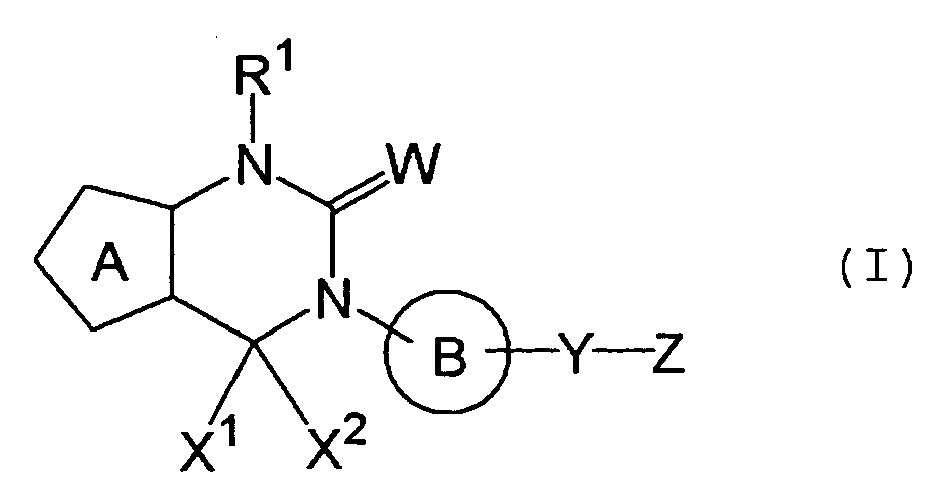
wherein ring A is a 5-membered aromatic heterocycle optionally having substituent(s),
R1 is a hydrogen atom or a hydrocarbon group optionally having substituent(s),
W is an oxygen atom or a sulfur atom,
X1 and X2 may be the same or different and each is a hydrogen atom, a hydrocarbon group optionally having substituent(s) or a heterocyclic group, or, X1 and X2 in combination optionally form an oxygen atom, a sulfur atom or =NR2,
ring B is an aromatic ring optionally further having substituent(s),
Y is a bond, C1-6 alkylene C2-6 alkenylene or C2-6 alkynylene, optionally having substituent(s), and
Z is a group represented by formula: -SOnR3, or a group represented by formula: -COR4, or a salt thereof, is useful as a pharmaceutical agent having GnRH antagonistic action.
R1 is a hydrogen atom or a hydrocarbon group optionally having substituent(s),
W is an oxygen atom or a sulfur atom,
X1 and X2 may be the same or different and each is a hydrogen atom, a hydrocarbon group optionally having substituent(s) or a heterocyclic group, or, X1 and X2 in combination optionally form an oxygen atom, a sulfur atom or =NR2,
ring B is an aromatic ring optionally further having substituent(s),
Y is a bond, C1-6 alkylene C2-6 alkenylene or C2-6 alkynylene, optionally having substituent(s), and
Z is a group represented by formula: -SOnR3, or a group represented by formula: -COR4, or a salt thereof, is useful as a pharmaceutical agent having GnRH antagonistic action.
Description
- The present invention relates to a fused pyrimidine derivative having excellent antagonistic activity against gonadotropin releasing hormone.
- Secretion of anterior pituitary hormones is regulated by peripheral hormones secreted from target organs of the respective hormones and by secretion-promoting or secretion-inhibiting hormones secreted from the hypothalamus, which is the upper central organ of the anterior lobe of the pituitary (hereinafter, these hormones are collectively called "hypothalamic hormones" in the present specification). So far, the existence of nine species of hypothalamic hormones has been confirmed, including, for example, thyrotropin releasing hormone (TRH), gonadotropin releasing hormone [GnRH, sometimes called LH-RH (luteinizing hormone releasing hormone)] and the like. These hypothalamic hormones are believed to show their actions via the receptors that are considered to exist in the anterior lobe of the pituitary, and analysis of the receptor gene which is specific to these hormones, including for humans, is being made. Accordingly, antagonists or agonists specifically and selectively acting on these receptors should control the action of the hypothalamic hormones and the secretion of anterior pituitary hormones. As a result, such antagonists or agonists are expected to be useful in preventing or treating anterior pituitary hormone-dependent diseases.
- As the compounds having GnRH-antagonizing activity, there are known GnRH-derived linear peptides (
USP 5,140,009 andUSP 5,171,835 ), a cyclic hexapeptide derivative (JP-A-61-191698 JP-A-8-295693 WO 95/28405 JP-A-9-169768 WO 96/24597 JP-A-9-169735 WO 97/14682 JP-A-9-169767 WO 97/14697 JP-A-11-315079 WO 99/33831 JP-A-2000-219691 WO 00/00493 JP-A-2001-278884 WO 00/56739 JP-A-2002-30087 - Further, the fused pyrimidine rings include the compounds described in
WO 03/64429 WO 04/67535 JP-A-10-259176 DE 19650975A ,JP-A-9-221476 WO 95/34540 WO 91/14430 GB 753171A WO 2001/032621 ,DE 3420799B ,WO 2003/101985 ,WO 97/40846 WO 2002/064598 , Journal of Heterocyclic Chemistry, vol. 32(4), p. 1181-1183 (1995), Journal of the Chemical Society, Perkin Transactions 1, vol. 11, p. 2884-2889 (1981), Acta Chimica Academiae Scientiarum Hungaricae, vol. 107(1), p. 57-66 (1981), Journal of Organic Chemistry, vol. 41(16), p. 2728-2731 (1976), Pharmazie, vol. 30(4), p. 254-255 (1975), Acta Chimica Academiae Scientiarum Hungaricae, vol. 48(1), p. 77-87 (1966), Chemische Berichte, vol. 99(5), p. 1532-1540 (1966), LaboTest Stock catalog, January 2, 2002, Tetrahedron, vol. 59(29), p. 5603-5608 (2003), Journal of Heterocyclic Chemistry, vol. 27(5), p. 1341-4 (1990), Journal of the Chinese Chemical Society, vol. 49(3), p. 407-414 (2002), ChemDiv, Inc. Product Library catalog, and Scientific Exchange Product List. - Particularly, as a pyrimidine compound fused with 5-membered aromatic heterocycle, the following compounds (1) - (34) are known.


- Peptidic compounds have many problems to be resolved in the aspects of oral absorption, administration mode, dosage, drug stability, sustained action, metabolic stability and the like. There is a strong demand for a GnRH antagonist having excellent oral absorption, especially a non-peptidic antagonist, which has excellent therapeutic effect on hormone-dependent diseases such as hormone-dependent cancers such as prostate cancer, endometriosis, precocious puberty and the like, and which does not show transient pituitary-gonadotropic action (acute action).
- The present inventors have conducted intensive studies and first synthesized a fused pyrimidine compound represented by the below-mentioned formula (I) [hereinafter sometimes to be abbreviated as compound (I). Compound (I) encompasses a compound represented by the below-mentioned formula (I-a) (hereinafter sometimes to be abbreviated as compound (I-a))] or a salt thereof. In addition, the present inventors have first found that the compound has unexpectedly excellent GnRH antagonizing activity, particularly, strong antagonist activity, based on its specific chemical structure. Moreover, they have also found for the first time that these compounds have low toxicity and are sufficiently satisfactory as medicines having GnRH antagonizing activity, thus completing the invention based on these findings.
- Thus, the invention relates to the following [1] -[23] and the like.
- [1] A compound represented by the formula (I)

- ring A is a 5-membered aromatic heterocycle optionally having substituent(s),
- R1 is a hydrogen atom or a hydrocarbon group optionally having substituent(s),
- W is an oxygen atom or a sulfur atom,
- X1 and X2 may be the same or different and each is a hydrogen atom, a hydrocarbon group optionally having substituent(s) or a heterocyclic group optionally having substituent(s), or, X1 and
- X2 optionally form an oxygen atom, a sulfur atom or =NR2 wherein
- R2 is a hydrogen atom or a hydrocarbon group optionally having substituent(s) in combination,
- ring B is an aromatic ring optionally further having substituent(s),
- Y is a bond, a C1-6 alkylene optionally having substituent(s), a C2-6 alkenylene optionally having substituent(s) or a C2-6 alkynylene optionally having substituent(s), and
- Z is a group represented by the formula: -SOnR3 wherein n is 0, 1 or 2, and R3 is an amino optionally having substituent(s), a hydrocarbon group optionally having substituent(s) or a heterocyclic group optionally having substituent(s) (provided that R3 is not a methyl group), or
- a group represented by the formula: -COR4 wherein R4 is an amino optionally having substituent(s), a hydrocarbon group optionally having substituent(s) or a heterocyclic group optionally having substituent(s);
- provided that when ring B is a ring represented by the formula:
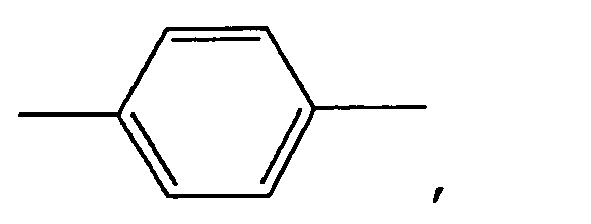
- then the amino optionally having substituent(s) for R3 is a disubstituted amino or a cyclic amino optionally having substituent(s),
- the amino optionally having substituent(s) for R4 is a disubstituted amino (except dimethylamino) or a cyclic amino optionally having substituent(s) (except monocyclic piperazin-1-yl optionally having substituent(s)), and
- the hydrocarbon group optionally having substituent(s) for R4 is not a methyl group,
or a salt thereof.
- [2] The compound of the above-mentioned [1], wherein ring A is a thiophene ring optionally having substituent(s) or a furan ring optionally having substituent(s).
- [3] The compound of the above-mentioned [1], wherein ring A is a 5-membered aromatic heterocycle optionally substituted with substituent(s) selected from the group consisting of (a) a hydrocarbon group optionally having substituent(s), (b) a heterocyclic group optionally having substituent(s), (c) a halogen, (d) a hydroxy, (e) a cyano, (f) a carboxyl, (g) an alkoxycarbonyl, (h) an amino optionally having substituent(s) and (i) a carbamoyl optionally having substituent(s), or optionally substituted with a hydrocarbon group optionally having the above-mentioned substituent(s) (a) - (i).
- [4] The compound of the above-mentioned [3], wherein the hydrocarbon group is an alkyl group, a cycloalkyl group, an alkenyl group, a cycloalkenyl group, an alkynyl group, an aralkyl group or a C10-14 aryl group.
- [5] The compound of the above-mentioned [1], wherein X1 and X2 form an oxygen atom, a sulfur atom or =NR2 wherein R2 is a hydrogen atom or a hydrocarbon group optionally having substituent(s) in combination.
- [6] The compound of the above-mentioned [1], wherein n is 2.
- [7] The compound of the above-mentioned [1], wherein Y is a bond.
- [8] The compound of the above-mentioned [1], wherein ring B is a C6-14 aryl ring optionally further having substituent(s) or an aromatic heterocycle optionally further having substituent(s).
- [9] The compound of the above-mentioned [1], wherein ring B is a ring represented by the formula:

or an aromatic heterocycle optionally further having substituent(s). - [10] The compound of the above-mentioned [1], wherein R1 is a hydrogen atom, Y is a bond, and X1 and X2 form an oxygen atom, a sulfur atom or =NR2 wherein R2 is a hydrogen atom or a hydrocarbon group optionally having substituent(s) in combination.
- [11] The compound of the above-mentioned [1], wherein ring A is a 5-membered aromatic heterocycle containing, as ring-constituting atom besides carbon atom, 1 to 4 hetero atoms selected from the group consisting of an oxygen atom, a sulfur atom and a nitrogen atom and optionally having substituent(s) selected from the group consisting of (i) - (xi),
- (i) a C1-6 alkyl group optionally having substituent(s) selected from the group consisting of (a) - (d),
- (a) a hydroxy,
- (b) a carboxyl,
- (c) a C1-6 alkoxycarbonyl, and
- (d) an amino optionally mono- or di-substituted with a C1-6 alkyl optionally having substituent(s) selected from the group consisting of a C1-6 alkoxy and a 5- to 16-membered heterocyclic group containing, as ring-constituting atom besides carbon atom, 1 to 4 hetero atoms selected from the group consisting of an oxygen atom, a sulfur atom and a nitrogen atom,
- (ii) a C2-6 alkenyl group optionally having a C1-6 alkoxycarbonyl
- (iii) a C6-14 aryl group optionally having a halogen atom,
- (iv) a 5- to 16-membered heterocyclic group containing, as ring-constituting atom besides carbon atom, 1 to 4 hetero atoms selected from the group consisting of an oxygen atom, a sulfur atom and a nitrogen atom and optionally having a C1-6 alkyl,
- (v) a cyano,
- (vi) a carboxyl,
- (vii) a formyl,
- (viii) a C1-6 alkoxycarbonyl,
- (ix) HO-N=CH-,
- (x) a carbamoyl optionally mono- or di-substituted with substituent(s) selected from the group consisting of (a) - (b),
- (a) a C1-6 alkyl group optionally having substituent(s) selected from the group consisting of a hydroxy, a C1-6 alkoxycarbonyl, a carboxyl and a 5- to 16-membered heterocyclic group containing, as ring-constituting atom besides carbon atom, 1 to 4 hetero atoms selected from the group consisting of an oxygen atom, a sulfur atom and a nitrogen atom, and
- (b) a 5- to 16-membered heterocyclic group containing, as ring-constituting atom besides carbon atom, 1 to 4 hetero atoms selected from the group consisting of an oxygen atom, a sulfur atom and a nitrogen atom, and
- (xi) a 5- to 16-membered heterocycle containing, as ring-constituting atom besides carbon atom, 1 to 4 hetero atoms selected from the group consisting of an oxygen atom, a sulfur atom and a nitrogen atom, which is formed by two substituents bonded to each other and optionally has a C1-6 alkoxy group,
- R1 is a hydrogen atom,
- W is an oxygen atom,
- X1 and X2 are hydrogen atoms, or X1 and X2 form an oxygen atom in combination,
- ring B is a C6-14 aryl ring optionally further having a halogen atom, or a 5- to 7-membered monocyclic aromatic heterocycle containing, as ring-constituting atom besides carbon atom, 1 to 4 hetero atoms selected from the group consisting of an oxygen atom, a sulfur atom and a nitrogen atom or a 8- to 16-membered bicyclic or tricyclic fused aromatic heterocycle containing, as ring-constituting atom besides carbon atom, 1 to 12 hetero atoms selected from the group consisting of an oxygen atom, a sulfur atom and a nitrogen atom, each of which optionally further has a halogen atom,
- Y is a bond, and
- Z is
- (i) a group represented by formula: -SOnR3
wherein n is 2 and R3 is a 5- to 16-membered cyclic amino, or - (ii) a group represented by formula: -CONR8(R9)
wherein R8 is a hydrogen atom, a C1-6 alkyl group or a C3-8 cycloalkyl group, and R9 is a hydrogen atom or a C6-14 aryl group optionally having substituent(s) selected from the group consisting of a halogen atom and a cyano,
- (i) a group represented by formula: -SOnR3

- (i) a C1-6 alkyl group optionally having substituent(s) selected from the group consisting of (a) - (d),
- [12] A compound represented by the formula (I-a):

- ring A is a 5-membered aromatic heterocycle optionally having substituent(s),
- R1 is a hydrogen atom or a hydrocarbon group optionally having substituent(s),
- W is an oxygen atom or a sulfur atom,
- X1 and X2 may be the same or different and each is a hydrogen atom, a hydrocarbon group optionally having substituent(s) or a heterocyclic group optionally having substituent(s), or X1 and X2 optionally form an oxygen atom, a sulfur atom or =NR2 wherein R2 is a hydrogen atom or a hydrocarbon group optionally having substituent(s) in combination,
- ring Ba is a ring represented by formula:

- wherein ring B' is a benzene ring optionally further having substituent(s),
- or an aromatic heterocycle optionally further having substituent(s),
- Y is a bond, a C1-6 alkylene optionally having substituent(s), a C2-6 alkenylene optionally having substituent(s) or a C2-6 alkynylene optionally having substituent(s), and
- Z is a group represented by formula: -SOnR3a wherein n is 0, 1 or 2, and R3a is an amino optionally having substituent (s), a C2-20 hydrocarbon group optionally having substituent(s) or a heterocyclic group optionally having substituent(s), or
- a group represented by formula: -COR4 wherein R4 is an amino optionally having substituent(s), a hydrocarbon group optionally having substituent(s) or a heterocyclic group optionally having substituent(s),
- or a salt thereof.
- [13] The compound of the above-mentioned [12], wherein ring A is a 5-membered aromatic heterocycle containing, as ring-constituting atom besides carbon atom, 1 to 4 hetero atoms selected from the group consisting of an oxygen atom, a sulfur atom and a nitrogen atom and optionally having substituent(s) selected from the group consisting of (i) - (xi),
- (i) a C1-6 alkyl group optionally having substituent(s) selected from the group consisting of (a) - (d),
- (a) a hydroxy,
- (b) a carboxyl,
- (c) a C1-6 alkoxycarbonyl, and
- (d) an amino optionally mono- or di-substituted with a C1-6 alkyl optionally having substituent(s) selected from the group consisting of a C1-6 alkoxy and a 5- to 16-membered heterocyclic group containing, as ring-constituting atom besides carbon atom, 1 to 4 hetero atoms selected from the group consisting of an oxygen atom, a sulfur atom and a nitrogen atom,
- (ii) a C2-6 alkenyl group optionally having a C1-6 alkoxycarbonyl,
- (iii) a C6-14 aryl group optionally having a halogen atom,
- (iv) a 5- to 16-membered heterocyclic group containing, as ring-constituting atom besides carbon atom, 1 to 4 hetero atoms selected from the group consisting of an oxygen atom, a sulfur atom and a nitrogen atom and optionally having a C1-6 alkyl (heterocyclic group includes, for example, a 5- to 16-membered aromatic heterocyclic group containing, as ring-constituting atom besides carbon atom, 1 to 4 hetero atoms selected from the group consisting of an oxygen atom, a sulfur atom and a nitrogen atom such as oxadiazole, triazole, tetrazole, oxazole and the like, a 5- to 16-membered nonaromatic heterocyclic group containing, as ring-constituting atom besides carbon atom and nitrogen atom, 1 to 4 hetero atoms selected from the group consisting of an oxygen atom and a sulfur atom such as morpholinyl and the like, and the like, preferably a 5- or 6-membered heterocyclic group),
- (v) a cyano,
- (vi) a carboxyl,
- (vii) a formyl,
- (viii) a C1-6 alkoxycarbonyl,
- (ix) HO-N=CH-,
- (x) a carbamoyl optionally mono- or di-substituted with substituent(s) selected from the group consisting of (a) - (b),
- (a) a C1-6 alkyl group optionally having substituent(s) selected from the group consisting of a hydroxy, a C1-6 alkoxycarbonyl and a 5- to 16-membered heterocyclic group containing, as ring-constituting atom besides carbon atom, 1 to 4 hetero atoms selected from the group consisting of an oxygen atom, a sulfur atom and a nitrogen atom, and
- (b) a 5- to 16-membered heterocyclic group containing, as ring-constituting atom besides carbon atom, 1 to 4 hetero atoms selected from the group consisting of an oxygen atom, a sulfur atom and a nitrogen atom, and
- (xi) a 5- to 16-membered heterocycle containing, as ring-constituting atom besides carbon atom, 1 to 4 hetero atoms selected from the group consisting of an oxygen atom, a sulfur atom and a nitrogen atom, which is formed by two substituents bonded to each other and optionally has a C1-6 alkoxy group,
- R1 is a hydrogen atom,
- W is an oxygen atom,
- X1 and X2 are hydrogen atoms, or X1 and X2 form an oxygen atom in combination,
- ring Ba is a ring represented by formula:
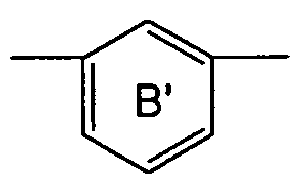
- Y is a bond, and
- Z is,
- (i) a group represented by formula: -SOnR3
wherein n is 2, and R3 is a 5- to 16-membered cyclic amino, or - (ii) a group represented by formula: -CONR8(R9)
wherein R8 is a hydrogen atom, a C1-6 alkyl group or a C3-8 cycloalkyl group, and R9 is a hydrogen atom, or a C6-14 aryl group optionally having substituent(s) selected from the group consisting of a halogen atom and a cyano.
- (i) a group represented by formula: -SOnR3
- (i) a C1-6 alkyl group optionally having substituent(s) selected from the group consisting of (a) - (d),
- [14] The compound of the above-mentioned [1], which is selected from the group consisting of methyl 3-[4-(3,4-dihydroquinolin-1(2H)-ylsulfonyl)-2-thienyl]-2,4-dioxo-1,2,3,4-tetrahydrothieno[3,4-d]pyrimidine-5-carboxylate, 3-[4-(3,4-dihydroquinolin-1(2H)-ylsulfonyl)-2-thienyl]-5-(hydroxymethyl)thieno[3,4-d]pyrimidin-2,4(1H,3H)-dione, and 3-(4-{[ethyl(phenyl)amino]carbonyl}-2-thienyl)-2,4-dioxo-1,2,3,4-tetrahydrothieno[3,4-d]pyrimidine-5-carboxylic acid, and a salt thereof.
- [15] A prodrug of the compound of the above-mentioned [1].
- [16] A pharmaceutical agent comprising the compound of the above-mentioned [1] or a prodrug thereof.
- [17] A gonadotropin releasing hormone antagonist comprising the compound of the above-mentioned [1] or a prodrug thereof.
- [18] An agent for the prophylaxis or treatment of a sex hormone-dependent disease, comprising the compound of the above-mentioned [1] or a prodrug thereof.
- [19] An agent for the prophylaxis or treatment of prostatomegaly, hysteromyoma, endometriosis, metrofibroma, precocious puberty, amenorrhea, premenstrual syndrome, dysmenorrhea, polycystic ovary syndrome, acne, baldness, Alzheimer's disease, infertility, irritable bowel syndrome, prostate cancer, uterine cancer, breast cancer or pituitary tumor, a reproduction regulator, a contraceptive, an ovulation inducing agent, or a preventive agent for post-operative recurrence of sex hormone-dependent cancers, a preventive of premature ovulation during external fertilization or embryo transplantation, or a preventive of ovulation due to endogenous LH during external fertilization, which comprises the compound of the above-mentioned [1] or a prodrug thereof.
- [20] A method for the prevention and/or treatment of prostatomegaly, hysteromyoma, endometriosis, metrofibroma, precocious puberty, amenorrhea, premenstrual syndrome, dysmenorrhea, polycystic ovary syndrome, acne, baldness, Alzheimer's disease, infertility or irritable bowel syndrome, prostate cancer, uterine cancer, breast cancer or pituitary tumor, a method for reproduction regulation, a method for contraception, a method for ovulation induction, a method for prevention of post-operative recurrence of sex hormone-dependent cancers, a method for prevention of premature ovulation during external fertilization or embryo transplantation, or a method for prevention of ovulation due to endogenous LH during external fertilization, which comprises administering an effective amount of the compound of the above-mentioned [1] or a prodrug thereof to a mammal.
- [21] Use of the compound of the above-mentioned [1] or a prodrug thereof for the production of an agent for the prophylaxis or treatment of prostatomegaly, hysteromyoma, endometriosis, metrofibroma, precocious puberty, amenorrhea, premenstrual syndrome, dysmenorrhea, polycystic ovary syndrome, acne, baldness, Alzheimer's disease, infertility, irritable bowel syndrome, prostate cancer, uterine cancer, breast cancer or pituitary tumor, a reproduction regulator, a contraceptive, an ovulation inducing agent, a preventive agent for post-operative recurrence of sex hormone-dependent cancers, a preventive of premature ovulation during external fertilization or embryo transplantation, or a preventive of ovulation due to endogenous LH during external fertilization.
- [22] The compound of the above-mentioned [1], wherein ring A is a 5-membered aromatic heterocycle containing, besides carbon atoms, 1 to 4 hetero atoms selected from the group consisting of a nitrogen atom, an oxygen atom and a sulfur atom (e.g., thiophene ring, furan ring, diazole ring (imidazole ring, pyrazole ring), triazole ring, thiazole ring, oxazole ring, thiadiazole ring, oxadiazole ring), which optionally has substituent(s) selected from substituent group A' consisting of the following (a) - (ff);
- (a) a linear or branched C1-15 alkyl group, a C3-8 cycloalkyl group, a C3-8 cycloalkyl group fused with a C6-14 aryl ring, a C2-18 alkenyl group, a C3-8 cycloalkenyl group, a C2-18 alkynyl group, an aromatic monocyclic, bicyclic or tricyclic C6-14 aryl group, a C6-14 aryl group fused with C3-8 cycloalkane or a C7-20 aralkyl group, each of which optionally has substituent(s) selected from substituent group B', (hereinafter sometimes to be abbreviated as "hydrocarbon group optionally having substituent(s)" of substituent group A');
- (b) a 5- to 7-membered monocyclic aromatic heterocyclic group containing, as ring-constituting atom besides carbon atom, 1 to 4 hetero atoms selected from the group consisting of an oxygen atom, a sulfur atom and a nitrogen atom, or a 8- to 16-membered bicyclic or tricyclic fused aromatic heterocyclic group containing, besides carbon atoms, 1 to 12 hetero atoms selected from the group consisting of an oxygen atom, a sulfur atom and a nitrogen atom (e.g., a bicyclic or tricyclic fused ring group wherein the 5- to 7-membered monocyclic aromatic heterocyclic group and a benzene ring are fused, or a bicyclic or tricyclic fused ring group wherein the 5- to 7-membered monocyclic aromatic heterocycles are fused), each of which optionally has substituent(s) selected from substituent group B', where the above-mentioned monocyclic aromatic heterocycle or fused aromatic heterocycle is optionally fused with a 5- to 7-membered monocyclic non-aromatic heterocycle or 8- to 15-membered polycyclic non-aromatic heterocycle (e.g., a bicyclic or tricyclic fused ring wherein the 5- to 7-membered monocyclic non-aromatic heterocycle and a C3-8 cycloalkane are fused, a bicyclic or tricyclic fused ring wherein the 5- to 7-membered monocyclic non-aromatic heterocycles are fused) containing, as ring-constituting atom besides carbon atom, 1 to 4 hetero atoms selected from the group consisting of an oxygen atom, a sulfur atom and a nitrogen atom (hereinafter sometimes to be abbreviated as "heterocyclic group optionally having substituent(s)" of substituent group A');
- (c) a halogen;
- (d) a hydroxy optionally protected by a tert-butyl(dimethyl)silyl [TBDMS];
- (e) a cyano;
- (f) a carboxyl optionally protected by a trimethylsilylethyl [TMS-CH2CH2-];
- (g) a C1-6 alkoxycarbonyl;
- (h) an amino optionally having 1 or 2 substituents selected from the group consisting of "hydrocarbon group optionally having substituent(s)" of substituent group A', "heterocyclic group optionally having substituent(s)" of substituent group A' and an acyl group, or a 5- to 16-membered cyclic amino optionally having substituent(s) selected from the group consisting of substituent group B' and an acyl group; preferably, an amino optionally having substituent(s), which is selected from the following (1) - (8);
- (1) an amino,
- (2) an amino monosubstituted with "hydrocarbon group optionally having substituent(s)" of substituent group A',
- (3) an amino monosubstituted with "heterocyclic group optionally having substituent(s)" of substituent group A',
- (4) an amino monosubstituted with an acyl group represented by R6CO-, R6OCO-, R6SO2-, R6SO- or R6(R7)CO- wherein R6 and R7 may be the same or different and each is a hydrogen atom, "hydrocarbon group optionally having substituent(s)" of substituent group A' or "heterocyclic group optionally having substituent(s)" of substituent group A',
- (5) an amino disubstituted with "hydrocarbon group optionally having substituent(s)" of substituent group A',
- (6) an amino disubstituted with "heterocyclic group optionally having substituent(s)" of substituent group A',
- (7) an amino disubstituted with substituents selected from the above-mentioned acyl group, and
- (8) a 5- to 8-membered cyclic amino optionally having substituent(s) selected from the group consisting of substituent group B' and the above-mentioned acyl group;
- (i) a carbamoyl optionally having 1 or 2 substituents selected from the group consisting of "hydrocarbon group optionally having substituent(s)" of substituent group A', "heterocyclic group optionally having substituent(s)" of substituent group A' and an acyl group; preferably, a carbamoyl optionally having substituent(s), which is selected from the following (1) - (8),;
- (1) a carbamoyl,
- (2) an N-mono-C1-6 alkylcarbamoyl (wherein the C1-6 alkyl moiety of the N-mono-C1-6 alkylcarbamoyl optionally has, at its substitutable position(s), 1 - 5 substituents selected from the group consisting of (i) a C1-6 alkoxy, (ii) a phenyl, (iii) an amino, (iv) a di-C1-6 alkylamino, (v) a hydroxy, (vi) a carboxyl, (vii) a C1-6 alkoxycarbonyl and (viii) a heterocyclic group optionally having substituent(s) selected from substituent group B'),
- (3) an N,N-di-C1-6 alkylcarbamoyl (wherein the two C1-6 alkyl moieties of the N,N-di-C1-6 alkylcarbamoyl may be the same or different and each optionally has, at its substitutable position(s), 1 - 5 substituents selected from the group consisting of (i) a C1-6 alkoxy, (ii) a phenyl, (iii) an amino, (iv) a di-C1-6 alkylamino, (v) a hydroxy, (vi) a carboxyl, (vii) a C1-6 alkoxycarbonyl and (viii) a heterocyclic group optionally having substituent(s) selected from substituent group B'),
- (4) an N-mono-C6-14 aryl-carbamoyl,
- (5) an N-mono-heterocyclyl-carbamoyl (wherein the heterocycle of the N-mono-heterocyclyl-carbamoyl is a 5- to 7-membered monocyclic aromatic heterocycle containing, as ring-constituting atom besides carbon atom, 1 to 4 hetero atoms selected from the group consisting of an oxygen atom, a sulfur atom and a nitrogen atom, or a 8- to 16-membered bicyclic or tricyclic fused aromatic heterocycle containing, besides carbon atoms, 1 to 12 hetero atoms selected from the group consisting of an oxygen atom, a sulfur atom and a nitrogen atom (e.g., a bicyclic or tricyclic fused ring wherein the 5- to 7-membered monocyclic aromatic heterocycle and a benzene ring are fused, or a bicyclic or tricyclic fused ring wherein the 5- to 7-membered monocyclic aromatic heterocycles are fused)),
- (6) an N,N-di-C6-14 aryl-carbamoyl,
- (7) N,N-diheterocyclyl-carbamoyl (wherein the heterocycles of the N,N-diheterocyclyl-carbamoyl may be the same or different and each is a 5- to 7-membered monocyclic aromatic heterocycle containing, as ring-constituting atom besides carbon atom, 1 to 4 hetero atoms selected from the group consisting of an oxygen atom, a sulfur atom and a nitrogen atom, or a 8- to 16-membered bicyclic or tricyclic fused aromatic heterocycle containing, besides carbon atoms, 1 to 12 hetero atoms selected from the group consisting of an oxygen atom, a sulfur atom and a nitrogen atom (e.g., a bicyclic or tricyclic fused ring wherein the 5- to 7-membered monocyclic aromatic heterocycle and a benzene ring are fused, or a bicyclic or tricyclic fused ring wherein the 5- to 7-membered monocyclic aromatic heterocycles are fused)), and
- (8) an N-C6-14 aryl-N-heterocyclyl-carbamoyl (wherein the heterocycle of the N-C6-14 aryl-N-heterocyclyl-carbamoyl is a 5-to 7-membered monocyclic aromatic heterocycle containing, as ring-constituting atom besides carbon atom, 1 to 4 hetero atoms selected from the group consisting of an oxygen atom, a sulfur atom and a nitrogen atom, or a 8- to 16-membered bicyclic or tricyclic fused aromatic heterocycle containing, besides carbon atoms, 1 to 12 hetero atoms selected from the group consisting of an oxygen atom, a sulfur atom and a nitrogen atom (e.g., a bicyclic or tricyclic fused ring wherein the 5- to 7-membered monocyclic aromatic heterocycle and a benzene ring are fused, or a bicyclic or tricyclic fused ring
- (j) a C1-6 alkoxy;
- (k) a C6-14 aryloxy;
- (l) a heterocyclyloxy (wherein the heterocycle of the heterocyclyloxy is a 5- to 7-membered monocyclic aromatic heterocycle containing, as ring-constituting atom besides carbon atom, 1 to 4 hetero atoms selected from the group consisting of an oxygen atom, a sulfur atom and a nitrogen atom, or a 8- to 16-membered bicyclic or tricyclic fused aromatic heterocycle containing, besides carbon atoms, 1 to 12 hetero atoms selected from the group consisting of an oxygen atom, a sulfur atom and a nitrogen atom (e.g., a bicyclic or tricyclic fused ring wherein the 5- to 7-membered monocyclic aromatic heterocycle and a benzene ring are fused, or a bicyclic or tricyclic fused ring wherein the 5- to 7-membered monocyclic aromatic heterocycles are fused));
- (m) a C1-6 alkyl-carbonyloxy;
- (n) a C1-6 alkylthio;
- (o) a C6-14 arylthio;
- (p) a heterocyclylthio (wherein the "heterocycle" of the heterocyclylthio is a 5- to 7-membered monocyclic aromatic heterocycle containing, as ring-constituting atom besides carbon atom, 1 to 4 hetero atoms selected from the group consisting of an oxygen atom, a sulfur atom and a nitrogen atom, or a 8- to 16-membered bicyclic or tricyclic fused aromatic heterocycle containing, besides carbon atoms, 1 to 12 hetero atoms selected from the group consisting of an oxygen atom, a sulfur atom and a nitrogen atom (e.g., a bicyclic or tricyclic fused ring wherein the 5- to 7-membered monocyclic aromatic heterocycle and a benzene ring are fused, or a bicyclic or tricyclic fused ring wherein the 5- to 7-membered monocyclic aromatic heterocycles are fused));
- (q) a C1-6 alkylsulfinyl;
- (r) a C6-14 arylsulfinyl;
- (s) a heterocyclesulfinyl (wherein the heterocycle of the heterocyclesulfinyl is a 5- to 7-membered monocyclic aromatic heterocycle containing, as ring-constituting atom besides carbon atom, 1 to 4 hetero atoms selected from the group consisting of an oxygen atom, a sulfur atom and a nitrogen atom, or a 8- to 16-membered bicyclic or tricyclic fused aromatic heterocycle containing, besides carbon atoms, 1 to 12 hetero atoms selected from the group consisting of an oxygen atom, a sulfur atom and a nitrogen atom (e.g., a bicyclic or tricyclic fused ring wherein the 5- to 7-membered monocyclic aromatic heterocycle and a benzene ring are fused, or a bicyclic or tricyclic fused ring wherein the 5- to 7-membered monocyclic aromatic heterocycles are fused));
- (t) a C1-6 alkylsulfonyl;
- (u) a C6-14 arylsulfonyl;
- (v) a heterocyclesulfonyl (wherein the heterocycle of the heterocyclesulfonyl is a 5- to 7-membered monocyclic aromatic heterocycle containing, as ring-constituting atom besides carbon atom, 1 to 4 hetero atoms selected from the group consisting of an oxygen atom, a sulfur atom and a nitrogen atom, or a 8- to 16-membered bicyclic or tricyclic fused aromatic heterocycle containing, besides carbon atoms, 1 to 12 hetero atoms selected from the group consisting of an oxygen atom, a sulfur atom and a nitrogen atom (e.g., a bicyclic or tricyclic fused ring wherein the 5- to 7-membered monocyclic aromatic heterocycle and a benzene ring are fused, or a bicyclic or tricyclic fused ring wherein the 5- to 7-membered monocyclic aromatic heterocycles are fused));
- (w) a formyl;
- (x) a C1-6 alkyl-carbonyl;
- (y) a C6-14 arylcarbonyl;
- (z) a heterocyclecarbonyl (wherein the heterocycle of the heterocyclecarbonyl is a 5- to 7-membered monocyclic aromatic heterocycle containing, as ring-constituting atom besides carbon atom, 1 to 4 hetero atoms selected from the group consisting of an oxygen atom, a sulfur atom and a nitrogen atom, or a 8- to 16-membered bicyclic or tricyclic fused aromatic heterocycle containing, besides carbon atoms, 1 to 12 hetero atoms selected from the group consisting of an oxygen atom, a sulfur atom and a nitrogen atom (e.g., a bicyclic or tricyclic fused ring wherein the 5- to 7-membered monocyclic aromatic heterocycle and a benzene ring are fused, or a bicyclic or tricyclic fused ring wherein the 5- to 7-membered monocyclic aromatic heterocycles are fused));
- (aa) a heterocyclyl-C1-6 alkyl (wherein the heterocycle of the heterocyclyl-C1-6 alkyl is a 5- to 7-membered monocyclic aromatic heterocycle containing, as ring-constituting atom besides carbon atom, 1 to 4 hetero atoms selected from the group consisting of an oxygen atom, a sulfur atom and a nitrogen atom, or a 8- to 16-membered bicyclic or tricyclic fused aromatic heterocycle containing, besides carbon atoms, 1 to 12 hetero atoms selected from the group consisting of an oxygen atom, a sulfur atom and a nitrogen atom (e.g., a bicyclic or tricyclic fused ring wherein the 5- to 7-membered monocyclic aromatic heterocycle and a benzene ring are fused, or a bicyclic or tricyclic fused ring wherein the 5- to 7-membered monocyclic aromatic heterocycles are fused));
- (bb) a C1-6 alkoxy-C1-6 alkyl;
- (cc) a nitro;
- (dd) an oxo;
- (ee) a C1-2 alkylenedioxy; and
- (ff) R5O-N=CH-(R5 is a hydrogen atom, or a linear or branched C1-15 alkyl group, a C3-8 cycloalkyl group, a C3-8 cycloalkyl group fused with a C6-14 aryl ring, a C2-18 alkenyl group, a C3-8 cycloalkenyl group, a C2-18 alkynyl group, an aromatic monocyclic, bicyclic or tricyclic C6-14 aryl group, a C6-14 aryl group fused with a C3-8 cycloalkane or a C7-20 aralkyl group, each of which optionally has substituent(s) selected from substituent group B'),
the substituent group B' consists of the following (a) - (ff);
- (a) a linear or branched C1-15 alkyl group, a C3-8 cycloalkyl group, a C3-8 cycloalkyl group fused with a C6-14 aryl ring, a C2-18 alkenyl group, a C3-8 cycloalkenyl group, a C2-18 alkynyl group, an aromatic monocyclic, bicyclic or tricyclic C6-14 aryl group, a C6-14 aryl group fused with a C3-8 cycloalkane or a C7-20 aralkyl group, each of which optionally has substituent(s) selected from substituent group C';
- (b) a 5- to 7-membered monocyclic aromatic heterocyclic group containing, as ring-constituting atom besides carbon atom, 1 to 4 hetero atoms selected from the group consisting of an oxygen atom, a sulfur atom and a nitrogen atom, or a 8- to 16-membered bicyclic or tricyclic fused aromatic heterocyclic group containing, besides carbon atoms, 1 to 12 hetero atoms selected from the group consisting of an oxygen atom, a sulfur atom and a nitrogen atom (e.g., a bicyclic or tricyclic fused ring group wherein the 5- to 7-membered monocyclic aromatic heterocyclic group and a benzene ring are fused, or a bicyclic or tricyclic fused ring group wherein the 5- to 7-membered monocyclic aromatic heterocycles are fused), each of which optionally has substituent(s) selected from substituent group C', wherein the above-mentioned monocyclic aromatic heterocycle or fused aromatic heterocycle is optionally fused with a 5- to 7-membered monocyclic non-aromatic heterocycle or an 8- to 15-membered polycyclic non-aromatic heterocycle (e.g., a bicyclic or tricyclic fused ring wherein the 5- to 7-membered monocyclic non-aromatic heterocycle and a C3-8 cycloalkane are fused, a bicyclic or tricyclic fused ring wherein the 5- to 7-membered monocyclic non-aromatic heterocycles are fused) containing, as ring-constituting atom besides carbon atom, 1 to 4 hetero atoms selected from the group consisting of an oxygen atom, a sulfur atom and a nitrogen atom;
- (c) a halogen;
- (d) a hydroxy optionally protected by a tert-butyl(dimethyl)silyl [TBDMS];
- (e) a cyano;
- (f) a carboxyl optionally protected by a trimethylsilylethyl [TMS-CH2CH2-];
- (g) a C1-6 alkoxycarbonyl;
- (h) an amino optionally having substituent(s) (amino, N-mono-C1-6 alkylamino; N,N-di-C1-6 alkylamino; N-mono-C6-14 aryl-amino; N-mono-heterocyclyl-amino; N,N-di-C6-14 aryl-amino; N,N-diheterocyclyl-amino; N-C6-14 aryl-N-heterocyclyl-amino; or 5- to 8-membered cyclic amino);
- (i) a carbamoyl optionally having substituent(s), which is selected from the following (1) - (8);
- (1) a carbamoyl,
- (2) an N-mono-C1-6 alkylcarbamoyl (wherein the C1-6 alkyl moiety of the N-mono-C1-6 alkylcarbamoyl optionally has, at its substitutable position(s), 1 - 5 substituents selected from the group consisting of (i) a C1-6 alkoxy, (ii) a phenyl, (iii) an amino, (iv) a di-C1-6 alkylamino, (v) a hydroxy, (vi) a carboxyl, (vii) a C1-6 alkoxycarbonyl and (viii) a heterocyclic group optionally having substituent(s) selected from substituent group C'),
- (3) N,N-di-C1-6 alkylcarbamoyls (wherein the two C1-6 alkyl moieties of the N,N-di-C1-6 alkylcarbamoyl may be the same or different and each optionally has, at its substitutable position(s), 1 - 5 substituents selected from the group consisting of (i) a C1-6 alkoxy, (ii) a phenyl, (iii) an amino, (iv) a di-C1-6 alkylamino, (v) a hydroxy, (vi) a carboxyl, (vii) a C1-6 alkoxycarbonyl and (viii) a heterocyclic group optionally having substituent(s) selected from substituent group C'),
- (4) an N-mono-C6-14 aryl-carbamoyl,
- (5) an N-mono-heterocyclyl-carbamoyl (wherein the heterocycle of the N-mono-heterocyclyl-carbamoyl is a 5- to 7-membered monocyclic aromatic heterocycle containing, as ring-constituting atom besides carbon atom, 1 to 4 hetero atoms selected from the group consisting of an oxygen atom, a sulfur atom and a nitrogen atom, or a 8- to 16-membered bicyclic or tricyclic fused aromatic heterocycle containing, besides carbon atoms, 1 to 12 hetero atoms selected from the group consisting of an oxygen atom, a sulfur atom and a nitrogen atom (e.g., a bicyclic or tricyclic fused ring wherein the 5- to 7-membered monocyclic aromatic heterocycle and a benzene ring are fused, or a bicyclic or tricyclic fused ring wherein the 5- to 7-membered monocyclic aromatic heterocycles are fused)),
- (6) an N,N-di-C6-14 aryl-carbamoyl,
- (7) an N,N-diheterocyclyl-carbamoyl (wherein the heterocycles of the N,N-diheterocyclyl-carbamoyl may be the same or different and each is a 5- to 7-membered monocyclic aromatic heterocycle containing, as ring-constituting atom besides carbon atom, 1 to 4 hetero atoms selected from the group consisting of an oxygen atom, a sulfur atom and a nitrogen atom, or a 8- to 16-membered bicyclic or tricyclic fused aromatic heterocycle containing, besides carbon atoms, 1 to 12 hetero atoms selected from the group consisting of an oxygen atom, a sulfur atom and a nitrogen atom (e.g., a bicyclic or tricyclic fused ring wherein the 5- to 7-membered monocyclic aromatic heterocycle and a benzene ring are fused, or a bicyclic or tricyclic fused ring wherein the 5- to 7-membered monocyclic aromatic heterocycles are fused)), and
- (8) an N-C6-14 aryl-N-heterocyclyl-carbamoyl (wherein the heterocycle of the N-C6-14 aryl-N-heterocyclyl-carbamoyl is a 5-to 7-membered monocyclic aromatic heterocycle containing, as ring-constituting atom besides carbon atom, 1 to 4 hetero atoms selected from the group consisting of an oxygen atom, a sulfur atom and a nitrogen atom, or a 8- to 16-membered bicyclic or tricyclic fused aromatic heterocycle containing, besides carbon atoms, 1 to 12 hetero atoms selected from the group consisting of an oxygen atom, a sulfur atom and a nitrogen atom (e.g., a bicyclic or tricyclic fused ring wherein the 5- to 7-membered monocyclic aromatic heterocycle and a benzene ring are fused, or a bicyclic or tricyclic fused ring
- (j) a C1-6 alkoxy;
- (k) a C6-14 aryloxy;
- (l) a heterocyclyloxy (wherein the heterocycle of the heterocyclyloxy is a 5- to 7-membered monocyclic aromatic heterocycle containing, as ring-constituting atom besides carbon atom, 1 to 4 hetero atoms selected from the group consisting of an oxygen atom, a sulfur atom and a nitrogen atom, or a 8- to 16-membered bicyclic or tricyclic fused aromatic heterocycle containing, besides carbon atoms, 1 to 12 hetero atoms selected from the group consisting of an oxygen atom, a sulfur atom and a nitrogen atom (e.g., a bicyclic or tricyclic fused ring wherein the 5- to 7-membered monocyclic aromatic heterocycle and a benzene ring are fused, or a bicyclic or tricyclic fused ring wherein the 5- to 7-membered monocyclic aromatic heterocycles are fused));
- (m) a C1-6 alkyl-carbonyloxy;
- (n) a C1-6 alkylthio;
- (o) a C6-14 arylthio;
- (p) a heterocyclylthio (wherein the "heterocycle" of the heterocyclylthio is a 5- to 7-membered monocyclic aromatic heterocycle containing, as ring-constituting atom besides carbon atom, 1 to 4 hetero atoms selected from the group consisting of an oxygen atom, a sulfur atom and a nitrogen atom, or a 8- to 16-membered bicyclic or tricyclic fused aromatic heterocycle containing, besides carbon atoms, 1 to 12 hetero atoms selected from the group consisting of an oxygen atom, a sulfur atom and a nitrogen atom (e.g., a bicyclic or tricyclic fused ring wherein the 5- to 7-membered monocyclic aromatic heterocycle and a benzene ring are fused, or a bicyclic or tricyclic fused ring wherein the 5- to 7-membered monocyclic aromatic heterocycles are fused));
- (q) a C1-6 alkylsulfinyl;
- (r) a C6-14 arylsulfinyl;
- (s) a heterocyclesulfinyl (wherein the heterocycle of the heterocyclesulfinyl is a 5- to 7-membered monocyclic aromatic heterocycle containing, as ring-constituting atom besides carbon atom, 1 to 4 hetero atoms selected from the group consisting of an oxygen atom, a sulfur atom and a nitrogen atom, or a 8- to 16-membered bicyclic or tricyclic fused aromatic heterocycle containing, besides carbon atoms, 1 to 12 hetero atoms selected from the group consisting of an oxygen atom, a sulfur atom and a nitrogen atom (e.g., a bicyclic or tricyclic fused ring wherein the 5- to 7-membered monocyclic aromatic heterocycle and a benzene ring are fused, or a bicyclic or tricyclic fused ring wherein the 5- to 7-membered monocyclic aromatic heterocycles are fused));
- (t) a C1-6 alkylsulfonyl;
- (u) a C6-14 arylsulfonyl;
- (v) a heterocyclesulfonyl (wherein the heterocycle of the heterocyclesulfonyl is a 5- to 7-membered monocyclic aromatic heterocycle containing, as ring-constituting atom besides carbon atom, 1 to 4 hetero atoms selected from the group consisting of an oxygen atom, a sulfur atom and a nitrogen atom, or a 8- to 16-membered bicyclic or tricyclic fused aromatic heterocycle containing, besides carbon atoms, 1 to 12 hetero atoms selected from the group consisting of an oxygen atom, a sulfur atom and a nitrogen atom (e.g., a bicyclic or tricyclic fused ring wherein the 5- to 7-membered monocyclic aromatic heterocycle and a benzene ring are fused, or a bicyclic or tricyclic fused ring wherein the 5- to 7-membered monocyclic aromatic heterocycles are fused));
- (w) a formyl;
- (x) a C1-6 alkyl-carbonyl;
- (y) a C6-14 arylcarbonyl;
- (z) a heterocyclecarbonyl (wherein the heterocycle of the heterocyclecarbonyl is a 5- to 7-membered monocyclic aromatic heterocycle containing, as ring-constituting atom besides carbon atom, 1 to 4 hetero atoms selected from the group consisting of an oxygen atom, a sulfur atom and a nitrogen atom, or a 8- to 16-membered bicyclic or tricyclic fused aromatic heterocycle containing, besides carbon atoms, 1 to 12 hetero atoms selected from the group consisting of an oxygen atom, a sulfur atom and a nitrogen atom (e.g., a bicyclic or tricyclic fused ring wherein the 5- to 7-membered monocyclic aromatic heterocycle and a benzene ring are fused, or a bicyclic or tricyclic fused ring wherein the 5- to 7-membered monocyclic aromatic heterocycles are fused));
- (aa) a heterocyclyl-C1-6 alkyl (wherein the heterocycle of the heterocyclyl-C1-6 alkyl is a 5- to 7-membered monocyclic aromatic heterocycle containing, as ring-constituting atom besides carbon atom, 1 to 4 hetero atoms selected from the group consisting of an oxygen atom, a sulfur atom and a nitrogen atom, or a 8- to 16-membered bicyclic or tricyclic fused aromatic heterocycle containing, besides carbon atoms, 1 to 12 hetero atoms selected from the group consisting of an oxygen atom, a sulfur atom and a nitrogen atom (e.g., a bicyclic or tricyclic fused ring wherein the 5- to 7-membered monocyclic aromatic heterocycle and a benzene ring are fused, or a bicyclic or tricyclic fused ring wherein the 5- to 7-membered monocyclic aromatic heterocycles are fused)),
- (bb) a C1-6 alkoxy-C1-6 alkyl;
- (cc) a nitro;
- (dd) an oxo;
- (ee) a C1-2 alkylenedioxy; and
- (ff) R5O-N=CH- (R5 is a hydrogen atom or a linear or branched C1-15 alkyl group, a C3-8 cycloalkyl group, a C3-8 cycloalkyl group fused with a C6-14 aryl ring, a C2-18 alkenyl group, a C3-8 cycloalkenyl group, a C2-18 alkynyl group, an aromatic monocyclic, bicyclic or tricyclic C6-14 aryl group, a C6-14 aryl group fused with a C3-8 cycloalkane or a C7-20 aralkyl group, each of which optionally has substituent(s) selected from substituent group C', the substituent group C' consists of a halogen; a hydroxy optionally protected by a tert-butyl(dimethyl)silyl [TBDMS]; a cyano; a carboxyl optionally protected by a trimethylsilylethyl [TMS-CH2CH2-] ; a C1-6 alkoxycarbonyl; a C1-6 alkyl; a C6-14 aryl; a aralkyl; a heterocyclic group; an amino; an N-mono-C1-6 alkylamino; an N,N-di-C1-6 alkylamino; an N-mono-C6-14 aryl-amino; an N-mono-heterocyclyl-amino; an N,N-di-C6-14 aryl-amino; an N,N-diheterocyclyl-amino; an N-C6-14 aryl-N-heterocyclyl-amino; a carbamoyl; an N-mono-C1-6 alkylcarbamoyl; an N,N-di-C1-6 alkylcarbamoyl; an N-mono-C6-14 aryl-carbamoyl; an N-mono-heterocyclyl-carbamoyl; an N,N-di-C6-14 aryl-carbamoyl; an N,N-diheterocyclyl-carbamoyl; an N-C6-14 aryl-N-heterocyclyl-carbamoyl; a C1-6 alkoxy; a C6-14 aryloxy; a heterocyclyloxy; a C1-6 alkyl-carbonyloxy; a C1-6 alkylthio; a C6-14 arylthio; a heterocyclylthio ; a C1-6 alkylsulfinyl; a C6-14 arylsulfinyl; a heterocyclylsulfinyl; a C1-6 alkylsulfonyl; a C6-14 arylsulfonyl; a heterocyclesulfonyl; a formyl; a C1-6 alkyl-carbonyl; a C6-14 arylcarbonyl; a heterocyclecarbonyl; a heterocyclyl-C1-6 alkyl; a C1-6 alkoxy-C1-6 alkyl; a nitro; an oxo; and a C1-2 alkylenedioxy (wherein the heterocycle is a 5- to 7-membered monocyclic aromatic heterocycle containing, as ring-constituting atom besides carbon atom, 1 to 4 hetero atoms selected from the group consisting of an oxygen atom, a sulfur atom and a nitrogen atom, or a 8- to 16-membered bicyclic or tricyclic fused aromatic heterocycle containing, besides carbon atoms, 1 to 12 hetero atoms selected from the group consisting of an oxygen atom, a sulfur atom and a nitrogen atom (e.g., a bicyclic or tricyclic fused ring wherein the 5- to 7-membered monocyclic aromatic heterocycle and a benzene ring are fused, or a bicyclic or tricyclic fused ring wherein the 5- to 7-membered monocyclic aromatic heterocycles are fused), the heterocyclic group is a 5- to 7-membered monocyclic aromatic heterocyclic group containing, as ring-constituting atom besides carbon atom, 1 to 4 hetero atoms selected from the group consisting of an oxygen atom, a sulfur atom and a nitrogen atom, or a 8-to 16-membered bicyclic or tricyclic fused aromatic heterocyclic group containing, besides carbon atoms, 1 to 12 hetero atoms selected from the group consisting of an oxygen atom, a sulfur atom and a nitrogen atom (e.g., a bicyclic or tricyclic fused ring group wherein the 5- to 7-membered monocyclic aromatic heterocycle and a benzene ring are fused, or a bicyclic or tricyclic fused ring group wherein the 5- to 7-membered monocyclic aromatic heterocycles are fused),
R1 is
- (i) a hydrogen atom or
- (ii) a linear or branched C1-15 alkyl group, a C3-8 cycloalkyl group, a C3-8 cycloalkyl group fused with a C6-14 aryl ring, a C2-18 alkenyl group, a C3-8 cycloalkenyl group, a C2-18 alkynyl group, an aromatic monocyclic, bicyclic or tricyclic C6-14 aryl group, a C6-14 aryl group fused with a C3-8 cycloalkane or a C7-20 aralkyl group, each of which optionally has substituent(s) selected from substituent group B',
W is an oxygen atom or a sulfur atom,
X1 and X2 may be the same or different and each is
- (i) a hydrogen atom,
- (ii) a linear or branched C1-15 alkyl group, a C3-8 cycloalkyl group, a C3-8 cycloalkyl group fused with a C6-14 aryl ring, a C2-18 alkenyl group, a C3-8 cycloalkenyl group, a C2-18 alkynyl group, an aromatic monocyclic, bicyclic or tricyclic C6-14 aryl group, a C6-14 aryl group fused with a C3-8 cycloalkane or a C7-20 aralkyl group, each of which optionally has substituent(s) selected from substituent group B' or
- (iii) a 5- to 7-membered monocyclic aromatic heterocyclic group containing, as ring-constituting atom besides carbon atom, 1 to 4 hetero atoms selected from the group consisting of an oxygen atom, a sulfur atom and a nitrogen atom, or a 8- to 16-membered bicyclic or tricyclic fused aromatic heterocyclic group containing, besides carbon atoms, 1 to 12 hetero atoms selected from the group consisting of an oxygen atom, a sulfur atom and a nitrogen atom (e.g., a bicyclic or tricyclic fused ring group wherein the 5- to 7-membered monocyclic aromatic heterocyclic group and a benzene ring are fused, or a bicyclic or tricyclic fused ring group wherein the 5- to 7-membered monocyclic aromatic heterocycles are fused), each of which optionally has substituent(s) selected from substituent group B',
or
X1 and X2 optionally form, in combination, an oxygen atom, a sulfur atom or =NR2
- (i) a hydrogen atom or
- (ii) a linear or branched C1-15 alkyl group, a C3-8 cycloalkyl group, a C3-8 cycloalkyl group fused with a C6-14 aryl ring, a C2-18 alkenyl group, a C3-8 cycloalkenyl group, a C2-18 alkynyl group, an aromatic monocyclic, bicyclic or tricyclic C6-14 aryl group, a C6-14 aryl group fused with a C3-8 cycloalkane or a C7-20 aralkyl group, each of which optionally has substituent(s) selected from substituent group B',
Y is- (i) a bond,
- (ii) a C1-6 alkylene optionally having substituent(s) selected from substituent group B'
- (iii) a C2-6 alkenylene optionally having substituent(s) selected from substituent group B' or
- (iv) a C2-6 alkynylene optionally having substituent(s) selected from substituent group B', and
R3 is- (i) an amino optionally having 1 or 2 substituents selected from the group consisting of "hydrocarbon group optionally having substituent(s)" of substituent group A', "heterocyclic group optionally having substituent(s)" of substituent group A' and an acyl group,
- (ii) a 5- to 16-membered cyclic amino optionally having substituent(s) selected from the group consisting of substituent group B' and an acyl group,
- (iii) a linear or branched C1-15 alkyl group, a C3-8 cycloalkyl group, a C3-8 cycloalkyl group fused with a C6-14 aryl ring, a C2-18 alkenyl group, a C3-8 cycloalkenyl group, a C2-18 alkynyl group, an aromatic monocyclic, bicyclic or tricyclic C6-14 aryl group, a C6-14 aryl group fused with a C3-8 cycloalkane or a C7-20 aralkyl group, each of which optionally has substituent(s) selected from substituent group B', or
- (iv) a 5- to 7-membered monocyclic aromatic heterocyclic group containing, as ring-constituting atom besides carbon atom, 1 to 4 hetero atoms selected from the group consisting of an oxygen atom, a sulfur atom and a nitrogen atom, or a 8- to 16-membered bicyclic or tricyclic fused aromatic heterocyclic group containing, besides carbon atoms, 1 to 12 hetero atoms selected from the group consisting of an oxygen atom, a sulfur atom and a nitrogen atom (e.g., a bicyclic or tricyclic fused ring group wherein the 5- to 7-membered monocyclic aromatic heterocyclic group and a benzene ring are fused, or a bicyclic or tricyclic fused ring group wherein the 5- to 7-membered monocyclic aromatic heterocycles are fused), each of which optionally has substituent(s) selected from substituent group B' (provided that R3 is not a methyl group), or
- (i) an amino optionally having 1 or 2 substituents the group consisting of "hydrocarbon group optionally having substituent(s)" of substituent group A', "heterocyclic group optionally having substituent(s)" of substituent group A' and an acyl group,
- (ii) a 5- to 16-membered cyclic amino optionally having substituent(s) selected from the group consisting of substituent group B' and an acyl group,
- (iii) a linear or branched C1-15 alkyl group, a C3-8 cycloalkyl group, a C3-8 cycloalkyl group fused with a C6-14 aryl ring, a C2-18 alkenyl group, a C3-8 cycloalkenyl group, a C2-18 alkynyl group, an aromatic monocyclic, bicyclic or tricyclic C6-14 aryl group, a C6-14 aryl group fused with a C3-8 cycloalkane or a C7-20 aralkyl group, each of which optionally has substituent(s) selected from substituent group B', or
- (iv) a 5- to 7-membered monocyclic aromatic heterocyclic group containing, as ring-constituting atom besides carbon atom, 1 to 4 hetero atoms selected from the group consisting of an oxygen atom, a sulfur atom and a nitrogen atom, or a 8- to 16-membered bicyclic or tricyclic fused aromatic heterocyclic group containing, besides carbon atoms, 1 to 12 hetero atoms selected from the group consisting of an oxygen atom, a sulfur atom and a nitrogen atom (e.g., a bicyclic or tricyclic fused ring group wherein the 5- to 7-membered monocyclic aromatic heterocyclic group and a benzene ring are fused, or a bicyclic or tricyclic fused ring group wherein the 5- to 7-membered monocyclic aromatic heterocycles are fused), each of which optionally has substituent(s) selected from substituent group B'; provided that when ring B is a ring represented by formula:

- (i) an amino disubstituted with substituents selected from the group consisting of "hydrocarbon group optionally having substituent(s)" of substituent group A', "heterocyclic group optionally having substituent(s)" of substituent group A' and an acyl group or
- (ii) a 5- to 16-membered cyclic amino optionally having substituent(s) selected from the group consisting of substituent group B' and an acyl group, and
the amino optionally having substituent(s) for R4 is
- (i) an amino disubstituted with substituents selected from the group consisting of "hydrocarbon group optionally having substituent(s)" of substituent group A', "heterocyclic group optionally having substituent(s)" of substituent group A' and an acyl group (except dimethylamino) or
- (ii) a 5- to 16-membered cyclic amino optionally having substituent(s) selected from the group consisting of substituent group B' and an acyl group (except monocyclic piperazin-1-yl optionally having substituent(s)), and a linear or branched C1-15 alkyl group, a C3-8 cycloalkyl group, a C3-8 cycloalkyl group fused with a C6-14 aryl ring, a C2-18 alkenyl group, a C3-8 cycloalkenyl group, a C2-18 alkynyl group, an aromatic monocyclic, bicyclic or tricyclic C6-14 aryl group, a C6-14 aryl group fused with a C3-8 cycloalkane or a C7-20 aralkyl group, each of which optionally has substituent(s) selected from substituent group B' for R4, does not contain a methyl group.
- [23] The compound of the above-mentioned [12], wherein ring A is a 5-membered aromatic heterocycle containing, besides carbon atoms, 1 to 4 hetero atoms selected from the group consisting of a nitrogen atom, an oxygen atom and a sulfur atom (e.g., thiophene ring, furan ring, diazole ring (imidazole ring, pyrazole ring), triazole ring, thiazole ring, oxazole ring, thiadiazole ring, oxadiazole ring), which optionally has substituent(s) selected from substituent group A' consisting of the following (a) - (ff);
- (a) a linear or branched C1-15 alkyl group, a C3-8 cycloalkyl group, a C3-8 cycloalkyl group fused with a C6-14 aryl ring, a C2-18 alkenyl group, a C3-8 cycloalkenyl group, a C2-18 alkynyl group, an aromatic monocyclic, bicyclic or tricyclic C6-14 aryl group, a C6-14 aryl group fused with C3-8 cycloalkane or a C7-20 aralkyl group, each of which optionally has substituent(s) selected from substituent group B';
- (b) a 5- to 7-membered monocyclic aromatic heterocyclic group containing, as ring-constituting atom besides carbon atom, 1 to 4 hetero atoms selected from the group consisting of an oxygen atom, a sulfur atom and a nitrogen atom, or a 8- to 16-membered bicyclic or tricyclic fused aromatic heterocyclic group containing, besides carbon atoms, 1 to 12 hetero atoms selected from the group consisting of an oxygen atom, a sulfur atom and a nitrogen atom (e.g., a bicyclic or tricyclic fused ring group wherein the 5- to 7-membered monocyclic aromatic heterocyclic group and a benzene ring are fused, or a bicyclic or tricyclic fused ring group wherein the 5- to 7-membered monocyclic aromatic heterocycles are fused), each of which optionally has substituent(s) selected from substituent group B', where the above-mentioned monocyclic aromatic heterocycle or fused aromatic heterocycle is optionally fused with a 5- to 7-membered monocyclic non-aromatic heterocycle or 8- to 15-membered polycyclic non-aromatic heterocycle (e.g., a bicyclic or tricyclic fused ring wherein the 5- to 7-membered monocyclic non-aromatic heterocycle and a C3-8 cycloalkane are fused, a bicyclic or tricyclic fused ring wherein the 5- to 7-membered monocyclic non-aromatic heterocycles are fused) containing, as ring-constituting atom besides carbon atom, 1 to 4 hetero atoms selected from the group consisting of an oxygen atom, a sulfur atom and a nitrogen atom;
- (c) a halogen;
- (d) a hydroxy optionally protected by a tert-butyl(dimethyl)silyl [TBDMS];
- (e) a cyano;
- (f) a carboxyl optionally protected by a trimethylsilylethyl [TMS-CH2CH2-];
- (g) a C1-6 alkoxycarbonyl;
- (h) an amino optionally having 1 or 2 substituents selected from the group consisting of "hydrocarbon group optionally having substituent(s)" of substituent group A', "heterocyclic group optionally having substituent(s)" of substituent group A' and an acyl group, or a 5- to 16-membered cyclic amino optionally having substituent(s) selected from the group consisting of substituent group B' and an acyl group; preferably, an amino optionally having substituent(s), which is selected from the following (1) - (8);
- (1) an amino,
- (2) an amino monosubstituted with "hydrocarbon group optionally having substituent(s)" of substituent group A',
- (3) an amino monosubstituted with "heterocyclic group optionally having substituent(s)" of substituent group A',
- (4) an amino monosubstituted with an acyl group represented by R6CO-, R6OCO-, R6SO2-, R6SO- or R6N(R7)CO- wherein R6 and R7 may be the same or different and each is a hydrogen atom, "hydrocarbon group optionally having substituent(s)" of substituent group A' or "heterocyclic group optionally having substituent(s)" of substituent group A',
- (5) an amino disubstituted with "hydrocarbon group optionally having substituent(s)" of substituent group A',
- (6) an amino disubstituted with "heterocyclic group optionally having substituent(s)" of substituent group A',
- (7) an amino disubstituted with substituents selected from the above-mentioned acyl group, and
- (8) a 5- to 8-membered cyclic amino optionally having substituent(s) selected from the group consisting of substituent group B' and the above-mentioned acyl group;
- (i) a carbamoyl optionally having 1 or 2 substituents selected from the group consisting of "hydrocarbon group optionally having substituent(s)" of substituent group A', "heterocyclic group optionally having substituent(s)" of substituent group A' and the above-mentioned acyl group;
preferably, a carbamoyl optionally having substituent(s), which is selected from the following (1) - (8),;- (1) a carbamoyl,
- (2) an N-mono-C1-6 alkylcarbamoyl (wherein the C1-6 alkyl moiety of the N-mono-C1-6 alkylcarbamoyl optionally has, at its substitutable position(s), 1 - 5 substituents selected from the group consisting of (i) a C1-6 alkoxy, (ii) a phenyl, (iii) an amino, (iv) a di-C1-6 alkylamino, (v) a hydroxy, (vi) a carboxyl, (vii) a C1-6 alkoxycarbonyl and (viii) a heterocyclic group optionally having substituent(s) selected from substituent group B'),
- (3) an N,N-di-C1-6 alkylcarbamoyl (wherein the two C1-6 alkyl moieties of the N,N-di-C1-6 alkylcarbamoyl may be the same or different and each optionally has, at its substitutable position(s), 1 - 5 substituents selected from the group consisting of (i) a C1-6 alkoxy, (ii) a phenyl, (iii) an amino, (iv) a di-C1-6 alkylamino, (v) a hydroxy, (vi) a carboxyl, (vii) a C1-6 alkoxycarbonyl and (viii) a heterocyclic group optionally having substituent(s) selected from substituent group B'),
- (4) an N-mono-C6-14 aryl-carbamoyl,
- (5) an N-mono-heterocyclyl-carbamoyl (wherein the heterocycle of the N-mono-heterocyclyl-carbamoyl is a 5- to 7-membered monocyclic aromatic heterocycle containing, as ring-constituting atom besides carbon atom, 1 to 4 hetero atoms selected from the group consisting of an oxygen atom, a sulfur atom and a nitrogen atom, or a 8- to 16-membered bicyclic or tricyclic fused aromatic heterocycle containing, besides carbon atoms, 1 to 12 hetero atoms selected from the group consisting of an oxygen atom, a sulfur atom and a nitrogen atom (e.g., a bicyclic or tricyclic fused ring wherein the 5- to 7-membered monocyclic aromatic heterocycle and a benzene ring are fused, or a bicyclic or tricyclic fused ring wherein the 5- to 7-membered monocyclic aromatic heterocycles are fused)),
- (6) an N,N-di-C6-14 aryl-carbamoyl,
- (7) N,N-diheterocyclyl-carbamoyl (wherein the heterocycles of the N,N-diheterocyclyl-carbamoyl may be the same or different and each is a 5- to 7-membered monocyclic aromatic heterocycle containing, as ring-constituting atom besides carbon atom, 1 to 4 hetero atoms selected from the group consisting of an oxygen atom, a sulfur atom and a nitrogen atom, or a 8- to 16-membered bicyclic or tricyclic fused aromatic heterocycle containing, besides carbon atoms, 1 to 12 hetero atoms selected from the group consisting of an oxygen atom, a sulfur atom and a nitrogen atom (e.g., a bicyclic or tricyclic fused ring wherein the 5- to 7-membered monocyclic aromatic heterocycle and a benzene ring are fused, or a bicyclic or tricyclic fused ring wherein the 5- to 7-membered monocyclic aromatic heterocycles are fused)), and
- (8) an N-C6-14 aryl-N-heterocyclyl-carbamoyl (wherein the heterocycle of the N-C6-14 aryl-N-heterocyclyl-carbamoyl is a 5-to 7-membered monocyclic aromatic heterocycle containing, as ring-constituting atom besides carbon atom, 1 to 4 hetero atoms selected from the group consisting of an oxygen atom, a sulfur atom and a nitrogen atom, or a 8- to 16-membered bicyclic or tricyclic fused aromatic heterocycle containing, besides carbon atoms, 1 to 12 hetero atoms selected from the group consisting of an oxygen atom, a sulfur atom and a nitrogen atom (e.g., a bicyclic or tricyclic fused ring wherein the 5- to 7-membered monocyclic aromatic heterocycle and a benzene ring are fused, or a bicyclic or tricyclic fused ring
- (j) a C1-6 alkoxy;
- (k) a C6-14 aryloxy;
- (l) a heterocyclyloxy (wherein a heterocycle of the heterocyclyloxy is a 5- to 7-membered monocyclic aromatic heterocycle containing, as ring-constituting atom besides carbon atom, 1 to 4 hetero atoms selected from the group consisting of an oxygen atom, a sulfur atom and a nitrogen atom, or a 8- to 16-membered bicyclic or tricyclic fused aromatic heterocycle containing, besides carbon atoms, 1 to 12 hetero atoms selected from the group consisting of an oxygen atom, a sulfur atom and a nitrogen atom (e.g., a bicyclic or tricyclic fused ring wherein the 5- to 7-membered monocyclic aromatic heterocycle and a benzene ring are fused, or a bicyclic or tricyclic fused ring wherein the 5- to 7-membered monocyclic aromatic heterocycles are fused));
- (m) a C1-6 alkyl-carbonyloxy;
- (n) a C1-6 alkylthio;
- (o) a C6-14 arylthio;
- (p) a heterocyclylthio (wherein the "heterocycle" of the heterocyclylthio is a 5- to 7-membered monocyclic aromatic heterocycle containing, as ring-constituting atom besides carbon atom, 1 to 4 hetero atoms selected from the group consisting of an oxygen atom, a sulfur atom and a nitrogen atom, or a 8- to 16-membered bicyclic or tricyclic fused aromatic heterocycle containing, besides carbon atoms, 1 to 12 hetero atoms selected from the group consisting of an oxygen atom, a sulfur atom and a nitrogen atom (e.g., a bicyclic or tricyclic fused ring wherein the 5- to 7-membered monocyclic aromatic heterocycle and a benzene ring are fused, or a bicyclic or tricyclic fused ring wherein the 5- to 7-membered monocyclic aromatic heterocycles are fused));
- (q) a C1-6 alkylsulfinyl;
- (r) a C6-14 arylsulfinyl;
- (s) a heterocyclesulfinyl (wherein the heterocycle of the heterocyclesulfinyl is a 5- to 7-membered monocyclic aromatic heterocycle containing, as ring-constituting atom besides carbon atom, 1 to 4 hetero atoms selected from the group consisting of an oxygen atom, a sulfur atom and a nitrogen atom, or a 8- to 16-membered bicyclic or tricyclic fused aromatic heterocycle containing, besides carbon atoms, 1 to 12 hetero atoms selected from the group consisting of an oxygen atom, a sulfur atom and a nitrogen atom (e.g., a bicyclic or tricyclic fused ring wherein the 5- to 7-membered monocyclic aromatic heterocycle and a benzene ring are fused, or a bicyclic or tricyclic fused ring wherein the 5- to 7-membered monocyclic aromatic heterocycles are fused));
- (t) a C1-6 alkylsulfonyl;
- (u) a C6-14 arylsulfonyl;
- (v) a heterocyclesulfonyl (wherein the heterocycle of the heterocyclesulfonyl is a 5- to 7-membered monocyclic aromatic heterocycle containing, as ring-constituting atom besides carbon atom, 1 to 4 hetero atoms selected from the group consisting of an oxygen atom, a sulfur atom and a nitrogen atom, or a 8- to 16-membered bicyclic or tricyclic fused aromatic heterocycle containing, besides carbon atoms, 1 to 12 hetero atoms selected from the group consisting of an oxygen atom, a sulfur atom and a nitrogen atom (e.g., a bicyclic or tricyclic fused ring wherein the 5- to 7-membered monocyclic aromatic heterocycle and a benzene ring are fused, or a bicyclic or tricyclic fused ring wherein the 5- to 7-membered monocyclic aromatic heterocycles are fused));
- (w) a formyl;
- (x) a C1-6 alkyl-carbonyl;
- (y) a C6-14 arylcarbonyl;
- (z) a heterocyclecarbonyl (wherein the heterocycle of the heterocyclecarbonyl is a 5- to 7-membered monocyclic aromatic heterocycle containing, as ring-constituting atom besides carbon atom, 1 to 4 hetero atoms selected from the group consisting of an oxygen atom, a sulfur atom and a nitrogen atom, or a 8- to 16-membered bicyclic or tricyclic fused aromatic heterocycle containing, besides carbon atoms, 1 to 12 hetero atoms selected from the group consisting of an oxygen atom, a sulfur atom and a nitrogen atom (e.g., a bicyclic or tricyclic fused ring wherein the 5- to 7-membered monocyclic aromatic heterocycle and a benzene ring are fused, or a bicyclic or tricyclic fused ring wherein the 5- to 7-membered monocyclic aromatic heterocycles are fused));
- (aa) a heterocyclyl-C1-6 alkyl (wherein the heterocycle of the heterocyclyl-C1-6 alkyl is a 5- to 7-membered monocyclic aromatic heterocycle containing, as ring-constituting atom besides carbon atom, 1 to 4 hetero atoms selected from the group consisting of an oxygen atom, a sulfur atom and a nitrogen atom, or a 8- to 16-membered bicyclic or tricyclic fused aromatic heterocycle containing, besides carbon atoms, 1 to 12 hetero atoms selected from the group consisting of an oxygen atom, a sulfur atom and a nitrogen atom (e.g., a bicyclic or tricyclic fused ring wherein the 5- to 7-membered monocyclic aromatic heterocycle and a benzene ring are fused, or a bicyclic or tricyclic fused ring wherein the 5- to 7-membered monocyclic aromatic heterocycles are fused));
- (bb) a C1-6 alkoxy-C1-6 alkyl;
- (cc) a nitro;
- (dd) an oxo;
- (ee) a C1-2 alkylenedioxy; and
- (ff) R5O-N=CH-(R5 is a hydrogen atom, or a linear or branched C1-15 alkyl group, a C3-8 cycloalkyl group, a C3-8 cycloalkyl group fused with a C6-14 aryl ring, a C2-18 alkenyl group, a C3-8 cycloalkenyl group, a C2-18 alkynyl group, an aromatic monocyclic, bicyclic or tricyclic C6-14 aryl group, a C6-14 aryl group fused with a C3-8 cycloalkane or a C7-20 aralkyl group, each of which optionally has substituent(s) selected from substituent group B', the substituent group B' consists of the following (a) - (ff);
- (a) a linear or branched C1-15 alkyl group, a C3-8 cycloalkyl group, a C3-8 cycloalkyl group fused with a C6-14 aryl ring, a C2-18 alkenyl group, a C3-8 cycloalkenyl group, a C2-18 alkynyl group, an aromatic monocyclic, bicyclic or tricyclic C6-14 aryl group, a C6-14 aryl group fused with a C3-8 cycloalkane or a C7-20 aralkyl group, each of which optionally has substituent(s) selected from substituent group C';
- (b) a 5- to 7-membered monocyclic aromatic heterocyclic group containing, as ring-constituting atom besides carbon atom, 1 to 4 hetero atoms selected from the group consisting of an oxygen atom, a sulfur atom and a nitrogen atom, or a 8- to 16-membered bicyclic or tricyclic fused aromatic heterocyclic group containing, besides carbon atoms, 1 to 12 hetero atoms selected from the group consisting of an oxygen atom, a sulfur atom and a nitrogen atom (e.g., a bicyclic or tricyclic fused ring group wherein the 5- to 7-membered monocyclic aromatic heterocyclic group and a benzene ring are fused, or a bicyclic or tricyclic fused ring group wherein the 5- to 7-membered monocyclic aromatic heterocycles are fused), each of which optionally has substituent(s) selected from substituent group C', wherein the above-mentioned monocyclic aromatic heterocycle or fused aromatic heterocycle is optionally fused with a 5- to 7-membered monocyclic non-aromatic heterocycle or an 8- to 15-membered polycyclic non-aromatic heterocycle (e.g., a bicyclic or tricyclic fused ring wherein the 5- to 7-membered monocyclic non-aromatic heterocycle and a C3-8 cycloalkane are fused, a bicyclic or tricyclic fused ring wherein the 5- to 7-membered monocyclic non-aromatic heterocycles are fused) containing, as ring-constituting atom besides carbon atom, 1 to 4 hetero atoms selected from the group consisting of an oxygen atom, a sulfur atom and a nitrogen atom;
- (c) a halogen;
- (d) a hydroxy optionally protected by a tert-butyl(dimethyl)silyl [TBDMS] ;
- (e) a cyano;
- (f) a carboxyl optionally protected by a trimethylsilylethyl [TMS-CH2CH2-];
- (g) a C1-6 alkoxycarbonyl;
- (h) an amino optionally having substituent(s) (amino, N-mono-C1-6 alkylamino; N,N-di-C1-6 alkylamino; N-mono-C6-14 aryl-amino; N-mono-heterocyclyl-amino; N,N-di-C6-14 aryl-amino; N,N-diheterocyclyl-amino; N-C6-14 aryl-N-heterocyclyl-amino; or 5- to 8-membered cyclic amino);
- (i) a carbamoyl optionally having substituent(s), which is selected from the following (1) - (8);
- (1) a carbamoyl,
- (2) an N-mono-C1-6 alkylcarbamoyl (wherein the C1-6 alkyl moiety of the N-mono-C1-6 alkylcarbamoyl optionally has, at its substitutable position(s), 1 - 5 substituents selected from the group consisting of (i) a C1-6 alkoxy, (ii) a phenyl, (iii) an amino, (iv) a di-C1-6 alkylamino, (v) a hydroxy, (vi) a carboxyl, (vii) a C1-6 alkoxycarbonyl and (viii) a heterocyclic group optionally having substituent(s) selected from substituent group C'),
- (3) N,N-di-C1-6 alkylcarbamoyls (wherein the two C1-6 alkyl moieties of the N,N-di-C1-6 alkylcarbamoyl may be the same or different and each optionally has, at its substitutable position(s), 1 - 5 substituents selected from the group consisting of (i) a C1-6 alkoxy, (ii) a phenyl, (iii) an amino, (iv) a di-C1-6 alkylamino, (v) a hydroxy, (vi) a carboxyl, (vii) a C1-6 alkoxycarbonyl and (viii) a heterocyclic group optionally having substituent(s) selected from substituent group C'),
- (4) an N-mono-C6-14 aryl-carbamoyl,
- (5) an N-mono-heterocyclyl-carbamoyl (wherein the heterocycle of the N-mono-heterocyclyl-carbamoyl is a 5- to 7-membered monocyclic aromatic heterocycle containing, as ring-constituting atom besides carbon atom, 1 to 4 hetero atoms selected from the group consisting of an oxygen atom, a sulfur atom and a nitrogen atom, or a 8- to 16-membered bicyclic or tricyclic fused aromatic heterocycle containing, besides carbon atoms, 1 to 12 hetero atoms selected from the group consisting of an oxygen atom, a sulfur atom and a nitrogen atom (e.g., a bicyclic or tricyclic fused ring wherein the 5- to 7-membered monocyclic aromatic heterocycle and a benzene ring are fused, or a bicyclic or tricyclic fused ring wherein the 5- to 7-membered monocyclic aromatic heterocycles are fused)),
- (6) an N,N-di-C6-14 aryl-carbamoyl,
- (7) N,N-diheterocyclyl-carbamoyls (wherein the heterocycles of the N,N-diheterocyclyl-carbamoyl may be the same or different and each is a 5- to 7-membered monocyclic aromatic heterocycle containing, as ring-constituting atom besides carbon atom, 1 to 4 hetero atoms selected from the group consisting of an oxygen atom, a sulfur atom and a nitrogen atom, or a 8- to 16-membered bicyclic or tricyclic fused aromatic heterocycle containing, besides carbon atoms, 1 to 12 hetero atoms selected from the group consisting of an oxygen atom, a sulfur atom and a nitrogen atom (e.g., a bicyclic or tricyclic fused ring wherein the 5- to 7-membered monocyclic aromatic heterocycle and a benzene ring are fused, or a bicyclic or tricyclic fused ring wherein the 5- to 7-membered monocyclic aromatic heterocycles are fused)), and
- (8) an N-C6-14 aryl-N-heterocyclyl-carbamoyl (wherein the heterocycle of the N-C6-14 aryl-N-heterocyclyl-carbamoyl is a 5-to 7-membered monocyclic aromatic heterocycle containing, as ring-constituting atom besides carbon atom, 1 to 4 hetero atoms selected from the group consisting of an oxygen atom, a sulfur atom and a nitrogen atom, or a 8- to 16-membered bicyclic or tricyclic fused aromatic heterocycle containing, besides carbon atoms, 1 to 12 hetero atoms selected from the group consisting of an oxygen atom, a sulfur atom and a nitrogen atom (e.g., a bicyclic or tricyclic fused ring wherein the 5- to 7-membered monocyclic aromatic heterocycle and a benzene ring are fused, or a bicyclic or tricyclic fused ring
- (j) a C1-6 alkoxy;
- (k) a C6-14 aryloxy;
- (l) a heterocyclyloxy (wherein the heterocycle of the heterocyclyloxy is a 5- to 7-membered monocyclic aromatic heterocycle containing, as ring-constituting atom besides carbon atom, 1 to 4 hetero atoms selected from the group consisting of an oxygen atom, a sulfur atom and a nitrogen atom, or a 8- to 16-membered bicyclic or tricyclic fused aromatic heterocycle containing, besides carbon atoms, 1 to 12 hetero atoms selected from the group consisting of an oxygen atom, a sulfur atom and a nitrogen atom (e.g., a bicyclic or tricyclic fused ring wherein the 5- to 7-membered monocyclic aromatic heterocycle and a benzene ring are fused, or a bicyclic or tricyclic fused ring wherein the 5- to 7-membered monocyclic aromatic heterocycles are fused));
- (m) a C1-6 alkyl-carbonyloxy;
- (n) a C1-6 alkylthio;
- (o) a C6-14 arylthio;
- (p) a heterocyclylthio (wherein the "heterocycle" of the heterocyclylthio is a 5- to 7-membered monocyclic aromatic heterocycle containing, as ring-constituting atom besides carbon atom, 1 to 4 hetero atoms selected from the group consisting of an oxygen atom, a sulfur atom and a nitrogen atom, or a 8- to 16-membered bicyclic or tricyclic fused aromatic heterocycle containing, besides carbon atoms, 1 to 12 hetero atoms selected from the group consisting of an oxygen atom, a sulfur atom and a nitrogen atom (e.g., a bicyclic or tricyclic fused ring wherein the 5- to 7-membered monocyclic aromatic heterocycle and a benzene ring are fused, or a bicyclic or tricyclic fused ring wherein the 5- to 7-membered monocyclic aromatic heterocycles are fused));
- (q) a C1-6 alkylsulfinyl;
- (r) a C6-14 arylsulfinyl;
- (s) a heterocyclesulfinyl (wherein the heterocycle of the heterocyclesulfinyl is a 5- to 7-membered monocyclic aromatic heterocycle containing, as ring-constituting atom besides carbon atom, 1 to 4 hetero atoms selected from the group consisting of an oxygen atom, a sulfur atom and a nitrogen atom, or a 8- to 16-membered bicyclic or tricyclic fused aromatic heterocycle containing, besides carbon atoms, 1 to 12 hetero atoms selected from the group consisting of an oxygen atom, a sulfur atom and a nitrogen atom (e.g., a bicyclic or tricyclic fused ring wherein the 5- to 7-membered monocyclic aromatic heterocycle and a benzene ring are fused, or a bicyclic or tricyclic fused ring wherein the 5- to 7-membered monocyclic aromatic heterocycles are fused));
- (t) a C1-6 alkylsulfonyl;
- (u) a C6-14 arylsulfonyl;
- (v) a heterocyclesulfonyl (wherein the heterocycle of the heterocyclesulfonyl is a 5- to 7-membered monocyclic aromatic heterocycle containing, as ring-constituting atom besides carbon atom, 1 to 4 hetero atoms selected from the group consisting of an oxygen atom, a sulfur atom and a nitrogen atom, or a 8- to 16-membered bicyclic or tricyclic fused aromatic heterocycle containing, besides carbon atoms, 1 to 12 hetero atoms selected from the group consisting of an oxygen atom, a sulfur atom and a nitrogen atom (e.g., a bicyclic or tricyclic fused ring wherein the 5- to 7-membered monocyclic aromatic heterocycle and a benzene ring are fused, or a bicyclic or tricyclic fused ring wherein the 5- to 7-membered monocyclic aromatic heterocycles are fused));
- (w) a formyl;
- (x) a C1-6 alkyl-carbonyl;
- (y) a C6-14 arylcarbonyl;
- (z) a heterocyclecarbonyl (wherein the heterocycle of the heterocyclecarbonyl is a 5- to 7-membered monocyclic aromatic heterocycle containing, as ring-constituting atom besides carbon atom, 1 to 4 hetero atoms selected from the group consisting of an oxygen atom, a sulfur atom and a nitrogen atom, or a 8- to 16-membered bicyclic or tricyclic fused aromatic heterocycle containing, besides carbon atoms, 1 to 12 hetero atoms selected from the group consisting of an oxygen atom, a sulfur atom and a nitrogen atom (e.g., a bicyclic or tricyclic fused ring wherein the 5- to 7-membered monocyclic aromatic heterocycle and a benzene ring are fused, or a bicyclic or tricyclic fused ring wherein the 5- to 7-membered monocyclic aromatic heterocycles are fused));
- (aa) a heterocyclyl-C1-6 alkyl (wherein the heterocycle of the heterocyclyl-C1-6 alkyl is a 5- to 7-membered monocyclic aromatic heterocycle containing, as ring-constituting atom besides carbon atom, 1 to 4 hetero atoms selected from the group consisting of an oxygen atom, a sulfur atom and a nitrogen atom, or a 8- to 16-membered bicyclic or tricyclic fused aromatic heterocycle containing, besides carbon atoms, 1 to 12 hetero atoms selected from the group consisting of an oxygen atom, a sulfur atom and a nitrogen atom (e.g., a bicyclic or tricyclic fused ring wherein the 5- to 7-membered monocyclic aromatic heterocycle and a benzene ring are fused, or a bicyclic or tricyclic fused ring wherein the 5- to 7-membered monocyclic aromatic heterocycles are fused)),
- (bb) a C1-6 alkoxy-C1-6 alkyl;
- (cc) a nitro;
- (dd) an oxo;
- (ee) a C1-2 alkylenedioxy; and
- (ff) R5O-N=CH- (R5 is a hydrogen atom or a linear or branched C1-15 alkyl group, a C3-8 cycloalkyl group, a C3-8 cycloalkyl group fused with a C6-14 aryl ring, a C2-18 alkenyl group, a C3-8 cycloalkenyl group, a C2-18 alkynyl group, an aromatic monocyclic, bicyclic or tricyclic C6-14 aryl group, a C6-14 aryl group fused with a C3-8 cycloalkane or a C7-20 aralkyl group, each of which optionally has substituent(s) selected from substituent group C', the substituent group C' consists of a halogen; a hydroxy optionally protected by a tert-butyl(dimethyl)silyl [TBDMS]; a cyano; a carboxyl optionally protected by a trimethylsilylethyl [TMS-CH2CH2-]; a C1-6 alkoxycarbonyl; a C1-6 alkyl; a C6-14 aryl; a C7-20 aralkyl; a heterocyclic group; an amino; an N-mono-C1-6 alkylamino; an N,N-di-C1-6 alkylamino; an N-mono-C6-14 aryl-amino; an N-mono-heterocyclyl-amino; an N,N-di-C6-14 aryl-amino; an N,N-diheterocyclyl-amino; an N-C6-14 aryl-N-heterocyclyl-amino; a carbamoyl; an N-mono-C1-6 alkylcarbamoyl; an N,N-di-C1-6 alkylcarbamoyl; an N-mono-C6-14 aryl-carbamoyl; an N-mono-heterocyclyl-carbamoyl; an N,N-di-C6-14 aryl-carbamoyl; an N,N-diheterocyclyl-carbamoyl; an N-C6-14 aryl-N-heterocyclyl-carbamoyl; a C1-6 alkoxy; a C6-14 aryloxy; a heterocyclyloxy; a C1-6 alkyl-carbonyloxy; a C1-6 alkylthio; a C6-14 arylthio; a heterocyclylthio ; a C1-6 alkylsulfinyl; a C6-14 arylsulfinyl; a heterocyclesulfinyl; a C1-6 alkylsulfonyl; a C6-14 arylsulfonyl; a heterocyclesulfonyl; a formyl; a C1-6 alkyl-carbonyl; a C6-14 arylcarbonyl; a heterocyclecarbonyl; a heterocyclyl-C1-6 alkyl; a C1-6 alkoxy-C1-6 alkyl; a nitro; an oxo; and a C1-2 alkylenedioxy (wherein the heterocycle is a 5- to 7-membered monocyclic aromatic heterocycle containing, as ring-constituting atom besides carbon atom, 1 to 4 hetero atoms selected from the group consisting of an oxygen atom, a sulfur atom and a nitrogen atom, or a 8- to 16-membered bicyclic or tricyclic fused aromatic heterocycle containing, besides carbon atoms, 1 to 12 hetero atoms selected from the group consisting of an oxygen atom, a sulfur atom and a nitrogen atom (e.g., a bicyclic or tricyclic fused ring wherein the 5- to 7-membered monocyclic aromatic heterocycle and a benzene ring are fused, or a bicyclic or tricyclic fused ring wherein the 5- to 7-membered monocyclic aromatic heterocycles are fused), the heterocyclic group is a 5- to 7-membered monocyclic aromatic heterocyclic group containing, as ring-constituting atom besides carbon atom, 1 to 4 hetero atoms selected from the group consisting of an oxygen atom, a sulfur atom and a nitrogen atom, or a 8-to 16-membered bicyclic or tricyclic fused aromatic heterocyclic group containing, besides carbon atoms, 1 to 12 hetero atoms selected from the group consisting of an oxygen atom, a sulfur atom and a nitrogen atom (e.g., a bicyclic or tricyclic fused ring group wherein the 5- to 7-membered monocyclic aromatic heterocycle and a benzene ring are fused, or a bicyclic or tricyclic fused ring group wherein the 5- to 7-membered monocyclic aromatic heterocycles are fused)),
R1 is
- (i) a hydrogen atom or
- (ii) a linear or branched C1-15 alkyl group, a C3-8 cycloalkyl group, a C3-8 cycloalkyl group fused with a C6-14 aryl ring, a C2-18 alkenyl group, a C3-8 cycloalkenyl group, a C2-18 alkynyl group, an aromatic monocyclic, bicyclic or tricyclic C6-14 aryl group, a C6-14 aryl group fused with a C3-8 cycloalkane or a C7-20 aralkyl group, each of which optionally has substituent(s) selected from substituent group B',
X1 and X2 may be the same or different and each is- (i) a hydrogen atom,
- (ii) a linear or branched C1-15 alkyl group, a C3-8 cycloalkyl group, a C3-8 cycloalkyl group fused with a C6-14 aryl ring, a C2-18 alkenyl group, a C3-8 cycloalkenyl group, a C2-18 alkynyl group, an aromatic monocyclic, bicyclic or tricyclic C6-14 aryl group, a C6-14 aryl group fused with a C3-8 cycloalkane or a C7-20 aralkyl group, each of which optionally has substituent(s) selected from substituent group B' or
- (iii) a 5- to 7-membered monocyclic aromatic heterocyclic group containing, as ring-constituting atom besides carbon atom, 1 to 4 hetero atoms selected from the group consisting of an oxygen atom, a sulfur atom and a nitrogen atom, or a 8- to 16-membered bicyclic or tricyclic fused aromatic heterocyclic group containing, besides carbon atoms, 1 to 12 hetero atoms selected from the group consisting of an oxygen atom, a sulfur atom and a nitrogen atom (e.g., a bicyclic or tricyclic fused ring group wherein the 5- to 7-membered monocyclic aromatic heterocyclic group and a benzene ring are fused, or a bicyclic or tricyclic fused ring group wherein the 5- to 7-membered monocyclic aromatic heterocycles are fused), each of which optionally has substituent(s) selected from substituent group B', or
wherein R2 is- (i) a hydrogen atom or
- (ii) a linear or branched C1-15 alkyl group, a C3-8 cycloalkyl group, a C3-8 cycloalkyl group fused with a C6-14 aryl ring, a C2-18 alkenyl group, a C3-8 cycloalkenyl group, a C2-18 alkynyl group, an aromatic monocyclic, bicyclic or tricyclic C6-14 aryl group, a C6-14 aryl group fused with a C3-8 cycloalkane or a C7-20 aralkyl group, each of which optionally has substituent(s) selected from substituent group B',
ring B is
- (i) a ring represented by formula:

- (ii) a 5- to 7-membered monocyclic aromatic heterocycle containing, as ring-constituting atom besides carbon atom, 1 to 4 hetero atoms selected from the group consisting of an oxygen atom, a sulfur atom and a nitrogen atom or a 8- to 16-membered bicyclic or tricyclic fused aromatic heterocycle containing, besides carbon atoms, 1 to 12 hetero atoms selected from the group consisting of an oxygen atom, a sulfur atom and a nitrogen atom (e.g., a bicyclic or tricyclic fused ring wherein the 5- to 7-membered monocyclic aromatic heterocycle and a benzene ring are fused, or a bicyclic or tricyclic fused ring wherein the 5- to 7-membered monocyclic aromatic heterocycles are fused), each of which optionally further has substituent(s) selected from substituent group A',
Y is
- (i) a bond,
- (ii) a C1-6 alkylene optionally having substituent(s) selected from substituent group B'
- (iii) a C2-6 alkenylene optionally having substituent(s) selected from substituent group B'
or - (iv) a C2-6 alkynylene optionally having substituent(s) selected from substituent group B', and
Z is a group represented by formula: -SOnR3 wherein n is 0, 1 or 2,
R3 is
- (i) an amino optionally having 1 or 2 substituents selected from the group consisting of "hydrocarbon group optionally having substituent(s)" of substituent group A', "heterocyclic group optionally having substituent(s)" of substituent group A' and an acyl group,
- (ii) a 5- to 16-membered cyclic amino optionally having substituent(s) selected from the group consisting of substituent group B' and an acyl group,
- (iii) a linear or branched C1-15 alkyl group, a C3-8 cycloalkyl group, a C3-8 cycloalkyl group fused with a C6-14 aryl ring, a C2-18 alkenyl group, a C3-8 cycloalkenyl group, a C2-18 alkynyl group, an aromatic monocyclic, bicyclic or tricyclic C6-14 aryl group, a C6-14 aryl group fused with a C3-8 cycloalkane or a C7-20 aralkyl group, each of which optionally has substituent(s) selected from substituent group B', or
- (iv) a 5- to 7-membered monocyclic aromatic heterocyclic group containing, as ring-constituting atom besides carbon atom, 1 to 4 hetero atoms selected from the group consisting of an oxygen atom, a sulfur atom and a nitrogen atom, or a 8- to 16-membered bicyclic or tricyclic fused aromatic heterocyclic group containing, besides carbon atoms, 1 to 12 hetero atoms selected from the group consisting of an oxygen atom, a sulfur atom and a nitrogen atom (e.g., a bicyclic or tricyclic fused ring group wherein the 5- to 7-membered monocyclic aromatic heterocyclic group and a benzene ring are fused, or a bicyclic or tricyclic fused ring group wherein the 5- to 7-membered monocyclic aromatic heterocycles are fused), each of which optionally has substituent(s) selected from substituent group B' (provided that R3 is not a methyl group), or
a group represented by formula: -COR4 wherein R4 is
- (i) an amino optionally having 1 or 2 substituents the group consisting of "hydrocarbon group optionally having substituent(s)" of substituent group A', "heterocyclic group optionally having substituent(s)" of substituent group A' and an acyl group,
- (ii) a 5- to 16-membered cyclic amino optionally having substituent(s) selected from the group consisting of substituent group B' and an acyl group,
- (iii) a linear or branched C1-15 alkyl group, a C3-8 cycloalkyl group, a C3-8 cycloalkyl group fused with a C6-14 aryl ring, a C2-18 alkenyl group, a C3-8 cycloalkenyl group, a C2-18 alkynyl group, an aromatic monocyclic, bicyclic or tricyclic C6-14 aryl group, a C6-14 aryl group fused with a C3-8 cycloalkane or a C7-20 aralkyl group, each of which optionally has substituent(s) selected from substituent group B', or
- (iv) a 5- to 7-membered monocyclic aromatic heterocyclic group containing, as ring-constituting atom besides carbon atom, 1 to 4 hetero atoms selected from the group consisting of an oxygen atom, a sulfur atom and a nitrogen atom, or a 8- to 16-membered bicyclic or tricyclic fused aromatic heterocyclic group containing, besides carbon atoms, 1 to 12 hetero atoms selected from the group consisting of an oxygen atom, a sulfur atom and a nitrogen atom (e.g., a bicyclic or tricyclic fused ring group wherein the 5- to 7-membered monocyclic aromatic heterocyclic group and a benzene ring are fused, or a bicyclic or tricyclic fused ring group wherein the 5- to 7-membered monocyclic aromatic heterocycles are fused), each of which optionally has substituent(s) selected from substituent group B'.
- Ring A is a "5-membered aromatic heterocycle optionally having substituent(s)". "5-membered aromatic heterocycle" of "5-membered aromatic heterocycle optionally having substituent(s)" for ring A includes a 5-membered aromatic heterocycle containing, as ring-constituting atom besides carbon atoms, 1 to 4 hetero atoms selected from the group consisting of a nitrogen atom, an oxygen atom and a sulfur atom, specifically thiophene ring, furan ring, diazole ring (imidazole ring, pyrazole ring), triazole ring, thiazole ring, oxazole ring, thiadiazole ring, oxadiazole ring and the like.
- Specifically, ring A includes, for example, a compound represented by ring A1 - ring A33 shown below.


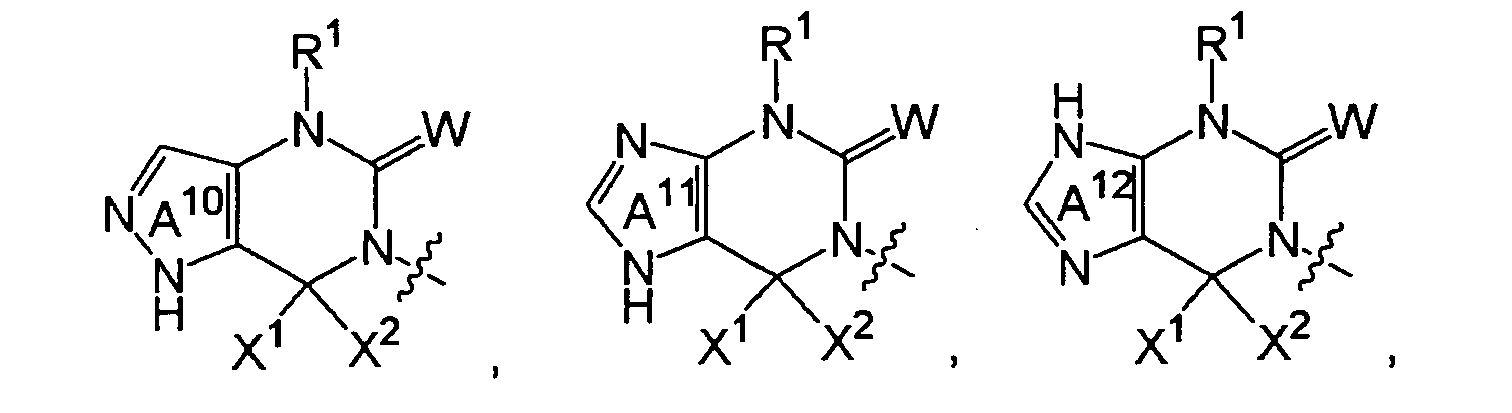


- As the substituent that ring A may have, a substituent selected from the substituent group A consisting of the following (a) - (ff) can be mentioned.
- (a) hydrocarbon group optionally having substituent(s) [As the "hydrocarbon group" of the above-mentioned "hydrocarbon group optionally having substituent(s)", for example, hydrocarbon group having 1 to 25, preferably 1 to 20, carbon atoms such as "alkyl group", "cycloalkyl group", "alkenyl group", "cycloalkenyl group", "alkynyl group", "aryl group", "aralkyl group" and the like, and the like can be mentioned.
- As the "alkyl group", for example, a "linear or branched C1-15 alkyl group" such as methyl, ethyl, propyl, isopropyl, butyl, isobutyl, sec-butyl, tert-butyl, pentyl, hexyl, heptyl, octyl, nonyl, decyl, undecyl, tridecyl, tetradecyl, pentadecyl and the like, and the like can be used. Preferably, a C1-6 alkyl group (e.g., methyl, ethyl, propyl, isopropyl, butyl, isobutyl, sec-butyl, tert-butyl, pentyl, hexyl etc.) can be used.
- As the "cycloalkyl group", for example, a "C3-8 cycloalkyl group" such as cyclopropyl, cyclobutyl, cyclopentyl, cyclohexyl, cycloheptyl, cyclooctyl and the like, a C3-8 cycloalkyl group fused with a C6-14 aryl ring (e.g., benzene, naphthalene, anthracene, phenanthrene etc.) (e.g., 1,2,3,4-tetrahydronaphthalen-1-yl, 2,3-dihydro-1H-inden-1-yl, 6,7,8,9-tetrahydro-5H-benzo[7]annulen-5-yl etc.) and the like can be used.
- As the "alkenyl group", for example, a "C2-18 alkenyl group" such as vinyl, allyl, isopropenyl, 1-butenyl, 2-butenyl, 3-butenyl, 3-octenyl, 9-octadecenyl and the like, preferably a "C2-6 alkenyl group" and the like can be used.
- As the "cycloalkenyl group", for example, a "C3-8 cycloalkenyl group" such as cyclopropenyl, cyclobutenyl, cyclopentenyl, cyclohexenyl, cycloheptenyl, cyclooctenyl and the like, and the like can be used.
- As the "alkynyl group", for example, a "C2-18 alkynyl group" such as ethynyl, propynyl, 1-butynyl, 2-butynyl, 1-pentynyl, 2-pentynyl, 3-pentynyl, 5-hexynyl and the like, preferably a "C2-6 alkynyl group" and the like can be used.
- As the "aryl group", for example, an aromatic monocyclic, bicyclic or tricyclic C6-14 aryl group such as phenyl, 1-naphthyl, 2-naphthyl, phenanthryl, anthryl(anthryl) and the like; a C6-14 aryl group fused with a C3-8 cycloalkane (e.g., cyclopropane, cyclobutane, cyclopentane, cyclohexane, cycloheptane, cyclooctane etc.) (e.g., 5,6,7,8-tetrahydronaphthalen-1-yl etc.) and the like can be used.
- As the "aralkyl group", for example, a C7-20 aralkyl group such as benzyl, phenethyl, 3-phenylpropyl, 4-phenylbutyl, (1-naphthyl)methyl, 2-(1-naphthyl)ethyl, 2-(2-naphthyl)ethyl and the like [i.e., C6-14 aryl-C1-6 alkyl group] can be mentioned.
- The "substituent" of the "hydrocarbon group optionally having substituent(s)" is substituent group B to be defined below. The position thereof is not particularly limited as long as it is a substitutable position, and the number of the substituent is 1 - 6, preferably 1 - 3.];
- (b) heterocyclic group optionally having substituent(s) [As the "heterocycle" of the above-mentioned "heterocyclic group optionally having substituent(s)", for example, an aromatic heterocycle and a non-aromatic heterocycle and the like can be mentioned.
- As the aromatic heterocycle, for example, a 5- to 7-membered monocyclic aromatic heterocycle containing, as ring-constituting atom besides carbon atom, 1 to 4 hetero atoms selected from the group consisting of an oxygen atom, a sulfur atom and a nitrogen atom or a 8- to 16-membered bicyclic or tricyclic fused aromatic heterocycle containing, besides carbon atoms, 1 to 12 hetero atoms selected from the group consisting of an oxygen atom, a sulfur atom and a nitrogen atom can be mentioned.
- As the 5-membered monocyclic aromatic heterocyclic group containing, as ring-constituting atom besides carbon atom, 1 to 4 hetero atoms selected from the group consisting of an oxygen atom, a sulfur atom and a nitrogen atom, for example, furyl (e.g., 2-furyl, 3-furyl etc.), thienyl (e.g., 2-thienyl, 3-thienyl etc.), pyrrolyl (e.g., 1-pyrrolyl, 2-pyrrolyl, 3-pyrrolyl etc.), imidazolyl (e.g., imidazol-1-yl, imidazol-2-yl, imidazol-4-yl, imidazol-5-yl etc.), pyrazolyl (e.g., 1-pyrazolyl, 3-pyrazolyl, 4-pyrazolyl, 5-pyrazolyl etc.), 1,3-oxazolyl (e.g., 1,3-oxazol-2-yl, 1,3-oxazol-4-yl, 1,3-oxazol-5-yl etc.), isoxazolyl (e.g., 3-isoxazolyl, 4-isoxazolyl, 5-isoxazolyl etc.), 1,3-thiazolyl (e.g., 1,3-thiazol-2-yl, 1,3-thiazol-4-yl, 1,3-thiazol-5-yl etc.), isothiazolyl (e.g., 3-isothiazolyl, 4-isothiazolyl, 5-isothiazolyl etc.), oxadiazolyl (e.g., 1,2,4-oxadiazol-3-yl, 1,2,4-oxadiazol-5-yl, 1,3,4-oxadiazol-2-yl, 1,2,3-oxadiazol-4-yl, 1,2,3-oxadiazol-5-yl, 1,2,5-oxadiazol-3-yl etc.), thiadiazolyl (e.g., 1,2,4-thiadiazol-3-yl, 1,2,4-thiadiazol-5-yl, 1,3,4-thiadiazol-2-yl, 1,2,3-thiadiazol-4-yl, 1,2,3-thiadiazol-5-yl, 1,2,5-thiadiazol-3-yl etc.), triazolyl [for example, 1,2,3-triazolyl (e.g., 1H-1,2,3-triazol-1-yl, 1H-1,2,3-triazol-4-yl, 1H-1,2,3-triazol-5-yl, 2H-1,2,3-triazol-2-yl, 2H-1,2,3-triazol-4-yl etc.), 1,2,4-triazolyl (e.g., 1H-1,2,4-triazol-1-yl, 1H-1,2,4-triazol-3-yl, 4H-1,2,4-triazol-3-yl, 4H-1,2,4-triazol-4-yl etc.) etc.], tetrazolyl (e.g., 1H-tetrazol-l-yl, 1H-tetrazol-5-yl, 2H-tetrazol-2-yl, 2H-tetrazol-5-yl etc.) and the like can be mentioned.
- As the 6-membered monocyclic aromatic heterocyclic group containing, as ring-constituting atom besides carbon atom, 1 to 4 hetero atoms selected from the group consisting of an oxygen atom, a sulfur atom and a nitrogen atom, for example, pyridyl (e.g., 2-pyridyl, 3-pyridyl, 4-pyridyl, N-oxide-2-pyridyl, N-oxide-3-pyridyl, N-oxide-4-pyridyl etc.), pyrimidinyl (e.g., 2-pyrimidinyl, 4-pyrimidinyl, 5-pyrimidinyl, 1-oxide-2-pyrimidinyl, 1-oxide-4-pyrimidinyl, 1-oxide-5-pyrimidinyl etc.), pyridazinyl (e.g., 3-pyridazinyl, 4-pyridazinyl, 1-oxide-3-pyridazinyl, 1-oxide-4-pyridazinyl, 2-oxide-3-pyridazinyl, 2-oxide-4-pyridazinyl etc.), pyrazinyl (e.g., 2-pyrazinyl, 3-pyrazinyl etc.), triazinyl (e.g., 1,2,3-triazin-4-yl, 1,2,3-triazin-5-yl, 1,2,4-triazin-3-yl, 1,2,4-triazin-5-yl, 1,2,4-triazin-6-yl, 1,3,5-triazin-2-yl etc.) and the like can be mentioned.
- As the 7-membered monocyclic aromatic heterocyclic group containing, as ring-constituting atom besides carbon atom, 1 to 4 hetero atoms selected from the group consisting of an oxygen atom, a sulfur atom and a nitrogen atom, for example, oxepinyl (e.g., 2-oxepinyl, 3-oxepinyl, 4-oxepinyl etc.), thiepinyl (e.g., 2-thiepinyl, 3-thiepinyl, 4-thiepinyl etc.), 1H-azepinyl (e.g., 1H-azepin-1-yl, 1H-azepin-2-yl, 1H-azepin-3-yl etc.), diazepinyl [for example, 1H-1,2-diazepinyl (e.g., 1H-1,2-diazepin-1-yl, 1H-1,2-diazepin-3-yl, 1H-1,2-diazepin-4-yl, 1H-1,2-diazepin-5-yl etc.), 1H-1,3-diazepinyl (e.g., 1H-1,3-diazepin-1-yl, 1H-1,3-diazepin-2-yl, 1H-1,3-diazepin-4-yl, 1H-1,3-diazepin-5-yl etc.), 1H-1,4-diazepinyl (e.g., 1H-1,4-diazepin-1-yl, 1H-1,4-diazepin-2-yl, 1H-1,4-diazepin-5-yl, 1H-1,4-diazepin-6-yl etc.) etc.], oxazepinyl [for example, 1,2-oxazepinyl (e.g., 1,2-oxazepin-3-yl, 1,2-oxazepin-4-yl, 1,2-oxazepin-5-yl, 1,2-oxazepin-6-yl, 1,2-oxazepine-7-yl etc.), 1,3-oxazepinyl (e.g., 1,3-oxazepin-2-yl, 1,3-oxazepin-4-yl, 1,3-oxazepin-5-yl, 1,3-oxazepin-6-yl, 1,3-oxazepine-7-yl etc.), 1,4-oxazepinyl (e.g., 1,4-oxazepin-2-yl, 1,4-oxazepin-3-yl, 1,4-oxazepin-5-yl, 1,4-oxazepin-6-yl, 1,4-oxazepine-7-yl etc.) etc.], thiazepinyl [for example, 1,2-thiazepinyl (e.g., 1,2-thiazepin-3-yl, 1,2-thiazepin-4-yl, 1,2-thiazepin-5-yl, 1,2-thiazepin-6-yl, 1,2-thiazepin-7-yl etc.), 1,3-thiazepinyl (e.g., 1,3-thiazepin-2-yl, 1,3-thiazepin-4-yl, 1,3-thiazepin-5-yl, 1,3-thiazepin-6-yl, 1,3-thiazepin-7-yl etc.), 1,4-thiazepinyl (e.g., 1,4-thiazepin-2-yl, 1,4-thiazepin-3-yl, 1,4-thiazepin-5-yl, 1,4-thiazepin-6-yl, 1,4-thiazepin-7-yl etc.) etc.] and the like can be mentioned.
- As the 8- to 16-membered bicyclic or tricyclic fused aromatic heterocycle containing, as ring-constituting atom besides carbon atom, 1 to 12 hetero atoms selected from the group consisting of an oxygen atom, a sulfur atom and a nitrogen atom, for example, a bicyclic or tricyclic fused ring wherein the 5- to 7-membered monocyclic aromatic heterocycle and a benzene ring are fused, a bicyclic or tricyclic fused ring wherein the 5- to 7-membered monocyclic aromatic heterocycles are fused and the like can be mentioned.
- For example, bicyclic or tricyclic fused ring group containing, besides carbon atoms, 1 to 12 hetero atoms selected from the group consisting of an oxygen atom, a sulfur atom and a nitrogen atom (e.g., benzofuryl, benzothienyl, benzoxazolyl, benzothiazolyl, benzothiadiazolyl, benzimidazolyl, quinolyl, isoquinolyl, quinazolinyl, quinoxalinyl, indolyl, 1H-indazolyl, 1H-pyrrolopyridyl, 1H-imidazopyridyl, 1H-imidazopyrazinyl, 1H-pyrrolo[2,3-b]pyrazinyl, tetrazolo[1,5-b]pyridazinyl, triazolo[4,5-b]pyridazinyl, cinnolinyl, phthalazinyl, indolizinyl, quinolizinyl, 1,8-naphthyridinyl, purinyl, pteridinyl, dibenzofuranyl, carbazolyl, acrydinyl, phenanthridinyl, chromanyl, benzoxazinyl, phenazinyl, phenothiazinyl, phenoxazinyl etc.) and the like can be mentioned.
- Preferable examples of the aromatic heterocycle include furan, thiophene, pyrrole, imidazole, pyrazole, oxazole, isoxazole, thiazole, isothiazole, oxadiazole, thiadiazole, triazole, tetrazole, pyridine, pyrimidine, pyridazine, pyrazine, triazine, benzofuran, benzothiophene, benzoxazole, benzothiazole, benzothiadiazole, benzimidazole, quinoline, isoquinoline, quinazoline, quinoxaline, indole, 1H-indazole, 1H-pyrrolopyridine, 1H-imidazopyridine, 1H-imidazopyrazine, 1H-pyrrolo[2,3-b]pyrazine and the like. The aromatic heterocycle is preferably 5- or 6-membered aromatic heterocycle, more preferably furan, thiophene, pyrazole, oxazole, thiazole, pyridine, pyrimidine and the like.
- The above-mentioned monocyclic aromatic heterocycle or fused aromatic heterocycle may be fused with the following monocyclic non-aromatic heterocycle or polycyclic non-aromatic heterocycle.
- As the non-aromatic heterocycle, for example, 5- to 7-membered monocyclic non-aromatic heterocycle or 8- to 15-membered polycyclic non-aromatic heterocycle each of which contains, as ring-constituting atom besides carbon atom, 1 to 4 hetero atoms selected from the group consisting of an oxygen atom, a sulfur atom and a nitrogen atom can be mentioned.
- As the monocyclic non-aromatic heterocycle, for example, pyrrolidine, pyrroline, pyrazolidine, piperidine, piperazine (e.g., 2-piperazinyl, 3-piperazinyl etc.), pyran, thiopyran, morpholine (e.g., 2-morpholinyl, 3-morpholinyl, 4-morpholinyl etc.), thiomorpholine (e.g., 2-thiomorpholinyl, 3-thiomorpholinyl, 4-thiomorpholinyl etc.), hexamethyleneimine, oxazolidine, thiazolidine, imidazolidine, imidazoline, tetrahydrofuran, azepane, tetrahydropyridine, diazepane (e.g., 1,2-diazepane, 1,3-diazepane, 1,4-diazepane etc.), oxazepane (e.g., 1,2-oxazepane, 1,3-oxazepane, 1,4-oxazepane etc.), thiazepane (e.g., 1,2-thiazepane, 1,3-thiazepane, 1,4-thiazepane etc.) and the like can be mentioned.
- As the polycyclic non-aromatic heterocycle, for example, a bicyclic or tricyclic fused ring wherein the 5- to 7-membered monocyclic non-aromatic heterocycle and a cycloalkane [for example, a C3-8 cycloalkane (e.g., cyclopropane, cyclobutane, cyclopentane, cyclohexane, cycloheptane, cyclooctane etc.) etc.] are fused, a bicyclic or tricyclic fused ring wherein the 5- to 7-membered monocyclic non-aromatic heterocycles are fused and the like can be mentioned.
- Preferable examples of the non-aromatic heterocycle include pyrrolidine, pyrroline, pyrazolidine, piperidine, piperazine (e.g., 2-piperazinyl, 3-piperazinyl etc.), pyran, thiopyran, morpholine (e.g., 2-morpholinyl, 3-morpholinyl, 4-morpholinyl etc.), thiomorpholine (e.g., 2-thiomorpholinyl, 3-thiomorpholinyl, 4-thiomorpholinyl etc.), hexamethyleneimine, oxazolidine, thiazolidine, imidazolidine, imidazoline, tetrahydrofuran, azepane, tetrahydropyridine and the like.
- The above-mentioned monocyclic non-aromatic heterocycle or polycyclic non-aromatic heterocycle may be fused with the above-mentioned monocyclic aromatic heterocycle or fused aromatic heterocycle.
- The "substituent" of the "heterocyclic group optionally having substituent(s)" is substituent group B to be defined below. The position thereof is not particularly limited as long as it is a substitutable position, and the number of the substituent is 1 - 6, preferably 1 - 3.];
- (c) halogen (e.g., fluorine, chlorine, bromine, iodine atom etc.);
- (d) hydroxy optionally protected by a protecting group (e.g., tert-butyl(dimethyl)silyl [TBDMS] etc.);
- (e) cyano;
- (f) carboxyl optionally protected by a protecting group (e.g., trimethylsilylethyl [TMS-CH2CH2-] etc.);
- (g) alkoxycarbonyl [for example, C1-6 alkoxycarbonyl (e.g., methoxycarbonyl, ethoxycarbonyl, propoxycarbonyl, isopropoxycarbonyl, butoxycarbonyl, isobutoxycarbonyl, sec-butoxycarbonyl, tert-butoxycarbonyl, pentyloxycarbonyl, hexyloxycarbonyl) etc.];
- (h) amino optionally having substituent(s);
- The "substituent" of "monosubstituted amino", "disubstituted amino" and "cyclic amino optionally having substituent(s)" are as defined below.
- In the "disubstituted amino", the substituents may be the same or different.
- The position of the substituent of "cyclic amino optionally having substituent(s)" is not particularly limited as long as it is a substitutable position, and the number of the substituent is 1 - 6, preferably 1 - 3.
- As the "cyclic amino" of "cyclic amino optionally having substituent(s)", for example, a 5- to 16-membered cyclic amino such as 1-pyrrolidinyl, 1-pyrrolinyl, 1-pyrrolyl, azepan-1-yl, 1-imidazolidinyl, 1-imidazolinyl, 1-imidazolyl, 2-pyrazolidinyl, 2-pyrazolinyl, 1-pyrazolyl, 1-indolinyl, 1-indolyl, 2-isoindolinyl, 2-isoindolyl, 2,3-dihydro-1H-indol-1-yl, 1-piperidyl, 3,4-dihydro-1,5-naphthyridin-1(2H)-yl, 3,4-dihydroquinolin-1(2H)-yl, 3,4-dihydroisoquinolin-2(1H)-yl, 1-piperazinyl, octahydroquinolin-1(2H)-yl, octahydroisoquinolin-2(1H)-yl, 3,4-dihydroquinoxalin-1(2H)-yl, 1H-azepin-1-yl, 2,3,4,5,6,7-hexahydro-1H-azepin-1-yl, 2,3,4,5-tetrahydro-1H-1-benzoazepin-1-yl, 1,3,4,5-tetrahydro-2H-2-benzoazepin-2-yl, 3,4,5,6-tetrahydro-1-benzoazocin-1(2H)-yl, 2,3-dihydro-4,1-benzothiazepin-1(5H)-yl, 3,4-dihydro-1,5-benzothiazepin-5(2H)-yl, 2,3-dihydro-4,1-benzothiazepin-1(5H)-yl, 2,3-dihydro-4,1-benzooxazepin-1(5H)-yl, 1,2,4,5-tetrahydro-3H-3-benzoazepin-3-yl, 2,3,4,5-tetrahydro-1H-1,5-benzodiazepin-1-yl, 2,3,4,5-tetrahydro-1H-1,4-benzodiazepin-1-yl, 2,3-dihydro-4H-1,4-benzoxazin-4-yl, 3,4-dihydro-2H-1,4-benzoxazin-1-yl, 3,4-dihydro-1,5-benzooxazepin-5(2H)-yl, 5,6,7,8-tetrahydro-4H-thieno[3,2-b]azepin-4-yl, 4,5,6,7-tetrahydro-8H-thieno[2,3-b]azepin-8-yl, 4-morpholinyl, 4-thiomorpholinyl, 2,3-dihydro-4H-pyrido[3,2-b][1,4]oxazin-4-yl, 2,3-dihydro-4H-1,4-benzothiazin-4-yl, 5,6,7,8-tetrahydropyrazolo[4,3-b]azepin-4(1H)-yl and the like can be mentioned.];
- (i) carbamoyl optionally having substituent(s)
[As the above-mentioned "carbamoyl optionally having substituent(s)", for example, a carbamoyl optionally having 1 or 2 substituents selected from the group consisting of "hydrocarbon group optionally having substituent(s)" of substituent group A, "heterocyclic group optionally having substituent(s)" of substituent group A" and the below-mentioned acyl group and the like can be mentioned, particularly preferably, for example, the following (1) - (8) and the like can be mentioned:- (1) carbamoyl,
- (2) N-mono-C1-6 alkylcarbamoyl (e.g., methylcarbamoyl, ethylcarbamoyl, propylcarbamoyl, isopropylcarbamoyl, butylcarbamoyl, isobutylcarbamoyl, sec-butylcarbamoyl, tert-butylcarbamoyl, pentylcarbamoyl, hexylcarbamoyl etc.) [wherein the C1-6 alkyl moiety of the "N-mono-C1-6 alkylcarbamoyl" may have, at its substitutable position(s), 1 - 5, preferably 1 - 2, substituents selected from (i) C1-6 alkoxy (e.g., methoxy, ethoxy, propoxy, isopropoxy, butoxy, isobutoxy, sec-butoxy, tert-butoxy, pentyloxy, hexyloxy etc.), (ii) phenyl, (iii) amino, (iv) di-C1-6 alkylamino (e.g., dimethylamino, diethylamino, dipropylamino, diisopropylamino, dibutylamino, di(sec-butyl)amino, di(tert-butyl)amino, N-ethyl-N-methylamino, N-methyl-N-propylamino, N-methyl-N-isopropylamino, N-butyl-N-methylamino, N-(sec-butyl)-N-methylamino, N-(tert-butyl)-N-methylamino, N-ethyl-N-propylamino, N-ethyl-N-isopropylamino, N-butyl-N-ethylamino, N-(sec-butyl)-N-ethylamino, N-(tert-butyl)-N-ethylamino, N-isopropyl-N-propylamino, N-butyl-N-propylamino, N-(sec-butyl)-N-propylamino, N-(tert-butyl)-N-propylamino etc.), (v) hydroxy, (vi) carboxyl, (vii) C1-6 alkoxycarbonyl (e.g., methoxycarbonyl, ethoxycarbonyl, propoxycarbonyl, isopropoxycarbonyl, butoxycarbonyl, isobutoxycarbonyl, sec-butoxycarbonyl, tert-butoxycarbonyl, pentyloxycarbonyl, hexyloxycarbonyl etc.), (viii) heterocyclic group optionally having substituent(s) (as defined for the "heterocyclic group optionally having substituent(s)" as the substituent for the above-mentioned ring A) and the like],
- (3) N,N-di-C1-6 alkylcarbamoyl (e.g., dimethylcarbamoyl, diethylcarbamoyl, dipropylcarbamoyl, diisopropylcarbamoyl, dibutylcarbamoyl, diisobutylcarbamoyl, methylethylcarbamoyl etc.) [wherein the two C1-6 alkyl moieties of the "N,N-di-C1-6 alkylcarbamoyl" may be the same or different and each optionally has, at its substitutable position(s), 1 - 5, preferably 1 - 2, substituents selected from (i) C1-6 alkoxy (e.g., methoxy, ethoxy, propoxy, isopropoxy, butoxy, isobutoxy, sec-butoxy, tert-butoxy, pentyloxy, hexyloxy etc.), (ii) phenyl, (iii) amino, (iv) di-C1-6 alkylamino (e.g., dimethylamino, diethylamino, dipropylamino, diisopropylamino, dibutylamino, di(sec-butyl)amino, di(tert-butyl)amino, N-ethyl-N-methylamino, N-methyl-N-propylamino, N-methyl-N-isopropylamino, N-butyl-N-methylamino, N-(sec-butyl)-N-methylamino, N-(tert-butyl)-N-methylamino, N-ethyl-N-propylamino, N-ethyl-N-isopropylamino, N-butyl-N-ethylamino, N-(sec-butyl)-N-ethylamino, N-(tert-butyl)-N-ethylamino, N-isopropyl-N-propylamino, N-butyl-N-propylamino, N-(sec-butyl)-N-propylamino, N-(tert-butyl)-N-propylamino etc.), (v) hydroxy, (vi) carboxyl, (vii) C1-6 alkoxycarbonyl (e.g., methoxycarbonyl, ethoxycarbonyl, propoxycarbonyl, isopropoxycarbonyl, butoxycarbonyl, isobutoxycarbonyl, sec-butoxycarbonyl, tert-butoxycarbonyl, pentyloxycarbonyl, hexyloxycarbonyl etc.), (viii) heterocyclic group optionally having substituent(s) (as defined for the "heterocyclic group optionally having substituent(s)" as the substituent for the above-mentioned ring A) and the like],
- (4) N-mono-C6-14 aryl-carbamoyl (e.g., phenylcarbamoyl, 1-naphthylcarbamoyl, 2-naphthylcarbamoyl, phenanthrylcarbamoyl, anthrylcarbamoyl etc.),
- (5) N-mono-heterocyclyl-carbamoyl (wherein the "heterocycle" of the "N-mono-heterocyclyl-carbamoyl" is as defined for the "heterocycle" of the above-mentioned "heterocyclic group optionally having substituent(s)"),
- (6) N,N-di-C6-14 aryl-carbamoyl (e.g., diphenylcarbamoyl, di(1-naphthyl)carbamoyl, di(2-naphthyl)carbamoyl, di(phenanthryl)carbamoyl, di(anthryl)carbamoyl, N-phenyl-N-(1-naphthyl)carbamoyl etc.),
- (7) N,N-diheterocyclyl-carbamoyl (wherein the "heterocycles" of the "N,N-diheterocyclyl-carbamoyl" may be the same or different and each is as defined for the "heterocycle" of the above-mentioned "heterocyclic group optionally having substituent(s)"), and
- (8) N-C6-14 aryl-N-heterocyclyl-carbamoyl (wherein as the "C6-14 aryl" of the "N-C6-14 aryl-N-heterocyclyl-carbamoyl", phenyl, 1-naphthyl, 2-naphthyl, phenanthryl, anthryl and the like can be mentioned, the "heterocycle" is as defined for the "heterocycle" of the above-mentioned "heterocyclic group optionally having substituent(s)")];
- (j) C1-6 alkoxy (e.g., methoxy, ethoxy, propoxy, isopropoxy, butoxy, isobutoxy, sec-butoxy, tert-butoxy, pentyloxy, hexyloxy etc.);
- (k) C6-14 aryloxy (e.g., phenyloxy, 1-naphthyloxy, 2-naphthyloxy, phenanthryloxy, anthryloxy etc.);
- (l) heterocyclyloxy (wherein the "heterocycle" of the "heterocyclyloxy" is as defined for the "heterocycle" of the above-mentioned "heterocyclic group optionally having substituent(s)");
- (m) C1-6 alkyl-carbonyloxy (e.g., methylcarbonyloxy, ethylcarbonyloxy, propylcarbonyloxy, isopropylcarbonyloxy, butylcarbonyloxy, isobutylcarbonyloxy, sec-butylcarbonyloxy, tert-butylcarbonyloxy, pentylcarbonyloxy, hexylcarbonyloxy etc.);
- (n) C1-6 alkylthio (e.g., methylthio, ethylthio, propylthio, isopropylthio, butylthio, isobutylthio, sec-butylthio, tert-butylthio, pentylthio, hexylthio etc.);
- (o) C6-14 arylthio (e.g., phenylthio, 1-naphthylthio, 2-naphthylthio, phenanthrylthio, anthrylthio etc.);
- (p) heterocyclylthio (wherein the "heterocycle" of "heterocyclylthio" is as defined for the "heterocycle" of the above-mentioned "heterocyclic group optionally having substituent(s)");
- (q) C1-6 alkylsulfinyl (e.g., methylsulfinyl, ethylsulfinyl, propylsulfinyl, isopropylsulfinyl, butylsulfinyl, isobutylsulfinyl, sec-butylsulfinyl, tert-butylsulfinyl, pentylsulfinyl, hexylsulfinyl etc.);
- (r) C6-14 arylsulfinyl (e.g., phenylsulfinyl, 1-naphthylsulfinyl, 2-naphthylsulfinyl, phenanthrylsulfinyl, anthrylsulfinyl etc.);
- (s) heterocyclesulfinyl (wherein the "heterocycle" of the "heterocyclesulfinyl" is as defined for the "heterocycle" of the above-mentioned "heterocyclic group optionally having substituent(s)");
- (t) C1-6 alkylsulfonyl (e.g., methylsulfonyl, ethylsulfonyl, propylsulfonyl, isopropylsulfonyl, butylsulfonyl, isobutylsulfonyl, sec-butylsulfonyl, tert-butylsulfonyl, pentylsulfonyl, hexylsulfonyl etc.);
- (u) C6-14 arylsulfonyl (e.g., phenylsulfonyl, 1-naphthylsulfonyl, 2-naphthylsulfonyl, phenanthrylsulfonyl, anthrylsulfonyl etc.);
- (v) heterocyclesulfonyl (wherein the "heterocycle" of the "heterocyclesulfonyl" is as defined for the "heterocycle" of the above-mentioned "heterocyclic group optionally having substituent(s)");
- (w) formyl;
- (x) C1-6 alkyl-carbonyl (e.g., acetyl, ethylcarbonyl, propylcarbonyl, isopropylcarbonyl, butylcarbonyl, isobutylcarbonyl, sec-butylcarbonyl, tert-butylcarbonyl, pentylcarbonyl, hexylcarbonyl etc.);
- (y) C6-14 arylcarbonyl (e.g., benzoyl, 1-naphthylcarbonyl, 2-naphthylcarbonyl, phenanthrylcarbonyl, anthrylcarbonyl etc.);
- (z) heterocyclecarbonyl (wherein the "heterocycle" of the "heterocyclecarbonyl" is as defined for the "heterocycle" of the above-mentioned "heterocyclic group optionally having substituent(s)");
- (aa) heterocyclyl-C1-6 alkyl (wherein the "heterocycle" of the "heterocyclyl-C1-6 alkyl" is as defined for the "heterocycle" of the above-mentioned "heterocyclic group optionally having substituent(s)", and as the "C1-6 alkyl", methyl, ethyl, propyl, isopropyl, butyl, isobutyl, sec-butyl, tert-butyl, pentyl, hexyl and the like can be mentioned);
- (bb) C1-6 alkoxy-C1-6 alkyl (wherein as the "C1-6 alkoxy" of the "C1-6 alkoxy-C1-6 alkyl", methoxy, ethoxy, propoxy, isopropoxy, butoxy, isobutoxy, sec-butoxy, tert-butoxy, pentyloxy, hexyloxy and the like can be mentioned, as the "C1-6 alkyl", methyl, ethyl, propyl, isopropyl, butyl, isobutyl, sec-butyl, tert-butyl, pentyl, hexyl and the like can be mentioned);
- (cc) nitro;
- (dd) oxo;
- (ee) C1-2 alkylenedioxy (e.g., methylenedioxy, ethylenedioxy etc.); and
- (ff) R5O-N=CH- (R5 is a hydrogen atom or hydrocarbon group optionally having substituent(s), the "hydrocarbon group optionally having substituent(s)" for the above-mentioned R5 is as defined for the "hydrocarbon group optionally having substituent(s)" of the above-mentioned substituent group A).
- The position of the substituent of ring A is not particularly limited as long as it is a substitutable position. The number of the substituent is 1 - 3, preferably 1 or 2. These substituents optionally have the above-defined substituent(s) at its substitutable position(s), and the number of the substituent is not particularly limited.
- As the "substituent" of "hydrocarbon group optionally having substituent(s)" as the substituent for the above-mentioned ring A, the substituent selected from the substituent group B consisting of the following (a) - (ff) can be mentioned.
- (a) hydrocarbon group optionally having substituent(s)
[As the "hydrocarbon group" of the above-mentioned "hydrocarbon group optionally having substituent(s)", those similar to the "hydrocarbon group" of substituent group A can be used.
As the "substituent" of the above-mentioned "hydrocarbon group optionally having substituent(s)", for example, halogen (e.g., fluorine, chlorine, bromine, iodine atom etc.); hydroxy optionally protected by a protecting group (e.g., tert-butyl(dimethyl)silyl[TBDMS] etc.); cyano; carboxyl optionally protected by a protecting group (e.g., trimethylsilylethyl[TMS-CH2CH2-] etc.); C1-6 alkoxycarbonyl; C1-6 alkyl; C6-14 aryl; C7-20 aralkyl; heterocyclic group; amino; N-mono-C1-6 alkylamino; N,N-di-C1-6 alkylamino; N-mono-C6-14 aryl-amino; N-mono-heterocyclyl-amino; N,N-di-C6-14 aryl-amino; N,N-diheterocyclyl-amino; N-C6-14 aryl-N-heterocyclyl-amino; carbamoyl; N-mono-C1-6 alkylcarbamoyl; N,N-di-C1-6 alkylcarbamoyl; N-mono-C6-14 aryl-carbamoyl; N-mono-heterocyclyl-carbamoyl; N,N-di-C6-14 aryl-carbamoyl; N,N-diheterocyclyl-carbamoyl; N-C6-14 aryl-N-heterocyclyl-carbamoyl; C1-6 alkoxy; C6-14 aryloxy; heterocyclyloxy; C1-6 alkyl-carbonyloxy; C1-6 alkylthio; C6-14 arylthio; heterocyclylthio; C1-6 alkylsulfinyl; C6-14 arylsulfinyl; heterocyclesulfinyl; C1-6 alkylsulfonyl; C6-14 arylsulfonyl; heterocyclesulfonyl; formyl; C1-6 alkyl-carbonyl; C6-14 arylcarbonyl; heterocyclecarbonyl; heterocyclyl-C1-6 alkyl; C1-6 alkoxy-C1-6 alkyl; nitro; oxo; C1-2 alkylenedioxy (hereinafter to be referred to as substituent group C. The "heterocycle" of substituent group C is as defined for the "heterocycle" of the "heterocyclic group optionally having substituent(s)" of the above-mentioned substituent group A) and the like are used. The position thereof is not particularly limited as long as it is a substitutable position, and the number of the substituent is 1 - 6, preferably 1 - 3.]; - (b) a heterocyclic group optionally having substituent(s)
[as the "heterocycle" of the above-mentioned "heterocyclic group optionally having substituent(s)", those similar to the "heterocyclic group" of the "heterocyclic group optionally having substituent(s)" of substituent group A can be used.
As the "substituent" of "heterocyclic group optionally having substituent(s)", a substituent elected from substituent group C can be used, and the position thereof is not particularly limited as long as it is a substitutable position, and the number of the substituent is 1 - 6, preferably 1 - 3.]; - (c) halogen (e.g., fluorine, chlorine, bromine, iodine atom etc.);
- (d) hydroxy optionally protected by a protecting group (e.g., tert-butyl(dimethyl)silyl[TBDMS] etc.);
- (e) cyano;
- (f) carboxyl optionally protected by a protecting group (e.g., trimethylsilylethyl [TMS-CH2CH2-] etc.);
- (g) alkoxycarbonyl [for example, C1-6 alkoxycarbonyl (e.g., methoxycarbonyl, ethoxycarbonyl, propoxycarbonyl, isopropoxycarbonyl, butoxycarbonyl, isobutoxycarbonyl, sec-butoxycarbonyl, tert-butoxycarbonyl, pentyloxycarbonyl, hexyloxycarbonyl etc.];
- (h) amino optionally having substituent(s) (e.g., amino, N-mono-C1-6 alkylamino; N,N-di-C1-6 alkylamino; N-mono-C6-14 aryl-amino; N-mono-heterocyclyl-amino; N,N-di-C6-14 aryl-amino; N,N-diheterocyclyl-amino; N-C6-14 aryl-N-heterocyclyl-amino; 5- to 8-membered cyclic amino);
- (i) carbamoyl optionally having substituent(s) (e.g., carbamoyl; N-mono-C1-6 alkylcarbamoyl; N,N-di-C1-6 alkylcarbamoyl; N-mono-C6-14 aryl-carbamoyl, N-mono-heterocyclyl-carbamoyl; N,N-di-C6-14 aryl-carbamoyl; N,N-diheterocyclyl-carbamoyl; N-C6-14 aryl-N-heterocyclyl-carbamoyl) (wherein the C1-6 alkyl moiety of the N-mono-C1-6 alkylcarbamoyl may have, at its substitutable position(s), 1 - 5 substituents selected from the group consisting of (i) C1-6 alkoxy, (ii) phenyl, (iii) amino, (iv) di-C1-6 alkylamino, (v) hydroxy, (vi) carboxyl, (vii) C1-6 alkoxycarbonyl and (viii) heterocyclic group optionally having substituent(s) selected from substituent group C, the two C1-6 alkyl moieties of the N,N-di-C1-6 alkylcarbamoyl may be the same or different and each optionally has, at its substitutable position(s), 1 - 5 substituents selected from the group consisting of (i) C1-6 alkoxy, (ii) phenyl, (iii) amino, (iv) di-C1-6 alkylamino, (v) hydroxy, (vi) carboxyl, (vii) C1-6 alkoxycarbonyl and (viii) heterocyclic group optionally having substituent(s) selected from substituent group C);
- (j) C1-6 alkoxy (e.g., methoxy, ethoxy, propoxy, isopropoxy, butoxy, isobutoxy, sec-butoxy, tert-butoxy, pentyloxy, hexyloxy etc.);
- (k) C6-14 aryloxy (e.g., phenyloxy, 1-naphthyloxy, 2-naphthyloxy, phenanthryloxy, anthryloxy etc.);
- (l) heterocyclyloxy (wherein the "heterocycle" of "heterocyclyloxy" is as defined for the "heterocycle" of the above-mentioned "heterocyclic group optionally having substituent(s)");
- (m) C1-6 alkyl-carbonyloxy (e.g., methylcarbonyloxy, ethylcarbonyloxy, propylcarbonyloxy, isopropylcarbonyloxy, butylcarbonyloxy, isobutylcarbonyloxy, sec-butylcarbonyloxy, tert-butylcarbonyloxy, pentylcarbonyloxy, hexylcarbonyloxy etc.);
- (n) C1-6 alkylthio (e.g., methylthio, ethylthio, propylthio, isopropylthio, butylthio, isobutylthio, sec-butylthio, tert-butylthio, pentylthio, hexylthio etc.);
- (o) C6-14 arylthio (e.g., phenylthio, 1-naphthylthio, 2-naphthylthio, phenanthrylthio, anthrylthio etc.);
- (p) heterocyclylthio (wherein the "heterocycle" of "heterocyclylthio" is as defined for the "heterocycle" of the above-mentioned "heterocyclic group optionally having substituent(s)");
- (q) C1-6 alkylsulfinyl (e.g., methylsulfinyl, ethylsulfinyl, propylsulfinyl, isopropylsulfinyl, butylsulfinyl, isobutylsulfinyl, sec-butylsulfinyl, tert-butylsulfinyl, pentylsulfinyl, hexylsulfinyl etc.);
- (r) C6-14 arylsulfinyl (e.g., phenylsulfinyl, 1-naphthylsulfinyl, 2-naphthylsulfinyl, phenanthrylsulfinyl, anthrylsulfinyl etc.);
- (s) heterocyclesulfinyl (wherein the "heterocycle" of the "heterocyclesulfinyl" is as defined for the "heterocycle" of the above-mentioned "heterocyclic group optionally having substituent(s)");
- (t) C1-6 alkylsulfonyl (e.g., methylsulfonyl, ethylsulfonyl, propylsulfonyl, isopropylsulfonyl, butylsulfonyl, isobutylsulfonyl, sec-butylsulfonyl, tert-butylsulfonyl, pentylsulfonyl, hexylsulfonyl etc.);
- (u) C6-14 arylsulfonyl (e.g., phenylsulfonyl, 1-naphthylsulfonyl, 2-naphthylsulfonyl, phenanthrylsulfonyl, anthrylsulfonyl etc.);
- (v) heterocyclesulfonyl (wherein the "heterocycle" of the "heterocyclesulfonyl" is as defined for the "heterocycle" of the above-mentioned "heterocyclic group optionally having substituent(s)");
- (w) formyl;
- (x) C1-6 alkyl-carbonyl (e.g., acetyl, ethylcarbonyl, propylcarbonyl, isopropylcarbonyl, butylcarbonyl, isobutylcarbonyl, sec-butylcarbonyl, tert-butylcarbonyl, pentylcarbonyl, hexylcarbonyl etc.);
- (y) C6-14 arylcarbonyl (e.g., benzoyl, 1-naphthylcarbonyl, 2-naphthylcarbonyl, phenanthrylcarbonyl, anthrylcarbonyl etc.);
- (z) heterocyclecarbonyl (wherein the "heterocycle" of the "heterocyclecarbonyl" is as defined for the "heterocycle" of the above-mentioned "heterocyclic group optionally having substituent(s)");
- (aa) heterocyclyl-C1-6 alkyl (wherein the "heterocycle" of the "heterocyclyl-C1-6 alkyl" is as defined for the "heterocycle" of the above-mentioned "heterocyclic group optionally having substituent(s)", and as the "C1-6 alkyl", methyl, ethyl, propyl, isopropyl, butyl, isobutyl, sec-butyl, tert-butyl, pentyl, hexyl and the like can be mentioned);
- (bb) C1-6 alkoxy-C1-6 alkyl (wherein as the "C1-6 alkoxy" of the "C1-6 alkoxy-C1-6 alkyl", methoxy, ethoxy, propoxy, isopropoxy, butoxy, isobutoxy, sec-butoxy, tert-butoxy, pentyloxy, hexyloxy and the like can be mentioned, and as the "C1-6 alkyl", methyl, ethyl, propyl, isopropyl, butyl, isobutyl, sec-butyl, tert-butyl, pentyl, hexyl and the like can be mentioned);
- (cc) nitro;
- (dd) oxo;
- (ee) C1-2 alkylenedioxy (e.g., methylenedioxy, ethylenedioxy etc.); and
- (ff) R5O-N=CH- (R5 is a hydrogen atom or a hydrocarbon group optionally having substituent(s), and the "hydrocarbon group optionally having substituent(s)" for the above-mentioned R5 is as defined for the "hydrocarbon group optionally having substituent(s)" for the above-mentioned substituent group B). Preferably, it is
- (a) hydrocarbon group optionally having substituent(s) selected from substituent group C, (b) heterocyclic group optionally having substituent(s) selected from substituent group C [wherein the heterocyclic group preferably optionally has 1 to 3 substituents selected from (i) hydroxy, (ii) amino, (iii) mono-C1-6 alkylamino, (iv) di-C1-6 alkylamino, (v) C1-6 alkoxy and (vi) halogen], (c) halogen, (d) hydroxy, (e) cyano, (f) carboxyl, (g) alkoxycarbonyl, (h) amino optionally having substituent(s), (i) carbamoyl optionally having substituent(s), (j) nitro, (k) C1-6 alkoxy, (l) C1-6 alkyl-carbonyloxy, (m) C1-6 alkylthio, (n) C1-6 alkylsulfinyl, (o) C1-6 alkylsulfonyl, or (p) C1-2 alkylenedioxy.
- As the "substituent" of the "heterocyclic group optionally having substituent(s)" as the substituent for the above-mentioned ring A, those similar to the substituent of substituent group B can be mentioned.
- Preferably, it is (a) hydrocarbon group optionally having substituent(s) selected from substituent group C, (b) heterocyclic group optionally having substituent(s) selected from substituent group C [wherein the heterocyclic group, preferably, optionally has 1 to 3 substituents selected from the group consisting of (i) hydroxy, (ii) amino, (iii) mono-C1-6 alkylamino, (iv) di-C1-6 alkylamino, (v) C1-6 alkoxy and (vi) halogen], (c) halogen, (d) hydroxy, (e) cyano, (f) carboxyl, (g) alkoxycarbonyl, (h) amino optionally having substituent(s), (i) carbamoyl optionally having substituent(s), (j) nitro, (k) C1-6 alkoxy, (l) C1-6 alkyl-carbonyloxy, (m) C1-6 alkylthio, (n) C1-6 alkylsulfinyl, (o) C1-6 alkylsulfonyl, or (p) C1-2 alkylenedioxy.
- As the "substituent" of the "monosubstituted amino" and "disubstituted amino" as the substituent for the above-mentioned ring A, 1 or 2 substituents selected from the "hydrocarbon group optionally having substituent(s)", "heterocyclic group optionally having substituent(s)" of substituent group A, as well as the below-mentioned acyl group (preferably, C1-6 alkoxycarbonyl, C1-6 alkylsulfinyl, C6-14 arylsulfinyl, heterocyclesulfinyl, C1-6 alkylsulfonyl, C6-14 arylsulfonyl, heterocyclesulfonyl, formyl, C1-6 alkyl-carbonyl, C6-14 arylcarbonyl, heterocyclecarbonyl, heterocyclyl-C1-6 alkyl (wherein the "heterocycle" is as defined for the "heterocycle" of the "heterocyclic group optionally having substituent(s)" of the above-mentioned substituent group A)) and the like can be mentioned.
- As the "substituent" of the "cyclic amino optionally having substituent(s)" as the substituent for the above-mentioned ring A, the "substituent" of the substituent group B, the below-mentioned acyl group and the like can be mentioned.
- The "amino optionally having substituent(s)", preferably, is amino optionally having 1 substituent (i.e., monosubstitution) or 2 substituents (i.e., di-substitution) selected from the group consisting of (1) C1-6 alkyl optionally having 1 to 3 substituents selected from the group consisting of (a) C1-6 alkyl [wherein the C1-6 alkyl optionally has 1 to 3 substituents selected from the group consisting of (i) hydroxy, (ii) amino, (iii) mono-C1-6 alkylamino, (iv) di-C1-6 alkylamino, (v) C1-6 alkoxy, (vi) halogen and (vii) heterocyclic group (as defined for "heterocyclic group" as the substituent for the above-mentioned ring A)]; (b) C6-14 aryl [wherein the C6-14 aryl optionally has 1 to 3 substituents selected from the group consisting of (i) hydroxy, (ii) amino, (iii) mono-C1-6 alkylamino, (iv) di-C1-6 alkylamino, (v) C1-6 alkoxy, (vi) halogen and (vii) heterocyclic group (as defined for the "heterocyclic group" as the substituent for the above-mentioned ring A)];(c) heterocyclic group [wherein the heterocyclic group optionally has 1 to 3 substituents selected from the group consisting of (i) hydroxy, (ii) amino, (iii) mono-C1-6 alkylamino, (iv) di-C1-6 alkylamino, (v) C1-6 alkoxy, (vi) halogen and (vii) heterocyclic group (as defined for the "heterocyclic group" as the substituent for the above-mentioned ring A)]; (d) cyano, (e) hydroxy, (f) carboxyl, (g) nitro, (h) C1-6 alkoxy, (i) C1-6 alkyl-carbonyloxy, (j) C1-6 alkylthio, (k) C1-6 alkylsulfinyl, (l) C1-6 alkylsulfonyl, (m) halogen, (n) amino, (o) mono-C1-6 alkylamino, (p) di-C1-6 alkylamino, (q) C1-6 alkoxycarbonyl, (r) carbamoyl, (s) N-mono-C1-6 alkylcarbamoyl, (t) N,N-di-C1-6 alkylcarbamoyl and (u) C1-2 alkylenedioxy (hereinafter to be abbreviated as substituent group D), (2) C2-6 alkenyl optionally having 1 to 3 substituents selected from the aforementioned substituent group D, (3) C2-6 alkynyl optionally having 1 to 3 substituents selected from the aforementioned substituent group D, (4) C3-8 cycloalkyl optionally having 1 to 3 substituents selected from the aforementioned substituent group D, (5) C6-14 aryl optionally having 1 to 3 substituents selected from the aforementioned substituent group D, (6) C7-20 aralkyl optionally having 1 to 3 substituents selected from the aforementioned substituent group D and (7) heterocyclic group optionally having 1 to 3 substituents selected from the aforementioned substituent group D, or cyclic amino optionally having substituent(s).
- Preferably, the "amino optionally having substituent(s)" is optionally protected by 1 or 2 acyls (hereinafter sometimes to be abbreviated as "acylamino", which is encompassed in amino optionally having substituent(s)).
- The "acyl" of the "acylamino" is acyl group obtained by removing OH group from, for example, carboxylic acid such as R6COOH, R6OCOOH and the like, for example, sulfonic acid such as R6SO3H and the like, for example, sulfinic acid such as R6SO2H and the like, for example, carbamic acid such as R6N(R7)COOH and the like (in the above-mentioned formulas, R6 and R7 may be the same or different and each is hydrogen atom, hydrocarbon group optionally having substituent(s) or heterocyclic group optionally having substituent(s)) and the like, specifically, R6CO-, R6OCO-, R6SO2-, R6SO-, R6N(R7)CO- (in each formula, R6 and R7 are as defined above) and the like.
- As the "hydrocarbon group optionally having substituent(s)" for the above-mentioned R6 and R7, those similar to the "hydrocarbon group optionally having substituent(s)" of substituent group B can be mentioned.
- As the "heterocyclic group optionally having substituent(s)" for the above-mentioned R6 and R7, those similar to the "heterocyclic group optionally having substituent(s)" of substituent group B can be mentioned.
- The "hydrocarbon group" of the "hydrocarbon group optionally having substituent(s)" and the "heterocyclic group" of the "heterocyclic group optionally having substituent(s)" for the above-mentioned R6 and R7 preferably, optionally have 1 to 3 substituents selected from the above-mentioned substituent group D.
- As the "monosubstituted amino", for example, mono-C1-6 alkylamino (e.g., methylamino, ethylamino, propylamino, isopropylamino, butylamino, isobutylamino, sec-butylamino, tert-butylamino, pentylamino, hexylamino etc.), acylamino and the like are preferable.
- As the "disubstituted amino", for example, di-C1-6 alkylamino [The "C1-6 alkyl" moieties of the "di-C1-6 alkylamino" may be the same or different and each is methyl, ethyl, propyl, isopropyl, butyl, isobutyl, sec-butyl, tert-butyl, pentyl, hexyl and the like. As the "di-C1-6 alkylamino", for example, dimethylamino, diethylamino, dipropylamino, diisopropylamino, dibutylamino, di(sec-butyl)amino, di(tert-butyl)amino, N-ethyl-N-methylamino, N-methyl-N-propylamino, N-methyl-N-isopropylamino, N-butyl-N-methylamino, N-(sec-butyl)-N-methylamino, N-(tert-butyl)-N-methylamino, N-ethyl-N-propylamino, N-ethyl-N-isopropylamino, N-butyl-N-ethylamino, N-(sec-butyl)-N-ethylamino, N-(tert-butyl)-N-ethylamino, N-isopropyl-N-propylamino, N-butyl-N-propylamino, N-(sec-butyl)-N-propylamino, N-(tert-butyl)-N-propylamino and the like can be mentioned.], (C1-6 alkyl) (C6-14 aryl) amino [The "C1-6 alkyl" moiety of the "(C1-6 alkyl) (C6-14 aryl)amino" may be the same or different and each is methyl, ethyl, propyl, isopropyl, butyl, isobutyl, sec-butyl, tert-butyl, pentyl, hexyl and the like, and as the "C6-14 aryl" moiety, for example, phenyl, 1-naphthyl, 2-naphthyl, phenanthryl, anthryl and the like can be mentioned], (C1-6 alkyl) (acyl) amino [As the "C1-6 alkyl" moiety of the "(C1-6 alkyl) (acyl) amino", methyl, ethyl, propyl, isopropyl, butyl, isobutyl, sec-butyl, tert-butyl, pentyl, hexyl and the like can be mentioned, and the "acyl" moiety is as defined for the above-mentioned "acyl".], (C1-6 alkyl) (heterocyclyl) amino [the "C1-6 alkyl" moiety of the " (C1-6 alkyl)(heterocyclyl)amino" may be the same or different and each is methyl, ethyl, propyl, isopropyl, butyl, isobutyl, sec-butyl, tert-butyl, pentyl, hexyl and the like, and the "heterocyclyl" moiety is as defined for the "heterocyclic group" of the "heterocyclic group optionally having substituent(s)" of the above-mentioned substituent group A] and the like are preferable.
- When two or more substituents for ring A are present, they can be bonded and form a "heterocycle optionally having substituent(s)".
- In ring A, when a "heterocycle optionally having substituent(s)" is formed, the "heterocycle optionally having substituent(s)" is as defined for the "heterocyclic group optionally having substituent(s)" of the above-mentioned substituent group A.
- In ring A, when a "heterocycle optionally having substituent(s)" is formed, for example, the following can be mentioned.


- The substituent that ring C1 - ring C6 optionally have is as defined for substituent group A. The number of the substituents is 1 - 3, preferably 1 or 2.
- As ring A, a 5-membered aromatic heterocycle optionally substituted with 1 - 3, preferably 1 or 2, substituents selected from the group consisting of (a) hydrocarbon group optionally having substituent group B, (b) heterocyclic group optionally having substituent group B, (c) halogen, (d) hydroxy, (e) cyano, (f) carboxyl, (g) alkoxycarbonyl, (h) amino optionally having substituent(s) and (i) carbamoyl optionally having substituent(s), or optionally substituted with hydrocarbon group optionally having the above-mentioned 1 - 3, preferably 1 or 2, substituents (a) - (i) is preferable.
- The "hydrocarbon group" of the "hydrocarbon group optionally having substituent(s)" of substituent group A is preferably alkyl group, cycloalkyl group, alkenyl group, cycloalkenyl group, alkynyl group, aralkyl group and aryl group other than benzene (more preferably C10-14 aryl group).
- As the "5-membered aromatic heterocycle" of the "5-membered aromatic heterocycle optionally having substituent(s)" represented by ring A, thiophene ring and furan ring are preferable.
- R1 is hydrogen atom or hydrocarbon group optionally having substituent(s).
- The "hydrocarbon group optionally having substituent(s)" for R1 is as defined for the "hydrocarbon group optionally having substituent(s)" of substituent group B.
- As R1, (1) hydrogen atom, or (2) C1-6 alkyl optionally having 1 to 3 substituents (substituent group D) selected from the group consisting of (a) C1-6 alkyl [wherein the C1-6 alkyl optionally has 1 to 3 substituents selected from the group consisting of (i) hydroxy, (ii) amino, (iii) mono-C1-6 alkylamino, (iv) di-C1-6 alkylamino, (v) C1-6 alkoxy, (vi) halogen and (vii) heterocyclic group (as defined for the "heterocyclic group" as the substituent for the above-mentioned ring A)]; (b) C6-14 aryl [wherein the C6-14 aryl optionally has 1 to 3 substituents selected from the group consisting of (i) hydroxy, (ii) amino, (iii) mono-C1-6 alkylamino, (iv) di-C1-6 alkylamino, (v) C1-6 alkoxy, (vi) halogen and (vii) heterocyclic group (as defined for the "heterocyclic group" of the above-mentioned substituent group A)]; (c) heterocyclic group [wherein the heterocyclic group optionally has 1 to 3 substituents selected from the group consisting of (i) hydroxy, (ii) amino, (iii) mono-C1-6 alkylamino, (iv) di-C1-6 alkylamino, (v) C1-6 alkoxy, (vi) halogen and (vii) heterocyclic group (as defined for the "heterocyclic group" of the above-mentioned substituent group A)];(d) cyano, (e) hydroxy, (f) carboxyl, (g) nitro, (h) C1-6 alkoxy, (i) C1-6 alkyl-carbonyloxy, (j) C1-6 alkylthio, (k) C1-6 alkylsulfinyl, (l) C1-6 alkylsulfonyl, (m) halogen, (n) amino, (o) mono-C1-6 alkylamino, (p) di-C1-6 alkylamino, (q) C1-6 alkoxycarbonyl, (r) carbamoyl, (s) N-mono-C1-6 alkylcarbamoyl, (t) N,N-di-C1-6 alkylcarbamoyl and (u) C1-2 alkylenedioxy are preferable, particularly, hydrogen atom or C1-6 alkyl, particularly hydrogen atom is preferable.
- W is oxygen atom or sulfur atom, and oxygen atom is preferable.
- X1 and X2 may be the same or different and each is hydrogen atom, hydrocarbon group optionally having substituent(s) or heterocyclic group optionally having substituent(s), or X1 and X2 in combination may form oxygen atom, sulfur atom or =NR2 wherein R2 is hydrogen atom or hydrocarbon group optionally having substituent(s).
- The "hydrocarbon group optionally having substituent(s)" for X1 or X2 is as defined for the "hydrocarbon group optionally having substituent(s)" of substituent group A.
- The "heterocyclic group optionally having substituent(s)" for X1 or X2 is as defined for the "heterocyclic group optionally having substituent(s)" of substituent group A.
- The "hydrocarbon group optionally having substituent(s)" for R2 is as defined for the "hydrocarbon group optionally having substituent(s)" of substituent group A.
- The "hydrocarbon group" of the "hydrocarbon group optionally having substituent(s)" for R2 includes, for example, (1) C1-6 alkyl (e.g., methyl, ethyl, propyl, isopropyl, butyl, isobutyl, sec-butyl, tert-butyl, pentyl, hexyl etc.), (2) C2-6 alkenyl (e.g., vinyl, allyl, 1-butenyl, 2-butenyl etc.), (3) C2-6 alkynyl (e.g., ethynyl, propynyl, 1-butynyl, 2-butynyl, 5-hexynyl etc.), (4) C3-8 cycloalkyl optionally fused with C6-14 aryl ring (e.g., benzene, naphthalene, anthracene, phenanthrene etc.) (e.g., cyclopropyl, cyclobutyl, cyclopentyl, cyclohexyl, cycloheptyl, cyclooctyl, 1,2,3,4-tetrahydronaphthalen-1-yl, 2,3-dihydro-1H-inden-1-yl, 6,7,8,9-tetrahydro-5H-benzo[7]annulen-5-yl etc.), (5) C6-14 aryl optionally fused with C3-8 cycloalkane (e.g., cyclopropane, cyclobutane, cyclopentane, cyclohexane, cycloheptane, cyclooctane etc.) (e.g., phenyl, 1-naphthyl, 2-naphthyl, anthryl, phenanthryl, 5,6,7,8-tetrahydronaphthalen-1-yl etc.), (6) C7-20 aralkyl (e.g., benzyl, phenethyl etc.) and the like.
- As the "substituent" of the hydrocarbon group optionally having substituent(s) represented by R2, those similar to substituent group B can be mentioned, and the number of the substituent is 1 - 5, preferably 1 - 3.
- X1 and X2 in combination preferably form oxygen atom, sulfur atom or =NR2 (R2 is hydrogen atom or hydrocarbon group optionally having substituent(s)).
- More preferably, X1 and X2 in combination preferably form oxygen atom, sulfur atom or =NR2 wherein R2 is (1) hydrogen atom, (2) C1-6 alkyl optionally having 1 to 3 substituents selected from the group consisting of (a) C1-6 alkyl [wherein the C1-6 alkyl optionally has 1 to 3 substituents selected from the group consisting of (i) hydroxy, (ii) amino, (iii) mono-C1-6 alkylamino, (iv) di-C1-6 alkylamino, (v) C1-6 alkoxy, (vi) halogen and (vii) heterocyclic group (as defined for the "heterocyclic group" as the substituent for the above-mentioned ring A)]; (b) C6-14 aryl [wherein the C6-14 aryl optionally has 1 to 3 substituents selected from the group consisting of (i) hydroxy, (ii) amino, (iii) mono-C1-6 alkylamino, (iv) di-C1-6 alkylamino, (v) C1-6 alkoxy, (vi) halogen and (vii) heterocyclic group (as defined for the "heterocyclic group" of substituent group A)]; (c) heterocyclic group [wherein the heterocyclic group optionally has 1 to 3 substituents selected from the group consisting of (i) hydroxy, (ii) amino, (iii) mono-C1-6 alkylamino, (iv) di-C1-6 alkylamino, (v) C1-6 alkoxy, (vi) halogen and (vii) heterocyclic group (as defined for the "heterocyclic group" of substituent group A)]; (d) cyano, (e) hydroxy, (f) carboxyl, (g) nitro, (h) C1-6 alkoxy, (i) C1-6 alkyl-carbonyloxy, (j) C1-6 alkylthio, (k) C1-6 alkylsulfinyl, (l) C1-6 alkylsulfonyl, (m) halogen, (n) amino, (o) mono-C1-6 alkylamino, (p) di-C1-6 alkylamino, (q) C1-6 alkoxycarbonyl, (r) carbamoyl, (s) N-mono-C1-6 alkylcarbamoyl, (t) N,N-di-C1-6 alkylcarbamoyl and (u) C1-2 alkylenedioxy (substituent group D), (3) C2-6 alkenyl optionally having 1 to 3 substituents selected from the aforementioned substituent group D, (4) C2-6 alkynyl optionally having 1 to 3 substituents selected from the aforementioned substituent group D, (5) C3-8 cycloalkyl optionally having 1 to 3 substituents selected from the aforementioned substituent group D, (6) C6-14 aryl optionally having 1 to 3 substituents selected from the aforementioned substituent group D or (7) C7-20 aralkyl optionally having 1 to 3 substituents selected from the aforementioned substituent group D. Of these, oxygen atom or =NH is preferable.
- Y is a bond, C1-6 alkylene optionally having substituent(s), C2-6 alkenylene optionally having substituent (s) or C2-6 alkynylene optionally having substituent(s).
- As the "C1-6 alkylene" of the "C1-6 alkylene optionally having substituent(s)" for Y, for example, -CH2-, -CH2CH2-,-CH2CH2CH2-, -CH2CH2CH2CH2-, -CH2CH2CH2CH2CH2-, -CH2CH2CH2CH2CH2CH2- and the like can be mentioned.
- As the "substituent" of the "C1-6 alkylene optionally having substituent(s)" for Y, the aforementioned substituent of substituent group A, preferably the substituent of substituent group B, can be used. The position thereof is not particularly limited as long as it is a substitutable position, and the number of the substituent is 1 - 6, preferably 1 - 3.
- As the "C2-6 alkenylene" of the "C2-6 alkenylene optionally having substituent(s)" for Y, for example, -CH=CH-, -CH=CHCH2-,-CH2CH=CH-, -CH=CHCH2CH2-, -CH2CH=CHCH2-, -CH2CH2CH=CH-, -CH=CH-CH=CH-, -CH=CHCH2CH2CH2-, -CH2CH=CHCH2CH2-, -CH2CH2CH=CHCH2-,-CH2CH2CH2CH=CH-, -CH=CH-CH=CHCH2-, -CH=CHCH2CH=CH-, -CH2CH=CH-CH=CH-, -CH=CHCH2CH2CH2CH2-, -CH2CH=CHCH2CH2CH2-, -CH2CH2CH=CHCH2CH2-, -CH2CH2CH2CH=CHCH2-, -CH2CH2CH2CH2CH=CH-, -CH=CH-CH=CHCH2CH2-,-CH=CHCH2CH=CHCH2-, -CH=CHCH2CH2CH=CH-, -CH2CH=CH-CH=CHCH2-,-CH2CH=CHCH2CH=CH-, -CH2CH2CH=CH-CH=CH-, -CH=CH-CH=CH-CH=CH- and the like can be mentioned. The E form and Z form of the above-mentioned "C2-6 alkenylene" are not particularly limited.
- The "substituent" of the "C2-6 alkenylene optionally having substituent(s)" for Y is the aforementioned substituent of substituent group A, preferably substituent of substituent group B. The position thereof is not particularly limited as long as it is a substitutable position, and the number of the substituent is 1 - 6, preferably 1 - 3.
- As the "C2-6 alkynylene" of the "C2-6 alkynylene optionally having substituent(s)" for Y, for example, -C≡C-, -C≡CCH2-,-CH2C≡C-, -C≡CCH2CH2-, -CH2C≡CCH2-, -CH2CH2C≡C-, -C≡C-C≡C-, -C≡ CCH2CH2CH2-, -CH2C≡CCH2CH2-, -CH2CH2C≡CCH2-, -CH2CH2CH2C≡C-, -C≡C-C≡CCH2-, -C≡CCH2C≡C-, -CH2C≡C-C≡C-, -C≡CCH2CH2CH2CH2-, -CH2C≡ CCH2CH2CH2-, -CH2CH2C≡CCH2CH2-, -CH2CH2CH2C≡CCH2-, -CH2CH2CH2CH2C≡C-, -C≡C-C≡CCH2CH2-, -C≡CCH2C≡CCH2-, -C≡CCH2CH2C≡C-, -CH2C≡C-C≡ CCH2-, -CH2C≡CCH2C≡C-, -CH2CH2C≡C-C≡C-, -C≡C-C≡C-C≡C- and the like can be mentioned.
- The "substituent" of the "C2-6 alkynylene optionally having substituent(s)" for Y is the aforementioned substituent of substituent group A, preferably substituent of substituent group B. The position thereof is not particularly limited as long as it is a substitutable position, and the number of the substituent is 1 - 6, preferably 1 - 3.
- Y is preferably a bond.
- Z is a group represented by formula: -SOnR3 wherein n is 0, 1 or 2, preferably 2, R3 is amino optionally having substituent(s), hydrocarbon group optionally having substituent(s) or heterocyclic group optionally having substituent(s) (provided that R3 is not a methyl group), or a group represented by formula: -COR4 wherein R4 is amino optionally having substituent(s), hydrocarbon group optionally having substituent(s) or heterocyclic group optionally having substituent(s).
- The "amino optionally having substituent(s)" for R3 or R4 is as defined for the "amino optionally having substituent(s)" defined for the above-mentioned substituent group A.
- The "amino optionally having substituent(s)" for R3 or R4 is preferably "disubstituted amino" or "cyclic amino optionally having substituent(s)".
- The "disubstituted amino" is more preferably di-C1-6 alkylamino, (C1-6 alkyl) (C6-14 aryl) amino, (C1-6 alkyl)(heterocyclyl)amino or the like.
- As the "cyclic amino" of "cyclic amino optionally having substituent(s)", 5- to 16-membered cyclic amino such as 1-pyrrolidinyl, 1-pyrrolinyl, 1-pyrrolyl, azepan-1-yl, 1-imidazolidinyl, 1-imidazolinyl, 1-imidazolyl, 2-pyrazolidinyl, 2-pyrazolinyl, 1-pyrazolyl, 1-indolinyl, 1-indolyl, 2-isoindolinyl, 2-isoindolyl, 2,3-dihydro-1H-indol-1-yl, 1-piperidyl, 3,4-dihydro-1,5-naphthyridine-1(2H)-yl, 3,4-dihydroquinolin-1(2H)-yl, 3,4-dihydroisoquinolin-2(1H)-yl, 1-piperazinyl, octahydroquinolin-1(2H)-yl, octahydroisoquinolin-2(1H)-yl, 3,4-dihydroquinoxalin-1(2H)-yl, 1H-azepin-1-yl, 2,3,4,5,6,7-hexahydro-1H-azepin-1-yl, 2,3,4,5-tetrahydro-1H-1-benzoazepin-1-yl, 1,3,4,5-tetrahydro-2H-2-benzoazepin-2-yl, 3,4,5,6-tetrahydro-1-benzoazocin-1(2H)-yl, 2,3-dihydro-4,1-benzothiazepin-1(5H)-yl, 3,4-dihydro-1,5-benzothiazepin-5(2H)-yl, 2,3-dihydro-4,1-benzothiazepin-1(5H)-yl, 2,3-dihydro-4,1-benzooxazepin-1(5H)-yl, 1,2,4,5-tetrahydro-3H-3-benzoazepin-3-yl, 2,3,4,5-tetrahydro-1H-1,5-benzodiazepin-1-yl, 2,3,4,5-tetrahydro-1H-1,4-benzodiazepin-1-yl, 2,3-dihydro-4H-1,4-benzooxazin-4-yl, 3,4-dihydro-2H-1,4-benzooxazin-1-yl, 3,4-dihydro-1,5-benzooxazepin-5(2H)-yl, 5,6,7,8-tetrahydro-4H-thieno[3,2-b]azepin-4-yl, 4,5,6,7-tetrahydro-8H-thieno[2,3-b]azepin-8-yl, 4-morpholinyl, 4-thiomorpholinyl, 2,3-dihydro-4H-pyrido[3,2-b][1,4]oxazin-4-yl, 2,3-dihydro-4H-1,4-benzothiazin-4-yl, 5,6,7,8-tetrahydropyrazolo[4,3-b]azepin-4(1H)-yl and the like is preferable.
- As the "substituent" of the "cyclic amino optionally having substituent(s)" for R3 or R4, the "substituent" of the above-mentioned substituent group A or acyl group, preferably the "substituent" of the substituent group B or acyl group. The position thereof is not particularly limited as long as it is a substitutable position, and the number of the substituent is 1 - 6, preferably 1 - 3.
- The substituent is preferably (a) hydrocarbon group optionally having substituent(s) selected from substituent group B, (b) heterocyclic group optionally having substituent(s) selected from substituent group B [wherein the heterocyclic group, preferably, optionally has 1 to 3 substituents selected from the group consisting of (i) hydroxy, (ii) amino, (iii) mono-C1-6 alkylamino, (iv) di-C1-6 alkylamino, (v) C1-6 alkoxy and (vi) halogen], (c) halogen, (d) hydroxy, (e) cyano, (f) carboxyl, (g) alkoxycarbonyl, (h) amino optionally having substituent(s), (i) carbamoyl optionally having substituent(s), (j) nitro, (k) C1-6 alkoxy, (l) C1-6 alkyl-carbonyloxy, (m) C1-6 alkylthio, (n) C1-6 alkylsulfinyl, (o) C1-6 alkylsulfonyl or (p) C1-2 alkylenedioxy.
- The "hydrocarbon group optionally having substituent(s)" for R3 or R4 is as defined for the "hydrocarbon group optionally having substituent(s)" of the above-mentioned substituent group A.
- However, the "hydrocarbon group" of the "hydrocarbon group optionally having substituent(s)" for R3 does not contain a methyl group.
- For R3, a C2-20 hydrocarbon group optionally having substituent(s) is preferable.
- The "substituent" of the "hydrocarbon group optionally having substituent(s)" for R3 or R4 is the "substituent" of the above-mentioned substituent group B. The position thereof is not particularly limited as long as it is a substitutable position, and the number of the substituent is 1 - 6, preferably 1 - 3.
- The "heterocyclic group optionally having substituent(s)" for R3 or R4 is as defined for the "heterocyclic group optionally having substituent(s)" as defined for the above-mentioned substituent group A.
- The "substituent" of the "heterocyclic group optionally having substituent(s)" for R3 or R4 is as defined for the substituent of the above-mentioned substituent group B. The position thereof is not particularly limited as long as it is a substitutable position, and the number of the substituent is 1 - 6, preferably 1 - 3.
- Ring B is an "aromatic ring optionally further having substituent(s)".
- As the "aromatic ring" for the "aromatic ring optionally having substituent(s)", "C6-14 aryl ring", "aromatic heterocycle" and the like can be mentioned.
- The "'C6-14 aryl ring" is, for example, benzene ring, naphthalene ring, phenanthrene ring, anthracene ring and the like, preferably benzene ring.
- As the "aromatic heterocycle", for example, the above-mentioned 5- to 7-membered monocyclic aromatic heterocycle containing, as ring-constituting atom besides carbon atom, 1 to 4 hetero atoms selected from the group consisting of an oxygen atom, a sulfur atom and a nitrogen atom, or 8- to 16-membered bicyclic or tricyclic fused aromatic heterocycle containing, besides carbon atoms, 1 to 12 hetero atoms selected from the group consisting of an oxygen atom, a sulfur atom and a nitrogen atom (e.g., bicyclic or tricyclic fused ring wherein the 5- to 7-membered monocyclic aromatic heterocycle and a benzene ring are fused, or a bicyclic or tricyclic fused ring wherein the 5- to 7-membered monocyclic aromatic heterocycles are fused) and the like can be used, specifically, 5-membered aromatic heterocyclic group (e.g., thiophene ring, furan ring, pyrrole ring, oxazole ring, thiazole ring, pyrazole ring, imidazole ring, isoxazole ring, isothiazole ring, 1,2,4-oxadiazole ring, 1,3,4-oxadiazole ring, 1,2,4-thiadiazole ring, 1,3,4-thiadiazole ring, 1,2,3-triazole ring, 1,2,4-triazole ring, 1H-tetrazole ring, 2H-tetrazole ring etc.), 6-membered aromatic heterocycle (e.g., pyridine ring, pyrimidine ring, triazine ring, pyridazine ring, pyrazine ring etc.), bicyclic or tricyclic fused aromatic heterocycle (e.g., benzofuran ring, benzothiophene ring, benzoxazole ring, benzothiazole ring, benzothiadiazole ring, benzimidazole ring, quinoline ring, isoquinoline ring, quinazoline ring, quinoxaline ring, indole ring, 1H-indazole ring, 1H-pyrrolopyridine ring, 1H-imidazopyridine ring, 1H-imidazopyrazine ring, 1H-pyrrolo[2,3-b]pyrazine ring, tetrazolo[1,5-b]pyridazine ring, triazolo[4,5-b]pyridazine ring, cinnoline ring, phthalazine ring, indolizine ring, quinolizine ring, 1,8-naphthyridine ring, purine ring, pteridine ring, dibenzofuran ring, carbazole ring, acridine ring, phenanthridine ring, chromane ring, benzoxazine ring, phenazine ring, phenothiazine ring, phenoxazine ring etc.) and the like can be used.
- The "aromatic heterocycle" is preferably 5- or 6-membered aromatic heterocycle, more preferably thiophene ring, furan ring, pyrazole ring, oxazole ring, thiazole ring, pyridine ring, pyrimidine ring and the like.
- The "substituent" of the "aromatic ring optionally further having substituent(s)" is as defined for the above-mentioned substituent group A. The position thereof is not particularly limited as long as it is a substitutable position, and the number of the substituent is 1 - 6, preferably 1 - 3.
- In compound (I), when ring B is a benzene ring represented by formula:

- (1) The amino optionally having substituent(s) for R3 is disubstituted amino or cyclic amino optionally having substituent(s).
- (2) The amino optionally having substituent(s) for R4 is disubstituted amino (except dimethylamino) or cyclic amino optionally having substituent(s) (except monocyclic piperazin-1-yl optionally having substituent(s)).
- (3) The hydrocarbon group optionally having substituent(s) for R4 does not contain a methyl group.
- Ring B is preferably a ring represented by formula:

- The "substituent" of the "benzene ring optionally further having substituent(s)" for ring B' is as defined for the above-mentioned substituent group A. The position thereof is not particularly limited as long as it is a substitutable position, and the number of the substituent is 1 - 4, preferably 1 - 3.
- A preferable mode of compound (I) is compound (I-a). Compound (I-a): a compound represented by

- ring A is a 5-membered aromatic heterocycle optionally having substituent(s),
- R1 is a hydrogen atom or a hydrocarbon group optionally having substituent(s),
- W is an oxygen atom or a sulfur atom,
- X1 and X2 may be the same or different and each is a hydrogen atom, a hydrocarbon group optionally having substituent(s) or a heterocyclic group optionally having substituent(s), or X1 and X2 in combination optionally form an oxygen atom, a sulfur atom or =NR2 wherein R2 is a hydrogen atom or a hydrocarbon group optionally having substituent(s),
- ring Ba is a ring represented by formula:

- Y is a bond, a C1-6 alkylene optionally having substituent(s), a C2-6 alkenylene optionally having substituent (s) or a C2-6 alkynylene optionally having substituent(s), and
- Z a group represented by formula: -SOnR3a wherein n is 0, 1 or 2, R3a is an amino optionally having substituent(s), a C2-20 hydrocarbon group optionally having substituent(s) or a heterocyclic group optionally having substituent(s), or a group represented by formula: -COR4 wherein R4 is an amino optionally having substituent(s), a hydrocarbon group optionally having substituent(s) or a heterocyclic group optionally having substituent(s).
- The "amino optionally having substituent(s)", "C2-20 hydrocarbon group optionally having substituent(s)" and "heterocyclic group optionally having substituent(s)" for R3a is as defined for each "amino optionally having substituent(s)", "C2-20 hydrocarbon group optionally having substituent(s)" or "heterocyclic group optionally having substituent(s)" as defined for R3.
- In a preferable mode of compound (I),
- ring B is a benzene ring represented by the formula:

- R3 and R4 are each an amino optionally having 1 or 2 substituents selected from the group consisting of (a) a C1-6 alkyl optionally having 1 to 3 substituents selected from the aforementioned substituent group D, (b) a C2-6 alkenyl optionally having 1 to 3 substituents selected from the aforementioned substituent group D, (c) a C2-6 alkynyl optionally having 1 to 3 substituents selected from the aforementioned substituent group D, (d) a C3-8 cycloalkyl optionally having 1 to 3 substituents selected from the aforementioned substituent group D, (e) a C6-14 aryl optionally having 1 to 3 substituents selected from the aforementioned substituent group D, (f) a C7-20 aralkyl optionally having 1 to 3 substituents selected from the aforementioned substituent group D and (g) a heterocyclic group optionally having 1 to 3 substituents selected from the aforementioned substituent group D or a cyclic amino optionally having substituent(s).
- In another preferable mode of compound (I),
- ring B is a benzene ring represented by the formula:

- R3 and R4 are each (1) an amino optionally having 1 or 2 substituents selected from the group consisting of (a) a C1-6 alkyl optionally having a cyano, (b) a C6-14 aryl optionally having a halogen and (c) a pyridyl optionally having a halogen, (2) a 3,4-dihydroquinolin-1(2H)-yl optionally having a C1-6 alkyl, a halogen or a C1-6 alkoxy, (3) a 2,3-dihydro-1H-indol-1-yl optionally having a C1-6 alkyl, (4) a 2,3,4,5-tetrahydro-1H-1-benzoazepin-1-yl optionally having a C1-6 alkyl or (5) a 3,4-dihydro-2H-1,4-benzoxazin-1-yl.
- In a preferable mode of compound (I), ring B is a thiophene ring or a furan ring optionally further having 1 or 2 substituents selected from the group consisting of a halogen, a C1-6 alkyl and a cyano,
- R3 and R4 are each (l) an amino optionally having 1 or 2 substituents selected from the group consisting of (a) a C1-6 alkyl optionally having a cyano, (b) a C6-14 aryl optionally having a halogen and (c) a pyridyl optionally having a halogen, (2) a 3,4-dihydroquinolin-1(2H)-yl optionally having a C1-6 alkyl, a halogen or a C1-6 alkoxy, (3) a 2,3-dihydro-1H-indol-1-yl optionally having a C1-6 alkyl, (4) a 2,3,4,5-tetrahydro-1H-1-benzoazepin-1-yl optionally having a C1-6 alkyl or (5) a 3,4-dihydro-2H-1,4-benzoxazin-1-yl.
- As compound (I), a compound wherein R1 is a hydrogen atom, Y is a bond, X1 and X2 in combination form an oxygen atom, a sulfur atom or =NR2 wherein R2 is a hydrogen atom or a hydrocarbon group optionally having substituent(s) is preferable. Particularly, a compound wherein ring A is a 5-membered aromatic heterocycle containing, as ring-constituting atom besides carbon atom, 1 to 4 hetero atoms selected from the group consisting of an oxygen atom, a sulfur atom and a nitrogen atom and optionally having substituent(s) selected from the group consisting of (i) - (xi)
- (i) a C1-6 alkyl group optionally having substituent(s) selected from the group consisting of (a) - (d)
- (a) a hydroxy,
- (b) a carboxyl,
- (c) a C1-6 alkoxycarbonyl, and
- (d) an amino optionally mono- or di-substituted with a C1-6 alkyl optionally having substituent(s) selected from the group consisting of a C1-6 alkoxy and a 5- to 16-membered heterocyclic group containing, as ring-constituting atom besides carbon atom, 1 to 4 hetero atoms selected from the group consisting of an oxygen atom, a sulfur atom and a nitrogen atom,
- (ii) a C2-6 alkenyl group optionally having a C1-6 alkoxycarbonyl,
- (iii) a C6-14 aryl group optionally having a halogen atom (preferably, phenyl group),
- (iv) 5- to 16-membered heterocyclic group containing, as ring-constituting atom besides carbon atom, 1 to 4 hetero atoms selected from the group consisting of an oxygen atom, a sulfur atom and a nitrogen atom (heterocyclic group includes a 5- to 16-membered aromatic heterocyclic group containing, as ring-constituting atom besides carbon atom, 1 to 4 hetero atoms selected from the group consisting of an oxygen atom, a sulfur atom and a nitrogen atom such as oxadiazole, triazole, tetrazole, oxazole and the like, 5- to 16-membered non-aromatic heterocyclic group containing, as ring-constituting atom besides carbon atom and nitrogen atom, 1 to 4 hetero atoms selected from the group consisting of an oxygen atom and a sulfur atom such as morpholinyl and the like and the like, preferably a 5- or 6-membered heterocyclic group), which optionally has a C1-6 alkyl,
- (v) a cyano,
- (vi) a carboxyl,
- (vii) a formyl,
- (viii) a C1-6 alkoxycarbonyl,
- (ix) HO-N=CH-,
- (x) a carbamoyl optionally mono- or di-substituted with substituent(s) selected from the group consisting of (a) - (b):
- (a) a C1-6 alkyl group optionally having substituent(s) selected from the group consisting of a hydroxy, a C1-6 alkoxycarbonyl, a carboxyl and a 5- to 16-membered, preferably 5- or 6-membered, heterocyclic group containing, as ring-constituting atom besides carbon atom, 1 to 4 hetero atoms selected from the group consisting of an oxygen atom, a sulfur atom and a nitrogen atom, and
- (b) a 5- to 16-membered, preferably, 5- or 6-membered, heterocyclic group containing, as ring-constituting atom besides carbon atom, 1 to 4 hetero atoms selected from the group consisting of an oxygen atom, a sulfur atom and a nitrogen atom, and
- (xi) a 5- to 16-membered, preferably 5- or 6-membered, heterocycle containing, as ring-constituting atom besides carbon atom, 1 to 4 hetero atoms selected from the group consisting of an oxygen atom, a sulfur atom and a nitrogen atom, which is formed by two substituents bonded to each other and optionally has a C1-6 alkoxy group,
- R1 is a hydrogen atom,
- W is an oxygen atom,
- X1 and X2 are hydrogen atoms, or X1 and X2 form an oxygen atom in combination,
- ring B is a C6-14 aryl ring optionally further having a halogen atom, or a 5- to 7-membered monocyclic aromatic heterocycle containing, as ring-constituting atom besides carbon atom, 1 to 4 hetero atoms selected from the group consisting of an oxygen atom, a sulfur atom and a nitrogen atom or a 8- to 16-membered bicyclic or tricyclic fused aromatic heterocycle containing, as ring-constituting atom besides carbon atom, 1 to 12 hetero atoms selected from the group consisting of an oxygen atom, a sulfur atom and a nitrogen atom, each of which optionally further having a halogen atom,
- Y is a bond,
- Z is
- (i) a group represented by formula: -SOnR3
wherein n is 2, and R3 is a 5- to 16-membered cyclic amino, or - (ii) a group represented by formula: -CONR8(R9)
wherein R8 is a hydrogen atom, a C1-6 alkyl group or a C3-8 cycloalkyl group, and R9 is a hydrogen atom or a C6-14 aryl group optionally having substituent(s) selected from the group consisting of a halogen atom and a cyano, and
when ring B is a ring represented by formula:
- R8 and R9 are not hydrogen atoms, is preferably used.
- As compound (Ia), for example, a compound wherein ring A is a 5-membered aromatic heterocycle containing, as ring-constituting atom besides carbon atom, 1 to 4 hetero atoms selected from the group consisting of an oxygen atom, a sulfur atom and a nitrogen atom and optionally having substituent(s) selected from the group consisting of (i) - (xi),
- (i) a C1-6 alkyl group optionally having substituent(s) selected from the group consisting of (a) - (d),
- (a) a hydroxy,
- (b) a carboxyl,
- (c) a C1-6 alkoxycarbonyl, and
- (d) an amino optionally mono- or di-substituted with a C1-6 alkyl optionally having substituent(s) the group consisting of a C1-6 alkoxy and a 5- to 16-membered heterocyclic group containing, as ring-constituting atom besides carbon atom, 1 to 4 hetero atoms selected from the group consisting of an oxygen atom, a sulfur atom and a nitrogen atom,
- (ii) a C2-6 alkenyl group optionally having a C1-6 alkoxycarbonyl,
- (iii) a C6-14 aryl group optionally having a halogen atom,
- (iv) a 5- to 16-membered heterocyclic group containing, as ring-constituting atom besides carbon atom, 1 to 4 hetero atoms selected from the group consisting of an oxygen atom, a sulfur atom and a nitrogen atom (the heterocyclic group includes a 5-to 16-membered aromatic heterocyclic group containing, as ring-constituting atom besides carbon atom, 1 to 4 hetero atoms selected from the group consisting of an oxygen atom, a sulfur atom and a nitrogen atom such as oxadiazole, triazole, tetrazole, oxazole and the like, a 5- to 16-membered non-aromatic heterocyclic group containing, as ring-constituting atom besides carbon atom and nitrogen atom, 1 to 4 hetero atoms selected from the group consisting of an oxygen atom and a sulfur atom such as morpholinyl and the like, and the like, preferably a 5- or 6-membered heterocyclic group), which may have a C1-6 alkyl,
- (v) a cyano,
- (vi) a carboxyl,
- (vii) a formyl,
- (viii) a C1-6 alkoxycarbonyl,
- (ix) HO-N=CH-,
- (x) a carbamoyl optionally mono- or di-substituted with substituent(s) selected from the group consisting of (a) - (b),
- (a) a C1-6 alkyl group optionally having substituent(s) selected from the group consisting of a hydroxy, a C1-6 alkoxycarbonyl, carboxyl and a 5- to 16-membered, preferably 5- or 6-membered, heterocyclic group containing, as ring-constituting atom besides carbon atom, 1 to 4 hetero atoms selected from the group consisting of an oxygen atom, a sulfur atom and a nitrogen atom, and
- (b) a 5- to 16-membered, preferably 5- or 6-membered, heterocyclic group containing, as ring-constituting atom besides carbon atom, 1 to 4 hetero atoms selected from the group consisting of an oxygen atom, a sulfur atom and a nitrogen atom, and
- (xi) a 5- to 16-membered (preferably 5- or 6-membered) heterocycle containing, as ring-constituting atom besides carbon atom, 1 to 4 hetero atoms selected from the group consisting of an oxygen atom, a sulfur atom and a nitrogen atom, which is formed by two substituents bonded to each other and optionally has a C1-6 alkoxy group,
- R1 is a hydrogen atom,
- W is an oxygen atom,
- X1 and X2 are hydrogen atoms, or X1 and X2 form an oxygen atom in combination,
- ring Ba is a ring represented by the formula:

- Y is a bond, and
- Z is
- (i) a group represented by formula: -SOnR3
wherein n is 2 and R3 is a 5- to 16-membered cyclic amino, or - (ii) a group represented by formula: -CONR8(R9)
wherein R8 is a hydrogen atom, a C1-6 alkyl group or a C3-8 cycloalkyl group, and R9 is a C6-14 aryl group optionally having substituent(s) selected from the group consisting of a hydrogen atom, a halogen atom and a cyano, is preferable. - As compound (I), the following compounds are particularly preferable.
- 3-[3-(3,4-dihydroquinolin-1(2H)-ylsulfonyl)phenyl]thieno[3,2-d]pyrimidin-2,4(1H,3H)-dione (Example 1);
- 3-[2-chloro-5-(5,6,7,8-tetrahydro-4H-thieno[3,2-b]azepin-4-ylsulfonyl)-3-thienyl]-2,4-dioxo-1,2,3,4-tetrahydrothieno[3,4-d]pyrimidine-5-carboxylic acid (Example 6);
- N-({3-[3-(3,4-dihydroquinolin-1(2H)-ylsulfonyl)phenyl]-2,4-dioxo-1,2,3,4-tetrahydrothieno[3,4-d]pyrimidin-5-yl}carbonyl)glycine tert-butyl ester (Example 7 (1));
- 3-[3-(3,4-dihydroquinolin-1(2H)-ylsulfonyl)phenyl]-5-(5-methyl-1,3,4-oxadiazol-2-yl)thieno[3,4-d]pyrimidin-2,4(1H,3H)-dione (Example 12);
- 3-[2-chloro-5-(3,4-dihydroquinolin-1(2H)-ylsulfonyl)phenyl]-N-methyl-2,4-dioxo-1,2,3,4-tetrahydrothieno[3,4-d]pyrimidine-5-carboxamide (Example 16);
- 3-[3-(3,4-dihydroquinolin-1(2H)-ylsulfonyl)phenyl]-5-(1-hydroxyethyl)thieno[3,4-d]pyrimidin-2,4(1H,3H)-dione (Example 24);
- methyl 3-[4-(3,4-dihydroquinolin-1(2H)-ylsulfonyl)-2-thienyl]-2,4-dioxo-1,2,3,4-tetrahydrothieno[3,4-d]pyrimidine-5-carboxylate (Example 30);
- 3-[4-(3,4-dihydroquinolin-1(2H)-ylsulfonyl)-2-thienyl]-5-(hydroxymethyl)thieno[3,4-d]pyrimidin-2,4(1H,3H)-dione (Example 31) ;
- 3-(4-{[ethyl(phenyl)amino]carbonyl}-2-thienyl)-2,4-dioxo-1,2,3,4-tetrahydrothieno[3,4-d]pyrimidine-5-carboxylic acid (Example 33-2); and
- 3-[3-(3,4-dihydroquinolin-1(2H)-ylsulfonyl)phenyl]-2,4-dioxo-1,2,3,4-tetrahydrothieno[2,3-d]pyrimidine-5-carboxylic acid (Example 34(3)).
- As the salt of compound (I), a physiologically acceptable acid addition salt is preferable. As such salt, for example, salts with inorganic acid (e.g., hydrochloric acid, hydrobromic acid, nitric acid, sulfuric acid, phosphoric acid etc.), or salts with organic acid (e.g., formic acid, acetic acid, trifluoroacetic acid (TFA), fumaric acid, oxalic acid, tartaric acid, maleic acid, citric acid, succinic acid, malic acid, methanesulfonic acid, benzenesulfonic acid, p-toluenesulfonic acid etc.), and the like are used. When compound (I) has an acidic group, the compound may form a physiologically acceptable salt of inorganic base (e.g., alkali metal or alkaline earth metal such as sodium, potassium, calcium, magnesium and the like, ammonia etc.) or organic base (e.g., trimethylamine, triethylamine, pyridine, picoline, ethanolamine, diethanolamine, triethanolamine, dicyclohexylamine, N,N'-dibenzylethylenediamine etc.).
- Compound (I) can be produced by a method known per se, for example, the following production methods. The solvent and its amount to be used for the production are not particularly limited as long as the reaction mixture can be stirred. The compounds in the reaction schemes may form a salt, and as such salt, for example, those similar to the salts of compound (I) can be mentioned. In the present specification, the "equivalents" shows an equivalents relative to one equivalents of the reaction substrate.
- In compound (I) of the present invention, compound (I-1) wherein X1 and X2 in combination form a sulfur atom can be synthesized by, for example, the following methods and the like.
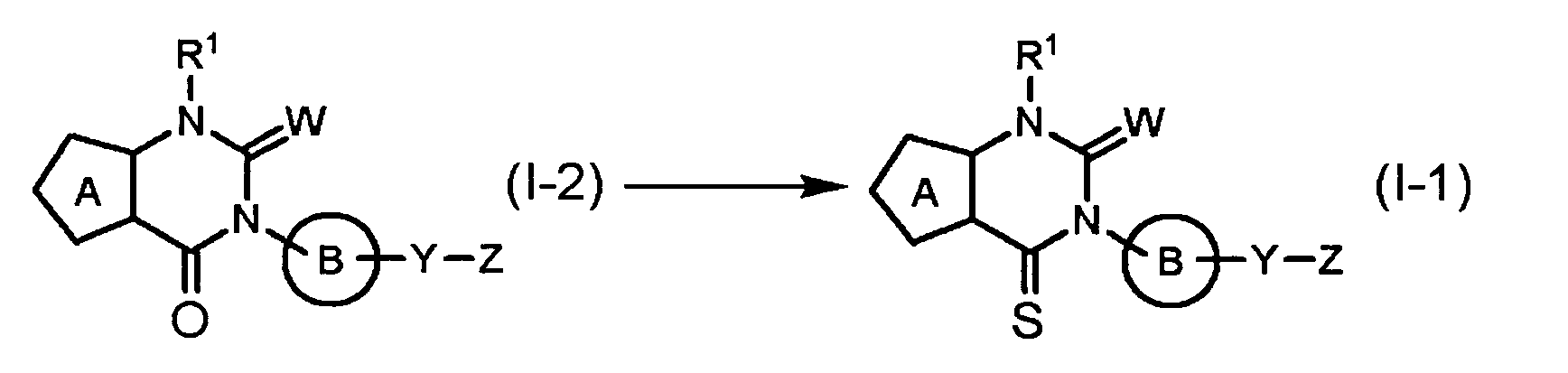
- In this method, compound (I-1) is produced by reacting compound (I-2) with a suitable sulfide. This reaction is carried out according to a conventional method in a solvent that does not adversely influence the reaction.
- As the sulfide to be used, for example, Lawesson's reagent, phosphorus pentasulfide and the like can be mentioned. The amount of sulfide to be used is preferably 1 equivalent to a large excess (preferably 1 to 10 equivalents relative to compound (1-2).
- As the solvent that does not adversely influence the reaction, for example, ethers (e.g., tetrahydrofuran, dioxane, diethyl ether etc.), halogenated aliphatic hydrocarbons (e.g., dichloromethane, chloroform etc.), aliphatic hydrocarbons (e.g., hexane, pentane etc.), aromatic hydrocarbons (e.g., benzene, toluene etc.) and the like can be mentioned. These solvents may be used in a mixture at an appropriately ratio.
- The reaction temperature is generally about 0°C to about 200°C. The reaction time is generally about 0.5 to about 20 hr.
- In compound (I) of the present invention, compound (I-3) wherein R1 is a hydrocarbon group optionally having substituent(s) can be synthesized by, for example, the following methods and the like.

- The "hydrocarbon group optionally having substituent(s)" for R1a is as defined for the aforementioned "hydrocarbon group optionally having substituent(s)" for R1.
- In this method, compound (I-3) is obtained by reacting compound (I-4) with a compound represented by the formula R1a-L wherein R1a is as defined above, and L is a leaving group (e.g., a halogen atom (e.g., fluorine, chlorine, bromine, iodine atom etc.), a C1-6 alkylsulfonyloxy group optionally substituted by 1 to 3 halogen atoms (e.g., methanesulfonyloxy, ethanesulfonyloxy, trifluoromethanesulfonyloxy etc.), a C6-14 arylsulfonyloxy group optionally having substituent(s) (e.g., benzenesulfonyloxy, p-toluenesulfonyloxy, p-bromobenzenesulfonyloxy etc.) etc.). This reaction is carried out according to a conventional method in a solvent that does not adversely influence the reaction.
- In the reaction, the compound represented by the formula R1a-L is used in one equivalent to in a large excess (preferably 1 to 10 equivalents relative to compound (1-4). In this case, for example, a basic compound such as sodium hydroxide, potassium hydroxide, sodium hydride, potassium carbonate, triethylamine, diisopropylethylamine, pyridine, 4-N,N-dimethylaminopyridine (DMAP), 1,8-diazabicyclo[5.4.0]-7-undecene, 1,4-diazabicyclo[2.2.2]octane (DABCO) and the like can be used in 1 to 10 equivalents. In the reaction, an alkali metal iodide such as sodium iodide and the like may be added in one equivalent to a large excess (preferably 1 to 10 equivalents) as a reaction promoting agent.
- As the solvent that does not adversely influence the reaction, for example, water, alcohols (e.g., methanol, ethanol etc.), ethers (e.g., tetrahydrofuran, dioxane, diethyl ether etc.), halogenated aliphatic hydrocarbons (e.g., methylene chloride, chloroform etc.), ketones (e.g., acetone, methyl ethyl ketone etc.), aliphatic hydrocarbons (e.g., hexane, pentane etc.), aromatic hydrocarbons (e.g., benzene, toluene etc.), aprotic polar solvents (e.g., N,N-dimethylformamide, acetonitrile, dimethyl sulfoxide etc.) and the like can be mentioned. These solvents may be used in a mixture at an appropriately ratio.
- The reaction time is 10 min to 24 hr, preferably 0.5 to 6 hr. The reaction temperature is -20°C to 200°C (preferably 0°C to 150°C).
- In compound (I) of the present invention, compound (1-5) wherein Z is a formula
-SOn'R3a,
wherein n' is 1 or 2, and R3a' is a hydrocarbon group optionally having substituent(s) or a heterocyclic group optionally having substituent(s) (provided that R3a' is not a methyl group), can be synthesized, for example, by the following methods and the like.
- The "hydrocarbon group optionally having substituent(s)" and "heterocyclic group optionally having substituent(s)" for R3a' are as defined for the aforementioned "hydrocarbon group optionally having substituent(s)" and "heterocyclic group optionally having substituent(s)", respectively, for R3.
- In this method, compound (1-5) is produced by oxidizing compound (1-6). This oxidation reaction is carried out in the presence of an oxidant. As the oxidant, oxygen, hydrogen peroxide, organic peracids such as perbenzoic acid, m-chloroperbenzoic acid, peracetic acid and the like, perchlorates such as lithium perchlorate, silver perchlorate, tetrabutylammonium perchlorate and the like, periodates such as sodium periodate and the like, periodic acid, manganese dioxide, lead tetraacetate, permanganates such as potassium permanganate and the like, halogens such as iodine, bromine, chlorine and the like, N-bromosuccinimide, N-chlorosuccinimide, sulfuryl chloride, chloramine T and the like can be mentioned.
- This reaction is generally carried out in a solvent, and a solvent that does not inhibit the reaction is appropriately selected. As such solvent, for example, alcohols (e.g., methanol, ethanol, propanol, isopropanol, butanol, tert-butanol etc.), ethers (e.g., dioxane, tetrahydrofuran, diethyl ether, tert-butyl methyl ether, diisopropyl ether, ethyleneglycol, dimethyl ether etc.), esters (e.g., ethyl formate, ethyl acetate, n-butyl acetate etc.), carboxylic acids (e.g., formic acid, acetic acid, propionic acid etc.), halogenated hydrocarbons (e.g., dichloromethane, chloroform, carbon tetrachloride, trichloroethylene, 1,2-dichloroethane, chlorobenzene etc.), hydrocarbons (e.g., n-hexane, benzene, toluene etc.), amides (e.g., formamide, N,N-dimethylformamide, N,N-dimethylacetamide etc.), ketones (e.g., acetone, methyl ethyl ketone, methylisobutylketone etc.), nitriles (e.g., acetonitrile, propionitrile etc.), sulforane, hexamethylphosphoramide, water and the like are used alone or in a mixed solvent.
- This reaction may be carried out in the presence of a base. As such base, for example, inorganic bases such as alkali metal hydroxides (e.g., lithium hydroxide, sodium hydroxide, potassium hydroxide and the like,) alkaline earth metal hydroxides (e.g., magnesium hydroxide, calcium hydroxide and the like), alkali metal carbonate (e.g., sodium carbonate, potassium carbonate and the like), alkali metal hydrogencarbonates (e.g., sodium hydrogencarbonate, potassium hydrogencarbonate and the like), and the like can be used.
- The oxidant is used in 0.1 to 20 equivalents, preferably about 0.4 to 10 equivalents, and the base is used in 0.1 to 20 equivalents, preferably 0.4 to 10 equivalents, relative to compound (1-6).
- Where necessary, this reaction may be carried out in the presence of an acid. As such an acid, mineral acids such as hydrochloric acid, hydrobromic acid, sulfuric acid, phosphoric acid, perchloric acid and the like, sulfonic acids such as methanesulfonic acid, ethanesulfonic acid, benzenesulfonic acid, toluenesulfonic acid, camphorsulfonic acid and the like, organic acids such as formic acid, acetic acid, propionic acid, trifluoroacetic acid and the like. The amount of the acid to be used is 0.1 to 20 equivalents, preferably 0.5 to 10 equivalents, relative to compound (I-6).
- The reaction temperature is about -10°C to about 250°C, preferably about -5°C to about 150°C.
- While the reaction time varies depending on the kind of compound (1-6), the base or solvent, reaction temperature and the like, it is generally about 1 min - about 50 hr, preferably about 5 min - about 24 hr.
- In compound (I) of the present invention, compound (1-7) wherein Z is a formula
-COR4a
wherein R4a is an amino optionally having substituent(s), for example, can be synthesized by the following methods and the like.
- The "amino optionally having substituent(s)" for R4a is as defined for the aforementioned "amino optionally having substituent(s)" for R4. The "hydrocarbon group optionally having substituent(s)" for R4a' is as defined for the aforementioned "hydrocarbon group optionally having substituent(s)" for R1.
- In this Step, compound (1-9) is produced by hydrolyzing compound (I-8). This reaction is carried out according to a conventional method in a solvent that does not adversely influence the reaction.
- As the acid, inorganic acids (e.g., hydrochloric acid, sulfuric acid, hydrobromic acid and the like), organic acids (acetic acid and the like) and the like can be mentioned. As the base, alkali metal carbonates (e.g., potassium carbonate, sodium carbonate and the like), alkali metal alkoxides (e.g., sodium methoxide and the like), alkali metal hydroxides (e.g., potassium hydroxide, sodium hydroxide, lithium hydroxide and the like) and the like can be mentioned. The amounts of the acid and base to be used are generally in excess relative to compound (I-8). The amount of the acid to be used is preferably about 2 to about 50 equivalents relative to compound (I-8) and the amount of the base to be used is preferably about 1.2 to about 5 equivalents relative to compound (I-8).
- As the suitable solvent, alcohols (e.g., methanol, ethanol and the like), ethers (tetrahydrofuran, dioxane, diethyl ether and the like), dimethyl sulfoxide, acetone, water and the like can be mentioned. These solvents may be used in a mixture at an appropriately ratio.
- The reaction temperature is generally about -20 to about 150°C, preferably about -10 to about 100°C. The reaction time is generally about 0.1 to about 20 hr.
- In this Step, compound (I-7) is obtained by condensation (amidation) of compound (I-9) and a compound represented by the formula R4a-H wherein the symbols in the formula are as defined above.
- This reaction is carried out by a method known per se, for example,
- (1) a method of directly condensing compound (I-9) and a compound represented by the formula R4a-H using a condensation agent,
- (2) a method of appropriately reacting a reactive derivative of compound (I-9) with a compound represented by the formula R4a-H, and the like.
- Method (1) is explained first.
- As the aforementioned condensation agent, for example, carbodiimide condensation reagents such as dicyclohexylcarbodiimide, diisopropylcarbodiimide, 1-ethyl-3-(3-dimethylaminopropyl)carbodiimide and hydrochloride thereof and the like; phosphate condensation reagents such as diethyl cyanophosphate, diphenylphosphoryl azide and the like; generally-known condensation agents such as carbonyldiimidazole, 2-chloro-1,3-dimethylimidazolium tetrafluoroborate and the like, and the like can be mentioned.
- Method (1) is generally performed in a solvent. As the solvent, for example, amides such as N,N-dimethylformamide, N,N-dimethylacetamide and the like; halogenated aliphatic hydrocarbons such as chloroform, dichloromethane and the like; aromatic hydrocarbons such as benzene, toluene and the like; ethers such as tetrahydrofuran, dioxane, diethyl ether and the like; ethyl acetate, water and the like can be mentioned. These solvents may be used in a mixture at an appropriately ratio.
- The amount of the compound represented by the formula R4a-H to be used is 0.1 to 10 molar equivalents, preferably 0.3 to 3 molar equivalents, relative to compound (I-9).
- The amount of the condensation agent to be used is 0.1 to 10 molar equivalents, preferably 0.3 to 3 molar equivalents, relative to compound (I-9).
- When a carbodiimide condensation reagent such as dicyclohexylcarbodiimide, diisopropylcarbodiimide, 1-ethyl-3-(3-dimethylaminopropyl)carbodiimide and hydrochloride thereof and the like is used as a condensation agent, a suitable condensation promoter (e.g., 1-hydroxy-7-azabenzotriazole, 1-hydroxybenzotriazole, N-hydroxysuccinimide, N-hydroxyphthalimide etc.) may be used as necessary. When a phosphate condensation reagent such as diethyl cyanophosphate, diphenylphosphoryl azide and the like is used as a condensation agent, an organic amine base such as triethylamine and the like may be added.
- The amounts of the above-mentioned condensation promoter and organic amine base to be used are 0.1 to 10 molar equivalents, preferably 0.3 to 3 molar equivalents, relative to compound (I-9).
- The reaction temperature is generally -30°C to 100°C. The reaction time is generally 0.5 to 60 hr.
- Method (2) is now explained.
- As the reactive derivative of compound (1-9), for example, an acid anhydride, an acid halide (e.g., an acid chloride, an acid bromide and the like), an acid imidazolide, an active ester (e.g., phenyl ester, nitro- or halogen-substituted phenyl ester (e.g., 4-nitrophenyle ster, pentafluorophenyl ester etc.), 1-hydroxy-7-azabenzotriazole ester, 1-hydroxybenzotriazole ester, N-hydroxysuccinimide ester, N-hydroxyphthalimide ester etc.), or a mixed acid anhydride (e.g., an anhydride with methyl carbonate, ethyl carbonate, isobutyl carbonate etc.) and the like can be mentioned.
- For example, when an acid anhydride, an acid halide, an acid imidazolide, an active ester are used as a reactive derivative, the reaction is carried out in the presence of or in the absence of a base in a solvent that does not adversely influence the reaction.
- As the base, for example, amines such as triethylamine, N-methylmorpholine, N,N-dimethylaniline and the like; alkali metal carbonates such as potassium carbonate, sodium carbonate and the like ; alkali metal hydrogencarbonates such as potassium hydrogencarbonate, sodium hydrogencarbonate and the like; alkali metal hydroxide such as potassium hydroxide, sodium hydroxide, lithium hydroxide and the like, and the like can be mentioned. The amount of the base to be used is 0.1 to 10 molar equivalents, preferably 0.3 to 3 molar equivalents, relative to compound (I-9) or a reactive derivative thereof.
- As the solvent that does not adversely influence the reaction, for example, water, ethers (e.g., tetrahydrofuran, dioxane, diethyl ether etc.), halogenated aliphatic hydrocarbons (e.g., dichloromethane, chloroform etc.), ketones (e.g., acetone, methyl ethyl ketone etc.), esters (e.g., ethyl acetate etc.), aprotic polar solvents (e.g., N,N-dimethylformamide, acetonitrile, dimethyl sulfoxide etc.) and the like can be mentioned. These solvents may be used in a mixture at an appropriately ratio.
- The amount of the compound represented by the formula R4a-H to be used is 0.1 to 10 molar equivalents, preferably 0.3 to 3 molar equivalents, relative to compound (I-9) or a reactive derivative.
- The reaction temperature is generally -30°C to 100°C. The reaction time is generally 0.5 to 20 hr.
- When a mixed acid anhydride is used, compound (I-9) is reacted with a chlorocarbonate (e.g., methyl chlorocarbonate, ethyl chlorocarbonate, isobutyl chlorocarbonate etc.) in the presence of a base (e.g., amine such as triethylamine, N-methylmorpholine, N,N-dimethylaniline and the like; alkali metal carbonates such as potassium carbonate, sodium carbonate and the like; alkali metal hydrogencarbonates such as potassium hydrogencarbonate, sodium hydrogencarbonate and the like; alkali metal hydroxides such as potassium hydroxide, sodium hydroxide, lithium hydroxide and the like, etc.), and further reacted with a compound R4a-H.
- The chlorocarbonate is used in 0.1 to 10 equivalents, preferably 0.3 to 3 equivalents, relative to compound (I-9), and the base is used in 0.1 to 10 equivalents, preferably 0.3 to 3 equivalents, relative to compound (I-9).
- The amount of the compound represented by the formula R4a-Ha to be used is generally 0.1 to 10 molar equivalents, preferably 0.3 to 3 molar equivalents, relative to compound (I-9) or a mixed acid anhydride thereof.
- The reaction temperature is generally -30°C to 100°C. The reaction time is generally 0.5 to 20 hr.
- A compound represented by the formula R4a-H to be used as a starting material compound in this method, can be produced by a method known per se, or can also be obtained as a commercially available product.
- In compound (I) of the present invention, compound (1-10) wherein Z is a formula
-COR4b
wherein R4b is a hydrocarbon group optionally having substituent(s) or a heterocyclic group optionally having substituent(s),
can be synthesized, for example, by the following methods and the like.
- The "hydrocarbon group optionally having substituent(s)" and "heterocyclic group optionally having substituent(s)" for R4b are each as defined for the aforementioned "hydrocarbon group optionally having substituent(s)" and "heterocyclic group optionally having substituent(s)" for R4.
- In this method, compound (I-10) is obtained by reacting compound (I-11) with a compound represented by the formula R4b-M. For the reaction, R4b-M is used in 0.1 to 10 molar equivalents, preferably 0.3 to 3 molar equivalents, relative to compound (I-11). The solvent used therefor is, for example, ethers (e.g., tetrahydrofuran, dioxane, diethyl ether and the like), hydrocarbons (e.g., toluene, hexane and the like), halogenated hydrocarbons (e.g., methylene chloride, chloroform and the like) and the like.
- The reaction time is 0.5 to 72 hr, preferably 1 to 24 hr. The reaction temperature is -100°C to 100°C (preferably -80°C to 50°C).
- The compound represented by the formula R4b-M to be used for this method can be produced by a method known per se, or obtained as a commercially available product.
- In compound (I-11) to be used as a starting material compound in this method, a compound wherein Z1 is -CO2R4a , or -CN can be produced, for example, by the following [Method F], [Method G], [Method H] and [Method I]. In addition, in compound (I-11) to be used as a starting material compound in this method, a compound wherein Z1 is -COX can be produced from compound (I-9) by a reaction known per se, for example, according to or in reference to the method described or cited in ZIKKEN KAGAKU KOZA 4th ed. (MARUZEN), vol. 22, Organic Synthesis IV, pages 115-127 and the like.
- Compound (I-12) [a compound wherein R1 is a hydrogen atom, X1 and X2 in combination form an oxygen atom, and W is an oxygen atom (the compound encompasses a compound wherein R1 is a hydrogen atom, and W is an oxygen atom in compound (I-2), or a compound wherein X1 and X2 in combination form an oxygen atom, and W is an oxygen atom in compound (I-4)) in compound (I) of the present invention, a compound wherein R1 is a hydrogen atom, W is an oxygen atom, and X1 and X2 in combination form an oxygen atom in compound (I-8), or a compound wherein R1 is a hydrogen atom, Z1 is -CO2R4a, or -CN, X1 and X2 in combination form an oxygen atom, and W is an oxygen atom in compound (I-11)] can be synthesized, for example, by the following methods and the like.

- The "hydrocarbon group optionally having substituent(s)" for Q1 is as defined for the aforementioned "hydrocarbon group optionally having substituent(s)" for R1.
- In this method, compound (IV) is obtained by condensing compound (II) and compound (III).
- The reaction is carried out in the presence or absence of a base and in a solvent that does not adversely influence the reaction.
- The amount of compound (III) to be used is 0.1 to 10 molar equivalents, preferably 0.3 to 3 molar equivalents, relative to compound (II).
- As the base, for example, amines such as triethylamine, pyridine, N,N-dimethylaniline and the like; alkali metal carbonates such as potassium carbonate, sodium carbonate and the like; alkali metal hydrogencarbonates such as potassium hydrogencarbonate, sodium hydrogencarbonate and the like; alkali metal hydroxides such as potassium hydroxide, sodium hydroxide, lithium hydroxide and the like, and the like can be mentioned. The amount of the base to be used is 0.1 to 10 molar equivalents, preferably 0.3 to 3 molar equivalents, relative to compound (II).
- As the solvent that does not adversely influence the reaction, for example, ethers (e.g., tetrahydrofuran, dioxane, diethyl ether etc.), halogenated aliphatic hydrocarbons (e.g., dichloromethane, chloroform etc.), ketones (e.g., acetone, methyl ethyl ketone etc.), esters (e.g., ethyl acetate etc.), aprotic polar solvents (e.g., N,N-dimethylformamide, acetonitrile, dimethyl sulfoxide etc.) and the like can be mentioned. These solvents may be used in a mixture at an appropriately ratio.
- The reaction temperature is generally 0°C to 150°C. The reaction time is generally 0.5 to 36 hr.
- Compound (III) to be used as a starting material compound in this method can be produced by a method known per se, or obtained as a commercially available product.
- The resultant product can be used for the next step as a reaction mixture or a crude product. In can also be isolated from the reaction mixture according to a conventional method.
- In this method, compound (I-12) is produced by cyclizing compound (IV). The reaction is carried out in the presence of or in the absence of a base, without solvent or in a solvent that does not adversely influence the reaction.
- As the base, for example, amines such as triethylamine, pyridine, N,N-dimethylaniline and the like; alkali metal carbonates such as potassium carbonate, sodium carbonate and the like; alkali metal hydrogencarbonates such as potassium hydrogencarbonate, sodium hydrogencarbonate and the like; alkali metal hydroxides such as potassium hydroxide, sodium hydroxide, lithium hydroxide and the like, and the like can be mentioned. The amount of the base to be used is 0.1 to 10 molar equivalents, preferably 0.3 to 3 molar equivalents, relative to compound (IV).
- As the solvent that does not adversely influence the reaction, for example, ethers (e.g., tetrahydrofuran, dioxane, diethyl ether etc.), halogenated aliphatic hydrocarbons (e.g., dichloromethane, chloroform etc.), ketones (e.g., acetone, methyl ethyl ketone etc.), esters (e.g., ethyl acetate etc.), aprotic polar solvents (e.g., N,N-dimethylformamide, acetonitrile, dimethyl sulfoxide etc.) and the like can be mentioned. These solvents may be used in a mixture at an appropriately ratio.
- The reaction temperature is generally 0°C to 150°C. The reaction time is generally 0.5 to 36 hr.
- Compound (1-13) [a compound wherein R1 is a hydrogen atom, and X1 and X2 in combination form an oxygen atom (the compound encompasses a compound wherein R1 is a hydrogen atom in compound (1-2), or a compound wherein X1 and X2 in combination form an oxygen atom in compound (1-4)) in compound (I) of the present invention, a compound wherein R1 is a hydrogen atom, and X1 and X2 in combination form an oxygen atom in compound (I-8), or, a compound wherein R1 is a hydrogen atom, Z1 is -CO2R4a, or -CN, and X1 and X2 in combination form an oxygen atom in compound (I-11)] can be synthesized, for example, by the following methods and the like.

- In this method, compound (VI) is obtained by condensing (amidating) compound (II) and compound (V).
- This production method is performed, for example, under reaction conditions similar to those of production of compound (I-7) by condensation of compound (I-9) and compound R4a-H in [Step 2] of the aforementioned [Method D].
- Compound (V) to be used as a starting material compound in this method, and a reactive derivative of compound (V) can be produced by a method known per se, or obtained as a commercially available product.
- In this method, compound (VII) is produced by reducing compound (VI).
- The reduction reaction is carried out, for example, using a metal hydrogen complex compound (e.g., lithium aluminum hydride etc.); a metal (e.g., zinc, iron, tin etc.) in the presence of an acid (e.g., hydrochloric acid, sulfuric acid, acetic acid etc.); stannous chloride in the presence of an acid (e.g., hydrochloric acid, sulfuric acid, acetic acid etc.); or a reducing agent such as zinc and the like under neutral or alkaline conditions. The reducing agent is used in 1 equivalent to a large excess (preferably 1 to 10 equivalents), relative to compound (VI).
- As the reduction reaction, moreover, a catalytic reduction under normal pressure to pressurization in the presence of a catalyst (e.g., metal such as platinum, palladium, nickel, rhodium and the like or a oxide, salts or complexes thereof, etc. These catalysts can also be carried on various carriers such as carbon etc. and used) can also be used.
- The solvent to be used for the reaction can be appropriately selected according to the reduction method and, for example, water, alcohols (e.g., methanol, ethanol etc.), ethers (e.g., tetrahydrofuran, dioxane, diethyl ether etc.), halogenated aliphatic hydrocarbons (e.g., dichloromethane, chloroform etc.), aliphatic hydrocarbons (e.g., hexane, pentane etc.), aromatic hydrocarbons (e.g., benzene, toluene etc.), aprotic polar solvents (e.g., N,N-dimethylformamide, dimethyl sulfoxide, acetonitrile etc.) and the like can be used. When the acid to be used for reduction with a metal or stannous chloride is liquid, the acid can be used as a solvent. These solvents may be used in a mixture at an appropriately ratio.
- The reaction time is 0.1 to 72 hr, preferably 0.1 to 24 hr. The reaction temperature is -30°C to 150°C, preferably 0°C to 80°C.
- In this method, compound (I-13) is produced by reacting compound (VII) with a reagent such as phosgene, diphosgene, triphosgene, N,N'-carbonyldiimidazole, thiophosgene, 1,1'-thiocarbonyldiimidazole and the like. The amount of the reagent to be used is preferably 1 equivalent to a large excess (preferably 1 to 5 equivalents), relative to compound (VII). The reaction is carried out in the presence or absence of a base and in a solvent that does not adversely influence the reaction.
- As the base, for example, amines such as triethylamine, pyridine, N,N-dimethylaniline and the like; alkali metal carbonates such as potassium carbonate, sodium carbonate and the like; alkali metal hydrogencarbonates such as potassium hydrogencarbonate, sodium hydrogencarbonate and the like; alkali metal hydroxides such as potassium hydroxide, sodium hydroxide, lithium hydroxide and the like, and the like can be mentioned. The amount of the base to be used is 0.1 to 10 molar equivalents, preferably 0.3 to 3 molar equivalent, relative to compound (VII).
- As the solvent that does not adversely influence the reaction, for example, ethers (e.g., tetrahydrofuran, dioxane, diethyl ether etc.), halogenated aliphatic hydrocarbons (e.g., dichloromethane, chloroform etc.), ketones (e.g., acetone, methyl ethyl ketone etc.), esters (e.g., ethyl acetate etc.), aprotic polar solvents (e.g., N,N-dimethylformamide, acetonitrile, dimethyl sulfoxide etc.) and the like can be mentioned. These solvents may be used in a mixture at an appropriately ratio.
- The reaction temperature is generally -30°C to 100°C. The reaction time is generally 0.5 to 20 hr.
- Compound (I-14) and (I-15) (a compound wherein R1 is a hydrogen atom, X1 and X2 in combination form =NR2, and W is an oxygen atom (the compound encompasses a compound wherein X1 and X2 in combination form =NR2, and W is an oxygen atom in compound (I-4)) in compound (I) of the present invention, a compound wherein R1 is a hydrogen atom, W is an oxygen atom, and X1 and X2 in combination form =NR2 in compound (I-8), or, a compound wherein R1 is a hydrogen atom, Z1 is -CO2R4a, or -CN, X1 and X2 in combination form =NR2, and W is an oxygen atom in compound (I-11)) can be synthesized, for example, by the following methods and the like.

- The "hydrocarbon group optionally having substituent(s)" for R2a is as defined for the aforementioned "hydrocarbon group optionally having substituent(s)" for R2.
- In this method, compound (IX) is obtained by condensing compound (II) and compound (VIII).
- This production method is performed, for example, under reaction conditions similar to those of production of compound (I-7) by condensation of compound (I-9) and the compound represented by the formula R4a-H in [Step 2] of the aforementioned [Method D].
- Compound (VIII) to be used as a starting material compound in this method can be produced by a method known per se, or obtained as a commercially available product.
- The resultant product can be used for the next step as a reaction mixture or a crude product. In can also be isolated from the reaction mixture according to a conventional method.
- In this method, compound (I-14) is produced by cyclizing compound (IX).
- This production method is performed, for example, under reaction conditions similar to those of production of compound (I-12) by cyclization of compound (IV) in [Step 2] of the aforementioned [Method F].
- In this method, compound (1-15) is produced by reacting compound (I-14) with a compound represented by the formula R2a-L wherein the symbols in the formula are as defined above.
- This production method is performed, for example, under reaction conditions similar to those of production of compound (I-3) by reaction of compound (I-4) with the compound represented by the formula R1a-L in the aforementioned [Method B].
- Compound (1-16) [a compound wherein R1 is a hydrogen atom in compound (I) of the present invention, a compound wherein R1 is a hydrogen atom compound in compound (I-8), or a compound wherein R1 is a hydrogen atom, and Z1 is -CO2R4a' or -CN in compound (I-11)] can be synthesized, for example, by the following methods and the like.

- In this method, compound (XI) is produced by reacting compound (II) with compound (X).
- This production method is performed, for example, under reaction conditions similar to those of production of compound (I-3) by reaction of compound (I-4) with the compound represented by the formula R1a-L in the aforementioned [Method B].
- Compound (X) to be used as a starting material compound in this method can be produced by a method known per se, or obtained as a commercially available product.
- The resultant product can be used for the next step as a reaction mixture or a crude product. In can also be isolated from the reaction mixture according to a conventional method.
- In this method, compound (XII) is produced by reducing compound (XI).
- This production method is performed, for example, under reaction conditions similar to those of production of compound (VII) by reduction of compound (VI) in [Step 2] of the aforementioned [Method G].
- In this method, compound (1-16) is produced by reacting compound (XII) with a reagent such as phosgene, diphosgene, triphosgene, N,N'-carbonyldiimidazole, thiophosgene, 1,1'-thiocarbonyldiimidazole and the like.
- This production method is performed, for example, under reaction conditions similar to those of production of compound (I-13) by reaction of compound (VII) with a reagent such as phosgene, diphosgene, triphosgene, N,N'-carbonyldiimidazole, thiophosgene, 1,1'-thiocarbonyldiimidazole and the like in [Step 2] of the aforementioned [Method D].
- Compound (II) to be used as a starting material compound in [Method F], [Method G], [Method H] and [Method I] can be produced by a method known per se, or obtained as a commercially available product. It can also be produced, for example, by the following Method J.
-

- In this method, compound (II) is produced by reducing compound (XIII).
- This production method is performed, for example, under reaction conditions similar to those of production of compound (VII) by reduction of compound (VI) in [Step 2] of the aforementioned [Method G].
- Compound (XIII) to be used as a starting material compound in [Method J] can be produced by a method known per se, or obtained as a commercially available product. It can also be produced, for example, by the following [Method K] - [Method N].
-

- The "amino optionally having substituent(s)" for R3b is as defined for the aforementioned "optionally having substituent(s) amino" for R3.
- In this Step, compound (XIII-1) is obtained by condensing compound (XIV) and a compound represented by the formula R3b-H wherein the symbols in the formula are as defined above.
- This production method is performed in the presence of or in the absence of a base and in a solvent that does not adversely influence the reaction.
- As the base, for example, amines such as triethylamine, N-methylmorpholine, N,N-dimethylaniline and the like; alkali metal carbonates such as potassium carbonate, sodium carbonate and the like; alkali metal hydrogencarbonates such as potassium hydrogencarbonate, sodium hydrogencarbonate and the like; alkali metal hydroxides such as potassium hydroxide, sodium hydroxide, lithium hydroxide and the like, and the like can be mentioned. The amount of the base to be used is 0.1 to 10 molar equivalents, preferably 0.3 to 3 molar equivalents, relative to compound (XIV).
- As the solvent that does not adversely influence the reaction, for example, water, ethers (e.g., tetrahydrofuran, dioxane, diethyl ether etc.), halogenated aliphatic hydrocarbons (e.g., dichloromethane, chloroform etc.), ketones (e.g., acetone, methyl ethyl ketone etc.), esters (e.g., ethyl acetate etc.), aprotic polar solvents (e.g., N,N-dimethylformamide, acetonitrile, dimethyl sulfoxide etc.) and the like can be mentioned. These solvents may be used in a mixture at an appropriately ratio.
- The amount of the compound represented by the formula R3b-H to be used is 0.1 to 10 molar equivalents, preferably 0.3 to 3 molar equivalents, relative to compound (XIV).
- The reaction temperature is generally -30°C to 100°C. The reaction time is generally 0.5 to 20 hr.
- Compound (XIV) and the compound represented by the formula R3b-H to be used as starting material compounds in this method can be produced by a method known per se, or obtained as a commercially available product.
-

- In this method, compound (XIII-2) is obtained by condensing compound (XV) and a compound represented by the formula R4a-H wherein the symbols in the formula are as defined above.
- This production method is performed, for example, under reaction conditions similar to those of production of compound (I-7) by condensation of compound (I-9) and the compound represented by the formula R4a-H in [Step 2] of the aforementioned [Method D].
- Compound (XV) and the compound represented by R4a-H to be used as starting material compounds in this method can be produced by a method known per se, or obtained as a commercially available product.
-
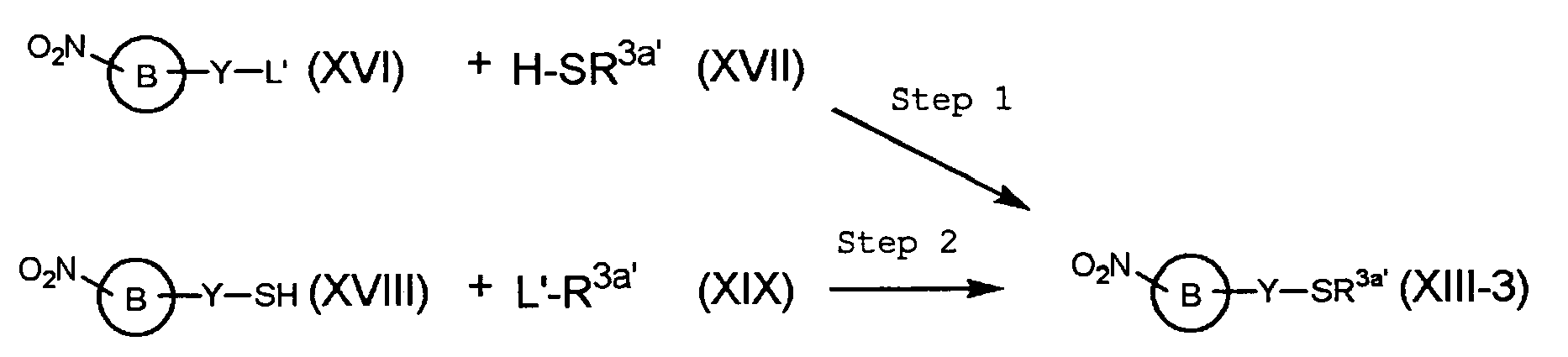
- In this method, compound (XIII-3) is obtained by condensing compound (XVI) and compound (XVII).
- This production method is performed, for example, under reaction conditions similar to those of production of compound (I-3) by reaction of compound (1-4) with the compound represented by the formula R1a-L wherein the symbols in the formula are as defined above in the aforementioned [Method B]. [in the case where L' in compound (XVI) is a hydroxyl group]
- This production method is performed according to a method known per se, for example, a method described in Synthesis, 1 page (1981), which is known as what is called the Mitsunobu reaction, or a method analogous thereto. That is, this reaction is generally carried out in the presence of an organic phosphine compound and an electrophilic agent and in a solvent that does not adversely influence the reaction.
- The amount of compound (XVII) to be used is 0.1 to 10 molar equivalents, preferably 0.3 to 3 molar equivalents, relative to compound (XVI).
- As the organic phosphine compound, for example, triphenylphosphine, tributylphosphine and the like can be mentioned. As the electrophilic agent, for example, diethyl azodicarboxylate, diisopropyl azodicarboxylate, azodicarbonyldipiperazine, 1,1'-(azodicarbonyl)dipiperidine and the like can be mentioned. The amount of the organic phosphine compound and electrophilic agent to be used are preferably about 1 to about 5 molar equivalents, relative to compound (XVI), respectively.
- As the solvent that does not adversely influence the reaction, for example, ethers such as diethyl ether, tetrahydrofuran, dioxane and the like; halogenated hydrocarbons such as chloroform, dichloromethane and the like; aromatic hydrocarbons such as benzene, toluene, xylene and the like; amides such as N,N-dimethylformamide and the like; sulfoxides such as dimethylsulfoxide and the like, and the like can be mentioned. These solvents may be used in a mixture at an appropriately ratio.
- The reaction temperature is generally about -50°C to about 150°C, preferably about -10°C to about 100°C. The reaction time is generally about 0.5 - about 20 hr.
- Compound (XVI) and compound (XVII) to be used as starting material compounds in this method can be produced by a method known per se, or obtained as a commercially available product.
- In this method, compound (XIII-3) is obtained by condensing compound (XVIII) and compound (XIX).
- This production method is performed, for example, under reaction conditions similar to those of production of compound (XIII-3) by condensation of compound (XVI) and compound (XVII) in [Step 1] of the aforementioned [Method M].
- Compound (XVIII) and compound (XIX) to be used as starting material compounds in this method can be produced by a method known per se, or obtained as a commercially available product.
-

- In this method, compound (XIII-4) is obtained by reacting compound (XX) with a compound represented by the formula R4b-M.
- This production method is performed, for example, under reaction conditions similar to those of production of compound (I-10) by reaction of compound (I-11) with a compound represented by the formula R4b-M in the aforementioned [Method E].
- Compound (XX) and the compound represented by the formula R4b-M to be used as starting material compounds in this method can be produced by a method known per se, or obtained as a commercially available product.
- Those of ordinary skill in the art will appreciate that the production method of compound (I) is not limited to the above-mentioned production methods, and also appreciate modification of the above-mentioned production methods and combinations of the above-mentioned production methods and the methods known per se.
- Thus compound (I) can be isolated and purified by a separation means known per se, such as recrystallization, distillation, chromatography and the like.
- When compound (I) is obtained as a free form, it can be converted to a desired salt by a method known per se or a modification thereof; conversely, when compound (I) is obtained as a salt, it can be converted to a free form or other desired salt by a method known per se or a modification thereof.
- The compound (I) may be a hydrate or a non-hydrate. Examples of the hydrate include monohydrate, 1.5 hydrate, 2 hydrate and the like.
- When compound (I) is obtained as a mixture of optically active forms, it can be separated into the objective (R) form or (S) form by an optical resolution means known per se.
- The compound (I) may be used as a prodrug, and the prodrug means a compound which is converted to the compound (I) with a reaction due to an enzyme, an gastric acid, etc. under the physiological condition in the living body, that is a compound which is converted to the compound (I) with oxidation, reduction, hydrolysis, etc. according to an enzyme; a compound which is converted to the compound (I) by hydrolysis etc. due to gastric acid, etc. A prodrug for compound (I) may be a compound obtained by subjecting an amino group in compound (I) to an acylation, alkylation or phosphorylation (e.g., a compound obtained by subjecting an amino group in compound (I) to eicosanoylation, alanylation, pentylaminocarbonylation, (5-methyl-2-oxo-1,3-dioxolen-4-yl)methoxycarbonylation, tetrahydrofuranylation, pyrrolidylmethylation, pivaloyloxymethylation and tert-butylation, etc.); a compound obtained by subjecting a hydroxy group in compound (I) to an acylation, alkylation, phosphorylation or boration (e.g., a compound obtained by subjecting an hydroxy group in compound (I) to acetylation, palmitoylation, propanoylation, pivaloylation, succinylation, fumarylation, alanylation, dimethylaminomethylcarbonylation, etc.); and the like. Any of these compounds can be produced from compound (I) by a method known per se.
- A prodrug for compound (I) may also be one which is converted to the compound of the present invention under physiological conditions, such as those described in IYAKUHIN no KAIHATSU (Development of Pharmaceuticals), Vol. 7, Design of Molecules, p.163-198, Published by HIROKAWA SHOTEN (1990).
- The compound (I) may be labeled with an isotope (e.g., 3H, 14C, 35S and the like) or the like.
- Compound (I) of the invention (includes Compound (I-a), a salt and a prodrug thereof. Hereinafter, may be briefly referred to as the "compound of the invention") has excellent GnRH antagonizing activity and has low toxicity. Moreover, the compound excels in oral absorption or sustained action, and is also excellent in the aspects of stability or pharmacokinetics. The compound of the invention can be safely used in prevention and/or treatment of male hormone- or female hormone-dependent diseases (sex hormone-dependent diseases), and in prevention and/or treatment of diseases attributable to excessive secretion of those hormones, since the compound can inhibit secretion of gonadotropin by means of its antagonistic activity against a GnRH receptor in a mammal (e.g., a human, a monkey, a cow, a horse, a dog, a cat, a rabbit, a rat, a mouse, etc.), thus regulating the sex hormone concentration in the blood.
- For example, the compound of the invention is useful in prevention and/or treatment of sex hormone-dependent diseases such as sex hormone-dependent cancers (e.g., prostate cancer, uterine cancer, breast cancer, pituitary tumor, etc.), bone metastasis of sex hormone-dependent cancers, prostatomegaly, hysteromyoma, endometriosis, metrofibroma, precocious puberty, amenorrhea, premenstrual syndrome, dysmenorrhea, polycystic ovary syndrome, acne, baldness, and Alzheimer's disease (Alzheimer's disease, Alzheimer type senile dementia and mixed type thereof).
- The compound of the invention is also useful in regulation of male and female reproduction (e.g., agent for birth control, menstrual cycle regulator, etc.).
- The compound of the invention can be also used as a contraceptive for both male and female, and further as an ovulation inducing agent for female.
- The compound of the invention can be used in prevention and/or treatment of infertility by using its rebound effect after cessation of medication.
- The compound can be also used as a prophylactic and/or therapeutic agent for benign or malignant tumors which are sex hormone-independent and LH-RH-sensitive.
- The compound of the invention can be also used as a prophylactic and/or therapeutic agent for irritable bowel syndrome and as a prophylactic agent for post-operative recurrence of sex hormone-dependent cancers (a prophylactic agent for post-operative recurrence of prostate cancer, a prophylactic agent for post-operative recurrence of breast cancer or ovarian cancer before and after menopause, etc.; particularly preferably a prophylactic agent for post-operative recurrence of breast cancer or ovarian cancer before menopause).
- Moreover, the compound of the invention prevents disorder in the ovary or testicle due to the treatment using chemotherapeutic agents, and thus can be used for the preservation of the reproductive function after the treatment.
- In addition, the compound of the present invention can also be used for activation of immunity.
- The compound of the present invention is preferably used as an agent for the prophylaxis or treatment of prostate cancer, uterine cancer, breast cancer or hypophysis tumor or a preventive agent for post-operative recurrence of sex hormone-dependent cancer.
- In addition, the compound of the invention is also useful for the regulation of animal's estrus, improvement in the table meat quality, regulation of animal growth and the like. The compound of the invention is also useful as a promoting agent for fish spawning.
- Moreover, the compound of the present invention is useful for the prophylaxis or treatment of hot flash that occurs when sex hormone is reduced for the treatment of a disease such as prostate cancer, breast cancer, endometriosis and the like or during climacterium.
- Furthermore, the compound of the present invention suppresses secretion of gonadal stimuli hormone by GnRH receptor antagonistic action and can be safely used for the promotion and/or assistance of external fertilization (IVF) in mammal (e.g., human, monkey, bovine, horse, dog, cat, rabbit, rat, mouse and the like).
- External fertilization (in vitro fertilization; IVF) means a method comprising taking an ova, fertilizing the ova with spermatozoon in vitro, and returning the ova in the uterus at a certain stage of cleavage. The compound of the present invention can be used, for example, for recovering the ova. To recover a good ova, ova is recovered by control from outside the body rather than natural ovulation, where the compound of the present invention is used to eliminate the influence due to endogenous LH.
- The compound of the present invention is highly evaluated by gynecologists because it can be administered orally, and is superior as a promoter and/or assistant agent of external fertilization as compared to peptidic GnRH antagonists administered by subcutaneous injection.
- Accordingly, the compound of the present invention is also useful as a preventive of premature ovulation during external fertilization or embryo transplantation, or a preventive of ovulation due to endogenous LH during external fertilization.
- The compound of the invention can be used to suppress a transient increase in the blood concentration of testosterone (flare phenomenon) that is observed upon administration of a GnRH superagonist such as leuprorelin acetate. The compound of the invention can be used in combination with a GnRH superagonist such as leuprorelin acetate, gonadorelin, buserelin, triptorelin, goserelin, nafarelin, histrelin, deslorelin, meterelin or lecirelin (preferably leuprorelin acetate).
- The compound of the invention can be also effectively used in combination with at least one kind selected from steroidal or nonsteroidal antiandrogenic agents or antiestrogenic agents, chemotherapeutic agents, peptidic GnRH antagonists, α-reductase inhibitors, α-receptor inhibitors, aromatase inhibitors, 17β-hydroxysteroid dehydrogenase inhibitors, adrenal androgen production inhibitors, kinase inhibitors, hormonotherapeutic agents, cell growth factors or drugs inhibiting the action of receptors thereof, therapeutic drug for osteoporosis (e.g., bisphosphonate and the like), central pharmaceutical agent [for example, antianxiety drug, sleep-inducing drug, therapeutic agent for schizophrenia, therapeutic agent for Parkinson's disease, antidementia agent (e.g., cerebral circulation improver, cerebral metabolic activator and the like) and the like], antihypertensive agent, therapeutic agent for diabetes, antihyperlipemia agent, nutritional supplement (e.g., vitamin and the like), analgesic, digestion absorption promoter, gastrointestinal agent and the like.
- Examples of the "anti-androgen" include cyproterone acetate, chlormadinone acetate, flutamide(Flutamide), bicartamide, nilutamide and the like.
- Examples of the "antiestrogen" include tamoxifen, SERM (e.g., raloxifene, arzoxifene, lasofoxifene etc.), fulvestrant, ER down regulator and the like.
- Examples of the "α-reductase inhibitor" include finasteride, Dutasteride, Izonsteride and the like.
- Examples of the "α-receptor inhibitor" include tamsulosin, prazosin, terazosin and the like.
- Examples of the "aromatase inhibitor" include anastrozole, retrozole and the like.
- Examples of the "chemotherapeutic agent" include ifosfamide, Adriamycin, peplomycin, cisplatin, cyclophosphamide, 5-FU, UFT, methotrexate, mitomycin C, mitoxantrone and the like.
- Examples of the "peptidic GnRH antagonist" include parenterally administered peptidic GnRH antagonists such as cetrorelix, ganirelix, abarelix and degarelix.
- Examples of the "adrenal androgen production inhibitor" may be exemplified by lyase (C17,20-lyase) inhibitors, and the like.
- Examples of the "kinase inhibitor" include tyrosine phosphorylation enzyme inhibitor and the like.
- Examples of the "hormonotherapeutic agent" include antiestrogenic agents, luteinizing hormones (e.g., MPA, etc.), androgenic agents, estrogenic agents, antiandrogenic agents and the like.
- The "growth factor" may be any as long as it promotes cell proliferation, which is normally peptide having a molecular weight of not more than 20,000 that is capable of exhibiting its activity at low concentrations by binding to a receptor. Examples thereof include (1) EGF (epidermal growth factor) or substances possessing substantially the same activity as it [e.g., EGF, heregulin (HER2 ligand), and the like], (2) insulin or substances possessing substantially the same activity as it [e.g., insulin, IGF (insulin-like growth factor)-1, IGF-2, and the like], (3) FGF (fibroblast growth factor) or substances possessing substantially the same activity as it [e.g., aFGF, bFGF, KGF (keratinocyte growth factor), HGF (hepatocyte growth factor), FGF-10, and the like], (4) other cell growth factors [e.g., CSF (colony stimulating factor), EPO (erythropoietin), IL-2 (interleukin-2), NGF (nerve growth factor), PDGF (platelet-derived growth factor), TGFβ (transforming growth factor β), VEGF (vascular endothelial cell growth factor), and the like], and the like.
- Examples of the "growth factor receptors" include any receptors capable of binding to the aforementioned growth factors, including EGF receptor, heregulin receptor (HER2), insulin receptor-1, insulin receptor-2, IGF receptor, FGF receptor-1, FGF receptor-2, VEGF receptor, and the like.
- Examples of the aforementioned "pharmaceutical agents inhibiting the action of cell growth factor" include Herceptin (HER2 receptor antibody), Erbitux (EGF receptor antibody), Iressa or Tarceva (EGF receptor kinase inhibitor), avastin (VEGF antibody) and the like.
- The drug inhibiting the action of the cell growth factor or its receptor may be exemplified by herbimycin, PD153035 (Science, 265 (5175), p.1093 (1994)), or the like.
- Examples of the drug inhibiting the cell growth factor or its receptor include HER2 inhibitors. The HER2 inhibitor may be any substance inhibiting the HER2 activity (e.g., phosphorylating activity), including antibodies, low molecular weight compounds (synthetic compounds, natural compounds), antisenses, HER2 ligands, heregulin, or products resulting from partial modification or alteration of their structures. Further, the drug may be also a substance inhibiting the HER2 activity by inhibiting a HER2 receptor (e.g., HER2 receptor antibody). Examples of the low molecular weight compound having HER2 inhibiting activity include the compounds described in
WO 98/03505 - With respect to prostatomegaly, the compound of the invention can be used in combination with a drug such as GnRH superagonist, antiandrogenic agent, antiestrogenic agent, peptidic GnRH antagonist, α-reductase inhibitor, α-receptor inhibitor, aromatase inhibitor, 17β-hydroxysteroid dehydrogenase inhibitor, adrenal androgen production inhibitor, or phosphorylase inhibitor.
- With respect to prostate cancer, the compound of the invention can be used in combination with a drug such as GnRH superagonist, antiandrogenic agent, antiestrogenic agent, chemotherapeutic agent [e.g., ifosfamide, UFT, Adriamycin, peplomycin, cisplatin, etc.], peptidic GnRH antagonist, aromatase inhibitor, 17β-hydroxysteroid dehydrogenase inhibitor, adrenal androgen production inhibitor, phosphorylase inhibitor, hormonotherapeutic agent [e.g., estrogenic agent (e.g., DSB, EMP, etc.), antiandrogenic agent (e.g., CMA, etc.), etc.], cell growth factor or a drug inhibiting the activity of receptor thereof.
- With respect to breast cancer, the compound of the invention can be used in combination with a drug such as GnRH superagonist, antiestrogenic agent, chemotherapeutic agent [e.g., cyclophosphamide, 5-FU, UFT, methotrexate, Adriamycin, mitomycin C, mitoxantrone, etc.], peptidic GnRH antagonist, aromatase inhibitor, adrenal androgen production inhibitor, phosphorylase inhibitor, hormonotherapeutic agent-[e.g., antiestrogenic agent (e.g., tamoxifen, etc.), luteinizing hormone (e.g., MPA, etc.), androgenic agent, estrogenic agent, etc.], cell growth factor or a drug inhibiting the activity of receptor thereof.
- The administration mode of the compound of the present invention and the concomitant drug is not particularly limited as long as the compound of the present invention and the concomitant drug are combined in administration. Examples of such administration mode include the following methods:
- (1) administration of a single preparation obtained by simultaneously processing the compound of the present invention and the concomitant drug, (2) simultaneous administration of two kinds of preparations of the compound of the present invention and the concomitant drug, which have been separately produced, by the same administration route, (3) administration of two kinds of preparations of the compound of the present invention and the concomitant drug, which have been separately produced, by the same administration route in a staggered manner, (4) simultaneous administration of two kinds of preparations of the compound of the present invention and the concomitant drug, which have been separately produced, by different administration routes, (5) administration of two kinds of preparations of the compound of the present invention and the concomitant drug, which have been separately produced, by different administration routes in a staggered manner (e.g., administration in the order of the compound of the present invention and the concomitant drug, or in the reverse order) and the like.
- When the compound of the invention is used as a prophylactic and/or therapeutic agent for the above-described diseases, or in the field of stockbreeding or fishery, the compound of the invention can be administered both orally or parenterally by a method known per se, and the compound can be orally administered after being mixed with a pharmaceutically acceptable carrier, usually as a solid preparation such as a tablet, a capsule, a granule or a powder, or can be parenterally administered as an intravenous, subcutaneous, or intramuscular injectable preparation, suppository, sublingual tablet or the like. The compound can be also administered sublingually, subcutaneously, intramuscularly and the like as a sustained release preparation such as a sublingual tablet, a microcapsule or the like. The daily dose may vary depending on the severity of symptom; the age, the gender, the body weight, the sensitivity of the subject of administration; the administration time and interval, properties, prescription or kind of the pharmaceutical preparation; the type of the active ingredient or the like. The daily dose is not particularly limited as long as the compound achieves the object of the invention. However, when the compound is used in the treatment of the above-described sex hormone-dependent cancers (e.g., prostate cancer, uterine cancer, breast cancer, pituitary tumor, etc.), prostatomegaly, hysteromyoma, endometriosis, precocious puberty or the like, the active ingredient (the compound of the invention) is administered as an oral preparation, usually in an amount of about 0.01 to 500 mg, preferably about 0.02 to 200 mg, more preferably 0.1 to 50 mg, and most preferably 0.1 to 10 mg, relative to 1 kg of body weight of a mammal, usually administered in 1 to 4 portions a day.
- The dosage in the case of using the compound of the invention in the field of stockbreeding or fishery is also equivalent to the above-described range, but the active ingredient (the compound of the invention) is usually administered as an oral preparation, in an amount of about 0.01 to 500 mg, preferably about 0.1 to 200 mg, relative to 1 kg of body weight of the subject organism of administration, usually administered in 1 to 3 portions a day.
- The content of Compound (I) in the pharmaceutical composition of the invention is about 0.01 to 100% by weight of the total composition.
- The pharmaceutically acceptable carriers that can be used may be exemplified by various organic or inorganic carrier substances that are conventionally used as the materials for preparation, and are mixed as excipient, glidant, binding agent, disintegrant and the like in solid preparations, and as solvent, dissolution aid, suspending agent, isotonic agent, buffer, soothing agent and the like in liquid preparations. Furthermore, if necessary, preparation additives such as antiseptic agent, antioxidant, colorant and sweetener can be also used.
- As preferable examples of the aforementioned excipient, lactose, sucrose, D-mannitol, starch, corn starch, crystalline cellulose, light anhydrous silicic acid and the like can be mentioned. As preferable examples of the aforementioned lubricant, for example, magnesium stearate, calcium stearate, talc, colloidal silica and the like can be mentioned. As preferable examples of the aforementioned binder, crystalline cellulose, sucrose, D-mannitol, dextrin, hydroxypropylcellulose, hydroxypropylmethylcellulose, polyvinylpyrrolidone and the like can be mentioned. As preferable examples of the aforementioned disintegrant, for example, starch, carboxymethylcellulose, carboxymethylcellulose calcium, carboxymethylstarch sodium, croscarmellose sodium and the like can be mentioned. As preferable examples of the aforementioned solvent, for example, water for injection, alcohol, propylene glycol, macrogol, sesame oil, corn oil and the like can be mentioned. As preferable examples of the aforementioned solubilizing agent s, for example, polyethylene glycol, propylene glycol, D-mannitol, benzyl benzoate, ethanol, trisaminomethane, cholesterol, triethanolamine, sodium carbonate, sodium citrate and the like can be mentioned. As preferable examples of the aforementioned suspending agent, for example, surfactants such as stearyltriethanolamine, sodium lauryl sulfate, lauryl aminopropionate, lecithin, benzalkonium chloride, benzethonium chloride, glycerol monostearate and the like; hydrophilic polymers such as polyvinyl alcohol, polyvinylpyrrolidone, carboxymethylcellulose sodium, methylcellulose, hydroxymethylcellulose, hydroxyethylcellulose, hydroxypropylcellulose and the like, and the like can be mentioned. As preferable examples of the aforementioned isotonicity agent, for example, glucose, D-sorbitol, sodium chloride, glycerin, D-mannitol and the like can be mentioned. As preferable examples of the aforementioned buffer, for example, buffers such as phosphate, acetate, carbonate, citrate and the like, and the like can be mentioned. As preferable examples of the soothing agent, for example, benzyl alcohol and the like can be mentioned. As preferable examples of the aforementioned preservative, p-oxybenzoates, chlorobutanol, benzyl alcohol, phenethyl alcohol, dehydroacetate, sorbic acid and the like can be mentioned. As preferable examples of the aforementioned antioxidant, sulfite, ascorbic acid and the like can be mentioned.
- An intravenous, subcutaneous or intramuscular injectable preparation can be produced by adding a suspending agent, a dissolving aid, a stabilizer, an isotonic agent, a preservative or the like to the compound of the invention, according to a method known per se. Here, if necessary, the preparation can be produced as a lyophilization product by a method known per se. When the compound of the invention is administered to human, for example, the compound can be safely administered orally or parenterally, for example, as it is or as a pharmaceutical composition in which the compound of the invention is mixed with an appropriate pharmaceutically acceptable carrier, excipient or diluent.
- The pharmaceutical composition may be exemplified by an oral preparation (e.g., powder, granule, capsule, tablet), or a parenteral preparation [e.g., injectable preparation, dip infusion, external agent (e.g., intranasal preparation, transdermal preparation, etc.), suppository (e.g., rectal suppository, vaginal suppository, etc.), etc.].
- These preparations can be produced by methods known per se that are generally used in the processes for producing preparations.
- The compound of the invention can be produced into an injectable preparation by formulating the compound into aqueous injectable preparations together with dispersants (e.g., Tween 80 (Atlas Powder Co., US), HCO60 (Nikko Chemicals Co., Ltd.), polyethylene glycol, carboxymethylcellulose, sodium alginate, etc.), preservatives (e.g., methylparaben, propylparaben, benzyl alcohol, etc.), isotonic agents (e.g., sodium chloride, mannitol, sorbitol, glucose, etc.) and the like, or into an oil-based injectable preparation by dissolving, suspending or emulsifying the compound in plant oils such as olive oil, sesame oil, cotton seed oil or corn oil, propylene glycol or the like.
- To obtain a preparation for oral administration, an excipient (e.g., lactose, sucrose, starch and the like), a disintegrating agent (e.g., starch, calcium carbonate and the like), a binder (e.g., starch, gum Arabic, carboxymethylcellulose, polyvinylpyrrolidone, hydroxpropylcellulose and the like), a lubricant (e.g., talc, magnesium stearate, polyethylene glycol 6000 and the like) and the like, for example, can be added to the compound of the present invention, according to a method known per se, and the mixture can be compression-molded, then if desirable, the molder product can be coated by a method known per se for the purpose of masking of taste, enteric property or durability. As this coating agent, for example, hydroxypropylmethylcellulose, ethylcellulose, hydroxymethylcellulose, hydroxypropylcellulose, polyoxyethylene glycol, Tween 80, Pluronic F68, cellulose acetate phthalate, hydroxypropylmethylcellulose phthalate, hydroxymethylcellulose acetate succinate, Eudoragit (methacrylic acid·acrylic acid copolymer, manufactured by Rohm, DE), pigment (e.g., iron oxide red, titanium dioxide, etc.) and the like can be used. In order to use Compound (I) of the invention as enteric preparations, an intermediate phase can be provided in between an enteric phase and a drug-containing phase of the preparation by a method known per se, for the purpose of separation of the enteric phase and the drug-containing phase.
- In order to use the compound of the invention as external preparations, the compound or a salt thereof can be formulated into solid, semi-solid or liquid externally administered preparations by methods known per se. For the solid preparation for example, the compound of the invention or a salt thereof is directly used or mixed with excipients (e.g., glycol, mannitol, starch, microcrystalline cellulose, etc.), thickening agents (e.g., natural gums, cellulose derivatives, acrylic acid polymers, etc.) and the like, to be produced into a pulverized composition. For the liquid preparation, an oil-based preparation or an aqueous suspension is produced, in the virtually same manner as in the preparation of injectable preparations. For the semi-solid preparation, aqueous or oil-based gel preparations, or ointments are preferable. All of these preparations may also have pH adjusting agents (e.g., carbonate, phosphate, citrate, chloride, hydroxide of sodium, etc.), antiseptic agents (e.g., paraoxybenzoic acid esters, chlorobutanol, benzalkonium chloride, etc.) and the like added therein.
- Moreover, the compound of the present invention can be made into an oily or aqueous solid, semisolid or liquid suppository according to a method known per se. As the oily substrate to be used for the above-mentioned composition, for example, glycerides of higher fatty acids [e.g., cacao butter, Witepsols (manufactured by Dynamit Nobel, Germany), etc.], glycerides of medium chain fatty acid [e.g., Miglyols (manufactured by Dynamit Nobel, Germany), etc.], or vegetable oils (e.g., sesame oil, soybean oil, cotton seed oil and the like), and the like are listed. Further, as the aqueous substrate, for example, polyethylene glycols, propylene glycol are listed, and as the aqueous gel substrate, for example, natural gums, cellulose derivatives, vinyl polymers, acrylic acid polymers and the like are listed.
- The present invention is further described in detail in with reference to Reference Examples, Examples, Preparation Examples and Experimental Examples which are not intended to restrict the invention.
- 1H-NMR spectra were measured with a Varian GEMINI 200 (200 MHz) spectrometer, a MERCURY 300 (300 MHz) spectrometer or a BRUKER AVANCE 300 spectrometer (300 MHz) using tetramethylsilane as an internal standard. All of the δ values are represented in ppm.
- Preparative HPLC was measured under the following conditions.
- Instrument: LC-10Avp, Shimadzu Corporation.
- Column: Capcell Pak C18UG 120, S-3 µm, 2.0 × 50 mm
- Solvent: Solution A; 0.1% trifluoroacetic acid-containing water, Solution B; 0.1% trifluoroacetic acid-containing acetonitrile
- Gradient cycle: 0.00 minute (Solution A/Solution B = 90/10), 4.00 minutes (Solution A/Solution B = 5/95), 5.50 minutes (Solution A/Solution B = 5/95), 5.51 minutes (Solution A/Solution B = 90/10), 8.00 minutes (Solution A/Solution B = 90/10)
- Flow rate: 0.5 ml/min
- The number indicated in the mixed solvent means a mixing ratio by volume of each solvent unless otherwise stated. Further, the eluting solvent in silica gel chromatography means a ratio by volume unless otherwise stated. "%" means weight% unless otherwise stated. Provided that, yield means mol/mol%. Other symbols used in the present text indicate the following meanings.
- s: Singlet
- d: Doublet
- t: Triplet
- q: Quartet
- dd: Double doublet
- dt: Double triplet
- td: Triple doublet
- dq: Double quartet
- ddd: Double double doublet
- m: Multiplet
- br: Broad
- Hz: Hertz
- CDCl3: deutero chloroform
- DMSO-d6: deutero dimethylsulfoxide
- CD3OD: deutero methanol
- AIBN: 2,2-azobisisobutyronitrile
- DMF: N,N-dimethylformamide
- NBS: N-bromosuccinimide
- TFA: trifluoroacetic acid
- THF: tetrahydrofuran
- DMAP: 4-N,N-dimethylaminopyridine
- Me: Methyl
- Et: Ethyl
- Ph: Phenyl
- TMS: Trimethylsilyl
- TBDMS: tert-Butyl(dimethyl)silyl
- Cbz: Benzyloxycarbonyl
- Room temperature represents a temperature of about 15°C to about 30°C, but is not particularly exactly limited.
- As for corn starch, magnesium stearate, lactose and distilled water for injection, which are used in Preparation Examples, products in conformity to the 14th revision of the Japanese Pharmacopoeia were used.
-

- A solution of 4-chloro-3-nitrobenzenesulfonyl chloride (17.0 g) in THF (50 ml) was added to 1,2,3,4-tetrahydroquinoline (9.74 g) and sodium hydrogencarbonate (8.38 g) with stirring in THF (150 ml) and water (15 ml) at room temperature, and the mixture was further stirred overnight. The reaction mixture was diluted with ethyl acetate, washed with water, and dried over anhydrous magnesium sulfate. The solvent was evaporated under reduced pressure. The obtained crystals were washed with diisopropyl ether to give the object (15.7 g) as crystals.
1H-NMR (CDCl3) δ 1.66-1.78 (2H, m), 2.49 (2H, t), 3.85 (2H, t), 7.03-7.07 (1H, m), 7.14 (1H, dt), 7.23-7.27 (1H, m), 7.57 (1H, d), 7.63 (1H, dd), 7.74-7.78 (1H, m), 8.08 (1H, d). -

- In the same manner as in Reference Example 1, the title compound was obtained using 1,2,3,4-tetrahydroquinoline and 3-nitrobenzenesulfonyl chloride.
1H-NMR (CDCl3) δ 1.63-1.77 (2H, m), 2.44 (2H, t), 3.87 (2H, t), 7.00-7.27 (3H, m), 7.60 (1H, t), 7.76-7.88 (2H, m), 8.37 (1H, ddd), 8.47 (1H, t). -

- 5,6,7,8-Tetrahydro-4H-thieno[3,2-b]azepin (2.09 g), triethylamine (2.09 ml) and DMAP (0.17 g) were dissolved in THF (30 ml)-acetonitrile (5 ml). A solution of 5-chloro-4-nitrothiophene-2-sulfonyl chloride (3.57 g) in THF (20 ml) was added dropwise under ice-cooling, and the mixture was stirred at 0°C for 2 hr. The reaction mixture was poured into water, and the mixture was extracted twice with ethyl acetate, and dried over anhydrous magnesium sulfate. The solvent was evaporated under reduced pressure. The obtained residue was purified by silica gel column chromatography (hexane-ethyl acetate (9:1 - 6:1)), and crystallized from diethyl ether to give the object (1.74 g) as crystals.
1H-NMR (CDCl3) δ 1.58-1.66 (2H, m), 1.85-1.93 (2H, m), 2.52 (2H, t), 3.77 (2H, br s), 6.99 (1H, d), 7.03 (1H, d), 7.84 (1H, s). -

- To a mixture of 1-[(4-chloro-3-nitrophenyl)sulfonyl]-1,2,3,4-tetrahydroquinoline (15.7 g), nickel(II) bromide (0.49 g), methanol (100 ml) and THF (100 ml), sodium borohydride (5.05 g) was slowly added under water-cooling, and the mixture was stirred at room temperature for 0.5 hr. The reaction mixture was poured into water and the mixture was extracted twice with ethyl acetate. The collected organic layer was dried over anhydrous magnesium sulfate, and the solvent was evaporated under reduced pressure. The obtained residue was purified by silica gel column chromatography (hexane-ethyl acetate (3:1)), and crystallized from hexane to give the object (11.9 g) as crystals.
1H-NMR (CDCl3) δ 1.63-1.71 (2H, m), 2.48 (2H, t), 3.76-3.80 (2H, m), 4.19 (2H, br s), 6.84 (1H, dd), 6.95 (1H, d), 7.00-7.22 (4H, m), 7.74 (1H, d). -

- In the same manner as in Reference Example 3, the title compound was obtained using 1-[(3-nitrophenyl)sulfonyl]-1,2,3,4-tetrahydroquinoline.
1H-NMR (CDCl3) δ 1.67 (2H, quintet), 2.48 (2H, t), 3.79 (2H, t), 3.79 (2H, s), 6.75-7.22 (7H, m), 7.76 (1H, d). -

- To a solution 5-nitrothiophene-3-carboxylic acid (2.5 g) in THF (40 ml), a drop of DMF was added, and then thionyl chloride (1.37 ml) was added. The mixture was stirred under nitrogen atmosphere at 60°C for 1 hr, allowed to cool to room temperature, and added dropwise to a solution N-ethylaniline (2.18 ml), pyridine (11.7 ml) and DMAP (5 mg) in THF (60 ml) under nitrogen atmosphere at 0°C. The mixture was warmed to room temperature, and stirred overnight. Water was added, and the mixture was extracted with ethyl acetate. The organic layer was washed with 1N hydrochlolic acid, saturated aqueous sodium hydrogencarbonate solution and saturated brine, and the solvent was evaporated under reduced pressure. The obtained residue was purified by silica gel column chromatography (hexane-ethyl acetate (5:1 - 1:1)) to give the object (3.9 g) as an oily substance.
1H-NMR (CDCl3) δ 1.22 (3H, t), 3.94 (2H, q), 7.11-7.19 (2H, m), 7.34-7.45 (4H, m), 7.52 (1H, d). -

- To N-ethyl-5-nitro-N-phenylthiophene-3-carboxamide (3.8 g) and ammonium chloride (3.68 g), methanol (100 ml) was added, and then zinc (13.5 g) was slowly added at 60°C. The mixture was stirred as it was for 10 min, and allowed to cool to room temperature. The insoluble material was removed by filtration. The filtrate was concentrated under reduced pressure, and purified by silica gel column chromatography (hexane-ethyl acetate (5:1 - 1:1)) to give the object (1.44 g) as an oily substance.
1H-NMR (CDCl3) δ 1.19 (3H, t), 3.58 (2H, br s), 3.90 (2H, q), 6.05 (1H, d), 6.29 (1H, d), 7.10-7.15 (2H, m), 7.27-7.43 (3H, m). -

- In the same manner as in Reference Example 5, the title compound was obtained using 4-[(5-chloro-4-nitro-2-thienyl)sulfonyl]-5,6,7,8-tetrahydro-4H-thieno[3,2-b]azepine.
1H-NMR (CDCl3) δ 1.58 (2H, ddd), 1.83-1.91 (2H, m), 2.52 (2H, t), 3.68 (2H, br s), 3.73 (2H, br s), 6.86 (1H, s), 6.93 (1H, d), 7.04 (1H, d). -

- 1) A half volume of a solution of commercially available 2-nitrothiophene (containg about 15 % of 3-nitrothiophene) (50.1 g) in chloroform (100 ml) was added dropwise to a solution of chlorosulfonic acid (113 g) in chloroform (100 ml) under reflux. Additional chlorosulfate (113 g) was added at once, the rest of the solution of 2-nitrothiophene in chloroform was added dropwise, and the mixture was stirred at 60°C overnight. The reaction mixture was poured into water, and the chloroform layer was separated. The aqueous layer was extracted twice with ethyl acetate. The collected organic layer was dried over anhydrous magnesium sulfate. The solvent was evaporated under reduced pressure to give an isomer mixture of nitrothiophenesulfonyl chloride (88.6 g) as an oily substance.
- 2) To a solution of 1,2,3,4-tetrahydroquinoline (11.7 g) in acetonitrile (50 ml), a solution of the oily substance (13.4 g) obtained in 1) in acetonitrile (50 ml) was added at room temperature, and the mixture was further stirred overnight. The reaction mixture was poured into water, and extracted twice with ethyl acetate. The collected organic layer was dried over anhydrous magnesium sulfate, and the solvent was evaporated under reduced pressure. The obtained residue was purified by silica gel column chromatography (hexane-ethyl acetate (9:1 - 3:1)) to give crystals (7.75 g).
- 3) To a mixture of crystals (7.06 g) obtained in 2), ammonium chloride (5.82 g) and methanol (200 ml), zinc (28.5 g) was added at 60°C in several portions, and the mixture was stirred at 60°C for 30 min. The reaction mixture was filtrated to remove the insoluble material, and the filtrate was evaporated under reduced pressure. The obtained residue was purified by silica gel column chromatography (hexane-ethyl acetate (3:1 - 2:1)) to give an isomeric mixture of the object (1.5 g) as crystals. Furthermore, the isomer was separated by NH-silica gel column chromatography (hexane-ethyl acetate (1:1 - 1:1)) to give the object (0.94 g) as crystals.
1H-NMR (CDCl3) δ 1.71-1.79 (2H, m), 2.59 (2H, t), 3.77-3.81 (2H, m), 3.84 (2H, br s), 5.96 (1H, d), 6.98 (1H, d), 7.03-7.11 (2H, m), 7.15-7.20 (1H, m), 7.75 (1H, ddd). -

- 3-(3,4-dihydro-1(2H)-quinolinylsulfonyl)aniline (121 mg), methyl 3-amino-2-thiophenecarboxylate (132 mg) and potassium t-butoxide (96 mg) were mixed, and the mixture was irradiated by microwave in a sealed container using Personal Chemistry Inc. microwave reaction instrument Smith Synthesizer at 140°C for 10min. The same reaction was repeated twice, and the obtained three reaction mixtures were combined, and the mixture was separated with water-ethyl acetate, and extracted with ethyl acetate. The organic layer was washed with saturated brine, and dried over anhydrous magnesium sulfate, and the solvent was evaporated under reduced pressure. The residue was purified by silica gel column chromatography (20-55% ethyl acetate/hexane) to give the object (50.2 mg).
1H-NMR (CDCl3) δ 1.70 (2H, ddd), 2.47 (2H, t), 3.84 (2H, t), 5.72 (2H, br s), 6.60 (1H, d), 7.02 (1H, d), 7.08 (1H, td), 7.18 (2H, d), 7.22-7.26 (2H, m), 7.35 (1H, t), 7.70 (1H, t), 7.77 (1H, d), 7.93 (1H, ddd). -

- Triphosgene (47.9 mg) was dissolved in dichloromethane (2.7 ml), and a solution of methyl 2-aminothiophene-3-carboxylate (70.4 mg), triethylamine (138 mg) in dichloromethane (1.8 ml) was added dropwise with stirring under nitrogen atmosphere at -78°C. The mixture was warmed to room temperature over 30 min, and stirred at room temperature for 30 min. The reaction mixture was concentrated under reduced pressure. The residue was diluted with dichloromethane (2.7 ml) again. A solution of 3-(3,4-dihydro-1(2H)-quinolinylsulfonyl)aniline (115.6 mg) and triethylamine (66 mg) in dichloromethane (1.6 ml) was added dropwise, and the mixture was stirred at room temperature for 21 hr. The solvent was evaporated under reduced pressure, and the residue was purified by silica gel column chromatography (20-60% ethyl acetate/hexane) to give the object (92.2 mg).
1H-NMR (DMSO-d6) δ 1.65 (2H, ddd), 2.47 (2H, t), 3.78 (2H, t), 3.85 (3H, s), 6.93 (1H, d), 7.08 (2H, d), 7.14 (1H, d), 7.16-7.22 (2H, m), 7.47 (1H, t), 7.59 (1H, d), 7.69 (1H, dd), 7.93 (1H, t), 10.47 (1H, br s), 10.61 (1H, br). -

- To a 0.75 N solution of dimethyl 4-aminothiophene-2,3-dicarboxylate hydrochloride in dichloromethane (1.6 ml), a 3.0 N solution of triethylamine in dichloromethane (1.6 ml) was added, and then a 0.17 N solution of triphosgene in dichloromethane (1.6 ml) was added dropwise with stirring under nitrogen atmosphere at -78°C. The cold bath was removed, and the mixture was stirred for additional 50 min. The reaction mixture was concentrated under reduced pressure, and the residue was diluted with THF (4.0 ml). A solution (1.6 ml) of 3-(3,4-dihydro-1(2H)-quinolinylsulfonyl)aniline (0.25N) and DMAP (0.375N) in THF was added dropwise, and the mixture was stirred at room temperature for 25 hr. Insoluble triethylamine hydrochloride was removed by filtration, and the solvent was evaporated under reduced pressure. The residue was purified by silica gel column chromatography (22-55% ethyl acetate/hexane) to give the object (107 mg).
MS (ESI+, m/e) 530 (M+1) - In the same manner as in Reference Example 9, the following compounds were obtained using commercially available esters of heterocyclic carboxylic acids having amino groups; (ethyl 5-amino-1-methylpyrazole-4-carboxylate, methyl 3-amino-4-methylthiophene-2-carboxylate, ethyl 5-amino-1-(4-fluorophenyl)-1H-pyrazole-4-carboxylate, methyl 3-amino-5-(4-fluorophenyl)thiophene-2-carboxylate, methyl 4-aminothiophene-3-carboxylate, methyl 3-amino-5-(tert-butyl)thiophene-2-carboxylate, methyl 4-amino-2-(morpholin-4-yl)-1,3-thiazole-5-carboxylate, ethyl 3-amino-4-methoxythieno[2,3-b]pyridine-2-carboxylate, methyl 4-amino-1,2,5-thiadiazole-3-carboxylate or diethyl 5-amino-3-methyl-2,4-thiophenedicarboxylate) and 3-(3,4-dihydro-1(2H)-quinolinylsulfonyl)aniline.
-
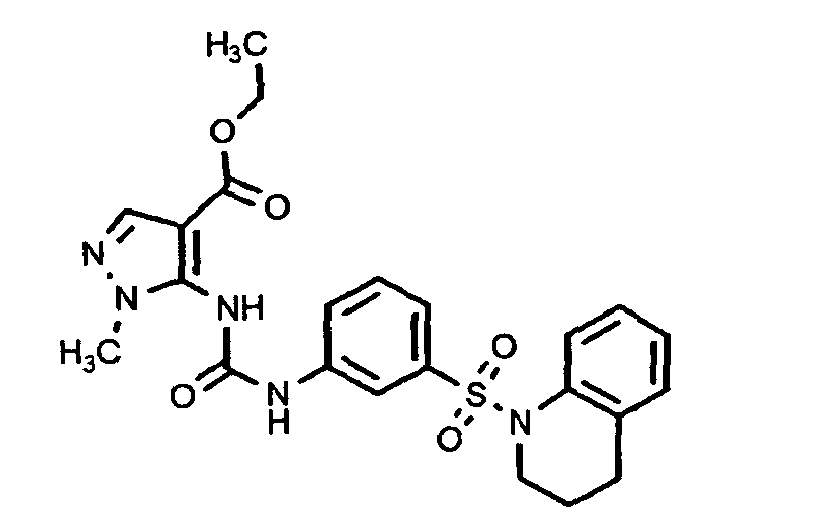
-

-

-

-

-
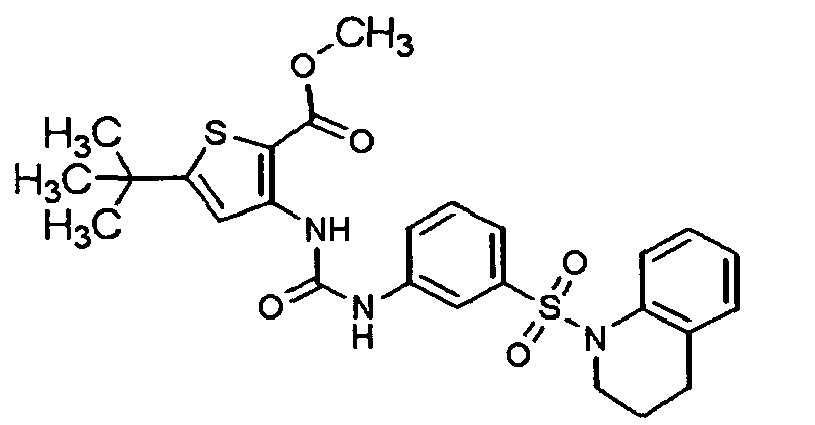
-

-

-

-

-

- To a solution of 2-chloro-3-nitrobenzoic acid (49.5 g) in tert-butanol (700 ml), diphenylphosphoryl azide (68.8 ml) and triethylamine (49.6 ml) were added at room temperature, and the mixture was stirred at 90°C overnight. The reaction mixture was allowed to cool to room temperature, and concentrated under reduced pressure. Water was added to the obtained residue, and the mixture was extracted with ethyl acetate. The organic layer was washed with saturated brine, and dried over anhydrous magnesium sulfate, and the solvent was evaporated under reduced pressure. The residue was purified by silica gel column chromatography to give the object (66.6 g) as an oily substance. 1H-NMR (CDCl3) δ1.55 (9H, s), 7.17-7.30 (1H, m), 7.38 (1H, t), 7.48 (1H, dd), 8.47 (1H, dd).
-

- To a solution of tert-butyl (2-chloro-3-nitrophenyl)carbamate (66.0 g) in ethanol (500 ml), 48% aqueous hydrobromic acid solution (109 ml) was added, and the mixture was stirred at room temperature for 30 min. The reaction mixture was concentrated under reduced pressure, and the obtained residue was washed with ethyl acetate to give 2-chloro-3-nitroaniline hydrobromide (48.5 g) as crystals. Aqueous sodium hydrogen carbonate solution was added to 2-chloro-3-nitroaniline hydrobromide (16.0 g), and the mixture was neutralized, and extracted with ethyl acetate. The organic layer was washed with saturated brine, and dried over anhydrous sodium sulfate, and the solvent was evaporated under reduced pressure. The obtained residue was washed with hexane to give the object (10.8 g) as crystals.
1H-NMR (CDCl3) δ4.42 (2H, br s), 6.90 - 6.98 (1H, m), 7.13-7.20 (2H, m). -

- To a solution of copper (II) bromide (7.77 g) in acetonitrile (100 ml), tert-butyl nitrite (5.17 ml) was added at room temperature. Then, a solution of 2-chloro-3-nitroaniline (5.00 g) in acetonitrile (50 ml) was added dropwise at 65°C, and the mixture was further stirred for 30 min, and allowed to cool to room temperature. Aqueous sodium hydrogen carbonate solution was added, and the mixture was extracted with ethyl acetate. The organic layer was washed with aqueous thiosodium sulfate solution and saturated brine, and dried over anhydrous magnesium sulfate. The solvent was evaporated under reduced pressure. The obtained residue was purified by silica gel column chromatography to give the object (6.85 g) as an oily substance. 1H-NMR (CDCl3) δ7.30 (1H, t), 7.73 (1H, dd), 7.86 (1H, dd).
-

- To a solution of 1-bromo-2-chloro-3-nitrobenzene (6.8 g) in ethanol (150 ml), reduced iron (8.0 g) was added. Concentrated hydrochlolic acid (36 ml) was added to the mixture, and the mixture was stirred at 60°C for 30 min, and allowed to cool to room temperature. Aqueous sodium hydrogen carbonate solution was added, and the mixture was neutralized, and extracted with ethyl acetate. The organic layer was washed with saturated brine, and dried over anhydrous magnesium sulfate. The solvent was evaporated under reduced pressure. The obtained residue was purified by silica gel column chromatography to give the object (5.8 g) as an oily substance.
1H-NMR (CDCl3) δ4.20 (2H, br s), 6.70 (1H, dd), 6.91 (1H, t), 7.01 (1H, dd). -

- To a solution of 3-bromo-2-chloroaniline in methanol (25 ml)-acetic acid (5.4 ml), [(1-ethoxycyclopropyl)oxy]trimethylsilane was added dropwise at room temperature, and the mixture was stirred at 68°C for 3 hr. The reaction mixture was allowed to cool to room temperature, and concentrated under reduced pressure (residue A). To a suspension of sodium borohydride (1.8 g) in THF(25 ml), boron trifluoride diethyl ether complex (6.0 ml) was added dropwise under nitrogen atmosphere at 0°C, and the mixture was further stirred for 1 hr. A solution of residue A in THF (15 ml) was added dropwise to the mixture at 0°C, and the mixture was stirred at room temperature for 3 hr, and at 60°C overnight. Water was added to the reaction mixture at 0°C, and the mixture was extracted with ethyl acetate. The organic layer was washed with saturated brine, and dried over anhydrous magnesium sulfate. The solvent was evaporated under reduced pressure. The obtained residue was purified by silica gel column chromatography. 4N Hydrogen chloride-ethyl acetate (60 ml) was added, and the mixture was stirred for 10 min. The solvent was evaporated under reduced pressure, and the obtained residue was washed with ethyl acetate to give the object (3.46 g) as crystals.
1H-NMR (DMSO-d6) δ0.47-0.54 (2H, m), 0.70-0.78 (2H, m), 2.35-2.44 (1H, m), 6.26 (2H, br s), 6.97 (1H, dd), 7.03 (1H, dd), 7.11 (1H, t). -

- To a solution of 5-chloro-4-nitrothiophene-2-carboxylic acid (19.0 g) in THF (250 ml), DMF (0.5 ml) was added. Then, oxalyl chloride (10.38 ml) was added dropwise at 0°C, and the mixture was stirred at room temperature for 30 min. The solvent was evaporated under reduced pressure. The residue was dissolved in THF (30 ml), and the mixture was added to a solution of 3-bromo-2-chloro-N-cyclopropylaniline hydrochloride (25.9 g) in 1-methyl-2-pyrrolidone (300 ml). The reaction mixture was stirred under nitrogen atmosphere at 60°C overnight. Water was added, and the mixture was extracted with ethyl acetate. The organic layer was washed with saturated brine, and dried over anhydrous magnesium sulfate. The solvent was evaporated under reduced pressure. The obtained residue was purified by silica gel column chromatography to give the object (35.7 g) as an oily substance. 1H-NMR (CDCl3) δ0.58-1.06 (4H, m), 3.37 (1H, br s), 6.98 (1H, br s), 7.17-7.34 (2H, m), 7.78 (1H, d).
-

- To a solution of N-(3-bromo-2-chlorophenyl)-5-chloro-N-cyclopropyl-4-nitrothiophene-2-carboxamide (35.6 g) in ethanol (400 ml), reduced iron (22.8 g), then concentrated hydrochloric acid (68 ml) were added, and the mixture was stirred at room temperature for 30 min. Aqueous sodium hydrogen carbonate solution was added to the reaction mixture, and the mixture was neutralized, and extracted with ethyl acetate. The organic layer was washed with saturated brine, and dried over anhydrous magnesium sulfate. The solvent was evaporated under reduced pressure. The obtained residue was purified by silica gel column chromatography, and the obtained crystals were washed with hexane to give the object (26.2 g) as crystals.
1H-NMR (CDCl3) δ0.52-0.73 (2H, m), 0.78-0.99 (2H, m), 3.28-3.37 (1H, m), 3.57 (2H, br s), 6.79 (1H, s), 7.15 (1H, dd), 7.21 (1H, t), 7.72 (1H, dd). -

- To a solution of 3-amino-N-[3-(3,4-dihydroquinolin-1(2H)-ylsulfonyl)phenyl]thiophene-2-carboxamide (122 mg) in dichloromethane (5.9 ml), triphosgene (185 mg) was added, and the mixture was heated on stirring at 35°C for 7 hr. The reaction mixture was poured into saturated aqueous sodium hydrogen carbonate, and extracted with dichloromethane. The organic layer was washed with saturated aqueous sodium hydrogen carbonate, and dried over anhydrous magnesium sulfate. The solvent was evaporated under reduced pressure. The crystals crystallized from ethyl acetate were collected by filtration, and dried under vacuum to give the object (70 mg).
1H-NMR (CDCl3) δ 1.64 (2H, ddd), 2.45 (2H, t), 3.76 (2H, t), 6.99 (1H, d), 7.08 (2H, d), 7.17 (1H, td), 7.50 (1H, dt), 7.57-7.66 (3H, m), 7.76 (1H, br s), 8.13 (1H, d), 12.04 (1H, br s). -

- Methyl 2-[({[3-(3,4-dihydroquinolin-1(2H)-ylsulfonyl)phenyl]amino}carbonyl)amino]thiophene-3-carboxylate (77 mg) was dissolved in acetonitrile (3.3 ml). A 0.5N solution (0.84 ml) of sodium methoxide in methanol was added dropwise, and the mixture was heated on stirring at 60°C for 1.5 hr. The reaction mixture was concentrated under reduced pressure. The residue was diluted with dichloromethane, neutralized with 0.5N hydrochlolic acid, saturated aqueous sodium hydrogen carbonate, and extracted with dichloromethane. The organic layer was washed with saturated brine, and dried over anhydrous magnesium sulfate. The solvent was evaporated under reduced pressure. The crystals crystallized from ethyl acetate were collected by filtration, and dried under vacuum to give the object (54 mg).
1H-NMR (CDCl3) δ 1.64 (2H, ddd), 2.46 (2H, t), 3.76 (2H, t), 7.07-7.09 (2H, m), 7.14 (1H, d), 7.11-7.22 (1H, m), 7.20 (1H, d), 7.45-7.52 (1H, m), 7.56-7.63 (3H, m), 7.73-7.74 (1H, m), 12.35 (1H, br s). -
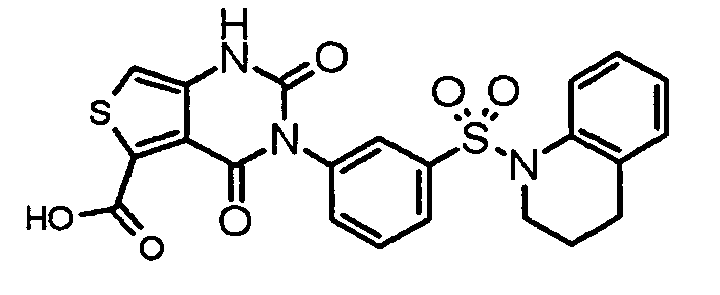
- Dimethyl 4-[({[3-(3,4-dihydroquinolin-1(2H)-ylsulfonyl)phenyl]amino}carbonyl)amino]thiophene-2,3-dicarboxylate (107 mg) was dissolved in 20% acetonitrile/methanol (9.1 ml). A solution of sodium methoxide in 0.5N methanol (1.0 ml) was added dropwise, and the mixture was heated on stirring at 60°C for 75 min. The reaction mixture was concentrated under reduced pressure, and the residue was diluted with dichloromethane, neutralized with 50% aqueous ammonium chloride solution, and extracted with dichloromethane. The organic layer was washed with water, and dried over anhydrous magnesium sulfate. The solvent was evaporated under reduced pressure. The crystals crystallized from ethyl acetate was collected by filtration, and dried under vacuum to give the object (63 mg).
1H-NMR (DMSO-d6) δ 1.64 (2H, ddd), 2.47 (2H, t), 3.76 (2H, t), 7.08-7.09 (2H, m), 7.15-7.21 (1H, m), 7.37 (1H, s), 7.56-7.59 (2H, m), 7.63-7.70 (2H, m), 7.85 (1H, s), 11.94 (1H, br s), 14.72 (1H, br s). - In the same manner as in Example 3, the following compounds were obtained using the compounds obtained in Reference Example 9 (1) - Reference Example 9 (9), respectively.
-

-

-

-

-

-

-

-

-
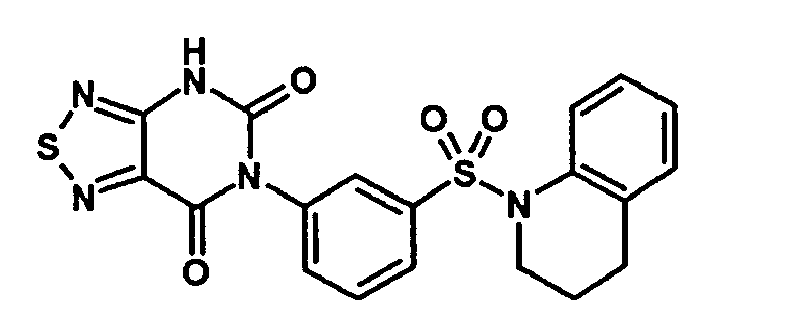
-

- To a 0.75N solution (1.16 ml) of methyl 3-aminothieno[2,3-b]pyridine-2-carboxylate in dichloromethane, a 2.25N solution (1.12 ml) of triethylamine in dichloromethane was added, and then a 0.25N solution (1.36 ml) of triphosgene in dichloromethane was added dropwise on stirring to the mixture under nitrogen atmosphere at -78°C. The cold bath was removed, the mixture was stirred for additional 20 min, and the reaction mixture was concentrated under reduced pressure. The residue was diluted with THF (4.2 ml). A solution of 3-(3,4-dihydro-1(2H)-quinolinylsulfonyl)aniline (0.25N) and DMAP (0.375N) in THF (1.12 ml) was added dropwise, and the mixture was stirred at room temperature for 25 hr. Insoluble triethylamine hydrochloride was filtrated, and the solvent was evaporated under reduced pressure. The fraction eluted by reversed-phase preparative HPLC (Gilson Inc. UniPoint system, YMCODS column 30x75 mm, 0.1% TFA-containing acetonitrile-water (2:98 - 100:0)) was concentrated under reduced pressure, and crystallized from methanol. The obtained crystals were collected by filtration to give the object (97.5 mg).
1H-NMR (DMSO-d6) δ 1.66 (2H, ddd), 2.49 (2H, t), 3.78 (2H, t), 7.08-7.10 (2H, m), 7.18 (1H, ddd), 7.54 (1H, dt), 7.58-7.73 (4H, m), 7.85 (1H, t), 8.77 (1H, dd), 8.84 (1H, dd), 12.86 (1H, br s). - In the same manner as in Example 4, the following compound was obtained using methyl 7-aminothieno[2,3-b]pyrazine-6-carboxylate and 3-(3,4-dihydro-1(2H)-quinolinylsulfonyl)aniline.
-

-

- To a 0.5N solution (12.8 ml) of dimethyl 4-aminothiophene-2,3-dicarboxylate hydrochloride in dichloromethane, a 2.0N solution (14.3 ml) of triethylamine in dichloromethane was added. Then, a 0.17N solution (14.4 ml) of triphosgene in dichloromethane was added dropwise with stirring under nitrogen atmosphere at -78°C, and the mixture was stirred at the same temperature for 10 min. The cold bath was removed, the mixture was stirred for additional 50 min, and the reaction mixture was concentrated under reduced pressure. The residue was diluted with THF (32.0 ml), and a solution of 3-(3,4-dihydro-1(2H)-quinolinylsulfonyl)aniline (0.25N) and DMAP (0.375N) in THF (12.8 ml) was added dropwise, and the mixture was stirred at room temperature for 25 hr. Insoluble triethylamine hydrochloride was removed by filtration, and the solvent was evaporated under reduced pressure. The residue was purified by silica gel column chromatography (20-60% ethyl acetate/hexane) to give dimethyl 4-[({[3-(3,4-dihydroquinolin-1(2H)-ylsulfonyl)phenyl]amino}carbonyl)amino]thiophene-2,3-dicarboxylate (2.24 g). This was dissolved in 20% acetonitrile/methanol (95 ml), and a 0.5N solution of sodium methoxide in methanol (11 ml) was added dropwise, and the mixture was heated on stirring at 60°C for 30 min. The solvent was evaporated, and the residue was purified by silica gel column chromatography (0-5% methanol/ethyl acetate), and crystallized from ethyl acetate to give the object (1.43 g).
1H-NMR (DMSO-d6) δ 1.60-1.68 (2H, m), 2.49 (2H, t), 3.75 (2H, t), 3.82 (3H, s), 7.07-7.09 (2H, m), 7.15 (1H, s), 7.14-7.20 (1H, m), 7.49-7.62 (4H, m), 7.75-7.76 (1H, m), 11.52 (1H, s). -

- To a 0.5N solution (1.2 ml) of dimethyl 4-aminothiophene-2,3-dicarboxylate hydrochloride in dichloromethane, a 2.0N solution (1.2 ml) of triethylamine in dichloromethane was added, and a 0.17N solution (1.2 ml) of triphosgene in dichloromethane was added dropwise with stirring under nitrogen atmosphere at - 78°C. The cold bath was removed, the mixture was stirred for additional 30 min. The reaction mixture was filtrated, and the filtrate was concentrated under reduced pressure. The residue was diluted with THF (3.0 ml). A solution of 2-chloro-5-(5,6,7,8-tetrahydro-4H-thieno[3,2-b]azepin-4-ylsulfonyl)thiophene-3-amine (0.25N) and DMAP (0.375N) in THF (1.0 ml) was added dropwise, and the mixture was stirred at room temperature for 25 hr. Trisamine resin (Argonaut Inc., 4.36 mol/g, 92 mg) was added, and the mixture was stirred at room temperature for additional 1 hr. Insoluble triethylamine hydrochloride and the resin were removed by filtration, and the filtrate was washed with THF. The filtrate and the washing solution were combined, and the mixture was concentrated under reduced pressure. The residue was purified by silica gel column chromatography (20-50% ethyl acetate/hexane) to give urea intermediate (80 mg). This was dissolved in 20% acetonitrile/methanol (6.1 ml), and a 0.5N solution of sodium methoxide in methanol (0.67 ml) was added dropwise, and the mixture was heated on stirring at 65°C for 25 min. The reaction mixture was concentrated under reduced pressure, and the residue was diluted with dichloromethane, and neutralized with 50% queous ammoniuma chloride solution, and extracted with dichloromethane. The organic layer was dried over anhydrous magnesium sulfate, and the solvent was evaporated under reduced pressure. The residue was subjected to reversed-phase preparative HPLC (Gilson Inc. UniPoint system, YMC ODS column 30x75 mm), and eluted with 0.1% TFA-containing acetonitrile-water (2:98 - 100:0). The eluted fraction was concentrated under reduced pressure, and crystallized from diisopropyl ether. The crystals were collected by filtration to give the object (11 mg). 1H-NMR (DMSO-d6) δ 1.51 (2H, br s), 1.82 (2H, br s), 2.49-2.54 (2H, m), 3.68 (2H, br s), 6.96 (1H, d), 7.24 (1H, d), 7.36 (1H, s), 7.68 (1H, s), 12.02 (1H, s), 14.21 (1H, br s).
-

- To a 0.20N solution (0.50 ml) of 3-[3-(3,4-dihydroquinolin-1(2H)-ylsulfonyl)phenyl]-2,4-dioxo-1,2,3,4-tetrahydrothieno[3,4-d]pyrimidine-5-carboxylic acid in DMF, a 0.30N solution of 1-ethyl-3-(3-dimethylaminopropyl)carbodiimide hydrochloride in dichloromethane (0.50 ml), a 0.30N solution of 1-hydroxybenzotriazole in dichloromethane (0.50 ml) and a 0.30N solution of ethanolamine in dichloromethane (0.50 ml) were added, and the mixture was shook at room temperature for 17 hr, and diluted with dichloromethane. The organic layer was washed with 5% aqueous sodium bicarbonate solution, and then water, and extracted with dichloromethane. The organic layer was dried over anhydrous magnesium sulfate, and the solvent was evaporated under reduced pressure. The residue was subjected to reversed-phase preparative HPLC (Gilson Inc. UniPoint system, YMC ODS column 30x75 mm), and eluted with 0.1% TFA-containing acetonitrile-water (2:98 - 100:0). The eluted fraction was concentrated under reduced pressure, and crystallized from diisopropyl ether. The obtained crystals were collected by filtration to give the object (46 mg).
1H-NMR (DMSO-d6) δ 1.65 (2H, ddd), 2.47 (2H, t), 3.33-3.39 (2H, m), 3.48 (2H, dt), 3.76 (2H, t), 4.75 (1H, t), 7.08-7.09 (2H, m), 7.17 (1H, s), 7.15-7.21 (1H, m), 7.53 (1H, dt), 7.56-7.66 (2H, m), 7.66 (1H, dt), 7.82 (1H, t), 10.49 (1H, t), 11.66 (1H, br s). - In the same manner as in Example 7, the following compounds were obtained by condensing 3-[3-(3,4-dihydroquinolin-1(2H)-ylsulfonyl)phenyl]-2,4-dioxo-1,2,3,4-tetrahydrothieno[3,4-d]pyrimidine-5-carboxylic acid with the corresponding amines.
-

-

-

-

- To a 0.20N solution of 3-[3-(3,4-dihydroquinolin-1(2H)-ylsulfonyl)phenyl]-2,4-dioxo-1,2,3,4-tetrahydrothieno[3,4-d]pyrimidine-5-carboxylic acid in DMF (0.50 ml), a 0.30N solution (1.0 ml) of N,N'-diisopropylcarbodiimide in dichloromethane, a 0.30N solution (1.0 ml) of 1-hydroxybenzotriazole in dichloromethane and a 0.30N solution (1.0 ml) of N-methyl-2-pyridin-2-ylethaneamine in dichloromethane were added, and the mixture was shook at room temperature for 41 hr. The reaction solution was passed through a conditioned PS-tosic acid resin (Argonaut Inc.)-packed column, and washed with methanol, then dichloromethane to remove a neutral and acidic fraction. The basic fraction containing the object was eluted with 1N ammonia/methanol. The solvent was evaporated under reduced pressure, the residue was subjected to reversed-phase preparative HPLC (Gilson Inc. UniPoint system, YMC ODS column 30x7 5mm), and eluted with 0.1% TFA-containing acetonitrile-water (2:98 - 100:0). The eluted fraction was concentrated under reduced pressure, and the residue was purified by silica gel column chromatography (0-15% methanol/ethyl acetate). The solvent was evaporated, and crystallized from diisopropyl ether. The obtained crystals were collected by filtration to give the object (51 mg).
1H-NMR (DMSO-d6) δ 1.03-1.22 (4H, m), 1.62 (2H, td), 2.43-2.50 (2H, m), 2.78 & 2.97 (3H, s), 3.70-3.77 (2H, m), 6.89 & 6.94 (1H, s), 7.04-7.06 (2H, m), 7.12-7.33 (3H, m), 7.50-7.61 (4H, m), 7.66-7.74 (2H, m), 8.42 & 8.51 (1H, d), 11.44 & 11.45 (1H, br s). -

- To a 0.20N solution of 3-[3-(3,4-dihydroquinolin-1(2H)-ylsulfonyl)phenyl]-2,4-dioxo-1,2,3,4-tetrahydrothieno[3,4-d]pyrimidine-5-carboxylic acid in DMF (0.50 ml), a 0.60N solution of 1-ethyl-3-(3-dimethylaminopropyl)carbodiimide hydrochloride in dichloromethane (0.50 ml), a 0.21N solution of DMAP in dichloromethane (0.50 ml) and a 1.0N solution of 4-aminopyrimidine in dichloromethane (0.50 ml) were added, and the mixture was shook at room temperature for 18 hr, and diluted with dichloromethane. The organic layer was washed with 5% aqueous sodium bicarbonate solution, then water, and extracted with dichloromethane. The organic layer was dried over anhydrous magnesium sulfate, and the solvent was evaporated under reduced pressure. The residue was subjected to reversed-phase preparative HPLC (Gilson Inc. UniPoint system, YMC ODS column 30x75 mm), and eluted with 0.1% TFA-containing acetonitrile-water (2:98 - 100:0). The eluted fraction was concentrated under reduced pressure to give the object (6.3 mg).
1H-NMR (DMSO-d6) δ 1.67-1.71 (2H, m), 2.53 (2H, t), 3.82 (2H, t), 7.02-7.05 (2H, m), 7.12 (1H, s), 7.44 (1H, ddd), 7.52-7.60 (3H, m), 7.64 (1H, dt), 7.77 (1H, d), 8.35 (1H, d), 8.62 (1H, s), 8.70 (1H, d), 8.94 (1H, s), 13.18 (1H, br s). -

- 3-[3-(3,4-Dihydroquinolin-1(2H)-ylsulfonyl)phenyl]-2,4-dioxo-1,2,3,4-tetrahydrothieno[3,4-d]pyrimidine-5-carboxylic acid (306 mg) was dissolved in DMF (3.2 ml). A solution of 1-ethyl-3-(3-dimethylaminopropyl)carbodiimide hydrochloride (186 mg) in dichloromethane (3.2 ml) and a solution of ammonium 1H-1,2,3-benzotriazoe-1-olate (152 mg) in dichloromethane (3.3 ml) were added, and the mixture was stirred at room temperature for 50 hr. The reaction mixture was poured into 5% aqueous sodium bicarbonate solution, and extracted with dichloromethane. The organic layer was washed with water, and dried over anhydrous magnesium sulfate. The solvent was evaporated under reduced pressure. The residue was crystallized from methanol, and the obtained crystals were collected by filtration to give the object (186 mg).
1H-NMR (DMSO-d6) δ 1.58-1.67 (2H, m), 2.46 (2H, t), 3.76 (2H, t), 7.07-7.09 (2H, m), 7.11-7.20 (1H, m), 7.18 (1H, s), 7.54-7.68 (4H, m), 7.77-7.78 (1H, m), 8.09 (1H, d), 9.74 (1H, d), 11.66 (1H, br s). -

- N-({3-[3-(3,4-Dihydroquinolin-1(2H)-ylsulfonyl)phenyl]-2,4-dioxo-1,2,3,4-tetrahydrothieno[3,4-d]pyrimidin-5-yl}carbonyl)glycine tert-butyl ester (20 mg) was dissolved in dichloromethane (0.5 ml). TFA (0.5 ml) was added dropwise, and the mixture was stirred at room temperature for 2 hr. The volatile component was evaporated under reduced pressure. The residue was crystallized from diisopropyl ether, and the obtained crystals were collected by filtration to give the object (19 mg).
1H-NMR (DMSO-d6) δ 1.61-1.70 (2H, m), 2.46 (2H, t), 3.76 (2H, t), 4.06 (2H, d), 7.07-7.08 (2H, m), 7.16 (1H, dd), 7.22 (1H, s), 7.53-7.58 (2H, m), 7.53-7.70 (2H, m), 7.83 (1H, t), 10.70 (1H, t), 11.68 (1H, s), 12.73 (1H, br s). -

- In the same manner as in Example 11, the title compound was obtained using N-({3-[3-(3,4-dihydroquinolin-1(2H)-ylsulfonyl)phenyl]-2,4-dioxo-1,2,3,4-tetrahydrothieno[3,4-d]pyrimidin-5-yl}carbonyl)-β-alanine tert-butyl ester.
1H-NMR (DMSO-d6) δ 1.62-1.70 (2H, m), 2.48 (2H, t), 2.47-2.51 (2H, m), 3.49 (2H, q), 3.76 (2H, t), 7.08-7.09 (2H, m), 7.15-7.21 (1H, m), 7.18 (1H, s), 7.52 (1H, dt), 7.57-7.68 (3H, m), 7.82-7.83 (1H, m), 10.48 (1H, t), 11.66 (1H, br s), 12.26 (1H, br s). -

- 3-[3-(3,4-Dihydroquinolin-1(2H)-ylsulfonyl)phenyl]-2,4-dioxo-1,2,3,4-tetrahydrothieno[3,4-d]pyrimidine-5-carboxylic acid (102 mg) was dissolved in oxalyl chloride (0.84 ml). Acetic hydrazide (38.4 mg) was added, and the mixture was heated under reflux for 3 hr. After cooling to room temperature, the reaction mixture was poured into ice, and neutralized with ammonium hydroxide. Brine was added, and the mixture was extracted with dichloromethane and ethyl acetate. The organic layer was dried over anhydrous magnesium sulfate, and the solvent was evaporated under reduced pressure. The residue was subjected to reversed-phase preparative HPLC (Gilson Inc. UniPoint system, YMC ODS column 30x75 mm), and eluted with 0.1% TFA-containing acetonitrile-water (2:98 - 100:0). The eluted fraction was concentrated under reduced pressure, and crystallized from diisopropyl ether. The obtained crystals were collected by filtration to give the object (5.6 mg).
1H-NMR (DMSO-d6) δ 1.60-1.69 (2H, m), 2.46-2.50 (2H, m), 2.55 (3H, s), 3.75 (2H, t), 7.06-7.08 (2H, m), 7.17-7.19 (1H, m), 7.24 (1H, s), 7.51-7.57 (2H, m), 7.60-7.64 (2H, m), 7.76-7.77 (1H, m), 11.59 (1H, br s). -

- 3-[3-(3,4-Dihydroquinolin-1(2H)-ylsulfonyl)phenyl]-2,4-dioxo-1,2,3,4-tetrahydrothieno[3,4-d]pyrimidine-5-carboxylic acid (49 mg) was dissolved in DMF (1.0 ml). A solution of 1-ethyl-3-(3-dimethylaminopropyl)carbodiimide hydrochloride (56 mg) and 1-hydroxybenzotriazole (42 mg) in dichloromethane (1.0 ml) and acetamidoxime (45 mg) was added, and the mixture was stirred at room temperature for 15 hr. Then, the reaction mixture was heated on stirring at 100°C for 7 hr, and the solvent was evaporated under reduced pressure. The residue was diluted with dichloromethane. The organic layer was washed with 5% aqueous sodium bicarbonate solution, ehtn water, and extracted with dichloromethane. The organic layer was dried over anhydrous magnesium sulfate, and the solvent was evaporated under reduced pressure. The residue was subjected to reversed-phase preparative HPLC (Gilson Inc. UniPoint system, YMC ODS column 30x75 mm), and eluted with 0.1% TFA-containing acetonitrile-water (2:98 - 100:0). The eluted fraction was concentrated under reduced pressure, and crystallized from diisopropyl ether. The obtained crystals were collected by filtration to give the object (8.0 mg).
1H-NMR (DMSO-d6) δ 1.59-1. 68 (2H, m), 2.41 (3H, s), 2.46-2.50 (2H, m), 3.75 (2H, t), 7.07-7.08 (2H, m), 7.16 (1H, td), 7.35 (1H, s), 7.51-7.65 (4H, m), 7.75-7.77 (1H, m), 11.63 (1H, s). -

- Dimethyl 4-aminothiophene-2,3-dicarboxylate hydrochloride (1.12 g) was suspended in ethyl acetate (50 ml) and aqueous sodium hydrogen carbonate solution (50 ml). The organic layer was separated, dried over anhydrous magnesium sulfate, and concentrated. The obtained residue was dissolved in THF (20 ml). Triethylamine (2.1 ml) was added, and the mixture was cooled to -78°C. A solution of triphosgene (410 mg) in THF (10 ml) was added dropwise to the reaction mixture, and the mixture was warmed to room temperature, and stirred for additional 1 hr. The reaction mixture was diluted with ethyl acetate, and the insoluble material was filtrated. The filtrate was concentrated under reduced pressure. The obtained residue was dissolved in THF (10 ml). DMAP (1.82 g) and 2-chloro-5-(3,4-dihydroquinolin-1(2H)-ylsulfonyl)phenylamine (930 mg) were added, and the mixture was stirred at room temperature for 48 hr. The reaction mixture was concentrated under reduced pressure, and the obtained residue was dissolved in methanol (20 ml). A 28% solution (1.00 g) of sodium methoxide in methanol was added, and the mixture was stirred at room temperature for 10 min. The reaction mixture was diluted with ethyl acetate and aqueous sodium hydrogen carbonate solution, and the organic layer was separated, and dried over anhydrous magnesium sulfate. The drying agent was filtrated, and the filtrate was concentrated. The obtained residue was purified by silica gel column chromatography, and recrystallized from ethyl acetate-hexane to give the object (690 mg) as crystals.
1H-NMR (DMSO-d6) δ 1.59-1.74 (2H, m), 2.46-2.57 (2H, m), 3.73-3.81 (2H, m), 3.83 (3H, s), 7.06-7.22 (4H, m), 7.52-7.59 (2H, m), 7.79 (1H, d), 8.03 (1H, d). -

- A solution of methyl 3-[2-chloro-5-(3,4-dihydroquinolin-1(2H)-ylsulfonyl)phenyl]-2,4-dioxo-1,2,3,4-tetrahydrothieno[3,4-d]pyrimidine5-carboxylate (246 mg) and lithium hydroxide monohydrate (129 mg) in aqueous ethanol (EtOH: H2O=10 ml: 2 ml) was stirred at room temperature for 10 min, and diluted with 1N aqueous hydrochlolic acid solution. The reaction mixture was concentrated under reduced pressure. The obtained residue was washed with water, and recrystallized from ethyl acetate-methanol to give the object (170 mg) as crystals.
1H-NMR (DMSO-d6) δ 1.58-1.74 (2H, m), 2.42-2.50 (2H, m), 3.72-3.82 (2H, m), 7.05-7.25 (3H, m), 7.38 (1H, s), 7.52-7.65 (2H, m), 7.84 (1H, d), 8.09 (1H, d), 12.04 (1H, br s), 14.24 (1H, br s). -

- 3-[2-Chloro-5-(3,4-dihydroquinolin-1(2H)-ylsulfonyl)phenyl]-2,4-dioxo-1,2,3,4-tetrahydrothieno[3,4-d]pyrimidine-5-carboxylic acid (86 mg), 1-ethyl-3-(3-dimethylaminopropyl)carbodiimide hydrochloride (45 mg), 1-hydroxybenzotriazole (36 mg), diisopropylethylamine (0.1 ml) and a 2 M solution (0.5 ml) of methylamine in THF were suspended in DMF (3 ml), and the mixture was stirred at room temperature for 16 hr. The reaction mixture was diluted with water, and the obtained solid was collected by filtration, and air-dried. The obtained residue was purified by silica gel column chromatography, and recrystallized from ethyl acetate-hexane to give the object (45 mg) as crystals.
1H-NMR (DMSO-d6) δ 1.62-1.75 (2H, m), 2.50-2.56 (2H, m), 2.85 (3H, d), 3.73-3.82 (2H, m), 7.03-7.25 (4H, m), 7.55 (1H, d), 7.61 (1H, dd), 7.82 (1H, d), 8.09 (1H, d), 10.05-10.17 (1H, m), 11.86 (1H, br s). -

- To a solution of methyl 3-[3-(3,4-dihydroquinolin-1(2H)-ylsulfonyl)phenyl]-2,4-dioxo-1,2,3,4-tetrahydrothieno[3,4-d]pyrimidine-5-carboxylate (2.00 g) in THF (200 ml) cooled to - 78°C, a solution of lithium tetrahydroborate (263 mg) in THF (40 ml) was added, and the mixture was stirred for 1 hr. After warming to room temperature, the mixture was stirred for additional 2 hr. The reaction mixture was diluted with 1N aqueous sodium hydroxide solution, and extracted with ethyl acetate. The organic layer was washed with saturated brine, and dried over anhydrous magnesium sulfate. The drying agent was filtrated, and the filtrate was concentrated. The obtained residue was recrystallized from ethyl acetate-isopropyl ether to give the object (1.70 g) as crystals.
1H-NMR (DMSO-d6) δ 1.57-1.69 (2H, m), 2.43-2.49 (2H, m), 3.71-3.80 (2H, m), 5.00 (2H, d), 5.96 (1H, t), 6.68 (1H, s), 7.04-7.23 (3H, m), 7.47-7.63 (4H, m), 7.65-7.70 (1H, m), 11.26 (1H, s). -

- 3-[3-(3,4-Dihydroquinolin-1(2H)-ylsulfonyl)phenyl]-5-(hydroxymethyl)thieno[3,4-d]pyrimidin-2,4(1H,3H)-dione (276 mg) and manganese dioxide (4.0 g) were suspended in DMF (10 ml), and the mixure was stirred at room temperature for 16 hr. The insoluble material was removed by filtration, and was washed with ethyl acetate. The obtained filtrate was washed with water. The organic layer was dried over anhydrous magnesium sulfate, and concentrated. The obtained residue was recrystallized from ethyl acetate-isopropyl ether to give the object (170 mg) as crystals.
1H-NMR (DMSO-d6) δ 1.59-1.71 (2H, m), 2.44-2.49 (2H, m), 3.71-3.80 (2H, m), 7.05-7.11 (2H, m), 7.12-7.23 (1H, m), 7.47 (1H, d), 7.50-7.70 (4H, m), 7.77-7.84 (1H, m), 10.55 (1H, d), 11:69 (1H, s). -

- 3-[3-(3,4-Dihydroquinolin-1(2H)-ylsulfonyl)phenyl]-2,4-dioxo-1,2,3,4-tetrahydrothieno[3,4-d]pyrimidine-5-carbaldehyde (120 mg) and hydroxylamine hydrochloride (30 mg) were dissolved in 1-methyl-2-pyrrolidone (5 ml), and the mixture was stirred at 110°C for 20 min. The reaction mixture was diluted with ethyl acetate and water, and the precipitate was filtrated, washed with water and isopropyl ether, and dried. The obtained solid was purified by silica gel column chromatography, and recrystallized from THF-ethyl acetate to give the object (82 mg) as crystals.
1H-NMR (DMSO-d6) δ 1.57-1.71 (2H, m), 2.44-2.50 (2H, m), 3.70-3.81 (2H, m), 6.79-7.12 (3H, m), 7.12-7.23 (1H, m), 7.46-7.68 (4H, m), 7.71-7.79 (1H, m), 8.83-8.91 (1H, m), 11.48 (1H, s), 11.78-13.16 (1H, m). -

- To a solution of 3-[3-(3,4-dihydroquinolin-1(2H)-ylsulfonyl)phenyl]-2,4-dioxo-1,2,3,4-tetrahydrothieno[3,4-d]pyrimidine-5-carboxamide (480 mg) in DMF (30 ml) cooled to 5°C, thionyl chloride (0.3 ml) was added, and the mixture was warmed to 100°C. After stirring at 100°C for 10 min, the reaction mixture was diluted with ethyl acetate and aqueous sodium hydrogen carbonate solution. The organic layer was separated, and dried over anhydrous magnesium sulfate. The obtained residue was purified by silica gel column chromatography, and recrystallized from THF-ethyl acetate to give the object (390 mg) as crystals.
1H-NMR (DMSO-d6) δ 1.58-1.71 (2H, m), 2.44-2.50 (2H, m), 3.72-3.81 (2H, m), 7.05-7.23 (3H, m), 7.37 (1H, s), 7.48-7.67 (4H, m), 7.77-7.83 (1H, m), 11.70 (1H, br s). -

- To a solution of trimethylsilyldiazomethane (0.43 ml) in THF (5 ml) cooled to 5°C, n-butyl lithium (0.54 ml) was added dropwise, and the mixture was stirred for 30 min. A suspension of 3-[3-(3,4-dihydroquinolin-1(2H)-ylsulfonyl)phenyl]-2,4-dioxo-1,2,3,4-tetrahydrothieno[3,4-d]pyrimidine-5-carbonitrile (100 mg) in THF (15 ml) was added dropwise to the reaction mixture, and the mixture was stirred at room temperature for additional 3 hr. The reaction mixture was diluted with ethyl acetate and aqueous ammonium chloride solution, and the organic layer was separated, and dried over anhydrous magnesium sulfate. The drying agent was filtrated, and the filtrate was concentrated. The obtained residue was dissolved in THF (5 ml), and 1M solution of tetrabutylammonium fluoride in THF (3 ml) was added. The reaction mixture was stirred at room temperature for 2 hr, and diluted with ethyl acetate and aqueous ammonium chloride solution. The organic layer was separated, dried over anhydrous magnesium sulfate, and concentrated. The obtained residue was purified by silica gel column chromatography, and recrystallized from ethyl acetate-hexane to give the object (53 mg) as crystals. 1H-NMR (DMSO-d6) δ 1.60-1.71 (2H, m), 2.45-2.50 (2H, m), 3.72-3.81 (2H, m), 7.03-7.22 (4H, m), 7.51-7.71 (4H, m), 7.76-7.82 (1H, m), 8.23 (1H, br s), 11.63 (1H, br s), 13.96 (1H, br s).
-

- 3-[3-(3,4-Dihydroquinolin-1(2H)-ylsulfonyl)phenyl]-2,4-dioxo-1,2,3,4-tetrahydrothieno[3,4-d]pyrimidine-5-carbonitrile (158 mg), sodium azide (340 mg), ammonium chloride (280 mg) were suspended in DMF (5 ml), and the mixture was stirred at 110°C for 3 hr. The reaction mixture was diluted with water, and acidified with 1N hydrochloric acid. The resulting precipitate was collected by filtration, and air-dried. The obtained residue was purified by silica gel column chromatography to give the object (8.8 mg) as an amorphous.
1H-NMR (CDCl3) δ 1.64-1.76 (2H, m), 2.51 (2H, t), 3.79-3.89 (2H, m), 7.01 (1H, s), 7.05-7.22 (3H, m), 7.43-7.50 (1H, m), 7.54-7.64 (2H, m), 7.67-7.73 (1H, m), 7.78 (1H, d), 9.08 (1H, br s), 15.03 (1H, br s). -

- To a solution of 3-[3-(3,4-dihydroquinolin-1(2H)-ylsulfonyl)phenyl]-5-(hydroxymethyl)thieno[3,4-d]pyrimidin-2,4(1H,3H)-dione (136 mg) and triethylamine (0.08 ml) in THF (10 ml) cooled to 5°C, mesyl chloride (0.023 ml) was added, and the mixture was stirred at room temperature for 5 hr. 2-Methoxy-N-methylethaneamine (0.1 ml) was added to the reaction mixture, and the mixture was stirred at room temperature for 16 hr. The reaction mixture was diluted with ethyl acetate and aqueous sodium hydrogen carbonate solution, and the organic layer was separated, and extracted with 1N hydrochlolic acid. The aqueous layer was alkalized with 1N aqueous sodium hydroxide solution, and extracted with ethyl acetate. The organic layer was dried over anhydrous magnesium sulfate, and concentrated to give the object (17 mg) as an amorphous.
1H-NMR (CDCl3) δ 1.61-1.72 (2H, m), 2.43 (3H, s), 2.48 (2H, t), 2.74 (2H, t), 3.35 (3H, s), 3.54 (2H, t), 3.75-3.84 (2H, m), 4.22 (2H, s), 6.45-6.71 (1H, m), 6.99-7.04 (1H, m), 7.04-7.12 (1H, m), 7.14-7.23 (1H, m), 7.39-7.59 (4H, m), 7.78 (1H, m), 8.57 (1H, br s). -

- In the same manner as in Example 23, the title compound was obtained using 3-[3-(3,4-dihydroquinolin-1(2H)-ylsulfonyl)phenyl]-5-(hydroxymethyl)thieno[3,4-d]pyrimidin-2,4(1H,3H)-dione and N-methyl-2-pyridin-2-ylethaneamine.
1H-NMR (DMSO-d6) δ 1.55-1.68 (2H, m), 2.35 (3H, s), 2.42-2.50 (2H, m), 2.77-2.96 (4H, m), 3.70-3.79 (2H, m), 4.15 (2H, s), 6.66 (1H, s), 7.07 (2H, d), 7.12-7.23 (2H, m), 7.27 (1H, d), 7.47-7.63 (4H, m), 7.63-7.72 (2H, m), 8.42-8.47 (1H, m), 11.24 (1H, br s). -

- To a solution of 3-[3-(3,4-dihydroquinolin-1(2H)-ylsulfonyl)phenyl]-2,4-dioxo-1,2,3,4-tetrahydrothieno[3,4-d]pyrimidine-5-carbaldehyde (121 mg) in THF (10 ml) cooled to 5°C, a solution of methyl magnesiumbromide in diethyl ether (3.0 M, 0.51 ml) was added, and the mixture was warmed to room temperature. The reaction mixture was stirred for 1 hr, and diluted with ethyl acetate and aqueous ammonium chloride solution. The organic layer was separated, dried over anhydrous magnesium sulfate, and concentrated. The obtained residue was purified by silica gel column chromatography, and recrystallized from ethyl acetate-hexane to give the object (27 mg) as crystals. 1H-NMR (DMSO-d6) δ 1.38 (3H, d), 1.58-1.68 (2H, m), 2.44-2.49 (2H, m), 3.72-3.78 (2H, m), 5.48-5.57 (1H, m), 5.94 (1H, d), 6.65 (1H, s), 7.04-7.21 (3H, m), 7.50-7.66 (5H, m), 11.25 (1H, br s).
-

- A solution of 3-[3-(3,4-dihydroquinolin-1(2H)-ylsulfonyl)phenyl]-2,4-dioxo-1,2,3,4-tetrahydrothieno[3,4-d]pyrimidine-5-carbaldehyde (100 mg) and p-toluenesulfonylmethyl isocyanate (125 mg), potassium carbonate (118 mg) in dry methanol (5 ml) was stirred at 60°C for 1 hr. The reaction mixture was diluted with ethyl acetate and 1N hydrochlolic acid. The organic layer was separated, and dried over anhydrous magnesium sulfate. The drying agent was filtrated, and the filtrate was concentrated. The obtained residue was purified by silica gel column chromatography, and recrystallized from ethyl acetate-hexane to give the object (50 mg) as crystals.
1H-NMR (DMSO-d6) δ 1.59-1.72 (2H, m), 2.45-2.50 (2H, m), 3.72-3.80 (2H, m), 6.98 (1H, s), 7.05-7.22 (3H, m), 7.51-7.68 (4H, m), 7.74-7.78 (1H, m), 8.10 (1H, s), 8.54 (1H, s), 11.47 (1H, br s). -

- A solution of 3-[3-(3,4-dihydroquinolin-1(2H)-ylsulfonyl)phenyl]-2,4-dioxo-1,2,3,4-tetrahydrothieno[3,4-d]pyrimidine-5-carbaldehyde (445 mg) and methyl methylsulfinylmethyl sulfide (360 mg) and Triton B (0.40 ml) in THF (20 ml) was stirred at 60°C for 16 hr. Triton B (2.0 ml) was added to the reaction mixture, and the mixture was stirred for additional 16 hr. The reaction mixture was diluted with ethyl acetate and 1N hydrochlolic acid, and the organic layer was separated, and dried over anhydrous magnesium sulfate. The drying agent was filtrated, and the filtrate was concentrated. The obtained residue was purified by silica gel column chromatography, and dissolved in THF (15 ml). Copper (II) chloride (60 mg) and a 10% solution of hydrochloride in methanol (15 ml) were added, and the mixture was stirred at room temperature for 24 hr. The reaction mixture was diluted with ethyl acetate and water, and the organic layer was separated, and dried over anhydrous magnesium sulfate. The drying agent was filtrated, and the filtrate was concentrated. The obtained residue was purified by silica gel column chromatography to give the object (27 mg) as a powder.
1H-NMR (DMSO-d6) δ 1.56-1.68 (2H, m), 2.43-2.49 (2H, m), 3.62 (3H, s), 3.71-3.79 (2H, m), 4.33 (2H, s), 6.75 (1H, s), 7.03-7.23 (3H, m), 7.48-7.67 (5H, m), 11.34 (1H, br s). -

- To a solution of sodium hydride(54 mg) in THF (5 ml) cooled to 5°C, diethylphosphonoethyl acetate (0.31 g) was added, and the mixture was stirred for 10 min. 3-[3-(3,4-dihydroquinolin-1(2H)-ylsulfonyl)phenyl]-2,4-dioxo-1,2,3,4-tetrahydrothieno[3,4-d]pyrimidine-5-carbaldehyde (250 mg) was added to the reaction mixture, and the mixture was stirred for additional 10 min. The reaction mixture was diluted with ethyl acetate and aqueous sodium hydrogen carbonate solution, and the organic layer was separated, and dried over anhydrous magnesium sulfate. The drying agent was filtrated, and the filtrate was concentrated. The obtained residue was purified by silica gel column chromatography, and recrystallized from ethyl acetate-hexane to give the object (220 mg) as crystals.
1H-NMR (DMSO-d6) δ 1.24 (3H, t), 1.58-1.71 (2H, m), 2.44-2.51 (2H, m), 3.70-3.81 (2 H, m), 4.18 (2H, q), 6.53 (1H, d), 6.99-7.23 (4H, m), 7.49-7.66 (4H, m), 7.70-7.77 (1H, m), 8.59 (1H, d), 11.50 (1H, br s). -

- Under hydrogen atmosphere, a solution of ethyl 3-{3-[3-(3,4-dihydroquinolin-1(2H)-ylsulfonyl)phenyl]-2,4-dioxo-1,2,3,4-tetrahydrothieno[3,4-d]pyrimidin-5-yl}acrylate (180 mg) and palladium carbon (40 mg) in THF (20 ml) and methanol (20 ml) was stirred at room temperature for 30 hr. The catalyst was removed by filtration, and the filtrate was concentrated under reduced pressure. The obtained residue was recrystallized from acetate-hexane to give the object (130 mg) as crystals.
1H-NMR (DMSO-d6) δ 1.17 (3H, t), 1.56-1.69 (2H, m), 2.44-2.50 (2H, m), 2.69 (2H, t), 3.39 (2H, t), 3.71-3.80 (2H, m), 4.06 (2H, q), 6.64 (1H, s), 7.08 (2H, d), 7.12-7.22 (1H, m), 7.49-7.67 (5H, m), 11.29 (1H, s). -

- To a solution of methyl 3-[3-(3,4-dihydroquinolin-1(2H)-ylsulfonyl)phenyl]-2,4-dioxo-1,2,3,4-tetrahydrothieno[3,4-d]pyrimidine-5-carboxylate (102 mg) in THF (10 ml) cooled to 5°C, a solution of methyl magnesiumbromide in diethyl ether (3.0 M, 1.0 ml) was added, and the mixture was warmed to room temperature. The reaction mixture was stirred for 1 hr, and diluted with ethyl acetate and aqueous ammonium chloride solution. The organic layer was separated, dried over anhydrous magnesium sulfate, and concentrated. The obtained residue was purified by silica gel column chromatography, and recrystallized from ethyl acetate-hexane to give the object (57 mg) as crystals. 1H-NMR (DMSO-d6) δ 1.56-1.69 (8H, m), 2.42-2.50 (2H, m), 3.71-3.80 (2H, m), 6.08 (1H, s), 6.64 (1H, s), 7.02-7.25 (3H, m), 7.52-7.77 (5H, m), 11.29 (1H, br s).
-

- To a solution of dimethyl 4-aminothiophene-2,3-dicarboxylate hydrochloride (0.58 g) and triethylamine (0.85 ml) in dichloromethane (10 ml), a solution of triphosgene (0.23 g) in THF (5 ml) was added dropwise at -20°C, and the mixture was stirred at room temperature for 1 hr. The solvent of the reaction mixture was evaporated under reduced pressure, and the residue was diluted with THF. The obtained precipitate was removed by filtration. The filtrate was added to a solution of 4-(3,4-dihydroquinolin-1(2H)-ylsulfonyl)thiophene-2-amine (0.45 g) and DMAP (0.37 g) in THF (10 ml) at room temperature, and the mixture was further stirred overnight. The reaction mixture was poured into dilute hydrochloric acid, and extracted twice with ethyl acetate. The collected organic layer was dried over anhydrous magnesium sulfate, and the solvent was evaporated under reduced pressure to give an oily substance.
- To a solution of the oily substance obtained in the above-mentioned in methanol(10 ml), a 28 % sodium methoxide-methanol solution (0.29 g) was added at room temperature, and the mixture was further stirred for 10 min. The reaction mixture was poured into dilute hydrochloric acid, and extracted twice with ethyl acetate. The collected organic layer was dried over anhydrous magnesium sulfate, and the solvent was evaporated under reduced pressure.
- The obtained residue was purified by silica gel column chromatography (hexane-ethyl acetate (2:1 - 1:2)), and crystallized from ethyl acetate-diisopropyl ether to give the object (0.14 g) as crystals.
1H-NMR (CDCl3-DMSO-d6) δ 1.70-1.78 (2H, m), 2.60 (2H, t), 3.79 (2H, t), 3.93 (3H, s), 6.85 (1H, d), 6.95 (1H, s), 7.02-7.10 (2H, m), 7.16 (1H, dt), 7.69 (1H, d), 7.71 (1H, d), 11.49 (1H, br s). -

- To a solution of methyl 3-[4-(3,4-dihydroquinolin-1(2H)-ylsulfonyl)-2-thienyl]-2,4-dioxo-1,2,3,4-tetrahydrothieno[3,4-d]pyrimidine-5-carboxylate (50 mg) in THF (5 ml), lithium borohydride (4 mg) was added at room temperature, and the mixture was further stirred for 1 hr. The reaction mixture was poured into diluted hydrochloric acid, and extracted twice with ethyl acetate. The collected organic layer was dried over anhydrous magnesium sulfate, and the solvent was evaporated under reduced pressure. The obtained residue was purified by silica gel column chromatography (hexane-ethyl acetate (2:1 - 1:2)), and crystallized from diethyl ether to give the object (16 mg) as a powder.
1H-NMR (CDCl3) δ 1.69-1.77 (2H, m), 2.58 (2H, t), 3.81 (2H, t), 3.95 (1H, t), 4.96 (2H, d), 6.48 (1H, s), 6.81 (1H, d), 7.03-7.11 (2H, m), 7.17 (1H, dt), 7.74 (1H, dd), 7.75 (1H, d), 8.86 (1H, s). -

- To a solution of diethyl 2-aminothiophene-3,4-dicarboxylate (100 mg), triethylamine (0.21 ml) in dichloromethane (3 ml), a solution of triphosgene (44.5 mg) in THF (1 ml) was added at 0°C, and the mixture was stirred under nitrogen atmosphere at 0°C for 1 hr. The insoluble material was removed by filtration. 3-(3,4-Dihydroquinolin-1(2H)-ylsulfonyl)aniline (118 mg) was added, and the mixture was stirred under nitrogen atmosphere at room temperature overnight. Water was added, and the mixture was extracted with ethyl acetate. The organic layer was washed with saturated brine, and dried over magnesium sulfate. The solvent was evaporated under reduced pressure. The obtained residue was purified by basic silica gel column chromatography, and dissolved in ethanol (7 ml). A 20% solution (140 mg) of sodium ethoxide in ethanol was added, and the mixture was stirred under nitrogen atmosphere at 60°C for 2 hr.
- After allowing to cool to room temperature, water-saturated brine was added, and the mixture was extracted with ethyl acetate. The organic layer was washed with saturated brine, and dried over magnesium sulfate. The solvent was evaporated under reduced pressure, and the obtained residue was purified by silica gel column chromatography, and crystallized from diisopropyl ether to give the object (69.7 mg) as crystals.
1H-NMR (DMSO-d6) δ 1.23 (3H, t), 1.58-1.69 (2H, m), 2.43-2.54 (2H, m), 3.72-3.79 (2H, m), 4.21 (2H, q), 7.04-7.10 (2H, m), 7.12-7.22 (1H, m), 7.47-7.63 (5H, m), 7.73 (1H, s), 12.46 (1H, s). -

-

- To a solution of dimethyl 2-aminothiophene-3,4-dicarboxylate (200 mg) and triethylamine (0.73 ml) in dichloromethane (10 ml), a solution of oxalyl chloride (102 mg) in THF (3 ml) was slowly added at 0°C, and the mixture was further stirred for 1 hr. The insoluble material was removed by filtration. 5-Amino-N-ethyl-N-phenylthiophene-3-carboxamide (240 mg) and DMAP (340 mg) were added to the filtrate, and the mixture was stirred under nitrogen atmosphere at room temperature overnight. Water was added, and the mixture was extracted with ethyl acetate. The organic layer was washed with saturated brine, and dried over magnesium sulfate. The solvent was evaporated under reduced pressure. Methanol (10 ml) was added to the obtained residue, and a 28% solution of sodium methoxide in methanol (538 mg) was added, and the mixture was stirred under nitrogen atmosphere at 60°C for 1 hr. After allowing to cool to room temperature, water was added, and the mixture was extracted with ethyl acetate (aqueous phase -X). The organic layer was washed with saturated brine, and dried over magnesium sulfate. The solvent was evaporated under reduced pressure. The obtained residue was purified by silica gel column chromatography, and crystallized from diisopropyl ether to give methyl 3-(4-{[ethyl(phenyl)amino]carbonyl}-2-thienyl)-2,4-dioxo-1,2,3,4-tetrahydrothieno[3,4-d]pyrimidine-5-carboxylate (11.8 mg) as crystals. The aqueous phase -X was acidified with 1N hydrochlolic acid. The organic layer was washed with saturated brine, and dried over magnesium sulfate. The solvent was evaporated under reduced pressure. The obtained residue was purified by silica gel column chromatography, and crystallized from diisopropyl ether to give 3-(4-{[ethyl(phenyl)amino]carbonyl}-2-thienyl)-2,4-dioxo-1,2,3,4-tetrahydrothieno[3,4-d]pyrimidine-5-carboxylic acid (21.4 mg) as crystals.
Methyl 3-(4-{[ethyl(phenyl)amino]carbonyl}-2-thienyl)-2,4-dioxo-1,2,3,4-tetrahydrothieno[3,4-d]pyrimidine-5-carboxylate
1H-NMR (DMSO-d6) δ 1.10 (3H, t), 3.77-3.88 (5H, m), 6.84 (1H, d), 7.09-7.13 (2H, m), 7.22-7.46 (5H, m), 11.51 (1H, s). 3-(4-{[Ethyl(phenyl)amino]carbonyl}-2-thienyl)-2,4-dioxo-1,2,3,4-tetrahydrothieno[3,4-d]pyrimidine-5-carboxylic acid 1H-NMR (DMSO-d6) δ 1.10 (3H, t), 3.82 (2H, q), 6.88 (1H, d), 7.20-7.45 (7H, m), 11.84 (1H, s), 14.51 (1H, br s). -

- To a solution of methyl {3-[3-(3,4-dihydroquinolin-1(2H)-ylsulfonyl)phenyl]-2,4-dioxo-1,2,3,4-tetrahydrothieno[3,4-d]pyrimidin-5-yl}acetate (27 mg) in ethanol (4 ml), 1N aqueous sodium hydroxide solution (1 ml) was added, and the mixture was stirred at room temperature for 2 hr. The reaction mixture was diluted with ethyl acetate and 1N hydrochlolic acid, and the organic layer was separated, and extracted with 1N aqueous sodium hydroxide solution. The aqueous layer was acidified with 1N hydrochlolic acid, and extracted with ethyl acetate. The organic layer was dried over anhydrous magnesium sulfate. The drying agent was filtrated, and the filtrate was concentrated, and the obtained residue was recrystallized from ethyl acetate-hexane to give the object (6.3 mg) as crystals.
1H-NMR (DMSO-de) δ 1.56-1.68 (2H, m), 2.42-2.48 (2H, m), 3.71-3.79 (2H, m), 4.23 (2H, s), 6.72 (1H, s), 7.06-7.21 (3H, m), 7.49-7.65 (5H, m), 11.29-11.34 (1H, m), 12.60 (1H, br s). - In the same manner as in Example 34, the following compounds were obtained by hydrolysis of the corresponding esters (synthesized in Example 28, Example 30 and Example 32).
-

-

-

-

- Diethyl 5-[({[3-(3,4-dihydroquinolin-1(2H)-ylsulfonyl)phenyl]amino}carbonyl)amino]-3-methylthiophene-2,4-dicarboxylate (32.5 mg) was dissolved in 20% acetonitrilemethanol (3.9 ml). A 0.5N solution of sodium methoxide in methanol (0.39 ml) was added dropwise, and the mixture was heated on stirring at 64°C for 75 min. The reaction mixture was concentrated under reduced pressure, and the residue was diluted with dichloromethane, neutralized with 50% aqueous ammonium chloride solution, and extracted with dichloromethane. The organic layer was separated from the aqueous phase, and the solvent was evaporated under reduced pressure. The crystals crystallized from ethyl acetate was collected by filtration, and dried under vacuum to give ethyl 3-[3-(3,4-dihydroquinolin-1(2H)-ylsulfonyl)phenyl]-5-methyl-2,4-dioxo-1,2,3,4-tetrahydrothieno[2,3-d]pyrimidine-6-carboxylate as a mixture (29.5 mg) with the hydrolyzed carboxylic acid derivative.
- The crude product of ethyl 3-[3-(3,4-dihydroquinolin-1(2H)-ylsulfonyl)phenyl]-5-methyl-2,4-dioxo-1,2,3,4-tetrahydrothieno[2,3-d]pyrimidine-6-carboxylate obtained (29.5 mg) in the above-mentioned was dissolved in THF (0.28 ml). 1N Aqueous sodium hydroxide solution (1.1 ml) was added, and the mixture was stirred at room temperature for 5 hr, and washed with dichloromethane (0.56 ml). The aqueous layer was concentrated, neutralized with hydrochlolic acid, and extracted with dichloromethane containing a small amount of THF. The organic layer was washed with saturated brine, and separated from the aqueous layer. The solvent was evaporated under reduced pressure. The crystals crystallized from ethyl acetate was collected by filtration, and dried under vacuum to give the object (19.9 mg).
1H-NMR (DMSO-d6) δ 1.63 (2H, ddd), 2.47 (2H, t), 2.69 (3H, s), 3.75 (2H, t), 7.08-7.09 (2H, m), 7.18 (1H, ddd), 7.49-7.52 (1H, td), 7.56-7.62 (3H, m), 7.73 (1H, s), 12.63 (1H, br s), 13.27 (1H, br s). -

- To a solution of 3-[3-(3,4-dihydroquinolin-1(2H)-ylsulfonyl)phenyl]-2,4-dioxo-1,2,3,4-tetrahydrothieno[3,4-d]pyrimidine-5-carboxylic acid (290 mg) in THF (10 ml) warmed to 45°C, 1.1 mol/l solution of borane in THF (5 ml) was added, and the mixture was stirred for 30 min. 1N Aqueous sodium hydroxide solution was added to the reaction mixture, and the mixture was extracted with ethyl acetate. The organic layer was dried over anhydrous magnesium sulfate, and concentrated. The obtained residue was purified by silica gel column chromatography, and recrystallized from ethyl acetate to give the object (125 mg) as crystals.
1H-NMR (DMSO-d6) δ1.57-1.69 (2H, m), 2.40-2.49 (2H, m), 3.72-3.83 (2H, m), 4.51 (2H, d), 4.65 (2H, s), 5.43 (1H, t), 6.33 (1H, s), 7.05-7.12 (2H, m), 7.12-7.25 (1H, m), 7.34-7.42 (1H, m), 7.53 (1H, t), 7.57-7.69 (3H, m), 9.78 (1H, s). -

- To a solution of dimethyl 4-aminothiophene-2,3-dicarboxylate hydrochloride (4.3 g), triethylamine (10.7 ml) in dichloromethane (80 ml), oxalyl chloride (1.77 g) was added at - 78°C, and the mixture was stirred at 0°C for 1 hr. The insoluble material was removed by filtration, and the filtrate was concentrated under reduced pressure. The obtained residue was dissolved in THF (100 ml). 4-Amino-N-(3-bromo-2-chlorophenyl)-5-chloro-N-cyclopropylthiophene-2-carboxamide (5.55 g) and DMAP (8.34 g) was added at 0°C. The mixture was warmed to room temperature, and stirred for 1 day. Water was added, and the mixture was extracted with ethyl acetate. The organic layer was washed with 1N hydrochlolic acid, aqueous sodium hydrogen carbonate solution and saturated brine, and dried over anhydrous magnesium sulfate. The solvent was evaporated under reduced pressure. The obtained residue was dissolved in methanol (100 ml). A 28% solution of sodium methoxide in methanol (4.28 g) waws added, and the mixture was stirred at 60°C for 1 hr. After allowing to cool to room temperature, water was added, and the mixture was extracted with ethyl acetate. The organic layer was washed with saturated brine, and dried over anhydrous magnesium sulfate. The solvent was evaporated under reduced pressure. The obtained residue was recrystallized from ethyl acetate-THF to give the object (8.66 g) as crystals.
1H-NMR (DMSO-d6) δ0.52-0.75 (2H, m), 0.80-1.00 (2H, m), 3.27-3.44 (1H, m), 3.83 (3H, s), 7.20 (1H, s), 7.41 (1H, t), 7.49 (1H, br s), 7.51-7.62 (1H, m), 7.81-7.92 (1H, m), 11.66 (1H, br s). -
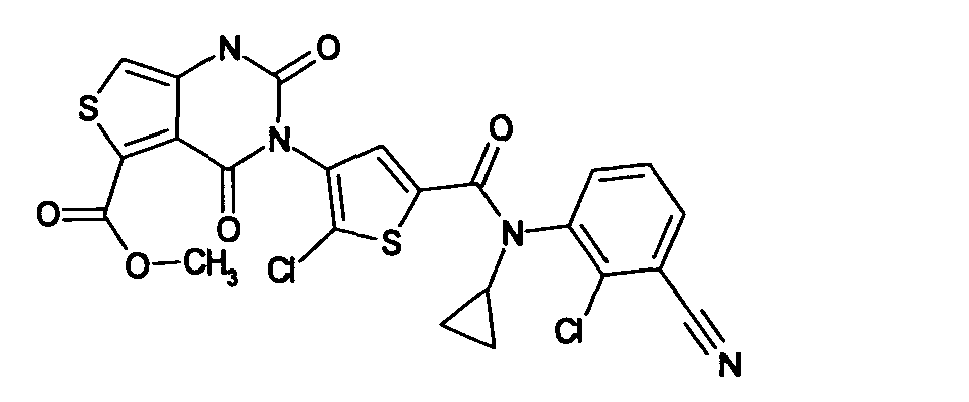
- To a solution of methyl 3-(5-1[(3-bromo-2-chlorophenyl)(cyclopropyl)amino]carbonyl}-2-chloro-3-thienyl)-2,4-dioxo-1,2,3,4-tetrahydrothieno[3,4-d]pyrimidine-5-carboxylate (2.5 g) in 1-methyl-2-pyrrolidone (50 ml), tetrakis(triphenylphosphine)palladium (2.1 g), zinc cyanide (573 mg) were added, and the mixture was stirred under argon atmosphere at 100°C for 4 hr. After allowing to cool to room temperature, aqueous sodium hydrogen carbonate solution was added, and the mixture was extracted with ethyl acetate. The organic layer was washed with saturated brine, and dried over anhydrous magnesium sulfate. The solvent was evaporated under reduced pressure. The obtained residue was purified by NH-silica gel column chromatography, and recrystallized from ethyl acetate-diisopropyl ether to give the object (1.05 g) as crystals.
1H-NMR (DMSO-d6) δ0.54-0.70 (2H, m), 0.85-0.98 (2H, m), 3.32-3.47 (1H, m), 3.84 (3H, s), 7.20 (1H, s), 7.56 (1H, br s), 7.66 (1H, t), 7.88-7.94 (1H, m), 8.01-8.08 (1H, m), 11.66 (1H, s). -

- To a suspension of calcium chloride (158 mg) in ethanol (10 ml)-THF (10 ml), sodium borohydride (108 mg) was added at 0°C, and the mixture was further stirred for 1.5 hr. Methyl 3-(2-chloro-5-{[(2-chloro-3-cyanophenyl)(cyclopropyl)amino]carbonyl}-3-thienyl)-2,4-dioxo-1,2,3,4-tetrahydrothieno[3,4-d]pyrimidine-5-carboxylate (200 mg) was added, and the mixture was stirred at 0°C for 2 hr, and at room temperature overnight. Water was added to the reaction mixture, and the mixture was extracted with ethyl acetate. The organic layer was washed with saturated brine, and dried over anhydrous magnesium sulfate. The solvent was evaporated under reduced pressure. The obtained residue was purified by preparative HPLC to give the object (40.8 mg) as an amorphous.
1H-NMR (DMSO-d6) δ0.58-0.69 (2H, m), 0.87-0.97 (2H, m), 3.33-3.47 (1H, m), 5.00 (2H, d), 5.98 (1H, t), 6.71 (1H, s), 7.66 (1H, t), 7.85 (1H, br s), 7.91 (1H, d), 8.04 (1H, d), 11.38 (1H, br s). -

- To a suspension of methyl 3-(2-chloro-5-{[(2-chloro-3-cyanophenyl)(cyclopropyl)amino]carbonyl}-3-thienyl)-2,4-dioxo-1,2,3,4-tetrahydrothieno[3,4-d]pyrimidine-5-carboxylate (400 mg) in methanol (10 ml)-THF (10 ml), 1N aqueous sodium hydroxide solution (2.1 ml) was added, and the mixture was stirred at room temperature for 1 hr. Water was added at 0°C, and 1N hydrochlolic acid (5 ml) was added, and the mixture was extracted with ethyl acetate. The organic layer was washed with saturated brine, and dried over anhydrous magnesium sulfate. The solvent was evaporated under reduced pressure to give the object (360 mg) as an amorphous.
1H-NMR (DMSO-d6) δ0.55-0.74 (2H, m), 0.84-0.98 (2H, m), 3.32-3.47 (1H, m), 7.35 (1H, s), 7.66 (1H, t), 7.85 (1H, br s), 7.92 (1H, d), 8.04 (1H, d), 11.99 (1H, s), 14.29 (1H, br s). -

- To a solution of 3-(2-chloro-5-{[(2-chloro-3-cyanophenyl)(cyclopropyl)amino]carbonyl}-3-thienyl)-2,4-dioxo-1,2,3,4-tetrahydrothieno[3,4-d]pyrimidine-5-carboxylic acid (100 mg), 1-hydroxy-1H-benztriazole(49 mg) and ammonium chloride (19.5 mg), triethylamine (0.1 ml) in DMF (10 ml), catalystic DMAP and 1-ethyl-3-(3-dimethylaminopropyl)-carbodiimide hydrochloride (70 mg) were added, and the mixture was stirred at room temperature overnight. Water was added to the reaction mixture, and the mixture was extracted with ethyl acetate. The organic layer was washed with saturated brine, and dried over anhydrous magnesium sulfate. The solvent was evaporated under reduced pressure. The obtained residue was purified by silica gel column chromatography to give the object (46.9 mg) as an amorphous.
1H-NMR (DMSO-d6) δ0.57-0.71 (2H, m), 0.84-0.99 (2H, m), 3.33-3.47 (1H, m), 7.21 (1H, s), 7.66 (1H, t), 7.75 (1H, br s), 7.91 (1H, d), 8.04 (1H, d), 8.11 (1H, s), 9.59 (1H, s), 11.80 (1H, s). - 10 µL of a 3 × 10⁻⁴ M aqueous solution of leuprorelin and 10 µL of 0.01 mg/mL lactoperoxidase were placed in a tube, and 10 µL (37 MBq) of a Na125I solution was added thereto. After stirring, 10 µL of 0.001% H2O2 was added to allow the mixture to undergo a reaction at room temperature for 20 minutes. 700 µL of a 0.05% TFA solution was added to stop the reaction, and purification by reversed phase HPLC was carried out. The conditions for HPLC are described below. 125I-leuprorelin was eluted at a retention time of 26 to 27 minutes.
- Column: TSKgel ODS-80™ (TM refers to a registered trademark. The same as above)
- CTR (4.6 mm × 10 cm) eluent:
- Solvent A (0.05% TFA)
- Solvent B (40% CH3CN-0.05% TFA)
- 0th minute (100% Solvent A) - 3rd minute (100% Solvent A) - 7th minute (50% Solvent A + 50% Solvent B) - 40th minute (100% Solvent B)
- Elution temperature: Room temperature
- Elution rate: 1 mL/min
- Human GnRH receptor-expressing CHO cells were cultured until the cells were reached a 90% confluent state in a T-150 flask. The cells were separated using 0.02% EDTA-PBS and were centrifuged at 500 × g for 5 minutes. A homogenate buffer for cells (10 mM NaHCO3, 1 mM EDTA, 1 mM PMSF, 0.5 µg/mL Pepstatin, 2 µg/mL Leupeptin, pH 7.4) was added to the cell pellet, and the mixture was homogenized with a Polytron homogenizer. After centrifugation of the homogenate at 4°C and at 1000 × g for 10 minutes, the supernatant was placed in an ultracentrifuge tube and was centrifuged at 4°C and at 49,300 × g for 1 hour to obtain a precipitate of a membrane fraction. This precipitate was suspended in an assay buffer (50 mM Tris-HCl, 150 mM NaCl, 5 mM EDTA, pH 7.4) and then dispensed and stored at -80°C, so that the suspension can be thawed every time it is taken for use.
- A 125I-leuprorelin binding assay was carried out using 200 µL of an assay buffer containing 10 µg of human GnRH receptor membrane fraction, 800 pM of 125I-leuprorelin and 10 nM of the testing compound.
- The non-specific binding radioactivity was measured in the presence of 1 µM of non-labeled leuprorelin. After leaving the mixture to stand at room temperature for 1 hour, 125I-leuprorelin was captured on a GF/C filter (PerkinElmer, Inc.), and the filter was washed with ice-cold 50 mM Tris-HCl (pH 7.4) using a cell harvester. After drying the filter, a liquid scintillation cocktail for microplate was added, and the membrane-bound radioactivity was measured using a TopCount.
- The value of (TB-SB)/(TB-NSB)×100 (SB: radioactivity upon addition of the compound, TB: maximum binding radioactivity, NSB: non-specific binding radioactivity) was calculated to determine the binding inhibitory rate in the presence of 10 nM of each testing material. The results are presented in the following.
Table 1 Example No. Binding inhibitory ratio (%) 1 86 6 97 7 (1) 92 12 72 16 96 24 95 30 110 31 100 33-2 85 34 (3) 100 37 100 38 95 39 101 40 101 41 100 - The compound of the invention has excellent antagonistic activity against gonadotropin releasing hormone. Moreover, the compound shows good oral absorbability and is excellent in the aspects of stability and pharmacokinetics. The compound also has low toxicity and is excellent in the aspect of safety. Therefore, it can be used, for example, as a prophylactic or therapeutic agent for hormone-dependent diseases. Specifically, for example, the compound is effective as a medicine such as a prophylactic or therapeutic agent for sex hormone-dependent cancers (e.g., prostate cancer, uterine cancer, breast cancer, pituitary cancer, etc.), prostatomegaly, hysteromyoma, endometriosis, metrofibroma, precocious puberty, amenorrhea, premenstrual syndrome, dysmenorrhea, polycystic ovary syndrome, acne, baldness, Alzheimer's disease and the like, as an agent for birth control (e.g., contraceptive, etc.), a therapeutic agent for infertility, a menstrual regulator, a prophylactic and/or therapeutic agent for irritable bowel syndrome, or a preventive agent for post-operative recurrence of sex hormone-dependent cancers; and is also effective for regulation of animal's estrus, improvement in table meat quality and animal growth regulation in the field of stockbreeding, and also as a promoting agent for fish spawning in the field of fishery. Moreover, the compound of the present invention is useful as a preventive of premature ovulation during external fertilization or embryo transplantation, or a preventive of ovulation due to endogenous LH during external fertilization.
- This application is based on a patent application No.
2005-027806
Claims (21)
- A compound represented by the formula (I)
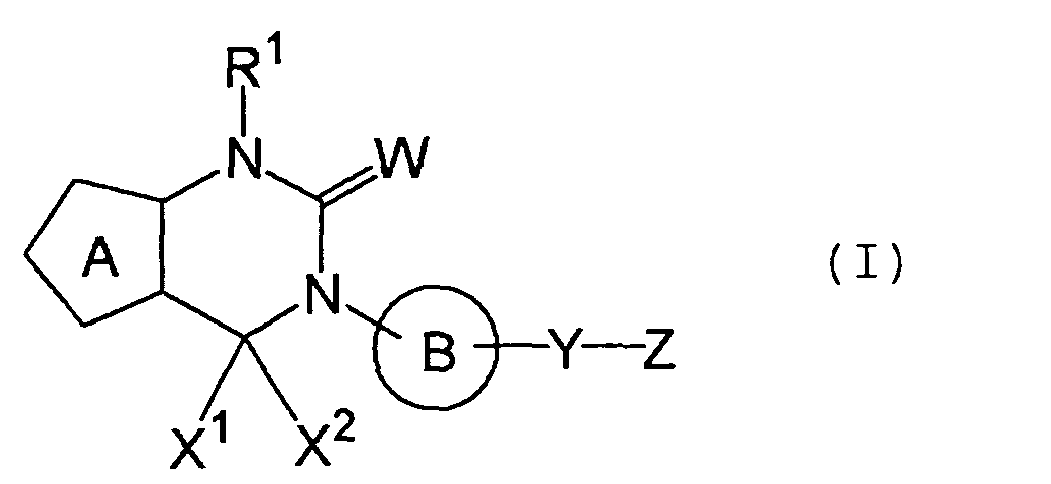 ring A is a 5-membered aromatic heterocycle optionally having substituent(s),R1 is a hydrogen atom or a hydrocarbon group optionally having substituent(s),W is an oxygen atom or a sulfur atom,X1 and X2 may be the same or different and each is a hydrogen atom, a hydrocarbon group optionally having substituent(s) or a heterocyclic group optionally having substituent(s), or, X1 andX2 optionally form an oxygen atom, a sulfur atom or =NR2 wherein R2 is a hydrogen atom or a hydrocarbon group optionally having substituent(s) in combination,ring B is an aromatic ring optionally further having substituent(s),Y is a bond, a C1-6 alkylene optionally having substituent(s), a C2-6 alkenylene optionally having substituent(s) or a C2-6 alkynylene optionally having substituent(s), andZ is a group represented by the formula: -SOnR3 wherein n is 0, 1 or 2, and R3 is an amino optionally having substituent(s), a hydrocarbon group optionally having substituent(s) or a heterocyclic group optionally having substituent(s) (provided that R3 is not a methyl group), ora group represented by the formula: -COR4 wherein R4 is an amino optionally having substituent(s), a hydrocarbon group optionally having substituent(s) or a heterocyclic group optionally having substituent(s);
provided that when ring B is a ring represented by the formula: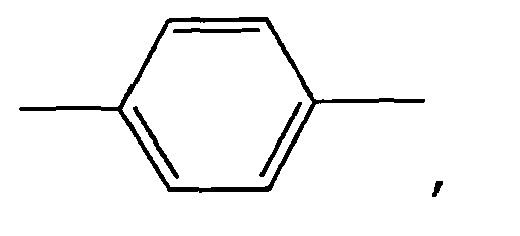 then the amino optionally having substituent(s) for R3 is a disubstituted amino or a cyclic amino optionally having substituent(s),the amino optionally having substituent(s) for R4 is a disubstituted amino (except dimethylamino) or a cyclic amino optionally having substituent(s) (except monocyclic piperazin-1-yl optionally having substituent(s)), andthe hydrocarbon group optionally having substituent(s) for R4 is not a methyl group, or a salt thereof.
 - The compound of claim 1, wherein
ring A is a thiophene ring optionally having substituent(s) or a furan ring optionally having substituent(s). - The compound of claim 1, wherein
ring A is a 5-membered aromatic heterocycle optionally substituted with substituent(s) selected from the group consisting of (a) a hydrocarbon group optionally having substituent(s), (b) a heterocyclic group optionally having substituent(s), (c) a halogen, (d) a hydroxy, (e) a cyano, (f) a carboxyl, (g) an alkoxycarbonyl, (h) an amino optionally having substituent(s) and (i) a carbamoyl optionally having substituent(s), or optionally substituted with a hydrocarbon group optionally having the above-mentioned substituent(s) (a) - (i). - The compound of claim 3, wherein
the hydrocarbon group is an alkyl group, a cycloalkyl group, an alkenyl group, a cycloalkenyl group, an alkynyl group, an aralkyl group or a C10-14 aryl group. - The compound of claim 1, wherein
X1 and X2 form an oxygen atom, a sulfur atom or =NR2 wherein R2 is a hydrogen atom or a hydrocarbon group optionally having substituent(s) in combination. - The compound of claim 1, wherein n is 2.
- The compound of claim 1, wherein Y is a bond.
- The compound of claim 1, wherein ring B is a C6-14 aryl ring optionally further having substituent(s) or an aromatic heterocycle optionally further having substituent(s).
- The compound of claim 1, wherein
ring B is a ring represented by the formula: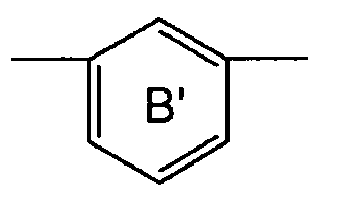
or an aromatic heterocycle optionally further having substituent(s). - The compound of claim 1, wherein
R1 is a hydrogen atom, Y is a bond, and X1 and X2 form an oxygen atom, a sulfur atom or =NR2 wherein R2 is a hydrogen atom or a hydrocarbon group optionally having substituent(s) in combination. - The compound of claim 1, wherein
ring A is a 5-membered aromatic heterocycle containing, as ring-constituting atom besides carbon atom, 1 to 4 hetero atoms selected from the group consisting of an oxygen atom, a sulfur atom and a nitrogen atom and optionally having substituent(s) selected from the group consisting of (i) - (xi),(i) a C1-6 alkyl group optionally having substituent(s) selected from the group consisting of (a) - (d),(a) a hydroxy,(b) a carboxyl,(c) a C1-6 alkoxycarbonyl, and(d) an amino optionally mono- or di-substituted with a C1-6 alkyl optionally having substituent(s) selected from the group consisting of a C1-6 alkoxy and a 5- to 16-membered heterocyclic group containing, as ring-constituting atom besides carbon atom, 1 to 4 hetero atoms selected from the group consisting of an oxygen atom, a sulfur atom and a nitrogen atom,(ii) a C2-6 alkenyl group optionally having a C1-6 alkoxycarbonyl(iii) a C6-14 aryl group optionally having a halogen atom,(iv) a 5- to 16-membered heterocyclic group containing, as ring-constituting atom besides carbon atom, 1 to 4 hetero atoms selected from the group consisting of an oxygen atom, a sulfur atom and a nitrogen atom and optionally having a C1-6 alkyl,(v) a cyano,(vi) a carboxyl,(vii) a formyl,(viii) a C1-6 alkoxycarbonyl,(ix) HO-N=CH-,(x) a carbamoyl optionally mono- or di-substituted with substituent(s) selected from the group consisting of (a) - (b),(a) a C1-6 alkyl group optionally having substituent(s) selected from the group consisting of a hydroxy, a C1-6 alkoxycarbonyl, a carboxyl and a 5- to 16-membered heterocyclic group containing, as ring-constituting atom besides carbon atom, 1 to 4 hetero atoms selected from the group consisting of an oxygen atom, a sulfur atom and a nitrogen atom, and(b) a 5- to 16-membered heterocyclic group containing, as ring-constituting atom besides carbon atom, 1 to 4 hetero atoms selected from the group consisting of an oxygen atom, a sulfur atom and a nitrogen atom, and(xi) a 5- to 16-membered heterocycle containing, as ring-constituting atom besides carbon atom, 1 to 4 hetero atoms selected from the group consisting of an oxygen atom, a sulfur atom and a nitrogen atom, which is formed by two substituents bonded to each other and optionally has a C1-6 alkoxy group,R1 is a hydrogen atom,W is an oxygen atom,X1 and X2 are hydrogen atoms, or X1 and X2 form an oxygen atom in combination,ring B is a C6-14 aryl ring optionally further having a halogen atom, or a 5- to 7-membered monocyclic aromatic heterocycle containing, as ring-constituting atom besides carbon atom, 1 to 4 hetero atoms selected from the group consisting of an oxygen atom, a sulfur atom and a nitrogen atom or a 8- to 16-membered bicyclic or tricyclic fused aromatic heterocycle containing, as ring-constituting atom besides carbon atom, 1 to 12 hetero atoms selected from the group consisting of an oxygen atom, a sulfur atom and a nitrogen atom, each of which optionally further has a halogen atom,Y is a bond, andZ is(i) a group represented by formula: -SOnR3
wherein n is 2 and R3 is a 5- to 16-membered cyclic amino, or(ii) a group represented by formula: -CONR8(R9)
wherein R8 is a hydrogen atom, a C1-6 alkyl group or a C3-8 cycloalkyl group, and R9 is a hydrogen atom or a C6-14 aryl group optionally having substituent(s) selected from the group consisting of a halogen atom and a cyano,
when ring B is a ring represented by formula:
- A compound represented by the formula (I-a):
 ring A is a 5-membered aromatic heterocycle optionally having substituent(s),R1 is a hydrogen atom or a hydrocarbon group optionally having substituent (s),W is an oxygen atom or a sulfur atom,X1 and X2 may be the same or different and each is a hydrogen atom, a hydrocarbon group optionally having substituent(s) or a heterocyclic group optionally having substituent(s), or X1 and X2 optionally form an oxygen atom, a sulfur atom or =NR2 wherein R2 is a hydrogen atom or a hydrocarbon group optionally having substituent(s) in combination,
ring Ba is a ring represented by formula:
or an aromatic heterocycle optionally further having substituent(s),Y is a bond, a C1-6 alkylene optionally having substituent(s), a C2-6 alkenylene optionally having substituent (s) or a C2-6 alkynylene optionally having substituent(s), andZ is a group represented by formula: -SOnR3a wherein n is 0, 1 or 2, and R3a is an amino optionally having substituent (s), a C2-20 hydrocarbon group optionally having substituent(s) or a heterocyclic group optionally having substituent(s), ora group represented by formula: -COR4 wherein R4 is an amino optionally having substituent(s), a hydrocarbon group optionally having substituent(s) or a heterocyclic group optionally having substituent(s),or a salt thereof. - The compound of claim 12, wherein ring A is a 5-membered aromatic heterocycle containing, as ring-constituting atom besides carbon atom, 1 to 4 hetero atoms selected from the group consisting of an oxygen atom, a sulfur atom and a nitrogen atom and optionally having substituent(s) selected from the group consisting of (i) - (xi),(i) a C1-6 alkyl group optionally having substituent(s) selected from the group consisting of (a) - (d),(a) a hydroxy,(b) a carboxyl,(c) a C1-6 alkoxycarbonyl, and(d) an amino optionally mono- or di-substituted with a C1-6 alkyl optionally having substituent(s) selected from the group consisting of a C1-6 alkoxy and a 5- to 16-membered heterocyclic group containing, as ring-constituting atom besides carbon atom, 1 to 4 hetero atoms selected from the group consisting of an oxygen atom, a sulfur atom and a nitrogen atom,(ii) a C2-6 alkenyl group optionally having a C1-6 alkoxycarbonyl,(iii) a C6-14 aryl group optionally having a halogen atom,(iv) a 5- to 16-membered heterocyclic group containing, as ring-constituting atom besides carbon atom, 1 to 4 hetero atoms selected from the group consisting of an oxygen atom, a sulfur atom and a nitrogen atom and optionally having a C1-6 alkyl,(v) a cyano,(vi) a carboxyl,(vii) a formyl,(viii) a C1-6 alkoxycarbonyl,(ix) HO-N=CH-,(x) a carbamoyl optionally mono- or di-substituted with substituent(s) selected from the group consisting of (a) - (b),(a) a C1-6 alkyl group optionally having substituent(s) selected from the group consisting of a hydroxy, a C1-6 alkoxycarbonyl, carboxyl and a 5- to 16-membered heterocyclic group containing, as ring-constituting atom besides carbon atom, 1 to 4 hetero atoms selected from the group consisting of an oxygen atom, a sulfur atom and a nitrogen atom, and(b) a 5- to 16-membered heterocyclic group containing, as ring-constituting atom besides carbon atom, 1 to 4 hetero atoms selected from the group consisting of an oxygen atom, a sulfur atom and a nitrogen atom, and(xi) a 5- to 16-membered heterocycle containing, as ring-constituting atom besides carbon atom, 1 to 4 hetero atoms selected from the group consisting of an oxygen atom, a sulfur atom and a nitrogen atom, which is formed by two substituents bonded to each other and optionally has a C1-6 alkoxy group,
R1 is a hydrogen atom,
W is an oxygen atom,
X1 and X2 are hydrogen atoms, or X1 and X2 form an oxygen atom in combination,
ring Ba is a ring represented by formula:
Y is a bond, and
Z is,(i) a group represented by formula: -SOnR3
wherein n is 2, and R3 is a 5- to 16-membered cyclic amino, or(ii) a group represented by formula: -CONR8(R9)
wherein R8 is a hydrogen atom, a C1-6 alkyl group or a C3-8 cycloalkyl group, and R9 is a hydrogen atom, or a C6-14 aryl group optionally having substituent(s) selected from the group consisting of a halogen atom and a cyano. - The compound of claim 1, which is selected from the group consisting ofmethyl 3-[4-(3,4-dihydroquinolin-1(2H)-ylsulfonyl)-2-thienyl]-2,4-dioxo-1,2,3,4-tetrahydrothieno[3,4-d]pyrimidine-5-carboxylate,3-[4-(3,4-dihydroquinolin-1(2H)-ylsulfonyl)-2-thienyl]-5-(hydroxymethyl)thieno[3,4-d]pyrimidin-2,4(1H,3H)-dione, and3-(4-{[ethyl(phenyl)amino]carbonyl}-2-thienyl)-2,4-dioxo-1,2,3,4-tetrahydrothieno[3,4-d]pyrimidine-5-carboxylic acid, and a salt thereof.
- A prodrug of the compound of claim 1.
- A pharmaceutical agent comprising the compound of claim 1 or a prodrug thereof.
- A gonadotropin releasing hormone antagonist comprising the compound of claim 1 or a prodrug thereof.
- An agent for the prophylaxis or treatment of a sex hormone-dependent disease, comprising the compound of claim 1 or a prodrug thereof.
- An agent for the prophylaxis or treatment of prostatomegaly, hysteromyoma, endometriosis, metrofibroma, precocious puberty, amenorrhea, premenstrual syndrome, dysmenorrhea, polycystic ovary syndrome, acne, baldness, Alzheimer's disease, infertility, irritable bowel syndrome, prostate cancer, uterine cancer, breast cancer or pituitary tumor, a reproduction regulator, a contraceptive, an ovulation inducing agent, or a preventive agent for post-operative recurrence of sex hormone-dependent cancers, a preventive of premature ovulation during external fertilization or embryo transplantation, or a preventive of ovulation due to endogenous LH during external fertilization, which comprises the compound of claim 1 or a prodrug thereof.
- A method for the prevention and/or treatment of prostatomegaly, hysteromyoma, endometriosis, metrofibroma, precocious puberty, amenorrhea, premenstrual syndrome, dysmenorrhea, polycystic ovary syndrome, acne, baldness, Alzheimer's disease, infertility or irritable bowel syndrome, prostate cancer, uterine cancer, breast cancer or pituitary tumor, a method for reproduction regulation, a method for contraception, a method for ovulation induction, a method for prevention of post-operative recurrence of sex hormone-dependent cancers, a method for prevention of premature ovulation during external fertilization or embryo transplantation, or a method for prevention of ovulation due to endogenous LH during external fertilization, which comprises administrering an effective amount of the compound of claim 1 or a prodrug thereof to a mammal.
- Use of the compound of claim 1 or a prodrug thereof for the production of an agent for the prophylaxis or treatment of prostatomegaly, hysteromyoma, endometriosis, metrofibroma, precocious puberty, amenorrhea, premenstrual syndrome, dysmenorrhea, polycystic ovary syndrome, acne, baldness, Alzheimer's disease, infertility, irritable bowel syndrome, prostate cancer, uterine cancer, breast cancer or pituitary tumor, a reproduction regulator, a contraceptive, an ovulation inducing agent, a preventive agent for post-operative recurrence of sex hormone-dependent cancers, a preventive of premature ovulation during external fertilization or embryo transplantation, or a preventive of ovulation due to endogenous LH during external fertilization.
Applications Claiming Priority (2)
| Application Number | Priority Date | Filing Date | Title |
|---|---|---|---|
| JP2005027806 | 2005-02-03 | ||
| PCT/JP2006/302204 WO2006083005A1 (en) | 2005-02-03 | 2006-02-02 | Fused pyrimidine derivative and used thereof |
Publications (2)
| Publication Number | Publication Date |
|---|---|
| EP1847541A1 true EP1847541A1 (en) | 2007-10-24 |
| EP1847541A4 EP1847541A4 (en) | 2009-12-30 |
Family
ID=36777371
Family Applications (1)
| Application Number | Title | Priority Date | Filing Date |
|---|---|---|---|
| EP06713347A Withdrawn EP1847541A4 (en) | 2005-02-03 | 2006-02-02 | CONDENSATE PYRIMIDINE DERIVATIVE AND APPLICATIONS THEREOF |
Country Status (4)
| Country | Link |
|---|---|
| US (1) | US20090062258A1 (en) |
| EP (1) | EP1847541A4 (en) |
| JP (1) | JPWO2006083005A1 (en) |
| WO (1) | WO2006083005A1 (en) |
Cited By (9)
| Publication number | Priority date | Publication date | Assignee | Title |
|---|---|---|---|---|
| WO2008124614A1 (en) * | 2007-04-06 | 2008-10-16 | Neurocrine Biosciences, Inc. | Gonadotropin-releasing hormone receptor antagonists and methods relating thereto |
| WO2008124610A1 (en) * | 2007-04-06 | 2008-10-16 | Neurocrine Biosciences, Inc. | Gonadotropin-releasing hormone receptor antagonists and methods relating thereto |
| WO2010109334A3 (en) * | 2009-03-23 | 2010-11-25 | Glenmark Pharmaceuticals, S.A. | Thienopyrimidinedione derivatives as trpa1 modulators |
| EP2145889A4 (en) * | 2007-04-18 | 2012-04-18 | Kissei Pharmaceutical | Fused heterocyclic derivative, pharmaceutical composition comprising the derivative, and use of the composition for medical purposes |
| EP2147922A4 (en) * | 2007-04-18 | 2012-04-18 | Kissei Pharmaceutical | CONDENSED HETEROCYCLIC DERIVATIVE, PHARMACEUTICAL COMPOSITION COMPRISING THE DERIVATIVE, AND USE OF THE COMPOSITION FOR MEDICAL OBJECTIVES |
| US8623880B2 (en) | 2009-03-23 | 2014-01-07 | Glenmark Pharmaceuticals S.A. | Fused pyrimidine-dione derivatives as TRPA1 modulators |
| WO2015052065A1 (en) | 2013-10-07 | 2015-04-16 | Bayer Pharma Aktiengesellschaft | Cyclic thienouracil-carboxamides and use thereof |
| US9040693B2 (en) | 2005-10-19 | 2015-05-26 | Kissei Pharmaceutical Co., Ltd. | Fused heterocyclic derivative, medicinal composition containing the same, and medicinal use thereof |
| WO2022086892A1 (en) * | 2020-10-21 | 2022-04-28 | Calithera Biosciences, Inc. | Interleukin 4 (il4)-induced gene 1 inhibitors and methods of use thereof |
Families Citing this family (13)
| Publication number | Priority date | Publication date | Assignee | Title |
|---|---|---|---|---|
| ZA200803335B (en) * | 2005-10-19 | 2009-10-28 | Kissei Pharmaceutical | Fused heterocyclic derivative, medicinal composition containing the same, and medicinal use thereof |
| ITMI20071731A1 (en) * | 2007-09-06 | 2009-03-07 | Univ Degli Studi Genova | NEW UREIC DERIVATIVES OF 1H-PIRAZOL-4-CARBOXYLIC ACID WITH INHIBITIVE ACTIVITY TOWARDS NEUTRROPHILES CHEMOTASSASSES |
| ES2547339T3 (en) * | 2007-11-13 | 2015-10-05 | Curadis Gmbh | C-19 steroids for specific therapeutic uses |
| US20100061976A1 (en) * | 2008-07-24 | 2010-03-11 | Searete Llc, A Limited Liability Corporation Of The State Of Delaware | Method for treating or preventing osteoporosis by reducing follicle stimulating hormone to cyclic physiological levels in a mammalian subject |
| BRPI1009372A2 (en) | 2009-03-23 | 2016-05-31 | Glenmark Pharmaceuticals Sa | compounds, pharmaceutical composition and their uses |
| EA023857B1 (en) | 2009-03-23 | 2016-07-29 | Гленмарк Фармасеутикалс С.А. | Fused pyrimidine-dione derivatives as trpa1 modulators |
| US20120004182A1 (en) | 2010-07-02 | 2012-01-05 | Carsten Gruendker | Pharmaceutical compositions and methods for induction and enhancement of apoptosis in tumor cells |
| KR20150015488A (en) | 2012-06-08 | 2015-02-10 | 그렌마크 파머수티칼스 에스. 아. | Amides of 2-amino-4-arylthiazole compounds and their salts |
| MX380546B (en) * | 2013-10-30 | 2025-03-12 | Shanghai hengrui pharmaceutical co ltd | PYRAZOLOPYRIMIDONE OR PYRROLOTRIAZONE DERIVATIVES, METHOD AND PREPARATION THEREOF AND PHARMACEUTICAL APPLICATIONS THEREOF. |
| CN109432097B (en) * | 2018-11-27 | 2021-04-23 | 浙江师范大学 | Application of ZJU-IMB-Z19 compound in the treatment of prostate cancer |
| WO2021138419A1 (en) * | 2019-12-31 | 2021-07-08 | Ifm Due, Inc, | Compounds and compositions for treating conditions associated with sting activity |
| CN115232144B (en) * | 2021-04-22 | 2024-04-02 | 长春金赛药业有限责任公司 | Nitrogen-containing condensed ring derivative, pharmaceutical composition, and preparation method and application thereof |
| CN113461538A (en) * | 2021-07-12 | 2021-10-01 | 无锡双启科技有限公司 | Preparation method of 2-chloro-3-bromoaniline |
Family Cites Families (8)
| Publication number | Priority date | Publication date | Assignee | Title |
|---|---|---|---|---|
| JP3854648B2 (en) * | 1994-04-19 | 2006-12-06 | 武田薬品工業株式会社 | Condensed thiophene derivative, production method and use thereof |
| UY23948A1 (en) * | 1995-02-08 | 2001-10-25 | Takeda Chemical Industries Ltd | DERIVATIVES FROM THYPHENE CONDENSED RINGS, THEIR PRODUCTION AND USE. |
| JPH1045625A (en) * | 1996-04-30 | 1998-02-17 | Takeda Chem Ind Ltd | Pharmaceutical composition |
| JP2003064273A (en) * | 2001-08-24 | 2003-03-05 | Fuji Photo Film Co Ltd | New compound, dyestuff, ink composition, ink-jet recording ink, and ink-jet recording method |
| WO2003064429A1 (en) * | 2002-01-30 | 2003-08-07 | Takeda Chemical Industries, Ltd. | Thienopyrimidines, process for preparing the same and use thereof |
| JP5072166B2 (en) * | 2002-01-30 | 2012-11-14 | 武田薬品工業株式会社 | Thienopyrimidine compound, production method and use thereof |
| JP4039574B2 (en) * | 2003-01-29 | 2008-01-30 | 武田薬品工業株式会社 | Thienopyrimidine compounds and uses thereof |
| WO2005019188A1 (en) * | 2003-08-22 | 2005-03-03 | Takeda Pharmaceutical Company Limited | Fused pyrimidine derivative and use thereof |
-
2006
- 2006-02-02 EP EP06713347A patent/EP1847541A4/en not_active Withdrawn
- 2006-02-02 US US11/815,403 patent/US20090062258A1/en not_active Abandoned
- 2006-02-02 JP JP2007501683A patent/JPWO2006083005A1/en not_active Abandoned
- 2006-02-02 WO PCT/JP2006/302204 patent/WO2006083005A1/en not_active Ceased
Cited By (23)
| Publication number | Priority date | Publication date | Assignee | Title |
|---|---|---|---|---|
| US9040693B2 (en) | 2005-10-19 | 2015-05-26 | Kissei Pharmaceutical Co., Ltd. | Fused heterocyclic derivative, medicinal composition containing the same, and medicinal use thereof |
| WO2008124610A1 (en) * | 2007-04-06 | 2008-10-16 | Neurocrine Biosciences, Inc. | Gonadotropin-releasing hormone receptor antagonists and methods relating thereto |
| US11713324B2 (en) | 2007-04-06 | 2023-08-01 | Neurocrine Biosciences, Inc. | Gonadotropin-releasing hormone receptor antagonists and methods relating thereto |
| US8084614B2 (en) | 2007-04-06 | 2011-12-27 | Neurocrine Biosciences, Inc. | Gonadotropin-releasing hormone receptor antagonists and methods relating thereto |
| US10941159B2 (en) | 2007-04-06 | 2021-03-09 | Neurocrine Biosciences, Inc. | Gonadotropin-releasing hormone receptor antagonists and methods relating thereto |
| US8481738B2 (en) | 2007-04-06 | 2013-07-09 | Neurocrine Biosciences, Inc. | Gonadotropin-releasing hormone receptor antagonists and methods relating thereto |
| US10336769B2 (en) | 2007-04-06 | 2019-07-02 | Neurocrine Biosciences, Inc. | Gonadotropin-releasing hormone receptor antagonists and methods relating thereto |
| US9422310B2 (en) | 2007-04-06 | 2016-08-23 | Neurocrine Biosciences, Inc. | Gonadotropin-releasing hormone receptor antagonists and methods relating thereto |
| WO2008124614A1 (en) * | 2007-04-06 | 2008-10-16 | Neurocrine Biosciences, Inc. | Gonadotropin-releasing hormone receptor antagonists and methods relating thereto |
| US8952161B2 (en) | 2007-04-06 | 2015-02-10 | Neurocrine Biosciences, Inc. | Gonadotropin-releasing hormone receptor antagonists and methods relating thereto |
| EP2145889A4 (en) * | 2007-04-18 | 2012-04-18 | Kissei Pharmaceutical | Fused heterocyclic derivative, pharmaceutical composition comprising the derivative, and use of the composition for medical purposes |
| EP2147922A4 (en) * | 2007-04-18 | 2012-04-18 | Kissei Pharmaceutical | CONDENSED HETEROCYCLIC DERIVATIVE, PHARMACEUTICAL COMPOSITION COMPRISING THE DERIVATIVE, AND USE OF THE COMPOSITION FOR MEDICAL OBJECTIVES |
| CN102361877B (en) * | 2009-03-23 | 2014-05-07 | 格兰马克药品股份有限公司 | Thienopyrimidinedione derivatives as trpa1 modulators |
| KR101524337B1 (en) * | 2009-03-23 | 2015-05-29 | 그렌마크 파머수티칼스 에스. 아. | Thienopyrimidinedione derivatives as trpa1 modulators |
| EA022029B1 (en) * | 2009-03-23 | 2015-10-30 | Гленмарк Фармасьютикалс, С.А. | Thienopyrimidinedione derivatives as trpa1 modulators |
| CN103755720B (en) * | 2009-03-23 | 2016-07-06 | 格兰马克药品股份有限公司 | Thienopyrimidine derovatives as TRPA1 regulator |
| CN103755720A (en) * | 2009-03-23 | 2014-04-30 | 格兰马克药品股份有限公司 | Thienopyrimidinedione derivatives as TRPA1 modulators |
| US8623880B2 (en) | 2009-03-23 | 2014-01-07 | Glenmark Pharmaceuticals S.A. | Fused pyrimidine-dione derivatives as TRPA1 modulators |
| CN102361877A (en) * | 2009-03-23 | 2012-02-22 | 格兰马克药品股份有限公司 | Thienopyrimidinedione Derivatives as TRPA1 Modulators |
| WO2010109334A3 (en) * | 2009-03-23 | 2010-11-25 | Glenmark Pharmaceuticals, S.A. | Thienopyrimidinedione derivatives as trpa1 modulators |
| WO2015052065A1 (en) | 2013-10-07 | 2015-04-16 | Bayer Pharma Aktiengesellschaft | Cyclic thienouracil-carboxamides and use thereof |
| US9604996B2 (en) | 2013-10-07 | 2017-03-28 | Bayer Pharma Aktiengesellschaft | Cyclic thienouracil-carboxamides and use thereof |
| WO2022086892A1 (en) * | 2020-10-21 | 2022-04-28 | Calithera Biosciences, Inc. | Interleukin 4 (il4)-induced gene 1 inhibitors and methods of use thereof |
Also Published As
| Publication number | Publication date |
|---|---|
| JPWO2006083005A1 (en) | 2008-06-26 |
| EP1847541A4 (en) | 2009-12-30 |
| US20090062258A1 (en) | 2009-03-05 |
| WO2006083005A1 (en) | 2006-08-10 |
Similar Documents
| Publication | Publication Date | Title |
|---|---|---|
| US20090062258A1 (en) | Fused pyrimidine derivative and use thereof | |
| AU2022201816B2 (en) | Pyrrolopyrimidines as CFTR potentiators | |
| AU2004207706B2 (en) | Thienopyrimidine compounds and use thereof | |
| US6200980B1 (en) | Method of treating a patient having precancerous lesions with phenyl purinone derivatives | |
| CZ20014244A3 (en) | Benzotiazinone and benzoxazinone compounds | |
| US20070010537A1 (en) | Fused pyramidine derivative and use thereof | |
| SG174404A1 (en) | Thienopyrimidinedione derivatives as trpa1 modulators | |
| EA028991B1 (en) | Heterocyclic amides as kinase inhibitors | |
| JP2012514044A (en) | Heteroaryl compounds useful as Raf kinase inhibitors | |
| EA023161B1 (en) | TRIAZOLOPIRASINE CONNECTIONS AS SELECTIVE ANTAGONISTS OF NK3 RECEPTOR, PHARMACEUTICAL COMPOSITION AND METHODS OF THEIR USE FOR DISORDERS MEDIATED BY NK3 RECEPTORS | |
| SK281077B6 (en) | Heterocyclic compounds, process for their preparation, pharmaceutical compositions, and their use | |
| SG184766A1 (en) | Isothiazolo-pyrimidinedione derivatives as trpa1 modulators | |
| WO2005019188A1 (en) | Fused pyrimidine derivative and use thereof | |
| JP4039574B2 (en) | Thienopyrimidine compounds and uses thereof | |
| CA2627497A1 (en) | Heterocyclic amide compound and use thereof | |
| JP5072166B2 (en) | Thienopyrimidine compound, production method and use thereof | |
| JP2001524480A (en) | Novel compounds that are P2-purinoceptor 7-transmembrane (TM) G-protein coupled receptor antagonists | |
| JP2005097276A (en) | Fused pyrimidine derivative and use of the same | |
| Kachaeva et al. | Synthesis of fused heterocycles from 2-aryl-5-(chlorosulfonyl)-1, 3-oxazole-4-carboxylates and α-aminoazoles involving the Smiles rearrangement | |
| HK1084665B (en) | Thienopyrimidine compounds and use thereof | |
| HK1124312A (en) | Heterocyclic amide compound and use thereof | |
| JP2008094846A (en) | Thienopyrimidine compound and application thereof |
Legal Events
| Date | Code | Title | Description |
|---|---|---|---|
| PUAI | Public reference made under article 153(3) epc to a published international application that has entered the european phase |
Free format text: ORIGINAL CODE: 0009012 |
|
| 17P | Request for examination filed |
Effective date: 20070803 |
|
| AK | Designated contracting states |
Kind code of ref document: A1 Designated state(s): AT BE BG CH CY CZ DE DK EE ES FI FR GB GR HU IE IS IT LI LT LU LV MC NL PL PT RO SE SI SK TR |
|
| DAX | Request for extension of the european patent (deleted) | ||
| A4 | Supplementary search report drawn up and despatched |
Effective date: 20091126 |
|
| 17Q | First examination report despatched |
Effective date: 20100423 |
|
| STAA | Information on the status of an ep patent application or granted ep patent |
Free format text: STATUS: THE APPLICATION HAS BEEN WITHDRAWN |
|
| 18W | Application withdrawn |
Effective date: 20100520 |