EP1847137B1 - Implementation of a session based service in a mobile communication network - Google Patents
Implementation of a session based service in a mobile communication network Download PDFInfo
- Publication number
- EP1847137B1 EP1847137B1 EP05711031A EP05711031A EP1847137B1 EP 1847137 B1 EP1847137 B1 EP 1847137B1 EP 05711031 A EP05711031 A EP 05711031A EP 05711031 A EP05711031 A EP 05711031A EP 1847137 B1 EP1847137 B1 EP 1847137B1
- Authority
- EP
- European Patent Office
- Prior art keywords
- mobile terminal
- session based
- service
- based service
- message
- Prior art date
- Legal status (The legal status is an assumption and is not a legal conclusion. Google has not performed a legal analysis and makes no representation as to the accuracy of the status listed.)
- Expired - Lifetime
Links
Images


Classifications
-
- H—ELECTRICITY
- H04—ELECTRIC COMMUNICATION TECHNIQUE
- H04L—TRANSMISSION OF DIGITAL INFORMATION, e.g. TELEGRAPHIC COMMUNICATION
- H04L65/00—Network arrangements, protocols or services for supporting real-time applications in data packet communication
- H04L65/1066—Session management
- H04L65/1069—Session establishment or de-establishment
-
- H—ELECTRICITY
- H04—ELECTRIC COMMUNICATION TECHNIQUE
- H04L—TRANSMISSION OF DIGITAL INFORMATION, e.g. TELEGRAPHIC COMMUNICATION
- H04L51/00—User-to-user messaging in packet-switching networks, transmitted according to store-and-forward or real-time protocols, e.g. e-mail
- H04L51/58—Message adaptation for wireless communication
-
- H—ELECTRICITY
- H04—ELECTRIC COMMUNICATION TECHNIQUE
- H04L—TRANSMISSION OF DIGITAL INFORMATION, e.g. TELEGRAPHIC COMMUNICATION
- H04L65/00—Network arrangements, protocols or services for supporting real-time applications in data packet communication
- H04L65/10—Architectures or entities
- H04L65/1059—End-user terminal functionalities specially adapted for real-time communication
-
- H—ELECTRICITY
- H04—ELECTRIC COMMUNICATION TECHNIQUE
- H04L—TRANSMISSION OF DIGITAL INFORMATION, e.g. TELEGRAPHIC COMMUNICATION
- H04L65/00—Network arrangements, protocols or services for supporting real-time applications in data packet communication
- H04L65/1066—Session management
- H04L65/1101—Session protocols
-
- H—ELECTRICITY
- H04—ELECTRIC COMMUNICATION TECHNIQUE
- H04L—TRANSMISSION OF DIGITAL INFORMATION, e.g. TELEGRAPHIC COMMUNICATION
- H04L67/00—Network arrangements or protocols for supporting network services or applications
- H04L67/01—Protocols
- H04L67/04—Protocols specially adapted for terminals or networks with limited capabilities; specially adapted for terminal portability
-
- H—ELECTRICITY
- H04—ELECTRIC COMMUNICATION TECHNIQUE
- H04L—TRANSMISSION OF DIGITAL INFORMATION, e.g. TELEGRAPHIC COMMUNICATION
- H04L67/00—Network arrangements or protocols for supporting network services or applications
- H04L67/01—Protocols
- H04L67/131—Protocols for games, networked simulations or virtual reality
-
- H—ELECTRICITY
- H04—ELECTRIC COMMUNICATION TECHNIQUE
- H04L—TRANSMISSION OF DIGITAL INFORMATION, e.g. TELEGRAPHIC COMMUNICATION
- H04L67/00—Network arrangements or protocols for supporting network services or applications
- H04L67/14—Session management
-
- H—ELECTRICITY
- H04—ELECTRIC COMMUNICATION TECHNIQUE
- H04L—TRANSMISSION OF DIGITAL INFORMATION, e.g. TELEGRAPHIC COMMUNICATION
- H04L67/00—Network arrangements or protocols for supporting network services or applications
- H04L67/2866—Architectures; Arrangements
- H04L67/30—Profiles
- H04L67/303—Terminal profiles
-
- H—ELECTRICITY
- H04—ELECTRIC COMMUNICATION TECHNIQUE
- H04W—WIRELESS COMMUNICATION NETWORKS
- H04W76/00—Connection management
Definitions
- the present invention relates to a method and an arrangement in a mobile communication network.
- the invention relates to a method and arrangements for implementing a session based service in a mobile communication network according to the preamble of claims 1 and 11.
- a conventional third-generation (3G) mobile telecommunication network is divided into an Access Network (AN) and a Core Network (CN).
- the AN is a Base Station System (BSS) and in a UMTS network, the AN is a Radio Network System (RNS).
- the AN is responsible for communicating with mobile terminals in a certain area.
- the RNS comprises one Radio Network Controller (RNC) and several Node Bs also denoted base stations.
- RNC Radio Network Controller
- the CN is logically divided into a CS domain and a PS domain.
- the CS domain refers to the set of CN entities offering "CS type of connection" for user traffic and related signalling.
- a "CS type of connection” is a connection for which dedicated network resources are allocated at the connection establishment and released at the connection release. Usually, it refers to voice and related signalling connection.
- the CS domain comprises e.g. a Mobile Switching Center (MSC), Gateway MSC (GMSC), and a Visitor Location Register (VLR).
- the PS domain refers to the set of CN entities offering "PS type of connection" for user traffic and related signalling.
- a "PS type of connection” transports the user information using autonomous concatenation of bits called packets: each packet can be routed independently of the other packets.
- a PS connection refers to a data connection.
- entities in the PS domain are: Serving GPRS Support Node (SGSN) and Gateway GPRS Support Node (GGSN).
- IP Multimedia (IM) Subsystem is introduced in the CN to fill the gap between traditional telecommunication and Internet technologies as shown in figure 1 .
- the object of the IP multimedia subsystem is to conform to the IETF "Internet standards".
- IP Session Initiate Protocol
- SIP Session Initiate Protocol
- SIP is a signalling protocol for Internet conferencing, telephony, presence, events notification and instant messaging. It has now also become the signalling protocol for multimedia communication in the telecommunication world.
- the IM subsystem comprises the CN elements for provision of IP multimedia services comprising audio, video, text, chat, etc. and a combination thereof delivered over the PS domain.
- the core entities in the IM Subsystem are: Call Session Control Function (CSCF), Home Subscriber Server (HSS) and Media Resource Function (MRF).
- CSCF Call Session Control Function
- HSS Home Subscriber Server
- MRF Media Resource Function
- AS Application Server
- MGCF Media Gateway Control Function
- MGW Media Gateway
- SGW Signalling Gateway
- the CSCF handles session establishment, modification and release of sessions using the SIP/SDP protocol suite. It supports retransmission schemes and hop-by-hop reliability for the SIP methods. According to the behaviour, the CSCF can act as Proxy CSCF (P-CSCF), Serving CSCF (S-CSCF) and Interrogation CSCF (I-CSCF).
- P-CSCF Proxy CSCF
- S-CSCF Serving CSCF
- I-CSCF Interrogation CSCF
- the P-CSCF is the first contact point for the mobile station in the IM subsystem and it behaves like a SIP proxy.
- the P-CSCF proxies the SIP messages towards the home network for the subscriber.
- the I-CSCF is the entry point to the home network.
- the other networks use the Domain Name System (DNS) to route the messages to the home network, which will forward the SIP signalling to the I-CSCF.
- DNS Domain Name System
- the I-CSCF contacts the HSS to locate the address of S-CSCF and forwards the SIP message to the S-CSCF.
- the S-CSCF is the SIP proxy that provides the access to the services to the end user. Depending on the profile information from the HSS, the S-CSCF will forward the originating and terminating SIP signalling to the AS in the home network to provide the services.
- the HSS is the master database and contains all user and subscriber information. It supports the network elements handling calls and sessions. Moreover, the authorization and security information is stored in HSS. It is an evolution of the Home location Register (HLR) and Authentication Centre (AuC) in the mobile telecommunication networks.
- HLR Home location Register
- AuC Authentication Centre
- the MRF provides the capability to control multimedia stream resources. It can support the functions such like mixing, generating, processing media streams. Logically, it consists of Media Resource Function Controller (MRFC) and Media Resource Function Processor (MRFP). The MRFC is responsible for conference session control and the MRFP is responsible for processing content in conversational multimedia services.
- MRFC Media Resource Function Controller
- MRFP Media Resource Function Processor
- the AS offers value-added IM services residing in the user's home network or in a third location.
- the AS contains the SIP Application Server functionalities.
- the SIP Application Server can influence and impact the SIP messages on behalf of the services from/to S-CSCF.
- S-CSCF S-CSCF
- whiteboard is used to indicate a board with a smooth, e.g. a white surface, which can be written and drawn on using special pens or other devices.
- whiteboard is an application that provides a principle service for teleconference.
- Such service enables multiple users to write and draw on the "same logical area" in order to share information between each other.
- Wi-Fi wireless Fidelity
- Wi-Fi is an abbreviation for "Wireless Fidelity”. It is a set of standards for wireless local area networks (WLAN) currently based on the IEEE 802.11 specifications.
- Wi-Fi was intended to be used for wireless devices and LANs, but is now often used for Internet access. It enables a person with a wireless-enabled computer or Personal Digital Assistant (PDA) to connect to the Internet when in proximity of an access point called a hotspot.
- PDA Personal Digital Assistant
- the drawback is that people can not enjoy the service outside those hotspots.
- Wi-Fi and Bluetooth technology to provide the whiteboard service. Equipped with Wi-Fi card or Bluetooth chip, Notebooks, Pocket PCs, Palms and PDAs can discover the devices nearby. And then, the connection can be setup after the successful discovery. So, the users nearby can enjoy the whiteboard services. In this way, people can use the whiteboard easily, but the drawbacks are obvious. People can only communicate with each other nearby. Outside the radio coverage, connection could not be established.
- the session based service such as the whiteboard service at any time, at any place.
- the service can then be used widely.
- the session based services require an exchange of control information between the involved units, such as between a plurality of mobile terminals.
- An example of exchange of control information is transmission of different commands between the units.
- the whiteboard service is used as an example among several.
- the whiteboard service requires that the mobile terminal comprises means for transmitting the information drawn in the mobile terminal and related commands, so that the information and the commands can be represented to other mobile terminals at remote locations at the same time.
- the information represented on the screen of the mobile terminal is required to be transmitted immediately on the screen of the remote party's mobile terminal.
- it should be possible to use the service during a conversation so that the user can discuss a problem or make clarification by using the whiteboard.
- the high-end pen-equipped mobile terminals can use the whiteboard easily.
- the low-end mobile phones can also simulate the pen action to use the whiteboard.
- a further problem in existing implementations, such as the whiteboard functionality of Groupboard is that the whiteboard application is implemented directly based on TCP, which implies that the design of the application must be performed on bit level, which is inconvenient for the designer.
- Mahy R. et. al. The message session relay protocol draft-ietf-simple-message-sessions-07.txt"CISCO SYSTEMS,[Online] 18 July 2004 , retrieved from the internet URL:www.ietf.org/proceedings/04aug/I-D/draft-ietf-simple-message-sessions-07.txt is a document describing the message session relay protocol (MRSP).
- MRSP message session relay protocol
- US 2002 131 397 A1 discloses a system for high speed wireless broadcast data transmission and reception.
- WO 2005 043944 A1 and WO 2005 029809 are prior art under Article 54(3) EPC.
- WO 2005 043944 A1 shows a telecommunication network comprising a group call service server which facilitates a group call over a radio interface between different user equipment units in a defined group.
- the group call service server receives a floor request by using a MRSP message from a requesting user equipment included in the group and handles the floor request based on a media type associated with the floor request.
- WO 2005 029809 discloses a method for transporting information between end users by using the message session relay protocol (MRSP) to encapsulate information transmitted between users.
- MRSP message session relay protocol
- An object of the invention is hence to achieve an implementation of a session based service that is user friendly for software designers developing the application associated with said service.
- the object of the invention is achieved by the method according to claim 1, and by the mobile terminal according to claim 11.
- a method in a mobile terminal for implementing a session based service is provided.
- the session based service is implemented by using an Internet Multimedia subsystem between the mobile terminal and a second unit and by exchanging control information between the mobile terminal and the second unit.
- the method comprises the steps of transmitting and/or receiving said control information of the session based service in the body field of an Message Session Relay Protocol, MSRP,-message and identifying said control information in said body field by means of a content type field of the MSRP-message, wherein the content type field is arranged according to Multipurpose Internet Mail Extension, MIME syntax.
- a mobile terminal arranged for implementing a session based service.
- the session based service is implemented by using an Internet Multimedia subsystem and by exchanging control information between the mobile terminal and a second unit.
- the mobile terminal comprises means for transmitting and/or receiving control information of the session based service in the body field of an Message Session Relay Protocol, MSRP, -message and means for identifying said control information in said body field by means of a content type field of the MSRP-message.
- the content type field is arranged according to Multipurpose Internet Mail Extension, MIME, syntax.
- An advantage with the present invention is that the MSRP protocol in combination with the content types according to embodiments of the present invention provides a protocol with a simple structure.
- a further advantage of the present invention is that it is possible to extend the content types according to the invention to any other session based service in the future.
- a further advantage of the present invention is that the deployment of the service application server, such as the whiteboard application server enables the authentication and charging problem to be solved.
- a further advantage of the present invention is that enhanced functionality such as handset adaptation and media conversion may be developed on the application server in the IM subsystem.
- FIG 2 shows the architecture of a mobile network comprising support for a whiteboard application as an example of a session based service.
- the mobile network corresponds to the mobile network shown in figure 1 .
- the whiteboard service is exemplified in this application, the principles of the present invention are also applicable to other session based services, such as gaming services. Thus, the present invention is not limited to whiteboard applications.
- the whiteboard service, or another session based service only two network entities are affected, i.e. the mobile terminal, also denoted User Equipment (UE) and the IM subsystem wherein an AS adapted for the particular service, such as whiteboard as in this case, is introduced.
- UE User Equipment
- a service client application is introduced according to the present invention, such as a whiteboard client application as shown in figure 2 .
- the service client application provides the service functionality towards the end user.
- a service Application Server such as a whiteboard application server as shown in figure 2 deployed in the CN should at least have the following functionalities:
- the service application server node Once the service application server node is deployed, the service is much more flexible. Other functionalities, such as handset adaptation, media conversion, may be developed on the application server to enhance the service.
- the mobile terminal and the service application server comprise therefore means for transmitting messages associated with the session based service.
- the messages comprise control information and content.
- the control information may be commands from one mobile terminal to another mobile terminal.
- An example of this in the whiteboard case is a command that specifies which type of line that is to be drawn.
- a method and arrangements for transmitting the messages comprising the control information is suggested according to the present invention.
- the protocol is based on the Message Session Relay Protocol (MSRP) and Multipurpose Internet Mail Extension (MIME).
- MSRP is an existing protocol to provide the session-oriented message transport capabilities, wherein the original purpose is to transfer instant messages carrying content on the application level.
- the body field of an MSRP message is used to carry control information.
- the control information may be a command or information parameters associated with the service and a device associated with said service.
- MIME is an official Internet standard that specifies how messages should be formatted so that they can be exchanged between email systems.
- the content type format definition of MIME is disclosed below.
- MIME is a very flexible message format and besides the text, image, audio and video, the MIME content types may be extended to support application-specific data. According to the present invention, the content type format of MIME is used to identify different types of control information and content in the body field of the MSRP message.
- the combination of MIME and MSRP provides a new way to facilitate the application information exchange.
- this combination may be used for other services or applications, such as gaming service.
- the method according to the present invention is suitable for implementing a session based service in a mobile communication network between mobile terminals wherein the session based service requires an exchange of messages comprising control information.
- the method comprises the steps of transmitting control information of the service in the body field of an MSRP-message and identifying said control information in said body field by means of a content type field, arranged according to the MIME syntax, of the MSRP-message.
- the information exchanged is classified into three categories:
- the service specific type may be generalized to support other service specific information in future due to the extensibility of MIME.
- the service specific type and virtual device type may overlap to some extent.
- the virtual device information records the basic device events, while the service specific one encapsulates and abstracts some information to provide more friendly events in an efficient way. For example, consecutive strokes drawn on the whiteboard can be represented in some pen action events, but it also can be regarded as one poly-line event from whiteboard application's point of view. It will be explained in detail later. In such situation, the application should make the decision on selecting the virtual device information or the service specific information to exchange.
- two optional parameters are introduced, the "action” parameter and the “timestamp” parameter.
- the “action” parameter subdivides the information type in each service.
- the value of the "action” parameter varies in different services. And the usage of this parameter will be explained below.
- the "timestamp” parameter is used since some services are time-critical. It is hence important to know when a command is issued or when a key event happens. It is necessary to press a timestamp on this kind of information before transportation.
- the value of the "timestamp” parameter may be the number of milliseconds time value since January 1, 1970, 00:00:00 GMT.
- the message body is the media content.
- the message body consists of two parts: one five-character command and parameters. One space character is used to separate the command and the parameters.
- One space character is used to separate the command and the parameters.
- MIME MIME protocol
- text image
- audio audio and video
- this information may be exchanged between several parties, as long as the communication parties support MIME.
- the content data can be put in the body of the MSRP message directly, once the type of such content is filled in the content type field.
- the example above is a piece of an MSRP SEND message.
- the value of [length] indicates the length of the entire MSRP message.
- TR-ID header field comprises a transaction identifier which is used to map the response to the corresponding request. In this example, its value is 664. If this message is sent successfully, a 200 OK response with TR-ID of 664 will be received.
- Content-type header field indicates the media type of the message body. Since the image to be transmitted in this example is in JPEG format, the content type field value is exactly image/jpeg. The content of the JPEG image is put into the message body. It should be noted that this example is based on the format of MSRP proposed in IETF draft 02, the present invention is not limited to this message format.
- the virtual devices can be classified into: pen, joystick and keypad.
- the information to be exchanged includes e.g. key pressing, or pen moving.
- Keys on the keypad can be digit keys, symbol keys and command keys as the following:
- joystick action events on those mobile phones equipped with joysticks joystick press, joystick repeat and joystick release.
- Event Format Description Joystick Press JOYPR ⁇ joystick> ⁇ joystick > - value of the pressed joystick. 1 character.
- Joystick Repeat JOYRT ⁇ joystick> ⁇ xxx> ⁇ joystick > - value of the repeated joystick. 1 character. ⁇ xxx> - Repeat count. 2 digits.
- Joystick Release JOYRL ⁇ joystick> ⁇ joystick > - value of the released joystick. 1 character.
- the keys to be pressed on joystick are the following 5 keys: U(up), D(down), L(left), R(right), C(centre)
- most of the information to be recorded is the pen drawing information.
- consecutive strokes drawn on the screen can be disassembled into one poly-line.
- the start point and end point pairs determine one line.
- the start point of the latter line is the end point of previous line. So, those start and end points can be used to record the strokes and the duplicate boundary points can be merged into one.
- Rectangle RECTA ⁇ xxx>: X coordinate of the left-up point ⁇ xxx> ⁇ yyy> of the rectangle. 3 digits. ⁇ www> ⁇ hhh> ⁇ yyy>: Y coordinate of the left-up point of the rectangle. 3 digits. ⁇ www>: Width of the rectangle. 3 digits. ⁇ hhh>: Height of the rectangle. 3 digits.
- the user clears the whiteboard first and then he draws two poly-lines: one from (10, 10) to (20,30) to (50, 40) and another from (200, 200) to (150, 150). At last, he erases the line from (120, 120) to (80, 80).
- "--wb--" is used as the boundary characters.
- the information can be categories into predefined commands (for example, save, load, reset ising etc.) and key press information.
- timestamp is a mandatory field to be filled.
- key press events especially useful for the classic gaming equipments: left, right, up, down direction key pressing and Start, Select, X, Y, Z, A, B, C control key pressing.
- key press information can be mapped into those keys for the gaming service.
- an MSRP message is to be sent by a gaming application.
- this application it records that the user presses the A and X button at the same time. And half a second later, he issues the pause command inside the game.
- "--gm--" is used as the boundary characters.
- the whiteboard services can use the whiteboard extension to exchange the whiteboard information while the basic MIME image type is used to exchange the background image.
- MSRP message consists of 3 parts:
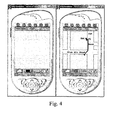
- FIGS. 4a and 4b show the whiteboard application running on UIQ emulator on a mobile terminal.
- UIQ is a customizable user interface platform for smart phones based on Symbian OS. It should however be noted that the present invention is not limited to UIQ, other platforms may also be used.
- Figure 4a is a clean whiteboard and figure 4b shows a whiteboard where something is drawn.
- a shortcut key on the mobile terminal may be defined.
- the method comprises the steps of:
- the method according to the present invention is implemented in a mobile terminal.
- the mobile terminal is arranged for communication in a mobile communication network, and for using a session based service, wherein the session based service requires exchange of control information between the mobile terminal and a second unit.
- the mobile terminal comprises means for transmitting and/or receiving control information of the service in the body field of an MSRP-message and means for identifying said control information in said body field by means of a content type field, arranged according to the MIME syntax, of the MSRP-message.
Landscapes
- Engineering & Computer Science (AREA)
- Computer Networks & Wireless Communication (AREA)
- Signal Processing (AREA)
- Multimedia (AREA)
- Business, Economics & Management (AREA)
- General Business, Economics & Management (AREA)
- Information Transfer Between Computers (AREA)
- Mobile Radio Communication Systems (AREA)
- Telephonic Communication Services (AREA)
- Telephone Function (AREA)
Abstract
Description
- The present invention relates to a method and an arrangement in a mobile communication network.
- In particular, the invention relates to a method and arrangements for implementing a session based service in a mobile communication network according to the preamble of
claims 1 and 11. - The telecommunication industry is currently shifting towards all-IP systems, driven by the need to reduce costs and create new revenue generating services.
- A conventional third-generation (3G) mobile telecommunication network, according to the 3GPP standards, is divided into an Access Network (AN) and a Core Network (CN). In a GSM network, the AN is a Base Station System (BSS) and in a UMTS network, the AN is a Radio Network System (RNS). The AN is responsible for communicating with mobile terminals in a certain area. The RNS comprises one Radio Network Controller (RNC) and several Node Bs also denoted base stations.
- The CN is logically divided into a CS domain and a PS domain. The CS domain refers to the set of CN entities offering "CS type of connection" for user traffic and related signalling. A "CS type of connection" is a connection for which dedicated network resources are allocated at the connection establishment and released at the connection release. Usually, it refers to voice and related signalling connection. The CS domain comprises e.g. a Mobile Switching Center (MSC), Gateway MSC (GMSC), and a Visitor Location Register (VLR). The PS domain refers to the set of CN entities offering "PS type of connection" for user traffic and related signalling. A "PS type of connection" transports the user information using autonomous concatenation of bits called packets: each packet can be routed independently of the other packets. Usually, a PS connection refers to a data connection. Examples of entities in the PS domain are: Serving GPRS Support Node (SGSN) and Gateway GPRS Support Node (GGSN).
- At this time, the IP Multimedia (IM) Subsystem is introduced in the CN to fill the gap between traditional telecommunication and Internet technologies as shown in
figure 1 . To achieve access independence and to maintain a smooth interoperation with the terminals across the Internet, the object of the IP multimedia subsystem is to conform to the IETF "Internet standards". One of the most important protocols in this context is Session Initiate Protocol (SIP). SIP is a signalling protocol for Internet conferencing, telephony, presence, events notification and instant messaging. It has now also become the signalling protocol for multimedia communication in the telecommunication world. - The IM subsystem comprises the CN elements for provision of IP multimedia services comprising audio, video, text, chat, etc. and a combination thereof delivered over the PS domain.
- The core entities in the IM Subsystem are: Call Session Control Function (CSCF), Home Subscriber Server (HSS) and Media Resource Function (MRF). For the service development and service deployment, the Application Server (AS) is a very important entity. Besides, there are other entities to provide interworking functionality between the IM subsystem and PSTN: Media Gateway Control Function (MGCF), Media Gateway (MGW), and Signalling Gateway (SGW).
- The CSCF handles session establishment, modification and release of sessions using the SIP/SDP protocol suite. It supports retransmission schemes and hop-by-hop reliability for the SIP methods. According to the behaviour, the CSCF can act as Proxy CSCF (P-CSCF), Serving CSCF (S-CSCF) and Interrogation CSCF (I-CSCF).
- The P-CSCF is the first contact point for the mobile station in the IM subsystem and it behaves like a SIP proxy. The P-CSCF proxies the SIP messages towards the home network for the subscriber. The I-CSCF is the entry point to the home network. The other networks use the Domain Name System (DNS) to route the messages to the home network, which will forward the SIP signalling to the I-CSCF. The I-CSCF contacts the HSS to locate the address of S-CSCF and forwards the SIP message to the S-CSCF. The S-CSCF is the SIP proxy that provides the access to the services to the end user. Depending on the profile information from the HSS, the S-CSCF will forward the originating and terminating SIP signalling to the AS in the home network to provide the services.
- The HSS is the master database and contains all user and subscriber information. It supports the network elements handling calls and sessions. Moreover, the authorization and security information is stored in HSS. It is an evolution of the Home location Register (HLR) and Authentication Centre (AuC) in the mobile telecommunication networks.
- The MRF provides the capability to control multimedia stream resources. It can support the functions such like mixing, generating, processing media streams. Logically, it consists of Media Resource Function Controller (MRFC) and Media Resource Function Processor (MRFP). The MRFC is responsible for conference session control and the MRFP is responsible for processing content in conversational multimedia services.
- The AS offers value-added IM services residing in the user's home network or in a third location. Usually, the AS contains the SIP Application Server functionalities. The SIP Application Server can influence and impact the SIP messages on behalf of the services from/to S-CSCF. By means of the AS, a variety of services can be developed and deployed.
- One such service is a service provided by a whiteboard application. The word "whiteboard" is used to indicate a board with a smooth, e.g. a white surface, which can be written and drawn on using special pens or other devices. Usually, it is an application that provides a principle service for teleconference. Such service enables multiple users to write and draw on the "same logical area" in order to share information between each other.
- There exist several session based services such as the whiteboard services in the market already.
- For PC, notebook and Pocket PC clients, there are two widely used products providing the whiteboard services: the NetMeeting provided by Microsoft and the Sametime provided by IBM. Those clients connect to an Instant Messaging server that resides in the Internet. The connection can then be established via the server. After setting up the connection, the whiteboard application can be launched. For this service, the access to the Internet is the prerequisite. Usually, people have access to the Internet e.g. at home, at the office, or at the hotel via a network cable. When the Wi-Fi technology appears, the network cable restriction no longer exists. Wi-Fi is an abbreviation for "Wireless Fidelity". It is a set of standards for wireless local area networks (WLAN) currently based on the IEEE 802.11 specifications. Wi-Fi was intended to be used for wireless devices and LANs, but is now often used for Internet access. It enables a person with a wireless-enabled computer or Personal Digital Assistant (PDA) to connect to the Internet when in proximity of an access point called a hotspot. The drawback is that people can not enjoy the service outside those hotspots.
- Colligo develops another way to use the Wi-Fi and Bluetooth technology to provide the whiteboard service. Equipped with Wi-Fi card or Bluetooth chip, Notebooks, Pocket PCs, Palms and PDAs can discover the devices nearby. And then, the connection can be setup after the successful discovery. So, the users nearby can enjoy the whiteboard services. In this way, people can use the whiteboard easily, but the drawbacks are obvious. People can only communicate with each other nearby. Outside the radio coverage, connection could not be established.
- Thus, by using the two methods described above, it is not possible to use the session based service such as the whiteboard service at any time, at any place. By implementing the session based service in a mobile telecommunication network having the 1M subsystem and that covers large areas, the service can then be used widely.
- The session based services require an exchange of control information between the involved units, such as between a plurality of mobile terminals. An example of exchange of control information is transmission of different commands between the units. To further describe this, the whiteboard service is used as an example among several. The whiteboard service requires that the mobile terminal comprises means for transmitting the information drawn in the mobile terminal and related commands, so that the information and the commands can be represented to other mobile terminals at remote locations at the same time. Thus, the information represented on the screen of the mobile terminal is required to be transmitted immediately on the screen of the remote party's mobile terminal. Also, it should be possible to use the service during a conversation, so that the user can discuss a problem or make clarification by using the whiteboard.
- Usually, the high-end pen-equipped mobile terminals can use the whiteboard easily. Beside, with the joystick, the low-end mobile phones can also simulate the pen action to use the whiteboard.
- A further problem in existing implementations, such as the whiteboard functionality of Groupboard is that the whiteboard application is implemented directly based on TCP, which implies that the design of the application must be performed on bit level, which is inconvenient for the designer.
- Mahy R. et. al.:"The message session relay protocol draft-ietf-simple-message-sessions-07.txt"CISCO SYSTEMS,[Online] 18 July 2004, retrieved from the internet URL:www.ietf.org/proceedings/04aug/I-D/draft-ietf-simple-message-sessions-07.txt is a document describing the message session relay protocol (MRSP).
-
US 2002 131 397 A1 discloses a system for high speed wireless broadcast data transmission and reception. -
WO 2005 043944 A1 andWO 2005 029809 are prior art under Article 54(3) EPC. -
WO 2005 043944 A1 shows a telecommunication network comprising a group call service server which facilitates a group call over a radio interface between different user equipment units in a defined group. The group call service server receives a floor request by using a MRSP message from a requesting user equipment included in the group and handles the floor request based on a media type associated with the floor request. -
WO 2005 029809 discloses a method for transporting information between end users by using the message session relay protocol (MRSP) to encapsulate information transmitted between users. - An object of the invention is hence to achieve an implementation of a session based service that is user friendly for software designers developing the application associated with said service.
- The object of the invention is achieved by the method according to
claim 1, and by the mobile terminal according to claim 11. - According to a first aspect of the present invention, a method in a mobile terminal for implementing a session based service is provided. The session based service is implemented by using an Internet Multimedia subsystem between the mobile terminal and a second unit and by exchanging control information between the mobile terminal and the second unit. The method comprises the steps of transmitting and/or receiving said control information of the session based service in the body field of an Message Session Relay Protocol, MSRP,-message and identifying said control information in said body field by means of a content type field of the MSRP-message, wherein the content type field is arranged according to Multipurpose Internet Mail Extension, MIME syntax.
- According to a second aspect of the present invention, a mobile terminal arranged for implementing a session based service is provided. The session based service is implemented by using an Internet Multimedia subsystem and by exchanging control information between the mobile terminal and a second unit. The mobile terminal comprises means for transmitting and/or receiving control information of the session based service in the body field of an Message Session Relay Protocol, MSRP, -message and means for identifying said control information in said body field by means of a content type field of the MSRP-message. Further, the content type field is arranged according to Multipurpose Internet Mail Extension, MIME, syntax.
- Preferred embodiments are defined by the dependent claims.
- An advantage with the present invention is that the MSRP protocol in combination with the content types according to embodiments of the present invention provides a protocol with a simple structure.
- A further advantage of the present invention is that it is possible to extend the content types according to the invention to any other session based service in the future.
- A further advantage of the present invention is that the deployment of the service application server, such as the whiteboard application server enables the authentication and charging problem to be solved.
- A further advantage of the present invention is that enhanced functionality such as handset adaptation and media conversion may be developed on the application server in the IM subsystem.
- A detailed description of a preferred embodiment of the inventive method and device will follow, based on the appended drawing, on which:
-
Fig. 1 is a schematic presentation of a 3G network architecture comprising an IP Multimedia Subsystem. -
Fig. 2 is a schematic presentation of a mobile network with a whiteboard application according to an embodiment of the present invention. -
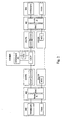
Fig. 3 shows examples of extended MIME types according to embodiments of the present invention. -
Fig. 4 shows a mobile terminal with a whiteboard application running on an UIQ emulator according to one embodiment of the present invention. -
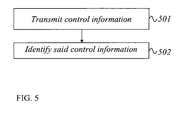
Fig. 5 is a flowchart of the method according to the present invention. -
Figure 2 shows the architecture of a mobile network comprising support for a whiteboard application as an example of a session based service. The mobile network corresponds to the mobile network shown infigure 1 . Although the whiteboard service is exemplified in this application, the principles of the present invention are also applicable to other session based services, such as gaming services. Thus, the present invention is not limited to whiteboard applications. By introducing the whiteboard service, or another session based service, only two network entities are affected, i.e. the mobile terminal, also denoted User Equipment (UE) and the IM subsystem wherein an AS adapted for the particular service, such as whiteboard as in this case, is introduced. - On the mobile terminal, a service client application is introduced according to the present invention, such as a whiteboard client application as shown in
figure 2 . The service client application provides the service functionality towards the end user. - A service Application Server, such as a whiteboard application server as shown in
figure 2 deployed in the CN should at least have the following functionalities: - Handling SIP messages: Perform authentication and authorization for OPTIONS message in the session.
- Generating charging information: Under certain situations, the Charging Data Record (CDR) for the service can be generated.
- Provide conference capability: For peer-to-peer communication, the data may be transmitted without the involvement of the service application server, but for multiparty communication, all the data should first be sent from mobile terminal to the server. The server is then responsible to distribute the data, otherwise there is a risk that mass data may cause congestion in the network.
- Once the service application server node is deployed, the service is much more flexible. Other functionalities, such as handset adaptation, media conversion, may be developed on the application server to enhance the service.
- The mobile terminal and the service application server comprise therefore means for transmitting messages associated with the session based service. The messages comprise control information and content. The control information may be commands from one mobile terminal to another mobile terminal. An example of this in the whiteboard case is a command that specifies which type of line that is to be drawn. A method and arrangements for transmitting the messages comprising the control information is suggested according to the present invention. The protocol is based on the Message Session Relay Protocol (MSRP) and Multipurpose Internet Mail Extension (MIME).
- MSRP is an existing protocol to provide the session-oriented message transport capabilities, wherein the original purpose is to transfer instant messages carrying content on the application level. According to the present invention, the body field of an MSRP message is used to carry control information. The control information may be a command or information parameters associated with the service and a device associated with said service.
- MIME is an official Internet standard that specifies how messages should be formatted so that they can be exchanged between email systems. The content type format definition of MIME is disclosed below. MIME is a very flexible message format and besides the text, image, audio and video, the MIME content types may be extended to support application-specific data. According to the present invention, the content type format of MIME is used to identify different types of control information and content in the body field of the MSRP message.
- By combining the MSRP and the MIME content type according to the present invention, a protocol that supports exchanging of multimedia and application specific information is achieved. Thus, the combination of MIME and MSRP provides a new way to facilitate the application information exchange. As mentioned above, besides the whiteboard service, this combination may be used for other services or applications, such as gaming service.
- The method according to the present invention is suitable for implementing a session based service in a mobile communication network between mobile terminals wherein the session based service requires an exchange of messages comprising control information. The method comprises the steps of transmitting control information of the service in the body field of an MSRP-message and identifying said control information in said body field by means of a content type field, arranged according to the MIME syntax, of the MSRP-message.
- The main features of the protocol according to the present invention are:
- 1. MSRP is used as the content transportation protocol.
- 2. MIME is used as the wrapper to encapsulate the service related information including specific commands. All the service extended contents need to be wrapped into MIME format. E.g. for the whiteboard application, all of the control information, such as the commands indicating and relating to poly-line drawn on the screen, background image, clear commands are required to follow the MIME format when they are transmitted by using the MSRP message format according to one embodiment of the present invention.
- 3. The "multipart/mixed" content type is a special content type defined in MIME (RFC 2046) intended for use when the body parts of the message are independent and need to be bundled in a particular order. This content type can be used to package different contents into one MSRP message to be transmitted in order to transport the information in an efficient way. Not only different content type data from one service, but also those from different services can be transferred as one MSRP message. It enables the application to implement combined services such as the whiteboard service in combination with audio or the whiteboard service in combination with gaming. Through the content type "multipart/mixed", a combination of both command and content data of the same service or several different services in one MSRP message is supported, which improves the efficiency.
- 4. The extensibility of MIME could be utilized as the extensibility of this new protocol itself. Besides basic MIME types, the extended types are defined as shown in
figure 3 : - The information exchanged is classified into three categories:
- 1. Basic MIME types according to prior art:
Some common media types defined in MIME protocol can be exchanged natively. - 2. Virtual device types:
According to one embodiment of the present invention, the MIME content types virtual device types are introduced. The virtual device related event information is defined with the media subtype "x-simpleex.vdevice". It can be joystick, keypad and pen events on handheld devices, such as the key press event on mobile phone.
The term of "virtual device" is used because one virtual device is an abstraction of physical devices, which behave similarly. For example, in the whiteboard application, the mouse on PC has the same behaviour as the pen on mobile phone, so their common behaviours can be abstracted to virtual device "pen". - 3. Service specific types:
According to one embodiment of the present invention, the MIME content types service specific types are introduced. The service related information is defined with the media subtype "x-simpleex.<service name>", including the "x-simpleex.whiteboard" and "x-simpleex.gaming". The high-level service friendly primitives are grouped in this category, for example, the pen thickness changing in whiteboard. - The service specific type may be generalized to support other service specific information in future due to the extensibility of MIME.
- The service specific type and virtual device type may overlap to some extent. Generally speaking, the virtual device information records the basic device events, while the service specific one encapsulates and abstracts some information to provide more friendly events in an efficient way. For example, consecutive strokes drawn on the whiteboard can be represented in some pen action events, but it also can be regarded as one poly-line event from whiteboard application's point of view. It will be explained in detail later. In such situation, the application should make the decision on selecting the virtual device information or the service specific information to exchange.
- In the MIME protocol, the following definition is the syntax of the content type format:
- content := "Content-Type" ":" type "/" subtype *(";" parameter) parameter := attribute "=" value
- According to one embodiment of the present invention, two optional parameters are introduced, the "action" parameter and the "timestamp" parameter.
- The "action" parameter subdivides the information type in each service. The value of the "action" parameter varies in different services. And the usage of this parameter will be explained below.
- The "timestamp" parameter is used since some services are time-critical. It is hence important to know when a command is issued or when a key event happens. It is necessary to press a timestamp on this kind of information before transportation. The value of the "timestamp" parameter may be the number of milliseconds time value since January 1, 1970, 00:00:00 GMT.
- For the basic MIME content types, the message body is the media content. For extended content types, the message body consists of two parts: one five-character command and parameters. One space character is used to separate the command and the parameters. Here is the syntax for the message body of the extension content type:
- message-body := command (" " *parameter)
- command := 5-character command
- parameter := 1 character | digits
- Some common media types are defined in the MIME protocol, such as text, image, audio and video. Without any extension, this information may be exchanged between several parties, as long as the communication parties support MIME. For the basic MIME types, the content data can be put in the body of the MSRP message directly, once the type of such content is filled in the content type field. The following is an example to send an image to the remote parties:
- The example above is a piece of an MSRP SEND message. The value of [length] indicates the length of the entire MSRP message. In this message shown above, two MSRP header fields are provided. TR-ID header field comprises a transaction identifier which is used to map the response to the corresponding request. In this example, its value is 664. If this message is sent successfully, a 200 OK response with TR-ID of 664 will be received. Content-type header field indicates the media type of the message body. Since the image to be transmitted in this example is in JPEG format, the content type field value is exactly image/jpeg. The content of the JPEG image is put into the message body. It should be noted that this example is based on the format of MSRP proposed in IETF draft 02, the present invention is not limited to this message format.
- On the mobile phones, the virtual devices can be classified into: pen, joystick and keypad. The information to be exchanged includes e.g. key pressing, or pen moving.
- Here is the syntax of the information of virtual devices: Content-type=application/x-simpleex.vdevice; action=<device> [; timestamp=<xxxx>]
[event] -
- action
- Device type
<device>: pen, keypad, joystick - timestamp
- Time stamp. (Optional)
- event
- description of the events. Defined by different devices.
- In the table above are the pen action events on the high-end mobile phones: pen down, pen up and pen move.
- In the table below are the keypad action events on all mobile phones: key press, key repeat, and key release.
Event Format Description Key Press KEYPR <key> <key> - value of the pressed key. 1 character. Key Repeat KEYRT <key><xxx> <key> - value of the repeated key. 1 character. <xxx> - Repeat count. 2 digits. Key Release KEYRL <key> <key> - value of the released key. 1 character. - Keys on the keypad can be digit keys, symbol keys and command keys as the following:
- Digit Keys - 0123456789
- Symbol Keys - *#
- Command Keys - E(enter), U(up), D(down), L(left), R(right), C(clear)
- Here are the joystick action events on those mobile phones equipped with joysticks: joystick press, joystick repeat and joystick release.
Event Format Description Joystick Press JOYPR <joystick> < joystick > - value of the pressed joystick. 1 character. Joystick Repeat JOYRT <joystick><xxx> < joystick > - value of the repeated joystick. 1 character. <xxx> - Repeat count. 2 digits. Joystick Release JOYRL <joystick> < joystick > - value of the released joystick. 1 character. - The keys to be pressed on joystick are the following 5 keys: U(up), D(down), L(left), R(right), C(centre)
- The following is an MSRP message to be sent by a special application. In this application, it is recorded that the pen has drawn a line on screen in about one second. The pen draw down at (12, 20), then move to (30, 20) half a second later, draw up at (50, 22) at last.
In this example, "--dv--" is used as the boundary characters.
MSRP [length] SEND
TR-ID: 664
Content-Type: multipart/mixed; boundary="--dv--"
----dv--
Content-Type: application/x-
simpleex.vdevice;action=pen;timestamp=1106121182210
PENDN 012020
----dv--
Content-Type: application/x-
simpleex.vdevice;action=pen;timestamp=1106121182760
PENMV 030020
----dv--
Content-Type: application/x-
simpleex.vdevice;action=pen;timestamp=1106121183210
PENUP 050022
----dv---- - In the whiteboard application according to one embodiment of the present application, most of the information to be recorded is the pen drawing information. For the pen drawing, consecutive strokes drawn on the screen can be disassembled into one poly-line. The start point and end point pairs determine one line. To be consecutive strokes, the start point of the latter line is the end point of previous line. So, those start and end points can be used to record the strokes and the duplicate boundary points can be merged into one. To improve the efficiency, it does make sense to introduce a special type to record the poly-line information instead of piles of pen action events. Besides the poly-line and background image, there are some predefined commands and shapes need to be transported.
- Here is the syntax of the information of whiteboard service:
Content-type=application/x-simpleex.whiteboard; action=<action>[;
timestamp=<xxxx>]
[information] -
- action
- Subdivided information type
cmd: the predefined command in the whiteboard
poly: the poly-line information which use draws
shape: the predefined shapes in the whiteboard - timestamp
- Time stamp. (Optional)
- Here is the poly-line information to be recorded on the whiteboard application: the poly-line drawing action and rubber erasing action.
Information Format Description Poly-lines drawing PLINE <xxx><yyy> <xxx>: X coordinate. 3 digits. *(<xx>yyy>) <yyy>: Y coordinate. 3 digits. Rubber erasing RUBER <xxx>: X coordinate. 3 digits. <xxx><yyy> <yyy>: Y coordinate. 3 digits. *(<xxx><yyy>) - For the parameters after "PLINE" and "RUBER", they consists of a series coordinates pairs, which are the anchor point and successive points to form one poly-line.
- Here are the predefined shapes to be put on the whiteboard: rectangle, ellipse, filled rectangle and filled ellipse. If the width value equals the height value, rectangle becomes square, and ellipse becomes circle.
Information Format Description Rectangle RECTA <xxx>: X coordinate of the left-up point <xxx><yyy> of the rectangle. 3 digits. <www><hhh> <yyy>: Y coordinate of the left-up point of the rectangle. 3 digits. <www>: Width of the rectangle. 3 digits. <hhh>: Height of the rectangle. 3 digits. Filled rectangle FRECT <xxx><yyy> <xxx>: X coordinate of the left-up point of the rectangle. 3 digits. <www><hhh> <yyy>: Y coordinate of the left-up point of the rectangle. 3 digits. <www>: Width of the rectangle. 3 digits. <hhh>: Height of the rectangle. 3 digits. Ellipse ELLIP <xxx>: X coordinate of the left-up corner <xxx><yyy> of the ellipse. 3 digits. <www><hhh> <yyy>: Y coordinate of the left-up corner of the ellipse. 3 digits. <www>: Width of the ellipse. 3 digits. <hhh>: Height of the ellipse. 3 digits. Filled ellipse FELLI <xxx>: X coordinate of the left-up corner <xxx><yyy> of the ellipse. 3 digits. <www><hhh> <yyy>: Y coordinate of the left-up corner of the ellipse. 3 digits. <www>: Width of the ellipse. 3 digits. <hhh>: Height of the ellipse. 3 digits. - Here are the predefined commands to be used in the whiteboard: clear, change color, change thickness ...... etc.
Information Format Description Clear CLEAR Clear the whole whiteboard Change the pen color LCOLR <rrr> <rrr>: The RGB value of the color to be used to draw the line portion Change the filled color FCOLR <rrr> <rrr>: The RGB value of the color to be used for the filled color for those filled elements. Change the pen thickness THICK <ttt> <ttt>: the thickness of the pen in pixels. 2 digits Change the line style STYLE <sss> <sss>: the number to indicate the line style. 1 digit. 0: Solid 1: Dashed 2: Dotted 3: Dash-Dot 4: Dash-Dot-Dot 5: Two-Tone Change the pen nib PNNIB <nnn> <nnn>: the number to indicate the pen nib. 1 digit. 0: round nib 1: square nib Lock the whiteboard LOCKW Lock the whiteboard, so that no one else could draw on it except the locker. Unlock the whiteboard ULOCK Unlock the whiteboard, so that all the participating parties can draw on it. New page for the whiteboard NPAGE Build a new page on the whiteboard, the old one will still be there. And the participating parties can change the view between those pages. Turn to the special page TPAGE <ppp> <ppp>: the special page to be turned to. 1 digit. Delete the special page DPAGE <ppp> <ppp>: the special page to be deleted. 1 digit. - The following is an MSRP message to be sent by a whiteboard application. In this application, the user clears the whiteboard first and then he draws two poly-lines: one from (10, 10) to (20,30) to (50, 40) and another from (200, 200) to (150, 150). At last, he erases the line from (120, 120) to (80, 80).
In this example, "--wb--" is used as the boundary characters.
MSRP [length] SEND
TR-ID: 664
Content-Type: multipart/mixed; boundary= "--wb--"
----wb--
Content-Type: application/x-simpleex.whiteboard;action=cmd
CLEAR
----wb--
Content-Type: application/x-simpleex.whiteboard;action=poly
PLINE 010010020030050040
PLINE 200200150150
----wb--
Content-Type: application/x-simpleex.whiteboard;action=poly
RUBER 120120080080
----wb---- - For the normal games, the information can be categories into predefined commands (for example, save, load, reset ...... etc.) and key press information. And for the gaming service, timestamp is a mandatory field to be filled.
- Here is the syntax of the information of gaming sevices:
Content-type=application/x-simpleex.gaming; action=<action>;
timestamp=<xxxx>
[information] -
- action
- Subdivided information type
cmd: the predefined command information
key: the key press information - timestamp
- Time stamp.
- Here are the predefined commands for the gaming services: start/stop/pause the game, load/save the game.
Information Format Description Game Start START Start or restart the game Game Stop GSTOP Stop the game Game Pause GPAUS Pause the game Game Load GLOAD Load the game Game Save GSAVE Save the game - Here are the key press events especially useful for the classic gaming equipments: left, right, up, down direction key pressing and Start, Select, X, Y, Z, A, B, C control key pressing. Although there are other kinds of keyboards, the key press information can be mapped into those keys for the gaming service.
Information Format Description Left direction key KEYLF Press the left direction key Right direction key KEYRT Press the right direction key Up direction key KEYUP Press the up direction key Down direction key KEYDN Press the down direction key X control button press BUTNX Press the X control key Y control button press BUTNY Press the Y control key Z control button press BUTNZ Press the Z control key A control button press BUTNA Press the A control key B control button press BUTNB Press the B control key C control button press BUTNC Press the C control key Select button press SLECT Press the SELECT control key Start button press START Press the START control key - In the following example an MSRP message is to be sent by a gaming application. In this application, it records that the user presses the A and X button at the same time. And half a second later, he issues the pause command inside the game.
In this example, "--gm--" is used as the boundary characters.
MSRP [length] SEND
TR-ID: 664
Content-Type: multipart/mixed; boundary="--gm--"
----gm--
Content-Type: application/x-
simpleex.gaming;action=key;timestamp=106121182210
BUTNA
BUTNX
----gm--
Content-Type: application/x-
simpleex.gaming;action=cmd;timestamp=1106121182760
GPAUS
----gm---- - To satisfy the needs of each service, different content types can be encapsulated in one MSRP message. For example, the whiteboard services can use the whiteboard extension to exchange the whiteboard information while the basic MIME image type is used to exchange the background image.
- In the following example, the MSRP message consists of 3 parts:
- 1. The CLEAR whiteboard command
- 2. The background image with jpeg format
- 3. The poly-lines drawn on the screen.
- MSRP [length] SEND
TR-ID: 664
Content-Type: multipart/mixed; boundary= "--wb--"
----wb--
Content-Type: application/x-simpleex.whiteboard; action=cmd
CLEAR
----wb--
Content-Type: image/jpeg
[jpeg image]
----wb--
Content-Type: application/x-simpleex.whiteboard;action=poly
PLINE 010010020030050040
PLINE 200200150150
----wb---- - The
figures 4a and 4b show the whiteboard application running on UIQ emulator on a mobile terminal. UIQ is a customizable user interface platform for smart phones based on Symbian OS. It should however be noted that the present invention is not limited to UIQ, other platforms may also be used.Figure 4a is a clean whiteboard andfigure 4b shows a whiteboard where something is drawn. - To make it easy for the user to activate the session based service such as the whiteboard service during a conversation, a shortcut key on the mobile terminal may be defined.
- After the conversation is established, the user may then be able to press the shortcut key. One of the following two situations might happen:
- 1. The whiteboard client application is launched directly.
- 2. The portal GUI is launched. Users may select several applications to share with each other: pictures, motions, whiteboard, games, etc. The user may then launch the application he wants.
- Thus, the method according to the present invention for implementing a session based service in a mobile communication network between mobile terminals wherein the session based service requires an exchange of control information is illustrated in the flowchart of
figure 5 . - The method comprises the steps of:
- 501. Transmit control information of the session based service in the body field of an MSRP-message.
- 502. Identify said control information in the body field by means of a content type field, preferable arranged according to the MIME syntax, of the MSRP-message.
- The method according to the present invention, described above, is implemented in a mobile terminal. The mobile terminal is arranged for communication in a mobile communication network, and for using a session based service, wherein the session based service requires exchange of control information between the mobile terminal and a second unit. The mobile terminal comprises means for transmitting and/or receiving control information of the service in the body field of an MSRP-message and means for identifying said control information in said body field by means of a content type field, arranged according to the MIME syntax, of the MSRP-message.
- The present invention is not limited to the above-described preferred embodiments. Various alternatives, modifications and equivalents may be used. Therefore, the above embodiments should not be taken as limiting the scope of the invention, which is defined by the appended claims.
| Event | Format | Description |
| Pen Down | PENDN <xxx><yyy> | <xxx> - X coordinate. 3 digits. |
| <yyy> - Y coordinate. 3 digits. | ||
| Pen Move | PENMV <xxx><yyy> | <xxx> - X coordinate. 3 digits. |
| <yyy> - Y coordinate. 3 digits. | ||
| Pen Up | PENUP <xxx><yyy> | <xxx> - X coordinate. 3 digits. |
| <yyy> - Y coordinate. 3 digits. |
Claims (20)
- A method for implementing a session based service in a mobile communication network by using an Internet Multimedia subsystem between the mobile terminal and a second unit and by exchanging control information between the mobile terminal and the second unit, the method being characterised in that the mobile terminal carries out the steps of:- transmitting and/or receiving (501) said control information of the session based service in the body field of an Message Session Relay Protocol, MSRP,-message and- identifying (502) said control information in said body field by means of a content type field of the MSRP-message, wherein the content type field is arranged according to the Multipurpose Internet Mail Extension, MIME syntax.
- The method according to claim 1, characterised in that the control information is a command.
- The method according to any of claims 1-2, characterised in that the MIME comprises a content type defining characteristics of a device associated with at least one of the mobile terminals.
- The method according to any of claims 1-2, characterised in that the MIME comprises a content type defining characteristics of the session based service.
- The method according to any of claim 3-4, characterised in that the content type defining characteristics of a device comprises an action parameter.
- The method according to any of claims 3-4, characterised in that the content type defining characteristics of a device comprises a timestamp parameter.
- The method according to any one of claims 1-6, characterised in that different content types are encapsulated in one single MSRP message.
- The method according to any one of claims 1-7, characterised in that the method comprises the further step of:- running the session based service on an UIQ emulator.
- The method according to any one of claims 1-8, characterised in that the session based service is a whiteboard service.
- The method according to any one of claims 1-8, characterised in that the session based service is a gaming service.
- A mobile terminal arranged for implementing a session based service in a mobile communication network by using an Internet Multimedia subsystem and by exchanging control information between the mobile terminal and a second unit, the mobile terminal is characterised in that it comprises means for transmitting and/or receiving control information of the session based service in the body field of an Message Session Relay Protocol, MSRP, -message and means for identifying said control information in said body field by means of a content type field of the MSRP-message, wherein the content type field is arranged according to the Multipurpose Internet Mail Extension, MIME, syntax.
- The mobile terminal according to claim 11, characterised in that the control information is a command.
- The mobile terminal according to any of claims 11-12, characterised in that the content type defines characteristics of a device associated with the mobile terminal.
- The mobile terminal according to any of claims 11-12, characterised in that the content type defines characteristics of the session based service.
- The mobile terminal according to any of claims 13-14, characterised in that the content type defining characteristics of a device comprises an action parameter.
- The mobile terminal according to any of claims 13-14, characterised in that the content type defining characteristics of a device comprises a timestamp parameter.
- The mobile terminal according to any one of claims 11-16, characterised in that different content types are encapsulated in one single MSRP message.
- The mobile terminal according to any one of claims 11-17, characterised in that the mobile terminal comprises an UIQ emulator comprising means for running the session based service.
- The mobile terminal according to any one of claims 11-18, characterised in that the session based service is a whiteboard service.
- The mobile terminal according to any one of claims 11-19, characterised in that the session based service is a gaming service.
Applications Claiming Priority (1)
| Application Number | Priority Date | Filing Date | Title |
|---|---|---|---|
| PCT/SE2005/000154 WO2006085799A1 (en) | 2005-02-08 | 2005-02-08 | A method and arrangements in a mobile communication network |
Publications (2)
| Publication Number | Publication Date |
|---|---|
| EP1847137A1 EP1847137A1 (en) | 2007-10-24 |
| EP1847137B1 true EP1847137B1 (en) | 2010-10-20 |
Family
ID=36793295
Family Applications (1)
| Application Number | Title | Priority Date | Filing Date |
|---|---|---|---|
| EP05711031A Expired - Lifetime EP1847137B1 (en) | 2005-02-08 | 2005-02-08 | Implementation of a session based service in a mobile communication network |
Country Status (6)
| Country | Link |
|---|---|
| US (1) | US20080147806A1 (en) |
| EP (1) | EP1847137B1 (en) |
| CN (1) | CN101116354B (en) |
| AT (1) | ATE485667T1 (en) |
| DE (1) | DE602005024310D1 (en) |
| WO (1) | WO2006085799A1 (en) |
Families Citing this family (11)
| Publication number | Priority date | Publication date | Assignee | Title |
|---|---|---|---|---|
| US7561595B2 (en) * | 2005-09-30 | 2009-07-14 | Nokia Corporation | Method and apparatus for instant messaging |
| KR100748700B1 (en) * | 2006-01-18 | 2007-08-13 | 삼성전자주식회사 | Video conference system and method using white board |
| CN101207577B (en) * | 2006-12-19 | 2011-04-13 | 华为技术有限公司 | Interconnecting method among message systems and message interconnecting gateway |
| US20100211638A1 (en) * | 2007-07-27 | 2010-08-19 | Goojet | Method and device for creating computer applications |
| KR101199701B1 (en) * | 2009-10-13 | 2012-11-08 | 삼성전자주식회사 | Apparatus and method for transmitting handwriting message including time information |
| CN102377728B (en) * | 2010-08-06 | 2015-05-06 | 联芯科技有限公司 | Method for distributing files-in-group in IMS (IP multimedia subsystem) multimedia meeting |
| CN102421127A (en) * | 2010-09-28 | 2012-04-18 | 飞思达技术(北京)有限公司 | Method for testing core network data service performance through signaling simulation |
| KR101330051B1 (en) * | 2011-11-29 | 2014-01-13 | 에스케이텔레콤 주식회사 | apparatus, and recording medium for file transfer to signal reception impossible terminal |
| CN102707994B (en) * | 2012-04-27 | 2014-08-20 | 西安电子科技大学 | Method for controlling computer by handheld mobile equipment in local area network |
| US10834149B2 (en) | 2014-12-15 | 2020-11-10 | At&T Intellectual Property I, L.P. | Method and system for routing of session-based services |
| CN111465114B (en) * | 2019-01-18 | 2022-02-22 | 中国信息通信研究院 | Random access response method and equipment |
Family Cites Families (4)
| Publication number | Priority date | Publication date | Assignee | Title |
|---|---|---|---|---|
| US20020065083A1 (en) * | 2000-09-07 | 2002-05-30 | Rajendra Patel | Method and system for high speed wireless data transmission and reception |
| GB0321975D0 (en) * | 2003-09-19 | 2003-10-22 | Ericsson Telefon Ab L M | Exchange protocol for combination multimedia services |
| SE0302920D0 (en) * | 2003-11-03 | 2003-11-03 | Ericsson Telefon Ab L M | Improvements in or relating to group calls |
| US20060149811A1 (en) * | 2004-12-31 | 2006-07-06 | Sony Ericsson Mobile Communications Ab | Method for remotely controlling media devices via a communication network |
-
2005
- 2005-02-08 AT AT05711031T patent/ATE485667T1/en not_active IP Right Cessation
- 2005-02-08 WO PCT/SE2005/000154 patent/WO2006085799A1/en not_active Ceased
- 2005-02-08 US US11/815,702 patent/US20080147806A1/en not_active Abandoned
- 2005-02-08 EP EP05711031A patent/EP1847137B1/en not_active Expired - Lifetime
- 2005-02-08 CN CN2005800477734A patent/CN101116354B/en not_active Expired - Lifetime
- 2005-02-08 DE DE602005024310T patent/DE602005024310D1/en not_active Expired - Lifetime
Also Published As
| Publication number | Publication date |
|---|---|
| US20080147806A1 (en) | 2008-06-19 |
| DE602005024310D1 (en) | 2010-12-02 |
| ATE485667T1 (en) | 2010-11-15 |
| WO2006085799A1 (en) | 2006-08-17 |
| CN101116354A (en) | 2008-01-30 |
| EP1847137A1 (en) | 2007-10-24 |
| CN101116354B (en) | 2010-12-08 |
Similar Documents
| Publication | Publication Date | Title |
|---|---|---|
| EP1929712B1 (en) | Sip header reduction | |
| KR100784925B1 (en) | System and method for handing over a call from a packet-switched network to a circuit-switched network | |
| EP4391611B1 (en) | Information transmission method and apparatus | |
| US8730945B2 (en) | Systems and methods for using a recipient handset as a remote screen | |
| CN110324284A (en) | Method and communication device for accessing IMS | |
| US20060034195A1 (en) | SIP message extension for push to watch service | |
| US8320349B1 (en) | Combined user agent for packet-based communication clients | |
| KR20070102578A (en) | System and method for reducing communication information between multimedia functional devices in a universal mobile communication system | |
| KR20060066105A (en) | Activation of a Communication Session in a Communication System | |
| Chakraborty et al. | IMS multimedia telephony over cellular systems | |
| CN101505455B (en) | Method and device for push-to-talk service | |
| JP4526038B2 (en) | Session in communication system | |
| CN101116354B (en) | Method and device for realizing session-based service in mobile communication network | |
| WO2006089124A2 (en) | Reducing size of messages over the cellular control channel | |
| US7436817B2 (en) | Call clearing for legacy mobile circuit switched domain wireless systems | |
| CN101317434B (en) | Method and system for acquiring media characteristic information and terminal equipment | |
| KR100957633B1 (en) | Method for transmitting multimedia message through IMS network and terminal for same | |
| JP4078381B2 (en) | Method and apparatus for push-to-talk | |
| US7646764B2 (en) | IP network and communication method therein | |
| KR20080069397A (en) | Multimedia service method in mobile communication network and recording medium recording program for executing same | |
| O’Regan et al. | Performance estimation of a SIP based push-to-talk service for 3G networks | |
| CA2685550A1 (en) | Systems and methods for using a recipient handset as a remote screen | |
| CN100525257C (en) | Method for message intercommunication of IP multimedia sub-system domain and grouping exchanging domain multimedia | |
| KR100963961B1 (en) | Method and system for providing multimedia chat in IP multimedia subsystem | |
| KR100905071B1 (en) | Message Storage System and Method Based on Internet Protocol Multimedia Subsystem |
Legal Events
| Date | Code | Title | Description |
|---|---|---|---|
| PUAI | Public reference made under article 153(3) epc to a published international application that has entered the european phase |
Free format text: ORIGINAL CODE: 0009012 |
|
| 17P | Request for examination filed |
Effective date: 20070503 |
|
| AK | Designated contracting states |
Kind code of ref document: A1 Designated state(s): AT BE BG CH CY CZ DE DK EE ES FI FR GB GR HU IE IS IT LI LT LU MC NL PL PT RO SE SI SK TR |
|
| RIN1 | Information on inventor provided before grant (corrected) |
Inventor name: LING, ROBBIE Inventor name: WANG, LIANG Inventor name: ZHANG, JIALU Inventor name: LU, YUNJIE |
|
| DAX | Request for extension of the european patent (deleted) | ||
| 17Q | First examination report despatched |
Effective date: 20091021 |
|
| RIC1 | Information provided on ipc code assigned before grant |
Ipc: H04W 76/00 20090101ALN20100326BHEP Ipc: H04L 29/08 20060101AFI20100326BHEP |
|
| RTI1 | Title (correction) |
Free format text: IMPLEMENTATION OF A SESSION BASED SERVICE IN A MOBILE COMMUNICATION NETWORK |
|
| RAP1 | Party data changed (applicant data changed or rights of an application transferred) |
Owner name: TELEFONAKTIEBOLAGET LM ERICSSON (PUBL) |
|
| GRAP | Despatch of communication of intention to grant a patent |
Free format text: ORIGINAL CODE: EPIDOSNIGR1 |
|
| GRAS | Grant fee paid |
Free format text: ORIGINAL CODE: EPIDOSNIGR3 |
|
| GRAA | (expected) grant |
Free format text: ORIGINAL CODE: 0009210 |
|
| AK | Designated contracting states |
Kind code of ref document: B1 Designated state(s): AT BE BG CH CY CZ DE DK EE ES FI FR GB GR HU IE IS IT LI LT LU MC NL PL PT RO SE SI SK TR |
|
| REG | Reference to a national code |
Ref country code: GB Ref legal event code: FG4D |
|
| REG | Reference to a national code |
Ref country code: CH Ref legal event code: EP |
|
| REG | Reference to a national code |
Ref country code: IE Ref legal event code: FG4D |
|
| REF | Corresponds to: |
Ref document number: 602005024310 Country of ref document: DE Date of ref document: 20101202 Kind code of ref document: P |
|
| REG | Reference to a national code |
Ref country code: NL Ref legal event code: VDEP Effective date: 20101020 |
|
| LTIE | Lt: invalidation of european patent or patent extension |
Effective date: 20101020 |
|
| PG25 | Lapsed in a contracting state [announced via postgrant information from national office to epo] |
Ref country code: LT Free format text: LAPSE BECAUSE OF FAILURE TO SUBMIT A TRANSLATION OF THE DESCRIPTION OR TO PAY THE FEE WITHIN THE PRESCRIBED TIME-LIMIT Effective date: 20101020 |
|
| PG25 | Lapsed in a contracting state [announced via postgrant information from national office to epo] |
Ref country code: SI Free format text: LAPSE BECAUSE OF FAILURE TO SUBMIT A TRANSLATION OF THE DESCRIPTION OR TO PAY THE FEE WITHIN THE PRESCRIBED TIME-LIMIT Effective date: 20101020 Ref country code: BG Free format text: LAPSE BECAUSE OF FAILURE TO SUBMIT A TRANSLATION OF THE DESCRIPTION OR TO PAY THE FEE WITHIN THE PRESCRIBED TIME-LIMIT Effective date: 20110120 Ref country code: PT Free format text: LAPSE BECAUSE OF FAILURE TO SUBMIT A TRANSLATION OF THE DESCRIPTION OR TO PAY THE FEE WITHIN THE PRESCRIBED TIME-LIMIT Effective date: 20110221 Ref country code: SE Free format text: LAPSE BECAUSE OF FAILURE TO SUBMIT A TRANSLATION OF THE DESCRIPTION OR TO PAY THE FEE WITHIN THE PRESCRIBED TIME-LIMIT Effective date: 20101020 Ref country code: AT Free format text: LAPSE BECAUSE OF FAILURE TO SUBMIT A TRANSLATION OF THE DESCRIPTION OR TO PAY THE FEE WITHIN THE PRESCRIBED TIME-LIMIT Effective date: 20101020 Ref country code: NL Free format text: LAPSE BECAUSE OF FAILURE TO SUBMIT A TRANSLATION OF THE DESCRIPTION OR TO PAY THE FEE WITHIN THE PRESCRIBED TIME-LIMIT Effective date: 20101020 Ref country code: IS Free format text: LAPSE BECAUSE OF FAILURE TO SUBMIT A TRANSLATION OF THE DESCRIPTION OR TO PAY THE FEE WITHIN THE PRESCRIBED TIME-LIMIT Effective date: 20110220 Ref country code: FI Free format text: LAPSE BECAUSE OF FAILURE TO SUBMIT A TRANSLATION OF THE DESCRIPTION OR TO PAY THE FEE WITHIN THE PRESCRIBED TIME-LIMIT Effective date: 20101020 |
|
| PG25 | Lapsed in a contracting state [announced via postgrant information from national office to epo] |
Ref country code: BE Free format text: LAPSE BECAUSE OF FAILURE TO SUBMIT A TRANSLATION OF THE DESCRIPTION OR TO PAY THE FEE WITHIN THE PRESCRIBED TIME-LIMIT Effective date: 20101020 Ref country code: GR Free format text: LAPSE BECAUSE OF FAILURE TO SUBMIT A TRANSLATION OF THE DESCRIPTION OR TO PAY THE FEE WITHIN THE PRESCRIBED TIME-LIMIT Effective date: 20110121 |
|
| PG25 | Lapsed in a contracting state [announced via postgrant information from national office to epo] |
Ref country code: ES Free format text: LAPSE BECAUSE OF FAILURE TO SUBMIT A TRANSLATION OF THE DESCRIPTION OR TO PAY THE FEE WITHIN THE PRESCRIBED TIME-LIMIT Effective date: 20110131 Ref country code: CZ Free format text: LAPSE BECAUSE OF FAILURE TO SUBMIT A TRANSLATION OF THE DESCRIPTION OR TO PAY THE FEE WITHIN THE PRESCRIBED TIME-LIMIT Effective date: 20101020 Ref country code: EE Free format text: LAPSE BECAUSE OF FAILURE TO SUBMIT A TRANSLATION OF THE DESCRIPTION OR TO PAY THE FEE WITHIN THE PRESCRIBED TIME-LIMIT Effective date: 20101020 |
|
| PLBE | No opposition filed within time limit |
Free format text: ORIGINAL CODE: 0009261 |
|
| STAA | Information on the status of an ep patent application or granted ep patent |
Free format text: STATUS: NO OPPOSITION FILED WITHIN TIME LIMIT |
|
| PG25 | Lapsed in a contracting state [announced via postgrant information from national office to epo] |
Ref country code: RO Free format text: LAPSE BECAUSE OF FAILURE TO SUBMIT A TRANSLATION OF THE DESCRIPTION OR TO PAY THE FEE WITHIN THE PRESCRIBED TIME-LIMIT Effective date: 20101020 Ref country code: DK Free format text: LAPSE BECAUSE OF FAILURE TO SUBMIT A TRANSLATION OF THE DESCRIPTION OR TO PAY THE FEE WITHIN THE PRESCRIBED TIME-LIMIT Effective date: 20101020 Ref country code: SK Free format text: LAPSE BECAUSE OF FAILURE TO SUBMIT A TRANSLATION OF THE DESCRIPTION OR TO PAY THE FEE WITHIN THE PRESCRIBED TIME-LIMIT Effective date: 20101020 Ref country code: PL Free format text: LAPSE BECAUSE OF FAILURE TO SUBMIT A TRANSLATION OF THE DESCRIPTION OR TO PAY THE FEE WITHIN THE PRESCRIBED TIME-LIMIT Effective date: 20101020 |
|
| 26N | No opposition filed |
Effective date: 20110721 |
|
| PG25 | Lapsed in a contracting state [announced via postgrant information from national office to epo] |
Ref country code: MC Free format text: LAPSE BECAUSE OF NON-PAYMENT OF DUE FEES Effective date: 20110228 |
|
| REG | Reference to a national code |
Ref country code: CH Ref legal event code: PL |
|
| PG25 | Lapsed in a contracting state [announced via postgrant information from national office to epo] |
Ref country code: CH Free format text: LAPSE BECAUSE OF NON-PAYMENT OF DUE FEES Effective date: 20110228 Ref country code: LI Free format text: LAPSE BECAUSE OF NON-PAYMENT OF DUE FEES Effective date: 20110228 |
|
| REG | Reference to a national code |
Ref country code: DE Ref legal event code: R097 Ref document number: 602005024310 Country of ref document: DE Effective date: 20110721 |
|
| REG | Reference to a national code |
Ref country code: IE Ref legal event code: MM4A |
|
| PG25 | Lapsed in a contracting state [announced via postgrant information from national office to epo] |
Ref country code: IE Free format text: LAPSE BECAUSE OF NON-PAYMENT OF DUE FEES Effective date: 20110208 |
|
| PG25 | Lapsed in a contracting state [announced via postgrant information from national office to epo] |
Ref country code: CY Free format text: LAPSE BECAUSE OF FAILURE TO SUBMIT A TRANSLATION OF THE DESCRIPTION OR TO PAY THE FEE WITHIN THE PRESCRIBED TIME-LIMIT Effective date: 20101020 Ref country code: LU Free format text: LAPSE BECAUSE OF NON-PAYMENT OF DUE FEES Effective date: 20110208 |
|
| PG25 | Lapsed in a contracting state [announced via postgrant information from national office to epo] |
Ref country code: TR Free format text: LAPSE BECAUSE OF FAILURE TO SUBMIT A TRANSLATION OF THE DESCRIPTION OR TO PAY THE FEE WITHIN THE PRESCRIBED TIME-LIMIT Effective date: 20101020 |
|
| PG25 | Lapsed in a contracting state [announced via postgrant information from national office to epo] |
Ref country code: HU Free format text: LAPSE BECAUSE OF FAILURE TO SUBMIT A TRANSLATION OF THE DESCRIPTION OR TO PAY THE FEE WITHIN THE PRESCRIBED TIME-LIMIT Effective date: 20101020 |
|
| REG | Reference to a national code |
Ref country code: FR Ref legal event code: PLFP Year of fee payment: 12 |
|
| REG | Reference to a national code |
Ref country code: FR Ref legal event code: PLFP Year of fee payment: 13 |
|
| REG | Reference to a national code |
Ref country code: FR Ref legal event code: PLFP Year of fee payment: 14 |
|
| PGFP | Annual fee paid to national office [announced via postgrant information from national office to epo] |
Ref country code: IT Payment date: 20190222 Year of fee payment: 15 |
|
| PG25 | Lapsed in a contracting state [announced via postgrant information from national office to epo] |
Ref country code: IT Free format text: LAPSE BECAUSE OF NON-PAYMENT OF DUE FEES Effective date: 20200208 |
|
| PGFP | Annual fee paid to national office [announced via postgrant information from national office to epo] |
Ref country code: DE Payment date: 20240228 Year of fee payment: 20 Ref country code: GB Payment date: 20240227 Year of fee payment: 20 |
|
| PGFP | Annual fee paid to national office [announced via postgrant information from national office to epo] |
Ref country code: FR Payment date: 20240226 Year of fee payment: 20 |
|
| REG | Reference to a national code |
Ref country code: DE Ref legal event code: R071 Ref document number: 602005024310 Country of ref document: DE |
|
| REG | Reference to a national code |
Ref country code: GB Ref legal event code: PE20 Expiry date: 20250207 |
|
| PG25 | Lapsed in a contracting state [announced via postgrant information from national office to epo] |
Ref country code: GB Free format text: LAPSE BECAUSE OF EXPIRATION OF PROTECTION Effective date: 20250207 |