EP1845090A1 - Amide compound and thrombopoietin receptor activator - Google Patents
Amide compound and thrombopoietin receptor activator Download PDFInfo
- Publication number
- EP1845090A1 EP1845090A1 EP05819752A EP05819752A EP1845090A1 EP 1845090 A1 EP1845090 A1 EP 1845090A1 EP 05819752 A EP05819752 A EP 05819752A EP 05819752 A EP05819752 A EP 05819752A EP 1845090 A1 EP1845090 A1 EP 1845090A1
- Authority
- EP
- European Patent Office
- Prior art keywords
- groups
- group
- alkyl
- halogen atoms
- aryl
- Prior art date
- Legal status (The legal status is an assumption and is not a legal conclusion. Google has not performed a legal analysis and makes no representation as to the accuracy of the status listed.)
- Withdrawn
Links
- 0 *C(C(C(I*)=NIC(I*)=*)=*B1)=C1I* Chemical compound *C(C(C(I*)=NIC(I*)=*)=*B1)=C1I* 0.000 description 8
- LRLRAYMYEXQKID-UHFFFAOYSA-N Cc1ccc(C(F)(F)F)cc1 Chemical compound Cc1ccc(C(F)(F)F)cc1 LRLRAYMYEXQKID-UHFFFAOYSA-N 0.000 description 2
- ACVFXDCBKJGNNS-HRXMTCGVSA-N CC(C(CNC(C1)C1c1ccc(C(NCNC(C)C([C@H]2O)=CSC2c(cc2)ccc2Br)=O)[s]1)OC)OC Chemical compound CC(C(CNC(C1)C1c1ccc(C(NCNC(C)C([C@H]2O)=CSC2c(cc2)ccc2Br)=O)[s]1)OC)OC ACVFXDCBKJGNNS-HRXMTCGVSA-N 0.000 description 1
- NAMQMKPIJOPKKC-UHFFFAOYSA-N CC(c1c[s]c(-c(cc2)ccc2Br)c1O)=O Chemical compound CC(c1c[s]c(-c(cc2)ccc2Br)c1O)=O NAMQMKPIJOPKKC-UHFFFAOYSA-N 0.000 description 1
- GTKKAKPJDBFMIG-SNVBAGLBSA-N C[C@H](CCCCOCI)NC(c1ccc(C=O)[s]1)=O Chemical compound C[C@H](CCCCOCI)NC(c1ccc(C=O)[s]1)=O GTKKAKPJDBFMIG-SNVBAGLBSA-N 0.000 description 1
- WCFUVEYEHZSUAT-UHFFFAOYSA-N Cc1ccc(C(CCCCN2CC=[O]CC2)=O)[s]1 Chemical compound Cc1ccc(C(CCCCN2CC=[O]CC2)=O)[s]1 WCFUVEYEHZSUAT-UHFFFAOYSA-N 0.000 description 1
- PYSTWCWSCWNFON-UHFFFAOYSA-N Cc1ccc(C(CN(C)c2c3[nH]ccc3ccc2)=O)[s]1 Chemical compound Cc1ccc(C(CN(C)c2c3[nH]ccc3ccc2)=O)[s]1 PYSTWCWSCWNFON-UHFFFAOYSA-N 0.000 description 1
- UNEDEVVPMZPMEY-UHFFFAOYSA-N Cc1ccc(C(CN2CCOCC2)=O)[s]1 Chemical compound Cc1ccc(C(CN2CCOCC2)=O)[s]1 UNEDEVVPMZPMEY-UHFFFAOYSA-N 0.000 description 1
- KLBGCKGRUATZNI-UHFFFAOYSA-N Cc1ccc(C(CNc2cnc[o]2)=O)[s]1 Chemical compound Cc1ccc(C(CNc2cnc[o]2)=O)[s]1 KLBGCKGRUATZNI-UHFFFAOYSA-N 0.000 description 1
- BDCQRTFYJXLHEJ-UHFFFAOYSA-N Cc1ccc(C(N(CC2O)CC2OC)=O)[s]1 Chemical compound Cc1ccc(C(N(CC2O)CC2OC)=O)[s]1 BDCQRTFYJXLHEJ-UHFFFAOYSA-N 0.000 description 1
- XNWSGJDAGWBSJW-UHFFFAOYSA-N NNC(c1ccc(C(NCCCN2CCOCC2)=O)[s]1)=O Chemical compound NNC(c1ccc(C(NCCCN2CCOCC2)=O)[s]1)=O XNWSGJDAGWBSJW-UHFFFAOYSA-N 0.000 description 1
- CFWPDBWSDGYOFQ-UHFFFAOYSA-N OC(CN(C1)C(c2ccc(C=O)[s]2)=O)C1O Chemical compound OC(CN(C1)C(c2ccc(C=O)[s]2)=O)C1O CFWPDBWSDGYOFQ-UHFFFAOYSA-N 0.000 description 1
Images

Classifications
-
- C—CHEMISTRY; METALLURGY
- C07—ORGANIC CHEMISTRY
- C07D—HETEROCYCLIC COMPOUNDS
- C07D231/00—Heterocyclic compounds containing 1,2-diazole or hydrogenated 1,2-diazole rings
- C07D231/02—Heterocyclic compounds containing 1,2-diazole or hydrogenated 1,2-diazole rings not condensed with other rings
- C07D231/10—Heterocyclic compounds containing 1,2-diazole or hydrogenated 1,2-diazole rings not condensed with other rings having two or three double bonds between ring members or between ring members and non-ring members
- C07D231/14—Heterocyclic compounds containing 1,2-diazole or hydrogenated 1,2-diazole rings not condensed with other rings having two or three double bonds between ring members or between ring members and non-ring members with hetero atoms or with carbon atoms having three bonds to hetero atoms with at the most one bond to halogen, e.g. ester or nitrile radicals, directly attached to ring carbon atoms
- C07D231/18—One oxygen or sulfur atom
-
- A—HUMAN NECESSITIES
- A61—MEDICAL OR VETERINARY SCIENCE; HYGIENE
- A61K—PREPARATIONS FOR MEDICAL, DENTAL OR TOILETRY PURPOSES
- A61K31/00—Medicinal preparations containing organic active ingredients
- A61K31/33—Heterocyclic compounds
- A61K31/395—Heterocyclic compounds having nitrogen as a ring hetero atom, e.g. guanethidine or rifamycins
- A61K31/41—Heterocyclic compounds having nitrogen as a ring hetero atom, e.g. guanethidine or rifamycins having five-membered rings with two or more ring hetero atoms, at least one of which being nitrogen, e.g. tetrazole
- A61K31/415—1,2-Diazoles
-
- A—HUMAN NECESSITIES
- A61—MEDICAL OR VETERINARY SCIENCE; HYGIENE
- A61P—SPECIFIC THERAPEUTIC ACTIVITY OF CHEMICAL COMPOUNDS OR MEDICINAL PREPARATIONS
- A61P43/00—Drugs for specific purposes, not provided for in groups A61P1/00-A61P41/00
-
- A—HUMAN NECESSITIES
- A61—MEDICAL OR VETERINARY SCIENCE; HYGIENE
- A61P—SPECIFIC THERAPEUTIC ACTIVITY OF CHEMICAL COMPOUNDS OR MEDICINAL PREPARATIONS
- A61P7/00—Drugs for disorders of the blood or the extracellular fluid
-
- A—HUMAN NECESSITIES
- A61—MEDICAL OR VETERINARY SCIENCE; HYGIENE
- A61P—SPECIFIC THERAPEUTIC ACTIVITY OF CHEMICAL COMPOUNDS OR MEDICINAL PREPARATIONS
- A61P7/00—Drugs for disorders of the blood or the extracellular fluid
- A61P7/04—Antihaemorrhagics; Procoagulants; Haemostatic agents; Antifibrinolytic agents
-
- A—HUMAN NECESSITIES
- A61—MEDICAL OR VETERINARY SCIENCE; HYGIENE
- A61P—SPECIFIC THERAPEUTIC ACTIVITY OF CHEMICAL COMPOUNDS OR MEDICINAL PREPARATIONS
- A61P9/00—Drugs for disorders of the cardiovascular system
-
- A—HUMAN NECESSITIES
- A61—MEDICAL OR VETERINARY SCIENCE; HYGIENE
- A61P—SPECIFIC THERAPEUTIC ACTIVITY OF CHEMICAL COMPOUNDS OR MEDICINAL PREPARATIONS
- A61P9/00—Drugs for disorders of the cardiovascular system
- A61P9/10—Drugs for disorders of the cardiovascular system for treating ischaemic or atherosclerotic diseases, e.g. antianginal drugs, coronary vasodilators, drugs for myocardial infarction, retinopathy, cerebrovascula insufficiency, renal arteriosclerosis
-
- C—CHEMISTRY; METALLURGY
- C07—ORGANIC CHEMISTRY
- C07D—HETEROCYCLIC COMPOUNDS
- C07D333/00—Heterocyclic compounds containing five-membered rings having one sulfur atom as the only ring hetero atom
- C07D333/02—Heterocyclic compounds containing five-membered rings having one sulfur atom as the only ring hetero atom not condensed with other rings
- C07D333/04—Heterocyclic compounds containing five-membered rings having one sulfur atom as the only ring hetero atom not condensed with other rings not substituted on the ring sulphur atom
- C07D333/26—Heterocyclic compounds containing five-membered rings having one sulfur atom as the only ring hetero atom not condensed with other rings not substituted on the ring sulphur atom with hetero atoms or with carbon atoms having three bonds to hetero atoms with at the most one bond to halogen, e.g. ester or nitrile radicals, directly attached to ring carbon atoms
- C07D333/30—Hetero atoms other than halogen
- C07D333/32—Oxygen atoms
Definitions
- the present invention relates to preventive, therapeutic and improving agents having affinity for and agonistic action on the thrombopoietin receptor for diseases against which activation of the thrombopoietin receptor is effective.
- it relates to pharmaceutical compositions comprising compounds which increase platelets through stimulation of differentiation and proliferation of hematopoietic stem cells, megakaryocytic progenitor cells and megakaryocytes or compounds for therapeutic angiogenesis or with anti-arteriosclerosis action that stimulate differentiation and proliferation of vascular endothelial cells and endothelial progenitor cells.
- Thrombopoietin is a cytokine consisting of 332 amino acids that increases platelet production by stimulating differentiation and proliferation of hematopoietic stem cells, megakaryocytic progenitor cells and megakaryocytes mediated by its receptor and therefore is promising as a drug for hematological disorders.
- Recent reports that it stimulates differentiation and proliferation of vascular endothelial cells and endothelial progenitor cells have raised expectations of therapeutic angiogenesis, anti-arteriosclerosis and prevention of cardiovascular events (for example, non-patent document 1, non-patent document 2 and non-patent document 3).
- Biologically active substances which have been known so far to regulate platelet production through the thrombopoietin receptor include, in addition to thrombopoietin itself, low molecular weight peptides having affinity for the thrombopoietin receptor (for example, patent document 1, patent document 2, patent document 3 and patent document 4).
- Thrombopoietin and low molecular weight peptides having affinity for the thrombopoietin receptor are likely to be easily degraded in the gastrointestinal tract and are usually difficult to orally administer.
- thrombopoietin itself the appearance of anti-thrombopoietin antibodies have been reported.
- low molecular weight compounds having excellent affinity for and agonistic action on the thrombopoietin receptor as preventive, therapeutic and improving agents for diseases against which activation of the thrombopoietin receptor is effective have been demanded.
- low molecular weight compounds which can serve as platelet increasing agents or increasing agents for other blood cells by stimulating differentiation and proliferation of hematopoietic stem cells, megakaryocytic progenitor cells and megakaryocytes or low molecular weight compounds which can be used for therapeutic angiogenesis or as preventive and therapeutic agents for arteriosclerosis by stimulating endothelial cells and endothelial progenitor cells have been demanded.
- the present inventors conducted extensive research to find low molecular weight compounds having affinity for and agonistic action on the thrombopoietin receptor, and as a result, found that the compounds of the present invention have high affinity and agonistic action which enable them to show potent platelet increasing action by stimulating differentiation and proliferation of megakaryocytic progenitor cells and megakaryocytes.
- the present invention was accomplished on the basis of this discovery.
- the present invention relates to:
- n denotes normal
- i denotes iso
- s denotes secondary
- t denotes tertiary
- c denotes cyclo
- o denotes ortho
- m denotes meta
- p denotes para
- Ph denotes phenyl
- Py denotes pyridyl
- Naphthyl denotes naphthyl
- Me denotes methyl
- Et denotes ethyl
- Pr denotes propyl
- Bu denotes butyl
- Ac denotes acetyl.
- halogen atom a fluorine atom, a chlorine atom, a bromine atom or an iodine atom may be mentioned.
- a C 1-3 alkyl group may be linear, branched or a C 3 cycloalkyl group, and methyl, ethyl, n-propyl, i-propyl and c-propyl and the like may be mentioned.
- a C 1-6 alkyl group may be linear, branched or a C 3-6 cycloalkyl group, and in addition to those mentioned above, n-butyl, i-butyl, s-butyl, t-butyl, c-butyl, 1-methyl-c-propyl, 2-methyl-c-propyl, n-pentyl, 1-methyl-n-butyl, 2-methyl-n-butyl, 3-methyl-n-butyl, 1,1-dimethyl-n-propyl, 1,2-dimethyl-n-propyl, 2,2-dimethyl-n-propyl, 1-ethyl-n-propyl, c-pentyl, 1-methyl-c-butyl, 2-methyl-c-butyl, 3-methyl-c-butyl, 1,2-dimethyl-c-propyl, 2,3-dimethyl-c-propyl, 1-ethyl-c-propyl, 2-ethyl-c-
- a C 1-10 alkyl group may be linear, branched or a C 3-10 cycloalkyl group, and in addition to those mentioned above, 1-methyl-1-ethyl-n-pentyl, 1-heptyl, 2-heptyl, 1-ethyl-1,2-dimethyl-n-propyl, 1-ethyl-2,2-dimethyl-n-propyl, 1-octyl, 3-octyl, 4-methyl-3-n-heptyl, 6-methyl-2-n-heptyl, 2-propyl-1-n-heptyl, 2,4,4-trimethyl-1-n-pentyl, 1-nonyl, 2-nonyl, 2,6-dimethyl-4-n-heptyl, 3-ethyl-2,2-dimethyl-3-n-pentyl, 3,5,5-trimethyl-1-n-hexyl, 1-decyl, 2-decyl, 4-decyl, 3,7-dimethyl-1-n
- C 2-6 alkynyl group ethynyl, 1-propynyl, 2-propynyl, 1-butynyl, 2-butynyl, 3-butynyl, 1-methyl-2-propynyl, 1-pentynyl, 2-pentynyl, 3-pentynyl, 4-pentynyl, 1-methyl-2-butynyl, 1-methyl-3-butynyl, 2-methyl-3-butynyl, 3-methyl-1-butynyl, 1,1-dimethyl-2-propynyl, 1-hexynyl, 2-hexynyl, 3-hexynyl, 4-hexynyl, 5-hexynyl, 1-methyl-2-pentynyl, 1-methyl-3-pentynyl, 1-methyl-4-pentynyl, 2-methyl-3-pentynyl, 2-methyl-4-pentynyl, 3-methyl-1-pentyn
- a C 2-6 alkenyl group may be linear, branched or a C 3-6 cycloalkenyl group, and ethenyl, 1-propenyl, 2-propenyl, 1-methyl-1-ethenyl, 1-butenyl, 2-butenyl, 3-butenyl, 2-methyl-1-propenyl, 2-methyl-2-propenyl, 1-ethylethenyl, 1-methyl-1-propenyl, 1-methyl-2-propenyl, 1-pentenyl, 2-pentenyl, 3-pentenyl, 4-pentenyl, 1-n-propylethenyl, 1-methyl-1-butenyl, 1-methyl-2-butenyl, 1-methyl-3-butenyl, 2-ethyl-2-propenyl, 2-methyl-1-butenyl, 2-methyl-2-butenyl, 2-methyl-3-butenyl, 3-methyl-1-butenyl, 3-methyl-2-butenyl, 3-methyl-3-butenyl, 1,1-
- a C 2-9 heterocyclyl group may be a heteromonocyclic or fused heterobicyclic group consisting of at least one atom optionally selected from nitrogen atoms, oxygen atoms and sulfur atoms and from 2 to 9 carbon atoms, and specifically mentioned are:
- a nitrogen-containing C 2-9 heterocyclyl group may be, among those give above, a heteromonocyclic or fused heterobicyclic group which contains least one nitrogen atom, may contain at least one atom optionally selected from oxygen atoms and sulfur atoms and contains from 2 to 9 carbon atoms, and specifically mentioned are:
- a substituted C 2-9 heterocyclyl group may be, among the C 2-9 heterocyclyl groups and the nitrogen-containing C 2-9 heterocyclyl groups, a heteromonocyclic or fused heterobicyclic group which has no nitrogen atoms and one or three carbonyl groups or thiocarbonyl groups as ring constituting carbon atoms, and specifically mentioned are:
- a C 2-14 aryl group may be a C 6-14 aryl group containing no hetero atoms as ring constituting atoms or a C 2-9 aromatic heterocyclic group, and a C 2-9 aromatic heterocyclic group may be a 5 to 7-membered C 2-6 heteromonocyclic group or 8 to 10-membered C 5-9 fused heterobicyclic group containing from 1 to 3 oxygen atoms, nitrogen atoms or sulfur atoms singly or in combination.
- a 5 to 7-membered C 2-6 heteromonocyclic group may be a 2-thienyl group, a 3-thienyl group, a 2-furyl group, a 3-furyl group, a 2-pyranyl group, a 3-pyranyl group, a 4-pyranyl group, a 1-pyrrolyl group, a 2-pyrrolyl group, a 3-pyrrolyl group, a 1-imidazolyl group, a 2-imidazolyl group, a 4-imidazolyl group, a 1-pyrazolyl group, a 3-pyrazolyl group, a 4-pyrazolyl group, a 2-thiazolyl group, a 4-thiazolyl group, a 5-thiazolyl group, a 3-isothiazolyl group, a 4-isothiazolyl group, a 5-isothiazolyl group, a 2-oxazolyl group, a 4-oxazolyl group, a 5-oxazolyl group, a 3-
- a 8 to 10-membered C 5-9 fused heterocyclic group may be a 2-benzofuranyl group, a 3-benzofuranyl group, a 4-benzofuranyl group, a 5-benzofuranyl group, a 6-benzofuranyl group, a 7-benzofuranyl group, a 1-isobenzofuranyl group, a 4-isobenzofuranyl group, a 5-isobenzofuranyl group, a 2-benzothienyl group, a 3-benzothienyl group, a 4-benzothienyl group, a 5-benzothienyl group, a 6-benzothienyl group, a 7-benzothienyl group, a 1-isobenzothienyl group, a 4-isobenzothienyl group, a 5-isobenzothienyl group, a 2-chromenyl group, a 3-chromenyl group, a 4-chromenyl group, a 5-chromeny
- a C 2-14 substituted aryl group may be a fused bycyclic or tricyclic group resulting from fusion of the above-mentioned C 2-14 aryl group with a C 2-9 heterocyclyl group, a nitrogen-containing C 2-9 heterocyclyl group or a substituted C 2-9 heterocyclyl group, and specifically mentioned are:
- a C 2-14 aryloxy group may be a C 6-14 aryloxy group containing no hetero atoms as ring constituting atoms or a C 2-9 aromatic heterocyclyloxy group, and a C 2-9 aromatic heterocyclyloxy group may be a 5 to 7-membered C 2-6 monocyclic heterocyclyloxy group or 8 to 10-membered C 5-9 fused bicyclic heterocyclyloxy group containing from 1 to 3 oxygen atoms, nitrogen atoms or sulfur atoms singly or in combination.
- a phenyloxy group As a C 6-14 aryloxy group containing no hetero atoms, a phenyloxy group, a 1-indenyloxy group, a 2-indenyloxy group, a 3-indenyloxy group, a 4-indenyloxy group, a 5-indenyloxy group, a 6-indenyloxy group, a 7-indenyloxy group, an ⁇ -naphthyloxy group, a ⁇ -naphthyloxy group, a 1-tetrahydronaphthyloxy group, a 2-tetrahydronaphthyloxy group, a 5-tetrahydronaphthyloxy group, a 6-tetrahydronaphthyloxy group, an o-biphenylyloxy group, a m-biphenylyloxy group, a p-biphenylyloxy group, a 1-anthryloxy group,
- a 5 to 7-membered C 2-6 monocyclic heterocyclyloxy group may be a 2-thienyloxy group, a 3-thienyloxy group, a 2-furyloxy group, a 3-furyloxy group, a 2-pyranyloxy group, a 3-pyranyloxy group, a 4-pyranyloxy group, a 1-pyrrolyloxy group, a 2-pyrrolyloxy group, a 3-pyrrolyloxy group, a 1-imidazolyloxy group, a 2-imidazolyloxy group, a 4-imidazolyloxy group, a 1-pyrazolyloxy group, a 3-pyrazolyloxy group, a 4-pyrazolyloxy group, a 2-thiazolyloxy group, a 4-thiazolyloxy group, a 5-thiazolyloxy group, a 3-isothiazolyloxy group, a 4-isothiazolyloxy group, a 5-isothiazolyloxy group, a 2-oxazolyl
- a 8 to 10-membered C 5-9 fused bicyclic heterocyclyloxy group may be a 2-benzofuranyloxy group, a 3-benzofuranyloxy group, a 4-benzofuranyloxy group, a 5-benzofuranyloxy group, a 6-benzofuranyloxy group, a 7-benzofuranyloxy group, a 1-isobenzofuranyloxy group, a 4-isobenzofuranyloxy group, a 5-isobenzofuranyloxy group, a 2-benzothienyloxy group, a 3-benzothienyloxy group, a 4-benzothienyloxy group, a 5-benzothienyloxy group, a 6-benzothienyloxy group, a 7-benzothienyloxy group, a 1-isobenzothienyloxy group, a 4-isobenzothienyloxy group, a 5-isobenzothienyloxy group, a 2-chromenyloxy group,
- a C 1-6 alkylcarbonyl group may linear, branched or a C 3-6 cycloalkylcarbonyl group, and be methylcarbonyl, ethylcarbonyl, n-propylcarbonyl, i-propylcarbonyl, c-propylcarbonyl, n-butylcarbonyl, i-butylcarbonyl, s-butylcarbonyl, t-butylcarbonyl, c-butylcarbonyl, 1-methyl-c-propylcarbonyl, 2-methyl-c-propylcarbonyl, n-pentylcarbonyl, 1-methyl-n-butylcarbonyl, 2-methyl-n-butylcarbonyl, 3-methyl-n-butylcarbonyl, 1,1-dimethyl-n-propylcarbonyl, 1,2-dimethyl-n-propylcarbonyl, 2,2-dimethyl-n-propylcarbonyl, 1-ethyl-
- a C 1-10 alkylcarbonyl may be linear, branched or a C 3-10 cycloalkylcarbonyl group, and in addition to those mentioned above, 1-methyl-1-ethyl-n-pentylcarbonyl, 1-heptylcarbonyl, 2-heptylcarbonyl, 1-ethyl-1,2-dimethyl-n-propylcarbonyl, 1-ethyl-2,2-dimethyl-n-propylcarbonyl, 1-octylcarbonyl, 3-octylcarbonyl, 4-methyl-3-n-heptylcarbonyl, 6-methyl-2-n-heptylcarbonyl, 2-propyl-l-n-heptylcarbonyl, 2,4,4-trimethyl-1-n-pentylcarbonyl, 1-nonylcarbonyl, 2-nonylcarbonyl, 2,6-dimethyl-4-n-heptylcarbonyl, 3-ethyl-2,2-dimethyl-3-n
- a C 1-10 thioalkyl group may linear, branched or a C 3-10 cyclothioalkyl group, and be methylthio, ethylthio, n-propylthio, i-propylthio, c-propylthio, n-butylthio, i-butylthio, s-butylthio, t-butylthio, c-butylthio, 1-methyl-c-propylthio, 2-methyl-c-propylthio, n-pentylthio, 1-methyl-n-butylthio, 2-methyl-n-butylthio, 3-methyl-n-butylthio, 1,1-dimethyl-n-propylthio, 1,2-dimethyl-n-propylthio, 2,2-dimethyl-n-propylthio, 1-ethyl-n-propylthio, c-pentylthio, 1-methyl
- a C 1-6 alkylsulfonylamino group may be linear, branched or a C 3-6 cycloalkylsulfonylamino group, and methylsulfonylamino, ethylsulfonylamino, n-propylsulfonylamino, i-propylsulfonylamino, c-propylsulfonylamino, n-butylsulfonylamino, i-butylsulfonylamino, s-butylsulfonylamino, t-butylsulfonylamino, c-butylsulfonylamino, 1-methyl-c-propylsulfonylamino, 2-methyl-c-propylsulfonylamino, n-pentylsulfonylamino, 1-methyl-n-butylsulfony
- a C 1-10 alkylsulfonylamino group may be linear, branched or a C 3-10 cycloalkylsulfonylamino group, and in addition to those mentioned above, 1-methyl-1-ethyl-n-pentylsulfonylamino, 1-heptylsulfonylamino, 2-heptylsulfonylamino, 1-ethyl-1,2-dimethyl-n-propylsulfonylamino, 1-ethyl-2,2-dimethyl-n-propylsulfonylamino, 1-octylsulfonylamino, 3-octylsulfonylamino, 4-methyl-3-n-heptylsulfonylamino, 6-methyl-2-n-heptylsulfonylamino, 2-propyl-1-n-n-heptylsulfonylamino, 2,4,4-trimethyl
- a C 1-6 alkoxy group may be linear, branched or a C 3-10 cycloalkoxy group, and methoxy, ethoxy, n-propoxy, i-propoxy, c-propoxy, n-butoxy, i-butoxy, s-butoxy, t-butoxy, c-butoxy, 1-methyl-c-propoxy, 2-methyl-c-propoxy, n-pentyloxy, 1-methyl-n-butoxy, 2-methyl-n-butoxy, 3-methyl-n-butoxy, 1,1-dimethyl-n-propoxy, 1,2-dimethyl-n-propoxy, 2,2-dimethyl-n-propoxy, 1-ethyl-n-propoxy, c-pentyloxy, 1-methyl-c-butoxy, 2-methyl-c-butoxy, 3-methyl-c-butoxy, 1,2-dimethyl-c-propoxy, 2,3-dimethyl-c-propoxy, 1-ethyl-c-propoxy, 2-ethyl-
- a C 1-10 alkoxy group may be linear, branched or a C 3-10 cycloalkoxy group, and methoxy, ethoxy, n-propoxy, i-propoxy, c-propoxy, n-butoxy, i-butoxy, s-butoxy, t-butoxy, c-butoxy, 1-methyl-c-propoxy, 2-methyl-c-propoxy, n-pentyloxy, 1-methyl-n-butoxy, 2-methyl-n-butoxy, 3-methyl-n-butoxy, 1,1-dimethyl-n-propoxy, 1,2-dimethyl-n-propoxy, 2,2-dimethyl-n-propoxy, 1-ethyl-n-propoxy, c-pentyloxy, 1-methyl-c-butoxy, 2-methyl-c-butoxy, 3-methyl-c-butoxy, 1,2-dimethyl-c-propoxy, 2,3-dimethyl-c-propoxy, 1-ethyl-c-propoxy, 2-ethyl-
- a C 1-6 alkylthiocarbonyl group is a C 1-6 alkylcarbonyl group having a sulfur atom instead of an oxygen atom and may be linear, branched or a C 3-6 cycloalkylthiocarbonyl group.
- a C 1-10 alkylthiocarbonyl group may be linear, branched or a C 3-10 cycloalkylthiocarbonyl group, and in addition to those mentioned above, 1-methyl-1-ethyl-n-pentyl(thiocarbonyl), 1-heptyl(thiocarbonyl), 2-heptyl(thiocarbonyl), 1-ethyl-1,2-dimethyl-n-propyl(thiocarbonyl), 1-ethyl-2,2-dimethyl-n-propyl(thiocarbonyl), 1-octyl(thiocarbonyl), 3-octyl(thiocarbonyl), 4-methyl-3-n-heptyl(thiocarbonyl), 6-methyl-2-n-heptyl(thiocarbonyl), 2-propyl-1-n-heptyl(thiocarbonyl), 2,4,4-trimethyl-1-n-pentyl(thiocarbonyl), 1-nonyl(thiocarbonyl), 2-
- a C 1-6 alkylsulfonyl group may be linear, branched or a C 3-6 cycloalkylsulfonyl group, and methylsulfonyl, ethylsulfonyl, n-propylsulfonyl, i-propylsulfonyl, c-propylsulfonyl, n-butylsulfonyl, i-butylsulfonyl, s-butylsulfonyl, t-butylsulfonyl, c-butylsulfonyl, 1-methyl-c-propylsulfonyl, 2-methyl-c-propylsulfonyl, n-pentylsulfonyl, 1-methyl-n-butylsulfonyl, 2-methyl-n-butylsulfonyl, 3-methyl-n-butylsulfony
- a C 1-10 alkylsulfonyl group may be linear, branched or a C 3-10 cycloalkylsulfonyl group, and in addition to those mentioned above, 1-methyl-1-ethyl-n-pentylsulfonyl, 1-heptylsulfonyl, 2-heptylsulfonyl, 1-ethyl-1,2-dimethyl-n-propylsulfonyl, 1-ethyl-2,2-dimethyl-n-propylsulfonyl, 1-octylsulfonyl, 3-octylsulfonyl, 4-methyl-3-n-heptylsulfonyl, 6-methyl-2-n-heptylsulfonyl, 2-propyl-1-n-n-heptylsulfonyl, 2,4,4-trimethyl-1-n-pentylsulfonyl, 1-nonylsulfon
- a C 1-6 alkoxycarbonyl group may be linear, branched or a C 3-6 cycloalkoxycarbonyl group, and methoxycarbonyl, ethoxycarbonyl, n-propoxycarbonyl, i-propoxycarbonyl, c-propoxylcarbonyl, n-butoxycarbonyl, i-butoxycarbonyl, s-butoxycarbonyl, t-butoxycarbonyl, c-butoxycarbonyl, 1-methyl-c-propoxycarbonyl, 2-methyl-c-propoxycarbonyl, n-pentyloxycarbonyl, 1-methyl-n-butoxycarbonyl, 2-methyl-n-butoxycarbonyl, 3-methyl-n-butoxycarbonyl, 1,1-dimethyl-n-propoxycarbonyl, 1,2-dimethyl-n-propoxycarbonyl, 2,2-dimethyl-n-propoxycarbonyl, 1-ethyl-n-propoxycarbonyl, c-penty
- a C 1-10 alkoxycarbonyl group may be linear, branched or a C 3-10 cycloalkoxycarbonyl group, and in addition to those mentioned above, 1-methyl-1-ethyl-n-pentyloxycarbonyl, 1-heptyloxycarbonyl, 2-heptyloxycarbonyl, 1-ethyl-1,2-dimethyl-n-propyloxycarbonyl, 1-ethyl-2,2-dimethyl-n-propyloxycarbonyl, 1-octyloxycarbonyl, 3-octyloxycarbonyl, 4-methyl-3-n-heptyloxycarbonyl, 6-methyl-2-n-heptyloxycarbonyl, 2-propyl-1-n-heptyloxycarbonyl, 2,4,4-trimethyl-1-n-pentyloxycarbonyl, 1-nonyloxycarbonyl, 2-nonyloxycarbonyl, 2,6-dimethyl-4-n-heptyloxycarbonyl,
- a C 1-10 alkylcarbonyloxy group may be linear, branched or a C 3-10 cycloalkylcarbonyloxy group, and methylcarbonyloxy, ethylcarbonyloxy, n-propylcarbonyloxy, i-propylcarbonyloxy, c-propylcarbonyloxy, n-butylcarbonyloxy, i-butylcarbonyloxy, s-butylcarbonyloxy, t-butylcarbonyloxy, c-butylcarbonyloxy, 1-methyl-c-propylcarbonyloxy, 2-methyl-c-propylcarbonyloxy, n-pentylcarbonyloxy, 1-methyl-n-butylcarbonyloxy, 2-methyl-n-butylcarbonyloxy, 3-methyl-n-butylcarbonyloxy, 1,1-dimethyl-n-propylcarbonyloxy, 1,2-dimethyl-n-propylcarbonyloxy, 2,
- a C 1-10 alkylcarbonylamino group may be linear, branched or a C 3-10 cycloalkylcarbonylamino group, and methylcarbonylamino, ethylcarbonylamino, n-propylcarbonylamino, i-propylcarbonylamino, c-propylcarbonylamino, n-butylcarbonylamino, i-butylcarbonylamino, s-butylcarbonylamino, t-butylcarbonylamino, c-butylcarbonylamino, 1-methyl-c-propylcarbonylamino, 2-methyl-c-propylcarbonylamino, n-pentylcarbonylamino, 1-methyl-n-butylcarbonylamino, 2-methyl-n-butylcarbonylamino, 3-methyl-n-butylcarbonylamino, 1,1-dimethyl-n-propylcarbonylamin
- a C 1-10 monoalkylamino group may be linear, branched or a C 3-10 cycloalkylamino group, and methylamino, ethylamino, n-propylamino, i-propylamino, c-propylamino, n-butylamino, i-butylamino, s-butylamino, t-butylamino, c-butylamino, 1-methyl-c-propylamino, 2-methyl-c-propylamino, n-pentylamino, 1-methyl-n-butylamino, 2-methyl-n-butylamino, 3-methyl-n-butylamino, 1,1-dimethyl-n-propylamino, 1,2-dimethyl-n-propylamino, 2,2-dimethyl-n-propylamino, 1-ethyl-n-propylamino, c-pentylamino, 1-
- a C 1-10 dialkylamino group may be symmetric or asymmetric.
- a symmetric C 1-10 dialkylamino group may be linear, branched or a C 3-10 cycloalkylamino group, and dimethylamino, diethylamino, di-n-propylamino, di-i-propylamino, di-c-propylamino, di-n-butylamino, di-i-butylamino, di-s-butylamino, di-t-butylamino, di-c-butylamino, di-(1-methyl-c-propyl)amino, di-(2-methyl-c-propyl)amino, di-n-pentylamino, di-(1-methyl-n-butyl)amino, di-(2-methyl-n-butyl)amino, di-(3-methyl-n-butyl)amino, di-(1,1-dimethyl-
- An asymmetric C 1-10 dialkylamino group may be linear, branched or a C 3-10 cycloalkylamino group, and (methyl, ethyl)amino, (methyl, n-propyl)amino, (methyl, i-propyl)amino, (methyl, c-propyl)amino, (methyl, n-butyl)amino, (methyl, i-butyl)amino, (methyl, s-butyl)amino, (methyl, t-butyl)amino, (methyl, n-pentyl)amino, (methyl, c-pentyl)amino, (methyl, n-hexyl)amino, (methyl, c-hexyl)amino, (ethyl, n-propyl)amino, (ethyl, i-propyl)amino, (ethyl, c-propyl
- a C 1-10 alkylaminocarbonyl group may be linear, branched or a C 3-10 cycloalkylaminocarbonyl group, and methylaminocarbonyl, ethylaminocarbonyl, n-propylaminocarbonyl, i-propylaminocarbonyl, c-propylaminocarbonyl, n-butylaminocarbonyl, i-butylaminocarbonyl, s-butylaminocarbonyl, t-butylaminocarbonyl, c-butylaminocarbonyl, 1-methyl-c-propylaminocarbonyl, 2-methyl-c-propylaminocarbonyl, n-pentylaminocarbonyl, 1-methyl-n-butylaminocarbonyl, 2-methyl-n-butylaminocarbonyl, 3-methyl-n-butylaminocarbonyl, 1,1-dimethyl-n-propylaminocarbon
- a C 1-10 dialkylaminocarbonyl group may be symmetric or asymmetric.
- a symmetric C 1-10 dialkylaminocarbonyl group may be linear, branched or a C 3-10 cycloalkylaminocarbonyl group, and dimethylaminocarbonyl, diethylaminocarbonyl, di-n-propylaminocarbonyl, di-i-propylaminocarbonyl, di-c-propylaminocarbonyl, di-n-butylaminocarbonyl, di-i-butylaminocarbonyl, di-s-butylaminocarbonyl, di-t-butylaminocarbonyl, di-c-butylaminocarbonyl, di-(1-methyl-c-propyl)aminocarbonyl, di-(2-methyl-c-propyl)aminocarbonyl, di-n-pentylaminocarbonyl, di-(1-methyl-n-butyl
- An asymmetric C 1-10 dialkylaminocarbonyl group may be linear, branched or a C 3-10 cycloalkylaminocarbonyl group, and (methyl, ethyl)aminocarbonyl, (methyl, n-propyl)aminocarbonyl, (methyl, i-propyl)aminocarbonyl, (methyl, c-propyl)aminocarbonyl, (methyl, n-butyl)aminocarbonyl, (methyl, i-butyl)aminocarbonyl, (methyl, s-butyl)aminocarbonyl, (methyl, t-butyl)aminocarbonyl, (methyl, n-pentyl)aminocarbonyl, (methyl, c-pentyl)aminocarbonyl, (methyl, n-hexyl)aminocarbonyl, (methyl, c-hexyl)aminocarbonyl, (ethy
- a C 1-6 alkylaminosulfonyl group may be linear, branched or a C 3-6 cycloalkylaminosulfonyl group, and methylaminosulfonyl, ethylaminosulfonyl, n-propylaminosulfonyl, i-propylaminosulfonyl, c-propylaminosulfonyl, n-butylaminosulfonyl, i-butylaminosulfonyl, s-butylaminosulfonyl, t-butylaminosulfonyl, c-butylaminosulfonyl, 1-methyl-c-propylaminosulfonyl, 2-methyl-c-propylaminosulfonyl, n-pentylaminosulfonyl, 1-methyl-n-butylaminosulfonyl, 2-methyl-n-butylaminosulf
- a C 1-10 alkylaminosulfonyl group may be linear, branched or a C 3-10 cycloalkylsulfonylamino group, and in addition to those mentioned above, 1-methyl-1-ethyl-n-pentylaminosulfonyl, 1-heptylaminosulfonyl, 2-heptylaminosulfonyl, 1-ethyl-1,2-dimethyl-n-propylaminosulfonyl, 1-ethyl-2,2-dimethyl-n-propylaminosulfonyl, 1-octylaminosulfonyl, 3-octylaminosulfonyl, 4-methyl-3-n-heptylaminosulfonyl, 6-methyl-2-n-heptylaminosulfonyl, 2-propyl-l-n-heptylaminosulfonyl, 2,4,4-trimethyl-l-n-pentylaminosul
- the protecting group in a protected hydroxyl group may be a C 1-4 alkoxymethyl group (such as MOM: methoxymethyl, MEM: 2-methoxyethoxymethyl, ethoxymethyl, n-propoxymethyl, i-propoxymethyl, n-butoxymethyl, iBM: isobutyloxymethyl, BUM: t-butoxymethyl, POM: pivaloyloxymethyl, SEM: trimethylsilylethoxymethyl and the like, preferably a C 1-2 alkoxymethyl or the like), an aryloxymethyl (such as BOM: benzyloxymethyl, PMBM: P-methoxybenzyloxymethyl, p-AOM: p-anisyloxymethyl and the like, preferably benzyloxymethyl), a C 1-4 alkylaminomethyl group (such as dimethylaminomethyl), a substituted acetamidomethyl group (such as Acm: acetamidomethyl, Tacm: trimethylaceta
- a 1-methyl-l-methoxyethyl group, a 1-ethoxyethylgroup, a 2,2,2-trichloroethyl group, a 2-trimethylsilylethoxy group, a t-butyl group, an allyl group, a benzyl group, a p-methoxybenzyl group, a 2,4-dinitrophenyl group, a p-chlorophenyl group, a p-methoxyphenyl group, a tetrahydropyranyl group and a tetrahydrofuranyl group may be mentioned.
- substituent R 1 are a phenyl group, thienyl groups (a 2-thienyl group and a 3-thienyl group), furyl groups (a 2-furyl group and a 3-furyl group), pyridazinyl groups (a 3-pyridazinyl group and a 4-pyridazinyl group), pyridyl groups (a 2-pyridyl group, a 3-pyridyl group and a 4-pyridyl group), quinolyl groups (a 2-quinolyl group, a 3-quinolyl group, a 4-quinolyl group, a 5-quinolyl group, a 6-quinolyl group, a 7-quinolyl group and a 8-quinolyl group) and isoquinolyl groups (a 1-isoquinolyl group, a 3-isoquinolyl group, a 4-isoquinolyl group, a 5-isoquinolyl group, a 6-isoquinolyl group, a 7-
- Substituents a C 1-10 alkyl group, a halogen atom, a C 1-10 alkyl group substituted with one or more halogen atoms, a nitro group, an amino group, an amino group substituted with one or two C 1-10 alkyl groups, an amino group substituted with a C 1-10 alkylcarbonyl group, a thiol group substituted with a C 1-10 alkyl group, a thiol group substituted with a C 1-10 alkylcarbonyl group, a hydroxyl group, a C 1-6 alkoxy group, a C 1-10 alkylcarbonyloxy group, a C 1-10 alkoxycarbonyl group and a C 1-10 alkylcarbonyl group.
- substituent R 1 are a phenyl group, thienyl groups (a 2-thienyl group and a 3-thienyl group), furyl groups (a 2-furyl group and a 3-furyl group), pyridazinyl groups (a 3-pyridazinyl group and a 4-pyridazinyl group), pyridyl groups (a 2-pyridyl group, a 3-pyridyl group and a 4-pyridyl group), quinolyl groups (a 2-quinolyl group, a 3-quinolyl group, a 4-quinolyl group, a 5-quinolyl group, a 6-quinolyl group, a 7-quinolyl group and a 8-quinolyl group) and isoquinolyl groups (a 1-isoquinolyl group, a 3-isoquinolyl group, a 4-isoquinolyl group, a 5-isoquinolyl group, a 6-isoquinolyl group, a 7
- Substituents a methyl group, a t-butyl group, a trifluoromethyl group, a chlorine atom, a fluorine atom, a bromine atom, a trifluoromethoxy group, a methoxy group, a methylamino group, a dimethylamino group, a t-butyloxy group and a t-butylamino group.
- substituents are a 3-methyl-phenyl group, a 4-methyl-phenyl group, a 3,4-dimethyl-phenyl group, a 4-bromophenyl group, a 4-trifluoromethoxy-phenyl group, a 3-t-butyl-phenyl group, a 4-t-butyl-phenyl group, a 3-trifluoromethyl-phenyl group, a 4-trifluoromethyl-phenyl group, a 4-trifluoromethoxy-phenyl group, a 3,4-ditrifluoromethyl-phenyl group, a 3-chloro-phenyl group, a 4-chloro-phenyl group, a 3-fluoro-phenyl group, a 4-fluoro-phenyl group, a 3,4-dichloro-phenyl group, a 4-methoxy-phenyl group, a 4-methylamino-phenyl group, a 3-methyl-thieny
- L 1 are a bond, CH 2 , an oxygen atom, a sulfur atom, NH, N-Me, N-CHO, CHMe, CMe 2 , N-CH 2 Ph and the like, and particularly preferable examples are a bond, CH 2 , an oxygen atom, a sulfur atom, NH, NMe and the like.
- substituent R 2 are hydrogen, a methyl group, an ethyl group, a n-propyl group, an i-propyl group, a t-butyl group and a phenyl group (the methyl group, the ethyl group, the n-propyl group, the i-propyl group, the t-butyl group and the phenyl group may be optionally substituted with an amino group, a monomethylamino group, a dimethylamino group, a monoethylamino group, a diethylamino group, a methoxy group, an ethoxy group, a methoxycarbonyl group, an ethoxycarbonyl group, a methylcarbonyloxy group, an ethylcarbonyloxy group, a methylcarbonylamino group or an ethylcarbonylamino group), and particularly preferable examples are hydrogen, a methyl group, an ethyl
- L 2 are a bond, CH 2 , an oxygen atom, a sulfur atom, NH, N-Me, N-CHO, CHMe, CMe 2 , N-CH 2 Ph and the like, and particularly preferable examples are a bond, CH 2 , an oxygen atom, a sulfur atom, NH, NMe and the like.
- L 3 are a bond, CH 2 , an oxygen atom, a sulfur atom, NH, NH-OH, N-Me, N-CHO, CHMe, CMe 2 , N-CH 2 PH and the like, and particularly preferred examples are a bond, CH 2 , an oxygen atom, a sulfur atom, NH, NMe and the like.
- substituent R 3 are a C 2-14 aryl group which is optionally substituted with one or more substituents selected from the following substituent set A and may be optionally substituted with one or more substituents independently selected from the following substituent set B and a C 2-14 substituted aryl group which may be optionally substituted with one or more substituents selected from the following substituent set B.
- W 1 is (CR 24 R 25 ) n (wherein each of R 24 and R 25 is independently a hydrogen atom, a hydroxyl group, an amino group, a C 1-6 alkyl group or a C 1-6 alkoxy group (the C 1-6 alkyl group and the C 1-6 alkoxy group may be substituted with one or more halogen atoms), and n is 0, 1, 2 or 3), an oxygen atom, a sulfur atom or NR 36 (wherein R 36 is a hydrogen atom, a C 1-6 alkyl group, a formyl group or a C 1-6 alkylcarbonyl group), each of W 2 and W 3 is independently a hydrogen atom or a C 1-3 alkyl group (the C 1-3 alkyl group may be substituted with one or more halogen atoms), m is 0, 1, 2 or 3, and W 4 is SO 2 R 28 , SOR 28 or COR 28 (wherein R 28
- substituent R 3 are C 2-14 aryl groups which are optionally substituted with one or more substituents selected from the following substituent set A and may be optionally substituted with one or more substituents independently selected from the following substituent set B.
- substituent R 3 are a phenyl group, thienyl groups (a 2-thienyl group and a 3-thienyl group), furyl groups (a 2-furyl group and a 3-furyl group), pyridazinyl groups (a 3-pyridazinyl group and a 4-pyridazinyl group), pyridyl groups (a 2-pyridyl group, a 3-pyridyl group and a 4-pyridyl group), quinolyl groups (a 2-quinolyl group, a 3-quinolyl group, a 4-quinolyl group, a 5-quinolyl group, a 6-quinolyl group, a 7-quinolyl group and a 8-quinolyl group) and isoquinolyl groups (a 1-isoquinolyl group, a 3-isoquinolyl group, a 4-isoquinolyl group, a 5-isoquinolyl group, a 6-isoquinolyl group, a 6-isoquinolyl
- R 28 is NR 29 R 30 (wherein R 29 is a hydrogen atom, a hydroxyl group, a formyl group, a C 1-10 alkyl group, a C 2-6 alkenyl group, a C 2-6 alkynyl group, a C 1-10 alkylcarbonyloxy group, a C 1-10 alkoxycarbonyl group, a C 1-10 alkylcarbonyl group (the C 1-10 alkyl group, the C 2-6 alkenyl group, the C 2-6 alkynyl group, the C 1-10 alkylcarbonyloxy group, the C 1-10 alkoxycarbonyl group and the C 1-10 alkylcarbonyl group may be optionally substituted with one or more substituents selected from the group consisting of: carboxyl groups, nitro groups, cyano groups, halogen atoms, C 1-10 alkoxy groups, C 1-10 alkylcarbonyl groups, C 1-10 alky
- L 4 are a bond, CH 2 , an oxygen atom, a sulfur atom, NH, N-Me, N-CHO, CHMe, CMe 2 , N-CH 2 Ph and the like, and particularly preferred examples are a bond, CH 2 , an oxygen atom, a sulfur atom, NH, NMe and the like.
- Y are an oxygen atom, a sulfur atom, NH, N-OH, N-CHO, N-Me, N-CH 2 Ph, N-OMe, N-OCH 2 Ph an the like, and particularly preferred examples are an oxygen atom, a sulfur atom, NH, N-OH and the like.
- thrombopoietin receptor activator the preventive, therapeutic or improving agent for diseases against which activation of the thrombopoietin receptor is effective and the platelet increasing agent of the present invention are as follows.
- the compounds of the present invention represented by the formula (1) may be present in the form of tautomers or geometrical isomers which undergo endocyclic or exocyclic isomerization, mixtures of tautomers or geometric isomers or mixtures of thereof.
- the compounds of the present invention may be in the form of resolved optical isomers or in the form of mixtures containing them in certain ratios.
- furan compounds, thiophene compounds and pyrrole compounds of the present invention may be present in the form of tetronic acid (4-hydroxy-2(5H)-furanone) analogues, thiotetronic acid (4-hydroxy-2(5H)-thiophenone) analogues and tetraminic acid (4-hydroxy-3-pyrrolin-2-one) analogues as shown below by the formulae (2), (3) and (4), mixtures thereof or mixtures of isomers thereof.
- the compounds of the present invention represented by the formula (1) or pharmaceutically acceptable salts thereof may be in the form of arbitrary crystals or arbitrary hydrates, depending on the production conditions.
- the present invention covers these crystals, hydrates and mixtures. They may be in the form of solvates with organic solvents such as acetone, ethanol and tetrahydrofuran, and the present invention covers any of these forms.
- the compounds of the present invention represented by the formula (1) may be converted to pharmaceutically acceptable salts or may be liberated from the resulting salts, if necessary.
- the pharmaceutically acceptable salts of the present invention may be, for example, salts with alkali metals (such as lithium, sodium and potassium), alkaline earth metals (such as magnesium and calcium), ammonium, organic bases and amino acids. They may be salts with inorganic acids (such as hydrochloric acid, hydrobromic acid, phosphoric acid and sulfuric acid) and organic acids (such as acetic acid, citric acid, maleic acid, fumaric acid, benzenesulfonic acid and p-toluenesulfonic acid).
- the compounds which serve as prodrugs are derivatives of the present invention having chemically or metabolically degradable groups which give pharmacologically active compounds of the present invention upon solvolysis or under physiological conditions in vivo. Methods for selecting or producing appropriate prodrugs are disclosed, for example, in Design of Prodrug (Elsevier, Amsterdam 1985 ).
- acyloxy derivatives obtained by reacting the compound with appropriate acyl halides or appropriate acid anhydrides may, for example, be mentioned as prodrugs.
- Acyloxys particularly preferred as prodrugs include -OCOC 2 H 5 , -OCO(t-Bu), -OCOC 15 H 31 , -OCO(m-CO 2 Na-Ph), -OCOCH 2 CH 2 CO 2 Na, -OCOCH(NH 2 )CH 3 , -OCOCH 2 N(CH 3 ) 2 and the like.
- amide derivatives obtained by reacting the compound having an amino group with appropriate acid halides or appropriate mixed acid anhydrides may, for example, be mentioned as prodrugs.
- Amides particularly preferred as prodrugs include -NHCO(CH 2 ) 20 OCH 3 , -NHCOCH(NH 2 )CH 3 and the like.
- carboxylic acid esters with aliphatic alcohols or carboxylic acid esters obtained by the reaction with an alcoholic free hydroxyl group of 1,2- or 1,3-digylcerides may, for example, be mentioned as prodrugs.
- Particularly preferred prodrugs are methyl esters and ethyl esters.
- the preventive, therapeutic and improving agents for diseases against which activation of the thrombopoietin receptor is effective or platelet increasing agents which contain the thrombopoietin receptor activators of the present invention, tautomers, prodrugs or pharmaceutically acceptable salts of the activators or solvates thereof as an active ingredient may usually be administered as oral medicines such as tablets, capsules, powder, granules, pills and syrup, as rectal medicines, percutaneous medicines or injections.
- the agents of the present invention may be administered as a single therapeutic agent or as a mixture with other therapeutic agents. Though they may be administered as they are, they are usually administered in the form of medical compositions. These pharmaceutical preparations can be obtained by adding pharmacologically and pharmaceutically acceptable additives by conventional methods.
- Oral liquid preparations may be in the form of aqueous or oily suspensions, solutions, emulsions, syrups or elixirs or may be supplied as dry syrups to be mixed with water or other appropriate solvents before use.
- Such liquid preparations may contain ordinary additives such as suspending agents, perfumes, diluents and emulsifiers. In the case of rectal administration, they may be administered as suppositories.
- Suppositories may use an appropriate substance such as cacao butter, laurin tallow, Macrogol, glycerogelatin, Witepsol, sodium stearate and mixtures thereof as the base and may, if necessary, contain an emulsifier, a suspending agent, a preservative and the like.
- pharmaceutical ingredients such as distilled water for injection, physiological saline, 5% glucose solution, propylene glycol and other solvents or solubilizing agents, a pH regulator, an isotonizing agent and a stabilizer may be used to form aqueous dosage forms or dosage forms which need dissolution before use.
- the dose of the agents of the present invention for administration to human is usually about from 0.1 to 1000 mg/human/day in the case of oral drugs or rectal administration and about from 0.05 mg to 500 mg/human/day in the case of injections into an adult, though it depends on the age and conditions of the patient.
- the above-mentioned ranges are mere examples, and the dose should be determined from the conditions of the patient.
- the present invention is used when the use of compounds which have thrombopoietin receptor affinity and act as thrombopoietin receptor agonists are expected to improve pathological conditions.
- hematological disorders accompanied by abnormal platelet count may be mentioned.
- it is effective for therapy or prevention of human and mammalian diseases caused by abnormal megakaryopoiesis, especially those accompanied by thrombocytopenia.
- diseases include thrombocytopenia accompanying chemotherapy or radiotherapy of cancer, thrombocytopenia accompanying antiviral therapy for diseases such as hepatitis C, thrombocytopenia caused by bone marrow transplantation, surgery and serious infections, or gastrointestinal bleeding, but such diseases are not restricted to those mentioned.
- Typical thrombocytopenias such as aplastic anemia, idiopathic thrombocytopenic purpura, myelodysplastic syndrome, hepatic disease, HIV infection and thrombopoietin deficiency are also targets of the agents of the present invention.
- the present invention may be used as a peripheral stem cell mobilizer, a megakaryoblastic or megakaryocytic leukemia cell differentiation inducer and a platelet increasing agent for platelet donors.
- potential applications include therapeutic angiogenesis based on differentiation and proliferation of vascular endothelial cells and endothelial progenitor cells, prevention and therapy of arteriosclerosis, myocardial infarction, unstable angina, peripheral artery occlusive disease, but there is no restriction.
- the compounds represented by the formula (1) are prepared by the process represented by the formula (5) illustrated below.
- the reaction of the compound (I) with a -NH 2 compound (II) in a solvent, if necessary in the presence of a catalyst, under heating with stirring gives a desired compound or its precursor.
- the precursor may be, if necessary, hydrolyzed, deprotected, reduced or oxidized to a desired compound.
- the compounds of the present invention usually can be purified by column chromatography, thin layer chromatography, high performance liquid chromatography (HPLC) or high performance liquid chromatography-mass spectrometry (LCMS) and, if necessary, they may be obtained with high purity by recrystallization or washing with solvents.
- Methyl 4-(2-carboxy-1-hydroxyethyl)benzoate (110 mg, 0.49 mmol) was dissolved in methanol (2.0 mL). 0.1 M potassium hydroxide in methanol (4.9 mL, 0.49 mml) was added, and then, hydrazine monohydrate (0.24 mL, 4.9 mmol) was added at room temperature. The resulting solution was left to stand at 45°C for 1 hour and at 60°C for 2.5 hours, but the starting materials were little consumed. The soultion was concentrated under reduced pressure by evaporating methanol, and left to stand with water at 80°C for 1 hour to force the reaction to completion. The reaction solution was concentrated to dryness to give the crude desired product.
- Reference Synthetic Example 16 Reference Synthetic Example 17 Reference Synthetic Example 18 Reference Synthetic Example 19 Reference Synthetic Example 20 Reference Synthetic Example 21 Reference Synthetic Example 22 Reference Synthetic Example 23 Reference Synthetic Example 24 Reference Synthetic Example 25 Reference Synthetic Example 26 Reference Synthetic Example 27 Reference Synthetic Example 28
- 3-Amino-N-(2-carbamoylethyl)benzamide (56 mg, 0.27 mmol) was stirred with a dimethylformamide solution of thiocarbonyldiimidazole (0.1 M, 2.25 mL, 0.225 mmol) at room temperature for 1. 5 hours, and then with a dimethylformamide solution of 3-(1-hydrazonoethyl)-1-methyl-5-[4-(trifluoromethyl)phenyl]-1 H -pyrazol-4-ol prepared in Reference Synthetic Example 14 (0.1 M, 1.8 mL, 0.18 mmol) at 40°C for 1 hour, and then stirred at room temperature for 17 hours.
- the desired products were prepared by mixing 2-(4-chlorophenyl)3-hydroxy-4-methylcarbonylthiophene (prepared the method disclosed in WO2004/108683 ) in Synthetic Examples 40 to 46, or 1 equivalent of 1-[4-hydroxy-1-methyl-5-(4-trifluoromethylphenyl)-1H-pyrazol-3-yl]ethanone in Synthetic Examples 47 to 54, with the corresponding hydrazides in dimethyl sulfoxide, in isopropanol-p-toluenesulfonic acid or in dimethylformamide-hydrochloric acid, if necessary with heating and subsequent cooling, and if necessary, concentrating the reaction mixture, adding a poor solvent such as ethanol, methanol, water, chloroform, ether or hexane and collecting the resulting crystals by filtration.
- a poor solvent such as ethanol, methanol, water, chloroform, ether or hexane
- the desired products were prepared by mixing 1 equivalent of 2-(3,4-dimethylphenyl)-3-hydroxy-4-methylcarbonylthiophene prepared in Reference Synthetic Example 23 in Synthetic Examples 60 to 66, or 1 equivalent of 2-(4-trifluoromethoxyphenyl)-3-hydroxy-4-methylcarbonylthiophene prepared in Reference Synthetic Example 24 in Synthetic Examples 67 to 74, with 1 equivalent of the corresponding hydrazides in dimethyl sulfoxide, in isopropanol-p-toluenesulfonic acid or in dimethylformamide-hydrochloric acid, if necessary with heating and subsequent cooling, and if necessary, concentrating the reaction mixture, adding a poor solvent such as ethanol, methanol, water, chloroform, ether or hexane and collecting the resulting crystals by filtration.
- a poor solvent such as ethanol, methanol, water, chloroform, ether or hexane
- the desired products were prepared by mixing 1 equivalent of 2-(4-bromophenyl)-3-hydroxy-4-methylcarbonylthiophene prepared in Reference Synthetic Example 25 in Synthetic Examples 76 to 84, or 1 equivalent of 2-(3-chlorophenyl)-3-hydroxy-4-methylcarbonylthiophene prepared in Reference Synthetic Example 26 in Synthetic Examples 85 to 92, with 1 equivalent of the corresponding hydrazides in dimethyl sulfoxide, in isopropanol-p-toluenesulfonic acid or in dimethylformamide-hydrochloric acid, if necessary with heating and subsequent cooling, and if necessary, concentrating the reaction mixture, adding a poor solvent such as ethanol, methanol, water, chloroform, ether or hexane and collecting the resulting crystals by filtration.
- a poor solvent such as ethanol, methanol, water, chloroform, ether or hexane
- Synthetic Example 1 Synthetic Example 2 Synthetic Example 3 Synthetic Example 4 Synthetic Example 5 Synthetic Example 6 Synthetic Example 7 Synthetic Example 8 Synthetic Example 9 Synthetic Example 10 Synthetic Example 11 Synthetic Example 12 Synthetic Example 13 Synthetic Example 14 Synthetic Example 15 Synthetic Example 16 Synthetic Example 17 Synthetic Example 18 Synthetic Example 19 Synthetic Example 20 0 Synthetic Example 21 Synthetic Example 22 Synthetic Example 23 Synthetic Example 24 Synthetic Example 25 Synthetic Example 2 6 Synthetic Example 27 Synthetic Example 28 Synthetic Example 29 Synthetic Example 3 0 Synthetic Example 31 Synthetic Example 32 Synthetic Example 33 Synthetic Example 34 Synthetic Example 35 Synthetic Example 3 6 Synthetic Example 3 7 Synthetic Example 38 Synthetic Example 39 Synthetic Example 40 Synthetic Example 41 Synthetic Example 42 Synthetic Example 43 Synthetic Example 44 Synthetic Example 45 Synthetic Example 46 Synthetic Example 47 Synthetic Example 48 Synthetic Example 49 Synthetic Example 50 Synthetic Example 51 Synthetic Example 52 Synthetic Example 53 Synthetic Example 54 Synthetic Example 55 Synthetic Example 56 Synthetic Example 57 Synthetic
- the response of thrombopoietin receptor to the compound of Synthetic Example 2 of the present invention was assayed using a human leukemic cell line, UT7/EPO-mpl.
- UT7/EPO-mpl is a stable transformed cell line obtained by introducing into human leukemic cell line UT7/EPO a vector that induces expression of human thrombopoietin receptor (c-mp1) under control of cytomegalovirus immediate-early promoter by the method of Takatoku et al. (J. Biol. Chem., 272:7259-7263 (1997) ). Proliferation of this cell line is stimulated by TPO, while its mother cell line UT7/EPO exhibits no response to TPO.
- IMDM GIBCO
- fetal bovine serum Thermo Electron or BioWest
- the subcultured cells described above were washed twice with PBS and suspended in IMDM containing 10% fetal bovine serum at a cell density of 6 ⁇ 10 4 cells/ml.
- the cell suspension was transferred to a 96-well tissue culture plate (CORNING) in 100- ⁇ l aliquots.
- CORNING tissue culture plate
- either thrombopoietin (Pepro Tech EC) or the compound of Synthetic Example 2 dissolved in dimethyl sulfoxide was diluted 83-fold with IMDM containing 10% fetal bovine serum and added to the aforementioned cell suspension in 20- ⁇ l aliquots.
- the cell suspension was incubated in a CO 2 incubator (5% CO 2 , 37°C) for 4 days.
- Fig. 1 shows the results with UT7/EPO-mpl cells
- Fig. 2 shows data obtained with UT7/EPO cells expressing no thrombopoietin receptor.
- Fig. 1 demonstrates that proliferation of thrombopoietin-responsive UT7/EPO-mpl cells was stimulated by the compound of Synthetic Example 2 in a concentration-dependent manner, while no effect of this compound on proliferation was observed with UT7/EPO, the mother cell line, as shown in Fig. 2.
- a granule preparation containing the following ingredients is prepared.
- Ingredients Compound represented by the formula (1) 10 mg Lactose 700 mg Corn Starch 274 mg HPC-L 16 mg 1000 mg
- a compound represented by the formula (1) and lactose are sifted through a 60-mesh sieve.
- Corn starch is sifted though a 120-mesh sieve. They are mixed in a V-type blender. The powder mixture is kneaded with a low-viscosity hydroxypropylcellulose (HPC-L) aqueous solution, granulated (extrusion granulation, die size 0.5-1 mm) and dried. The resulting dry granules are sifted through a shaking sieve (12/60 mesh) to obtain a granule preparation.
- HPC-L low-viscosity hydroxypropylcellulose
- a powder preparation for capsulation containing the following ingredients is prepared.
- Ingredients Compound represented by the formula (1) 10 mg Lactose 79 mg Corn Starch 10 mg Magnesium Stearate 1 mg 100 mg
- a compound represented by the formula (1) and lactose are sifted through a 60-mesh sieve.
- Corn starch is sifted though a 120-mesh sieve. They are mixed with magnesium stearate in a V-type blender. The 10% powder is put in hard gelatin capsules No. 5, 100 mg each.
- a granule preparation for capsulation containing the following ingredients is prepared.
- Ingredients Compound represented by the formula (1) 15 mg Lactose 90 mg Corn Starch 42 mg HPC-L 3 mg 150 mg
- a compound represented by the formula (1) and lactose are sifted through a 60-mesh sieve.
- Corn starch is sifted though a 120-mesh sieve. They are mixed in a V-type blender. The powder mixture is kneaded with a low-viscosity hydroxypropylcellulose (HPC-L) aqueous solution, granulated and dried. The resulting dry granules are sifted through a shaking sieve (12/60 mesh). The granules are put in hard capsules No. 4, 150 mg each.
- HPC-L low-viscosity hydroxypropylcellulose
- a tablet preparation containing the following ingredients is prepared.
- Ingredients Compound represented by the formula (1) 10 mg Lactose 90 mg Microcrystalline cellulose 30 mg Magnesium Stearate 5 mg CMC-Na 15 mg 150 mg
- a compound represented by the formula (1), lactose, microcrystalline cellulose and CMC-Na (carboxymethylcellulose sodium salt) are sifted through a 60-mesh sieve and mixed.
- the powder mixture is mixed with magnesium stearate to give a bulk powder mixture.
- the powder mixture is compressed directly into 150 mg tablets.
- An intravenous preparation is prepared as follows.
- Compound represented by the formula (1) 100 mg Saturated Fatty Acid Glyceride 1000 ml
- Solutions having the above-mentioned composition are usually administered to a patient intravenously at a rate of 1 ml per 1 minute.
- the compounds of the present invention which have affinity for thrombopoietin receptor and act as thrombopoietin receptor agonists are useful as preventive, therapeutic and improving agents for diseases against which activation of the thrombopoietin receptor is effective, especially as drugs for hematological disorders accompanied by abnormal platelet count and as drugs for diseases treated or prevented by stimulating differentiation and proliferation of vascular endothelial cells and endothelial progenitor cells, and are useful as medicines.
Landscapes
- Chemical & Material Sciences (AREA)
- Health & Medical Sciences (AREA)
- Organic Chemistry (AREA)
- Life Sciences & Earth Sciences (AREA)
- Engineering & Computer Science (AREA)
- Bioinformatics & Cheminformatics (AREA)
- Veterinary Medicine (AREA)
- Public Health (AREA)
- General Health & Medical Sciences (AREA)
- Medicinal Chemistry (AREA)
- Animal Behavior & Ethology (AREA)
- Pharmacology & Pharmacy (AREA)
- Chemical Kinetics & Catalysis (AREA)
- Nuclear Medicine, Radiotherapy & Molecular Imaging (AREA)
- General Chemical & Material Sciences (AREA)
- Hematology (AREA)
- Diabetes (AREA)
- Cardiology (AREA)
- Heart & Thoracic Surgery (AREA)
- Urology & Nephrology (AREA)
- Vascular Medicine (AREA)
- Epidemiology (AREA)
- Pharmaceuticals Containing Other Organic And Inorganic Compounds (AREA)
- Plural Heterocyclic Compounds (AREA)
- Heterocyclic Compounds Containing Sulfur Atoms (AREA)
Abstract

Description
- The present invention relates to preventive, therapeutic and improving agents having affinity for and agonistic action on the thrombopoietin receptor for diseases against which activation of the thrombopoietin receptor is effective. Specifically, it relates to pharmaceutical compositions comprising compounds which increase platelets through stimulation of differentiation and proliferation of hematopoietic stem cells, megakaryocytic progenitor cells and megakaryocytes or compounds for therapeutic angiogenesis or with anti-arteriosclerosis action that stimulate differentiation and proliferation of vascular endothelial cells and endothelial progenitor cells.
- Thrombopoietin is a cytokine consisting of 332 amino acids that increases platelet production by stimulating differentiation and proliferation of hematopoietic stem cells, megakaryocytic progenitor cells and megakaryocytes mediated by its receptor and therefore is promising as a drug for hematological disorders. Recent reports that it stimulates differentiation and proliferation of vascular endothelial cells and endothelial progenitor cells have raised expectations of therapeutic angiogenesis, anti-arteriosclerosis and prevention of cardiovascular events (for example, non-patent
document 1, non-patentdocument 2 and non-patent document 3). - Biologically active substances which have been known so far to regulate platelet production through the thrombopoietin receptor include, in addition to thrombopoietin itself, low molecular weight peptides having affinity for the thrombopoietin receptor (for example,
patent document 1,patent document 2, patent document 3 and patent document 4). - As a result of search for nonpeptidic low molecular weight compounds that increase platelet production mediated by the thrombopoietin receptor, low molecular weight compounds having affinity for the thrombopoietin receptor have been reported (for example, patent document 5 to patent document 25).
- 1) Applications filed by Hokuriku Seiyaku Co., Ltd. relating to 1,4-benzodiazepine derivatives (patent documents 5 and 6)
- 2) International Laid-open Patent Applications filed by Shionogi & Co., Ltd. (patent documents 7-10)
- 3) International Laid-open Patent Applications filed by SmithKline Beecham Corp (patent documents 11-19)
- 4) Japanese Laid-open Patent Application filed by Torii Pharmaceutical Co., Ltd. (patent document 20)
- 5) International Laid-open Patent Application filed by Roche Diagnostics GMBH (patent document 21)
- 6) International Laid-open Patent Applications filed by Yamanouchi Pharmaceutical Co., Ltd. (patent documents 22 and 23)
- 7) Japanese Laid-open Patent Application filed by Japan Tabacco Inc. (patent document 24)
- 8) Japanese Laid-open Patent Applications filed by Nissan Chemical Industries, Ltd. (
patent documents 25 and 26)-
Patent document 1JP-A-10-72492 -
Patent document 2WO96/40750 - Patent document 3
WO96/40189 - Patent document 4
WO98/25965 - Patent document 5
JP-A-11-1477 - Patent document 6
JP-A-11-152276 - Patent document 7
WO01/07423 - Patent document 8
WO01/53267 - Patent document 9
WO02/059099 -
Patent document 10WO02/059100 - Patent document 11
WO00/35446 - Patent document 12
WO00/66112 - Patent document 13
WO01/34585 - Patent document 14
WO01/17349 - Patent document 15
WO01/39773 - Patent document 16
WO01/21180 - Patent document 17
WO01/89457 - Patent document 18
WO02/49413 - Patent document 19
WO02/085343 - Patent document 20
JP-A-2001-97948 - Patent document 21
WO99/11262 - Patent document 22
WO02/062775 - Patent document 23
WO03/062233 - Patent document 24
JP-A-2003-238565 -
Patent document 25WO04/033433 - Patent document 26
WO04/108683 - Non-patent
document 1 Microvasc. Res., 1999: 58, p.108-113 - Non-patent
document 2 Circ. Res., 1999: 84, p.785-796 - Non-patent document 3 Blood 2001:98, p.71a-72a
-
- Thrombopoietin and low molecular weight peptides having affinity for the thrombopoietin receptor are likely to be easily degraded in the gastrointestinal tract and are usually difficult to orally administer. As to thrombopoietin itself, the appearance of anti-thrombopoietin antibodies have been reported.
- Besides, though it is probably possible to orally administer nonpeptidic low molecular weight compounds, no practical drugs have been put on the market.
- Therefore, orally administrable low molecular weight compounds having excellent affinity for and agonistic action on the thrombopoietin receptor as preventive, therapeutic and improving agents for diseases against which activation of the thrombopoietin receptor is effective have been demanded. Specifically, low molecular weight compounds which can serve as platelet increasing agents or increasing agents for other blood cells by stimulating differentiation and proliferation of hematopoietic stem cells, megakaryocytic progenitor cells and megakaryocytes or low molecular weight compounds which can be used for therapeutic angiogenesis or as preventive and therapeutic agents for arteriosclerosis by stimulating endothelial cells and endothelial progenitor cells have been demanded.
- The present inventors conducted extensive research to find low molecular weight compounds having affinity for and agonistic action on the thrombopoietin receptor, and as a result, found that the compounds of the present invention have high affinity and agonistic action which enable them to show potent platelet increasing action by stimulating differentiation and proliferation of megakaryocytic progenitor cells and megakaryocytes. The present invention was accomplished on the basis of this discovery.
- Namely, the present invention relates to:
- 1. A compound represented by the formula (1):

R1 is a C2-14 aryl group (the C2-14 aryl group may be substituted with one or more substituents selected from the group consisting of: halogen atoms, carboxyl groups, nitro groups, formyl groups, cyano groups, hydroxyl groups, protected hydroxyl groups, C1-10 alkyl groups, C2-6 alkenyl groups, C2-6 alkynyl groups, C1-10 alkoxy groups, C1-10 alkylcarbonyl groups, C1-10 alkylcarbonyloxy groups, C1-10 alkoxycarbonyl groups (the C1-10 alkyl groups, the C2-6 alkenyl groups, the C2-6 alkynyl groups, the C1-10 alkoxy groups, the C1-10 alkylcarbonyl groups, the C1-10 alkylcarbonyloxy groups and the C1-10 alkoxycarbonyl groups may be optionally substituted with one or more substituents selected from the group consisting of: carboxyl groups, nitro groups, cyano groups, halogen atoms, C1-10 alkoxy groups, C1-10 alkylcarbonyl groups, C1-10 alkylcarbonyloxy groups, C1-10 alkoxycarbonyl groups, C1-10 alkylcarbonylamino groups, amino groups, mono- or di-C1-10 alkylamino groups, hydroxyl groups, protected hydroxyl groups, C2-14 aryl groups and C2-14 aryloxy groups (the C2-14 aryl groups and the C2-14 aryloxy groups may be substituted with one or more C1-6 alkyl groups (the C1-6 alkyl groups may be substituted with one or more halogen atoms) or one or more halogen atoms)), C2-14 aryl groups (the C2-14 aryl groups may be optionally substituted with one or more substituents selected from the group consisting of: C1-10 alkyl groups (the C1-10 alkyl groups may be substituted with one or more halogen atoms), C2-6 alkenyl groups, C2-6 alkynyl groups, carboxyl groups, nitro groups, cyano groups, halogen atoms, C1-10 alkoxy groups, C1-10 alkylcarbonyl groups, C1-10 alkylcarbonyloxy groups, C1-10 alkoxycarbonyl groups, C1-10 alkylcarbonylamino groups, amino groups, mono- or di-C1-10 alkylamino groups, hydroxyl groups, protected hydroxyl groups, C2-14 aryl groups and C2-14 aryloxy groups), thiol groups and amino groups (the thiol groups and the amino groups may be optionally substituted with one or two substituents selected from the group consisting of: formyl groups, C1-10 alkyl groups, C2-6 alkenyl groups, C2-6 alkynyl groups and C1-10 alkylcarbonyl groups (the C1-10 alkyl groups, the C2-6 alkenyl groups, the C2-6 alkynyl groups and the C1-10 alkylcarbonyl groups may be optionally substituted with one or more substituents selected from the group consisting of: carboxyl groups, nitro groups, cyano groups, halogen atoms, C1-10 alkoxy groups, C1-10 alkylcarbonyl groups, C1-10 alkylcarbonyloxy groups, C1-10 alkoxycarbonyl groups, C1-10 alkylcarbonylamino groups, amino groups, mono- or di-C1-10 alkylamino groups, hydroxyl groups, protected hydroxyl groups, C2-14 aryl groups and C2-14 aryloxy groups (the C2-14 aryl groups and the C2-14 aryloxy groups may be substituted with one or more C1-6 alkyl groups (the C1-6 alkyl groups may be substituted with one or more halogen atoms) or one or more halogen atoms)))),
L1 is a bond, CR10R11 (wherein each of R10 and R11 is independently a hydrogen atom or a C1-6 alkyl group (the C1-6 alkyl group may be substituted with one or more halogen atoms)), an oxygen atom, a sulfur atom or NR12 (wherein R12 is a hydrogen atom, a hydroxyl group, a formyl group, a C1-10 alkyl group, a C2-6 alkenyl group, a C2-6 alkynyl group, a C1-10 alkoxy group, a C1-10 alkylcarbonyloxy group, a C1-10 alkoxycarbonyl group, a C1-10 alkylcarbonyl group (the C1-10 alkyl group, the C2-6 alkenyl group, the C2-6 alkynyl group, the C1-10 alkoxy group, the C1-10 alkylcarbonyloxy group, the C1-10 alkoxycarbonyl group and the C1-10 alkylcarbonyl group may be optionally substituted with one or more substituents selected from the group consisting of: carboxyl groups, nitro groups, cyano groups, halogen atoms, C1-10 alkoxy groups, C1-10 alkylcarbonyl groups, C1-10 alkylcarbonyloxy groups, C1-10 alkoxycarbonyl groups, C1-10 alkylcarbonylamino groups, amino groups, mono- or di-C1-10 alkylamino groups, hydroxyl groups, protected hydroxyl groups, C2-14 aryl groups and C2-14 aryloxy groups (the C2-14 aryl groups and the C2-14 aryloxy groups may be substituted with one or more C1-6 alkyl groups (the C1-6 alkyl groups may be substituted with one or more halogen atoms) or one or more halogen atoms)) or a C2-14 aryl group (the C2-14 aryl group may be optionally substituted with one or more substituents selected from the group consisting of: C1-10 alkyl groups (the C1-10 alkyl groups may be substituted with one or more halogen atoms), C2-6 alkenyl groups, C2-6 alkynyl groups, carboxyl groups, nitro groups, cyano groups, halogen atoms, C1-10 alkoxy groups, C1-10 alkylcarbonyl groups, C1-10 alkylcarbonyloxy groups, C1-10 alkoxycarbonyl groups, C1-10 alkylcarbonylamino groups, amino groups, mono- or di-C1-10 alkylamino groups, hydroxyl groups, protected hydroxyl groups, C2-14 aryl groups and C2-14 aryloxy groups)),
X is OR13, SR13 or NR14R15 (wherein R13 is a hydrogen atom, a C1-10 alkyl group, a C2-6 alkenyl group, a C2-6 alkynyl group or a C1-10 alkylcarbonyl group (the C1-10 alkyl group, the C2-6 alkenyl group, the C2-6 alkynyl group and the C1-10 alkylcarbonyl group may be optionally substituted with one or more substituents selected from the group consisting of: carboxyl groups, nitro groups, cyano groups, halogen atoms, C1-10 alkoxy groups, C1-10 alkylcarbonyl groups, C1-10 alkylcarbonyloxy groups, C1-10 alkoxycarbonyl groups, C1-10 alkylcarbonylamino groups, amino groups, mono- or di-C1-10 alkylamino groups, hydroxyl groups, protected hydroxyl groups, C2-14 aryl groups and C2-14 aryloxy groups (the C2-14 aryl groups and the C2-14 aryloxy groups may be substituted with one or more C1-6 alkyl groups (the C1-6 alkyl groups may be substituted with one or more halogen atoms) or one or more halogen atoms)), and each of R14 and R15 is independently a hydrogen atom, a formyl group, a C1-10 alkyl group, a C2-6 alkenyl group, a C2-6 alkynyl group, a C1-10 alkoxy group, a C1-10 alkylcarbonyl group (the C1-10 alkyl group, the C2-6 alkenyl group, the C2-6 alkynyl group, the C1-10 alkoxy group and the C1-10 alkylcarbonyl group may be optionally substituted with one or more substituents selected from the group consisting of:
carboxyl groups, nitro groups, cyano groups, halogen atoms, C1-10 alkoxy groups, C1-10 alkylcarbonyl groups, C1-10 alkylcarbonyloxy groups, C1-10 alkoxycarbonyl groups, C1-10 alkylcarbonylamino groups, amino groups, mono- or di-C1-10 alkylamino groups, hydroxyl groups, protected hydroxyl groups, C2-14 aryl groups and C2-14 aryloxy groups (the C2-14 aryl groups and the C2-14 aryloxy groups may be substituted with one or more C1-6 alkyl groups (the C1-6 alkyl groups may be substituted with one or more halogen atoms) or one or more halogen atoms)) or a C2-14 aryl group (the C2-14 aryl group may be optionally substituted with one or more substituents selected from the group consisting of: C1-10 alkyl groups (the C1-10 alkyl groups may be substituted with one or more halogen atoms), C2-6 alkenyl groups, C2-6 alkynyl groups, carboxyl groups, nitro groups, cyano groups, halogen atoms, C1-10 alkoxy groups, C1-10 alkylcarbonyl groups, C1-10 alkylcarbonyloxy groups, C1-10 alkoxycarbonyl groups, C1-10 alkylcarbonylamino groups, amino groups, mono- or di-C1-10 alkylamino groups, hydroxyl groups, protected hydroxyl groups, C2-14 aryl groups and C2-14 aryloxy groups)),
R2 is a hydrogen atom, a formyl group, a C1-10 alkyl group, a C2-6 alkenyl group, a C2-6 alkynyl group, a C1-10 alkoxy group, a C1-10 alkylcarbonyl group (the C1-10 alkyl group, the C2-6 alkenyl group, the C2-6 alkynyl group, the C1-10 alkoxy group and the C1-10 alkylcarbonyl group may be optionally substituted with one or more substituents selected from the group consisting of: carboxyl groups, nitro groups, cyano groups, halogen atoms, C1-10 alkoxy groups, C1-10 alkylcarbonyl groups, C1-10 alkylcarbonyloxy groups, C1-10 alkoxycarbonyl groups, C1-10 alkylcarbonylamino groups, amino groups, mono- or di-C1-10 alkylamino groups, hydroxyl groups, protected hydroxyl groups, C2-14 aryl groups and C2-14 aryloxy groups (the C2-14 aryl groups and the C2-14 aryloxy groups may be substituted with one or more C1-6 alkyl groups (the C1-6 alkyl groups may be substituted with one or more halogen atoms) or one or more halogen atoms)) or a C2-14 aryl group (the C2-14 aryl group may be optionally substituted with one or more substituents selected from the group consisting of: C1-10 alkyl groups (the C1-10 alkyl groups may be substituted with one or more halogen atoms), C2-6 alkenyl groups, C2-6 alkynyl groups, carboxyl groups, nitro groups, cyano groups, halogen atoms, C1-10 alkoxy groups, C1-10 alkylcarbonyl groups, C1-10 alkylcarbonyloxy groups, C1-10 alkoxycarbonyl groups, C1-10 alkylcarbonylamino groups, amino groups, mono- or di-C1-10 alkylamino groups, hydroxyl groups, protected hydroxyl groups, C2-14 aryl groups and C2-14 aryloxy groups),
L2 is a bond, CR34R35 (wherein each of R34 and R35 is independently a hydrogen atom or a C1-6 alkyl group (the C1-6 alkyl group may be substituted with one or more halogen atoms)), an oxygen atom, a sulfur atom or NR16 (wherein R16 is a hydrogen atom, a hydroxyl group, a formyl group, a C1-10 alkyl group, a C2-6 alkenyl group, a C2-6 alkynyl group, a C1-10 alkoxy group, a C1-10 alkylcarbonyloxy group, a C1-10 alkoxycarbonyl group, a C1-10 alkylcarbonyl group (the C1-10 alkyl group, the C2-6 alkenyl group, the C2-6 alkynyl group, the C1-10 alkoxy group, the C1-10 alkylcarbonyloxy group, the C1-10 alkoxycarbonyl group and the C1-10 alkylcarbonyl group may be optionally substituted with one or more substituents selected from the group consisting of: carboxyl groups, nitro groups, cyano groups, halogen atoms, C1-10 alkoxy groups, C1-10 alkylcarbonyl groups, C1-10 alkylcarbonyloxy groups, C1-10 alkoxycarbonyl groups, C1-10 alkylcarbonylamino groups, amino groups, mono- or di-C1-10 alkylamino groups, hydroxyl groups, protected hydroxyl groups, C2-14 aryl groups and C2-14 aryloxy groups (the C2-14 aryl groups and the C2-14 aryloxy groups may be substituted with one or more C1-6 alkyl groups (the C1-6 alkyl groups may be substituted with one or more halogen atoms) or one or more halogen atoms)) or a C2-14 aryl group (the C2-14 aryl group may be optionally substituted with one or more substituents selected from the group consisting of: C1-10 alkyl groups (the C1-10 alkyl groups may be substituted with one or more halogen atoms), C2-6 alkenyl groups, C2-6 alkynyl groups, carboxyl groups, nitro groups, cyano groups, halogen atoms, C1-10 alkoxy groups, C1-10 alkylcarbonyl groups, C1-10 alkylcarbonyloxy groups, C1-10 alkoxycarbonyl groups, C1-10 alkylcarbonylamino groups, amino groups, mono- or di-C1-10 alkylamino groups, hydroxyl groups, protected hydroxyl groups, C2-14 aryl groups and C2-14 aryloxy groups)),
L3 is a bond, CR17R18 (wherein each of R17 and R18 is independently a hydrogen atom, a C1-10 alkyl group, a C2-6 alkenyl group, a C2-6 alkynyl group, a C1-10 alkoxy group, a C1-10 alkylcarbonyl group (the C1-10 alkyl group, the C2-6 alkenyl group, the C2-6 alkynyl group, the C1-10 alkoxy group and the C1-10 alkylcarbonyl group may be optionally substituted with one or more substituents selected from the group consisting of: carboxyl groups, nitro groups, cyano groups, halogen atoms, C1-10 alkoxy groups, C1-10 alkylcarbonyl groups, C1-10 alkylcarbonyloxy groups, C1-10 alkoxycarbonyl groups, C1-10 alkylcarbonylamino groups, amino groups, mono- or di-C1-10 alkylamino groups, hydroxyl groups, protected hydroxyl groups, C2-14 aryl groups and C2-14 aryloxy groups (the C2-14 aryl groups and the C2-14 aryloxy groups may be substituted with one or more C1-6 alkyl groups (the C1-6 alkyl groups may be substituted with one or more halogen atoms) or one or more halogen atoms)) or a C2-14 aryl group (the C2-14 aryl group may be optionally substituted with one or more substituents selected from the group consisting of: C1-10 alkyl groups (the C1-10 alkyl groups may be substituted with one or more halogen atoms), C2-6 alkenyl groups, C2-6 alkynyl groups, carboxyl groups, nitro groups, cyano groups, halogen atoms, C1-10 alkoxy groups, C1-10 alkylcarbonyl groups, C1-10 alkylcarbonyloxy groups, C1-10 alkoxycarbonyl groups, C1-10 alkylcarbonylamino groups, amino groups, mono- or di-C1-10 alkylamino groups, hydroxyl groups, protected hydroxyl groups, C2-14 aryl groups and C2-14 aryloxy groups)), an oxygen atom, a sulfur atom or NR19 (wherein R19 is a hydrogen atom, a hydroxyl group, a formyl group, a C1-10 alkyl group, a C2-6 alkenyl group, a C2-6 alkynyl group, a C1-10 alkoxy group, a C1-10 alkylcarbonyloxy group, a C1-10 alkoxycarbonyl group, a C1-10 alkylcarbonyl group (the C1-10 alkyl group, the C2-6 alkenyl group, the C2-6 alkynyl group, the C1-10 alkylcarbonyloxy group, the C1-10 alkoxycarbonyl group, the C1-10 alkoxy group and the C1-10 alkylcarbonyl group may be optionally substituted with one or more substituents selected from the group consisting of:
carboxyl groups, nitro groups, cyano groups, halogen atoms, C1-10 alkoxy groups, C1-10 alkylcarbonyl groups, C1-10 alkylcarbonyloxy groups, C1-10 alkoxycarbonyl groups, C1-10 alkylcarbonylamino groups, amino groups, mono- or di-C1-10 alkylamino groups, hydroxyl groups, protected hydroxyl groups, C2-14 aryl groups and C2-14 aryloxy groups (the C2-14 aryl groups and the C2-14 aryloxy groups may be substituted with one or more C1-6 alkyl groups (the C1-6 alkyl groups may be substituted with one or more halogen atoms) or one or more halogen atoms)) or a C2-14 aryl group (the C2-14 aryl group may be optionally substituted with one or more substituents selected from the group consisting of: C1-10 alkyl groups (the C1-10 alkyl groups may be substituted with one or more halogen atoms), C2-6 alkenyl groups, C2-6 alkynyl groups, carboxyl groups, nitro groups, cyano groups, halogen atoms, C1-10 alkoxy groups, C1-10 alkylcarbonyl groups, C1-10 alkylcarbonyloxy groups, C1-10 alkoxycarbonyl groups, C1-10 alkylcarbonylamino groups, amino groups, mono- or di-C1-10 alkylamino groups, hydroxyl groups, protected hydroxyl groups, C2-14 aryl groups and C2-14 aryloxy groups)),
L4 is a bond, CR20R21 (wherein each of R20 and R21 is independently a hydrogen atom, a C1-10 alkyl group, a C2-6 alkenyl group, a C2-6 alkynyl group, a C1-10 alkoxy group, a C1-10 alkylcarbonyl group (the C1-10 alkyl group, the C2-6 alkenyl group, the C2-6 alkynyl group, the C1-10 alkoxy group and the C1-10 alkylcarbonyl group may be optionally substituted with one or more substituents selected from the group consisting of: carboxyl groups, nitro groups, cyano groups, halogen atoms, C1-10 alkoxy groups, C1-10 alkylcarbonyl groups, C1-10 alkylcarbonyloxy groups, C1-10 alkoxycarbonyl groups, C1-10 alkylcarbonylamino groups, amino groups, mono- or di-C1-10 alkylamino groups, hydroxyl groups, protected hydroxyl groups, C2-14 aryl groups and C2-14 aryloxy groups (the C2-14 aryl groups and the C2-14 aryloxy groups may be substituted with one or more C1-6 alkyl groups (the C1-6 alkyl groups may be substituted with one or more halogen atoms) or one or more halogen atoms)) or a C2-14 aryl group (the C2-14 aryl group may be optionally substituted with one or more substituents selected from the group consisting of: C1-10 alkyl groups (the C1-10 alkyl groups may be substituted with one or more halogen atoms), C2-6 alkenyl groups, C2-6 alkynyl groups, carboxyl groups, nitro groups, cyano groups, halogen atoms, C1-10 alkoxy groups, C1-10 alkylcarbonyl groups, C1-10 alkylcarbonyloxy groups, C1-10 alkoxycarbonyl groups, C1-10 alkylcarbonylamino groups, amino groups, mono- or di-C1-10 alkylamino groups, hydroxyl groups, protected hydroxyl groups, C2-14 aryl groups and C2-14 aryloxy groups)), an oxygen atom, a sulfur atom or NR22 (wherein R22 is a hydrogen atom, a hydroxyl group, a formyl group, a C1-10 alkyl group, a C2-6 alkenyl group, a C2-6 alkynyl group, a C1-10 alkoxy group, a C1-10 alkylcarbonyloxy group, a C1-10 alkoxycarbonyl group, a C1-10 alkylcarbonyl group (the C1-10 alkyl group, the C2-6 alkenyl group, the C2-6 alkynyl group, the C1-10 alkoxy group, the C1-10 alkylcarbonyloxy group, the C1-10 alkoxycarbonyl group and the C1-10 alkylcarbonyl group may be optionally substituted with one or more substituents selected from the group consisting of: carboxyl groups, nitro groups, cyano groups, halogen atoms, C1-10 alkoxy groups, C1-10 alkylcarbonyl groups, C1-10 alkylcarbonyloxy groups, C1-10 alkoxycarbonyl groups, C1-10 alkylcarbonylamino groups, amino groups, mono- or di-C1-10 alkylamino groups, hydroxyl groups, protected hydroxyl groups, C2-14 aryl groups and C2-14 aryloxy groups (the C2-14 aryl groups and the C2-14 aryloxy groups may be substituted with one or more C1-6 alkyl groups (the C1-6 alkyl groups may be substituted with one or more halogen atoms) or one or more halogen atoms)) or a C2-14 aryl group (the C2-14 aryl group may be optionally substituted with one or more substituents selected from the group consisting of: C1-10 alkyl groups (the C1-10 alkyl groups may be substituted with one or more halogen atoms), C2-6 alkenyl groups, C2-6 alkynyl groups, carboxyl groups, nitro groups, cyano groups, halogen atoms, C1-10 alkoxy groups, C1-10 alkylcarbonyl groups, C1-10 alkylcarbonyloxy groups, C1-10 alkoxycarbonyl groups, C1-10 alkylcarbonylamino groups, amino groups, mono- or di-C1-10 alkylamino groups, hydroxyl groups, protected hydroxyl groups, C2-14 aryl groups and C2-14 aryloxy groups)),
Y is an oxygen atom, a sulfur atom or NR23 (wherein R23 is a hydrogen atom, a hydroxyl group, a formyl group, a C1-10 alkyl group, a C2-6 alkenyl group, a C2-6 alkynyl group, a C1-10 alkoxy group, a C1-10 alkylcarbonyloxy group, a C1-10 alkoxycarbonyl group, a C1-10 alkylcarbonyl group (the C1-10 alkyl group, the C2-6 alkenyl group, the C2-6 alkynyl group, the C1-10 alkoxy group, the C1-10 alkylcarbonyloxy group, the C1-10 alkoxycarbonyl group and the C1-10 alkylcarbonyl group may be optionally substituted with one or more substituents selected from the group consisting of: carboxyl groups, nitro groups, cyano groups, halogen atoms, C1-10 alkoxy groups, C1-10 alkylcarbonyl groups, C1-10 alkylcarbonyloxy groups, C1-10 alkoxycarbonyl groups, C1-10 alkylcarbonylamino groups, amino groups, mono- or di-C1-10 alkylamino groups, hydroxyl groups, protected hydroxyl groups, C2-14 aryl groups and C2-14 aryloxy groups (the C2-14 aryl groups and the C2-14 aryloxy groups may be substituted with one or more C1-6 alkyl groups (the C1-6 alkyl groups may be substituted with one or more halogen atoms) or one or more halogen atoms)) or a C2-14 aryl group (the C2-14 aryl group may be substituted with one or more substituents selected from the group consisting of: C1-10 alkyl groups (the C1-10 alkyl groups may be substituted with one or more halogen atoms), C2-6 alkenyl groups, C2-6 alkynyl groups, carboxyl groups, nitro groups, cyano groups, halogen atoms, C1-10 alkoxy groups, C1-10 alkylcarbonyl groups, C1-10 alkylcarbonyloxy groups, C1-10 alkoxycarbonyl groups, C1-10 alkylcarbonylamino groups, amino groups, mono- or di-C1-10 alkylamino groups, hydroxyl groups, protected hydroxyl groups, C2-14 aryl groups and C2-14 aryloxy groups)), and
R3 is a C2-14 aryl group (the C2-14 aryl group is optionally substituted with one or more substituents independently represented by -V1 (wherein V1 is a hydrogen atom, a hydroxyl group, a protected hydroxyl group, an amino group, a thiol group, a nitro group, a cyano group, a halogen atom, a carboxyl group, a carbamoyl group, a sulfamoyl group, a sulfo group, a formyl group, a C1-10 alkyl group, a C2-6 alkenyl group, a C2-6 alkynyl group, a C1-10 alkylcarbonyloxy group, a C1-10 alkoxycarbonyl group, a C1-10 alkoxy group, a C1-10 alkylcarbonyl group, a C1-10 alkylcarbonylamino group, a mono- or di-C1-10 alkylamino group, a C1-10 alkylaminosulfonyl group, a C1-10 alkylaminocarbonyl group, a C1-10 alkylsulfonylamino group, a C1-10 thioalkyl group (the C1-10 alkyl group, the C2-6 alkenyl group, the C2-6 alkynyl group, the C1-10 alkylcarbonyloxy group, the C1-10 alkoxycarbonyl group, the C1-10 alkoxy group, the C1-10 alkylcarbonyl group, the C1-10 alkylcarbonylamino group, the mono- or di-C1-10 alkylamino group, the C1-10 alkylaminosulfonyl group, the C1-10 alkylaminocarbonyl group, the C1-10 alkylsulfonylamino group and the C1-10 thioalkyl group may be optionally substituted with one or more substituents selected from the group consisting of: carboxyl groups, carbamoyl groups, sulfamoyl groups, sulfo groups, nitro groups, cyano groups, halogen atoms, C1-10 alkoxy groups, C1-10 alkylcarbonyl groups, C1-10 alkylcarbonyloxy groups, C1-10 alkoxycarbonyl groups, C1-10 alkylcarbonylamino groups, amino groups, mono- or di-C1-10 alkylamino groups, hydroxyl groups, protected hydroxyl groups, C2-14 aryl groups and C2-14 aryloxy groups (the C2-14 aryl groups and the C2-14 aryloxy groups may be substituted with one or more C1-6 alkyl groups (the C1-6 alkyl groups may be substituted with one or more halogen atoms) or one or more halogen atoms)), a C2-14 aryl group or a C2-14 aryloxy group (the C2-14 aryl group and the C2-14 aryloxy group may be optionally substituted with one or more substituents selected from the group consisting of:
C1-10 alkyl groups (the C1-10 alkyl groups may be substituted with one or more halogen atoms), C2-6 alkenyl groups, C2-6 alkynyl groups, carboxyl groups, nitro groups, cyano groups, halogen atoms, C1-10 alkoxy groups, C1-10 alkylcarbonyl groups, C1-10 alkylcarbonyloxy groups, C1-10 alkoxycarbonyl groups, C1-10 alkylcarbonylamino groups, amino groups, mono- or di-C1-10 alkylamino groups, hydroxyl groups, protected hydroxyl groups, C2-14 aryl groups and C2-14 aryloxy groups)) and with one or more substituents independently represented by -W1(CW2W3)mW4 (wherein W1 is (CR24R25)n (wherein each of R24 and R25 is independently a hydrogen atom, a hydroxyl group, an amino group, a C1-6 alkyl group or a C1-6 alkoxy group (the C1-6 alkyl group and the C1-6 alkoxy group may be substituted with one or more halogen atoms), and n is 0, 1, 2 or 3), an oxygen atom, a sulfur atom or NR36 (wherein R36 is a hydrogen atom, a C1-6 alkyl group, a formyl group or a C1-6 alkylcarbonyl group), each of W2 and W3 is independently a hydrogen atom or a C1-3 alkyl group (the C1-3 alkyl group may be substituted with one or more halogen atoms), m is 0, 1, 2 or 3, and W4 is SO2R28, SOR28 or COR28 (wherein R28 is NR29R30 (wherein R29 is a hydrogen atom, a hydroxyl group, a formyl group, a C1-10 alkyl group, a C2-6 alkenyl group, a C2-6 alkynyl group, a C1-10 alkylcarbonyloxy group, a C1-10 alkoxycarbonyl group, a C1-10 alkylcarbonyl group (the C1-10 alkyl group, the C2-6 alkenyl group, the C2-6 alkynyl group, the C1-10 alkylcarbonyloxy group, the C1-10 alkoxycarbonyl group and the C1-10 alkylcarbonyl group may be optionally substituted with one or more substituents selected from the group consisting of: carboxyl groups, nitro groups, cyano groups, halogen atoms, C1-10 alkoxy groups, C1-10 alkylcarbonyl groups, C1-10 alkylcarbonyloxy groups, C1-10 alkoxycarbonyl groups, C1-10 alkylcarbonylamino groups, amino groups, mono- or di-C1-10 alkylamino groups, hydroxyl groups, protected hydroxyl groups, C2-14 aryl groups and C2-14 aryloxy groups (the C2-14 aryl groups and the C2-14 aryloxy groups may be substituted with one or more C1-6 alkyl groups (the C1-6 alkyl groups may be substituted with one or more halogen atoms) or one or more halogen atoms)), a C2-14 aryl group or a C2-14 aryloxy group (the C2-14 aryl group and the C2-14 aryloxy group may be optionally substituted with one or more substituents selected from the group consisting of:
C1-10 alkyl groups (the C1-10 alkyl groups may be substituted with one or more halogen atoms), C2-6 alkenyl groups, C2-6 alkynyl groups, carboxyl groups, nitro groups, cyano groups, halogen atoms, C1-10 alkoxy groups, C1-10 alkylcarbonyl groups, C1-10 alkylcarbonyloxy groups, C1-10 alkoxycarbonyl groups, C1-10 alkylcarbonylamino groups, amino groups, mono- or di-C1-10 alkylamino groups, hydroxyl groups, protected hydroxyl groups, C2-14 aryl groups and C2-14 aryloxy groups), and R30 is an amino group, a mono- or di-C1-10 alkylamino group, a C1-10 alkylcarbonylamino group, a C1-10 alkylaminocarbonyl group, a C2-9 heterocyclyl group (the amino group, the mono- or di-C1-10 alkylamino group, the C1-10 alkylcarbonylamino group, the C1-10 alkylaminocarbonyl group and the C2-9 heterocyclyl group may be substituted with one or more substituents selected from the group consisting of: hydrogen atoms, carboxyl groups, carbamoyl groups, sulfamoyl groups, sulfo groups, nitro groups, cyano groups, halogen atoms, hydroxyl groups, formyl groups, C1-10 alkyl groups, C2-6 alkenyl groups, C2-6 alkynyl groups, C1-10 alkylcarbonyloxy groups, C1-10 alkoxycarbonyl groups, C1-10 alkylcarbonyl groups (the C1-10 alkyl groups, the C2-6 alkenyl groups, the C2-6 alkynyl groups, the C1-10 alkylcarbonyloxy groups, the C1-10 alkoxycarbonyl groups and the C1-10 alkylcarbonyl groups may be optionally substituted with one or more substituents selected from the group consisting of: carboxyl groups, nitro groups, cyano groups, halogen atoms, C1-10 alkoxy groups, C1-10 alkylcarbonyl groups, C1-10 alkylcarbonyloxy groups, C1-10 alkoxycarbonyl groups, C1-10 alkylcarbonylamino groups, amino groups, mono- or di-C1-10 alkylamino groups, hydroxyl groups, protected hydroxyl groups, C2-14 aryl groups and C2-14 aryloxy groups (the C2-14 aryl groups and the C2-14 aryloxy groups may be substituted with one or more C1-6 alkyl groups (the C1-6 alkyl groups may be substituted with one or more halogen atoms) or one or more halogen atoms)), C2-14 aryl groups and C2-14 aryloxy groups (the C2-14 aryl groups and the C2-14 aryloxy groups may be optionally substituted with one or more substituents selected from the group consisting of: C1-10 alkyl groups (the C1-10 alkyl groups may be substituted with one or more halogen atoms), C2-6 alkenyl groups, C2-6 alkynyl groups, carboxyl groups, nitro groups, cyano groups, halogen atoms, C1-10 alkoxy groups, C1-10 alkylcarbonyl groups, C1-10 alkylcarbonyloxy groups, C1-10 alkoxycarbonyl groups, C1-10 alkylcarbonylamino groups, amino groups, mono- or di-C1-10 alkylamino groups, hydroxyl groups, protected hydroxyl groups, C2-14 aryl groups and C2-14 aryloxy groups)), a C1-10 alkyl group, a C2-6 alkenyl group, a C2-6 alkynyl group, a C1-10 alkylcarbonyloxy group, a C1-10 alkoxycarbonyl group, a C1-10 alkylcarbonyl group (the C1-10 alkyl group, the C2-6 alkenyl group, the C2-6 alkynyl group, the C1-10 alkylcarbonyloxy group, the C1-10 alkoxycarbonyl group and the C1-10 alkylcarbonyl group are optionally substituted with one or more substituents selected from the group consisting of: hydrogen atoms, carboxyl groups, carbamoyl groups, sulfamoyl groups, sulfo groups, nitro groups, cyano groups, halogen atoms, hydroxyl groups, formyl groups, C1-10 alkyl groups, C2-6 alkenyl groups, C2-6 alkynyl groups, C1-10 alkylcarbonyloxy groups, C1-10 alkoxycarbonyl groups, C1-10 alkylcarbonyl groups (the C1-10 alkyl groups, the C2-6 alkenyl groups, the C2-6 alkynyl groups, the C1-10 alkylcarbonyloxy groups, the C1-10 alkoxycarbonyl groups and the C1-10 alkylcarbonyl groups may be optionally substituted with one or more substituents selected from the group consisting of: carboxyl groups, nitro groups, cyano groups, halogen atoms, C1-10 alkoxy groups, C1-10 alkylcarbonyl groups, C1-10 alkylcarbonyloxy groups, C1-10 alkoxycarbonyl groups, C1-10 alkylcarbonylamino groups, amino groups, mono- or di-C1-10 alkylamino groups, hydroxyl groups, protected hydroxyl groups, C2-14 aryl groups and C2-14 aryloxy groups (the C2-14 aryl groups and the C2-14 aryloxy groups may be substituted with one or more C1-6 alkyl groups (the C1-6 alkyl groups may be substituted with one or more halogen atoms) or one or more halogen atoms)), C2-14 aryl groups and C2-14 aryloxy groups (the C2-14 aryl groups and the C2-14 aryloxy groups may be optionally substituted with one or more substituents selected from the group consisting of:
C1-10 alkyl groups (the C1-10 alkyl groups may be substituted with one or more halogen atoms), C2-6 alkenyl groups, C2-6 alkynyl groups, carboxyl groups, nitro groups, cyano groups, halogen atoms, C1-10 alkoxy groups, C1-10 alkylcarbonyl groups, C1-10 alkylcarbonyloxy groups, C1-10 alkoxycarbonyl groups, C1-10 alkylcarbonylamino groups, amino groups, mono- or di-C1-10 alkylamino groups, hydroxyl groups, protected hydroxyl groups, C2-14 aryl groups and C2-14 aryloxy groups) and with one or more substituents selected from the group consisting of: carboxyl groups, carbamoyl groups, sulfo groups, sulfamoyl groups and C2-9 heterocyclyl groups (the C2-9 heterocyclyl groups may be optionally substituted with one or more substituents selected from the group consisting of: hydrogen atoms, hydroxyl groups, formyl groups, C1-10 alkyl groups, C2-6 alkenyl groups, C2-6 alkynyl groups, C1-10 alkylcarbonyloxy groups, C1-10 alkoxycarbonyl groups, C1-10 alkylcarbonyl groups, C2-9 heterocyclyl groups (the C1-10 alkyl groups, the C2-6 alkenyl groups, the C2-6 alkynyl groups, the C1-10 alkylcarbonyloxy groups, the C1-10 alkoxycarbonyl groups, the C1-10 alkylcarbonyl groups and the C2-9 heterocyclyl groups may be optionally substituted with one or more substituents selected from the group consisting of:
hydrogen atoms, carboxyl groups, carbamoyl groups, sulfamoyl groups, sulfo groups, nitro groups, cyano groups, halogen atoms, C1-10 alkoxy groups, C1-10 alkylcarbonyl groups, C1-10 alkylcarbonyloxy groups, C1-10 alkoxycarbonyl groups, C1-10 alkylcarbonylamino groups, amino groups, mono- or di-C1-10 alkylamino groups, hydroxyl groups, protected hydroxyl groups, C2-14 aryl groups and C2-14 aryloxy groups (the C2-14 aryl groups and the C2-14 aryloxy groups may be substituted with one or more C1-6 alkyl groups (the C1-6 alkyl groups may be substituted with one or more halogen atoms) or one or more halogen atoms)), C2-14 aryl groups and C2-14 aryloxy groups (the C2-14 aryl groups and the C2-14 aryloxy groups may be optionally substituted with one or more substituents selected from the group consisting of: C1-10 alkyl groups (the C1-10 alkyl groups may be substituted with one or more halogen atoms), C2-6 alkenyl groups, C2-6 alkynyl groups, carboxyl groups, nitro groups, cyano groups, halogen atoms, C1-10 alkoxy groups, C1-10 alkylcarbonyl groups, C1-10 alkylcarbonyloxy groups, C1-10 alkoxycarbonyl groups, C1-10 alkylcarbonylamino groups, amino groups, mono- or di-C1-10 alkylamino groups, hydroxyl groups, protected hydroxyl groups, C2-14 aryl groups and C2-14 aryloxy groups))), or R29 and R30 mean, together with each other, -(CH2)m3-G-(CH2)m4- (wherein G is CR31R32 (wherein R31 is a hydrogen atom, a C1-10 alkyl group, a C2-14 aryl group, a C1-10 alkoxy group, a C2-14 aryloxy group (the C1-10 alkyl group, the C2-14 aryl group, the C1-10 alkoxy group and the C2-14 aryloxy group may be optionally substituted with one or more substituents selected from the group consisting of: carboxyl groups, nitro groups, cyano groups, halogen atoms, C1-10 alkoxy groups, C1-10 alkylcarbonyl groups, C1-10 alkylcarbonyloxy groups, C1-10 alkoxycarbonyl groups, C1-10 alkylcarbonylamino groups, amino groups, mono- or di-C1-10 alkylamino groups, C2-14 aryl groups and C2-14 aryloxy groups (the C2-14 aryl groups and the C2-14 aryloxy groups may be substituted with one or more C1-6 alkyl groups (the C1-6 alkyl groups may be substituted with one or more halogen atoms) or one or more halogen atoms)), a hydroxyl group or a protected hydroxyl group, and R32 is an amino group, a mono- or di-C1-10 alkylamino group, a C1-10 alkylcarbonylamino group, a C1-10 alkylaminocarbonyl group or a C2-9 heterocyclyl group (the mono- or di-C1-10 alkylamino group, the C1-10 alkylcarbonylamino group, the C1-10 alkylaminocarbonyl group and the C2-9 heterocyclyl group may be substituted with one or more substituents selected from the group consisting of: hydrogen atoms, carboxyl groups, carbamoyl groups, sulfamoyl groups, sulfo groups, nitro groups, cyano groups, halogen atoms, amino groups, hydroxyl groups, formyl groups, C1-10 alkyl groups, C2-6 alkenyl groups, C2-6 alkynyl groups, C1-10 alkylcarbonyloxy groups, C1-10 alkoxycarbonyl groups, C1-10 alkylcarbonyl groups (the C1-10 alkyl groups, the C2-6 alkenyl groups, the C2-6 alkynyl groups, the C1-10 alkylcarbonyloxy groups, the C1-10 alkoxycarbonyl groups and the C1-10 alkylcarbonyl groups may be optionally substituted with one or more substituents selected from the group consisting of:
carboxyl groups, nitro groups, cyano groups, halogen atoms, C1-10 alkoxy groups, C1-10 alkylcarbonyl groups, C1-10 alkylcarbonyloxy groups, C1-10 alkoxycarbonyl groups, C1-10 alkylcarbonylamino groups, amino groups, mono- or di-C1-10 alkylamino groups, hydroxyl groups, protected hydroxyl groups, C2-14 aryl groups and C2-14 aryloxy groups (the C2-14 aryl groups and the C2-14 aryloxy groups may be substituted with one or more C1-6 alkyl groups (the C1-6 alkyl groups may be substituted with one or more halogen atoms) or one or more halogen atoms)), C2-14 aryl groups and C2-14 aryloxy groups (the C2-14 aryl groups and the C2-14 aryloxy groups may be optionally substituted with one or more substituents selected from the group consisting of:
C1-10 alkyl groups (the C1-10 alkyl groups may be substituted with one or more halogen atoms), C2-6 alkenyl groups, C2-6 alkynyl groups, carboxyl groups, nitro groups, cyano groups, halogen atoms, C1-10 alkoxy groups, C1-10 alkylcarbonyl groups, C1-10 alkylcarbonyloxy groups, C1-10 alkoxycarbonyl groups, C1-10 alkylcarbonylamino groups, amino groups, mono- or di-C1-10 alkylamino groups,
hydroxyl groups, protected hydroxyl groups, C2-14 aryl groups and C2-14 aryloxy groups))) or NR33 (wherein R33 is an amino group, a mono- or di-C1-10 alkylamino group, a C1-10 alkylcarbonylamino group, a C1-10 alkylaminocarbonyl group or a C2-9 heterocyclyl group (the mono- or di-C1-10 alkylamino group, the C1-10 alkylcarbonylamino group, the C1-10 alkylaminocarbonyl group and the C2-9 heterocyclyl group may be substituted with one or more substituents selected from the group consisting of: hydrogen atoms, carboxyl groups, carbamoyl groups, sulfamoyl groups, sulfo groups, nitro groups, cyano groups, halogen atoms, amino groups, hydroxyl groups, formyl groups, C1-10 alkyl groups, C2-6 alkenyl groups, C2-6 alkynyl groups, C1-10 alkylcarbonyloxy groups, C1-10 alkoxycarbonyl groups, C1-10 alkylcarbonyl groups (the C1-10 alkyl groups, the C2-6 alkenyl groups, the C2-6 alkynyl groups, the C1-10 alkylcarbonyloxy groups, the C1-10 alkoxycarbonyl groups and the C1-10 alkylcarbonyl groups may be optionally substituted with one or more substituents selected from the group consisting of: carboxyl groups, nitro groups, cyano groups, halogen atoms, C1-10 alkoxy groups, C1-10 alkylcarbonyl groups, C1-10 alkylcarbonyloxy groups, C1-10 alkoxycarbonyl groups, C1-10 alkylcarbonylamino groups, amino groups, mono- or di-C1-10 alkylamino groups, hydroxyl groups, protected hydroxyl groups, C2-14 aryl groups and C2-14 aryloxy groups (the C2-14 aryl groups and the C2-14 aryloxy groups may be substituted with one or more C1-6 alkyl groups (the C1-6 alkyl groups may be substituted with one or more halogen atoms) or one or more halogen atoms)), C2-14 aryl groups and C2-14 aryloxy groups (the C2-14 aryl groups and the C2-14 aryloxy groups may be optionally substituted with one or more substituents selected from the group consisting of: C1-10 alkyl groups (the C1-10 alkyl groups may be substituted with one or more halogen atoms), C2-6 alkenyl groups, C2-6 alkynyl groups, carboxyl groups, nitro groups, cyano groups, halogen atoms, C1-10 alkoxy groups, C1-10 alkylcarbonyl groups, C1-10 alkylcarbonyloxy groups, C1-10 alkoxycarbonyl groups, C1-10 alkylcarbonylamino groups, amino groups, mono- or di-C1-10 alkylamino groups, hydroxyl groups , protected hydroxyl groups, C2-14 aryl groups and C2-14 aryloxy groups))), and each of m3 and m4 is independently an integer of from 0 to 5, provided that m3+m4 is 3, 4 or 5), or NR29R30, as a whole, means a nitrogen-containing C2-9 cyclyl group (the nitrogen-containing C2-9 cyclyl group may be optionally substituted with one or more hydrogen atoms and is substituted with two or three substituents independently selected from the group consisting of: hydroxyl groups, amino groups, thiol groups, nitro groups, cyano groups, halogen atoms, carboxyl groups, carbamoyl groups, sulfamoyl groups, formyl groups, C1-10 alkyl groups, C2-6 alkenyl groups, C2-6 alkynyl groups, C1-10 alkoxy groups, C1-10 alkylcarbonyloxy groups, C1-10 alkoxycarbonyl groups, C1-10 alkylcarbonyl groups, C1-10 alkylcarbonylamino groups, mono- or di-C1-10 alkylamino groups, C1-10 alkylsulfonylamino groups, C1-10 thioalkyl groups, C2-9 heterocyclyl groups (the C1-10 alkyl groups, the C2-6 alkenyl groups, the C2-6 alkynyl groups, the C1-10 alkoxy groups, the C1-10 alkylcarbonyloxy groups, the C1-10 alkoxycarbonyl groups, the C1-10 alkylcarbonyl groups, the C1-10 alkylcarbonylamino groups, the mono- or di-C1-10 alkylamino groups, the C1-10 alkylsulfonylamino groups, the C1-10 thioalkyl groups and the C2-9 heterocyclyl groups may be optionally substituted with one or more substituents selected from the group consisting of: hydrogen atoms, carboxyl groups, carbamoyl groups, sulfamoyl groups, sulfo groups, nitro groups, cyano groups, halogen atoms, C1-10 alkoxy groups, C1-10 alkylcarbonyl groups, C1-10 alkylcarbonyloxy groups, C1-10 alkoxycarbonyl groups, C1-10 alkylcarbonylamino groups, amino groups, mono- or di-C1-10 alkylamino groups, hydroxyl groups, protected hydroxyl groups, C2-14 aryl groups and C2-14 aryloxy groups (the C2-14 aryl groups and the C2-14 aryloxy groups may be substituted with one or more C1-6 alkyl groups (the C1-6 alkyl groups may be substituted with one or more halogen atoms) or one or more halogen atoms)), C2-14 aryl groups and C2-14 aryloxy groups (the C2-14 aryl groups and the C2-14 aryloxy groups may be optionally substituted with one or more substituents selected from the group consisting of: C1-10 alkyl groups (the C1-10 alkyl groups may be substituted with one or more halogen atoms), C2-6 alkenyl groups, C2-6 alkynyl groups, carboxyl groups, nitro groups, cyano groups, halogen atoms, C1-10 alkoxy groups, C1-10 alkylcarbonyl groups, C1-10 alkylcarbonyloxy groups, C1-10 alkoxycarbonyl groups, C1-10 alkylcarbonylamino groups, amino groups, mono- or di-C1-10 alkylamino groups, hydroxyl groups, protected hydroxyl groups, C2-14 aryl groups and C2-14 aryloxy groups))) or a substituted C2-9 heterocyclyl group (the substituted C2-9 heterocyclyl group may be optionally substituted with one or more substituents selected from the group consisting of:
hydrogen atoms, hydroxyl groups, amino groups, thiol groups, nitro groups, cyano groups, halogen atoms, carboxyl groups, carbamoyl groups, sulfamoyl groups, formyl groups, C1-10 alkyl groups, C2-6 alkenyl groups, C2-6 alkynyl groups, C1-10 alkoxy groups, C1-10 alkylcarbonyloxy groups, C1-10 alkoxycarbonyl groups, C1-10 alkylcarbonyl groups, C1-10 alkylcarbonylamino groups, mono- or di-C1-10 alkylamino groups, C1-10 alkylsulfonylamino groups, C1-10 thioalkyl groups, C2-9 heterocyclyl groups (the C1-10 alkyl groups, the C2-6 alkenyl groups, the C2-6 alkynyl groups, the C1-10 alkoxy groups, the C1-10 alkylcarbonyloxy groups, the C1-10 alkoxycarbonyl groups, the C1-10 alkylcarbonyl groups, the C1-10 alkylcarbonylamino groups, the mono- or di-C1-10 alkylamino groups, the C1-10 alkylsulfonylamino groups, the C1-10 thioalkyl groups and the C2-9 heterocyclyl groups may be optionally substituted with one or more substituents selected from the group consisting of: hydrogen atoms, carboxyl groups, carbamoyl groups, sulfamoyl groups, sulfo groups, nitro groups, cyano groups, halogen atoms, C1-10 alkoxy groups, C1-10 alkylcarbonyl groups, C1-10 alkylcarbonyloxy groups, C1-10 alkoxycarbonyl groups, C1-10 alkylcarbonylamino groups, amino groups, mono- or di-C1-10 alkylamino groups, hydroxyl groups, protected hydroxyl groups, C2-14 aryl groups and C2-14 aryloxy groups (the C2-14 aryl groups and the C2-14 aryloxy groups may be substituted with one or more C1-6 alkyl groups (the C1-6 alkyl groups may be substituted with one or more halogen atoms) or one or more halogen atoms)), C2-14 aryl groups and C2-14 aryloxy groups (the C2-14 aryl groups and the C2-14 aryloxy groups may be optionally substituted with one or more substituents selected from the group consisting of: C1-10 alkyl groups (the C1-10 alkyl groups may be substituted with one or more halogen atoms), C2-6 alkenyl groups, C2-6 alkynyl groups, carboxyl groups, nitro groups, cyano groups, halogen atoms, C1-10 alkoxy groups, C1-10 alkylcarbonyl groups, C1-10 alkylcarbonyloxy groups, C1-10 alkoxycarbonyl groups, C1-10 alkylcarbonylamino groups, amino groups, mono- or di-C1-10 alkylamino groups, hydroxyl groups, protected hydroxyl groups, C2-14 aryl groups and C2-14 aryloxy groups))))), a C2-14 aryl group (the C2-14 aryl group is optionally substituted with one or more substituents independently represented by -V1 (wherein V1 is the same as defined above) and with one or more substituents selected from the group consisting of:
C1-6 alkyl groups, C2-6 alkenyl groups and C2-6 alkynyl groups (the C1-6 alkyl groups, the C2-6 alkenyl groups and the C2-6 alkynyl groups are optionally substituted with one or more substituents selected from the group consisting of: hydroxyl groups, amino groups, mono- or di-C1-10 alkylamino groups and C1-6 alkoxy groups (the mono- or di-C1-10 alkylamino groups and the C1-6 alkoxy groups may be substituted with one or more halogen atoms), with one or more substituents independently represented by -V2 (wherein V2 is the same as V1, and V1 is the same as defined above) and with -W5 (wherein W5 is SO2R42, SOR42, COR 42 (wherein R42 is a hydrogen atom, a hydroxyl group or NR43R44, R43 is the same as R6, R44 is the same as R7, and
R6 and R7 are the same as defined above) or W4, and W4 is the same as defined above))), a C2-14 aryl group (the C2-14 aryl group is optionally substituted with one or more substituents independently represented by -V1 (wherein V1 is the same as defined above) and with one or more substituents selected from the group consisting of: C1-6 alkyl groups, C2-6 alkenyl groups, C2-6 alkynyl groups,
C1-10 alkylcarbonyl groups, C1-10 alkylthiocarbonyl groups and C1-10 alkylsulfonyl groups (the C1-6 alkyl groups, the C2-6 alkenyl groups, the C2-6 alkynyl groups, the C1-10 alkylcarbonyl groups, the C1-10 alkylthiocarbonyl groups and the C1-10 alkylsulfonyl groups are optionally substituted with one or more substituents independently represented by -V2 (wherein V2 is the same as V1, and V1 is the same as defined above) and with one or more substituents selected from C2-9 heterocyclyl groups (the C2-9 heterocyclyl groups are optionally substituted with one or more substituents independently represented by -V3 (wherein V3 is the same as V1, and V1 is the same as defined above)))), a C2-14 aryl group (the C2-14 aryl group is optionally substituted with one or more substituents independently represented by -V1 (wherein V1 is the same as defined above) and with one or more substituents selected from the group consisting of: C1-6 alkyl groups, C2-6 alkenyl groups, C2-6 alkynyl groups, C1-10 alkylcarbonyl groups, C1-10 alkylthiocarbonyl groups and C1-10 alkylsulfonyl groups (the C1-6 alkyl groups, the C2-6 alkenyl groups, the C2-6 alkynyl groups, the C1-10 alkylcarbonyl groups, the C1-10 alkylthiocarbonyl groups and the C1-10 alkylsulfonyl groups are optionally substituted with one or more substituents independently represented by -V2 (wherein V2 is the same as V1, and V1 is the same as defined above) and with one or more substituents selected from the group consisting of: amino groups (the amino groups are substituted with a C1-10 alkyl group (the C1-10 alkyl group is optionally substituted with one or more substituents independently represented by -V3 (wherein V3 is the same as V1, and V 1 is the same as defined above)) and with a C2-9 heterocyclyl group or a C2-14 aryl group (the C2-9 heterocyclyl group and the C2-14 aryl group are optionally substituted with one or more substituents independently represented by -V4 (wherein V4 is the same as V1, and V1 is the same as defined above))), amino groups, mono- or di-C1-10 alkylamino groups, C1-10 alkoxy groups, C1-10 thioalkyl groups, C1-10 alkylsulfonyl groups, sulfonyl groups, sulfinyl groups and thiol groups (the amino groups, the mono- or di-C1-10 alkylamino groups, the C1-10 alkoxy groups, the C1-10 thioalkyl groups, the C1-10 alkylsulfonyl groups, the sulfonyl groups, the sulfinyl groups and the thiol groups are optionally substituted with one or more C2-9 heterocyclyl groups or one or more C2-14 aryl groups (the C2-9 heterocyclyl groups and the C2-14 aryl groups are optionally substituted with one or more substituents independently represented by -V5 (wherein V5 is the same as V1, and V1 is the same as defined above))))) or a C2-14 substituted aryl group (the C2-14 substituted aryl group may be optionally substituted with one or more substituents independently represented by -V1 (wherein V1 is the same as defined above)), a tautomer, prodrug or pharmaceutically acceptable salt of the compound or a solvate thereof. - 2. The compound according to 1, wherein A is a nitrogen atom, and B is a sulfur atom, a tautomer, prodrug or pharmaceutically acceptable salt of the compound or a solvate thereof.
- 3. The compound according to 1, wherein A is a nitrogen atom, and B is an oxygen atom, a tautomer, prodrug or pharmaceutically acceptable salt of the compound or a solvate thereof.
- 4. The compound according to 1, wherein A is a nitrogen atom, and B is NR9 other than NH (wherein R9 is a hydrogen atom, a hydroxyl group, a formyl group, a C1-10 alkyl group, a C2-6 alkenyl group, a C2-6 alkynyl group, a C1-10 alkoxy group, a C1-10 alkylcarbonyloxy group, a C1-10 alkoxycarbonyl group, a C1-10 alkylcarbonyl group (the C1-10 alkyl group, the C2-6 alkenyl group, the C2-6 alkynyl group, the C1-10 alkoxy group, the C1-10 alkylcarbonyloxy group, the C1-10 alkoxycarbonyl group and the C1-10 alkylcarbonyl group may be optionally substituted with one or more substituents selected from the group consisting of: carboxyl groups, nitro groups, cyano groups, halogen atoms, C1-10 alkoxy groups, C1-10 alkylcarbonyl groups, C1-10 alkylcarbonyloxy groups, C1-10 alkoxycarbonyl groups, C1-10 alkylcarbonylamino groups, amino groups, mono- or di-C1-10 alkylamino groups, hydroxyl groups, protected hydroxyl groups, C2-14 aryl groups and C2-14 aryloxy groups (the C2-14 aryl groups and the C2-14 aryloxy groups may be substituted with one or more C1-6 alkyl groups (the C1-6 alkyl groups may be substituted with one or more halogen atoms) or one or more halogen atoms)), a C2-14 aryl group (the C2-14 aryl group may be optionally substituted with one or more substituents selected from the group consisting of: C1-10 alkyl groups (the C1-10 alkyl groups may be substituted with one or more halogen atoms), C2-6 alkenyl groups, C2-6 alkynyl groups, carboxyl groups, nitro groups, cyano groups, halogen atoms, C1-10 alkoxy groups, C1-10 alkylcarbonyl groups, C1-10 alkylcarbonyloxy groups, C1-10 alkoxycarbonyl groups, C1-10 alkylcarbonylamino groups, amino groups, mono- or di-C1-10 alkylamino groups, hydroxyl groups, protected hydroxyl groups, C2-14 aryl groups and C2-14 aryloxy groups) or a C2-14 aryloxy group (the C2-14 aryloxy group may be optionally substituted with one or more substituents selected from the group consisting of: C1-10 alkyl groups (the C1-10 alkyl groups may be substituted with one or more halogen atoms), C2-6 alkenyl groups, C2-6 alkynyl groups, carboxyl groups, nitro groups, cyano groups, halogen atoms, C1-10 alkoxy groups, C1-10 alkylcarbonyl groups, C1-10 alkylcarbonyloxy groups, C1-10 alkoxycarbonyl groups, C1-10 alkylcarbonylamino groups, amino groups, mono- or di-C1-10 alkylamino groups, hydroxyl groups, protected hydroxyl groups, C2-14 aryl groups and C2-14 aryloxy groups)), a tautomer, prodrug or pharmaceutically acceptable salt of the compound or a solvate thereof.
- 5. The compound according to 1, wherein A is CR4 (wherein R4 is a hydrogen atom, a hydroxyl group (the hydroxyl group may be substituted with a C2-6 alkenyl group or a C2-6 alkynyl group), a thiol group (the thiol group may be substituted with a C1-10 alkyl group, a C2-6 alkenyl group, a C2-6 alkynyl group or a C1-10 alkylcarbonyl group), an amino group (the amino group may be substituted with one or two C2-6 alkenyl groups or one or two C2-6 alkynyl groups), a formyl group, a halogen atom, a nitro group, a cyano group, a C1-10 alkyl group, a C2-6 alkenyl group, a C2-6 alkynyl group, a C1-10 alkylcarbonylamino group, a mono- or di-C1-10 alkylamino group, a C1-10 alkoxy group (the C1-10 alkyl group, the C2-6 alkenyl group, the C2-6 alkynyl group, the C1-10 alkylcarbonylamino group, the mono- or di-C1-10 alkylamino group and the C1-10 alkoxy group may be optionally substituted with one or more substituents selected from the group consisting of: carboxyl groups, nitro groups, cyano groups, halogen atoms, C1-10 alkoxy groups, C1-10 alkylcarbonyl groups, C1-10 alkylcarbonyloxy groups, C1-10 alkoxycarbonyl groups, C1-10 alkylcarbonylamino groups, amino groups, mono- or di-C1-10 alkylamino groups, hydroxyl groups, protected hydroxyl groups, C2-14 aryl groups and C2-14 aryloxy groups (the C2-14 aryl groups and the C2-14 aryloxy groups may be substituted with one or more C1-6 alkyl groups (the C1-6 alkyl groups may be substituted with one or more halogen atoms) or one or more halogen atoms)), a C2-14 aryl group (the C2-14 aryl group may be optionally substituted with one or more substituents selected from the group consisting of: C1-10 alkyl groups (the C1-10 alkyl groups may be substituted with one or more halogen atoms), C2-6 alkenyl groups, C2-6 alkynyl groups, carboxyl groups, nitro groups, cyano groups, halogen atoms, C1-10 alkoxy groups, C1-10 alkylcarbonyl groups, C1-10 alkylcarbonyloxy groups, C1-10 alkoxycarbonyl groups, C1-10 alkylcarbonylamino groups, amino groups, mono- or di-C1-10 alkylamino groups, hydroxyl groups, protected hydroxyl groups, C2-14 aryl groups and C2-14 aryloxy groups), a C2-14 aryloxy group (the C2-14 aryloxy group may be optionally substituted with one or more substituents selected from the group consisting of: C1-10 alkyl groups (the C1-10 alkyl groups may be substituted with one or more halogen atoms), C2-6 alkenyl groups, C2-6 alkynyl groups, carboxyl groups, nitro groups, cyano groups, halogen atoms, C1-10 alkoxy groups, C1-10 alkylcarbonyl groups, C1-10 alkylcarbonyloxy groups, C1-10 alkoxycarbonyl groups, C1-10 alkylcarbonylamino groups, amino groups, mono- or di-C1-10 alkylamino groups, hydroxyl groups, protected hydroxyl groups, C2-14 aryl groups and C2-14 aryloxy groups), SO2R5, SOR5 or COR5 (wherein R5 is a hydroxyl group, a C1-10 alkyl group, a C2-6 alkenyl group, a C2-6 alkynyl group, a C1-10 alkoxy group (the C1-10 alkyl group, the C2-6 alkenyl group, the C2-6 alkynyl group and the C1-10 alkoxy group may be optionally substituted with one or more substituents selected from the group consisting of: carboxyl groups, nitro groups, cyano groups, halogen atoms, C1-10 alkoxy groups, C1-10 alkylcarbonyl groups, C1-10 alkylcarbonyloxy groups, C1-10 alkoxycarbonyl groups, C1-10 alkylcarbonylamino groups, amino groups, mono- or di-C1-10 alkylamino groups, hydroxyl groups, protected hydroxyl groups, C2-14 aryl groups and C2-14 aryloxy groups (the C2-14 aryl groups and the C2-14 aryloxy groups may be substituted with one or more C1-6 alkyl groups (the C1-6 alkyl group may be substituted with one or more halogen atoms) or one or more halogen atoms)), a C2-14 aryl group (the C2-14 aryl group may be optionally substituted with one or more substituents selected from the group consisting of: C1-10 alkyl groups (the C1-10 alkyl groups may be substituted with one or more halogen atoms), C2-6 alkenyl groups, C2-6 alkynyl groups, carboxyl groups, nitro groups, cyano groups, halogen atoms, C1-10 alkoxy groups, C1-10 alkylcarbonyl groups, C1-10 alkylcarbonyloxy groups, C1-10 alkoxycarbonyl groups, C1-10 alkylcarbonylamino groups, amino groups, mono- or di-C1-10 alkylamino groups, hydroxyl groups, protected hydroxyl groups, C2-14 aryl groups and C2-14 aryloxy groups), a C2-14 aryloxy group (the C2-14 aryloxy group may be optionally substituted with one or more substituents selected from the group consisting of: C1-10 alkyl groups (the C1-10 alkyl groups may be substituted with one or more halogen atoms), C2-6 alkenyl groups, C2-6 alkynyl groups, carboxyl groups, nitro groups, cyano groups, halogen atoms, C1-10 alkoxy groups, C1-10 alkylcarbonyl groups, C1-10 alkylcarbonyloxy groups, C1-10 alkoxycarbonyl groups, C1-10 alkylcarbonylamino groups, amino groups, mono- or di-C1-10 alkylamino groups, hydroxyl groups, protected hydroxyl groups, C2-14 aryl groups and C2-14 aryloxy groups) or NR6R7 (wherein each of R6 and R7 is independently a hydrogen atom, a hydroxyl group, a formyl group, a C1-10 alkyl group, a C2-6 alkenyl group, a C2-6 alkynyl group, a C1-10 alkylcarbonyloxy group, a C1-10 alkoxycarbonyl group, a C1-10 alkylcarbonyl group (the C1-10 alkyl group, the C2-6 alkenyl group, the C2-6 alkynyl group, the C1-10 alkylcarbonyloxy group, the C1-10 alkoxycarbonyl group and the C1-10 alkylcarbonyl group may be optionally substituted with one or more substituents selected from the group consisting of: carboxyl groups, nitro groups, cyano groups, halogen atoms, C1-10 alkoxy groups, C1-10 alkylcarbonyl groups, C1-10 alkylcarbonyloxy groups, C1-10 alkoxycarbonyl groups, C1-10 alkylcarbonylamino groups, amino groups, mono- or di-C1-10 alkylamino groups, hydroxyl groups, protected hydroxyl groups, C2-14 aryl groups and C2-14 aryloxy groups (the C2-14 aryl groups and the C2-14 aryloxy groups may be substituted with one or more C1-6 alkyl groups (the C1-6 alkyl groups may be substituted with one or more halogen atoms) or one or more halogen atoms)) or a C2-14 aryl group (the C2-14 aryl group may be optionally substituted with one or more substituents selected from the group consisting of: C1-10 alkyl groups (the C1-10 alkyl groups may be substituted with one or more halogen atoms), C2-6 alkenyl groups, C2-6 alkynyl groups, carboxyl groups, nitro groups, cyano groups, halogen atoms, C1-10 alkoxy groups, C1-10 alkylcarbonyl groups, C1-10 alkylcarbonyloxy groups, C1-10 alkoxycarbonyl groups, C1-10 alkylcarbonylamino groups, amino groups, mono- or di-C1-10 alkylamino groups, hydroxyl groups, protected hydroxyl groups, C2-14 aryl groups and C2-14 aryloxy groups), or R6 and R7 mean, together with each other, - (CH2)m1-E-(CH2)m2- (wherein E is an oxygen atom, a sulfur atom, CR26R27 (wherein each of R26 and R27 is independently a hydrogen atom, a C1-10 alkyl group, a C2-14 aryl group, a C1-10 alkoxy group, a C2-14 aryloxy group, a hydroxyl group or a protected hydroxyl group) or NR8 (wherein R8 is a hydrogen atom, a hydroxyl group, a formyl group, a C1-10 alkyl group, a C2-6 alkenyl group, a C2-6 alkynyl group, a C1-10 alkoxy group, a C1-10 alkylcarbonyloxy group, a C1-10 alkoxycarbonyl group, a C1-10 alkylcarbonyl group (the C1-10 alkyl group, the C2-6 alkenyl group, the C2-6 alkynyl group, the C1-10 alkoxy group, the C1-10 alkylcarbonyloxy group, the C1-10 alkoxycarbonyl group and the C1-10 alkylcarbonyl group may be optionally substituted with one or more substituents selected from the group consisting of: carboxyl groups, nitro groups, cyano groups, halogen atoms, C1-10 alkoxy groups, C1-10 alkylcarbonyl groups, C1-10 alkylcarbonyloxy groups, C1-10 alkoxycarbonyl groups, C1-10 alkylcarbonylamino groups, amino groups, mono- or di-C1-10 alkylamino groups, hydroxyl groups, protected hydroxyl groups, C2-14 aryl groups and C2-14 aryloxy groups (the C2-14 aryl groups and the C2-14 aryloxy groups may be substituted with one or more C1-6 alkyl groups (the C1-6 alkyl groups may be substituted with one or more halogen atoms) or one or more halogen atoms)) or a C2-14 aryl group (the C2-14 aryl group may be optionally substituted with one or more substituents selected from the group consisting of: C1-10 alkyl groups (the C1-10 alkyl groups may be substituted with one or more halogen atoms), C2-6 alkenyl groups, C2-6 alkynyl groups, carboxyl groups, nitro groups, cyano groups, halogen atoms, C1-10 alkoxy groups, C1-10 alkylcarbonyl groups, C1-10 alkylcarbonyloxy groups, C1-10 alkoxycarbonyl groups, C1-10 alkylcarbonylamino groups, amino groups, mono- or di-C1-10 alkylamino groups, hydroxyl groups, protected hydroxyl groups, C2-14 aryl groups and C2-14 aryloxy groups)), and each of m1 and m2 is independently an integer of from 0 to 5 provided that m1+m2 is 3, 4 or 5)))), and B is an oxygen atom, a tautomer, prodrug or pharmaceutically acceptable salt of the compound or a solvate thereof.
- 6. The compound according to 1, wherein A is the same as defined in 5, and B is a sulfur atom, a tautomer, prodrug or pharmaceutically acceptable salt of the compound or a solvate thereof.
- 7. The compound according to 1, wherein A is the same as defined in 5, and B is NR9 (wherein R9 is a hydrogen atom, a hydroxyl group, a formyl group, a C1-10 alkyl group, a C2-6 alkenyl group, a C2-6 alkynyl group, a C1-10 alkoxy group, a C1-10 alkylcarbonyloxy group, a C1-10 alkoxycarbonyl group, a C1-10 alkylcarbonyl group (the C1-10 alkyl group, the C2-6 alkenyl group, the C2-6 alkynyl group, the C1-10 alkoxy group, the C1-10 alkylcarbonyloxy group, the C1-10 alkoxycarbonyl group and the C1-10 alkylcarbonyl group may be optionally substituted with one or more substituents selected from the group consisting of: carboxyl groups, nitro groups, cyano groups, halogen atoms, C1-10 alkoxy groups, C1-10 alkylcarbonyl groups, C1-10 alkylcarbonyloxy groups, C1-10 alkoxycarbonyl groups, C1-10 alkylcarbonylamino groups, amino groups, mono- or di-C1-10 alkylamino groups, hydroxyl groups, protected hydroxyl groups, C2-14 aryl groups and C2-14 aryloxy groups (the C2-14 aryl groups and the C2-14 aryloxy groups may be substituted with one or more C1-6 alkyl groups (the C1-6 alkyl groups may be substituted with one or more halogen atoms) or one or more halogen atoms)), a C2-14 aryl group (the C2-14 aryl group may be optionally substituted with one or more substituents selected from the group consisting of: C1-10 alkyl groups (the C1-10 alkyl groups may be substituted with one or more halogen atoms), C2-6 alkenyl groups, C2-6 alkynyl groups, carboxyl groups, nitro groups, cyano groups, halogen atoms, C1-10 alkoxy groups, C1-10 alkylcarbonyl groups, C1-10 alkylcarbonyloxy groups, C1-10 alkoxycarbonyl groups, C1-10 alkylcarbonylamino groups, amino groups, mono- or di-C1-10 alkylamino groups, hydroxyl groups, protected hydroxyl groups, C2-14 aryl groups and C2-14 aryloxy groups) or a C2-14 aryloxy group (the C2-14 aryloxy group may be optionally substituted with one or more substituents selected from the group consisting of: C1-10 alkyl groups (the C1-10 alkyl groups may be substituted with one or more halogen atoms), C2-6 alkenyl groups, C2-6 alkynyl groups, carboxyl groups, nitro groups, cyano groups, halogen atoms, C1-10 alkoxy groups, C1-10 alkylcarbonyl groups, C1-10 alkylcarbonyloxy groups, C1-10 alkoxycarbonyl groups, C1-10 alkylcarbonylamino groups, amino groups, mono- or di-C1-10 alkylamino groups, hydroxyl groups, protected hydroxyl groups, C2-14 aryl groups and C2-14 aryloxy groups)), a tautomer, prodrug or pharmaceutically acceptable salt of the compound or a solvate thereof.
- 8. The compound according to any one of 1 to 7, wherein L1 is a bond, a tautomer, prodrug or pharmaceutically acceptable salt of the compound or a solvate thereof.
- 9. The compound according to any one of 1 to 8, wherein L2 is a bond, a tautomer, prodrug or pharmaceutically acceptable salt of the compound or a solvate thereof.
- 10. The compound according to any one of 1 to 9, wherein L3 is NR19 (wherein R19 is a hydrogen atom, a hydroxyl group, a formyl group, a C1-10 alkyl group, a C2-6 alkenyl group, a C2-6 alkynyl group, a C1-10 alkoxy group, a C1-10 alkylcarbonyloxy group, a C1-10 alkoxycarbonyl group, a C1-10 alkylcarbonyl group (the C1-10 alkyl group, the C2-6 alkenyl group, the C2-6 alkynyl group, the C1-10 alkylcarbonyloxy group, the C1-10 alkoxycarbonyl group, the C1-10 alkoxy group and the C1-10 alkylcarbonyl group may be optionally substituted with one or more substituents selected from the group consisting of:
carboxyl groups, nitro groups, cyano groups, halogen atoms, C1-10 alkoxy groups, C1-10 alkylcarbonyl groups, C1-10 alkylcarbonyloxy groups, C1-10 alkoxycarbonyl groups, C1-10 alkylcarbonylamino groups, amino groups, mono- or di-C1-10 alkylamino groups, hydroxyl groups, protected hydroxyl groups, C2-14 aryl groups and C2-14 aryloxy groups (the C2-14 aryl groups and the C2-14 aryloxy groups may be substituted with one or more C1-6 alkyl groups (the C1-6 alkyl groups may be substituted with one or more halogen atoms) or one or more halogen atoms)) or a C2-14 aryl group (the C2-14 aryl group may be optionally substituted with one or more substituents selected from the group consisting of: C1-10 alkyl groups (the C1-10 alkyl groups may be substituted with one or more halogen atoms), C2-6 alkenyl groups, C2-6 alkynyl groups, carboxyl groups, nitro groups, cyano groups, halogen atoms, C1-10 alkoxy groups, C1-10 alkylcarbonyl groups, C1-10 alkylcarbonyloxy groups, C1-10 alkoxycarbonyl groups, C1-10 alkylcarbonylamino groups, amino groups, mono- or di-C1-10 alkylamino groups, hydroxyl groups, protected hydroxyl groups, C2-14 aryl groups and C2-14 aryloxy groups)), a tautomer, prodrug or pharmaceutically acceptable salt of the compound or a solvate thereof. - 11. The compound according to any one of 1 to 10, wherein L3 is NH, a tautomer, prodrug or pharmaceutically acceptable salt of the compound or a solvate thereof.
- 12. The compound according to 10, wherein L4 is NR22 (wherein R22 is a hydrogen atom, a hydroxyl group, a formyl group, a C1-10 alkyl group, a C2-6 alkenyl group, a C2-6 alkynyl group, a C1-10 alkoxy group, a C1-10 alkylcarbonyloxy group, a C1-10 alkoxycarbonyl group, a C1-10 alkylcarbonyl group (the C1-10 alkyl group, the C2-6 alkenyl group, the C2-6 alkynyl group, the C1-10 alkoxy group, the C1-10 alkylcarbonyloxy group, the C1-10 alkoxycarbonyl group and the C1-10 alkylcarbonyl group may be optionally substituted with one or more substituents selected from the group consisting of: carboxyl groups, nitro groups, cyano groups, halogen atoms, C1-10 alkoxy groups, C1-10 alkylcarbonyl groups, C1-10 alkylcarbonyloxy groups, C1-10 alkoxycarbonyl groups, C1-10 alkylcarbonylamino groups, amino groups, mono- or di-C1-10 alkylamino groups, hydroxyl groups, protected hydroxyl groups, C2-14 aryl groups and C2-14 aryloxy groups (the C2-14 aryl groups and the C2-14 aryloxy groups may be substituted with one or more C1-6 alkyl groups (the C1-6 alkyl groups may be substituted with one or more halogen atoms) or one or more halogen atoms)) or a C2-14 aryl group (the C2-14 aryl group may be optionally substituted with one or more substituents selected from the group consisting of: C1-10 alkyl groups (the C1-10 alkyl groups may be substituted with one or more halogen atoms), C2-6 alkenyl groups, C2-6 alkynyl groups, carboxyl groups, nitro groups, cyano groups, halogen atoms, C1-10 alkoxy groups, C1-10 alkylcarbonyl groups, C1-10 alkylcarbonyloxy groups, C1-10 alkoxycarbonyl groups, C1-10 alkylcarbonylamino groups, amino groups, mono- or di-C1-10 alkylamino groups, hydroxyl groups, protected hydroxyl groups, C2-14 aryl groups and C2-14 aryloxy groups)), a tautomer, prodrug or pharmaceutically acceptable salt of the compound or a solvate thereof.
- 13. The compound according to 11, wherein L4 is the same as defined in 12, a tautomer, prodrug or pharmaceutically acceptable salt of the compound or a solvate thereof.
- 14. The compound according to 10 or 11, wherein L4 is NH, a tautomer, prodrug or pharmaceutically acceptable salt of the compound or a solvate thereof.
- 15. The compound according to 10 or 11, wherein L4 is a bond, a tautomer, prodrug or pharmaceutically acceptable salt of the compound or a solvate thereof.
- 16. The compound according to any one of 12 to 15, wherein Y is an oxygen atom, a tautomer, prodrug or pharmaceutically acceptable salt of the compound or a solvate thereof.
- 17. The compound according to any one of 12 to 15, wherein Y is a sulfur atom, a tautomer, prodrug or pharmaceutically acceptable salt of the compound or a solvate thereof.
- 18. The compound according to 16, wherein X is a hydroxyl group, a tautomer, prodrug or pharmaceutically acceptable salt of the compound or a solvate thereof.
- 19. The compound according to 17, wherein X is a hydroxyl group, a tautomer, prodrug or pharmaceutically acceptable salt of the compound or a solvate thereof.
- 20. The compound according to 16 or 18, wherein R3 is a C2-14 aryl group (the C2-14 aryl group is optionally substituted with one or more substituents selected from the group consisting of: hydrogen atoms, nitro groups, cyano groups, halogen atoms, amino groups, C1-10 alkylaminocarbonyl groups, C1-10 alkylaminosulfonyl groups, C1-10 fluoroalkyl groups, sulfamoyl groups, carbamoyl groups and C1-10 alkylcarbonylamino groups and with one or more substituents independently represented by -W1(CW2W3)mW4 (wherein W1 is (CR24R25)n (wherein each of R24 and R25 is independently a hydrogen atom, a hydroxyl group, an amino group, a C1-6 alkyl group or a C1-6 alkoxy group (the C1-6 alkyl group and the C1-6 alkoxy group may be substituted with one or more halogen atoms), and n is 0, 1, 2 or 3), an oxygen atom, a sulfur atom or NR36 (wherein R36 is a hydrogen atom, a C1-6 alkyl group, a formyl group or a C1-6 alkylcarbonyl group), each of W2 and W3 is independently a hydrogen atom or a C1-3 alkyl group (the C1-3 alkyl group may be substituted with one or more halogen atoms), m is 0, 1, 2 or 3, and W4 is SO2R28, SOR28 or COR28 (wherein R28 is NR29R30 (wherein R29 is a hydrogen atom, a hydroxyl group, a formyl group, a C1-10 alkyl group, a C2-6 alkenyl group, a C2-6 alkynyl group, a C1-10 alkylcarbonyloxy group, a C1-10 alkoxycarbonyl group, a C1-10 alkylcarbonyl group (the C1-10 alkyl group, the C2-6 alkenyl group, the C2-6 alkynyl group, the C1-10 alkylcarbonyloxy group, the C1-10 alkoxycarbonyl group and the C1-10 alkylcarbonyl group may be optionally substituted with one or more substituents selected from the group consisting of: carboxyl groups, nitro groups, cyano groups, halogen atoms, C1-10 alkoxy groups, C1-10 alkylcarbonyl groups, C1-10 alkylcarbonyloxy groups, C1-10 alkoxycarbonyl groups, C1-10 alkylcarbonylamino groups, amino groups, mono- or di-C1-10 alkylamino groups, hydroxyl groups, protected hydroxyl groups, C2-14 aryl groups and C2-14 aryloxy groups (the C2-14 aryl groups and the C2-14 aryloxy groups may be substituted with one or more C1-6 alkyl groups (the C1-6 alkyl groups may be substituted with one or more halogen atoms) or one or more halogen atoms)), a C2-14 aryl group or a C2-14 aryloxy group (the C2-14 aryl group and the C2-14 aryloxy group may be optionally substituted with one or more substituents selected from the group consisting of: C1-10 alkyl groups (the C1-10 alkyl groups may be substituted with one or more halogen atoms), C2-6 alkenyl groups, C2-6 alkynyl groups, carboxyl groups, nitro groups, cyano groups, halogen atoms, C1-10 alkoxy groups, C1-10 alkylcarbonyl groups, C1-10 alkylcarbonyloxy groups, C1-10 alkoxycarbonyl groups, C1-10 alkylcarbonylamino groups, amino groups, mono- or di-C1-10 alkylamino groups, hydroxyl groups, protected hydroxyl groups, C2-14 aryl groups and C2-14 aryloxy groups), and R30 is an amino group, a mono- or di-C1-10 alkylamino group, a C1-10 alkylcarbonylamino group, a C1-10 alkylaminocarbonyl group, a C2-9 heterocyclyl group (the amino group, the mono- or di-C1-10 alkylamino group, the C1-10 alkylcarbonylamino group, the C1-10 alkylaminocarbonyl group and the C2-9 heterocyclyl group may be substituted with one or more substituents selected from the group consisting of: hydrogen atoms, carboxyl groups, carbamoyl groups, sulfamoyl groups, sulfo groups, nitro groups, cyano groups, halogen atoms, hydroxyl groups, formyl groups, C1-10 alkyl groups, C2-6 alkenyl groups, C2-6 alkynyl groups, C1-10 alkylcarbonyloxy groups, C1-10 alkoxycarbonyl groups, C1-10 alkylcarbonyl groups (the C1-10 alkyl groups, the C2-6 alkenyl groups, the C2-6 alkynyl groups, the C1-10 alkylcarbonyloxy groups, the C1-10 alkoxycarbonyl groups and the C1-10 alkylcarbonyl groups may be optionally substituted with one or more substituents selected from the group consisting of: carboxyl groups, nitro groups, cyano groups, halogen atoms, C1-10 alkoxy groups, C1-10 alkylcarbonyl groups, C1-10 alkylcarbonyloxy groups, C1-10 alkoxycarbonyl groups, C1-10 alkylcarbonylamino groups, amino groups, mono- or di-C1-10 alkylamino groups, hydroxyl groups, protected hydroxyl groups, C2-14 aryl groups and C2-14 aryloxy groups (the C2-14 aryl groups and the C2-14 aryloxy groups may be substituted with one or more C1-6 alkyl groups (the C1-6 alkyl groups may be substituted with one or more halogen atoms) or one or more halogen atoms)), C2-14 aryl groups and C2-14 aryloxy groups (the C2-14 aryl groups and the C2-14 aryloxy groups may be optionally substituted with one or more substituents selected from the group consisting of: C1-10 alkyl groups (the C1-10 alkyl groups may be substituted with one or more halogen atoms), C2-6 alkenyl groups, C2-6 alkynyl groups, carboxyl groups, nitro groups, cyano groups, halogen atoms, C1-10 alkoxy groups, C1-10 alkylcarbonyl groups, C1-10 alkylcarbonyloxy groups, C1-10 alkoxycarbonyl groups, C1-10 alkylcarbonylamino groups, amino groups, mono- or di-C1-10 alkylamino groups, hydroxyl groups, protected hydroxyl groups, C2-14 aryl groups and C2-14 aryloxy groups)), a C1-10 alkyl group, a C2-6 alkenyl group, a C2-6 alkynyl group, a C1-10 alkylcarbonyloxy group, a C1-10 alkoxycarbonyl group, a C1-10 alkylcarbonyl group (the C1-10 alkyl group, the C2-6 alkenyl group, the C2-6 alkynyl group, the C1-10 alkylcarbonyloxy group, the C1-10 alkoxycarbonyl group and the C1-10 alkylcarbonyl group are optionally substituted with one or more substituents selected from the group consisting of: hydrogen atoms, carboxyl groups, carbamoyl groups, sulfamoyl groups, sulfo groups, nitro groups, cyano groups, halogen atoms, hydroxyl groups, formyl groups, C1-10 alkyl groups, C2-6 alkenyl groups, C2-6 alkynyl groups, C1-10 alkylcarbonyloxy groups, C1-10 alkoxycarbonyl groups, C1-10 alkylcarbonyl groups (the C1-10 alkyl groups, the C2-6 alkenyl groups, the C2-6 alkynyl groups, the C1-10 alkylcarbonyloxy groups, the C1-10 alkoxycarbonyl groups and the C1-10 alkylcarbonyl groups may be optionally substituted with one or more substituents selected from the group consisting of: carboxyl groups, nitro groups, cyano groups, halogen atoms, C1-10 alkoxy groups, C1-10 alkylcarbonyl groups, C1-10 alkylcarbonyloxy groups, C1-10 alkoxycarbonyl groups, C1-10 alkylcarbonylamino groups, amino groups, mono- or di-C1-10 alkylamino groups, hydroxyl groups, protected hydroxyl groups, C2-14 aryl groups and C2-14 aryloxy groups (the C2-14 aryl groups and the C2-14 aryloxy groups may be substituted with one or more C1-6 alkyl groups (the C1-6 alkyl groups may be substituted with one or more halogen atoms) or one or more halogen atoms)), C2-14 aryl groups and C2-14 aryloxy groups (the C2-14 aryl groups and the C2-14 aryloxy groups may be optionally substituted with one or more substituents selected from the group consisting of: C1-10 alkyl groups (the C1-10 alkyl groups may be substituted with one or more halogen atoms), C2-6 alkenyl groups, C2-6 alkynyl groups, carboxyl groups, nitro groups, cyano groups, halogen atoms, C1-10 alkoxy groups, C1-10 alkylcarbonyl groups, C1-10 alkylcarbonyloxy groups, C1-10 alkoxycarbonyl groups, C1-10 alkylcarbonylamino groups, amino groups, mono- or di-C1-10 alkylamino groups, hydroxyl groups, protected hydroxyl groups, C2-14 aryl groups and C2-14 aryloxy groups) and with one or more substituents selected from the group consisting of: carboxyl groups, carbamoyl groups, sulfo groups, sulfamoyl groups and C2-9 heterocyclyl groups (the C2-9 heterocyclyl groups may be optionally substituted with one or more substituents selected from the group consisting of: hydrogen atoms, hydroxyl groups, formyl groups, C1-10 alkyl groups, C2-6 alkenyl groups, C2-6 alkynyl groups, C1-10 alkylcarbonyloxy groups, C1-10 alkoxycarbonyl groups, C1-10 alkylcarbonyl groups, C2-9 heterocyclyl groups (the C1-10 alkyl groups, the C2-6 alkenyl groups, the C2-6 alkynyl groups, the C1-10 alkylcarbonyloxy groups, the C1-10 alkoxycarbonyl groups, the C1-10 alkylcarbonyl groups and the C2-9 heterocyclyl groups may be optionally substituted with one or more substituents selected from the group consisting of: hydrogen atoms, carboxyl groups, carbamoyl groups, sulfamoyl groups, sulfo groups, nitro groups, cyano groups, halogen atoms, C1-10 alkoxy groups, C1-10 alkylcarbonyl groups, C1-10 alkylcarbonyloxy groups, C1-10 alkoxycarbonyl groups, C1-10 alkylcarbonylamino groups, amino groups, mono- or di-C1-10 alkylamino groups, hydroxyl groups, protected hydroxyl groups, C2-14 aryl groups and C2-14 aryloxy groups (the C2-14 aryl groups and the C2-14 aryloxy groups may be substituted with one or more C1-6 alkyl groups (the C1-6 alkyl groups may be substituted with one or more halogen atoms) or one or more halogen atoms)), C2-14 aryl groups and C2-14 aryloxy groups (the C2-14 aryl groups and the C2-14 aryloxy groups may be optionally substituted with one or more substituents selected from the group consisting of: C1-10 alkyl groups (the C1-10 alkyl groups may be substituted with one or more halogen atoms), C2-6 alkenyl groups, C2-6 alkynyl groups, carboxyl groups, nitro groups, cyano groups, halogen atoms, C1-10 alkoxy groups, C1-10 alkylcarbonyl groups, C1-10 alkylcarbonyloxy groups, C1-10 alkoxycarbonyl groups, C1-10 alkylcarbonylamino groups, amino groups, mono- or di-C1-10 alkylamino groups, hydroxyl groups, protected hydroxyl groups, C2-14 aryl groups and C2-14 aryloxy groups))))))), a tautomer, prodrug or pharmaceutically acceptable salt of the compound or a solvate thereof.
- 21. The compound according to 17 or 19, wherein R3 is the same as defined in 20, a tautomer, prodrug or pharmaceutically acceptable salt of the compound or a solvate thereof.
- 22. The compound according to 16 or 18, wherein R3 is a C2-14 aryl group (wherein the C2-14 aryl group is optionally substituted with one or more substituents selected from the group consisting of: hydrogen atoms, nitro groups, cyano groups, halogen atoms, amino groups, C1-10 alkylaminocarbonyl groups, C1-10 alkylaminosulfonyl groups, C1-10 fluoroalkyl groups, sulfamoyl groups, carbamoyl groups and C1-10 alkylcarbonylamino groups and with one or more substituents independently represented by -W1 (CW2W3) mW4 (wherein W1 is (CR24R25)n (wherein each of R24 and R25 is independently a hydrogen atom, a hydroxyl group, an amino group, a C1-6 alkyl group or a C1-6 alkoxy group (the C1-6 alkyl group and the C1-6 alkoxy group may be substituted with one or more halogen atoms), and n is 0, 1, 2 or 3), an oxygen atom, a sulfur atom or NR36 (wherein R36 is a hydrogen atom, a C1-6 alkyl group, a formyl group or a C1-6 alkylcarbonyl group), each of W2 and W3 is independently a hydrogen atom or a C1-3 alkyl group (the C1-3 alkyl group may be substituted with one or more halogen atoms), m is 0, 1, 2 or 3, and W4 is SO2R28, SOR28 or COR28 (wherein R28 is NR29R30 (wherein R29 and R30 mean, together with each other, -(CH2)m3-G-(CH2)m4- (wherein G is CR31R32 (wherein R31 is a hydrogen atom, a C1-10 alkyl group, a C2-14 aryl group, a C1-10 alkoxy group, a C2-14 aryloxy group (the C1-10 alkyl group, the C2-14 aryl group, the C1-10 alkoxy group and the C2-14 aryloxy group may be optionally substituted with one or more substituents selected from the group consisting of: carboxyl groups, nitro groups, cyano groups, halogen atoms, C1-10 alkoxy groups, C1-10 alkylcarbonyl groups, C1-10 alkylcarbonyloxy groups, C1-10 alkoxycarbonyl groups, C1-10 alkylcarbonylamino groups, amino groups, mono- or di-C1-10 alkylamino groups, C2-14 aryl groups and C2-14 aryloxy groups (the C2-14 aryl groups and the C2-14 aryloxy groups may be substituted with one or more C1-6 alkyl groups (the C1-6 alkyl groups may be substituted with one or more halogen atoms) or one or more halogen atoms)), a hydroxyl group or a protected hydroxyl group, and R32 is an amino group, a mono- or di-C1-10 alkylamino group, a C1-10 alkylcarbonylamino group, a C1-10 alkylaminocarbonyl group or a C2-9 heterocyclyl group (the mono- or di-C1-10 alkylamino group, the C1-10 alkylcarbonylamino group, the C1-10 alkylaminocarbonyl group and the C2-9 heterocyclyl group may be substituted with one or more substituents selected from the group consisting of: hydrogen atoms, carboxyl groups, carbamoyl groups, sulfamoyl groups, sulfo groups, nitro groups, cyano groups, halogen atoms, amino groups, hydroxyl groups, formyl groups, C1-10 alkyl groups, C2-6 alkenyl groups, C2-6 alkynyl groups, C1-10 alkylcarbonyloxy groups, C1-10 alkoxycarbonyl groups, C1-10 alkylcarbonyl groups (the C1-10 alkyl groups, the C2-6 alkenyl groups, the C2-6 alkynyl groups, the C1-10 alkylcarbonyloxy groups, the C1-10 alkoxycarbonyl groups and the C1-10 alkylcarbonyl groups may be optionally substituted with one or more substituents selected from the group consisting of: carboxyl groups, nitro groups, cyano groups, halogen atoms, C1-10 alkoxy groups, C1-10 alkylcarbonyl groups, C1-10 alkylcarbonyloxy groups, C1-10 alkoxycarbonyl groups, C1-10 alkylcarbonylamino groups, amino groups, mono- or di-C1-10 alkylamino groups, hydroxyl groups, protected hydroxyl groups, C2-14 aryl groups and C2-14 aryloxy groups (the C2-14 aryl groups and the C2-14 aryloxy groups may be substituted with one or more C1-6 alkyl groups (the C1-6 alkyl groups may be substituted with one or more halogen atoms) or one or more halogen atoms)), C2-14 aryl groups and C2-14 aryloxy groups (the C2-14 aryl groups and the C2-14 aryloxy groups may be optionally substituted with one or more substituents selected from the group consisting of: C1-10 alkyl groups (the C1-10 alkyl groups may be substituted with one or more halogen atoms), C2-6 alkenyl groups, C2-6 alkynyl groups, carboxyl groups, nitro groups, cyano groups, halogen atoms, C1-10 alkoxy groups, C1-10 alkylcarbonyl groups, C1-10 alkylcarbonyloxy groups, C1-10 alkoxycarbonyl groups, C1-10 alkylcarbonylamino groups, amino groups, mono- or di-C1-10 alkylamino groups, hydroxyl groups, protected hydroxyl groups, C2-14 aryl groups and C2-14 aryloxy groups))) or NR33 (wherein R33 is an amino group, a mono- or di-C1-10 alkylamino group, a C1-10 alkylcarbonylamino group, a C1-10 alkylaminocarbonyl group or a C2-9 heterocyclyl group (the mono- or di-C1-10 alkylamino group, the C1-10 alkylcarbonylamino group, the C1-10 alkylaminocarbonyl group and the C2-9 heterocyclyl group may be substituted with one or more substituents selected from the group consisting of: hydrogen atoms, carboxyl groups, carbamoyl groups, sulfamoyl groups, sulfo groups, nitro groups, cyano groups, halogen atoms, amino groups, hydroxyl groups, formyl groups, C1-10 alkyl groups, C2-6 alkenyl groups, C2-6 alkynyl groups, C1-10 alkylcarbonyloxy groups, C1-10 alkoxycarbonyl groups, C1-10 alkylcarbonyl groups (the C1-10 alkyl groups, the C2-6 alkenyl groups, the C2-6 alkynyl groups, the C1-10 alkylcarbonyloxy groups, the C1-10 alkoxycarbonyl groups and the C1-10 alkylcarbonyl groups may be optionally substituted with one or more substituents selected from the group consisting of: carboxyl groups, nitro groups, cyano groups, halogen atoms, C1-10 alkoxy groups, C1-10 alkylcarbonyl groups, C1-10 alkylcarbonyloxy groups, C1-10 alkoxycarbonyl groups, C1-10 alkylcarbonylamino groups, amino groups, mono- or di-C1-10 alkylamino groups, hydroxyl groups, protected hydroxyl groups, C2-14 aryl groups and C2-14 aryloxy groups (the C2-14 aryl groups and the C2-14 aryloxy groups may be substituted with one or more C1-6 alkyl groups (the C1-6 alkyl groups may be substituted with one or more halogen atoms) or one or more halogen atoms)), C2-14 aryl groups and C2-14 aryloxy groups (the C2-14 aryl groups and the C2-14 aryloxy groups may be optionally substituted with one or more substituents selected from the group consisting of: C1-10 alkyl groups (the C1-10 alkyl groups may be substituted with one or more halogen atoms), C2-6 alkenyl groups, C2-6 alkynyl groups, carboxyl groups, nitro groups, cyano groups, halogen atoms, C1-10 alkoxy groups, C1-10 alkylcarbonyl groups, C1-10 alkylcarbonyloxy groups, C1-10 alkoxycarbonyl groups, C1-10 alkylcarbonylamino groups, amino groups, mono- or di-C1-10 alkylamino groups, hydroxyl groups, protected hydroxyl groups, C2-14 aryl groups and C2-14 aryloxy groups))), and each of m3 and m4 is independently an integer of from 0 to 5, provided that m3+m4 is 3, 4 or 5))))), a tautomer, prodrug or pharmaceutically acceptable salt of the compound or a solvate thereof.
- 23. The compound according to 17 or 19, wherein R3 is the same as defined in 22, a tautomer, prodrug or pharmaceutically acceptable salt of the compound or a solvate thereof.
- 24. The compound according to 16 or 18, wherein R3 is a C2-14 aryl group (the C2-14 aryl group is optionally substituted with one or more substituents selected from the group consisting of: hydrogen atoms, nitro groups, cyano groups, halogen atoms, amino groups, C1-10 alkylaminocarbonyl groups, C1-10 alkylaminosulfonyl groups, C1-10 fluoroalkyl groups, sulfamoyl groups, carbamoyl groups and C1-10 alkylcarbonylamino groups and with one or more substituents independently represented by -W1(CW2W3)mW4 (wherein W1 is (CR24R25)n (wherein each of R24 and R25 is independently a hydrogen atom, a hydroxyl group, an amino group, a C1-6 alkyl group or a C1-6 alkoxy group (the C1-6 alkyl group and the C1-6 alkoxy group may be substituted with one or more halogen atoms), and n is 0, 1, 2 or 3), an oxygen atom, a sulfur atom or NR36 (wherein R36 is a hydrogen atom, a C1-6 alkyl group, a formyl group or a C1-6 alkylcarbonyl group), each of W2 and W3 is independently a hydrogen atom or a C1-3 alkyl group (the C1-3 alkyl group may be substituted with one or more halogen atoms), m is 0, 1, 2 or 3, and W4 is SO2R28, SOR28 or COR28 (wherein R28 is NR29R30 (wherein NR29R30, as a whole, means a nitrogen-containing C2-9 cyclyl group (the nitrogen-containing C2-9 cyclyl group may be optionally substituted with one or more hydrogen atoms and is substituted with two or three substituents independently selected from the group consisting of: hydroxyl groups, amino groups, thiol groups, nitro groups, cyano groups, halogen atoms, carboxyl groups, carbamoyl groups, sulfamoyl groups, formyl groups, C1-10 alkyl groups, C2-6 alkenyl groups, C2-6 alkynyl groups, C1-10 alkoxy groups, C1-10 alkylcarbonyloxy groups, C1-10 alkoxycarbonyl groups, C1-10 alkylcarbonyl groups, C1-10 alkylcarbonylamino groups, mono- or di-C1-10 alkylamino groups, C1-10 alkylsulfonylamino groups, C1-10 thioalkyl groups, C2-9 heterocyclyl groups (the C1-10 alkyl groups, the C2-6 alkenyl groups, the C2-6 alkynyl groups, the C1-10 alkoxy groups, the C1-10 alkylcarbonyloxy groups, the C1-10 alkoxycarbonyl groups, the C1-10 alkylcarbonyl groups, the C1-10 alkylcarbonylamino groups, the mono- or di-C1-10 alkylamino groups, the C1-10 alkylsulfonylamino groups, the C1-10 thioalkyl groups and the C2-9 heterocyclyl groups may be optionally substituted with one or more substituents selected from the group consisting of: hydrogen atoms, carboxyl groups, carbamoyl groups, sulfamoyl groups, sulfo groups, nitro groups, cyano groups, halogen atoms, C1-10 alkoxy groups, C1-10 alkylcarbonyl groups, C1-10 alkylcarbonyloxy groups, C1-10 alkoxycarbonyl groups, C1-10 alkylcarbonylamino groups, amino groups, mono- or di-C1-10 alkylamino groups, hydroxyl groups, protected hydroxyl groups, C2-14 aryl groups and C2-14 aryloxy groups (the C2-14 aryl groups and the C2-14 aryloxy groups may be substituted with one or more C1-6 alkyl groups (the C1-6 alkyl groups may be substituted with one or more halogen atoms) or one or more halogen atoms)), C2-14 aryl groups and C2-14 aryloxy groups (the C2-14 aryl groups and the C2-14 aryloxy groups may be optionally substituted with one or more substituents selected from the group consisting of: C1-10 alkyl groups (the C1-10 alkyl groups may be substituted with one or more halogen atoms), C2-6 alkenyl groups, C2-6 alkynyl groups, carboxyl groups, nitro groups, cyano groups, halogen atoms, C1-10 alkoxy groups, C1-10 alkylcarbonyl groups, C1-10 alkylcarbonyloxy groups, C1-10 alkoxycarbonyl groups, C1-10 alkylcarbonylamino groups, amino groups, mono- or di-C1-10 alkylamino groups, hydroxyl groups, protected hydroxyl groups, C2-14 aryl groups and C2-14 aryloxy groups))) or a substituted C2-9 heterocyclyl group (the substituted C2-9 heterocyclyl group may be optionally substituted with one or more substituents selected from the group consisting of: hydrogen atoms, hydroxyl groups, amino groups, thiol groups, nitro groups, cyano groups, halogen atoms, carboxyl groups, carbamoyl groups, sulfamoyl groups, formyl groups, C1-10 alkyl groups, C2-6 alkenyl groups, C2-6 alkynyl groups, C1-10 alkoxy groups, C1-10 alkylcarbonyloxy groups, C1-10 alkoxycarbonyl groups, C1-10 alkylcarbonyl groups, C1-10 alkylcarbonylamino groups, mono- or di-C1-10 alkylamino groups, C1-10 alkylsulfonylamino groups, C1-10 thioalkyl groups, C2-9 heterocyclyl groups (the C1-10 alkyl groups, the C2-6 alkenyl groups, the C2-6 alkynyl groups, the C1-10 alkoxy groups, the C1-10 alkylcarbonyloxy groups, the C1-10 alkoxycarbonyl groups, the C1-10 alkylcarbonyl groups, the C1-10 alkylcarbonylamino groups, the mono- or di-C1-10 alkylamino groups, the C1-10 alkylsulfonylamino groups, the C1-10 thioalkyl groups and the C2-9 heterocyclyl groups may be optionally substituted with one or more substituents selected from the group consisting of: hydrogen atoms, carboxyl groups, carbamoyl groups, sulfamoyl groups, sulfo groups, nitro groups, cyano groups, halogen atoms, C1-10 alkoxy groups, C1-10 alkylcarbonyl groups, C1-10 alkylcarbonyloxy groups, C1-10 alkoxycarbonyl groups, C1-10 alkylcarbonylamino groups, amino groups, mono- or di-C1-10 alkylamino groups, hydroxyl groups, protected hydroxyl groups, C2-14 aryl groups and C2-14 aryloxy groups (the C2-14 aryl groups and the C2-14 aryloxy groups may be substituted with one or more C1-6 alkyl groups (the C1-6 alkyl groups may be substituted with one or more halogen atoms) or one or more halogen atoms)), C2-14 aryl groups and C2-14 aryloxy groups (the C2-14 aryl groups and the C2-14 aryloxy groups may be optionally substituted with one or more substituents selected from the group consisting of: C1-10 alkyl groups (the C1-10 alkyl groups may be substituted with one or more halogen atoms), C2-6 alkenyl groups, C2-6 alkynyl groups, carboxyl groups, nitro groups, cyano groups, halogen atoms, C1-10 alkoxy groups, C1-10 alkylcarbonyl groups, C1-10 alkylcarbonyloxy groups, C1-10 alkoxycarbonyl groups, C1-10 alkylcarbonylamino groups, amino groups, mono- or di-C1-10 alkylamino groups, hydroxyl groups, protected hydroxyl groups, C2-14 aryl groups and C2-14 aryloxy groups))))), a tautomer, prodrug or pharmaceutically acceptable salt of the compound or a solvate thereof.
- 25. The compound according to 17 or 19, wherein R3 is the same as defined in 24, a tautomer, prodrug or pharmaceutically acceptable salt of the compound or a solvate thereof.
- 26. The compound according to 16 or 18, wherein R3 is a C2-14 aryl group (the C2-14 aryl group is optionally substituted with one or more substituents selected from the group consisting of: hydrogen atoms, nitro groups, cyano groups, halogen atoms, amino groups, C1-10 alkylaminocarbonyl groups, C1-10 alkylaminosulfonyl groups, C1-10 fluoroalkyl groups, sulfamoyl groups, carbamoyl groups and C1-10 alkylcarbonylamino groups and with one or more substituents independently represented by C1-6 alkyl groups (the C1-6 alkyl groups are optionally substituted with one or more substituents selected from the group consisting of: hydroxyl groups, amino groups, mono- or di-C1-10 alkylamino groups and C1-6 alkoxy groups (the mono- or di-C1-10 alkylamino groups and the C1-6 alkoxy groups may be substituted with one or more halogen atoms), with one or more substituents independently represented by -V1 (wherein V1 is the same as defined in 1) and with -W5 (wherein W5 is SO2R42, SOR42, COR42 (wherein R42 is a hydroxyl group or NR43R44, and R43 and R44 are the same as defined in 1) or W4 wherein W4 is the same as defined in 1))), a tautomer, prodrug or pharmaceutically acceptable salt of the compound or a solvate thereof.
- 27. The compound according to 17 or 19, wherein R3 is the same as defined in 26, a tautomer, prodrug or pharmaceutically acceptable salt of the compound or a solvate thereof.
- 28. The compound according to 16 or 18, wherein R3 is a C2-14 substituted aryl group (the C2-14 substituted aryl group may be optionally substituted with one or more substituents independently represented by -V1 (wherein V1 is the same as defined in 1)), a tautomer, prodrug or pharmaceutically acceptable salt of the compound or a solvate thereof.
- 29. The compound according to 17 or 19, wherein R3 is the same as defined in 28, a tautomer, prodrug or pharmaceutically acceptable salt of the compound or a solvate thereof.
- 30. The compound according to 16 or 18, wherein R3 is a C2-14 aryl group (the C2-14 aryl group is optionally substituted with one or more substituents selected from the group consisting of: hydrogen atoms, nitro groups, cyano groups, halogen atoms, amino groups, hydroxy groups C1-10 alkylaminocarbonyl groups, C1-10 alkylaminosulfonyl groups, C1-10 fluoroalkyl groups, C1-10 fluoroalkoxy groups, sulfamoyl groups, carbamoyl groups and C1-10 alkylcarbonylamino groups and with one or more substituents selected from the group consisting of: C1-6 alkyl groups, C2-6 alkenyl groups, C2-6 alkynyl groups, C1-10 alkylcarbonyl groups, C1-10 alkylthiocarbonyl groups and C1-10 alkylsulfonyl groups (the C1-6 alkyl groups, the C2-6 alkenyl groups, the C2-6 alkynyl groups, the C1-10 alkylcarbonyl groups, the C1-10 alkylthiocarbonyl groups and the C1-10 alkylsulfonyl groups are optionally substituted with one or more substituents selected from the group consisting of: hydrogen atoms, C1-10 alkyl groups, C1-10 alkoxy groups (the C1-10 alkyl groups and the C1-10 alkoxy groups may be substituted with one or more halogen atoms), C2-6 alkenyl groups, C2-6 alkynyl groups, carboxyl groups, nitro groups, cyano groups, halogen atoms, C1-10 alkylcarbonyl groups, C1-10 alkylcarbonyloxy groups, C1-10 alkoxycarbonyl groups, C1-10 alkylcarbonylamino groups, amino groups, mono- or di-C1-10 alkylamino groups, hydroxyl groups, protected hydroxyl groups, C2-14 aryl groups and C2-14 aryloxy groups and with one or more substituents selected from C2-9 heterocyclyl groups (the C2-9 heterocyclyl groups may be optionally substituted with one or more substituents selected from the group consisting of: C1-10 alkyl groups, C1-10 alkoxy groups (the C1-10 alkyl groups and the C1-10 alkoxy groups may be substituted with one or more halogen atoms), C2-6 alkenyl groups, C2-6 alkynyl groups, carboxyl groups, nitro groups, cyano groups, halogen atoms, C1-10 alkylcarbonyl groups, C1-10 alkylcarbonyloxy groups, C1-10 alkoxycarbonyl groups, C1-10 alkylcarbonylamino groups, amino groups, mono- or di-C1-10 alkylamino groups, hydroxyl groups, protected hydroxyl groups, C2-14 aryl groups and C2-14 aryloxy groups))), a tautomer, prodrug or pharmaceutically acceptable salt of the compound or a solvate thereof.
- 31. The compound according to 17 or 19, wherein R3 is the same as defined in 30, a tautomer, prodrug or pharmaceutically acceptable salt of the compound or a solvate thereof.
- 32. The compound according to 16 or 18, wherein R3 is a C2-14 aryl group (the C2-14 aryl group is optionally substituted with one or more substituents selected from the group consisting of: hydrogen atoms, nitro groups, cyano groups, halogen atoms, amino groups, hydroxyl groups, C1-10 alkylaminocarbonyl groups, C1-10 alkylaminosulfonyl groups, C1-10 fluoroalkyl groups, C1-10 fluoroalkoxy groups, sulfamoyl groups, carbamoyl groups and C1-10 alkylcarbonylamino groups and with one or more groups selected from the group consisting of: C1-6 alkyl groups, C2-6 alkenyl groups, C2-6 alkynyl groups, C1-10 alkylcarbonyl groups, C1-10 alkylthiocarbonyl groups and C1-10 alkylsulfonyl groups (the C1-6 alkyl groups, the C2-6 alkenyl groups, the C2-6 alkynyl groups, the C1-10 alkylcarbonyl groups, the C1-10 alkylthiocarbonyl groups and the C1-10 alkylsulfonyl groups are optionally substituted with one or more substituents selected from the group consisting of: amino groups (the amino groups are substituted with a C1-10 alkyl group and with a C2-9 heterocyclyl group or a C2-14 aryl group (the C2-9 heterocyclyl group and the C2-14 aryl group may be optionally substituted with one or more substituents selected from the group consisting of: C1-10 alkyl groups, C1-10 alkoxy groups (the C1-10 alkyl groups and the C1-10 alkoxy groups may be substituted with one or more halogen atoms), C2-6 alkenyl groups, C2-6 alkynyl groups, carboxyl groups, nitro groups, cyano groups, halogen atoms, C1-10 alkylcarbonyl groups, C1-10 alkylcarbonyloxy groups, C1-10 alkoxycarbonyl groups, C1-10 alkylcarbonylamino groups, amino groups, mono- or di-C1-10 alkylamino groups, hydroxyl groups, protected hydroxyl groups, C2-14 aryl groups and C2-14 aryloxy groups)), amino groups, mono- or di-C1-10 alkylamino groups, C1-10 alkoxy groups, C1-10 thioalkyl groups, C1-10 alkylsulfonyl groups, sulfonyl groups, sulfinyl groups and thiol groups (the amino groups, the mono- or di-C1-10 alkylamino groups, the C1-10 alkoxy groups, the C1-10 thioalkyl groups, the C1-10 alkylsulfonyl groups, the sulfonyl groups, the sulfinyl groups and the thiol groups are optionally substituted one or more C2-9 heterocyclyl groups or one or more C2-14 aryl groups (the C2-9 heterocyclyl groups and the C2-14 aryl groups may be optionally substituted with one or more substituents selected from the group consisting of: C1-10 alkyl groups, C1-10 alkoxy groups (the C1-10 alkyl groups and the C1-10 alkoxy groups may be substituted with one or more halogen atoms), C2-6 alkenyl groups, C2-6 alkynyl groups, carboxyl groups, nitro groups, cyano groups, halogen atoms, C1-10 alkylcarbonyl groups, C1-10 alkylcarbonyloxy groups, C1-10 alkoxycarbonyl groups, C1-10 alkylcarbonylamino groups, amino groups, mono- or di-C1-10 alkylamino groups, hydroxyl groups, protected hydroxyl groups, C2-14 aryl groups and C2-14 aryloxy groups)))), a tautomer, prodrug or pharmaceutically acceptable salt of the compound or a solvate thereof.
- 33. The compound according to 17 or 19, wherein R3 is the same as defined in 32, a tautomer, prodrug or pharmaceutically acceptable salt of the compound or a solvate thereof.
- 34. Medicament containing the compound according to any one of 1 to 33, a tautomer, prodrug or pharmaceutically acceptable salt of the compound or a solvate thereof, as an active ingredient.
- 35. A thrombopoietin receptor activator containing the compound according to any one of 1 to 33, a tautomer, prodrug or pharmaceutically acceptable salt of the compound or a solvate thereof, as an active ingredient.
- 36. A preventive, therapeutic or improving agent for diseases against which activation of the thrombopoietin receptor is effective, which contains the compound according to any one of 1 to 33, a tautomer, prodrug or pharmaceutically acceptable salt of the activator or a solvate thereof, as an active ingredient.
- 37. A platelet increasing agent containing the compound according to any one of 1 to 33, a tautomer, prodrug or pharmaceutically acceptable salt of the activator or a solvate thereof, as an active ingredient.
-
- Fig. 1 shows the proliferation of UT7/EPO-mpl cells when stimulated by the compound of the present invention (Synthetic Example 2).
- Fig. 2 shows the proliferation of UT7/EPO cells when stimulated by the compound of the present invention (Synthetic Example 2).
- In the present invention, "n" denotes normal, "i" denotes iso, "s" denotes secondary, "t" denotes tertiary, "c" denotes cyclo, "o" denotes ortho, "m" denotes meta, "p" denotes para, "Ph" denotes phenyl, "Py" denotes pyridyl, "Naphthyl" denotes naphthyl, "Me" denotes methyl, "Et" denotes ethyl, "Pr" denotes propyl, "Bu" denotes butyl and "Ac" denotes acetyl.
- First, the terms in the respective substituents R1 to R44 will be explained.
- As a halogen atom, a fluorine atom, a chlorine atom, a bromine atom or an iodine atom may be mentioned.
- A C1-3 alkyl group may be linear, branched or a C3 cycloalkyl group, and methyl, ethyl, n-propyl, i-propyl and c-propyl and the like may be mentioned.
- A C1-6 alkyl group may be linear, branched or a C3-6 cycloalkyl group, and in addition to those mentioned above, n-butyl, i-butyl, s-butyl, t-butyl, c-butyl, 1-methyl-c-propyl, 2-methyl-c-propyl, n-pentyl, 1-methyl-n-butyl, 2-methyl-n-butyl, 3-methyl-n-butyl, 1,1-dimethyl-n-propyl, 1,2-dimethyl-n-propyl, 2,2-dimethyl-n-propyl, 1-ethyl-n-propyl, c-pentyl, 1-methyl-c-butyl, 2-methyl-c-butyl, 3-methyl-c-butyl, 1,2-dimethyl-c-propyl, 2,3-dimethyl-c-propyl, 1-ethyl-c-propyl, 2-ethyl-c-propyl, n-hexyl, 1-methyl-n-pentyl, 2-methyl-n-pentyl, 3-methyl-n-pentyl, 4-methyl-n-pentyl, 1,1-dimethyl-n-butyl, 1,2-dimethyl-n-butyl, 1,3-dimethyl-n-butyl, 2,2-dimethyl-n-butyl, 2,3-dimethyl-n-butyl, 3,3-dimethyl-n-butyl, 1-ethyl-n-butyl, 2-ethyl-n-butyl, 1,1,2-trimethyl-n-propyl, 1,2,2-trimethyl-n-propyl, 1-ethyl-1-methyl-n-propyl, 1-ethyl-2-methyl-n-propyl, c-hexyl, 1-methyl-c-pentyl, 2-methyl-c-pentyl, 3-methyl-c-pentyl, 1-ethyl-c-butyl, 2-ethyl-c-butyl, 3-ethyl-c-butyl, 1,2-dimethyl-c-butyl, 1,3-dimethyl-c-butyl, 2,2-dimethyl-c-butyl, 2,3-dimethyl-c-butyl, 2,4-dimethyl-c-butyl, 3,3-dimethyl-c-butyl, 1-n-propyl-c-propyl, 2-n-propyl-c-propyl, 1-i-propyl-c-propyl, 2-i-propyl-c-propyl, 1,2,2-trimethyl-c-propyl, 1,2,3-trimethyl-c-propyl, 2,2,3-trimethyl-c-propyl, 1-ethyl-2-methyl-c-propyl, 2-ethyl-1-methyl-c-propyl, 2-ethyl-2-methyl-c-propyl, 2-ethyl-3-methyl-c-propyl and the like may be mentioned.
- A C1-10 alkyl group may be linear, branched or a C3-10 cycloalkyl group, and in addition to those mentioned above, 1-methyl-1-ethyl-n-pentyl, 1-heptyl, 2-heptyl, 1-ethyl-1,2-dimethyl-n-propyl, 1-ethyl-2,2-dimethyl-n-propyl, 1-octyl, 3-octyl, 4-methyl-3-n-heptyl, 6-methyl-2-n-heptyl, 2-propyl-1-n-heptyl, 2,4,4-trimethyl-1-n-pentyl, 1-nonyl, 2-nonyl, 2,6-dimethyl-4-n-heptyl, 3-ethyl-2,2-dimethyl-3-n-pentyl, 3,5,5-trimethyl-1-n-hexyl, 1-decyl, 2-decyl, 4-decyl, 3,7-dimethyl-1-n-octyl, 3,7-dimethyl-3-n-octyl and the like may be mentioned.
- As a C2-6 alkynyl group, ethynyl, 1-propynyl, 2-propynyl, 1-butynyl, 2-butynyl, 3-butynyl, 1-methyl-2-propynyl, 1-pentynyl, 2-pentynyl, 3-pentynyl, 4-pentynyl, 1-methyl-2-butynyl, 1-methyl-3-butynyl, 2-methyl-3-butynyl, 3-methyl-1-butynyl, 1,1-dimethyl-2-propynyl, 1-hexynyl, 2-hexynyl, 3-hexynyl, 4-hexynyl, 5-hexynyl, 1-methyl-2-pentynyl, 1-methyl-3-pentynyl, 1-methyl-4-pentynyl, 2-methyl-3-pentynyl, 2-methyl-4-pentynyl, 3-methyl-1-pentynyl, 3-methyl-4-pentynyl, 4-methyl-1-pentynyl, 4-methyl-2-pentynyl, 1,1-dimethyl-2-butynyl, 1,1-dimethyl-3-butynyl, 1,2-dimethyl-3-butynyl, 2,2-dimethyl-3-butynyl, 3,3-dimethyl-1-butynyl, 1-ethyl-2-butynyl, 1-ethyl-3-butynyl, 1-n-propyl-2-propynyl, 2-ethyl-3-butynyl, 1-methyl-1-ethyl-2-propynyl, 1-i-propyl-2-propynyl and the like may be mentioned.
- A C2-6 alkenyl group may be linear, branched or a C3-6 cycloalkenyl group, and ethenyl, 1-propenyl, 2-propenyl, 1-methyl-1-ethenyl, 1-butenyl, 2-butenyl, 3-butenyl, 2-methyl-1-propenyl, 2-methyl-2-propenyl, 1-ethylethenyl, 1-methyl-1-propenyl, 1-methyl-2-propenyl, 1-pentenyl, 2-pentenyl, 3-pentenyl, 4-pentenyl, 1-n-propylethenyl, 1-methyl-1-butenyl, 1-methyl-2-butenyl, 1-methyl-3-butenyl, 2-ethyl-2-propenyl, 2-methyl-1-butenyl, 2-methyl-2-butenyl, 2-methyl-3-butenyl, 3-methyl-1-butenyl, 3-methyl-2-butenyl, 3-methyl-3-butenyl, 1,1-dimethyl-2-propenyl, 1-i-propylethenyl, 1,2-dimethyl-1-propenyl, 1,2-dimethyl-2-propenyl, 1-c-pentenyl, 2-c-pentenyl, 3-c-pentenyl, 1-hexenyl, 2-hexenyl, 3-hexenyl, 4-hexenyl, 5-hexenyl, 1-methyl-1-pentenyl, 1-methyl-2-pentenyl, 1-methyl-3-pentenyl, 1-methyl-4-pentenyl, 1-n-butylethenyl, 2-methyl-1-pentenyl, 2-methyl-2-pentenyl, 2-methyl-3-pentenyl, 2-methyl-4-pentenyl, 2-n-propyl-2-propenyl, 3-methyl-1-pentenyl, 3-methyl-2-pentenyl, 3-methyl-3-pentenyl, 3-methyl-4-pentenyl, 3-ethyl-3-butenyl, 4-methyl-1-pentenyl, 4-methyl-2-pentenyl, 4-methyl-3-pentenyl, 4-methyl-4-pentenyl, 1,1-dimethyl-2-butenyl, 1,1-dimethyl-3-butenyl, 1,2-dimethyl-1-butenyl, 1,2-dimethyl-2-butenyl, 1,2-dimethyl-3-butenyl, 1-methyl-2-ethyl-2-propenyl, 1-s-butylethenyl, 1,3-dimethyl-1-butenyl, 1,3-dimethyl-2-butenyl, 1,3-dimethyl-3-butenyl, 1-i-butylethenyl, 2,2-dimethyl-3-butenyl, 2,3-dimethyl-l-butenyl, 2,3-dimethyl-2-butenyl, 2,3-dimethyl-3-butenyl, 2-i-propyl-2-propenyl, 3,3-dimethyl-lrbutenyl, 1-ethyl-1-butenyl, 1-ethyl-2-butenyl, 1-ethyl-3-butenyl, 1-n-propyl-1-propenyl, 1-n-propyl-2-propenyl, 2-ethyl-1-butenyl, 2-ethyl-2-butenyl, 2-ethyl-3-butenyl, 1,1,2-trimethyl-2-propenyl, 1-t-butylethenyl, 1-methyl-1-ethyl-2-propenyl, 1-ethyl-2-methyl-1-propenyl, 1-ethyl-2-methyl-2-propenyl, 1-i-propyl-1-propenyl, 1-i-propyl-2-propenyl, 1-methyl-2-c-pentenyl, 1-methyl-3-c-pentenyl, 2-methyl-1-c-pentenyl, 2-methyl-2-c-pentenyl, 2-methyl-3-c-pentenyl, 2-methyl-4-c-pentenyl, 2-methyl-5-c-pentenyl, 2-methylene-c-pentyl, 3-methyl-1-c-pentenyl, 3-methyl-2-c-pentenyl, 3-methyl-3-c-pentenyl, 3-methyl-4-c-pentenyl, 3-methyl-5-c-pentenyl, 3-methylene-c-pentyl, 1-c-hexenyl, 2-c-hexenyl, 3-c-hexenyl and the like may be mentioned.
- A C2-9 heterocyclyl group may be a heteromonocyclic or fused heterobicyclic group consisting of at least one atom optionally selected from nitrogen atoms, oxygen atoms and sulfur atoms and from 2 to 9 carbon atoms, and specifically mentioned are:


- A nitrogen-containing C2-9 heterocyclyl group may be, among those give above, a heteromonocyclic or fused heterobicyclic group which contains least one nitrogen atom, may contain at least one atom optionally selected from oxygen atoms and sulfur atoms and contains from 2 to 9 carbon atoms, and specifically mentioned are:


- A substituted C2-9 heterocyclyl group may be, among the C2-9 heterocyclyl groups and the nitrogen-containing C2-9 heterocyclyl groups, a heteromonocyclic or fused heterobicyclic group which has no nitrogen atoms and one or three carbonyl groups or thiocarbonyl groups as ring constituting carbon atoms, and specifically mentioned are:


- A C2-14 aryl group may be a C6-14 aryl group containing no hetero atoms as ring constituting atoms or a C2-9 aromatic heterocyclic group, and a C2-9 aromatic heterocyclic group may be a 5 to 7-membered C2-6 heteromonocyclic group or 8 to 10-membered C5-9 fused heterobicyclic group containing from 1 to 3 oxygen atoms, nitrogen atoms or sulfur atoms singly or in combination.
- As a C6-14 aryl group containing no hetero atoms, a phenyl group, a 1-indenyl group, a 2-indenyl group, a 3-indenyl group, a 4-indenyl group, a 5-indenyl group, a 6-indenyl group, a 7-indenyl group, an α-naphthyl group, a β-naphthyl group, a 1-tetrahydronaphthyl group, a 2-tetrahydronaphthyl group, a 5-tetrahydronaphthyl group, a 6-tetrahydronaphthyl group, an o-biphenylyl group, a m-biphenylyl group, a p-biphenylyl group, a 1-anthryl group, a 2-anthryl group, a 9-anthryl group, a 1-phenanthryl group, a 2-phenanthryl group, a 3-phenanthryl group, a 4-phenanthryl group, a 9-phenanthryl group or the like may be mentioned.
- A 5 to 7-membered C2-6 heteromonocyclic group may be a 2-thienyl group, a 3-thienyl group, a 2-furyl group, a 3-furyl group, a 2-pyranyl group, a 3-pyranyl group, a 4-pyranyl group, a 1-pyrrolyl group, a 2-pyrrolyl group, a 3-pyrrolyl group, a 1-imidazolyl group, a 2-imidazolyl group, a 4-imidazolyl group, a 1-pyrazolyl group, a 3-pyrazolyl group, a 4-pyrazolyl group, a 2-thiazolyl group, a 4-thiazolyl group, a 5-thiazolyl group, a 3-isothiazolyl group, a 4-isothiazolyl group, a 5-isothiazolyl group, a 2-oxazolyl group, a 4-oxazolyl group, a 5-oxazolyl group, a 3-isoxazolyl group, a 4-isoxazolyl group, a 5-isoxazolyl group, a 2-pyridyl group, a 3-pyridyl group, a 4-pyridyl group, a 2-pyrazinyl group, a 2-pyrimidinyl group, a 4-pyrimidinyl group, a 5-pyrimidinyl group, a 3-pyridazinyl group, a 4-pyridazinyl group, a 2-1,3,4-oxadiazolyl group, a 2-1,3,4-thiadiazolyl group, a 3-1,2,4-oxadiazolyl group, a 5-1,2,4-oxadiazolyl group, a 3-1,2,4-thiadiazolyl group, a 5-1,2,4-thiadiazolyl group, a 3-1,2,5-oxadiazolyl group, a 3-1,2,5-thiadiazolyl group or the like.
- A 8 to 10-membered C5-9 fused heterocyclic group may be a 2-benzofuranyl group, a 3-benzofuranyl group, a 4-benzofuranyl group, a 5-benzofuranyl group, a 6-benzofuranyl group, a 7-benzofuranyl group, a 1-isobenzofuranyl group, a 4-isobenzofuranyl group, a 5-isobenzofuranyl group, a 2-benzothienyl group, a 3-benzothienyl group, a 4-benzothienyl group, a 5-benzothienyl group, a 6-benzothienyl group, a 7-benzothienyl group, a 1-isobenzothienyl group, a 4-isobenzothienyl group, a 5-isobenzothienyl group, a 2-chromenyl group, a 3-chromenyl group, a 4-chromenyl group, a 5-chromenyl group, a 6-chromenyl group, a 7-chromenyl group, a 8-chromenyl group, a 1-indolizinyl group, a 2-indolizinyl group, a 3-indolizinyl group, a 5-indolizinyl group, a 6-indolizinyl group, a 7-indolizinyl group, a 8-indolizinyl group, a 1-isoindolyl group, a 2-isoindolyl group, a 4-isoindolyl group, a 5-isoindolyl group, a 1-indolyl group, a 2-indolyl group, a 3-indolyl group, a 4-indolyl group, a 5-indolyl group, a 6-indolyl group, a 7-indolyl group, 1-indazolyl group, a 2-indazolyl group, a 3-indazolyl group, a 4-indazolyl group, a 5-indazolyl group, a 6-indazolyl group, a 7-indazolyl group, a 1-purinyl group, a 2-purinyl group, a 3-purinyl group, a 6-purinyl group, a 7-purinyl group, a 8-purinyl group, a 2-quinolyl group, a 3-quinolyl group, a 4-quinolyl group, a 5-quinolyl group, a 6-quinolyl group, a 7-quinolyl group, a 8-quinolyl group, a 1-isoquinolyl group, a 3-isoquinolyl group, a 4-isoquinolyl group, a 5-isoquinolyl group, a 6-isoquinolyl group, a 7-isoquinolyl group, a 8-isoquinolyl group, a 1-phthalazinyl group, a 5-phthalazinyl group, a 6-phthalazinyl group, a 1-2,7-naphthyridinyl group, a 3-2,7-naphthyridinyl group, a 4-2,7-naphthyridinyl group, a 1-2,6-naphthyridinyl group, a 3-2,6-naphthyridinyl group, a 4-2,6-naphthyridinyl group, a 2-1,8-naphthyridinyl group, a 3-1,8-naphthyridinyl group, a 4-1,8-naphthyridinyl group, a 2-1,7-naphthyridinyl group, a 3-1,7-naphthyridinyl group, a 4-1,7-naphthyridinyl group, a 5-1,7-naphthyridinyl group, a 6-1,7-naphthyridinyl group, a 8-1,7-naphthyridinyl group, 2-1,6-naphthyridinyl group, a 3-1,6-naphthyridinyl group, a 4-1,6-naphthyridinyl group, a 5-1,6-naphthyridinyl group, a 7-1,6-naphthyridinyl group, a 8-1,6-naphthyridinyl group, a 2-1,5-naphthyridinyl group, a 3-1,5-naphthyridinyl group, a 4-1,5-naphthyridinyl group, a 6-1,5-naphthyridinyl group, a 7-1,5-naphthyridinyl group, a 8-1,5-naphthyridinyl group, a 2-quinoxalinyl group, a 5-quinoxalinyl group, a 6-quinoxalinyl group, a 2-quinazolinyl group, a 4-quinazolinyl group, a 5-quinazolinyl group, a 6-quinazolinyl group, a 7-quinazolinyl group, a 8-quinazolinyl group, a 3-cinnolinyl group, a 4-cinnolinyl group, a 5-cinnolinyl group, a 6-cinnolinyl group, a 7-cinnolinyl group, a 8-cinnolinyl group, a 2-pterdinyl group, a 4-pterdinyl group, a 6-pterdinyl group, a 7-pterdinyl group or the like.
- A C2-14 substituted aryl group may be a fused bycyclic or tricyclic group resulting from fusion of the above-mentioned C2-14 aryl group with a C2-9 heterocyclyl group, a nitrogen-containing C2-9 heterocyclyl group or a substituted C2-9 heterocyclyl group, and specifically mentioned are:




- A C2-14 aryloxy group may be a C6-14 aryloxy group containing no hetero atoms as ring constituting atoms or a C2-9 aromatic heterocyclyloxy group, and a C2-9 aromatic heterocyclyloxy group may be a 5 to 7-membered C2-6 monocyclic heterocyclyloxy group or 8 to 10-membered C5-9 fused bicyclic heterocyclyloxy group containing from 1 to 3 oxygen atoms, nitrogen atoms or sulfur atoms singly or in combination.
- As a C6-14 aryloxy group containing no hetero atoms, a phenyloxy group, a 1-indenyloxy group, a 2-indenyloxy group, a 3-indenyloxy group, a 4-indenyloxy group, a 5-indenyloxy group, a 6-indenyloxy group, a 7-indenyloxy group, an α-naphthyloxy group, a β-naphthyloxy group, a 1-tetrahydronaphthyloxy group, a 2-tetrahydronaphthyloxy group, a 5-tetrahydronaphthyloxy group, a 6-tetrahydronaphthyloxy group, an o-biphenylyloxy group, a m-biphenylyloxy group, a p-biphenylyloxy group, a 1-anthryloxy group, a 2-anthryloxy group, a 9-anthryloxy group, a 1-phenanthryloxy group, a 2-phenanthryloxy group, a 3-phenanthryloxy group, a 4-phenanthryloxy group, a 9-phenanthryloxy group or the like may be mentioned.
- A 5 to 7-membered C2-6 monocyclic heterocyclyloxy group may be a 2-thienyloxy group, a 3-thienyloxy group, a 2-furyloxy group, a 3-furyloxy group, a 2-pyranyloxy group, a 3-pyranyloxy group, a 4-pyranyloxy group, a 1-pyrrolyloxy group, a 2-pyrrolyloxy group, a 3-pyrrolyloxy group, a 1-imidazolyloxy group, a 2-imidazolyloxy group, a 4-imidazolyloxy group, a 1-pyrazolyloxy group, a 3-pyrazolyloxy group, a 4-pyrazolyloxy group, a 2-thiazolyloxy group, a 4-thiazolyloxy group, a 5-thiazolyloxy group, a 3-isothiazolyloxy group, a 4-isothiazolyloxy group, a 5-isothiazolyloxy group, a 2-oxazolyloxy group, a 4-oxazolyloxy group, a 5-oxazolyloxy group, a 3-isoxazolyloxy group, a 4-isoxazolyloxy group, a 5-isoxazolyloxy group, a 2-pyridyloxy group, a 3-pyridyloxy group, a 4-pyridyloxy group, a 2-pyrazinyloxy group, a 2-pyrimidinyloxy group, a 4-pyrimidinyloxy group, a 5-pyrimidinyloxy group, a 3-pyridazinyloxy group, a 4-pyridazinyloxy group, a 2-1,3,4-oxadiazolyloxy group, a 2-1,3,4-thiadiazolyloxy group, a 3-1,2,4-oxadiazolyloxy group, a 5-1,2,4-oxadiazolyloxy group, a 3-1,2,4-thiadiazolyloxy group, a 5-1,2,4-thiadiazolyloxy group, a 3-1,2,5-oxadiazolyloxy group, a 3-1,2,5-thiadiazolyloxy group or the like.
- A 8 to 10-membered C5-9 fused bicyclic heterocyclyloxy group may be a 2-benzofuranyloxy group, a 3-benzofuranyloxy group, a 4-benzofuranyloxy group, a 5-benzofuranyloxy group, a 6-benzofuranyloxy group, a 7-benzofuranyloxy group, a 1-isobenzofuranyloxy group, a 4-isobenzofuranyloxy group, a 5-isobenzofuranyloxy group, a 2-benzothienyloxy group, a 3-benzothienyloxy group, a 4-benzothienyloxy group, a 5-benzothienyloxy group, a 6-benzothienyloxy group, a 7-benzothienyloxy group, a 1-isobenzothienyloxy group, a 4-isobenzothienyloxy group, a 5-isobenzothienyloxy group, a 2-chromenyloxy group, a 3-chromenyloxy group, a 4-chromenyloxy group, a 5-chromenyloxy group, a 6-chromenyloxy group, a 7-chromenyloxy group, a 8-chromenyloxy group, a 1-indolizinyloxy group, a 2-indolizinyloxy group, a 3-indolizinyloxy group, a 5-indolizinyloxy group, a 6-indolizinyloxy group, a 7-indolizinyloxy group, a 8-indolizinyloxy group, a 1-isoindolyloxy group, a 2-isoindolyloxy group, a 4-isoindolyloxy group, a 5-isoindolyloxy group, a 1-indolyloxy group, a 2-indolyloxy group, a 3-indolyloxy group, a 4-indolyloxy group, a 5-indolyloxy group, a 6-indolyloxy group, a 7-indolyloxy group, 1-indazolyloxy group, a 2-indazolyloxy group, a 3-indazolyloxy group, a 4-indazolyloxy group, a 5-indazolyloxy group, a 6-indazolyloxy group, a 7-indazolyloxy group, a 1-purinyloxy group, a 2-purinyloxy group, a 3-purinyloxy group, a 6-purinyloxy group, a 7-purinyloxy group, a 8-purinyloxy group, a 2-quinolyloxy group, a 3-quinolyloxy group, a 4-quinolyloxy group, a 5-quinolyloxy group, a 6-quinolyloxy group, a 7-quinolyloxy group, a 8-quinolyloxy group, a 1-isoquinolyloxy group, a 3-isoquinolyloxy group, a 4-isoquinolyloxy group, a 5-isoquinolyloxy group, a 6-isoquinolyloxy group, a 7-isoquinolyloxy group, a 8-isoquinolyloxy group, a 1-phthalazinyloxy group, a 5-phthalazinyloxy group, a 6-phthalazinyloxy group, a 1-2,7-naphthyridinyloxy group, a 3-2,7-naphthyridinyloxy group, a 4-2,7-naphthyridinyloxy group, a 1-2,6-naphthyridinyloxy group, a 3-2,6-naphthyridinyloxy group, a 4-2,6-naphthyridinyloxy group, a 2-1,8-naphthyridinyloxy group, a 3-1,8-naphthyridinyloxy group, a 4-1,8-naphthyridinyloxy group, a 2-1,7-naphthyridinyloxy group, a 3-1,7-naphthyridinyloxy group, a 4-1,7-naphthyridinyloxy group, a 5-1,7-naphthyridinyloxy group, a 6-1,7-naphthyridinyloxy group, a 8-1,7-naphthyridinyloxy group, 2-1,6-naphthyridinyloxy group, a 3-1,6-naphthyridinyloxy group, a 4-1,6-naphthyridinyloxy group, a 5-1,6-naphthyridinyloxy group, a 7-1,6-naphthyridinyloxy group, a 8-1,6-naphthyridinyloxy group, a 2-1,5-naphthyridinyloxy group, a 3-1,5-naphthyridinyloxy group, a 4-1,5-naphthyridinyloxy group, a 6-1,5-naphthyridinyloxy group, a 7-1,5-naphthyridinyloxy group, a 8-1,5-naphthyridinyloxy group, a 2-quinoxalinyloxy group, a 5-quinoxalinyloxy group, a 6-quinoxalinyloxy group, a 2-quinazolinyloxy group, a 4-quinazolinyloxy group, a 5-quinazolinyloxy group, a 6-quinazolinyloxy group, a 7-quinazolinyloxy group, a 8-quinazolinyloxy group, a 3-cinnolinyloxy group, a 4-cinnolinyloxy group, a 5-cinnolinyloxy group, a 6-cinnolinyloxy group, a 7-cinnolinyloxy group, a 8-cinnolinyloxy group, a 2-pterdinyloxy group, a 4-pterdinyloxy group, a 6-pterdinyloxy group, a 7-pterdinyloxy group or the like.
- A C1-6 alkylcarbonyl group may linear, branched or a C3-6 cycloalkylcarbonyl group, and be methylcarbonyl, ethylcarbonyl, n-propylcarbonyl, i-propylcarbonyl, c-propylcarbonyl, n-butylcarbonyl, i-butylcarbonyl, s-butylcarbonyl, t-butylcarbonyl, c-butylcarbonyl, 1-methyl-c-propylcarbonyl, 2-methyl-c-propylcarbonyl, n-pentylcarbonyl, 1-methyl-n-butylcarbonyl, 2-methyl-n-butylcarbonyl, 3-methyl-n-butylcarbonyl, 1,1-dimethyl-n-propylcarbonyl, 1,2-dimethyl-n-propylcarbonyl, 2,2-dimethyl-n-propylcarbonyl, 1-ethyl-n-propylcarbonyl, c-pentylcarbonyl, 1-methyl-c-butylcarbonyl, 2-methyl-c-butylcarbonyl, 3-methyl-c-butylcarbonyl, 1,2-dimethyl-c-propylcarbonyl, 2,3-dimethyl-c-propylcarbonyl, 1-ethyl-c-propylcarbonyl, 2-ethyl-c-propylcarbonyl, n-hexylcarbonyl, 1-methyl-n-pentylcarbonyl, 2-methyl-n-pentylcarbonyl, 3-methyl-n-pentylcarbonyl, 4-methyl-n-pentylcarbonyl, 1,1-dimethyl-n-butylcarbonyl, 1,2-dimethyl-n-butylcarbonyl, 1,3-dimethyl-n-butylcarbonyl, 2,2-dimethyl-n-butylcarbonyl, 2,3-dimethyl-n-butylcarbonyl, 3,3-dimethyl-n-butylcarbonyl, 1-ethyl-n-butylcarbonyl, 2-ethyl-n-butylcarbonyl, 1,1,2-trimethyl-n-propylcarbonyl, 1,2,2-trimethyl-n-propylcarbonyl, 1-ethyl-1-methyl-n-propylcarbonyl, 1-ethyl-2-methyl-n-propylcarbonyl, c-hexylcarbonyl, 1-methyl-c-pentylcarbonyl, 2-methyl-c-pentylcarbonyl, 3-methyl-c-pentylcarbonyl, 1-ethyl-c-butylcarbonyl, 2-ethyl-c-butylcarbonyl, 3-ethyl-c-butylcarbonyl, 1,2-dimethyl-c-butylcarbonyl, 1,3-dimethyl-c-butylcarbonyl, 2,2-dimethyl-c-butylcarbonyl, 2,3-dimethyl-c-butylcarbonyl, 2,4-dimethyl-c-butylcarbonyl, 3,3-dimethyl-c-butylcarbonyl, 1-n-propyl-c-propylcarbonyl, 2-n-propyl-c-propylcarbonyl, 1-i-propyl-c-propylcarbonyl, 2-i-propyl-c-propylcarbonyl, 1,2,2-trimethyl-c-propylcarbonyl, 1,2,3-trimethyl-c-propylcarbonyl, 2,2,3-trimethyl-c-propylcarbonyl, 1-ethyl-2-methyl-c-propylcarbonyl, 2-ethyl-1-methyl-c-propylcarbonyl, 2-ethyl-2-methyl-c-propylcarbonyl, 2-ethyl-3-methyl-c-propylcarbonyl or the like may be mentioned.
- A C1-10 alkylcarbonyl may be linear, branched or a C3-10 cycloalkylcarbonyl group, and in addition to those mentioned above, 1-methyl-1-ethyl-n-pentylcarbonyl, 1-heptylcarbonyl, 2-heptylcarbonyl, 1-ethyl-1,2-dimethyl-n-propylcarbonyl, 1-ethyl-2,2-dimethyl-n-propylcarbonyl, 1-octylcarbonyl, 3-octylcarbonyl, 4-methyl-3-n-heptylcarbonyl, 6-methyl-2-n-heptylcarbonyl, 2-propyl-l-n-heptylcarbonyl, 2,4,4-trimethyl-1-n-pentylcarbonyl, 1-nonylcarbonyl, 2-nonylcarbonyl, 2,6-dimethyl-4-n-heptylcarbonyl, 3-ethyl-2,2-dimethyl-3-n-pentylcarbonyl, 3,5,5-trimethyl-1-n-hexylcarbonyl, 1-decylcarbonyl, 2-decylcarbonyl, 4-decylcarbonyl, 3,7-dimethyl-1-n-octylcarbonyl, 3,7-dimethyl-3-n-octylcarbonyl or the like may be mentioned.
- A C1-10 thioalkyl group may linear, branched or a C3-10 cyclothioalkyl group, and be methylthio, ethylthio, n-propylthio, i-propylthio, c-propylthio, n-butylthio, i-butylthio, s-butylthio, t-butylthio, c-butylthio, 1-methyl-c-propylthio, 2-methyl-c-propylthio, n-pentylthio, 1-methyl-n-butylthio, 2-methyl-n-butylthio, 3-methyl-n-butylthio, 1,1-dimethyl-n-propylthio, 1,2-dimethyl-n-propylthio, 2,2-dimethyl-n-propylthio, 1-ethyl-n-propylthio, c-pentylthio, 1-methyl-c-butylthio, 2-methyl-c-butylthio, 3-methyl-c-butylthio, 1,2-dimethyl-c-propylthio, 2,3-dimethyl-c-propylthio, 1-ethyl-c-propylthio, 2-ethyl-c-propylthio, n-hexylthio, 1-methyl-n-pentylthio, 2-methyl-n-pentylthio, 3-methyl-n-pentylthio, 4-methyl-n-pentylthio, 1,1-dimethyl-n-butylthio, 1,2-dimethyl-n-butylthio, 1,3-dimethyl-n-butylthio, 2,2-dimethyl-n-butylthio, 2,3-dimethyl-n-butylthio, 3,3-dimethyl-n-butylthio, 1-ethyl-n-butylthio, 2-ethyl-n-butylthio, 1,1,2-trimethyl-n-propylthio, 1,2,2-trimethyl-n-propylthio, 1-ethyl-1-methyl-n-propylthio, 1-ethyl-2-methyl-n-propylthio, c-hexylthio, 1-methyl-c-pentylthio, 2-methyl-c-pentylthio, 3-methyl-c-pentylthio, 1-ethyl-c-butylthio, 2-ethyl-c-butylthio, 3-ethyl-c-butylthio, 1,2-dimethyl-c-butylthio, 1,3-dimethyl-c-butylthio, 2,2-dimethyl-c-butylthio, 2,3-dimethyl-c-butylthio, 2,4-dimethyl-c-butylthio, 3,3-dimethyl-c-butylthio, 1-n-propyl-c-propylthio, 2-n-propyl-c-propylthio, 1-i-propyl-c-propylthio, 2-i-propyl-c-propylthio, 1,2,2-trimethyl-c-propylthio, 1,2,3-trimethyl-c-propylthio, 2,2,3-trimethyl-c-propylthio, 1-ethyl-2-methyl-c-propylthio, 2-ethyl-1-methyl-c-propylthio, 2-ethyl-2-methyl-c-propylthio, 2-ethyl-3-methyl-c-propylthio, 1-methyl-1-ethyl-n-pentylthio, 1-heptylthio, 2-heptylthio, 1-ethyl-1,2-dimethyl-n-propylthio, 1-ethyl-2,2-dimethyl-n-propylthio, 1-octylthio, 3-octylthio, 4-methyl-3-n-heptylthio, 6-methyl-2-n-heptylthio, 2-propyl-1-n-heptylthio, 2,4,4-trimethyl-1-n-pentylthio, 1-nonylthio, 2-nonylthio, 2,6-dimethyl-4-n-heptylthio, 3-ethyl-2,2-dimethyl-3-n-pentylthio, 3,5,5-trimethyl-1-n-hexylthio, 1-decylthio, 2-decylthio, 4-decylthio, 3,7-dimethyl-1-n-octylthio, 3,7-dimethyl-3-n-octylthio or the like may be mentioned.
- A C1-6 alkylsulfonylamino group may be linear, branched or a C3-6 cycloalkylsulfonylamino group, and methylsulfonylamino, ethylsulfonylamino, n-propylsulfonylamino, i-propylsulfonylamino, c-propylsulfonylamino, n-butylsulfonylamino, i-butylsulfonylamino, s-butylsulfonylamino, t-butylsulfonylamino, c-butylsulfonylamino, 1-methyl-c-propylsulfonylamino, 2-methyl-c-propylsulfonylamino, n-pentylsulfonylamino, 1-methyl-n-butylsulfonylamino, 2-methyl-n-butylsulfonylamino, 3-methyl-n-butylsulfonylamino, 1,1-dimethyl-n-propylsulfonylamino, 1,2-dimethyl-n-propylsulfonylamino, 2,2-dimethyl-n-propylsulfonylamino, 1-ethyl-n-propylsulfonylamino, c-pentylsulfonylamino, 1-methyl-c-butylsulfonylamino, 2-methyl-c-butylsulfonylamino, 3-methyl-c-butylsulfonylamino, 1,2-dimethyl-c-propylsulfonylamino, 2,3-dimethyl-c-propylsulfonylamino, 1-ethyl-c-propylsulfonylamino, 2-ethyl-c-propylsulfonylamino, n-hexylsulfonylamino, 1-methyl-n-pentylsulfonylamino, 2-methyl-n-pentylsulfonylamino, 3-methyl-n-pentylsulfonylamino, 4-methyl-n-pentylsulfonylamino, 1,1-dimethyl-n-butylsulfonylamino, 1,2-dimethyl-n-butylsulfonylamino, 1,3-dimethyl-n-butylsulfonylamino, 2,2-dimethyl-n-butylsulfonylamino, 2,3-dimethyl-n-butylsulfonylamino, 3,3-dimethyl-n-butylsulfonylamino, 1-ethyl-n-butylsulfonylamino, 2-ethyl-n-butylsulfonylamino, 1,1,2-trimethyl-n-propylsulfonylamino, 1,2,2-trimethyl-n-propylsulfonylamino, 1-ethyl-l-methyl-n-propylsulfonylamino, 1-ethyl-2-methyl-n-propylsulfonylamino, c-hexylsulfonylamino, 1-methyl-c-pentylsulfonylamino, 2-methyl-c-pentylsulfonylamino, 3-methyl-c-pentylsulfonylamino, 1-ethyl-c-butylsulfonylamino, 2-ethyl-c-butylsulfonylamino, 3-ethyl-c-butylsulfonylamino, 1,2-dimethyl-c-butylsulfonylamino, 1,3-dimethyl-c-butylsulfonylamino, 2,2-dimethyl-c-butylsulfonylamino, 2,3-dimethyl-c-butylsulfonylamino, 2,4-dimethyl-c-butylsulfonylamino, 3,3-dimethyl-c-butylsulfonylamino, 1-n-propyl-c-propylsulfonylamino, 2-n-propyl-c-propylsulfonylamino, 1-i-propyl-c-propylsulfonylamino, 2-i-propyl-c-propylsulfonylamino, 1,2,2-trimethyl-c-propylsulfonylamino, 1,2,3-trimethyl-c-propylsulfonylamino, 2,2,3-trimethyl-c-propylsulfonylamino, 1-ethyl-2-methyl-c-propylsulfonylamino, 2-ethyl-1-methyl-c-propylsulfonylamino, 2-ethyl-2-methyl-c-propylsulfonylamino, 2-ethyl-3-methyl-c-propylsulfonylamino or the like may be mentioned.
- A C1-10 alkylsulfonylamino group may be linear, branched or a C3-10 cycloalkylsulfonylamino group, and in addition to those mentioned above, 1-methyl-1-ethyl-n-pentylsulfonylamino, 1-heptylsulfonylamino, 2-heptylsulfonylamino, 1-ethyl-1,2-dimethyl-n-propylsulfonylamino, 1-ethyl-2,2-dimethyl-n-propylsulfonylamino, 1-octylsulfonylamino, 3-octylsulfonylamino, 4-methyl-3-n-heptylsulfonylamino, 6-methyl-2-n-heptylsulfonylamino, 2-propyl-1-n-n-heptylsulfonylamino, 2,4,4-trimethyl-1-n-pentylsulfonylamino, 1-nonylsulfonylamino, 2-nonylsulfonylamino, 2,6-dimethyl-4-n-heptylsulfonylamino, 3-ethyl-2,2-dimethyl-3-n-pentylsulfonylamino, 3,5,5-trimethyl-1-n-hexylsulfonylamino, 1-decylsulfonylamino, 2-decylsulfonylamino, 4-decylsulfonylamino, 3,7-dimethyl-1-n-octylsulfonylamino, 3,7-dimethyl-3-n-octylsulfonylamino, c-heptylsulfonylamino, c-octylsulfonylamino, 1-methyl-c-hexylsulfonylamino, 2-methyl-c-hexylsulfonylamino, 3-methyl-c-hexylsulfonylamino, 1,2-dimethyl-c-hexylsulfonylamino, 1-ethyl-c-hexylsulfonylamino, 1-methyl-c-pentylsulfonylamino, 2-methyl-c-pentylsulfonylamino, 3-methyl-c-pentylsulfonylamino or the like may be mentioned.
- A C1-6 alkoxy group may be linear, branched or a C3-10 cycloalkoxy group, and methoxy, ethoxy, n-propoxy, i-propoxy, c-propoxy, n-butoxy, i-butoxy, s-butoxy, t-butoxy, c-butoxy, 1-methyl-c-propoxy, 2-methyl-c-propoxy, n-pentyloxy, 1-methyl-n-butoxy, 2-methyl-n-butoxy, 3-methyl-n-butoxy, 1,1-dimethyl-n-propoxy, 1,2-dimethyl-n-propoxy, 2,2-dimethyl-n-propoxy, 1-ethyl-n-propoxy, c-pentyloxy, 1-methyl-c-butoxy, 2-methyl-c-butoxy, 3-methyl-c-butoxy, 1,2-dimethyl-c-propoxy, 2,3-dimethyl-c-propoxy, 1-ethyl-c-propoxy, 2-ethyl-c-propoxy, n-hexyloxy, 1-methyl-n-pentyloxy, 2-methyl-n-pentyloxy, 3-methyl-n-pentyloxy, 4-methyl-n-pentyloxy, 1,1-dimethyl-n-butoxy, 1,2-dimethyl-n-butoxy, 1,3-dimethyl-n-butoxy, 2,2-dimethyl-n-butoxy, 2,3-dimethyl-n-butoxy, 3,3-dimethyl-n-butoxy, 1-ethyl-n-butoxy, 2-ethyl-n-butoxy, 1,1,2-trimethyl-n-propoxy, 1,2,2-trimethyl-n-propoxy, 1-ethyl-1-methyl-n-propoxy, 1-ethyl-2-methyl-n-propoxy, c-hexyloxy, 1-methyl-c-pentyloxy, 2-methyl-c-pentyloxy, 3-methyl-c-pentyloxy, 1-ethyl-c-butoxy, 2-ethyl-c-butoxy, 3-ethyl-c-butoxy, 1,2-dimethyl-c-butoxy, 1,3-dimethyl-c-butoxy, 2,2-dimethyl-c-butoxy, 2,3-dimethyl-c-butoxy, 2,4-dimethyl-c-butoxy, 3,3-dimethyl-c-butoxy, 1-n-propyl-c-propoxy, 2-n-propyl-c-propoxy, 1-i-propyl-c-propoxy, 2-i-propyl-c-propoxy, 1,2,2-trimethyl-c-propoxy, 1,2,3-trimethyl-c-propoxy, 2,2,3-trimethyl-c-propoxy, 1-ethyl-2-methyl-c-propoxy, 2-ethyl-1-methyl-c-propoxy, 2-ethyl-2-methyl-c-propoxy, 2-ethyl-3-methyl-c-propoxy or the like may be mentioned.
- A C1-10 alkoxy group may be linear, branched or a C3-10 cycloalkoxy group, and methoxy, ethoxy, n-propoxy, i-propoxy, c-propoxy, n-butoxy, i-butoxy, s-butoxy, t-butoxy, c-butoxy, 1-methyl-c-propoxy, 2-methyl-c-propoxy, n-pentyloxy, 1-methyl-n-butoxy, 2-methyl-n-butoxy, 3-methyl-n-butoxy, 1,1-dimethyl-n-propoxy, 1,2-dimethyl-n-propoxy, 2,2-dimethyl-n-propoxy, 1-ethyl-n-propoxy, c-pentyloxy, 1-methyl-c-butoxy, 2-methyl-c-butoxy, 3-methyl-c-butoxy, 1,2-dimethyl-c-propoxy, 2,3-dimethyl-c-propoxy, 1-ethyl-c-propoxy, 2-ethyl-c-propoxy, n-hexyloxy, 1-methyl-n-pentyloxy, 2-methyl-n-pentyloxy, 3-methyl-n-pentyloxy, 4-methyl-n-pentyloxy, 1,1-dimethyl-n-butoxy, 1,2-dimethyl-n-butoxy, 1,3-dimethyl-n-butoxy, 2,2-dimethyl-n-butoxy, 2,3-dimethyl-n-butoxy, 3,3-dimethyl-n-butoxy, 1-ethyl-n-butoxy, 2-ethyl-n-butoxy, 1,1,2-trimethyl-n-propoxy, 1,2,2-trimethyl-n-propoxy, 1-ethyl-1-methyl-n-propoxy, 1-ethyl-2-methyl-n-propoxy, c-hexyloxy, 1-methyl-c-pentyloxy, 2-methyl-c-pentyloxy, 3-methyl-c-pentyloxy, 1-ethyl-c-butoxy, 2-ethyl-c-butoxy, 3-ethyl-c-butoxy, 1,2-dimethyl-c-butoxy, 1,3-dimethyl-c-butoxy, 2,2-dimethyl-c-butoxy, 2,3-dimethyl-c-butoxy, 2,4-dimethyl-c-butoxy, 3,3-dimethyl-c-butoxy, 1-n-propyl-c-propoxy, 2-n-propyl-c-propoxy, 1-i-propyl-c-propoxy, 2-i-propyl-c-propoxy, 1,2,2-trimethyl-c-propoxy, 1,2,3-trimethyl-c-propoxy, 2,2,3-trimethyl-c-propoxy, 1-ethyl-2-methyl-c-propoxy, 2-ethyl-1-methyl-c-propoxy, 2-ethyl-2-methyl-c-propoxy, 2-ethyl-3-methyl-c-propoxy, 1-methyl-1-ethyl-n-pentyloxy, 1-heptyloxy, 2-heptyloxy, 1-ethyl-1,2-dimethyl-n-propyloxy, 1-ethyl-2,2-dimethyl-n-propyloxy, 1-octyloxy, 3-octyloxy, 4-methyl-3-n-heptyloxy, 6-methyl-2-n-heptyloxy, 2-propyl-1-n-heptyloxy, 2,4,4-trimethyl-1-n-pentyloxy, 1-nonyloxy, 2-nonyloxy, 2,6-dimethyl-4-n-heptyloxy, 3-ethyl-2,2-dimethyl-3-n-pentyloxy, 3,5,5-trimethyl-1-n-hexyloxy, 1-decyloxy, 2-decyloxy, 4-decyloxy, 3,7-dimethyl-1-n-octyloxy, 3,7-dimethyl-3-n-octyloxy or the like may be mentioned.
- A C1-6 alkylthiocarbonyl group is a C1-6 alkylcarbonyl group having a sulfur atom instead of an oxygen atom and may be linear, branched or a C3-6 cycloalkylthiocarbonyl group. Methyl(thiocarbonyl), ethyl(thiocarbonyl), n-propyl(thiocarbonyl), i-propyl(thiocarbonyl), c-propyl(thiocarbonyl), n-butyl(thiocarbonyl), i-butyl(thiocarbonyl), s-butyl(thiocarbonyl), t-butyl(thiocarbonyl), c-butyl(thiocarbonyl), 1-methyl-c-propyl(thiocarbonyl), 2-methyl-c-propyl(thiocarbonyl), n-pentyl(thiocarbonyl), 1-methyl-n-butyl(thiocarbonyl), 2-methyl-n-butyl(thiocarbonyl), 3-methyl-n-butyl(thiocarbonyl), 1,1-dimethyl-n-propyl(thiocarbonyl), 1,2-dimethyl-n-propyl(thiocarbonyl), 2,2-dimethyl-n-propyl(thiocarbonyl), 1-ethyl-n-propyl(thiocarbonyl), c-pentyl(thiocarbonyl), 1-methyl-c-butyl(thiocarbonyl), 2-methyl-c-butyl(thiocarbonyl), 3-methyl-c-butyl(thiocarbonyl), 1,2-dimethyl-c-propyl(thiocarbonyl), 2,3-dimethyl-c-propyl(thiocarbonyl), 1-ethyl-c-propyl(thiocarbonyl), 2-ethyl-c-propyl(thiocarbonyl), n-hexyl(thiocarbonyl), 1-methyl-n-pentyl(thiocarbonyl), 2-methyl-n-pentyl(thiocarbonyl), 3-methyl-n-pentyl(thiocarbonyl), 4-methyl-n-pentyl(thiocarbonyl), 1,1-dimethyl-n-butyl(thiocarbonyl), 1,2-dimethyl-n-butyl(thiocarbonyl), 1,3-dimethyl-n-butyl(thiocarbonyl), 2,2-dimethyl-n-butyl(thiocarbonyl), 2,3-dimethyl-n-butyl(thiocarbonyl), 3,3-dimethyl-n-butyl(thiocarbonyl), 1-ethyl-n-butyl(thiocarbonyl), 2-ethyl-n-butyl(thiocarbonyl), 1,1,2-trimethyl-n-propyl(thiocarbonyl), 1,2,2-trimethyl-n-propyl(thiocarbonyl), 1-ethyl-1-methyl-n-propyl(thiocarbonyl), 1-ethyl-2-methyl-n-propyl(thiocarbonyl), c-hexyl(thiocarbonyl), 1-methyl-c-pentyl(thiocarbonyl), 2-methyl-c-pentyl(thiocarbonyl), 3-methyl-c-pentyl(thiocarbonyl), 1-ethyl-c-butyl(thiocarbonyl), 2-ethyl-c-butyl(thiocarbonyl), 3-ethyl-c-butyl(thiocarbonyl), 1,2-dimethyl-c-butyl(thiocarbonyl), 1,3-dimethyl-c-butyl(thiocarbonyl), 2,2-dimethyl-c-butyl(thiocarbonyl), 2,3-dimethyl-c-butyl(thiocarbonyl), 2,4-dimethyl-c-butyl(thiocarbonyl), 3,3-dimethyl-c-butyl(thiocarbonyl), 1-n-propyl-c-propyl(thiocarbonyl), 2-n-propyl-c-propyl(thiocarbonyl), 1-i-propyl-c-propyl(thiocarbonyl), 2-i-propyl-c-propyl(thiocarbonyl), 1,2,2-trimethyl-c-propyl(thiocarbonyl), 1,2,3-trimethyl-c-propyl(thiocarbonyl), 2,2,3-trimethyl-c-propyl(thiocarbonyl), 1-ethyl-2-methyl-c-propyl(thiocarbonyl), 2-ethyl-1-methyl-c-propyl(thiocarbonyl), 2-ethyl-2-methyl-c-propyl(thiocarbonyl), 2-ethyl-3-methyl-c-propyl(thiocarbonyl) and the like may be mentioned.
- A C1-10 alkylthiocarbonyl group may be linear, branched or a C3-10 cycloalkylthiocarbonyl group, and in addition to those mentioned above, 1-methyl-1-ethyl-n-pentyl(thiocarbonyl), 1-heptyl(thiocarbonyl), 2-heptyl(thiocarbonyl), 1-ethyl-1,2-dimethyl-n-propyl(thiocarbonyl), 1-ethyl-2,2-dimethyl-n-propyl(thiocarbonyl), 1-octyl(thiocarbonyl), 3-octyl(thiocarbonyl), 4-methyl-3-n-heptyl(thiocarbonyl), 6-methyl-2-n-heptyl(thiocarbonyl), 2-propyl-1-n-heptyl(thiocarbonyl), 2,4,4-trimethyl-1-n-pentyl(thiocarbonyl), 1-nonyl(thiocarbonyl), 2-nonyl(thiocarbonyl), 2,6-dimethyl-4-n-heptyl(thiocarbonyl), 3-ethyl-2,2-dimethyl-3-n-pentyl(thiocarbonyl), 3,5,5-trimethyl-1-n-hexyl(thiocarbonyl), 1-decyl(thiocarbonyl), 2-decyl(thiocarbonyl), 4-decyl(thiocarbonyl), 3,7-dimethyl-1-n-octyl(thiocarbonyl), 3,7-dimethyl-3-n-octyl(thiocarbonyl) or the like may be mentioned.
- A C1-6 alkylsulfonyl group may be linear, branched or a C3-6 cycloalkylsulfonyl group, and methylsulfonyl, ethylsulfonyl, n-propylsulfonyl, i-propylsulfonyl, c-propylsulfonyl, n-butylsulfonyl, i-butylsulfonyl, s-butylsulfonyl, t-butylsulfonyl, c-butylsulfonyl, 1-methyl-c-propylsulfonyl, 2-methyl-c-propylsulfonyl, n-pentylsulfonyl, 1-methyl-n-butylsulfonyl, 2-methyl-n-butylsulfonyl, 3-methyl-n-butylsulfonyl, 1,1-dimethyl-n-propylsulfonyl, 1,2-dimethyl-n-propylsulfonyl, 2,2-dimethyl-n-propylsulfonyl, 1-ethyl-n-propylsulfonyl, c-pentylsulfonyl, 1-methyl-c-butylsulfonyl, 2-methyl-c-butylsulfonyl, 3-methyl-c-butylsulfonyl, 1,2-dimethyl-c-propylsulfonyl, 2,3-dimethyl-c-propylsulfonyl, 1-ethyl-c-propylsulfonyl, 2-ethyl-c-propylsulfonyl, n-hexylsulfonyl, 1-methyl-n-pentylsulfonyl, 2-methyl-n-pentylsulfonyl, 3-methyl-n-pentylsulfonyl, 4-methyl-n-pentylsulfonyl, 1,1-dimethyl-n-butylsulfonyl, 1,2-dimethyl-n-butylsulfonyl, 1,3-dimethyl-n-butylsulfonyl, 2,2-dimethyl-n-butylsulfonyl, 2,3-dimethyl-n-butylsulfonyl, 3,3-dimethyl-n-butylsulfonyl, 1-ethyl-n-butylsulfonyl, 2-ethyl-n-butylsulfonyl, 1,1,2-trimethyl-n-propylsulfonyl, 1,2,2-trimethyl-n-propylsulfonyl, 1-ethyl-1-methyl-n-propylsulfonyl, 1-ethyl-2-methyl-n-propylsulfonyl, c-hexylsulfonyl, 1-methyl-c-pentylsulfonyl, 2-methyl-c-pentylsulfonyl, 3-methyl-c-pentylsulfonyl, 1-ethyl-c-butylsulfonyl, 2-ethyl-c-butylsulfonyl, 3-ethyl-c-butylsulfonyl, 1,2-dimethyl-c-butylsulfonyl, 1,3-dimethyl-c-butylsulfonyl, 2,2-dimethyl-c-butylsulfonyl, 2,3-dimethyl-c-butylsulfonyl, 2,4-dimethyl-c-butylsulfonyl, 3,3-dimethyl-c-butylsulfonyl, 1-n-propyl-c-propylsulfonyl, 2-n-propyl-c-propylsulfonyl, 1-i-propyl-c-propylsulfonyl, 2-i-propyl-c-propylsulfonyl, 1,2,2-trimethyl-c-propylsulfonyl, 1,2,3-trimethyl-c-propylsulfonyl, 2,2,3-trimethyl-c-propylsulfonyl, 1-ethyl-2-methyl-c-propylsulfonyl, 2-ethyl-1-methyl-c-propylsulfonyl, 2-ethyl-2-methyl-c-propylsulfonyl, 2-ethyl-3-methyl-c-propylsulfonyl or the like may be mentioned.
- A C1-10 alkylsulfonyl group may be linear, branched or a C3-10 cycloalkylsulfonyl group, and in addition to those mentioned above, 1-methyl-1-ethyl-n-pentylsulfonyl, 1-heptylsulfonyl, 2-heptylsulfonyl, 1-ethyl-1,2-dimethyl-n-propylsulfonyl, 1-ethyl-2,2-dimethyl-n-propylsulfonyl, 1-octylsulfonyl, 3-octylsulfonyl, 4-methyl-3-n-heptylsulfonyl, 6-methyl-2-n-heptylsulfonyl, 2-propyl-1-n-n-heptylsulfonyl, 2,4,4-trimethyl-1-n-pentylsulfonyl, 1-nonylsulfonyl, 2-nonylsulfonyl, 2,6-dimethyl-4-n-heptylsulfonyl, 3-ethyl-2,2-dimethyl-3-n-pentylsulfonyl, 3,5,5-trimethyl-1-n-hexylsulfonyl, 1-decylsulfonyl, 2-decylsulfonyl, 4-decylsulfonyl, 3,7-dimethyl-1-n-octylsulfonyl, 3,7-dimethyl-3-n-octylsulfonyl, c-heptylsulfonyl, c-octylsulfonyl, 1-methyl-c-hexylsulfonyl, 2-methyl-c-hexylsulfonyl, 3-methyl-c-hexylsulfonyl, 1,2-dimethyl-c-hexylsulfonyl, 1-ethyl-c-hexylsulfonyl, 1-methyl-c-pentylsulfonyl, 2-methyl-c-pentylsulfonyl, 3-methyl-c-pentylsulfonyl or the like may be mentioned.
- A C1-6 alkoxycarbonyl group may be linear, branched or a C3-6 cycloalkoxycarbonyl group, and methoxycarbonyl, ethoxycarbonyl, n-propoxycarbonyl, i-propoxycarbonyl, c-propoxylcarbonyl, n-butoxycarbonyl, i-butoxycarbonyl, s-butoxycarbonyl, t-butoxycarbonyl, c-butoxycarbonyl, 1-methyl-c-propoxycarbonyl, 2-methyl-c-propoxycarbonyl, n-pentyloxycarbonyl, 1-methyl-n-butoxycarbonyl, 2-methyl-n-butoxycarbonyl, 3-methyl-n-butoxycarbonyl, 1,1-dimethyl-n-propoxycarbonyl, 1,2-dimethyl-n-propoxycarbonyl, 2,2-dimethyl-n-propoxycarbonyl, 1-ethyl-n-propoxycarbonyl, c-pentyloxycarbonyl, 1-methyl-c-butoxycarbonyl, 2-methyl-c-butoxycarbonyl, 3-methyl-c-butoxycarbonyl, 1,2-dimethyl-c-propoxycarbonyl, 2,3-dimethyl-c-propoxycarbonyl, 1-ethyl-c-propoxycarbonyl, 2-ethyl-c-propoxycarbonyl, n-hexyloxycarbonyl, 1-methyl-n-pentyloxycarbonyl, 2-methyl-n-pentyloxycarbonyl, 3-methyl-n-pentyloxycarbonyl, 4-methyl-n-pentyloxycarbonyl, 1,1-dimethyl-n-butoxycarbonyl, 1,2-dimethyl-n-butoxycarbonyl, 1,3-dimethyl-n-butoxycarbonyl, 2,2-dimethyl-n-butoxycarbonyl, 2,3-dimethyl-n-butoxycarbonyl, 3,3-dimethyl-n-butoxycarbonyl, 1-ethyl-n-butoxycarbonyl, 2-ethyl-n-butoxycarbonyl, 1,1,2-trimethyl-n-propoxycarbonyl, 1,2,2-trimethyl-n-propoxycarbonyl, 1-ethyl-1-methyl-n-propoxycarbonyl, 1-ethyl-2-methyl-n-propoxycarbonyl, c-hexyloxycarbonyl, 1-methyl-c-pentyloxycarbonyl, 2-methyl-c-pentyloxycarbonyl, 3-methyl-c-pentyloxycarbonyl, 1-ethyl-c-butoxycarbonyl, 2-ethyl-c-butoxycarbonyl, 3-ethyl-c-butoxycarbonyl, 1,2-dimethyl-c-butoxycarbonyl, 1,3-dimethyl-c-butoxycarbonyl, 2,2-dimethyl-c-butoxycarbonyl, 2,3-dimethyl-c-butoxycarbonyl, 2,4-dimethyl-c-butoxycarbonyl, 3,3-dimethyl-c-butoxycarbonyl, 1-n-propyl-c-propoxycarbonyl, 2-n-propyl-c-propoxycarbonyl, 1-i-propyl-c-propoxycarbonyl, 2-i-propyl-c-propoxycarbonyl, 1,2,2-trimethyl-c-propoxycarbonyl, 1,2,3-trimethyl-c-propoxycarbonyl, 2,2,3-trimethyl-c-propoxycarbonyl, 1-ethyl-2-methyl-c-propoxycarbonyl, 2-ethyl-1-methyl-c-propoxycarbonyl, 2-ethyl-2-methyl-c-propoxycarbonyl, 2-ethyl-3-methyl-c-propoxycarbonyl or the like may be mentioned.
- A C1-10 alkoxycarbonyl group may be linear, branched or a C3-10 cycloalkoxycarbonyl group, and in addition to those mentioned above, 1-methyl-1-ethyl-n-pentyloxycarbonyl, 1-heptyloxycarbonyl, 2-heptyloxycarbonyl, 1-ethyl-1,2-dimethyl-n-propyloxycarbonyl, 1-ethyl-2,2-dimethyl-n-propyloxycarbonyl, 1-octyloxycarbonyl, 3-octyloxycarbonyl, 4-methyl-3-n-heptyloxycarbonyl, 6-methyl-2-n-heptyloxycarbonyl, 2-propyl-1-n-heptyloxycarbonyl, 2,4,4-trimethyl-1-n-pentyloxycarbonyl, 1-nonyloxycarbonyl, 2-nonyloxycarbonyl, 2,6-dimethyl-4-n-heptyloxycarbonyl, 3-ethyl-2,2-dimethyl-3-n-pentyloxycarbonyl, 3,5,5-trimethyl-l-n-hexyloxycarbonyl, 1-decyloxycarbonyl, 2-decyloxycarbonyl, 4-decyloxycarbonyl, 3,7-dimethyl-l-n-octyloxycarbonyl, 3,7-dimethyl-3-n-octyloxycarbonyl or the like may be mentioned.
- A C1-10 alkylcarbonyloxy group may be linear, branched or a C3-10 cycloalkylcarbonyloxy group, and methylcarbonyloxy, ethylcarbonyloxy, n-propylcarbonyloxy, i-propylcarbonyloxy, c-propylcarbonyloxy, n-butylcarbonyloxy, i-butylcarbonyloxy, s-butylcarbonyloxy, t-butylcarbonyloxy, c-butylcarbonyloxy, 1-methyl-c-propylcarbonyloxy, 2-methyl-c-propylcarbonyloxy, n-pentylcarbonyloxy, 1-methyl-n-butylcarbonyloxy, 2-methyl-n-butylcarbonyloxy, 3-methyl-n-butylcarbonyloxy, 1,1-dimethyl-n-propylcarbonyloxy, 1,2-dimethyl-n-propylcarbonyloxy, 2,2-dimethyl-n-propylcarbonyloxy, 1-ethyl-n-propylcarbonyloxy, c-pentylcarbonyloxy, 1-methyl-c-butylcarbonyloxy, 2-methyl-c-butylcarbonyloxy, 3-methyl-c-butylcarbonyloxy, 1,2-dimethyl-c-propylcarbonyloxy, 2,3-dimethyl-c-propylcarbonyloxy, 1-ethyl-c-propylcarbonyloxy, 2-ethyl-c-propylcarbonyloxy, n-hexylcarbonyloxy, 1-methyl-n-pentylcarbonyloxy, 2-methyl-n-pentylcarbonyloxy, 3-methyl-n-pentylcarbonyloxy, 4-methyl-n-pentylcarbonyloxy, 1,1-dimethyl-n-butylcarbonyloxy, 1,2-dimethyl-n-butylcarbonyloxy, 1,3-dimethyl-n-butylcarbonyloxy, 2,2-dimethyl-n-butylcarbonyloxy, 2,3-dimethyl-n-butylcarbonyloxy, 3,3-dimethyl-n-butylcarbonyloxy, 1-ethyl-n-butylcarbonyloxy, 2-ethyl-n-butylcarbonyloxy, 1,1,2-trimethyl-n-propylcarbonyloxy, 1,2,2-trimethyl-n-propylcarbonyloxy, 1-ethyl-1-methyl-n-propylcarbonyloxy, 1-ethyl-2-methyl-n-propylcarbonyloxy, c-hexylcarbonyloxy, 1-methyl-c-pentylcarbonyloxy, 2-methyl-c-pentylcarbonyloxy, 3-methyl-c-pentylcarbonyloxy, 1-ethyl-c-butylcarbonyloxy, 2-ethyl-c-butylcarbonyloxy, 3-ethyl-c-butylcarbonyloxy, 1,2-dimethyl-c-butylcarbonyloxy, 1,3-dimethyl-c-butylcarbonyloxy, 2,2-dimethyl-c-butylcarbonylxoy, 2,3-dimethyl-c-butylcarbonyloxy, 2,4-dimethyl-c-butylcarbonyloxy, 3,3-dimethyl-c-butylcarbonyloxy, 1-n-propyl-c-propylcarbonyloxy, 2-n-propyl-c-propylcarbonyloxy, 1-i-propyl-c-propycarbonyloxy, 2-i-propyl-c-propylcarbonyloxy, 1,2,2-trimethyl-c-propylcarbonyloxy, 1,2,3-trimethyl-c-propylcarbonyloxy, 2,2,3-trimethyl-c-propylcarbonyloxy, 1-ethyl-2-methyl-c-propylcarbonyloxy, 2-ethyl-1-methyl-c-propylcarbonyloxy, 2-ethyl-2-methyl-c-propylcarbonyloxy, 2-ethyl-3-methyl-c-propylcarbonyloxy, 1-methyl-1-ethyl-n-pentylcarbonyloxy; 1-heptylcarbonyloxy, 2-heptylcarbonyloxy, 1-ethyl-1,2-dimethyl-n-propylcarbonyloxy, 1-ethyl-2,2-dimethyl-n-propylcarbonyloxy, 1-octylcarbonyloxy, 3-octylcarbonyloxy, 4-methyl-3-n-heptylcarbonyloxy, 6-methyl-2-n-heptylcarbonyloxy, 2-propyl-1-n-heptylcarbonyloxy, 2,4,4-trimethyl-1-n-pentylcarbonyloxy, 1-nonylcarbonyloxy, 2-nonylcarbonyloxy, 2,6-dimethyl-4-n-heptylcarbonyloxy, 3-ethyl-2,2-dimethyl-3-n-pentylcarbonyloxy, 3,5,5-trimethyl-1-n-hexylcarbonyloxy, 1-decylcarbonyloxy, 2-decylcarbonyloxy, 4-decylcarbonyloxy, 3,7-dimethyl-1-n-octylcarbonyloxy, 3,7-dimethyl-3-n-octylcarbonyloxy or the like may be mentioned.
- A C1-10 alkylcarbonylamino group may be linear, branched or a C3-10 cycloalkylcarbonylamino group, and methylcarbonylamino, ethylcarbonylamino, n-propylcarbonylamino, i-propylcarbonylamino, c-propylcarbonylamino, n-butylcarbonylamino, i-butylcarbonylamino, s-butylcarbonylamino, t-butylcarbonylamino, c-butylcarbonylamino, 1-methyl-c-propylcarbonylamino, 2-methyl-c-propylcarbonylamino, n-pentylcarbonylamino, 1-methyl-n-butylcarbonylamino, 2-methyl-n-butylcarbonylamino, 3-methyl-n-butylcarbonylamino, 1,1-dimethyl-n-propylcarbonylamino, 1,2-dimethyl-n-propylcarbonylamino, 2,2-dimethyl-n-propylcarbonylamino, 1-ethyl-n-propylcarbonylamino, c-pentylcarbonylamino, 1-methyl-c-butylcarbonylamino, 2-methyl-c-butylcarbonylamino, 3-methyl-c-butylcarbonylamino, 1,2-dimethyl-c-propylcarbonylamino, 2,3-dimethyl-c-propylcarbonylamino, 1-ethyl-c-propylcarbonylamino, 2-ethyl-c-propylcarbonylamino, n-hexylcarbonylamino, 1-methyl-n-pentylcarbonylamino, 2-methyl-n-pentylcarbonylamino, 3-methyl-n-pentylcarbonylamino, 4-methyl-n-pentylcarbonylamino, 1,1-dimethyl-n-butylcarbonylamino, 1,2-dimethyl-n-butylcarbonylamino, 1,3-dimethyl-n-butylcarbonylamino, 2,2-dimethyl-n-butylcarbonylamino, 2,3-dimethyl-n-butylcarbonylamino, 3,3-dimethyl-n-butylcarbonylamino, 1-ethyl-n-butylcarbonylamino, 2-ethyl-n-butylcarbonylamino, 1,1,2-trimethyl-n-propylcarbonylamino, 1,2,2-trimethyl-n-propylcarbonylamino, 1-ethyl-1-methyl-n-propylcarbonylamino, 1-ethyl-2-methyl-n-propylcarbonylamino, c-hexylcarbonylamino, 1-methyl-c-pentylcarbonylamino, 2-methyl-c-pentylcarbonylamino, 3-methyl-c-pentylcarbonylamino, 1-ethyl-c-butylcarbonylamino, 2-ethyl-c-butylcarbonylamino, 3-ethyl-c-butylcarbonylamino, 1,2-dimethyl-c-butylcarbonylamino, 1,3-dimethyl-c-butylcarbonylamino, 2,2-dimethyl-c-butylcarbonylamino, 2,3-dimethyl-c-butylcarbonylamino, 2,4-dimethyl-c-butylcarbonylamino, 3,3-dimethyl-c-butylcarbonylamino, 1-n-propyl-c-propylcarbonylamino, 2-n-propyl-c-propylcarbonylamino, 1-i-propyl-c-propylcarbonylamino, 2-i-propyl-c-propylcarbonylamino, 1,2,2-trimethyl-c-propylcarbonylamino, 1,2,3-trimethyl-c-propylcarbonylamino, 2,2,3-trimethyl-c-propylcarbonylamino, 1-ethyl-2-methyl-c-propylcarbonylamino, 2-ethyl-1-methyl-c-propylcarbonylamino, 2-ethyl-2-methyl-c-propylcarbonylamino, 2-ethyl-3-methyl-c-propylcarbonylamino, 1-methyl-1-ethyl-n-pentylcarbonylamino, 1-heptylcarbonylamino, 2-heptylcarbonylamino, 1-ethyl-1,2-dimethyl-n-propylcarbonylamino, 1-ethyl-2,2-dimethyl-n-propylcarbonylamino, 1-octylcarbonylamino, 3-octylcarbonylamino, 4-methyl-3-n-heptylcarbonylamino, 6-methyl-2-n-heptylcarbonylamino, 2-propyl-1-n-heptylcarbonylamino, 2,4,4-trimethyl-1-n-pentylcarbonylamino, 1-nonylcarbonylamino, 2-nonylcarbonylamino, 2,6-dimethyl-4-n-heptylcarbonylamino, 3-ethyl-2,2-dimethyl-3-n-pentylcarbonylamino, 3,5,5-trimethyl-1-n-hexylcarbonylamino, 1-decylcarbonylamino, 2-decylcarbonylamino, 4-decylcarbonylamino, 3,7-dimethyl-1-n-octylcarbonylamino, 3,7-dimethyl-3-n-octylcarbonylamino or the like may be mentioned.
- A C1-10 monoalkylamino group may be linear, branched or a C3-10 cycloalkylamino group, and methylamino, ethylamino, n-propylamino, i-propylamino, c-propylamino, n-butylamino, i-butylamino, s-butylamino, t-butylamino, c-butylamino, 1-methyl-c-propylamino, 2-methyl-c-propylamino, n-pentylamino, 1-methyl-n-butylamino, 2-methyl-n-butylamino, 3-methyl-n-butylamino, 1,1-dimethyl-n-propylamino, 1,2-dimethyl-n-propylamino, 2,2-dimethyl-n-propylamino, 1-ethyl-n-propylamino, c-pentylamino, 1-methyl-c-butylamino, 2-methyl-c-butylamino, 3-methyl-c-butylamino, 1,2-dimethyl-c-propylamino, 2,3-dimethyl-c-propylamino, 1-ethyl-c-propylamino, 2-ethyl-c-propylamino, n-hexylamino, 1-methyl-n-pentylamino, 2-methyl-n-pentylamino, 3-methyl-n-pentylamino, 4-methyl-n-pentylamino, 1,1-dimethyl-n-butylamino, 1,2-dimethyl-n-butylamino, 1,3-dimethyl-n-butylamino, 2,2-dimethyl-n-butylamino, 2,3-dimethyl-n-butylamino, 3,3-dimethyl-n-butylamino, 1-ethyl-n-butylamino, 2-ethyl-n-butylamino, 1,1,2-trimethyl-n-propylamino, 1,2,2-trimethyl-n-propylamino, 1-ethyl-1-methyl-n-propylamino, 1-ethyl-2-methyl-n-propylamino, c-hexylamino, 1-methyl-c-pentylamino, 2-methyl-c-pentylamino, 3-methyl-c-pentylamino, 1-ethyl-c-butylamino, 2-ethyl-c-butylamino, 3-ethyl-c-butylamino, 1,2-dimethyl-c-butylamino, 1,3-dimethyl-c-butylamino, 2,2-dimethyl-c-butylamino, 2,3-dimethyl-c-butylamino, 2,4-dimethyl-c-butylamino, 3,3-dimethyl-c-butylamino, 1-n-propyl-c-propylamino, 2-n-propyl-c-propylamino, 1-i-propyl-c-propylamino, 2-i-propyl-c-propylamino, 1,2,2-trimethyl-c-propylamino, 1,2,3-trimethyl-c-propylamino, 2,2,3-trimethyl-c-propylamino, 1-ethyl-2-methyl-c-propylamino, 2-ethyl-1-methyl-c-propylamino, 2-ethyl-2-methyl-c-propylamino, 2-ethyl-3-methyl-c-propylamino, 1-methyl-1-ethyl-n-pentylamino, 1-heptylamino, 2-heptylamino, 1-ethyl-1,2-dimethyl-n-propylamino, 1-ethyl-2,2-dimethyl-n-propylamino, 1-octylamino, 3-octylamino, 4-methyl-3-n-heptylamino, 6-methyl-2-n-heptylamino, 2-propyl-1-n-heptylamino, 2,4,4-trimethyl-1-n-pentylamino, 1-nonylamino, 2-nonylamino, 2,6-dimethyl-4-n-heptylamino, 3-ethyl-2,2-dimethyl-3-n-pentylamino, 3,5,5-trimethyl-1-n-hexylamino, 1-decylamino, 2-decylamino, 4-decylamino, 3,7-dimethyl-1-n-octylamino, 3,7-dimethyl-3-n-octylamino or the like may be mentioned.
- A C1-10 dialkylamino group may be symmetric or asymmetric. A symmetric C1-10 dialkylamino group may be linear, branched or a C3-10 cycloalkylamino group, and dimethylamino, diethylamino, di-n-propylamino, di-i-propylamino, di-c-propylamino, di-n-butylamino, di-i-butylamino, di-s-butylamino, di-t-butylamino, di-c-butylamino, di-(1-methyl-c-propyl)amino, di-(2-methyl-c-propyl)amino, di-n-pentylamino, di-(1-methyl-n-butyl)amino, di-(2-methyl-n-butyl)amino, di-(3-methyl-n-butyl)amino, di-(1,1-dimethyl-n-propyl)amino, di-(1,2-dimethyl-n-propyl)amino, di-(2,2-dimethyl-n-propyl)amino, di-(1-ethyl-n-propyl)amino, di-c-pentylamino, di-(1-methyl-c-butyl)amino, di-(2-methyl-c-butyl)amino, di-(3-methyl-c-butyl)amino, di-(1,2-dimethyl-c-propyl)amino, di-(2,3-dimethyl-c-propyl)amino, di-(1-ethyl-c-propyl)amino, di-(2-ethyl-c-propyl)amino, di-n-hexylamino, di-(1-methyl-n-pentyl)amino, di-(2-methyl-n-pentyl)amino, di-(3-methyl-n-pentyl)amino, di-(4-methyl-n-pentyl)amino, di-(1,1-dimethyl-n-butyl)amino, di-(1,2-dimethyl-n-butyl)amino, di-(1,3-dimethyl-n-butyl)amino, di-(2,2-dimethyl-n-butyl)amino, di-(2,3-dimethyl-n-butyl)amino, di-(3,3-dimethyl-n-butyl)amino, di-(1-ethyl-n-butyl)amino, di-(2-ethyl-n-butyl)amino, di-(1,1,2-trimethyl-n-propyl)amino, di-(1,2,2-trimethyl-n-propyl)amino, di-(1-ethyl-1-methyl-n-propyl)amino, di-(1-ethyl-2-methyl-n-propyl)amino, di-c-hexylamino, di-(1-methyl-c-pentyl)amino, di-(2-methyl-c-pentyl)amino, di-(3-methyl-c-pentyl)amino, di-(1-ethyl-c-butyl)amino, di-(2-ethyl-c-butyl)amino, di-(3-ethyl-c-butyl)amino, di-(1,2-dimethyl-c-butyl)amino, di-(1,3-dimethyl-c-butyl)amino, di-(2,2-dimethyl-c-butyl)amino, di-(2,3-dimethyl-c-butyl)amino, di-(2,4-dimethyl-c-butyl)amino, di-(3,3-dimethyl-c-butyl)amino, di-(1-n-propyl-c-propyl)amino, di-(2-n-propyl-c-propyl)amino, di-(1-i-propyl-c-propyl)amino, di-(2-i-propyl-c-propyl)amino, di-(1,2,2-trimethyl-c-propyl)amino, di-(1,2,3-trimethyl-c-propyl)amino, di-(2,2,3-trimethyl-c-propyl)amino, di-(1-ethyl-2-methyl-c-propyl)amino, di-(2-ethyl-1-methyl-c-propyl)amino, di-(2-ethyl-2-methyl-c-propyl)amino, di-(2-ethyl-3-methyl-c-propyl)amino, di-(1-methyl-1-ethyl-n-pentyl)amino, di-(1-heptyl)amino, di-(2-heptyl)amino, di-(1-ethyl-1,2-dimethyl-n-propyl)amino, di-(1-ethyl-2,2-dimethyl-n-propyl)amino, di-(1-octyl)amino, di-(3-octyl)amino, di-(4-methyl-3-n-heptyl)amino, di-(6-methyl-2-n-heptyl)amino, di-(2-propyl-1-n-heptyl)amino, di-(2,4,4-trimethyl-1-n-pentyl)amino, di-(1-nonyl)amino, di-(2-nonyl)amino, di-(2,6-dimethyl-4-n-heptyl)amino, di-(3-ethyl-2,2-dimethyl-3-n-pentyl)amino, di-(3,5,5-trimethyl-1-n-hexyl)amino, di-(1-decyl)amino, di-(2-decyl)amino, di-(4-decyl)amino, di-(3,7-dimethyl-1-n-octyl)amino, di-(3,7-dimethyl-3-n-octyl)amino or the like may be mentioned.
- An asymmetric C1-10 dialkylamino group may be linear, branched or a C3-10 cycloalkylamino group, and (methyl, ethyl)amino, (methyl, n-propyl)amino, (methyl, i-propyl)amino, (methyl, c-propyl)amino, (methyl, n-butyl)amino, (methyl, i-butyl)amino, (methyl, s-butyl)amino, (methyl, t-butyl)amino, (methyl, n-pentyl)amino, (methyl, c-pentyl)amino, (methyl, n-hexyl)amino, (methyl, c-hexyl)amino, (ethyl, n-propyl)amino, (ethyl, i-propyl)amino, (ethyl, c-propyl)amino, (ethyl, n-butyl)amino, (ethyl, i-butyl)amino, (ethyl, s-butyl)amino, (ethyl, t-butyl)amino, (ethyl, n-pentyl)amino, (ethyl, c-pentyl)amino, (ethyl, n-hexyl)amino, (ethyl, c-hexyl)amino, (n-propyl, i-propyl)amino, (n-propyl, c-propyl)amino, (n-propyl, n-butyl)amino, (n-propyl, i-butyl)amino, (n-propyl, s-butyl)amino, (n-propyl, t-butyl)amino, (n-propyl, n-pentyl)amino, (n-propyl, c-pentyl)amino, (n-propyl, n-hexyl)amino, (n-propyl, c-hexyl)amino, (i-propyl, c-propyl)amino, (i-propyl, n-butyl)amino, (i-propyl, i-butyl)amino, (i-propyl, s-butyl)amino, (i-propyl, t-butyl)amino, (i-propyl, n-pentyl)amino, (i-propyl, c-pentyl)amino, (i-propyl, n-hexyl)amino, (i-propyl, c-hexyl)amino, (c-propyl, n-butyl)amino, (c-propyl, i-butyl)amino, (c-propyl, s-butyl)amino, (c-propyl, t-butyl) amino, (c-propyl, n-pentyl)amino, (c-propyl, c-pentyl)amino, (c-propyl, n-hexyl)amino, (c-propyl, c-hexyl)amino, (n-butyl, i-butyl)amino, (n-butyl, s-butyl)amino, (n-butyl, t-butyl)amino, (n-butyl, n-pentyl)amino, (n-butyl, c-pentyl)amino, (n-butyl, n-hexyl)amino, (n-butyl, c-hexyl)amino, (i-butyl, s-butyl)amino, (i-butyl, t-butyl)amino, (i-butyl, n-pentyl)amino, (i-butyl, c-pentyl)amino, (i-butyl, n-hexyl)amino, (i-butyl, c-hexyl)amino, (s-butyl, t-butyl)amino, (s-butyl, n-pentyl)amino, (s-butyl, c-pentyl)amino, (s-butyl, n-hexyl)amino, (s-butyl, c-hexyl)amino, (t-butyl, n-pentyl)amino, (t-butyl, c-pentyl)amino, (t-butyl, n-hexyl)amino, (t-butyl, c-hexyl)amino, (n-pentyl, c-pentyl)amino, (n-pentyl, n-hexyl)amino, (n-pentyl, c-hexyl)amino, (c-pentyl, n-hexyl)amino, (c-pentyl, c-hexyl)amino, (n-hexyl, c-hexyl)amino, (methyl, n-heptyl)amino, (methyl, n-octyl)amino, (methyl, n-nonyl)amino, (methyl, n-decyl)amino, (methyl, n-heptyl)amino, (ethyl, n-octyl)amino, (ethyl, n-nonyl)amino, (ethyl, n-decyl)amino or the like may be mentioned.
- A C1-10 alkylaminocarbonyl group may be linear, branched or a C3-10 cycloalkylaminocarbonyl group, and methylaminocarbonyl, ethylaminocarbonyl, n-propylaminocarbonyl, i-propylaminocarbonyl, c-propylaminocarbonyl, n-butylaminocarbonyl, i-butylaminocarbonyl, s-butylaminocarbonyl, t-butylaminocarbonyl, c-butylaminocarbonyl, 1-methyl-c-propylaminocarbonyl, 2-methyl-c-propylaminocarbonyl, n-pentylaminocarbonyl, 1-methyl-n-butylaminocarbonyl, 2-methyl-n-butylaminocarbonyl, 3-methyl-n-butylaminocarbonyl, 1,1-dimethyl-n-propylaminocarbonyl, 1,2-dimethyl-n-propylaminocarbonyl, 2,2-dimethyl-n-propylaminocarbonyl, 1-ethyl-n-propylaminocarbonyl, c-pentylaminocarbonyl, 1-methyl-c-butylaminocarbonyl, 2-methyl-c-butylaminocarbonyl, 3-methyl-c-butylaminocarbonyl, 1,2-dimethyl-c-propylaminocarbonyl, 2,3-dimethyl-c-propylaminocarbonyl, 1-ethyl-c-propylaminocarbonyl, 2-ethyl-c-propylaminocarbonyl, n-hexylaminocarbonyl, 1-methyl-n-pentylaminocarbonyl, 2-methyl-n-pentylaminocarbonyl, 3-methyl-n-pentylaminocarbonyl, 4-methyl-n-pentylaminocarbonyl, 1,1-dimethyl-n-butylaminocarbonyl, 1,2-dimethyl-n-butylaminocarbonyl, 1,3-dimethyl-n-butylaminocarbonyl, 2,2-dimethyl-n-butylaminocarbonyl, 2,3-dimethyl-n-butylaminocarbonyl, 3,3-dimethyl-n-butylaminocarbonyl, 1-ethyl-n-butylaminocarbonyl, 2-ethyl-n-butylaminocarbonyl, 1,1,2-trimethyl-n-propylaminocarbonyl, 1,2,2-trimethyl-n-propylaminocarbonyl, 1-ethyl-1-methyl-n-propylaminocarbonyl, 1-ethyl-2-methyl-n-propylaminocarbonyl, c-hexylaminocarbonyl, 1-methyl-c-pentylaminocarbonyl, 2-methyl-c-pentylaminocarbonyl, 3-methyl-c-pentylaminocarbonyl, 1-ethyl-c-butylaminocarbonyl, 2-ethyl-c-butylaminocarbonyl, 3-ethyl-c-butylaminocarbonyl, 1,2-dimethyl-c-butylaminocarbonyl, 1,3-dimethyl-c-butylaminocarbonyl, 2,2-dimethyl-c-butylaminocarbonyl, 2,3-dimethyl-c-butylaminocarbonyl, 2,4-dimethyl-c-butylaminocarbonyl, 3,3-dimethyl-c-butylaminocarbonyl, 1-n-propyl-c-propylaminocarbonyl, 2-n-propyl-c-propylaminocarbonyl, 1-i-propyl-c-propylaminocarbonyl, 2-i-propyl-c-propylaminocarbonyl, 1,2,2-trimethyl-c-propylaminocarbonyl, 1,2,3-trimethyl-c-propylaminocarbonyl, 2,2,3-trimethyl-c-propylaminocarbonyl, 1-ethyl-2-methyl-c-propylaminocarbonyl, 2-ethyl-1-methyl-c-propylaminocarbonyl, 2-ethyl-2-methyl-c-propylaminocarbonyl, 2-ethyl-3-methyl-c-propylaminocarbonyl, 1-methyl-1-ethyl-n-pentylaminocarbonyl, 1-heptylaminocarbonyl, 2-heptylaminocarbonyl, 1-ethyl-1,2-dimethyl-n-propylaminocarbonyl, 1-ethyl-2,2-dimethyl-n-propylaminocarbonyl, 1-octylaminocarbonyl, 3-octylaminocarbonyl, 4-methyl-3-n-heptylaminocarbonyl, 6-methyl-2-n-heptylaminocarbonyl, 2-propyl-l-n-heptylaminocarbonyl, 2,4,4-trimethyl-1-n-pentylaminocarbonyl, 1-nonylaminocarbonyl, 2-nonylaminocarbonyl, 2,6-dimethyl-4-n-heptylaminocarbonyl, 3-ethyl-2,2-dimethyl-3-n-pentylaminocarbonyl, 3,5,5-trimethyl-1-n-hexylaminocarbonyl, 1-decylaminocarbonyl, 2-decylaminocarbonyl, 4-decylaminocarbonyl, 3,7-dimethyl-1-n-octylaminocarbonyl, 3,7-dimethyl-3-n-octylaminocarbonyl or the like may be mentioned.
- A C1-10 dialkylaminocarbonyl group may be symmetric or asymmetric. A symmetric C1-10 dialkylaminocarbonyl group may be linear, branched or a C3-10 cycloalkylaminocarbonyl group, and dimethylaminocarbonyl, diethylaminocarbonyl, di-n-propylaminocarbonyl, di-i-propylaminocarbonyl, di-c-propylaminocarbonyl, di-n-butylaminocarbonyl, di-i-butylaminocarbonyl, di-s-butylaminocarbonyl, di-t-butylaminocarbonyl, di-c-butylaminocarbonyl, di-(1-methyl-c-propyl)aminocarbonyl, di-(2-methyl-c-propyl)aminocarbonyl, di-n-pentylaminocarbonyl, di-(1-methyl-n-butyl)aminocarbonyl, di-(2-methyl-n-butyl)aminocarbonyl, di-(3-methyl-n-butyl)aminocarbonyl, di-(1,1-dimethyl-n-propyl)aminocarbonyl, di-(1,2-dimethyl-n-propyl)aminocarbonyl, di-(2,2-dimethyl-n-propyl)aminocarbonyl, di-(1-ethyl-n-propyl)aminocarbonyl, di-c-pentylaminocarbonyl, di-(1-methyl-c-butyl)aminocarbonyl, di-(2-methyl-c-butyl)aminocarbonyl, di-(3-methyl-c-butyl)aminocarbonyl, di-(1,2-dimethyl-c-propyl)aminocarbonyl, di-(2,3-dimethyl-c-propyl)aminocarbonyl, di-(1-ethyl-c-propyl)aminocarbonyl, di-(2-ethyl-c-propyl)aminocarbonyl, di-n-hexylaminocarbonyl, di-(1-methyl-n-pentyl)aminocarbonyl, di-(2-methyl-n-pentyl)aminocarbonyl, di-(3-methyl-n-pentyl)aminocarbonyl, di-(4-methyl-n-pentyl)aminocarbonyl, di-(1,1-dimethyl-n-butyl)aminocarbonyl, di-(1,2-dimethyl-n-butyl)aminocarbonyl, di-(1,3-dimethyl-n-butyl)aminocarbonyl, di-(2,2-dimethyl-n-butyl)aminocarbonyl, di-(2,3-dimethyl-n-butyl)aminocarbonyl, di-(3,3-dimethyl-n-butyl)aminocarbonyl, di-(1-ethyl-n-butyl)aminocarbonyl, di-(2-ethyl-n-butyl)aminocarbonyl, di-(1,1,2-trimethyl-n-propyl)aminocarbonyl, di-(1,2,2-trimethyl-n-propyl)aminocarbonyl, di-(1-ethyl-1-methyl-n-propyl)aminocarbonyl, di-(1-ethyl-2-methyl-n-propyl)aminocarbonyl, di-c-hexylaminocarbonyl, di-(1-methyl-c-pentyl)aminocarbonyl, di-(2-methyl-c-pentyl)aminocarbonyl, di-(3-methyl-c-pentyl)aminocarbonyl, di-(1-ethyl-c-butyl)aminocarbonyl, di-(2-ethyl-c-butyl)aminocarbonyl, di-(3-ethyl-c-butyl)aminocarbonyl, di-(1,2-dimethyl-c-butyl)aminocarbonyl, di-(1,3-dimethyl-c-butyl)aminocarbonyl, di-(2,2-dimethyl-c-butyl)aminocarbonyl, di-(2,3-dimethyl-c-butyl)aminocarbonyl, di-(2,4-dimethyl-c-butyl)aminocarbonyl, di-(3,3-dimethyl-c-butyl)aminocarbonyl, di-(1-n-propyl-c-propyl)aminocarbonyl, di-(2-n-propyl-c-propyl)aminocarbonyl, di-(1-i-propyl-c-propyl)aminocarbonyl, di-(2-i-propyl-c-propyl)aminocarbonyl, di-(1,2,2-trimethyl-c-propyl)aminocarbonyl, di-(1,2,3-trimethyl-c-propyl)aminocarbonyl, di-(2,2,3-trimethyl-c-propyl)aminocarbonyl, di-(1-ethyl-2-methyl-c-propyl)aminocarbonyl, di-(2-ethyl-1-methyl-c-propyl)aminocarbonyl, di-(2-ethyl-2-methyl-c-propyl)aminocarbonyl, di-(2-ethyl-3-methyl-c-propyl)aminocarbonyl, di-(1-methyl-1-ethyl-n-pentyl)aminocarbonyl, di-(1-heptyl)aminocarbonyl, di-(2-heptyl)aminocarbonyl, di-(1-ethyl-1,2-dimethyl-n-propyl)aminocarbonyl, di-(1-ethyl-2,2-dimethyl-n-propyl)aminocarbonyl, di-(1-octyl)aminocarbonyl, di-(3-octyl)aminocarbonyl, di-(4-methyl-3-n-heptyl)aminocarbonyl, di-(6-methyl-2-n-heptyl)aminocarbonyl, di-(2-propyl-1-n-heptyl)aminocarbonyl, di-(2,4,4-trimethyl-1-n-pentyl)aminocarbonyl, di-(1-nonyl)aminocarbonyl, di-(2-nonyl)aminocarbonyl, di-(2,6-dimethyl-4-n-heptyl)aminocarbonyl, di-(3-ethyl-2,2-dimethyl-3-n-pentyl)aminocarbonyl, di-(3,5,5-trimethyl-1-n-hexyl)aminocarbonyl, di-(1-decyl)aminocarbonyl, di-(2-decyl)aminocarbonyl, di-(4-decyl)aminocarbonyl, di-(3,7-dimethyl-1-n-octyl)aminocarbonyl, di-(3,7-dimethyl-3-n-octyl)aminocarbonyl or the like may be mentioned.
- An asymmetric C1-10 dialkylaminocarbonyl group may be linear, branched or a C3-10 cycloalkylaminocarbonyl group, and (methyl, ethyl)aminocarbonyl, (methyl, n-propyl)aminocarbonyl, (methyl, i-propyl)aminocarbonyl, (methyl, c-propyl)aminocarbonyl, (methyl, n-butyl)aminocarbonyl, (methyl, i-butyl)aminocarbonyl, (methyl, s-butyl)aminocarbonyl, (methyl, t-butyl)aminocarbonyl, (methyl, n-pentyl)aminocarbonyl, (methyl, c-pentyl)aminocarbonyl, (methyl, n-hexyl)aminocarbonyl, (methyl, c-hexyl)aminocarbonyl, (ethyl, n-propyl)aminocarbonyl, (ethyl, i-propyl)aminocarbonyl, (ethyl, c-propyl)aminocarbonyl, (ethyl, n-butyl)aminocarbonyl, (ethyl, i-butyl)aminocarbonyl, (ethyl, s-butyl)aminocarbonyl, (ethyl, t-butyl)aminocarbonyl, (ethyl, n-pentyl)aminocarbonyl, (ethyl, c-pentyl)aminocarbonyl, (ethyl, n-hexyl)aminocarbonyl, (ethyl, c-hexyl)aminocarbonyl, (n-propyl, i-propyl)aminocarbonyl, (n-propyl, c-propyl)aminocarbonyl, (n-propyl, n-butyl)aminocarbonyl, (n-propyl, i-butyl)aminocarbonyl, (n-propyl, s-butyl)aminocarbonyl, (n-propyl, t-butyl)aminocarbonyl, (n-propyl, n-pentyl)aminocarbonyl, (n-propyl, c-pentyl)aminocarbonyl, (n-propyl, n-hexyl)aminocarbonyl, (n-propyl, c-hexyl)aminocarbonyl, (i-propyl, c-propyl)aminocarbonyl, (i-propyl, n-butyl)aminocarbonyl, (i-propyl, i-butyl)aminocarbonyl, (i-propyl, s-butyl)aminocarbonyl, (i-propyl, t-butyl)aminocarbonyl, (i-propyl, n-pentyl)aminocarbonyl, (i-propyl, c-pentyl)aminocarbonyl, (i-propyl, n-hexyl)aminocarbonyl, (i-propyl, c-hexyl)aminocarbonyl, (c-propyl, n-butyl)aminocarbonyl, (c-propyl, i-butyl)aminocarbonyl, (c-propyl, s-butyl)aminocarbonyl, (c-propyl, t-butyl)aminocarbonyl, (c-propyl, n-pentyl)aminocarbonyl, (c-propyl, c-pentyl)aminocarbonyl, (c-propyl, n-hexyl)amiriocarbonyl, (c-propyl, c-hexyl)aminocarbonyl, (n-butyl, i-butyl)aminocarbonyl, (n-butyl, s-butyl)aminocarbonyl, (n-butyl, t-butyl)aminocarbonyl, (n-butyl, n-pentyl)aminocarbonyl, (n-butyl, c-pentyl)aminocarbonyl, (n-butyl, n-hexyl)aminocarbonyl, (n-butyl, c-hexyl)aminocarbonyl, (i-butyl, s-butyl)aminocarbonyl, (i-butyl, t-butyl)aminocarbonyl, (i-butyl, n-pentyl)aminocarbonyl, (i-butyl, c-pentyl)aminocarbonyl, (i-butyl, n-hexyl)aminocarbonyl, (i-butyl, c-hexyl)aminocarbonyl, (s-butyl, t-butyl)aminocarbonyl, (s-butyl, n-pentyl)aminocarbonyl, (s-butyl, c-pentyl)aminocarbonyl, (s-butyl, n-hexyl)aminocarbonyl, (s-butyl, c-hexyl)aminocarbonyl, (t-butyl, n-pentyl)aminocarbonyl, (t-butyl, c-pentyl)aminocarbonyl, (t-butyl, n-hexyl)aminocarbonyl, (t-butyl, c-hexyl)aminocarbonyl, (n-pentyl, c-pentyl)aminocarbonyl, (n-pentyl, n-hexyl)aminocarbonyl, (n-pentyl, c-hexyl)aminocarbonyl, (c-pentyl, n-hexyl)aminocarbonyl, (c-pentyl, c-hexyl)aminocarbonyl, (n-hexyl, c-hexyl)aminocarbonyl, (methyl, n-heptyl)aminocarbonyl, (methyl, n-octyl)aminocarbonyl, (methyl, n-nonyl)aminocarbonyl, (methyl, n-decyl)aminocarbonyl, (methyl, n-heptyl)aminocarbonyl, (ethyl, n-octyl)aminocarbonyl, (ethyl, n-nonyl)aminocarbonyl, (ethyl, n-decyl)aminocarbonyl or the like may be mentioned.
- A C1-6 alkylaminosulfonyl group may be linear, branched or a C3-6 cycloalkylaminosulfonyl group, and methylaminosulfonyl, ethylaminosulfonyl, n-propylaminosulfonyl, i-propylaminosulfonyl, c-propylaminosulfonyl, n-butylaminosulfonyl, i-butylaminosulfonyl, s-butylaminosulfonyl, t-butylaminosulfonyl, c-butylaminosulfonyl, 1-methyl-c-propylaminosulfonyl, 2-methyl-c-propylaminosulfonyl, n-pentylaminosulfonyl, 1-methyl-n-butylaminosulfonyl, 2-methyl-n-butylaminosulfonyl, 3-methyl-n-butylaminosulfonyl, 1,1-dimethyl-n-propylaminosulfonyl, 1,2-dimethyln-propylaminosulfonyl, 2,2-dimethyln-propylaminosulfonyl, 1-ethyl-n-propylaminosulfonyl, c-pentylaminosulfonyl, 1-methyl-c-butylaminosulfonyl, 2-methyl-c-butylaminosulfonyl, 3-methyl-c-butylaminosulfonyl, 1,2-dimethyl-c-propylaminosulfonyl, 2,3-dimethyl-c-propylaminosulfonyl, 1-ethyl-c-propylaminosulfonyl, 2-ethyl-c-propylaminosulfonyl, n-hexylaminosulfonyl, 1-methyl-n-pentylaminosulfonyl, 2-methyl-n-pentylaminosulfonyl, 3-methyl-n-pentylaminosulfonyl, 4-methyl-n-pentylaminosulfonyl, 1,1-dimethyl-n-butylaminosufonyl, 1,2-dimethyl-n-butylaminosufonyl, 1,3-dimethyl-n-butylaminosufonyl, 2,2-dimethyl-n-butylaminosufonyl, 2,3-dimethyl-n-butylaminosufonyl, 3,3-dimethyl-n-butylaminosufonyl, 1-ethyl-n-butylaminosufonyl, 2-ethyl-n-butylaminosufonyl, 1,1,2-trimethyl-n-propylaminosulfonyl, 1,2,2-trimethyl-n-propylaminosulfonyl, 1-ethyl-1-methyl-n-propylaminosulfonyl, 1-ethyl-2-methyl-n-propylaminosulfonyl, c-hexylaminosulfonyl, 1-methyl-c-pentylaminosulfonyl, 2-methyl-c-pentylaminosulfonyl, 3-methyl-c-pentylaminosulfonyl, 1-ethyl-c-butylaminosulfonyl, 2-ethyl-c-butylaminosulfonyl, 3-ethyl-c-butylaminosulfonyl, 1,2-dimethyl-c-butylaminosulfonyl, 1,3-dimethyl-c-butylaminosulfonyl, 2,2-dimethyl-c-butylaminosulfonyl, 2,3-dimethyl-c-butylaminosulfonyl, 2,4-dimethyl-c-butylaminosulfonyl, 3,3-dimethyl-c-butylaminosulfonyl, 1-n-propyl-c-propylaminosulfonyl, 2-n-propyl-c-propylaminosulfonyl, 1-i-propyl-c-propylaminosulfonyl, 2-i-propyl-c-propylaminosulfonyl, 1,2,2-trimethyl-c-propylaminosulfonyl, 1,2,3-trimethyl-c-propylaminosulfonyl, 2,2,3-trimethyl-c-propylaminosulfonyl, 1-ethyl-2-methyl-c-propylaminosulfonyl, 2-ethyl-1-methyl-c-propylaminosulfonyl, 2-ethyl-2-methyl-c-propylaminosulfonyl, 2-ethyl-3-methyl-c-propylaminosulfonyl or the like may be mentioned.
- A C1-10 alkylaminosulfonyl group may be linear, branched or a C3-10 cycloalkylsulfonylamino group, and in addition to those mentioned above, 1-methyl-1-ethyl-n-pentylaminosulfonyl, 1-heptylaminosulfonyl, 2-heptylaminosulfonyl, 1-ethyl-1,2-dimethyl-n-propylaminosulfonyl, 1-ethyl-2,2-dimethyl-n-propylaminosulfonyl, 1-octylaminosulfonyl, 3-octylaminosulfonyl, 4-methyl-3-n-heptylaminosulfonyl, 6-methyl-2-n-heptylaminosulfonyl, 2-propyl-l-n-heptylaminosulfonyl, 2,4,4-trimethyl-l-n-pentylaminosulfonyl, 1-nonylaminosulfonyl, 2-nonylaminosulfonyl, 2,6-dimethyl-4-n-heptylaminosulfonyl, 3-ethyl-2,2-dimethyl-3-n-pentylaminosulfonyl, 3,5,5-trimethl-1-n-hexylaminosulfonyl, 1-decylaminosulfonyl, 2-decylaminosulfonyl, 4-decylaminosulfonyl, 3,7-dimethyl-1-n-octylaminosulfonyl, 3,7-dimethyl-3-n-octylaminosulfonyl, c-heptylaminosulfonyl, c-octylaminosulfonyl, 1-methyl-c-hexylaminosulfonyl, 2-methyl-c-hexylaminosulfonyl, 3-methyl-c-hexylaminosulfonyl, 1,2-dimethyl-c-hexylaminosulfonyl, 1-ethyl-c-hexylaminosulfonyl, 1-methyl-c-pentylaminosulfonyl, 2-methyl-c-pentylaminosulfonyl, 3-methyl-c-pentylaminosulfonyl or the like may be mentioned.
- The protecting group in a protected hydroxyl group may be a C1-4 alkoxymethyl group (such as MOM: methoxymethyl, MEM: 2-methoxyethoxymethyl, ethoxymethyl, n-propoxymethyl, i-propoxymethyl, n-butoxymethyl, iBM: isobutyloxymethyl, BUM: t-butoxymethyl, POM: pivaloyloxymethyl, SEM: trimethylsilylethoxymethyl and the like, preferably a C1-2 alkoxymethyl or the like), an aryloxymethyl (such as BOM: benzyloxymethyl, PMBM: P-methoxybenzyloxymethyl, p-AOM: p-anisyloxymethyl and the like, preferably benzyloxymethyl), a C1-4 alkylaminomethyl group (such as dimethylaminomethyl), a substituted acetamidomethyl group (such as Acm: acetamidomethyl, Tacm: trimethylacetamidomethyl and the like), a substituted thiomethyl group (such as MTM: methylthiomethyl, PTM: phenylthiomethyl, Btm: benzylthiomethyl and the like), a carboxyl group, a C1-7 acyl group (such as formyl, acetyl, fluoroacetyl, difluoroacetyl, trifluoroacetyl, chloroacetyl, dichloroacetyl, trichloroacetyl, propionyl, Pv: pivaloyl, tigloyl and the like), an arylcarbonyl group (such as benzoyl, p-bromobenzoyl, 2,3-dinitrobenzoyl, benzoylformyl, benzoylpropionyl, phenylpropionyl and the like), a C1-4 alkoxycarbonyl group (such as methoxycarbonyl, ethoxycarbonyl, n-propoxycarbonyl, i-propoxycarbonyl, n-butoxycarbonyl, i-butoxycarbonyl, BOC: t-butoxycarbonyl, AOC: t-amyloxycarbonyl, VOC: vinyloxycarbonyl, AOC: allyloxycarbonyl, Teoc: 2-(trimethylsilyl)ethoxycarbonyl, Troc: 2,2,2-trichloroethoxycarbonyl and the like, preferably BOC and the like), an aryloxycarbonyl group (such as Z: benzyloxycarbonyl, p-nitrobenzyloxycarbonyl, MOZ: p-methoxybenzyloxycarbonyl and the like), a C1-4 alkylaminocarbonyl group (such as methylcarbamoyl, Ec: ethylcarbamoyl, n-propylcarbamoyl and the like), an arylaminocarbonyl group (such as phenylcarbamoyl and the like), a trialkylsilyl group (such as TMS: trimethylsilyl, TES: triethylsilyl, TIPS: triisopropylsilyl, DEIPS: diethylisopropylsilyl, DMIPS: dimethylisopropylsilyl, DTBMS: di-t-butylmethylsilyl, IPDMS: isopropyldimethylsilyl, TBDMS: t-butyldimethylsilyl, TDS: thexyldimethylsilyl and the like, preferably t-butyldimethylsilyl and the like), a trialkylarylsilyl group (such as DPMS: diphenylmethylsilyl, TBDPS: t-butyldiphenylsilyl, TBMPS: t-butyldimethoxyphenylsilyl, TPS: triphenylsilyl and the like), an alkylsulfonyl group, (such as Ms: methanesulfonyl, ethanesulfonyl and the like) or an arylsulfonyl group (such as benzenesulfonyl, Ts: p-toluenesulfonyl, p-chlorobenzenesulfonyl, MBS: p-methoxybenzenesulfonyl, m-nitrobenzenesulfonyl, o-nitrobenzenesulfonyl, p-nitrobenzenesulfonyl, 2,4-nitrobenzenesulfonyl, iMds: 2,6-dimethoxy-4-methylbenzenesulfonyl, Mds: 2,6-dimethyl-4-methoxybenzenesulfonyl, Mtb: 2,4,6-trimethoxybenzenesulfonyl, Mte: 2,3,5,6-tetramethyl-4-methoxybenzenesulfonyl, Mtr: 2,3,6-trimethyl-4-methoxybenzenesulfonyl, Mts: 2,4,6-trimethylbenzenesulfonyl, Pme: pentamethylbenzenesulfonyl and the like).
- In addition, a 1-methyl-l-methoxyethyl group, a 1-ethoxyethylgroup, a 2,2,2-trichloroethyl group, a 2-trimethylsilylethoxy group, a t-butyl group, an allyl group, a benzyl group, a p-methoxybenzyl group, a 2,4-dinitrophenyl group, a p-chlorophenyl group, a p-methoxyphenyl group, a tetrahydropyranyl group and a tetrahydrofuranyl group may be mentioned.
- Specific preferred examples of the substituent R1 are a phenyl group, thienyl groups (a 2-thienyl group and a 3-thienyl group), furyl groups (a 2-furyl group and a 3-furyl group), pyridazinyl groups (a 3-pyridazinyl group and a 4-pyridazinyl group), pyridyl groups (a 2-pyridyl group, a 3-pyridyl group and a 4-pyridyl group), quinolyl groups (a 2-quinolyl group, a 3-quinolyl group, a 4-quinolyl group, a 5-quinolyl group, a 6-quinolyl group, a 7-quinolyl group and a 8-quinolyl group) and isoquinolyl groups (a 1-isoquinolyl group, a 3-isoquinolyl group, a 4-isoquinolyl group, a 5-isoquinolyl group, a 6-isoquinolyl group, a 7-isoquinolyl group and a 8-isoquinolyl group) optionally substituted with one or more of the following substituents.
- Substituents: a C1-10 alkyl group, a halogen atom, a C1-10 alkyl group substituted with one or more halogen atoms, a nitro group, an amino group, an amino group substituted with one or two C1-10 alkyl groups, an amino group substituted with a C1-10 alkylcarbonyl group, a thiol group substituted with a C1-10 alkyl group, a thiol group substituted with a C1-10 alkylcarbonyl group, a hydroxyl group, a C1-6 alkoxy group, a C1-10 alkylcarbonyloxy group, a C1-10 alkoxycarbonyl group and a C1-10 alkylcarbonyl group.
- Particularly preferred examples of the substituent R1 are a phenyl group, thienyl groups (a 2-thienyl group and a 3-thienyl group), furyl groups (a 2-furyl group and a 3-furyl group), pyridazinyl groups (a 3-pyridazinyl group and a 4-pyridazinyl group), pyridyl groups (a 2-pyridyl group, a 3-pyridyl group and a 4-pyridyl group), quinolyl groups (a 2-quinolyl group, a 3-quinolyl group, a 4-quinolyl group, a 5-quinolyl group, a 6-quinolyl group, a 7-quinolyl group and a 8-quinolyl group) and isoquinolyl groups (a 1-isoquinolyl group, a 3-isoquinolyl group, a 4-isoquinolyl group, a 5-isoquinolyl group, a 6-isoquinolyl group, a 7-isoquinolyl group and a 8-isoquinolyl group) optionally substituted with one or more of the following substituents.
- Substituents: a methyl group, a t-butyl group, a trifluoromethyl group, a chlorine atom, a fluorine atom, a bromine atom, a trifluoromethoxy group, a methoxy group, a methylamino group, a dimethylamino group, a t-butyloxy group and a t-butylamino group.
- Still further preferred specific examples of the substituent are a 3-methyl-phenyl group, a 4-methyl-phenyl group, a 3,4-dimethyl-phenyl group, a 4-bromophenyl group, a 4-trifluoromethoxy-phenyl group, a 3-t-butyl-phenyl group, a 4-t-butyl-phenyl group, a 3-trifluoromethyl-phenyl group, a 4-trifluoromethyl-phenyl group, a 4-trifluoromethoxy-phenyl group, a 3,4-ditrifluoromethyl-phenyl group, a 3-chloro-phenyl group, a 4-chloro-phenyl group, a 3-fluoro-phenyl group, a 4-fluoro-phenyl group, a 3,4-dichloro-phenyl group, a 4-methoxy-phenyl group, a 4-methylamino-phenyl group, a 3-methyl-thienyl group, a 4-methyl-thienyl group, a 3,4-dimethyl-thienyl group, a 3-t-butyl-thienyl group, a 4-t-butyl-thienyl group, a 3-trifluoromethyl-thienyl group, a 4-trifluoromethyl-thienyl group, a 3,4-ditrifluoromethylthienyl group, a 3-chloro-thienyl group, a 4-chloro-thienyl group, a 3-fluoro-thienyl group, a 4-fluoro-thienyl group, a 3,4-dichloro-thienyl group, a 4-methoxythienyl group, a 4-methylamino-thienyl group, a 3-methyl-furyl group, a 4-methyl-furyl group, a 3,4-dimethyl-furyl group, a 3-t-butyl-furyl group, a 4-t-butyl-furyl group, a 3-trifluoromethyl-furyl group, a 4-trifluoromethyl-furyl group, a 3,4-ditrifluoromethyl-furyl group, a 3-chloro-furyl group, a 4-chloro-furyl group, a 3-fluoro-furyl group, a 4-fluoro-furyl group, a 3,4-dichloro-furyl group, a 4-methoxy-furyl group, a 4-methylamino-furyl group, a 5-chloro-pyridazinyl group, a 5-methylpyridazinyl group, a 5-methoxy-pyridazinyl group, a 4-chloro-pyridazinyl group, a 4-methylpyridazinyl group, a 4-methoxy-pyridazinyl group, a 4-t-butoxy-pyridazinyl group and the like.
- Specific preferable examples of L1 are a bond, CH2, an oxygen atom, a sulfur atom, NH, N-Me, N-CHO, CHMe, CMe2, N-CH2Ph and the like, and particularly preferable examples are a bond, CH2, an oxygen atom, a sulfur atom, NH, NMe and the like.
- Specific preferable examples of the substituent R2 are hydrogen, a methyl group, an ethyl group, a n-propyl group, an i-propyl group, a t-butyl group and a phenyl group (the methyl group, the ethyl group, the n-propyl group, the i-propyl group, the t-butyl group and the phenyl group may be optionally substituted with an amino group, a monomethylamino group, a dimethylamino group, a monoethylamino group, a diethylamino group, a methoxy group, an ethoxy group, a methoxycarbonyl group, an ethoxycarbonyl group, a methylcarbonyloxy group, an ethylcarbonyloxy group, a methylcarbonylamino group or an ethylcarbonylamino group), and particularly preferable examples are hydrogen, a methyl group, an ethyl group, a n-propyl group, an i-propyl group, a t-butyl group, a phenyl group and the like.
- Specific preferable examples of L2 are a bond, CH2, an oxygen atom, a sulfur atom, NH, N-Me, N-CHO, CHMe, CMe2, N-CH2Ph and the like, and particularly preferable examples are a bond, CH2, an oxygen atom, a sulfur atom, NH, NMe and the like.
- Specific preferable examples of L3 are a bond, CH2, an oxygen atom, a sulfur atom, NH, NH-OH, N-Me, N-CHO, CHMe, CMe2, N-CH2PH and the like, and particularly preferred examples are a bond, CH2, an oxygen atom, a sulfur atom, NH, NMe and the like.
- Specific preferable examples of the substituent R3 are a C2-14 aryl group which is optionally substituted with one or more substituents selected from the following substituent set A and may be optionally substituted with one or more substituents independently selected from the following substituent set B and a C2-14 substituted aryl group which may be optionally substituted with one or more substituents selected from the following substituent set B.
- -W1(CW2W3)mW4 (wherein W1 is (CR24R25)n (wherein each of R24 and R25 is independently a hydrogen atom, a hydroxyl group, an amino group, a C1-6 alkyl group or a C1-6 alkoxy group (the C1-6 alkyl group and the C1-6 alkoxy group may be substituted with one or more halogen atoms), and n is 0, 1, 2 or 3), an oxygen atom, a sulfur atom or NR36 (wherein R36 is a hydrogen atom, a C1-6 alkyl group, a formyl group or a C1-6 alkylcarbonyl group), each of W2 and W3 is independently a hydrogen atom or a C1-3 alkyl group (the C1-3 alkyl group may be substituted with one or more halogen atoms), m is 0, 1, 2 or 3, and W4 is SO2R28, SOR28 or COR28 (wherein R28 is NR29R30 (wherein R29 is a hydrogen atom, a hydroxyl group, a formyl group, a C1-10 alkyl group, a C2-6 alkenyl group, a C2-6 alkynyl group, a C1-10 alkylcarbonyloxy group, a C1-10 alkoxycarbonyl group, a C1-10 alkylcarbonyl group (the C1-10 alkyl group, the C2-6 alkenyl group, the C2-6 alkynyl group, the C1-10 alkylcarbonyloxy group, the C1-10 alkoxycarbonyl group and the C1-10 alkylcarbonyl group may be optionally substituted with one or more substituents selected from the group consisting of: carboxyl groups, nitro groups, cyano groups, halogen atoms, C1-10 alkoxy groups, C1-10 alkylcarbonyl groups, C1-10 alkylcarbonyloxy groups, C1-10 alkoxycarbonyl groups, C1-10 alkylcarbonylamino groups, amino groups, mono- or di-C1-10 alkylamino groups, hydroxyl groups, protected hydroxyl groups, C2-14 aryl groups and C2-14 aryloxy groups (the C2-14 aryl groups and the C2-14 aryloxy groups may be substituted with one or more C1-6 alkyl groups (the C1-6 alkyl groups may be substituted with one or more halogen atoms) or one or more halogen atoms)), a C2-14 aryl group or a C2-14 aryloxy group (the C2-14 aryl group and the C2-14 aryloxy group may be optionally substituted with one or more substituents selected from the group consisting of: C1-10 alkyl groups (the C1-10 alkyl groups may be substituted with one or more halogen atoms), C2-6 alkenyl groups, C2-6 alkynyl groups, carboxyl groups, nitro groups, cyano groups, halogen atoms, C1-10 alkoxy groups, C1-10 alkylcarbonyl groups, C1-10 alkylcarbonyloxy groups, C1-10 alkoxycarbonyl groups, C1-10 alkylcarbonylamino groups, amino groups, mono- or di-C1-10 alkylamino groups, hydroxyl groups, protected hydroxyl groups, C2-14 aryl groups and C2-14 aryloxy groups), and R30 is an amino group, a mono- or di-C1-10 alkylamino group, a C1-10 alkylcarbonylamino group, a C1-10 alkylaminocarbonyl group, a C2-9 heterocyclyl group (the amino group, the mono- or di-C1-10 alkylamino group, the C1-10 alkylcarbonylamino group, the C1-10 alkylaminocarbonyl group and the C2-9 heterocyclyl group may be substituted with one or more substituents selected from the group consisting of: hydrogen atoms, carboxyl groups, carbamoyl groups, sulfamoyl groups, sulfo groups, nitro groups, cyano groups, halogen atoms, hydroxyl groups, formyl groups, C1-10 alkyl groups, C2-6 alkenyl groups, C2-6 alkynyl groups, C1-10 alkylcarbonyloxy groups, C1-10 alkoxycarbonyl groups, C1-10 alkylcarbonyl groups (the C1-10 alkyl groups, the C2-6 alkenyl groups, the C2-6 alkynyl groups, the C1-10 alkylcarbonyloxy groups, the C1-10 alkoxycarbonyl groups and the C1-10 alkylcarbonyl groups may be optionally substituted with one or more substituents selected from the group consisting of: carboxyl groups, nitro groups, cyano groups, halogen atoms, C1-10 alkoxy groups, C1-10 alkylcarbonyl groups, C1-10 alkylcarbonyloxy groups, C1-10 alkoxycarbonyl groups, C1-10 alkylcarbonylamino groups, amino groups, mono- or di-C1-10 alkylamino groups, hydroxyl groups, protected hydroxyl groups, C2-14 aryl groups and C2-14 aryloxy groups (the C2-14 aryl groups and the C2-14 aryloxy groups may be substituted with one or more C1-6 alkyl groups (the C1-6 alkyl groups may be substituted with one or more halogen atoms) or one or more halogen atoms)), C2-14 aryl groups and C2-14 aryloxy groups (the C2-14 aryl groups and the C2-14 aryloxy groups may be optionally substituted with one or more substituents selected from the group consisting of: C1-10 alkyl groups (the C1-10 alkyl groups may be substituted with one or more halogen atoms), C2-6 alkenyl groups, C2-6 alkynyl groups, carboxyl groups, nitro groups, cyano groups, halogen atoms, C1-10 alkoxy groups, C1-10 alkylcarbonyl groups, C1-10 alkylcarbonyloxy groups, C1-10 alkoxycarbonyl groups, C1-10 alkylcarbonylamino groups, amino groups, mono- or di-C1-10 alkylamino groups, hydroxyl groups, protected hydroxyl groups, C2-14 aryl groups and C2-14 aryloxy groups)), a C1-10 alkyl group, a C2-6 alkenyl group, a C2-6 alkynyl group, a C1-10 alkylcarbonyloxy group, a C1-10 alkoxycarbonyl group, a C1-10 alkylcarbonyl group (the C1-10 alkyl group, the C2-6 alkenyl group, the C2-6 alkynyl group, the C1-10 alkylcarbonyloxy group, the C1-10 alkoxycarbonyl group and the C1-10 alkylcarbonyl group are optionally substituted with one or more substituents selected from the group consisting of: hydrogen atoms, carboxyl groups, carbamoyl groups, sulfamoyl groups, sulfo groups, nitro groups, cyano groups, halogen atoms, hydroxyl groups, formyl groups, C1-10 alkyl groups, C2-6 alkenyl groups, C2-6 alkynyl groups, C1-10 alkylcarbonyloxy groups, C1-10 alkoxycarbonyl groups, C1-10 alkylcarbonyl groups (the C1-10 alkyl groups, the C2-6 alkenyl groups, the C2-6 alkynyl groups, the C1-10 alkylcarbonyloxy groups, the C1-10 alkoxycarbonyl groups and the C1-10 alkylcarbonyl groups may be optionally substituted with one or more substituents selected from the group consisting of: carboxyl groups, nitro groups, cyano groups, halogen atoms, C1-10 alkoxy groups, C1-10 alkylcarbonyl groups, C1-10 alkylcarbonyloxy groups, C1-10 alkoxycarbonyl groups, C1-10 alkylcarbonylamino groups, amino groups, mono- or di-C1-10 alkylamino groups, hydroxyl groups, protected hydroxyl groups, C2-14 aryl groups and C2-14 aryloxy groups (the C2-14 aryl groups and the C2-14 aryloxy groups may be substituted with one or more C1-6 alkyl groups (the C1-6 alkyl groups may be substituted with one or more halogen atoms) or one or more halogen atoms)), C2-14 aryl groups and C2-14 aryloxy groups (the C2-14 aryl groups and the C2-14 aryloxy groups may be optionally substituted with one or more substituents selected from the group consisting of: C1-10 alkyl groups (the C1-10 alkyl groups may be substituted with one or more halogen atoms), C2-6 alkenyl groups, C2-6 alkynyl groups, carboxyl groups, nitro groups, cyano groups, halogen atoms, C1-10 alkoxy groups, C1-10 alkylcarbonyl groups, C1-10 alkylcarbonyloxy groups, C1-10 alkoxycarbonyl groups, C1-10 alkylcarbonylamino groups, amino groups, mono- or di-C1-10 alkylamino groups, hydroxyl groups, protected hydroxyl groups, C2-14 aryl groups and C2-14 aryloxy groups) and with one or more substituents selected from the group consisting of: carboxyl groups, carbamoyl groups, sulfo groups, sulfamoyl groups and C2-9 heterocyclyl groups (the C2-9 heterocyclyl groups may be optionally substituted with one or more substituents selected from the group consisting of: hydrogen atoms, hydroxyl groups, formyl groups, C1-10 alkyl groups, C2-6 alkenyl groups, C2-6 alkynyl groups, C1-10 alkylcarbonyloxy groups, C1-10 alkoxycarbonyl groups, C1-10 alkylcarbonyl groups, C2-9 heterocyclyl groups (the C1-10 alkyl groups, the C2-6 alkenyl groups, the C2-6 alkynyl groups, the C1-10 alkylcarbonyloxy groups, the C1-10 alkoxycarbonyl groups, the C1-10 alkylcarbonyl groups and the C2-9 heterocyclyl groups may be optionally substituted with one or more substituents selected from the group consisting of: hydrogen atoms, carboxyl groups, carbamoyl groups, sulfamoyl groups, sulfo groups, nitro groups, cyano groups, halogen atoms, C1-10 alkoxy groups, C1-10 alkylcarbonyl groups, C1-10 alkylcarbonyloxy groups, C1-10 alkoxycarbonyl groups, C1-10 alkylcarbonylamino groups, amino groups, mono- or di-C1-10 alkylamino groups, hydroxyl groups, protected hydroxyl groups, C2-14 aryl groups and C2-14 aryloxy groups (the C2-14 aryl groups and the C2-14 aryloxy groups may be substituted with one or more C1-6 alkyl groups (the C1-6 alkyl groups may be substituted with one or more halogen atoms) or one or more halogen atoms)), C2-14 aryl groups and C2-14 aryloxy groups (the C2-14 aryl groups and the C2-14 aryloxy groups may be optionally substituted with one or more substituents selected from the group consisting of: C1-10 alkyl groups (the C1-10 alkyl groups may be substituted with one or more halogen atoms), C2-6 alkenyl groups, C2-6 alkynyl groups, carboxyl groups, nitro groups, cyano groups, halogen atoms, C1-10 alkoxy groups, C1-10 alkylcarbonyl groups, C1-10 alkylcarbonyloxy groups, C1-10 alkoxycarbonyl groups, C1-10 alkylcarbonylamino groups, amino groups, mono- or di-C1-10 alkylamino groups, hydroxyl groups, protected hydroxyl groups, C2-14 aryl groups and C2-14 aryloxy groups))), or R29 and R30 mean, together with each other, -(CH2)m3-G-(CH2)m4- (wherein G is CR31R32 (wherein R31 is a hydrogen atom, a C1-10 alkyl group, a C2-14 aryl group, a C1-10 alkoxy group, a C2-14 aryloxy group (the C1-10 alkyl group, the C2-14 aryl group, the C1-10 alkoxy group and the C2-14 aryloxy group may be optionally substituted with one or more substituents selected from the group consisting of: carboxyl groups, nitro groups, cyano groups, halogen atoms, C1-10 alkoxy groups, C1-10 alkylcarbonyl groups, C1-10 alkylcarbonyloxy groups, C1-10 alkoxycarbonyl groups, C1-10 alkylcarbonylamino groups, amino groups, mono- or di-C1-10 alkylamino groups, C2-14 aryl groups and C2-14 aryloxy groups (the C2-14 aryl groups and the C2-14 aryloxy groups may be substituted with one or more C1-6 alkyl groups (the C1-6 alkyl groups may be substituted with one or more halogen atoms) or one or more halogen atoms)), a hydroxyl group, a protected hydroxyl group, and R32 is an amino group, a mono- or di-C1-10 alkylamino group, a C1-10 alkylcarbonylamino group, a C1-10 alkylaminocarbonyl group, a C2-9 heterocyclyl group (the mono- or di-C1-10 alkylamino group, the C1-10 alkylcarbonylamino group, the C1-10 alkylaminocarbonyl group and the C2-9 heterocyclyl group may be substituted with one or more substituents selected from the group consisting of: hydrogen atoms, carboxyl groups, carbamoyl groups, sulfamoyl groups, sulfo groups, nitro groups, cyano groups, halogen atoms, amino groups, hydroxyl groups, formyl groups, C1-10 alkyl groups, C2-6 alkenyl groups, C2-6 alkynyl groups, C1-10 alkylcarbonyloxy groups, C1-10 alkoxycarbonyl groups, C1-10 alkylcarbonyl groups (the C1-10 alkyl groups, the C2-6 alkenyl groups, the C2-6 alkynyl groups, the C1-10 alkylcarbonyloxy groups, the C1-10 alkoxycarbonyl groups and the C1-10 alkylcarbonyl groups may be optionally substituted with one or more substituents selected from the group consisting of: carboxyl groups, nitro groups, cyano groups, halogen atoms, C1-10 alkoxy groups, C1-10 alkylcarbonyl groups, C1-10 alkylcarbonyloxy groups, C1-10 alkoxycarbonyl groups, C1-10 alkylcarbonylamino groups, amino groups, mono- or di-C1-10 alkylamino groups, hydroxyl groups, protected hydroxyl groups, C2-14 aryl groups and C2-14 aryloxy groups (the C2-14 aryl groups and the C2-14 aryloxy groups may be substituted with one or more C1-6 alkyl groups (the C1-6 alkyl groups may be substituted with one or more halogen atoms) or one or more halogen atoms)), C2-14 aryl groups and C2-14 aryloxy groups (the C2-14 aryl groups and the C2-14 aryloxy groups may be optionally substituted with one or more substituents selected from the group consisting of: C1-10 alkyl groups (the C1-10 alkyl groups may be substituted with one or more halogen atoms), C2-6 alkenyl groups, C2-6 alkynyl groups, carboxyl groups, nitro groups, cyano groups, halogen atoms, C1-10 alkoxy groups, C1-10 alkylcarbonyl groups, C1-10 alkylcarbonyloxy groups, C1-10 alkoxycarbonyl groups, C1-10 alkylcarbonylamino groups, amino groups, mono- or di-C1-10 alkylamino groups, hydroxyl groups, protected hydroxyl groups, C2-14 aryl groups and C2-14 aryloxy groups))) or NR33 (wherein R33 is an amino group, a mono- or di-C1-10 alkylamino group, a C1-10 alkylcarbonylamino group, a C1-10 alkylaminocarbonyl group, a C2-9 heterocyclyl group (the mono- or di-C1-10 alkylamino group, the C1-10 alkylcarbonylamino group, the C1-10 alkylaminocarbonyl group and the C2-9 heterocyclyl group may be substituted with one or more substituents selected from the group consisting of: hydrogen atoms, carboxyl groups, carbamoyl groups, sulfamoyl groups, sulfo groups, nitro groups, cyano groups, halogen atoms, amino groups, hydroxyl groups, formyl groups, C1-10 alkyl groups, C2-6 alkenyl groups, C2-6 alkynyl groups, C1-10 alkylcarbonyloxy groups, C1-10 alkoxycarbonyl groups, C1-10 alkylcarbonyl groups (the C1-10 alkyl groups, the C2-6 alkenyl groups, the C2-6 alkynyl groups, the C1-10 alkylcarbonyloxy groups, the C1-10 alkoxycarbonyl groups and the C1-10 alkylcarbonyl groups may be optionally substituted with one or more substituents selected from the group consisting of: carboxyl groups, nitro groups, cyano groups, halogen atoms, C1-10 alkoxy groups, C1-10 alkylcarbonyl groups, C1-10 alkylcarbonyloxy groups, C1-10 alkoxycarbonyl groups, C1-10 alkylcarbonylamino groups, amino groups, mono- or di-C1-10 alkylamino groups, hydroxyl groups, protected hydroxyl groups, C2-14 aryl groups and C2-14 aryloxy groups (the C2-14 aryl groups and the C2-14 aryloxy groups may be substituted with one or more C1-6 alkyl groups (the C1-6 alkyl groups may be substituted with one or more halogen atoms) or one or more halogen atoms)), C2-14 aryl groups and C2-14 aryloxy groups (the C2-14 aryl groups and the C2-14 aryloxy groups may be optionally substituted with one or more substituents selected from the group consisting of: C1-10 alkyl groups (the C1-10 alkyl groups may be substituted with one or more halogen atoms), C2-6 alkenyl groups, C2-6 alkynyl groups, carboxyl groups, nitro groups, cyano groups, halogen atoms, C1-10 alkoxy groups, C1-10 alkylcarbonyl groups, C1-10 alkylcarbonyloxy groups, C1-10 alkoxycarbonyl groups, C1-10 alkylcarbonylamino groups, amino groups, mono- or di-C1-10 alkylamino groups, hydroxyl groups, protected hydroxyl groups, C2-14 aryl groups and C2-14 aryloxy groups))), and each of m3 and m4 is independently an integer of from 0 to 5, provided that m3+m4 is 3, 4 or 5), or NR29R30, as a whole, means a nitrogen-containing C2-9 cyclyl group (the nitrogen-containing C2-9 cyclyl group may be optionally substituted with one or more hydrogen atoms and is substituted with two or three substituents independently selected from the group consisting of: hydroxyl groups, amino groups, thiol groups, nitro groups, cyano groups, halogen atoms, carboxyl groups, carbamoyl groups, sulfamoyl groups, formyl groups, C1-10 alkyl groups, C2-6 alkenyl groups, C2-6 alkynyl groups, C1-10 alkoxy groups, C1-10 alkylcarbonyloxy groups, C1-10 alkoxycarbonyl groups, C1-10 alkylcarbonyl groups, C1-10 alkylcarbonylamino groups, mono- or di-C1-10 alkylamino groups, C1-10 alkylsulfonylamino groups, C1-10 thioalkyl groups, C2-9 heterocyclyl groups (the C1-10 alkyl groups, the C2-6 alkenyl groups, the C2-6 alkynyl groups, the C1-10 alkoxy groups, the C1-10 alkylcarbonyloxy groups, the C1-10 alkoxycarbonyl groups, the C1-10 alkylcarbonyl groups, the C1-10 alkylcarbonylamino groups, the mono- or di-C1-10 alkylamino groups, the C1-10 alkylsulfonylamino groups, the C1-10 thioalkyl groups and the C2-9 heterocyclyl groups may be optionally substituted with one or more substituents selected from the group consisting of: hydrogen atoms, carboxyl groups, carbamoyl groups, sulfamoyl groups, sulfo groups, nitro groups, cyano groups, halogen atoms, C1-10 alkoxy groups, C1-10 alkylcarbonyl groups, C1-10 alkylcarbonyloxy groups, C1-10 alkoxycarbonyl groups, C1-10 alkylcarbonylamino groups, amino groups, mono- or di-C1-10 alkylamino groups, hydroxyl groups, protected hydroxyl groups, C2-14 aryl groups and C2-14 aryloxy groups (the C2-14 aryl groups and the C2-14 aryloxy groups may be substituted with one or more C1-6 alkyl groups (the C1-6 alkyl groups may be substituted with one or more halogen atoms) or one or more halogen atoms)), C2-14 aryl groups and C2-14 aryloxy groups (the C2-14 aryl groups and the C2-14 aryloxy groups may be optionally substituted with one or more substituents selected from the group consisting of: C1-10 alkyl groups (the C1-10 alkyl groups may be substituted with one or more halogen atoms), C2-6 alkenyl groups, C2-6 alkynyl groups, carboxyl groups, nitro groups, cyano groups, halogen atoms, C1-10 alkoxy groups, C1-10 alkylcarbonyl groups, C1-10 alkylcarbonyloxy groups, C1-10 alkoxycarbonyl groups, C1-10 alkylcarbonylamino groups, amino groups, mono- or di-C1-10 alkylamino groups, hydroxyl groups, protected hydroxyl groups, C2-14 aryl groups and C2-14 aryloxy groups))) or a substituted C2-9 heterocyclyl group (the substituted C2-9 heterocyclyl group may be optionally substituted with one or more substituents selected from the group consisting of: hydrogen atoms, hydroxyl groups, amino groups, thiol groups, nitro groups, cyano groups, halogen atoms, carboxyl groups, carbamoyl groups, sulfamoyl groups, formyl groups, C1-10 alkyl groups, C2-6 alkenyl groups, C2-6 alkynyl groups, C1-10 alkoxy groups, C1-10 alkylcarbonyloxy groups, C1-10 alkoxycarbonyl groups, C1-10 alkylcarbonyl groups, C1-10 alkylcarbonylamino groups, mono- or di-C1-10 alkylamino groups, C1-10 alkylsulfonylamino groups, C1-10 thioalkyl groups, C2-9 heterocyclyl groups (the C1-10 alkyl groups, the C2-6 alkenyl groups, the C2-6 alkynyl groups, the C1-10 alkoxy groups, the C1-10 alkylcarbonyloxy groups, the C1-10 alkoxycarbonyl groups, the C1-10 alkylcarbonyl groups, the C1-10 alkylcarbonylamino groups, the mono- or di-C1-10 alkylamino groups, the C1-10 alkylsulfonylamino groups, the C1-10 thioalkyl groups and the C2-9 heterocyclyl groups may be optionally substituted with one or more substituents selected from the group consisting of: hydrogen atoms, carboxyl groups, carbamoyl groups, sulfamoyl groups, sulfo groups, nitro groups, cyano groups, halogen atoms, C1-10 alkoxy groups, C1-10 alkylcarbonyl groups, C1-10 alkylcarbonyloxy groups, C1-10 alkoxycarbonyl groups, C1-10 alkylcarbonylamino groups, amino groups, mono- or di-C1-10 alkylamino groups, hydroxyl groups, protected hydroxyl groups, C2-14 aryl groups and C2-14 aryloxy groups (the C2-14 aryl groups and the C2-14 aryloxy groups may be substituted with one or more C1-6 alkyl groups (the C1-6 alkyl groups may be substituted with one or more halogen atoms) or one or more halogen atoms)), C2-14 aryl groups and C2-14 aryloxy groups (the C2-14 aryl groups and the C2-14 aryloxy groups may be optionally substituted with one or more substituents selected from the group consisting of: C1-10 alkyl groups (the C1-10 alkyl groups may be substituted with one or more halogen atoms), C2-6 alkenyl groups, C2-6 alkynyl groups, carboxyl groups, nitro groups, cyano groups, halogen atoms, C1-10 alkoxy groups, C1-10 alkylcarbonyl groups, C1-10 alkylcarbonyloxy groups, C1-10 alkoxycarbonyl groups, C1-10 alkylcarbonylamino groups, amino groups, mono- or di-C1-10 alkylamino groups, hydroxyl groups, protected hydroxyl groups, C2-14 aryl groups and C2-14 aryloxy groups)))), and C1-6 alkyl groups (the C1-6 alkyl groups are optionally substituted with one or more substituents selected from the group consisting of: hydroxyl groups, amino groups, mono- or di-C1-10 alkylamino groups and C1-6 alkoxy groups (the mono- or di-C1-10 alkylamino groups and the C1-6 alkoxy groups may be substituted with one or more halogen atoms), with one or more substituents selected from the group consisting of: hydrogen atoms, hydroxyl groups, amino groups, thiol groups, nitro groups, cyano groups, halogen atoms, carboxyl groups, carbamoyl groups, sulfamoyl groups, sulfo groups, formyl groups, C1-10 alkyl groups, C2-6 alkenyl groups, C2-6 alkynyl groups, C1-10 alkylcarbonyloxy groups, C1-10 alkoxycarbonyl groups, C1-10 alkoxy groups, C1-10 alkylcarbonyl groups, C1-10 alkylcarbonylamino groups, mono- or di-C1-10 alkylamino groups, C1-10 alkylaminosulfo groups, C1-10 alkylaminocarbonyl groups, C1-10 alkylsulfonylamino groups, C1-10 thioalkyl groups (the C1-10 alkyl groups, the C2-6 alkenyl groups, the C2-6 alkynyl groups, the C1-10 alkylcarbonyloxy groups, the C1-10 alkoxycarbonyl groups, the C1-10 alkoxy groups, the C1-10 alkylcarbonyl groups, the C1-10 alkylcarbonylamino groups, the mono- or di-C1-10 alkylamino groups, the C1-10 alkylaminosulfo groups, the C1-10 alkylaminocarbonyl groups, the C1-10 alkylsulfonylamino groups and the C1-10 thioalkyl groups may be optionally substituted with one or more substituents selected from the group consisting of: carboxyl groups, carbamoyl groups, sulfamoyl groups, sulfo groups, nitro groups, cyano groups, halogen atoms, C1-10 alkoxy groups, C1-10 alkylcarbonyl groups, C1-10 alkylcarbonyloxy groups, C1-10 alkoxycarbonyl groups, C1-10 alkylcarbonylamino groups, amino groups, mono- or di-C1-10 alkylamino groups, hydroxyl groups, protected hydroxyl groups, C2-14 aryl groups and C2-14 aryloxy groups (the C2-14 aryl groups and the C2-14 aryloxy groups may be substituted with one or more C1-6 alkyl groups (the C1-6 alkyl groups may be substituted with one or more halogen atoms) or one or more halogen atoms)), C2-14 aryl groups and C2-14 aryloxy groups (the C2-14 aryl groups and the C2-14 aryloxy groups may be optionally substituted with one or more substituents selected from the group consisting of: C1-10 alkyl groups (the C1-10 alkyl groups may be substituted with one or more halogen atoms), C2-6 alkenyl groups, C2-6 alkynyl groups, carboxyl groups, nitro groups, cyano groups, halogen atoms, C1-10 alkoxy groups, C1-10 alkylcarbonyl groups, C1-10 alkylcarbonyloxy groups, C1-10 alkoxycarbonyl groups, C1-10 alkylcarbonylamino groups, amino groups, mono- or di-C1-10 alkylamino groups, hydroxyl groups, protected hydroxyl groups, C2-14 aryl groups and C2-14 aryloxy groups) and with -W5 (wherein W5 is SO2R42, SOR42, COR42 (wherein R42 is a hydrogen atom, a hydroxyl group or NR43R44, and each of R43 and R44 is independently a hydrogen atom, a hydroxyl group, a formyl group, a C1-10 alkyl group, a C2-6 alkenyl group, a C2-6 alkynyl group, a C1-10 alkylcarbonyloxy group, a C1-10 alkoxycarbonyl group, a C1-10 alkylcarbonyl group (the C1-10 alkyl group, the C2- 6 alkenyl group, the C2-6 alkynyl group, the C1-10 alkylcarbonyloxy group, the C1-10 alkoxycarbonyl group and the C1-10 alkylcarbonyl group may be optionally substituted with one or more substituents selected from the group consisting of: carboxyl groups, nitro groups, cyano groups, halogen atoms, C1-10 alkoxy groups, C1-10 alkylcarbonyl groups, C1-10 alkylcarbonyloxy groups, C1-10 alkoxycarbonyl groups, C1-10 alkylcarbonylamino groups, amino groups, mono- or di-C1-10 alkylamino groups, hydroxyl groups, protected hydroxyl groups, C2-14 aryl groups and C2-14 aryloxy groups (the C2-14 aryl groups and the C2-14 aryloxy groups may be substituted with one or more C1-6 alkyl groups (the C1-6 alkyl groups may be substituted with one or more halogen atoms) or one or more halogen atoms)) or a C2-14 aryl group (the C2-14 aryl group may be optionally substituted with one or more substituents selected from the group consisting of: C1-10 alkyl groups (the C1-10 alkyl groups may be substituted with one or more halogen atoms), C2-6 alkenyl groups, C2-6 alkynyl groups, carboxyl groups, nitro groups, cyano groups, halogen atoms, C1-10 alkoxy groups, C1-10 alkylcarbonyl groups, C1-10 alkylcarbonyloxy groups, C1-10 alkoxycarbonyl groups, C1-10 alkylcarbonylamino groups, amino groups, mono- or di-C1-10 alkylamino groups, hydroxyl groups, protected hydroxyl groups, C2-14 aryl groups and C2-14 aryloxy groups), or R43 and R44 mean, together with each other, (CH2)m1-E-(CH2)m2-(wherein E is an oxygen atom, a sulfur atom, CR26R27 (wherein each of R26 and R27 is independently a hydrogen atom, a C1-10 alkyl group, a C2-14 aryl group, a C1-10 alkoxy group, a C2-14 aryloxy group, a hydroxyl group or a protected hydroxyl group) or NR8 (wherein R8 is a hydrogen atom, a hydroxyl group, a formyl group, a C1-10 alkyl group, a C2-6 alkenyl group, a C2-6 alkynyl group, a C1-10 alkoxy group, a C1-10 alkylcarbonyloxy group, a C1-10 alkoxycarbonyl group, a C1-10 alkylcarbonyl group (the C1-10 alkyl group, the C2-6 alkenyl group, the C2-6 alkynyl group, the C1-10 alkoxy group, the C1-10 alkylcarbonyloxy group, the C1-10 alkoxycarbonyl group and the C1-10 alkylcarbonyl group may be optionally substituted with one or more substituents selected from the group consisting of: carboxyl groups, nitro groups, cyano groups, halogen atoms, C1-10 alkoxy groups, C1-10 alkylcarbonyl groups, C1-10 alkylcarbonyloxy groups, C1-10 alkoxycarbonyl groups, C1-10 alkylcarbonylamino groups, amino groups, mono- or di-C1-10 alkylamino groups, hydroxyl groups, protected hydroxyl groups, C2-14 aryl groups and C2-14 aryloxy groups (the C2-14 aryl groups and the C2-14 aryloxy groups may be substituted with one or more C1-6 alkyl groups (the C1-6 alkyl groups may be substituted with one or more halogen atoms) or one or more halogen atoms)) or a C2-14 aryl group (the C2-14 aryl group may be optionally substituted with one or more substituents selected from the group consisting of: C1-10 alkyl groups (the C1-10 alkyl groups may be substituted with one or more halogen atoms), C2-6 alkenyl groups, C2-6 alkynyl groups, carboxyl groups, nitro groups, cyano groups, halogen atoms, C1-10 alkoxy groups, C1-10 alkylcarbonyl groups, C1-10 alkylcarbonyloxy groups, C1-10 alkoxycarbonyl groups, C1-10 alkylcarbonylamino groups, amino groups, mono- or di-C1-10 alkylamino groups, hydroxyl groups, protected hydroxyl groups, C2-14 aryl groups and C2-14 aryloxy groups)), and each of m1 and m2 is independently an integer of from 0 to 5 provided that m1+m2 is 3, 4 or 5)) or W4, and W4 is the same as defined above)) may be mentioned.
- Hydrogen atoms, hydroxyl groups, amino groups, thiol groups, nitro groups, cyano groups, halogen atoms, carboxyl groups, carbamoyl groups, sulfamoyl groups, sulfo groups, formyl groups, C1-10 alkyl groups, C2-6 alkenyl groups, C2-6 alkynyl groups, C1-10 alkylcarbonyloxy groups, C1-10 alkoxycarbonyl groups, C1-10 alkoxy groups, C1-10 alkylcarbonyl groups, C1-10 alkylcarbonylamino groups, mono- or di-C1-10 alkylamino groups, C1-10 alkylaminosulfonyl groups, C1-10 alkylaminocarbonyl groups, C1-10 alkylsulfonylamino groups, C1-10 thioalkyl groups (the C1-10 alkyl groups, the C2-6 alkenyl groups, the C2-6 alkynyl groups, the C1-10 alkylcarbonyloxy groups, the C1-10 alkoxycarbonyl groups, the C1-10 alkoxy groups, the C1-10 alkylcarbonyl groups, the C1-10 alkylcarbonylamino groups, the mono- or di-C1-10 alkylamino groups, the C1-10 alkylaminosulfonyl groups, the C1-10 alkylaminocarbonyl groups, the C1-10 alkylsulfonylamino groups and the C1-10 thioalkyl groups may be optionally substituted with one or more substituents selected from the group consisting of: carboxyl groups, carbamoyl groups, sulfamoyl groups, sulfo groups, nitro groups, cyano groups, halogen atoms, C1-10 alkoxy groups, C1-10 alkylcarbonyl groups, C1-10 alkylcarbonyloxy groups, C1-10 alkoxycarbonyl groups, C1-10 alkylcarbonylamino groups, amino groups, mono- or di-C1-10 alkylamino groups, hydroxyl groups, protected hydroxyl groups, C2-14 aryl groups and C2-14 aryloxy groups (the C2-14 aryl groups and the C2-14 aryloxy groups may be substituted with one or more C1-6 alkyl groups (the C1-6 alkyl groups may be substituted with one or more halogen atoms) or one or more halogen atoms)), C2-14 aryl groups and C2-14 aryloxy groups (the C2-14 aryl groups and the C2-14 aryloxy groups may be optionally substituted with one or more substituents selected from the group consisting of: C1-10 alkyl groups (the C1-10 alkyl groups may be substituted with one or more halogen atoms), C2-6 alkenyl groups, C2-6 alkynyl groups, carboxyl groups, nitro groups, cyano groups, halogen atoms, C1-10 alkoxy groups, C1-10 alkylcarbonyl groups, C1-10 alkylcarbonyloxy groups, C1-10 alkoxycarbonyl groups, C1-10 alkylcarbonylamino groups, amino groups, mono- or di-C1-10 alkylamino groups, hydroxyl groups, protected hydroxyl groups, C2-14 aryl groups and C2-14 aryloxy groups) may be mentioned.
- Specific particularly preferable examples of the substituent R3 are C2-14 aryl groups which are optionally substituted with one or more substituents selected from the following substituent set A and may be optionally substituted with one or more substituents independently selected from the following substituent set B.
-
- C1-6 alkyl groups, C2-6 alkenyl groups and C2-6 alkynyl groups (the C1-6 alkyl groups, the C2-6 alkenyl groups and the C2-6 alkynyl groups are optionally substituted with one or more substituents selected from the group consisting of: hydroxyl groups, amino groups, mono- or di-C1-10 alkylamino groups and C1-6 alkoxy groups (the mono- or di-C1-10 alkylamino groups and the C1-6 alkoxy groups may be substituted with one or more halogen atoms), with one or more substituents independently represented by -V2 (wherein V2 is the same as V1, and V1 is the same as defined above) and with -W5 (wherein W5 is SO2R42, SOR42, COR42 (wherein R42 is a hydrogen atom, a hydroxyl group or NR43R44, R43 is the same as R6, R44 is the same as R7, and R6 and R7 are the same as defined above) or W4 , and W4 is the same as defined above)), C1-6 alkyl groups, C2-6 alkenyl groups, C2-6 alkynyl groups, C1-10 alkylcarbonyl groups, C1-10 alkylthiocarbonyl groups and C1-10 alkylsulfonyl groups (the C1-6 alkyl groups, the C2-6 alkenyl groups, the C2-6 alkynyl groups, the C1-10 alkylcarbonyl groups, the C1-10 alkylthiocarbonyl groups and the C1-10 alkylsulfonyl groups are optionally substituted with one or more substituents independently represented by -V2 (wherein V2 is the same as V1, and V1 is the same as defined above) and with one or more substituents selected from C2-9 heterocyclyl groups (the C2-9 heterocyclyl groups are optionally substituted with one or more substituents independently represented by -V3 (wherein V3 is the same as V1, and V1 is the same as defined above))), C1-6 alkyl groups, C2-6 alkenyl groups, C2-6 alkynyl groups, C1-10 alkylcarbonyl groups, C1-10 alkylthiocarbonyl groups and C1-10 alkylsulfonyl groups (the C1-6 alkyl groups, the C2-6 alkenyl groups, the C2-6 alkynyl groups, the C1-10 alkylcarbonyl groups, the C1-10 alkylthiocarbonyl groups and the C1-10 alkylsulfonyl groups are optionally substituted with one or more substituents independently represented by -V2 (wherein V2 is the same as V1, and V1 is the same as defined above) and with one or more substituents selected from the group consisting of: amino groups (the amino groups are substituted with a C1-10 alkyl group (the C1-10 alkyl group is optionally substituted with one or more substituents independently represented by -V3 (wherein V3 is the same as V1, and V1 is the same as defined above)) and with a C2-9 heterocyclyl group or a C2-14 aryl group (the C2-9 heterocyclyl group and the C2-14 aryl group are optionally substituted with one or more substituents independently represented by -V4 (wherein V4 is the same as V1, and V1 is the same as defined above))), amino groups, mono- or di-C1-10 alkylamino groups, C1-10 alkoxy groups, C1-10 thioalkyl groups, C1-10 alkylsulfonyl groups, sulfonyl groups, sulfinyl groups and thiol groups (the amino groups, the mono- or di-C1-10 alkylamino groups, the C1-10 alkoxy groups, the C1-10 thioalkyl groups, the C1-10 alkylsulfonyl groups, the sulfonyl groups, the sulfinyl groups and the thiol groups are optionally substituted with one or more C2-9 heterocyclyl groups or one or more C2-14 aryl groups (the C2-9 heterocyclyl groups and the C2-14 aryl groups are optionally substituted with one or more substituents independently represented by -V5 (wherein V5 is the same as V1, and V1 is the same as defined above)))) may be mentioned.
- Hydrogen atoms, hydroxyl groups, amino groups, thiol groups, nitro groups, cyano groups, halogen atoms, carboxyl groups, carbamoyl groups, sulfamoyl groups, sulfo groups, formyl groups, C1-10 alkyl groups, C2-6 alkenyl groups, C2-6 alkynyl groups, C1-10 alkylcarbonyloxy groups, C1-10 alkoxycarbonyl groups, C1-10 alkoxy groups, C1-10 alkylcarbonyl groups, C1-10 alkylcarbonylamino groups, mono- or di-C1-10 alkylamino groups, C1-10 alkylaminosulfonyl groups, C1-10 alkylaminocarbonyl groups, C1-10 alkylsulfonylamino groups, C1-10 thioalkyl groups (the C1-10 alkyl groups, the C2-6 alkenyl groups, the C2-6 alkynyl groups, the C1-10 alkylcarbonyloxy groups, the C1-10 alkoxycarbonyl groups, the C1-10 alkoxy groups, the C1-10 alkylcarbonyl groups, the C1-10 alkylcarbonylamino groups, the mono- or di-C1-10 alkylamino groups, the C1-10 alkylaminosulfonyl groups, the C1-10 alkylaminocarbonyl groups, the C1-10 alkylsulfonylamino groups and the C1-10 thioalkyl groups may be optionally substituted with one or more substituents selected from the group consisting of:
carboxyl groups, carbamoyl groups, sulfamoyl groups, sulfo groups, nitro groups, cyano groups, halogen atoms, C1-10 alkoxy groups, C1-10 alkylcarbonyl groups, C1-10 alkylcarbonyloxy groups, C1-10 alkoxycarbonyl groups, C1-10 alkylcarbonylamino groups, mono- or di-C1-10 alkylamino groups, hydroxyl groups, protected hydroxyl groups, C2-14 aryl groups and C2-14 aryloxy groups (the C2-14 aryl groups and the C2-14 aryloxy groups may be substituted with one or more C1-6 alkyl groups (the C1-6 alkyl groups may be substituted with one or more halogen atoms) or one or more halogen atoms)), C2-14 aryl groups and C2-14 aryloxy groups (the C2-14 aryl groups and the C2-14 aryloxy groups may be optionally substituted with one or more substituents selected from the group consisting of: C1-10 alkyl groups (the C1-10 alkyl groups may be substituted with one or more halogen atoms), C2-6 alkenyl groups, C2-6 alkynyl groups, carboxyl groups, nitro groups, cyano groups, halogen atoms, C1-10 alkoxy groups, C1-10 alkylcarbonyl groups, C1-10 alkylcarbonyloxy groups, C1-10 alkoxycarbonyl groups, C1-10 alkylcarbonylamino groups, amino groups, mono- or di-C1-10 alkylamino groups, hydroxyl groups, protected hydroxyl groups, C2-14 aryl groups and C2-14 aryloxy groups) may be mentioned. - Still further specific preferable examples of the substituent R3 are a phenyl group, thienyl groups (a 2-thienyl group and a 3-thienyl group), furyl groups (a 2-furyl group and a 3-furyl group), pyridazinyl groups (a 3-pyridazinyl group and a 4-pyridazinyl group), pyridyl groups (a 2-pyridyl group, a 3-pyridyl group and a 4-pyridyl group), quinolyl groups (a 2-quinolyl group, a 3-quinolyl group, a 4-quinolyl group, a 5-quinolyl group, a 6-quinolyl group, a 7-quinolyl group and a 8-quinolyl group) and isoquinolyl groups (a 1-isoquinolyl group, a 3-isoquinolyl group, a 4-isoquinolyl group, a 5-isoquinolyl group, a 6-isoquinolyl group, a 7-isoquinolyl group and a 8-isoquinolyl group) which are substituted with one or more substituents selected from the following substituent set A and may be optionally substituted with one or more substituents independently selected from the following substituent set B and the following structures which may be optionally substituted with one or more substituents selected from the following substituent set B.


- SO2R28, SOR28 or COR28 (wherein R28 is NR29R30 (wherein R29 is a hydrogen atom, a hydroxyl group, a formyl group, a C1-10 alkyl group, a C2-6 alkenyl group, a C2-6 alkynyl group, a C1-10 alkylcarbonyloxy group, a C1-10 alkoxycarbonyl group, a C1-10 alkylcarbonyl group (the C1-10 alkyl group, the C2-6 alkenyl group, the C2-6 alkynyl group, the C1-10 alkylcarbonyloxy group, the C1-10 alkoxycarbonyl group and the C1-10 alkylcarbonyl group may be optionally substituted with one or more substituents selected from the group consisting of: carboxyl groups, nitro groups, cyano groups, halogen atoms, C1-10 alkoxy groups, C1-10 alkylcarbonyl groups, C1-10 alkylcarbonyloxy groups, C1-10 alkoxycarbonyl groups, C1-10 alkylcarbonylamino groups, amino groups, mono- or di-C1-10 alkylamino groups, hydroxyl groups, protected hydroxyl groups, C2-14 aryl groups and C2-14 aryloxy groups (the C2-14 aryl groups and the C2-14 aryloxy groups may be substituted with one or more C1-6 alkyl groups (the C1-6 alkyl groups may be substituted with one or more halogen atoms) or one or more halogen atoms)), a C2-14 aryl group or a C2-14 aryloxy group (the C2-14 aryl group and the C2-14 aryloxy group may be optionally substituted with one or more substituents selected from the group consisting of: C1-10 alkyl groups (the C1-10 alkyl groups may be substituted with one or more halogen atoms), C2-6 alkenyl groups, C2-6 alkynyl groups, carboxyl groups, nitro groups, cyano groups, halogen atoms, C1-10 alkoxy groups, C1-10 alkylcarbonyl groups, C1-10 alkylcarbonyloxy groups, C1-10 alkoxycarbonyl groups, C1-10 alkylcarbonylamino groups, amino groups, mono- or di-C1-10 alkylamino groups, hydroxyl groups, protected hydroxyl groups, C2-14 aryl groups and C2-14 aryloxy groups), and R30 is an amino group, a mono- or di-C1-10 alkylamino group, a C1-10 alkylcarbonylamino group, a C1-10 alkylaminocarbonyl group, a C2-9 heterocyclyl group (the amino group, the mono- or di-C1-10 alkylamino group, the C1-10 alkylcarbonylamino group, the C1-10 alkylaminocarbonyl group and the C2-9 heterocyclyl group may be substituted with one or more substituents selected from the group consisting of: hydrogen atoms, carboxyl groups, carbamoyl groups, sulfamoyl groups, sulfo groups, nitro groups, cyano groups, halogen atoms, hydroxyl groups, formyl groups, C1-10 alkyl groups, C2-6 alkenyl groups, C2-6 alkynyl groups, C1-10 alkylcarbonyloxy groups, C1-10 alkoxycarbonyl groups, C1-10 alkylcarbonyl groups (the C1-10 alkyl groups, the C2-6 alkenyl groups, the C2-6 alkynyl groups, the C1-10 alkylcarbonyloxy groups, the C1-10 alkoxycarbonyl groups and the C1-10 alkylcarbonyl groups may be optionally substituted with one or more substituents selected from the group consisting of: carboxyl groups, nitro groups, cyano groups, halogen atoms, C1-10 alkoxy groups, C1-10 alkylcarbonyl groups, C1-10 alkylcarbonyloxy groups, C1-10 alkoxycarbonyl groups, C1-10 alkylcarbonylamino groups, amino groups, mono- or di-C1-10 alkylamino groups, hydroxyl groups, protected hydroxyl groups, C2-14 aryl groups and C2-14 aryloxy groups (the C2-14 aryl groups and the C2-14 aryloxy groups may be substituted with one or more C1-6 alkyl groups (the C1-6 alkyl groups may be substituted with one or more halogen atoms) or one or more halogen atoms)), C2-14 aryl groups and C2-14 aryloxy groups (the C2-14 aryl groups and the C2-14 aryloxy groups may be optionally substituted with one or more substituents selected from the group consisting of: C1-10 alkyl groups (the C1-10 alkyl groups may be substituted with one or more halogen atoms), C2-6 alkenyl groups, C2-6 alkynyl groups, carboxyl groups, nitro groups, cyano groups, halogen atoms, C1-10 alkoxy groups, C1-10 alkylcarbonyl groups, C1-10 alkylcarbonyloxy groups, C1-10 alkoxycarbonyl groups, C1-10 alkylcarbonylamino groups, amino groups, mono- or di-C1-10 alkylamino groups, hydroxyl groups, protected hydroxyl groups, C2-14 aryl groups and C2-14 aryloxy groups)), a C1-10 alkyl group, a C2-6 alkenyl group, a C2-6 alkynyl group, a C1-10 alkylcarbonyloxy group, a C1-10 alkoxycarbonyl group, a C1-10 alkylcarbonyl group (the C1-10 alkyl group, the C2-6 alkenyl group, the C2-6 alkynyl group, the C1-10 alkylcarbonyloxy group, the C1-10 alkoxycarbonyl group and the C1-10 alkylcarbonyl group are optionally substituted with one or more substituents selected from the group consisting of: hydrogen atoms, carboxyl groups, carbamoyl groups, sulfamoyl groups, sulfo groups, nitro groups, cyano groups, halogen atoms, hydroxyl groups, formyl groups, C1-10 alkyl groups, C2-6 alkenyl groups, C2-6 alkynyl groups, C1-10 alkylcarbonyloxy groups, C1-10 alkoxycarbonyl groups, C1-10 alkylcarbonyl groups (the C1-10 alkyl groups, the C2-6 alkenyl groups, the C2-6 alkynyl groups, the C1-10 alkylcarbonyloxy groups, the C1-10 alkoxycarbonyl groups and the C1-10 alkylcarbonyl groups may be optionally substituted with one or more substituents selected from the group consisting of: carboxyl groups, nitro groups, cyano groups, halogen atoms, C1-10 alkoxy groups, C1-10 alkylcarbonyl groups, C1-10 alkylcarbonyloxy groups, C1-10 alkoxycarbonyl groups, C1-10 alkylcarbonylamino groups, amino groups, mono- or di-C1-10 alkylamino groups, hydroxyl groups, protected hydroxyl groups, C2-14 aryl groups and C2-14 aryloxy groups (the C2-14 aryl groups and the C2-14 aryloxy groups may be substituted with one or more C1-6 alkyl groups (the C1-6 alkyl groups may be substituted with one or more halogen atoms) or one or more halogen atoms)), C2-14 aryl groups and C2-14 aryloxy groups (the C2-14 aryl groups and the C2-14 aryloxy groups may be optionally substituted with one or more substituents selected from the group consisting of: C1-10 alkyl groups (the C1-10 alkyl groups may be substituted with one or more halogen atoms), C2-6 alkenyl groups, C2-6 alkynyl groups, carboxyl groups, nitro groups, cyano groups, halogen atoms, C1-10 alkoxy groups, C1-10 alkylcarbonyl groups, C1-10 alkylcarbonyloxy groups, C1-10 alkoxycarbonyl groups, C1-10 alkylcarbonylamino groups, amino groups, mono- or di-C1-10 alkylamino groups, hydroxyl groups, protected hydroxyl groups, C2-14 aryl groups and C2-14 aryloxy groups) and with one or more substituents selected from the group consisting of: carboxyl groups, carbamoyl groups, sulfo groups, sulfamoyl groups and C2-9 heterocyclyl groups (the C2-9 heterocyclyl groups may be optionally substituted with one or more substituents selected from the group consisting of: hydrogen atoms, hydroxyl groups, formyl groups, C1-10 alkyl groups, C2-6 alkenyl groups, C2-6 alkynyl groups, C1-10 alkylcarbonyloxy groups, C1-10 alkoxycarbonyl groups, C1-10 alkylcarbonyl groups, C2-9 heterocyclyl groups (the C1-10 alkyl groups, the C2-6 alkenyl groups, the C2-6 alkynyl groups, the C1-10 alkylcarbonyloxy groups, the C1-10 alkoxycarbonyl groups, the C1-10 alkylcarbonyl groups and the C2-9 heterocyclyl groups may be optionally substituted with one or more substituents selected from the group consisting of: hydrogen atoms, carboxyl groups, carbamoyl groups, sulfamoyl groups, sulfo groups, nitro groups, cyano groups, halogen atoms, C1-10 alkoxy groups, C1-10 alkylcarbonyl groups, C1-10 alkylcarbonyloxy groups, C1-10 alkoxycarbonyl groups, C1-10 alkylcarbonylamino groups, amino groups, mono- or di-C1-10 alkylamino groups, hydroxyl groups, protected hydroxyl groups, C2-14 aryl groups and C2-14 aryloxy groups (the C2-14 aryl groups and the C2-14 aryloxy groups may be substituted with one or more C1-6 alkyl groups (the C1-6 alkyl groups may be substituted with one or more halogen atoms) or one or more halogen atoms)), C2-14 aryl groups and C2-14 aryloxy groups (the C2-14 aryl groups and the C2-14 aryloxy groups may be optionally substituted with one or more substituents selected from the group consisting of: C1-10 alkyl groups (the C1-10 alkyl groups may be substituted with one or more halogen atoms), C2-6 alkenyl groups, C2-6 alkynyl groups, carboxyl groups, nitro groups, cyano groups, halogen atoms, C1-10 alkoxy groups, C1-10 alkylcarbonyl groups, C1-10 alkylcarbonyloxy groups, C1-10 alkoxycarbonyl groups, C1-10 alkylcarbonylamino groups, amino groups, mono- or di-C1-10 alkylamino groups, hydroxyl groups, protected hydroxyl groups, C2-14 aryl groups and C2-14 aryloxy groups))), or R29 and R30 mean, together with each other, -(CH2)m3-G-(CH2)m4- (wherein G is CR31R32 (wherein R31 is a hydrogen atom, a C1-10 alkyl group, a C2-14 aryl group, a C1-10 alkoxy group, a C2-14 aryloxy group (the C1-10 alkyl group, the C2-14 aryl group, the C1-10 alkoxy group and the C2-14 aryloxy group may be optionally substituted with one or more substituents selected from the group consisting of: carboxyl groups, nitro groups, cyano groups, halogen atoms, C1-10 alkoxy groups, C1-10 alkylcarbonyl groups, C1-10 alkylcarbonyloxy groups, C1-10 alkoxycarbonyl groups, C1-10 alkylcarbonylamino groups, amino groups, mono- or di-C1-10 alkylamino groups, C2-14 aryl groups and C2-14 aryloxy groups (the C2-14 aryl groups and the C2-14 aryloxy groups may be substituted with one or more C1-6 alkyl groups (the C1-6 alkyl groups may be substituted with one or more halogen atoms) or one or more halogen atoms)), a hydroxyl group, a protected hydroxyl group, and R32 is an amino group, a mono- or di-C1-10 alkylamino group, a C1-10 alkylcarbonylamino group, a C1-10 alkylaminocarbonyl group, a C2-9 heterocyclyl group (the mono- or di-C1-10 alkylamino group, the C1-10 alkylcarbonylamino group, the C1-10 alkylaminocarbonyl group and the C2-9 heterocyclyl group may be substituted with one or more substituents selected from the group consisting of: hydrogen atoms, carboxyl groups, carbamoyl groups, sulfamoyl groups, sulfo groups, nitro groups, cyano groups, halogen atoms, amino groups, hydroxyl groups, formyl groups, C1-10 alkyl groups, C2-6 alkenyl groups, C2-6 alkynyl groups, C1-10 alkylcarbonyloxy groups, C1-10 alkoxycarbonyl groups, C1-10 alkylcarbonyl groups (the C1-10 alkyl groups, the C2-6 alkenyl groups, the C2-6 alkynyl groups, the C1-10 alkylcarbonyloxy groups, the C1-10 alkoxycarbonyl groups and the C1-10 alkylcarbonyl groups may be optionally substituted with one or more substituents selected from the group consisting of: carboxyl groups, nitro groups, cyano groups, halogen atoms, C1-10 alkoxy groups, C1-10 alkylcarbonyl groups, C1-10 alkylcarbonyloxy groups, C1-10 alkoxycarbonyl groups, C1-10 alkylcarbonylamino groups, amino groups, mono- or di-C1-10 alkylamino groups, hydroxyl groups, protected hydroxyl groups, C2-14 aryl groups and C2-14 aryloxy groups (the C2-14 aryl groups and the C2-14 aryloxy groups may be substituted with one or more C1-6 alkyl groups (the C1-6 alkyl groups may be substituted with one or more halogen atoms) or one or more halogen atoms)), C2-14 aryl groups and C2-14 aryloxy groups (the C2-14 aryl groups and the C2-14 aryloxy groups may be optionally substituted with one or more substituents selected from the group consisting of: C1-10 alkyl groups (the C1-10 alkyl groups may be substituted with one or more halogen atoms), C2-6 alkenyl groups, C2-6 alkynyl groups, carboxyl groups, nitro groups, cyano groups, halogen atoms, C1-10 alkoxy groups, C1-10 alkylcarbonyl groups, C1-10 alkylcarbonyloxy groups, C1-10 alkoxycarbonyl groups, C1-10 alkylcarbonylamino groups, amino groups, mono- or di-C1-10 alkylamino groups, hydroxyl groups, protected hydroxyl groups, C2-14 aryl groups and C2-14 aryloxy groups))) or NR33 (wherein R 33 is an amino group, a mono- or di-C1-10 alkylamino group, a C1-10 alkylcarbonylamino group, a C1-10 alkylaminocarbonyl group, a C2-9 heterocyclyl group (the mono- or di-C1-10 alkylamino group, the C1-10 alkylcarbonylamino group, the C1-10 alkylaminocarbonyl group and the C2-9 heterocyclyl group may be substituted with one or more substituents selected from the group consisting of: hydrogen atoms, carboxyl groups, carbamoyl groups, sulfamoyl groups, sulfo groups, nitro groups, cyano groups, halogen atoms, amino groups, hydroxyl groups, formyl groups, C1-10 alkyl groups, C2-6 alkenyl groups, C2-6 alkynyl groups, C1-10 alkylcarbonyloxy groups, C1-10 alkoxycarbonyl groups, C1-10 alkylcarbonyl groups (the C1-10 alkyl groups, the C2-6 alkenyl groups, the C2-6 alkynyl groups, the C1-10 alkylcarbonyloxy groups, the C1-10 alkoxycarbonyl groups and the C1-10 alkylcarbonyl groups may be optionally substituted with one or more substituents selected from the group consisting of: carboxyl groups, nitro groups, cyano groups, halogen atoms, C1-10 alkoxy groups, C1-10 alkylcarbonyl groups, C1-10 alkylcarbonyloxy groups, C1-10 alkoxycarbonyl groups, C1-10 alkylcarbonylamino groups, amino groups, mono- or di-C1-10 alkylamino groups, hydroxyl groups, protected hydroxyl groups, C2-14 aryl groups and C2-14 aryloxy groups (the C2-14 aryl groups and the C2-14 aryloxy groups may be substituted with one or more C1-6 alkyl groups (the C1-6 alkyl groups may be substituted with one or more halogen atoms) or one or more halogen atoms)), C2-14 aryl groups and C2-14 aryloxy groups (the C2-14 aryl groups and the C2-14 aryloxy groups may be optionally substituted with one or more substituents selected from the group consisting of: C1-10 alkyl groups (the C1-10 alkyl groups may be substituted with one or more halogen atoms), C2-6 alkenyl groups, C2-6 alkynyl groups, carboxyl groups, nitro groups, cyano groups, halogen atoms, C1-10 alkoxy groups, C1-10 alkylcarbonyl groups, C1-10 alkylcarbonyloxy groups, C1-10 alkoxycarbonyl groups, C1-10 alkylcarbonylamino groups, amino groups, mono- or di-C1-10 alkylamino groups, hydroxyl groups, protected hydroxyl groups, C2-14 aryl groups and C2-14 aryloxy groups))), and each of m3 and m4 is independently an integer of from 0 to 5, provided that m3+m4 is 3, 4 or 5), or NR29R30, as a whole, means a nitrogen-containing C2-9 cyclyl group (the nitrogen-containing C2-9 cyclyl group may be optionally substituted with one or more hydrogen atoms and is substituted with two or three substituents independently selected from the group consisting of: hydroxyl groups, amino groups, thiol groups, nitro groups, cyano groups, halogen atoms, carboxyl groups, carbamoyl groups, sulfamoyl groups, formyl groups, C1-10 alkyl groups, C2-6 alkenyl groups, C2-6 alkynyl groups, C1-10 alkoxy groups, C1-10 alkylcarbonyloxy groups, C1-10 alkoxycarbonyl groups, C1-10 alkylcarbonyl groups, C1-10 alkylcarbonylamino groups, mono- or di-C1-10 alkylamino groups, C1-10 alkylsulfonylamino groups, C1-10 thioalkyl groups, C2-9 heterocyclyl groups (the C1-10 alkyl groups, the C2-6 alkenyl groups, the C2-6 alkynyl groups, the C1-10 alkoxy groups, the C1-10 alkylcarbonyloxy groups, the C1-10 alkoxycarbonyl groups, the C1-10 alkylcarbonyl groups, the C1-10 alkylcarbonylamino groups, the mono- or di-C1-10 alkylamino groups, the C1-10 alkylsulfonylamino groups, the C1-10 thioalkyl groups and the C2-9 heterocyclyl groups may be optionally substituted with one or more substituents selected from the group consisting of: hydrogen atoms, carboxyl groups, carbamoyl groups, sulfamoyl groups, sulfo groups, nitro groups, cyano groups, halogen atoms, C1-10 alkoxy groups, C1-10 alkylcarbonyl groups, C1-10 alkylcarbonyloxy groups, C1-10 alkoxycarbonyl groups, C1-10 alkylcarbonylamino groups, amino groups, mono- or di-C1-10 alkylamino groups, hydroxyl groups, protected hydroxyl groups, C2-14 aryl groups and C2-14 aryloxy groups (the C2-14 aryl groups and the C2-14 aryloxy groups may be substituted with one or more C1-6 alkyl groups (the C1-6 alkyl groups may be substituted with one or more halogen atoms) or one or more halogen atoms)), C2-14 aryl groups and C2-14 aryloxy groups (the C2-14 aryl groups and the C2-14 aryloxy groups may be optionally substituted with one or more substituents selected from the group consisting of: C1-10 alkyl groups (the C1-10 alkyl groups may be substituted with one or more halogen atoms), C2-6 alkenyl groups, C2-6 alkynyl groups, carboxyl groups, nitro groups, cyano groups, halogen atoms, C1-10 alkoxy groups, C1-10 alkylcarbonyl groups, C1-10 alkylcarbonyloxy groups, C1-10 alkoxycarbonyl groups, C1-10 alkylcarbonylamino groups, amino groups, mono- or di-C1-10 alkylamino groups, hydroxyl groups, protected hydroxyl groups, C2-14 aryl groups and C2-14 aryloxy groups))) or a substituted C2-9 heterocyclyl group (the substituted C2-9 heterocyclyl group may be optionally substituted with one or more substituents selected from the group consisting of: hydrogen atoms, hydroxyl groups, amino groups, thiol groups, nitro groups, cyano groups, halogen atoms, carboxyl groups, carbamoyl groups, sulfamoyl groups, formyl groups, C1-10 alkyl groups, C2-6 alkenyl groups, C2-6 alkynyl groups, C1-10 alkoxy groups, C1-10 alkylcarbonyloxy groups, C1-10 alkoxycarbonyl groups, C1-10 alkylcarbonyl groups, C1-10 alkylcarbonylamino groups, mono- or di-C1-10 alkylamino groups, C1-10 alkylsulfonylamino groups, C1-10 thioalkyl groups, C2-9 heterocyclyl groups (the C1-10 alkyl groups, the C2-6 alkenyl groups, the C2-6 alkynyl groups, the C1-10 alkoxy groups, the C1-10 alkylcarbonyloxy groups, the C1-10 alkoxycarbonyl groups, the C1-10 alkylcarbonyl groups, the C1-10 alkylcarbonylamino groups, the mono- or di-C1-10 alkylamino groups, the C1-10 alkylsulfonylamino groups, the C1-10 thioalkyl groups and the C2-9 heterocyclyl groups may be optionally substituted with one or more substituents selected from the group consisting of: hydrogen atoms, carboxyl groups, carbamoyl groups, sulfamoyl groups, sulfo groups, nitro groups, cyano groups, halogen atoms, C1-10 alkoxy groups, C1-10 alkylcarbonyl groups, C1-10 alkylcarbonyloxy groups, C1-10 alkoxycarbonyl groups, C1-10 alkylcarbonylamino groups, amino groups, mono- or di-C1-10 alkylamino groups, hydroxyl groups, protected hydroxyl groups, C2-14 aryl groups and C2-14 aryloxy groups (the C2-14 aryl groups and the C2-14 aryloxy groups may be substituted with one or more C1-6 alkyl groups (the C1-6 alkyl groups may be substituted with one or more halogen atoms) or one or more halogen atoms)), C2-14 aryl groups and C2-14 aryloxy groups (the C2-14 aryl groups and the C2-14 aryloxy groups may be optionally substituted with one or more substituents selected from the group consisting of: C1-10 alkyl groups (the C1-10 alkyl groups may be substituted with one or more halogen atoms), C2-6 alkenyl groups, C2-6 alkynyl groups, carboxyl groups, nitro groups, cyano groups, halogen atoms, C1-10 alkoxy groups, C1-10 alkylcarbonyl groups, C1-10 alkylcarbonyloxy groups, C1-10 alkoxycarbonyl groups, C1-10 alkylcarbonylamino groups, amino groups, mono- or di-C1-10 alkylamino groups, hydroxyl groups, protected hydroxyl groups, C2-14 aryl groups and C2-14 aryloxy groups))), and C1-6 alkyl groups (the C1-6 alkyl groups are optionally substituted with one or more substituents selected from the group consisting of: hydroxyl groups, amino groups, mono- or di-C1-10 alkylamino groups and C1-6 alkoxy groups (the mono- or di-C1-10 alkylamino groups and the C1-6 alkoxy groups may be substituted with one or more halogen atoms), with one or more substituents selected from the group consisting of: hydrogen atoms, hydroxyl groups, amino groups, thiol groups, nitro groups, cyano groups, halogen atoms, carboxyl groups, carbamoyl groups, sulfamoyl groups, sulfo groups, formyl groups, C1-10 alkyl groups, C2-6 alkenyl groups, C2-6 alkynyl groups, C1-10 alkylcarbonyloxy groups, C1-10 alkoxycarbonyl groups, C1-10 alkoxy groups, C1-10 alkylcarbonyl groups, C1-10 alkylcarbonylamino groups, mono- or di-C1-10 alkylamino groups, C1-10 alkylaminosulfonyl groups, C1-10 alkylaminocarbonyl groups, C1-10 alkylsulfonylamino groups, C1-10 thioalkyl groups (the C1-10 alkyl groups, the C2-6 alkenyl groups, the C2-6 alkynyl groups, the C1-10 alkylcarbonyloxy groups, the C1-10 alkoxycarbonyl groups, the C1-10 alkoxy groups, the C1-10 alkylcarbonyl groups, the C1-10 alkylcarbonylamino groups, the mono- or di-C1-10 alkylamino groups, the C1-10 alkylaminosulfonyl groups, the C1-10 alkylaminocarbonyl groups, the C1-10 alkylsulfonylamino groups and the C1-10 thioalkyl groups may be optionally substituted with one or more substituents selected from the group consisting of: carboxyl groups, carbamoyl groups, sulfamoyl groups, sulfo groups, nitro groups, cyano groups, halogen atoms, C1-10 alkoxy groups, C1-10 alkylcarbonyl groups, C1-10 alkylcarbonyloxy groups, C1-10 alkoxycarbonyl groups, C1-10 alkylcarbonylamino groups, amino groups, mono- or di-C1-10 alkylamino groups, hydroxyl groups, protected hydroxyl groups, C2-14 aryl groups and C2-14 aryloxy groups (the C2-14 aryl groups and the C2-14 aryloxy groups may be substituted with one or more C1-6 alkyl groups (the C1-6 alkyl groups may be substituted with one or more halogen atoms) or one or more halogen atoms)), C2-14 aryl groups and C2-14 aryloxy groups (the C2-14 aryl groups and the C2-14 aryloxy groups may be optionally substituted with one or more substituents selected from the group consisting of: C1-10 alkyl groups (the C1-10 alkyl groups may be substituted with one or more halogen atoms), C2-6 alkenyl groups, C2-6 alkynyl groups, carboxyl groups, nitro groups, cyano groups, halogen atoms, C1-10 alkoxy groups, C1-10 alkylcarbonyl groups, C1-10 alkylcarbonyloxy groups, C1-10 alkoxycarbonyl groups, C1-10 alkylcarbonylamino groups, amino groups, mono- or di-C1-10 alkylamino groups, hydroxyl groups, protected hydroxyl groups, C2-14 aryl groups and C2-14 aryloxy groups) and with -W5 (wherein W5 is SO2R42, SOR42, COR42 (wherein R42 is a hydrogen atom, a hydroxyl group or NR43R44, and each of R43 and R44 is independently a hydrogen atom, a hydroxyl group, a formyl group, a C1-10 alkyl group, a C2-6 alkenyl group, a C2-6 alkynyl group, a C1-10 alkylcarbonyloxy group, a C1-10 alkoxycarbonyl group, a C1-10 alkylcarbonyl group (the C1-10 alkyl group, the C2-6 alkenyl group, the C2-6 alkynyl group, the C1-10 alkylcarbonyloxy group, the C1-10 alkoxycarbonyl group and the C1-10 alkylcarbonyl group may be optionally substituted with one or more substituents selected from the group consisting of: carboxyl groups, nitro groups, cyano groups, halogen atoms, C1-10 alkoxy groups, C1-10 alkylcarbonyl groups, C1-10 alkylcarbonyloxy groups, C1-10 alkoxycarbonyl groups, C1-10 alkylcarbonylamino groups, amino groups, mono- or di-C1-10 alkylamino groups, hydroxyl groups, protected hydroxyl groups, C2-14 aryl groups and C2-14 aryloxy groups (the C2-14 aryl groups and the C2-14 aryloxy groups may be substituted with one or more C1-6 alkyl groups (the C1-6 alkyl groups may be substituted with one or more halogen atoms) or one or more halogen atoms)) or a C2-14 aryl group (the C2-14 aryl group may be optionally substituted with one or more substituents selected from the group consisting of: C1-10 alkyl groups (the C1-10 alkyl groups may be substituted with one or more halogen atoms), C2-6 alkenyl groups, C2-6 alkynyl groups, carboxyl groups, nitro groups, cyano groups, halogen atoms, C1-10 alkoxy groups, C1-10 alkylcarbonyl groups, C1-10 alkylcarbonyloxy groups, C1-10 alkoxycarbonyl groups, C1-10 alkylcarbonylamino groups, amino groups, mono- or di-C1-10 alkylamino groups, hydroxyl groups, protected hydroxyl groups, C2-14 aryl groups and C2-14 aryloxy groups), or R43 and R44 mean, together with each other, - (CH2)m1-E- (CH2)m2- (wherein E is an oxygen atom, a sulfur atom, CR26R27 (wherein each of R26 and R27 is independently a hydrogen atom, a C1-10 alkyl group, a C2-14 aryl group, a C1-10 alkoxy group, a C2-14 aryloxy group, a hydroxyl group or a protected hydroxyl group) or NR8 (wherein R8 is a hydrogen atom, a hydroxyl group, a formyl group, a C1-10 alkyl group, a C2-6 alkenyl group, a C2-6 alkynyl group, a C1-10 alkoxy group, a C1-10 alkylcarbonyloxy group, a C1-10 alkoxycarbonyl group, a C1-10 alkylcarbonyl group (the C1-10 alkyl group, the C2-6 alkenyl group, the C2-6 alkynyl group, the C1-10 alkoxy group, the C1-10 alkylcarbonyloxy group, the C1-10 alkoxycarbonyl group and the C1-10 alkylcarbonyl group may be optionally substituted with one or more substituents selected from the group consisting of: carboxyl groups, nitro groups, cyano groups, halogen atoms, C1-10 alkoxy groups, C1-10 alkylcarbonyl groups, C1-10 alkylcarbonyloxy groups, C1-10 alkoxycarbonyl groups, C1-10 alkylcarbonylamino groups, amino groups, mono- or di-C1-10 alkylamino groups, hydroxyl groups, protected hydroxyl groups, C2-14 aryl groups and C2-14 aryloxy groups (the C2-14 aryl groups and the C2-14 aryloxy groups may be substituted with one or more C1-6 alkyl groups (the C1-6 alkyl groups may be substituted with one or more halogen atoms) or one or more halogen atoms)) or a C2-14 aryl group (the C2-14 aryl group may be optionally substituted with one or more substituents selected from the group consisting of: C1-10 alkyl groups (the C1-10 alkyl groups may be substituted with one or more halogen atoms), C2-6 alkenyl groups, C2-6 alkynyl groups, carboxyl groups, nitro groups, cyano groups, halogen atoms, C1-10 alkoxy groups, C1-10 alkylcarbonyl groups, C1-10 alkylcarbonyloxy groups, C1-10 alkoxycarbonyl groups, C1-10 alkylcarbonylamino groups, amino groups, mono- or di-C1-10 alkylamino groups, hydroxyl groups, protected hydroxyl groups, C2-14 aryl groups and C2-14 aryloxy groups)), and each of m1 and m2 is independently an integer of from 0 to 5 provided that m1+m2 is 3, 4 or 5)), SO2R28, SOR28 or COR28 (wherein R28 is the same as defined above))) may be mentioned.
- Hydrogen atoms, hydroxyl groups, amino groups, thiol groups, nitro groups, cyano groups, halogen atoms, carboxyl groups, carbamoyl groups, sulfamoyl groups, sulfo groups, formyl groups, C1-10 alkyl groups, C2-6 alkenyl groups, C2-6 alkynyl groups, C1-10 alkylcarbonyloxy groups, C1-10 alkoxycarbonyl groups, C1-10 alkoxy groups, C1-10 alkylcarbonyl groups, C1-10 alkylcarbonylamino groups, mono- or di-C1-10 alkylamino groups, C1-10 alkylaminosulfonyl groups, C1-10 alkylaminocarbonyl groups, C1-10 alkylsulfonylamino groups, C1-10 thioalkyl groups (the C1-10 alkyl groups, the C2-6 alkenyl groups, the C2-6 alkynyl groups, the C1-10 alkylcarbonyloxy groups, the C1-10 alkoxycarbonyl groups, the C1-10 alkoxy groups, the C1-10 alkylcarbonyl groups, the C1-10 alkylcarbonylamino groups, the mono- or di-C1-10 alkylamino groups, the C1-10 alkylaminosulfonyl groups, the C1-10 alkylaminocarbonyl groups, the C1-10 alkylsulfonylamino groups and the C1-10 thioalkyl groups may be optionally substituted with one or more substituents selected from the group consisting of: carboxyl groups, carbamoyl groups, sulfamoyl groups, sulfo groups, nitro groups, cyano groups, halogen atoms, C1-10 alkoxy groups, C1-10 alkylcarbonyl groups, C1-10 alkylcarbonyloxy groups, C1-10 alkoxycarbonyl groups, C1-10 alkylcarbonylamino groups, amino groups, mono- or di-C1-10 alkylamino groups, hydroxyl groups, protected hydroxyl groups, C2-14 aryl groups and C2-14 aryloxy groups (the C2-14 aryl groups and the C2-14 aryloxy groups may be substituted with one or more C1-6 alkyl groups (the C1-6 alkyl groups may be substituted with one or more halogen atoms) or one or more halogen atoms)), C2-14 aryl groups and C2-14 aryloxy groups (the C2-14 aryl groups and the C2-14 aryloxy groups may be optionally substituted with one or more substituents selected from the group consisting of: C1-10 alkyl groups (the C1-10 alkyl groups may be substituted with one or more halogen atoms), C2-6 alkenyl groups, C2-6 alkynyl groups, carboxyl groups, nitro groups, cyano groups, halogen atoms, C1-10 alkoxy groups, C1-10 alkylcarbonyl groups, C1-10 alkylcarbonyloxy groups, C1-10 alkoxycarbonyl groups, C1-10 alkylcarbonylamino groups, amino groups, mono- or di-C1-10 alkylamino groups, hydroxyl groups, protected hydroxyl groups, C2-14 aryl groups and C2-14 aryloxy groups) may be mentioned.
- Specific preferable examples of L4 are a bond, CH2, an oxygen atom, a sulfur atom, NH, N-Me, N-CHO, CHMe, CMe2, N-CH2Ph and the like, and particularly preferred examples are a bond, CH2, an oxygen atom, a sulfur atom, NH, NMe and the like.
- Specific preferable examples of X are OH, SH, NH2, OMe, SMe, NHMe, NHEt, NH-CHO, NH-CH2Ph, OCH2Ph, SCH2Ph, OC(=O)CH3, SC(=O)CH3, NHC(=O)CH3 and the like, and particularly preferable examples are OH, SH, NH2 and the like.
- Specific preferable examples of Y are an oxygen atom, a sulfur atom, NH, N-OH, N-CHO, N-Me, N-CH2Ph, N-OMe, N-OCH2Ph an the like, and particularly preferred examples are an oxygen atom, a sulfur atom, NH, N-OH and the like.
- Favorable compounds as the thrombopoietin receptor activator, the preventive, therapeutic or improving agent for diseases against which activation of the thrombopoietin receptor is effective and the platelet increasing agent of the present invention are as follows.
- 1) Compounds represented by the formula (1) wherein A is a nitrogen atom, and B is a sulfur atom, tautomers, prodrugs or pharmaceutically acceptable salts of the compounds or solvates thereof.
- 2) Compounds represented by the formula (1) wherein A is a nitrogen atom, and B is an oxygen atom, tautomers, prodrugs or pharmaceutically acceptable salts of the compounds or solvates thereof.
- 3) Compounds represented by the formula (1) wherein A is a nitrogen atom, and B is NR9 other than NH (wherein R9 is a hydrogen atom, a hydroxyl group, a formyl group, a C1-10 alkyl group, a C2-6 alkenyl group, a C2-6 alkynyl group, a C1-10 alkoxy group, a C1-10 alkylcarbonyloxy group, a C1-10 alkoxycarbonyl group, a C1-10 alkylcarbonyl group (the C1-10 alkyl group, the C2-6 alkenyl group, the C2-6 alkynyl group, the C1-10 alkoxy group, the C1-10 alkylcarbonyloxy group; the C1-10 alkoxycarbonyl group and the C1-10 alkylcarbonyl group may be optionally substituted with one or more substituents selected from the group consisting of: carboxyl groups, nitro groups, cyano groups, halogen atoms, C1-10 alkoxy groups, C1-10 alkylcarbonyl groups, C1-10 alkylcarbonyloxy groups, C1-10 alkoxycarbonyl groups, C1-10 alkylcarbonylamino groups, amino groups, mono- or di-C1-10 alkylamino groups, hydroxyl groups, protected hydroxyl groups, C2-14 aryl groups and C2-14 aryloxy groups (the C2-14 aryl groups and the C2-14 aryloxy groups may be substituted with one or more C1-6 alkyl groups (the C1-6 alkyl groups may be substituted with one or more halogen atoms) or one or more halogen atoms)), a C2-14 aryl group (the C2-14 aryl group may be optionally substituted with one or more substituents selected from the group consisting of: C1-10 alkyl groups (the C1-10 alkyl groups may be substituted with one or more halogen atoms), C2-6 alkenyl groups, C2-6 alkynyl groups, carboxyl groups, nitro groups, cyano groups, halogen atoms, C1-10 alkoxy groups, C1-10 alkylcarbonyl groups, C1-10 alkylcarbonyloxy groups, C1-10 alkoxycarbonyl groups, C1-10 alkylcarbonylamino groups, amino groups, mono- or di-C1-10 alkylamino groups, hydroxyl groups, protected hydroxyl groups, C2-14 aryl groups and C2-14 aryloxy groups) or a C2-14 aryloxy group (the C2-14 aryloxy group may be optionally substituted with one or more substituents selected from the group consisting of: C1-10 alkyl groups (the C1-10 alkyl groups may be substituted with one or more halogen atoms), C2-6 alkenyl groups, C2-6 alkynyl groups, carboxyl groups, nitro groups, cyano groups, halogen atoms, C1-10 alkoxy groups, C1-10 alkylcarbonyl groups, C1-10 alkylcarbonyloxy groups, C1-10 alkoxycarbonyl groups, C1-10 alkylcarbonylamino groups, amino groups, mono- or di-C1-10 alkylamino groups, hydroxyl groups, protected hydroxyl groups, C2-14 aryl groups and C2-14 aryloxy groups)), tautomers, prodrugs or pharmaceutically acceptable salts of the compounds or solvates thereof.
- 4) Compounds represented by the formula (1) wherein A is CR4 (wherein R4 is a hydrogen atom, a hydroxyl group (the hydroxyl group may be substituted with a C2-6 alkenyl group or a C2-6 alkynyl group), a thiol group (the thiol group may be substituted with a C1-10 alkyl group, a C2-6 alkenyl group, a C2-6 alkynyl group or a C1-10 alkylcarbonyl group), an amino group (the amino group may be substituted with one or two C2-6 alkenyl groups or one or two C2-6 alkynyl groups), a formyl group, a halogen atom, a nitro group, a cyano group, a C1-10 alkyl group, a C2-6 alkenyl group, a C2-6 alkynyl group, a C1-10 alkylcarbonylamino group, a mono- or di-C1-10 alkylamino group, a C1-10 alkoxy group (the C1-10 alkyl group, the C2-6 alkenyl group, the C2-6 alkynyl group, the C1-10 alkylcarbonylamino group, the mono- or di-C1-10 alkylamino group and the C1-10 alkoxy group may be optionally substituted with one or more substituents selected from the group consisting of: carboxyl groups, nitro groups, cyano groups, halogen atoms, C1-10 alkoxy groups, C1-10 alkylcarbonyl groups, C1-10 alkylcarbonyloxy groups, C1-10 alkoxycarbonyl groups, C1-10 alkylcarbonylamino groups, amino groups, mono- or di-C1-10 alkylamino groups, hydroxyl groups, protected hydroxyl groups, C2-14 aryl groups and C2-14 aryloxy groups (the C2-14 aryl groups and the C2-14 aryloxy groups may be substituted with one or more C1-6 alkyl groups (the C1-6 alkyl groups may be substituted with one or more halogen atoms) or one or more halogen atoms)), a C2-14 aryl group (the C2-14 aryl group may be optionally substituted with one or more substituents selected from the group consisting of: C1-10 alkyl groups (the C1-10 alkyl groups may be substituted with one or more halogen atoms), C2-6 alkenyl groups, C2-6 alkynyl groups, carboxyl groups, nitro groups, cyano groups, halogen atoms, C1-10 alkoxy groups, C1-10 alkylcarbonyl groups, C1-10 alkylcarbonyloxy groups, C1-10 alkoxycarbonyl groups, C1-10 alkylcarbonylamino groups, amino groups, mono- or di-C1-10 alkylamino groups, hydroxyl groups, protected hydroxyl groups, C2-14 aryl groups and C2-14 aryloxy groups), a C2-14 aryloxy group (the C2-14 aryloxy group may be optionally substituted with one or more substituents selected from the group consisting of: C1-10 alkyl groups (the C1-10 alkyl groups may be substituted with one or more halogen atoms), C2-6 alkenyl groups, C2-6 alkynyl groups, carboxyl groups, nitro groups, cyano groups, halogen atoms, C1-10 alkoxy groups, C1-10 alkylcarbonyl groups, C1-10 alkylcarbonyloxy groups, C1-10 alkoxycarbonyl groups, C1-10 alkylcarbonylamino groups, amino groups, mono- or di-C1-10 alkylamino groups, hydroxyl groups, protected hydroxyl groups, C2-14 aryl groups and C2-14 aryloxy groups), SO2R5, SOR5 or COR5 (wherein R5 is a hydroxyl group, a C1-10 alkyl group, a C2-6 alkenyl group, a C2-6 alkynyl group, a C1-10 alkoxy group (the C1-10 alkyl group, the C2-6 alkenyl group, the C2-6 alkynyl group and the C1-10 alkoxy group may be optionally substituted with one or more substituents selected from the group consisting of: carboxyl groups, nitro groups, cyano groups, halogen atoms, C1-10 alkoxy groups, C1-10 alkylcarbonyl groups, C1-10 alkylcarbonyloxy groups, C1-10 alkoxycarbonyl groups, C1-10 alkylcarbonylamino groups, amino groups, mono- or di-C1-10 alkylamino groups, hydroxyl groups, protected hydroxyl groups, C2-14 aryl groups and C2-14 aryloxy groups (the C2-14 aryl groups and the C2-14 aryloxy groups may be substituted with one or more C1-6 alkyl groups (the C1-6 alkyl group may be substituted with one or more halogen atoms) or one or more halogen atoms)), a C2-14 aryl group (the C2-14 aryl group may be optionally substituted with one or more substituents selected from the group consisting of: C1-10 alkyl groups (the C1-10 alkyl groups may be substituted with one or more halogen atoms), C2-6 alkenyl groups, C2-6 alkynyl groups, carboxyl groups, nitro groups, cyano groups, halogen atoms, C1-10 alkoxy groups, C1-10 alkylcarbonyl groups, C1-10 alkylcarbonyloxy groups, C1-10 alkoxycarbonyl groups, C1-10 alkylcarbonylamino groups, amino groups, mono- or di-C1-10 alkylamino groups, hydroxyl groups, protected hydroxyl groups, C2-14 aryl groups and C2-14 aryloxy groups), a C2-14 aryloxy group (the C2-14 aryloxy group may be optionally substituted with one or more substituents selected from the group consisting of: C1-10 alkyl groups (the C1-10 alkyl groups may be substituted with one or more halogen atoms), C2-6 alkenyl groups, C2-6 alkynyl groups, carboxyl groups, nitro groups, cyano groups, halogen atoms, C1-10 alkoxy groups, C1-10 alkylcarbonyl groups, C1-10 alkylcarbonyloxy groups, C1-10 alkoxycarbonyl groups, C1-10 alkylcarbonylamino groups, amino groups, mono- or di-C1-10 alkylamino groups, hydroxyl groups, protected hydroxyl groups, C2-14 aryl groups and C2-14 aryloxy groups) or NR6R7 (wherein each of R6 and R7 is independently a hydrogen atom, a hydroxyl group, a formyl group, a C1-10 alkyl group, a C2-6 alkenyl group, a C2-6 alkynyl group, a C1-10 alkylcarbonyloxy group, a C1-10 alkoxycarbonyl group, a C1-10 alkylcarbonyl group (the C1-10 alkyl group, the C2-6 alkenyl group, the C2-6 alkynyl group, the C1-10 alkylcarbonyloxy group, the C1-10 alkoxycarbonyl group and the C1-10 alkylcarbonyl group may be optionally substituted with one or more substituents selected from the group consisting of: carboxyl groups, nitro groups, cyano groups, halogen atoms, C1-10 alkoxy groups, C1-10 alkylcarbonyl groups, C1-10 alkylcarbonyloxy groups, C1-10 alkoxycarbonyl groups, C1-10 alkylcarbonylamino groups, amino groups, mono- or di-C1-10 alkylamino groups, hydroxyl groups, protected hydroxyl groups, C2-14 aryl groups and C2-14 aryloxy groups (the C2-14 aryl groups and the C2-14 aryloxy groups may be substituted with one or more C1-6 alkyl groups (the C1-6 alkyl groups may be substituted with one or more halogen atoms) or one or more halogen atoms)) or a C2-14 aryl group (the C2-14 aryl group may be optionally substituted with one or more substituents selected from the group consisting of: C1-10 alkyl groups (the C1-10 alkyl groups may be substituted with one or more halogen atoms), C2-6 alkenyl groups, C2-6 alkynyl groups, carboxyl groups, nitro groups, cyano groups, halogen atoms, C1-10 alkoxy groups, C1-10 alkylcarbonyl groups, C1-10 alkylcarbonyloxy groups, C1-10 alkoxycarbonyl groups, C1-10 alkylcarbonylamino groups, amino groups, mono- or di-C1-10 alkylamino groups, hydroxyl groups, protected hydroxyl groups, C2-14 aryl groups and C2-14 aryloxy groups), or R6 and R7 mean, together with each other, -(CH2)m1-E-(CH2)m2- (wherein E is an oxygen atom, a sulfur atom, CR26R27 (wherein each of R 26 and R27 is independently a hydrogen atom, a C1-10 alkyl group, a C2-14 aryl group, a C1-10 alkoxy group, a C2-14 aryloxy group, a hydroxyl group or a protected hydroxyl group) or NR8 (wherein R8 is a hydrogen atom, a hydroxyl group, a formyl group, a C1-10 alkyl group, a C2-6 alkenyl group, a C2-6 alkynyl group, a C1-10 alkoxy group, a C1-10 alkylcarbonyloxy group, a C1-10 alkoxycarbonyl group, a C1-10 alkylcarbonyl group (the C1-10 alkyl group, the C2-6 alkenyl group, the C2-6 alkynyl group, the C1-10 alkoxy group, the C1-10 alkylcarbonyloxy group, the C1-10 alkoxycarbonyl group and the C1-10 alkylcarbonyl group may be optionally substituted with one or more substituents selected from the group consisting of: carboxyl groups, nitro groups, cyano groups, halogen atoms, C1-10 alkoxy groups, C1-10 alkylcarbonyl groups, C1-10 alkylcarbonyloxy groups, C1-10 alkoxycarbonyl groups, C1-10 alkylcarbonylamino groups, amino groups, mono- or di-C1-10 alkylamino groups, hydroxyl groups, protected hydroxyl groups, C2-14 aryl groups and C2-14 aryloxy groups (the C2-14 aryl groups and the C2-14 aryloxy groups may be substituted with one or more C1-6 alkyl groups (the C1-6 alkyl groups may be substituted with one or more halogen atoms) or one or more halogen atoms)) or a C2-14 aryl group (the C2-14 aryl group may be optionally substituted with one or more substituents selected from the group consisting of: C1-10 alkyl groups (the C1-10 alkyl groups may be substituted with one or more halogen atoms), C2-6 alkenyl groups, C2-6 alkynyl groups, carboxyl groups, nitro groups, cyano groups, halogen atoms, C1-10 alkoxy groups, C1-10 alkylcarbonyl groups, C1-10 alkylcarbonyloxy groups, C1-10 alkoxycarbonyl groups, C1-10 alkylcarbonylamino groups, amino groups, mono- or di-C1-10 alkylamino groups, hydroxyl groups, protected hydroxyl groups, C2-14 aryl groups and C2-14 aryloxy groups)), and each of m1 and m2 is independently an integer of from 0 to 5 provided that m1+m2 is 3, 4 or 5)))), and B is an oxygen atom, tautomers, prodrugs or pharmaceutically acceptable salts of the compounds or solvates thereof.
- 5) Compounds represented by the formula (1) wherein A is CR4 (wherein R4 is a hydrogen atom, a hydroxyl group (the hydroxyl group may be substituted with a C2-6 alkenyl group or a C2-6 alkynyl group), a thiol group (the thiol group may be substituted with a C1-10 alkyl group, a C2-6 alkenyl group, a C2-6 alkynyl group or a C1-10 alkylcarbonyl group), an amino group (the amino group may be substituted with one or two C2-6 alkenyl groups or one or two C2-6 alkynyl groups), a formyl group, a halogen atom, a nitro group, a cyano group, a C1-10 alkyl group, a C2-6 alkenyl group, a C2-6 alkynyl group, a C1-10 alkylcarbonylamino group, a mono- or di-C1-10 alkylamino group, a C1-10 alkoxy group (the C1-10 alkyl group, the C2-6 alkenyl group, the C2-6 alkynyl group, the C1-10 alkylcarbonylamino group, the mono- or di-C1-10 alkylamino group and the C1-10 alkoxy group may be optionally substituted with one or more substituents selected from the group consisting of: carboxyl groups, nitro groups, cyano groups, halogen atoms, C1-10 alkoxy groups, C1-10 alkylcarbonyl groups, C1-10 alkylcarbonyloxy groups, C1-10 alkoxycarbonyl groups, C1-10 alkylcarbonylamino groups, amino groups, mono- or di-C1-10 alkylamino groups, hydroxyl groups, protected hydroxyl groups, C2-14 aryl groups and C2-14 aryloxy groups (the C2-14 aryl groups and the C2-14 aryloxy groups may be substituted with one or more C1-6 alkyl groups (the C1-6 alkyl groups may be substituted with one or more halogen atoms) or one or more halogen atoms)), a C2-14 aryl group (the C2-14 aryl group may be optionally substituted with one or more substituents selected from the group consisting of: C1-10 alkyl groups (the C1-10 alkyl groups may be substituted with one or more halogen atoms), C2-6 alkenyl groups, C2-6. alkynyl groups, carboxyl groups, nitro groups, cyano groups, halogen atoms, C1-10 alkoxy groups, C1-10 alkylcarbonyl groups, C1-10 alkylcarbonyloxy groups, C1-10 alkoxycarbonyl groups, C1-10 alkylcarbonylamino groups, amino groups, mono- or di-C1-10 alkylamino groups, hydroxyl groups, protected hydroxyl groups, C2-14 aryl groups and C2-14 aryloxy groups), a C2-14 aryloxy group (the C2-14 aryloxy group may be optionally substituted with one or more substituents selected from the group consisting of: C1-10 alkyl groups (the C1-10 alkyl groups may be substituted with one or more halogen atoms), C2-6 alkenyl groups, C2-6 alkynyl groups, carboxyl groups, nitro groups, cyano groups, halogen atoms, C1-10 alkoxy groups, C1-10 alkylcarbonyl groups, C1-10 alkylcarbonyloxy groups, C1-10 alkoxycarbonyl groups, C1-10 alkylcarbonylamino groups, amino groups, mono- or di-C1-10 alkylamino groups, hydroxyl groups, protected hydroxyl groups, C2-14 aryl groups and C2-14 aryloxy groups), SO2R5, SOR5 or COR5 (wherein R5 is a hydroxyl group, a C1-10 alkyl group, a C2-6 alkenyl group, a C2-6 alkynyl group, a C1-10 alkoxy group (the C1-10 alkyl group, the C2-6 alkenyl group, the C2-6 alkynyl group and the C1-10 alkoxy group may be optionally substituted with one or more substituents selected from the group consisting of: carboxyl groups, nitro groups, cyano groups, halogen atoms, C1-10 alkoxy groups, C1-10 alkylcarbonyl groups, C1-10 alkylcarbonyloxy groups, C1-10 alkoxycarbonyl groups, C1-10 alkylcarbonylamino groups, amino groups, mono- or di-C1-10 alkylamino groups, hydroxyl groups, protected hydroxyl groups, C2-14 aryl groups and C2-14 aryloxy groups (the C2-14 aryl groups and the C2-14 aryloxy groups may be substituted with one or more C1-6 alkyl groups (the C1-6 alkyl group may be substituted with one or more halogen atoms) or one or more halogen atoms)), a C2-14 aryl group (the C2-14 aryl group may be optionally substituted with one or more substituents selected from the group consisting of: C1-10 alkyl groups (the C1-10 alkyl groups may be substituted with one or more halogen atoms), C2-6 alkenyl groups, C2-6 alkynyl groups, carboxyl groups, nitro groups, cyano groups, halogen atoms, C1-10 alkoxy groups, C1-10 alkylcarbonyl groups, C1-10 alkylcarbonyloxy groups, C1-10 alkoxycarbonyl groups, C1-10 alkylcarbonylamino groups, amino groups, mono- or di-C1-10 alkylamino groups, hydroxyl groups, protected hydroxyl groups, C2-14 aryl groups and C2-14 aryloxy groups), a C2-14 aryloxy group (the C2-14 aryloxy group may be optionally substituted with one or more substituents selected from the group consisting of: C1-10 alkyl groups (the C1-10 alkyl groups may be substituted with one or more halogen atoms), C2-6 alkenyl groups, C2-6 alkynyl groups, carboxyl groups, nitro groups, cyano groups, halogen atoms, C1-10 alkoxy groups, C1-10 alkylcarbonyl groups, C1-10 alkylcarbonyloxy groups, C1-10 alkoxycarbonyl groups, C1-10 alkylcarbonylamino groups, amino groups, mono- or di-C1-10 alkylamino groups, hydroxyl groups, protected hydroxyl groups, C2-14 aryl groups and C2-14 aryloxy groups) or NR6R7 (wherein each of R6 and R7 is independently a hydrogen atom, a hydroxyl group, a formyl group, a C1-10 alkyl group, a C2-6 alkenyl group, a C2-6 alkynyl group, a C1-10 alkylcarbonyloxy group, a C1-10 alkoxycarbonyl group, a C1-10 alkylcarbonyl group (the C1-10 alkyl group, the C2-6 alkenyl group, the C2-6 alkynyl group, the C1-10 alkylcarbonyloxy group, the C1-10 alkoxycarbonyl group and the C1-10 alkylcarbonyl group may be optionally substituted with one or more substituents selected from the group consisting of: carboxyl groups, nitro groups, cyano groups, halogen atoms, C1-10 alkoxy groups, C1-10 alkylcarbonyl groups, C1-10 alkylcarbonyloxy groups, C1-10 alkoxycarbonyl groups, C1-10 alkylcarbonylamino groups, amino groups, mono- or di-C1-10 alkylamino groups, hydroxyl groups, protected hydroxyl groups, C2-14 aryl groups and C2-14 aryloxy groups (the C2-14 aryl groups and the C2-14 aryloxy groups may be substituted with one or more C1-6 alkyl groups (the C1-6 alkyl groups may be substituted with one or more halogen atoms) or one or more halogen atoms)) or a C2-14 aryl group (the C2-14 aryl group may be optionally substituted with one or more substituents selected from the group consisting of: C1-10 alkyl groups (the C1-10 alkyl groups may be substituted with one or more halogen atoms), C2-6 alkenyl groups, C2-6 alkynyl groups, carboxyl groups, nitro groups, cyano groups, halogen atoms, C1-10 alkoxy groups, C1-10 alkylcarbonyl groups, C1-10 alkylcarbonyloxy groups, C1-10 alkoxycarbonyl groups, C1-10 alkylcarbonylamino groups, amino groups, mono- or di-C1-10 alkylamino groups, hydroxyl groups, protected hydroxyl groups, C2-14 aryl groups and C2-14 aryloxy groups), or R6 and R7 mean, together with each other, -(CH2)m1-E-(CH2)m2- (wherein E is an oxygen atom, a sulfur atom, CR26R27 (wherein each of R26 and R27 is independently a hydrogen atom, a C1-10 alkyl group, a C2-14 aryl group, a C1-10 alkoxy group, a C2-14 aryloxy group, a hydroxyl group or a protected hydroxyl group) or NR8 (wherein R8 is a hydrogen atom, a hydroxyl group, a formyl group, a C1-10 alkyl group, a C2-6 alkenyl group, a C2-6 alkynyl group, a C1-10 alkoxy group, a C1-10 alkylcarbonyloxy group, a C1-10 alkoxycarbonyl group, a C1-10 alkylcarbonyl group (the C1-10 alkyl group, the C2-6 alkenyl group, the C2-6 alkynyl group, the C1-10 alkoxy group, the C1-10 alkylcarbonyloxy group, the C1-10 alkoxycarbonyl group and the C1-10 alkylcarbonyl group may be optionally substituted with one or more substituents selected from the group consisting of: carboxyl groups, nitro groups, cyano groups, halogen atoms, C1-10 alkoxy groups, C1-10 alkylcarbonyl groups, C1-10 alkylcarbonyloxy groups, C1-10 alkoxycarbonyl groups, C1-10 alkylcarbonylamino groups, amino groups, mono- or di-C1-10 alkylamino groups, hydroxyl groups, protected hydroxyl groups, C2-14 aryl groups and C2-14 aryloxy groups (the C2-14 aryl groups and the C2-14 aryloxy groups may be substituted with one or more C1-6 alkyl groups (the C1-6 alkyl groups may be substituted with one or more halogen atoms) or one or more halogen atoms)) or a C2-14 aryl group (the C2-14 aryl group may be optionally substituted with one or more substituents selected from the group consisting of: C1-10 alkyl groups (the C1-10 alkyl groups may be substituted with one or more halogen atoms), C2-6 alkenyl groups, C2-6 alkynyl groups, carboxyl groups, nitro groups, cyano groups, halogen atoms, C1-10 alkoxy groups, C1-10 alkylcarbonyl groups, C1-10 alkylcarbonyloxy groups, C1-10 alkoxycarbonyl groups, C1-10 alkylcarbonylamino groups, amino groups, mono- or di-C1-10 alkylamino groups, hydroxyl groups, protected hydroxyl groups, C2-14 aryl groups and C2-14 aryloxy groups)), and each of m1 and m2 is independently an integer of from 0 to 5 provided that ml+m2 is 3, 4 or 5)))), and B is a sulfur atom, tautomers, prodrugs or pharmaceutically acceptable salts of the compounds or solvates thereof.
- 6) Compounds represented by the formula (1) wherein A is CR4 (wherein R4 is a hydrogen atom, a hydroxyl group (the hydroxyl group may be substituted with a C2-6 alkenyl group or a C2-6 alkynyl group), a thiol group (the thiol group may be substituted with a C1-10 alkyl group, a C2-6 alkenyl group, a C2-6 alkynyl group or a C1-10 alkylcarbonyl group), an amino group (the amino group may be substituted with one or two C2-6 alkenyl groups or one or two C2-6 alkynyl groups), a formyl group, a halogen atom, a nitro group, a cyano group, a C1-10 alkyl group, a C2-6 alkenyl group, a C2-6 alkynyl group, a C1-10 alkylcarbonylamino group, a mono- or di-C1-10 alkylamino group, a C1-10 alkoxy group (the C1-10 alkyl group, the C2-6 alkenyl group, the C2-6 alkynyl group, the C1-10 alkylcarbonylamino group, the mono- or di-C1-10 alkylamino group and the C1-10 alkoxy group may be optionally substituted with one or more substituents selected from the group consisting of: carboxyl groups, nitro groups, cyano groups, halogen atoms, C1-10 alkoxy groups, C1-10 alkylcarbonyl groups, C1-10 alkylcarbonyloxy groups, C1-10 alkoxycarbonyl groups, C1-10 alkylcarbonylamino groups, amino groups, mono- or di-C1-10 alkylamino groups, hydroxyl groups, protected hydroxyl groups, C2-14 aryl groups and C2-14 aryloxy groups (the C2-14 aryl groups and the C2-14 aryloxy groups may be substituted with one or more C1-6 alkyl groups (the C1-6 alkyl groups may be substituted with one or more halogen atoms) or one or more halogen atoms)), a C2-14 aryl group (the C2-14 aryl group may be optionally substituted with one or more substituents selected from the group consisting of: C1-10 alkyl groups (the C1-10 alkyl groups may be substituted with one or more halogen atoms) , C2-6 alkenyl groups, C2-6 alkynyl groups, carboxyl groups, nitro groups, cyano groups, halogen atoms, C1-10 alkoxy groups, C1-10 alkylcarbonyl groups, C1-10 alkylcarbonyloxy groups, C1-10 alkoxycarbonyl groups, C1-10 alkylcarbonylamino groups, amino groups, mono- or di-C1-10 alkylamino groups, hydroxyl groups, protected hydroxyl groups, C2-14 aryl groups and C2-14 aryloxy groups), a C2-14 aryloxy group (the C2-14 aryloxy group may be optionally substituted with one or more substituents selected from the group consisting of: C1-10 alkyl groups (the C1-10 alkyl groups may be substituted with one or more halogen atoms), C2-6 alkenyl groups, C2-6 alkynyl groups, carboxyl groups, nitro groups, cyano groups, halogen atoms, C1-10 alkoxy groups, C1-10 alkylcarbonyl groups, C1-10 alkylcarbonyloxy groups, C1-10 alkoxycarbonyl groups, C1-10 alkylcarbonylamino groups, amino groups, mono- or di-C1-10 alkylamino groups, hydroxyl groups, protected hydroxyl groups, C2-14 aryl groups and C2-14 aryloxy groups), SO2R5, SOR5 or COR5 (wherein R5 is a hydroxyl group, a C1-10 alkyl group, a C2-6 alkenyl group, a C2-6 alkynyl group, a C1-10 alkoxy group (the C1-10 alkyl group, the C2-6 alkenyl group, the C2-6 alkynyl group and the C1-10 alkoxy group may be optionally substituted with one or more substituents selected from the group consisting of: carboxyl groups, nitro groups, cyano groups, halogen atoms, C1-10 alkoxy groups, C1-10 alkylcarbonyl groups, C1-10 alkylcarbonyloxy groups, C1-10 alkoxycarbonyl groups, C1-10 alkylcarbonylamino groups, amino groups, mono- or di-C1-10 alkylamino groups, hydroxyl groups, protected hydroxyl groups, C2-14 aryl groups and C2-14 aryloxy groups (the C2-14 aryl groups and the C2-14 aryloxy groups may be substituted with one or more C1-6 alkyl groups (the C1-6 alkyl group may be substituted with one or more halogen atoms) or one or more halogen atoms)), a C2-14 aryl group (the C2-14 aryl group may be optionally substituted with one or more substituents selected from the group consisting of: C1-10 alkyl groups (the C1-10 alkyl groups may be substituted with one or more halogen atoms), C2-6 alkenyl groups, C2-6 alkynyl groups, carboxyl groups, nitro groups, cyano groups, halogen atoms, C1-10 alkoxy groups, C1-10 alkylcarbonyl groups, C1-10 alkylcarbonyloxy groups, C1-10 alkoxycarbonyl groups, C1-10 alkylcarbonylamino groups, amino groups, mono- or di-C1-10 alkylamino groups, hydroxyl groups, protected hydroxyl groups, C2-14 aryl groups and C2-14 aryloxy groups), a C2-14 aryloxy group (the C2-14 aryloxy group may be optionally substituted with one or more substituents selected from the group consisting of: C1-10 alkyl groups (the C1-10 alkyl groups may be substituted with one or more halogen atoms), C2-6 alkenyl groups, C2-6 alkynyl groups, carboxyl groups, nitro groups, cyano groups, halogen atoms, C1-10 alkoxy groups, C1-10 alkylcarbonyl groups, C1-10 alkylcarbonyloxy groups, C1-10 alkoxycarbonyl groups, C1-10 alkylcarbonylamino groups, amino groups, mono- or di-C1-10 alkylamino groups, hydroxyl groups, protected hydroxyl groups, C2-14 aryl groups and C2-14 aryloxy groups) or NR6R7 (wherein each of R6 and R7 is independently a hydrogen atom, a hydroxyl group, a formyl group, a C1-10 alkyl group, a C2-6 alkenyl group, a C2-6 alkynyl group, a C1-10 alkylcarbonyloxy group, a C1-10 alkoxycarbonyl group, a C1-10 alkylcarbonyl group (the C1-10 alkyl group, the C2-6 alkenyl group, the C2-6 alkynyl group, the C1-10 alkylcarbonyloxy group, the C1-10 alkoxycarbonyl group and the C1-10 alkylcarbonyl group may be optionally substituted with one or more substituents selected from the group consisting of: carboxyl groups, nitro groups, cyano groups, halogen atoms, C1-10 alkoxy groups, C1-10 alkylcarbonyl groups, C1-10 alkylcarbonyloxy groups, C1-10 alkoxycarbonyl groups, C1-10 alkylcarbonylamino groups, amino groups, mono- or di-C1-10 alkylamino groups, hydroxyl groups, protected hydroxyl groups, C2-14 aryl groups and C2-14 aryloxy groups (the C2-14 aryl groups and the C2-14 aryloxy groups may be substituted with one or more C1-6 alkyl groups (the C1-6 alkyl groups may be substituted with one or more halogen atoms) or one or more halogen atoms)) or a C2-14 aryl group (the C2-14 aryl group may be optionally substituted with one or more substituents selected from the group consisting of: C1-10 alkyl groups (the C1-10 alkyl groups may be substituted with one or more halogen atoms), C2-6 alkenyl groups, C2-6 alkynyl groups, carboxyl groups, nitro groups, cyano groups, halogen atoms, C1-10 alkoxy groups, C1-10 alkylcarbonyl groups, C1-10 alkylcarbonyloxy groups, C1-10 alkoxycarbonyl groups, C1-10 alkylcarbonylamino groups, amino groups, mono- or di-C1-10 alkylamino groups, hydroxyl groups, protected hydroxyl groups, C2-14 aryl groups and C2-14 aryloxy groups), or R6 and R7 mean, together with each other, -(CH2)m1-E-(CH2)m2- (wherein E is an oxygen atom, a sulfur atom, CR26R27 (wherein each of R26 and R27 is independently a hydrogen atom, a C1-10 alkyl group, a C2-14 aryl group, a C1-10 alkoxy group, a C2-14 aryloxy group, a hydroxyl group or a protected hydroxyl group) or NR8 (wherein R8 is a hydrogen atom, a hydroxyl group, a formyl group, a C1-10 alkyl group, a C2-6 alkenyl group, a C2-6 alkynyl group, a C1-10 alkoxy group, a C1-10 alkylcarbonyloxy group, a C1-10 alkoxycarbonyl group, a C1-10 alkylcarbonyl group (the C1-10 alkyl group, the C2-6 alkenyl group, the C2-6 alkynyl group, the C1-10 alkoxy group, the C1-10 alkylcarbonyloxy group, the C1-10 alkoxycarbonyl group and the C1-10 alkylcarbonyl group may be optionally substituted with one or more substituents selected from the group consisting of: carboxyl groups, nitro groups, cyano groups, halogen atoms, C1-10 alkoxy groups, C1-10 alkylcarbonyl groups, C1-10 alkylcarbonyloxy groups, C1-10 alkoxycarbonyl groups, C1-10 alkylcarbonylamino groups, amino groups, mono- or di-C1-10 alkylamino groups, hydroxyl groups, protected hydroxyl groups, C2-14 aryl groups and C2-14 aryloxy groups (the C2-14 aryl groups and the C2-14 aryloxy groups may be substituted with one or more C1-6 alkyl groups (the C1-6 alkyl groups may be substituted with one or more halogen atoms) or one or more halogen atoms)) or a C2-14 aryl group (the C2-14 aryl group may be optionally substituted with one or more substituents selected from the group consisting of: C1-10 alkyl groups (the C1-10 alkyl groups may be substituted with one or more halogen atoms), C2-6 alkenyl groups, C2-6 alkynyl groups, carboxyl groups, nitro groups, cyano groups, halogen atoms, C1-10 alkoxy groups, C1-10 alkylcarbonyl groups; C1-10 alkylcarbonyloxy groups, C1-10 alkoxycarbonyl groups, C1-10 alkylcarbonylamino groups, amino groups, mono- or di-C1-10 alkylamino groups, hydroxyl groups, protected hydroxyl groups, C2-14 aryl groups and C2-14 aryloxy groups)), and each of m1 and m2 is independently an integer of from 0 to 5 provided that m1+m2 is 3, 4 or 5)))), and B is NR9 (wherein R9 is a hydrogen atom, a hydroxyl group, a formyl group, a C1-10 alkyl group, a C2-6 alkenyl group, a C2-6 alkynyl group, a C1-10 alkoxy group, a C1-10 alkylcarbonyloxy group, a C1-10 alkoxycarbonyl group, a C1-10 alkylcarbonyl group (the C1-10 alkyl group, the C2-6 alkenyl group, the C2-6 alkynyl group, the C1-10 alkoxy group, the C1-10 alkylcarbonyloxy group, the C1-10 alkoxycarbonyl group and the C1-10 alkylcarbonyl group may be optionally substituted with one or more substituents selected from the group consisting of: carboxyl groups, nitro groups, cyano groups, halogen atoms, C1-10 alkoxy groups, C1-10 alkylcarbonyl groups, C1-10 alkylcarbonyloxy groups, C1-10 alkoxycarbonyl groups, C1-10 alkylcarbonylamino groups, amino groups, mono- or di-C1-10 alkylamino groups, hydroxyl groups, protected hydroxyl groups, C2-14 aryl groups and C2-14 aryloxy groups (the C2-14 aryl groups and the C2-14 aryloxy groups may be substituted with one or more C1-6 alkyl groups (the C1-6 alkyl groups may be substituted with one or more halogen atoms) or one or more halogen atoms)), a C2-14 aryl group (the C2-14 aryl group may be optionally substituted with one or more substituents selected from the group consisting of: C1-10 alkyl groups (the C1-10 alkyl groups may be substituted with one or more halogen atoms), C2-6 alkenyl groups, C2-6 alkynyl groups, carboxyl groups, nitro groups, cyano groups, halogen atoms, C1-10 alkoxy groups, C1-10 alkylcarbonyl groups, C1-10 alkylcarbonyloxy groups, C1-10 alkoxycarbonyl groups, C1-10 alkylcarbonylamino groups, amino groups, mono- or di-C1-10 alkylamino groups, hydroxyl groups, protected hydroxyl groups, C2-14 aryl groups and C2-14 aryloxy groups) or a C2-14 aryloxy group (the C2-14 aryloxy group may be optionally substituted with one or more substituents selected from the group consisting of: C1-10 alkyl groups (the C1-10 alkyl groups may be substituted with one or more halogen atoms), C2-6 alkenyl groups, C2-6 alkynyl groups, carboxyl groups, nitro groups, cyano groups, halogen atoms, C1-10 alkoxy groups, C1-10 alkylcarbonyl groups, C1-10 alkylcarbonyloxy groups, C1-10 alkoxycarbonyl groups, C1-10 alkylcarbonylamino groups, amino groups, mono- or di-C1-10 alkylamino groups, hydroxyl groups, protected hydroxyl groups, C2-14 aryl groups and C2-14 aryloxy groups)), tautomers, prodrugs or pharmaceutically acceptable salts of the compounds or solvates thereof.
- 7) The compounds represented by the formula (1) according to 4), 5) or 6), wherein A is CR37 (wherein R37 is a hydrogen atom, a hydroxyl group (the hydroxyl group may be substituted with a C2-6 alkenyl or a C2-6 alkynyl group), a thiol group (the thiol group may be substituted with a C1-10 alkyl group, a C2-6 alkenyl group, a C2-6 alkynyl group or a C1-10 alkylcarbonyl group), an amino group (the amino group may be substituted with one or two C2-6 alkenyl groups or one or two C2-6 alkynyl groups), a formyl group, a halogen atom, a nitro group, a cyano group, a C1-10 alkyl group, a C2-6 alkenyl group, a C2-6 alkynyl group, a C1-10 alkoxy group, a C1-10 alkylcarbonylamino group, a mono- or di-C1-10 alkylamino group (the C1-10 alkyl group, the C2-6 alkenyl group, the C2-6 alkynyl group, the C1-10 alkoxy group, the C1-10 alkylcarbonylamino group and the mono- or di-C1-10 alkylamino group may be substituted with one or more substituents selected from the group consisting of: halogen atoms, carboxyl groups, nitro groups and cyano groups), SO2R38, SOR38 or COR38 (wherein R38 is a hydroxyl group, a C1-10 alkyl group, a C2-6 alkenyl group, a C2-6 alkynyl group, a C1-10 alkoxy group (the C1-10 alkyl group, the C2-6 alkenyl group, the C2-6 alkynyl group and the C1-10 alkoxy group may be substituted with one or more substituents selected from the group consisting of: halogen atoms, carboxyl groups, nitro groups and cyano groups), a C2-14 aryl group or a C2-14 aryloxy group (the C2-14 aryl group and the C2-14 aryloxy group may be substituted with one or more C1-6 alkyl groups (the C1-6 alkyl groups may be substituted with one or more halogen atoms) or one or more halogen atoms))), tautomers, prodrugs or pharmaceutically acceptable salts of the compounds or solvates thereof. The terms in the respective substituents R37 and R38 are the same as those in the respective substituents R1 to R36.
- 8) The compounds represented by the formula (1) according to 3) or 6), wherein B is NR39 (wherein R39 is a hydrogen atom, a hydroxyl group, a formyl group, a C1-10 alkyl group, a C2-6 alkenyl group, a C2-6 alkynyl group, a C1-10 alkoxy group, a C1-10 alkylcarbonyloxy group, a C1-10 alkoxycarbonyl group, a C1-10 alkylcarbonyl group (the C1-10 alkyl group, the C2-6 alkenyl group, the C2-6 alkynyl group, the C1-10 alkoxy group, the C1-10 alkylcarbonyloxy group, the C1-10 alkoxycarbonyl group and the C1-10 alkylcarbonyl group may be substituted with one or more substituents selected from the group consisting of: carboxyl groups, halogen atoms, nitro groups and cyano groups), a C2-14 aryl group or a C2-14 aryloxy group (the C2-14 aryl group and the C2-14 aryloxy group may be substituted with one or more substituents selected from the group consisting of: C1-6 alkyl groups (the C1-6 alkyl groups may be substituted with one or more halogen atoms), C2-6 alkenyl groups, C2-6 alkynyl groups, carboxyl groups, nitro groups, cyano groups and halogen atoms)), tautomers prodrugs or pharmaceutically acceptable salts of the compounds or solvates thereof. The terms in the substituent R39 are the same as those in the respective substituents R1 to R36.
- 9) The compounds represented by the formula (1) according to 1), 2), 3), 4), 5), 6), 7) or 8), wherein L1 is a bond, tautomers prodrugs or pharmaceutically acceptable salts of the compounds or solvates thereof.
- 10) The compounds represented by the formula (1) according to 1), 2), 3), 4), 5), 6), 7), 8) or 9), wherein L2 is a bond, tautomers, prodrugs or pharmaceutically acceptable salts of the compounds or solvates thereof.
- 11) The compounds represented by the formula (1) according to 1), 2), 3), 4), 5), 6), 7), 8), 9) or 10), wherein L3 is NR19 (wherein R19 is a hydrogen atom, a hydroxyl group, a formyl group, a C1-10 alkyl group, a C2-6 alkenyl group, a C2-6 alkynyl group, a C1-10 alkoxy group, a C1-10 alkylcarbonyloxy group, a C1-10 alkoxycarbonyl group, a C1-10 alkylcarbonyl group (the C1-10 alkyl group, the C2-6 alkenyl group, the C2-6 alkynyl group, the C1-10 alkoxy group, the C1-10 alkylcarbonyloxy group, the C1-10 alkoxycarbonyl group and the C1-10 alkylcarbonyl group may be optionally substituted with one or more substituents selected from the group consisting of: carboxyl groups, nitro groups, cyano groups, halogen atoms, C1-10 alkoxy groups, C1-10 alkylcarbonyl groups, C1-10 alkylcarbonyloxy groups, C1-10 alkoxycarbonyl groups, C1-10 alkylcarbonylamino groups, amino groups, mono- or di-C1-10 alkylamino groups, hydroxyl groups, protected hydroxyl groups, C2-14 aryl groups and C2-14 aryloxy groups (the C2-14 aryl groups and the C2-14 aryloxy groups may be substituted with one or more C1-6 alkyl groups (the C1-6 alkyl groups may be substituted with one or more halogen atoms) or one or more halogen atoms)) or a C2-14 aryl group (the C2-14 aryl group may be optionally substituted with one or more substituents selected from the group consisting of: C1-10 alkyl groups (the C1-10 alkyl groups may be substituted with one or more halogen atoms), C2-6 alkenyl groups, C2-6 alkynyl groups, carboxyl groups, nitro groups, cyano groups, halogen atoms, C1-10 alkoxy groups, C1-10 alkylcarbonyl groups, C1-10 alkylcarbonyloxy groups, C1-10 alkoxycarbonyl groups, C1-10 alkylcarbonylamino groups, amino groups, mono- or di-C1-10 alkylamino groups, hydroxyl groups, protected hydroxyl groups, C2-14 aryl groups and C2-14 aryloxy groups)), tautomers, prodrugs or pharmaceutically acceptable salts of the compounds or solvates thereof.
- 12) The compounds according to 1), 2), 3), 4), 5), 6), 7), 8), 9) or 10), wherein L3 is NH, tautomers, prodrugs or pharmaceutically acceptable salts of the compounds or solvates thereof.
- 13) The compounds according to 1), 2), 3), 4), 5), 6), 7), 8), 9) or 10), wherein L3 is CH2, tautomers, prodrugs or pharmaceutically acceptable salts of the compounds or solvates thereof.
- 14) The compounds according to 11), 12) or 13), wherein L4 is a bond, tautomers, prodrugs or pharmaceutically acceptable salts of the compounds or solvates thereof.
- 15) The compounds according to 11), 12) or 13), wherein L4 is NR22 (wherein R22 is a hydrogen atom, a hydroxyl group, a formyl group, a C1-10 alkyl group, a C2-6 alkenyl group, a C2-6 alkynyl group, a C1-10 alkoxy group, a C1-10 alkylcarbonyloxy group, a C1-10 alkoxycarbonyl group, a C1-10 alkylcarbonyl group (the C1-10 alkyl group, the C2-6 alkenyl group, the C2-6 alkynyl group, the C1-10 alkoxy group, the C1-10 alkylcarbonyloxy group, the C1-10 alkoxycarbonyl group and the C1-10 alkylcarbonyl group may be optionally substituted with one or more substituents selected from the group consisting of: carboxyl groups, nitro groups, cyano groups, halogen atoms, C1-10 alkoxy groups, C1-10 alkylcarbonyl groups, C1-10 alkylcarbonyloxy groups, C1-10 alkoxycarbonyl groups, C1-10 alkylcarbonylamino groups, amino groups, mono- or di-C1-10 alkylamino groups, hydroxyl groups, protected hydroxyl groups, C2-14 aryl groups and C2-14 aryloxy groups (the C2-14 aryl groups and the C2-14 aryloxy groups may be substituted with one or more C1-6 alkyl groups (the C1-6 alkyl groups may be substituted with one or more halogen atoms) or one or more halogen atoms)) or a C2-14 aryl group (the C2-14 aryl group may be optionally substituted with one or more substituents selected from the group consisting of: C1-10 alkyl groups (the C1-10 alkyl groups may be substituted with one or more halogen atoms), C2-6 alkenyl groups, C2-6 alkynyl groups, carboxyl groups, nitro groups, cyano groups, halogen atoms, C1-10 alkoxy groups, C1-10 alkylcarbonyl groups, C1-10 alkylcarbonyloxy groups, C1-10 alkoxycarbonyl groups, C1-10 alkylcarbonylamino groups, amino groups, mono- or di-C1-10 alkylamino groups, hydroxyl groups, protected hydroxyl groups, C2-14 aryl groups and C2-14 aryloxy groups)), tautomers, prodrugs or pharmaceutically acceptable salts of the compounds or solvates thereof.
- 16) The compounds according to 11), 12) or 13), wherein L4 is NH, tautomers, prodrugs or pharmaceutically acceptable salts of the compounds or solvates thereof.
- 17) The compounds according to 11), 12) or 13), wherein L4 is CH2, tautomers, prodrugs or pharmaceutically acceptable salts of the compounds or solvates thereof.
- 18) The compounds according to 14), 15), 16) or 17), wherein R2 is a hydrogen atom, a C1-10 alkyl group, a C2-6 alkenyl group, a C2-6 alkynyl group, a C1-10 alkoxy group (the C1-10 alkyl group, the C2-6 alkenyl group, the C2-6 alkynyl group and the C1-10 alkoxy group may be optionally substituted with one or more substituents selected from the group consisting of: carboxyl groups, nitro groups, cyano groups, halogen atoms, C1-10 alkoxy groups, C1-10 alkylcarbonyl groups, C1-10 alkylcarbonyloxy groups, C1-10 alkoxycarbonyl groups, C1-10 alkylcarbonylamino groups, amino groups, mono- or di-C1-10 alkylamino groups, hydroxyl groups, protected hydroxyl groups, C2-14 aryl groups and C2-14 aryloxy groups (the C2-14 aryl groups and the C2-14 aryloxy groups may be substituted with one or more C1-6 alkyl groups (the C1-6 alkyl groups may be substituted with one or more halogen atoms) or one or more halogen atoms)), a C2-14 aryl group or a C2-14 aryloxy group (the C2-14 aryl group and the C2-14 aryloxy group may be substituted with one or more C1-6 alkyl groups (the C1-6 alkyl groups may be substituted with one or more halogen atoms) or one or more halogen atoms), tautomers, prodrugs or pharmaceutically acceptable salts of the compounds or solvates thereof.
- 19) The compounds according to 14), 15), 16) or 17), wherein R2 is a hydrogen atom, a C1-10 alkyl group, a C2-6 alkenyl group, a C2-6 alkynyl group, a C1-3 alkoxy group (the C1-10 alkyl group, the C2-6 alkenyl group, the C2-6 alkynyl group and the C1-3 alkoxy group may be optionally substituted with one or more substituents selected from the group consisting of: carboxyl groups, nitro groups, cyano groups, halogen atoms, C1-10 alkoxy groups, C1-10 alkylcarbonyl groups, C1-10 alkylcarbonyloxy groups, C1-10 alkoxycarbonyl groups, C1-10 alkylcarbonylamino groups, amino groups, mono- or di-C1-10 alkylamino groups, hydroxyl groups, protected hydroxyl groups, phenyl groups and phenyloxyl groups (the phenyl groups and the phenyloxyl groups may be substituted with one or more C1-6 alkyl groups (the C1-6 alkyl groups may be substituted with one or more halogen atoms) or one or more halogen atoms), a phenyl group or a phenyloxy group (the phenyl group and the phenyloxy group may be substituted with one or more C1-6 alkyl groups (the C1-6 alkyl groups may be substituted with one or more halogen atoms) or one or more halogen atoms), tautomers, prodrugs or pharmaceutically acceptable salts of the compounds or solvates thereof.
- 20) The compounds according to 14), 15), 16) or 17), wherein R2 is a hydrogen atom, a C1-10 alkyl group, a C2-6 alkenyl group or a C2-6 alkynyl group (the C1-10 alkyl group, the C2-6 alkenyl group and the C2-6 alkynyl group may be optionally substituted with one or more substituents selected from the group consisting of: carboxyl groups, nitro groups, cyano groups, halogen atoms, C1-10 alkoxy groups, C1-10 alkylcarbonyl groups, C1-10 alkylcarbonyloxy groups, C1-10 alkoxycarbonyl groups, C1-10 alkylcarbonylamino groups, amino groups, mono- or di-C1-10 alkylamino groups, hydroxyl groups and protected hydroxyl groups), tautomers, prodrugs or pharmaceutically acceptable salts of the compounds or solvates thereof.
- 21) The compounds according to 14), 15), 16) or 17), wherein R2 is a hydrogen atom or a C1-6 alkyl group (the C1-6 alkyl group may be optionally substituted with one or more substituents selected from the group consisting of: carboxyl groups, nitro groups, cyano groups, halogen atoms, C1-10 alkoxy groups, C1-10 alkylcarbonyl groups, C1-10 alkylcarbonyloxy groups, C1-10 alkoxycarbonyl groups, C1-10 alkylcarbonylamino groups, amino groups, mono- or di-C1-10 alkylamino groups, hydroxyl groups and protected hydroxyl groups), tautomers, prodrugs or pharmaceutically acceptable salts of the compounds or solvates thereof.
- 22) The compounds according to 14), 15), 16) or 17), wherein R2 is a hydrogen atom or a C1-3 alkyl group (the C1-3 alkyl group may be optionally substituted with one or more substituents selected from the group consisting of halogen atoms, C1-10 alkoxy groups, C1-10 alkylcarbonyl groups, C1-10 alkylcarbonyloxy groups, C1-10 alkoxycarbonyl groups, C1-10 alkylcarbonylamino groups, amino groups, mono- or di-C1-10 alkylamino groups, hydroxyl groups and protected hydroxyl groups), tautomers, prodrugs or pharmaceutically acceptable salts of the compounds or solvates thereof.
- 23) The compounds according to 18), 19), 20) 21) or 22), wherein R1 is a C2-14 aryl group (the C2-14 aryl group may be optionally substituted with one or more substituents selected from the group consisting of: halogen atoms, carboxyl groups, nitro groups, formyl groups, cyano groups, hydroxyl groups, protected hydroxyl groups, C1-10 alkyl groups, C2-6 alkenyl groups, C2-6 alkynyl groups, C1-10 alkoxy groups, C1-10 alkylcarbonyl groups, C1-10 alkoxycarbonyl groups, C1-10 alkylcarbonyloxy groups. (the C1-10 alkyl groups, the C2-6 alkenyl groups, the C2-6 alkynyl groups and the C1-10 alkylcarbonyl groups may be optionally substituted with one or more substituents selected from the group consisting of: carboxyl groups, nitro groups, cyano groups, halogen atoms, C1-10 alkoxy groups, C1-10 alkylcarbonyl groups, C1-10 alkylcarbonyloxy groups, C1-10 alkoxycarbonyl groups, C1-10 alkylcarbonylamino groups, amino groups, mono- or di-C1-10 alkylamino groups, hydroxyl groups, protected hydroxyl groups, C2-14 aryl groups and C2-14 aryloxy groups (the C2-14 aryl groups and the C2-14 aryloxy groups may be substituted with one or more C1-6 alkyl groups (the C1-6 alkyl groups may be substituted with one or more halogen atoms) or one or more halogen atoms)), C2-14 aryl groups, C2-14 aryloxy groups (the C2-14 aryl groups and the C2-14 aryloxy groups may be substituted with one or more C1-6 alkyl groups (the C1-6 alkyl groups may be substituted with one or more halogen atoms) or one or more halogen atoms), thiol groups and amino groups (the thiol groups and the amino groups may be optionally substituted with one or more substituents selected from the group consisting of formyl groups, C1-10 alkyl groups, C2-6 alkenyl groups, C2-6 alkynyl groups and C1-10 alkylcarbonyl groups (the C1-10 alkyl groups, the C2-6 alkenyl groups, the C2-6 alkynyl groups and the C1-10 alkylcarbonyl groups may be optionally substituted with one or more substituents selected from the group consisting of: carboxyl groups, nitro groups, cyano groups, halogen atoms, C1-10 alkoxy groups, C1-10 alkylcarbonyl groups, C1-10 alkylcarbonyloxy groups, C1-10 alkoxycarbonyl groups, C1-10 alkylcarbonylamino groups, amino groups, mono- or di-C1-10 alkylamino groups, hydroxyl groups, protected hydroxyl groups, C2-14 aryl groups and C2-14 aryloxy groups (the C2-14 aryl groups and the C2-14 aryloxy groups may be substituted with one or more C1-6 alkyl groups (the C1-6 alkyl groups may be substituted with one or more halogen atoms) or one or more halogen atoms)))), tautomers, prodrugs or pharmaceutically acceptable salts of the compounds or solvates thereof.
- 24) The compounds according to 18), 19), 20) 21) or 22), wherein R1 is a phenyl group, a thienyl group, a furyl group, a pyridazinyl group, a pyridyl group, a quinolyl group or an isoquinolyl group (the phenyl group, the thienyl group, the furyl group, the pyridazinyl group, the pyridyl group, the quinolyl group and the isoquinolyl group may be optionally substituted with one or more substituents selected from the group consisting of: halogen atoms, carboxyl groups, nitro groups, formyl groups, cyano groups, hydroxyl groups, protected hydroxyl groups, C1-10 alkyl groups, C2-6 alkenyl groups, C2-6 alkynyl groups, C1-10 alkoxy groups, C1-10 alkylcarbonyl groups, C1-10 alkoxycarbonyl groups, C1-10 alkylcarbonyloxy groups (the C1-10 alkyl groups, the C2-6 alkenyl groups, the C2-6 alkynyl groups, the C1-10 alkoxy groups, the C1-10 alkylcarbonyl groups, the C1-10 alkylcarbonyloxy groups and the C1-10 alkoxycarbonyl groups may be optionally substituted with one or more substituents selected from the group consisting of: carboxyl groups, nitro groups, cyano groups, halogen atoms, C1-10 alkoxy groups, C1-10 alkylcarbonyl groups, C1-10 alkylcarbonyloxy groups, C1-10 alkoxycarbonyl groups, C1-10 alkylcarbonylamino groups, amino groups, mono- or di-C1-10 alkylamino groups, hydroxyl groups, protected hydroxyl groups, C2-14 aryl groups and C2-14 aryloxy groups (the C2-14 aryl groups and the C2-14 aryloxy groups may be substituted with one or more C1-6 alkyl groups (the C1-6 alkyl groups may be substituted with one or more halogen atoms) or one or more halogen atoms)), thiol groups and amino groups (the thiol groups and the amino groups may be optionally substituted with one or more substituents selected from the group consisting of: formyl groups, C1-10 alkyl groups, C2-6 alkenyl groups, C2-6 alkynyl groups and C1-10 alkylcarbonyl groups (the C1-10 alkyl groups, the C2-6 alkenyl groups, the C2-6 alkynyl groups and the C1-10 alkylcarbonyl groups may be optionally substituted with one or more substituents selected from the group consisting of: carboxyl groups, nitro groups, cyano groups, halogen atoms, C1-10 alkoxy groups, C1-10 alkylcarbonyl groups, C1-10 alkylcarbonyloxy groups, C1-10 alkoxycarbonyl groups, C1-10 alkylcarbonylamino groups, amino groups, mono- or di-C1-10 alkylamino groups, hydroxyl groups, protected hydroxyl groups, C2-14 aryl groups and C2-14 aryloxy groups (the C2-14 aryl groups and the C2-14 aryloxy groups may be substituted with one or more C1-6 alkyl groups (the C1-6 alkyl groups may be substituted with one or more halogen atoms) or one or more halogen atoms)))), tautomers, prodrugs or pharmaceutically acceptable salts of the compounds or solvates thereof.
- 25) The compounds according to 18), 19), 20) 21) or 22), wherein R1 is a phenyl group, a thienyl group, a furyl group, a pyridazinyl group, a pyridyl group, a quinolyl group or an isoquinolyl group (the phenyl group, the thienyl group, the furyl group, the pyridazinyl group, the pyridyl group, the quinolyl group and the isoquinolyl group may be optionally substituted with one or more substituents selected from the group consisting of: halogen atoms, carboxyl groups, nitro groups, formyl groups, cyano groups, hydroxyl groups, protected hydroxyl groups, C1-10 alkyl groups, C2-6 alkenyl groups, C2-6 alkynyl groups, C1-10 alkoxy groups, C1-10 alkylcarbonyl groups, C1-10 alkoxycarbonyl groups, C1-10 alkylcarbonyloxy groups (the C1-10 alkyl groups, the C2-6 alkenyl groups, the C2-6 alkynyl groups, the C1-10 alkoxy groups, the C1-10 alkylcarbonyl groups, the C1-10 alkoxycarbonyl groups and the C1-10 alkylcarbonyloxy groups may be optionally substituted with one or more substituents selected from the group consisting of: halogen atoms, carboxyl groups, nitro groups and cyano groups), C2-14 aryl groups, C2-14 aryloxy groups (the C2-14 aryl groups and the C2-14 aryloxy groups may be substituted with one or more C1-6 alkyl groups (the C1-6 alkyl groups may be substituted with one or more halogen atoms) or one or more halogen atoms), thiol groups and amino groups (the thiol groups and the amino groups may be optionally substituted with one or more substituents selected from the group consisting of: formyl groups, C1-10 alkyl groups, C2-6 alkenyl groups, C2-6 alkynyl groups and C1-10 alkylcarbonyl groups (the C1-10 alkyl groups, the C2-6 alkenyl groups, the C2-6 alkynyl groups and the C1-10 alkylcarbonyl groups may be optionally substituted with one or more substituents selected from the group consisting of: halogen atoms, carboxyl groups, nitro groups, cyano groups, hydroxyl groups and protected hydroxyl groups))), tautomers, prodrugs or pharmaceutically acceptable salts of the compounds or solvates thereof.
- 26) The compounds according to 18), 19), 20) 21) or 22), wherein R1 is a phenyl group (the phenyl group may be optionally substituted with one or more substituents selected from the group consisting of: halogen atoms, carboxyl groups, nitro groups, formyl groups, cyano groups, hydroxyl groups, protected hydroxyl groups, C1-10 alkyl groups, C2-6 alkenyl groups, C2-6 alkynyl groups, C1-10 alkoxy groups, C1-10 alkylcarbonyl groups, C1-10 alkoxycarbonyl groups, C1-10 alkylcarbonyloxy groups (the C1-10 alkyl groups, the C2-6 alkenyl groups, the C2-6 alkynyl groups, the C1-10 alkoxy groups, the C1-10 alkylcarbonyl groups, the C1-10 alkoxycarbonyl groups and the C1-10 alkylcarbonyloxy groups may be optionally substituted with one or more substituents selected from the group consisting of: carboxyl groups, nitro groups, cyano groups, halogen atoms, C1-10 alkoxy groups, C1-10 alkylcarbonyl groups, C1-10 alkylcarbonyloxy groups, C1-10 alkoxycarbonyl groups, C1-10 alkylcarbonylamino groups, amino groups, mono- or di-C1-10 alkylamino groups, hydroxyl groups, protected hydroxyl groups, C2-14 aryl groups and C2-14 aryloxy groups (the C2-14 aryl groups and the C2-14 aryloxy groups may be substituted with one or more C1-6 alkyl groups (the C1-6 alkyl groups may be substituted with one or more halogen atoms) or one or more halogen atoms)), thiol groups and amino groups (the thiol groups and the amino groups may be optionally substituted with one or more substituents selected from the group consisting of: formyl groups, C1-10 alkyl groups, C2-6 alkenyl groups, C2-6 alkynyl groups and C1-10 alkylcarbonyl groups (the C1-10 alkyl groups, the C2-6 alkenyl groups, the C2-6 alkynyl groups and the C1-10 alkylcarbonyl groups may be optionally substituted with one or more substituents selected from the group consisting of: carboxyl groups, nitro groups, cyano groups, halogen atoms, C1-10 alkoxy groups, C1-10 alkylcarbonyl groups, C1-10 alkylcarbonyloxy groups, C1-10 alkoxycarbonyl groups, C1-10 alkylcarbonylamino groups, amino groups, mono- or di-C1-10 alkylamino groups, hydroxyl groups, protected hydroxyl groups, C2-14 aryl groups and C2-14 aryloxy groups (the C2-14 aryl group and the C2-14 aryloxy group may be substituted with one or more C1-6 alkyl groups (the C1-6 alkyl group may be substituted with one or more halogen atoms) or one or more halogen atoms)))), tautomers, prodrugs or pharmaceutically acceptable salts of the compounds or solvates thereof.
- 27) The compounds according to 18), 19), 20) 21) or 22), wherein R1 is a phenyl group (the phenyl group may be optionally substituted with one or more substituents selected from the group consisting of: halogen atoms, carboxyl groups, nitro groups, formyl groups, cyano groups, hydroxyl groups, protected hydroxyl groups, C1-10 alkyl groups, C2-6 alkenyl groups, C2-6 alkynyl groups, C1-10 alkoxy groups, C1-10 alkylcarbonyl groups, C1-10 alkoxycarbonyl groups, C1-10 alkylcarbonyloxy groups (the C1-10 alkyl groups, the C2-6 alkenyl groups, the C2-6 alkynyl groups, the C1-10 alkoxy groups, the C1-10 alkylcarbonyl groups, the C1-10 alkoxycarbonyl groups and the C1-10 alkylcarbonyloxy groups may be optionally substituted with one or more substituents selected from the group consisting of: halogen atoms, carboxyl groups, nitro groups and cyano groups), C2-14 aryl groups, C2-14 aryloxy groups (the C2-14 aryl groups and the C2-14 aryloxy groups may be substituted with one or more C1-6 alkyl groups (the C1-6 alkyl groups may be substituted with one or more halogen atoms) or one or more halogen atoms), thiol groups and amino groups (the thiol groups and the amino groups may be optionally substituted with one or more substituents selected from the group consisting of: formyl groups, C1-10 alkyl groups, C2-6 alkenyl groups, C2-6 alkynyl groups and C1-10 alkylcarbonyl groups (the C1-10 alkyl groups, the C2-6 alkenyl groups, the C2-6 alkynyl groups and the C1-10 alkylcarbonyl groups may be optionally substituted with one or more substituents selected from the group consisting of: halogen atoms, carboxyl groups, nitro groups, cyano groups, hydroxyl groups and protected hydroxyl groups))), tautomers, prodrugs or pharmaceutically acceptable salts of the compounds or solvates thereof.
- 28) The compounds according to 23), 24), 25), 26) or 27), wherein Y is an oxygen atom, tautomers, prodrugs or pharmaceutically acceptable salts of the compounds or solvates thereof.
- 29) The compounds according to 23), 24), 25), 26) or 27), wherein Y is a sulfur atom, tautomers, prodrugs or pharmaceutically acceptable salts of the compounds or solvates thereof.
- 30) The compounds according to 28) or 29), wherein X is a hydroxyl group, tautomers, prodrugs or pharmaceutically acceptable salts of the compounds or solvates thereof.
- 31) The compounds according to 28) 29) or 30), wherein R3 is a C2-14 aryl group (the C2-14 aryl group is optionally substituted with one or more substituents independently represented by -V1 (wherein V1 is a hydrogen atom, a hydroxyl group, a protected hydroxyl group, an amino group, a thiol group, a nitro group, a cyano group, a halogen atom, a carboxyl group, a carbamoyl group, a sulfamoyl group, a sulfo group, a formyl group, a C1-10 alkyl group, a C2-6 alkenyl group, a C2-6 alkynyl group, a C1-10 alkylcarbonyloxy group, a C1-10 alkoxycarbonyl group, a C1-10 alkoxy group, a C1-10 alkylcarbonyl group, a C1-10 alkylcarbonylamino group, a mono- or di-C1-10 alkylamino group, a C1-10 alkylaminosulfonyl group, a C1-10 alkylaminocarbonyl group, a C1-10 alkylsulfonylamino group, a C1-10 thioalkyl group (the C1-10 alkyl group, the C2-6 alkenyl group, the C2-6 alkynyl group, the C1-10 alkylcarbonyloxy group, the C1-10 alkoxycarbonyl group, the C1-10 alkoxy group, the C1-10 alkylcarbonyl group, the C1-10 alkylcarbonylamino group, the mono- or di-C1-10 alkylamino group, the C1-10 alkylaminosulfonyl group, the C1-10 alkylaminocarbonyl group, the C1-10 alkylsulfonylamino group and the C1-10 thioalkyl group may be optionally substituted with one or more substituents selected from the group consisting of: carboxyl groups, carbamoyl groups, sulfamoyl groups, sulfo groups, nitro groups, cyano groups, halogen atoms, C1-10 alkoxy groups, C1-10 alkylcarbonyl groups, C1-10 alkylcarbonyloxy groups, C1-10 alkoxycarbonyl groups, C1-10 alkylcarbonylamino groups, amino groups, mono- or di-C1-10 alkylamino groups, hydroxyl groups, protected hydroxyl groups, C2-14 aryl groups and C2-14 aryloxy groups (the C2-14 aryl groups and the C2-14 aryloxy groups may be substituted with one or more C1-6 alkyl groups (the C1-6 alkyl groups may be substituted with one or more halogen atoms) or one or more halogen atoms)), a C2-14 aryl group or a C2-14 aryloxy group (the C2-14 aryl group and the C2-14 aryloxy group may be optionally substituted with one or more substituents selected from the group consisting of: C1-10 alkyl groups (the C1-10 alkyl groups may be substituted with one or more halogen atoms), C2-6 alkenyl groups, C2-6 alkynyl groups, carboxyl groups, nitro groups, cyano groups, halogen atoms, C1-10 alkoxy groups, C1-10 alkylcarbonyl groups, C1-10 alkylcarbonyloxy groups, C1-10 alkoxycarbonyl groups, C1-10 alkylcarbonylamino groups, amino groups, mono- or di-C1-10 alkylamino groups, hydroxyl groups, protected hydroxyl groups, C2-14 aryl groups and C2-14 aryloxy groups)) and with one or more substituents independently represented by -W1(CW2W3)mW4 (wherein W1 is (CR24R25)n (wherein each of R24 and R25 is independently a hydrogen atom, a hydroxyl group, an amino group, a C1-6 alkyl group or a C1-6 alkoxy group (the C1-6 alkyl group and the C1-6 alkoxy group may be substituted with one or more halogen atoms), and n is 0, 1, 2 or 3), an oxygen atom, a sulfur atom or NR36 (wherein R36 is a hydrogen atom, a C1-6 alkyl group, a formyl group or a C1-6 alkylcarbonyl group), each of W2 and W3 is independently a hydrogen atom or a C1-3 alkyl group (the C1-3 alkyl group may be substituted with one or more halogen atoms), m is 0, 1, 2 or 3, and W4 is SO2R28, SOR28 or COR28 (wherein R28 is NR29R30 (wherein R29 is a hydrogen atom, a hydroxyl group, a formyl group, a C1-10 alkyl group, a C2-6 alkenyl group, a C2-6 alkynyl group, a C1-10 alkylcarbonyloxy group, a C1-10 alkoxycarbonyl group, a C1-10 alkylcarbonyl group (the C1-10 alkyl group, the C2-6 alkenyl group, the C2-6 alkynyl group, the C1-10 alkylcarbonyloxy group, the C1-10 alkoxycarbonyl group and the C1-10 alkylcarbonyl group may be optionally substituted with one or more substituents selected from the group consisting of: carboxyl groups, nitro groups, cyano groups, halogen atoms, C1-10 alkoxy groups, C1-10 alkylcarbonyl groups, C1-10 alkylcarbonyloxy groups, C1-10 alkoxycarbonyl groups, C1-10 alkylcarbonylamino groups, amino groups, mono- or di-C1-10 alkylamino groups, hydroxyl groups, protected hydroxyl groups, C2-14 aryl groups and C2-14 aryloxy groups (the C2-14 aryl groups and the C2-14 aryloxy groups may be substituted with one or more C1-6 alkyl groups (the C1-6 alkyl groups may be substituted with one or more halogen atoms) or one or more halogen atoms)), a C2-14 aryl group or a C2-14 aryloxy group (the C2-14 aryl group and the C2-14 aryloxy group may be optionally substituted with one or more substituents selected from the group consisting of: C1-10 alkyl groups (the C1-10 alkyl groups may be substituted with one or more halogen atoms), C2-6 alkenyl groups, C2-6 alkynyl groups, carboxyl groups, nitro groups, cyano groups, halogen atoms, C1-10 alkoxy groups, C1-10 alkylcarbonyl groups, C1-10 alkylcarbonyloxy groups, C1-10 alkoxycarbonyl groups, C1-10 alkylcarbonylamino groups, amino groups, mono- or di-C1-10 alkylamino groups, hydroxyl groups, protected hydroxyl groups, C2-14 aryl groups and C2-14 aryloxy groups), and R30 is an amino group, a mono- or di-C1-10 alkylamino group, a C1-10 alkylcarbonylamino group, a C1-10 alkylaminocarbonyl group, a C2-9 heterocyclyl group (the amino group, the mono- or di-C1-10 alkylamino group, the C1-10 alkylcarbonylamino group, the C1-10 alkylaminocarbonyl group and the C2-9 heterocyclyl group may be substituted with one or more substituents selected from the group consisting of: hydrogen atoms, carboxyl groups, carbamoyl groups, sulfamoyl groups, sulfo groups, nitro groups, cyano groups, halogen atoms, hydroxyl groups, formyl groups, C1-10 alkyl groups, C2-6 alkenyl groups, C2-6 alkynyl groups, C1-10 alkylcarbonyloxy groups, C1-10 alkoxycarbonyl groups, C1-10 alkylcarbonyl groups (the C1-10 alkyl groups, the C2-6 alkenyl groups, the C2-6 alkynyl groups, the C1-10 alkylcarbonyloxy groups, the C1-10 alkoxycarbonyl groups and the C1-10 alkylcarbonyl groups may be optionally substituted with one or more substituents selected from the group consisting of: carboxyl groups, nitro groups, cyano groups, halogen atoms, C1-10 alkoxy groups, C1-10 alkylcarbonyl groups, C1-10 alkylcarbonyloxy groups, C1-10 alkoxycarbonyl groups, C1-10 alkylcarbonylamino groups, amino groups, mono- or di-C1-10 alkylamino groups, hydroxyl groups, protected hydroxyl groups, C2-14 aryl groups and C2-14 aryloxy groups (the C2-14 aryl groups and the C2-14 aryloxy groups may be substituted with one or more C1-6 alkyl groups (the C1-6 alkyl groups may be substituted with one or more halogen atoms) or one or more halogen atoms)), C2-14 aryl groups and C2-14 aryloxy groups (the C2-14 aryl groups and the C2-14 aryloxy groups may be optionally substituted with one or more substituents selected from the group consisting of: C1-10 alkyl groups (the C1-10 alkyl groups may be substituted with one or more halogen atoms), C2-6 alkenyl groups, C2-6 alkynyl groups, carboxyl groups, nitro groups, cyano groups, halogen atoms, C1-10 alkoxy groups, C1-10 alkylcarbonyl groups, C1-10 alkylcarbonyloxy groups, C1-10 alkoxycarbonyl groups, C1-10 alkylcarbonylamino groups, amino groups, mono- or di-C1-10 alkylamino groups, hydroxyl groups, protected hydroxyl groups, C2-14 aryl groups and C2-14 aryloxy groups)), a C1-10 alkyl group, a C2-6 alkenyl group, a C2-6 alkynyl group, a C1-10 alkylcarbonyloxy group, a C1-10 alkoxycarbonyl group, a C1-10 alkylcarbonyl group (the C1-10 alkyl group, the C2-6 alkenyl group, the C2-6 alkynyl group, the C1-10 alkylcarbonyloxy group, the C1-10 alkoxycarbonyl group and the C1-10 alkylcarbonyl group are optionally substituted with one or more substituents selected from the group consisting of: hydrogen atoms, carboxyl groups, carbamoyl groups, sulfamoyl groups, sulfo groups, nitro groups, cyano groups, halogen atoms, hydroxyl groups, formyl groups, C1-10 alkyl groups, C2-6 alkenyl groups, C2-6 alkynyl groups, C1-10 alkylcarbonyloxy groups, C1-10 alkoxycarbonyl groups, C1-10 alkylcarbonyl groups (the C1-10 alkyl groups, the C2-6 alkenyl groups, the C2-6 alkynyl groups, the C1-10 alkylcarbonyloxy groups, the C1-10 alkoxycarbonyl groups and the C1-10 alkylcarbonyl groups may be optionally substituted with one or more substituents selected from the group consisting of: carboxyl groups, nitro groups, cyano groups, halogen atoms, C1-10 alkoxy groups, C1-10 alkylcarbonyl groups, C1-10 alkylcarbonyloxy groups, C1-10 alkoxycarbonyl groups, C1-10 alkylcarbonylamino groups, amino groups, mono- or di-C1-10 alkylamino groups, hydroxyl groups, protected hydroxyl groups, C2-14 aryl groups and C2-14 aryloxy groups (the C2-14 aryl groups and the C2-14 aryloxy groups may be substituted with one or more C1-6 alkyl groups (the C1-6 alkyl groups may be substituted with one or more halogen atoms) or one or more halogen atoms)), C2-14 aryl groups and C2-14 aryloxy groups (the C2-14 aryl groups and the C2-14 aryloxy groups may be optionally substituted with one or more substituents selected from the group consisting of: C1-10 alkyl groups (the C1-10 alkyl groups may be substituted with one or more halogen atoms), C2-6 alkenyl groups, C2-6 alkynyl groups, carboxyl groups, nitro groups, cyano groups, halogen atoms, C1-10 alkoxy groups, C1-10 alkylcarbonyl groups, C1-10 alkylcarbonyloxy groups, C1-10 alkoxycarbonyl groups, C1-10 alkylcarbonylamino groups, amino groups, mono- or di-C1-10 alkylamino groups, hydroxyl groups, protected hydroxyl groups, C2-14 aryl groups and C2-14 aryloxy groups) and with one or more substituents selected from the group consisting of: carboxyl groups, carbamoyl groups, sulfo groups, sulfamoyl groups and C2-9 heterocyclyl groups (the C2-9 heterocyclyl groups may be optionally substituted with one or more substituents selected from the group consisting of: hydrogen atoms, hydroxyl groups, formyl groups, C1-10 alkyl groups, C2-6 alkenyl groups, C2-6 alkynyl groups, C1-10 alkylcarbonyloxy groups, C1-10 alkoxycarbonyl groups, C1-10 alkylcarbonyl groups, C2-9 heterocyclyl groups (the C1-10 alkyl groups, the C2-6 alkenyl groups, the C2-6 alkynyl groups, the C1-10 alkylcarbonyloxy groups, the C1-10 alkoxycarbonyl groups, the C1-10 alkylcarbonyl groups and the C2-9 heterocyclyl groups may be optionally substituted with one or more substituents selected from the group consisting of: hydrogen atoms, carboxyl groups, carbamoyl groups, sulfamoyl groups, sulfo groups, nitro groups, cyano groups, halogen atoms, C1-10 alkoxy groups, C1-10 alkylcarbonyl groups, C1-10 alkylcarbonyloxy groups, C1-10 alkoxycarbonyl groups, C1-10 alkylcarbonylamino groups, amino groups, mono- or di-C1-10 alkylamino groups, hydroxyl groups, protected hydroxyl groups, C2-14 aryl groups and C2-14 aryloxy groups (the C2-14 aryl groups and the C2-14 aryloxy groups may be substituted with one or more C1-6 alkyl groups (the C1-6 alkyl groups may be substituted with one or more halogen atoms) or one or more halogen atoms)), C2-14 aryl groups and C2-14 aryloxy groups (the C2-14 aryl groups and the C2-14 aryloxy groups may be optionally substituted with one or more substituents selected from the group consisting of: C1-10 alkyl groups (the C1-10 alkyl groups may be substituted with one or more halogen atoms), C2-6 alkenyl groups, C2-6 alkynyl groups, carboxyl groups, nitro groups, cyano groups, halogen atoms, C1-10 alkoxy groups, C1-10 alkylcarbonyl groups, C1-10 alkylcarbonyloxy groups, C1-10 alkoxycarbonyl groups, C1-10 alkylcarbonylamino groups, amino groups, mono- or di-C1-10 alkylamino groups, hydroxyl groups, protected hydroxyl groups, C2-14 aryl groups and C2-14 aryloxy groups))), or R29 and R30 mean, together with each other, -(CH2)m3-G-(CH2)m4- (wherein G is CR31R32 (wherein R31 is a hydrogen atom, a C1-10 alkyl group, a C2-14 aryl group, a C1-10 alkoxy group, a C2-14 aryloxy group (the C1-10 alkyl group, the C2-14 aryl group, the C1-10 alkoxy group and the C2-14 aryloxy group may be optionally substituted with one or more substituents selected from the group consisting of: carboxyl groups, nitro groups, cyano groups, halogen atoms, C1-10 alkoxy groups, C1-10 alkylcarbonyl groups, C1-10 alkylcarbonyloxy groups, C1-10 alkoxycarbonyl groups, C1-10 alkylcarbonylamino groups, amino groups, mono- or di-C1-10 alkylamino groups, C2-14 aryl groups and C2-14 aryloxy groups (the C2-14 aryl groups and the C2-14 aryloxy groups may be substituted with one or more C1-6 alkyl groups (the C1-6 alkyl groups may be substituted with one or more halogen atoms) or one or more halogen atoms)), a hydroxyl group or a protected hydroxyl group, and R32 is an amino group, a mono- or di-C1-10 alkylamino group, a C1-10 alkylcarbonylamino group, a C1-10 alkylaminocarbonyl group or a C2-9 heterocyclyl group (the mono- or di-C1-10 alkylamino group, the C1-10 alkylcarbonylamino group, the C1-10 alkylaminocarbonyl group and the C2-9 heterocyclyl group may be substituted with one or more substituents selected from the group consisting of: hydrogen atoms, carboxyl groups, carbamoyl groups, sulfamoyl groups, sulfo groups, nitro groups, cyano groups, halogen atoms, amino groups, hydroxyl groups, formyl groups, C1-10 alkyl groups, C2-6 alkenyl groups, C2-6 alkynyl groups, C1-10 alkylcarbonyloxy groups, C1-10 alkoxycarbonyl groups, C1-10 alkylcarbonyl groups (the C1-10 alkyl groups, the C2-6 alkenyl groups, the C2-6 alkynyl groups, the C1-10 alkylcarbonyloxy groups, the C1-10 alkoxycarbonyl groups and the C1-10 alkylcarbonyl groups may be optionally substituted with one or more substituents selected from the group consisting of: carboxyl groups, nitro groups, cyano groups, halogen atoms, C1-10 alkoxy groups, C1-10 alkylcarbonyl groups, C1-10 alkylcarbonyloxy groups, C1-10 alkoxycarbonyl groups, C1-10 alkylcarbonylamino groups, amino groups, mono- or di-C1-10 alkylamino groups, hydroxyl groups, protected hydroxyl groups, C2-14 aryl groups and C2-14 aryloxy groups (the C2-14 aryl groups and the C2-14 aryloxy groups may be substituted with one or more C1-6 alkyl groups (the C1-6 alkyl groups may be substituted with one or more halogen atoms) or one or more halogen atoms)), C2-14 aryl groups and C2-14 aryloxy groups (the C2-14 aryl groups and the C2-14 aryloxy groups may be optionally substituted with one or more substituents selected from the group consisting of: C1-10 alkyl groups (the C1-10 alkyl groups may be substituted with one or more halogen atoms), C2-6 alkenyl groups, C2-6 alkynyl groups, carboxyl groups, nitro groups, cyano groups, halogen atoms, C1-10 alkoxy groups, C1-10 alkylcarbonyl groups, C1-10 alkylcarbonyloxy groups, C1-10 alkoxycarbonyl groups, C1-10 alkylcarbonylamino groups, amino groups, mono- or di-C1-10 alkylamino groups, hydroxyl groups, protected hydroxyl groups, C2-14 aryl groups and C2-14 aryloxy groups))) or NR33 (wherein R33 is an amino group, a mono- or di-C1-10 alkylamino group, a C1-10 alkylcarbonylamino group, a C1-10 alkylaminocarbonyl group or a C2-9 heterocyclyl group (the mono- or di-C1-10 alkylamino group, the C1-10 alkylcarbonylamino group, the C1-10 alkylaminocarbonyl group and the C2-9 heterocyclyl group may be substituted with one or more substituents selected from the group consisting of: hydrogen atoms, carboxyl groups, carbamoyl groups, sulfamoyl groups, sulfo groups, nitro groups, cyano groups, halogen atoms, amino groups, hydroxyl groups, formyl groups, C1-10 alkyl groups, C2-6 alkenyl groups, C2-6 alkynyl groups, C1-10 alkylcarbonyloxy groups, C1-10 alkoxycarbonyl groups, C1-10 alkylcarbonyl groups (the C1-10 alkyl groups, the C2-6 alkenyl groups, the C2-6 alkynyl groups, the C1-10 alkylcarbonyloxy groups, the C1-10 alkoxycarbonyl groups and the C1-10 alkylcarbonyl groups may be optionally substituted with one or more substituents selected from the group consisting of: carboxyl groups, nitro groups, cyano groups, halogen atoms, C1-10 alkoxy groups, C1-10 alkylcarbonyl groups, C1-10 alkylcarbonyloxy groups, C1-10 alkoxycarbonyl groups, C1-10 alkylcarbonylamino groups, amino groups, mono- or di-C1-10 alkylamino groups, hydroxyl groups, protected hydroxyl groups, C2-14 aryl groups and C2-14 aryloxy groups (the C2-14 aryl groups and the C2-14 aryloxy groups may be substituted with one or more C1-6 alkyl groups (the C1-6 alkyl groups may be substituted with one or more halogen atoms) or one or more halogen atoms)), C2-14 aryl groups and C2-14 aryloxy groups (the C2-14 aryl groups and the C2-14 aryloxy groups may be optionally substituted with one or more substituents selected from the group consisting of: C1-10 alkyl groups (the C1-10 alkyl groups may be substituted with one or more halogen atoms), C2-6 alkenyl groups, C2-6 alkynyl groups, carboxyl groups, nitro groups, cyano groups, halogen atoms, C1-10 alkoxy groups, C1-10 alkylcarbonyl groups, C1-10 alkylcarbonyloxy groups, C1-10 alkoxycarbonyl groups, C1-10 alkylcarbonylamino groups, amino groups, mono- or di-C1-10 alkylamino groups, hydroxyl groups, protected hydroxyl groups, C2-14 aryl groups and C2-14 aryloxy groups))), and each of m3 and m4 is independently an integer of from 0 to 5, provided that m3+m4 is 3, 4 or 5), or NR29R30, as a whole, means a nitrogen-containing C2-9 cyclyl group (the nitrogen-containing C2-9 cyclyl group may be optionally substituted with one or more hydrogen atoms and is substituted with two or three substituents independently selected from the group consisting of: hydroxyl groups, amino groups, thiol groups, nitro groups, cyano groups, halogen atoms, carboxyl groups, carbamoyl groups, sulfamoyl groups, formyl groups, C1-10 alkyl groups, C2-6 alkenyl groups, C2-6 alkynyl groups, C1-10 alkoxy groups, C1-10 alkylcarbonyloxy groups, C1-10 alkoxycarbonyl groups, C1-10 alkylcarbonyl groups, C1-10 alkylcarbonylamino groups, mono- or di-C1-10 alkylamino groups, C1-10 alkylsulfonylamino groups, C1-10 thioalkyl groups, C2-9 heterocyclyl groups (the C1-10 alkyl groups, the C2-6 alkenyl groups, the C2-6 alkynyl groups, the C1-10 alkoxy groups, the C1-10 alkylcarbonyloxy groups, the C1-10 alkoxycarbonyl groups, the C1-10 alkylcarbonyl groups, the C1-10 alkylcarbonylamino groups, the mono- or di-C1-10 alkylamino groups, the C1-10 alkylsulfonylamino groups, the C1-10 thioalkyl groups and the C2-9 heterocyclyl groups may be optionally substituted with one or more substituents selected from the group consisting of: hydrogen atoms, carboxyl groups, carbamoyl groups, sulfamoyl groups, sulfo groups, nitro groups, cyano groups, halogen atoms, C1-10 alkoxy groups, C1-10 alkylcarbonyl groups, C1-10 alkylcarbonyloxy groups, C1-10 alkoxycarbonyl groups, C1-10 alkylcarbonylamino groups, amino groups, mono- or di-C1-10 alkylamino groups, hydroxyl groups, protected hydroxyl groups, C2-14 aryl groups and C2-14 aryloxy groups (the C2-14 aryl groups and the C2-14 aryloxy groups may be substituted with one or more C1-6 alkyl groups (the C1-6 alkyl groups may be substituted with one or more halogen atoms) or one or more halogen atoms)), C2-14 aryl groups and C2-14 aryloxy groups (the C2-14 aryl groups and the C2-14 aryloxy groups may be optionally substituted with one or more substituents selected from the group consisting of: C1-10 alkyl groups (the C1-10 alkyl groups may be substituted with one or more halogen atoms), C2-6 alkenyl groups, C2-6 alkynyl groups, carboxyl groups, nitro groups, cyano groups, halogen atoms, C1-10 alkoxy groups, C1-10 alkylcarbonyl groups, C1-10 alkylcarbonyloxy groups, C1-10 alkoxycarbonyl groups, C1-10 alkylcarbonylamino groups, amino groups, mono- or di-C1-10 alkylamino groups, hydroxyl groups, protected hydroxyl groups, C2-14 aryl groups and C2-14 aryloxy groups))) or a substituted C2-9 heterocyclyl group (the substituted C2-9 heterocyclyl group may be optionally substituted with one or more substituents selected from the group consisting of: hydrogen atoms, hydroxyl groups, amino groups, thiol groups, nitro groups, cyano groups, halogen atoms, carboxyl groups, carbamoyl groups, sulfamoyl groups, formyl groups, C1-10 alkyl groups, C2-6 alkenyl groups, C2-6 alkynyl groups, C1-10 alkoxy groups, C1-10 alkylcarbonyloxy groups, C1-10 alkoxycarbonyl groups, C1-10 alkylcarbonyl groups, C1-10 alkylcarbonylamino groups, mono- or di-C1-10 alkylamino groups, C1-10 alkylsulfonylamino groups, C1-10 thioalkyl groups, C2-9 heterocyclyl groups (the C1-10 alkyl groups, the C2-6 alkenyl groups, the C2-6 alkynyl groups, the C1-10 alkoxy groups, the C1-10 alkylcarbonyloxy groups, the C1-10 alkoxycarbonyl groups, the C1-10 alkylcarbonyl groups, the C1-10 alkylcarbonylamino groups, the mono- or di-C1-10 alkylamino groups, the C1-10 alkylsulfonylamino groups, the C1-10 thioalkyl groups and the C2-9 heterocyclyl groups may be optionally substituted with one or more substituents selected from the group consisting of: hydrogen atoms, carboxyl groups, carbamoyl groups, sulfamoyl groups, sulfo groups, nitro groups, cyano groups, halogen atoms, C1-10 alkoxy groups, C1-10 alkylcarbonyl groups, C1-10 alkylcarbonyloxy groups, C1-10 alkoxycarbonyl groups, C1-10 alkylcarbonylamino groups, amino groups, mono- or di-C1-10 alkylamino groups, hydroxyl groups, protected hydroxyl groups, C2-14 aryl groups and C2-14 aryloxy groups (the C2-14 aryl groups and the C2-14 aryloxy groups may be substituted with one or more C1-6 alkyl groups (the C1-6 alkyl groups may be substituted with one or more halogen atoms) or one or more halogen atoms)), C2-14 aryl groups and C2-14 aryloxy groups (the C2-14 aryl groups and the C2-14 aryloxy groups may be optionally substituted with one or more substituents selected from the group consisting of: C1-10 alkyl groups (the C1-10 alkyl groups may be substituted with one or more halogen atoms), C2-6 alkenyl groups, C2-6 alkynyl groups, carboxyl groups, nitro groups, cyano groups, halogen atoms, C1-10 alkoxy groups, C1-10 alkylcarbonyl groups, C1-10 alkylcarbonyloxy groups, C1-10 alkoxycarbonyl groups, C1-10 alkylcarbonylamino groups, amino groups, mono- or di-C1-10 alkylamino groups, hydroxyl groups, protected hydroxyl groups, C2-14 aryl groups and C2-14 aryloxy groups))))), a C2-14 aryl group (the C2-14 aryl group is optionally substituted with one or more substituents independently represented by -V1 (wherein V1 is the same as defined above) and with one or more substituents selected from the group consisting of: C1-6 alkyl groups, C2-6 alkenyl groups and C2-6 alkynyl groups (the C1-6 alkyl groups, the C2-6 alkenyl groups and the C2-6 alkynyl groups are optionally substituted with one or more substituents selected from the group consisting of: hydroxyl groups, amino groups, mono- or di-C1-10 alkylamino groups and C1-6 alkoxy groups (the mono- or di-C1-10 alkylamino groups and the C1-6 alkoxy groups may be substituted with one or more halogen atoms), with one or more substituents independently represented by -V2 (wherein V2 is the same as V1, and V1 is the same as defined above) and with -W5 (wherein W5 is SO2R42, SOR42, COR42 (wherein R42 is a hydrogen atom, a hydroxyl group or NR43R44, R43 is the same as R6, R44 is the same as R7, and R6 and R7 are the same as defined above) or W4, and W4 is the same as defined above))), a C2-14 aryl group (the C2-14 aryl group is optionally substituted with one or more substituents independently represented by -V1 (wherein V1 is the same as defined above) and with one or more substituents selected from the group consisting of: C1-6 alkyl groups, C2-6 alkenyl groups, C2-6 alkynyl groups, C1-10 alkylcarbonyl groups, C1-10 alkylthiocarbonyl groups and C1-10 alkylsulfonyl groups (the C1-6 alkyl groups, the C2-6 alkenyl groups, the C2-6 alkynyl groups, the C1-10 alkylcarbonyl groups, the C1-10 alkylthiocarbonyl groups and the C1-10 alkylsulfonyl groups are optionally substituted with one or more substituents independently represented by -V2 (wherein V2 is the same as V1, and V1 is the same as defined above) and with one or more substituents selected from C2-9 heterocyclyl groups (the C2-9 heterocyclyl groups are optionally substituted with one or more substituents independently represented by -V3 (wherein V3 is the same as V1, and V1 is the same as defined above)))), a C2-14 aryl group (the C2-14 aryl group is optionally substituted with one or more substituents independently represented by -V1 (wherein V1 is the same as defined above) and with one or more substituents selected from the group consisting of: C1-6 alkyl groups, C2-6 alkenyl groups, C2-6 alkynyl groups, C1-10 alkylcarbonyl groups, C1-10 alkylthiocarbonyl groups and C1-10 alkylsulfonyl groups (the C1-6 alkyl groups, the C2-6 alkenyl groups, the C2-6 alkynyl groups, the C1-10 alkylcarbonyl groups, the C1-10 alkylthiocarbonyl groups and the C1-10 alkylsulfonyl groups are optionally substituted with one or more substituents independently represented by -V2 (wherein V2 is the same as V1, and V1 is the same as defined above) and with one or more substituents selected from the group consisting of: amino groups (the amino groups are substituted with a C1-10 alkyl group (the C1-10 alkyl group is optionally substituted with one or more substituents independently represented by -V3 (wherein V3 is the same as V1, and V1 is the same as defined above)) and with a C2-9 heterocyclyl group or a C2-14 aryl group (the C2-9 heterocyclyl group and the C2-14 aryl group are optionally substituted with one or more substituents independently represented by -V4 (wherein V4 is the same as V1, and V1 is the same as defined above))), amino groups, mono- or di-C1-10 alkylamino groups, C1-10 alkoxy groups, C1-10 thioalkyl groups, C1-10 alkylsulfonyl groups, sulfonyl groups, sulfinyl groups and thiol groups (the amino groups, the mono- or di-C1-10 alkylamino groups, the C1-10 alkoxy groups, the C1-10 thioalkyl groups, the C1-10 alkylsulfonyl groups, the sulfonyl groups, the sulfinyl groups and the thiol groups are optionally substituted with one or more C2-9 heterocyclyl groups or one or more C2-14 aryl groups (the C2-9 heterocyclyl groups and the C2-14 aryl groups are optionally substituted with one or more substituents independently represented by -V5 (wherein V5 is the same as V1, and V1 is the same as defined above))))) or a C2-14 substituted aryl group (the C2-14 substituted aryl group may be optionally substituted with one or more substituents independently represented by -V1 (wherein V1 is the same as defined above)), tautomers, prodrugs or pharmaceutically acceptable salts of the compounds or solvates thereof.
- 32) The compounds according to 28) 29) or 30), wherein R3 is a phenyl group, a thienyl group, a furyl group, a pyridazinyl group, a pyridyl group, a quinolyl group or an isoquinolyl group (the phenyl group, the thienyl group, the furyl group, the pyridazinyl group, the pyridyl group, the quinolyl group and the isoquinolyl group are optionally substituted with one or more substituents selected from the group consisting of: hydrogen atoms, nitro groups, cyano groups, halogen atoms, amino groups, C1-10 alkylaminocarbonyl groups, C1-10 alkylaminosulfonyl groups, C1-10 fluoroalkyl groups, sulfamoyl groups, carbamoyl groups and C1-10 alkylcarbonylamino groups and with one or more substituents independently represented by -W1(CW2W3)mW4 (wherein W1 is (CR24R25)n (wherein each of R24 and R25 is independently a hydrogen atom, a hydroxyl group, an amino group, a C1-6 alkyl group or a C1-6 alkoxy group (the C1-6 alkyl group and the C1-6 alkoxy group may be substituted with one or more halogen atoms), and n is 0, 1, 2 or 3), an oxygen atom, a sulfur atom or NR36 (wherein R36 is a hydrogen atom, a C1-6 alkyl group, a formyl group or a C1-6 alkylcarbonyl group), each of W2 and W3 is independently a hydrogen atom or a C1-3 alkyl group (the C1-3 alkyl group may be substituted with one or more halogen atoms), m is 0, 1, 2 or 3, and W4 is SO2R28, SOR28 or COR28 (wherein R28 is NR29R30 (wherein R29 is a hydrogen atom, a hydroxyl group, a formyl group, a C1-10 alkyl group, a C2-6 alkenyl group, a C2-6 alkynyl group, a C1-10 alkylcarbonyloxy group, a C1-10 alkoxycarbonyl group, a C1-10 alkylcarbonyl group (the C1-10 alkyl group, the C2-6 alkenyl group, the C2-6 alkynyl group, the C1-10 alkylcarbonyloxy group, the C1-10 alkoxycarbonyl group and the C1-10 alkylcarbonyl group may be optionally substituted with one or more substituents selected from the group consisting of: carboxyl groups, nitro groups, cyano groups, halogen atoms, C1-10 alkoxy groups, C1-10 alkylcarbonyl groups, C1-10 alkylcarbonyloxy groups, C1-10 alkoxycarbonyl groups, C1-10 alkylcarbonylamino groups, amino groups, mono- or di-C1-10 alkylamino groups, hydroxyl groups, protected hydroxyl groups, C2-14 aryl groups and C2-14 aryloxy groups (the C2-14 aryl groups and the C2-14 aryloxy groups may be substituted with one or more C1-6 alkyl groups (the C1-6 alkyl groups may be substituted with one or more halogen atoms) or one or more halogen atoms)), a C2-14 aryl group or a C2-14 aryloxy group (the C2-14 aryl group and the C2-14 aryloxy group may be optionally substituted with one or more substituents selected from the group consisting of: C1-10 alkyl groups (the C1-10 alkyl groups may be substituted with one or more halogen atoms), C2-6 alkenyl groups, C2-6 alkynyl groups, carboxyl groups, nitro groups, cyano groups, halogen atoms, C1-10 alkoxy groups, C1-10 alkylcarbonyl groups, C1-10 alkylcarbonyloxy groups, C1-10 alkoxycarbonyl groups, C1-10 alkylcarbonylamino groups, amino groups, mono- or di-C1-10 alkylamino groups, hydroxyl groups, protected hydroxyl groups, C2-14 aryl groups and C2-14 aryloxy groups), and R30 is an amino group, a mono- or di-C1-10 alkylamino group, a C1-10 alkylcarbonylamino group, a C1-10 alkylaminocarbonyl group, a C2-9 heterocyclyl group (the mono- or di-C1-10 alkylamino group, the C1-10 alkylcarbonylamino group, the C1-10 alkylaminocarbonyl group and the C2-9 heterocyclyl group may be substituted with one or more substituents selected from the group consisting of: hydrogen atoms, carboxyl groups, carbamoyl groups, sulfamoyl groups, sulfo groups, nitro groups, cyano groups, halogen atoms, hydroxyl groups, formyl groups, C1-10 alkyl groups, C2-6 alkenyl groups, C2-6 alkynyl groups, C1-10 alkylcarbonyloxy groups, C1-10 alkoxycarbonyl groups, C1-10 alkylcarbonyl groups (the C1-10 alkyl groups, the C2-6 alkenyl groups, the C2-6 alkynyl groups, the C1-10 alkylcarbonyloxy groups, the C1-10 alkoxycarbonyl groups and the C1-10 alkylcarbonyl groups may be optionally substituted with one or more substituents selected from the group consisting of: carboxyl groups, nitro groups, cyano groups, halogen atoms, C1-10 alkoxy groups, C1-10 alkylcarbonyl groups, C1-10 alkylcarbonyloxy groups, C1-10 alkoxycarbonyl groups, C1-10 alkylcarbonylamino groups, amino groups, mono- or di-C1-10 alkylamino groups, hydroxyl groups, protected hydroxyl groups, C2-14 aryl groups and C2-14 aryloxy groups (the C2-14 aryl groups and the C2-14 aryloxy groups may be substituted with one or more C1-6 alkyl groups (the C1-6 alkyl groups may be substituted with one or more halogen atoms) or one or more halogen atoms)), C2-14 aryl groups and C2-14 aryloxy groups (the C2-14 aryl groups and the C2-14 aryloxy groups may be optionally substituted with one or more substituents selected from the group consisting of: C1-10 alkyl groups (the C1-10 alkyl groups may be substituted with one or more halogen atoms), C2-6 alkenyl groups, C2-6 alkynyl groups, carboxyl groups, nitro groups, cyano groups, halogen atoms, C1-10 alkoxy groups, C1-10 alkylcarbonyl groups, C1-10 alkylcarbonyloxy groups, C1-10 alkoxycarbonyl groups, C1-10 alkylcarbonylamino groups, amino groups, mono- or di-C1-10 alkylamino groups, hydroxyl groups, protected hydroxyl groups, C2-14 aryl groups and C2-14 aryloxy groups)), a C1-10 alkyl group, a C2-6 alkenyl group, a C2-6 alkynyl group, a C1-10 alkylcarbonyloxy group, a C1-10 alkoxycarbonyl group, a C1-10 alkylcarbonyl group (the C1-10 alkyl group, the C2-6 alkenyl group, the C2-6 alkynyl group, the C1-10 alkylcarbonyloxy group, the C1-10 alkoxycarbonyl group and the C1-10 alkylcarbonyl group are optionally substituted with one or more substituents selected from the group consisting of: hydrogen atoms, carboxyl groups, carbamoyl groups, sulfamoyl groups, sulfo groups, nitro groups, cyano groups, halogen atoms, hydroxyl groups, formyl groups, C1-10 alkyl groups, C2-6 alkenyl groups, C2-6 alkynyl groups, C1-10 alkylcarbonyloxy groups, C1-10 alkoxycarbonyl groups, C1-10 alkylcarbonyl groups (the C1-10 alkyl groups, the C2-6 alkenyl groups, the C2-6 alkynyl groups, the C1-10 alkylcarbonyloxy groups, the C1-10 alkoxycarbonyl groups and the C1-10 alkylcarbonyl groups may be optionally substituted with one or more substituents selected from the group consisting of: carboxyl groups, nitro groups, cyano groups, halogen atoms, C1-10 alkoxy groups, C1-10 alkylcarbonyl groups, C1-10 alkylcarbonyloxy groups, C1-10 alkoxycarbonyl groups, C1-10 alkylcarbonylamino groups, amino groups, mono- or di-C1-10 alkylamino groups, hydroxyl groups, protected hydroxyl groups, C2-14 aryl groups and C2-14 aryloxy groups (the C2-14 aryl groups and the C2-14 aryloxy groups may be substituted with one or more C1-6 alkyl groups (the C1-6 alkyl groups may be substituted with one or more halogen atoms) or one or more halogen atoms)), C2-14 aryl groups and C2-14 aryloxy groups (the C2-14 aryl groups and the C2-14 aryloxy groups may be optionally substituted with one or more substituents selected from the group consisting of: C1-10 alkyl groups (the C1-10 alkyl groups may be substituted with one or more halogen atoms), C2-6 alkenyl groups, C2-6 alkynyl groups, carboxyl groups, nitro groups, cyano groups, halogen atoms, C1-10 alkoxy groups, C1-10 alkylcarbonyl groups, C1-10 alkylcarbonyloxy groups, C1-10 alkoxycarbonyl groups, C1-10 alkylcarbonylamino groups, amino groups, mono- or di-C1-10 alkylamino groups, hydroxyl groups, protected hydroxyl groups, C2-14 aryl groups and C2-14 aryloxy groups) and with one or more substituents selected from the group consisting of: carboxyl groups, carbamoyl groups, sulfo groups, sulfamoyl groups and C2-9 heterocyclyl groups (the C2-9 heterocyclyl groups may be optionally substituted with one or more substituents selected from the group consisting of: hydrogen atoms, hydroxyl groups, formyl groups, C1-10 alkyl groups, C2-6 alkenyl groups, C2-6 alkynyl groups, C1-10 alkylcarbonyloxy groups, C1-10 alkoxycarbonyl groups, C1-10 alkylcarbonyl groups, C2-9 heterocyclyl groups (the C1-10 alkyl groups, the C2-6 alkenyl groups, the C2-6 alkynyl groups, the C1-10 alkylcarbonyloxy groups, the C1-10 alkoxycarbonyl groups, the C1-10 alkylcarbonyl groups and the C2-9 heterocyclyl groups may be optionally substituted with one or more substituents selected from the group consisting of: hydrogen atoms, carboxyl groups, carbamoyl groups, sulfamoyl groups, sulfo groups, nitro groups, cyano groups, halogen atoms, C1-10 alkoxy groups, C1-10 alkylcarbonyl groups, C1-10 alkylcarbonyloxy groups, C1-10 alkoxycarbonyl groups, C1-10 alkylcarbonylamino groups, amino groups, mono- or di-C1-10 alkylamino groups, hydroxyl groups, protected hydroxyl groups, C2-14 aryl groups and C2-14 aryloxy groups (the C2-14 aryl groups and the C2-14 aryloxy groups may be substituted with one or more C1-6 alkyl groups (the C1-6 alkyl groups may be substituted with one or more halogen atoms) or one or more halogen atoms)), C2-14 aryl groups and C2-14 aryloxy groups (the C2-14 aryl groups and the C2-14 aryloxy groups may be optionally substituted with one or more substituents selected from the group consisting of: C1-10 alkyl groups (the C1-10 alkyl groups may be substituted with one or more halogen atoms), C2-6 alkenyl groups, C2-6 alkynyl groups, carboxyl groups, nitro groups, cyano groups, halogen atoms, C1-10 alkoxy groups, C1-10 alkylcarbonyl groups, C1-10 alkylcarbonyloxy groups, C1-10 alkoxycarbonyl groups, C1-10 alkylcarbonylamino groups, amino groups, mono- or di-C1-10 alkylamino groups, hydroxyl groups, protected hydroxyl groups, C2-14 aryl groups and C2-14 aryloxy groups))))))), tautomers, prodrugs or pharmaceutically acceptable salts of the compounds or solvates thereof.
- 33) The compounds according to 28) 29) or 30), wherein R3 is a phenyl group (the phenyl group is optionally substituted with one or more substituents selected from the group consisting of: hydrogen atoms, nitro groups, cyano groups, halogen atoms, amino groups, C1-10 alkylaminocarbonyl groups, C1-10 alkylaminosulfonyl groups, C1-10 fluoroalkyl groups, sulfamoyl groups, carbamoyl groups and C1-10 alkylcarbonylamino groups and with one or more substituents independently represented by -W1(CW2W3)mW4 (wherein W1 is (CR24R25)n (wherein each of R24 and R25 is independently a hydrogen atom, a hydroxyl group, an amino group, a C1-6 alkyl group or a C1-6 alkoxy group (the C1-6 alkyl group and the C1-6 alkoxy group may be substituted with one or more halogen atoms), and n is 0, 1, 2 or 3), an oxygen atom, a sulfur atom or NR36 (wherein R36 is a hydrogen atom, a C1-6 alkyl group, a formyl group or a C1-6 alkylcarbonyl group), each of W2 and W3 is independently a hydrogen atom or a C1-3 alkyl group (the C1-3 alkyl group may be substituted with one or more halogen atoms), m is 0, 1, 2 or 3, and W4 is SO2R28, SOR28 or COR28 (wherein R28 is NR29R30 (wherein R29 is a hydrogen atom, a hydroxyl group, a formyl group, a C1-10 alkyl group, a C2-6 alkenyl group, a C2-6 alkynyl group, a C1-10 alkylcarbonyloxy group, a C1-10 alkoxycarbonyl group, a C1-10 alkylcarbonyl group (the C1-10 alkyl group, the C2-6 alkenyl group, the C2-6 alkynyl group, the C1-10 alkylcarbonyloxy group, the C1-10 alkoxycarbonyl group and the C1-10 alkylcarbonyl group may be optionally substituted with one or more substituents selected from the group consisting of: carboxyl groups, nitro groups, cyano groups, halogen atoms, C1-10 alkoxy groups, C1-10 alkylcarbonyl groups, C1-10 alkylcarbonyloxy groups, C1-10 alkoxycarbonyl groups, C1-10 alkylcarbonylamino groups, amino groups, mono- or di-C1-10 alkylamino groups, hydroxyl groups, protected hydroxyl groups, C2-14 aryl groups and C2-14 aryloxy groups (the C2-14 aryl groups and the C2-14 aryloxy groups may be substituted with one or more C1-6 alkyl groups (the C1-6 alkyl groups may be substituted with one or more halogen atoms) or one or more halogen atoms)), a C2-14 aryl group or a C2-14 aryloxy group (the C2-14 aryl group and the C2-14 aryloxy group may be optionally substituted with one or more substituents selected from the group consisting of: C1-10 alkyl groups (the C1-10 alkyl groups may be substituted with one or more halogen atoms), C2-6 alkenyl groups, C2-6 alkynyl groups, carboxyl groups, nitro groups, cyano groups, halogen atoms, C1-10 alkoxy groups, C1-10 alkylcarbonyl groups, C1-10 alkylcarbonyloxy groups, C1-10 alkoxycarbonyl groups, C1-10 alkylcarbonylamino groups, amino groups, mono- or di-C1-10 alkylamino groups, hydroxyl groups, protected hydroxyl groups, C2-14 aryl groups and C2-14 aryloxy groups), and R30 is an amino group, a mono- or di-C1-10 alkylamino group, a C1-10 alkylcarbonylamino group, a C1-10 alkylaminocarbonyl group, a C2-9 heterocyclyl group (the mono- or di-C1-10 alkylamino group, the C1-10 alkylcarbonylamino group, the C1-10 alkylaminocarbonyl group and the C2-9 heterocyclyl group may be substituted with one or more substituents selected from the group consisting of: hydrogen atoms, carboxyl groups, carbamoyl groups, sulfamoyl groups, sulfo groups, nitro groups, cyano groups, halogen atoms, hydroxyl groups, formyl groups, C1-10 alkyl groups, C2-6 alkenyl groups, C2-6 alkynyl groups, C1-10 alkylcarbonyloxy groups, C1-10 alkoxycarbonyl groups, C1-10 alkylcarbonyl groups (the C1-10 alkyl groups, the C2-6 alkenyl groups, the C2-6 alkynyl groups, the C1-10 alkylcarbonyloxy groups, the C1-10 alkoxycarbonyl groups and the C1-10 alkylcarbonyl groups may be optionally substituted with one or more substituents selected from the group consisting of: carboxyl groups, nitro groups, cyano groups, halogen atoms, C1-10 alkoxy groups, C1-10 alkylcarbonyl groups, C1-10 alkylcarbonyloxy groups, C1-10 alkoxycarbonyl groups, C1-10 alkylcarbonylamino groups, amino groups, mono- or di-C1-10 alkylamino groups, hydroxyl groups, protected hydroxyl groups, C2-14 aryl groups and C2-14 aryloxy groups (the C2-14 aryl groups and the C2-14 aryloxy groups may be substituted with one or more C1-6 alkyl groups (the C1-6 alkyl groups may be substituted with one or more halogen atoms) or one or more halogen atoms)), C2-14 aryl groups and C2-14 aryloxy groups (the C2-14 aryl groups and the C2-14 aryloxy groups may be optionally substituted with one or more substituents selected from the group consisting of: C1-10 alkyl groups (the C1-10 alkyl groups may be substituted with one or more halogen atoms), C2-6 alkenyl groups, C2-6 alkynyl groups, carboxyl groups, nitro groups, cyano groups, halogen atoms, C1-10 alkoxy groups, C1-10 alkylcarbonyl groups, C1-10 alkylcarbonyloxy groups, C1-10 alkoxycarbonyl groups, C1-10 alkylcarbonylamino groups, amino groups, mono- or di-C1-10 alkylamino groups, hydroxyl groups, protected hydroxyl groups, C2-14 aryl groups and C2-14 aryloxy groups)), a C1-10 alkyl group, a C2-6 alkenyl group, a C2-6 alkynyl group, a C1-10 alkylcarbonyloxy group, a C1-10 alkoxycarbonyl group, a C1-10 alkylcarbonyl group (the C1-10 alkyl group, the C2-6 alkenyl group, the C2-6 alkynyl group, the C1-10 alkylcarbonyloxy group, the C1-10 alkoxycarbonyl group and the C1-10 alkylcarbonyl group are optionally substituted with one or more substituents selected from the group consisting of: hydrogen atoms, carboxyl groups, carbamoyl groups, sulfamoyl groups, sulfo groups, nitro groups, cyano groups, halogen atoms, hydroxyl groups, formyl groups, C1-10 alkyl groups, C2-6 alkenyl groups, C2-6 alkynyl groups, C1-10 alkylcarbonyloxy groups, C1-10 alkoxycarbonyl groups, C1-10 alkylcarbonyl groups (the C1-10 alkyl groups, the C2-6 alkenyl groups, the C2-6 alkynyl groups, the C1-10 alkylcarbonyloxy groups, the C1-10 alkoxycarbonyl groups and the C1-10 alkylcarbonyl groups may be optionally substituted with one or more substituents selected from the group consisting of: carboxyl groups, nitro groups, cyano groups, halogen atoms, C1-10 alkoxy groups, C1-10 alkylcarbonyl groups, C1-10 alkylcarbonyloxy groups, C1-10 alkoxycarbonyl groups, C1-10 alkylcarbonylamino groups, amino groups, mono- or di-C1-10 alkylamino groups, hydroxyl groups, protected hydroxyl groups, C2-14 aryl groups and C2-14 aryloxy groups (the C2-14 aryl groups and the C2-14 aryloxy groups may be substituted with one or more C1-6 alkyl groups (the C1-6 alkyl groups may be substituted with one or more halogen atoms) or one or more halogen atoms)), C2-14 aryl groups and C2-14 aryloxy groups (the C2-14 aryl groups and the C2-14 aryloxy groups may be optionally substituted with one or more substituents selected from the group consisting of: C1-10 alkyl groups (the C1-10 alkyl groups may be substituted with one or more halogen atoms), C2-6 alkenyl groups, C2-6 alkynyl groups, carboxyl groups, nitro groups, cyano groups, halogen atoms, C1-10 alkoxy groups, C1-10 alkylcarbonyl groups, C1-10 alkylcarbonyloxy groups, C1-10 alkoxycarbonyl groups, C1-10 alkylcarbonylamino groups, amino groups, mono- or di-C1-10 alkylamino groups, hydroxyl groups, protected hydroxyl groups, C2-14 aryl groups and C2-14 aryloxy groups) and with one or more substituents selected from the group consisting of: carboxyl groups, carbamoyl groups, sulfo groups, sulfamoyl groups and C2-9 heterocyclyl groups (the C2-9 heterocyclyl groups may be optionally substituted with one or more substituents selected from the group consisting of: hydrogen atoms, hydroxyl groups, formyl groups, C1-10 alkyl groups, C2-6 alkenyl groups, C2-6 alkynyl groups, C1-10 alkylcarbonyloxy groups, C1-10 alkoxycarbonyl groups, C1-10 alkylcarbonyl groups, C2-9 heterocyclyl groups (the C1-10 alkyl groups, the C2-6 alkenyl groups, the C2-6 alkynyl groups, the C1-10 alkylcarbonyloxy groups, the C1-10 alkoxycarbonyl groups, the C1-10 alkylcarbonyl groups and the C2-9 heterocyclyl groups may be optionally substituted with one or more substituents selected from the group consisting of: hydrogen atoms, carboxyl groups, carbamoyl groups, sulfamoyl groups, sulfo groups, nitro groups, cyano groups, halogen atoms, C1-10 alkoxy groups, C1-10 alkylcarbonyl groups, C1-10 alkylcarbonyloxy groups, C1-10 alkoxycarbonyl groups, C1-10 alkylcarbonylamino groups, amino groups, mono- or di-C1-10 alkylamino groups, hydroxyl groups, protected hydroxyl groups, C2-14 aryl groups and C2-14 aryloxy groups (the C2-14 aryl groups and the C2-14 aryloxy groups may be substituted with one or more C1-6 alkyl groups (the C1-6 alkyl groups may be substituted with one or more halogen atoms) or one or more halogen atoms)), C2-14 aryl groups and C2-14 aryloxy groups (the C2-14 aryl groups and the C2-14 aryloxy groups may be optionally substituted with one or more substituents selected from the group consisting of: C1-10 alkyl groups (the C1-10 alkyl groups may be substituted with one or more halogen atoms), C2-6 alkenyl groups, C2-6 alkynyl groups, carboxyl groups, nitro groups, cyano groups, halogen atoms, C1-10 alkoxy groups, C1-10 alkylcarbonyl groups, C1-10 alkylcarbonyloxy groups, C1-10 alkoxycarbonyl groups, C1-10 alkylcarbonylamino groups, amino groups, mono- or di-C1-10 alkylamino groups, hydroxyl groups, protected hydroxyl groups, C2-14 aryl groups and C2-14 aryloxy groups))))))), tautomers, prodrugs or pharmaceutically acceptable salts of the compounds or solvates thereof.
- 34) The compounds according to 28) 29) or 30), wherein R3 is a phenyl group, a thienyl group, a furyl group, a pyridazinyl group, a pyridyl group, a quinolyl group or an isoquinolyl group (the phenyl group, the thienyl group, the furyl group, the pyridazinyl group, the pyridyl group, the quinolyl group and the isoquinolyl group are optionally substituted with one or more substituents selected from the group consisting of: hydrogen atoms, nitro groups, cyano groups, halogen atoms, amino groups, C1-10 alkylaminocarbonyl groups, C1-10 alkylaminosulfonyl groups, C1-10 fluoroalkyl groups, sulfamoyl groups, carbamoyl groups and C1-10 alkylcarbonylamino groups and with one or more substituents independently represented by -W1(CW2W3)mW4 (wherein W1 is (CR24R25)n (wherein each of R24 and R25 is independently a hydrogen atom, a hydroxyl group, an amino group, a C1-6 alkyl group or a C1-6 alkoxy group (the C1-6 alkyl group and the C1-6 alkoxy group may be substituted with one or more halogen atoms), and n is 0, 1, 2 or 3), an oxygen atom, a sulfur atom or NR36 (wherein R36 is a hydrogen atom, a C1-6 alkyl group, a formyl group or a C1-6 alkylcarbonyl group), each of W2 and W3 is independently a hydrogen atom or a C1-3 alkyl group (the C1-3 alkyl group may be substituted with one or more halogen atoms), m is 0, 1, 2 or 3, and W4 is SO2R28, SOR28 or COR28 (wherein R28 is NR29R30 (wherein R29 and R30 mean, together with each other, -(CH2)m3-G-(CH2)m4- (wherein G is CR31R32 (wherein R31 is a hydrogen atom, a C1-10 alkyl group, a C2-14 aryl group, a C1-10 alkoxy group, a C2-14 aryloxy group (the C1-10 alkyl group, the C2-14 aryl group, the C1-10 alkoxy group and the C2-14 aryloxy group may be optionally substituted with one or more substituents selected from the group consisting of: carboxyl groups, nitro groups, cyano groups, halogen atoms, C1-10 alkoxy groups, C1-10 alkylcarbonyl groups, C1-10 alkylcarbonyloxy groups, C1-10 alkoxycarbonyl groups, C1-10 alkylcarbonylamino groups, amino groups, mono- or di-C1-10 alkylamino groups, C2-14 aryl groups and C2-14 aryloxy groups (the C2-14 aryl groups and the C2-14 aryloxy groups may be substituted with one or more C1-6 alkyl groups (the C1-6 alkyl groups may be substituted with one or more halogen atoms) or one or more halogen atoms)), a hydroxyl group or a protected hydroxyl group, and R32 is an amino group, a mono- or di-C1-10 alkylamino group, a C1-10 alkylcarbonylamino group, a C1-10 alkylaminocarbonyl group or a C2-9 heterocyclyl group (the mono- or di-C1-10 alkylamino group, the C1-10 alkylcarbonylamino group, the C1-10 alkylaminocarbonyl group and the C2-9 heterocyclyl group may be substituted with one or more substituents selected from the group consisting of: hydrogen atoms, carboxyl groups, carbamoyl groups, sulfamoyl groups, sulfo groups, nitro groups, cyano groups, halogen atoms, amino groups, hydroxyl groups, formyl groups, C1-10 alkyl groups, C2-6 alkenyl groups, C2-6 alkynyl groups, C1-10 alkylcarbonyloxy groups, C1-10 alkoxycarbonyl groups, C1-10 alkylcarbonyl groups (the C1-10 alkyl groups, the C2-6 alkenyl groups, the C2-6 alkynyl groups, the C1-10 alkylcarbonyloxy groups, the C1-10 alkoxycarbonyl groups and the C1-10 alkylcarbonyl groups may be optionally substituted with one or more substituents selected from the group consisting of: carboxyl groups, nitro groups, cyano groups, halogen atoms, C1-10 alkoxy groups, C1-10 alkylcarbonyl groups, C1-10 alkylcarbonyloxy groups, C1-10 alkoxycarbonyl groups, C1-10 alkylcarbonylamino groups, amino groups, mono- or di-C1-10 alkylamino groups, hydroxyl groups, protected hydroxyl groups, C2-14 aryl groups and C2-14 aryloxy groups (the C2-14 aryl groups and the C2-14 aryloxy groups may be substituted with one or more C1-6 alkyl groups (the C1-6 alkyl groups may be substituted with one or more halogen atoms) or one or more halogen atoms)), C2-14 aryl groups and C2-14 aryloxy groups (the C2-14 aryl groups and the C2-14 aryloxy groups may be optionally substituted with one or more substituents selected from the group consisting of: C1-10 alkyl groups (the C1-10 alkyl groups may be substituted with one or more halogen atoms), C2-6 alkenyl groups, C2-6 alkynyl groups, carboxyl groups, nitro groups, cyano groups, halogen atoms, C1-10 alkoxy groups, C1-10 alkylcarbonyl groups, C1-10 alkylcarbonyloxy groups, C1-10 alkoxycarbonyl groups, C1-10 alkylcarbonylamino groups, amino groups, mono- or di-C1-10 alkylamino groups, hydroxyl groups, protected hydroxyl groups, C2-14 aryl groups and C2-14 aryloxy groups))) or NR33 (wherein R33 is an amino group, a mono- or di-C1-10 alkylamino group, a C1-10 alkylcarbonylamino group, a C1-10 alkylaminocarbonyl group or a C2-9 heterocyclyl group (the mono- or di-C1-10 alkylamino group, the C1-10 alkylcarbonylamino group, the C1-10 alkylaminocarbonyl group and the C2-9 heterocyclyl group may be substituted with one or more substituents selected from the group consisting of: hydrogen atoms, carboxyl groups, carbamoyl groups, sulfamoyl groups, sulfo groups, nitro groups, cyano groups, halogen atoms, amino groups, hydroxyl groups, formyl groups, C1-10 alkyl groups, C2-6 alkenyl groups, C2-6 alkynyl groups, C1-10 alkylcarbonyloxy groups, C1-10 alkoxycarbonyl groups, C1-10 alkylcarbonyl groups (the C1-10 alkyl groups, the C2-6 alkenyl groups, the C2-6 alkynyl groups, the C1-10 alkylcarbonyloxy groups, the C1-10 alkoxycarbonyl groups and the C1-10 alkylcarbonyl groups may be optionally substituted with one or more substituents selected from the group consisting of: carboxyl groups, nitro groups, cyano groups, halogen atoms, C1-10 alkoxy groups, C1-10 alkylcarbonyl groups, C1-10 alkylcarbonyloxy groups, C1-10 alkoxycarbonyl groups, C1-10 alkylcarbonylamino groups, amino groups, mono- or di-C1-10 alkylamino groups, hydroxyl groups, protected hydroxyl groups, C2-14 aryl groups and C2-14 aryloxy groups (the C2-14 aryl groups and the C2-14 aryloxy groups may be substituted with one or more C1-6 alkyl groups (the C1-6 alkyl groups may be substituted with one or more halogen atoms) or one or more halogen atoms)), C2-14 aryl groups and C2-14 aryloxy groups (the C2-14 aryl groups and the C2-14 aryloxy groups may be optionally substituted with one or more substituents selected from the group consisting of: C1-10 alkyl groups (the C1-10 alkyl groups may be substituted with one or more halogen atoms), C2-6 alkenyl groups, C2-6 alkynyl groups, carboxyl groups, nitro groups, cyano groups, halogen atoms, C1-10 alkoxy groups, C1-10 alkylcarbonyl groups, C1-10 alkylcarbonyloxy groups, C1-10 alkoxycarbonyl groups, C1-10 alkylcarbonylamino groups, amino groups, mono- or di-C1-10 alkylamino groups, hydroxyl groups, protected hydroxyl groups, C2-14 aryl groups and C2-14 aryloxy groups))), and each of m3 and m4 is independently an integer of from 0 to 5, provided that m3+m4 is 3, 4 or 5))))), tautomers, prodrugs or pharmaceutically acceptable salts of the compounds or solvates thereof.
- 35) The compounds according to 28) 29) or 30), wherein R3 is a phenyl group, a thienyl group, a furyl group, a pyridazinyl group, a pyridyl group, a quinolyl group or an isoquinolyl group (the phenyl group, the thienyl group, the furyl group, the pyridazinyl group, the pyridyl group, the quinolyl group and the isoquinolyl group are optionally substituted with one or more substituents selected from the group consisting of: hydrogen atoms, nitro groups, cyano groups, halogen atoms, amino groups, C1-10 alkylaminocarbonyl groups, C1-10 alkylaminosulfonyl groups, C1-10 fluoroalkyl groups, sulfamoyl groups, carbamoyl groups and C1-10 alkylcarbonylamino groups and with one or more substituents independently represented by C1-6 alkyl groups (the C1-6 alkyl groups are optionally substituted with one or more substituents selected from the group consisting of: hydroxyl groups, amino groups, mono- or di-C1-10 alkylamino groups and C1-6 alkoxy groups (the mono- or di-C1-10 alkylamino groups and the C1-6 alkoxy groups may be substituted with one or more halogen atoms), with one or more substituents independently represented by -V1 (wherein V1 is the same as defined in Claim 1) and with -W5 (wherein W5 is SO2R42, SOR42, COR42 (wherein R42 is a hydroxyl group or NR43R44, and R43 and R44 are the same as defined in Claim 1) or W4 (wherein W4 is the same as defined in Claim 1))), tautomers, prodrugs or pharmaceutically acceptable salts of the compounds or solvates thereof.
- 36) The compounds according to 28) 29) or 30), wherein R3 is a phenyl group, a thienyl group, a furyl group, a pyridazinyl group, a pyridyl group, a quinolyl group or an isoquinolyl group (the phenyl group, the thienyl group, the furyl group, the pyridazinyl group, the pyridyl group, the quinolyl group and the isoquinolyl group are optionally substituted with one or more substituents selected from the group consisting of: hydrogen atoms, nitro groups, cyano groups, halogen atoms, amino groups, C1-10 alkylaminocarbonyl groups, C1-10 alkylaminosulfonyl groups, C1-10 fluoroalkyl groups, C1-10 fluoroalkoxy groups, sulfamoyl groups, carbamoyl groups and C1-10 alkylcarbonylamino groups and with one or more substituents selected from the group consisting of: C1-6 alkyl groups, C2-6 alkenyl groups, C2-6 alkynyl groups, C1-10 alkylcarbonyl groups, C1-10 alkylthiocarbonyl groups and C1-10 alkylsulfonyl groups (the C1-6 alkyl groups, the C2-6 alkenyl groups, the C2-6 alkynyl groups, the C1-10 alkylcarbonyl groups, the C1-10 alkylthiocarbonyl groups and the C1-10 alkylsulfonyl groups are optionally substituted with one or more substituents selected from the group consisting of: amino groups (the amino groups are substituted with a C1-10 alkyl group and with a C2-9 heterocyclyl group or a C2-14 aryl group (the C2-9 heterocyclyl group and the C2-14 aryl group may be optionally substituted with one or more substituents selected from the group consisting of: C1-10 alkyl groups, C1-10 alkoxy groups (the C1-10 alkyl groups and the C1-10 alkoxy groups may be substituted with one or more halogen atoms), C2-6 alkenyl groups, C2-6 alkynyl groups, carboxyl groups, nitro groups, cyano groups, halogen atoms, C1-10 alkylcarbonyl groups, C1-10 alkylcarbonyloxy groups, C1-10 alkoxycarbonyl groups, C1-10 alkylcarbonylamino groups, amino groups, mono- or di-C1-10 alkylamino groups, hydroxyl groups, protected hydroxyl groups, C2-14 aryl groups and C2-14 aryloxy groups)), amino groups, mono- or di-C1-10 alkylamino groups, C1-10 alkoxy groups, C1-10 thioalkyl groups, C1-10 alkylsulfonyl groups, sulfonyl groups, sulfinyl groups and thiol groups (the amino groups, the mono- or di-C1-10 alkylamino groups, the C1-10 alkoxy groups, the C1-10 thioalkyl groups, the C1-10 alkylsulfonyl groups, the sulfonyl groups, the sulfinyl groups and the thiol groups are optionally substituted one or more C2-9 heterocyclyl groups or one or more C2-14 aryl groups (the C2-9 heterocyclyl groups and the C2-14 aryl groups may be optionally substituted with one or more substituents selected from the group consisting of: C1-10 alkyl groups, C1-10 alkoxy groups (the C1-10 alkyl groups and the C1-10 alkoxy groups may be substituted with one or more halogen atoms), C2-6 alkenyl groups, C2-6 alkynyl groups, carboxyl groups, nitro groups, cyano groups, halogen atoms, C1-10 alkylcarbonyl groups, C1-10 alkylcarbonyloxy groups, C1-10 alkoxycarbonyl groups, C1-10 alkylcarbonylamino groups, amino groups, mono- or di-C1-10 alkylamino groups, hydroxyl groups, protected hydroxyl groups, C2-14 aryl groups and C2-14 aryloxy groups)))), tautomers, prodrugs or pharmaceutically acceptable salts of the compounds or solvates thereof.
- 37) The compounds according to 28) 29) or 30), wherein R3 is a phenyl group (the phenyl group is optionally substituted with one or more substituents selected from the group consisting of: hydrogen atoms, nitro groups, cyano groups, halogen atoms, amino groups, C1-10 alkylaminocarbonyl groups, C1-10 alkylaminosulfonyl groups, C1-10 fluoroalkyl groups, sulfamoyl groups, carbamoyl groups and C1-10 alkylcarbonylamino groups and with one or more substituents independently represented by -W1(CW2W3)mW4 (wherein W1 is (CR24R25)n (wherein each of R 24 and R25 is independently a hydrogen atom, a hydroxyl group, an amino group, a C1-6 alkyl group or a C1-6 alkoxy group (the C1-6 alkyl group and the C1-6 alkoxy group may be substituted with one or more halogen atoms), and n is 0, 1, 2 or 3), an oxygen atom, a sulfur atom or NR36 (wherein R36 is a hydrogen atom, a C1-6 alkyl group, a formyl group or a C1-6 alkylcarbonyl group), each of W2 and W3 is independently a hydrogen atom or a C1-3 alkyl group (the C1-3 alkyl group may be substituted with one or more halogen atoms), m is 0, 1, 2 or 3, and W4 is SO2R28, SOR28 or COR28 (wherein R28 is NR29R30 (wherein R29 and R30 mean, together with each other, -(CH2)m3-G-(CH2)m4- (wherein G is CR31R32 (wherein R31 is a hydrogen atom, a C1-10 alkyl group, a C2-14 aryl group, a C1-10 alkoxy group, a C2-14 aryloxy group (the C1-10 alkyl group, the C2-14 aryl group, the C1-10 alkoxy group and the C2-14 aryloxy group may be optionally substituted with one or more substituents selected from the group consisting of: carboxyl groups, nitro groups, cyano groups, halogen atoms, C1-10 alkoxy groups, C1-10 alkylcarbonyl groups, C1-10 alkylcarbonyloxy groups, C1-10 alkoxycarbonyl groups, C1-10 alkylcarbonylamino groups, amino groups, mono- or di-C1-10 alkylamino groups, C2-14 aryl groups and C2-14 aryloxy groups (the C2-14 aryl groups and the C2-14 aryloxy groups may be substituted with one or more C1-6 alkyl groups (the C1-6 alkyl groups may be substituted with one or more halogen atoms) or one or more halogen atoms)), a hydroxyl group or a protected hydroxyl group, and R32 is an amino group, a mono- or di-C1-10 alkylamino group, a C1-10 alkylcarbonylamino group, a C1-10 alkylaminocarbonyl group or a C2-9 heterocyclyl group (the mono- or di-C1-10 alkylamino group, the C1-10 alkylcarbonylamino group, the C1-10 alkylaminocarbonyl group and the C2-9 heterocyclyl group may be substituted with one or more substituents selected from the group consisting of: hydrogen atoms, carboxyl groups, carbamoyl groups, sulfamoyl groups, sulfo groups, nitro groups, cyano groups, halogen atoms, amino groups, hydroxyl groups, formyl groups, C1-10 alkyl groups, C2-6 alkenyl groups, C2-6 alkynyl groups, C1-10 alkylcarbonyloxy groups, C1-10 alkoxycarbonyl groups, C1-10 alkylcarbonyl groups (the C1-10 alkyl groups, the C2-6 alkenyl groups, the C2-6 alkynyl groups, the C1-10 alkylcarbonyloxy groups, the C1-10 alkoxycarbonyl groups and the C1-10 alkylcarbonyl groups may be optionally substituted with one or more substituents selected from the group consisting of: carboxyl groups, nitro groups, cyano groups, halogen atoms, C1-10 alkoxy groups, C1-10 alkylcarbonyl groups, C1-10 alkylcarbonyloxy groups, C1-10 alkoxycarbonyl groups, C1-10 alkylcarbonylamino groups, amino groups, mono- or di-C1-10 alkylamino groups, hydroxyl groups, protected hydroxyl groups, C2-14 aryl groups and C2-14 aryloxy groups (the C2-14 aryl groups and the C2-14 aryloxy groups may be substituted with one or more C1-6 alkyl groups (the C1-6 alkyl groups may be substituted with one or more halogen atoms) or one or more halogen atoms)), C2-14 aryl groups and C2-14 aryloxy groups (the C2-14 aryl groups and the C2-14 aryloxy groups may be optionally substituted with one or more substituents selected from the group consisting of: C1-10 alkyl groups (the C1-10 alkyl groups may be substituted with one or more halogen atoms), C2-6 alkenyl groups, C2-6 alkynyl groups, carboxyl groups, nitro groups, cyano groups, halogen atoms, C1-10 alkoxy groups, C1-10 alkylcarbonyl groups, C1-10 alkylcarbonyloxy groups, C1-10 alkoxycarbonyl groups, C1-10 alkylcarbonylamino groups, amino groups, mono- or di-C1-10 alkylamino groups, hydroxyl groups, protected hydroxyl groups, C2-14 aryl groups and C2-14 aryloxy groups))) or NR33 (wherein R33 is an amino group, a mono- or di-C1-10 alkylamino group, a C1-10 alkylcarbonylamino group, a C1-10 alkylaminocarbonyl group or a C2-9 heterocyclyl group (the mono- or di-C1-10 alkylamino group, the C1-10 alkylcarbonylamino group, the C1-10 alkylaminocarbonyl group and the C2-9 heterocyclyl group may be substituted with one or more substituents selected from the group consisting of: hydrogen atoms, carboxyl groups, carbamoyl groups, sulfamoyl groups, sulfo groups, nitro groups, cyano groups, halogen atoms, amino groups, hydroxyl groups, formyl groups, C1-10 alkyl groups, C2-6 alkenyl groups, C2-6 alkynyl groups, C1-10 alkylcarbonyloxy groups, C1-10 alkoxycarbonyl groups, C1-10 alkylcarbonyl groups (the C1-10 alkyl groups, the C2-6 alkenyl groups, the C2-6 alkynyl groups, the C1-10 alkylcarbonyloxy groups, the C1-10 alkoxycarbonyl groups and the C1-10 alkylcarbonyl groups may be optionally substituted with one or more substituents selected from the group consisting of: carboxyl groups, nitro groups, cyano groups, halogen atoms, C1-10 alkoxy groups, C1-10 alkylcarbonyl groups, C1-10 alkylcarbonyloxy groups, C1-10 alkoxycarbonyl groups, C1-10 alkylcarbonylamino groups, amino groups, mono- or di-C1-10 alkylamino groups, hydroxyl groups, protected hydroxyl groups, C2-14 aryl groups and C2-14 aryloxy groups (the C2-14 aryl groups and the C2-14 aryloxy groups may be substituted with one or more C1-6 alkyl groups (the C1-6 alkyl groups may be substituted with one or more halogen atoms) or one or more halogen atoms)), C2-14 aryl groups and C2-14 aryloxy groups (the C2-14 aryl groups and the C2-14 aryloxy groups may be optionally substituted with one or more substituents selected from the group consisting of: C1-10 alkyl groups (the C1-10 alkyl groups may be substituted with one or more halogen atoms), C2-6 alkenyl groups, C2-6 alkynyl groups, carboxyl groups, nitro groups, cyano groups, halogen atoms, C1-10 alkoxy groups, C1-10 alkylcarbonyl groups, C1-10 alkylcarbonyloxy groups, C1-10 alkoxycarbonyl groups, C1-10 alkylcarbonylamino groups, amino groups, mono- or di-C1-10 alkylamino groups, hydroxyl groups, protected hydroxyl groups, C2-14 aryl groups and C2-14 aryloxy groups))), and each of m3 and m4 is independently an integer of from 0 to 5, provided that m3+m4 is 3, 4 or 5))))), tautomers, prodrugs or pharmaceutically acceptable salts of the compounds or solvates thereof.
- 38) The compounds according to 28) 29) or 30), wherein R3 is a phenyl group, a thienyl group, a furyl group, a pyridazinyl group, a pyridyl group, a quinolyl group or an isoquinolyl group (the phenyl group, the thienyl group, the furyl group, the pyridazinyl group, the pyridyl group, the quinolyl group and the isoquinolyl group are optionally substituted with one or more substituents selected from the group consisting of: hydrogen atoms, nitro groups, cyano groups, halogen atoms, amino groups, C1-10 alkylaminocarbonyl groups, C1-10 alkylaminosulfonyl groups, C1-10 fluoroalkyl groups, sulfamoyl groups, carbamoyl groups and C1-10 alkylcarbonylamino groups and with one or more substituents independently represented by -W1(CW2W3)mW4 (wherein W1 is (CR24R25)n (wherein each of R24 and R25 is independently a hydrogen atom, a hydroxyl group, an amino group, a C1-6 alkyl group or a C1-6 alkoxy group (the C1-6 alkyl group and the C1-6 alkoxy group may be substituted with one or more halogen atoms), and n is 0, 1, 2 or 3), an oxygen atom, a sulfur atom or NR36 (wherein R36 is a hydrogen atom, a C1-6 alkyl group, a formyl group or a C1-6 alkylcarbonyl group), each of W2 and W3 is independently a hydrogen atom or a C1-3 alkyl group (the C1-3 alkyl group may be substituted with one or more halogen atoms), m is 0, 1, 2 or 3, and W4 is SO2R28, SOR 28 or COR28 (wherein R28 is NR29R30 (wherein NR29R30 , as a whole, means a nitrogen-containing C2-9 cyclyl group (the nitrogen-containing C2-9 cyclyl group may be optionally substituted with one or more hydrogen atoms and is substituted with two or three substituents independently selected from the group consisting of: hydroxyl groups, formyl groups, C1-10 alkyl groups, C2-6 alkenyl groups, C2-6 alkynyl groups, C1-10 alkylcarbonyloxy groups, C1-10 alkoxycarbonyl groups, C1-10 alkylcarbonyl groups (the C1-10 alkyl groups, the C2-6 alkenyl groups, the C2-6 alkynyl groups, the C1-10 alkylcarbonyloxy groups, the C1-10 alkoxycarbonyl groups and the C1-10 alkylcarbonyl groups may be optionally substituted with one or more substituents selected from the group consisting of: carboxyl groups, nitro groups, cyano groups, halogen atoms, C1-10 alkoxy groups, C1-10 alkylcarbonyl groups, C1-10 alkylcarbonyloxy groups, C1-10 alkoxycarbonyl groups, C1-10 alkylcarbonylamino groups, amino groups, mono- or di-C1-10 alkylamino groups, hydroxyl groups, protected hydroxyl groups, C2-14 aryl groups and C2-14 aryloxy groups (the C2-14 aryl groups and the C2-14 aryloxy groups may be substituted with one or more C1-6 alkyl groups (the C1-6 alkyl groups may be substituted with one or more halogen atoms) or one or more halogen atoms)), C2-14 aryl groups and C2-14 aryloxy groups (the C2-14 aryl groups and the C2-14 aryloxy groups may be optionally substituted with one or more substituents selected from the group consisting of: C1-10 alkyl groups (the C1-10 alkyl groups may be substituted with one or more halogen atoms), C2-6 alkenyl groups, C2-6 alkynyl groups, carboxyl groups, nitro groups, cyano groups, halogen atoms, C1-10 alkoxy groups, C1-10 alkylcarbonyl groups, C1-10 alkylcarbonyloxy groups, C1-10 alkoxycarbonyl groups, C1-10 alkylcarbonylamino groups, amino groups, mono- or di-C1-10 alkylamino groups, hydroxyl groups, protected hydroxyl groups, C2-14 aryl groups and C2-14 aryloxy groups)))))), tautomers, prodrugs or pharmaceutically acceptable salts of the compounds or solvates thereof.
- 39) The compounds according to 28) 29) or 30), wherein R3 is a phenyl group (the phenyl group is optionally substituted with one or more substituents selected from the group consisting of: hydrogen atoms, nitro groups, cyano groups, halogen atoms, amino groups, C1-10 alkylaminocarbonyl groups, C1-10 alkylaminosulfonyl groups, C1-10 fluoroalkyl groups, sulfamoyl groups, carbamoyl groups and C1-10 alkylcarbonylamino groups and with one or more substituents independently represented by -W1(CW2W3)mW4 (wherein W1 is (CR24R25) n (wherein each of R24 and R25 is independently a hydrogen atom or a C1-6 alkyl group (the C1-6 alkyl group may be substituted with one or more halogen atoms), and n is 0, 1, 2 or 3), an oxygen atom, a sulfur atom or NR36 (wherein R36 is a hydrogen atom, a C1-6 alkyl group, a formyl group or a C1-6 alkylcarbonyl group), each of W2 and W3 is independently a hydrogen atom or a C1-3 alkyl group (the C1-3 alkyl group may be substituted with one or more halogen atoms), m is 0, 1, 2 or 3, and W4 is SO2R28, SOR28 or COR28 (wherein R28 is NR29R30 (wherein NR29R30, as a whole, means a nitrogen-containing C2-9 cyclyl group (the nitrogen-containing C2-9 cyclyl group may be optionally substituted with one or more hydrogen atoms and is substituted with two or three substituents independently selected from the group consisting of: hydroxyl groups, formyl groups, C1-10 alkyl groups, C2-6 alkenyl groups, C2-6 alkynyl groups, C1-10 alkylcarbonyloxy groups, C1-10 alkoxycarbonyl groups, C1-10 alkylcarbonyl groups (the C1-10 alkyl groups, the C2-6 alkenyl groups, the C2-6 alkynyl groups, the C1-10 alkylcarbonyloxy groups, the C1-10 alkoxycarbonyl groups and the C1-10 alkylcarbonyl groups may be optionally substituted with one or more substituents selected from the group consisting of: carboxyl groups, nitro groups, cyano groups, halogen atoms, C1-10 alkoxy groups, C1-10 alkylcarbonyl groups, C1-10 alkylcarbonyloxy groups, C1-10 alkoxycarbonyl groups, C1-10 alkylcarbonylamino groups, amino groups, mono- or di-C1-10 alkylamino groups, hydroxyl groups, protected hydroxyl groups, C2-14 aryl groups and C2-14 aryloxy groups (the C2-14 aryl groups and the C2-14 aryloxy groups may be substituted with one or more C1-6 alkyl groups (the C1-6 alkyl groups may be substituted with one or more halogen atoms) or one or more halogen atoms)), C2-14 aryl groups and C2-14 aryloxy groups (the C2-14 aryl groups and the C2-14 aryloxy groups may be optionally substituted with one or more substituents selected from the group consisting of: C1-10 alkyl groups (the C1-10 alkyl groups may be substituted with one or more halogen atoms), C2-6 alkenyl groups, C2-6 alkynyl groups, carboxyl groups, nitro groups, cyano groups, halogen atoms, C1-10 alkoxy groups, C1-10 alkylcarbonyl groups, C1-10 alkylcarbonyloxy groups, C1-10 alkoxycarbonyl groups, C1-10 alkylcarbonylamino groups, amino groups, mono- or di-C1-10 alkylamino groups, hydroxyl groups, protected hydroxyl groups, C2-14 aryl groups and C2-14 aryloxy groups)))))), tautomers, prodrugs or pharmaceutically acceptable salts of the compounds or solvates thereof.
- 40) The compounds according to 28) 29) or 30), wherein R3 is a phenyl group, a thienyl group, a furyl group, a pyridazinyl group, a pyridyl group, a quinolyl group or an isoquinolyl group (the phenyl group, the thienyl group, the furyl group, the pyridazinyl group, the pyridyl group, the quinolyl group and the isoquinolyl group are optionally substituted with one or more substituents selected from the group consisting of: nitro groups, cyano groups, halogen atoms, C1-10 fluoroalkyl groups, C1-10 alkylaminosulfonyl groups, C1-10 alkylaminocarbonyl groups and C1-10 alkylcarbonylamino groups and with one or more substituents independently represented by -W1(CW2W3)mW4 (wherein W1 is (CR24R25)n (wherein each of R24 and R25 is independently a hydrogen atom or a C1-6 alkyl group (the C1-6 alkyl group may be substituted with one or more halogen atoms), and n is 0, 1, 2 or 3), an oxygen atom, a sulfur atom or NR36 (wherein R36 is a hydrogen atom, a C1-6 alkyl group, a formyl group or a C1-6 alkylcarbonyl group), each of W2 and W3 is independently a hydrogen atom or a C1-3 alkyl group (the C1-3 alkyl group may be substituted with one or more halogen atoms), m is 0, 1, 2 or 3, and W4 is SO2R28, SOR28 or COR28 (wherein R28 is NR29R30 (wherein R29 is a hydrogen atom, a hydroxyl group, a formyl group, a C1-10 alkyl group, a C2-6 alkenyl group, a C2-6 alkynyl group, a C1-10 alkylcarbonyloxy group, a C1-10 alkoxycarbonyl group, a C1-10 alkylcarbonyl group (the C1-10 alkyl group, the C2-6 alkenyl group, the C2-6 alkynyl group, the C1-10 alkylcarbonyloxy group, the C1-10 alkoxycarbonyl group and the C1-10 alkylcarbonyl group may be optionally substituted with one or more substituents selected from the group consisting of: carboxyl groups, nitro groups, cyano groups, halogen atoms, C1-10 alkoxy groups, C1-10 alkylcarbonyl groups, C1-10 alkylcarbonyloxy groups, C1-10 alkoxycarbonyl groups, C1-10 alkylcarbonylamino groups, amino groups, mono- or di-C1-10 alkylamino groups, hydroxyl groups, protected hydroxyl groups, C2-14 aryl groups and C2-14 aryloxy groups (the C2-14 aryl groups and the C2-14 aryloxy groups may be substituted with one or more C1-6 alkyl groups (the C1-6 alkyl groups may be substituted with one or more halogen atoms) or one or more halogen atoms)), a C2-14 aryl group or a C2-14 aryloxy group (the C2-14 aryl group and the C2-14 aryloxy group may be optionally substituted with one or more substituents selected from the group consisting of: C1-10 alkyl groups (the C1-10 alkyl groups may be substituted with one or more halogen atoms), C2-6 alkenyl groups, C2-6 alkynyl groups, carboxyl groups, nitro groups, cyano groups, halogen atoms, C1-10 alkoxy groups, C1-10 alkylcarbonyl groups, C1-10 alkylcarbonyloxy groups, C1-10 alkoxycarbonyl groups, C1-10 alkylcarbonylamino groups, amino groups, mono- or di-C1-10 alkylamino groups, hydroxyl groups, protected hydroxyl groups, C2-14 aryl groups and C2-14 aryloxy groups), and R30 is an amino group, a mono- or di-C1-10 alkylamino group, a C1-10 alkylcarbonylamino group, a C1-10 alkylaminocarbonyl group (the mono- or di-C1-10 alkylamino group, the C1-10 alkylcarbonylamino group and the C1-10 alkylaminocarbonyl group may be substituted with one or more substituents selected from the group consisting of: hydrogen atoms, formyl groups, C1-10 alkyl groups, C2-6 alkenyl groups, C2-6 alkynyl groups, C1-10 alkylcarbonyloxy groups, C1-10 alkoxycarbonyl groups, C1-10 alkylcarbonyl groups (the C1-10 alkyl groups, the C2-6 alkenyl groups, the C2-6 alkynyl groups, the C1-10 alkylcarbonyloxy groups, the C1-10 alkoxycarbonyl groups and the C1-10 alkylcarbonyl groups may be optionally substituted with one or more substituents selected from the group consisting of: carboxyl groups, nitro groups, cyano groups, halogen atoms, C1-10 alkoxy groups, C1-10 alkylcarbonyl groups, C1-10 alkylcarbonyloxy groups, C1-10 alkoxycarbonyl groups, C1-10 alkylcarbonylamino groups, amino groups, mono- or di-C1-10 alkylamino groups, hydroxyl groups, protected hydroxyl groups, C2-14 aryl groups and C2-14 aryloxy groups (the C2-14 aryl groups and the C2-14 aryloxy groups may be substituted with one or more C1-6 alkyl groups (the C1-6 alkyl groups may be substituted with one or more halogen atoms) or one or more halogen atoms)), C2-14 aryl groups and C2-14 aryloxy groups (the C2-14 aryl groups and the C2-14 aryloxy groups may be optionally substituted with one or more substituents selected from the group consisting of: C1-10 alkyl groups (the C1-10 alkyl groups may be substituted with one or more halogen atoms), C2-6 alkenyl groups, C2-6 alkynyl groups, carboxyl groups, nitro groups, cyano groups, halogen atoms, C1-10 alkoxy groups, C1-10 alkylcarbonyl groups, C1-10 alkylcarbonyloxy groups, C1-10 alkoxycarbonyl groups, C1-10 alkylcarbonylamino groups, amino groups, mono- or di-C1-10 alkylamino groups, hydroxyl groups, protected hydroxyl groups, C2-14 aryl groups and C2-14 aryloxy groups)), a C1-10 alkyl group, a C2-6 alkenyl group, a C2-6 alkynyl group, a C1-10 alkylcarbonyloxy group, a C1-10 alkoxycarbonyl group, a C1-10 alkylcarbonyl group (the C1-10 alkyl group, the C2-6 alkenyl group, the C2-6 alkynyl group, the C1-10 alkylcarbonyloxy group, the C1-10 alkoxycarbonyl group and the C1-10 alkylcarbonyl group are substituted with one or more C2-9 heterocyclyl groups (the C2-9 heterocyclyl groups may be substituted with one or more substituents selected from the group consisting of: hydroxyl groups, hydroxyl groups, formyl groups, C1-10 alkyl groups, C2-6 alkenyl groups, C2-6 alkynyl groups, C1-10 alkylcarbonyloxy groups, C1-10 alkoxycarbonyl groups, C1-10 alkylcarbonyl groups (the C1-10 alkyl groups, the C2-6 alkenyl groups, the C2-6 alkynyl groups, the C1-10 alkylcarbonyloxy groups, the C1-10 alkoxycarbonyl groups and the C1-10 alkylcarbonyl groups may be optionally substituted with one or more substituents selected from the group consisting of: carboxyl groups, nitro groups, cyano groups, halogen atoms, C1-10 alkoxy groups, C1-10 alkylcarbonyl groups, C1-10 alkylcarbonyloxy groups, C1-10 alkoxycarbonyl groups, C1-10 alkylcarbonylamino groups, amino groups, mono- or di-C1-10 alkylamino groups, hydroxyl groups, protected hydroxyl groups, C2-14 aryl groups and C2-14 aryloxy groups (the C2-14 aryl groups and the C2-14 aryloxy groups may be substituted with one or more C1-6 alkyl groups (the C1-6 alkyl groups may be substituted with one or more halogen atoms) or one or more halogen atoms)), C2-14 aryl groups and C2-14 aryloxy groups (the C2-14 aryl groups and the C2-14 aryloxy groups may be optionally substituted with one or more substituents selected from the group consisting of: C1-10 alkyl groups (the C1-10 alkyl groups may be substituted with one or more halogen atoms), C2-6 alkenyl groups, C2-6 alkynyl groups, carboxyl groups, nitro groups, cyano groups, halogen atoms, C1-10 alkoxy groups, C1-10 alkylcarbonyl groups, C1-10 alkylcarbonyloxy groups, C1-10 alkoxycarbonyl groups, C1-10 alkylcarbonylamino groups, amino groups, mono- or di-C1-10 alkylamino groups, hydroxyl groups, protected hydroxyl groups, C2-14 aryl groups and C2-14 aryloxy groups))))))), tautomers, prodrugs or pharmaceutically acceptable salts of the compounds or solvates thereof.
- 41) The compounds according to 28) 29) or 30), wherein R3 is a phenyl group (the phenyl group is optionally substituted with one or more substituents selected from the group consisting of: nitro groups, cyano groups, halogen atoms, C1-10 fluoroalkyl groups, C1-10 alkylaminosulfonyl groups, C1-10 alkylaminocarbonyl groups and C1-10 alkylcarbonylamino groups and with one or more substituents independently represented by -W1 (CW2W3)mW4 (wherein W1 is (CR24R25) n (wherein each of R24 and R25 is independently a hydrogen atom or a C1-6 alkyl group (the C1-6 alkyl group may be substituted with one or more halogen atoms), and n is 0, 1, 2 or 3), an oxygen atom, a sulfur atom or NR36 (wherein R36 is a hydrogen atom, a C1-6 alkyl group, a formyl group or a C1-6 alkylcarbonyl group), each of W2 and W3 is independently a hydrogen atom or a C1-3 alkyl group (the C1-3 alkyl group may be substituted with one or more halogen atoms), m is 0, 1, 2 or 3, and W4 is SO2R28, SOR28 or COR28 (wherein R28 is NR29R30 (wherein R29 is a hydrogen atom, a hydroxyl group, a formyl group, a C1-10 alkyl group, a C2-6 alkenyl group, a C2-6 alkynyl group, a C1-10 alkylcarbonyloxy group, a C1-10 alkoxycarbonyl group, a C1-10 alkylcarbonyl group (the C1-10 alkyl group, the C2-6 alkenyl group, the C2-6 alkynyl group, the C1-10 alkylcarbonyloxy group, the C1-10 alkoxycarbonyl group and the C1-10 alkylcarbonyl group may be optionally substituted with one or more substituents selected from the group consisting of: carboxyl groups, nitro groups, cyano groups, halogen atoms, C1-10 alkoxy groups, C1-10 alkylcarbonyl groups, C1-10 alkylcarbonyloxy groups, C1-10 alkoxycarbonyl groups, C1-10 alkylcarbonylamino groups, amino groups, mono- or di-C1-10 alkylamino groups, hydroxyl groups, protected hydroxyl groups, C2-14 aryl groups and C2-14 aryloxy groups (the C2-14 aryl groups and the C2-14 aryloxy groups may be substituted with one or more C1-6 alkyl groups (the C1-6 alkyl groups may be substituted with one or more halogen atoms) or one or more halogen atoms)), a C2-14 aryl group or a C2-14 aryloxy group (the C2-14 aryl group and the C2-14 aryloxy group may be optionally substituted with one or more substituents selected from the group consisting of: C1-10 alkyl groups (the C1-10 alkyl groups may be substituted with one or more halogen atoms), C2-6 alkenyl groups, C2-6 alkynyl groups, carboxyl groups, nitro groups, cyano groups, halogen atoms, C1-10 alkoxy groups, C1-10 alkylcarbonyl groups, C1-10 alkylcarbonyloxy groups, C1-10 alkoxycarbonyl groups, C1-10 alkylcarbonylamino groups, amino groups, mono- or di-C1-10 alkylamino groups, hydroxyl groups, protected hydroxyl groups, C2-14 aryl groups and C2-14 aryloxy groups), and R30 is an amino group, a mono- or di-C1-10 alkylamino group, a C1-10 alkylcarbonylamino group, a C1-10 alkylaminocarbonyl group (the mono- or di-C1-10 alkylamino group, the C1-10 alkylcarbonylamino group and the C1-10 alkylaminocarbonyl group may be substituted with one or more substituents selected from the group consisting of: hydrogen atoms, formyl groups, C1-10 alkyl groups, C2-6 alkenyl groups, C2-6 alkynyl groups, C1-10 alkylcarbonyloxy groups, C1-10 alkoxycarbonyl groups, C1-10 alkylcarbonyl groups (the C1-10 alkyl groups, the C2-6 alkenyl groups, the C2-6 alkynyl groups, the C1-10 alkylcarbonyloxy groups, the C1-10 alkoxycarbonyl groups and the C1-10 alkylcarbonyl groups may be optionally substituted with one or more substituents selected from the group consisting of: carboxyl groups, nitro groups, cyano groups, halogen atoms, C1-10 alkoxy groups, C1-10 alkylcarbonyl groups, C1-10 alkylcarbonyloxy groups, C1-10 alkoxycarbonyl groups, C1-10 alkylcarbonylamino groups, amino groups, mono- or di-C1-10 alkylamino groups, hydroxyl groups, protected hydroxyl groups, C2-14 aryl groups and C2-14 aryloxy groups (the C2-14 aryl groups and the C2-14 aryloxy groups may be substituted with one or more C1-6 alkyl groups (the C1-6 alkyl groups may be substituted with one or more halogen atoms) or one or more halogen atoms)), C2-14 aryl groups and C2-14 aryloxy groups (the C2-14 aryl groups and the C2-14 aryloxy groups may be optionally substituted with one or more substituents selected from the group consisting of: C1-10 alkyl groups (the C1-10 alkyl groups may be substituted with one or more halogen atoms), C2-6 alkenyl groups, C2-6 alkynyl groups, carboxyl groups, nitro groups, cyano groups, halogen atoms, C1-10 alkoxy groups, C1-10 alkylcarbonyl groups, C1-10 alkylcarbonyloxy groups, C1-10 alkoxycarbonyl groups, C1-10 alkylcarbonylamino groups, amino groups, mono- or di-C1-10 alkylamino groups, hydroxyl groups, protected hydroxyl groups, C2-14 aryl groups and C2-14 aryloxy groups)), a C1-10 alkyl group, a C2-6 alkenyl group, a C2-6 alkynyl group, a C1-10 alkylcarbonyloxy group, a C1-10 alkoxycarbonyl group, a C1-10 alkylcarbonyl group (the C1-10 alkyl group, the C2-6 alkenyl group, the C2-6 alkynyl group, the C1-10 alkylcarbonyloxy group, the C1-10 alkoxycarbonyl group and the C1-10 alkylcarbonyl group are substituted with one or more C2-9 heterocyclyl groups (the C2-9 heterocyclyl groups may be substituted with one or more substituents selected from the group consisting of: hydrogen atoms, hydroxyl groups, formyl groups, C1-10 alkyl groups, C2-6 alkenyl groups, C2-6 alkynyl groups, C1-10 alkylcarbonyloxy groups, C1-10 alkoxycarbonyl groups, C1-10 alkylcarbonyl groups (the C1-10 alkyl groups, the C2-6 alkenyl groups, the C2-6 alkynyl groups, the C1-10 alkylcarbonyloxy groups, the C1-10 alkoxycarbonyl groups and the C1-10 alkylcarbonyl groups may be optionally substituted with one or more substituents selected from the group consisting of: carboxyl groups, nitro groups, cyano groups, halogen atoms, C1-10 alkoxy groups, C1-10 alkylcarbonyl groups, C1-10 alkylcarbonyloxy groups, C1-10 alkoxycarbonyl groups, C1-10 alkylcarbonylamino groups, amino groups, mono- or di-C1-10 alkylamino groups, hydroxyl groups, protected hydroxyl groups, C2-14 aryl groups and C2-14 aryloxy groups (the C2-14 aryl groups and the C2-14 aryloxy groups may be substituted with one or more C1-6 alkyl groups (the C1-6 alkyl groups may be substituted with one or more halogen atoms) or one or more halogen atoms)), C2-14 aryl groups and C2-14 aryloxy groups (the C2-14 aryl groups and the C2-14 aryloxy groups may be optionally substituted with one or more substituents selected from the group consisting of: C1-10 alkyl groups (the C1-10 alkyl groups may be substituted with one or more halogen atoms), C2-6 alkenyl groups, C2-6 alkynyl groups, carboxyl groups, nitro groups, cyano groups, halogen atoms, C1-10 alkoxy groups, C1-10 alkylcarbonyl groups, C1-10 alkylcarbonyloxy groups, C1-10 alkoxycarbonyl groups, C1-10 alkylcarbonylamino groups, amino groups, mono- or di-C1-10 alkylamino groups, hydroxyl groups, protected hydroxyl groups, C2-14 aryl groups and C2-14 aryloxy groups))))))), tautomers, prodrugs or pharmaceutically acceptable salts of the compounds or solvates thereof.
- 42) The compounds according to 28) 29) or 30), wherein R3 is a phenyl group, a thienyl group, a furyl group, a pyridazinyl group, a pyridyl group, a quinolyl group or an isoquinolyl group (the phenyl group, the thienyl group, the furyl group, the pyridazinyl group, the pyridyl group, the quinolyl group and the isoquinolyl group are optionally substituted with one or more substituents selected from the group consisting of: nitro groups, cyano groups, halogen atoms, C1-10 fluoroalkyl groups, C1-10 alkylaminosulfonyl groups, C1-10 alkylaminocarbonyl groups and C1-10 alkylcarbonylamino groups and with one or more substituents independently represented by -W1(CW2W3)mW4 (wherein W1 is (CR24R25)n (wherein each of R24 and R25 is independently a hydrogen atom or a C1-6 alkyl group (the C1-6 alkyl group may be substituted with one or more halogen atoms), and n is 0, 1, 2 or 3), an oxygen atom, a sulfur atom or NR36 (wherein R36 is a hydrogen atom, a C1-6 alkyl group, a formyl group or a C1-6 alkylcarbonyl group), each of W2 and W3 is independently a hydrogen atom or a C1-3 alkyl group (the C1-3 alkyl group may be substituted with one or more halogen atoms), m is 0, 1, 2 or 3, and W4 is SO2R28, SOR28 or COR28 (wherein R28 is NR29R30 (wherein R29 and R30 mean, together with each other, -(CH2)m3-G-(CH2)m4- (wherein G is CR31R32 (wherein R31 is a hydrogen atom, a C1-10 alkyl group, a C2-14 aryl group, a C1-10 alkoxy group, a C2-14 aryloxy group (the C1-10 alkyl group, the C2-14 aryl group, the C1-10 alkoxy group and the C2-14 aryloxy group may be optionally substituted with one or more substituents selected from the group consisting of: carboxyl groups, nitro groups, cyano groups, halogen atoms, C1-10 alkoxy groups, C1-10 alkylcarbonyl groups, C1-10 alkylcarbonyloxy groups, C1-10 alkoxycarbonyl groups, C1-10 alkylcarbonylamino groups, amino groups, mono- or di-C1-10 alkylamino groups, C2-14 aryl groups and C2-14 aryloxy groups (the C2-14 aryl groups and the C2-14 aryloxy groups may be substituted with one or more C1-6 alkyl groups (the C1-6 alkyl groups may be substituted with one or more halogen atoms) or one or more halogen atoms)), a hydroxyl group or a protected hydroxyl group, and R32 is an amino group, a mono- or di-C1-10 alkylamino group, a C1-10 alkylcarbonylamino group, a C1-10 alkylaminocarbonyl group (the mono- or di-C1-10 alkylamino group, the C1-10 alkylcarbonylamino group and the C1-10 alkylaminocarbonyl group may be substituted with one or more substituents selected from the group consisting of: hydroxyl groups, formyl groups, C1-10 alkyl groups, C2-6 alkenyl groups, C2-6 alkynyl groups, C1-10 alkylcarbonyloxy groups, C1-10 alkoxycarbonyl groups, C1-10 alkylcarbonyl groups (the C1-10 alkyl groups, the C2-6 alkenyl groups, the C2-6 alkynyl groups, the C1-10 alkylcarbonyloxy groups, the C1-10 alkoxycarbonyl groups and the C1-10 alkylcarbonyl groups may be optionally substituted with one or more substituents selected from the group consisting of: carboxyl groups, nitro groups, cyano groups, halogen atoms, C1-10 alkoxy groups, C1-10 alkylcarbonyl groups, C1-10 alkylcarbonyloxy groups, C1-10 alkoxycarbonyl groups, C1-10 alkylcarbonylamino groups, amino groups, mono- or di-C1-10 alkylamino groups, hydroxyl groups, protected hydroxyl groups, C2-14 aryl groups and C2-14 aryloxy groups (the C2-14 aryl groups and the C2-14 aryloxy groups may be substituted with one or more C1-6 alkyl groups (the C1-6 alkyl groups may be substituted with one or more halogen atoms) or one or more halogen atoms)), C2-14 aryl groups and C2-14 aryloxy groups (the C2-14 aryl groups and the C2-14 aryloxy groups may be optionally substituted with one or more substituents selected from the group consisting of: C1-10 alkyl groups (the C1-10 alkyl groups may be substituted with one or more halogen atoms), C2-6 alkenyl groups, C2-6 alkynyl groups, carboxyl groups, nitro groups, cyano groups, halogen atoms, C1-10 alkoxy groups, C1-10 alkylcarbonyl groups, C1-10 alkylcarbonyloxy groups, C1-10 alkoxycarbonyl groups, C1-10 alkylcarbonylamino groups, amino groups, mono- or di-C1-10 alkylamino groups, hydroxyl groups, protected hydroxyl groups, C2-14 aryl groups and C2-14 aryloxy groups))) or NR33 (wherein R33 is an amino group, a mono- or di-C1-10 alkylamino group, a C1-10 alkylcarbonylamino group, a C1-10 alkylaminocarbonyl (the mono- or di-C1-10 alkylamino group, the C1-10 alkylcarbonylamino group and the C1-10 alkylaminocarbonyl group may be substituted with one or more substituents selected from the group consisting of: hydrogen atoms, formyl groups, C1-10 alkyl groups, C2-6 alkenyl groups, C2-6 alkynyl groups, C1-10 alkylcarbonyloxy groups, C1-10 alkoxycarbonyl groups, C1-10 alkylcarbonyl groups (the C1-10 alkyl groups, the C2-6 alkenyl groups, the C2-6 alkynyl groups, the C1-10 alkylcarbonyloxy groups, the C1-10 alkoxycarbonyl groups and the C1-10 alkylcarbonyl groups may be optionally substituted with one or more substituents selected from the group consisting of: carboxyl groups, nitro groups, cyano groups, halogen atoms, C1-10 alkoxy groups, C1-10 alkylcarbonyl groups, C1-10 alkylcarbonyloxy groups, C1-10 alkoxycarbonyl groups, C1-10 alkylcarbonylamino groups, amino groups, mono- or di-C1-10 alkylamino groups, hydroxyl groups, protected hydroxyl groups, C2-14 aryl groups and C2-14 aryloxy groups (the C2-14 aryl groups and the C2-14 aryloxy groups may be substituted with one or more C1-6 alkyl groups (the C1-6 alkyl groups may be substituted with one or more halogen atoms) or one or more halogen atoms)), C2-14 aryl groups and C2-14 aryloxy groups (the C2-14 aryl groups and the C2-14 aryloxy groups may be optionally substituted with one or more substituents selected from the group consisting of: C1-10 alkyl groups (the C1-10 alkyl groups may be substituted with one or more halogen atoms), C2-6 alkenyl groups, C2-6 alkynyl groups, carboxyl groups, nitro groups, cyano groups, halogen atoms, C1-10 alkoxy groups, C1-10 alkylcarbonyl groups, C1-10 alkylcarbonyloxy groups, C1-10 alkoxycarbonyl groups, C1-10 alkylcarbonylamino groups, amino groups, mono- or di-C1-10 alkylamino groups, hydroxyl groups, protected hydroxyl groups, C2-14 aryl groups and C2-14 aryloxy groups))), and each of m3 and m4 is independently an integer of from 0 to 5, provided that m3+m4 is 3, 4 or 5))))), tautomers, prodrugs or pharmaceutically acceptable salts of the compounds or solvates thereof.
- 43) The compounds according to 28) 29) or 30), wherein R3 is a phenyl group (the phenyl group is optionally substituted with one or more substituents selected from the group consisting of: nitro groups, cyano groups, halogen atoms, C1-10 fluoroalkyl groups, C1-10 alkylaminosulfonyl groups, C1-10 alkylaminocarbonyl groups and C1-10 alkylcarbonylamino groups and with one or more substituents independently represented by -W1(CW2W3)mW4 (wherein W1 is (CR24R25)n (wherein each of R24 and R25 is independently a hydrogen atom or a C1-6 alkyl group (the C1-6 alkyl group may be substituted with one or more halogen atoms), and n is 0, 1, 2 or 3), an oxygen atom, a sulfur atom or NR36 (wherein R36 is a hydrogen atom, a C1-6 alkyl group, a formyl group or a C1-6 alkylcarbonyl group), each of W2 and W3 is independently a hydrogen atom or a C1-3 alkyl group (the C1-3 alkyl group may be substituted with one or more halogen atoms), m is 0, 1, 2 or 3, and W4 is SO2R28, SOR28 or COR28 (wherein R28 is NR29R30 (wherein R29 and R30 mean, together with each other, -(CH2)m3-G-(CH2)m4- (wherein G is CR31R32 (wherein R31 is a hydrogen atom, a C1-10 alkyl group, a C2-14 aryl group, a C1-10 alkoxy group, a C2-14 aryloxy group (the C1-10 alkyl group, the C2-14 aryl group, the C1-10 alkoxy group and the C2-14 aryloxy group may be optionally substituted with one or more substituents selected from the group consisting of: carboxyl groups, nitro groups, cyano groups, halogen atoms, C1-10 alkoxy groups, C1-10 alkylcarbonyl groups, C1-10 alkylcarbonyloxy groups, C1-10 alkoxycarbonyl groups, C1-10 alkylcarbonylamino groups, amino groups, mono- or di-C1-10 alkylamino groups, C2-14 aryl groups and C2-14 aryloxy groups (the C2-14 aryl groups and the C2-14 aryloxy groups may be substituted with one or more C1-6 alkyl groups (the C1-6 alkyl groups may be substituted with one or more halogen atoms) or one or more halogen atoms)), a hydroxyl group or a protected hydroxyl group, and R32 is an amino group, a mono- or di-C1-10 alkylamino group, a C1-10 alkylcarbonylamino group, a C1-10 alkylaminocarbonyl group (the mono- or di-C1-10 alkylamino group, the C1-10 alkylcarbonylamino group and the C1-10 alkylaminocarbonyl group may be substituted with one or more substituents selected from the group consisting of: hydroxyl groups, formyl groups, C1-10 alkyl groups, C2-6 alkenyl groups, C2-6 alkynyl groups, C1-10 alkylcarbonyloxy groups, C1-10 alkoxycarbonyl groups, C1-10 alkylcarbonyl groups (the C1-10 alkyl groups, the C2-6 alkenyl groups, the C2-6 alkynyl groups, the C1-10 alkylcarbonyloxy groups, the C1-10 alkoxycarbonyl groups and the C1-10 alkylcarbonyl groups may be optionally substituted with one or more substituents selected from the group consisting of: carboxyl groups, nitro groups, cyano groups, halogen atoms, C1-10 alkoxy groups, C1-10 alkylcarbonyl groups, C1-10 alkylcarbonyloxy groups, C1-10 alkoxycarbonyl groups, C1-10 alkylcarbonylamino groups, amino groups, mono- or di-C1-10 alkylamino groups, hydroxyl groups, protected hydroxyl groups, C2-14 aryl groups and C2-14 aryloxy groups (the C2-14 aryl groups and the C2-14 aryloxy groups may be substituted with one or more C1-6 alkyl groups (the C1-6 alkyl groups may be substituted with one or more halogen atoms) or one or more halogen atoms)), C2-14 aryl groups and C2-14 aryloxy groups (the C2-14 aryl groups and the C2-14 aryloxy groups may be optionally substituted with one or more substituents selected from the group consisting of: C1-10 alkyl groups (the C1-10 alkyl groups may be substituted with one or more halogen atoms), C2-6 alkenyl groups, C2-6 alkynyl groups, carboxyl groups, nitro groups, cyano groups, halogen atoms, C1-10 alkoxy groups, C1-10 alkylcarbonyl groups, C1-10 alkylcarbonyloxy groups, C1-10 alkoxycarbonyl groups, C1-10 alkylcarbonylamino groups, amino groups, mono- or di-C1-10 alkylamino groups, hydroxyl groups, protected hydroxyl groups, C2-14 aryl groups and C2-14 aryloxy groups))) or NR33 (wherein R33 is an amino group, a mono- or di-C1-10 alkylamino group, a C1-10 alkylcarbonylamino group, a C1-10 alkylaminocarbonyl (the mono- or di-C1-10 alkylamino group, the C1-10 alkylcarbonylamino group and the C1-10 alkylaminocarbonyl group may be substituted with one or more substituents selected from the group consisting of: hydrogen atoms, formyl groups, C1-10 alkyl groups, C2-6 alkenyl groups, C2-6 alkynyl groups, C1-10 alkylcarbonyloxy groups, C1-10 alkoxycarbonyl groups, C1-10 alkylcarbonyl groups (the C1-10 alkyl groups, the C2-6 alkenyl groups, the C2-6 alkynyl groups, the C1-10 alkylcarbonyloxy groups, the C1-10 alkoxycarbonyl groups and the C1-10 alkylcarbonyl groups may be optionally substituted with one or more substituents selected from the group consisting of: carboxyl groups, nitro groups, cyano groups, halogen atoms, C1-10 alkoxy groups, C1-10 alkylcarbonyl groups, C1-10 alkylcarbonyloxy groups, C1-10 alkoxycarbonyl groups, C1-10 alkylcarbonylamino groups, amino groups, mono- or di-C1-10 alkylamino groups, hydroxyl groups, protected hydroxyl groups, C2-14 aryl groups and C2-14 aryloxy groups (the C2-14 aryl groups and the C2-14 aryloxy groups may be substituted with one or more C1-6 alkyl groups (the C1-6 alkyl groups may be substituted with one or more halogen atoms) or one or more halogen atoms)), C2-14 aryl groups and C2-14 aryloxy groups (the C2-14 aryl groups and the C2-14 aryloxy groups may be optionally substituted with one or more substituents selected from the group consisting of: C1-10 alkyl groups (the C1-10 alkyl groups may be substituted with one or more halogen atoms), C2-6 alkenyl groups, C2-6 alkynyl groups, carboxyl groups, nitro groups, cyano groups, halogen atoms, C1-10 alkoxy groups, C1-10 alkylcarbonyl groups, C1-10 alkylcarbonyloxy groups, C1-10 alkoxycarbonyl groups, C1-10 alkylcarbonylamino groups, amino groups, mono- or di-C1-10 alkylamino groups, hydroxyl groups, protected hydroxyl groups, C2-14 aryl groups and C2-14 aryloxy groups))), and each of m3 and m4 is independently an integer of from 0 to 5, provided that m3+m4 is 3, 4 or 5))))), tautomers, prodrugs or pharmaceutically acceptable salts of the compounds or solvates thereof.
- 44) The compounds according to 28) 29) or 30), wherein R3 is a phenyl group, a thienyl group, a furyl group, a pyridazinyl group, a pyridyl group, a quinolyl group or an isoquinolyl group (the phenyl group, the thienyl group, the furyl group, the pyridazinyl group, the pyridyl group, the quinolyl group and the isoquinolyl group are optionally substituted with one or more substituents selected from the group consisting of: nitro groups, cyano groups, halogen atoms, C1-10 fluoroalkyl groups, C1-10 alkylaminosulfonyl groups, C1-10 alkylaminocarbonyl groups and C1-10 alkylcarbonylamino groups and with one or more substituents independently represented by -W1(CW2W3)mW4 (wherein W1 is (CR24R25)n (wherein each of R24 and R25 is independently a hydrogen atom or a C1-6 alkyl group (the C1-6 alkyl group may be substituted with one or more halogen atoms), and n is 0, 1, 2 or 3), an oxygen atom, a sulfur atom or NR36 (wherein R36 is a hydrogen atom, a C1-6 alkyl group, a formyl group or a C1-6 alkylcarbonyl group), each of W2 and W3 is independently a hydrogen atom or a C1-3 alkyl group (the C1-3 alkyl group may be substituted with one or more halogen atoms), m is 0, 1, 2 or 3, and W4 is SO2R28, SOR28 or COR28 (wherein R28 is NR29R30 (wherein NR29R30, as a whole, means a nitrogen-containing C2-9 cyclyl group (the nitrogen-containing C2-9 cyclyl group may be optionally substituted with one or more hydrogen atoms and is substituted with two or three substituents independently selected from the group consisting of: hydroxyl groups, formyl groups, C1-10 alkyl groups, C2-6 alkenyl groups, C2-6 alkynyl groups, C1-10 alkylcarbonyloxy groups, C1-10 alkoxycarbonyl groups, C1-10 alkylcarbonyl groups (the C1-10 alkyl groups, the C2-6 alkenyl groups, the C2-6 alkynyl groups, the C1-10 alkylcarbonyloxy groups, the C1-10 alkoxycarbonyl groups and the C1-10 alkylcarbonyl groups may be optionally substituted with one or more substituents selected from the group consisting of: carboxyl groups, nitro groups, cyano groups, halogen atoms, C1-10 alkoxy groups, C1-10 alkylcarbonyl groups, C1-10 alkylcarbonyloxy groups, C1-10 alkoxycarbonyl groups, C1-10 alkylcarbonylamino groups, amino groups, mono- or di-C1-10 alkylamino groups, hydroxyl groups, protected hydroxyl groups, C2-14 aryl groups and C2-14 aryloxy groups (the C2-14 aryl groups and the C2-14 aryloxy groups may be substituted with one or more C1-6 alkyl groups (the C1-6 alkyl groups may be substituted with one or more halogen atoms) or one or more halogen atoms)), C2-14 aryl groups and C2-14 aryloxy groups (the C2-14 aryl groups and the C2-14 aryloxy groups may be optionally substituted with one or more substituents selected from the group consisting of: C1-10 alkyl groups (the C1-10 alkyl groups may be substituted with one or more halogen atoms), C2-6 alkenyl groups, C2-6 alkynyl groups, carboxyl groups, nitro groups, cyano groups, halogen atoms, C1-10 alkoxy groups, C1-10 alkylcarbonyl groups, C1-10 alkylcarbonyloxy groups, C1-10 alkoxycarbonyl groups, C1-10 alkylcarbonylamino groups, amino groups, mono- or di-C1-10 alkylamino groups, hydroxyl groups, protected hydroxyl groups, C2-14 aryl groups and C2-14 aryloxy groups)))))), tautomers, prodrugs or pharmaceutically acceptable salts of the compounds or solvates thereof.
- 45) The compounds according to 28) 29) or 30), wherein R3 is a phenyl group (the phenyl group is optionally substituted with one or more substituents selected from the group consisting of: nitro groups, cyano groups, halogen atoms, C1-10 fluoroalkyl groups, C1-10 alkylaminosulfonyl groups, C1-10 alkylaminocarbonyl groups and C1-10 alkylcarbonylamino groups and with one or more substituents independently represented by -W1(CW2W3)mW4 (wherein W1 is (CR24R25)n (wherein each of R24 and R25 is independently a hydrogen atom or a C1-6 alkyl group (the C1-6 alkyl group may be substituted with one or more halogen atoms), and n is 0, 1, 2 or 3), an oxygen atom, a sulfur atom or NR36 (wherein R36 is a hydrogen atom, a C1-6 alkyl group, a formyl group or a C1-6 alkylcarbonyl group), each of W2 and W3 is independently a hydrogen atom or a C1-3 alkyl group (the C1-3 alkyl group may be substituted with one or more halogen atoms), m is 0, 1, 2 or 3, and W4 is SO2R28, SOR28 or COR28 (wherein R 28 is NR29R30 (wherein NR29R30, as a whole, means a nitrogen-containing C2-9 cyclyl group (the nitrogen-containing C2-9 cyclyl group may be optionally substituted with one or more hydrogen atoms and is substituted with two or three substituents independently selected from the group consisting of: hydroxyl groups, formyl groups, C1-10 alkyl groups, C2-6 alkenyl groups, C2-6 alkynyl groups, C1-10 alkylcarbonyloxy groups, C1-10 alkoxycarbonyl groups, C1-10 alkylcarbonyl groups (the C1-10 alkyl groups, the C2-6 alkenyl groups, the C2-6 alkynyl groups, the C1-10 alkylcarbonyloxy groups, the C1-10 alkoxycarbonyl groups and the C1-10 alkylcarbonyl groups may be optionally substituted with one or more substituents selected from the group consisting of: carboxyl groups, nitro groups, cyano groups, halogen atoms, C1-10 alkoxy groups, C1-10 alkylcarbonyl groups, C1-10 alkylcarbonyloxy groups, C1-10 alkoxycarbonyl groups, C1-10 alkylcarbonylamino groups; amino groups, mono- or di-C1-10 alkylamino groups, hydroxyl groups, protected hydroxyl groups, C2-14 aryl groups and C2-14 aryloxy groups (the C2-14 aryl groups and the C2-14 aryloxy groups may be substituted with one or more C1-6 alkyl groups (the C1-6 alkyl groups may be substituted with one or more halogen atoms) or one or more halogen atoms)), C2-14 aryl groups and C2-14 aryloxy groups (the C2-14 aryl groups and the C2-14 aryloxy groups may be optionally substituted with one or more substituents selected from the group consisting of: C1-10 alkyl groups (the C1-10 alkyl groups may be substituted with one or more halogen atoms), C2-6 alkenyl groups, C2-6 alkynyl groups, carboxyl groups, nitro groups, cyano groups, halogen atoms, C1-10 alkoxy groups, C1-10 alkylcarbonyl groups, C1-10 alkylcarbonyloxy groups, C1-10 alkoxycarbonyl groups, C1-10 alkylcarbonylamino groups, amino groups, mono- or di-C1-10 alkylamino groups, hydroxyl groups, protected hydroxyl groups, C2-14 aryl groups and C2-14 aryloxy groups)))))), tautomers, prodrugs or pharmaceutically acceptable salts of the compounds or solvates thereof.
- 46) The compounds according to 28) 29) or 30), wherein R3 is a phenyl group, a thienyl group, a furyl group, a pyridazinyl group, a pyridyl group, a quinolyl group or an isoquinolyl group (the phenyl group, the thienyl group, the furyl group, the pyridazinyl group, the pyridyl group, the quinolyl group and the isoquinolyl group are optionally substituted with one or more substituents independently represented by -W1(CW2W3)mW4 (wherein W1 is (CR24R25)n (wherein each of R24 and R25 is independently a hydrogen atom or a C1-6 alkyl group (the C1-6 alkyl group may be substituted with one or more halogen atoms), and n is 0, 1, 2 or 3), an oxygen atom, a sulfur atom or NR36 (wherein R36 is a hydrogen atom, a C1-6 alkyl group, a formyl group or a C1-6 alkylcarbonyl group), each of W2 and W3 is independently a hydrogen atom or a C1-3 alkyl group (the C1-3 alkyl group may be substituted with one or more halogen atoms), m is 0, 1, 2 or 3, and W4 is SO2R28, SOR28 or COR28 (wherein R28 is NR29R30 (wherein R29 is a hydrogen atom, a hydroxyl group, a formyl group, a C1-10 alkyl group, a C2-6 alkenyl group, a C2-6 alkynyl group, a C1-10 alkylcarbonyloxy group, a C1-10 alkoxycarbonyl group, a C1-10 alkylcarbonyl group (the C1-10 alkyl group, the C2-6 alkenyl group, the C2-6 alkynyl group, the C1-10 alkylcarbonyloxy group, the C1-10 alkoxycarbonyl group and the C1-10 alkylcarbonyl group may be optionally substituted with one or more substituents selected from the group consisting of: carboxyl groups, nitro groups, cyano groups, halogen atoms, C1-10 alkoxy groups, C1-10 alkylcarbonyl groups, C1-10 alkylcarbonyloxy groups, C1-10 alkoxycarbonyl groups, C1-10 alkylcarbonylamino groups, amino groups, mono- or di-C1-10 alkylamino groups, hydroxyl groups, protected hydroxyl groups, C2-14 aryl groups and C2-14 aryloxy groups (the C2-14 aryl groups and the C2-14 aryloxy groups may be substituted with one or more C1-6 alkyl groups (the C1-6 alkyl groups may be substituted with one or more halogen atoms) or one or more halogen atoms)), a C2-14 aryl group or a C2-14 aryloxy group (the C2-14 aryl group and the C2-14 aryloxy group may be optionally substituted with one or more substituents selected from the group consisting of: C1-10 alkyl groups (the C1-10 alkyl groups may be substituted with one or more halogen atoms), C2-6 alkenyl groups, C2-6 alkynyl groups, carboxyl groups, nitro groups, cyano groups, halogen atoms, C1-10 alkoxy groups, C1-10 alkylcarbonyl groups, C1-10 alkylcarbonyloxy groups, C1-10 alkoxycarbonyl groups, C1-10 alkylcarbonylamino groups, amino groups, mono- or di-C1-10 alkylamino groups, hydroxyl groups, protected hydroxyl groups, C2-14 aryl groups and C2-14 aryloxy groups), and R30 is an amino group, a mono- or di-C1-10 alkylamino group, a C1-10 alkylcarbonylamino group, a C1-10 alkylaminocarbonyl group (the mono- or di-C1-10 alkylamino group, the C1-10 alkylcarbonylamino group and the C1-10 alkylaminocarbonyl group may be substituted with one or more substituents selected from the group consisting of: hydrogen atoms, formyl groups, C1-10 alkyl groups, C2-6 alkenyl groups, C2-6 alkynyl groups, C1-10 alkylcarbonyloxy groups, C1-10 alkoxycarbonyl groups, C1-10 alkylcarbonyl groups (the C1-10 alkyl groups, the C2-6 alkenyl groups, the C2-6 alkynyl groups, the C1-10 alkylcarbonyloxy groups, the C1-10 alkoxycarbonyl groups and the C1-10 alkylcarbonyl groups may be optionally substituted with one or more substituents selected from the group consisting of: carboxyl groups, nitro groups, cyano groups, halogen atoms, C1-10 alkoxy groups, C1-10 alkylcarbonyl groups, C1-10 alkylcarbonyloxy groups, C1-10 alkoxycarbonyl groups, C1-10 alkylcarbonylamino groups, amino groups, mono- or di-C1-10 alkylamino groups, hydroxyl groups, protected hydroxyl groups, C2-14 aryl groups and C2-14 aryloxy groups (the C2-14 aryl groups and the C2-14 aryloxy groups may be substituted with one or more C1-6 alkyl groups (the C1-6 alkyl groups may be substituted with one or more halogen atoms) or one or more halogen atoms)), C2-14 aryl groups and C2-14 aryloxy groups (the C2-14 aryl groups and the C2-14 aryloxy groups may be optionally substituted with one or more substituents selected from the group consisting of: C1-10 alkyl groups (the C1-10 alkyl groups may be substituted with one or more halogen atoms), C2-6 alkenyl groups, C2-6 alkynyl groups, carboxyl groups, nitro groups, cyano groups, halogen atoms, C1-10 alkoxy groups, C1-10 alkylcarbonyl groups, C1-10 alkylcarbonyloxy groups, C1-10 alkoxycarbonyl groups, C1-10 alkylcarbonylamino groups, amino groups, mono- or di-C1-10 alkylamino groups, hydroxyl groups, protected hydroxyl groups, C2-14 aryl groups and C2-14 aryloxy groups)), a C1-10 alkyl group, a C2-6 alkenyl group, a C2-6 alkynyl group, a C1-10 alkylcarbonyloxy group, a C1-10 alkoxycarbonyl group, a C1-10 alkylcarbonyl group (the C1-10 alkyl group, the C2-6 alkenyl group, the C2-6 alkynyl group, the C1-10 alkylcarbonyloxy group, the C1-10 alkoxycarbonyl group and the C1-10 alkylcarbonyl group are substituted with one or more C2-9 heterocyclyl groups (the C2-9 heterocyclyl groups may be substituted with one or more substituents selected from the group consisting of: hydrogen atoms, hydroxyl groups, formyl groups, C1-10 alkyl groups, C2-6 alkenyl groups, C2-6 alkynyl groups, C1-10 alkylcarbonyloxy groups, C1-10 alkoxycarbonyl groups, C1-10 alkylcarbonyl groups (the C1-10 alkyl groups, the C2-6 alkenyl groups, the C2-6 alkynyl groups, the C1-10 alkylcarbonyloxy groups, the C1-10 alkoxycarbonyl groups and the C1-10 alkylcarbonyl groups may be optionally substituted with one or more substituents selected from the group consisting of: carboxyl groups, nitro groups, cyano groups, halogen atoms, C1-10 alkoxy groups, C1-10 alkylcarbonyl groups, C1-10 alkylcarbonyloxy groups, C1-10 alkoxycarbonyl groups, C1-10 alkylcarbonylamino groups, amino groups, mono- or di-C1-10 alkylamino groups, hydroxyl groups, protected hydroxyl groups, C2-14 aryl groups and C2-14 aryloxy groups (the C2-14 aryl groups and the C2-14 aryloxy groups may be substituted with one or more C1-6 alkyl groups (the C1-6 alkyl groups may be substituted with one or more halogen atoms) or one or more halogen atoms)), C2-14 aryl groups and C2-14 aryloxy groups (the C2-14 aryl groups and the C2-14 aryloxy groups may be optionally substituted with one or more substituents selected from the group consisting of: C1-10 alkyl groups (the C1-10 alkyl groups may be substituted with one or more halogen atoms), C2-6 alkenyl groups, C2-6 alkynyl groups, carboxyl groups, nitro groups, cyano groups, halogen atoms, C1-10 alkoxy groups, C1-10 alkylcarbonyl groups, C1-10 alkylcarbonyloxy groups, C1-10 alkoxycarbonyl groups, C1-10 alkylcarbonylamino groups, amino groups, mono- or di-C1-10 alkylamino groups, hydroxyl groups, protected hydroxyl groups, C2-14 aryl groups and C2-14 aryloxy groups))))))), tautomers, prodrugs or pharmaceutically acceptable salts of the compounds or solvates thereof.
- 47) The compounds according to 28) 29) or 30), wherein R3 is a phenyl group (the phenyl group is optionally substituted with one or more substituents independently represented by -W1(CW2W3)mW4 (wherein W1 is (CR24R25)n (wherein each of R24 and R25 is independently a hydrogen atom or a C1-6 alkyl group (the C1-6 alkyl group may be substituted with one or more halogen atoms), and n is 0, 1, 2 or 3), an oxygen atom, a sulfur atom or NR36 (wherein R36 is a hydrogen atom, a C1-6 alkyl group, a formyl group or a C1-6 alkylcarbonyl group), each of W2 and W3 is independently a hydrogen atom or a C1-3 alkyl group (the C1-3 alkyl group may be substituted with one or more halogen atoms), m is 0, 1, 2 or 3, and W4 is SO2R28, SOR28 or COR28 (wherein R28 is NR29R30 (wherein R29 is a hydrogen atom, a hydroxyl group, a formyl group, a C1-10 alkyl group, a C2-6 alkenyl group, a C2-6 alkynyl group, a C1-10 alkylcarbonyloxy group, a C1-10 alkoxycarbonyl group, a C1-10 alkylcarbonyl group (the C1-10 alkyl group, the C2-6 alkenyl group, the C2-6 alkynyl group, the C1-10 alkylcarbonyloxy group, the C1-10 alkoxycarbonyl group and the C1-10 alkylcarbonyl group may be optionally substituted with one or more substituents selected from the group consisting of: carboxyl groups, nitro groups, cyano groups, halogen atoms, C1-10 alkoxy groups, C1-10 alkylcarbonyl groups, C1-10 alkylcarbonyloxy groups, C1-10 alkoxycarbonyl groups, C1-10 alkylcarbonylamino groups, amino groups, mono- or di-C1-10 alkylamino groups, hydroxyl groups, protected hydroxyl groups, C2-14 aryl groups and C2-14 aryloxy groups (the C2-14 aryl groups and the C2-14 aryloxy groups may be substituted with one or more C1-6 alkyl groups (the C1-6 alkyl groups may be substituted with one or more halogen atoms) or one or more halogen atoms)), a C2-14 aryl group or a C2-14 aryloxy group (the C2-14 aryl group and the C2-14 aryloxy group may be optionally substituted with one or more substituents selected from the group consisting of: C1-10 alkyl groups (the C1-10 alkyl groups may be substituted with one or more halogen atoms), C2-6 alkenyl groups, C2-6 alkynyl groups, carboxyl groups, nitro groups, cyano groups, halogen atoms, C1-10 alkoxy groups, C1-10 alkylcarbonyl groups, C1-10 alkylcarbonyloxy groups, C1-10 alkoxycarbonyl groups, C1-10 alkylcarbonylamino groups, amino groups, mono- or di-C1-10 alkylamino groups, hydroxyl groups, protected hydroxyl groups, C2-14 aryl groups and C2-14 aryloxy groups), and R30 is an amino group, a mono- or di-C1-10 alkylamino group, a C1-10 alkylcarbonylamino group, a C1-10 alkylaminocarbonyl group (the mono- or di-C1-10 alkylamino group, the C1-10 alkylcarbonylamino group and the C1-10 alkylaminocarbonyl group may be substituted with one or more substituents selected from the group consisting of: hydrogen atoms, formyl groups, C1-10 alkyl groups, C2-6 alkenyl groups, C2-6 alkynyl groups, C1-10 alkylcarbonyloxy groups, C1-10 alkoxycarbonyl groups, C1-10 alkylcarbonyl groups (the C1-10 alkyl groups, the C2-6 alkenyl groups, the C2-6 alkynyl groups, the C1-10 alkylcarbonyloxy groups, the C1-10 alkoxycarbonyl groups and the C1-10 alkylcarbonyl groups may be optionally substituted with one or more substituents selected from the group consisting of: carboxyl groups, nitro groups, cyano groups, halogen atoms, C1-10 alkoxy groups, C1-10 alkylcarbonyl groups, C1-10 alkylcarbonyloxy groups, C1-10 alkoxycarbonyl groups, C1-10 alkylcarbonylamino groups, amino groups, mono- or di-C1-10 alkylamino groups, hydroxyl groups, protected hydroxyl groups, C2-14 aryl groups and C2-14 aryloxy groups (the C2-14 aryl groups and the C2-14 aryloxy groups may be substituted with one or more C1-6 alkyl groups (the C1-6 alkyl groups may be substituted with one or more halogen atoms) or one or more halogen atoms)), C2-14 aryl groups and C2-14 aryloxy groups (the C2-14 aryl groups and the C2-14 aryloxy groups may be optionally substituted with one or more substituents selected from the group consisting of: C1-10 alkyl groups (the C1-10 alkyl groups may be substituted with one or more halogen atoms), C2-6 alkenyl groups, C2-6 alkynyl groups, carboxyl groups, nitro groups, cyano groups, halogen atoms, C1-10 alkoxy groups, C1-10 alkylcarbonyl groups, C1-10 alkylcarbonyloxy groups, C1-10 alkoxycarbonyl groups, C1-10 alkylcarbonylamino groups, amino groups, mono- or di-C1-10 alkylamino groups, hydroxyl groups, protected hydroxyl groups, C2-14 aryl groups and C2-14 aryloxy groups)), a C1-10 alkyl group, a C2-6 alkenyl group, a C2-6 alkynyl group, a C1-10 alkylcarbonyloxy group, a C1-10 alkoxycarbonyl group, a C1-10 alkylcarbonyl group (the C1-10 alkyl group, the C2-6 alkenyl group, the C2-6 alkynyl group, the C1-10 alkylcarbonyloxy group, the C1-10 alkoxycarbonyl group and the C1-10 alkylcarbonyl group are substituted with one or more C2-9 heterocyclyl groups (the C2-9 heterocyclyl groups may be substituted with one or more substituents selected from the group consisting of: hydrogen atoms, hydroxyl groups, formyl groups, C1-10 alkyl groups, C2-6 alkenyl groups, C2-6 alkynyl groups, C1-10 alkylcarbonyloxy groups, C1-10 alkoxycarbonyl groups, C1-10 alkylcarbonyl groups (the C1-10 alkyl groups, the C2-6 alkenyl groups, the C2-6 alkynyl groups, the C1-10 alkylcarbonyloxy groups, the C1-10 alkoxycarbonyl groups and the C1-10 alkylcarbonyl groups may be optionally substituted with one or more substituents selected from the group consisting of: carboxyl groups, nitro groups, cyano groups, halogen atoms, C1-10 alkoxy groups, C1-10 alkylcarbonyl groups, C1-10 alkylcarbonyloxy groups, C1-10 alkoxycarbonyl groups, C1-10 alkylcarbonylamino groups, amino groups, mono- or di-C1-10 alkylamino groups, hydroxyl groups, protected hydroxyl groups, C2-14 aryl groups and C2-14 aryloxy groups (the C2-14 aryl groups and the C2-14 aryloxy groups may be substituted with one or more C1-6 alkyl groups (the C1-6 alkyl groups may be substituted with one or more halogen atoms) or one or more halogen atoms)), C2-14 aryl groups and C2-14 aryloxy groups (the C2-14 aryl groups and the C2-14 aryloxy groups may be optionally substituted with one or more substituents selected from the group consisting of: C1-10 alkyl groups (the C1-10 alkyl groups may be substituted with one or more halogen atoms), C2-6 alkenyl groups, C2-6 alkynyl groups, carboxyl groups, nitro groups, cyano groups, halogen atoms, C1-10 alkoxy groups, C1-10 alkylcarbonyl groups, C1-10 alkylcarbonyloxy groups, C1-10 alkoxycarbonyl groups, C1-10 alkylcarbonylamino groups, amino groups, mono- or di-C1-10 alkylamino groups, hydroxyl groups, protected hydroxyl groups, C2-14 aryl groups and C2-14 aryloxy groups))))))), tautomers, prodrugs or pharmaceutically acceptable salts of the compounds or solvates thereof.
- 48) The compounds according to 28) 29) or 30), wherein R3 is a phenyl group, a thienyl group, a furyl group, a pyridazinyl group, a pyridyl group, a quinolyl group or an isoquinolyl group (the phenyl group, the thienyl group, the furyl group, the pyridazinyl group, the pyridyl group, the quinolyl group and the isoquinolyl group are optionally substituted with one or more substituents independently represented by -W1(CW2W3)mW4 (wherein W1 is (CR24R25)n (wherein each of R24 and R25 is independently a hydrogen atom or a C1-6 alkyl group (the C1-6 alkyl group may be substituted with one or more halogen atoms), and n is 0, 1, 2 or 3), an oxygen atom, a sulfur atom or NR36 (wherein R36 is a hydrogen atom, a C1-6 alkyl group, a formyl group or a C1-6 alkylcarbonyl group), each of W2 and W3 is independently a hydrogen atom or a C1-3 alkyl group (the C1-3 alkyl group may be substituted with one or more halogen atoms), m is 0, 1, 2 or 3, and W4 is SO2R28, SOR28 or COR28 (wherein R28 is NR29R30 (wherein R29 and R30 mean, together with each other, -(CH2)m3-G-(CH2)m4- (wherein G is CR31R32 (wherein R 31 is a hydrogen atom, a C1-10 alkyl group, a C2-14 aryl group, a C1-10 alkoxy group, a C2-14 aryloxy group (the C1-10 alkyl group, the C2-14 aryl group, the C1-10 alkoxy group and the C2-14 aryloxy group may be optionally substituted with one or more substituents selected from the group consisting of: carboxyl groups, nitro groups, cyano groups, halogen atoms, C1-10 alkoxy groups, C1-10 alkylcarbonyl groups, C1-10 alkylcarbonyloxy groups, C1-10 alkoxycarbonyl groups, C1-10 alkylcarbonylamino groups, amino groups, mono- or di-C1-10 alkylamino groups, C2-14 aryl groups and C2-14 aryloxy groups (the C2-14 aryl groups and the C2-14 aryloxy groups may be substituted with one or more C1-6 alkyl groups (the C1-6 alkyl groups may be substituted with one or more halogen atoms) or one or more halogen atoms)), a hydroxyl group or a protected hydroxyl group, and R32 is an amino group, a mono- or di-C1-10 alkylamino group, a C1-10 alkylcarbonylamino group, a C1-10 alkylaminocarbonyl group (the mono- or di-C1-10 alkylamino group, the C1-10 alkylcarbonylamino group and the C1-10 alkylaminocarbonyl group may be substituted with one or more substituents selected from the group consisting of: hydroxyl groups, formyl groups, C1-10 alkyl groups, C2-6 alkenyl groups, C2-6 alkynyl groups, C1-10 alkylcarbonyloxy groups, C1-10 alkoxycarbonyl groups, C1-10 alkylcarbonyl groups (the C1-10 alkyl groups, the C2-6 alkenyl groups, the C2-6 alkynyl groups, the C1-10 alkylcarbonyloxy groups, the C1-10 alkoxycarbonyl groups and the C1-10 alkylcarbonyl groups may be optionally substituted with one or more substituents selected from the group consisting of: carboxyl groups, nitro groups, cyano groups, halogen atoms, C1-10 alkoxy groups, C1-10 alkylcarbonyl groups, C1-10 alkylcarbonyloxy groups, C1-10 alkoxycarbonyl groups, C1-10 alkylcarbonylamino groups, amino groups, mono- or di-C1-10 alkylamino groups, hydroxyl groups, protected hydroxyl groups, C2-14 aryl groups and C2-14 aryloxy groups (the C2-14 aryl groups and the C2-14 aryloxy groups may be substituted with one or more C1-6 alkyl groups (the C1-6 alkyl groups may be substituted with one or more halogen atoms) or one or more halogen atoms)), C2-14 aryl groups and C2-14 aryloxy groups (the C2-14 aryl groups and the C2-14 aryloxy groups may be optionally substituted with one or more substituents selected from the group consisting of: C1-10 alkyl groups (the C1-10 alkyl groups may be substituted with one or more halogen atoms), C2-6 alkenyl groups, C2-6 alkynyl groups, carboxyl groups, nitro groups, cyano groups, halogen atoms, C1-10 alkoxy groups, C1-10 alkylcarbonyl groups, C1-10 alkylcarbonyloxy groups, C1-10 alkoxycarbonyl groups, C1-10 alkylcarbonylamino groups, amino groups, mono- or di-C1-10 alkylamino groups, hydroxyl groups, protected hydroxyl groups, C2-14 aryl groups and C2-14 aryloxy groups))) or NR33 (wherein R33 is an amino group, a mono- or di-C1-10 alkylamino group, a C1-10 alkylcarbonylamino group, a C1-10 alkylaminocarbonyl (the mono- or di-C1-10 alkylamino group, the C1-10 alkylcarbonylamino group and the C1-10 alkylaminocarbonyl group may be substituted with one or more substituents selected from the group consisting of: hydrogen atoms, formyl groups, C1-10 alkyl groups, C2-6 alkenyl groups, C2-6 alkynyl groups, C1-10 alkylcarbonyloxy groups, C1-10 alkoxycarbonyl groups, C1-10 alkylcarbonyl groups (the C1-10 alkyl groups, the C2-6 alkenyl groups, the C2-6 alkynyl groups, the C1-10 alkylcarbonyloxy groups, the C1-10 alkoxycarbonyl groups and the C1-10 alkylcarbonyl groups may be optionally substituted with one or more substituents selected from the group consisting of: carboxyl groups, nitro groups, cyano groups, halogen atoms, C1-10 alkoxy groups, C1-10 alkylcarbonyl groups, C1-10 alkylcarbonyloxy groups, C1-10 alkoxycarbonyl groups, C1-10 alkylcarbonylamino groups, amino groups, mono- or di-C1-10 alkylamino groups, hydroxyl groups, protected hydroxyl groups, C2-14 aryl groups and C2-14 aryloxy groups (the C2-14 aryl groups and the C2-14 aryloxy groups may be substituted with one or more C1-6 alkyl groups (the C1-6 alkyl groups may be substituted with one or more halogen atoms) or one or more halogen atoms)), C2-14 aryl groups and C2-14 aryloxy groups (the C2-14 aryl groups and the C2-14 aryloxy groups may be optionally substituted with one or more substituents selected from the group consisting of: C1-10 alkyl groups (the C1-10 alkyl groups may be substituted with one or more halogen atoms), C2-6 alkenyl groups, C2-6 alkynyl groups, carboxyl groups, nitro groups, cyano groups, halogen atoms, C1-10 alkoxy groups, C1-10 alkylcarbonyl groups, C1-10 alkylcarbonyloxy groups, C1-10 alkoxycarbonyl groups, C1-10 alkylcarbonylamino groups, amino groups, mono- or di-C1-10 alkylamino groups, hydroxyl groups, protected hydroxyl groups, C2-14 aryl groups and C2-14 aryloxy groups))), and each of m3 and m4 is independently an integer of from 0 to 5, provided that m3+m4 is 3, 4 or 5))))), tautomers, prodrugs or pharmaceutically acceptable salts of the compounds or solvates thereof.
- 49) The compounds according to 28) 29) or 30), wherein R3 is a phenyl group (the phenyl group is optionally substituted with one or more substituents independently represented by -W1(CW2W3)mW4 (wherein W1 is (CR24R25)n (wherein each of R24 and R25 is independently a hydrogen atom or a C1-6 alkyl group (the C1-6 alkyl group may be substituted with one or more halogen atoms), and n is 0, 1, 2 or 3), an oxygen atom, a sulfur atom or NR36 (wherein R36 is a hydrogen atom, a C1-6 alkyl group, a formyl group or a C1-6 alkylcarbonyl group), each of W2 and W3 is independently a hydrogen atom or a C1-3 alkyl group (the C1-3 alkyl group may be substituted with one or more halogen atoms), m is 0, 1, 2 or 3, and W4 is SO2R28, SOR28 or COR28 (wherein R28 is NR29R30 (wherein R29 and R30 mean, together with each other, -(CH2)m3-G-(CH2)m4- (wherein G is CR31R32 (wherein R31 is a hydrogen atom, a C1-10 alkyl group, a C2-14 aryl group, a C1-10 alkoxy group, a C2-14 aryloxy group (the C1-10 alkyl group, the C2-14 aryl group, the C1-10 alkoxy group and the C2-14 aryloxy group may be optionally substituted with one or more substituents selected from the group consisting of: carboxyl groups, nitro groups, cyano groups, halogen atoms, C1-10 alkoxy groups, C1-10 alkylcarbonyl groups, C1-10 alkylcarbonyloxy groups, C1-10 alkoxycarbonyl groups, C1-10 alkylcarbonylamino groups, amino groups, mono- or di-C1-10 alkylamino groups, C2-14 aryl groups and C2-14 aryloxy groups (the C2-14 aryl groups and the C2-14 aryloxy groups may be substituted with one or more C1-6 alkyl groups (the C1-6 alkyl groups may be substituted with one or more halogen atoms) or one or more halogen atoms)), a hydroxyl group or a protected hydroxyl group, and R32 is an amino group, a mono- or di-C1-10 alkylamino group, a C1-10 alkylcarbonylamino group, a C1-10 alkylaminocarbonyl group (the mono- or di-C1-10 alkylamino group, the C1-10 alkylcarbonylamino group and the C1-10 alkylaminocarbonyl group may be substituted with one or more substituents selected from the group consisting of: hydroxyl groups, formyl groups, C1-10 alkyl groups, C2-6 alkenyl groups, C2-6 alkynyl groups, C1-10 alkylcarbonyloxy groups, C1-10 alkoxycarbonyl groups, C1-10 alkylcarbonyl groups (the C1-10 alkyl groups, the C2-6 alkenyl groups, the C2-6 alkynyl groups, the C1-10 alkylcarbonyloxy groups, the C1-10 alkoxycarbonyl groups and the C1-10 alkylcarbonyl groups may be optionally substituted with one or more substituents selected from the group consisting of: carboxyl groups, nitro groups, cyano groups, halogen atoms, C1-10 alkoxy groups, C1-10 alkylcarbonyl groups, C1-10 alkylcarbonyloxy groups, C1-10 alkoxycarbonyl groups, C1-10 alkylcarbonylamino groups, amino groups, mono- or di-C1-10 alkylamino groups, hydroxyl groups, protected hydroxyl groups, C2-14 aryl groups and C2-14 aryloxy groups (the C2-14 aryl groups and the C2-14 aryloxy groups may be substituted with one or more C1-6 alkyl groups (the C1-6 alkyl groups may be substituted with one or more halogen atoms) or one or more halogen atoms)), C2-14 aryl groups and C2-14 aryloxy groups (the C2-14 aryl groups and the C2-14 aryloxy groups may be optionally substituted with one or more substituents selected from the group consisting of: C1-10 alkyl groups (the C1-10 alkyl groups may be substituted with one or more halogen atoms), C2-6 alkenyl groups, C2-6 alkynyl groups, carboxyl groups, nitro groups, cyano groups, halogen atoms, C1-10 alkoxy groups, C1-10 alkylcarbonyl groups, C1-10 alkylcarbonyloxy groups, C1-10 alkoxycarbonyl groups, C1-10 alkylcarbonylamino groups, amino groups, mono- or di-C1-10 alkylamino groups, hydroxyl groups, protected hydroxyl groups, C2-14 aryl groups and C2-14 aryloxy groups))) or NR33 (wherein R33 is an amino group, a mono- or di-C1-10 alkylamino group, a C1-10 alkylcarbonylamino group, a C1-10 alkylaminocarbonyl (the mono- or di-C1-10 alkylamino group, the C1-10 alkylcarbonylamino group and the C1-10 alkylaminocarbonyl group may be substituted with one or more substituents selected from the group consisting of: hydrogen atoms, formyl groups, C1-10 alkyl groups, C2-6 alkenyl groups, C2-6 alkynyl groups, C1-10 alkylcarbonyloxy groups, C1-10 alkoxycarbonyl groups, C1-10 alkylcarbonyl groups (the C1-10 alkyl groups, the C2-6 alkenyl groups, the C2-6 alkynyl groups, the C1-10 alkylcarbonyloxy groups, the C1-10 alkoxycarbonyl groups and the C1-10 alkylcarbonyl groups may be optionally substituted with one or more substituents selected from the group consisting of: carboxyl groups, nitro groups, cyano groups, halogen atoms, C1-10 alkoxy groups, C1-10 alkylcarbonyl groups, C1-10 alkylcarbonyloxy groups, C1-10 alkoxycarbonyl groups, C1-10 alkylcarbonylamino groups, amino groups, mono- or di-C1-10 alkylamino groups, hydroxyl groups, protected hydroxyl groups, C2-14 aryl groups and C2-14 aryloxy groups (the C2-14 aryl groups and the C2-14 aryloxy groups may be substituted with one or more C1-6 alkyl groups (the C1-6 alkyl groups may be substituted with one or more halogen atoms) or one or more halogen atoms)), C2-14 aryl groups and C2-14 aryloxy groups (the C2-14 aryl groups and the C2-14 aryloxy groups may be optionally substituted with one or more substituents selected from the group consisting of: C1-10 alkyl groups (the C1-10 alkyl groups may be substituted with one or more halogen atoms), C2-6 alkenyl groups, C2-6 alkynyl groups, carboxyl groups, nitro groups, cyano groups, halogen atoms, C1-10 alkoxy groups, C1-10 alkylcarbonyl groups, C1-10 alkylcarbonyloxy groups, C1-10 alkoxycarbonyl groups, C1-10 alkylcarbonylamino groups, amino groups, mono- or di-C1-10 alkylamino groups, hydroxyl groups, protected hydroxyl groups, C2-14 aryl groups and C2-14 aryloxy groups))), and each of m3 and m4 is independently an integer of from 0 to 5, provided that m3+m4 is 3, 4 or 5))))), tautomers, prodrugs or pharmaceutically acceptable salts of the compounds or solvates thereof.
- 50) The compounds according to 28) 29) or 30), wherein R3 is a phenyl group, a thienyl group, a furyl group, a pyridazinyl group, a pyridyl group, a quinolyl group or an isoquinolyl group (the phenyl group, the thienyl group, the furyl group, the pyridazinyl group, the pyridyl group, the quinolyl group and the isoquinolyl group are optionally substituted with one or more substituents independently represented by -W1(CW2W3)mW4 (wherein W1 is (CR24R25)n (wherein each of R24 and R25 is independently a hydrogen atom or a C1-6 alkyl group (the C1-6 alkyl group may be substituted with one or more halogen atoms), and n is 0, 1, 2 or 3), an oxygen atom, a sulfur atom or NR36 (wherein R36 is a hydrogen atom, a C1-6 alkyl group, a formyl group or a C1-6 alkylcarbonyl group), each of W2 and W3 is independently a hydrogen atom or a C1-3 alkyl group (the C1-3 alkyl group may be substituted with one or more halogen atoms), m is 0, 1, 2 or 3, and W4 is SO2R28, SOR28 or COR28 (wherein R28 is NR29R30 (wherein NR29R30, as a whole, means a nitrogen-containing C2-9 cyclyl group (the nitrogen-containing C2-9 cyclyl group may be optionally substituted with one or more hydrogen atoms and is substituted with two or three substituents independently selected from the group consisting of: hydroxyl groups, formyl groups, C1-10 alkyl groups, C2-6 alkenyl groups, C2-6 alkynyl groups, C1-10 alkylcarbonyloxy groups, C1-10 alkoxycarbonyl groups, C1-10 alkylcarbonyl groups (the C1-10 alkyl groups, the C2-6 alkenyl groups, the C2-6 alkynyl groups, the C1-10 alkylcarbonyloxy groups, the C1-10 alkoxycarbonyl groups and the C1-10 alkylcarbonyl groups may be optionally substituted with one or more substituents selected from the group consisting of: carboxyl groups, nitro groups, cyano groups, halogen atoms, C1-10 alkoxy groups, C1-10 alkylcarbonyl groups, C1-10 alkylcarbonyloxy groups, C1-10 alkoxycarbonyl groups, C1-10 alkylcarbonylamino groups, amino groups, mono- or di-C1-10 alkylamino groups, hydroxyl groups, protected hydroxyl groups, C2-14 aryl groups and C2-14 aryloxy groups (the C2-14 aryl groups and the C2-14 aryloxy groups may be substituted with one or more C1-6 alkyl groups (the C1-6 alkyl groups may be substituted with one or more halogen atoms) or one or more halogen atoms)), C2-14 aryl groups and C2-14 aryloxy groups (the C2-14 aryl groups and the C2-14 aryloxy groups may be optionally substituted with one or more substituents selected from the group consisting of: C1-10 alkyl groups (the C1-10 alkyl groups may be substituted with one or more halogen atoms), C2-6 alkenyl groups, C2-6 alkynyl groups, carboxyl groups, nitro groups, cyano groups, halogen atoms, C1-10 alkoxy groups, C1-10 alkylcarbonyl groups, C1-10 alkylcarbonyloxy groups, C1-10 alkoxycarbonyl groups, C1-10 alkylcarbonylamino groups, amino groups, mono- or di-C1-10 alkylamino groups, hydroxyl groups, protected hydroxyl groups, C2-14 aryl groups and C2-14 aryloxy groups)))))), tautomers, prodrugs or pharmaceutically acceptable salts of the compounds or solvates thereof.
- 51) The compounds according to 28) 29) or 30), wherein R3 is a phenyl group (the phenyl group is optionally substituted with one or more substituents independently represented by -W1(CW2W3)mW4 (wherein W1 is (CR24R25)n (wherein each of R24 and R25 is independently a hydrogen atom or a C1-6 alkyl group (the C1-6 alkyl group may be substituted with one or more halogen atoms), and n is 0, 1, 2 or 3), an oxygen atom, a sulfur atom or NR36 (wherein R36 is a hydrogen atom, a C1-6 alkyl group, a formyl group or a C1-6 alkylcarbonyl group), each of W2 and W3 is independently a hydrogen atom or a C1-3 alkyl group (the C1-3 alkyl group may be substituted with one or more halogen atoms), m is 0, 1, 2 or 3, and W4 is SO2R28, SOR28 or COR28 (wherein R28 is NR29R30 (wherein NR29R30, as a whole, means a nitrogen-containing C2-9 cyclyl group (the nitrogen-containing C2-9 cyclyl group may be optionally substituted with one or more hydrogen atoms and is substituted with two or three substituents independently selected from the group consisting of: hydroxyl groups, formyl groups, C1-10 alkyl groups, C2-6 alkenyl groups, C2-6 alkynyl groups, C1-10 alkylcarbonyloxy groups, C1-10 alkoxycarbonyl groups, C1-10 alkylcarbonyl groups (the C1-10 alkyl groups, the C2-6 alkenyl groups, the C2-6 alkynyl groups, the C1-10 alkylcarbonyloxy groups, the C1-10 alkoxycarbonyl groups and the C1-10 alkylcarbonyl groups may be optionally substituted with one or more substituents selected from the group consisting of: carboxyl groups, nitro groups, cyano groups, halogen atoms, C1-10 alkoxy groups, C1-10 alkylcarbonyl groups, C1-10 alkylcarbonyloxy groups, C1-10 alkoxycarbonyl groups, C1-10 alkylcarbonylamino groups, amino groups, mono- or di-C1-10 alkylamino groups, hydroxyl groups, protected hydroxyl groups, C2-14 aryl groups and C2-14 aryloxy groups (the C2-14 aryl groups and the C2-14 aryloxy groups may be substituted with one or more C1-6 alkyl groups (the C1-6 alkyl groups may be substituted with one or more halogen atoms) or one or more halogen atoms)), C2-14 aryl groups and C2-14 aryloxy groups (the C2-14 aryl groups and the C2-14 aryloxy groups may be optionally substituted with one or more substituents selected from the group consisting of: C1-10 alkyl groups (the C1-10 alkyl groups may be substituted with one or more halogen atoms), C2-6 alkenyl groups, C2-6 alkynyl groups, carboxyl groups, nitro groups, cyano groups, halogen atoms, C1-10 alkoxy groups, C1-10 alkylcarbonyl groups, C1-10 alkylcarbonyloxy groups, C1-10 alkoxycarbonyl groups, C1-10 alkylcarbonylamino groups, amino groups, mono- or di-C1-10 alkylamino groups, hydroxyl groups, protected hydroxyl groups, C2-14 aryl groups and C2-14 aryloxy groups)))))), tautomers, prodrugs or pharmaceutically acceptable salts of the compounds or solvates thereof.
- 52) The compounds according to 28) 29) or 30), wherein R3 is a phenyl group, a thienyl group, a furyl group, a pyridazinyl group, a pyridyl group, a quinolyl group or an isoquinolyl group (the phenyl group, the thienyl group, the furyl group, the pyridazinyl group, the pyridyl group, the quinolyl group and the isoquinolyl group are substituted with -W4 (wherein W4 is SO2R28, SOR28 or COR28 (wherein R28 is NR29R30 (wherein R29 is a hydrogen atom, a hydroxyl group, a formyl group, a C1-10 alkyl group, a C2-6 alkenyl group, a C2-6 alkynyl group, a C1-10 alkylcarbonyloxy group, a C1-10 alkoxycarbonyl group, a C1-10 alkylcarbonyl group (the C1-10 alkyl group, the C2-6 alkenyl group, the C2-6 alkynyl group, the C1-10 alkylcarbonyloxy group, the C1-10 alkoxycarbonyl group and the C1-10 alkylcarbonyl group may be optionally substituted with one or more substituents selected from the group consisting of: carboxyl groups, nitro groups, cyano groups, halogen atoms, C1-10 alkoxy groups, C1-10 alkylcarbonyl groups, C1-10 alkylcarbonyloxy groups, C1-10 alkoxycarbonyl groups, C1-10 alkylcarbonylamino groups, amino groups, mono- or di-C1-10 alkylamino groups, hydroxyl groups, protected hydroxyl groups, C2-14 aryl groups and C2-14 aryloxy groups (the C2-14 aryl groups and the C2-14 aryloxy groups may be substituted with one or more C1-6 alkyl groups (the C1-6 alkyl groups may be substituted with one or more halogen atoms) or one or more halogen atoms)), a C2-14 aryl group or a C2-14 aryloxy group (the C2-14 aryl group and the C2-14 aryloxy group may be optionally substituted with one or more substituents selected from the group consisting of: C1-10 alkyl groups (the C1-10 alkyl groups may be substituted with one or more halogen atoms), C2-6 alkenyl groups, C2-6 alkynyl groups, carboxyl groups, nitro groups, cyano groups, halogen atoms, C1-10 alkoxy groups, C1-10 alkylcarbonyl groups, C1-10 alkylcarbonyloxy groups, C1-10 alkoxycarbonyl groups, C1-10 alkylcarbonylamino groups, amino groups, mono- or di-C1-10 alkylamino groups, hydroxyl groups, protected hydroxyl groups, C2-14 aryl groups and C2-14 aryloxy groups), and R30 is an amino group, a mono- or di-C1-10 alkylamino group, a C1-10 alkylcarbonylamino group, a C1-10 alkylaminocarbonyl group, a C2-9 heterocyclyl group (the mono- or di-C1-10 alkylamino group, the C1-10 alkylcarbonylamino group, the C1-10 alkylaminocarbonyl group and the C2-9 heterocyclyl group may be substituted with one or more substituents selected from the group consisting of: hydrogen atoms, carboxyl groups, carbamoyl groups, sulfamoyl groups, sulfo groups, nitro groups, cyano groups, halogen atoms, hydroxyl groups, formyl groups, C1-10 alkyl groups, C2-6 alkenyl groups, C2-6 alkynyl groups, C1-10 alkylcarbonyloxy groups, C1-10 alkoxycarbonyl groups, C1-10 alkylcarbonyl groups (the C1-10 alkyl groups, the C2-6 alkenyl groups, the C2-6 alkynyl groups, the C1-10 alkylcarbonyloxy groups, the C1-10 alkoxycarbonyl groups and the C1-10 alkylcarbonyl groups may be optionally substituted with one or more substituents selected from the group consisting of: carboxyl groups, nitro groups, cyano groups, halogen atoms, C1-10 alkoxy groups, C1-10 alkylcarbonyl groups, C1-10 alkylcarbonyloxy groups, C1-10 alkoxycarbonyl groups, C1-10 alkylcarbonylamino groups, amino groups, mono- or di-C1-10 alkylamino groups, hydroxyl groups, protected hydroxyl groups, C2-14 aryl groups and C2-14 aryloxy groups (the C2-14 aryl groups and the C2-14 aryloxy groups may be substituted with one or more C1-6 alkyl groups (the C1-6 alkyl groups may be substituted with one or more halogen atoms) or one or more halogen atoms)), C2-14 aryl groups and C2-14 aryloxy groups (the C2-14 aryl groups and the C2-14 aryloxy groups may be optionally substituted with one or more substituents selected from the group consisting of: C1-10 alkyl groups (the C1-10 alkyl groups may be substituted with one or more halogen atoms), C2-6 alkenyl groups, C2-6 alkynyl groups, carboxyl groups, nitro groups, cyano groups, halogen atoms, C1-10 alkoxy groups, C1-10 alkylcarbonyl groups, C1-10 alkylcarbonyloxy groups, C1-10 alkoxycarbonyl groups, C1-10 alkylcarbonylamino groups, amino groups, mono- or di-C1-10 alkylamino groups, hydroxyl groups, protected hydroxyl groups, C2-14 aryl groups and C2-14 aryloxy groups)), a C1-10 alkyl group, a C2-6 alkenyl group, a C2-6 alkynyl group, a C1-10 alkylcarbonyloxy group, a C1-10 alkoxycarbonyl group, a C1-10 alkylcarbonyl group (the C1-10 alkyl group, the C2-6 alkenyl group, the C2-6 alkynyl group, the C1-10 alkylcarbonyloxy group, the C1-10 alkoxycarbonyl group and the C1-10 alkylcarbonyl group are optionally substituted with one or more substituents selected from the group consisting of: hydrogen atoms, carboxyl groups, carbamoyl groups, sulfamoyl groups, sulfo groups, nitro groups, cyano groups, halogen atoms, hydroxyl groups, formyl groups, C1-10 alkyl groups, C2-6 alkenyl groups, C2-6 alkynyl groups, C1-10 alkylcarbonyloxy groups, C1-10 alkoxycarbonyl groups, C1-10 alkylcarbonyl groups (the C1-10 alkyl groups, the C2-6 alkenyl groups, the C2-6 alkynyl groups, the C1-10 alkylcarbonyloxy groups, the C1-10 alkoxycarbonyl groups and the C1-10 alkylcarbonyl groups may be optionally substituted with one or more substituents selected from the group consisting of: carboxyl groups, nitro groups, cyano groups, halogen atoms, C1-10 alkoxy groups, C1-10 alkylcarbonyl groups, C1-10 alkylcarbonyloxy groups, C1-10 alkoxycarbonyl groups, C1-10 alkylcarbonylamino groups, amino groups, mono- or di-C1-10 alkylamino groups, hydroxyl groups, protected hydroxyl groups, C2-14 aryl groups and C2-14 aryloxy groups (the C2-14 aryl groups and the C2-14 aryloxy groups may be substituted with one or more C1-6 alkyl groups (the C1-6 alkyl groups may be substituted with one or more halogen atoms) or one or more halogen atoms)), C2-14 aryl groups and C2-14 aryloxy groups (the C2-14 aryl groups and the C2-14 aryloxy groups may be optionally substituted with one or more substituents selected from the group consisting of: C1-10 alkyl groups (the C1-10 alkyl groups may be substituted with one or more halogen atoms), C2-6 alkenyl groups, C2-6 alkynyl groups, carboxyl groups, nitro groups, cyano groups, halogen atoms, C1-10 alkoxy groups, C1-10 alkylcarbonyl groups, C1-10 alkylcarbonyloxy groups, C1-10 alkoxycarbonyl groups, C1-10 alkylcarbonylamino groups, amino groups, mono- or di-C1-10 alkylamino groups, hydroxyl groups, protected hydroxyl groups, C2-14 aryl groups and C2-14 aryloxy groups) and with one or more substituents selected from the group consisting of: carboxyl groups, carbamoyl groups, sulfo groups, sulfamoyl groups and C2-9 heterocyclyl groups (the C2-9 heterocyclyl groups may be optionally substituted with one or more substituents selected from the group consisting of: hydrogen atoms, hydroxyl groups, formyl groups, C1-10 alkyl groups, C2-6 alkenyl groups, C2-6 alkynyl groups, C1-10 alkylcarbonyloxy groups, C1-10 alkoxycarbonyl groups, C1-10 alkylcarbonyl groups, C2-9 heterocyclyl groups (the C1-10 alkyl groups, the C2-6 alkenyl groups, the C2-6 alkynyl groups, the C1-10 alkylcarbonyloxy groups, the C1-10 alkoxycarbonyl groups, the C1-10 alkylcarbonyl groups and the C2-9 heterocyclyl groups may be optionally substituted with one or more substituents selected from the group consisting of: hydrogen atoms, carboxyl groups, carbamoyl groups, sulfamoyl groups, sulfo groups, nitro groups, cyano groups, halogen atoms, C1-10 alkoxy groups, C1-10 alkylcarbonyl groups, C1-10 alkylcarbonyloxy groups, C1-10 alkoxycarbonyl groups, C1-10 alkylcarbonylamino groups, amino groups, mono- or di-C1-10 alkylamino groups, hydroxyl groups, protected hydroxyl groups, C2-14 aryl groups and C2-14 aryloxy groups (the C2-14 aryl groups and the C2-14 aryloxy groups may be substituted with one or more C1-6 alkyl groups (the C1-6 alkyl groups may be substituted with one or more halogen atoms) or one or more halogen atoms)), C2-14 aryl groups and C2-14 aryloxy groups (the C2-14 aryl groups and the C2-14 aryloxy groups may be optionally substituted with one or more substituents selected from the group consisting of: C1-10 alkyl groups (the C1-10 alkyl groups may be substituted with one or more halogen atoms), C2-6 alkenyl groups, C2-6 alkynyl groups, carboxyl groups, nitro groups, cyano groups, halogen atoms, C1-10 alkoxy groups, C1-10 alkylcarbonyl groups, C1-10 alkylcarbonyloxy groups, C1-10 alkoxycarbonyl groups, C1-10 alkylcarbonylamino groups, amino groups, mono- or di-C1-10 alkylamino groups, hydroxyl groups, protected hydroxyl groups, C2-14 aryl groups and C2-14 aryloxy groups))))))), tautomers, prodrugs or pharmaceutically acceptable salts of the compounds or solvates thereof.
- 53) The compounds according to 28) 29) or 30), wherein R3 is a phenyl group (the phenyl group is substituted with -W4 (wherein W4 is SO2R28, SOR28 or COR28 (wherein R28 is NR29R30 (wherein R29 is a hydrogen atom, a hydroxyl group, a formyl group, a C1-10 alkyl group, a C2-6 alkenyl group, a C2-6 alkynyl group, a C1-10 alkylcarbonyloxy group, a C1-10 alkoxycarbonyl group, a C1-10 alkylcarbonyl group (the C1-10 alkyl group, the C2-6 alkenyl group, the C2-6 alkynyl group, the C1-10 alkylcarbonyloxy group, the C1-10 alkoxycarbonyl group and the C1-10 alkylcarbonyl group may be optionally substituted with one or more substituents selected from the group consisting of: carboxyl groups, nitro groups, cyano groups, halogen atoms, C1-10 alkoxy groups, C1-10 alkylcarbonyl groups, C1-10 alkylcarbonyloxy groups, C1-10 alkoxycarbonyl groups, C1-10 alkylcarbonylamino groups, amino groups, mono- or di-C1-10 alkylamino groups, hydroxyl groups, protected hydroxyl groups, C2-14 aryl groups and C2-14 aryloxy groups (the C2-14 aryl groups and the C2-14 aryloxy groups may be substituted with one or more C1-6 alkyl groups (the C1-6 alkyl groups may be substituted with one or more halogen atoms) or one or more halogen atoms)), a C2-14 aryl group or a C2-14 aryloxy group (the C2-14 aryl group and the C2-14 aryloxy group may be optionally substituted with one or more substituents selected from the group consisting of: C1-10 alkyl groups (the C1-10 alkyl groups may be substituted with one or more halogen atoms), C2-6 alkenyl groups, C2-6 alkynyl groups, carboxyl groups, nitro groups, cyano groups, halogen atoms, C1-10 alkoxy groups, C1-10 alkylcarbonyl groups, C1-10 alkylcarbonyloxy groups, C1-10 alkoxycarbonyl groups, C1-10 alkylcarbonylamino groups, amino groups, mono- or di-C1-10 alkylamino groups, hydroxyl groups, protected hydroxyl groups, C2-14 aryl groups and C2-14 aryloxy groups), and R30 is an amino group, a mono- or di-C1-10 alkylamino group, a C1-10 alkylcarbonylamino group, a C1-10 alkylaminocarbonyl group, a C2-9 heterocyclyl group (the mono- or di-C1-10 alkylamino group, the C1-10 alkylcarbonylamino group, the C1-10 alkylaminocarbonyl group and the C2-9 heterocyclyl group may be substituted with one or more substituents selected from the group consisting of: hydrogen atoms, carboxyl groups, carbamoyl groups, sulfamoyl groups, sulfo groups, nitro groups, cyano groups, halogen atoms, hydroxyl groups, formyl groups, C1-10 alkyl groups, C2-6 alkenyl groups, C2-6 alkynyl groups, C1-10 alkylcarbonyloxy groups, C1-10 alkoxycarbonyl groups, C1-10 alkylcarbonyl groups (the C1-10 alkyl groups, the C2-6 alkenyl groups, the C2-6 alkynyl groups, the C1-10 alkylcarbonyloxy groups, the C1-10 alkoxycarbonyl groups and the C1-10 alkylcarbonyl groups may be optionally substituted with one or more substituents selected from the group consisting of: carboxyl groups, nitro groups, cyano groups, halogen atoms, C1-10 alkoxy groups, C1-10 alkylcarbonyl groups, C1-10 alkylcarbonyloxy groups, C1-10 alkoxycarbonyl groups, C1-10 alkylcarbonylamino groups, amino groups, mono- or di-C1-10 alkylamino groups, hydroxyl groups, protected hydroxyl groups, C2-14 aryl groups and C2-14 aryloxy groups (the C2-14 aryl groups and the C2-14 aryloxy groups may be substituted with one or more C1-6 alkyl groups (the C1-6 alkyl groups may be substituted with one or more halogen atoms) or one or more halogen atoms)), C2-14 aryl groups and C2-14 aryloxy groups (the C2-14 aryl groups and the C2-14 aryloxy groups may be optionally substituted with one or more substituents selected from the group consisting of: C1-10 alkyl groups (the C1-10 alkyl groups may be substituted with one or more halogen atoms), C2-6 alkenyl groups, C2-6 alkynyl groups, carboxyl groups, nitro groups, cyano groups, halogen atoms, C1-10 alkoxy groups, C1-10 alkylcarbonyl groups, C1-10 alkylcarbonyloxy groups, C1-10 alkoxycarbonyl groups, C1-10 alkylcarbonylamino groups, amino groups, mono- or di-C1-10 alkylamino groups, hydroxyl groups, protected hydroxyl groups, C2-14 aryl groups and C2-14 aryloxy groups)), a C1-10 alkyl group, a C2-6 alkenyl group, a C2-6 alkynyl group, a C1-10 alkylcarbonyloxy group, a C1-10 alkoxycarbonyl group, a C1-10 alkylcarbonyl group (the C1-10 alkyl group, the C2-6 alkenyl group, the C2-6 alkynyl group, the C1-10 alkylcarbonyloxy group, the C1-10 alkoxycarbonyl group and the C1-10 alkylcarbonyl group are optionally substituted with one or more substituents selected from the group consisting of: hydrogen atoms, carboxyl groups, carbamoyl groups, sulfamoyl groups, sulfo groups, nitro groups, cyano groups, halogen atoms, hydroxyl groups, formyl groups, C1-10 alkyl groups, C2-6 alkenyl groups, C2-6 alkynyl groups, C1-10 alkylcarbonyloxy groups, C1-10 alkoxycarbonyl groups, C1-10 alkylcarbonyl groups (the C1-10 alkyl groups, the C2-6 alkenyl groups, the C2-6 alkynyl groups, the C1-10 alkylcarbonyloxy groups, the C1-10 alkoxycarbonyl groups and the C1-10 alkylcarbonyl groups may be optionally substituted with one or more substituents selected from the group consisting of: carboxyl groups, nitro groups, cyano groups, halogen atoms, C1-10 alkoxy groups, C1-10 alkylcarbonyl groups, C1-10 alkylcarbonyloxy groups, C1-10 alkoxycarbonyl groups, C1-10 alkylcarbonylamino groups, amino groups, mono- or di-C1-10 alkylamino groups, hydroxyl groups, protected hydroxyl groups, C2-14 aryl groups and C2-14 aryloxy groups (the C2-14 aryl groups and the C2-14 aryloxy groups may be substituted with one or more C1-6 alkyl groups (the C1-6 alkyl groups may be substituted with one or more halogen atoms) or one or more halogen atoms)), C2-14 aryl groups and C2-14 aryloxy groups (the C2-14 aryl groups and the C2-14 aryloxy groups may be optionally substituted with one or more substituents selected from the group consisting of: C1-10 alkyl groups (the C1-10 alkyl groups may be substituted with one or more halogen atoms), C2-6 alkenyl groups, C2-6 alkynyl groups, carboxyl groups, nitro groups, cyano groups, halogen atoms, C1-10 alkoxy groups, C1-10 alkylcarbonyl groups, C1-10 alkylcarbonyloxy groups, C1-10 alkoxycarbonyl groups, C1-10 alkylcarbonylamino groups, amino groups, mono- or di-C1-10 alkylamino groups, hydroxyl groups, protected hydroxyl groups, C2-14 aryl groups and C2-14 aryloxy groups) and with one or more substituents selected from the group consisting of: carboxyl groups, carbamoyl groups, sulfo groups, sulfamoyl groups and C2-9 heterocyclyl groups (the C2-9 heterocyclyl groups may be optionally substituted with one or more substituents selected from the group consisting of: hydrogen atoms, hydroxyl groups, formyl groups, C1-10 alkyl groups, C2-6 alkenyl groups, C2-6 alkynyl groups, C1-10 alkylcarbonyloxy groups, C1-10 alkoxycarbonyl groups, C1-10 alkylcarbonyl groups, C2-9 heterocyclyl groups (the C1-10 alkyl groups, the C2-6 alkenyl groups, the C2-6 alkynyl groups, the C1-10 alkylcarbonyloxy groups, the C1-10 alkoxycarbonyl groups, the C1-10 alkylcarbonyl groups and the C2-9 heterocyclyl groups may be optionally substituted with one or more substituents selected from the group consisting of: hydrogen atoms, carboxyl groups, carbamoyl groups, sulfamoyl groups, sulfo groups, nitro groups, cyano groups, halogen atoms, C1-10 alkoxy groups, C1-10 alkylcarbonyl groups, C1-10 alkylcarbonyloxy groups, C1-10 alkoxycarbonyl groups, C1-10 alkylcarbonylamino groups, amino groups, mono- or di-C1-10 alkylamino groups, hydroxyl groups, protected hydroxyl groups, C2-14 aryl groups and C2-14 aryloxy groups (the C2-14 aryl groups and the C2-14 aryloxy groups may be substituted with one or more C1-6 alkyl groups (the C1-6 alkyl groups may be substituted with one or more halogen atoms) or one or more halogen atoms)), C2-14 aryl groups and C2-14 aryloxy groups (the C2-14 aryl groups and the C2-14 aryloxy groups may be optionally substituted with one or more substituents selected from the group consisting of: C1-10 alkyl groups (the C1-10 alkyl groups may be substituted with one or more halogen atoms), C2-6 alkenyl groups, C2-6 alkynyl groups, carboxyl groups, nitro groups, cyano groups, halogen atoms, C1-10 alkoxy groups, C1-10 alkylcarbonyl groups, C1-10 alkylcarbonyloxy groups, C1-10 alkoxycarbonyl groups, C1-10 alkylcarbonylamino groups, amino groups, mono- or di-C1-10 alkylamino groups, hydroxyl groups, protected hydroxyl groups, C2-14 aryl groups and C2-14 aryloxy groups))))))), tautomers, prodrugs or pharmaceutically acceptable salts of the compounds or solvates thereof.
- 54) The compounds according to 28) 29) or 30), wherein R3 is a phenyl group, a thienyl group, a furyl group, a pyridazinyl group, a pyridyl group, a quinolyl group or an isoquinolyl group (the phenyl group, the thienyl group, the furyl group, the pyridazinyl group, the pyridyl group, the quinolyl group and the isoquinolyl group are optionally substituted with -W4 (wherein W4 is SO2R28, SOR28 or COR28 (wherein R28 is NR29R30 (wherein R29 and R30 mean, together with each other, - (CH2) m3-G-(CH2)m4- (wherein G is CR31R32 (wherein R31 is a hydrogen atom, a C1-10 alkyl group, a C2-14 aryl group, a C1-10 alkoxy group, a C2-14 aryloxy group (the C1-10 alkyl group, the C2-14 aryl group, the C1-10 alkoxy group and the C2-14 aryloxy group may be optionally substituted with one or more substituents selected from the group consisting of: carboxyl groups, nitro groups, cyano groups, halogen atoms, C1-10 alkoxy groups, C1-10 alkylcarbonyl groups, C1-10 alkylcarbonyloxy groups, C1-10 alkoxycarbonyl groups, C1-10 alkylcarbonylamino groups, amino groups, mono- or di-C1-10 alkylamino groups, C2-14 aryl groups and C2-14 aryloxy groups (the C2-14 aryl groups and the C2-14 aryloxy groups may be substituted with one or more C1-6 alkyl groups (the C1-6 alkyl groups may be substituted with one or more halogen atoms) or one or more halogen atoms)), a hydroxyl group or a protected hydroxyl group, and R32 is an amino group, a mono- or di-C1-10 alkylamino group, a C1-10 alkylcarbonylamino group, a C1-10 alkylaminocarbonyl group or a C2-9 heterocyclyl group (the mono- or di-C1-10 alkylamino group, the C1-10 alkylcarbonylamino group, the C1-10 alkylaminocarbonyl group and the C2-9 heterocyclyl group may be substituted with one or more substituents selected from the group consisting of: hydrogen atoms, carboxyl groups, carbamoyl groups, sulfamoyl groups, sulfo groups, nitro groups, cyano groups, halogen atoms, amino groups, hydroxyl groups, formyl groups, C1-10 alkyl groups, C2-6 alkenyl groups, C2-6 alkynyl groups, C1-10 alkylcarbonyloxy groups, C1-10 alkoxycarbonyl groups, C1-10 alkylcarbonyl groups (the C1-10 alkyl groups, the C2-6 alkenyl groups, the C2-6 alkynyl groups, the C1-10 alkylcarbonyloxy groups, the C1-10 alkoxycarbonyl groups and the C1-10 alkylcarbonyl groups may be optionally substituted with one or more substituents selected from the group consisting of: carboxyl groups, nitro groups, cyano groups, halogen atoms, C1-10 alkoxy groups, C1-10 alkylcarbonyl groups, C1-10 alkylcarbonyloxy groups, C1-10 alkoxycarbonyl groups, C1-10 alkylcarbonylamino groups, amino groups, mono- or di-C1-10 alkylamino groups, hydroxyl groups, protected hydroxyl groups, C2-14 aryl groups and C2-14 aryloxy groups (the C2-14 aryl groups and the C2-14 aryloxy groups may be substituted with one or more C1-6 alkyl groups (the C1-6 alkyl groups may be substituted with one or more halogen atoms) or one or more halogen atoms)), C2-14 aryl groups and C2-14 aryloxy groups (the C2-14 aryl groups and the C2-14 aryloxy groups may be optionally substituted with one or more substituents selected from the group consisting of: C1-10 alkyl groups (the C1-10 alkyl groups may be substituted with one or more halogen atoms), C2-6 alkenyl groups, C2-6 alkynyl groups, carboxyl groups, nitro groups, cyano groups, halogen atoms, C1-10 alkoxy groups, C1-10 alkylcarbonyl groups, C1-10 alkylcarbonyloxy groups, C1-10 alkoxycarbonyl groups, C1-10 alkylcarbonylamino groups, amino groups, mono- or di-C1-10 alkylamino groups, hydroxyl groups, protected hydroxyl groups, C2-14 aryl groups and C2-14 aryloxy groups))) or NR33 (wherein R33 is an amino group, a mono- or di-C1-10 alkylamino group, a C1-10 alkylcarbonylamino group, a C1-10 alkylaminocarbonyl group or a C2-9 heterocyclyl group (the mono- or di-C1-10 alkylamino group, the C1-10 alkylcarbonylamino group, the C1-10 alkylaminocarbonyl group and the C2-9 heterocyclyl group may be substituted with one or more substituents selected from the group consisting of: hydrogen atoms, carboxyl groups, carbamoyl groups, sulfamoyl groups, sulfo groups, nitro groups, cyano groups, halogen atoms, amino groups, hydroxyl groups, formyl groups, C1-10 alkyl groups, C2-6 alkenyl groups, C2-6 alkynyl groups, C1-10 alkylcarbonyloxy groups, C1-10 alkoxycarbonyl groups, C1-10 alkylcarbonyl groups (the C1-10 alkyl groups, the C2-6 alkenyl groups, the C2-6 alkynyl groups, the C1-10 alkylcarbonyloxy groups, the C1-10 alkoxycarbonyl groups and the C1-10 alkylcarbonyl groups may be optionally substituted with one or more substituents selected from the group consisting of: carboxyl groups, nitro groups, cyano groups, halogen atoms, C1-10 alkoxy groups, C1-10 alkylcarbonyl groups, C1-10 alkylcarbonyloxy groups, C1-10 alkoxycarbonyl groups, C1-10 alkylcarbonylamino groups, amino groups, mono- or di-C1-10 alkylamino groups, hydroxyl groups, protected hydroxyl groups, C2-14 aryl groups and C2-14 aryloxy groups (the C2-14 aryl groups and the C2-14 aryloxy groups may be substituted with one or more C1-6 alkyl groups (the C1-6 alkyl groups may be substituted with one or more halogen atoms) or one or more halogen atoms)), C2-14 aryl groups and C2-14 aryloxy groups (the C2-14 aryl groups and the C2-14 aryloxy groups may be optionally substituted with one or more substituents selected from the group consisting of: C1-10 alkyl groups (the C1-10 alkyl groups may be substituted with one or more halogen atoms), C2-6 alkenyl groups, C2-6 alkynyl groups, carboxyl groups, nitro groups, cyano groups, halogen atoms, C1-10 alkoxy groups, C1-10 alkylcarbonyl groups, C1-10 alkylcarbonyloxy groups, C1-10 alkoxycarbonyl groups, C1-10 alkylcarbonylamino groups, amino groups, mono- or di-C1-10 alkylamino groups, hydroxyl groups, protected hydroxyl groups, C2-14 aryl groups and C2-14 aryloxy groups))), and each of m3 and m4 is independently an integer of from 0 to 5, provided that m3+m4 is 3, 4 or 5))))), tautomers, prodrugs or pharmaceutically acceptable salts of the compounds or solvates thereof.
- 55) The compounds according to 28) 29) or 30), wherein R3 is a phenyl group (the phenyl group is optionally substituted with one or more substituents independently represented by -W4 (wherein W4 is SO2R28, SOR28 or COR28 (wherein R28 is NR29R30 (wherein R29 and R30 mean, together with each other, -(CH2)m3-G-(CH2)m4- (wherein G is CR31R32 (wherein R31 is a hydrogen atom, a C1-10 alkyl group, a C2-14 aryl group, a C1-10 alkoxy group, a C2-14 aryloxy group (the C1-10 alkyl group, the C2-14 aryl group, the C1-10 alkoxy group and the C2-14 aryloxy group may be optionally substituted with one or more substituents selected from the group consisting of: carboxyl groups, nitro groups, cyano groups, halogen atoms, C1-10 alkoxy groups, C1-10 alkylcarbonyl groups, C1-10 alkylcarbonyloxy groups, C1-10 alkoxycarbonyl groups, C1-10 alkylcarbonylamino groups, amino groups, mono- or di-C1-10 alkylamino groups, C2-14 aryl groups and C2-14 aryloxy groups (the C2-14 aryl groups and the C2-14 aryloxy groups may be substituted with one or more C1-6 alkyl groups (the C1-6 alkyl groups may be substituted with one or more halogen atoms) or one or more halogen atoms)), a hydroxyl group or a protected hydroxyl group, and R32 is an amino group, a mono- or di-C1-10 alkylamino group, a C1-10 alkylcarbonylamino group, a C1-10 alkylaminocarbonyl group or a C2-9 heterocyclyl group (the mono- or di-C1-10 alkylamino group, the C1-10 alkylcarbonylamino group, the C1-10 alkylaminocarbonyl group and the C2-9 heterocyclyl group may be substituted with one or more substituents selected from the group consisting of: hydrogen atoms, carboxyl groups, carbamoyl groups, sulfamoyl groups, sulfo groups, nitro groups, cyano groups, halogen atoms, amino groups, hydroxyl groups, formyl groups, C1-10 alkyl groups, C2-6 alkenyl groups, C2-6 alkynyl groups, C1-10 alkylcarbonyloxy groups, C1-10 alkoxycarbonyl groups, C1-10 alkylcarbonyl groups (the C1-10 alkyl groups, the C2-6 alkenyl groups, the C2-6 alkynyl groups, the C1-10 alkylcarbonyloxy groups, the C1-10 alkoxycarbonyl groups and the C1-10 alkylcarbonyl groups may be optionally substituted with one or more substituents selected from the group consisting of: carboxyl groups, nitro groups, cyano groups, halogen atoms, C1-10 alkoxy groups, C1-10 alkylcarbonyl groups, C1-10 alkylcarbonyloxy groups, C1-10 alkoxycarbonyl groups, C1-10 alkylcarbonylamino groups, amino groups, mono- or di-C1-10 alkylamino groups, hydroxyl groups, protected hydroxyl groups, C2-14 aryl groups and C2-14 aryloxy groups (the C2-14 aryl groups and the C2-14 aryloxy groups may be substituted with one or more C1-6 alkyl groups (the C1-6 alkyl groups may be substituted with one or more halogen atoms) or one or more halogen atoms)), C2-14 aryl groups and C2-14 aryloxy groups (the C2-14 aryl groups and the C2-14 aryloxy groups may be optionally substituted with one or more substituents selected from the group consisting of: C1-10 alkyl groups (the C1-10 alkyl groups may be substituted with one or more halogen atoms), C2-6 alkenyl groups, C2-6 alkynyl groups, carboxyl groups, nitro groups, cyano groups, halogen atoms, C1-10 alkoxy groups, C1-10 alkylcarbonyl groups, C1-10 alkylcarbonyloxy groups, C1-10 alkoxycarbonyl groups, C1-10 alkylcarbonylamino groups, amino groups, mono- or di-C1-10 alkylamino groups, hydroxyl groups, protected hydroxyl groups, C2-14 aryl groups and C2-14 aryloxy groups))) or NR33 (wherein R33 is an amino group, a mono- or di-C1-10 alkylamino group, a C1-10 alkylcarbonylamino group, a C1-10 alkylaminocarbonyl group or a C2-9 heterocyclyl group (the mono- or di-C1-10 alkylamino group, the C1-10 alkylcarbonylamino group, the C1-10 alkylaminocarbonyl group and the C2-9 heterocyclyl group may be substituted with one or more substituents selected from the group consisting of: hydrogen atoms, carboxyl groups, carbamoyl groups, sulfamoyl groups, sulfo groups, nitro groups, cyano groups, halogen atoms, amino groups, hydroxyl groups, formyl groups, C1-10 alkyl groups, C2-6 alkenyl groups, C2-6 alkynyl groups, C1-10 alkylcarbonyloxy groups, C1-10 alkoxycarbonyl groups, C1-10 alkylcarbonyl groups (the C1-10 alkyl groups, the C2-6 alkenyl groups, the C2-6 alkynyl groups, the C1-10 alkylcarbonyloxy groups, the C1-10 alkoxycarbonyl groups and the C1-10 alkylcarbonyl groups may be optionally substituted with one or more substituents selected from the group consisting of: carboxyl groups, nitro groups, cyano groups, halogen atoms, C1-10 alkoxy groups, C1-10 alkylcarbonyl groups, C1-10 alkylcarbonyloxy groups, C1-10 alkoxycarbonyl groups, C1-10 alkylcarbonylamino groups, amino groups, mono- or di-C1-10 alkylamino groups, hydroxyl groups, protected hydroxyl groups, C2-14 aryl groups and C2-14 aryloxy groups (the C2-14 aryl groups and the C2-14 aryloxy groups may be substituted with one or more C1-6 alkyl groups (the C1-6 alkyl groups may be substituted with one or more halogen atoms) or one or more halogen atoms)), C2-14 aryl groups and C2-14 aryloxy groups (the C2-14 aryl groups and the C2-14 aryloxy groups may be optionally substituted with one or more substituents selected from the group consisting of: C1-10 alkyl groups (the C1-10 alkyl groups may be substituted with one or more halogen atoms), C2-6 alkenyl groups, C2-6 alkynyl groups, carboxyl groups, nitro groups, cyano groups, halogen atoms, C1-10 alkoxy groups, C1-10 alkylcarbonyl groups, C1-10 alkylcarbonyloxy groups, C1-10 alkoxycarbonyl groups, C1-10 alkylcarbonylamino groups, amino groups, mono- or di-C1-10 alkylamino groups, hydroxyl groups, protected hydroxyl groups, C2-14 aryl groups and C2-14 aryloxy groups))), and each of m3 and m4 is independently an integer of from 0 to 5, provided that m3+m4 is 3, 4 or 5))))), tautomers, prodrugs or pharmaceutically acceptable salts of the compounds or solvates thereof.
- 56) The compounds according to 28) 29) or 30), wherein R3 is a phenyl group, a thienyl group, a furyl group, a pyridazinyl group, a pyridyl group, a quinolyl group or an isoquinolyl group (the phenyl group, the thienyl group, the furyl group, the pyridazinyl group, the pyridyl group, the quinolyl group and the isoquinolyl group are optionally substituted with one or more substituents independently represented by -W4 (wherein W4 is SO2R28, SOR28 or COR28 (wherein R28 is NR29R30 (wherein NR29R30, as a whole, means a nitrogen-containing C2-9 cyclyl group (the nitrogen-containing C2-9 cyclyl group may be optionally substituted with one or more hydrogen atoms and is substituted with two or three substituents independently selected from the group consisting of: hydroxyl groups, formyl groups, C1-10 alkyl groups, C2-6 alkenyl groups, C2-6 alkynyl groups, C1-10 alkylcarbonyloxy groups, C1-10 alkoxycarbonyl groups, C1-10 alkylcarbonyl groups (the C1-10 alkyl groups, the C2-6 alkenyl groups, the C2-6 alkynyl groups, the C1-10 alkylcarbonyloxy groups, the C1-10 alkoxycarbonyl groups and the C1-10 alkylcarbonyl groups may be optionally substituted with one or more substituents selected from the group consisting of: carboxyl groups, nitro groups, cyano groups, halogen atoms, C1-10 alkoxy groups, C1-10 alkylcarbonyl groups, C1-10 alkylcarbonyloxy groups, C1-10 alkoxycarbonyl groups, C1-10 alkylcarbonylamino groups, amino groups, mono- or di-C1-10 alkylamino groups, hydroxyl groups, protected hydroxyl groups, C2-14 aryl groups and C2-14 aryloxy groups (the C2-14 aryl groups and the C2-14 aryloxy groups may be substituted with one or more C1-6 alkyl groups (the C1-6 alkyl groups may be substituted with one or more halogen atoms) or one or more halogen atoms)), C2-14 aryl groups and C2-14 aryloxy groups (the C2-14 aryl groups and the C2-14 aryloxy groups may be optionally substituted with one or more substituents selected from the group consisting of: C1-10 alkyl groups (the C1-10 alkyl groups may be substituted with one or more halogen atoms), C2-6 alkenyl groups, C2-6 alkynyl groups, carboxyl groups, nitro groups, cyano groups, halogen atoms, C1-10 alkoxy groups, C1-10 alkylcarbonyl groups, C1-10 alkylcarbonyloxy groups, C1-10 alkoxycarbonyl groups, C1-10 alkylcarbonylamino groups, amino groups, mono- or di-C1-10 alkylamino groups, hydroxyl groups, protected hydroxyl groups, C2-14 aryl groups and C2-14 aryloxy groups)))))), tautomers, prodrugs or pharmaceutically acceptable salts of the compounds or solvates thereof.
- 57) The compounds according to 28) 29) or 30), wherein R3 is a phenyl group (the phenyl group is optionally substituted with one or more substituents independently represented by -W4 (wherein W4 is SO2R28, SOR28 or COR28 (wherein R28 is NR29R30 (wherein NR29R30, as a whole, means a nitrogen-containing C2-9 cyclyl group (the nitrogen-containing C2-9 cyclyl group may be optionally substituted with one or more hydrogen atoms and is substituted with two or three substituents independently selected from the group consisting of: hydroxyl groups, formyl groups, C1-10 alkyl groups, C2-6 alkenyl groups, C2-6 alkynyl groups, C1-10 alkylcarbonyloxy groups, C1-10 alkoxycarbonyl groups, C1-10 alkylcarbonyl groups (the C1-10 alkyl groups, the C2-6 alkenyl groups, the C2-6 alkynyl groups, the C1-10 alkylcarbonyloxy groups, the C1-10 alkoxycarbonyl groups and the C1-10 alkylcarbonyl groups may be optionally substituted with one or more substituents selected from the group consisting of: carboxyl groups, nitro groups, cyano groups, halogen atoms, C1-10 alkoxy groups, C1-10 alkylcarbonyl groups, C1-10 alkylcarbonyloxy groups, C1-10 alkoxycarbonyl groups, C1-10 alkylcarbonylamino groups, amino groups, mono- or di-C1-10 alkylamino groups, hydroxyl groups, protected hydroxyl groups, C2-14 aryl groups and C2-14 aryloxy groups (the C2-14 aryl groups and the C2-14 aryloxy groups may be substituted with one or more C1-6 alkyl groups (the C1-6 alkyl groups may be substituted with one or more halogen atoms) or one or more halogen atoms)), C2-14 aryl groups and C2-14 aryloxy groups (the C2-14 aryl groups and the C2-14 aryloxy groups may be optionally substituted with one or more substituents selected from the group consisting of: C1-10 alkyl groups (the C1-10 alkyl groups may be substituted with one or more halogen atoms), C2-6 alkenyl groups, C2-6 alkynyl groups, carboxyl groups, nitro groups, cyano groups, halogen atoms, C1-10 alkoxy groups, C1-10 alkylcarbonyl groups, C1-10 alkylcarbonyloxy groups, C1-10 alkoxycarbonyl groups, C1-10 alkylcarbonylamino groups, amino groups, mono- or di-C1-10 alkylamino groups, hydroxyl groups, protected hydroxyl groups, C2-14 aryl groups and C2-14 aryloxy groups)))))), tautomers, prodrugs or pharmaceutically acceptable salts of the compounds or solvates thereof.
- 58) The compounds according to 28) 29) or 30), wherein R3 is a phenyl group, a thienyl group, a furyl group, a pyridazinyl group, a pyridyl group, a quinolyl group or an isoquinolyl group (the phenyl group, the thienyl group, the furyl group, the pyridazinyl group, the pyridyl group, the quinolyl group and the isoquinolyl group are optionally substituted with one or more substituents optionally selected from the group consisting of: hydrogen atoms, nitro groups, cyano groups, halogen atoms, C1-10 fluoroalkyl groups, C1-10 alkylaminosulfonyl groups, C1-10 alkylaminocarbonyl groups and C1-10 alkylcarbonylamino groups and with one or more C1-6 alkyl groups (the C1-6 alkyl groups are optionally substituted with one or more substituents selected from the group consisting of: hydroxyl groups, amino groups, mono- or di-C1-10 alkylamino groups and C1-6 alkoxy groups (the mono- or di-C1-10 alkylamino groups and the C1-6 alkoxy groups may be substituted with one or more halogen atoms), with one or more substituents selected from the group consisting of: hydrogen atoms, hydroxyl groups, amino groups, thiol groups, nitro groups, cyano groups, halogen atoms, carboxyl groups, carbamoyl groups, sulfamoyl groups, sulfo groups, formyl groups, C1-10 alkyl groups, C2-6 alkenyl groups, C2-6 alkynyl groups, C1-10 alkylcarbonyloxy groups, C1-10 alkoxycarbonyl groups, C1-10 alkoxy groups, C1-10 alkylcarbonyl groups, C1-10 alkylcarbonylamino groups, mono- or di-C1-10 alkylamino groups, C1-10 alkylaminosulfonyl groups, C1-10 alkylaminocarbonyl groups, C1-10 alkylsulfonylamino groups, C1-10 thioalkyl groups (the C1-10 alkyl groups, the C2-6 alkenyl groups, the C2-6 alkynyl groups, the C1-10 alkylcarbonyloxy groups, the C1-10 alkoxycarbonyl groups, the C1-10 alkoxy groups, the C1-10 alkylcarbonyl groups, the C1-10 alkylcarbonylamino groups, the mono- or di-C1-10 alkylamino group, the C1-10 alkylaminosulfonyl group, the C1-10 alkylaminocarbonyl groups, the C1-10 alkylsulfonylamino groups and the C1-10 thioalkyl groups may be optionally substituted with one or more substituents selected from the group consisting of: carboxyl groups, carbamoyl groups, sulfamoyl groups, sulfo groups, nitro groups, cyano groups, halogen atoms, C1-10 alkoxy groups, C1-10 alkylcarbonyl groups, C1-10 alkylcarbonyloxy groups, C1-10 alkoxycarbonyl groups, C1-10 alkylcarbonylamino groups, amino groups, mono- or di-C1-10 alkylamino groups, hydroxyl groups, protected hydroxyl groups, C2-14 aryl groups and C2-14 aryloxy groups (the C2-14 aryl groups and the C2-14 aryloxy groups may be substituted with one or more C1-6 alkyl groups (the C1-6 alkyl groups may be substituted with one or more halogen atoms) or one or more halogen atoms)), C2-14 aryl groups and C2-14 aryloxy groups (the C2-14 aryl groups and the C2-14 aryloxy groups may be optionally substituted with one or more substituents selected from the group consisting of: C1-10 alkyl groups (the C1-10 alkyl groups may be substituted with one or more halogen atoms), C2-6 alkenyl groups, C2-6 alkynyl groups, carboxyl groups, nitro groups, cyano groups, halogen atoms, C1-10 alkoxy groups, C1-10 alkylcarbonyl groups, C1-10 alkylcarbonyloxy groups, C1-10 alkoxycarbonyl groups, C1-10 alkylcarbonylamino groups, amino groups, mono- or di-C1-10 alkylamino groups, hydroxyl groups, protected hydroxyl groups, C2-14 aryl groups and C2-14 aryloxy groups)) and with one or more substituents selected from the group consisting of: carboxyl groups, carbamoyl groups, sulfamoyl groups and sulfo groups)), tautomers, prodrugs or pharmaceutically acceptable salts of the compounds or solvates thereof.
- 59) The compounds according to 28) 29) or 30), wherein R3 is a phenyl group, a thienyl group, a furyl group, a pyridazinyl group, a pyridyl group, a quinolyl group or an isoquinolyl group (the phenyl group, the thienyl group, the furyl group, the pyridazinyl group, the pyridyl group, the quinolyl group and the isoquinolyl group are optionally substituted with one or more C1-6 alkyl groups (the C1-6 alkyl groups are optionally substituted with one or more substituents selected from the group consisting of: hydroxyl groups, amino groups, mono- or di-C1-10 alkylamino groups and C1-6 alkoxy groups (the mono- or di-C1-10 alkylamino groups and the C1-6 alkoxy groups may be substituted with one or more halogen atoms) and with one or more substituents selected from the group consisting of: carboxyl groups, carbamoyl groups, sulfamoyl groups and sulfo groups)), tautomers, prodrugs or pharmaceutically acceptable salts of the compounds or solvates thereof.
- 60) The compounds according to 28) 29) or 30), wherein R3 is a C2-14 substituted aryl group (the C2-14 substituted aryl group may be optionally substituted with one or more substituents selected from the group consisting of: hydrogen atoms, hydroxyl groups, amino groups, thiol groups, nitro groups, cyano groups, halogen atoms, carboxyl groups, carbamoyl groups, sulfamoyl groups, sulfo groups, formyl groups, C1-10 alkyl groups, C2-6 alkenyl groups, C2-6 alkynyl groups, C1-10 alkylcarbonyloxy groups, C1-10 alkoxycarbonyl groups, C1-10 alkoxy groups, C1-10 alkylcarbonyl groups, C1-10 alkylcarbonylamino groups, mono- or di-C1-10 alkylamino groups, C1-10 alkylaminosulfonyl groups, C1-10 alkylaminocarbonyl groups, C1-10 alkylsulfonylamino groups, C1-10 thioalkyl groups (the C1-10 alkyl groups, the C2-6 alkenyl groups, the C2-6 alkynyl groups, the C1-10 alkylcarbonyloxy groups, the C1-10 alkoxycarbonyl groups, the C1-10 alkoxy groups, the C1-10 alkylcarbonyl groups, the C1-10 alkylcarbonylamino groups, the mono- or di-C1-10 alkylamino group, the C1-10 alkylaminosulfonyl group, the C1-10 alkylaminocarbonyl groups, the C1-10 alkylsulfonylamino groups and the C1-10 thioalkyl groups may be optionally substituted with one or more substituents selected from the group consisting of: carboxyl groups, carbamoyl groups, sulfamoyl groups, sulfo groups, nitro groups, cyano groups, halogen atoms, C1-10 alkoxy groups, C1-10 alkylcarbonyl groups, C1-10 alkylcarbonyloxy groups, C1-10 alkoxycarbonyl groups, C1-10 alkylcarbonylamino groups, amino groups, mono- or di-C1-10 alkylamino groups, hydroxyl groups, protected hydroxyl groups, C2-14 aryl groups and C2-14 aryloxy groups (the C2-14 aryl groups and the C2-14 aryloxy groups may be substituted with one or more C1-6 alkyl groups (the C1-6 alkyl groups may be substituted with one or more halogen atoms) or one or more halogen atoms)), C2-14 aryl groups and C2-14 aryloxy groups (the C2-14 aryl groups and the C2-14 aryloxy groups may be optionally substituted with one or more substituents selected from the group consisting of: C1-10 alkyl groups (the C1-10 alkyl groups may be substituted with one or more halogen atoms), C2-6 alkenyl groups, C2-6 alkynyl groups, carboxyl groups, nitro groups, cyano groups, halogen atoms, C1-10 alkoxy groups, C1-10 alkylcarbonyl groups, C1-10 alkylcarbonyloxy groups, C1-10 alkoxycarbonyl groups, C1-10 alkylcarbonylamino groups, amino groups, mono- or di-C1-10 alkylamino groups, hydroxyl groups, protected hydroxyl groups, C2-14 aryl groups and C2-14 aryloxy groups)), tautomers, prodrugs or pharmaceutically acceptable salts of the compounds or solvates thereof.
- 61) The compounds according to 28) 29) or 30), wherein R3 is any of the following structures (the following structures are optionally substituted with one or more substitutents selected from the group consisting of: hydrogen atoms, hydroxyl groups, amino groups, thiol groups, nitro groups, cyano groups, halogen atoms, carboxyl groups, carbamoyl groups, sulfamoyl groups, sulfo groups, formyl groups, C1-10 alkyl groups, C2-6 alkenyl groups, C2-6 alkynyl groups, C1-10 alkylcarbonyloxy groups, C1-10 alkoxycarbonyl groups, C1-10 alkoxy groups, C1-10 alkylcarbonyl groups, C1-10 alkylcarbonylamino groups, mono- or di-C1-10 alkylamino groups, C1-10 alkylaminosulfonyl groups, C1-10 alkylaminocarbonyl groups, C1-10 alkylsulfonylamino groups, C1-10 thioalkyl groups (the C1-10 alkyl groups, the C2-6 alkenyl groups, the C2-6 alkynyl groups, the C1-10 alkylcarbonyloxy groups, the C1-10 alkoxycarbonyl groups, the C1-10 alkoxy groups, the C1-10 alkylcarbonyl groups, the C1-10 alkylcarbonylamino groups, the mono- or di-C1-10 alkylamino group, the C1-10 alkylaminosulfonyl group, the C1-10 alkylaminocarbonyl groups, the C1-10 alkylsulfonylamino groups and the C1-10 thioalkyl groups may be optionally substituted with one or more substituents selected from the group consisting of: carboxyl groups, carbamoyl groups, sulfamoyl groups, sulfo groups, nitro groups, cyano groups, halogen atoms, C1-10 alkoxy groups, C1-10 alkylcarbonyl groups, C1-10 alkylcarbonyloxy groups, C1-10 alkoxycarbonyl groups, C1-10 alkylcarbonylamino groups, amino groups, mono- or di-C1-10 alkylamino groups, hydroxyl groups, protected hydroxyl groups, C2-14 aryl groups and C2-14 aryloxy groups (the C2-14 aryl groups and the C2-14 aryloxy groups may be substituted with one or more C1-6 alkyl groups (the C1-6 alkyl groups may be substituted with one or more halogen atoms) or one or more halogen atoms)), C2-14 aryl groups and C2-14 aryloxy groups (the C2-14 aryl groups and the C2-14 aryloxy groups may be optionally substituted with one or more substituents selected from the group consisting of: C1-10 alkyl groups (the C1-10 alkyl groups may be substituted with one or more halogen atoms), C2-6 alkenyl groups, C2-6 alkynyl groups, carboxyl groups, nitro groups, cyano groups, halogen atoms, C1-10 alkoxy groups, C1-10 alkylcarbonyl groups, C1-10 alkylcarbonyloxy groups, C1-10 alkoxycarbonyl groups, C1-10 alkylcarbonylamino groups, amino groups, mono- or di-C1-10 alkylamino groups, hydroxyl groups, protected hydroxyl groups, C2-14 aryl groups and C2-14 aryloxy groups)), tautomers, prodrugs or pharmaceutically acceptable salts of the compounds or solvates thereof.
- 62) The compounds according to 28) 29) or 30), wherein R3 is a phenyl group, a thienyl group, a furyl group, a pyridazinyl group, a pyridyl group, a quinolyl group or an isoquinolyl group (the phenyl group, the thienyl group, the furyl group, the pyridazinyl group, the pyridyl group, the quinolyl group and the isoquinolyl group are optionally substituted with one or more substituents selected from the group consisting of: hydrogen atoms, nitro groups, cyano groups, halogen atoms, amino groups, C1-10 alkylaminocarbonyl groups, C1-10 alkylaminosulfonyl groups, C1-10 fluoroalkyl groups, C1-10 fluoroalkoxy groups, sulfamoyl groups, carbamoyl groups and C1-10 alkylcarbonylamino groups and with one or more substituents selected from the group consisting of: C1-6 alkyl groups, C2-6 alkenyl groups, C2-6 alkynyl groups, C1-10 alkylcarbonyl groups, C1-10 alkylthiocarbonyl groups and C1-10 alkylsulfonyl groups (the C1-6 alkyl groups, the C2-6 alkenyl groups, the C2-6 alkynyl groups, the C1-10 alkylcarbonyl groups, the C1-10 alkylthiocarbonyl groups and the C1-10 alkylsulfonyl groups are optionally substituted with one or more substituents selected from the group consisting of: hydrogen atoms, C1-10 alkyl groups, C1-10 alkoxy groups (the C1-10 alkyl groups and the C1-10 alkoxy groups may be substituted with one or more halogen atoms), C2-6 alkenyl groups, C2-6 alkynyl groups, carboxyl groups, nitro groups, cyano groups, halogen atoms, C1-10 alkylcarbonyl groups, C1-10 alkylcarbonyloxy groups, C1-10 alkoxycarbonyl groups, C1-10 alkylcarbonylamino groups, amino groups, mono- or di-C1-10 alkylamino groups, hydroxyl groups, protected hydroxyl groups, C2-14 aryl groups and C2-14 aryloxy groups and with one or more substituents selected from C2-9 heterocyclyl groups (the C2-9 heterocyclyl groups may be optionally substituted with one or more substituents selected from the group consisting of: C1-10 alkyl groups, C1-10 alkoxy groups (the C1-10 alkyl groups and the C1-10 alkoxy groups may be substituted with one or more halogen atoms), C2-6 alkenyl groups, C2-6 alkynyl groups, carboxyl groups, nitro groups, cyano groups, halogen atoms, C1-10 alkylcarbonyl groups, C1-10 alkylcarbonyloxy groups, C1-10 alkoxycarbonyl groups, C1-10 alkylcarbonylamino groups, amino groups, mono- or di-C1-10 alkylamino groups, hydroxyl groups, protected hydroxyl groups, C2-14 aryl groups and C2-14 aryloxy groups))), tautomers, prodrugs or pharmaceutically acceptable salts of the compounds or solvates thereof.
- 63) The compounds wherein A, B, R1, L1, R2, L2, L3, Y, L4, R3 and X are any of the following combinations in Table 1, tautomers, prodrugs or pharmaceutically acceptable salts of the compounds or solvates thereof. The symbols in Table 1 denote the flowing substituents.


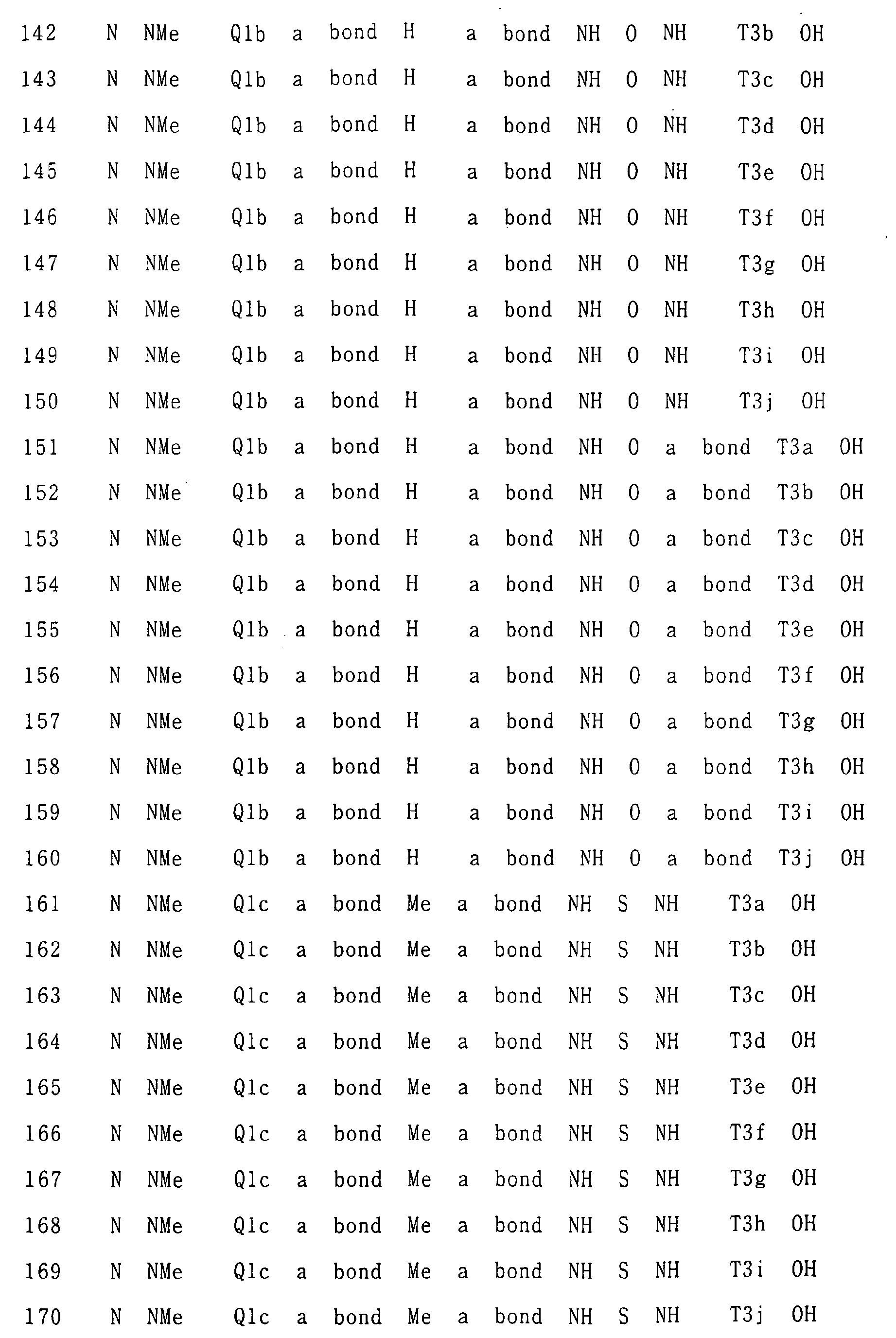


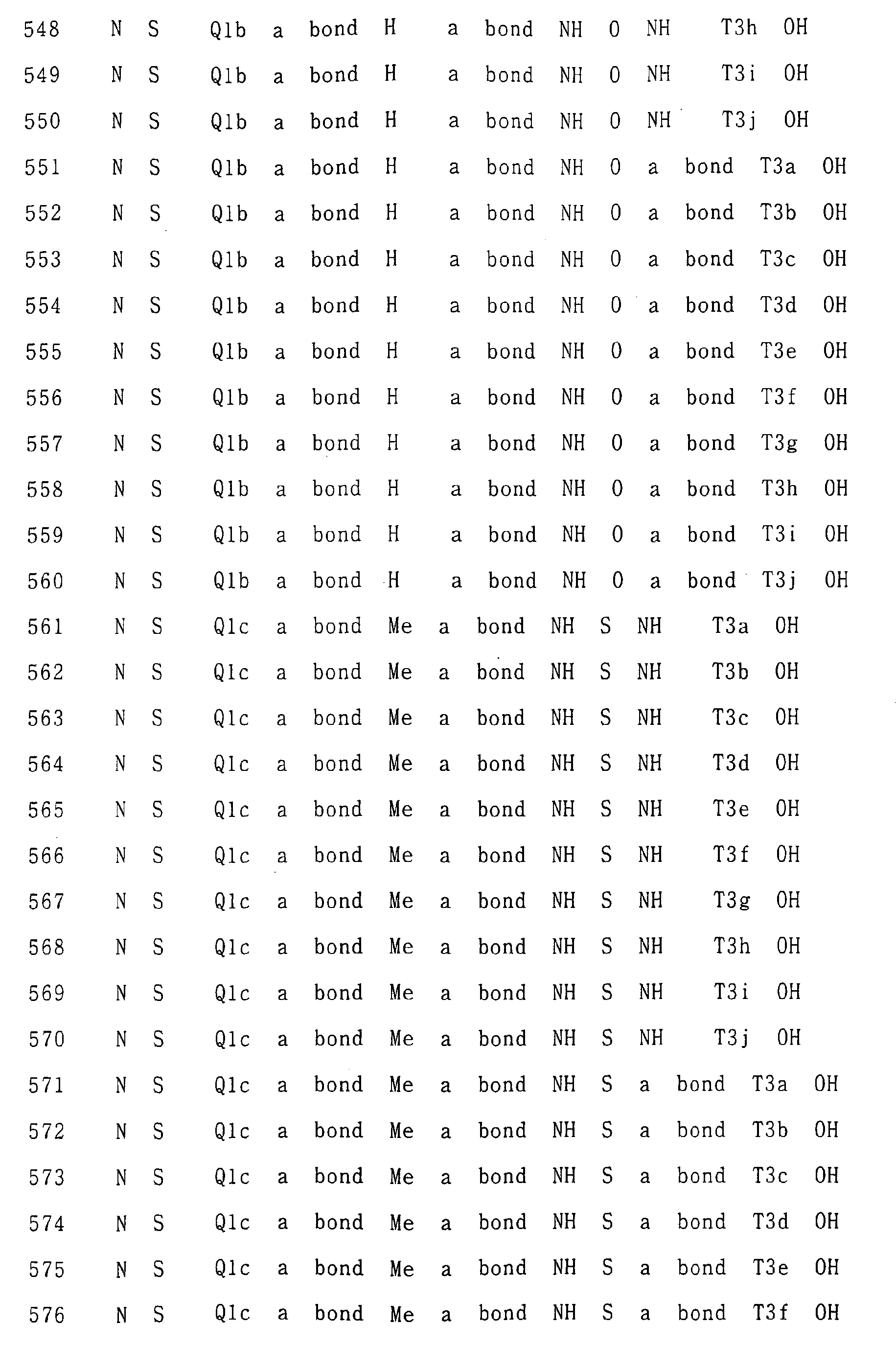


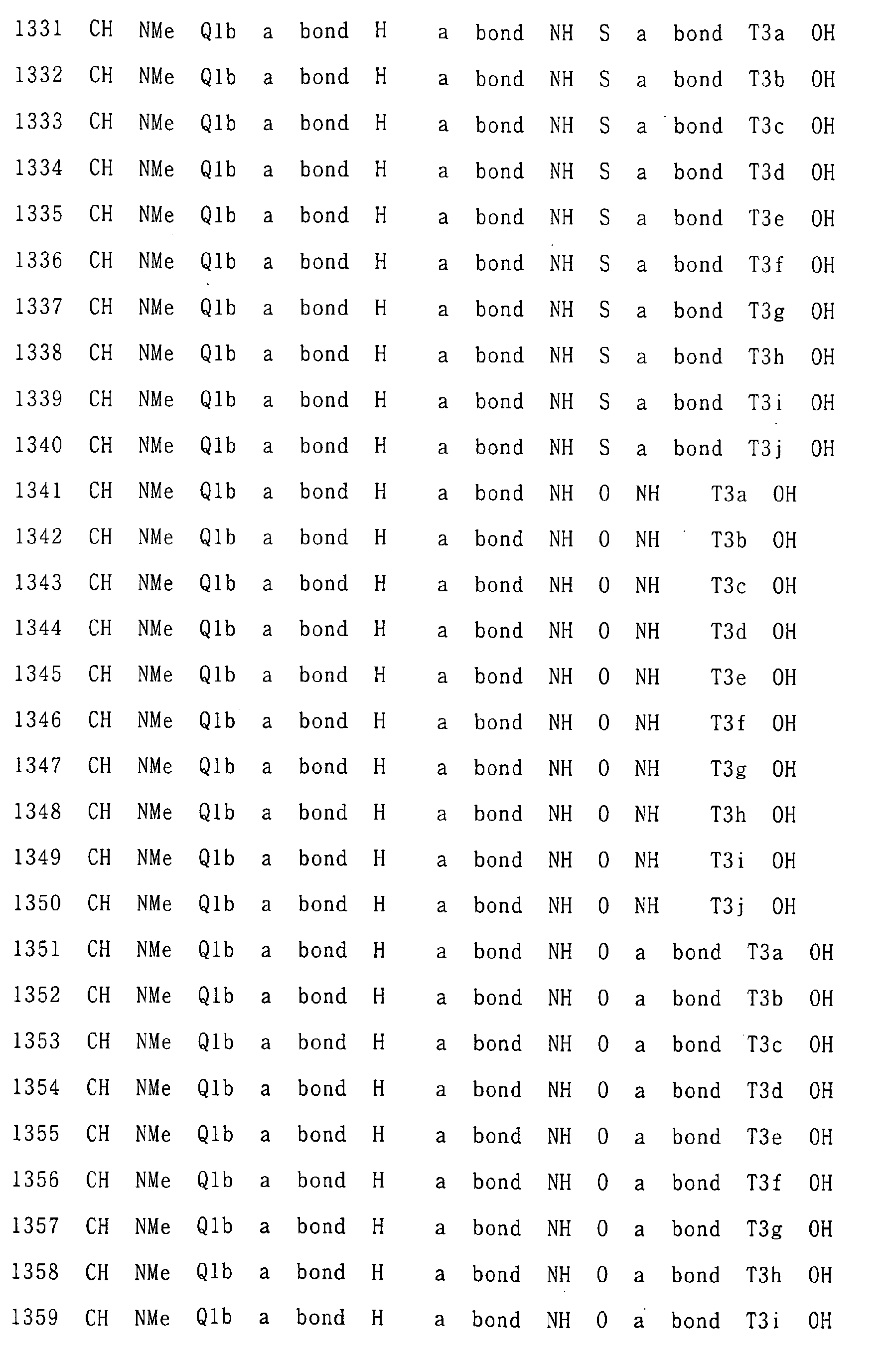


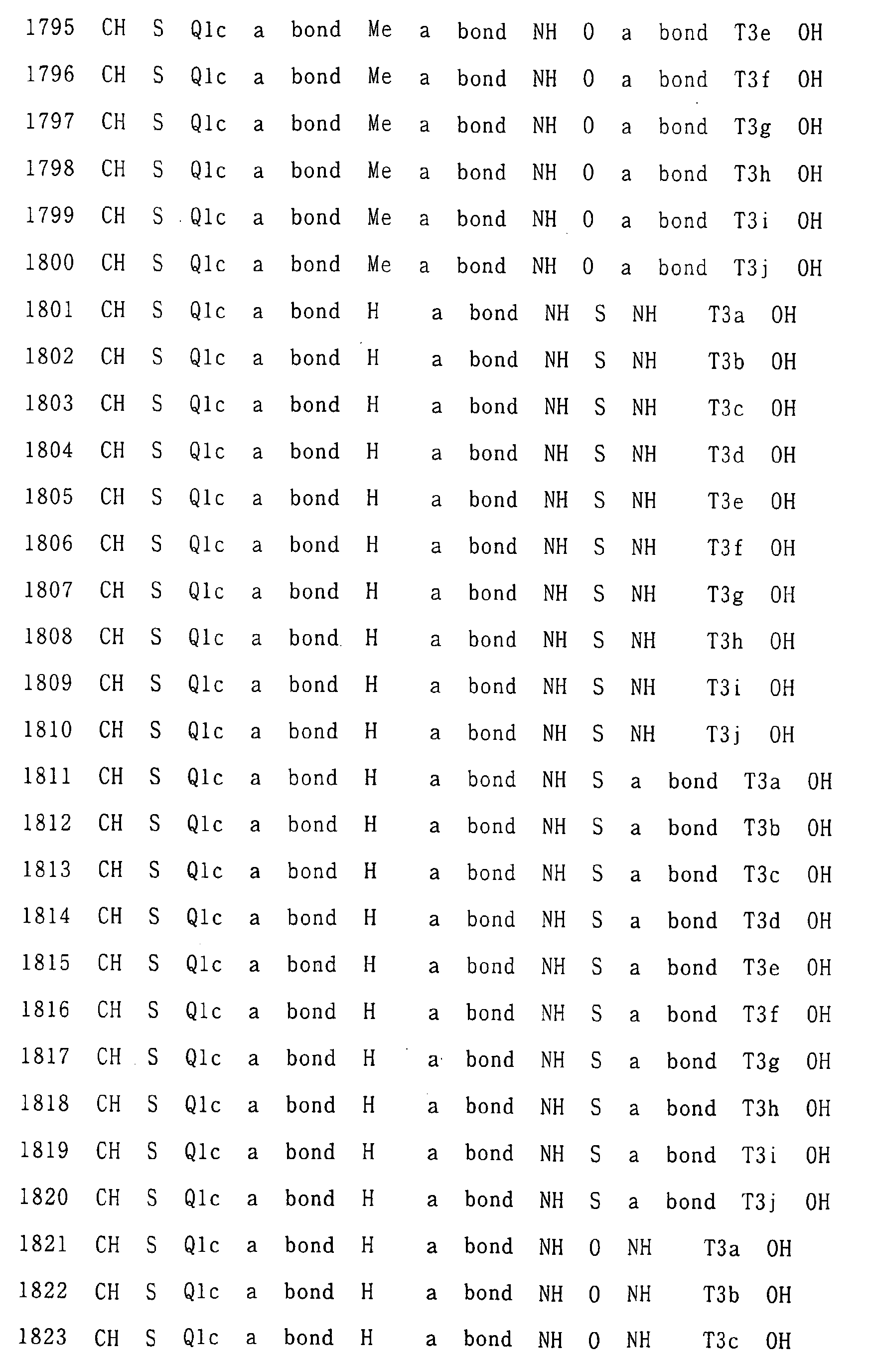


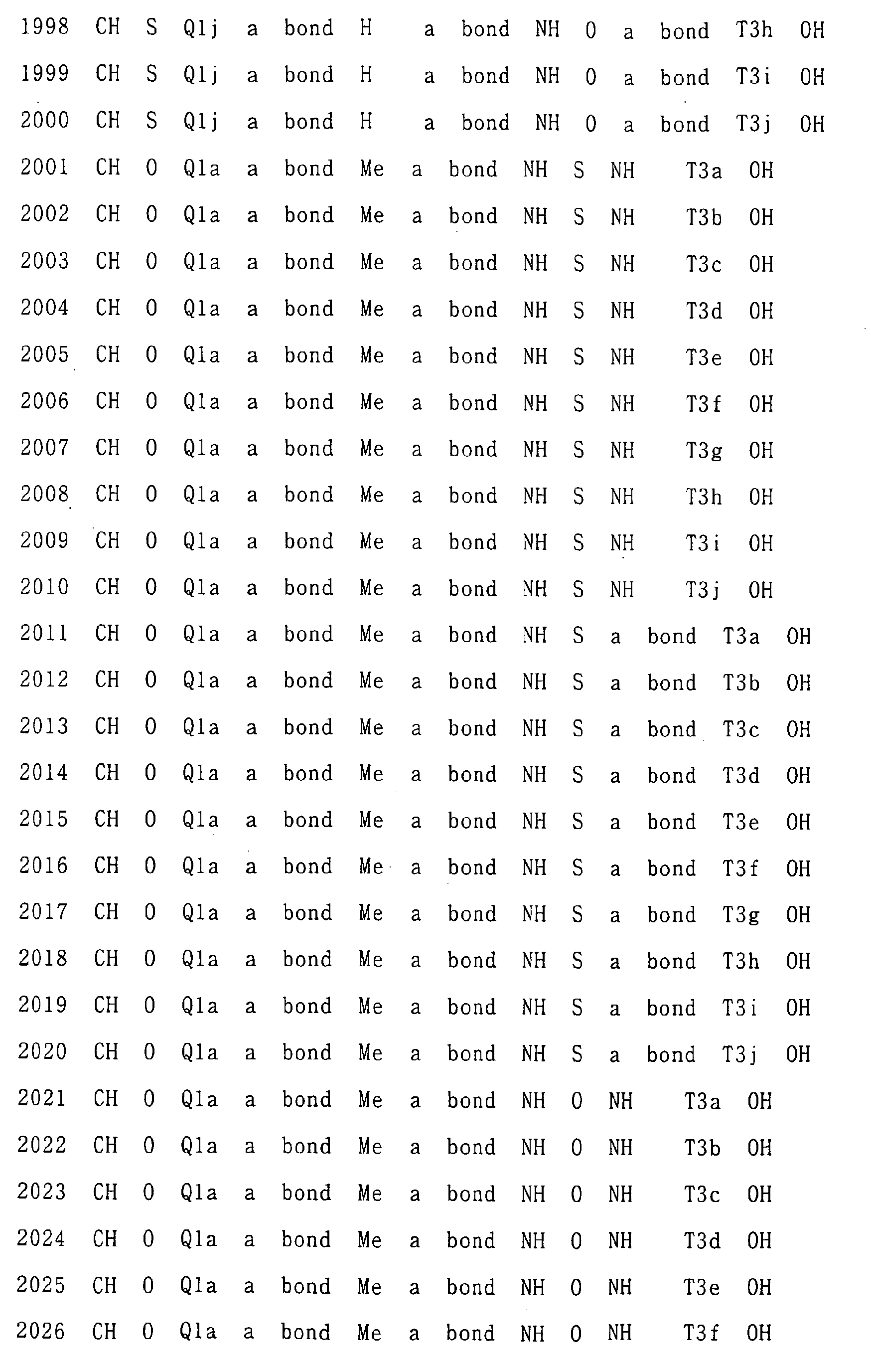


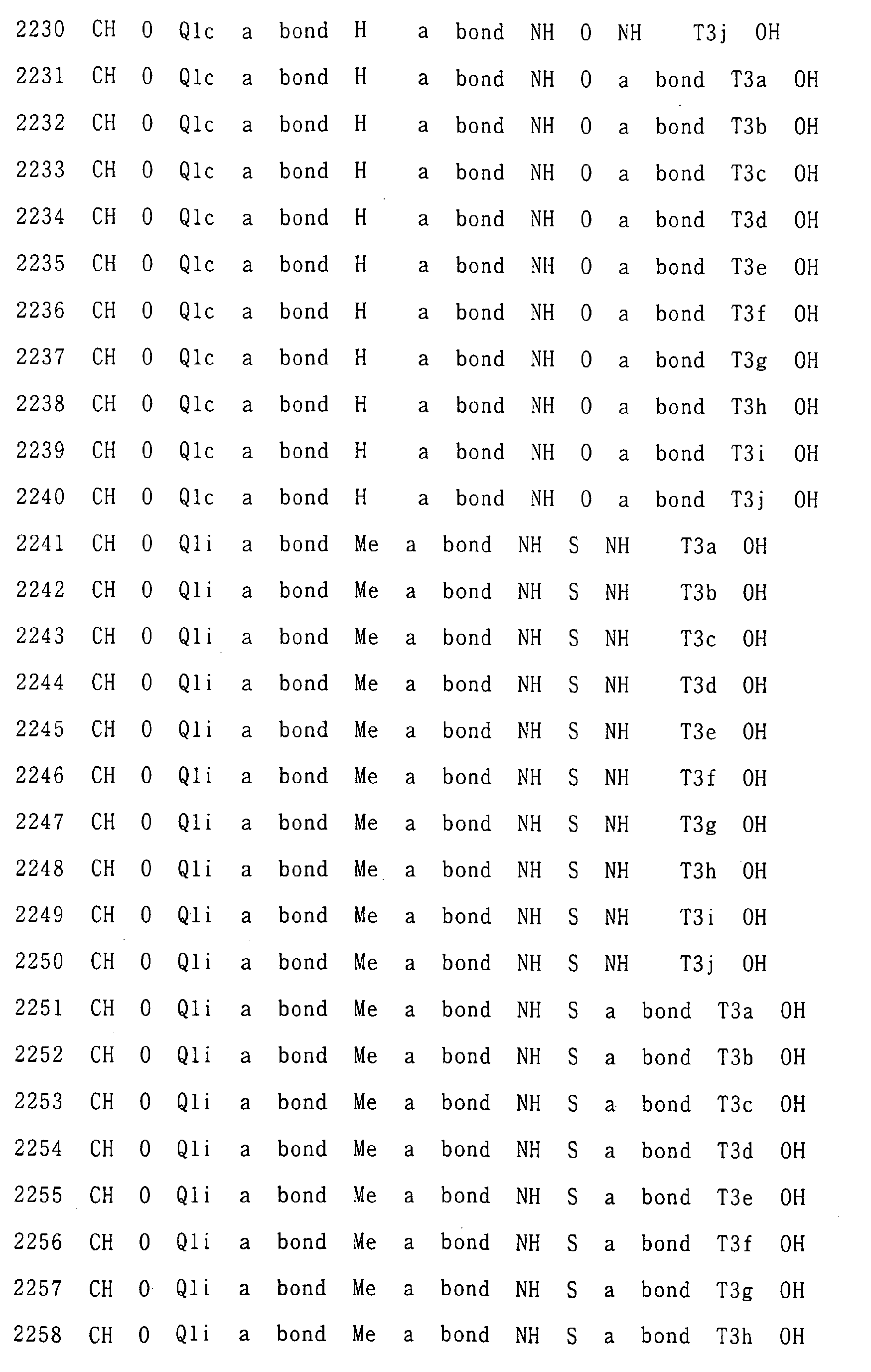


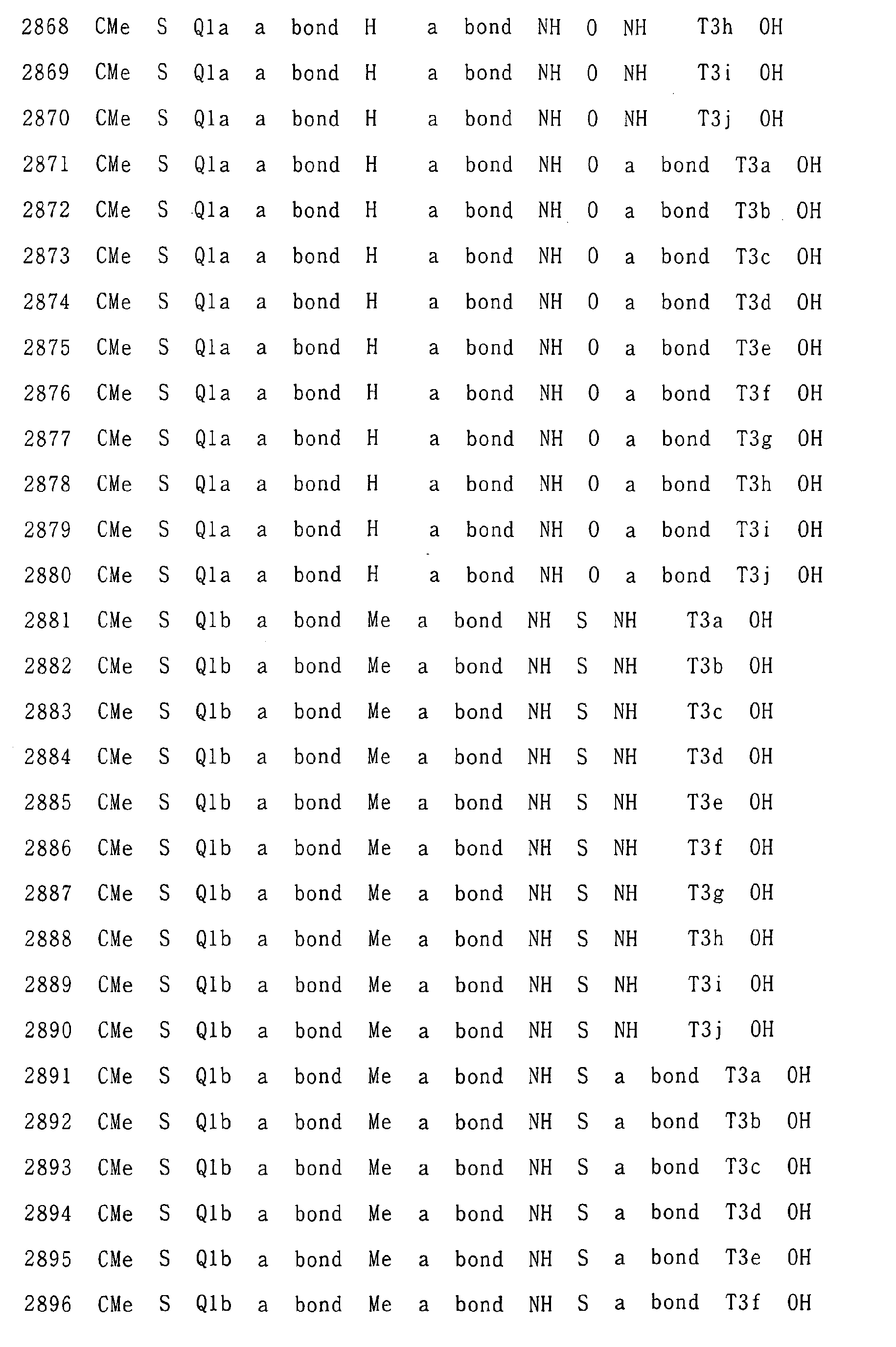


- 64) The compounds wherein A, B, R1, L1, R2, L2, L3, Y, L4, R3 and X are any of the above combinations in Table 1, tautomers, prodrugs or pharmaceutically acceptable salts of the compounds or solvates thereof (provided that in the case of 64), Q1a, Q1b, Q1c, Q1i, Q1j, T3a, T3b, T3c, T3d, T3e, Q3e, T3f, T3g, T3h, T3i and T3j in Table 1 denote the following substituents).


- 65) The compounds wherein A, B, R1, L1, R2, L3 Y, L4, R3 and X are any of the above combinations in Table 1, tautomers, prodrugs or pharmaceutically acceptable salts of the compounds or solvates thereof (provided that in the case of 65), Q1a, Q1b, Q1c, Q1i, Q1j, T3a, T3b, T3c, T3d, T3e, Q3e, T3f, T3g, T3h, T3i and T3j in Table 1 denote the following substituents).




- 66) The compounds wherein A, B, R1, L1, R2, L2, L3, Y, L4, R3 and X are any of the above combinations in Table 1, tautomers, prodrugs or pharmaceutically acceptable salts of the compounds or solvates thereof (provided that in the case of 66), Q1a, Q1b, Q1c, Q1i, Q1j, T3a, T3b, T3c, T3d, T3e, Q3e, T3f, T3g, T3h, T3i and T3j in Table 1 denote the following substituents).


- 67) The compounds wherein A, B, R1, L1, R2, L2, L3, Y, L4, R3 and X are any of the above combinations in Table 1, tautomers, prodrugs or pharmaceutically acceptable salts of the compounds or solvates thereof (provided that in the case of 67), Q1a, Q1b, Q1c, Q1i, Q1j, T3a, T3b, T3c, T3d, T3e, Q3e, T3f, T3g, T3h, T3i and T3j in Table 1 denote the following substituents).


- 68) The compounds wherein A, B, R1, L1, R2, L2, L3, Y, L4, R3 and X are any of the above combinations in Table 1, tautomers, prodrugs or pharmaceutically acceptable salts of the compounds or solvates thereof (provided that in the case of 68), Q1a, Q1b, Q1c, Q1i, Q1j, T3a, T3b, T3c, T3d, T3e, Q3e, T3f, T3g, T3h, T3i and T3j in Table 1 denote the following substituents).


- 69) The compounds wherein A, B, R1, L1, R2, L2, L3, Y, L4, R3 and X are any of the above combinations in Table 1, tautomers, prodrugs or pharmaceutically acceptable salts of the compounds or solvates thereof (provided that in the case of 69), Q1a, Q1b, Q1c, Q1i, Q1j, T3a, T3b, T3c, T3d, T3e, Q3e, T3f, T3g, T3h, T3i and T3j in Table 1 denote the following substituents).


- 70) The compounds wherein A, B, R1, L1, R2, L2, L3, Y, L4, R3 and X are any of the above combinations in Table 1, tautomers, prodrugs or pharmaceutically acceptable salts of the compounds or solvates thereof (provided that in the case of 70), Q1a, Q1b, Q1c, Q1i, Q1j, T3a, T3b, T3c, T3d, T3e, Q3e, T3f, T3g, T3h, T3i and T3j in Table 1 denote the following substituents).


- 71) The compounds wherein A, B, R1, L1, R2, L2, L3, Y, L4, R3 and X are any of the above combinations in Table 1, tautomers, prodrugs or pharmaceutically acceptable salts of the compounds or solvates thereof (provided that in the case of 71), Q1a, Q1b, Q1c, Q1i, Q1j, T3a, T3b, T3c, T3d, T3e, Q3e, T3f, T3g, T3h, T3i and T3j in Table 1 denote the following substituents).




- 72) The compounds wherein A, B, R1, L1, R2, L2, L3, Y, L4, R3 and X are any of the following combinations in Table 2, tautomers, prodrugs or pharmaceutically acceptable salts of the compounds or solvates thereof. The symbols in Table 2 denote the flowing substituents.


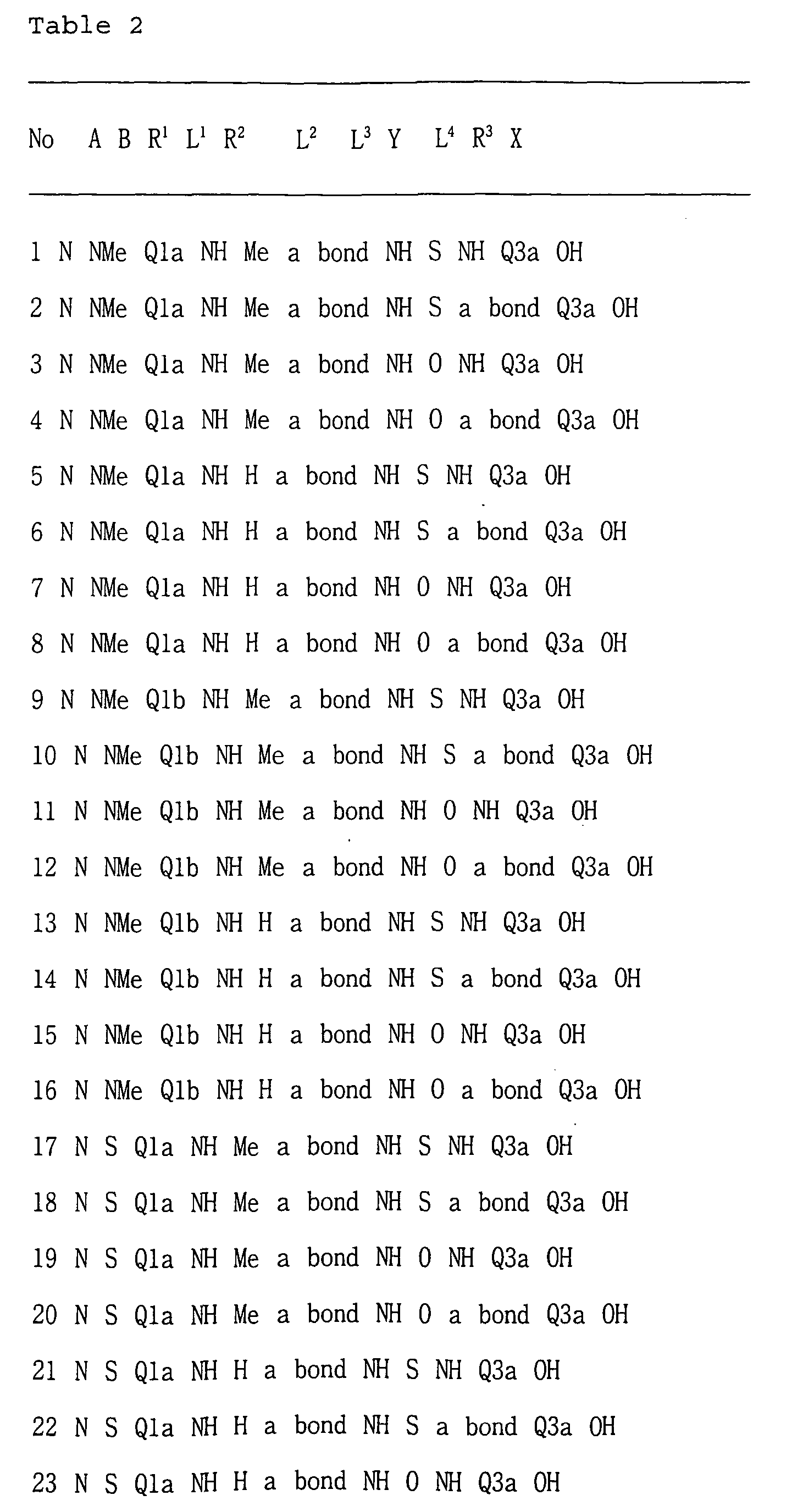

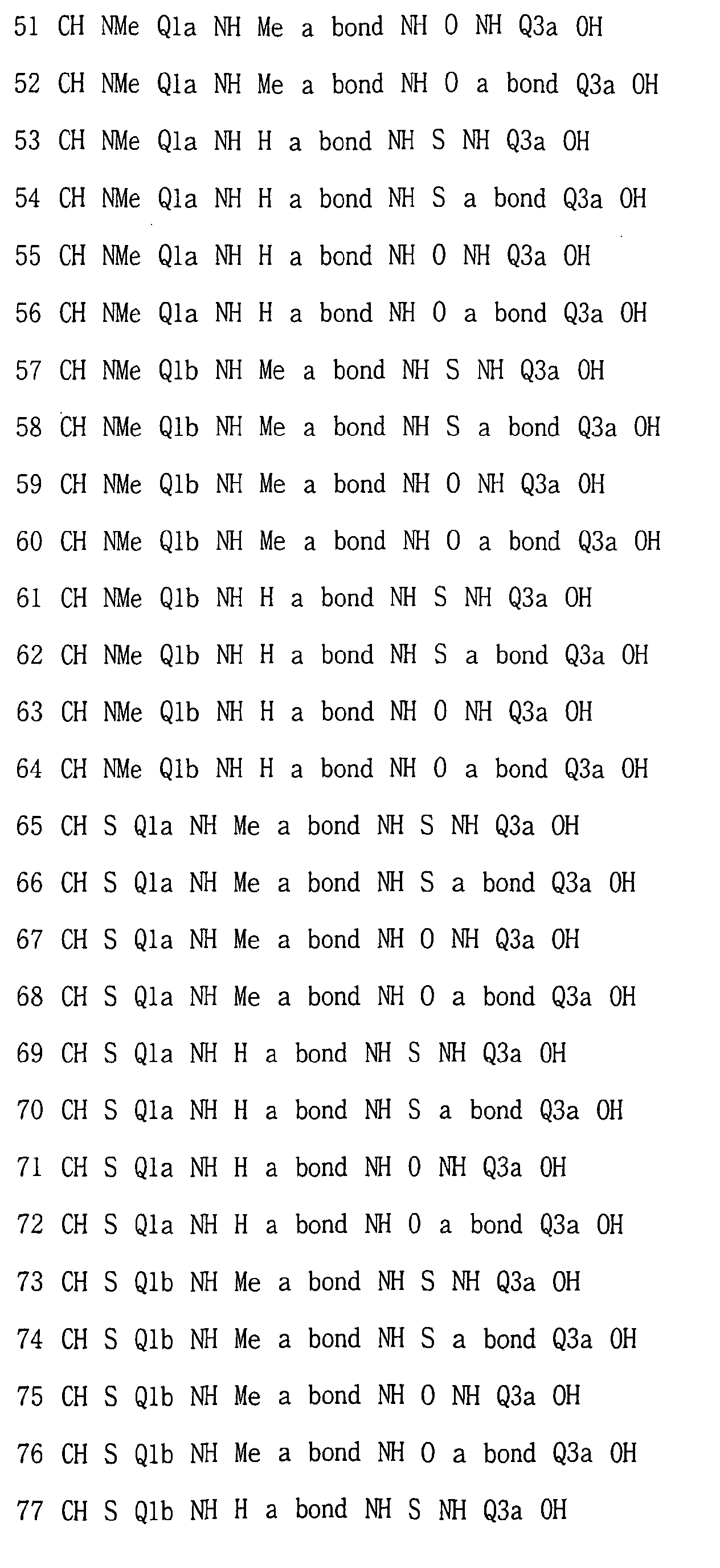


- 73) The compounds wherein A, B, R1, L1, R2, L2, L3, Y, L4, R3 and X are any of the above combinations in Table 2, tautomers, prodrugs or pharmaceutically acceptable salts of the compounds or solvates thereof (provided that in the case of 73), Q1a, Q1b and Q3a in Table 2 denote the following substituents).


- 74) The compounds wherein A, B, R1, L1, R2, L2, L3, Y, L 4 R3 and X are any of the above combinations in Table 1, tautomers, prodrugs or pharmaceutically acceptable salts of the compounds or solvates thereof (provided that in the case of 74), Q1a, Q1b, Q1c, Q1i, Q1j, T3a, T3b, T3c, T3d, T3e, Q3e, T3f, T3g, T3h, T3i and T3j in Table 1 denote the following substituents).


- 75) The compounds wherein A, B, R1, L1, R2, L2, L3, Y, L4, R3 and X are any of the above combinations in Table 1, tautomers, prodrugs or pharmaceutically acceptable salts of the compounds or solvates thereof (provided that in the case of 75), Q1a, Q1b, Q1c, Q1i, Q1j, T3a, T3b, T3c, T3d, T3e, Q3e, T3f, T3g, T3h, T3i and T3j in Table 1 denote the following substituents).


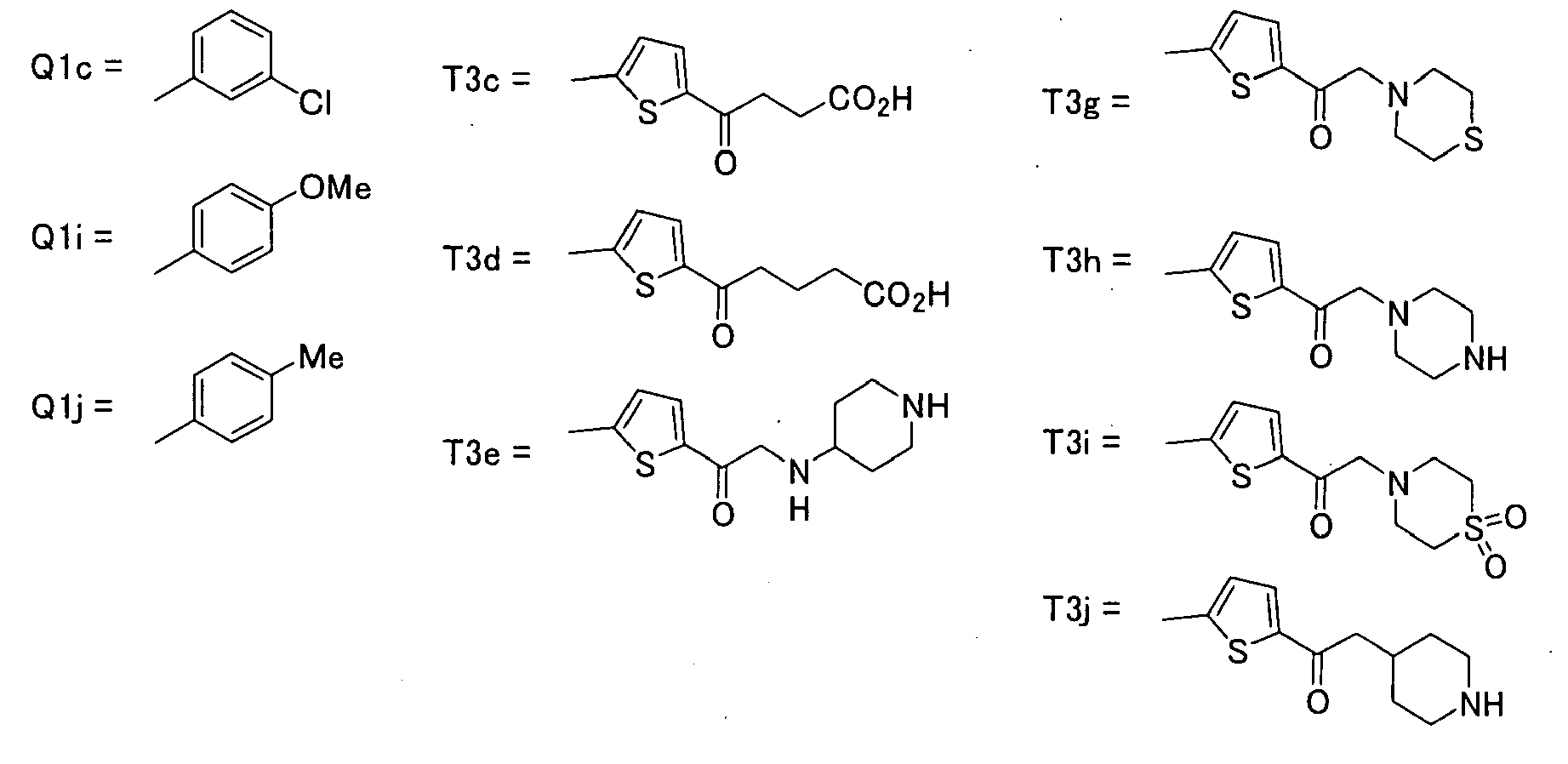
- 76) The compounds wherein A, B, R1, L1, R2, L2, L3, Y, L4, R3 and X are any of the above combinations in Table 1, tautomers, prodrugs or pharmaceutically acceptable salts of the compounds or solvates thereof (provided that in the case of 76), Q1a, Q1b, Q1c, Q1i, Q1j, T3a, T3b, T3c, T3d, T3e, Q3e, T3f, T3g, T3h, T3i and T3j in Table 1 denote the following substituents).


- 77) The compounds wherein A, B, R1, L1, R2, L2, L3, Y, L4, R3 and X are any of the above combinations in Table 1, tautomers, prodrugs or pharmaceutically acceptable salts of the compounds or solvates thereof (provided that in the case of 77), Q1a, Q1b, Q1c, Q1i, Q1j, T3a, T3b, T3c, T3d, T3e, Q3e, T3f, T3g, T3h, T3i and T3j in Table denote the following substituents).
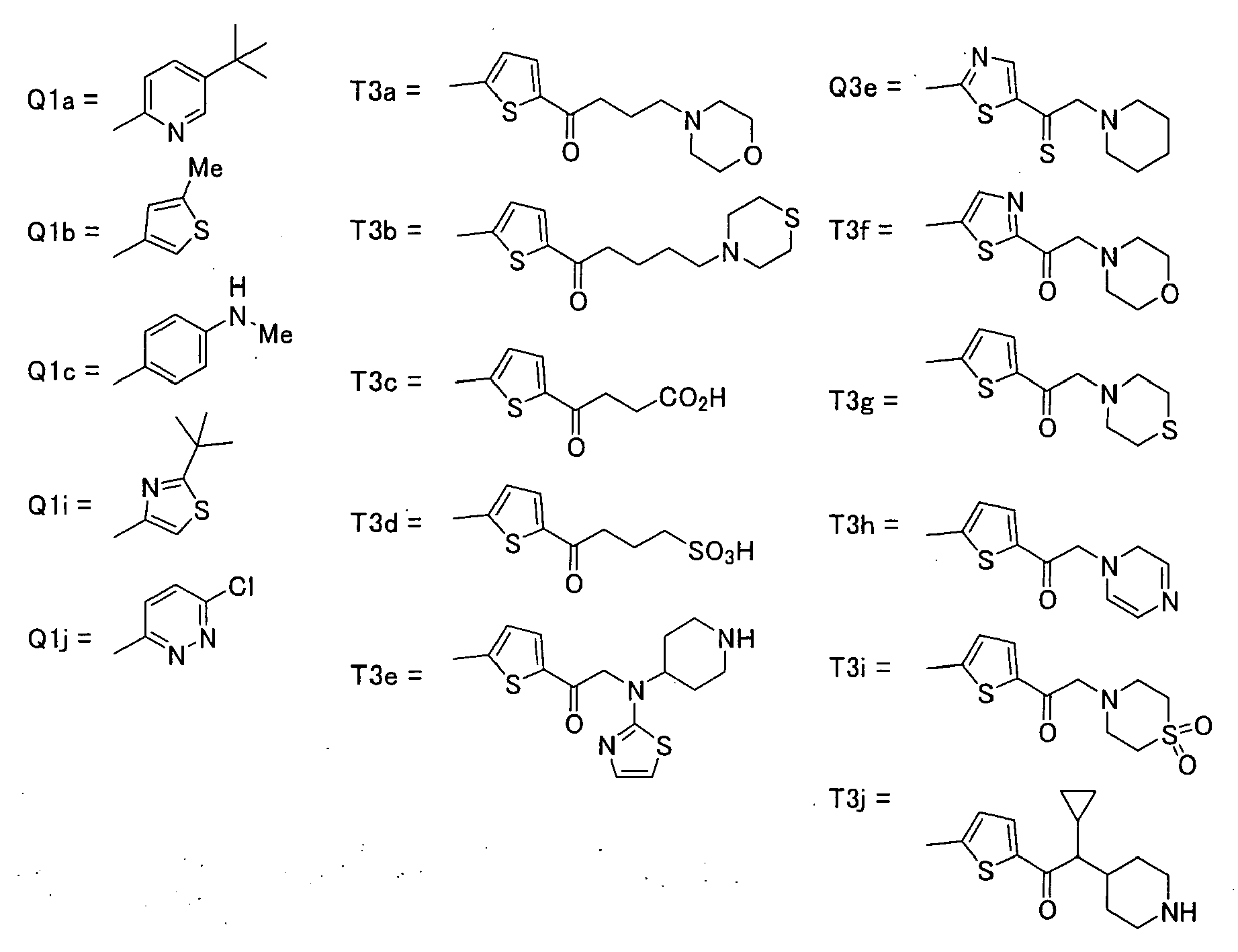
- 78) The compounds wherein A, B, R1, L1, R2, L2, L3, Y, L4, R3 and X are any of the above combinations in Table 1, tautomers, prodrugs or pharmaceutically acceptable salts of the compounds or solvates thereof (provided that in the case of 78), Q1a, Q1b, Q1c, Q1i, Q1j, T3a, T3b, T3c, T3d, T3e, Q3e, T3f, T3g, T3h, T3i and T3j in Table 1 denote the following substituents).


- 79) The compounds wherein A, B, R1, L1, R2, L2 , L3, Y, L4, R3 and X are any of the above combinations in Table 1, tautomers, prodrugs or pharmaceutically acceptable salts of the compounds or solvates thereof (provided that in the case of 79), Q1a, Q1b, Q1c, Q1i, Q1j, T3a, T3b, T3c, T3d, T3e, Q3e, T3f, T3g, T3h, T3i and T3j in Table 1 denote the following substituents).


- 80) The compounds wherein A, B, R1, L1, R2, L2, L3, Y, L4, R3 and X are any of the above combinations in Table 1, tautomers, prodrugs or pharmaceutically acceptable salts of the compounds or solvates thereof (provided that in the case of 80), Q1a, Q1b, Q1c, Q1i, Q1j, T3a, T3b, T3c, T3d, T3e, Q3e, T3f, T3g, T3h, T3i and T3j in Table 1 denote the following substituents).


- 81) The compounds wherein A, B, R1, L1, R2, L2, L3, Y, L4, R3 and X are any of the above combinations in Table 1, tautomers, prodrugs or pharmaceutically acceptable salts of the compounds or solvates thereof (provided that in the case of 81), Q1a, Q1b, Q1c, Q1i, Q1j, T3a, T3b, T3c, T3d, T3e, Q3e, T3f, T3g, T3h, T3i and T3j in Table 1 denote the following substituents).

- 82) The compounds wherein A, B, R1, L1, R2, L2, L3, Y, L4, R3 and X are any of the above combinations in Table 1, tautomers, prodrugs or pharmaceutically acceptable salts of the compounds or solvates thereof (provided that in the case of 82), Q1a, Q1b, Q1c, Q1i, Q1j, T3a, T3b, T3c, T3d, T3e, Q3e, T3f, T3g, T3h, T3i and T3j in Table 1 denote the following substituents).


- 83) The compounds wherein A, B, R1, L1, R2, L2, L3, Y, L4, R3 and X are any of the above combinations in Table 1, tautomers, prodrugs or pharmaceutically acceptable salts of the compounds or solvates thereof (provided that in the case of 83), Q1a, Q1b, Q1c, Q1i, Q1j, T3a, T3b, T3c, T3d, T3e, Q3e, T3f, T3g, T3h, T3i and T3j in Table 1 denote the following substituents).


- 84) The compounds wherein A, B, R1, L1, R2, L2, L3, Y, L4, R3 and X are any of the above combinations in Table 1, tautomers, prodrugs or pharmaceutically acceptable salts of the compounds or solvates thereof (provided that in the case of 84), Q1a, Q1b, Q1c, Q1i, Q1j, T3a, T3b, T3c, T3d, T3e, Q3e, T3f, T3g, T3h, T3i and T3j in Table 1 denote the following substituents).


- 85) The compounds wherein A, B, R1, L1, R2, L2, L3, Y, L4, R3 and X are any of the above combinations in Table 1, tautomers, prodrugs or pharmaceutically acceptable salts of the compounds or solvates thereof (provided that in the case of 85), Q1a, Q1b, Q1c, Q1i, Q1j, T3a, T3b, T3c, T3d, T3e, Q3e, T3f, T3g, T3h, T3i and T3j in Table 1 denote the following substituents).


- 86) The compounds wherein A, B, R1, L1, R2, L2, L3, Y, L4, R3 and X are any of the above combinations in Table 1, tautomers, prodrugs or pharmaceutically acceptable salts of the compounds or solvates thereof (provided that in the case of 86), Q1a, Q1b, Q1c, Q1i, Q1j, T3a, T3b, T3c, T3d, T3e, Q3e, T3f, T3g, T3h, T3i and T3j in Table 1 denote the following substituents).

- 87) The compounds wherein A, B, R1, L1, R2, L2, L3, Y, L4, R3 and X are any of the above combinations in Table 1, tautomers, prodrugs or pharmaceutically acceptable salts of the compounds or solvates thereof (provided that in the case of 87), Q1a, Q1b, Q1c, Q1i, Q1j, T3a, T3b, T3c, T3d, T3e, Q3e, T3f, T3g, T3h, T3i and T3j in Table 1 denote the following substituents).
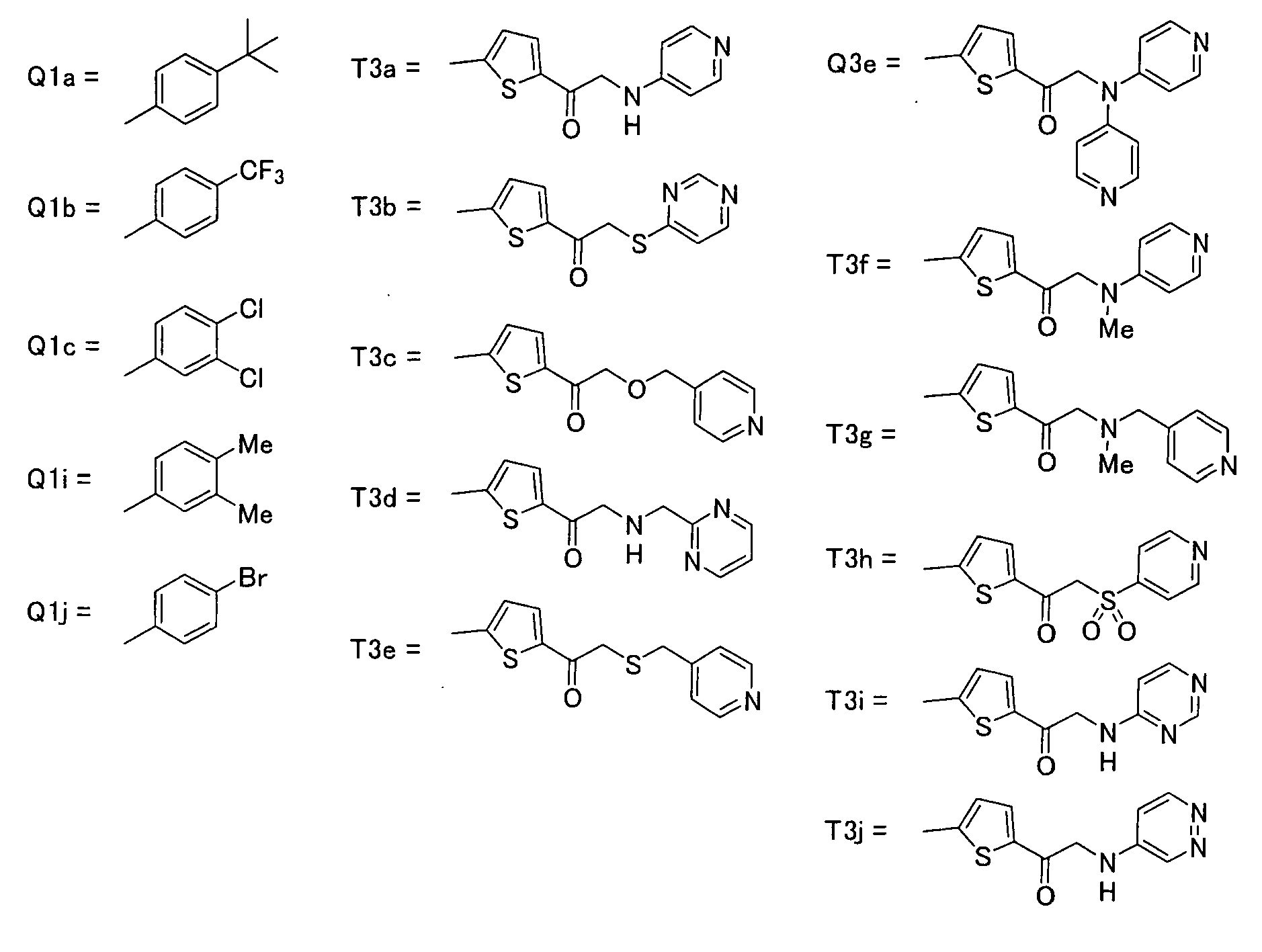
- 88) The compounds wherein A, B, R1, L1, R2, L2, L3, Y, L4, R3 and X are any of the above combinations in Table 1, tautomers, prodrugs or pharmaceutically acceptable salts of the compounds or solvates thereof (provided that in the case of 88), Q1a, Q1b, Q1c, Q1i, Q1j, T3a, T3b, T3c, T3d, T3e, Q3e, T3f, T3g, T3h, T3i and T3j in Table 1 denote the following substituents).


- 89) The compounds wherein A, B, R1, L1, R2, L2, L3, Y, L4, R3 and X are any of the above combinations in Table 1, tautomers, prodrugs or pharmaceutically acceptable salts of the compounds or solvates thereof (provided that in the case of 89), Q1a, Q1b, Q1c, Q1i, Q1j, T3a, T3b, T3c, T3d, T3e, Q3e, T3f, T3g, T3h, T3i and T3j in Table 1 denote the following substituents).

- 90) The compounds wherein A, B, R1, L1, R2, L2, L3, Y, L4, R3 and X are any of the above combinations in Table 1, tautomers, prodrugs or pharmaceutically acceptable salts of the compounds or solvates thereof (provided that in the case of 90), Q1a, Q1b, Q1c, Q1i, Q1j, T3a, T3b, T3c, T3d, T3e, Q3e, T3f, T3g, T3h, T3i and T3j in Table 1 denote the following substituents).


- 91) The compounds represented by any of 63) to 90), wherein X is converted to NH2, tautomers, prodrugs or pharmaceutically acceptable salts of the compounds or solvates thereof.
- 92) The compounds represented by any of 63) to 90), wherein X is converted to SH, tautomers, prodrugs or pharmaceutically acceptable salts of the compounds or solvates thereof.
- 93) The compounds represented by any of 63) to 90), wherein X is converted to OAc, tautomers, prodrugs or pharmaceutically acceptable salts of the compounds or solvates thereof.
- 94) The thrombopoietin receptor activators represented by any of 1) to 93).
- 95) Preventive, therapeutic and improving agents for diseases against which activation of the thrombopoietin receptor is effective, which contain the thrombopoietin receptor activators represented by 94) or the formula (1), tautomers, prodrugs or pharmaceutically acceptable salts of the activators or solvates thereof, as an active ingredient.
- 96) Platelet increasing agents containing the thrombopoietin receptor activators represented by 94) or the formula (1), tautomers, prodrugs or pharmaceutically acceptable salts of the activators or solvates thereof, as an active ingredient.
- 97) Medicaments containing the compounds represented by any of 1) to 93) or the formula (1), tautomers, prodrugs or pharmaceutically acceptable salts of the compounds or solvates thereof, as an active ingredient.
- In the present invention, the compounds of the present invention represented by the formula (1) may be present in the form of tautomers or geometrical isomers which undergo endocyclic or exocyclic isomerization, mixtures of tautomers or geometric isomers or mixtures of thereof. When the compounds of the present invention have an asymmetric center, whether or not resulting from an isomerization, the compounds of the present invention may be in the form of resolved optical isomers or in the form of mixtures containing them in certain ratios.
- For example, furan compounds, thiophene compounds and pyrrole compounds of the present invention may be present in the form of tetronic acid (4-hydroxy-2(5H)-furanone) analogues, thiotetronic acid (4-hydroxy-2(5H)-thiophenone) analogues and tetraminic acid (4-hydroxy-3-pyrrolin-2-one) analogues as shown below by the formulae (2), (3) and (4), mixtures thereof or mixtures of isomers thereof.


- The compounds of the present invention represented by the formula (1) or pharmaceutically acceptable salts thereof may be in the form of arbitrary crystals or arbitrary hydrates, depending on the production conditions. The present invention covers these crystals, hydrates and mixtures. They may be in the form of solvates with organic solvents such as acetone, ethanol and tetrahydrofuran, and the present invention covers any of these forms.
- The compounds of the present invention represented by the formula (1) may be converted to pharmaceutically acceptable salts or may be liberated from the resulting salts, if necessary. The pharmaceutically acceptable salts of the present invention may be, for example, salts with alkali metals (such as lithium, sodium and potassium), alkaline earth metals (such as magnesium and calcium), ammonium, organic bases and amino acids. They may be salts with inorganic acids (such as hydrochloric acid, hydrobromic acid, phosphoric acid and sulfuric acid) and organic acids (such as acetic acid, citric acid, maleic acid, fumaric acid, benzenesulfonic acid and p-toluenesulfonic acid).
- The compounds which serve as prodrugs are derivatives of the present invention having chemically or metabolically degradable groups which give pharmacologically active compounds of the present invention upon solvolysis or under physiological conditions in vivo. Methods for selecting or producing appropriate prodrugs are disclosed, for example, in Design of Prodrug (Elsevier, Amsterdam 1985). In the present invention, when the compound has a hydroxyl group, acyloxy derivatives obtained by reacting the compound with appropriate acyl halides or appropriate acid anhydrides may, for example, be mentioned as prodrugs. Acyloxys particularly preferred as prodrugs include -OCOC2H5, -OCO(t-Bu), -OCOC15H31, -OCO(m-CO2Na-Ph), -OCOCH2CH2CO2Na, -OCOCH(NH2)CH3, -OCOCH2N(CH3)2 and the like. When the compound of the present invention has an amino group, amide derivatives obtained by reacting the compound having an amino group with appropriate acid halides or appropriate mixed acid anhydrides may, for example, be mentioned as prodrugs. Amides particularly preferred as prodrugs include -NHCO(CH2)20OCH3, -NHCOCH(NH2)CH3 and the like. When the compound of the present invention has a carboxyl group, carboxylic acid esters with aliphatic alcohols or carboxylic acid esters obtained by the reaction with an alcoholic free hydroxyl group of 1,2- or 1,3-digylcerides may, for example, be mentioned as prodrugs. Particularly preferred prodrugs are methyl esters and ethyl esters.
- The preventive, therapeutic and improving agents for diseases against which activation of the thrombopoietin receptor is effective or platelet increasing agents which contain the thrombopoietin receptor activators of the present invention, tautomers, prodrugs or pharmaceutically acceptable salts of the activators or solvates thereof as an active ingredient may usually be administered as oral medicines such as tablets, capsules, powder, granules, pills and syrup, as rectal medicines, percutaneous medicines or injections. The agents of the present invention may be administered as a single therapeutic agent or as a mixture with other therapeutic agents. Though they may be administered as they are, they are usually administered in the form of medical compositions. These pharmaceutical preparations can be obtained by adding pharmacologically and pharmaceutically acceptable additives by conventional methods. Namely, for oral medicines, ordinary excipients, lubricants, binders, disintegrants, humectants, plasticizers and coating agents may be used. Oral liquid preparations may be in the form of aqueous or oily suspensions, solutions, emulsions, syrups or elixirs or may be supplied as dry syrups to be mixed with water or other appropriate solvents before use. Such liquid preparations may contain ordinary additives such as suspending agents, perfumes, diluents and emulsifiers. In the case of rectal administration, they may be administered as suppositories. Suppositories may use an appropriate substance such as cacao butter, laurin tallow, Macrogol, glycerogelatin, Witepsol, sodium stearate and mixtures thereof as the base and may, if necessary, contain an emulsifier, a suspending agent, a preservative and the like. For injections, pharmaceutical ingredients such as distilled water for injection, physiological saline, 5% glucose solution, propylene glycol and other solvents or solubilizing agents, a pH regulator, an isotonizing agent and a stabilizer may be used to form aqueous dosage forms or dosage forms which need dissolution before use.
- The dose of the agents of the present invention for administration to human is usually about from 0.1 to 1000 mg/human/day in the case of oral drugs or rectal administration and about from 0.05 mg to 500 mg/human/day in the case of injections into an adult, though it depends on the age and conditions of the patient. The above-mentioned ranges are mere examples, and the dose should be determined from the conditions of the patient.
- The present invention is used when the use of compounds which have thrombopoietin receptor affinity and act as thrombopoietin receptor agonists are expected to improve pathological conditions. For example, hematological disorders accompanied by abnormal platelet count may be mentioned. Specifically, it is effective for therapy or prevention of human and mammalian diseases caused by abnormal megakaryopoiesis, especially those accompanied by thrombocytopenia. Examples of such diseases include thrombocytopenia accompanying chemotherapy or radiotherapy of cancer, thrombocytopenia accompanying antiviral therapy for diseases such as hepatitis C, thrombocytopenia caused by bone marrow transplantation, surgery and serious infections, or gastrointestinal bleeding, but such diseases are not restricted to those mentioned. Typical thrombocytopenias such as aplastic anemia, idiopathic thrombocytopenic purpura, myelodysplastic syndrome, hepatic disease, HIV infection and thrombopoietin deficiency are also targets of the agents of the present invention. The present invention may be used as a peripheral stem cell mobilizer, a megakaryoblastic or megakaryocytic leukemia cell differentiation inducer and a platelet increasing agent for platelet donors. In addition, potential applications include therapeutic angiogenesis based on differentiation and proliferation of vascular endothelial cells and endothelial progenitor cells, prevention and therapy of arteriosclerosis, myocardial infarction, unstable angina, peripheral artery occlusive disease, but there is no restriction.
- The compounds represented by the formula (1) are prepared by the process represented by the formula (5) illustrated below.

- The reaction of the compound (I) with a -NH2 compound (II) in a solvent, if necessary in the presence of a catalyst, under heating with stirring gives a desired compound or its precursor. The precursor may be, if necessary, hydrolyzed, deprotected, reduced or oxidized to a desired compound. The compounds of the present invention usually can be purified by column chromatography, thin layer chromatography, high performance liquid chromatography (HPLC) or high performance liquid chromatography-mass spectrometry (LCMS) and, if necessary, they may be obtained with high purity by recrystallization or washing with solvents.
- For the syntheses of the intermediates (I), syntheses of the following heterocyclic compounds may be referred to.
- 1) Pyrazole (the formula (6))
J. Chem. Soc. Perkin. TransI, p.81, (1985) - 2) Isothiazole (the formula (7))
Liebigs. Annalen. der. Chemie., 10, 1534-1546 (1979) - 3) Isoxazole (the formula (8))
Synthesis, 10, 664-665 (1975) - 4) Thiophene (the formula (9))
JP-A-48-026755 - 5) Furan (the formula (10))
J. Org. Chem., 21, 1492-1509 (1956) andEP1253146 - 6) Pyrrole (the formula (11))
J. Heterocyclic Chem., 30, 1253 (1993) and Tetrahedron, 50(26), 7849-56 (1994) - 7) Tetronic acid (4-hydroxy-2(5H)-furanone) analogue (the formula (12))
Synthesis, 7, 564-566 (1988) and Yakugaku Zasshi, 96(4), 536-543 (1976) - 8) Tetraminic acid (4-hydroxy-3-pyrrolin-2-one) analogue (the formula (13))
Synthesis, 2, 190-192 (1987) and Agric. Biol. Chem., 43(8), 1641-1646 (1979)


- For synthesis of the -NH2 compounds (II), for example, when L3 = NH, the following may be referred to.
- 1) L4 = a bond, Y = O
Synthetic Commun., 28(7), 1223-1231 (1998), J. Chem. Soc., 1225 (1948) and J. Chem. Soc., 2831 (1952) - 2) L4 = NH, Y = O
J. Am. Chem. Soc., 46, 2813 (1924) and J. Chem. Soc., 2654 (1952) - 3) L4 = NH, Y = S
Can. J. Chem., 35, 834 (1957) - 4) L4 = CH2, Y = 0
J. Org. Chem., 30, 2487 (1965) - 5) L4 = O, Y = O
Bull. Soc. Chim. Belg., 68, 409, (1959) - The compounds represented by the formula (1) wherein L3 is NR19, L4 is NH, and Y is O or S are prepared by the process represented by the formula (14) illustrated below.

- The compounds represented by the formula (1) wherein L3 is NR19, L4 is a bond, and Y is O or S are prepared by the process represented by the formula (15) illustrated below.

- The reaction of the compound (I) with a NH2 compound (IV) in a solvent, if necessary in the presence of a condensation agent or a catalyst, under heating with stirring gives the compound (III) as the desired product.

- Now, the present invention will be described in further detail with reference to Reference Synthetic Examples, Synthetic Examples, Assay Examples and Formulation Examples. However, it should be understood that the present invention is by no means restricted by these specific Examples.
- The 1H-NMR analysis was carried out at 300 MHz, and the 13C-NMR analysis was carried out at 75 MHz. LC/MS was measured under the following conditions.
-
- Column:
- Waters SunFire C18 (3.5 µm, 4.6x30 mm)
- Eluent:
- acetonitrile/0.1% aqueous formic acid (10/90 → 30/70)
-
- Column:
- Waters SunFire C18 (3.5 µm, 4.6x30 mm)
- Eluent:
- acetonitrile/0.1% aqueous formic acid (10/90 → 60/40)
-
- Column:
- Waters SunFire C18 (3.5 µm, 4.6x30 mm)
- Eluent:
- acetonitrile/0.1% aqueous formic acid (10/90 → 85/15)
-
- Column:
- Waters Xterra MSC18 (5 µm, 4.6x50 mm)
- Eluent:
- acetonitrile/0.1% aqueous formic acid (10/90 → 30/70)
-
- Column:
- Waters Xterra MSC18 (5 µm, 4.6x50 mm)
- Eluent:
- acetonitrile/0.1% aqueous formic acid (10/90 → 60/40)
-
- Column:
- Waters Xterra MSC18 (5 µm, 4.6×50 mm)
- Eluent:
- acetonitrile/0.1% aqueous formic acid (10/90 → 85/15)
-
- Column:
- Waters Xterra MSC18 (5 µm, 4.6x50 mm)
- Eluent:
- acetonitrile/0.1% aqueous formic acid (20/80 → 100/0)
-
- Column:
- Waters Xterra MSC18 (3.5 µm, 2.1x20 mm)
- Eluent:
- acetonitrile/0.2% aqueous formic acid (20/80 → 90/10)
-
- Column:
- Waters SunFire C18 (3.5 µm, 4.6x30 mm)
- Eluent:
- acetonitrile/0.1% aqueous formic acid (20/80 → 100/0)
- Methyl 5-[2-(pyrrolidin-1-yl)ethylcarbamoyl]-thiophene-2-carboxylate (56 mg, 0.2 mmol) in ethanol (2.0 mL) was refluxed with heating with hydrazine monohydrate (0.10 mL) for 10 hours and allowed to cool to room temperature, and the precipitated solid was collected by filtration, washed with water and dried to give 21 mg of the desired product (yield 38%).
Morphology: white solid
LC/MS (ESI+) m/z; 297 [M+1]+
LC/MS (ESI-)m/z; 295 [M-1]- - Synthesis was carried out in the same manner as in Reference Synthetic Example 1 by using methyl 5-[(tetrahydrofuran-2-ylmethyl)carbamoyl]-thiophene-2-carboxylate to give 17 mg of the desired product (yield 32%) .
Morphology: white solid
LC/MS (ESI+)m/z; 270 [M+1]+
LC/MS (ESI-)m/z; 268 [M-1]- - Synthesis was carried out in the same manner as in Reference Synthetic Example 1 by using methyl 5-[2-(morpholin-4-yl)ethylcarbamoyl]thiophene-2-carboxylate to give 30 mg of the desired product (yield 50%). Morphology: white solid
LC/MS (ESI+)m/z; 299 [M+1]+
LC/MS (ESI-)m/z; 297 [M-1]- - Synthesis was carried out in the same manner as in Reference Synthetic Example 1 by using dimethyl thiophene-2,5-dicarboxylate to give 28 mg of the desired product.
Morphology: pale green solid
1H-NMR (DMSO-d6) δ: 4.51(4H,s),7.64(2H,s),9.88(2H,br s). LC/MS (ESI-) m/z; 199 [M-1]- - Synthesis was carried out in the same manner as in Reference Synthetic Example 1 by using methyl 5-[3-(acetylamino)pyrrolidine-1-carbonyl]thiophene-2-carboxylate to give 37 mg of the desired product (yield 62%) .
Morphology: white solid
LC/MS (ESI+)m/z; 297 [M+1]+
LC/MS (ESI-)m/z; 295 (M-1]- - Methyl 5-(N,N-dimethylhydrazinocarbonyl)thiophene-2-carboxylate (46 mg, 0.2 mmol) in ethanol (2.0 mL) was refluexed with heating with hydrazine monohydrate (0.10 mL) for 10 hours and allowed to cool to room temperature. After addition of 3 mL of waster, the reaction solution was extracted with 10 mL of ethyl acetate, and the extract was dried over magnesium sulfate, filtered and concentrated to give 23 mg of the desired product (yield 50%).
Morphology: colorless oil
LC/MS (ESI+)m/z; 229 [M+1]+
LC/MS (ESI-)m/z; 227 [M-1]- - Synthesis was carried out in the same manner as in Reference Synthetic Example 1 by using methyl 5-[2-tert-butoxycarbonyl)ethylcarbamoyl]thiophene-2-carboxylate to give 37 mg of the desired product (yield 62%). Morphology: white solid
LC/MS (ESI+)m/z; 314 [M+1]+
LC/MS (ESI-)m/z; 312 [M-1]- - Methyl 5-(tert-butoxycarbonylmethylcarbamoyl)thiophene-2-carboxylate (63 mg, 0.21 mmol) in ethanol (3.0 mL) was refluexed with heating with hydrazine monohydrate (0.13 mL) for 8 hours and allowed to cool to room temperature. The reaction mixture was concentrated under reduced pressure, and water was added. The precipitated solid was collected by filtration, washed with water and dried to give 44 mg of the desired product (yield 71%).
Morphology: white solid
LC/MS (ESI+)m/z; 300 [M+1]+
LC/MS (ESI-)m/z; 298 [M-1]- - Methyl 5-(piperidin-1-ylcarbamoyl)thiophene-2-carboxylate (232 mg, 0.87 mmol) in ethanol (6.0 mL) was refluexed with heating with hydrazine monohydrate (0.40 mL) for 3 hours and allowed to cool to room temperature, and the precipitated solid was collected by filtration, washed with water and dried to give 129 mg of the desired proruct (yield 56%).
Morphology: white solid
LC/MS (ESI+)m/z; 269 [M+1]+
LC/MS (ESI-)m/z; 267 [M-1]- - Methyl 5-(4-methylpiperazin-1-ylcarbamoyl)thiophene-2-carboxylate (218 mg, 0.77 mmol) in ethanol (6.0 mL) was refluexed with heating with hydrazine monohydrate (0.40 mL) for 6 hours and allowed to cool to room temperature, and the solvent was evaporated at 40°C. 5 mL of diethyl ether was added to the resulting oil, and the precipitated solid was collected by filtration, washed with water and dried to give 142 mg of the desired proruct (yield 65%).
Morphology: pale yellow solid
LC/MS (ESI+) m/z; 284 [M+1]+
LC/MS (ESI-)m/z; 282 [M-1]- - Methyl 5-(morpholin-4-ylcarbamoyl)thiophene-2-carboxylate (237 mg, 0.87 mmol) in ethanol (6.0 mL) was refluexed with heating with hydrazine monohydrate (0.40 mL) for 6 hours and allowed to cool to room temperature, and the solvent was evaporated at 40°C. 5 mL of diethyl ether was added to the resulting oil, and the precipitated solid was collected by filtration, washed with water and dried to give 160 mg of the desired proruct (yield 68%).
Morphology: pale yellow solid
LC/MS (ESI+)m/z; 271 [M+1] +
LC/MS (ESI-)m/z; 269 [M-1]- - Methyl 5-[4-(pyrrolidin-1-yl)piperidine-l-carbonyl]thiophne-2-carboxylate (242 mg, 0.75 mmol) in ethanol (7.0 mL) was refluexed with heating with hydrazine monohydrate (0.38 mL) for 12 hours and allowed to cool to room temperature, and the solvent was evaporated at 40°C. 5 mL of diethyl ether was added to the resulting oil, and the precipitated solid was collected by filtration, washed with water and dried to give 193 mg of the desired proruct (yield 80%). Morphology: pale yellow solid
LC/MS (ESI+)m/z; 323 [M+1]+ - 2-(3,4-Dichlorophenyl)-3-hydroxy-4-(methylcarbonyl)thiophene (50 mg, 0.17 mmol) (prepared by the method disclosed in
WO2004/108683 ) in isopropanol was stirred with hydrazine monohydrate (95 µL, 0.19 mmol) at 90°C for 1 hour, then allowed to cool to room temperature and stirred at 0°C. The precipitated solid was collected by filtration and dried to give 36 mg of the desired product (yield 69%).
Morphology: white solid
LC/MS (ESI+)m/z; 301 [M+1]+
LC/MS (ESI')m/z; 299 [M-1] - - 1- [4-Hydroxy-1-methyl-5- [4- (trifluoromethyl)phenyl] - 1H-pyrazol-3-yl]ethanone (2.72 g, 9.57 mmol) (prepared by the method disclosed in
W02004/108683 ) was dissolved in 1,4-dioxane (82 mL), and hydrazine monohydrate (0.512 mL, 10.53 mmol) was added dropwise at 50°C. The reaction solution was stirred at the same temperature for 3 hours and then allowed to cool, and ethyl acetate was added. The organic layer was washed with saturated aqueous sodium chloride three times, dried over anhydrous magnesium sulfate and filtered. The filtrate was dried by evaporating the solvent to give 2.90 g of the desired product (yield 102%).
Morphology: yellow solid
LC/MS (ESI+) m/z; 299 [M+1]+
LC/MS (ESI-)m/z; 297 [M-1]- - Diisopropylamine (0.55 mL, 3.9 mmol) was dissolved in dry tetrahydrofuran (10 mL), and 2.66 M n-butyllithium in hexane (1.4 mL, 3.6 mmol) was added dropwise at 0°C. The reaction solution was stirred at 0°C for 10 minutes and cooled to -78°C, and after dropwise addition of tert-butyl acetate (0.58 mL, 4.3 mmol), stirred at -78°C for 30 minutes. Methyl 4-formylbenzoate (0.70 g, 4.3 mmol) in tetrahydrofuran (6 mL) was added dropwise at -78°C over 5 minutes, and the reaction solution was stirred at -78°C for 10 minutes and at 0°C for 1 hour, then adjusted to pH 7 with acetic acid (0.43 mL, 7.5 mmol) and returned to room temperature over 12 hours. The solution was concentrated by evaporating tetrahydrofuran under reduced pressure, and ethyl acetate and water were added. The organic layer was separated and dried under reduced pressure to dryness to give 1.17 g of the crude desired product. The crude desired product was purified by silica gel column chromatography (Merck silica gel 60, 22 g, n-hexane-ethyl acetate 4:1) to give 0.84 g of the desired product (yield 84%).
Morphology: colorless solid
1H-NMR (CDCl3) δ: 1.45 (9H, s), 2.65 (1H, dd, J = 16.5&7.0 Hz), 2.66 (1H, dd, J = 16.5&5.5 Hz), 3.66 (1H, d, J = 3.5 Hz), 3.91 (3H, s), 5.09-5.17 (1H, m), 7.45 (1H, d, J = 8.5 Hz), 8.02 (1H, d, J = 8.5 Hz) . 15-b) Methyl 4-(2-carboxy-1-hydroxyethyl)benzoate - Methyl 4-(2-tert-butoxycarbonyl-1-hydroxyethyl)benzoate (140 mg, 0.50 mmol) was dissolved in trifluoroacetic acid (2.0 mL), and the resulting solution was left to stand at room temperature for 3 hours and concentrated to dryness under reduced pressure to give 113 mg of the desired product (stoichiometric yield).
Morphology: colorless solid
1H-NMR (DMSO-d6) δ: 2.50 (1H, dd, J = 15.5&8.5 Hz: overlapped with DMSO), 2.57 (1H, dd, J = 15.5&5.0 Hz), 3.82 (3H, s), 5.00 (1H, dd, J = 8.5&5.0 Hz), 5.4-5.8 (1H, br s), 7.50 (1H, d, J = 8.0 Hz, 7.91 (1H, d, J = 8.0 Hz). 15-c) Potassium 3-[4-(hydrazinocarbonyl)phenyl]-3-hydroxypropionate - Methyl 4-(2-carboxy-1-hydroxyethyl)benzoate (110 mg, 0.49 mmol) was dissolved in methanol (2.0 mL). 0.1 M potassium hydroxide in methanol (4.9 mL, 0.49 mml) was added, and then, hydrazine monohydrate (0.24 mL, 4.9 mmol) was added at room temperature. The resulting solution was left to stand at 45°C for 1 hour and at 60°C for 2.5 hours, but the starting materials were little consumed. The soultion was concentrated under reduced pressure by evaporating methanol, and left to stand with water at 80°C for 1 hour to force the reaction to completion. The reaction solution was concentrated to dryness to give the crude desired product.
Morphology: colorless solid
1H-NMR (DMSO-d6) δ: 1.93 (1H, dd, J = 15.0&9.5 Hz), 2.19 (1H, dd, J = 15.0&3.5 Hz), 4.3-4.6 (2H, br s), 4.69 (1H, dd, J = 9.5&3.5 Hz), 7.35 (1H, d, J = 8.0Hz), 7.71 (1H, d, J = 8.0Hz), 9.67 (1H, br s). - Synthesis was carried out in the same manner as in Reference Synthetic Example 1, except that Reference Synthetic Example 18 was carried out in the same manner as in Reference Synthetic Example 15, and the yields and morphology of the resulting compounds, the LC/MS conditions used for their analysis and the observed peaks and retention times are shown in Table 3.
Table 3 Syn. Ex. No. Yield (%) Morphology LC/MS conditions Observed peak ESI+ Observed peak ESI- Retention time (minute) 16 100 white solid 8 313 311 0.47 17 89 white solid 18 100 pale yellow solid 19 77 pale yellow, amorphous 1 300 298 0.48 20 50 white solid 21 84 white solid 2 278 276 0.28 22 67 pale yellow, amorphous 8 272(M-isobutene+1) 1.30 - Synthesis was carried out by the method disclosed in
WO2004/108683 , and the yields and morphology of the resulting compounds, the LC/MS conditions used for their analysis and the observed peaks and retention times are shown in Table 4.Table 4 Syn. Ex. No. Ex. No. Morphology LC/MS conditions Observed peak ESI+ Observed peak ESI- Retention time (minute) 23 yellow solid 2 247 245 4.52 24 yellow solid 9 303 301 3.34 25 light brown solid 2 297/299 295/297 4.54 26 pale green solid 2 253/255 251/253 4.49 - Synthesis was carried out in the same manner as in Reference Synthetic Example 14 by using 1-[4-hydroxy-1-methyl-5-(3,4-dichlorophenyl)-1H-pyrazol-3-yl]ethanone (prepared by the method disclosed in
W02004/108683 ) to give 326 mg of the desired product (yield 100%).
Morphology: pale yellow solid
1H-NMR (CDCl3) δ: 2.23 (3H, s), 3.84 (3H, s), 5.24 (2H, s), 7.35 (1H, dd, J = 8.5&2.0 Hz), 7.53 (1H, d, J = 8.5Hz), 7.61 (1H, d, J = 2.0Hz), 9.01 (1H, br s). - 1.08 g (5.86 mmol) of methyl 5-acetylthiophenecarboxylate was dissolved in 40 ml of tetrahydrofuran, and the resulting solution was cooled to 0°C and stirred with 2.31 g (6.15 mmol) of phenyltrimethylammonium tribromide at room temperature for 24 hours. 50 ml of water was added to terminate the reaction, and the reaction solution was extracted with 50 ml of ethyl acetate twice. The organic layer was dried over magnesium sulfate, then the magnesium sulfate was removed by filtration, and the solvent was evaporated to give 2.20 g of a light brown solid. It was recrystallized from hexane 40 ml - chloroform 7 ml to give 990 mg of methyl 5-(2-bromoacetyl)thiophenecarboxylate (yield 640).
Morphology: light brown solid
LC/MS (ESI+) m/z; 263 , 265 [M+1]+
Retention time 2.79 minutes (condition 6) - 263 mg (1.00 mmol) of methyl 5-(2-bromoacetyl)thiophenecarboxylate obtained in 1), 100 mg (1.05 mmol) of 4-hydroxypyridine and 151 mg (1.0 mmol) of potassium carbonate were stirred in 5 ml of methyl ethyl ketone at room temperature for 3 days. After addition of 10 ml of water, the organic solvent was evaporated, and 20 ml of water was added. The precipitate was collected by filtration and dried to give 189 mg of methyl 5-[2-(4-oxopyridin-1(4H)-yl)acetyl]thiophene-2-carboxylate (yield 68%).
Morphology: pale purple solid
LC/MS (ESI+)m/z; 278 [M+1]+
LC/MS (ESI-)m/z; 276 [M-1]-
Retention time 1.53 minutes (condition 6)
1H-NMR (CDCl3) δ: 2.08 (3H, s), 5.12 (2H, s), 6.44 (2H, d, J = 7.0 Hz), 7.20 (2H, d, J = 7.0 Hz), 7.76 (2H, d, J = 2.0 Hz), 7.84 (2H, d, J = 2.0 Hz). 13C-NMR (DMSO-d6) δ:52.9,60.8,117.1,133.6,134.2,139.1,141.9,144.8,161.2, 176,187.3. - 189 mg (0.68 mmol) of methyl 5-[2-(4-oxopyridin-1(4H)-yl)acetyl]thiophene-2-carboxylate obtained in 2) was dissolved in 15 ml of methanol and stirred with 2.7 ml (4 eq) of 1M aqueous sodium hydroxide at room temperature overnight. The reaction solution was cooled to 0°C and neutralized with 2.7 ml of 1 M hydrochloric acid, and the organic solvent was evaporated. The precipitated solid was collected by filtration, washed with 2 ml of water and dried to give 129 mg of 5-[2-(4-oxopyridin-1(4H)-yl)acetyl]thiophene-2-carboxylic acid (yield 72%).
Morphology: red solid
LC/MS (ESI+)m/z; 264 [M+1]+
LC/MS (ESI-)m/z; 262 [M-1]-
Retention time 0.47 minutes (condition 6)
1H-NMR (DMSO-d6) δ: 5.62 (2H, s), 6.20 (2H, d, J = 7.0 Hz), 7.65 (2H, d, J = 7.0 Hz), 7.87 (2H, d, J = 2.0 Hz), 8.06 (2H, d, J = 2.0 Hz). - The structures of the compounds obtained in Reference Synthetic Examples 16 to 28 are shown below.
Reference Synthetic Example 16 Reference Synthetic Example 17 Reference Synthetic Example 18 Reference Synthetic Example 19 


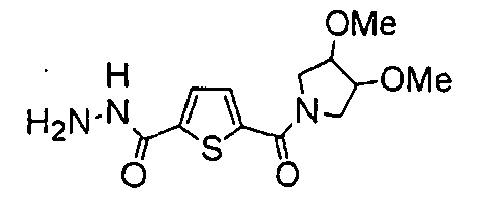
Reference Synthetic Example 20 Reference Synthetic Example 21 Reference Synthetic Example 22 Reference Synthetic Example 23 


Reference Synthetic Example 24 Reference Synthetic Example 25 Reference Synthetic Example 26 Reference Synthetic Example 27 


Reference Synthetic Example 28 
- 2-(3,4-Dichlorophenyl)-3-hydroxy-4-methylcarbonylthiophene (22 mg, 0.075 mmol) in dimethyl sulfoxide (2.0 mL) was heated with 5-(hydrazinocarbonyl)thiophene-2--carboxylic acid [2-(pyrrolidin-1-yl)ethyl]-amide (21 mg, 0.075 mmol) prepared in Reference Synthetic Example 1 at 100°C for 24 hours. Evaporation of the solvent followed by recrystallization from chloroform (1 mL)-diethyl ether (2 mL) affored 12 mg of the desired product (yield 29%). Morphology: orange solid
LC/MS (ESI+)m/z; 551, 553 [M+1]+
LC/MS (ESI-)m/z; 549, 551 [M-1]- - 2-(3,4-Dichlorophenyl)-3-hydroxy-4-methylcarbonylthiophene (22 mg, 0.075 mmol) in isopropanol (2.0 mL) was heated with 5-(hydrazinocarbonyl)thiophene-2-carboxylic acid (tetrahydrofuran-2-ylmethyl)amide (20 mg, 0.075 mmol) prepared in Reference Synthetic Example 2 and 3 mg of p-toluenesulfonic acid monohydrate at 105°C for 17 hours and allowed to cool to room temperature. The precipitated solid was collected by filtration, washed with 1 mL of isopropanol and 1 mL of chloroform and dried to give 26 mg of the desired product (yield 72%). Morphology: light brown solid
1H-NMR (DMSO-d6) δ: 1.50-1.70 (1H, m), 1.70-2.00 (4H, m), 3.50-4.10 (3H, m), 7.60-7.80 (2H, m), 7.86 (1H, d, J = 4 Hz), 8.00 (1H, d, J = 4Hz), 8.05 (1H, brs), 8.12 (1H, s), 8.80 (1H, t, J = 6 Hz), 11.4 (1H, s).
LC/MS (ESI+)m/z; 538, 540 [M+1]+
LC/MS (ESI-)m/z; 536, 538 [M-1]- - Synthesis was carried out in the same manner as in Synthetic Example 1 by using 5-(hydrazinocarbonyl)thiophene-2-carboxylic acid [2-(morpholin-4-yl)ethyl]amide prepared in Reference Synthetic Example 3 to give 12 mg of the desired product (yield 21%) .
Morphology: white solid
1H-NMR (DMSO-d6) δ: 3.5-4.0 (4H, m), 7.6-7.75 (3H, m), 7.80 (1H, d, J = 4 Hz), 7.9-8.1 (2H, m), 8.09 (1H, d, J = 2 Hz), 11.4 (1H, s) .
LC/MS (ESI+) m/z; 567, 569 [M+1] +
LC/MS (ESI-)m/z; 565, 567 [M-1]- - Synthesis was carried out in the same manner as in Synthetic Example 2 by using 2,5-di(hydrazinocarbonyl)thiophene prepared in Reference Synthetic Example 4 to give 43 mg of the desired product (yield 90%).
Morphology: pale yellow solid
1H-NMR (DMSO-d6) δ: 7.60-7.75 (2H, m), 7.77 (1H, d), 8.00 (1H, d), 8.05 (1H, brs), 8.13 (1H, s).
LC/MS (ESI+)m/z; 469, 471 [M+1]+
LC/MS (ESI-)m/z; 467, 469 [M-1]- - Synthesis was carried out in the same manner as in Synthetic Example 2 by using N-[1-(5-hydrazinocarbonylthiophene-2-carbonyl)-pyrrolidin-3-yl]acetamide prepared in Reference Synthetic Example 5 to give 53 mg of the desired product (yield 93%).
Morphology: pale yellow solid
1H-NMR (DMSO-d6) δ: 1.81 (3H, ds), 2.0-2.3 (1H, m), 3.5-4.2 (4H, m), 4.30 (1H, brs), 7.5-7.8 (3H, m), 7.9-8.1 (2H, m), 8.12 (1H, s), 8.19 (1H, t, J = 6 Hz), 11.5 (1H, s). LC/MS (ESI+)m/z; 565, 567 [M+1]+
LC/MS (ESI-)m/z; 563, 565 [M-1]- - Synthesis was carried out in the same manner as in Synthetic Example 2 by using 2-(N,N-dimethylhydrazinocarbonyl)-5-(hydrazinocarbonyl)thiophene prepared in Reference Synthetic Example 6 to give 14 mg of the desired product (yield 28%).
Morphology: pale yellow solid
(DMSO-d6) δ : 2.60 (3H, s), 2.62 (3H, s), 7.6-7.75 (2H, m), 7.8-8.2 (4H, m).
LC/MS (ESI+)m/z; 497, 499 [M+1]+
LC/MS (ESI-)m/z; 495, 497 [M-1]- - 2-(3,4-Dichlorophenyl)-3-hydroxy-4-methylcarbonylthiophene (24 mg, 0.083 mmol) in isopropanol (2.0 mL) was heated with tert-butyl 3-{[5-(hydrazinocarbonyl)thiophene-2-carbonyl]amino}propionate (18 mg, 0.057 mmol) prepared in Reference Synthetic Example 7 and 6 mg of p-toluenesulfonic acid monohydrate at 100°C for 8 hours and allowed to cool to room temperature. Water was added to the reaction mixture, and the precipitated solid was collected by filtration, washed with water, methanol and chloroform and dried to give 28 mg of the desired product (yield 85%). Morphology: pale yellow solid
LC/MS (ESI-)m/z; 580, 582 [M-1]- - Synthesis was carried out in the same manner as in Synthetic Example 8 by using tert-butyl 3-[(5-{1-[5-(3,4-dichlorophenyl)-4-hydroxythiophen-3-yl]ethylidenehydrazinocarbonyl}thiophene-2-carbonyl)amino]propionate to give 14 mg of the desired product (yield 55%).
Morphology: pale yellow solid
1H-NMR (DMSO-d6) δ: 2.40-2.60 (5H, m, overlapped_with_DMSO), 3.45 (2H, dd, J = 12.3, 6.7 Hz), 7.66 (1H, d, J = 8.6 Hz), 7.70 (1H, dd, J = 8.6, 2.0 Hz), 7.80 (1H, d, J = 4.0 Hz), 8.00 (1H, d, J = 4.0Hz), 8.05 (1H, brs), 8.12 (1H, s), 8.80 (1H, t, J = 5.4 Hz), 11.44 (1H, s).
LC/MS (ESI+) m/z; 526, 528 [M+1] +
LC/MS (ESI-)m/z; 524, 526 [M-1]- - 2-(3,4-Dichlorophenyl)-3-hydroxy-4-methylcarbonylthiophene (49 mg, 0.17 mmol) in isopropanol (2.0 mL) was heated with tert-butyl {[5-(hydrazinocarbonyl)thiophene-2-carbonyl]amino}acetate (44 mg, 0.15 mmol) prepared in Reference Synthetic Example 8 and 3 mg of p-toluenesulfonic acid monohydrate at 100°C for 8 hours and allowed to cool to room temperature. Water was added to the reaction mixture, and the precipitated solid was collected by filtration, washed with water, metahol and chloroform and dried to give 69 mg of the desired product (yield 83%).
Morphology: pale yellow solid
LC/MS (ESI-)m/z; 566, 568 [M-1]- - tert-Butyl [(5-{1-[5-(3,4-dichlorophenyl)-4-hydroxythiophen-3-yl]ethylidenehydrazinocarbonyl}thiophene-2-carbonyl) amino] acetate (69 mg, 0.12 mmol) in CH2Cl2 (4.0 mL) was stirred with trifluoroacetic acid (0.14 mL) at room temperature for 4 days. The reaction mixture was concentrated under reduced pressure, and chloroform was added. The precipitated solid was collected by filtration, washed with chloroform and dried to give 35 mg of the desired product (yield 56%).
Morphology: pale yellow solid
1H-NMR (DMSO-d6) δ: 2.48 (3H, s, overlapped_with_DMSO), 3.92 (2H, brd, J = 5.8 Hz), 7.65 (1H, d, J = 8.5 Hz), 7.68 (1H, brd, J = 8.5 Hz), 7.86 (1H, d, J = 3.8 Hz), 8.03 (1H, d, J =3.8 Hz), 8.05 (1H, brs), 8.13 (1H, s), 9.11 (1H, t, J = 5.8 Hz), 11.48 (1H, s).
LC/MS (ESI+)m/z;512, 514 [M+1]+
LC/MS (ESI-)m/z; 510, 512 [M-1]- - 2-(3,4-Dichlorophenyl)-3-hydroxy-4-methylcarbonylthiophene (29 mg, 0.1 mmol) in dimethyl sulfoxide (4.0 mL) was heated with 5-(hydrazinocarbonyl)thiophene-2-carboxylic acid piperidin-1-ylamide (27 mg, 0.1 mmol) prepared in Reference Synthetic Example 9 at 100°C for 20 hours and allowed to cool to room temperature. 2 mL of water was added, and the precipitated solid was collected by filtration, washed with 1 mL of chloroform and dried to give 47 mg of the desired product (yield 87%).
Morphology: yellow solid
LC/MS (ESI+)m/z; 537, 539 [M+1]+
LC/MS (ESI-)m/z; 535, 537 [M-1]- - 2-(3,4-Dichlorophenyl)-3-hydroxy-4-methylcarbonylthiophene (29 mg, 0.1 mmol) in dimethyl sulfoxide (4.0 mL) was heated with 5-(hydrazinocarbonyl)thiophene-2-carboxylic acid (4-methylpiperazin-1-yl)amide (28 mg, 0.1 mmol) prepared in Reference Synthetic Example 10 at 100°C for 20 hours and allowed to cool to room temperature. 2 mL of water was added, and the precipitated solid was collected by filtration, washed with 1 mL of chloroform and dried to give 50 mg of the desired product (yield 93%). Morphology: pale orange solid
LC/MS (ESI+)m/z; 552, 554 [M+1]+
LC/MS (ESI-)m/z; 550, 552 [M-1] - - 2-(3,4-Dichlorophenyl)-3-hydroxy-4-methylcarbonylthiophene (29 mg, 0.1 mmol) in dimethyl sulfoxide (4.0 mL) was heated with 5-(hydrazinocarbonyl)thiophene-2-carboxylic acid morpholin-4-ylamide (27 mg, 0.1 mmol) prepared in Reference Synthetic Example 11 at 100°C for 20 hours and allowed to cool to room temperature. 2 mL of water was added, and the precipitated solid was collected by filtration, washed with chloroform and dried Synthesis was carried out in the same manner as in Reference Synthetic Example by using to give 40 mg of the desired product (yield 73%).
Morphology: yellow solid
LC/MS (ESI+)m/z; 539, 541 [M+1]+
LC/MS (ESI-)m/z; 537, 539 [M-1]- - 2-(3,4-Dichlorophenyl)-3-hydroxy-4-methylcarbonylthiophene (29 mg, 0.1 mmol) in isopropanol (4.0 mL) was heated with 5-[4-pyrrolidin-1-yl)piperidine-1-carbonyl]thiophene-2-carbohydrazide (21 mg, 0.1 mmol) prepared in Reference Synthetic Example 12 and 6 mg of p-toluenesulfonic acid monohydrate at 100°C for 13 hours and allowed to cool to room temperature. The precipitated solid was collected by filtration, washed with 1 mL of chloroform and dried to give 21 mg of the desired product (yield 36%).
Morphology: pale orange solid
LC/MS (ESI+) m/z; 591, 593 [M+1]+
LC/MS (ESI-) m/z; 589, 591 [M-1]- - 3-Amino-N-(2-carbamoylethyl)benzamide (31 mg, 0.15 mmol) in dimethylformamide (0.3 mL) was stirred with thiocarbonyldiimidazole (27 mg, 0.15 mmol) at room temperature for 1 hour and then with 2-(3,4-dichlorophenyl)-4-(1-hydrazonoethyl)-thiophen-3-ol prepared in Reference Synthetic Example 13 at 40°C for 3 hours. Methanol and water were added to the reaction solution, and the resulting crystals were collected by filtration, washed and dried to give 29 mg of the desired product (yield 53%).
Morphology: white solid
LC/MS (ESI+)m/z; 550, 552 [M+1]+
LC/MS (ESI-)m/z; 548, 550 [M-1] - - 3-Amino-N-(2-carbamoylethyl)benzamide (56 mg, 0.27 mmol) was stirred with a dimethylformamide solution of thiocarbonyldiimidazole (0.1 M, 2.25 mL, 0.225 mmol) at room temperature for 1. 5 hours, and then with a dimethylformamide solution of 3-(1-hydrazonoethyl)-1-methyl-5-[4-(trifluoromethyl)phenyl]-1H-pyrazol-4-ol prepared in Reference Synthetic Example 14 (0.1 M, 1.8 mL, 0.18 mmol) at 40°C for 1 hour, and then stirred at room temperature for 17 hours. After addition of water and saturated aqueous sodium chloride, the solution was extracted with ethyl acetate, and the extract was dried over anhydrous sodium sulfate and filtered. The solvent was evaporated, and chloroform and hexane were added to the residue. The precipitated solid was collected by filtration, washed with hexane and dried to give 102.7 mg of the desired product (yield 100%).
Morphology: yellow solid
LC/MS (ESI+) m/z; 548 [M+1]+
LC/MS (ESI-)m/z; 546 [M-1]- - Ethyl 3-(5-amino-2-chlorobenzoylamino)propionate (122.8 mg, 0.45 mmol) was stirred with a dimethylformamide solution of thiocarbonyldiimidazole (0.1 M, 4.5 mL) at room temperature for 1 hour and with a dimethylformamide solution of 3-(1-hydrazonoethyl)-1-methyl-5-[4-(trifluoromethyl)phenyl]-1H-pyrazol-4-ol prepared in Reference Synthetic Example 14 (0.1 M, 3.0 mL) at room temperature for 6 hours. Water (3.0 mL) was added, and the precipitated solid was removed by filtration. The filtrate was separated by thin layer chromatography to give 57.0 mg of a crude product. An ethanol solution (1.0 mL) of the crude product (26.0 mg, 0.0435 mmol) was stirred with 1 M aqueous sodium hydroxide (131 µL, 0.131 mmol), and the precipitated solid was collected by filtration, washed with water and dried to give 14.6 mg of the desired product (yield 20%). Morphology: yellow solid
LC/MS (ESI+)m/z; 583, 585 [M+1]+
LC/MS (ESI-)m/z; 581, 583 (M-1]- - 2-(3,4-Dichlorophenyl)-4-(1-hydrazonoethyl)-thiophen-3-ol (25 mg, 0.08 mmol) prepared in Reference Synthetic Example 13 in dimethylformamide (0.25 mL) was stirred with 6-isothiocyanato-2,3-dihydrobenzo[1,4]dioxine (24 mg, 0.13 mmol) at 30°C for 4 hours. Methanol and water were added to the reaction solution, and the resulting crystals were collected by filtration, washed and dried to give 28 mg of the desired product (yield 65%). Morphology: colorless solid
LC/MS (ESI-)m/z; 492, 494 [M-1]- - Synthesis was carried out in the same manner as in Synthetic Example 13 by using 6-amino-4H-benzo[1,4]oxazin-3-one (yield 55%).
Morphology: light brown solid
LC/MS (ESI+)m/z; 507, 509 [M+1]+
LC/MS (ESI-)m/z; 505, 507 [M-1]- - Synthesis was carried out in the same manner as in Synthetic Example 13 by using 7-amino-4H-benzo[1,4]oxazin-3-one (yield 73%).
Morphology: white solid
LC/MS (ESI+)m/z; 507, 509 [M+1]+
LC/MS (ESI-)m/z; 505, 507 [M-1]- - 7-Amino-4H-benzo[1,4]oxazin-3-one (33 mg, 0.203 mmol) was stirred with a dimethylformamide solution of thiocarbonyldiimidazole (0.1 M, 2.03 mL, 0.203 mmol) at room temperature for 1 hour and then with a dimethylformamide solution of 3-(1-hydrazonoethyl)-1-methyl-5-[4-(trifluoromethyl)phenyl]-1H-pyrazol-4-ol prepared in Reference Synthetic Example 14 (0.1 M, 1.36 mL, 0.135 mmol) at room temperature for 4 hours. Water was added, and the precipitated solid was collected by filtration, washed with water and dried. After addition of chloroform, the solid was collected by filtration, washed with chloroform and dried to give 33.6 mg of the desired product (yield 49%).
Morphology: pale yellow solid
LC/MS (ESI+)m/z; 505 [M+1]+
LC/MS (ESI-)m/z; 503 [M-1]- - Crude potassium 3-[4-(hydrazinocarbonyl)phenyl]-3-hydroxypropionate prepared in Reference Synthetic Example 15 suspended in dimethylformamide (3.0 mL) was stirred with 1.0 M hydrogen chloride-methanol (0.5 mL) and 2-(3,4-dichlorophenyl)-3-hydroxy-4-methylcarbonylthiophene (0.15 g, 0.54 mmol) under reduced pressure at room temperature for 4 hours. The resulting solid was collected by filtration and dissolved in dimethyl sulfoxide (2.0 mL) and stirred with 2-(3,4-dichlorophenyl)-3-hydroxy-4-methylcarbonylthiophene (99 mg, 0.34 mmol) at 100°C for 2.5 hours. Water and methanol were added, and the resulting precipitate was collected by filtration and washed with chloroform to give 80 mg of the desired product (yield 33% for the two steps).
Morphology: gray solid
1H-NMR (DMSO-d6) δ: 2.21-2.63 (2H), 4.92 (1H, dd, J = 9.0&4.5 Hz), 7.49 (1H, d, J = 8.0Hz), 7.63 (1H, d, J = 8.5 Hz), 7.69 (1H, dd, J = 8.5&2.0 Hz), 7.88 (1H, d, J = 8.5 Hz), 8.07 (1H, s), 8.12 (1H, br s).
LC/MS (ESI+)m/z; 493, 495 [M+1]+
LC/MS (ESI-) m/z; 491, 493 [M-1]- - 5-{1-[5-(3,4-Dichlorophenyl)-4-hydroxythiophen-3-yl]ethylidenehydrazinocarbonyl}thiophene-2-carboxylic acid (4-methylpiperazin-l-yl)amide (11 mg, 0.02 mmol) suspended in methanol (0.33 mL) was sonicated with 0.1 M potassium hydroxide-methanol (0.2 mL, 0.02 mmol) in an ultrasonic cleaner for 10 seconds, and the reaction solution was concentrated to give the desired product (llmg, yield 93%).
Morphology: red solid - Synthesis was carried out in the same manner as in Synthetic Example 1, and the yields and morphology of the resulting compounds, the LC/MS conditions used for their analysis and the observed peaks and retention times are shown in Table 5.
- In Synthetic Examples 22 to 29, the desired products were prepared by mixing 1 equivalent of 2-(4-t-butylphenyl)-3-hydroxy-4-methylcarbonylthiophene (prepared by the method disclosed in
W02004/108683 ) with 1 equivalent of the corresponding hydrazides in dimethyl sulfoxide, in isopropanol-p-toluenesulfonic acid or in dimethylformamide-hydrochloric acid, if necessary with heating and subsequent cooling, and if necessary, concentrating the reaction mixture, adding a poor solvent such as ethanol, methanol, water, chloroform, ether or hexane and collecting the resulting crystals by filtration.Table 5 Syn. Ex. No. Yield (%) Morphology LC/MS conditions Observed peak ESI+ Observed peak ESI- Retention time (minute) 22 50 pale yellow solid 3 569 567 2.48 23 49 pale yellow solid 3 555 553 2.48 24 43 pale yellow solid 3 485 483 3.63 25 27 brown solid 3 579 577 2.55 26 46 yellow solid 3 527 525 3.63 27 71 yellow solid 3 514 512 3.50 28 52 yellow solid 3 500 498 3.54 29 30 pale yellow solid 3 528 526 3.35 - Synthesis was carried out in the same manner as in Synthetic Example 1, and the yields and morphology of the resulting compounds, the LC/MS conditions used for their analysis and the observed peaks and retention times are shown in Table 6.
- In Synthetic Examples 30 to 38, the desired products were prepared by mixing 1 equivalent of 2-(4-trifluoromethylphenyl)-3-hydroxy-4-methylcarbonylthiophene (prepared by the method disclosed in
W02004/108683 ) with the corresponding hydrazides, if necessary with heating and subsequent cooling, and if necessary, concentrating the reaction mixture, adding a poor solvent such as ethanol, methanol, water, chloroform, ether or hexane and collecting the resulting crystals by filtration.Table 6 Syn. Ex. No. Yield (%) Morphology LC/MS conditions Observed peak ESI+ Observed peak ESI- Retention time (minute) 30 48 light brown solid 3 497 495 3.47 31 32 brown solid 3 591 589 2.43 32 76 light brown solid 3 581 579 2.42 33 79 light brown solid 3 567 565 2.42 34 66 colorless solid 3 539 537 3.42 35 54 yellow solid 36 50 yellow solid 37 56 yellow solid 38 33 pale yellow solid 8 568 566 4.78 - 2-(4-Trifluoromethylphenyl)-3-hydroxy-4-methylcarbonylthiophene (35 mg, 0.122 mmol) and the hydrazide (40 mg, 0.122 mmol) prepared in Reference Synthetic Example 22 suspended in dimethylformamide (1 mL) were stirred with concentrated hydrochloric acid (10 mL) for 12 hours. After addition of water, the resulting solid was collceted by filtration and dried to give the desired product (yield 62%).
Morphology: white solid
39-b) 3-(5-{1-[4-Hydroxy-5-(4-trifluoromethylphenyl)thiophen-3-yl]ethylidenehydrazinocarbonyl}-N-methylthiophene-2-carboxamido)propionic acid - t-Butyl 3-(5-{1-[4-Hydroxy-5-(4-trifluoromethylphenyl)thiophen-3-yl]ethylidenehydrazinocarbonyl}-N-methylthiophene-2-carboxamido)propionate (30 mg, 0.05 mmol) was stirred with trifluoroacetic acid (300 µL) at room temperature for 15 minutes. The reaction solution was concentrated, and after addition of ether, the resulting solid was collected by filtration to give the desired product (yield 56%).
Morphology: white solid
LC/MS (ESI+)m/z; 540 [M+1]+
LC/MS (ESI-)m/z; 538 [M-11]-
Retention time: 4.03 minutes (condition 5) - Synthesis was carried out in the same manner as in Synthetic Example 1, and the yields and morphology of the resulting compounds, the LC/MS conditions used for their analysis and the observed peaks and retention times are shown in Table 7.
- The desired products were prepared by mixing 2-(4-chlorophenyl)3-hydroxy-4-methylcarbonylthiophene (prepared the method disclosed in
WO2004/108683 ) in Synthetic Examples 40 to 46, or 1 equivalent of 1-[4-hydroxy-1-methyl-5-(4-trifluoromethylphenyl)-1H-pyrazol-3-yl]ethanone in Synthetic Examples 47 to 54, with the corresponding hydrazides in dimethyl sulfoxide, in isopropanol-p-toluenesulfonic acid or in dimethylformamide-hydrochloric acid, if necessary with heating and subsequent cooling, and if necessary, concentrating the reaction mixture, adding a poor solvent such as ethanol, methanol, water, chloroform, ether or hexane and collecting the resulting crystals by filtration.Table 7 Syn. Ex. No. Yield (%) Morphology LC/MS conditions Observed peak ESI+ Observed peak ESI- Retention time (minute) 40 40 light brown solid 3 547/549 545/547 2.37 41 56 colorless solid 3 533/535 531/533 2.37 42 62 pale yellow solid 2 505/507 503/505 4.00 43 65 brown solid 3 557/559 555/557 2.40 44 57 yellow solid 3 506/508 504/506 3.09 45 57 yellow solid 8 492/494 490/492 4.55 46 63 ocher solid 8 478/480 476/478 4.47 47 42 yellow solid 2 495 493 3.30, 3.62 48 31 red solid 2 589 587 2.33, 2.54 49 79 orange solid 2 579 577 2.49 50 93 orange solid 2 565 563 2.49 51 74 Pale yellow solid 2 537 535 3.30, 3.59 52 37 pale yellow solid 2 538 536 3.32 53 56 pale yellow solid 2 524 522 3.57 54 58 solid 2 510 508 3.55 - Synthesis was carried out in the same manner as in Synthetic Example 14 by using 3-(1-hydrazonoethyl)-1-methyl-5-(3,4-dichlorophenyl)-1H-pyrazol-4-ol prepared in Reference Synthetic Example 27 to give 74.3 mg of the desired product (yield 81%).
Morphology: pale yellow solid
LC/MS (ESI+) m/z; 548, 550 [M+1] +
LC/MS (ESI-)m/z; 546, 548 [M-1]- - Synthesis was carried out in the same manner as in Synthetic Example 1, and the yields and morphology of the resulting compounds, the LC/MS conditions used for their analysis and the observed peaks and retention times are shown in Table 8.
- In Synthetic Examples 56 to 58, the desired products were prepared by mixing 1 equivalent of 2-(3,4-dichlorophenyl)-3-hydroxy-4-methylcarbonylthiophene (prepared by the method disclosed in
W02004/108683 ) with 1 equivalent of the corresponding hydrazides in dimethyl sulfoxide, in isopropanol-p-toluenesulfonic acid or in dimethylformamide-hydrochloric acid, if necessary with heating and subsequent cooling, and if necessary, concentrating the reaction mixture, adding a poor solvent such as ethanol, methanol, water, chloroform, ether or hexane and collecting the resulting crystals by filtration.Table 8 Syn. Ex. No. Yield (%) Morphology LC/MS conditions Observed peak ESI+ Observed peak ESI- Retention time (minute) 56 48 pale yellow solid 8 554/556 552/554 4.80 57 37 pale yellow solid 8 568/570 566/568 5.02 58 66 pale yellow solid 2 546/548 544/546 3.69 - Synthesis was carried out in the same manner as in Synthetic Example 39 by using the hydrazide (40 mg, 0.122 mmol) prepared in Reference Synthetic Example 22 to give the desired product (yield 45%).
Morphology: white solid
59-b) 3-(5-{1- [4-Hydroxy-5-(3,4-dichlorophenyl)thiophen-3-yl]ethylidenehydrazinocarbonyl]-N-methylthiophene-2-carboxamido)propionic acid - Synthesis was carried out in the same manner as in Synthetic Example.39 by using t-butyl 3-(5-{1-[4-hydroxy-5-(3,4-dichlorophenyl)thiophen-3-yl]ethylidenehydrazinocarbonyl]-N-methylthiophene-2-carboxamido)propionate (30 mg, 0.05 mmol) to give the desired product (yield 100%).
Morphology: white solid
LC/MS (ESI+)m/z; 540, 542 [M+1]+
LC/MS (ESI-) m/z; 538, 540 [M-1]-
Retention time: 4.27 minutes (condition 5) - Synthesis was carried out in the same manner as in Synthetic Example 1, and the yields and morphology of the resulting compounds, the LC/MS conditions used for their analysis and the observed peaks and retention times are shown in Table 9.
- The desired products were prepared by mixing 1 equivalent of 2-(3,4-dimethylphenyl)-3-hydroxy-4-methylcarbonylthiophene prepared in Reference Synthetic Example 23 in Synthetic Examples 60 to 66, or 1 equivalent of 2-(4-trifluoromethoxyphenyl)-3-hydroxy-4-methylcarbonylthiophene prepared in Reference Synthetic Example 24 in Synthetic Examples 67 to 74, with 1 equivalent of the corresponding hydrazides in dimethyl sulfoxide, in isopropanol-p-toluenesulfonic acid or in dimethylformamide-hydrochloric acid, if necessary with heating and subsequent cooling, and if necessary, concentrating the reaction mixture, adding a poor solvent such as ethanol, methanol, water, chloroform, ether or hexane and collecting the resulting crystals by filtration.
Table 9 Syn. Ex. No. Yield (%) Morphology LC/MS conditions Observed peak ESI+ Observed peak ESI- Retention time (minute) 60 80 pale yellow solid 2 541 539 2.85 61 85 pale yellow solid 2 527 525 2.82 62 41 yellow solid 2 457 455 4.14 63 59 brown solid 2 551 549 2.82 64 40 yellow solid 2 499 497 4.07 65 41 yellow solid 2 486 484 3.97 66 69 yellow solid 2 472 470 4.02 67 54 pale yellow solid 2 597 595 2.99 68 64 Pale yellow solid 2 583 581 3.00 69 59 pale yellow solid 2 513 511 4.34 70 67 brown solid 8 607 605 4.12 71 73 pale yellow solid 2 555 553 4.25 72 37 yellow solid 8 556 554 4.48 73 56 yellow solid 3 528 526 3.37 74 36 yellow solid 3 542 540 3.38 - Synthesis was carried out in the same manner as in Synthetic Example 39 by using 2-(4-trifluoromethoxyphenyl)-3-hydroxy-4-methylcarbonylthiophene (37 mg, 0.122 mmol) and the hydrazide (40 mg, 0.122 mmol) prepared in Reference Synthetic Example 22 to give the desired product (yield 40%).
Morphology: white solid
75-b) 3-(5-{1-[4-Hydroxy-5-(4-trifluoromethoxyphenyl)thiophen-3-yl]ethylidenehydrazinocarbonyl}-N-methylthiophene-2-carboxamido)propionic acid - Synthesis was carried out in the same manner as in Synthetic Example 39 by using t-butyl 3-(5-{1-[4-hydroxy-5-(4-trifluoromethoxyphenyl)thiophen-3-yl]ethylidenehydrazinocarbonyl}-N-methylthiophene-2-carboxamido)propionate (30 mg, 0.05 mmol) to give the desired product (yield 65%).
Morphology: white solid
LC/MS (ESI+) m/z; 556 [M+1]+
LC/MS (ESI-) m/z; 554 [M-1]-
Retention time: 4.10 minutes (condition 5) - Synthesis was carried out in the same manner as in Synthetic Example 1, and the yields and morphology of the resulting compounds, the LC/MS conditions used for their analysis and the observed peaks and retention times are shown in Table 10.
- The desired products were prepared by mixing 1 equivalent of 2-(4-bromophenyl)-3-hydroxy-4-methylcarbonylthiophene prepared in Reference Synthetic Example 25 in Synthetic Examples 76 to 84, or 1 equivalent of 2-(3-chlorophenyl)-3-hydroxy-4-methylcarbonylthiophene prepared in Reference Synthetic Example 26 in Synthetic Examples 85 to 92, with 1 equivalent of the corresponding hydrazides in dimethyl sulfoxide, in isopropanol-p-toluenesulfonic acid or in dimethylformamide-hydrochloric acid, if necessary with heating and subsequent cooling, and if necessary, concentrating the reaction mixture, adding a poor solvent such as ethanol, methanol, water, chloroform, ether or hexane and collecting the resulting crystals by filtration.
Table 10 Syn. Ex. No. Yield (%) Morphology LC/MS conditions Observed peak ESI+ Observed peak ESI- Retention time (minute) 76 75 Pale yellow solid 8 507/509 505/507 4.72 77 26 brown solid 8 601/603 599/601 4.03 78 66 yellow solid 8 591/593 589/591 3.95 79 66 yellow solid 8 577/579 575/577 4.02 80 53 pale brown solid 2 549/551 547/549 4.15 81 52 light brown solid 2 550/552 548/550 3.82 82 98 yellow solid 2 538/536 536/534 3.97 83 98 yellow solid 2 522/524 520/522 4.03 84 45 white solid 8 578/580 576/578 4.78 85 76 yellow solid 3 463/465 461/463 3.34 86 52 yellow solid 3 547/549 545/547 2.30 87 66 yellow solid 3 533/535 531/533 2.27 88 43 brown solid 3 557/559 555/557 2.30 89 68 pale yellow solid 3 505/507 503/505 3.32 90 72 yellow solid 3 506/508 504/506 3.07 91 51 pale yellow solid 3 492/494 490/492 3.25 92 64 dark yellow solid 3 478/480 476/478 3.29 - 37 mg (0.12 mmol) of 2-(3,4-dichlorophenyl)-4-(1-hydrazonoethyl)-thiophen-3-ol prepared in Reference Synthetic Example 13, 40 mg (0.15 mmol) of 5-[2-(4-Oxopyridin-1(4H)-yl)acetyl]thiophene-2-carboxylic acid prepared in Reference Synthetic Example 28, 32 mg (0.17 mmol) of 1-[3-(dimethylamino)propyl]-3-ethylcarbodiimide hydrochloride and 22 mg (0.16 mmol) of hydroxybenzotriazole were stirred with 3 ml of dioxane and then with 23 µl (0.17 mmol) of triethylamine at room temperature for 7 days. After addition of water, the precipitated solid was collected by filtration, washed with 2 ml of chloroform, 2 ml of methanol, 5 ml of water and 2 ml of methanol to give 14.5 mg of the desired product (yield 22%) .
Morphology: brown solid
LC/MS (ESI+)m/z; 546, 548 [M+1]+
LC/MS (ESI-)m/z; 544, 546 [M-1]- - The structural formulae of the compounds obtained in the Synthetic Examples are given below.
Synthetic Example 1 Synthetic Example 2 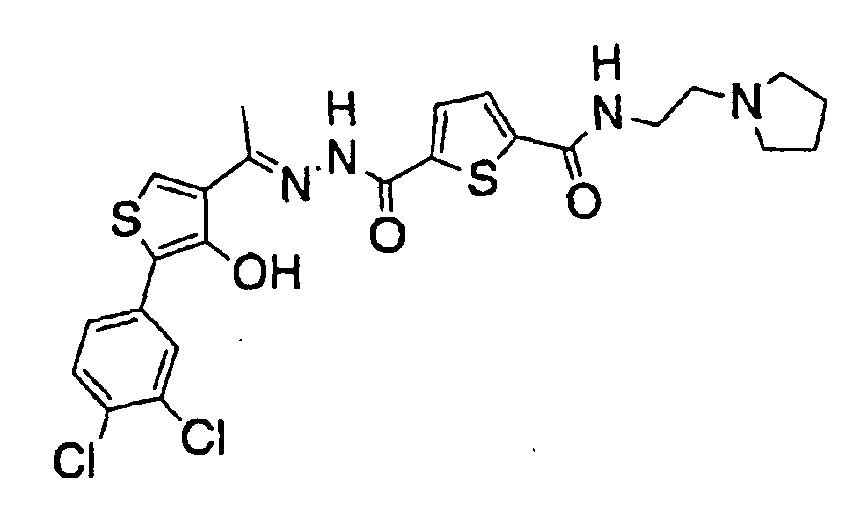

Synthetic Example 3 Synthetic Example 4 
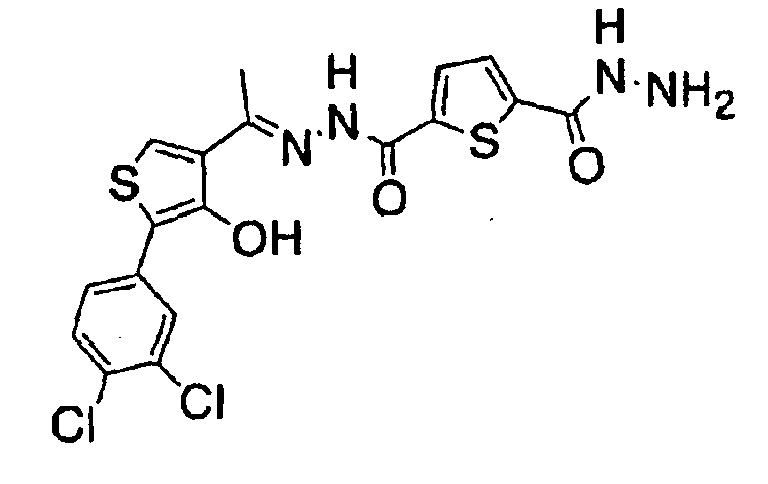
Synthetic Example 5 Synthetic Example 6 

Synthetic Example 7 Synthetic Example 8 Synthetic Example 9 


Synthetic Example 10 Synthetic Example 11 Synthetic Example 12 


Synthetic Example 13 Synthetic Example 14 Synthetic Example 15 


Synthetic Example 16 Synthetic Example 17 Synthetic Example 18 


Synthetic Example 19 Synthetic Example 20 0 Synthetic Example 21 
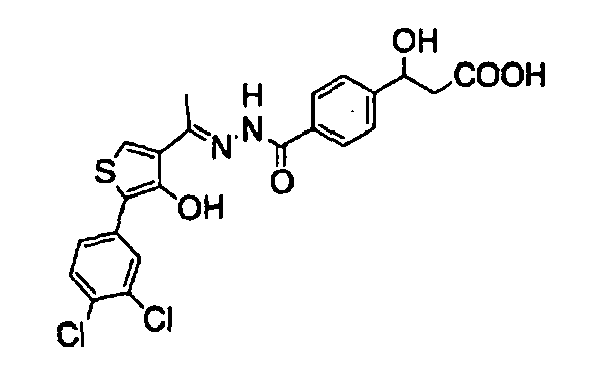

Synthetic Example 22 Synthetic Example 23 Synthetic Example 24 


Synthetic Example 25 Synthetic Example 2 6 Synthetic Example 27 


Synthetic Example 28 Synthetic Example 29 Synthetic Example 3 0 


Synthetic Example 31 Synthetic Example 32 Synthetic Example 33 


Synthetic Example 34 Synthetic Example 35 Synthetic Example 3 6 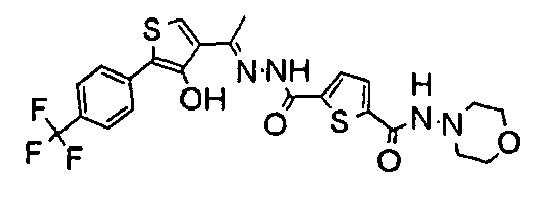


Synthetic Example 3 7 Synthetic Example 38 Synthetic Example 39 


Synthetic Example 40 Synthetic Example 41 Synthetic Example 42 

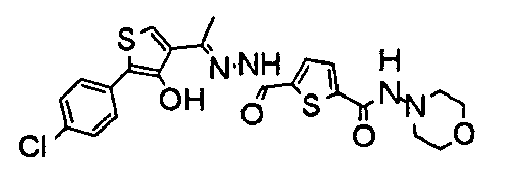
Synthetic Example 43 Synthetic Example 44 Synthetic Example 45 


Synthetic Example 46 Synthetic Example 47 Synthetic Example 48 


Synthetic Example 49 Synthetic Example 50 Synthetic Example 51 


Synthetic Example 52 Synthetic Example 53 Synthetic Example 54 
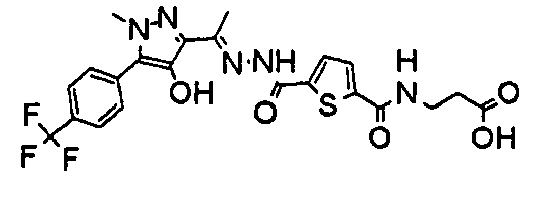

Synthetic Example 55 Synthetic Example 56 Synthetic Example 57 


Synthetic Example 58 Synthetic Example 59 Synthetic Example 60 


Synthetic Example 61 Synthetic Example 62 Synthetic Example 63 

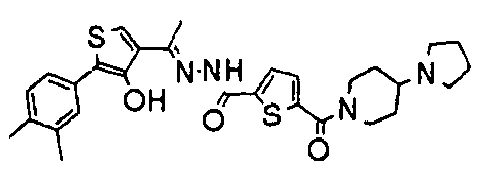
Synthetic Example 64 Synthetic Example 65 Synthetic Example 66 


Synthetic Example 67 Synthetic Example 68 Synthetic Example 69 

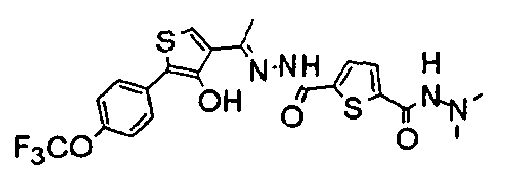
Synthetic Example 70 Synthetic Example 71 Synthetic Example 72 
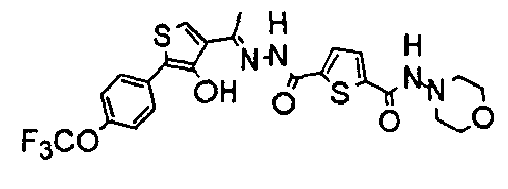

Synthetic Example 73 Synthetic Example 74 Synthetic Example 75 


Synthetic Example 76 Synthetic Example 77 Synthetic Example 78 


Synthetic Example 79 Synthetic Example 80 Synthetic Example 81 


Synthetic Example 82 Synthetic Example 83 Synthetic Example 84 


Synthetic Example 85 Synthetic Example 86 Synthetic Example 87 


Synthetic Example 88 Synthetic Example 89 Synthetic Example 90 

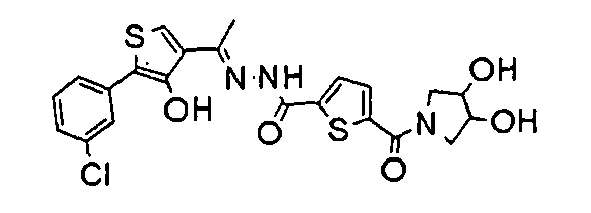
Synthetic Example 91 Synthetic Example 92 Synthetic Example 93 
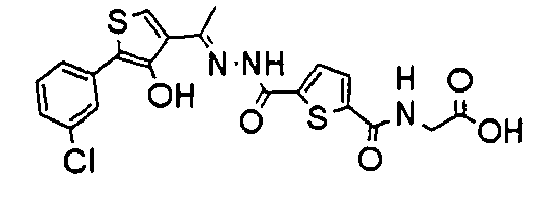

- The response of thrombopoietin receptor to the compound of Synthetic Example 2 of the present invention was assayed using a human leukemic cell line, UT7/EPO-mpl.
- UT7/EPO-mpl is a stable transformed cell line obtained by introducing into human leukemic cell line UT7/EPO a vector that induces expression of human thrombopoietin receptor (c-mp1) under control of cytomegalovirus immediate-early promoter by the method of Takatoku et al. (J. Biol. Chem., 272:7259-7263 (1997)). Proliferation of this cell line is stimulated by TPO, while its mother cell line UT7/EPO exhibits no response to TPO. These two cell lines were subcultured in IMDM (GIBCO) containing 10% fetal bovine serum (Thermo Electron or BioWest) using a CO2 incubator (5% CO2, 37°C).
- The subcultured cells described above were washed twice with PBS and suspended in IMDM containing 10% fetal bovine serum at a cell density of 6 × 10⁴ cells/ml. The cell suspension was transferred to a 96-well tissue culture plate (CORNING) in 100-µl aliquots. Then either thrombopoietin (Pepro Tech EC) or the compound of Synthetic Example 2 dissolved in dimethyl sulfoxide was diluted 83-fold with IMDM containing 10% fetal bovine serum and added to the aforementioned cell suspension in 20-µl aliquots. The cell suspension was incubated in a CO2 incubator (5% CO2, 37°C) for 4 days. Cell proliferation was assayed using WST-8 reagent (Kishida Chemical Co., Ltd.) according to instructions by the manufacturer. A 10-µl aliquot of 5 mM WST-8 reagent solution was added to each well of the tissue culture plate, and the plate was incubated at 37°C for 4 hours. The formazan pigment generated was detected by measuring the absorbance at 450 nm with a 96-well microplate reader (Nihon Molecular Devices, Spectramax 190). Fig. 1 shows the results with UT7/EPO-mpl cells, while Fig. 2 shows data obtained with UT7/EPO cells expressing no thrombopoietin receptor.
- Fig. 1 demonstrates that proliferation of thrombopoietin-responsive UT7/EPO-mpl cells was stimulated by the compound of Synthetic Example 2 in a concentration-dependent manner, while no effect of this compound on proliferation was observed with UT7/EPO, the mother cell line, as shown in Fig. 2. These results indicate that the compound of Synthetic Example 2 of the present invention acts on the thrombopoietin receptor selectively as an activator.
- The compounds of the following Synthetic Examples were tested according to the method of Assay Example 1 to determine the concentration of each compound that yields a growth rate corresponding to 50% of the growth of human leukemic cell line UT-7/EPO-mpl observed in the presence of 10 ng/mL TPO (EC50). The results are summarized in Table 11.
Table 11 Synthetic Ex. No. EC50 (ng/mL) 1 2. 7 2 2. 1 4 1. 5 5 0. 32 7 2. 3 8 2. 2 9 5. 6 10 3. 1 11 0. 35 12 0. 40 13 2. 9 14 2. 7 15 7. 7 16 32 17 16 18 16 19 23 20 3. 0 24 1.1 35 0. 27 45 3. 2 49 1. 6 55 3.1 58 0. 85 65 2. 0 75 3. 3 84 2. 9 90 0. 33 93 0. 37 - A granule preparation containing the following ingredients is prepared.
Ingredients Compound represented by the formula (1) 10 mg Lactose 700 mg Corn Starch 274 mg HPC-L 16 mg 1000 mg - A compound represented by the formula (1) and lactose are sifted through a 60-mesh sieve. Corn starch is sifted though a 120-mesh sieve. They are mixed in a V-type blender. The powder mixture is kneaded with a low-viscosity hydroxypropylcellulose (HPC-L) aqueous solution, granulated (extrusion granulation, die size 0.5-1 mm) and dried. The resulting dry granules are sifted through a shaking sieve (12/60 mesh) to obtain a granule preparation.
- A powder preparation for capsulation containing the following ingredients is prepared.
Ingredients Compound represented by the formula (1) 10 mg Lactose 79 mg Corn Starch 10 mg Magnesium Stearate 1 mg 100 mg - A compound represented by the formula (1) and lactose are sifted through a 60-mesh sieve. Corn starch is sifted though a 120-mesh sieve. They are mixed with magnesium stearate in a V-type blender. The 10% powder is put in hard gelatin capsules No. 5, 100 mg each.
- A granule preparation for capsulation containing the following ingredients is prepared.
Ingredients Compound represented by the formula (1) 15 mg Lactose 90 mg Corn Starch 42 mg HPC-L 3 mg 150 mg - A compound represented by the formula (1) and lactose are sifted through a 60-mesh sieve. Corn starch is sifted though a 120-mesh sieve. They are mixed in a V-type blender. The powder mixture is kneaded with a low-viscosity hydroxypropylcellulose (HPC-L) aqueous solution, granulated and dried. The resulting dry granules are sifted through a shaking sieve (12/60 mesh). The granules are put in hard capsules No. 4, 150 mg each.
- A tablet preparation containing the following ingredients is prepared.
Ingredients Compound represented by the formula (1) 10 mg Lactose 90 mg Microcrystalline cellulose 30 mg Magnesium Stearate 5 mg CMC-Na 15 mg 150 mg - A compound represented by the formula (1), lactose, microcrystalline cellulose and CMC-Na (carboxymethylcellulose sodium salt) are sifted through a 60-mesh sieve and mixed. The powder mixture is mixed with magnesium stearate to give a bulk powder mixture. The powder mixture is compressed directly into 150 mg tablets.
- An intravenous preparation is prepared as follows.
Compound represented by the formula (1) 100 mg Saturated Fatty Acid Glyceride 1000 ml - Solutions having the above-mentioned composition are usually administered to a patient intravenously at a rate of 1 ml per 1 minute.
- The compounds of the present invention which have affinity for thrombopoietin receptor and act as thrombopoietin receptor agonists are useful as preventive, therapeutic and improving agents for diseases against which activation of the thrombopoietin receptor is effective, especially as drugs for hematological disorders accompanied by abnormal platelet count and as drugs for diseases treated or prevented by stimulating differentiation and proliferation of vascular endothelial cells and endothelial progenitor cells, and are useful as medicines.
- The entire disclosures of
Japanese Patent Application No. 2004-361750 filed on December 14, 2004 Japanese Patent Application No. 2005-134643 filed on May 2, 2005
Claims (37)
- A compound represented by the formula (1):
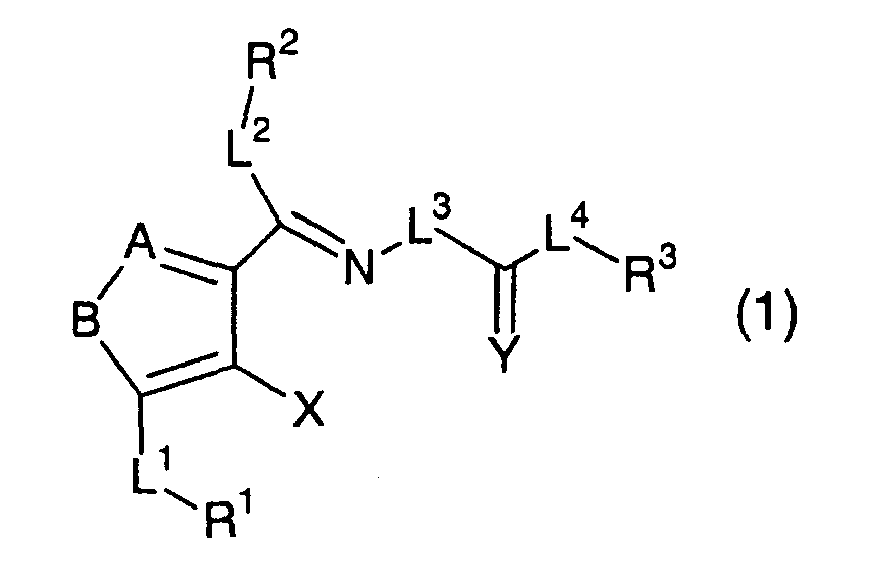
R1 is a C2-14 aryl group (the C2-14 aryl group may be substituted with one or more substituents selected from the group consisting of: halogen atoms, carboxyl groups, nitro groups, formyl groups, cyano groups, hydroxyl groups, protected hydroxyl groups, C1-10 alkyl groups, C2-6 alkenyl groups, C2-6 alkynyl groups, C1-10 alkoxy groups, C1-10 alkylcarbonyl groups, C1-10 alkylcarbonyloxy groups, C1-10 alkoxycarbonyl groups (the C1-10 alkyl groups, the C2-6 alkenyl groups, the C2-6 alkynyl groups, the C1-10 alkoxy groups, the C1-10 alkylcarbonyl groups, the C1-10 alkylcarbonyloxy groups and the C1-10 alkoxycarbonyl groups may be optionally substituted with one or more substituents selected from the group consisting of: carboxyl groups, nitro groups, cyano groups, halogen atoms, C1-10 alkoxy groups, C1-10 alkylcarbonyl groups, C1-10 alkylcarbonyloxy groups, C1-10 alkoxycarbonyl groups, C1-10 alkylcarbonylamino groups, amino groups, mono- or di-C1-10 alkylamino groups, hydroxyl groups, protected hydroxyl groups, C2-14 aryl groups and C2-14 aryloxy groups (the C2-14 aryl groups and the C2-14 aryloxy groups may be substituted with one or more C1-6 alkyl groups (the C1-6 alkyl groups may be substituted with one or more halogen atoms) or one or more halogen atoms)), C2-14 aryl groups (the C2-14 aryl groups may be optionally substituted with one or more substituents selected from the group consisting of: C1-10 alkyl groups (the C1-10 alkyl groups may be substituted with one or more halogen atoms), C2-6 alkenyl groups, C2-6 alkynyl groups, carboxyl groups, nitro groups, cyano groups, halogen atoms, C1-10 alkoxy groups, C1-10 alkylcarbonyl groups, C1-10 alkylcarbonyloxy groups, C1-10 alkoxycarbonyl groups, C1-10 alkylcarbonylamino groups, amino groups, mono- or di-C1-10 alkylamino groups, hydroxyl groups, protected hydroxyl groups, C2-14 aryl groups and C2-14 aryloxy groups), thiol groups and amino groups (the thiol groups and the amino groups may be optionally substituted with one or two substituents selected from the group consisting of: formyl groups, C1-10 alkyl groups, C2-6 alkenyl groups, C2-6 alkynyl groups and C1-10 alkylcarbonyl groups (the C1-10 alkyl groups, the C2-6 alkenyl groups, the C2-6 alkynyl groups and the C1-10 alkylcarbonyl groups may be optionally substituted with one or more substituents selected from the group consisting of: carboxyl groups, nitro groups, cyano groups, halogen atoms, C1-10 alkoxy groups, C1-10 alkylcarbonyl groups, C1-10 alkylcarbonyloxy groups, C1-10 alkoxycarbonyl groups, C1-10 alkylcarbonylamino groups, amino groups, mono- or di-C1-10 alkylamino groups, hydroxyl groups, protected hydroxyl groups, C2-14 aryl groups and C2-14 aryloxy groups (the C2-14 aryl groups and the C2-14 aryloxy groups may be substituted with one or more C1-6 alkyl groups (the C1-6 alkyl groups may be substituted with one or more halogen atoms) or one or more halogen atoms)))),
L1 is a bond, CR10R11 (wherein each of R10 and R11 is independently a hydrogen atom or a C1-6 alkyl group (the C1-6 alkyl group may be substituted with one or more halogen atoms)), an oxygen atom, a sulfur atom or NR12 (wherein R12 is a hydrogen atom, a hydroxyl group, a formyl group, a C1-10 alkyl group, a C2-6 alkenyl group, a C2-6 alkynyl group, a C1-10 alkoxy group, a C1-10 alkylcarbonyloxy group, a C1-10 alkoxycarbonyl group, a C1-10 alkylcarbonyl group (the C1-10 alkyl group, the C2-6 alkenyl group, the C2-6 alkynyl group, the C1-10 alkoxy group, the C1-10 alkylcarbonyloxy group, the C1-10 alkoxycarbonyl group and the C1-10 alkylcarbonyl group may be optionally substituted with one or more substituents selected from the group consisting of: carboxyl groups, nitro groups, cyano groups, halogen atoms, C1-10 alkoxy groups, C1-10 alkylcarbonyl groups, C1-10 alkylcarbonyloxy groups, C1-10 alkoxycarbonyl groups, C1-10 alkylcarbonylamino groups, amino groups, mono- or di-C1-10 alkylamino groups, hydroxyl groups, protected hydroxyl groups, C2-14 aryl groups and C2-14 aryloxy groups (the C2-14 aryl groups and the C2-14 aryloxy groups may be substituted with one or more C1-6 alkyl groups (the C1-6 alkyl groups may be substituted with one or more halogen atoms) or one or more halogen atoms)) or a C2-14 aryl group (the C2-14 aryl group may be optionally substituted with one or more substituents selected from the group consisting of: C1-10 alkyl groups (the C1-10 alkyl groups may be substituted with one or more halogen atoms), C2-6 alkenyl groups, C2-6 alkynyl groups, carboxyl groups, nitro groups, cyano groups, halogen atoms, C1-10 alkoxy groups, C1-10 alkylcarbonyl groups, C1-10 alkylcarbonyloxy groups, C1-10 alkoxycarbonyl groups, C1-10 alkylcarbonylamino groups, amino groups, mono- or di-C1-10 alkylamino groups, hydroxyl groups, protected hydroxyl groups, C2-14 aryl groups and C2-14 aryloxy groups)),
X is OR13, SR13 or NR14R15 (wherein R13 is a hydrogen atom, a C1-10 alkyl group, a C2-6 alkenyl group, a C2-6 alkynyl group or a C1-10 alkylcarbonyl group (the C1-10 alkyl group, the C2-6 alkenyl group, the C2-6 alkynyl group and the C1-10 alkylcarbonyl group may be optionally substituted with one or more substituents selected from the group consisting of: carboxyl groups, nitro groups, cyano groups, halogen atoms, C1-10 alkoxy groups, C1-10 alkylcarbonyl groups, C1-10 alkylcarbonyloxy groups, C1-10 alkoxycarbonyl groups, C1-10 alkylcarbonylamino groups, amino groups, mono- or di-C1-10 alkylamino groups, hydroxyl groups, protected hydroxyl groups, C2-14 aryl groups and C2-14 aryloxy groups (the C2-14 aryl groups and the C2-14 aryloxy groups may be substituted with one or more C1-6 alkyl groups (the C1-6 alkyl groups may be substituted with one or more halogen atoms) or one or more halogen atoms)), and each of R14 and R15 is independently a hydrogen atom, a formyl group, a C1-10 alkyl group, a C2-6 alkenyl group, a C2-6 alkynyl group, a C1-10 alkoxy group, a C1-10 alkylcarbonyl group (the C1-10 alkyl group, the C2-6 alkenyl group, the C2-6 alkynyl group, the C1-10 alkoxy group and the C1-10 alkylcarbonyl group may be optionally substituted with one or more substituents selected from the group consisting of: carboxyl groups, nitro groups, cyano groups, halogen atoms, C1-10 alkoxy groups, C1-10 alkylcarbonyl groups, C1-10 alkylcarbonyloxy groups, C1-10 alkoxycarbonyl groups, C1-10 alkylcarbonylamino groups, amino groups, mono- or di-C1-10 alkylamino groups, hydroxyl groups, protected hydroxyl groups, C2-14 aryl groups and C2-14 aryloxy groups (the C2-14 aryl groups and the C2-14 aryloxy groups may be substituted with one or more C1-6 alkyl groups (the C1-6 alkyl groups may be substituted with one or more halogen atoms) or one or more halogen atoms)) or a C2-14 aryl group (the C2-14 aryl group may be optionally substituted with one or more substituents selected from the group consisting of: C1-10 alkyl groups (the C1-10 alkyl groups may be substituted with one or more halogen atoms), C2-6 alkenyl groups, C2-6 alkynyl groups, carboxyl groups, nitro groups, cyano groups, halogen atoms, C1-10 alkoxy groups, C1-10 alkylcarbonyl groups, C1-10 alkylcarbonyloxy groups, C1-10 alkoxycarbonyl groups, C1-10 alkylcarbonylamino groups, amino groups, mono- or di-C1-10 alkylamino groups, hydroxyl groups, protected hydroxyl groups, C2-14 aryl groups and C2-14 aryloxy groups)),
R2 is a hydrogen atom, a formyl group, a C1-10 alkyl group, a C2-6 alkenyl group, a C2-6 alkynyl group, a C1-10 alkoxy group, a C1-10 alkylcarbonyl group (the C1-10 alkyl group, the C2-6 alkenyl group, the C2-6 alkynyl group, the C1-10 alkoxy group and the C1-10 alkylcarbonyl group may be optionally substituted with one or more substituents selected from the group consisting of: carboxyl groups, nitro groups, cyano groups, halogen atoms, C1-10 alkoxy groups, C1-10 alkylcarbonyl groups, C1-10 alkylcarbonyloxy groups, C1-10 alkoxycarbonyl groups, C1-10 alkylcarbonylamino groups, amino groups, mono- or di-C1-10 alkylamino groups, hydroxyl groups, protected hydroxyl groups, C2-14 aryl groups and C2-14 aryloxy groups (the C2-14 aryl groups and the C2-14 aryloxy groups may be substituted with one or more C1-6 alkyl groups (the C1-6 alkyl groups may be substituted with one or more halogen atoms) or one or more halogen atoms)) or a C2-14 aryl group (the C2-14 aryl group may be optionally substituted with one or more substituents selected from the group consisting of: C1-10 alkyl groups (the C1-10 alkyl groups may be substituted with one or more halogen atoms), C2-6 alkenyl groups, C2-6 alkynyl groups, carboxyl groups, nitro groups, cyano groups, halogen atoms, C1-10 alkoxy groups, C1-10 alkylcarbonyl groups, C1-10 alkylcarbonyloxy groups, C1-10 alkoxycarbonyl groups, C1-10 alkylcarbonylamino groups, amino groups, mono- or di-C1-10 alkylamino groups, hydroxyl groups, protected hydroxyl groups, C2-14 aryl groups and C2-14 aryloxy groups),
L2 is a bond, CR34R35 (wherein each of R34 and R35 is independently a hydrogen atom or a C1-6 alkyl group (the C1-6 alkyl group may be substituted with one or more halogen atoms)), an oxygen atom, a sulfur atom or NR16 (wherein R16 is a hydrogen atom, a hydroxyl group, a formyl group, a C1-10 alkyl group, a C2-6 alkenyl group, a C2-6 alkynyl group, a C1-10 alkoxy group, a C1-10 alkylcarbonyloxy group, a C1-10 alkoxycarbonyl group, a C1-10 alkylcarbonyl group (the C1-10 alkyl group, the C2-6 alkenyl group, the C2-6 alkynyl group, the C1-10 alkoxy group, the C1-10 alkylcarbonyloxy group, the C1-10 alkoxycarbonyl group and the C1-10 alkylcarbonyl group may be optionally substituted with one or more substituents selected from the group consisting of: carboxyl groups, nitro groups, cyano groups, halogen atoms, C1-10 alkoxy groups, C1-10 alkylcarbonyl groups, C1-10 alkylcarbonyloxy groups, C1-10 alkoxycarbonyl groups, C1-10 alkylcarbonylamino groups, amino groups, mono- or di-C1-10 alkylamino groups, hydroxyl groups, protected hydroxyl groups, C2-14 aryl groups and C2-14 aryloxy groups (the C2-14 aryl groups and the C2-14 aryloxy groups may be substituted with one or more C1-6 alkyl groups (the C1-6 alkyl groups may be substituted with one or more halogen atoms) or one or more halogen atoms)) or a C2-14 aryl group (the C2-14 aryl group may be optionally substituted with one or more substituents selected from the group consisting of: C1-10 alkyl groups (the C1-10 alkyl groups may be substituted with one or more halogen atoms), C2-6 alkenyl groups, C2-6 alkynyl groups, carboxyl groups, nitro groups, cyano groups, halogen atoms, C1-10 alkoxy groups, C1-10 alkylcarbonyl groups, C1-10 alkylcarbonyloxy groups, C1-10 alkoxycarbonyl groups, C1-10 alkylcarbonylamino groups, amino groups, mono- or di-C1-10 alkylamino groups, hydroxyl groups, protected hydroxyl groups, C2-14 aryl groups and C2-14 aryloxy groups)),
L3 is a bond, CR17R18 (wherein each of R17 and R18 is independently a hydrogen atom, a C1-10 alkyl group, a C2-6 alkenyl group, a C2-6 alkynyl group, a C1-10 alkoxy group, a C1-10 alkylcarbonyl group (the C1-10 alkyl group, the C2-6 alkenyl group, the C2-6 alkynyl group, the C1-10 alkoxy group and the C1-10 alkylcarbonyl group may be optionally substituted with one or more substituents selected from the group consisting of: carboxyl groups, nitro groups, cyano groups, halogen atoms, C1-10 alkoxy groups, C1-10 alkylcarbonyl groups, C1-10 alkylcarbonyloxy groups, C1-10 alkoxycarbonyl groups, C1-10 alkylcarbonylamino groups, amino groups, mono- or di-C1-10 alkylamino groups, hydroxyl groups, protected hydroxyl groups, C2-14 aryl groups and C2-14 aryloxy groups (the C2-14 aryl groups and the C2-14 aryloxy groups may be substituted with one or more C1-6 alkyl groups (the C1-6 alkyl groups may be substituted with one or more halogen atoms) or one or more halogen atoms)) or a C2-14 aryl group (the C2-14 aryl group may be optionally substituted with one or more substituents selected from the group consisting of: C1-10 alkyl groups (the C1-10 alkyl groups may be substituted with one or more halogen atoms), C2-6 alkenyl groups, C2-6 alkynyl groups, carboxyl groups, nitro groups, cyano groups, halogen atoms, C1-10 alkoxy groups, C1-10 alkylcarbonyl groups, C1-10 alkylcarbonyloxy groups, C1-10 alkoxycarbonyl groups, C1-10 alkylcarbonylamino groups, amino groups, mono- or di-C1-10 alkylamino groups, hydroxyl groups, protected hydroxyl groups, C2-14 aryl groups and C2-14 aryloxy groups)), an oxygen atom, a sulfur atom or NR19 (wherein R19 is a hydrogen atom, a hydroxyl group, a formyl group, a C1-10 alkyl group, a C2-6 alkenyl group, a C2-6 alkynyl group, a C1-10 alkoxy group, a C1-10 alkylcarbonyloxy group, a C1-10 alkoxycarbonyl group, a C1-10 alkylcarbonyl group (the C1-10 alkyl group, the C2-6 alkenyl group, the C2-6 alkynyl group, the C1-10 alkylcarbonyloxy group, the C1-10 alkoxycarbonyl group, the C1-10 alkoxy group and the C1-10 alkylcarbonyl group may be optionally substituted with one or more substituents selected from the group consisting of: carboxyl groups, nitro groups, cyano groups, halogen atoms, C1-10 alkoxy groups, C1-10 alkylcarbonyl groups, C1-10 alkylcarbonyloxy groups, C1-10 alkoxycarbonyl groups, C1-10 alkylcarbonylamino groups, amino groups, mono- or di-C1-10 alkylamino groups, hydroxyl groups, protected hydroxyl groups, C2-14 aryl groups and C2-14 aryloxy groups (the C2-14 aryl groups and the C2-14 aryloxy groups may be substituted with one or more C1-6 alkyl groups (the C1-6 alkyl groups may be substituted with one or more halogen atoms) or one or more halogen atoms)) or a C2-14 aryl group (the C2-14 aryl group may be optionally substituted with one or more substituents selected from the group consisting of: C1-10 alkyl groups (the C1-10 alkyl groups may be substituted with one or more halogen atoms), C2-6 alkenyl groups, C2-6 alkynyl groups, carboxyl groups, nitro groups, cyano groups, halogen atoms, C1-10 alkoxy groups, C1-10 alkylcarbonyl groups, C1-10 alkylcarbonyloxy groups, C1-10 alkoxycarbonyl groups, C1-10 alkylcarbonylamino groups, amino groups, mono- or di-C1-10 alkylamino groups, hydroxyl groups, protected hydroxyl groups, C2-14 aryl groups and C2-14 aryloxy groups)),
L4 is a bond, CR20R21 (wherein each of R20 and R21 is independently a hydrogen atom, a C1-10 alkyl group, a C2-6 alkenyl group, a C2-6 alkynyl group, a C1-10 alkoxy group, a C1-10 alkylcarbonyl group (the C1-10 alkyl group, the C2-6 alkenyl group, the C2-6 alkynyl group, the C1-10 alkoxy group and the C1-10 alkylcarbonyl group may be optionally substituted with one or more substituents selected from the group consisting of: carboxyl groups, nitro groups, cyano groups, halogen atoms, C1-10 alkoxy groups, C1-10 alkylcarbonyl groups, C1-10 alkylcarbonyloxy groups, C1-10 alkoxycarbonyl groups, C1-10 alkylcarbonylamino groups, amino groups, mono- or di-C1-10 alkylamino groups, hydroxyl groups, protected hydroxyl groups, C2-14 aryl groups and C2-14 aryloxy groups (the C2-14 aryl groups and the C2-14 aryloxy groups may be substituted with one or more C1-6 alkyl groups (the C1-6 alkyl groups may be substituted with one or more halogen atoms) or one or more halogen atoms)) or a C2-14 aryl group (the C2-14 aryl group may be optionally substituted with one or more substituents selected from the group consisting of: C1-10 alkyl groups (the C1-10 alkyl groups may be substituted with one or more halogen atoms), C2-6 alkenyl groups, C2-6 alkynyl groups, carboxyl groups, nitro groups, cyano groups, halogen atoms, C1-10 alkoxy groups, C1-10 alkylcarbonyl groups, C1-10 alkylcarbonyloxy groups, C1-10 alkoxycarbonyl groups, C1-10 alkylcarbonylamino groups, amino groups, mono- or di-C1-10 alkylamino groups, hydroxyl groups, protected hydroxyl groups, C2-14 aryl groups and C2-14 aryloxy groups)), an oxygen atom, a sulfur atom or NR22 (wherein R22 is a hydrogen atom, a hydroxyl group, a formyl group, a C1-10 alkyl group, a C2-6 alkenyl group, a C2-6 alkynyl group, a C1-10 alkoxy group, a C1-10 alkylcarbonyloxy group, a C1-10 alkoxycarbonyl group, a C1-10 alkylcarbonyl group (the C1-10 alkyl group, the C2-6 alkenyl group, the C2-6 alkynyl group, the C1-10 alkoxy group, the C1-10 alkylcarbonyloxy group, the C1-10 alkoxycarbonyl group and the C1-10 alkylcarbonyl group may be optionally substituted with one or more substituents selected from the group consisting of: carboxyl groups, nitro groups, cyano groups, halogen atoms, C1-10 alkoxy groups, C1-10 alkylcarbonyl groups, C1-10 alkylcarbonyloxy groups, C1-10 alkoxycarbonyl groups, C1-10 alkylcarbonylamino groups, amino groups, mono- or di-C1-10 alkylamino groups, hydroxyl groups, protected hydroxyl groups, C2-14 aryl groups and C2-14 aryloxy groups (the C2-14 aryl groups and the C2-14 aryloxy groups may be substituted with one or more C1-6 alkyl groups (the C1-6 alkyl groups may be substituted with one or more halogen atoms) or one or more halogen atoms)) or a C2-14 aryl group (the C2-14 aryl group may be optionally substituted with one or more substituents selected from the group consisting of: C1-10 alkyl groups (the C1-10 alkyl groups may be substituted with one or more halogen atoms), C2-6 alkenyl groups, C2-6 alkynyl groups, carboxyl groups, nitro groups, cyano groups, halogen atoms, C1-10 alkoxy groups, C1-10 alkylcarbonyl groups, C1-10 alkylcarbonyloxy groups, C1-10 alkoxycarbonyl groups, C1-10 alkylcarbonylamino groups, amino groups, mono- or di-C1-10 alkylamino groups, hydroxyl groups, protected hydroxyl groups, C2-14 aryl groups and C2-14 aryloxy groups)),
Y is an oxygen atom, a sulfur atom or NR23 (wherein R23 is a hydrogen atom, a hydroxyl group, a formyl group, a C1-10 alkyl group, a C2-6 alkenyl group, a C2-6 alkynyl group, a C1-10 alkoxy group, a C1-10 alkylcarbonyloxy group, a C1-10 alkoxycarbonyl group, a C1-10 alkylcarbonyl group (the C1-10 alkyl group, the C2-6 alkenyl group, the C2-6 alkynyl group, the C1-10 alkoxy group, the C1-10 alkylcarbonyloxy group, the C1-10 alkoxycarbonyl group and the C1-10 alkylcarbonyl group may be optionally substituted with one or more substituents selected from the group consisting of: carboxyl groups, nitro groups, cyano groups, halogen atoms, C1-10 alkoxy groups, C1-10 alkylcarbonyl groups, C1-10 alkylcarbonyloxy groups, C1-10 alkoxycarbonyl groups, C1-10 alkylcarbonylamino groups, amino groups, mono- or di-C1-10 alkylamino groups, hydroxyl groups, protected hydroxyl groups, C2-14 aryl groups and C2-14 aryloxy groups (the C2-14 aryl groups and the C2-14 aryloxy groups may be substituted with one or more C1-6 alkyl groups (the C1-6 alkyl groups may be substituted with one or more halogen atoms) or one or more halogen atoms)) or a C2-14 aryl group (the C2-14 aryl group may be substituted with one or more substituents selected from the group consisting of: C1-10 alkyl groups (the C1-10 alkyl groups may be substituted with one or more halogen atoms), C2-6 alkenyl groups, C2-6 alkynyl groups, carboxyl groups, nitro groups, cyano groups, halogen atoms, C1-10 alkoxy groups, C1-10 alkylcarbonyl groups, C1-10 alkylcarbonyloxy groups, C1-10 alkoxycarbonyl groups, C1-10 alkylcarbonylamino groups, amino groups, mono- or di-C1-10 alkylamino groups, hydroxyl groups, protected hydroxyl groups, C2-14 aryl groups and C2-14 aryloxy groups)), and
R3 is a C2-14 aryl group (the C2-14 aryl group is optionally substituted with one or more substituents independently represented by -V1 (wherein V1 is a hydrogen atom, a hydroxyl group, a protected hydroxyl group, an amino group, a thiol group, a nitro group, a cyano group, a halogen atom, a carboxyl group, a carbamoyl group, a sulfamoyl group, a sulfo group, a formyl group, a C1-10 alkyl group, a C2-6 alkenyl group, a C2-6 alkynyl group, a C1-10 alkylcarbonyloxy group, a C1-10 alkoxycarbonyl group, a C1-10 alkoxy group, a C1-10 alkylcarbonyl group, a C1-10 alkylcarbonylamino group, a mono- or di-C1-10 alkylamino group, a C1-10 alkylaminosulfonyl group, a C1-10 alkylaminocarbonyl group, a C1-10 alkylsulfonylamino group, a C1-10 thioalkyl group (the C1-10 alkyl group, the C2-6 alkenyl group, the C2-6 alkynyl group, the C1-10 alkylcarbonyloxy group, the C1-10 alkoxycarbonyl group, the C1-10 alkoxy group, the C1-10 alkylcarbonyl group, the C1-10 alkylcarbonylamino group, the mono- or di-C1-10 alkylamino group, the C1-10 alkylaminosulfonyl group, the C1-10 alkylaminocarbonyl group, the C1-10 alkylsulfonylamino group and the C1-10 thioalkyl group may be optionally substituted with one or more substituents selected from the group consisting of: carboxyl groups, carbamoyl groups, sulfamoyl groups, sulfo groups, nitro groups, cyano groups, halogen atoms, C1-10 alkoxy groups, C1-10 alkylcarbonyl groups, C1-10 alkylcarbonyloxy groups, C1-10 alkoxycarbonyl groups, C1-10 alkylcarbonylamino groups, amino groups, mono- or di-C1-10 alkylamino groups, hydroxyl groups, protected hydroxyl groups, C2-14 aryl groups and C2-14 aryloxy groups (the C2-14 aryl groups and the C2-14 aryloxy groups may be substituted with one or more C1-6 alkyl groups (the C1-6 alkyl groups may be substituted with one or more halogen atoms) or one or more halogen atoms)), a C2-14 aryl group or a C2-14 aryloxy group (the C2-14 aryl group and the C2-14 aryloxy group may be optionally substituted with one or more substituents selected from the group consisting of: C1-10 alkyl groups (the C1-10 alkyl groups may be substituted with one or more halogen atoms), C2-6 alkenyl groups, C2-6 alkynyl groups, carboxyl groups, nitro groups, cyano groups, halogen atoms, C1-10 alkoxy groups, C1-10 alkylcarbonyl groups, C1-10 alkylcarbonyloxy groups, C1-10 alkoxycarbonyl groups, C1-10 alkylcarbonylamino groups, amino groups, mono- or di-C1-10 alkylamino groups, hydroxyl groups, protected hydroxyl groups, C2-14 aryl groups and C2-14 aryloxy groups)) and with one or more substituents independently represented by -W1(CW2W3)mW4 (wherein W1 is (CR24R25)n (wherein each of R24 and R25 is independently a hydrogen atom, a hydroxyl group, an amino group, a C1-6 alkyl group or a C1-6 alkoxy group (the C1-6 alkyl group and the C1-6 alkoxy group may be substituted with one or more halogen atoms), and n is 0, 1, 2 or 3), an oxygen atom, a sulfur atom or NR36 (wherein R36 is a hydrogen atom, a C1-6 alkyl group, a formyl group or a C1-6 alkylcarbonyl group), each of W2 and W3 is independently a hydrogen atom or a C1-3 alkyl group (the C1-3 alkyl group may be substituted with one or more halogen atoms), m is 0, 1, 2 or 3, and W4 is SO2R28, SOR 28 or COR28 (wherein R 28 is NR29R30 (wherein R29 is a hydrogen atom, a hydroxyl group, a formyl group, a C1-10 alkyl group, a C2-6 alkenyl group, a C2-6 alkynyl group, a C1-10 alkylcarbonyloxy group, a C1-10 alkoxycarbonyl group, a C1-10 alkylcarbonyl group (the C1-10 alkyl group, the C2-6 alkenyl group, the C2-6 alkynyl group, the C1-10 alkylcarbonyloxy group, the C1-10 alkoxycarbonyl group and the C1-10 alkylcarbonyl group may be optionally substituted with one or more substituents selected from the group consisting of: carboxyl groups, nitro groups, cyano groups, halogen atoms, C1-10 alkoxy groups, C1-10 alkylcarbonyl groups, C1-10 alkylcarbonyloxy groups, C1-10 alkoxycarbonyl groups, C1-10 alkylcarbonylamino groups, amino groups, mono- or di-C1-10 alkylamino groups, hydroxyl groups, protected hydroxyl groups, C2-14 aryl groups and C2-14 aryloxy groups (the C2-14 aryl groups and the C2-14 aryloxy groups may be substituted with one or more C1-6 alkyl groups (the C1-6 alkyl groups may be substituted with one or more halogen atoms) or one or more halogen atoms)), a C2-14 aryl group or a C2-14 aryloxy group (the C2-14 aryl group and the C2-14 aryloxy group may be optionally substituted with one or more substituents selected from the group consisting of: C1-10 alkyl groups (the C1-10 alkyl groups may be substituted with one or more halogen atoms), C2-6 alkenyl groups, C2-6 alkynyl groups, carboxyl groups, nitro groups, cyano groups, halogen atoms, C1-10 alkoxy groups, C1-10 alkylcarbonyl groups, C1-10 alkylcarbonyloxy groups, C1-10 alkoxycarbonyl groups, C1-10 alkylcarbonylamino groups, amino groups, mono- or di-C1-10 alkylamino groups, hydroxyl groups, protected hydroxyl groups, C2-14 aryl groups and C2-14 aryloxy groups), and R30 is an amino group, a mono- or di-C1-10 alkylamino group, a C1-10 alkylcarbonylamino group, a C1-10 alkylaminocarbonyl group, a C2-9 heterocyclyl group (the amino group, the mono- or di-C1-10 alkylamino group, the C1-10 alkylcarbonylamino group, the C1-10 alkylaminocarbonyl group and the C2-9 heterocyclyl group may be substituted with one or more substituents selected from the group consisting of: hydrogen atoms, carboxyl groups, carbamoyl groups, sulfamoyl groups, sulfo groups, nitro groups, cyano groups, halogen atoms, hydroxyl groups, formyl groups, C1-10 alkyl groups, C2-6 alkenyl groups, C2-6 alkynyl groups, C1-10 alkylcarbonyloxy groups, C1-10 alkoxycarbonyl groups, C1-10 alkylcarbonyl groups (the C1-10 alkyl groups, the C2-6 alkenyl groups, the C2-6 alkynyl groups, the C1-10 alkylcarbonyloxy groups, the C1-10 alkoxycarbonyl groups and the C1-10 alkylcarbonyl groups may be optionally substituted with one or more substituents selected from the group consisting of: carboxyl groups, nitro groups, cyano groups, halogen atoms, C1-10 alkoxy groups, C1-10 alkylcarbonyl groups, C1-10 alkylcarbonyloxy groups, C1-10 alkoxycarbonyl groups, C1-10 alkylcarbonylamino groups, amino groups, mono- or di-C1-10 alkylamino groups, hydroxyl groups, protected hydroxyl groups, C2-14 aryl groups and C2-14 aryloxy groups (the C2-14 aryl groups and the C2-14 aryloxy groups may be substituted with one or more C1-6 alkyl groups (the C1-6 alkyl groups may be substituted with one or more halogen atoms) or one or more halogen atoms)), C2-14 aryl groups and C2-14 aryloxy groups (the C2-14 aryl groups and the C2-14 aryloxy groups may be optionally substituted with one or more substituents selected from the group consisting of: C1-10 alkyl groups (the C1-10 alkyl groups may be substituted with one or more halogen atoms), C2-6 alkenyl groups, C2-6 alkynyl groups, carboxyl groups, nitro groups, cyano groups, halogen atoms, C1-10 alkoxy groups, C1-10 alkylcarbonyl groups, C1-10 alkylcarbonyloxy groups, C1-10 alkoxycarbonyl groups, C1-10 alkylcarbonylamino groups, amino groups, mono- or di-C1-10 alkylamino groups, hydroxyl groups, protected hydroxyl groups, C2-14 aryl groups and C2-14 aryloxy groups)), a C1-10 alkyl group, a C2-6 alkenyl group, a C2-6 alkynyl group, a C1-10 alkylcarbonyloxy group, a C1-10 alkoxycarbonyl group, a C1-10 alkylcarbonyl group (the C1-10 alkyl group, the C2-6 alkenyl group, the C2-6 alkynyl group, the C1-10 alkylcarbonyloxy group, the C1-10 alkoxycarbonyl group and the C1-10 alkylcarbonyl group are optionally substituted with one or more substituents selected from the group consisting of: hydrogen atoms, carboxyl groups, carbamoyl groups, sulfamoyl groups, sulfo groups, nitro groups, cyano groups, halogen atoms, hydroxyl groups, formyl groups, C1-10 alkyl groups, C2-6 alkenyl groups, C2-6 alkynyl groups, C1-10 alkylcarbonyloxy groups, C1-10 alkoxycarbonyl groups, C1-10 alkylcarbonyl groups (the C1-10 alkyl groups, the C2-6 alkenyl groups, the C2-6 alkynyl groups, the C1-10 alkylcarbonyloxy groups, the C1-10 alkoxycarbonyl groups and the C1-10 alkylcarbonyl groups may be optionally substituted with one or more substituents selected from the group consisting of: carboxyl groups, nitro groups, cyano groups, halogen atoms, C1-10 alkoxy groups, C1-10 alkylcarbonyl groups, C1-10 alkylcarbonyloxy groups, C1-10 alkoxycarbonyl groups, C1-10 alkylcarbonylamino groups, amino groups, mono- or di-C1-10 alkylamino groups, hydroxyl groups, protected hydroxyl groups, C2-14 aryl groups and C2-14 aryloxy groups (the C2-14 aryl groups and the C2-14 aryloxy groups may be substituted with one or more C1-6 alkyl groups (the C1-6 alkyl groups may be substituted with one or more halogen atoms) or one or more halogen atoms)), C2-14 aryl groups and C2-14 aryloxy groups (the C2-14 aryl groups and the C2-14 aryloxy groups may be optionally substituted with one or more substituents selected from the group consisting of: C1-10 alkyl groups (the C1-10 alkyl groups may be substituted with one or more halogen atoms), C2-6 alkenyl groups, C2-6 alkynyl groups, carboxyl groups, nitro groups, cyano groups, halogen atoms, C1-10 alkoxy groups, C1-10 alkylcarbonyl groups, C1-10 alkylcarbonyloxy groups, C1-10 alkoxycarbonyl groups, C1-10 alkylcarbonylamino groups, amino groups, mono- or di-C1-10 alkylamino groups, hydroxyl groups, protected hydroxyl groups, C2-14 aryl groups and C2-14 aryloxy groups) and with one or more substituents selected from the group consisting of: carboxyl groups, carbamoyl groups, sulfo groups, sulfamoyl groups and C2-9 heterocyclyl groups (the C2-9 heterocyclyl groups may be optionally substituted with one or more substituents selected from the group consisting of: hydrogen atoms, hydroxyl groups, formyl groups, C1-10 alkyl groups, C2-6 alkenyl groups, C2-6 alkynyl groups, C1-10 alkylcarbonyloxy groups, C1-10 alkoxycarbonyl groups, C1-10 alkylcarbonyl groups, C2-9 heterocyclyl groups (the C1-10 alkyl groups, the C2-6 alkenyl groups, the C2-6 alkynyl groups, the C1-10 alkylcarbonyloxy groups, the C1-10 alkoxycarbonyl groups, the C1-10 alkylcarbonyl groups and the C2-9 heterocyclyl groups may be optionally substituted with one or more substituents selected from the group consisting of: hydrogen atoms, carboxyl groups, carbamoyl groups, sulfamoyl groups, sulfo groups, nitro groups, cyano groups, halogen atoms, C1-10 alkoxy groups, C1-10 alkylcarbonyl groups, C1-10 alkylcarbonyloxy groups, C1-10 alkoxycarbonyl groups, C1-10 alkylcarbonylamino groups, amino groups, mono- or di-C1-10 alkylamino groups, hydroxyl groups, protected hydroxyl groups, C2-14 aryl groups and C2-14 aryloxy groups (the C2-14 aryl groups and the C2-14 aryloxy groups may be substituted with one or more C1-6 alkyl groups (the C1-6 alkyl groups may be substituted with one or more halogen atoms) or one or more halogen atoms)), C2-14 aryl groups and C2-14 aryloxy groups (the C2-14 aryl groups and the C2-14 aryloxy groups may be optionally substituted with one or more substituents selected from the group consisting of: C1-10 alkyl groups (the C1-10 alkyl groups may be substituted with one or more halogen atoms), C2-6 alkenyl groups, C2-6 alkynyl groups, carboxyl groups, nitro groups, cyano groups, halogen atoms, C1-10 alkoxy groups, C1-10 alkylcarbonyl groups, C1-10 alkylcarbonyloxy groups, C1-10 alkoxycarbonyl groups, C1-10 alkylcarbonylamino groups, amino groups, mono- or di-C1-10 alkylamino groups, hydroxyl groups, protected hydroxyl groups, C2-14 aryl groups and C2-14 aryloxy groups))), or R29 and R30 mean, together with each other, -(CH2)m3-G-(CH2)m4- (wherein G is CR31R32 (wherein R31 is a hydrogen atom, a C1-10 alkyl group, a C2-14 aryl group, a C1-10 alkoxy group, a C2-14 aryloxy group (the C1-10 alkyl group, the C2-14 aryl group, the C1-10 alkoxy group and the C2-14 aryloxy group may be optionally substituted with one or more substituents selected from the group consisting of: carboxyl groups, nitro groups, cyano groups, halogen atoms, C1-10 alkoxy groups, C1-10 alkylcarbonyl groups, C1-10 alkylcarbonyloxy groups, C1-10 alkoxycarbonyl groups, C1-10 alkylcarbonylamino groups, amino groups, mono- or di-C1-10 alkylamino groups, C2-14 aryl groups and C2-14 aryloxy groups (the C2-14 aryl groups and the C2-14 aryloxy groups may be substituted with one or more C1-6 alkyl groups (the C1-6 alkyl groups may be substituted with one or more halogen atoms) or one or more halogen atoms)), a hydroxyl group or a protected hydroxyl group, and R32 is an amino group, a mono- or di-C1-10 alkylamino group, a C1-10 alkylcarbonylamino group, a C1-10 alkylaminocarbonyl group or a C2-9 heterocyclyl group (the mono- or di-C1-10 alkylamino group, the C1-10 alkylcarbonylamino group, the C1-10 alkylaminocarbonyl group and the C2-9 heterocyclyl group may be substituted with one or more substituents selected from the group consisting of: hydrogen atoms, carboxyl groups, carbamoyl groups, sulfamoyl groups, sulfo groups, nitro groups, cyano groups, halogen atoms, amino groups, hydroxyl groups, formyl groups, C1-10 alkyl groups, C2-6 alkenyl groups, C2-6 alkynyl groups, C1-10 alkylcarbonyloxy groups, C1-10 alkoxycarbonyl groups, C1-10 alkylcarbonyl groups (the C1-10 alkyl groups, the C2-6 alkenyl groups, the C2-6 alkynyl groups, the C1-10 alkylcarbonyloxy groups, the C1-10 alkoxycarbonyl groups and the C1-10 alkylcarbonyl groups may be optionally substituted with one or more substituents selected from the group consisting of: carboxyl groups, nitro groups, cyano groups, halogen atoms, C1-10 alkoxy groups, C1-10 alkylcarbonyl groups, C1-10 alkylcarbonyloxy groups, C1-10 alkoxycarbonyl groups, C1-10 alkylcarbonylamino groups, amino groups, mono- or di-C1-10 alkylamino groups, hydroxyl groups, protected hydroxyl groups, C2-14 aryl groups and C2-14 aryloxy groups (the C2-14 aryl groups and the C2-14 aryloxy groups may be substituted with one or more C1-6 alkyl groups (the C1-6 alkyl groups may be substituted with one or more halogen atoms) or one or more halogen atoms)), C2-14 aryl groups and C2-14 aryloxy groups (the C2-14 aryl groups and the C2-14 aryloxy groups may be optionally substituted with one or more substituents selected from the group consisting of: C1-10 alkyl groups (the C1-10 alkyl groups may be substituted with one or more halogen atoms), C2-6 alkenyl groups, C2-6 alkynyl groups, carboxyl groups, nitro groups, cyano groups, halogen atoms, C1-10 alkoxy groups, C1-10 alkylcarbonyl groups, C1-10 alkylcarbonyloxy groups, C1-10 alkoxycarbonyl groups, C1-10 alkylcarbonylamino groups, amino groups, mono- or di-C1-10 alkylamino groups, hydroxyl groups, protected hydroxyl groups, C2-14 aryl groups and C2-14 aryloxy groups))) or NR33 (wherein R33 is an amino group, a mono- or di-C1-10 alkylamino group, a C1-10 alkylcarbonylamino group, a C1-10 alkylaminocarbonyl group or a C2-9 heterocyclyl group (the mono- or di-C1-10 alkylamino group, the C1-10 alkylcarbonylamino group, the C1-10 alkylaminocarbonyl group and the C2-9 heterocyclyl group may be substituted with one or more substituents selected from the group consisting of: hydrogen atoms, carboxyl groups, carbamoyl groups, sulfamoyl groups, sulfo groups, nitro groups, cyano groups, halogen atoms, amino groups, hydroxyl groups, formyl groups, C1-10 alkyl groups, C2-6 alkenyl groups, C2-6 alkynyl groups, C1-10 alkylcarbonyloxy groups, C1-10 alkoxycarbonyl groups, C1-10 alkylcarbonyl groups (the C1-10 alkyl groups, the C2-6 alkenyl groups, the C2-6 alkynyl groups, the C1-10 alkylcarbonyloxy groups, the C1-10 alkoxycarbonyl groups and the C1-10 alkylcarbonyl groups may be optionally substituted with one or more substituents selected from the group consisting of: carboxyl groups, nitro groups, cyano groups, halogen atoms, C1-10 alkoxy groups, C1-10 alkylcarbonyl groups, C1-10 alkylcarbonyloxy groups, C1-10 alkoxycarbonyl groups, C1-10 alkylcarbonylamino groups, amino groups, mono- or di-C1-10 alkylamino groups, hydroxyl groups, protected hydroxyl groups, C2-14 aryl groups and C2-14 aryloxy groups (the C2-14 aryl groups and the C2-14 aryloxy groups may be substituted with one or more C1-6 alkyl groups (the C1-6 alkyl groups may be substituted with one or more halogen atoms) or one or more halogen atoms)), C2-14 aryl groups and C2-14 aryloxy groups (the C2-14 aryl groups and the C2-14 aryloxy groups may be optionally substituted with one or more substituents selected from the group consisting of: C1-10 alkyl groups (the C1-10 alkyl groups may be substituted with one or more halogen atoms), C2-6 alkenyl groups, C2-6 alkynyl groups, carboxyl groups, nitro groups, cyano groups, halogen atoms, C1-10 alkoxy groups, C1-10 alkylcarbonyl groups, C1-10 alkylcarbonyloxy groups, C1-10 alkoxycarbonyl groups, C1-10 alkylcarbonylamino groups, amino groups, mono- or di-C1-10 alkylamino groups, hydroxyl groups, protected hydroxyl groups, C2-14 aryl groups and C2-14 aryloxy groups))), and each of m3 and m4 is independently an integer of from 0 to 5, provided that m3+m4 is 3, 4 or 5), or NR29R30, as a whole, means a nitrogen-containing C2-9 cyclyl group (the nitrogen-containing C2-9 cyclyl group may be optionally substituted with one or more hydrogen atoms and is substituted with two or three substituents independently selected from the group consisting of: hydroxyl groups, amino groups, thiol groups, nitro groups, cyano groups, halogen atoms, carboxyl groups, carbamoyl groups, sulfamoyl groups, formyl groups, C1-10 alkyl groups, C2-6 alkenyl groups, C2-6 alkynyl groups, C1-10 alkoxy groups, C1-10 alkylcarbonyloxy groups, C1-10 alkoxycarbonyl groups, C1-10 alkylcarbonyl groups, C1-10 alkylcarbonylamino groups, mono- or di-C1-10 alkylamino groups, C1-10 alkylsulfonylamino groups, C1-10 thioalkyl groups, C2-9 heterocyclyl groups (the C1-10 alkyl groups, the C2-6 alkenyl groups, the C2-6 alkynyl groups, the C1-10 alkoxy groups, the C1-10 alkylcarbonyloxy groups, the C1-10 alkoxycarbonyl groups, the C1-10 alkylcarbonyl groups, the C1-10 alkylcarbonylamino groups, the mono- or di-C1-10 alkylamino groups, the C1-10 alkylsulfonylamino groups, the C1-10 thioalkyl groups and the C2-9 heterocyclyl groups may be optionally substituted with one or more substituents selected from the group consisting of: hydrogen atoms, carboxyl groups, carbamoyl groups, sulfamoyl groups, sulfo groups, nitro groups, cyano groups, halogen atoms, C1-10 alkoxy groups, C1-10 alkylcarbonyl groups, C1-10 alkylcarbonyloxy groups, C1-10 alkoxycarbonyl groups, C1-10 alkylcarbonylamino groups, amino groups, mono- or di-C1-10 alkylamino groups, hydroxyl groups, protected hydroxyl groups, C2-14 aryl groups and C2-14 aryloxy groups (the C2-14 aryl groups and the C2-14 aryloxy groups may be substituted with one or more C1-6 alkyl groups (the C1-6 alkyl groups may be substituted with one or more halogen atoms) or one or more halogen atoms)), C2-14 aryl groups and C2-14 aryloxy groups (the C2-14 aryl groups and the C2-14 aryloxy groups may be optionally substituted with one or more substituents selected from the group consisting of: C1-10 alkyl groups (the C1-10 alkyl groups may be substituted with one or more halogen atoms), C2-6 alkenyl groups, C2-6 alkynyl groups, carboxyl groups, nitro groups, cyano groups, halogen atoms, C1-10 alkoxy groups, C1-10 alkylcarbonyl groups, C1-10 alkylcarbonyloxy groups, C1-10 alkoxycarbonyl groups, C1-10 alkylcarbonylamino groups, amino groups, mono- or di-C1-10 alkylamino groups, hydroxyl groups, protected hydroxyl groups, C2-14 aryl groups and C2-14 aryloxy groups))) or a substituted C2-9 heterocyclyl group (the substituted C2-9 heterocyclyl group may be optionally substituted with one or more substituents selected from the group consisting of: hydrogen atoms, hydroxyl groups, amino groups, thiol groups, nitro groups, cyano groups, halogen atoms, carboxyl groups, carbamoyl groups, sulfamoyl groups, formyl groups, C1-10 alkyl groups, C2-6 alkenyl groups, C2-6 alkynyl groups, C1-10 alkoxy groups, C1-10 alkylcarbonyloxy groups, C1-10 alkoxycarbonyl groups, C1-10 alkylcarbonyl groups, C1-10 alkylcarbonylamino groups, mono- or di-C1-10 alkylamino groups, C1-10 alkylsulfonylamino groups, C1-10 thioalkyl groups, C2-9 heterocyclyl groups (the C1-10 alkyl groups, the C2-6 alkenyl groups, the C2-6 alkynyl groups, the C1-10 alkoxy groups, the C1-10 alkylcarbonyloxy groups, the C1-10 alkoxycarbonyl groups, the C1-10 alkylcarbonyl groups, the C1-10 alkylcarbonylamino groups, the mono- or di-C1-10 alkylamino groups, the C1-10 alkylsulfonylamino groups, the C1-10 thioalkyl groups and the C2-9 heterocyclyl groups may be optionally substituted with one or more substituents selected from the group consisting of: hydrogen atoms, carboxyl groups, carbamoyl groups, sulfamoyl groups, sulfo groups, nitro groups, cyano groups, halogen atoms, C1-10 alkoxy groups, C1-10 alkylcarbonyl groups, C1-10 alkylcarbonyloxy groups, C1-10 alkoxycarbonyl groups, C1-10 alkylcarbonylamino groups, amino groups, mono- or di-C1-10 alkylamino groups, hydroxyl groups, protected hydroxyl groups, C2-14 aryl groups and C2-14 aryloxy groups (the C2-14 aryl groups and the C2-14 aryloxy groups may be substituted with one or more C1-6 alkyl groups (the C1-6 alkyl groups may be substituted with one or more halogen atoms) or one or more halogen atoms)), C2-14 aryl groups and C2-14 aryloxy groups (the C2-14 aryl groups and the C2-14 aryloxy groups may be optionally substituted with one or more substituents selected from the group consisting of: C1-10 alkyl groups (the C1-10 alkyl groups may be substituted with one or more halogen atoms), C2-6 alkenyl groups, C2-6 alkynyl groups, carboxyl groups, nitro groups, cyano groups, halogen atoms, C1-10 alkoxy groups, C1-10 alkylcarbonyl groups, C1-10 alkylcarbonyloxy groups, C1-10 alkoxycarbonyl groups, C1-10 alkylcarbonylamino groups, amino groups, mono- or di-C1-10 alkylamino groups, hydroxyl groups, protected hydroxyl groups, C2-14 aryl groups and C2-14 aryloxy groups))))), a C2-14 aryl group (the C2-14 aryl group is optionally substituted with one or more substituents independently represented by -V1 (wherein V1 is the same as defined above) and with one or more substituents selected from the group consisting of: C1-6 alkyl groups, C2-6 alkenyl groups and C2-6 alkynyl groups (the C1-6 alkyl groups, the C2-6 alkenyl groups and the C2-6 alkynyl groups are optionally substituted with one or more substituents selected from the group consisting of: hydroxyl groups, amino groups, mono- or di-C1-10 alkylamino groups and C1-6 alkoxy groups (the mono- or di-C1-10 alkylamino groups and the C1-6 alkoxy groups may be substituted with one or more halogen atoms), with one or more substituents independently represented by -V2 (wherein V2 is the same as V1, and V1 is the same as defined above) and with -W5 (wherein W5 is SO2R42, SOR42, COR42 (wherein R42 is a hydrogen atom, a hydroxyl group or NR43R44, R43 is the same as R6, R44 is the same as R7, and R6 and R7 are the same as defined above) or W4, and W4 is the same as defined above))), a C2-14 aryl group (the C2-14 aryl group is optionally substituted with one or more substituents independently represented by -V1 (wherein V1 is the same as defined above) and with one or more substituents selected from the group consisting of: C1-6 alkyl groups, C2-6 alkenyl groups, C2-6 alkynyl groups, C1-10 alkylcarbonyl groups, C1-10 alkylthiocarbonyl groups and C1-10 alkylsulfonyl groups (the C1-6 alkyl groups, the C2-6 alkenyl groups, the C2-6 alkynyl groups, the C1-10 alkylcarbonyl groups, the C1-10 alkylthiocarbonyl groups and the C1-10 alkylsulfonyl groups are optionally substituted with one or more substituents independently represented by -V2 (wherein V2 is the same as V1, and V1 is the same as defined above) and with one or more substituents selected from C2-9 heterocyclyl groups (the C2-9 heterocyclyl groups are optionally substituted with one or more substituents independently represented by -V3 (wherein V3 is the same as V1, and V1 is the same as defined above)))), a C2-14 aryl group (the C2-14 aryl group is optionally substituted with one or more substituents independently represented by -V1 (wherein V1 is the same as defined above) and with one or more substituents selected from the group consisting of: C1-6 alkyl groups, C2-6 alkenyl groups, C2-6 alkynyl groups, C1-10 alkylcarbonyl groups, C1-10 alkylthiocarbonyl groups and C1-10 alkylsulfonyl groups (the C1-6 alkyl groups, the C2-6 alkenyl groups, the C2-6 alkynyl groups, the C1-10 alkylcarbonyl groups, the C1-10 alkylthiocarbonyl groups and the C1-10 alkylsulfonyl groups are optionally substituted with one or more substituents independently represented by -V2 (wherein V2 is the same as V1, and V1 is the same as defined above) and with one or more substituents selected from the group consisting of: amino groups (the amino groups are substituted with a C1-10 alkyl group (the C1-10 alkyl group is optionally substituted with one or more substituents independently represented by -V3 (wherein V3 is the same as V1, and V1 is the same as defined above)) and with a C2-9 heterocyclyl group or a C2-14 aryl group (the C2-9 heterocyclyl group and the C2-14 aryl group are optionally substituted with one or more substituents independently represented by -V4 (wherein V4 is the same as V1, and V1 is the same as defined above))), amino groups, mono- or di-C1-10 alkylamino groups, C1-10 alkoxy groups, C1-10 thioalkyl groups, C1-10 alkylsulfonyl groups, sulfonyl groups, sulfinyl groups and thiol groups (the amino groups, the mono- or di-C1-10 alkylamino groups, the C1-10 alkoxy groups, the C1-10 thioalkyl groups, the C1-10 alkylsulfonyl groups, the sulfonyl groups, the sulfinyl groups and the thiol groups are optionally substituted with one or more C2-9 heterocyclyl groups or one or more C2-14 aryl groups (the C2-9 heterocyclyl groups and the C2-14 aryl groups are optionally substituted with one or more substituents independently represented by -V5 (wherein V5 is the same as V1, and V1 is the same as defined above))))) or a C2-14 substituted aryl group (the C2-14 substituted aryl group may be optionally substituted with one or more substituents independently represented by -V1 (wherein V1 is the same as defined above)), a tautomer, prodrug or pharmaceutically acceptable salt of the compound or a solvate thereof. - The compound according to Claim 1, wherein A is a nitrogen atom, and B is a sulfur atom, a tautomer, prodrug or pharmaceutically acceptable salt of the compound or a solvate thereof.
- The compound according to Claim 1, wherein A is a nitrogen atom, and B is an oxygen atom, a tautomer, prodrug or pharmaceutically acceptable salt of the compound or a solvate thereof.
- The compound according to Claim 1, wherein A is a nitrogen atom, and B is NR9 other than NH (wherein R9 is a hydrogen atom, a hydroxyl group, a formyl group, a C1-10 alkyl group, a C2-6 alkenyl group, a C2-6 alkynyl group, a C1-10 alkoxy group, a C1-10 alkylcarbonyloxy group, a C1-10 alkoxycarbonyl group, a C1-10 alkylcarbonyl group (the C1-10 alkyl group, the C2-6 alkenyl group, the C2-6 alkynyl group, the C1-10 alkoxy group, the C1-10 alkylcarbonyloxy group, the C1-10 alkoxycarbonyl group and the C1-10 alkylcarbonyl group may be optionally substituted with one or more substituents selected from the group consisting of: carboxyl groups, nitro groups, cyano groups, halogen atoms, C1-10 alkoxy groups, C1-10 alkylcarbonyl groups, C1-10 alkylcarbonyloxy groups, C1-10 alkoxycarbonyl groups, C1-10 alkylcarbonylamino groups, amino groups, mono- or di-C1-10 alkylamino groups, hydroxyl groups, protected hydroxyl groups, C2-14 aryl groups and C2-14 aryloxy groups (the C2-14 aryl groups and the C2-14 aryloxy groups may be substituted with one or more C1-6 alkyl groups (the C1-6 alkyl groups may be substituted with one or more halogen atoms) or one or more halogen atoms)), a C2-14 aryl group (the C2-14 aryl group may be optionally substituted with one or more substituents selected from the group consisting of: C1-10 alkyl groups (the C1-10 alkyl groups may be substituted with one or more halogen atoms), C2-6 alkenyl groups, C2-6 alkynyl groups, carboxyl groups, nitro groups, cyano groups, halogen atoms, C1-10 alkoxy groups, C1-10 alkylcarbonyl groups, C1-10 alkylcarbonyloxy groups, C1-10 alkoxycarbonyl groups, C1-10 alkylcarbonylamino groups, amino groups, mono- or di-C1-10 alkylamino groups, hydroxyl groups, protected hydroxyl groups, C2-14 aryl groups and C2-14 aryloxy groups) or a C2-14 aryloxy group (the C2-14 aryloxy group may be optionally substituted with one or more substituents selected from the group consisting of: C1-10 alkyl groups (the C1-10 alkyl groups may be substituted with one or more halogen atoms), C2-6 alkenyl groups, C2-6 alkynyl groups, carboxyl groups, nitro groups, cyano groups, halogen atoms, C1-10 alkoxy groups, C1-10 alkylcarbonyl groups, C1-10 alkylcarbonyloxy groups, C1-10 alkoxycarbonyl groups, C1-10 alkylcarbonylamino groups, amino groups, mono- or di-C1-10 alkylamino groups, hydroxyl groups, protected hydroxyl groups, C2-14 aryl groups and C2-14 aryloxy groups)), a tautomer, prodrug or pharmaceutically acceptable salt of the compound or a solvate thereof.
- The compound according to Claim 1, wherein A is CR4 (wherein R4 is a hydrogen atom, a hydroxyl group (the hydroxyl group may be substituted with a C2-6 alkenyl group or a C2-6 alkynyl group), a thiol group (the thiol group may be substituted with a C1-10 alkyl group, a C2-6 alkenyl group, a C2-6 alkynyl group or a C1-10 alkylcarbonyl group), an amino group (the amino group may be substituted with one or two C2-6 alkenyl groups or one or two C2-6 alkynyl groups), a formyl group, a halogen atom, a nitro group, a cyano group, a C1-10 alkyl group, a C2-6 alkenyl group, a C2-6 alkynyl group, a C1-10 alkylcarbonylamino group, a mono- or di-C1-10 alkylamino group, a C1-10 alkoxy group (the C1-10 alkyl group, the C2-6 alkenyl group, the C2-6 alkynyl group, the C1-10 alkylcarbonylamino group, the mono- or di-C1-10 alkylamino group and the C1-10 alkoxy group may be optionally substituted with one or more substituents selected from the group consisting of: carboxyl groups, nitro groups, cyano groups, halogen atoms, C1-10 alkoxy groups, C1-10 alkylcarbonyl groups, C1-10 alkylcarbonyloxy groups, C1-10 alkoxycarbonyl groups, C1-10 alkylcarbonylamino groups, amino groups, mono- or di-C1-10 alkylamino groups, hydroxyl groups, protected hydroxyl groups, C2-14 aryl groups and C2-14 aryloxy groups (the C2-14 aryl groups and the C2-14 aryloxy groups may be substituted with one or more C1-6 alkyl groups (the C1-6 alkyl groups may be substituted with one or more halogen atoms) or one or more halogen atoms)), a C2-14 aryl group (the C2-14 aryl group may be optionally substituted with one or more substituents selected from the group consisting of: C1-10 alkyl groups (the C1-10 alkyl groups may be substituted with one or more halogen atoms), C2-6 alkenyl groups, C2-6 alkynyl groups, carboxyl groups, nitro groups, cyano groups, halogen atoms, C1-10 alkoxy groups, C1-10 alkylcarbonyl groups, C1-10 alkylcarbonyloxy groups, C1-10 alkoxycarbonyl groups, C1-10 alkylcarbonylamino groups, amino groups, mono- or di-C1-10 alkylamino groups, hydroxyl groups, protected hydroxyl groups, C2-14 aryl groups and C2-14 aryloxy groups), a C2-14 aryloxy group (the C2-14 aryloxy group may be optionally substituted with one or more substituents selected from the group consisting of: C1-10 alkyl groups (the C1-10 alkyl groups may be substituted with one or more halogen atoms), C2-6 alkenyl groups, C2-6 alkynyl groups, carboxyl groups, nitro groups, cyano groups, halogen atoms, C1-10 alkoxy groups, C1-10 alkylcarbonyl groups, C1-10 alkylcarbonyloxy groups, C1-10 alkoxycarbonyl groups, C1-10 alkylcarbonylamino groups, amino groups, mono- or di-C1-10 alkylamino groups, hydroxyl groups, protected hydroxyl groups, C2-14 aryl groups and C2-14 aryloxy groups), SO2R5, SOR5or COR5 (wherein R5 is a hydroxyl group, a C1-10 alkyl group, a C2-6 alkenyl group, a C2-6 alkynyl group, a C1-10 alkoxy group (the C1-10 alkyl group, the C2-6 alkenyl group, the C2-6 alkynyl group and the C1-10 alkoxy group may be optionally substituted with one or more substituents selected from the group consisting of: carboxyl groups, nitro groups, cyano groups, halogen atoms, C1-10 alkoxy groups, C1-10 alkylcarbonyl groups, C1-10 alkylcarbonyloxy groups, C1-10 alkoxycarbonyl groups, C1-10 alkylcarbonylamino groups, amino groups, mono- or di-C1-10 alkylamino groups, hydroxyl groups, protected hydroxyl groups, C2-14 aryl groups and C2-14 aryloxy groups (the C2-14 aryl groups and the C2-14 aryloxy groups may be substituted with one or more C1-6 alkyl groups (the C1-6 alkyl group may be substituted with one or more halogen atoms) or one or more halogen atoms)), a C2-14 aryl group (the C2-14 aryl group may be optionally substituted with one or more substituents selected from the group consisting of: C1-10 alkyl groups (the C1-10 alkyl groups may be substituted with one or more halogen atoms), C2-6 alkenyl groups, C2-6 alkynyl groups, carboxyl groups, nitro groups, cyano groups, halogen atoms, C1-10 alkoxy groups, C1-10 alkylcarbonyl groups, C1-10 alkylcarbonyloxy groups, C1-10 alkoxycarbonyl groups, C1-10 alkylcarbonylamino groups, amino groups, mono- or di-C1-10 alkylamino groups, hydroxyl groups, protected hydroxyl groups, C2-14 aryl groups and C2-14 aryloxy groups), a C2-14 aryloxy group (the C2-14 aryloxy group may be optionally substituted with one or more substituents selected from the group consisting of: C1-10 alkyl groups (the C1-10 alkyl groups may be substituted with one or more halogen atoms), C2-6 alkenyl groups, C2-6 alkynyl groups, carboxyl groups, nitro groups, cyano groups, halogen atoms, C1-10 alkoxy groups, C1-10 alkylcarbonyl groups, C1-10 alkylcarbonyloxy groups, C1-10 alkoxycarbonyl groups, C1-10 alkylcarbonylamino groups, amino groups, mono- or di-C1-10 alkylamino groups, hydroxyl groups, protected hydroxyl groups, C2-14 aryl groups and C2-14 aryloxy groups) or NR6R7 (wherein each of R6 and R7 is independently a hydrogen atom, a hydroxyl group, a formyl group, a C1-10 alkyl group, a C2-6 alkenyl group, a C2-6 alkynyl group, a C1-10 alkylcarbonyloxy group, a C1-10 alkoxycarbonyl group, a C1-10 alkylcarbonyl group (the C1-10 alkyl group, the C2-6 alkenyl group, the C2-6 alkynyl group, the C1-10 alkylcarbonyloxy group, the C1-10 alkoxycarbonyl group and the C1-10 alkylcarbonyl group may be optionally substituted with one or more substituents selected from the group consisting of: carboxyl groups, nitro groups, cyano groups, halogen atoms, C1-10 alkoxy groups, C1-10 alkylcarbonyl groups, C1-10 alkylcarbonyloxy groups, C1-10 alkoxycarbonyl groups, C1-10 alkylcarbonylamino groups, amino groups, mono- or di-C1-10 alkylamino groups, hydroxyl groups, protected hydroxyl groups, C2-14 aryl groups and C2-14 aryloxy groups (the C2-14 aryl groups and the C2-14 aryloxy groups may be substituted with one or more C1-6 alkyl groups (the C1-6 alkyl groups may be substituted with one or more halogen atoms) or one or more halogen atoms)) or a C2-14 aryl group (the C2-14 aryl group may be optionally substituted with one or more substituents selected from the group consisting of: C1-10 alkyl groups (the C1-10 alkyl groups may be substituted with one or more halogen atoms), C2-6 alkenyl groups, C2-6 alkynyl groups, carboxyl groups, nitro groups, cyano groups, halogen atoms, C1-10 alkoxy groups, C1-10 alkylcarbonyl groups, C1-10 alkylcarbonyloxy groups, C1-10 alkoxycarbonyl groups, C1-10 alkylcarbonylamino groups, amino groups, mono- or di-C1-10 alkylamino groups, hydroxyl groups, protected hydroxyl groups, C2-14 aryl groups and C2-14 aryloxy groups), or R6 and R7 mean, together with each other, -(CH2)m1-E-(CH2)m2- (wherein E is an oxygen atom, a sulfur atom, CR26R27 (wherein each of R26 and R27 is independently a hydrogen atom, a C1-10 alkyl group, a C2-14 aryl group, a C1-10 alkoxy group, a C2-14 aryloxy group, a hydroxyl group or a protected hydroxyl group) or NR8 (wherein R8 is a hydrogen atom, a hydroxyl group, a formyl group, a C1-10 alkyl group, a C2-6 alkenyl group, a C2-6 alkynyl group, a C1-10 alkoxy group, a C1-10 alkylcarbonyloxy group, a C1-10 alkoxycarbonyl group, a C1-10 alkylcarbonyl group (the C1-10 alkyl group, the C2-6 alkenyl group, the C2-6 alkynyl group, the C1-10 alkoxy group, the C1-10 alkylcarbonyloxy group, the C1-10 alkoxycarbonyl group and the C1-10 alkylcarbonyl group may be optionally substituted with one or more substituents selected from the group consisting of: carboxyl groups, nitro groups, cyano groups, halogen atoms, C1-10 alkoxy groups, C1-10 alkylcarbonyl groups, C1-10 alkylcarbonyloxy groups, C1-10 alkoxycarbonyl groups, C1-10 alkylcarbonylamino groups, amino groups, mono- or di-C1-10 alkylamino groups, hydroxyl groups, protected hydroxyl groups, C2-14 aryl groups and C2-14 aryloxy groups (the C2-14 aryl groups and the C2-14 aryloxy groups may be substituted with one or more C1-6 alkyl groups (the C1-6 alkyl groups may be substituted with one or more halogen atoms) or one or more halogen atoms)) or a C2-14 aryl group (the C2-14 aryl group may be optionally substituted with one or more substituents selected from the group consisting of: C1-10 alkyl groups (the C1-10 alkyl groups may be substituted with one or more halogen atoms), C2-6 alkenyl groups, C2-6 alkynyl groups, carboxyl groups, nitro groups, cyano groups, halogen atoms, C1-10 alkoxy groups, C1-10 alkylcarbonyl groups, C1-10 alkylcarbonyloxy groups, C1-10 alkoxycarbonyl groups, C1-10 alkylcarbonylamino groups, amino groups, mono- or di-C1-10 alkylamino groups, hydroxyl groups, protected hydroxyl groups, C2-14 aryl groups and C2-14 aryloxy groups)), and each of m1 and m2 is independently an integer of from 0 to 5 provided that m1+m2 is 3, 4 or 5)))), and B is an oxygen atom, a tautomer, prodrug or pharmaceutically acceptable salt of the compound or a solvate thereof.
- The compound according to Claim 1, wherein A is the same as defined in Claim 5, and B is a sulfur atom, a tautomer, prodrug or pharmaceutically acceptable salt of the compound or a solvate thereof.
- The compound according to Claim 1, wherein A is the same as defined in Claim 5, and B is NR9 (wherein R9 is a hydrogen atom, a hydroxyl group, a formyl group, a C1-10 alkyl group, a C2-6 alkenyl group, a C2-6 alkynyl group, a C1-10 alkoxy group, a C1-10 alkylcarbonyloxy group, a C1-10 alkoxycarbonyl group, a C1-10 alkylcarbonyl group (the C1-10 alkyl group, the C2-6 alkenyl group, the C2-6 alkynyl group, the C1-10 alkoxy group, the C1-10 alkylcarbonyloxy group, the C1-10 alkoxycarbonyl group and the C1-10 alkylcarbonyl group may be optionally substituted with one or more substituents selected from the group consisting of: carboxyl groups, nitro groups, cyano groups, halogen atoms, C1-10 alkoxy groups, C1-10 alkylcarbonyl groups, C1-10 alkylcarbonyloxy groups, C1-10 alkoxycarbonyl groups, C1-10 alkylcarbonylamino groups, amino groups, mono- or di-C1-10 alkylamino groups, hydroxyl groups, protected hydroxyl groups, C2-14 aryl groups and C2-14 aryloxy groups (the C2-14 aryl groups and the C2-14 aryloxy groups may be substituted with one or more C1-6 alkyl groups (the C1-6 alkyl groups may be substituted with one or more halogen atoms) or one or more halogen atoms)), a C2-14 aryl group (the C2-14 aryl group may be optionally substituted with one or more substituents selected from the group consisting of: C1-10 alkyl groups (the C1-10 alkyl groups may be substituted with one or more halogen atoms), C2-6 alkenyl groups, C2-6 alkynyl groups, carboxyl groups, nitro groups, cyano groups, halogen atoms, C1-10 alkoxy groups, C1-10 alkylcarbonyl groups, C1-10 alkylcarbonyloxy groups, C1-10 alkoxycarbonyl groups, C1-10 alkylcarbonylamino groups, amino groups, mono- or di-C1-10 alkylamino groups, hydroxyl groups, protected hydroxyl groups, C2-14 aryl groups and C2-14 aryloxy groups) or a C2-14 aryloxy group (the C2-14 aryloxy group may be optionally substituted with one or more substituents selected from the group consisting of: C1-10 alkyl groups (the C1-10 alkyl groups may be substituted with one or more halogen atoms), C2-6 alkenyl groups, C2-6 alkynyl groups, carboxyl groups, nitro groups, cyano groups, halogen atoms, C1-10 alkoxy groups, C1-10 alkylcarbonyl groups, C1-10 alkylcarbonyloxy groups, C1-10 alkoxycarbonyl groups, C1-10 alkylcarbonylamino groups, amino groups, mono- or di-C1-10 alkylamino groups, hydroxyl groups, protected hydroxyl groups, C2-14 aryl groups and C2-14 aryloxy groups)), a tautomer, prodrug or pharmaceutically acceptable salt of the compound or a solvate thereof.
- The compound according to any one of Claims 1 to 7, wherein L1 is a bond, a tautomer, prodrug or pharmaceutically acceptable salt of the compound or a solvate thereof.
- The compound according to any one of Claims 1 to 8, wherein L2 is a bond, a tautomer, prodrug or pharmaceutically acceptable salt of the compound or a solvate thereof.
- The compound according to any one of Claims 1 to 9, wherein L3 is NR19 (wherein R19 is a hydrogen atom, a hydroxyl group, a formyl group, a C1-10 alkyl group, a C2-6 alkenyl group, a C2-6 alkynyl group, a C1-10 alkoxy group, a C1-10 alkylcarbonyloxy group, a C1-10 alkoxycarbonyl group, a C1-10 alkylcarbonyl group (the C1-10 alkyl group, the C2-6 alkenyl group, the C2-6 alkynyl group, the C1-10 alkylcarbonyloxy group, the C1-10 alkoxycarbonyl group, the C1-10 alkoxy group and the C1-10 alkylcarbonyl group may be optionally substituted with one or more substituents selected from the group consisting of: carboxyl groups, nitro groups, cyano groups, halogen atoms, C1-10 alkoxy groups, C1-10 alkylcarbonyl groups, C1-10 alkylcarbonyloxy groups, C1-10 alkoxycarbonyl groups, C1-10 alkylcarbonylamino groups, amino groups, mono- or di-C1-10 alkylamino groups, hydroxyl groups, protected hydroxyl groups, C2-14 aryl groups and C2-14 aryloxy groups (the C2-14 aryl groups and the C2-14 aryloxy groups may be substituted with one or more C1-6 alkyl groups (the C1-6 alkyl groups may be substituted with one or more halogen atoms) or one or more halogen atoms)) or a C2-14 aryl group (the C2-14 aryl group may be optionally substituted with one or more substituents selected from the group consisting of: C1-10 alkyl groups (the C1-10 alkyl groups may be substituted with one or more halogen atoms), C2-6 alkenyl groups, C2-6 alkynyl groups, carboxyl groups, nitro groups, cyano groups, halogen atoms, C1-10 alkoxy groups, C1-10 alkylcarbonyl groups, C1-10 alkylcarbonyloxy groups, C1-10 alkoxycarbonyl groups, C1-10 alkylcarbonylamino groups, amino groups, mono- or di-C1-10 alkylamino groups, hydroxyl groups, protected hydroxyl groups, C2-14 aryl groups and C2-14 aryloxy groups)), a tautomer, prodrug or pharmaceutically acceptable salt of the compound or a solvate thereof.
- The compound according to any one of Claims 1 to 9, wherein L3 is NH, a tautomer, prodrug or pharmaceutically acceptable salt of the compound or a solvate thereof.
- The compound according to Claim 10, wherein L4 is NR22 (wherein R22 is a hydrogen atom, a hydroxyl group, a formyl group, a C1-10 alkyl group, a C2-6 alkenyl group, a C2-6 alkynyl group, a C1-10 alkoxy group, a C1-10 alkylcarbonyloxy group, a C1-10 alkoxycarbonyl group, a C1-10 alkylcarbonyl group (the C1-10 alkyl group, the C2-6 alkenyl group, the C2-6 alkynyl group, the C1-10 alkoxy group, the C1-10 alkylcarbonyloxy group, the C1-10 alkoxycarbonyl group and the C1-10 alkylcarbonyl group may be optionally substituted with one or more substituents selected from the group consisting of: carboxyl groups, nitro groups, cyano groups, halogen atoms, C1-10 alkoxy groups, C1-10 alkylcarbonyl groups, C1-10 alkylcarbonyloxy groups, C1-10 alkoxycarbonyl groups, C1-10 alkylcarbonylamino groups, amino groups, mono- or di-C1-10 alkylamino groups, hydroxyl groups, protected hydroxyl groups, C2-14 aryl groups and C2-14 aryloxy groups (the C2-14 aryl groups and the C2-14 aryloxy groups may be substituted with one or more C1-6 alkyl groups (the C1-6 alkyl groups may be substituted with one or more halogen atoms) or one or more halogen atoms)) or a C2-14 aryl group (the C2-14 aryl group may be optionally substituted with one or more substituents selected from the group consisting of: C1-10 alkyl groups (the C1-10 alkyl groups may be substituted with one or more halogen atoms), C2-6 alkenyl groups, C2-6 alkynyl groups, carboxyl groups, nitro groups, cyano groups, halogen atoms, C1-10 alkoxy groups, C1-10 alkylcarbonyl groups, C1-10 alkylcarbonyloxy groups, C1-10 alkoxycarbonyl groups, C1-10 alkylcarbonylamino groups, amino groups, mono- or di-C1-10 alkylamino groups, hydroxyl groups, protected hydroxyl groups, C2-14 aryl groups and C2-14 aryloxy groups)), a tautomer, prodrug or pharmaceutically acceptable salt of the compound or a solvate thereof.
- The compound according to Claim 11, wherein L4 is the same as defined in Claim 12, a tautomer, prodrug or pharmaceutically acceptable salt of the compound or a solvate thereof.
- The compound according to Claim 10 or 11, wherein L4 is NH, a tautomer, prodrug or pharmaceutically acceptable salt of the compound or a solvate thereof.
- The compound according to Claim 10 or 11, wherein L4 is a bond, a tautomer, prodrug or pharmaceutically acceptable salt of the compound or a solvate thereof.
- The compound according to any one of Claims 12 to 15, wherein Y is an oxygen atom, a tautomer, prodrug or pharmaceutically acceptable salt of the compound or a solvate thereof.
- The compound according to any one of Claims 12 to 15, wherein Y is a sulfur atom, a tautomer, prodrug or pharmaceutically acceptable salt of the compound or a solvate thereof.
- The compound according to Claim 16, wherein X is a hydroxyl group, a tautomer, prodrug or pharmaceutically acceptable salt of the compound or a solvate thereof.
- The compound according to Claim 17, wherein X is a hydroxyl group, a tautomer, prodrug or pharmaceutically acceptable salt of the compound or a solvate thereof.
- The compound according to Claim 16 or 18, wherein R3 is a C2-14 aryl group (the C2-14 aryl group is optionally substituted with one or more substituents selected from the group consisting of: hydrogen atoms, nitro groups, cyano groups, halogen atoms, amino groups, C1-10 alkylaminocarbonyl groups, C1-10 alkylaminosulfonyl groups, C1-10 fluoroalkyl groups, sulfamoyl groups, carbamoyl groups and C1-10 alkylcarbonylamino groups and with one or more substituents independently represented by -W1(CW2W3)mW4 (wherein W1 is (CR24R25)n (wherein each of R24 and R25 is independently a hydrogen atom, a hydroxyl group, an amino group, a C1-6 alkyl group or a C1-6 alkoxy group (the C1-6 alkyl group and the C1-6 alkoxy group may be substituted with one or more halogen atoms), and n is 0, 1, 2 or 3), an oxygen atom, a sulfur atom or NR36 (wherein R36 is a hydrogen atom, a C1-6 alkyl group, a formyl group or a C1-6 alkylcarbonyl group), each of W2 and W3 is independently a hydrogen atom or a C1-3 alkyl group (the C1-3 alkyl group may be substituted with one or more halogen atoms), m is 0, 1, 2 or 3, and W4 is SO2R28, SOR28 or COR28 (wherein R28 is NR29R30 (wherein R29 is a hydrogen atom, a hydroxyl group, a formyl group, a C1-10 alkyl group, a C2-6 alkenyl group, a C2-6 alkynyl group, a C1-10 alkylcarbonyloxy group, a C1-10 alkoxycarbonyl group, a C1-10 alkylcarbonyl group (the C1-10 alkyl group, the C2-6 alkenyl group, the C2-6 alkynyl group, the C1-10 alkylcarbonyloxy group, the C1-10 alkoxycarbonyl group and the C1-10 alkylcarbonyl group may be optionally substituted with one or more substituents selected from the group consisting of: carboxyl groups, nitro groups, cyano groups, halogen atoms, C1-10 alkoxy groups, C1-10 alkylcarbonyl groups, C1-10 alkylcarbonyloxy groups, C1-10 alkoxycarbonyl groups, C1-10 alkylcarbonylamino groups, amino groups, mono- or di-C1-10 alkylamino groups, hydroxyl groups, protected hydroxyl groups, C2-14 aryl groups and C2-14 aryloxy groups (the C2-14 aryl groups and the C2-14 aryloxy groups may be substituted with one or more C1-6 alkyl groups (the C1-6 alkyl groups may be substituted with one or more halogen atoms) or one or more halogen atoms)), a C2-14 aryl group or a C2-14 aryloxy group (the C2-14 aryl group and the C2-14 aryloxy group may be optionally substituted with one or more substituents selected from the group consisting of: C1-10 alkyl groups (the C1-10 alkyl groups may be substituted with one or more halogen atoms), C2-6 alkenyl groups, C2-6 alkynyl groups, carboxyl groups, nitro groups, cyano groups, halogen atoms, C1-10 alkoxy groups, C1-10 alkylcarbonyl groups, C1-10 alkylcarbonyloxy groups, C1-10 alkoxycarbonyl groups, C1-10 alkylcarbonylamino groups, amino groups, mono- or di-C1-10 alkylamino groups, hydroxyl groups, protected hydroxyl groups, C2-14 aryl groups and C2-14 aryloxy groups), and R30 is an amino group, a mono- or di-C1-10 alkylamino group, a C1-10 alkylcarbonylamino group, a C1-10 alkylaminocarbonyl group, a C2-9 heterocyclyl group (the amino group, the mono- or di-C1-10 alkylamino group, the C1-10 alkylcarbonylamino group, the C1-10 alkylaminocarbonyl group and the C2-9 heterocyclyl group may be substituted with one or more substituents selected from the group consisting of: hydrogen atoms, carboxyl groups, carbamoyl groups, sulfamoyl groups, sulfo groups, nitro groups, cyano groups, halogen atoms, hydroxyl groups, formyl groups, C1-10 alkyl groups, C2-6 alkenyl groups, C2-6 alkynyl groups, C1-10 alkylcarbonyloxy groups, C1-10 alkoxycarbonyl groups, C1-10 alkylcarbonyl groups (the C1-10 alkyl groups, the C2-6 alkenyl groups, the C2-6 alkynyl groups, the C1-10 alkylcarbonyloxy groups, the C1-10 alkoxycarbonyl groups and the C1-10 alkylcarbonyl groups may be optionally substituted with one or more substituents selected from the group consisting of: carboxyl groups, nitro groups, cyano groups, halogen atoms, C1-10 alkoxy groups, C1-10 alkylcarbonyl groups, C1-10 alkylcarbonyloxy groups, C1-10 alkoxycarbonyl groups, C1-10 alkylcarbonylamino groups, amino groups, mono- or di-C1-10 alkylamino groups, hydroxyl groups, protected hydroxyl groups, C2-14 aryl groups and C2-14 aryloxy groups (the C2-14 aryl groups and the C2-14 aryloxy groups may be substituted with one or more C1-6 alkyl groups (the C1-6 alkyl groups may be substituted with one or more halogen atoms) or one or more halogen atoms)), C2-14 aryl groups and C2-14 aryloxy groups (the C2-14 aryl groups and the C2-14 aryloxy groups may be optionally substituted with one or more substituents selected from the group consisting of: C1-10 alkyl groups (the C1-10 alkyl groups may be substituted with one or more halogen atoms), C2-6 alkenyl groups, C2-6 alkynyl groups, carboxyl groups, nitro groups, cyano groups, halogen atoms, C1-10 alkoxy groups, C1-10 alkylcarbonyl groups, C1-10 alkylcarbonyloxy groups, C1-10 alkoxycarbonyl groups, C1-10 alkylcarbonylamino groups, amino groups, mono- or di-C1-10 alkylamino groups, hydroxyl groups, protected hydroxyl groups, C2-14 aryl groups and C2-14 aryloxy groups)), a C1-10 alkyl group, a C2-6 alkenyl group, a C2-6 alkynyl group, a C1-10 alkylcarbonyloxy group, a C1-10 alkoxycarbonyl group, a C1-10 alkylcarbonyl group (the C1-10 alkyl group, the C2-6 alkenyl group, the C2-6 alkynyl group, the C1-10 alkylcarbonyloxy group, the C1-10 alkoxycarbonyl group and the C1-10 alkylcarbonyl group are optionally substituted with one or more substituents selected from the group consisting of: hydrogen atoms, carboxyl groups, carbamoyl groups, sulfamoyl groups, sulfo groups, nitro groups, cyano groups, halogen atoms, hydroxyl groups, formyl groups, C1-10 alkyl groups, C2-6 alkenyl groups, C2-6 alkynyl groups, C1-10 alkylcarbonyloxy groups, C1-10 alkoxycarbonyl groups, C1-10 alkylcarbonyl groups (the C1-10 alkyl groups, the C2-6 alkenyl groups, the C2-6 alkynyl groups, the C1-10 alkylcarbonyloxy groups, the C1-10 alkoxycarbonyl groups and the C1-10 alkylcarbonyl groups may be optionally substituted with one or more substituents selected from the group consisting of: carboxyl groups, nitro groups, cyano groups, halogen atoms, C1-10 alkoxy groups, C1-10 alkylcarbonyl groups, C1-10 alkylcarbonyloxy groups, C1-10 alkoxycarbonyl groups, C1-10 alkylcarbonylamino groups, amino groups, mono- or di-C1-10 alkylamino groups, hydroxyl groups, protected hydroxyl groups, C2-14 aryl groups and C2-14 aryloxy groups (the C2-14 aryl groups and the C2-14 aryloxy groups may be substituted with one or more C1-6 alkyl groups (the C1-6 alkyl groups may be substituted with one or more halogen atoms) or one or more halogen atoms)), C2-14 aryl groups and C2-14 aryloxy groups (the C2-14 aryl groups and the C2-14 aryloxy groups may be optionally substituted with one or more substituents selected from the group consisting of: C1-10 alkyl groups (the C1-10 alkyl groups may be substituted with one or more halogen atoms), C2-6 alkenyl groups, C2-6 alkynyl groups, carboxyl groups, nitro groups, cyano groups, halogen atoms, C1-10 alkoxy groups, C1-10 alkylcarbonyl groups, C1-10 alkylcarbonyloxy groups, C1-10 alkoxycarbonyl groups, C1-10 alkylcarbonylamino groups, amino groups, mono- or di-C1-10 alkylamino groups, hydroxyl groups, protected hydroxyl groups, C2-14 aryl groups and C2-14 aryloxy groups) and with one or more substituents selected from the group consisting of: carboxyl groups, carbamoyl groups, sulfo groups, sulfamoyl groups and C2-9 heterocyclyl groups (the C2-9 heterocyclyl groups may be optionally substituted with one or more substituents selected from the group consisting of: hydrogen atoms, hydroxyl groups, formyl groups, C1-10 alkyl groups, C2-6 alkenyl groups, C2-6 alkynyl groups, C1-10 alkylcarbonyloxy groups, C1-10 alkoxycarbonyl groups, C1-10 alkylcarbonyl groups, C2-9 heterocyclyl groups (the C1-10 alkyl groups, the C2-6 alkenyl groups, the C2-6 alkynyl groups, the C1-10 alkylcarbonyloxy groups, the C1-10 alkoxycarbonyl groups, the C1-10 alkylcarbonyl groups and the C2-9 heterocyclyl groups may be optionally substituted with one or more substituents selected from the group consisting of: hydrogen atoms, carboxyl groups, carbamoyl groups, sulfamoyl groups, sulfo groups, nitro groups, cyano groups, halogen atoms, C1-10 alkoxy groups, C1-10 alkylcarbonyl groups, C1-10 alkylcarbonyloxy groups, C1-10 alkoxycarbonyl groups, C1-10 alkylcarbonylamino groups, amino groups, mono- or di-C1-10 alkylamino groups, hydroxyl groups, protected hydroxyl groups, C2-14 aryl groups and C2-14 aryloxy groups (the C2-14 aryl groups and the C2-14 aryloxy groups may be substituted with one or more C1-6 alkyl groups (the C1-6 alkyl groups may be substituted with one or more halogen atoms) or one or more halogen atoms)), C2-14 aryl groups and C2-14 aryloxy groups (the C2-14 aryl groups and the C2-14 aryloxy groups may be optionally substituted with one or more substituents selected from the group consisting of: C1-10 alkyl groups (the C1-10 alkyl groups may be substituted with one or more halogen atoms), C2-6 alkenyl groups, C2-6 alkynyl groups, carboxyl groups, nitro groups, cyano groups, halogen atoms, C1-10 alkoxy groups, C1-10 alkylcarbonyl groups, C1-10 alkylcarbonyloxy groups, C1-10 alkoxycarbonyl groups, C1-10 alkylcarbonylamino groups, amino groups, mono- or di-C1-10 alkylamino groups, hydroxyl groups, protected hydroxyl groups, C2-14 aryl groups and C2-14 aryloxy groups))))))), a tautomer, prodrug or pharmaceutically acceptable salt of the compound or a solvate thereof.
- The compound according to Claim 17 or 19, wherein R3 is the same as defined in Claim 20, a tautomer, prodrug or pharmaceutically acceptable salt of the compound or a solvate thereof.
- The compound according to Claim 16 or 18, wherein R3 is a C2-14 aryl group (wherein the C2-14 aryl group is optionally substituted with one or more substituents selected from the group consisting of: hydrogen atoms, nitro groups, cyano groups, halogen atoms, amino groups, C1-10 alkylaminocarbonyl groups, C1-10 alkylaminosulfonyl groups, C1-10 fluoroalkyl groups, sulfamoyl groups, carbamoyl groups and C1-10 alkylcarbonylamino groups and with one or more substituents independently represented by -W1(CW2W3)mW4 (wherein W1 is (CR24R25)n (wherein each of R24 and R25 is independently a hydrogen atom, a hydroxyl group, an amino group, a C1-6 alkyl group or a C1-6 alkoxy group (the C1-6 alkyl group and the C1-6 alkoxy group may be substituted with one or more halogen atoms), and n is 0, 1, 2 or 3), an oxygen atom, a sulfur atom or NR36 (wherein R36 is a hydrogen atom, a C1-6 alkyl group, a formyl group or a C1-6 alkylcarbonyl group), each of W2 and W3 is independently a hydrogen atom or a C1-3 alkyl group (the C1-3 alkyl group may be substituted with one or more halogen atoms), m is 0, 1, 2 or 3, and W4 is SO2R28, SOR28 or COR28 (wherein R28 is NR29R30 (wherein R29 and R30 mean, together with each other, -(CH2)m3-G-(CH2)m4- (wherein G is CR31R32 (wherein R31 is a hydrogen atom, a C1-10 alkyl group, a C2-14 aryl group, a C1-10 alkoxy group, a C2-14 aryloxy group (the C1-10 alkyl group, the C2-14 aryl group, the C1-10 alkoxy group and the C2-14 aryloxy group may be optionally substituted with one or more substituents selected from the group consisting of: carboxyl groups, nitro groups, cyano groups, halogen atoms, C1-10 alkoxy groups, C1-10 alkylcarbonyl groups, C1-10 alkylcarbonyloxy groups, C1-10 alkoxycarbonyl groups, C1-10 alkylcarbonylamino groups, amino groups, mono- or di-C1-10 alkylamino groups, C2-14 aryl groups and C2-14 aryloxy groups (the C2-14 aryl groups and the C2-14 aryloxy groups may be substituted with one or more C1-6 alkyl groups (the C1-6 alkyl groups may be substituted with one or more halogen atoms) or one or more halogen atoms)), a hydroxyl group or a protected hydroxyl group, and R32 is an amino group, a mono- or di-C1-10 alkylamino group, a C1-10 alkylcarbonylamino group, a C1-10 alkylaminocarbonyl group or a C2-9 heterocyclyl group (the mono- or di-C1-10 alkylamino group, the C1-10 alkylcarbonylamino group, the C1-10 alkylaminocarbonyl group and the C2-9 heterocyclyl group may be substituted with one or more substituents selected from the group consisting of: hydrogen atoms, carboxyl groups, carbamoyl groups, sulfamoyl groups, sulfo groups, nitro groups, cyano groups, halogen atoms, amino groups, hydroxyl groups, formyl groups, C1-10 alkyl groups, C2-6 alkenyl groups, C2-6 alkynyl groups, C1-10 alkylcarbonyloxy groups, C1-10 alkoxycarbonyl groups, C1-10 alkylcarbonyl groups (the C1-10 alkyl groups, the C2-6 alkenyl groups, the C2-6 alkynyl groups, the C1-10 alkylcarbonyloxy groups, the C1-10 alkoxycarbonyl groups and the C1-10 alkylcarbonyl groups may be optionally substituted with one or more substituents selected from the group consisting of: carboxyl groups, nitro groups, cyano groups, halogen atoms, C1-10 alkoxy groups, C1-10 alkylcarbonyl groups, C1-10 alkylcarbonyloxy groups, C1-10 alkoxycarbonyl groups, C1-10 alkylcarbonylamino groups, amino groups, mono- or di-C1-10 alkylamino groups, hydroxyl groups, protected hydroxyl groups, C2-14 aryl groups and C2-14 aryloxy groups (the C2-14 aryl groups and the C2-14 aryloxy groups may be substituted with one or more C1-6 alkyl groups (the C1-6 alkyl groups may be substituted with one or more halogen atoms) or one or more halogen atoms)), C2-14 aryl groups and C2-14 aryloxy groups (the C2-14 aryl groups and the C2-14 aryloxy groups may be optionally substituted with one or more substituents selected from the group consisting of: C1-10 alkyl groups (the C1-10 alkyl groups may be substituted with one or more halogen atoms), C2-6 alkenyl groups, C2-6 alkynyl groups, carboxyl groups, nitro groups, cyano groups, halogen atoms, C1-10 alkoxy groups, C1-10 alkylcarbonyl groups, C1-10 alkylcarbonyloxy groups, C1-10 alkoxycarbonyl groups, C1-10 alkylcarbonylamino groups, amino groups, mono- or di-C1-10 alkylamino groups, hydroxyl groups, protected hydroxyl groups, C2-14 aryl groups and C2-14 aryloxy groups))) or NR33 (wherein R33 is an amino group, a mono- or di-C1-10 alkylamino group, a C1-10 alkylcarbonylamino group, a C1-10 alkylaminocarbonyl group or a C2-9 heterocyclyl group (the mono- or di-C1-10 alkylamino group, the C1-10 alkylcarbonylamino group, the C1-10 alkylaminocarbonyl group and the C2-9 heterocyclyl group may be substituted with one or more substituents selected from the group consisting of: hydrogen atoms, carboxyl groups, carbamoyl groups, sulfamoyl groups, sulfo groups, nitro groups, cyano groups, halogen atoms, amino groups, hydroxyl groups, formyl groups, C1-10 alkyl groups, C2-6 alkenyl groups, C2-6 alkynyl groups, C1-10 alkylcarbonyloxy groups, C1-10 alkoxycarbonyl groups, C1-10 alkylcarbonyl groups (the C1-10 alkyl groups, the C2-6 alkenyl groups, the C2-6 alkynyl groups, the C1-10 alkylcarbonyloxy groups, the C1-10 alkoxycarbonyl groups and the C1-10 alkylcarbonyl groups may be optionally substituted with one or more substituents selected from the group consisting of: carboxyl groups, nitro groups, cyano groups, halogen atoms, C1-10 alkoxy groups, C1-10 alkylcarbonyl groups, C1-10 alkylcarbonyloxy groups, C1-10 alkoxycarbonyl groups, C1-10 alkylcarbonylamino groups, amino groups, mono- or di-C1-10 alkylamino groups, hydroxyl groups, protected hydroxyl groups, C2-14 aryl groups and C2-14 aryloxy groups (the C2-14 aryl groups and the C2-14 aryloxy groups may be substituted with one or more C1-6 alkyl groups (the C1-6 alkyl groups may be substituted with one or more halogen atoms) or one or more halogen atoms)), C2-14 aryl groups and C2-14 aryloxy groups (the C2-14 aryl groups and the C2-14 aryloxy groups may be optionally substituted with one or more substituents selected from the group consisting of: C1-10 alkyl groups (the C1-10 alkyl groups may be substituted with one or more halogen atoms), C2-6 alkenyl groups, C2-6 alkynyl groups, carboxyl groups, nitro groups, cyano groups, halogen atoms, C1-10 alkoxy groups, C1-10 alkylcarbonyl groups, C1-10 alkylcarbonyloxy groups, C1-10 alkoxycarbonyl groups, C1-10 alkylcarbonylamino groups, amino groups, mono- or di-C1-10 alkylamino groups, hydroxyl groups, protected hydroxyl groups, C2-14 aryl groups and C2-14 aryloxy groups))), and each of m3 and m4 is independently an integer of from 0 to 5, provided that m3+m4 is 3, 4 or 5))))), a tautomer, prodrug or pharmaceutically acceptable salt of the compound or a solvate thereof.
- The compound according to Claim 17 or 19, wherein R3 is the same as defined in Claim 22, a tautomer, prodrug or pharmaceutically acceptable salt of the compound or a solvate thereof.
- The compound according to Claim 16 or 18, wherein R3 is a C2-14 aryl group (the C2-14 aryl group is optionally substituted with one or more substituents selected from the group consisting of: hydrogen atoms, nitro groups, cyano groups, halogen atoms, amino groups, C1-10 alkylaminocarbonyl groups, C1-10 alkylaminosulfonyl groups, C1-10 fluoroalkyl groups, sulfamoyl groups, carbamoyl groups and C1-10 alkylcarbonylamino groups and with one or more substituents independently represented by -W1(CW2W3)mW4 (wherein W1 is (CR24R25)n (wherein each of R24 and R25 is independently a hydrogen atom, a hydroxyl group, an amino group, a C1-6 alkyl group or a C1-6 alkoxy group (the C1-6 alkyl group and the C1-6 alkoxy group may be substituted with one or more halogen atoms), and n is 0, 1, 2 or 3), an oxygen atom, a sulfur atom or NR36 (wherein R36 is a hydrogen atom, a C1-6 alkyl group, a formyl group or a C1-6 alkylcarbonyl group), each of W2 and W3 is independently a hydrogen atom or a C1-3 alkyl group (the C1-3 alkyl group may be substituted with one or more halogen atoms), m is 0, 1, 2 or 3, and W4 is SO2R28, SOR28 or COR28 (wherein R28 is NR29R30 (wherein NR29R30, as a whole, means a nitrogen-containing C2-9 cyclyl group (the nitrogen-containing C2-9 cyclyl group may be optionally substituted with one or more hydrogen atoms and is substituted with two or three substituents independently selected from the group consisting of: hydroxyl groups, amino groups, thiol groups, nitro groups, cyano groups, halogen atoms, carboxyl groups, carbamoyl groups, sulfamoyl groups, formyl groups, C1-10 alkyl groups, C2-6 alkenyl groups, C2-6 alkynyl groups, C1-10 alkoxy groups, C1-10 alkylcarbonyloxy groups, C1-10 alkoxycarbonyl groups, C1-10 alkylcarbonyl groups, C1-10 alkylcarbonylamino groups, mono- or di-C1-10 alkylamino groups, C1-10 alkylsulfonylamino groups, C1-10 thioalkyl groups, C2-9 heterocyclyl groups (the C1-10 alkyl groups, the C2-6 alkenyl groups, the C2-6 alkynyl groups, the C1-10 alkoxy groups, the C1-10 alkylcarbonyloxy groups, the C1-10 alkoxycarbonyl groups, the C1-10 alkylcarbonyl groups, the C1-10 alkylcarbonylamino groups, the mono- or di-C1-10 alkylamino groups, the C1-10 alkylsulfonylamino groups, the C1-10 thioalkyl groups and the C2-9 heterocyclyl groups may be optionally substituted with one or more substituents selected from the group consisting of: hydrogen atoms, carboxyl groups, carbamoyl groups, sulfamoyl groups, sulfo groups, nitro groups, cyano groups, halogen atoms, C1-10 alkoxy groups, C1-10 alkylcarbonyl groups, C1-10 alkylcarbonyloxy groups, C1-10 alkoxycarbonyl groups, C1-10 alkylcarbonylamino groups, amino groups, mono- or di-C1-10 alkylamino groups, hydroxyl groups, protected hydroxyl groups, C2-14 aryl groups and C2-14 aryloxy groups (the C2-14 aryl groups and the C2-14 aryloxy groups may be substituted with one or more C1-6 alkyl groups (the C1-6 alkyl groups may be substituted with one or more halogen atoms) or one or more halogen atoms)), C2-14 aryl groups and C2-14 aryloxy groups (the C2-14 aryl groups and the C2-14 aryloxy groups may be optionally substituted with one or more substituents selected from the group consisting of: C1-10 alkyl groups (the C1-10 alkyl groups may be substituted with one or more halogen atoms), C2-6 alkenyl groups, C2-6 alkynyl groups, carboxyl groups, nitro groups, cyano groups, halogen atoms, C1-10 alkoxy groups, C1-10 alkylcarbonyl groups, C1-10 alkylcarbonyloxy groups, C1-10 alkoxycarbonyl groups, C1-10 alkylcarbonylamino groups, amino groups, mono- or di-C1-10 alkylamino groups, hydroxyl groups, protected hydroxyl groups, C2-14 aryl groups and C2-14 aryloxy groups))) or a substituted C2-9 heterocyclyl group (the substituted C2-9 heterocyclyl group may be optionally substituted with one or more substituents selected from the group consisting of: hydrogen atoms, hydroxyl groups, amino groups, thiol groups, nitro groups, cyano groups, halogen atoms, carboxyl groups, carbamoyl groups, sulfamoyl groups, formyl groups, C1-10 alkyl groups, C2-6 alkenyl groups, C2-6 alkynyl groups, C1-10 alkoxy groups, C1-10 alkylcarbonyloxy groups, C1-10 alkoxycarbonyl groups, C1-10 alkylcarbonyl groups, C1-10 alkylcarbonylamino groups, mono- or di-C1-10 alkylamino groups, C1-10 alkylsulfonylamino groups, C1-10 thioalkyl groups, C2-9 heterocyclyl groups (the C1-10 alkyl groups, the C2-6 alkenyl groups, the C2-6 alkynyl groups, the C1-10 alkoxy groups, the C1-10 alkylcarbonyloxy groups, the C1-10 alkoxycarbonyl groups, the C1-10 alkylcarbonyl groups, the C1-10 alkylcarbonylamino groups, the mono- or di-C1-10 alkylamino groups, the C1-10 alkylsulfonylamino groups, the C1-10 thioalkyl groups and the C2-9 heterocyclyl groups may be optionally substituted with one or more substituents selected from the group consisting of: hydrogen atoms, carboxyl groups, carbamoyl groups, sulfamoyl groups, sulfo groups, nitro groups, cyano groups, halogen atoms, C1-10 alkoxy groups, C1-10 alkylcarbonyl groups, C1-10 alkylcarbonyloxy groups, C1-10 alkoxycarbonyl groups, C1-10 alkylcarbonylamino groups, amino groups, mono- or di-C1-10 alkylamino groups, hydroxyl groups, protected hydroxyl groups, C2-14 aryl groups and C2-14 aryloxy groups (the C2-14 aryl groups and the C2-14 aryloxy groups may be substituted with one or more C1-6 alkyl groups (the C1-6 alkyl groups may be substituted with one or more halogen atoms) or one or more halogen atoms)), C2-14 aryl groups and C2-14 aryloxy groups (the C2-14 aryl groups and the C2-14 aryloxy groups may be optionally substituted with one or more substituents selected from the group consisting of: C1-10 alkyl groups (the C1-10 alkyl groups may be substituted with one or more halogen atoms), C2-6 alkenyl groups, C2-6 alkynyl groups, carboxyl groups, nitro groups, cyano groups, halogen atoms, C1-10 alkoxy groups, C1-10 alkylcarbonyl groups, C1-10 alkylcarbonyloxy groups, C1-10 alkoxycarbonyl groups, C1-10 alkylcarbonylamino groups, amino groups, mono- or di-C1-10 alkylamino groups, hydroxyl groups, protected hydroxyl groups, C2-14 aryl groups and C2-14 aryloxy groups))))), a tautomer, prodrug or pharmaceutically acceptable salt of the compound or a solvate thereof.
- The compound according to Claim 17 or 19, wherein R3 is the same as defined in Claim 24, a tautomer, prodrug or pharmaceutically acceptable salt of the compound or a solvate thereof.
- The compound according to Claim 16 or 18, wherein R3 is a C2-14 aryl group (the C2-14 aryl group is optionally substituted with one or more substituents selected from the group consisting of: hydrogen atoms, nitro groups, cyano groups, halogen atoms, amino groups, C1-10 alkylaminocarbonyl groups, C1-10 alkylaminosulfonyl groups, C1-10 fluoroalkyl groups, sulfamoyl groups, carbamoyl groups and C1-10 alkylcarbonylamino groups and with one or more substituents independently represented by C1-6 alkyl groups (the C1-6 alkyl groups are optionally substituted with one or more substituents selected from the group consisting of: hydroxyl groups, amino groups, mono- or di-C1-10 alkylamino groups and C1-6 alkoxy groups (the mono- or di-C1-10 alkylamino groups and the C1-6 alkoxy groups may be substituted with one or more halogen atoms), with one or more substituents independently represented by -V1 (wherein V1 is the same as defined in Claim 1) and with -W5 (wherein W5 is SO2R42, SOR42, COR42 (wherein R42 is a hydroxyl group or NR43R44, and R43 and R44 are the same as defined in Claim 1) or W4 wherein W4 is the same as defined in Claim 1))), a tautomer, prodrug or pharmaceutically acceptable salt of the compound or a solvate thereof.
- The compound according to Claim 17 or 19, wherein R3 is the same as defined in Claim 26, a tautomer, prodrug or pharmaceutically acceptable salt of the compound or a solvate thereof.
- The compound according to Claim 16 or 18, wherein R3 is a C2-14 substituted aryl group (the C2-14 substituted aryl group may be optionally substituted with one or more substituents independently represented by -V1 (wherein V1 is the same as defined in Claim 1)), a tautomer, prodrug or pharmaceutically acceptable salt of the compound or a solvate thereof.
- The compound according to Claim 17 or 19, wherein R3 is the same as defined in Claim 28, a tautomer, prodrug or pharmaceutically acceptable salt of the compound or a solvate thereof.
- The compound according to Claim 16 or 18, wherein R3 is a C2-14 aryl group (the C2-14 aryl group is optionally substituted with one or more substituents selected from the group consisting of: hydrogen atoms, nitro groups, cyano groups, halogen atoms, amino groups, hydroxy groups C1-10 alkylaminocarbonyl groups, C1-10 alkylaminosulfonyl groups, C1-10 fluoroalkyl groups, C1-10 fluoroalkoxy groups, sulfamoyl groups, carbamoyl groups and C1-10 alkylcarbonylamino groups and with one or more substituents selected from the group consisting of: C1-6 alkyl groups, C2-6 alkenyl groups, C2-6 alkynyl groups, C1-10 alkylcarbonyl groups, C1-10 alkylthiocarbonyl groups and C1-10 alkylsulfonyl groups (the C1-6 alkyl groups, the C2-6 alkenyl groups, the C2-6 alkynyl groups, the C1-10 alkylcarbonyl groups, the C1-10 alkylthiocarbonyl groups and the C1-10 alkylsulfonyl groups are optionally substituted with one or more substituents selected from the group consisting of: hydrogen atoms, C1-10 alkyl groups, C1-10 alkoxy groups (the C1-10 alkyl groups and the C1-10 alkoxy groups may be substituted with one or more halogen atoms), C2-6 alkenyl groups, C2-6 alkynyl groups, carboxyl groups, nitro groups, cyano groups, halogen atoms, C1-10 alkylcarbonyl groups, C1-10 alkylcarbonyloxy groups, C1-10 alkoxycarbonyl groups, C1-10 alkylcarbonylamino groups, amino groups, mono- or di-C1-10 alkylamino groups, hydroxyl groups, protected hydroxyl groups, C2-14 aryl groups and C2-14 aryloxy groups and with one or more substituents selected from C2-9 heterocyclyl groups (the C2-9 heterocyclyl groups may be optionally substituted with one or more substituents selected from the group consisting of: C1-10 alkyl groups, C1-10 alkoxy groups (the C1-10 alkyl groups and the C1-10 alkoxy groups may be substituted with one or more halogen atoms), C2-6 alkenyl groups, C2-6 alkynyl groups, carboxyl groups, nitro groups, cyano groups, halogen atoms, C1-10 alkylcarbonyl groups, C1-10 alkylcarbonyloxy groups, C1-10 alkoxycarbonyl groups, C1-10 alkylcarbonylamino groups, amino groups, mono- or di-C1-10 alkylamino groups, hydroxyl groups, protected hydroxyl groups, C2-14 aryl groups and C2-14 aryloxy groups))), a tautomer, prodrug or pharmaceutically acceptable salt of the compound or a solvate thereof.
- The compound according to Claim 17 or 19, wherein R3 is the same as defined in Claim 30, a tautomer, prodrug or pharmaceutically acceptable salt of the compound or a solvate thereof.
- The compound according to Claim 16 or 18, wherein R3 is a C2-14 aryl group (the C2-14 aryl group is optionally substituted with one or more substituents selected from the group consisting of: hydrogen atoms, nitro groups, cyano groups, halogen atoms, amino groups, hydroxyl groups, C1-10 alkylaminocarbonyl groups, C1-10 alkylaminosulfonyl groups, C1-10 fluoroalkyl groups, C1-10 fluoroalkoxy groups, sulfamoyl groups, carbamoyl groups and C1-10 alkylcarbonylamino groups and with one or more groups selected from the group consisting of: C1-6 alkyl groups, C2-6 alkenyl groups, C2-6 alkynyl groups, C1-10 alkylcarbonyl groups, C1-10 alkylthiocarbonyl groups and C1-10 alkylsulfonyl groups (the C1-6 alkyl groups, the C2-6 alkenyl groups, the C2-6 alkynyl groups, the C1-10 alkylcarbonyl groups, the C1-10 alkylthiocarbonyl groups and the C1-10 alkylsulfonyl groups are optionally substituted with one or more substituents selected from the group consisting of: amino groups (the amino groups are substituted with a C1-10 alkyl group and with a C2-9 heterocyclyl group or a C2-14 aryl group (the C2-9 heterocyclyl group and the C2-14 aryl group may be optionally substituted with one or more substituents selected from the group consisting of: C1-10 alkyl groups, C1-10 alkoxy groups (the C1-10 alkyl groups and the C1-10 alkoxy groups may be substituted with one or more halogen atoms), C2-6 alkenyl groups, C2-6 alkynyl groups, carboxyl groups, nitro groups, cyano groups, halogen atoms, C1-10 alkylcarbonyl groups, C1-10 alkylcarbonyloxy groups, C1-10 alkoxycarbonyl groups, C1-10 alkylcarbonylamino groups, amino groups, mono- or di-C1-10 alkylamino groups, hydroxyl groups, protected hydroxyl groups, C2-14 aryl groups and C2-14 aryloxy groups)), amino groups, mono- or di-C1-10 alkylamino groups, C1-10 alkoxy groups, C1-10 thioalkyl groups, C1-10 alkylsulfonyl groups, sulfonyl groups, sulfinyl groups and thiol groups (the amino groups, the mono- or di-C1-10 alkylamino groups, the C1-10 alkoxy groups, the C1-10 thioalkyl groups, the C1-10 alkylsulfonyl groups, the sulfonyl groups, the sulfinyl groups and the thiol groups are optionally substituted one or more C2-9 heterocyclyl groups or one or more C2-14 aryl groups (the C2-9 heterocyclyl groups and the C2-14 aryl groups may be optionally substituted with one or more substituents selected from the group consisting of: C1-10 alkyl groups, C1-10 alkoxy groups (the C1-10 alkyl groups and the C1-10 alkoxy groups may be substituted with one or more halogen atoms), C2-6 alkenyl groups, C2-6 alkynyl groups, carboxyl groups, nitro groups, cyano groups, halogen atoms, C1-10 alkylcarbonyl groups, C1-10 alkylcarbonyloxy groups, C1-10 alkoxycarbonyl groups, C1-10 alkylcarbonylamino groups, amino groups, mono- or di-C1-10 alkylamino groups, hydroxyl groups, protected hydroxyl groups, C2-14 aryl groups and C2-14 aryloxy groups)))), a tautomer, prodrug or pharmaceutically acceptable salt of the compound or a solvate thereof.
- The compound according to Claim 17 or 19, wherein R3 is the same as defined in Claim 32, a tautomer, prodrug or pharmaceutically acceptable salt of the compound or a solvate thereof.
- Medicament containing the compound according to any one of Claims 1 to 33, a tautomer, prodrug or pharmaceutically acceptable salt of the compound or a solvate thereof, as an active ingredient.
- A thrombopoietin receptor activator containing the compound according to any one of Claims 1 to 33, a tautomer, prodrug or pharmaceutically acceptable salt of the compound or a solvate thereof, as an active ingredient.
- A preventive, therapeutic or improving agent for diseases against which activation of the thrombopoietin receptor is effective, which contains the compound according to any one of Claims 1 to 33, a tautomer, prodrug or pharmaceutically acceptable salt of the activator or a solvate thereof, as an active ingredient.
- A platelet increasing agent containing the compound according to any one of Claims 1 to 33, a tautomer, prodrug or pharmaceutically acceptable salt of the activator or a solvate thereof, as an active ingredient.
Applications Claiming Priority (3)
| Application Number | Priority Date | Filing Date | Title |
|---|---|---|---|
| JP2004361750 | 2004-12-14 | ||
| JP2005134643 | 2005-05-02 | ||
| PCT/JP2005/023425 WO2006064957A1 (en) | 2004-12-14 | 2005-12-14 | Amide compound and thrombopoietin receptor activator |
Publications (2)
| Publication Number | Publication Date |
|---|---|
| EP1845090A1 true EP1845090A1 (en) | 2007-10-17 |
| EP1845090A4 EP1845090A4 (en) | 2009-11-11 |
Family
ID=36587996
Family Applications (1)
| Application Number | Title | Priority Date | Filing Date |
|---|---|---|---|
| EP05819752A Withdrawn EP1845090A4 (en) | 2004-12-14 | 2005-12-14 | Amide compound and thrombopoietin receptor activator |
Country Status (10)
| Country | Link |
|---|---|
| US (1) | US8134013B2 (en) |
| EP (1) | EP1845090A4 (en) |
| JP (1) | JP4973192B2 (en) |
| KR (1) | KR101215207B1 (en) |
| AU (1) | AU2005314788B2 (en) |
| CA (1) | CA2590204C (en) |
| IL (1) | IL183701A (en) |
| RU (1) | RU2401259C2 (en) |
| TW (1) | TWI399368B (en) |
| WO (1) | WO2006064957A1 (en) |
Families Citing this family (15)
| Publication number | Priority date | Publication date | Assignee | Title |
|---|---|---|---|---|
| UA82695C2 (en) * | 2003-06-06 | 2008-05-12 | Нисан Кемикал Индастриз, Лтд. | Heteroaromatic compounds as thrombopoietin receptor activators |
| AU2005312585B2 (en) * | 2004-12-08 | 2012-01-12 | Nissan Chemical Industries, Ltd. | 3-ethylidenehydrazino substituted heterocyclic compounds as thrombopoietin receptor activators |
| JP5071375B2 (en) * | 2005-07-15 | 2012-11-14 | 日産化学工業株式会社 | Thiophene compound and thrombopoietin receptor activator |
| KR101290484B1 (en) * | 2005-07-20 | 2013-07-26 | 닛산 가가쿠 고교 가부시키 가이샤 | Pyrazole compounds and thrombopoietin receptor activators |
| JP5205967B2 (en) * | 2005-11-07 | 2013-06-05 | 日産化学工業株式会社 | Hydrazide compounds and thrombopoietin receptor activators |
| WO2009072624A1 (en) | 2007-12-05 | 2009-06-11 | Nissan Chemical Industries, Ltd. | Method for amplification of hematopoietic stem cell using heterocyclic compound |
| US9115341B2 (en) | 2007-12-05 | 2015-08-25 | Nissan Chemical Industries, Ltd. | Method for expanding hematopoietic stem cells using heterocyclic compound |
| JP5573160B2 (en) * | 2007-12-05 | 2014-08-20 | 日産化学工業株式会社 | Method for amplifying hematopoietic stem cells using heterocyclic compounds |
| CN101889007A (en) * | 2007-12-06 | 2010-11-17 | 日产化学工业株式会社 | Method for expansion of hematopoietic stem cells using heterocyclic compound |
| CN101481352A (en) | 2008-01-10 | 2009-07-15 | 上海恒瑞医药有限公司 | Bicycle substituted pyrazolone azo derivative, preparation thereof and use in medicine |
| CN101514179A (en) * | 2008-02-21 | 2009-08-26 | 上海恒瑞医药有限公司 | Indolone hydrazine ethylidene carbonyl compound, method for preparing same and application thereof in medicine |
| CN103435593B (en) * | 2008-02-29 | 2015-01-28 | 日产化学工业株式会社 | Process for production of thiophene compound and intermediate thereof |
| BRPI1014635A8 (en) | 2009-06-04 | 2016-10-11 | Nissan Chemical Ind Ltd | heterocyclic compounds and blowing agents for hematopoietic stem cells |
| WO2011049213A1 (en) | 2009-10-23 | 2011-04-28 | 日産化学工業株式会社 | Fused heterocyclic compound and thrombopoietin receptor activator |
| EP2765187B1 (en) | 2011-10-03 | 2018-08-08 | Nissan Chemical Industries, Ltd. | Method for producing megakaryocytes and/or platelets from pluripotent stem cells |
Family Cites Families (30)
| Publication number | Priority date | Publication date | Assignee | Title |
|---|---|---|---|---|
| DE19518082A1 (en) * | 1995-05-17 | 1996-11-21 | Merck Patent Gmbh | 4 (-Arylaminomethylene) -2,4-dihydropyrazol-3-one |
| EA001220B1 (en) | 1995-06-07 | 2000-12-25 | Глаксо Груп Лимитед | Peptides or peptidemimetics bound to thrombopoietin receptor, pharmaceutical composition and method of treatment |
| US5869451A (en) | 1995-06-07 | 1999-02-09 | Glaxo Group Limited | Peptides and compounds that bind to a receptor |
| YU34196A (en) | 1995-06-07 | 1999-03-04 | Glaxo Group Limited | Peptides and compounds that bind to a receptor |
| JPH1072492A (en) | 1996-09-02 | 1998-03-17 | Hokuriku Seiyaku Co Ltd | Peptide compounds |
| JPH111477A (en) | 1997-06-12 | 1999-01-06 | Hokuriku Seiyaku Co Ltd | 1,4-benzodiazepine derivatives and uses thereof |
| WO1999011262A1 (en) | 1997-09-02 | 1999-03-11 | Roche Diagnostics Gmbh | Mpl-receptor ligands, process for their preparation, medicaments containing them and their use for the treatment and prevention of thrombocytopaenia and anaemia |
| JPH11152276A (en) | 1997-11-20 | 1999-06-08 | Hokuriku Seiyaku Co Ltd | Benzodiazepine derivatives |
| GC0000177A (en) | 1998-12-17 | 2006-03-29 | Smithkline Beecham | Thrombopoietin mimetics |
| WO2000066112A1 (en) | 1999-05-03 | 2000-11-09 | Smithkline Beecham Corporation | Cxcr-4 receptor antagonists - thrombopoietin mimetics |
| CA2380206A1 (en) | 1999-07-26 | 2001-02-01 | Shionogi & Co., Ltd. | Pharmaceutical compositions exhibiting thrombopoietin receptor agonism |
| WO2001017349A1 (en) | 1999-09-10 | 2001-03-15 | Smithkline Beckman Corporation | Thrombopoietin mimetics |
| JP2003509462A (en) | 1999-09-24 | 2003-03-11 | スミスクライン・ビーチャム・コーポレイション | Thrombopoietin mimic |
| JP2001097948A (en) | 1999-09-30 | 2001-04-10 | Torii Yakuhin Kk | Compound having affinity for thrombopoietin receptor |
| US6720345B1 (en) * | 1999-11-05 | 2004-04-13 | Smithkline Beecham Corporation | Semicarbazone derivatives and their use as thrombopoietin mimetics |
| JP2003513965A (en) * | 1999-11-05 | 2003-04-15 | スミスクライン・ビーチャム・コーポレイション | Semicarbazone derivatives and their use as thrombopoietin mimetics |
| WO2001039773A1 (en) | 1999-12-06 | 2001-06-07 | Smithkline Beecham Corporation | Thrombopoietin mimetics |
| TWI284639B (en) | 2000-01-24 | 2007-08-01 | Shionogi & Co | A compound having thrombopoietin receptor agonistic effect |
| CY2010012I2 (en) | 2000-05-25 | 2020-05-29 | Novartis Ag | THROMBOPOIETIN MIMETICS |
| EP1349613A4 (en) * | 2000-12-19 | 2005-09-21 | Smithkline Beecham Corp | MIMETICS OF THROMBOPOIETINE |
| MXPA03006510A (en) | 2001-01-26 | 2003-10-15 | Shionogi & Co | Halogen compounds having thrombopoietin receptor agonism. |
| US7169931B2 (en) | 2001-01-26 | 2007-01-30 | Shionogi & Co., Ltd. | Cyclic compounds exhibiting thrombopoietin receptor agonism |
| US20040077697A1 (en) | 2001-02-02 | 2004-04-22 | Hiroyuki Koshio | 2-Acylaminothiazole derivative or its salt |
| WO2002085343A1 (en) | 2001-03-01 | 2002-10-31 | Smithkline Beecham Corporation | Thrombopoietin mimetics |
| US7638536B2 (en) | 2002-01-18 | 2009-12-29 | Astellas Pharma Inc. | 2-Acylaminothiazole derivative or salt thereof |
| JP2003238565A (en) | 2002-02-19 | 2003-08-27 | Japan Tobacco Inc | Condensed ring compound and blood cell-increasing medicine containing the compound |
| EP1552828A4 (en) | 2002-08-14 | 2007-01-24 | Nissan Chemical Ind Ltd | Thrombopoetin receptor activator and process for producing the same |
| TWI324593B (en) | 2002-10-09 | 2010-05-11 | Nissan Chemical Ind Ltd | Pyrazolone compounds and thrombopoietin receptor activator |
| UA82695C2 (en) * | 2003-06-06 | 2008-05-12 | Нисан Кемикал Индастриз, Лтд. | Heteroaromatic compounds as thrombopoietin receptor activators |
| AU2005312585B2 (en) * | 2004-12-08 | 2012-01-12 | Nissan Chemical Industries, Ltd. | 3-ethylidenehydrazino substituted heterocyclic compounds as thrombopoietin receptor activators |
-
2005
- 2005-12-14 JP JP2006549016A patent/JP4973192B2/en not_active Expired - Fee Related
- 2005-12-14 AU AU2005314788A patent/AU2005314788B2/en not_active Ceased
- 2005-12-14 WO PCT/JP2005/023425 patent/WO2006064957A1/en not_active Ceased
- 2005-12-14 CA CA2590204A patent/CA2590204C/en not_active Expired - Fee Related
- 2005-12-14 US US11/721,786 patent/US8134013B2/en not_active Expired - Fee Related
- 2005-12-14 TW TW094144339A patent/TWI399368B/en not_active IP Right Cessation
- 2005-12-14 KR KR1020077013324A patent/KR101215207B1/en not_active Expired - Fee Related
- 2005-12-14 EP EP05819752A patent/EP1845090A4/en not_active Withdrawn
- 2005-12-14 RU RU2007126846/04A patent/RU2401259C2/en not_active IP Right Cessation
-
2007
- 2007-06-05 IL IL183701A patent/IL183701A/en not_active IP Right Cessation
Also Published As
| Publication number | Publication date |
|---|---|
| AU2005314788A1 (en) | 2006-06-22 |
| US20090131659A1 (en) | 2009-05-21 |
| TW200633984A (en) | 2006-10-01 |
| RU2007126846A (en) | 2009-01-27 |
| AU2005314788B2 (en) | 2011-09-22 |
| JPWO2006064957A1 (en) | 2008-06-12 |
| CA2590204A1 (en) | 2006-06-22 |
| IL183701A (en) | 2013-10-31 |
| WO2006064957A1 (en) | 2006-06-22 |
| RU2401259C2 (en) | 2010-10-10 |
| KR101215207B1 (en) | 2012-12-26 |
| EP1845090A4 (en) | 2009-11-11 |
| CA2590204C (en) | 2012-12-04 |
| IL183701A0 (en) | 2007-09-20 |
| TWI399368B (en) | 2013-06-21 |
| JP4973192B2 (en) | 2012-07-11 |
| US8134013B2 (en) | 2012-03-13 |
| KR20070098806A (en) | 2007-10-05 |
Similar Documents
| Publication | Publication Date | Title |
|---|---|---|
| US8318796B2 (en) | Heterocyclic compounds and thrombopoietin receptor activators | |
| US8093251B2 (en) | Nitrogen-containing heterocyclic compounds and thrombopoietin receptor activators | |
| IL183701A (en) | Amide compound and thrombopoietin receptor activator | |
| US8552031B2 (en) | 3-ethylidenehydrazino substituted heterocyclic compounds as thrombopoietin receptor activators | |
| US8026368B2 (en) | Hydrazide compounds and thrombopoietin receptor activators | |
| JPWO2006062247A1 (en) | Substituted heterocyclic compounds and thrombopoietin receptor activators | |
| JPWO2006062249A1 (en) | Substituted heterocyclic compounds and thrombopoietin receptor activators | |
| CN101072766B (en) | 3-Ethylidenehydrazino-substituted heterocyclic compounds as thrombopoietin receptor activators | |
| HK1115125B (en) | 3-ethylidenehydrazino substituted heterocyclic compounds as thrombopoietin receptor activators | |
| HK1091809B (en) | 3-alkylidenehydrazino substituted heteroaryl compounds as thrombopoietin receptor activators |
Legal Events
| Date | Code | Title | Description |
|---|---|---|---|
| PUAI | Public reference made under article 153(3) epc to a published international application that has entered the european phase |
Free format text: ORIGINAL CODE: 0009012 |
|
| 17P | Request for examination filed |
Effective date: 20070605 |
|
| AK | Designated contracting states |
Kind code of ref document: A1 Designated state(s): AT BE BG CH CY CZ DE DK EE ES FI FR GB GR HU IE IS IT LI LT LU LV MC NL PL PT RO SE SI SK TR |
|
| AX | Request for extension of the european patent |
Extension state: AL BA HR MK YU |
|
| RIN1 | Information on inventor provided before grant (corrected) |
Inventor name: OWADA, SHINGO Inventor name: ISHIWATA, NORIHISA, NISSAN CHEM.INDS. LTD. 1470 Inventor name: HORIKAWA, M. Inventor name: TOYAMA, KOJI Inventor name: YANAGIHARA, K. Inventor name: HIROKAWA, YUTAKA Inventor name: SHIGETA, YUKIHIRO Inventor name: OTA, HIROFUMI Inventor name: NAKANO, SATOSHI Inventor name: IWAMOTO, SHUNSUKE Inventor name: MIYAJI, KATSUAKI |
|
| A4 | Supplementary search report drawn up and despatched |
Effective date: 20091009 |
|
| 17Q | First examination report despatched |
Effective date: 20100201 |
|
| STAA | Information on the status of an ep patent application or granted ep patent |
Free format text: STATUS: THE APPLICATION IS DEEMED TO BE WITHDRAWN |
|
| 18D | Application deemed to be withdrawn |
Effective date: 20150429 |