EP1843523A1 - A method of performing a location update of a mobile station to a mobile communication network, a mobile station, and a mobile communication network - Google Patents
A method of performing a location update of a mobile station to a mobile communication network, a mobile station, and a mobile communication network Download PDFInfo
- Publication number
- EP1843523A1 EP1843523A1 EP06290571A EP06290571A EP1843523A1 EP 1843523 A1 EP1843523 A1 EP 1843523A1 EP 06290571 A EP06290571 A EP 06290571A EP 06290571 A EP06290571 A EP 06290571A EP 1843523 A1 EP1843523 A1 EP 1843523A1
- Authority
- EP
- European Patent Office
- Prior art keywords
- authenticator
- mobile station
- location update
- communication network
- mobile communication
- Prior art date
- Legal status (The legal status is an assumption and is not a legal conclusion. Google has not performed a legal analysis and makes no representation as to the accuracy of the status listed.)
- Granted
Links
Images


Classifications
-
- H—ELECTRICITY
- H04—ELECTRIC COMMUNICATION TECHNIQUE
- H04W—WIRELESS COMMUNICATION NETWORKS
- H04W12/00—Security arrangements; Authentication; Protecting privacy or anonymity
- H04W12/06—Authentication
-
- H—ELECTRICITY
- H04—ELECTRIC COMMUNICATION TECHNIQUE
- H04W—WIRELESS COMMUNICATION NETWORKS
- H04W60/00—Affiliation to network, e.g. registration; Terminating affiliation with the network, e.g. de-registration
-
- H—ELECTRICITY
- H04—ELECTRIC COMMUNICATION TECHNIQUE
- H04W—WIRELESS COMMUNICATION NETWORKS
- H04W8/00—Network data management
- H04W8/02—Processing of mobility data, e.g. registration information at HLR [Home Location Register] or VLR [Visitor Location Register]; Transfer of mobility data, e.g. between HLR, VLR or external networks
- H04W8/06—Registration at serving network Location Register, VLR or user mobility server
Definitions
- the invention relates to a method of performing location updates of a mobile station to a mobile communication network and to a mobile system and a mobile communication network.
- Mobile communication networks are organized in areas.
- An area typically consists of a cell or of a plurality of bordering cells, whereby each cell is served by one or more base stations of the mobile communication network.
- a mobile station which can for example be a mobile phone, a PDA or a laptop which are connectable to the mobile communication network, performs in idle mode only one operation which is the so-called location update for which it temporarily goes out of the idle mode.
- the mobile station sends a location update message to the mobile communication network so that the mobile communication network is able to locate the mobile station while it is in idle mode.
- the mobile station performs a location update each time it has changed its area.
- the mobile communication network emits periodically via a base station a beacon signal from which the mobile station is able to determine its area.
- the mobile station is required to perform a location update message if it detects a change of its area due to the received beacon signal.
- the mobile station might also issue location updates in response to other triggers: for instance timeouts, i.e. long periods of time without having performed a location update.
- the location update which is performed by the mobile station while it goes out of the idle mode requires not only support of paging in the mobile communication network.
- the location update message must be transmitted from the mobile station to the mobile communication network in a secure way in order to prevent for example eavesdropping by a third party.
- Security can be guaranteed at several levels: encryption guarantees confidentiality which is the highest level of security (and most resource consuming). Depending on the network policies integrity, i.e. the guarantee that the message has not been manipulated, may also be considered as an acceptable security level.
- the security framework by which a secured location updating message is sent from the mobile station to the mobile communication network is nowadays centered around the extended authentication protocol (EAP).
- EAP extended authentication protocol
- the protocol consists basically of three parties, the supplicant, which is the mobile station, an authenticator which is typically an entity of the access network of the mobile communication network and the authentication server which is typically comprised in the core network of the mobile communication network.
- the authenticator comprises keys that are assigned to a particular mobile station and that can be used to validate the location update message sent from the mobile station. This requires however that the serving authenticator of the mobile station is identifiable for the access network in order to use the appropriate keys of the mobile station sending the location update message.
- a method of performing a location update of a mobile station to a mobile communication network wherein the mobile communication network comprises at least a first authenticator, wherein the first authenticator being identifiable by a first authenticator identifier, and wherein the method comprises the step of receiving a location update message from the mobile station at the mobile communication network, wherein the location update message comprises the first authenticator identifier, wherein the first authenticator performed a previous authentication of the mobile station.
- the method further comprises the step of requesting confirmation from the first authenticator that the mobile station has been previously authenticated as well as the confirmation that the location update message is authentic.
- the first authentication identifier is now delivered with the location update message by the mobile station.
- the first authenticator identifier By use of the first authenticator identifier, the first authenticator which is the serving authenticator for the mobile station is identifiable.
- a single centralized authenticator is used which is then serving all mobile stations, then there would be no need for identifying the serving authenticator of the mobile station since there is only one centralized authenticator.
- This implementation has however the drawback that a centralized authenticator is not scalable. Scalability is however a major requirement when building a mobile communication network.
- the method in accordance with the invention is particularly advantageous as it allows to use more than only one authenticator and therefore enables a scalability of the mobile communication network.
- the method in accordance with the invention is furthermore particularly advantageous as there is no need to maintain a location register, e.g. a database, that keeps track of each mobile station and its serving authenticator since the authenticator identifier is provided by the location update message.
- a location register e.g. a database
- the maintenance of a database requires a non-negligible amount of resources and furthermore development effort.
- the method further comprises the step of authenticating the mobile station against the mobile communication network by the first authenticator and the step of assigning the first authenticator identifier to the mobile station.
- the mobile station When the mobile station is contacting the mobile communication network, for example after it has been switched on, it is authenticated against the network.
- the first authenticator is determined by the mobile communication system to be the serving authenticator for the mobile station.
- the first authenticator identifier by which the first authenticator is identifiable is then transmitted to the mobile station so that the mobile station can use the first authenticator identifier when sending a location update message.
- the first authenticator relates to a first area and a second authenticator relates to a second area
- the message further comprises the steps of receiving the location update message from the mobile station when it is in the second area and the step of sending a request from the second authenticator to the first authenticator, wherein the second authenticator requests confirmation from the first authenticator that the mobile station has been previously authenticated against the mobile communication network as well as confirmation that the location update message is authentic.
- the second authenticator is identifiable by a second authenticator identifier.
- Area can refer to the area covered by a single cell or by a plurality of adjacent cells of a cellular mobile communication network. Area can also refer to a paging area in general and to a paging area in accordance with the IEEE 802.16 standard in particular or to a location area.
- the first authenticator holds an access key for retrieving encryption keys of the mobile station held by said first authenticator.
- the authenticator authenticates the mobile station against the mobile communication network it requests the access keys for the mobile station from the authentication server.
- the encryption keys are generated based on the access keys and they are used by the mobile communication network in order to decipher the encrypted location update message.
- the first authenticator identifier can determine from which mobile station the location update has been sent and therefore use the encryption keys of the mobile station. The first authenticator identifier must however be sent in an unencrypted way.
- the first authenticator identifier is comprised in the location update message in an unencrypted way.
- the first authenticator and the second authenticator are comprised in an access network of the mobile communication network.
- the mobile station is operating in an idle mode.
- the first authenticator requests access keys from an authentication server when the mobile station is assigned to the first authenticator.
- the authentication server is typically comprised in a core network of the mobile communication network.
- the access keys are transferred from the authenticator server to the first authenticator by use of an AAA frame. This ensures safe transfer of delicate access keys from the authentication server to the first authenticator.
- the extended authentication protocol (EAP) is employed for communication between the mobile station and the access network and between the access network and the core network.
- the mobile station is a portable device having a wireless network connection such as for example a cell phone, a portable computer, a PDA.
- the mobile communication network is employing the IEEE 802.16 (WIMAX) standard for communication with the mobile station.
- WIMAX IEEE 802.16
- the location update message is typically processed by a paging controller comprised in the access network.
- the location update message comprises a paging controller ID which has been assigned to the mobile station before going to idle mode.
- the paging controller which has assigned its ID to the mobile station can be kept co-located with the authenticator.
- This implementation has however the drawback that the authenticator cannot be relocated without a re-authentication. This implies that when the mobile station moves far away, communication between the mobile station and the paging controller requires quite some architectural complexity.
- the paging controller (anchored together with the authenticator) has to send a page announce message which needs to be relayed all the way from the paging controller location to the mobile station location.
- the method in accordance with the invention is particularly advantageous as there is no need to keep the paging controller co-located with the authenticator, since the location update message comprises a paging controller ID and an authenticator identifier so that both, the paging controller ID and the authenticator identifier, are identifiable independently.
- the invention in another aspect relates to a method of performing a location update of a mobile station, e.g. a mobile phone or a terminal terminal, wherein the method comprises the steps of generating a location update message, wherein the location update message comprises a first authentication identifier, wherein the first authentication identifier relates to a first authenticator of a mobile communication network and the step of sending the location update message to the mobile communication network.
- a mobile station e.g. a mobile phone or a terminal terminal
- the method comprises the steps of generating a location update message, wherein the location update message comprises a first authentication identifier, wherein the first authentication identifier relates to a first authenticator of a mobile communication network and the step of sending the location update message to the mobile communication network.
- the method further comprises receiving a paging signal or a paging request from the mobile communication network and thereby generating in response the location update message.
- the invention in another aspect relates to a mobile station comprising means for generating a location update message, wherein the location update message comprises a first authenticator identifier, wherein the first authenticator identifier relates to a first authenticator of a mobile communication network, and means for sending the location update message.
- the mobile station further comprises means for receiving a beacon or a paging request, wherein the location update message is sent in response to the received beacon or paging request, and further means for receiving the first authenticator identifier from a mobile communication network.
- the mobile station supports the IEEE 802.16 standard and the extended authentication protocol.
- the invention in another aspect relates to a mobile communication network comprising at least a first authenticator which is identifiable by a first authenticator identifier, means for receiving a location update message, wherein the location update message comprises the first authenticator identifier and means for requesting confirmation from the first authenticator that the mobile station has been previously authenticated and that the location update message is authentic.
- the mobile communication network further comprises in a preferred embodiment of the invention means for authenticating the mobile station against the mobile communication network by the first authenticator and means for sending the first authenticator identifier to the mobile station.
- the mobile communication network further comprises a second authenticator which relates to a second area, whereby the first authenticator relates to a first area, and wherein the second authenticator can request the first authenticator for validation of a location update message which has been received by the second authenticator and which comprises the first authenticator identifier.
- the mobile communication network comprises an access network and a core network, wherein the core network comprises an authentication server.
- the mobile communication network is employing the IEEE 802.16 standard for communication with mobile stations.
- the invention in another aspect relates to a mobile communication component comprising means for receiving a location update message from a mobile station wherein the location update message comprises a first authenticator identifier, said first authenticator identifier being assigned to the mobile station in a previous authentication from a first authenticator and means for requesting confirmation from the first authenticator that the mobile station has been previously authenticated and that the message is authentic.
- the invention in another aspect relates to a computer program product comprising computer executable instructions for performing a location update of a mobile station to a mobile communication network, wherein the instructions are adapted to perform the steps of receiving a location update message from the mobile station at the mobile communication network, wherein the location update message comprises a first authenticator identifier relating to a first authenticator of the mobile communication network, and wherein the first authenticator performed a previous authentication of the mobile station.
- the instructions further comprise the step of requesting confirmation from the first authenticator that the mobile station has been previously authenticated and that the message is authentic.
- the invention in another aspect relates to a computer program product comprising computer executable instructions for performing a location update of a mobile station to a mobile communication network, wherein the instructions are adapted to perform the steps of generating a location update message, wherein the location update message comprises a first authentication identifier, wherein the first authentication identifier relates to a first authenticator of a mobile communication network and of sending the location update message to the mobile communication network.
- Fig. 1 shows a block diagram 100 illustrating schematically a mobile communication network 104 and a mobile station 102.
- the mobile station 102 can be located as shown by position A in a first area 114 or in a second area 116 as indicated by position B.
- the mobile communication network 104 comprises a first authenticator 106 and a second authenticator 112.
- the first authenticator 106 and the second authenticator 112 can communicate with each other via the communication link 118.
- the communication links 120 and 122 are typically wireless communication links between the mobile station 102 and a base station which is not shown in fig. 1. From the base station the signals exchanged between the mobile station and the mobile communication network are typically processed by wired communication links.
- the mobile station 102 being located in area 114 sends a location update message 110 which comprises a first authenticator identifier 108 to the mobile communication network 104.
- the first authenticator identifier 108 relates to the first authenticator 106.
- the first identifier 108 is then used to request confirmation that the mobile station 102 has been previously authenticated by the first authenticator 106 and that the message is authentic.
- the first authenticator 106 typically authenticates the mobile station 102 against the mobile communication network 104 when the mobile station 102 connects from area 114 to the mobile communication network 104 for the first time, for example when it is switched on by its user, or when the lifetime of a previous authentication has timed out. Once the mobile station 102 is authenticated by the first authenticator 106 the first authenticator 106 is the serving authenticator for the mobile station 102. The first authenticator 106 assigns its first authenticator identifier 108 by which it is identifiable within the mobile communication network 104 to the mobile station 102.
- the mobile station 102 When there is no traffic between the mobile station 102 and the mobile communication network 104, the mobile station 102 operates in idle mode. No traffic means that there is no active connection established between the mobile station 102 and the mobile communication network 104.
- the mobile station 102 listens in idle mode to a beacon signal or to a paging request that might be emitted by the mobile communication network 104. In response to the reception of a paging request the mobile station 102 wakes up, leaves the idle mode and returns to the operational mode.
- the beacon signal typically comprises information about the area covered by the beacon signal.
- the mobile station 102 detects a beacon signal from which it notices that its area has been changed then the mobile station 102 sends a location update message 110 in response to the beacon signal which comprises the first authenticator identifier 108.
- This scenario for example occurs when the mobile station has been authenticated by the first authenticator 106 when it has been in the area 114. Then, after the mobile station 102 has been moved to the area 116 the mobile station 102 receives a beacon signal and notices due to the area information comprised in the beacon signal that it is not any more in the area 114 but in area 116.
- the second authenticator 112 would be by default been requested to confirm the authentication of the mobile station 102. Since the location update message 110 comprises the first authenticator identifier 108 relating the first authenticator 106, the second authenticator 112 requests the first authenticator 106 via the communication link 118 if the mobile station 102 has been authenticated by the first authenticator 106 previously and if the message is authentic.
- Fig. 2 shows a flow diagram 200 illustrating the basic steps performed by the method in accordance with the invention.
- a location update message is received from the mobile station at the mobile communication network.
- the location update message comprises a first authenticator identifier which relates to a first authenticator that has been assigned the first authenticator to the mobile station in a previous authentication.
- a confirmation is requested from the first authenticator that the mobile station has been previously authenticated and that the message is authentic.
- Fig. 3 shows a block diagram 300 of a mobile communication network 304 and the mobile station 302.
- the mobile communication network 304 consists of a core network 318 and an access network 326.
- the core network 318 comprises an authentication server 320.
- the authentication server 320 holds access keys 322 which can be employed to generate encryption keys to decipher secured messages as for example location update messages that are sent from mobile station 302.
- the access network 326 comprises a first authenticator 306 and a second authenticator 312.
- the first authenticator 306 is identifiable by a first authenticator identifier 308 while the second authenticator 312 is identifiable by the second authenticator identifier 328.
- the access network 326 further comprises a paging controller 330.
- the mobile station 302 can be located in area 314 or in area 316 as indicated by positions A or B, respectively.
- the first authenticator 306 is assigned to area 314 and the second authenticator 312 is assigned to area 316.
- a paging controller 330 located in the access network 326 typically controls the areas of mobile station 302.
- the location update message 310 sent by the mobile station 302 for performing a location update comprises a paging controller identifier 332.
- This paging controller identifier 332 is given by the paging controller 330 to the mobile station 302 when the mobile station 302 is going into idle mode.
- the authenticator identifier 308 is also assigned to the mobile station 302 during a first authentication of the mobile station performed by the first authenticator 306 against the mobile communication network 304.
- the first authenticator identifier 308 is further comprised in the location update message sent by the mobile station 302.
- the location update message 310 further comprises other data 334 relating to the actual location update information.
- the data 334 is typically sent in an encrypted way while the first authenticator identifier 308 as well as the paging controller identifier 332 are sent in an unencrypted way.
- the authenticator When the first authenticator 306 authenticates the mobile station 302 against the mobile communication network 304, the authenticator requests the access keys 322 from the authentication server 320 by which encryption keys can be generated by which the data 334 comprised in the location update message 310 can be deciphered. After the reception of a location update message 310 from the mobile station 302 the first authenticator 306 can be identified due to the authenticator identifier 308 that is comprised in the location update message 310. The first authenticator can then be requested to confirm that the mobile station has been previously authenticated. Moreover, the access keys 322 and the derived encryption keys held by the first authenticator 306 can be used to decipher the data 334 comprised in the location update message 310.
- the second authenticator 312 is requested to confirm the authentication of an incoming location update message 310. Due to the first authenticator identifier 308 the second authenticator 312, which is identified by the second authenticator identifier 328, requests the first authenticator 306 if the mobile station has been authenticated against the communication network 304 before and if the message is authentic.
- Fig. 4 shows a sequence of operation diagram 400 illustrating the basic interactions between a mobile station 102, a first authenticator 106, and a second authenticator 112.
- the mobile station communicates with the first authenticator, whereby in step 404 the mobile station 402 is authenticated against the mobile communication network.
- the first authenticator identifier is given to the mobile station 102, so that in step 408 the first authenticator has been assigned to the mobile station.
- the mobile station requests the mobile communication network if it can go into idle mode.
- the mobile communication network responds in step 412 that mobile station 102 can go into idle mode.
- the mobile station 102 receives a beacon signal after it has changed the area.
- step 416 a location update message comprising the first authenticator identifier.
- the message is received by the second authenticator 112 because the mobile station 102 has changed the area.
- the second authenticator 112 requests the first authenticator 106 if the mobile station has been authenticated before by the first authenticator 106 and if the message is authentic.
- the first authenticator validates the authentication if the authentication is still valid and if the message is authentic or otherwise denies the authentification of the mobile station 102.
- Block diagram 102 mobile station 104 mobile communication network 106 First authenticator 108 First authenticator identifier 110 Location update message 112 Second authenticator 114 First area 116 Area 118 Communication link 120 Communication link 122 Communication link 200 Flow diagram 202 Step of receiving location update message 204 Step of requesting confirmation 300 Block diagram 302 Mobile station 304 Mobile communication network 306 First authenticator 308 First authenticator identifier 310 Location update message 312 Second authenticator 314 First area 316 Second area 318 Core network 320 Authentication server 322 Access keys 324 Communication link 326 Access network 328 Second authenticator ID 330 Paging controller 332 Paging controller ID 334 Data 400 Sequence of operation diagram
Landscapes
- Engineering & Computer Science (AREA)
- Computer Security & Cryptography (AREA)
- Computer Networks & Wireless Communication (AREA)
- Signal Processing (AREA)
- Mobile Radio Communication Systems (AREA)
Abstract
Description
- The invention relates to a method of performing location updates of a mobile station to a mobile communication network and to a mobile system and a mobile communication network.
- Mobile communication networks are organized in areas. An area typically consists of a cell or of a plurality of bordering cells, whereby each cell is served by one or more base stations of the mobile communication network. A mobile station, which can for example be a mobile phone, a PDA or a laptop which are connectable to the mobile communication network, performs in idle mode only one operation which is the so-called location update for which it temporarily goes out of the idle mode. In the location update operation, the mobile station sends a location update message to the mobile communication network so that the mobile communication network is able to locate the mobile station while it is in idle mode. The mobile station performs a location update each time it has changed its area. The mobile communication network emits periodically via a base station a beacon signal from which the mobile station is able to determine its area. The mobile station is required to perform a location update message if it detects a change of its area due to the received beacon signal. Moreover, the mobile station might also issue location updates in response to other triggers: for instance timeouts, i.e. long periods of time without having performed a location update.
- The location update which is performed by the mobile station while it goes out of the idle mode requires not only support of paging in the mobile communication network. The location update message must be transmitted from the mobile station to the mobile communication network in a secure way in order to prevent for example eavesdropping by a third party. Security can be guaranteed at several levels: encryption guarantees confidentiality which is the highest level of security (and most resource consuming). Depending on the network policies integrity, i.e. the guarantee that the message has not been manipulated, may also be considered as an acceptable security level. The security framework by which a secured location updating message is sent from the mobile station to the mobile communication network is nowadays centered around the extended authentication protocol (EAP). The protocol consists basically of three parties, the supplicant, which is the mobile station, an authenticator which is typically an entity of the access network of the mobile communication network and the authentication server which is typically comprised in the core network of the mobile communication network. The authenticator comprises keys that are assigned to a particular mobile station and that can be used to validate the location update message sent from the mobile station. This requires however that the serving authenticator of the mobile station is identifiable for the access network in order to use the appropriate keys of the mobile station sending the location update message.
- It is aimed for an improved method of performing a location update of a mobile station to a mobile communication network, for an improved mobile station, for an improved mobile communication network, for an improved mobile communication component and for an improved computer program product.
- In accordance with an embodiment of the invention, there is provided a method of performing a location update of a mobile station to a mobile communication network, wherein the mobile communication network comprises at least a first authenticator, wherein the first authenticator being identifiable by a first authenticator identifier, and wherein the method comprises the step of receiving a location update message from the mobile station at the mobile communication network, wherein the location update message comprises the first authenticator identifier, wherein the first authenticator performed a previous authentication of the mobile station. The method further comprises the step of requesting confirmation from the first authenticator that the mobile station has been previously authenticated as well as the confirmation that the location update message is authentic.
- The first authentication identifier is now delivered with the location update message by the mobile station. By use of the first authenticator identifier, the first authenticator which is the serving authenticator for the mobile station is identifiable. In contrast, if only a single centralized authenticator is used which is then serving all mobile stations, then there would be no need for identifying the serving authenticator of the mobile station since there is only one centralized authenticator. This implementation has however the drawback that a centralized authenticator is not scalable. Scalability is however a major requirement when building a mobile communication network. The method in accordance with the invention is particularly advantageous as it allows to use more than only one authenticator and therefore enables a scalability of the mobile communication network.
- The method in accordance with the invention is furthermore particularly advantageous as there is no need to maintain a location register, e.g. a database, that keeps track of each mobile station and its serving authenticator since the authenticator identifier is provided by the location update message. The maintenance of a database requires a non-negligible amount of resources and furthermore development effort.
- In accordance with an embodiment of the invention, the method further comprises the step of authenticating the mobile station against the mobile communication network by the first authenticator and the step of assigning the first authenticator identifier to the mobile station. When the mobile station is contacting the mobile communication network, for example after it has been switched on, it is authenticated against the network. At this point the first authenticator is determined by the mobile communication system to be the serving authenticator for the mobile station. The first authenticator identifier by which the first authenticator is identifiable is then transmitted to the mobile station so that the mobile station can use the first authenticator identifier when sending a location update message.
- In accordance with an embodiment of the invention, the first authenticator relates to a first area and a second authenticator relates to a second area, wherein the message further comprises the steps of receiving the location update message from the mobile station when it is in the second area and the step of sending a request from the second authenticator to the first authenticator, wherein the second authenticator requests confirmation from the first authenticator that the mobile station has been previously authenticated against the mobile communication network as well as confirmation that the location update message is authentic. The second authenticator is identifiable by a second authenticator identifier. When the mobile station has been authenticated previously in the first area by a first authenticator, it includes in its location update message the first authenticator identifier relating to the first authenticator. When the mobile station has been moved to the second area, it recognizes for example due to the beacon signal that it has changed its area and sends a location update message which includes the first authenticator identifier. The second authenticator requests then the first authenticator if the mobile station has already been authenticated and whether the location update message is authentic. Hence a re-authentication by the second authenticator is not required. Area can refer to the area covered by a single cell or by a plurality of adjacent cells of a cellular mobile communication network. Area can also refer to a paging area in general and to a paging area in accordance with the IEEE 802.16 standard in particular or to a location area.
- In another embodiment of the invention, the first authenticator holds an access key for retrieving encryption keys of the mobile station held by said first authenticator. When the authenticator authenticates the mobile station against the mobile communication network it requests the access keys for the mobile station from the authentication server. The encryption keys are generated based on the access keys and they are used by the mobile communication network in order to decipher the encrypted location update message. The first authenticator identifier can determine from which mobile station the location update has been sent and therefore use the encryption keys of the mobile station. The first authenticator identifier must however be sent in an unencrypted way.
- In accordance with an embodiment of the invention, the first authenticator identifier is comprised in the location update message in an unencrypted way.
- In accordance with an embodiment of the invention, the first authenticator and the second authenticator are comprised in an access network of the mobile communication network.
- In accordance with an embodiment of the invention, the mobile station is operating in an idle mode.
- In accordance with an embodiment of the invention, the first authenticator requests access keys from an authentication server when the mobile station is assigned to the first authenticator. The authentication server is typically comprised in a core network of the mobile communication network. The access keys are transferred from the authenticator server to the first authenticator by use of an AAA frame. This ensures safe transfer of delicate access keys from the authentication server to the first authenticator.
- In accordance with an embodiment of the invention, the extended authentication protocol (EAP) is employed for communication between the mobile station and the access network and between the access network and the core network.
- In accordance with an embodiment of the invention, the mobile station is a portable device having a wireless network connection such as for example a cell phone, a portable computer, a PDA.
- In accordance with an embodiment of the invention, the mobile communication network is employing the IEEE 802.16 (WIMAX) standard for communication with the mobile station.
- The location update message is typically processed by a paging controller comprised in the access network. For a determination of the appropriate paging controller, the location update message comprises a paging controller ID which has been assigned to the mobile station before going to idle mode. The paging controller which has assigned its ID to the mobile station can be kept co-located with the authenticator. This implementation has however the drawback that the authenticator cannot be relocated without a re-authentication. This implies that when the mobile station moves far away, communication between the mobile station and the paging controller requires quite some architectural complexity. For instance, when the mobile station has to be woken up, the paging controller (anchored together with the authenticator) has to send a page announce message which needs to be relayed all the way from the paging controller location to the mobile station location. The method in accordance with the invention is particularly advantageous as there is no need to keep the paging controller co-located with the authenticator, since the location update message comprises a paging controller ID and an authenticator identifier so that both, the paging controller ID and the authenticator identifier, are identifiable independently.
- In another aspect the invention relates to a method of performing a location update of a mobile station, e.g. a mobile phone or a terminal terminal, wherein the method comprises the steps of generating a location update message, wherein the location update message comprises a first authentication identifier, wherein the first authentication identifier relates to a first authenticator of a mobile communication network and the step of sending the location update message to the mobile communication network.
- In accordance with an embodiment of the invention, the method further comprises receiving a paging signal or a paging request from the mobile communication network and thereby generating in response the location update message.
- In another aspect the invention relates to a mobile station comprising means for generating a location update message, wherein the location update message comprises a first authenticator identifier, wherein the first authenticator identifier relates to a first authenticator of a mobile communication network, and means for sending the location update message.
- The mobile station further comprises means for receiving a beacon or a paging request, wherein the location update message is sent in response to the received beacon or paging request, and further means for receiving the first authenticator identifier from a mobile communication network.
- In another embodiment of the invention the mobile station supports the IEEE 802.16 standard and the extended authentication protocol.
- In another aspect the invention relates to a mobile communication network comprising at least a first authenticator which is identifiable by a first authenticator identifier, means for receiving a location update message, wherein the location update message comprises the first authenticator identifier and means for requesting confirmation from the first authenticator that the mobile station has been previously authenticated and that the location update message is authentic.
- The mobile communication network further comprises in a preferred embodiment of the invention means for authenticating the mobile station against the mobile communication network by the first authenticator and means for sending the first authenticator identifier to the mobile station.
- In a preferred embodiment of the invention, the mobile communication network further comprises a second authenticator which relates to a second area, whereby the first authenticator relates to a first area, and wherein the second authenticator can request the first authenticator for validation of a location update message which has been received by the second authenticator and which comprises the first authenticator identifier.
- In a preferred embodiment of the invention, the mobile communication network comprises an access network and a core network, wherein the core network comprises an authentication server.
- In another embodiment of the invention the mobile communication network is employing the IEEE 802.16 standard for communication with mobile stations.
- In another aspect the invention relates to a mobile communication component comprising means for receiving a location update message from a mobile station wherein the location update message comprises a first authenticator identifier, said first authenticator identifier being assigned to the mobile station in a previous authentication from a first authenticator and means for requesting confirmation from the first authenticator that the mobile station has been previously authenticated and that the message is authentic.
- In another aspect the invention relates to a computer program product comprising computer executable instructions for performing a location update of a mobile station to a mobile communication network, wherein the instructions are adapted to perform the steps of receiving a location update message from the mobile station at the mobile communication network, wherein the location update message comprises a first authenticator identifier relating to a first authenticator of the mobile communication network, and wherein the first authenticator performed a previous authentication of the mobile station. The instructions further comprise the step of requesting confirmation from the first authenticator that the mobile station has been previously authenticated and that the message is authentic.
- In another aspect the invention relates to a computer program product comprising computer executable instructions for performing a location update of a mobile station to a mobile communication network, wherein the instructions are adapted to perform the steps of generating a location update message, wherein the location update message comprises a first authentication identifier, wherein the first authentication identifier relates to a first authenticator of a mobile communication network and of sending the location update message to the mobile communication network.
- In the following preferred embodiments of the invention will be described in greater detail by way of example only making reference to the drawings in which:
- Figure 1
- is a block diagram of a mobile communication network and a mobile station,
- Figure 2
- is a flow diagram depicting the basic steps performed by the method in accordance with the invention,
- Figure 3
- is a block diagram of a mobile communication network and a mobile station,
- Figure 4
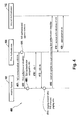
- shows a sequence of operation diagram illustrating the interactions between the various components performing the method in accordance with the invention.
- Fig. 1 shows a block diagram 100 illustrating schematically a
mobile communication network 104 and amobile station 102. Themobile station 102 can be located as shown by position A in afirst area 114 or in asecond area 116 as indicated by position B. Themobile communication network 104 comprises afirst authenticator 106 and asecond authenticator 112. Thefirst authenticator 106 and thesecond authenticator 112 can communicate with each other via thecommunication link 118. - Assuming that the
mobile station 102 is located in thearea 114 it is able to communicate with themobile communication network 104 via thecommunication link 120. When themobile station 102 is located in thearea 116 then it communicates with themobile communication network 104 via thecommunication link 122. The communication links 120 and 122 are typically wireless communication links between themobile station 102 and a base station which is not shown in fig. 1. From the base station the signals exchanged between the mobile station and the mobile communication network are typically processed by wired communication links. - In operation, the
mobile station 102 being located inarea 114 sends alocation update message 110 which comprises afirst authenticator identifier 108 to themobile communication network 104. Thefirst authenticator identifier 108 relates to thefirst authenticator 106. Thefirst identifier 108 is then used to request confirmation that themobile station 102 has been previously authenticated by thefirst authenticator 106 and that the message is authentic. - The
first authenticator 106 typically authenticates themobile station 102 against themobile communication network 104 when themobile station 102 connects fromarea 114 to themobile communication network 104 for the first time, for example when it is switched on by its user, or when the lifetime of a previous authentication has timed out. Once themobile station 102 is authenticated by thefirst authenticator 106 thefirst authenticator 106 is the serving authenticator for themobile station 102. Thefirst authenticator 106 assigns itsfirst authenticator identifier 108 by which it is identifiable within themobile communication network 104 to themobile station 102. - When there is no traffic between the
mobile station 102 and themobile communication network 104, themobile station 102 operates in idle mode. No traffic means that there is no active connection established between themobile station 102 and themobile communication network 104. Themobile station 102 listens in idle mode to a beacon signal or to a paging request that might be emitted by themobile communication network 104. In response to the reception of a paging request themobile station 102 wakes up, leaves the idle mode and returns to the operational mode. The beacon signal typically comprises information about the area covered by the beacon signal. When themobile station 102 detects a beacon signal from which it notices that its area has been changed then themobile station 102 sends alocation update message 110 in response to the beacon signal which comprises thefirst authenticator identifier 108. This scenario for example occurs when the mobile station has been authenticated by thefirst authenticator 106 when it has been in thearea 114. Then, after themobile station 102 has been moved to thearea 116 themobile station 102 receives a beacon signal and notices due to the area information comprised in the beacon signal that it is not any more in thearea 114 but inarea 116. - Assuming that the
second authenticator 112 is assigned to thearea 116, thesecond authenticator 112 would be by default been requested to confirm the authentication of themobile station 102. Since thelocation update message 110 comprises thefirst authenticator identifier 108 relating thefirst authenticator 106, thesecond authenticator 112 requests thefirst authenticator 106 via thecommunication link 118 if themobile station 102 has been authenticated by thefirst authenticator 106 previously and if the message is authentic. - Fig. 2 shows a flow diagram 200 illustrating the basic steps performed by the method in accordance with the invention. In step 202 a location update message is received from the mobile station at the mobile communication network. The location update message comprises a first authenticator identifier which relates to a first authenticator that has been assigned the first authenticator to the mobile station in a previous authentication. In step 204 a confirmation is requested from the first authenticator that the mobile station has been previously authenticated and that the message is authentic.
- Fig. 3 shows a block diagram 300 of a
mobile communication network 304 and themobile station 302. Themobile communication network 304 consists of acore network 318 and anaccess network 326. Thecore network 318 comprises anauthentication server 320. Theauthentication server 320 holdsaccess keys 322 which can be employed to generate encryption keys to decipher secured messages as for example location update messages that are sent frommobile station 302. - The
access network 326 comprises afirst authenticator 306 and asecond authenticator 312. Thefirst authenticator 306 is identifiable by afirst authenticator identifier 308 while thesecond authenticator 312 is identifiable by thesecond authenticator identifier 328. Theaccess network 326 further comprises apaging controller 330. Themobile station 302 can be located inarea 314 or inarea 316 as indicated by positions A or B, respectively. Thefirst authenticator 306 is assigned toarea 314 and thesecond authenticator 312 is assigned toarea 316. - A
paging controller 330 located in theaccess network 326 typically controls the areas ofmobile station 302. In order to identify thepaging controller 330 thelocation update message 310 sent by themobile station 302 for performing a location update comprises apaging controller identifier 332. Thispaging controller identifier 332 is given by thepaging controller 330 to themobile station 302 when themobile station 302 is going into idle mode. - The
authenticator identifier 308 is also assigned to themobile station 302 during a first authentication of the mobile station performed by thefirst authenticator 306 against themobile communication network 304. Thefirst authenticator identifier 308 is further comprised in the location update message sent by themobile station 302. - The
location update message 310 further comprisesother data 334 relating to the actual location update information. Thedata 334 is typically sent in an encrypted way while thefirst authenticator identifier 308 as well as thepaging controller identifier 332 are sent in an unencrypted way. - When the
first authenticator 306 authenticates themobile station 302 against themobile communication network 304, the authenticator requests theaccess keys 322 from theauthentication server 320 by which encryption keys can be generated by which thedata 334 comprised in thelocation update message 310 can be deciphered. After the reception of alocation update message 310 from themobile station 302 thefirst authenticator 306 can be identified due to theauthenticator identifier 308 that is comprised in thelocation update message 310. The first authenticator can then be requested to confirm that the mobile station has been previously authenticated. Moreover, theaccess keys 322 and the derived encryption keys held by thefirst authenticator 306 can be used to decipher thedata 334 comprised in thelocation update message 310. - When the
mobile station 302 moves after it has been authenticated by thefirst authenticator 306 to thearea 316, then thesecond authenticator 312 is requested to confirm the authentication of an incominglocation update message 310. Due to thefirst authenticator identifier 308 thesecond authenticator 312, which is identified by thesecond authenticator identifier 328, requests thefirst authenticator 306 if the mobile station has been authenticated against thecommunication network 304 before and if the message is authentic. - Fig. 4 shows a sequence of operation diagram 400 illustrating the basic interactions between a
mobile station 102, afirst authenticator 106, and asecond authenticator 112. Instep 402 the mobile station communicates with the first authenticator, whereby instep 404 themobile station 402 is authenticated against the mobile communication network. Instep 406, the first authenticator identifier is given to themobile station 102, so that in step 408 the first authenticator has been assigned to the mobile station. Instep 410 the mobile station requests the mobile communication network if it can go into idle mode. The mobile communication network responds instep 412 thatmobile station 102 can go into idle mode. Instep 414 themobile station 102 receives a beacon signal after it has changed the area. In response it sends in step 416 a location update message comprising the first authenticator identifier. The message is received by thesecond authenticator 112 because themobile station 102 has changed the area. Instep 418, thesecond authenticator 112 requests thefirst authenticator 106 if the mobile station has been authenticated before by thefirst authenticator 106 and if the message is authentic. Instep 420 the first authenticator validates the authentication if the authentication is still valid and if the message is authentic or otherwise denies the authentification of themobile station 102. -
100 Block diagram 102 mobile station 104 mobile communication network 106 First authenticator 108 First authenticator identifier 110 Location update message 112 Second authenticator 114 First area 116 Area 118 Communication link 120 Communication link 122 Communication link 200 Flow diagram 202 Step of receiving location update message 204 Step of requesting confirmation 300 Block diagram 302 Mobile station 304 Mobile communication network 306 First authenticator 308 First authenticator identifier 310 Location update message 312 Second authenticator 314 First area 316 Second area 318 Core network 320 Authentication server 322 Access keys 324 Communication link 326 Access network 328 Second authenticator ID 330 Paging controller 332 Paging controller ID 334 Data 400 Sequence of operation diagram
Claims (10)
- A method of performing a location update of a mobile station (102) to a mobile communication network (104), said mobile communication network (104) comprising at least a first authenticator (106), said first authenticator (106) being identifiable by a first authenticator identifier (108), said method comprising:- receiving a location update message (110) from said mobile station (102) at said mobile communication network (104), said location update message (110) comprising said first authenticator identifier (108) said first authenticator (106) performed a previous authentication of said mobile station;- requesting confirmation from the first authenticator (106) that said mobile station (102) has been previously authenticated and that the location update message (110) is authentic.
- The method of claim 1 further comprising:- authenticating said mobile station (102) against said mobile communication network (104) by said first authenticator (106);- assigning said first authenticator identifier (108) to said mobile station (102).
- The method of claim 1 or 2, wherein said first authenticator (106) relates to a first area (114) and wherein a second authenticator (112) relates to a second area (116), wherein said method further comprises:- receiving said location update message (110) from said mobile station (112) in said second area (116);- sending a request from said second authenticator (112) to said first authenticator (106) thereby requesting confirmation from the first authenticator (106) that said mobile station (112) has been previously authenticated and that the location update message (110) is authentic.
- A method of performing a location update of a mobile station (102), said method comprising:- generating a location update message (110), said location update message (110) comprising a first authenticator identifier (108), said first authenticator identifier (108) relating to a first authenticator (106) of a mobile communication network (104);- sending said location update message (110) to said mobile communication network (104).
- A mobile station (102) comprising means for generating a location update message (110), said location update message (110) comprising a first authenticator identifier (108), said first authenticator identifier (108) relating to a first authenticator (106) of a mobile communication network (104), and means for sending said location update message (110) to said mobile communication network (104).
- A mobile communication network (104) comprising:- at least a first authenticator (106), said first authenticator (106) being identifiable by a first authenticator identifier (108);- means for receiving a location update message (110) from said mobile station (102) at said mobile communication network (104), said location update message (110) comprising said first authenticator identifier (108), said first authenticator (106) performed a previous authentication of said mobile station;- means for requesting confirmation from the first authenticator (106) that said mobile station has been previously authenticated.
- The mobile communication network of claim 6 further comprising:- means for authenticating said mobile station (102) against said mobile communication network (104) by said first authenticator (106);- means for sending said first authenticator identifier (108) to said mobile station (102).
- A mobile communication component comprising:- means for receiving a location update message (110) from a mobile station (102), said location update message (110) comprising a first authenticator identifier (108), said first authenticator identifier (108) being assigned to said mobile station (102) in a previous authentication by a first authenticator (106);- means for requesting confirmation from the first authenticator (106) that said mobile station (102) has been previously authenticated and that the location update message (110) is authentic.
- A computer program product comprising computer executable instructions for performing a location update of a mobile station (102) to a mobile communication network (104), said instructions being adapted to perform the steps of:- receiving a location update message (110) from said mobile station (102) at said mobile communication network (104), said location update message (110) comprising a first authenticator identifier (108) relating to a first authenticator (106) of said mobile communication network (104), said first authenticator (106) performed a previous authentication of said mobile station (102);- requesting confirmation from the first authenticator (106) that said mobile station (102) has been previously authenticated and that the location update message (110) is authentic.
- A computer program product comprising computer executable instructions for performing a location update of a mobile station (102) to a mobile communication network (104), said instructions being adapted to performing the steps of:- generating a location update message (110), said location update message (110) comprising a first authenticator identifier (108), said first authenticator identifier (108) relating to a first authenticator (106) of a mobile communication network;- sending said location update message (110) to said mobile communication network (104).
Priority Applications (2)
| Application Number | Priority Date | Filing Date | Title |
|---|---|---|---|
| AT06290571T ATE514295T1 (en) | 2006-04-03 | 2006-04-03 | A METHOD FOR PERFORMING A LOCATION UPDATE OF A MOBILE STATION IN A MOBILE COMMUNICATIONS NETWORK, MOBILE STATION AND MOBILE COMMUNICATIONS NETWORK |
| EP06290571A EP1843523B1 (en) | 2006-04-03 | 2006-04-03 | A method of performing a location update of a mobile station to a mobile communication network, a mobile station, and a mobile communication network |
Applications Claiming Priority (1)
| Application Number | Priority Date | Filing Date | Title |
|---|---|---|---|
| EP06290571A EP1843523B1 (en) | 2006-04-03 | 2006-04-03 | A method of performing a location update of a mobile station to a mobile communication network, a mobile station, and a mobile communication network |
Publications (2)
| Publication Number | Publication Date |
|---|---|
| EP1843523A1 true EP1843523A1 (en) | 2007-10-10 |
| EP1843523B1 EP1843523B1 (en) | 2011-06-22 |
Family
ID=36928145
Family Applications (1)
| Application Number | Title | Priority Date | Filing Date |
|---|---|---|---|
| EP06290571A Expired - Lifetime EP1843523B1 (en) | 2006-04-03 | 2006-04-03 | A method of performing a location update of a mobile station to a mobile communication network, a mobile station, and a mobile communication network |
Country Status (2)
| Country | Link |
|---|---|
| EP (1) | EP1843523B1 (en) |
| AT (1) | ATE514295T1 (en) |
Cited By (2)
| Publication number | Priority date | Publication date | Assignee | Title |
|---|---|---|---|---|
| GB2454645A (en) * | 2007-08-31 | 2009-05-20 | Ericsson Telefon Ab L M | Location update of a mobile node |
| WO2009076849A1 (en) * | 2007-12-04 | 2009-06-25 | Huawei Technologies Co., Ltd. | Method and device for implementing location update in wireless communication system |
Citations (2)
| Publication number | Priority date | Publication date | Assignee | Title |
|---|---|---|---|---|
| WO2004073325A2 (en) * | 2003-02-10 | 2004-08-26 | Flarion Technologies, Inc. | Methods and apparatus for updating mobile node location information |
| US20050250474A1 (en) | 2004-05-07 | 2005-11-10 | Samsung Electronics Co., Ltd. | System and method for controlling idle mode location in a broadband wireless access communication system |
-
2006
- 2006-04-03 EP EP06290571A patent/EP1843523B1/en not_active Expired - Lifetime
- 2006-04-03 AT AT06290571T patent/ATE514295T1/en not_active IP Right Cessation
Patent Citations (2)
| Publication number | Priority date | Publication date | Assignee | Title |
|---|---|---|---|---|
| WO2004073325A2 (en) * | 2003-02-10 | 2004-08-26 | Flarion Technologies, Inc. | Methods and apparatus for updating mobile node location information |
| US20050250474A1 (en) | 2004-05-07 | 2005-11-10 | Samsung Electronics Co., Ltd. | System and method for controlling idle mode location in a broadband wireless access communication system |
Non-Patent Citations (3)
| Title |
|---|
| "Fix for Location Update primitive", IEEE 802.16G-06/024, 3 January 2006 (2006-01-03), pages 1 - 5 |
| IEEE: "Draft IEEE Standard for Local and metropolitan area networks; Part 16: Air Interface for fixed and Mobile Broadband Wireless Access Systems - Management Plane Procedures and Services", DRAFT IEEE STANDARD FOR LOCAL METROPOLITAN AREA NETWORKS, IEEE P802.16G/D1, 30 January 2006 (2006-01-30), pages 1 - 95-99, XP002397439, Retrieved from the Internet <URL:http://grouper.ieee.org/groups/802/16/pubs/80216g.html> [retrieved on 20060901] * |
| ZTE CORPORATION: "Fix for Location Update Primitive", IEEE C802.16G-06/024, 1 March 2006 (2006-03-01), pages 1 - 5, XP002397438, Retrieved from the Internet <URL:http://grouper.ieee.org/groups/802/16/netman/contrib/C80216g-06_024.pdf> [retrieved on 20060901] * |
Cited By (3)
| Publication number | Priority date | Publication date | Assignee | Title |
|---|---|---|---|---|
| GB2454645A (en) * | 2007-08-31 | 2009-05-20 | Ericsson Telefon Ab L M | Location update of a mobile node |
| GB2454645B (en) * | 2007-08-31 | 2012-05-09 | Ericsson Telefon Ab L M | Location update of a mobile node |
| WO2009076849A1 (en) * | 2007-12-04 | 2009-06-25 | Huawei Technologies Co., Ltd. | Method and device for implementing location update in wireless communication system |
Also Published As
| Publication number | Publication date |
|---|---|
| ATE514295T1 (en) | 2011-07-15 |
| EP1843523B1 (en) | 2011-06-22 |
Similar Documents
| Publication | Publication Date | Title |
|---|---|---|
| RU2326429C2 (en) | Authentication in communications | |
| CN101150857B (en) | Certificate based authentication authorization accounting scheme for loose coupling interworking | |
| US20030084287A1 (en) | System and method for upper layer roaming authentication | |
| CN102111766B (en) | Network accessing method, device and system | |
| JP2000269959A (en) | Authentication method by updated key | |
| JPH07115413A (en) | Mobile communication terminal authentication system | |
| CN111182546B (en) | Method, equipment and system for accessing wireless network | |
| US20140341185A1 (en) | Method and device for accounting in wifi roaming based on ac and ap interworking | |
| US8204478B2 (en) | System for setting security in wireless network system using cluster function and method of controlling the same | |
| AU2004216606A1 (en) | Layer 2 switch device with verification management table | |
| US7477746B2 (en) | Apparatus for dynamically managing group transient key in wireless local area network system and method thereof | |
| US20070098176A1 (en) | Wireless LAN security system and method | |
| KR20160143333A (en) | Method for Double Certification by using Double Channel | |
| CN102143492A (en) | VPN connection establishment method, mobile terminal, server | |
| WO2006021236A1 (en) | Method and apparatus for supporting secure handover | |
| JP2008042862A (en) | Wireless lan communication system, method thereof and program | |
| EP1843523B1 (en) | A method of performing a location update of a mobile station to a mobile communication network, a mobile station, and a mobile communication network | |
| EP1842358B1 (en) | Mobile station, system, network processor and method for use in mobile communications | |
| CN1301608C (en) | Method for implementing peer-to-peer WLAN with center certification | |
| CN100484286C (en) | Mobile station position registering and authentifying method | |
| KR100912287B1 (en) | User authentication system and method for interworking between CDM mobile communication network and public wireless LAN network | |
| JPWO2008075626A1 (en) | Communication terminal authentication system, Internet telephone system | |
| JP4775562B2 (en) | Mobile communication system and message concealment method | |
| CN112702776A (en) | Method for realizing wireless terminal access to wireless local area network and wireless access point | |
| JP2009118232A (en) | Information relay system and communication terminal |
Legal Events
| Date | Code | Title | Description |
|---|---|---|---|
| PUAI | Public reference made under article 153(3) epc to a published international application that has entered the european phase |
Free format text: ORIGINAL CODE: 0009012 |
|
| AK | Designated contracting states |
Kind code of ref document: A1 Designated state(s): AT BE BG CH CY CZ DE DK EE ES FI FR GB GR HU IE IS IT LI LT LU LV MC NL PL PT RO SE SI SK TR |
|
| AX | Request for extension of the european patent |
Extension state: AL BA HR MK YU |
|
| 17P | Request for examination filed |
Effective date: 20080402 |
|
| 17Q | First examination report despatched |
Effective date: 20080508 |
|
| AKX | Designation fees paid |
Designated state(s): AT BE BG CH CY CZ DE DK EE ES FI FR GB GR HU IE IS IT LI LT LU LV MC NL PL PT RO SE SI SK TR |
|
| RIC1 | Information provided on ipc code assigned before grant |
Ipc: H04W 12/06 20090101AFI20101021BHEP |
|
| GRAP | Despatch of communication of intention to grant a patent |
Free format text: ORIGINAL CODE: EPIDOSNIGR1 |
|
| GRAS | Grant fee paid |
Free format text: ORIGINAL CODE: EPIDOSNIGR3 |
|
| GRAA | (expected) grant |
Free format text: ORIGINAL CODE: 0009210 |
|
| AK | Designated contracting states |
Kind code of ref document: B1 Designated state(s): AT BE BG CH CY CZ DE DK EE ES FI FR GB GR HU IE IS IT LI LT LU LV MC NL PL PT RO SE SI SK TR |
|
| REG | Reference to a national code |
Ref country code: GB Ref legal event code: FG4D |
|
| REG | Reference to a national code |
Ref country code: CH Ref legal event code: EP |
|
| REG | Reference to a national code |
Ref country code: IE Ref legal event code: FG4D |
|
| REG | Reference to a national code |
Ref country code: DE Ref legal event code: R096 Ref document number: 602006022637 Country of ref document: DE Effective date: 20110811 |
|
| REG | Reference to a national code |
Ref country code: NL Ref legal event code: VDEP Effective date: 20110622 |
|
| PG25 | Lapsed in a contracting state [announced via postgrant information from national office to epo] |
Ref country code: SE Free format text: LAPSE BECAUSE OF FAILURE TO SUBMIT A TRANSLATION OF THE DESCRIPTION OR TO PAY THE FEE WITHIN THE PRESCRIBED TIME-LIMIT Effective date: 20110622 Ref country code: LT Free format text: LAPSE BECAUSE OF FAILURE TO SUBMIT A TRANSLATION OF THE DESCRIPTION OR TO PAY THE FEE WITHIN THE PRESCRIBED TIME-LIMIT Effective date: 20110622 |
|
| PG25 | Lapsed in a contracting state [announced via postgrant information from national office to epo] |
Ref country code: LV Free format text: LAPSE BECAUSE OF FAILURE TO SUBMIT A TRANSLATION OF THE DESCRIPTION OR TO PAY THE FEE WITHIN THE PRESCRIBED TIME-LIMIT Effective date: 20110622 Ref country code: FI Free format text: LAPSE BECAUSE OF FAILURE TO SUBMIT A TRANSLATION OF THE DESCRIPTION OR TO PAY THE FEE WITHIN THE PRESCRIBED TIME-LIMIT Effective date: 20110622 Ref country code: CY Free format text: LAPSE BECAUSE OF FAILURE TO SUBMIT A TRANSLATION OF THE DESCRIPTION OR TO PAY THE FEE WITHIN THE PRESCRIBED TIME-LIMIT Effective date: 20110622 Ref country code: GR Free format text: LAPSE BECAUSE OF FAILURE TO SUBMIT A TRANSLATION OF THE DESCRIPTION OR TO PAY THE FEE WITHIN THE PRESCRIBED TIME-LIMIT Effective date: 20110923 Ref country code: AT Free format text: LAPSE BECAUSE OF FAILURE TO SUBMIT A TRANSLATION OF THE DESCRIPTION OR TO PAY THE FEE WITHIN THE PRESCRIBED TIME-LIMIT Effective date: 20110622 Ref country code: SI Free format text: LAPSE BECAUSE OF FAILURE TO SUBMIT A TRANSLATION OF THE DESCRIPTION OR TO PAY THE FEE WITHIN THE PRESCRIBED TIME-LIMIT Effective date: 20110622 |
|
| PG25 | Lapsed in a contracting state [announced via postgrant information from national office to epo] |
Ref country code: BE Free format text: LAPSE BECAUSE OF FAILURE TO SUBMIT A TRANSLATION OF THE DESCRIPTION OR TO PAY THE FEE WITHIN THE PRESCRIBED TIME-LIMIT Effective date: 20110622 Ref country code: NL Free format text: LAPSE BECAUSE OF FAILURE TO SUBMIT A TRANSLATION OF THE DESCRIPTION OR TO PAY THE FEE WITHIN THE PRESCRIBED TIME-LIMIT Effective date: 20110622 |
|
| PG25 | Lapsed in a contracting state [announced via postgrant information from national office to epo] |
Ref country code: PT Free format text: LAPSE BECAUSE OF FAILURE TO SUBMIT A TRANSLATION OF THE DESCRIPTION OR TO PAY THE FEE WITHIN THE PRESCRIBED TIME-LIMIT Effective date: 20111024 Ref country code: IS Free format text: LAPSE BECAUSE OF FAILURE TO SUBMIT A TRANSLATION OF THE DESCRIPTION OR TO PAY THE FEE WITHIN THE PRESCRIBED TIME-LIMIT Effective date: 20111022 Ref country code: EE Free format text: LAPSE BECAUSE OF FAILURE TO SUBMIT A TRANSLATION OF THE DESCRIPTION OR TO PAY THE FEE WITHIN THE PRESCRIBED TIME-LIMIT Effective date: 20110622 Ref country code: CZ Free format text: LAPSE BECAUSE OF FAILURE TO SUBMIT A TRANSLATION OF THE DESCRIPTION OR TO PAY THE FEE WITHIN THE PRESCRIBED TIME-LIMIT Effective date: 20110622 |
|
| RAP2 | Party data changed (patent owner data changed or rights of a patent transferred) |
Owner name: ALCATEL LUCENT |
|
| PG25 | Lapsed in a contracting state [announced via postgrant information from national office to epo] |
Ref country code: SK Free format text: LAPSE BECAUSE OF FAILURE TO SUBMIT A TRANSLATION OF THE DESCRIPTION OR TO PAY THE FEE WITHIN THE PRESCRIBED TIME-LIMIT Effective date: 20110622 Ref country code: PL Free format text: LAPSE BECAUSE OF FAILURE TO SUBMIT A TRANSLATION OF THE DESCRIPTION OR TO PAY THE FEE WITHIN THE PRESCRIBED TIME-LIMIT Effective date: 20110622 Ref country code: RO Free format text: LAPSE BECAUSE OF FAILURE TO SUBMIT A TRANSLATION OF THE DESCRIPTION OR TO PAY THE FEE WITHIN THE PRESCRIBED TIME-LIMIT Effective date: 20110622 |
|
| REG | Reference to a national code |
Ref country code: CH Ref legal event code: PCOW Free format text: ALCATEL LUCENT;3, AVENUE OCTAVE GREARD;75007 PARIS (FR) |
|
| PLBE | No opposition filed within time limit |
Free format text: ORIGINAL CODE: 0009261 |
|
| STAA | Information on the status of an ep patent application or granted ep patent |
Free format text: STATUS: NO OPPOSITION FILED WITHIN TIME LIMIT |
|
| 26N | No opposition filed |
Effective date: 20120323 |
|
| PG25 | Lapsed in a contracting state [announced via postgrant information from national office to epo] |
Ref country code: IT Free format text: LAPSE BECAUSE OF FAILURE TO SUBMIT A TRANSLATION OF THE DESCRIPTION OR TO PAY THE FEE WITHIN THE PRESCRIBED TIME-LIMIT Effective date: 20110622 |
|
| PG25 | Lapsed in a contracting state [announced via postgrant information from national office to epo] |
Ref country code: DK Free format text: LAPSE BECAUSE OF FAILURE TO SUBMIT A TRANSLATION OF THE DESCRIPTION OR TO PAY THE FEE WITHIN THE PRESCRIBED TIME-LIMIT Effective date: 20110622 |
|
| REG | Reference to a national code |
Ref country code: DE Ref legal event code: R097 Ref document number: 602006022637 Country of ref document: DE Effective date: 20120323 |
|
| PG25 | Lapsed in a contracting state [announced via postgrant information from national office to epo] |
Ref country code: MC Free format text: LAPSE BECAUSE OF NON-PAYMENT OF DUE FEES Effective date: 20120430 |
|
| REG | Reference to a national code |
Ref country code: CH Ref legal event code: PL |
|
| REG | Reference to a national code |
Ref country code: IE Ref legal event code: MM4A |
|
| PG25 | Lapsed in a contracting state [announced via postgrant information from national office to epo] |
Ref country code: LI Free format text: LAPSE BECAUSE OF NON-PAYMENT OF DUE FEES Effective date: 20120430 Ref country code: IE Free format text: LAPSE BECAUSE OF NON-PAYMENT OF DUE FEES Effective date: 20120403 Ref country code: CH Free format text: LAPSE BECAUSE OF NON-PAYMENT OF DUE FEES Effective date: 20120430 |
|
| PG25 | Lapsed in a contracting state [announced via postgrant information from national office to epo] |
Ref country code: ES Free format text: LAPSE BECAUSE OF FAILURE TO SUBMIT A TRANSLATION OF THE DESCRIPTION OR TO PAY THE FEE WITHIN THE PRESCRIBED TIME-LIMIT Effective date: 20111003 |
|
| PG25 | Lapsed in a contracting state [announced via postgrant information from national office to epo] |
Ref country code: BG Free format text: LAPSE BECAUSE OF FAILURE TO SUBMIT A TRANSLATION OF THE DESCRIPTION OR TO PAY THE FEE WITHIN THE PRESCRIBED TIME-LIMIT Effective date: 20110922 |
|
| REG | Reference to a national code |
Ref country code: FR Ref legal event code: GC Effective date: 20131018 |
|
| PG25 | Lapsed in a contracting state [announced via postgrant information from national office to epo] |
Ref country code: TR Free format text: LAPSE BECAUSE OF FAILURE TO SUBMIT A TRANSLATION OF THE DESCRIPTION OR TO PAY THE FEE WITHIN THE PRESCRIBED TIME-LIMIT Effective date: 20110622 |
|
| PG25 | Lapsed in a contracting state [announced via postgrant information from national office to epo] |
Ref country code: LU Free format text: LAPSE BECAUSE OF NON-PAYMENT OF DUE FEES Effective date: 20120403 |
|
| PG25 | Lapsed in a contracting state [announced via postgrant information from national office to epo] |
Ref country code: HU Free format text: LAPSE BECAUSE OF FAILURE TO SUBMIT A TRANSLATION OF THE DESCRIPTION OR TO PAY THE FEE WITHIN THE PRESCRIBED TIME-LIMIT Effective date: 20060403 |
|
| REG | Reference to a national code |
Ref country code: FR Ref legal event code: RG Effective date: 20141016 |
|
| REG | Reference to a national code |
Ref country code: FR Ref legal event code: PLFP Year of fee payment: 10 |
|
| REG | Reference to a national code |
Ref country code: FR Ref legal event code: PLFP Year of fee payment: 11 |
|
| PGFP | Annual fee paid to national office [announced via postgrant information from national office to epo] |
Ref country code: DE Payment date: 20160421 Year of fee payment: 11 Ref country code: GB Payment date: 20160421 Year of fee payment: 11 |
|
| PGFP | Annual fee paid to national office [announced via postgrant information from national office to epo] |
Ref country code: FR Payment date: 20160421 Year of fee payment: 11 |
|
| REG | Reference to a national code |
Ref country code: DE Ref legal event code: R119 Ref document number: 602006022637 Country of ref document: DE |
|
| GBPC | Gb: european patent ceased through non-payment of renewal fee |
Effective date: 20170403 |
|
| REG | Reference to a national code |
Ref country code: FR Ref legal event code: ST Effective date: 20171229 |
|
| PG25 | Lapsed in a contracting state [announced via postgrant information from national office to epo] |
Ref country code: DE Free format text: LAPSE BECAUSE OF NON-PAYMENT OF DUE FEES Effective date: 20171103 Ref country code: FR Free format text: LAPSE BECAUSE OF NON-PAYMENT OF DUE FEES Effective date: 20170502 |
|
| PG25 | Lapsed in a contracting state [announced via postgrant information from national office to epo] |
Ref country code: GB Free format text: LAPSE BECAUSE OF NON-PAYMENT OF DUE FEES Effective date: 20170403 |