EP1840121A1 - Glycine derivative and use thereof - Google Patents
Glycine derivative and use thereof Download PDFInfo
- Publication number
- EP1840121A1 EP1840121A1 EP05820176A EP05820176A EP1840121A1 EP 1840121 A1 EP1840121 A1 EP 1840121A1 EP 05820176 A EP05820176 A EP 05820176A EP 05820176 A EP05820176 A EP 05820176A EP 1840121 A1 EP1840121 A1 EP 1840121A1
- Authority
- EP
- European Patent Office
- Prior art keywords
- pent
- dichlorobenzamido
- phenyl
- pyrimidin
- enoic acid
- Prior art date
- Legal status (The legal status is an assumption and is not a legal conclusion. Google has not performed a legal analysis and makes no representation as to the accuracy of the status listed.)
- Granted
Links
- 150000002332 glycine derivatives Chemical class 0.000 title description 3
- 150000001875 compounds Chemical class 0.000 claims abstract description 157
- 230000001225 therapeutic effect Effects 0.000 claims abstract description 15
- 230000000069 prophylactic effect Effects 0.000 claims abstract description 13
- 125000001309 chloro group Chemical group Cl* 0.000 claims description 216
- 125000001449 isopropyl group Chemical group [H]C([H])([H])C([H])(*)C([H])([H])[H] 0.000 claims description 32
- 150000003839 salts Chemical class 0.000 claims description 27
- 125000002496 methyl group Chemical group [H]C([H])([H])* 0.000 claims description 20
- -1 chloro, bromo, iodo Chemical group 0.000 claims description 16
- 229910052739 hydrogen Inorganic materials 0.000 claims description 12
- 125000001997 phenyl group Chemical group [H]C1=C([H])C([H])=C(*)C([H])=C1[H] 0.000 claims description 12
- 239000001257 hydrogen Substances 0.000 claims description 11
- 125000006527 (C1-C5) alkyl group Chemical group 0.000 claims description 9
- 125000004435 hydrogen atom Chemical group [H]* 0.000 claims description 9
- 125000006273 (C1-C3) alkyl group Chemical group 0.000 claims description 8
- 125000001412 tetrahydropyranyl group Chemical group 0.000 claims description 5
- 125000006274 (C1-C3)alkoxy group Chemical group 0.000 claims description 4
- 125000003342 alkenyl group Chemical group 0.000 claims description 4
- 125000001797 benzyl group Chemical group [H]C1=C([H])C([H])=C(C([H])=C1[H])C([H])([H])* 0.000 claims description 4
- 125000004981 cycloalkylmethyl group Chemical group 0.000 claims description 4
- 125000001731 2-cyanoethyl group Chemical group [H]C([H])(*)C([H])([H])C#N 0.000 claims description 3
- 125000001153 fluoro group Chemical group F* 0.000 claims description 3
- 125000002887 hydroxy group Chemical group [H]O* 0.000 claims description 2
- 229940125700 inflammatory bowel disease agent Drugs 0.000 claims description 2
- 125000005344 pyridylmethyl group Chemical group [H]C1=C([H])C([H])=C([H])C(=N1)C([H])([H])* 0.000 claims description 2
- 208000022559 Inflammatory bowel disease Diseases 0.000 abstract description 29
- 238000010521 absorption reaction Methods 0.000 abstract description 6
- 238000001727 in vivo Methods 0.000 abstract description 5
- 230000002459 sustained effect Effects 0.000 abstract description 2
- XEKOWRVHYACXOJ-UHFFFAOYSA-N Ethyl acetate Chemical compound CCOC(C)=O XEKOWRVHYACXOJ-UHFFFAOYSA-N 0.000 description 381
- 239000000243 solution Substances 0.000 description 172
- VLKZOEOYAKHREP-UHFFFAOYSA-N n-Hexane Chemical compound CCCCCC VLKZOEOYAKHREP-UHFFFAOYSA-N 0.000 description 159
- 239000000203 mixture Substances 0.000 description 151
- ZMXDDKWLCZADIW-UHFFFAOYSA-N N,N-Dimethylformamide Chemical compound CN(C)C=O ZMXDDKWLCZADIW-UHFFFAOYSA-N 0.000 description 118
- PMZURENOXWZQFD-UHFFFAOYSA-L Sodium Sulfate Chemical compound [Na+].[Na+].[O-]S([O-])(=O)=O PMZURENOXWZQFD-UHFFFAOYSA-L 0.000 description 114
- 238000006243 chemical reaction Methods 0.000 description 110
- HEDRZPFGACZZDS-UHFFFAOYSA-N Chloroform Chemical compound ClC(Cl)Cl HEDRZPFGACZZDS-UHFFFAOYSA-N 0.000 description 107
- VYPSYNLAJGMNEJ-UHFFFAOYSA-N Silicium dioxide Chemical compound O=[Si]=O VYPSYNLAJGMNEJ-UHFFFAOYSA-N 0.000 description 83
- 239000000741 silica gel Substances 0.000 description 81
- 229910002027 silica gel Inorganic materials 0.000 description 81
- HEDRZPFGACZZDS-MICDWDOJSA-N Trichloro(2H)methane Chemical compound [2H]C(Cl)(Cl)Cl HEDRZPFGACZZDS-MICDWDOJSA-N 0.000 description 78
- WYURNTSHIVDZCO-UHFFFAOYSA-N Tetrahydrofuran Chemical compound C1CCOC1 WYURNTSHIVDZCO-UHFFFAOYSA-N 0.000 description 76
- YMWUJEATGCHHMB-UHFFFAOYSA-N Dichloromethane Chemical compound ClCCl YMWUJEATGCHHMB-UHFFFAOYSA-N 0.000 description 72
- 238000004440 column chromatography Methods 0.000 description 69
- 239000003480 eluent Substances 0.000 description 67
- ZMANZCXQSJIPKH-UHFFFAOYSA-N Triethylamine Chemical compound CCN(CC)CC ZMANZCXQSJIPKH-UHFFFAOYSA-N 0.000 description 63
- 239000000706 filtrate Substances 0.000 description 61
- 238000001914 filtration Methods 0.000 description 61
- HEMHJVSKTPXQMS-UHFFFAOYSA-M Sodium hydroxide Chemical compound [OH-].[Na+] HEMHJVSKTPXQMS-UHFFFAOYSA-M 0.000 description 60
- HPALAKNZSZLMCH-UHFFFAOYSA-M sodium;chloride;hydrate Chemical class O.[Na+].[Cl-] HPALAKNZSZLMCH-UHFFFAOYSA-M 0.000 description 58
- XLYOFNOQVPJJNP-UHFFFAOYSA-N water Substances O XLYOFNOQVPJJNP-UHFFFAOYSA-N 0.000 description 58
- OKKJLVBELUTLKV-UHFFFAOYSA-N Methanol Chemical compound OC OKKJLVBELUTLKV-UHFFFAOYSA-N 0.000 description 57
- 239000012044 organic layer Substances 0.000 description 54
- 239000002904 solvent Substances 0.000 description 53
- XDTMQSROBMDMFD-UHFFFAOYSA-N Cyclohexane Chemical compound C1CCCCC1 XDTMQSROBMDMFD-UHFFFAOYSA-N 0.000 description 51
- 239000012300 argon atmosphere Substances 0.000 description 43
- BWHMMNNQKKPAPP-UHFFFAOYSA-L potassium carbonate Chemical compound [K+].[K+].[O-]C([O-])=O BWHMMNNQKKPAPP-UHFFFAOYSA-L 0.000 description 40
- KEAYESYHFKHZAL-UHFFFAOYSA-N Sodium Chemical compound [Na] KEAYESYHFKHZAL-UHFFFAOYSA-N 0.000 description 37
- 239000012312 sodium hydride Substances 0.000 description 37
- 229910000104 sodium hydride Inorganic materials 0.000 description 37
- VEXZGXHMUGYJMC-UHFFFAOYSA-N Hydrochloric acid Chemical compound Cl VEXZGXHMUGYJMC-UHFFFAOYSA-N 0.000 description 36
- 239000011734 sodium Substances 0.000 description 36
- IAZDPXIOMUYVGZ-UHFFFAOYSA-N Dimethylsulphoxide Chemical compound CS(C)=O IAZDPXIOMUYVGZ-UHFFFAOYSA-N 0.000 description 35
- RTZKZFJDLAIYFH-UHFFFAOYSA-N Diethyl ether Chemical compound CCOCC RTZKZFJDLAIYFH-UHFFFAOYSA-N 0.000 description 34
- AVQGVKMWEAEAKV-UHFFFAOYSA-N methyl 2-[(2,6-dichlorobenzoyl)amino]pent-4-enoate Chemical compound COC(=O)C(CC=C)NC(=O)C1=C(Cl)C=CC=C1Cl AVQGVKMWEAEAKV-UHFFFAOYSA-N 0.000 description 33
- 238000000746 purification Methods 0.000 description 32
- 238000000034 method Methods 0.000 description 31
- 125000004487 4-tetrahydropyranyl group Chemical group [H]C1([H])OC([H])([H])C([H])([H])C([H])(*)C1([H])[H] 0.000 description 27
- UIIMBOGNXHQVGW-UHFFFAOYSA-M Sodium bicarbonate Chemical compound [Na+].OC([O-])=O UIIMBOGNXHQVGW-UHFFFAOYSA-M 0.000 description 26
- 239000000725 suspension Substances 0.000 description 26
- QTBSBXVTEAMEQO-UHFFFAOYSA-N Acetic acid Chemical compound CC(O)=O QTBSBXVTEAMEQO-UHFFFAOYSA-N 0.000 description 24
- JGFZNNIVVJXRND-UHFFFAOYSA-N N,N-Diisopropylethylamine (DIPEA) Chemical compound CCN(C(C)C)C(C)C JGFZNNIVVJXRND-UHFFFAOYSA-N 0.000 description 24
- 230000035484 reaction time Effects 0.000 description 24
- UHOVQNZJYSORNB-UHFFFAOYSA-N Benzene Chemical compound C1=CC=CC=C1 UHOVQNZJYSORNB-UHFFFAOYSA-N 0.000 description 21
- YXFVVABEGXRONW-UHFFFAOYSA-N Toluene Chemical compound CC1=CC=CC=C1 YXFVVABEGXRONW-UHFFFAOYSA-N 0.000 description 21
- RYHBNJHYFVUHQT-UHFFFAOYSA-N 1,4-Dioxane Chemical compound C1COCCO1 RYHBNJHYFVUHQT-UHFFFAOYSA-N 0.000 description 20
- 210000000265 leukocyte Anatomy 0.000 description 20
- 229910000027 potassium carbonate Inorganic materials 0.000 description 20
- LFQSCWFLJHTTHZ-UHFFFAOYSA-N Ethanol Chemical compound CCO LFQSCWFLJHTTHZ-UHFFFAOYSA-N 0.000 description 18
- XYFCBTPGUUZFHI-UHFFFAOYSA-N Phosphine Chemical compound P XYFCBTPGUUZFHI-UHFFFAOYSA-N 0.000 description 18
- UAOMVDZJSHZZME-UHFFFAOYSA-N diisopropylamine Chemical compound CC(C)NC(C)C UAOMVDZJSHZZME-UHFFFAOYSA-N 0.000 description 18
- 238000004809 thin layer chromatography Methods 0.000 description 18
- IYXLMKGOBQIJGM-UHFFFAOYSA-N n-(4-iodophenyl)pyrimidin-2-amine Chemical compound C1=CC(I)=CC=C1NC1=NC=CC=N1 IYXLMKGOBQIJGM-UHFFFAOYSA-N 0.000 description 16
- 239000010410 layer Substances 0.000 description 15
- 239000012046 mixed solvent Substances 0.000 description 15
- MZRVEZGGRBJDDB-UHFFFAOYSA-N N-Butyllithium Chemical compound [Li]CCCC MZRVEZGGRBJDDB-UHFFFAOYSA-N 0.000 description 14
- VZGDMQKNWNREIO-UHFFFAOYSA-N tetrachloromethane Chemical compound ClC(Cl)(Cl)Cl VZGDMQKNWNREIO-UHFFFAOYSA-N 0.000 description 14
- XTHFKEDIFFGKHM-UHFFFAOYSA-N Dimethoxyethane Chemical compound COCCOC XTHFKEDIFFGKHM-UHFFFAOYSA-N 0.000 description 13
- SECXISVLQFMRJM-UHFFFAOYSA-N N-Methylpyrrolidone Chemical compound CN1CCCC1=O SECXISVLQFMRJM-UHFFFAOYSA-N 0.000 description 13
- 229910000030 sodium bicarbonate Inorganic materials 0.000 description 13
- 235000017557 sodium bicarbonate Nutrition 0.000 description 13
- KDLHZDBZIXYQEI-UHFFFAOYSA-N Palladium Chemical compound [Pd] KDLHZDBZIXYQEI-UHFFFAOYSA-N 0.000 description 12
- KWYUFKZDYYNOTN-UHFFFAOYSA-M Potassium hydroxide Chemical compound [OH-].[K+] KWYUFKZDYYNOTN-UHFFFAOYSA-M 0.000 description 12
- JUJWROOIHBZHMG-UHFFFAOYSA-N Pyridine Chemical compound C1=CC=NC=C1 JUJWROOIHBZHMG-UHFFFAOYSA-N 0.000 description 12
- CDBYLPFSWZWCQE-UHFFFAOYSA-L Sodium Carbonate Chemical compound [Na+].[Na+].[O-]C([O-])=O CDBYLPFSWZWCQE-UHFFFAOYSA-L 0.000 description 12
- 210000004027 cell Anatomy 0.000 description 12
- 239000000126 substance Substances 0.000 description 12
- FYSNRJHAOHDILO-UHFFFAOYSA-N thionyl chloride Chemical compound ClS(Cl)=O FYSNRJHAOHDILO-UHFFFAOYSA-N 0.000 description 12
- COIOYMYWGDAQPM-UHFFFAOYSA-N tris(2-methylphenyl)phosphane Chemical compound CC1=CC=CC=C1P(C=1C(=CC=CC=1)C)C1=CC=CC=C1C COIOYMYWGDAQPM-UHFFFAOYSA-N 0.000 description 12
- 239000004210 ether based solvent Substances 0.000 description 11
- YJVFFLUZDVXJQI-UHFFFAOYSA-L palladium(ii) acetate Chemical compound [Pd+2].CC([O-])=O.CC([O-])=O YJVFFLUZDVXJQI-UHFFFAOYSA-L 0.000 description 11
- 239000012071 phase Substances 0.000 description 11
- 238000003756 stirring Methods 0.000 description 11
- 239000002253 acid Substances 0.000 description 10
- BLFLLBZGZJTVJG-UHFFFAOYSA-N benzocaine Chemical compound CCOC(=O)C1=CC=C(N)C=C1 BLFLLBZGZJTVJG-UHFFFAOYSA-N 0.000 description 10
- 239000003814 drug Substances 0.000 description 10
- 238000001035 drying Methods 0.000 description 10
- 229910052736 halogen Inorganic materials 0.000 description 10
- 150000002367 halogens Chemical class 0.000 description 10
- NFHFRUOZVGFOOS-UHFFFAOYSA-N palladium;triphenylphosphane Chemical compound [Pd].C1=CC=CC=C1P(C=1C=CC=CC=1)C1=CC=CC=C1.C1=CC=CC=C1P(C=1C=CC=CC=1)C1=CC=CC=C1.C1=CC=CC=C1P(C=1C=CC=CC=1)C1=CC=CC=C1.C1=CC=CC=C1P(C=1C=CC=CC=1)C1=CC=CC=C1 NFHFRUOZVGFOOS-UHFFFAOYSA-N 0.000 description 10
- 208000024891 symptom Diseases 0.000 description 10
- WSLDOOZREJYCGB-UHFFFAOYSA-N 1,2-Dichloroethane Chemical compound ClCCCl WSLDOOZREJYCGB-UHFFFAOYSA-N 0.000 description 9
- GQHTUMJGOHRCHB-UHFFFAOYSA-N 2,3,4,6,7,8,9,10-octahydropyrimido[1,2-a]azepine Chemical compound C1CCCCN2CCCN=C21 GQHTUMJGOHRCHB-UHFFFAOYSA-N 0.000 description 9
- WMFOQBRAJBCJND-UHFFFAOYSA-M Lithium hydroxide Chemical compound [Li+].[OH-] WMFOQBRAJBCJND-UHFFFAOYSA-M 0.000 description 9
- 206010009887 colitis Diseases 0.000 description 9
- 238000002330 electrospray ionisation mass spectrometry Methods 0.000 description 9
- 229910000073 phosphorus hydride Inorganic materials 0.000 description 9
- 229920006395 saturated elastomer Polymers 0.000 description 9
- 239000003054 catalyst Substances 0.000 description 8
- 210000001035 gastrointestinal tract Anatomy 0.000 description 8
- 239000003446 ligand Substances 0.000 description 8
- 238000002560 therapeutic procedure Methods 0.000 description 8
- OKKJLVBELUTLKV-MZCSYVLQSA-N CD3OD Substances [2H]OC([2H])([2H])[2H] OKKJLVBELUTLKV-MZCSYVLQSA-N 0.000 description 7
- 150000001412 amines Chemical class 0.000 description 7
- 239000003849 aromatic solvent Substances 0.000 description 7
- 239000003795 chemical substances by application Substances 0.000 description 7
- 238000001816 cooling Methods 0.000 description 7
- 229940079593 drug Drugs 0.000 description 7
- 230000002401 inhibitory effect Effects 0.000 description 7
- AUBOUHTXGOHZQV-UHFFFAOYSA-N n-(4-bromophenyl)pyrimidin-2-amine Chemical compound C1=CC(Br)=CC=C1NC1=NC=CC=N1 AUBOUHTXGOHZQV-UHFFFAOYSA-N 0.000 description 7
- 208000011231 Crohn disease Diseases 0.000 description 6
- 206010012735 Diarrhoea Diseases 0.000 description 6
- 102100037877 Intercellular adhesion molecule 1 Human genes 0.000 description 6
- CTQNGGLPUBDAKN-UHFFFAOYSA-N O-Xylene Chemical compound CC1=CC=CC=C1C CTQNGGLPUBDAKN-UHFFFAOYSA-N 0.000 description 6
- DTQVDTLACAAQTR-UHFFFAOYSA-N Trifluoroacetic acid Chemical compound OC(=O)C(F)(F)F DTQVDTLACAAQTR-UHFFFAOYSA-N 0.000 description 6
- 229940043279 diisopropylamine Drugs 0.000 description 6
- 230000000694 effects Effects 0.000 description 6
- 230000002757 inflammatory effect Effects 0.000 description 6
- 150000007529 inorganic bases Chemical class 0.000 description 6
- INQOMBQAUSQDDS-UHFFFAOYSA-N iodomethane Chemical compound IC INQOMBQAUSQDDS-UHFFFAOYSA-N 0.000 description 6
- JJFSFMDZYURYGU-UHFFFAOYSA-N methyl 2-amino-5-[4-[methyl(pyrimidin-2-yl)amino]phenyl]pent-4-enoate Chemical compound C1=CC(C=CCC(N)C(=O)OC)=CC=C1N(C)C1=NC=CC=N1 JJFSFMDZYURYGU-UHFFFAOYSA-N 0.000 description 6
- 229910052763 palladium Inorganic materials 0.000 description 6
- 238000002360 preparation method Methods 0.000 description 6
- 239000012264 purified product Substances 0.000 description 6
- UMJSCPRVCHMLSP-UHFFFAOYSA-N pyridine Natural products COC1=CC=CN=C1 UMJSCPRVCHMLSP-UHFFFAOYSA-N 0.000 description 6
- 229910000029 sodium carbonate Inorganic materials 0.000 description 6
- MFRIHAYPQRLWNB-UHFFFAOYSA-N sodium tert-butoxide Chemical compound [Na+].CC(C)(C)[O-] MFRIHAYPQRLWNB-UHFFFAOYSA-N 0.000 description 6
- JOXIMZWYDAKGHI-UHFFFAOYSA-N toluene-4-sulfonic acid Chemical compound CC1=CC=C(S(O)(=O)=O)C=C1 JOXIMZWYDAKGHI-UHFFFAOYSA-N 0.000 description 6
- LWIHDJKSTIGBAC-UHFFFAOYSA-K tripotassium phosphate Chemical compound [K+].[K+].[K+].[O-]P([O-])([O-])=O LWIHDJKSTIGBAC-UHFFFAOYSA-K 0.000 description 6
- 239000008096 xylene Substances 0.000 description 6
- AJBCKNCICUBBDY-ZFDYTMOGSA-N (e,2s)-2-[(2,6-dichlorobenzoyl)amino]-5-[4-(4-methoxyoxan-4-yl)phenyl]pent-4-enoic acid Chemical compound C=1C=C(\C=C\C[C@H](NC(=O)C=2C(=CC=CC=2Cl)Cl)C(O)=O)C=CC=1C1(OC)CCOCC1 AJBCKNCICUBBDY-ZFDYTMOGSA-N 0.000 description 5
- AEKYIFCENVDWIT-UHFFFAOYSA-N 4-(4-iodophenyl)oxan-4-ol Chemical compound C=1C=C(I)C=CC=1C1(O)CCOCC1 AEKYIFCENVDWIT-UHFFFAOYSA-N 0.000 description 5
- VSMDINRNYYEDRN-UHFFFAOYSA-N 4-iodophenol Chemical compound OC1=CC=C(I)C=C1 VSMDINRNYYEDRN-UHFFFAOYSA-N 0.000 description 5
- 102000004127 Cytokines Human genes 0.000 description 5
- 108090000695 Cytokines Proteins 0.000 description 5
- 108010064593 Intercellular Adhesion Molecule-1 Proteins 0.000 description 5
- 241000699670 Mus sp. Species 0.000 description 5
- 238000010171 animal model Methods 0.000 description 5
- FJDQFPXHSGXQBY-UHFFFAOYSA-L caesium carbonate Chemical compound [Cs+].[Cs+].[O-]C([O-])=O FJDQFPXHSGXQBY-UHFFFAOYSA-L 0.000 description 5
- 229910000024 caesium carbonate Inorganic materials 0.000 description 5
- 238000011161 development Methods 0.000 description 5
- 201000010099 disease Diseases 0.000 description 5
- 208000037265 diseases, disorders, signs and symptoms Diseases 0.000 description 5
- 125000001495 ethyl group Chemical group [H]C([H])([H])C([H])([H])* 0.000 description 5
- 239000003112 inhibitor Substances 0.000 description 5
- 238000004519 manufacturing process Methods 0.000 description 5
- 239000000463 material Substances 0.000 description 5
- AVQGVKMWEAEAKV-JTQLQIEISA-N methyl (2s)-2-[(2,6-dichlorobenzoyl)amino]pent-4-enoate Chemical compound COC(=O)[C@H](CC=C)NC(=O)C1=C(Cl)C=CC=C1Cl AVQGVKMWEAEAKV-JTQLQIEISA-N 0.000 description 5
- MLNUQCMBOBZSCO-UHFFFAOYSA-N n-(4-iodophenyl)-n-methylpyrimidin-2-amine Chemical compound N=1C=CC=NC=1N(C)C1=CC=C(I)C=C1 MLNUQCMBOBZSCO-UHFFFAOYSA-N 0.000 description 5
- RJQNUYSCJSOTBF-UHFFFAOYSA-N n-(4-iodophenyl)-n-propan-2-ylpyrimidin-2-amine Chemical compound N=1C=CC=NC=1N(C(C)C)C1=CC=C(I)C=C1 RJQNUYSCJSOTBF-UHFFFAOYSA-N 0.000 description 5
- 238000005406 washing Methods 0.000 description 5
- LMDZBCPBFSXMTL-UHFFFAOYSA-N 1-Ethyl-3-(3-dimethylaminopropyl)carbodiimide Substances CCN=C=NCCCN(C)C LMDZBCPBFSXMTL-UHFFFAOYSA-N 0.000 description 4
- GHIXXEBEDWUBQJ-UHFFFAOYSA-N 2-(4-iodophenoxy)-4,6-dimethylpyrimidine Chemical compound CC1=CC(C)=NC(OC=2C=CC(I)=CC=2)=N1 GHIXXEBEDWUBQJ-UHFFFAOYSA-N 0.000 description 4
- ACTXYGJBAXDKAS-UHFFFAOYSA-N 2-(4-iodophenoxy)pyrimidine Chemical compound C1=CC(I)=CC=C1OC1=NC=CC=N1 ACTXYGJBAXDKAS-UHFFFAOYSA-N 0.000 description 4
- UNCQVRBWJWWJBF-UHFFFAOYSA-N 2-chloropyrimidine Chemical compound ClC1=NC=CC=N1 UNCQVRBWJWWJBF-UHFFFAOYSA-N 0.000 description 4
- FHQMVHMHQMFKQT-UHFFFAOYSA-N 3-(4-iodo-n-pyrimidin-2-ylanilino)propanenitrile Chemical compound C1=CC(I)=CC=C1N(CCC#N)C1=NC=CC=N1 FHQMVHMHQMFKQT-UHFFFAOYSA-N 0.000 description 4
- UAARKXCSSIYVDM-UHFFFAOYSA-N 4-(4-iodophenyl)-4-methoxyoxane Chemical compound C=1C=C(I)C=CC=1C1(OC)CCOCC1 UAARKXCSSIYVDM-UHFFFAOYSA-N 0.000 description 4
- VHYFNPMBLIVWCW-UHFFFAOYSA-N 4-Dimethylaminopyridine Chemical compound CN(C)C1=CC=NC=C1 VHYFNPMBLIVWCW-UHFFFAOYSA-N 0.000 description 4
- NLXLAEXVIDQMFP-UHFFFAOYSA-N Ammonia chloride Chemical compound [NH4+].[Cl-] NLXLAEXVIDQMFP-UHFFFAOYSA-N 0.000 description 4
- RYGMFSIKBFXOCR-UHFFFAOYSA-N Copper Chemical compound [Cu] RYGMFSIKBFXOCR-UHFFFAOYSA-N 0.000 description 4
- AFVFQIVMOAPDHO-UHFFFAOYSA-N Methanesulfonic acid Chemical compound CS(O)(=O)=O AFVFQIVMOAPDHO-UHFFFAOYSA-N 0.000 description 4
- QAOWNCQODCNURD-UHFFFAOYSA-N Sulfuric acid Chemical compound OS(O)(=O)=O QAOWNCQODCNURD-UHFFFAOYSA-N 0.000 description 4
- 108010000134 Vascular Cell Adhesion Molecule-1 Proteins 0.000 description 4
- 102100023543 Vascular cell adhesion protein 1 Human genes 0.000 description 4
- 229910052799 carbon Inorganic materials 0.000 description 4
- 125000003178 carboxy group Chemical group [H]OC(*)=O 0.000 description 4
- GBRBMTNGQBKBQE-UHFFFAOYSA-L copper;diiodide Chemical compound I[Cu]I GBRBMTNGQBKBQE-UHFFFAOYSA-L 0.000 description 4
- 238000005859 coupling reaction Methods 0.000 description 4
- HPNMFZURTQLUMO-UHFFFAOYSA-N diethylamine Chemical compound CCNCC HPNMFZURTQLUMO-UHFFFAOYSA-N 0.000 description 4
- 238000010438 heat treatment Methods 0.000 description 4
- 230000000968 intestinal effect Effects 0.000 description 4
- 229910052751 metal Inorganic materials 0.000 description 4
- 239000002184 metal Substances 0.000 description 4
- 150000002739 metals Chemical class 0.000 description 4
- XSQYHWPJMNBWRJ-GQCTYLIASA-N methyl (e)-2-[(2,6-dichlorobenzoyl)amino]-5-[4-(4,6-dimethylpyrimidin-2-yl)oxyphenyl]pent-4-enoate Chemical compound ClC=1C=CC=C(Cl)C=1C(=O)NC(C(=O)OC)C\C=C\C(C=C1)=CC=C1OC1=NC(C)=CC(C)=N1 XSQYHWPJMNBWRJ-GQCTYLIASA-N 0.000 description 4
- LORKEJKFQCPKHP-QPJJXVBHSA-N methyl (e)-2-[(2,6-dichlorobenzoyl)amino]-5-[4-[2-methylpropyl(pyrimidin-2-yl)amino]phenyl]pent-4-enoate Chemical compound ClC=1C=CC=C(Cl)C=1C(=O)NC(C(=O)OC)C\C=C\C(C=C1)=CC=C1N(CC(C)C)C1=NC=CC=N1 LORKEJKFQCPKHP-QPJJXVBHSA-N 0.000 description 4
- FJYXCGBPFBDBBP-BJMVGYQFSA-N methyl (e)-5-[4-[benzyl(pyrimidin-2-yl)amino]phenyl]-2-[(2,6-dichlorobenzoyl)amino]pent-4-enoate Chemical compound ClC=1C=CC=C(Cl)C=1C(=O)NC(C(=O)OC)C\C=C\C(C=C1)=CC=C1N(C=1N=CC=CN=1)CC1=CC=CC=C1 FJYXCGBPFBDBBP-BJMVGYQFSA-N 0.000 description 4
- FMNPNOHEOYUGCS-UHFFFAOYSA-N methyl 2-[(2,6-dichlorobenzoyl)amino]pent-4-ynoate Chemical compound COC(=O)C(CC#C)NC(=O)C1=C(Cl)C=CC=C1Cl FMNPNOHEOYUGCS-UHFFFAOYSA-N 0.000 description 4
- IFYCUEQOZUFBEM-UHFFFAOYSA-N n-(4-bromophenyl)-n-phenylpyrimidin-2-amine Chemical compound C1=CC(Br)=CC=C1N(C=1N=CC=CN=1)C1=CC=CC=C1 IFYCUEQOZUFBEM-UHFFFAOYSA-N 0.000 description 4
- QMYKWFRIRMJRRN-UHFFFAOYSA-N n-(4-iodophenyl)-n-(pyridin-4-ylmethyl)pyrimidin-2-amine Chemical compound C1=CC(I)=CC=C1N(C=1N=CC=CN=1)CC1=CC=NC=C1 QMYKWFRIRMJRRN-UHFFFAOYSA-N 0.000 description 4
- 210000000440 neutrophil Anatomy 0.000 description 4
- CTSLXHKWHWQRSH-UHFFFAOYSA-N oxalyl chloride Chemical compound ClC(=O)C(Cl)=O CTSLXHKWHWQRSH-UHFFFAOYSA-N 0.000 description 4
- PIBWKRNGBLPSSY-UHFFFAOYSA-L palladium(II) chloride Chemical compound Cl[Pd]Cl PIBWKRNGBLPSSY-UHFFFAOYSA-L 0.000 description 4
- 238000001050 pharmacotherapy Methods 0.000 description 4
- 125000001436 propyl group Chemical group [H]C([*])([H])C([H])([H])C([H])([H])[H] 0.000 description 4
- AOJFQRQNPXYVLM-UHFFFAOYSA-N pyridin-1-ium;chloride Chemical compound [Cl-].C1=CC=[NH+]C=C1 AOJFQRQNPXYVLM-UHFFFAOYSA-N 0.000 description 4
- 238000010992 reflux Methods 0.000 description 4
- 150000003431 steroids Chemical class 0.000 description 4
- DYHSDKLCOJIUFX-UHFFFAOYSA-N tert-butoxycarbonyl anhydride Chemical compound CC(C)(C)OC(=O)OC(=O)OC(C)(C)C DYHSDKLCOJIUFX-UHFFFAOYSA-N 0.000 description 4
- RIOQSEWOXXDEQQ-UHFFFAOYSA-N triphenylphosphine Chemical compound C1=CC=CC=C1P(C=1C=CC=CC=1)C1=CC=CC=C1 RIOQSEWOXXDEQQ-UHFFFAOYSA-N 0.000 description 4
- BWHDROKFUHTORW-UHFFFAOYSA-N tritert-butylphosphane Chemical compound CC(C)(C)P(C(C)(C)C)C(C)(C)C BWHDROKFUHTORW-UHFFFAOYSA-N 0.000 description 4
- UKSZBOKPHAQOMP-SVLSSHOZSA-N (1e,4e)-1,5-diphenylpenta-1,4-dien-3-one;palladium Chemical compound [Pd].C=1C=CC=CC=1\C=C\C(=O)\C=C\C1=CC=CC=C1.C=1C=CC=CC=1\C=C\C(=O)\C=C\C1=CC=CC=C1 UKSZBOKPHAQOMP-SVLSSHOZSA-N 0.000 description 3
- PETBPFWYWLZGCL-ZZXKWVIFSA-N (e)-2-[(2,6-dichlorobenzoyl)amino]-5-[4-[ethyl(pyrimidin-2-yl)amino]phenyl]pent-4-enoic acid Chemical compound N=1C=CC=NC=1N(CC)C(C=C1)=CC=C1\C=C\CC(C(O)=O)NC(=O)C1=C(Cl)C=CC=C1Cl PETBPFWYWLZGCL-ZZXKWVIFSA-N 0.000 description 3
- ZKQVWGWBOWLLFL-GORDUTHDSA-N (e)-2-[(2,6-dichlorobenzoyl)amino]-5-[4-[methyl(pyrimidin-2-yl)amino]phenyl]pent-4-enoic acid Chemical compound N=1C=CC=NC=1N(C)C(C=C1)=CC=C1\C=C\CC(C(O)=O)NC(=O)C1=C(Cl)C=CC=C1Cl ZKQVWGWBOWLLFL-GORDUTHDSA-N 0.000 description 3
- ZKQVWGWBOWLLFL-XUYKHGSPSA-N (e,2s)-2-[(2,6-dichlorobenzoyl)amino]-5-[4-[methyl(pyrimidin-2-yl)amino]phenyl]pent-4-enoic acid Chemical compound N([C@@H](C/C=C/C1=CC=C(C=C1)N(C)C=1N=CC=CN=1)C(O)=O)C(=O)C1=C(Cl)C=CC=C1Cl ZKQVWGWBOWLLFL-XUYKHGSPSA-N 0.000 description 3
- FSWQDGFGEMMROI-FHOSRQNYSA-N (e,2s)-2-[(2,6-dichlorobenzoyl)amino]-5-[4-[propan-2-yl(pyrimidin-2-yl)amino]phenyl]pent-4-enoic acid Chemical compound N([C@@H](C/C=C/C1=CC=C(C=C1)N(C(C)C)C=1N=CC=CN=1)C(O)=O)C(=O)C1=C(Cl)C=CC=C1Cl FSWQDGFGEMMROI-FHOSRQNYSA-N 0.000 description 3
- 0 *c1cccc(*)c1C(NC(CC=Cc1ccc(C2(BO*)C*OCC2)cc1)C(O*)=O)=O Chemical compound *c1cccc(*)c1C(NC(CC=Cc1ccc(C2(BO*)C*OCC2)cc1)C(O*)=O)=O 0.000 description 3
- JBLIDPPHFGWTKU-UHFFFAOYSA-N 2,6-dichlorobenzoyl chloride Chemical compound ClC(=O)C1=C(Cl)C=CC=C1Cl JBLIDPPHFGWTKU-UHFFFAOYSA-N 0.000 description 3
- AOILWUTWVHFTRW-UHFFFAOYSA-N 2-(4-iodophenoxy)-4,6-dimethoxypyrimidine Chemical compound COC1=CC(OC)=NC(OC=2C=CC(I)=CC=2)=N1 AOILWUTWVHFTRW-UHFFFAOYSA-N 0.000 description 3
- FDHKDTDEAQMISQ-UHFFFAOYSA-N 2-(4-iodophenoxy)-4-methoxypyrimidine Chemical compound COC1=CC=NC(OC=2C=CC(I)=CC=2)=N1 FDHKDTDEAQMISQ-UHFFFAOYSA-N 0.000 description 3
- SZABPTRAVKUGOZ-UHFFFAOYSA-N 4-(4-bromophenyl)-4-(methoxymethyl)oxane Chemical compound C=1C=C(Br)C=CC=1C1(COC)CCOCC1 SZABPTRAVKUGOZ-UHFFFAOYSA-N 0.000 description 3
- QFLRGIUSLWJENQ-UHFFFAOYSA-N 4-(4-iodophenyl)-4-methoxyoxepane Chemical compound C=1C=C(I)C=CC=1C1(OC)CCCOCC1 QFLRGIUSLWJENQ-UHFFFAOYSA-N 0.000 description 3
- ACSDMRBHWCBGEN-UHFFFAOYSA-N 4-ethoxy-4-(4-iodophenyl)oxane Chemical compound C=1C=C(I)C=CC=1C1(OCC)CCOCC1 ACSDMRBHWCBGEN-UHFFFAOYSA-N 0.000 description 3
- VLVCDUSVTXIWGW-UHFFFAOYSA-N 4-iodoaniline Chemical compound NC1=CC=C(I)C=C1 VLVCDUSVTXIWGW-UHFFFAOYSA-N 0.000 description 3
- GKVWBUSFJGDHCG-UHFFFAOYSA-N 5-ethyl-2-(4-iodophenoxy)pyrimidine Chemical compound N1=CC(CC)=CN=C1OC1=CC=C(I)C=C1 GKVWBUSFJGDHCG-UHFFFAOYSA-N 0.000 description 3
- OKTJSMMVPCPJKN-UHFFFAOYSA-N Carbon Chemical group [C] OKTJSMMVPCPJKN-UHFFFAOYSA-N 0.000 description 3
- 206010009900 Colitis ulcerative Diseases 0.000 description 3
- 108010008212 Integrin alpha4beta1 Proteins 0.000 description 3
- MUBZPKHOEPUJKR-UHFFFAOYSA-N Oxalic acid Chemical compound OC(=O)C(O)=O MUBZPKHOEPUJKR-UHFFFAOYSA-N 0.000 description 3
- 241000700159 Rattus Species 0.000 description 3
- 201000006704 Ulcerative Colitis Diseases 0.000 description 3
- JIEGAJBVMQYQTQ-UHFFFAOYSA-N [4-[(4-iodo-n-pyrimidin-2-ylanilino)methyl]phenyl] acetate Chemical compound C1=CC(OC(=O)C)=CC=C1CN(C=1N=CC=CN=1)C1=CC=C(I)C=C1 JIEGAJBVMQYQTQ-UHFFFAOYSA-N 0.000 description 3
- GHHNZONBHRETPF-UHFFFAOYSA-N [4-[oxan-4-yl(pyrimidin-2-yl)amino]phenyl] trifluoromethanesulfonate Chemical compound C1=CC(OS(=O)(=O)C(F)(F)F)=CC=C1N(C=1N=CC=CN=1)C1CCOCC1 GHHNZONBHRETPF-UHFFFAOYSA-N 0.000 description 3
- 230000001464 adherent effect Effects 0.000 description 3
- 230000001476 alcoholic effect Effects 0.000 description 3
- WNNNWFKQCKFSDK-UHFFFAOYSA-N allylglycine Chemical compound OC(=O)C(N)CC=C WNNNWFKQCKFSDK-UHFFFAOYSA-N 0.000 description 3
- 235000001014 amino acid Nutrition 0.000 description 3
- 150000001413 amino acids Chemical class 0.000 description 3
- 210000004369 blood Anatomy 0.000 description 3
- 239000008280 blood Substances 0.000 description 3
- 150000001721 carbon Chemical group 0.000 description 3
- KRKNYBCHXYNGOX-UHFFFAOYSA-N citric acid Chemical compound OC(=O)CC(O)(C(O)=O)CC(O)=O KRKNYBCHXYNGOX-UHFFFAOYSA-N 0.000 description 3
- 238000007796 conventional method Methods 0.000 description 3
- 229910052802 copper Inorganic materials 0.000 description 3
- 239000010949 copper Substances 0.000 description 3
- YNHIGQDRGKUECZ-UHFFFAOYSA-N dichloropalladium;triphenylphosphanium Chemical compound Cl[Pd]Cl.C1=CC=CC=C1[PH+](C=1C=CC=CC=1)C1=CC=CC=C1.C1=CC=CC=C1[PH+](C=1C=CC=CC=1)C1=CC=CC=C1 YNHIGQDRGKUECZ-UHFFFAOYSA-N 0.000 description 3
- 239000012153 distilled water Substances 0.000 description 3
- 238000011156 evaluation Methods 0.000 description 3
- 230000007062 hydrolysis Effects 0.000 description 3
- 238000006460 hydrolysis reaction Methods 0.000 description 3
- 239000003018 immunosuppressive agent Substances 0.000 description 3
- 230000008595 infiltration Effects 0.000 description 3
- 238000001764 infiltration Methods 0.000 description 3
- 108010044426 integrins Proteins 0.000 description 3
- 102000006495 integrins Human genes 0.000 description 3
- 230000003902 lesion Effects 0.000 description 3
- KBOPZPXVLCULAV-UHFFFAOYSA-N mesalamine Chemical compound NC1=CC=C(O)C(C(O)=O)=C1 KBOPZPXVLCULAV-UHFFFAOYSA-N 0.000 description 3
- 229960004963 mesalazine Drugs 0.000 description 3
- 229910052987 metal hydride Inorganic materials 0.000 description 3
- 150000004681 metal hydrides Chemical class 0.000 description 3
- OGZWOJIXMCRQKK-GORDUTHDSA-N methyl (e)-2-[(2,6-dichlorobenzoyl)amino]-5-(4-pyrimidin-2-yloxyphenyl)pent-4-enoate Chemical compound ClC=1C=CC=C(Cl)C=1C(=O)NC(C(=O)OC)C\C=C\C(C=C1)=CC=C1OC1=NC=CC=N1 OGZWOJIXMCRQKK-GORDUTHDSA-N 0.000 description 3
- IGAHPGDANKWSLO-GQCTYLIASA-N methyl (e)-2-[(2,6-dichlorobenzoyl)amino]-5-[4-(4,6-dimethoxypyrimidin-2-yl)oxyphenyl]pent-4-enoate Chemical compound ClC=1C=CC=C(Cl)C=1C(=O)NC(C(=O)OC)C\C=C\C(C=C1)=CC=C1OC1=NC(OC)=CC(OC)=N1 IGAHPGDANKWSLO-GQCTYLIASA-N 0.000 description 3
- OUYVKZRORSLXLF-GQCTYLIASA-N methyl (e)-2-[(2,6-dichlorobenzoyl)amino]-5-[4-(4-ethoxyoxan-4-yl)phenyl]pent-4-enoate Chemical compound C=1C=C(\C=C\CC(NC(=O)C=2C(=CC=CC=2Cl)Cl)C(=O)OC)C=CC=1C1(OCC)CCOCC1 OUYVKZRORSLXLF-GQCTYLIASA-N 0.000 description 3
- ZMIGAGRIPLUAMN-DUXPYHPUSA-N methyl (e)-2-[(2,6-dichlorobenzoyl)amino]-5-[4-(4-hydroxyoxan-4-yl)phenyl]pent-4-enoate Chemical compound ClC=1C=CC=C(Cl)C=1C(=O)NC(C(=O)OC)C\C=C\C(C=C1)=CC=C1C1(O)CCOCC1 ZMIGAGRIPLUAMN-DUXPYHPUSA-N 0.000 description 3
- UWUJUSRCKOUCMF-HWKANZROSA-N methyl (e)-2-[(2,6-dichlorobenzoyl)amino]-5-[4-(4-methoxyoxan-4-yl)phenyl]pent-4-enoate Chemical compound ClC=1C=CC=C(Cl)C=1C(=O)NC(C(=O)OC)C\C=C\C(C=C1)=CC=C1C1(OC)CCOCC1 UWUJUSRCKOUCMF-HWKANZROSA-N 0.000 description 3
- OLKGQVKRBWLHDA-ZZXKWVIFSA-N methyl (e)-2-[(2,6-dichlorobenzoyl)amino]-5-[4-(4-methoxyoxepan-4-yl)phenyl]pent-4-enoate Chemical compound ClC=1C=CC=C(Cl)C=1C(=O)NC(C(=O)OC)C\C=C\C(C=C1)=CC=C1C1(OC)CCCOCC1 OLKGQVKRBWLHDA-ZZXKWVIFSA-N 0.000 description 3
- YJIDLQAVZPHMLV-HWKANZROSA-N methyl (e)-2-[(2,6-dichlorobenzoyl)amino]-5-[4-(4-methoxypyrimidin-2-yl)oxyphenyl]pent-4-enoate Chemical compound ClC=1C=CC=C(Cl)C=1C(=O)NC(C(=O)OC)C\C=C\C(C=C1)=CC=C1OC1=NC=CC(OC)=N1 YJIDLQAVZPHMLV-HWKANZROSA-N 0.000 description 3
- SZSSYAVUNNOHJD-GQCTYLIASA-N methyl (e)-2-[(2,6-dichlorobenzoyl)amino]-5-[4-(5-ethylpyrimidin-2-yl)oxyphenyl]pent-4-enoate Chemical compound N1=CC(CC)=CN=C1OC(C=C1)=CC=C1\C=C\CC(C(=O)OC)NC(=O)C1=C(Cl)C=CC=C1Cl SZSSYAVUNNOHJD-GQCTYLIASA-N 0.000 description 3
- HVVKRFGKUFGSQO-VMPITWQZSA-N methyl (e)-2-[(2,6-dichlorobenzoyl)amino]-5-[4-(n-pyrimidin-2-ylanilino)phenyl]pent-4-enoate Chemical compound ClC=1C=CC=C(Cl)C=1C(=O)NC(C(=O)OC)C\C=C\C(C=C1)=CC=C1N(C=1N=CC=CN=1)C1=CC=CC=C1 HVVKRFGKUFGSQO-VMPITWQZSA-N 0.000 description 3
- YEABVYCWWOGVDQ-FNORWQNLSA-N methyl (e)-2-[(2,6-dichlorobenzoyl)amino]-5-[4-[(4,6-dimethoxypyrimidin-2-yl)-methylamino]phenyl]pent-4-enoate Chemical compound ClC=1C=CC=C(Cl)C=1C(=O)NC(C(=O)OC)C\C=C\C(C=C1)=CC=C1N(C)C1=NC(OC)=CC(OC)=N1 YEABVYCWWOGVDQ-FNORWQNLSA-N 0.000 description 3
- LNTRQQCEPYZSTN-ZZXKWVIFSA-N methyl (e)-2-[(2,6-dichlorobenzoyl)amino]-5-[4-[(4-methoxyphenyl)methyl-pyrimidin-2-ylamino]phenyl]pent-4-enoate Chemical compound ClC=1C=CC=C(Cl)C=1C(=O)NC(C(=O)OC)C\C=C\C(C=C1)=CC=C1N(C=1N=CC=CN=1)CC1=CC=C(OC)C=C1 LNTRQQCEPYZSTN-ZZXKWVIFSA-N 0.000 description 3
- LKULZBXFRGAIGJ-GQCTYLIASA-N methyl (e)-2-[(2,6-dichlorobenzoyl)amino]-5-[4-[(4-methoxypyrimidin-2-yl)-methylamino]phenyl]pent-4-enoate Chemical compound ClC=1C=CC=C(Cl)C=1C(=O)NC(C(=O)OC)C\C=C\C(C=C1)=CC=C1N(C)C1=NC=CC(OC)=N1 LKULZBXFRGAIGJ-GQCTYLIASA-N 0.000 description 3
- MOINTBMQICZVEO-ZZXKWVIFSA-N methyl (e)-2-[(2,6-dichlorobenzoyl)amino]-5-[4-[2-methoxyethyl(pyrimidin-2-yl)amino]phenyl]pent-4-enoate Chemical compound N=1C=CC=NC=1N(CCOC)C(C=C1)=CC=C1\C=C\CC(C(=O)OC)NC(=O)C1=C(Cl)C=CC=C1Cl MOINTBMQICZVEO-ZZXKWVIFSA-N 0.000 description 3
- RMVZPVSIMPAGPO-VMPITWQZSA-N methyl (e)-2-[(2,6-dichlorobenzoyl)amino]-5-[4-[3-methylbut-2-en-2-yl(pyrimidin-2-yl)amino]phenyl]pent-4-enoate Chemical compound ClC=1C=CC=C(Cl)C=1C(=O)NC(C(=O)OC)C\C=C\C(C=C1)=CC=C1N(C(C)=C(C)C)C1=NC=CC=N1 RMVZPVSIMPAGPO-VMPITWQZSA-N 0.000 description 3
- GQPVWCMYNAPRLG-HWKANZROSA-N methyl (e)-2-[(2,6-dichlorobenzoyl)amino]-5-[4-[4-(methoxymethyl)oxan-4-yl]phenyl]pent-4-enoate Chemical compound C=1C=C(\C=C\CC(NC(=O)C=2C(=CC=CC=2Cl)Cl)C(=O)OC)C=CC=1C1(COC)CCOCC1 GQPVWCMYNAPRLG-HWKANZROSA-N 0.000 description 3
- PJWRSHZEYPRYDF-QPJJXVBHSA-N methyl (e)-2-[(2,6-dichlorobenzoyl)amino]-5-[4-[ethyl(pyrimidin-2-yl)amino]phenyl]pent-4-enoate Chemical compound N=1C=CC=NC=1N(CC)C(C=C1)=CC=C1\C=C\CC(C(=O)OC)NC(=O)C1=C(Cl)C=CC=C1Cl PJWRSHZEYPRYDF-QPJJXVBHSA-N 0.000 description 3
- RQMXYLRVIGJNAP-ZZXKWVIFSA-N methyl (e)-2-[(2,6-dichlorobenzoyl)amino]-5-[4-[methyl(pyrimidin-2-yl)amino]phenyl]pent-4-enoate Chemical compound ClC=1C=CC=C(Cl)C=1C(=O)NC(C(=O)OC)C\C=C\C(C=C1)=CC=C1N(C)C1=NC=CC=N1 RQMXYLRVIGJNAP-ZZXKWVIFSA-N 0.000 description 3
- KZSHSJPMXDSLHU-QPJJXVBHSA-N methyl (e)-2-[(2,6-dichlorobenzoyl)amino]-5-[4-[propan-2-yl(pyrimidin-2-yl)amino]phenyl]pent-4-enoate Chemical compound ClC=1C=CC=C(Cl)C=1C(=O)NC(C(=O)OC)C\C=C\C(C=C1)=CC=C1N(C(C)C)C1=NC=CC=N1 KZSHSJPMXDSLHU-QPJJXVBHSA-N 0.000 description 3
- XGUBSWLYFQKBAP-QPJJXVBHSA-N methyl (e)-2-[(2,6-dichlorobenzoyl)amino]-5-[4-[propyl(pyrimidin-2-yl)amino]phenyl]pent-4-enoate Chemical compound N=1C=CC=NC=1N(CCC)C(C=C1)=CC=C1\C=C\CC(C(=O)OC)NC(=O)C1=C(Cl)C=CC=C1Cl XGUBSWLYFQKBAP-QPJJXVBHSA-N 0.000 description 3
- STBZHXRYOJNDSI-QPJJXVBHSA-N methyl (e)-2-[(2,6-dichlorobenzoyl)amino]-5-[4-[pyridin-2-ylmethyl(pyrimidin-2-yl)amino]phenyl]pent-4-enoate Chemical compound ClC=1C=CC=C(Cl)C=1C(=O)NC(C(=O)OC)C\C=C\C(C=C1)=CC=C1N(C=1N=CC=CN=1)CC1=CC=CC=N1 STBZHXRYOJNDSI-QPJJXVBHSA-N 0.000 description 3
- ZLPDSFKWSQWPQF-QHHAFSJGSA-N methyl (e)-2-[(2,6-dichlorobenzoyl)amino]-5-[4-[pyridin-3-ylmethyl(pyrimidin-2-yl)amino]phenyl]pent-4-enoate Chemical compound ClC=1C=CC=C(Cl)C=1C(=O)NC(C(=O)OC)C\C=C\C(C=C1)=CC=C1N(C=1N=CC=CN=1)CC1=CC=CN=C1 ZLPDSFKWSQWPQF-QHHAFSJGSA-N 0.000 description 3
- BZKHUTAZXILZAG-GORDUTHDSA-N methyl (e)-2-[(2,6-dichlorobenzoyl)amino]-5-[4-[pyridin-4-ylmethyl(pyrimidin-2-yl)amino]phenyl]pent-4-enoate Chemical compound ClC=1C=CC=C(Cl)C=1C(=O)NC(C(=O)OC)C\C=C\C(C=C1)=CC=C1N(C=1N=CC=CN=1)CC1=CC=NC=C1 BZKHUTAZXILZAG-GORDUTHDSA-N 0.000 description 3
- LIRPAOVCJCZPFX-ZZXKWVIFSA-N methyl (e)-2-[(2,6-difluorobenzoyl)amino]-5-[4-[methyl(pyrimidin-2-yl)amino]phenyl]pent-4-enoate Chemical compound FC=1C=CC=C(F)C=1C(=O)NC(C(=O)OC)C\C=C\C(C=C1)=CC=C1N(C)C1=NC=CC=N1 LIRPAOVCJCZPFX-ZZXKWVIFSA-N 0.000 description 3
- QWQNRYFAMFXMLC-UXBLZVDNSA-N methyl (e)-2-[(2,6-dimethylbenzoyl)amino]-5-[4-[methyl(pyrimidin-2-yl)amino]phenyl]pent-4-enoate Chemical compound CC=1C=CC=C(C)C=1C(=O)NC(C(=O)OC)C\C=C\C(C=C1)=CC=C1N(C)C1=NC=CC=N1 QWQNRYFAMFXMLC-UXBLZVDNSA-N 0.000 description 3
- YUKZLOZNHNORFY-ZZXKWVIFSA-N methyl (e)-2-[(2-chloro-6-fluorobenzoyl)amino]-5-[4-[methyl(pyrimidin-2-yl)amino]phenyl]pent-4-enoate Chemical compound FC=1C=CC=C(Cl)C=1C(=O)NC(C(=O)OC)C\C=C\C(C=C1)=CC=C1N(C)C1=NC=CC=N1 YUKZLOZNHNORFY-ZZXKWVIFSA-N 0.000 description 3
- VMIFOHGWBVALEF-VMPITWQZSA-N methyl (e)-2-[(2-chloro-6-methylbenzoyl)amino]-5-[4-[methyl(pyrimidin-2-yl)amino]phenyl]pent-4-enoate Chemical compound CC=1C=CC=C(Cl)C=1C(=O)NC(C(=O)OC)C\C=C\C(C=C1)=CC=C1N(C)C1=NC=CC=N1 VMIFOHGWBVALEF-VMPITWQZSA-N 0.000 description 3
- VBJYBJQYMKFBFH-QHHAFSJGSA-N methyl (e)-5-[4-[2-cyanoethyl(pyrimidin-2-yl)amino]phenyl]-2-[(2,6-dichlorobenzoyl)amino]pent-4-enoate Chemical compound ClC=1C=CC=C(Cl)C=1C(=O)NC(C(=O)OC)C\C=C\C(C=C1)=CC=C1N(CCC#N)C1=NC=CC=N1 VBJYBJQYMKFBFH-QHHAFSJGSA-N 0.000 description 3
- MBHSCQPTDKEHHK-QHHAFSJGSA-N methyl (e)-5-[4-[2-cyanoethyl(pyrimidin-2-yl)amino]phenyl]-2-[(2,6-difluorobenzoyl)amino]pent-4-enoate Chemical compound FC=1C=CC=C(F)C=1C(=O)NC(C(=O)OC)C\C=C\C(C=C1)=CC=C1N(CCC#N)C1=NC=CC=N1 MBHSCQPTDKEHHK-QHHAFSJGSA-N 0.000 description 3
- YWHQSIVUUVUHKL-GORDUTHDSA-N methyl (e)-5-[4-[cyclopropylmethyl(pyrimidin-2-yl)amino]phenyl]-2-[(2,6-dichlorobenzoyl)amino]pent-4-enoate Chemical compound ClC=1C=CC=C(Cl)C=1C(=O)NC(C(=O)OC)C\C=C\C(C=C1)=CC=C1N(C=1N=CC=CN=1)CC1CC1 YWHQSIVUUVUHKL-GORDUTHDSA-N 0.000 description 3
- UWUJUSRCKOUCMF-GUWAZMKPSA-N methyl (e,2s)-2-[(2,6-dichlorobenzoyl)amino]-5-[4-(4-methoxyoxan-4-yl)phenyl]pent-4-enoate Chemical compound C([C@@H](C(=O)OC)NC(=O)C=1C(=CC=CC=1Cl)Cl)\C=C\C(C=C1)=CC=C1C1(OC)CCOCC1 UWUJUSRCKOUCMF-GUWAZMKPSA-N 0.000 description 3
- RQMXYLRVIGJNAP-QLPSFHHPSA-N methyl (e,2s)-2-[(2,6-dichlorobenzoyl)amino]-5-[4-[methyl(pyrimidin-2-yl)amino]phenyl]pent-4-enoate Chemical compound C([C@@H](C(=O)OC)NC(=O)C=1C(=CC=CC=1Cl)Cl)\C=C\C(C=C1)=CC=C1N(C)C1=NC=CC=N1 RQMXYLRVIGJNAP-QLPSFHHPSA-N 0.000 description 3
- KZSHSJPMXDSLHU-SNXGKTBFSA-N methyl (e,2s)-2-[(2,6-dichlorobenzoyl)amino]-5-[4-[propan-2-yl(pyrimidin-2-yl)amino]phenyl]pent-4-enoate Chemical compound C([C@@H](C(=O)OC)NC(=O)C=1C(=CC=CC=1Cl)Cl)\C=C\C(C=C1)=CC=C1N(C(C)C)C1=NC=CC=N1 KZSHSJPMXDSLHU-SNXGKTBFSA-N 0.000 description 3
- POTHNXUVAJPYKX-UHFFFAOYSA-N methyl 2-[(2,6-dichlorobenzoyl)amino]-5-(4-pyrimidin-2-yloxyphenyl)pent-4-ynoate Chemical compound ClC=1C=CC=C(Cl)C=1C(=O)NC(C(=O)OC)CC#CC(C=C1)=CC=C1OC1=NC=CC=N1 POTHNXUVAJPYKX-UHFFFAOYSA-N 0.000 description 3
- IZQCWKQUOAVOQU-UHFFFAOYSA-N methyl 2-[(2,6-difluorobenzoyl)amino]pent-4-enoate Chemical compound COC(=O)C(CC=C)NC(=O)C1=C(F)C=CC=C1F IZQCWKQUOAVOQU-UHFFFAOYSA-N 0.000 description 3
- DRCSWJZWOASNDE-UHFFFAOYSA-N n-(4-bromophenyl)-n-(1,3-thiazol-4-ylmethyl)pyrimidin-2-amine Chemical compound C1=CC(Br)=CC=C1N(C=1N=CC=CN=1)CC1=CSC=N1 DRCSWJZWOASNDE-UHFFFAOYSA-N 0.000 description 3
- IFAZKMBJYAQJHJ-UHFFFAOYSA-N n-(4-bromophenyl)-n-(pyridin-3-ylmethyl)pyrimidin-2-amine Chemical compound C1=CC(Br)=CC=C1N(C=1N=CC=CN=1)CC1=CC=CN=C1 IFAZKMBJYAQJHJ-UHFFFAOYSA-N 0.000 description 3
- GQYBGDYLCULFLN-UHFFFAOYSA-N n-(4-bromophenyl)-n-[(4-methoxyphenyl)methyl]pyrimidin-2-amine Chemical compound C1=CC(OC)=CC=C1CN(C=1N=CC=CN=1)C1=CC=C(Br)C=C1 GQYBGDYLCULFLN-UHFFFAOYSA-N 0.000 description 3
- NKTKHLNQVOBWIL-UHFFFAOYSA-N n-(4-bromophenyl)-n-butylpyrimidin-2-amine Chemical compound N=1C=CC=NC=1N(CCCC)C1=CC=C(Br)C=C1 NKTKHLNQVOBWIL-UHFFFAOYSA-N 0.000 description 3
- DBHXXVBPYYJHEJ-UHFFFAOYSA-N n-(4-iodophenyl)-4,6-dimethoxy-n-methylpyrimidin-2-amine Chemical compound COC1=CC(OC)=NC(N(C)C=2C=CC(I)=CC=2)=N1 DBHXXVBPYYJHEJ-UHFFFAOYSA-N 0.000 description 3
- QQEZBTIDJLAZCH-UHFFFAOYSA-N n-(4-iodophenyl)-4-methoxy-n-methylpyrimidin-2-amine Chemical compound COC1=CC=NC(N(C)C=2C=CC(I)=CC=2)=N1 QQEZBTIDJLAZCH-UHFFFAOYSA-N 0.000 description 3
- GEIISFUWPZCVRT-UHFFFAOYSA-N n-(4-iodophenyl)-n-(2-methoxyethyl)pyrimidin-2-amine Chemical compound N=1C=CC=NC=1N(CCOC)C1=CC=C(I)C=C1 GEIISFUWPZCVRT-UHFFFAOYSA-N 0.000 description 3
- OMKOZTLQZZTLDF-UHFFFAOYSA-N n-(4-iodophenyl)-n-(2-methylpropyl)pyrimidin-2-amine Chemical compound N=1C=CC=NC=1N(CC(C)C)C1=CC=C(I)C=C1 OMKOZTLQZZTLDF-UHFFFAOYSA-N 0.000 description 3
- KISYIDYZJHAJMW-UHFFFAOYSA-N n-(4-iodophenyl)-n-(3-methylbut-2-enyl)pyrimidin-2-amine Chemical compound N=1C=CC=NC=1N(CC=C(C)C)C1=CC=C(I)C=C1 KISYIDYZJHAJMW-UHFFFAOYSA-N 0.000 description 3
- LREXKMFBGSIAKV-UHFFFAOYSA-N n-(4-iodophenyl)-n-propylpyrimidin-2-amine Chemical compound N=1C=CC=NC=1N(CCC)C1=CC=C(I)C=C1 LREXKMFBGSIAKV-UHFFFAOYSA-N 0.000 description 3
- LQVCVSWBLNLMGR-UHFFFAOYSA-N n-(cyclopropylmethyl)-n-(4-iodophenyl)pyrimidin-2-amine Chemical compound C1=CC(I)=CC=C1N(C=1N=CC=CN=1)CC1CC1 LQVCVSWBLNLMGR-UHFFFAOYSA-N 0.000 description 3
- BGWAVUYZDOAPDS-UHFFFAOYSA-N n-benzyl-n-(4-iodophenyl)pyrimidin-2-amine Chemical compound C1=CC(I)=CC=C1N(C=1N=CC=CN=1)CC1=CC=CC=C1 BGWAVUYZDOAPDS-UHFFFAOYSA-N 0.000 description 3
- VBWRSXRSBOUMQI-UHFFFAOYSA-N n-ethyl-n-(4-iodophenyl)pyrimidin-2-amine Chemical compound N=1C=CC=NC=1N(CC)C1=CC=C(I)C=C1 VBWRSXRSBOUMQI-UHFFFAOYSA-N 0.000 description 3
- NTTOTNSKUYCDAV-UHFFFAOYSA-N potassium hydride Chemical compound [KH] NTTOTNSKUYCDAV-UHFFFAOYSA-N 0.000 description 3
- 229910000105 potassium hydride Inorganic materials 0.000 description 3
- 229910000160 potassium phosphate Inorganic materials 0.000 description 3
- 235000011009 potassium phosphates Nutrition 0.000 description 3
- 125000000999 tert-butyl group Chemical group [H]C([H])([H])C(*)(C([H])([H])[H])C([H])([H])[H] 0.000 description 3
- 238000012360 testing method Methods 0.000 description 3
- 229940124597 therapeutic agent Drugs 0.000 description 3
- VZCYOOQTPOCHFL-UHFFFAOYSA-N trans-butenedioic acid Natural products OC(=O)C=CC(O)=O VZCYOOQTPOCHFL-UHFFFAOYSA-N 0.000 description 3
- TUQOTMZNTHZOKS-UHFFFAOYSA-N tributylphosphine Chemical compound CCCCP(CCCC)CCCC TUQOTMZNTHZOKS-UHFFFAOYSA-N 0.000 description 3
- CXNIUSPIQKWYAI-UHFFFAOYSA-N xantphos Chemical compound C=12OC3=C(P(C=4C=CC=CC=4)C=4C=CC=CC=4)C=CC=C3C(C)(C)C2=CC=CC=1P(C=1C=CC=CC=1)C1=CC=CC=C1 CXNIUSPIQKWYAI-UHFFFAOYSA-N 0.000 description 3
- ZRZJBAQAKFONSV-VIFPVBQESA-N (2s)-2-[(2,6-dichlorobenzoyl)amino]pent-4-enoic acid Chemical compound C=CC[C@@H](C(=O)O)NC(=O)C1=C(Cl)C=CC=C1Cl ZRZJBAQAKFONSV-VIFPVBQESA-N 0.000 description 2
- MIOPJNTWMNEORI-GMSGAONNSA-N (S)-camphorsulfonic acid Chemical compound C1C[C@@]2(CS(O)(=O)=O)C(=O)C[C@@H]1C2(C)C MIOPJNTWMNEORI-GMSGAONNSA-N 0.000 description 2
- YNTICFGANIYYLA-DAFODLJHSA-N (e)-2-[(2,6-dichlorobenzoyl)amino]-5-(4-pyrimidin-2-yloxyphenyl)pent-4-enoic acid Chemical compound ClC=1C=CC=C(Cl)C=1C(=O)NC(C(=O)O)C\C=C\C(C=C1)=CC=C1OC1=NC=CC=N1 YNTICFGANIYYLA-DAFODLJHSA-N 0.000 description 2
- NXMZVDFGNKDADM-HWKANZROSA-N (e)-2-[(2,6-dichlorobenzoyl)amino]-5-[4-(4,6-dimethoxypyrimidin-2-yl)oxyphenyl]pent-4-enoic acid Chemical compound COC1=CC(OC)=NC(OC=2C=CC(\C=C\CC(NC(=O)C=3C(=CC=CC=3Cl)Cl)C(O)=O)=CC=2)=N1 NXMZVDFGNKDADM-HWKANZROSA-N 0.000 description 2
- JZGYSTHEANPQBK-HWKANZROSA-N (e)-2-[(2,6-dichlorobenzoyl)amino]-5-[4-(4,6-dimethylpyrimidin-2-yl)oxyphenyl]pent-4-enoic acid Chemical compound CC1=CC(C)=NC(OC=2C=CC(\C=C\CC(NC(=O)C=3C(=CC=CC=3Cl)Cl)C(O)=O)=CC=2)=N1 JZGYSTHEANPQBK-HWKANZROSA-N 0.000 description 2
- GZGXYTHAJMMBFP-HNQUOIGGSA-N (e)-2-[(2,6-dichlorobenzoyl)amino]-5-[4-(4-hydroxyoxan-4-yl)phenyl]pent-4-enoic acid Chemical compound ClC=1C=CC=C(Cl)C=1C(=O)NC(C(=O)O)C\C=C\C(C=C1)=CC=C1C1(O)CCOCC1 GZGXYTHAJMMBFP-HNQUOIGGSA-N 0.000 description 2
- AJBCKNCICUBBDY-DUXPYHPUSA-N (e)-2-[(2,6-dichlorobenzoyl)amino]-5-[4-(4-methoxyoxan-4-yl)phenyl]pent-4-enoic acid Chemical compound C=1C=C(\C=C\CC(NC(=O)C=2C(=CC=CC=2Cl)Cl)C(O)=O)C=CC=1C1(OC)CCOCC1 AJBCKNCICUBBDY-DUXPYHPUSA-N 0.000 description 2
- RXOXCLHARONREM-DUXPYHPUSA-N (e)-2-[(2,6-dichlorobenzoyl)amino]-5-[4-(4-methoxypyrimidin-2-yl)oxyphenyl]pent-4-enoic acid Chemical compound COC1=CC=NC(OC=2C=CC(\C=C\CC(NC(=O)C=3C(=CC=CC=3Cl)Cl)C(O)=O)=CC=2)=N1 RXOXCLHARONREM-DUXPYHPUSA-N 0.000 description 2
- YLNUHVMIVZJNSX-GQCTYLIASA-N (e)-2-[(2,6-dichlorobenzoyl)amino]-5-[4-[(4,6-dimethoxypyrimidin-2-yl)-methylamino]phenyl]pent-4-enoic acid Chemical compound COC1=CC(OC)=NC(N(C)C=2C=CC(\C=C\CC(NC(=O)C=3C(=CC=CC=3Cl)Cl)C(O)=O)=CC=2)=N1 YLNUHVMIVZJNSX-GQCTYLIASA-N 0.000 description 2
- YLOHPFFXXIKZMD-DAFODLJHSA-N (e)-2-[(2,6-dichlorobenzoyl)amino]-5-[4-[(4-hydroxyphenyl)methyl-pyrimidin-2-ylamino]phenyl]pent-4-enoic acid Chemical compound ClC=1C=CC=C(Cl)C=1C(=O)NC(C(=O)O)C\C=C\C(C=C1)=CC=C1N(C=1N=CC=CN=1)CC1=CC=C(O)C=C1 YLOHPFFXXIKZMD-DAFODLJHSA-N 0.000 description 2
- QHLGFJAXZJEIQC-HWKANZROSA-N (e)-2-[(2,6-dichlorobenzoyl)amino]-5-[4-[(4-methoxypyrimidin-2-yl)-methylamino]phenyl]pent-4-enoic acid Chemical compound COC1=CC=NC(N(C)C=2C=CC(\C=C\CC(NC(=O)C=3C(=CC=CC=3Cl)Cl)C(O)=O)=CC=2)=N1 QHLGFJAXZJEIQC-HWKANZROSA-N 0.000 description 2
- FSWQDGFGEMMROI-ZZXKWVIFSA-N (e)-2-[(2,6-dichlorobenzoyl)amino]-5-[4-[propan-2-yl(pyrimidin-2-yl)amino]phenyl]pent-4-enoic acid Chemical compound N=1C=CC=NC=1N(C(C)C)C(C=C1)=CC=C1\C=C\CC(C(O)=O)NC(=O)C1=C(Cl)C=CC=C1Cl FSWQDGFGEMMROI-ZZXKWVIFSA-N 0.000 description 2
- CTIMQAUACZTXSP-ZZXKWVIFSA-N (e)-2-[(2,6-dichlorobenzoyl)amino]-5-[4-[propyl(pyrimidin-2-yl)amino]phenyl]pent-4-enoic acid Chemical compound N=1C=CC=NC=1N(CCC)C(C=C1)=CC=C1\C=C\CC(C(O)=O)NC(=O)C1=C(Cl)C=CC=C1Cl CTIMQAUACZTXSP-ZZXKWVIFSA-N 0.000 description 2
- PTEHWBZQLNDWSF-ZZXKWVIFSA-N (e)-2-[(2,6-dichlorobenzoyl)amino]-5-[4-[pyridin-2-ylmethyl(pyrimidin-2-yl)amino]phenyl]pent-4-enoic acid Chemical compound ClC=1C=CC=C(Cl)C=1C(=O)NC(C(=O)O)C\C=C\C(C=C1)=CC=C1N(C=1N=CC=CN=1)CC1=CC=CC=N1 PTEHWBZQLNDWSF-ZZXKWVIFSA-N 0.000 description 2
- OJFWLEQTPRFAEX-DAFODLJHSA-N (e)-2-[(2,6-dichlorobenzoyl)amino]-5-[4-[pyridin-4-ylmethyl(pyrimidin-2-yl)amino]phenyl]pent-4-enoic acid Chemical compound ClC=1C=CC=C(Cl)C=1C(=O)NC(C(=O)O)C\C=C\C(C=C1)=CC=C1N(C=1N=CC=CN=1)CC1=CC=NC=C1 OJFWLEQTPRFAEX-DAFODLJHSA-N 0.000 description 2
- LMUCOWDDZMGXCF-GORDUTHDSA-N (e)-2-[(2,6-difluorobenzoyl)amino]-5-[4-[methyl(pyrimidin-2-yl)amino]phenyl]pent-4-enoic acid Chemical compound N=1C=CC=NC=1N(C)C(C=C1)=CC=C1\C=C\CC(C(O)=O)NC(=O)C1=C(F)C=CC=C1F LMUCOWDDZMGXCF-GORDUTHDSA-N 0.000 description 2
- ILOIVAYQEIHGQG-WEVVVXLNSA-N (e)-2-[(2,6-dimethylbenzoyl)amino]-5-[4-[methyl(pyrimidin-2-yl)amino]phenyl]pent-4-enoic acid Chemical compound N=1C=CC=NC=1N(C)C(C=C1)=CC=C1\C=C\CC(C(O)=O)NC(=O)C1=C(C)C=CC=C1C ILOIVAYQEIHGQG-WEVVVXLNSA-N 0.000 description 2
- WBCGTNIMVXULES-GORDUTHDSA-N (e)-2-[(2-chloro-6-fluorobenzoyl)amino]-5-[4-[methyl(pyrimidin-2-yl)amino]phenyl]pent-4-enoic acid Chemical compound N=1C=CC=NC=1N(C)C(C=C1)=CC=C1\C=C\CC(C(O)=O)NC(=O)C1=C(F)C=CC=C1Cl WBCGTNIMVXULES-GORDUTHDSA-N 0.000 description 2
- HSMPMRNOCADSRY-QPJJXVBHSA-N (e)-2-[(2-chloro-6-methylbenzoyl)amino]-5-[4-[methyl(pyrimidin-2-yl)amino]phenyl]pent-4-enoic acid Chemical compound N=1C=CC=NC=1N(C)C(C=C1)=CC=C1\C=C\CC(C(O)=O)NC(=O)C1=C(C)C=CC=C1Cl HSMPMRNOCADSRY-QPJJXVBHSA-N 0.000 description 2
- ROURFORWYSJBTD-ORCRQEGFSA-N (e)-5-[4-[2-cyanoethyl(pyrimidin-2-yl)amino]phenyl]-2-[(2,6-difluorobenzoyl)amino]pent-4-enoic acid Chemical compound FC=1C=CC=C(F)C=1C(=O)NC(C(=O)O)C\C=C\C(C=C1)=CC=C1N(CCC#N)C1=NC=CC=N1 ROURFORWYSJBTD-ORCRQEGFSA-N 0.000 description 2
- KZPYGQFFRCFCPP-UHFFFAOYSA-N 1,1'-bis(diphenylphosphino)ferrocene Chemical compound [Fe+2].C1=CC=C[C-]1P(C=1C=CC=CC=1)C1=CC=CC=C1.C1=CC=C[C-]1P(C=1C=CC=CC=1)C1=CC=CC=C1 KZPYGQFFRCFCPP-UHFFFAOYSA-N 0.000 description 2
- LFMWZTSOMGDDJU-UHFFFAOYSA-N 1,4-diiodobenzene Chemical compound IC1=CC=C(I)C=C1 LFMWZTSOMGDDJU-UHFFFAOYSA-N 0.000 description 2
- QRHUZEVERIHEPT-UHFFFAOYSA-N 2,6-difluorobenzoyl chloride Chemical compound FC1=CC=CC(F)=C1C(Cl)=O QRHUZEVERIHEPT-UHFFFAOYSA-N 0.000 description 2
- HZAXFHJVJLSVMW-UHFFFAOYSA-N 2-Aminoethan-1-ol Chemical compound NCCO HZAXFHJVJLSVMW-UHFFFAOYSA-N 0.000 description 2
- ZRZJBAQAKFONSV-UHFFFAOYSA-N 2-[(2,6-dichlorobenzoyl)amino]pent-4-enoic acid Chemical compound C=CCC(C(=O)O)NC(=O)C1=C(Cl)C=CC=C1Cl ZRZJBAQAKFONSV-UHFFFAOYSA-N 0.000 description 2
- VMLUGLSSUGBBKD-UHFFFAOYSA-N 2-[(2,6-dichlorobenzoyl)amino]pent-4-ynoic acid Chemical compound C#CCC(C(=O)O)NC(=O)C1=C(Cl)C=CC=C1Cl VMLUGLSSUGBBKD-UHFFFAOYSA-N 0.000 description 2
- TWKZSYHZMYJZEH-UHFFFAOYSA-N 2-[(2,6-difluorobenzoyl)amino]pent-4-enoic acid Chemical compound C=CCC(C(=O)O)NC(=O)C1=C(F)C=CC=C1F TWKZSYHZMYJZEH-UHFFFAOYSA-N 0.000 description 2
- PBEKEFWBLFBSGQ-UHFFFAOYSA-N 2-chloro-4,6-dimethoxypyrimidine Chemical compound COC1=CC(OC)=NC(Cl)=N1 PBEKEFWBLFBSGQ-UHFFFAOYSA-N 0.000 description 2
- RZVPFDOTMFYQHR-UHFFFAOYSA-N 2-chloro-4,6-dimethylpyrimidine Chemical compound CC1=CC(C)=NC(Cl)=N1 RZVPFDOTMFYQHR-UHFFFAOYSA-N 0.000 description 2
- BDXYNMVQMBCTDB-UHFFFAOYSA-N 2-chloro-4-methoxypyrimidine Chemical compound COC1=CC=NC(Cl)=N1 BDXYNMVQMBCTDB-UHFFFAOYSA-N 0.000 description 2
- YEDUAINPPJYDJZ-UHFFFAOYSA-N 2-hydroxybenzothiazole Chemical compound C1=CC=C2SC(O)=NC2=C1 YEDUAINPPJYDJZ-UHFFFAOYSA-N 0.000 description 2
- 125000003903 2-propenyl group Chemical group [H]C([*])([H])C([H])=C([H])[H] 0.000 description 2
- FPQQSJJWHUJYPU-UHFFFAOYSA-N 3-(dimethylamino)propyliminomethylidene-ethylazanium;chloride Chemical compound Cl.CCN=C=NCCCN(C)C FPQQSJJWHUJYPU-UHFFFAOYSA-N 0.000 description 2
- IDWNIFFTIUOJTO-UHFFFAOYSA-N 4-(4-iodophenyl)oxepan-4-ol Chemical compound C=1C=C(I)C=CC=1C1(O)CCCOCC1 IDWNIFFTIUOJTO-UHFFFAOYSA-N 0.000 description 2
- YYROPELSRYBVMQ-UHFFFAOYSA-N 4-toluenesulfonyl chloride Chemical compound CC1=CC=C(S(Cl)(=O)=O)C=C1 YYROPELSRYBVMQ-UHFFFAOYSA-N 0.000 description 2
- 208000004998 Abdominal Pain Diseases 0.000 description 2
- 238000011725 BALB/c mouse Methods 0.000 description 2
- FBPFZTCFMRRESA-FSIIMWSLSA-N D-Glucitol Natural products OC[C@H](O)[C@H](O)[C@@H](O)[C@H](O)CO FBPFZTCFMRRESA-FSIIMWSLSA-N 0.000 description 2
- 206010015226 Erythema nodosum Diseases 0.000 description 2
- 206010015866 Extravasation Diseases 0.000 description 2
- VZCYOOQTPOCHFL-OWOJBTEDSA-N Fumaric acid Chemical compound OC(=O)\C=C\C(O)=O VZCYOOQTPOCHFL-OWOJBTEDSA-N 0.000 description 2
- DHMQDGOQFOQNFH-UHFFFAOYSA-N Glycine Chemical compound NCC(O)=O DHMQDGOQFOQNFH-UHFFFAOYSA-N 0.000 description 2
- 208000032843 Hemorrhage Diseases 0.000 description 2
- UFHFLCQGNIYNRP-UHFFFAOYSA-N Hydrogen Chemical compound [H][H] UFHFLCQGNIYNRP-UHFFFAOYSA-N 0.000 description 2
- 108060003951 Immunoglobulin Proteins 0.000 description 2
- 102100025390 Integrin beta-2 Human genes 0.000 description 2
- 108010064548 Lymphocyte Function-Associated Antigen-1 Proteins 0.000 description 2
- KDXKERNSBIXSRK-UHFFFAOYSA-N Lysine Natural products NCCCCC(N)C(O)=O KDXKERNSBIXSRK-UHFFFAOYSA-N 0.000 description 2
- 239000004472 Lysine Substances 0.000 description 2
- YNAVUWVOSKDBBP-UHFFFAOYSA-N Morpholine Chemical compound C1COCCN1 YNAVUWVOSKDBBP-UHFFFAOYSA-N 0.000 description 2
- 241000699666 Mus <mouse, genus> Species 0.000 description 2
- GRYLNZFGIOXLOG-UHFFFAOYSA-N Nitric acid Chemical compound O[N+]([O-])=O GRYLNZFGIOXLOG-UHFFFAOYSA-N 0.000 description 2
- NBIIXXVUZAFLBC-UHFFFAOYSA-N Phosphoric acid Chemical compound OP(O)(O)=O NBIIXXVUZAFLBC-UHFFFAOYSA-N 0.000 description 2
- NQRYJNQNLNOLGT-UHFFFAOYSA-N Piperidine Chemical compound C1CCNCC1 NQRYJNQNLNOLGT-UHFFFAOYSA-N 0.000 description 2
- OFOBLEOULBTSOW-UHFFFAOYSA-N Propanedioic acid Natural products OC(=O)CC(O)=O OFOBLEOULBTSOW-UHFFFAOYSA-N 0.000 description 2
- 208000006311 Pyoderma Diseases 0.000 description 2
- 108060008682 Tumor Necrosis Factor Proteins 0.000 description 2
- 102000000852 Tumor Necrosis Factor-alpha Human genes 0.000 description 2
- GRTJBNJOHNTQBO-UHFFFAOYSA-N [2-(2-diphenylphosphanylphenyl)phenyl]-diphenylphosphane Chemical group C1=CC=CC=C1P(C=1C(=CC=CC=1)C=1C(=CC=CC=1)P(C=1C=CC=CC=1)C=1C=CC=CC=1)C1=CC=CC=C1 GRTJBNJOHNTQBO-UHFFFAOYSA-N 0.000 description 2
- GIRJBNGMZAGNEG-UHFFFAOYSA-N [4-(4-bromophenyl)oxan-4-yl]methanol Chemical compound C=1C=C(Br)C=CC=1C1(CO)CCOCC1 GIRJBNGMZAGNEG-UHFFFAOYSA-N 0.000 description 2
- ZVQOOHYFBIDMTQ-UHFFFAOYSA-N [methyl(oxido){1-[6-(trifluoromethyl)pyridin-3-yl]ethyl}-lambda(6)-sulfanylidene]cyanamide Chemical compound N#CN=S(C)(=O)C(C)C1=CC=C(C(F)(F)F)N=C1 ZVQOOHYFBIDMTQ-UHFFFAOYSA-N 0.000 description 2
- 230000002378 acidificating effect Effects 0.000 description 2
- 230000001780 adrenocortical effect Effects 0.000 description 2
- 125000003545 alkoxy group Chemical group 0.000 description 2
- 125000000217 alkyl group Chemical group 0.000 description 2
- 235000019270 ammonium chloride Nutrition 0.000 description 2
- 208000007502 anemia Diseases 0.000 description 2
- 239000005557 antagonist Substances 0.000 description 2
- 230000000692 anti-sense effect Effects 0.000 description 2
- QVGXLLKOCUKJST-UHFFFAOYSA-N atomic oxygen Chemical compound [O] QVGXLLKOCUKJST-UHFFFAOYSA-N 0.000 description 2
- WPYMKLBDIGXBTP-UHFFFAOYSA-N benzoic acid Chemical compound OC(=O)C1=CC=CC=C1 WPYMKLBDIGXBTP-UHFFFAOYSA-N 0.000 description 2
- 239000004305 biphenyl Substances 0.000 description 2
- 235000010290 biphenyl Nutrition 0.000 description 2
- 125000006267 biphenyl group Chemical group 0.000 description 2
- 230000000740 bleeding effect Effects 0.000 description 2
- HQABUPZFAYXKJW-UHFFFAOYSA-N butan-1-amine Chemical compound CCCCN HQABUPZFAYXKJW-UHFFFAOYSA-N 0.000 description 2
- 239000003153 chemical reaction reagent Substances 0.000 description 2
- 230000000052 comparative effect Effects 0.000 description 2
- 238000009833 condensation Methods 0.000 description 2
- 230000005494 condensation Effects 0.000 description 2
- 125000000753 cycloalkyl group Chemical group 0.000 description 2
- 230000003247 decreasing effect Effects 0.000 description 2
- 239000003085 diluting agent Substances 0.000 description 2
- QGBQGMHXBSLYLZ-UHFFFAOYSA-N ditert-butyl-(1-naphthalen-1-ylnaphthalen-2-yl)phosphane Chemical group C1=CC=C2C(C3=C4C=CC=CC4=CC=C3P(C(C)(C)C)C(C)(C)C)=CC=CC2=C1 QGBQGMHXBSLYLZ-UHFFFAOYSA-N 0.000 description 2
- 230000035622 drinking Effects 0.000 description 2
- 239000003937 drug carrier Substances 0.000 description 2
- 210000003989 endothelium vascular Anatomy 0.000 description 2
- 230000007613 environmental effect Effects 0.000 description 2
- 230000003203 everyday effect Effects 0.000 description 2
- 230000036251 extravasation Effects 0.000 description 2
- JYGXADMDTFJGBT-VWUMJDOOSA-N hydrocortisone Chemical compound O=C1CC[C@]2(C)[C@H]3[C@@H](O)C[C@](C)([C@@](CC4)(O)C(=O)CO)[C@@H]4[C@@H]3CCC2=C1 JYGXADMDTFJGBT-VWUMJDOOSA-N 0.000 description 2
- NPZTUJOABDZTLV-UHFFFAOYSA-N hydroxybenzotriazole Substances O=C1C=CC=C2NNN=C12 NPZTUJOABDZTLV-UHFFFAOYSA-N 0.000 description 2
- 230000036039 immunity Effects 0.000 description 2
- 102000018358 immunoglobulin Human genes 0.000 description 2
- 229940125721 immunosuppressive agent Drugs 0.000 description 2
- 239000004615 ingredient Substances 0.000 description 2
- 230000005764 inhibitory process Effects 0.000 description 2
- 239000007924 injection Substances 0.000 description 2
- 238000002347 injection Methods 0.000 description 2
- 108010043603 integrin alpha4beta7 Proteins 0.000 description 2
- HVTICUPFWKNHNG-UHFFFAOYSA-N iodoethane Chemical compound CCI HVTICUPFWKNHNG-UHFFFAOYSA-N 0.000 description 2
- PGHMRUGBZOYCAA-ADZNBVRBSA-N ionomycin Chemical compound O1[C@H](C[C@H](O)[C@H](C)[C@H](O)[C@H](C)/C=C/C[C@@H](C)C[C@@H](C)C(/O)=C/C(=O)[C@@H](C)C[C@@H](C)C[C@@H](CCC(O)=O)C)CC[C@@]1(C)[C@@H]1O[C@](C)([C@@H](C)O)CC1 PGHMRUGBZOYCAA-ADZNBVRBSA-N 0.000 description 2
- PGHMRUGBZOYCAA-UHFFFAOYSA-N ionomycin Natural products O1C(CC(O)C(C)C(O)C(C)C=CCC(C)CC(C)C(O)=CC(=O)C(C)CC(C)CC(CCC(O)=O)C)CCC1(C)C1OC(C)(C(C)O)CC1 PGHMRUGBZOYCAA-UHFFFAOYSA-N 0.000 description 2
- FMKOJHQHASLBPH-UHFFFAOYSA-N isopropyl iodide Chemical compound CC(C)I FMKOJHQHASLBPH-UHFFFAOYSA-N 0.000 description 2
- JVTAAEKCZFNVCJ-UHFFFAOYSA-N lactic acid Chemical compound CC(O)C(O)=O JVTAAEKCZFNVCJ-UHFFFAOYSA-N 0.000 description 2
- VNYSSYRCGWBHLG-AMOLWHMGSA-N leukotriene B4 Chemical compound CCCCC\C=C/C[C@@H](O)\C=C\C=C\C=C/[C@@H](O)CCCC(O)=O VNYSSYRCGWBHLG-AMOLWHMGSA-N 0.000 description 2
- 210000004698 lymphocyte Anatomy 0.000 description 2
- HQKMJHAJHXVSDF-UHFFFAOYSA-L magnesium stearate Chemical compound [Mg+2].CCCCCCCCCCCCCCCCCC([O-])=O.CCCCCCCCCCCCCCCCCC([O-])=O HQKMJHAJHXVSDF-UHFFFAOYSA-L 0.000 description 2
- 238000009115 maintenance therapy Methods 0.000 description 2
- 206010025482 malaise Diseases 0.000 description 2
- VZCYOOQTPOCHFL-UPHRSURJSA-N maleic acid Chemical compound OC(=O)\C=C/C(O)=O VZCYOOQTPOCHFL-UPHRSURJSA-N 0.000 description 2
- 239000011976 maleic acid Substances 0.000 description 2
- 238000005259 measurement Methods 0.000 description 2
- 229940098779 methanesulfonic acid Drugs 0.000 description 2
- GAKLBBYAHLVRMG-GORDUTHDSA-N methyl (e)-2-[(2,6-dichlorobenzoyl)amino]-5-[4-[oxan-4-yl(pyrimidin-2-yl)amino]phenyl]pent-4-enoate Chemical compound ClC=1C=CC=C(Cl)C=1C(=O)NC(C(=O)OC)C\C=C\C(C=C1)=CC=C1N(C=1N=CC=CN=1)C1CCOCC1 GAKLBBYAHLVRMG-GORDUTHDSA-N 0.000 description 2
- YPYQTZFTNRTXMY-GORDUTHDSA-N methyl (e)-2-[(2,6-dichlorobenzoyl)amino]-5-[4-[pyrimidin-2-yl(1,3-thiazol-4-ylmethyl)amino]phenyl]pent-4-enoate Chemical compound ClC=1C=CC=C(Cl)C=1C(=O)NC(C(=O)OC)C\C=C\C(C=C1)=CC=C1N(C=1N=CC=CN=1)CC1=CSC=N1 YPYQTZFTNRTXMY-GORDUTHDSA-N 0.000 description 2
- GXOGXCLOMIBRLS-ZZXKWVIFSA-N methyl (e)-5-[4-[(4-acetyloxyphenyl)methyl-pyrimidin-2-ylamino]phenyl]-2-[(2,6-dichlorobenzoyl)amino]pent-4-enoate Chemical compound ClC=1C=CC=C(Cl)C=1C(=O)NC(C(=O)OC)C\C=C\C(C=C1)=CC=C1N(C=1N=CC=CN=1)CC1=CC=C(OC(C)=O)C=C1 GXOGXCLOMIBRLS-ZZXKWVIFSA-N 0.000 description 2
- ZLNZHUZRVNDERM-UHFFFAOYSA-N methyl 2-[(2-methylpropan-2-yl)oxycarbonylamino]-5-[4-[methyl(pyrimidin-2-yl)amino]phenyl]pent-4-enoate Chemical compound C1=CC(C=CCC(C(=O)OC)NC(=O)OC(C)(C)C)=CC=C1N(C)C1=NC=CC=N1 ZLNZHUZRVNDERM-UHFFFAOYSA-N 0.000 description 2
- QAOQGIOUFOTDFP-UHFFFAOYSA-N methyl 4-(4-bromophenyl)oxane-4-carboxylate Chemical compound C=1C=C(Br)C=CC=1C1(C(=O)OC)CCOCC1 QAOQGIOUFOTDFP-UHFFFAOYSA-N 0.000 description 2
- 150000007522 mineralic acids Chemical class 0.000 description 2
- ZAPMMHYQZDEGFT-UHFFFAOYSA-N n-(4-iodophenyl)-4,6-dimethoxypyrimidin-2-amine Chemical compound COC1=CC(OC)=NC(NC=2C=CC(I)=CC=2)=N1 ZAPMMHYQZDEGFT-UHFFFAOYSA-N 0.000 description 2
- SEXNOSMXLCSQRK-UHFFFAOYSA-N n-(4-iodophenyl)-4-methoxypyrimidin-2-amine Chemical compound COC1=CC=NC(NC=2C=CC(I)=CC=2)=N1 SEXNOSMXLCSQRK-UHFFFAOYSA-N 0.000 description 2
- ATRATIGCQGCMDX-UHFFFAOYSA-N n-(4-iodophenyl)-n-(pyridin-2-ylmethyl)pyrimidin-2-amine Chemical compound C1=CC(I)=CC=C1N(C=1N=CC=CN=1)CC1=CC=CC=N1 ATRATIGCQGCMDX-UHFFFAOYSA-N 0.000 description 2
- KCPUSAPTFGRDLU-UHFFFAOYSA-N n-(4-methoxyphenyl)-n-(oxan-4-yl)pyrimidin-2-amine Chemical compound C1=CC(OC)=CC=C1N(C=1N=CC=CN=1)C1CCOCC1 KCPUSAPTFGRDLU-UHFFFAOYSA-N 0.000 description 2
- 229910017604 nitric acid Inorganic materials 0.000 description 2
- 210000000056 organ Anatomy 0.000 description 2
- ZEERHWXRRLRIQO-UHFFFAOYSA-N oxan-4-yl 4-methylbenzenesulfonate Chemical compound C1=CC(C)=CC=C1S(=O)(=O)OC1CCOCC1 ZEERHWXRRLRIQO-UHFFFAOYSA-N 0.000 description 2
- 229910052760 oxygen Inorganic materials 0.000 description 2
- 239000001301 oxygen Substances 0.000 description 2
- 230000008506 pathogenesis Effects 0.000 description 2
- 210000005259 peripheral blood Anatomy 0.000 description 2
- 239000011886 peripheral blood Substances 0.000 description 2
- ZUOUZKKEUPVFJK-UHFFFAOYSA-N phenylbenzene Natural products C1=CC=CC=C1C1=CC=CC=C1 ZUOUZKKEUPVFJK-UHFFFAOYSA-N 0.000 description 2
- XHXFXVLFKHQFAL-UHFFFAOYSA-N phosphoryl trichloride Chemical compound ClP(Cl)(Cl)=O XHXFXVLFKHQFAL-UHFFFAOYSA-N 0.000 description 2
- 210000002381 plasma Anatomy 0.000 description 2
- 229920001223 polyethylene glycol Polymers 0.000 description 2
- 238000011321 prophylaxis Methods 0.000 description 2
- 208000017520 skin disease Diseases 0.000 description 2
- AYJQHIQGBMEVSJ-DPZBITMOSA-M sodium;(e)-2-[(2,6-dichlorobenzoyl)amino]-5-[4-(4-methoxyoxepan-4-yl)phenyl]pent-4-enoate Chemical compound [Na+].C=1C=C(\C=C\CC(NC(=O)C=2C(=CC=CC=2Cl)Cl)C([O-])=O)C=CC=1C1(OC)CCCOCC1 AYJQHIQGBMEVSJ-DPZBITMOSA-M 0.000 description 2
- CDIRBMSHFZJEQU-WGCWOXMQSA-M sodium;(e)-2-[(2,6-dichlorobenzoyl)amino]-5-[4-(5-ethylpyrimidin-2-yl)oxyphenyl]pent-4-enoate Chemical compound [Na+].N1=CC(CC)=CN=C1OC(C=C1)=CC=C1\C=C\CC(C([O-])=O)NC(=O)C1=C(Cl)C=CC=C1Cl CDIRBMSHFZJEQU-WGCWOXMQSA-M 0.000 description 2
- HPMWKYMTMKDRTL-KQGICBIGSA-M sodium;(e)-2-[(2,6-dichlorobenzoyl)amino]-5-[4-(n-pyrimidin-2-ylanilino)phenyl]pent-4-enoate Chemical compound [Na+].ClC=1C=CC=C(Cl)C=1C(=O)NC(C(=O)[O-])C\C=C\C(C=C1)=CC=C1N(C=1N=CC=CN=1)C1=CC=CC=C1 HPMWKYMTMKDRTL-KQGICBIGSA-M 0.000 description 2
- VTZFDSQGZYTWJN-DPZBITMOSA-M sodium;(e)-2-[(2,6-dichlorobenzoyl)amino]-5-[4-[(4-methoxyphenyl)methyl-pyrimidin-2-ylamino]phenyl]pent-4-enoate Chemical compound [Na+].C1=CC(OC)=CC=C1CN(C=1N=CC=CN=1)C(C=C1)=CC=C1\C=C\CC(C([O-])=O)NC(=O)C1=C(Cl)C=CC=C1Cl VTZFDSQGZYTWJN-DPZBITMOSA-M 0.000 description 2
- YYXNIBVPUMFEMN-DPZBITMOSA-M sodium;(e)-2-[(2,6-dichlorobenzoyl)amino]-5-[4-[2-methoxyethyl(pyrimidin-2-yl)amino]phenyl]pent-4-enoate Chemical compound [Na+].N=1C=CC=NC=1N(CCOC)C(C=C1)=CC=C1\C=C\CC(C([O-])=O)NC(=O)C1=C(Cl)C=CC=C1Cl YYXNIBVPUMFEMN-DPZBITMOSA-M 0.000 description 2
- QQUVTMXQGGCNMQ-ZIKNSQGESA-M sodium;(e)-2-[(2,6-dichlorobenzoyl)amino]-5-[4-[2-methylpropyl(pyrimidin-2-yl)amino]phenyl]pent-4-enoate Chemical compound [Na+].N=1C=CC=NC=1N(CC(C)C)C(C=C1)=CC=C1\C=C\CC(C([O-])=O)NC(=O)C1=C(Cl)C=CC=C1Cl QQUVTMXQGGCNMQ-ZIKNSQGESA-M 0.000 description 2
- NIAHUTBRHCRZMQ-KQGICBIGSA-M sodium;(e)-2-[(2,6-dichlorobenzoyl)amino]-5-[4-[3-methylbut-2-en-2-yl(pyrimidin-2-yl)amino]phenyl]pent-4-enoate Chemical compound [Na+].N=1C=CC=NC=1N(C(C)=C(C)C)C(C=C1)=CC=C1\C=C\CC(C([O-])=O)NC(=O)C1=C(Cl)C=CC=C1Cl NIAHUTBRHCRZMQ-KQGICBIGSA-M 0.000 description 2
- AAAMWQIHJPVMRH-VEELZWTKSA-M sodium;(e)-2-[(2,6-dichlorobenzoyl)amino]-5-[4-[4-(methoxymethyl)oxan-4-yl]phenyl]pent-4-enoate Chemical compound [Na+].C=1C=C(\C=C\CC(NC(=O)C=2C(=CC=CC=2Cl)Cl)C([O-])=O)C=CC=1C1(COC)CCOCC1 AAAMWQIHJPVMRH-VEELZWTKSA-M 0.000 description 2
- UQYNQMKHAJCSKL-DYVSEJHDSA-M sodium;(e)-2-[(2,6-dichlorobenzoyl)amino]-5-[4-[oxan-4-yl(pyrimidin-2-yl)amino]phenyl]pent-4-enoate Chemical compound [Na+].ClC=1C=CC=C(Cl)C=1C(=O)NC(C(=O)[O-])C\C=C\C(C=C1)=CC=C1N(C=1N=CC=CN=1)C1CCOCC1 UQYNQMKHAJCSKL-DYVSEJHDSA-M 0.000 description 2
- PKCQGZAGXNJSNO-YXIJECNZSA-M sodium;(e)-2-[(2,6-dichlorobenzoyl)amino]-5-[4-[pyridin-3-ylmethyl(pyrimidin-2-yl)amino]phenyl]pent-4-enoate Chemical compound [Na+].ClC=1C=CC=C(Cl)C=1C(=O)NC(C(=O)[O-])C\C=C\C(C=C1)=CC=C1N(C=1N=CC=CN=1)CC1=CC=CN=C1 PKCQGZAGXNJSNO-YXIJECNZSA-M 0.000 description 2
- GXVNUBGHKPEZCP-DYVSEJHDSA-M sodium;(e)-2-[(2,6-dichlorobenzoyl)amino]-5-[4-[pyrimidin-2-yl(1,3-thiazol-4-ylmethyl)amino]phenyl]pent-4-enoate Chemical compound [Na+].ClC=1C=CC=C(Cl)C=1C(=O)NC(C(=O)[O-])C\C=C\C(C=C1)=CC=C1N(C=1N=CC=CN=1)CC1=CSC=N1 GXVNUBGHKPEZCP-DYVSEJHDSA-M 0.000 description 2
- IEATYFFCUNXHPZ-YXIJECNZSA-M sodium;(e)-5-[4-[2-cyanoethyl(pyrimidin-2-yl)amino]phenyl]-2-[(2,6-dichlorobenzoyl)amino]pent-4-enoate Chemical compound [Na+].ClC=1C=CC=C(Cl)C=1C(=O)NC(C(=O)[O-])C\C=C\C(C=C1)=CC=C1N(CCC#N)C1=NC=CC=N1 IEATYFFCUNXHPZ-YXIJECNZSA-M 0.000 description 2
- MXELABKSDOMDMJ-JOKMOOFLSA-M sodium;(e)-5-[4-[benzyl(pyrimidin-2-yl)amino]phenyl]-2-[(2,6-dichlorobenzoyl)amino]pent-4-enoate Chemical compound [Na+].ClC=1C=CC=C(Cl)C=1C(=O)NC(C(=O)[O-])C\C=C\C(C=C1)=CC=C1N(C=1N=CC=CN=1)CC1=CC=CC=C1 MXELABKSDOMDMJ-JOKMOOFLSA-M 0.000 description 2
- MGIREWMDVJKTNL-DYVSEJHDSA-M sodium;(e)-5-[4-[cyclopropylmethyl(pyrimidin-2-yl)amino]phenyl]-2-[(2,6-dichlorobenzoyl)amino]pent-4-enoate Chemical compound [Na+].ClC=1C=CC=C(Cl)C=1C(=O)NC(C(=O)[O-])C\C=C\C(C=C1)=CC=C1N(C=1N=CC=CN=1)CC1CC1 MGIREWMDVJKTNL-DYVSEJHDSA-M 0.000 description 2
- VDXFXZABGHCLSR-RWUVJFNZSA-M sodium;(e,2s)-2-[(2,6-dichlorobenzoyl)amino]-5-[4-[methyl(pyrimidin-2-yl)amino]phenyl]pent-4-enoate Chemical compound [Na+].N([C@@H](C/C=C/C1=CC=C(C=C1)N(C)C=1N=CC=CN=1)C([O-])=O)C(=O)C1=C(Cl)C=CC=C1Cl VDXFXZABGHCLSR-RWUVJFNZSA-M 0.000 description 2
- GJBLVCHUPXFTSN-LMGDAEQWSA-M sodium;(e,2s)-2-[(2,6-dichlorobenzoyl)amino]-5-[4-[propan-2-yl(pyrimidin-2-yl)amino]phenyl]pent-4-enoate Chemical compound [Na+].N([C@@H](C/C=C/C1=CC=C(C=C1)N(C(C)C)C=1N=CC=CN=1)C([O-])=O)C(=O)C1=C(Cl)C=CC=C1Cl GJBLVCHUPXFTSN-LMGDAEQWSA-M 0.000 description 2
- NFKXQILEUWWELO-UHFFFAOYSA-M sodium;2-[(2,6-dichlorobenzoyl)amino]-5-(4-pyrimidin-2-yloxyphenyl)pent-4-ynoate Chemical compound [Na+].ClC=1C=CC=C(Cl)C=1C(=O)NC(C(=O)[O-])CC#CC(C=C1)=CC=C1OC1=NC=CC=N1 NFKXQILEUWWELO-UHFFFAOYSA-M 0.000 description 2
- 239000007787 solid Substances 0.000 description 2
- 239000000600 sorbitol Substances 0.000 description 2
- 235000010356 sorbitol Nutrition 0.000 description 2
- 208000003265 stomatitis Diseases 0.000 description 2
- KDYFGRWQOYBRFD-UHFFFAOYSA-N succinic acid Chemical compound OC(=O)CCC(O)=O KDYFGRWQOYBRFD-UHFFFAOYSA-N 0.000 description 2
- NCEXYHBECQHGNR-QZQOTICOSA-N sulfasalazine Chemical compound C1=C(O)C(C(=O)O)=CC(\N=N\C=2C=CC(=CC=2)S(=O)(=O)NC=2N=CC=CC=2)=C1 NCEXYHBECQHGNR-QZQOTICOSA-N 0.000 description 2
- 235000020357 syrup Nutrition 0.000 description 2
- 239000006188 syrup Substances 0.000 description 2
- 230000008685 targeting Effects 0.000 description 2
- 210000001519 tissue Anatomy 0.000 description 2
- RXJKFRMDXUJTEX-UHFFFAOYSA-N triethylphosphine Chemical compound CCP(CC)CC RXJKFRMDXUJTEX-UHFFFAOYSA-N 0.000 description 2
- ONDSBJMLAHVLMI-UHFFFAOYSA-N trimethylsilyldiazomethane Chemical compound C[Si](C)(C)[CH-][N+]#N ONDSBJMLAHVLMI-UHFFFAOYSA-N 0.000 description 2
- 239000003981 vehicle Substances 0.000 description 2
- 125000000391 vinyl group Chemical group [H]C([*])=C([H])[H] 0.000 description 2
- 230000004580 weight loss Effects 0.000 description 2
- 238000010626 work up procedure Methods 0.000 description 2
- SSJXIUAHEKJCMH-PHDIDXHHSA-N (1r,2r)-cyclohexane-1,2-diamine Chemical compound N[C@@H]1CCCC[C@H]1N SSJXIUAHEKJCMH-PHDIDXHHSA-N 0.000 description 1
- QBYIENPQHBMVBV-HFEGYEGKSA-N (2R)-2-hydroxy-2-phenylacetic acid Chemical compound O[C@@H](C(O)=O)c1ccccc1.O[C@@H](C(O)=O)c1ccccc1 QBYIENPQHBMVBV-HFEGYEGKSA-N 0.000 description 1
- WNNNWFKQCKFSDK-BYPYZUCNSA-N (2s)-2-aminopent-4-enoic acid Chemical compound OC(=O)[C@@H](N)CC=C WNNNWFKQCKFSDK-BYPYZUCNSA-N 0.000 description 1
- MZOFCQQQCNRIBI-VMXHOPILSA-N (3s)-4-[[(2s)-1-[[(2s)-1-[[(1s)-1-carboxy-2-hydroxyethyl]amino]-4-methyl-1-oxopentan-2-yl]amino]-5-(diaminomethylideneamino)-1-oxopentan-2-yl]amino]-3-[[2-[[(2s)-2,6-diaminohexanoyl]amino]acetyl]amino]-4-oxobutanoic acid Chemical compound OC[C@@H](C(O)=O)NC(=O)[C@H](CC(C)C)NC(=O)[C@H](CCCN=C(N)N)NC(=O)[C@H](CC(O)=O)NC(=O)CNC(=O)[C@@H](N)CCCCN MZOFCQQQCNRIBI-VMXHOPILSA-N 0.000 description 1
- BJEPYKJPYRNKOW-REOHCLBHSA-N (S)-malic acid Chemical compound OC(=O)[C@@H](O)CC(O)=O BJEPYKJPYRNKOW-REOHCLBHSA-N 0.000 description 1
- YUSJMXCMXUBIFG-HWKANZROSA-N (e)-2-[(2,6-dichlorobenzoyl)amino]-5-[4-(4-ethoxyoxan-4-yl)phenyl]pent-4-enoic acid Chemical compound C=1C=C(\C=C\CC(NC(=O)C=2C(=CC=CC=2Cl)Cl)C(O)=O)C=CC=1C1(OCC)CCOCC1 YUSJMXCMXUBIFG-HWKANZROSA-N 0.000 description 1
- DIOHEXPTUTVCNX-UHFFFAOYSA-N 1,1,1-trifluoro-n-phenyl-n-(trifluoromethylsulfonyl)methanesulfonamide Chemical compound FC(F)(F)S(=O)(=O)N(S(=O)(=O)C(F)(F)F)C1=CC=CC=C1 DIOHEXPTUTVCNX-UHFFFAOYSA-N 0.000 description 1
- MOHYOXXOKFQHDC-UHFFFAOYSA-N 1-(chloromethyl)-4-methoxybenzene Chemical compound COC1=CC=C(CCl)C=C1 MOHYOXXOKFQHDC-UHFFFAOYSA-N 0.000 description 1
- ASOKPJOREAFHNY-UHFFFAOYSA-N 1-Hydroxybenzotriazole Chemical compound C1=CC=C2N(O)N=NC2=C1 ASOKPJOREAFHNY-UHFFFAOYSA-N 0.000 description 1
- FOZVXADQAHVUSV-UHFFFAOYSA-N 1-bromo-2-(2-bromoethoxy)ethane Chemical compound BrCCOCCBr FOZVXADQAHVUSV-UHFFFAOYSA-N 0.000 description 1
- YZUPZGFPHUVJKC-UHFFFAOYSA-N 1-bromo-2-methoxyethane Chemical compound COCCBr YZUPZGFPHUVJKC-UHFFFAOYSA-N 0.000 description 1
- HLVFKOKELQSXIQ-UHFFFAOYSA-N 1-bromo-2-methylpropane Chemical compound CC(C)CBr HLVFKOKELQSXIQ-UHFFFAOYSA-N 0.000 description 1
- LOYZVRIHVZEDMW-UHFFFAOYSA-N 1-bromo-3-methylbut-2-ene Chemical compound CC(C)=CCBr LOYZVRIHVZEDMW-UHFFFAOYSA-N 0.000 description 1
- CYNYIHKIEHGYOZ-UHFFFAOYSA-N 1-bromopropane Chemical compound CCCBr CYNYIHKIEHGYOZ-UHFFFAOYSA-N 0.000 description 1
- RTBFRGCFXZNCOE-UHFFFAOYSA-N 1-methylsulfonylpiperidin-4-one Chemical compound CS(=O)(=O)N1CCC(=O)CC1 RTBFRGCFXZNCOE-UHFFFAOYSA-N 0.000 description 1
- NHJVRSWLHSJWIN-UHFFFAOYSA-N 2,4,6-trinitrobenzenesulfonic acid Chemical compound OS(=O)(=O)C1=C([N+]([O-])=O)C=C([N+]([O-])=O)C=C1[N+]([O-])=O NHJVRSWLHSJWIN-UHFFFAOYSA-N 0.000 description 1
- HCBHQDKBSKYGCK-UHFFFAOYSA-N 2,6-dimethylbenzoic acid Chemical compound CC1=CC=CC(C)=C1C(O)=O HCBHQDKBSKYGCK-UHFFFAOYSA-N 0.000 description 1
- HIXDQWDOVZUNNA-UHFFFAOYSA-N 2-(3,4-dimethoxyphenyl)-5-hydroxy-7-methoxychromen-4-one Chemical compound C=1C(OC)=CC(O)=C(C(C=2)=O)C=1OC=2C1=CC=C(OC)C(OC)=C1 HIXDQWDOVZUNNA-UHFFFAOYSA-N 0.000 description 1
- JQDNCGRNPYKRAO-UHFFFAOYSA-N 2-(bromomethyl)pyridine;hydron;bromide Chemical compound Br.BrCC1=CC=CC=N1 JQDNCGRNPYKRAO-UHFFFAOYSA-N 0.000 description 1
- FTLUYABUJZUQON-UHFFFAOYSA-N 2-[(2-methylpropan-2-yl)oxycarbonyl-prop-2-enylamino]acetic acid Chemical compound CC(C)(C)OC(=O)N(CC=C)CC(O)=O FTLUYABUJZUQON-UHFFFAOYSA-N 0.000 description 1
- NGNBDVOYPDDBFK-UHFFFAOYSA-N 2-[2,4-di(pentan-2-yl)phenoxy]acetyl chloride Chemical compound CCCC(C)C1=CC=C(OCC(Cl)=O)C(C(C)CCC)=C1 NGNBDVOYPDDBFK-UHFFFAOYSA-N 0.000 description 1
- BGLLZQRUXJGTAD-UHFFFAOYSA-N 2-chloro-5-ethylpyrimidine Chemical compound CCC1=CN=C(Cl)N=C1 BGLLZQRUXJGTAD-UHFFFAOYSA-N 0.000 description 1
- XNTIGDVFBDJLTQ-UHFFFAOYSA-N 2-chloro-6-fluorobenzoic acid Chemical compound OC(=O)C1=C(F)C=CC=C1Cl XNTIGDVFBDJLTQ-UHFFFAOYSA-N 0.000 description 1
- CEFMMQYDPGCYMG-UHFFFAOYSA-N 2-chloro-6-methylbenzoic acid Chemical compound CC1=CC=CC(Cl)=C1C(O)=O CEFMMQYDPGCYMG-UHFFFAOYSA-N 0.000 description 1
- KZMAWJRXKGLWGS-UHFFFAOYSA-N 2-chloro-n-[4-(4-methoxyphenyl)-1,3-thiazol-2-yl]-n-(3-methoxypropyl)acetamide Chemical compound S1C(N(C(=O)CCl)CCCOC)=NC(C=2C=CC(OC)=CC=2)=C1 KZMAWJRXKGLWGS-UHFFFAOYSA-N 0.000 description 1
- 125000001494 2-propynyl group Chemical group [H]C#CC([H])([H])* 0.000 description 1
- UZGLOGCJCWBBIV-UHFFFAOYSA-N 3-(chloromethyl)pyridin-1-ium;chloride Chemical compound Cl.ClCC1=CC=CN=C1 UZGLOGCJCWBBIV-UHFFFAOYSA-N 0.000 description 1
- BMYNFMYTOJXKLE-UHFFFAOYSA-N 3-azaniumyl-2-hydroxypropanoate Chemical compound NCC(O)C(O)=O BMYNFMYTOJXKLE-UHFFFAOYSA-N 0.000 description 1
- CQZIEDXCLQOOEH-UHFFFAOYSA-N 3-bromopropanenitrile Chemical compound BrCCC#N CQZIEDXCLQOOEH-UHFFFAOYSA-N 0.000 description 1
- BXRLWGXPSRYJDZ-UHFFFAOYSA-N 3-cyanoalanine Chemical compound OC(=O)C(N)CC#N BXRLWGXPSRYJDZ-UHFFFAOYSA-N 0.000 description 1
- WHEQVHAIRSPYDK-UHFFFAOYSA-N 4,6-dimethyl-1h-pyrimidin-2-one Chemical compound CC1=CC(C)=NC(O)=N1 WHEQVHAIRSPYDK-UHFFFAOYSA-N 0.000 description 1
- VAJUUDUWDNCECT-UHFFFAOYSA-N 4-(bromomethyl)pyridine;hydron;bromide Chemical compound Br.BrCC1=CC=NC=C1 VAJUUDUWDNCECT-UHFFFAOYSA-N 0.000 description 1
- WUBBRNOQWQTFEX-UHFFFAOYSA-N 4-aminosalicylic acid Chemical compound NC1=CC=C(C(O)=O)C(O)=C1 WUBBRNOQWQTFEX-UHFFFAOYSA-N 0.000 description 1
- WDFQBORIUYODSI-UHFFFAOYSA-N 4-bromoaniline Chemical compound NC1=CC=C(Br)C=C1 WDFQBORIUYODSI-UHFFFAOYSA-N 0.000 description 1
- 244000215068 Acacia senegal Species 0.000 description 1
- GUBGYTABKSRVRQ-XLOQQCSPSA-N Alpha-Lactose Chemical compound O[C@@H]1[C@@H](O)[C@@H](O)[C@@H](CO)O[C@H]1O[C@@H]1[C@@H](CO)O[C@H](O)[C@H](O)[C@H]1O GUBGYTABKSRVRQ-XLOQQCSPSA-N 0.000 description 1
- 239000004475 Arginine Substances 0.000 description 1
- 241000416162 Astragalus gummifer Species 0.000 description 1
- 239000005711 Benzoic acid Substances 0.000 description 1
- LSNNMFCWUKXFEE-UHFFFAOYSA-M Bisulfite Chemical compound OS([O-])=O LSNNMFCWUKXFEE-UHFFFAOYSA-M 0.000 description 1
- 229940078581 Bone resorption inhibitor Drugs 0.000 description 1
- 241000283690 Bos taurus Species 0.000 description 1
- VOVIALXJUBGFJZ-KWVAZRHASA-N Budesonide Chemical compound C1CC2=CC(=O)C=C[C@]2(C)[C@@H]2[C@@H]1[C@@H]1C[C@H]3OC(CCC)O[C@@]3(C(=O)CO)[C@@]1(C)C[C@@H]2O VOVIALXJUBGFJZ-KWVAZRHASA-N 0.000 description 1
- IYIDDPFMEDNBJZ-UHFFFAOYSA-N CC1(CCOCC1)OC Chemical compound CC1(CCOCC1)OC IYIDDPFMEDNBJZ-UHFFFAOYSA-N 0.000 description 1
- 108010029697 CD40 Ligand Proteins 0.000 description 1
- 102100032937 CD40 ligand Human genes 0.000 description 1
- ZPWMVQILYRJXHB-UHFFFAOYSA-N CN(Cc(cc1)ccc1OC)c1ncccn1 Chemical compound CN(Cc(cc1)ccc1OC)c1ncccn1 ZPWMVQILYRJXHB-UHFFFAOYSA-N 0.000 description 1
- JJFSFMDZYURYGU-HWKANZROSA-N CN(c1ccc(/C=C/CC(C(OC)=O)N)cc1)c1ncccn1 Chemical compound CN(c1ccc(/C=C/CC(C(OC)=O)N)cc1)c1ncccn1 JJFSFMDZYURYGU-HWKANZROSA-N 0.000 description 1
- HAQYPJFAPMWIGR-UHFFFAOYSA-N COC(C(CC#Cc(cc1)ccc1Nc1ncccn1)NC(c(c(Cl)ccc1)c1Cl)=O)=O Chemical compound COC(C(CC#Cc(cc1)ccc1Nc1ncccn1)NC(c(c(Cl)ccc1)c1Cl)=O)=O HAQYPJFAPMWIGR-UHFFFAOYSA-N 0.000 description 1
- ZSMOWTQOBHDLET-HWKANZROSA-N COCCNc1ccc(/C=C/CC(C(OC)=O)NC(c(c(Cl)ccc2)c2Cl)=O)cc1 Chemical compound COCCNc1ccc(/C=C/CC(C(OC)=O)NC(c(c(Cl)ccc2)c2Cl)=O)cc1 ZSMOWTQOBHDLET-HWKANZROSA-N 0.000 description 1
- 108010021064 CTLA-4 Antigen Proteins 0.000 description 1
- 229940045513 CTLA4 antagonist Drugs 0.000 description 1
- 101100289995 Caenorhabditis elegans mac-1 gene Proteins 0.000 description 1
- OYPRJOBELJOOCE-UHFFFAOYSA-N Calcium Chemical compound [Ca] OYPRJOBELJOOCE-UHFFFAOYSA-N 0.000 description 1
- 108010072135 Cell Adhesion Molecule-1 Proteins 0.000 description 1
- 102100024649 Cell adhesion molecule 1 Human genes 0.000 description 1
- 241000282693 Cercopithecidae Species 0.000 description 1
- 206010008609 Cholangitis sclerosing Diseases 0.000 description 1
- 206010009944 Colon cancer Diseases 0.000 description 1
- 206010010741 Conjunctivitis Diseases 0.000 description 1
- 229920002261 Corn starch Polymers 0.000 description 1
- 241000699800 Cricetinae Species 0.000 description 1
- PMATZTZNYRCHOR-CGLBZJNRSA-N Cyclosporin A Chemical compound CC[C@@H]1NC(=O)[C@H]([C@H](O)[C@H](C)C\C=C\C)N(C)C(=O)[C@H](C(C)C)N(C)C(=O)[C@H](CC(C)C)N(C)C(=O)[C@H](CC(C)C)N(C)C(=O)[C@@H](C)NC(=O)[C@H](C)NC(=O)[C@H](CC(C)C)N(C)C(=O)[C@H](C(C)C)NC(=O)[C@H](CC(C)C)N(C)C(=O)CN(C)C1=O PMATZTZNYRCHOR-CGLBZJNRSA-N 0.000 description 1
- 229930105110 Cyclosporin A Natural products 0.000 description 1
- 108010036949 Cyclosporine Proteins 0.000 description 1
- 102100039498 Cytotoxic T-lymphocyte protein 4 Human genes 0.000 description 1
- FBPFZTCFMRRESA-JGWLITMVSA-N D-glucitol Chemical compound OC[C@H](O)[C@@H](O)[C@H](O)[C@H](O)CO FBPFZTCFMRRESA-JGWLITMVSA-N 0.000 description 1
- 229920002307 Dextran Polymers 0.000 description 1
- FEWJPZIEWOKRBE-JCYAYHJZSA-N Dextrotartaric acid Chemical compound OC(=O)[C@H](O)[C@@H](O)C(O)=O FEWJPZIEWOKRBE-JCYAYHJZSA-N 0.000 description 1
- XBPCUCUWBYBCDP-UHFFFAOYSA-N Dicyclohexylamine Chemical compound C1CCCCC1NC1CCCCC1 XBPCUCUWBYBCDP-UHFFFAOYSA-N 0.000 description 1
- QOSSAOTZNIDXMA-UHFFFAOYSA-N Dicylcohexylcarbodiimide Chemical compound C1CCCCC1N=C=NC1CCCCC1 QOSSAOTZNIDXMA-UHFFFAOYSA-N 0.000 description 1
- 102000004190 Enzymes Human genes 0.000 description 1
- 108090000790 Enzymes Proteins 0.000 description 1
- 208000004930 Fatty Liver Diseases 0.000 description 1
- 206010016717 Fistula Diseases 0.000 description 1
- 108010010803 Gelatin Proteins 0.000 description 1
- 239000004471 Glycine Substances 0.000 description 1
- 229920000084 Gum arabic Polymers 0.000 description 1
- 206010019708 Hepatic steatosis Diseases 0.000 description 1
- 101000935040 Homo sapiens Integrin beta-2 Proteins 0.000 description 1
- 101000599852 Homo sapiens Intercellular adhesion molecule 1 Proteins 0.000 description 1
- 101000914514 Homo sapiens T-cell-specific surface glycoprotein CD28 Proteins 0.000 description 1
- DGAQECJNVWCQMB-PUAWFVPOSA-M Ilexoside XXIX Chemical compound C[C@@H]1CC[C@@]2(CC[C@@]3(C(=CC[C@H]4[C@]3(CC[C@@H]5[C@@]4(CC[C@@H](C5(C)C)OS(=O)(=O)[O-])C)C)[C@@H]2[C@]1(C)O)C)C(=O)O[C@H]6[C@@H]([C@H]([C@@H]([C@H](O6)CO)O)O)O.[Na+] DGAQECJNVWCQMB-PUAWFVPOSA-M 0.000 description 1
- 206010061218 Inflammation Diseases 0.000 description 1
- 102100032818 Integrin alpha-4 Human genes 0.000 description 1
- 108010041012 Integrin alpha4 Proteins 0.000 description 1
- 108090001005 Interleukin-6 Proteins 0.000 description 1
- 206010022941 Iridocyclitis Diseases 0.000 description 1
- 208000012659 Joint disease Diseases 0.000 description 1
- CKLJMWTZIZZHCS-REOHCLBHSA-N L-aspartic acid Chemical compound OC(=O)[C@@H](N)CC(O)=O CKLJMWTZIZZHCS-REOHCLBHSA-N 0.000 description 1
- FBOZXECLQNJBKD-ZDUSSCGKSA-N L-methotrexate Chemical compound C=1N=C2N=C(N)N=C(N)C2=NC=1CN(C)C1=CC=C(C(=O)N[C@@H](CCC(O)=O)C(O)=O)C=C1 FBOZXECLQNJBKD-ZDUSSCGKSA-N 0.000 description 1
- DGYHPLMPMRKMPD-UHFFFAOYSA-N L-propargyl glycine Natural products OC(=O)C(N)CC#C DGYHPLMPMRKMPD-UHFFFAOYSA-N 0.000 description 1
- GUBGYTABKSRVRQ-QKKXKWKRSA-N Lactose Natural products OC[C@H]1O[C@@H](O[C@H]2[C@H](O)[C@@H](O)C(O)O[C@@H]2CO)[C@H](O)[C@@H](O)[C@H]1O GUBGYTABKSRVRQ-QKKXKWKRSA-N 0.000 description 1
- 239000000867 Lipoxygenase Inhibitor Substances 0.000 description 1
- 102000003820 Lipoxygenases Human genes 0.000 description 1
- 108090000128 Lipoxygenases Proteins 0.000 description 1
- WHXSMMKQMYFTQS-UHFFFAOYSA-N Lithium Chemical compound [Li] WHXSMMKQMYFTQS-UHFFFAOYSA-N 0.000 description 1
- 108010030317 Macrophage-1 Antigen Proteins 0.000 description 1
- FYYHWMGAXLPEAU-UHFFFAOYSA-N Magnesium Chemical compound [Mg] FYYHWMGAXLPEAU-UHFFFAOYSA-N 0.000 description 1
- 241000124008 Mammalia Species 0.000 description 1
- FQISKWAFAHGMGT-SGJOWKDISA-M Methylprednisolone sodium succinate Chemical compound [Na+].C([C@@]12C)=CC(=O)C=C1[C@@H](C)C[C@@H]1[C@@H]2[C@@H](O)C[C@]2(C)[C@@](O)(C(=O)COC(=O)CCC([O-])=O)CC[C@H]21 FQISKWAFAHGMGT-SGJOWKDISA-M 0.000 description 1
- 206010028140 Mucous stools Diseases 0.000 description 1
- SJRJJKPEHAURKC-UHFFFAOYSA-N N-Methylmorpholine Chemical compound CN1CCOCC1 SJRJJKPEHAURKC-UHFFFAOYSA-N 0.000 description 1
- 241000283973 Oryctolagus cuniculus Species 0.000 description 1
- 229940123973 Oxygen scavenger Drugs 0.000 description 1
- 241000009328 Perro Species 0.000 description 1
- 239000002202 Polyethylene glycol Substances 0.000 description 1
- ZLMJMSJWJFRBEC-UHFFFAOYSA-N Potassium Chemical compound [K] ZLMJMSJWJFRBEC-UHFFFAOYSA-N 0.000 description 1
- 206010036772 Proctalgia Diseases 0.000 description 1
- 206010037660 Pyrexia Diseases 0.000 description 1
- IWYDHOAUDWTVEP-UHFFFAOYSA-N R-2-phenyl-2-hydroxyacetic acid Natural products OC(=O)C(O)C1=CC=CC=C1 IWYDHOAUDWTVEP-UHFFFAOYSA-N 0.000 description 1
- 238000011579 SCID mouse model Methods 0.000 description 1
- 229930006000 Sucrose Natural products 0.000 description 1
- CZMRCDWAGMRECN-UGDNZRGBSA-N Sucrose Chemical compound O[C@H]1[C@H](O)[C@@H](CO)O[C@@]1(CO)O[C@@H]1[C@H](O)[C@@H](O)[C@H](O)[C@@H](CO)O1 CZMRCDWAGMRECN-UGDNZRGBSA-N 0.000 description 1
- 230000006044 T cell activation Effects 0.000 description 1
- 206010042971 T-cell lymphoma Diseases 0.000 description 1
- 208000027585 T-cell non-Hodgkin lymphoma Diseases 0.000 description 1
- 102100027213 T-cell-specific surface glycoprotein CD28 Human genes 0.000 description 1
- 208000001871 Tachycardia Diseases 0.000 description 1
- QJJXYPPXXYFBGM-LFZNUXCKSA-N Tacrolimus Chemical compound C1C[C@@H](O)[C@H](OC)C[C@@H]1\C=C(/C)[C@@H]1[C@H](C)[C@@H](O)CC(=O)[C@H](CC=C)/C=C(C)/C[C@H](C)C[C@H](OC)[C@H]([C@H](C[C@H]2C)OC)O[C@@]2(O)C(=O)C(=O)N2CCCC[C@H]2C(=O)O1 QJJXYPPXXYFBGM-LFZNUXCKSA-N 0.000 description 1
- FEWJPZIEWOKRBE-UHFFFAOYSA-N Tartaric acid Natural products [H+].[H+].[O-]C(=O)C(O)C(O)C([O-])=O FEWJPZIEWOKRBE-UHFFFAOYSA-N 0.000 description 1
- 229920001615 Tragacanth Polymers 0.000 description 1
- 102000040945 Transcription factor Human genes 0.000 description 1
- 108091023040 Transcription factor Proteins 0.000 description 1
- 208000025865 Ulcer Diseases 0.000 description 1
- OKRCXSCDWKJWSW-UHFFFAOYSA-N [4-(chloromethyl)phenyl] acetate Chemical compound CC(=O)OC1=CC=C(CCl)C=C1 OKRCXSCDWKJWSW-UHFFFAOYSA-N 0.000 description 1
- 239000000205 acacia gum Substances 0.000 description 1
- 235000010489 acacia gum Nutrition 0.000 description 1
- NTECHUXHORNEGZ-UHFFFAOYSA-N acetyloxymethyl 3',6'-bis(acetyloxymethoxy)-2',7'-bis[3-(acetyloxymethoxy)-3-oxopropyl]-3-oxospiro[2-benzofuran-1,9'-xanthene]-5-carboxylate Chemical compound O1C(=O)C2=CC(C(=O)OCOC(C)=O)=CC=C2C21C1=CC(CCC(=O)OCOC(C)=O)=C(OCOC(C)=O)C=C1OC1=C2C=C(CCC(=O)OCOC(=O)C)C(OCOC(C)=O)=C1 NTECHUXHORNEGZ-UHFFFAOYSA-N 0.000 description 1
- 230000003213 activating effect Effects 0.000 description 1
- 230000004913 activation Effects 0.000 description 1
- 230000001154 acute effect Effects 0.000 description 1
- 239000000654 additive Substances 0.000 description 1
- 230000000996 additive effect Effects 0.000 description 1
- 239000000853 adhesive Substances 0.000 description 1
- 230000001070 adhesive effect Effects 0.000 description 1
- 230000003023 adrenocorticotropic effect Effects 0.000 description 1
- 229910052784 alkaline earth metal Inorganic materials 0.000 description 1
- 150000001342 alkaline earth metals Chemical class 0.000 description 1
- BJEPYKJPYRNKOW-UHFFFAOYSA-N alpha-hydroxysuccinic acid Natural products OC(=O)C(O)CC(O)=O BJEPYKJPYRNKOW-UHFFFAOYSA-N 0.000 description 1
- AZDRQVAHHNSJOQ-UHFFFAOYSA-N alumane Chemical class [AlH3] AZDRQVAHHNSJOQ-UHFFFAOYSA-N 0.000 description 1
- 229910000147 aluminium phosphate Inorganic materials 0.000 description 1
- 229960004909 aminosalicylic acid Drugs 0.000 description 1
- 150000003863 ammonium salts Chemical class 0.000 description 1
- JFCQEDHGNNZCLN-UHFFFAOYSA-N anhydrous glutaric acid Natural products OC(=O)CCCC(O)=O JFCQEDHGNNZCLN-UHFFFAOYSA-N 0.000 description 1
- 201000004612 anterior uveitis Diseases 0.000 description 1
- 239000003242 anti bacterial agent Substances 0.000 description 1
- 229940088710 antibiotic agent Drugs 0.000 description 1
- 238000009175 antibody therapy Methods 0.000 description 1
- 238000002617 apheresis Methods 0.000 description 1
- ODKSFYDXXFIFQN-UHFFFAOYSA-N arginine Natural products OC(=O)C(N)CCCNC(N)=N ODKSFYDXXFIFQN-UHFFFAOYSA-N 0.000 description 1
- 235000003704 aspartic acid Nutrition 0.000 description 1
- LMEKQMALGUDUQG-UHFFFAOYSA-N azathioprine Chemical compound CN1C=NC([N+]([O-])=O)=C1SC1=NC=NC2=C1NC=N2 LMEKQMALGUDUQG-UHFFFAOYSA-N 0.000 description 1
- RQPZNWPYLFFXCP-UHFFFAOYSA-L barium dihydroxide Chemical compound [OH-].[OH-].[Ba+2] RQPZNWPYLFFXCP-UHFFFAOYSA-L 0.000 description 1
- 229910001863 barium hydroxide Inorganic materials 0.000 description 1
- ZUDYPQRUOYEARG-UHFFFAOYSA-L barium(2+);dihydroxide;octahydrate Chemical compound O.O.O.O.O.O.O.O.[OH-].[OH-].[Ba+2] ZUDYPQRUOYEARG-UHFFFAOYSA-L 0.000 description 1
- 125000000043 benzamido group Chemical group [H]N([*])C(=O)C1=C([H])C([H])=C([H])C([H])=C1[H] 0.000 description 1
- 235000010233 benzoic acid Nutrition 0.000 description 1
- RROBIDXNTUAHFW-UHFFFAOYSA-N benzotriazol-1-yloxy-tris(dimethylamino)phosphanium Chemical compound C1=CC=C2N(O[P+](N(C)C)(N(C)C)N(C)C)N=NC2=C1 RROBIDXNTUAHFW-UHFFFAOYSA-N 0.000 description 1
- AGEZXYOZHKGVCM-UHFFFAOYSA-N benzyl bromide Chemical compound BrCC1=CC=CC=C1 AGEZXYOZHKGVCM-UHFFFAOYSA-N 0.000 description 1
- OQFSQFPPLPISGP-UHFFFAOYSA-N beta-carboxyaspartic acid Natural products OC(=O)C(N)C(C(O)=O)C(O)=O OQFSQFPPLPISGP-UHFFFAOYSA-N 0.000 description 1
- 229960002537 betamethasone Drugs 0.000 description 1
- UREBDLICKHMUKA-DVTGEIKXSA-N betamethasone Chemical compound C1CC2=CC(=O)C=C[C@]2(C)[C@]2(F)[C@@H]1[C@@H]1C[C@H](C)[C@@](C(=O)CO)(O)[C@@]1(C)C[C@@H]2O UREBDLICKHMUKA-DVTGEIKXSA-N 0.000 description 1
- 239000011230 binding agent Substances 0.000 description 1
- 230000015572 biosynthetic process Effects 0.000 description 1
- SIPUZPBQZHNSDW-UHFFFAOYSA-N bis(2-methylpropyl)aluminum Chemical compound CC(C)C[Al]CC(C)C SIPUZPBQZHNSDW-UHFFFAOYSA-N 0.000 description 1
- YNHIGQDRGKUECZ-UHFFFAOYSA-L bis(triphenylphosphine)palladium(ii) dichloride Chemical compound [Cl-].[Cl-].[Pd+2].C1=CC=CC=C1P(C=1C=CC=CC=1)C1=CC=CC=C1.C1=CC=CC=C1P(C=1C=CC=CC=1)C1=CC=CC=C1 YNHIGQDRGKUECZ-UHFFFAOYSA-L 0.000 description 1
- 208000027503 bloody stool Diseases 0.000 description 1
- 230000037396 body weight Effects 0.000 description 1
- ODWXUNBKCRECNW-UHFFFAOYSA-M bromocopper(1+) Chemical compound Br[Cu+] ODWXUNBKCRECNW-UHFFFAOYSA-M 0.000 description 1
- AEILLAXRDHDKDY-UHFFFAOYSA-N bromomethylcyclopropane Chemical compound BrCC1CC1 AEILLAXRDHDKDY-UHFFFAOYSA-N 0.000 description 1
- 229960004436 budesonide Drugs 0.000 description 1
- 239000000872 buffer Substances 0.000 description 1
- 239000006172 buffering agent Substances 0.000 description 1
- 125000004369 butenyl group Chemical group C(=CCC)* 0.000 description 1
- 125000004106 butoxy group Chemical group [*]OC([H])([H])C([H])([H])C(C([H])([H])[H])([H])[H] 0.000 description 1
- 125000000484 butyl group Chemical group [H]C([*])([H])C([H])([H])C([H])([H])C([H])([H])[H] 0.000 description 1
- KMGBZBJJOKUPIA-UHFFFAOYSA-N butyl iodide Chemical compound CCCCI KMGBZBJJOKUPIA-UHFFFAOYSA-N 0.000 description 1
- 229910052791 calcium Inorganic materials 0.000 description 1
- 239000011575 calcium Substances 0.000 description 1
- 239000001506 calcium phosphate Substances 0.000 description 1
- 229910000389 calcium phosphate Inorganic materials 0.000 description 1
- 235000011010 calcium phosphates Nutrition 0.000 description 1
- 239000002775 capsule Substances 0.000 description 1
- 239000011203 carbon fibre reinforced carbon Substances 0.000 description 1
- 150000001735 carboxylic acids Chemical class 0.000 description 1
- 230000010261 cell growth Effects 0.000 description 1
- 238000005119 centrifugation Methods 0.000 description 1
- 230000008859 change Effects 0.000 description 1
- 208000003167 cholangitis Diseases 0.000 description 1
- 208000037976 chronic inflammation Diseases 0.000 description 1
- 208000037893 chronic inflammatory disorder Diseases 0.000 description 1
- 229960001265 ciclosporin Drugs 0.000 description 1
- 208000029742 colonic neoplasm Diseases 0.000 description 1
- 238000006482 condensation reaction Methods 0.000 description 1
- 239000008120 corn starch Substances 0.000 description 1
- 230000008878 coupling Effects 0.000 description 1
- 238000010168 coupling process Methods 0.000 description 1
- 239000006071 cream Substances 0.000 description 1
- 125000001995 cyclobutyl group Chemical group [H]C1([H])C([H])([H])C([H])(*)C1([H])[H] 0.000 description 1
- 125000004850 cyclobutylmethyl group Chemical group C1(CCC1)C* 0.000 description 1
- 125000000113 cyclohexyl group Chemical group [H]C1([H])C([H])([H])C([H])([H])C([H])(*)C([H])([H])C1([H])[H] 0.000 description 1
- 125000004210 cyclohexylmethyl group Chemical group [H]C([H])(*)C1([H])C([H])([H])C([H])([H])C([H])([H])C([H])([H])C1([H])[H] 0.000 description 1
- 125000001511 cyclopentyl group Chemical group [H]C1([H])C([H])([H])C([H])([H])C([H])(*)C1([H])[H] 0.000 description 1
- 125000004851 cyclopentylmethyl group Chemical group C1(CCCC1)C* 0.000 description 1
- 125000001559 cyclopropyl group Chemical group [H]C1([H])C([H])([H])C1([H])* 0.000 description 1
- 125000004186 cyclopropylmethyl group Chemical group [H]C([H])(*)C1([H])C([H])([H])C1([H])[H] 0.000 description 1
- 229930182912 cyclosporin Natural products 0.000 description 1
- 230000006378 damage Effects 0.000 description 1
- 206010061428 decreased appetite Diseases 0.000 description 1
- 239000003405 delayed action preparation Substances 0.000 description 1
- 229960002086 dextran Drugs 0.000 description 1
- 235000005911 diet Nutrition 0.000 description 1
- 230000000378 dietary effect Effects 0.000 description 1
- 229940042399 direct acting antivirals protease inhibitors Drugs 0.000 description 1
- 238000004821 distillation Methods 0.000 description 1
- 239000003602 elastase inhibitor Substances 0.000 description 1
- 239000003995 emulsifying agent Substances 0.000 description 1
- 210000002889 endothelial cell Anatomy 0.000 description 1
- 238000005516 engineering process Methods 0.000 description 1
- 238000000605 extraction Methods 0.000 description 1
- 206010016256 fatigue Diseases 0.000 description 1
- 208000010706 fatty liver disease Diseases 0.000 description 1
- 238000009093 first-line therapy Methods 0.000 description 1
- 230000003890 fistula Effects 0.000 description 1
- 239000001530 fumaric acid Substances 0.000 description 1
- 235000011087 fumaric acid Nutrition 0.000 description 1
- 239000008273 gelatin Substances 0.000 description 1
- 229920000159 gelatin Polymers 0.000 description 1
- 235000019322 gelatine Nutrition 0.000 description 1
- 235000011852 gelatine desserts Nutrition 0.000 description 1
- 150000002333 glycines Chemical group 0.000 description 1
- 239000008187 granular material Substances 0.000 description 1
- 210000004837 gut-associated lymphoid tissue Anatomy 0.000 description 1
- 150000004820 halides Chemical class 0.000 description 1
- 125000005843 halogen group Chemical group 0.000 description 1
- IXCSERBJSXMMFS-UHFFFAOYSA-N hcl hcl Chemical compound Cl.Cl IXCSERBJSXMMFS-UHFFFAOYSA-N 0.000 description 1
- 208000035861 hematochezia Diseases 0.000 description 1
- 229940088597 hormone Drugs 0.000 description 1
- 239000005556 hormone Substances 0.000 description 1
- 229960000890 hydrocortisone Drugs 0.000 description 1
- 230000009390 immune abnormality Effects 0.000 description 1
- 229960003444 immunosuppressant agent Drugs 0.000 description 1
- 230000001771 impaired effect Effects 0.000 description 1
- 208000015181 infectious disease Diseases 0.000 description 1
- 210000004969 inflammatory cell Anatomy 0.000 description 1
- 230000004054 inflammatory process Effects 0.000 description 1
- 230000003993 interaction Effects 0.000 description 1
- 125000000959 isobutyl group Chemical group [H]C([H])([H])C([H])(C([H])([H])[H])C([H])([H])* 0.000 description 1
- 238000002955 isolation Methods 0.000 description 1
- 125000000555 isopropenyl group Chemical group [H]\C([H])=C(\*)C([H])([H])[H] 0.000 description 1
- 239000007951 isotonicity adjuster Substances 0.000 description 1
- 238000011813 knockout mouse model Methods 0.000 description 1
- 239000004310 lactic acid Substances 0.000 description 1
- 235000014655 lactic acid Nutrition 0.000 description 1
- 239000008101 lactose Substances 0.000 description 1
- 210000002429 large intestine Anatomy 0.000 description 1
- 229940065725 leukotriene receptor antagonists for obstructive airway diseases Drugs 0.000 description 1
- 239000003199 leukotriene receptor blocking agent Substances 0.000 description 1
- 150000002617 leukotrienes Chemical class 0.000 description 1
- 239000007788 liquid Substances 0.000 description 1
- 238000001294 liquid chromatography-tandem mass spectrometry Methods 0.000 description 1
- 238000006138 lithiation reaction Methods 0.000 description 1
- 229910052744 lithium Inorganic materials 0.000 description 1
- UBJFKNSINUCEAL-UHFFFAOYSA-N lithium;2-methylpropane Chemical compound [Li+].C[C-](C)C UBJFKNSINUCEAL-UHFFFAOYSA-N 0.000 description 1
- WGOPGODQLGJZGL-UHFFFAOYSA-N lithium;butane Chemical compound [Li+].CC[CH-]C WGOPGODQLGJZGL-UHFFFAOYSA-N 0.000 description 1
- 239000000314 lubricant Substances 0.000 description 1
- 229910052749 magnesium Inorganic materials 0.000 description 1
- 239000011777 magnesium Substances 0.000 description 1
- 235000019359 magnesium stearate Nutrition 0.000 description 1
- 239000001630 malic acid Substances 0.000 description 1
- 235000011090 malic acid Nutrition 0.000 description 1
- 229960002510 mandelic acid Drugs 0.000 description 1
- 230000007246 mechanism Effects 0.000 description 1
- 210000001809 melena Anatomy 0.000 description 1
- GLVAUDGFNGKCSF-UHFFFAOYSA-N mercaptopurine Chemical compound S=C1NC=NC2=C1NC=N2 GLVAUDGFNGKCSF-UHFFFAOYSA-N 0.000 description 1
- 229960001428 mercaptopurine Drugs 0.000 description 1
- 230000002503 metabolic effect Effects 0.000 description 1
- 229910000000 metal hydroxide Inorganic materials 0.000 description 1
- 150000004692 metal hydroxides Chemical class 0.000 description 1
- 239000003475 metalloproteinase inhibitor Substances 0.000 description 1
- FBBDOOHMGLLEGJ-UHFFFAOYSA-N methane;hydrochloride Chemical compound C.Cl FBBDOOHMGLLEGJ-UHFFFAOYSA-N 0.000 description 1
- 229960000485 methotrexate Drugs 0.000 description 1
- 125000000956 methoxy group Chemical group [H]C([H])([H])O* 0.000 description 1
- QHJOWSXZDCTNQX-UHFFFAOYSA-N methyl 2-(4-bromophenyl)acetate Chemical compound COC(=O)CC1=CC=C(Br)C=C1 QHJOWSXZDCTNQX-UHFFFAOYSA-N 0.000 description 1
- YNPJYWAVLAOOOG-UHFFFAOYSA-N methyl 2-[(2-methylpropan-2-yl)oxycarbonyl-prop-2-enylamino]acetate Chemical compound COC(=O)CN(CC=C)C(=O)OC(C)(C)C YNPJYWAVLAOOOG-UHFFFAOYSA-N 0.000 description 1
- 229960004584 methylprednisolone Drugs 0.000 description 1
- 229960000282 metronidazole Drugs 0.000 description 1
- VAOCPAMSLUNLGC-UHFFFAOYSA-N metronidazole Chemical compound CC1=NC=C([N+]([O-])=O)N1CCO VAOCPAMSLUNLGC-UHFFFAOYSA-N 0.000 description 1
- 125000002950 monocyclic group Chemical group 0.000 description 1
- 210000001616 monocyte Anatomy 0.000 description 1
- 210000004400 mucous membrane Anatomy 0.000 description 1
- IDJTWBDBRWEESC-UHFFFAOYSA-N n-(4-methoxyphenyl)pyrimidin-2-amine Chemical compound C1=CC(OC)=CC=C1NC1=NC=CC=N1 IDJTWBDBRWEESC-UHFFFAOYSA-N 0.000 description 1
- 230000001338 necrotic effect Effects 0.000 description 1
- 238000002414 normal-phase solid-phase extraction Methods 0.000 description 1
- 238000011903 nutritional therapy Methods 0.000 description 1
- 239000002674 ointment Substances 0.000 description 1
- 230000003287 optical effect Effects 0.000 description 1
- 150000007524 organic acids Chemical class 0.000 description 1
- 150000007530 organic bases Chemical class 0.000 description 1
- 235000006408 oxalic acid Nutrition 0.000 description 1
- LMYJGUNNJIDROI-UHFFFAOYSA-N oxan-4-ol Chemical compound OC1CCOCC1 LMYJGUNNJIDROI-UHFFFAOYSA-N 0.000 description 1
- JMJRYTGVHCAYCT-UHFFFAOYSA-N oxan-4-one Chemical compound O=C1CCOCC1 JMJRYTGVHCAYCT-UHFFFAOYSA-N 0.000 description 1
- AICOOMRHRUFYCM-ZRRPKQBOSA-N oxazine, 1 Chemical compound C([C@@H]1[C@H](C(C[C@]2(C)[C@@H]([C@H](C)N(C)C)[C@H](O)C[C@]21C)=O)CC1=CC2)C[C@H]1[C@@]1(C)[C@H]2N=C(C(C)C)OC1 AICOOMRHRUFYCM-ZRRPKQBOSA-N 0.000 description 1
- CTLGXFASUHKSGN-UHFFFAOYSA-N oxepan-4-one Chemical compound O=C1CCCOCC1 CTLGXFASUHKSGN-UHFFFAOYSA-N 0.000 description 1
- 125000004430 oxygen atom Chemical group O* 0.000 description 1
- BHAAPTBBJKJZER-UHFFFAOYSA-N p-anisidine Chemical compound COC1=CC=C(N)C=C1 BHAAPTBBJKJZER-UHFFFAOYSA-N 0.000 description 1
- 101710135378 pH 6 antigen Proteins 0.000 description 1
- HVAMZGADVCBITI-UHFFFAOYSA-N pent-4-enoic acid Chemical compound OC(=O)CCC=C HVAMZGADVCBITI-UHFFFAOYSA-N 0.000 description 1
- 125000002255 pentenyl group Chemical group C(=CCCC)* 0.000 description 1
- 239000000137 peptide hydrolase inhibitor Substances 0.000 description 1
- 210000001986 peyer's patch Anatomy 0.000 description 1
- 230000026731 phosphorylation Effects 0.000 description 1
- 238000006366 phosphorylation reaction Methods 0.000 description 1
- 239000002504 physiological saline solution Substances 0.000 description 1
- 239000004800 polyvinyl chloride Substances 0.000 description 1
- 229920000915 polyvinyl chloride Polymers 0.000 description 1
- 229910052700 potassium Inorganic materials 0.000 description 1
- 239000011591 potassium Substances 0.000 description 1
- 239000000843 powder Substances 0.000 description 1
- 239000002244 precipitate Substances 0.000 description 1
- 229960005205 prednisolone Drugs 0.000 description 1
- OIGNJSKKLXVSLS-VWUMJDOOSA-N prednisolone Chemical compound O=C1C=C[C@]2(C)[C@H]3[C@@H](O)C[C@](C)([C@@](CC4)(O)C(=O)CO)[C@@H]4[C@@H]3CCC2=C1 OIGNJSKKLXVSLS-VWUMJDOOSA-N 0.000 description 1
- 239000003755 preservative agent Substances 0.000 description 1
- 230000002335 preservative effect Effects 0.000 description 1
- 201000000742 primary sclerosing cholangitis Diseases 0.000 description 1
- 239000000047 product Substances 0.000 description 1
- 230000000770 proinflammatory effect Effects 0.000 description 1
- 230000002035 prolonged effect Effects 0.000 description 1
- 239000002599 prostaglandin synthase inhibitor Substances 0.000 description 1
- LJXQPZWIHJMPQQ-UHFFFAOYSA-N pyrimidin-2-amine Chemical compound NC1=NC=CC=N1 LJXQPZWIHJMPQQ-UHFFFAOYSA-N 0.000 description 1
- 238000011002 quantification Methods 0.000 description 1
- 238000001953 recrystallisation Methods 0.000 description 1
- 210000000664 rectum Anatomy 0.000 description 1
- 230000009467 reduction Effects 0.000 description 1
- 230000002829 reductive effect Effects 0.000 description 1
- 230000001105 regulatory effect Effects 0.000 description 1
- 238000001226 reprecipitation Methods 0.000 description 1
- 208000010157 sclerosing cholangitis Diseases 0.000 description 1
- 238000000926 separation method Methods 0.000 description 1
- 239000000377 silicon dioxide Substances 0.000 description 1
- 229910052708 sodium Inorganic materials 0.000 description 1
- AJDTVCHOGFZHAM-ZAALCCKZSA-M sodium;(e,2s)-2-[(2,6-dichlorobenzoyl)amino]-5-[4-(4-methoxyoxan-4-yl)phenyl]pent-4-enoate Chemical compound [Na+].C=1C=C(\C=C\C[C@H](NC(=O)C=2C(=CC=CC=2Cl)Cl)C([O-])=O)C=CC=1C1(OC)CCOCC1 AJDTVCHOGFZHAM-ZAALCCKZSA-M 0.000 description 1
- 230000003595 spectral effect Effects 0.000 description 1
- 230000002269 spontaneous effect Effects 0.000 description 1
- 239000003381 stabilizer Substances 0.000 description 1
- 231100000240 steatosis hepatitis Toxicity 0.000 description 1
- 239000001384 succinic acid Substances 0.000 description 1
- 239000005720 sucrose Substances 0.000 description 1
- 229960001940 sulfasalazine Drugs 0.000 description 1
- 150000003460 sulfonic acids Chemical class 0.000 description 1
- 239000006228 supernatant Substances 0.000 description 1
- 239000000829 suppository Substances 0.000 description 1
- 238000001356 surgical procedure Methods 0.000 description 1
- 238000003786 synthesis reaction Methods 0.000 description 1
- 239000003826 tablet Substances 0.000 description 1
- 230000006794 tachycardia Effects 0.000 description 1
- 229960001967 tacrolimus Drugs 0.000 description 1
- QJJXYPPXXYFBGM-SHYZHZOCSA-N tacrolimus Natural products CO[C@H]1C[C@H](CC[C@@H]1O)C=C(C)[C@H]2OC(=O)[C@H]3CCCCN3C(=O)C(=O)[C@@]4(O)O[C@@H]([C@H](C[C@H]4C)OC)[C@@H](C[C@H](C)CC(=C[C@@H](CC=C)C(=O)C[C@H](O)[C@H]2C)C)OC QJJXYPPXXYFBGM-SHYZHZOCSA-N 0.000 description 1
- 239000000454 talc Substances 0.000 description 1
- 229910052623 talc Inorganic materials 0.000 description 1
- 239000011975 tartaric acid Substances 0.000 description 1
- 235000002906 tartaric acid Nutrition 0.000 description 1
- 125000005931 tert-butyloxycarbonyl group Chemical group [H]C([H])([H])C(OC(*)=O)(C([H])([H])[H])C([H])([H])[H] 0.000 description 1
- YLQBMQCUIZJEEH-UHFFFAOYSA-N tetrahydrofuran Natural products C=1C=COC=1 YLQBMQCUIZJEEH-UHFFFAOYSA-N 0.000 description 1
- 230000000699 topical effect Effects 0.000 description 1
- 201000002516 toxic megacolon Diseases 0.000 description 1
- 239000000196 tragacanth Substances 0.000 description 1
- 235000010487 tragacanth Nutrition 0.000 description 1
- 229940116362 tragacanth Drugs 0.000 description 1
- 238000011282 treatment Methods 0.000 description 1
- QORWJWZARLRLPR-UHFFFAOYSA-H tricalcium bis(phosphate) Chemical compound [Ca+2].[Ca+2].[Ca+2].[O-]P([O-])([O-])=O.[O-]P([O-])([O-])=O QORWJWZARLRLPR-UHFFFAOYSA-H 0.000 description 1
- 229940086542 triethylamine Drugs 0.000 description 1
- 125000005951 trifluoromethanesulfonyloxy group Chemical group 0.000 description 1
- 231100000397 ulcer Toxicity 0.000 description 1
- 229950008558 ulinastatin Drugs 0.000 description 1
- 108010088854 urinastatin Proteins 0.000 description 1
- ODVKSTFPQDVPJZ-UHFFFAOYSA-N urinastatin Chemical compound C1C=CCCC11COC(C=2OC=CC=2)OC1 ODVKSTFPQDVPJZ-UHFFFAOYSA-N 0.000 description 1
- 230000002792 vascular Effects 0.000 description 1
- 210000003556 vascular endothelial cell Anatomy 0.000 description 1
- 210000003462 vein Anatomy 0.000 description 1
- 229920002554 vinyl polymer Polymers 0.000 description 1
- 208000016261 weight loss Diseases 0.000 description 1
- 150000003751 zinc Chemical class 0.000 description 1
Classifications
-
- C—CHEMISTRY; METALLURGY
- C07—ORGANIC CHEMISTRY
- C07D—HETEROCYCLIC COMPOUNDS
- C07D309/00—Heterocyclic compounds containing six-membered rings having one oxygen atom as the only ring hetero atom, not condensed with other rings
- C07D309/02—Heterocyclic compounds containing six-membered rings having one oxygen atom as the only ring hetero atom, not condensed with other rings having no double bonds between ring members or between ring members and non-ring members
- C07D309/08—Heterocyclic compounds containing six-membered rings having one oxygen atom as the only ring hetero atom, not condensed with other rings having no double bonds between ring members or between ring members and non-ring members with hetero atoms or with carbon atoms having three bonds to hetero atoms with at the most one bond to halogen, e.g. ester or nitrile radicals, directly attached to ring carbon atoms
- C07D309/10—Oxygen atoms
- C07D309/12—Oxygen atoms only hydrogen atoms and one oxygen atom directly attached to ring carbon atoms, e.g. tetrahydropyranyl ethers
-
- A—HUMAN NECESSITIES
- A61—MEDICAL OR VETERINARY SCIENCE; HYGIENE
- A61P—SPECIFIC THERAPEUTIC ACTIVITY OF CHEMICAL COMPOUNDS OR MEDICINAL PREPARATIONS
- A61P1/00—Drugs for disorders of the alimentary tract or the digestive system
-
- A—HUMAN NECESSITIES
- A61—MEDICAL OR VETERINARY SCIENCE; HYGIENE
- A61P—SPECIFIC THERAPEUTIC ACTIVITY OF CHEMICAL COMPOUNDS OR MEDICINAL PREPARATIONS
- A61P1/00—Drugs for disorders of the alimentary tract or the digestive system
- A61P1/04—Drugs for disorders of the alimentary tract or the digestive system for ulcers, gastritis or reflux esophagitis, e.g. antacids, inhibitors of acid secretion, mucosal protectants
-
- A—HUMAN NECESSITIES
- A61—MEDICAL OR VETERINARY SCIENCE; HYGIENE
- A61P—SPECIFIC THERAPEUTIC ACTIVITY OF CHEMICAL COMPOUNDS OR MEDICINAL PREPARATIONS
- A61P1/00—Drugs for disorders of the alimentary tract or the digestive system
- A61P1/12—Antidiarrhoeals
-
- A—HUMAN NECESSITIES
- A61—MEDICAL OR VETERINARY SCIENCE; HYGIENE
- A61P—SPECIFIC THERAPEUTIC ACTIVITY OF CHEMICAL COMPOUNDS OR MEDICINAL PREPARATIONS
- A61P29/00—Non-central analgesic, antipyretic or antiinflammatory agents, e.g. antirheumatic agents; Non-steroidal antiinflammatory drugs [NSAID]
-
- C—CHEMISTRY; METALLURGY
- C07—ORGANIC CHEMISTRY
- C07D—HETEROCYCLIC COMPOUNDS
- C07D239/00—Heterocyclic compounds containing 1,3-diazine or hydrogenated 1,3-diazine rings
- C07D239/02—Heterocyclic compounds containing 1,3-diazine or hydrogenated 1,3-diazine rings not condensed with other rings
- C07D239/24—Heterocyclic compounds containing 1,3-diazine or hydrogenated 1,3-diazine rings not condensed with other rings having three or more double bonds between ring members or between ring members and non-ring members
- C07D239/28—Heterocyclic compounds containing 1,3-diazine or hydrogenated 1,3-diazine rings not condensed with other rings having three or more double bonds between ring members or between ring members and non-ring members with hetero atoms or with carbon atoms having three bonds to hetero atoms with at the most one bond to halogen, directly attached to ring carbon atoms
- C07D239/32—One oxygen, sulfur or nitrogen atom
- C07D239/42—One nitrogen atom
-
- C—CHEMISTRY; METALLURGY
- C07—ORGANIC CHEMISTRY
- C07D—HETEROCYCLIC COMPOUNDS
- C07D239/00—Heterocyclic compounds containing 1,3-diazine or hydrogenated 1,3-diazine rings
- C07D239/02—Heterocyclic compounds containing 1,3-diazine or hydrogenated 1,3-diazine rings not condensed with other rings
- C07D239/24—Heterocyclic compounds containing 1,3-diazine or hydrogenated 1,3-diazine rings not condensed with other rings having three or more double bonds between ring members or between ring members and non-ring members
- C07D239/28—Heterocyclic compounds containing 1,3-diazine or hydrogenated 1,3-diazine rings not condensed with other rings having three or more double bonds between ring members or between ring members and non-ring members with hetero atoms or with carbon atoms having three bonds to hetero atoms with at the most one bond to halogen, directly attached to ring carbon atoms
- C07D239/46—Two or more oxygen, sulphur or nitrogen atoms
- C07D239/47—One nitrogen atom and one oxygen or sulfur atom, e.g. cytosine
-
- C—CHEMISTRY; METALLURGY
- C07—ORGANIC CHEMISTRY
- C07D—HETEROCYCLIC COMPOUNDS
- C07D309/00—Heterocyclic compounds containing six-membered rings having one oxygen atom as the only ring hetero atom, not condensed with other rings
- C07D309/02—Heterocyclic compounds containing six-membered rings having one oxygen atom as the only ring hetero atom, not condensed with other rings having no double bonds between ring members or between ring members and non-ring members
- C07D309/08—Heterocyclic compounds containing six-membered rings having one oxygen atom as the only ring hetero atom, not condensed with other rings having no double bonds between ring members or between ring members and non-ring members with hetero atoms or with carbon atoms having three bonds to hetero atoms with at the most one bond to halogen, e.g. ester or nitrile radicals, directly attached to ring carbon atoms
- C07D309/10—Oxygen atoms
-
- C—CHEMISTRY; METALLURGY
- C07—ORGANIC CHEMISTRY
- C07D—HETEROCYCLIC COMPOUNDS
- C07D313/00—Heterocyclic compounds containing rings of more than six members having one oxygen atom as the only ring hetero atom
- C07D313/02—Seven-membered rings
- C07D313/04—Seven-membered rings not condensed with other rings
-
- C—CHEMISTRY; METALLURGY
- C07—ORGANIC CHEMISTRY
- C07D—HETEROCYCLIC COMPOUNDS
- C07D401/00—Heterocyclic compounds containing two or more hetero rings, having nitrogen atoms as the only ring hetero atoms, at least one ring being a six-membered ring with only one nitrogen atom
- C07D401/02—Heterocyclic compounds containing two or more hetero rings, having nitrogen atoms as the only ring hetero atoms, at least one ring being a six-membered ring with only one nitrogen atom containing two hetero rings
- C07D401/12—Heterocyclic compounds containing two or more hetero rings, having nitrogen atoms as the only ring hetero atoms, at least one ring being a six-membered ring with only one nitrogen atom containing two hetero rings linked by a chain containing hetero atoms as chain links
-
- C—CHEMISTRY; METALLURGY
- C07—ORGANIC CHEMISTRY
- C07D—HETEROCYCLIC COMPOUNDS
- C07D405/00—Heterocyclic compounds containing both one or more hetero rings having oxygen atoms as the only ring hetero atoms, and one or more rings having nitrogen as the only ring hetero atom
- C07D405/02—Heterocyclic compounds containing both one or more hetero rings having oxygen atoms as the only ring hetero atoms, and one or more rings having nitrogen as the only ring hetero atom containing two hetero rings
- C07D405/12—Heterocyclic compounds containing both one or more hetero rings having oxygen atoms as the only ring hetero atoms, and one or more rings having nitrogen as the only ring hetero atom containing two hetero rings linked by a chain containing hetero atoms as chain links
-
- C—CHEMISTRY; METALLURGY
- C07—ORGANIC CHEMISTRY
- C07D—HETEROCYCLIC COMPOUNDS
- C07D417/00—Heterocyclic compounds containing two or more hetero rings, at least one ring having nitrogen and sulfur atoms as the only ring hetero atoms, not provided for by group C07D415/00
- C07D417/02—Heterocyclic compounds containing two or more hetero rings, at least one ring having nitrogen and sulfur atoms as the only ring hetero atoms, not provided for by group C07D415/00 containing two hetero rings
- C07D417/12—Heterocyclic compounds containing two or more hetero rings, at least one ring having nitrogen and sulfur atoms as the only ring hetero atoms, not provided for by group C07D415/00 containing two hetero rings linked by a chain containing hetero atoms as chain links
Definitions
- the present invention relates to a glycine derivative and its medical use, particularly a therapeutic agent for inflammatory bowel disease.
- Inflammatory bowel disease is a collective name of ulcerative colitis and Crohn's disease. Ulcerative colitis is a non-specific chronic inflammatory disease in which mucosal damage in large intestine diffusely and continuously ascends from rectum. On the other hand, in Crohn's disease, inflammation is observed at various sites in gastrointestinal tract, and transmural conditions such as deep ulcer and perforation are observed. Although the pathogenesis of these diseases is not known, various causes such as infections, environmental factors, psychosomatic medical problems, inheritance and immune abnormality are assumed, and the diseases are generally thought to be multiple-cause diseases caused by being complexly intertwined with the above-described factors.
- ulcerative colitis The major symptoms of ulcerative colitis are mucous and bloody stool, abdominal pain and diarrhea, and anemia and tachycardia are observed depending on the degree of bleeding. Inappetence, weight loss, general malaise and easy fatigability are also observed in some cases.
- Complications in intestinal tract include massive bleeding, perforation, toxic megacolon and occurrence of colon cancer.
- Complications in organs other than intestinal tract include skin diseases such as erythema nodosum and pyoderma, ophthalmic diseases such as conjunctivitis and iridocyclitis, and stomatitis, and primary sclerosing cholangitis is rarely observed.
- Crohn's disease The most frequent symptoms of Crohn's disease are diarrhea and abdominal pain. Further, fever, melena, weight loss due to impaired absorption, general malaise, anal pain and anemia are often observed.
- Complications in intestinal tract include constriction, fistula and adhesion.
- Complications in organs other than intestinal tract include skin diseases such as necrotic pyoderma and erythema nodosum, joint disease, stomatitis, cholangitis and fatty liver. Crohn's disease is classified into small intestinal type, small and large intestinal type and large intestinal type. Peak of onset of inflammatory bowel disease is in twenties, and recurrence and remission are easy to be repeated, so that frequently, QOL is seriously disturbed. Further, since the number of patients is increasing due to the recent changes of environmental factors such as the change in dietary life, the importance of therapy of inflammatory bowel disease is increasing year by year.
- Pharmacotherapy includes the remission-induction therapy in which the symptoms are alleviated and remission is quickly induced, and the prophylactic remission-maintenance therapy in which the remission period is prolonged.
- the therapy is based on oral administration of salazosulfapyridine or 5-aminosalicylic acid.
- salazosulfapyridine or 5-aminosalicylic acid are also used for the prophylactic remission-maintenance therapy. If the effects of the drugs are insufficient or the symptoms are more serious, adrenocortical steroids or immunosuppressive agents are used.
- the pharmacotherapy is based on 5-aminosalicylic acid preparation, and adrenocortical steroids or immunosuppressive agents are used depending on the symptoms.
- known therapeutic agents for inflammatory bowel disease does not sufficiently satisfy the needs of users with respect to the purpose such as amelioration of symptoms or reduction of side effects.
- leukocytes strongly participate in the development of inflammatory bowel disease.
- a number of trials for inhibiting the development of the disease are underway using monoclonal antibodies, antisenses or low molecular compounds which inhibit the activation or hyperfunction of leukocytes, or which inhibit the proinflammatory substance produced by leukocytes.
- the target molecules include CD4 which is a surface molecule expressed on leukocytes, adhesive molecules, regulatory molecules of T cell activation (CD40L, CD28 and CTLA-4), phosphorylation signals of leukocytes, transcription factors, various inflammatory chemical mediators such as inflammatory cytokines and LTB4, active oxygen and various enzymes (PDEIV, lipoxygenase and the like).
- Intercellular adhesion molecule-1 (ICAM-1: CD54) is an adhesion molecule belonging to the immunoglobulin super family, and mainly exists on vascular endothelium. ICAM-1 binds to lymphocyte function associated antigen-1 (LFA-1: integrin ⁇ L ⁇ 2, CD 11 a/CD 18) and Mac-1 (integrin ⁇ M ⁇ 2, CD 11b/CD18) on leukocytes, and is involved in extravasation of inflammatory cells (see, for example, Non-patent Literature 4).
- VCAM-1 vascular cell adhesion molecule-1
- ADCAM-1 mucosal addressing cell adhesion molecule-1
- MAdCAM-1 binds to lymphocyte Peyer's patch HEV adhesion molecule-1 (LPAM-1: integrin ⁇ 4 ⁇ 7), and plays an important role in gut immunity (see, for example, Non-patent Literature 7 and Non-patent Literature 8). It is also known that integrin ⁇ 4 ⁇ 7 binds to VCAM-1 similar to integrin ⁇ 4 ⁇ 1 (see, for example, Non-patent Literature 9).
- Patent Literature 1 a therapeutic agent for inflammatory bowel disease, which has the above-described mechanism, is disclosed in Patent Literature 1.
- Patent Literature 2 a therapeutic agent for inflammatory bowel disease, which has the above-described mechanism.
- an object of the present invention is to provide a pharmaceutical having excellent therapeutic and prophylactic effects for inflammatory bowel disease, which is excellent in absorption when orally administered, and excellent in in vivo stability.
- the present inventors intensively studied to discover that the glycine derivatives represented by Formula (I) and pharmaceutically acceptable salts thereof are effective for the therapy of inflammatory bowel disease, and exhibit excellent absorption when orally administered and excellent in vivo stability, to complete the present invention.
- the present invention provides a compound of the Formula (I):
- R 1 represents hydrogen or C 1 -C 5 alkyl
- Xs independently represent fluoro, chloro, bromo, iodo or C 1 -C 3 alkyl
- Y represents Formula (II) or Formula (III):
- R 2 represents C 1 -C 5 alkyl or C 1 -C 3 alkoxy;
- R 3 represents hydrogen or C 1 -C 5 alkyl;
- m represents an integer of 0 to 3;
- n represents an integer of 0 or 1;
- p represents an integer of 0 to 2;
- W represents -O- or -N(R 4 )- (wherein R 4 represents hydrogen, C 1 -C 5 alkyl, C 3 -C 6 alkenyl, phenyl, benzyl, benzyl substituted with one or two R 5 s, tetrahydropyranyl, -(CH 2 ) q -O-CH 3 , pyridylmethyl, -(CH 2 ) q -CN, C 4 -C 7 cycloalkylmethyl or thiazol-4-ylmethyl;
- R 5 represents hydroxy or C 1 -C 3 alkoxy; and q represents an integer of 1 to 3)
- the present invention also provides a pharmaceutical, especially, a therapeutic or prophylactic agent for inflammatory bowel disease, comprising the above-described compound or the pharmaceutically acceptable salt thereof according to the present invention.
- the compounds of the present invention have an excellent therapeutic and prophylactic effects for inflammatory bowel disease. Further, they are excellent in absorption when orally administered and excellent in in vivo stability when compared with conventional compounds. That is, the compounds can be administered orally, and excellent therapeutic or prophylactic effect can be sustained for a longer period of time.
- alkyl means a straight or branched carbon chain. Examples of alkyl include methyl, ethyl, propyl, isopropyl, butyl and isobutyl.
- alkoxy means an oxygen atom having an alkyl substituent. Examples of alkoxy include methoxy, ethoxy, propoxy, isopropoxy and butoxy.
- alkenyl means a straight or branched carbon chain having one or more carbon-carbon double bond. Examples of alkenyl include vinyl, allyl, isopropenyl, butenyl and pentenyl.
- cycloalkyl means a monocyclic saturated carbon ring.
- cycloalkyl examples include cyclopropyl, cyclobutyl, cyclopentyl and cyclohexyl.
- cycloalkylmethyl examples include a methyl group having a cycloalkyl substituent.
- examples of cycloalkylmethyl include cyclopropylmethyl, cyclobutylmethyl, cyclopentylmethyl and cyclohexylmethyl.
- Examples of the pharmaceutically acceptable salts of the compounds represented by Formula (I) according to the present invention include, for acidic group(s) such as carboxylic group in the formula (I), ammonium salt; salts of alkaline metals such as sodium and potassium; salts of alkaline earth metals such as calcium and magnesium; aluminum salt; zinc salt; salts of organic amines such as triethylamine, ethanolamine, morpholine, piperidine and dicyclohexylamine; and salts of basic amino acids such as arginine and lysine.
- acidic group(s) such as carboxylic group in the formula (I), ammonium salt; salts of alkaline metals such as sodium and potassium; salts of alkaline earth metals such as calcium and magnesium; aluminum salt; zinc salt; salts of organic amines such as triethylamine, ethanolamine, morpholine, piperidine and dicyclohexylamine; and salts of basic amino acids such as arginine and ly
- examples of the pharmaceutically acceptable salts of the compounds include, for the basic group(s), salts of inorganic acids such as hydrochloric acid, sulfuric acid, nitric acid, hydrobromic acid and phosphoric acid; salts of organic carboxylic acids such as acetic acid, lactic acid, citric acid, maleic acid, benzoic acid, oxalic acid, glutaric acid, malic acid, tartaric acid, fumaric acid, mandelic acid and succinic acid; and salts of organic sulfonic acids such as methanesulfonic acid, p -toluenesulfonic acid and camphor sulfonic acid.
- inorganic acids such as hydrochloric acid, sulfuric acid, nitric acid, hydrobromic acid and phosphoric acid
- organic carboxylic acids such as acetic acid, lactic acid, citric acid, maleic acid, benzoic acid, oxalic acid, glutaric acid, malic acid, tartaric acid,
- the structure represented by Formula (I) includes optical isomers represented by Formula (IV) and (V) about the asymmetric carbon atom, the present invention includes these isomers and mixtures thereof. Further, in the structure represented by Formula (I), in cases where Y has an asymmetric carbon atom, the present invention include the isomers based on the asymmetric carbon atom and mixtures thereof.
- preferred compounds include those represented by Formula (Ia) or (Ib). Specific examples of the compounds represented by Formula (Ia) or (Ib) are shown in Tables 1 to 5.
- preferred compounds also include those represented by Formula (Ic) or (Id). Specific examples of the compounds represented by Formula (Ic) or (Id) are shown in Tables 6 and 7.
- a base inorganic base such as sodium hydroxide; organic base such as triethylamine; or basic amino acid such as lysine
- an acid acetic acid; inorganic acid such as nitric acid or sulfuric acid; organic acid such as acetic acid or maleic acid; organic sulfonic acid such as p -toluenesulfonic acid; acidic amino acid such as aspartic acid).
- the compounds of Formula (VI) can be obtained by converting the esterified carboxyl group CO 2 R 16 of a compound of the Formula (VII):
- R 16 represents C 1 -C 5 alkyl, and other symbols have the same meanings as described above] to carboxyl group.
- Conversion of the esterified carboxyl group CO 2 R 16 to carboxyl group may be attained by a conventional method such as hydrolysis using a base (alkaline metal hydroxide such as lithium hydroxide, sodium hydroxide, barium hydroxide) or an acid (such as hydrochloric acid), or acid (e.g. trifluoroacetic acid) treatment.
- a base alkaline metal hydroxide such as lithium hydroxide, sodium hydroxide, barium hydroxide
- an acid such as hydrochloric acid
- acid e.g. trifluoroacetic acid
- the amount of the base is usually 0.9 to 100 equivalents, preferably 0.9 to 10.0 equivalents with respect to the compound of Formula (VII).
- the amount of the acid is usually 1.0 equivalent with respect to the compound of Formula (VII) to an excess amount used as a solvent, preferably 1.0 to 100 equivalents with respect to the compound of Formula (VII).
- the solvent examples include aprotic bipolar solvents such as DMF and DMSO; ether solvents such as diethyl ether, THF and DME; alcoholic solvents such as methanol and ethanol; halogen-containing solvents such as dichloromethane, chloroform, carbon tetrachloride and 1,2-dichloroethane; water; and mixtures thereof.
- aprotic bipolar solvents such as DMF and DMSO
- ether solvents such as diethyl ether, THF and DME
- alcoholic solvents such as methanol and ethanol
- halogen-containing solvents such as dichloromethane, chloroform, carbon tetrachloride and 1,2-dichloroethane
- water and mixtures thereof.
- DMF, THF, methanol, ethanol or water is preferably used.
- the reaction temperature is thought to be -30°C to 200°C. In case of hydrolysis using a base, the reaction temperature is preferably -20
- the reaction temperature is preferably 0°C to 180°C, more preferably 0°C to 100°C.
- the reaction time may appropriately be selected depending on the conditions such as reaction temperature, and satisfactory results are usually obtained by selecting a reaction time between about 1 minute and 30 hours.
- the compounds of Formula (VII) may be synthesized by the following method (Method A or Method B) depending on the "V" structure thereof:
- the compounds of Formula (VIIa) can be synthesized by coupling a compound of Formula (VIIIa) with a compound of Formula (IX).
- the coupling reaction is carried out in the presence of a palladium catalyst and a base, and in the presence or absence of a phosphine ligand, in an appropriate solvent.
- the compound of Formula (IX) is used in an amount of 1.0 to 10 equivalents, preferably 1.0 to 4.0 equivalents with respect to the compound of Formula (VIIIa).
- the palladium catalyst examples include palladium acetate, tetrakis(triphenylphosphine)palladium, bis(triphenylphosphine)palladium dichloride, palladium(II) chloride, bis(dibenzylideneacetone)palladium, and bis(diphenylphosphino) ferrocene palladium dichloride.
- palladium acetate, tetrakis(triphenylphosphine)palladium or bis(dibenzylideneacetone)palladium is preferably used.
- the amount of the palladium catalyst used is 0.001 to 1 equivalent, preferably 0.01 to 0.2 equivalents with respect to the compound of Formula (VIIIa).
- Examples of the base include potassium carbonate, potassium phosphate, cesium carbonate, sodium hydroxide, potassium hydroxide, sodium- tert -butoxide, triethylamine, diisopropylamine, diisopropylethylamine and n -butylamine.
- potassium carbonate or potassium phosphate is preferably used.
- the amount of the base used is 1 to 10 equivalents, preferably 1 to 4 equivalents with respect to the compound of Formula (VIIIa).
- phosphine ligand examples include triphenylphosphine, tris(2-methylphenyl)phosphine, tributylphosphine, triethylphosphine, tri -tert- butylphosphine, 2,2'-bis(diphenylphosphino)-1,1'-biphenyl, 2-(di-tert-butylphosphino)-1,1'-binaphthyl, 2-(dicyclohexylphosphino)diphenyl and 9,9-dimethyl-4,5-bis(diphenylphosphino)xanthene.
- tributylphosphine tris(2-methylphenyl)phosphine or 9,9-dimethyl-4,5-bis(diphenylphosphino)xanthene is preferably used.
- the amount of the phosphine ligand used is 0.001 to 1 equivalent, preferably 0.01 to 0.2 equivalents with respect to the compound of Formula (VIIIa).
- the solvent examples include aprotic bipolar solvents such as DMF, DMSO and NMP; ether solvents such as THF, DME and dioxane; alcoholic solvents such as methanol and ethanol; halogen-containing solvents such as dichloromethane, chloroform, carbon tetrachloride and 1,2-dichloroethane; aromatic solvents such as benzene, toluene and xylene; and water.
- aprotic bipolar solvents such as DMF, DMSO and NMP
- ether solvents such as THF, DME and dioxane
- alcoholic solvents such as methanol and ethanol
- halogen-containing solvents such as dichloromethane, chloroform, carbon tetrachloride and 1,2-dichloroethane
- aromatic solvents such as benzene, toluene and xylene
- water water.
- the reaction temperature is thought to be 0°C to 200°C
- the compounds of Formula (VIIb) can be synthesized by the coupling reaction between a compound of Formula (VIIIb) and a compound of Formula (IX).
- the coupling reaction is carried out in the presence of a palladium catalyst, a base, and a copper solvent, in the presence or absence of a phosphine ligand, in an appropriate solvent.
- the compound of Formula (IX) is used in an amount of 1.0 to 10 equivalents, preferably 1.0 to 4.0 equivalents with respect to the compound of Formula (VIIIb).
- the palladium catalyst examples include palladium acetate, tetrakis(triphenylphosphine)palladium, bis(triphenylphosphine)palladium dichloride, palladium(II) chloride, bis(dibenzylideneacetone)palladium, and bis(diphenylphosphino) ferrocene palladium dichloride.
- tetrakis(triphenylphosphine)palladium or bis(triphenylphosphine)palladium dichloride is preferably used.
- the amount of the palladium catalyst used is 0.001 to 1 equivalent, preferably 0.005 to 0.2 equivalents with respect to the compound of Formula (VIIIb).
- Examples of the base include potassium carbonate, potassium phosphate, cesium carbonate, sodium hydroxide, potassium hydroxide, sodium-tert-butoxide, diethylamine, triethylamine, diisopropylamine, diisopropylethylamine and n-butylamine. Among these, diethylamine, triethylamine, diisopropylamine or diisopropylethylamine is preferably used.
- the amount of the base used is 1 equivalent with respect to the compound of Formula (VIIIb) to an excess amount used as a solvent, preferably 4 equivalents with respect to the compound of Formula (VIIIb) to an excess amount.
- the copper catalyst examples include copper powder, copper iodide and copper bromide, and copper iodide is preferably used.
- the copper catalyst is used in an amount of 0.001 to 0.5 equivalents, preferably 0.01 to 0.4 equivalents with respect to the compound of Formula (VIIIb).
- Examples of the phosphine ligand include triphenylphosphine, tris(2-methylphenyl)phosphine, tetrakis(triphenyl)phosphine, tributylphosphine, triethylphosphine, tri-tert-butylphosphine, 2,2'-bis(diphenylphosphino)-1,1'-biphenyl, 2-(di-tert-butylphosphino)-1,1'-binaphthyl, 2-(dicyclohexylphosphino)diphenyl and 9,9-dimethyl-4,5-bis(diphenylphosphino)xanthene.
- no phosphine ligand is used, or tris(2-methylphenyl)phosphine or tetrakis(triphenyl)phosphine is preferably used.
- the amount thereof is 0.001 to 0.5 equivalents, preferably 0.005 to 0.4 equivalents with respect to the compound of Formula (VIIIb).
- the solvent examples include aprotic bipolar solvents such as DMF, DMSO and NMP; ether solvents such as THF, DME and dioxane; alcoholic solvents such as methanol and ethanol; halogen-containing solvents such as dichloromethane, chloroform, carbon tetrachloride and 1,2-dichloroethane; aromatic solvents such as benzene, toluene and xylene; organic amine solvents such as diethylamine, triethylamine and diisopropylamine; and water; as well as mixtures thereof.
- aprotic bipolar solvents such as DMF, DMSO and NMP
- ether solvents such as THF, DME and dioxane
- alcoholic solvents such as methanol and ethanol
- halogen-containing solvents such as dichloromethane, chloroform, carbon tetrachloride and 1,2-dichloroethane
- aromatic solvents such as benz
- the reaction temperature is thought to be -40°C to 200°C, and is preferably -20°C to 100°C, more preferably -10°C to 60°C.
- the reaction time may appropriately be selected depending on the conditions such as reaction temperature, and satisfactory results are usually obtained by selecting a reaction time between about 1 minute and 30 hours.
- the compounds of Formula (VIIIa) and the compounds of Formula (VIIIb) can be synthesized by the following method:
- the compounds can be synthesized by condensing a compound of Formula (X) with R 16 -OH (wherein R 16 represents the same meaning as described above).
- the condensation reaction may be carried out in the presence of a condensing agent, in the presence or absence of a base, in an appropriate solvent.
- the condensing agent include dicyclohexylcarbodiimide, BOP reagent and EDC.
- EDC or BOP reagent is used.
- examples of the base include triethylamine, diisopropylethylamine, pyridine, 4-dimethylaminopyridine and N-methylmopholine.
- triethylamine, 4-dimethylaminopyridine or diisopropylethylamine is used.
- the amount of R 16 -OH used is 1.0 to 100 equivalents, preferably 1.0 to 4.0 equivalents with respect to the compound of Formula (X).
- the condensing agent is used in an amount of 1.0 to 20 equivalents, preferably 1.0 to 5.0 equivalents with respect to the compound of Formula (X).
- the solvent examples include aprotic bipolar solvents such as DMF, DMSO and NMP; ether solvents such as THF, DME and dioxane; and halogen-containing solvents such as dichloromethane, chloroform and 1,2-dichloroethane.
- aprotic bipolar solvents such as DMF, DMSO and NMP
- ether solvents such as THF, DME and dioxane
- halogen-containing solvents such as dichloromethane, chloroform and 1,2-dichloroethane.
- THF or dichloromethane is used.
- the reaction temperature is thought to be -40°C to 100°C, and is preferably 0°C to 60°C.
- the reaction time may appropriately be selected depending on the conditions such as reaction temperature, and satisfactory results are usually obtained by selecting a reaction time between about 1 minute and 30 hours.
- the compounds can be synthesized by condensing a reactive derivative of a compound of Formula (X) with R 16 -OH (wherein R 16 represents the same meaning as described above) in the presence of a base.
- the reactive derivative of the compound of Formula (X) are acid halides (such as acid chloride).
- the base include organic amine bases such as triethylamine, pyridine and diisopropylethylamine; and inorganic bases such as sodium carbonate, potassium carbonate and sodium hydrogen carbonate.
- triethylamine, pyridine or diisopropylethylamine is used.
- the amount of R 16 -OH is 1.0 to 100 equivalents, preferably 1.0 to 20 equivalents with respect to the compound of Formula (X).
- the base is used in an amount of 1.0 to 100 equivalents, preferably 1.0 to 4.0 equivalents with respect to the compound of Formula (X).
- the solvent examples include aprotic bipolar solvents such as DMF, DMSO and NMP; ether solvents such as THF, DME and dioxane; halogen-containing solvents such as dichloromethane, chloroform and 1,2-dichloroethane; and aromatic solvents such as benzene and toluene.
- aprotic bipolar solvents such as DMF, DMSO and NMP
- ether solvents such as THF, DME and dioxane
- halogen-containing solvents such as dichloromethane, chloroform and 1,2-dichloroethane
- aromatic solvents such as benzene and toluene.
- dichloromethane or THF is used.
- the reaction temperature is thought to be -10°C to 100°C, and is preferably 0°C to 40°C.
- the reaction time may appropriately be selected depending on the conditions such as reaction temperature, and satisfactory results are usually obtained by selecting a reaction time between about 1 minute
- the compounds can be synthesized by adding a compound of Formula (X) to a mixture of methanol or ethanol and thionyl chloride.
- the amount of methanol or ethanol used is usually 1.0 equivalent with respect to the compound of Formula (X) to an excess amount used as a solvent, and is preferably 10 equivalents with respect to the compound of Formula (X) to an excess amount used as a solvent.
- the amount of thionyl chloride used is usually 1 equivalent to an excess amount used as a solvent.
- the reaction temperature is thought to be -50°C to 60°C, and is preferably -20°C to 40°C.
- the reaction time may appropriately be selected depending on the conditions such as reaction temperature, and satisfactory results are usually obtained by selecting a reaction time between about 1 minute and 60 hours.
- the compounds of Formula (X) can be synthesized by the following method:
- the compounds can be synthesized by condensing a compound of Formula (XI) with a compound of Formula (XII) in the presence of a base in an appropriate solvent.
- the compounds of Formulae (XI) and (XII) are normally available materials.
- the compound of Formula (XII) is used in an amount of 1.0 to 20 equivalents, preferably 1.0 to 4.0 equivalents with respect to the compound of Formula (XI).
- the base examples include organic amine bases such as triethylamine, pyridine and diisopropylethylamine; and inorganic bases such as sodium hydroxide, potassium hydroxide, sodium carbonate, potassium carbonate and sodium hydrogen carbonate.
- organic amine bases such as triethylamine, pyridine and diisopropylethylamine
- inorganic bases such as sodium hydroxide, potassium hydroxide, sodium carbonate, potassium carbonate and sodium hydrogen carbonate.
- triethylamine, pyridine, diisopropylethylamine, sodium hydroxide or potassium hydroxide is used.
- the base is used in an amount of 1.0 to 100 equivalents, preferably 1.0 to 50 equivalents with respect to the compound of Formula (XI).
- the solvent examples include aprotic bipolar solvents such as DMF, DMSO and NMP; ether solvents such as THF, DME and dioxane; halogen-containing solvents such as dichloromethane, chloroform and 1,2-dichloroethane; and water, as well as mixtures thereof.
- aprotic bipolar solvents such as DMF, DMSO and NMP
- ether solvents such as THF, DME and dioxane
- halogen-containing solvents such as dichloromethane, chloroform and 1,2-dichloroethane
- water as well as mixtures thereof.
- dichloromethane, THF, dioxane, water or a mixture thereof is used.
- the reaction temperature is thought to be -10°C to 100°C, and is preferably 0°C to 40°C.
- the reaction time may appropriately be selected depending on the conditions such as reaction temperature, and satisfactory results are usually obtained by selecting a reaction time between about 1 minute and 60
- the compounds of Formula (XV) may be synthesized by condensing a compound of Formula (XIII) and a compound of Formula (XIV) in the presence of an acid in an appropriate solvent.
- the acid include acetic acid, trifluoroacetic acid, methanesulfonic acid, p -toluenesulfonic acid and camphor sulfonic acid.
- acetic acid is used.
- the compounds of Formula (XIII) are normally available and the compounds of Formula (XIV) are normally available or may be synthesized by a known method.
- the amount of the compound of Formula (XIV) is 1.0 to 10 equivalents, preferably 1.0 to 4.0 equivalents with respect to the compound of Formula (XIII).
- the acid is used in an amount of 1.0 equivalent to an excess amount used as a solvent, preferably in an amount of 1.0 to 20 equivalents.
- the solvent examples include ether solvents such as THF, DME and dioxane; halogen-containing solvents such as dichloromethane and carbon tetrachloride; aromatic solvents such as benzene, toluene and xylene; and aprotic bipolar solvents such as DMF and DMSO.
- ether solvents such as THF, DME and dioxane
- halogen-containing solvents such as dichloromethane and carbon tetrachloride
- aromatic solvents such as benzene, toluene and xylene
- aprotic bipolar solvents such as DMF and DMSO.
- DME or dioxane is used.
- the reaction temperature is thought to be 0°C to 160°C, and is preferably 40°C to 100°C.
- the reaction time may appropriately be selected depending on the conditions such as reaction temperature, and satisfactory results are usually obtained by selecting a reaction time between about 1 minute and 30 hours.
- the compounds of Formula (IXa) can be synthesized by adding a base to a compound of Formula (XV) in an appropriate solvent and further adding R 4 -Z 1 (wherein the symbols have the same meanings as described above) to conduct condensation.
- the base examples include metal hydrides such as sodium hydride and potassium hydride; inorganic bases such as potassium carbonate, sodium carbonate and cesium carbonate; organic metals such as butyllithium; and organic amines such as DBU, diisopropylethylamine and triethylamine.
- sodium hydride is used.
- the solvent examples include ether solvents such as THF, DME and dioxane; halogen-containing solvents such as dichloromethane and carbon tetrachloride; aromatic solvents such as benzene, toluene and xylene; and aprotic bipolar solvents such as DMF and DMSO.
- DMF or THF is used.
- the reaction temperature is thought to be -78°C to 160°C, and is preferably -20°C to 40°C.
- the reaction time may appropriately be selected depending on the conditions such as reaction temperature, and satisfactory results are usually obtained by selecting a reaction time between about 15 minutes and 30 hours.
- the compounds can be synthesized by condensing a compound of Formula (XVI) and a compound of Formula (XIV) in the presence of a base in an appropriate solvent.
- the compounds of Formula (XVI) are normally available materials.
- the amount of the compound of Formula (XIV) used is 1.0 to 10 equivalents, preferably 1.0 to 4.0 equivalents with respect to the compound of Formula (XVI).
- the base examples include metal hydrides such as sodium hydride and potassium hydride; inorganic bases such as potassium carbonate, sodium carbonate and cesium carbonate; organic metals such as butyllithium; and organic amines such as DBU, diisopropylethylamine and triethylamine.
- metal hydrides such as sodium hydride and potassium hydride
- inorganic bases such as potassium carbonate, sodium carbonate and cesium carbonate
- organic metals such as butyllithium
- organic amines such as DBU, diisopropylethylamine and triethylamine.
- potassium carbonate or sodium carbonate is used.
- the amount of the base used is 1.0 to 50 equivalents, preferably 1.0 to 20 equivalents with respect to the compound of Formula (XVI).
- the solvent examples include ether solvents such as THF, DME and dioxane; halogen-containing solvents such as dichloromethane and carbon tetrachloride; aromatic solvents such as benzene, toluene and xylene; and aprotic bipolar solvents such as DMF and DMSO.
- ether solvents such as THF, DME and dioxane
- halogen-containing solvents such as dichloromethane and carbon tetrachloride
- aromatic solvents such as benzene, toluene and xylene
- aprotic bipolar solvents such as DMF and DMSO.
- DMF is used.
- the reaction temperature is thought to be 0°C to 200°C, and is preferably 20°C to 140°C.
- the reaction time may appropriately be selected depending on the conditions such as reaction temperature, and satisfactory results are usually obtained by selecting a reaction time between about 30 minutes and 30 hours.
- a compound of Formula (XVII) By lithiation of a compound of Formula (XVII) in an appropriate solvent, a compound of Formula (XVIII) is obtained. By subsequently reacting this compound without isolation with a compound of Formula (XIX), a compound of Formula (XX) is obtained.
- the compounds of Formula (XVII) are normally available materials.
- the lithiating agent include lithium, n-butyllithium, sec-butyllithium and tert-butyllithium. Preferably, n-butyllithium is used.
- the amount of the lithiating agent used is 1.0 to 4.0 equivalents, preferably 1.0 to 2.2 equivalents with respect to the compound of Formula (XVII).
- the compounds of Formula (XIX) are normally available materials.
- the amount of the compound of Formula (XIX) used is 1.0 to 10 equivalents, preferably 1.0 to 4.0 equivalents with respect to the compound of Formula (XVII).
- the solvent examples include ether solvents such as ether, dioxane and THF, and preferably, THF is used.
- the reaction temperature in Step 1 is thought to be -100°C to 0°C, and is preferably -78°C to 0°C.
- the reaction temperature in Step 2 is thought to be -100°C to 40°C, and is preferably -78°C to 40°C.
- the reaction time may appropriately be selected depending on the conditions such as reaction temperature, and in Step 1, about 5 minutes to 2 hours is usually appropriate, and in Step 2, satisfactory results are usually obtained by selecting a reaction time between about 5 minutes and 24 hours.
- the compounds of Formula (IXc) can be synthesized by adding a base to a compound of Formula (XX) in an appropriate solvent, and subsequently adding R 3 -Z' (wherein the symbols have the same meanings as described above) to conduct condensation.
- the compounds represented by R 3 -Z 1 are normally available materials.
- the amount of R 3 -Z 1 used is 1.0 to 20 equivalents, preferably 1.0 to 4.0 equivalents with respect to the compound of Formula (XX).
- the base examples include metal hydrides such as sodium hydride and potassium hydride; inorganic bases such as potassium carbonate, sodium carbonate and cesium carbonate; organic metals such as butyllithium; and organic amines such as DBU, diisopropylethylamine and triethylamine.
- metal hydrides such as sodium hydride and potassium hydride
- inorganic bases such as potassium carbonate, sodium carbonate and cesium carbonate
- organic metals such as butyllithium
- organic amines such as DBU, diisopropylethylamine and triethylamine.
- sodium hydride is used.
- the amount of the base used is 1.0 to 50 equivalents, preferably 1.0 to 20 equivalents with respect to the compound of Formula (XX).
- the solvent examples include ether solvents such as THF, DME and dioxane; halogen-containing solvents such as dichloromethane and carbon tetrachloride; aromatic solvents such as benzene, toluene and xylene; and aprotic bipolar solvents such as DMF and DMSO.
- ether solvents such as THF, DME and dioxane
- halogen-containing solvents such as dichloromethane and carbon tetrachloride
- aromatic solvents such as benzene, toluene and xylene
- aprotic bipolar solvents such as DMF and DMSO.
- DMF or THF is used.
- the reaction temperature is thought to be -78°C to 100°C, and is preferably -20°C to 40°C.
- the reaction time may appropriately be selected depending on the conditions such as reaction temperature, and satisfactory results are usually obtained by selecting a reaction time between about 15 minutes and 30 hours.
- each step in the synthesis of the compounds represented by Formula (I) or pharmaceutically acceptable salts thereof can be carried out by an ordinary method. That is, as the workup, separation extraction, filtration or the like may be employed. As the purification, column chromatography, thin layer chromatography, recrystallization, reprecipitation, distillation or the like may be employed.
- the compounds of the present invention are novel compounds having a glycine structure substituted with an allyl group or propargyl group, a substructure represented by Formula (11) or (III), and the 2,6-di-substituted benzoyl structure shown in Formula (I).
- the compounds of the present invention are excellent in therapeutic and prophylactic effects against inflammatory bowel disease, absorption in gastrointestinal tract, and in metabolic stability. Further, it has been proved that they sustain excellent effects for a long time when orally administered.
- the excellent ameliorating effect on inflammatory bowel disease may be evaluated by using appropriate animal models.
- appropriate animal models of inflammatory bowel disease include mouse dextran sulfate sodium (DSS)-induced model (see, for example, Laboratory Investig., 69, 238-249 (1993) ), CD45RB Hi cell-transferred SCID mouse model (see, for example, Immunity, 1, 553-562 (1994) ) and IL-10 knock out mouse (see, for example, Cell, 75, 203-205 (1993) ), as well as TNBS-induced model and spontaneous colitis model (see, for example, J. Gastroenterol., 37, 409-17(2002) ), but the examples of the animal models are not restricted thereto.
- the ameliorating effect of the compounds on inflammatory bowel disease according to the present invention can be explained by the inhibition of leukocyte functions (e.g., adhesion and growth of cells) and inhibition of production of inflammatory mediators (e.g., cytokines and chemical mediators) by leukocytes.
- leukocytes neutrophils, monocytes, lymphocytes, which are originated from peripheral blood, or established cell lines thereof, are used.
- inflammatory mediators e.g., cytokines and chemical mediators
- the compounds of the present invention can be used as a pharmaceutical useful for the therapy or prophylaxis of inflammatory bowel disease of mammals (e.g., mouse, rat, hamster, rabbit, dog, monkey, bovine, ovine, human and the like).
- mammals e.g., mouse, rat, hamster, rabbit, dog, monkey, bovine, ovine, human and the like.
- the drug may be the free compound or a salt thereof per se, or an additive(s) such as a vehicle, stabilizer, preservative, buffering agent, solubilizer, emulsifier, diluent and/or isotonic agent, may be admixed appropriately.
- the drug may be produced by a conventional method by appropriately using these pharmaceutical carriers.
- oral preparations such as tablets, capsules, granules, powders and syrups
- parenteral preparations such as inhalants, injection solutions, suppositories and liquids
- topical preparations such as ointments, creams and patches.
- sustained-release preparations are also included.
- the pharmaceutical according to the present invention preferably contains the above-described effective ingredient in an amount of 0.001 to 90% by weight, more preferably 0.01 to 70% by weight.
- the dose may be selected depending on the symptoms, age, body weight, sex, administration method and the like, in case of an injection solution, a dose of 0.01 mg to 5 g, and in case of an oral preparation, a dose of 0.1 mg to 10 g, in terms of the effective ingredient, is administered to an adult per day in one time or dividedly in several times.
- Examples of the pharmaceutically acceptable carrier or diluent include binders (syrups, gelatin, gum Arabic, sorbitol, polyvinyl chloride, tragacanth and the like), vehicles (sucrose, lactose, corn starch, calcium phosphate, sorbitol, glycine and the like), lubricants (magnesium stearate, polyethylene glycol, talc, silica and the like).
- the compounds of the present invention may be blended with, or used together with other drug(s) for complementation or enhancement of the prophylactic or therapeutic effect, or for decreasing the dose.
- n -butyllithium (2.59M, in hexane) (8.76 ml) was added dropwise to a solution of 1,4-diiodobenzene (7.49 g) in anhydrous THF (50 ml) at -78°C, and the resulting mixture was stirred at -78°C for 30 minutes.
- Tetrahydro- 4H pyran-4-one (2.09 ml) was added dropwise thereto and the resulting mixture was stirred at -78°C for 1.5 hours. After stirring the mixture for another 3 hours at room temperature, water was added, and the resulting mixture was extracted with ethyl acetate.
- N-(4-iodophenyl)-N-ethylpyrimidin-2-amine 264 mg.
- N-(4-iodopheriyl)-N-(2-methoxyethyl)pyrimidin-2-amine 233 mg.
- N-(4-iodophenyl)pyrimidin-2-amine 75 mg was added to a suspension of sodium hydride (16 mg) in anhydrous DMF (3 ml), and the resulting mixture was stirred at room temperature for 30 minutes.
- the reaction solution was cooled to 0°C and benzyl bromide (0.039 ml) was added thereto, followed by stirring the resulting mixture at room temperature for 1 hour.
- Saturated brine was added to the reaction solution and the resulting mixture was extracted 3 times with ethyl acetate. Organic layers were washed 3 times with water and dried over anhydrous sodium sulfate. After removing anhydrous sodium sulfate by filtration, the filtrate was concentrated.
- N-(4-bromophenyl)pyrimidin-2-amine 75 mg was added to a suspension of sodium hydride (16 mg) in anhydrous DMF (3 ml), and the resulting mixture was stirred at room temperature for 30 minutes.
- the reaction solution was cooled to 0°C and 4-methoxybenzyl chloride (0.045 ml) was added thereto, followed by stirring the resulting mixture at room temperature for 1 hour.
- Saturated brine was added to the reaction solution and the resulting mixture was extracted 3 times with ethyl acetate. Organic layers were washed 3 times with water and once with saturated brine, and dried over anhydrous sodium sulfate.
- N-(4-bromophenyl)pyrimidin-2-amine 160 mg was added to a suspension of sodium hydride (33 mg) in anhydrous DMF (3 ml), and the resulting mixture was stirred at room temperature for 30 minutes.
- the reaction solution was cooled to 0°C and n -butyl iodide (0.080 ml) was added thereto, followed by stirring the resulting mixture at room temperature for 1 hour.
- Saturated brine was added to the reaction solution and the resulting mixture was extracted 3 times with ethyl acetate. Organic layers were washed 3 times with water and once with saturated brine, and dried over anhydrous sodium sulfate.
- N-(4-bromophenyl)pyrimidin-2-amine 200 mg was added to a suspension of sodium hydride (48 mg) in anhydrous DMF (8 ml), and the resulting mixture was stirred at room temperature for 30 minutes.
- the reaction solution was cooled to 0°C, and 3-chloromethylpyridine hydrochloride (600 mg) and triethylamine (1.00 ml) were added thereto, followed by stirring the resulting mixture at room temperature for 2 hours.
- Saturated brine was added to the reaction solution and the resulting mixture was extracted 3 times with ethyl acetate. Organic layers were washed 3 times with water and once with saturated brine, and dried over anhydrous sodium sulfate.
- N-(4-bromophenyl)pyrimidin-2-amine 200 mg was added to a suspension of sodium hydride (48 mg) in anhydrous DMF (8 ml), and the resulting mixture was stirred at room temperature for 30 minutes.
- the reaction solution was cooled to 0°C, and thiazoylmethyl chloride hydrochloride (816 mg) and triethylamine (1.00 ml) were added thereto, followed by stirring the resulting mixture at room temperature for 2 hours.
- Saturated brine was added to the reaction solution and the resulting mixture was extracted 3 times with ethyl acetate. Organic layers were washed 3 times with water and once with saturated brine, and dried over anhydrous sodium sulfate.
- Trifluoromethanesulfonic acid 4-[pyrimidin-2-yl-(tetrahydropyran-4-yl)amino]phenyl ester
- N-(4-iodophenyl)pyrimidin-2-amine 150 mg
- 1-bromo-3-methylbut-2-ene 90 mg
- N-(4-iodophenyl)pyrimidin-2-amine 150 mg
- cyclopropylmethyl bromide 82 mg
- N-(4-iodophenyl)pyrimidin-2-amine 150 mg
- isobutyl bromide 83 mg
- N-(4-iodophenyl)pyrimidin-2-amine 300 mg
- propyl bromide 0.11 ml
- N-(4-iodophenyl)pyrimidin-2-amine 300 mg
- 4-bromomethylpyridine hydrobromide 307 mg
- N-(4-iodophenyl)pyrimidin-2-amine 300 mg
- 2-bromomethylpyridine hydrobromide 307 mg
- IR(KBr)cm -1 3386, 2974, 1585, 1549, 1509, 1455, 1292, 1122, 968, 798, 780.
- the spectral data of the compounds of Examples 1 to 84 are shown in Tables 8-16.
- Each compound was dissolved at a concentration of 0.5 mg/ml in PBS or in PBS containing 10% PEG.
- the compound was administered orally or intravenously to male SD rats (7 to 9 weeks old).
- Blood was collected from the tail vein at time points up to 8 hours after the administration, and blood plasma was collected by centrifugation from each obtained blood.
- the blood plasma was pretreated by using the solid-phase extraction method, and the concentration of the compound was analyzed with LC/MS/MS (ESI negative mode).
- the compounds in the present invention have excellent bioavailabilities. Furthermore, they are excellent in in vivo stability, so that the frequency of administration and dose may be reduced.
- Jurkat cells which are a cell line originated from human acute T cell lymphoma were allowed to react with BCECF-AM at 37°C for 20 minutes to fluorescently label the cells.
- the fluorescently labelled Jurkat cells were allowed to react with ligand-expressing cells or with a ligand-immobilized plate at 37°C for 30 minutes. After removing non-adherent cells by washing, 1% NP40 was added to lyse the adherent cells, and fluorescence intensity was measured with Cytoflow 2300 (Millipore). From the obtained fluorescence intensity, the number of adherent cells was calculated.
- Each test compound was reacted with the Jurkat cells before the beginning of the adhesion reaction. In Table 18, the IC 50 of each compound is shown. Table 18 Example No.
- the compounds in the present invention clearly inhibit functions of leukocytes involved in the development of inflammatory bowel disease, so that they exhibit therapeutic and/or prophylactic actions against inflammatory bowel disease.
- the compounds in the present invention inhibit production of inflammatory mediators by leukocytes involved in the development of inflammatory bowel disease, so that they exhibit therapeutic and/or prophylactic actions against inflammatory bowel disease.
- mice Female BALB/c mice (Charles River, Japan) of 7 to 9 weeks old were allowed to freely drink 3 w/v% dextran sulfate sodium (DSS) for 8 days to induce colitis.
- the non-induced (background) group was allowed to freely drink sterilized distilled water.
- the compound described in Example 28 was orally administered to the mice at a dose of 5 mg/kg, and the compounds described in Example 4, Example 22 and Example 78 were orally administered to the mice at a dose of 15 mg/kg every day.
- stool consistency was scored (0: normal stool, 2: loose stool, 4: diarrhea) by using the method described by Murthy et al (see, for example, Dig Dis Sci., 38, 1722 (1993 )).
- the score of the non-induced group was 0, while the score of the colitis-induced group was 1.0 to 1.8.
- the scores of the groups which received the compounds were lower than the score of the colitis-induced group, showing the evident amelioration of symptom.
- the rate of amelioration by the compound described in Example 28 was 71 %, that of the compound described in Example 4 was 44%, that of the compound described in Example 22 was 67% and that of the compound described in Example 78 was 40%.
- mice Female BALB/c mice (Charles River, Japan) of 7 to 9 weeks old were allowed to freely drink 3 w/v% dextran sulfate sodium (DSS) for 5 to 7 days, and then to freely drink sterilized distilled water for 5 days. The procedure was repeated 3 times to induce colitis. The non-induced (background) group was allowed to freely drink sterilized distilled water.
- the compounds described in Examples 81 and 84 were orally administered to the mice at a dose of 5 mg/kg, respectively, every day from Day 27 to Day 31 after from the beginning of the drinking, and stool consistency was scored (0: normal stool, 2: loose stool, 4: diarrhea) by using the method described by Murthy et al (see, for example, Dig Dis Sci., 38, 1722 (1993 ).
- the score of the non-induced group was 0, while the score of the colitis-induced group was 1.6 to 1.7.
- the scores of the groups which received the compounds were lower than the score of the colitis-induced group, showing the evident amelioration of symptom.
- the rates of amelioration by the compounds described in Example 81 and Example 84 were 68.8% and 82.4%, respectively.
- the compounds in the present invention have an excellent therapeutic effect on inflammatory bowel disease.
Landscapes
- Chemical & Material Sciences (AREA)
- Organic Chemistry (AREA)
- Health & Medical Sciences (AREA)
- Life Sciences & Earth Sciences (AREA)
- Public Health (AREA)
- General Chemical & Material Sciences (AREA)
- Medicinal Chemistry (AREA)
- Nuclear Medicine, Radiotherapy & Molecular Imaging (AREA)
- Chemical Kinetics & Catalysis (AREA)
- Pharmacology & Pharmacy (AREA)
- Veterinary Medicine (AREA)
- Animal Behavior & Ethology (AREA)
- General Health & Medical Sciences (AREA)
- Bioinformatics & Cheminformatics (AREA)
- Engineering & Computer Science (AREA)
- Pain & Pain Management (AREA)
- Rheumatology (AREA)
- Pharmaceuticals Containing Other Organic And Inorganic Compounds (AREA)
- Plural Heterocyclic Compounds (AREA)
- Pyrane Compounds (AREA)
Abstract
represented by the formula:

Description
- The present invention relates to a glycine derivative and its medical use, particularly a therapeutic agent for inflammatory bowel disease.
- Inflammatory bowel disease is a collective name of ulcerative colitis and Crohn's disease. Ulcerative colitis is a non-specific chronic inflammatory disease in which mucosal damage in large intestine diffusely and continuously ascends from rectum.. On the other hand, in Crohn's disease, inflammation is observed at various sites in gastrointestinal tract, and transmural conditions such as deep ulcer and perforation are observed. Although the pathogenesis of these diseases is not known, various causes such as infections, environmental factors, psychosomatic medical problems, inheritance and immune abnormality are assumed, and the diseases are generally thought to be multiple-cause diseases caused by being complexly intertwined with the above-described factors.
- The major symptoms of ulcerative colitis are mucous and bloody stool, abdominal pain and diarrhea, and anemia and tachycardia are observed depending on the degree of bleeding. Inappetence, weight loss, general malaise and easy fatigability are also observed in some cases. Complications in intestinal tract include massive bleeding, perforation, toxic megacolon and occurrence of colon cancer. Complications in organs other than intestinal tract include skin diseases such as erythema nodosum and pyoderma, ophthalmic diseases such as conjunctivitis and iridocyclitis, and stomatitis, and primary sclerosing cholangitis is rarely observed.
- The most frequent symptoms of Crohn's disease are diarrhea and abdominal pain. Further, fever, melena, weight loss due to impaired absorption, general malaise, anal pain and anemia are often observed. Complications in intestinal tract include constriction, fistula and adhesion. Complications in organs other than intestinal tract include skin diseases such as necrotic pyoderma and erythema nodosum, joint disease, stomatitis, cholangitis and fatty liver. Crohn's disease is classified into small intestinal type, small and large intestinal type and large intestinal type.
Peak of onset of inflammatory bowel disease is in twenties, and recurrence and remission are easy to be repeated, so that frequently, QOL is seriously disturbed. Further, since the number of patients is increasing due to the recent changes of environmental factors such as the change in dietary life, the importance of therapy of inflammatory bowel disease is increasing year by year. - Therapy for inflammatory bowel disease is performed by means of pharmacotherapy, apheresis or surgical therapy. Pharmacotherapy includes the remission-induction therapy in which the symptoms are alleviated and remission is quickly induced, and the prophylactic remission-maintenance therapy in which the remission period is prolonged. In the remission-induction, in cases where the symptoms are slight or moderate, the therapy is based on oral administration of salazosulfapyridine or 5-aminosalicylic acid. These drugs are also used for the prophylactic remission-maintenance therapy. If the effects of the drugs are insufficient or the symptoms are more serious, adrenocortical steroids or immunosuppressive agents are used.
- Therapy for Crohn's disease is mainly performed by means of nutritional therapy, pharmacotherapy or surgical treatment. The pharmacotherapy is based on 5-aminosalicylic acid preparation, and adrenocortical steroids or immunosuppressive agents are used depending on the symptoms.
- Recently, it has been proved that local cytokines strongly participate in the pathogenesis of inflammatory bowel disease, and studies on the drugs targeting the cytokines are underway. Anti-TNF-α antibody therapy targeting TNF-α, which is a key cytokine of Crohn's disease, is presently used for the amelioration of the lesion or for decreasing the amount of steroids.
- However, known therapeutic agents for inflammatory bowel disease does not sufficiently satisfy the needs of users with respect to the purpose such as amelioration of symptoms or reduction of side effects.
- It is known that leukocytes strongly participate in the development of inflammatory bowel disease. In recent years, a number of trials for inhibiting the development of the disease are underway using monoclonal antibodies, antisenses or low molecular compounds which inhibit the activation or hyperfunction of leukocytes, or which inhibit the proinflammatory substance produced by leukocytes. Examples of the target molecules include CD4 which is a surface molecule expressed on leukocytes, adhesive molecules, regulatory molecules of T cell activation (CD40L, CD28 and CTLA-4), phosphorylation signals of leukocytes, transcription factors, various inflammatory chemical mediators such as inflammatory cytokines and LTB4, active oxygen and various enzymes (PDEIV, lipoxygenase and the like). The therapeutic effects by inhibiting these molecules on inflammatory bowel disease have been proved by using monoclonal antibodies or low molecular inhibitors in human clinical studies or in experimental animal models (see, for example, Non-patent Literature 1, Non-patent Literature 2 and Non-patent Literature 3).
- In the lesion tissues in inflammatory bowel disease, prominent infiltration of leukocytes is observed. It is widely recognized that the infiltration is due to the leukocytes normally circulating in the blood which penetrate the vascular wall , resulting in gathering of the leukocytes at the lesion tissues. It has been proved that infiltration of the leukocytes via vascular endothelium is caused by the interaction between integrins on the leukocytes and adhesion molecules which belong to the immunoglobulin family such as ICAM-1 and VCAM-1 on the vascular endothelial cells.
- Intercellular adhesion molecule-1 (ICAM-1: CD54) is an adhesion molecule belonging to the immunoglobulin super family, and mainly exists on vascular endothelium. ICAM-1 binds to lymphocyte function associated antigen-1 (LFA-1: integrin α Lβ2, CD 11 a/CD 18) and Mac-1 (integrin αMβ2, CD 11b/CD18) on leukocytes, and is involved in extravasation of inflammatory cells (see, for example, Non-patent Literature 4). Existence of vascular cell adhesion molecule-1 (VCAM-1) also has been confirmed in intestinal mucosal tissues (see, for example, Non-patent Literature 5), and the molecule is involved in extravasation of leukocytes by binding to very late activating antigen-4 (VLA-4: integrin α4β1)(see, for example, Non-patent Literature 6). Further, as an adhesion molecule specific to the endothelial cells in gut-associated lymphoid tissues, mucosal addressing cell adhesion molecule-1 (MAdCAM-1) is known. MAdCAM-1 binds to lymphocyte Peyer's patch HEV adhesion molecule-1 (LPAM-1: integrin α4β7), and plays an important role in gut immunity (see, for example, Non-patent Literature 7 and Non-patent Literature 8). It is also known that integrin α4β7 binds to VCAM-1 similar to integrin α4β1 (see, for example, Non-patent Literature 9). The therapeutic effects on inflammatory bowel disease by inhibiting the binding between the adhesion molecules and their integrin receptors have been proved by using antisenses to ICAM-1 or monoclonal antibodies to integrin α4 in human clinical studies (see, for example, Non-patent Literature 10) or in experimental animal models (see, for example, Non-patent Literature 11, Non-patent Literature 12 and Non-patent Literature 13).
- As for the technology related to the present invention, a therapeutic agent for inflammatory bowel disease, which has the above-described mechanism, is disclosed in Patent Literature 1. However, in the publication, the compounds having the structure claimed in the present invention are not described. Use of the compounds having the structure claimed in the present invention as a bone resorption inhibitor is described in Patent Literature 2. However, the compounds having the structure claimed in the present invention are not concretely described therein at all.
- Patent Literature 1:
WO 99/26923 - Patent Literature 2:
WO 95/32710 - Non-patent Literature 1: Rev. Gastroenterol Disord., 4, 66 (2004)
- Non-patent Literature 2: Arch. Pharmacal. Res., 22, 354 (1999)
- Non-patent Literature 3: Trends. Pharmacol. Sci. 25, 430, (2004)
- Non-patent Literature 4: Annu Rev Immunol., 11, 767 (1993)
- Non-patent Literature 5: Gut., 36, 724 (1995)
- Non-patent Literature 6: Res. Immunol., 144, 723 (1993)
- Non-patent Literature 7: Adv. Immunol., 72, 325 (1999)
- Non-patent Literature 8: Am. J. Phathol., 151, 97 (1997)
- Non-patent Literature 9: J. Immunol., 151, 2471 (1993)
- Non-patent Literature 10: Inflammatory Bowel Disease, 8, 291 (2002)
- Non-patent Literature 11: J. Clin. Invest., 92, 372 (1993)
- Non-patent Literature 12: J. Immunol., 151, 4790 (1993)
- Non-patent Literature 13: Gastroenterology, 111, 1373 (1996)
- In view of the fact that development of a compound useful as a pharmaceutical for therapy and prophylaxis of inflammatory bowel disease is demanded, an object of the present invention is to provide a pharmaceutical having excellent therapeutic and prophylactic effects for inflammatory bowel disease, which is excellent in absorption when orally administered, and excellent in in vivo stability. Means for Solving the Problem
- The present inventors intensively studied to discover that the glycine derivatives represented by Formula (I) and pharmaceutically acceptable salts thereof are effective for the therapy of inflammatory bowel disease, and exhibit excellent absorption when orally administered and excellent in vivo stability, to complete the present invention.
- That is, the present invention provides a compound of the Formula (I):
-

- [wherein
R1 represents hydrogen or C1-C5 alkyl;
Xs independently represent fluoro, chloro, bromo, iodo or C1-C3 alkyl;
V represents -CH=CH- or -C ≡ C-;
Y represents Formula (II) or Formula (III): -

- (wherein
R2 represents C1-C5 alkyl or C1-C3 alkoxy;
R3 represents hydrogen or C1-C5 alkyl;
m represents an integer of 0 to 3;
n represents an integer of 0 or 1;
p represents an integer of 0 to 2;
W represents -O- or -N(R4)-
(wherein
R4 represents hydrogen, C1-C5 alkyl, C3-C6 alkenyl, phenyl, benzyl, benzyl substituted with one or two R5s, tetrahydropyranyl, -(CH2)q-O-CH3, pyridylmethyl, -(CH2)q-CN, C4-C7 cycloalkylmethyl or thiazol-4-ylmethyl;
R5 represents hydroxy or C1-C3 alkoxy; and
q represents an integer of 1 to 3))]
or a pharmaceutically acceptable salt thereof. - The present invention also provides a pharmaceutical, especially, a therapeutic or prophylactic agent for inflammatory bowel disease, comprising the above-described compound or the pharmaceutically acceptable salt thereof according to the present invention.
- The compounds of the present invention have an excellent therapeutic and prophylactic effects for inflammatory bowel disease. Further, they are excellent in absorption when orally administered and excellent in in vivo stability when compared with conventional compounds. That is, the compounds can be administered orally, and excellent therapeutic or prophylactic effect can be sustained for a longer period of time.
- The term "alkyl" means a straight or branched carbon chain. Examples of alkyl include methyl, ethyl, propyl, isopropyl, butyl and isobutyl.
The term "alkoxy" means an oxygen atom having an alkyl substituent.
Examples of alkoxy include methoxy, ethoxy, propoxy, isopropoxy and butoxy.
The term "alkenyl" means a straight or branched carbon chain having one or more carbon-carbon double bond. Examples of alkenyl include vinyl, allyl, isopropenyl, butenyl and pentenyl.
The term "cycloalkyl" means a monocyclic saturated carbon ring. Examples of cycloalkyl include cyclopropyl, cyclobutyl, cyclopentyl and cyclohexyl.
The term "cycloalkylmethyl" include a methyl group having a cycloalkyl substituent. Examples of cycloalkylmethyl include cyclopropylmethyl, cyclobutylmethyl, cyclopentylmethyl and cyclohexylmethyl. - Among the compounds represented by the above-described Formula (I), preferred modes are as follows:
- As the "X", fluoro, chloro or methyl is preferred, and chloro or methyl is especially preferred.
- As the "V", -CH=CH- is preferred, and trans form -CH=CH- is especially preferred.
- As the "R1", hydrogen, methyl or tert-butyl is preferred, and hydrogen is especially preferred.
- Among the "Y" structures represented by the above-described Formula (II) or (III):
- As the "W", -N(R4)- is preferred.
- As the "R2" when it exists, methyl, ethyl or methoxy is preferred, and methyl is especially preferred.
- As the "R3", hydrogen or C1-C3 alkyl (e.g., methyl, ethyl or propyl) is preferred, and methyl is especially preferred.
- As the "R4", C1-C3 alkyl (e.g., methyl, ethyl, propyl or isopropyl), cyanoethyl, tetrahydropyranyl or phenyl is preferred, and methyl or isopropyl is especially preferred.
- As the "m", an integer of 0 to 2 is preferred, and 0 is especially preferred.
- As the "n", 0 is preferred.
- As the "p", 1 or 2 is preferred, and 1 is especially preferred.
- The wavy line in Formulae (II) and (III) represents the moiety in the compound, to which the group represented by Formula (II) or (III) is bound.
- Especially,
- (1) the compounds represented by Formula (I), wherein
V is -CH=CH-;
when Y is represented by Formula (II), m is 0;
when Y is represented by Formula (III), p is 1;
and pharmaceutically acceptable salts thereof are preferred. Among these, - (2) the compounds represented by Formula (I), wherein
R1 is hydrogen;
when Y is represented by Formula (II), W is -N(R4)- and R4 is C1-C3 alkyl, cyanoethyl, tetrahydropyranyl or phenyl;
when Y is represented by Formula (III), n is 0 and R3 is C1-C3 alkyl; and pharmaceutically acceptable salts thereof are more preferred. Among these, - (3) the compounds represented by Formula (I), wherein
Xs are independently chloro or methyl;
V is trans form -CH=CH-;
when Y is represented by Formula (II), W is -N(R4)- and R4 is methyl or isopropyl;
when Y is represented by Formula (III), R3 is methyl, and pharmaceutically acceptable salts thereof are more preferred. - Examples of the pharmaceutically acceptable salts of the compounds represented by Formula (I) according to the present invention include, for acidic group(s) such as carboxylic group in the formula (I), ammonium salt; salts of alkaline metals such as sodium and potassium; salts of alkaline earth metals such as calcium and magnesium; aluminum salt; zinc salt; salts of organic amines such as triethylamine, ethanolamine, morpholine, piperidine and dicyclohexylamine; and salts of basic amino acids such as arginine and lysine. In cases where a basic group(s) exist(s) in the formula, examples of the pharmaceutically acceptable salts of the compounds include, for the basic group(s), salts of inorganic acids such as hydrochloric acid, sulfuric acid, nitric acid, hydrobromic acid and phosphoric acid; salts of organic carboxylic acids such as acetic acid, lactic acid, citric acid, maleic acid, benzoic acid, oxalic acid, glutaric acid, malic acid, tartaric acid, fumaric acid, mandelic acid and succinic acid; and salts of organic sulfonic acids such as methanesulfonic acid, p-toluenesulfonic acid and camphor sulfonic acid.
- The structure represented by Formula (I) includes optical isomers represented by Formula (IV) and (V) about the asymmetric carbon atom, the present invention includes these isomers and mixtures thereof. Further, in the structure represented by Formula (I), in cases where Y has an asymmetric carbon atom, the present invention include the isomers based on the asymmetric carbon atom and mixtures thereof.
-

- Among the compounds of the present invention, preferred compounds include those represented by Formula (Ia) or (Ib). Specific examples of the compounds represented by Formula (Ia) or (Ib) are shown in Tables 1 to 5.
-
Table 1 
R6 R7 R8 R9 R10 R11 -Cl -Cl -H -Me -H -H -Cl -Me -H -Me -H -H -Me -Me -H -Me -H -H -Cl -Cl -H -Me -H -Me -Cl -Me -H -Me -H -Me -Me -Me -H -Me -H -Me -Cl -Cl -H -Me -Me -Me -Cl -Me -H -Me -Me -Me -Me -Me -H -Me -Me -Me -Cl -Cl -H -Et -H -H -Cl -Me -H -Et -H -H -Me -Me -H -Et -H -H -Cl -Cl -H -Et -H -Me -Cl -Me -H -Et -H -Me -Me -Me -H -Et -H -Me -Cl -Cl -H -Et -Me -Me -Cl -Me -H -Et -Me -Me -Me -Me -H -Et -Me -Me -Cl -Cl -H -nPr -H -H -Cl -Me -H -nPr -H -H -Me -Me -H -nPr -H -H -Cl -Cl -H -nPr -H -Me -Cl -Me -H -nPr -H -Me -Me -Me -H -nPr -H -Me -Cl -Cl -H -nPr -Me -Me -Cl -Me -H -nPr -Me -Me -Me -Me -H -nPr -Me -Me -Cl -Cl -H -iPr -H -H -Cl -Me -H -iPr -H -H -Me -Me -H -iPr -H -H -Cl -Cl -H -iPr -H -Me -Cl -Me -H -ipr -H -Me -Me -Me -H -iPr -H -Me -Cl -Cl -H -iPr -Me -Me -Cl -Me -H -iPr -Me -Me -Me -Me -H -iPr -Me -Me -
Table 2 
R6 R7 R8 R9 R10 R11 -Cl -Cl -H -(CH2)2CN -H -H -Cl -Me -H -(CH2)2CN -H -H -Me -Me -H -(CH2)2CN -H -H -Cl -Cl -H -(CH2)2CN -H -Me -Cl -Me -H -(CH2)2CN -H -Me -Me -Me -H -(CH2)2CN -H -Me -Cl -Cl -H -(CH2)2CN -Me -Me -Cl -Me -H -(CH2)2CN -Me -Me -Me -Me -H -(CH2)2CN -Me -Me -Cl -Cl -H 4-tetrahydropyranyl -H -H -Cl -Me -H 4-tetrahydropyranyl -H -H -Me -Me -H 4-tetrahydropyranyl -H -H -Cl -Cl -H 4-tetrahydropyranyl -H -Me -Cl -Me -H 4-tetrahydropyranyl -H -Me -Me -Me -H 4-tetrahydropyranyl -H -Me -Cl -Cl -H 4-tetrahydropyranyl -Me -Me -Cl -Me -H 4-tetrahydropyranyl -Me -Me -Me -Me -H 4-tetrahydropyranyl -Me -Me -Cl -Cl -Me -Me -H -H -Cl -Me -Me -Me -H -H -Me -Me -Me -Me -H -H -Cl -Cl -Me -Me -H -Me -Cl -Me -Me -Me -H -Me -Me -Me -Me -Me -H -Me -Cl -Cl -Me -Me -Me -Me -Cl -Me -Me -Me -Me -Me -Me -Me -Me -Me -Me -Me -Cl -Cl -Me -Et -H -H -Cl -Me -Me -Et -H -H -Me -Me -Me -Et -H -H -Cl -Cl -Me -Et -H -Me -Cl -Me -Me -Et -H -Me -Me -Me -Me -Et -H -Me -Cl -Cl -Me -Et -Me -Me -Cl -Me -Me -Et -Me -Me -Me -Me -Me -Et -Me -Me -
Table 3 
R6 R7 R8 R9 R10 R11 -Cl -Cl -Me -nPr -H -H -Cl -Me -Me -nPr -H -H -Me -Me -Me -nPr -H -H -Cl -Cl -Me -nPr -H -Me -Cl -Me -Me -nPr -H -Me -Me -Me -Me -nPr -H -Me -Cl -Cl -Me -nPr -Me -Me -Cl -Me -Me -nPr -Me -Me -Me -Me -Me -nPr -Me -Me -Cl -Cl -Me -iPr -H -H -Cl -Me -Me -iPr -H -H -Me -Me -Me -iPr -H -H -Cl -Cl -Me -iPr -H -Me -Cl -Me -Me -iPr -H -Me -Me -Me -Me -iPr -H -Me -Cl -Cl -Me -iPr -Me -Me -Cl -Me -Me -iPr -Me -Me -Me -Me -Me -iPr -Me -Me -Cl -Cl -Me -(CH2)2CN -H -H -Cl -Me -Me -(CH2)2CN -H -H -Me -Me -Me -(CH2)2CN -H -H -Cl -Cl -Me -(CH2)2CN -H -Me -Cl -Me -Me -(CH2)2CN -H -Me -Me -Me -Me -(CH2)2CN -H -Me -Cl -Cl -Me -(CH2)2CN -Me -Me -Cl -Me -Me -(CH2)2CN -Me -Me -Me -Me -Me -(CH2)2CN -Me -Me -Cl -Cl -Me 4-tetrahydropyranyl -H -H -Cl -Me -Me 4-tetrahydropyranyl -H -H -Me -Me -Me 4-tetrahydropyranyl -H -H -Cl -Cl -Me 4-tetrahydropyranyl -H -Me -Cl -Me -Me 4-tetrahydropyranyl -H -Me -Me -Me -Me 4-tetrahydropyranyl -H -Me -Cl -Cl -Me 4-tetrahydropyranyl -Me -Me -Cl -Me -Me 4-tetrahydropyranyl -Me -Me -Me -Me -Me 4-tetrahydropyranyl -Me -Me -
Table 4 
R6 R7 R8 R9 R10 R11 -Cl -Cl -tBu -Me -H -H -Cl -Me -tBu -Me -H -H -Me -Me -tBu -Me -H -H -Cl -Cl -tBu -Me -H -Me -Cl -Me -tBu -Me -H -Me -Me -Me -tBu -Me -H -Me -Cl -Cl -tBu -Me -Me -Me -Cl -Me -tBu -Me -Me -Me -Me -Me -tBu -Me -Me -Me -Cl -Cl -tBu -Et -H -H -Cl -Me -tBu -Et -H -H -Me -Me -tBu -Et -H -H -Cl -Cl -tBu -Et -H -Me -Cl -Me -tBu -Et -H -Me -Me -Me -tBu -Et -H -Me -Cl -Cl -tBu -Et -Me -Me -Cl -Me -tBu -Et -Me -Me -Me -Me -tBu -Et -Me -Me -Cl -Cl -tBu -"Pr -H -H -Cl -Me -tBu -"Pr -H -H -Me -Me -tBu -nPr -H -H -Cl -Cl -tBu -nPr -H -Me -Cl -Me -tBu -nPr -H -Me -Me -Me -tBu -nPr -H -Me -Cl -Cl -tBu -nPr -Me -Me -Cl -Me -tBu -nPr -Me -Me -Me -Me -tBu -nPr -Me -Me -Cl -Cl -tBu -iPr -H -H -Cl -Me -tBu -iPr -H -H -Me -Me -tBu -iPr -H -H -Cl -Cl -tBu -iPr -H -Me -Cl -Me -tBu -iPr -H -Me -Me -Me -tBu -iPr -H -Me -Cl -Cl -tBu -iPr -Me -Me -Cl -Me -tBu -iPr -Me -Me -Me -Me -tBu -iPr -Me -Me -
Table 5 
R6 R7 R8 R9 R10 R11 -Cl -Cl -tBu -(CH2)2CN -H -H -CI -Me -tBu -(CH2)2CN -H -H -Me -Me -tBu -(CH2)2CN -H -H -Cl -Cl -tBu -(CH2)2CN -H -Me -Cl -Me -tBu -(CH2)2CN -H -Me -Me -Me -tBu -(CH2)2CN -H -Me -Cl -Cl -tBu -(CH2)2CN -Me -Me -Cl -Me -tBu -(CH2)2CN -Me -Me -Me -Me -tBu -(CH2)2CN -Me -Me -Cl -Cl -tBu 4-tetrahydropyranyl -H -H -Cl -Me -tBu 4-tetrahydropyranyl -H -H -Me -Me -tBu 4-tetrahydropyranyl -H -H -Cl -Cl -tBu 4-tetrahydropyranyl -H -Me -Cl -Me -tBu 4-tetrahydropyranyl -H -Me -Me -Me -tBu 4-tetrahydropyranyl -H -Me -Cl -Cl -tBu 4-tetrahydropyranyl -Me -Me -Cl -Me -tBu 4-tetrahydropyranyl -Me -Me -Me -Me -tBu 4-tetrahydropyranyl -Me -Me - Among the compounds the present invention, preferred compounds also include those represented by Formula (Ic) or (Id). Specific examples of the compounds represented by Formula (Ic) or (Id) are shown in Tables 6 and 7.
-
Table 6 
R12 R13 R14 R15 A B -Cl -Cl -H -Me -CH2- bond -Cl -Me -H -Me -CH2- bond -Me -Me -H -Me -CH2- bond -Cl -Cl -H -Me -CH2-CH2- bond -cl -Me -H -Me -CH2-CH2 bond -Me -Me -H -Me -CH2-CH2- bond -Cl -Cl -H -Me -CH2 -CH2 -Cl -Me -H -Me -CH2- -CH2- -Me -Me -H -Me -CH2- -CH2- -Cl -Cl -H -Me -CH2-CH2- -CH2- -Cl -Me -H -Me -CH2 CH2 -CH2- -Me -Me -H -Me -CH2-CH2- -CH2- -Cl -Cl -H -Et -CH2 bond -Cl -Me -H -Et -CH2 bond -Me -Me -H -Et -CH2 bond -Cl -Cl -H -Et -CH2-CH2- bond -Cl -Me -H -Et -CH2-CH2- bond -Me -Me -H -Et -CH2-CH2- bond -Cl -Cl -H -Et -CH2 -CH2- -Cl -Me -H -Et -CH2 -CH2- -Me -Me -H -Et -CH2 -CH2- -Cl -Cl -H -Et -CH2 CH2 -CH2- -Cl -Me -H -Et -CH2-CH2- -CH2- -Me -Me -H -Et -CH2-CH2- -CH2- -Cl -Cl -Me -Me -CH2- bond -Cl -Me -Me -Me -CH2- bond -Me -Me -Me -Me -CH2- bond -Cl -Cl -Me -Me -CH2-CH2- bond -Cl -Me -Me -Me -CH2-CH2- bond -Me -Me -Me -Me -CH2-CH2- bond -Cl -Cl -Me -Me -CH2- -CH2- -Cl -Me -Me -Me -CH2- -CH2- -Me -Me -Me -Me -CH2- -CH2- -Cl -Cl -Me -Me -CH2-CH2- -CH2 -Cl -Me -Me -Me -CH2-CH2- -CH2- -Me -Me -Me -Me -CH2-CH2- -CH2- -
Table 7 
R12 R13 R14 R15 A B -Cl -Cl -Me -Et -CH2- bond -Cl -Me -Me -Et -CH2- bond -Me -Me -Me -Et -CH2- bond -Cl -Cl -Me -Et -CH2-CH2- bond -Cl -Me -Me -Et -CH2-CH2- bond -Me -Me -Me -Et -CH2-CH2- bond -Cl -Cl -Me -Et -CH2- -CH2- -Cl -Me -Me -Et -CH2- -CH2- -Me -Me -Me -Et -CH2- -CH2- -Cl -Cl -Me -Et -CH2-CH2- -CH2- -Cl -Me -Me -Et -CH2-CH2- -CH2- -Me -Me -Me -Et -CH2-CH2- -CH2- -Cl -Cl -tBu -Me -CH2- bond -Cl -Me -tBu -Me -CH2- bond -Me -Me -tBu -Me -CH2 bond -Cl -Cl -tBu -Me -CH2-CH2- bond -Cl -Me -tBu -Me -CH2-CH2- bond -Me -Me -tBu -Me -CH2-CH2- bond -Cl -Cl -tBu -Me -CH2- -CH2- -Cl -Me -tBu -Me -CH2- -CH2- -Me -Me -tBu -Me -CH2- -CH2- -Cl -Cl -tBu -Me -CH2-CH2- -CH2- -Cl -Me -tBu -Me -CH2-CH2- -CH2- -Me -Me -tBu -Me -CH2-CH2- -CH2- -CI -Cl -tBu -Et -CH2- bond -CI -Me -tBu -Et -CH2- bond -Me -Me -tBu -Et -CH2- bond -Cl -Cl -tBu -Et -CH2-CH2- bond -Cl -Me -tBu -Et -CH2-CH2- bond -Me -Me -tBu -Et -CH2-CH2- bond -Cl -Cl -tBu -Et -CH2- -CH2- -Cl -Me -tBu -Et -CH2- -CH2- -Me -Me -tBu -Et -CH2- -CH2- -Cl -Cl -tBu -Et -CH2-CH2- -CH2- -Cl -Me -tBu -Et -CH2-CH2- -CH2- -Me -Me -tBu -Et -CH2-CH2- -CH2- - The compounds represented by Formula (I) and the pharmaceutically acceptable salts thereof according to the present invention can be synthesized by the following steps:
- Conversion of the compounds represented by the following Formula (VI) :
-

- to a pharmaceutically acceptable salt thereof can be attained by a conventional method using a base (inorganic base such as sodium hydroxide; organic base such as triethylamine; or basic amino acid such as lysine) or an acid (acetic acid; inorganic acid such as nitric acid or sulfuric acid; organic acid such as acetic acid or maleic acid; organic sulfonic acid such as p-toluenesulfonic acid; acidic amino acid such as aspartic acid).
- The compounds of Formula (VI) can be obtained by converting the esterified carboxyl group CO2R16 of a compound of the Formula (VII):
-

- [wherein R16 represents C1-C5 alkyl, and other symbols have the same meanings as described above]
to carboxyl group. - Conversion of the esterified carboxyl group CO2R16 to carboxyl group may be attained by a conventional method such as hydrolysis using a base (alkaline metal hydroxide such as lithium hydroxide, sodium hydroxide, barium hydroxide) or an acid (such as hydrochloric acid), or acid (e.g. trifluoroacetic acid) treatment. The amount of the base is usually 0.9 to 100 equivalents, preferably 0.9 to 10.0 equivalents with respect to the compound of Formula (VII). The amount of the acid is usually 1.0 equivalent with respect to the compound of Formula (VII) to an excess amount used as a solvent, preferably 1.0 to 100 equivalents with respect to the compound of Formula (VII).
- Examples of the solvent include aprotic bipolar solvents such as DMF and DMSO; ether solvents such as diethyl ether, THF and DME; alcoholic solvents such as methanol and ethanol; halogen-containing solvents such as dichloromethane, chloroform, carbon tetrachloride and 1,2-dichloroethane; water; and mixtures thereof. Among these, DMF, THF, methanol, ethanol or water is preferably used. The reaction temperature is thought to be -30°C to 200°C. In case of hydrolysis using a base, the reaction temperature is preferably -20°C to 60°C, more preferably -10°C to 40°C. In case of hydrolysis using an acid, the reaction temperature is preferably 0°C to 180°C, more preferably 0°C to 100°C. The reaction time may appropriately be selected depending on the conditions such as reaction temperature, and satisfactory results are usually obtained by selecting a reaction time between about 1 minute and 30 hours.
- The compounds of Formula (VII) may be synthesized by the following method (Method A or Method B) depending on the "V" structure thereof:
-

- [wherein Z1 represents a leaving group such as halogen atom or trifluoromethanesulfonyloxy group, and other symbols have the same meanings as described above]
The compounds of Formula (VIIa) can be synthesized by coupling a compound of Formula (VIIIa) with a compound of Formula (IX). - The coupling reaction is carried out in the presence of a palladium catalyst and a base, and in the presence or absence of a phosphine ligand, in an appropriate solvent.
- The compound of Formula (IX) is used in an amount of 1.0 to 10 equivalents, preferably 1.0 to 4.0 equivalents with respect to the compound of Formula (VIIIa).
- Examples of the palladium catalyst include palladium acetate, tetrakis(triphenylphosphine)palladium, bis(triphenylphosphine)palladium dichloride, palladium(II) chloride, bis(dibenzylideneacetone)palladium, and bis(diphenylphosphino) ferrocene palladium dichloride. Among these, palladium acetate, tetrakis(triphenylphosphine)palladium or bis(dibenzylideneacetone)palladium is preferably used. The amount of the palladium catalyst used is 0.001 to 1 equivalent, preferably 0.01 to 0.2 equivalents with respect to the compound of Formula (VIIIa).
- Examples of the base include potassium carbonate, potassium phosphate, cesium carbonate, sodium hydroxide, potassium hydroxide, sodium-tert-butoxide, triethylamine, diisopropylamine, diisopropylethylamine and n-butylamine. Among these, potassium carbonate or potassium phosphate is preferably used. The amount of the base used is 1 to 10 equivalents, preferably 1 to 4 equivalents with respect to the compound of Formula (VIIIa).
- Examples of the phosphine ligand include triphenylphosphine, tris(2-methylphenyl)phosphine, tributylphosphine, triethylphosphine, tri-tert-butylphosphine, 2,2'-bis(diphenylphosphino)-1,1'-biphenyl, 2-(di-tert-butylphosphino)-1,1'-binaphthyl, 2-(dicyclohexylphosphino)diphenyl and 9,9-dimethyl-4,5-bis(diphenylphosphino)xanthene. Among these, tributylphosphine, tris(2-methylphenyl)phosphine or 9,9-dimethyl-4,5-bis(diphenylphosphino)xanthene is preferably used. The amount of the phosphine ligand used is 0.001 to 1 equivalent, preferably 0.01 to 0.2 equivalents with respect to the compound of Formula (VIIIa).
- Examples of the solvent include aprotic bipolar solvents such as DMF, DMSO and NMP; ether solvents such as THF, DME and dioxane; alcoholic solvents such as methanol and ethanol; halogen-containing solvents such as dichloromethane, chloroform, carbon tetrachloride and 1,2-dichloroethane; aromatic solvents such as benzene, toluene and xylene; and water. Among these, DMF, dioxane or water is preferably used. The reaction temperature is thought to be 0°C to 200°C, and is preferably 40°C to 160°C, more preferably 60°C to 140°C. The reaction time may appropriately be selected depending on the conditions such as reaction temperature, and satisfactory results are usually obtained by selecting a reaction time between about 30 minutes and 30 hours.
-

- [wherein the symbols have the same meanings as described above]
The compounds of Formula (VIIb) can be synthesized by the coupling reaction between a compound of Formula (VIIIb) and a compound of Formula (IX). The coupling reaction is carried out in the presence of a palladium catalyst, a base, and a copper solvent, in the presence or absence of a phosphine ligand, in an appropriate solvent. - The compound of Formula (IX) is used in an amount of 1.0 to 10 equivalents, preferably 1.0 to 4.0 equivalents with respect to the compound of Formula (VIIIb).
- Examples of the palladium catalyst include palladium acetate, tetrakis(triphenylphosphine)palladium, bis(triphenylphosphine)palladium dichloride, palladium(II) chloride, bis(dibenzylideneacetone)palladium, and bis(diphenylphosphino) ferrocene palladium dichloride. Among these, tetrakis(triphenylphosphine)palladium or bis(triphenylphosphine)palladium dichloride is preferably used. The amount of the palladium catalyst used is 0.001 to 1 equivalent, preferably 0.005 to 0.2 equivalents with respect to the compound of Formula (VIIIb).
- Examples of the base include potassium carbonate, potassium phosphate, cesium carbonate, sodium hydroxide, potassium hydroxide, sodium-tert-butoxide, diethylamine, triethylamine, diisopropylamine, diisopropylethylamine and n-butylamine. Among these, diethylamine, triethylamine, diisopropylamine or diisopropylethylamine is preferably used. The amount of the base used is 1 equivalent with respect to the compound of Formula (VIIIb) to an excess amount used as a solvent, preferably 4 equivalents with respect to the compound of Formula (VIIIb) to an excess amount.
- Examples of the copper catalyst include copper powder, copper iodide and copper bromide, and copper iodide is preferably used. The copper catalyst is used in an amount of 0.001 to 0.5 equivalents, preferably 0.01 to 0.4 equivalents with respect to the compound of Formula (VIIIb).
- Examples of the phosphine ligand include triphenylphosphine, tris(2-methylphenyl)phosphine, tetrakis(triphenyl)phosphine, tributylphosphine, triethylphosphine, tri-tert-butylphosphine, 2,2'-bis(diphenylphosphino)-1,1'-biphenyl, 2-(di-tert-butylphosphino)-1,1'-binaphthyl, 2-(dicyclohexylphosphino)diphenyl and 9,9-dimethyl-4,5-bis(diphenylphosphino)xanthene. Preferably, no phosphine ligand is used, or tris(2-methylphenyl)phosphine or tetrakis(triphenyl)phosphine is preferably used. When the phosphine ligand is used, the amount thereof is 0.001 to 0.5 equivalents, preferably 0.005 to 0.4 equivalents with respect to the compound of Formula (VIIIb).
- Examples of the solvent include aprotic bipolar solvents such as DMF, DMSO and NMP; ether solvents such as THF, DME and dioxane; alcoholic solvents such as methanol and ethanol; halogen-containing solvents such as dichloromethane, chloroform, carbon tetrachloride and 1,2-dichloroethane; aromatic solvents such as benzene, toluene and xylene; organic amine solvents such as diethylamine, triethylamine and diisopropylamine; and water; as well as mixtures thereof. Preferably, THF, diethylamine, diisopropylamine, triethylamine or a mixture thereof is used. The reaction temperature is thought to be -40°C to 200°C, and is preferably -20°C to 100°C, more preferably -10°C to 60°C. The reaction time may appropriately be selected depending on the conditions such as reaction temperature, and satisfactory results are usually obtained by selecting a reaction time between about 1 minute and 30 hours.
- The compounds of Formula (VIIIa) and the compounds of Formula (VIIIb) can be synthesized by the following method:
-

- [wherein Z2 represents -CH=CH2 or -C ≡ CH, and other symbols have the same meanings as described above]
The compounds of Formula (VIIIa) and the compounds of Formula (VIIIb) can be synthesized by the following methods (Method C, Method D and Method E): - The compounds can be synthesized by condensing a compound of Formula (X) with R16-OH (wherein R16 represents the same meaning as described above). The condensation reaction may be carried out in the presence of a condensing agent, in the presence or absence of a base, in an appropriate solvent. Examples of the condensing agent include dicyclohexylcarbodiimide, BOP reagent and EDC. Preferably, EDC or BOP reagent is used. In cases where the base exists, examples of the base include triethylamine, diisopropylethylamine, pyridine, 4-dimethylaminopyridine and N-methylmopholine. Preferably, triethylamine, 4-dimethylaminopyridine or diisopropylethylamine is used. The amount of R16-OH used is 1.0 to 100 equivalents, preferably 1.0 to 4.0 equivalents with respect to the compound of Formula (X). The condensing agent is used in an amount of 1.0 to 20 equivalents, preferably 1.0 to 5.0 equivalents with respect to the compound of Formula (X).
- Examples of the solvent include aprotic bipolar solvents such as DMF, DMSO and NMP; ether solvents such as THF, DME and dioxane; and halogen-containing solvents such as dichloromethane, chloroform and 1,2-dichloroethane. Preferably, THF or dichloromethane is used. The reaction temperature is thought to be -40°C to 100°C, and is preferably 0°C to 60°C. The reaction time may appropriately be selected depending on the conditions such as reaction temperature, and satisfactory results are usually obtained by selecting a reaction time between about 1 minute and 30 hours.
- The compounds can be synthesized by condensing a reactive derivative of a compound of Formula (X) with R16 -OH (wherein R16 represents the same meaning as described above) in the presence of a base. Examples of the reactive derivative of the compound of Formula (X) are acid halides (such as acid chloride). Examples of the base include organic amine bases such as triethylamine, pyridine and diisopropylethylamine; and inorganic bases such as sodium carbonate, potassium carbonate and sodium hydrogen carbonate. Preferably, triethylamine, pyridine or diisopropylethylamine is used. The amount of R16-OH is 1.0 to 100 equivalents, preferably 1.0 to 20 equivalents with respect to the compound of Formula (X). The base is used in an amount of 1.0 to 100 equivalents, preferably 1.0 to 4.0 equivalents with respect to the compound of Formula (X).
- Examples of the solvent include aprotic bipolar solvents such as DMF, DMSO and NMP; ether solvents such as THF, DME and dioxane; halogen-containing solvents such as dichloromethane, chloroform and 1,2-dichloroethane; and aromatic solvents such as benzene and toluene. Preferably, dichloromethane or THF is used. The reaction temperature is thought to be -10°C to 100°C, and is preferably 0°C to 40°C. The reaction time may appropriately be selected depending on the conditions such as reaction temperature, and satisfactory results are usually obtained by selecting a reaction time between about 1 minute and 30 hours.
- In cases where R16 is methyl or ethyl, the compounds can be synthesized by adding a compound of Formula (X) to a mixture of methanol or ethanol and thionyl chloride. The amount of methanol or ethanol used is usually 1.0 equivalent with respect to the compound of Formula (X) to an excess amount used as a solvent, and is preferably 10 equivalents with respect to the compound of Formula (X) to an excess amount used as a solvent. The amount of thionyl chloride used is usually 1 equivalent to an excess amount used as a solvent. The reaction temperature is thought to be -50°C to 60°C, and is preferably -20°C to 40°C. The reaction time may appropriately be selected depending on the conditions such as reaction temperature, and satisfactory results are usually obtained by selecting a reaction time between about 1 minute and 60 hours.
- The compounds of Formula (X) can be synthesized by the following method:
-

- [wherein the symbols have the same meanings as described above]
The compounds can be synthesized by condensing a compound of Formula (XI) with a compound of Formula (XII) in the presence of a base in an appropriate solvent. The compounds of Formulae (XI) and (XII) are normally available materials. The compound of Formula (XII) is used in an amount of 1.0 to 20 equivalents, preferably 1.0 to 4.0 equivalents with respect to the compound of Formula (XI). - Examples of the base include organic amine bases such as triethylamine, pyridine and diisopropylethylamine; and inorganic bases such as sodium hydroxide, potassium hydroxide, sodium carbonate, potassium carbonate and sodium hydrogen carbonate. Preferably, triethylamine, pyridine, diisopropylethylamine, sodium hydroxide or potassium hydroxide is used. The base is used in an amount of 1.0 to 100 equivalents, preferably 1.0 to 50 equivalents with respect to the compound of Formula (XI).
- Examples of the solvent include aprotic bipolar solvents such as DMF, DMSO and NMP; ether solvents such as THF, DME and dioxane; halogen-containing solvents such as dichloromethane, chloroform and 1,2-dichloroethane; and water, as well as mixtures thereof. Preferably, dichloromethane, THF, dioxane, water or a mixture thereof is used. The reaction temperature is thought to be -10°C to 100°C, and is preferably 0°C to 40°C. The reaction time may appropriately be selected depending on the conditions such as reaction temperature, and satisfactory results are usually obtained by selecting a reaction time between about 1 minute and 60 hours.
- The compounds of Formula (IX) can be synthesized by the following method (Method F to Method H) depending on the structure of "Y" (Y has the same meaning as described above) in Formula (IX):
- In cases where Y is represented by the following Formula (IIa):
-

- [wherein the symbols have the same meanings as described above] the compounds of Formula (IX) can be synthesized by the following method:
-

- [wherein the symbols have the same meanings as described above]
- The compounds of Formula (XV) may be synthesized by condensing a compound of Formula (XIII) and a compound of Formula (XIV) in the presence of an acid in an appropriate solvent. Examples of the acid include acetic acid, trifluoroacetic acid, methanesulfonic acid, p-toluenesulfonic acid and camphor sulfonic acid. Preferably, acetic acid is used. The compounds of Formula (XIII) are normally available and the compounds of Formula (XIV) are normally available or may be synthesized by a known method. The amount of the compound of Formula (XIV) is 1.0 to 10 equivalents, preferably 1.0 to 4.0 equivalents with respect to the compound of Formula (XIII). The acid is used in an amount of 1.0 equivalent to an excess amount used as a solvent, preferably in an amount of 1.0 to 20 equivalents.
- Examples of the solvent include ether solvents such as THF, DME and dioxane; halogen-containing solvents such as dichloromethane and carbon tetrachloride; aromatic solvents such as benzene, toluene and xylene; and aprotic bipolar solvents such as DMF and DMSO. Preferably, DME or dioxane is used. The reaction temperature is thought to be 0°C to 160°C, and is preferably 40°C to 100°C. The reaction time may appropriately be selected depending on the conditions such as reaction temperature, and satisfactory results are usually obtained by selecting a reaction time between about 1 minute and 30 hours.
- The compounds of Formula (IXa) can be synthesized by adding a base to a compound of Formula (XV) in an appropriate solvent and further adding R4-Z1 (wherein the symbols have the same meanings as described above) to conduct condensation.
- Examples of the base include metal hydrides such as sodium hydride and potassium hydride; inorganic bases such as potassium carbonate, sodium carbonate and cesium carbonate; organic metals such as butyllithium; and organic amines such as DBU, diisopropylethylamine and triethylamine. Preferably, sodium hydride is used. Examples of the solvent include ether solvents such as THF, DME and dioxane; halogen-containing solvents such as dichloromethane and carbon tetrachloride; aromatic solvents such as benzene, toluene and xylene; and aprotic bipolar solvents such as DMF and DMSO. Preferably, DMF or THF is used. The reaction temperature is thought to be -78°C to 160°C, and is preferably -20°C to 40°C. The reaction time may appropriately be selected depending on the conditions such as reaction temperature, and satisfactory results are usually obtained by selecting a reaction time between about 15 minutes and 30 hours.
- In cases where Y is represented by the following Formula (IIb):
-

- [wherein the symbols have the same meanings as described above] the compounds of Formula (IX) can be synthesized by the following method:
-

- [wherein the symbols have the same meanings as described above]
The compounds can be synthesized by condensing a compound of Formula (XVI) and a compound of Formula (XIV) in the presence of a base in an appropriate solvent. The compounds of Formula (XVI) are normally available materials. The amount of the compound of Formula (XIV) used is 1.0 to 10 equivalents, preferably 1.0 to 4.0 equivalents with respect to the compound of Formula (XVI). - Examples of the base include metal hydrides such as sodium hydride and potassium hydride; inorganic bases such as potassium carbonate, sodium carbonate and cesium carbonate; organic metals such as butyllithium; and organic amines such as DBU, diisopropylethylamine and triethylamine. Preferably, potassium carbonate or sodium carbonate is used. The amount of the base used is 1.0 to 50 equivalents, preferably 1.0 to 20 equivalents with respect to the compound of Formula (XVI).
- Examples of the solvent include ether solvents such as THF, DME and dioxane; halogen-containing solvents such as dichloromethane and carbon tetrachloride; aromatic solvents such as benzene, toluene and xylene; and aprotic bipolar solvents such as DMF and DMSO. Preferably, DMF is used. The reaction temperature is thought to be 0°C to 200°C, and is preferably 20°C to 140°C. The reaction time may appropriately be selected depending on the conditions such as reaction temperature, and satisfactory results are usually obtained by selecting a reaction time between about 30 minutes and 30 hours.
- In cases where Y is represented by the following Formula (IIIa):
-

- [wherein the symbols have the same meanings as described above] the compounds of Formula (IX) can be synthesized by the following method:
-

- [wherein the symbols have the same meanings as described above]
- By lithiation of a compound of Formula (XVII) in an appropriate solvent, a compound of Formula (XVIII) is obtained. By subsequently reacting this compound without isolation with a compound of Formula (XIX), a compound of Formula (XX) is obtained. The compounds of Formula (XVII) are normally available materials. Examples of the lithiating agent include lithium, n-butyllithium, sec-butyllithium and tert-butyllithium. Preferably, n-butyllithium is used. The amount of the lithiating agent used is 1.0 to 4.0 equivalents, preferably 1.0 to 2.2 equivalents with respect to the compound of Formula (XVII). The compounds of Formula (XIX) are normally available materials. The amount of the compound of Formula (XIX) used is 1.0 to 10 equivalents, preferably 1.0 to 4.0 equivalents with respect to the compound of Formula (XVII).
- Examples of the solvent include ether solvents such as ether, dioxane and THF, and preferably, THF is used. The reaction temperature in Step 1 is thought to be -100°C to 0°C, and is preferably -78°C to 0°C. The reaction temperature in Step 2 is thought to be -100°C to 40°C, and is preferably -78°C to 40°C. The reaction time may appropriately be selected depending on the conditions such as reaction temperature, and in Step 1, about 5 minutes to 2 hours is usually appropriate, and in Step 2, satisfactory results are usually obtained by selecting a reaction time between about 5 minutes and 24 hours.
- The compounds of Formula (IXc) can be synthesized by adding a base to a compound of Formula (XX) in an appropriate solvent, and subsequently adding R3-Z' (wherein the symbols have the same meanings as described above) to conduct condensation. The compounds represented by R3-Z1 are normally available materials. The amount of R3 -Z1 used is 1.0 to 20 equivalents, preferably 1.0 to 4.0 equivalents with respect to the compound of Formula (XX).
- Examples of the base include metal hydrides such as sodium hydride and potassium hydride; inorganic bases such as potassium carbonate, sodium carbonate and cesium carbonate; organic metals such as butyllithium; and organic amines such as DBU, diisopropylethylamine and triethylamine. Preferably, sodium hydride is used. The amount of the base used is 1.0 to 50 equivalents, preferably 1.0 to 20 equivalents with respect to the compound of Formula (XX).
- Examples of the solvent include ether solvents such as THF, DME and dioxane; halogen-containing solvents such as dichloromethane and carbon tetrachloride; aromatic solvents such as benzene, toluene and xylene; and aprotic bipolar solvents such as DMF and DMSO. Preferably, DMF or THF is used. The reaction temperature is thought to be -78°C to 100°C, and is preferably -20°C to 40°C. The reaction time may appropriately be selected depending on the conditions such as reaction temperature, and satisfactory results are usually obtained by selecting a reaction time between about 15 minutes and 30 hours.
- The workup and purification of each step in the synthesis of the compounds represented by Formula (I) or pharmaceutically acceptable salts thereof can be carried out by an ordinary method. That is, as the workup, separation extraction, filtration or the like may be employed. As the purification, column chromatography, thin layer chromatography, recrystallization, reprecipitation, distillation or the like may be employed.
- The compounds of the present invention are novel compounds having a glycine structure substituted with an allyl group or propargyl group, a substructure represented by Formula (11) or (III), and the 2,6-di-substituted benzoyl structure shown in Formula (I). The compounds of the present invention are excellent in therapeutic and prophylactic effects against inflammatory bowel disease, absorption in gastrointestinal tract, and in metabolic stability. Further, it has been proved that they sustain excellent effects for a long time when orally administered.
- The excellent ameliorating effect on inflammatory bowel disease may be evaluated by using appropriate animal models. Examples of the appropriate animal models of inflammatory bowel disease include mouse dextran sulfate sodium (DSS)-induced model (see, for example, Laboratory Investig., 69, 238-249 (1993)), CD45RBHi cell-transferred SCID mouse model (see, for example, Immunity, 1, 553-562 (1994)) and IL-10 knock out mouse (see, for example, Cell, 75, 203-205 (1993)), as well as TNBS-induced model and spontaneous colitis model (see, for example, J. Gastroenterol., 37, 409-17(2002)), but the examples of the animal models are not restricted thereto.
- The ameliorating effect of the compounds on inflammatory bowel disease according to the present invention can be explained by the inhibition of leukocyte functions (e.g., adhesion and growth of cells) and inhibition of production of inflammatory mediators (e.g., cytokines and chemical mediators) by leukocytes. As the leukocytes, neutrophils, monocytes, lymphocytes, which are originated from peripheral blood, or established cell lines thereof, are used. For the evaluations of the leukocyte functions and the inflammatory mediators, the methods described in, for example, Current Protocols in Immunology (John Wiley & Sons, Inc) are used, but the evaluation methods are not restricted thereto.
- The compounds of the present invention can be used as a pharmaceutical useful for the therapy or prophylaxis of inflammatory bowel disease of mammals (e.g., mouse, rat, hamster, rabbit, dog, monkey, bovine, ovine, human and the like). When using the compound clinically, the drug may be the free compound or a salt thereof per se, or an additive(s) such as a vehicle, stabilizer, preservative, buffering agent, solubilizer, emulsifier, diluent and/or isotonic agent, may be admixed appropriately. The drug may be produced by a conventional method by appropriately using these pharmaceutical carriers. Examples of the administration mode include oral preparations such as tablets, capsules, granules, powders and syrups; parenteral preparations such as inhalants, injection solutions, suppositories and liquids; and topical preparations such as ointments, creams and patches.
Further, known sustained-release preparations are also included. - The pharmaceutical according to the present invention preferably contains the above-described effective ingredient in an amount of 0.001 to 90% by weight, more preferably 0.01 to 70% by weight. Although the dose may be selected depending on the symptoms, age, body weight, sex, administration method and the like, in case of an injection solution, a dose of 0.01 mg to 5 g, and in case of an oral preparation, a dose of 0.1 mg to 10 g, in terms of the effective ingredient, is administered to an adult per day in one time or dividedly in several times.
- Examples of the pharmaceutically acceptable carrier or diluent include binders (syrups, gelatin, gum Arabic, sorbitol, polyvinyl chloride, tragacanth and the like), vehicles (sucrose, lactose, corn starch, calcium phosphate, sorbitol, glycine and the like), lubricants (magnesium stearate, polyethylene glycol, talc, silica and the like).
- The compounds of the present invention may be blended with, or used together with other drug(s) for complementation or enhancement of the prophylactic or therapeutic effect, or for decreasing the dose.
- Examples of the drugs which may be used together with the compounds of the present invention include aminosalicylic acid preparations (salazopyrin, mesalazine and the like) and derivatives thereof, prostaglandin synthetase inhibitors, steroids (prednisolone, methylprednisolone, hydrocortisone, betamethasone, budesonide and the like), immunosuppressants (mercaptopurine, methotrexate, azathiopurine, cyclosporin, tacrolimus and the like), protease inhibitors (ulinastatin and the like), leukotriene production inhibitors, leukotriene receptor antagonists, TNFα antagonists, IL-6 antagonists, adhesion molecule inhibitors, 5-lipoxygenase inhibitors, elastase inhibitors, metalloprotease inhibitors, PDE inhibitors, active oxygen scavengers, active oxygen production inhibitors, mucoprotective agents, mucosal repairing agents, adrenocorticotropic hormones and antibiotics (metronidazole and the like).
- The present invention will now be described more concretely by way of examples thereof.
Abbreviations: - THF: tetrahydrofuran
- DMF: dimethylformamide
- Boc: tert-butoxycarbonyl
- DMF: dimethylformamide
- NMP: N-methylpyrrolidone
- DME: dimethoxyethane
- DMSO: dimethylsulfoxide
- BOP: benzotriazol-1-yloxytris(dimethylamino)-phosphonium hexafluoro phosphate EDC: 1-ethyl-3-(3-dimethylaminopropyl)carbodiimide hydrochloride
- DBU: 1,8-diazabicyclo[5.4.0]undeca-7-ene
- HOBT: 1-hydroxybenzotriazole
-

- Under an argon atmosphere, a solution of n-butyllithium (2.59M, in hexane) (8.76 ml) was added dropwise to a solution of 1,4-diiodobenzene (7.49 g) in anhydrous THF (50 ml) at -78°C, and the resulting mixture was stirred at -78°C for 30 minutes. Tetrahydro-4H pyran-4-one (2.09 ml) was added dropwise thereto and the resulting mixture was stirred at -78°C for 1.5 hours. After stirring the mixture for another 3 hours at room temperature, water was added, and the resulting mixture was extracted with ethyl acetate. Organic layer was washed once with water and once with saturated brine, and dried over anhydrous sodium sulfate. After removing anhydrous sodium sulfate by filtration, the filtrate was concentrated. The residue was recrystallized from cyclohexane/ethyl acetate mixed solvent to obtain tetrahydro-4-(4-iodophenyl)-2H-pyran-4-ol (4.12 g).
-

- Under an argon atmosphere, a solution of tetrahydro-4-(4-iodophenyl)-2H-pyran-4-ol (2.99 g) in anhydrous DMF (10 ml) was added dropwise to a suspension of sodium hydride (60 wt %) (432 mg) in anhydrous DMF (20 ml) at room temperature, and the resulting mixture was stirred at room temperature for 75 minutes. Methyl iodide (0.92 ml) was added dropwise to the reaction solution and the resulting mixture was stirred at room temperature for 8.5 hours. Water was added thereto and the resulting mixture was extracted twice with ethyl acetate. Organic layers were washed with saturated brine, and dried over anhydrous sodium sulfate. After removing anhydrous sodium sulfate by filtration, the filtrate was concentrated. The residue was purified by column chromatography (silica gel, eluent: cyclohexane/ethyl acetate = 10/1) to obtain tetrahydro-4-(4-iodophenyl)-4-methoxy-2H-pyran (2.87 g). NMR(H1, CDCl3):δ 1.90-2.02(4H, m), 2.97(3H, s), 3.80-3.88(4H,m), 7.14(1H, d, J=8.5Hz), 7.70(1H, d, J=8.5Hz)
-

- In the same manner as in Reference Example 2, tetrahydro-4-(4-iodophenyl)-2H-pyran-4-ol (302 mg) and iodoethane (0.119 ml) were reacted to obtain 4-ethoxytetrahydro-4-(4-iodophenyl)-2H-pyran (269 mg).
-

-
- (1) Under an argon atmosphere, sodium hydride (60 wt %) (240 mg) was added to a solution of 2-(4-bromophenyl) acetic acid methyl ester (916 mg) in anhydrous DMF (20 ml) at 0°C, and the resulting mixture was stirred at 0°C for 30 minutes. To the reaction solution, 2-bromoethyl ether (0.70 mL) was added, and the resulting mixture was stirred at 0°C for 1 hour. Sodium hydride (60 wt %) (240 mg) was added thereto and the resulting mixture was further stirred at 0°C for 1 hour. Saturated aqueous ammonium chloride solution was added thereto, and the resulting mixture was extracted with ethyl acetate. Organic layer was washed once with saturated brine, and dried over anhydrous sodium sulfate. After removing anhydrous sodium sulfate by filtration, the filtrate was concentrated. The residue was purified by column chromatography (silica gel, eluent: hexane/ethyl acetate = 4/1) to obtain 4-(4-bromophenyl)-tetrahydro-2H-pyran-4-carboxylic acid methyl ester (472 mg).
- (2) Under an argon atmosphere, a solution of 4-(4-bromophenyl)-tetrahydro-2H-pyran-4-carboxylic acid methyl ester (472 mg) obtained in (1) in anhydrous THF (8.7 mL) was added to a 1.0 M solution of diisobutylaluminum hydride in hexane (8.7 mL) at 0°C, and the resulting mixture was stirred at 0°C for 30 minutes. After adding methanol (2.1 ml) to the reaction solution, 1N hydrochloric acid (8.7 mL) was added thereto and the resulting mixture was extracted 4 times with diethyl ether. Organic layers were washed with saturated brine, and dried over anhydrous sodium sulfate. After removing anhydrous sodium sulfate by filtration, the filtrate was concentrated to obtain (4-(4-bromophenyl)-tetrahydro-2H-pyran-4-yl)methanol (405 mg).
- (3) Under an argon atmosphere, sodium hydride (60 wt %) (88 mg) was added to a solution of (4-(4-bromophenyl)-tetrahydro-2H-pyran-4-yl)methanol (397 mg) obtained in (2) in anhydrous DMF (1.5 mL) at 0°C, and the resulting mixture was stirred at 0°C for 30 minutes. Methyl iodide (0.13 ml) was added dropwise to the reaction solution, and the resulting mixture was stirred at room temperature for 2 hours. Saturated brine was added thereto and the resulting mixture was extracted 3 times with ethyl acetate. Organic layers were washed with saturated brine and dried over anhydrous sodium sulfate. After removing anhydrous sodium sulfate by filtration, the filtrate was concentrated. The residue was purified by column chromatography (silica gel, eluent: hexane/ethyl acetate = 5/1) to obtain 4-(4-bromophenyl)-tetrahydro-4-(methoxymethyl)-2H-pyran (399 mg).
-

-
- (1) Under an argon atmosphere, a solution of n-butyllithium (1.50 M, in hexane) (0.5 ml) was added dropwise to a solution of 1,4-diiodobenzene (250 mg) in anhydrous THF (3 ml) at -78°C, and the resulting mixture was stirred at -78°C for 30 minutes. Oxepan-4-one (151 mg) was added to the reaction solution, and the resulting mixture was stirred at -78°C for 1 hour. Saturated aqueous ammonium chloride solution was added thereto, and the resulting mixture was extracted with ethyl acetate. Organic layer was washed with saturated brine, and dried over anhydrous sodium sulfate. After removing anhydrous sodium sulfate by filtration, the filtrate was concentrated. The residue was purified by column chromatography (silica gel, eluent: hexane/ethyl acetate = 5/1) to obtain 4-(4-iodophenyl)oxepan-4-ol (89 mg).
- (2) Under an argon atmosphere, a solution of 4-(4-iodophenyl)oxepan-4-ol (86 mg) obtained in (1) in anhydrous DMF (1.0 mL) was added to a suspension of sodium hydride (60 wt %) (16 mg) in anhydrous DMF (1.0 ml) at 0°C, and the resulting mixture was stirred at 0°C for 30 minutes. Methyl iodide (0.025 ml) was added dropwise to the reaction solution, and the resulting mixture was stirred at room temperature for 10 hours. Saturated brine was added thereto, and the resulting mixture was extracted 3 times with ethyl acetate. Organic layers were washed with saturated brine and dried over anhydrous sodium sulfate. After removing anhydrous sodium sulfate by filtration, the filtrate was concentrated. The residue was purified by column chromatography (silica gel, eluent: hexane/ethyl acetate = 6/1) to obtain 4-(4-iodophenyl)-4-methoxyoxepane (63 mg).
-

- Under an argon atmosphere, potassium carbonate (207 mg) was added to a solution of 4-iodophenol (220 mg) and 2-chloropyrimidine (114 mg) in DMF (1 ml), and the resulting mixture was stirred at 120°C for 3 hours. The reaction solution was cooled to room temperature and saturated brine was added thereto, followed by extracting the resulting mixture with chloroform. Organic layer was washed with saturated brine and dried over anhydrous sodium sulfate. After removing anhydrous sodium sulfate by filtration, the filtrate was concentrated. The residue was purified by column chromatography (silica gel, eluent: hexane/ethyl acetate = 3/1) to obtain 2-(4-iodophenoxy)pyrimidine (288 mg). NMR(H1, CDCl3):δ 6.97-7.00(2H, m), 7.06(1H, t, J=4.6Hz), 7.73-7.75(2H, m), 8.57(2H, d, J=4.6Hz)
-

- In the same manner as in Reference Example 6, 4-iodophenol (220 mg) and 5-ethyl-2-chloropyrimidine (0.121 ml) were reacted in the presence of potassium carbonate (415 mg) to obtain 2-(4-iodophenoxy)-5-ethylpyrimidine (256 mg).
-

- Under an argon atmosphere, sodium hydride (108 mg) was added to a solution of 4-iodophenol (220 mg) and 2-chloro-4-methoxypyrimidine (168 mg) in anhydrous DMF (10 ml), and the resulting mixture was stirred at 125°C for 9 hours. The reaction solution was cooled to room temperature and water was added thereto, followed by extracting the resulting mixture with ethyl acetate. Organic layer was washed with saturated brine and dried over anhydrous sodium sulfate. After removing anhydrous sodium sulfate by filtration, the filtrate was concentrated. The residue was purified by column chromatography (silica gel, eluent: hexane/ethyl acetate = 5/1) to obtain 2-(4-iodophenoxy)-4-methoxypyrimidine (312 mg).
-
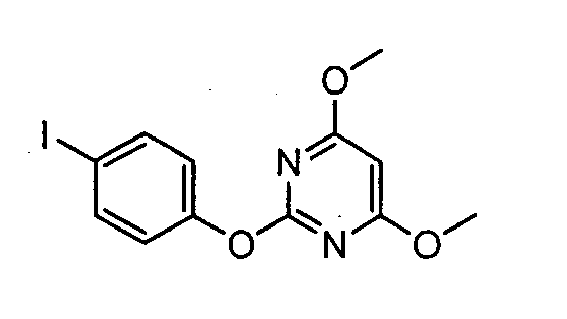
- In the same manner as in Reference Example 8, 4-iodophenol (223 mg) and 2-chloro-4,6-dimethoxypyrimidine (192 mg) were reacted by using sodium hydride to obtain 2-(4-iodophenoxy)-4,6-dimethoxypyrimidine (322 mg).
-

-
- (1) Under an argon atmosphere, phosphorus oxychloride (2 ml) was added to 4,6-dimethyl-2-hydroxypyrimidine (400 mg), and the resulting mixture was stirred for 1 hour while heating the mixture to reflux. The reaction solution was cooled to room temperature, and the cooled solution was added in small portions to water. After adding sodium hydrogen carbonate in small portions to the resulting mixture to neutralize it, the mixture was extracted with ethyl acetate. Organic layer was washed twice with water and once with saturated brine, and dried over anhydrous sodium sulfate. After removing anhydrous sodium sulfate by filtration, the filtrate was concentrated to obtain 2-chloro-4,6-dimethylpyrimidine (350 mg).
- (2) In the same manner as in Reference Example 8, 4-iodophenol (223 mg) and 2-chloro-4,6-dimethylpyrimidine (157 mg) were reacted by using sodium hydride to obtain 2-(4-iodophenoxy)-4,6-dimethylpyrimidine (226 mg).
-

- Under an argon atmosphere, 2-chloropyrimidine (16.5 g) and acetic acid (11.7 ml) were added to a solution of 4-iodoaniline (30 g) in dioxane (500 ml), and the resulting mixture was stirred for 13 hours while heating the mixture to reflux. The reaction solution was cooled to room temperature and saturated aqueous sodium hydrogen carbonate solution was added thereto, followed by extracting the resulting mixture 4 times with ethyl acetate. Organic layers were washed 3 times with saturated brine and dried over anhydrous sodium sulfate. After removing anhydrous sodium sulfate by filtration, the filtrate was concentrated. The residue was purified by column chromatography (silica gel, eluent: cyclohexane/ethyl acetate = 4/1). The product was recrystallized from dichloromethane/hexane mixed solvent to obtain N-(4-iodophenyl)pyrimidin-2-amine (22.27 g). NMR(H1, CDCl3):δ 6.73(1H, t, J=4.6Hz), 7.18(1H, brs), 7.40-7.42(2H, m), 7.59-7.61(2H, m), 8.41(2H, d, J=4.6Hz)
-

- Under an argon atmosphere, 2-chloropyrimidine (2.68 g) and acetic acid (1.97 ml) were added to a solution of 4-bromoaniline (4.03 g) in dioxane (200 ml), and the resulting mixture was stirred for 3 hours while heating the mixture to reflux. Saturated aqueous sodium hydrogen carbonate solution was added in small portions to the reaction solution to neutralize it, and the resulting mixture was concentrated. Ethyl acetate (500 ml) was added to the residue and the resulting mixture was stirred at room temperature for 10 minutes, followed by removing insoluble matter by filtration. The filtrate was washed with saturated aqueous sodium hydrogen carbonate solution and with saturated brine, and dried over anhydrous sodium sulfate. After removing anhydrous sodium sulfate by filtration, the filtrate was concentrated. The residue was recrystallized from ethyl acetate to obtain N-(4-bromophenyl)pyrimidin-2-amine (3.02 g).
-

- Under an argon atmosphere, a solution of N-(4-iodophenyl)pyrimidin-2-amine (1.47 g) in anhydrous DMF (10 ml) was added dropwise to a suspension of sodium hydride (218 mg) in anhydrous DMF (8 ml), and the resulting mixture was stirred at room temperature for 75 minutes. Methyl iodide (0.37 ml) was added dropwise to the reaction solution and the resulting mixture was stirred at room temperature for another 1 hour. Water was added thereto and the resulting mixture was extracted with ethyl acetate. Organic layer was washed twice with water and once with saturated brine, and dried over anhydrous sodium sulfate. After removing anhydrous sodium sulfate by filtration, the filtrate was concentrated. The residue was recrystallized from hexane to obtain N-(4-iodophenyl)-N-methylpyrimidin-2-amine (1.38 g). NMR(H1, CDCl3):δ 3.49(3H, s), 6.58(1H, t, J=4.6Hz), 7.07-7.09(2H, m), 7.67-7.69(2H, m), 8.32(2H, d, J=4.6Hz)
-
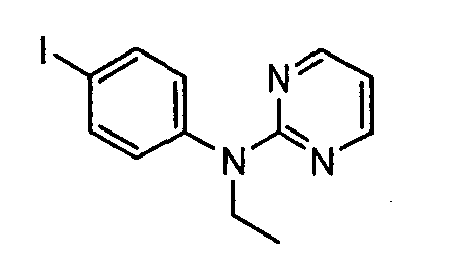
- Under an argon atmosphere, a solution of N-(4-iodophenyl)pyrimidin-2-amine (255 mg) in anhydrous DMF (1 ml) was added dropwise to a suspension of sodium hydride (40 mg) in anhydrous DMF (1 ml), and the resulting mixture was stirred at room temperature for 75 minutes. Ethyl iodide (0.10 ml) was added dropwise to the reaction solution and the resulting mixture was stirred at room temperature overnight. Saturated brine was added thereto and the resulting mixture was extracted with chloroform. Organic layer was washed with saturated brine and dried over anhydrous sodium sulfate. After removing anhydrous sodium sulfate by filtration, the filtrate was concentrated. The residue was purified by column chromatography (silica gel, eluent: cyclohexane/chloroform = 1/10) to obtain N-(4-iodophenyl)-N-ethylpyrimidin-2-amine (264 mg). NMR(H1,CDCl3):δ 1.23(3H, t, J=6.8Hz), 4.01(2H, q, J=6.8Hz), 6.57(1H, t, J=4.9Hz), 7.03-7.06(2H, m), 7.70-7.74(2H, m), 8.32(2H, d, J=4.9Hz)
-

- Under an argon atmosphere, 2-bromoethylmethyl ether (0.14 ml) and sodium hydride (48 mg) were added to a solution of N-(4-iodophenyl)pyrimidin-2-amine (300 mg) in anhydrous DMF (1 ml), and the resulting mixture was stirred at room temperature overnight. Saturated brine was added to the reaction solution and the resulting mixture was extracted with chloroform, followed by drying the organic layer over anhydrous sodium sulfate. After removing anhydrous sodium sulfate by filtration, the filtrate was concentrated. The residue was purified by column chromatography (silica gel, eluent: hexane/chloroform = 1 / 10) to obtain N-(4-iodopheriyl)-N-(2-methoxyethyl)pyrimidin-2-amine (233 mg). NMR(H1, CDCl3):δ 3.32(3H, s), 3.63(2H, t, J=5.9Hz), 4.14(2H, t, J=5.9Hz), 6.59(1H, t, J=4.9Hz), 7.09-7.13(2H, m), 7.70-7.73(2H, m), 8.32(2H, d, J=4.9Hz)
-

- Under an argon atmosphere, a solution of N-(4-iodophenyl)pyrimidin-2-amine (8.00 g) in anhydrous DMF (50 ml) was added dropwise to a suspension of sodium hydride (1.08 g) in anhydrous DMF (200 ml), and the resulting mixture was stirred at room temperature for 80 minutes. To the reaction solution, 2-iodopropane (4.03 ml) was added, and the resulting mixture was stirred at room temperature for 2 hours. Sodium hydride (1.08 g) was added to the reaction solution and thereafter 2-iodopropane (4.03 ml) was added dropwise thereto, followed by stirring the resulting mixture at room temperature for 6 hours. Water was added to the reaction solution and the resulting mixture was extracted twice with ethyl acetate. Organic layers were washed 4 times with water and once with saturated brine, and dried over anhydrous sodium sulfate. After removing anhydrous sodium sulfate by filtration, the filtrate was concentrated. The residue was purified by column chromatography (silica gel, eluent: cyclohexane→cyclohexane/ethyl acetate = 50/1). The obtained solid was recrystallized from hexane to obtain N-(4-iodophenyl)-N-isopropylpyrimidin-2-amine (7.06 g). NMR(H1, CDCl3):δ 1.14(3H, s), 1.16(3H, s), 5.12-5.19(1H, m), 6.52(1H, t, J=4.6Hz), 6.88-6.92(2H, m), 7.74-7.77(2H, m), 8.29(2H, d, J=4.6Hz)
-

- Under an argon atmosphere, a solution of N-(4-iodophenyl)pyrimidin-2-amine (68 mg) in anhydrous DMF (1.0 ml) was added dropwise to a solution of sodium hydride (16 mg) in anhydrous DMF (1.0 ml), and the resulting mixture was stirred at room temperature for 30 minutes. To the reaction solution, a solution of 4-acetoxybenzyl chloride (0.04 ml) in anhydrous DMF (0.5 ml) was added, and the resulting mixture was stirred at room temperature overnight. Saturated brine was added to the reaction solution and the resulting mixture was extracted with chloroform. Organic layer was dried over anhydrous sodium sulfate. After removing anhydrous sodium sulfate by filtration, the filtrate was concentrated. The residue was purified by column chromatography (silica gel, eluent: hexane/ethyl acetate = 6/1) to obtain (4-acetoxybenzyl)-(4-iodophenyl)pyrimidin-2-ylamine (67 mg). NMR(H1, CDCl3):δ 2.28(3H, s), 5.22(2H, s), 6.63(1H, t, J=4.6Hz), 6.98-7.02(4H, m), 7.26(2H, d, J=8.1Hz), 7.64-7.67(2H, m), 8.34(2H, d, J=4.6Hz)
-

- Under an argon atmosphere, a solution of N-(4-iodophenyl)pyrimidin-2-amine (100 mg) in anhydrous DMF (1.0 ml) was added to a suspension of sodium hydride (16 mg) in anhydrous DMF (1.0 ml), and the resulting mixture was stirred at room temperature for 30 minutes. To the reaction solution, a solution of 3-bromopropionitrile (0.04 ml) in anhydrous DMF (0.5 ml) was added, and the resulting mixture was stirred at room temperature overnight. Saturated brine was added to the reaction solution and the resulting mixture was extracted with chloroform. Organic layer was dried over anhydrous sodium sulfate. After removing anhydrous sodium sulfate by filtration, the filtrate was concentrated. The residue was purified by column chromatography (silica gel, eluent: hexane/chloroform = 1/10) to obtain 3-(N-(4-iodophenyl)-N-(pyrimidin-2-yl)amino)propanenitrile (94 mg). NMR(H1, CDCl3):δ 2.82(2H, t, J=6.8Hz), 4.24(2H, t, J=6.8Hz), 6.68(1H, t, J=4.9Hz), 7.06-7.10(2H, m), 7.74-7.78(2H, m), 8.35(2H, d, J=4.9Hz)
-

- Under an argon atmosphere, N-(4-iodophenyl)pyrimidin-2-amine (75 mg) was added to a suspension of sodium hydride (16 mg) in anhydrous DMF (3 ml), and the resulting mixture was stirred at room temperature for 30 minutes. The reaction solution was cooled to 0°C and benzyl bromide (0.039 ml) was added thereto, followed by stirring the resulting mixture at room temperature for 1 hour. Saturated brine was added to the reaction solution and the resulting mixture was extracted 3 times with ethyl acetate. Organic layers were washed 3 times with water and dried over anhydrous sodium sulfate. After removing anhydrous sodium sulfate by filtration, the filtrate was concentrated. The residue was purified by column chromatography (silica gel, eluent: ethyl acetate/hexane = 1/15) to obtain N-benzyl-N-(4-iodophenyl)pyrimidin-2-amine (67 mg).
-

- Under an argon atmosphere, N-(4-bromophenyl)pyrimidin-2-amine (75 mg) was added to a suspension of sodium hydride (16 mg) in anhydrous DMF (3 ml), and the resulting mixture was stirred at room temperature for 30 minutes. The reaction solution was cooled to 0°C and 4-methoxybenzyl chloride (0.045 ml) was added thereto, followed by stirring the resulting mixture at room temperature for 1 hour. Saturated brine was added to the reaction solution and the resulting mixture was extracted 3 times with ethyl acetate. Organic layers were washed 3 times with water and once with saturated brine, and dried over anhydrous sodium sulfate. After removing anhydrous sodium sulfate by filtration, the filtrate was concentrated. The residue was purified by column chromatography (silica gel, eluent: ethyl acetate/hexane = 1/10) to obtain N-(4-bromophenyl)-N-(4-methoxybenzyl)pyrimidin-2-amine (107 mg).
-

- Under an argon atmosphere, N-(4-bromophenyl)pyrimidin-2-amine (160 mg) was added to a suspension of sodium hydride (33 mg) in anhydrous DMF (3 ml), and the resulting mixture was stirred at room temperature for 30 minutes. The reaction solution was cooled to 0°C and n-butyl iodide (0.080 ml) was added thereto, followed by stirring the resulting mixture at room temperature for 1 hour. Saturated brine was added to the reaction solution and the resulting mixture was extracted 3 times with ethyl acetate. Organic layers were washed 3 times with water and once with saturated brine, and dried over anhydrous sodium sulfate. After removing anhydrous sodium sulfate by filtration, the filtrate was concentrated. The residue was purified by column chromatography (silica gel, eluent: ethyl acetate/hexane = 1/10) to obtain N-(4-bromophenyl)-N-butylpyrimidin-2-amine (194 mg).
-

- Under an argon atmosphere, N-(4-bromophenyl)pyrimidin-2-amine (200 mg) was added to a suspension of sodium hydride (48 mg) in anhydrous DMF (8 ml), and the resulting mixture was stirred at room temperature for 30 minutes. The reaction solution was cooled to 0°C, and 3-chloromethylpyridine hydrochloride (600 mg) and triethylamine (1.00 ml) were added thereto, followed by stirring the resulting mixture at room temperature for 2 hours. Saturated brine was added to the reaction solution and the resulting mixture was extracted 3 times with ethyl acetate. Organic layers were washed 3 times with water and once with saturated brine, and dried over anhydrous sodium sulfate. After removing anhydrous sodium sulfate by filtration, the filtrate was concentrated. The residue was purified by column chromatography (silica gel, eluent: ethyl acetate/hexane = 3/1) to obtain N-(4-bromophenyl)-N-((pyridin-3-yl)methyl)pyrimidin-2-amine (232 mg). NMR(H1, CDCl3):δ 5.23(2H, s), 6.65(1H, t, J=4.6Hz), 7.08-7.12(2H, m), 7.20(1H, dd, J=7.8, 4.9Hz), 7.46-7.50(2H, m), 7.59-7.61(1H, m), 8.35(2H, d, J=4.6Hz), 8.49(1H, dd, J=4.9, 1.5Hz), 8.54(1H, d, J=2.2Hz)
-

- Under an argon atmosphere, N-(4-bromophenyl)pyrimidin-2-amine (200 mg) was added to a suspension of sodium hydride (48 mg) in anhydrous DMF (8 ml), and the resulting mixture was stirred at room temperature for 30 minutes. The reaction solution was cooled to 0°C, and thiazoylmethyl chloride hydrochloride (816 mg) and triethylamine (1.00 ml) were added thereto, followed by stirring the resulting mixture at room temperature for 2 hours. Saturated brine was added to the reaction solution and the resulting mixture was extracted 3 times with ethyl acetate. Organic layers were washed 3 times with water and once with saturated brine, and dried over anhydrous sodium sulfate. After removing anhydrous sodium sulfate by filtration, the filtrate was concentrated. The residue was purified by column chromatography (silica gel, eluent: ethyl acetate/hexane = 1/3) to obtain N-(4-bromophenyl)-N-((thiazol-4-yl)methyl)pyrimidin-2-amine (190 mg).
-

-
- (1) Under an argon atmosphere, sodium hydride (100 mg) was added to a solution of 4-iodoaniline (220 mg) and 2-chloro-4-methoxypyrimidine (145 mg) in anhydrous DMF (10 ml), and the resulting mixture was stirred at 125°C for 21 hours. The reaction solution was cooled to room temperature and water was added thereto, followed by extracting the resulting mixture with ethyl acetate. Organic layer was washed twice with water and once with saturated brine, and dried over anhydrous sodium sulfate. After removing anhydrous sodium sulfate by filtration, the filtrate was concentrated. The residue was purified by column chromatography (silica gel, eluent: hexane/ethyl acetate =10/1) to obtain N-(4-iodophenyl)-4-methoxypyrimidin-2-amine (46 mg).
- (2) Under an argon atmosphere, N-(4-iodophenyl)-4-methoxypyrimidin-2-amine (46 mg) was added to a suspension of sodium hydride (11 mg) in anhydrous DMF (5 ml), and the resulting mixture was stirred at room temperature for 5 minutes. Methyl iodide (0.0096 ml) was added dropwise to the reaction solution, and the resulting mixture was stirred at room temperature for 23 hours. Water was added thereto and the resulting mixture was extracted with ethyl acetate. Organic layer was washed twice with water and once with saturated brine, and dried over anhydrous sodium sulfate. After removing anhydrous sodium sulfate by filtration, the filtrate was concentrated. The residue was purified by column chromatography (silica gel, eluent: hexane/ethyl acetate = 3/1) to obtain N-(4-iodophenyl)-4-methoxy-N-methylpyrimidin-2-amine (46 mg).
-

-
- (1) In the same manner as in Reference Example 24-(1), 4-iodoaniline (220 mg) and 2-chloro-4,6-dimethoxypyrimidine (200 mg) were reacted in the presence of sodium hydride to obtain N-(4-iodophenyl)-4,6-dimethoxypyrimidin-2-amine (141 mg).
- (2) In the same manner as in Reference Example 24-(2), sodium hydride (16 mg), N-(4-iodophenyl)-4,6-dimethoxypyrimidin-2-amine (140 mg) and methyl iodide (0.024 ml) were reacted to obtain N-(4-iodophenyl)-4,6-dimethoxy-N-methylpyrimidin-2-amine (118 mg).
-

- Under an argon atmosphere, a suspension of N-(4-bromophenyl)pyrimidin-2-amine (250 mg), copper iodide (1.9 mg), trans-1,2-cyclohexanediamine (0.015 ml) and sodium-tert-butoxide (144 mg) in dioxane (1 ml) was stirred at 110°C for 22 hours in a pressure-resistant test tube. The reaction solution was filtered and the filtrate was concentrated. The residue was purified by thin layer chromatography (silica gel, mobile phase: chloroform/ethyl acetate = 5/1) to obtain N-(4-bromophenyl)-N-phenylpyrimidin-2-amine (56 mg).
- Trifluoromethanesulfonic acid 4-[pyrimidin-2-yl-(tetrahydropyran-4-yl)amino]phenyl ester
-

-
- (1) Acetic acid (0.856 ml) was added to a solution of p-anisidine (1.23 g) and 2-chloropyrimidine (1.72 g) in dioxane (20 ml), and the resulting mixture was stirred overnight while heating the mixture to reflux. After cooling the reaction solution to room temperature, 1 N aqueous sodium hydroxide solution was added thereto and the resulting mixture was extracted 3 times with chloroform, followed by drying the organic layers over anhydrous sodium sulfate. After removing anhydrous sodium sulfate by filtration, the filtrate was concentrated. The residue was reprecipitated from chloroform/hexane mixed solvent to obtain N-(4-methoxyphenyl)pyrimidin-2-amine (1.39 g).
- (2) Under an argon atmosphere, p-toluenesulfonyl chloride (3.82 g) was added to a solution of tetrahydro-2H-pyran-4-ol (2.00 g) in pyridine (50 ml) at 0°C, and the resulting mixture was stirred at room temperature overnight. After adding 1 N hydrochloric acid thereto, the resulting mixture was extracted 3 times with ethyl acetate. Organic layers were washed 3 times with water and dried over anhydrous sodium sulfate. After removing anhydrous sodium sulfate by filtration, the filtrate was concentrated. The residue was purified by column chromatography (silica gel, eluent: ethyl acetate/hexane = 1 /6) to obtain tetrahydro-2H-pyran-4-yl-4-methylbenzenesulfonate (2.92 g).
- (3) Under an argon atmosphere, N-4-(methoxyphenyl)pyrimidin-2-amine (402 mg) was added to a suspension of sodium hydride (120 mg) in anhydrous DMF (15 ml), and the resulting mixture was stirred at room temperature for 30 minutes. A solution of tetrahydro-2H-pyran-4-yl-4-methylbenzenesulfonate (2.92 g) in anhydrous DMF (10 ml) was added to the reaction solution, and the resulting mixture was stirred at 50°C for 24 hours. Sodium hydride (120 mg) was further added to the reaction solution, and the resulting mixture was stirred at 50°C for 24 hours. The solution was cooled to room temperature, and saturated brine was added thereto, followed by extracting the resulting mixture 3 times with ethyl acetate. Organic layers were washed 3 times with water and dried over anhydrous sodium sulfate. After removing anhydrous sodium sulfate by filtration, the filtrate was concentrated. The residue was purified by column chromatography (silica gel, eluent: ethyl acetate/hexane = 1/3) to obtain N-(tetrahydro-2H-pyran-4-yl)-N-(4-methoxyphenyl)pyrimidin-2-amine (342 mg).
- (4) A mixture of N-(tetrahydro-2H-pyran-4-yl)-N-(4-methoxyphenyl)pyrimidin-2-amine (342 mg) and pyridine hydrochloride (2.00 g) was heated to 170°C and stirred for 1 hour. Pyridine hydrochloride (1.00 g) was further added to the reaction solution, and the resulting mixture was stirred at 170°C for 1 hour. The reaction solution was allowed to cool to room temperature and saturated brine was added thereto, followed by extracting the resulting mixture 3 times with ethyl acetate. Organic layers were washed 3 times with water and dried over anhydrous sodium sulfate. After removing anhydrous sodium sulfate by filtration, the filtrate was concentrated. To a suspension of the obtained residue and potassium carbonate (498 mg) in THF (15 ml), N-phenylbis(trifluoromethanesulfonimide) (514 mg) was added, and the resulting mixture was stirred at room temperature for 5 hours. Saturated brine was added to the reaction solution, and the resulting mixture was extracted 3 times with ethyl acetate, followed by drying the organic layers over anhydrous sodium sulfate. After removing anhydrous sodium sulfate by filtration, the filtrate was concentrated. The residue was purified by column chromatography (silica gel, eluent: ethyl acetate/hexane = 1/5) to obtain trifluoromethanesulfonic acid 4-[pyrimidin-2-yl-(tetrahydropyran-4-yl)amino]phenyl ester (228 mg). NMR(H1, CDCl3):δ 1.52-1.61(2H, m), 1.83-1.87(2H, m), 3.57(2H, dt, J=12.0, 1.6Hz), 4.00(2H, dd, J=11.6, 4.8Hz), 4.97-5.03(1H, m), 6.59(1H, t, J=4.8Hz), 7.19-7.23(2H, m), 7.34-7.37(2H, m), 8.29(2H, d, J=4.8Hz)
-

- In the same manner as in Reference Example 13, N-(4-iodophenyl)pyrimidin-2-amine (150 mg) and 1-bromo-3-methylbut-2-ene (90 mg) were reacted in the presence of sodium hydride to obtain N-(4-iodophenyl)-N-(3-methyl-2-butenyl)pyrimidin-2-amine (175 mg).
-

- In the same manner as in Reference Example 13, N-(4-iodophenyl)pyrimidin-2-amine (150 mg) and cyclopropylmethyl bromide (82 mg) were reacted in the presence of sodium hydride to obtain N-(cyclopropylmethyl)-N-(4-iodophenyl)pyrimidin-2-amine (162 mg).
-

- In the same manner as in Reference Example 13, N-(4-iodophenyl)pyrimidin-2-amine (150 mg) and isobutyl bromide (83 mg) were reacted in the presence of sodium hydride to obtain N-(4-iodophenyl)-N-isobutylpyrimidin-2-amine (167 mg).
-

- In the same manner as in Reference Example 13, N-(4-iodophenyl)pyrimidin-2-amine (300 mg) and propyl bromide (0.11 ml) were reacted in the presence of sodium hydride to obtain N-(4-iodophenyl)-N-propylpyrimidin-2-amine (348 mg).
-

- In the same manner as in Reference Example 22, N-(4-iodophenyl)pyrimidin-2-amine (300 mg) and 4-bromomethylpyridine hydrobromide (307 mg) were reacted in the presence of sodium hydride to obtain N-(4-iodophenyl)-N-((pyridin-4-yl)methyl)pyrimidin-2-amine (93 mg).
-

- In the same manner as in Reference Example 22, N-(4-iodophenyl)pyrimidin-2-amine (300 mg) and 2-bromomethylpyridine hydrobromide (307 mg) were reacted in the presence of sodium hydride to obtain N-(4-iodophenyl)-N-((pyridin-4-yl)methyl)pyrimidin-2-amine (282 mg).
-

-
- (1) Allylglycine (1.82 g) was dissolved in 1N aqueous sodium hydroxide solution (60 ml), and di-tert-butyl dicarbonate (4.15 g) was added thereto, followed by stirring the resulting mixture at room temperature for 11 hours. Di-tert-butyl dicarbonate (4.15 g) was further added to the reaction solution and the resulting mixture was stirred at room temperature overnight. After adding water to the reaction solution and washing it with ether, the solution was acidified with 3N hydrochloric acid.
The solution was extracted twice with ethyl acetate. Organic layers were washed with saturated brine and dried over anhydrous sodium sulfate. After removing anhydrous sodium sulfate by filtration, the filtrate was concentrated. The residue was recrystallized from hexane/ethyl acetate mixed solvent to obtain N-Boc-allylglycine (3.09 g). - (2) Trimethylsilyldiazomethane (2N, in hexane) (12 ml) was added dropwise to a solution ofN-Boc-allylglycine (3.09 g) in dichloromethane/methanol (2/1) mixture (30 ml), and the resulting mixture was stirred at room temperature for 3 hours. After concentrating the reaction solution, the residue was purified by column chromatography (silica gel, eluent: cyclohexane/ethyl acetate = 20/1→10/1) to obtain N-Boc-allylglycine methyl ester (3.11 g). NMR(H1, CDCl3):δ 2.43-2.55(2H, m), 3.72(3H, s), 4.34-4.39(1H, brm), 5.02(1H, brs), 5.09-5.13(2H, m), 5.62-5.72(1H, m)
- (3) Under an argon atmosphere, palladium acetate (54 mg) and tris(2-methylphenyl)phosphine (70 mg) were added to a suspension ofN-Boc-allylglycine methyl ester (1.03 g), N-(4-iodophenyl)-N-methylpyrimidin-2-amine (1.40 g) and potassium carbonate (933 mg) in DMF (15 ml), and the resulting mixture was stirred at 80°C overnight. The reaction solution was allowed to cool to room temperature and ethyl acetate was added thereto. The solution was washed 3 times with water and once with saturated brine, and dried over anhydrous sodium sulfate. After removing anhydrous sodium sulfate by filtration, the filtrate was concentrated. The residue was purified by column chromatography (silica gel, eluent: cyclohexane/ethyl acetate = 20/1→4/1). The obtained solid was recrystallized from hexane/ethyl acetate mixed solvent to obtain 2-tert-butoxycarbonylamino-5-[4-(methyl-pyrimidin-2-ylamino)phenyl]pent-4-enoic acid methyl ester (976 mg).
- (4) Trifluoroacetic acid (2 ml) was added to a solution of 2-tert-butoxycarbonylamino-5-[4-(methyl-pyrimidin-2-ylamino)phenyl]pent-4-enoic acid methyl ester (976 mg) in dichloromethane (20 ml), and the resulting mixture was stirred at room temperature for 4.5 hours. Water was added to the reaction solution, and sodium hydrogen carbonate was added thereto in small portions to neutralize it, followed by extracting the resulting solution twice with chloroform. Organic layers were washed with saturated brine and dried over anhydrous sodium sulfate. After removing anhydrous sodium sulfate by filtration, the filtrate was concentrated to dryness to obtain 2-amino-5-[4-(methyl-pyrimidin-2-ylamino)phenyl]pent-4-enoic acid methyl ester (599 mg). NMR(H1, CDCl3):δ 2.58-2.64(2H, brm), 3.48-3.58(1H, brm), 3.52(3H, s), 3.75(3H, s), 6.07-6.14(1H, m), 6.49(1H, d, J=5.6Hz), 6.57(1H, t, J=4.6Hz), 7.26(2H, d, J=8.1Hz), 7.38(2H, d, J=8.3Hz), 8.34(2H, d, J=4.6Hz)
-

-
- (1) Allylglycine (10.11 g) was dissolved in a mixed solvent of 2N aqueous sodium hydroxide solution (176 ml) and dioxane (175 ml), and 2,6-dichlorobenzoyl chloride (15.10 ml) was added dropwise thereto, followed by stirring the resulting mixture at room temperature for 10 hours. After concentrating the reaction solution to remove dioxane, water (150 ml) was added thereto and the resulting solution was washed with ether. Aqueous layer was acidified by adding 3N hydrochloric acid in small portions thereto, and extracted 3 times with ethyl acetate. Organic layers were washed with saturated brine and dried over anhydrous sodium sulfate. After removing anhydrous sodium sulfate by filtration, the filtrate was concentrated. The residue was recrystallized from hexane/ethyl acetate mixed solvent to obtain 2-(2,6-dichlorobenzamido)pent-4-enoic acid (23.48 g).
- (2) Under an argon atmosphere, a solution of 2-(2,6- dichlorobenzamido)pent-4-enoic acid (23.48 g) in methanol (250 ml) was cooled to 0°C. Thionyl chloride (10.70 ml) was added dropwise to the solution while keeping the reaction temperature not higher than 10°C, and thereafter the resulting mixture was stirred at room temperature for 5.5 hours. Water was added to the reaction solution, and sodium hydrogen carbonate was added thereto in small portions to neutralize it. After concentrating the reaction solution to remove methanol, aqueous layer was extracted twice with ethyl acetate. Organic layers were washed 3 times with water and once with saturated brine, and dried over anhydrous sodium sulfate. After removing anhydrous sodium sulfate by filtration, the filtrate was concentrated. The residue was recrystallized from hexane/ethyl acetate mixed solvent to obtain 2-(2,6-dichlorobenzamido)pent-4-enoic acid methyl ester (21.70 g). NMR(H1, CDCl3):δ 2.55-2.61(1H, m), 2.68-2.75(1H, m), 3.72(3H, s), 4.88(1H, td, J=7.8, 5.4Hz), 5.06-5.13(2H, m), 5.64-5.74(1H, m), 6.33(1H, brd, J=7.1Hz), 7.17-7.26(3 H, m)
-

-
- (1) In the same manner as in Reference Example 35-(1), allylglycine (285 mg) was reacted with 2,6-difluorobenzoyl chloride (0.374 ml) to obtain 2-(2,6-difluorobenzamido)pent-4-enoic acid (471 mg).
- (2) In the same manner as in Reference Example 35-(2), thionyl chloride (0.242 ml) was reacted with a solution of 2-(2,6-difluorobenzamido)pent-4-enoic acid (471 mg) in methanol (20 ml) to obtain 2-(2,6-difluorobenzamido)pent-4-enoic acid methyl ester (430 mg).
-

-
- (1) Propargylglycine (5.00 g) was dissolved in a mixed solvent of 2N aqueous sodium hydroxide solution (100 ml) and dioxane (100 ml), and 2,6-dichlorobenzoyl chloride (9.45 ml) was added dropwise thereto at 0°C, followed by stirring the resulting mixture at room temperature overnight. Water was added to the reaction solution, and the solution was washed with ether. Aqueous layer was acidified by adding 3N hydrochloric acid in small portions thereto and extracted with ethyl acetate, and organic layer was dried over anhydrous sodium sulfate. After removing anhydrous sodium sulfate by filtration, the filtrate was concentrated to dryness to obtain 2-(2,6-dichlorobenzamido)pent-4-ynoic acid.
- (2) Under an argon atmosphere, a solution of thionyl chloride (5.25 ml) in absolute methanol (200 ml) was cooled to 0°C. To the solution, a solution of 2-(2,6-dichlorobenzamido)pent-4-ynoic acid obtained in (1) in methanol (50 ml) was added dropwise, and the resulting mixture was stirred at room temperature overnight. Water was added to the reaction solution, and the solution was extracted with ethyl acetate. Organic layer was washed with saturated aqueous sodium hydrogen carbonate solution and dried over anhydrous sodium sulfate. After removing anhydrous sodium sulfate by filtration, the filtrate was concentrated. A mixed solvent of ethyl acetate/ether (1/1) (30 ml) was added to the residue, and insoluble matter was removed by filtration. The filtrate was concentrated and the residue was recrystallized twice from hexane/ethyl acetate mixed solvent to obtain 2-(2,6-dichlorobenzamido)pent-4-ynoic acid methyl ester (9.61 g).
-

-
- (1) In a mixed solvent of 2N aqueous sodium hydroxide solution (27.4 ml) and THF (55 ml), L-allylglycine (5.22 g) was dissolved, and 2,6-dichlorobenzoyl chloride (7.79 ml) was added dropwise thereto, followed by stirring the resulting mixture at room temperature for 1 hour. After concentrating the reaction solution to remove methanol, water (100 ml) was added thereto and the resulting mixture was washed with ether. Aqueous layer was acidified by adding 3N hydrochloric acid in small portions thereto, and extracted 3 times with ethyl acetate. Organic layers were washed with saturated brine and dried over anhydrous sodium sulfate. After removing anhydrous sodium sulfate by filtration, the filtrate was concentrated. The residue was recrystallized from hexane/ethyl acetate mixed solvent to obtain (S)-2-(2,6-dichlorobenzamido)pent-4-enoic acid (11.65 g). NMR(H1, CDCl3):δ 2.66-2.73(1H, m), 2.80-2.86(1H, m), 4.99(1H, td, J=7.6, 5.6Hz), 5.18-5.25(2H, m), 5.76-5.86(1H, m), 6.39(1H, brd, J=7.6Hz), 7.25-7.34(3H, m)
- (2) Under an argon atmosphere, a solution of (S)-2-(2,6-dichlorobenzamido)pent-4-enoic acid (11.46 g) in methanol (120 ml) was cooled to 0°C. Thionyl chloride (5.22 ml) was added dropwise to the solution while keeping the reaction temperature not higher than 10°C, and thereafter the resulting mixture was stirred at room temperature for 3 hours. Water was added to the reaction solution, and sodium hydrogen carbonate was added thereto in small portions to neutralize it. After concentrating the reaction solution to remove methanol, aqueous layer was extracted twice with ethyl acetate. Organic layers were washed 3 times with water and once with saturated brine, and dried over anhydrous sodium sulfate. After removing anhydrous sodium sulfate by filtration, the filtrate was concentrated. The residue was recrystallized from hexane/ethyl acetate mixed solvent to obtain (S)-2-(2,6-dichlorobenzamido)pent-4-enoic acid methyl ester (11.68 g). NMR(H1, CDCl3):δ 2.62-2.69(1H, m), 2.76-2.83(1H, m), 3.79(3H, s), 4.96(1H, td, J=7.8, 5.4Hz), 5.14-5.21(2H, m), 5.72-5.82(1H, m), 6.42(1H, brd, J=6.8Hz), 7.25-7.34(3H, m)
- (E)-2-(2,6-Dichlorobenzamido)-5-[4-(4-hydroxytetrahydropyran-4-yl)-phenyl]pent-4-enoic acid methyl ester
-

- Under an argon atmosphere, palladium acetate (4.7 mg) and tris(2-methylphenyl)phosphine (6.1 mg) were added to a suspension of 2-(2,6-dichlorobenzamido)pent-4-enoic acid methyl ester (60.4 mg), tetrahydro-4-(4-iodophenyl)-2H-pyran-4-ol (60.8 mg) and potassium carbonate (41.5 mg) in DMF (4 ml), and the resulting mixture was stirred at 80°C for 6 hours. After cooling the reaction solution to room temperature, ethyl acetate was added thereto and the solution was washed 3 times with water and once with saturated brine, followed by drying the organic layers over anhydrous sodium sulfate. After removing anhydrous sodium sulfate by filtration, the filtrate was concentrated. The residue was purified by column chromatography (silica gel, eluent: cyclohexane/chloroform = 2/1→1/4) and thereafter by thin layer chromatography (silica gel, mobile phase: cyclohexane/ethyl acetate = 1/1) to obtain (E)-2-(2,6-dichlorobenzamido)-5-[4-(4-hydroxytetrahydropyran-4-yl)-phenyl]pent-4-enoic acid methyl ester (56 mg).
- (E)-2-(2,6-Dichlorobenzamido)-5-[4-(4-hydroxytetrahydropyran-4-yl)-phenyl]pent-4-enoic acid
-

- To a solution of (E)-2-(2,6-dichlorobenzamido)-5-[4-(4-hydroxytetrahydropyran-4-yl)-phenyl]pent-4-enoic acid methyl ester (56 mg) in THF (1.76 ml), 0.1N aqueous sodium hydroxide solution (1.76 ml) was added, and the resulting mixture was stirred at room temperature for 2 hours. After washing the reaction solution with ether, aqueous layer was acidified by adding 1N hydrochloric acid thereto and extracted twice with ethyl acetate. Organic layers were washed with saturated brine and dried over anhydrous sodium sulfate. After removing anhydrous sodium sulfate by filtration, the filtrate was concentrated to dryness to obtain (E)-2-(2,6-dichlorobenzamido)-5-[4-(4-hydroxytetrahydropyran-4-yl)-phenyl]pent-4-enoic acid (48 mg).
- (E)-2-(2,6-Dichlorobenzamido)-5-[4-(4-methoxytetrahydropyran-4-yl)-phenyl]pent-4-enoic acid methyl ester
-

- In the same manner as in Example 1, 2-(2,6-dichlorobenzamido)pent-4-enoic acid methyl ester (2.11 g) was reacted with tetrahydro-4-(4-iodophenyl)-4-methoxy-2H-pyran (2.22 g) in the presence of potassium carbonate (1.45 g), palladium acetate (81.7 mg) and tris(2-methylphenyl)phosphine (106.2 mg) to obtain (E)-2-(2,6-dichlorobenzamido)-5-[4-(4-methoxytetrahydropyran-4-yl)-phenyl]pent-4-enoic acid methyl ester (2.74 g). Column chromatography (silica gel, eluent: cyclohexane/chloroform = 2/1→cyclohexane/ethyl acetate = 10/1→ cyclohexane/ethyl acetate = 4/1) was used for purification.
- (E)-2-(2,6-Dichlorobenzamido)-5-[4-(4-methoxytetrahydropyran-4-yl)-phenyl]pent-4-enoic acid
-

- In the same manner as in Example 2, 0.1N aqueous sodium hydroxide solution (63.1 ml) was added to a solution of (E)-2-(2,6-dichlorobenzamido)-5-[4-(4-methoxytetrahydropyran-4-yl)-phenyl]pent-4-enoic acid methyl ester (2.70 g) in THF (63.1 ml) to hydrolyze it to obtain (E)-2-(2,6-dichlorobenzamido)-5-[4-(4-methoxytetrahydropyran-4-yl)-phenyl]pent-4-enoic acid (2.50 g).
- (E)-2-(2,6-Dichlorobenzamido)-5-[4-(4-ethoxytetrahydropyran-4-yl)-phenyl]pent-4-enoic acid methyl ester
-

- In the same manner as in Example 1, 2-(2,6-dichlorobenzamido)pent-4-enoic acid methyl ester (60.4 mg) was reacted with tetrahydro-4-(4-iodophenyl)-4-ethoxy-2H-pyran (66.4 mg) to obtain (E)-2-(2,6-dichlorobenzamido)-5-[4-(4-ethoxytetrahydropyran-4-yl)-phenyl]pent-4-enoic acid methyl ester (68.9 mg). Column chromatography (silica gel, eluent: cyclohexane/chloroform = 2/1→ cyclohexane/ethyl acetate = 4/1) was used for purification.
- (E)-2-(2,6-Dichlorobenzamido)-S-[4-(4-ethoxytetrahydropyran-4-yl)-phenyl]pent-4-enoic acid
-

- In the same manner as in Example 2, (E)-2-(2,6-dichlorobenzamido)-5-[4-(4-ethoxytetrahydropyran-4-yl)-phenyl]pent-4-enoic acid methyl ester (68.9 mg) was hydrolyzed to obtain (E)-2-(2,6-dichlorobenzamido)-5-[4-(4-ethoxytetrahydropyran-4-yl)-phenyl]pent-4-enoic acid (59.8 mg).
- (E)-2-(2,6-Dichlorobenzamido)-5-[4-(tetrahydro-4-(methoxymethyl)-2H-pyran-4-yl)phenyl]pent-4-enoic acid methyl ester
-

- In the same manner as in Example 1, 2-(2,6-dichlorobenzamido)pent-4-enoic acid methyl ester (78 mg) was reacted with tetrahydro-4-(4-bromophenyl)-4-(methoxymethyl)-2H-pyran (88 mg) to obtain (E)-2-(2,6-dichlorobenzamido)-5-[4-(tetrahydro-4-(methoxymethyl)-2H-pyran-4-yl)phenyl]pent-4-enoic acid methyl ester (97 mg). Column chromatography (silica gel, eluent: hexane/ethyl acetate = 2/1) was used for purification.
- (E)-2-(2,6-Dichlorobenzamido)-5-[4-(tetrahydro-4-(methoxymethyl)-2H pyran-4-yl)phenyl]pent-4-enoic acid sodium salt
-
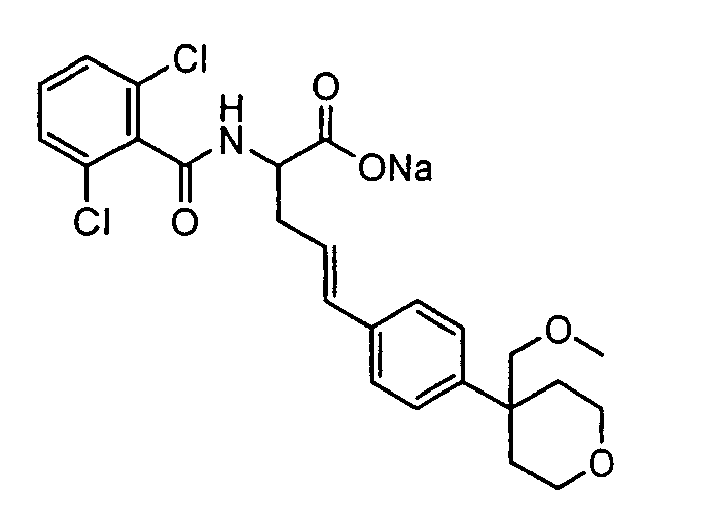
- To a solution of (E)-2-(2,6-dichlorobenzamido)-5-[4-(tetrahydro-4-(methoxymethyl)-2H-pyran-4-yl)phenyl]pent-4-enoic acid methyl ester (86 mg) in THF (1.7 ml), O.1N aqueous sodium hydroxide solution (1.7 ml) was added, and the resulting mixture was stirred at room temperature for 2 hours. After washing the reaction solution with ether, aqueous layer was concentrated to obtain (E)-2-(2,6-dichlorobenzamido)-5-[4-(tetrahydro-4-(methoxymethyl)-2H-pyran-4-yl)phenyl]pent-4-enoic acid sodium salt (66 mg).
- (E)-2-(2,6-Dichlorobenzamido)-5-[4-(4-methoxyoxepan-4-yl)phenyl]pent-4-enoic acid methyl ester
-
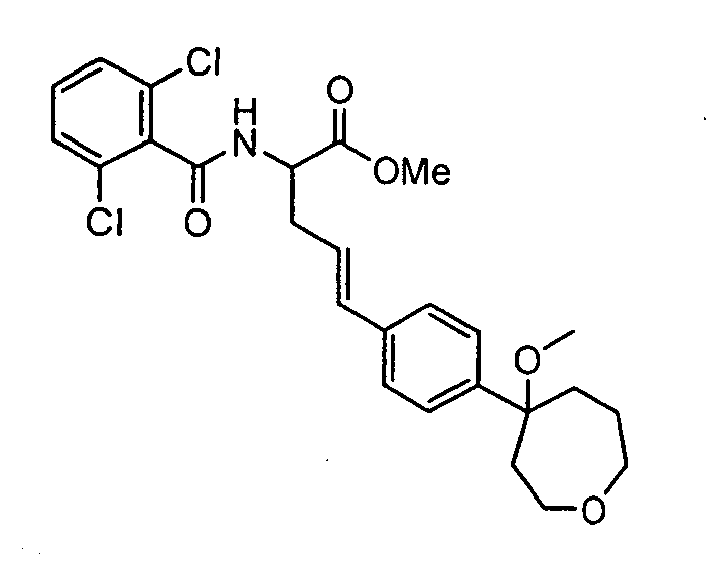
- In the same manner as in Example 1, 2-(2,6-dichlorobenzamido)pent-4-enoic acid methyl ester (46 mg) was reacted with 4-(4-iodophenyl)-4-methoxyoxepane (60 mg) to obtain (E)-2-(2,6-dichlorobenzamido)-5-[4-(4-methoxyoxepan-4-yl)phenyl]pent-4-enoic acid methyl ester (66 mg). Column chromatography (silica gel, eluent: hexane/ethyl acetate = 2/1) was used for purification.
- (E)-2-(2,6-Dichlorobenzamido)-5-[4-(4-methoxyoxepan-4-yl)phenyl]pent-4-enoic acid sodium salt
-

- In the same manner as in Example 8, (E)-2-(2,6-dichlorobenzamido)-5-[4-(4-methoxyoxepan-4-yl)phenyl]pent-4-enoic acid methyl ester (57 mg) was hydrolyzed to obtain (E)-2-(2,6-dichlorobenzamido)-5-[4-(4-methoxyoxepan-4-yl)phenyl]pent-4-enoic acid sodium salt (18 mg).
- (E)-2-(2,6-Dichlorobenzamido)-5-[4-(pyrimidin-2-yloxy)phenyl]pent-4-enoic acid methyl ester
-

- In the same manner as in Example 1, 2-(2,6-dichlorobenzamido)pent-4-enoic acid methyl ester (54.4 mg) was reacted with 2-(4-iodophenoxy)pyrimidine (59.2 mg) to obtain (E)-2-(2,6-dichlorobenzamido)-5-[4-(pyrimidin-2-yloxy)phenyl]pent-4-enoic acid methyl ester (53.0 mg). Thin layer chromatography (silica gel, mobile phase: cyclohexane/ethyl acetate = 10/1) was used for purification.
- (E)-2-(2,6-Dichlorobenzamido)-5-[4-(pyrimidin-2-yloxy)phenyl]pent-4-enoic acid
-

- In the same manner as in Example 2, (E)-2-(2,6-dichlorobenzamido)-5-[4-(pyrimidin-2-yloxy)phenyl]pent-4-enoic acid methyl ester (97.2 mg) was hydrolyzed to obtain (E)-2-(2,6-dichlorobenzamido)-5-[4-(pyrimidin-2-yloxy)phenyl]pent-4-enoic acid (77.5 mg).
- (E)-2-(2,6-Dichlorobenzamido)-5-[4-(5-ethylpyrimidin-2-yloxy)phenyl]pent-4-enoic acid methyl ester
-

- In the same manner as in Example 1, 2-(2,6-dichlorobenzamido)pent-4-enoic acid methyl ester (50.0 mg) was reacted with 2-(4-iodophenoxy)-5-ethylpyrimidine (54.1 mg) to obtain (E)-2-(2,6-dichlorobenzamido)-5-[4-(5-ethylpyrimidin-2-yloxy)phenyl]pent-4-enoic acid methyl ester (62.2 mg). Column chromatography (chloroform) and thin layer chromatography (cyclohexane/ethyl acetate = 1/2) were used for purification.
- (E)-2-(2,6-Dichlorobenzamido)-5-[4-(5-ethylpyrimidin-2-yloxy)phenyl]pent-4-enoic acid sodium salt
-

- In the same manner as in Example 8, (E)-2-(2,6-dichlorobenzamido)-5-[4-(5-ethylpyrimidin-2-yloxy)phenyl]pent-4-enoic acid methyl ester (62.2 mg) was hydrolyzed to obtain (E)-2-(2,6-dichlorobenzamido)-5-[4-(5-ethylpyrimidin-2-yloxy)phenyl]pent-4-enoic acid sodium salt (45.1 mg).
- (E)-2-(2,6-Dichlorobenzamido)-5-[4-(4-methoxypyrimidin-2-yloxy)phenyl]pent-4-enoic acid methyl ester
-

- In the same manner as in Example 1, 2-(2,6-dichlorobenzamido)pent-4-enoic acid methyl ester (60 mg) was reacted with 2-(4-iodophenoxy)-4-methoxypyrimidine (78 mg) to obtain (E)-2-(2,6-dichlorobenzamido)-5-[4-(4-methoxypyrimidin-2-yloxy)phenyl]pent-4-enoic acid methyl ester (32 mg). Column chromatography (silica gel, eluent: hexane/ethyl acetate = 2/1 → cyclohexane/chloroform = 1/1→1/10 → 0/1) was used for purification.
- (E)-2-(2,6-Dichlorobenzamido)-5-[4-(4-methoxypyrimidin-2-yloxy)phenyl]pent-4-enoic acid
-

- In the same manner as in Example 2, (E)-2-(2,6-dichlorobenzamido)-5-[4-(4-methoxypyrimidin-2-yloxy)phenyl]pent-4-enoic acid methyl ester (30 mg) was hydrolyzed to obtain (E)-2-(2,6-dichlorobenzamido)-5-[4-(4-methoxypyrimidin-2-yloxy)phenyl]pent-4-enoic acid (28 mg). Example 17
- (E)-2-(2,6-Dichlorobenzamido)-5-[4-(4,6-dimethoxypyrimidin-2-yloxy)phenyl]pent-4-enoic acid methyl ester
-
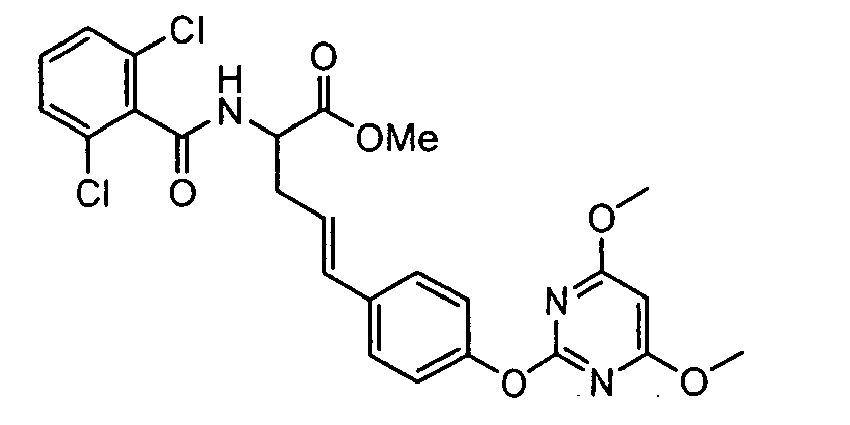
- In the same manner as in Example 1, 2-(2,6-dichlorobenzamido)pent-4-enoic acid methyl ester (30 mg) was reacted with 2-(4-iodophenoxy)-4,6-dimethoxypyrimidine (40 mg) to obtain (E)-2-(2,6-dichlorobenzamido)-5-[4-(4,6-dimethoxypyrimidin-2-yloxy)phenyl]pent-4-enoic acid methyl ester (30 mg). Column chromatography (silica gel, eluent: hexane/ethyl acetate = 2/1) was used for purification. Example 18
- (E)-2-(2,6-Dichlorobenzamido)-5-[4-(4,6-dimethoxypyrimidin-2-yloxy)phenyl]pent-4-enoic acid
-

- In the same manner as in Example 2, (E)-2-(2,6-dichlorobenzamido)-5-[4-(4,6-dimethoxypyrimidin-2-yloxy)phenyl]pent-4-enoic acid methyl ester (29 mg) was hydrolyzed to obtain (E)-2-(2,6-dichlorobenzamido)-5-[4-(4,6-dimethoxypyrimidin-2-yloxy)phenyl]pent-4-enoic acid (11 mg). Example 19
- (E)-2-(2,6-Dichlorobenzamido)-5-[4-(4,6-dimethylpyrimidin-2-yloxy)phenyl]pent-4-enoic acid methyl ester
-

- In the same manner as in Example 1, 2-(2,6-dichlorobenzamido)pent-4-enoic acid methyl ester (47 mg) was reacted with 2-(4-iodophenoxy)-4,6-dimethylpyrimidine (56 mg) to obtain (E)-2-(2,6-dichlorobenzamido)-5-[4-(4,6-dimethylpyrimidin-2-yloxy)phenyl]pent-4-enoic acid methyl ester (44 mg). Column chromatography (silica gel, eluent: hexane/ethyl acetate = 2/1) was used for purification. Example 20
- (E)-2-(2,6-Dichlorobenzamido)-5-[4-(4,6-dimethylpyrimidin-2-yloxy)phenyl]pent-4-enoic acid
-
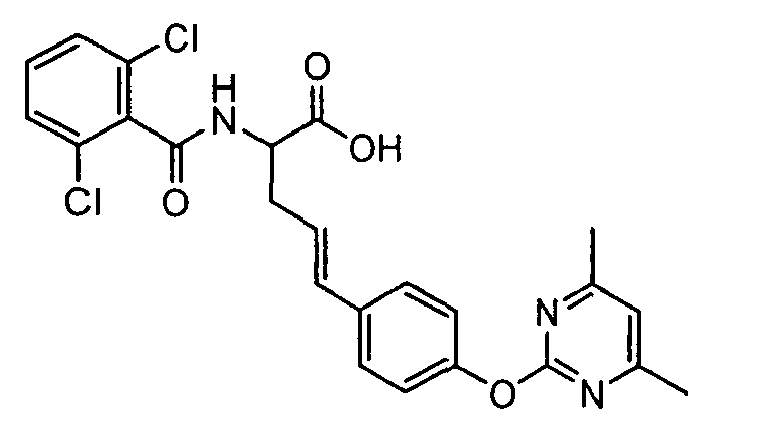
- In the same manner as in Example 2, (E)-2-(2,6-dichlorobenzamido)-5-[4-(4,6-dimethylpyrimidin-2-yloxy)phenyl]pent-4-enoic acid methyl ester (44 mg) was hydrolyzed to obtain (E)-2-(2,6-dichlorobenzamido)-5-[4-(4,6-dimethylpyrimidin-2-yloxy)phenyl]pent-4-enoic acid (36 mg). Example 21
- (E)-2-(2,6-Dichlorobenzamido)-5-[4-(methyl-pyrimidin-2-ylamino)phenyl]pent-4-enoic acid methyl ester
-

- Under an argon atmosphere, palladium acetate (170.8 mg) and tris(2-methylphenyl)phosphine (222.2 mg) were added to a suspension of 2-(2,6-dichlorobenzamido)pent-4-enoic acid methyl ester (2.20 g), N-(4-iodophenyl)-N-methylpyrimidin-2-amine (2.27 g) and potassium carbonate (1.51 g) in DMF (20 ml), and the resulting mixture was stirred at 80°C for 3 hours. After cooling the reaction solution to room temperature, ethyl acetate was added to the reaction solution, and the resulting mixture was washed twice with water and once with saturated brine, followed by drying the organic layers over anhydrous sodium sulfate. After removing anhydrous sodium sulfate by filtration, the filtrate was concentrated. The residue was purified by column chromatography (silica gel, eluent: cyclohexane/chloroform = 1/1→ chloroform). The obtained crudely purified product was purified again by column chromatography (silica gel, eluent: cyclohexane/ethyl acetate = 4/1→2/1) to obtain (E)-2-(2,6-dichlorobenzamido)-5-[4-(methyl-pyrimidin-2-ylamino)phenyl]pent-4-enoic acid methyl ester (2.38 g).
- (E)-2-(2,6-Dichlorobenzamido)-5-[4-(methyl-pyrimidin-2-ylamino)phenyl]pent-4-enoic acid
-

- To a solution of (E)-2-(2,6-dichlorobenzamido)-5-[4-(methyl-pyrimidin-2-ylamino)phenyl]pent-4-enoic acid methyl ester (2.38 g) in THF (20 ml), 0.5N aqueous sodium hydroxide solution (14.7 ml) was added, and the resulting mixture was stirred at room temperature for 1 hour. Water (120 ml) was added to the reaction solution and the resulting mixture was washed with ether. Aqueous layer was acidified by adding 1N hydrochloric acid thereto and extracted twice with ethyl acetate. Organic layers were washed with saturated brine and dried over anhydrous sodium sulfate. After removing anhydrous sodium sulfate by filtration, the filtrate was concentrated to dryness to obtain (E)-2-(2,6-dichlorobenzamido)-5-[4-(methylpyrimidin-2-ylamino)phenyl]pent-4-enoic acid (2.06 g).
- (E)-2-(2,6-Dichlorobenzamido)-5-[4-(ethyl-pyrimidin-2-ylamino)phenyl]pent-4-enoic acid methyl ester
-

- In the same manner as in Example 1, 2-(2,6-dichlorobenzamido)pent-4-enoic acid methyl ester (214 mg) was reacted with N-(4-iodophenyl)-N-ethylpyrimidin-2-amine (254 mg) to obtain (E)-2-(2,6-dichlorobenzamido)-5-[4-(ethyl-pyrimidin-2-ylamino)phenyl]pent-4-enoic acid methyl ester (258 mg). Column chromatography (silica gel, eluent: hexane/ethyl acetate = 4/1→hexane/ethyl acetate = 2/1→ hexane/ethyl acetate = 1/2) was used for purification.
- (E)-2-(2,6-Dichlorobenzamido)-5-[4-(ethyl-pyrimidin-2-ylamino)phenyl]pent-4-enoic acid
-

- In the same manner as in Example 2, (E)-2-(2,6-dichlorobenzamido)-5-[4-(ethyl-pyrimidin-2-ylamino)phenyl]pent-4-enoic acid methyl ester (258 mg) was hydrolyzed to obtain (E)-2-(2,6-dichlorobenzamido)-5-[4-(ethyl-pyrimidin-2-ylamino)phenyl]pent-4-enoic acid (206 mg).
- (E)-2-(2,6-Dichlorobenzamido)-5-[4-((2-methoxyethyl)-pyrimidin-2-ylamino)phenyl]pent-4-enoic acid methyl ester
-

- In the same manner as in Example 1, 2-(2,6-dichlorobenzamido)pent-4-enoic acid methyl ester (89 mg) was reacted with N-(4-iodophenyl)-N-(2-methoxyethyl)pyrimidin-2-amine (116 mg) to obtain (E)-2-(2,6-dichlorobenzamido)-5-[4-((2-methoxyethyl)-pyrimidin-2-ylamino)phenyl]pent-4-enoic acid methyl ester (120 mg). Column chromatography (silica gel, eluent: cyclohexane/chloroform = 2/1→cyclohexane/chloroform = 1/1→cyclohexane/chloroform = 1/2) was used for purification.
- (E)-2-(2,6-Dichlorobenzamido)-5-[4-((2-methoxyethyl)-pyrimidin-2-ylamino)phenyl]pent-4-enoic acid sodium salt
-

- In the same manner as in Example 8, (E)-2-(2,6-dichlorobenzamido)-5-[4-((2-methoxyethyl)-pyrimidin-2-ylamino)phenyl]pent-4-enoic acid methyl ester (117 mg) was hydrolyzed to obtain (E)-2-(2,6-dichlorobenzamido)-5-[4-((2-methoxyethyl)-pyrimidin-2-ylamino)phenyl]pent-4-enoic acid sodium salt (96 mg).
- (E)-2-(2,6-Dichlorobenzamido)-5-[4-(isopropyl-pyrimidin-2-ylamino)phenyl]pent-4-enoic acid methyl ester
-

- Under an argon atmosphere, palladium acetate (316.7 mg) and tris(2-methylphenyl)phosphine (411.8 mg) were added to a suspension of 2-(2,6-dichlorobenzamido)pent-4-enoic acid methyl ester (4.09 g), N-(4-iodophenyl)-N-isopropylpyrimidin-2-amine (4.59 g) and potassium carbonate (2.80 g) in DMF (50 ml), and the resulting mixture was stirred at 80°C for 6 hours. After cooling the reaction solution to room temperature, ethyl acetate was added thereto and the resulting mixture was washed twice with water and once with saturated brine, followed by drying the organic layers over anhydrous sodium sulfate. After removing anhydrous sodium sulfate by filtration, the filtrate was concentrated. The residue was purified by column chromatography (silica gel, eluent: cyclohexane/chloroform = 2/1→1/2). The obtained crudely purified product was purified again by column chromatography (silica gel, eluent: cyclohexane/ethyl acetate = 10/1→4/1) to obtain (E)-2-(2,6-dichlorobenzamido)-5-[4-(isopropylpyrimidin-2-ylamino)phenyl]pent-4-enoic acid methyl ester (4.65 g).
- (E)-2-(2,6-Dichlorobenzamido)-5-[4-(isopropyl-pyrimidin-2-ylamino)phenyl]pent-4-enoic acid
-

- To a solution of (E)-2-(2,6-dichlorobenzamido)-5-[4-(isopropyl-pyrimidin-2-ylamino)phenyl]pent-4-enoic acid methyl ester (5.63 g) in THF (165 ml), 0.1N aqueous sodium hydroxide solution (165 ml) was added, and the resulting mixture was stirred at room temperature for 1 hour. Water (200 ml) was added to the reaction solution and the resulting mixture was washed with ether. Aqueous layer was acidified by adding 1N hydrochloric acid thereto and extracted twice with ethyl acetate. Organic layers were washed with saturated brine and dried over anhydrous sodium sulfate. After removing anhydrous sodium sulfate by filtration, the filtrate was concentrated to dryness to obtain (E)-2-(2,6-dichlorobenzamido)-5-[4-(isopropyl-pyrimidin-2-ylamino)phenyl]pent-4-enoic acid (4.68 g).
- (E)-2-(2,6-Dichlorobenzamido)-5-[4-((4-hydroxy-benzyl)-pyrimidin-2-ylamino)phenyl]pent-4-enoic acid
-

-
- (1) In the same manner as in Example 1, 2-(2,6-dichlorobenzamido)pent-4-enoic acid methyl ester (45.6 mg) was reacted with (4-iodophenyl)-(4-acetoxybenzyl)pyrimidin-2-ylamine (67.4 mg) to obtain (E)-2-(2,6-dichlorobenzamido)-5-[4-((4-acetoxy-benzyl)-pyrimidin-2-ylamino)phenyl]pent-4-enoic acid methyl ester (61.7 mg). Column chromatography (silica gel, eluent: ethyl acetate/hexane = 1/3→3/1) and thin layer chromatography (silica gel, mobile phasze: cyclohexane/ethyl acetate = 1/5) were used for purification.
- (2) To a solution of (E)-2-(2,6-dichlorobenzamido)-5-[4-((4-acetoxy-benzyl)-pyrimidin-2-ylamino)phenyl]pent-4-enoic acid methyl ester (61.7 mg) in THF (3.0 ml), 0.1N aqueous sodium hydroxide solution (3.0 ml) was added, and the resulting mixture was stirred at room temperature for 2 hours. Water (50 ml) was added to the reaction solution and the resulting mixture was washed with ether. Aqueous layer was acidified by adding 1N hydrochloric acid thereto and extracted twice with ethyl acetate. Organic layers were washed with saturated brine and dried over anhydrous sodium sulfate. After removing anhydrous sodium sulfate by filtration, the filtrate was concentrated to dryness to obtain (E)-2-(2,6-dichlorobenzamido)-5-[4-((4-hydroxy-benzyl)-pyrimidin-2-ylamino)phenyl]pent-4-enoic acid (43 mg).
- (E)-5-[4-((2-Cyano-ethyl)-pyrimidin-2-yl-amino)-phenyl]-2-(2,6-dichlorobenzamido)-pent-4-enoic acid methyl ester
-

- In the same manner as in Example 1, 2-(2,6-dichlorobenzamido)pent-4-enoic acid methyl ester (73 mg) was reacted with 3-(N-(4-iodophenyl)-N-(pyrimidin-2-yl)amino)propanenitrile (94 mg) to obtain (E)-5-[4-((2-cyano-ethyl)-pyrimidin-2-ylamino)-phenyl]-2-(2,6-dichlorobenzamido)-pent-4-enoic acid methyl ester (100 mg). Column chromatography (silica gel, eluent: cyclohexane/chloroform = 2/1→1/2→ 1/5) was used for purification.
- (E)-5-[4-((2-Cyano-ethyl)-pyrimidin-2-yl-amino)-phenyl]-2-(2,6-dichlorobenzamido)-pent-4-enoic acid sodium salt
-

- In the same manner as in Example 8, (E)-5-[4-((2-cyano-ethyl)-pyrimidin-2-yl-amino)-phenyl]-2-(2,6-dichlorobenzamido)-pent-4-enoic acid methyl ester (90 mg) was hydrolyzed to obtain (E)-5-[4-((2-cyano-ethyl)-pyrimidin-2-yl-amino)-phenyl]-2-(2,6-dichlorobenzamido)-pent-4-enoic acid sodium salt (68 mg).
- (E)-5-[4-(Benzyl-pyrimidin-2-yl-amino)-phenyl]-2-(2,6-dichlorobenzamido)-pent-4-enoic acid methyl ester
-

- In the same manner as in Example 1, 2-(2,6-dichlorobenzamido)pent-4-enoic acid methyl ester (59.3 mg) was reacted with N-benzyl-N-(4-iodophenyl)pyrimidin-2-amine (67.0 mg) to obtain (E)-5-[4-(benzyl-pyrimidin-2-yl-amino)-phenyl]-2-(2,6-dichlorobenzamido)-pent-4-enoic acid methyl ester (58.7 mg). Column chromatography (silica gel, eluent: chloroform/cyclohexane = 2/1 -chloroform) and thin layer chromatography (silica gel, mobile phase: cyclohexane/ethyl acetate = 2/1) were used for purification.
- (E)-5-[4-(Benzyl-pyrimidin-2-yl-amino)-phenyl]-2-(2,6-dichlorobenzamido)-pent-4-enoic acid sodium salt
-

- In the same manner as in Example 8, (E)-5-[4-(benzyl-pyrimidin-2-yl-amino)-phenyl]-2-(2,6-dichlorobenzamido)-pent-4-enoic acid methyl ester (58.7 mg) was hydrolyzed to obtain (E)-5-[4-(benzyl-pyrimidin-2-yl-amino)-phenyl]-2-(2,6-dichlorobenzamido)-pent-4-enoic acid sodium salt (33.5 mg).
- (E)-2-(2,6-Dichlorobenzamido)-5-[4-((4-methoxy-benzyl)-pyrimidin-2-ylamino)phenyl]pent-4-enoic acid methyl ester
-

- In the same manner as in Example 1, 2-(2,6-dichlorobenzamido)pent-4-enoic acid methyl ester (83.3 mg) was reacted with N-(4-methoxybenzyl)-N-(4-bromophenyl)pyrimidin-2-amine (102.4 mg) to obtain (E)-2-(2,6-dichlorobenzamido)-5-[4-((4-methoxy-benzyl)-pyrimidin-2-ylamino)phenyl]pent-4-enoic acid methyl ester (102.4 mg). Column chromatography (silica gel, eluent: hexane/ethyl acetate = 3/1→1/3) and thin layer chromatography (silica gel, mobile phasae: cyclohexane/ethyl acetate = 1/5) were used for purification.
- (E)-2-(2,6-Dichlorobenzamido)-5-[4-((4-methoxy-benzyl)-pyrimidin-2-ylamino)phenyl]pent-4-enoic acid sodium salt
-
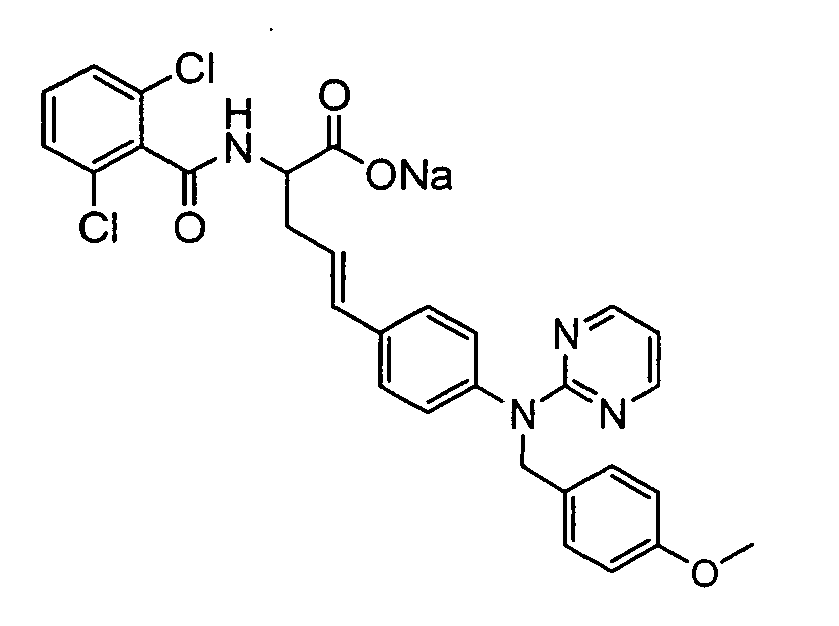
- In the same manner as in Example 8, (E)-2-(2,6-dichlorobenzamido)-5-[4-((4-methoxy-benzyl)-pyrimidin-2-ylamino)phenyl]pent-4-enoic acid methyl ester (102.4 mg) was hydrolyzed to obtain (E)-2-(2,6-dichlorobenzamido)-5-[4-((4-methoxybenzyl)-pyrimidin-2-ylamino)phenyl]pent-4-enoic acid sodium salt (76.4 mg). Example 36
- (E)-5-(4-Butyl-pyrimidin-2-yl-amino)-phenyl]-2-(2,6-dichlorobenzamido)-pent-4-enoic acid methyl ester
-

- In the same manner as in Example 1, 2-(2,6-dichlorobenzamido)pent-4-enoic acid methyl ester (90.4 mg) was reacted with N-(4-bromophenyl)-N-butylpyrimidin-2-amine (92.0 mg) to obtain (E)-5-(4-butyl-pyrimidin-2-yl-amino)-phenyl]-2-(2,6-dichlorobenzamido)-pent-4-enoic acid methyl ester (78.8 mg). Column chromatography (silica gel, eluent: chloroform/cyclohexane = 2/1→ chloroform) and thin layer chromatography (silica gel, mobile phase: cyclohexane/ethyl acetate = 2/1) were used for purification.
- (E)-5-(4-Butyl-pyrimidin-2-yl-amino)-phenyl]-2-(2,6-dichlorobenzamido)-pent-4-enoic acid sodium salt
-

- In the same manner as in Example 8, (E)-5-(4-butyl-pyrimidin-2-yl-amino)-phenyl]-2-(2,6-dichlorobenzamido)-pent-4-enoic acid methyl ester (78.8 mg) was hydrolyzed to obtain (E)-5-(4-butyl-pyrimidin-2-yl-amino)-phenyl]-2-(2,6-dichlorobenzamido)-pent-4-enoic acid sodium salt (42.0 mg).
- (E)-2-(2,6-Dichlorobenzamido)-5-[4-(pyridin-3-ylmethyl-pyrimidin-2-ylamino)phenyl]pent-4-enoic acid methyl ester
-

- In the same manner as in Example 1, 2-(2,6-dichlorobenzamido)pent-4-enoic acid methyl ester (1060.0 mg) was reacted with N-(4-bromophenyl)-N-((pyridin-3-yl)methyl)pyrimidin-2-amine (120.0 mg) to obtain (E)-2-(2,6-dichlorobenzamido)-5-[4-(pyridin-3-ylmethyl-pyrimidin-2-ylamino)phenyl]pent-4-enoic acid methyl ester (147.8 mg). Column chromatography (silica gel, eluent: chloroform→ chloroform/ethyl acetate = 1/1) and thin layer chromatography (chloroform/ethyl acetate = 1/1) were used for purification.
- (E)-2-(2,6-Dichlorobenzamido)-5-[4-(pyridin-3-ylmethyl-pyrimidin-2-ylamino)phenyl]pent-4-enoic acid sodium salt
-

- In the same manner as in Example 8, (E)-2-(2,6-dichlorobenzamido)-5-[4-(pyridin-3-ylmethyl-pyrimidin-2-ylamino)phenyl]pent-4-enoic acid methyl ester (147.8 mg) was hydrolyzed to obtain (E)-2-(2,6-dichlorobenzamido)-5-[4-(pyridin-3-ylmethyl-pyrimidin-2-ylamino)phenyl]pent-4-enoic acid sodium salt (114.4 mg). Example 40
- (E)-2-(2,6-Dichlorobenzamido)-s-[4-(pyrimidin-2-yl-thiazol-4-ylmethylamino)phenyl]pent-4-enoic acid methyl ester
-

- In the same manner as in Example 1, 2-(2,6-dichlorobenzamido)pent-4-enoic acid methyl ester (78.0 mg) was reacted with N-(4-bromophenyl)-N-((thiazol-4-yl)methyl)pyrimidin-2-amine (90.0 mg) to obtain (E)-2-(2,6-dichlorobenzamido)-5-[4-(pyrimidin-2-yl-thiazol-4-ylmethyl-amino)phenyl]pent-4-enoic acid methyl ester (87.7 mg). Column chromatography (silica gel, eluent: chloroform→ chloroform/ethyl acetate = 3/1) and thin layer chromatography (cyclohexane/ethyl acetate = 1/2) were used for purification.
- (E)-2-(2,6-Dichlorobenzamido)-5-[4-(pyrimidin-2-yl-thiazol-4-ylmethylamino)phenyl]pent-4-enoic acid sodium salt
-
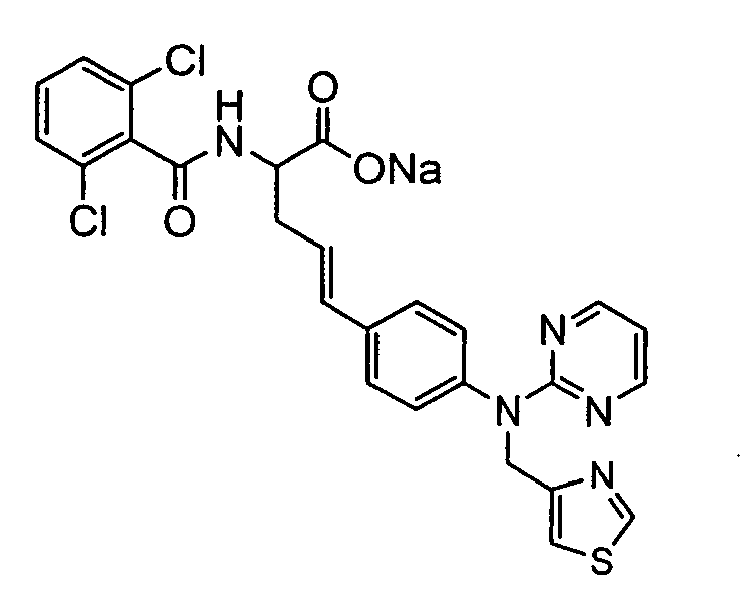
- In the same manner as in Example 8, (E)-2-(2,6-dichlorobenzamido)-5-[4-(pyrimidin-2-yl-thiazol-4-ylmethyl-amino)phenyl]pent-4-enoic acid methyl ester (87.7 mg) was hydrolyzed to obtain (E)-2-(2,6-dichlorobenzamido)-5-[4-(pyrimidin-2-yl-thiazol-4-ylmethyl-amino)phenyl]pent-4-enoic acid sodium salt (63.6 mg). Example 42
- (E)-2-(2,6-Dichlorobenzamido)-5-[4-((4-methoxy-pyrimidin-2-yl)-methylamino)phenyl]pent-4-enoic acid methyl ester
-

- In the same manner as in Example 1, 2-(2,6-dichlorobenzamido)pent-4-enoic acid methyl ester (43 mg) was reacted with N-(4-iodophenyl)-4-methoxy-N-methylpyrimidin-2-amine (51 mg) to obtain (E)-2-(2,6-dichlorobenzamido)-5-[4-((4-methoxy-pyrimidin-2-yl)-methyl-amino)phenyl]pent-4-enoic acid methyl ester (32 mg). Column chromatography (silica gel, eluent: hexane/ethyl acetate = 2/1) was used for purification.
- (E)-2-(2,6-Dichlorobenzamido)-5-[4-((4-methoxy-pyrimidin-2-yl)-methylamino)phenyl]pent-4-enoic acid
-

- In the same manner as in Example 2, (E)-2-(2,6-dichlorobenzamido)-5-[4-((4-methoxy-pyrimidin-2-yl)-methyl-amino)phenyl]pent-4-enoic acid methyl ester (31 mg) was hydrolyzed to obtain (E)-2-(2,6-dichlorobenzamido)-5-[4-((4-methoxypyrimidin-2-yl)-methyl-amino)phenyl]pent-4-enoic acid (29 mg).
- (E)-2-(2,6-Dichlorobenzamido)-5-[4-((4,6-dimethoxy-pyrimidin-2-yl)-methylamino)phenyl]pent-4-enoic acid methyl ester
-

- In the same manner as in Example 1, 2-(2,6-dichlorobenzamido)pent-4-enoic acid methyl ester (80 mg) was reacted with N-(4-iodophenyl)-4,6-dimethoxy-N-methylpyrimidin-2-amine (118 mg) to obtain (E)-2-(2,6-dichlorobenzamido)-5-[4-((4,6-dimethoxy-pyrimidin-2-yl)-methyl-amino)phenyl]pent-4-enoic acid methyl ester (92 mg). Column chromatography (silica gel, eluent: hexane/ethyl acetate = 2/1) was used for purification.
- (E)-2-(2,6-Dichlorobenzamido)-5-[4-((4,6-dimethoxy-pyrimidin-2-yl)-methylamino)phenyl]pent-4-enoic acid
-

- In the same manner as in Example 2, (E)-2-(2,6-dichlorobenzamido)-5-[4-((4,6-dimethoxy-pyrimidin-2-yl)-methyl-amino)phenyl]pent-4-enoic acid methyl ester (91 mg) was hydrolyzed to obtain (E)-2-(2,6-dichlorobenzamido)-5-[4-((4,6-dimethoxy-pyrimidin-2-yl)-methyl-amino)phenyl]pent-4-enoic acid (76 mg). Example 46
- (E)-2-(2,6-Dichlorobenzamido)-5-[4-(phenyl-pyrimidin-2-ylamino)phenyl]pent-4-enoic acid methyl ester
-

- In the same manner as in Example 1, 2-(2,6-dichlorobenzamido)pent-4-enoic acid methyl ester (52.4 mg) was reacted with N-(4-bromophenyl)-N-phenylpyrimidin-2-amine (56.6 mg) to obtain (E)-2-(2,6-dichlorobenzamido)-5-[4-(phenyl-pyrimidin-2-ylamino)phenyl]pent-4-enoic acid methyl ester (40.0 mg). Column chromatography (silica gel, eluent: chloroform/cyclohexane = 1/1→ chloroform) and thin layer chromatography (silica gel, developing solvent: cyclohexane/ethyl acetate = 1/2) were used for purification.
- (E)-2-(2,6-Dichlorobenzamido)-5-[4-(phenyl-pyrimidin-2-ylamino)phenyl]pent-4-enoic acid sodium salt
-

- In the same manner as in Example 8, (E)-2-(2,6-dichlorobenzamido)-5-[4-(phenyl-pyrimidin-2-ylamino)phenyl]pent-4-enoic acid methyl ester (40.0 mg) was hydrolyzed to obtain (E)-2-(2,6-dichlorobenzamido)-5-[4-(phenyl-pyrimidin-2-ylamino)phenyl]pent-4-enoic acid sodium salt (25.3 mg).
- (E)-2-(2,6-Dichlorobenzamido)-5-[4-(pyrimidin-2-yl-(tetrahydro-pyran-4-yl)-amino)phenyl]pent-4-enoic acid methyl ester
-

- In the same manner as in Example 1, 2-(2,6-dichlorobenzamido)pent-4-enoic acid methyl ester (164.0 mg) was reacted with trifluoromethanesulfonic acid 4-[pyrimidin-2-yl-(tetrahydropyran-4-yl)amino]phenyl ester (220.0 mg) to obtain (E)-2-(2,6-dichlorobenzamido)-S-[4-(pyrimidin-2-yl-(tetrahydro-pyran-4-yl)-amino)phenyl]pent-4-enoic acid methyl ester (178.5 mg). Column chromatography (silica gel, eluent: chloroform/cyclohexane = 1/2 → chloroform) and thin layer chromatography (silica gel, mobile phase: cyclohexane/ethyl acetate = 1/1) were used for purification.
- (E)-2-(2,6-Dichlorobenzamido)-5-[4-(pyrimidin-2-yl-(tetrahydro-pyran-4-yl)-amino)phenyl]pent-4-enoic acid sodium salt
-

- In the same manner as in Example 8, (E)-2-(2,6-dichlorobenzamido)-5-[4-(pyrimidin-2-yl-(tetrahydro-pyran-4-yl)-amino)phenyl]pent-4-enoic acid methyl ester (178.5 mg) was hydrolyzed to obtain (E)-2-(2,6-dichlorobenzamido)-5-[4-(pyrimidin-2-yl-(tetrahydro-pyran-4-yl)-amino)phenyl]pent-4-enoic acid sodium salt (103 mg). Example 50
- (E)-2-(2,6-Dichlorobenzamido)-5-[4-((3-methyl-2-but-2-enyl)-pyrimidin-2-ylamino)phenyl]pent-4-enoic acid methyl ester
-

- In the same manner as in Example 1, 2-(2,6-dichlorobenzamido)pent-4-enoic acid methyl ester (145 mg) was reacted with N-(4-iodophenyl)-N-(3-methyl-2-butenyl)pyrimidin-2-amine (175 mg) to obtain (E)-2-(2,6-dichlorobenzamido)-5-[4-((3-methyl-2-but-2-enyl)-pyrimidin-2-ylamino)phenyl]pent-4-enoic acid methyl ester (133 mg). Column chromatography (silica gel, eluent: hexane/ethyl acetate = 1/1) was used for purification.
- (E)-2-(2,6-Dichlorobenzamido)-5-[4-((3-methyl-2-but-2-enyl)-pyrimidin-2-ylamino)phenyl]pent-4-enoic acid sodium salt
-

- In the same manner as in Example 8, (E)-2-(2,6-dichlorobenzamido)-5-[4-((3-methyl-2-but-2-enyl)-pyrimidin-2-ylamino)phenyl]pent-4-enoic acid methyl ester (133 mg) was hydrolyzed to obtain (E)-2-(2,6-dichlorobenzamido)-5-[4-((3-methyl-2-but-2-enyl)-pyrimidin-2-ylamino)phenyl]pent-4-enoic acid sodium salt (95 mg).
- (E)-5-[4-(Cyclopropylmethyl-pyrimidin-2-ylamino)phenyl]-2-(2,6-dichlorobenzamido)pent-4-enoic acid methyl ester
-

- In the same manner as in Example 1, 2-(2,6-dichlorobenzamido)pent-4-enoic acid methyl ester (139 mg) was reacted with N-(cyclopropylmethyl)-N-(4-iodophenyl)pyrimidin-2-amine (162 mg) to obtain (E)-5-[4-(cyclopropylmethyl-pyrimidin-2-ylamino)phenyl]-2-(2,6-dichlorobenzamido)pent-4-enoic acid methyl ester (167 mg). Column chromatography (silica gel, eluent: hexane/ethyl acetate = 1/1) was used for purification.
- (E)-5-[4-(Cyclopropylmethyl-pyrimidin-2-ylamino)phenyl]-2-(2,6-dichlorobenzamido)pent-4-enoic acid sodium salt
-

- In the same manner as in Example 8, (E)-5-[4-(cyclopropylmethyl-pyrimidin-2-ylamino)phenyl]-2-(2,6-dichlorobenzamido)pent-4-enoic acid methyl ester (153 mg) was hydrolyzed to obtain (E)-5-[4-(cyclopropylmethyl-pyrimidin-2-ylamino)phenyl]-2-(2,6-dichlorobenzamido)pent-4-enoic acid sodium salt (101 mg).
- (E)-2-(2,6-Dichlorobenzamido)-5-[4-(isobutyl-pyrimidin-2-ylamino)phenyl]pent-4-enoic acid methyl ester
-

- In the same manner as in Example 1, 2-(2,6-dichlorobenzamido)pent-4-enoic acid methyl ester (143 mg) was reacted with N-(4-iodophenyl)-N-isobutylpyrimidin-2-amine (167 mg) to obtain (E)-2-(2,6-dichlorobenzamido)-5-[4-(isobutyl-pyrimidin-2-ylamino)phenyl]pent-4-enoic acid methyl ester (159 mg). Column chromatography (silica gel, eluent: hexane/ethyl acetate =1/1) was used for purification.
- (E)- 2-(2,6- Dichlorobenzamido)-5- [4-(isobutyl-pyrimidin- 2-ylamino)phenyl]pent-4-enoic acid sodium salt
-

- In the same manner as in Example 8, (E)-2-(2,6-dichlorobenzamido)-5-[4-(isobutyl-pyrimidin-2-ylamino)phenyl]pent-4-enoic acid methyl ester (157 mg) was hydrolyzed to obtain (E)-2-(2,6-dichlorobenzamido)-5-[4-(isobutyl-pyrimidin-2-ylamino)phenyl]pent-4-enoic acid sodium salt (128 mg).
- (E)-2-(2,6-Dichlorobenzamido)-5-[4-(propyl-pyrimidin-2-ylamino)phenyl]pent-4-enoic acid methyl ester
-

- In the same manner as in Example 1, 2-(2,6-dichlorobenzamido)pent-4-enoic acid methyl ester (171 mg) was reacted with N-(4-iodophenyl)-N-propylpyrimidin-2-amine (192 mg) to obtain (E)-2-(2,6-dichlorobenzamido)-5-[4-(propyl-pyrimidin-2-ylamino)phenyl]pent-4-enoic acid methyl ester (209 mg). Column chromatography (silica gel, eluent: cyclohexane/chloroform = 4/1→3/1) was used for purification.
- (E)-2-(2,6-Dichlorobenzamido)-5-[4-(propyl-pyrimidin-2-ylamino)phenyl]pent-4-enoic acid
-

- In the same manner as in Example 2, (E)-2-(2,6-dichlorobenzamido)-5-[4-(propyl-pyrimidin-2-ylamino)phenyl]pent-4-enoic acid methyl ester (127 mg) was hydrolyzed to obtain (E)-2-(2,6-dichlorobenzamido)-5-[4-(propyl-pyrimidin-2-ylamino)phenyl]pent-4-enoic acid (95 mg).
- (E)-2-(2,6-Dichlorobenzamido)-5-[4-(pyridin-4-ylmethyl-pyrimidin-2-ylamino)phenyl]pent-4-enoic acid methyl ester
-
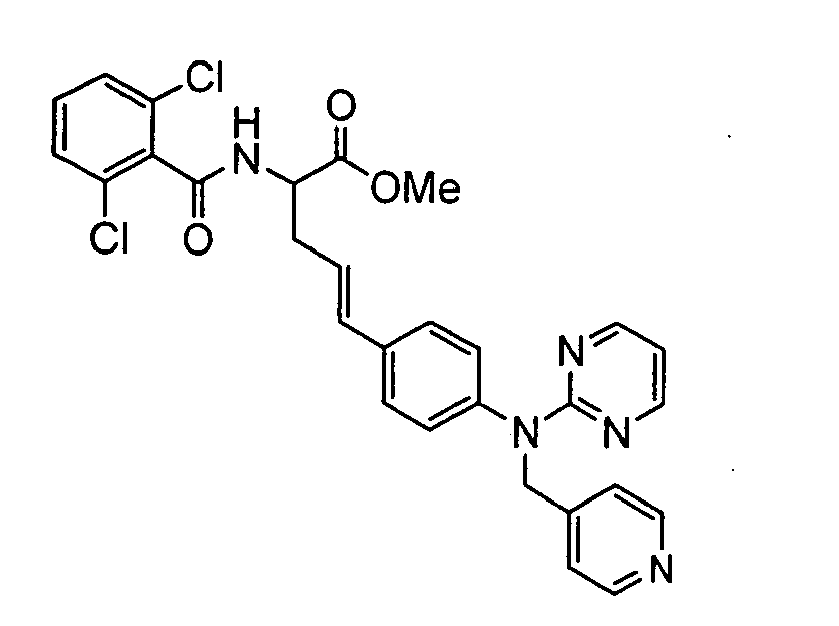
- In the same manner as in Example 1, 2-(2,6-dichlorobenzamido)pent-4-enoic acid methyl ester (72 mg) was reacted with N-(4-iodophenyl)-N-((pyridin-4-yl)methyl)pyrimidin-2-amine (93 mg) to obtain (E)-2-(2,6-dichlorobenzamido)-5-[4-(pyridin-4-ylmethyl-pyrimidin-2-ylamino)phenyl]pent-4-enoic acid methyl ester (99 mg). Column chromatography (silica gel, eluent: cyclohexane/ethyl acetate = 1/2→ 1/3) was used for purification.
- (E)-2-(2,6-Dichlorobenzamido)-5-[4-(pyridin-4-ylmethyl-pyrimidin-2-ylamino)phenyl]pent-4-enoic acid
-

- In the same manner as in Example 2, (E)-2-(2,6-dichlorobenzamido)-5-[4-(pyridin-4-ylmethyl-pyrimidin-2-ylamino)phenyl]pent-4-enoic acid methyl ester (99 mg) was hydrolyzed to obtain (E)-2-(2,6-dichlorobenzamido)-5-[4-(pyridin-4-ylmethyl-pyrimidin-2-ylamino)phenyl]pent-4-enoic acid (48 mg).
- (E)-2-(2,6-Dichlorobenzamido)-5-[4-(pyridin-2-ylmethyl-pyrimidin-2-ylamino)phenyl]pent-4-enoic acid methyl ester
-

- In the same manner as in Example 1, 2-(2,6-dichlorobenzamido)pent-4-enoic acid methyl ester (124 mg) was reacted with N-(4-iodophenyl)-N-((pyridin-2-yl)methyl)pyrimidin-2-amine (159 mg) to obtain (E)-2-(2,6-dichlorobenzamido)-5-[4-(pyridin-2-ylmethyl-pyrimidin-2-ylamino)phenyl]pent-4-enoic acid methyl ester (208 mg). Column chromatography (silica gel, eluent: cyclohexane/ethyl acetate = 1/1→1/2) was used for purification.
- (E)-2-(2,6-Dichlorobenzamido)-5-[4-(pyridin-2-ylmethyl-pyrimidin-2-ylamino)phenyl]pent-4-enoic acid
-

- In the same manner as in Example 2, (E)-2-(2,6-dichlorobenzamido)-5-[4-(pyridin-2-ylmethyl-pyrimidin-2-ylamino)phenyl]pent-4-enoic acid methyl ester (208 mg) was hydrolyzed to obtain (E)-2-(2,6-dichlorobenzamido)-5-[4-(pyridin-2-ylmethyl-pyrimidin-2-ylamino)phenyl]pent-4-enoic acid (123 mg).
- (E)-2-(2,6-Difluorobenzamido)-5-[4-(methyl-pyrimidin-2-ylamino)phenyl]pent-4-enoic acid methyl ester
-

- Under an argon atmosphere, triethylamine (0.028 ml) and 2,6-difluorobenzoyl chloride (0.015 ml) were added to a solution of 2-amino-5-[4-(methyl-pyrimidin-2-ylamino)phenyl]pent-4-enoic acid methyl ester (31.7 mg) in dichloromethane (2 ml), and the resulting mixture was stirred at room temperature for 2 hours. Saturated aqueous sodium hydrogen carbonate solution was added to the reaction solution and the resulting mixture was extracted with ethyl acetate. Organic layer was washed twice with water and once with saturated brine, and dried over anhydrous sodium sulfate. After removing anhydrous sodium sulfate by filtration, the filtrate was concentrated. The residue was purified by thin layer chromatography (silica gel, mobile phase: cyclohexane/ethyl acetate = 3/2) to obtain (E)-2-(2,6-difluorobenzamido)-5-[4-(methyl-pyrimidin-2-ylamino)phenyl]pent-4-enoic acid methyl ester (42 mg).
- (E)-2-(2,6-Difluorobenzamido)-5-[4-(methyl-pyrimidin-2-ylamino)phenyl]pent-4-enoic acid
-

- In the same manner as in Example 2, (E)-2-(2,6-difluorobenzamido)-5-[4-(methyl-pyrimidin-2-ylamino)phenyl]pent-4-enoic acid methyl ester (42 mg) was hydrolyzed to obtain (E)-2-(2,6-difluorobenzamido)-5-[4-(methyl-pyrimidin-2-ylamino)phenyl]pent-4-enoic acid (29 mg).
- (E)-2-(2-Chloro-6-fluorobenzamido)-5-[4-(methyl-pyrimidin-2-ylamino)phenyl]pent-4-enoic acid methyl ester
-

- Under an argon atmosphere, EDC hydrochloride (39 mg) and HOBT (3 mg) were added to a solution of 2-amino-5-[4-(methyl-pyrimidin-2-ylamino)phenyl]pent-4-enoic acid methyl ester (51 mg) and 2-chloro-6-fluorobenzoic acid in dichloromethane (1.5 ml), and the resulting mixture was stirred at room temperature for 28 hours. To the reaction solution, 1N hydrochloric acid was added, and the resulting mixture was extracted with ethyl acetate. Organic layer was washed with saturated aqueous sodium hydrogen carbonate solution and dried over anhydrous sodium sulfate. After removing anhydrous sodium sulfate by filtration, the filtrate was concentrated. The residue was purified by thin layer chromatography (silica gel, mobile phase: hexane/ethyl acetate = 1/2) to obtain (E)-2-(2-chloro-6-fluorobenzamido)-5-[4-(methyl-pyrimidin-2-ylamino)phenyl]pent-4-enoic acid methyl ester (39 mg).
- (E)-2-(2-Chloro-6-fluorobenzamido)-5-[4-(methyl-pyrimidin-2-ylamino)phenyl]pent-4-enoic acid
-

- In the same manner as in Example 2, (E)-2-(2-chloro-6-fluorobenzamido)-5-[4-(methyl-pyrimidin-2-ylamino)phenyl]pent-4-enoic acid methyl ester (39 mg) was hydrolyzed to obtain (E)-2-(2-chloro-6-fluorobenzamido)-5-[4-(methyl-pyrimidin-2-ylamino)phenyl]pent-4-enoic acid (34 mg).
- (E)-2-(2-Chloro-6-methylbenzamido)-5-[4-(methyl-pyrimidin-2-ylamino)phenyl]pent-4-enoic acid methyl ester
-

- Under an argon atmosphere, oxalyl dichloride (0.022 ml) and DMF (0.002 ml) were added to a solution of 2-chloro-6-methylbenzoic acid (29 mg) in dichloromethane (1.0 ml), and the resulting mixture was stirred at room temperature for 1 hour. The reaction solution was concentrated and the residue was dissolved in dichloromethane (1.0 ml). To the solution, 2-amino-5-[4-(methyl-pyrimidin-2-ylamino)phenyl]pent-4-enoic acid methyl ester (50 mg) and triethylamine (0.05 ml) were added, and the resulting mixture was stirred at room temperature for 2.5 hours. To the reaction solution, 1N hydrochloric acid was added, and the resulting solution was extracted with dichloromethane. Organic layer was washed with saturated aqueous sodium hydrogen carbonate solution and dried over anhydrous sodium sulfate. After removing anhydrous sodium sulfate by filtration, the filtrate was concentrated. The residue was purified by thin layer chromatography (silica gel, mobile phase: hexane/ethyl acetate = 1/1) to obtain (E)-2-(2-chloro-6-methylbenzamido)-5-[4-(methyl-pyrimidin-2-ylamino)phenyl]pent-4-enoic acid methyl ester (63 mg).
- (E)-2-(2-Chloro-6-methylbenzamido)-5-[4-(methyl-pyrimidin-2-ylamino)phenyl]pent-4-enoic acid
-

- In the same manner as in Example 2, (E)-2-(2-chloro-6-methylbenzamido)-5-[4-(methyl-pyrimidin-2-ylamino)phenyl]pent-4-enoic acid methyl ester (63 mg) was hydrolyzed to obtain (E)-2-(2-chloro-6-methylbenzamido)-5-[4-(methyl-pyrimidin-2-ylamino)phenyl]pent-4-enoic acid (57 mg).
- (E)-2-(2,6-Dimethylbenzamido)-5-[4-(methyl-pyrimidin-2-ylamino)phenyl]pent-4-enoic acid methyl ester
-

- Under an argon atmosphere, oxalyl dichloride (0.025 ml) and DMF (0.002 ml) were added to a solution of 2,6-dimethylbenzoic acid (24 mg) in dichloromethane (1.0 ml), and the resulting mixture was stirred at room temperature for 2 hours. The reaction solution was concentrated and the residue was dissolved in dichloromethane (1.0 ml). To the solution, 2-amino-5-[4-(methyl-pyrimidin-2-ylamino)phenyl]pent-4-enoic acid methyl ester (50 mg) and triethylamine (0.05 ml) were added, and the resulting mixture was stirred at room temperature for 3 hours. To the reaction solution, 1N hydrochloric acid was added, and the resulting solution was extracted with dichloromethane, followed by drying the organic layer over anhydrous sodium sulfate. After removing anhydrous sodium sulfate by filtration, the filtrate was concentrated. The residue was purified by thin layer chromatography (silica gel, mobile phase: hexane/ethyl acetate = 3/2) to obtain (E)-2-(2,6-dimethylbenzamido)-5-[4-(methyl-pyrimidin-2-ylamino)phenyl]pent-4-enoic acid methyl ester (62 mg).
- (E)-2-(2,6-Dimethylbenzamido)-5-[4-(methyl-pyrimidin-2-ylamino)phenyl]pent-4-enoic acid
-

- In the same manner as in Example 2, (E)-2-(2,6-dimethylbenzamido)-5-[4-(methyl-pyrimidin-2-ylamino)phenyl]pent-4-enoic acid methyl ester (62 mg) was hydrolyzed to obtain (E)-2-(2,6-dimethylbenzamido)-5-[4-(methyl-pyrimidin-2-ylamino)phenyl]pent-4-enoic acid (47 mg).
- (E)-5-[4-((2-Cyano-ethyl)-pyrimidin-2-yl-amino)-phenyl]-2-(2,6-difluorobenzamido)-pent-4-enoic acid methyl ester
-
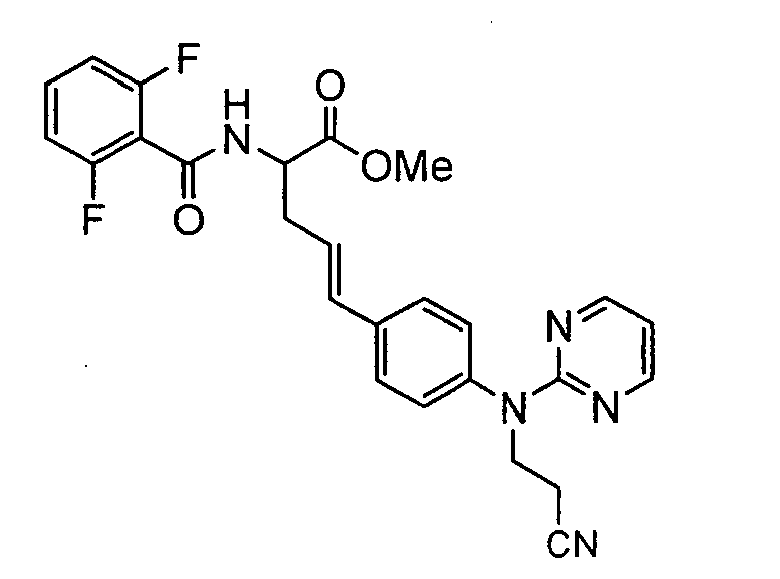
- In the same manner as in Example 1, 2-(2,6-difluorobenzamido)pent-4-enoic acid methyl ester (17 mg) was reacted with 3-(N-(4-iodophenyl)-N-(pyrimidin-2-yl)amino)propanenitrile (24 mg) to obtain ((E)-5-[4-((2-cyano-ethyl)-pyrimidin-2-ylamino)-phenyl]-2-(2,6-difluorobenzamido)-pent-4-enoic acid methyl ester (18 mg). Column chromatography (silica gel, eluent: hexane/ethyl acetate = 2/1) was used for purification.
- (E)-5-[4-((2-Cyano-ethyl)-pyrimidin-2-yl-amino)-phenyl]-2-(2,6-difluorobenzamido)-pent-4-enoic acid
-

- In the same manner as in Example 2, (E)-5-[4-((2-cyano-ethyl)-pyrimidin-2-yl-amino)-phenyl]-2-(2,6-difluorobenzamido)-pent-4-enoic acid methyl ester (18 mg) was hydrolyzed to obtain (E)-5-[4-((2-cyano-ethyl)-pyrimidin-2-yl-amino)-phenyl]-2-(2,6-difluorobenzamido)-pent-4-enoic acid (10 mg).
- 2-(2,6-Dichlorobenzamido)-5-[4-(pyrimidin-2-yloxy)phenyl]pent-4-ynoic acid methyl ester
-

- Under an argon atmosphere, copper iodide (2.8 mg) and dichlorobis(triphenylphosphine)palladium (5.2 mg) were added to a solution of 2-(2,6-dichlorobenzamido)pent-4-ynoic acid methyl ester (74 mg), 2-(4-iodophenoxy)pyrimidine (81 mg) in THF/diisopropylamine (3/1) mixture (5 ml), and the resulting mixture was stirred at room temperature for 2 hours. The reaction solution was concentrated and ethyl acetate was added to the residue. The insoluble matter was removed by filtration, and the filtrate was washed once with water and once with saturated brine and dried over anhydrous sodium sulfate. After removing anhydrous sodium sulfate by filtration, the filtrate was concentrated. The residue was purified by column chromatography (silica gel, eluent: cyclohexane/chloroform = 2/1→cyclohexane/chloroform = 1/3) to obtain 2-(2,6-dichlorobenzamido)-5-[4-(pyrimidin-2-yloxy)phenyl]pent-4-ynoic acid methyl ester (100 mg).
- 2-(2,6-Dichlorobenzamido)-5-[4-(pyrimidin-2-yloxy)phenyl]pent-4-ynoic acid sodium salt
-

- In the same manner as in Example 8, 2-(2,6-dichlorobenzamido)-5-[4-(pyrimidin-2-yloxy)phenyl]pent-4-ynoic acid methyl ester (100 mg) was hydrolyzed to obtain 2-(2,6-dichlorobenzamido)-5-[4-(pyrimidin-2-yloxy)phenyl]pent-4-ynoic acid sodium salt (85 mg).
- (E)-2-(2,6-Dichlorobenzamido)-5-[4-(pyrimidin-2-ylamino)phenyl]pent-4-ynoic acid methyl ester
-

- In the same manner as in Example 72, 2-(2,6-dichlorobenzamido)pent-4-ynoic acid methyl ester (50.0 mg) was reacted with N-(4-iodophenyl)pyrimidin-2-amine (49.5 mg) to obtain (E)-2-(2,6-dichlorobenzamido)-5-[4-(pyrimidin-2-ylamino)phenyl]pent-4-ynoic acid methyl ester (80.0 mg). Column chromatography (silica gel, eluent: chloroform/cyclohexane = 3/1→chloroform/ethyl acetate = 5/1) and thin layer chromatography (silica gel, mobile phase: chloroform/ethyl acetate = 3/1) were used for purification.
- (E)-2-(2,6-Dichlorobenzamido)-5-[4-(pyrimidin-2-ylamino)phenyl]pent-4-ynoic acid sodium salt
-

- In the same manner as in Example 8, (E)-2-(2,6-dichlorobenzamido)-5-[4-(pyrimidin-2-ylamino)phenyl]pent-4-ynoic acid methyl ester (80.0 mg) was hydrolyzed to obtain (E)-2-(2,6-dichlorobenzamido)-5-[4-(pyrimidin-2-ylamino)phenyl]pent-4-ynoic acid sodium salt (62.3 mg). Example 76
- (S,E)-2-(2,6-Dichlorobenzamido)-5-[4-(4-methoxytetrahydropyran-4-yl)-phenyl]pent-4-enoic acid methyl ester
-

- Under an argon atmosphere, palladium acetate (295 mg) and tris(2-methylphenyl)phosphine (384 mg) were added to a suspension of (S)-2-(2,6-dichlorobenzamido)pent-4-enoic acid methyl ester (7.60 g), tetrahydro-4-(4-iodophenyl)-4-methoxy-2H-pyran (8.00 g) and potassium carbonate (5.21 g) in DMF (90 ml), and the resulting mixture was stirred at 80°C for 2 hours. After cooling the reaction solution to room temperature, ethyl acetate was added thereto, and the resulting mixture was washed 3 times with water and once with saturated brine, followed by drying the organic layers over anhydrous sodium sulfate. After removing anhydrous sodium sulfate by filtration, the filtrate was concentrated. The residue was purified by column chromatography (silica gel, eluent: cyclohexane/chloroform = 2/1→1/4). The obtained crudely purified product was further purified by column chromatography (silica gel, eluent: cyclohexane/ethyl acetate = 4/1) to obtain (S,E)-2-(2,6-dichlorobenzamido)-5-[4-(4-methoxytetrahydropyran-4-yl)-phenyl]pent-4-enoic acid methyl ester (9.80 g).
- (S,E)-2-(2,6-Dichlorobenzamido)-5-[4-(4-methoxytetrahydropyran-4-yl)-phenyl]pent-4-enoic acid
-

- To a mixed solvent of THF (250 ml) and water (125 ml), (S,E)-2-(2,6-dichlorobenzamido)-5-[4-(4-methoxytetrahydropyran-4-yl)-phenyl]pent-4-enoic acid methyl ester (9.80 g) was dissolved, and the resulting mixture was cooled to 0°C. Barium hydroxide octahydrate (3.14 g) was added thereto and the resulting mixture was stirred at 0°C for 8 hours. The reaction solution was concentrated to remove THF, and water (150 ml) was added thereto, followed by washing the resulting mixture with ether. Aqueous layer was acidified by adding 1N hydrochloric acid in small portions thereto and extracted 3 times with ethyl acetate. Organic layers were washed with saturated brine and dried over anhydrous sodium sulfate. After removing anhydrous sodium sulfate by filtration, the filtrate was concentrated. The residue was purified by column chromatography (silica gel, eluent: chloroform/methanol = 10/1). The obtained crudely purified product was further purified by column chromatography (silica gel, eluent: cyclohexane/ethyl acetate = 1/1 → ethyl acetate) to obtain (S,E)-2-(2,6-dichlorobenzamido)-5-[4-(4-methoxytetrahydropyran-4-yl)-phenyl]pent-4-enoic acid (6.15 g).
- (S,E)-2-(2,6-Dichlorobenzamido)-S-[4-(4-methoxytetrahydropyran-4-yl)-phenyl]pent-4-enoic acid sodium salt
-
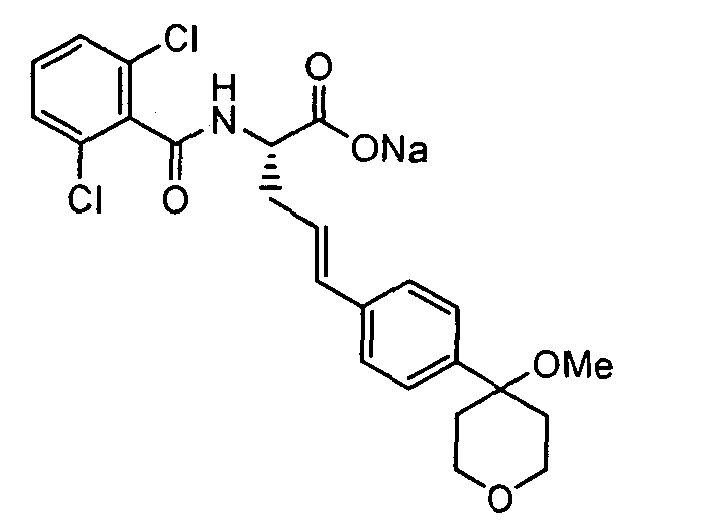
- To (S,E)-2-(2,6-dichlorobenzamido)-5-[4-(4-methoxytetrahydropyran-4-yl)-phenyl]pent-4-enoic acid (4.24 g), THF (8.86 ml) and 1N aqueous sodium hydroxide solution (8.86 ml) were added, and the resulting mixture was stirred at room temperature for 5 minutes. The reaction solution was concentrated to dryness to obtain (S,E)-2-(2,6-dichlorobenzamido)-5-[4-(4-methoxytetrahydropyran-4-yl)-phenyl]pent-4-enoic acid sodium salt (4.30 g).
- (S,E)-2-(2,6-Dichlorobenzamido)-5-[4-(methyl-pyrimidin-2-ylamino)phenyl]pent-4-enoic acid methyl ester
-

- Under an argon atmosphere, palladium acetate (93.2 mg) and tris(2-methylphenyl)phosphine (121.2 mg) were added to a suspension of (S)-2-(2,6-dichlorobenzamido)pent-4-enoic acid methyl ester (1.20 g), N-(4-iodophenyl)-N-methylpyrimidin-2-amine (1.24 g) and potassium carbonate (824 mg) in DMF (20 ml), and the resulting mixture was stirred at 80°C for 3 hours. After cooling the reaction solution to room temperature, ethyl acetate was added thereto, and the resulting mixture was washed twice with water and once with saturated brine, followed by drying the organic layers over anhydrous sodium sulfate. After removing anhydrous sodium sulfate by filtration, the filtrate was concentrated. The residue was purified by column chromatography (silica gel, eluent: cyclohexane/chloroform = 1/1→chloroform). The obtained crudely purified product was purified again by column chromatography (silica gel, eluent: cyclohexane/ethyl acetate = 4/1→2/1) to obtain (S,E)-2-(2,6-dichlorobenzamido)-5-[4-(methyl-pyrimidin-2-ylamino)phenyl]pent-4-enoic acid methyl ester (1.28 g).
- (S,E)-2-(2,6-Dichlorobenzamido)-5-[4-(methyl-pyrimidin-2-ylamino)phenyl]pent-4-enoic acid
-
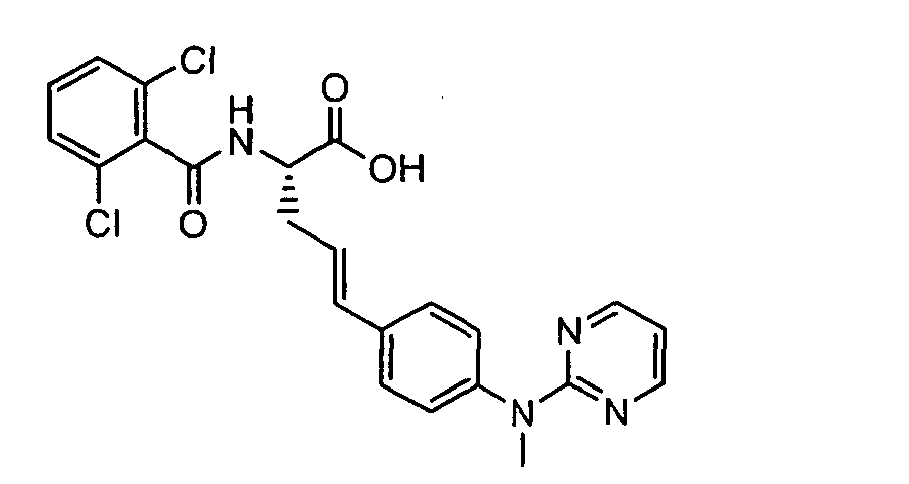
- A solution of (S,E)-2-(2,6-dichlorobenzamido)-5-[4-(methyl-pyrimidin-2-ylamino)phenyl]pent-4-enoic acid methyl ester (1.28 g) in THF (45 ml) was cooled to 0°C. To the solution, 0.1N aqueous lithium hydroxide solution (40 ml) was added, and the resulting mixture was stirred at 0°C for 40 minutes. Water (50 ml) was added to the reaction solution, and the resulting mixture was washed with ether. Aqueous layer was acidified by adding 1N hydrochloric acid in small portions thereto, and extracted twice with ethyl acetate. Organic layers were washed with saturated brine and dried over anhydrous sodium sulfate. After removing anhydrous sodium sulfate by filtration, the filtrate was concentrated to dryness to obtain (S,E)-2-(2,6-dichlorobenzamido)-5-[4-(methyl-pyrimidin-2-ylamino)phenyl]pent-4-enoic acid (1.01 g).
- (S,E)-2-(2,6-Dichlorobenzamido)-5-[4-(methyl-pyrimidin-2-ylamino)phenyl]pent-4-enoic acid sodium salt
-

- To a solution of (S,E)-2-(2,6-dichlorobenzamido)-5-[4-(methyl-pyrimidin-2-ylamino)phenyl]pent-4-enoic acid (10.60 g) in methanol (200 ml), 1N aqueous sodium hydroxide solution (22.5 ml) was added, and the resulting mixture was stirred at room temperature for 5 minutes. The reaction solution was concentrated to dryness to obtain (S,E)-2-(2,6-dichlorobenzamido)-5-[4-(methyl-pyrimidin-2-ylamino)phenyl]pent-4-enoic acid sodium salt (11.08 g). IR(KBr)cm-1:3385,1584, 1552,1486,1431,1397,1315,1195,1112,968,799.
- (S,E)-2-(2,6-Dichlorobenzamido)-5-[4-(isopropyl-pyrimidin-2-ylamino)phenyl]pent-4-enoic acid methyl ester
-

- Under an argon atmosphere, palladium acetate (19.9 mg) and tris(2-methylphenyl)phosphine (25.9 mg) were added to a suspension of (S)-2-(2,6-dichlorobenzamido)pent-4-enoic acid methyl ester (514.4 mg), N-(4-iodophenyl)-N-isopropylpyrimidin-2-amine (577.4 mg) and potassium carbonate (352.9 mg) in DMF (6 ml), and the resulting mixture was stirred at 80°C for 7 hours. After cooling the reaction solution to room temperature, ethyl acetate was added thereto, and the resulting mixture was washed twice with water and once with saturated brine, followed by drying the organic layers over anhydrous sodium sulfate. After removing anhydrous sodium sulfate by filtration, the filtrate was concentrated. The residue was purified by column chromatography (silica gel, eluent: cyclohexane/chloroform = 2/1→1/1→1/3). The obtained crudely purified product was purified again by column chromatography (silica gel, eluent: cyclohexane/ethyl acetate = 6/1→4/1→2/1) to obtain (S,E)-2-(2,6-dichlorobenzamido)-5-[4-(isopropylpyrimidin-2-ylamino)phenyl]pent-4-enoic acid methyl ester (553.6 mg).
- (S,E)-2-(2,6-Dichlorobenzamido)-5-[4-(isopropyl-pyrimidin-2-ylamino)phenyl]pent-4-enoic acid
-
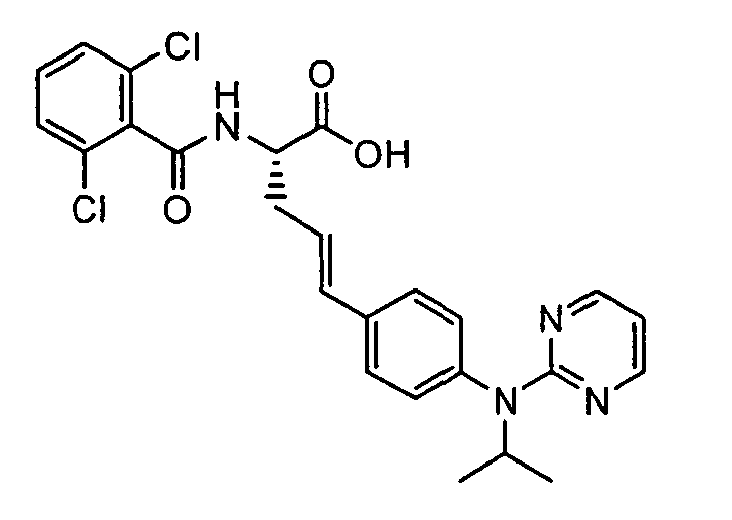
- A solution of (S,E)-2-(2,6-dichlorobenzamido)-5-[4-(isopropyl-pyrimidin-2-ylamino)phenyl]pent-4-enoic acid methyl ester (526.2 g) in THF (15 ml) was cooled to 0°C. To the solution, 0.1N aqueous lithium hydroxide solution (15.4 ml) was added, and the resulting mixture was stirred at 0°C for 40 minutes. Water (20 ml) was added to the reaction solution and the resulting mixture was washed with ether. Aqueous layer was acidified by adding 1N hydrochloric acid in small portions thereto, and extracted twice with ethyl acetate. Organic layers were washed with saturated brine and dried over anhydrous sodium sulfate. After removing anhydrous sodium sulfate by filtration, the filtrate was concentrated to dryness to obtain (S,E)-2-(2,6-dichlorobenzamido)-5-[4-(isopropyl-pyrimidin-2-ylamino)phenyl]pent-4-enoic acid (420.7 mg).
- (S,E)-2-(2,6-Dichlorobenzamido)-5-[4-(isopropyl-pyrimidin-2-ylamino)phenyl]pent-4-enoic acid sodium salt
-

- To a suspension of (S,E)-2-(2,6-dichlorobenzamido)-5-[4-(isopropylpyrimidin-2-ylamino)phenyl]pent-4-enoic acid (390.4 mg) in methanol (15 ml), 1N aqueous sodium hydroxide solution (0.782 ml) was added, and the resulting mixture was stirred at room temperature for 5 minutes. The reaction solution was concentrated to dryness to obtain (S,E)-2-(2,6-dichlorobenzamido)-5-[4-(isopropylpyrimidin-2-ylamino)phenyl]pent-4-enoic acid sodium salt (388.8 mg). IR(KBr)cm-1: 3386, 2974, 1585, 1549, 1509, 1455, 1292, 1122, 968, 798, 780.
The spectral data of the compounds of Examples 1 to 84 are shown in Tables 8-16. -
Table 8 
Ex No. Y M ESI-MS NMR (H1) chemical shift 1 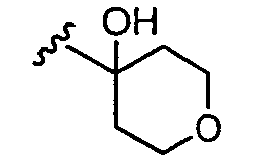
Me 478 (M+H)+ CDCl3, δ 1.62-1.67 (2H, m), 2.11-2.19 (2H, m), 2.79-2.97 (2H, m), 3.81 (3H, s), 3.84-3.95 (4H, m), 5.01-5.05 (1H, m), 6.13-6.17 (1H, m), 6.50 -6.54 (2H, m), 7.24-7.34 (5H, m), 7.42 (2H, d, J=8.1Hz) 2 
H 462 (M-H)- CDCl3, δ 1.66 (4H, m), 2.82 (1H, m), 2.98 (1H, m), 3.86 (4H, m), 4.95 (1H, m), 6.22 (1H, m), 6.56 (1H, m), 7.24-7.40 (7H, m) 3 
Me 492 (M+H)+ CDCl3, δ 1.92 (4H, br), 2.77-2.84 (1H, m), 2.94-2.96 (4H, brm), 3.73-3.80 (7H, brm), 5.03 (1H, dd, J=12.9, 5.6Hz), 6.12-6.20 (1H, m), 6.52 (1H, d, J=15.6Hz), 6.73-6.75 (1H, br), 7.22-7.45 (7H, m) 4 
H 476 (M-H)- dmso-d6, δ 1.87-1.90 (4H, m), 2.56-2.63 (1H, m), 2.68-2.74 (1H, m), 2.84 (3H, s), 3.66-3.68 (4H, m), 4.55-4.58 (1H, brm), 6.30 (1H, td, J=15.9, 7.1Hz), 6.50 (1H, d, J=15.9Hz), 7.31-7.50 (7H, m), 9.10 (1H, brs), 12.77 (1H, brs) 5 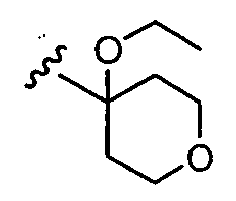
Me 506 (M+H)+ CDCl3, δ 1.14 (3H, t, J=7.1Hz), 1.92-2.04 (4H, m), 2.80-2.98 (2H, m), 3.05-3.11 (2H, dd, J=14.2, 7.1Hz), 3.81 (3H, s), 3.74-3.92 (4H, m), 5.02-5.06 (1H, m), 6.13-6.17 (1H, m), 6.48 (1H, d, J=7.6Hz), 6.52 (1H, d, J=15.9Hz), 7.25-7.34 (7H, m) 6 
H 490 (M-H)- CDCl3, δ 1.13 (3H, t, J=6.8Hz), 1.95 (4H, m), 2.87 (1H, m), 3.04 (1H, m), 3.07 (2H, q, J=7.1Hz), 3.89 (4H, m), 5.03 (1H, m), 6.22 (1H, m), 6.57 (2H, m), 7.23-7.32 (7H, m) 7 
Me 506 (M+H)+ 8 
Na 490 (M-Na)- dmso-d6, δ 1.80-1.86 (2H, m), 1.97-2.01 (2H, m), 2.59-2.66 (1H, m), 2.75-2.79 (1H, m), 3.11 (3H, s), 3.29-3.34 (4H, m), 3.64-3.67 (2H, m), 4.01 (1H, brd, J=5.9Hz), 6.19-6.27 (1H, m), 6.36 (1H, d, J=16.1Hz), 7.24-7.47 (7H, m), 7.69 (1H, d, J=6.1 Hz) 9 
Me 506 (M+H)+ 10 
Na 490 (M-Na)- dmso-d6, δ 1.85-1.94 (2H, m), 2.03-2.51 (4H, m), 2.59-2.66 (1H, m), 2.75-2.82 (1H, m), 2.88 (3H, s), 3.52-3.72 (4H, m), 3.99 (1H, dd, J=11.0, 5.4Hz), 6.21-6.28 (1H, m), 6.37 (1H, d, J=15.9Hz), 7.28 (4H, s), 7.34-7.43 (1H, m), 7.46 (2H, d, J=7.1Hz), 7.67 (1H, d, J=5.6Hz) -
Table 9 
Ex No. Y M ESI-MS NMR(H1) chemical shift 11 
Me 472 (M+H)+ CDCl3, δ 2.71-2.78 (1H, m), 2,86-2,92 (1H, m), 3.73 (3H, s), 4.93-4.98 (1H, m), 5.99-6.07 (1H, m), 6.45 (1H, d, J=15.9Hz), 6.52 (1H, br), 6.95 (1H, t, J=4.9Hz), 7.05 (2H, d, J=8.5Hz), 7.08-7.25 (3H, m), 7.30 (2H, d, J=8.5Hz), 8.47 (2H, d, J=4.9Hz) 12 
H 456 (M-H)- dmso-d6, δ 2.57-2.64 (1H, m), 2.71-2.76 (1H, m), 4.57-4.62 (1H, m), 6.24-6.31 (1H, m), 6.53 (1H, d, J=15.9Hz), 7.14 (2H, d, J=8.5Hz), 7.25 (1H, t, J=4.9Hz), 7.35-7.49 (5H, m), 8.63 (2H, d, J=4.9Hz), 9.14 (1H, d, J=8.1Hz), 12.78 (1H, brs) 13 
Me 500 (M+H)+ 14 
Na 484 (M-Na)- CDCl3, δ 1.25 (3H, t, J=7.6Hz), 2.62 (2H, dd, J=7.6, 4.2Hz), 2.86 (1H, m), 2.92 (1H, m), 4.96 (1H, m), 6.10 (1H, dt, J=15.9, 7.6Hz), 6.47 (1H, d, J=15.9Hz), 6.62 (1H, d, J=7.3Hz), 7.02 (2H, d, J=8.6Hz), 7.30 (5H, m), 8.42 (2H, s) 15 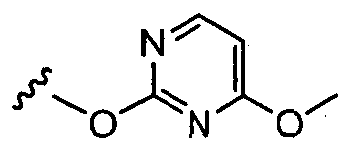
Me 502 (M+H)+ 16 
H 486 (M-H)- CDCl3, δ 2.83 (1H, m), 2.98 (1H, m), 3.82 (3H, s), 5.04 (1H, dd, J = 5.4 and 13.0 Hz), 6.10 (1H, m), 6.45-6.55 (2H, m), 7.07-7.48 (7H, m), 8.17 (1H, d, J = 5.6 Hz) 17 
Me 532 (M+H)+ 18 
H 516 (M-H)- CDCl3, δ 2.80 (1H, m), 2.93 (1H, m), 3.81 (6H, s), 5.03 (1H, m), 5.97 (1H, m), 6.42-6.46 (2H, m), 6.84 (2H, d, J = 12.0 Hz), 7.24-7.38 (5H, m) 19 
Me 502 (M+H)+ 20 
H 484 (M-H)- CDCl3, δ 2.40 (6H, s), 2.84 (1H, m), 2.97 (1H, m), 5.05 (1H, m), 6.09 (1H, m), 6.46-6.55 (2H, m), 6.76 (2H, s), 7.07-7.35 (5H, m) -
Table 10 
Ex. No. Y M ESI-MS NMR (H1) chemical shift 21 
Me 485 (M+H)+ CDCl3, δ 2.78-2.85 (1H, m), 2.91-2.98 (1H, m), 3.49 (3H, s), 3.79 (3H, s), 4.99-5.04 (1H, m), 6.04-6.12 (1H, m), 6.43 (1H, d, J=7.8Hz), 6.50 (1H, d, J=15.9Hz), 6.55 (1H, t, J=4.6Hz), 7.22-7.35 (7H, m), 8.31 (2H, d, J=4.6Hz) 22 
H 469 (M-H)- dmso-d6, δ 2.57-2.64 (1H, m), 2.69-2.73 (1H, m), 3.43 (3H, s), 4.58 (1H, dd, J=13.4, 8.3Hz), 6.27 (1H, td, J=16.1, 7.3Hz), 6.51 (1H, d, J=16. 1Hz), 6.72 (1H, t, J=4.9Hz), 7.27 (2H, d, J=8.3Hz), 7.35 (2H, d, J=8.5Hz), 7.39-7.49 (3H, m), 8.34-8.36 (2H, m), 9.14 (1H, d, J=8.3Hz), 12.76 (1H, s) 23 
Me 499 (M+H)+ CDCl3, δ 1.23 (3H, t, J = 6.8 Hz), 2.81-3.00(2H,m), 3.82 (3H, s), 4.01(2H, q, J = 6.8 Hz), 5.04(1H, dt, J = 5.1, 7.8 Hz), 6.11(1H, dt, J = 7.8, 15.4 Hz), 6.45(1H, d, J = 7.8 Hz), 6.53(IH, t, J = 4.9 Hz), 6.45(1H, d, J = 15.4 Hz), 7.19-7.38(7H, m), 8.31(2H, d, J = 4.9 Hz). 24 
H 483 (M-H)- dmso-d6, δ 1.12(3H, t, J = 6.8 Hz), 2.57-2.75(2H, m), 3.95(2H, q, J = 6.8 Hz), 4.58(1H, dt, J = 5.1, 8.3 Hz), 6.28(1H, dt, J = 7.1, 15.6 Hz), 6.52(1H, d, J = 15.6 Hz), 6.68(1H, t, J = 4.9 Hz), 7.19-7.49(7H, m), 8.32(2H, d, J = 4.9 Hz), 9.13(1 H, d, J = 8.3 Hz). 25 
Me 529 (M+H)+ CDCl3, δ 2.81-3.00(2H, m), 3.32 (3H, s), 3.63 (2H, t, J = 5.9 Hz), 3.82(3H,s), 4.15(2H,t, J=5.9Hz), 5.04(1H,dt, J=5.1, 7.8 Hz), 6.11(1H, dt, J = 7.3,15.4 Hz), 6.45(1H, d, J = 7.8 Hz), 6.53(1H, d, J = 15.4 Hz), 6.55(1H, t, J = 4.9 Hz), 7.24-7.37(7H, m), 8.31(2H, d, J = 4.9 Hz). 26 
Na 513 (M-Na)- dmso-d6, δ 2.60-2.82(2H, m), 3.19(3H, s), 3.51(2H, t, J = 6.1 Hz), 4.01-4.06(3H, m), 6.23(1H, dt, J = 7.1, 15.6 Hz), 6.38(1H, d, J = 15.6 Hz), 6.69(1H, t, J = 4.9 Hz), 7.18-7.46(7H, m), 7.70-7.72(1H, m), 8.32(2H, d, J = 4.9 Hz) 27 
Me 513 (M+H)+ CDCl3, δ 1.15 (6H, d, J = 6.8 Hz), 2.82-3.01(2H, m), 3.83 (3H, s), 5.05(1H, dt, J = 5.1, 7.6 Hz), 5.15(1H, dq, J = 6.6, 6.8 Hz), 6.14(1H, dt, J = 7.6, 15.9 Hz), 6.47(1H, d, J = 7.6 Hz), 6.48(1H, t, J = 4.9 Hz), 6.55(1H, d, J = 15.9 Hz), 7.06-7.40(7H, m), 8.28(2H, d, J = 4.9 Hz). 28 
H 497 (M-H)- dmso-d6, δ 1.06 (3H, s), 1.08 (3H, s), 2.59-2.66 (1H, m), 2.70-2.76 (1H, m), 4.60 (1H, td, J=8.3, 5.1Hz), 5.06 (1H, td, J=13.4, 6.6Hz), 6.31 (1H, td, J=14.9, 7.1Hz), 6.54 (1H, d, J=15.9Hz), 6.62 (1H, t, J=4.9Hz), 7.05 (2H, d, J=8.3Hz), 7.38-7.43 (3H, m), 7.48 (2H, d, J=8.5Hz), 8.34-8.36 (2H, m), 9.15 (1H, d, J=8.3Hz), 12.77 (1H, s) 29 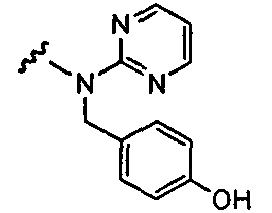
H 561 (M-H)- CDCl3, δ 2.62 (2H, m), 4.74 (1H, dd, J=7.6, 4.6Hz), 5.01 (1H, brs), 5.08 (1H, dd, J=25.9, 15.4Hz), 5.84 (1H, dt, J=15.9, 8.1Hz), 6.16 (1H, d, J=15.9Hz), 6.35 (1H, d, J=7.3Hz), 6.66 (3H, m), 6.98 (1H, brs), 7.05 (4H, m), 7.25 (5H, m), 8.41 (2H, d, J=4.9Hz) 30 
Me 524 (M+H)- CDCl3, δ 2.81(2H, t, J = 6.8 Hz), 2.81-3.02 (2H, m), 3.82 (3H, s), 4.25 (2H, t, J = 6.8 Hz), 5.04(1H, dt, J = 5.4, 7.8 Hz), 6.14(1H, dt, J = 7.6, 15.6 Hz), 6.48(1H, d, J = 7.8 Hz), 6.53(1H, d, J = 15.6 Hz), 6.65(1H, t, J = 4.9 Hz), 7.22-7.41(7H, m), 8.34(2H, d, J = 4.9 Hz). -
Table 11 
Ex No. Y M ESI-MS NMR(H1)chemical shift 31 
Na 508 (M-Na)- dmso-d6, δ 2.60-2.82(2H, m), 2.83(2H, t, J = 6.8 Hz), 4.00-4.06(1H, m), 4.17(2H, t, J = 6.8 Hz), 6.25(1H, dt, J = 7.1,15.6 Hz), 6.40(1H, d, J = 15.6 Hz), 6.76(1H, t, J=4.9 Hz), 7.21-7.46(7H, m), 7.66-7.73(1H, m), 8.37(2H, d, J = 4.9 Hz) 32 
Me 561 (M+H)+ 33 
Na 545 (M-Na)- CD3OD, δ 2.73 (1H, m), 2.91 (1H, m), 4.58 (1H, dd, J=6.6, 4.9Hz), 5.22 (2H, brs), 6.31 (1H, dt, J=15.6, 7.1 Hz), 6.49 (1H, d, J=15.6Hz), 6.69 (1H, t, J=4.9Hz), 7.09 (2H, d, J=8.5Hz), 7.19 (6H, m), 7.34 (5H, m), 8.30 (2H, d, J=4.9Hz) 34 
Me 591 (M+H)+ 35 
Na 575 (M-Na)- CD3OD, δ 2.73 (1H, m), 2.90 (1H, m), 3.72 (3H, s), 4.60 (1H, m), 5.14 (2H, brs), 6.32 (1H, dt, J=15.9, 7.3Hz), 6.49 (1H, d, J=15.9Hz), 6.67 (1H, t, J=4.9Hz), 6.77 (2H, d, J=8.8Hz), 7.04 (2H, d, J=8.3Hz), 7.12 (2H, d, J=8.8Hz), 7.35 (5H, m), 8.29 (2H, d, J=4.9Hz) 36 
Me 527 (M+H)+ 37 
Na 511 (M-Na)- CD3OD, δ 0.91 (3H, t, J=7.3Hz), 1.31 (2H, m), 1.58 (2H, td, J=7.3, 4.9Hz), 2.75 (1H, m), 2.92 (1H, m), 3.94 (2H, t, J=7.3Hz), 4.60 (1H, dd, J=7.6, 4.9Hz), 6.35 (1H, dt, J=15.6, 7.3Hz), 6.54 (1H, d, J=15.6Hz), 6.62 (1H, t, J=4.9Hz), 7.14 (2H, d, J=8.6Hz), 7.37 (5H, m), 8.25 (1H, d, J=4.9Hz) 38 
Me 562 (M+H)+ 39 
Na 546 (M-Na)- CD3OD, δ 2.73 (1H, m), 2.91 (1H, m), 4.58 (1H, dd, J=6.6, 4.9Hz), 5.27 (2H, s), 6.31 (1H, dt, J=15.6, 7.3Hz), 6.50 (1H, d, J=15.6Hz), 6.73 (1H, t, J=4.9Hz), 7.12 (2H, d, J=8.3Hz), 7.35 (6H, m), 7.73 (1H, d,J=7.8Hz), 8.31 (2H, d, J=4.9Hz), 8.36 (1H, d, J=4.4Hz), 8.50 (1H, brs) 40 
Me 568 (M+H)+ -
Table 12 
Ex No. Y M ESI-MS NMR(H1)chemical shift 41 
Na 552 (M-Na)- CD3OD, δ 2.64 (1H, m), 2.82 (1H, m), 4.48 (1H, dd, J=6.6, 4.6Hz), 5.28 (2H, brs), 6.23 (1H, dt, J=15.9, 6.9Hz), 6.40 (1H, d, J=15.9Hz), 6.62 (1H, t, J=4.9Hz), 7.10 (2H, d, J=8.6Hz), 7.29 (7H, m), 8.2 (2H, d, 1=4.9Hz), 8.81 (1H, d, J=2.0Hz) 42 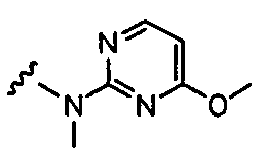
Me 515 (M+H)+ 43 
H 499 (M-H)- CDCl3, δ 2.83 (1H, m), 2.97 (1H, m), 3.52 (3H, s), 3.82 (3H, s), 5.04 (1H, m), 6.10 (1H, m), 6.44-6.54 (2H, m), 7.07-7.35 (7H, m), 8.07 (1H, d, J = 5.6 Hz). 44 
Me 545 (M+H)+ 45 
H 529 (M-H)- CDCl3, δ 2.82 (1H, m), 2.97 (1H, m), 3.52 (3H, s), 3.79 (6H, s), 5.05(1H, dd, J = 5.6 and 13.4 Hz), 6.11 (1H, m), 6.49 (2H, m), 7.24-7.34 (7H, m). 46 
Me 547 (M+H)+ 47 
Na 531 (M-Na)- CD3OD, δ 2.73 (1H, m), 2.92 (1H, m), 4.60 (1H, dd, J=6.4, 4.6Hz), 6.32 (1H, dt, J=15.9, 7.3Hz), 6.50 (1H, d, J=15.9Hz), 6.81 (1H, t, J=4.9Hz), 7.12 (2H, d, J=8.6Hz), 7.20 (3H, m), 7.36 (8H, m), 8.30 (2H, d, J=4.9Hz) 48 
Me 555 (M+H)+ 49 
Na 539 (M-Na)- CD3OD, δ 1.48 (1H, dd, J=12.5, 4.6Hz), 1.54 (1H, dd, J=12.5, 4.6Hz), 1.83 (2H, m), 2.75 (1H, m), 2.93 (1H, m), 3.52 (2H, m), 4.00 (2H, m), 4.61 (1H, dd, J=6.6, 4.9Hz), 4.53-4.97 (1 H, m), 6.38 (1H, dt, J=15.6, 7.1Hz), 6.57 (1H, d, J=15.6Hz), 6.61 (1H, t, J=4.9Hz), 7.02 (2H, d, J=8.3Hz), 7.38 (3H, m), 7.45 (2H, d, J=15.6Hz), 8.23 (2H, d, J=4.9Hz) 50 
Me 539 (M+H)+ 51 
Na 523 (M-Na)- dmso-d6 , δ 1.52 (3H, s), 1.63 (3H, s), 2.60-2.68 (1H, m), 2.76-2.83 (1H, m), 4.04-4.10 (1H, m), 4.51-4.53 (2H, m), 5.26-5.34 (1H, m), 6.20-6.27 (1H, m), 6.39 (1H, d, J=15.9Hz), 6.68 (1H, t, J=4.6Hz), 7.15-7.75 (7H, m), 8.32-8.45 (3H, m) -
Table 13 
Ex No. Y M ESI-MS NMR(H1)chemical shift 52 
Me 525 (M+H)+ 53 
Na 509 (M-Na)- dmso-d6, δ 0.08-0.16 (2H, m), 0.35-0.41 (2H, m), 1.04-1.12 (1H, m), 2.62-2.68 (1H, m), 2.77-2.84 (1H, m), 3.80 (2H, d, J=6.8Hz), 4.11 (1H, dd, J=11.2, 5.4Hz), 6.22-6.29 (1H, m), 6.41 (1H, d, J=15.9Hz), 6.67 (1H, t, J=4.6Hz), 7.18-7.46 (7H, m), 7.78 (1H, d, J=6.4Hz), 8.30 (2H, d, J=4.6Hz) 54 
Me 527 (M+H)+ 55 
Na 511 (M-Na)- dmso-d6, δ 0.85 (6H, d, J=6.8Hz), 1.83-1.92 (1H, m), 2.60-2.67 (1H, m), 2.76-2.83 (1H, m), 3.83 (2H, d, J=7.3Hz), 4.02 (1H, dd, J=11.2, 5.1Hz), 6.20-6.27 (1H, m), 6.39 (1H, d, J=15.6Hz), 6.66 (1H, t, J=4.6Hz), 7.19-7.47 (7H, m), 7.70 (1H, d, J=6.1Hz), 8.30 (2H, d, J=4.6Hz) 56 
Me 525 (M+H)+ CDCl3, δ 0.91 (3H, t, J=7.6Hz), 1.66 (2H, dd, J=15.4, 7.6Hz), 2.99-2.87 (1H, m), 2.93-2.98 (1H, m), 3.82 (3H, s), 3.91 (2H, t, J=7.6Hz), 5.04 (1H, td, J=7.8, 5.1Hz), 6.07-6.14 (1H, m), 6.46 (1H, d, J=7.6Hz), 6.52 (1H, t, J=4.6Hz), 6.53 (1H, d, J=15.9Hz), 7.16-7.37 (7H, m), 8.29 (2H, d, J=4.6Hz) 57 
H 509 (M-H)- CDCl3, δ 0.91(3H, t, J = 7.3 Hz), 1.66(2H, s, J = 7.6 Hz), 2.66(2H, brm), 3.81~3.97(2H, m), 4.75(1H, dt, J = 7.3,5.1 Hz), 5.92(1H, ddd, J = 15.1, 7.6, 7.6 Hz), 6.21(1H, d,1= 15.9 Hz), 6,29(1H, d, J = 7.3 Hz), 6.62(1H, t, J = 4.9 Hz), 7.20(2H, d, J = 8.3 Hz), 7.28-7.37(5H, m), 8.41(2H, d, J = 4.9 Hz) 58 
Me 562 (M+H)+ CDCl3, δ 2.80-2.98 (2H, m), 3.81 (3H, s), 5.00-5.04 (1H, m), 5.23 (2H, s), 6.08-6.12 (1H, m), 6.45 (1H, d, J=7.6Hz), 6.49 (1H, d, J=15.4Hz), 6.64 (1H, t, J=4.6Hz), 7.20 (2H, d, J=7.1Hz), 7.25-7.38 (7H, m), 8.34 (2H, d, J=4.9Hz), 8.50 (2H, d, J=4.6Hz) 59 
H 546 (M-H)- CDCl3, δ 2.90~3.07(2H, m), 9.92(1H, brdd), 5.26(2H, dd, J = 18.8, 16.8 Hz), 6.12 (1H, ddd, J = 15.3, 7.6, 7.6 Hz), 6.49 (1H, d, J = 15.6 Hz), 6.66-6.70 (2H, m), 7.12 (2H, d, J = 8.3 Hz), 7.22-7.34(7H, m), 8.35(2H, d, J = 4.9 Hz), 8.51(2H, d, J = 5.6 Hz) 60 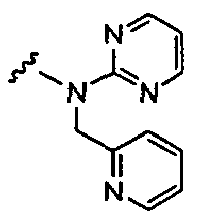
Me 562 (M+H)+ CDCl3, δ 2.80-2.96 (2H, m), 3.80 (3H, s), 5.00-5.04 (1H, s), 5.37 (2H, s), 6.03-6.10 (1H, m), 6.44 (1H, d, J=8.1Hz), 6.49 (1H, d, J=5.9Hz), 6.62 (1H, t, J=4.6Hz), 7.13 (1H, dd, J=6.6, 4.6Hz), 7.24-7.36 (8H, m), 7.57-7.61 (1H, m), 8.34 (2H, d, J=4.9Hz), 8.53 (1H, d, J=3.9Hz) 61 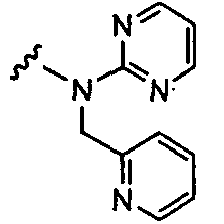
H 546 (M-H)- CDCl3, δ 2.71-2.81(2H, m), 4.83(1H, ddd, J = 6.8, 9.8, 9.8 Hz), 5.38(2H, d, J = 9.3 Hz), 6.02(1H, ddd, J = 15.3, 7.6, 7.6 Hz), 6.32(1H, d, J = 15.9 Hz), 6.51(1H, d, J = 7.3 Hz), 6.65(1H, dd, J = 4.8, 4.8 Hz), 7.43-7.15(9H, m), 7.69(1H, ddd, J = 7.8, 7.8, 1.7 Hz), 8.37(2H, d, J = 4.9 Hz), 8.56(1H, d, J = 4.2 Hz) -
Table 14 Ex No. ESI-MS NMR(H1)chemical shift 62 
453 (M+H)+ 63 
437 (M-H)- dmso-d6, δ 2.56-2.63 (1H, m), 2.68-2.73 (1H, m), 3.43 (3H, s), 4.52-4.57 (1H, m), 6.23 (1H, td, J=15.6, 7.3Hz), 6.50 (1H, d, J=16.1Hz), 6.72 (1H, t, J=5.1Hz), 7.14 (2H, t, J=8.1Hz), 7.27 (2H, d, J=8.1Hz), 7.35 (2H, d, J=8.3Hz), 7.50 (1H, t, J=7.8Hz), 8.34 (2H, d, J=4.9Hz), 9.12 (1H, d, J=8.1Hz), 12.80 (1H, brs) 64 
469 (M+H)+ 65 
453 (M-H)- dmso-d6, δ 2.60 (1H, m), 2.70 (1H, m), 3.44 (3H, s), 4.57 (1H, m), 6.26 (1H, td, J=7.1, 15.6 Hz), 6.51 (1H, d, J= 15.6 Hz), 6.74 (1H, t, J=4.6 Hz), 7.27-7.37 (6H, m), 7.47 (1H, td, J=8.0, 6.1 Hz), 8.36 (2H, d, J=4.6 Hz), 9.16 (1H, d,J=8.0 Hz) 66 
465 (M+H)+ 67 
449 (M-H)- dmso-d6 , δ 2.28 (3H, s), 2.61 (1H, m), 2.71 (1H, m), 3.44 (3H, s), 4.55 (1H, m), 6.30 (1H, td,J=7.5, 15.9 Hz), 6.51 (1H, d, J=15.9 Hz), 6.74 (1H, t, J=4.4 Hz), 7.20-7.37 (7H, m), 8.36 (2H, d, J=4.4 Hz), 8.93 (1H, d, J=7.5 Hz) 68 
445 (M+H)+ -
Table 15 Ex No. ESI-MS NMR(H1)chemical shift 69 
429 (M-H)- dmso-d6, δ 2.21 (6H, s), 2.59 (1H, m), 2.72 (1H, m), 3.44 (3H,s), 4.55 (1H, m), 6.28 (1H, td, J= 7.1, 15.6 Hz), 6.50 (1H, d, J=15.6 Hz), 6.74 (1H, t, J=4.9 Hz), 7.01 (2H, d, J= 7.5 Hz), 7.15 (1H, t, J= 7.5 Hz), 7.28 (2H, d, J=8.5 Hz), 7.36 (2H, d, J=8.5 Hz), 8.36 (2H, d, J=4.9 Hz), 8.70 (1H, d, J=8.0 Hz), 12.7 (1H, s) 70 
492 (M+H)+ 71 
476 (M-H)- CDCl3, δ 2.82 (1H, m), 2.22-2.99(3H, m), 3.64 (2H, t, J = 4.0 Hz), 5.01 (1H, m), 6.10 (1H, m), 6.53 (1H, d, J = 16.0 Hz), 6.63 (1H, d, J = 8.0Hz), 6.96 (2H, t, J = 8.0 Hz), 7.22-7.41 (5H, m), 8.12 (1H, d, J = 4.0 Hz), 8.61 (1H, d, J = 2.2 Hz). 72 
472 (M+H)+ CDCl3, δ 3.10 (1H, dd, J=4,6, 17.1 Hz), 3.25(1H,dd,J=4.6,17.1Hz), 3.86(3H, s), 5.06(1H, dt,J=4.6,7.8Hz), 6.72-6.74(1H, m), 7. 05 (1H, t, J=4.6 Hz), 7.10-7.43(7H, m), 8.56(2H, d, J=4.6 Hz). 73 
454 (M-Na)- dmso-d6, δ 2.86 (1H, dd, J = 4.9, 16.6 Hz), 3.10(1H,dd,J=4.9,16.6Hz), 4.01-9.08(1H, m), 7.14-7.48(8H, m), 7.85-7.90(1H, m), 8.63 (2H, d,J=4.6Hz) 74 
467 (M+H)+ 75 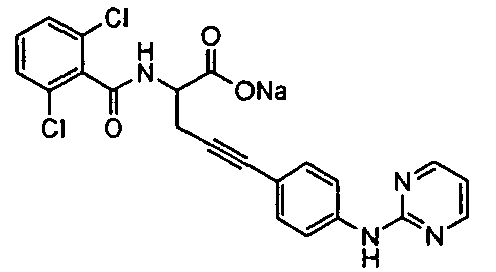
453 (M-Na)- dmso-d6, δ 2.85 (1H, dd, J=16.9, 4.4Hz), 3.09 (1H, dd, J=16.9, 4.8Hz), 3.98 (1H, m), 6.84 (1H, t, J=4.6Hz), 7.21 (2H, d, J=8.6Hz), 7.39 (1H, t, J=6.8Hz), 7.46 (2H, d, J=6.8Hz), 7.71 (2H, d, J=8.6Hz), 7.81 (1H, brs), 8.48 (2H, d, J=4.6Hz), 9.75 (1H, brs) 76 
492 (M+H)+ CDCl3, δ 1.92 (4H,br), 2.77-2.84 (1H,m), 2.94-2.96 (4H, brm), 3.73-3.80 (7H, brm), 5.03 (1H, dd, J=12.9, 5.6Hz), 6.12-6.20 (1H, m), 6.52 (1H, d, J=15.6Hz), 6.73-6.75 (1H, br), 7.22-7.45 (7H, m) -
Table 16 Ex No. ESI-MS NMR(H1)chemical shift 77 
476 (M-H)- dmso-d6, δ 1.88-1.90 (4H, m), 2.56-2.63 (1H, m), 2.68-2.74 (1H, m), 2.84 (3H, s), 3.66-3.68 (4H, m), 4.55-4.60 (1H, brm), 6.30 (1H, td, J=15.9, 7.1Hz), 6.50 (1H, d, J=15.9Hz), 7.31-7.48 (7H, m), 9.12 (1H, brs), 12.77 (1H, brs) 78 
476 (M-Na)- dmso-d6, δ 1.87-1.89 (4H, m), 2.61-2.66 (1H, m), 2.75-2.82 (1H, m), 2.84 (3H, s), 3.65-3.67 (4H, m), 4.07 (1H, dd, J=11.5, 5.4Hz), 6.22-6.30 (1H, m), 6.38 (1H, d, J=15.9Hz), 7.30 (4H, s), 7.32-7.45 (3H, m), 7.76 (1H, d, J=6.6Hz) 79 
485 (M+H)+ CDCl3, δ 2.80-2.87 (1H, m), 2.93-3.00 (1H, m), 3.51 (3H, s), 3.81 (3H, s), 5.01-5.06 (1H, m), 6.06-6.14 (1H, m), 6.47 (1H, d, J=7.8Hz), 6.52 (1H, d, J=15.6Hz), 6.58 (1H, t, J=4.9Hz), 7.24-7.37 (7H, m), 8.34 (2H, d, J=4.9Hz) 80 
469 (M-H)- CDCl3, δ 2.60-2.64 (1H, m), 2.74-2.81 (1H, m), 3.51 (3H, s), 4.69-4.73 (1H, m), 5.94 (1H, dd, J=15.6, 6.1Hz), 6.35 (1H, d, J=15.6Hz), 6.45 (1H, d, J=7.3Hz), 6.65 (1H, t, J=4.9Hz), 7.23-7.27 (3H, m), 7.30 (1H, s), 7.32 (1H, d, J=2.2Hz), 7.38 (2H, d, J=8.3Hz), 8.42 (2H, d, J=4.9Hz) 81 
469 (M-Na)- dmso-d6, δ 2.60-2.66 (1H, m), 2.76-2.82 (1H, m), 3.42 (3H, s), 4.04 (1H, dd, J=11.0, 5,1Hz), 6.22 (1H, td, J=15.9, 7,1Hz), 6.38 (1H, d, J=15.9Hz), 6.71 (1H, t, J=4.6Hz), 7.23 (2H, d, J=8.5Hz), 7.29 (2H, d, J=8.5Hz), 7.37 (1H, dd, J=.3, 6.8Hz), 7.44 (2H, d, J=7,6Hz), 7.72 (1H, d, J=6.1Hz), 8.34 (2H, d, J=4.6Hz) 82 
513 (M+H)+ CDCl3, δ 1.12 (3H, s), 1.14 (3H, s), 2.81-2.88 (1H, m), 2.94-3.01 (1 H, m), 3.82 (3H, s), 5.05 (1H, td, J=7.8, 5.4Hz), 5.12-5.18 (1H, m), 6.10-6.18 (1H, m), 6.47-6.50 (2H, m), 6.55 (1H, d, J=15.6Hz), 7.07 (2H, d, J=8.3Hz), 7.25-7.34 (3H, m), 7.39 (2H, d, J=8.3Hz), 8.27 (2H, d, J=4.6Hz) 83 
497 (M-H)- CDCl3, δ 1.13 (3H,s), 1.16 (3H, s), 2.60-2.64 (1H, m), 2.71-2.78 (1H, m), 4.68 (1H, td, J=7.3, 4.6Hz), 5.20 (1H, td, J=13.7, 6.6Hz), 5.97 (1H, dd, J=15.9, 6.1Hz), 6.35 (1H, d, J=15.9Hz), 6.45 (1H, d, J=7.3Hz), 6.60 (1H, t, J=4.9Hz), 7.12 (2H, d, J=8.5Hz), 7.24-7.33 (3H, m), 7.41 (2H, d, J=8.3Hz), 8.38 (2H, d, J=4.9Hz) 84 
497 (M-Na)- dmso-d6, δ 1.07 (3H, s), 1.09 (3H, s), 2.63-2.67 (1H, brm), 2.78-2.80 (1H, brm), 4.04 (1H, brm), 5.04-5.08 (1H, m), 6.25-6.29 (1H, m), 6.42 (1H, d, J=15.9Hz), 6.61 (1H, t, J=4.6Hz), 7.02 (2H, d, J=8.1Hz), 7.33 (2H, d, J=8.1Hz), 7.37-7.41 (1H, m), 7.46 (2H, d, J=7.6Hz), 7.72 (1H, brs), 8.27 (2H, d, J=4.4Hz) - Each compound was dissolved at a concentration of 0.5 mg/ml in PBS or in PBS containing 10% PEG. The compound was administered orally or intravenously to male SD rats (7 to 9 weeks old). Blood was collected from the tail vein at time points up to 8 hours after the administration, and blood plasma was collected by centrifugation from each obtained blood. The blood plasma was pretreated by using the solid-phase extraction method, and the concentration of the compound was analyzed with LC/MS/MS (ESI negative mode).
- The obtained pharmacokinetic parameters are summarized in Table 17. As the Comparative Compound, 2-[4-((3,5-dichlorobenzensulfonylamino)methyl)benzoylamino]-5-(4-(methyl-pyrimidin-2-ylamino)phenyl)pento-4-ene acid (XXI) described in
WO 99/26923 -
Table 17 Example No. BA(%) CLtot (ml/hr/kg) 4 55.0 607 6 68.5 1185 22 61.7 306 24 42.3 756 28 80.6 895 70 63.4 532 81 52.1 1019 Comparative Compound 1.7 1284 - ["BA" in Table 17 means bioavailability, and "CLtot" means total clearance.]
-

- As is apparent from Table 17, the compounds in the present invention have excellent bioavailabilities. Furthermore, they are excellent in in vivo stability, so that the frequency of administration and dose may be reduced.
- Jurkat cells which are a cell line originated from human acute T cell lymphoma were allowed to react with BCECF-AM at 37°C for 20 minutes to fluorescently label the cells. The fluorescently labelled Jurkat cells were allowed to react with ligand-expressing cells or with a ligand-immobilized plate at 37°C for 30 minutes. After removing non-adherent cells by washing, 1% NP40 was added to lyse the adherent cells, and fluorescence intensity was measured with Cytoflow 2300 (Millipore). From the obtained fluorescence intensity, the number of adherent cells was calculated. Each test compound was reacted with the Jurkat cells before the beginning of the adhesion reaction. In Table 18, the IC50 of each compound is shown.
Table 18 Example No. IC50 (µM) 4 0.247 5 0.100 8 0.069 10 0.220 12 0.220 22 0.160 24 0.220 26 0.036 28 0.056 29 0.041 31 0.041 35 0.088 37 0.160 39 0.071 41 0.950 45 0.890 47 0.930 49 0.079 51 0.100 53 0.120 55 0.420 57 0.110 59 0.043 61 0.033 67 0.280 69 0.530 78 0.054 81 0.082 84 0.030 - As is apparent from Table 18, the compounds in the present invention clearly inhibit functions of leukocytes involved in the development of inflammatory bowel disease, so that they exhibit therapeutic and/or prophylactic actions against inflammatory bowel disease.
- A mixture of human peripheral blood and physiological saline containing 3% dextran was left to stand for 30 minutes and then the upper layer was recovered.
The upper layer was overlaid on Histopaque 1077 (SIGMA), and the resultant was centrifuged at 1400 rpm for 30 minutes. The supernatant was removed by aspiration and a buffer was added to the precipitate to prepare a neutrophil suspension (4 x 10⁵ cells/mL). To the neutrophil suspension, ionomycin was added and the mixture was incubated at 37°C for 30 minutes, followed by quantification of leukotriene B4 by EIA (Amersham, Biotrak EIA system). Each test compound was added to the neutrophil suspension before adding ionomycin. In Table 19, the IC50 of each compound is shown. -
Table 19 Example No. IC50 (µM) 4 52.3 6 5.63 22 176 28 7.40 33 16.3 67 30.0 - As is apparent from Table 19, the compounds in the present invention inhibit production of inflammatory mediators by leukocytes involved in the development of inflammatory bowel disease, so that they exhibit therapeutic and/or prophylactic actions against inflammatory bowel disease.
- Female BALB/c mice (Charles River, Japan) of 7 to 9 weeks old were allowed to freely drink 3 w/v% dextran sulfate sodium (DSS) for 8 days to induce colitis. The non-induced (background) group was allowed to freely drink sterilized distilled water. The compound described in Example 28 was orally administered to the mice at a dose of 5 mg/kg, and the compounds described in Example 4, Example 22 and Example 78 were orally administered to the mice at a dose of 15 mg/kg every day. At day8 from the beginning of the drinking, stool consistency was scored (0: normal stool, 2: loose stool, 4: diarrhea) by using the method described by Murthy et al (see, for example, Dig Dis Sci., 38, 1722 (1993)).
- The score of the non-induced group was 0, while the score of the colitis-induced group was 1.0 to 1.8. On the other hand, the scores of the groups which received the compounds were lower than the score of the colitis-induced group, showing the evident amelioration of symptom. The rate of amelioration by the compound described in Example 28 was 71 %, that of the compound described in Example 4 was 44%, that of the compound described in Example 22 was 67% and that of the compound described in Example 78 was 40%.
- As is apparent from the results, the compounds of the present invention have an excellent therapeutic effect on inflammatory bowel disease. Example 89
- Female BALB/c mice (Charles River, Japan) of 7 to 9 weeks old were allowed to freely drink 3 w/v% dextran sulfate sodium (DSS) for 5 to 7 days, and then to freely drink sterilized distilled water for 5 days. The procedure was repeated 3 times to induce colitis. The non-induced (background) group was allowed to freely drink sterilized distilled water. The compounds described in Examples 81 and 84 were orally administered to the mice at a dose of 5 mg/kg, respectively, every day from Day 27 to Day 31 after from the beginning of the drinking, and stool consistency was scored (0: normal stool, 2: loose stool, 4: diarrhea) by using the method described by Murthy et al (see, for example, Dig Dis Sci., 38, 1722 (1993).
- The score of the non-induced group was 0, while the score of the colitis-induced group was 1.6 to 1.7. On the other hand, it was demonstrated that the scores of the groups which received the compounds were lower than the score of the colitis-induced group, showing the evident amelioration of symptom. The rates of amelioration by the compounds described in Example 81 and Example 84 were 68.8% and 82.4%, respectively.
- As is apparent from the results, the compounds in the present invention have an excellent therapeutic effect on inflammatory bowel disease.
Claims (6)
- A compound of the Formula (I):

R1 represents hydrogen or C1-C5 alkyl;
Xs independently represent fluoro, chloro, bromo, iodo or C1-C3 alkyl;
V represents -CH=CH- or -C ≡ C-;
Y represents Formula (II) or Formula (III):
R2 represents C1-C5 alkyl or C1-C3 alkoxy;
R3 represents hydrogen or C1-C5 alkyl;
m represents an integer of 0 to 3;
n represents an integer of 0 or 1;
p represents an integer of 0 to 2;
W represents -O- or -N(R4)-
(wherein
R4 represents hydrogen, C1-C5 alkyl, C3-C6 alkenyl, phenyl, benzyl, benzyl substituted with one or two R5s, tetrahydropyranyl, -(CH2)q-O-CH3, pyridylmethyl, -(CH2)q-CN, C4-C7 cycloalkylmethyl or thiazol-4-ylmethyl;
R5 represents hydroxy or C1-C3 alkoxy; and
q represents an integer of 1 to 3))]
or a pharmaceutically acceptable salt thereof. - The compound or the pharmaceutically acceptable salt thereof according to claim 1, wherein in Formula (I),
V is -CH=CH-;
when Y is represented by the Formula (II), m is 0; and
when Y is represented by the Formula (III), p is 1. - The compound or the pharmaceutically acceptable salt thereof according to claim 2, wherein in Formula (I),
R1 is hydrogen;
when Y is represented by the Formula (II), W is -N(R4)- and R4 is C1-C3 alkyl, cyanoethyl, tetrahydropyranyl or phenyl; and
when Y is represented by the Formula (III), n is 0 and R3 is C1-C3 alkyl. - The compound or the pharmaceutically acceptable salt thereof according to claim 3, wherein in Formula (I),
Xs are independently chloro or methyl;
V is trans -CH=CH-;
when Y is represented by the Formula (II), W is -N(R4)- and R4 is methyl or isopropyl; and
when Y is represented by the Formula (III), R3 is methyl. - A pharmaceutical comprising said compound or the pharmaceutically acceptable salt thereof according to any one of claims 1 to 4.
- A therapeutic or prophylactic agent for inflammatory bowel disease comprising said compound or the pharmaceutically acceptable salt thereof according to any one of claims 1 to 4.
Priority Applications (1)
| Application Number | Priority Date | Filing Date | Title |
|---|---|---|---|
| PL05820176T PL1840121T3 (en) | 2004-12-24 | 2005-12-22 | Glycine derivative and use thereof |
Applications Claiming Priority (2)
| Application Number | Priority Date | Filing Date | Title |
|---|---|---|---|
| JP2004372880 | 2004-12-24 | ||
| PCT/JP2005/023577 WO2006068213A1 (en) | 2004-12-24 | 2005-12-22 | Glycine derivative and use thereof |
Publications (3)
| Publication Number | Publication Date |
|---|---|
| EP1840121A1 true EP1840121A1 (en) | 2007-10-03 |
| EP1840121A4 EP1840121A4 (en) | 2011-05-11 |
| EP1840121B1 EP1840121B1 (en) | 2012-08-29 |
Family
ID=36601810
Family Applications (1)
| Application Number | Title | Priority Date | Filing Date |
|---|---|---|---|
| EP05820176A Expired - Lifetime EP1840121B1 (en) | 2004-12-24 | 2005-12-22 | Glycine derivative and use thereof |
Country Status (12)
| Country | Link |
|---|---|
| US (1) | US7566724B2 (en) |
| EP (1) | EP1840121B1 (en) |
| JP (1) | JP4862655B2 (en) |
| KR (1) | KR101250889B1 (en) |
| CN (1) | CN101128436B (en) |
| AU (1) | AU2005320089B2 (en) |
| CA (1) | CA2592170C (en) |
| DK (1) | DK1840121T3 (en) |
| ES (1) | ES2390281T3 (en) |
| PL (1) | PL1840121T3 (en) |
| PT (1) | PT1840121E (en) |
| WO (1) | WO2006068213A1 (en) |
Cited By (2)
| Publication number | Priority date | Publication date | Assignee | Title |
|---|---|---|---|---|
| EP2042171A4 (en) * | 2006-06-14 | 2010-01-06 | Toray Industries | Therapeutic or prophylactic agent for allergic dermatitis |
| CN103619823A (en) * | 2011-06-30 | 2014-03-05 | 东丽株式会社 | Crystals of glycine derivative and pharmaceutical use thereof |
Families Citing this family (9)
| Publication number | Priority date | Publication date | Assignee | Title |
|---|---|---|---|---|
| KR101423347B1 (en) * | 2006-06-19 | 2014-07-24 | 도레이 카부시키가이샤 | Treatment or prophylaxis of multiple sclerosis |
| KR101353879B1 (en) * | 2006-06-20 | 2014-01-20 | 도레이 카부시키가이샤 | Therapeutic or prophylactic agent for leukemia |
| JP5724851B2 (en) * | 2011-11-30 | 2015-05-27 | 東レ株式会社 | Method for producing N- (iodophenyl) pyrimidinylamine derivative |
| WO2014051056A1 (en) * | 2012-09-28 | 2014-04-03 | 東レ株式会社 | Crystals of glycine derivative and pharmaceutical use thereof |
| WO2020092401A1 (en) | 2018-10-30 | 2020-05-07 | Gilead Sciences, Inc. | COMPOUNDS FOR INHIBITION OF ALPHA 4β7 INTEGRIN |
| WO2020092394A1 (en) | 2018-10-30 | 2020-05-07 | Gilead Sciences, Inc. | Imidazopyridine derivatives as alpha4beta7 integrin inhibitors |
| ES2987796T3 (en) | 2018-10-30 | 2024-11-18 | Gilead Sciences Inc | N-benzoyl-phenylalanine derivatives as alpha4beta7 integrin inhibitors for the treatment of inflammatory diseases |
| DK3873884T3 (en) | 2018-10-30 | 2025-02-17 | Gilead Sciences Inc | 3-(QUINOLIN-8-YL)-1,4-DIHYDROPYRIDO[3,4-D]PYRIMIDINE-2,4-DIONE DERIVATIVES AS ALPHA4BETA7 INTEGRIN INHIBITORS FOR THE TREATMENT OF INFLAMMATORY DISEASES |
| AU2020329207B2 (en) | 2019-08-14 | 2024-02-29 | Gilead Sciences, Inc. | Compounds for inhibition of alpha 4 beta 7 integrin |
Family Cites Families (7)
| Publication number | Priority date | Publication date | Assignee | Title |
|---|---|---|---|---|
| ATE227567T1 (en) | 1994-05-27 | 2002-11-15 | Merck & Co Inc | PREPARATIONS FOR INHIBITING BONE RESORPTION MEDIATED BY OSTEOCLASTS |
| WO1999026923A1 (en) | 1997-11-20 | 1999-06-03 | Merck & Co., Inc. | Para-aminomethylaryl carboxamide derivatives |
| US6191171B1 (en) * | 1997-11-20 | 2001-02-20 | Merck & Co., Inc. | Para-aminomethylaryl carboxamide derivatives |
| WO2001007400A1 (en) * | 1999-07-26 | 2001-02-01 | Toray Industries, Inc. | Carboxylic acid derivatives and adhesion molecule inhibitors containing the same as the active ingredient |
| WO2001070670A1 (en) | 2000-03-23 | 2001-09-27 | Ajinomoto Co., Inc. | Novel phenylalanine derivative |
| WO2003053926A1 (en) * | 2001-12-13 | 2003-07-03 | Ajinomoto Co.,Inc. | Novel phenylalanine derivative |
| JP2003277340A (en) * | 2002-03-22 | 2003-10-02 | Toray Ind Inc | Adhesion molecule inhibitors and novel amino acid derivatives |
-
2005
- 2005-12-22 CN CN2005800486199A patent/CN101128436B/en not_active Expired - Fee Related
- 2005-12-22 US US11/793,841 patent/US7566724B2/en not_active Expired - Fee Related
- 2005-12-22 EP EP05820176A patent/EP1840121B1/en not_active Expired - Lifetime
- 2005-12-22 KR KR1020077015372A patent/KR101250889B1/en not_active Expired - Fee Related
- 2005-12-22 DK DK05820176.5T patent/DK1840121T3/en active
- 2005-12-22 WO PCT/JP2005/023577 patent/WO2006068213A1/en not_active Ceased
- 2005-12-22 JP JP2006549053A patent/JP4862655B2/en not_active Expired - Fee Related
- 2005-12-22 AU AU2005320089A patent/AU2005320089B2/en not_active Ceased
- 2005-12-22 ES ES05820176T patent/ES2390281T3/en not_active Expired - Lifetime
- 2005-12-22 PL PL05820176T patent/PL1840121T3/en unknown
- 2005-12-22 PT PT05820176T patent/PT1840121E/en unknown
- 2005-12-22 CA CA2592170A patent/CA2592170C/en not_active Expired - Fee Related
Non-Patent Citations (2)
| Title |
|---|
| No further relevant documents disclosed * |
| See also references of WO2006068213A1 * |
Cited By (5)
| Publication number | Priority date | Publication date | Assignee | Title |
|---|---|---|---|---|
| EP2042171A4 (en) * | 2006-06-14 | 2010-01-06 | Toray Industries | Therapeutic or prophylactic agent for allergic dermatitis |
| US9162988B2 (en) | 2006-06-14 | 2015-10-20 | Toray Industries, Inc. | Therapeutic or prophylactic agent for allergic dermatitis |
| CN103619823A (en) * | 2011-06-30 | 2014-03-05 | 东丽株式会社 | Crystals of glycine derivative and pharmaceutical use thereof |
| EP2727912A4 (en) * | 2011-06-30 | 2014-12-10 | Toray Industries | Crystals of glycine derivative and pharmaceutical use thereof |
| CN103619823B (en) * | 2011-06-30 | 2016-01-20 | 东丽株式会社 | The crystal of glycine derivative and pharmaceutical use thereof |
Also Published As
| Publication number | Publication date |
|---|---|
| PT1840121E (en) | 2012-10-29 |
| PL1840121T3 (en) | 2013-01-31 |
| DK1840121T3 (en) | 2012-11-26 |
| EP1840121B1 (en) | 2012-08-29 |
| AU2005320089B2 (en) | 2011-04-07 |
| WO2006068213A1 (en) | 2006-06-29 |
| EP1840121A4 (en) | 2011-05-11 |
| US7566724B2 (en) | 2009-07-28 |
| KR20070095312A (en) | 2007-09-28 |
| JPWO2006068213A1 (en) | 2008-06-12 |
| CN101128436A (en) | 2008-02-20 |
| AU2005320089A1 (en) | 2006-06-29 |
| JP4862655B2 (en) | 2012-01-25 |
| CA2592170C (en) | 2013-10-15 |
| US20080085910A1 (en) | 2008-04-10 |
| KR101250889B1 (en) | 2013-04-04 |
| ES2390281T3 (en) | 2012-11-08 |
| CA2592170A1 (en) | 2006-06-29 |
| CN101128436B (en) | 2010-12-22 |
Similar Documents
| Publication | Publication Date | Title |
|---|---|---|
| EP2039687B1 (en) | Therapeutic or prophylactic agent for multiple sclerosis | |
| EP1840121B1 (en) | Glycine derivative and use thereof | |
| EP2033637B1 (en) | Therapeutic or prophylactic agent for leukemia | |
| EP2042171B1 (en) | Therapeutic or prophylactic agent for allergic dermatitis |
Legal Events
| Date | Code | Title | Description |
|---|---|---|---|
| PUAI | Public reference made under article 153(3) epc to a published international application that has entered the european phase |
Free format text: ORIGINAL CODE: 0009012 |
|
| 17P | Request for examination filed |
Effective date: 20070719 |
|
| AK | Designated contracting states |
Kind code of ref document: A1 Designated state(s): AT BE BG CH CY CZ DE DK EE ES FI FR GB GR HU IE IS IT LI LT LU LV MC NL PL PT RO SE SI SK TR |
|
| DAX | Request for extension of the european patent (deleted) | ||
| A4 | Supplementary search report drawn up and despatched |
Effective date: 20110407 |
|
| RIC1 | Information provided on ipc code assigned before grant |
Ipc: A61K 31/351 20060101ALI20110401BHEP Ipc: A61K 31/335 20060101ALI20110401BHEP Ipc: C07D 239/46 20060101ALI20110401BHEP Ipc: A61K 31/506 20060101ALI20110401BHEP Ipc: C07D 239/42 20060101AFI20110401BHEP Ipc: C07D 417/12 20060101ALI20110401BHEP Ipc: C07D 401/12 20060101ALI20110401BHEP Ipc: C07D 313/04 20060101ALI20110401BHEP Ipc: C07D 405/12 20060101ALI20110401BHEP Ipc: A61K 31/505 20060101ALI20110401BHEP |
|
| REG | Reference to a national code |
Ref country code: DE Ref legal event code: R079 Ref document number: 602005035928 Country of ref document: DE Free format text: PREVIOUS MAIN CLASS: C07D0239340000 Ipc: C07D0239470000 |
|
| RIC1 | Information provided on ipc code assigned before grant |
Ipc: C07D 239/47 20060101AFI20120329BHEP Ipc: C07D 401/12 20060101ALI20120329BHEP Ipc: C07D 239/42 20060101ALI20120329BHEP Ipc: C07D 309/10 20060101ALI20120329BHEP Ipc: C07D 417/12 20060101ALI20120329BHEP Ipc: C07D 313/04 20060101ALI20120329BHEP Ipc: C07D 309/12 20060101ALI20120329BHEP Ipc: C07D 405/12 20060101ALI20120329BHEP |
|
| GRAP | Despatch of communication of intention to grant a patent |
Free format text: ORIGINAL CODE: EPIDOSNIGR1 |
|
| GRAS | Grant fee paid |
Free format text: ORIGINAL CODE: EPIDOSNIGR3 |
|
| GRAA | (expected) grant |
Free format text: ORIGINAL CODE: 0009210 |
|
| AK | Designated contracting states |
Kind code of ref document: B1 Designated state(s): AT BE BG CH CY CZ DE DK EE ES FI FR GB GR HU IE IS IT LI LT LU LV MC NL PL PT RO SE SI SK TR |
|
| REG | Reference to a national code |
Ref country code: GB Ref legal event code: FG4D |
|
| REG | Reference to a national code |
Ref country code: CH Ref legal event code: EP Ref country code: CH Ref legal event code: NV Representative=s name: E. BLUM & CO. AG PATENT- UND MARKENANWAELTE VSP |
|
| REG | Reference to a national code |
Ref country code: AT Ref legal event code: REF Ref document number: 573004 Country of ref document: AT Kind code of ref document: T Effective date: 20120915 |
|
| REG | Reference to a national code |
Ref country code: IE Ref legal event code: FG4D |
|
| REG | Reference to a national code |
Ref country code: SE Ref legal event code: TRGR |
|
| REG | Reference to a national code |
Ref country code: DE Ref legal event code: R096 Ref document number: 602005035928 Country of ref document: DE Effective date: 20121025 |
|
| REG | Reference to a national code |
Ref country code: PT Ref legal event code: SC4A Free format text: AVAILABILITY OF NATIONAL TRANSLATION Effective date: 20121017 |
|
| REG | Reference to a national code |
Ref country code: ES Ref legal event code: FG2A Ref document number: 2390281 Country of ref document: ES Kind code of ref document: T3 Effective date: 20121108 |
|
| REG | Reference to a national code |
Ref country code: DK Ref legal event code: T3 |
|
| REG | Reference to a national code |
Ref country code: NL Ref legal event code: T3 |
|
| REG | Reference to a national code |
Ref country code: LT Ref legal event code: MG4D Effective date: 20120829 |
|
| PG25 | Lapsed in a contracting state [announced via postgrant information from national office to epo] |
Ref country code: LT Free format text: LAPSE BECAUSE OF FAILURE TO SUBMIT A TRANSLATION OF THE DESCRIPTION OR TO PAY THE FEE WITHIN THE PRESCRIBED TIME-LIMIT Effective date: 20120829 Ref country code: CY Free format text: LAPSE BECAUSE OF FAILURE TO SUBMIT A TRANSLATION OF THE DESCRIPTION OR TO PAY THE FEE WITHIN THE PRESCRIBED TIME-LIMIT Effective date: 20120829 Ref country code: FI Free format text: LAPSE BECAUSE OF FAILURE TO SUBMIT A TRANSLATION OF THE DESCRIPTION OR TO PAY THE FEE WITHIN THE PRESCRIBED TIME-LIMIT Effective date: 20120829 Ref country code: IS Free format text: LAPSE BECAUSE OF FAILURE TO SUBMIT A TRANSLATION OF THE DESCRIPTION OR TO PAY THE FEE WITHIN THE PRESCRIBED TIME-LIMIT Effective date: 20121229 |
|
| REG | Reference to a national code |
Ref country code: PL Ref legal event code: T3 |
|
| PG25 | Lapsed in a contracting state [announced via postgrant information from national office to epo] |
Ref country code: LV Free format text: LAPSE BECAUSE OF FAILURE TO SUBMIT A TRANSLATION OF THE DESCRIPTION OR TO PAY THE FEE WITHIN THE PRESCRIBED TIME-LIMIT Effective date: 20120829 Ref country code: SI Free format text: LAPSE BECAUSE OF FAILURE TO SUBMIT A TRANSLATION OF THE DESCRIPTION OR TO PAY THE FEE WITHIN THE PRESCRIBED TIME-LIMIT Effective date: 20120829 |
|
| REG | Reference to a national code |
Ref country code: GR Ref legal event code: EP Ref document number: 20120402704 Country of ref document: GR Effective date: 20130122 |
|
| PG25 | Lapsed in a contracting state [announced via postgrant information from national office to epo] |
Ref country code: EE Free format text: LAPSE BECAUSE OF FAILURE TO SUBMIT A TRANSLATION OF THE DESCRIPTION OR TO PAY THE FEE WITHIN THE PRESCRIBED TIME-LIMIT Effective date: 20120829 Ref country code: RO Free format text: LAPSE BECAUSE OF FAILURE TO SUBMIT A TRANSLATION OF THE DESCRIPTION OR TO PAY THE FEE WITHIN THE PRESCRIBED TIME-LIMIT Effective date: 20120829 |
|
| PG25 | Lapsed in a contracting state [announced via postgrant information from national office to epo] |
Ref country code: SK Free format text: LAPSE BECAUSE OF FAILURE TO SUBMIT A TRANSLATION OF THE DESCRIPTION OR TO PAY THE FEE WITHIN THE PRESCRIBED TIME-LIMIT Effective date: 20120829 |
|
| PLBE | No opposition filed within time limit |
Free format text: ORIGINAL CODE: 0009261 |
|
| STAA | Information on the status of an ep patent application or granted ep patent |
Free format text: STATUS: NO OPPOSITION FILED WITHIN TIME LIMIT |
|
| REG | Reference to a national code |
Ref country code: HU Ref legal event code: AG4A Ref document number: E016100 Country of ref document: HU |
|
| PG25 | Lapsed in a contracting state [announced via postgrant information from national office to epo] |
Ref country code: MC Free format text: LAPSE BECAUSE OF NON-PAYMENT OF DUE FEES Effective date: 20121231 Ref country code: BG Free format text: LAPSE BECAUSE OF FAILURE TO SUBMIT A TRANSLATION OF THE DESCRIPTION OR TO PAY THE FEE WITHIN THE PRESCRIBED TIME-LIMIT Effective date: 20121129 |
|
| 26N | No opposition filed |
Effective date: 20130530 |
|
| REG | Reference to a national code |
Ref country code: DE Ref legal event code: R097 Ref document number: 602005035928 Country of ref document: DE Effective date: 20130530 |
|
| PG25 | Lapsed in a contracting state [announced via postgrant information from national office to epo] |
Ref country code: LU Free format text: LAPSE BECAUSE OF NON-PAYMENT OF DUE FEES Effective date: 20121222 |
|
| REG | Reference to a national code |
Ref country code: FR Ref legal event code: PLFP Year of fee payment: 11 |
|
| REG | Reference to a national code |
Ref country code: FR Ref legal event code: PLFP Year of fee payment: 12 |
|
| PGFP | Annual fee paid to national office [announced via postgrant information from national office to epo] |
Ref country code: TR Payment date: 20161201 Year of fee payment: 12 |
|
| REG | Reference to a national code |
Ref country code: FR Ref legal event code: PLFP Year of fee payment: 13 |
|
| PGFP | Annual fee paid to national office [announced via postgrant information from national office to epo] |
Ref country code: DK Payment date: 20171212 Year of fee payment: 13 Ref country code: HU Payment date: 20171115 Year of fee payment: 13 Ref country code: NL Payment date: 20171115 Year of fee payment: 13 Ref country code: CZ Payment date: 20171130 Year of fee payment: 13 |
|
| PGFP | Annual fee paid to national office [announced via postgrant information from national office to epo] |
Ref country code: IE Payment date: 20171211 Year of fee payment: 13 Ref country code: PL Payment date: 20171114 Year of fee payment: 13 Ref country code: CH Payment date: 20171212 Year of fee payment: 13 Ref country code: BE Payment date: 20171113 Year of fee payment: 13 Ref country code: PT Payment date: 20171221 Year of fee payment: 13 Ref country code: SE Payment date: 20171213 Year of fee payment: 13 Ref country code: GR Payment date: 20171113 Year of fee payment: 13 Ref country code: AT Payment date: 20171128 Year of fee payment: 13 |
|
| REG | Reference to a national code |
Ref country code: DK Ref legal event code: EBP Effective date: 20181231 |
|
| REG | Reference to a national code |
Ref country code: SE Ref legal event code: EUG |
|
| PG25 | Lapsed in a contracting state [announced via postgrant information from national office to epo] |
Ref country code: CZ Free format text: LAPSE BECAUSE OF NON-PAYMENT OF DUE FEES Effective date: 20181222 Ref country code: SE Free format text: LAPSE BECAUSE OF NON-PAYMENT OF DUE FEES Effective date: 20181223 Ref country code: PT Free format text: LAPSE BECAUSE OF NON-PAYMENT OF DUE FEES Effective date: 20190624 |
|
| REG | Reference to a national code |
Ref country code: CH Ref legal event code: PL |
|
| REG | Reference to a national code |
Ref country code: NL Ref legal event code: MM Effective date: 20190101 |
|
| REG | Reference to a national code |
Ref country code: AT Ref legal event code: MM01 Ref document number: 573004 Country of ref document: AT Kind code of ref document: T Effective date: 20181222 |
|
| REG | Reference to a national code |
Ref country code: IE Ref legal event code: MM4A |
|
| PG25 | Lapsed in a contracting state [announced via postgrant information from national office to epo] |
Ref country code: NL Free format text: LAPSE BECAUSE OF NON-PAYMENT OF DUE FEES Effective date: 20190101 |
|
| REG | Reference to a national code |
Ref country code: BE Ref legal event code: MM Effective date: 20181231 |
|
| PG25 | Lapsed in a contracting state [announced via postgrant information from national office to epo] |
Ref country code: IE Free format text: LAPSE BECAUSE OF NON-PAYMENT OF DUE FEES Effective date: 20181222 |
|
| PG25 | Lapsed in a contracting state [announced via postgrant information from national office to epo] |
Ref country code: HU Free format text: LAPSE BECAUSE OF NON-PAYMENT OF DUE FEES Effective date: 20181223 Ref country code: BE Free format text: LAPSE BECAUSE OF NON-PAYMENT OF DUE FEES Effective date: 20181231 Ref country code: GR Free format text: LAPSE BECAUSE OF NON-PAYMENT OF DUE FEES Effective date: 20190702 |
|
| PG25 | Lapsed in a contracting state [announced via postgrant information from national office to epo] |
Ref country code: LI Free format text: LAPSE BECAUSE OF NON-PAYMENT OF DUE FEES Effective date: 20181231 Ref country code: AT Free format text: LAPSE BECAUSE OF NON-PAYMENT OF DUE FEES Effective date: 20181222 Ref country code: CH Free format text: LAPSE BECAUSE OF NON-PAYMENT OF DUE FEES Effective date: 20181231 |
|
| PG25 | Lapsed in a contracting state [announced via postgrant information from national office to epo] |
Ref country code: DK Free format text: LAPSE BECAUSE OF NON-PAYMENT OF DUE FEES Effective date: 20181231 |
|
| PGFP | Annual fee paid to national office [announced via postgrant information from national office to epo] |
Ref country code: DE Payment date: 20191210 Year of fee payment: 15 |
|
| PGFP | Annual fee paid to national office [announced via postgrant information from national office to epo] |
Ref country code: FR Payment date: 20191115 Year of fee payment: 15 Ref country code: IT Payment date: 20191209 Year of fee payment: 15 |
|
| PGFP | Annual fee paid to national office [announced via postgrant information from national office to epo] |
Ref country code: GB Payment date: 20191219 Year of fee payment: 15 Ref country code: ES Payment date: 20200102 Year of fee payment: 15 |
|
| PG25 | Lapsed in a contracting state [announced via postgrant information from national office to epo] |
Ref country code: PL Free format text: LAPSE BECAUSE OF NON-PAYMENT OF DUE FEES Effective date: 20181222 |
|
| REG | Reference to a national code |
Ref country code: DE Ref legal event code: R119 Ref document number: 602005035928 Country of ref document: DE |
|
| GBPC | Gb: european patent ceased through non-payment of renewal fee |
Effective date: 20201222 |
|
| PG25 | Lapsed in a contracting state [announced via postgrant information from national office to epo] |
Ref country code: IT Free format text: LAPSE BECAUSE OF NON-PAYMENT OF DUE FEES Effective date: 20201222 Ref country code: FR Free format text: LAPSE BECAUSE OF NON-PAYMENT OF DUE FEES Effective date: 20201231 |
|
| PG25 | Lapsed in a contracting state [announced via postgrant information from national office to epo] |
Ref country code: DE Free format text: LAPSE BECAUSE OF NON-PAYMENT OF DUE FEES Effective date: 20210701 Ref country code: GB Free format text: LAPSE BECAUSE OF NON-PAYMENT OF DUE FEES Effective date: 20201222 |
|
| REG | Reference to a national code |
Ref country code: ES Ref legal event code: FD2A Effective date: 20220222 |
|
| PG25 | Lapsed in a contracting state [announced via postgrant information from national office to epo] |
Ref country code: ES Free format text: LAPSE BECAUSE OF NON-PAYMENT OF DUE FEES Effective date: 20201223 |
|
| PG25 | Lapsed in a contracting state [announced via postgrant information from national office to epo] |
Ref country code: TR Free format text: LAPSE BECAUSE OF NON-PAYMENT OF DUE FEES Effective date: 20181222 |