EP1837027A1 - Iridoid glycoside composition - Google Patents
Iridoid glycoside composition Download PDFInfo
- Publication number
- EP1837027A1 EP1837027A1 EP07103802A EP07103802A EP1837027A1 EP 1837027 A1 EP1837027 A1 EP 1837027A1 EP 07103802 A EP07103802 A EP 07103802A EP 07103802 A EP07103802 A EP 07103802A EP 1837027 A1 EP1837027 A1 EP 1837027A1
- Authority
- EP
- European Patent Office
- Prior art keywords
- iridoid glycoside
- adjuvant
- antigen
- formulation
- hbsag
- Prior art date
- Legal status (The legal status is an assumption and is not a legal conclusion. Google has not performed a legal analysis and makes no representation as to the accuracy of the status listed.)
- Ceased
Links
- 229930182489 iridoid glycoside Natural products 0.000 title claims abstract description 173
- ZUKLFFYDSALIQW-MSUKCBDUSA-N Iridoid glycoside Chemical compound [H][C@]12CC[C@H](C(O)=O)[C@@]1([H])[C@H](OC1O[C@H](CO)[C@@H](O)[C@H](O)[C@H]1O)OC=C2 ZUKLFFYDSALIQW-MSUKCBDUSA-N 0.000 title claims abstract description 168
- 239000000203 mixture Substances 0.000 title claims description 105
- 239000002671 adjuvant Substances 0.000 claims abstract description 252
- 102000036639 antigens Human genes 0.000 claims abstract description 142
- 108091007433 antigens Proteins 0.000 claims abstract description 142
- 239000000427 antigen Substances 0.000 claims abstract description 137
- 201000008297 typhoid fever Diseases 0.000 claims abstract description 30
- 208000037386 Typhoid Diseases 0.000 claims abstract description 29
- 238000000034 method Methods 0.000 claims abstract description 27
- 239000005017 polysaccharide Substances 0.000 claims abstract description 24
- 229920001282 polysaccharide Polymers 0.000 claims abstract description 24
- 150000004676 glycans Chemical class 0.000 claims abstract description 22
- 241001470703 Picrorhiza kurrooa Species 0.000 claims abstract description 18
- 229940037003 alum Drugs 0.000 claims description 75
- 238000009472 formulation Methods 0.000 claims description 59
- 102000004127 Cytokines Human genes 0.000 claims description 44
- 108090000695 Cytokines Proteins 0.000 claims description 44
- 229960005486 vaccine Drugs 0.000 claims description 42
- 230000000694 effects Effects 0.000 claims description 41
- 230000004044 response Effects 0.000 claims description 37
- 210000004027 cell Anatomy 0.000 claims description 29
- 108010042708 Acetylmuramyl-Alanyl-Isoglutamine Proteins 0.000 claims description 19
- BSOQXXWZTUDTEL-ZUYCGGNHSA-N muramyl dipeptide Chemical compound OC(=O)CC[C@H](C(N)=O)NC(=O)[C@H](C)NC(=O)[C@@H](C)O[C@H]1[C@H](O)[C@@H](CO)O[C@@H](O)[C@@H]1NC(C)=O BSOQXXWZTUDTEL-ZUYCGGNHSA-N 0.000 claims description 19
- LFQSCWFLJHTTHZ-UHFFFAOYSA-N Ethanol Chemical compound CCO LFQSCWFLJHTTHZ-UHFFFAOYSA-N 0.000 claims description 18
- 108090000765 processed proteins & peptides Proteins 0.000 claims description 15
- 210000002966 serum Anatomy 0.000 claims description 15
- XEKOWRVHYACXOJ-UHFFFAOYSA-N Ethyl acetate Chemical compound CCOC(C)=O XEKOWRVHYACXOJ-UHFFFAOYSA-N 0.000 claims description 14
- 108090000978 Interleukin-4 Proteins 0.000 claims description 14
- 108010065805 Interleukin-12 Proteins 0.000 claims description 13
- 102000013462 Interleukin-12 Human genes 0.000 claims description 13
- 239000000284 extract Substances 0.000 claims description 13
- 230000003053 immunization Effects 0.000 claims description 13
- RTZKZFJDLAIYFH-UHFFFAOYSA-N Diethyl ether Chemical compound CCOCC RTZKZFJDLAIYFH-UHFFFAOYSA-N 0.000 claims description 12
- 108010074328 Interferon-gamma Proteins 0.000 claims description 12
- 102100037850 Interferon gamma Human genes 0.000 claims description 11
- XZGPUOQGERGURE-LUVHZPKESA-N [(2r,3s,4s,5r,6s)-6-[[(1as,1bs,2s,5ar,6s,6as)-6-hydroxy-1a-(hydroxymethyl)-2,5a,6,6a-tetrahydro-1bh-oxireno[5,6]cyclopenta[1,3-c]pyran-2-yl]oxy]-3,4,5-trihydroxyoxan-2-yl]methyl (e)-3-phenylprop-2-enoate Chemical compound C([C@H]1O[C@H]([C@@H]([C@@H](O)[C@@H]1O)O)O[C@@H]1OC=C[C@H]2[C@H](O)[C@@H]3O[C@@]3([C@@H]12)CO)OC(=O)\C=C\C1=CC=CC=C1 XZGPUOQGERGURE-LUVHZPKESA-N 0.000 claims description 11
- SCIGYBYAZUFDLA-YRWPAIAPSA-N globularin Natural products OC[C@H]1O[C@@H](O[C@@H]2OC=C[C@H]3[C@H](O)[C@@H]4O[C@]4(COC(=O)C=Cc5ccccc5)[C@@H]23)[C@H](O)[C@@H](O)[C@@H]1O SCIGYBYAZUFDLA-YRWPAIAPSA-N 0.000 claims description 11
- 208000002672 hepatitis B Diseases 0.000 claims description 11
- 238000002649 immunization Methods 0.000 claims description 11
- 238000002347 injection Methods 0.000 claims description 11
- 239000007924 injection Substances 0.000 claims description 11
- KEUKDVIGAVVGLF-RUYHYXBRSA-N picroside I Natural products OC[C@]12O[C@H]1[C@@H]3O[C@@H](O[C@@H]4O[C@H](COC(=O)C=Cc5ccccc5)[C@@H](O)[C@H](O)[C@H]4O)C=C[C@@H]3[C@H]2O KEUKDVIGAVVGLF-RUYHYXBRSA-N 0.000 claims description 11
- 210000000987 immune system Anatomy 0.000 claims description 10
- 239000007787 solid Substances 0.000 claims description 10
- 108060003951 Immunoglobulin Proteins 0.000 claims description 9
- OKKJLVBELUTLKV-UHFFFAOYSA-N Methanol Chemical compound OC OKKJLVBELUTLKV-UHFFFAOYSA-N 0.000 claims description 9
- 102000018358 immunoglobulin Human genes 0.000 claims description 9
- 102000004196 processed proteins & peptides Human genes 0.000 claims description 9
- 241000700605 Viruses Species 0.000 claims description 8
- 239000002245 particle Substances 0.000 claims description 8
- 102000003814 Interleukin-10 Human genes 0.000 claims description 7
- 108090000174 Interleukin-10 Proteins 0.000 claims description 7
- AKNILCMFRRDTEY-NUGKWEEESA-N [(1as,1bs,2s,5ar,6s,6as)-1a-(hydroxymethyl)-2-[(2s,3r,4s,5s,6r)-3,4,5-trihydroxy-6-(hydroxymethyl)oxan-2-yl]oxy-2,5a,6,6a-tetrahydro-1bh-oxireno[5,6]cyclopenta[1,3-c]pyran-6-yl] 4-hydroxy-3-methoxybenzoate Chemical compound C1=C(O)C(OC)=CC(C(=O)O[C@H]2[C@H]3[C@H]([C@@H](OC=C3)O[C@H]3[C@@H]([C@@H](O)[C@H](O)[C@@H](CO)O3)O)[C@@]3(CO)O[C@H]32)=C1 AKNILCMFRRDTEY-NUGKWEEESA-N 0.000 claims description 7
- 150000002632 lipids Chemical class 0.000 claims description 7
- AKNILCMFRRDTEY-UHFFFAOYSA-N picroside II Natural products C1=C(O)C(OC)=CC(C(=O)OC2C3C(C(OC=C3)OC3C(C(O)C(O)C(CO)O3)O)C3(CO)OC32)=C1 AKNILCMFRRDTEY-UHFFFAOYSA-N 0.000 claims description 7
- HEDRZPFGACZZDS-UHFFFAOYSA-N Chloroform Chemical compound ClC(Cl)Cl HEDRZPFGACZZDS-UHFFFAOYSA-N 0.000 claims description 6
- 108010002350 Interleukin-2 Proteins 0.000 claims description 6
- 102000000588 Interleukin-2 Human genes 0.000 claims description 6
- 229940072221 immunoglobulins Drugs 0.000 claims description 6
- 238000007912 intraperitoneal administration Methods 0.000 claims description 6
- 229920001184 polypeptide Polymers 0.000 claims description 6
- 239000000243 solution Substances 0.000 claims description 6
- MZOFCQQQCNRIBI-VMXHOPILSA-N (3s)-4-[[(2s)-1-[[(2s)-1-[[(1s)-1-carboxy-2-hydroxyethyl]amino]-4-methyl-1-oxopentan-2-yl]amino]-5-(diaminomethylideneamino)-1-oxopentan-2-yl]amino]-3-[[2-[[(2s)-2,6-diaminohexanoyl]amino]acetyl]amino]-4-oxobutanoic acid Chemical compound OC[C@@H](C(O)=O)NC(=O)[C@H](CC(C)C)NC(=O)[C@H](CCCN=C(N)N)NC(=O)[C@H](CC(O)=O)NC(=O)CNC(=O)[C@@H](N)CCCCN MZOFCQQQCNRIBI-VMXHOPILSA-N 0.000 claims description 5
- 108010002616 Interleukin-5 Proteins 0.000 claims description 5
- 108060008682 Tumor Necrosis Factor Proteins 0.000 claims description 5
- 238000004128 high performance liquid chromatography Methods 0.000 claims description 5
- 238000004519 manufacturing process Methods 0.000 claims description 5
- 239000003960 organic solvent Substances 0.000 claims description 5
- SCYULBFZEHDVBN-UHFFFAOYSA-N 1,1-Dichloroethane Chemical compound CC(Cl)Cl SCYULBFZEHDVBN-UHFFFAOYSA-N 0.000 claims description 4
- 241000894006 Bacteria Species 0.000 claims description 4
- OKTJSMMVPCPJKN-UHFFFAOYSA-N Carbon Chemical compound [C] OKTJSMMVPCPJKN-UHFFFAOYSA-N 0.000 claims description 4
- 241000233866 Fungi Species 0.000 claims description 4
- 206010028980 Neoplasm Diseases 0.000 claims description 4
- 230000005867 T cell response Effects 0.000 claims description 4
- 210000000447 Th1 cell Anatomy 0.000 claims description 4
- 239000013566 allergen Substances 0.000 claims description 4
- 150000001720 carbohydrates Chemical class 0.000 claims description 4
- 235000014633 carbohydrates Nutrition 0.000 claims description 4
- 230000020411 cell activation Effects 0.000 claims description 4
- 238000007918 intramuscular administration Methods 0.000 claims description 4
- BSOQXXWZTUDTEL-QAQREVAFSA-N muramyl dipeptide Chemical compound OC(=O)CC[C@H](C(N)=O)NC(=O)[C@H](C)NC(=O)[C@@H](C)O[C@H]1[C@H](O)[C@@H](CO)OC(O)[C@@H]1NC(C)=O BSOQXXWZTUDTEL-QAQREVAFSA-N 0.000 claims description 4
- 244000045947 parasite Species 0.000 claims description 4
- 230000008569 process Effects 0.000 claims description 4
- 238000010992 reflux Methods 0.000 claims description 4
- 229930186217 Glycolipid Natural products 0.000 claims description 3
- 241000124008 Mammalia Species 0.000 claims description 3
- 108010008281 Recombinant Fusion Proteins Proteins 0.000 claims description 3
- 102000007056 Recombinant Fusion Proteins Human genes 0.000 claims description 3
- 210000004241 Th2 cell Anatomy 0.000 claims description 3
- 239000000654 additive Substances 0.000 claims description 3
- 238000001802 infusion Methods 0.000 claims description 3
- 239000003208 petroleum Substances 0.000 claims description 3
- 239000003795 chemical substances by application Substances 0.000 claims description 2
- 238000001816 cooling Methods 0.000 claims description 2
- VNWKTOKETHGBQD-UHFFFAOYSA-N methane Chemical compound C VNWKTOKETHGBQD-UHFFFAOYSA-N 0.000 claims 2
- 102000000852 Tumor Necrosis Factor-alpha Human genes 0.000 claims 1
- 230000008350 antigen-specific antibody response Effects 0.000 claims 1
- 230000000975 bioactive effect Effects 0.000 claims 1
- 238000001914 filtration Methods 0.000 claims 1
- 238000002156 mixing Methods 0.000 claims 1
- 238000000926 separation method Methods 0.000 claims 1
- 241000196324 Embryophyta Species 0.000 abstract description 11
- 230000006698 induction Effects 0.000 abstract description 6
- 230000007969 cellular immunity Effects 0.000 abstract description 4
- 230000001419 dependent effect Effects 0.000 abstract description 4
- 230000005847 immunogenicity Effects 0.000 abstract description 4
- 241000293871 Salmonella enterica subsp. enterica serovar Typhi Species 0.000 abstract description 3
- 241000235058 Komagataella pastoris Species 0.000 abstract description 2
- 241000699670 Mus sp. Species 0.000 description 33
- 230000028993 immune response Effects 0.000 description 33
- 230000001939 inductive effect Effects 0.000 description 15
- 210000001151 cytotoxic T lymphocyte Anatomy 0.000 description 14
- 102000004388 Interleukin-4 Human genes 0.000 description 13
- 241001465754 Metazoa Species 0.000 description 13
- 210000001744 T-lymphocyte Anatomy 0.000 description 13
- 238000000684 flow cytometry Methods 0.000 description 13
- 238000002965 ELISA Methods 0.000 description 12
- 208000015181 infectious disease Diseases 0.000 description 9
- 210000004988 splenocyte Anatomy 0.000 description 9
- 230000002195 synergetic effect Effects 0.000 description 9
- 230000005875 antibody response Effects 0.000 description 8
- 210000000952 spleen Anatomy 0.000 description 8
- 230000004913 activation Effects 0.000 description 7
- 210000003719 b-lymphocyte Anatomy 0.000 description 7
- 238000011282 treatment Methods 0.000 description 7
- 238000011725 BALB/c mouse Methods 0.000 description 6
- FAPWRFPIFSIZLT-UHFFFAOYSA-M Sodium chloride Chemical compound [Na+].[Cl-] FAPWRFPIFSIZLT-UHFFFAOYSA-M 0.000 description 6
- 230000029662 T-helper 1 type immune response Effects 0.000 description 6
- 102100040247 Tumor necrosis factor Human genes 0.000 description 6
- 239000011780 sodium chloride Substances 0.000 description 6
- 101100454807 Caenorhabditis elegans lgg-1 gene Proteins 0.000 description 5
- 230000024932 T cell mediated immunity Effects 0.000 description 5
- 239000000872 buffer Substances 0.000 description 5
- 239000006285 cell suspension Substances 0.000 description 5
- 230000001684 chronic effect Effects 0.000 description 5
- 230000008348 humoral response Effects 0.000 description 5
- 230000036039 immunity Effects 0.000 description 5
- 150000008145 iridoid glycosides Chemical class 0.000 description 5
- 210000001165 lymph node Anatomy 0.000 description 5
- 230000003389 potentiating effect Effects 0.000 description 5
- 230000001681 protective effect Effects 0.000 description 5
- 230000002829 reductive effect Effects 0.000 description 5
- 230000028327 secretion Effects 0.000 description 5
- 108091003079 Bovine Serum Albumin Proteins 0.000 description 4
- CURLTUGMZLYLDI-UHFFFAOYSA-N Carbon dioxide Chemical compound O=C=O CURLTUGMZLYLDI-UHFFFAOYSA-N 0.000 description 4
- 102000000743 Interleukin-5 Human genes 0.000 description 4
- 238000003556 assay Methods 0.000 description 4
- 150000001875 compounds Chemical class 0.000 description 4
- 210000003743 erythrocyte Anatomy 0.000 description 4
- 235000019439 ethyl acetate Nutrition 0.000 description 4
- 230000002163 immunogen Effects 0.000 description 4
- 244000052769 pathogen Species 0.000 description 4
- 239000000047 product Substances 0.000 description 4
- 102000004169 proteins and genes Human genes 0.000 description 4
- 108090000623 proteins and genes Proteins 0.000 description 4
- 239000012646 vaccine adjuvant Substances 0.000 description 4
- 229940124931 vaccine adjuvant Drugs 0.000 description 4
- YMWUJEATGCHHMB-UHFFFAOYSA-N Dichloromethane Chemical compound ClCCl YMWUJEATGCHHMB-UHFFFAOYSA-N 0.000 description 3
- 208000037581 Persistent Infection Diseases 0.000 description 3
- 239000012298 atmosphere Substances 0.000 description 3
- 238000009835 boiling Methods 0.000 description 3
- 229940098773 bovine serum albumin Drugs 0.000 description 3
- 229910002092 carbon dioxide Inorganic materials 0.000 description 3
- 239000000969 carrier Substances 0.000 description 3
- 230000001413 cellular effect Effects 0.000 description 3
- 238000006243 chemical reaction Methods 0.000 description 3
- 230000003292 diminished effect Effects 0.000 description 3
- 239000003814 drug Substances 0.000 description 3
- 238000013431 end-point dilution ELISA assay Methods 0.000 description 3
- 238000011156 evaluation Methods 0.000 description 3
- 229930182470 glycoside Natural products 0.000 description 3
- 150000002338 glycosides Chemical class 0.000 description 3
- 230000004727 humoral immunity Effects 0.000 description 3
- 230000001571 immunoadjuvant effect Effects 0.000 description 3
- 230000003308 immunostimulating effect Effects 0.000 description 3
- 210000002540 macrophage Anatomy 0.000 description 3
- 230000003287 optical effect Effects 0.000 description 3
- 230000001717 pathogenic effect Effects 0.000 description 3
- 239000006228 supernatant Substances 0.000 description 3
- 208000027930 type IV hypersensitivity disease Diseases 0.000 description 3
- 238000002255 vaccination Methods 0.000 description 3
- YBJHBAHKTGYVGT-ZKWXMUAHSA-N (+)-Biotin Chemical compound N1C(=O)N[C@@H]2[C@H](CCCCC(=O)O)SC[C@@H]21 YBJHBAHKTGYVGT-ZKWXMUAHSA-N 0.000 description 2
- 102000019260 B-Cell Antigen Receptors Human genes 0.000 description 2
- 108010012919 B-Cell Antigen Receptors Proteins 0.000 description 2
- 230000003844 B-cell-activation Effects 0.000 description 2
- 238000012286 ELISA Assay Methods 0.000 description 2
- 108010017213 Granulocyte-Macrophage Colony-Stimulating Factor Proteins 0.000 description 2
- 102100039620 Granulocyte-macrophage colony-stimulating factor Human genes 0.000 description 2
- 241000700721 Hepatitis B virus Species 0.000 description 2
- MHAJPDPJQMAIIY-UHFFFAOYSA-N Hydrogen peroxide Chemical compound OO MHAJPDPJQMAIIY-UHFFFAOYSA-N 0.000 description 2
- 102000003816 Interleukin-13 Human genes 0.000 description 2
- 108090000176 Interleukin-13 Proteins 0.000 description 2
- KFZMGEQAYNKOFK-UHFFFAOYSA-N Isopropanol Chemical compound CC(C)O KFZMGEQAYNKOFK-UHFFFAOYSA-N 0.000 description 2
- 206010037660 Pyrexia Diseases 0.000 description 2
- 239000012980 RPMI-1640 medium Substances 0.000 description 2
- QAOWNCQODCNURD-UHFFFAOYSA-N Sulfuric acid Chemical compound OS(O)(=O)=O QAOWNCQODCNURD-UHFFFAOYSA-N 0.000 description 2
- 206010053613 Type IV hypersensitivity reaction Diseases 0.000 description 2
- 241001467018 Typhis Species 0.000 description 2
- 238000002835 absorbance Methods 0.000 description 2
- 230000000240 adjuvant effect Effects 0.000 description 2
- 239000003242 anti bacterial agent Substances 0.000 description 2
- 229940088710 antibiotic agent Drugs 0.000 description 2
- 239000003610 charcoal Substances 0.000 description 2
- MYSWGUAQZAJSOK-UHFFFAOYSA-N ciprofloxacin Chemical compound C12=CC(N3CCNCC3)=C(F)C=C2C(=O)C(C(=O)O)=CN1C1CC1 MYSWGUAQZAJSOK-UHFFFAOYSA-N 0.000 description 2
- 230000016396 cytokine production Effects 0.000 description 2
- 230000034994 death Effects 0.000 description 2
- 231100000517 death Toxicity 0.000 description 2
- 210000004443 dendritic cell Anatomy 0.000 description 2
- 125000004177 diethyl group Chemical group [H]C([H])([H])C([H])([H])* 0.000 description 2
- 239000003085 diluting agent Substances 0.000 description 2
- 238000010790 dilution Methods 0.000 description 2
- 239000012895 dilution Substances 0.000 description 2
- 208000037265 diseases, disorders, signs and symptoms Diseases 0.000 description 2
- 239000003937 drug carrier Substances 0.000 description 2
- 239000000706 filtrate Substances 0.000 description 2
- 230000006870 function Effects 0.000 description 2
- 238000003306 harvesting Methods 0.000 description 2
- 210000002443 helper t lymphocyte Anatomy 0.000 description 2
- 239000000568 immunological adjuvant Substances 0.000 description 2
- 239000002955 immunomodulating agent Substances 0.000 description 2
- 229940121354 immunomodulator Drugs 0.000 description 2
- 229960001438 immunostimulant agent Drugs 0.000 description 2
- 239000003022 immunostimulating agent Substances 0.000 description 2
- 238000011534 incubation Methods 0.000 description 2
- 230000002458 infectious effect Effects 0.000 description 2
- 230000002757 inflammatory effect Effects 0.000 description 2
- 239000004615 ingredient Substances 0.000 description 2
- 210000004185 liver Anatomy 0.000 description 2
- 210000004698 lymphocyte Anatomy 0.000 description 2
- 239000000463 material Substances 0.000 description 2
- 239000003226 mitogen Substances 0.000 description 2
- 210000001616 monocyte Anatomy 0.000 description 2
- 108020004707 nucleic acids Proteins 0.000 description 2
- 102000039446 nucleic acids Human genes 0.000 description 2
- 150000007523 nucleic acids Chemical class 0.000 description 2
- 210000003819 peripheral blood mononuclear cell Anatomy 0.000 description 2
- 239000013612 plasmid Substances 0.000 description 2
- 239000000843 powder Substances 0.000 description 2
- 230000037452 priming Effects 0.000 description 2
- 229940023143 protein vaccine Drugs 0.000 description 2
- 238000010186 staining Methods 0.000 description 2
- 239000000126 substance Substances 0.000 description 2
- 229940031626 subunit vaccine Drugs 0.000 description 2
- 230000009885 systemic effect Effects 0.000 description 2
- 238000012360 testing method Methods 0.000 description 2
- 230000001225 therapeutic effect Effects 0.000 description 2
- 231100000331 toxic Toxicity 0.000 description 2
- 230000002588 toxic effect Effects 0.000 description 2
- 231100000419 toxicity Toxicity 0.000 description 2
- 230000001988 toxicity Effects 0.000 description 2
- 231100000041 toxicology testing Toxicity 0.000 description 2
- 230000005951 type IV hypersensitivity Effects 0.000 description 2
- VXDQDYOUJQLABZ-UHFFFAOYSA-N 1,1-dichloroethane;methane Chemical compound C.CC(Cl)Cl VXDQDYOUJQLABZ-UHFFFAOYSA-N 0.000 description 1
- OJPYZWGULWNRSE-UHFFFAOYSA-N 2,5-diphenyltetrazole Chemical compound C1=CC=CC=C1C1=NN(C=2C=CC=CC=2)N=N1 OJPYZWGULWNRSE-UHFFFAOYSA-N 0.000 description 1
- JKMHFZQWWAIEOD-UHFFFAOYSA-N 2-[4-(2-hydroxyethyl)piperazin-1-yl]ethanesulfonic acid Chemical compound OCC[NH+]1CCN(CCS([O-])(=O)=O)CC1 JKMHFZQWWAIEOD-UHFFFAOYSA-N 0.000 description 1
- YRNWIFYIFSBPAU-UHFFFAOYSA-N 4-[4-(dimethylamino)phenyl]-n,n-dimethylaniline Chemical compound C1=CC(N(C)C)=CC=C1C1=CC=C(N(C)C)C=C1 YRNWIFYIFSBPAU-UHFFFAOYSA-N 0.000 description 1
- WZRJTRPJURQBRM-UHFFFAOYSA-N 4-amino-n-(5-methyl-1,2-oxazol-3-yl)benzenesulfonamide;5-[(3,4,5-trimethoxyphenyl)methyl]pyrimidine-2,4-diamine Chemical compound O1C(C)=CC(NS(=O)(=O)C=2C=CC(N)=CC=2)=N1.COC1=C(OC)C(OC)=CC(CC=2C(=NC(N)=NC=2)N)=C1 WZRJTRPJURQBRM-UHFFFAOYSA-N 0.000 description 1
- 206010003402 Arthropod sting Diseases 0.000 description 1
- 208000023275 Autoimmune disease Diseases 0.000 description 1
- 108090001008 Avidin Proteins 0.000 description 1
- 208000035143 Bacterial infection Diseases 0.000 description 1
- 210000004366 CD4-positive T-lymphocyte Anatomy 0.000 description 1
- 241000222122 Candida albicans Species 0.000 description 1
- 241000283707 Capra Species 0.000 description 1
- 101710132601 Capsid protein Proteins 0.000 description 1
- 241000700198 Cavia Species 0.000 description 1
- 241000714933 Chryseobacterium nakagawai Species 0.000 description 1
- 108010062580 Concanavalin A Proteins 0.000 description 1
- 108010041986 DNA Vaccines Proteins 0.000 description 1
- 229940021995 DNA vaccine Drugs 0.000 description 1
- 206010012735 Diarrhoea Diseases 0.000 description 1
- 101710091045 Envelope protein Proteins 0.000 description 1
- 206010016654 Fibrosis Diseases 0.000 description 1
- 206010017533 Fungal infection Diseases 0.000 description 1
- 239000007995 HEPES buffer Substances 0.000 description 1
- 101000611183 Homo sapiens Tumor necrosis factor Proteins 0.000 description 1
- 108010001336 Horseradish Peroxidase Proteins 0.000 description 1
- 102100034349 Integrase Human genes 0.000 description 1
- 102000008070 Interferon-gamma Human genes 0.000 description 1
- 108010050904 Interferons Proteins 0.000 description 1
- 102000014150 Interferons Human genes 0.000 description 1
- 102000004560 Interleukin-12 Receptors Human genes 0.000 description 1
- 108010017515 Interleukin-12 Receptors Proteins 0.000 description 1
- 102000004889 Interleukin-6 Human genes 0.000 description 1
- 108090001005 Interleukin-6 Proteins 0.000 description 1
- ZDXPYRJPNDTMRX-VKHMYHEASA-N L-glutamine Chemical compound OC(=O)[C@@H](N)CCC(N)=O ZDXPYRJPNDTMRX-VKHMYHEASA-N 0.000 description 1
- 229930182816 L-glutamine Natural products 0.000 description 1
- 238000000134 MTT assay Methods 0.000 description 1
- 231100000002 MTT assay Toxicity 0.000 description 1
- 208000031888 Mycoses Diseases 0.000 description 1
- 206010067482 No adverse event Diseases 0.000 description 1
- 241000283973 Oryctolagus cuniculus Species 0.000 description 1
- 241001494479 Pecora Species 0.000 description 1
- NBIIXXVUZAFLBC-UHFFFAOYSA-N Phosphoric acid Chemical compound OP(O)(O)=O NBIIXXVUZAFLBC-UHFFFAOYSA-N 0.000 description 1
- 241000013557 Plantaginaceae Species 0.000 description 1
- 229920001231 Polysaccharide peptide Polymers 0.000 description 1
- 101710188315 Protein X Proteins 0.000 description 1
- 241000700159 Rattus Species 0.000 description 1
- 108020004511 Recombinant DNA Proteins 0.000 description 1
- 241000293869 Salmonella enterica subsp. enterica serovar Typhimurium Species 0.000 description 1
- 208000006504 Scorpion Stings Diseases 0.000 description 1
- QAOWNCQODCNURD-UHFFFAOYSA-L Sulfate Chemical compound [O-]S([O-])(=O)=O QAOWNCQODCNURD-UHFFFAOYSA-L 0.000 description 1
- 108091008874 T cell receptors Proteins 0.000 description 1
- 102000016266 T-Cell Antigen Receptors Human genes 0.000 description 1
- 206010043376 Tetanus Diseases 0.000 description 1
- 239000007983 Tris buffer Substances 0.000 description 1
- 230000002159 abnormal effect Effects 0.000 description 1
- 230000002378 acidificating effect Effects 0.000 description 1
- 230000009471 action Effects 0.000 description 1
- 230000001154 acute effect Effects 0.000 description 1
- 230000002411 adverse Effects 0.000 description 1
- 208000026935 allergic disease Diseases 0.000 description 1
- 229960000723 ampicillin Drugs 0.000 description 1
- AVKUERGKIZMTKX-NJBDSQKTSA-N ampicillin Chemical compound C1([C@@H](N)C(=O)N[C@H]2[C@H]3SC([C@@H](N3C2=O)C(O)=O)(C)C)=CC=CC=C1 AVKUERGKIZMTKX-NJBDSQKTSA-N 0.000 description 1
- 230000002202 anti-cholestatic effect Effects 0.000 description 1
- 230000000890 antigenic effect Effects 0.000 description 1
- 239000003963 antioxidant agent Substances 0.000 description 1
- 230000003078 antioxidant effect Effects 0.000 description 1
- 239000003443 antiviral agent Substances 0.000 description 1
- 238000013459 approach Methods 0.000 description 1
- 230000003416 augmentation Effects 0.000 description 1
- 230000003190 augmentative effect Effects 0.000 description 1
- 208000022362 bacterial infectious disease Diseases 0.000 description 1
- 230000003115 biocidal effect Effects 0.000 description 1
- 230000004071 biological effect Effects 0.000 description 1
- 230000008033 biological extinction Effects 0.000 description 1
- 229960002685 biotin Drugs 0.000 description 1
- 235000020958 biotin Nutrition 0.000 description 1
- 239000011616 biotin Substances 0.000 description 1
- 230000000903 blocking effect Effects 0.000 description 1
- 210000004369 blood Anatomy 0.000 description 1
- 239000008280 blood Substances 0.000 description 1
- 230000036471 bradycardia Effects 0.000 description 1
- 208000006218 bradycardia Diseases 0.000 description 1
- 239000006172 buffering agent Substances 0.000 description 1
- 201000011510 cancer Diseases 0.000 description 1
- 229940095731 candida albicans Drugs 0.000 description 1
- 239000001569 carbon dioxide Substances 0.000 description 1
- 239000011545 carbonate/bicarbonate buffer Substances 0.000 description 1
- 238000004113 cell culture Methods 0.000 description 1
- 239000012930 cell culture fluid Substances 0.000 description 1
- 230000036755 cellular response Effects 0.000 description 1
- 230000005754 cellular signaling Effects 0.000 description 1
- 238000005119 centrifugation Methods 0.000 description 1
- 239000003153 chemical reaction reagent Substances 0.000 description 1
- 229960005091 chloramphenicol Drugs 0.000 description 1
- WIIZWVCIJKGZOK-RKDXNWHRSA-N chloramphenicol Chemical compound ClC(Cl)C(=O)N[C@H](CO)[C@H](O)C1=CC=C([N+]([O-])=O)C=C1 WIIZWVCIJKGZOK-RKDXNWHRSA-N 0.000 description 1
- 238000004587 chromatography analysis Methods 0.000 description 1
- 208000019902 chronic diarrheal disease Diseases 0.000 description 1
- 229960003405 ciprofloxacin Drugs 0.000 description 1
- 230000007882 cirrhosis Effects 0.000 description 1
- 208000019425 cirrhosis of liver Diseases 0.000 description 1
- 229940047766 co-trimoxazole Drugs 0.000 description 1
- 239000000470 constituent Substances 0.000 description 1
- 208000021754 continuous fever Diseases 0.000 description 1
- 238000002425 crystallisation Methods 0.000 description 1
- 239000012531 culture fluid Substances 0.000 description 1
- 238000011161 development Methods 0.000 description 1
- 201000010099 disease Diseases 0.000 description 1
- 208000035475 disorder Diseases 0.000 description 1
- 239000002552 dosage form Substances 0.000 description 1
- 229940079593 drug Drugs 0.000 description 1
- 201000006549 dyspepsia Diseases 0.000 description 1
- 239000012636 effector Substances 0.000 description 1
- 239000000839 emulsion Substances 0.000 description 1
- 238000005516 engineering process Methods 0.000 description 1
- 230000008029 eradication Effects 0.000 description 1
- 239000000469 ethanolic extract Substances 0.000 description 1
- 239000002024 ethyl acetate extract Substances 0.000 description 1
- 238000002474 experimental method Methods 0.000 description 1
- 238000000605 extraction Methods 0.000 description 1
- 239000012894 fetal calf serum Substances 0.000 description 1
- MHMNJMPURVTYEJ-UHFFFAOYSA-N fluorescein-5-isothiocyanate Chemical compound O1C(=O)C2=CC(N=C=S)=CC=C2C21C1=CC=C(O)C=C1OC1=CC(O)=CC=C21 MHMNJMPURVTYEJ-UHFFFAOYSA-N 0.000 description 1
- 238000001943 fluorescence-activated cell sorting Methods 0.000 description 1
- 230000002538 fungal effect Effects 0.000 description 1
- 229940044627 gamma-interferon Drugs 0.000 description 1
- 230000005802 health problem Effects 0.000 description 1
- 230000003862 health status Effects 0.000 description 1
- 208000006454 hepatitis Diseases 0.000 description 1
- 231100000283 hepatitis Toxicity 0.000 description 1
- SPSXSWRZQFPVTJ-ZQQKUFEYSA-N hepatitis b vaccine Chemical compound C([C@H](NC(=O)[C@H]([C@@H](C)O)NC(=O)[C@H]([C@@H](C)O)NC(=O)[C@H](CO)NC(=O)[C@H](CC(N)=O)NC(=O)[C@H](CC=1C2=CC=CC=C2NC=1)NC(=O)[C@H](CCC(N)=O)NC(=O)[C@@H](N)CCSC)C(=O)N[C@@H](CC1N=CN=C1)C(=O)N[C@@H](CCC(N)=O)C(=O)N[C@@H]([C@@H](C)O)C(=O)N[C@@H](CC(C)C)C(=O)N[C@@H](CCC(N)=O)C(=O)N[C@@H](CC(O)=O)C(=O)N1[C@@H](CCC1)C(=O)N[C@@H](CCCNC(N)=N)C(=O)N[C@@H](C(C)C)C(=O)OC(=O)CNC(=O)CNC(=O)[C@H](C)NC(=O)[C@H]1N(CCC1)C(=O)[C@H](CC=1C=CC=CC=1)NC(=O)[C@H](CC=1C=CC(O)=CC=1)NC(=O)[C@H](CC(C)C)NC(=O)CNC(=O)[C@@H](N)CCCNC(N)=N)C1=CC=CC=C1 SPSXSWRZQFPVTJ-ZQQKUFEYSA-N 0.000 description 1
- 229940124736 hepatitis-B vaccine Drugs 0.000 description 1
- 206010073071 hepatocellular carcinoma Diseases 0.000 description 1
- 231100000844 hepatocellular carcinoma Toxicity 0.000 description 1
- 230000002443 hepatoprotective effect Effects 0.000 description 1
- 239000000710 homodimer Substances 0.000 description 1
- 230000028996 humoral immune response Effects 0.000 description 1
- 230000002519 immonomodulatory effect Effects 0.000 description 1
- 230000005934 immune activation Effects 0.000 description 1
- 210000002865 immune cell Anatomy 0.000 description 1
- 230000007124 immune defense Effects 0.000 description 1
- 230000001900 immune effect Effects 0.000 description 1
- 208000026278 immune system disease Diseases 0.000 description 1
- 230000002584 immunomodulator Effects 0.000 description 1
- 238000013394 immunophenotyping Methods 0.000 description 1
- 230000001976 improved effect Effects 0.000 description 1
- 238000000338 in vitro Methods 0.000 description 1
- 238000001727 in vivo Methods 0.000 description 1
- 239000000411 inducer Substances 0.000 description 1
- 230000015788 innate immune response Effects 0.000 description 1
- 229940079322 interferon Drugs 0.000 description 1
- 238000002955 isolation Methods 0.000 description 1
- 230000002147 killing effect Effects 0.000 description 1
- JTEGQNOMFQHVDC-NKWVEPMBSA-N lamivudine Chemical compound O=C1N=C(N)C=CN1[C@H]1O[C@@H](CO)SC1 JTEGQNOMFQHVDC-NKWVEPMBSA-N 0.000 description 1
- 229960001627 lamivudine Drugs 0.000 description 1
- 230000021633 leukocyte mediated immunity Effects 0.000 description 1
- 239000007788 liquid Substances 0.000 description 1
- 208000019423 liver disease Diseases 0.000 description 1
- 244000144972 livestock Species 0.000 description 1
- 210000003563 lymphoid tissue Anatomy 0.000 description 1
- 230000002934 lysing effect Effects 0.000 description 1
- 230000002101 lytic effect Effects 0.000 description 1
- 238000012423 maintenance Methods 0.000 description 1
- 239000003550 marker Substances 0.000 description 1
- 230000007246 mechanism Effects 0.000 description 1
- 230000000813 microbial effect Effects 0.000 description 1
- 230000002297 mitogenic effect Effects 0.000 description 1
- 210000000865 mononuclear phagocyte system Anatomy 0.000 description 1
- VMGAPWLDMVPYIA-HIDZBRGKSA-N n'-amino-n-iminomethanimidamide Chemical compound N\N=C\N=N VMGAPWLDMVPYIA-HIDZBRGKSA-N 0.000 description 1
- 229960000210 nalidixic acid Drugs 0.000 description 1
- MHWLWQUZZRMNGJ-UHFFFAOYSA-N nalidixic acid Chemical compound C1=C(C)N=C2N(CC)C=C(C(O)=O)C(=O)C2=C1 MHWLWQUZZRMNGJ-UHFFFAOYSA-N 0.000 description 1
- 238000006386 neutralization reaction Methods 0.000 description 1
- 230000003472 neutralizing effect Effects 0.000 description 1
- 231100000252 nontoxic Toxicity 0.000 description 1
- VIKNJXKGJWUCNN-XGXHKTLJSA-N norethisterone Chemical compound O=C1CC[C@@H]2[C@H]3CC[C@](C)([C@](CC4)(O)C#C)[C@@H]4[C@@H]3CCC2=C1 VIKNJXKGJWUCNN-XGXHKTLJSA-N 0.000 description 1
- 230000014207 opsonization Effects 0.000 description 1
- 230000003571 opsonizing effect Effects 0.000 description 1
- 210000000056 organ Anatomy 0.000 description 1
- 230000000242 pagocytic effect Effects 0.000 description 1
- 230000036961 partial effect Effects 0.000 description 1
- 230000037361 pathway Effects 0.000 description 1
- 230000002085 persistent effect Effects 0.000 description 1
- 239000008194 pharmaceutical composition Substances 0.000 description 1
- 235000011007 phosphoric acid Nutrition 0.000 description 1
- 108010022457 polysaccharide peptide Proteins 0.000 description 1
- -1 polysaccharides polysaccharide Chemical class 0.000 description 1
- 229920000136 polysorbate Polymers 0.000 description 1
- 239000002244 precipitate Substances 0.000 description 1
- 239000003755 preservative agent Substances 0.000 description 1
- 230000001737 promoting effect Effects 0.000 description 1
- 238000011084 recovery Methods 0.000 description 1
- 230000001105 regulatory effect Effects 0.000 description 1
- BOLDJAUMGUJJKM-LSDHHAIUSA-N renifolin D Natural products CC(=C)[C@@H]1Cc2c(O)c(O)ccc2[C@H]1CC(=O)c3ccc(O)cc3O BOLDJAUMGUJJKM-LSDHHAIUSA-N 0.000 description 1
- 238000011160 research Methods 0.000 description 1
- 210000002345 respiratory system Anatomy 0.000 description 1
- 230000000630 rising effect Effects 0.000 description 1
- 239000011435 rock Substances 0.000 description 1
- 150000003839 salts Chemical class 0.000 description 1
- 238000013207 serial dilution Methods 0.000 description 1
- 230000000405 serological effect Effects 0.000 description 1
- 238000007493 shaping process Methods 0.000 description 1
- 239000002689 soil Substances 0.000 description 1
- 239000007790 solid phase Substances 0.000 description 1
- 230000003393 splenic effect Effects 0.000 description 1
- 230000001954 sterilising effect Effects 0.000 description 1
- 230000004936 stimulating effect Effects 0.000 description 1
- 239000000758 substrate Substances 0.000 description 1
- 229910021653 sulphate ion Inorganic materials 0.000 description 1
- 235000011149 sulphuric acid Nutrition 0.000 description 1
- 239000001117 sulphuric acid Substances 0.000 description 1
- 230000001629 suppression Effects 0.000 description 1
- 208000024891 symptom Diseases 0.000 description 1
- 239000011885 synergistic combination Substances 0.000 description 1
- 230000005737 synergistic response Effects 0.000 description 1
- 229940021747 therapeutic vaccine Drugs 0.000 description 1
- 210000001519 tissue Anatomy 0.000 description 1
- 230000001960 triggered effect Effects 0.000 description 1
- LENZDBCJOHFCAS-UHFFFAOYSA-N tris Chemical compound OCC(N)(CO)CO LENZDBCJOHFCAS-UHFFFAOYSA-N 0.000 description 1
- 231100000925 very toxic Toxicity 0.000 description 1
- 239000011534 wash buffer Substances 0.000 description 1
- 238000005406 washing Methods 0.000 description 1
Images
Classifications
-
- C—CHEMISTRY; METALLURGY
- C07—ORGANIC CHEMISTRY
- C07H—SUGARS; DERIVATIVES THEREOF; NUCLEOSIDES; NUCLEOTIDES; NUCLEIC ACIDS
- C07H17/00—Compounds containing heterocyclic radicals directly attached to hetero atoms of saccharide radicals
- C07H17/04—Heterocyclic radicals containing only oxygen as ring hetero atoms
-
- A—HUMAN NECESSITIES
- A61—MEDICAL OR VETERINARY SCIENCE; HYGIENE
- A61K—PREPARATIONS FOR MEDICAL, DENTAL OR TOILETRY PURPOSES
- A61K39/00—Medicinal preparations containing antigens or antibodies
- A61K39/02—Bacterial antigens
- A61K39/025—Enterobacteriales, e.g. Enterobacter
- A61K39/0275—Salmonella
-
- A—HUMAN NECESSITIES
- A61—MEDICAL OR VETERINARY SCIENCE; HYGIENE
- A61K—PREPARATIONS FOR MEDICAL, DENTAL OR TOILETRY PURPOSES
- A61K39/00—Medicinal preparations containing antigens or antibodies
- A61K39/12—Viral antigens
-
- A—HUMAN NECESSITIES
- A61—MEDICAL OR VETERINARY SCIENCE; HYGIENE
- A61K—PREPARATIONS FOR MEDICAL, DENTAL OR TOILETRY PURPOSES
- A61K39/00—Medicinal preparations containing antigens or antibodies
- A61K39/12—Viral antigens
- A61K39/29—Hepatitis virus
- A61K39/292—Serum hepatitis virus, hepatitis B virus, e.g. Australia antigen
-
- A—HUMAN NECESSITIES
- A61—MEDICAL OR VETERINARY SCIENCE; HYGIENE
- A61K—PREPARATIONS FOR MEDICAL, DENTAL OR TOILETRY PURPOSES
- A61K39/00—Medicinal preparations containing antigens or antibodies
- A61K39/39—Medicinal preparations containing antigens or antibodies characterised by the immunostimulating additives, e.g. chemical adjuvants
-
- A—HUMAN NECESSITIES
- A61—MEDICAL OR VETERINARY SCIENCE; HYGIENE
- A61P—SPECIFIC THERAPEUTIC ACTIVITY OF CHEMICAL COMPOUNDS OR MEDICINAL PREPARATIONS
- A61P37/00—Drugs for immunological or allergic disorders
- A61P37/02—Immunomodulators
- A61P37/04—Immunostimulants
-
- A—HUMAN NECESSITIES
- A61—MEDICAL OR VETERINARY SCIENCE; HYGIENE
- A61K—PREPARATIONS FOR MEDICAL, DENTAL OR TOILETRY PURPOSES
- A61K39/00—Medicinal preparations containing antigens or antibodies
- A61K2039/555—Medicinal preparations containing antigens or antibodies characterised by a specific combination antigen/adjuvant
- A61K2039/55505—Inorganic adjuvants
-
- A—HUMAN NECESSITIES
- A61—MEDICAL OR VETERINARY SCIENCE; HYGIENE
- A61K—PREPARATIONS FOR MEDICAL, DENTAL OR TOILETRY PURPOSES
- A61K39/00—Medicinal preparations containing antigens or antibodies
- A61K2039/555—Medicinal preparations containing antigens or antibodies characterised by a specific combination antigen/adjuvant
- A61K2039/55511—Organic adjuvants
- A61K2039/5555—Muramyl dipeptides
-
- A—HUMAN NECESSITIES
- A61—MEDICAL OR VETERINARY SCIENCE; HYGIENE
- A61K—PREPARATIONS FOR MEDICAL, DENTAL OR TOILETRY PURPOSES
- A61K39/00—Medicinal preparations containing antigens or antibodies
- A61K2039/555—Medicinal preparations containing antigens or antibodies characterised by a specific combination antigen/adjuvant
- A61K2039/55511—Organic adjuvants
- A61K2039/55566—Emulsions, e.g. Freund's adjuvant, MF59
-
- A—HUMAN NECESSITIES
- A61—MEDICAL OR VETERINARY SCIENCE; HYGIENE
- A61K—PREPARATIONS FOR MEDICAL, DENTAL OR TOILETRY PURPOSES
- A61K39/00—Medicinal preparations containing antigens or antibodies
- A61K2039/555—Medicinal preparations containing antigens or antibodies characterised by a specific combination antigen/adjuvant
- A61K2039/55511—Organic adjuvants
- A61K2039/55583—Polysaccharides
-
- A—HUMAN NECESSITIES
- A61—MEDICAL OR VETERINARY SCIENCE; HYGIENE
- A61K—PREPARATIONS FOR MEDICAL, DENTAL OR TOILETRY PURPOSES
- A61K39/00—Medicinal preparations containing antigens or antibodies
- A61K2039/57—Medicinal preparations containing antigens or antibodies characterised by the type of response, e.g. Th1, Th2
-
- C—CHEMISTRY; METALLURGY
- C12—BIOCHEMISTRY; BEER; SPIRITS; WINE; VINEGAR; MICROBIOLOGY; ENZYMOLOGY; MUTATION OR GENETIC ENGINEERING
- C12N—MICROORGANISMS OR ENZYMES; COMPOSITIONS THEREOF; PROPAGATING, PRESERVING, OR MAINTAINING MICROORGANISMS; MUTATION OR GENETIC ENGINEERING; CULTURE MEDIA
- C12N2730/00—Reverse transcribing DNA viruses
- C12N2730/00011—Details
- C12N2730/10011—Hepadnaviridae
- C12N2730/10111—Orthohepadnavirus, e.g. hepatitis B virus
- C12N2730/10134—Use of virus or viral component as vaccine, e.g. live-attenuated or inactivated virus, VLP, viral protein
-
- Y—GENERAL TAGGING OF NEW TECHNOLOGICAL DEVELOPMENTS; GENERAL TAGGING OF CROSS-SECTIONAL TECHNOLOGIES SPANNING OVER SEVERAL SECTIONS OF THE IPC; TECHNICAL SUBJECTS COVERED BY FORMER USPC CROSS-REFERENCE ART COLLECTIONS [XRACs] AND DIGESTS
- Y02—TECHNOLOGIES OR APPLICATIONS FOR MITIGATION OR ADAPTATION AGAINST CLIMATE CHANGE
- Y02A—TECHNOLOGIES FOR ADAPTATION TO CLIMATE CHANGE
- Y02A50/00—TECHNOLOGIES FOR ADAPTATION TO CLIMATE CHANGE in human health protection, e.g. against extreme weather
- Y02A50/30—Against vector-borne diseases, e.g. mosquito-borne, fly-borne, tick-borne or waterborne diseases whose impact is exacerbated by climate change
Definitions
- the present invention is in the field of plant based adjuvant and vaccines and use thereof.
- Picrorhiza kurroa is a well-known herb in the Ayurvedic system of medicine and has traditionally been used to treat disorders of the liver and upper respiratory tract, reduce fevers, and to treat dyspepsia, chronic diarrhea, and scorpion sting.
- lt is a small perennial herb from the Scrophulariaceae family, found in the Himalayan region growing at elevations of 3,000-5,000 meters.
- Picrorhiza kurroa has a long, creeping rootstock that is bitter in taste, and grows in rock crevices and moist, sandy soil. The leaves of the plant are flat, oval, and sharply serrated.
- the active constituents are obtained from the root and rhizomes.
- the plant is self-regenerating but unregulated over-harvesting has caused it to be threatened to near extinction.
- Current research on Picrorhiza kurroa has focused on its hepatoprotective, anticholestatic, antioxidant, and immune-modulating activity (Atal et al, 1986; Subedi, 2000).
- the immunobiological activity was investigated of certain medicinal plants widely used in the Ayurvedic and Unani systems of medicine for treatment of chronic infections and immunological disorders.
- Iridoid glycoside adjuvant is a standardized mixture of iridoid glycosides (picroside I and picroside II) isolated from the rhizomes of P. kurroa (Kitagawa et al, 1971; Weinges et al, 1972), and its yield from freshly dried plant material is between 3 and 5%.
- the effect;of a iridoid glycoside adjuvant was studied on delayed type hypersensitivity, humoral responses to sheep red blood cells, skin allograft rejection, and phagocytic activity of the reticuloendothelial system in mice.
- Picrorhiza kurroa was found to be a potent immunostimulant, stimulating both cell-mediated and humoral immunity.
- HPLC standardized iridoid glycoside adjuvant tested using both particulate and soluble model antigens including Candida albicans and Salmonella typhimurium. These significantly stimulate the cellular expression and activation in mice and rats and suppress the fungal and bacterial infections. Iridoid glycoside adjuvant did not produces any intradermal apparent toxicity.iridoid glycoside adjuvant increased the antigen specific IgG response to bovine serum albumin (BSA). The adjuvant effect, which increased the total IgG titre to BSA was more than 80% after two immunization; iridoid glycoside adjuvant when administered as co-adjuvant with muramyl dipeptide (MDP), produced higher antibody titres than those induced with MDP alone.
- MDP muramyl dipeptide
- iridoid glycoside adjuvant significantly stimulated antibody titres, and cell mediated immune response to specific antigens. The effect was superior after the recall dose of antigen with particular reference to antibody titres and DTH reaction.
- the cellular mediators involved in the expression of cell mediated immunity as observed by way of IL-2 and IFN ⁇ cytokines, are known for CTL activity aimed at killing infected cells and expressing abnormal antigens.
- the proposed entity iridoid glycoside adjuvant has projected them to be strong candidates for evaluation as immunoadjuvant for vaccines.
- antigens stimulate the production of antibodies in animals and confer protection against subsequent infections. However, some antigens stimulate only a mild or ineffective immune response, while some are unable to stimulate an effective immune response.
- the immunogencity of weak antigen is often enhanced by simultaneous administratio of antigen with an adjuvant, which is a substance that may or may not be immunogenic when administered alone but it will induce a state of immunity, may it be systemic or mucosal for an antigen.
- an adjuvant which is a substance that may or may not be immunogenic when administered alone but it will induce a state of immunity, may it be systemic or mucosal for an antigen.
- an adjuvant is a substance that may or may not be immunogenic when administered alone but it will induce a state of immunity, may it be systemic or mucosal for an antigen.
- adjuvants are toxic unsafe and are only useful for animals, not human vaccination.
- Preferred adjuvants are substance that are not mitogenic or very toxic, but potentiate and focus the immune response to vaccine, Adjuvants often contain immunomodulators, which induce the production of cytokine cascade and result in augmented immune response.
- Iridoid glycoside adjuvant glycosides of plant P.kurroa has been shown to act as adjuvant so as to affect immunoadjuvant effects on peripheral blood mononuclear cells (PBMC) in-vitro stimulated with sub immunogenic dose of HBsAg.
- PBMC peripheral blood mononuclear cells
- This lymphocyte activation appears likely that the rapid immune activation in response to iridoid glycoside adjuvant may have evolved as one component of the innate immune defense mechanisms that recognize structural patterns specific to immune-stimulation.
- Iridoid glycoside adjuvant induces proliferatio of almost all (>92%) B cells and increases immunoglobulin (Ig) secretion.
- the iridoid glycoside adjuvant led to an increase in the levels of the cytokine IL-4 & IL-10 and might enhance the humoral immune response.
- This B cell activation by iridoid glycoside adjuvant is T cell dependent and antigen non-specific.
- B cell activation by low concentratios of iridoid glycoside adjuvant has strong synergy with signals delivered through the B cell antigen receptor for both B cell proliferatio and Ig secretion. This strong synergy between the B cell signaling pathways triggered through the B cell antigen receptor and by iridoid glycoside adjuvant promotes antigen specific immune responses.
- iridoid glycoside adjuvant directly activates monocytes, macrophages, and dendritic cells to secrete a variety of cytokines, including high levels of IL-12. These cytokines stimulate natural killer (NK) cells to secrete gamma-interferon (IFN-gamma) and have increased lytic activity (Klinman et al, 1996; Akbar, 1999; Ballas et al., 1996). Overall, iridoid glycoside adjuvant induces a Th1 like pattern of cytokine production dominated by IL-12 and IFN-.gamma with secretion of Th2 cytokines also.
- NK natural killer
- IFN-gamma gamma-interferon
- HBV Hepatitis B virus
- HBV vaccines are subunit vaccines containing particles of HBV envelope protein(s), which include several B and T cell epitopes known collectively as HBV surface antigen (HBsAg).
- the HBsAg particles may be purified from the plasma of chronically infected individuals or more commonly are produced by recombinant DNA technology.
- HBsAg anti-HBsAg
- mlU/ml milli-international Units per milliliter
- the current subunit vaccines which contain alum (a Th2 adjuvant), are safe and generally efficacious. They, however, fail to meet all current vaccination needs. For example, early vaccination of infants born to chronically infected mothers, as well as people in endemic areas, drastically reduces the rate of infection, but a significant proportion of population will still become chronically infected themselves (Shlomai, 2003).
- Antibiotics resistance particularly emergence of multidrug resistant (MDR) strains among Salmonellae is also a rising concern and has recently been linked to antibiotic use in livestock.
- MDR multidrug resistant
- Many S typhi strains contain plasmids encoding resistance to chloramphenicol, ampicillin and co-trimoxazole, the antibiotics that have long been used to treat enteric fever.
- resistance to ciprofloxacin also called nalidixic-acid resistant S typhi (NARST) strain either chromosomally or plasmids encoded, has been observed in Asia.
- NARST nalidixic-acid resistant S typhi
- HBsAg hepatitis B surface antigen
- Cationic lipid DC-chol induces an improved and balanced immunity able to overcome the unresponsiveness to the hepatitis B vaccine.
- the main object of the present invention is to provide a plant based vaccine adjuvant.
- Another object of the present invention is to provide an iridoid glycoside adjuvant from plant Picrorhiza kurroa comprising PKI and PKII.
- Another object of the present invention is to provide a process for preparatio of the said (adjuvant).
- Yet another object of the invention is to provide a vaccine formulation comprising of the adjuvant and antigen optionally along with pharmaceutically acceptable carriers, diluents.
- Yet another object of the present invention is to provide a vaccine formulation comprising of combination of adjuvant and antigen with optionally pharmaceutically acceptable carriers, diluents.
- Another object of the present invention is to provide a vaccine formulation useful for modulation of cytokine levels.
- Another object of the present invention is to provide a vaccine formulation useful for activation uf cells of immune system.
- the present invention relates to an adjuvant, particularly to an iridoid glycoside adjuvant obtained from plant Picrorhiza kurroa, acting as an adjuvant against T -dependent antigen and specifically against HBsAg and typhoid antigens.
- the present invention also relates to the method of producing the said adjuvant and the products utilizing such adjuvants for induction of cellular immunity.
- the adjuvants may be used alone or with specific antigens.
- the present invention provides a synergistic vaccine composition comprising iridoid glycosides Picroside I and Picroside-II represented by following formula, wherein the ratio of PKI ranging between 0.80-1.25 and PK II ranging between 1.60-2.50.
- the said iridoid glycosides is obtained from the plant Picrorhiza kurroa
- the shelf- life of the adjuvant is 175 weeks.
- the said adjuvant exhibits potency at microgram quantities and integrates easily with HBsAg formulation.
- the said adjuvant is required in reduced dose as compared to the other adjuvant.
- the said adjuvant is safe, well tolerated and immunogenic promoting more rapid protection against hepatitis B infection in comparison with others adjuvants (CFA & MDP).
- the said adjuvant increases levels of both the cytokine (Th1 and Th2) whereas MDP and FCA induced only Th1 type of immune response compared with the, MDP and FCA when co-administered with HBsAg.
- the said adjuvant favours an enhancement in the IgG titers against HBsAg antigen containing alum.
- the said adjuvant has the potential ability to increase total vaccine HBsAg specific antibody response and T cell response at 2.5 ⁇ g/ml.
- the said adjuvant when administered in combination of alum together with HBsAg generates higher protective serum IgG antibody response, proving synergetic effect.
- the said adjuvant appears to increase potency with relatively small quantities of antigen and exhibit synergy with other adjuvants because of the ability to improve the body's immune response to very low doses of antigen.
- the said adjuvant together with antigen HBsAg reduces the dose of antigen from 20 ⁇ g (standard vaccine containing 20 ⁇ g + alum) to 15 ⁇ g (iridoid glycoside adjuvant+ HBsAg).
- the said adjuvant together with antigen HBsAg promotes CD8 population observed on day 15 and 28 in mice as compared with alum co-administered with HBsAg, which is poorly elicited CD8 population.
- the said adjuvant together with HBsAg increases specific lgG1 and IgG2a response in mice as compared with alum co-administered with HBsAg, which increases only IgG1 response but poorly elicited IgG2a response.
- the efficacy of the said adjuvant together with variable doses of antigen HBsAg on serum immunoglobulins is higher as compared to alum containing HBsAg .
- the effect of 2.5 ⁇ g of said adjuvant together with antigen HBsAg (20 ⁇ g) on serum immunoglobulins is up to 1:4500 in comparison with alum containing Bag.
- the effect of said adjuvant together with antigen HBsAg provides enhanced lL-2, IL-12, IFN-gamma, TNF-alpha secreted by Th1 cells and lL
- the above said adjuvant is useful for activation of cells of immune system.
- An embodiment, of the invention is a vaccine formulation comprising of iridoid glycoside adjuvant, an antigen optionally along with one or more other adjuvants and pharmaceutically acceptable additives.
- the other adjuvants are selected from the group comprising alum, monophosphoryl lipid, CompleteFreund's Adjuvant, Muramyl dipeptide.
- the antigen is selected from the group comprising HBsAg, typhoid Vi polysaccharide peptides, polypeptides, cells, cell extracts, polysaccharides, polysaccharide conjugates, lipids, glycolipids, carbohydrates, Virus particles and recombinant proteins, a crude, purified or recombinant form, peptide mimics of polysaccharides, tumour antigen, allergen, bacteria, fungus, protozoa, parasites.
- the said formulation can be injectible in bolus or continuous infusion.
- the effective dose (0.312 ⁇ g -40.0 ⁇ g) of said formulation is administered to a subject by injection.
- the said formulation is administered by oral, intradermal, intraperitoneal, intramuscular route.
- the said formulation is useful for activation of cells of immune system.
- the said formulation is useful for modulation of cytokine levels.
- the said iridoid glycoside adjuvant is useful for modulation of Th1 and Th 2 cytokines.
- An embodiment of the present invention is a vaccine formulation comprising recombinant hepatitis B surface antigen protein, iridoid glycoside adjuvant, optionally along with alum and other pharmaceutically acceptable additives.
- the said formulation consists of iridoid glycoside adjuvant, alum and recombinant hepatitis B surface antigen protein in a ratio of 0.125:72.5:1.
- the formulation consists of recombinant hepatitis B surface antigen protein and iridoid glycoside adjuvant.
- the ratio of iridoid glycoside adjuvant ranges between 1 to 128 and ratio of hepatitis B surface antigen ranges between 1 to 10.
- An embodiment of the present invention is a vaccine formulation comprising typhoid Vi polysaccharide, iridoid glycoside adjuvant and optionally alum.
- the said formulation comprises iridoid glycoside adjuvant, alum and typhoid Vi polysaccharide in ratio a ranging D.1:58:1.
- An embodiment of the invention is a method of immunization of a subject with vaccine formulation wherein an effective dose (0.312-40.0 ⁇ g) of said formulation is administered to a subject by injection.
- the said formulation is administered by oral, intradermal, intraperitoneal, intramuscular route.
- the said formulation is administered as unit doses and booster doses.
- the said subject is mammal, including human being.
- the present invention relates to a plant based iridoid glycoside adjuvants, obatined from plant Picrorhiza kurroa, acting as an adjuvant T dependent antigen and specifically against HBsAg and typhoid antigens.
- the present invention also relates to the method of producing the iridoid glycoside adjuvant and the products utilizing such adjuvants for induction of cellular immunity.
- the adjuvants may be used alone or with specific antigens.
- the two antigens used in the study represent HBsAg, a recombinant antigen expressed in Pichia pastoris, and typhoid Vi polysaccharide purified from Salmonella typhi.
- the present invention relates to methods and products for inducing an immune response by the use of a chemically characterized plant based iridoid glycoside adjuvant acting as strong vaccine adjuvant.
- the invention is useful in one aspect as a method of inducing an antigen specific immune response.
- the method includes the steps of administering iridoid glycoside adjuvant in order to induce an antigen specific immune response.
- the iridoid glycoside adjuvant can be administered with specific and non-specific antigen.
- the combination of iridoid glycoside adjuvant -antigen HBsAg may be administered with priming dose of antigen and adjuvant.
- HBsAg priming dose of antigen and adjuvant.
- a boost dose of antigen is administered with a boost dose of antigen.
- the antigen may be any type.
- the antigen may be selected from the group consisting of peptides, polypeptides, cells, cell extracts, polysaccharides polysaccharide conjugates, lipids, glycolipids, carbohydrates, Virus particles and recombinant proteins.
- Antigens may be given in a crude, purified or recombinant form and polypeptide/peptide antigens, including peptide mimics of polysaccharides, may also be encoded within nucleic acids.
- Antigens may be derived from an infectious pathogen such as a virus, bacterium, fungus or parasite, or the antigen may be a tumor antigen, or the antigen may be an allergen.
- a method of inducing a Th1 immune response includes the step of administering antigen adjuvant combination in order to induce a Th1 immune response, wherein the combination of adjuvants is administered in an effective amount for inducing a Th1 immune response.
- the combination of adjuvants is either administered simultaneously or sequentially.
- Combination of adjuvants is administered in an effective amount for inducing a synergistic Th1 immune response.
- the invention includes a method for immunizing animals (Balb/C mice) with a priming dose of antigen HBsAg and iridoid glycoside adjuvant before the boost dose.
- a boost dose of antigen is given, in order to induce a Th1 innate immune response.
- these adjuvants may be administered more than once.
- the invention in other aspects include a method of inducing a non-antigen-specific Th1-type immune response, including Th1 cytokines such as lL-12 and IFN-.gamma, for temporary protection against various pathogens including viruses, bacteria, parasites and fungi.
- the invention includes a method for immunizing animal (Balb C mice) with different doses of antigen and adjuvants to establish the most effective combination of antigen and adjuvant which can elicit the highest antibody titre.
- the invention in one aspect is based on the discovery that the formulation containing combinations of iridoid glycoside adjuvant and alum synergistically enhance immune responses to a given antigen HBsAg.
- iridoid glycoside adjuvant results in a synergistic immune response.
- HBsAg hepatitis B surface antigen
- formulation with alum increases the level of antibodies in mice against HBsAg (anti-HBsAg) to 10 fold whereas addition of iridoid glycoside adjuvant increase them 18 fold.
- iridoid glycoside adjuvant and alum are used together, a 500-1000 times higher level of anti-HBsAg titre was observed, indicating a strong synergistic response.
- Th1 responses are preferable in some instances since they are a associated with IgG2a antibodies that have better neutralization and opsonization capabilities than Th2-type antibodies.
- Th1 responses are associated with cytotoxic T lymphocytes (CTL) that can attack and kill virus-infected cells (Rivera, 2005).
- CTL cytotoxic T lymphocytes
- iridoid glycoside adjuvant alone or in combination with HBsAg induced good CTL activity in both adult and neonatal mice.
- the invention is a method of inducing an antigen specific immune response in a subject.
- the method includes the step of administering to the subject order to induce an antigen specific immune response an antigen HBsAg, adjuvant iridoid glycoside adjuvant and a combination of iridoid glycoside adjuvant and alum), and wherein the combination of iridoid glycoside adjuvant and alum is administered in an effective amount for inducing a synergistic adjuvant response.
- HBV virus is itself non-pathogenic but with chronic infection the partially developed immune response causes inflammatory changes that eventually leads to cirrhosis and increased risk of hepatocellular carcinoma.
- Such chronic carriers have circulating HBsAg "e" soluble form of the HBV core antigen (HBsAg) without specific immunity. It is thought that the absence of HBV-specific T-cells, including CTL may contribute to the establishment and maintenance of the chronic carrier state.
- Iridoid glycoside adjuvant is an investigational adjuvant that causes activation of the cells of the immune system i.e. B and T cells. lt may, for instance, iridoid glycoside adjuvant causes an immune cell to release cytokines secreted by T helper cells (Th1 and Th2).
- This class of adjuvants includes but is not limited to glycosides from the root of the P.kurroa, such as Iridoid glycoside adjuvant, peak with HPLC iridoid glycoside adjuvant action.
- Adjuvants that create a depot effect and stimulate the immune system are those compounds which have both of the above- identified functions.
- An "antigen" as used herein is a molecule capable of provoking an immune response.
- Antigens include but are not limited to peptides, polypeptides, cells, cell extracts, polysaccharides, polysaccharide conjugates, lipids, glycoliopids and carbohydrates. Antigens may be given in a crude, purified or recombinant form and polypeptide/peptide antigens, including peptide mimics of polysaccharides, may also be encoded within nucleic.
- the term antigen broadly includes any type of molecule, which is recognized by a host immune system as being foreign. Antigens include but are not limited to cancer antigens, microbial antigens, and allergens,
- the invention further provides a method of modulating the level of a cytokine.
- modulate envisions the suppression of expression of a particular cytokine when lower levels are desired, or augmentation of the expression of a particular cytokine when higher levels are desired. Modulation of a particular cytokine can occur locally or systemically. Iridoid glycoside adjuvant can directly activate macrophages and dendritic cells to secrete cytokines. No direct activation of proliferatio or cytokine secretion by highly purified T cells has been found, although they are induced to secrete cytokines by cytokines secreted from macrophages and may be costimulated through the T cell Receptor.
- Cytokine profiles determine T cell regulatory and effector functions in immune responses.
- Th1-type cytokines are induced, thus the immunostimulatory nucleic acids promote a Th1 type antigen-specific immune response including cytotoxic T-cells. Cytokines also play a role in directing the T cell response.
- Helper (CD4+) T cells orchestrate the immune response of mammals through production of soluble factors that act on other immune system cells, including B and other T cells. Most mature CD4+ T helper cells express one of two cytokine profiles: Th1 or Th2. Th1 cells secrete IL-2, IFN-gamma.
- Th2 cells express IL-4, IL-5, IL-6, IL-10, IL-13, GM-CSF and low levels of TNF-alpha.
- the Th1 subset promotes both cell-mediated immunity, and humoral immunity that is characterized by immunoglobulin class switching to IgG2a in mice. Th1 responses may also be associated with delayed-type hypersensitivity and autoimmune disease.
- the Th2 subset induces primarily humoral immunity and induces class switching to IgG1 and IgE.
- the antibody isotypes associated with Th1 responses generally have good neutralizing and opsonizing capabilities whereas those associated with Th2 responses are associated more with allergic responses.
- cytokines IL-12 and IFN-gamma are positive Th1 and negative Th2 regulators.
- IL-12 promotes IFN-gamma production; IFN-gamma provides positive feedback for IL-12, IL-4 and IL-10 appear to be required for the establishment of the Th2 cytokine profile and to down-regulate Th1 cytokine production; the effects of IL-4 are in some cases dominant over those of IL-12; IL-13 was shown to inhibit expression of inflammatory cytokines, including IL-12 and TNF-.alpha by LPS-induced monocytes, in a way similar to IL-4.
- the IL-12 p40 homodimer binds to the IL-12 receptor and may antagonize IL-12 biological activity; thus it blocks the pro-Th1 effects of IL-12 in some animals.
- the invention includes a method of inducing a Th1 immune response in a subject by administering to the subject a combination of adjuvants in an effective amount for inducing a Th1 immune response.
- the formulations of the invention are administered in pharmaceutically acceptable solutions, which may routinely contain pharmaceutically acceptable concentratios of salt, buffering agents, preservatives, compatible carriers, adjuvants, and optionally other therapeutic ingredients.
- Preferred routes of administratio include but are not limited to oral, intradermal, intraperitoneal, etc.
- An injection may be in a bolus or a continuous infusion.
- the pharmaceutical compositions according to the invention are often administered by intramuscular or intradermal injection.
- a variety of administratio routes are available. The particular mode selected will depend, of course, upon the particular adjuvants or antigen selected, the age and general health status of the subject, the particular condition being treated and the dosage required for therapeutic efficacy.
- the methods of this invention generally speaking, may be practiced using any mode of administratio that is medically acceptable, meaning any mode that produces effective levels of an immune response without causing clinically unacceptable adverse effects. Preferred modes of administratio are discussed above.
- compositions may conveniently be presented in unit dosage form and may be prepared by any of the methods well known in the art of pharmacy. All methods include the step of bringing the compounds into association with a carrier, which constitutes one or more accessory ingredients. In general, the compositions are prepared by uniformly and intimately bringing the compounds into association with a liquid carrier, a finely divided solid carrier, or both, and then, if necessary, shaping the product.
- Iridoid glycoside adjuvant a plant based immunomodulator has created a major need for potent vaccine adjuvant, capable of boosting cellular (Th1) immunity but without toxicity.
- Alum has no effect on cellular immunity, which is desired for newer generatio vaccines.
- Iridoid glycoside adjuvant optimal protection against recombinant antigens maintained and improved immune responses with HBsAg and Typhoid vaccine antigen.
- Alum has some limitations for use with next generatio recombinant antigens, alum being a poor inducer of Th1 response (cellular response) and induces Th2 based. (Humoral response), is not likely to offer optimal protection.
- the present invention explore the use of alternative adjuvant formulation with MDP emulsion in comparison with HBsAg (Hepatitis) and TT (Tetanus Toxiod) it was not highly potent for HBsAg antigen, as iridoid glycoside adjuvant stood out a better alternative adjuvant, with reference to Th1 and Th2 responses.
- Iridoid glycoside adjuvant has reduced the load of antigen from (20ug to 15 ug/ml) as well dose of adjuvant (1.5mg alum to 2.5 ug /ml 299A).
- PK-I and PK-II When individual compounds PK-I and PK-II are used as adjuvant against OVA (Weak-antigen) the activity profile is less as compared to iridoid glycoside adjuvant, The adjuvant activity in iridoid glycoside adjuvant may be due to synergy of PK-II and PK-II.
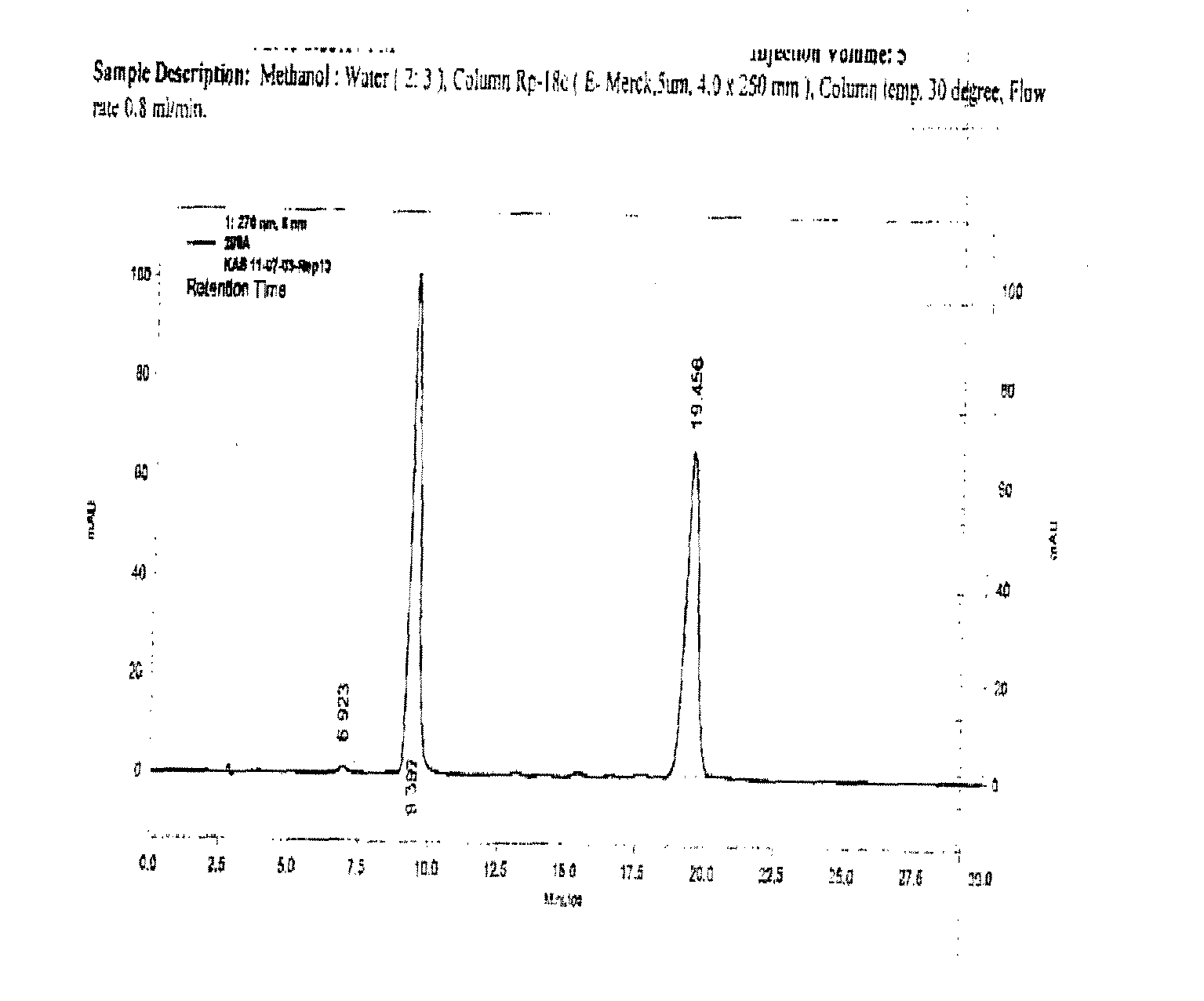
- iridoid glycoside adjuvant is a standardized mixture of iridoid glycosides (chander, 1992; Li et al, 1998) Preparatio of the material involves extraction with organic solvents and crystallisation. No chromatography operatio is required. Standardisation by HPLC fingerprinting. Its shelf life is determined to be 167,7 weeks.
- the powdered root of P.Kurroa (100g) is extracted with dichloromethane (500 ml), the extract is rejected.
- the marc is extracted with 70% aqueous ethanol (500ml) at 20-25°C. centrifuged and supernatant concentrated at 40 ⁇ 2°C under diminished pressure to 1/4 th of its volume and allowed to stand at 20 ⁇ 5°C for 40 h. The separated solid is filtered off and the filtrate is concentrated to dryness at 40 ⁇ 2°C under diminished pressure.
- the residue is extracted with boiling ethyl acetate (500 ml) and the extract is rejected.
- the residue is dissolved in hot ethanol (400ml), cooled and diethyl either (100 ml) added till turbidity persists.
- the turbid solution is allowed to stand at 4°C for 24 h, separated solid is recovered by filtratio, dissolved in 400 ml of dry ethanol (distilled and stored on fused cupric sulphate), decolorized by charcoal treatment and concentrated to 1/4 th of its volume, cooled and allowed to stand at 4°c for 24 h .
- the precipitated solid is separated by filtratio, washed with cold ethanol and dried to get iridoid glycoside adjuvant in the ratio of PKI and PKll is 1:2,
- P.Kurroa root powder (100 g) is extracted with petroleum ether (500 ml, 60-80° C), the extract is rejected.
- the marc is extracted with 95% aqueous ethanol (500 ml) at 20 ⁇ 5°C.
- the ethanolic extract is centrifuged to remove suspended matter and concentrated at 40 ⁇ 2°C under vacuo to 1/4 th of its original volume and allowed to stand at 20 ⁇ 5°C for 36 h.
- the separated solid is filtered off and the filtrate is concentrated to dryness at 40 ⁇ 2°C under diminished pressure.
- the residue is extracted with boiling chloroform (500 ml) and then boiling ethyl acetate (500 ml) and the extracts are discarded,
- the residue is dissolved in hot ethanol (400 ml), cooled and diethyl either (100 ml) added till turbidity persists.
- the turbid solution is allowed to stand at 4°c for 24 h;
- the separated solid is recovered by filtratio, dissolved in dry ethanol (400 ml), decolorized by active charcoal, concentrated to 1/4 th of its volume and allowed to stand at 4°c for 24 h.
- the separated solid is filtered out and dried to yield iridoid glycoside adjuvant in the ratio of PK1 and PK2 is 1:2.
- the root powder (500 g) of P.Kurroa is extracted with dichloroethane while refluxing and the extract is rejected.
- the marc is extracted with EtOAc while refluxing in a Soxhlet for 20 h.
- the EtOAc extract is centrifuged to remove suspended matter and concentrated under vacuo to 1/4 th of its volume and allowed to stand at 20 ⁇ 5°C for 36 h.
- the separated solid is filtered off and recrystalise from MeOH , yield iridoid glycoside adjuvantin the ratio of PK1 and PK2 is 1:2.
- mice Twelve groups of adult Balb/C mice (each group having 10 mice) were injected with 20 ⁇ g HBsAg (i) alone, (ii) mixed with 1.45 mg alum, (iii, iv, v, vi, vii, viii, ix, x) mixed with 0.312, 0.625, 1.25, 2.5, 5, 10, 20, 40 ⁇ g. iridoid glycosides from Picrorhiza kurroa or (xi, xii,xiii, xiv, xv, xvi) mixed with variable doses of antigen HBsAg 2.5, 5, 10, 15, 20 and 25 ⁇ g.
- mice were bled at 15 and 28 th day after immunization and the plasma was assayed for anti-HBsAg At the end of the study the mice were killed and their spleens and lymph nodes were removed for assay of CTL activity and cytokines by flow cytometery.
- mice were immunized with HBsAg (20 ⁇ g) alone, with alum (1.45 mg), with variable formulations of adjuvant 0.312, 0.625, 1.25, 2.5, 5,10, 20,40 ⁇ g iridoid glycoside adjuvant with both alum and an iridoid glycoside adjuvant.
- Plasma Serum was obtained at 15 & on 28 th day for assay of anti-HBsAg as total IgG and IgG subtypes (lgG1 and lgG2a). At the end of the study the mice were killed and their spleens removed for assay of CTL activity.
- Plasma Serum was recovered by centrifugation (7 min, 13,000 rpm). Antibodies specific to HBsAg in plasma serum were detected and quantified by end-point dilution ELISA assay (in triplicate) on individual samples. Ten-fold serial dilutions of plasma serum were first added to 96-well microtiter plates with a solid phase consisting of plasma -derived HBsAg particles (100 ⁇ l/well of HBsAg subtype at 1 ⁇ g/ml, coated overnight at RT) and incubated for 1 h at 37° C.
- the bound antibodies were then detected by incubation for 1 h at 37° C with HRP-conjugated goat anti-mouse IgG, lgG1 or lgG2a (1:400 in PBS-Tween, 10% FCS; 100 ⁇ l/well, BD Pharmingen), followed by incubation with OPD solution (100 ⁇ l/well, Sigma,) for 30 min at RT room temperature in the dark.
- the reaction was stopped by the addition of sulphuric acid (50 ⁇ l of 4N H 2 SO 4 ).
- End-point titers were defined as the highest plasma dilution that resulted in an absorbance value (OD at 450) two times greater than that of non-immune plasma Titres were expressed in milli international units per ml (mlU/ml) and absorbance was measured in ELISA reader (High tech Jupiter) at 450 nm.
- the spleen (1/3 of the organ) was placed in PBS buffer (without Mg 2+ and Ca 2+ ) stored On ice prior to preparatio of single cell suspensions.
- Splenic erythrocytes were lysed with red blood cell lysing buffer (BD pharmingen).
- Cell suspensions were refrigerated (Ca. 4°C) pending staining with antibodies. All reagents were purchased at BD pharmingen.
- 2x 10 6 cells were stained with conjugated anti-mouse CD4 FITC and anti-mouse CD8a PE antibodies.
- iridoid glycoside adjuvant on CD8 + T cells lymphocytes.
- iridoid glycoside adjuvant 2.5 ⁇ g caused a significant increase of CD8 + T cells lymphocytes, but there is no significant increase in CD8 T lymphocytes was observed in alum containing HBsAg.
- iridoid glycoside adjuvant (2.5 ⁇ g) plus alum (1.45 mg) showed synergistic effect and produced significant increased in CD8 population as compared with standard adjuvant alum.
- Cytokines (Th1 & Th2 responses) in serum by ELISA (Quantikine, R & D systems) and lymph node cells by flowcytometry collected from immunized mice on day 28 th (Quantikine, optia Kit).
- IL-2, IFN gamma, TNF alpha, IL-4, IL-5 and IL-10 in lymph nodes cell culture fluid determined by flowcytometry clearly showed that HBsAg containing iridoid glycoside adjuvant induced both Th1 (IL-2 , IFN- ⁇ and TNF alpha) and Th2 (IL-4, IL-5 and IL-10) cytokines.
- High levels of Th1 cytokines were secreted in response to MDP and FCA containing HBsAg.
- Cytokine levels in lymph nodes cell culture fluids produced by cells from mice receiving MDP and FCA containing HBsAg were very low for the Th2 cytokines and increased Th1 type of immune response.
- Mitogen phytohemmaglutinin-A was added at 5 ⁇ g /ml final concentratio to each well and the volume was adjusted to 0.2 m1. After incubating for 72 h at 37°C and 5% CO 2 humid atmosphere air, cell proliferatio was determined by MTT assay method. Briefly, 10% of (3-(4, 5 diamethyl-2-thiazolyl) 2,5-diphenyl-2H-tetrazolium) (MTT) (5 mg/ml) was added to each well and plates were incubated at 37°C in CO 2 humid atmosphere for 4 h. The blue formazan precipitate was dissolved in acidic Isopropanol and its optical density was measured in 570 nm using Elisa Reader. Each dose was tested in triplicates.
- MTT 3-(4, 5 diamethyl-2-thiazolyl) 2,5-diphenyl-2H-tetrazolium
- Results indicate that combination of 25 ⁇ g antigen with 2.5 ⁇ g adjuvant showed 100% seroconversion in comparison to other groups. While in case of combination of 2.5 mg adjuvant with 15 mcg of antigen showed 100% seroconversion in comparision to the other groups, which clearly indicate the enhancement of the immune response in the presence of the adjuvant.
- Iridoid glycoside adjuvant showed effect of 39.8 % CD4 and 14.8 % of CD8 T cells at 2.5 ⁇ g iridoid glycoside adjuvantin 20 ⁇ g Ad i.p. dose.
- the control values were 16.8 % CD4 and 10.6 % for CD8 T cells. This showed a significant increase in CD4/CD8 ratio as shown in Table 1. Table 1.
- Splenocytes were isolated from different groups of treated and untreated mice.
- 2 ⁇ 10 6 cells/ml were cultured with Con A (0.5 ⁇ g/ml) in 24-well tissue culture plates in RPMI-FBS (10%). Plates were incubated at 37°C in a humidified atmosphere of 5% carbon dioxide for 48h and the supernatants collected for cytokines (IFN- ⁇ and IL-4) assays as per the instructions of the manufacturer (BD OptElA set). Briefly, 96- well micro titer ELISA plates were coated overnight with 50 ⁇ l of capture antibodies in carbonate- bicarbonate buffer, pH 9.6 at 4° C.
- Splenocytes were collected two weeks after the challenging injection were determined by ELISA.
- the results indicate that iridoid glycoside adjuvant at 2.5 ⁇ g increases both Th1 (IFN gamma) and Th2 (IL-4) response in comparison to commercial vaccine, which elicits only Th1 type of the immune response.
Landscapes
- Health & Medical Sciences (AREA)
- Life Sciences & Earth Sciences (AREA)
- Chemical & Material Sciences (AREA)
- General Health & Medical Sciences (AREA)
- Immunology (AREA)
- Medicinal Chemistry (AREA)
- Veterinary Medicine (AREA)
- Pharmacology & Pharmacy (AREA)
- Public Health (AREA)
- Animal Behavior & Ethology (AREA)
- Mycology (AREA)
- Virology (AREA)
- Microbiology (AREA)
- Epidemiology (AREA)
- Organic Chemistry (AREA)
- Engineering & Computer Science (AREA)
- Chemical Kinetics & Catalysis (AREA)
- General Chemical & Material Sciences (AREA)
- Communicable Diseases (AREA)
- Biochemistry (AREA)
- Biotechnology (AREA)
- Genetics & Genomics (AREA)
- Molecular Biology (AREA)
- Bioinformatics & Cheminformatics (AREA)
- Nuclear Medicine, Radiotherapy & Molecular Imaging (AREA)
- Medicines Containing Antibodies Or Antigens For Use As Internal Diagnostic Agents (AREA)
Abstract
Description
- The present invention is in the field of plant based adjuvant and vaccines and use thereof.
- Picrorhiza kurroa is a well-known herb in the Ayurvedic system of medicine and has traditionally been used to treat disorders of the liver and upper respiratory tract, reduce fevers, and to treat dyspepsia, chronic diarrhea, and scorpion sting. lt is a small perennial herb from the Scrophulariaceae family, found in the Himalayan region growing at elevations of 3,000-5,000 meters. Picrorhiza kurroa has a long, creeping rootstock that is bitter in taste, and grows in rock crevices and moist, sandy soil. The leaves of the plant are flat, oval, and sharply serrated. The flowers, which appear June through August, are white or pale purple and borne on a tall spike; manual harvesting of the plant takes place October tnrough December. The active constituents are obtained from the root and rhizomes. The plant is self-regenerating but unregulated over-harvesting has caused it to be threatened to near extinction. Current research on Picrorhiza kurroa has focused on its hepatoprotective, anticholestatic, antioxidant, and immune-modulating activity (Atal et al, 1986; Subedi, 2000).
The immunobiological activity was investigated of certain medicinal plants widely used in the Ayurvedic and Unani systems of medicine for treatment of chronic infections and immunological disorders. - Iridoid glycoside adjuvantis a standardized mixture of iridoid glycosides (picroside I and picroside II) isolated from the rhizomes of P. kurroa (Kitagawa et al, 1971; Weinges et al, 1972), and its yield from freshly dried plant material is between 3 and 5%. The effect;of a iridoid glycoside adjuvant was studied on delayed type hypersensitivity, humoral responses to sheep red blood cells, skin allograft rejection, and phagocytic activity of the reticuloendothelial system in mice. Picrorhiza kurroa was found to be a potent immunostimulant, stimulating both cell-mediated and humoral immunity.
HPLC standardized iridoid glycoside adjuvant tested using both particulate and soluble model antigens including Candida albicans and Salmonella typhimurium. These significantly stimulate the cellular expression and activation in mice and rats and suppress the fungal and bacterial infections. Iridoid glycoside adjuvant did not produces any intradermal apparent toxicity.iridoid glycoside adjuvant increased the antigen specific IgG response to bovine serum albumin (BSA). The adjuvant effect, which increased the total IgG titre to BSA was more than 80% after two immunization; iridoid glycoside adjuvant when administered as co-adjuvant with muramyl dipeptide (MDP), produced higher antibody titres than those induced with MDP alone. - It was further observed that iridoid glycoside adjuvant significantly stimulated antibody titres, and cell mediated immune response to specific antigens. The effect was superior after the recall dose of antigen with particular reference to antibody titres and DTH reaction. The cellular mediators involved in the expression of cell mediated immunity as observed by way of IL-2 and IFNγ cytokines, are known for CTL activity aimed at killing infected cells and expressing abnormal antigens. Thus the proposed entity iridoid glycoside adjuvant has projected them to be strong candidates for evaluation as immunoadjuvant for vaccines.
- Wide varieties of antigens stimulate the production of antibodies in animals and confer protection against subsequent infections. However, some antigens stimulate only a mild or ineffective immune response, while some are unable to stimulate an effective immune response.
- The immunogencity of weak antigen is often enhanced by simultaneous administratio of antigen with an adjuvant, which is a substance that may or may not be immunogenic when administered alone but it will induce a state of immunity, may it be systemic or mucosal for an antigen. Unfortunately many immunoadjuvants are toxic unsafe and are only useful for animals, not human vaccination. Preferred adjuvants are substance that are not mitogenic or very toxic, but potentiate and focus the immune response to vaccine, Adjuvants often contain immunomodulators, which induce the production of cytokine cascade and result in augmented immune response.
- Iridoid glycoside adjuvant glycosides of plant P.kurroa has been shown to act as adjuvant so as to affect immunoadjuvant effects on peripheral blood mononuclear cells (PBMC) in-vitro stimulated with sub immunogenic dose of HBsAg. This lymphocyte activation appears likely that the rapid immune activation in response to iridoid glycoside adjuvant may have evolved as one component of the innate immune defense mechanisms that recognize structural patterns specific to immune-stimulation.
Iridoid glycoside adjuvant induces proliferatio of almost all (>92%) B cells and increases immunoglobulin (Ig) secretion. The iridoid glycoside adjuvant led to an increase in the levels of the cytokine IL-4 & IL-10 and might enhance the humoral immune response. This B cell activation by iridoid glycoside adjuvant is T cell dependent and antigen non-specific. However, B cell activation by low concentratios of iridoid glycoside adjuvant has strong synergy with signals delivered through the B cell antigen receptor for both B cell proliferatio and Ig secretion. This strong synergy between the B cell signaling pathways triggered through the B cell antigen receptor and by iridoid glycoside adjuvant promotes antigen specific immune responses. In addition to its direct effects on B cells In addition, iridoid glycoside adjuvant directly activates monocytes, macrophages, and dendritic cells to secrete a variety of cytokines, including high levels of IL-12. These cytokines stimulate natural killer (NK) cells to secrete gamma-interferon (IFN-gamma) and have increased lytic activity (Klinman et al, 1996; Akbar, 1999; Ballas et al., 1996). Overall, iridoid glycoside adjuvant induces a Th1 like pattern of cytokine production dominated by IL-12 and IFN-.gamma with secretion of Th2 cytokines also.
To start with adjuvant effect of iridoid glycoside adjuvant, a specific antigen Hepatitis B virus has been evaluated. Since (HBV) posses a serious worldwide health problem. The current HBV vaccines are subunit vaccines containing particles of HBV envelope protein(s), which include several B and T cell epitopes known collectively as HBV surface antigen (HBsAg). The HBsAg particles may be purified from the plasma of chronically infected individuals or more commonly are produced by recombinant DNA technology. These vaccines induce antibodies against HBsAg (anti-HBsAg), which confer protection if present in titers of at least 10 milli-international Units per milliliter (mlU/ml) (Brunel, 1999). The current subunit vaccines, which contain alum (a Th2 adjuvant), are safe and generally efficacious. They, however, fail to meet all current vaccination needs. For example, early vaccination of infants born to chronically infected mothers, as well as people in endemic areas, drastically reduces the rate of infection, but a significant proportion of population will still become chronically infected themselves (Shlomai, 2003). This could possibly be reduced if high titers of anti-HBsAg antibodies could be induced earlier and if there were HBV-specific CTL (Bohm, 1998). In addition, there are certain individuals who fail to respond (non-responders) or do not attain protective levels of immunity (hypo-responders). Finally, there is an urgent need for an effective treatment for the estimated 350 million chronic carriers of HBV and a therapeutic vaccine could meet this need.
Secondly, the immunogenicity of Vi polysaccharide typhoid antigen is also evaluated.
Typhoid (cloudy) fever is a systemic infection, caused mainly by Salmonella typhi found only in man. It is characterized by a continuous fever for 3-4 weeks, relative bradycardia, with involvement of lymphoid tissue and considerable constitutional symptoms. In western countries, the disease has been brought very close to eradication levels (a). - Each year, the world over, there are at least 13-17 million cases of typhoid fever, resulting in 600,000 deaths. 80% of these cases and deaths occur in Asia alone,
- Antibiotics resistance, particularly emergence of multidrug resistant (MDR) strains among Salmonellae is also a rising concern and has recently been linked to antibiotic use in livestock. Many S typhi strains contain plasmids encoding resistance to chloramphenicol, ampicillin and co-trimoxazole, the antibiotics that have long been used to treat enteric fever. In addition, resistance to ciprofloxacin also called nalidixic-acid resistant S typhi (NARST) strain either chromosomally or plasmids encoded, has been observed in Asia.
- These studies as well as the efficacy of the antigen is formulated with different doses of iridoid glycoside adjuvant and the compared with the conventional typhoid vaccine which is non adjuvanted and comprises of only 25 mcg /human dose.
- Akbar SMF, Abe M, Masumoto TK, Horiike N, Onji M, 1999. Mechanism of action of vaccine therapy in murine hepatitis B virus carriers: vaccine-induced activation of antigen presenting dendritic cells. Hepatology, 30, 755 - 764.
- Atal CK, Sharma ML, Kaul A, Khajuria A, 1986. Immunomodulating agents of plant origin. I: preliminary screening. J Ethnopharmacol 18, 133-141,
- Ballas ZK, Rasmussen WL, Krieg AM, 1996. Induction of NK activity in murine and human cells by CpG motifs in oligodeoxynucleotides and bacterial DNA Journal of Immunology 9 (1), 1840 - 1845.
- Bohm W, Mertens T, Schirmbeck R, Reimann J, 1998. Routes of plasmid DNA vaccination that prime murine humoral and cellular immune responses. Vaccine, 16 (9-10), 949-954.
- Bres EM, Payette PJ, Mancini M, Tiollais P, Davis HL, Michel ML, 2001. CpG oligodeoxynucleotides with hepatitis B surface antigen (HBsAg) for vaccination in HBsAg-Transgenic mice. Journal of virology, 75 (14), 6482 - 6491.
- Brunel F, Darbouret A, Ronco J, 1999. Cationic lipid DC-chol induces an improved and balanced immunity able to overcome the unresponsiveness to the hepatitis B vaccine. Vaccine, 17 (17), 2192 - 2203.
- Chander R, Kapoor NK, Dhawan BN, 1992. Picroliv, picroside-1 and kutkoside from Picrorhiza kurroa are scavengers of superoxide anions. Biochem Pharmacol, 44, 180 - 183.
Gargiulo F, Monti E, Caruso A, Manca N, Martinelli F, Rango CD, Flamminio G, Gao J, Preti A, Turano A, 1993. High-titre antibodies to a foreign epitope elicited by affinity-purified hybrid LamB proteins. Vaccine 11 (11), 1093-1096. - Kitagawa I, Hino K, Nishimura T, Iwata E, Yosioka I, 1971. On the constituents of Picrorhiza kurroa. The structure of picroside I, Chem Pharm Bull 19, 2534-2544.
- Klinman DM, Yi AK, Beaucage SL, Conover J, Kreig AM, 1996. CpG motifs presents in bacterial DNA rapidly induce lymphocytes to secrete .
- Li JX, Li P, Tezuka Y, Namba T, Kadota S, 1998. Three phenylethanoid glycosides and an iridoid glycoside from Picrorhiza Scrophulariiflora. Journal phytochemistry, 48 (3), 537 - 542.
- Rivera E, Pettersson, FE, Inganas M, Paulie S, Gronvik KO, 2005. The Rb1 bioactive fraction (adjuvant) of ginseng elicits a balanced Th1 and Th2 immune response. Vaccine, 23 (46-47), 5411-5419.
- Shlomai A, Shaul Y, 2003. Inhibition of hepatitis B virus expression and replication by RNA interference. Hepatology, 37 (4), 764 - 770.
- Subedi BP, 2000. Plant profile: Kutki (Picrorhiza scrophulariiflora), .
- Weinges K, Kloss P, Henkels WD, 1972. Picroside 11, ein neues 6-vanilloyl-cataipolaus Picrorhiza kurroa Royle und Benth Liebigs, Ann Chem 759, 173-182.
Chen JZ, Zhu HH, Liu KZ, Chen Z, 2004. Enhancing cellular immune response to HBV M DNA vaccine in mice by codelivery of interteukin-18 recombinant. Chen et al./J Zhejiang Univ SCI 5 (4), 467 - 471.
Lt Gen SP Kalra AVSM Bar*, Lt Col N Naithani+, Col SR Mehta VSM#, Sqn Ldr AJ Swamy MJAFI 2003; 59 : 130-135 - The main object of the present invention is to provide a plant based vaccine adjuvant.
- Another object of the present invention is to provide an iridoid glycoside adjuvant from plant Picrorhiza kurroa comprising PKI and PKII.
- Another object of the present invention is to provide a process for preparatio of the said (adjuvant).
- Yet another object of the invention is to provide a vaccine formulation comprising of the adjuvant and antigen optionally along with pharmaceutically acceptable carriers, diluents.
- Yet another object of the present invention is to provide a vaccine formulation comprising of combination of adjuvant and antigen with optionally pharmaceutically acceptable carriers, diluents.
- Another object of the present invention is to provide a vaccine formulation useful for modulation of cytokine levels.
- Another object of the present invention is to provide a vaccine formulation useful for activation uf cells of immune system.
- The present invention relates to an adjuvant, particularly to an iridoid glycoside adjuvant obtained from plant Picrorhiza kurroa, acting as an adjuvant against T -dependent antigen and specifically against HBsAg and typhoid antigens.
- The present invention also relates to the method of producing the said adjuvant and the products utilizing such adjuvants for induction of cellular immunity. The adjuvants may be used alone or with specific antigens.
Accordingly the present invention provides a synergistic vaccine composition comprising iridoid glycosides Picroside I and Picroside-II represented by following formula, wherein the ratio of PKI ranging between 0.80-1.25 and PK II ranging between 1.60-2.50. In an embodiment of the present invention, the said iridoid glycosides is obtained from the plant Picrorhiza kurroa
In yet another embodiment of the present invention, the shelf- life of the adjuvant is 175 weeks. - In another embodiment of the present invention the said adjuvant exhibits potency at microgram quantities and integrates easily with HBsAg formulation.
- In a still another embodiment the said adjuvant is required in reduced dose as compared to the other adjuvant.
- In a further embodiment the said adjuvant is safe, well tolerated and immunogenic promoting more rapid protection against hepatitis B infection in comparison with others adjuvants (CFA & MDP).
- In yet another embodiment the said adjuvant increases levels of both the cytokine (Th1 and Th2) whereas MDP and FCA induced only Th1 type of immune response compared with the, MDP and FCA when co-administered with HBsAg.
- In another embodiment the said adjuvant favours an enhancement in the IgG titers against HBsAg antigen containing alum.
- In another embodiment the said adjuvant has the potential ability to increase total vaccine HBsAg specific antibody response and T cell response at 2.5 µg/ml.
- In another embodiment the said adjuvant when administered in combination of alum together with HBsAg generates higher protective serum IgG antibody response, proving synergetic effect.
- In another embodiment the said adjuvant appears to increase potency with relatively small quantities of antigen and exhibit synergy with other adjuvants because of the ability to improve the body's immune response to very low doses of antigen.
- In still another embodiment the said adjuvant together with antigen HBsAg reduces the dose of antigen from 20µg (standard vaccine containing 20 µg + alum) to 15 µg (iridoid glycoside adjuvant+ HBsAg).
- In a further embodiment the said adjuvant together with antigen HBsAg promotes CD8 population observed on
15 and 28 in mice as compared with alum co-administered with HBsAg, which is poorly elicited CD8 population.day - In another embodiment the said adjuvant together with HBsAg increases specific lgG1 and IgG2a response in mice as compared with alum co-administered with HBsAg, which increases only IgG1 response but poorly elicited IgG2a response.
- In another embodiment the efficacy of the said adjuvant together with variable doses of antigen HBsAg on serum immunoglobulins, is higher as compared to alum containing HBsAg .
- In another embodiment the effect of 2.5 µg of said adjuvant together with antigen HBsAg (20 µg) on serum immunoglobulins, is up to 1:4500 in comparison with alum containing Bag.
- ln another embodiment the effect of said adjuvant together with antigen HBsAg provides enhanced lL-2, IL-12, IFN-gamma, TNF-alpha secreted by Th1 cells and lL
- In another embodiment the above said adjuvant is useful for activation of cells of immune system.
- An embodiment, of the invention is a vaccine formulation comprising of iridoid glycoside adjuvant, an antigen optionally along with one or more other adjuvants and pharmaceutically acceptable additives.
- In another embodiment the other adjuvants are selected from the group comprising alum, monophosphoryl lipid, CompleteFreund's Adjuvant, Muramyl dipeptide.
- In another embodiment the antigen is selected from the group comprising HBsAg, typhoid Vi polysaccharide peptides, polypeptides, cells, cell extracts, polysaccharides, polysaccharide conjugates, lipids, glycolipids, carbohydrates, Virus particles and recombinant proteins, a crude, purified or recombinant form, peptide mimics of polysaccharides, tumour antigen, allergen, bacteria, fungus, protozoa, parasites.
- In another embodiment of the present invention the ratio of iridoid glycoside adjuvant:
- alum: antigen ranges from of 0.125:14.5:1.
- In another embodiment the said formulation can be injectible in bolus or continuous infusion.
- In another embodiment the effective dose (0.312 µg -40.0 µg) of said formulation is administered to a subject by injection.
- ln another embodiment the said formulation is administered by oral, intradermal, intraperitoneal, intramuscular route.
- In another embodiment the said formulation is useful for activation of cells of immune system.
- In another embodiment the said formulation is useful for modulation of cytokine levels.
- In another embodiment the said iridoid glycoside adjuvant is useful for modulation of Th1 and
Th 2 cytokines. - An embodiment of the present invention is a vaccine formulation comprising recombinant hepatitis B surface antigen protein, iridoid glycoside adjuvant, optionally along with alum and other pharmaceutically acceptable additives.
- In another embodiment of the invention the said formulation consists of iridoid glycoside adjuvant, alum and recombinant hepatitis B surface antigen protein in a ratio of 0.125:72.5:1.
- In yet another embodiment of the present invention the formulation consists of recombinant hepatitis B surface antigen protein and iridoid glycoside adjuvant.
- In still another embodiment of the present invention the ratio of iridoid glycoside adjuvant ranges between 1 to 128 and ratio of hepatitis B surface antigen ranges between 1 to 10.
- An embodiment of the present invention is a vaccine formulation comprising typhoid Vi polysaccharide, iridoid glycoside adjuvant and optionally alum.
- In an embodiment of the present invention the said formulation comprises iridoid glycoside adjuvant, alum and typhoid Vi polysaccharide in ratio a ranging D.1:58:1.
- An embodiment of the invention is a method of immunization of a subject with vaccine formulation wherein an effective dose (0.312-40.0 µg) of said formulation is administered to a subject by injection.
- In an embodiment of the invention the said formulation is administered by oral, intradermal, intraperitoneal, intramuscular route.
- In another embodiment of the invention the said formulation is administered as unit doses and booster doses.
- In yet another embodiment of the invention the said subject is mammal, including human being.
- An embodiment of the present invention is a process for preparatio of vaccine adjuvant comprising the steps:
- a) extracting the powdered dried roots of P. Kurroa with an organic solvent selected form a group consisting of dichloroethane methane petroleum ether, dichloroethane to obtain the marc,
- b) extracting the said marc with an organic solvent up to a refluxing temperature,
- c) separating the extract form the suspended particles and concentrating to obtain the residue,
- d) extracting the residue obtained in step (c) with chloroform and ethyl acetate and extracts are discarded and the residue is dissolved in ethanol or methanol,
- e) cooling the ethanolic/ methanolic solution obtained in step (d), and adding diethyl ether till turbidity persists,
- f) recovering solid by filtratio and decolorizing using activated charcoal as decolonizing agent to obtain the mixture of picroside I & II.
- g) standerdising the above said mixture of picroside I & II by HPLC fingerprinting,
-
- FIG. 1 Comparison of the iridoid glycoside adjuvant with other adjuvants i.e. Complete Freund's adjuvant and Muramyl dipeptide (CFA & MDP) on the basis of antibody titre by ELISA.
- Fig.2 Comparison of iridoid glycoside adjuvant with other adjuvants i.e. Complete Freund's adjuvant and Muramyl dipeptide (CFA & MDP) on the basis of Th1 & Th2 response in lymph nodes cells determined by flowcytometry.
- FIG. 3 Graph illustrating humoral responses in Balb/c mice immunized with 1ml of formulation of HBsAg protein 20µg with or without alum and with variable doses 0.312, 0.625. 1.25, 2.5, 5, 10, 20, 40 µg/ml of iridoid glycoside adjuvant added. Each point represents the group mean for anti-HBsAg titers (total IgG) as determined by end-point dilution ELISA assay. Results are expressed on the basis of three sets of experiments.
- Fig. 4 Graph comparing the IgG antibody response obtained by immunization with iridoid glycoside adjuvant and other adjuvants.
- FIG. 5 Graph illustrating humoral responses in Balb/C mice immunized with 1 ml of selective dose of adjuvant 2.5µg of Iridoid glycoside adjuvant and variable doses of HBsAg 2.5,5,10,15,20,25µg/ml protein without alum. Each point represents the group mean for anti-HBsAg titer (total IgG) as determined by end-point dilution ELISA assay.
- FIG. 6 Graph of CTL (CD8) responses in Balb/c mice immunized with 1ml of
recombinant HBsAg 20 µg protein + variable doses 0.312, 0.625, 1.25, 2.5, 5 10, 20, 40 µg/ml of Iridoid glycoside adjuvant, Some animals were boosted with the same or a different formulation (alum) after two weeks. Each point represents the group mean. - FIG. 7. Bar graph depicting the amount of total IgG (lgG1 and IgG2a) end-point ELISA titer produced at 4 weeks in Balb/C mice immunized with 20µg of HBsAg + 2.5 µg of Iridoid glycoside adjuvant, indicating a more Th1 as well as Th2 response.
- FIG. 8.Graph representing humoral antibody titer with variable doses of HBsAg (2.5-15µg with constant dose of Iridoid glycoside adjuvant adjuvant 2.5 µg and other group of animals receiving HBsAg antigen alone or 1.45 mg alum + 20 µg HBsAg to see the effect on antibody titre by flowcytometry.
- FIG. 9.Graph representing humoral antibody titer with variable doses of Iridoid glycoside adjuvant adjuvant (0.312-40µg) with constant dose of
HBsAg 20 µg and other group of animals receiving 1.45mg alum alone and 1,45mg alum + 20µg HBsAg to see the effect on antibody titre by flowcytometry. - Fig 10. Depicting the role of Th1 & Th2 cytokines involved during immunization with HBsAg. The selective effective dose of
HBsAg 15 µg + 2.5 µg Iridoid glycoside adjuvant determined by flowcytometry. - Fig 11. Groups of BALB/c mice were intraperitoneally immunized with 25.0 µg of typhoid antigen alone, Saline as control and associated (typhoid +Iridoid glycoside adjuvant) with various doses of Iridoid glycoside adjuvant: 0.312, 0.625, 1.25, 2.5, 5, 10, 20 and 40µg/ml. IgG anti- typhoid antibody levels in
sera 2 weeks after the challenging injection were determined by ELISA assay and expressed in Optical density at 492 nm. - Fig 12. Groups of BALB/c mice were intraperitoneally immunized with different doses of antigens ranging from 25.0, 20.0, 15.0, 10,0 and 5.0 mcg of typhoid antigen with iridoid glycoside adjuvant at 2,5 mcg. The animals were bled after the challenging injection were determined by ELISA assay and expressed in Optical density at 492 nm
- Table 1. Effect of different doses of Iridoid glycoside adjuvant on CD4 and CD8 population on splenocytes determined by flowcytometry
- Table 2. Effect of Iridoid glycoside adjuvant on T (lFN gamma) and B (lL-4) cell secreted cytokines by ELISA
- The present invention relates to a plant based iridoid glycoside adjuvants, obatined from plant Picrorhiza kurroa, acting as an adjuvant T dependent antigen and specifically against HBsAg and typhoid antigens.
- The present invention also relates to the method of producing the iridoid glycoside adjuvant and the products utilizing such adjuvants for induction of cellular immunity. The adjuvants may be used alone or with specific antigens.
- The two antigens used in the study represent HBsAg, a recombinant antigen expressed in Pichia pastoris, and typhoid Vi polysaccharide purified from Salmonella typhi.
- These antigens are studied for their immunogenicity with the iridoid glycoside adjuvant.
- The present invention relates to methods and products for inducing an immune response by the use of a chemically characterized plant based iridoid glycoside adjuvant acting as strong vaccine adjuvant. The invention is useful in one aspect as a method of inducing an antigen specific immune response. The method includes the steps of administering iridoid glycoside adjuvant in order to induce an antigen specific immune response. An antigen HBsAg with conventional adjuvant namely alum, a combination of adjuvant iridoid glycoside adjuvant and HBsAg, unadjuvanted Vi polysaccharide and finally a combination of iridoid glycoside adjuvant formulated with Vi polysaccharide are administered in an effective-amount for inducing a synergistic adjuvant response.
- The iridoid glycoside adjuvant can be administered with specific and non-specific antigen. Primarily, the combination of iridoid glycoside adjuvant -antigen HBsAg may be administered with priming dose of antigen and adjuvant. In another set of animals groups is administered with a boost dose of antigen.
- The antigen may be any type. For example, the antigen may be selected from the group consisting of peptides, polypeptides, cells, cell extracts, polysaccharides polysaccharide conjugates, lipids, glycolipids, carbohydrates, Virus particles and recombinant proteins. Antigens may be given in a crude, purified or recombinant form and polypeptide/peptide antigens, including peptide mimics of polysaccharides, may also be encoded within nucleic acids. Antigens may be derived from an infectious pathogen such as a virus, bacterium, fungus or parasite, or the antigen may be a tumor antigen, or the antigen may be an allergen.
- According to another aspect of the invention a method of inducing a Th1 immune response is included The method includes the step of administering antigen adjuvant combination in order to induce a Th1 immune response, wherein the combination of adjuvants is administered in an effective amount for inducing a Th1 immune response. The combination of adjuvants is either administered simultaneously or sequentially. Combination of adjuvants is administered in an effective amount for inducing a synergistic Th1 immune response.
- According to other aspects the invention includes a method for immunizing animals (Balb/C mice) with a priming dose of antigen HBsAg and iridoid glycoside adjuvant before the boost dose. In other group of animals a boost dose of antigen is given, in order to induce a Th1 innate immune response. For longer-term protection, these adjuvants may be administered more than once. The invention in other aspects include a method of inducing a non-antigen-specific Th1-type immune response, including Th1 cytokines such as lL-12 and IFN-.gamma, for temporary protection against various pathogens including viruses, bacteria, parasites and fungi.
- According to other aspects the invention includes a method for immunizing animal (Balb C mice) with different doses of antigen and adjuvants to establish the most effective combination of antigen and adjuvant which can elicit the highest antibody titre.
- The invention in one aspect is based on the discovery that the formulation containing combinations of iridoid glycoside adjuvant and alum synergistically enhance immune responses to a given antigen HBsAg.
- It has been discovered according to the invention that the combination of iridoid glycoside adjuvant, MPL and alum or other adjuvants results in a synergistic immune response. Compared with the recombinant hepatitis B surface antigen (HBsAg) protein vaccine alone, formulation with alum increases the level of antibodies in mice against HBsAg (anti-HBsAg) to 10 fold whereas addition of iridoid glycoside adjuvant increase them 18 fold. When iridoid glycoside adjuvant and alum are used together, a 500-1000 times higher level of anti-HBsAg titre was observed, indicating a strong synergistic response. Additionally, it was found according to the invention that immunization with HBsAg and alum resulted in a strong Th2-type response with almost all IgG being of the IgG1 isotype. iridoid glycoside adjuvant induced a high proportion of IgG2a, indicative of a Th1-type response. Furthermore, it was discovered according to the invention that in Balb/C mice responses were induced by HBsAg with alum and iridoid glycoside adjuvant but not with alum or iridoid glycoside adjuvant alone. The antibodies produced with iridoid glycoside adjuvant were predominantly of the IgG2a isotype, indicating a strong Th1-type response. This is remarkable considering the strong Th2 bias of the neonatal immune system and the known difficulty in inducing Th1 responses at such a young age. Th1 responses are preferable in some instances since they are a associated with IgG2a antibodies that have better neutralization and opsonization capabilities than Th2-type antibodies. As well, Th1 responses are associated with cytotoxic T lymphocytes (CTL) that can attack and kill virus-infected cells (Rivera, 2005). Indeed, iridoid glycoside adjuvant, alone or in combination with HBsAg induced good CTL activity in both adult and neonatal mice. These studies demonstrate that the addition of iridoid glycoside adjuvant to protein or DNA vaccines in combination with other adjuvants is a valid new adjuvant approach to improve efficacy.
- Thus in one aspect the invention is a method of inducing an antigen specific immune response in a subject. The method includes the step of administering to the subject order to induce an antigen specific immune response an antigen HBsAg, adjuvant iridoid glycoside adjuvant and a combination of iridoid glycoside adjuvant and alum), and wherein the combination of iridoid glycoside adjuvant and alum is administered in an effective amount for inducing a synergistic adjuvant response.
- Many types of infectious pathogens do not have any effective treatments and chronic presence of the pathogen can result in significant damage. For instance, the HBV virus is itself non-pathogenic but with chronic infection the partially developed immune response causes inflammatory changes that eventually leads to cirrhosis and increased risk of hepatocellular carcinoma. An estimated one million people die each year from HBV-related liver disease. Persistent HBV infection of the liver results when acute infection fails to launch an appropriate immune response to clear the virus. Such chronic carriers have circulating HBsAg "e" soluble form of the HBV core antigen (HBsAg) without specific immunity. It is thought that the absence of HBV-specific T-cells, including CTL may contribute to the establishment and maintenance of the chronic carrier state. Indeed, many previously infected individuals, even years after clinical and serological recovery, have traces of HBV in their blood and HBV-specific CTL that express activation markers indicative of recent contact with antigen (zhong, 2004). These results suggest that sterilizing immunity may not occur after HBV infection and that chronic activation of HBV-specific CD4+ and CD8+ T-cells is responsible for keeping the virus under control. There is currently no cure for the HBV chronic infection. Interferon is used currently but this cures only 10-20% of treated individuals (Gargiulo, 1993). Anti-viral drugs (e.g., lamivudine) can reduce circulating virus to undetectable levels, however these return to pretreatment levels if the drug is stopped. Each of these types of treatment is also expensive and has certain undesirable side-effects. Thus the synergistic combination of adjuvants, which induces potent Th1 responses, including CTL, is useful for treating a subject having an infection such as HBV.
- Iridoid glycoside adjuvant is an investigational adjuvant that causes activation of the cells of the immune system i.e. B and T cells. lt may, for instance, iridoid glycoside adjuvant causes an immune cell to release cytokines secreted by T helper cells (Th1 and Th2). This class of adjuvants includes but is not limited to glycosides from the root of the P.kurroa, such as Iridoid glycoside adjuvant, peak with HPLC iridoid glycoside adjuvant action.
Adjuvants that create a depot effect and stimulate the immune system" are those compounds which have both of the above- identified functions. An "antigen" as used herein is a molecule capable of provoking an immune response. Antigens include but are not limited to peptides, polypeptides, cells, cell extracts, polysaccharides, polysaccharide conjugates, lipids, glycoliopids and carbohydrates. Antigens may be given in a crude, purified or recombinant form and polypeptide/peptide antigens, including peptide mimics of polysaccharides, may also be encoded within nucleic. The term antigen broadly includes any type of molecule, which is recognized by a host immune system as being foreign. Antigens include but are not limited to cancer antigens, microbial antigens, and allergens, - The invention further provides a method of modulating the level of a cytokine. The term "modulate" envisions the suppression of expression of a particular cytokine when lower levels are desired, or augmentation of the expression of a particular cytokine when higher levels are desired. Modulation of a particular cytokine can occur locally or systemically. Iridoid glycoside adjuvant can directly activate macrophages and dendritic cells to secrete cytokines. No direct activation of proliferatio or cytokine secretion by highly purified T cells has been found, although they are induced to secrete cytokines by cytokines secreted from macrophages and may be costimulated through the T cell Receptor. Cytokine profiles determine T cell regulatory and effector functions in immune responses. In general, Th1-type cytokines are induced, thus the immunostimulatory nucleic acids promote a Th1 type antigen-specific immune response including cytotoxic T-cells.
Cytokines also play a role in directing the T cell response. Helper (CD4+) T cells orchestrate the immune response of mammals through production of soluble factors that act on other immune system cells, including B and other T cells. Most mature CD4+ T helper cells express one of two cytokine profiles: Th1 or Th2. Th1 cells secrete IL-2, IFN-gamma. GM-CSF and high levels of TNF-alpha, Th2 cells express IL-4, IL-5, IL-6, IL-10, IL-13, GM-CSF and low levels of TNF-alpha. The Th1 subset promotes both cell-mediated immunity, and humoral immunity that is characterized by immunoglobulin class switching to IgG2a in mice. Th1 responses may also be associated with delayed-type hypersensitivity and autoimmune disease. The Th2 subset induces primarily humoral immunity and induces class switching to IgG1 and IgE. The antibody isotypes associated with Th1 responses generally have good neutralizing and opsonizing capabilities whereas those associated with Th2 responses are associated more with allergic responses. - Several factors have been shown to influence commitment to Th1 or Th2 profiles, The best-characterized regulators are cytokines IL-12 and IFN-gamma are positive Th1 and negative Th2 regulators. IL-12 promotes IFN-gamma production; IFN-gamma provides positive feedback for IL-12, IL-4 and IL-10 appear to be required for the establishment of the Th2 cytokine profile and to down-regulate Th1 cytokine production; the effects of IL-4 are in some cases dominant over those of IL-12; IL-13 was shown to inhibit expression of inflammatory cytokines, including IL-12 and TNF-.alpha by LPS-induced monocytes, in a way similar to IL-4. The IL-12 p40 homodimer binds to the IL-12 receptor and may antagonize IL-12 biological activity; thus it blocks the pro-Th1 effects of IL-12 in some animals. In other aspects the invention includes a method of inducing a Th1 immune response in a subject by administering to the subject a combination of adjuvants in an effective amount for inducing a Th1 immune response. The formulations of the invention are administered in pharmaceutically acceptable solutions, which may routinely contain pharmaceutically acceptable concentratios of salt, buffering agents, preservatives, compatible carriers, adjuvants, and optionally other therapeutic ingredients.
- Preferred routes of administratio include but are not limited to oral, intradermal, intraperitoneal, etc. An injection may be in a bolus or a continuous infusion. For example the pharmaceutical compositions according to the invention are often administered by intramuscular or intradermal injection. A variety of administratio routes are available. The particular mode selected will depend, of course, upon the particular adjuvants or antigen selected, the age and general health status of the subject, the particular condition being treated and the dosage required for therapeutic efficacy. The methods of this invention, generally speaking, may be practiced using any mode of administratio that is medically acceptable, meaning any mode that produces effective levels of an immune response without causing clinically unacceptable adverse effects. Preferred modes of administratio are discussed above.
- The compositions may conveniently be presented in unit dosage form and may be prepared by any of the methods well known in the art of pharmacy. All methods include the step of bringing the compounds into association with a carrier, which constitutes one or more accessory ingredients. In general, the compositions are prepared by uniformly and intimately bringing the compounds into association with a liquid carrier, a finely divided solid carrier, or both, and then, if necessary, shaping the product.
- Iridoid glycoside adjuvant a plant based immunomodulator has created a major need for potent vaccine adjuvant, capable of boosting cellular (Th1) immunity but without toxicity. Alum has no effect on cellular immunity, which is desired for newer generatio vaccines.
- Iridoid glycoside adjuvant optimal protection against recombinant antigens maintained and improved immune responses with HBsAg and Typhoid vaccine antigen.
- Alum has some limitations for use with next generatio recombinant antigens, alum being a poor inducer of Th1 response (cellular response) and induces Th2 based. (Humoral response), is not likely to offer optimal protection.
The present invention explore the use of alternative adjuvant formulation with MDP emulsion in comparison with HBsAg (Hepatitis) and TT (Tetanus Toxiod) it was not highly potent for HBsAg antigen, as iridoid glycoside adjuvant stood out a better alternative adjuvant, with reference to Th1 and Th2 responses. - An ideal adjuvant should reduce the load of antigen with appropriate stability and long shelf life. Iridoid glycoside adjuvant has reduced the load of antigen from (20ug to 15 ug/ml) as well dose of adjuvant (1.5mg alum to 2.5 ug /
ml 299A). - When individual compounds PK-I and PK-II are used as adjuvant against OVA (Weak-antigen) the activity profile is less as compared to iridoid glycoside adjuvant, The adjuvant activity in iridoid glycoside adjuvant may be due to synergy of PK-II and PK-II.
- The following examples are given by way of illustratio of the present invention and should not be construed to limit the scope of the present invention
- iridoid glycoside adjuvantis a standardized mixture of iridoid glycosides (chander, 1992; Li et al, 1998) Preparatio of the material involves extraction with organic solvents and crystallisation. No chromatography operatio is required. Standardisation by HPLC fingerprinting. Its shelf life is determined to be 167,7 weeks.
- The powdered root of P.Kurroa (100g) is extracted with dichloromethane (500 ml), the extract is rejected. The marc is extracted with 70% aqueous ethanol (500ml) at 20-25°C. centrifuged and supernatant concentrated at 40± 2°C under diminished pressure to 1/4th of its volume and allowed to stand at 20±5°C for 40 h. The separated solid is filtered off and the filtrate is concentrated to dryness at 40±2°C under diminished pressure. The residue is extracted with boiling ethyl acetate (500 ml) and the extract is rejected. The residue is dissolved in hot ethanol (400ml), cooled and diethyl either (100 ml) added till turbidity persists. The turbid solution is allowed to stand at 4°C for 24 h, separated solid is recovered by filtratio, dissolved in 400 ml of dry ethanol (distilled and stored on fused cupric sulphate), decolorized by charcoal treatment and concentrated to 1/4th of its volume, cooled and allowed to stand at 4°c for 24 h .The precipitated solid is separated by filtratio, washed with cold ethanol and dried to get iridoid glycoside adjuvant in the ratio of PKI and PKll is 1:2,
- P.Kurroa root powder (100 g) is extracted with petroleum ether (500 ml, 60-80° C), the extract is rejected. The marc is extracted with 95% aqueous ethanol (500 ml) at 20± 5°C.The ethanolic extract is centrifuged to remove suspended matter and concentrated at 40±2°C under vacuo to 1/4 th of its original volume and allowed to stand at 20±5°C for 36 h. The separated solid is filtered off and the filtrate is concentrated to dryness at 40±2°C under diminished pressure. The residue is extracted with boiling chloroform (500 ml) and then boiling ethyl acetate (500 ml) and the extracts are discarded, The residue is dissolved in hot ethanol (400 ml), cooled and diethyl either (100 ml) added till turbidity persists. The turbid solution is allowed to stand at 4°c for 24 h; the separated solid is recovered by filtratio, dissolved in dry ethanol (400 ml), decolorized by active charcoal, concentrated to 1/4 th of its volume and allowed to stand at 4°c for 24 h. The separated solid is filtered out and dried to yield iridoid glycoside adjuvant in the ratio of PK1 and PK2 is 1:2.
- The root powder (500 g) of P.Kurroa is extracted with dichloroethane while refluxing and the extract is rejected. The marc is extracted with EtOAc while refluxing in a Soxhlet for 20 h. The EtOAc extract is centrifuged to remove suspended matter and concentrated under vacuo to 1/4th of its volume and allowed to stand at 20±5°C for 36 h. The separated solid is filtered off and recrystalise from MeOH , yield iridoid glycoside adjuvantin the ratio of PK1 and PK2 is 1:2.
- Twelve groups of adult Balb/C mice (each group having 10 mice) were injected with 20 µg HBsAg (i) alone, (ii) mixed with 1.45 mg alum, (iii, iv, v, vi, vii, viii, ix, x) mixed with 0.312, 0.625, 1.25, 2.5, 5, 10, 20, 40 µg. iridoid glycosides from Picrorhiza kurroa or (xi, xii,xiii, xiv, xv, xvi) mixed with variable doses of antigen HBsAg 2.5, 5, 10, 15, 20 and 25 µg. These mice were bled at 15 and 28th day after immunization and the plasma was assayed for anti-HBsAg At the end of the study the mice were killed and their spleens and lymph nodes were removed for assay of CTL activity and cytokines by flow cytometery.
- Other groups of mice were immunized with HBsAg (20 µg) alone, with alum (1.45 mg), with variable formulations of adjuvant 0.312, 0.625, 1.25, 2.5, 5,10, 20,40 µg iridoid glycoside adjuvant with both alum and an iridoid glycoside adjuvant.
- Other groups of mice (n=10) were immunized as above (except only the 2.5 µg dose of iridoid glycoside adjuvant was used) and boosted with the identical or a different formulation at 8 after two weeks, then spleens were removed 2 weeks later for evaluation of CTL activity.
- Groups of Balb/C mice (n=10) were injected with (i, ii, iii) a total of 20µg HBsAg with alum, with iridoid glycoside adjuvant 2.5µg) on with both alum and iridoid glycoside adjuvant or with (iv) an HBsAg alone. Plasma Serum was obtained at 15 & on 28th day for assay of anti-HBsAg as total IgG and IgG subtypes (lgG1 and lgG2a). At the end of the study the mice were killed and their spleens removed for assay of CTL activity.
- Mice heparinized Blood serum was collected by retro-orbital sinus puncture on
day 28 as described elsewhere (Bres et al, 2001). Plasma Serum was recovered by centrifugation (7 min, 13,000 rpm). Antibodies specific to HBsAg in plasma serum were detected and quantified by end-point dilution ELISA assay (in triplicate) on individual samples. Ten-fold serial dilutions of plasma serum were first added to 96-well microtiter plates with a solid phase consisting of plasma -derived HBsAg particles (100 µl/well of HBsAg subtype at 1 µg/ml, coated overnight at RT) and incubated for 1 h at 37° C. The bound antibodies were then detected by incubation for 1 h at 37° C with HRP-conjugated goat anti-mouse IgG, lgG1 or lgG2a (1:400 in PBS-Tween, 10% FCS; 100 µl/well, BD Pharmingen), followed by incubation with OPD solution (100 µl/well, Sigma,) for 30 min at RT room temperature in the dark. The reaction was stopped by the addition of sulphuric acid (50 µl of 4N H2SO4). End-point titers were defined as the highest plasma dilution that resulted in an absorbance value (OD at 450) two times greater than that of non-immune plasma Titres were expressed in milli international units per ml (mlU/ml) and absorbance was measured in ELISA reader (High tech Jupiter) at 450 nm. - Sera of immunized mice collected over the course of two immunizations were analyzed by ELISA to determine the induction and duratio of antibody response. Low but detectable serum antibodies specific for HBsAg were found at comparable levels in all mice immunized with alum after the second immunization. However, compared to mice immunized with iridoid glycoside adjuvant 2.5 µg) significantly high antibody levels after second immunization, but iridoid glycoside adjuvant (2.5 µg) plus alum (1.45 mg) showed synergistic effect and produced high antibody levels.
In this study, we also determined by isotyping the effects of adjuvant on induction of different IgG subclasses. Significant differences were indeed observed with the use of alum. It is evident that adjuvant (alum) tested favored IgG1 subclass; however, iridoid glycoside adjuvant was effective in induction of significant levels of IgG2a and IgG1 antibodies suggesting a shift toward both Th1 and Th2 type immune response. - The spleen (1/3 of the organ) was placed in PBS buffer (without Mg2+ and Ca2+) stored On ice prior to preparatio of single cell suspensions. Splenic erythrocytes were lysed with red blood cell lysing buffer (BD pharmingen). Cell suspensions were refrigerated (Ca. 4°C) pending staining with antibodies. All reagents were purchased at BD pharmingen. For each sample,
2x 10⁶ cells were stained with conjugated anti-mouse CD4 FITC and anti-mouse CD8a PE antibodies. After staining with antibodies, cells were washed and resuspended in PBS for flow cytometric analysis, which was performed on a FACS Calibur flow cytometer equipped with Cell Quest software (Becton Dickinson). Absolute cell counts per spleen and the corresponding subpopulation cell counts were calculated from the partial weight of the spleen processed for flow cytometry as well as the corresponding cell count and the total spleen weight. - The effect of iridoid glycoside adjuvant on CD8+ T cells lymphocytes is shown in figure 8. Compared with the control group, iridoid glycoside adjuvant 2.5 µg) caused a significant increase of CD8+ T cells lymphocytes, but there is no significant increase in CD8 T lymphocytes was observed in alum containing HBsAg. But iridoid glycoside adjuvant (2.5 µg) plus alum (1.45 mg) showed synergistic effect and produced significant increased in CD8 population as compared with standard adjuvant alum.
- Cytokines (Th1 & Th2 responses) in serum by ELISA (Quantikine, R & D systems) and lymph node cells by flowcytometry collected from immunized mice on day 28th (Quantikine, optia Kit).
- Determination of IL-2, IFN gamma, TNF alpha, IL-4, IL-5 and IL-10 in lymph nodes cell culture fluid determined by flowcytometry clearly showed that HBsAg containing iridoid glycoside adjuvant induced both Th1 (IL-2 , IFN-γ and TNF alpha) and Th2 (IL-4, IL-5 and IL-10) cytokines. High levels of Th1 cytokines were secreted in response to MDP and FCA containing HBsAg. Cytokine levels in lymph nodes cell culture fluids produced by cells from mice receiving MDP and FCA containing HBsAg were very low for the Th2 cytokines and increased Th1 type of immune response.
- Splenocyte single cell suspension was prepared by up-downing 4m1 RPMI-1640 in spleen and after omitting RBCs using 0.75% NH4C1 in Tris (0.02%, pH=7.2) buffer (adding 6 ml buffer to 2 ml cell suspension after 3 minutes centrifuging at 1000g for 2 min). Concentratio was adjusted to 2x10⁶ cell/ml in RPMI-1640 supplemented by 10% fetal calf serum, 2 mM L-Glutamine, 25 mM HEPES. One hundred microliters of diluted cell suspension were dispensed into 96-well flat bottom culture plate. Mitogen phytohemmaglutinin-A (PHA) was added at 5 µg /ml final concentratio to each well and the volume was adjusted to 0.2 m1. After incubating for 72 h at 37°C and 5% CO2 humid atmosphere air, cell proliferatio was determined by MTT assay method. Briefly, 10% of (3-(4, 5 diamethyl-2-thiazolyl) 2,5-diphenyl-2H-tetrazolium) (MTT) (5 mg/ml) was added to each well and plates were incubated at 37°C in CO2 humid atmosphere for 4 h. The blue formazan precipitate was dissolved in acidic Isopropanol and its optical density was measured in 570 nm using Elisa Reader. Each dose was tested in triplicates.
- Different doses of the adjuvant ranging from 0.3 mcg to 40 mcg were combined with 25 mcg of the Vi polysaccharide antigen. The protocol for evaluating the efficacy of the vaccine was followed as per British Pharmacopiea, wherein, ¼ the of the volume was injected into mice (n=10). A booster dose was given after 14 days. Subsequently after 21 days the animals were bled and the anibody titre was estimated by ELISA techniques, where thyraminated Vi was coated on the plates. Cut off value for antibody generatio was established using the control (saline) value multiplied by 4. All the animals which showed higher values were considered as seroconverted.
- Results indicate that combination of 25 µg antigen with 2.5 µg adjuvant showed 100% seroconversion in comparison to other groups. While in case of combination of 2.5 mg adjuvant with 15 mcg of antigen showed 100% seroconversion in comparision to the other groups, which clearly indicate the enhancement of the immune response in the presence of the adjuvant.
- Effect of different doses of Ad iridoid glycoside adjuvant on CD4 and CD8 population determined by flowcytometry. Groups of BALB/c mice (n=6) were intraperitoneally immunized with 25.0 µg of typhoid antigen alone, Saline as control and associated (typhoid + iridoid glycoside adjuvant with various doses of iridoid glycoside adjuvant: 0.312, 0.625, 1.25, 2.5, 5, 10, 20 and 40. CD4 and CD8 population in splenocytes after the challenging injection were determined by flowcytometry.
- Iridoid glycoside adjuvant showed effect of 39.8 % CD4 and 14.8 % of CD8 T cells at 2.5 µg iridoid glycoside adjuvantin 20 µg Ad i.p. dose. The control values were 16.8 % CD4 and 10.6 % for CD8 T cells. This showed a significant increase in CD4/CD8 ratio as shown in Table 1.
Groups of BALB/c mice (n=6) were intraperitoneally immunized with 25.0 µg of typhoid antigen alone, Saline as control and associated (typhoid + iridoid glycoside adjuvant with various doses of iridoid glycoside adjuvant: 0.312, 0.625, 1.25, 2.5, 5, 10, 20 and 40. CD4 and CD8 population in splenocytes after the challenging injection were determined by flowcytometry.Table 1. Effect of different doses of Ad iridoid glycoside adjuvant on CD4 and CD8 population on splenocytes determined by flowcytometry Treatment es (mcg) CD4 CD8 CD4/CD8ratio Control - 16.8±1.24 10.6 ±0.88 1.58 ±0.33 Commercial 25 24.7±1.86 12.8 ± 1.24 1.92 ± 0.37 Ad 0.312 20.8±1.2 10.6±0.94 1.96±0.44 Ad 0.625 20.7 ± 0.84 9.8 ± 1.21 2.1 ± 0.37 Ad 1.25 26.8 ± 2.41 11.8 ±1.43 2.27 ± 0.44 Ad 2.5 39.8 ± 3.04 14.8 ± 0.89 2.68 ± 0.44 Ad 5 30.7 ± 1.24 15.8 ± 1.06 1.94 ± 0.83 Ad 10 28.6 ± 0.89 17.7 ± 0.94 1.61 ± 0.44 Ad 20 23.4 ± 2.31 15.5 ± 0.88 1.50 ± 0.39 Ad 40 20.8 ± 0.67 14.7 ± 0.58 1.41 ± 0.78 - The results indicate that 2.5 µg iridoid glycoside adjuvant in 20 µg Ad i.p. dose showed a significant increase in CD4/CD8 ratio on splenocytes.
- Effect of test adjuvant Ad iridoid glycoside adjuvant on T (IFN gamma) and B (IL-4) cell secreted cytokines by ELISA, Groups of BALB/c mice (n=6) were intraperitoneally immunized with 25.0 µg of typhoid antigen alone, Saline as control and associated (typhoid + iridoid glycoside adjuvant with various doses of iridoid glycoside adjuvant: 0.312, 0.625, 1.25, 2.5, 5, 10, 20 and 40. Splenocytes were collected two weeks after the challenging injection were determined by ELISA.
- Splenocytes were isolated from different groups of treated and untreated mice. For
cytokine estimation 2×10⁶ cells/ml were cultured with Con A (0.5µg/ml) in 24-well tissue culture plates in RPMI-FBS (10%). Plates were incubated at 37°C in a humidified atmosphere of 5% carbon dioxide for 48h and the supernatants collected for cytokines (IFN-γ and IL-4) assays as per the instructions of the manufacturer (BD OptElA set). Briefly, 96- well micro titer ELISA plates were coated overnight with 50µl of capture antibodies in carbonate- bicarbonate buffer, pH 9.6 at 4° C. After washing, the wells were incubated with 200µl of blocking buffer for 1 h at room temperature followed by addition of 100 µl of supernatant obtained from lymphocytes culture. The plates were kept at room temperature for 2 h, washed five times with wash buffer. Biotin labeled secondary antibody was added along with avidin horseradish peroxidase (AV-HRP). The wells were washed and the substrates, tetramethylbenzidine and hydrogen peroxide were added to each well and incubated at room temperature for the development of color. The reaction was stopped with 1M H3PO4 and plates read at 450 nm. The cytokines were quantified using recommended cytokines standards (BD OptEIA set). Groups of BALB/c mice (n=6) were intraperitoneally immunized with 25.0 µg of typhoid antigen alone, Saline as control and associated (typhoid + iridoid glycoside adjuvant with various doses of iridoid glycoside adjuvant: 0.312, 0.625, 1.25, 2.5, 5, 10, 20 and 40. Splenocytes were collected two weeks after the challenging injection were determined by ELISA.Table 2. Effect of test adjuvant iridoid glycoside adjuvant (Ad) on T (IFN gamma) and B (IL-4) cell secreted cytokines by ELISA Treatment Doses (mcg) IFN-γ (pg/ml) IL-4 (pg/ml) Control - 68.5 ± 3.24 88.5 ± 2.64 Commercial 25 349.6 ± 6.83 121.3 ± 3.56 Ad 0.312 194.6 ± 7.46 96.8 ± 5.21 Ad 0.625 257.4 ± 8.64 139.5 ± 7.54 Ad 1.25 358.3 ± 10.4 173.5 ± 5.76 Ad 2.5 402.5 ± 7.84 214.8 ± 4.21 Ad 5 315.8 ± 5.66 191.6 ± 3.58 Ad 10 298.4 ± 7.83 159.7 ± 4.34 Ad 20 257.4 ± 8.58 120.6 ± 3.38 Ad 40 195.6 ± 79.6 ± 4.56
The results indicate that iridoid glycoside adjuvant at 2.5 µg increases both Th1 (IFN gamma) and Th2 (IL-4) response in comparison to commercial vaccine, which elicits only Th1 type of the immune response. -
- 1. Iridoid glycoside adjuvant (2.5ug) with hepatitis B vaccine in vivo induced greater than 100 fold anti HBsAg titers than seen with licensed vaccine on alum., so this result is surprising, and thus helpful in generating protective responses in poor responders.
- 2. Iridoid glycoside adjuvant exhibits potency at microgram quantities and integrates easily with HBsAg formulation.
- 3. This vaccine formulation having the main HBsAg antigen and immunostimulant iridoid glycoside adjuvant when compared with the alum, MDP and FCA co-administered with HBsAg. shows increased levels of cytokine (Th1 and Th2) where as MDP and FCA induced only Th1 type of immune response. Induced strong and protective immune responses comparatively and reduced the antigenic load.
- 4. Administratio of iridoid glycoside adjuvant together with HBsAg increases specific IgG1and IqG2a response in mice as compared with alum co-administered with HBsAg, which increases only IgG1 response but poorly elicited IgG2a response.
- 5. Adjuvant iridoid glycoside adjuvant exhibits potency at microgram quantities in antigen HBsAg but alum exhibits potency at milligrams in antigen HBsAg.
- 6. Accelerated stability or potency remains stable at three months as compared with alum which is stable only for a month
- 7. Effect of Adjuvant iridoid glycoside adjuvant together with antigen HBsAg shows no toxic effect as compared with alum, which shows toxic effect
- 8. The invention is useful in one aspect as a method of inducing an antigen specific immune response.
- 9. Iridoid glycoside adjuvant formulation is safe, well tolerated and immunogenic and may promote more rapid protection against hepatitis B infection.
- 10. The composition with iridoid glycoside adjuvant favors an enhancement in the IgG titers immune responses against HBsAg antigen containing alum. The composition comprising iridoid glycoside adjuvant have reduced dose.
- 11.Iridoid glycoside adjuvant has the potential ability to increase total vaccine HBsAg specific antibody response at 2.5 µg/ml and T cell response.
- 12. Administratio of iridoid glycoside adjuvant and alum together with HBsAg generates higher protective serum IgG antibody response to that antigen HBsAg present in alum, proving synergetic effect.
- 13. Iridoid glycoside adjuvant appears to increase potency with relatively small quantities of antigen and exhibit synergy with other adjuvants because of the ability of iridoid glycoside adjuvant to improve the body's immune response to very low doses of antigen.
- 14. Adjuvant iridoid glycoside adjuvant together with antigen HBsAg reduces the dose of antigen from 20µg (standard vaccine containing 20 µg + alum) to 15 µg (iridoid glycoside adjuvant + HBsAg).
- 15. Administratio of iridoid glycoside adjuvant together with HBsAg generates better response to increase both the responses Th1 and Th2 as compared with alum co-administered with HBsAg, which enhance only Th2 response.
- 16. Iridoid glycoside adjuvant together with antigen HBsAg promotes both the population CD4 as well as CD8 population observed on
15 and 28 in mice as compared with alum co-administered with HBsAg, which is poorly elicited CD8 population enhance only CD4 population.day - 17. Administratio of iridoid glycoside adjuvant together with HBsAg increases specific IgG1 and lgG2a response in mice as compared with alum co-administered with HBsAg, which increases only lgG1 response but poorly elicited lgG2a response.
- 18. Adjuvant iridoid glycoside adjuvant exhibits potency at microgram quantities in antigen HBsAg but alum exhibits potency at milligrams in antigen HBsAg.
- 20. Effect of variable doses of adjuvant iridoid glycoside adjuvant together with antigen HBsAg (20 µg) on serum immunoglobulins, its effect up to 1:4500 dilution on 2.5 µg iridoid glycoside adjuvant in comparison with alum containing HBsAg.
- 21. Effect of adjuvant iridoid glycoside adjuvant (2.5 µg) together with variable doses of antigen HBsAg on serum immunoglobulins, its effect on 15 µg HBsAg results in significantly influenced antibody response and cell mediated immunity but alum influenced only antibody response but poorly elicited cell mediated immunity.
- 23. Effect of Adjuvant iridoid glycoside adjuvant (2.5 µg) together with antigen HBsAg (15 µg) enhanced IL-2, IL-12, IFN-gamma, TNF-alpha secreted by Th1 cells and IL-4, IL-5, IL-10 secreted by Th2 cells in comparison with alum, FCA and MDP.
- 24. Iridoid glycoside adjuvant induces proliferatio of almost all (>92%) B cells and increases immunoglobulin (lg) secretion.
- 25. The invention is useful in one aspect as a method of inducing an antigen specific immune response.
- 26. Effect of the immunogenicity of the combination of Vi polysaccharide in combination with iridoid glycoside adjuvant at 2.5 µg adjuvant with 15 µg of the antigen.
- 27. Effect of the combination for inducing higher titre in compassion to the commercial vaccine.
Claims (39)
- An iridoid glycoside composition useful as an adjuvant, said composition comprising picroside I and picroside II represented by following formula, wherein the ratio of picroside I ranges between 0.80 to 1.25 and picroside II ranges in between 1.60 to 2.50 optionally along with other adjuvants.
wherein - An iridoid glycoside composition as claimed in claim 1, wherein the ration of picroside I and picroside II is 1:2.
- An iridoid glycoside composition as claimed in claim 1 or 2, wherein the other adjuvants are selected from the group comprising alum, monophosphoryl lipid, Complete Freund's adjuvant and Muramyl dipeptide.
- An iridoid glycoside composition as claimed in anyone of claims 1 to 3, wherein the shelf life of the composition is about 175 weeks.
- An iridoid glycoside composition as claimed in anyone of claims 1 to 4, wherein the said composition increases levels of both the cytokine Th1 and Th2.
- An iridoid glycoside composition as claimed in anyone of claims 1 to 5, wherein the composition together with an antigen promotes CD8 population.
- An iridoid glycoside composition as claimed in anyone of claims 1 to 6, wherein the composition is useful for activation of cells if immune system.
- An iridoid glycoside composition as claimed in anyone of claims 1 to 7, wherein the effect of variable doses of composition together with antigen HBsAg (20 µg) on serum immunoglobulins, its effect on 2.5 µg bioactive fraction (adjuvant) in comparison with alum containing HBsAg.
- An iridoid glycoside composition as claimed in anyone of claims 1 to 8, wherein the composition (2.5 µg) together with variable doses of antigen HBsAg on serum immunoglobulins, its effect on 15 µg HBsAg in comparison with alum.
- A vaccine formulation comprising an iridoid glycoside composition as claimed in anyone of claims 1 to 9 and an antigen optionally along with other adjuvants and pharmaceutically acceptable additives.
- A vaccine formulation as claimed in claim 10, wherein the antigen is selected from the group comprising peptides, polypeptides, cells, cell extracts, polysaccharides, polysaccharide conjugates, lipids, glycolipids, carbohydrates Virus particles and recombinant proteins, a crude, purified or recombinant form, peptide mimics of polysaccharides, tumor antigen, allergen, bacteria, fungus, protozoa, parasites.
- A vaccine formulation as claimed in claim 10 or 11, wherein the antigen is HBsAg or typhoid Vi polysaccharide.
- A vaccine formulation as claimed in anyone of claims 10 to 12, wherein the other adjuvants are selected from de group comprising alum, monophosphoryl lipid, Complete Freund's adjuvant and Muramyl dipeptide.
- A vaccine formulation as claimed in anyone of claims 10 to 13, wherein the ratio of iridoid glycoside composition, alum and antigen is 0.125:72.5:1.
- A vaccine formulation as claimed in anyone of claims 10 to 14, wherein the said formulation comprises recombinant hepatitis B surface antigen protein and iridoid glycoside composition optionally along with alum.
- A vaccine formulation as claimed in claim 15, wherein the said formulation consists iridoid glycoside composition, alum and recombinant hepatitis B surface antigen protein in a ration of 0.125:72.5:1.
- A vaccine formulation as claimed in anyone of claims 10 to 16, wherein the said formulation consists of iridoid glycoside composition and recombinant hepatitis B surface antigen protein.
- A vaccine formulation as claimed in claim 17, wherein the ratio of iridoid glycoside ranges between 1 to 128 and recombinant hepatitis B surface antigen protein between 1 to 10.
- A vaccine formulation as claimed in anyone of claims 10 to 18, wherein the said formulation comprises typhoid Vi polysaccharide and iridoid glycoside composition optionally along with alum.
- A vaccine formulation as claimed in claim 19, wherein the ratio of iridoid glycoside composition, alum and typhoid Vi polysaccharide is 0.1:58:1.
- A vaccine formulation as claimed in claims 10 to 20, wherein the said formulation is useful for activation of cells of immune system.
- A vaccine formulation as claimed in anyone of claims 10 to 20, wherein the said formulation is useful for modulation of cytokine levels.
- A vaccine formulation as claimed in anyone of claims 10 to 20, wherein the said formulation is useful for modulation of Th1 and Th2 cytokine.
- Use of an iridoid glycoside composition as an adjuvant, wherein the said composition comprises picroside I in a ratio ranging between 0.80 to 1.25 and picroside II in a ration ranging between 1.60 to 2.50, for manufacturing a composition.
- A use as claimed in claim 24, wherein the shelf life of the iridoid glycoside composition is about 175 weeks.
- A use as claimed in claim 24, wherein the iridoid composition increases levels of both the cytokine Th1 and Th2 when coadministered with an antigen.
- A use as claimed in claim 24, wherein the iridoid glycoside composition is capable of producing a total antigen specific antibody response and T cell response.
- A use as claimed in claim 24, wherein the iridoid glycoside composition induces antigen specific IgG1 and IgG2 response.
- A use as claimed in claim 24, wherein the use the iridoid glycoside composition results in enhancement in the IgG titers against antigen containing alum.
- A use as claimed in claim 24, wherein the use of iridoid glycoside composition together with an antigen promotes CD8 population.
- A use as claimed in claim 24, wherein the use of the composition together with an antigen enhances IL-2, IL-12, IFN-gamma, TNF-alpha secreted by Th1 cells and IL-4, IL-5, IL-10 secreted by Th2 cells.
- Use of a vaccine formulation as claimed in anyone of claims 10 to 23 for immunization of a subject with an effective dose of said vaccine formulation.
- Use as claimed in claim 32, wherein said formulation is administered to a subject by injection.
- Use as claimed in claim 32, wherein the said formulation is administered by oral, intradermal, intraperitoneal, intramuscular route.
- Use as claimed in claim 32, wherein the effective dose of said formulation ranges between 0.312 to 40 µg.
- Use as claimed in claim 32, wherein the said formulation can be injectible as bolus or continuation infusion.
- Use as claimed in claim 32, wherein the said formulation is administered as unit doses and booster doses.
- Use as claimed in claim 32, wherein the said subject is a mammal.
- A process for separation of adjuvant as claimed in anyone of claims 1 to 9, said process comprises the steps of:a) extracting the powdered dried roots of P. Kurroa with an organic solvent selected form a group consisting of dichloroethane, methane, petroleum ether, and dichloroethane to obtain the marc,b) extracting the said marc with an organic solvent up to a refluxing temperature,c) separating the extract form the suspended particles and concentrating to obtain the residue,d) extracting the residue obtained in step (c) with chloroform and ethyl acetate and extracts are discarded and the residue in dissolved in ethanol or methanol,e) cooling the ethanolic/methanolic solution obtained in step (d), and adding diethyl ether till turbidity persists,f) recovering solid by filtration and decolorizing using activated charcoal as decolonizing agent to obtain the mixture of picroside I & II,g) standardizing the above said mixture of picroside I & II by HPLC fingerprinting,h) mixing the picroside I and picroside II in a ratio of 1:2 to obtain iridoid glycoside composition.
Applications Claiming Priority (1)
| Application Number | Priority Date | Filing Date | Title |
|---|---|---|---|
| IN614DE2006 | 2006-03-08 |
Publications (1)
| Publication Number | Publication Date |
|---|---|
| EP1837027A1 true EP1837027A1 (en) | 2007-09-26 |
Family
ID=38066476
Family Applications (1)
| Application Number | Title | Priority Date | Filing Date |
|---|---|---|---|
| EP07103802A Ceased EP1837027A1 (en) | 2006-03-08 | 2007-03-08 | Iridoid glycoside composition |
Country Status (2)
| Country | Link |
|---|---|
| US (1) | US20070275006A1 (en) |
| EP (1) | EP1837027A1 (en) |
Cited By (4)
| Publication number | Priority date | Publication date | Assignee | Title |
|---|---|---|---|---|
| CN102552512A (en) * | 2012-02-03 | 2012-07-11 | 常宏 | Traditional Chinese medicine used for treating hepatitis B |
| CN102796153A (en) * | 2012-09-03 | 2012-11-28 | 中国科学院西北高原生物研究所 | Swertiridoid A, a new antitumor component in Swertia reedifolia |
| WO2013042131A1 (en) | 2011-09-23 | 2013-03-28 | M KUMAR, Anil | A process for preparation of synergistic herbal preparation of extracts picrorhiza kurroa and glycyrrhiza glabra having medicinal value |
| CN103936804A (en) * | 2014-03-31 | 2014-07-23 | 扬子江药业集团有限公司 | Preparation process of crystals of picroside II |
Families Citing this family (5)
| Publication number | Priority date | Publication date | Assignee | Title |
|---|---|---|---|---|
| CN104098632A (en) * | 2013-04-10 | 2014-10-15 | 江苏康缘药业股份有限公司 | Iridoid glycoside compound, and preparation method and application thereof |
| CN104098630A (en) * | 2013-04-11 | 2014-10-15 | 江苏康缘药业股份有限公司 | Iridoid glycoside compound, and preparation method and application thereof |
| CN104072551B (en) * | 2014-05-02 | 2016-08-17 | 江苏康缘药业股份有限公司 | A kind of dimerization iridoid glycoside compound and its preparation method and application |
| CN105111257B (en) * | 2015-09-19 | 2017-10-10 | 济南同生生物医药科技有限公司 | It is a kind of to prepare glucose acetyl vanilla glycosides, the process of 10 fragrant pod acyl Catalpols and the trans cinnamyl Catalpols of 6 ' O simultaneously |
| CN105503979B (en) * | 2015-11-23 | 2018-05-18 | 江苏康缘药业股份有限公司 | A kind of compound and its preparation method and application |
Citations (1)
| Publication number | Priority date | Publication date | Assignee | Title |
|---|---|---|---|---|
| DE2203884A1 (en) * | 1972-01-27 | 1973-08-02 | Schwabe Willmar | Extracting glycosides from picrorrhiza kurroa-useful - for treating liver disorders |
Family Cites Families (3)
| Publication number | Priority date | Publication date | Assignee | Title |
|---|---|---|---|---|
| US5145955A (en) * | 1991-10-28 | 1992-09-08 | Council Of Scientific & Industrial Research | Process for the preparation and composition of a fraction containing picroside I and kutkoside |
| US6045796A (en) * | 1992-12-17 | 2000-04-04 | Anergen, Inc. | Vaccination with peptide of MHC class II molecules for treatment of autoimmune disease |
| US20040213806A1 (en) * | 1998-08-28 | 2004-10-28 | Smithkline Beecham Biologicals, S.A. | Salmonella typhi vaccine compositions |
-
2007
- 2007-03-08 EP EP07103802A patent/EP1837027A1/en not_active Ceased
- 2007-03-08 US US11/683,975 patent/US20070275006A1/en not_active Abandoned
Patent Citations (1)
| Publication number | Priority date | Publication date | Assignee | Title |
|---|---|---|---|---|
| DE2203884A1 (en) * | 1972-01-27 | 1973-08-02 | Schwabe Willmar | Extracting glycosides from picrorrhiza kurroa-useful - for treating liver disorders |
Non-Patent Citations (2)
| Title |
|---|
| JADHAV H R ET AL: "CHEMISTRY AND PHARMACOLOGY OF PICRORHIZA KURROA ROYLE EX BENTH", PHARMACOGNOSY MAGAZINE, PHCOG.NET,, IN, vol. 1, no. 4, October 2005 (2005-10-01), pages 140 - 144, XP001536503, ISSN: 0973-1296 * |
| NARENDRA SINGH ET AL: "QUANTIFICATION OF PICROSIDE-I AND PICROSIDE-II IN PICRORHIZA KURROA BY HPTLC", JOURNAL OF LIQUID CHROMATOGRAPHY AND RELATED TECHNOLOGIES, MONTICELLO, NY, US, vol. 28, no. 11, 2005, pages 1679 - 1691, XP009083950, ISSN: 1082-6076 * |
Cited By (7)
| Publication number | Priority date | Publication date | Assignee | Title |
|---|---|---|---|---|
| WO2013042131A1 (en) | 2011-09-23 | 2013-03-28 | M KUMAR, Anil | A process for preparation of synergistic herbal preparation of extracts picrorhiza kurroa and glycyrrhiza glabra having medicinal value |
| CN102552512A (en) * | 2012-02-03 | 2012-07-11 | 常宏 | Traditional Chinese medicine used for treating hepatitis B |
| CN102552512B (en) * | 2012-02-03 | 2013-08-14 | 常宏 | Traditional Chinese medicine used for treating hepatitis B |
| CN102796153A (en) * | 2012-09-03 | 2012-11-28 | 中国科学院西北高原生物研究所 | Swertiridoid A, a new antitumor component in Swertia reedifolia |
| CN102796153B (en) * | 2012-09-03 | 2014-09-10 | 中国科学院西北高原生物研究所 | Swertiridoid A, a new antitumor component in Swertia reedifolia |
| CN103936804A (en) * | 2014-03-31 | 2014-07-23 | 扬子江药业集团有限公司 | Preparation process of crystals of picroside II |
| CN103936804B (en) * | 2014-03-31 | 2016-05-11 | 扬子江药业集团有限公司 | A kind of kutkin Ⅱcrystal preparation technology |
Also Published As
| Publication number | Publication date |
|---|---|
| US20070275006A1 (en) | 2007-11-29 |
Similar Documents
| Publication | Publication Date | Title |
|---|---|---|
| EP1837027A1 (en) | Iridoid glycoside composition | |
| US6146632A (en) | Vaccines | |
| CA2138997C (en) | Vaccine composition containing adjuvants | |
| US6524584B2 (en) | Saponin compositions and uses thereof | |
| EP0773786A1 (en) | Quinoa saponin compositions and methods of use | |
| CN102470168A (en) | New composition | |
| CN105079801A (en) | Application of cistanche deserticola polysaccharides as vaccine adjuvant | |
| Allison | Adjuvants and immune enhancement | |
| Sidiq et al. | A novel sarsasapogenin glycoside from Asparagus racemosus elicits protective immune responses against HBsAg | |
| Lacaille-Dubois | Saponins as immunoadjuvants and immunostimulants | |
| US6241995B1 (en) | Polygala senega compositions and methods of use | |
| EP3785719A1 (en) | New use of cyclic dinucleotides | |
| JP4138884B2 (en) | Novel saponin composition and use thereof | |
| CN105497890A (en) | Application of alpine yarrow herb polysaccharide as vaccine adjuvant | |
| EP1716866A1 (en) | Proteoliposomes and derivatives thereof as cytotoxic response-inducing adjuvants and resulting formulations | |
| Kensil et al. | Effects of QS-21 on innate and adaptive immune responses | |
| WO2000015257A1 (en) | Vaccine preparations containing saponins | |
| AU687494C (en) | Vaccines | |
| AU772517B2 (en) | Novel saponin compositions and uses thereof | |
| Bagherwal et al. | Immune response modulation to DPT (Diph-theria, Pertussis, Tetanus) vaccine by NDL from Calotropis procera | |
| AU2243801A (en) | Vaccine adjuvants comprising ginseng plant extract and added aluminium salt | |
| HK1105873A (en) | Vaccines | |
| HK1057991B (en) | Adjuvants based on an emulsions and mpl for vaccines | |
| HK1012243B (en) | Vaccines | |
| JPWO2000015257A1 (en) | Vaccine preparations containing saponins |
Legal Events
| Date | Code | Title | Description |
|---|---|---|---|
| PUAI | Public reference made under article 153(3) epc to a published international application that has entered the european phase |
Free format text: ORIGINAL CODE: 0009012 |
|
| AK | Designated contracting states |
Kind code of ref document: A1 Designated state(s): AT BE BG CH CY CZ DE DK EE ES FI FR GB GR HU IE IS IT LI LT LU LV MC MT NL PL PT RO SE SI SK TR |
|
| AX | Request for extension of the european patent |
Extension state: AL BA HR MK YU |
|
| 17P | Request for examination filed |
Effective date: 20071226 |
|
| 17Q | First examination report despatched |
Effective date: 20080229 |
|
| AKX | Designation fees paid |
Designated state(s): AT BE BG CH CY CZ DE DK EE ES FI FR GB GR HU IE IS IT LI LT LU LV MC MT NL PL PT RO SE SI SK TR |
|
| STAA | Information on the status of an ep patent application or granted ep patent |
Free format text: STATUS: THE APPLICATION HAS BEEN REFUSED |
|
| 18R | Application refused |
Effective date: 20170303 |