EP1835784B2 - System for evaluating hearing assistance device settings using detected sound environment - Google Patents
System for evaluating hearing assistance device settings using detected sound environment Download PDFInfo
- Publication number
- EP1835784B2 EP1835784B2 EP07250920.1A EP07250920A EP1835784B2 EP 1835784 B2 EP1835784 B2 EP 1835784B2 EP 07250920 A EP07250920 A EP 07250920A EP 1835784 B2 EP1835784 B2 EP 1835784B2
- Authority
- EP
- European Patent Office
- Prior art keywords
- hypothetical
- actual
- hearing assistance
- usage log
- assistance device
- Prior art date
- Legal status (The legal status is an assumption and is not a legal conclusion. Google has not performed a legal analysis and makes no representation as to the accuracy of the status listed.)
- Active
Links
Images

Classifications
-
- H—ELECTRICITY
- H04—ELECTRIC COMMUNICATION TECHNIQUE
- H04R—LOUDSPEAKERS, MICROPHONES, GRAMOPHONE PICK-UPS OR LIKE ACOUSTIC ELECTROMECHANICAL TRANSDUCERS; ELECTRIC HEARING AIDS; PUBLIC ADDRESS SYSTEMS
- H04R25/00—Electric hearing aids
- H04R25/70—Adaptation of deaf aid to hearing loss, e.g. initial electronic fitting
-
- H—ELECTRICITY
- H04—ELECTRIC COMMUNICATION TECHNIQUE
- H04R—LOUDSPEAKERS, MICROPHONES, GRAMOPHONE PICK-UPS OR LIKE ACOUSTIC ELECTROMECHANICAL TRANSDUCERS; ELECTRIC HEARING AIDS; PUBLIC ADDRESS SYSTEMS
- H04R2225/00—Details of deaf aids covered by H04R25/00, not provided for in any of its subgroups
- H04R2225/39—Aspects relating to automatic logging of sound environment parameters and the performance of the hearing aid during use, e.g. histogram logging, or of user selected programs or settings in the hearing aid, e.g. usage logging
-
- H—ELECTRICITY
- H04—ELECTRIC COMMUNICATION TECHNIQUE
- H04R—LOUDSPEAKERS, MICROPHONES, GRAMOPHONE PICK-UPS OR LIKE ACOUSTIC ELECTROMECHANICAL TRANSDUCERS; ELECTRIC HEARING AIDS; PUBLIC ADDRESS SYSTEMS
- H04R2225/00—Details of deaf aids covered by H04R25/00, not provided for in any of its subgroups
- H04R2225/41—Detection or adaptation of hearing aid parameters or programs to listening situation, e.g. pub, forest
-
- H—ELECTRICITY
- H04—ELECTRIC COMMUNICATION TECHNIQUE
- H04R—LOUDSPEAKERS, MICROPHONES, GRAMOPHONE PICK-UPS OR LIKE ACOUSTIC ELECTROMECHANICAL TRANSDUCERS; ELECTRIC HEARING AIDS; PUBLIC ADDRESS SYSTEMS
- H04R25/00—Electric hearing aids
- H04R25/50—Customised settings for obtaining desired overall acoustical characteristics
- H04R25/505—Customised settings for obtaining desired overall acoustical characteristics using digital signal processing
Definitions
- This disclosure relates to hearing assistance devices, and more particularly to a system for evaluating hearing assistance device settings using detected sound environment.
- a user of a hearing assistance device such as a hearing aid
- the dispenser or audiologist can make some educated guesses as to settings based on the user's hearing. Improvements to the settings are possible if the sound environment commonly experienced by the user is known. However, such information takes time to acquire and is not generally immediately known about the user. Different users may be exposed to very different sound environments, and settings may be changed for better performance.
- US2004/0190739A discloses logging the effect of adjustment parameters in a hearing device, in which the device stores manual adjustments of the parameters.
- What is needed in the art is an improved system for assisting hearing device parameter selection based on the sound environment commonly experienced by a particular user.
- the system should be straightforward for a dispenser or audiologist to use and should provide support for setting decisions in advanced, highly programmable devices.
- the present subject matter provides a hearing assistance device and a method for hearing assistance devices, and more particularly for evaluating hearing assistance device settings using detected sound environment.
- the persent invention provides a hearing assistance device as recited in claim 1.
- the present invention provides a method as recited in claim 12.
- Various examples of a hearing assistance device and method using actual use and hypothetical use logs are provided. Such logs provide a dispenser or audiologist the ability to see how a device is operating with actual settings and how the device would have operated had hypothetical settings been used instead.
- the system allows for collection of statistical information about actual and hypothetical use which can assist in parameter setting determinations for a specific user. The settings may be tailored to that user's commonly experienced sound environment.
- Examples of methods and apparatus for programming hearing assistance devices, accessing the data from the logs, presenting the data, and using the data are provided.
- Various applications in hearing aids are described.
- the present subject matter relates to hearing assistance devices and methods for hearing assistance devices, and more particularly for evaluating hearing assistance device settings using detected sound environment.
- the method and hearing assistance devices set forth herein are demonstrative of the principles of the invention, and it is understood that other method and apparatus are possible using the principles described herein.
- FIG. 1 shows a block diagram of a hearing assistance device, according to one embodiment of the present subject matter.
- hearing assistance device 100 is a hearing aid.
- mic 1 102 is an omnidirectional microphone connected to amplifier 104 which provides signals to analog-to-digital converter 106 ("A/D converter").
- A/D converter analog-to-digital converter
- the sampled signals are sent to processor 120 which processes the digital samples and provides them to the digital-to-analog converter 140 ("D/A converter").
- D/A converter digital-to-analog converter
- FIG. 1 shows D/A converter 140 and amplifier 142 and receiver 150, it is understood that other outputs of the digital information may be provided.
- the digital data is sent to another device configured to receive it.
- the data may be sent as streaming packets to another device which is compatible with packetized communications.
- the digital output is transmitted via digital radio transmissions.
- the digital radio transmissions are packetized and adapted to be compatible with a standard.
- mic 2 103 is a directional microphone connected to amplifier 105 which provides signals to analog-to-digital converter 107 ("A/D converter"). The samples from A/D converter 107 are received by processor 120 for processing.
- mic 2 103 is another omnidirectional microphone. In such embodiments, directionality is controllable via phasing mic 1 and mic 2.
- mic 1 is a directional microphone with an omnidirectional setting. In one embodiment, the gain on mic 2 is reduced so that the system 100 is effectively a single microphone system. In one embodiment, (not shown) system 100 only has one microphone. Other variations are possible which are within the principles set forth herein.
- Processor 120 includes modules for execution that will detect environments and make adaptations accordingly as set forth herein. Such processing can be on one or more audio inputs, depending on the function. Thus, even though, FIG. 1 shows two microphones, it is understood that many of the teachings herein can be performed with audio from a single microphone. It is also understood that audio transduces other than microphones can be used in some embodiments.
- FIG. 2 shows a block diagram of demonstrating storage in the processor of FIG. 1 , according to one embodiment of the present subject matter.
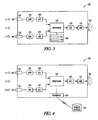
- Processor 120 is adapted for access to memory 250. It is understood that in various embodiments the memory 250 is physically included in processor 120. In some embodiments, as demonstrated by FIG. 3 , memory 250 is accessible by processor 120, but on a separate chip. In some embodiments, as demonstrated by FIG. 4 , memory 250 can exist in forms that are resident in the device 100 and forms that are transmitted to another device 412 for storage. In this embodiment, telemetry interface 410 is capable of sending data wirelessly to the remote storage 412. Protocols for wireless transmissions include, but are not limited to, standard or nonstandard communications.
- standard wireless communications include link protocols including, but not limited to, BluetoothTM, IEEE 802.11 (wireless LANs), 802.15(WPANs), 802.16(WiMAX), 802.20, cellular protocols including, but not limited to CDMA and GSM, ZigBee, and ultra-wideband (UWB) technologies.
- Such protocols support radio frequency communications and some support infrared communications. It is possible that other forms of wireless communications can be used such as ultrasonic, optical, and others.
- the standards which can be used include past and present standards. It is also contemplated that future versions of these standards and new future standards may be employed without departing from the scope of the present subject matter.
- interface 410 is readily adapted for use with existing devices and networks, however, it is understood that in some embodiments nonstandard communications can also be used without departing from the scope of the present subject matter. Wired interfaces are also available in various embodiments. Thus, various embodiments of storage are contemplated herein, and those provided here are not intended to be exclusive or limiting.
- memory 250 includes an actual usage log 251 and a hypothetical usage log 252.
- the actual usage log 251 is a running storage of the modes that device 100 operates in.
- actual usage log 251 includes statistical environmental data stored during use.
- Hypothetical storage log 252 is used to track the modes which device 100 would have entered had those modes been activated during setup of the device.
- hypothetical usage log 252 includes statistical environmental data device 100 would have stored.
- modes which the hypothetical storage log 252 can be applied to include, but are not limited to, directionality modes, environmental modes, gain adjustment modes, power conservation modes, telecoils modes and direction audio input modes.
- the system 100 has storage for actual use parameters and a separate storage for hypothetical usage parameters.
- a plurality of hypothetical use logs can be tracked with the device, so that a plurality of hypothetical parameter settings can be programmed and the hypothetical performance of each setting can be predicted. Such comparison can be done between hypothetical usages and between one or more hypothetical usage and the actual usage.
- U.S. Provisional Application Ser. No. 60/743,481 provides a system for switching between directional and omnidirectional modes of operation.
- the actual usage log 251 can track when mode changes for enable modes and how frequently such mode changes occur.
- the hypothetical usage log 252 can track when modes would have changed had they been enabled, and how frequently such mode changes would have occurred. For example, suppose the device settings restrict operation to omnidirectional mode.
- the actual hypothetical usage log can track how many times the device would have changed to a directional mode, based on the current settings of the device, had that mode been enabled.
- the actual and hypothetical usage logs show the dispenser or audiologist an example of how settings can be adjusted to improve the device operation.
- a comparison between the actual and hypothetical usage logs allows a dispenser or audiologist to recommend device settings for a particular user based on his or her typical environment.
- the actual usage log 251 can track when mode changes for enable modes and how frequently such mode changes occur.
- the hypothetical usage log 252 can track when modes would have changed had they been enabled, and how frequently such mode changes would have occurred.
- a comparison between the actual and hypothetical usage logs allows a dispenser or audiologist to recommend proper enablement of modes for a user based on his or her typical environment.
- the actual usage log can track the number of times the device detected wind noise, machinery noise, one's own speech sound, and other speech sound.
- the hypothetical usage log can track the number of times the device would have detected wind noise, machinery noise, one's own speech sound, and other speech sound, given the hypothetical detection settings.
- the resulting actual and hypothetical usage logs can also be used to determine statistics on the modes based on actual and hypothetical settings. For example, the gain reduction data for wind noise, machinery noise, one's own speech sound, and other speech sound can be averaged to determine actual average gain reduction per source class and hypothetical average gain reduction per source class. The audiologist can adjust the size of gain reduction for each sound class based on the patient's feedback and the actual and hypothetical average gain reduction log. These examples are just some of the possible available statistics that may be used with the actual and hypothetical usage logs.
- a time stamp and/or date stamp may be employed to put a time and/or date on recorded events.
- some embodiments store statistics of actual hearing inputs where appropriate to assist an audiologist or dispenser in diagnosing problems or other actions by the device. For example, it is possible to capture and store input sound level histogram. It is also possible to store the feedback canceller statistics when the device signals an entrainment. Such data are limited only by available storage on the hearing assistance device, which is substantial in some embodiments.
- usage logs may be accessed using a hearing assistance device programmer. Such programming may be done wired or wirelessly. The usage and hypothetical parameters may also be programmed into the hearing assistance device using the device programmer. Such programmers for applications involve hearing aids are available for a variety of programming options.
- the output of the actual usage log and hypothetical usage log may be depicted in a graphical format to a user and may be displayed by the programmer to review behavior of the hearing assistance device. In embodiments recording environmental aspects, such outputs may be made on a graphical device to monitor behavior, for example, as a function of time and/or frequency. Other forms of output, such as tabular output, are provided in various embodiments.
- the presentation methods set forth herein are demonstrative and not intended to be exhaustive or exclusive.
- the outputs could be of many forms, including, shown as an example of a tabular output only, a table such as follows: TABLE 1 - EXAMPLE OF OUTPUTS OF DEVICE USING ACTUAL AND HYPOTHETICAL LOGS USAGE OMNI MODE DIRECTIONAL MODE ACTUAL USAGE 29% 71% HYPOTHETICAL USAGE 15% 85% TABLE 2 - EXAMPLE OF OUTPUTS OF DEVICE USING ACTUAL AND HYPOTHETICAL LOGS USAGE WIND MACHINE OWN SPEECH OTHER ACTUAL % 5% 10% 40% 45% Avg. Gain Reduction -7 dB -15 dB -10 dB -20 dB HYPOTHETICAL% 10% 20% 25% 45% Avg. Gain Reduction -9 dB -10 dB -20 dB -20 dB
- Table 1 shows that the actual usage parameters favor omnidirectional mode than the hypothetical usage parameters.
- Table 2 shows differences in source classifications based on parameters. Also shown is an average gain reduction which is compiled as a statistic based on a time period of interest.
- the processor of the hearing assistance device can perform statistical operations on data from the actual and hypothetical usage logs. It is understood that data from the usage logs may be processed by software executing on a computer to provide statistical analysis of the data. Also, advanced software solutions can suggest parameters for the dispenser/audiologist based on the actual usage log and one or more hypothetical usage logs.
- hearing assistance devices including, but not limited to occluding and non-occluding applications.
- Some types of hearing assistance devices which may benefit from the principles set forth herein include, but are not limited to, behind-the-ear devices, on-the-ear devices, and in-the-ear devices, such as in-the-canal and/or completely-in-the-canal hearing assistance devices. Other applications beyond those listed herein are contemplated as well.
Landscapes
- Health & Medical Sciences (AREA)
- General Health & Medical Sciences (AREA)
- Neurosurgery (AREA)
- Otolaryngology (AREA)
- Physics & Mathematics (AREA)
- Engineering & Computer Science (AREA)
- Acoustics & Sound (AREA)
- Signal Processing (AREA)
- Circuit For Audible Band Transducer (AREA)
- Measurement Of The Respiration, Hearing Ability, Form, And Blood Characteristics Of Living Organisms (AREA)
Description
- This disclosure relates to hearing assistance devices, and more particularly to a system for evaluating hearing assistance device settings using detected sound environment.
- When a user of a hearing assistance device, such as a hearing aid, gets a new device, the dispenser or audiologist can make some educated guesses as to settings based on the user's hearing. Improvements to the settings are possible if the sound environment commonly experienced by the user is known. However, such information takes time to acquire and is not generally immediately known about the user. Different users may be exposed to very different sound environments, and settings may be changed for better performance.
- Some attempts at logging sound environments have been done which can enhance the ability of a dispenser or audiologist to improve device settings. However, advanced, highly programmable hearing assistance devices may provide a number of modes which can provide unpredictable performance depending on the particular hearing assistance device and the environment the device is exposed to.
-
US2004/0190739A discloses logging the effect of adjustment parameters in a hearing device, in which the device stores manual adjustments of the parameters. - What is needed in the art is an improved system for assisting hearing device parameter selection based on the sound environment commonly experienced by a particular user. The system should be straightforward for a dispenser or audiologist to use and should provide support for setting decisions in advanced, highly programmable devices.
- The present subject matter provides a hearing assistance device and a method for hearing assistance devices, and more particularly for evaluating hearing assistance device settings using detected sound environment. In a first aspect, the persent invention provides a hearing assistance device as recited in claim 1. In a second aspect, the present invention provides a method as recited in claim 12. Various examples of a hearing assistance device and method using actual use and hypothetical use logs are provided. Such logs provide a dispenser or audiologist the ability to see how a device is operating with actual settings and how the device would have operated had hypothetical settings been used instead. In various examples, the system allows for collection of statistical information about actual and hypothetical use which can assist in parameter setting determinations for a specific user. The settings may be tailored to that user's commonly experienced sound environment.
- Additional examples of multiple hypothetical usage logs are provided.
- Examples of methods and apparatus for programming hearing assistance devices, accessing the data from the logs, presenting the data, and using the data are provided. Various applications in hearing aids are described.
- This Summary is an overview of some of the teachings of the present application and not intended to be an exclusive or exhaustive treatment of the present subject matter. Further details about the present subject matter are found in the detailed description and appended claims. Other aspects will be apparent to persons skilled in the art upon reading and understanding the following detailed description and viewing the drawings that form a part thereof, each of which are not to be taken in a limiting sense. The scope of the present invention is defined by the appended claims.
-
-
FIG. 1 shows a block diagram of a hearing assistance device, according to one embodiment of the present subject matter. -
FIG. 2 shows a block diagram of demonstrating storage in the processor ofFIG. 1 , according to one embodiment of the present subject matter. -
FIG. 3 shows a block diagram of a hearing assistance device, according to one embodiment of the present subject matter. -
FIG. 4 shows a block diagram of a hearing assistance device, according to one embodiment of the present subject matter. - The following detailed description of the present subject matter refers to subject matter in the accompanying drawings which show, by way of illustration, specific aspects and embodiments in which the present subject matter may be practiced. These embodiments are described in sufficient detail to enable those skilled in the art to practice the present subject matter. References to "an", "one", or "various" embodiments in this disclosure are not necessarily to the same embodiment, and such references contemplate more than one embodiment. The following detailed description is demonstrative and not to be taken in a limiting sense. The scope of the present subject matter is defined by the appended claims, along with the full scope of legal equivalents to which such claims are entitled.
- The present subject matter relates to hearing assistance devices and methods for hearing assistance devices, and more particularly for evaluating hearing assistance device settings using detected sound environment. The method and hearing assistance devices set forth herein are demonstrative of the principles of the invention, and it is understood that other method and apparatus are possible using the principles described herein.
-
FIG. 1 shows a block diagram of a hearing assistance device, according to one embodiment of the present subject matter. In one embodiment,hearing assistance device 100 is a hearing aid. In one embodiment, mic 1 102 is an omnidirectional microphone connected toamplifier 104 which provides signals to analog-to-digital converter 106 ("A/D converter"). The sampled signals are sent toprocessor 120 which processes the digital samples and provides them to the digital-to-analog converter 140 ("D/A converter"). Once the signals are analog, they can be amplified byamplifier 142 and audio sound can be played by receiver 150 (also known as a speaker). AlthoughFIG. 1 shows D/A converter 140 andamplifier 142 andreceiver 150, it is understood that other outputs of the digital information may be provided. For instance, in one embodiment, the digital data is sent to another device configured to receive it. For example, the data may be sent as streaming packets to another device which is compatible with packetized communications. In one embodiment, the digital output is transmitted via digital radio transmissions. In one embodiment, the digital radio transmissions are packetized and adapted to be compatible with a standard. Thus, the present subject matter is demonstrated, but not intended to be limited, by the arrangement ofFIG. 1 . - In one embodiment,
mic 2 103 is a directional microphone connected toamplifier 105 which provides signals to analog-to-digital converter 107 ("A/D converter"). The samples from A/D converter 107 are received byprocessor 120 for processing. In one embodiment,mic 2 103 is another omnidirectional microphone. In such embodiments, directionality is controllable via phasing mic 1 andmic 2. In one embodiment, mic 1 is a directional microphone with an omnidirectional setting. In one embodiment, the gain onmic 2 is reduced so that thesystem 100 is effectively a single microphone system. In one embodiment, (not shown)system 100 only has one microphone. Other variations are possible which are within the principles set forth herein. -
Processor 120 includes modules for execution that will detect environments and make adaptations accordingly as set forth herein. Such processing can be on one or more audio inputs, depending on the function. Thus, even though,FIG. 1 shows two microphones, it is understood that many of the teachings herein can be performed with audio from a single microphone. It is also understood that audio transduces other than microphones can be used in some embodiments. -
FIG. 2 shows a block diagram of demonstrating storage in the processor ofFIG. 1 , according to one embodiment of the present subject matter.Processor 120 is adapted for access tomemory 250. It is understood that in various embodiments thememory 250 is physically included inprocessor 120. In some embodiments, as demonstrated byFIG. 3 ,memory 250 is accessible byprocessor 120, but on a separate chip. In some embodiments, as demonstrated byFIG. 4 ,memory 250 can exist in forms that are resident in thedevice 100 and forms that are transmitted to anotherdevice 412 for storage. In this embodiment, telemetry interface 410 is capable of sending data wirelessly to theremote storage 412. Protocols for wireless transmissions include, but are not limited to, standard or nonstandard communications. Some examples of standard wireless communications include link protocols including, but not limited to, Bluetooth™, IEEE 802.11 (wireless LANs), 802.15(WPANs), 802.16(WiMAX), 802.20, cellular protocols including, but not limited to CDMA and GSM, ZigBee, and ultra-wideband (UWB) technologies. Such protocols support radio frequency communications and some support infrared communications. It is possible that other forms of wireless communications can be used such as ultrasonic, optical, and others. It is understood that the standards which can be used include past and present standards. It is also contemplated that future versions of these standards and new future standards may be employed without departing from the scope of the present subject matter. - The use of standard communications makes interface 410 readily adapted for use with existing devices and networks, however, it is understood that in some embodiments nonstandard communications can also be used without departing from the scope of the present subject matter. Wired interfaces are also available in various embodiments. Thus, various embodiments of storage are contemplated herein, and those provided here are not intended to be exclusive or limiting.
- In various embodiments,
memory 250 includes anactual usage log 251 and ahypothetical usage log 252. Theactual usage log 251 is a running storage of the modes thatdevice 100 operates in. In some embodiments,actual usage log 251 includes statistical environmental data stored during use.Hypothetical storage log 252 is used to track the modes whichdevice 100 would have entered had those modes been activated during setup of the device. In some embodiments,hypothetical usage log 252 includes statisticalenvironmental data device 100 would have stored. Some examples of modes which thehypothetical storage log 252 can be applied to include, but are not limited to, directionality modes, environmental modes, gain adjustment modes, power conservation modes, telecoils modes and direction audio input modes. Thesystem 100 has storage for actual use parameters and a separate storage for hypothetical usage parameters. In various embodiments, a plurality of hypothetical use logs can be tracked with the device, so that a plurality of hypothetical parameter settings can be programmed and the hypothetical performance of each setting can be predicted. Such comparison can be done between hypothetical usages and between one or more hypothetical usage and the actual usage. - For example,
U.S. Provisional Application Ser. No. 60/743,481 , filed even date herewith, provides a system for switching between directional and omnidirectional modes of operation. Theactual usage log 251 can track when mode changes for enable modes and how frequently such mode changes occur. Thehypothetical usage log 252 can track when modes would have changed had they been enabled, and how frequently such mode changes would have occurred. For example, suppose the device settings restrict operation to omnidirectional mode. The actual hypothetical usage log can track how many times the device would have changed to a directional mode, based on the current settings of the device, had that mode been enabled. The actual and hypothetical usage logs show the dispenser or audiologist an example of how settings can be adjusted to improve the device operation. A comparison between the actual and hypothetical usage logs allows a dispenser or audiologist to recommend device settings for a particular user based on his or her typical environment. - In various embodiments, it is possible to change parameters based on the actual and hypothetical use and compare the resulting data logs to see adjust parameter settings for improved operation.
- Another example of use is in
U.S. Application Ser. No. 11,276,793 actual usage log 251 can track when mode changes for enable modes and how frequently such mode changes occur. Thehypothetical usage log 252 can track when modes would have changed had they been enabled, and how frequently such mode changes would have occurred. A comparison between the actual and hypothetical usage logs allows a dispenser or audiologist to recommend proper enablement of modes for a user based on his or her typical environment. In this example, the actual usage log can track the number of times the device detected wind noise, machinery noise, one's own speech sound, and other speech sound. The hypothetical usage log can track the number of times the device would have detected wind noise, machinery noise, one's own speech sound, and other speech sound, given the hypothetical detection settings. - The resulting actual and hypothetical usage logs can also be used to determine statistics on the modes based on actual and hypothetical settings. For example, the gain reduction data for wind noise, machinery noise, one's own speech sound, and other speech sound can be averaged to determine actual average gain reduction per source class and hypothetical average gain reduction per source class. The audiologist can adjust the size of gain reduction for each sound class based on the patient's feedback and the actual and hypothetical average gain reduction log. These examples are just some of the possible available statistics that may be used with the actual and hypothetical usage logs.
- A variety of other information may be stored in the usage logs. For example, a time stamp and/or date stamp may be employed to put a time and/or date on recorded events. Furthermore, some embodiments store statistics of actual hearing inputs where appropriate to assist an audiologist or dispenser in diagnosing problems or other actions by the device. For example, it is possible to capture and store input sound level histogram. It is also possible to store the feedback canceller statistics when the device signals an entrainment. Such data are limited only by available storage on the hearing assistance device, which is substantial in some embodiments.
- It is understood that the usage logs may be accessed using a hearing assistance device programmer. Such programming may be done wired or wirelessly. The usage and hypothetical parameters may also be programmed into the hearing assistance device using the device programmer. Such programmers for applications involve hearing aids are available for a variety of programming options.
- The output of the actual usage log and hypothetical usage log (or plurality of hypothetical usage logs in embodiments employing more than one hypothetical usage log) may be depicted in a graphical format to a user and may be displayed by the programmer to review behavior of the hearing assistance device. In embodiments recording environmental aspects, such outputs may be made on a graphical device to monitor behavior, for example, as a function of time and/or frequency. Other forms of output, such as tabular output, are provided in various embodiments. The presentation methods set forth herein are demonstrative and not intended to be exhaustive or exclusive.
- The outputs could be of many forms, including, shown as an example of a tabular output only, a table such as follows:
TABLE 1 - EXAMPLE OF OUTPUTS OF DEVICE USING ACTUAL AND HYPOTHETICAL LOGS USAGE OMNI MODE DIRECTIONAL MODE ACTUAL USAGE 29% 71% HYPOTHETICAL USAGE 15% 85% TABLE 2 - EXAMPLE OF OUTPUTS OF DEVICE USING ACTUAL AND HYPOTHETICAL LOGS USAGE WIND MACHINE OWN SPEECH OTHER ACTUAL % 5% 10% 40% 45% Avg. Gain Reduction -7 dB -15 dB -10 dB -20 dB HYPOTHETICAL% 10% 20% 25% 45% Avg. Gain Reduction -9 dB -10 dB -20 dB -20 dB - Table 1 shows that the actual usage parameters favor omnidirectional mode than the hypothetical usage parameters. Table 2 shows differences in source classifications based on parameters. Also shown is an average gain reduction which is compiled as a statistic based on a time period of interest. These examples merely demonstrate the flexibility and programmability of the present subject matter and are not intended to be exhaustive or exclusive of the functions supported by the present system.
- In one embodiment, the processor of the hearing assistance device can perform statistical operations on data from the actual and hypothetical usage logs. It is understood that data from the usage logs may be processed by software executing on a computer to provide statistical analysis of the data. Also, advanced software solutions can suggest parameters for the dispenser/audiologist based on the actual usage log and one or more hypothetical usage logs.
- It is further understood that the principles set forth herein can be applied to a variety of hearing assistance devices, including, but not limited to occluding and non-occluding applications. Some types of hearing assistance devices which may benefit from the principles set forth herein include, but are not limited to, behind-the-ear devices, on-the-ear devices, and in-the-ear devices, such as in-the-canal and/or completely-in-the-canal hearing assistance devices. Other applications beyond those listed herein are contemplated as well.
- This application is intended to cover adaptations or variations of the present subject matter. It is to be understood that the above description is intended to be illustrative, and not restrictive. Thus, the scope of the present subject matter is determined by the appended claims.
Claims (17)
- A hearing assistance device (100), comprising:a sound sensor (102) to receive acoustic signals and convert them into electrical signals; an actual parameter storage for actual parameters;a hypothetical parameter storage for hypothetical parameters stored during setup of the hearing assistance device (100);a first storage (251) for an actual usage log, wherein the actual usage log (251) is a running storage of actual modes that the device (100) operates in;a second storage (252) for a hypothetical usage log, wherein the hypothetical usage log (252) is used to track hypothetical modes that the device (100) would have entered had those hypothetical modes been activated during setup of the device (100); anda processor (120) connected to process the electrical signals, the processor (120) being connected and configured to log the actual modes, in which the electrical signals are processed using the actual parameters, to update the actual usage log, and configured to log the hypothetical modes, in which the electrical signals are processed using the hypothetical parameters, to update the hypothetical usage log.
- The hearing assistance device (100) of claim 1, comprising:
an analog-to-digital, A/D, converter (106) connected to convert analog sound signals received by the sound sensor into time domain digital data for processing by the processor. - The hearing assistance device (100) of claim 1 or claim 2, comprising:
a digital-to-analog, D/A, converter (140) connected to receive processed digital data from the processor and convert it to output analog signals. - The hearing assistance device (100) of claim 3, comprising:
a receiver (150) to convert the output analog signals to sound. - The hearing assistance device (100) of any of the preceding claims, comprising:
a second hypothetical parameter storage for storing a second set of hypothetical parameters. - The hearing assistance device (100) of claim 5, comprising:
a third storage for a second hypothetical usage log, and wherein the processor is adapted to update the second hypothetical usage log using the hypothetical storage parameters. - The hearing assistance device (100) of any of the preceding claims, wherein the sound sensor (102) includes a first microphone and further comprising a second microphone (103), the processor (120) adapted for determining omnidirectional and directional modes of operation based on the actual usage parameters, the processor further adapted for updating the hypothetical usage log based on the hypothetical usage parameters.
- The hearing assistance device (100) of any of claims 1 to 6, wherein the sound sensor (102) is a microphone and the processor (120) is a digital signal processor adapted for hearing aid processing.
- The hearing assistance device (100) of claim 8, wherein the digital signal processor (120) includes the actual parameter storage, the hypothetical parameter storage, the first storage, and the second storage.
- The hearing assistance device (100) of claim 9, further comprising a third storage for a second hypothetical usage log, and wherein the processor (120) is adapted to update the second hypothetical usage log using the hypothetical storage parameters.
- The hearing assistance device (100) of claim 8, wherein
the actual usage log is adapted to record actual usage based on one or more actual usage parameters;
the hypothetical usage log is adapted to record hypothetical usage based on one or more hypothetical usage parameters, and
the actual usage and hypothetical usage are retrievable by an inquiry to the hearing aid processor (120). - A method of operating a hearing assistance device (100), the method comprising:logging actual modes that the device (100) operates in, in which electrical signals from a sound sensor (102) are processed using stored actual parameters, and saving an actual usage log (251) of a hearing assistance device (100), wherein the actual usage log (251) is a running storage of the actual modes; andlogging hypothetical modes that the device (100) would have entered had those hypothetical modes been activated during setup of the device (100), in which electrical signals from a sound sensor (102) are processed using hypothetical parameters stored during setup of the hearing assistance device (100), and saving a hypothetical usage log (252) of the hearing assistance device (100), wherein the hypothetical usage log (252) is used to track the hypothetical modes.
- The method of claim 12, comprising:comparing the actual usage log and the hypothetical usage log; andchanging one or more actual parameters based on the comparing.
- The method of claim 12 or claim 13, comprising:
saving a second set of hypothetical usage log to the hearing assistance device. - The method of claim 14, comprising:after a time of operation, reviewing a second hypothetical usage log; andcomparing the second hypothetical usage log to the actual usage log.
- The method of claim 15, comprising:
comparing the second hypothetical usage log to the hypothetical usage log. - The method of claim 15 or claim 16, comprising:
changing one or more actual parameters based on the comparing.
Applications Claiming Priority (1)
| Application Number | Priority Date | Filing Date | Title |
|---|---|---|---|
| US11/276,795 US7986790B2 (en) | 2006-03-14 | 2006-03-14 | System for evaluating hearing assistance device settings using detected sound environment |
Publications (3)
| Publication Number | Publication Date |
|---|---|
| EP1835784A1 EP1835784A1 (en) | 2007-09-19 |
| EP1835784B1 EP1835784B1 (en) | 2017-08-02 |
| EP1835784B2 true EP1835784B2 (en) | 2020-12-23 |
Family
ID=37964816
Family Applications (1)
| Application Number | Title | Priority Date | Filing Date |
|---|---|---|---|
| EP07250920.1A Active EP1835784B2 (en) | 2006-03-14 | 2007-03-06 | System for evaluating hearing assistance device settings using detected sound environment |
Country Status (4)
| Country | Link |
|---|---|
| US (2) | US7986790B2 (en) |
| EP (1) | EP1835784B2 (en) |
| CA (1) | CA2581641A1 (en) |
| DK (1) | DK1835784T4 (en) |
Families Citing this family (27)
| Publication number | Priority date | Publication date | Assignee | Title |
|---|---|---|---|---|
| US7650004B2 (en) * | 2001-11-15 | 2010-01-19 | Starkey Laboratories, Inc. | Hearing aids and methods and apparatus for audio fitting thereof |
| EP1994791B1 (en) | 2006-03-03 | 2015-04-15 | GN Resound A/S | Automatic switching between omnidirectional and directional microphone modes in a hearing aid |
| US8494193B2 (en) * | 2006-03-14 | 2013-07-23 | Starkey Laboratories, Inc. | Environment detection and adaptation in hearing assistance devices |
| US8068627B2 (en) | 2006-03-14 | 2011-11-29 | Starkey Laboratories, Inc. | System for automatic reception enhancement of hearing assistance devices |
| US7986790B2 (en) | 2006-03-14 | 2011-07-26 | Starkey Laboratories, Inc. | System for evaluating hearing assistance device settings using detected sound environment |
| DK2080408T3 (en) * | 2006-10-23 | 2012-11-19 | Starkey Lab Inc | AVOIDING CUTTING WITH AN AUTO-REGRESSIVE FILTER |
| US8718288B2 (en) * | 2007-12-14 | 2014-05-06 | Starkey Laboratories, Inc. | System for customizing hearing assistance devices |
| US8571244B2 (en) * | 2008-03-25 | 2013-10-29 | Starkey Laboratories, Inc. | Apparatus and method for dynamic detection and attenuation of periodic acoustic feedback |
| WO2009124550A1 (en) * | 2008-04-10 | 2009-10-15 | Gn Resound A/S | An audio system with feedback cancellation |
| WO2010092566A1 (en) * | 2009-02-02 | 2010-08-19 | Carmel - Haifa University Economic Corp Ltd. | Auditory diagnosis and training system apparatus and method |
| US8359283B2 (en) * | 2009-08-31 | 2013-01-22 | Starkey Laboratories, Inc. | Genetic algorithms with robust rank estimation for hearing assistance devices |
| US9729976B2 (en) | 2009-12-22 | 2017-08-08 | Starkey Laboratories, Inc. | Acoustic feedback event monitoring system for hearing assistance devices |
| US8737654B2 (en) | 2010-04-12 | 2014-05-27 | Starkey Laboratories, Inc. | Methods and apparatus for improved noise reduction for hearing assistance devices |
| US8942398B2 (en) | 2010-04-13 | 2015-01-27 | Starkey Laboratories, Inc. | Methods and apparatus for early audio feedback cancellation for hearing assistance devices |
| US9654885B2 (en) | 2010-04-13 | 2017-05-16 | Starkey Laboratories, Inc. | Methods and apparatus for allocating feedback cancellation resources for hearing assistance devices |
| CN102158470B (en) * | 2011-01-30 | 2013-10-16 | 韦峻峰 | Acoustic signal processing system for mobile portable device and processing method thereof |
| US8958586B2 (en) | 2012-12-21 | 2015-02-17 | Starkey Laboratories, Inc. | Sound environment classification by coordinated sensing using hearing assistance devices |
| KR102037412B1 (en) * | 2013-01-31 | 2019-11-26 | 삼성전자주식회사 | Method for fitting hearing aid connected to Mobile terminal and Mobile terminal performing thereof |
| KR101490336B1 (en) * | 2013-04-24 | 2015-02-05 | 주식회사 바이오사운드랩 | Method for Fitting Hearing Aid Customized to a Specific Circumstance of a User and Storage Medium for the Same |
| US9814879B2 (en) | 2013-05-13 | 2017-11-14 | Cochlear Limited | Method and system for use of hearing prosthesis for linguistic evaluation |
| US20140369535A1 (en) | 2013-06-14 | 2014-12-18 | Starkey Laboratories, Inc. | Method and apparatus for advertisement supported hearing assistance device |
| WO2016079648A1 (en) | 2014-11-18 | 2016-05-26 | Cochlear Limited | Hearing prosthesis efficacy altering and/or forecasting techniques |
| US10375492B2 (en) | 2015-06-30 | 2019-08-06 | Sonova, AG | Method of fitting a hearing assistance device |
| US10348891B2 (en) * | 2015-09-06 | 2019-07-09 | Deborah M. Manchester | System for real time, remote access to and adjustment of patient hearing aid with patient in normal life environment |
| US11253193B2 (en) | 2016-11-08 | 2022-02-22 | Cochlear Limited | Utilization of vocal acoustic biomarkers for assistive listening device utilization |
| US10284969B2 (en) | 2017-02-09 | 2019-05-07 | Starkey Laboratories, Inc. | Hearing device incorporating dynamic microphone attenuation during streaming |
| EP4164249A1 (en) * | 2021-10-07 | 2023-04-12 | Starkey Laboratories, Inc. | Artifact detection and logging for tuning of feedback canceller |
Citations (3)
| Publication number | Priority date | Publication date | Assignee | Title |
|---|---|---|---|---|
| US4972487A (en) † | 1988-03-30 | 1990-11-20 | Diphon Development Ab | Auditory prosthesis with datalogging capability |
| WO2001054456A1 (en) † | 2000-01-21 | 2001-07-26 | Oticon A/S | Method for improving the fitting of hearing aids and device for implementing the method |
| US20040066944A1 (en) † | 2002-05-30 | 2004-04-08 | Gn Resound As | Data logging method for hearing prosthesis |
Family Cites Families (85)
| Publication number | Priority date | Publication date | Assignee | Title |
|---|---|---|---|---|
| US5506682A (en) | 1982-02-16 | 1996-04-09 | Sensor Adaptive Machines Inc. | Robot vision using targets |
| US4548082A (en) | 1984-08-28 | 1985-10-22 | Central Institute For The Deaf | Hearing aids, signal supplying apparatus, systems for compensating hearing deficiencies, and methods |
| US4731850A (en) | 1986-06-26 | 1988-03-15 | Audimax, Inc. | Programmable digital hearing aid system |
| US4972482A (en) | 1987-09-18 | 1990-11-20 | Sanyo Electric Co., Ltd. | Fm stereo demodulator |
| DE68920060T2 (en) * | 1988-03-30 | 1995-09-14 | 3M Hearing Health Ab | Ear prosthesis with data acquisition options. |
| US4953112A (en) | 1988-05-10 | 1990-08-28 | Minnesota Mining And Manufacturing Company | Method and apparatus for determining acoustic parameters of an auditory prosthesis using software model |
| US4989251A (en) | 1988-05-10 | 1991-01-29 | Diaphon Development Ab | Hearing aid programming interface and method |
| US5226086A (en) | 1990-05-18 | 1993-07-06 | Minnesota Mining And Manufacturing Company | Method, apparatus, system and interface unit for programming a hearing aid |
| US5706352A (en) | 1993-04-07 | 1998-01-06 | K/S Himpp | Adaptive gain and filtering circuit for a sound reproduction system |
| DK0674462T3 (en) | 1994-03-23 | 2002-12-16 | Siemens Audiologische Technik | Device for fitting programmable hearing aids |
| DK0681411T3 (en) * | 1994-05-06 | 2003-05-19 | Siemens Audiologische Technik | Programmable hearing aid |
| US8085959B2 (en) | 1994-07-08 | 2011-12-27 | Brigham Young University | Hearing compensation system incorporating signal processing techniques |
| US6885752B1 (en) | 1994-07-08 | 2005-04-26 | Brigham Young University | Hearing aid device incorporating signal processing techniques |
| DE59410236D1 (en) | 1994-11-10 | 2003-03-06 | Siemens Audiologische Technik | Programmable hearing aid |
| US5687279A (en) | 1994-12-23 | 1997-11-11 | Intel Corporation | Retro-storing analog information in a digital storage circuit |
| US6118877A (en) | 1995-10-12 | 2000-09-12 | Audiologic, Inc. | Hearing aid with in situ testing capability |
| EP0798947A1 (en) | 1996-03-27 | 1997-10-01 | Siemens Audiologische Technik GmbH | Method and circuit for data processing, in particular for signal data in a digital progammable hearing aid |
| US5991419A (en) | 1997-04-29 | 1999-11-23 | Beltone Electronics Corporation | Bilateral signal processing prosthesis |
| US6718301B1 (en) | 1998-11-11 | 2004-04-06 | Starkey Laboratories, Inc. | System for measuring speech content in sound |
| DK199900017A (en) | 1999-01-08 | 2000-07-09 | Gn Resound As | Timed hearing aid |
| US6782361B1 (en) | 1999-06-18 | 2004-08-24 | Mcgill University | Method and apparatus for providing background acoustic noise during a discontinued/reduced rate transmission mode of a voice transmission system |
| EP1111773B1 (en) | 1999-06-29 | 2004-09-22 | Mitsubishi Denki Kabushiki Kaisha | Semiconductor circuit |
| DE59906049D1 (en) | 1999-07-29 | 2003-07-24 | Phonak Ag Staefa | SYSTEM FOR ADJUSTING AT LEAST ONE HEARING AID |
| US6480610B1 (en) | 1999-09-21 | 2002-11-12 | Sonic Innovations, Inc. | Subband acoustic feedback cancellation in hearing aids |
| EP1252799B2 (en) | 2000-01-20 | 2022-11-02 | Starkey Laboratories, Inc. | Method and apparatus for fitting hearing aids |
| US6850775B1 (en) | 2000-02-18 | 2005-02-01 | Phonak Ag | Fitting-anlage |
| DE60120949T2 (en) | 2000-04-04 | 2007-07-12 | Gn Resound A/S | A HEARING PROSTHESIS WITH AUTOMATIC HEARING CLASSIFICATION |
| IT1317971B1 (en) | 2000-06-16 | 2003-07-21 | Amplifon Spa | EQUIPMENT TO SUPPORT THE REHABILITATION OF COMMUNICATION DEFICIT AND METHOD FOR CALIBRATION OF HEARING AIDS. |
| US7130437B2 (en) | 2000-06-29 | 2006-10-31 | Beltone Electronics Corporation | Compressible hearing aid |
| DE10031832C2 (en) * | 2000-06-30 | 2003-04-30 | Cochlear Ltd | Hearing aid for the rehabilitation of a hearing disorder |
| JP3661768B2 (en) * | 2000-10-04 | 2005-06-22 | インターナショナル・ビジネス・マシーンズ・コーポレーション | Audio equipment and computer equipment |
| EP2317780B1 (en) | 2000-11-14 | 2016-12-28 | GN Resound A/S | A hearing aid with error protected data storage |
| US6895098B2 (en) | 2001-01-05 | 2005-05-17 | Phonak Ag | Method for operating a hearing device, and hearing device |
| CA2341834C (en) | 2001-03-21 | 2010-10-26 | Unitron Industries Ltd. | Apparatus and method for adaptive signal characterization and noise reduction in hearing aids and other audio devices |
| US6879692B2 (en) | 2001-07-09 | 2005-04-12 | Widex A/S | Hearing aid with a self-test capability |
| US7650004B2 (en) * | 2001-11-15 | 2010-01-19 | Starkey Laboratories, Inc. | Hearing aids and methods and apparatus for audio fitting thereof |
| US7158931B2 (en) | 2002-01-28 | 2007-01-02 | Phonak Ag | Method for identifying a momentary acoustic scene, use of the method and hearing device |
| EP1470735B1 (en) | 2002-01-28 | 2019-08-21 | Sonova AG | Method for determining an acoustic environment situation, application of the method and hearing aid |
| AUPS247002A0 (en) | 2002-05-21 | 2002-06-13 | Hearworks Pty Ltd | Programmable auditory prosthesis with trainable automatic adaptation to acoustic conditions |
| US7889879B2 (en) * | 2002-05-21 | 2011-02-15 | Cochlear Limited | Programmable auditory prosthesis with trainable automatic adaptation to acoustic conditions |
| US7243063B2 (en) | 2002-07-17 | 2007-07-10 | Mitsubishi Electric Research Laboratories, Inc. | Classifier-based non-linear projection for continuous speech segmentation |
| US7454331B2 (en) | 2002-08-30 | 2008-11-18 | Dolby Laboratories Licensing Corporation | Controlling loudness of speech in signals that contain speech and other types of audio material |
| KR20050115857A (en) | 2002-12-11 | 2005-12-08 | 소프트맥스 인코퍼레이티드 | System and method for speech processing using independent component analysis under stability constraints |
| US7499559B2 (en) * | 2002-12-18 | 2009-03-03 | Bernafon Ag | Hearing device and method for choosing a program in a multi program hearing device |
| EP1414271B1 (en) | 2003-03-25 | 2013-06-26 | Phonak Ag | Method for recording of information in a hearing aid and such a hearing aid |
| DE20304873U1 (en) * | 2003-03-25 | 2004-08-05 | Karl Otto Platz Consulting E.K. | mirror |
| US7349549B2 (en) * | 2003-03-25 | 2008-03-25 | Phonak Ag | Method to log data in a hearing device as well as a hearing device |
| US7428312B2 (en) * | 2003-03-27 | 2008-09-23 | Phonak Ag | Method for adapting a hearing device to a momentary acoustic situation and a hearing device system |
| US7430299B2 (en) | 2003-04-10 | 2008-09-30 | Sound Design Technologies, Ltd. | System and method for transmitting audio via a serial data port in a hearing instrument |
| US20070009123A1 (en) | 2003-04-30 | 2007-01-11 | Stefan Aschoff | Remote control unit for a hearing aid |
| CN108882136B (en) | 2003-06-24 | 2020-05-15 | Gn瑞声达A/S | Binaural hearing aid system with coordinated sound processing |
| US20070276285A1 (en) | 2003-06-24 | 2007-11-29 | Mark Burrows | System and Method for Customized Training to Understand Human Speech Correctly with a Hearing Aid Device |
| CN1817008A (en) * | 2003-07-04 | 2006-08-09 | 皇家飞利浦电子股份有限公司 | System for, responsive to detection, acoustically signalling desired nearby devices and services on a wireless network |
| EP1654904A4 (en) * | 2003-08-01 | 2008-05-28 | Univ Florida | OPTIMIZATION WITH VOICE CONTROL OF DIGITAL AUDIO DEVICES |
| CA2452945C (en) | 2003-09-23 | 2016-05-10 | Mcmaster University | Binaural adaptive hearing system |
| US6912289B2 (en) | 2003-10-09 | 2005-06-28 | Unitron Hearing Ltd. | Hearing aid and processes for adaptively processing signals therein |
| CH705543B1 (en) | 2003-12-01 | 2013-03-28 | Audiocare Ag | A process for the fitting of hearing aids. |
| US20070020299A1 (en) * | 2003-12-31 | 2007-01-25 | Pipkin James D | Inhalant formulation containing sulfoalkyl ether cyclodextrin and corticosteroid |
| US8077889B2 (en) | 2004-01-27 | 2011-12-13 | Phonak Ag | Method to log data in a hearing device as well as a hearing device |
| US20070299671A1 (en) | 2004-03-31 | 2007-12-27 | Ruchika Kapur | Method and apparatus for analysing sound- converting sound into information |
| AU2005100274A4 (en) | 2004-03-31 | 2005-06-23 | Kapur, Ruchika Ms | Method and apparatus for analyising sound |
| WO2006041738A2 (en) | 2004-10-04 | 2006-04-20 | Cyberkinetics Neurotechnology Systems, Inc. | Biological interface system |
| ATE404033T1 (en) * | 2005-01-17 | 2008-08-15 | Widex As | DEVICE AND METHOD FOR OPERATING A HEARING AID |
| AU2005329326B2 (en) | 2005-03-18 | 2009-07-30 | Widex A/S | Remote control system for a hearing aid |
| DK2986033T3 (en) | 2005-03-29 | 2020-11-23 | Oticon As | HEARING DEVICE FOR REGISTERING DATA AND LEARNING FROM THERE |
| US7729501B2 (en) | 2005-04-08 | 2010-06-01 | Phonak Ag | Hearing device with anti-theft protection |
| DE102005034380B3 (en) | 2005-07-22 | 2006-12-21 | Siemens Audiologische Technik Gmbh | Hearing aid for auditory canal of e.g. baby, has status report unit to compare signal with reference such that information with report about seating of aid is determined and output device to output information to sending/receiving unit |
| US20080267761A1 (en) | 2005-08-11 | 2008-10-30 | Packaging Progressions, Inc. | Interleaver Stacker and Loading System |
| US20070041589A1 (en) | 2005-08-17 | 2007-02-22 | Gennum Corporation | System and method for providing environmental specific noise reduction algorithms |
| US7590530B2 (en) | 2005-09-03 | 2009-09-15 | Gn Resound A/S | Method and apparatus for improved estimation of non-stationary noise for speech enhancement |
| EP1624719A3 (en) | 2005-09-13 | 2006-04-12 | Phonak Ag | Method to determine a feedback threshold in a hearing device |
| CN101310562A (en) * | 2005-10-18 | 2008-11-19 | 唯听助听器公司 | Hearing aid including data logger and method of operating same |
| US7773943B2 (en) * | 2005-11-04 | 2010-08-10 | Motorola, Inc. | Hearing aid compatibility mode switching for a mobile station |
| US8265765B2 (en) | 2005-12-08 | 2012-09-11 | Cochlear Limited | Multimodal auditory fitting |
| US7986790B2 (en) | 2006-03-14 | 2011-07-26 | Starkey Laboratories, Inc. | System for evaluating hearing assistance device settings using detected sound environment |
| US8494193B2 (en) | 2006-03-14 | 2013-07-23 | Starkey Laboratories, Inc. | Environment detection and adaptation in hearing assistance devices |
| US8068627B2 (en) | 2006-03-14 | 2011-11-29 | Starkey Laboratories, Inc. | System for automatic reception enhancement of hearing assistance devices |
| US7869606B2 (en) | 2006-03-29 | 2011-01-11 | Phonak Ag | Automatically modifiable hearing aid |
| JP4860748B2 (en) * | 2006-03-31 | 2012-01-25 | ヴェーデクス・アクティーセルスカプ | Hearing aid fitting method, hearing aid fitting system, and hearing aid |
| US7970146B2 (en) | 2006-07-20 | 2011-06-28 | Phonak Ag | Learning by provocation |
| EP2055141B1 (en) * | 2006-08-08 | 2010-10-06 | Phonak AG | Methods and apparatuses related to hearing devices, in particular to maintaining hearing devices and to dispensing consumables therefore |
| EP2215857B1 (en) | 2007-11-29 | 2019-11-13 | Widex A/S | Hearing aid and a method of managing a logging device |
| US8718288B2 (en) | 2007-12-14 | 2014-05-06 | Starkey Laboratories, Inc. | System for customizing hearing assistance devices |
| US8143620B1 (en) | 2007-12-21 | 2012-03-27 | Audience, Inc. | System and method for adaptive classification of audio sources |
| WO2009124550A1 (en) | 2008-04-10 | 2009-10-15 | Gn Resound A/S | An audio system with feedback cancellation |
-
2006
- 2006-03-14 US US11/276,795 patent/US7986790B2/en not_active Expired - Fee Related
-
2007
- 2007-03-06 EP EP07250920.1A patent/EP1835784B2/en active Active
- 2007-03-06 DK DK07250920.1T patent/DK1835784T4/en active
- 2007-03-13 CA CA002581641A patent/CA2581641A1/en not_active Abandoned
-
2011
- 2011-07-25 US US13/189,990 patent/US8638949B2/en not_active Expired - Fee Related
Patent Citations (3)
| Publication number | Priority date | Publication date | Assignee | Title |
|---|---|---|---|---|
| US4972487A (en) † | 1988-03-30 | 1990-11-20 | Diphon Development Ab | Auditory prosthesis with datalogging capability |
| WO2001054456A1 (en) † | 2000-01-21 | 2001-07-26 | Oticon A/S | Method for improving the fitting of hearing aids and device for implementing the method |
| US20040066944A1 (en) † | 2002-05-30 | 2004-04-08 | Gn Resound As | Data logging method for hearing prosthesis |
Non-Patent Citations (1)
| Title |
|---|
| THOMAS LUNNER, JOHAN HELLGREN, STIG ARLINGER, CLAUS ELBERLING: "A digital filterbank hearing aid: Predicting user preference and performance for two signal processing algorithms", EAR & HEARING, vol. 18, no. 1, February 1997 (1997-02-01), pages 12 - 25 † |
Also Published As
| Publication number | Publication date |
|---|---|
| EP1835784B1 (en) | 2017-08-02 |
| DK1835784T3 (en) | 2017-11-13 |
| US7986790B2 (en) | 2011-07-26 |
| EP1835784A1 (en) | 2007-09-19 |
| CA2581641A1 (en) | 2007-09-14 |
| DK1835784T4 (en) | 2021-03-08 |
| US20070217620A1 (en) | 2007-09-20 |
| US20120155664A1 (en) | 2012-06-21 |
| US8638949B2 (en) | 2014-01-28 |
Similar Documents
| Publication | Publication Date | Title |
|---|---|---|
| EP1835784B1 (en) | System for evaluating hearing assistance device settings using detected sound environment | |
| US12047750B2 (en) | Hearing device with user driven settings adjustment | |
| USRE47063E1 (en) | Hearing aid, computing device, and method for selecting a hearing aid profile | |
| EP2071875B2 (en) | System for customizing hearing assistance devices | |
| US9124994B2 (en) | System for programming special function buttons for hearing assistance device applications | |
| US8965016B1 (en) | Automatic hearing aid adaptation over time via mobile application | |
| EP2375787B1 (en) | Method and apparatus for improved noise reduction for hearing assistance devices | |
| US10484804B2 (en) | Hearing assistance device ear-to-ear communication using an intermediate device | |
| US9774961B2 (en) | Hearing assistance device ear-to-ear communication using an intermediate device | |
| EP3155827B1 (en) | Method for evaluating an individual hearing benefit of a hearing device feature and for fitting a hearing device | |
| US20180027341A1 (en) | Acoustic feedback event monitoring system for hearing assistance devices | |
| US20170257711A1 (en) | Configuration of Hearing Prosthesis Sound Processor Based on Control Signal Characterization of Audio | |
| US20170230759A1 (en) | Wireless environment interference diagnostic hearing assistance device system | |
| US12335688B2 (en) | Artifact detection and logging for tuning of feedback canceller | |
| US20100316227A1 (en) | Method for determining a frequency response of a hearing apparatus and associated hearing apparatus | |
| US20130158691A1 (en) | Voice recorder for use with a hearing device | |
| US20250030990A1 (en) | Telecoil predicted repeating system interference canceller | |
| KR101817774B1 (en) | A Hearing Aid Having a Structure of Regulating a Input Signal |
Legal Events
| Date | Code | Title | Description |
|---|---|---|---|
| PUAI | Public reference made under article 153(3) epc to a published international application that has entered the european phase |
Free format text: ORIGINAL CODE: 0009012 |
|
| AK | Designated contracting states |
Kind code of ref document: A1 Designated state(s): AT BE BG CH CY CZ DE DK EE ES FI FR GB GR HU IE IS IT LI LT LU LV MC MT NL PL PT RO SE SI SK TR |
|
| AX | Request for extension of the european patent |
Extension state: AL BA HR MK YU |
|
| 17P | Request for examination filed |
Effective date: 20080312 |
|
| AKX | Designation fees paid |
Designated state(s): AT BE BG CH CY CZ DE DK EE ES FI FR GB GR HU IE IS IT LI LT LU LV MC MT NL PL PT RO SE SI SK TR |
|
| 17Q | First examination report despatched |
Effective date: 20110927 |
|
| STAA | Information on the status of an ep patent application or granted ep patent |
Free format text: STATUS: EXAMINATION IS IN PROGRESS |
|
| GRAP | Despatch of communication of intention to grant a patent |
Free format text: ORIGINAL CODE: EPIDOSNIGR1 |
|
| STAA | Information on the status of an ep patent application or granted ep patent |
Free format text: STATUS: GRANT OF PATENT IS INTENDED |
|
| INTG | Intention to grant announced |
Effective date: 20170213 |
|
| GRAS | Grant fee paid |
Free format text: ORIGINAL CODE: EPIDOSNIGR3 |
|
| GRAA | (expected) grant |
Free format text: ORIGINAL CODE: 0009210 |
|
| STAA | Information on the status of an ep patent application or granted ep patent |
Free format text: STATUS: THE PATENT HAS BEEN GRANTED |
|
| AK | Designated contracting states |
Kind code of ref document: B1 Designated state(s): AT BE BG CH CY CZ DE DK EE ES FI FR GB GR HU IE IS IT LI LT LU LV MC MT NL PL PT RO SE SI SK TR |
|
| REG | Reference to a national code |
Ref country code: GB Ref legal event code: FG4D |
|
| REG | Reference to a national code |
Ref country code: CH Ref legal event code: EP Ref country code: AT Ref legal event code: REF Ref document number: 915659 Country of ref document: AT Kind code of ref document: T Effective date: 20170815 |
|
| REG | Reference to a national code |
Ref country code: IE Ref legal event code: FG4D |
|
| REG | Reference to a national code |
Ref country code: CH Ref legal event code: NV Representative=s name: SERVOPATENT GMBH, CH |
|
| REG | Reference to a national code |
Ref country code: DE Ref legal event code: R096 Ref document number: 602007051812 Country of ref document: DE |
|
| REG | Reference to a national code |
Ref country code: DK Ref legal event code: T3 Effective date: 20171107 |
|
| REG | Reference to a national code |
Ref country code: NL Ref legal event code: MP Effective date: 20170802 |
|
| REG | Reference to a national code |
Ref country code: AT Ref legal event code: MK05 Ref document number: 915659 Country of ref document: AT Kind code of ref document: T Effective date: 20170802 |
|
| REG | Reference to a national code |
Ref country code: LT Ref legal event code: MG4D |
|
| PG25 | Lapsed in a contracting state [announced via postgrant information from national office to epo] |
Ref country code: FI Free format text: LAPSE BECAUSE OF FAILURE TO SUBMIT A TRANSLATION OF THE DESCRIPTION OR TO PAY THE FEE WITHIN THE PRESCRIBED TIME-LIMIT Effective date: 20170802 Ref country code: SE Free format text: LAPSE BECAUSE OF FAILURE TO SUBMIT A TRANSLATION OF THE DESCRIPTION OR TO PAY THE FEE WITHIN THE PRESCRIBED TIME-LIMIT Effective date: 20170802 Ref country code: LT Free format text: LAPSE BECAUSE OF FAILURE TO SUBMIT A TRANSLATION OF THE DESCRIPTION OR TO PAY THE FEE WITHIN THE PRESCRIBED TIME-LIMIT Effective date: 20170802 Ref country code: NL Free format text: LAPSE BECAUSE OF FAILURE TO SUBMIT A TRANSLATION OF THE DESCRIPTION OR TO PAY THE FEE WITHIN THE PRESCRIBED TIME-LIMIT Effective date: 20170802 Ref country code: AT Free format text: LAPSE BECAUSE OF FAILURE TO SUBMIT A TRANSLATION OF THE DESCRIPTION OR TO PAY THE FEE WITHIN THE PRESCRIBED TIME-LIMIT Effective date: 20170802 |
|
| PG25 | Lapsed in a contracting state [announced via postgrant information from national office to epo] |
Ref country code: ES Free format text: LAPSE BECAUSE OF FAILURE TO SUBMIT A TRANSLATION OF THE DESCRIPTION OR TO PAY THE FEE WITHIN THE PRESCRIBED TIME-LIMIT Effective date: 20170802 Ref country code: BG Free format text: LAPSE BECAUSE OF FAILURE TO SUBMIT A TRANSLATION OF THE DESCRIPTION OR TO PAY THE FEE WITHIN THE PRESCRIBED TIME-LIMIT Effective date: 20171102 Ref country code: IS Free format text: LAPSE BECAUSE OF FAILURE TO SUBMIT A TRANSLATION OF THE DESCRIPTION OR TO PAY THE FEE WITHIN THE PRESCRIBED TIME-LIMIT Effective date: 20171202 Ref country code: PL Free format text: LAPSE BECAUSE OF FAILURE TO SUBMIT A TRANSLATION OF THE DESCRIPTION OR TO PAY THE FEE WITHIN THE PRESCRIBED TIME-LIMIT Effective date: 20170802 Ref country code: LV Free format text: LAPSE BECAUSE OF FAILURE TO SUBMIT A TRANSLATION OF THE DESCRIPTION OR TO PAY THE FEE WITHIN THE PRESCRIBED TIME-LIMIT Effective date: 20170802 Ref country code: GR Free format text: LAPSE BECAUSE OF FAILURE TO SUBMIT A TRANSLATION OF THE DESCRIPTION OR TO PAY THE FEE WITHIN THE PRESCRIBED TIME-LIMIT Effective date: 20171103 |
|
| PG25 | Lapsed in a contracting state [announced via postgrant information from national office to epo] |
Ref country code: CZ Free format text: LAPSE BECAUSE OF FAILURE TO SUBMIT A TRANSLATION OF THE DESCRIPTION OR TO PAY THE FEE WITHIN THE PRESCRIBED TIME-LIMIT Effective date: 20170802 Ref country code: RO Free format text: LAPSE BECAUSE OF FAILURE TO SUBMIT A TRANSLATION OF THE DESCRIPTION OR TO PAY THE FEE WITHIN THE PRESCRIBED TIME-LIMIT Effective date: 20170802 |
|
| REG | Reference to a national code |
Ref country code: DE Ref legal event code: R026 Ref document number: 602007051812 Country of ref document: DE |
|
| PLBI | Opposition filed |
Free format text: ORIGINAL CODE: 0009260 |
|
| PLAX | Notice of opposition and request to file observation + time limit sent |
Free format text: ORIGINAL CODE: EPIDOSNOBS2 |
|
| PG25 | Lapsed in a contracting state [announced via postgrant information from national office to epo] |
Ref country code: SK Free format text: LAPSE BECAUSE OF FAILURE TO SUBMIT A TRANSLATION OF THE DESCRIPTION OR TO PAY THE FEE WITHIN THE PRESCRIBED TIME-LIMIT Effective date: 20170802 Ref country code: IT Free format text: LAPSE BECAUSE OF FAILURE TO SUBMIT A TRANSLATION OF THE DESCRIPTION OR TO PAY THE FEE WITHIN THE PRESCRIBED TIME-LIMIT Effective date: 20170802 Ref country code: EE Free format text: LAPSE BECAUSE OF FAILURE TO SUBMIT A TRANSLATION OF THE DESCRIPTION OR TO PAY THE FEE WITHIN THE PRESCRIBED TIME-LIMIT Effective date: 20170802 |
|
| 26 | Opposition filed |
Opponent name: GN HEARING A/S / WIDEX A/S / OTICON A/S Effective date: 20180502 |
|
| PG25 | Lapsed in a contracting state [announced via postgrant information from national office to epo] |
Ref country code: SI Free format text: LAPSE BECAUSE OF FAILURE TO SUBMIT A TRANSLATION OF THE DESCRIPTION OR TO PAY THE FEE WITHIN THE PRESCRIBED TIME-LIMIT Effective date: 20170802 |
|
| PLBB | Reply of patent proprietor to notice(s) of opposition received |
Free format text: ORIGINAL CODE: EPIDOSNOBS3 |
|
| GBPC | Gb: european patent ceased through non-payment of renewal fee |
Effective date: 20180306 |
|
| PG25 | Lapsed in a contracting state [announced via postgrant information from national office to epo] |
Ref country code: MC Free format text: LAPSE BECAUSE OF FAILURE TO SUBMIT A TRANSLATION OF THE DESCRIPTION OR TO PAY THE FEE WITHIN THE PRESCRIBED TIME-LIMIT Effective date: 20170802 |
|
| REG | Reference to a national code |
Ref country code: BE Ref legal event code: MM Effective date: 20180331 |
|
| REG | Reference to a national code |
Ref country code: IE Ref legal event code: MM4A |
|
| PG25 | Lapsed in a contracting state [announced via postgrant information from national office to epo] |
Ref country code: LU Free format text: LAPSE BECAUSE OF NON-PAYMENT OF DUE FEES Effective date: 20180306 |
|
| PG25 | Lapsed in a contracting state [announced via postgrant information from national office to epo] |
Ref country code: IE Free format text: LAPSE BECAUSE OF NON-PAYMENT OF DUE FEES Effective date: 20180306 |
|
| PG25 | Lapsed in a contracting state [announced via postgrant information from national office to epo] |
Ref country code: BE Free format text: LAPSE BECAUSE OF NON-PAYMENT OF DUE FEES Effective date: 20180331 Ref country code: GB Free format text: LAPSE BECAUSE OF NON-PAYMENT OF DUE FEES Effective date: 20180306 |
|
| PG25 | Lapsed in a contracting state [announced via postgrant information from national office to epo] |
Ref country code: FR Free format text: LAPSE BECAUSE OF NON-PAYMENT OF DUE FEES Effective date: 20180331 |
|
| PG25 | Lapsed in a contracting state [announced via postgrant information from national office to epo] |
Ref country code: MT Free format text: LAPSE BECAUSE OF NON-PAYMENT OF DUE FEES Effective date: 20180306 |
|
| PG25 | Lapsed in a contracting state [announced via postgrant information from national office to epo] |
Ref country code: TR Free format text: LAPSE BECAUSE OF FAILURE TO SUBMIT A TRANSLATION OF THE DESCRIPTION OR TO PAY THE FEE WITHIN THE PRESCRIBED TIME-LIMIT Effective date: 20170802 |
|
| APBM | Appeal reference recorded |
Free format text: ORIGINAL CODE: EPIDOSNREFNO |
|
| APBP | Date of receipt of notice of appeal recorded |
Free format text: ORIGINAL CODE: EPIDOSNNOA2O |
|
| APAH | Appeal reference modified |
Free format text: ORIGINAL CODE: EPIDOSCREFNO |
|
| APBM | Appeal reference recorded |
Free format text: ORIGINAL CODE: EPIDOSNREFNO |
|
| APBP | Date of receipt of notice of appeal recorded |
Free format text: ORIGINAL CODE: EPIDOSNNOA2O |
|
| PG25 | Lapsed in a contracting state [announced via postgrant information from national office to epo] |
Ref country code: PT Free format text: LAPSE BECAUSE OF FAILURE TO SUBMIT A TRANSLATION OF THE DESCRIPTION OR TO PAY THE FEE WITHIN THE PRESCRIBED TIME-LIMIT Effective date: 20170802 Ref country code: HU Free format text: LAPSE BECAUSE OF FAILURE TO SUBMIT A TRANSLATION OF THE DESCRIPTION OR TO PAY THE FEE WITHIN THE PRESCRIBED TIME-LIMIT; INVALID AB INITIO Effective date: 20070306 |
|
| REG | Reference to a national code |
Ref country code: CH Ref legal event code: PCAR Free format text: NEW ADDRESS: WANNERSTRASSE 9/1, 8045 ZUERICH (CH) |
|
| PG25 | Lapsed in a contracting state [announced via postgrant information from national office to epo] |
Ref country code: CY Free format text: LAPSE BECAUSE OF FAILURE TO SUBMIT A TRANSLATION OF THE DESCRIPTION OR TO PAY THE FEE WITHIN THE PRESCRIBED TIME-LIMIT Effective date: 20170802 |
|
| APBU | Appeal procedure closed |
Free format text: ORIGINAL CODE: EPIDOSNNOA9O |
|
| PUAH | Patent maintained in amended form |
Free format text: ORIGINAL CODE: 0009272 |
|
| STAA | Information on the status of an ep patent application or granted ep patent |
Free format text: STATUS: PATENT MAINTAINED AS AMENDED |
|
| REG | Reference to a national code |
Ref country code: CH Ref legal event code: AELC |
|
| 27A | Patent maintained in amended form |
Effective date: 20201223 |
|
| AK | Designated contracting states |
Kind code of ref document: B2 Designated state(s): AT BE BG CH CY CZ DE DK EE ES FI FR GB GR HU IE IS IT LI LT LU LV MC MT NL PL PT RO SE SI SK TR |
|
| REG | Reference to a national code |
Ref country code: DE Ref legal event code: R102 Ref document number: 602007051812 Country of ref document: DE |
|
| REG | Reference to a national code |
Ref country code: CH Ref legal event code: NV Representative=s name: VOSSIUS AND PARTNER PATENTANWAELTE RECHTSANWAE, CH |
|
| REG | Reference to a national code |
Ref country code: DK Ref legal event code: T4 Effective date: 20210304 |
|
| PGFP | Annual fee paid to national office [announced via postgrant information from national office to epo] |
Ref country code: CH Payment date: 20220224 Year of fee payment: 16 |
|
| P01 | Opt-out of the competence of the unified patent court (upc) registered |
Effective date: 20230515 |
|
| REG | Reference to a national code |
Ref country code: CH Ref legal event code: PL |
|
| PG25 | Lapsed in a contracting state [announced via postgrant information from national office to epo] |
Ref country code: LI Free format text: LAPSE BECAUSE OF NON-PAYMENT OF DUE FEES Effective date: 20230331 Ref country code: CH Free format text: LAPSE BECAUSE OF NON-PAYMENT OF DUE FEES Effective date: 20230331 |
|
| PGFP | Annual fee paid to national office [announced via postgrant information from national office to epo] |
Ref country code: DK Payment date: 20240220 Year of fee payment: 18 |
|
| REG | Reference to a national code |
Ref country code: DK Ref legal event code: EBP Effective date: 20250331 |
|
| PG25 | Lapsed in a contracting state [announced via postgrant information from national office to epo] |
Ref country code: DK Free format text: LAPSE BECAUSE OF NON-PAYMENT OF DUE FEES Effective date: 20250331 |
|
| PGFP | Annual fee paid to national office [announced via postgrant information from national office to epo] |
Ref country code: DE Payment date: 20260216 Year of fee payment: 20 |