EP1835354A1 - Toner, and image forming apparatus and process cartridge using the toner - Google Patents
Toner, and image forming apparatus and process cartridge using the toner Download PDFInfo
- Publication number
- EP1835354A1 EP1835354A1 EP20070104338 EP07104338A EP1835354A1 EP 1835354 A1 EP1835354 A1 EP 1835354A1 EP 20070104338 EP20070104338 EP 20070104338 EP 07104338 A EP07104338 A EP 07104338A EP 1835354 A1 EP1835354 A1 EP 1835354A1
- Authority
- EP
- European Patent Office
- Prior art keywords
- toner
- image
- particle diameter
- particles
- bearing member
- Prior art date
- Legal status (The legal status is an assumption and is not a legal conclusion. Google has not performed a legal analysis and makes no representation as to the accuracy of the status listed.)
- Granted
Links
- 238000000034 method Methods 0.000 title claims abstract description 69
- 230000008569 process Effects 0.000 title claims description 27
- 239000002245 particle Substances 0.000 claims abstract description 184
- 229920005989 resin Polymers 0.000 claims abstract description 50
- 239000011347 resin Substances 0.000 claims abstract description 50
- 239000003086 colorant Substances 0.000 claims abstract description 26
- 239000011230 binding agent Substances 0.000 claims abstract description 12
- 238000005550 wet granulation Methods 0.000 claims abstract description 6
- 238000012546 transfer Methods 0.000 claims description 90
- 239000000203 mixture Substances 0.000 claims description 68
- 229920000728 polyester Polymers 0.000 claims description 68
- 239000006185 dispersion Substances 0.000 claims description 55
- 239000003795 chemical substances by application Substances 0.000 claims description 52
- 238000004140 cleaning Methods 0.000 claims description 40
- 239000002609 medium Substances 0.000 claims description 40
- 239000000654 additive Substances 0.000 claims description 33
- 230000000996 additive effect Effects 0.000 claims description 30
- 239000007788 liquid Substances 0.000 claims description 27
- 239000000470 constituent Substances 0.000 claims description 26
- 229910052500 inorganic mineral Inorganic materials 0.000 claims description 24
- 238000006243 chemical reaction Methods 0.000 claims description 21
- 150000001875 compounds Chemical class 0.000 claims description 19
- 239000012736 aqueous medium Substances 0.000 claims description 13
- 150000002500 ions Chemical class 0.000 claims description 12
- 239000003960 organic solvent Substances 0.000 claims description 12
- 239000011164 primary particle Substances 0.000 claims description 11
- 238000004132 cross linking Methods 0.000 claims description 9
- 239000007787 solid Substances 0.000 claims description 9
- 230000001678 irradiating effect Effects 0.000 claims description 5
- -1 alkylene glycols Chemical class 0.000 description 93
- 108091008695 photoreceptors Proteins 0.000 description 36
- XEKOWRVHYACXOJ-UHFFFAOYSA-N Ethyl acetate Chemical compound CCOC(C)=O XEKOWRVHYACXOJ-UHFFFAOYSA-N 0.000 description 30
- XLYOFNOQVPJJNP-UHFFFAOYSA-N water Substances O XLYOFNOQVPJJNP-UHFFFAOYSA-N 0.000 description 25
- 239000002253 acid Substances 0.000 description 24
- VYPSYNLAJGMNEJ-UHFFFAOYSA-N Silicium dioxide Chemical compound O=[Si]=O VYPSYNLAJGMNEJ-UHFFFAOYSA-N 0.000 description 22
- 239000000839 emulsion Substances 0.000 description 20
- 238000002360 preparation method Methods 0.000 description 18
- 239000004094 surface-active agent Substances 0.000 description 18
- 150000001412 amines Chemical class 0.000 description 17
- 229910052751 metal Inorganic materials 0.000 description 17
- 239000002184 metal Substances 0.000 description 17
- 239000005056 polyisocyanate Substances 0.000 description 17
- 229920001228 polyisocyanate Polymers 0.000 description 17
- ZWEHNKRNPOVVGH-UHFFFAOYSA-N 2-Butanone Chemical compound CCC(C)=O ZWEHNKRNPOVVGH-UHFFFAOYSA-N 0.000 description 15
- 230000000052 comparative effect Effects 0.000 description 15
- 238000009826 distribution Methods 0.000 description 15
- 150000003839 salts Chemical class 0.000 description 15
- 229920005862 polyol Polymers 0.000 description 14
- 150000003077 polyols Chemical class 0.000 description 14
- 230000004931 aggregating effect Effects 0.000 description 13
- IQPQWNKOIGAROB-UHFFFAOYSA-N isocyanate group Chemical group [N-]=C=O IQPQWNKOIGAROB-UHFFFAOYSA-N 0.000 description 13
- 239000001993 wax Substances 0.000 description 13
- GWEVSGVZZGPLCZ-UHFFFAOYSA-N Titan oxide Chemical compound O=[Ti]=O GWEVSGVZZGPLCZ-UHFFFAOYSA-N 0.000 description 12
- 238000007599 discharging Methods 0.000 description 12
- 239000000126 substance Substances 0.000 description 12
- IISBACLAFKSPIT-UHFFFAOYSA-N bisphenol A Chemical class C=1C=C(O)C=CC=1C(C)(C)C1=CC=C(O)C=C1 IISBACLAFKSPIT-UHFFFAOYSA-N 0.000 description 11
- 125000002887 hydroxy group Chemical group [H]O* 0.000 description 10
- 150000003242 quaternary ammonium salts Chemical class 0.000 description 10
- 239000002002 slurry Substances 0.000 description 10
- CSCPPACGZOOCGX-UHFFFAOYSA-N Acetone Chemical compound CC(C)=O CSCPPACGZOOCGX-UHFFFAOYSA-N 0.000 description 9
- 229920003171 Poly (ethylene oxide) Polymers 0.000 description 9
- YXFVVABEGXRONW-UHFFFAOYSA-N Toluene Chemical compound CC1=CC=CC=C1 YXFVVABEGXRONW-UHFFFAOYSA-N 0.000 description 9
- 238000004220 aggregation Methods 0.000 description 9
- 230000002776 aggregation Effects 0.000 description 9
- 150000001991 dicarboxylic acids Chemical class 0.000 description 9
- 239000000377 silicon dioxide Substances 0.000 description 9
- 239000002904 solvent Substances 0.000 description 9
- VEXZGXHMUGYJMC-UHFFFAOYSA-N Hydrochloric acid Chemical compound Cl VEXZGXHMUGYJMC-UHFFFAOYSA-N 0.000 description 8
- 239000007864 aqueous solution Substances 0.000 description 8
- 230000006866 deterioration Effects 0.000 description 8
- 150000004985 diamines Chemical class 0.000 description 8
- 150000002009 diols Chemical class 0.000 description 8
- 239000000178 monomer Substances 0.000 description 8
- 229910052757 nitrogen Inorganic materials 0.000 description 8
- 238000005406 washing Methods 0.000 description 8
- PPBRXRYQALVLMV-UHFFFAOYSA-N Styrene Chemical compound C=CC1=CC=CC=C1 PPBRXRYQALVLMV-UHFFFAOYSA-N 0.000 description 7
- 239000003945 anionic surfactant Substances 0.000 description 7
- 239000003093 cationic surfactant Substances 0.000 description 7
- 229920001577 copolymer Polymers 0.000 description 7
- 239000002270 dispersing agent Substances 0.000 description 7
- 238000001035 drying Methods 0.000 description 7
- 230000009477 glass transition Effects 0.000 description 7
- 239000003921 oil Substances 0.000 description 7
- 235000019198 oils Nutrition 0.000 description 7
- IJGRMHOSHXDMSA-UHFFFAOYSA-N Atomic nitrogen Chemical compound N#N IJGRMHOSHXDMSA-UHFFFAOYSA-N 0.000 description 6
- VTYYLEPIZMXCLO-UHFFFAOYSA-L Calcium carbonate Chemical compound [Ca+2].[O-]C([O-])=O VTYYLEPIZMXCLO-UHFFFAOYSA-L 0.000 description 6
- YMWUJEATGCHHMB-UHFFFAOYSA-N Dichloromethane Chemical compound ClCCl YMWUJEATGCHHMB-UHFFFAOYSA-N 0.000 description 6
- LYCAIKOWRPUZTN-UHFFFAOYSA-N Ethylene glycol Chemical compound OCCO LYCAIKOWRPUZTN-UHFFFAOYSA-N 0.000 description 6
- IAYPIBMASNFSPL-UHFFFAOYSA-N Ethylene oxide Chemical compound C1CO1 IAYPIBMASNFSPL-UHFFFAOYSA-N 0.000 description 6
- ZMXDDKWLCZADIW-UHFFFAOYSA-N N,N-Dimethylformamide Chemical compound CN(C)C=O ZMXDDKWLCZADIW-UHFFFAOYSA-N 0.000 description 6
- FAPWRFPIFSIZLT-UHFFFAOYSA-M Sodium chloride Chemical compound [Na+].[Cl-] FAPWRFPIFSIZLT-UHFFFAOYSA-M 0.000 description 6
- KKEYFWRCBNTPAC-UHFFFAOYSA-N Terephthalic acid Chemical compound OC(=O)C1=CC=C(C(O)=O)C=C1 KKEYFWRCBNTPAC-UHFFFAOYSA-N 0.000 description 6
- WYURNTSHIVDZCO-UHFFFAOYSA-N Tetrahydrofuran Chemical compound C1CCOC1 WYURNTSHIVDZCO-UHFFFAOYSA-N 0.000 description 6
- XSQUKJJJFZCRTK-UHFFFAOYSA-N Urea Natural products NC(N)=O XSQUKJJJFZCRTK-UHFFFAOYSA-N 0.000 description 6
- 150000007513 acids Chemical class 0.000 description 6
- 230000007423 decrease Effects 0.000 description 6
- 239000000975 dye Substances 0.000 description 6
- 238000001914 filtration Methods 0.000 description 6
- 239000011147 inorganic material Substances 0.000 description 6
- 239000000049 pigment Substances 0.000 description 6
- 229920001225 polyester resin Polymers 0.000 description 6
- 239000004645 polyester resin Substances 0.000 description 6
- 229920000642 polymer Polymers 0.000 description 6
- 238000003825 pressing Methods 0.000 description 6
- 238000007639 printing Methods 0.000 description 6
- YGSDEFSMJLZEOE-UHFFFAOYSA-N salicylic acid Chemical class OC(=O)C1=CC=CC=C1O YGSDEFSMJLZEOE-UHFFFAOYSA-N 0.000 description 6
- 125000000391 vinyl group Chemical group [H]C([*])=C([H])[H] 0.000 description 6
- 229920002554 vinyl polymer Polymers 0.000 description 6
- VPWNQTHUCYMVMZ-UHFFFAOYSA-N 4,4'-sulfonyldiphenol Chemical class C1=CC(O)=CC=C1S(=O)(=O)C1=CC=C(O)C=C1 VPWNQTHUCYMVMZ-UHFFFAOYSA-N 0.000 description 5
- 239000004594 Masterbatch (MB) Substances 0.000 description 5
- 125000001931 aliphatic group Chemical group 0.000 description 5
- 125000002947 alkylene group Chemical group 0.000 description 5
- 239000004202 carbamide Substances 0.000 description 5
- 125000004432 carbon atom Chemical group C* 0.000 description 5
- 238000010438 heat treatment Methods 0.000 description 5
- 229910010272 inorganic material Inorganic materials 0.000 description 5
- 238000005342 ion exchange Methods 0.000 description 5
- 239000000463 material Substances 0.000 description 5
- 238000005259 measurement Methods 0.000 description 5
- 125000004433 nitrogen atom Chemical group N* 0.000 description 5
- 239000002736 nonionic surfactant Substances 0.000 description 5
- 125000005010 perfluoroalkyl group Chemical group 0.000 description 5
- NIXOWILDQLNWCW-UHFFFAOYSA-N 2-Propenoic acid Natural products OC(=O)C=C NIXOWILDQLNWCW-UHFFFAOYSA-N 0.000 description 4
- 229930185605 Bisphenol Natural products 0.000 description 4
- 229920002134 Carboxymethyl cellulose Polymers 0.000 description 4
- HEDRZPFGACZZDS-UHFFFAOYSA-N Chloroform Chemical compound ClC(Cl)Cl HEDRZPFGACZZDS-UHFFFAOYSA-N 0.000 description 4
- VZCYOOQTPOCHFL-OWOJBTEDSA-N Fumaric acid Chemical compound OC(=O)\C=C\C(O)=O VZCYOOQTPOCHFL-OWOJBTEDSA-N 0.000 description 4
- OKKJLVBELUTLKV-UHFFFAOYSA-N Methanol Chemical compound OC OKKJLVBELUTLKV-UHFFFAOYSA-N 0.000 description 4
- GOOHAUXETOMSMM-UHFFFAOYSA-N Propylene oxide Chemical compound CC1CO1 GOOHAUXETOMSMM-UHFFFAOYSA-N 0.000 description 4
- XLOMVQKBTHCTTD-UHFFFAOYSA-N Zinc monoxide Chemical compound [Zn]=O XLOMVQKBTHCTTD-UHFFFAOYSA-N 0.000 description 4
- MCMNRKCIXSYSNV-UHFFFAOYSA-N Zirconium dioxide Chemical compound O=[Zr]=O MCMNRKCIXSYSNV-UHFFFAOYSA-N 0.000 description 4
- WNLRTRBMVRJNCN-UHFFFAOYSA-N adipic acid Chemical compound OC(=O)CCCCC(O)=O WNLRTRBMVRJNCN-UHFFFAOYSA-N 0.000 description 4
- 238000013019 agitation Methods 0.000 description 4
- PNEYBMLMFCGWSK-UHFFFAOYSA-N aluminium oxide Inorganic materials [O-2].[O-2].[O-2].[Al+3].[Al+3] PNEYBMLMFCGWSK-UHFFFAOYSA-N 0.000 description 4
- 150000001413 amino acids Chemical class 0.000 description 4
- 125000003277 amino group Chemical group 0.000 description 4
- ROOXNKNUYICQNP-UHFFFAOYSA-N ammonium persulfate Chemical compound [NH4+].[NH4+].[O-]S(=O)(=O)OOS([O-])(=O)=O ROOXNKNUYICQNP-UHFFFAOYSA-N 0.000 description 4
- 239000011324 bead Substances 0.000 description 4
- 230000008901 benefit Effects 0.000 description 4
- 235000010948 carboxy methyl cellulose Nutrition 0.000 description 4
- JGFBRKRYDCGYKD-UHFFFAOYSA-N dibutyl(oxo)tin Chemical compound CCCC[Sn](=O)CCCC JGFBRKRYDCGYKD-UHFFFAOYSA-N 0.000 description 4
- 235000014113 dietary fatty acids Nutrition 0.000 description 4
- 150000002170 ethers Chemical class 0.000 description 4
- 238000011156 evaluation Methods 0.000 description 4
- 239000000194 fatty acid Substances 0.000 description 4
- 229930195729 fatty acid Natural products 0.000 description 4
- 150000004665 fatty acids Chemical class 0.000 description 4
- 125000000524 functional group Chemical group 0.000 description 4
- 238000007499 fusion processing Methods 0.000 description 4
- 239000002563 ionic surfactant Substances 0.000 description 4
- 230000001788 irregular Effects 0.000 description 4
- 150000002576 ketones Chemical class 0.000 description 4
- 238000004519 manufacturing process Methods 0.000 description 4
- 239000011368 organic material Substances 0.000 description 4
- 229920000768 polyamine Polymers 0.000 description 4
- 229920001451 polypropylene glycol Polymers 0.000 description 4
- 238000010008 shearing Methods 0.000 description 4
- 159000000000 sodium salts Chemical class 0.000 description 4
- BDHFUVZGWQCTTF-UHFFFAOYSA-M sulfonate Chemical compound [O-]S(=O)=O BDHFUVZGWQCTTF-UHFFFAOYSA-M 0.000 description 4
- 150000003871 sulfonates Chemical class 0.000 description 4
- VZGDMQKNWNREIO-UHFFFAOYSA-N tetrachloromethane Chemical compound ClC(Cl)(Cl)Cl VZGDMQKNWNREIO-UHFFFAOYSA-N 0.000 description 4
- OGIDPMRJRNCKJF-UHFFFAOYSA-N titanium oxide Inorganic materials [Ti]=O OGIDPMRJRNCKJF-UHFFFAOYSA-N 0.000 description 4
- VZCYOOQTPOCHFL-UHFFFAOYSA-N trans-butenedioic acid Natural products OC(=O)C=CC(O)=O VZCYOOQTPOCHFL-UHFFFAOYSA-N 0.000 description 4
- QORWJWZARLRLPR-UHFFFAOYSA-H tricalcium bis(phosphate) Chemical compound [Ca+2].[Ca+2].[Ca+2].[O-]P([O-])([O-])=O.[O-]P([O-])([O-])=O QORWJWZARLRLPR-UHFFFAOYSA-H 0.000 description 4
- UBOXGVDOUJQMTN-UHFFFAOYSA-N 1,1,2-trichloroethane Chemical compound ClCC(Cl)Cl UBOXGVDOUJQMTN-UHFFFAOYSA-N 0.000 description 3
- QTBSBXVTEAMEQO-UHFFFAOYSA-N Acetic acid Chemical compound CC(O)=O QTBSBXVTEAMEQO-UHFFFAOYSA-N 0.000 description 3
- NLXLAEXVIDQMFP-UHFFFAOYSA-N Ammonia chloride Chemical compound [NH4+].[Cl-] NLXLAEXVIDQMFP-UHFFFAOYSA-N 0.000 description 3
- UHOVQNZJYSORNB-UHFFFAOYSA-N Benzene Chemical compound C1=CC=CC=C1 UHOVQNZJYSORNB-UHFFFAOYSA-N 0.000 description 3
- KFZMGEQAYNKOFK-UHFFFAOYSA-N Isopropanol Chemical compound CC(C)O KFZMGEQAYNKOFK-UHFFFAOYSA-N 0.000 description 3
- OFOBLEOULBTSOW-UHFFFAOYSA-N Malonic acid Chemical compound OC(=O)CC(O)=O OFOBLEOULBTSOW-UHFFFAOYSA-N 0.000 description 3
- CERQOIWHTDAKMF-UHFFFAOYSA-N Methacrylic acid Chemical compound CC(=C)C(O)=O CERQOIWHTDAKMF-UHFFFAOYSA-N 0.000 description 3
- NTIZESTWPVYFNL-UHFFFAOYSA-N Methyl isobutyl ketone Chemical compound CC(C)CC(C)=O NTIZESTWPVYFNL-UHFFFAOYSA-N 0.000 description 3
- UIHCLUNTQKBZGK-UHFFFAOYSA-N Methyl isobutyl ketone Natural products CCC(C)C(C)=O UIHCLUNTQKBZGK-UHFFFAOYSA-N 0.000 description 3
- CTQNGGLPUBDAKN-UHFFFAOYSA-N O-Xylene Chemical compound CC1=CC=CC=C1C CTQNGGLPUBDAKN-UHFFFAOYSA-N 0.000 description 3
- MUBZPKHOEPUJKR-UHFFFAOYSA-N Oxalic acid Chemical compound OC(=O)C(O)=O MUBZPKHOEPUJKR-UHFFFAOYSA-N 0.000 description 3
- ISWSIDIOOBJBQZ-UHFFFAOYSA-N Phenol Chemical compound OC1=CC=CC=C1 ISWSIDIOOBJBQZ-UHFFFAOYSA-N 0.000 description 3
- 150000003973 alkyl amines Chemical class 0.000 description 3
- 235000001014 amino acid Nutrition 0.000 description 3
- 150000001414 amino alcohols Chemical class 0.000 description 3
- 229910000019 calcium carbonate Inorganic materials 0.000 description 3
- 125000003178 carboxy group Chemical group [H]OC(*)=O 0.000 description 3
- 239000003054 catalyst Substances 0.000 description 3
- 229910052681 coesite Inorganic materials 0.000 description 3
- 150000004696 coordination complex Chemical class 0.000 description 3
- 229910052593 corundum Inorganic materials 0.000 description 3
- 229910052906 cristobalite Inorganic materials 0.000 description 3
- 230000002542 deteriorative effect Effects 0.000 description 3
- MTHSVFCYNBDYFN-UHFFFAOYSA-N diethylene glycol Chemical compound OCCOCCO MTHSVFCYNBDYFN-UHFFFAOYSA-N 0.000 description 3
- 239000003792 electrolyte Substances 0.000 description 3
- 239000003995 emulsifying agent Substances 0.000 description 3
- 239000003822 epoxy resin Substances 0.000 description 3
- 150000002148 esters Chemical class 0.000 description 3
- 125000003709 fluoroalkyl group Chemical group 0.000 description 3
- 239000011521 glass Substances 0.000 description 3
- LNEPOXFFQSENCJ-UHFFFAOYSA-N haloperidol Chemical compound C1CC(O)(C=2C=CC(Cl)=CC=2)CCN1CCCC(=O)C1=CC=C(F)C=C1 LNEPOXFFQSENCJ-UHFFFAOYSA-N 0.000 description 3
- 229920001519 homopolymer Polymers 0.000 description 3
- FJKROLUGYXJWQN-UHFFFAOYSA-N papa-hydroxy-benzoic acid Natural products OC(=O)C1=CC=C(O)C=C1 FJKROLUGYXJWQN-UHFFFAOYSA-N 0.000 description 3
- 239000011236 particulate material Substances 0.000 description 3
- 238000006068 polycondensation reaction Methods 0.000 description 3
- 229920000647 polyepoxide Polymers 0.000 description 3
- 235000013824 polyphenols Nutrition 0.000 description 3
- 239000000047 product Substances 0.000 description 3
- 238000010298 pulverizing process Methods 0.000 description 3
- 238000004064 recycling Methods 0.000 description 3
- 229960004889 salicylic acid Drugs 0.000 description 3
- 239000011780 sodium chloride Substances 0.000 description 3
- 229910052682 stishovite Inorganic materials 0.000 description 3
- 239000000725 suspension Substances 0.000 description 3
- RSPCKAHMRANGJZ-UHFFFAOYSA-N thiohydroxylamine Chemical class SN RSPCKAHMRANGJZ-UHFFFAOYSA-N 0.000 description 3
- 229910052905 tridymite Inorganic materials 0.000 description 3
- AAAQKTZKLRYKHR-UHFFFAOYSA-N triphenylmethane Chemical compound C1=CC=CC=C1C(C=1C=CC=CC=1)C1=CC=CC=C1 AAAQKTZKLRYKHR-UHFFFAOYSA-N 0.000 description 3
- 239000008096 xylene Substances 0.000 description 3
- 229910001845 yogo sapphire Inorganic materials 0.000 description 3
- DSEKYWAQQVUQTP-XEWMWGOFSA-N (2r,4r,4as,6as,6as,6br,8ar,12ar,14as,14bs)-2-hydroxy-4,4a,6a,6b,8a,11,11,14a-octamethyl-2,4,5,6,6a,7,8,9,10,12,12a,13,14,14b-tetradecahydro-1h-picen-3-one Chemical compound C([C@H]1[C@]2(C)CC[C@@]34C)C(C)(C)CC[C@]1(C)CC[C@]2(C)[C@H]4CC[C@@]1(C)[C@H]3C[C@@H](O)C(=O)[C@@H]1C DSEKYWAQQVUQTP-XEWMWGOFSA-N 0.000 description 2
- WSLDOOZREJYCGB-UHFFFAOYSA-N 1,2-Dichloroethane Chemical compound ClCCCl WSLDOOZREJYCGB-UHFFFAOYSA-N 0.000 description 2
- SMZOUWXMTYCWNB-UHFFFAOYSA-N 2-(2-methoxy-5-methylphenyl)ethanamine Chemical compound COC1=CC=C(C)C=C1CCN SMZOUWXMTYCWNB-UHFFFAOYSA-N 0.000 description 2
- HZAXFHJVJLSVMW-UHFFFAOYSA-N 2-Aminoethan-1-ol Chemical compound NCCO HZAXFHJVJLSVMW-UHFFFAOYSA-N 0.000 description 2
- MFYSUUPKMDJYPF-UHFFFAOYSA-N 2-[(4-methyl-2-nitrophenyl)diazenyl]-3-oxo-n-phenylbutanamide Chemical compound C=1C=CC=CC=1NC(=O)C(C(=O)C)N=NC1=CC=C(C)C=C1[N+]([O-])=O MFYSUUPKMDJYPF-UHFFFAOYSA-N 0.000 description 2
- RNLHGQLZWXBQNY-UHFFFAOYSA-N 3-(aminomethyl)-3,5,5-trimethylcyclohexan-1-amine Chemical compound CC1(C)CC(N)CC(C)(CN)C1 RNLHGQLZWXBQNY-UHFFFAOYSA-N 0.000 description 2
- QGZKDVFQNNGYKY-UHFFFAOYSA-N Ammonia Chemical compound N QGZKDVFQNNGYKY-UHFFFAOYSA-N 0.000 description 2
- PAYRUJLWNCNPSJ-UHFFFAOYSA-N Aniline Chemical compound NC1=CC=CC=C1 PAYRUJLWNCNPSJ-UHFFFAOYSA-N 0.000 description 2
- OKTJSMMVPCPJKN-UHFFFAOYSA-N Carbon Chemical compound [C] OKTJSMMVPCPJKN-UHFFFAOYSA-N 0.000 description 2
- VYZAMTAEIAYCRO-UHFFFAOYSA-N Chromium Chemical compound [Cr] VYZAMTAEIAYCRO-UHFFFAOYSA-N 0.000 description 2
- QPLDLSVMHZLSFG-UHFFFAOYSA-N Copper oxide Chemical compound [Cu]=O QPLDLSVMHZLSFG-UHFFFAOYSA-N 0.000 description 2
- YCKRFDGAMUMZLT-UHFFFAOYSA-N Fluorine atom Chemical compound [F] YCKRFDGAMUMZLT-UHFFFAOYSA-N 0.000 description 2
- WSFSSNUMVMOOMR-UHFFFAOYSA-N Formaldehyde Chemical compound O=C WSFSSNUMVMOOMR-UHFFFAOYSA-N 0.000 description 2
- PEDCQBHIVMGVHV-UHFFFAOYSA-N Glycerine Chemical compound OCC(O)CO PEDCQBHIVMGVHV-UHFFFAOYSA-N 0.000 description 2
- DGAQECJNVWCQMB-PUAWFVPOSA-M Ilexoside XXIX Chemical compound C[C@@H]1CC[C@@]2(CC[C@@]3(C(=CC[C@H]4[C@]3(CC[C@@H]5[C@@]4(CC[C@@H](C5(C)C)OS(=O)(=O)[O-])C)C)[C@@H]2[C@]1(C)O)C)C(=O)O[C@H]6[C@@H]([C@H]([C@@H]([C@H](O6)CO)O)O)O.[Na+] DGAQECJNVWCQMB-PUAWFVPOSA-M 0.000 description 2
- XEEYBQQBJWHFJM-UHFFFAOYSA-N Iron Chemical compound [Fe] XEEYBQQBJWHFJM-UHFFFAOYSA-N 0.000 description 2
- UQSXHKLRYXJYBZ-UHFFFAOYSA-N Iron oxide Chemical compound [Fe]=O UQSXHKLRYXJYBZ-UHFFFAOYSA-N 0.000 description 2
- 239000005058 Isophorone diisocyanate Substances 0.000 description 2
- TWRXJAOTZQYOKJ-UHFFFAOYSA-L Magnesium chloride Chemical compound [Mg+2].[Cl-].[Cl-] TWRXJAOTZQYOKJ-UHFFFAOYSA-L 0.000 description 2
- CPLXHLVBOLITMK-UHFFFAOYSA-N Magnesium oxide Chemical compound [Mg]=O CPLXHLVBOLITMK-UHFFFAOYSA-N 0.000 description 2
- CSNNHWWHGAXBCP-UHFFFAOYSA-L Magnesium sulfate Chemical compound [Mg+2].[O-][S+2]([O-])([O-])[O-] CSNNHWWHGAXBCP-UHFFFAOYSA-L 0.000 description 2
- PXHVJJICTQNCMI-UHFFFAOYSA-N Nickel Chemical compound [Ni] PXHVJJICTQNCMI-UHFFFAOYSA-N 0.000 description 2
- 229910019142 PO4 Inorganic materials 0.000 description 2
- OAICVXFJPJFONN-UHFFFAOYSA-N Phosphorus Chemical compound [P] OAICVXFJPJFONN-UHFFFAOYSA-N 0.000 description 2
- 239000004698 Polyethylene Substances 0.000 description 2
- 239000004793 Polystyrene Substances 0.000 description 2
- DNIAPMSPPWPWGF-UHFFFAOYSA-N Propylene glycol Chemical compound CC(O)CO DNIAPMSPPWPWGF-UHFFFAOYSA-N 0.000 description 2
- JUJWROOIHBZHMG-UHFFFAOYSA-N Pyridine Chemical class C1=CC=NC=C1 JUJWROOIHBZHMG-UHFFFAOYSA-N 0.000 description 2
- NRCMAYZCPIVABH-UHFFFAOYSA-N Quinacridone Chemical compound N1C2=CC=CC=C2C(=O)C2=C1C=C1C(=O)C3=CC=CC=C3NC1=C2 NRCMAYZCPIVABH-UHFFFAOYSA-N 0.000 description 2
- CDBYLPFSWZWCQE-UHFFFAOYSA-L Sodium Carbonate Chemical compound [Na+].[Na+].[O-]C([O-])=O CDBYLPFSWZWCQE-UHFFFAOYSA-L 0.000 description 2
- ULUAUXLGCMPNKK-UHFFFAOYSA-N Sulfobutanedioic acid Chemical class OC(=O)CC(C(O)=O)S(O)(=O)=O ULUAUXLGCMPNKK-UHFFFAOYSA-N 0.000 description 2
- QAOWNCQODCNURD-UHFFFAOYSA-N Sulfuric acid Chemical compound OS(O)(=O)=O QAOWNCQODCNURD-UHFFFAOYSA-N 0.000 description 2
- RTAQQCXQSZGOHL-UHFFFAOYSA-N Titanium Chemical compound [Ti] RTAQQCXQSZGOHL-UHFFFAOYSA-N 0.000 description 2
- 239000001361 adipic acid Substances 0.000 description 2
- 235000011037 adipic acid Nutrition 0.000 description 2
- 150000001298 alcohols Chemical class 0.000 description 2
- 125000002723 alicyclic group Chemical group 0.000 description 2
- 125000005907 alkyl ester group Chemical group 0.000 description 2
- 125000005211 alkyl trimethyl ammonium group Chemical group 0.000 description 2
- 150000001408 amides Chemical class 0.000 description 2
- 235000019270 ammonium chloride Nutrition 0.000 description 2
- 229910001870 ammonium persulfate Inorganic materials 0.000 description 2
- 150000003863 ammonium salts Chemical class 0.000 description 2
- 229910021417 amorphous silicon Inorganic materials 0.000 description 2
- 239000012874 anionic emulsifier Substances 0.000 description 2
- 125000000129 anionic group Chemical group 0.000 description 2
- 229940053200 antiepileptics fatty acid derivative Drugs 0.000 description 2
- 239000003849 aromatic solvent Substances 0.000 description 2
- 125000003118 aryl group Chemical group 0.000 description 2
- TZCXTZWJZNENPQ-UHFFFAOYSA-L barium sulfate Chemical compound [Ba+2].[O-]S([O-])(=O)=O TZCXTZWJZNENPQ-UHFFFAOYSA-L 0.000 description 2
- UREZNYTWGJKWBI-UHFFFAOYSA-M benzethonium chloride Chemical compound [Cl-].C1=CC(C(C)(C)CC(C)(C)C)=CC=C1OCCOCC[N+](C)(C)CC1=CC=CC=C1 UREZNYTWGJKWBI-UHFFFAOYSA-M 0.000 description 2
- 230000015572 biosynthetic process Effects 0.000 description 2
- PXKLMJQFEQBVLD-UHFFFAOYSA-N bisphenol F Chemical compound C1=CC(O)=CC=C1CC1=CC=C(O)C=C1 PXKLMJQFEQBVLD-UHFFFAOYSA-N 0.000 description 2
- HQABUPZFAYXKJW-UHFFFAOYSA-N butan-1-amine Chemical compound CCCCN HQABUPZFAYXKJW-UHFFFAOYSA-N 0.000 description 2
- WERYXYBDKMZEQL-UHFFFAOYSA-N butane-1,4-diol Chemical compound OCCCCO WERYXYBDKMZEQL-UHFFFAOYSA-N 0.000 description 2
- CQEYYJKEWSMYFG-UHFFFAOYSA-N butyl acrylate Chemical compound CCCCOC(=O)C=C CQEYYJKEWSMYFG-UHFFFAOYSA-N 0.000 description 2
- ODINCKMPIJJUCX-UHFFFAOYSA-N calcium oxide Inorganic materials [Ca]=O ODINCKMPIJJUCX-UHFFFAOYSA-N 0.000 description 2
- 239000001506 calcium phosphate Substances 0.000 description 2
- OSGAYBCDTDRGGQ-UHFFFAOYSA-L calcium sulfate Chemical compound [Ca+2].[O-]S([O-])(=O)=O OSGAYBCDTDRGGQ-UHFFFAOYSA-L 0.000 description 2
- 229910052799 carbon Inorganic materials 0.000 description 2
- 239000006229 carbon black Substances 0.000 description 2
- 239000001768 carboxy methyl cellulose Substances 0.000 description 2
- 150000001735 carboxylic acids Chemical class 0.000 description 2
- 239000008112 carboxymethyl-cellulose Substances 0.000 description 2
- 229940105329 carboxymethylcellulose Drugs 0.000 description 2
- 239000004203 carnauba wax Substances 0.000 description 2
- 235000013869 carnauba wax Nutrition 0.000 description 2
- 239000004359 castor oil Substances 0.000 description 2
- 235000019438 castor oil Nutrition 0.000 description 2
- 229910000420 cerium oxide Inorganic materials 0.000 description 2
- 239000007795 chemical reaction product Substances 0.000 description 2
- 229910052804 chromium Inorganic materials 0.000 description 2
- 239000011651 chromium Substances 0.000 description 2
- 229910017052 cobalt Inorganic materials 0.000 description 2
- 239000010941 cobalt Substances 0.000 description 2
- GUTLYIVDDKVIGB-UHFFFAOYSA-N cobalt atom Chemical compound [Co] GUTLYIVDDKVIGB-UHFFFAOYSA-N 0.000 description 2
- 239000000084 colloidal system Substances 0.000 description 2
- 238000001816 cooling Methods 0.000 description 2
- XCJYREBRNVKWGJ-UHFFFAOYSA-N copper(II) phthalocyanine Chemical compound [Cu+2].C12=CC=CC=C2C(N=C2[N-]C(C3=CC=CC=C32)=N2)=NC1=NC([C]1C=CC=CC1=1)=NC=1N=C1[C]3C=CC=CC3=C2[N-]1 XCJYREBRNVKWGJ-UHFFFAOYSA-N 0.000 description 2
- GUJOJGAPFQRJSV-UHFFFAOYSA-N dialuminum;dioxosilane;oxygen(2-);hydrate Chemical class O.[O-2].[O-2].[O-2].[Al+3].[Al+3].O=[Si]=O.O=[Si]=O.O=[Si]=O.O=[Si]=O GUJOJGAPFQRJSV-UHFFFAOYSA-N 0.000 description 2
- JQVDAXLFBXTEQA-UHFFFAOYSA-N dibutylamine Chemical compound CCCCNCCCC JQVDAXLFBXTEQA-UHFFFAOYSA-N 0.000 description 2
- 239000002612 dispersion medium Substances 0.000 description 2
- 230000000694 effects Effects 0.000 description 2
- 238000004945 emulsification Methods 0.000 description 2
- 238000007720 emulsion polymerization reaction Methods 0.000 description 2
- 230000007613 environmental effect Effects 0.000 description 2
- JBKVHLHDHHXQEQ-UHFFFAOYSA-N epsilon-caprolactam Chemical compound O=C1CCCCCN1 JBKVHLHDHHXQEQ-UHFFFAOYSA-N 0.000 description 2
- FJKIXWOMBXYWOQ-UHFFFAOYSA-N ethenoxyethane Chemical compound CCOC=C FJKIXWOMBXYWOQ-UHFFFAOYSA-N 0.000 description 2
- 239000000835 fiber Substances 0.000 description 2
- 238000000445 field-emission scanning electron microscopy Methods 0.000 description 2
- 229910052731 fluorine Inorganic materials 0.000 description 2
- 239000011737 fluorine Substances 0.000 description 2
- 239000001530 fumaric acid Substances 0.000 description 2
- ZEMPKEQAKRGZGQ-XOQCFJPHSA-N glycerol triricinoleate Natural products CCCCCC[C@@H](O)CC=CCCCCCCCC(=O)OC[C@@H](COC(=O)CCCCCCCC=CC[C@@H](O)CCCCCC)OC(=O)CCCCCCCC=CC[C@H](O)CCCCCC ZEMPKEQAKRGZGQ-XOQCFJPHSA-N 0.000 description 2
- KWIUHFFTVRNATP-UHFFFAOYSA-N glycine betaine Chemical compound C[N+](C)(C)CC([O-])=O KWIUHFFTVRNATP-UHFFFAOYSA-N 0.000 description 2
- 150000008282 halocarbons Chemical class 0.000 description 2
- NAQMVNRVTILPCV-UHFFFAOYSA-N hexane-1,6-diamine Chemical compound NCCCCCCN NAQMVNRVTILPCV-UHFFFAOYSA-N 0.000 description 2
- 239000012535 impurity Substances 0.000 description 2
- UHOKSCJSTAHBSO-UHFFFAOYSA-N indanthrone blue Chemical compound C1=CC=C2C(=O)C3=CC=C4NC5=C6C(=O)C7=CC=CC=C7C(=O)C6=CC=C5NC4=C3C(=O)C2=C1 UHOKSCJSTAHBSO-UHFFFAOYSA-N 0.000 description 2
- JEIPFZHSYJVQDO-UHFFFAOYSA-N iron(III) oxide Inorganic materials O=[Fe]O[Fe]=O JEIPFZHSYJVQDO-UHFFFAOYSA-N 0.000 description 2
- NIMLQBUJDJZYEJ-UHFFFAOYSA-N isophorone diisocyanate Chemical compound CC1(C)CC(N=C=O)CC(C)(CN=C=O)C1 NIMLQBUJDJZYEJ-UHFFFAOYSA-N 0.000 description 2
- QQVIHTHCMHWDBS-UHFFFAOYSA-N isophthalic acid Chemical compound OC(=O)C1=CC=CC(C(O)=O)=C1 QQVIHTHCMHWDBS-UHFFFAOYSA-N 0.000 description 2
- 235000010187 litholrubine BK Nutrition 0.000 description 2
- 239000000314 lubricant Substances 0.000 description 2
- ZLNQQNXFFQJAID-UHFFFAOYSA-L magnesium carbonate Chemical compound [Mg+2].[O-]C([O-])=O ZLNQQNXFFQJAID-UHFFFAOYSA-L 0.000 description 2
- 239000001095 magnesium carbonate Substances 0.000 description 2
- 229910000021 magnesium carbonate Inorganic materials 0.000 description 2
- VZCYOOQTPOCHFL-UPHRSURJSA-N maleic acid Chemical compound OC(=O)\C=C/C(O)=O VZCYOOQTPOCHFL-UPHRSURJSA-N 0.000 description 2
- 239000011976 maleic acid Substances 0.000 description 2
- 239000011572 manganese Substances 0.000 description 2
- 238000002844 melting Methods 0.000 description 2
- 230000008018 melting Effects 0.000 description 2
- 150000007522 mineralic acids Chemical class 0.000 description 2
- 238000002156 mixing Methods 0.000 description 2
- 125000000896 monocarboxylic acid group Chemical group 0.000 description 2
- 229920003986 novolac Polymers 0.000 description 2
- FATBGEAMYMYZAF-KTKRTIGZSA-N oleamide Chemical compound CCCCCCCC\C=C/CCCCCCCC(N)=O FATBGEAMYMYZAF-KTKRTIGZSA-N 0.000 description 2
- 230000003287 optical effect Effects 0.000 description 2
- BMMGVYCKOGBVEV-UHFFFAOYSA-N oxo(oxoceriooxy)cerium Chemical compound [Ce]=O.O=[Ce]=O BMMGVYCKOGBVEV-UHFFFAOYSA-N 0.000 description 2
- 239000012188 paraffin wax Substances 0.000 description 2
- 235000019271 petrolatum Nutrition 0.000 description 2
- 150000002989 phenols Chemical class 0.000 description 2
- 235000021317 phosphate Nutrition 0.000 description 2
- 150000003013 phosphoric acid derivatives Chemical class 0.000 description 2
- XNGIFLGASWRNHJ-UHFFFAOYSA-N phthalic acid Chemical compound OC(=O)C1=CC=CC=C1C(O)=O XNGIFLGASWRNHJ-UHFFFAOYSA-N 0.000 description 2
- 229920003229 poly(methyl methacrylate) Polymers 0.000 description 2
- 229920000573 polyethylene Polymers 0.000 description 2
- 229920001223 polyethylene glycol Polymers 0.000 description 2
- 238000006116 polymerization reaction Methods 0.000 description 2
- 229940051841 polyoxyethylene ether Drugs 0.000 description 2
- 229920000056 polyoxyethylene ether Polymers 0.000 description 2
- 150000008442 polyphenolic compounds Chemical class 0.000 description 2
- 229920002223 polystyrene Polymers 0.000 description 2
- 229920005749 polyurethane resin Polymers 0.000 description 2
- YPFDHNVEDLHUCE-UHFFFAOYSA-N propane-1,3-diol Chemical compound OCCCO YPFDHNVEDLHUCE-UHFFFAOYSA-N 0.000 description 2
- KIDHWZJUCRJVML-UHFFFAOYSA-N putrescine Chemical compound NCCCCN KIDHWZJUCRJVML-UHFFFAOYSA-N 0.000 description 2
- CYIDZMCFTVVTJO-UHFFFAOYSA-N pyromellitic acid Chemical compound OC(=O)C1=CC(C(O)=O)=C(C(O)=O)C=C1C(O)=O CYIDZMCFTVVTJO-UHFFFAOYSA-N 0.000 description 2
- 125000001453 quaternary ammonium group Chemical group 0.000 description 2
- 239000002994 raw material Substances 0.000 description 2
- 230000035484 reaction time Effects 0.000 description 2
- 230000002441 reversible effect Effects 0.000 description 2
- PYWVYCXTNDRMGF-UHFFFAOYSA-N rhodamine B Chemical compound [Cl-].C=12C=CC(=[N+](CC)CC)C=C2OC2=CC(N(CC)CC)=CC=C2C=1C1=CC=CC=C1C(O)=O PYWVYCXTNDRMGF-UHFFFAOYSA-N 0.000 description 2
- CXMXRPHRNRROMY-UHFFFAOYSA-N sebacic acid Chemical compound OC(=O)CCCCCCCCC(O)=O CXMXRPHRNRROMY-UHFFFAOYSA-N 0.000 description 2
- 238000000926 separation method Methods 0.000 description 2
- 238000007873 sieving Methods 0.000 description 2
- 229920002050 silicone resin Polymers 0.000 description 2
- SQGYOTSLMSWVJD-UHFFFAOYSA-N silver(1+) nitrate Chemical compound [Ag+].[O-]N(=O)=O SQGYOTSLMSWVJD-UHFFFAOYSA-N 0.000 description 2
- 239000000344 soap Substances 0.000 description 2
- 239000011734 sodium Substances 0.000 description 2
- 229910052708 sodium Inorganic materials 0.000 description 2
- 239000000243 solution Substances 0.000 description 2
- 150000003460 sulfonic acids Chemical class 0.000 description 2
- 150000003467 sulfuric acid derivatives Chemical class 0.000 description 2
- YLQBMQCUIZJEEH-UHFFFAOYSA-N tetrahydrofuran Natural products C=1C=COC=1 YLQBMQCUIZJEEH-UHFFFAOYSA-N 0.000 description 2
- JOUDBUYBGJYFFP-FOCLMDBBSA-N thioindigo Chemical compound S\1C2=CC=CC=C2C(=O)C/1=C1/C(=O)C2=CC=CC=C2S1 JOUDBUYBGJYFFP-FOCLMDBBSA-N 0.000 description 2
- XOLBLPGZBRYERU-UHFFFAOYSA-N tin dioxide Chemical compound O=[Sn]=O XOLBLPGZBRYERU-UHFFFAOYSA-N 0.000 description 2
- 229940078499 tricalcium phosphate Drugs 0.000 description 2
- 229910000391 tricalcium phosphate Inorganic materials 0.000 description 2
- 235000019731 tricalcium phosphate Nutrition 0.000 description 2
- ARCGXLSVLAOJQL-UHFFFAOYSA-N trimellitic acid Chemical compound OC(=O)C1=CC=C(C(O)=O)C(C(O)=O)=C1 ARCGXLSVLAOJQL-UHFFFAOYSA-N 0.000 description 2
- SRPWOOOHEPICQU-UHFFFAOYSA-N trimellitic anhydride Chemical compound OC(=O)C1=CC=C2C(=O)OC(=O)C2=C1 SRPWOOOHEPICQU-UHFFFAOYSA-N 0.000 description 2
- WFKWXMTUELFFGS-UHFFFAOYSA-N tungsten Chemical compound [W] WFKWXMTUELFFGS-UHFFFAOYSA-N 0.000 description 2
- 229910052721 tungsten Inorganic materials 0.000 description 2
- 239000010937 tungsten Substances 0.000 description 2
- 238000004260 weight control Methods 0.000 description 2
- 239000011787 zinc oxide Substances 0.000 description 2
- DDKMFQGAZVMXQV-UHFFFAOYSA-N (3-chloro-2-hydroxypropyl) 2-methylprop-2-enoate Chemical compound CC(=C)C(=O)OCC(O)CCl DDKMFQGAZVMXQV-UHFFFAOYSA-N 0.000 description 1
- POTYORUTRLSAGZ-UHFFFAOYSA-N (3-chloro-2-hydroxypropyl) prop-2-enoate Chemical compound ClCC(O)COC(=O)C=C POTYORUTRLSAGZ-UHFFFAOYSA-N 0.000 description 1
- BNGXYYYYKUGPPF-UHFFFAOYSA-M (3-methylphenyl)methyl-triphenylphosphanium;chloride Chemical compound [Cl-].CC1=CC=CC(C[P+](C=2C=CC=CC=2)(C=2C=CC=CC=2)C=2C=CC=CC=2)=C1 BNGXYYYYKUGPPF-UHFFFAOYSA-M 0.000 description 1
- KAKVFSYQVNHFBS-UHFFFAOYSA-N (5-hydroxycyclopenten-1-yl)-phenylmethanone Chemical compound OC1CCC=C1C(=O)C1=CC=CC=C1 KAKVFSYQVNHFBS-UHFFFAOYSA-N 0.000 description 1
- FDINVPPSGAMGBO-HVDRVSQOSA-N (5S)-5-amino-2,2-dioxo-1,3,2-dioxathiocane-4,8-dione 1,1,1,2,2,3,3,4,4,5,5,6,6,7,7,8,8,8-octadecafluorooctane Chemical compound N[C@H]1CCC(=O)OS(=O)(=O)OC1=O.FC(F)(F)C(F)(F)C(F)(F)C(F)(F)C(F)(F)C(F)(F)C(F)(F)C(F)(F)F FDINVPPSGAMGBO-HVDRVSQOSA-N 0.000 description 1
- QBZIEGUIYWGBMY-FUZXWUMZSA-N (5Z)-5-hydroxyimino-6-oxonaphthalene-2-sulfonic acid iron Chemical compound [Fe].O\N=C1/C(=O)C=Cc2cc(ccc12)S(O)(=O)=O.O\N=C1/C(=O)C=Cc2cc(ccc12)S(O)(=O)=O.O\N=C1/C(=O)C=Cc2cc(ccc12)S(O)(=O)=O QBZIEGUIYWGBMY-FUZXWUMZSA-N 0.000 description 1
- FFJCNSLCJOQHKM-CLFAGFIQSA-N (z)-1-[(z)-octadec-9-enoxy]octadec-9-ene Chemical compound CCCCCCCC\C=C/CCCCCCCCOCCCCCCCC\C=C/CCCCCCCC FFJCNSLCJOQHKM-CLFAGFIQSA-N 0.000 description 1
- VPGSXIKVUASQIY-UHFFFAOYSA-N 1,2-dibutylnaphthalene Chemical compound C1=CC=CC2=C(CCCC)C(CCCC)=CC=C21 VPGSXIKVUASQIY-UHFFFAOYSA-N 0.000 description 1
- RYHBNJHYFVUHQT-UHFFFAOYSA-N 1,4-Dioxane Chemical compound C1COCCO1 RYHBNJHYFVUHQT-UHFFFAOYSA-N 0.000 description 1
- OVBFMUAFNIIQAL-UHFFFAOYSA-N 1,4-diisocyanatobutane Chemical compound O=C=NCCCCN=C=O OVBFMUAFNIIQAL-UHFFFAOYSA-N 0.000 description 1
- OSNILPMOSNGHLC-UHFFFAOYSA-N 1-[4-methoxy-3-(piperidin-1-ylmethyl)phenyl]ethanone Chemical compound COC1=CC=C(C(C)=O)C=C1CN1CCCCC1 OSNILPMOSNGHLC-UHFFFAOYSA-N 0.000 description 1
- LDMOEFOXLIZJOW-UHFFFAOYSA-N 1-dodecanesulfonic acid Chemical class CCCCCCCCCCCCS(O)(=O)=O LDMOEFOXLIZJOW-UHFFFAOYSA-N 0.000 description 1
- FKKAGFLIPSSCHT-UHFFFAOYSA-N 1-dodecoxydodecane;sulfuric acid Chemical compound OS(O)(=O)=O.CCCCCCCCCCCCOCCCCCCCCCCCC FKKAGFLIPSSCHT-UHFFFAOYSA-N 0.000 description 1
- LGNQGTFARHLQFB-UHFFFAOYSA-N 1-dodecyl-2-phenoxybenzene Chemical compound CCCCCCCCCCCCC1=CC=CC=C1OC1=CC=CC=C1 LGNQGTFARHLQFB-UHFFFAOYSA-N 0.000 description 1
- OVGRCEFMXPHEBL-UHFFFAOYSA-N 1-ethenoxypropane Chemical compound CCCOC=C OVGRCEFMXPHEBL-UHFFFAOYSA-N 0.000 description 1
- OSSNTDFYBPYIEC-UHFFFAOYSA-N 1-ethenylimidazole Chemical compound C=CN1C=CN=C1 OSSNTDFYBPYIEC-UHFFFAOYSA-N 0.000 description 1
- ALDZNWBBPCZXGH-UHFFFAOYSA-N 12-hydroxyoctadecanamide Chemical compound CCCCCCC(O)CCCCCCCCCCC(N)=O ALDZNWBBPCZXGH-UHFFFAOYSA-N 0.000 description 1
- VILCJCGEZXAXTO-UHFFFAOYSA-N 2,2,2-tetramine Chemical compound NCCNCCNCCN VILCJCGEZXAXTO-UHFFFAOYSA-N 0.000 description 1
- GAEXIJRVTSSOBA-UHFFFAOYSA-N 2,2-dihydroxyethyl-dodecyl-methylazanium;chloride Chemical compound [Cl-].CCCCCCCCCCCC[NH+](C)CC(O)O GAEXIJRVTSSOBA-UHFFFAOYSA-N 0.000 description 1
- PISLZQACAJMAIO-UHFFFAOYSA-N 2,4-diethyl-6-methylbenzene-1,3-diamine Chemical compound CCC1=CC(C)=C(N)C(CC)=C1N PISLZQACAJMAIO-UHFFFAOYSA-N 0.000 description 1
- GUJIFUOBRWBJQZ-UHFFFAOYSA-N 2-(2-hydroxyethoxy)ethanol;2-methylprop-2-enoic acid Chemical class CC(=C)C(O)=O.OCCOCCO GUJIFUOBRWBJQZ-UHFFFAOYSA-N 0.000 description 1
- ZWBJYYOZBDHRMI-UHFFFAOYSA-N 2-(2-hydroxyethoxy)ethanol;prop-2-enoic acid Chemical class OC(=O)C=C.OCCOCCO ZWBJYYOZBDHRMI-UHFFFAOYSA-N 0.000 description 1
- JAHNSTQSQJOJLO-UHFFFAOYSA-N 2-(3-fluorophenyl)-1h-imidazole Chemical compound FC1=CC=CC(C=2NC=CN=2)=C1 JAHNSTQSQJOJLO-UHFFFAOYSA-N 0.000 description 1
- XNWFRZJHXBZDAG-UHFFFAOYSA-N 2-METHOXYETHANOL Chemical compound COCCO XNWFRZJHXBZDAG-UHFFFAOYSA-N 0.000 description 1
- PTFSLTXIXFNFSI-UHFFFAOYSA-N 2-[bis(2-aminoethyl)amino]tetradecanoic acid Chemical compound CCCCCCCCCCCCC(C(O)=O)N(CCN)CCN PTFSLTXIXFNFSI-UHFFFAOYSA-N 0.000 description 1
- RTHZICFVEFQDCR-UHFFFAOYSA-N 2-[bis[2-(octylamino)ethyl]amino]acetic acid Chemical compound CCCCCCCCNCCN(CC(O)=O)CCNCCCCCCCC RTHZICFVEFQDCR-UHFFFAOYSA-N 0.000 description 1
- MWGATWIBSKHFMR-UHFFFAOYSA-N 2-anilinoethanol Chemical compound OCCNC1=CC=CC=C1 MWGATWIBSKHFMR-UHFFFAOYSA-N 0.000 description 1
- IJVRPNIWWODHHA-UHFFFAOYSA-N 2-cyanoprop-2-enoic acid Chemical compound OC(=O)C(=C)C#N IJVRPNIWWODHHA-UHFFFAOYSA-N 0.000 description 1
- OMIGHNLMNHATMP-UHFFFAOYSA-N 2-hydroxyethyl prop-2-enoate Chemical compound OCCOC(=O)C=C OMIGHNLMNHATMP-UHFFFAOYSA-N 0.000 description 1
- VHSHLMUCYSAUQU-UHFFFAOYSA-N 2-hydroxypropyl methacrylate Chemical compound CC(O)COC(=O)C(C)=C VHSHLMUCYSAUQU-UHFFFAOYSA-N 0.000 description 1
- GWZMWHWAWHPNHN-UHFFFAOYSA-N 2-hydroxypropyl prop-2-enoate Chemical compound CC(O)COC(=O)C=C GWZMWHWAWHPNHN-UHFFFAOYSA-N 0.000 description 1
- QTWJRLJHJPIABL-UHFFFAOYSA-N 2-methylphenol;3-methylphenol;4-methylphenol Chemical compound CC1=CC=C(O)C=C1.CC1=CC=CC(O)=C1.CC1=CC=CC=C1O QTWJRLJHJPIABL-UHFFFAOYSA-N 0.000 description 1
- RKOOOVKGLHCLTP-UHFFFAOYSA-N 2-methylprop-2-enoic acid;propane-1,2,3-triol Chemical class CC(=C)C(O)=O.OCC(O)CO RKOOOVKGLHCLTP-UHFFFAOYSA-N 0.000 description 1
- 125000003504 2-oxazolinyl group Chemical class O1C(=NCC1)* 0.000 description 1
- KGIGUEBEKRSTEW-UHFFFAOYSA-N 2-vinylpyridine Chemical compound C=CC1=CC=CC=N1 KGIGUEBEKRSTEW-UHFFFAOYSA-N 0.000 description 1
- TZUBWGMDFVLGGT-UHFFFAOYSA-N 3,3-dichloroprop-1-enyl acetate Chemical compound CC(=O)OC=CC(Cl)Cl TZUBWGMDFVLGGT-UHFFFAOYSA-N 0.000 description 1
- PYSRRFNXTXNWCD-UHFFFAOYSA-N 3-(2-phenylethenyl)furan-2,5-dione Chemical compound O=C1OC(=O)C(C=CC=2C=CC=CC=2)=C1 PYSRRFNXTXNWCD-UHFFFAOYSA-N 0.000 description 1
- IYGAMTQMILRCCI-UHFFFAOYSA-N 3-aminopropane-1-thiol Chemical compound NCCCS IYGAMTQMILRCCI-UHFFFAOYSA-N 0.000 description 1
- JYKRIUKCMRIZBW-UHFFFAOYSA-M 3-aminopropyl-(2-hydroxy-3-oxotetradecyl)-dimethylazanium;perchlorate Chemical compound [O-]Cl(=O)(=O)=O.CCCCCCCCCCCC(=O)C(O)C[N+](C)(C)CCCN JYKRIUKCMRIZBW-UHFFFAOYSA-M 0.000 description 1
- LTACZZUAOFMYNM-UHFFFAOYSA-L 3-aminopropyl-dimethyl-(3-oxotetradecan-2-yl)azanium;sulfate Chemical compound [O-]S([O-])(=O)=O.CCCCCCCCCCCC(=O)C(C)[N+](C)(C)CCCN.CCCCCCCCCCCC(=O)C(C)[N+](C)(C)CCCN LTACZZUAOFMYNM-UHFFFAOYSA-L 0.000 description 1
- GNSFRPWPOGYVLO-UHFFFAOYSA-N 3-hydroxypropyl 2-methylprop-2-enoate Chemical compound CC(=C)C(=O)OCCCO GNSFRPWPOGYVLO-UHFFFAOYSA-N 0.000 description 1
- QZPSOSOOLFHYRR-UHFFFAOYSA-N 3-hydroxypropyl prop-2-enoate Chemical compound OCCCOC(=O)C=C QZPSOSOOLFHYRR-UHFFFAOYSA-N 0.000 description 1
- GJMPSRSMBJLKKB-UHFFFAOYSA-N 3-methylphenylacetic acid Chemical compound CC1=CC=CC(CC(O)=O)=C1 GJMPSRSMBJLKKB-UHFFFAOYSA-N 0.000 description 1
- UPMLOUAZCHDJJD-UHFFFAOYSA-N 4,4'-Diphenylmethane Diisocyanate Chemical compound C1=CC(N=C=O)=CC=C1CC1=CC=C(N=C=O)C=C1 UPMLOUAZCHDJJD-UHFFFAOYSA-N 0.000 description 1
- YBRVSVVVWCFQMG-UHFFFAOYSA-N 4,4'-diaminodiphenylmethane Chemical compound C1=CC(N)=CC=C1CC1=CC=C(N)C=C1 YBRVSVVVWCFQMG-UHFFFAOYSA-N 0.000 description 1
- WZSFTHVIIGGDOI-UHFFFAOYSA-N 4,5,6,7-tetrachloro-3-[2-methyl-3-[(4,5,6,7-tetrachloro-3-oxoisoindol-1-yl)amino]anilino]isoindol-1-one Chemical compound ClC1=C(Cl)C(Cl)=C(Cl)C2=C1C(NC1=CC=CC(NC=3C4=C(C(=C(Cl)C(Cl)=C4Cl)Cl)C(=O)N=3)=C1C)=NC2=O WZSFTHVIIGGDOI-UHFFFAOYSA-N 0.000 description 1
- IGSBHTZEJMPDSZ-UHFFFAOYSA-N 4-[(4-amino-3-methylcyclohexyl)methyl]-2-methylcyclohexan-1-amine Chemical compound C1CC(N)C(C)CC1CC1CC(C)C(N)CC1 IGSBHTZEJMPDSZ-UHFFFAOYSA-N 0.000 description 1
- DWDURZSYQTXVIN-UHFFFAOYSA-N 4-[(4-aminophenyl)-(4-methyliminocyclohexa-2,5-dien-1-ylidene)methyl]aniline Chemical compound C1=CC(=NC)C=CC1=C(C=1C=CC(N)=CC=1)C1=CC=C(N)C=C1 DWDURZSYQTXVIN-UHFFFAOYSA-N 0.000 description 1
- LVOJOIBIVGEQBP-UHFFFAOYSA-N 4-[[2-chloro-4-[3-chloro-4-[(5-hydroxy-3-methyl-1-phenylpyrazol-4-yl)diazenyl]phenyl]phenyl]diazenyl]-5-methyl-2-phenylpyrazol-3-ol Chemical compound CC1=NN(C(O)=C1N=NC1=CC=C(C=C1Cl)C1=CC(Cl)=C(C=C1)N=NC1=C(O)N(N=C1C)C1=CC=CC=C1)C1=CC=CC=C1 LVOJOIBIVGEQBP-UHFFFAOYSA-N 0.000 description 1
- PBGKNXWGYQPUJK-UHFFFAOYSA-N 4-chloro-2-nitroaniline Chemical compound NC1=CC=C(Cl)C=C1[N+]([O-])=O PBGKNXWGYQPUJK-UHFFFAOYSA-N 0.000 description 1
- DSBIJCMXAIKKKI-UHFFFAOYSA-N 5-nitro-o-toluidine Chemical compound CC1=CC=C([N+]([O-])=O)C=C1N DSBIJCMXAIKKKI-UHFFFAOYSA-N 0.000 description 1
- SLXKOJJOQWFEFD-UHFFFAOYSA-N 6-aminohexanoic acid Chemical compound NCCCCCC(O)=O SLXKOJJOQWFEFD-UHFFFAOYSA-N 0.000 description 1
- QTBSBXVTEAMEQO-UHFFFAOYSA-M Acetate Chemical compound CC([O-])=O QTBSBXVTEAMEQO-UHFFFAOYSA-M 0.000 description 1
- HRPVXLWXLXDGHG-UHFFFAOYSA-N Acrylamide Chemical compound NC(=O)C=C HRPVXLWXLXDGHG-UHFFFAOYSA-N 0.000 description 1
- 229920002126 Acrylic acid copolymer Polymers 0.000 description 1
- 229910002012 Aerosil® Inorganic materials 0.000 description 1
- NOWKCMXCCJGMRR-UHFFFAOYSA-N Aziridine Chemical compound C1CN1 NOWKCMXCCJGMRR-UHFFFAOYSA-N 0.000 description 1
- VVAVKBBTPWYADW-UHFFFAOYSA-L Biebrich scarlet Chemical compound [Na+].[Na+].OC1=CC=C2C=CC=CC2=C1N=NC(C(=C1)S([O-])(=O)=O)=CC=C1N=NC1=CC=C(S([O-])(=O)=O)C=C1 VVAVKBBTPWYADW-UHFFFAOYSA-L 0.000 description 1
- ZOXJGFHDIHLPTG-UHFFFAOYSA-N Boron Chemical compound [B] ZOXJGFHDIHLPTG-UHFFFAOYSA-N 0.000 description 1
- 239000004215 Carbon black (E152) Substances 0.000 description 1
- 108091005944 Cerulean Proteins 0.000 description 1
- 229920000742 Cotton Polymers 0.000 description 1
- XDTMQSROBMDMFD-UHFFFAOYSA-N Cyclohexane Chemical compound C1CCCCC1 XDTMQSROBMDMFD-UHFFFAOYSA-N 0.000 description 1
- FBPFZTCFMRRESA-FSIIMWSLSA-N D-Glucitol Natural products OC[C@H](O)[C@H](O)[C@@H](O)[C@H](O)CO FBPFZTCFMRRESA-FSIIMWSLSA-N 0.000 description 1
- FBPFZTCFMRRESA-JGWLITMVSA-N D-glucitol Chemical compound OC[C@H](O)[C@@H](O)[C@H](O)[C@H](O)CO FBPFZTCFMRRESA-JGWLITMVSA-N 0.000 description 1
- RPNUMPOLZDHAAY-UHFFFAOYSA-N Diethylenetriamine Chemical compound NCCNCCN RPNUMPOLZDHAAY-UHFFFAOYSA-N 0.000 description 1
- QXNVGIXVLWOKEQ-UHFFFAOYSA-N Disodium Chemical compound [Na][Na] QXNVGIXVLWOKEQ-UHFFFAOYSA-N 0.000 description 1
- 102000004190 Enzymes Human genes 0.000 description 1
- 108090000790 Enzymes Proteins 0.000 description 1
- 239000004593 Epoxy Substances 0.000 description 1
- IMROMDMJAWUWLK-UHFFFAOYSA-N Ethenol Chemical compound OC=C IMROMDMJAWUWLK-UHFFFAOYSA-N 0.000 description 1
- JOYRKODLDBILNP-UHFFFAOYSA-N Ethyl urethane Chemical compound CCOC(N)=O JOYRKODLDBILNP-UHFFFAOYSA-N 0.000 description 1
- PIICEJLVQHRZGT-UHFFFAOYSA-N Ethylenediamine Chemical compound NCCN PIICEJLVQHRZGT-UHFFFAOYSA-N 0.000 description 1
- 235000010469 Glycine max Nutrition 0.000 description 1
- 244000068988 Glycine max Species 0.000 description 1
- 239000005057 Hexamethylene diisocyanate Substances 0.000 description 1
- 239000013032 Hydrocarbon resin Substances 0.000 description 1
- 239000004354 Hydroxyethyl cellulose Substances 0.000 description 1
- 229920000663 Hydroxyethyl cellulose Polymers 0.000 description 1
- WOBHKFSMXKNTIM-UHFFFAOYSA-N Hydroxyethyl methacrylate Chemical compound CC(=C)C(=O)OCCO WOBHKFSMXKNTIM-UHFFFAOYSA-N 0.000 description 1
- AVXURJPOCDRRFD-UHFFFAOYSA-N Hydroxylamine Chemical compound ON AVXURJPOCDRRFD-UHFFFAOYSA-N 0.000 description 1
- 229920002153 Hydroxypropyl cellulose Polymers 0.000 description 1
- 235000000177 Indigofera tinctoria Nutrition 0.000 description 1
- QNAYBMKLOCPYGJ-REOHCLBHSA-N L-alanine Chemical compound C[C@H](N)C(O)=O QNAYBMKLOCPYGJ-REOHCLBHSA-N 0.000 description 1
- VPWFPZBFBFHIIL-UHFFFAOYSA-L Lithol Rubine Chemical compound OC=1C(=CC2=CC=CC=C2C1N=NC1=C(C=C(C=C1)C)S(=O)(=O)[O-])C(=O)[O-].[Na+].[Na+] VPWFPZBFBFHIIL-UHFFFAOYSA-L 0.000 description 1
- VAYOSLLFUXYJDT-RDTXWAMCSA-N Lysergic acid diethylamide Chemical compound C1=CC(C=2[C@H](N(C)C[C@@H](C=2)C(=O)N(CC)CC)C2)=C3C2=CNC3=C1 VAYOSLLFUXYJDT-RDTXWAMCSA-N 0.000 description 1
- 229920000877 Melamine resin Polymers 0.000 description 1
- ZOKXTWBITQBERF-UHFFFAOYSA-N Molybdenum Chemical compound [Mo] ZOKXTWBITQBERF-UHFFFAOYSA-N 0.000 description 1
- FXHOOIRPVKKKFG-UHFFFAOYSA-N N,N-Dimethylacetamide Chemical compound CN(C)C(C)=O FXHOOIRPVKKKFG-UHFFFAOYSA-N 0.000 description 1
- CNCOEDDPFOAUMB-UHFFFAOYSA-N N-Methylolacrylamide Chemical compound OCNC(=O)C=C CNCOEDDPFOAUMB-UHFFFAOYSA-N 0.000 description 1
- WHNWPMSKXPGLAX-UHFFFAOYSA-N N-Vinyl-2-pyrrolidone Chemical compound C=CN1CCCC1=O WHNWPMSKXPGLAX-UHFFFAOYSA-N 0.000 description 1
- KKCBUQHMOMHUOY-UHFFFAOYSA-N Na2O Inorganic materials [O-2].[Na+].[Na+] KKCBUQHMOMHUOY-UHFFFAOYSA-N 0.000 description 1
- GRYLNZFGIOXLOG-UHFFFAOYSA-N Nitric acid Chemical compound O[N+]([O-])=O GRYLNZFGIOXLOG-UHFFFAOYSA-N 0.000 description 1
- 240000007594 Oryza sativa Species 0.000 description 1
- 235000007164 Oryza sativa Nutrition 0.000 description 1
- 229920006197 POE laurate Polymers 0.000 description 1
- 239000004264 Petrolatum Substances 0.000 description 1
- LGRFSURHDFAFJT-UHFFFAOYSA-N Phthalic anhydride Natural products C1=CC=C2C(=O)OC(=O)C2=C1 LGRFSURHDFAFJT-UHFFFAOYSA-N 0.000 description 1
- 239000004952 Polyamide Substances 0.000 description 1
- 239000002202 Polyethylene glycol Substances 0.000 description 1
- 239000004743 Polypropylene Substances 0.000 description 1
- 229920001213 Polysorbate 20 Polymers 0.000 description 1
- BUGBHKTXTAQXES-UHFFFAOYSA-N Selenium Chemical compound [Se] BUGBHKTXTAQXES-UHFFFAOYSA-N 0.000 description 1
- VMHLLURERBWHNL-UHFFFAOYSA-M Sodium acetate Chemical compound [Na+].CC([O-])=O VMHLLURERBWHNL-UHFFFAOYSA-M 0.000 description 1
- BCKXLBQYZLBQEK-KVVVOXFISA-M Sodium oleate Chemical compound [Na+].CCCCCCCC\C=C/CCCCCCCC([O-])=O BCKXLBQYZLBQEK-KVVVOXFISA-M 0.000 description 1
- 229920002125 Sokalan® Polymers 0.000 description 1
- 229910002370 SrTiO3 Inorganic materials 0.000 description 1
- 229910000831 Steel Inorganic materials 0.000 description 1
- 229920000147 Styrene maleic anhydride Polymers 0.000 description 1
- KDYFGRWQOYBRFD-UHFFFAOYSA-N Succinic acid Natural products OC(=O)CCC(O)=O KDYFGRWQOYBRFD-UHFFFAOYSA-N 0.000 description 1
- QAOWNCQODCNURD-UHFFFAOYSA-L Sulfate Chemical compound [O-]S([O-])(=O)=O QAOWNCQODCNURD-UHFFFAOYSA-L 0.000 description 1
- XSTXAVWGXDQKEL-UHFFFAOYSA-N Trichloroethylene Chemical group ClC=C(Cl)Cl XSTXAVWGXDQKEL-UHFFFAOYSA-N 0.000 description 1
- ZJCCRDAZUWHFQH-UHFFFAOYSA-N Trimethylolpropane Chemical compound CCC(CO)(CO)CO ZJCCRDAZUWHFQH-UHFFFAOYSA-N 0.000 description 1
- WGLPBDUCMAPZCE-UHFFFAOYSA-N Trioxochromium Chemical compound O=[Cr](=O)=O WGLPBDUCMAPZCE-UHFFFAOYSA-N 0.000 description 1
- 229920001807 Urea-formaldehyde Polymers 0.000 description 1
- XTXRWKRVRITETP-UHFFFAOYSA-N Vinyl acetate Chemical compound CC(=O)OC=C XTXRWKRVRITETP-UHFFFAOYSA-N 0.000 description 1
- HCHKCACWOHOZIP-UHFFFAOYSA-N Zinc Chemical compound [Zn] HCHKCACWOHOZIP-UHFFFAOYSA-N 0.000 description 1
- YIMQCDZDWXUDCA-UHFFFAOYSA-N [4-(hydroxymethyl)cyclohexyl]methanol Chemical compound OCC1CCC(CO)CC1 YIMQCDZDWXUDCA-UHFFFAOYSA-N 0.000 description 1
- AUNAPVYQLLNFOI-UHFFFAOYSA-L [Pb++].[Pb++].[Pb++].[O-]S([O-])(=O)=O.[O-][Cr]([O-])(=O)=O.[O-][Mo]([O-])(=O)=O Chemical compound [Pb++].[Pb++].[Pb++].[O-]S([O-])(=O)=O.[O-][Cr]([O-])(=O)=O.[O-][Mo]([O-])(=O)=O AUNAPVYQLLNFOI-UHFFFAOYSA-L 0.000 description 1
- UKLDJPRMSDWDSL-UHFFFAOYSA-L [dibutyl(dodecanoyloxy)stannyl] dodecanoate Chemical compound CCCCCCCCCCCC(=O)O[Sn](CCCC)(CCCC)OC(=O)CCCCCCCCCCC UKLDJPRMSDWDSL-UHFFFAOYSA-L 0.000 description 1
- XQBCVRSTVUHIGH-UHFFFAOYSA-L [dodecanoyloxy(dioctyl)stannyl] dodecanoate Chemical compound CCCCCCCCCCCC(=O)O[Sn](CCCCCCCC)(CCCCCCCC)OC(=O)CCCCCCCCCCC XQBCVRSTVUHIGH-UHFFFAOYSA-L 0.000 description 1
- 230000002159 abnormal effect Effects 0.000 description 1
- 239000003082 abrasive agent Substances 0.000 description 1
- 238000010521 absorption reaction Methods 0.000 description 1
- NLGOTHQMVKZTBP-KVVVOXFISA-N acetic acid;(z)-octadec-9-en-1-amine Chemical compound CC(O)=O.CCCCCCCC\C=C/CCCCCCCCN NLGOTHQMVKZTBP-KVVVOXFISA-N 0.000 description 1
- DPXJVFZANSGRMM-UHFFFAOYSA-N acetic acid;2,3,4,5,6-pentahydroxyhexanal;sodium Chemical compound [Na].CC(O)=O.OCC(O)C(O)C(O)C(O)C=O DPXJVFZANSGRMM-UHFFFAOYSA-N 0.000 description 1
- 150000008065 acid anhydrides Chemical class 0.000 description 1
- DGOBMKYRQHEFGQ-UHFFFAOYSA-L acid green 5 Chemical compound [Na+].[Na+].C=1C=C(C(=C2C=CC(C=C2)=[N+](CC)CC=2C=C(C=CC=2)S([O-])(=O)=O)C=2C=CC(=CC=2)S([O-])(=O)=O)C=CC=1N(CC)CC1=CC=CC(S([O-])(=O)=O)=C1 DGOBMKYRQHEFGQ-UHFFFAOYSA-L 0.000 description 1
- HFBMWMNUJJDEQZ-UHFFFAOYSA-N acryloyl chloride Chemical compound ClC(=O)C=C HFBMWMNUJJDEQZ-UHFFFAOYSA-N 0.000 description 1
- 239000012190 activator Substances 0.000 description 1
- 235000004279 alanine Nutrition 0.000 description 1
- 150000001334 alicyclic compounds Chemical class 0.000 description 1
- 125000005262 alkoxyamine group Chemical group 0.000 description 1
- 150000005215 alkyl ethers Chemical class 0.000 description 1
- 125000000217 alkyl group Chemical group 0.000 description 1
- 125000005037 alkyl phenyl group Chemical group 0.000 description 1
- 229910052782 aluminium Inorganic materials 0.000 description 1
- XAGFODPZIPBFFR-UHFFFAOYSA-N aluminium Chemical compound [Al] XAGFODPZIPBFFR-UHFFFAOYSA-N 0.000 description 1
- DIZPMCHEQGEION-UHFFFAOYSA-H aluminium sulfate (anhydrous) Chemical compound [Al+3].[Al+3].[O-]S([O-])(=O)=O.[O-]S([O-])(=O)=O.[O-]S([O-])(=O)=O DIZPMCHEQGEION-UHFFFAOYSA-H 0.000 description 1
- 229960002684 aminocaproic acid Drugs 0.000 description 1
- 229910021529 ammonia Inorganic materials 0.000 description 1
- BFNBIHQBYMNNAN-UHFFFAOYSA-N ammonium sulfate Chemical compound N.N.OS(O)(=O)=O BFNBIHQBYMNNAN-UHFFFAOYSA-N 0.000 description 1
- 229910052921 ammonium sulfate Inorganic materials 0.000 description 1
- 235000011130 ammonium sulphate Nutrition 0.000 description 1
- MMCPOSDMTGQNKG-UHFFFAOYSA-N anilinium chloride Chemical compound Cl.NC1=CC=CC=C1 MMCPOSDMTGQNKG-UHFFFAOYSA-N 0.000 description 1
- 239000012164 animal wax Substances 0.000 description 1
- PYKYMHQGRFAEBM-UHFFFAOYSA-N anthraquinone Natural products CCC(=O)c1c(O)c2C(=O)C3C(C=CC=C3O)C(=O)c2cc1CC(=O)OC PYKYMHQGRFAEBM-UHFFFAOYSA-N 0.000 description 1
- 150000004056 anthraquinones Chemical class 0.000 description 1
- 238000013459 approach Methods 0.000 description 1
- 159000000032 aromatic acids Chemical class 0.000 description 1
- 150000004982 aromatic amines Chemical class 0.000 description 1
- 150000004984 aromatic diamines Chemical class 0.000 description 1
- YOALFLHFSFEMLP-UHFFFAOYSA-N azane;2,2,3,3,4,4,5,5,6,6,7,7,8,8,8-pentadecafluorooctanoic acid Chemical compound [NH4+].[O-]C(=O)C(F)(F)C(F)(F)C(F)(F)C(F)(F)C(F)(F)C(F)(F)C(F)(F)F YOALFLHFSFEMLP-UHFFFAOYSA-N 0.000 description 1
- UHHXUPJJDHEMGX-UHFFFAOYSA-K azanium;manganese(3+);phosphonato phosphate Chemical compound [NH4+].[Mn+3].[O-]P([O-])(=O)OP([O-])([O-])=O UHHXUPJJDHEMGX-UHFFFAOYSA-K 0.000 description 1
- 239000000987 azo dye Substances 0.000 description 1
- 125000000751 azo group Chemical group [*]N=N[*] 0.000 description 1
- IRERQBUNZFJFGC-UHFFFAOYSA-L azure blue Chemical compound [Na+].[Na+].[Na+].[Na+].[Na+].[Na+].[Na+].[Na+].[Al+3].[Al+3].[Al+3].[Al+3].[Al+3].[Al+3].[S-]S[S-].[O-][Si]([O-])([O-])[O-].[O-][Si]([O-])([O-])[O-].[O-][Si]([O-])([O-])[O-].[O-][Si]([O-])([O-])[O-].[O-][Si]([O-])([O-])[O-].[O-][Si]([O-])([O-])[O-] IRERQBUNZFJFGC-UHFFFAOYSA-L 0.000 description 1
- QFFVPLLCYGOFPU-UHFFFAOYSA-N barium chromate Chemical compound [Ba+2].[O-][Cr]([O-])(=O)=O QFFVPLLCYGOFPU-UHFFFAOYSA-N 0.000 description 1
- QVQLCTNNEUAWMS-UHFFFAOYSA-N barium oxide Inorganic materials [Ba]=O QVQLCTNNEUAWMS-UHFFFAOYSA-N 0.000 description 1
- 239000002585 base Substances 0.000 description 1
- 235000013871 bee wax Nutrition 0.000 description 1
- 235000015278 beef Nutrition 0.000 description 1
- 229940092738 beeswax Drugs 0.000 description 1
- 239000012166 beeswax Substances 0.000 description 1
- 125000005501 benzalkonium group Chemical class 0.000 description 1
- 229960003872 benzethonium Drugs 0.000 description 1
- 229960001950 benzethonium chloride Drugs 0.000 description 1
- 125000001797 benzyl group Chemical group [H]C1=C([H])C([H])=C(C([H])=C1[H])C([H])([H])* 0.000 description 1
- WGQKYBSKWIADBV-UHFFFAOYSA-N benzylamine Chemical class NCC1=CC=CC=C1 WGQKYBSKWIADBV-UHFFFAOYSA-N 0.000 description 1
- UCMIRNVEIXFBKS-UHFFFAOYSA-N beta-alanine Chemical compound NCCC(O)=O UCMIRNVEIXFBKS-UHFFFAOYSA-N 0.000 description 1
- 229960003237 betaine Drugs 0.000 description 1
- 238000009835 boiling Methods 0.000 description 1
- 229910052796 boron Inorganic materials 0.000 description 1
- NNBFNNNWANBMTI-UHFFFAOYSA-M brilliant green Chemical compound OS([O-])(=O)=O.C1=CC(N(CC)CC)=CC=C1C(C=1C=CC=CC=1)=C1C=CC(=[N+](CC)CC)C=C1 NNBFNNNWANBMTI-UHFFFAOYSA-M 0.000 description 1
- KDYFGRWQOYBRFD-NUQCWPJISA-N butanedioic acid Chemical compound O[14C](=O)CC[14C](O)=O KDYFGRWQOYBRFD-NUQCWPJISA-N 0.000 description 1
- 229910052793 cadmium Inorganic materials 0.000 description 1
- BDOSMKKIYDKNTQ-UHFFFAOYSA-N cadmium atom Chemical compound [Cd] BDOSMKKIYDKNTQ-UHFFFAOYSA-N 0.000 description 1
- CJOBVZJTOIVNNF-UHFFFAOYSA-N cadmium sulfide Chemical compound [Cd]=S CJOBVZJTOIVNNF-UHFFFAOYSA-N 0.000 description 1
- ZYCAIJWJKAGBLN-UHFFFAOYSA-N cadmium(2+);mercury(2+);disulfide Chemical compound [S-2].[S-2].[Cd+2].[Hg+2] ZYCAIJWJKAGBLN-UHFFFAOYSA-N 0.000 description 1
- CJZGTCYPCWQAJB-UHFFFAOYSA-L calcium stearate Chemical compound [Ca+2].CCCCCCCCCCCCCCCCCC([O-])=O.CCCCCCCCCCCCCCCCCC([O-])=O CJZGTCYPCWQAJB-UHFFFAOYSA-L 0.000 description 1
- 239000008116 calcium stearate Substances 0.000 description 1
- 235000013539 calcium stearate Nutrition 0.000 description 1
- 235000019519 canola oil Nutrition 0.000 description 1
- 239000000828 canola oil Substances 0.000 description 1
- 229920003123 carboxymethyl cellulose sodium Polymers 0.000 description 1
- 229940063834 carboxymethylcellulose sodium Drugs 0.000 description 1
- 150000001768 cations Chemical class 0.000 description 1
- 229920002678 cellulose Polymers 0.000 description 1
- 239000001913 cellulose Substances 0.000 description 1
- CETPSERCERDGAM-UHFFFAOYSA-N ceric oxide Chemical compound O=[Ce]=O CETPSERCERDGAM-UHFFFAOYSA-N 0.000 description 1
- 229910000422 cerium(IV) oxide Inorganic materials 0.000 description 1
- 239000013522 chelant Substances 0.000 description 1
- PZTQVMXMKVTIRC-UHFFFAOYSA-L chembl2028348 Chemical compound [Ca+2].[O-]S(=O)(=O)C1=CC(C)=CC=C1N=NC1=C(O)C(C([O-])=O)=CC2=CC=CC=C12 PZTQVMXMKVTIRC-UHFFFAOYSA-L 0.000 description 1
- ZLFVRXUOSPRRKQ-UHFFFAOYSA-N chembl2138372 Chemical compound [O-][N+](=O)C1=CC(C)=CC=C1N=NC1=C(O)C=CC2=CC=CC=C12 ZLFVRXUOSPRRKQ-UHFFFAOYSA-N 0.000 description 1
- 150000001805 chlorine compounds Chemical class 0.000 description 1
- MVPPADPHJFYWMZ-UHFFFAOYSA-N chlorobenzene Chemical compound ClC1=CC=CC=C1 MVPPADPHJFYWMZ-UHFFFAOYSA-N 0.000 description 1
- 229910000423 chromium oxide Inorganic materials 0.000 description 1
- 239000004927 clay Substances 0.000 description 1
- 229910000152 cobalt phosphate Inorganic materials 0.000 description 1
- 239000008119 colloidal silica Substances 0.000 description 1
- 239000013065 commercial product Substances 0.000 description 1
- 239000007859 condensation product Substances 0.000 description 1
- 229910000365 copper sulfate Inorganic materials 0.000 description 1
- ARUVKPQLZAKDPS-UHFFFAOYSA-L copper(II) sulfate Chemical compound [Cu+2].[O-][S+2]([O-])([O-])[O-] ARUVKPQLZAKDPS-UHFFFAOYSA-L 0.000 description 1
- 239000007822 coupling agent Substances 0.000 description 1
- 229930003836 cresol Natural products 0.000 description 1
- LDHQCZJRKDOVOX-NSCUHMNNSA-N crotonic acid Chemical compound C\C=C\C(O)=O LDHQCZJRKDOVOX-NSCUHMNNSA-N 0.000 description 1
- UFULAYFCSOUIOV-UHFFFAOYSA-N cysteamine Chemical compound NCCS UFULAYFCSOUIOV-UHFFFAOYSA-N 0.000 description 1
- 238000007405 data analysis Methods 0.000 description 1
- 230000007547 defect Effects 0.000 description 1
- 230000002950 deficient Effects 0.000 description 1
- WLCFKPHMRNPAFZ-UHFFFAOYSA-M didodecyl(dimethyl)azanium;chloride Chemical compound [Cl-].CCCCCCCCCCCC[N+](C)(C)CCCCCCCCCCCC WLCFKPHMRNPAFZ-UHFFFAOYSA-M 0.000 description 1
- HPNMFZURTQLUMO-UHFFFAOYSA-N diethylamine Chemical compound CCNCC HPNMFZURTQLUMO-UHFFFAOYSA-N 0.000 description 1
- GKGXKPRVOZNVPQ-UHFFFAOYSA-N diisocyanatomethylcyclohexane Chemical compound O=C=NC(N=C=O)C1CCCCC1 GKGXKPRVOZNVPQ-UHFFFAOYSA-N 0.000 description 1
- LIKFHECYJZWXFJ-UHFFFAOYSA-N dimethyldichlorosilane Chemical compound C[Si](C)(Cl)Cl LIKFHECYJZWXFJ-UHFFFAOYSA-N 0.000 description 1
- REZZEXDLIUJMMS-UHFFFAOYSA-M dimethyldioctadecylammonium chloride Chemical compound [Cl-].CCCCCCCCCCCCCCCCCC[N+](C)(C)CCCCCCCCCCCCCCCCCC REZZEXDLIUJMMS-UHFFFAOYSA-M 0.000 description 1
- KGOGNDXXUVELIQ-UHFFFAOYSA-N dioctadecylazanium;chloride Chemical compound Cl.CCCCCCCCCCCCCCCCCCNCCCCCCCCCCCCCCCCCC KGOGNDXXUVELIQ-UHFFFAOYSA-N 0.000 description 1
- 235000019329 dioctyl sodium sulphosuccinate Nutrition 0.000 description 1
- SZXQTJUDPRGNJN-UHFFFAOYSA-N dipropylene glycol Chemical compound OCCCOCCCO SZXQTJUDPRGNJN-UHFFFAOYSA-N 0.000 description 1
- 229940079886 disodium lauryl sulfosuccinate Drugs 0.000 description 1
- YHAIUSTWZPMYGG-UHFFFAOYSA-L disodium;2,2-dioctyl-3-sulfobutanedioate Chemical compound [Na+].[Na+].CCCCCCCCC(C([O-])=O)(C(C([O-])=O)S(O)(=O)=O)CCCCCCCC YHAIUSTWZPMYGG-UHFFFAOYSA-L 0.000 description 1
- KHIQYZGEUSTKSB-UHFFFAOYSA-L disodium;4-dodecoxy-4-oxo-3-sulfobutanoate Chemical compound [Na+].[Na+].CCCCCCCCCCCCOC(=O)C(S(O)(=O)=O)CC([O-])=O.CCCCCCCCCCCCOC(=O)C(S(O)(=O)=O)CC([O-])=O KHIQYZGEUSTKSB-UHFFFAOYSA-L 0.000 description 1
- FBNCDTLHQPLASV-UHFFFAOYSA-L disodium;5-methyl-2-[[5-(4-methyl-2-sulfonatoanilino)-9,10-dioxoanthracen-1-yl]amino]benzenesulfonate Chemical compound [Na+].[Na+].[O-]S(=O)(=O)C1=CC(C)=CC=C1NC1=CC=CC2=C1C(=O)C1=CC=CC(NC=3C(=CC(C)=CC=3)S([O-])(=O)=O)=C1C2=O FBNCDTLHQPLASV-UHFFFAOYSA-L 0.000 description 1
- HQWKKEIVHQXCPI-UHFFFAOYSA-L disodium;phthalate Chemical compound [Na+].[Na+].[O-]C(=O)C1=CC=CC=C1C([O-])=O HQWKKEIVHQXCPI-UHFFFAOYSA-L 0.000 description 1
- 238000004090 dissolution Methods 0.000 description 1
- 239000004664 distearyldimethylammonium chloride (DHTDMAC) Substances 0.000 description 1
- 239000012153 distilled water Substances 0.000 description 1
- 229960000878 docusate sodium Drugs 0.000 description 1
- TWFQJFPTTMIETC-UHFFFAOYSA-N dodecan-1-amine;hydron;chloride Chemical compound [Cl-].CCCCCCCCCCCC[NH3+] TWFQJFPTTMIETC-UHFFFAOYSA-N 0.000 description 1
- ILRSCQWREDREME-UHFFFAOYSA-N dodecanamide Chemical compound CCCCCCCCCCCC(N)=O ILRSCQWREDREME-UHFFFAOYSA-N 0.000 description 1
- GMSCBRSQMRDRCD-UHFFFAOYSA-N dodecyl 2-methylprop-2-enoate Chemical compound CCCCCCCCCCCCOC(=O)C(C)=C GMSCBRSQMRDRCD-UHFFFAOYSA-N 0.000 description 1
- YRIUSKIDOIARQF-UHFFFAOYSA-N dodecyl benzenesulfonate Chemical compound CCCCCCCCCCCCOS(=O)(=O)C1=CC=CC=C1 YRIUSKIDOIARQF-UHFFFAOYSA-N 0.000 description 1
- TVACALAUIQMRDF-UHFFFAOYSA-N dodecyl dihydrogen phosphate Chemical compound CCCCCCCCCCCCOP(O)(O)=O TVACALAUIQMRDF-UHFFFAOYSA-N 0.000 description 1
- MOTZDAYCYVMXPC-UHFFFAOYSA-N dodecyl hydrogen sulfate Chemical compound CCCCCCCCCCCCOS(O)(=O)=O MOTZDAYCYVMXPC-UHFFFAOYSA-N 0.000 description 1
- 229940043264 dodecyl sulfate Drugs 0.000 description 1
- DDXLVDQZPFLQMZ-UHFFFAOYSA-M dodecyl(trimethyl)azanium;chloride Chemical compound [Cl-].CCCCCCCCCCCC[N+](C)(C)C DDXLVDQZPFLQMZ-UHFFFAOYSA-M 0.000 description 1
- JRBPAEWTRLWTQC-UHFFFAOYSA-N dodecylamine Chemical compound CCCCCCCCCCCCN JRBPAEWTRLWTQC-UHFFFAOYSA-N 0.000 description 1
- 229940071161 dodecylbenzenesulfonate Drugs 0.000 description 1
- 229920001971 elastomer Polymers 0.000 description 1
- 230000001804 emulsifying effect Effects 0.000 description 1
- YQGOJNYOYNNSMM-UHFFFAOYSA-N eosin Chemical compound [Na+].OC(=O)C1=CC=CC=C1C1=C2C=C(Br)C(=O)C(Br)=C2OC2=C(Br)C(O)=C(Br)C=C21 YQGOJNYOYNNSMM-UHFFFAOYSA-N 0.000 description 1
- MEGHWIAOTJPCHQ-UHFFFAOYSA-N ethenyl butanoate Chemical compound CCCC(=O)OC=C MEGHWIAOTJPCHQ-UHFFFAOYSA-N 0.000 description 1
- UIWXSTHGICQLQT-UHFFFAOYSA-N ethenyl propanoate Chemical compound CCC(=O)OC=C UIWXSTHGICQLQT-UHFFFAOYSA-N 0.000 description 1
- RTZKZFJDLAIYFH-UHFFFAOYSA-N ether Substances CCOCC RTZKZFJDLAIYFH-UHFFFAOYSA-N 0.000 description 1
- SUPCQIBBMFXVTL-UHFFFAOYSA-N ethyl 2-methylprop-2-enoate Chemical compound CCOC(=O)C(C)=C SUPCQIBBMFXVTL-UHFFFAOYSA-N 0.000 description 1
- PLYDMIIYRWUYBP-UHFFFAOYSA-N ethyl 4-[[2-chloro-4-[3-chloro-4-[(3-ethoxycarbonyl-5-oxo-1-phenyl-4h-pyrazol-4-yl)diazenyl]phenyl]phenyl]diazenyl]-5-oxo-1-phenyl-4h-pyrazole-3-carboxylate Chemical compound CCOC(=O)C1=NN(C=2C=CC=CC=2)C(=O)C1N=NC(C(=C1)Cl)=CC=C1C(C=C1Cl)=CC=C1N=NC(C(=N1)C(=O)OCC)C(=O)N1C1=CC=CC=C1 PLYDMIIYRWUYBP-UHFFFAOYSA-N 0.000 description 1
- 125000004494 ethyl ester group Chemical group 0.000 description 1
- FPVGTPBMTFTMRT-NSKUCRDLSA-L fast yellow Chemical compound [Na+].[Na+].C1=C(S([O-])(=O)=O)C(N)=CC=C1\N=N\C1=CC=C(S([O-])(=O)=O)C=C1 FPVGTPBMTFTMRT-NSKUCRDLSA-L 0.000 description 1
- 235000019233 fast yellow AB Nutrition 0.000 description 1
- 238000011049 filling Methods 0.000 description 1
- 239000000706 filtrate Substances 0.000 description 1
- 235000011187 glycerol Nutrition 0.000 description 1
- RBTKNAXYKSUFRK-UHFFFAOYSA-N heliogen blue Chemical compound [Cu].[N-]1C2=C(C=CC=C3)C3=C1N=C([N-]1)C3=CC=CC=C3C1=NC([N-]1)=C(C=CC=C3)C3=C1N=C([N-]1)C3=CC=CC=C3C1=N2 RBTKNAXYKSUFRK-UHFFFAOYSA-N 0.000 description 1
- 125000000623 heterocyclic group Chemical group 0.000 description 1
- RRAMGCGOFNQTLD-UHFFFAOYSA-N hexamethylene diisocyanate Chemical compound O=C=NCCCCCCN=C=O RRAMGCGOFNQTLD-UHFFFAOYSA-N 0.000 description 1
- XXMIOPMDWAUFGU-UHFFFAOYSA-N hexane-1,6-diol Chemical compound OCCCCCCO XXMIOPMDWAUFGU-UHFFFAOYSA-N 0.000 description 1
- FUZZWVXGSFPDMH-UHFFFAOYSA-M hexanoate Chemical compound CCCCCC([O-])=O FUZZWVXGSFPDMH-UHFFFAOYSA-M 0.000 description 1
- 229930195733 hydrocarbon Natural products 0.000 description 1
- 229920006270 hydrocarbon resin Polymers 0.000 description 1
- 150000002430 hydrocarbons Chemical class 0.000 description 1
- RNYJXPUAFDFIQJ-UHFFFAOYSA-N hydron;octadecan-1-amine;chloride Chemical compound [Cl-].CCCCCCCCCCCCCCCCCC[NH3+] RNYJXPUAFDFIQJ-UHFFFAOYSA-N 0.000 description 1
- 235000019447 hydroxyethyl cellulose Nutrition 0.000 description 1
- 229910052588 hydroxylapatite Inorganic materials 0.000 description 1
- 235000010977 hydroxypropyl cellulose Nutrition 0.000 description 1
- 239000001863 hydroxypropyl cellulose Substances 0.000 description 1
- KQSBZNJFKWOQQK-UHFFFAOYSA-N hystazarin Natural products O=C1C2=CC=CC=C2C(=O)C2=C1C=C(O)C(O)=C2 KQSBZNJFKWOQQK-UHFFFAOYSA-N 0.000 description 1
- 238000003384 imaging method Methods 0.000 description 1
- MTNDZQHUAFNZQY-UHFFFAOYSA-N imidazoline Chemical class C1CN=CN1 MTNDZQHUAFNZQY-UHFFFAOYSA-N 0.000 description 1
- 230000006872 improvement Effects 0.000 description 1
- 229940097275 indigo Drugs 0.000 description 1
- COHYTHOBJLSHDF-UHFFFAOYSA-N indigo powder Natural products N1C2=CC=CC=C2C(=O)C1=C1C(=O)C2=CC=CC=C2N1 COHYTHOBJLSHDF-UHFFFAOYSA-N 0.000 description 1
- 229910052738 indium Inorganic materials 0.000 description 1
- 229910052742 iron Inorganic materials 0.000 description 1
- 235000000396 iron Nutrition 0.000 description 1
- DCYOBGZUOMKFPA-UHFFFAOYSA-N iron(2+);iron(3+);octadecacyanide Chemical compound [Fe+2].[Fe+2].[Fe+2].[Fe+3].[Fe+3].[Fe+3].[Fe+3].N#[C-].N#[C-].N#[C-].N#[C-].N#[C-].N#[C-].N#[C-].N#[C-].N#[C-].N#[C-].N#[C-].N#[C-].N#[C-].N#[C-].N#[C-].N#[C-].N#[C-].N#[C-] DCYOBGZUOMKFPA-UHFFFAOYSA-N 0.000 description 1
- WTFXARWRTYJXII-UHFFFAOYSA-N iron(2+);iron(3+);oxygen(2-) Chemical compound [O-2].[O-2].[O-2].[O-2].[Fe+2].[Fe+3].[Fe+3] WTFXARWRTYJXII-UHFFFAOYSA-N 0.000 description 1
- SZVJSHCCFOBDDC-UHFFFAOYSA-N iron(II,III) oxide Inorganic materials O=[Fe]O[Fe]O[Fe]=O SZVJSHCCFOBDDC-UHFFFAOYSA-N 0.000 description 1
- 239000012948 isocyanate Substances 0.000 description 1
- 150000002513 isocyanates Chemical class 0.000 description 1
- QPPQHRDVPBTVEV-UHFFFAOYSA-N isopropyl dihydrogen phosphate Chemical compound CC(C)OP(O)(O)=O QPPQHRDVPBTVEV-UHFFFAOYSA-N 0.000 description 1
- 150000004658 ketimines Chemical class 0.000 description 1
- MOUPNEIJQCETIW-UHFFFAOYSA-N lead chromate Chemical compound [Pb+2].[O-][Cr]([O-])(=O)=O MOUPNEIJQCETIW-UHFFFAOYSA-N 0.000 description 1
- XMFOQHDPRMAJNU-UHFFFAOYSA-N lead(ii,iv) oxide Chemical compound O1[Pb]O[Pb]11O[Pb]O1 XMFOQHDPRMAJNU-UHFFFAOYSA-N 0.000 description 1
- 239000004973 liquid crystal related substance Substances 0.000 description 1
- 230000007774 longterm Effects 0.000 description 1
- 229910001629 magnesium chloride Inorganic materials 0.000 description 1
- 229910052943 magnesium sulfate Inorganic materials 0.000 description 1
- 239000000696 magnetic material Substances 0.000 description 1
- 229940107698 malachite green Drugs 0.000 description 1
- FDZZZRQASAIRJF-UHFFFAOYSA-M malachite green Chemical compound [Cl-].C1=CC(N(C)C)=CC=C1C(C=1C=CC=CC=1)=C1C=CC(=[N+](C)C)C=C1 FDZZZRQASAIRJF-UHFFFAOYSA-M 0.000 description 1
- FPYJFEHAWHCUMM-UHFFFAOYSA-N maleic anhydride Chemical compound O=C1OC(=O)C=C1 FPYJFEHAWHCUMM-UHFFFAOYSA-N 0.000 description 1
- WPBNNNQJVZRUHP-UHFFFAOYSA-L manganese(2+);methyl n-[[2-(methoxycarbonylcarbamothioylamino)phenyl]carbamothioyl]carbamate;n-[2-(sulfidocarbothioylamino)ethyl]carbamodithioate Chemical compound [Mn+2].[S-]C(=S)NCCNC([S-])=S.COC(=O)NC(=S)NC1=CC=CC=C1NC(=S)NC(=O)OC WPBNNNQJVZRUHP-UHFFFAOYSA-L 0.000 description 1
- 238000000691 measurement method Methods 0.000 description 1
- 239000000434 metal complex dye Substances 0.000 description 1
- 229910001092 metal group alloy Inorganic materials 0.000 description 1
- 150000002739 metals Chemical class 0.000 description 1
- FQPSGWSUVKBHSU-UHFFFAOYSA-N methacrylamide Chemical compound CC(=C)C(N)=O FQPSGWSUVKBHSU-UHFFFAOYSA-N 0.000 description 1
- VHRYZQNGTZXDNX-UHFFFAOYSA-N methacryloyl chloride Chemical compound CC(=C)C(Cl)=O VHRYZQNGTZXDNX-UHFFFAOYSA-N 0.000 description 1
- 229920000609 methyl cellulose Polymers 0.000 description 1
- 150000004702 methyl esters Chemical class 0.000 description 1
- XJRBAMWJDBPFIM-UHFFFAOYSA-N methyl vinyl ether Chemical compound COC=C XJRBAMWJDBPFIM-UHFFFAOYSA-N 0.000 description 1
- NQMRYBIKMRVZLB-UHFFFAOYSA-N methylamine hydrochloride Chemical compound [Cl-].[NH3+]C NQMRYBIKMRVZLB-UHFFFAOYSA-N 0.000 description 1
- 235000010981 methylcellulose Nutrition 0.000 description 1
- 239000001923 methylcellulose Substances 0.000 description 1
- LVHBHZANLOWSRM-UHFFFAOYSA-N methylenebutanedioic acid Natural products OC(=O)CC(=C)C(O)=O LVHBHZANLOWSRM-UHFFFAOYSA-N 0.000 description 1
- 239000012184 mineral wax Substances 0.000 description 1
- 238000012986 modification Methods 0.000 description 1
- 230000004048 modification Effects 0.000 description 1
- 229910052750 molybdenum Inorganic materials 0.000 description 1
- 239000011733 molybdenum Substances 0.000 description 1
- VLAPMBHFAWRUQP-UHFFFAOYSA-L molybdic acid Chemical compound O[Mo](O)(=O)=O VLAPMBHFAWRUQP-UHFFFAOYSA-L 0.000 description 1
- 229910052901 montmorillonite Inorganic materials 0.000 description 1
- DXYUWQFEDOQSQY-UHFFFAOYSA-N n'-octadecylpropane-1,3-diamine Chemical compound CCCCCCCCCCCCCCCCCCNCCCN DXYUWQFEDOQSQY-UHFFFAOYSA-N 0.000 description 1
- OMNKZBIFPJNNIO-UHFFFAOYSA-N n-(2-methyl-4-oxopentan-2-yl)prop-2-enamide Chemical compound CC(=O)CC(C)(C)NC(=O)C=C OMNKZBIFPJNNIO-UHFFFAOYSA-N 0.000 description 1
- VENDXQNWODZJGB-UHFFFAOYSA-N n-(4-amino-5-methoxy-2-methylphenyl)benzamide Chemical compound C1=C(N)C(OC)=CC(NC(=O)C=2C=CC=CC=2)=C1C VENDXQNWODZJGB-UHFFFAOYSA-N 0.000 description 1
- DNTMQTKDNSEIFO-UHFFFAOYSA-N n-(hydroxymethyl)-2-methylprop-2-enamide Chemical compound CC(=C)C(=O)NCO DNTMQTKDNSEIFO-UHFFFAOYSA-N 0.000 description 1
- UZZYXUGECOQHPU-UHFFFAOYSA-M n-octyl sulfate Chemical compound CCCCCCCCOS([O-])(=O)=O UZZYXUGECOQHPU-UHFFFAOYSA-M 0.000 description 1
- KYTZHLUVELPASH-UHFFFAOYSA-N naphthalene-1,2-dicarboxylic acid Chemical compound C1=CC=CC2=C(C(O)=O)C(C(=O)O)=CC=C21 KYTZHLUVELPASH-UHFFFAOYSA-N 0.000 description 1
- PSZYNBSKGUBXEH-UHFFFAOYSA-M naphthalene-1-sulfonate Chemical compound C1=CC=C2C(S(=O)(=O)[O-])=CC=CC2=C1 PSZYNBSKGUBXEH-UHFFFAOYSA-M 0.000 description 1
- CTIQLGJVGNGFEW-UHFFFAOYSA-L naphthol yellow S Chemical compound [Na+].[Na+].C1=C(S([O-])(=O)=O)C=C2C([O-])=C([N+]([O-])=O)C=C([N+]([O-])=O)C2=C1 CTIQLGJVGNGFEW-UHFFFAOYSA-L 0.000 description 1
- 229910052759 nickel Inorganic materials 0.000 description 1
- 229910017604 nitric acid Inorganic materials 0.000 description 1
- 239000012875 nonionic emulsifier Substances 0.000 description 1
- BPTZEQZDELJZTL-UHFFFAOYSA-N nonoxybenzene;phosphoric acid Chemical compound OP(O)(O)=O.CCCCCCCCCOC1=CC=CC=C1 BPTZEQZDELJZTL-UHFFFAOYSA-N 0.000 description 1
- OVLGNUHSJCCFPG-UHFFFAOYSA-N nonoxybenzene;sulfuric acid Chemical compound OS(O)(=O)=O.CCCCCCCCCOC1=CC=CC=C1 OVLGNUHSJCCFPG-UHFFFAOYSA-N 0.000 description 1
- LYRFLYHAGKPMFH-UHFFFAOYSA-N octadecanamide Chemical compound CCCCCCCCCCCCCCCCCC(N)=O LYRFLYHAGKPMFH-UHFFFAOYSA-N 0.000 description 1
- UPHWVVKYDQHTCF-UHFFFAOYSA-N octadecylazanium;acetate Chemical compound CC(O)=O.CCCCCCCCCCCCCCCCCCN UPHWVVKYDQHTCF-UHFFFAOYSA-N 0.000 description 1
- WGOROJDSDNILMB-UHFFFAOYSA-N octatriacontanediamide Chemical compound NC(=O)CCCCCCCCCCCCCCCCCCCCCCCCCCCCCCCCCCCCC(N)=O WGOROJDSDNILMB-UHFFFAOYSA-N 0.000 description 1
- 229920002114 octoxynol-9 Polymers 0.000 description 1
- 229940067739 octyl sulfate Drugs 0.000 description 1
- ZQPPMHVWECSIRJ-KTKRTIGZSA-M oleate Chemical compound CCCCCCCC\C=C/CCCCCCCC([O-])=O ZQPPMHVWECSIRJ-KTKRTIGZSA-M 0.000 description 1
- 229940049964 oleate Drugs 0.000 description 1
- 125000001117 oleyl group Chemical group [H]C([*])([H])C([H])([H])C([H])([H])C([H])([H])C([H])([H])C([H])([H])C([H])([H])C([H])([H])/C([H])=C([H])\C([H])([H])C([H])([H])C([H])([H])C([H])([H])C([H])([H])C([H])([H])C([H])([H])C([H])([H])[H] 0.000 description 1
- 150000007524 organic acids Chemical class 0.000 description 1
- 235000006408 oxalic acid Nutrition 0.000 description 1
- 150000002923 oximes Chemical class 0.000 description 1
- WOTPFVNWMLFMFW-ISLYRVAYSA-N para red Chemical compound OC1=CC=C2C=CC=CC2=C1\N=N\C1=CC=C(N(=O)=O)C=C1 WOTPFVNWMLFMFW-ISLYRVAYSA-N 0.000 description 1
- 235000019809 paraffin wax Nutrition 0.000 description 1
- XYJRXVWERLGGKC-UHFFFAOYSA-D pentacalcium;hydroxide;triphosphate Chemical compound [OH-].[Ca+2].[Ca+2].[Ca+2].[Ca+2].[Ca+2].[O-]P([O-])([O-])=O.[O-]P([O-])([O-])=O.[O-]P([O-])([O-])=O XYJRXVWERLGGKC-UHFFFAOYSA-D 0.000 description 1
- WXZMFSXDPGVJKK-UHFFFAOYSA-N pentaerythritol Chemical compound OCC(CO)(CO)CO WXZMFSXDPGVJKK-UHFFFAOYSA-N 0.000 description 1
- 230000002093 peripheral effect Effects 0.000 description 1
- 125000002080 perylenyl group Chemical group C1(=CC=C2C=CC=C3C4=CC=CC5=CC=CC(C1=C23)=C45)* 0.000 description 1
- CSHWQDPOILHKBI-UHFFFAOYSA-N peryrene Natural products C1=CC(C2=CC=CC=3C2=C2C=CC=3)=C3C2=CC=CC3=C1 CSHWQDPOILHKBI-UHFFFAOYSA-N 0.000 description 1
- 229940066842 petrolatum Drugs 0.000 description 1
- 239000003208 petroleum Substances 0.000 description 1
- 239000012169 petroleum derived wax Substances 0.000 description 1
- 235000019381 petroleum wax Nutrition 0.000 description 1
- 239000005011 phenolic resin Substances 0.000 description 1
- 150000004986 phenylenediamines Chemical class 0.000 description 1
- 150000003016 phosphoric acids Chemical class 0.000 description 1
- IEQIEDJGQAUEQZ-UHFFFAOYSA-N phthalocyanine Chemical compound N1C(N=C2C3=CC=CC=C3C(N=C3C4=CC=CC=C4C(=N4)N3)=N2)=C(C=CC=C2)C2=C1N=C1C2=CC=CC=C2C4=N1 IEQIEDJGQAUEQZ-UHFFFAOYSA-N 0.000 description 1
- 239000012165 plant wax Substances 0.000 description 1
- 229920003023 plastic Polymers 0.000 description 1
- 229920001490 poly(butyl methacrylate) polymer Polymers 0.000 description 1
- 229920000548 poly(silane) polymer Polymers 0.000 description 1
- 229920002285 poly(styrene-co-acrylonitrile) Polymers 0.000 description 1
- 229920002037 poly(vinyl butyral) polymer Polymers 0.000 description 1
- 229920000058 polyacrylate Polymers 0.000 description 1
- 229920002647 polyamide Polymers 0.000 description 1
- 229920006122 polyamide resin Polymers 0.000 description 1
- 229920005668 polycarbonate resin Polymers 0.000 description 1
- 239000004431 polycarbonate resin Substances 0.000 description 1
- 229920001721 polyimide Polymers 0.000 description 1
- 239000009719 polyimide resin Substances 0.000 description 1
- 229920000259 polyoxyethylene lauryl ether Polymers 0.000 description 1
- 235000010486 polyoxyethylene sorbitan monolaurate Nutrition 0.000 description 1
- 239000000256 polyoxyethylene sorbitan monolaurate Substances 0.000 description 1
- 235000010482 polyoxyethylene sorbitan monooleate Nutrition 0.000 description 1
- 239000000244 polyoxyethylene sorbitan monooleate Substances 0.000 description 1
- 235000010483 polyoxyethylene sorbitan monopalmitate Nutrition 0.000 description 1
- 239000000249 polyoxyethylene sorbitan monopalmitate Substances 0.000 description 1
- 235000010989 polyoxyethylene sorbitan monostearate Nutrition 0.000 description 1
- 239000001818 polyoxyethylene sorbitan monostearate Substances 0.000 description 1
- 229920001155 polypropylene Polymers 0.000 description 1
- 229920000053 polysorbate 80 Polymers 0.000 description 1
- 229920000909 polytetrahydrofuran Polymers 0.000 description 1
- 239000004814 polyurethane Substances 0.000 description 1
- 229920002635 polyurethane Polymers 0.000 description 1
- 229920002689 polyvinyl acetate Polymers 0.000 description 1
- 229920000915 polyvinyl chloride Polymers 0.000 description 1
- 229920002102 polyvinyl toluene Polymers 0.000 description 1
- WFIZEGIEIOHZCP-UHFFFAOYSA-M potassium formate Chemical compound [K+].[O-]C=O WFIZEGIEIOHZCP-UHFFFAOYSA-M 0.000 description 1
- NOTVAPJNGZMVSD-UHFFFAOYSA-N potassium monoxide Inorganic materials [K]O[K] NOTVAPJNGZMVSD-UHFFFAOYSA-N 0.000 description 1
- USHAGKDGDHPEEY-UHFFFAOYSA-L potassium persulfate Chemical compound [K+].[K+].[O-]S(=O)(=O)OOS([O-])(=O)=O USHAGKDGDHPEEY-UHFFFAOYSA-L 0.000 description 1
- FRMWBRPWYBNAFB-UHFFFAOYSA-M potassium salicylate Chemical compound [K+].OC1=CC=CC=C1C([O-])=O FRMWBRPWYBNAFB-UHFFFAOYSA-M 0.000 description 1
- 229960003629 potassium salicylate Drugs 0.000 description 1
- OSIVISXRDMXJQR-UHFFFAOYSA-M potassium;2-[ethyl(1,1,2,2,3,3,4,4,5,5,6,6,7,7,8,8,8-heptadecafluorooctylsulfonyl)amino]acetate Chemical compound [K+].[O-]C(=O)CN(CC)S(=O)(=O)C(F)(F)C(F)(F)C(F)(F)C(F)(F)C(F)(F)C(F)(F)C(F)(F)C(F)(F)F OSIVISXRDMXJQR-UHFFFAOYSA-M 0.000 description 1
- 239000000843 powder Substances 0.000 description 1
- 150000003139 primary aliphatic amines Chemical class 0.000 description 1
- GHJOIQFPDMIKHT-UHFFFAOYSA-N propane-1,2,3-triol;prop-2-enoic acid Chemical class OC(=O)C=C.OCC(O)CO GHJOIQFPDMIKHT-UHFFFAOYSA-N 0.000 description 1
- 229960003351 prussian blue Drugs 0.000 description 1
- 239000013225 prussian blue Substances 0.000 description 1
- 239000008213 purified water Substances 0.000 description 1
- 235000012752 quinoline yellow Nutrition 0.000 description 1
- 239000004172 quinoline yellow Substances 0.000 description 1
- 229940051201 quinoline yellow Drugs 0.000 description 1
- IZMJMCDDWKSTTK-UHFFFAOYSA-N quinoline yellow Chemical compound C1=CC=CC2=NC(C3C(C4=CC=CC=C4C3=O)=O)=CC=C21 IZMJMCDDWKSTTK-UHFFFAOYSA-N 0.000 description 1
- 230000009257 reactivity Effects 0.000 description 1
- 239000001022 rhodamine dye Substances 0.000 description 1
- 235000009566 rice Nutrition 0.000 description 1
- 230000000630 rising effect Effects 0.000 description 1
- 238000005096 rolling process Methods 0.000 description 1
- 239000005060 rubber Substances 0.000 description 1
- 229940058287 salicylic acid derivative anticestodals Drugs 0.000 description 1
- 150000003872 salicylic acid derivatives Chemical class 0.000 description 1
- 150000005619 secondary aliphatic amines Chemical class 0.000 description 1
- 239000011669 selenium Substances 0.000 description 1
- 229910052711 selenium Inorganic materials 0.000 description 1
- 229910001961 silver nitrate Inorganic materials 0.000 description 1
- 229910021647 smectite Inorganic materials 0.000 description 1
- IDVNZMQMDGSYNQ-UHFFFAOYSA-M sodium 2-(naphthalen-1-yldiazenyl)-5-sulfonaphthalen-1-olate Chemical compound [Na+].Oc1c(ccc2c(cccc12)S([O-])(=O)=O)N=Nc1cccc2ccccc12 IDVNZMQMDGSYNQ-UHFFFAOYSA-M 0.000 description 1
- 239000001632 sodium acetate Substances 0.000 description 1
- 235000017281 sodium acetate Nutrition 0.000 description 1
- 229910000029 sodium carbonate Inorganic materials 0.000 description 1
- APSBXTVYXVQYAB-UHFFFAOYSA-M sodium docusate Chemical compound [Na+].CCCCC(CC)COC(=O)CC(S([O-])(=O)=O)C(=O)OCC(CC)CCCC APSBXTVYXVQYAB-UHFFFAOYSA-M 0.000 description 1
- ZNCPFRVNHGOPAG-UHFFFAOYSA-L sodium oxalate Chemical compound [Na+].[Na+].[O-]C(=O)C([O-])=O ZNCPFRVNHGOPAG-UHFFFAOYSA-L 0.000 description 1
- 229940039790 sodium oxalate Drugs 0.000 description 1
- NESLWCLHZZISNB-UHFFFAOYSA-M sodium phenolate Chemical compound [Na+].[O-]C1=CC=CC=C1 NESLWCLHZZISNB-UHFFFAOYSA-M 0.000 description 1
- MXNUCYGENRZCBO-UHFFFAOYSA-M sodium;ethene;2-methylprop-2-enoate Chemical compound [Na+].C=C.CC(=C)C([O-])=O MXNUCYGENRZCBO-UHFFFAOYSA-M 0.000 description 1
- 239000000600 sorbitol Substances 0.000 description 1
- 241000894007 species Species 0.000 description 1
- 239000010959 steel Substances 0.000 description 1
- 229920003048 styrene butadiene rubber Polymers 0.000 description 1
- 150000003440 styrenes Chemical class 0.000 description 1
- 150000005846 sugar alcohols Polymers 0.000 description 1
- IHBMMJGTJFPEQY-UHFFFAOYSA-N sulfanylidene(sulfanylidenestibanylsulfanyl)stibane Chemical compound S=[Sb]S[Sb]=S IHBMMJGTJFPEQY-UHFFFAOYSA-N 0.000 description 1
- 125000001273 sulfonato group Chemical group [O-]S(*)(=O)=O 0.000 description 1
- UZZYXUGECOQHPU-UHFFFAOYSA-N sulfuric acid monooctyl ester Natural products CCCCCCCCOS(O)(=O)=O UZZYXUGECOQHPU-UHFFFAOYSA-N 0.000 description 1
- 238000003786 synthesis reaction Methods 0.000 description 1
- 239000003760 tallow Substances 0.000 description 1
- 230000002123 temporal effect Effects 0.000 description 1
- 150000003505 terpenes Chemical class 0.000 description 1
- 235000007586 terpenes Nutrition 0.000 description 1
- 150000003510 tertiary aliphatic amines Chemical class 0.000 description 1
- 229920001169 thermoplastic Polymers 0.000 description 1
- 229920001187 thermosetting polymer Polymers 0.000 description 1
- 239000004416 thermosoftening plastic Substances 0.000 description 1
- DVKJHBMWWAPEIU-UHFFFAOYSA-N toluene 2,4-diisocyanate Chemical compound CC1=CC=C(N=C=O)C=C1N=C=O DVKJHBMWWAPEIU-UHFFFAOYSA-N 0.000 description 1
- 150000004992 toluidines Chemical class 0.000 description 1
- LDHQCZJRKDOVOX-UHFFFAOYSA-N trans-crotonic acid Natural products CC=CC(O)=O LDHQCZJRKDOVOX-UHFFFAOYSA-N 0.000 description 1
- 229960001124 trientine Drugs 0.000 description 1
- 229940117957 triethanolamine hydrochloride Drugs 0.000 description 1
- ZIBGPFATKBEMQZ-UHFFFAOYSA-N triethylene glycol Chemical compound OCCOCCOCCO ZIBGPFATKBEMQZ-UHFFFAOYSA-N 0.000 description 1
- NMEPHPOFYLLFTK-UHFFFAOYSA-N trimethoxy(octyl)silane Chemical compound CCCCCCCC[Si](OC)(OC)OC NMEPHPOFYLLFTK-UHFFFAOYSA-N 0.000 description 1
- QXJQHYBHAIHNGG-UHFFFAOYSA-N trimethylolethane Chemical compound OCC(C)(CO)CO QXJQHYBHAIHNGG-UHFFFAOYSA-N 0.000 description 1
- UJMBCXLDXJUMFB-UHFFFAOYSA-K trisodium;5-oxo-1-(4-sulfonatophenyl)-4-[(4-sulfonatophenyl)diazenyl]-4h-pyrazole-3-carboxylate Chemical compound [Na+].[Na+].[Na+].[O-]C(=O)C1=NN(C=2C=CC(=CC=2)S([O-])(=O)=O)C(=O)C1N=NC1=CC=C(S([O-])(=O)=O)C=C1 UJMBCXLDXJUMFB-UHFFFAOYSA-K 0.000 description 1
- 238000011144 upstream manufacturing Methods 0.000 description 1
- 235000015112 vegetable and seed oil Nutrition 0.000 description 1
- 239000008158 vegetable oil Substances 0.000 description 1
- 239000003643 water by type Substances 0.000 description 1
- 229910052727 yttrium Inorganic materials 0.000 description 1
- 229910052725 zinc Inorganic materials 0.000 description 1
- 239000011701 zinc Substances 0.000 description 1
- XOOUIPVCVHRTMJ-UHFFFAOYSA-L zinc stearate Chemical compound [Zn+2].CCCCCCCCCCCCCCCCCC([O-])=O.CCCCCCCCCCCCCCCCCC([O-])=O XOOUIPVCVHRTMJ-UHFFFAOYSA-L 0.000 description 1
- 229910000859 α-Fe Inorganic materials 0.000 description 1
- 239000004711 α-olefin Substances 0.000 description 1
Images
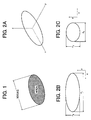
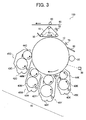

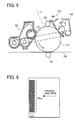
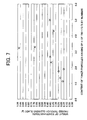
Classifications
-
- G—PHYSICS
- G03—PHOTOGRAPHY; CINEMATOGRAPHY; ANALOGOUS TECHNIQUES USING WAVES OTHER THAN OPTICAL WAVES; ELECTROGRAPHY; HOLOGRAPHY
- G03G—ELECTROGRAPHY; ELECTROPHOTOGRAPHY; MAGNETOGRAPHY
- G03G9/00—Developers
- G03G9/08—Developers with toner particles
- G03G9/0827—Developers with toner particles characterised by their shape, e.g. degree of sphericity
-
- G—PHYSICS
- G03—PHOTOGRAPHY; CINEMATOGRAPHY; ANALOGOUS TECHNIQUES USING WAVES OTHER THAN OPTICAL WAVES; ELECTROGRAPHY; HOLOGRAPHY
- G03G—ELECTROGRAPHY; ELECTROPHOTOGRAPHY; MAGNETOGRAPHY
- G03G9/00—Developers
- G03G9/08—Developers with toner particles
- G03G9/0802—Preparation methods
- G03G9/0804—Preparation methods whereby the components are brought together in a liquid dispersing medium
- G03G9/0806—Preparation methods whereby the components are brought together in a liquid dispersing medium whereby chemical synthesis of at least one of the toner components takes place
-
- G—PHYSICS
- G03—PHOTOGRAPHY; CINEMATOGRAPHY; ANALOGOUS TECHNIQUES USING WAVES OTHER THAN OPTICAL WAVES; ELECTROGRAPHY; HOLOGRAPHY
- G03G—ELECTROGRAPHY; ELECTROPHOTOGRAPHY; MAGNETOGRAPHY
- G03G9/00—Developers
- G03G9/08—Developers with toner particles
- G03G9/087—Binders for toner particles
- G03G9/08742—Binders for toner particles comprising macromolecular compounds obtained otherwise than by reactions only involving carbon-to-carbon unsaturated bonds
- G03G9/08755—Polyesters
-
- G—PHYSICS
- G03—PHOTOGRAPHY; CINEMATOGRAPHY; ANALOGOUS TECHNIQUES USING WAVES OTHER THAN OPTICAL WAVES; ELECTROGRAPHY; HOLOGRAPHY
- G03G—ELECTROGRAPHY; ELECTROPHOTOGRAPHY; MAGNETOGRAPHY
- G03G9/00—Developers
- G03G9/08—Developers with toner particles
- G03G9/097—Plasticisers; Charge controlling agents
- G03G9/09708—Inorganic compounds
- G03G9/09716—Inorganic compounds treated with organic compounds
-
- G—PHYSICS
- G03—PHOTOGRAPHY; CINEMATOGRAPHY; ANALOGOUS TECHNIQUES USING WAVES OTHER THAN OPTICAL WAVES; ELECTROGRAPHY; HOLOGRAPHY
- G03G—ELECTROGRAPHY; ELECTROPHOTOGRAPHY; MAGNETOGRAPHY
- G03G9/00—Developers
- G03G9/08—Developers with toner particles
- G03G9/097—Plasticisers; Charge controlling agents
- G03G9/09708—Inorganic compounds
- G03G9/09725—Silicon-oxides; Silicates
Definitions
- the present invention relates to a toner for use in electrophotography.
- the present invention also relates to an image forming apparatus and a process cartridge using the toner.
- an image is typically formed as follows:
- Toner particles remaining on the image bearing member after the transfer process are removed therefrom to prepare for next image forming operation (i.e., cleaning process).
- Developers for use in electrophotography are classified into a two-component developer consisting essentially of a toner and a carrier, and a one-component developer consisting essentially of a toner.
- the toner is typically prepared by a pulverization method in which a binder resin, a colorant, a charge controlling agent, a release agent, etc., are melt-kneaded, and then the melt-kneaded mixture is subjected to cooling, pulverization, and classification. In this method, it is difficult to control the particle diameter and the shape of the resultant toner.
- polymerization methods such as an emulsion aggregation method and a dissolution suspension method have been proposed and widely used recently.
- toners In order to respond to a recent demand for high quality images, particularly for high resolution full-color images, toners have been modified to have a smaller particle diameter and a narrower particle diameter distribution.
- a toner has a broad particle diameter distribution, ultrafine toner particles tend to contaminate a developing roller, a charging roller, a charging blade, a photoreceptor, a carrier, etc., and tend to cause toner scattering. Therefore, high quality and highly reliable images cannot be obtained with such a toner.
- a toner has a narrow particle diameter distribution, each of the toner particles identically behaves in the developing process, and therefore microdot reproducibility of the resultant image improves.
- the toner having a narrow particle diameter distribution has poor cleanability. It is difficult to stably remove toner particles having the uniform small particle diameter from the image bearing member using a cleaning blade.
- various attempts to modify the toner have been proposed. For example, a method in which a spherical toner is modified to have an irregular shape is proposed. When a toner has an irregular shape, the fluidity thereof decreases. Thereby, the toner can be easily prevented from passing through the cleaning blade.
- a toner has an irregular shape too far from a sphere, the toner cannot stably behave in the developing process, and therefore microdot reproducibility decreases. Since transferability and cleanability of a toner depends on the shape thereof, the toner is required to have an optimal shape.
- JP-A 2005-215298 discloses a toner having a shape property such that the toner has an average shape factor SF-1 of not less than 110 and satisfies the following equation: 2.0 ⁇ A / B ⁇ 7.0 wherein A represents a ratio (%) of a number of toner particles having a shape factor SF-1 within a range of 5 smaller and larger of the maximum SF-1 value in the number distribution to a total number of the toner particles, and B represents a ratio (%) of a number of toner particles having a shape factor SF-1 of not less than 150 to a total number of the toner particles.
- toner particles having a smaller SF-1 which may be influenced on cleanability of the toner.
- JP-A 2000-267331 discloses a toner having an average shape factor SF-1 of from 125 to 140, and including toner particles having a shape factor SF-1 of not greater than 120 in an amount of not greater than 20% by number and toner particles having a shape factor SF-1 of not less than 150 in an amount of not greater than 20% by number.
- the toner includes toner particles having a shape factor SF-1 of not greater than 120 in an amount of not greater than 20% by number, toner particles having a smaller shape factor SF-1 are not excluded from the toner, and therefore the toner has insufficient cleanability.
- ultrafine toner particles tend to contaminate a developing device, a photoreceptor, an intermediate transfer medium, etc.
- an object of the present invention is to provide a toner which can produce high quality images having good microdot reproducibility.
- Another object of the present invention is to provide an image forming apparatus and a process cartridge which can remove toner particles from the image bearing member without deteriorating a cleaning blade, even if the toner particles are spherical.
- a toner comprising:
- the present invention provides a toner having an average shape factor SF-1 of from 130 to 160, and including toner particles having a shape factor SF-1 of from 100 to 115 in an amount of not greater than 2% by number, which is prepared by a wet granulation method.
- the toner preferably has an average shape factor SF-1 of from 130 to 150.
- the toner When the toner includes too large an amount of toner particles having a shape factor SF-1 of from 100 to 115, cleanability of the toner deteriorates, and therefore the toner tends to contaminate the machine components and the resultant image has low reliability.
- the toner includes toner particles having a shape factor SF-1 of from 100 to 115 in an amount of not greater than 2% by number, preferably not greater than 0.5% by number, the toner has good cleanability.
- the above toner can be well removed even if a cleaning blade is used as the cleaning means.
- the toner particle When the SF-1 is 100, the toner particle has a true spherical form. When the SF-1 is larger than 100, the toner particles have irregular forms.
- the shape factor SF-1 is preferably determined by the following method, but the method is not limited thereto:
- each of the toner particles contacts other toner particle and the photoreceptor at one point. Therefore, the adhesion of the toner particle to the other toner particle and the photoreceptor decreases, resulting in increase of fluidity and transferability of the toner.
- transferability deteriorates.
- the toner of the present invention is preferably prepared by a wet granulation method.
- a method including the following steps is preferably used:
- a polyester is preferably used as the binder resin, and a polyester prepolymer having a functional group containing a nitrogen atom is preferably used as the prepolymer consisting essentially of a modified polyester.
- a polyester is formed from polycondensation reaction between a polyol and a polycarboxylic acid.
- polyol (PO) diols (DIO), polyols (TO) having three or more valences, and mixtures thereof can be used.
- diols (DIO) alone, and mixtures in which a diol (DIO) is mixed with a small amount of a polyol (TO) having three or more valences are preferably used.
- diols include, but are not limited to, alkylene glycols (e.g., ethylene glycol, 1,2-propylene glycol, 1,3-propylene glycol, 1,4-butanediol, 1,6-hexanediol), alkylene ether glycols (e.g., diethylene glycol, triethylene glycol, dipropylene glycol, polyethylene glycol, polypropylene glycol, polytetramethylene ether glycol), alicyclic diols (e.g., 1,4-cyclohexanedimethanol, hydrogenated bisphenol A), bisphenols (e.g., bisphenol A, bisphenol F, bisphenol S), adducts of the alicyclic diols with an alkylene oxide (e.g., ethylene oxide, propylene oxide, butylene oxide), and adducts of the bisphenols with an alkylene oxide (e.g., ethylene oxide, propylene oxide, butylene oxide
- alkylene glycols having 2 to 12 carbon atoms and adducts of bisphenols with an alkylene oxide are preferably used, and adducts of bisphenols with an alkylene oxide alone and mixtures thereof are more preferably used.
- polyols (TO) having three or more valences include, but are not limited to, multivalent aliphatic alcohols having three or more valences (e.g., glycerin, trimethylolethane, trimethylolpropane, pentaerythritol, sorbitol), polyphenols having three or more valences (e.g., trisphenol PA, phenol novolac, cresol novolac), and adducts of the polyphenols having three or more valences with an alkylene oxide.
- multivalent aliphatic alcohols having three or more valences e.g., glycerin, trimethylolethane, trimethylolpropane, pentaerythritol, sorbitol
- polyphenols having three or more valences e.g., trisphenol PA, phenol novolac, cresol novolac
- PC polycarboxylic acid
- DIC dicarboxylic acids
- TC polycarboxylic acids having three or more valences
- dicarboxylic acids (DIC) alone, and mixtures in which a dicarboxylic acid (DIC) is mixed with a small amount of a polycarboxylic acid (TC) having three or more valences are preferably used.
- dicarboxylic acids include, but are not limited to, alkylene dicarboxylic acids (e.g., succinic acid, adipic acid, sebacic acid), alkenylene dicarboxylic acids (e.g., maleic acid, fumaric acid), and aromatic dicarboxylic acids (e.g., phthalic acid, isophthalic acid, terephthalic acid, naphthalene dicarboxylic acid).
- alkenylene dicarboxylic acids having 4 to 20 carbon atoms and aromatic dicarboxylic acids having 8 to 20 carbon atoms are preferably used.
- polycarboxylic acid (TC) having three or more valences include, but are not limited to, aromatic polycarboxylic acids having 9 to 20 carbon atoms (e.g., trimellitic acid, pyromellitic acid).
- PC polycarboxylic acid
- acid anhydrides and lower alkyl esters e.g., methyl esters, ethyl esters, isopropyl esters
- DIC dicarboxylic acids
- TC polycarboxylic acids having three or more valences, and mixtures thereof
- a polyol (PO) and a polycarboxylic acid (PC) are mixed so that the equivalent ratio ([OH] /[COOH]) between a hydroxyl group [OH] and a carboxylic group [COOH] is typically from 2/1 to 1/1, preferably from 1.5/1 to 1/1, and more preferably from 1.3/1 to 1.02/1.
- a polyol (PO) and a polycarboxylic acid (PC) are subjected to a polycondensation reaction by heating at a temperature of from 150 to 280°C in the presence of a known catalyst, such as tetrabutoxy titanate and dibutyltin oxide.
- a known catalyst such as tetrabutoxy titanate and dibutyltin oxide.
- the water generated by the reaction is removed, under a reduced pressure if desired, to prepare a polyester having a hydroxyl group.
- the polyester preferably has a hydroxyl value of not less than 5, and typically has an acid value of from 1 to 30, and preferably from 5 to 20.
- the resultant toner tends to be negatively charged.
- such a toner has good affinity to a printing paper, resulting in improvement of low-temperature fixability of the resultant toner.
- the acid value is too large, charging stability, particularly environmental stability, of the resultant toner deteriorates.
- the polyester typically has a weight average molecular weight of from 10,000 to 400,000, and preferably from 20,000 to 200,000.
- a weight average molecular weight of from 10,000 to 400,000, and preferably from 20,000 to 200,000.
- a polyester prepolymer having a functional group containing a nitrogen atom is preferably used.
- a polyester prepolymer having a functional group containing a nitrogen atom a polyester prepolymer (A) having an isocyanate group, which is prepared by reacting a carboxyl group or a hydroxyl group present on the end of a polyester, with a polyisocyanate (PIC) .
- PIC polyisocyanate
- an amine (B) is preferably used as the compound capable of elongating or crosslinking with the prepolymer.
- polyisocyanates include, but are not limited to, aliphatic polyisocyanates (e.g. tetramethylene diisocyanate, hexamethylene diisocyanate, 2,6-diisocyanatemethyl caproate), alicyclic polyisocyanates (e.g., isophorone diisocyanate, cyclohexylmethane diisocyanate), aromatic diisocyanates (e.g., tolylene diisocyanate, diphenylmethane diisocyanate), aromatic aliphatic diisocyanates (e.g., ⁇ , ⁇ , ⁇ ', ⁇ '-tetramethylxylylene diisocyanate), isocyanurates, and the above-mentioned polyisocyanates blocked with phenol derivatives, oxime, caprolactam, etc. These can be used alone or in combination.
- aliphatic polyisocyanates e.g. tetramethylene diisocyanate,
- a polyisocyanate (PIC) is mixed with a polyester having a hydroxyl group so that the equivalent ratio ([NCO] / [OH]) of isocyanate group [NCO] to hydroxyl group [OH] is typically from 5/1 to 1/1, preferably from 4/1 to 1.2/1, and more preferably from 2.5/1 to 1.5/1.
- the ratio [NCO] / [OH] is too large, low temperature fixability of the resultant toner deteriorates.
- the ratio [NCO] / [OH] is too small, hot offset resistance of the resultant toner deteriorates.
- the polyester prepolymer (A) having an isocyanate group preferably includes polyisocyanate (PIC) units in an amount of from 0.5 to 40% by weight, preferably from 1 to 30% by weight, and more preferably from 2 to 20% by weight.
- PIC polyisocyanate
- the average number of isocyanate group included in a molecule of the polyester prepolymer (A) is typically 1 or more, preferably from 1.5 to 3, and more preferably from 1.8 to 2.5.
- the number of isocyanate groups is less than 1 per molecule, the molecular weight of the urea-modified polyester decreases and hot offset resistance of the resultant toner deteriorates.
- amines (B) include, but are not limited to, diamines (B1), polyamines (B2) having three or more amino groups, amino alcohols (B3), amino mercaptans (B4), amino acids (B5), and blocked amines (B6) in which the amino groups in the amines (B1) to (B5) are blocked.
- diamines (B1) include, but are not limited to, aromatic diamines (e.g., phenylene diamine, diethyltoluene diamine, 4,4'-diaminodiphenyl methane), alicyclic diamines (e.g., 4,4'-diamino-3,3'-dimethyldicyclohexyl methane, diamine cyclohexane, isophorone diamine), and aliphatic diamines (e.g., ethylene diamine, tetramethylene diamine, hexamethylene diamine).
- aromatic diamines e.g., phenylene diamine, diethyltoluene diamine, 4,4'-diaminodiphenyl methane
- alicyclic diamines e.g., 4,4'-diamino-3,3'-dimethyldicyclohexyl methane, diamine cyclohexane,
- polyamines (B2) having three or more amino groups include, but are not limited to, diethylene triamine, and triethylene tetramine.
- amino alcohols (B3) include, but are not limited to, ethanolamine and hydroxyethyl aniline.
- amino mercaptan (B4) include, but are not limited to, aminoethyl mercaptan and aminopropyl mercaptan.
- amino acids (B5) include, but are not limited to, amino propionic acid and amino caproic acid.
- the blocked amines (B6) include, but are not limited to, ketimine compounds which are prepared by reacting one of the amines (B1) to (B5) with a ketone such as acetone, methyl ethyl ketone and methyl isobutyl ketone, and oxazoline compounds.
- a ketone such as acetone, methyl ethyl ketone and methyl isobutyl ketone
- oxazoline compounds oxazoline compounds.
- diamines (B1) alone, and mixtures in which a diamine (B1) is mixed with a small amount of a polyamine (B2) having three or more valences are preferably used.
- An amine (B) is mixed with the polyester prepolymer (A) having an isocyanate group so that the equivalent ratio ([NCO] / [NHx]) of isocyanate group [NCO] to amino group [NHx] is typically from 1/2 to 2/1, preferably from 1.5/1 to 1/1.5, and more preferably from 1.2/1 to 1/1.2.
- the ratio [NCO] / [NHx] is too large or too small, the molecular weight of the urea-modified polyester is too small, resulting in deterioration of hot offset resistance of the resultant toner.
- the urea-modified polyester may include a urethane bond in combination with a urea bond.
- Themolarratio (urea/urethane) of the urea bond to the urethane bond is typically from 100/0 to 10/90, preferably from 80/20 to 20/80, and more preferably from 60/40 to 30/70. When the molar ratio is too small, hot offset resistance of the resultant toner deteriorates.
- a urea-modified polyester can be prepared by one shot method, etc.
- a polyol (PO) and a polycarboxylic acid (PC) are subjected to a polycondensation reaction by heating at a temperature of from 150 to 280°C in the presence of a known catalyst, such as tetrabutoxy titanate and dibutyltin oxide.
- a known catalyst such as tetrabutoxy titanate and dibutyltin oxide.
- the water generated by the reaction is removed, under a reduced pressure if desired, to prepare a polyester having a hydroxyl group.
- a polyisocyanate (PIC) is reacted with the polyester having a hydroxyl group at a temperature of from 40 to 140°C to prepare a polyester prepolymer (A) having an isocyanate group.
- an amine (B) is reacted with the polyester prepolymer (A) having an isocyanate group at a temperature of from 0 to 140°C to prepare
- a solvent can be optionally used.
- solvents which are unreactive with the polyisocyanate (PIC) such as aromatic solvents (e.g., toluene, xylene), ketones (e.g., acetone, methyl ethyl ketone, methyl isobutyl ketone), esters (e.g., ethyl acetate), amides (e.g., dimethylformamide, dimethylacetamide), and ethers (e.g., tetrahydrofuran).
- a molecular weight control agent can optionally be used to control the molecular weight of the resultant urea-modified polyester.
- the molecular weight control agent include, but are not limited to, monoamines (e.g., diethyl amine, dibutyl amine, butyl amine, lauryl amine), and blocked amines thereof (e.g., ketimine compounds).
- the urea-modified polyester typically has a weight average molecular weight of not less than 10, 000, preferably from 20, 000 to 10,000,000, and more preferably from 30,000 to 1, 000, 000. When the weight average molecular weight is too small, hot offset resistance of the resultant toner deteriorates.
- the number average molecular weight of the urea-modified polyester is not particularly limited when the above-mentioned unmodified polyester is used in combination. Namely, the weight average molecular weight of the urea-modified polyester has priority over the number average molecular weight thereof. However, when the urea-modified polyester resin is used alone, the number average molecular weight is typically from 2,000 to 15,000, preferably from 2, 000 to 10,000, and more preferably from 2, 000 to 8, 000. When the number average molecular weight is too large, low-temperature fixability of the resultant toner deteriorates, and in addition, glossiness of full color images deteriorates.
- the urea-modified polyester and the unmodified polyester are used in combination, because low-temperature fixability of the resultant toner and glossiness of the resultant full color images improve thereby.
- the unmodified polyester may include a polyester modified with a bond except urea bond (i.e. other modifications may be present other than the presence of urea bond).
- the unmodified polyester and the urea-modified polyester are partially soluble with each other to improve low temperature fixability and hot offset resistance of the resultant toner. Therefore, the unmodified polyester and the urea-modified polyester preferably have similar structures.
- the weight ratio of the unmodified polyester to the urea-modified polyester is typically from 20/80 to 95/5, preferably from 70/30 to 95/5, more preferably from 75/25 to 95/5, and even more preferably from 80/20 to 93/7.
- the resultant toner has poor hot offset resistance, thermostable preservability and low temperature fixability.
- the resultant binder resin including the unmodified polyester and the urea-modified polyester typically has a glass transition temperature (Tg) of from 45 to 65°C, and preferably from 45 to 60°C.
- Tg glass transition temperature
- the toner of the present invention has good thermostable preservability even if the glass transition temperature is low, compared to any known toners including a polyester resin.
- colorants for use in the present invention include any known dyes and pigments such as carbon black, Nigrosine dyes, black iron oxide, NAPHTHOL YELLOW S, HANSA YELLOW (10G, 5G and G), Cadmium Yellow, yellow iron oxide, loess, chrome yellow, Titan Yellow, polyazo yellow, Oil Yellow, HANSA YELLOW (GR, A, RN and R), Pigment Yellow L, BENZIDINE YELLOW (G and GR), PERMANENT YELLOW (NCG), VULCAN FAST YELLOW (5G and R), Tartrazine Lake, Quinoline Yellow Lake, ANTHRAZANE YELLOW BGL, isoindolinone yellow, red iron oxide, red lead, orange lead, cadmium red, cadmium mercury red, antimony orange, Permanent Red 4R, Para Red, Fire Red, p-chloro-o-nitroaniline red, Lithol Fast Scarlet G, Brilliant Fast Scarlet, Brilliant Carmine BS,
- the colorant for use in the present invention can be combined with a resin to be used as a master batch.
- the resins for use in the master batch include, but are not limited to, styrene polymers and substituted styrene polymers (e.g., polystyrenes, poly-p-chlorostyrenes, polyvinyltoluenes) and copolymers thereof with vinyl compounds, polymethyl methacrylates, polybutyl methacrylates, polyvinyl chlorides, polyvinyl acetates, polyethylenes, polypropylenes, polyesters, epoxy resins, epoxy polyol resins, polyurethanes, polyamides, polyvinyl butyrals, polyacrylic acids, rosins, modified rosins, terpene resins, aliphatic or alicyclic hydrocarbon resins, aromatic petroleum resins, chlorinated paraffins, and paraffin waxes. These resins can be used alone or in combination.
- charge controlling agents can be used for the toner of the present invention, and are not particularly limited.
- the charge controlling agents include, but are not limited to, Nigrosine dyes, triphenylmethane dyes, metal complex dyes including chromium, chelate compounds of molybdic acid, Rhodamine dyes, alkoxyamines, quaternary ammonium salts (including fluorine-modified quaternary ammonium salts), alkylamides, phosphor and compounds including phosphor, tungsten and compounds including tungsten, fluorine-containing activators, metal salts of salicylic acid, salicylic acid derivatives, etc. These can be used alone or in combination.
- charge controlling agents include BONTRON® N-03 (Nigrosine dyes), BONTRON® P-51 (quaternary ammonium salt), BONTRON® S-34 (metal-containing azo dye), BONTRON® E-82 (metal complex of oxynaphthoic acid), BONTRON® E-84 (metal complex of salicylic acid), and BONTRON® E-89 (phenolic condensation product), which are manufactured by Orient Chemical Industries Co., Ltd.; TP-302 and TP-415 (molybdenum complex of quaternary ammonium salt), which are manufactured by Hodogaya Chemical Co., Ltd.; COPY CHARGE® PSY VP2038 (quaternary ammonium salt), COPY BLUE® PR (triphenyl methane derivative), COPY CHARGE® NEG VP2036 and COPY CHARGE® NX VP434 (quaternary ammonium salt), which are manufactured by Hoechst AG; L
- the content of the charge controlling agent is determined depending on the species of the binder resin used, and toner manufacturing method (such as dispersion method) used, and is not particularly limited. However, the content of the charge controlling agent is typically from 0.1 to 10 parts by weight, and preferably from 0.2 to 5 parts by weight, per 100 parts by weight of the binder resin included in the toner. When the content is too high, the toner has too large a charge quantity, and thereby the electrostatic force of a developing roller attracting the toner increases, resulting in deterioration of the fluidity of the toner and image density of the toner images.
- the toner of the present invention may include a release agent.
- the release agent preferably has a low melting point of from 50 to 120°C. Since a release agent having a low melting point is easily separated from the binder resin, such a release agent effectively functions at an interface between a fixing roller and the toner. The resultant toner has good hot offset resistance even if used for an oilless fixing system (i.e., no oil is applied to a fixing roller).
- waxes are preferably used as the release agent.
- waxes include, but are not limited to, natural waxes such as plant waxes (e.g., carnauba wax, cotton wax, haze wax, rice wax), animal waxes (e.g., bees wax, lanoline), mineral waxes (e.g., ozokerite, ceresin), and petroleum waxes (e.g., paraffin, microcrystalline, petrolatum); synthetic hydrocarbon waxes such as Fischer-Tropsch wax and polyethylene wax; synthetic waxes such as esters, ketones, and ethers; fatty acid amides such as 12-hydroxystearic acid amide, stearic amide, phthalic anhydride imide, halogenated hydrocarbon; and crystalline polymers having a low molecular weight and a side-chain long alkyl group such as homopolymers or copolymers of polyacrylates such as poly-n-stearyl methacrylate and poly-n-lauryl methacrylate (e.g., copol)
- the modified laminar inorganic mineral is preferably added to the toner constituent mixture liquid, in which a binder resin, a prepolymer consisting essentially of a modified polyester, a compound capable of elongating or crosslinking with the prepolymer, a colorant, a release agent, etc., are dissolved or dispersed in an organic solvent, so that the toner constituent mixture liquid has a Casson yield value of from 1 to 100 Pa at 25°C.
- the Casson yield value is too small, it is difficult to control the shape of the resultant toner.
- the Casson yield value is too large, manufacturability of the toner deteriorates.
- the Casson yield value can be determined by measuring the viscosity of the toner constituent mixture liquid which is emulsified in an aqueous medium.
- the toner constituent mixture liquid preferably includes the modified laminar inorganic mineral in an amount of from 0,05 to 10% by weight on a solid basis.
- the toner constituent mixture liquid has too small a Casson yield value.
- fixability of the resultant toner deteriorates.
- the modified laminar inorganic mineral for use in the present invention is a modified laminar inorganic mineral in which interlaminar ions are partially substituted with an organic ion.
- laminar metal cations can be partially substituted with a quaternary ammonium ion.
- Specific examples of the modified laminar inorganic minerals include, but are not limited to, organic modified montmorillonite and organic modified smectite.
- the Casson yield value can be measured using a high shear viscometer, for example. Measuring conditions are as follows, for example.
- the toner of the present invention is preferably prepared by the following method, but the method is not limited thereto.
- a toner having a small particle diameter and a narrow particle diameter distribution is easily prepared by the method mentioned above.
- the toner shape can be easily controlled so as to be from a spherical form to a spindle form by applying a high shear in the solvent removal process.
- the toner surface condition can also be controlled so as to be smooth or rough.
- an emulsion aggregation method is known.
- a toner is prepared by subjecting particles of a resin prepared by an emulsion polymerization, a colorant, a release agent, etc., to a heteroaggregation to prepare aggregated particles, and then fusing the aggregated particles.
- dispersions of a particulate resin and a colorant, and optionally a release agent and a modified laminar inorganic mineral are mixed and particles (i.e., dispersoids) of these dispersions are heteroaggregated to prepare aggregated particles.
- particles i.e., dispersoids
- an ionic surfactant having a different polarity to the aggregated particles or a compound having monovalent or more charge such as metal salts can be added.
- the dispersion of the aggregated particles is heated to a temperature of not less than the glass transition temperature of the particulate resin so as to fuse the aggregated particles with each other to prepare fused particles,
- an adhesion process in which a dispersion of a particulate material is added to the dispersion of the aggregated particles so that the particulate material uniformly adheres to the surface of the aggregated particles to prepare adhered particles (i.e., adhesion process) can be optionally performed.
- the dispersion of the modified laminar inorganic mineral can be added to the dispersion of the aggregated particles so that the modified laminar inorganic mineral uniformly adheres to the surface of the aggregated particles.
- a dispersion of another particulate material can be added to the dispersion of the aggregated particles to which the modified laminar inorganic mineral is already adhered.
- the adhered particles are prepared by heteroaggregation, etc.
- the dispersion of the adhered particles is also heated to a temperature of not less than the glass transition temperature of the particulate resin so as to fuse the adhered particles with each other.
- the fused particles prepared in the fusion process are present in an aqueous medium.
- a dispersion of the fused particles is formed.
- toner particles can be prepared.
- toner particles can be prepared.
- the toner particles are dried at a temperature of less than the glass transition temperature of the resin. A method in which dry air is circulated, and a method in which toner particles are heated in vacuum, etc., are optionally performed in the drying process.
- a colorant In order to stabilize dispersions of a particulate resin, a colorant, a release agent, etc., alicyclic compounds of organic acid metal salts can be used as an emulsifier. If the stability of the dispersions of a colorant and a release agent depend on the pH and are not stable under basic conditions, or the stability of the dispersion of a particulate rein varies with time, a small amount of a surfactant can be used.
- the surfactants include, but are not limited to, anionic surfactants (e.g., sulfates, sulfonates, phosphates, soaps), cationic surfactants (e.g., amine salts, quaternary ammonium salts), and nonionic surfactants (e.g., polyethylene glycols, ethylene oxide adducts of alkylphenols, polyols).
- anionic surfactants e.g., sulfates, sulfonates, phosphates, soaps
- cationic surfactants e.g., amine salts, quaternary ammonium salts
- nonionic surfactants e.g., polyethylene glycols, ethylene oxide adducts of alkylphenols, polyols.
- anionic surfactants i.e., anionic and cationic surfactants are preferably used.
- the anionic surfactants typically have an advantage over dispersing
- anionic surfactants include, but are not limited to, fatty acid soaps (e.g., potassium laurate, sodium oleate, sodium salt of castor oil), sulfates (e.g., octyl sulfate, lauryl sulfate, lauryl ether sulfate, nonyl phenyl ether sulfate), sulfonates (e.g., lauryl sulfonates, dodecylbenzene sulfonate, sodium salts of alkylenenaphthalene sulfonic acids such as triisopropylnaphthalene sulfonate and dibutylnaphthalene sulfonate, naphthalene sulfonate formalin condensates,monooctylsulfosuccinate,dioctylsulfosuccinate, lauric acid amide sulfon
- cationic surfactants include, but are not limited to, amine salts (e.g., lauryl amine hydrochloride, stearyl amine hydrochloride, oleyl amine acetate, stearyl amine acetate, stearyl aminopropyl amine acetate), and quaternary ammonium salts (e.g., lauryl trimethyl ammonium chloride, dilauryl dimethyl ammonium chloride, distearyl ammonium chloride, distearyl dimethyl ammonium chloride, lauryl dihydroxyethyl methyl ammonium chloride, oleyl bispolyoxyethylene methyl ammonium chloride, lauroyl aminopropyl dimethyl ethyl ammonium sulfate, lauroyl aminopropyl dimethyl hydroxyethyl ammonium perchlorate, alkylbenzenedimethyl ammonium chloride, alkyltrimethyl ammonium chloride).
- amine salts
- nonionic surfactants include, but are not limited to, alkyl ethers (e.g., polyoxyethylene octyl ether, polyoxyethylene lauryl ether, polyoxyethylene stearyl ether, polyoxyethylene oleyl ether), alkyl phenyl ethers (e.g., polyoxyethylene octyl phenyl ether, polyoxyethylene nonyl phenyl ether), alkyl esters (e.g., polyoxyethylene laurate, polyoxyethylene stearate, polyoxyethylene oleate), alkylamines (e.g., polyoxyethylene lauryl aminoether, polyoxyethylene stearyl aminoether, polyoxyethylene oleyl aminoether, polyoxyethylene aminoether of soybean, polyoxyethylene aminoether of beef tallow), alkylamides (e.g., polyoxyethylene lauric acid amide, polyoxyethylene stearic acid amide, polyoxyethylene oleic acid amide), ethers
- lauric acid dimethanol amide, stearic acid dimethanol amide, oleic acid dimethanol amide), and sorbitan ester ethers e.g., polyoxyethylene sorbitan monolaurate, polyoxyethylene sorbitan monopalmitate, polyoxyethylene sorbitan monostearate, polyoxyethylene sorbitan monooleate.
- Each of the dispersions typically includes a small amount of a surfactant so that the surfactant does not influence on the resultant toner properties.
- the dispersion of a particulate resin typically includes the surfactant in an amount of from 0.01 to 1% by weight, preferably 0.02 to 0.5% by weight, and more preferably from 0.1 to 0.2% by weight. When the amount is too small, aggregation tends to occur especially in a dispersion of a particulate resin which is not sufficiently basic.
- Each of the dispersions of a colorant and a release agent typically includes the surfactant in an amount of from 0.01 to 10% by weight, preferably 0.1 to 5% by weight, and more preferably from 0.5 to 2% by weight. When the amount is too small, each of the particles has different stability when aggregated, and therefore some particles tend to liberate. When the amount is too large, the particles tend to have a broad particle diameter distribution, and it is difficult to control the resultant particle diameter.
- a toner prepared by the emulsion aggregation method may optionally include an internal additive, a charge controlling agent, a particulate inorganic material, a particulate organic material, a lubricant, an abrasive, etc., other than the resin, the colorant, and the release agent.
- the internal additive is added without deteriorating chargeability of the toner.
- Specific examples of the internal additives include, but are not limited to, magnetic materials such as ferrites, magnetites, reduced irons, metals (e.g., cobalt, manganese, nickel), metal alloys, and compound containing a metal.
- colorless or light-colored charge controlling agents are preferably used especially for full-color toners.
- Specific examples of the charge controlling agents include, but are not limited to, quaternary ammonium salt compounds, nigrosine compounds, dyes composed of complexes of aluminum, iron, chromium, etc., and triphenylmethane pigments.
- the particulate inorganic materials include, but are not limited to, external additives used for typical toners such as silica, titania, calcium carbonate, magnesium carbonate, tricalcium phosphate, and cerium oxide.
- Specific examples of the particulate organic materials include, but are not limited to, external additives used for typical toners such as vinyl resins, polyester resins, and silicone resins. These particulate inorganic and organic materials can be used as a fluidizer or a cleanability improving agent.
- Specific examples of the lubricants include, but are not limited to, fatty acid metal salts such as ethylenebis stearic acid amide, oleic acid amide, zinc stearate, and calcium stearate.
- Specific examples of the abrasives include, but are not limited to, silica, alumina, and cerium oxide.
- the mixture of the dispersions of a particulate resin, a modified laminar inorganic mineral, a colorant, and a release agent typically includes the colorant in an amount of not greater than 50% by weight, and preferably 2 to 40% by weight.
- Themixture typically includes the modified laminar inorganic mineral in an amount of from 0.05 to 10% by weight.
- the mixture typically includes a small amount of other components so that the components do not influence on the resultant toner properties.
- the mixture typically includes other components in an amount of from 0.01 to 5% by weight, and preferably from 0.5 to 2% by weight.
- aqueous media are typically used as the dispersion medium of the dispersions of a particulate resin, a modified laminar inorganic mineral, a colorant, and a release agent, etc.
- aqueous media include, but are not limited to, waters (e.g., distilled water, ion-exchanged water) and alcohols. These can be used alone or in combination.
- aggregated particles can be prepared by controlling the pH of the dispersion so as to control the emulsifying force of the emulsifier.
- an aggregating agent can optionally be used.
- the aggregating agent compounds having a monovalent or multivalent charge are preferably used.
- water-soluble surfactants e.g., ionic surfactants, nonionic surfactants
- acids e.g., hydrochloric acid, sulfuric acid, nitric acid, acetic acid, oxalic acid
- metal salts of inorganic acids e.g., magnesium chloride, sodium chloride, aluminum sulfate, calcium sulfate, ammonium sulfate, aluminum nitrate, silver nitrate, copper sulfate, sodium carbonate
- metal salts of aliphatic and aromatic acids e.g., sodium acetate, potassium formate, sodium oxalate, sodium phthalate, potassium salicylate
- metal salts of phenols e.g., sodium phenolate
- metal salts of amino acids e.g., triethanolamine hydrochloride, aniline hydrochloride.
- the dispersion includes a small amount of the aggregating agent depending on the charge valence thereof.
- the dispersion includes the aggregating agent in an amount of not greater than 3% by weight.
- the dispersion includes the aggregating agent in an amount of not greater than 1% by weight.
- the dispersion includes the aggregating agent in an amount of not greater than 0. 5% by weight.
- the dispersion preferably includes the aggregating agent in an amount as small as possible. Aggregating agents having larger charge valence are preferably used because the added amount thereof can be reduced.
- the toner of the present invention preferably has a volume average particle diameter (Dv) of from 3 to 8 ⁇ m, and the ratio (Dv/Dn) of the volume average particle diameter (Dv) to the number average particle diameter (Dn) of from 1.00 to 1.30, to reproduce microdots not less than 600 dpi. As the ratio (Dv/Dn) approaches 1, the particle diameter distribution becomes narrower. Such a toner having a small particle diameter and a narrow particle diameter distribution can be uniformly charged and transferred, and therefore high quality images without background fogging can be produced.
- the toner preferably has a volume average particle diameter (Dv) of from 3 to 7 ⁇ m.
- Dv volume average particle diameter
- a toner having a small particle diameter has an advantage in terms of producing high definition and high quality images, but has a disadvantage in terms of transferability and cleanability.
- the volume average particle diameter (Dv) is too small, the toner tends to fuse on the surface of the carrier by long-term agitation in a developing device, resulting in deterioration of chargeability of a carrier, when the toner is used for a two-component developer.
- problems such that the toner forms a film on a developing roller, and the toner fuses on a toner layer forming member tend to be caused..
- a toner having the ratio (Dv/Dn) of from 1.00 to 1.30 can produce high resolution and quality images.
- a toner is used for a two-component developer, an average particle diameter of toner particles included in the developer hardly changes even if a part of the toner particles are replaced with fresh toner particles, and therefore the toner has good and stable developability even after a long repeated agitation in the developing unit.
- the ratio (Dv/Dn) is too large, the particle diameter of each of the toner particles varies, and thereby each of the particles independently behaves in the developing process, resulting in deterioration of microdot reproducibility. It is more preferable that the toner has the ratio (Dv/Dn) of from 1.00 to 1.20 to obtain much better quality images.
- the volume average particle diameter (Dv), number average particle diameter (Dn), and particle diameter distribution of a toner can be measured using an instrument COULTER COUNTER TA-II or COULTER MULTISIZER II from Coulter Electrons Inc., for example.
- the typical measuring method is as follows:
- the channels include 13 channels as follows: from 2.00 to less than 2.52 ⁇ m; from 2.52 to less than 3.17 ⁇ m; from 3.17 to less than 4.00 ⁇ m; from 4.00 to less than 5.04 ⁇ m; from 5.04 to less than 6.35 ⁇ m; from 6.35 to less than 8.00 ⁇ m; from 8.00 to less than 10.08 ⁇ m; from 10.08 to less than 12.70 ⁇ m; from 12.70 to less than 16.00 ⁇ m; from 16.00 to less than 20.20 ⁇ m; from 20.20 to less than 25.40 ⁇ m; from 25.40 to less than 32.00 ⁇ m; and from 32.00 to less than 40.30 ⁇ m. Namely, particles having a particle diameter of from not less than 2.00 ⁇ m to less than 40.30 ⁇ m can be measured.
- the toner of the present invention preferably includes toner particles having a particle diameter of not greater than 2 ⁇ m in an amount of from 1 to 10% by number, wherein the particle diameter represents a diameter of a circle having the same area of a projected image of the particle.
- the toner When the toner includes too large an amount of toner particles having a particle diameter of not greater than 2 ⁇ m, such toner particles tend to adhere to the carrier, and thereby charging stability thereof deteriorates.
- the above particle diameter can be measured using a flow-type particle image analyzer FPIA-2000 (manufactured by Sysmex Corp.).
- FPIA-2000 manufactured by Sysmex Corp.
- the typical measurement method is as follows:
- the toner of the present invention may have a form similar to the spherical form.
- FIG. 2A is an external view of the toner
- FIGS. 2B and 2C are cross sections of the toner.
- the toner preferably satisfies the following relationship: 0.5 ⁇ r ⁇ 2 / r ⁇ 1 ⁇ 1.0 and 0.7 ⁇ r ⁇ 3 / r ⁇ 2 ⁇ 1.0 wherein r1, r2 and r3 represent the average major axis particle diameter, the average minor axis particle diameter, and the average thickness of particles of the toner, wherein r3 ⁇ r2 ⁇ r1.
- the toner When the ratio (r2/r1) is too small, the toner has a form far away from the spherical form, and therefore the toner has poor dot reproducibility and transferability, resulting in deterioration of the image quality. When the ratio (r3/r2) is too small, the toner has a form far away from the spherical form, and therefore the toner has poor transferability. When the ratio (r3/r2) is 1.0, the toner has a form similar to the spherical form, and therefore the toner has good fluidity.
- toner particles are uniformly dispersed and adhered to an observation surface, and then observed with a color laser microscope VK-8500 (fromKeyence Corporation) at a magnification of 500 times.
- the major axis particle diameter, the minor axis particle diameter, and the thickness of each of randomly selected 100 toner particles are measured and averaged to determine r1, r2, and r3 of the toner.
- the toner of the present invention preferably includes an external additive having an average primary particle diameter of from 50 to 500 nm and a bulk density of not less than 0.3 g/cm 3 .
- an external additive having an average primary particle diameter of from 50 to 500 nm and a bulk density of not less than 0.3 g/cm 3 .
- Such a toner has good cleanability.
- developability and transferability do not deteriorate even if the toner has a small particle diameter.
- a silica having an average primary particle diameter of from 10 to 30 nm and a bulk density of from 0.1 to 0.2 g/cm 3 , which is typically used as a fluidizer, is preferably used.
- the external additive When an external additive having an appropriate characteristic is present on the surface of the toner, a gap is formed between the toner and the objects such as a photoreceptor, etc.. Because the external additive uniformly contacts the toner, the photoreceptor, and the charge giving member while having a small contact area, the adherence therebetween decreases, and therefore developing efficiency and transfer efficiency of the toner improves. In addition, the external additive plays a role as a roller bearing, the photoreceptor is hardly abraded and damaged. Moreover, the external additive is hardly embedded in the toner even when a high stress is applied to the photoreceptor from the cleaning blade. Even if the external additive is slightly embedded in the toner, the external additive can release and recover.
- the external additive moderately leaves from the surface of the toner and adheres to the edge of the cleaning blade, resulting in function of a dam.
- the dam has an effect on avoiding the phenomenon in that the toner passes through the cleaning blade.
- the external additive typically has an average primary particle diameter of from 50 to 500 nm, and preferably from 100 to 400 nm.
- the average primary particle diameter is too small, the external additive tends to be buried in the concavities of the toner surface and deteriorate the role of the roller bearing.
- the average primary particle diameter is too large, the defective cleaning problem in that the toner passes through the cleaning blade occurs. This is because the external additive has a particle diameter on the order of that of the toner, and toner particles passes through the gap formed by the external additive between the cleaning blade and the photoreceptor.
- the external additive preferably has a bulk density of not less than 0.3 g/cm 3 .
- the bulk density is too small, fluidity of the toner improves, but the resultant toner and the external additive are easily scattered and the adherence thereof to the photoreceptor, etc. is increased. Therefore, the dam effect and the role of the roller bearing deteriorate.
- particulate inorganic materials used for the external additive include, but are not limited to, SiO 2 , TiO 2 , Al 2 O 3 , MgO, CuO, ZnO, SnO 2 , CeO 2 , Fe 2 O 3 , BaO, CaO, K 2 O, Na 2 O, ZrO 2 , CaO ⁇ SiO 2 , K 2 O(TiO 2 )n, Al 2 O 3 ⁇ 2SiO 2 , CaCO 3 , MgCO 3 , BaSO 4 , MgSO 4 , and SrTiO 3 .
- SiO 2 , TiO 2 , and Al 2 O 3 are preferably used.
- These particulate inorganic materials may be hydrophobized by treated with a coupling agent such as hexamethylenedisilazane, dimethyldichlorosilane, and octyltrimethoxysilane,
- particulate organic materials used for the external additive include, but are not limited to, particulate thermoplastic and thermosetting resins such as vinyl resins, polyurethane resins, epoxy resins, polyester resins, polyamide resins, polyimide resins, silicone resins, phenol resins, melamine resins, urea resins, aniline resins, ionomer resins, and polycarbonate resins. These can be used alone or in combination. In view of easily making a water dispersion of fine resin particles, vinyl resins, polyurethane resins, epoxy resins, polyester resins, and these combinations are preferably used.
- particulate thermoplastic and thermosetting resins such as vinyl resins, polyurethane resins, epoxy resins, polyester resins, polyamide resins, polyimide resins, silicone resins, phenol resins, melamine resins, urea resins, aniline resins, ionomer resins, and polycarbonate resins.
- vinyl resins include, but are not limited to, homopolymers and copolymers of vinyl monomers such as styrene-(meth)acrylate copolymers, styrene-butadiene copolymers, (meth)acrylic acid-acrylate copolymers, styrene-acrylonitrile copolymers, styrene-maleic anhydride copolymers, and styrene-(meth)acrylic acid copolymers.
- vinyl monomers such as styrene-(meth)acrylate copolymers, styrene-butadiene copolymers, (meth)acrylic acid-acrylate copolymers, styrene-acrylonitrile copolymers, styrene-maleic anhydride copolymers, and styrene-(meth)acrylic acid copolymers.
- the external additive are typically added to the toner by a method in which mother toner particles and an external additive are mechanically mixed by a known mixing device, or a method in which mother toner particles and an external additive are dispersed in a liquid using a surfactant, followed by drying, etc.
- the image forming apparatus of the present invention includes:
- an electrostatic latent image is formed on an image bearing member.
- the image bearing member i.e., photoreceptor
- the image bearing member is not limited in material, shape, structure, size, etc., and any known image bearing members can be used.
- Specific examples of the materials used for the image bearing members include amorphous silicon and selenium (used for inorganic photoreceptors), polysilane and phthalopolymethine (used for organic photoreceptors), etc.
- amorphous silicon is preferably used with respect to the long life of the photoreceptor.
- the image bearing member preferably has a cylinder shape..
- the electrostatic latent image is formed by irradiating the charged image bearing member with a light containing image information in the electrostatic latent image forming device.
- the electrostatic latent image forming device preferably includes a charger configured to charge the image bearing member, and a light irradiator configured to irradiate the charged image bearing member with a light containing image information on the image bearing member.
- the image bearing member is charged by applying a voltage to the surface thereof by the charger.
- the chargers include any known contact chargers including a member such as an electroconductive or semiconductive roller, a brush, a film, a rubber blade, etc., and non-contact chargers using corona discharge such as corotron and scorotron, etc.
- the light irradiator irradiates the surface of the charged image bearing member with a light containing image information.
- the light irradiators include an emit optical irradiator, a rod lens array irradiator, a laser optical irradiator, a liquid crystal shutter irradiator, etc.
- the image bearing member can be irradiated from the back side thereof. (Developing device)
- the electrostatic latent image is developed with the toner or the developer of the present invention to form a toner image on the image bearing member.
- Suitable developing devices include any known developing devices which can use the toner or the developer of the present invention, and are not particularly limited.
- a developing device containing the toner of the present invention, and capable of directly or indirectly adhering the toner to the electrostatic latent image is preferably used.
- Such a developing device further including a toner container containing the toner of the present invention is more preferably used.
- the developing device may be either or both of a dry developing device or a wet developing device in the present invention.
- the developing device may be either or both of a single-color developing device or a multi-colored developing device in the present invention.
- the developing device preferably includes an agitator configured to agitate the developer so as to be charged, and a rotatable magnetic roller.
- the toner can be used for both a two-component developer and a one-component developer.
- the toner and the carrier are mixed and agitated.
- the toner is charged by the agitation, and held in a magnetic brushwhich is formed on the surface of a rotating magnetic roller. Because the magnetic roller is arranged near the image bearing member (photoreceptor), a part of the toner held in the magnetic brush, which is formed on the surface of the rotating magnetic roller, is moved to the surface of the image bearing member (photoreceptor) due to the electric force. Namely, the electrostatic latent image is developed with the toner to form a toner image on the image bearing member.
- the toner image is transferred onto a recording medium.
- the toner image is firstly transferred onto an intermediate transfer medium, and then secondly transferred onto the recording medium.
- the toner image is a multiple toner image which is formed with two or more full-color toners, and the multiple toner image is firstly transferred onto the intermediate transfer medium (i.e., primary transfer process), and then secondly transferred onto the recording medium (i.e., secondary transfer process).
- the toner image is charged with a transfer charger and then transferred with a transfer device.
- the transfer device preferably includes a primary transfer device configured to transfer a toner image onto an intermediate transfer medium to form a multiple toner image, and a secondary transfer device configured to transfer the multiple toner image onto a recording medium.
- the intermediate transfermedium any known transfer media can be used.. In particular, an endless transfer belt is preferably used.
- the transfer device (the primary transfer device and the secondary transfer device) preferably includes a transfer device configured to attract the toner image from the image bearing member (photoreceptor) to the recording medium.
- the number of transfer devices can be one or more.
- Specific examples of the transfer devices include a corona transfer device, a transfer belt, a transfer roller, a pressure transfer roller, an adhesion transfer member, etc..
- Any known recording media e.g., recoding papers
- the toner image transferred onto the recording medium is fixed.
- the toner image can be fixed every time after each of toner image is transferred onto the recording medium one by one.
- the toner image can be fixed after all of the toner images are transferred and superimposed on the recording medium.
- heat pressing devices are preferably used, but are not limited thereto.
- the heat pressing device typically includes a combination of a heat roller and a pressing roller; and a combination of a heat roller, a pressing roller, and an endless belt; etc.
- the heating temperature of the heat pressing device is preferably from 80 to 200°C.
- any known light fixing devices can be used in combination with the heat fixing device, or instead of the heat fixing device.
- a discharging bias is applied to the electrostatic latent image bearing member so as to remove the charge therefrom.
- any known discharging devices which can apply a discharging bias to the electrostatic latent image bearing member can be used, and is not particularly limited.
- a discharging lamp is preferably used.
- the cleaning device In the cleaning device, residual toner particles remaining on the electrostatic latent image bearing member are removed.
- any known cleaning devices which can remove residual toner particles from the electrostatic latent image bearingmember can be used, and is not particularly limited.
- Specific examples of usable cleaning devices include, but are not limited to, a magnetic brush cleaner, an electrostatic brush cleaner, a magnetic roller cleaner, a blade cleaner, a web cleaner, etc. Among these, a blade cleaner is preferably used.
- the toner particles removed with the cleaning device are collected and transported to the developing device.
- any known transport device can be used, and is not particularly limited.
- each image forming process is controlled.
- Specific examples of the controlling device include sequencers, computers, etc., but are not limited thereto.
- FIG. 3 is a schematic view illustrating an embodiment of the image forming apparatus of the present invention.
- An image forming apparatus 100 includes a photoreceptor 10 serving as the image bearing member, a charging roller 20 serving as the charging device, a light irradiator 30 serving as the irradiating device, a developing device 40 serving as the developing device, an intermediate transfer medium 50, a cleaning device 60 including a cleaning blade serving as the cleaning device, and a discharging lamp 70 serving as the discharging device.
- the intermediate transfer medium 50 is an endless belt.
- the intermediate transfer medium 50 is tightly stretched with three rollers 51 to move endlessly in the direction indicated by an arrow. Some of the rollers 51 have a function of applying a transfer bias (primary transfer bias) to the intermediate transfer medium 50.
- a cleaning device 90 including a cleaning blade is arranged close to the intermediate transfer medium 50.
- a transfer roller 80 is arranged facing the intermediate transfer medium 50. The transfer roller 80 can apply a transfer bias to a transfer paper 95, serving as a final transfer material, to transfer (i.e., secondary transfer) a toner image.
- a corona charger 58 configured to charge the toner image on the intermediate transfer medium 50 is arranged on a downstream side from a contact point of the photoreceptor 10 and the intermediate transfer medium 50, and a upstream side from a contact point of the intermediate transfer medium 50 and the transfer paper 95, relative to the rotating direction of the intermediate transfer medium 50.
- the developing device 40 includes a black developing unit 45K, a yellow developing unit 45Y, a magenta developing unit 45M and a cyan developing unit 45C, arranged around the photoreceptor 10.
- the developing units 45K, 45Y, 45M and 45C include developer containers 42K, 42Y, 42M and 42C, developer feeding rollers 43K, 43Y, 43M and 43C, and developing rollers 44K, 44Y, 44M and 44C, respectively.
- the photoreceptor 10 is uniformly charged by the charging roller 20, and then the light irradiator 30 irradiates the photoreceptor 10 with a light containing image information to form an electrostatic latent image thereon.
- the electrostatic latent image formed on the photoreceptor 10 is developed with a toner supplied from the developing device 40, to form a toner image.
- the toner image is transferred onto the intermediate transfer medium 50 due to a bias applied to a roller 51 (i.e., primary transfer), and then transferred onto the transfer paper 95 (i.e., secondarytransfer). Toner particles remaining on the photoreceptor 10 are removed using the cleaning device 60, and the photoreceptor 10 is once discharged by the discharging lamp 70.
- FIG.. 4 is a schematic view illustrating another embodiment of the image forming apparatus of the present invention.
- An image forming apparatus 1000 is a tandem-type color image forming apparatus.
- the image forming apparatus 1000 includes a main body 500, a paper feeding table 200, a scanner 300 and an automatic document feeder (ADF) 400.
- ADF automatic document feeder
- a light irradiator 121 is arranged close to the tandem-type image forming device 120.
- a secondary transfer device 122 is arranged on the opposite side of the intermediate transfer medium 150 relative to the tandem-type image forming device 120.
- the secondary transfer device 122 includes a secondary transfer belt 124, which is an endless belt, tightly stretched with a pair of rollers 123.
- a transfer paper transported on the secondary transfer belt 124 can contact the intermediate transfer medium 150.
- a fixing device 125 is arranged close to the secondary transfer device 122.
- the fixing device 125 includes a fixing belt 126 and a pressing roller 127 configured to press the fixing belt 126.
- a reversing device 128 configured to reverse a transfer paper to form images on both sides of the transfer paper is arranged close to the secondary transfer device 122 and the fixing device 125.
- An original document is set to a document feeder 130 included in the automatic document feeder (ADF) 400, or placed on a contact glass 132, included in the scanner 300.
- ADF automatic document feeder
- the scanner 300 starts driving, and a first runner 133 and a second runner 134 start moving.
- the scanner 300 starts driving after the original document is fed on the contact glass 132.
- the original document is irradiated with a light emitted by a light source via the first runner 133, and the light reflected from the original document is then reflected by a mirror included in the second runner 134.
- the light passes through an imaging lens 135 and is received by a reading sensor 136.
- image information of each color is read.
- Each color image information is transmitted to the image forming units 118Y, 118C, 118M and 118K, respectively, to form each color toner image.
- a black toner image formed on a black photoreceptor 10K, a yellow toner image formed on a yellow photoreceptor 10Y, a magenta toner image formed on a magenta photoreceptor 10M, and a cyan toner image formed on a cyan photoreceptor 10C are independently transferred (i.e., primary transfer) onto the intermediate transfer medium 150 and superimposed thereon so that a full-color toner image is formed.
- FIG. 5 is a schematic view illustrating an embodiment of the image forming units 118Y, 118C, 118M and 118K. Since the image forming units 118Y, 118C, 118M and 118K have the same configuration, only one image forming unit is illustrated in FIG. 5. Symbols Y, C, M and K, which represent each of the colors, are omitted from the reference number.
- the image forming unit 118 includes a photoreceptor 110, a charger 159 configured to uniformly charge the photoreceptor 110, a light irradiator (not shown) configured to form an electrostatic latent image on the photoreceptor 110 by irradiating a light L containing image information corresponding to color information, a developing device 161 configured to form a toner image by developing the electrostatic latent image with a developer including a toner, a transfer charger 162 configured to transfer the toner image to the intermediate transfer medium 150, a cleaning device 163, and a discharging device 164.
- a recording paper is fed from one of multistage paper feeding cassettes 144, included in a paper bank 143, by rotating one of paper feeding rollers 142a.
- the recording paper is separated by separation rollers 145a and fed to a paper feeding path 146.
- the recording paper is transported to a paper feeding path 148, included in the main body 500, by transport rollers 147, and is stopped by a registration roller 149.
- the recording paper is fed from a manual paper feeder 152 by rotating a paper feeding roller 142b, the recording paper is separated by a separation roller 145b and fed to a manual paper feeding path 153, and is stopped by the registration roller 149.
- the registration roller 149 is typically grounded, however, a bias can be applied thereto in order to remove a paper powder.
- the recording paper is timely fed to an area formed between the intermediate transfer medium 150 and the secondary transfer device 122, by rotating the registration roller 149, to meet the full-color toner image formed on the intermediate transfer medium 150.
- the full-color toner image is transferred onto the recording material in the secondary transfer device 122 (secondary transfer). Toner particles remaining on the intermediate transfer medium 150 are removed with the cleaning device 17.
- the recording paper having the toner image thereon is transported from the secondary transfer device 122 to the fixing device 125.
- the toner image is fixed on the recording paper upon application of heat and pressure thereto in the fixing device 125.
- the recording paper is switched by a switch pick 155 and ejected by an ejection roller 156 and then stacked on an ejection tray 157.
- the recording paper is fed to a transfer area again in order to form a toner image on the backside thereof.
- the recording paper is ejected by the ejection roller 156 and stacked on the ejection tray 157.
- the process cartridge of the present invention includes the image bearing member, and at least one member selected from the charging device, the developing device, the cleaning device, and is detachably attached to the image forming apparatus of the present invention.
- the unmodified polyester (1) had a number average molecular weight (Mn) of 2,500, a weight average molecular weight (Mw) of 6,700, a glass transition temperature (Tg) of 43°C, and an acid value of 25 mgKOH/g.
- the mixture was kneaded for 30 minutes at 150°C with a two-roll mill, and then subjected to rolling and cooling.
- the rolled mixture was pulverized using a pulverizer (manufactured by Hosokawa Micron Corporation).
- a master batch (1) was prepared.
- a laminar inorganic mineral montmorillonite partially modified with a quaternary ammonium salt having a benzyl group (CLAYTON® APA from Southern Clay Products, Inc.) was added to 200 parts of the above mixture, and agitated for 30 minutes using a TK HOMODISPER (from Tokushu Kika Kogyo K.K.).
- TK HOMODISPER from Tokushu Kika Kogyo K.K.
- the toner constituent mixture liquid was subjected to a measurement of viscosity as follows.
- a rheometer AR2000 (from TA Instruments Japan) equipped with parallel plates having a diameter of 20 mm was adjusted to have a gap of 30 ⁇ m.
- the viscosity (A) was measured after a shear is applied to a sample for 30 seconds at a shear rate of 1/30,000 (1/s) and then the shear rate was changed from 0 to 1/70 (1/s) over a period of 20 seconds at 25°C.
- the viscosity (B) was measured after a shear is applied to a sample for 30 seconds at a shear rate of 1/30,000 (1/s) at 25°C.
- the intermediate polyester had a number average molecular weight (Mn) of 2,100, a weight average molecular weight (Mw) of 9,500, a glass transition temperature (Tg) of 55°C, an acid value of 0.5 mgKOH/g, and a hydroxyl value of 51 mgKOH/g.
- a prepolymer (1) was prepared.
- the content of free isocyanate in the prepolymer was 1.53% by weight.
- a ketimine compound was prepared.
- the ketimine compound had an amine value of 418 mgKOH/g.
- a reaction vessel equipped with a stirrer and a thermometer, 683 parts of water, 11 parts of a reactive emulsifier (a sodium salt of sulfate of an ethylene oxide adduct of methacrylic acid ELEMINOL RS-30 from Sanyo Chemical Industries Ltd.), 83 parts of styrene, 83 parts of methacrylic acid, 110 parts of butyl acrylate, and 1 part of ammonium persulfate were contained and the mixture was agitated with the stirrer for 15 minutes at a revolution of 400 rpm.
- amilky emulsion was prepared.
- the emulsion was heated to 75°C to react the monomers for 5 hours. Further, 30 parts of a 1% aqueous solution of ammonium persulfate were added thereto, and the mixture was aged for 5 hours at 75 °C.
- a particulate resin dispersion was prepared.
- the emulsion slurry (1) was fed into a reaction vessel equipped with a stirrer and a thermometer, and the emulsion slurry (1) was heated for 8 hours at 30 °C to remove the organic solvent (ethyl acetate) therefrom. Then the emulsion slurry (1) was aged for 4 hours at 45°C. Thus, a dispersion slurry (1) was prepared.
- One hundred (100) parts of the dispersion slurry (1) was filtered under a reduced pressure.
- the wet cake (i) was mixed with a 10 % aqueous solution of hydrochloric acid so that the mixture has a pH of 2.8, and then the mixture was agitated for 10 minutes with a TK HOMOMIXER at a revolution of 12,000 rpm, followed by filtering. Thus, a wet cake (ii) was prepared.
- the wet cake (ii) was mixed with 300 parts of ion-exchange water and the mixture was agitated for 10 minutes with a TK HOMOMIXER at a revolution of 12,000 rpm, followed by filtering. This washing operation was performed twice. Thus, a wet cake (iii) was prepared.
- the wet cake (iii) was dried for 48 hours at 45°C using a circulating air drier, followed by sieving with a screen having openings of 75 ⁇ m. Thus, a mother toner (1) was prepared.
- One hundred (100) parts of the prepared mother toner (1) was mixed with 1.0 parts of a hydrophobized silica and 0.5 parts of a hydrophobized titanium oxide using a HENSHEL MIXER (manufactured by Mitsui Mining Co., Ltd.). Thus, a toner (1) was prepared.
- Example 1 The procedure for preparation of the toner in Example 1 was repeated except that the amount of the modified laminar inorganic mineral (CLAYTON® APA) was changed from 1.7 parts to 1.3 parts.
- CLAYTON® APA modified laminar inorganic mineral
- Example 1 The procedure for preparation of the toner in Example 1 is repeated except that the amount of the modified laminar inorganic mineral (CLAYTON® APA) is changed from 1.7 parts to 1.0 part.
- CLAYTON® APA modified laminar inorganic mineral
- Nonionic emulsifier EMULGEN 950
- Anionic emulsifier NEOGEN R
- the aqueous mixture is added to a reaction vessel and heated to 70°C while agitating.
- the monomer mixture and 5 parts of a 1% aqueous solution of potassium persulfate are simultaneously added thereto over a period of 4 hours.
- the mixture is subj ected to the polymerization for 2 hours at 70°C.
- a resin emulsion having a solid content of 50% is prepared.
- One hundred (100) parts of the dispersion slurry (4) is filtered under a reduced pressure.
- wet cake (i) is prepared.
- the wet cake (i) is mixed with a 10% aqueous solution of hydrochloric acid so that the mixture has a pH of 2.8, and then the mixture is agitated for 10 minutes with a TK HOMOMIXER at a revolution of 12, 000 rpm, followed by filtering.
- a wet cake (ii) is prepared.
- the wet cake (ii) is mixed with 300 parts of ion-exchange water and the mixture is agitated for 10 minutes with a TKHOMOMIXER at a revolution of 12,000 rpm, followed by filtering. This washing operation is performed twice. Thus, a wet cake (iii) is prepared.
- the wet cake (iii) is dried for 48 hours at 45°C using a circulating air drier, followed by sieving with a screen having openings of 75 ⁇ m. Thus, a mother toner (4) is prepared.
- One hundred (100) parts of the prepared mother toner (4) is mixed with 1.0 parts of a hydrophobized silica (R972 from Nippon Aerosil Co., Ltd., having an average primary particle diameter of 0.016 ⁇ m).
- a toner (4) is prepared.
- Example 1 The procedure for preparation of the toner in Example 1 was repeated except that 1.7 parts of the modified laminar inorganic mineral (CLAYTON® APA) was replaced with 20 parts of ORGANOSTLICASOL TM MEK-ST-UP (from Nissan Chemical Industries, Ltd. , having a solid content of 20% and an average primary particle diameter of 15 nm).
- CLAYTON® APA modified laminar inorganic mineral
- ORGANOSTLICASOL TM MEK-ST-UP from Nissan Chemical Industries, Ltd. , having a solid content of 20% and an average primary particle diameter of 15 nm.
- comparative toner (5) is prepared.
- Example 4 The procedure for preparation of the toner in Example 4 is repeated except that the heating time of the mixture at 90°C is changed from 2 hours to 5 hours.
- comparative toner (6) is prepared.
- the volume average particle diameter (Dv) and number average particle diameter (Dn) of a toner were determined using a measurement instrument COULETR MULTISIZER III (from Coulter Electrons Inc.) with an aperture having a diameter of 100 ⁇ m and an analysis software BECKMAN COULTER MULTISIZER 3 Version 3.51.
- the measuring method was as follows:
- the shape factor SF-1 was determined by the following method:
- the toner When the weight of the toner particles passed thorough the cleaning blade is less than 0.25 g, the toner has good cleanability.
- Table 1 Dv ( ⁇ m) Dn ( ⁇ m) Dv/Dn Average SF-1 Content of toner particles having SF-1 of 100-115 (% by number) Content of toner particles having SF-1 of 100-120 (% by number) Weight of toner particles passed through cleaning blade (g) Ex. 1 5.2 4.6 1.13 142 1.136 5.581 0.170 Ex. 2 5.3 4.7 1.13 141 1.754 4.836 0.243 Ex. 3 5.1 4.6 1.11 140 1.899 5.267 0.153 Ex. 4 5.2 4.6 1.13 141 1.346 5.988 0.213 Comp. Ex. 1 4.9 4.2 1.17 138 5.000 19.167 0.409 Comp. Ex.
- FIG. 7 is a graph illustrating the relationship between the content (% by number) of toner particles having a SF-1 of from 100 to 115 and the weight (g) of toner particles passed through the cleaning blade.
- "o” represents a toner in which the weight of toner particles passed thorough the cleaning blade is less than 0.25 g
- "x” represents a toner in which the weight of toner particles passed thorough the cleaning blade is not less than 0.25 g.
Landscapes
- Physics & Mathematics (AREA)
- General Physics & Mathematics (AREA)
- Chemical & Material Sciences (AREA)
- Inorganic Chemistry (AREA)
- Chemical Kinetics & Catalysis (AREA)
- Spectroscopy & Molecular Physics (AREA)
- Developing Agents For Electrophotography (AREA)
Abstract
Description
- The present invention relates to a toner for use in electrophotography. In addition, the present invention also relates to an image forming apparatus and a process cartridge using the toner.
- In an image forming apparatus using electrophotography, an image is typically formed as follows:
- (1) uniformly charging the surface of an image bearing member (i.e., charging process);
- (2) writing an electrostatic latent image on the image bearing member (i.e., irradiating process);
- (3) forming a toner image with a friction-charged toner on the image bearing member (i.e., developing process);
- (4) transferring the toner image onto a printing paper directly or indirectly via an intermediate transfer member (i.e., transfer process); and
- (5) fixing the toner image to the printing paper (i.e., fixing process).
- Toner particles remaining on the image bearing member after the transfer process are removed therefrom to prepare for next image forming operation (i.e., cleaning process).
- Developers for use in electrophotography are classified into a two-component developer consisting essentially of a toner and a carrier, and a one-component developer consisting essentially of a toner. The toner is typically prepared by a pulverization method in which a binder resin, a colorant, a charge controlling agent, a release agent, etc., are melt-kneaded, and then the melt-kneaded mixture is subjected to cooling, pulverization, and classification. In this method, it is difficult to control the particle diameter and the shape of the resultant toner.
- In attempting to solve this problem of the pulverization method, polymerization methods such as an emulsion aggregation method and a dissolution suspension method have been proposed and widely used recently.
- In order to respond to a recent demand for high quality images, particularly for high resolution full-color images, toners have been modified to have a smaller particle diameter and a narrower particle diameter distribution. When a toner has a broad particle diameter distribution, ultrafine toner particles tend to contaminate a developing roller, a charging roller, a charging blade, a photoreceptor, a carrier, etc., and tend to cause toner scattering. Therefore, high quality and highly reliable images cannot be obtained with such a toner. In contrast, when a toner has a narrow particle diameter distribution, each of the toner particles identically behaves in the developing process, and therefore microdot reproducibility of the resultant image improves.
- On the other hand, the toner having a narrow particle diameter distribution has poor cleanability. It is difficult to stably remove toner particles having the uniform small particle diameter from the image bearing member using a cleaning blade. In attempting to improve cleanability of such a toner, various attempts to modify the toner have been proposed. For example, a method in which a spherical toner is modified to have an irregular shape is proposed. When a toner has an irregular shape, the fluidity thereof decreases. Thereby, the toner can be easily prevented from passing through the cleaning blade. However, if a toner has an irregular shape too far from a sphere, the toner cannot stably behave in the developing process, and therefore microdot reproducibility decreases. Since transferability and cleanability of a toner depends on the shape thereof, the toner is required to have an optimal shape.
- Published unexamined Japanese patent application No. (hereinafter referred to as
JP-A) 2005-215298 
wherein A represents a ratio (%) of a number of toner particles having a shape factor SF-1 within a range of 5 smaller and larger of the maximum SF-1 value in the number distribution to a total number of the toner particles, and B represents a ratio (%) of a number of toner particles having a shape factor SF-1 of not less than 150 to a total number of the toner particles. - But no mention is made of toner particles having a smaller SF-1, which may be influenced on cleanability of the toner.
-
JP-A 2000-267331 - Accordingly, an object of the present invention is to provide a toner which can produce high quality images having good microdot reproducibility.
- Another object of the present invention is to provide an image forming apparatus and a process cartridge which can remove toner particles from the image bearing member without deteriorating a cleaning blade, even if the toner particles are spherical.
- These and other objects of the present invention, either individually or in combinations thereof, as hereinafter will become more readily apparent can be attained by a toner comprising:
- a binder resin; and
- a colorant,
- wherein the toner has an average shape factor SF-1 of from 130 to 160, and includes toner particles having a shape factor SF-1 of from 100 to 115 in an amount of not greater than 2% by number, and
- wherein the toner is obtainable by a wet granulation method;
- These and other objects, features and advantages of the present invention will become apparent upon consideration of the following description of the preferred embodiments of the present invention taken in conjunction with the accompanying drawings, wherein:
- FIG. 1 is a schematic view for explaining how to determine the shape factor SF-1;
- FIGs. 2A-2C are schematic views illustrating a typical particle of the toner of the present invention;
- FIG. 3 is a schematic view illustrating an embodiment of the image forming apparatus of the present invention;
- FIG. 4 is a schematic view illustrating another embodiment of the image forming apparatus of the present invention;
- FIG. 5 is a schematic view illustrating an embodiment of the image forming unit included in the image forming apparatus illustrated in FIG. 4;
- FIG. 6 is a schematic view illustrating a printing chart for use in the evaluation of the toner of the present invention; and
- FIG. 7 is a graph illustrating the relationship between the shape factor SF-1 and the cleanability of the toner of the present invention.
- Generally, the present invention provides a toner having an average shape factor SF-1 of from 130 to 160, and including toner particles having a shape factor SF-1 of from 100 to 115 in an amount of not greater than 2% by number, which is prepared by a wet granulation method.
- When the average SF-1 is too small, the toner tends to pass through cleaning means, resulting in deterioration of cleanability of the toner. When the average SF-1 is too large, the toner shape is too far from a sphere, resulting in deterioration of transferability of the toner. As a result, an abnormal image having a vermiculate image defect tends to be produced. The toner preferably has an average shape factor SF-1 of from 130 to 150.
- When the toner includes too large an amount of toner particles having a shape factor SF-1 of from 100 to 115, cleanability of the toner deteriorates, and therefore the toner tends to contaminate the machine components and the resultant image has low reliability. When the toner includes toner particles having a shape factor SF-1 of from 100 to 115 in an amount of not greater than 2% by number, preferably not greater than 0.5% by number, the toner has good cleanability.
- The above toner can be well removed even if a cleaning blade is used as the cleaning means.
- FIG. 1 is a schematic view for explaining how to determine the shape factor SF-1.
- As illustrated in FIG. 1, the shape factor SF-1 represents the degree of the roundness of a toner particle, and is defined by the following equation (1):

wherein MXLNG represents a diameter of the circle circumscribing the image of a toner particle, which image is obtained by observing the toner particle with a microscope; and AREA represents the area of the image. - When the SF-1 is 100, the toner particle has a true spherical form. When the SF-1 is larger than 100, the toner particles have irregular forms.
- The shape factor SF-1 is preferably determined by the following method, but the method is not limited thereto:
- (1) particles of a toner are photographed using a scanning electron microscope (FE-SEM S-4200 manufactured by Hitachi Ltd.); and
- (2) photographic images of 300 randomly selected toner particles are analyzed using an image analyzer (LUZEX AP manufactured by Nicolet Corp.) to determine the SF-1.
- When the toner particles have spherical forms, each of the toner particles contacts other toner particle and the photoreceptor at one point. Therefore, the adhesion of the toner particle to the other toner particle and the photoreceptor decreases, resulting in increase of fluidity and transferability of the toner. When the toner has too large a SF-1, transferability deteriorates.
- The toner of the present invention is preferably prepared by a wet granulation method. For example, a method including the following steps is preferably used:
- dissolving or dispersing toner constituents comprising a binder resin, a prepolymer consisting essentially of a modified polyester, a compound capable of elongating or crosslinking with the prepolymer, a colorant, a release agent, and a modified laminar inorganic mineral in which interlaminar ions are partially substituted with an organic ion, in an organic solvent, to prepare a toner constituent mixture liquid;
- dispersing the toner constituent mixture liquid in an aqueous medium while subjecting the prepolymer to a crosslinking or an elongation reaction with the compound, to prepare a dispersion comprising toner particles; and
- removing the organic solvent from the dispersion,
- wherein the toner constituent mixture has a Casson yield value of from 1 to 100 Pa at 25°C.
- In particular, a polyester is preferably used as the binder resin, and a polyester prepolymer having a functional group containing a nitrogen atom is preferably used as the prepolymer consisting essentially of a modified polyester.
- A polyester is formed from polycondensation reaction between a polyol and a polycarboxylic acid.
- As the polyol (PO), diols (DIO), polyols (TO) having three or more valences, and mixtures thereof can be used. Among these, diols (DIO) alone, and mixtures in which a diol (DIO) is mixed with a small amount of a polyol (TO) having three or more valences are preferably used.
- Specific examples of the diols (DIO) include, but are not limited to, alkylene glycols (e.g., ethylene glycol, 1,2-propylene glycol, 1,3-propylene glycol, 1,4-butanediol, 1,6-hexanediol), alkylene ether glycols (e.g., diethylene glycol, triethylene glycol, dipropylene glycol, polyethylene glycol, polypropylene glycol, polytetramethylene ether glycol), alicyclic diols (e.g., 1,4-cyclohexanedimethanol, hydrogenated bisphenol A), bisphenols (e.g., bisphenol A, bisphenol F, bisphenol S), adducts of the alicyclic diols with an alkylene oxide (e.g., ethylene oxide, propylene oxide, butylene oxide), and adducts of the bisphenols with an alkylene oxide (e.g., ethylene oxide, propylene oxide, butylene oxide). Among these, alkylene glycols having 2 to 12 carbon atoms and adducts of bisphenols with an alkylene oxide are preferably used, and adducts of bisphenols with an alkylene oxide alone and mixtures thereof are more preferably used.
- Specific examples of the polyols (TO) having three or more valences include, but are not limited to, multivalent aliphatic alcohols having three or more valences (e.g., glycerin, trimethylolethane, trimethylolpropane, pentaerythritol, sorbitol), polyphenols having three or more valences (e.g., trisphenol PA, phenol novolac, cresol novolac), and adducts of the polyphenols having three or more valences with an alkylene oxide.
- As the polycarboxylic acid (PC), dicarboxylic acids (DIC), polycarboxylic acids (TC) having three or more valences, and mixtures thereof can be used. Among these, dicarboxylic acids (DIC) alone, and mixtures in which a dicarboxylic acid (DIC) is mixed with a small amount of a polycarboxylic acid (TC) having three or more valences are preferably used.
- Specific examples of the dicarboxylic acids (DIC) include, but are not limited to, alkylene dicarboxylic acids (e.g., succinic acid, adipic acid, sebacic acid), alkenylene dicarboxylic acids (e.g., maleic acid, fumaric acid), and aromatic dicarboxylic acids (e.g., phthalic acid, isophthalic acid, terephthalic acid, naphthalene dicarboxylic acid). Among these, alkenylene dicarboxylic acids having 4 to 20 carbon atoms and aromatic dicarboxylic acids having 8 to 20 carbon atoms are preferably used.
- Specific examples of the polycarboxylic acid (TC) having three or more valences include, but are not limited to, aromatic polycarboxylic acids having 9 to 20 carbon atoms (e.g., trimellitic acid, pyromellitic acid).
- As the polycarboxylic acid (PC), acid anhydrides and lower alkyl esters (e.g., methyl esters, ethyl esters, isopropyl esters) of dicarboxylic acids (DIC), polycarboxylic acids (TC) having three or more valences, and mixtures thereof, can also be used.
- A polyol (PO) and a polycarboxylic acid (PC) are mixed so that the equivalent ratio ([OH] /[COOH]) between a hydroxyl group [OH] and a carboxylic group [COOH] is typically from 2/1 to 1/1, preferably from 1.5/1 to 1/1, and more preferably from 1.3/1 to 1.02/1.
- A polyol (PO) and a polycarboxylic acid (PC) are subjected to a polycondensation reaction by heating at a temperature of from 150 to 280°C in the presence of a known catalyst, such as tetrabutoxy titanate and dibutyltin oxide. The water generated by the reaction is removed, under a reduced pressure if desired, to prepare a polyester having a hydroxyl group. The polyester preferably has a hydroxyl value of not less than 5, and typically has an acid value of from 1 to 30, and preferably from 5 to 20. When the polyester has an appropriate acid value, the resultant toner tends to be negatively charged. In addition, such a toner has good affinity to a printing paper, resulting in improvement of low-temperature fixability of the resultant toner. When the acid value is too large, charging stability, particularly environmental stability, of the resultant toner deteriorates.
- The polyester typically has a weight average molecular weight of from 10,000 to 400,000, and preferably from 20,000 to 200,000. When the weight average molecular weight is too small, hot offset resistance of the resultant toner deteriorates. When the weight average molecular weight is too large, low-temperature fixability of the resultant toner deteriorates.
- As the prepolymer consisting essentially of a modified polyester, a polyester prepolymer having a functional group containing a nitrogen atom is preferably used. As the polyester prepolymer having a functional group containing a nitrogen atom, a polyester prepolymer (A) having an isocyanate group, which is prepared by reacting a carboxyl group or a hydroxyl group present on the end of a polyester, with a polyisocyanate (PIC) . In this case, an amine (B) is preferably used as the compound capable of elongating or crosslinking with the prepolymer. By elongating or crosslinking the polyester prepolymer (A) having an isocyanate group with an amine (B), a urea-modified polyester can be prepared.
- Specific examples of the polyisocyanates (PIC) include, but are not limited to, aliphatic polyisocyanates (e.g. tetramethylene diisocyanate, hexamethylene diisocyanate, 2,6-diisocyanatemethyl caproate), alicyclic polyisocyanates (e.g., isophorone diisocyanate, cyclohexylmethane diisocyanate), aromatic diisocyanates (e.g., tolylene diisocyanate, diphenylmethane diisocyanate), aromatic aliphatic diisocyanates (e.g., α,α,α',α'-tetramethylxylylene diisocyanate), isocyanurates, and the above-mentioned polyisocyanates blocked with phenol derivatives, oxime, caprolactam, etc. These can be used alone or in combination.
- A polyisocyanate (PIC) is mixed with a polyester having a hydroxyl group so that the equivalent ratio ([NCO] / [OH]) of isocyanate group [NCO] to hydroxyl group [OH] is typically from 5/1 to 1/1, preferably from 4/1 to 1.2/1, and more preferably from 2.5/1 to 1.5/1. When the ratio [NCO] / [OH] is too large, low temperature fixability of the resultant toner deteriorates. When the ratio [NCO] / [OH] is too small, hot offset resistance of the resultant toner deteriorates.
- The polyester prepolymer (A) having an isocyanate group preferably includes polyisocyanate (PIC) units in an amount of from 0.5 to 40% by weight, preferably from 1 to 30% by weight, and more preferably from 2 to 20% by weight. When the content is too small, hot offset resistance of the resultant toner deteriorates and the toner cannot have a good combination of thermostable preservability and low-temperature fixability. When the content is too large, low-temperature fixability of the resultant toner deteriorates.
- The average number of isocyanate group included in a molecule of the polyester prepolymer (A) is typically 1 or more, preferably from 1.5 to 3, and more preferably from 1.8 to 2.5. When the number of isocyanate groups is less than 1 per molecule, the molecular weight of the urea-modified polyester decreases and hot offset resistance of the resultant toner deteriorates.
- Specific examples of the amines (B) include, but are not limited to, diamines (B1), polyamines (B2) having three or more amino groups, amino alcohols (B3), amino mercaptans (B4), amino acids (B5), and blocked amines (B6) in which the amino groups in the amines (B1) to (B5) are blocked.
- Specific examples of the diamines (B1) include, but are not limited to, aromatic diamines (e.g., phenylene diamine, diethyltoluene diamine, 4,4'-diaminodiphenyl methane), alicyclic diamines (e.g., 4,4'-diamino-3,3'-dimethyldicyclohexyl methane, diamine cyclohexane, isophorone diamine), and aliphatic diamines (e.g., ethylene diamine, tetramethylene diamine, hexamethylene diamine). Specific examples of the polyamines (B2) having three or more amino groups include, but are not limited to, diethylene triamine, and triethylene tetramine. Specific examples of the amino alcohols (B3) include, but are not limited to, ethanolamine and hydroxyethyl aniline. Specific examples of the amino mercaptan (B4) include, but are not limited to, aminoethyl mercaptan and aminopropyl mercaptan. Specific examples of the amino acids (B5) include, but are not limited to, amino propionic acid and amino caproic acid. Specific examples of the blocked amines (B6) include, but are not limited to, ketimine compounds which are prepared by reacting one of the amines (B1) to (B5) with a ketone such as acetone, methyl ethyl ketone and methyl isobutyl ketone, and oxazoline compounds. Among these, diamines (B1) alone, and mixtures in which a diamine (B1) is mixed with a small amount of a polyamine (B2) having three or more valences are preferably used.
- An amine (B) is mixed with the polyester prepolymer (A) having an isocyanate group so that the equivalent ratio ([NCO] / [NHx]) of isocyanate group [NCO] to amino group [NHx] is typically from 1/2 to 2/1, preferably from 1.5/1 to 1/1.5, and more preferably from 1.2/1 to 1/1.2. When the ratio [NCO] / [NHx] is too large or too small, the molecular weight of the urea-modified polyester is too small, resulting in deterioration of hot offset resistance of the resultant toner.
- The urea-modified polyester may include a urethane bond in combination with a urea bond. Themolarratio (urea/urethane) of the urea bond to the urethane bond is typically from 100/0 to 10/90, preferably from 80/20 to 20/80, and more preferably from 60/40 to 30/70. When the molar ratio is too small, hot offset resistance of the resultant toner deteriorates.
- A urea-modified polyester can be prepared by one shot method, etc. In particular, a polyol (PO) and a polycarboxylic acid (PC) are subjected to a polycondensation reaction by heating at a temperature of from 150 to 280°C in the presence of a known catalyst, such as tetrabutoxy titanate and dibutyltin oxide. The water generated by the reaction is removed, under a reduced pressure if desired, to prepare a polyester having a hydroxyl group. A polyisocyanate (PIC) is reacted with the polyester having a hydroxyl group at a temperature of from 40 to 140°C to prepare a polyester prepolymer (A) having an isocyanate group. Further, an amine (B) is reacted with the polyester prepolymer (A) having an isocyanate group at a temperature of from 0 to 140°C to prepare a urea-modified polyester.
- When a polyisocyanate (PIC) is reacted with a polyester, or a polyester prepolymer (A) is reacted with an amine (B), a solvent can be optionally used. Specific examples of the solvents include, but are not limited to, solvents which are unreactive with the polyisocyanate (PIC) such as aromatic solvents (e.g., toluene, xylene), ketones (e.g., acetone, methyl ethyl ketone, methyl isobutyl ketone), esters (e.g., ethyl acetate), amides (e.g., dimethylformamide, dimethylacetamide), and ethers (e.g., tetrahydrofuran).
- When a polyester prepolymer (A) is reacted with an amine (B), a molecular weight control agent can optionally be used to control the molecular weight of the resultant urea-modified polyester. Specific examples of the molecular weight control agent include, but are not limited to, monoamines (e.g., diethyl amine, dibutyl amine, butyl amine, lauryl amine), and blocked amines thereof (e.g., ketimine compounds).
- The urea-modified polyester typically has a weight average molecular weight of not less than 10, 000, preferably from 20, 000 to 10,000,000, and more preferably from 30,000 to 1, 000, 000. When the weight average molecular weight is too small, hot offset resistance of the resultant toner deteriorates. The number average molecular weight of the urea-modified polyester is not particularly limited when the above-mentioned unmodified polyester is used in combination. Namely, the weight average molecular weight of the urea-modified polyester has priority over the number average molecular weight thereof. However, when the urea-modified polyester resin is used alone, the number average molecular weight is typically from 2,000 to 15,000, preferably from 2, 000 to 10,000, and more preferably from 2, 000 to 8, 000. When the number average molecular weight is too large, low-temperature fixability of the resultant toner deteriorates, and in addition, glossiness of full color images deteriorates.
- It is preferable that the urea-modified polyester and the unmodified polyester are used in combination, because low-temperature fixability of the resultant toner and glossiness of the resultant full color images improve thereby. The unmodified polyester may include a polyester modified with a bond except urea bond (i.e. other modifications may be present other than the presence of urea bond).
- It is preferable that the unmodified polyester and the urea-modified polyester are partially soluble with each other to improve low temperature fixability and hot offset resistance of the resultant toner. Therefore, the unmodified polyester and the urea-modified polyester preferably have similar structures.
- The weight ratio of the unmodified polyester to the urea-modified polyester is typically from 20/80 to 95/5, preferably from 70/30 to 95/5, more preferably from 75/25 to 95/5, and even more preferably from 80/20 to 93/7. When the weight ratio of the urea-modified polyester resin is too small, the resultant toner has poor hot offset resistance, thermostable preservability and low temperature fixability.
- The resultant binder resin including the unmodified polyester and the urea-modified polyester typically has a glass transition temperature (Tg) of from 45 to 65°C, and preferably from 45 to 60°C. When the Tg is too small, thermal resistance of the resultant toner deteriorates. When the Tg is too large, low-temperature fixability of the resultant toner deteriorates.
- Since the urea-modified polyester tends to present at the surface of the resultant toner of the present invention, the toner of the present invention has good thermostable preservability even if the glass transition temperature is low, compared to any known toners including a polyester resin.
- Specific examples of the colorants for use in the present invention include any known dyes and pigments such as carbon black, Nigrosine dyes, black iron oxide, NAPHTHOL YELLOW S, HANSA YELLOW (10G, 5G and G), Cadmium Yellow, yellow iron oxide, loess, chrome yellow, Titan Yellow, polyazo yellow, Oil Yellow, HANSA YELLOW (GR, A, RN and R), Pigment Yellow L, BENZIDINE YELLOW (G and GR), PERMANENT YELLOW (NCG), VULCAN FAST YELLOW (5G and R), Tartrazine Lake, Quinoline Yellow Lake, ANTHRAZANE YELLOW BGL, isoindolinone yellow, red iron oxide, red lead, orange lead, cadmium red, cadmium mercury red, antimony orange, Permanent Red 4R, Para Red, Fire Red, p-chloro-o-nitroaniline red, Lithol Fast Scarlet G, Brilliant Fast Scarlet, Brilliant Carmine BS, PERMANENT RED (F2R, F4R, FRL, FRLL and F4RH), Fast Scarlet VD, VULCAN FAST RUBINE B, Brilliant Scarlet G, LITHOL RUBINE GX, Permanent Red F5R, Brilliant Carmine 6B, Pigment Scarlet 3B, Bordeaux 5B, Toluidine Maroon, PERMANENT BORDEAUX F2K, HELIO BORDEAUX BL, Bordeaux 10B, BON MAROON LIGHT, BON MAROON MEDIUM, Eosin Lake, Rhodamine Lake B, Rhodamine Lake Y, Alizarine Lake, Thioindigo Red B, Thioindigo Maroon, Oil Red, Quinacridone Red, Pyrazolone Red,polyazo red,Chrome Vermilion,BenzidineOrange, perynone orange, Oil Orange, cobalt blue, cerulean blue, Alkali Blue Lake, Peacock Blue Lake, Victoria Blue Lake, metal-free Phthalocyanine Blue, Phthalocyanine Blue, Fast Sky Blue, INDANTHRENEBLUE (RSandBC), Indigo, ultramarine, Prussianblue, Anthraquinone Blue, Fast Violet B, Methyl Violet Lake, cobalt violet, manganese violet, dioxane violet, Anthraquinone Violet, Chrome Green, zinc green, chromium oxide, viridian, emerald green, Pigment Green B, Naphthol Green B, Green Gold, Acid Green Lake, Malachite Green Lake, Phthalocyanine Green, Anthraquinone Green, titanium oxide, zinc oxide, lithopone and the like. These materials can be used alone or in combination. The toner preferably includes a colorant in an amount of from 1 to 15% by weight, and more preferably from 3 to 10% by weight.
- The colorant for use in the present invention can be combined with a resin to be used as a master batch. Specific examples of the resins for use in the master batch include, but are not limited to, styrene polymers and substituted styrene polymers (e.g., polystyrenes, poly-p-chlorostyrenes, polyvinyltoluenes) and copolymers thereof with vinyl compounds, polymethyl methacrylates, polybutyl methacrylates, polyvinyl chlorides, polyvinyl acetates, polyethylenes, polypropylenes, polyesters, epoxy resins, epoxy polyol resins, polyurethanes, polyamides, polyvinyl butyrals, polyacrylic acids, rosins, modified rosins, terpene resins, aliphatic or alicyclic hydrocarbon resins, aromatic petroleum resins, chlorinated paraffins, and paraffin waxes. These resins can be used alone or in combination.
- Any known charge controlling agents can be used for the toner of the present invention, and are not particularly limited. Specific examples of the charge controlling agents include, but are not limited to, Nigrosine dyes, triphenylmethane dyes, metal complex dyes including chromium, chelate compounds of molybdic acid, Rhodamine dyes, alkoxyamines, quaternary ammonium salts (including fluorine-modified quaternary ammonium salts), alkylamides, phosphor and compounds including phosphor, tungsten and compounds including tungsten, fluorine-containing activators, metal salts of salicylic acid, salicylic acid derivatives, etc. These can be used alone or in combination.
- Specific examples of commercially available charge controlling agents include BONTRON® N-03 (Nigrosine dyes), BONTRON® P-51 (quaternary ammonium salt), BONTRON® S-34 (metal-containing azo dye), BONTRON® E-82 (metal complex of oxynaphthoic acid), BONTRON® E-84 (metal complex of salicylic acid), and BONTRON® E-89 (phenolic condensation product), which are manufactured by Orient Chemical Industries Co., Ltd.; TP-302 and TP-415 (molybdenum complex of quaternary ammonium salt), which are manufactured by Hodogaya Chemical Co., Ltd.; COPY CHARGE® PSY VP2038 (quaternary ammonium salt), COPY BLUE® PR (triphenyl methane derivative), COPY CHARGE® NEG VP2036 and COPY CHARGE® NX VP434 (quaternary ammonium salt), which are manufactured by Hoechst AG; LRA-901, and LR-147 (boron complex), which are manufactured by Japan Carlit Co., Ltd.; copper phthalocyanine, perylene, quinacridone, azo pigments and polymers having a functional group such as a sulfonate group, a carboxyl group, a quaternary ammonium group, etc.
- The content of the charge controlling agent is determined depending on the species of the binder resin used, and toner manufacturing method (such as dispersion method) used, and is not particularly limited. However, the content of the charge controlling agent is typically from 0.1 to 10 parts by weight, and preferably from 0.2 to 5 parts by weight, per 100 parts by weight of the binder resin included in the toner. When the content is too high, the toner has too large a charge quantity, and thereby the electrostatic force of a developing roller attracting the toner increases, resulting in deterioration of the fluidity of the toner and image density of the toner images.
- The toner of the present invention may include a release agent. The release agent preferably has a low melting point of from 50 to 120°C. Since a release agent having a low melting point is easily separated from the binder resin, such a release agent effectively functions at an interface between a fixing roller and the toner. The resultant toner has good hot offset resistance even if used for an oilless fixing system (i.e., no oil is applied to a fixing roller).
- As the release agent, waxes are preferably used.
- Specific examples of the waxes include, but are not limited to, natural waxes such as plant waxes (e.g., carnauba wax, cotton wax, haze wax, rice wax), animal waxes (e.g., bees wax, lanoline), mineral waxes (e.g., ozokerite, ceresin), and petroleum waxes (e.g., paraffin, microcrystalline, petrolatum); synthetic hydrocarbon waxes such as Fischer-Tropsch wax and polyethylene wax; synthetic waxes such as esters, ketones, and ethers; fatty acid amides such as 12-hydroxystearic acid amide, stearic amide, phthalic anhydride imide, halogenated hydrocarbon; and crystalline polymers having a low molecular weight and a side-chain long alkyl group such as homopolymers or copolymers of polyacrylates such as poly-n-stearyl methacrylate and poly-n-lauryl methacrylate (e.g., copolymer of n-stearyl acrylate and ethyl methacrylate). These can be used alone or in combination.
- In the present invention, the modified laminar inorganic mineral is preferably added to the toner constituent mixture liquid, in which a binder resin, a prepolymer consisting essentially of a modified polyester, a compound capable of elongating or crosslinking with the prepolymer, a colorant, a release agent, etc., are dissolved or dispersed in an organic solvent, so that the toner constituent mixture liquid has a Casson yield value of from 1 to 100 Pa at 25°C. When the Casson yield value is too small, it is difficult to control the shape of the resultant toner. When the Casson yield value is too large, manufacturability of the toner deteriorates.
- The Casson yield value can be determined by measuring the viscosity of the toner constituent mixture liquid which is emulsified in an aqueous medium.
- The toner constituent mixture liquid preferably includes the modified laminar inorganic mineral in an amount of from 0,05 to 10% by weight on a solid basis. When the amount is too small, the toner constituent mixture liquid has too small a Casson yield value. When the amount is too large, fixability of the resultant toner deteriorates.
- The modified laminar inorganic mineral for use in the present invention is a modified laminar inorganic mineral in which interlaminar ions are partially substituted with an organic ion. For example, laminar metal cations can be partially substituted with a quaternary ammonium ion. Specific examples of the modified laminar inorganic minerals include, but are not limited to, organic modified montmorillonite and organic modified smectite.
- The Casson yield value can be measured using a high shear viscometer, for example. Measuring conditions are as follows, for example.
- Instrument: AR2000 (from TA Instruments Japan)
- Shear stress: 120 Pa / 5 min
- Geometry: 40 mm steel plate
- Geometry gap: 1 mm
- Analysis software: TA DATA ANALYSIS (from TA Instruments Japan)
- The toner of the present invention is preferably prepared by the following method, but the method is not limited thereto.
- (1) At first, a unmodified polyester, a polyester prepolymer having an isocyanate group, a compound capable of elongating or crosslinking with the prepolymer (i.e., amine), a colorant, a release agent, and a modified laminar inorganic mineral in which interlaminar ions are partially substituted with an organic ion are dissolved or dispersed in an organic solvent to prepare a toner constituent mixture liquid.
Volatile organic solvents having a boiling point of less than 100°C are preferably used because such solvents can be easily removed. Specific examples of the organic solvents include, but are not limited to, toluene, xylene, benzene, carbon tetrachloride, methylene chloride, 1,2-dichloroethane, 1,1,2-trichloroethane, trichloroethylene, chloroform, monochlorobenzene, dichloroethylidene, methyl acetate, ethyl acetate, methyl ethyl ketone, and methyl isobutyl ketone. These organic solvents can be used alone or in combination. Among these, aromatic solvents such as toluene and xylene, and halogenated hydrocarbons such as methylene chloride, 1,2-dichloroethane, chloroform, and carbon tetrachloride are preferably used.
The toner constituent mixture liquid typically includes an organic solvent in an amount of from 0 to 300 parts by weight, preferably from 0 to 100 parts by weight, and more preferably from 25 to 70 parts by weight, based on 100 parts by weight of the polyester prepolymer. - (2) The thus prepared toner constituent mixture liquid is emulsified in an aqueous medium in the presence of a surfactant and a particulate resin.
Suitable aqueous media include water. In addition, other solvent which can be mixed with water can be added to water. Specific examples of such solvents include, but are not limited to, alcohols (e.g., methanol, isopropyl alcohol, ethylene glycol), dimethylformamide, tetrahydrofuran, cellosolves (e.g., methyl cellosolve), and lower ketones (e.g., acetone, methyl ethyl ketone).
The content of the aqueous medium to 100 parts by weight of the toner constituent mixture liquid is typically from 50 to 2,000 parts by weight, and preferably 100 to 1,000 parts by weight. When the content is too small, the toner constituent mixture cannot be well dispersed therein, and thereby the resultant toner hardly has the desired particle diameter. When the content is too large, the production costs increase.
When the toner constituent mixture liquid is emulsified in an aqueous medium, a surfactant and a particulate resin are added thereto as a dispersant.
Specific examples of the surfactants include, but are not limited to, anionic surfactants such as alkylbenzene sulfonic acid salts, α-olefin sulfonic acid salts and phosphoric acid salts; cationic surfactants such as amine salts (e.g., alkyl amine salts, aminoalcohol fatty acid derivatives, polyamine fatty acid derivatives, imidadoline), and quaternary ammonium salts (e.g., alkyltrimethyl ammonium salts, dialkyldimethyl ammonium salts, alkyldimethyl benzyl ammonium salts, pyridinium salts, alkyl isoquinolinium salts, benzethonium chloride); nonionic surfactants such as fatty acid amide derivatives, polyhydric alcohol derivatives; and ampholytic surfactants such as alanine, dodecyldi(aminoethyl)glycin, di(octylaminoethyl)glycin, and N-alkyl-N,N-dimethylammonium betaine.
By using a fluorine-containing surfactant as the surfactant, good charging properties and good charge rising property can be imparted to the resultant toner. Specific examples of anionic surfactants having a fluoroalkyl group include, but are not limited to, fluoroalkyl carboxylic acids having from 2 to 10 carbon atoms and metal salts thereof, disodium perfluorooctane sulfonyl glutamate, sodium 3-{ω-fluoroalkyl(C6-C11)oxy}-1-alkyl(C3-C4) sulfonates, sodium 3-{ω-fluoroalkanoyl (C6-C8)-N-ethylamino}-1-propanesulfonates, fluoroalkyl(C11-C20) carboxylic acids and metal salts thereof, perfluoroalkyl (C7-C13) carboxylic acids and metal salts thereof, perfluoroalkyl(C4-C12) sulfonates and metal salts thereof, perfluorooctanesulfonic acid diethanol amides, N-propyl-N-(2-hydroxyethyl)perfluorooctanesulfone amide, perfluoroalkyl(C6-C10)sulfoneamidepropyltrimethyl ammonium salts, salts of perfluoroalkyl(C6-C10)-N-ethylsulfonylglycin, and monoperfluoroalkyl(C6-C16)ethylphosphates.
Specific examples of useable commercially available surfactants include, but are not limited to, SARFRON® S-111, S-112 and S-113, which are manufactured by Asahi Glass Co., Ltd.; FLUORAD® FC-93, FC-95, FC-98 and FC-129, which are manufactured by Sumitomo 3M Ltd.; UNIDYNE® DS-101 and DS-102, which are manufactured by Daikin Industries, Ltd.; MEGAFACE® F-110, F-120, F-113, F-191, F-812 and F-833 which are manufactured by Dainippon Ink and Chemicals, Inc.; ECTOP® EF-102, 103, 104, 105, 112, 123A, 123B, 306A, 501, 201 and 204, which are manufactured by Tochem Products Co., Ltd.; and FUTARGENT® F-100 and F-150 manufactured by Neos.
Specific examples of the cationic surfactants include, but are not limited to, primary, secondary and tertiary aliphatic amines having a fluoroalkyl group, aliphatic quaternary salts such as perfluoroalkyl(C6-C10)sulfoneamidepropyltrimethylammonium salts, benzalkonium salts, benzetonium chloride, pyridinium salts, and imidazolinium salts.
Specific examples of useable commercially available products thereof include, but are not limited to, SARFRON® S-121 (from Asahi Glass Co., Ltd.); FLUORAD® FC-135 (from Sumitomo 3M Ltd..); UNIDYNE® DS-202 (from Daikin Industries, Ltd.); MEGAFACE® F-150 and F-824 (from Dainippon Ink and Chemicals, Inc.); ECTOP® EF-132 (from Tohchem Products Co., Ltd.); and FUTARGENT® F-300 (from Neos).
The particulate resin is added to the aqueous medium so that mother toner particles are stably dispersed therein. Therefore, the particulate resin preferably covers the surfaces of the mother toner particles so that the coverage is from 10 to 90%. Specific examples of the particulate resins include, but are not limited to, particulate polymethyl methacrylates having an average particle diameter of 1 µm and 3 µm, particulate polystyrenes having an average particle diameter of 0.5 µm and 2 µm, and a particulate poly(styrene-acrylonitrile) having an average particle diameter of 1 µm. Specific examples of useable commercially available products thereof include, but are not limited to, PB-200H (from Kao Corporation), SGP and SGP-3G (from Sohken Chemical Engineering Co., Ltd.), TECHPOLYMER-SB (from Sekisui Plastics Co., Ltd.), and MICRO-PEARL (from Sekisui Chemical Co., Ltd.).
In addition, inorganic dispersants such as tricalcium phosphate, calcium carbonate, titanium oxide, colloidal silica, and hydroxyapatite can also be used.
Further, it is possible to stably disperse the toner constituent mixture liquid in an aqueous medium using a polymeric protection colloid.
Specific examples of the protection colloids include, but are not limited to, homopolymers and copolymers prepared using monomers such as acids (e.g., acrylic acid, methacrylic acid, α-cyanoacrylic acid, α-cyanomethacrylic acid, itaconic acid, crotonic acid, fumaric acid, maleic acid, maleic anhydride), (meth)acrylic monomers having a hydroxyl group (e.g., β-hydroxyethyl acrylate, β-hydroxyethyl methacrylate, β-hydroxypropyl acrylate, β-hydroxypropyl methacrylate, γ-hydroxypropyl acrylate, γ-hydroxypropyl methacrylate, 3-chloro-2-hydroxypropyl acrylate, 3-chloro-2-hydroxypropyl methacrylate, diethylene glycol monoacrylic acid esters, diethylene glycol monomethacrylic acid esters, glycerin monoacrylic acid esters, glycerin monomethacrylic acid esters, N-methylol acrylamide, N-methylolmeth acrylamide), vinyl alcohols and ethers thereof (e.g., vinyl methyl ether, vinyl ethyl ether, vinyl propyl ether), esters of a vinyl alcohol with a compound having a carboxyl group (e.g., vinyl acetate, vinyl propionate, vinyl butyrate), amide compounds (e.g., acrylamide, methacrylamide, diacetone acrylamide) and methylol compounds thereof, chlorides (e.g., acrylic acid chloride, methacrylic acid chloride), and monomers having a nitrogen atom or an heterocyclic ring having a nitrogen atom (e.g., vinyl pyridine, vinyl pyrrolidone, vinyl imidazole, ethylene imine); polyoxyethylene compounds (e.g., polyoxyethylene, polyoxypropylene, polyoxyethylene alkylamines, polyoxypropylene alkylamines, polyoxyethylene alkylamides, polyoxypropylene alkylamides, polyoxyethylene nonyl phenyl ethers, polyoxyethylene lauryl phenyl ethers, polyoxyethylene stearyl phenyl esters, polyoxyethylene nonyl phenyl esters); and cellulose compounds (e.g., methyl cellulose, hydroxyethyl cellulose, hydroxypropyl cellulose).
As the dispersing machine, known mixers and dispersing machines such as low shearing force type dispersing machines, high shearing force type dispersing machines, friction type dispersing machines, high pressure jet type dispersing machines, and ultrasonic dispersing machine can be used. In order to prepare a dispersion including particles having an average particle diameter of from 2 to 20 µm, high shearing force type dispersing machines are preferably used. When high shearing force type dispersing machines are used, the rotation speed of rotors is not particularly limited, but the rotation speed is generally from 1,000 to 30,000 rpm and preferably from 5,000 to 20,000 rpm. In addition, the dispersing time is also not particularly limited, but the dispersing time is generally from 0.1 to 5 minutes for batch dispersing machines. The temperature in the dispersing process is generally 0 to 150°C (under pressure), and preferably from 40 to 98°C. - (3) The polyester prepolymer (A) having an isocyanate group is reacted with an amine (B) at the time of the emulsification.
This reaction is a crosslinking and/or an elongation reaction of polymer chains. The reaction time is determined depending on the reactivity of the isocyanate group of the polyester prepolymer (A) with the amine (B). However, the reaction time is typically from 10 minutes to 40 hours, and preferably from 2 to 24 hours. The reaction temperature is typically from 0 to 150°C, and preferably 40 to 98°C, In addition, any known catalysts such as dibutyl tin laurate and dioctyl tin laurate can be added, if desired, when the reaction is performed. - (4) After the reaction, the organic solvent is removed from the emulsion (i.e., reaction product), and the reaction product is washed and dried to get mother toner particles.
In order to prepare a spindle-shape toner particle, the emulsion is gradually heated under a laminar agitating, and then a strong shear is applied to the emulsion in a certain temperature range before removing the solvent. When a compound soluble to both acids and bases, such as calcium phosphate salts, are used as a dispersant, it is preferable that the calcium phosphate salt is dissolved by an acid such as hydrochloric acid, followed by washing with water. Enzymes are also usable to remove the dispersant. - (5) The thus prepared mother toner particles are mixed with a charge controlling agent, and the mixture is mixed with an particulate inorganic material such as silica and titanium oxide, by known methods such as using a mixer.
- A toner having a small particle diameter and a narrow particle diameter distribution is easily prepared by the method mentioned above. In addition, the toner shape can be easily controlled so as to be from a spherical form to a spindle form by applying a high shear in the solvent removal process. Moreover, the toner surface condition can also be controlled so as to be smooth or rough.
- As another example of the toner manufacturing method, an emulsion aggregation method is known.
- In the emulsion aggregation method, a toner is prepared by subjecting particles of a resin prepared by an emulsion polymerization, a colorant, a release agent, etc., to a heteroaggregation to prepare aggregated particles, and then fusing the aggregated particles.
- In particular, the emulsion aggregation method includes:
- mixing dispersions of a particulate resin prepared by an emulsion polymerization, a colorant, a release agent, a modified laminar inorganic mineral in which a laminar ion is partially substituted with an organic ion, etc.;
- aggregating at least particles of the particulate resin and particles of the colorant to prepare a dispersion of aggregated particles (i.e., aggregation process);
- heating the dispersion of aggregated particles to fuse each of the aggregated particles with each other (i.e., fusion process).
- In the aggregation process, dispersions of a particulate resin and a colorant, and optionally a release agent and a modified laminar inorganic mineral, are mixed and particles (i.e., dispersoids) of these dispersions are heteroaggregated to prepare aggregated particles. In order to stabilize the aggregated particles and to control the particle diameter and the particle diameter distribution thereof, an ionic surfactant having a different polarity to the aggregated particles or a compound having monovalent or more charge such as metal salts can be added. In the fusion process, the dispersion of the aggregated particles is heated to a temperature of not less than the glass transition temperature of the particulate resin so as to fuse the aggregated particles with each other to prepare fused particles,
- Previous to the fusion process, an adhesion process in which a dispersion of a particulate material is added to the dispersion of the aggregated particles so that the particulate material uniformly adheres to the surface of the aggregated particles to prepare adhered particles (i.e., adhesion process) can be optionally performed. In particular, the dispersion of the modified laminar inorganic mineral can be added to the dispersion of the aggregated particles so that the modified laminar inorganic mineral uniformly adheres to the surface of the aggregated particles. In order that the modified laminar inorganic mineral strongly adheres to the aggregated particles, a dispersion of another particulate material can be added to the dispersion of the aggregated particles to which the modified laminar inorganic mineral is already adhered. The adhered particles are prepared by heteroaggregation, etc. The dispersion of the adhered particles is also heated to a temperature of not less than the glass transition temperature of the particulate resin so as to fuse the adhered particles with each other.
- The fused particles prepared in the fusion process are present in an aqueous medium. In other words, a dispersion of the fused particles is formed. By removing the aqueous medium and impurities from the dispersion (i.e., washing process) and then drying the fused particles (i.e., drying prooess), toner particles can be prepared.
- In the washing process, acid or basic water is added to the dispersion of the fused particles in an amount of several times the fused particles, and then the mixture is agitated and filtered to obtain solid components. Purified water is added thereto in an amount several times the solid components, and then agitated and filtered. This operation is repeated several times until the filtrate has a pH of about 7. Thus, toner particles can be prepared. In the drying process, the toner particles are dried at a temperature of less than the glass transition temperature of the resin. A method in which dry air is circulated, and a method in which toner particles are heated in vacuum, etc., are optionally performed in the drying process.
- In order to stabilize dispersions of a particulate resin, a colorant, a release agent, etc., alicyclic compounds of organic acid metal salts can be used as an emulsifier. If the stability of the dispersions of a colorant and a release agent depend on the pH and are not stable under basic conditions, or the stability of the dispersion of a particulate rein varies with time, a small amount of a surfactant can be used.
- Specific examples of the surfactants include, but are not limited to, anionic surfactants (e.g., sulfates, sulfonates, phosphates, soaps), cationic surfactants (e.g., amine salts, quaternary ammonium salts), and nonionic surfactants (e.g., polyethylene glycols, ethylene oxide adducts of alkylphenols, polyols). Among these, ionic surfactants, i.e., anionic and cationic surfactants are preferably used. The anionic surfactants typically have an advantage over dispersing the particulate resin and the colorant. On the other hand, the cationic surfactants have an advantage over dispersing the release agent. The nonionic surfactants are preferably used in combination with the anionic or cationic surfactants. These surfactants can be used alone or in combination.
- Specific examples of the anionic surfactants include, but are not limited to, fatty acid soaps (e.g., potassium laurate, sodium oleate, sodium salt of castor oil), sulfates (e.g., octyl sulfate, lauryl sulfate, lauryl ether sulfate, nonyl phenyl ether sulfate), sulfonates (e.g., lauryl sulfonates, dodecylbenzene sulfonate, sodium salts of alkylenenaphthalene sulfonic acids such as triisopropylnaphthalene sulfonate and dibutylnaphthalene sulfonate, naphthalene sulfonate formalin condensates,monooctylsulfosuccinate,dioctylsulfosuccinate, lauric acid amide sulfonate, oleic acid amide sulfonate), phosphates (e.g., lauryl phosphate, isopropyl phosphate, nonyl phenyl ether phosphate), dialkyl sulfosuccinates (e.g., sodium dioctyl sulfosuccinate), sulfosuccinates (e.g., disodium lauryl sulfosuccinate).
- Specific examples of the cationic surfactants include, but are not limited to, amine salts (e.g., lauryl amine hydrochloride, stearyl amine hydrochloride, oleyl amine acetate, stearyl amine acetate, stearyl aminopropyl amine acetate), and quaternary ammonium salts (e.g., lauryl trimethyl ammonium chloride, dilauryl dimethyl ammonium chloride, distearyl ammonium chloride, distearyl dimethyl ammonium chloride, lauryl dihydroxyethyl methyl ammonium chloride, oleyl bispolyoxyethylene methyl ammonium chloride, lauroyl aminopropyl dimethyl ethyl ammonium sulfate, lauroyl aminopropyl dimethyl hydroxyethyl ammonium perchlorate, alkylbenzenedimethyl ammonium chloride, alkyltrimethyl ammonium chloride).
- Specific examples of the nonionic surfactants include, but are not limited to, alkyl ethers (e.g., polyoxyethylene octyl ether, polyoxyethylene lauryl ether, polyoxyethylene stearyl ether, polyoxyethylene oleyl ether), alkyl phenyl ethers (e.g., polyoxyethylene octyl phenyl ether, polyoxyethylene nonyl phenyl ether), alkyl esters (e.g., polyoxyethylene laurate, polyoxyethylene stearate, polyoxyethylene oleate), alkylamines (e.g., polyoxyethylene lauryl aminoether, polyoxyethylene stearyl aminoether, polyoxyethylene oleyl aminoether, polyoxyethylene aminoether of soybean, polyoxyethylene aminoether of beef tallow), alkylamides (e.g., polyoxyethylene lauric acid amide, polyoxyethylene stearic acid amide, polyoxyethylene oleic acid amide), ethers of vegetable oils (e.g., polyoxyethylene ether of castor oil, polyoxyethylene ether of canola oil), alkanolamides (e. g., lauric acid dimethanol amide, stearic acid dimethanol amide, oleic acid dimethanol amide), and sorbitan ester ethers (e.g., polyoxyethylene sorbitan monolaurate, polyoxyethylene sorbitan monopalmitate, polyoxyethylene sorbitan monostearate, polyoxyethylene sorbitan monooleate).
- Each of the dispersions typically includes a small amount of a surfactant so that the surfactant does not influence on the resultant toner properties. In particular, the dispersion of a particulate resin typically includes the surfactant in an amount of from 0.01 to 1% by weight, preferably 0.02 to 0.5% by weight, and more preferably from 0.1 to 0.2% by weight. When the amount is too small, aggregation tends to occur especially in a dispersion of a particulate resin which is not sufficiently basic. Each of the dispersions of a colorant and a release agent typically includes the surfactant in an amount of from 0.01 to 10% by weight, preferably 0.1 to 5% by weight, and more preferably from 0.5 to 2% by weight. When the amount is too small, each of the particles has different stability when aggregated, and therefore some particles tend to liberate. When the amount is too large, the particles tend to have a broad particle diameter distribution, and it is difficult to control the resultant particle diameter.
- A toner prepared by the emulsion aggregation method may optionally include an internal additive, a charge controlling agent, a particulate inorganic material, a particulate organic material, a lubricant, an abrasive, etc., other than the resin, the colorant, and the release agent.
- The internal additive is added without deteriorating chargeability of the toner. Specific examples of the internal additives include, but are not limited to, magnetic materials such as ferrites, magnetites, reduced irons, metals (e.g., cobalt, manganese, nickel), metal alloys, and compound containing a metal.
- As the charge controlling agent, colorless or light-colored charge controlling agents are preferably used especially for full-color toners. Specific examples of the charge controlling agents include, but are not limited to, quaternary ammonium salt compounds, nigrosine compounds, dyes composed of complexes of aluminum, iron, chromium, etc., and triphenylmethane pigments.
- Specific examples of the particulate inorganic materials include, but are not limited to, external additives used for typical toners such as silica, titania, calcium carbonate, magnesium carbonate, tricalcium phosphate, and cerium oxide. Specific examples of the particulate organic materials include, but are not limited to, external additives used for typical toners such as vinyl resins, polyester resins, and silicone resins. These particulate inorganic and organic materials can be used as a fluidizer or a cleanability improving agent. Specific examples of the lubricants include, but are not limited to, fatty acid metal salts such as ethylenebis stearic acid amide, oleic acid amide, zinc stearate, and calcium stearate.. Specific examples of the abrasives include, but are not limited to, silica, alumina, and cerium oxide.
- The mixture of the dispersions of a particulate resin, a modified laminar inorganic mineral, a colorant, and a release agent typically includes the colorant in an amount of not greater than 50% by weight, and preferably 2 to 40% by weight. Themixture typically includes the modified laminar inorganic mineral in an amount of from 0.05 to 10% by weight.. The mixture typically includes a small amount of other components so that the components do not influence on the resultant toner properties. In particular, the mixture typically includes other components in an amount of from 0.01 to 5% by weight, and preferably from 0.5 to 2% by weight.
- As the dispersion medium of the dispersions of a particulate resin, a modified laminar inorganic mineral, a colorant, and a release agent, etc., aqueous media are typically used. Specific examples of the aqueous media include, but are not limited to, waters (e.g., distilled water, ion-exchanged water) and alcohols. These can be used alone or in combination.
- In the aggregation process, aggregated particles can be prepared by controlling the pH of the dispersion so as to control the emulsifying force of the emulsifier. In order to much more stably and rapidly prepare aggregated particles having much narrower particle diameter distribution, an aggregating agent can optionally be used. As the aggregating agent, compounds having a monovalent or multivalent charge are preferably used. Specific examples of such compounds include, but are not limited to, the above-mentioned water-soluble surfactants (e.g., ionic surfactants, nonionic surfactants), acids (e.g., hydrochloric acid, sulfuric acid, nitric acid, acetic acid, oxalic acid), metal salts of inorganic acids (e.g., magnesium chloride, sodium chloride, aluminum sulfate, calcium sulfate, ammonium sulfate, aluminum nitrate, silver nitrate, copper sulfate, sodium carbonate), metal salts of aliphatic and aromatic acids (e.g., sodium acetate, potassium formate, sodium oxalate, sodium phthalate, potassium salicylate), metal salts of phenols (e.g., sodium phenolate), metal salts of amino acids, and inorganic acid salts of aliphatic and aromatic amines (e.g., triethanolamine hydrochloride, aniline hydrochloride). Among these, metal salts of inorganic acids are preferably used in view of the stability of aggregated particles, the thermal and temporal stability of the aggregating agent, and the ease of washing.
- The dispersion includes a small amount of the aggregating agent depending on the charge valence thereof. When the aggregating agent has monovalent charge, the dispersion includes the aggregating agent in an amount of not greater than 3% by weight. When the aggregating agent has divalent charge, the dispersion includes the aggregating agent in an amount of not greater than 1% by weight. When the aggregating agent has trivalent charge, the dispersion includes the aggregating agent in an amount of not greater than 0. 5% by weight. The dispersion preferably includes the aggregating agent in an amount as small as possible. Aggregating agents having larger charge valence are preferably used because the added amount thereof can be reduced.
- The toner of the present invention preferably has a volume average particle diameter (Dv) of from 3 to 8 µm, and the ratio (Dv/Dn) of the volume average particle diameter (Dv) to the number average particle diameter (Dn) of from 1.00 to 1.30, to reproduce microdots not less than 600 dpi. As the ratio (Dv/Dn) approaches 1, the particle diameter distribution becomes narrower. Such a toner having a small particle diameter and a narrow particle diameter distribution can be uniformly charged and transferred, and therefore high quality images without background fogging can be produced.
- In particular, the toner preferably has a volume average particle diameter (Dv) of from 3 to 7 µm. Typically, a toner having a small particle diameter has an advantage in terms of producing high definition and high quality images, but has a disadvantage in terms of transferability and cleanability. When the volume average particle diameter (Dv) is too small, the toner tends to fuse on the surface of the carrier by long-term agitation in a developing device, resulting in deterioration of chargeability of a carrier, when the toner is used for a two-component developer. When the toner is used for a one-component developer, problems such that the toner forms a film on a developing roller, and the toner fuses on a toner layer forming member tend to be caused..
- A toner having the ratio (Dv/Dn) of from 1.00 to 1.30 can produce high resolution and quality images. When such a toner is used for a two-component developer, an average particle diameter of toner particles included in the developer hardly changes even if a part of the toner particles are replaced with fresh toner particles, and therefore the toner has good and stable developability even after a long repeated agitation in the developing unit. When the ratio (Dv/Dn) is too large, the particle diameter of each of the toner particles varies, and thereby each of the particles independently behaves in the developing process, resulting in deterioration of microdot reproducibility. It is more preferable that the toner has the ratio (Dv/Dn) of from 1.00 to 1.20 to obtain much better quality images.
- The volume average particle diameter (Dv), number average particle diameter (Dn), and particle diameter distribution of a toner can be measured using an instrument COULTER COUNTER TA-II or COULTER MULTISIZER II from Coulter Electrons Inc., for example.
- The typical measuring method is as follows:
- (1) 0.1 to 5 ml of a surfactant (preferably an alkylbenzene sulfonate) is included as a dispersant in 100 to 150 ml of an electrolyte (i.e., 1% NaCl aqueous solution including a first grade sodium chloride such as ISOTON-II from Coulter Electrons Inc.);
- (2) 2 to 20 mg of a toner is added to the electrolyte and dispersed using an ultrasonic dispersing machine for about 1 to 3 minutes to prepare a toner suspension liquid;
- (3) the volume and the number of toner particles are measured by the above instrument using an aperture of 100 µm to determine volume and number distribution thereof; and
- (4) the volume average particle diameter (Dv) and the weight average particle diameter (Dn) is determined.
- The channels include 13 channels as follows: from 2.00 to less than 2.52 µm; from 2.52 to less than 3.17 µm; from 3.17 to less than 4.00 µm; from 4.00 to less than 5.04 µm; from 5.04 to less than 6.35 µm; from 6.35 to less than 8.00 µm; from 8.00 to less than 10.08 µm; from 10.08 to less than 12.70 µm; from 12.70 to less than 16.00 µm; from 16.00 to less than 20.20 µm; from 20.20 to less than 25.40 µm; from 25.40 to less than 32.00 µm; and from 32.00 to less than 40.30 µm. Namely, particles having a particle diameter of from not less than 2.00 µm to less than 40.30 µm can be measured.
- The toner of the present invention preferably includes toner particles having a particle diameter of not greater than 2 µm in an amount of from 1 to 10% by number, wherein the particle diameter represents a diameter of a circle having the same area of a projected image of the particle.
- When the toner includes too large an amount of toner particles having a particle diameter of not greater than 2 µm, such toner particles tend to adhere to the carrier, and thereby charging stability thereof deteriorates.
- The above particle diameter can be measured using a flow-type particle image analyzer FPIA-2000 (manufactured by Sysmex Corp.). The typical measurement method is as follows:
- (1) 0.1 to 0.5 ml of a surfactant (preferably alkylbenzene sulfonate) is included as a dispersant in 100 to 150 ml of water from which solid impurities have been removed;
- (2) 0.1 to 0.5 g of a toner is added to the electrolyte and dispersed using an ultrasonic dispersing machine for about 1 to 3 minutes to prepare a toner suspension liquid including 3,000 to 10,000 per 1 micro-liter of the toner particles; and
- (3) the average particle diameter, the particle diameter distribution, the average circularity, and the circularity distribution of the toner are determined by the measuring instrument mentioned above.
- The toner of the present invention may have a form similar to the spherical form. FIG. 2A is an external view of the toner, and FIGS. 2B and 2C are cross sections of the toner. The toner preferably satisfies the following relationship:

wherein r1, r2 and r3 represent the average major axis particle diameter, the average minor axis particle diameter, and the average thickness of particles of the toner, wherein r3 ≤ r2 ≤ r1. - When the ratio (r2/r1) is too small, the toner has a form far away from the spherical form, and therefore the toner has poor dot reproducibility and transferability, resulting in deterioration of the image quality. When the ratio (r3/r2) is too small, the toner has a form far away from the spherical form, and therefore the toner has poor transferability. When the ratio (r3/r2) is 1.0, the toner has a form similar to the spherical form, and therefore the toner has good fluidity.
- The above-mentioned size factors (i.e., r1, r2 and r3) of toner particles can be determined as follows. At first, toner particles are uniformly dispersed and adhered to an observation surface, and then observed with a color laser microscope VK-8500 (fromKeyence Corporation) at a magnification of 500 times. The major axis particle diameter, the minor axis particle diameter, and the thickness of each of randomly selected 100 toner particles are measured and averaged to determine r1, r2, and r3 of the toner.
- The toner of the present invention preferably includes an external additive having an average primary particle diameter of from 50 to 500 nm and a bulk density of not less than 0.3 g/cm3. Such a toner has good cleanability. In addition, developability and transferability do not deteriorate even if the toner has a small particle diameter. For example, a silica having an average primary particle diameter of from 10 to 30 nm and a bulk density of from 0.1 to 0.2 g/cm3, which is typically used as a fluidizer, is preferably used.
- When an external additive having an appropriate characteristic is present on the surface of the toner, a gap is formed between the toner and the objects such as a photoreceptor, etc.. Because the external additive uniformly contacts the toner, the photoreceptor, and the charge giving member while having a small contact area, the adherence therebetween decreases, and therefore developing efficiency and transfer efficiency of the toner improves. In addition, the external additive plays a role as a roller bearing, the photoreceptor is hardly abraded and damaged. Moreover, the external additive is hardly embedded in the toner even when a high stress is applied to the photoreceptor from the cleaning blade. Even if the external additive is slightly embedded in the toner, the external additive can release and recover. Therefore, stable cleanability can be imparted to the toner for a long period of the time. Furthermore, the external additive moderately leaves from the surface of the toner and adheres to the edge of the cleaning blade, resulting in function of a dam. The dam has an effect on avoiding the phenomenon in that the toner passes through the cleaning blade. These functions of the external additive mentioned above decrease the shear applied to the toner, and thereby formation of a toner film of the photoreceptor, etc., which is caused due to low-rheological components included in the toner, in a high-speed fixation (low-energy fixation) can be prevented. In addition, an external additive having an average primary particle diameter of from 50 to 500 nm improves cleanability of the resultant toner without deteriorating fluidity thereof. Although the reason is uncertain, when a surface-treated external additive is added to the toner, the deterioration level of the developer is low even if the external additive contaminates the carrier.
- The external additive typically has an average primary particle diameter of from 50 to 500 nm, and preferably from 100 to 400 nm. When the average primary particle diameter is too small, the external additive tends to be buried in the concavities of the toner surface and deteriorate the role of the roller bearing. When the average primary particle diameter is too large, the defective cleaning problem in that the toner passes through the cleaning blade occurs. This is because the external additive has a particle diameter on the order of that of the toner, and toner particles passes through the gap formed by the external additive between the cleaning blade and the photoreceptor.
- The external additive preferably has a bulk density of not less than 0.3 g/cm3. When the bulk density is too small, fluidity of the toner improves, but the resultant toner and the external additive are easily scattered and the adherence thereof to the photoreceptor, etc. is increased. Therefore, the dam effect and the role of the roller bearing deteriorate.
- Specific examples of particulate inorganic materials used for the external additive include, but are not limited to, SiO2, TiO2, Al2O3, MgO, CuO, ZnO, SnO2, CeO2, Fe2O3, BaO, CaO, K2O, Na2O, ZrO2, CaO·SiO2, K2O(TiO2)n, Al2O3·2SiO2, CaCO3, MgCO3, BaSO4, MgSO4, and SrTiO3. Among these, SiO2, TiO2, and Al2O3 are preferably used. These particulate inorganic materials may be hydrophobized by treated with a coupling agent such as hexamethylenedisilazane, dimethyldichlorosilane, and octyltrimethoxysilane,
- Specific examples of particulate organic materials used for the external additive include, but are not limited to, particulate thermoplastic and thermosetting resins such as vinyl resins, polyurethane resins, epoxy resins, polyester resins, polyamide resins, polyimide resins, silicone resins, phenol resins, melamine resins, urea resins, aniline resins, ionomer resins, and polycarbonate resins. These can be used alone or in combination. In view of easily making a water dispersion of fine resin particles, vinyl resins, polyurethane resins, epoxy resins, polyester resins, and these combinations are preferably used.
- Specific examples of the vinyl resins include, but are not limited to, homopolymers and copolymers of vinyl monomers such as styrene-(meth)acrylate copolymers, styrene-butadiene copolymers, (meth)acrylic acid-acrylate copolymers, styrene-acrylonitrile copolymers, styrene-maleic anhydride copolymers, and styrene-(meth)acrylic acid copolymers.
- The bulk density of the external additive can be measured as follows. An external additive is gradually added to a 100 ml graduated cylinder without giving any vibration thereto. The bulk density is calculated from the following equation:

wherein D represents a bulk density and W represents the amount of the external additive added to the 100 ml graduated cylinder. - The external additive are typically added to the toner by a method in which mother toner particles and an external additive are mechanically mixed by a known mixing device, or a method in which mother toner particles and an external additive are dispersed in a liquid using a surfactant, followed by drying, etc.
- The image forming apparatus of the present invention includes:
- an electrostatic latent image bearing member;
- an electrostatic latent image forming device configured to form an electrostatic latent image on the electrostatic latent image bearing member;
- a developing device configured to develop the electrostatic latent image with a toner to form a toner image;
- a transfer device configured to transfer the toner image onto a recording medium; and
- a fixing device configured to fix the transferred image onto the recording medium;
and preferably includes a cleaning device and optionally includes other devices, such as a discharging device, a recycling device, and a controlling device, if desired. - In the electrostatic latent image forming device, an electrostatic latent image is formed on an image bearing member. The image bearing member (i.e., photoreceptor) is not limited in material, shape, structure, size, etc., and any known image bearing members can be used. Specific examples of the materials used for the image bearing members include amorphous silicon and selenium (used for inorganic photoreceptors), polysilane and phthalopolymethine (used for organic photoreceptors), etc. Among these, amorphous silicon is preferably used with respect to the long life of the photoreceptor. The image bearing member preferably has a cylinder shape.. The electrostatic latent image is formed by irradiating the charged image bearing member with a light containing image information in the electrostatic latent image forming device. The electrostatic latent image forming device preferably includes a charger configured to charge the image bearing member, and a light irradiator configured to irradiate the charged image bearing member with a light containing image information on the image bearing member.
- The image bearing member is charged by applying a voltage to the surface thereof by the charger. Specific examples of the chargers include any known contact chargers including a member such as an electroconductive or semiconductive roller, a brush, a film, a rubber blade, etc., and non-contact chargers using corona discharge such as corotron and scorotron, etc.
- The light irradiator irradiates the surface of the charged image bearing member with a light containing image information. Specific examples of the light irradiators include an emit optical irradiator, a rod lens array irradiator, a laser optical irradiator, a liquid crystal shutter irradiator, etc. In the present invention, the image bearing member can be irradiated from the back side thereof. (Developing device)
- In the developing device, the electrostatic latent image is developed with the toner or the developer of the present invention to form a toner image on the image bearing member. Suitable developing devices include any known developing devices which can use the toner or the developer of the present invention, and are not particularly limited. For example, a developing device containing the toner of the present invention, and capable of directly or indirectly adhering the toner to the electrostatic latent image is preferably used. Such a developing device further including a toner container containing the toner of the present invention is more preferably used. The developing device may be either or both of a dry developing device or a wet developing device in the present invention. Moreover, the developing device may be either or both of a single-color developing device or a multi-colored developing device in the present invention. The developing device preferably includes an agitator configured to agitate the developer so as to be charged, and a rotatable magnetic roller. The toner can be used for both a two-component developer and a one-component developer.
- In the developing device containing a two-component developer, the toner and the carrier are mixed and agitated. The toner is charged by the agitation, and held in a magnetic brushwhich is formed on the surface of a rotating magnetic roller. Because the magnetic roller is arranged near the image bearing member (photoreceptor), a part of the toner held in the magnetic brush, which is formed on the surface of the rotating magnetic roller, is moved to the surface of the image bearing member (photoreceptor) due to the electric force. Namely, the electrostatic latent image is developed with the toner to form a toner image on the image bearing member.
- In the transfer device, the toner image is transferred onto a recording medium.. It is preferable that the toner image is firstly transferred onto an intermediate transfer medium, and then secondly transferred onto the recording medium. It is more preferable that the toner image is a multiple toner image which is formed with two or more full-color toners, and the multiple toner image is firstly transferred onto the intermediate transfer medium (i.e., primary transfer process), and then secondly transferred onto the recording medium (i.e., secondary transfer process).
- The toner image is charged with a transfer charger and then transferred with a transfer device. The transfer device preferably includes a primary transfer device configured to transfer a toner image onto an intermediate transfer medium to form a multiple toner image, and a secondary transfer device configured to transfer the multiple toner image onto a recording medium. As the intermediate transfermedium, any known transfer media can be used.. In particular, an endless transfer belt is preferably used.
- The transfer device (the primary transfer device and the secondary transfer device) preferably includes a transfer device configured to attract the toner image from the image bearing member (photoreceptor) to the recording medium. The number of transfer devices can be one or more. Specific examples of the transfer devices include a corona transfer device, a transfer belt, a transfer roller, a pressure transfer roller, an adhesion transfer member, etc.. Any known recording media (e.g., recoding papers) can be used as the recording media, and are not particularly limited.
- In the fixing device, the toner image transferred onto the recording medium is fixed. The toner image can be fixed every time after each of toner image is transferred onto the recording medium one by one. Of course, the toner image can be fixed after all of the toner images are transferred and superimposed on the recording medium. As the fixing device, heat pressing devices are preferably used, but are not limited thereto. The heat pressing device typically includes a combination of a heat roller and a pressing roller; and a combination of a heat roller, a pressing roller, and an endless belt; etc. The heating temperature of the heat pressing device is preferably from 80 to 200°C. In the present invention, any known light fixing devices can be used in combination with the heat fixing device, or instead of the heat fixing device.
- In the discharging device, a discharging bias is applied to the electrostatic latent image bearing member so as to remove the charge therefrom. As the discharging device, any known discharging devices which can apply a discharging bias to the electrostatic latent image bearing member can be used, and is not particularly limited. For example, a discharging lamp is preferably used.
- In the cleaning device, residual toner particles remaining on the electrostatic latent image bearing member are removed. As the cleaning device, any known cleaning devices which can remove residual toner particles from the electrostatic latent image bearingmember can be used, and is not particularly limited. Specific examples of usable cleaning devices include, but are not limited to, a magnetic brush cleaner, an electrostatic brush cleaner, a magnetic roller cleaner, a blade cleaner, a web cleaner, etc. Among these, a blade cleaner is preferably used.
- In the recycling device, the toner particles removed with the cleaning device are collected and transported to the developing device. As the recycling device, any known transport device can be used, and is not particularly limited.
- In the controlling device, each image forming process is controlled. Specific examples of the controlling device include sequencers, computers, etc., but are not limited thereto.
- FIG. 3 is a schematic view illustrating an embodiment of the image forming apparatus of the present invention.
- An
image forming apparatus 100 includes aphotoreceptor 10 serving as the image bearing member, a chargingroller 20 serving as the charging device, alight irradiator 30 serving as the irradiating device, a developingdevice 40 serving as the developing device, anintermediate transfer medium 50, acleaning device 60 including a cleaning blade serving as the cleaning device, and a discharginglamp 70 serving as the discharging device. - The
intermediate transfer medium 50 is an endless belt. Theintermediate transfer medium 50 is tightly stretched with threerollers 51 to move endlessly in the direction indicated by an arrow. Some of therollers 51 have a function of applying a transfer bias (primary transfer bias) to theintermediate transfer medium 50. Acleaning device 90 including a cleaning blade is arranged close to theintermediate transfer medium 50. Atransfer roller 80 is arranged facing theintermediate transfer medium 50. Thetransfer roller 80 can apply a transfer bias to atransfer paper 95, serving as a final transfer material, to transfer (i.e., secondary transfer) a toner image. Acorona charger 58 configured to charge the toner image on theintermediate transfer medium 50 is arranged on a downstream side from a contact point of thephotoreceptor 10 and theintermediate transfer medium 50, and a upstream side from a contact point of theintermediate transfer medium 50 and thetransfer paper 95, relative to the rotating direction of theintermediate transfer medium 50. - The developing
device 40 includes a black developingunit 45K, a yellow developingunit 45Y, amagenta developing unit 45M and acyan developing unit 45C, arranged around thephotoreceptor 10. The developingunits developer containers developer feeding rollers rollers - In the
image forming apparatus 100, thephotoreceptor 10 is uniformly charged by the chargingroller 20, and then thelight irradiator 30 irradiates thephotoreceptor 10 with a light containing image information to form an electrostatic latent image thereon. The electrostatic latent image formed on thephotoreceptor 10 is developed with a toner supplied from the developingdevice 40, to form a toner image. The toner image is transferred onto theintermediate transfer medium 50 due to a bias applied to a roller 51 (i.e., primary transfer), and then transferred onto the transfer paper 95 (i.e., secondarytransfer). Toner particles remaining on thephotoreceptor 10 are removed using thecleaning device 60, and thephotoreceptor 10 is once discharged by the discharginglamp 70. - FIG.. 4 is a schematic view illustrating another embodiment of the image forming apparatus of the present invention. An
image forming apparatus 1000 is a tandem-type color image forming apparatus. Theimage forming apparatus 1000 includes amain body 500, a paper feeding table 200, ascanner 300 and an automatic document feeder (ADF) 400. - An
intermediate transfer medium 150 is arranged in the center of themain body 500. Theintermediate transfer medium 150, which is an endless belt, is tightly stretched withsupport rollers cleaning device 117, configured to remove residual toner particles remaining on theintermediate transfer medium 150, is arranged close to thesupport roller 115. A tandem-typeimage forming device 120 includingimage forming units intermediate transfer medium 150. Theimage forming units intermediate transfer medium 150 relative to the rotating direction thereof. - A
light irradiator 121 is arranged close to the tandem-typeimage forming device 120. Asecondary transfer device 122 is arranged on the opposite side of theintermediate transfer medium 150 relative to the tandem-typeimage forming device 120. Thesecondary transfer device 122 includes asecondary transfer belt 124, which is an endless belt, tightly stretched with a pair ofrollers 123. A transfer paper transported on thesecondary transfer belt 124 can contact theintermediate transfer medium 150. A fixingdevice 125 is arranged close to thesecondary transfer device 122. The fixingdevice 125 includes a fixingbelt 126 and apressing roller 127 configured to press the fixingbelt 126. - A reversing
device 128 configured to reverse a transfer paper to form images on both sides of the transfer paper is arranged close to thesecondary transfer device 122 and the fixingdevice 125. - Next, a procedure of forming a full color image with the
image forming apparatus 1000 will be explained. An original document is set to adocument feeder 130 included in the automatic document feeder (ADF) 400, or placed on acontact glass 132, included in thescanner 300. - When a start switch button (not shown) is pushed, the
scanner 300 starts driving, and afirst runner 133 and asecond runner 134 start moving. When the original document is set to thedocument feeder 130, thescanner 300 starts driving after the original document is fed on thecontact glass 132. The original document is irradiated with a light emitted by a light source via thefirst runner 133, and the light reflected from the original document is then reflected by a mirror included in thesecond runner 134. The light passes through animaging lens 135 and is received by areading sensor 136. Thus, image information of each color is read. Each color image information is transmitted to theimage forming units - A black toner image formed on a black photoreceptor 10K, a yellow toner image formed on a yellow photoreceptor 10Y, a magenta toner image formed on a magenta photoreceptor 10M, and a cyan toner image formed on a cyan photoreceptor 10C are independently transferred (i.e., primary transfer) onto the
intermediate transfer medium 150 and superimposed thereon so that a full-color toner image is formed. - FIG. 5 is a schematic view illustrating an embodiment of the
image forming units image forming units - The
image forming unit 118 includes aphotoreceptor 110, acharger 159 configured to uniformly charge thephotoreceptor 110, a light irradiator (not shown) configured to form an electrostatic latent image on thephotoreceptor 110 by irradiating a light L containing image information corresponding to color information, a developingdevice 161 configured to form a toner image by developing the electrostatic latent image with a developer including a toner, atransfer charger 162 configured to transfer the toner image to theintermediate transfer medium 150, acleaning device 163, and a dischargingdevice 164. - On the other hand, in the paper feeding table 200, a recording paper is fed from one of multistage
paper feeding cassettes 144, included in apaper bank 143, by rotating one ofpaper feeding rollers 142a. The recording paper is separated byseparation rollers 145a and fed to apaper feeding path 146. Then the recording paper is transported to apaper feeding path 148, included in themain body 500, bytransport rollers 147, and is stopped by aregistration roller 149. When the recording paper is fed from amanual paper feeder 152 by rotating apaper feeding roller 142b, the recording paper is separated by aseparation roller 145b and fed to a manualpaper feeding path 153, and is stopped by theregistration roller 149. Theregistration roller 149 is typically grounded, however, a bias can be applied thereto in order to remove a paper powder. - The recording paper is timely fed to an area formed between the
intermediate transfer medium 150 and thesecondary transfer device 122, by rotating theregistration roller 149, to meet the full-color toner image formed on theintermediate transfer medium 150. The full-color toner image is transferred onto the recording material in the secondary transfer device 122 (secondary transfer). Toner particles remaining on theintermediate transfer medium 150 are removed with the cleaning device 17. - The recording paper having the toner image thereon is transported from the
secondary transfer device 122 to thefixing device 125. The toner image is fixed on the recording paper upon application of heat and pressure thereto in thefixing device 125. The recording paper is switched by aswitch pick 155 and ejected by anejection roller 156 and then stacked on anejection tray 157. When the recording paper is switched by the switch pick 155 to be reversed in thereverse device 128, the recording paper is fed to a transfer area again in order to form a toner image on the backside thereof.. And then the recording paper is ejected by theejection roller 156 and stacked on theejection tray 157. - The process cartridge of the present invention includes the image bearing member, and at least one member selected from the charging device, the developing device, the cleaning device, and is detachably attached to the image forming apparatus of the present invention.
- Having generally described this invention, further understanding can be obtained by reference to certain specific examples which are provided herein for the purpose of illustration only and are not intended to be limiting. In the descriptions in the following examples, the numbers represent weight ratios in parts, unless otherwise specified.
- The following components were fed in a reaction vessel equipped with a condenser, a stirrer, and a nitrogen inlet pipe.
Ethylene oxide (2 mole) adduct of bisphenol A 229 parts Propylene oxide (3 mole) adduct of bisphenol A 529 parts Terephthalic acid 208 parts Adipic acid 46 parts Dibutyltin oxide 2 parts - The mixture was reacted for 8 hours at 230°C under normal pressure. Then the reaction was further continued for 5 hours under a reduced pressure of 10 to 15 mmHg. Then 44 parts of trimellitic anhydride were further added to the mixture, and reacted for 2 hours at 180°C under normal pressure. Thus, an unmodified polyester (1) was prepared.
- The unmodified polyester (1) had a number average molecular weight (Mn) of 2,500, a weight average molecular weight (Mw) of 6,700, a glass transition temperature (Tg) of 43°C, and an acid value of 25 mgKOH/g.
- The following components were mixed with a HENSCHEL MIXER (manufactured by Mitsui Mining Co., Ltd.).
Water 1200 parts Carbon black (PRINTEX 35 from Degussa AG, having DBP absorption value of 42 ml/100 mg and pH of 9.5) 540 parts Unmodified polyester (1) 1200 parts - The mixture was kneaded for 30 minutes at 150°C with a two-roll mill, and then subjected to rolling and cooling. The rolled mixture was pulverized using a pulverizer (manufactured by Hosokawa Micron Corporation). Thus, a master batch (1) was prepared.
- In a reaction vessel equipped with a stirrer and a thermometer, 378 parts of the unmodified polyester (1), 110 parts of a carnauba wax, 22 parts of a metal complex of salicylic acid (BONTRON® E-84 from Orient Chemical Industries Co., Ltd.), and 947 parts of ethyl acetate were added and agitated for 5 hours at 80°C, and then cooled to 30°C over a period of 1 hour. Further, 500 parts of the master batch (1) and 500 parts of ethyl acetate were added thereto and mixed for 1 hour. Thus, a raw material mixture liquid was prepared.
- Next, 1324 parts of the raw material mixture liquid was subjected to a dispersion treatment using a bead mill (ULTRAVISCOMILL (trademark) from Aimex Co., Ltd.). The dispersing conditions were as follows.
- Liquid feeding speed: 1 kg/hour
- Peripheral speed of disc: 6 m/sec
- Dispersion media: zirconia beads with a diameter of 0.5 mm
- Filling factor of beads: 80% by volume
- Repeat number of dispersing operation: 3 times (3 passes)
- Thus, a wax dispersion (1) was prepared.
- At first, 1324 parts of a 65% ethyl acetate solution of the unmodified polyester (1) were added to the wax dispersion (1). The mixture was subj ected to the dispersion treatment using the bead mill. The dispersion conditions are the same as those mentioned above except that the dispersion operation was performed once (i.e., one pass).
- Next, 1.7 parts of a laminar inorganic mineral montmorillonite partially modified with a quaternary ammonium salt having a benzyl group (CLAYTON® APA from Southern Clay Products, Inc.) was added to 200 parts of the above mixture, and agitated for 30 minutes using a TK HOMODISPER (from Tokushu Kika Kogyo K.K.). Thus, a toner constituent mixture liquid (1) was prepared.
- The toner constituent mixture liquid was subjected to a measurement of viscosity as follows. A rheometer AR2000 (from TA Instruments Japan) equipped with parallel plates having a diameter of 20 mm was adjusted to have a gap of 30 µm. The viscosity (A) was measured after a shear is applied to a sample for 30 seconds at a shear rate of 1/30,000 (1/s) and then the shear rate was changed from 0 to 1/70 (1/s) over a period of 20 seconds at 25°C. The viscosity (B) was measured after a shear is applied to a sample for 30 seconds at a shear rate of 1/30,000 (1/s) at 25°C.
- The following components were fed in a reaction vessel equipped with a condenser, a stirrer, and a nitrogen inlet pipe.
Ethylene oxide (2 mole) adduct of bisphenol A 682 parts Propylene oxide (2 mole) adduct of bisphenol A 81 parts Terephthalic acid 283 parts Trimellitic anhydride 22 parts Dibutyl tin oxide 2 parts - The mixture was reacted for 8 hours at 230°C under normal pressure. Then the reaction was further continued for 5 hours under a reduced pressure of 10 to 15 mmHg. Thus, an intermediate polyester was prepared.
- The intermediate polyester had a number average molecular weight (Mn) of 2,100, a weight average molecular weight (Mw) of 9,500, a glass transition temperature (Tg) of 55°C, an acid value of 0.5 mgKOH/g, and a hydroxyl value of 51 mgKOH/g.
- In a reaction vessel equipped with a condenser, a stirrer, and a nitrogen inlet pipe, 410 parts of the intermediate polyester, 89 parts of isophorone diisocyanate, and 500 parts of ethyl acetate were mixed and the mixture was heated for 5 hours at 100°C to perform the reaction. Thus, a prepolymer (1) was prepared. The content of free isocyanate in the prepolymer was 1.53% by weight.
- In a reaction vessel equipped with a stirrer and a thermometer, 170 parts of isophorone diamine and 75 parts of methyl ethyl ketone were mixed and reacted for 5 hours at 50 °C. Thus, a ketimine compound was prepared.. The ketimine compound had an amine value of 418 mgKOH/g.
- In a reaction vessel, 749 parts of the toner constituent mixture liquid (1), 115 parts of the prepolymer (1), and 2.9 parts of the ketimine compound were added and mixed for 1 minute at a revolution of 5,000 rpm using a TK HOMOMIXER (from Tokushu Kika Kogyo K.K.). Thus, an oil phase (1) was prepared.
- In a reaction vessel equipped with a stirrer and a thermometer, 683 parts of water, 11 parts of a reactive emulsifier (a sodium salt of sulfate of an ethylene oxide adduct of methacrylic acid ELEMINOL RS-30 from Sanyo Chemical Industries Ltd.), 83 parts of styrene, 83 parts of methacrylic acid, 110 parts of butyl acrylate, and 1 part of ammonium persulfate were contained and the mixture was agitated with the stirrer for 15 minutes at a revolution of 400 rpm. As a result, amilky emulsion was prepared. Then the emulsion was heated to 75°C to react the monomers for 5 hours. Further, 30 parts of a 1% aqueous solution of ammonium persulfate were added thereto, and the mixture was aged for 5 hours at 75 °C. Thus, a particulate resin dispersion was prepared.
- 990 parts of water, 83 parts of the particulate resin dispersion, 37 parts of a 48.5% by weight aqueous solution of a sodium salt of dodecyl diphenyl ether disulfonic acid (ELEMINOL MON-7 from Sanyo Chemical Industries Ltd.), 135 parts of a 1% by weight aqueous solution of a polymer dispersant carboxymethylcellulose sodium (CELLOGEN® BS-H-3 from Dai-ichi Kogyo Seiyaku Co., Ltd.), and 90 parts of ethyl acetate were mixed. As a result, a water phase (1) was prepared.
- 867 parts of the oil phase (1) were added to 1200 parts of the water phase (1). The mixture was agitated for 20 minutes at a revolution of 13,000 rpm using a TKHOMOMIXER. As a result, an emulsion slurry (1) was prepared.
- The emulsion slurry (1) was fed into a reaction vessel equipped with a stirrer and a thermometer, and the emulsion slurry (1) was heated for 8 hours at 30 °C to remove the organic solvent (ethyl acetate) therefrom. Then the emulsion slurry (1) was aged for 4 hours at 45°C. Thus, a dispersion slurry (1) was prepared.
- One hundred (100) parts of the dispersion slurry (1) was filtered under a reduced pressure.
- The thus obtained wet cake was mixed with 100 parts of ion-exchange water and the mixture was agitated for 10 minutes with a TK HOMOMIXER at a revolution of 12,000 rpm, followed by filtering. Thus, a wet cake (i) was prepared.
- The wet cake (i) was mixed with a 10 % aqueous solution of hydrochloric acid so that the mixture has a pH of 2.8, and then the mixture was agitated for 10 minutes with a TK HOMOMIXER at a revolution of 12,000 rpm, followed by filtering. Thus, a wet cake (ii) was prepared.
- The wet cake (ii) was mixed with 300 parts of ion-exchange water and the mixture was agitated for 10 minutes with a TK HOMOMIXER at a revolution of 12,000 rpm, followed by filtering. This washing operation was performed twice. Thus, a wet cake (iii) was prepared.
- The wet cake (iii) was dried for 48 hours at 45°C using a circulating air drier, followed by sieving with a screen having openings of 75 µm. Thus, a mother toner (1) was prepared.
- One hundred (100) parts of the prepared mother toner (1) was mixed with 1.0 parts of a hydrophobized silica and 0.5 parts of a hydrophobized titanium oxide using a HENSHEL MIXER (manufactured by Mitsui Mining Co., Ltd.). Thus, a toner (1) was prepared.
- The procedure for preparation of the toner in Example 1 was repeated except that the amount of the modified laminar inorganic mineral (CLAYTON® APA) was changed from 1.7 parts to 1.3 parts.
- Thus, a toner (2) was prepared.
- The procedure for preparation of the toner in Example 1 is repeated except that the amount of the modified laminar inorganic mineral (CLAYTON® APA) is changed from 1.7 parts to 1.0 part.
- Thus, a toner (3) is prepared.
- The following monomers are uniformly mixed to prepare a monomer mixture.
Styrene 71 parts n-Butyl acrylate 25 parts Acrylic acid 4 parts - The following components are mixed to prepare an aqueous mixture.
Water 100 parts Nonionic emulsifier (EMULGEN 950) 1 part Anionic emulsifier (NEOGEN R) 1.5 parts - The aqueous mixture is added to a reaction vessel and heated to 70°C while agitating. The monomer mixture and 5 parts of a 1% aqueous solution of potassium persulfate are simultaneously added thereto over a period of 4 hours. The mixture is subj ected to the polymerization for 2 hours at 70°C. Thus, a resin emulsion having a solid content of 50% is prepared.
- The following components are mixed using TK HOMODISPER for 2 hours at 25°
C. Colorant 20 parts Charge controlling agent (BONTRON® E-84 from Orient Chemical Industries Co., Ltd.) 1 part Anionic emulsifier (NEOGEN R) 0.5 parts Water 310 parts - 188 parts of the resin emulsion is added to the mixture and agitated for about 2 hours. The mixture is heated to 60 °C, and then ammonia is added thereto so that the mixture has a pH of 7.0. The mixture is further heated to 90°C for 2 hours. Thus, a dispersion slurry (4) is prepared.
- One hundred (100) parts of the dispersion slurry (4) is filtered under a reduced pressure.
- The thus obtained wet cake is mixed with 100 parts of ion-exchange water and the mixture is agitated for 10 minutes with a TK HOMOMIXER at a revolution of 12,000 rpm, followed by filtering. Thus, a wet cake (i) is prepared.
- The wet cake (i) is mixed with a 10% aqueous solution of hydrochloric acid so that the mixture has a pH of 2.8, and then the mixture is agitated for 10 minutes with a TK HOMOMIXER at a revolution of 12, 000 rpm, followed by filtering. Thus, a wet cake (ii) is prepared.
- The wet cake (ii) is mixed with 300 parts of ion-exchange water and the mixture is agitated for 10 minutes with a TKHOMOMIXER at a revolution of 12,000 rpm, followed by filtering. This washing operation is performed twice. Thus, a wet cake (iii) is prepared.
- The wet cake (iii) is dried for 48 hours at 45°C using a circulating air drier, followed by sieving with a screen having openings of 75 µm. Thus, a mother toner (4) is prepared.
- One hundred (100) parts of the prepared mother toner (4) is mixed with 1.0 parts of a hydrophobized silica (R972 from Nippon Aerosil Co., Ltd., having an average primary particle diameter of 0.016 µm). Thus, a toner (4) is prepared.
- The procedure for preparation of the toner in Example 1 was repeated except the following points:
- (1) the modified laminar inorganic mineral (CLAYTON® APA) was not added to the toner constituent mixture liquid; and
- (2) the emulsion slurry was heated to 30°C to remove ethyl acetate so that the emulsion slurry includes ethyl acetate in an amount of 6% by weight, and then 100 parts of the emulsion was mixed with 0.7 parts of a carboxymethylcellulose (CMC DAICEL-1280 from Daicel Chemical Industries, Ltd.) for 1 minute using an agitation paddle at a revolution of 1.8 m/s.
- Thus, a comparative toner (1) was prepared.
- The procedure for preparation of the toner in Comparative Example 1 was repeated except that the amount of the carboxymethylcellulose (CMC DAICEL-1280 from Daicel Chemical Industries, Ltd.) was changed from 0.7 parts to 1 part.
- Thus, comparative toner (2) was prepared.
- The procedure for preparation of the toner in Example 1 was repeated except that 1.7 parts of the modified laminar inorganic mineral (CLAYTON® APA) was replaced with 20 parts of ORGANOSTLICASOL™ MEK-ST-UP (from Nissan Chemical Industries, Ltd. , having a solid content of 20% and an average primary particle diameter of 15 nm).
- Thus, comparative toner (3) was prepared.
- The procedure for preparation of the toner in Comparative Example 3 was repeated except that the amount of the ORGANOSILICASOL™ MEK-ST-UP (from Nissan Chemical Industries, Ltd., having a solid content of 20% and an average primaryparticle diameter of 15 nm) was changed from 20 parts to 15 parts.
- Thus, comparative toner (4) was prepared.
- The procedure for preparation of the toner in Comparative Example 3 is repeated except that the amount of the ORGANOSILICASOL™ MEK-ST-UP (from Nissan Chemical Industries, Ltd. , having a solid content of 20% and an average primary particle diameter of 15 nm) is changed from 20 parts to 10 parts.
- Thus, comparative toner (5) is prepared.
- The procedure for preparation of the toner in Example 4 is repeated except that the heating time of the mixture at 90°C is changed from 2 hours to 5 hours.
- Thus, comparative toner (6) is prepared.
- The volume average particle diameter (Dv) and number average particle diameter (Dn) of a toner were determined using a measurement instrument COULETR MULTISIZER III (from Coulter Electrons Inc.) with an aperture having a diameter of 100 µm and an analysis software BECKMAN COULTER MULTISIZER 3 Version 3.51.
- The measuring method was as follows:
- (1) 0.5 ml of a 10% by weight aqueous solution of a surfactant (an alkylbenzene sulfonate NEOGEN SC-A from Dai-ichi Kogyo Seiyaku Co., Ltd.) was added to a 100 ml glass beaker;
- (2) 0.5 mg of a toner was added thereto and mixed with a micro spatula, and then 80 ml of ion-exchange water was added thereto and dispersed using an ultrasonic dispersing machine (W-113MK-II from Honda Electronics) for 10 minutes to prepare a toner dispersion; and
- (3) the toner dispersion was subjected to the measurement with the instrument COULETR MULTISIZER III using a measurement solution ISOTON-II (from Coulter Electrons Inc.). The toner dispersion was added so that the concentration of the toner indicated by the instrument is from 6 to 10%, in terms of improving reproducibility of the measurement.
- The shape factor SF-1 was determined by the following method:
- (1) particles of a toner were photographed using a scanning electron microscope (FE-SEM S-4200 manufactured by Hitachi Ltd.); and
- (2) photographic images of 300 randomly selected toner particles were analyzed using an image analyzer (LUZEX AP manufactured by Nicolet Corp.) to determine the SF-1.
- The cleanability of a toner was evaluated as follows:
- (1) the toners prepared above and a image forming apparatus (commercial product IMAGIO NEO C600 from Ricoh Co., Ltd.) for use in the evaluation were left in an environmental chamber of 25°C and 50%RH for 1 day;
- (2) the toner contained in the developing device of the IMAGIO NEO C600 was removed so that only the carrier was left therein;
- (3) 28 g of the toner prepared above was set in the developing device containing the carrier so that 400 g of a developer including the toner in an amount of 7% by weight was prepared;
- (4) the developing device was attached to the IMAGIO NEO C600, and then driven at idle for 5 minutes at a linear speed of the developing sleeve of 300 mm/s;
- (5) both the developing sleeve and the photoreceptor were rotated at a linear speed of 300 mm/s so as to trail with each other, and the charged potential and the developing bias were controlled so that from 0.55 to 0.65 mg/cm2 of the toner was fed on the photoreceptor;
- (6) the cleaning blade of the IMAGIO NEO C600 having an elastic modulus of 70% and a thickness of 2 mm was adjusted to contact the photoreceptor so as to face in the counter direction of rotation thereof at an contact angle of 20°;
- (7) the transfer current was controlled so that the transfer ratio was from 94 to 98%;
- (8) a fiber tape was arranged in front of the charging roller so that toner particles passed through the cleaning blade were caught thereby;
- (9) 1, 000 copies of a chart having a 4 cm (in the printing direction) x 25 cm (in the vertical direction to the printing direction) sized image illustrated in FIG. 7 were produced; and
- (10) the toner particles passed thorough the cleaning blade and caught by the fiber tape were weighed to evaluate cleanability.
- When the weight of the toner particles passed thorough the cleaning blade is less than 0.25 g, the toner has good cleanability.
- The evaluation results are shown in Table 1.
Table 1 Dv (µm) Dn (µm) Dv/Dn Average SF-1 Content of toner particles having SF-1 of 100-115 (% by number) Content of toner particles having SF-1 of 100-120 (% by number) Weight of toner particles passed through cleaning blade (g) Ex. 1 5.2 4.6 1.13 142 1.136 5.581 0.170 Ex. 2 5.3 4.7 1.13 141 1.754 4.836 0.243 Ex. 3 5.1 4.6 1.11 140 1.899 5.267 0.153 Ex. 4 5.2 4.6 1.13 141 1.346 5.988 0.213 Comp. Ex. 1 4.9 4.2 1.17 138 5.000 19.167 0.409 Comp. Ex. 2 4.7 4.1 1.15 148 4.310 16.379 0.340 Comp. Ex. 3 5.8 5.3 1.09 142 3.226 9.677 0.976 Comp Ex. 4 5.7 5.2 1.10 136 2.679 6.183 0.403 Comp. Ex. 5 5.3 4.6 1.15 132 2.315 5.549 0.384 Comp. Ex. 6 5.2 4.6 1.13 135 3.279 11.475 0.684 - FIG. 7 is a graph illustrating the relationship between the content (% by number) of toner particles having a SF-1 of from 100 to 115 and the weight (g) of toner particles passed through the cleaning blade. In FIG. 7, "o" represents a toner in which the weight of toner particles passed thorough the cleaning blade is less than 0.25 g, and "x" represents a toner in which the weight of toner particles passed thorough the cleaning blade is not less than 0.25 g.
- It is clear from Table1 and FIG. 7 that a toner having an average SF-1 of from 130 to 160 and including toner particles having a SF-1 of from 100 to 115 in an amount of not greater than 2% by number has good cleanability.
- This document claims priority and contains subject matter related to
Japanese Patent Applications Nos. 2006-073757, filed on March 17, 2006
Claims (10)
- A toner, comprising:a binder resin; anda colorant,wherein the toner has an average shape factor SF-1 of from 130 to 160, and includes toner particles having a shape factor SF-1 of from 100 to 115 in an amount of not greater than 2% by number, andwherein the toner is obtainable by a wet granulation method.
- The toner according to Claim 1, wherein the toner has an average shape factor SF-1 of from 130 to 150.
- The toner according to Claim 1 or 2, wherein the wet granulation method comprises:dissolving or dispersing toner constituents comprising the binder resin, a prepolymer consisting essentially of a modified polyester, a compound capable of elongating or crosslinking with the prepolymer, the colorant, a release agent, and a modified laminar inorganic mineral in which interlaminar ions are partially substituted with an organic ion, in an organic solvent to prepare a toner constituent mixture liquid;dispersing the toner constituent mixture liquid in an aqueous medium while subj ecting the prepolymer to a crosslinking or an elongation reaction with the compound, to prepare a dispersion comprising toner particles; andremoving the organic solvent from the dispersion,wherein the toner constituent mixture has a Casson yield value of from 1 to 100 Pa at 25°C.
- The toner according to Claim 3, wherein the toner constituent mixture liquid comprises the modified laminar inorganic mineral in which interlaminar ions are partially substituted with an organic ion in an amount of from 0.05 to 10% by weight on a solid basis.
- The toner according to any one of Claims 1 to 4, wherein the toner has a volume average particle diameter (Dv) of from 3 to 8 µm, and a ratio (Dv/Dn) of the volume average particle diameter (Dv) to the number average particle diameter (Dn) of from 1.00 to 1.30.
- The toner according to any one of Claims 1 to 5, wherein the toner includes toner particles having a particle diameter of not greater than 2 µm in an amount of from 1 to 10% by number,
wherein the particle diameter represents the diameter of a circle having the same area of a projected image of the particle. - The toner according to any one of Claims 1 to 6, further comprising an external additive having an average primary particle diameter of from 50 to 500 nm and a bulk density of not less than 0.3 g/cm3.
- An image forming apparatus (100; 1000), comprising:an image bearing member (10; 110) configured to bear an electrostatic latent image;a charging device (20; 159) configured to charge the image bearing member;an irradiating device (30; 121) configured to irradiate the charged image bearing member to form the electrostatic latent image thereon;a developing device (40; 161) configured to develop the electrostatic latent image with a toner to form a toner image;a transfer device (50; 150) configured to transfer the toner image onto a recording medium;a fixing device (125) configured to fix the toner image to the recording medium; anda cleaning device (60; 163) configured to remove toner particles remaining on the image bearing member,wherein the toner is the toner according to any one of Claims 1 to 7.
- A process cartridge detachably attachable to an image forming apparatus, comprising:an image bearing member configured to bear an electrostatic latent image; andat least one member selected from a charging device configured to charge the image bearing member, a developing device configured to develop the electrostatic latent image with a toner to form a toner image, and a cleaning device configured to remove toner particles remaining on the image bearing member,wherein the toner is the toner according to any one of Claims 1 to 7.
- A developing agent comprising a toner according to any one of Claims 1 to 7.
Applications Claiming Priority (1)
| Application Number | Priority Date | Filing Date | Title |
|---|---|---|---|
| JP2006073757 | 2006-03-17 |
Publications (2)
| Publication Number | Publication Date |
|---|---|
| EP1835354A1 true EP1835354A1 (en) | 2007-09-19 |
| EP1835354B1 EP1835354B1 (en) | 2015-10-14 |
Family
ID=38110403
Family Applications (1)
| Application Number | Title | Priority Date | Filing Date |
|---|---|---|---|
| EP07104338.4A Not-in-force EP1835354B1 (en) | 2006-03-17 | 2007-03-16 | Toner, and image forming apparatus and process cartridge using the toner |
Country Status (3)
| Country | Link |
|---|---|
| US (1) | US20070218385A1 (en) |
| EP (1) | EP1835354B1 (en) |
| CN (1) | CN101038452B (en) |
Cited By (1)
| Publication number | Priority date | Publication date | Assignee | Title |
|---|---|---|---|---|
| EP1965261A3 (en) * | 2007-03-02 | 2008-09-24 | Ricoh Company, Ltd. | Toner for developing electrostatic image, method for producing the toner, image forming method, image forming apparatus and process cartridge using the toner |
Families Citing this family (34)
| Publication number | Priority date | Publication date | Assignee | Title |
|---|---|---|---|---|
| JP2006259031A (en) | 2005-03-16 | 2006-09-28 | Ricoh Co Ltd | Process cartridge, image forming apparatus, and image forming method |
| EP1903403B1 (en) * | 2006-09-19 | 2015-11-04 | Ricoh Company, Ltd. | Image forming apparatus and process cartridge |
| JP2008257185A (en) * | 2007-03-15 | 2008-10-23 | Ricoh Co Ltd | Toner and process cartridge |
| US20080227018A1 (en) * | 2007-03-16 | 2008-09-18 | Junichi Awamura | Toner for developing a latent electrostatic image, and image forming method and apparatus using the toner |
| JP5224114B2 (en) * | 2007-09-13 | 2013-07-03 | 株式会社リコー | Image forming apparatus and image forming method |
| US20090142094A1 (en) * | 2007-11-29 | 2009-06-04 | Toyoshi Sawada | Toner, developer, process cartridge, and image forming apparatus |
| JP2009133959A (en) * | 2007-11-29 | 2009-06-18 | Ricoh Co Ltd | Toner for developing electrostatic image and image forming method and apparatus using the toner |
| US8785093B2 (en) * | 2007-11-30 | 2014-07-22 | Ricoh Company, Ltd. | Image forming toner, and developer and process cartridge using the toner |
| JP5152638B2 (en) * | 2007-11-30 | 2013-02-27 | 株式会社リコー | Toner production method |
| JP5152646B2 (en) * | 2008-02-27 | 2013-02-27 | 株式会社リコー | Toner for electrostatic image development and production method, and image forming method using the toner |
| JP4551943B2 (en) * | 2008-03-14 | 2010-09-29 | シャープ株式会社 | Toner, developer, developing method and image forming method |
| JP2009265311A (en) * | 2008-04-24 | 2009-11-12 | Ricoh Co Ltd | Method of manufacturing toner |
| JP5146661B2 (en) * | 2008-05-08 | 2013-02-20 | 株式会社リコー | Toner manufacturing method and toner |
| JP2010061068A (en) * | 2008-09-08 | 2010-03-18 | Ricoh Co Ltd | Toner and production method of the same |
| JP5241402B2 (en) * | 2008-09-24 | 2013-07-17 | 株式会社リコー | Resin particles, toner, and image forming method and process cartridge using the same |
| JP2010078925A (en) * | 2008-09-26 | 2010-04-08 | Ricoh Co Ltd | Magenta toner for developing electrostatic charge image |
| JP4772851B2 (en) | 2008-11-19 | 2011-09-14 | シャープ株式会社 | Toner and manufacturing method thereof, two-component developer, developing device, and image forming apparatus |
| JP2010191229A (en) * | 2009-02-19 | 2010-09-02 | Ricoh Co Ltd | Toner, developer, image forming apparatus, and process cartridge |
| US8227164B2 (en) | 2009-06-08 | 2012-07-24 | Ricoh Company, Limited | Toner, and developer, developer container, process cartridge, image forming apparatus and image forming method using the toner |
| JP2011013441A (en) * | 2009-07-01 | 2011-01-20 | Ricoh Co Ltd | Toner and method for preparing the same |
| JP2011043696A (en) * | 2009-08-21 | 2011-03-03 | Fuji Xerox Co Ltd | Toner for developing electrostatic charge image, developer for developing electrostatic charge image, method of manufacturing the toner, toner cartridge, process cartridge, image forming method, and image forming apparatus |
| JP4945614B2 (en) * | 2009-09-04 | 2012-06-06 | シャープ株式会社 | Photo-fixing toner and one-component developer and two-component developer containing the photo-fixing toner |
| JP4967041B2 (en) * | 2010-03-17 | 2012-07-04 | シャープ株式会社 | Photofixing toner, two-component developer, and photofixing toner manufacturing method |
| JP2012063636A (en) * | 2010-09-16 | 2012-03-29 | Ricoh Co Ltd | Manufacturing method of toner, and toner |
| JP5990881B2 (en) | 2010-10-22 | 2016-09-14 | 株式会社リコー | Toner production method |
| JP6011776B2 (en) * | 2011-04-26 | 2016-10-19 | 株式会社リコー | Toner, image forming apparatus, and process cartridge |
| KR101790387B1 (en) * | 2011-04-26 | 2017-10-25 | 가부시키가이샤 리코 | Electrostatic image developing toner, image forming apparatus, image forming method, and process cartridge |
| JP5773151B2 (en) | 2011-08-17 | 2015-09-02 | 株式会社リコー | Fixing apparatus and image forming apparatus |
| JP2017097216A (en) | 2015-11-26 | 2017-06-01 | 株式会社リコー | Toner, toner storage unit and image forming apparatus |
| EP3425453B1 (en) | 2016-03-03 | 2019-11-13 | Ricoh Company, Ltd. | Toner, toner containing unit, and image forming apparatus |
| EP3424743B1 (en) * | 2016-03-08 | 2020-08-19 | Dai Nippon Printing Co., Ltd. | Thermal transfer sheet and combination of transfer foil and thermal transfer sheet |
| CN109880349A (en) * | 2019-01-14 | 2019-06-14 | 脉通医疗科技(嘉兴)有限公司 | A kind of medical material and preparation method thereof |
| JP7338396B2 (en) | 2019-10-18 | 2023-09-05 | 株式会社リコー | Toner, Toner Manufacturing Method, Developer, Toner Storage Unit, Image Forming Apparatus and Image Forming Method |
| JP7632027B2 (en) | 2021-04-23 | 2025-02-19 | 株式会社リコー | TONER, TONER CONTAINING UNIT, IMAGE FORMING APPARATUS, AND IMAGE FORMING METHOD |
Citations (6)
| Publication number | Priority date | Publication date | Assignee | Title |
|---|---|---|---|---|
| US5547797A (en) * | 1993-08-05 | 1996-08-20 | Minolta Co., Ltd. | Developer for developing electrostatic latent images |
| JP2000267331A (en) * | 1999-03-12 | 2000-09-29 | Fuji Xerox Co Ltd | Electrostatic charge image developing toner, its production, electrostatic charge image developer and method for formation of image |
| JP2002156779A (en) * | 2000-11-17 | 2002-05-31 | Minolta Co Ltd | Toner for non-contact thermal fixing |
| JP2003202708A (en) * | 2002-01-08 | 2003-07-18 | Kao Corp | Charge control agent for electrophotographic toner |
| US20040126138A1 (en) * | 2002-12-12 | 2004-07-01 | Fuji Xerox Co., Ltd | Image forming apparatus and process cartridge |
| WO2005074392A2 (en) * | 2004-02-03 | 2005-08-18 | Ricoh Company, Ltd. | Toner, and developing agent, container packed with toner, process cartridge, image forming apparatus and method of image forming |
Family Cites Families (47)
| Publication number | Priority date | Publication date | Assignee | Title |
|---|---|---|---|---|
| US554797A (en) * | 1896-02-18 | Machine for grinding handles of table-knives | ||
| US5403690A (en) * | 1993-03-31 | 1995-04-04 | Ricoh Company, Ltd. | Developer for developing latent electrostatic images |
| JP3313895B2 (en) * | 1993-07-12 | 2002-08-12 | 株式会社リコー | Dry type electrophotographic toner |
| JPH09106105A (en) * | 1995-08-08 | 1997-04-22 | Ricoh Co Ltd | Color toner |
| JPH1184719A (en) * | 1997-07-10 | 1999-03-30 | Ricoh Co Ltd | Dry electrophotographic toner |
| DE69928876T2 (en) * | 1998-08-27 | 2006-08-24 | Ricoh Co., Ltd. | Toner for use in electrophotography, image forming process, toner manufacturing process and toner manufacturing apparatus |
| US6303258B1 (en) * | 1999-01-29 | 2001-10-16 | Ricoh Company, Ltd. | Electrophotographic toner and image forming method using the toner |
| US6500595B1 (en) * | 1999-10-20 | 2002-12-31 | Ricoh Company, Ltd. | Carrier for electrophotographic developer, method for manufacturing the carrier, and coating liquid for the method |
| JP3942139B2 (en) * | 1999-10-20 | 2007-07-11 | 株式会社リコー | Electrophotographic developer |
| JP4416965B2 (en) * | 2000-06-26 | 2010-02-17 | 株式会社リコー | Color toner for developing electrostatic image, fixing method, toner container, and image forming apparatus |
| US6653037B2 (en) * | 2000-11-20 | 2003-11-25 | Ricoh Company, Ltd. | Toner for developing latent electrostatic images, and image forming method and device |
| JP3933385B2 (en) * | 2000-11-28 | 2007-06-20 | 株式会社リコー | Toner for electrostatic latent image development and image forming method |
| JP2002278269A (en) * | 2000-12-20 | 2002-09-27 | Ricoh Co Ltd | Image forming device |
| JP2003228192A (en) * | 2001-01-31 | 2003-08-15 | Ricoh Co Ltd | Electrostatic image developing toner, image forming method and apparatus using the same |
| EP1229395B1 (en) * | 2001-01-31 | 2006-01-11 | Ricoh Company, Ltd. | Dry toner for developing electrostatic images |
| JP2002251033A (en) * | 2001-02-22 | 2002-09-06 | Ricoh Co Ltd | Color toner, manufacturing method thereof and image forming method |
| JP2003084574A (en) * | 2001-03-16 | 2003-03-19 | Ricoh Co Ltd | Developing method, developing device and image forming method |
| US6858365B2 (en) * | 2001-03-23 | 2005-02-22 | Ricoh Company, Ltd. | Toner for developing electrostatic latent image, developing method and developing apparatus |
| JP2002296843A (en) * | 2001-03-29 | 2002-10-09 | Ricoh Co Ltd | Negatively charged toner |
| JP2003167389A (en) * | 2001-05-24 | 2003-06-13 | Ricoh Co Ltd | Electrophotographic carrier and developer |
| US6830859B2 (en) * | 2001-06-07 | 2004-12-14 | Ricoh Company, Ltd. | Charge control agent and toner using same |
| JP3966543B2 (en) * | 2001-06-25 | 2007-08-29 | 株式会社リコー | Electrophotographic image forming method and electrophotographic apparatus |
| US20030152857A1 (en) * | 2001-08-07 | 2003-08-14 | Hideki Sugiura | Toner, developer, image-forming method and image-forming device |
| US6821698B2 (en) * | 2001-09-21 | 2004-11-23 | Ricoh Company, Ltd | Toner for developing electrostatic latent image, toner cartridge, image forming method, process cartridge and image forming apparatus |
| JP3883426B2 (en) * | 2001-12-10 | 2007-02-21 | 株式会社リコー | Charge imparting material, electrostatic charge image developing toner containing the same, developer carrying member and developer regulating member |
| JP3946518B2 (en) * | 2001-12-28 | 2007-07-18 | 株式会社リコー | Color toner for image formation, image forming apparatus and toner container |
| US7169522B2 (en) * | 2002-03-12 | 2007-01-30 | Ricoh Company, Ltd. | Toner for developing a latent electrostatic image, developer using the same, full-color toner kit using the same, image-forming apparatus using the same, image-forming process cartridge using the same and image-forming process using the same |
| JP3600219B2 (en) * | 2002-03-22 | 2004-12-15 | 株式会社リコー | Developer for developing electrostatic image and image forming apparatus |
| US7052815B2 (en) * | 2002-05-24 | 2006-05-30 | Ricoh Company, Limited | Color toner for developing electrostatic images, toner container containing the color toner, and image forming method and apparatus using the color toner |
| US7060407B2 (en) * | 2002-10-04 | 2006-06-13 | Ricoh Company, Limited | Image removing method, image removing device, and image forming apparatus |
| EP1437627B1 (en) * | 2003-01-09 | 2012-08-22 | Ricoh Company, Ltd. | Toner feeder and elelctrophotographic image forming apparatus using the toner feeder and toner |
| EP1439429B1 (en) * | 2003-01-20 | 2013-03-13 | Ricoh Company, Ltd. | Toner and developer |
| JP3953964B2 (en) * | 2003-02-10 | 2007-08-08 | 株式会社リコー | Toner for image formation and fixing method |
| JP3905048B2 (en) * | 2003-03-17 | 2007-04-18 | 株式会社リコー | Toner for developing electrostatic image, process cartridge, fixing method, image forming method, and image forming apparatus |
| JP2005024775A (en) * | 2003-06-30 | 2005-01-27 | Ricoh Co Ltd | Toner for developing electrostatic image, image forming method and process cartridge for image forming apparatus |
| MXPA06003070A (en) * | 2003-09-18 | 2006-06-20 | Ricoh Kk | Toner, and developer, toner charged container, process cartridge, image forming apparatus and method of image forming. |
| DE602004015547D1 (en) * | 2003-10-08 | 2008-09-18 | Ricoh Kk | Toner and developer, and an image forming method and apparatus wherein the developer is used |
| EP1564604B1 (en) * | 2004-02-16 | 2013-06-19 | Ricoh Company, Ltd. | Fixing device with cleaning member, and image forming apparatus using the fixing device |
| US7209699B2 (en) * | 2004-02-16 | 2007-04-24 | Ricoh Company, Limited | Lubricant applying unit, process cartridge, image forming apparatus, and image forming method |
| JP2005234274A (en) * | 2004-02-20 | 2005-09-02 | Ricoh Co Ltd | Toner, two-component developer and image forming apparatus |
| US7413839B2 (en) * | 2004-03-18 | 2008-08-19 | Ricoh Company, Ltd. | Toner, developer, toner container, process cartridge, and an image forming apparatus |
| US7379696B2 (en) * | 2004-04-30 | 2008-05-27 | Ricoh Company Limited | Toner for developing electrostatic image, fixing method for fixing image formed of the toner, and image forming method and process cartridge using the toner |
| EP1624349A3 (en) * | 2004-08-02 | 2006-04-05 | Ricoh Company, Ltd. | Toner, fixer and image forming apparatus |
| US7455942B2 (en) * | 2004-09-17 | 2008-11-25 | Ricoh Company, Ltd. | Toner, developer, toner container, process cartridge, image forming apparatus, and image forming method using the same |
| JP2006259661A (en) * | 2004-10-27 | 2006-09-28 | Ricoh Co Ltd | Lubricant supply device and image forming apparatus |
| JP2006259031A (en) * | 2005-03-16 | 2006-09-28 | Ricoh Co Ltd | Process cartridge, image forming apparatus, and image forming method |
| JP5261863B2 (en) * | 2005-06-20 | 2013-08-14 | 株式会社リコー | Image forming apparatus, process cartridge, and lubricant block |
-
2007
- 2007-03-15 CN CN200710086367XA patent/CN101038452B/en not_active Expired - Fee Related
- 2007-03-16 EP EP07104338.4A patent/EP1835354B1/en not_active Not-in-force
- 2007-03-19 US US11/687,875 patent/US20070218385A1/en not_active Abandoned
Patent Citations (7)
| Publication number | Priority date | Publication date | Assignee | Title |
|---|---|---|---|---|
| US5547797A (en) * | 1993-08-05 | 1996-08-20 | Minolta Co., Ltd. | Developer for developing electrostatic latent images |
| JP2000267331A (en) * | 1999-03-12 | 2000-09-29 | Fuji Xerox Co Ltd | Electrostatic charge image developing toner, its production, electrostatic charge image developer and method for formation of image |
| JP2002156779A (en) * | 2000-11-17 | 2002-05-31 | Minolta Co Ltd | Toner for non-contact thermal fixing |
| JP2003202708A (en) * | 2002-01-08 | 2003-07-18 | Kao Corp | Charge control agent for electrophotographic toner |
| US20040126138A1 (en) * | 2002-12-12 | 2004-07-01 | Fuji Xerox Co., Ltd | Image forming apparatus and process cartridge |
| WO2005074392A2 (en) * | 2004-02-03 | 2005-08-18 | Ricoh Company, Ltd. | Toner, and developing agent, container packed with toner, process cartridge, image forming apparatus and method of image forming |
| EP1720077A2 (en) * | 2004-02-03 | 2006-11-08 | Ricoh Company, Ltd. | Toner, and developing agent, container packed with toner, process cartridge, image forming apparatus and method of image forming |
Non-Patent Citations (3)
| Title |
|---|
| DATABASE WPI Week 200066, Derwent World Patents Index; AN 2000-675630, XP002439701 * |
| DATABASE WPI Week 200267, Derwent World Patents Index; AN 2002-622129, XP002439702 * |
| DATABASE WPI Week 200377, Derwent World Patents Index; AN 2003-819686, XP002439703 * |
Cited By (1)
| Publication number | Priority date | Publication date | Assignee | Title |
|---|---|---|---|---|
| EP1965261A3 (en) * | 2007-03-02 | 2008-09-24 | Ricoh Company, Ltd. | Toner for developing electrostatic image, method for producing the toner, image forming method, image forming apparatus and process cartridge using the toner |
Also Published As
| Publication number | Publication date |
|---|---|
| EP1835354B1 (en) | 2015-10-14 |
| CN101038452B (en) | 2011-12-21 |
| US20070218385A1 (en) | 2007-09-20 |
| CN101038452A (en) | 2007-09-19 |
Similar Documents
| Publication | Publication Date | Title |
|---|---|---|
| EP1835354B1 (en) | Toner, and image forming apparatus and process cartridge using the toner | |
| EP1666974B2 (en) | Toner, developer, developing device, and image forming device | |
| JP4786555B2 (en) | Toner, toner manufacturing method, and image forming apparatus | |
| JP4966061B2 (en) | Toner and image forming apparatus | |
| JP5990881B2 (en) | Toner production method | |
| EP1836536B1 (en) | Toner, and developer, developing apparatus, process cartridge, image forming apparatus and image forming method | |
| US8748071B2 (en) | Image forming method, toner and image forming apparatus | |
| JP2006201640A (en) | Fixing device and image forming apparatus using the same | |
| EP1424603A2 (en) | Toner and image forming apparatus using the toner | |
| JP2021196411A (en) | Toner, toner storage unit, image forming apparatus, and image forming method | |
| US20060240350A1 (en) | Developer, and image forming apparatus and process cartridge using the developer | |
| JP4854645B2 (en) | Image forming apparatus | |
| JP4799002B2 (en) | Toner, developer, developing device, process cartridge, image forming apparatus | |
| JP2010097201A (en) | Toner and image forming method | |
| JP5370640B2 (en) | Image forming apparatus and image forming method | |
| JP4091904B2 (en) | Image forming method and image forming apparatus | |
| JP2010085478A (en) | Image forming method and image forming apparatus | |
| JP5660377B2 (en) | Image forming toner, two-component developer, image forming method, image forming apparatus, and process cartridge | |
| JP4986778B2 (en) | Image forming apparatus and toner applied to the same | |
| JP2006215532A (en) | Image forming apparatus | |
| JP2009282086A (en) | Toner for image formation, developer, image forming method, image forming apparatus, and process cartridge | |
| JP4331662B2 (en) | Toner, method for producing the same, and image forming method | |
| JP2008233198A (en) | Image forming apparatus | |
| JP4810196B2 (en) | Fixing apparatus and image forming apparatus | |
| JP2008102503A (en) | Image forming apparatus and process cartridge |
Legal Events
| Date | Code | Title | Description |
|---|---|---|---|
| PUAI | Public reference made under article 153(3) epc to a published international application that has entered the european phase |
Free format text: ORIGINAL CODE: 0009012 |
|
| AK | Designated contracting states |
Kind code of ref document: A1 Designated state(s): AT BE BG CH CY CZ DE DK EE ES FI FR GB GR HU IE IS IT LI LT LU LV MC MT NL PL PT RO SE SI SK TR |
|
| AX | Request for extension of the european patent |
Extension state: AL BA HR MK YU |
|
| 17P | Request for examination filed |
Effective date: 20071024 |
|
| 17Q | First examination report despatched |
Effective date: 20071128 |
|
| AKX | Designation fees paid |
Designated state(s): DE ES FR GB IT NL |
|
| GRAP | Despatch of communication of intention to grant a patent |
Free format text: ORIGINAL CODE: EPIDOSNIGR1 |
|
| INTG | Intention to grant announced |
Effective date: 20150430 |
|
| GRAS | Grant fee paid |
Free format text: ORIGINAL CODE: EPIDOSNIGR3 |
|
| GRAA | (expected) grant |
Free format text: ORIGINAL CODE: 0009210 |
|
| AK | Designated contracting states |
Kind code of ref document: B1 Designated state(s): DE ES FR GB IT NL |
|
| REG | Reference to a national code |
Ref country code: GB Ref legal event code: FG4D |
|
| REG | Reference to a national code |
Ref country code: DE Ref legal event code: R096 Ref document number: 602007043461 Country of ref document: DE |
|
| REG | Reference to a national code |
Ref country code: NL Ref legal event code: MP Effective date: 20151014 |
|
| REG | Reference to a national code |
Ref country code: FR Ref legal event code: PLFP Year of fee payment: 10 |
|
| PG25 | Lapsed in a contracting state [announced via postgrant information from national office to epo] |
Ref country code: IT Free format text: LAPSE BECAUSE OF FAILURE TO SUBMIT A TRANSLATION OF THE DESCRIPTION OR TO PAY THE FEE WITHIN THE PRESCRIBED TIME-LIMIT Effective date: 20151014 Ref country code: ES Free format text: LAPSE BECAUSE OF FAILURE TO SUBMIT A TRANSLATION OF THE DESCRIPTION OR TO PAY THE FEE WITHIN THE PRESCRIBED TIME-LIMIT Effective date: 20151014 Ref country code: NL Free format text: LAPSE BECAUSE OF FAILURE TO SUBMIT A TRANSLATION OF THE DESCRIPTION OR TO PAY THE FEE WITHIN THE PRESCRIBED TIME-LIMIT Effective date: 20151014 |
|
| REG | Reference to a national code |
Ref country code: DE Ref legal event code: R097 Ref document number: 602007043461 Country of ref document: DE |
|
| PLBE | No opposition filed within time limit |
Free format text: ORIGINAL CODE: 0009261 |
|
| STAA | Information on the status of an ep patent application or granted ep patent |
Free format text: STATUS: NO OPPOSITION FILED WITHIN TIME LIMIT |
|
| 26N | No opposition filed |
Effective date: 20160715 |
|
| REG | Reference to a national code |
Ref country code: FR Ref legal event code: PLFP Year of fee payment: 11 |
|
| REG | Reference to a national code |
Ref country code: FR Ref legal event code: PLFP Year of fee payment: 12 |
|
| PGFP | Annual fee paid to national office [announced via postgrant information from national office to epo] |
Ref country code: FR Payment date: 20210323 Year of fee payment: 15 |
|
| PGFP | Annual fee paid to national office [announced via postgrant information from national office to epo] |
Ref country code: DE Payment date: 20210319 Year of fee payment: 15 Ref country code: GB Payment date: 20210325 Year of fee payment: 15 |
|
| REG | Reference to a national code |
Ref country code: DE Ref legal event code: R119 Ref document number: 602007043461 Country of ref document: DE |
|
| GBPC | Gb: european patent ceased through non-payment of renewal fee |
Effective date: 20220316 |
|
| PG25 | Lapsed in a contracting state [announced via postgrant information from national office to epo] |
Ref country code: GB Free format text: LAPSE BECAUSE OF NON-PAYMENT OF DUE FEES Effective date: 20220316 Ref country code: FR Free format text: LAPSE BECAUSE OF NON-PAYMENT OF DUE FEES Effective date: 20220331 Ref country code: DE Free format text: LAPSE BECAUSE OF NON-PAYMENT OF DUE FEES Effective date: 20221001 |