EP1835286A1 - Method of examining pregnancy toxemia - Google Patents
Method of examining pregnancy toxemia Download PDFInfo
- Publication number
- EP1835286A1 EP1835286A1 EP05819438A EP05819438A EP1835286A1 EP 1835286 A1 EP1835286 A1 EP 1835286A1 EP 05819438 A EP05819438 A EP 05819438A EP 05819438 A EP05819438 A EP 05819438A EP 1835286 A1 EP1835286 A1 EP 1835286A1
- Authority
- EP
- European Patent Office
- Prior art keywords
- pregnancy
- toxemia
- concentration
- angiopoietin
- pregnancy toxemia
- Prior art date
- Legal status (The legal status is an assumption and is not a legal conclusion. Google has not performed a legal analysis and makes no representation as to the accuracy of the status listed.)
- Withdrawn
Links
- 201000011461 pre-eclampsia Diseases 0.000 title claims abstract description 131
- 238000000034 method Methods 0.000 title claims abstract description 78
- 102000009075 Angiopoietin-2 Human genes 0.000 claims abstract description 90
- 108010048036 Angiopoietin-2 Proteins 0.000 claims abstract description 90
- 238000005259 measurement Methods 0.000 claims abstract description 49
- 210000001124 body fluid Anatomy 0.000 claims abstract description 35
- 239000010839 body fluid Substances 0.000 claims abstract description 35
- 241000124008 Mammalia Species 0.000 claims abstract description 16
- 230000035935 pregnancy Effects 0.000 claims description 52
- 239000003153 chemical reaction reagent Substances 0.000 claims description 36
- 238000002965 ELISA Methods 0.000 claims description 11
- 210000004369 blood Anatomy 0.000 claims description 8
- 239000008280 blood Substances 0.000 claims description 8
- 210000002966 serum Anatomy 0.000 description 81
- DDRJAANPRJIHGJ-UHFFFAOYSA-N creatinine Chemical compound CN1CC(=O)NC1=N DDRJAANPRJIHGJ-UHFFFAOYSA-N 0.000 description 34
- 206010004053 Bacterial toxaemia Diseases 0.000 description 25
- 208000013222 Toxemia Diseases 0.000 description 25
- 102000004169 proteins and genes Human genes 0.000 description 20
- 108090000623 proteins and genes Proteins 0.000 description 20
- 229940109239 creatinine Drugs 0.000 description 17
- 230000002485 urinary effect Effects 0.000 description 16
- 230000036772 blood pressure Effects 0.000 description 12
- 239000000243 solution Substances 0.000 description 9
- 210000002700 urine Anatomy 0.000 description 8
- 238000006243 chemical reaction Methods 0.000 description 7
- 238000001514 detection method Methods 0.000 description 6
- 206010020772 Hypertension Diseases 0.000 description 5
- 239000003085 diluting agent Substances 0.000 description 5
- 239000003755 preservative agent Substances 0.000 description 5
- 230000002335 preservative effect Effects 0.000 description 5
- 238000003127 radioimmunoassay Methods 0.000 description 5
- 241000282414 Homo sapiens Species 0.000 description 4
- 238000003556 assay Methods 0.000 description 4
- 201000001474 proteinuria Diseases 0.000 description 4
- 241000282412 Homo Species 0.000 description 3
- 238000004458 analytical method Methods 0.000 description 3
- 239000000872 buffer Substances 0.000 description 3
- 238000004140 cleaning Methods 0.000 description 3
- 238000007796 conventional method Methods 0.000 description 3
- 230000035487 diastolic blood pressure Effects 0.000 description 3
- 239000007788 liquid Substances 0.000 description 3
- 239000012086 standard solution Substances 0.000 description 3
- 238000007619 statistical method Methods 0.000 description 3
- 239000012089 stop solution Substances 0.000 description 3
- 239000000758 substrate Substances 0.000 description 3
- 230000035488 systolic blood pressure Effects 0.000 description 3
- 238000012360 testing method Methods 0.000 description 3
- 238000008157 ELISA kit Methods 0.000 description 2
- 208000007530 Essential hypertension Diseases 0.000 description 2
- 101000924533 Homo sapiens Angiopoietin-2 Proteins 0.000 description 2
- 108010001336 Horseradish Peroxidase Proteins 0.000 description 2
- MHAJPDPJQMAIIY-UHFFFAOYSA-N Hydrogen peroxide Chemical compound OO MHAJPDPJQMAIIY-UHFFFAOYSA-N 0.000 description 2
- QAOWNCQODCNURD-UHFFFAOYSA-N Sulfuric acid Chemical compound OS(O)(=O)=O QAOWNCQODCNURD-UHFFFAOYSA-N 0.000 description 2
- 238000011088 calibration curve Methods 0.000 description 2
- 239000012141 concentrate Substances 0.000 description 2
- 238000007865 diluting Methods 0.000 description 2
- 102000047825 human ANGPT2 Human genes 0.000 description 2
- 208000017169 kidney disease Diseases 0.000 description 2
- 230000003907 kidney function Effects 0.000 description 2
- 238000002156 mixing Methods 0.000 description 2
- 229940126619 mouse monoclonal antibody Drugs 0.000 description 2
- 239000011534 wash buffer Substances 0.000 description 2
- 238000005406 washing Methods 0.000 description 2
- XLYOFNOQVPJJNP-UHFFFAOYSA-N water Chemical compound O XLYOFNOQVPJJNP-UHFFFAOYSA-N 0.000 description 2
- 238000001262 western blot Methods 0.000 description 2
- YRNWIFYIFSBPAU-UHFFFAOYSA-N 4-[4-(dimethylamino)phenyl]-n,n-dimethylaniline Chemical compound C1=CC(N(C)C)=CC=C1C1=CC=C(N(C)C)C=C1 YRNWIFYIFSBPAU-UHFFFAOYSA-N 0.000 description 1
- 241000283690 Bos taurus Species 0.000 description 1
- 241000283707 Capra Species 0.000 description 1
- 102100033780 Collagen alpha-3(IV) chain Human genes 0.000 description 1
- 241000699800 Cricetinae Species 0.000 description 1
- 208000007342 Diabetic Nephropathies Diseases 0.000 description 1
- 241000283073 Equus caballus Species 0.000 description 1
- 241000282326 Felis catus Species 0.000 description 1
- 206010070538 Gestational hypertension Diseases 0.000 description 1
- 201000005624 HELLP Syndrome Diseases 0.000 description 1
- 206010020880 Hypertrophy Diseases 0.000 description 1
- 241000699666 Mus <mouse, genus> Species 0.000 description 1
- 206010030113 Oedema Diseases 0.000 description 1
- 241000283973 Oryctolagus cuniculus Species 0.000 description 1
- 241001494479 Pecora Species 0.000 description 1
- 241000009328 Perro Species 0.000 description 1
- 239000004793 Polystyrene Substances 0.000 description 1
- 208000005347 Pregnancy-Induced Hypertension Diseases 0.000 description 1
- 241000700159 Rattus Species 0.000 description 1
- 241000282898 Sus scrofa Species 0.000 description 1
- 238000010521 absorption reaction Methods 0.000 description 1
- 210000000577 adipose tissue Anatomy 0.000 description 1
- 230000002411 adverse Effects 0.000 description 1
- 230000033115 angiogenesis Effects 0.000 description 1
- 230000004888 barrier function Effects 0.000 description 1
- 239000001045 blue dye Substances 0.000 description 1
- 210000000476 body water Anatomy 0.000 description 1
- 230000003139 buffering effect Effects 0.000 description 1
- 230000008859 change Effects 0.000 description 1
- 230000000052 comparative effect Effects 0.000 description 1
- 239000008367 deionised water Substances 0.000 description 1
- 229910021641 deionized water Inorganic materials 0.000 description 1
- 206010012601 diabetes mellitus Diseases 0.000 description 1
- 208000033679 diabetic kidney disease Diseases 0.000 description 1
- 238000010790 dilution Methods 0.000 description 1
- 239000012895 dilution Substances 0.000 description 1
- 201000010099 disease Diseases 0.000 description 1
- 208000037265 diseases, disorders, signs and symptoms Diseases 0.000 description 1
- 239000012153 distilled water Substances 0.000 description 1
- 230000009977 dual effect Effects 0.000 description 1
- 230000000694 effects Effects 0.000 description 1
- 238000002474 experimental method Methods 0.000 description 1
- 210000003754 fetus Anatomy 0.000 description 1
- 230000001434 glomerular Effects 0.000 description 1
- 230000024924 glomerular filtration Effects 0.000 description 1
- 230000036541 health Effects 0.000 description 1
- 230000006872 improvement Effects 0.000 description 1
- 239000003112 inhibitor Substances 0.000 description 1
- 238000012423 maintenance Methods 0.000 description 1
- 230000000737 periodic effect Effects 0.000 description 1
- 229920002223 polystyrene Polymers 0.000 description 1
- 208000036335 preeclampsia/eclampsia 1 Diseases 0.000 description 1
- 238000002360 preparation method Methods 0.000 description 1
- 108090000765 processed proteins & peptides Proteins 0.000 description 1
- 238000004393 prognosis Methods 0.000 description 1
- 238000011158 quantitative evaluation Methods 0.000 description 1
- 239000000941 radioactive substance Substances 0.000 description 1
- 238000011160 research Methods 0.000 description 1
- 239000004094 surface-active agent Substances 0.000 description 1
- 208000024891 symptom Diseases 0.000 description 1
- 208000011580 syndromic disease Diseases 0.000 description 1
- 108010012374 type IV collagen alpha3 chain Proteins 0.000 description 1
Images


Classifications
-
- G—PHYSICS
- G01—MEASURING; TESTING
- G01N—INVESTIGATING OR ANALYSING MATERIALS BY DETERMINING THEIR CHEMICAL OR PHYSICAL PROPERTIES
- G01N33/00—Investigating or analysing materials by specific methods not covered by groups G01N1/00 - G01N31/00
- G01N33/48—Biological material, e.g. blood, urine; Haemocytometers
- G01N33/50—Chemical analysis of biological material, e.g. blood, urine; Testing involving biospecific ligand binding methods; Immunological testing
- G01N33/68—Chemical analysis of biological material, e.g. blood, urine; Testing involving biospecific ligand binding methods; Immunological testing involving proteins, peptides or amino acids
- G01N33/6893—Chemical analysis of biological material, e.g. blood, urine; Testing involving biospecific ligand binding methods; Immunological testing involving proteins, peptides or amino acids related to diseases not provided for elsewhere
-
- G—PHYSICS
- G01—MEASURING; TESTING
- G01N—INVESTIGATING OR ANALYSING MATERIALS BY DETERMINING THEIR CHEMICAL OR PHYSICAL PROPERTIES
- G01N2333/00—Assays involving biological materials from specific organisms or of a specific nature
- G01N2333/435—Assays involving biological materials from specific organisms or of a specific nature from animals; from humans
- G01N2333/475—Assays involving growth factors
- G01N2333/515—Angiogenesic factors; Angiogenin
-
- G—PHYSICS
- G01—MEASURING; TESTING
- G01N—INVESTIGATING OR ANALYSING MATERIALS BY DETERMINING THEIR CHEMICAL OR PHYSICAL PROPERTIES
- G01N2800/00—Detection or diagnosis of diseases
- G01N2800/36—Gynecology or obstetrics
- G01N2800/368—Pregnancy complicated by disease or abnormalities of pregnancy, e.g. preeclampsia, preterm labour
Definitions
- the present invention relates to a method of examining pregnancy toxemia, and more specifically to a method of examining the pregnancy toxemia allowing evaluating with ease and sufficient accuracy whether or not a pregnant woman currently suffers from the pregnancy toxemia, or whether or not the pregnant woman has an onset risk of the pregnancy toxemia in the future.
- a case in which a pregnant woman currently suffers from the pregnancy toxemia, and a case in which the pregnant woman has a future onset risk of pregnancy toxemia are generically referred to as "there is an onset risk of the pregnancy toxemia”.
- the "method of examining the pregnancy toxemia" according to the present invention is a method of examining this onset risk of the pregnancy toxemia.
- the pregnancy toxemia is one of clinically important complications appearing during the pregnancy, induces hypertension, proteinuria, edema, and the like, and has an adverse effect on the mother's body and/or neonate.
- a method of evaluating the amount of fat in the mother's body and associating the evaluated amount of fat with the onset risk of pregnancy toxemia is known as a method of appreciating the onset risk of pregnancy toxemia (for example, refer to Patent documents 1 and 2) .
- Patent document 1 discloses ultrasonic diagnostic equipment used for a periodic medical examination during the pregnancy for appreciating the "onset risk of the pregnancy toxemia by healthcare in which a change in a pregnant woman's body fat ratio or weight is associated with the growth curve of the fetus" (That is, the future onset risk of pregnancy toxemia is evaluated.).
- Patent document 2 discloses the judgment of the onset of pregnancy toxemia by using "a healthcare apparatus for pregnant women comprising: input means for inputting personal data on a pregnant woman, such as height and weight, arithmetic means for calculating the amount of body water and the amount of fat by a bioelectric impedance analysis, standard setting means provided with standard values according to the week of the pregnancy, comparison means for comparing the results of operations by the arithmetic means with the standard values, and judgment means for determining a pregnant woman's health condition based on the comparison results of the comparison means (claim 1), wherein the "judgment means determines the onset of pregnancy toxemia" (claim 3) (That is, the current onset of the pregnancy toxemia is evaluated.).
- Patent Reference 1 Japanese Unexamined Patent Application Publication No. 2002-604 (for example, Problems to be solved in Abstract)
- Patent Reference 2 Japanese Unexamined Patent Application Publication No. 2003-33356 (for example, claims 1 and 3)
- Patent documents 1 and 2 evaluate the onset risk of pregnancy toxemia from the amount of fat in the mother's body. Although a certain relationship is observed between the two, the mother's body with a large amount of fat does not always develop the pregnancy toxemia, and the mother's body with a small amount of fat is not always free from the onset of the pregnancy toxemia. Thus, there has been no method of adequately evaluating the onset risk of the pregnancy toxemia so far.
- the method of examining the pregnancy toxemia according to the present invention (a method of evaluating an onset risk of pregnancy toxemia, that is, a method of evaluating at least one of the current onset of the pregnancy toxemia and the future onset risk of pregnancy toxemia) is a method of examining the pregnancy toxemia (hereinafter referred to as "first present method") characterized by measuring the concentration of angiopoietin-2 in the body fluid of a pregnant mammal, and comparing the concentration of angiopoietin-2 obtained in the measurement with that at a normal level.
- the first present method includes the following modes (1-1) to (1-4).
- the method of examining the pregnancy toxemia according to the present invention is a method of detecting the onset of the pregnancy toxemia (hereinafter referred to as "second present method") comprising: a measurement step of measuring the concentration of angiopoietin-2 in the body fluid of a pregnant mammal, a comparison step of comparing the concentration of angiopoietin-2 obtained in the measurement step with that at a normal level, and a judgment step of determining the presence or absence of the onset risk of the pregnancy toxemia based on a result in the comparison step.
- the second present method includes the following modes (2-1) to (2-4).
- the present invention provides a reagent for the detection of pregnancy toxemia (hereinafter referred to as "present reagent") used for detecting the onset of the pregnancy toxemia. That is, the present reagent is a reagent for the detection of the pregnancy toxemia containing a reagent for measuring the concentration of angiopoietin-2 in the body fluid. The present reagent can be utilized for detecting the pregnancy toxemia.
- the first present method is a method of examining pregnancy toxemia intended for a pregnant mammal, characterized by measuring a concentration of angiopoietin-2 in a body fluid, and comparing the concentration of angiopoietin-2 obtained in the measurement with a concentration at the normal level.
- the second present method is a method of detecting the onset of pregnancy toxemia intended for a pregnant mammal, comprising: a measurement step of measuring a concentration of angiopoietin-2 (angiopoietin-2) in a body fluid, a comparison step of comparing the concentration of angiopoietin-2 obtained in the measurement step with a concentration at a normal level, and a judgment step of determining either presence or absence of the onset risk of the pregnancy toxemia based on a result of the comparison step.
- angiopoietin-2 angiopoietin-2
- the mammal covered by the present invention is not particularly limited as long as a difference in the concentration of angiopoietin-2 in the body fluid is rendered according to whether or not the mammal currently suffers from the pregnancy toxemia, or whether or not there is presence or absence of the future onset risk of the pregnancy toxemia.
- the mammal may be, for example, the human, swine, horse, bovine, sheep, goat, dog, cat, rabbit, hamster, rat, or mouse.
- the body fluid may be exemplified as blood or urine in which the concentration of angiopoietin-2 is measured in the concentration measurement (measurement step) of angiopoietin-2 in the body fluid.
- the body fluid is preferably blood.
- the concentration of angiopoietin-2 in blood can be measured by utilizing serum or plasma as a measurement sample.
- the gestational age of the "pregnant mammal" covered by the present method is not particularly limited as long as it is a period in which a significant difference in the angiopoietin-2 concentrations between a normal pregnant female and a sufferer of the pregnancy toxemia is rendered.
- the time of commencement is preferably after 15 weeks, more preferably after 20 weeks, and most preferably after 25 weeks, for example, and the time of termination is preferably before 40 weeks, and more preferably before 38 weeks.
- the concentration of angiopoietin-2 in the body fluid is measured (measurement step) at an early stage, in particular after 20 weeks (for example, after 20 weeks and before 25 weeks, after 20 weeks and before 30 weeks, or the like), the onset of the pregnancy toxemia can be found at the early stage, or the future onset risk of the pregnancy toxemia can be recognized at the early stage. Therefore, the pregnancy toxemia can be treated at the early stage (for example, cautions in a daily life, instructions, visitation to a medical institution, and the like), which may be useful for preventing the symptom from becoming severer such that the improvement of prognosis may also be achieved.
- the concentration of angiopoietin-2 in the body fluid of a pregnant female that does not currently suffering from the pregnancy toxemia and will not suffer from the pregnancy toxemia in the future may be adopted as the concentration at the normal level (the concentration at the normal level in the comparison step) with which the concentration of angiopoietin-2 obtained in the measurement (the measurement step) is compared.
- the concentration of angiopoietin-2 in the serum (body fluid) of the woman during the pregnancy who is not currently suffering from the pregnancy toxemia and will not suffer from the pregnancy toxemia in the future is approximately 8.0 ng/ml to 30.0 ng/ml (an example of the concentration in the normal pregnancy).
- pregnancy toxemia is described in " Information to members: Definition and classification of pregnancy-induced hypertension syndrome", Jpn, J. Obst. Gyn., p.p. 3-4, Vol. 56, No. 9 (Sep. 16, 2004 ), published by Japan Society of Obstetrics and Gynecology (Chairman: Shingo Fujii) on August 9, 2004. Specifically, it refers to either a case in which hypertension is observed in a period from 20 weeks of pregnancy to 12 weeks post partum or a case in which proteinuria accompanies the hypertension, as long as both of the foregoing cases are not induced by accidental complications. Generally, the pregnancy toxemia is divided into a slight illness and a serious illness, and the definitions of these slight illness and serious illness are as follows, respectively.
- Determining either presence or absence of the onset risk of the pregnancy toxemia is not limited in any way as long as the (current) onset of the pregnancy toxemia or the future onset risk is determined based on the comparison result.
- the (current) onset of the pregnancy toxemia is determined to be present when the concentration of angiopoietin-2 in the body fluid indicates the pregnancy toxemia while clinical data (the amount of urinary protein which is the representative clinical data of the pregnancy toxemia, or the like) suggests the onset of the pregnancy toxemia.
- the future onset risk of the pregnancy toxemia is determined to exist when the concentration of angiopoietin-2 in the body fluid indicates the pregnancy toxemia while clinical data (the amount of urinary protein which is the representative clinical data of pregnancy toxemia, or the like) does not suggest the onset of pregnancy toxemia.
- the concentration of angiopoietin-2 in the body fluids of a pregnant female that was currently suffering from the pregnancy toxemia or would suffer from the pregnancy toxemia in the future was lower than the concentration of angiopoietin-2 in the body fluid of a pregnant female that was not currently suffering from the pregnancy toxemia and would not suffer from the pregnancy toxemia in the future.
- the determination of the current or future onset of the pregnancy toxemia may be made when the concentration of angiopoietin-2 obtained in the measurement (measurement step) is lower than the concentration at the normal level.
- the method of measuring the concentration of angiopoietin-2 in the body fluid is not limited in any way, and any method may be adopted as long as the method allows measuring the concentration of angiopoietin-2 in the body fluid.
- the ELISA method Enzyme-Linked Immunosorbent Assay
- the Western blot technique the Western blot technique
- the radioimmunoassay (RIA) method or the like may be used.
- the ELISA method Enzyme-Linked Immunosorbent Assay
- the Western blot technique the Western blot technique
- RIA radioimmunoassay
- the measurement can be easily made based on commercially-available measurement kits, procedures therefor, and the like.
- the ELISA method has advantages.
- the present reagent is a reagent for the detection of the pregnancy toxemia including a reagent for measuring the concentration of angiopoietin-2 in the body fluid.
- a reagent for measuring the concentration of angiopoietin-2 in the body fluid any reagent may be adopted without being limited hereto in any way as long as the reagent allows to measure the concentration of angiopoietin-2 in the body fluid.
- the reagent may be a reagent (or the combination of reagents) for conducting any one of the ELISA method (Enzyme-Linked Immunosorbent Assay), the Western blot technique, the radioimmunoassay (RIA: Radioimmunoassay) method, and the like utilized for the method for measuring the concentration of angiopoietin-2 in the body fluid (measurement step) according to the present method as mentioned above.
- the ELISA method Enzyme-Linked Immunosorbent Assay
- Western blot technique the Western blot technique
- RIA Radioimmunoassay
- the present reagent may contain a reagent of a mouse monoclonal anti-angiopoietin-2 antibody, recombinant human-derived angiopoietin-2, and a horseradish peroxidase-labeled mouse monoclonal anti-angiopoietin-2 antibody.
- a reagent of a mouse monoclonal anti-angiopoietin-2 antibody recombinant human-derived angiopoietin-2
- a horseradish peroxidase-labeled mouse monoclonal anti-angiopoietin-2 antibody a horseradish peroxidase-labeled mouse monoclonal anti-angiopoietin-2 antibody.
- “Quantikine human Angiopoietin-2 kit” (trademark) of R&D Systems contains such reagents and is commercially available.
- the present reagent of the kind can be utilized for performing the measurement step of the present method, and it can be provided for detecting the pregnancy toxemia in accordance with the present method (It is utilized to determine whether either presence or absence of the current onset of the pregnancy toxemia or to evaluate the future onset risk of the pregnancy toxemia.).
- the pregnant women whose systolic pressure was 140 mmHg or more, diastolic pressure was 90 mmHg or more, and the amount of urinary protein during 24-hour urine collection was 300 mg/day or more were defined as women suffering from the pregnancy toxemia and pregnant women who did not satisfy the definition were defined as healthy pregnant women.
- Blood was obtained from above each subject (among the normal pregnancy group, the toxemia group, the non-pregnancy group, and the group within one week post partum), and serum was prepared in accordance with the conventional method.
- the pregnancy toxemia patients (among the toxemia group) blood obtained immediately after the onset of pregnancy toxemia was used.
- the prepared serum was stored at -80 degrees C before use and dissolved under a normal room temperature at the time of use.
- the angiopoietin-2 concentration (serum Ang-2 concentration) was measured in the serum sample of each subject (among the normal pregnancy group, the toxemia group, the non-pregnancy group, and the group within one week post partum) prepared as described above.
- the measurement of the serum Ang-2 concentration was made by using an ELISA kit ("Quantikine Human Angiopoietin-2 kit” (trademark)) (hereinafter referred to as "utilized kit”) of R&D Systems and in accordance with the manual thereof.
- the above ELISA kit (utilized kit) includes the following reagents and the like.
- the serum angiopoietin-2 concentration (serum Ang-2 concentration) was measured in accordance with the following steps.
- a calibration curve was prepared based on results obtained from the standard solution of angiopoietin-2, and the angiopoietin-2 concentration of each subject's serum sample (among the normal pregnancy group, the toxemia group, the non-pregnancy group, the group within one week post partum) was determined using the calibration curve. Two specimens of each sample were measured (duplicated), and a statistical analysis (Software "StatView” (trademark) made by Abacus Concepts was used.) was conducted based on each mean value. The minimum mean detection concentration of angiopoietin-2 is 8.29 ng/ml, and common coefficient deviations between assays and in the assay were 6.9% and 10.4% or less, respectively.
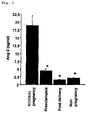
- Fig. 1 shows the angiopoietin-2 concentration (serum Ang-2 concentration) of each subject's serum sample (among the normal pregnancy group, the toxemia group, the non-pregnancy group, the group within one week post partum) obtained from the above results.
- the vertical axis represents the angiopoietin-2 concentration (unit: ng/ml) in serum.
- "Normal pregnancy” indicates the normal pregnancy group (healthy group) in Fig. 1
- Preeclampsia indicates the toxemia group in Fig. 1
- Post delivery indicates the group within one week post partum in Fig. 1
- Non-pregnancy indicates the non-pregnancy group in Fig. 1.
- the serum Ang-2 concentrations of the normal pregnancy group were 18.9 ⁇ 3.2 ng/ml, and significantly higher as compared with the serum Ang-2 concentrations (2.1 ⁇ 0.2 ng/ml) of the non-pregnancy group (Non-pregnancy).
- the serum Ang-2 concentrations of the toxemia group (Preeclampsia) were 4.5 ⁇ 0.6 ng/ml, and remarkably low as compared with the serum Ang-2 concentrations (18.9 ⁇ 3.2 ng/ml, p ⁇ 0.0001) of the normal pregnancy group (Normal pregnancy).
- the serum Ang-2 concentrations of the group within one week post partum (Post delivery) showed low values to the same extent as in the non-pregnancy group regardless of the normal pregnancy and the pregnancy toxemia.
- the serum creatinine and the creatinine clearance of the serum sample of each subject were measured in accordance with the conventional method.
- Daily urine was obtained (24-hour urine collection) from each subject, and a daily amount of protein was measured in accordance with the conventional method.
- Two specimens of each sample were measured (duplicated), a statistical analysis (Software "StatView” (trademark) made by Abacus Concepts was used.) is conducted based on each mean value.
- a method of measuring the serum creatinine, the creatinine clearance, and the amount of daily urinary protein may be based on, for example, " Tumstatin peptide, an inhibitor of angiogenesis, prevents glomerular hypertrophy in the early stage of diabetic nephropathy", presented by Yamamoto, Y., Maeshima, Y., Kitayama, H., Kitamura, S., Takazawa, Y., Sugiyama, H., Yamasaki, Y., and Makino, H. in Diabetes, Vol. 53, p.p. 1831-1840, 2004 . Table 1 shows the results. All values are indicated with a mean value ⁇ a standard error.
- the unit of creatinine clearance is ml/min
- the unit of amount of daily urinary protein is g/day.
- the mean blood pressure of the toxemia group indicated significantly higher values than the mean blood pressure of the normal pregnancy group.
- the values of the serum creatinine and the creatinine clearance, which are the parameters of renal functions, were within the normal range, but the amount of daily urinary protein was as high as approximately 3g.
- Kruskal-Wallice Kruskal-Wallice test
- Scheffe's method Schoffe's test
- Table 1 The serum angiopoietin-2 concentrations.
- Software "StatView” (trademark) made by Abacus Concepts was used for statistical analysis, and a correlation between two groups was calculated using the Spearman's test.
- the serum angiopoietin-2 concentrations of the toxemia group were lower as compared with the serum angiopoietin-2 concentrations of the normal pregnancy group (healthy group), which was statistically judged to be significant with p ⁇ 0.05.
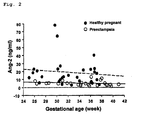
- Fig. 2 shows a relationship between the serum angiopoietin-2 concentrations (serum Ang-2 concentrations) and the gestational age (week) in the normal pregnancy group and the toxemia group.
- Fig. 3 shows a relationship between the serum Ang-2 concentrations and the mean blood pressure in the normal pregnancy group.
- Fig. 4 shows a relationship between the serum Ang-2 concentrations and the amount of daily urinary protein in the toxemia group.
- Fig. 2 is a graph in which the horizontal axis represents the gestational age (unit: week), and the vertical axis represents the serum angiopoietin-2 concentration (serum Ang-2 concentration, unit: ng/ml) . As seen in Fig.
- Fig. 3 is a graph in which the horizontal axis represents the mean blood pressure (MBP, unit: mmHg), and the vertical axis represents the serum angiopoietin-2 concentration (serum Ang-2 concentration, unit: ng/ml). As seen in Fig.
- the serum Ang-2 concentrations (normal pregnancy serum Ang-2 concentrations) of the normally pregnant women markedly increase as compared with the serum Ang-2 concentrations of the nonpregnant women.
- the serum Ang-2 concentrations of the women suffering from the pregnancy toxemia do not increase, but show extremely lower values as compared with the normal pregnancy serum Ang-2 concentrations. For this reason, it is considered that the presence or absence of the onset of pregnancy toxemia can be determined by measuring a pregnant women's serum Ang-2 concentration and comparing the measured concentration with the normal pregnancy serum Ang-2 concentration (normal level).
- the serum Ang-2 concentration and the amount of urinary protein show the significant negative correlation, which suggests that Ang-2 participates in the maintenance of the glomerular filtration barrier during pregnancy. Further, to judge the future onset risk of pregnancy toxemia, it is considered that the future onset risk of pregnancy toxemia can be judged by measuring the concentration of angiopoietin-2 in serum (body fluid) when clinical data (amount of urinary protein, mean blood pressure, and the like) does not suggest the onset of pregnancy toxemia, and then comparing the measured concentration with the normal pregnancy serum Ang-2 concentration (normal level).
- the present method described in the examples is a method of examining pregnancy toxemia (first present method) intended for pregnant mammals (humans), characterized by measuring the concentration of angiopoietin-2 in the body fluid (serum), and comparing the angiopoietin-2 concentration obtained in the measurement with the normal level (18.9 ⁇ 3.2 ng/ml of the healthy group). Then, the current or future onset of pregnancy toxemia is judged when the angiopoietin-2 concentration obtained by the measurement is lower than the normal level (18.9 ⁇ 3.2 ng/ml of the healthy group.
- the present method described in the examples is a method of detecting the onset of pregnancy toxemia (second present method) intended for the pregnant mammals (humans), comprising: the measurement step of measuring the angiopoietin-2 concentration in the body fluid (serum); the comparison step of comparing the angiopoietin-2 concentration obtained in the measurement step with the normal level (18.
- the judgment step of determining the presence or absence of the onset risk of pregnancy toxemia based on the result of the comparison step (judgment step of determining the current or future onset of pregnancy toxemia).
- the current or future onset of pregnancy toxemia is judged in the judgment step in the case where the angiopoietin-2 concentration obtained in the measurement step is lower (The serum angiopoietin-2 concentration of the toxemia group is 4.5 ⁇ 0.6 ng/ml) than the normal level (18.9 ⁇ 3.2 ng/ml of the healthy group).
- angiopoietin-2 concentration in pregnant woman's serum when the angiopoietin-2 concentration in pregnant woman's serum is measured, it can be judged that a pregnant woman whose angiopoietin-2 concentration in serum is less than 8 ng/ml currently contracts the pregnancy toxemia or has a high risk of contracting the pregnancy toxemia in the future, and it can also be determined that a pregnant woman whose angiopoietin-2 concentration in serum is less than 6 ng/ml currently contracts the pregnancy toxemia or has an extremely high risk of contracting the pregnancy toxemia in the future.
- the concentration measurement (measurement step) of angiopoietin-2 in the body fluid (serum) is the measurement step using the ELISA method intended for the mammals (humans) after 20 weeks of pregnancy.
- the reagent containing the reagent for measuring the concentration of angiopoietin-2 in the body fluid like the kit used here can be used as a reagent for the detection of pregnancy toxemia.
Landscapes
- Life Sciences & Earth Sciences (AREA)
- Health & Medical Sciences (AREA)
- Engineering & Computer Science (AREA)
- Molecular Biology (AREA)
- Chemical & Material Sciences (AREA)
- Biomedical Technology (AREA)
- Urology & Nephrology (AREA)
- Hematology (AREA)
- Immunology (AREA)
- Biotechnology (AREA)
- Microbiology (AREA)
- Cell Biology (AREA)
- Proteomics, Peptides & Aminoacids (AREA)
- Food Science & Technology (AREA)
- Medicinal Chemistry (AREA)
- Physics & Mathematics (AREA)
- Analytical Chemistry (AREA)
- Biochemistry (AREA)
- General Health & Medical Sciences (AREA)
- General Physics & Mathematics (AREA)
- Pathology (AREA)
- Investigating Or Analysing Biological Materials (AREA)
Abstract
It is intended to provide a method of detecting the onset of pregnancy toxemia whereby the onset risk of pregnancy toxemia can be adequately evaluated. Namely, a method of detecting the onset of pregnancy toxemia in a pregnant mammal which comprises the measurement step of measuring the concentration of angiopoietin-2 in a body fluid, the comparison step of comparing the angiopoietin-2 concentration obtained in the above measurement step with a normal level, and the judgment step of judging the presence or absence of the onset risk of pregnancy toxemia based on the results of the above comparison step. In the judgment step, it may be considered that the patient has a risk of the onset of pregnancy toxemia in the case where the angiopoietin-2 concentration obtained in the measurement step is lower than the normal level.
Description
- The present invention relates to a method of examining pregnancy toxemia, and more specifically to a method of examining the pregnancy toxemia allowing evaluating with ease and sufficient accuracy whether or not a pregnant woman currently suffers from the pregnancy toxemia, or whether or not the pregnant woman has an onset risk of the pregnancy toxemia in the future. In the present invention, a case in which a pregnant woman currently suffers from the pregnancy toxemia, and a case in which the pregnant woman has a future onset risk of pregnancy toxemia are generically referred to as "there is an onset risk of the pregnancy toxemia". The "method of examining the pregnancy toxemia" according to the present invention is a method of examining this onset risk of the pregnancy toxemia.
- The pregnancy toxemia is one of clinically important complications appearing during the pregnancy, induces hypertension, proteinuria, edema, and the like, and has an adverse effect on the mother's body and/or neonate.
For example, a method of evaluating the amount of fat in the mother's body and associating the evaluated amount of fat with the onset risk of pregnancy toxemia is known as a method of appreciating the onset risk of pregnancy toxemia (for example, refer to Patent documents 1 and 2) .
Patent document 1 discloses ultrasonic diagnostic equipment used for a periodic medical examination during the pregnancy for appreciating the "onset risk of the pregnancy toxemia by healthcare in which a change in a pregnant woman's body fat ratio or weight is associated with the growth curve of the fetus" (That is, the future onset risk of pregnancy toxemia is evaluated.).
Patent document 2 discloses the judgment of the onset of pregnancy toxemia by using "a healthcare apparatus for pregnant women comprising: input means for inputting personal data on a pregnant woman, such as height and weight, arithmetic means for calculating the amount of body water and the amount of fat by a bioelectric impedance analysis, standard setting means provided with standard values according to the week of the pregnancy, comparison means for comparing the results of operations by the arithmetic means with the standard values, and judgment means for determining a pregnant woman's health condition based on the comparison results of the comparison means (claim 1), wherein the "judgment means determines the onset of pregnancy toxemia" (claim 3) (That is, the current onset of the pregnancy toxemia is evaluated.). - [Patent Reference 1]
Japanese Unexamined Patent Application Publication No. 2002-604
[Patent Reference 2]
Japanese Unexamined Patent Application Publication No. 2003-33356 - However, the inventions disclosed in these
Patent documents 1 and 2 evaluate the onset risk of pregnancy toxemia from the amount of fat in the mother's body. Although a certain relationship is observed between the two, the mother's body with a large amount of fat does not always develop the pregnancy toxemia, and the mother's body with a small amount of fat is not always free from the onset of the pregnancy toxemia. Thus, there has been no method of adequately evaluating the onset risk of the pregnancy toxemia so far. - Therefore, it is an objective of the present invention to provide a method of examining the pregnancy toxemia to allow adequately evaluating the onset risk of the pregnancy toxemia.
- The method of examining the pregnancy toxemia according to the present invention (a method of evaluating an onset risk of pregnancy toxemia, that is, a method of evaluating at least one of the current onset of the pregnancy toxemia and the future onset risk of pregnancy toxemia) is a method of examining the pregnancy toxemia (hereinafter referred to as "first present method") characterized by measuring the concentration of angiopoietin-2 in the body fluid of a pregnant mammal, and comparing the concentration of angiopoietin-2 obtained in the measurement with that at a normal level.
The first present method includes the following modes (1-1) to (1-4). - (1-1) The above-mentioned method of examining the pregnancy toxemia wherein the concentration at the normal level is 6 ng/ml.
- (1-2) The above-mentionedmethod of examining the pregnancy toxemia wherein the body fluid is blood.
- (1-3) The above-mentioned method of examining the pregnancy toxemia wherein the measurement is made for a mammal after 20 weeks of the pregnancy.
- (1-4) The above-mentionedmethod of examining the pregnancy toxemia wherein the measurement is made by the ELISA method.
- Further, the method of examining the pregnancy toxemia according to the present invention (a method of evaluating the onset risk of the pregnancy toxemia, that is, a method of evaluating at least one of the current onset of the pregnancy toxemia and the future onset risk of the pregnancy toxemia) is a method of detecting the onset of the pregnancy toxemia (hereinafter referred to as "second present method") comprising: a measurement step of measuring the concentration of angiopoietin-2 in the body fluid of a pregnant mammal, a comparison step of comparing the concentration of angiopoietin-2 obtained in the measurement step with that at a normal level, and a judgment step of determining the presence or absence of the onset risk of the pregnancy toxemia based on a result in the comparison step.
The second present method includes the following modes (2-1) to (2-4). - (2-1) The above-mentioned method of detecting the onset of the pregnancy toxemia is a method of determining that there is the onset risk of the pregnancy toxemia when the concentrationofangiopoietin-2obtainedinthemeasurement step is lower than the concentration at the normal level in the judgment step.
- (2-2) The above-mentioned method of detecting the onset of the pregnancy toxemia wherein the body fluid is blood.
- (2-3) The above-mentioned method of detecting the onset of the pregnancy toxemia wherein the measurement step is a measuring step which applies to a mammal in the pregnancy of equal to or more than 20 weeks.
- (2-4) The above-mentioned method of detecting the onset of the pregnancy toxemia wherein the measurement step is a step in which the ELISA method is utilized.
- Further, the present invention provides a reagent for the detection of pregnancy toxemia (hereinafter referred to as "present reagent") used for detecting the onset of the pregnancy toxemia. That is, the present reagent is a reagent for the detection of the pregnancy toxemia containing a reagent for measuring the concentration of angiopoietin-2 in the body fluid.
The present reagent can be utilized for detecting the pregnancy toxemia. -
- Fig. 1 is a graph showing the angiopoietin-2 concentration (serum Ang-2 concentration) of each subject's serum sample (normal pregnancy group, toxemia group (preeclampsia), non-pregnancy group, group within one week post partum (post delivery)).
- Fig. 2 is a graph showing a relationship between the serum angiopoietin-2 concentration (serum Ang-2 concentration) of the normal pregnancy group (black circle) and the toxemia group (white circle), and gestational age (week) .
- Fig. 3 is a graph showing a relationship between the mean blood pressure and the serum angiopoietin-2 concentration (serum Ang-2 concentration) of the normal pregnancy group.
- Fig. 4 is a graph showing a relationship between the amount of daily urinary protein and the serum angiopoietin-2 concentration (serum Ang-2 concentration) of the toxemia group.
- The first present method is a method of examining pregnancy toxemia intended for a pregnant mammal, characterized by measuring a concentration of angiopoietin-2 in a body fluid, and comparing the concentration of angiopoietin-2 obtained in the measurement with a concentration at the normal level.
The second present method is a method of detecting the onset of pregnancy toxemia intended for a pregnant mammal, comprising: a measurement step of measuring a concentration of angiopoietin-2 (angiopoietin-2) in a body fluid, a comparison step of comparing the concentration of angiopoietin-2 obtained in the measurement step with a concentration at a normal level, and a judgment step of determining either presence or absence of the onset risk of the pregnancy toxemia based on a result of the comparison step. - The mammal covered by the present invention is not particularly limited as long as a difference in the concentration of angiopoietin-2 in the body fluid is rendered according to whether or not the mammal currently suffers from the pregnancy toxemia, or whether or not there is presence or absence of the future onset risk of the pregnancy toxemia. The mammal may be, for example, the human, swine, horse, bovine, sheep, goat, dog, cat, rabbit, hamster, rat, or mouse.
The body fluid may be exemplified as blood or urine in which the concentration of angiopoietin-2 is measured in the concentration measurement (measurement step) of angiopoietin-2 in the body fluid. The body fluid is preferably blood. The concentration of angiopoietin-2 in blood can be measured by utilizing serum or plasma as a measurement sample. - The gestational age of the "pregnant mammal" covered by the present method is not particularly limited as long as it is a period in which a significant difference in the angiopoietin-2 concentrations between a normal pregnant female and a sufferer of the pregnancy toxemia is rendered. In the case of measurement (measurement step) of the concentration of angiopoietin-2 in human serum (body fluid) during the pregnancy, the time of commencement is preferably after 15 weeks, more preferably after 20 weeks, and most preferably after 25 weeks, for example, and the time of termination is preferably before 40 weeks, and more preferably before 38 weeks.
When the concentration of angiopoietin-2 in the body fluid is measured (measurement step) at an early stage, in particular after 20 weeks (for example, after 20 weeks and before 25 weeks, after 20 weeks and before 30 weeks, or the like), the onset of the pregnancy toxemia can be found at the early stage, or the future onset risk of the pregnancy toxemia can be recognized at the early stage. Therefore, the pregnancy toxemia can be treated at the early stage (for example, cautions in a daily life, instructions, visitation to a medical institution, and the like), which may be useful for preventing the symptom from becoming severer such that the improvement of prognosis may also be achieved. - The concentration of angiopoietin-2 in the body fluid of a pregnant female that does not currently suffering from the pregnancy toxemia and will not suffer from the pregnancy toxemia in the future (having no medical histories such as a renal disease and essential hypertension) may be adopted as the concentration at the normal level (the concentration at the normal level in the comparison step) with which the concentration of angiopoietin-2 obtained in the measurement (the measurement step) is compared. For example, the concentration of angiopoietin-2 in the serum (body fluid) of the woman during the pregnancy who is not currently suffering from the pregnancy toxemia and will not suffer from the pregnancy toxemia in the future is approximately 8.0 ng/ml to 30.0 ng/ml (an example of the concentration in the normal pregnancy).
In addition, the pregnancy toxemia is described in "Information to members: Definition and classification of pregnancy-induced hypertension syndrome", Jpn, J. Obst. Gyn., p.p. 3-4, Vol. 56, No. 9 (Sep. 16, 2004), published by Japan Society of Obstetrics and Gynecology (Chairman: Shingo Fujii) on August 9, 2004. Specifically, it refers to either a case in which hypertension is observed in a period from 20 weeks of pregnancy to 12 weeks post partum or a case in which proteinuria accompanies the hypertension, as long as both of the foregoing cases are not induced by accidental complications. Generally, the pregnancy toxemia is divided into a slight illness and a serious illness, and the definitions of these slight illness and serious illness are as follows, respectively. -
- (1) Hypertension: a case in which blood pressure corresponds to either the following (a) or (b):
- (a) Systolic pressure is 140 mmHg or more and less than 160 mmHg.
- (b) Diastolic pressure is 90 mmHg or more and less than 110 mmHg.
- (2) Proteinuria:
It is basically determined by the determination method with 24-hour urine. A case in which it is 300 mg/day or more and less than 2 g/day. -
- (1) Hypertension: a case in which blood pressure corresponds to either the following (c) or (d):
- (c) Systolic pressure is 160 mmHg or more.
- (d) Diastolic pressure is 110 mmHg or more.
- (2) Proteinuria:
- It is basically determined by the determination method with 24-hour urine. A case in which it is 2 g/day or more. A case in which it is consecutively 3+ (300 mg/dl) or more in a plurality of fresh urine analyses when casual urine is used.
The "method of examining pregnancy toxemia" according to the present invention is utilized for at least either detecting the current onset of the pregnancy toxemia or the future onset risk of the pregnancy toxemia (Needless to say that it may be utilized for both cases.).
- It is basically determined by the determination method with 24-hour urine. A case in which it is 2 g/day or more. A case in which it is consecutively 3+ (300 mg/dl) or more in a plurality of fresh urine analyses when casual urine is used.
- Determining either presence or absence of the onset risk of the pregnancy toxemia (judgment step) based on the result of the comparison of the concentration of angiopoietin-2 obtained in the measurement with that at the normal level (comparison step) is not limited in any way as long as the (current) onset of the pregnancy toxemia or the future onset risk is determined based on the comparison result. For example, in the case of determining either presence or absence of the (current) onset of the pregnancy toxemia, the (current) onset of the pregnancy toxemia is determined to be present when the concentration of angiopoietin-2 in the body fluid indicates the pregnancy toxemia while clinical data (the amount of urinary protein which is the representative clinical data of the pregnancy toxemia, or the like) suggests the onset of the pregnancy toxemia. Further, for example, in the case of determining the future onset risk of the pregnancy toxemia, the future onset risk of the pregnancy toxemia is determined to exist when the concentration of angiopoietin-2 in the body fluid indicates the pregnancy toxemia while clinical data (the amount of urinary protein which is the representative clinical data of pregnancy toxemia, or the like) does not suggest the onset of pregnancy toxemia.
Further, according to the research results by the present inventors, the concentration of angiopoietin-2 in the body fluids of a pregnant female that was currently suffering from the pregnancy toxemia or would suffer from the pregnancy toxemia in the future, was lower than the concentration of angiopoietin-2 in the body fluid of a pregnant female that was not currently suffering from the pregnancy toxemia and would not suffer from the pregnancy toxemia in the future. For this reason, in determining either presence or absence of the onset risk of the pregnancy toxemia (judgment step) based on the result of the comparison (comparison step) of the concentration of angiopoietin-2 obtained in the measurement with the concentration at the normal level, the determination of the current or future onset of the pregnancy toxemia may be made when the concentration of angiopoietin-2 obtained in the measurement (measurement step) is lower than the concentration at the normal level. - The method of measuring the concentration of angiopoietin-2 in the body fluid (measurement step) is not limited in any way, and any method may be adopted as long as the method allows measuring the concentration of angiopoietin-2 in the body fluid. For example, the ELISA method (Enzyme-Linked Immunosorbent Assay), the Western blot technique, the radioimmunoassay (RIA) method, or the like may be used.
Above all, when the ELISA method is used, the measurement can be easily made based on commercially-available measurement kits, procedures therefor, and the like. It is possible to conduct a quantitative evaluation without requiring the handling of radioactive substances, and only a small amount of sample is required (approximately 200 microliter, for example, when the concentration of angiopoietin-2 in serum is measured). Thus, the ELISA method has advantages. - The present reagent is a reagent for the detection of the pregnancy toxemia including a reagent for measuring the concentration of angiopoietin-2 in the body fluid.
As the reagent (including also a reagent in which a plurality of kinds of reagents are combined) for measuring the concentration of angiopoietin-2 in the body fluid, any reagent may be adopted without being limited hereto in any way as long as the reagent allows to measure the concentration of angiopoietin-2 in the body fluid. The reagent may be a reagent (or the combination of reagents) for conducting any one of the ELISA method (Enzyme-Linked Immunosorbent Assay), the Western blot technique, the radioimmunoassay (RIA: Radioimmunoassay) method, and the like utilized for the method for measuring the concentration of angiopoietin-2 in the body fluid (measurement step) according to the present method as mentioned above.
For example, when the concentration of angiopoietin-2 in the body fluid is measured according to the ELISA method, the present reagent may contain a reagent of a mouse monoclonal anti-angiopoietin-2 antibody, recombinant human-derived angiopoietin-2, and a horseradish peroxidase-labeled mouse monoclonal anti-angiopoietin-2 antibody. In addition, "Quantikine human Angiopoietin-2 kit" (trademark) of R&D Systems contains such reagents and is commercially available.
The present reagent of the kind can be utilized for performing the measurement step of the present method, and it can be provided for detecting the pregnancy toxemia in accordance with the present method (It is utilized to determine whether either presence or absence of the current onset of the pregnancy toxemia or to evaluate the future onset risk of the pregnancy toxemia.). - In the following, the present invention is described in more detail based on examples. However, the present invention is not limited to these examples.
- The following experiments were conducted for 29 healthy pregnant women (normal pregnancy group (healthy group)), 26 pregnancy toxemia patients (toxemia group), 20 healthy non-pregnant women (non-pregnancy group), and 11 women within one week post partum (2 cases of pregnancy toxemia, and 9 cases of healthy group) (group within one week post partum). All these subjects are Japanese women aged from 17 to 41 without a medical history of disease such as a renal disease or essential hypertension. The healthy pregnant women and the pregnancy toxemia patients were in 25 to 40 weeks of gestational age.
In addition, the pregnant women whose systolic pressure was 140 mmHg or more, diastolic pressure was 90 mmHg or more, and the amount of urinary protein during 24-hour urine collection was 300 mg/day or more were defined as women suffering from the pregnancy toxemia and pregnant women who did not satisfy the definition were defined as healthy pregnant women. - Blood was obtained from above each subject (among the normal pregnancy group, the toxemia group, the non-pregnancy group, and the group within one week post partum), and serum was prepared in accordance with the conventional method. As for the pregnancy toxemia patients (among the toxemia group), blood obtained immediately after the onset of pregnancy toxemia was used. The prepared serum was stored at -80 degrees C before use and dissolved under a normal room temperature at the time of use.
- The angiopoietin-2 concentration (serum Ang-2 concentration) was measured in the serum sample of each subject (among the normal pregnancy group, the toxemia group, the non-pregnancy group, and the group within one week post partum) prepared as described above. The measurement of the serum Ang-2 concentration was made by using an ELISA kit ("Quantikine Human Angiopoietin-2 kit" (trademark)) (hereinafter referred to as "utilized kit") of R&D Systems and in accordance with the manual thereof.
- The above ELISA kit (utilized kit) includes the following reagents and the like.
- (a) "Angiopoietin-2 Microplate": a polystyrene microtiter tray having 96 wells coated with a mouse monoclonal antibody for angiopoietin-2.
- (b) "Angiopoietin-2 Conjugate": a reagent containing a mouse monoclonal antibody for angiopoietin-2 combined with horseradish peroxidase (containing a preservative).
- (c) "Angiopoietin-2 standard": a reagent (30 ng/ml) containing recombinant human-derived angiopoietin-2 which is a specimen in buffer protein (containing a preservative) .
- (d) "Assay Diluent RD1-76": a diluted solution for measurement containing blue dye and buffer protein (containing a preservative).
- (e) "Calibrator Diluent RD5-5": a diluted solution containing buffer protein (containing a preservative).
- (f) "Wash buffer concentrate": a 25 time concentrated solution of a buffering surfactant (containing a preservative).
- (g) "Color Reagent A": stabilized hydrogen peroxide.
- (h) "Color Reagent B": stabilized chromogen (tetramethyl benzidine).
- (i)"Stop Solution": 2N sulfuric acid.
- (j) "Plate Covers": plate covers.
- The serum angiopoietin-2 concentration (serum Ang-2 concentration) was measured in accordance with the following steps.
- 1. "Assay Diluent RD1-76" was added to each well of the "Angiopoietin-2 Microplate" by 100 µl.
- 2. The serum sample (among the normal pregnancy group, the toxemia group, the non-pregnancy group, the group within one week post partum) or the standard solution of angiopoietin-2 was added to each well by 50 µl. Then the plate was covered with the "Plate Covers", and a reaction was caused for 2 hours while shaking the plate horizontally at a room temperature (500 rpm ± 50 rpm). The serum sample was diluted 5 times by using "Calibrator Diluent RD5-5" before use. Eight kinds of dilution series (0 pg/ml, 46.9 pg/ml, 93.7 pg/ml, 187.5 pg/ml, 375 pg/ml, 750 pg/ml, 1500 pg/ml, and 3000 pg/ml) prepared by diluting "Angiopoietin-2 standard" (30 ng/ml) with "Calibrator Diluent RD 5-5" were used as the standard solution of angiopoietin-2.
- 3. After reaction, the resultant reaction solution was sucked and removed from each well, and each well was washed with a cleaning liquid (400 µl/well). This operation was repeated 3 times. The cleaning liquid was obtained by diluting "Wash buffer concentrate" (×25 concentrated solution) 25 times with deionized water or distilled water. After washing, the cleaning liquid was removed thoroughly from each well, and moisture was removed with a paper towel.
- 4. Then, 200 µl of "Angiopoietin-2 Conjugate" was added to each well. The plate was covered with "Plate Covers", and a reaction was caused for 2 hours while shaking the plate horizontally at the room temperature (500 rpm ± 50 rpm).
- 5. After reaction, each well was washed similar to the operation of the above item 3.
- 6. After washing, 200 µl of substrate solution was added to each well, and reacted for 30 minutes at the room temperature while shielding each well from light. The substrate solution was prepared by mixing "Color Reagent A" and "Color Reagent B" of the same amount (The substrate solution was used within 15 minutes after mixing.).
- 7. After reaction, 50 µl of "Stop Solution" was added to each well.
- 8. Within 30 minutes after the addition of "Stop Solution", the absorbancy of the resultant reaction solution of each well was measured at a wavelength of 450 nm, and absorbancy at a wavelength of 540 nm or 570 nm was deducted from the measured value. Here, an absorption spectrophotometer (measurement plate reader) with "Model 550 microplate reader" (trademark) made by BIO-RAD Laboratories was used for measuring the absorbancy. Measurements were made using dual wavelengths (450 nm and 570 nm) while switching on a shaker.
- A calibration curve was prepared based on results obtained from the standard solution of angiopoietin-2, and the angiopoietin-2 concentration of each subject's serum sample (among the normal pregnancy group, the toxemia group, the non-pregnancy group, the group within one week post partum) was determined using the calibration curve. Two specimens of each sample were measured (duplicated), and a statistical analysis (Software "StatView" (trademark) made by Abacus Concepts was used.) was conducted based on each mean value. The minimum mean detection concentration of angiopoietin-2 is 8.29 ng/ml, and common coefficient deviations between assays and in the assay were 6.9% and 10.4% or less, respectively.
- Fig. 1 shows the angiopoietin-2 concentration (serum Ang-2 concentration) of each subject's serum sample (among the normal pregnancy group, the toxemia group, the non-pregnancy group, the group within one week post partum) obtained from the above results. In Fig. 1, the vertical axis represents the angiopoietin-2 concentration (unit: ng/ml) in serum. In Fig. 1, "Normal pregnancy" indicates the normal pregnancy group (healthy group) in Fig. 1, "Preeclampsia" indicates the toxemia group in Fig. 1, "Post delivery" indicates the group within one week post partum in Fig. 1, and "Non-pregnancy" indicates the non-pregnancy group in Fig. 1.
As seen in Fig. 1, the serum Ang-2 concentrations of the normal pregnancy group (Normal pregnancy) were 18.9 ± 3.2 ng/ml, and significantly higher as compared with the serum Ang-2 concentrations (2.1 ± 0.2 ng/ml) of the non-pregnancy group (Non-pregnancy). On the other hand, the serum Ang-2 concentrations of the toxemia group (Preeclampsia) were 4.5 ± 0.6 ng/ml, and remarkably low as compared with the serum Ang-2 concentrations (18.9 ± 3.2 ng/ml, p < 0.0001) of the normal pregnancy group (Normal pregnancy). The serum Ang-2 concentrations of the group within one week post partum (Post delivery) showed low values to the same extent as in the non-pregnancy group regardless of the normal pregnancy and the pregnancy toxemia. - The serum creatinine and the creatinine clearance of the serum sample of each subject (among the normal pregnancy group, the toxemia group, the non-pregnancy group, and the group within one week post partum) prepared as described above were measured in accordance with the conventional method. Daily urine was obtained (24-hour urine collection) from each subject, and a daily amount of protein was measured in accordance with the conventional method. Two specimens of each sample were measured (duplicated), a statistical analysis (Software "StatView" (trademark) made by Abacus Concepts was used.) is conducted based on each mean value.
A method of measuring the serum creatinine, the creatinine clearance, and the amount of daily urinary protein may be based on, for example, "Tumstatin peptide, an inhibitor of angiogenesis, prevents glomerular hypertrophy in the early stage of diabetic nephropathy", presented by Yamamoto, Y., Maeshima, Y., Kitayama, H., Kitamura, S., Takazawa, Y., Sugiyama, H., Yamasaki, Y., and Makino, H. in Diabetes, Vol. 53, p.p. 1831-1840, 2004.
Table 1 shows the results. All values are indicated with a mean value ± a standard error. The unit of creatinine clearance is ml/min, and the unit of amount of daily urinary protein is g/day. -
[Table 1] Group Normal pregnancy group (Healthy group) Toxemia group Non-pregnancy group Number of subjects (n) 29 26 20 Mean age 30.5 ± 5.8 31.0 ± 4.5 32.9 ± 4.4 Gestational age (week) 32.0 ± 4.0 34.5 ± 4.2 Mean blood pressure (mmHg) 82.2 ± 8.2 106.6 ± 15.6 (*) N. D. Serum creatinine (mg/dl) N. D. 0.63 ± 0.19 N. D. Creatinine clearance (ml/min) N. D. 91.9 ± 29.1 N. D. Daily urinary protein (g/day) N. D. 2.79 ± 2.81 N. D. (*): P<0.02 vs. Healthy group
N. D.: No applicable data - As shown in Table 1, the mean blood pressure of the toxemia group indicated significantly higher values than the mean blood pressure of the normal pregnancy group. As for the toxemia group, the values of the serum creatinine and the creatinine clearance, which are the parameters of renal functions, were within the normal range, but the amount of daily urinary protein was as high as approximately 3g.
- The method of Kruskal-Wallice (Kruskal-Wallice test) and the Scheffe's method (Scheffe's test) are used (Analyses were conducted using the method of Kruskal-Wallice in the first stage, and the Scheffe' s method in the second stage .) to conduct comparative examination in the group between the clinical parameters (specifically age, pregnancy period (gestational age), mean blood pressure, serum creatinine, creatinine clearance, and daily urinary protein determination) shown in Table 1 and the serum angiopoietin-2 concentrations. Software "StatView" (trademark) made by Abacus Concepts was used for statistical analysis, and a correlation between two groups was calculated using the Spearman's test. The serum angiopoietin-2 concentrations of the toxemia group were lower as compared with the serum angiopoietin-2 concentrations of the normal pregnancy group (healthy group), which was statistically judged to be significant with p < 0.05.
- Fig. 2 shows a relationship between the serum angiopoietin-2 concentrations (serum Ang-2 concentrations) and the gestational age (week) in the normal pregnancy group and the toxemia group. Fig. 3 shows a relationship between the serum Ang-2 concentrations and the mean blood pressure in the normal pregnancy group. Fig. 4 shows a relationship between the serum Ang-2 concentrations and the amount of daily urinary protein in the toxemia group.
Fig. 2 is a graph in which the horizontal axis represents the gestational age (unit: week), and the vertical axis represents the serum angiopoietin-2 concentration (serum Ang-2 concentration, unit: ng/ml) . As seen in Fig. 2, no significant correlation was observed between the serum Ang-2 concentrations of the normal pregnancy group (black circle: "Healthy pregnant") and the toxemia group (white circle: "Preeclampsia") and the gestational age, but the serum Ang-2 concentrations had a tendency to decrease as the gestational age progressed.
Fig. 3 is a graph in which the horizontal axis represents the mean blood pressure (MBP, unit: mmHg), and the vertical axis represents the serum angiopoietin-2 concentration (serum Ang-2 concentration, unit: ng/ml). As seen in Fig. 3, the mean blood pressure of the normal pregnancy group showed a significant positive correlation with the serum Ang-2 concentration (r = 0.469, p = 0.0095), but no correlation was observed in the toxemia group.
Fig. 4 is a graph in which the horizontal axis represents the amount of daily urinary protein (DU-TP, unit: g/day), and the vertical axis the serum angiopoietin-2 concentration (serum Ang-2 concentration, unit: ng/ml). As shown in Fig. 4, the amount of daily urinary protein of the toxemia group showed a significant negative correlation with the serum Ang-2 concentration (r = 0.55, p = 0.0401). As for the toxemia group, no correlation was observed between the renal function parameters (serum creatinine and creatinine clearance) and the serum Ang-2 concentration. - As described above, the serum Ang-2 concentrations (normal pregnancy serum Ang-2 concentrations) of the normally pregnant women markedly increase as compared with the serum Ang-2 concentrations of the nonpregnant women. On the other hand, the serum Ang-2 concentrations of the women suffering from the pregnancy toxemia do not increase, but show extremely lower values as compared with the normal pregnancy serum Ang-2 concentrations. For this reason, it is considered that the presence or absence of the onset of pregnancy toxemia can be determined by measuring a pregnant women's serum Ang-2 concentration and comparing the measured concentration with the normal pregnancy serum Ang-2 concentration (normal level).
Further, according to the above result, the serum Ang-2 concentration and the amount of urinary protein show the significant negative correlation, which suggests that Ang-2 participates in the maintenance of the glomerular filtration barrier during pregnancy.
Further, to judge the future onset risk of pregnancy toxemia, it is considered that the future onset risk of pregnancy toxemia can be judged by measuring the concentration of angiopoietin-2 in serum (body fluid) when clinical data (amount of urinary protein, mean blood pressure, and the like) does not suggest the onset of pregnancy toxemia, and then comparing the measured concentration with the normal pregnancy serum Ang-2 concentration (normal level). - Thus, the present method described in the examples is a method of examining pregnancy toxemia (first present method) intended for pregnant mammals (humans), characterized by measuring the concentration of angiopoietin-2 in the body fluid (serum), and comparing the angiopoietin-2 concentration obtained in the measurement with the normal level (18.9 ± 3.2 ng/ml of the healthy group). Then, the current or future onset of pregnancy toxemia is judged when the angiopoietin-2 concentration obtained by the measurement is lower than the normal level (18.9 ± 3.2 ng/ml of the healthy group. 6 ng/ml or more.) (The serum angiopoietin-2 concentration of the toxemia group is 4.5 ± 0.6 ng/ml.).
Further, the present method described in the examples is a method of detecting the onset of pregnancy toxemia (second present method) intended for the pregnant mammals (humans), comprising: the measurement step of measuring the angiopoietin-2 concentration in the body fluid (serum); the comparison step of comparing the angiopoietin-2 concentration obtained in the measurement step with the normal level (18. 9 ± 3.2 ng/ml of the healthy group); and the judgment step of determining the presence or absence of the onset risk of pregnancy toxemia based on the result of the comparison step (judgment step of determining the current or future onset of pregnancy toxemia). Here, the current or future onset of pregnancy toxemia is judged in the judgment step in the case where the angiopoietin-2 concentration obtained in the measurement step is lower (The serum angiopoietin-2 concentration of the toxemia group is 4.5 ± 0.6 ng/ml) than the normal level (18.9 ± 3.2 ng/ml of the healthy group).
Specifically, here, approximately 77% of the pregnant women whose angiopoietin-2 concentration in serum was less than 8 ng/ml contracted the pregnancy toxemia, and approximately 81% of the pregnant women with the concentration less than 6 ng/ml contracted the pregnancy toxemia. Therefore, for example, when the angiopoietin-2 concentration in pregnant woman's serum is measured, it can be judged that a pregnant woman whose angiopoietin-2 concentration in serum is less than 8 ng/ml currently contracts the pregnancy toxemia or has a high risk of contracting the pregnancy toxemia in the future, and it can also be determined that a pregnant woman whose angiopoietin-2 concentration in serum is less than 6 ng/ml currently contracts the pregnancy toxemia or has an extremely high risk of contracting the pregnancy toxemia in the future.
Here, the concentration measurement (measurement step) of angiopoietin-2 in the body fluid (serum) is the measurement step using the ELISA method intended for the mammals (humans) after 20 weeks of pregnancy.
Also, the reagent containing the reagent for measuring the concentration of angiopoietin-2 in the body fluid like the kit used here can be used as a reagent for the detection of pregnancy toxemia.
Claims (7)
- A method of examining pregnancy toxemia comprising:measuring a concentration of angiopoietin-2 in a body fluid of a pregnant mammal as a subject; andcomparing the concentration of angiopoietin-2 obtained by the measurement with a concentration at a normal level.
- The method of examining the pregnancy toxemia according to claim 1, wherein the concentration at the normal level is 6 ng/ml.
- The method of examining the pregnancy toxemia according to claim 1 or 2, wherein the body fluid is blood.
- The method of examining the pregnancy toxemia according to any one of claims 1 to 3, wherein the measurement is made for the mammal after 20 weeks of the pregnancy.
- The method of examining the pregnancy toxemia according to any one of claims 1 to 4, wherein the measurement is made by the ELISA method.
- A reagent for detecting pregnancy toxemia comprising: a reagent for measuring a concentration of angiopoietin-2 in a body fluid.
- A method for detecting pregnancy toxemia comprising: utilizing the reagent as recited in claim 6.
Applications Claiming Priority (2)
| Application Number | Priority Date | Filing Date | Title |
|---|---|---|---|
| JP2004376343 | 2004-12-27 | ||
| PCT/JP2005/023767 WO2006070734A1 (en) | 2004-12-27 | 2005-12-26 | Method of examining pregnancy toxemia |
Publications (2)
| Publication Number | Publication Date |
|---|---|
| EP1835286A1 true EP1835286A1 (en) | 2007-09-19 |
| EP1835286A4 EP1835286A4 (en) | 2009-06-03 |
Family
ID=36614851
Family Applications (1)
| Application Number | Title | Priority Date | Filing Date |
|---|---|---|---|
| EP05819438A Withdrawn EP1835286A4 (en) | 2004-12-27 | 2005-12-26 | METHOD OF DETECTING GRAVID TOXEMIC |
Country Status (6)
| Country | Link |
|---|---|
| US (1) | US7759080B2 (en) |
| EP (1) | EP1835286A4 (en) |
| JP (1) | JP4734654B2 (en) |
| CN (1) | CN101091117A (en) |
| CA (1) | CA2592527A1 (en) |
| WO (1) | WO2006070734A1 (en) |
Families Citing this family (3)
| Publication number | Priority date | Publication date | Assignee | Title |
|---|---|---|---|---|
| JP5850337B2 (en) | 2012-09-06 | 2016-02-03 | 住友電装株式会社 | connector |
| KR102328327B1 (en) | 2014-09-26 | 2021-11-22 | 소마로직, 인크. | Cardiovascular risk event prediction and uses thereof |
| JP7744676B2 (en) * | 2021-11-25 | 2025-09-26 | 国立大学法人山口大学 | Pregnancy-induced hypertension prediction support system, program, and method |
Family Cites Families (3)
| Publication number | Priority date | Publication date | Assignee | Title |
|---|---|---|---|---|
| JPH10239311A (en) * | 1996-12-25 | 1998-09-11 | Idemitsu Kosan Co Ltd | Abnormal labor detection method and detection reagent |
| US7521053B2 (en) * | 2001-10-11 | 2009-04-21 | Amgen Inc. | Angiopoietin-2 specific binding agents |
| US20050255114A1 (en) * | 2003-04-07 | 2005-11-17 | Nuvelo, Inc. | Methods and diagnosis for the treatment of preeclampsia |
-
2005
- 2005-12-26 CA CA002592527A patent/CA2592527A1/en not_active Abandoned
- 2005-12-26 US US11/722,840 patent/US7759080B2/en not_active Expired - Fee Related
- 2005-12-26 WO PCT/JP2005/023767 patent/WO2006070734A1/en not_active Ceased
- 2005-12-26 JP JP2006550755A patent/JP4734654B2/en not_active Expired - Lifetime
- 2005-12-26 EP EP05819438A patent/EP1835286A4/en not_active Withdrawn
- 2005-12-26 CN CNA2005800449471A patent/CN101091117A/en active Pending
Also Published As
| Publication number | Publication date |
|---|---|
| CN101091117A (en) | 2007-12-19 |
| WO2006070734A1 (en) | 2006-07-06 |
| US7759080B2 (en) | 2010-07-20 |
| CA2592527A1 (en) | 2006-07-06 |
| EP1835286A4 (en) | 2009-06-03 |
| JP4734654B2 (en) | 2011-07-27 |
| US20090111130A1 (en) | 2009-04-30 |
| JPWO2006070734A1 (en) | 2008-06-12 |
Similar Documents
| Publication | Publication Date | Title |
|---|---|---|
| EP2434283B1 (en) | Diagnosis of preeclampsia | |
| Vaisbuch et al. | Circulating angiogenic and antiangiogenic factors in women with eclampsia | |
| KR20150023063A (en) | MEANS AND METHODS APPLYING sFlt-1/PlGF OR ENDOGLIN/PlGF RATIO TO RULE-OUT ONSET OF PREECLAMPSIA WITHIN A CERTAIN TIME PERIOD | |
| Stevens et al. | Rule out acute kidney injury in the emergency department with a urinary dipstick | |
| Perea et al. | Utility of galectin-3 in predicting post-infarct remodeling after acute myocardial infarction based on extracellular volume fraction mapping | |
| Singh et al. | An evaluation of applicability of salivary uric acid measurement in preeclampsia and normal pregnancy and its correlation with serum uric acid | |
| Barneo-Caragol et al. | Increased serum strontium levels and altered oxidative stress status in early-onset preeclampsia | |
| Kamel et al. | The potential use of urinary transferrin, urinary adiponectin, urinary Retinol Binding Protein, and serum zinc alpha 2 glycoprotein levels as novel biomarkers for early diagnosis of diabetic nephropathy: a case-control study | |
| Moriya et al. | Arteriolar hyalinosis is related to rapid GFR decline and long-standing GFR changes observed on renal biopsies in normo-microalbuminuric type 2 diabetic patients | |
| MA Aziz | Correlation of urine biomarkers: microalbuminuria and spot urine protein among diabetic patients. application of spot urine protein in diabetic kidney disease, nephropathy, proteinuria estimation, diagnosing and monitoring | |
| Yahya et al. | Kidney injury molecule-1 and cystatin C as early biomarkers for renal dysfunction in Iraqi type 2 diabetes mellitus patients | |
| Galazios et al. | Umbilical cord serum vascular endothelial growth factor (VEGF) levels in normal pregnancies and in pregnancies complicated by preterm delivery or pre-eclampsia | |
| MX2012011007A (en) | Hbf and a1m as early stage markers for preeclampsia. | |
| Gangaram et al. | Accuracy of the spot urinary microalbumin: creatinine ratio and visual dipsticks in hypertensive pregnant women | |
| US7759080B2 (en) | Method of determining pregnancy toxemia | |
| Harjutsalo et al. | Comparison of serum creatinine–and cystatin C–based eGFR at baseline and their prediction of incident moderate albuminuria in individuals with type 1 diabetes | |
| Gulati | Raised serum TNF-alpha, blood sugar and uric acid in preeclampsia in third trimester of pregnancy. | |
| Higby et al. | A comparison between two screening methods for detection of microproteinuria | |
| US20170122959A1 (en) | Early placenta insulin-like peptide (pro-epil) | |
| Oluwole et al. | Analysis of serum placental growth factor levels in preeclamptic and normotensive pregnant women in Lagos, Nigeria: a worthwhile screening tool? | |
| Qin et al. | Time-resolved immunofluorometric assay of pregnancy-associated plasma protein A in maternal serum screening for Down's syndrome in first trimester of pregnancy | |
| Hamar et al. | Serum and urine inhibin A but not free activin A are endocrine biomarkers of severe pre-eclampsia | |
| US20140127703A1 (en) | Method for Diagnosing Preeclampsia | |
| Chowdhry et al. | Study of glycaemic biomarkers in the patients of thyroid disorders | |
| Zhang et al. | Correlation Between Functional Magnetic Resonance Imaging and Renal Tubular Injury Markers in Early Assessment Of Renal Tubular Injury in Type 2 Diabetes Mellitus. |
Legal Events
| Date | Code | Title | Description |
|---|---|---|---|
| PUAI | Public reference made under article 153(3) epc to a published international application that has entered the european phase |
Free format text: ORIGINAL CODE: 0009012 |
|
| 17P | Request for examination filed |
Effective date: 20070705 |
|
| AK | Designated contracting states |
Kind code of ref document: A1 Designated state(s): DE FR |
|
| DAX | Request for extension of the european patent (deleted) | ||
| RBV | Designated contracting states (corrected) |
Designated state(s): DE FR |
|
| A4 | Supplementary search report drawn up and despatched |
Effective date: 20090507 |
|
| 17Q | First examination report despatched |
Effective date: 20100128 |
|
| STAA | Information on the status of an ep patent application or granted ep patent |
Free format text: STATUS: THE APPLICATION IS DEEMED TO BE WITHDRAWN |
|
| 18D | Application deemed to be withdrawn |
Effective date: 20110309 |