EP1834641A1 - Use of CRF1 receptor antagonists for preparing a drug for treating metabolic syndrome and/or obesity and/or dyslipoproteinemia - Google Patents
Use of CRF1 receptor antagonists for preparing a drug for treating metabolic syndrome and/or obesity and/or dyslipoproteinemia Download PDFInfo
- Publication number
- EP1834641A1 EP1834641A1 EP06290427A EP06290427A EP1834641A1 EP 1834641 A1 EP1834641 A1 EP 1834641A1 EP 06290427 A EP06290427 A EP 06290427A EP 06290427 A EP06290427 A EP 06290427A EP 1834641 A1 EP1834641 A1 EP 1834641A1
- Authority
- EP
- European Patent Office
- Prior art keywords
- methylphenyl
- alkyl
- prop
- methylthiazol
- methoxy
- Prior art date
- Legal status (The legal status is an assumption and is not a legal conclusion. Google has not performed a legal analysis and makes no representation as to the accuracy of the status listed.)
- Withdrawn
Links
- 239000003814 drug Substances 0.000 title claims abstract description 28
- 208000001145 Metabolic Syndrome Diseases 0.000 title claims abstract description 24
- 201000000690 abdominal obesity-metabolic syndrome Diseases 0.000 title claims abstract description 24
- 208000008589 Obesity Diseases 0.000 title claims abstract description 19
- 235000020824 obesity Nutrition 0.000 title claims abstract description 19
- 208000032928 Dyslipidaemia Diseases 0.000 title claims abstract description 16
- 229940079593 drug Drugs 0.000 title description 3
- 108091005471 CRHR1 Proteins 0.000 title 1
- 239000002464 receptor antagonist Substances 0.000 title 1
- 229940044551 receptor antagonist Drugs 0.000 title 1
- 150000001875 compounds Chemical class 0.000 claims abstract description 47
- 238000004519 manufacturing process Methods 0.000 claims abstract description 24
- 150000003839 salts Chemical class 0.000 claims abstract description 24
- 125000000217 alkyl group Chemical group 0.000 claims description 58
- 125000006273 (C1-C3) alkyl group Chemical group 0.000 claims description 33
- IKXNIQJDNKPPCH-UHFFFAOYSA-N hydron;prop-2-yn-1-amine;chloride Chemical compound [Cl-].[NH3+]CC#C IKXNIQJDNKPPCH-UHFFFAOYSA-N 0.000 claims description 25
- 125000001997 phenyl group Chemical group [H]C1=C([H])C([H])=C(*)C([H])=C1[H] 0.000 claims description 24
- 125000004169 (C1-C6) alkyl group Chemical group 0.000 claims description 22
- 239000012453 solvate Substances 0.000 claims description 22
- 125000004435 hydrogen atom Chemical group [H]* 0.000 claims description 20
- 150000004677 hydrates Chemical class 0.000 claims description 19
- 239000001257 hydrogen Substances 0.000 claims description 19
- 229910052739 hydrogen Inorganic materials 0.000 claims description 19
- 125000006555 (C3-C5) cycloalkyl group Chemical group 0.000 claims description 18
- 125000003118 aryl group Chemical group 0.000 claims description 18
- 125000005913 (C3-C6) cycloalkyl group Chemical group 0.000 claims description 11
- 125000003710 aryl alkyl group Chemical group 0.000 claims description 11
- 229910003827 NRaRb Inorganic materials 0.000 claims description 10
- YTPLMLYBLZKORZ-UHFFFAOYSA-N Thiophene Chemical group C=1C=CSC=1 YTPLMLYBLZKORZ-UHFFFAOYSA-N 0.000 claims description 10
- 125000003545 alkoxy group Chemical group 0.000 claims description 10
- 125000004432 carbon atom Chemical group C* 0.000 claims description 10
- 125000005843 halogen group Chemical group 0.000 claims description 10
- 125000000449 nitro group Chemical group [O-][N+](*)=O 0.000 claims description 10
- 125000002023 trifluoromethyl group Chemical group FC(F)(F)* 0.000 claims description 10
- 229910052736 halogen Inorganic materials 0.000 claims description 9
- 150000002367 halogens Chemical class 0.000 claims description 9
- 125000004191 (C1-C6) alkoxy group Chemical group 0.000 claims description 8
- BMXALUHUEGRRCH-JIDHJSLPSA-N 4-(2-chloro-4-methoxy-5-methylphenyl)-n-[(1s)-2-cyclopropyl-1-(3-fluoro-4-methylphenyl)ethyl]-5-methyl-n-prop-2-ynyl-1,3-thiazol-2-amine;hydrochloride Chemical compound Cl.C1=C(C)C(OC)=CC(Cl)=C1C1=C(C)SC(N(CC#C)[C@@H](CC2CC2)C=2C=C(F)C(C)=CC=2)=N1 BMXALUHUEGRRCH-JIDHJSLPSA-N 0.000 claims description 7
- 125000002887 hydroxy group Chemical group [H]O* 0.000 claims description 6
- 229910052757 nitrogen Inorganic materials 0.000 claims description 6
- 125000006700 (C1-C6) alkylthio group Chemical group 0.000 claims description 5
- NINIDFKCEFEMDL-UHFFFAOYSA-N Sulfur Chemical group [S] NINIDFKCEFEMDL-UHFFFAOYSA-N 0.000 claims description 5
- QVGXLLKOCUKJST-UHFFFAOYSA-N atomic oxygen Chemical group [O] QVGXLLKOCUKJST-UHFFFAOYSA-N 0.000 claims description 5
- 125000004093 cyano group Chemical group *C#N 0.000 claims description 5
- 125000000623 heterocyclic group Chemical group 0.000 claims description 5
- 125000002883 imidazolyl group Chemical group 0.000 claims description 5
- 125000002560 nitrile group Chemical group 0.000 claims description 5
- 125000004433 nitrogen atom Chemical group N* 0.000 claims description 5
- 239000001301 oxygen Chemical group 0.000 claims description 5
- 229910052760 oxygen Chemical group 0.000 claims description 5
- 125000003226 pyrazolyl group Chemical group 0.000 claims description 5
- 125000004076 pyridyl group Chemical group 0.000 claims description 5
- 229930192474 thiophene Chemical group 0.000 claims description 5
- 125000006527 (C1-C5) alkyl group Chemical group 0.000 claims description 4
- -1 1-(3-fluoro-4-methoxymethylphenyl)butyl Chemical group 0.000 claims 1
- 230000002265 prevention Effects 0.000 abstract description 5
- 241000700159 Rattus Species 0.000 description 35
- 229940126062 Compound A Drugs 0.000 description 23
- NLDMNSXOCDLTTB-UHFFFAOYSA-N Heterophylliin A Natural products O1C2COC(=O)C3=CC(O)=C(O)C(O)=C3C3=C(O)C(O)=C(O)C=C3C(=O)OC2C(OC(=O)C=2C=C(O)C(O)=C(O)C=2)C(O)C1OC(=O)C1=CC(O)=C(O)C(O)=C1 NLDMNSXOCDLTTB-UHFFFAOYSA-N 0.000 description 23
- NOESYZHRGYRDHS-UHFFFAOYSA-N insulin Chemical compound N1C(=O)C(NC(=O)C(CCC(N)=O)NC(=O)C(CCC(O)=O)NC(=O)C(C(C)C)NC(=O)C(NC(=O)CN)C(C)CC)CSSCC(C(NC(CO)C(=O)NC(CC(C)C)C(=O)NC(CC=2C=CC(O)=CC=2)C(=O)NC(CCC(N)=O)C(=O)NC(CC(C)C)C(=O)NC(CCC(O)=O)C(=O)NC(CC(N)=O)C(=O)NC(CC=2C=CC(O)=CC=2)C(=O)NC(CSSCC(NC(=O)C(C(C)C)NC(=O)C(CC(C)C)NC(=O)C(CC=2C=CC(O)=CC=2)NC(=O)C(CC(C)C)NC(=O)C(C)NC(=O)C(CCC(O)=O)NC(=O)C(C(C)C)NC(=O)C(CC(C)C)NC(=O)C(CC=2NC=NC=2)NC(=O)C(CO)NC(=O)CNC2=O)C(=O)NCC(=O)NC(CCC(O)=O)C(=O)NC(CCCNC(N)=N)C(=O)NCC(=O)NC(CC=3C=CC=CC=3)C(=O)NC(CC=3C=CC=CC=3)C(=O)NC(CC=3C=CC(O)=CC=3)C(=O)NC(C(C)O)C(=O)N3C(CCC3)C(=O)NC(CCCCN)C(=O)NC(C)C(O)=O)C(=O)NC(CC(N)=O)C(O)=O)=O)NC(=O)C(C(C)CC)NC(=O)C(CO)NC(=O)C(C(C)O)NC(=O)C1CSSCC2NC(=O)C(CC(C)C)NC(=O)C(NC(=O)C(CCC(N)=O)NC(=O)C(CC(N)=O)NC(=O)C(NC(=O)C(N)CC=1C=CC=CC=1)C(C)C)CC1=CN=CN1 NOESYZHRGYRDHS-UHFFFAOYSA-N 0.000 description 16
- 235000018102 proteins Nutrition 0.000 description 12
- 102000004169 proteins and genes Human genes 0.000 description 12
- 108090000623 proteins and genes Proteins 0.000 description 12
- 235000013305 food Nutrition 0.000 description 9
- WQZGKKKJIJFFOK-GASJEMHNSA-N Glucose Natural products OC[C@H]1OC(O)[C@H](O)[C@@H](O)[C@@H]1O WQZGKKKJIJFFOK-GASJEMHNSA-N 0.000 description 8
- 102000004877 Insulin Human genes 0.000 description 8
- 108090001061 Insulin Proteins 0.000 description 8
- 206010022489 Insulin Resistance Diseases 0.000 description 8
- 230000037396 body weight Effects 0.000 description 8
- 208000037265 diseases, disorders, signs and symptoms Diseases 0.000 description 8
- 239000008103 glucose Substances 0.000 description 8
- 229940125396 insulin Drugs 0.000 description 8
- 238000012360 testing method Methods 0.000 description 8
- OMFXVFTZEKFJBZ-UHFFFAOYSA-N Corticosterone Natural products O=C1CCC2(C)C3C(O)CC(C)(C(CC4)C(=O)CO)C4C3CCC2=C1 OMFXVFTZEKFJBZ-UHFFFAOYSA-N 0.000 description 7
- OMFXVFTZEKFJBZ-HJTSIMOOSA-N corticosterone Chemical compound O=C1CC[C@]2(C)[C@H]3[C@@H](O)C[C@](C)([C@H](CC4)C(=O)CO)[C@@H]4[C@@H]3CCC2=C1 OMFXVFTZEKFJBZ-HJTSIMOOSA-N 0.000 description 7
- 208000035475 disorder Diseases 0.000 description 7
- 235000021588 free fatty acids Nutrition 0.000 description 7
- 150000005830 nonesterified fatty acids Chemical class 0.000 description 7
- 208000001072 type 2 diabetes mellitus Diseases 0.000 description 7
- 235000019786 weight gain Nutrition 0.000 description 7
- 239000000203 mixture Substances 0.000 description 6
- 150000003626 triacylglycerols Chemical class 0.000 description 6
- 241001465754 Metazoa Species 0.000 description 5
- 102100037469 Protein DEPP1 Human genes 0.000 description 5
- 230000001186 cumulative effect Effects 0.000 description 5
- 238000011680 zucker rat Methods 0.000 description 5
- HVYWMOMLDIMFJA-DPAQBDIFSA-N cholesterol Chemical compound C1C=C2C[C@@H](O)CC[C@]2(C)[C@@H]2[C@@H]1[C@@H]1CC[C@H]([C@H](C)CCCC(C)C)[C@@]1(C)CC2 HVYWMOMLDIMFJA-DPAQBDIFSA-N 0.000 description 4
- 235000021316 daily nutritional intake Nutrition 0.000 description 4
- 239000000546 pharmaceutical excipient Substances 0.000 description 4
- 230000004584 weight gain Effects 0.000 description 4
- WXSOBZUWZJOSRK-FTBISJDPSA-N 4-(2-chloro-4-methoxy-5-methylphenyl)-5-methyl-n-[(1s)-1-phenylbutyl]-n-prop-2-ynyl-1,3-thiazol-2-amine;hydrochloride Chemical compound Cl.C#CCN([C@@H](CCC)C=1C=CC=CC=1)C(SC=1C)=NC=1C1=CC(C)=C(OC)C=C1Cl WXSOBZUWZJOSRK-FTBISJDPSA-N 0.000 description 3
- LWWDYICCOYDRAV-JIDHJSLPSA-N 4-(2-chloro-4-methoxy-5-methylphenyl)-n-[(1s)-1-(3-fluoro-4-methylphenyl)pentyl]-5-methyl-n-prop-2-ynyl-1,3-thiazol-2-amine;hydrochloride Chemical compound Cl.C#CCN([C@@H](CCCC)C=1C=C(F)C(C)=CC=1)C(SC=1C)=NC=1C1=CC(C)=C(OC)C=C1Cl LWWDYICCOYDRAV-JIDHJSLPSA-N 0.000 description 3
- CSNMMZFZVWGSBL-FTBISJDPSA-N 4-(2-chloro-4-methoxy-5-methylphenyl)-n-[(1s)-1-(4-fluorophenyl)butyl]-5-methyl-n-prop-2-ynyl-1,3-thiazol-2-amine;hydrochloride Chemical compound Cl.C#CCN([C@@H](CCC)C=1C=CC(F)=CC=1)C(SC=1C)=NC=1C1=CC(C)=C(OC)C=C1Cl CSNMMZFZVWGSBL-FTBISJDPSA-N 0.000 description 3
- GXLIBRLAEKOOLG-JIDHJSLPSA-N 4-(2-chloro-4-methoxy-5-methylphenyl)-n-[(1s)-1-[3-fluoro-4-(methoxymethyl)phenyl]butyl]-5-methyl-n-prop-2-ynyl-1,3-thiazol-2-amine;hydrochloride Chemical compound Cl.C#CCN([C@@H](CCC)C=1C=C(F)C(COC)=CC=1)C(SC=1C)=NC=1C1=CC(C)=C(OC)C=C1Cl GXLIBRLAEKOOLG-JIDHJSLPSA-N 0.000 description 3
- JZQNRGUPKOUARB-BQAIUKQQSA-N 4-(2-chloro-4-methoxy-5-methylphenyl)-n-[(1s)-2-cyclopropyl-1-(4-fluorophenyl)ethyl]-5-methyl-n-prop-2-ynyl-1,3-thiazol-2-amine;hydrochloride Chemical compound Cl.C1=C(C)C(OC)=CC(Cl)=C1C1=C(C)SC(N(CC#C)[C@@H](CC2CC2)C=2C=CC(F)=CC=2)=N1 JZQNRGUPKOUARB-BQAIUKQQSA-N 0.000 description 3
- KLXZVXJPVWCXGB-JIDHJSLPSA-N 4-(2-chloro-4-methoxy-5-methylphenyl)-n-[(1s)-2-cyclopropyl-1-(4-methylphenyl)ethyl]-5-methyl-n-prop-2-ynyl-1,3-thiazol-2-amine;hydrochloride Chemical compound Cl.C1=C(C)C(OC)=CC(Cl)=C1C1=C(C)SC(N(CC#C)[C@@H](CC2CC2)C=2C=CC(C)=CC=2)=N1 KLXZVXJPVWCXGB-JIDHJSLPSA-N 0.000 description 3
- NHJNTZDVOJGMLD-BQAIUKQQSA-N 4-(2-chloro-4-methoxy-5-methylphenyl)-n-[(1s)-2-cyclopropyl-1-phenylethyl]-5-methyl-n-prop-2-ynyl-1,3-thiazol-2-amine;hydrochloride Chemical compound Cl.C1=C(C)C(OC)=CC(Cl)=C1C1=C(C)SC(N(CC#C)[C@@H](CC2CC2)C=2C=CC=CC=2)=N1 NHJNTZDVOJGMLD-BQAIUKQQSA-N 0.000 description 3
- CXHSVONPWVCHBM-GJFSDDNBSA-N 4-(2-chloro-4-methoxy-5-methylphenyl)-n-[(s)-cyclopropyl(phenyl)methyl]-5-methyl-n-prop-2-ynyl-1,3-thiazol-2-amine;hydrochloride Chemical compound Cl.C1=C(C)C(OC)=CC(Cl)=C1C1=C(C)SC(N(CC#C)[C@@H](C2CC2)C=2C=CC=CC=2)=N1 CXHSVONPWVCHBM-GJFSDDNBSA-N 0.000 description 3
- 239000000055 Corticotropin-Releasing Hormone Substances 0.000 description 3
- PEDCQBHIVMGVHV-UHFFFAOYSA-N Glycerine Chemical compound OCC(O)CO PEDCQBHIVMGVHV-UHFFFAOYSA-N 0.000 description 3
- 102000016267 Leptin Human genes 0.000 description 3
- 108010092277 Leptin Proteins 0.000 description 3
- 238000000692 Student's t-test Methods 0.000 description 3
- 238000000540 analysis of variance Methods 0.000 description 3
- 230000009286 beneficial effect Effects 0.000 description 3
- 239000008280 blood Substances 0.000 description 3
- 210000004369 blood Anatomy 0.000 description 3
- 235000019577 caloric intake Nutrition 0.000 description 3
- 150000001720 carbohydrates Chemical class 0.000 description 3
- 235000014633 carbohydrates Nutrition 0.000 description 3
- 239000002552 dosage form Substances 0.000 description 3
- 230000000694 effects Effects 0.000 description 3
- 125000001495 ethyl group Chemical group [H]C([H])([H])C([H])([H])* 0.000 description 3
- NRYBAZVQPHGZNS-ZSOCWYAHSA-N leptin Chemical compound O=C([C@H](CO)NC(=O)[C@H](CC(C)C)NC(=O)[C@H](CC(O)=O)NC(=O)[C@H](CC(C)C)NC(=O)[C@H](CCC(N)=O)NC(=O)[C@H](CC=1C2=CC=CC=C2NC=1)NC(=O)[C@H](CC(C)C)NC(=O)[C@@H](NC(=O)[C@H](CC(O)=O)NC(=O)[C@H](CCC(N)=O)NC(=O)[C@H](CC(C)C)NC(=O)[C@H](CO)NC(=O)CNC(=O)[C@H](CCC(N)=O)NC(=O)[C@@H](N)CC(C)C)CCSC)N1CCC[C@H]1C(=O)NCC(=O)N[C@@H](CS)C(O)=O NRYBAZVQPHGZNS-ZSOCWYAHSA-N 0.000 description 3
- 229940039781 leptin Drugs 0.000 description 3
- 238000000034 method Methods 0.000 description 3
- 239000008194 pharmaceutical composition Substances 0.000 description 3
- 230000009467 reduction Effects 0.000 description 3
- 208000011580 syndromic disease Diseases 0.000 description 3
- 230000000699 topical effect Effects 0.000 description 3
- 238000007492 two-way ANOVA Methods 0.000 description 3
- RAIPHJJURHTUIC-UHFFFAOYSA-N 1,3-thiazol-2-amine Chemical class NC1=NC=CS1 RAIPHJJURHTUIC-UHFFFAOYSA-N 0.000 description 2
- OGDZLWPYOXRRQG-BQAIUKQQSA-N 4-(2-chloro-4-methoxy-5-methylphenyl)-5-methyl-n-[(1s)-1-phenylpentyl]-n-prop-2-ynyl-1,3-thiazol-2-amine;hydrochloride Chemical compound Cl.C#CCN([C@@H](CCCC)C=1C=CC=CC=1)C(SC=1C)=NC=1C1=CC(C)=C(OC)C=C1Cl OGDZLWPYOXRRQG-BQAIUKQQSA-N 0.000 description 2
- IXWGQFWPELLZJB-BQAIUKQQSA-N 4-(2-chloro-4-methoxy-5-methylphenyl)-n-[(1r)-2-methoxy-1-[4-(methoxymethyl)phenyl]ethyl]-5-methyl-n-prop-2-ynyl-1,3-thiazol-2-amine;hydrochloride Chemical compound Cl.C#CCN([C@@H](COC)C=1C=CC(COC)=CC=1)C(SC=1C)=NC=1C1=CC(C)=C(OC)C=C1Cl IXWGQFWPELLZJB-BQAIUKQQSA-N 0.000 description 2
- JRFDJIVNQOIVMA-BQAIUKQQSA-N 4-(2-chloro-4-methoxy-5-methylphenyl)-n-[(1s)-1-(4-chlorophenyl)-2-cyclopropylethyl]-5-methyl-n-prop-2-ynyl-1,3-thiazol-2-amine;hydrochloride Chemical compound Cl.C1=C(C)C(OC)=CC(Cl)=C1C1=C(C)SC(N(CC#C)[C@@H](CC2CC2)C=2C=CC(Cl)=CC=2)=N1 JRFDJIVNQOIVMA-BQAIUKQQSA-N 0.000 description 2
- XNLZVDGMPUXCEL-BQAIUKQQSA-N 4-(2-chloro-4-methoxy-5-methylphenyl)-n-[(1s)-1-(4-fluorophenyl)pentyl]-5-methyl-n-prop-2-ynyl-1,3-thiazol-2-amine;hydrochloride Chemical compound Cl.C#CCN([C@@H](CCCC)C=1C=CC(F)=CC=1)C(SC=1C)=NC=1C1=CC(C)=C(OC)C=C1Cl XNLZVDGMPUXCEL-BQAIUKQQSA-N 0.000 description 2
- NHYMDRBLBZKOIA-JIDHJSLPSA-N 4-(2-chloro-4-methoxy-5-methylphenyl)-n-[(1s)-2-cyclobutyl-1-(4-fluorophenyl)ethyl]-5-methyl-n-prop-2-ynyl-1,3-thiazol-2-amine;hydrochloride Chemical compound Cl.C1=C(C)C(OC)=CC(Cl)=C1C1=C(C)SC(N(CC#C)[C@@H](CC2CCC2)C=2C=CC(F)=CC=2)=N1 NHYMDRBLBZKOIA-JIDHJSLPSA-N 0.000 description 2
- NEHIGLZLKXHUQO-JIDHJSLPSA-N 4-(2-chloro-4-methoxyphenyl)-n-[(1s)-2-cyclopropyl-1-(3-fluoro-4-methylphenyl)ethyl]-5-methyl-n-prop-2-ynyl-1,3-thiazol-2-amine;hydrochloride Chemical compound Cl.ClC1=CC(OC)=CC=C1C1=C(C)SC(N(CC#C)[C@@H](CC2CC2)C=2C=C(F)C(C)=CC=2)=N1 NEHIGLZLKXHUQO-JIDHJSLPSA-N 0.000 description 2
- OJOOMGMHCXRXKZ-BQAIUKQQSA-N 4-(2-chloro-4-methoxyphenyl)-n-[(1s)-2-cyclopropyl-1-phenylethyl]-5-methyl-n-prop-2-ynyl-1,3-thiazol-2-amine;hydrochloride Chemical compound Cl.ClC1=CC(OC)=CC=C1C1=C(C)SC(N(CC#C)[C@@H](CC2CC2)C=2C=CC=CC=2)=N1 OJOOMGMHCXRXKZ-BQAIUKQQSA-N 0.000 description 2
- HBAQYPYDRFILMT-UHFFFAOYSA-N 8-[3-(1-cyclopropylpyrazol-4-yl)-1H-pyrazolo[4,3-d]pyrimidin-5-yl]-3-methyl-3,8-diazabicyclo[3.2.1]octan-2-one Chemical class C1(CC1)N1N=CC(=C1)C1=NNC2=C1N=C(N=C2)N1C2C(N(CC1CC2)C)=O HBAQYPYDRFILMT-UHFFFAOYSA-N 0.000 description 2
- IJGRMHOSHXDMSA-UHFFFAOYSA-N Atomic nitrogen Chemical compound N#N IJGRMHOSHXDMSA-UHFFFAOYSA-N 0.000 description 2
- 229920002261 Corn starch Polymers 0.000 description 2
- 102000012289 Corticotropin-Releasing Hormone Human genes 0.000 description 2
- 108010022152 Corticotropin-Releasing Hormone Proteins 0.000 description 2
- IAZDPXIOMUYVGZ-UHFFFAOYSA-N Dimethylsulphoxide Chemical compound CS(C)=O IAZDPXIOMUYVGZ-UHFFFAOYSA-N 0.000 description 2
- 206010020772 Hypertension Diseases 0.000 description 2
- FAPWRFPIFSIZLT-UHFFFAOYSA-M Sodium chloride Chemical compound [Na+].[Cl-] FAPWRFPIFSIZLT-UHFFFAOYSA-M 0.000 description 2
- 238000010162 Tukey test Methods 0.000 description 2
- 238000004458 analytical method Methods 0.000 description 2
- WQZGKKKJIJFFOK-VFUOTHLCSA-N beta-D-glucose Chemical compound OC[C@H]1O[C@@H](O)[C@H](O)[C@@H](O)[C@@H]1O WQZGKKKJIJFFOK-VFUOTHLCSA-N 0.000 description 2
- GDTBXPJZTBHREO-UHFFFAOYSA-N bromine Chemical compound BrBr GDTBXPJZTBHREO-UHFFFAOYSA-N 0.000 description 2
- 235000012000 cholesterol Nutrition 0.000 description 2
- 206010061428 decreased appetite Diseases 0.000 description 2
- 235000005911 diet Nutrition 0.000 description 2
- 230000037213 diet Effects 0.000 description 2
- 230000002255 enzymatic effect Effects 0.000 description 2
- 238000002474 experimental method Methods 0.000 description 2
- 235000012631 food intake Nutrition 0.000 description 2
- 230000037406 food intake Effects 0.000 description 2
- 210000002216 heart Anatomy 0.000 description 2
- 230000013632 homeostatic process Effects 0.000 description 2
- 201000001421 hyperglycemia Diseases 0.000 description 2
- 230000004054 inflammatory process Effects 0.000 description 2
- 238000007918 intramuscular administration Methods 0.000 description 2
- 238000001990 intravenous administration Methods 0.000 description 2
- HQKMJHAJHXVSDF-UHFFFAOYSA-L magnesium stearate Chemical compound [Mg+2].CCCCCCCCCCCCCCCCCC([O-])=O.CCCCCCCCCCCCCCCCCC([O-])=O HQKMJHAJHXVSDF-UHFFFAOYSA-L 0.000 description 2
- 238000005259 measurement Methods 0.000 description 2
- ZGAJBCQYZJJNOQ-BOXHHOBZSA-N n-[(1s)-1-(1,3-benzodioxol-5-yl)butyl]-4-(2-chloro-4-methoxy-5-methylphenyl)-5-methyl-n-prop-2-ynyl-1,3-thiazol-2-amine;hydrochloride Chemical compound Cl.C#CCN([C@@H](CCC)C=1C=C2OCOC2=CC=1)C(SC=1C)=NC=1C1=CC(C)=C(OC)C=C1Cl ZGAJBCQYZJJNOQ-BOXHHOBZSA-N 0.000 description 2
- MGKRHGBJYMGBOI-BQAIUKQQSA-N n-[(1s)-1-(4-bromophenyl)-2-cyclopropylethyl]-4-(2-chloro-4-methoxy-5-methylphenyl)-5-methyl-n-prop-2-ynyl-1,3-thiazol-2-amine;hydrochloride Chemical compound Cl.C1=C(C)C(OC)=CC(Cl)=C1C1=C(C)SC(N(CC#C)[C@@H](CC2CC2)C=2C=CC(Br)=CC=2)=N1 MGKRHGBJYMGBOI-BQAIUKQQSA-N 0.000 description 2
- MEGCHFZCFPXPDK-JIDHJSLPSA-N n-[(1s)-2-cyclopropyl-1-(3-fluoro-4-methylphenyl)ethyl]-4-(2,4-dimethoxy-5-methylphenyl)-5-methyl-n-prop-2-ynyl-1,3-thiazol-2-amine;hydrochloride Chemical compound Cl.C1=C(C)C(OC)=CC(OC)=C1C1=C(C)SC(N(CC#C)[C@@H](CC2CC2)C=2C=C(F)C(C)=CC=2)=N1 MEGCHFZCFPXPDK-JIDHJSLPSA-N 0.000 description 2
- MVDKSBBYWLMXJQ-UQIIZPHYSA-N n-[(1s)-2-cyclopropyl-1-(3-fluoro-4-methylphenyl)ethyl]-4-(4-methoxy-2,5-dimethylphenyl)-5-methyl-n-prop-2-ynyl-1,3-thiazol-2-amine;hydrochloride Chemical compound Cl.C1=C(C)C(OC)=CC(C)=C1C1=C(C)SC(N(CC#C)[C@@H](CC2CC2)C=2C=C(F)C(C)=CC=2)=N1 MVDKSBBYWLMXJQ-UQIIZPHYSA-N 0.000 description 2
- 238000003127 radioimmunoassay Methods 0.000 description 2
- 238000007920 subcutaneous administration Methods 0.000 description 2
- 239000003826 tablet Substances 0.000 description 2
- 230000035924 thermogenesis Effects 0.000 description 2
- WZIMSXIXZTUBSO-UHFFFAOYSA-N 2-[[bis(carboxymethyl)amino]methyl-(carboxymethyl)amino]acetic acid Chemical compound OC(=O)CN(CC(O)=O)CN(CC(O)=O)CC(O)=O WZIMSXIXZTUBSO-UHFFFAOYSA-N 0.000 description 1
- APSCIIYYEZZAFL-FTBISJDPSA-N 4-(2-chloro-4-methoxy-5-methylphenyl)-n-[(1r)-1-(3-fluoro-4-methylphenyl)-2-methoxyethyl]-5-methyl-n-prop-2-ynyl-1,3-thiazol-2-amine;hydrochloride Chemical compound Cl.C#CCN([C@@H](COC)C=1C=C(F)C(C)=CC=1)C(SC=1C)=NC=1C1=CC(C)=C(OC)C=C1Cl APSCIIYYEZZAFL-FTBISJDPSA-N 0.000 description 1
- GTWWNSQCSNGXQO-UQIIZPHYSA-N 4-(2-chloro-4-methoxy-5-methylphenyl)-n-[(1s)-1-[4-(methoxymethyl)phenyl]pentyl]-5-methyl-n-prop-2-ynyl-1,3-thiazol-2-amine;hydrochloride Chemical compound Cl.C#CCN([C@@H](CCCC)C=1C=CC(COC)=CC=1)C(SC=1C)=NC=1C1=CC(C)=C(OC)C=C1Cl GTWWNSQCSNGXQO-UQIIZPHYSA-N 0.000 description 1
- ZCYVEMRRCGMTRW-UHFFFAOYSA-N 7553-56-2 Chemical group [I] ZCYVEMRRCGMTRW-UHFFFAOYSA-N 0.000 description 1
- 208000004611 Abdominal Obesity Diseases 0.000 description 1
- 206010000117 Abnormal behaviour Diseases 0.000 description 1
- 206010001488 Aggression Diseases 0.000 description 1
- 208000024827 Alzheimer disease Diseases 0.000 description 1
- 208000019901 Anxiety disease Diseases 0.000 description 1
- 201000001320 Atherosclerosis Diseases 0.000 description 1
- 208000032841 Bulimia Diseases 0.000 description 1
- 206010006550 Bulimia nervosa Diseases 0.000 description 1
- 208000020446 Cardiac disease Diseases 0.000 description 1
- 206010065941 Central obesity Diseases 0.000 description 1
- 208000018152 Cerebral disease Diseases 0.000 description 1
- KZBUYRJDOAKODT-UHFFFAOYSA-N Chlorine Chemical compound ClCl KZBUYRJDOAKODT-UHFFFAOYSA-N 0.000 description 1
- 229920002785 Croscarmellose sodium Polymers 0.000 description 1
- FBPFZTCFMRRESA-KVTDHHQDSA-N D-Mannitol Chemical compound OC[C@@H](O)[C@@H](O)[C@H](O)[C@H](O)CO FBPFZTCFMRRESA-KVTDHHQDSA-N 0.000 description 1
- 239000004470 DL Methionine Substances 0.000 description 1
- 206010012735 Diarrhoea Diseases 0.000 description 1
- KCXVZYZYPLLWCC-UHFFFAOYSA-N EDTA Chemical compound OC(=O)CN(CC(O)=O)CCN(CC(O)=O)CC(O)=O KCXVZYZYPLLWCC-UHFFFAOYSA-N 0.000 description 1
- 206010014486 Elevated triglycerides Diseases 0.000 description 1
- LFQSCWFLJHTTHZ-UHFFFAOYSA-N Ethanol Chemical compound CCO LFQSCWFLJHTTHZ-UHFFFAOYSA-N 0.000 description 1
- 208000001640 Fibromyalgia Diseases 0.000 description 1
- PXGOKWXKJXAPGV-UHFFFAOYSA-N Fluorine Chemical compound FF PXGOKWXKJXAPGV-UHFFFAOYSA-N 0.000 description 1
- 208000002705 Glucose Intolerance Diseases 0.000 description 1
- 206010018429 Glucose tolerance impaired Diseases 0.000 description 1
- 241000282414 Homo sapiens Species 0.000 description 1
- 208000023105 Huntington disease Diseases 0.000 description 1
- 206010060378 Hyperinsulinaemia Diseases 0.000 description 1
- 206010062016 Immunosuppression Diseases 0.000 description 1
- 206010061218 Inflammation Diseases 0.000 description 1
- 208000031773 Insulin resistance syndrome Diseases 0.000 description 1
- YQEZLKZALYSWHR-UHFFFAOYSA-N Ketamine Chemical compound C=1C=CC=C(Cl)C=1C1(NC)CCCCC1=O YQEZLKZALYSWHR-UHFFFAOYSA-N 0.000 description 1
- 208000017170 Lipid metabolism disease Diseases 0.000 description 1
- 235000019759 Maize starch Nutrition 0.000 description 1
- 241000124008 Mammalia Species 0.000 description 1
- 229930195725 Mannitol Natural products 0.000 description 1
- 208000019695 Migraine disease Diseases 0.000 description 1
- 208000019022 Mood disease Diseases 0.000 description 1
- 206010028980 Neoplasm Diseases 0.000 description 1
- 208000018737 Parkinson disease Diseases 0.000 description 1
- 208000010067 Pituitary ACTH Hypersecretion Diseases 0.000 description 1
- 208000020627 Pituitary-dependent Cushing syndrome Diseases 0.000 description 1
- 229920002685 Polyoxyl 35CastorOil Polymers 0.000 description 1
- 206010036600 Premature labour Diseases 0.000 description 1
- 102000001708 Protein Isoforms Human genes 0.000 description 1
- 108010029485 Protein Isoforms Proteins 0.000 description 1
- 201000004681 Psoriasis Diseases 0.000 description 1
- 206010046851 Uveitis Diseases 0.000 description 1
- VJHCJDRQFCCTHL-UHFFFAOYSA-N acetic acid 2,3,4,5,6-pentahydroxyhexanal Chemical compound CC(O)=O.OCC(O)C(O)C(O)C(O)C=O VJHCJDRQFCCTHL-UHFFFAOYSA-N 0.000 description 1
- 239000002253 acid Substances 0.000 description 1
- 150000007513 acids Chemical class 0.000 description 1
- 239000013543 active substance Substances 0.000 description 1
- 210000003486 adipose tissue brown Anatomy 0.000 description 1
- 125000001931 aliphatic group Chemical group 0.000 description 1
- VREFGVBLTWBCJP-UHFFFAOYSA-N alprazolam Chemical compound C12=CC(Cl)=CC=C2N2C(C)=NN=C2CN=C1C1=CC=CC=C1 VREFGVBLTWBCJP-UHFFFAOYSA-N 0.000 description 1
- 206010002026 amyotrophic lateral sclerosis Diseases 0.000 description 1
- 238000010171 animal model Methods 0.000 description 1
- 230000001539 anorectic effect Effects 0.000 description 1
- 208000022531 anorexia Diseases 0.000 description 1
- 239000005557 antagonist Substances 0.000 description 1
- 230000036506 anxiety Effects 0.000 description 1
- 125000001797 benzyl group Chemical group [H]C1=C([H])C([H])=C(C([H])=C1[H])C([H])([H])* 0.000 description 1
- 238000011325 biochemical measurement Methods 0.000 description 1
- 230000036772 blood pressure Effects 0.000 description 1
- 229910052794 bromium Inorganic materials 0.000 description 1
- 125000000484 butyl group Chemical group [H]C([*])([H])C([H])([H])C([H])([H])C([H])([H])[H] 0.000 description 1
- 238000004364 calculation method Methods 0.000 description 1
- 230000000747 cardiac effect Effects 0.000 description 1
- 238000012754 cardiac puncture Methods 0.000 description 1
- 239000005018 casein Substances 0.000 description 1
- BECPQYXYKAMYBN-UHFFFAOYSA-N casein, tech. Chemical compound NCCCCC(C(O)=O)N=C(O)C(CC(O)=O)N=C(O)C(CCC(O)=N)N=C(O)C(CC(C)C)N=C(O)C(CCC(O)=O)N=C(O)C(CC(O)=O)N=C(O)C(CCC(O)=O)N=C(O)C(C(C)O)N=C(O)C(CCC(O)=N)N=C(O)C(CCC(O)=N)N=C(O)C(CCC(O)=N)N=C(O)C(CCC(O)=O)N=C(O)C(CCC(O)=O)N=C(O)C(COP(O)(O)=O)N=C(O)C(CCC(O)=N)N=C(O)C(N)CC1=CC=CC=C1 BECPQYXYKAMYBN-UHFFFAOYSA-N 0.000 description 1
- 235000021240 caseins Nutrition 0.000 description 1
- 229910052801 chlorine Inorganic materials 0.000 description 1
- 239000000460 chlorine Substances 0.000 description 1
- 238000004825 constant-volume calorimetry Methods 0.000 description 1
- 239000008120 corn starch Substances 0.000 description 1
- 229940099112 cornstarch Drugs 0.000 description 1
- 238000012937 correction Methods 0.000 description 1
- 239000006071 cream Substances 0.000 description 1
- 229960005168 croscarmellose Drugs 0.000 description 1
- 239000001767 crosslinked sodium carboxy methyl cellulose Substances 0.000 description 1
- 125000006165 cyclic alkyl group Chemical group 0.000 description 1
- 125000004122 cyclic group Chemical group 0.000 description 1
- 125000000753 cycloalkyl group Chemical group 0.000 description 1
- 125000001995 cyclobutyl group Chemical group [H]C1([H])C([H])([H])C([H])(*)C1([H])[H] 0.000 description 1
- 125000000113 cyclohexyl group Chemical group [H]C1([H])C([H])([H])C([H])([H])C([H])(*)C([H])([H])C1([H])[H] 0.000 description 1
- 125000001511 cyclopentyl group Chemical group [H]C1([H])C([H])([H])C([H])([H])C([H])(*)C1([H])[H] 0.000 description 1
- 125000001559 cyclopropyl group Chemical group [H]C1([H])C([H])([H])C1([H])* 0.000 description 1
- 230000008021 deposition Effects 0.000 description 1
- 239000008121 dextrose Substances 0.000 description 1
- 206010012601 diabetes mellitus Diseases 0.000 description 1
- 201000010099 disease Diseases 0.000 description 1
- 206010015037 epilepsy Diseases 0.000 description 1
- 235000019625 fat content Nutrition 0.000 description 1
- 206010016256 fatigue Diseases 0.000 description 1
- 239000000835 fiber Substances 0.000 description 1
- 229910052731 fluorine Inorganic materials 0.000 description 1
- 239000011737 fluorine Substances 0.000 description 1
- 230000009246 food effect Effects 0.000 description 1
- 239000012458 free base Substances 0.000 description 1
- 230000002496 gastric effect Effects 0.000 description 1
- 239000000499 gel Substances 0.000 description 1
- 239000007903 gelatin capsule Substances 0.000 description 1
- 239000008187 granular material Substances 0.000 description 1
- 208000019622 heart disease Diseases 0.000 description 1
- 125000002768 hydroxyalkyl group Chemical group 0.000 description 1
- 239000001866 hydroxypropyl methyl cellulose Substances 0.000 description 1
- 235000010979 hydroxypropyl methyl cellulose Nutrition 0.000 description 1
- 229920003088 hydroxypropyl methyl cellulose Polymers 0.000 description 1
- UFVKGYZPFZQRLF-UHFFFAOYSA-N hydroxypropyl methyl cellulose Chemical compound OC1C(O)C(OC)OC(CO)C1OC1C(O)C(O)C(OC2C(C(O)C(OC3C(C(O)C(O)C(CO)O3)O)C(CO)O2)O)C(CO)O1 UFVKGYZPFZQRLF-UHFFFAOYSA-N 0.000 description 1
- 230000003451 hyperinsulinaemic effect Effects 0.000 description 1
- 230000000910 hyperinsulinemic effect Effects 0.000 description 1
- 201000008980 hyperinsulinism Diseases 0.000 description 1
- 230000001506 immunosuppresive effect Effects 0.000 description 1
- 239000007943 implant Substances 0.000 description 1
- 208000015181 infectious disease Diseases 0.000 description 1
- 208000021267 infertility disease Diseases 0.000 description 1
- 230000002757 inflammatory effect Effects 0.000 description 1
- 239000004615 ingredient Substances 0.000 description 1
- 230000005764 inhibitory process Effects 0.000 description 1
- 229910052500 inorganic mineral Inorganic materials 0.000 description 1
- 230000003993 interaction Effects 0.000 description 1
- 229910052740 iodine Inorganic materials 0.000 description 1
- 125000000959 isobutyl group Chemical group [H]C([H])([H])C([H])(C([H])([H])[H])C([H])([H])* 0.000 description 1
- 125000001449 isopropyl group Chemical group [H]C([H])([H])C([H])(*)C([H])([H])[H] 0.000 description 1
- 229960003299 ketamine Drugs 0.000 description 1
- 102000005861 leptin receptors Human genes 0.000 description 1
- 108010019813 leptin receptors Proteins 0.000 description 1
- 239000006210 lotion Substances 0.000 description 1
- 210000004072 lung Anatomy 0.000 description 1
- 235000019359 magnesium stearate Nutrition 0.000 description 1
- 239000000594 mannitol Substances 0.000 description 1
- 235000010355 mannitol Nutrition 0.000 description 1
- 239000000463 material Substances 0.000 description 1
- 208000030159 metabolic disease Diseases 0.000 description 1
- 230000004060 metabolic process Effects 0.000 description 1
- FFEARJCKVFRZRR-UHFFFAOYSA-N methionine Chemical compound CSCCC(N)C(O)=O FFEARJCKVFRZRR-UHFFFAOYSA-N 0.000 description 1
- 229930182817 methionine Natural products 0.000 description 1
- 235000006109 methionine Nutrition 0.000 description 1
- 229920000609 methyl cellulose Polymers 0.000 description 1
- 125000006431 methyl cyclopropyl group Chemical group 0.000 description 1
- 125000002496 methyl group Chemical group [H]C([H])([H])* 0.000 description 1
- 239000001923 methylcellulose Substances 0.000 description 1
- 235000010981 methylcellulose Nutrition 0.000 description 1
- 206010027599 migraine Diseases 0.000 description 1
- 239000011707 mineral Substances 0.000 description 1
- 230000035772 mutation Effects 0.000 description 1
- LJHVXBZGHAVZGN-FTBISJDPSA-N n-[(1s)-1-(1,3-benzodioxol-5-yl)-2-cyclopropylethyl]-4-(2-chloro-4-methoxy-5-methylphenyl)-5-methyl-n-prop-2-ynyl-1,3-thiazol-2-amine;hydrochloride Chemical compound Cl.C1=C(C)C(OC)=CC(Cl)=C1C1=C(C)SC(N(CC#C)[C@@H](CC2CC2)C=2C=C3OCOC3=CC=2)=N1 LJHVXBZGHAVZGN-FTBISJDPSA-N 0.000 description 1
- HMFJZUOZGXSTCR-PICYYWTMSA-N n-[(1s)-2-[4-(2-chloro-4-methoxy-5-methylphenyl)-5-methyl-1,3-thiazol-2-yl]-2-cyclopropyl-1-(3-fluoro-4-methylphenyl)ethyl]prop-2-yn-1-amine;hydrochloride Chemical compound Cl.C1=C(C)C(OC)=CC(Cl)=C1C1=C(C)SC(C([C@H](NCC#C)C=2C=C(F)C(C)=CC=2)C2CC2)=N1 HMFJZUOZGXSTCR-PICYYWTMSA-N 0.000 description 1
- 239000002674 ointment Substances 0.000 description 1
- 201000008482 osteoarthritis Diseases 0.000 description 1
- QUANRIQJNFHVEU-UHFFFAOYSA-N oxirane;propane-1,2,3-triol Chemical compound C1CO1.OCC(O)CO QUANRIQJNFHVEU-UHFFFAOYSA-N 0.000 description 1
- 230000037324 pain perception Effects 0.000 description 1
- 125000001147 pentyl group Chemical group C(CCCC)* 0.000 description 1
- 229940124531 pharmaceutical excipient Drugs 0.000 description 1
- 230000000144 pharmacologic effect Effects 0.000 description 1
- 239000008389 polyethoxylated castor oil Substances 0.000 description 1
- 235000010482 polyoxyethylene sorbitan monooleate Nutrition 0.000 description 1
- 229920000053 polysorbate 80 Polymers 0.000 description 1
- 239000000843 powder Substances 0.000 description 1
- 230000035935 pregnancy Effects 0.000 description 1
- 125000001436 propyl group Chemical group [H]C([*])([H])C([H])([H])C([H])([H])[H] 0.000 description 1
- 235000019624 protein content Nutrition 0.000 description 1
- 230000001105 regulatory effect Effects 0.000 description 1
- 238000011160 research Methods 0.000 description 1
- 230000004044 response Effects 0.000 description 1
- 206010039073 rheumatoid arthritis Diseases 0.000 description 1
- 229920006395 saturated elastomer Polymers 0.000 description 1
- 230000028327 secretion Effects 0.000 description 1
- 230000001568 sexual effect Effects 0.000 description 1
- 239000011780 sodium chloride Substances 0.000 description 1
- 239000002904 solvent Substances 0.000 description 1
- 235000012424 soybean oil Nutrition 0.000 description 1
- 239000003549 soybean oil Substances 0.000 description 1
- 238000007619 statistical method Methods 0.000 description 1
- 239000000725 suspension Substances 0.000 description 1
- 208000024891 symptom Diseases 0.000 description 1
- 238000012353 t test Methods 0.000 description 1
- 125000000999 tert-butyl group Chemical group [H]C([H])([H])C(*)(C([H])([H])[H])C([H])([H])[H] 0.000 description 1
- 230000000476 thermogenic effect Effects 0.000 description 1
- 210000001519 tissue Anatomy 0.000 description 1
- UFTFJSFQGQCHQW-UHFFFAOYSA-N triformin Chemical compound O=COCC(OC=O)COC=O UFTFJSFQGQCHQW-UHFFFAOYSA-N 0.000 description 1
- 230000002792 vascular Effects 0.000 description 1
- 208000019553 vascular disease Diseases 0.000 description 1
- 229940088594 vitamin Drugs 0.000 description 1
- 229930003231 vitamin Natural products 0.000 description 1
- 235000013343 vitamin Nutrition 0.000 description 1
- 239000011782 vitamin Substances 0.000 description 1
- 150000003722 vitamin derivatives Chemical class 0.000 description 1
- XLYOFNOQVPJJNP-UHFFFAOYSA-N water Substances O XLYOFNOQVPJJNP-UHFFFAOYSA-N 0.000 description 1
- BPICBUSOMSTKRF-UHFFFAOYSA-N xylazine Chemical compound CC1=CC=CC(C)=C1NC1=NCCCS1 BPICBUSOMSTKRF-UHFFFAOYSA-N 0.000 description 1
- 229960001600 xylazine Drugs 0.000 description 1
Images


Classifications
-
- A—HUMAN NECESSITIES
- A61—MEDICAL OR VETERINARY SCIENCE; HYGIENE
- A61K—PREPARATIONS FOR MEDICAL, DENTAL OR TOILETRY PURPOSES
- A61K31/00—Medicinal preparations containing organic active ingredients
- A61K31/33—Heterocyclic compounds
- A61K31/395—Heterocyclic compounds having nitrogen as a ring hetero atom, e.g. guanethidine or rifamycins
- A61K31/41—Heterocyclic compounds having nitrogen as a ring hetero atom, e.g. guanethidine or rifamycins having five-membered rings with two or more ring hetero atoms, at least one of which being nitrogen, e.g. tetrazole
- A61K31/425—Thiazoles
- A61K31/426—1,3-Thiazoles
-
- A—HUMAN NECESSITIES
- A61—MEDICAL OR VETERINARY SCIENCE; HYGIENE
- A61P—SPECIFIC THERAPEUTIC ACTIVITY OF CHEMICAL COMPOUNDS OR MEDICINAL PREPARATIONS
- A61P3/00—Drugs for disorders of the metabolism
-
- A—HUMAN NECESSITIES
- A61—MEDICAL OR VETERINARY SCIENCE; HYGIENE
- A61P—SPECIFIC THERAPEUTIC ACTIVITY OF CHEMICAL COMPOUNDS OR MEDICINAL PREPARATIONS
- A61P3/00—Drugs for disorders of the metabolism
- A61P3/04—Anorexiants; Antiobesity agents
-
- A—HUMAN NECESSITIES
- A61—MEDICAL OR VETERINARY SCIENCE; HYGIENE
- A61P—SPECIFIC THERAPEUTIC ACTIVITY OF CHEMICAL COMPOUNDS OR MEDICINAL PREPARATIONS
- A61P3/00—Drugs for disorders of the metabolism
- A61P3/06—Antihyperlipidemics
-
- A—HUMAN NECESSITIES
- A61—MEDICAL OR VETERINARY SCIENCE; HYGIENE
- A61P—SPECIFIC THERAPEUTIC ACTIVITY OF CHEMICAL COMPOUNDS OR MEDICINAL PREPARATIONS
- A61P3/00—Drugs for disorders of the metabolism
- A61P3/08—Drugs for disorders of the metabolism for glucose homeostasis
- A61P3/10—Drugs for disorders of the metabolism for glucose homeostasis for hyperglycaemia, e.g. antidiabetics
Definitions
- the present invention concerns the use of aminothiazole derivatives for preparing drugs, intended for preventively or curatively treating metabolic syndrome and/or obesity and/or dyslipoproteinemia.
- EP 1 200 419 also describes the use of the said compounds of formula (I) for the preparation of a medicament intended for preventively or curatively treating stress-related conditions and more particularly Cushing's disease, neuropsychiatric disorders such as depression, anxiety, panic, obessive compulsive disorders, mood disorders, post-traumatic stress, behavioural disorders, aggressiveness, anorexia, bulimia, hyperglycaemia, premature labour, at-risk pregnancy, retarded growth, sleeping disorders, epilepsy, and all types of depression; Alzheimer's disease, Parkinson's disease, Huntington's chorea; amyotrophic lateral sclerosis; vascular, cardiac and cerebral disorders; sexual activity disorders and fertility disorders; immunodepression, immunosuppression, inflammatory processes, multiple infections, rheumatoid arthritis, osteoarthritis, uveitis, psoriasis and diabetes; cancers; gastrointestinal functional disorders and inflammations arising therefrom, for instance irritable and inflammatory bowel, diarrhoea; pain
- an object of the present invention is the use of the compounds of formula (I) for the manufacture of a medicament intended for preventively or curatively treating metabolic syndrome and/or obesity and/or dyslipoproteinemia.
- Metabolic syndrome also known as syndrome X, encompasses a complex of disturbances of carbohydrate and fat metabolism characterized by obesity, dyslipoproteinemia (low HDL and high LDL, VLDL and triglycerides), hyperinsulinemia, insulin resistance, glucose intolerance and hypertension ( Atherosclerosis X, F.P. Woodford, J. Davignon, A. Sniderman (Eds.), Elsevier Science BV, Amsterdam (1995): 520-524 ). Syndrome X seems to be responsible of energy imbalance. The dominant underlying risk factors for this syndrome appear to be abdominal obesity and insulin resistance. Insulin resistance is a generalized metabolic disorder, in which the body can't use insulin efficiently. For these reasons the metabolic syndrome is also called the insulin resistance syndrome.
- NEP National Cholesterol Education Program
- ATP 111 ATP 111
- the patients suffering from metabolic syndrome present at least 3 of the following criteria: obesity, dyslipidemia, hypertension and hyperglycemia.
- An object of the present invention is the use of a compound of formula (1): wherein
- the compounds of formula (I) can be provided in the form of a free base or in the form of addition salts with acids, which also form part of the invention.
- the compounds of formula (I) can comprise one or more asymmetric carbon atoms. They can therefore exist in the form of enantiomers or diastereoisomers. These enantiomers and diastereoisomers, as well as their mixtures, including racemic mixtures, form part of the invention.
- the compounds of formula (I) can also exist in the form of an hydrate or of a solvate, i.e. in the form of associations or combinations with one or more water or solvent molecules.
- Another embodiment of the present invention concerns the use of a compound of formula (I), wherein
- Another embodiment of the present invention concerns the use of a compound of formula (I), wherein R 3 is in position 5 of the phenyl, as well as the addition salts thereof, the hydrates thereof and/or the solvates thereof, for the manufacture of a medicament intended for preventively or curatively treating metabolic syndrome.
- Another embodiment of the present invention concerns the use of a compound of formula (I), the said compound of formula (I) being chosen from:
- Another embodiment of the present invention concerns the use of a compound of formula (I), wherein the said compound is [4-(2-chloro-4-methoxy-5-methylphenyl)-5-methylthiazol-2-yl][(1S)-(2-cyclopropyl-1-(3-fluoro-4-methylphenyl)ethyl)]prop-2-ynylamine hydrochloride, for the manufacture of a medicament intended for preventively or curatively treating metabolic syndrome.
- Another object of the invention is the use of a compound of formula (I): wherein
- Another embodiment of the invention concerns the use of a compound of formula (I) wherein
- Another embodiment of the present invention concerns the use of a compound of formula (I), wherein R 3 is in position 5 of the phenyl, as well as the addition salts thereof, the hydrates thereof and/or the solvates thereof, for the manufacture of a medicament intended for preventively or curatively treating obesity.
- Another embodiment of the present invention concerns the use of a compound of formula (I), the said compound of formula (I) being chosen from:
- Another embodiment of the present invention concerns the use of a compound of formula (I), wherein the said compound is [4-(2-chloro-4-methoxy-5-methylphenyl)-5-methylthiazol-2-yl][(1S)-(2-cyclopropyl-1-(3-fluoro-4-methylphenyl)ethyl)]prop-2-ynylamine hydrochloride, for the manufacture of a medicament intended for preventively or curatively treating obesity.
- Another object of the invention is the use of a compound of formula (I): wherein
- Another embodiment of the invention concerns the use of a compound of formula (I) wherein
- Another embodiment of the present invention concerns the use of a compound of formula (I), wherein R 3 is in position 5 of the phenyl, as well as the addition salts thereof, the hydrates thereof and/or the solvates thereof, for the manufacture of a medicament intended for preventively or curatively treating dyslipoproteinemia.
- Another embodiment of the present invention concerns the use of a compound of formula (I), the said compound of formula (I) being chosen from:
- Another embodiment of the present invention concerns the use of a compound of formula (I), wherein the said compound is [4-(2-chloro-4-methoxy-5-methylphenyl)-5-methylthiazol-2-yl][(1 S)-(2-cyclopropyl-1-(3-fluoro-4-methylphenyl)ethyl)]prop-2-ynylamine hydrochloride, for the manufacture of a medicament intended for preventively or curatively treating dyslipoproteinemia.
- the present invention concerns a method for preventively or curatively treating metabolic syndrome and/or obesity and/or dyslipoproteinemia, which comprises administering to a mammal a therapeutically effective amount of at least a compound of general formula (I).
- the compounds of the invention underwent pharmacological studies (determination of physiological parameters) which demonstrate their properties, and their value as therapeutically active substances, namely for the treatment and prevention of metabolic syndrome and/or obesity and/or dyslipoproteinemia.
- the properties of the compounds of general formula (I) have been investigated by means of a set of tests in animals conventionally employed in pharmacology.
- the genetically obese ( fa / fa ) Zucker rat is one of the most investigated models of obesity.
- the fa mutation prevents the expression of the long isoform of the leptin receptor ( Phillips et al, Nat. Genet.1996; 13: 18-19 ), which mediates the anorectic and thermogenic actions of leptin.
- the (fa/fa) rat is characterized by a massive obesity that develops early after birth, resulting from an increased food intake and a blunted regulatory thermogenesis. In addition, it is hyperlipidemic, hyperinsulinemic, glucose intolerant, and insulin resistant.
- corticosterone due to an overstimulated hypothalamo-pituitary-adrenal (HPA) axis ( Bryan-Gentil et al, Endocrinology 1990; 126: 1873-1879 ) and overexpresses the corticotropin-releasing factor (CRF) when faced with stressful experimental conditions, e.g. food deprivation (Guillaume-Gentil et al, 1990; 126: 1873-1879; Timofeeva and Richard, J. Comp. Neurol. 1997; 441: 71-89 ).
- HPA hypothalamo-pituitary-adrenal
- CRF corticotropin-releasing factor
- Rats Lean (Fa/?) and obese (fa/fa) male Zucker rats, aged 8-9 weeks, were purchased from Charles River Laboratories (St-Constant, QC). All rats were cared for and handled according to the Canadian Guide for the Care and Use of Laboratory Animals, and the protocol was approved by University Laval animal care committee. Throughout the study, rats were given a purified, high-carbohydrate diet, which was composed of the following (in g/100 g): 31.2 cornstarch, 31.2 DL-dextrose, 6.4 soybean oil, 20.0 casein, 0.3 DL-methionine, 1.0 vitamin mix (Teklad no.
- Rats were subjected to a 12h/12 h dark/light cycle (light on between 07h00 and 19h00 and dark on between 19h00 and 07h00) and kept under an ambient temperature of 23 ⁇ 1 °C.
- Treated rats received a two daily oral administration of Compound A for 21 days; 10 mg/kg at 08h30 and 20 mg/kg at 16h00. On the last day of treatment, 30 mg/kg Compound A was administered 4 hours prior to sacrifice.
- Rats were weighted and food intake was measured daily throughout the experiment. Rats were killed between 14h00 and 17h00 in either an ad libitum fed state or after a 6-hour food deprivation. Lean and obese rats were respectively anaesthetized with 2 and 4 ml of a mixture containing 20 mg/ml of ketamine and 2.5 mg/ml of xylazine. Blood was collected by intracardial puncture into syringes coated with 0.5 M ethylenediaminetetraacetic acid (EDTA; Sigma-Aldrich, St. Louis, MO) and rats were perfused intracardially for 2 min with icecold isotonic saline.
- EDTA ethylenediaminetetraacetic acid
- Compound A was suspended in 0.6% methyl cellulose containing 0.5% Tween 80 for the first 14 days and in 5% DMSO (Dimethylsulfoxyde), 5% Cremophor EL, 90% saline for the last 7 days of treatment.
- DMSO Dimethylsulfoxyde
- Cremophor EL Cremophor EL
- Carcasses were autoclaved at 125 kPa for 15 min to soften hard tissues, a procedure reported not to affect energy yield (Lofti et al. 1976).
- Carcass energy content was determined by adiabatic bomb calorimetry, whereas carcass protein was determined using a FP-2000 Nitrogen Analyser (Leco corporation, St. Joseph, MI) with 250-300 mg of dehydrated carcasses.
- Nonprotein matter energy was obtained by subtracting protein energy from total carcass energy. Because carbohydrate represents a negligible part of total carcass energy (Webster 1983), nonprotein matter energy was assumed to be essentially from fat. Values of 23.5 and 39.2 kj/g were used for the calculation of the energy content of protein and fat, respectively (Webster 1983).
- Initial energy, fat, and protein contents of the carcasses were estimated from the live body weight of lean and obese rats with reference to a baseline group of rats killed at the beginning of the experimental period. Such estimates allow gains in energy, fat, and protein to be determined for the treatment period.
- the rats in the baseline groups (six per phenotype) were killed at the beginning of the energy balance trial, and the carcass of each animal was analyzed for energy, protein, and fat.
- the densities in energy kilocalories of energy per gram of body weight), protein (grams of protein per gram of body weight), and fat (grams of fat per gram of body weight) were then computed and averaged. The average densities were multiplied by the initial body weight of each rat ascribed to experimental groups. Rats in the initial group were identical in every respect (e.g., age and gender) to those of the experimental groups. Food efficiency was expressed as the ratio of energy gain to digestible energy intake multiplied by 100.
- Plasma glucose concentrations were determined using an automated glucose analyzer YSI 2300 Stat Plus (YSI Incorporated, Yellow Springs, OH). Plasma triglycerides were assayed using a commercially available enzymatic kit (Roche Diagnostics) that allowed correction for free glycerol. Plasma insulin and leptin levels were determined using commercially available radioimmunoassay kits (Linco Research, St. Charles, MO). Plasma corticosterone levels were determined using a commercially available radioimmunoassay kit (MP Biomedicals, Toronto, ON). Plasma non-esterified fatty acids (NEFA) were assayed using a commercially available enzymatic kit (Wako Diagnostics, Richmond, VA).
- Results are presented as mean values ⁇ one standard error of the mean (SE).
- SE standard error of the mean
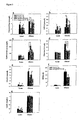
- TEST 1 The results of TEST 1 are summed up in figures 1.a, 1.b, 2.a, 2.b, 2.c and 2.d.
- Treatment with compound A had significantly reduced daily food intake in obese but not in lean rats (Fig. 1a).
- compound A increased cumulative body weight gain in obese rats (Fig. 1 b) but this body weight gain was associated with an increased protein gain (Fig. 2c).
- compound A did not affect weight gain in lean rats, total energy and fat gains were reduced (Figs. 2a,b).
- the percentage food efficiency was also reduced in lean rats (Fig. 2d).
- compound A exhibits beneficial effects against some obesity parameters such as total energy, fat gains and food efficiency.
- Circulating glucose levels in compound A-treated obese rats were reduced to values similar to those of lean and untreated food-deprived obese rats (Fig. 3d).
- Plasma glucose and insulin levels of food-deprived rats were used to calculate the homeostasis model assessment of insulin resistance (HOMA-IR) (Matthews et al. 1985).
- HOMA-IR insulin resistance
- compound A did not significantly modify plasma insulin levels (Fig. 3e)
- the HOMA-IR index was reduced in obese rats (Fig. 3f).
- Both the compound A and food deprivation reduced circulating leptin levels in lean but not in obese rats (Fig. 3g).
- Compound A also decrease fasting-induced increase in corticosterone secretion in obese rats, which is in part responsible of energy deposition and inhibition of brown adipose tissue thermogenesis. Despite a reduced energy intake (daily food intake), compound A increases cumulative body weight gain in obese rats associated with an increased protein rather than fat gain.
- compounds of formula (I) show beneficial effects in the treatment or prevention of metabolic syndrome and/or obesity and/or dyslipoproteinemia.
- compounds of formula (I) may be comprised in pharmaceutical composition as active principle.
- These pharmaceutical compositions comprise an effective dose of one compound according to the invention, or an addition salt thereof with a pharmaceutically acceptable salt, or an hydrate or solvate of the latter, and at least one pharmaceutically acceptable excipient.
- Said excipients are chosen according to the pharmaceutical form and the administration route desired, among usual excipients known of one of skill in the art.
- compositions for the oral, sublingual, sub-cutaneous, intramuscular, intra-venous, topical, local, intratracheal, intranasal, transdermal or rectal administration the active principle of formula (I) above, its salt, solvate or hydrate, can be administered as a unitary dosage form, in blend with usual pharmaceutical excipients, to animals and human beings for the prevention or for the treatment of diseases mentioned above.
- the appropriate unitary dosage forms comprise the oral forms, such as tablets, hard or soft gelatin capsules, powders, granules and oral solutions or suspensions, the sublingual, buccal, intratracheal, intraocular, intranasal forms, by inhalation, the topical, transdermal, sub-cutaneous, intramuscular or intra-venous forms, the rectal forms and the implants.
- the compounds of the invention may be used as creams, gels, ointments or lotions.
- a unitary dosage form for a compound according to the invention in the form of a tablet, can comprise the following ingredients: Compound according to the invention 50,0 mg Mannitol 223,75 mg Croscarmellose sodique 6,0 mg Maize starch 15,0 mg Hydroxypropyl methylcellulose 2,25 mg Magnesium stearate 3,0 mg
- the dose of active principle to administer can reach 0.5 to 800 mg/kg, more preferably 0.5 to 200 mg/kg, per day, in one or several intakes. In specific cases, higher or lower dosages may be appropriate; these dosages are comprised within the scope of the present invention. According to usual practice, the dosage suitable to each patient is determined by the physician according to the administration route, the weight and response of the patient.
Landscapes
- Health & Medical Sciences (AREA)
- Pharmacology & Pharmacy (AREA)
- General Health & Medical Sciences (AREA)
- Diabetes (AREA)
- Animal Behavior & Ethology (AREA)
- Veterinary Medicine (AREA)
- Chemical & Material Sciences (AREA)
- Public Health (AREA)
- Life Sciences & Earth Sciences (AREA)
- Medicinal Chemistry (AREA)
- Nuclear Medicine, Radiotherapy & Molecular Imaging (AREA)
- Organic Chemistry (AREA)
- Engineering & Computer Science (AREA)
- Bioinformatics & Cheminformatics (AREA)
- General Chemical & Material Sciences (AREA)
- Chemical Kinetics & Catalysis (AREA)
- Obesity (AREA)
- Hematology (AREA)
- Epidemiology (AREA)
- Pharmaceuticals Containing Other Organic And Inorganic Compounds (AREA)
- Emergency Medicine (AREA)
- Endocrinology (AREA)
- Child & Adolescent Psychology (AREA)
- Medicines That Contain Protein Lipid Enzymes And Other Medicines (AREA)
- Plural Heterocyclic Compounds (AREA)
- Thiazole And Isothizaole Compounds (AREA)
Abstract
An object of the present invention is the use of a compound of formula (I):

or one of its pharmaceutically acceptable salts,
for the manufacture of a medicament for the prevention and/or the treatment of metabolic syndrome and/or obesity and/or dyslipoproteinemia.
for the manufacture of a medicament for the prevention and/or the treatment of metabolic syndrome and/or obesity and/or dyslipoproteinemia.
Description
- The present invention concerns the use of aminothiazole derivatives for preparing drugs, intended for preventively or curatively treating metabolic syndrome and/or obesity and/or dyslipoproteinemia.
- The
European patent n° EP 1 200 419 describes aminothiazole derivatives of formula (I), as CRF1 antagonists:
- R1 and R2, which may be identical or different, each independently represent a halogen atom; a hydroxy (C1-C5)alkyl; a (C1-C5)alkyl; an aralkyl in which the aryl portion is (C6-C8) and the alkyl portion is (C1-C4); a (C1-C5)alkoxy; a trifluoromethyl group; a nitro group; a nitrile group; a group -SR in which R represents hydrogen, a (C1-C5)alkyl or an aralkyl in which the aryl portion is (C6-C8) and the alkyl portion is (C1-C4); a group -S-CO-R in which R represents a (C1-C5)alkyl or an aralkyl radical in which the aryl portion is (C6-C8) and the alkyl portion is (C1-C4); a group -COORa in which Ra represents hydrogen or a (C1-C5)alkyl; a group -CONRaRb with Ra and Rb as defined above for Ra; a group -NRaRb with Ra and Rb as defined above for Ra; a group -CONRcRd or -NRcRd in which Rc and Rd constitute, with the nitrogen atom to which they are attached, a 5- to 7-membered heterocycle; or a group -NHCO-NRaRb with Ra and Rb as defined above for Ra;
- R3 represents hydrogen or is as defined above for R1 and R2; or alternatively R2 constitutes with R3, when the latter substitutes the phenyl in
position 5, a group -X-CH2-X- in which X independently represents a CH2 or an oxygen or sulphur atom; - R6 represents a (C1-C6)alkyl; a (C1-C6)alkoxy(C1-C3)alkyl; a (C3-C5)cycloalkyl; a (C3-C6)cydoalkyl(C1-C6)alkyl; a (C1-C6)alkylthio(C1-C3)alkyl; a (C1-C6)alkylsulphoxy(C1-C3)alkyl; a (C1-C6)alkylsulphodioxy(C1-C3)alkyl;
- R7 represents a phenyl which is unsubstituted, mono-, di- or trisubstituted in
position 3, 4 or 5 with a halogen, with a (C1-C5)alkyl, with an -O-CH2-O- group on two neighbouring carbon atoms of the phenyl, with a -CF3, -NO2 or -CN, with a group - COOR8 or -CONR8R9 or with a group -CH2OR8 in which R8 and R9 represent a (C1-C3)alkyl, OR10 in which R10 represents a (C1-C5)alkyl; or alternatively R7 represents a pyridyl, thiophene, pyrazolyl, imidazolyl, (C3-C5)cycloalkyl or (C3-C6)cycloalkyl(C1-C6)alkyl group; -
EP 1 200 419 also describes the use of the said compounds of formula (I) for the preparation of a medicament intended for preventively or curatively treating stress-related conditions and more particularly Cushing's disease, neuropsychiatric disorders such as depression, anxiety, panic, obessive compulsive disorders, mood disorders, post-traumatic stress, behavioural disorders, aggressiveness, anorexia, bulimia, hyperglycaemia, premature labour, at-risk pregnancy, retarded growth, sleeping disorders, epilepsy, and all types of depression; Alzheimer's disease, Parkinson's disease, Huntington's chorea; amyotrophic lateral sclerosis; vascular, cardiac and cerebral disorders; sexual activity disorders and fertility disorders; immunodepression, immunosuppression, inflammatory processes, multiple infections, rheumatoid arthritis, osteoarthritis, uveitis, psoriasis and diabetes; cancers; gastrointestinal functional disorders and inflammations arising therefrom, for instance irritable and inflammatory bowel, diarrhoea; pain-perception disorders, fibromyalgias which may or may not be associated with sleeping disorders, fatigue or migraine; symptoms associated with alcohol dependency and withdrawal from drugs. - It has now been found that the said compounds of formula (I) are therapeutically effective as active principle intended for preventively or curatively treating metabolic syndrome and/or obesity and/or dyslipoproteinemia.
- Thus, an object of the present invention is the use of the compounds of formula (I) for the manufacture of a medicament intended for preventively or curatively treating metabolic syndrome and/or obesity and/or dyslipoproteinemia.
- Metabolic syndrome, also known as syndrome X, encompasses a complex of disturbances of carbohydrate and fat metabolism characterized by obesity, dyslipoproteinemia (low HDL and high LDL, VLDL and triglycerides), hyperinsulinemia, insulin resistance, glucose intolerance and hypertension (Atherosclerosis X, F.P. Woodford, J. Davignon, A. Sniderman (Eds.), Elsevier Science BV, Amsterdam (1995): 520-524). Syndrome X seems to be responsible of energy imbalance. The dominant underlying risk factors for this syndrome appear to be abdominal obesity and insulin resistance. Insulin resistance is a generalized metabolic disorder, in which the body can't use insulin efficiently. For these reasons the metabolic syndrome is also called the insulin resistance syndrome.
- As of today, there are no well-accepted criteria for diagnosing the metabolic syndrome.
- However, the criteria proposed by the National Cholesterol Education Program (NCEP) Adult Treatment Panel III (ATP 111), are currently recommended and widely used: the patients suffering from metabolic syndrome present at least 3 of the following criteria: obesity, dyslipidemia, hypertension and hyperglycemia.
- The American Heart Association and the National Heart, Lung, and Blood Institute recommend that the metabolic syndrome be identified as the presence of three or more of the following parameters:
- Elevated waist circumference:
- Men: Equal to or greater than 40 inches (102 cm)
- Women: Equal to or greater than 35 inches (88 cm)
- Elevated triglycerides:
- Equal to or greater than 150 mg/dL
- Reduced HDL ("good") cholesterol:
- Men: Less than 40 mg/dL
- Women: Less than 50 mg/dL
- Elevated blood pressure:
- equal to or greater than 130/85 mm Hg
- Elevated fasting glucose:
- Equal to or greater than 100 mg/dL
- An object of the present invention is the use of a compound of formula (1):

- R1 and R2, which may be identical or different, each independently represent a halogen atom; a hydroxy (C1-C5)alkyl; a (C1-C5)alkyl; an aralkyl in which the aryl portion is (C6-C8) and the alkyl portion is (C1-C4); a (C1-C5)alkoxy; a trifluoromethyl group; a nitro group; a nitrile group; a group -SR in which R represents hydrogen, a (C1-C5)alkyl or an aralkyl in which the aryl portion is (C6-C8) and the alkyl portion is (C1-C4); a group -S-CO-R in which R represents a (C1,-C5)alkyl or an aralkyl radical in which the aryl portion is (C6-C8) and the alkyl portion is (C1-C4); a group -COORa in which Ra represents hydrogen or a (C1-C5)alkyl; a group -CONRaRb with Ra and Rb as defined above for Ra; a group -NRaRb with Ra and Rb as defined above for Ra; a group -CONRcRd or -NRcRd in which Rc and Rd constitute, with the nitrogen atom to which they are attached, a 5- to 7-membered heterocycle; or a group -NHCO-NRaRb with Ra and Rb as defined above for Ra;
- R3 represents hydrogen or is as defined above for R1 and R2; or alternatively R2 constitutes with R3, when the latter substitutes the phenyl in
position 5, a group -X-CH2-X- in which X independently represents a CH2 or an oxygen or sulphur atom; - R6 represents a (C1-C6)alkyl; a (C1-C6)alkoxy(C1-C3)alkyl; a (C3-C5)cycloalkyl; a (C3-C6)cycloalkyl(Cl-C6)alkyl; a (C1-C6)alkylthio(C1-C3)alkyl; a (C1-C6)alkylsulphoxy(C1-C3)alkyl; a (C1-C6)alkylsulphodioxy(C1-C3)alkyl;
- R7 represents a phenyl which is unsubstituted, mono-, di- or trisubstituted in
position 3, 4 or 5 with a halogen, with a (C1-C5)alkyl, with an -O-CH2-O- group on two neighbouring carbon atoms of the phenyl, with a -CF3, -NO2 or -CN, with a group - COOR8 or -CONR8R9 or with a group -CH2OR8 in which R8 and R9 represent a (C1-C3)alkyl, OR10 in which R10 represents a (C1-C5)alkyl; or alternatively R7 represents a pyridyl, thiophene, pyrazolyl, imidazolyl, (C3-C5)cycloalkyl or (C3-C6)cycloalkyl(C1-C6)alkyl group; - The compounds of formula (I) can be provided in the form of a free base or in the form of addition salts with acids, which also form part of the invention.
- The compounds of formula (I) can comprise one or more asymmetric carbon atoms. They can therefore exist in the form of enantiomers or diastereoisomers. These enantiomers and diastereoisomers, as well as their mixtures, including racemic mixtures, form part of the invention.
- The compounds of formula (I) can also exist in the form of an hydrate or of a solvate, i.e. in the form of associations or combinations with one or more water or solvent molecules.
- According to the present invention, the terms below have the following meanings:
- a halogen atom corresponds to a fluorine, chlorine, bromine or iodine atom;
- (Ct-Cz) represents a chain or a ring, which may contain from t to z carbon atoms and t and z may represent an integer chosen from 1 to 10. For examples, (C1-C3) represents a chain, which may contain from 1 to 3 carbon atoms and (C3-C6) represents a ring, which may contain from 3 to 6 carbon atoms ;
- an alkyl group corresponds to a saturated, linear or branched aliphatic group. The following examples may be cited: methyl, ethyl, propyl, isopropyl, butyl, isobutyl, tertbutyl, pentyl;
- a cycloalkyl group corresponds to a cyclic alkyl group. The following examples may be cited: cyclopropyl, methylcyclopropyl, cyclobutyl, cyclopentyl, cyclohexyl;
- an alkoxy group corresponds to an -O-alkyl group, wherein the alkyl group is as defined above.
- a hydroxyalkyl group corresponds to an alkyl group, wherein one or more hydrogen atoms have been substituted by hydroxyl group;
- an aryl group corresponds to an aromatic, cyclic group comprising between 5 and 6 carbon atoms, such as phenyl.
- an aralkyl group corresponds to an aryl group susbstituted on an alkylène chain. For example a benzyl group;
- Another embodiment of the present invention concerns the use of a compound of formula (I), wherein
- R1 and R2, which may be identical or different, each independently represent a halogen atom; a (C1-C5)alkyl; a (C1-C5)alkoxy;
- R3 represents hydrogen or is as defined above for R1 and R2;
- R6 represents a (C1-C6)alkyl; a (C1-C6)alkoxy(C1-C3)alkyl; a (C3-C5)cycloalkyl; a (C3-C6)cydoalkyl(C1-C6)alkyl;
- R7 represents a phenyl which is unsubstituted or mono- or disubstituted in position 3 or 4 with a halogen, a (C1-C5)alkyl group, a group -CH2OR8 in which R8 represents a (C1-C3)alkyl or with an -O-CH2-O- group in position 3, 4; or alternatively R7 represents a (C3-C5)cycloalkyl group;
- Another embodiment of the present invention concerns the use of a compound of formula (I), wherein R3 is in
position 5 of the phenyl, as well as the addition salts thereof, the hydrates thereof and/or the solvates thereof, for the manufacture of a medicament intended for preventively or curatively treating metabolic syndrome. - Another embodiment of the present invention concerns the use of a compound of formula (I), the said compound of formula (I) being chosen from:
- [4-(2-chloro-4-methoxy-5-methylphenyl)-5-methylthiazol-2-yl][(1 R)-(1 -(3-fluoro-4-methylphenyl)-2-methoxyethyl)]prop-2-ynylamine hydrochloride,
- [4-(2-chloro-4-methoxy-5-methylphenyl)-5-methylthiazol-2-yl][(1S)-(1-phenylbutyl)]prop-2-ynylamine hydrochloride,
- [4-(2-chloro-4-methoxy-5-methylphenyl)-5-methylthiazol-2-yl][(1 S)-(2-cyclopropyl-1-phenylethyl)]prop-2-ynylamine hydrochloride,
- [4-(2-chloro-4-methoxyphenyl)-5-methylthiazol-2-yl][(1 S)-(2-cyctopropy)-1-phenylethyl)]prop-2-ynylamine hydrochloride,
- [4-(2-chloro-4-methoxy-5-methylphenyl)-5-methylthiazol-2-yl][(1S)-(2-cyclopropyl-1-(4-fluorophenyl)ethyl)]prop-2-ynylamine hydrochloride,
- [4-(2-chloro-4-methoxy-5-methylphenyl)-5-methylthiazol-2-yl][(1 S)-(1-phenylpentyl)]prop-2-ynylamine hydrochloride,
- [4-(2-chloro-4-methoxy-5-methylphenyl)-5-methylthiazol-2-yl][(1R)-(2-methoxy-1-(4-methoxymethylphenyl)ethyl)]prop-2-ynylamine hydrochloride,
- [4-(2-chloro-4-methoxy-5-methylphenyl)-5-methylthiazol-2-ylj[(1S)-(1-(4-methoxymethylphenyl)pentyl)]prop-2-ynylamine hydrochloride,
- [4-(2-chloro-4-methoxy-5-methylphenyl)-5-methylthiazol-2-yl][(I S)-(1 -(4-fluorophenyl)pentyl)]prop-2-ynylamine hydrochloride,
- [4-(2-chloro-4-methoxy-5-methylphenyl)-5-methylthiazol-2-yl][(1S)-(cyclopropylphenylmethyl)]prop-2-ynylamine hydrochloride,
- [4-(2-chloro-4-methoxy-5-methylphenyl)-5-methylthiazol-2-yl][(1S)-(1-(3-fluoro-4-methylphenyl)pentyl)]prop-2-ynylamine hydrochloride,
- [4-(2-chloro-4-methoxy-5-methylphenyl)-5-methylthiazol-2-yl(1S)-(2-cyclopropyl-1-(3-fluoro-4-methylphenyl)ethyl)]prop-2-ynylamine hydrochloride,
- [4-(2-chloro-4-methoxy-5-methylphenyl)-5-methylthiazol-2-yl][(1S)-(1 -(4-fluorophenyl)butyl)]prop-2-ynylamine hydrochloride,
- [4-(2-chloro-4-methoxy-5-methylphenyl)-5-methylthiazol-2-yl][(1S)-(1-(3-fluoro-4-methoxymethylphenyl)butyl)]prop-2-ynylamine hydrochloride,
- [4-(2-chloro-4-methoxy-5-methylphenyl)-5-methylthiazol-2-yl][(1 S)-(2-cyclopropyl-1-(4-chlorophenyl)ethyl)]prop-2-ynylamine hydrochloride,
- [4-(2-chloro-4-methoxy-5-methylphenyl)-5-methylthiazol-2-yl][(1S)-(2-cyclopropyl-1-(4-methylphenyl)ethyl)]prop-2-ynylamine hydrochloride,
- [4-(2-chloro-4-methoxy-5-methyl phenyl)-5-methylthiazol-2-yl][(1S)-(2-cyctobuty)-1 -(4-fluorophenyl)ethyl)]prop-2-ynylamine hydrochloride,
- [4-(2-chloro-4-methoxy-5-methylphenyl)-5-methylthiazol-2-yl][(I S)-(2-cyc)opropy)-1 - (4-bromophenyl)ethyl)]prop-2-ynylamine hydrochloride,
- [4-(2-chloro-4-methoxy-5-methylphenyl)-5-methylthiazol-2-yl][(1S)-(2-cyclopropyl-1-(3,4-methylenedioxyphenyl)ethyl)]prop-2-ynylamine hydrochloride,
- [4-(2-ch)oro-4-methoxyphenyl)-5-methylthiazol-2-y)][(1S)-(2-cyclopropyl-1 -(3-fluoro-4-methylphenyl)ethyl)]prop-2-ynylamine hydrochloride,
- [4-(2,4-dimethoxy-5-methylphenyl)-5-methylthiazol-2-yl][(1S)-(2-cyclopropyl-1-(3-fluoro-4-methylphenyl)ethyl)]prop-2-ynylamine hydrochloride,
- (4-(4-methoxy-2,5-dimethylphenyl)-5-methylthiazol-2-yl][(1S)-(2-cyclopropyl-1-(3-fluoro-4-methylphenyl)ethyl)]prop-2-ynylamine hydrochloride,
- [4-(2-chloro-4-methoxy-5-methylphenyl)-5-methylthiazol-2-yl][(1S)-(1-(3,4-methylenedioxyphenyl)butyl)]prop-2-ynylamine hydrochloride,
- Another embodiment of the present invention concerns the use of a compound of formula (I), wherein the said compound is [4-(2-chloro-4-methoxy-5-methylphenyl)-5-methylthiazol-2-yl][(1S)-(2-cyclopropyl-1-(3-fluoro-4-methylphenyl)ethyl)]prop-2-ynylamine hydrochloride, for the manufacture of a medicament intended for preventively or curatively treating metabolic syndrome.
- Another object of the invention is the use of a compound of formula (I):

- R1 and R2, which may be identical or different, each independently represent a halogen atom; a hydroxy (C1-C5)alkyl; a (C1-C5)alkyl; an aralkyl in which the aryl portion is (C6-C8) and the alkyl portion is (C1-C4); a (C1-C5)alkoxy; a trifluoromethyl group; a nitro group; a nitrile group; a group -SR in which R represents hydrogen, a (C1-C5)alkyl or an aralkyl in which the aryl portion is (C6-C8) and the alkyl portion is (C1-C4); a group -S-CO-R in which R represents a (C1-C5)alkyl or an aralkyl radical in which the aryl portion is (C6-C8) and the alkyl portion is (C1-C4); a group -COORa in which Ra represents hydrogen or a (C1-C5)alkyl; a group -CONRaRb with Ra and Rb as defined above for Ra; a group -NRaRb with Ra and Rb as defined above for Ra; a group -CONRcRd or -NRcRd in which Rc and Rd constitute, with the nitrogen atom to which they are attached, a 5- to 7-membered heterocycle; or a group -NHCO-NRaRb with Ra and Rb as defined above for Ra;
- R3 represents hydrogen or is as defined above for R1 and R2; or alternatively R2 constitutes with R3, when the latter substitutes the phenyl in
position 5, a group -X-CH2-X- in which X independently represents a CH2 or an oxygen or sulphur atom; - R6 represents a (C1-C6)alkyl; a (C1-C6)alkoxy(C1-C3)alkyl; a (C3-C5)cycloalkyl; a (C3-C6)cycloalkyl(C1-C6)alkyl; a (C1-C6)alkylthio(C1-C3)alkyl; a (C1-C6)alkylsulphoxy(C1-C3)alkyl; a (C1-C6)alkylsulphodioxy(C1-C3)alkyl;
- R7 represents a phenyl which is unsubstituted, mono-, di- or trisubstituted in
position 3, 4 or 5 with a halogen, with a (C1-C5)alkyl, with an -O-CH2-O- group on two neighbouring carbon atoms of the phenyl, with a -CF3, -NO2 or -CN, with a group - COOR8 or -CONR8R9 or with a group -CH2OR8 in which R8 and R9 represent a (C1-C3)alkyl, OR10 in which R10 represents a (C1-C5)alkyl; or alternatively R7 represents a pyridyl, thiophene, pyrazolyl, imidazolyl, (C3-C5)cycloalkyl or (C3-C6)cycloalkyl(C1-C6)alkyl group; - Another embodiment of the invention concerns the use of a compound of formula (I) wherein
- R1 and R2, which may be identical or different, each independently represent a halogen atom; a (C1-C5)alkyl; a (C1-C5)alkoxy;
- R3 represents hydrogen or is as defined above for R1 and R2;
- R6 represents a (C1-C6)alkyl; a (C1-C6)alkoxy(C1-C3)alkyl; a (C3-C5)cycloalkyl; a (C3-C6)cycloalkyl(C1-C6)alkyl;
- R7 represents a phenyl which is unsubstituted or mono- or disubstituted in position 3 or 4 with a halogen, a (C1-C5)alkyl group, a group -CH2OR8 in which R8 represents a (C1-C3)alkyl or with an -O-CH2-O- group in position 3, 4; or alternatively R7 represents a (C3-C5)cycloalkyl group;
- Another embodiment of the present invention concerns the use of a compound of formula (I), wherein R3 is in
position 5 of the phenyl, as well as the addition salts thereof, the hydrates thereof and/or the solvates thereof, for the manufacture of a medicament intended for preventively or curatively treating obesity. - Another embodiment of the present invention concerns the use of a compound of formula (I), the said compound of formula (I) being chosen from:
- [4-(2-chloro-4-methoxy-5-methylphenyl)-5-methylthiazol-2-yl][(1R)-(1-(3-fluoro-4-methylphenyl)-2-methoxyethyl)]prop-2-ynylamine hydrochloride,
- [4-(2-chloro-4-methoxy-5-methylphenyl)-5-methylthiazol-2-yl][(1S)-(1-phenylbutyl)]prop-2-ynylamine hydrochloride,
- [4-(2-chloro-4-methoxy-5-methylphenyl)-5-methylthiazol-2-yl][(1S)-(2-cyclopropyl-1-phenylethyl)]prop-2-ynylamine hydrochloride,
- [4-(2-chloro-4-methoxyphenyl)-5-methylthiazol-2-yl][(1S)-(2-cyclopropyl-1-phenylethyl)]prop-2-ynylamine hydrochloride,
- [4-(2-chloro-4-methoxy-5-methylphenyl)-5-methylthiazol-2-yl][(1S)-(2-cyclopropyl-1-(4-fluorophenyl)ethyl)]prop-2-ynylamine hydrochloride,
- [4-(2-ch)oro-4-methoxy-5-methytphenyl)-5-methylthiazol-2-yt][(1 S)-(1-phenylpentyl)]prop-2-ynylamine hydrochloride,
- [4-(2-chloro-4-methoxy-5-methylphenyl)-5-methylthiazol-2-yl][(1 R)-(2-methoxy-1-(4-methoxymethylphenyl)ethyl)]prop-2-ynylamine hydrochloride,
- [4-(2-chloro-4-methoxy-S-methylphenyl)-5-methylthiazol-2-yl][(1 S)-(1-(4-methoxymethylphenyl)pentyl)]prop-2-ynylamine hydrochloride,
- [4-(2-chloro-4-methoxy-5-methylphenyl)-5-methylthiazol-2-yl][(1S)-(1 -(4-fluorophenyl)pentyl)]prop-2-ynylamine hydrochloride,
- [4-(2-chloro-4-methoxy-5-methylphenyl)-5-methylthiazol-2-yl][(1 S)-(cyclopropylphenylmethyl)]prop-2-ynylamine hydrochloride,
- [4-(2-chloro-4-methoxy-5-methylphenyl)-5-methylthiazol-2-yl][(1S)-(1 -(3-fluoro-4-methylphenyl) pentyl)] prop-2-ynylamine hydrochloride,
- [4-(2-chloro-4-methoxy-5-methylphenyl)-5-methylthiazol-2-yl][(1S)-(2-cyclopropyl-1-(3-fluoro-4-methylphenyl)ethyl)]prop-2-ynylamine hydrochloride,
- [4-(2-chloro-4-methoxy-5-methylphenyl)-5-methylthiazol-2-yl][(1S)-(1-(4-fluorophenyl)butyl)]prop-2-ynylamine hydrochloride,
- [4-(2-chloro-4-methoxy-5-methylphenyl)-5-methylthiazol-2-yl][(1S)-(1-(3-fluoro-4-methoxymethylphenyl)butyl)]prop-2-ynylamine hydrochloride,
- [4-(2-chloro-4-methoxy-5-methylphenyl)-5-methylthiazol-2-yl][(1S)-(2-cyclopropyl-1-(4-chlorophenyl)ethyl)]prop-2-ynylamine hydrochloride,
- [4-(2-chloro-4-methoxy-5-methylphenyl)-5-methylthiazol-2-yl][(1S)-(2-cyclopropyl-1-(4-methylphenyl)ethyl)]prop-2-ynylamine hydrochloride,
- [4-(2-chloro-4-methoxy-5-methylphenyl)-5-methylthiazol-2-yl][(1S)-(2-cyclobutyl-1-(4-fluorophenyl)ethyl)]prop-2-ynylamine hydrochloride,
- [4-(2-chloro-4-methoxy-5-methylphenyl)-5-methylthiazol-2-yl][(1S)-(2-cyclopropyl-1-(4-bromophenyl)ethyl)]prop-2-ynylamine hydrochloride,
- [4-(2 -chloro-4-methoxy-S-methylphenyl)-S-methylthiazol-2-yl] [(1S)-(2-cydopropyl-1 - (3,4-methylenedioxyphenyl)ethyl)]prop-2-ynylamine hydrochloride,
- [4-(2-chloro-4-methoxyphenyl)-5-methylthiazol-2-yl][(1S)-(2-cyclopropyl-1-(3-fluoro-4-methylphenyl)ethyl)]prop-2-ynylamine hydrochloride,
- [4-(2,4-dimethoxy-S-methylphenyl)-S-methylthiazol-2-yl][(1S)-(2-cydopropyl-1 -(3-fluoro-4-methylphenyl)ethyl)]prop-2-ynylamine hydrochloride,
- [4-(4-methoxy-2,5-dimethylphenyl)-5-methylthiazol-2-yl][(1S)-(2-cyclopropyl-1-(3-fluoro-4-methylphenyl)ethyl)]prop-2-ynylamine hydrochloride,
- [4-(2-chloro-4-methoxy-S-methylphenyl)-S-methylthiazol-2-yl][(1S)-(1-(3,4-methylenedioxyphenyl)butyl)]prop-2-ynylamine hydrochloride,
- Another embodiment of the present invention concerns the use of a compound of formula (I), wherein the said compound is [4-(2-chloro-4-methoxy-5-methylphenyl)-5-methylthiazol-2-yl][(1S)-(2-cyclopropyl-1-(3-fluoro-4-methylphenyl)ethyl)]prop-2-ynylamine hydrochloride, for the manufacture of a medicament intended for preventively or curatively treating obesity.
- Another object of the invention is the use of a compound of formula (I):

- R1 and R2, which may be identical or different, each independently represent a halogen atom; a hydroxy (C1-C5)alkyl; a (C1-C5)alkyl; an aralkyl in which the aryl portion is (C6-C8) and the alkyl portion is (C1-C4); a (C1-C5)alkoxy; a trifluoromethyl group; a nitro group; a nitrile group; a group -SR in which R represents hydrogen, a (C1-C5)alkyl or an aralkyl in which the aryl portion is (C6-C8) and the alkyl portion is (C1-C4); a group -S-CO-R in which R represents a (C1-C5)alkyl or an aralkyl radical in which the aryl portion is (C6-C8) and the alkyl portion is (C1-C4); a group -COORa in which Ra represents hydrogen or a (C1-C5)alkyl; a group -CONRaRb with Ra and Rb as defined above for Ra; a group -NRaRb with Ra and Rb as defined above for Ra; a group -CONRcRd or -NRcRd in which Rc and Rd constitute, with the nitrogen atom to which they are attached, a 5- to 7-membered heterocycle; or a group -NHCO-NRaRb with Ra and Rb as defined above for Ra;
- R3 represents hydrogen or is as defined above for R1 and R2; or alternatively R2 constitutes with R3, when the latter substitutes the phenyl in
position 5, a group -X-CH2-X- in which X independently represents a CH2 or an oxygen or sulphur atom; - R6 represents a (C1-C6)alkyl; a (C1-C6)alkoxy(C1-C3)alkyl; a (C3-C5)cycloalkyl; a (C3-C6)cycloalkyl(C1-C6)alkyl; a (C1-C6)alkylthio(C1-C3)alkyl; a (C1-C6)alkylsulphoxy(C1-C3)alkyl; a (C1-C6)alkylsulphodioxy(C1-C3)alkyl;
- R7 represents a phenyl which is unsubstituted, mono-, di- or trisubstituted in
position 3, 4 or 5 with a halogen, with a (C1-C5)alkyl, with an -O-CH2-O- group on two neighbouring carbon atoms of the phenyl, with a -CF3, -NO2 or-CN, with a group - COOR8 or -CONR8R9 or with a group -CH2OR8 in which R8 and R9 represent a (C1-C3)alkyl, OR10 in which R10 represents a (C1-C5)alkyl; or alternatively R7 represents a pyridyl, thiophene, pyrazolyl, imidazolyl, (C3-C5)cycloalkyl or (C3-C6)cycloalkyl(C1-C6)alkyl group; - Another embodiment of the invention concerns the use of a compound of formula (I) wherein
- R1 and R2, which may be identical or different, each independently represent a halogen atom; a (C1-C5)alkyl; a (C1-C5)alkoxy;
- R3 represents hydrogen or is as defined above for R1 and R2;
- R6 represents a (C1-C6)alkyl; a (C1-C6)alkoxy(C1-C3)alkyl; a (C3-C5)cycloalkyl; a (C3-C6)cycloalkyl(C1-C6)alkyl;
- R7 represents a phenyl which is unsubstituted or mono- or disubstituted in position 3 or 4 with a halogen, a (C1-C5)alkyl group, a group -CH2OR8 in which R8 represents a (C1-C3)alkyl or with an -O-CH2-O- group in position 3, 4; or alternatively R7 represents a (C3-C5)cycloalkyl group;
- Another embodiment of the present invention concerns the use of a compound of formula (I), wherein R3 is in
position 5 of the phenyl, as well as the addition salts thereof, the hydrates thereof and/or the solvates thereof, for the manufacture of a medicament intended for preventively or curatively treating dyslipoproteinemia. - Another embodiment of the present invention concerns the use of a compound of formula (I), the said compound of formula (I) being chosen from:
- [4-(2-chloro-4-methoxy-5-methylphenyl)-5-methylthiazol-2-yl][(1 R)-(1 1-(3-fl uoro-4-methylphenyl)-2-methoxyethyl)]prop-2-ynylamine hydrochloride,
- [4-(2-chloro-4-methoxy-5-methylphenyl)-5-methylthiazol-2-yl][(1S)-(1 - phenylbutyl)]prop-2-ynylamine hydrochloride,
- [4-(2-chloro-4-methoxy-5-methylphenyl)-5-methylthiazol-2-yl][(1S)-(2-cyclopropyl-1-phenylethyl)]prop-2-ynylamine hydrochloride,
- [4-(2-chloro-4-methoxyphenyl)-5-methylthiazol-2-yl][(1S)-(2-cyclopropyl-1-phenylethyl)]prop-2-ynylamine hydrochloride,
- [4-(2-chloro-4-methoxy-5-methylphenyl)-5-methylthiazol-2-yl][(1S)-(2-cyclopropyl-1-(4-fluorophenyl)ethyl)]prop-2-ynylamine hydrochloride,
- [4-(2-chloro-4-methoxy-5-methylphenyl)-5-methylthiazol-2-yl][(1S)-(1-phenylpentyl)]prop-2-ynylamine hydrochloride,
- [4-(2-chloro-4-methoxy-5-methylphenyl)-5-methylthiazol-2-yl][(1R)-(2-methoxy-1-(4-methoxymethylphenyl)ethyl)]prop-2-ynylamine hydrochloride,
- [4-(2-chloro-4-methoxy-5-methylphenyl)-5-methylthiazol-2-yl][(1S)-(1 -(4-methoxymethylphenyl)pentyl)]prop-2-ynylamine hydrochloride,
- [4-(2-chloro-4-methoxy-5-methylphenyl)-5-methylthiazol-2-yl][(1S)-(1-(4-fluorophenyl)pentyl)]prop-2-ynylamine hydrochloride,
- [4-(2-chloro-4-methoxy-5-methylphenyl)-5-methylthiazol-2-yl][(1 S)-(cyclopropylphenylmethyl)]prop-2-ynylamine hydrochloride,
- [4-(2-chloro-4-methoxy-5-methylphenyl)-5-methylthiazol-2-yl][(1S)-(1-(3-fluoro-4-methylphenyl)pentyl)]prop-2-ynylamine hydrochloride,
- [4-(2-chloro-4-methoxy-5-methylphenyl)-5-methylthiazol-2-yl][(1S)-(2-cyclopropyl-1-(3-fluoro-4-methylphenyl)ethyl)]prop-2-ynylamine hydrochloride,
- [4-(2-chloro-4-methoxy-5-methylphenyl)-5-methylthiazol-2-yl][(1S)-(1-(4-fluorophenyl)butyl)]prop-2-ynylamine hydrochloride,
- [4-(2-chloro-4-methoxy-5-methylphenyl)-5-methylthiazol-2-yl][(1S)-(1-(3-fluoro-4-methoxymethylphenyl)butyl)]prop-2-ynylamine hydrochloride,
- (4-(2-chloro-4-methoxy-5-methylphenyl)-5-methylthiazol-2-yl][(1S)-(2-cyclopropyl-1-(4-chlorophenyl)ethyl)]prop-2-ynylamine hydrochloride,
- [4-(2-chloro-4-methoxy-5-methylphenyl)-5-methylthiazol-2-yl][(1S)-(2-cyclopropyl-1-(4-methylphenyl)ethyl)]prop-2-ynylamine hydrochloride,
- [4-(2-chloro-4-methoxy-5-methylphenyl)-5-methylthiazol-2-yl][(1S)-(2-cyclobutyl-1-(4-fluorophenyl)ethyl)]prop-2-ynylamine hydrochloride,
- [4-(2-chloro-4-methoxy-5-methylphenyl)-5-methylthiazol-2-yl][(1S)-(2-cyclopropyl-1-(4-bromophenyl)ethyl)]prop-2-ynylamine hydrochloride,
- [4-(2-chloro-4-methoxy-5-methylphenyl)-5-methylthiazol-2-yl][(1S)-(2-cydopropyl-1 - (3,4-methylenedioxyphenyl)ethyl)]prop-2-ynylamine hydrochloride,
- [4-(2-chloro-4-methoxyphenyl)-5-methylthiazol-2-yl][(1S)-(2-cyclopropyl-1-(3-fluoro-4-methylphenyl)ethyl)]prop-2-ynylamine hydrochloride,
- [4-(2,4-dimethoxy-5-methylphenyl)-5-methylthiazol-2-yl][(1S)-(2-cyclopropyl-1-(3-fluoro-4-methylphenyl)ethyl)]prop-2-ynylamine hydrochloride,
- [4-(4-methoxy-2,5-dimethylphenyl)-5-methylthiazol-2-yl][(1S)-(2-cyclopropyl-1-(3-fluoro-4-methylphenyl)ethyl)]prop-2-ynylamine hydrochloride,
- [4-(2-chloro-4-methoxy-5-methylphenyl)-5-methylthiazol-2-yl][(1S)-(1-(3,4-methylenedioxyphenyl)butyl)]prop-2-ynylamine hydrochloride,
- Another embodiment of the present invention concerns the use of a compound of formula (I), wherein the said compound is [4-(2-chloro-4-methoxy-5-methylphenyl)-5-methylthiazol-2-yl][(1 S)-(2-cyclopropyl-1-(3-fluoro-4-methylphenyl)ethyl)]prop-2-ynylamine hydrochloride, for the manufacture of a medicament intended for preventively or curatively treating dyslipoproteinemia.
- The present invention concerns a method for preventively or curatively treating metabolic syndrome and/or obesity and/or dyslipoproteinemia, which comprises administering to a mammal a therapeutically effective amount of at least a compound of general formula (I).
- The preparation and the characteristics of compounds of formula (I) according to the invention have been described in
European patent No. EP 1 200 419 . - The compounds of the invention underwent pharmacological studies (determination of physiological parameters) which demonstrate their properties, and their value as therapeutically active substances, namely for the treatment and prevention of metabolic syndrome and/or obesity and/or dyslipoproteinemia.
- More particularly, compounds of general formula (I) have been tested, in order to examine the effects on some representative physiological parameters and on energy balance.
- The properties of the compounds of general formula (I) have been investigated by means of a set of tests in animals conventionally employed in pharmacology. For instance, the genetically obese (fa/fa) Zucker rat is one of the most investigated models of obesity. The fa mutation prevents the expression of the long isoform of the leptin receptor (Phillips et al, Nat. Genet.1996; 13: 18-19), which mediates the anorectic and thermogenic actions of leptin. The (fa/fa) rat is characterized by a massive obesity that develops early after birth, resulting from an increased food intake and a blunted regulatory thermogenesis. In addition, it is hyperlipidemic, hyperinsulinemic, glucose intolerant, and insulin resistant. It also has very high levels of corticosterone due to an overstimulated hypothalamo-pituitary-adrenal (HPA) axis (Guillaume-Gentil et al, Endocrinology 1990; 126: 1873-1879) and overexpresses the corticotropin-releasing factor (CRF) when faced with stressful experimental conditions, e.g. food deprivation (Guillaume-Gentil et al, 1990; 126: 1873-1879; Timofeeva and Richard, J. Comp. Neurol. 1997; 441: 71-89).
- The following TESTS 1 and 2 have been performed with one of the compound of the present invention, which is [4-(2-chloro-4-methoxy-5-methylphenyl)-5-methylthiazol-2-yl][(1S)-(2-cyclopropyl-1-(3-fluoro-4-methylphenyl)ethyl)]prop-2-ynylamine hydrochloride (= compound A).
- Lean (Fa/?) and obese (fa/fa) male Zucker rats, aged 8-9 weeks, were purchased from Charles River Laboratories (St-Constant, QC). All rats were cared for and handled according to the Canadian Guide for the Care and Use of Laboratory Animals, and the protocol was approved by University Laval animal care committee. Throughout the study, rats were given a purified, high-carbohydrate diet, which was composed of the following (in g/100 g): 31.2 cornstarch, 31.2 DL-dextrose, 6.4 soybean oil, 20.0 casein, 0.3 DL-methionine, 1.0 vitamin mix (Teklad no. 40060; Teklad, Madison, WI), 4.9 AIN-93 mineral mix (ICN Biochemicals, Montréal, QC), and 5.0 fiber (Alphacel; ICN Biochemicals). The energy content of the diet consisted of 64.9% carbohydrate, 14.5% fat, and 20.6% protein, and its density was 4.01 kcal/g. Rats were subjected to a 12h/12 h dark/light cycle (light on between 07h00 and 19h00 and dark on between 19h00 and 07h00) and kept under an ambient temperature of 23 ± 1 °C. Treated rats received a two daily oral administration of Compound A for 21 days; 10 mg/kg at 08h30 and 20 mg/kg at 16h00. On the last day of treatment, 30 mg/kg Compound A was administered 4 hours prior to sacrifice.
- Rats were weighted and food intake was measured daily throughout the experiment. Rats were killed between 14h00 and 17h00 in either an ad libitum fed state or after a 6-hour food deprivation. Lean and obese rats were respectively anaesthetized with 2 and 4 ml of a mixture containing 20 mg/ml of ketamine and 2.5 mg/ml of xylazine. Blood was collected by intracardial puncture into syringes coated with 0.5 M ethylenediaminetetraacetic acid (EDTA; Sigma-Aldrich, St. Louis, MO) and rats were perfused intracardially for 2 min with icecold isotonic saline.
- Compound A was suspended in 0.6% methyl cellulose containing 0.5
% Tween 80 for the first 14 days and in 5% DMSO (Dimethylsulfoxyde), 5% Cremophor EL, 90% saline for the last 7 days of treatment. - Carcasses were autoclaved at 125 kPa for 15 min to soften hard tissues, a procedure reported not to affect energy yield (Lofti et al. 1976). Carcass energy content was determined by adiabatic bomb calorimetry, whereas carcass protein was determined using a FP-2000 Nitrogen Analyser (Leco corporation, St. Joseph, MI) with 250-300 mg of dehydrated carcasses. Nonprotein matter energy was obtained by subtracting protein energy from total carcass energy. Because carbohydrate represents a negligible part of total carcass energy (Webster 1983), nonprotein matter energy was assumed to be essentially from fat. Values of 23.5 and 39.2 kj/g were used for the calculation of the energy content of protein and fat, respectively (Webster 1983). Initial energy, fat, and protein contents of the carcasses were estimated from the live body weight of lean and obese rats with reference to a baseline group of rats killed at the beginning of the experimental period. Such estimates allow gains in energy, fat, and protein to be determined for the treatment period. The rats in the baseline groups (six per phenotype) were killed at the beginning of the energy balance trial, and the carcass of each animal was analyzed for energy, protein, and fat. The densities in energy (kilocalories of energy per gram of body weight), protein (grams of protein per gram of body weight), and fat (grams of fat per gram of body weight) were then computed and averaged. The average densities were multiplied by the initial body weight of each rat ascribed to experimental groups. Rats in the initial group were identical in every respect (e.g., age and gender) to those of the experimental groups. Food efficiency was expressed as the ratio of energy gain to digestible energy intake multiplied by 100.
- Blood was harvested by cardiac puncture, centrifuged (1500 g, 15 min at 4 °C), and the separated plasma was stored at -20 °C until later biochemical measurements. Plasma glucose concentrations were determined using an automated glucose analyzer YSI 2300 Stat Plus (YSI Incorporated, Yellow Springs, OH). Plasma triglycerides were assayed using a commercially available enzymatic kit (Roche Diagnostics) that allowed correction for free glycerol. Plasma insulin and leptin levels were determined using commercially available radioimmunoassay kits (Linco Research, St. Charles, MO). Plasma corticosterone levels were determined using a commercially available radioimmunoassay kit (MP Biomedicals, Toronto, ON). Plasma non-esterified fatty acids (NEFA) were assayed using a commercially available enzymatic kit (Wako Diagnostics, Richmond, VA).
- Results are presented as mean values ± one standard error of the mean (SE). Statistical differences in daily food intake and cumulative weight gain between control and compound A-treated rats were determined within each genotype by repeated-measures analysis of variance (RM-ANOVA) using a mixed model analysis. Cumulative weight gain data were log-transformed and multivariate normality was verified with Mardia's test. For the results of the carcasses analysis and HOMA-IR, statistical differences within each genotype were determined by Student's t-test. For all the other variables, statistical differences within each genotype were determined by two-way analysis of variance (ANOVA). In order to meet the assumption of normality, data for corticosterone, insulin and triglycerides were log transformed. All two-way ANOVAs were followed by Tukey's multiple comparison tests. Results were considered significant with P-values < 0.05. RM-ANOVAs were performed using SAS v9.1.3 software package (SAS Institute, Cary, NC), whereas all other statistical analyses used SigmaStat v2.0 software (SPSS, Chicago, IL).
- The results of TESTS 1 and 2 (points 3 and 4), are illustrated by the following figures.
- Figure 1. Daily food intake (a) and cumulative weight gain (b) in lean (Fa/?) and genetically obese (fa/fa) Zucker rats during 20 days of daily oral administration of 30 mg/kg compound A. * P < 0.05, n = 14 / group.
- Figure 2. Total energy gain (a), protein gain (b), fat gain (c) and percentage food efficiency (d) in lean (Fa/?) and genetically obese (falfa) Zucker rats after 20 days of daily oral administration of 30 mg/kg compound A. * Significant effect of treatment as assessed by Student's t-test. P < 0.05, n = 7 / group.
- Figure 3. Plasma triglycerides (a), non-esterified fatty acids (NEFA) (b), corticosterone (c), glucose (d) and insulin (e) in ad-libifum fed (AL) and 6-hour food deprived (FD) lean (Fa/?) and genetically obese (fa/fa) Zucker rats after 20 days of daily oral administration of 30 mg/kg compound A. Homeostasis model assessment of insulin resistance (HOMA-IR) was calculated for FD rats using glucose and insulin measurements (f). * Significant main effect of treatment and t significant main effect of food deprivation as assessed by two-way ANOVA or t-test (HOMA-IR). When significant, only interaction results are shown (bars), as assessed by Tukey's multiple comparison tests. P < 0.05, n = 6-7 / group.
- The results of TEST 1 are summed up in figures 1.a, 1.b, 2.a, 2.b, 2.c and 2.d. Treatment with compound A had significantly reduced daily food intake in obese but not in lean rats (Fig. 1a). Despite a reduced energy intake, compound A increased cumulative body weight gain in obese rats (Fig. 1 b) but this body weight gain was associated with an increased protein gain (Fig. 2c). Although compound A did not affect weight gain in lean rats, total energy and fat gains were reduced (Figs. 2a,b). The percentage food efficiency was also reduced in lean rats (Fig. 2d).
- Consequently, compound A exhibits beneficial effects against some obesity parameters such as total energy, fat gains and food efficiency.
- The results of TEST 2 are summed up in figures 3.a, 3.b, 3.c, 3.d, 3.e, 3.f and 3.g. Treatment with compound A reduced circulating triglyceride levels in lean rats (Fig. 3a). The fasting-induced reduction in plasma triglycerides was abolished by compound A in obese rats. Circulating non-esterified fatty acids (NEFA) were increased following food deprivation but this increase was blunted by compound A in obese rats (Fig. 3b). Compound A reduced plasma corticosterone levels in lean rats and prevented the fasting-induced increase in corticosterone levels in obese rats (Fig. 3c). Circulating glucose levels in compound A-treated obese rats were reduced to values similar to those of lean and untreated food-deprived obese rats (Fig. 3d). Plasma glucose and insulin levels of food-deprived rats were used to calculate the homeostasis model assessment of insulin resistance (HOMA-IR) (Matthews et al. 1985). Although compound A did not significantly modify plasma insulin levels (Fig. 3e), the HOMA-IR index was reduced in obese rats (Fig. 3f). Both the compound A and food deprivation reduced circulating leptin levels in lean but not in obese rats (Fig. 3g).
- These results, namely:
- restoration of normal glycemia in obese rats and reduction of the HOMA-IR index of insulin resistance, pointing out an improved insulin sensitivity,
- prevention of fasting-induced increase in NEFA and of fasting-induced reduction of triglycerides in obese rats,
- Compound A also decrease fasting-induced increase in corticosterone secretion in obese rats, which is in part responsible of energy deposition and inhibition of brown adipose tissue thermogenesis. Despite a reduced energy intake (daily food intake), compound A increases cumulative body weight gain in obese rats associated with an increased protein rather than fat gain.
- Consequently, compounds of formula (I) according to the invention show beneficial effects in the treatment or prevention of metabolic syndrome and/or obesity and/or dyslipoproteinemia.
For the intended use disclosed in the invention, compounds of formula (I) may be comprised in pharmaceutical composition as active principle. These pharmaceutical compositions comprise an effective dose of one compound according to the invention, or an addition salt thereof with a pharmaceutically acceptable salt, or an hydrate or solvate of the latter, and at least one pharmaceutically acceptable excipient.
Said excipients are chosen according to the pharmaceutical form and the administration route desired, among usual excipients known of one of skill in the art. - In the corresponding pharmaceutical compositions for the oral, sublingual, sub-cutaneous, intramuscular, intra-venous, topical, local, intratracheal, intranasal, transdermal or rectal administration, the active principle of formula (I) above, its salt, solvate or hydrate, can be administered as a unitary dosage form, in blend with usual pharmaceutical excipients, to animals and human beings for the prevention or for the treatment of diseases mentioned above.
- The appropriate unitary dosage forms comprise the oral forms, such as tablets, hard or soft gelatin capsules, powders, granules and oral solutions or suspensions, the sublingual, buccal, intratracheal, intraocular, intranasal forms, by inhalation, the topical, transdermal, sub-cutaneous, intramuscular or intra-venous forms, the rectal forms and the implants. For the topical application, the compounds of the invention may be used as creams, gels, ointments or lotions.
As an example, a unitary dosage form for a compound according to the invention, in the form of a tablet, can comprise the following ingredients:Compound according to the invention 50,0 mg Mannitol 223,75 mg Croscarmellose sodique 6,0 mg Maize starch 15,0 mg Hydroxypropyl methylcellulose 2,25 mg Magnesium stearate 3,0 mg - By the oral route, the dose of active principle to administer can reach 0.5 to 800 mg/kg, more preferably 0.5 to 200 mg/kg, per day, in one or several intakes.
In specific cases, higher or lower dosages may be appropriate; these dosages are comprised within the scope of the present invention. According to usual practice, the dosage suitable to each patient is determined by the physician according to the administration route, the weight and response of the patient.
for the manufacture of a medicament intended for preventively or curatively treating metabolic syndrome.
Claims (7)
- Use of a compound of formula (1):
 - R1 and R2, which may be identical or different, each independently represent a halogen atom; a hydroxy (C1-C5)alkyl; a (C1-C5)alkyl; an aralkyl in which the aryl portion is (C6-C8) and the alkyl portion is (C1-C4); a (C1-C5)alkoxy; a trifluoromethyl group; a nitro group; a nitrile group; a group -SR in which R represents hydrogen, a (C1-C5)alkyl or an aralkyl in which the aryl portion is (C6-C8) and the alkyl portion is (C1-C4); a group -S-CO-R in which R represents a (C1-C5)alkyl or an aralkyl radical in which the aryl portion is (C6-C8) and the alkyl portion is (C1-C4); a group -COORa in which Ra represents hydrogen or a (C1-C5)alkyl; a group -CONRaRb with Ra and Rb as defined above for Ra; a group -NRaRb with Ra and Rb as defined above for Ra; a group -CONRcRd or -NRcRd in which Rc and Rd constitute, with the nitrogen atom to which they are attached, a 5- to 7-membered heterocycle; or a group -NHCO-NRaRb with Ra and Rb as defined above for Ra;- R3 represents hydrogen or is as defined above for R1 and R2; or alternatively R2 constitutes with R3, when the latter substitutes the phenyl in position 5, a group -X-CH2-X- in which X independently represents a CH2 or an oxygen or sulphur atom;- R6 represents a (C1-C6)alkyl; a (C1-C6)alkoxy(C1-C3)alkyl; a (C3-C5)cycloalkyl; a (C3-C6)cycloalkyl(C1-C6)alkyl; a (C1-C6)alkylthio(C1-C3)alkyl; a (C1-C6)alkylsulphoxy(C1-C3)alkyl; a (C1-C6)alkylsulphodioxy(C1-C3)alkyl;- R7 represents a phenyl which is unsubstituted, mono-, di- or trisubstituted in position 3, 4 or 5 with a halogen, with a (C1-C5)alkyl, with an -O-CH2-O- group on two neighbouring carbon atoms of the phenyl, with a -CF3, -NO2 or -CN, with a group - COOR8 or -CONR8R9 or with a group -CH2OR8 in which R8 and R9 represent a (C1-C3)alkyl, OR10 in which R10 represents a (C1-C5)alkyl; or alternatively R7 represents a pyridyl, thiophene, pyrazolyl, imidazolyl, (C3-C5)cycloalkyl or (C3-C6)cycloalkyl(C1-C6)alkyl group;the addition salts thereof, the hydrates thereof and/or the solvates thereof, for the manufacture of a medicament intended for preventively or curatively treating metabolic syndrome.
 - Use according to claim 1 of a compound of formula (I), wherein- R1 and R2, which may be identical or different, each independently represent a halogen atom; a (C1-C5)alkyl; a (C1-C5)alkoxy;- R3 represents hydrogen or is as defined above for R1 and R2;- R6 represents a (C1-C6)alkyl; a (C1-C6)aikoxy(C1-C3)alkyl; a (C3-C5)cycloalkyl; a (C3-C6)cydoalkyl(C1-C6)alkyl;- R7 represents a phenyl which is unsubstituted or mono- or disubstituted in position 3 or 4 with a halogen, a (C1-C5)alkyl group, a group -CH2OR8 in which R8 represents a (C1-C3)alkyl or with an -O-CH2-O- group in position 3, 4; or alternatively R7 represents a (C3-C5)cycloalkyl group;as well as the addition salts thereof, the hydrates thereof and/or the solvates thereof, for the manufacture of a medicament intended for preventively or curatively treating metabolic syndrome.
- Use according to claims 1 or 2 of a compound of formula (I), wherein R3 is in position 5 of the phenyl, as well as the addition salts thereof, the hydrates thereof and/or the solvates thereof, for the manufacture of a medicament intended for preventively or curatively treating metabolic syndrome.
- Use according to claim 1, wherein the compound of formula (I) is chosen from:- [4-(2-chloro-4-methoxy-5-methylphenyl)-5-methylthiazol-2-yl][(1 R)-(1-(3-fluoro-4-methylphenyl)-2-methoxyethyl)]prop-2-ynylamine hydrochloride,- [4-(2-chloro-4-methoxy-5-methylphenyl)-5-methylthiazol-2-yl][(1S)-(1-phenylbutyl)]prop-2-ynylamine hydrochloride,- [4-(2-chloro-4-methoxy-5-methylphenyl)-5-methylthiazol-2-yl] [(1 S)-(2-cyclopropy)-1 - phenylethyl)]prop-2-ynylamine hydrochloride,- [4-(2-chloro-4-methoxyphenyl)-5-methylthiazol-2-yl][(1S)-(2-cyclopropyl-1-phenylethyl)]prop-2-ynylamine hydrochloride,- [4-(2-chloro-4-methoxy-5-methylphenyl)-5-methylthiazol-2-yl][(1S)-(2-cyclopropyl-1-(4-fluorophenyl)ethyl)]prop-2-ynylamine hydrochloride,- [4-(2-chloro-4-methoxy-5-methylphenyl)-5-methylthiazol-2-yl][(1S)-(1-phenylpentyl)]prop-2-ynylamine hydrochloride,- [4-(2-chloro-4-methoxy-5-methylphenyl)-5-methylthiazol-2-yl][(1 R)-(2-methoxy-1-(4-methoxymethylphenyl)ethyl)]prop-2-ynylamine hydrochloride,- [4-(2-chloro-4-methoxy-5-methylphenyl)-5-methylthiazol-2-yl][(1S)-(1-(4-methoxymethylphenyl)pentyl)]prop-2-ynylamine hydrochloride,- [4-(2-chloro-4-methoxy-5-methylphenyl)-5-methylthiazol-2-yl][(1S)-(1 -(4-fluorophenyl)pentyl)]prop-2-ynylamine hydrochloride,- [4-(2-chloro-4-methoxy-S-methylphenyl)-5-methylthiazol-2-yl][(1S)-(cyclopropylphenylmethyl)]prop-2-ynylamine hydrochloride,- [4-(2-chloro-4-methoxy-5-methylphenyl)-5-methylthiazol-2-yl][(S)-(1-(3-fluoro-4-methylphenyl)pentyl)]prop-2-ynylamine hydrochloride,- [4-(2-chloro-4-methoxy-5-methylphenyl)-5-methylthiazol-2-yl][(1S)-(2-cyclopropyl-1-(3-fluoro-4-methylphenyl)ethyl)]prop-2-ynylamine hydrochloride,- [4-(2-chloro-4-methoxy-5-methylphenyl)-5-methylthiazol-2-yl][(I S)-(1 -(4-fluorophenyl)butyl)]prop-2-ynylamine hydrochloride,- [4-(2-chloro-4-methoxy-5-methylphenyl)-5-methylthiazol-2-yl][(1 S)-(1 1-(3-fluoro-4-methoxymethylphenyl)butyl)]prop-2-ynylamine hydrochloride,- [4-(2-chloro-4-methoxy-S-methylphenyl)-S-methylth iazol-2-yl][(1 S)-(2-cyclopropyl-1-(4-chlorophenyl)ethyl)]prop-2-ynylamine hydrochloride,- [4-(2-chloro-4-methoxy-5-methylphenyl)-5-methylthiazol-2-yl] [(1S)-(2-cyclopropyl-1-(4-methylphenyl)ethyl)]prop-2-ynylamine hydrochloride,- [4-(2-chloro-4-methoxy-5-methylphenyl)-5-methylthiazol-2-yl][(1S)-(2-cyclobutyl-1-(4-fluorophenyl)ethyl)]prop-2-ynylamine hydrochloride,- [4-(2-chloro-4-methoxy-5-methylphenyl)-5-methylthiazol-2-yl][(1S)-(2-cyclopropyl-1-(4-bromophenyl)ethyl)]prop-2-ynylamine hydrochloride,- [4-(2-chloro-4-methoxy-5-methylphenyl)-5-methylthiazol-2-yl][(1S)-(2-cyclopropyl-1-(3,4-methylenedioxyphenyl)ethyl)]prop-2-ynylamine hydrochloride,- [4-(2-chloro-4-methoxyphenyl)-5-methylthiazol-2-yl][(1S)-(2-cyclopropyl-1-(3-fluoro-4-methylphenyl)ethyl)]prop-2-ynylamine hydrochloride,- [4-(2,4-dimethoxy-5-methylphenyl)-5-methylthiazol-2-yl][(1S)-(2-cyclopropyl-1-(3-fluoro-4-methylphenyl)ethyl)]prop-2-ynylamine hydrochloride,- [4-(4-methoxy-2, S-dimethylphenyl)-S-methylthiazol-2-yl][(1S)-(2-cyclopropyl-1-(3-fluoro-4-methylphenyl)ethyl)]prop-2-ynylamine hydrochloride,- [4-(2-chloro-4-methoxy-5-methylphenyl)-5-methylthiazol-2-yl][(1S)-(1-(3,4-methylenedioxyphenyl)butyl)]prop-2-ynylamine hydrochloride,as well as the addition salts thereof, the hydrates thereof and/or the solvates thereof, for the manufacture of a medicament intended for preventively or curatively treating metabolic syndrome.
- Use according to claim 1, wherein the compound of formula (I) is [4-(2-chloro-4-methoxy-5-methylphenyl)-5-methylthiazol-2-yl][(1 S)-(2-cyclopropyl-1-(3-fluoro-4-methylphenyl)ethyl)]prop-2-ynylamine hydrochloride, for the manufacture of a medicament intended for preventively or curatively treating metabolic syndrome.
- Use of a compound of formula (I) as well as the addition salts thereof, the hydrates thereof and/or the solvates thereof, according to any one of claims 1, 2, 3, 4 of 5 for the manufacture of a medicament intended for preventively or curatively treating obesity.
- Use of a compound of formula (I) as well as the addition salts thereof, the hydrates thereof and/or the solvates thereof, according to any one of claims 1, 2, 3, 4 of 5 for the manufacture of a medicament intended for preventively or curatively treating dyslipoproteinemia.
Priority Applications (7)
| Application Number | Priority Date | Filing Date | Title |
|---|---|---|---|
| EP06290427A EP1834641A1 (en) | 2006-03-16 | 2006-03-16 | Use of CRF1 receptor antagonists for preparing a drug for treating metabolic syndrome and/or obesity and/or dyslipoproteinemia |
| EP07734900A EP1998768A2 (en) | 2006-03-16 | 2007-03-15 | Use of crf1 receptor antagonists for preparing a drug for treating metabolic syndrome and/or obesity and/or dyslipoproteinemia |
| PCT/IB2007/001720 WO2007105113A2 (en) | 2006-03-16 | 2007-03-15 | Use of crf1 receptor antagonists for preparing a drug for treating metabolic syndrome and/or obesity and/or dyslipoproteinemia |
| ARP070101047A AR060033A1 (en) | 2006-03-16 | 2007-03-15 | USE OF CRF1 RECEIVER ANTAGONISTS TO PREPARE A PHARMACO TO TREAT METABOLIC SYNDROME AND / OR OBESITY AND / OR DYSLIPOPROTEINEMIA |
| JP2008558941A JP2009530263A (en) | 2006-03-16 | 2007-03-15 | Use of a CRF1 receptor antagonist for the preparation of a medicament intended to treat metabolic syndrome and / or obesity and / or dyslipidemia |
| TW096109140A TW200812578A (en) | 2006-03-16 | 2007-03-16 | Use of CRFI receptor antagonists for preparing a drug for treating metabolic syndrome and/or obesity and/or dyslipoproteinemia |
| US12/211,147 US20090203755A1 (en) | 2006-03-16 | 2008-09-16 | Use of crf1 receptor antagonists for preparing a drug for treating metabolic syndrome and/or obesity and/or dyslipoproteinemia |
Applications Claiming Priority (1)
| Application Number | Priority Date | Filing Date | Title |
|---|---|---|---|
| EP06290427A EP1834641A1 (en) | 2006-03-16 | 2006-03-16 | Use of CRF1 receptor antagonists for preparing a drug for treating metabolic syndrome and/or obesity and/or dyslipoproteinemia |
Publications (1)
| Publication Number | Publication Date |
|---|---|
| EP1834641A1 true EP1834641A1 (en) | 2007-09-19 |
Family
ID=36353652
Family Applications (2)
| Application Number | Title | Priority Date | Filing Date |
|---|---|---|---|
| EP06290427A Withdrawn EP1834641A1 (en) | 2006-03-16 | 2006-03-16 | Use of CRF1 receptor antagonists for preparing a drug for treating metabolic syndrome and/or obesity and/or dyslipoproteinemia |
| EP07734900A Withdrawn EP1998768A2 (en) | 2006-03-16 | 2007-03-15 | Use of crf1 receptor antagonists for preparing a drug for treating metabolic syndrome and/or obesity and/or dyslipoproteinemia |
Family Applications After (1)
| Application Number | Title | Priority Date | Filing Date |
|---|---|---|---|
| EP07734900A Withdrawn EP1998768A2 (en) | 2006-03-16 | 2007-03-15 | Use of crf1 receptor antagonists for preparing a drug for treating metabolic syndrome and/or obesity and/or dyslipoproteinemia |
Country Status (6)
| Country | Link |
|---|---|
| US (1) | US20090203755A1 (en) |
| EP (2) | EP1834641A1 (en) |
| JP (1) | JP2009530263A (en) |
| AR (1) | AR060033A1 (en) |
| TW (1) | TW200812578A (en) |
| WO (1) | WO2007105113A2 (en) |
Families Citing this family (13)
| Publication number | Priority date | Publication date | Assignee | Title |
|---|---|---|---|---|
| EP2025674A1 (en) | 2007-08-15 | 2009-02-18 | sanofi-aventis | Substituted tetra hydro naphthalines, method for their manufacture and their use as drugs |
| WO2012120056A1 (en) | 2011-03-08 | 2012-09-13 | Sanofi | Tetrasubstituted oxathiazine derivatives, method for producing them, their use as medicine and drug containing said derivatives and the use thereof |
| EP2766349B1 (en) | 2011-03-08 | 2016-06-01 | Sanofi | Oxathiazine derivatives substituted with carbocycles or heterocycles, method for producing same, drugs containing said compounds, and use thereof |
| EP2683704B1 (en) | 2011-03-08 | 2014-12-17 | Sanofi | Branched oxathiazine derivatives, method for the production thereof, use thereof as medicine and drug containing said derivatives and use thereof |
| WO2012120055A1 (en) | 2011-03-08 | 2012-09-13 | Sanofi | Di- and tri-substituted oxathiazine derivates, method for the production thereof, use thereof as medicine and drug containing said derivatives and use thereof |
| WO2012120054A1 (en) | 2011-03-08 | 2012-09-13 | Sanofi | Di- and tri-substituted oxathiazine derivates, method for the production thereof, use thereof as medicine and drug containing said derivatives and use thereof |
| EP2567959B1 (en) | 2011-09-12 | 2014-04-16 | Sanofi | 6-(4-hydroxy-phenyl)-3-styryl-1h-pyrazolo[3,4-b]pyridine-4-carboxylic acid amide derivatives as kinase inhibitors |
| KR20210064407A (en) | 2014-01-21 | 2021-06-02 | 뉴로크린 바이오사이언시즈 인코퍼레이티드 | Crf1 receptor antagonists for the treatment of congenital adrenal hyperplasia |
| EP3510029B1 (en) | 2016-09-07 | 2025-11-05 | The Regents of The University of California | Allosteric corticotropin-releasing factor receptor 1 (crfr1) antagonists that decrease p-tau and improve cognition |
| JP7532328B2 (en) * | 2018-12-07 | 2024-08-13 | ニューロクライン バイオサイエンシーズ,インコーポレイテッド | CRF1 receptor antagonists for treating congenital adrenal hyperplasia, pharmaceutical formulations and solid forms thereof - Patents.com |
| PL3984523T3 (en) * | 2018-12-07 | 2026-02-02 | Neurocrine Biosciences, Inc. | Crf1 receptor antagonist, pharmaceutical formulations and solid forms thereof for the treatment of congenital adrenal hyperplasia |
| US12383536B2 (en) | 2019-09-27 | 2025-08-12 | Neurocrine Biosciences, Inc. | CRF receptor antagonists and methods of use |
| ES3039926T3 (en) | 2019-12-04 | 2025-10-27 | Neurocrine Biosciences Inc | Crf receptor antagonists and methods of use |
Citations (2)
| Publication number | Priority date | Publication date | Assignee | Title |
|---|---|---|---|---|
| EP1097709A2 (en) * | 1999-10-29 | 2001-05-09 | Pfizer Products Inc. | Use of corticotropin releasing factor antagonists for treating syndrome X |
| EP1200419A1 (en) | 1999-07-15 | 2002-05-02 | Sanofi-Synthelabo | Aminothiazole derivatives and their use as crf receptor ligands |
-
2006
- 2006-03-16 EP EP06290427A patent/EP1834641A1/en not_active Withdrawn
-
2007
- 2007-03-15 JP JP2008558941A patent/JP2009530263A/en active Pending
- 2007-03-15 EP EP07734900A patent/EP1998768A2/en not_active Withdrawn
- 2007-03-15 AR ARP070101047A patent/AR060033A1/en unknown
- 2007-03-15 WO PCT/IB2007/001720 patent/WO2007105113A2/en not_active Ceased
- 2007-03-16 TW TW096109140A patent/TW200812578A/en unknown
-
2008
- 2008-09-16 US US12/211,147 patent/US20090203755A1/en not_active Abandoned
Patent Citations (3)
| Publication number | Priority date | Publication date | Assignee | Title |
|---|---|---|---|---|
| EP1200419A1 (en) | 1999-07-15 | 2002-05-02 | Sanofi-Synthelabo | Aminothiazole derivatives and their use as crf receptor ligands |
| US6586456B1 (en) * | 1999-07-15 | 2003-07-01 | Sanofi-Synthelabo | Aminothiazole derivatives and their use as CRF receptor ligands |
| EP1097709A2 (en) * | 1999-10-29 | 2001-05-09 | Pfizer Products Inc. | Use of corticotropin releasing factor antagonists for treating syndrome X |
Non-Patent Citations (6)
| Title |
|---|
| "ATHEROSCLEROSIS X", 1995, ELSEVIER SCIENCE BV, pages: 520 - 524 |
| CLEGG DEBORAH J ET AL: "The role of CRF (Corticotropin Releasing Factor) in the causation of obesity in the obese Zucker rat", BIOCHEMICAL ARCHIVES, vol. 15, no. 3, August 1999 (1999-08-01), pages 189 - 200, XP009066921, ISSN: 0749-5331 * |
| GUILLAUME-GENTIL, ENDOCRINOLOGY, vol. 126, 1990, pages 1873 - 1879 |
| HRISTOVA ET AL: "Metabolic syndrome - Neurotrophic hypothesis", MEDICAL HYPOTHESES, EDEN PRESS, PENRITH, US, vol. 66, no. 3, 2006, pages 545 - 549, XP005235838, ISSN: 0306-9877 * |
| PHILLIPS, NAT. GENET, vol. 13, 1996, pages 18 - 19 |
| TIMOFEEVA; RICHARD, J. COMP. NEUROL., vol. 441, 1997, pages 71 - 89 |
Also Published As
| Publication number | Publication date |
|---|---|
| WO2007105113A3 (en) | 2008-01-17 |
| WO2007105113A2 (en) | 2007-09-20 |
| EP1998768A2 (en) | 2008-12-10 |
| TW200812578A (en) | 2008-03-16 |
| US20090203755A1 (en) | 2009-08-13 |
| AR060033A1 (en) | 2008-05-21 |
| JP2009530263A (en) | 2009-08-27 |
Similar Documents
| Publication | Publication Date | Title |
|---|---|---|
| JP7565292B2 (en) | Methods for treating fatty liver disease and/or steatohepatitis | |
| US20090203755A1 (en) | Use of crf1 receptor antagonists for preparing a drug for treating metabolic syndrome and/or obesity and/or dyslipoproteinemia | |
| KR20160030479A (en) | Drug for treatment of nonalcoholic fatty liver disease | |
| KR20190070956A (en) | Compositions comprising SSAO / VAP-1 inhibitor and SGLT2 inhibitor and uses thereof | |
| EP3197429A1 (en) | Combination treatment of sglt2 inhibitors and dopamine agonists for preventing metabolic disorders in equine animals | |
| KR20180110499A (en) | Composition for preventing and treating nonalcoholic steatohepatitis by targeting S1PR4 | |
| CN112641786B (en) | Application of ligustrazine nitrone compound in preparation of drugs for preventing and/or treating myodystrophic diseases | |
| KR20170095302A (en) | Pharmaceutical combination comprising a selective s1p1 receptor agonist | |
| JP5679458B2 (en) | Visceral fat weight reducing agent | |
| JP4804353B2 (en) | Use of phthalide derivatives for the treatment and prevention of diabetes | |
| EP3782648B1 (en) | Prostaglandin d2 production inhibitors as preventative and therapeutic agents for sarcopenia | |
| AU2019254371A1 (en) | Pharmaceutical composition, methods for treating and uses thereof | |
| JPWO2002072097A1 (en) | Agent for treating and / or preventing ischemic heart disease derived from diabetes | |
| IL125104A (en) | PHARMACEUTICAL COMPOSITIONS FOR PROPHYLAXIS AND TREATMENT OF DIABETIC COMPLICATIONS COMPRISING 4-[α HYDROXY-2-METHYL-5-(1-IMIDAZOLYL) BENZYL]-3,5-DIMETHYLBENZOIC ACID, AN OPTICALLY ACTIVE COMPOUND THEREOF OR A SALT THEREOF | |
| JPWO2010110440A1 (en) | New therapeutic agent for cognitive impairment | |
| CN1741799B (en) | Combinations of Antidiabetic Drugs | |
| US11318153B2 (en) | Method of using Neoandrographolide for lowering blood sugar, lowering blood lipid, improving liver function and improving renal function | |
| WO2025205721A1 (en) | Agent for increasing blood ketone body concentration | |
| KR100697097B1 (en) | Pharmaceutical composition for preventing or treating diabetes | |
| WO2026035293A1 (en) | Compositions and methods for the prevention and treatment of obesity and obesity-induced disease | |
| KR20250113341A (en) | Pharmaceutical Composition for Preventing or Treating Obesity containing Sodium-Glucose Cotransporter-2 Inhibitor and Angiotensin Ⅱ Receptor Blocker | |
| CN105246474B (en) | Life extension composition containing (+) eugenol | |
| JP2022523308A (en) | Cannabidiol and / or its derivatives for use in the treatment of mitochondrial disease | |
| HK40038539A (en) | Preventative and therapeutic agents for sarcopenia | |
| ERION | QUN DANG*, PAUL D. VAN POELJE AND |
Legal Events
| Date | Code | Title | Description |
|---|---|---|---|
| PUAI | Public reference made under article 153(3) epc to a published international application that has entered the european phase |
Free format text: ORIGINAL CODE: 0009012 |
|
| AK | Designated contracting states |
Kind code of ref document: A1 Designated state(s): AT BE BG CH CY CZ DE DK EE ES FI FR GB GR HU IE IS IT LI LT LU LV MC NL PL PT RO SE SI SK TR |
|
| AX | Request for extension of the european patent |
Extension state: AL BA HR MK YU |
|
| AKX | Designation fees paid | ||
| REG | Reference to a national code |
Ref country code: DE Ref legal event code: 8566 |
|
| STAA | Information on the status of an ep patent application or granted ep patent |
Free format text: STATUS: THE APPLICATION IS DEEMED TO BE WITHDRAWN |
|
| 18D | Application deemed to be withdrawn |
Effective date: 20080320 |