EP1829245B1 - Method and/or system for estimating phase error noise - Google Patents
Method and/or system for estimating phase error noise Download PDFInfo
- Publication number
- EP1829245B1 EP1829245B1 EP05858527.4A EP05858527A EP1829245B1 EP 1829245 B1 EP1829245 B1 EP 1829245B1 EP 05858527 A EP05858527 A EP 05858527A EP 1829245 B1 EP1829245 B1 EP 1829245B1
- Authority
- EP
- European Patent Office
- Prior art keywords
- phase error
- common phase
- estimate
- ofdm
- mmse
- Prior art date
- Legal status (The legal status is an assumption and is not a legal conclusion. Google has not performed a legal analysis and makes no representation as to the accuracy of the status listed.)
- Expired - Lifetime
Links
Images



Classifications
-
- H—ELECTRICITY
- H04—ELECTRIC COMMUNICATION TECHNIQUE
- H04B—TRANSMISSION
- H04B7/00—Radio transmission systems, i.e. using radiation field
- H04B7/02—Diversity systems; Multi-antenna system, i.e. transmission or reception using multiple antennas
- H04B7/04—Diversity systems; Multi-antenna system, i.e. transmission or reception using multiple antennas using two or more spaced independent antennas
- H04B7/08—Diversity systems; Multi-antenna system, i.e. transmission or reception using multiple antennas using two or more spaced independent antennas at the receiving station
-
- H—ELECTRICITY
- H04—ELECTRIC COMMUNICATION TECHNIQUE
- H04L—TRANSMISSION OF DIGITAL INFORMATION, e.g. TELEGRAPHIC COMMUNICATION
- H04L1/00—Arrangements for detecting or preventing errors in the information received
- H04L1/004—Arrangements for detecting or preventing errors in the information received by using forward error control
- H04L1/0045—Arrangements at the receiver end
-
- H—ELECTRICITY
- H04—ELECTRIC COMMUNICATION TECHNIQUE
- H04B—TRANSMISSION
- H04B7/00—Radio transmission systems, i.e. using radiation field
- H04B7/02—Diversity systems; Multi-antenna system, i.e. transmission or reception using multiple antennas
- H04B7/04—Diversity systems; Multi-antenna system, i.e. transmission or reception using multiple antennas using two or more spaced independent antennas
-
- H—ELECTRICITY
- H04—ELECTRIC COMMUNICATION TECHNIQUE
- H04L—TRANSMISSION OF DIGITAL INFORMATION, e.g. TELEGRAPHIC COMMUNICATION
- H04L1/00—Arrangements for detecting or preventing errors in the information received
- H04L1/02—Arrangements for detecting or preventing errors in the information received by diversity reception
- H04L1/06—Arrangements for detecting or preventing errors in the information received by diversity reception using space diversity
- H04L1/0606—Space-frequency coding
-
- H—ELECTRICITY
- H04—ELECTRIC COMMUNICATION TECHNIQUE
- H04L—TRANSMISSION OF DIGITAL INFORMATION, e.g. TELEGRAPHIC COMMUNICATION
- H04L5/00—Arrangements affording multiple use of the transmission path
- H04L5/0001—Arrangements for dividing the transmission path
- H04L5/0014—Three-dimensional division
- H04L5/0023—Time-frequency-space
-
- H—ELECTRICITY
- H04—ELECTRIC COMMUNICATION TECHNIQUE
- H04L—TRANSMISSION OF DIGITAL INFORMATION, e.g. TELEGRAPHIC COMMUNICATION
- H04L1/00—Arrangements for detecting or preventing errors in the information received
- H04L1/02—Arrangements for detecting or preventing errors in the information received by diversity reception
- H04L1/06—Arrangements for detecting or preventing errors in the information received by diversity reception using space diversity
- H04L1/0618—Space-time coding
- H04L1/0631—Receiver arrangements
-
- H—ELECTRICITY
- H04—ELECTRIC COMMUNICATION TECHNIQUE
- H04L—TRANSMISSION OF DIGITAL INFORMATION, e.g. TELEGRAPHIC COMMUNICATION
- H04L25/00—Baseband systems
- H04L25/02—Details ; arrangements for supplying electrical power along data transmission lines
- H04L25/03—Shaping networks in transmitter or receiver, e.g. adaptive shaping networks
- H04L25/03006—Arrangements for removing intersymbol interference
- H04L2025/0335—Arrangements for removing intersymbol interference characterised by the type of transmission
- H04L2025/03426—Arrangements for removing intersymbol interference characterised by the type of transmission transmission using multiple-input and multiple-output channels
-
- H—ELECTRICITY
- H04—ELECTRIC COMMUNICATION TECHNIQUE
- H04L—TRANSMISSION OF DIGITAL INFORMATION, e.g. TELEGRAPHIC COMMUNICATION
- H04L25/00—Baseband systems
- H04L25/02—Details ; arrangements for supplying electrical power along data transmission lines
- H04L25/03—Shaping networks in transmitter or receiver, e.g. adaptive shaping networks
- H04L25/03006—Arrangements for removing intersymbol interference
-
- H—ELECTRICITY
- H04—ELECTRIC COMMUNICATION TECHNIQUE
- H04L—TRANSMISSION OF DIGITAL INFORMATION, e.g. TELEGRAPHIC COMMUNICATION
- H04L27/00—Modulated-carrier systems
- H04L27/26—Systems using multi-frequency codes
- H04L27/2601—Multicarrier modulation systems
- H04L27/2647—Arrangements specific to the receiver only
-
- H—ELECTRICITY
- H04—ELECTRIC COMMUNICATION TECHNIQUE
- H04L—TRANSMISSION OF DIGITAL INFORMATION, e.g. TELEGRAPHIC COMMUNICATION
- H04L27/00—Modulated-carrier systems
- H04L27/26—Systems using multi-frequency codes
- H04L27/2601—Multicarrier modulation systems
- H04L27/2647—Arrangements specific to the receiver only
- H04L27/2649—Demodulators
- H04L27/26524—Fast Fourier transform [FFT] or discrete Fourier transform [DFT] demodulators in combination with other circuits for demodulation
- H04L27/26526—Fast Fourier transform [FFT] or discrete Fourier transform [DFT] demodulators in combination with other circuits for demodulation with inverse FFT [IFFT] or inverse DFT [IDFT] demodulators, e.g. standard single-carrier frequency-division multiple access [SC-FDMA] receiver or DFT spread orthogonal frequency division multiplexing [DFT-SOFDM]
Definitions
- This disclosure is related to communications.
- US 2003/0224750 discloses a method and system for estimating common amplitude and phase errors of a multiple channel wireless system.
- Petrovic et al "Phase noise suppression in OFDM including intercarrier interference” discloses that, in order to suppress the influence of phase noise in OFDM communications systems, the correction of the common phase error (CPE) does not always suffice.
- CPE common phase error
- US 2004/0171366 discloses a method and algorithm for efficiently eliminating the effect of phase noise in OFDM based WLANs.
- an MMSE-based scheme for estimating phase error noise is applied to an MIMO-OFDM communication system, such as systems with any number of antennas.
- MIMO-OFDM communication system such as systems with any number of antennas.
- phase error estimating approaches such as a least squares (LS) approach, and shows robustness with respect to both number of antennas and SNR levels.
- LS least squares
- such as approach may be applied independent of coding scheme, and, therefore, may be used in various applications, such as BLAST or space-time coding, for example.
- MIMO-OFDM multiple input multiple output
- MMSE Minimal Mean Square Error
- MIMO Multiple Input Multiple Output
- a Multiple Input Multiple Output (MIMO) technique takes advantage of the diversity that may obtained by spatially separated antennas in a dense multi-path scattering environment, although claimed subject matter is not limited in scope in this respect.
- MIMO may provide a linear increase in the transmission rate (or capacity), potentially for the same bandwidth and potentially with no additional power expenditure.
- Diversity may, for example, be achieved through so called space-time codes. See, for example,e, V. Tarokh and A.
- Orthogonal frequency division multiplexing is an attractive modulation scheme used in broadband wireless systems which encounter large delay spread, for example, although, again, claimed subject matter is not limited in scope in this respect. Nonetheless, see, for example, Z. Wang and G. B. Giannakis, "Wireless multicarrier communications: Where fourier meets Shannon," Signal Processing Magazine, IEEE, vol. 17, pp. 29-48, May 2000 (hereinafter [4]), ;” OFDM or single-carrier block transmission?" Transaction or Communication, IEEE, vol. 52, pp. 380-394, March 2004 (hereinafter [5]).
- OFDM Orthogonal frequency division multiplexing
- OFDM has been adopted in a variety applications, e.g., digital subscriber line (DSL), digital video/audio broadcasting (DVB/DAB), IEEE 802.11a wireless local area network (HIPERLAN/2); see, for example, J. Bingham, "Multicarrier modulation for data transmission: an idea for whose time has come," IEEE Commun. Mag., vol. 28, pp. 5-14, May 1990 (hereinafter [6]); IEEE Std 802.11a-1999, Supplement to IEEE standard for information technology - telecommunications and information exchange between systems - local and metropolitan area networks - specific requirements. Part 11; wireless LAN medium access control (MAC) and physical layer (PHY) specifications; high-speed physical layer in the 5GHz band. http://www.ieee.org . Dec. 1999 (hereinafter [7]).
- MAC wireless LAN medium access control
- PHY physical layer
- a principle of OFDM is to convert a frequency-selective channel into a parallel collection of frequency flat sub-channels.
- the signal may then be recovered by a one-tap equalizer on each flat sub-channel, for example. Since the different subcarriers overlap in frequency, the available bandwidth is used efficiently.
- a combined MIMO-OFDM scheme has an advantage over conventional systems at least in part due to its improved system capacity of BER performance introduced by MIMO technique, and its robustness to channel frequency selectively due at least in part to an OFDM technique.
- MIMO-OFDM suffers performance degradation due at least in part to the presence of phase noise.
- an MMSE-based approach to estimating phase error may be employed to improve system performance, such as may be employed at a receiver or by a computing device incorporated in a receiver, for example.
- M T also denoted MT herein
- M R also denoted MR herein
- the channel on subcarrier k may be represented by M R x M T matrix H(k).
- CP Cyclix prefix
- the sequence is transmitted over the transmit antennas.
- the CP is stripped off and data is fed into a DFT unit.
- Y r [Y r (0)Y r (1),...,Y r (N-1)] T denotes a received OFDM symbol on r- th antenna
- Y(k) [Y 1 (k),Y 2 (k),...,Y MR( k)] T denotes the received signal on k-th sub-carrier.
- Y k E s M T H k X k + N k
- E s is the average energy allocated to the k-th sub-carrier evenly divided across the transmit antennas
- N(k) [N 1 (k), N 2 (k),...,N MR (k)] T denotes the noise on sub-carrier k which are zero-mean AWGN with the variance ⁇ 2 N .
- space-time coding techniques have been proposed, such as discussed in previously cited [2], and later were extended to the OFDM field.
- claimed subject matter is not limited to a particular coding scheme.
- E s M t 1.
- the space-frequency transmit diversity technique [8] involves A fading channel on adjacent sub-carriers BEING approximately constant. This condition holds in cases if channel coherent bandwidth is relatively large compared with transmission bandwidth. This is not as stringent as in space-time block coding, which has a fading channel on adjacent OFDM symbols as constant.
- phase noise is used for describing short term random frequency fluctuations of a signal. It may result from transmitter and receiver oscillators and may be described as a continuous Brownian motion process with zero mean and variance 2 ⁇ t , where ⁇ denotes the phase noise linewidth, although claimed subject matter is not limited in scope in this respect.
- the variance of o ( k ) is given by 2 ⁇ T , where ⁇ and T denote the phase noise linewidth and the OFDM symbol duration respectively. It is noticed from (7) that phase noise contributes to
- CPE With medium to small phase noise levels, post-DFT phase noise adjustment may in particular situations be possible.
- CPE amounts to over 90% phase noise energy while ICI is relatively small in comparison to CPE. That is, for frequency-domain correction, even though considering both CPE and ICI would yield better result, CPE correction may amount to the major performance loss due to phase noise.
- the spatial diversity provided by MIMO may also improve CPE estimator performance. Therefore, this particular embodiment addresses CPE, although, of course, claimed subject matter is not limited in scope to CPE estimation.
- phase error may be estimated by estimating C(0). This may be accomplished here by finding an appropriate coefficient vector W which minimizes E [
- 3 + ⁇ N 2 2 ⁇ T E ⁇ 3 + ⁇ N 2
- N p the size of vector W, and improves the estimation accuracy. Spacial diversity is exploited in this scheme, since the length of W will reduce to half in single antenna systems.
- simulations were carried out for the IEEE 802.11a standard, with 64 sub-carriers for an OFDM symbol, and the space-frequency diversity technique was applied, wherein 16QAM modulation is used.
- the length of cyclic prefix is assumed to be larger than channel delay spread.
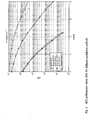
- Fig. 2 shows the SER performance of an embodiment of a method of estimating phase error noise in comparison to no-phase-noise and phase-noise-without-correction cases. Even for small phase noise of 10 -2 with no correction, there is an apparent error floor. On the other hand, the particular embodiment applied here mitigates phase noise and performance therefore stays close to no-phase-noise case. Notice that even an ML-based scheme is 1-2 dB worse than the particular embodiment.
- Fig. 3 shows that this particular embodiment is robust for common modulation methods. Also notice that the performance difference between an embodiment and no-phase-noise case becomes larger when the constellation size increases, as the larger constellation is more sensitive to estimation errors.
- NMMSE normalized MMSE
- embodiments of claimed subject matter may be employed in a variety of contexts and claimed subject matter is not limited in scope in this respect.
- embodiments may be employed in a variety of possible communication devices, including, for example, cell phones, personal digital assistants, laptop computers, media players, and the like.
- claimed subject matter is not limited in scope to this example.
- Many other approaches and/or other types of devices employing a variety of software, firmware and/or hardware are possible and included within the scope of claimed subject matter.
- one embodiment may be in hardware, such as implemented to operate on a device or combination of devices, for example, whereas another embodiment may be in software.
- an embodiment may be implemented in firmware, or as any combination of hardware, software, and/or firmware, for example.
- one embodiment may comprise one or more articles, such as a storage medium or storage media.
- This storage media such as, one or more CD-ROMs and/or disks, for example, may have stored thereon instructions, that when executed by a system, such as a computer system, computing platform, or other system, for example, may result in an embodiment of a method in accordance with claimed subject matter being executed, such as one of the embodiments previously described, for example.
- a computing platform may include one or more processing units or processors, one or more input/output devices, such as a display, a keyboard and/or a mouse, and/or one or more memories, such as static random access memory, dynamic random access memory, flash memory, and/or a hard drive.
- a display may be employed to display one or more queries, such as those that may be interrelated, and or one or more tree expressions, although, again, claimed subject matter is not limited in scope to this example.
Landscapes
- Engineering & Computer Science (AREA)
- Signal Processing (AREA)
- Computer Networks & Wireless Communication (AREA)
- Radio Transmission System (AREA)
Description
- The current patent application claims priority to
US provisional patent application No. 60/632,439, filed on December 2, 2004 - This disclosure is related to communications.
- It is desirable in communications to have the ability to estimate and adjust for phase error or phase noise, at least in part.
-
US 2003/0224750 discloses a method and system for estimating common amplitude and phase errors of a multiple channel wireless system. - Schenk et al, "Influence and suppression of phase noise in multi-antenna OFDM" analyses the influence of phase noise on the performance of a multiple-input multiple-output orthogonal frequency divisional multiplexing (MIMO-OFDM) based communication system.
- Petrovic et al, "Phase noise suppression in OFDM including intercarrier interference", discloses that, in order to suppress the influence of phase noise in OFDM communications systems, the correction of the common phase error (CPE) does not always suffice.
-
US 2004/0171366 discloses a method and algorithm for efficiently eliminating the effect of phase noise in OFDM based WLANs. - Subject matter is particularly pointed out and distinctly claimed in the concluding portion of the specification. Claimed subject matter, however, both as to organization and method of operation, together with objects, features, and advantages thereof, may best be understood by reference of the following detailed description if read with the accompanying drawings in which:
-
FIG. 1 is a schematic diagram illustrating an embodiment of a communications system employing an MIMO-OFDM scheme; -
FIGs. 2-5 are plots illustrating simulated performance results of employing various embodiments of a method of estimating phase error noise. - In the following detailed description, numerous specific details are set forth to provide a thorough understanding of claimed subject matter. However, it will be understood by those skilled in the art that claimed subject matter may be practiced without these specific details. In other instances, well known methods, procedures, components and/or circuits have not been described in detail so as not to obscure claimed subject matter.
- Some portions of the detailed description which follow are presented in terms of algorithms and/or symbolic representations of operations on data bits and/or binary digital signals stored within a computing system, such as within a computer and/or computing system memory. These algorithmic descriptions and/or representations are the techniques used by those of ordinary skill in the data processing arts to convey the substance of their work to others skilled in the art. An algorithm is here, and generally, considered to be a self-consistent sequence of operations and/or similar processing leading to a desired result. The operations and/or processing may involve physical manipulations of physical quantities. Typically, although not necessarily, these quantities may take the form of electrical and/or magnetic signals capable of being stored, transferred, combined, compared and/or otherwise manipulated. It has proven convenient, at times, principally for reasons of common usage, to refer to these signals as bits, data, values, elements, symbols, characters, terms, numbers, numerals and/or the like. It should be understood, however, that all of these and similar terms are to be associated with appropriate physical quantities and are merely convenient labels. Unless specifically stated otherwise, as apparent from the following discussion, it is appreciated that throughout this specification discussions utilizing terms such as "processing", "computing", "calculating", "determining" and/or the like refer to the actions and/or processes of a computing platform, such as a computer or a similar electronic computing device, that manipulates and/or transforms data represented as physical electronic and/or magnetic quantities and/or other physical quantities within the computing platform's processors, memories, registers, and/or other information storage, transmission, and/or display devices.
- For one embodiment in accordance with claimed subject matter, an MMSE-based scheme for estimating phase error noise is applied to an MIMO-OFDM communication system, such as systems with any number of antennas. Such an embodiment, it is believed provides better performance than what has been obtained with other phase error estimating approaches, such as a least squares (LS) approach, and shows robustness with respect to both number of antennas and SNR levels. Likewise, such as approach may be applied independent of coding scheme, and, therefore, may be used in various applications, such as BLAST or space-time coding, for example.
- The combination of OFDM modulation with multiple input multiple output (MIMO) systems, may increase the system capacity and reduce receiver complexity, such as for time-variant and frequency-selective channels, for example. Therefore, MIMO-OFDM has become a promising candidate for high performance future 4G broadband wireless communications. However, similar to SISO-OFDM, MIMO-OFDM may be sensitive to the level of noise, such as phase error noise, which may result in performance degradation.
- Even though various phase noise adjustment methods for single-antenna systems exist, multi-antenna communications systems have not been well-studied. As previously alluded to, for one embodiment, a Minimal Mean Square Error (MMSE)-based approach may be applied to an MIMO-OFDM communication system to estimate phase error noise, although, of course, claimed subject matter is not limited in scope in this respect. In particular, simulation results are shown herein for 64 sub-carriers, 16QAM modulation, with phase noise variance of 0.01.
- A Multiple Input Multiple Output (MIMO) technique takes advantage of the diversity that may obtained by spatially separated antennas in a dense multi-path scattering environment, although claimed subject matter is not limited in scope in this respect. However, see, for example, D. Gesbert and et al., "From theory to practice: an overview of MIMO space-time coded wireless systems," IEEE J. Select. Areas Commun., vol. 21, pp. 281-297, Apr. 2003 (hereinafter referred to as [1]). MIMO may provide a linear increase in the transmission rate (or capacity), potentially for the same bandwidth and potentially with no additional power expenditure. Diversity may, for example, be achieved through so called space-time codes. See, for example,e, V. Tarokh and A. Seshadri, "Space-time codes for high data rate wireless communication: Performance criterion and code construction," IEEE Trans. Inform. Theory, vol. 44, pp. 744-765, March 1998 (hereinafter referred to as [2]), while high bit rates may be achieved by spatial multiplexing systems, such as the pioneer system from Bell Labs abbreviated as BLAST. See, for example P.W. Wolniansky, G. J. Foschini, G. D. Golden, and R. A. Valenzuela, "V-BLAST: An architecture for realizing very high data rates over richscattering wireless channel," PROC. ISSSE, pp. 295-300, 1998 (hereinafter referred to as [3]). However, again, claimed subject matter is not limited in scope to these illustrative system examples.
- Orthogonal frequency division multiplexing (OFDM) is an attractive modulation scheme used in broadband wireless systems which encounter large delay spread, for example, although, again, claimed subject matter is not limited in scope in this respect. Nonetheless, see, for example, Z. Wang and G. B. Giannakis, "Wireless multicarrier communications: Where fourier meets Shannon," Signal Processing Magazine, IEEE, vol. 17, pp. 29-48, May 2000 (hereinafter [4]), ;"OFDM or single-carrier block transmission?" Transaction or Communication, IEEE, vol. 52, pp. 380-394, March 2004 (hereinafter [5]). Thus, OFDM has been adopted in a variety applications, e.g., digital subscriber line (DSL), digital video/audio broadcasting (DVB/DAB), IEEE 802.11a wireless local area network (HIPERLAN/2); see, for example, J. Bingham, "Multicarrier modulation for data transmission: an idea for whose time has come," IEEE Commun. Mag., vol. 28, pp. 5-14, May 1990(hereinafter [6]); IEEE Std 802.11a-1999, Supplement to IEEE standard for information technology - telecommunications and information exchange between systems - local and metropolitan area networks - specific requirements. Part 11; wireless LAN medium access control (MAC) and physical layer (PHY) specifications; high-speed physical layer in the 5GHz band. http://www.ieee.org. Dec. 1999 (hereinafter [7]).
- A principle of OFDM is to convert a frequency-selective channel into a parallel collection of frequency flat sub-channels. The signal may then be recovered by a one-tap equalizer on each flat sub-channel, for example. Since the different subcarriers overlap in frequency, the available bandwidth is used efficiently.
- A combined MIMO-OFDM scheme has an advantage over conventional systems at least in part due to its improved system capacity of BER performance introduced by MIMO technique, and its robustness to channel frequency selectively due at least in part to an OFDM technique. However, similar to OFDM, MIMO-OFDM suffers performance degradation due at least in part to the presence of phase noise. As previously suggested, in one embodiment, an MMSE-based approach to estimating phase error may be employed to improve system performance, such as may be employed at a receiver or by a computing device incorporated in a receiver, for example. Although, again, claimed subject matter is not limited in scope to these particular embodiments.
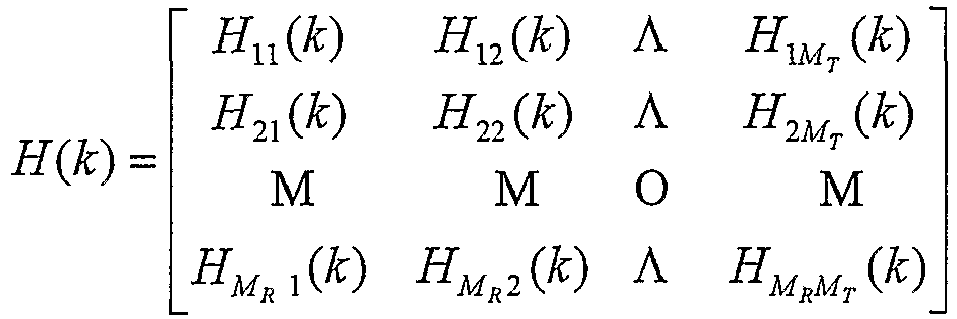
- Consider a frequency selective MIMO channel with MT (also denoted MT herein) transmit antennas and MR (also denoted MR herein) receive antennas. The channel on subcarrier k may be represented by MR x MT matrix H(k). Define X = [X1,X2,...., XMT]T = [X(0), X(1),...,X(N-1)] as a MT-by-N matrix which comprises transmitted data for one symbol duration T, where Xt = [Xt(0),Xt(1),...XT(N-1]T denotes a transmitted OFDM symbol on t-th antenna, and X(k) = [X1(k),X2(k),...,XMT(k)]T denotes transmitted data for the antennas on sub-carrier k, which is between 0 and N - 1. The IDFT of the data block on a transmit antenna yields the time domain sequence xt=[xt(0),xt(1),...xt(N-1)]T. After inserting Cyclix prefix (CP) which is assumed to be greater than the channel length, the sequence is transmitted over the transmit antennas. At the receive antennas, the CP is stripped off and data is fed into a DFT unit. By using CP in the data sequence, the time domain linear convolution is equivalent to cyclic convolution. Assume Y = [Y1, Y2,..., YMR]T = [Y(0), Y(1),...Y(N-1)] denotes received data from an antenna, where Yr = [Yr(0)Yr(1),...,Yr(N-1)]T denotes a received OFDM symbol on r-th antenna, and Y(k) = [Y1(k),Y2(k),...,YMR(k)]T denotes the received signal on k-th sub-carrier. Hence, the general form of an MIMO-OFDM process may be summarized as:

- Several space-time coding techniques have been proposed, such as discussed in previously cited [2], and later were extended to the OFDM field. Of course, claimed subject matter is not limited to a particular coding scheme. Another interesting approach is space-frequency coding technique, introduced in Lee and Williams, "A space-frequency transmitter diversity technique for ofdm systems," GLOBECOM'00 (San Francisco, CA), vol. 3, pp. 1473-1477, Nov. 2000, (hereinafter [8]) with 2 x 1 (MT = 2,MR =1) antennas, which is the frequency domain counterpart of Alamouti's space-time coding technique, see Alamouti, "A simple transmitter diversity scheme for wireless communications," IEEE J. Select. Areas Commun., Vol. 16, pp1451-1458, Oct. 1998 (hereinafter [9]). Following the same method as in [8],the effect of phase noise using a 2 x 2 scenario is shown in
Fig. 1 . In order to implement the transmit diversity technique in [8], for example, X1 and X2 are encoded in bits as:


- The space-frequency transmit diversity technique [8] involves A fading channel on adjacent sub-carriers BEING approximately constant. This condition holds in cases if channel coherent bandwidth is relatively large compared with transmission bandwidth. This is not as stringent as in space-time block coding, which has a fading channel on adjacent OFDM symbols as constant.
- Without loss of generality, the 2k and (2k + 1)th frequency-domain data(sub-carrier) signal pair is studied. The space-frequency decoding of this signal pair is simply given by the same combining scheme in [9]. Assume no phase noise exists, the combining rules are given by:


- In this context, the term phase noise is used for describing short term random frequency fluctuations of a signal. It may result from transmitter and receiver oscillators and may be described as a continuous Brownian motion process with zero mean and variance 2πβt , where β denotes the phase noise linewidth, although claimed subject matter is not limited in scope in this respect. By including phase noise effect, the expression of (4) is subsequently modified to:


- 1. Common phase error (CPE), indicated by C(0), which may result in the rotation of the desired signals;
- 2. Intercarrier interference (ICI), indicated by the term ICIt(k), which may result in interference on the desired signals.
- With medium to small phase noise levels, post-DFT phase noise adjustment may in particular situations be possible. Typically, CPE amounts to over 90% phase noise energy while ICI is relatively small in comparison to CPE. That is, for frequency-domain correction, even though considering both CPE and ICI would yield better result, CPE correction may amount to the major performance loss due to phase noise. Furthermore, the spatial diversity provided by MIMO may also improve CPE estimator performance. Therefore, this particular embodiment addresses CPE, although, of course, claimed subject matter is not limited in scope to CPE estimation.
- To mitigate CPE, (7) can be rewritten as


Y ||2 . With some algebraic manipulation, it is readily shown that this coefficient here is given by:



- When considering the CPE effect of phase noise, the decision results in (5) and (6) are modified by multiplying the corresponding channel responses by C(0). Then after estimation of CPE, we have:


- As suggested previously, simulations were carried out for the IEEE 802.11a standard, with 64 sub-carriers for an OFDM symbol, and the space-frequency diversity technique was applied, wherein 16QAM modulation is used. The length of cyclic prefix is assumed to be larger than channel delay spread.
-
Fig. 2 shows the SER performance of an embodiment of a method of estimating phase error noise in comparison to no-phase-noise and phase-noise-without-correction cases. Even for small phase noise of 10-2 with no correction, there is an apparent error floor. On the other hand, the particular embodiment applied here mitigates phase noise and performance therefore stays close to no-phase-noise case. Notice that even an ML-based scheme is 1-2 dB worse than the particular embodiment. - Effect of different modulation on the proposed scheme is evaluated in
Fig. 3 , which shows that this particular embodiment is robust for common modulation methods. Also notice that the performance difference between an embodiment and no-phase-noise case becomes larger when the constellation size increases, as the larger constellation is more sensitive to estimation errors. -
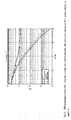
Fig. 4 shows the effect of a number of pilots and phase noise level, on the SER performance of the system. From this figure, we conclude that choosing 4 pilots gives adequate performance with high spectral efficiency (4/64=6.25% transmission bandwidth for pilots) and relatively low computational complexity. - Finally, in
Fig. 5 , the normalized MMSE (NMMSE) is used to compare the performance with different Np. Notice that although we can improve the estimation error, NMMSE, by larger Np, the same amount improvement does not occur for SER, as it is shown inFig. 4 . - It is worth noting that embodiments of claimed subject matter may be employed in a variety of contexts and claimed subject matter is not limited in scope in this respect. For example, embodiments may be employed in a variety of possible communication devices, including, for example, cell phones, personal digital assistants, laptop computers, media players, and the like. Of course, claimed subject matter is not limited in scope to this example. Many other approaches and/or other types of devices employing a variety of software, firmware and/or hardware are possible and included within the scope of claimed subject matter.
- It will, of course, be understood that, although particular embodiments have just been described, the claimed subject matter is not limited in scope to a particular embodiment or implementation. For example, one embodiment may be in hardware, such as implemented to operate on a device or combination of devices, for example, whereas another embodiment may be in software. Likewise, an embodiment may be implemented in firmware, or as any combination of hardware, software, and/or firmware, for example. Likewise, although claimed subject matter is not limited in scope in this respect, one embodiment may comprise one or more articles, such as a storage medium or storage media. This storage media, such as, one or more CD-ROMs and/or disks, for example, may have stored thereon instructions, that when executed by a system, such as a computer system, computing platform, or other system, for example, may result in an embodiment of a method in accordance with claimed subject matter being executed, such as one of the embodiments previously described, for example. As one potential example, a computing platform may include one or more processing units or processors, one or more input/output devices, such as a display, a keyboard and/or a mouse, and/or one or more memories, such as static random access memory, dynamic random access memory, flash memory, and/or a hard drive. For example, a display may be employed to display one or more queries, such as those that may be interrelated, and or one or more tree expressions, although, again, claimed subject matter is not limited in scope to this example.
- In the preceding description, various aspects of claimed subject matter have been described. For purposes of explanation, specific numbers, systems and/or configurations were set forth to provide a thorough understanding of claimed subject matter. However, it should be apparent to one skilled in the art having the benefit of this disclosure that claimed subject matter may be practiced without the specific details. In other instances, well known features were omitted and/or simplified so as not to obscure the claimed subject matter. While certain features have been illustrated and/or described herein, many modifications, substitutions, changes and/or equivalents will now occur to those skilled in the art. It is, therefore, to be understood that the appended claims are intended to cover all such modifications and/or changes.
Claims (14)
- A method for reducing phase error noise for a receiver employing a multiple input multiple output orthogonal frequency division multiplexing, MIMO-OFDM, scheme comprising:determining a minimal mean square error, MMSE, estimate of common phase error; andadjusting a received signal based on the MMSE estimate of common phase error,wherein determining an MMSE estimate of common phase error comprises estimating statistics of said common phase error.
- The method of claim 1, wherein said adjusting received signal comprises adjusting decoding of said received signal.
- The method of claim 1, wherein said MIMO-OFDM scheme employs space-time coding.
- An apparatus comprising:a receiver employing a multiple input multiple output orthogonal frequency division multiplexing, MIMO-OFDM, scheme;said receiver adapted to:determine a minimal mean square error, MMSE, estimate of common phase error; andadjust a received signal based on the MMSE estimate of common phase error,wherein said receiver is adapted to estimate statistics of said common phase error to determine the MMSE estimate of common phase error.
- The apparatus of claim 4, wherein said receiver is further adapted to adjust decoding of received signal.
- The apparatus of claim 4, wherein said receiver is adapted to employ space-time coding.
- The apparatus of claim 4, wherein said receiver is compliant with OFDM aspects of IEEE 802.11a-1999 standard.
- The apparatus of claim 4, wherein said receiver is incorporated in at least one of the following: a cell phone; a personal digital assistant; a laptop computer; a media player device.
- An apparatus comprising:
a computing device; said computing device adapted to:determine a minimal mean square error, MMSE, estimate of common phase error noise for a multiple input multiple output orthogonal frequency division multiplexing, MIMO-OFDM, communication scheme; andprocess received signals by adjusting the received signals based on the MMSE estimate of said common phase error noise,wherein said computing device is adapted to estimate statistics of said common phase error to determine the MMSE estimate of common phase error noise. - The apparatus of claim 9, wherein said computing device is further adapted to adjust decoding of received signal.
- The apparatus of claim 9, wherein said computing device is adapted to employ space-time coding.
- The apparatus of claim 9, wherein said computing device is compliant with OFDM aspects of IEEE 802.11a-1999 standard.
- The apparatus of claim 9, wherein said computing device is incorporated in at least one of the following: a cell phone; a personal digital assistant; a laptop computer; a media player device.
- A computer-readable medium comprising instructions which, when executed by a computer, cause the computer to carry out the method of any one of claims 1 to 3.
Applications Claiming Priority (2)
| Application Number | Priority Date | Filing Date | Title |
|---|---|---|---|
| US63243904P | 2004-12-02 | 2004-12-02 | |
| PCT/US2005/043610 WO2007032771A1 (en) | 2004-12-02 | 2005-12-02 | Method and/or system for estimating phase error noise |
Publications (3)
| Publication Number | Publication Date |
|---|---|
| EP1829245A1 EP1829245A1 (en) | 2007-09-05 |
| EP1829245A4 EP1829245A4 (en) | 2011-11-02 |
| EP1829245B1 true EP1829245B1 (en) | 2018-10-31 |
Family
ID=37865243
Family Applications (1)
| Application Number | Title | Priority Date | Filing Date |
|---|---|---|---|
| EP05858527.4A Expired - Lifetime EP1829245B1 (en) | 2004-12-02 | 2005-12-02 | Method and/or system for estimating phase error noise |
Country Status (6)
| Country | Link |
|---|---|
| US (2) | US8023583B2 (en) |
| EP (1) | EP1829245B1 (en) |
| JP (1) | JP4504431B2 (en) |
| KR (1) | KR101001962B1 (en) |
| CN (1) | CN101133566B (en) |
| WO (1) | WO2007032771A1 (en) |
Families Citing this family (6)
| Publication number | Priority date | Publication date | Assignee | Title |
|---|---|---|---|---|
| US7616695B1 (en) | 2004-06-17 | 2009-11-10 | Marvell International Ltd. | MIMO equalizer design: an algorithmic perspective |
| US7978759B1 (en) * | 2005-03-24 | 2011-07-12 | Marvell International Ltd. | Scalable equalizer for multiple-in-multiple-out (MIMO) wireless transmission |
| US8036257B2 (en) * | 2006-05-05 | 2011-10-11 | Alcatel Lucent | Method of determining at least one transmit mode parameter for a multiple-input multiple-output system |
| CN101741791B (en) * | 2008-11-05 | 2013-05-29 | 财团法人工业技术研究院 | Estimation method and estimation device |
| CN104168241B (en) | 2013-05-16 | 2017-10-17 | 华为技术有限公司 | Multiple input multiple output orthogonal frequency division multiplexing communication system and method for compensating signal |
| EP3043487B1 (en) | 2013-10-14 | 2018-08-08 | Huawei Technologies Co., Ltd. | Method, apparatus and system for signal processing |
Citations (1)
| Publication number | Priority date | Publication date | Assignee | Title |
|---|---|---|---|---|
| US20060083327A1 (en) * | 2004-10-20 | 2006-04-20 | Yeheskel Bar-Ness | Method for phase noise mitigation in MIMO-OFDM systems |
Family Cites Families (6)
| Publication number | Priority date | Publication date | Assignee | Title |
|---|---|---|---|---|
| US7548506B2 (en) * | 2001-10-17 | 2009-06-16 | Nortel Networks Limited | System access and synchronization methods for MIMO OFDM communications systems and physical layer packet and preamble design |
| JP3946087B2 (en) * | 2002-05-23 | 2007-07-18 | 三菱電機株式会社 | Communication system, receiver, and communication method |
| US6862440B2 (en) * | 2002-05-29 | 2005-03-01 | Intel Corporation | Method and system for multiple channel wireless transmitter and receiver phase and amplitude calibration |
| US7286514B2 (en) * | 2002-12-10 | 2007-10-23 | New Jersey Institute Of Technology | Method for phase noise suppression for OFDM based WLANs |
| GB0305486D0 (en) * | 2003-03-11 | 2003-04-16 | Koninkl Philips Electronics Nv | Multi-input multi-output system |
| US7408976B1 (en) * | 2004-05-19 | 2008-08-05 | Marvell International Ltd. | MIMO-OFDM receiver processing with frequency and channel estimation |
-
2005
- 2005-12-02 CN CN2005800415827A patent/CN101133566B/en not_active Expired - Lifetime
- 2005-12-02 WO PCT/US2005/043610 patent/WO2007032771A1/en not_active Ceased
- 2005-12-02 EP EP05858527.4A patent/EP1829245B1/en not_active Expired - Lifetime
- 2005-12-02 US US11/293,874 patent/US8023583B2/en active Active
- 2005-12-02 KR KR1020077015185A patent/KR101001962B1/en not_active Expired - Lifetime
- 2005-12-02 JP JP2007544536A patent/JP4504431B2/en not_active Expired - Lifetime
-
2011
- 2011-05-19 US US13/110,989 patent/US9191154B2/en active Active
Patent Citations (1)
| Publication number | Priority date | Publication date | Assignee | Title |
|---|---|---|---|---|
| US20060083327A1 (en) * | 2004-10-20 | 2006-04-20 | Yeheskel Bar-Ness | Method for phase noise mitigation in MIMO-OFDM systems |
Also Published As
| Publication number | Publication date |
|---|---|
| US20110222639A1 (en) | 2011-09-15 |
| JP2008522559A (en) | 2008-06-26 |
| KR101001962B1 (en) | 2010-12-17 |
| CN101133566A (en) | 2008-02-27 |
| KR20070116783A (en) | 2007-12-11 |
| US8023583B2 (en) | 2011-09-20 |
| JP4504431B2 (en) | 2010-07-14 |
| WO2007032771A1 (en) | 2007-03-22 |
| CN101133566B (en) | 2013-01-16 |
| US9191154B2 (en) | 2015-11-17 |
| US20060227893A1 (en) | 2006-10-12 |
| EP1829245A1 (en) | 2007-09-05 |
| EP1829245A4 (en) | 2011-11-02 |
Similar Documents
| Publication | Publication Date | Title |
|---|---|---|
| US8320510B2 (en) | MMSE MIMO decoder using QR decomposition | |
| US20120327757A1 (en) | Detection method and apparatus for multiple-input multiple-output single-carrier block transmission system | |
| US8599980B2 (en) | Beamforming apparatus and method in multi-antenna system | |
| US20040114506A1 (en) | Transmitting and receiving method for reducing distortion caused by a time-varying channel in an orthogonal frequency division multiplex system | |
| US7876839B2 (en) | Receiver and method for channel estimation for multicarrier communication systems | |
| Jeon et al. | An efficient channel estimation technique for OFDM systems with transmitter diversity | |
| US9191154B2 (en) | Method and/or system for estimating phase error noise | |
| Acar et al. | High performance OFDM with index modulation | |
| Siew et al. | A channel estimation method for MIMO-OFDM systems | |
| Slimane | Channel estimation for HIPERLAN/2 with transmitter diversity | |
| Kwon et al. | Cyclic delay diversity with frequency domain turbo equalization for uplink fast fading channels | |
| Somasekhar et al. | Modified SLM and PTS approach to reduce PAPR in MIMO OFDM | |
| Li et al. | OFDM spread spectrum with index modulation | |
| Frank et al. | Low complexity and power efficient space-time-frequency coding for OFDMA | |
| Berceanu et al. | Performance analysis of an uplink Massive MU-MIMO OFDM-based system | |
| Jing et al. | Performance study of adaptive modulation/coding in MIMO-OFDM system | |
| Hu et al. | EM-based channel estimation for MIMO OFDM system | |
| KR100599538B1 (en) | Method and apparatus for detecting SFC-OPEM signal in frequency selective channel | |
| Bei et al. | A low complex V-BLAST detection algorithm for MIMO-OFDM system | |
| Das et al. | Beamforming and combining strategies for MIMO-OFDM over doubly selective channels | |
| Boonkajay et al. | Blind selected mapping techniques for space-time block coded filtered single-carrier signals | |
| Yeşilyurt et al. | Hybrid SNR‐Adaptive Multiuser Detectors for SDMA‐OFDM Systems | |
| Lim et al. | Space-time block code design for single-carrier frequency division multiple access | |
| Chang et al. | A low‐complexity turbo MUD for MU–MIMO SC‐FDMA systems | |
| Hu et al. | A low complexity algorithm for channel estimation of MIMO OFDM system |
Legal Events
| Date | Code | Title | Description |
|---|---|---|---|
| PUAI | Public reference made under article 153(3) epc to a published international application that has entered the european phase |
Free format text: ORIGINAL CODE: 0009012 |
|
| 17P | Request for examination filed |
Effective date: 20070619 |
|
| AK | Designated contracting states |
Kind code of ref document: A1 Designated state(s): AT BE BG CH CY CZ DE DK EE ES FI FR GB GR HU IE IS IT LI LT LU LV MC NL PL PT RO SE SI SK TR |
|
| AX | Request for extension of the european patent |
Extension state: AL BA HR MK YU |
|
| DAX | Request for extension of the european patent (deleted) | ||
| A4 | Supplementary search report drawn up and despatched |
Effective date: 20110930 |
|
| RIC1 | Information provided on ipc code assigned before grant |
Ipc: H04B 7/02 20060101AFI20110926BHEP Ipc: H04L 1/06 20060101ALI20110926BHEP Ipc: H04L 1/00 20060101ALI20110926BHEP Ipc: H04L 1/02 20060101ALI20110926BHEP |
|
| 17Q | First examination report despatched |
Effective date: 20170719 |
|
| GRAP | Despatch of communication of intention to grant a patent |
Free format text: ORIGINAL CODE: EPIDOSNIGR1 |
|
| INTG | Intention to grant announced |
Effective date: 20180515 |
|
| GRAS | Grant fee paid |
Free format text: ORIGINAL CODE: EPIDOSNIGR3 |
|
| GRAA | (expected) grant |
Free format text: ORIGINAL CODE: 0009210 |
|
| AK | Designated contracting states |
Kind code of ref document: B1 Designated state(s): AT BE BG CH CY CZ DE DK EE ES FI FR GB GR HU IE IS IT LI LT LU LV MC NL PL PT RO SE SI SK TR |
|
| REG | Reference to a national code |
Ref country code: CH Ref legal event code: EP Ref country code: GB Ref legal event code: FG4D |
|
| REG | Reference to a national code |
Ref country code: AT Ref legal event code: REF Ref document number: 1060641 Country of ref document: AT Kind code of ref document: T Effective date: 20181115 |
|
| REG | Reference to a national code |
Ref country code: DE Ref legal event code: R096 Ref document number: 602005054922 Country of ref document: DE |
|
| REG | Reference to a national code |
Ref country code: IE Ref legal event code: FG4D |
|
| REG | Reference to a national code |
Ref country code: NL Ref legal event code: MP Effective date: 20181031 |
|
| REG | Reference to a national code |
Ref country code: LT Ref legal event code: MG4D |
|
| REG | Reference to a national code |
Ref country code: AT Ref legal event code: MK05 Ref document number: 1060641 Country of ref document: AT Kind code of ref document: T Effective date: 20181031 |
|
| PG25 | Lapsed in a contracting state [announced via postgrant information from national office to epo] |
Ref country code: IS Free format text: LAPSE BECAUSE OF FAILURE TO SUBMIT A TRANSLATION OF THE DESCRIPTION OR TO PAY THE FEE WITHIN THE PRESCRIBED TIME-LIMIT Effective date: 20190228 Ref country code: LV Free format text: LAPSE BECAUSE OF FAILURE TO SUBMIT A TRANSLATION OF THE DESCRIPTION OR TO PAY THE FEE WITHIN THE PRESCRIBED TIME-LIMIT Effective date: 20181031 Ref country code: AT Free format text: LAPSE BECAUSE OF FAILURE TO SUBMIT A TRANSLATION OF THE DESCRIPTION OR TO PAY THE FEE WITHIN THE PRESCRIBED TIME-LIMIT Effective date: 20181031 Ref country code: PL Free format text: LAPSE BECAUSE OF FAILURE TO SUBMIT A TRANSLATION OF THE DESCRIPTION OR TO PAY THE FEE WITHIN THE PRESCRIBED TIME-LIMIT Effective date: 20181031 Ref country code: LT Free format text: LAPSE BECAUSE OF FAILURE TO SUBMIT A TRANSLATION OF THE DESCRIPTION OR TO PAY THE FEE WITHIN THE PRESCRIBED TIME-LIMIT Effective date: 20181031 Ref country code: BG Free format text: LAPSE BECAUSE OF FAILURE TO SUBMIT A TRANSLATION OF THE DESCRIPTION OR TO PAY THE FEE WITHIN THE PRESCRIBED TIME-LIMIT Effective date: 20190131 Ref country code: ES Free format text: LAPSE BECAUSE OF FAILURE TO SUBMIT A TRANSLATION OF THE DESCRIPTION OR TO PAY THE FEE WITHIN THE PRESCRIBED TIME-LIMIT Effective date: 20181031 Ref country code: FI Free format text: LAPSE BECAUSE OF FAILURE TO SUBMIT A TRANSLATION OF THE DESCRIPTION OR TO PAY THE FEE WITHIN THE PRESCRIBED TIME-LIMIT Effective date: 20181031 |
|
| PG25 | Lapsed in a contracting state [announced via postgrant information from national office to epo] |
Ref country code: PT Free format text: LAPSE BECAUSE OF FAILURE TO SUBMIT A TRANSLATION OF THE DESCRIPTION OR TO PAY THE FEE WITHIN THE PRESCRIBED TIME-LIMIT Effective date: 20190301 Ref country code: SE Free format text: LAPSE BECAUSE OF FAILURE TO SUBMIT A TRANSLATION OF THE DESCRIPTION OR TO PAY THE FEE WITHIN THE PRESCRIBED TIME-LIMIT Effective date: 20181031 Ref country code: GR Free format text: LAPSE BECAUSE OF FAILURE TO SUBMIT A TRANSLATION OF THE DESCRIPTION OR TO PAY THE FEE WITHIN THE PRESCRIBED TIME-LIMIT Effective date: 20190201 Ref country code: NL Free format text: LAPSE BECAUSE OF FAILURE TO SUBMIT A TRANSLATION OF THE DESCRIPTION OR TO PAY THE FEE WITHIN THE PRESCRIBED TIME-LIMIT Effective date: 20181031 |
|
| PG25 | Lapsed in a contracting state [announced via postgrant information from national office to epo] |
Ref country code: DK Free format text: LAPSE BECAUSE OF FAILURE TO SUBMIT A TRANSLATION OF THE DESCRIPTION OR TO PAY THE FEE WITHIN THE PRESCRIBED TIME-LIMIT Effective date: 20181031 Ref country code: IT Free format text: LAPSE BECAUSE OF FAILURE TO SUBMIT A TRANSLATION OF THE DESCRIPTION OR TO PAY THE FEE WITHIN THE PRESCRIBED TIME-LIMIT Effective date: 20181031 Ref country code: CZ Free format text: LAPSE BECAUSE OF FAILURE TO SUBMIT A TRANSLATION OF THE DESCRIPTION OR TO PAY THE FEE WITHIN THE PRESCRIBED TIME-LIMIT Effective date: 20181031 |
|
| REG | Reference to a national code |
Ref country code: CH Ref legal event code: PL |
|
| REG | Reference to a national code |
Ref country code: DE Ref legal event code: R097 Ref document number: 602005054922 Country of ref document: DE |
|
| PG25 | Lapsed in a contracting state [announced via postgrant information from national office to epo] |
Ref country code: LU Free format text: LAPSE BECAUSE OF NON-PAYMENT OF DUE FEES Effective date: 20181202 Ref country code: RO Free format text: LAPSE BECAUSE OF FAILURE TO SUBMIT A TRANSLATION OF THE DESCRIPTION OR TO PAY THE FEE WITHIN THE PRESCRIBED TIME-LIMIT Effective date: 20181031 Ref country code: SK Free format text: LAPSE BECAUSE OF FAILURE TO SUBMIT A TRANSLATION OF THE DESCRIPTION OR TO PAY THE FEE WITHIN THE PRESCRIBED TIME-LIMIT Effective date: 20181031 Ref country code: EE Free format text: LAPSE BECAUSE OF FAILURE TO SUBMIT A TRANSLATION OF THE DESCRIPTION OR TO PAY THE FEE WITHIN THE PRESCRIBED TIME-LIMIT Effective date: 20181031 Ref country code: MC Free format text: LAPSE BECAUSE OF FAILURE TO SUBMIT A TRANSLATION OF THE DESCRIPTION OR TO PAY THE FEE WITHIN THE PRESCRIBED TIME-LIMIT Effective date: 20181031 |
|
| PLBE | No opposition filed within time limit |
Free format text: ORIGINAL CODE: 0009261 |
|
| STAA | Information on the status of an ep patent application or granted ep patent |
Free format text: STATUS: NO OPPOSITION FILED WITHIN TIME LIMIT |
|
| REG | Reference to a national code |
Ref country code: IE Ref legal event code: MM4A |
|
| REG | Reference to a national code |
Ref country code: BE Ref legal event code: MM Effective date: 20181231 |
|
| 26N | No opposition filed |
Effective date: 20190801 |
|
| PG25 | Lapsed in a contracting state [announced via postgrant information from national office to epo] |
Ref country code: SI Free format text: LAPSE BECAUSE OF FAILURE TO SUBMIT A TRANSLATION OF THE DESCRIPTION OR TO PAY THE FEE WITHIN THE PRESCRIBED TIME-LIMIT Effective date: 20181031 Ref country code: IE Free format text: LAPSE BECAUSE OF NON-PAYMENT OF DUE FEES Effective date: 20181202 |
|
| PG25 | Lapsed in a contracting state [announced via postgrant information from national office to epo] |
Ref country code: BE Free format text: LAPSE BECAUSE OF NON-PAYMENT OF DUE FEES Effective date: 20181231 |
|
| PG25 | Lapsed in a contracting state [announced via postgrant information from national office to epo] |
Ref country code: LI Free format text: LAPSE BECAUSE OF NON-PAYMENT OF DUE FEES Effective date: 20181231 Ref country code: CH Free format text: LAPSE BECAUSE OF NON-PAYMENT OF DUE FEES Effective date: 20181231 |
|
| PG25 | Lapsed in a contracting state [announced via postgrant information from national office to epo] |
Ref country code: TR Free format text: LAPSE BECAUSE OF FAILURE TO SUBMIT A TRANSLATION OF THE DESCRIPTION OR TO PAY THE FEE WITHIN THE PRESCRIBED TIME-LIMIT Effective date: 20181031 |
|
| PG25 | Lapsed in a contracting state [announced via postgrant information from national office to epo] |
Ref country code: HU Free format text: LAPSE BECAUSE OF FAILURE TO SUBMIT A TRANSLATION OF THE DESCRIPTION OR TO PAY THE FEE WITHIN THE PRESCRIBED TIME-LIMIT; INVALID AB INITIO Effective date: 20051202 Ref country code: CY Free format text: LAPSE BECAUSE OF FAILURE TO SUBMIT A TRANSLATION OF THE DESCRIPTION OR TO PAY THE FEE WITHIN THE PRESCRIBED TIME-LIMIT Effective date: 20181031 |
|
| PGFP | Annual fee paid to national office [announced via postgrant information from national office to epo] |
Ref country code: DE Payment date: 20241111 Year of fee payment: 20 |
|
| PGFP | Annual fee paid to national office [announced via postgrant information from national office to epo] |
Ref country code: GB Payment date: 20241114 Year of fee payment: 20 |
|
| PGFP | Annual fee paid to national office [announced via postgrant information from national office to epo] |
Ref country code: FR Payment date: 20241111 Year of fee payment: 20 |
|
| REG | Reference to a national code |
Ref country code: DE Ref legal event code: R071 Ref document number: 602005054922 Country of ref document: DE |
|
| REG | Reference to a national code |
Ref country code: GB Ref legal event code: PE20 Expiry date: 20251201 |