EP1818865A1 - Method of evaluating environmental impact to be caused during one cycle of activity, and system and program using the same - Google Patents
Method of evaluating environmental impact to be caused during one cycle of activity, and system and program using the same Download PDFInfo
- Publication number
- EP1818865A1 EP1818865A1 EP07102028A EP07102028A EP1818865A1 EP 1818865 A1 EP1818865 A1 EP 1818865A1 EP 07102028 A EP07102028 A EP 07102028A EP 07102028 A EP07102028 A EP 07102028A EP 1818865 A1 EP1818865 A1 EP 1818865A1
- Authority
- EP
- European Patent Office
- Prior art keywords
- data
- item
- amount
- impact
- data type
- Prior art date
- Legal status (The legal status is an assumption and is not a legal conclusion. Google has not performed a legal analysis and makes no representation as to the accuracy of the status listed.)
- Ceased
Links
Images






Classifications
-
- G—PHYSICS
- G06—COMPUTING OR CALCULATING; COUNTING
- G06Q—INFORMATION AND COMMUNICATION TECHNOLOGY [ICT] SPECIALLY ADAPTED FOR ADMINISTRATIVE, COMMERCIAL, FINANCIAL, MANAGERIAL OR SUPERVISORY PURPOSES; SYSTEMS OR METHODS SPECIALLY ADAPTED FOR ADMINISTRATIVE, COMMERCIAL, FINANCIAL, MANAGERIAL OR SUPERVISORY PURPOSES, NOT OTHERWISE PROVIDED FOR
- G06Q50/00—Information and communication technology [ICT] specially adapted for implementation of business processes of specific business sectors, e.g. utilities or tourism
-
- G—PHYSICS
- G06—COMPUTING OR CALCULATING; COUNTING
- G06Q—INFORMATION AND COMMUNICATION TECHNOLOGY [ICT] SPECIALLY ADAPTED FOR ADMINISTRATIVE, COMMERCIAL, FINANCIAL, MANAGERIAL OR SUPERVISORY PURPOSES; SYSTEMS OR METHODS SPECIALLY ADAPTED FOR ADMINISTRATIVE, COMMERCIAL, FINANCIAL, MANAGERIAL OR SUPERVISORY PURPOSES, NOT OTHERWISE PROVIDED FOR
- G06Q10/00—Administration; Management
- G06Q10/06—Resources, workflows, human or project management; Enterprise or organisation planning; Enterprise or organisation modelling
-
- G—PHYSICS
- G06—COMPUTING OR CALCULATING; COUNTING
- G06Q—INFORMATION AND COMMUNICATION TECHNOLOGY [ICT] SPECIALLY ADAPTED FOR ADMINISTRATIVE, COMMERCIAL, FINANCIAL, MANAGERIAL OR SUPERVISORY PURPOSES; SYSTEMS OR METHODS SPECIALLY ADAPTED FOR ADMINISTRATIVE, COMMERCIAL, FINANCIAL, MANAGERIAL OR SUPERVISORY PURPOSES, NOT OTHERWISE PROVIDED FOR
- G06Q10/00—Administration; Management
- G06Q10/08—Logistics, e.g. warehousing, loading or distribution; Inventory or stock management
- G06Q10/087—Inventory or stock management, e.g. order filling, procurement or balancing against orders
Definitions
- the present disclosure generally relates to a system, and method for evaluating an environmental load to be caused by a given activity, and more particular to a system, method, and program for efficiently and effectively conducting a life cycle assessment of one given activity based on environmental load information.
- Increased human activities may have been affecting environment on the earth, and resultantly appeared as environmental issues/problems such as possible-exhaustion of energy/resources and material recycling issue, for example.
- business entities belong to manufacturing industries may have been using a LCA (life cycle assessment) method for some time to evaluate or assess its business activity impact to the environment.
- LCA life cycle assessment
- Such manufacturing business entities may use a LCA method to evaluate or assess environmental load caused by product manufacturing, for example.
- the LCA method may quantitatively evaluate an environmental performance of a finished product in its life cycle using objective criteria, indicating environmental loads, which may occur during the life cycle of finished product (see e.g. National Institute of Advanced Industrial Science and Technology http://unit.aist.go.jp/lca-center/cie/index.html).
- a life cycle of product may include a number of stages, which may start from material mining stage to product discarding stage.
- the life cycle of product may mean "from cradle to grave" stages of product.
- a life cycle of product may include a plurality of stages such as “front-end stage,” “manufacturing stage,” “distribution/sales stage,” “use stage,” “repair/maintenance stage,” “recovery/recycle stage,” and “discarding stage,” for example.
- the "front-end stage” may mean a stage for obtaining raw materials, parts or the like to be used for "manufacturing stage.”
- the manufacturer may conduct a LCA process for one product to be produced with the above-mentioned stages, the manufacturer may have to collect information of environmental load, which may occur at each of the above-mentioned stages.
- factual information on environmental load of each material and part which may be used at each of the above-mentioned stages, may have to be collected at first.
- factual information on environmental load of each material and part may have to be collected without missing required factual information.
- a LCA process can be conducted more precisely by collecting more precisely prepared factual information on environmental load.
- Such LCI data may include data for environmental load, which may be caused by using materials and resources for human activities such as business activities.
- such LCI data for material or resource may be measured “per unit” basis.
- the "per unit” may mean a particular amount of particular material or resource to be used for making a particular amount of part or product.
- such LCI data for material or resource may mean "input amount” of material or resource for producing a particular amount of part or product.
- the particular amount of part or product may mean a one unit of part or product.
- LCI data having the above-mentioned meaning may be used for indicating environmental load on material, resource, part, product or the like.
- Such LCI data may be classified item-by-item basis, wherein such item may include a vast variety of materials, resources or the like such as metals (e.g., copper), biological resources (e.g., woods for making paper), energy recourses (e.g., petroleum), emission material (e.g., carbon dioxide, nitride oxide), and socially served recourses (e.g., fresh water, electricity, gas), for example.
- metals e.g., copper
- biological resources e.g., woods for making paper
- energy recourses e.g., petroleum
- emission material e.g., carbon dioxide, nitride oxide
- socially served recourses e.g., fresh water, electricity, gas
- Each of items listed as LCI data may have a numerical value to indicate environmental load of each item, wherein such numerical value may indicate an environmental load that may occur when such item is used for manufacturing a part or product.
- a business entity can obtain reference indicators (i.e., LCI data) for environmental load for a number of materials and parts, which may be used by the business entity.
- LCI data reference indicators
- Such database including LCI data may be useful for a business entity (e.g., manufacturer) for evaluating environmental load for materials, parts, or the like purchased from a third party company because the business entity (e.g., manufacturer) can obtain environmental load information for such purchased materials and parts by referring the above-mentioned database.
- a business entity e.g., manufacturer
- the business entity e.g., manufacturer
- Such database including LCI data for materials and parts may facilitate an environmental load evaluation by a business entity (e.g., manufacturer) because the business entity can obtain such LCI data at an upstream stage of product manufacturing such as procurement stage, for example.
- a business entity e.g., manufacturer
- the business entity can obtain LCI data for materials, resources, and parts or the like, to be used for product manufacturing, at the upstream stage of product manufacturing (e.g., procurement stage), the manufacturer can evaluate environmental load of a to-be-produced product before such product is actually produced.
- the business entity e.g., manufacturer
- Such process may be favorable from a viewpoint of producing an environmentally-concerned product because the business entity (e.g., manufacturer) can foresee a possible environmental load of one product before actually producing the product, and then the business entity (e.g., manufacturer) can select materials, resources, and parts or the like, which may have smaller environmental load compared to originally assigned ones for the product.
- the business entity e.g., manufacturer
- the business entity e.g., manufacturer
- the business entity e.g., manufacturer
- a designer/engineer may select materials and parts to be used for producing a product, and then the designer/engineer can conduct a LCA process for to-be-produced product based on such selected materials and parts.
- a business entity can obtain information on environmental load caused by materials and parts at an upstream stage of business activities (e.g., product manufacturing) such as design/plan stage or procurement stage.
- a business entity can obtain information on environmental load caused by materials and parts used in a finished product by analyzing components configuring the finished product one by one.
- materials and parts used for the finished product may be identified step by step by breaking down components of the finished product, and then environmental load of materials and parts may be determined.
- breaking-down process may be time-consuming and inefficient.
- obtaining environmental load information such as LCI data at an upstream stage (e.g., design/plan stage) of business activities (e.g., product manufacturing) may be preferable from a viewpoint of conducting a LCA process more efficiently and effectively.
- design-aide system used for product design
- the design-aide system may have a database for conducting a LCA process for product manufacturing.
- database may store LCI data, and category information of materials and parts to be used for a product.
- Such design-aide system may include a CAD (computer-aided design) system having a screen, by which a designer can designate or select materials and parts used for a product.
- CAD computer-aided design
- the design-aide system may then search designated materials and parts in the database to specify category information of the designated materials and parts.
- the design-aide system may further specify LCI data corresponding to the specified category information of the designated materials and parts to obtain the LCI data for the designated materials and parts.
- the design-aide system may obtain LCI data (or environmental load information) related to a product at an upstream stage (e.g., design/plan stage), and then transmit such obtained LCI data to a LCA analyzing unit via a network such as LAN (local area network) and Internet, for example.
- LCI data or environmental load information
- a LCA analyzing unit via a network such as LAN (local area network) and Internet, for example.
- the LCA analyzing unit may receive such LCI data from a plurality of design-aide apparatuses (e.g., CAD terminal) connected to the LCA analyzing unit, and conduct a LCA analysis using such information transmitted from the plurality of design-aide apparatuses (e.g., CAD terminal).
- a plurality of design-aide apparatuses e.g., CAD terminal
- the plurality of design-aide apparatuses e.g., CAD terminal
- FIG. 1 shows schemes of two types of environment impact evaluation method: 1) issue comparing type method, and 2) damage assessment type method.
- the "issue comparing type method” may have been used for a relatively long time ago, and the “damage assessment type method” may have been developed recently, and these two types may have some difference as below.
- a LCI (life cycle inventory) analysis may be mainly conducted for evaluating an impact of each material or resources to natural environment.
- issue comparing type method may mainly evaluate a number of evaluation items one by one to assess an environment impact of each item to natural environment.
- such items may include a material consumption amount (e.g., amount of iron ore), and amount of emission gas such as carbon dioxide (CO 2 ), nitrogen oxide (NOx), and sulfur oxide (SOx), which may be generated when producing, using, and discarding a product in its one life cycle.
- a material consumption amount e.g., amount of iron ore
- emission gas such as carbon dioxide (CO 2 ), nitrogen oxide (NOx), and sulfur oxide (SOx)
- an amount of material to be used for a business activity e.g., product manufacturing
- an amount of material to be released to the environment may be assessed item-by-item.
- an amount of emission gas such as carbon dioxide (CO 2 ), nitrogen oxide (NOx), and sulfur oxide (SOx)
- CO 2 carbon dioxide
- NOx nitrogen oxide
- SOx sulfur oxide
- a business entity may recognize an environmental impact of its business activity and may make a new environmental management decision so that the business entity may conduct a more environmentally sound operations.
- Such issue comparing type method may be convenient for evaluating or assessing environmental load of each item such as carbon dioxide (CO 2 ), nitrogen oxide (NOx), and sulfur oxide (SOx).
- CO 2 carbon dioxide
- NOx nitrogen oxide
- SOx sulfur oxide
- issue comparing type method may not be so effective to evaluate or assess an overall environment impact of product in its one life cycle more precisely because the issue comparing type method may mainly evaluate or assess an environmental impact of each item one by one, but may not evaluate or assess an overall combined environmental impact of each item.
- the above-explained issue comparing type method may mainly evaluate or assess an environment load of each item with numerical value expressed in "material amount to be used” or "used material amount.”
- a user e.g., business entity
- such evaluation data may feel difficulty for recognizing what kind of or what level of environment impact will occur by using a given amount of material for business activities (e.g. one life cycle of product).
- the "damage assessment type method” may have been developed recently as shown in FIG. 1.
- the damage assessment type method may use LCI data as in the issue comparing type method, the damage assessment type method may try to evaluate or assess broader environment impact caused by using a given amount of materials for business activities (e.g., one life cycle of product).
- LIME life cycle impact assessment method based on endpoint modeling
- the LIME method may evaluate an environmental impact during one life cycle of product by computing damages to be caused to the environment during one life cycle of product.
- the LIME may conduct following steps for evaluating environmental impact to be caused during one life cycle of product: fate analysis, exposure analysis, damage assessment, effect analysis, and weighting process.
- a concentration change of substances having a given environmental load in environmental medium e.g., atmosphere, water
- concentration change may lead to a change of exposing amount of substances to a biological receptor (e.g., human, animal, plant).
- a change of exposing amount of substances to a biological receptor is analyzed based on the fate analysis.
- a change of possibly-occurring damage to the biological receptor e.g., human, animal, plant
- the biological receptor e.g., human, animal, plant
- each of possibly-occurring damage is accumulated for each endpoint (e.g., human health).
- the endpoint may include a various types of elements in environment (e.g., human environment and natural environment), which may be affected by using a given amount of materials for one life cycle of product.
- environment e.g., human environment and natural environment
- an environmental impact of some metals such as copper may be explained as below.
- a given amount of copper ore is mined at a mining site, a given amount of copper metal may be removed from a soil. Because a containing amount of copper in the earth soil may be so limited, if such mining operation is repeated, it may end up of mining all of copper from the earth soil in a given time period.
- Such a case may be related an endpoint termed as "social infrastructure" because a mining site may be considered as an infrastructure required for maintaining a human society.
- a possibly-occurring damage to "social infrastructure” may be evaluated or assessed.
- evaluation or assessment of possibly-occurring damage to "social infrastructure” may be considered in terms of infrastructure maintaining cost, infrastructure repairing cost, or the like.
- priority levels of different kind of endpoints related to one life cycle of product may be considered to compute an overall environmental impact during one life cycle of product, wherein such overall environmental impact may be expressed as damage cost to an overall environmental.
- damage cost may be measured in terms of money value so that a user (e.g., business entity) can evaluate or assess an impact of one activity (e.g., product manufacturing) more clearly.
- a user e.g., business entity
- an impact of one activity e.g., product manufacturing
- the damage cost may include a repairing cost, required countermeasure cost (e.g., medical care if human health is damaged), but not limited to such cost.
- the LCA framework may include step S1 for setting an object and scope, step S2 for inventory analysis (e.g., LCI data analysis), step S3 for impact evaluation, step S4 for result interpretation, step S5 for reporting, and step S6 for critical review, for example.
- step S5 may be used for applications at step S7 such as product development as shown in FIG. 2.
- issue comparing type method and damage assessment type method may have a common objective to evaluate or assess an environment impact of activities (e.g., business activities)
- the issue comparing type method and damage assessment type method may have a different view of LCI data.
- the issue comparing type method and damage assessment type method may have a different view of inventories (e.g., LCI data) to be used for a environmental evaluation.
- the damage assessment type method such as LIME may assess a weight of true metal elements, and not the amount of mineral ore of concerned metal.
- the issue comparing type method may assess a weight of ore content.
- Such difference may lead to a discrepancy of environment impact evaluation results obtained by each of the issue comparing type method and damage assessment type method, and such situation may inconvenient for a user (e.g., business entity) that needs an environment impact evaluation information matched to an actual business operation conducted by the user (e.g., business entity).
- FIG. 3 schematically shows such inconvenience due to a different view of LCI data between the issue comparing type method and damage assessment type method.
- a data provider e.g., mining company, manufacturing company
- each item e.g., copper, copper ore
- the data provider may prepare conventional type LCI data for materials (e.g., raw material such mineral ore) to be input into a given manufacturing stage, which may be controllable by the data provider (e.g., mining company, manufacturing company).
- an assessment method developer may need data of virgin materials (e.g., true copper metal) to be input into a given manufacturing stage for conducting an environmental impact evaluation for "resource exhaustion" metals such as copper.
- virgin materials e.g., true copper metal
- a user may need to adjust conventional type LCI data to a modified LCI data, matched to the damage assessment type, so that the user (e.g., business entity) can use such modified LCI data for an evaluating an environmental impact of a given business activity.
- a user may need an efficient and effective system for conducting such modification or correction of LCI data so that a user (e.g., business entity) can employ the above-mentioned issue comparing type method and damage assessment type method in a seamless manner.
- the present disclosure relates to a system for evaluating an environmental impact to be caused during one life cycle of a given activity.
- the system includes a controlling unit, which controls the system with a plurality of data storages connected to the controlling unit.
- the plurality of data storages includes a first data storage, a second data storage, and a third data storage.
- the first data storage stores a first type data for each item to be used for the given activity.
- the first type data includes life cycle inventory data of each item.
- the second data storage stores a second type data for each item.
- the second type data includes a grade information and a recycle ratio information related to each item.
- the third data storage stores a third type data for each item, the third type data includes modified life cycle inventory data of each item.
- the third type data is obtained by modifying the first type data with the second type data.
- the controlling unit computes a gross amount of the virgin material to be used for producing the one unit of product by referring a first type data for the given item.
- the gross amount of the virgin material is adjusted with an amount of the recycled material determined based on a recycle ratio information related to the given item.
- the controlling unit computes a substantially true amount of the virgin material to be used for producing the one unit of product by modifying the gross amount of the virgin material with a grade information related to the given item.
- the controlling unit stores the substantially true amount of the virgin material to the third data storage as the third type data.
- the plurality of data storages further includes a fourth data storage configured to store an impact-coefficient data for each item.
- the controlling unit prepares a first analysis result having an environmental load caused by each item by listing the substantially true amount of the virgin material of each item to be used for producing the one unit of product.
- the controlling unit prepares a second analysis result having an environmental impact evaluation of one life cycle of the product by multiplying the substantially true amount of the virgin material of each item with the impact-coefficient data for corresponding each item.
- the controlling unit outputs the first analysis result and the second analysis result.
- spatially relative terms such as “beneath”, “below”, “lower”, “above”, “upper” and the like, may be used herein for ease of description to describe one element or feature's relationship to another element(s) or feature(s) as illustrated in the figures. It will be understood that the spatially relative terms are intended to encompass different orientations of the device in use or operation in addition to the orientation depicted in the figures. For example, if the device in the figures is turned over, elements described as “below” or “beneath” other elements or features would then be oriented “above” the other elements or features. Thus, term such as “below” can encompass both an orientation of above and below. The device may be otherwise oriented (rotated 90 degrees or at other orientations) and the spatially relative descriptors used herein interpreted accordingly.
- first, second, etc. may be used herein to describe various elements, components, regions, layers and/or sections, it should be understood that these elements, components, regions, layers and/or sections should not be limited by these terms. These terms are used only to distinguish one element, component, region, layer or section from another region, layer or section. Thus, a first element, component, region, layer or section discussed below could be termed a second element, component, region, layer or section without departing from the teachings of the present invention.
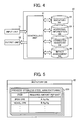
- an evaluation unit 20 shown in FIG. 4 may conduct a LCA (life cycle assessment) process for a given activity conducted by a business entity (e.g., manufacturer).
- LCA life cycle assessment
- the evaluation unit 20 may be configured as a system for evaluating an environmental impact to be caused by a given activity conducted by a business entity.
- the evaluation unit 20 may conduct a LCA process for one product to be manufactured by a business entity.
- the evaluation unit 20 may obtain environmental load information at each stage in one life cycle of the product to compute an environmental impact, which may occur in one life cycle of the product, and evaluate or assess the environmental impact caused by one life cycle of the product.
- a one life cycle of product may include a plurality of stages such as "front-end stage,” “manufacturing stage,” “distribution/sales stage,” “use stage,” “repair/maintenance stage,” “recovery/recycle stage,” and “discarding stage”.
- the evaluation unit 20 may conduct a LCA analysis at each stage, and may compute an overall environmental impact to be caused during one life cycle of product using a result of LCA analysis, obtained at each stage.
- a terminal apparatus for inputting material information for LCA analysis may be provided at each business unit responsible for handling each corresponding stage for product manufacturing.
- a user e.g., engineer
- each business unit may input required information to the terminal apparatus.
- the input information may be transmitted to the evaluation unit 20 so that the evaluation unit 20 may conduct an overall LCA analysis for one life cycle of the product.
- Such LCA analysis for one life cycle of product may be conducted at any stage in one life cycle of product such as "front-end stage,” “manufacturing stage,” “distribution/sales stage,” “use stage,” “repair/maintenance stage,” “recovery/recycle stage,” and “discarding stage,” although it may be preferable to conduct such LCA analysis at a upstream stage of one life cycle of product.
- the evaluation unit 20 may include a controlling unit 21.
- controlling unit 21 may be connected to an input unit 31, and output unit 32, for example.
- the controlling unit 21 may include a CPU (central processing unit) and a memory such as RAM (random access memory) and ROM (read only memory), for example, although not shown.
- the controlling unit 21 may control a plurality of process steps (to be described later) for evaluating an environmental impact to be caused by a given activity with a software program, which may be installed in the evaluation unit 20, for example.
- the input unit 31 may include an inputting device such as keyboard and pointing device, for example.
- a user e.g., engineer
- the output unit 32 may include an outputting device such as display unit and printer, for example.
- the output unit 32 may output or display a result computed by the controlling unit 21, as required.
- the evaluation unit 20 may include an inventory DB (database) 22, additional information DB (database) 23, corrected inventory DB (database) 24, and impact evaluation DB (database) 26, for example.
- the inventory DB 22 may function as a first data storage, which may store LCI (life cycle inventory) data. Such LCI data may be available from several data providers.
- LCI life cycle inventory
- the inventory DB 22 may store LCI data 220.
- the LCI data 220 shown in FIG. 5 may include LCI data for various types of items, wherein the items may included materials, resources or the like such as mineral ore (e.g., iron ore, copper ore), biological resources (e.g., woods for paper), energy recourses (e.g., petroleum), emission material (e.g., carbon dioxide, nitride oxide), and socially served recourses (e.g., fresh water, electricity, gas), for example.
- materials, resources or the like such as mineral ore (e.g., iron ore, copper ore), biological resources (e.g., woods for paper), energy recourses (e.g., petroleum), emission material (e.g., carbon dioxide, nitride oxide), and socially served recourses (e.g., fresh water, electricity, gas), for example.
- resources or the like such as mineral ore (e.g., iron ore, copper ore), biological resources (e.g., woods for paper), energy recourses
- LCI data 220 may be prepared in view of exhaustion probability of resources (e.g., copper ore), for example.
- a database including the LCI data 220 may be obtained from a third-party organization.
- such database may be obtained from "LCA database of LCA Japan forum" and "JEMAI-LCA of JEMAI (Japan environmental management association for industry).
- the inventory DB 22 may store the LCI data 220 obtained from an external organization, for example.
- the LCI data 220 may include data related to an amount of materials (e.g., iron ore, copper ore), which may be required for making a given amount of target material (e.g., iron ore for iron, copper ore for copper), for example.
- materials e.g., iron ore, copper ore
- target material e.g., iron ore for iron, copper ore for copper
- the LCI data 220 may include data for an item such as mineral ore (e.g., iron ore, copper ore) as shown in FIG. 5.
- the LCI data 220 may include other items such as biological resources (e.g., woods for paper), energy recourses (e.g., petroleum), emission material (e.g., carbon dioxide, nitride oxide), and socially served recourses (e.g., fresh water, electricity, gas), for example.
- biological resources e.g., woods for paper
- energy recourses e.g., petroleum
- emission material e.g., carbon dioxide, nitride oxide
- socially served recourses e.g., fresh water, electricity, gas
- each item may include material name and an amount of material per unit basis, for example.
- the material name corresponded to each item in the LCI data 220 may be used as identification information to specify types of materials, resources, energies, or the like.
- the amount of material per unit basis may mean an amount of material required for manufacturing one unit of part or product.
- part and product may be interchangeably used.
- the copper alloy may be a “part” and the electrical cable may be a “product.”
- the electrical cable may be a “part” and the electronic apparatus may be a "product.”
- LCI life cycle inventory
- the amount of material per unit basis may be determined by each item, and stored as LCI data 220.
- FIG. 5 shows example data that the LCI data 220 may include an amount of resource (e.g., iron ore) to be consumed for producing a product in view of one life cycle.
- the LCI data 220 may also include an amount of gas (e.g., CO 2 and SOx) per unit basis, emitted during one life cycle of a product, for example.
- resource e.g., iron ore
- gas e.g., CO 2 and SOx
- the LCI data 220 may include a number of items and corresponding amount of item per unit basis, wherein such items may be used during one life cycle of product. Based on such LCI data 220, environmental load information for materials, resources or the like for one life cycle of a product may be obtained, and with accumulating environmental load information of each of materials, resources or the like, an environmental impact to be caused during one life cycle of product may be obtained.
- the inventory DB 22 may store the LCI data 220 obtained from a third-party organization such as governmental organization.
- the inventory DB 22 may store the LCI data 220, which may be obtained from another database provider.
- Such another database provider may include a business entity, manufacturing a concerned product, and a business entity, manufacturing parts or materials, for example, but not limited to such business entity.
- the additional information DB 23 may function as second data storage, and may store additional information data related to each item included in the LCI data 220.
- the additional information DB 23 may store additional information data 230 to be used for correcting or modifying the LCI data 220 stored in the inventory DB 22.
- the additional information data 230 may include "grade" information and "recycle ratio" information for each item included in the LCI data 220, as required.
- the additional information data 230 may be obtained from a database provided by a third-party organization or the like, for example.
- the additional information DB 23 may store data related to "grade" information of mineral ore (e.g., iron ore, copper ore) and "recycle ratio" information of metal material (e.g., iron, copper) for items (e.g., iron ore, copper ore) included in the LCI data 220.
- grade information of mineral ore
- recycle ratio information of metal material (e.g., iron, copper) for items (e.g., iron ore, copper ore) included in the LCI data 220.
- the additional information DB 23 may include such grade information and recycle ratio information for each item included in the LCI data 220, as required, as additional information data 230.
- Such "recycle ratio" information for metal materials may be used when making a metal product (as target product) from mineral ore (e.g., iron ore, copper ore) and recycled metal, for example. If the metal product (as target product) may be made partly from the recycled metal, an amount of mineral ore used for making the metal product (as target product) may be reduced.
- electrolytic copper i.e., metal product
- scrap copper i.e., recycled material
- copper concentrate i.e., virgin material
- the "copper concentrate (i.e., virgin material)" may be obtained by conducting a known refining step to copper ore (i.e., mineral ore).
- the "electrolytic copper (i.e., metal product)" may be made from “scrap copper (i.e., recycled material)" and “copper concentrate (i.e., virgin material),” an amount of “copper concentrate (i.e., virgin material)” for making “electrolytic copper (i.e., metal product)” can be reduced compared to a case that "electrolytic copper (i.e., metal product)" is totally made of “copper concentrate (i.e., virgin material).”
- copper concentrate i.e., virgin material
- impurities may not be used for making a metal product (as target product).
- the grade information of "copper concentrate” may mean a ratio of "copper” included in "copper concentrate (i.e., virgin material).”
- Such grade information may be used to compute an amount of "copper” included in "copper concentrate (i.e., virgin material).”
- an amount of "copper concentrate” before a modification by grade information may mean a gross amount of "copper concentrate” including impurities, and an amount of "copper concentrate” after a modification by grade information may mean a substantially true amount of "copper” in "copper concentrate.”
- recycle ratio information may be provided for resinous material made of petroleum because petroleum may be an exhaustible resource.
- a recycling of material, resources, or the like may have become an important issue for a business entity, which may need a sustainable business operation.
- a business entity may need to watch following example conditions when to consider material usage: a material which may be more likely to be exhausted; a material having a volatility on its market price (e.g., a surge of price increase); and an input energy for obtaining a material.
- some industrial report may say that some metals such as gold may be exhausted within a certain period of times; some metals such as copper may have market price volatility due to economic expansions in some countries; and a recycling ratio of rare metals may have been increased because of input energy for making rare metals from mineral ores is so high (e.g., rare metal recovery from product has been increasing).
- a business entity may need the above-mentioned recycle ratio information for materials as additional information data so that the business entity can reduce a cost impact of materials to its business activities.
- the LCI data 220 may be modified or corrected to obtain corrected LCI data 240.
- the corrected LCI data 240 may be stored in the corrected inventory DB 24, which may function as third data storage. As shown in FIG. 6, the corrected inventory DB 24 may store corrected LCI data 240.
- the corrected LCI data 240 may be used for evaluating an environmental load of each item, and may also be used for evaluating an environmental impact of one life cycle of a given activity.
- the corrected LCI data 240 may include corrected LCI data for each time, wherein each time may include material name and corrected LCI data.
- Each item in the corrected LCI data 240 may have a material name as identification information for identifying each item.
- a material name for each item in the corrected LCI data 240 may different from a material name in the LCI data 220, stored in the inventory DB 22.
- the LCI data 220 may include an item having a name of "iron ore" as shown in FIG. 5.
- the corrected LCI data 240 corresponded to the LCI data 220 having a name of "iron ore,” may have a name of "iron” as shown in FIG. 6.
- an item named as "iron” obtained with such correction process may be included in the impact evaluation DB 26.
- a name of each item in the corrected LCI data 240 and a name of corresponding each item in the impact evaluation DB 260 may have a same name (see FIG. 6 and 7), wherein such name of each item may be used as identification information for identifying each item in the corrected LCI data 240 and the impact evaluation DB 260.
- the amount of material per unit basis may mean an amount of material required for manufacturing one unit of part or product, and the amount of material per unit basis may be termed "LCI data" for the simplicity of expression.
- the corrected LCI data 240 may be obtained by modifying or correcting the LCI data 220 using the above-explained additional information data (e.g., grade and recycle ratio information).
- additional information data e.g., grade and recycle ratio information
- the impact evaluation DB 26 may function as fourth data storage, and may store impact-coefficient data 260 as shown in FIG. 7.
- the impact-coefficient data 260 may be used for converting an environmental load (i.e., corrected LCI data) of each item, included in the corrected LCI data 240, into an environmental impact caused by each item.
- such environmental impact caused by each item may be expressed as damage cost or money value.
- the impact-coefficient data 260 for each item may be determined by experts, who may have studied and researched environmental impact caused by each item, based on a number of factors such as market price of materials (e.g., ingots), for example.
- the impact-coefficient data 260 may be used to converting an environmental load of each item into a damage cost, which is expressed in money value, so that a social cost associated for one life cycle of product may be clearly presented to a user (e.g., business entity) or public.
- damage cost is expressed in money value
- a social cost associated for one life cycle of product may be more easily recognized compared to just showing an mount of material or resources to be used for one life cycle of product.
- the impact-coefficient data 260 may be provided by a third-party organization.
- EPS environment priority strategies for product design
- Ver. 2000 for life-cycle impact assessment method developed by Swedish Environmental Research Institute Ltd., may be used for obtaining the impact-coefficient data 260.
- the controlling unit 21 may include a LCI data evaluator 211, a correcting unit 212, a LCI data storing unit 213, an item inputting unit 214, and an impact evaluation unit 215.
- the LCI data evaluator 211 may retrieve the LCI data 220 required for a LCA process for one part or product from the inventory DB 22.
- the correcting unit 212 may conduct a correction process to the LCI data 220, for which an additional information data 230 stored in the additional information DB 23 may be used.
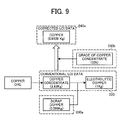
- electrolytic copper may be made of "copper concentrate (i.e., virgin material)” and "scrap copper (i.e., recycled material)", for example.
- "scrap copper" of 0.099 kg may be specified for making “electrolytic copper” of 1 kg, for example.
- an amount of "copper concentrate” used for making “electrolytic copper” may be specified as below.
- the correcting unit 212 may retrieve a data of "copper concentrate (i.e., virgin material)" of 2.83 kg from the LCI data 220 stored in the inventory DB 22.
- the correcting unit 212 may specify grade information for "copper concentrate" of 2.83 kg by referring the additional information data 230.
- the correcting unit 212 may obtain "grade information" of 33% (i.e., data 230b in FIG. 9) by referring the additional information data 230 stored in the additional information DB 23.
- the correcting unit 212 may correct "copper concentrate (2.83 kg)" with "grade information (33%) (i.e., data 230b in FIG. 9)," in which copper concentrate” of 2.83 kg may be multiplied with the grade information of 33%.
- copper having a weight of 0.9339 kg i.e., corrected LCI data 240a in FIG. 9
- corrected LCI data 240a in FIG. 9
- the LCI data storing unit 213 may store the corrected LCI data 240 to the corrected inventory DB 24, computed by the correcting unit 212.
- the data 240a (i.e., copper of 0.9339 kg) may be stored in the corrected LCI data 240.
- the item inputting unit 214 may obtain an item, to be evaluated with LCA process. Specifically, a user may select or input an item name to the item inputting unit 214 via the input unit 31.
- the item inputting unit 214 may obtain the corrected LCI data 240 for the selected or input item (e.g., material) from the corrected inventory DB 24 to conduct an inventory analysis for the selected or input item.
- the selected or input item e.g., material
- Such inventory analysis may be conducted for each item to be used for one life cycle of product, for example.
- a result of inventory analysis may include each environmental load for each item.
- the data 240a i.e., copper of 0.9339 kg
- the data 240a may be listed as one time in an inventory analysis result, which may be prepared for one life cycle of product (e.g., "electrolytic copper”).
- the data 240a (i.e., copper of 0.9339 kg) may correspond a true amount of virgin material to be used for one life cycle of product (e.g., "electrolytic copper").
- the inventory analysis may be prepared by listing a true amount of virgin material for each item to be used for one life cycle of part or product, wherein such true amount of virgin material may be obtained by modifying a gross amount of virgin material with additional information such as grade information, which may be explained with an example case shown in FIG. 9.
- Such inventory analysis for each item may list the corrected LCI data 240, obtained by modifying or correcting the LCI data 220 with the additional information data 230 stored in the additional information DB 230.
- the impact evaluation unit 215 may compute an impact evaluation result for one life cycle of product.
- the impact evaluation unit 215 may retrieve the impact-coefficient data 260, from the impact evaluation DB 26, corresponding to the selected or input item, input by the item inputting unit 214 as above-mentioned.
- the impact evaluation unit 215 may multiply corrected LCI data 240 for the selected or input item with the impact-coefficient data 260 corresponding to the selected or input item.
- a damage cost to be caused by the selected or input item may be computed, wherein the damage cost may be expressed in money value as previously explained.
- the impact evaluation unit 215 may output an impact evaluation result of the selected or input item to the output unit 32.
- an impact evaluation result of one selected or input item may be used as an impact evaluation result of one life cycle of product.
- a product may be configured with more than one item, a combined impact evaluation results of selected or input items may be used as an impact evaluation result of one life cycle of product.
- the additional information DB 23 may store the additional information data 230 for correcting the LCI data 220, stored in the inventory DB 22.
- the additional information DB 23 may store data related to "grade” information of and "recycle ratio” information for each item such as mineral ore, metal, for example.
- the corrected LCI data 240 reflecting material grade and material recycle ratio can be generated, and such corrected LCI data 240 can be used for LCIA (life cycle impact assessment) method.
- the corrected LCI data 240 may be stored in the corrected inventory DB 24.
- Each item name included in the corrected LCI data 240 may be used as identification information for identifying the item, and same item name may be used for each item included in the impact-coefficient data 260, stored in the impact evaluation DB 26.
- FIG. 10 shows one example comparing two environmental impact evaluations for an electronic apparatus using a LCIA (life cycle impact assessment) method, in which one case was evaluated with conventional LCI data and another case was evaluated by corrected LCI data obtained by a method according to an example embodiment.
- LCIA life cycle impact assessment
- a business entity may need to recognize characteristic of LCI data so that the business entity can evaluate an environmental impact for one life cycle of product more precisely. For example, if such impact evaluation may be conducted with LCI data, which may not reflect an actual condition in industry environment, a business entity may end up of preparing an a kind of false impact evaluation result and may make a wrong decision based on such false impact evaluation result.
- FIG. 11 shows an example scheme of a method of evaluating an environmental impact of a given activity using the above-described system or method according to an example embodiment.
- a user may efficiently and effectively evaluate or assess an environmental impact of a given activity with an example scheme in FIG. 11 according to an example embodiment because the corrected LCI data may be generated efficiently in an example scheme in FIG. 11.
- the item inputting unit 214 may obtain an item to be evaluated with LCA process.
- a designer/engineer can select a part to be used for a product from a screen of a CAD machine while conducting a product designing work. Based on such selected part, a LCA process may be conducted for the selected part.
- a part-data DB storing LCI data for each part may be provided to the CAD machine. Accordingly, information on environmental load of selected part can be obtained at the design/plan stage from such part-data DB, for example.
- an upstream stage e.g., design stage, procurement stage.
- a more precise LCA process can be conducted at an upstream stage of one life cycle of product.
- a designer/engineer can conduct a LCA process for a product while conducting a usual product designing work with a CAD machine without learning a new procedure for handling LCI data for each item. Furthermore, the designer/engineer can conduct a LCA process without having a skilled staff for handling LCI data for each item.
- a user e.g., business entity
- the evaluation unit 20, inventory DB 22, additional information DB 23, corrected inventory DB 24, and impact evaluation DB 26 may be provided as an integrated unit.
- the inventory DB 22, additional information DB 23, and impact evaluation DB 26 may be located separately from the evaluation unit 20.
- the inventory DB 22, additional information DB 23, and impact evaluation DB 26 may be placed in a separate external place, and connected to the evaluation unit 20 via a communication network such as Internet or LAN (local area network).
- a communication network such as Internet or LAN (local area network).
- the evaluation unit 20 may obtain required data from such externally placed database via the communication network such as Internet or LAN (local area network).
- the communication network such as Internet or LAN (local area network).
- the evaluation unit 20 may include the controlling unit 21, input unit 31, and output unit 32.
- the evaluation unit 20 may be used as a server, and the input unit 31 and output unit 32 may be separated from the evaluation unit 20.
- the input unit 31 and output unit 32 may be connected to the evaluation unit 20 via a network such as Internet or LAN (local area network), for example.
- a network such as Internet or LAN (local area network), for example.
- a user may select or input an item information from a client terminal apparatus (i.e., input unit 31) and transmit the information to the evaluation unit 20 via the network such as Internet or LAN (local area network), for example.
- a client terminal apparatus i.e., input unit 31
- the network such as Internet or LAN (local area network), for example.
- the evaluation unit 20 may compute environmental load for such selected or input item information
- the evaluation unit 20 may transmit and display such environmental load for such selected input item information to a terminal apparatus (i.e., output unit 32).
- Such configuration may be preferable because a plurality of users (e.g., engineer) can share one unit of evaluation unit 20 and each database (e.g., inventory DB 22, additional information DB 23, corrected inventory DB 24, and impact evaluation DB 26).
- a plurality of users e.g., engineer
- each database e.g., inventory DB 22, additional information DB 23, corrected inventory DB 24, and impact evaluation DB 26.
- the LCI data 220 stored in the inventory DB 22, additional information data 230 stored in the additional information DB 23, and impact-coefficient data 260 stored in the impact evaluation DB 26 may be released from a third-party organization.
- the evaluation unit 20 may include a function for updating data status stored in inventory DB 22, additional information DB 23, and impact evaluation DB 26 to up-to-date condition.
- controlling unit 21 may be configured to periodically monitor publicly-available database (including LCI data, additional information data, and impact-coefficient data), which may be released on a network such as Internet, to update data status of database (e.g., inventory DB 22, additional information DB 23, and impact evaluation DB 26).
- publicly-available database including LCI data, additional information data, and impact-coefficient data
- database e.g., inventory DB 22, additional information DB 23, and impact evaluation DB 26.
- information stored in database may be updated and maintained to up-to-date condition, which is preferable for a user (e.g., business entity) that need up-to-date data for evaluating an environmental impact of a given activity more precisely.
- material recycle ratio may change depending on recycling trend in society and recycling technology
- impact-coefficient data used for computing damage cost may also change over time due to factors such as technology advancement and market price change of each item.
- LCIA life cycle impact assessment
- EPS environment priority strategies for product design
- LIME life cycle impact assessment method based on endpoint modeling
- such LCIA method may include an exhaustible coefficient prepared for each of metal resources, wherein the exhaustible coefficient may mean an urgency of metal resource exhaustion.
- Such exhaustible coefficient may be multiplied to an amount of true metal, which may be input to a product manufacturing, wherein such amount of true metal may be obtained by applying additional information (e.g., grade information of mineral ore, metal recycle ratio) to a given conventional LCI data using the above-described system or method according to an example embodiment.
- additional information e.g., grade information of mineral ore, metal recycle ratio
- a user e.g., business entity
- the LCA method may be used to evaluate environmental impact or load, which may occur in a course of business activities conducted by one business entity, for example.
- a variety of elements such as office buildings, factories, and other business related elements might be considered to evaluate environmental impact or load, which may occur in a course of business activities conducted by one business entity.
Landscapes
- Business, Economics & Management (AREA)
- Engineering & Computer Science (AREA)
- Economics (AREA)
- Human Resources & Organizations (AREA)
- Strategic Management (AREA)
- General Physics & Mathematics (AREA)
- Tourism & Hospitality (AREA)
- Entrepreneurship & Innovation (AREA)
- Theoretical Computer Science (AREA)
- Marketing (AREA)
- General Business, Economics & Management (AREA)
- Physics & Mathematics (AREA)
- Operations Research (AREA)
- Quality & Reliability (AREA)
- Development Economics (AREA)
- Game Theory and Decision Science (AREA)
- Educational Administration (AREA)
- Accounting & Taxation (AREA)
- Finance (AREA)
- Health & Medical Sciences (AREA)
- General Health & Medical Sciences (AREA)
- Primary Health Care (AREA)
- Management, Administration, Business Operations System, And Electronic Commerce (AREA)
Abstract
Description
- The present disclosure generally relates to a system, and method for evaluating an environmental load to be caused by a given activity, and more particular to a system, method, and program for efficiently and effectively conducting a life cycle assessment of one given activity based on environmental load information.
- Increased human activities (e.g., globally-operated business activities) may have been affecting environment on the earth, and resultantly appeared as environmental issues/problems such as possible-exhaustion of energy/resources and material recycling issue, for example.
- With such social trend, business entities, which may operate business activities domestically or internationally, may have to recognize such environmental issues as important issues to sustain its business activities, and may need to take measures to cope with such environmental issues.
- With such background, a number of organizations or entities in public sectors (e.g., governmental organizations) or private sectors (e.g., industries) have been developed or developing a method for evaluating environmental impact to be caused by activities such as business activity (e.g., product manufacturing).
- For example, business entities belong to manufacturing industries may have been using a LCA (life cycle assessment) method for some time to evaluate or assess its business activity impact to the environment. Such manufacturing business entities may use a LCA method to evaluate or assess environmental load caused by product manufacturing, for example.
- The LCA method may quantitatively evaluate an environmental performance of a finished product in its life cycle using objective criteria, indicating environmental loads, which may occur during the life cycle of finished product (see e.g. National Institute of Advanced Industrial Science and Technology http://unit.aist.go.jp/lca-center/cie/index.html).
- In general, a life cycle of product may include a number of stages, which may start from material mining stage to product discarding stage. In other words, the life cycle of product may mean "from cradle to grave" stages of product.
- With such background, it has been desired to devise a method, which can evaluate or assess environmental impact or load to be caused by business activities (e.g., product manufacturing) more precisely.
- From a viewpoint of a manufacturer producing a variety of products, a life cycle of product may include a plurality of stages such as "front-end stage," "manufacturing stage," "distribution/sales stage," "use stage," "repair/maintenance stage," "recovery/recycle stage," and "discarding stage," for example. The "front-end stage" may mean a stage for obtaining raw materials, parts or the like to be used for "manufacturing stage."
- When the manufacturer may conduct a LCA process for one product to be produced with the above-mentioned stages, the manufacturer may have to collect information of environmental load, which may occur at each of the above-mentioned stages.
- In order to ideally conduct such LCA process, factual information on environmental load of each material and part, which may be used at each of the above-mentioned stages, may have to be collected at first. In other words, factual information on environmental load of each material and part may have to be collected without missing required factual information.
- In general, a LCA process can be conducted more precisely by collecting more precisely prepared factual information on environmental load.
- In view of such background, several organizations in public sectors (e.g., governmental organizations) or private sectors (e.g., industries) have been developing and releasing database, which may list environmental load to be caused by material and part as reference data. For example, such database may be termed as "LCI (life cycle inventory) data" as a whole.
- Such LCI data may include data for environmental load, which may be caused by using materials and resources for human activities such as business activities.
- In general, such LCI data for material or resource may be measured "per unit" basis. The "per unit" may mean a particular amount of particular material or resource to be used for making a particular amount of part or product. In other words, such LCI data for material or resource may mean "input amount" of material or resource for producing a particular amount of part or product. In general, the particular amount of part or product may mean a one unit of part or product.
- Hereinafter, the term of "LCI data" having the above-mentioned meaning may be used for indicating environmental load on material, resource, part, product or the like.
- Such LCI data may be classified item-by-item basis, wherein such item may include a vast variety of materials, resources or the like such as metals (e.g., copper), biological resources (e.g., woods for making paper), energy recourses (e.g., petroleum), emission material (e.g., carbon dioxide, nitride oxide), and socially served recourses (e.g., fresh water, electricity, gas), for example.
- Each of items listed as LCI data may have a numerical value to indicate environmental load of each item, wherein such numerical value may indicate an environmental load that may occur when such item is used for manufacturing a part or product.
- With such database developed and released by several organizations, a business entity can obtain reference indicators (i.e., LCI data) for environmental load for a number of materials and parts, which may be used by the business entity.
- Such database including LCI data may be useful for a business entity (e.g., manufacturer) for evaluating environmental load for materials, parts, or the like purchased from a third party company because the business entity (e.g., manufacturer) can obtain environmental load information for such purchased materials and parts by referring the above-mentioned database.
- Such database including LCI data for materials and parts may facilitate an environmental load evaluation by a business entity (e.g., manufacturer) because the business entity can obtain such LCI data at an upstream stage of product manufacturing such as procurement stage, for example.
- If the business entity can obtain LCI data for materials, resources, and parts or the like, to be used for product manufacturing, at the upstream stage of product manufacturing (e.g., procurement stage), the manufacturer can evaluate environmental load of a to-be-produced product before such product is actually produced.
- In such situation, the business entity (e.g., manufacturer) can change or select materials, resources, and parts or the like to be used for a product by reviewing a result of environmental load evaluation or assessment of product.
- Such process may be favorable from a viewpoint of producing an environmentally-concerned product because the business entity (e.g., manufacturer) can foresee a possible environmental load of one product before actually producing the product, and then the business entity (e.g., manufacturer) can select materials, resources, and parts or the like, which may have smaller environmental load compared to originally assigned ones for the product.
- Furthermore, the business entity (e.g., manufacturer) can conduct a LCA process at a design/plan stage of product manufacturing, which is another stage in an upstream stage of product manufacturing.
- For example, a designer/engineer may select materials and parts to be used for producing a product, and then the designer/engineer can conduct a LCA process for to-be-produced product based on such selected materials and parts.
- Accordingly, if the above-mentioned database including LCI data may be available for public, a business entity can obtain information on environmental load caused by materials and parts at an upstream stage of business activities (e.g., product manufacturing) such as design/plan stage or procurement stage.
- On one hand, a business entity can obtain information on environmental load caused by materials and parts used in a finished product by analyzing components configuring the finished product one by one. In this case, materials and parts used for the finished product may be identified step by step by breaking down components of the finished product, and then environmental load of materials and parts may be determined. However, such breaking-down process may be time-consuming and inefficient.
- Accordingly, obtaining environmental load information such as LCI data at an upstream stage (e.g., design/plan stage) of business activities (e.g., product manufacturing) may be preferable from a viewpoint of conducting a LCA process more efficiently and effectively.
- In view of such background, a system or method for conducting a LCA process on a given activity has been developed in recent years.
- For example, one related art explains a design-aide system used for product design, in which the design-aide system may have a database for conducting a LCA process for product manufacturing. Such database may store LCI data, and category information of materials and parts to be used for a product.
- Such design-aide system may include a CAD (computer-aided design) system having a screen, by which a designer can designate or select materials and parts used for a product.
- The design-aide system may then search designated materials and parts in the database to specify category information of the designated materials and parts.
- Then, the design-aide system may further specify LCI data corresponding to the specified category information of the designated materials and parts to obtain the LCI data for the designated materials and parts.
- As such, the design-aide system may obtain LCI data (or environmental load information) related to a product at an upstream stage (e.g., design/plan stage), and then transmit such obtained LCI data to a LCA analyzing unit via a network such as LAN (local area network) and Internet, for example.
- For example, the LCA analyzing unit may receive such LCI data from a plurality of design-aide apparatuses (e.g., CAD terminal) connected to the LCA analyzing unit, and conduct a LCA analysis using such information transmitted from the plurality of design-aide apparatuses (e.g., CAD terminal).
- Hereinafter, two types of environment impact evaluation method based on a concept of LCA are briefly explained with reference to FIG. 1.
- FIG. 1 shows schemes of two types of environment impact evaluation method: 1) issue comparing type method, and 2) damage assessment type method.
- The "issue comparing type method" may have been used for a relatively long time ago, and the "damage assessment type method" may have been developed recently, and these two types may have some difference as below.
- In case of issue comparing type method, a LCI (life cycle inventory) analysis may be mainly conducted for evaluating an impact of each material or resources to natural environment.
- For example, as partly shown in FIG. 1, issue comparing type method may mainly evaluate a number of evaluation items one by one to assess an environment impact of each item to natural environment. For example, such items may include a material consumption amount (e.g., amount of iron ore), and amount of emission gas such as carbon dioxide (CO2), nitrogen oxide (NOx), and sulfur oxide (SOx), which may be generated when producing, using, and discarding a product in its one life cycle.
- In such issue comparing type method, an amount of material to be used for a business activity (e.g., product manufacturing) or an amount of material to be released to the environment may be assessed item-by-item. For example, an amount of emission gas such as carbon dioxide (CO2), nitrogen oxide (NOx), and sulfur oxide (SOx), may be assessed one by one.
- Based on such analysis assessing environmental load in terms of amount of to-be-used or released material, a business entity may recognize an environmental impact of its business activity and may make a new environmental management decision so that the business entity may conduct a more environmentally sound operations.
- Such issue comparing type method may be convenient for evaluating or assessing environmental load of each item such as carbon dioxide (CO2), nitrogen oxide (NOx), and sulfur oxide (SOx).
- However, the above-explained issue comparing type method may not be so effective to evaluate or assess an overall environment impact of product in its one life cycle more precisely because the issue comparing type method may mainly evaluate or assess an environmental impact of each item one by one, but may not evaluate or assess an overall combined environmental impact of each item.
- Furthermore, the above-explained issue comparing type method may mainly evaluate or assess an environment load of each item with numerical value expressed in "material amount to be used" or "used material amount."
- Accordingly, a user (e.g., business entity) of such evaluation data may feel difficulty for recognizing what kind of or what level of environment impact will occur by using a given amount of material for business activities (e.g. one life cycle of product).
- In view of such situations, the "damage assessment type method" may have been developed recently as shown in FIG. 1.
- Although the damage assessment type method may use LCI data as in the issue comparing type method, the damage assessment type method may try to evaluate or assess broader environment impact caused by using a given amount of materials for business activities (e.g., one life cycle of product).
- One example of such damage assessment type method is explained hereinafter.
- For example, in Japan, a LIME (life cycle impact assessment method based on endpoint modeling) method has been developed to evaluate an environmental impact to be caused during one life cycle of product.
- The LIME method may evaluate an environmental impact during one life cycle of product by computing damages to be caused to the environment during one life cycle of product.
- Specifically, the LIME may conduct following steps for evaluating environmental impact to be caused during one life cycle of product: fate analysis, exposure analysis, damage assessment, effect analysis, and weighting process.
- In the fate analysis, a concentration change of substances having a given environmental load in environmental medium (e.g., atmosphere, water) is analyzed. Such concentration change may lead to a change of exposing amount of substances to a biological receptor (e.g., human, animal, plant).
- In the exposure analysis, a change of exposing amount of substances to a biological receptor (e.g., human, animal, plant) is analyzed based on the fate analysis.
- In the damage assessment, a change of possibly-occurring damage to the biological receptor (e.g., human, animal, plant) due to an increase of exposing amount of substances may be assessed, for example.
- In the effect analysis, each of possibly-occurring damage is accumulated for each endpoint (e.g., human health).
- The endpoint may include a various types of elements in environment (e.g., human environment and natural environment), which may be affected by using a given amount of materials for one life cycle of product.
- For example, as shown in FIG. 1, an environmental impact of some metals such as copper may be explained as below. When a given amount of copper ore is mined at a mining site, a given amount of copper metal may be removed from a soil. Because a containing amount of copper in the earth soil may be so limited, if such mining operation is repeated, it may end up of mining all of copper from the earth soil in a given time period. Such a case may be related an endpoint termed as "social infrastructure" because a mining site may be considered as an infrastructure required for maintaining a human society.
- Then, a possibly-occurring damage to "social infrastructure" may be evaluated or assessed. For example, such evaluation or assessment of possibly-occurring damage to "social infrastructure" may be considered in terms of infrastructure maintaining cost, infrastructure repairing cost, or the like.
- In the weighting process, priority levels of different kind of endpoints related to one life cycle of product may be considered to compute an overall environmental impact during one life cycle of product, wherein such overall environmental impact may be expressed as damage cost to an overall environmental.
- In general, such damage cost may be measured in terms of money value so that a user (e.g., business entity) can evaluate or assess an impact of one activity (e.g., product manufacturing) more clearly.
- For example, the damage cost may include a repairing cost, required countermeasure cost (e.g., medical care if human health is damaged), but not limited to such cost.
- The above-mentioned evaluation or assessment methods employing LCA may be conducted with a framework shown in FIG. 2.
- As shown in FIG. 2, the LCA framework may include step S1 for setting an object and scope, step S2 for inventory analysis (e.g., LCI data analysis), step S3 for impact evaluation, step S4 for result interpretation, step S5 for reporting, and step S6 for critical review, for example. Furthermore, the reporting at step S5 may be used for applications at step S7 such as product development as shown in FIG. 2.
- However, although the above-explained issue comparing type method and damage assessment type method may have a common objective to evaluate or assess an environment impact of activities (e.g., business activities), the issue comparing type method and damage assessment type method may have a different view of LCI data.
- For example, the issue comparing type method and damage assessment type method may have a different view of inventories (e.g., LCI data) to be used for a environmental evaluation. For example, in regard to metal resources, the damage assessment type method such as LIME may assess a weight of true metal elements, and not the amount of mineral ore of concerned metal. However, the issue comparing type method may assess a weight of ore content.
- Such difference may lead to a discrepancy of environment impact evaluation results obtained by each of the issue comparing type method and damage assessment type method, and such situation may inconvenient for a user (e.g., business entity) that needs an environment impact evaluation information matched to an actual business operation conducted by the user (e.g., business entity).
- FIG. 3 schematically shows such inconvenience due to a different view of LCI data between the issue comparing type method and damage assessment type method.
- Hereinafter, a different view of LCI data, which may be observed between issue comparing type method and damage assessment type method, may be explained with an example of "resource exhaustion" of copper metal.
- In general, a data provider (e.g., mining company, manufacturing company) may prepare conventional type LCI data for each item such as amount of copper ore to be used for a given part or product.
- In general, a tracing back of life cycle of each item (e.g., copper, copper ore) may require tremendous amount of time and complex steps, which may not be tolerable for the data provider. In view of such situation, the data provider may prepare conventional type LCI data for materials (e.g., raw material such mineral ore) to be input into a given manufacturing stage, which may be controllable by the data provider (e.g., mining company, manufacturing company).
- On one hand, in the damage assessment type method, an assessment method developer may need data of virgin materials (e.g., true copper metal) to be input into a given manufacturing stage for conducting an environmental impact evaluation for "resource exhaustion" metals such as copper.
- Because of such situations, a user (e.g., business entity) may need to adjust conventional type LCI data to a modified LCI data, matched to the damage assessment type, so that the user (e.g., business entity) can use such modified LCI data for an evaluating an environmental impact of a given business activity.
- Accordingly, a user (e.g., business entity) may need an efficient and effective system for conducting such modification or correction of LCI data so that a user (e.g., business entity) can employ the above-mentioned issue comparing type method and damage assessment type method in a seamless manner.
- The present disclosure relates to a system for evaluating an environmental impact to be caused during one life cycle of a given activity. The system includes a controlling unit, which controls the system with a plurality of data storages connected to the controlling unit. The plurality of data storages includes a first data storage, a second data storage, and a third data storage. The first data storage stores a first type data for each item to be used for the given activity. The first type data includes life cycle inventory data of each item. The second data storage stores a second type data for each item. The second type data includes a grade information and a recycle ratio information related to each item. The third data storage stores a third type data for each item, the third type data includes modified life cycle inventory data of each item. The third type data is obtained by modifying the first type data with the second type data. When the given activity includes a production of one unit of product from a given item including a virgin material and a recycled material, the controlling unit computes a gross amount of the virgin material to be used for producing the one unit of product by referring a first type data for the given item. The gross amount of the virgin material is adjusted with an amount of the recycled material determined based on a recycle ratio information related to the given item. The controlling unit computes a substantially true amount of the virgin material to be used for producing the one unit of product by modifying the gross amount of the virgin material with a grade information related to the given item. The controlling unit stores the substantially true amount of the virgin material to the third data storage as the third type data. The plurality of data storages further includes a fourth data storage configured to store an impact-coefficient data for each item. The controlling unit prepares a first analysis result having an environmental load caused by each item by listing the substantially true amount of the virgin material of each item to be used for producing the one unit of product. The controlling unit prepares a second analysis result having an environmental impact evaluation of one life cycle of the product by multiplying the substantially true amount of the virgin material of each item with the impact-coefficient data for corresponding each item. The controlling unit outputs the first analysis result and the second analysis result.
- A more complete appreciation of the disclosure and many of the attendant advantages and features thereof can be readily obtained and understood from the following detailed description with reference to the accompanying drawings, wherein:
- FIG. 1 shows schemes of two types of environment impact evaluation method of issue comparing type method and damage assessment type method;
- FIG. 2 is a schematic diagram explaining a framework for a LCA process;
- FIG. 3 schematically shows inconvenient situation between issue comparing type method and damage assessment type method;
- FIG. 4 is a schematic diagram explaining an evaluation system according to an example embodiment;
- FIG. 5 is a schematic data format stored in an inventory DB (database);
- FIG. 6 is a schematic data format stored in a corrected inventory DB (database);
- FIG. 7 is a schematic data format stored in an impact evaluation DB (database);
- FIG. 8 is a schematic diagram explaining each unit used for conducting a data processing for an impact evaluation according to an example embodiment;
- FIG. 9 is a schematic example process for computing corrected LCI data according to an example embodiment;
- FIG. 10 is an example graph comparing environmental impact results computed by a conventional method and a method according to an example embodiment; and
- FIG. 11 is an example scheme of a method of evaluating an environmental impact of a given activity using a system according to an example embodiment.
- The accompanying drawings are intended to depict example embodiments of the present invention and should not be interpreted to limit the scope thereof. The accompanying drawings are not to be considered as drawn to scale unless explicitly noted.
- It will be understood that if an element or layer is referred to as being "on," "against," "connected to" or "coupled to" another element or layer, then it can be directly on, against connected or coupled to the other element or layer, or intervening elements or layers may be present. In contrast, if an element is referred to as being "directly on", "directly connected to" or "directly coupled to" another element or layer, then there are no intervening elements or layers present.
- Like numbers refer to like elements throughout. As used herein, the term "and/or" includes any and all combinations of one or more of the associated listed items.
- Spatially relative terms, such as "beneath", "below", "lower", "above", "upper" and the like, may be used herein for ease of description to describe one element or feature's relationship to another element(s) or feature(s) as illustrated in the figures. It will be understood that the spatially relative terms are intended to encompass different orientations of the device in use or operation in addition to the orientation depicted in the figures. For example, if the device in the figures is turned over, elements described as "below" or "beneath" other elements or features would then be oriented "above" the other elements or features. Thus, term such as "below" can encompass both an orientation of above and below. The device may be otherwise oriented (rotated 90 degrees or at other orientations) and the spatially relative descriptors used herein interpreted accordingly.
- Although the terms first, second, etc. may be used herein to describe various elements, components, regions, layers and/or sections, it should be understood that these elements, components, regions, layers and/or sections should not be limited by these terms. These terms are used only to distinguish one element, component, region, layer or section from another region, layer or section. Thus, a first element, component, region, layer or section discussed below could be termed a second element, component, region, layer or section without departing from the teachings of the present invention.
- The terminology used herein is for the purpose of describing particular embodiments only and is not intended to be limiting of the present invention. As used herein, the singular forms "a", "an" and "the" are intended to include the plural forms as well, unless the context clearly indicates otherwise. It will be further understood that the terms "includes" and/or "including", when used in this specification, specify the presence of stated features, integers, steps, operations, elements, and/or components, but do not preclude the presence or addition of one or more other features, integers, steps, operations, elements, components, and/or groups thereof.
- In describing example embodiments shown in the drawings, specific terminology is employed for the sake of clarity. However, the present disclosure is not intended to be limited to the specific terminology so selected and it is to be understood that each specific element includes all technical equivalents that operate in a similar manner.
- Referring now to the drawings, wherein like reference numerals designate identical or corresponding parts throughout the several views, a system or method of evaluating an environmental impact, to be caused during one life cycle of a given activity, according to an example embodiment is described with particular reference to FIG. 4.
- In an example embodiment, an
evaluation unit 20 shown in FIG. 4 may conduct a LCA (life cycle assessment) process for a given activity conducted by a business entity (e.g., manufacturer). - As shown in FIG. 4, the
evaluation unit 20 may be configured as a system for evaluating an environmental impact to be caused by a given activity conducted by a business entity. - For example, the
evaluation unit 20 may conduct a LCA process for one product to be manufactured by a business entity. - When conducting the LCA process for one product, the
evaluation unit 20 may obtain environmental load information at each stage in one life cycle of the product to compute an environmental impact, which may occur in one life cycle of the product, and evaluate or assess the environmental impact caused by one life cycle of the product. - For example, a one life cycle of product may include a plurality of stages such as "front-end stage," "manufacturing stage," "distribution/sales stage," "use stage," "repair/maintenance stage," "recovery/recycle stage," and "discarding stage".
- In this specification, "evaluate" and "assess" may be used as interchangeable term, and both terms may be used, as required. Similarly, "evaluation" and "assessment" may be used as interchangeable term, and both terms may be used, as required.
- The
evaluation unit 20 may conduct a LCA analysis at each stage, and may compute an overall environmental impact to be caused during one life cycle of product using a result of LCA analysis, obtained at each stage. - In one example case, a terminal apparatus for inputting material information for LCA analysis may be provided at each business unit responsible for handling each corresponding stage for product manufacturing. In such a case, a user (e.g., engineer) in each business unit may input required information to the terminal apparatus.
- Then, the input information may be transmitted to the
evaluation unit 20 so that theevaluation unit 20 may conduct an overall LCA analysis for one life cycle of the product. - Such LCA analysis for one life cycle of product may be conducted at any stage in one life cycle of product such as "front-end stage," "manufacturing stage," "distribution/sales stage," "use stage," "repair/maintenance stage," "recovery/recycle stage," and "discarding stage," although it may be preferable to conduct such LCA analysis at a upstream stage of one life cycle of product.
- As shown in FIG. 4, the
evaluation unit 20 may include a controllingunit 21. - Furthermore, the controlling
unit 21 may be connected to aninput unit 31, andoutput unit 32, for example. - The controlling
unit 21 may include a CPU (central processing unit) and a memory such as RAM (random access memory) and ROM (read only memory), for example, although not shown. The controllingunit 21 may control a plurality of process steps (to be described later) for evaluating an environmental impact to be caused by a given activity with a software program, which may be installed in theevaluation unit 20, for example. - The
input unit 31 may include an inputting device such as keyboard and pointing device, for example. A user (e.g., engineer) can input information to the controllingunit 21 with theinput unit 31. - The
output unit 32 may include an outputting device such as display unit and printer, for example. Theoutput unit 32 may output or display a result computed by the controllingunit 21, as required. - Furthermore, as shown in FIG. 4, the
evaluation unit 20 may include an inventory DB (database) 22, additional information DB (database) 23, corrected inventory DB (database) 24, and impact evaluation DB (database) 26, for example. - The
inventory DB 22 may function as a first data storage, which may store LCI (life cycle inventory) data. Such LCI data may be available from several data providers. - Specifically, as shown in FIG. 5, the
inventory DB 22 may storeLCI data 220. - The
LCI data 220 shown in FIG. 5 may include LCI data for various types of items, wherein the items may included materials, resources or the like such as mineral ore (e.g., iron ore, copper ore), biological resources (e.g., woods for paper), energy recourses (e.g., petroleum), emission material (e.g., carbon dioxide, nitride oxide), and socially served recourses (e.g., fresh water, electricity, gas), for example. - In case of metal item (e.g., copper),
LCI data 220 may be prepared in view of exhaustion probability of resources (e.g., copper ore), for example. - In an example embodiment, a database including the
LCI data 220 may be obtained from a third-party organization. For example, such database may be obtained from "LCA database of LCA Japan forum" and "JEMAI-LCA of JEMAI (Japan environmental management association for industry). - Accordingly, in an example embodiment, the
inventory DB 22 may store theLCI data 220 obtained from an external organization, for example. - The
LCI data 220 may include data related to an amount of materials (e.g., iron ore, copper ore), which may be required for making a given amount of target material (e.g., iron ore for iron, copper ore for copper), for example. - As such, the
LCI data 220 may include data for an item such as mineral ore (e.g., iron ore, copper ore) as shown in FIG. 5. Although not shown in FIG. 5, theLCI data 220 may include other items such as biological resources (e.g., woods for paper), energy recourses (e.g., petroleum), emission material (e.g., carbon dioxide, nitride oxide), and socially served recourses (e.g., fresh water, electricity, gas), for example. - As shown in FIG. 5, such each item may include material name and an amount of material per unit basis, for example.
- The material name corresponded to each item in the
LCI data 220 may be used as identification information to specify types of materials, resources, energies, or the like. - The amount of material per unit basis may mean an amount of material required for manufacturing one unit of part or product.
- In this application, "part" and "product" may be interchangeably used. For example, if an electrical cable is made of copper alloy, the copper alloy may be a "part" and the electrical cable may be a "product." Furthermore, if the electrical cable is used in an electronic apparatus, the electrical cable may be a "part" and the electronic apparatus may be a "product."
- In this specification, the amount of material per unit basis for each item may be termed "LCI (life cycle inventory) data" for the simplicity of expression.
- Specifically, the amount of material per unit basis may be determined by each item, and stored as
LCI data 220. - For example, FIG. 5 shows example data that the
LCI data 220 may include an amount of resource (e.g., iron ore) to be consumed for producing a product in view of one life cycle. Although not shown in FIG. 5, theLCI data 220 may also include an amount of gas (e.g., CO2 and SOx) per unit basis, emitted during one life cycle of a product, for example. - Accordingly, the
LCI data 220 may include a number of items and corresponding amount of item per unit basis, wherein such items may be used during one life cycle of product. Based onsuch LCI data 220, environmental load information for materials, resources or the like for one life cycle of a product may be obtained, and with accumulating environmental load information of each of materials, resources or the like, an environmental impact to be caused during one life cycle of product may be obtained. - In the above-explanation, the
inventory DB 22 may store theLCI data 220 obtained from a third-party organization such as governmental organization. - In addition to such third-party organization, the
inventory DB 22 may store theLCI data 220, which may be obtained from another database provider. - Such another database provider may include a business entity, manufacturing a concerned product, and a business entity, manufacturing parts or materials, for example, but not limited to such business entity.
- The
additional information DB 23 may function as second data storage, and may store additional information data related to each item included in theLCI data 220. - Specifically, the
additional information DB 23 may store additional information data 230 to be used for correcting or modifying theLCI data 220 stored in theinventory DB 22. - For example, the additional information data 230 may include "grade" information and "recycle ratio" information for each item included in the
LCI data 220, as required. - The additional information data 230 may be obtained from a database provided by a third-party organization or the like, for example.
- Specifically, in case of metal materials (e.g., iron, copper), the
additional information DB 23 may store data related to "grade" information of mineral ore (e.g., iron ore, copper ore) and "recycle ratio" information of metal material (e.g., iron, copper) for items (e.g., iron ore, copper ore) included in theLCI data 220. - The
additional information DB 23 may include such grade information and recycle ratio information for each item included in theLCI data 220, as required, as additional information data 230. - Such "recycle ratio" information for metal materials (e.g., iron, copper) may be used when making a metal product (as target product) from mineral ore (e.g., iron ore, copper ore) and recycled metal, for example. If the metal product (as target product) may be made partly from the recycled metal, an amount of mineral ore used for making the metal product (as target product) may be reduced.
- For example, to be explained later with FIG. 9, assume a case that "electrolytic copper (i.e., metal product)" may be made from "scrap copper (i.e., recycled material)" and "copper concentrate (i.e., virgin material)."
- The "copper concentrate (i.e., virgin material)" may be obtained by conducting a known refining step to copper ore (i.e., mineral ore).
- Accordingly, if the "electrolytic copper (i.e., metal product)" may be made from "scrap copper (i.e., recycled material)" and "copper concentrate (i.e., virgin material)," an amount of "copper concentrate (i.e., virgin material)" for making "electrolytic copper (i.e., metal product)" can be reduced compared to a case that "electrolytic copper (i.e., metal product)" is totally made of "copper concentrate (i.e., virgin material)."
- Furthermore, "copper concentrate (i.e., virgin material)" may include impurities therein, wherein the impurities may not be used for making a metal product (as target product).
- Therefore, in order to precisely evaluate an impact of "copper" made from "copper concentrate (i.e., virgin material)," grade information of "copper concentrate (i.e., virgin material)" may be required.
- The grade information of "copper concentrate" may mean a ratio of "copper" included in "copper concentrate (i.e., virgin material)."
- Such grade information may be used to compute an amount of "copper" included in "copper concentrate (i.e., virgin material)."
- Accordingly, an amount of "copper concentrate" before a modification by grade information may mean a gross amount of "copper concentrate" including impurities, and an amount of "copper concentrate" after a modification by grade information may mean a substantially true amount of "copper" in "copper concentrate."
- Although a metal material (e.g., copper) is used for explaining grade information and recycle ratio information, other materials may similarly have grade information and recycle ratio information, as required. For example, recycle ratio information may be provided for resinous material made of petroleum because petroleum may be an exhaustible resource.
- A recycling of material, resources, or the like may have become an important issue for a business entity, which may need a sustainable business operation.
- For example, a business entity may need to watch following example conditions when to consider material usage: a material which may be more likely to be exhausted; a material having a volatility on its market price (e.g., a surge of price increase); and an input energy for obtaining a material.
- For example, some industrial report may say that some metals such as gold may be exhausted within a certain period of times; some metals such as copper may have market price volatility due to economic expansions in some countries; and a recycling ratio of rare metals may have been increased because of input energy for making rare metals from mineral ores is so high (e.g., rare metal recovery from product has been increasing).
- In view of such situation, a business entity may need the above-mentioned recycle ratio information for materials as additional information data so that the business entity can reduce a cost impact of materials to its business activities.
- With such additional information data 230, the
LCI data 220 may be modified or corrected to obtain correctedLCI data 240. - Then, the corrected
LCI data 240 may be stored in the correctedinventory DB 24, which may function as third data storage. As shown in FIG. 6, the correctedinventory DB 24 may store correctedLCI data 240. - The corrected
LCI data 240 may be used for evaluating an environmental load of each item, and may also be used for evaluating an environmental impact of one life cycle of a given activity. - As shown in FIG. 6, the corrected
LCI data 240 may include corrected LCI data for each time, wherein each time may include material name and corrected LCI data. - Each item in the corrected
LCI data 240 may have a material name as identification information for identifying each item. - However, a material name for each item in the corrected
LCI data 240 may different from a material name in theLCI data 220, stored in theinventory DB 22. - For example, the
LCI data 220 may include an item having a name of "iron ore" as shown in FIG. 5. - After modifying or correcting LCI data for "iron ore" with additional information data such as grade or recycle ratio information, the corrected
LCI data 240, corresponded to theLCI data 220 having a name of "iron ore," may have a name of "iron" as shown in FIG. 6. - As explained later, an item named as "iron" obtained with such correction process may be included in the
impact evaluation DB 26. - Therefore, a name of each item in the corrected
LCI data 240 and a name of corresponding each item in theimpact evaluation DB 260 may have a same name (see FIG. 6 and 7), wherein such name of each item may be used as identification information for identifying each item in the correctedLCI data 240 and theimpact evaluation DB 260. - As above-mentioned, the amount of material per unit basis may mean an amount of material required for manufacturing one unit of part or product, and the amount of material per unit basis may be termed "LCI data" for the simplicity of expression.
- As above described, the corrected
LCI data 240 may be obtained by modifying or correcting theLCI data 220 using the above-explained additional information data (e.g., grade and recycle ratio information). - The
impact evaluation DB 26 may function as fourth data storage, and may store impact-coefficient data 260 as shown in FIG. 7. - Specifically, the impact-
coefficient data 260 may be used for converting an environmental load (i.e., corrected LCI data) of each item, included in the correctedLCI data 240, into an environmental impact caused by each item. - Specifically, such environmental impact caused by each item may be expressed as damage cost or money value.
- The impact-
coefficient data 260 for each item may be determined by experts, who may have studied and researched environmental impact caused by each item, based on a number of factors such as market price of materials (e.g., ingots), for example. - The impact-
coefficient data 260 may be used to converting an environmental load of each item into a damage cost, which is expressed in money value, so that a social cost associated for one life cycle of product may be clearly presented to a user (e.g., business entity) or public. - If damage cost is expressed in money value, a social cost associated for one life cycle of product may be more easily recognized compared to just showing an mount of material or resources to be used for one life cycle of product.
- In an example embodiment, the impact-
coefficient data 260 may be provided by a third-party organization. - For example, EPS (environment priority strategies for product design) Ver. 2000 for life-cycle impact assessment method, developed by Swedish Environmental Research Institute Ltd., may be used for obtaining the impact-
coefficient data 260. - Hereinafter, a LCA process conducted by the
evaluation unit 20 is explained with FIG. 8. - As shown in FIG. 8, the controlling
unit 21 may include aLCI data evaluator 211, a correctingunit 212, a LCIdata storing unit 213, anitem inputting unit 214, and animpact evaluation unit 215. - At first, the
LCI data evaluator 211 may retrieve theLCI data 220 required for a LCA process for one part or product from theinventory DB 22. - Then, the correcting
unit 212 may conduct a correction process to theLCI data 220, for which an additional information data 230 stored in theadditional information DB 23 may be used. - With reference to FIG. 9, a LCA process for making of "electrolytic copper" of 1 kg is explained as one example.
- As shown in FIG. 9, "electrolytic copper" may be made of "copper concentrate (i.e., virgin material)" and "scrap copper (i.e., recycled material)", for example.
- Specifically, by referring recycle ratio information for copper, included in the additional information data 230, "scrap copper" of 0.099 kg (
data 230a in FIG. 9) may be specified for making "electrolytic copper" of 1 kg, for example. - Then, an amount of "copper concentrate" used for making "electrolytic copper" may be specified as below.
- For example, the correcting
unit 212 may retrieve a data of "copper concentrate (i.e., virgin material)" of 2.83 kg from theLCI data 220 stored in theinventory DB 22. - Then, the correcting
unit 212 may specify grade information for "copper concentrate" of 2.83 kg by referring the additional information data 230. - For example, the correcting
unit 212 may obtain "grade information" of 33% (i.e.,data 230b in FIG. 9) by referring the additional information data 230 stored in theadditional information DB 23. - Then, the correcting
unit 212 may correct "copper concentrate (2.83 kg)" with "grade information (33%) (i.e.,data 230b in FIG. 9)," in which copper concentrate" of 2.83 kg may be multiplied with the grade information of 33%. - Then, copper having a weight of 0.9339 kg (i.e., corrected
LCI data 240a in FIG. 9) may be obtained by a calculation of "2.83 (kg) x 0.33= 0.9339 (kg)." - Then, as shown in FIG. 8, the LCI
data storing unit 213 may store the correctedLCI data 240 to the correctedinventory DB 24, computed by the correctingunit 212. - In case of the above-explained example for "electrolytic copper" shown in FIG. 9, the
data 240a (i.e., copper of 0.9339 kg) may be stored in the correctedLCI data 240. - Then, as shown in FIG. 8, the
item inputting unit 214 may obtain an item, to be evaluated with LCA process. Specifically, a user may select or input an item name to theitem inputting unit 214 via theinput unit 31. - Then, the
item inputting unit 214 may obtain the correctedLCI data 240 for the selected or input item (e.g., material) from the correctedinventory DB 24 to conduct an inventory analysis for the selected or input item. - Such inventory analysis may be conducted for each item to be used for one life cycle of product, for example.
- A result of inventory analysis may include each environmental load for each item.
- For example, in case of the above-explained example for "electrolytic copper" shown in FIG. 9, the
data 240a (i.e., copper of 0.9339 kg) may be specified as environmental load for copper, which may be used for one life cycle of electrolytic copper. Accordingly, thedata 240a (i.e., copper of 0.9339 kg) may be listed as one time in an inventory analysis result, which may be prepared for one life cycle of product (e.g., "electrolytic copper"). - The
data 240a (i.e., copper of 0.9339 kg) may correspond a true amount of virgin material to be used for one life cycle of product (e.g., "electrolytic copper"). - As such, the inventory analysis may be prepared by listing a true amount of virgin material for each item to be used for one life cycle of part or product, wherein such true amount of virgin material may be obtained by modifying a gross amount of virgin material with additional information such as grade information, which may be explained with an example case shown in FIG. 9.
- Such inventory analysis for each item may list the corrected
LCI data 240, obtained by modifying or correcting theLCI data 220 with the additional information data 230 stored in the additional information DB 230. - Then, the
impact evaluation unit 215 may compute an impact evaluation result for one life cycle of product. - Specifically, the
impact evaluation unit 215 may retrieve the impact-coefficient data 260, from theimpact evaluation DB 26, corresponding to the selected or input item, input by theitem inputting unit 214 as above-mentioned. - Then, the
impact evaluation unit 215 may multiply correctedLCI data 240 for the selected or input item with the impact-coefficient data 260 corresponding to the selected or input item. - With such computation, a damage cost to be caused by the selected or input item may be computed, wherein the damage cost may be expressed in money value as previously explained.
- Because a product may generally contain a number of items, the above-described process shown in FIG. 8 may be conducted for a number of times by the controlling
unit 21. - Then, the
impact evaluation unit 215 may output an impact evaluation result of the selected or input item to theoutput unit 32. - If a product may be configured with one item, an impact evaluation result of one selected or input item may be used as an impact evaluation result of one life cycle of product.
- If a product may be configured with more than one item, a combined impact evaluation results of selected or input items may be used as an impact evaluation result of one life cycle of product.
- As above-described, in an example embodiment, the
additional information DB 23 may store the additional information data 230 for correcting theLCI data 220, stored in theinventory DB 22. - Specifically, the
additional information DB 23 may store data related to "grade" information of and "recycle ratio" information for each item such as mineral ore, metal, for example. - With such "grade" information and "recycle ratio" information data, the corrected
LCI data 240 reflecting material grade and material recycle ratio can be generated, and such correctedLCI data 240 can be used for LCIA (life cycle impact assessment) method. - As above-described, in an example embodiment, the corrected
LCI data 240 may be stored in the correctedinventory DB 24. - Each item name included in the corrected
LCI data 240 may be used as identification information for identifying the item, and same item name may be used for each item included in the impact-coefficient data 260, stored in theimpact evaluation DB 26. - With such impact-
coefficient data 260, an environmental impact evaluation for one life cycle of product can be conducted efficiently and effectively with LCIA (life cycle impact assessment) method. - FIG. 10 shows one example comparing two environmental impact evaluations for an electronic apparatus using a LCIA (life cycle impact assessment) method, in which one case was evaluated with conventional LCI data and another case was evaluated by corrected LCI data obtained by a method according to an example embodiment.
- As shown in FIG. 10, a greater difference may be observed between the two cases.
- Because the impact evaluation result for one life cycle of product may be greatly changed by modifying or correcting LCI data for each item as shown in FIG. 10, a business entity may need to recognize characteristic of LCI data so that the business entity can evaluate an environmental impact for one life cycle of product more precisely. For example, if such impact evaluation may be conducted with LCI data, which may not reflect an actual condition in industry environment, a business entity may end up of preparing an a kind of false impact evaluation result and may make a wrong decision based on such false impact evaluation result.
- FIG. 11 shows an example scheme of a method of evaluating an environmental impact of a given activity using the above-described system or method according to an example embodiment.
- When comparing an example scheme in FIG. 11 with a conventional scheme in FIG. 2, a user (e.g., business entity) may efficiently and effectively evaluate or assess an environmental impact of a given activity with an example scheme in FIG. 11 according to an example embodiment because the corrected LCI data may be generated efficiently in an example scheme in FIG. 11.
- As above-described, in an example embodiment, the
item inputting unit 214 may obtain an item to be evaluated with LCA process. - When to input an item information with the
item inputting unit 214, a designer/engineer can select a part to be used for a product from a screen of a CAD machine while conducting a product designing work. Based on such selected part, a LCA process may be conducted for the selected part. - In such case, a part-data DB storing LCI data for each part may be provided to the CAD machine. Accordingly, information on environmental load of selected part can be obtained at the design/plan stage from such part-data DB, for example.
- Accordingly, information on environmental load for each part can be obtained effectively and easily at an upstream stage (e.g., design stage, procurement stage). As a result, a more precise LCA process can be conducted at an upstream stage of one life cycle of product.
- In such part selecting process, a designer/engineer can conduct a LCA process for a product while conducting a usual product designing work with a CAD machine without learning a new procedure for handling LCI data for each item. Furthermore, the designer/engineer can conduct a LCA process without having a skilled staff for handling LCI data for each item.
- Accordingly, without increasing process steps and staff for LCA process, a user (e.g., business entity) may efficiently conduct a LCA process for one life cycle of product.
- In the above-described example embodiment, the
evaluation unit 20,inventory DB 22,additional information DB 23, correctedinventory DB 24, andimpact evaluation DB 26 may be provided as an integrated unit. - However, the
inventory DB 22,additional information DB 23, andimpact evaluation DB 26 may be located separately from theevaluation unit 20. - For example, the
inventory DB 22,additional information DB 23, andimpact evaluation DB 26 may be placed in a separate external place, and connected to theevaluation unit 20 via a communication network such as Internet or LAN (local area network). - In this case, the
evaluation unit 20 may obtain required data from such externally placed database via the communication network such as Internet or LAN (local area network). - In the above-described example embodiment, the
evaluation unit 20 may include the controllingunit 21,input unit 31, andoutput unit 32. - Instead of such configuration, the
evaluation unit 20 may be used as a server, and theinput unit 31 andoutput unit 32 may be separated from theevaluation unit 20. - In such case, the
input unit 31 andoutput unit 32 may be connected to theevaluation unit 20 via a network such as Internet or LAN (local area network), for example. - In this case, a user (e.g., engineer) may select or input an item information from a client terminal apparatus (i.e., input unit 31) and transmit the information to the
evaluation unit 20 via the network such as Internet or LAN (local area network), for example. - Then, when the
evaluation unit 20 may compute environmental load for such selected or input item information, theevaluation unit 20 may transmit and display such environmental load for such selected input item information to a terminal apparatus (i.e., output unit 32). - Such configuration may be preferable because a plurality of users (e.g., engineer) can share one unit of
evaluation unit 20 and each database (e.g.,inventory DB 22,additional information DB 23, correctedinventory DB 24, and impact evaluation DB 26). - In the above-described example embodiment, the
LCI data 220 stored in theinventory DB 22, additional information data 230 stored in theadditional information DB 23, and impact-coefficient data 260 stored in theimpact evaluation DB 26 may be released from a third-party organization. - In the above-described example embodiment, the
evaluation unit 20 may include a function for updating data status stored ininventory DB 22,additional information DB 23, andimpact evaluation DB 26 to up-to-date condition. - For example, the controlling
unit 21 may be configured to periodically monitor publicly-available database (including LCI data, additional information data, and impact-coefficient data), which may be released on a network such as Internet, to update data status of database (e.g.,inventory DB 22,additional information DB 23, and impact evaluation DB 26). - With such configuration, information stored in database (e.g.,
inventory DB 22,additional information DB 23, and impact evaluation DB 26) may be updated and maintained to up-to-date condition, which is preferable for a user (e.g., business entity) that need up-to-date data for evaluating an environmental impact of a given activity more precisely. - For example, material recycle ratio may change depending on recycling trend in society and recycling technology, and impact-coefficient data used for computing damage cost may also change over time due to factors such as technology advancement and market price change of each item.
- Based on such database, maintained at up-to-date condition and storing history information related to a given activity, information on environmental load for each item from past to present can be efficiently obtained and maintained.
- Furthermore, some LCIA (life cycle impact assessment) methods such as EPS (environment priority strategies for product design), developed in Sweden, and LIME (life cycle impact assessment method based on endpoint modeling), developed in Japan may be effectively used with the above-mentioned evaluation method according to an example embodiment.
- For example, such LCIA method may include an exhaustible coefficient prepared for each of metal resources, wherein the exhaustible coefficient may mean an urgency of metal resource exhaustion.
- Such exhaustible coefficient may be multiplied to an amount of true metal, which may be input to a product manufacturing, wherein such amount of true metal may be obtained by applying additional information (e.g., grade information of mineral ore, metal recycle ratio) to a given conventional LCI data using the above-described system or method according to an example embodiment.
- With such multiplication of exhaustible coefficient and the amount of true metal, an environmental impact of metal may be obtained.
- Accordingly, a user (e.g., business entity) may efficiently and effectively obtain a result of environmental impact, which may be caused by a given business activity using such LCIA method, corrected LCI data, and the above-described system according to an example embodiment.
- In addition to the above-described product-based evaluation, the LCA method may be used to evaluate environmental impact or load, which may occur in a course of business activities conducted by one business entity, for example. In this case, a variety of elements such as office buildings, factories, and other business related elements might be considered to evaluate environmental impact or load, which may occur in a course of business activities conducted by one business entity.
- Furthermore, the above-described evaluation process according to an example embodiment may be conducted with a software program, which may be prepared according to an example embodiment.
- Numerous additional modifications and variations are possible in light of the above teachings. It is therefore to be understood that within the scope of the appended claims, the disclosure of the present invention may be practiced otherwise than as specifically described herein.
- This application claims priority from
Japanese patent application No. 2006-032804 filed on February 9, 2006 - National Institute of Advanced Industrial Science and Technology
http://unit. aist.go.jp/lca-center/cie/index.html - National Institute of Environmental Studies
http://www-cger.nies.go.jp/publication/D031/eng/index_e.htm - Center for Global Environmental Research
National Institute for Environmental Studies
http://www-cger.nies.go.jp/index.html
http://www-cger.nies.go.jp/cger-e/db/dbhome.html - Life Cycle Assessment Society of Japan (JLCA)
http://www.jemai.or.jp/english/lca/index.cfm
http://www.jemai.or.jp/english/lca/pdf/JLCA-news-nol.pdf
JEMAI (Japan environmental management association for industry)
http://www.jemai.or.jp/english/index.cfm - Japanese LCA Activities
http://unit.aist.go.jp/lca-center/asianetwork/symposium/report/2006/powerpoint/01inaba,pdf - A systematic approach to environmental priority strategies in product development (EPS). Version 2000 - General system characteristics
(Bengt Steen CPM report 1999:4)
httr://msll.mit.edu/esdl23 2001/pdfs/EPS2000.PDF - U.S. Life-Cycle Inventory (LCI) database
http://www.nrel.gov/lci/database/default.asp - ecoinvent Centre
http://www.ecoinvent.org/ - 0. RICOH GROUP SUSTAINABILITY REPORT
(ENVIRONMENT) 2006
http://www.ricoh.com/environment/repgrt/pdf2006/all.pdf - 1. Concept of Product Development - Promotion of LCA-hased Design -
http://www.ricoh.com/environment/product/concept2.html - 2. ECO-package for copiers -Development of ECO-Package and LCA study-
http://www.ricoh.co.jp/ecology/history/presen/PRE2.html - 3. Environment Product Declaration
http://www.environdec.com/reg/e epde4.pdf
Claims (12)
- A system for evaluating environmental impact associated with an activity, the activity comprising production of a unit of a product from an item comprising virgin material and recycled material, the system comprising:a controller,a plurality of date storages associated with the controller, the plurality of data storages comprising:a first date storage configured to store a first data type associated with the item, the first data type comprising life cycle inventory data associated with the item,a second data storage configured to store a second data type associated with the item, the second data type comprising grade information and recycle ratio information associated with the item, anda third data storage configured to store a third date type associated with the item, the third date type comprising modified life cycle inventory data associated with the item,the controller being configured to compute a gross amount of virgin material for producing the unit by referring to the first data type, adjust the gross amount of virgin material by an amount of recycled material determined based on the recycle ratio information associated with the item, compute a modified amount, in particular a substantially true amount of virgin material for producing the unit by modifying the gross amount of virgin material with grade information associated with the item, and store the modified amount, in particular the substantially true amount of virgin material in the third data storage as the third data type.
- The system of claim 1 wherein the plurality of data storages comprises a fourth data storage configured to store impact-coefficient data associated with the item,
the controller being configured to provide a first analysis result associated with an environmental load caused by the item by listing the modified amount, in particular the substantially true amount of the virgin material of the item, and to provide a second analysis result associated with an environmental impact evaluation of a life cycle of the product by multiplying the modified amount, in particular the substantially true amount of the virgin material of the item with the impact-coefficient data associated with the item. - The system of claim 2, wherein the controller comprises a data evaluator, a correcting unit, a data storing unit, an item inputting unit, and an impact evaluation unit, and
wherein
the data evaluator retrieves the first data type from the first data storage,
the correcting unit modifies the first data type into the third data type by applying the second data type,
the data storing unit stores the third data type in the third data storage,
the item inputting unit receives an item designator and third data type corresponding to the item designator, and
the impact evaluation unit retrieves the impact-coefficient for the item designator from the fourth data storage, and multiplies the third data type with the impact-coefficient data. - The system of claim 2 or 3, wherein the controller and the plurality of date storages comprise a single integrated system.
- The system of claim 2 or 3, wherein the plurality of data storages and the controller are connected via a network.
- The system of one of claims 2 to 5, wherein the controller periodically monitors a database, from which the plurality of date storages obtain data, to update data status of the plurality of date storages.
- A method of evaluating environmental impact associated with an activity, the activity comprising production of a unit of a product from an item comprising virgin material and recycled material, the method comprising:computing a gross amount of virgin material for producing the unit by referring to life cycle inventory data associated with the item,adjusting the gross amount of virgin material by an amount of recycled material determined based on recycle ratio information associated with the item, andcomputing a modified amount, in particular a substantially true amount of virgin material for producing the unit by modifying the gross amount of virgin material with grade information associated with the item.
- The method of claim 7 comprising:storing a first data type associated with the item, the first date type comprising life cycle inventory data associated with the item,storing a second data type associated with the item, the second data type comprising grade information and recycle ratio information associated with the item,storing a third data type associated with the item, the third data type comprising modified life cycle inventory data associated with the item,wherein the modified amount, in particular the substantially true amount of virgin material is stored as the third data type, and wherein the step of computing a gross amount of virgin material comprises referring to the first data type.
- The method of claim 7 or 8 comprising :providing a first date storage configured to store a first data type associated with the item, the first data type comprising life cycle inventory data associated with the item ,providing a second data storage configured to store a second data type associated with the item, the second date type comprising grade information and recycle ratio information associated with the item,providing a third date storage configured to store a third data type associated with the item, the third data type comprising modified life cycle inventory data associated with the item,wherein the modified amount, in particular the substantially true amount of virgin material is stored in the third data storage as the third data type, and wherein the step of computing a gross amount of virgin material comprises referring to the first data type.
- The method of claim 9, comprising:providing a fourth data storage configured to store impact-coefficient data associated with the item,providing a first analysis result associated with an environmental load caused by the item by listing the modified amount, in particular the substantially true amount of the virgin material of the item, andproviding a second analysis result associated with an environmental impact evaluation of a life cycle of the product by multiplying the modified amount, in particular the substantially true amount of the virgin material of the item with the impact-coefficient data associated with the item.
- A program, which, when loaded in a computer or when running on a computer causes the computer to perform the steps of the method according to one of claims 7 to 10.
- A computer readable medium storing the program of claim 11.
Applications Claiming Priority (1)
| Application Number | Priority Date | Filing Date | Title |
|---|---|---|---|
| JP2006032804A JP4861020B2 (en) | 2006-02-09 | 2006-02-09 | Environmental load evaluation system operating method, environmental load evaluation system, and environmental load evaluation program |
Publications (1)
| Publication Number | Publication Date |
|---|---|
| EP1818865A1 true EP1818865A1 (en) | 2007-08-15 |
Family
ID=37983366
Family Applications (1)
| Application Number | Title | Priority Date | Filing Date |
|---|---|---|---|
| EP07102028A Ceased EP1818865A1 (en) | 2006-02-09 | 2007-02-09 | Method of evaluating environmental impact to be caused during one cycle of activity, and system and program using the same |
Country Status (3)
| Country | Link |
|---|---|
| US (1) | US8078599B2 (en) |
| EP (1) | EP1818865A1 (en) |
| JP (1) | JP4861020B2 (en) |
Cited By (4)
| Publication number | Priority date | Publication date | Assignee | Title |
|---|---|---|---|---|
| EP2085920A1 (en) * | 2008-02-04 | 2009-08-05 | Hitachi, Ltd. | Method and program for calculating environmental load, and unit conversion method |
| US7840361B2 (en) | 2006-11-24 | 2010-11-23 | Hitachi, Ltd. | Method for calculating environmental load, program for calculating environmental load, and method for converting units |
| US20110213632A1 (en) * | 2010-02-26 | 2011-09-01 | Hitachi, Ltd. | Environmental information documenting apparatus and environmental information documenting method |
| US20240046192A1 (en) * | 2022-08-04 | 2024-02-08 | Toyota Jidosha Kabushiki Kaisha | Management device, management method, and management system |
Families Citing this family (7)
| Publication number | Priority date | Publication date | Assignee | Title |
|---|---|---|---|---|
| US20120123953A1 (en) * | 2010-11-16 | 2012-05-17 | Jabara John F | Methods and systems for assessing the environmental impact of a product |
| US20120158446A1 (en) * | 2010-12-20 | 2012-06-21 | Jochen Mayerle | Determining Impacts Of Business Activities |
| US8495064B2 (en) | 2011-09-08 | 2013-07-23 | Microsoft Corporation | Management of metadata for life cycle assessment data |
| US20130066897A1 (en) * | 2011-09-08 | 2013-03-14 | Microsoft Corporation | User Interfaces for Life Cycle Inventory and Assessment Data |
| WO2016112099A1 (en) * | 2015-01-08 | 2016-07-14 | Eos Climate, Inc. | System and method for differentiating commodities based on environmental impact |
| CN105279712A (en) * | 2015-11-11 | 2016-01-27 | 上海朗绿建筑科技有限公司 | Integrated control system and control method of formaldehyde-free decoration |
| US12135684B1 (en) | 2023-04-24 | 2024-11-05 | Iron Mountain Incorporated | Predictive tiered asset storage based on ESG storage costs |
Citations (3)
| Publication number | Priority date | Publication date | Assignee | Title |
|---|---|---|---|---|
| EP1193628A2 (en) * | 2000-09-21 | 2002-04-03 | Ricoh Company, Ltd. | System and method for providing environmental management information, recording medium recording the information, and computer data signal |
| EP1207469A1 (en) * | 2000-09-28 | 2002-05-22 | Ricoh Company, Ltd. | Method and system for evaluating environmental impact and program for realizing the same |
| EP1324251A2 (en) * | 2001-12-28 | 2003-07-02 | Kabushiki Kaisha Toshiba | Environmental impact estimation method and apparatus |
Family Cites Families (10)
| Publication number | Priority date | Publication date | Assignee | Title |
|---|---|---|---|---|
| US5898830A (en) * | 1996-10-17 | 1999-04-27 | Network Engineering Software | Firewall providing enhanced network security and user transparency |
| US5826014A (en) * | 1996-02-06 | 1998-10-20 | Network Engineering Software | Firewall system for protecting network elements connected to a public network |
| US5790664A (en) * | 1996-02-26 | 1998-08-04 | Network Engineering Software, Inc. | Automated system for management of licensed software |
| EP1251442A4 (en) * | 2000-01-28 | 2006-11-08 | Ebara Corp | SYSTEM AND METHOD FOR SUPPORTING THE PLANNING OF A SYMBIOSIS DISTRICT FOR THE ENVIRONMENT |
| TW486653B (en) * | 2000-03-17 | 2002-05-11 | Hitachi Ltd | Chemical material integrated management system and method thereof |
| JP2001331558A (en) * | 2000-03-17 | 2001-11-30 | Hitachi Ltd | Chemical substance comprehensive management system and chemical substance comprehensive management method |
| JP3613516B2 (en) * | 2000-08-28 | 2005-01-26 | 本田技研工業株式会社 | Dismantling management system and dismantling management method for managing the number of recycling of resin parts of products |
| JP2002099674A (en) * | 2000-09-21 | 2002-04-05 | Ricoh Co Ltd | Environmental load information system and environmental load information providing method |
| JP2003099521A (en) * | 2001-09-20 | 2003-04-04 | Ricoh Co Ltd | Environmental load analysis method and apparatus, and program |
| JP2005332006A (en) * | 2004-05-18 | 2005-12-02 | Ricoh Co Ltd | Environment load evaluation system, lca device, design support device, and program |
-
2006
- 2006-02-09 JP JP2006032804A patent/JP4861020B2/en not_active Expired - Fee Related
-
2007
- 2007-02-08 US US11/703,822 patent/US8078599B2/en not_active Expired - Fee Related
- 2007-02-09 EP EP07102028A patent/EP1818865A1/en not_active Ceased
Patent Citations (3)
| Publication number | Priority date | Publication date | Assignee | Title |
|---|---|---|---|---|
| EP1193628A2 (en) * | 2000-09-21 | 2002-04-03 | Ricoh Company, Ltd. | System and method for providing environmental management information, recording medium recording the information, and computer data signal |
| EP1207469A1 (en) * | 2000-09-28 | 2002-05-22 | Ricoh Company, Ltd. | Method and system for evaluating environmental impact and program for realizing the same |
| EP1324251A2 (en) * | 2001-12-28 | 2003-07-02 | Kabushiki Kaisha Toshiba | Environmental impact estimation method and apparatus |
Non-Patent Citations (9)
| Title |
|---|
| ANDERL R ET AL: "Information modelling using product life cycle views", INFORMATION INFRASTRUCTURE SYSTEMS FOR MANUFACTURING II. IFIP TC5 WG5.3/5.7 THIRD INTERNATIONAL WORKING CONFERENCE ON THE DESIGN OF INFORMATION INFRASTRUCTURE SYSTEMS FOR MANUFACTURING (DIISM'98) KLUWER ACADEMIC PUBLISHERS NORWELL, MA, USA, 1999, pages 153 - 162, XP009083391, ISBN: 0-412-84450-8 * |
| FRENCH S ET AL: "The varied contexts of environmental decision problems and their implications for decision support", ENVIRONMENTAL SCIENCE & POLICY, ELSEVIER, vol. 8, no. 4, August 2005 (2005-08-01), pages 378 - 391, XP004985005, ISSN: 1462-9011 * |
| FRISCHKNECHT R ET AL: "The ecoinvent database system: a comprehensive web-based LCA database", JOURNAL OF CLEANER PRODUCTION, ELSEVIER, vol. 13, no. 13-14, November 2005 (2005-11-01), pages 1337 - 1343, XP004985313, ISSN: 0959-6526 * |
| ITSUBO N ET AL: "Development of endpoint-type methodology of LCIA in Japan", ENVIRONMENTALLY CONSCIOUS DESIGN AND INVERSE MANUFACTURING, 2001. PROCEEDINGS ECODESIGN 2001: SECOND INTERNATIONAL SYMPOSIUM ON TOKYO, JAPAN 11-15 DEC. 2001, LOS ALAMITOS, CA, USA,IEEE COMPUT. SOC, US, 11 December 2001 (2001-12-11), pages 826 - 831, XP010585266, ISBN: 0-7695-1266-6 * |
| REBITZER G ET AL: "The role and implementation of LCA within life cycle management at Alcan", JOURNAL OF CLEANER PRODUCTION, ELSEVIER, vol. 13, no. 13-14, November 2005 (2005-11-01), pages 1327 - 1335, XP004985312, ISSN: 0959-6526 * |
| RYDH C J ET AL: "Life cycle inventory data for materials grouped according to environmental and material properties", JOURNAL OF CLEANER PRODUCTION, ELSEVIER, vol. 13, no. 13-14, November 2005 (2005-11-01), pages 1258 - 1268, XP004985305, ISSN: 0959-6526 * |
| TANAKA G ET AL: "Development of pluggable LCA system", ENVIRONMENTALLY CONSCIOUS DESIGN AND INVERSE MANUFACTURING, 2003. ECODESIGN '03. 2003 3RD INTERNATIONAL SYMPOSIUM ON TOKYO, JAPAN DEC. 8-11, 2003, PISCATAWAY, NJ, USA,IEEE, 8 December 2003 (2003-12-08), pages 687 - 691, XP010715940, ISBN: 0-7803-8590-X * |
| TUMMALA R L ET AL: "Models for life cycle assessment of manufactured products", ELECTRONICS AND THE ENVIRONMENT, 1994. ISEE 1994., PROCEEDINGS., 1994 IEEE INTERNATIONAL SYMPOSIUM ON SAN FRANCISCO, CA, USA 2-4 MAY 1994, NEW YORK, NY, USA,IEEE, 2 May 1994 (1994-05-02), pages 94 - 99, XP010120147, ISBN: 0-7803-1769-6 * |
| WADA Y ET AL: "A quantitative evaluation method for the environmental impact of product recycling and its application", TECHNOLOGY REPORTS OF KANSAI UNIVERSITY KANSAI UNIV JAPAN, no. 39, March 1997 (1997-03-01), pages 185 - 196, XP009083374, ISSN: 0453-2198 * |
Cited By (4)
| Publication number | Priority date | Publication date | Assignee | Title |
|---|---|---|---|---|
| US7840361B2 (en) | 2006-11-24 | 2010-11-23 | Hitachi, Ltd. | Method for calculating environmental load, program for calculating environmental load, and method for converting units |
| EP2085920A1 (en) * | 2008-02-04 | 2009-08-05 | Hitachi, Ltd. | Method and program for calculating environmental load, and unit conversion method |
| US20110213632A1 (en) * | 2010-02-26 | 2011-09-01 | Hitachi, Ltd. | Environmental information documenting apparatus and environmental information documenting method |
| US20240046192A1 (en) * | 2022-08-04 | 2024-02-08 | Toyota Jidosha Kabushiki Kaisha | Management device, management method, and management system |
Also Published As
| Publication number | Publication date |
|---|---|
| US20070185691A1 (en) | 2007-08-09 |
| JP4861020B2 (en) | 2012-01-25 |
| JP2007213337A (en) | 2007-08-23 |
| US8078599B2 (en) | 2011-12-13 |
Similar Documents
| Publication | Publication Date | Title |
|---|---|---|
| EP1818865A1 (en) | Method of evaluating environmental impact to be caused during one cycle of activity, and system and program using the same | |
| Mancini et al. | Characterization of raw materials based on supply risk indicators for Europe | |
| Ijomah et al. | Development of robust design-for-remanufacturing guidelines to further the aims of sustainable development | |
| Wu et al. | Enterprise risk management: small business scorecard analysis | |
| Rickli et al. | Partial disassembly sequencing considering acquired end-of-life product age distributions | |
| Ryter et al. | Emission impacts of China’s solid waste import ban and COVID-19 in the copper supply chain | |
| Behdad et al. | End-of-life decision making with uncertain product return quantity | |
| Wang et al. | An optimum condition‐based replacement and spare provisioning policy based on Markov chains | |
| Mashhadi et al. | Uncertainty management in remanufacturing decisions: a consideration of uncertainties in market demand, quantity, and quality of returns | |
| Makui et al. | Project risk identification and analysis based on group decision making methodology in a fuzzy environment | |
| Gardner et al. | A framework and decision support tool for improving value chain resilience to critical materials in manufacturing | |
| Ahmadzadeh Amid et al. | Identifying factors affecting waste production throughout the construction project life cycle and proposing BIM-based solutions | |
| Alkouh et al. | Revolutionizing repairability of industrial electronics in oil and gas sector: A mathematical model for the index of repairability (IOR) as a novel technique | |
| Okokpujie et al. | Improving the Maintainability and Reliability in Nigerian Industry 4.0: Its Challenges and the Way Forward from the Manufacturing Sector. | |
| Sharma et al. | Analyzing the impact factors of remanufacturing industry on the Indian economy: a step towards circular economy | |
| Krishnan et al. | Mitigation of risk in facility layout design for single and multi-period problems | |
| Barabady | Improvement of system availability using reliability and maintainability analysis | |
| Becerra et al. | Simulation optimisation of a sustainable copper mining closed-loop supply chain | |
| Kayrbekova et al. | Activity-based life cycle cost analysis as an alternative to conventional LCC in engineering design | |
| Kurrahman et al. | Unveiling a Data‐Driven Circular Business Strategy Framework in a Digital Supply Chain: A Strategic Roadmapping for the Semiconductor Industry | |
| Hassan et al. | Prioritizing environmental and policy factors and solutions in sustainable mineral resources management for green growth in China | |
| Alqahtani et al. | Warranty cost sharing policies with preventive maintenance strategy for sensor embedded remanufactured products | |
| Iloeje et al. | Protocol for designing, optimizing, and analyzing reverse supply chains using RELOG | |
| Kuram et al. | A mixed-integer linear programming model proposal to determine material sustainability for new product development processes in production | |
| Barnfather et al. | Condition-based risk management of physical assets within the electrical power sector |
Legal Events
| Date | Code | Title | Description |
|---|---|---|---|
| PUAI | Public reference made under article 153(3) epc to a published international application that has entered the european phase |
Free format text: ORIGINAL CODE: 0009012 |
|
| AK | Designated contracting states |
Kind code of ref document: A1 Designated state(s): AT BE BG CH CY CZ DE DK EE ES FI FR GB GR HU IE IS IT LI LT LU LV MC NL PL PT RO SE SI SK TR |
|
| AX | Request for extension of the european patent |
Extension state: AL BA HR MK YU |
|
| RIN1 | Information on inventor provided before grant (corrected) |
Inventor name: KIMURA, YUICHI |
|
| 17P | Request for examination filed |
Effective date: 20071221 |
|
| AKX | Designation fees paid |
Designated state(s): AT BE BG CH CY CZ DE DK EE ES FI FR GB GR HU IE IS IT LI LT LU LV MC NL PL PT RO SE SI SK TR |
|
| 17Q | First examination report despatched |
Effective date: 20080725 |
|
| STAA | Information on the status of an ep patent application or granted ep patent |
Free format text: STATUS: THE APPLICATION HAS BEEN REFUSED |
|
| 18R | Application refused |
Effective date: 20091224 |
|
| R18R | Application refused (corrected) |
Effective date: 20091007 |