EP1818325A2 - 3,4-DI-substituted cyclobutene-1,2-diones as CXC-chemokine receptor ligands - Google Patents
3,4-DI-substituted cyclobutene-1,2-diones as CXC-chemokine receptor ligands Download PDFInfo
- Publication number
- EP1818325A2 EP1818325A2 EP07010711A EP07010711A EP1818325A2 EP 1818325 A2 EP1818325 A2 EP 1818325A2 EP 07010711 A EP07010711 A EP 07010711A EP 07010711 A EP07010711 A EP 07010711A EP 1818325 A2 EP1818325 A2 EP 1818325A2
- Authority
- EP
- European Patent Office
- Prior art keywords
- substituted
- group
- alkyl
- unsubstituted
- independently selected
- Prior art date
- Legal status (The legal status is an assumption and is not a legal conclusion. Google has not performed a legal analysis and makes no representation as to the accuracy of the status listed.)
- Granted
Links
- 0 CC(*)(*)C(N(*)*)=O Chemical compound CC(*)(*)C(N(*)*)=O 0.000 description 97
- WWWFHFGUOIQNJC-UHFFFAOYSA-N [O-][N+](c(cccc1C(O)=O)c1O)=O Chemical compound [O-][N+](c(cccc1C(O)=O)c1O)=O WWWFHFGUOIQNJC-UHFFFAOYSA-N 0.000 description 6
- NWYYWIJOWOLJNR-UHFFFAOYSA-N CC(C)C(CO)N Chemical compound CC(C)C(CO)N NWYYWIJOWOLJNR-UHFFFAOYSA-N 0.000 description 4
- SZXBQTSZISFIAO-SSDOTTSWSA-N CC(C)[C@H](C(O)=O)NC(OC(C)(C)C)=O Chemical compound CC(C)[C@H](C(O)=O)NC(OC(C)(C)C)=O SZXBQTSZISFIAO-SSDOTTSWSA-N 0.000 description 4
- YWMHDTUHWNZUKM-AAEUAGOBSA-N CC[C@@H](CCC1)[C@H]1NC(C(C1=O)=O)=C1Nc(cccc1C(N(C)C)=O)c1O Chemical compound CC[C@@H](CCC1)[C@H]1NC(C(C1=O)=O)=C1Nc(cccc1C(N(C)C)=O)c1O YWMHDTUHWNZUKM-AAEUAGOBSA-N 0.000 description 2
- RQEUFEKYXDPUSK-SSDOTTSWSA-N C[C@H](c1ccccc1)N Chemical compound C[C@H](c1ccccc1)N RQEUFEKYXDPUSK-SSDOTTSWSA-N 0.000 description 2
- AYOVPQORFBWFNO-UHFFFAOYSA-N Brc1ccc2[o]ccc2c1 Chemical compound Brc1ccc2[o]ccc2c1 AYOVPQORFBWFNO-UHFFFAOYSA-N 0.000 description 1
- FOJVEVZRZCROPJ-UHFFFAOYSA-N CC(C(C1)OCCN1C(c(cccc1NC(C(C2=O)=O)=C2NCc2ccccc2)c1O)=O)=O Chemical compound CC(C(C1)OCCN1C(c(cccc1NC(C(C2=O)=O)=C2NCc2ccccc2)c1O)=O)=O FOJVEVZRZCROPJ-UHFFFAOYSA-N 0.000 description 1
- BSDOIGOUDJUPAX-UHFFFAOYSA-N CC(C)(C)C(C1=CCCS1)N Chemical compound CC(C)(C)C(C1=CCCS1)N BSDOIGOUDJUPAX-UHFFFAOYSA-N 0.000 description 1
- VJMKDWOBZNUTAW-UHFFFAOYSA-N CC(C)(C)OC(N(CC1)CCN1C(C1=NC=CCC1)=O)=O Chemical compound CC(C)(C)OC(N(CC1)CCN1C(C1=NC=CCC1)=O)=O VJMKDWOBZNUTAW-UHFFFAOYSA-N 0.000 description 1
- CWXPZXBSDSIRCS-UHFFFAOYSA-N CC(C)(C)OC(N1CCNCC1)=O Chemical compound CC(C)(C)OC(N1CCNCC1)=O CWXPZXBSDSIRCS-UHFFFAOYSA-N 0.000 description 1
- VRPJIFMKZZEXLR-UHFFFAOYSA-N CC(C)(C)OC(NCC(O)=O)=O Chemical compound CC(C)(C)OC(NCC(O)=O)=O VRPJIFMKZZEXLR-UHFFFAOYSA-N 0.000 description 1
- NRDIEHBOPGXSNF-FQEVSTJZSA-N CC(C)(C)[C@H](c1c[s]cc1)NC(C(C1=O)=O)=C1Nc1cccc(C(N(C)C)=O)c1O Chemical compound CC(C)(C)[C@H](c1c[s]cc1)NC(C(C1=O)=O)=C1Nc1cccc(C(N(C)C)=O)c1O NRDIEHBOPGXSNF-FQEVSTJZSA-N 0.000 description 1
- HLDIUMKNPHFIQD-QMMMGPOBSA-N CC(C)(C)[C@H](c1cc(Cl)c[o]1)N Chemical compound CC(C)(C)[C@H](c1cc(Cl)c[o]1)N HLDIUMKNPHFIQD-QMMMGPOBSA-N 0.000 description 1
- ZIQYGQHUNIFIKQ-SFHVURJKSA-N CC(C)(C)[C@H](c1ccc(C)[o]1)NC(C(C1=O)=O)=C1Nc([s]cc1C(N(C)C)=O)c1O Chemical compound CC(C)(C)[C@H](c1ccc(C)[o]1)NC(C(C1=O)=O)=C1Nc([s]cc1C(N(C)C)=O)c1O ZIQYGQHUNIFIKQ-SFHVURJKSA-N 0.000 description 1
- QMFBQYABIHAEGU-VIFPVBQESA-N CC(C)(C)[C@H](c1ccc(C)[s]1)N Chemical compound CC(C)(C)[C@H](c1ccc(C)[s]1)N QMFBQYABIHAEGU-VIFPVBQESA-N 0.000 description 1
- ISSHAEZXHBPHQD-UHFFFAOYSA-N CC(C)(CCCC1)C1NC(C(C1=O)=O)=C1Nc(c(O)c1C(N(C)C)=O)ccc1Br Chemical compound CC(C)(CCCC1)C1NC(C(C1=O)=O)=C1Nc(c(O)c1C(N(C)C)=O)ccc1Br ISSHAEZXHBPHQD-UHFFFAOYSA-N 0.000 description 1
- TVVXKUSQGQTFPG-UHFFFAOYSA-N CC(C)(c1ccccc1)NC(C(C1=O)=O)=C1Nc1cccc(C(N(C)C)=O)c1O Chemical compound CC(C)(c1ccccc1)NC(C(C1=O)=O)=C1Nc1cccc(C(N(C)C)=O)c1O TVVXKUSQGQTFPG-UHFFFAOYSA-N 0.000 description 1
- IHVMNKRZYIRUHX-UHFFFAOYSA-N CC(C)C(C)(C)NC(C(C1=[U])=O)=C1Nc(cccc1C(N(CC2)CCN2C(N(C)C)=O)=O)c1O Chemical compound CC(C)C(C)(C)NC(C(C1=[U])=O)=C1Nc(cccc1C(N(CC2)CCN2C(N(C)C)=O)=O)c1O IHVMNKRZYIRUHX-UHFFFAOYSA-N 0.000 description 1
- TVSBRLGQVHJIKT-UHFFFAOYSA-N CC(C)C1CCCC1 Chemical compound CC(C)C1CCCC1 TVSBRLGQVHJIKT-UHFFFAOYSA-N 0.000 description 1
- VPSSPAXIFBTOHY-UHFFFAOYSA-N CC(C)CC(CO)N Chemical compound CC(C)CC(CO)N VPSSPAXIFBTOHY-UHFFFAOYSA-N 0.000 description 1
- SZXBQTSZISFIAO-ZETCQYMHSA-N CC(C)[C@@H](C(O)=O)NC(OC(C)(C)C)=O Chemical compound CC(C)[C@@H](C(O)=O)NC(OC(C)(C)C)=O SZXBQTSZISFIAO-ZETCQYMHSA-N 0.000 description 1
- CLQYQWCFNQZEEO-DGCLKSJQSA-N CC(C)[C@H](C(N(C)[C@H](C)c1ccccc1)=O)N Chemical compound CC(C)[C@H](C(N(C)[C@H](C)c1ccccc1)=O)N CLQYQWCFNQZEEO-DGCLKSJQSA-N 0.000 description 1
- VYYCUVGXZQDLCU-LLVKDONJSA-N CC(C)[C@H](C(NCC1CCCCC1)=O)N Chemical compound CC(C)[C@H](C(NCC1CCCCC1)=O)N VYYCUVGXZQDLCU-LLVKDONJSA-N 0.000 description 1
- XFIGDNDEWOITCP-GFCCVEGCSA-N CC(C)[C@H](C(NCc(cc1)ccc1OC)=O)N Chemical compound CC(C)[C@H](C(NCc(cc1)ccc1OC)=O)N XFIGDNDEWOITCP-GFCCVEGCSA-N 0.000 description 1
- KRDYRHXRMPNBSL-OXQOHEQNSA-N CC(C)[C@H](C(N[C@H](C)c1ccc(C)cc1)=O)NC(C(C1=O)=O)=C1Nc(cccc1C(N(C)C)=O)c1O Chemical compound CC(C)[C@H](C(N[C@H](C)c1ccc(C)cc1)=O)NC(C(C1=O)=O)=C1Nc(cccc1C(N(C)C)=O)c1O KRDYRHXRMPNBSL-OXQOHEQNSA-N 0.000 description 1
- JJRZHBVNGRKIBU-VXGBXAGGSA-N CC(C)[C@H](C(N[C@H](CO)c1ccccc1)=O)N Chemical compound CC(C)[C@H](C(N[C@H](CO)c1ccccc1)=O)N JJRZHBVNGRKIBU-VXGBXAGGSA-N 0.000 description 1
- NWYYWIJOWOLJNR-YFKPBYRVSA-N CC(C)[C@H](CO)N Chemical compound CC(C)[C@H](CO)N NWYYWIJOWOLJNR-YFKPBYRVSA-N 0.000 description 1
- WGDGMOWDZNLEIH-CYBMUJFWSA-N CC(C)[C@H](c1cc(C)c[s]1)NC(C(C1=O)=O)=C1Nc1c[s]c(C(N(C)C)=O)c1O Chemical compound CC(C)[C@H](c1cc(C)c[s]1)NC(C(C1=O)=O)=C1Nc1c[s]c(C(N(C)C)=O)c1O WGDGMOWDZNLEIH-CYBMUJFWSA-N 0.000 description 1
- XEPNGVDTSFPMME-GFCCVEGCSA-N CC(C)[C@H](c1ccc2OCCOc2c1)N Chemical compound CC(C)[C@H](c1ccc2OCCOc2c1)N XEPNGVDTSFPMME-GFCCVEGCSA-N 0.000 description 1
- VTMMLMUSFHMBLX-ZCFIWIBFSA-N CC(C)[C@H](c1ncc[s]1)N Chemical compound CC(C)[C@H](c1ncc[s]1)N VTMMLMUSFHMBLX-ZCFIWIBFSA-N 0.000 description 1
- KICGUQSOUHXMJR-UHFFFAOYSA-N CC(C1)C1(CO)N Chemical compound CC(C1)C1(CO)N KICGUQSOUHXMJR-UHFFFAOYSA-N 0.000 description 1
- RRESRKOUDILMJA-UHFFFAOYSA-N CC(C1)C1(COC)N Chemical compound CC(C1)C1(COC)N RRESRKOUDILMJA-UHFFFAOYSA-N 0.000 description 1
- UFOOUUXHJGITEY-UHFFFAOYSA-N CC(C=C)NC(C(C1=O)=O)=C1Nc1cccc(C(N(C)C)=O)c1O Chemical compound CC(C=C)NC(C(C1=O)=O)=C1Nc1cccc(C(N(C)C)=O)c1O UFOOUUXHJGITEY-UHFFFAOYSA-N 0.000 description 1
- MWUZHGZVUFCTRY-UHFFFAOYSA-N CC(CCC1)(CN1C(c1cccc(N)c1O)=O)O Chemical compound CC(CCC1)(CN1C(c1cccc(N)c1O)=O)O MWUZHGZVUFCTRY-UHFFFAOYSA-N 0.000 description 1
- QTZXEBYTHZPYLM-UHFFFAOYSA-N CC(CCC1)C(C)C1NC(C(C1=O)=O)=C1Nc1cccc(C(CN(C)C)=O)c1O Chemical compound CC(CCC1)C(C)C1NC(C(C1=O)=O)=C1Nc1cccc(C(CN(C)C)=O)c1O QTZXEBYTHZPYLM-UHFFFAOYSA-N 0.000 description 1
- CPCMNCUQHINEJC-UHFFFAOYSA-N CC(CCN(C)C(c1cccc(N)c1O)=O)O Chemical compound CC(CCN(C)C(c1cccc(N)c1O)=O)O CPCMNCUQHINEJC-UHFFFAOYSA-N 0.000 description 1
- FXBZLESQZOWTMU-SECBINFHSA-N CC(C[C@H](c1ccc[o]1)NC(C(C1=O)=O)=C1OC)=C Chemical compound CC(C[C@H](c1ccc[o]1)NC(C(C1=O)=O)=C1OC)=C FXBZLESQZOWTMU-SECBINFHSA-N 0.000 description 1
- QKIKZTUCTACTMJ-UHFFFAOYSA-N CC(N(CC1)CCN1C(c(cccc1NC(C(C2=O)=O)=C2NCc2ccccc2)c1O)=O)=O Chemical compound CC(N(CC1)CCN1C(c(cccc1NC(C(C2=O)=O)=C2NCc2ccccc2)c1O)=O)=O QKIKZTUCTACTMJ-UHFFFAOYSA-N 0.000 description 1
- MDWJHXZDNQGQDB-UHFFFAOYSA-N CC(N(CC1)CCN1C(c1cccc(N)c1O)=O)=O Chemical compound CC(N(CC1)CCN1C(c1cccc(N)c1O)=O)=O MDWJHXZDNQGQDB-UHFFFAOYSA-N 0.000 description 1
- PKDPUENCROCRCH-UHFFFAOYSA-N CC(N1CCNCC1)=O Chemical compound CC(N1CCNCC1)=O PKDPUENCROCRCH-UHFFFAOYSA-N 0.000 description 1
- ULCDQHFHESMLGD-UHFFFAOYSA-N CCC(C(C1)=CCCC1(C)F)N Chemical compound CCC(C(C1)=CCCC1(C)F)N ULCDQHFHESMLGD-UHFFFAOYSA-N 0.000 description 1
- LOCVCZMJFWODKC-UHFFFAOYSA-N CCC(CC)NC(C(C1OC11)=O)=C1Nc(cccc1C(N(C)C)=O)c1O Chemical compound CCC(CC)NC(C(C1OC11)=O)=C1Nc(cccc1C(N(C)C)=O)c1O LOCVCZMJFWODKC-UHFFFAOYSA-N 0.000 description 1
- BQHUXYCHNYVXKU-UHFFFAOYSA-N CCC(CC)NC(c1cccc(N)c1O)=O Chemical compound CCC(CC)NC(c1cccc(N)c1O)=O BQHUXYCHNYVXKU-UHFFFAOYSA-N 0.000 description 1
- CUBLZMDQAQMWND-UHFFFAOYSA-N CCC(c(cc1)cc(Cl)c1F)N Chemical compound CCC(c(cc1)cc(Cl)c1F)N CUBLZMDQAQMWND-UHFFFAOYSA-N 0.000 description 1
- GGMBEWCATHOITK-UHFFFAOYSA-N CCC(c1c(C(F)(F)F)cccc1)N Chemical compound CCC(c1c(C(F)(F)F)cccc1)N GGMBEWCATHOITK-UHFFFAOYSA-N 0.000 description 1
- OSAFTHIOPIVQPO-UHFFFAOYSA-N CCC(c1c[o]cc1)N Chemical compound CCC(c1c[o]cc1)N OSAFTHIOPIVQPO-UHFFFAOYSA-N 0.000 description 1
- MWASTUXSTIWPCG-UHFFFAOYSA-N CCC(c1cc(Br)c[o]1)N Chemical compound CCC(c1cc(Br)c[o]1)N MWASTUXSTIWPCG-UHFFFAOYSA-N 0.000 description 1
- SXZZESSKPJDGKA-UHFFFAOYSA-N CCC(c1cc(C)c(C)[o]1)N Chemical compound CCC(c1cc(C)c(C)[o]1)N SXZZESSKPJDGKA-UHFFFAOYSA-N 0.000 description 1
- MCGJUDAUZWZLCJ-UHFFFAOYSA-N CCC(c1cc(F)cc(F)c1)NC(C(C1O)=O)=C1Nc(cccc1C(N(C)C)=O)c1O Chemical compound CCC(c1cc(F)cc(F)c1)NC(C(C1O)=O)=C1Nc(cccc1C(N(C)C)=O)c1O MCGJUDAUZWZLCJ-UHFFFAOYSA-N 0.000 description 1
- KWGNQIPZSLCBMY-UHFFFAOYSA-N CCC(c1cc(OCC2)c2cc1)N Chemical compound CCC(c1cc(OCC2)c2cc1)N KWGNQIPZSLCBMY-UHFFFAOYSA-N 0.000 description 1
- DCKHNHARVYHPLR-UHFFFAOYSA-N CCC(c1ccc(C(F)(F)F)[o]1)N(C(C(C1=O)=O)=C1Nc1cccc(C(N(C)C)=O)c1O)I Chemical compound CCC(c1ccc(C(F)(F)F)[o]1)N(C(C(C1=O)=O)=C1Nc1cccc(C(N(C)C)=O)c1O)I DCKHNHARVYHPLR-UHFFFAOYSA-N 0.000 description 1
- YLNWJSHBHAFMAT-UHFFFAOYSA-N CCC(c1ccc(C)[o]1)N Chemical compound CCC(c1ccc(C)[o]1)N YLNWJSHBHAFMAT-UHFFFAOYSA-N 0.000 description 1
- NLXWGGVLQFIGKR-UHFFFAOYSA-N CCC(c1ccc(CC)[o]1)NC(C(C1=O)=O)=C1Nc1cccc(C(N(C)C)=O)c1O Chemical compound CCC(c1ccc(CC)[o]1)NC(C(C1=O)=O)=C1Nc1cccc(C(N(C)C)=O)c1O NLXWGGVLQFIGKR-UHFFFAOYSA-N 0.000 description 1
- JNFGKZOMLHBPSR-UHFFFAOYSA-N CCC(c1ccc(CN(C)C)[o]1)NC(C(C1=O)=O)=C1Nc1cccc(C(N(C)C)=O)c1O Chemical compound CCC(c1ccc(CN(C)C)[o]1)NC(C(C1=O)=O)=C1Nc1cccc(C(N(C)C)=O)c1O JNFGKZOMLHBPSR-UHFFFAOYSA-N 0.000 description 1
- KBWGDLOCJCFQNY-UHFFFAOYSA-N CCC(c1ccc2[o]ccc2c1)N Chemical compound CCC(c1ccc2[o]ccc2c1)N KBWGDLOCJCFQNY-UHFFFAOYSA-N 0.000 description 1
- CJAHNJOSNYJEST-UHFFFAOYSA-N CCC(c1cccc2c1cc[o]2)NC(C(C1=O)=O)=C1Nc1cccc(C(N(C)C)=O)c1O Chemical compound CCC(c1cccc2c1cc[o]2)NC(C(C1=O)=O)=C1Nc1cccc(C(N(C)C)=O)c1O CJAHNJOSNYJEST-UHFFFAOYSA-N 0.000 description 1
- HQBXGIURMPVZMO-UHFFFAOYSA-N CCC(c1ccccc1)NC(C(C1=O)=O)=C1Nc(cccc1C(N(CC2)CCN2C(c2ccc[n]2C)=O)=O)c1O Chemical compound CCC(c1ccccc1)NC(C(C1=O)=O)=C1Nc(cccc1C(N(CC2)CCN2C(c2ccc[n]2C)=O)=O)c1O HQBXGIURMPVZMO-UHFFFAOYSA-N 0.000 description 1
- NJFCFYDXRKHFGH-UHFFFAOYSA-N CCC(c1ccccc1)NC(C(C1=O)=O)=C1Nc(cccc1C(N(CCN(C2)S(C)(=O)=O)C2C(O)=O)=O)c1O Chemical compound CCC(c1ccccc1)NC(C(C1=O)=O)=C1Nc(cccc1C(N(CCN(C2)S(C)(=O)=O)C2C(O)=O)=O)c1O NJFCFYDXRKHFGH-UHFFFAOYSA-N 0.000 description 1
- AQUJHAWAYLMJHV-UHFFFAOYSA-N CCC(c1ccn[o]1)=O Chemical compound CCC(c1ccn[o]1)=O AQUJHAWAYLMJHV-UHFFFAOYSA-N 0.000 description 1
- IEBQSKHWUMZHFS-UHFFFAOYSA-N CCC(c1ccn[o]1)N Chemical compound CCC(c1ccn[o]1)N IEBQSKHWUMZHFS-UHFFFAOYSA-N 0.000 description 1
- YKGZPHYTHVAUGN-UHFFFAOYSA-N CCC(c1ncc[s]1)N Chemical compound CCC(c1ncc[s]1)N YKGZPHYTHVAUGN-UHFFFAOYSA-N 0.000 description 1
- YIWVDEWZGKEDJB-UHFFFAOYSA-N CCCCNC(c1cccc(N)c1O)=O Chemical compound CCCCNC(c1cccc(N)c1O)=O YIWVDEWZGKEDJB-UHFFFAOYSA-N 0.000 description 1
- RRTVEQCFLAUNMA-UHFFFAOYSA-O CCN(C(c1cccc(N)c1O)=[OH+])c1cc(O)ccc1 Chemical compound CCN(C(c1cccc(N)c1O)=[OH+])c1cc(O)ccc1 RRTVEQCFLAUNMA-UHFFFAOYSA-O 0.000 description 1
- ZGFHULPTUFNZBX-UHFFFAOYSA-N CCN(C)C(c(cccc1NC(C(C2O)=O)=C2NC(C)C)c1O)=O Chemical compound CCN(C)C(c(cccc1NC(C(C2O)=O)=C2NC(C)C)c1O)=O ZGFHULPTUFNZBX-UHFFFAOYSA-N 0.000 description 1
- FEXSTVJEMBRGMB-WAYWQWQTSA-N CCN/C=C\C=C Chemical compound CCN/C=C\C=C FEXSTVJEMBRGMB-WAYWQWQTSA-N 0.000 description 1
- FXOYXEQNYYJEFH-UHFFFAOYSA-N CCOC(C(CCC1)CN1C(c1cccc(N)c1O)=O)=O Chemical compound CCOC(C(CCC1)CN1C(c1cccc(N)c1O)=O)=O FXOYXEQNYYJEFH-UHFFFAOYSA-N 0.000 description 1
- WQOAAQVACAHQMK-UHFFFAOYSA-N CCOC(C1NCCOC1)=O Chemical compound CCOC(C1NCCOC1)=O WQOAAQVACAHQMK-UHFFFAOYSA-N 0.000 description 1
- QTHRIWLHZBCGOJ-UHFFFAOYSA-N CCOC(COc(cc1)ccc1Br)OCC Chemical compound CCOC(COc(cc1)ccc1Br)OCC QTHRIWLHZBCGOJ-UHFFFAOYSA-N 0.000 description 1
- ACSGLWMNCXQJTE-ZCFIWIBFSA-N CC[C@@H](C)c1cc(Br)c[o]1 Chemical compound CC[C@@H](C)c1cc(Br)c[o]1 ACSGLWMNCXQJTE-ZCFIWIBFSA-N 0.000 description 1
- JYUPAMBMWQQZDZ-ZCFIWIBFSA-N CC[C@@H](C)c1cc(Cl)c[o]1 Chemical compound CC[C@@H](C)c1cc(Cl)c[o]1 JYUPAMBMWQQZDZ-ZCFIWIBFSA-N 0.000 description 1
- QLEURNMPUHOLQA-AAEUAGOBSA-N CC[C@@H](CCC1)[C@H]1NC(C(C1=O)=O)=C1NC1=CC=CC2=C([N-](C)C)OO[C]12 Chemical compound CC[C@@H](CCC1)[C@H]1NC(C(C1=O)=O)=C1NC1=CC=CC2=C([N-](C)C)OO[C]12 QLEURNMPUHOLQA-AAEUAGOBSA-N 0.000 description 1
- LLEOJEJGAJNCLX-VIFPVBQESA-N CC[C@H](C)NC(C(C1=O)=O)=C1Nc1cccc(C(N(C)C)=O)c1O Chemical compound CC[C@H](C)NC(C(C1=O)=O)=C1Nc1cccc(C(N(C)C)=O)c1O LLEOJEJGAJNCLX-VIFPVBQESA-N 0.000 description 1
- DNAWORFADMRYHL-ACVCQEAVSA-N CC[C@H](C1(C)C=CC=CC1)NC(C(C1=O)=O)=C1Nc1cccc(C(N(CC2)CCN2C(C)=O)=O)c1O Chemical compound CC[C@H](C1(C)C=CC=CC1)NC(C(C1=O)=O)=C1Nc1cccc(C(N(CC2)CCN2C(C)=O)=O)c1O DNAWORFADMRYHL-ACVCQEAVSA-N 0.000 description 1
- ADHWOUABBKWGHV-PUODRLBUSA-N CC[C@H](C1OC=CC1)NC(C(C1=O)=O)=C1Nc1cccc(C(N(C)C)=O)c1O Chemical compound CC[C@H](C1OC=CC1)NC(C(C1=O)=O)=C1Nc1cccc(C(N(C)C)=O)c1O ADHWOUABBKWGHV-PUODRLBUSA-N 0.000 description 1
- UJOBRFSHTPPJIE-SECBINFHSA-N CC[C@H](CC1CCCC1)N Chemical compound CC[C@H](CC1CCCC1)N UJOBRFSHTPPJIE-SECBINFHSA-N 0.000 description 1
- PFFDHDIEJYLKMD-SECBINFHSA-N CC[C@H](c1cc(F)cc(F)c1)N Chemical compound CC[C@H](c1cc(F)cc(F)c1)N PFFDHDIEJYLKMD-SECBINFHSA-N 0.000 description 1
- JGKAUIARKCHFAB-OMOCHNIRSA-N CC[C@H](c1ccc(C)[o]1)NC(C(C1=O)=O)=C1Nc1cccc(C(N2CC(CO)CCC2)=O)c1O Chemical compound CC[C@H](c1ccc(C)[o]1)NC(C(C1=O)=O)=C1Nc1cccc(C(N2CC(CO)CCC2)=O)c1O JGKAUIARKCHFAB-OMOCHNIRSA-N 0.000 description 1
- VBCZYGZLNUHVPO-CYBMUJFWSA-N CC[C@H](c1ccc[s]1)NC(C(C1=O)=O)=C1Nc1cc(C#N)cc(C(N(C)C)=O)c1O Chemical compound CC[C@H](c1ccc[s]1)NC(C(C1=O)=O)=C1Nc1cc(C#N)cc(C(N(C)C)=O)c1O VBCZYGZLNUHVPO-CYBMUJFWSA-N 0.000 description 1
- WZJKRAAEQSWXBI-GFCCVEGCSA-N CC[C@H](c1ccc[s]1)NC(C(C1=O)=O)=C1Nc1cc(Cl)cc(C(N(C)C)=O)c1O Chemical compound CC[C@H](c1ccc[s]1)NC(C(C1=O)=O)=C1Nc1cc(Cl)cc(C(N(C)C)=O)c1O WZJKRAAEQSWXBI-GFCCVEGCSA-N 0.000 description 1
- NTXLSKKXEDCIHR-GFCCVEGCSA-N CC[C@H](c1ccc[s]1)NC(C(C1=O)=O)=C1Nc1cc([I]=N)cc(C(N(C)C)=O)c1O Chemical compound CC[C@H](c1ccc[s]1)NC(C(C1=O)=O)=C1Nc1cc([I]=N)cc(C(N(C)C)=O)c1O NTXLSKKXEDCIHR-GFCCVEGCSA-N 0.000 description 1
- SSTJGGGHBSOAPS-OAHLLOKOSA-N CC[C@H](c1ccccc1)NC(C(C1=O)=O)=C1N(C)c1cccc(C(NC)=O)c1O Chemical compound CC[C@H](c1ccccc1)NC(C(C1=O)=O)=C1N(C)c1cccc(C(NC)=O)c1O SSTJGGGHBSOAPS-OAHLLOKOSA-N 0.000 description 1
- LAXAFEBWFXISEI-HSZRJFAPSA-N CC[C@H](c1ccccc1)NC(C(C1=O)=O)=C1Nc(cccc1C(N(CC2)CCN2C(c2ccccc2)=O)=O)c1O Chemical compound CC[C@H](c1ccccc1)NC(C(C1=O)=O)=C1Nc(cccc1C(N(CC2)CCN2C(c2ccccc2)=O)=O)c1O LAXAFEBWFXISEI-HSZRJFAPSA-N 0.000 description 1
- IVTDDONYJJNIFV-QSVWIEALSA-N CC[C@H](c1ccccc1)NC(C(C1=O)=O)=C1Nc(cccc1C(N(CCN(C2)C(N(C)C)=O)C2C(O)=O)=O)c1O Chemical compound CC[C@H](c1ccccc1)NC(C(C1=O)=O)=C1Nc(cccc1C(N(CCN(C2)C(N(C)C)=O)C2C(O)=O)=O)c1O IVTDDONYJJNIFV-QSVWIEALSA-N 0.000 description 1
- SHELCTPJPPNZHJ-DMDVIOLWSA-N CC[C@H](c1ccccc1)NC(C(C1=O)=O)=C1Nc1cccc(C(N(CC2)CCN2c2ccncc2)O)c1O Chemical compound CC[C@H](c1ccccc1)NC(C(C1=O)=O)=C1Nc1cccc(C(N(CC2)CCN2c2ccncc2)O)c1O SHELCTPJPPNZHJ-DMDVIOLWSA-N 0.000 description 1
- FUYWZJFWCHSQAV-JFGZAKSSSA-N CC[C@H](c1ccccc1)NC(C(C1=O)=O)=C1Nc1cccc(C(N(CCC2)CC2NC(NC2CCCC2)=O)=O)c1O Chemical compound CC[C@H](c1ccccc1)NC(C(C1=O)=O)=C1Nc1cccc(C(N(CCC2)CC2NC(NC2CCCC2)=O)=O)c1O FUYWZJFWCHSQAV-JFGZAKSSSA-N 0.000 description 1
- HOSBGJFMBYQIPT-UHFFFAOYSA-N CC[O](C)C(C(C1O)O)=C1Nc1c[s]c(C(N(C)c2n[o]c(C)c2)=O)c1O Chemical compound CC[O](C)C(C(C1O)O)=C1Nc1c[s]c(C(N(C)c2n[o]c(C)c2)=O)c1O HOSBGJFMBYQIPT-UHFFFAOYSA-N 0.000 description 1
- PEHPGFFJXOKPGO-UHFFFAOYSA-N CN(C)C(c(cccc1NC(C(C2=O)=O)=C2NC(CO)c2ccc[s]2)c1O)=O Chemical compound CN(C)C(c(cccc1NC(C(C2=O)=O)=C2NC(CO)c2ccc[s]2)c1O)=O PEHPGFFJXOKPGO-UHFFFAOYSA-N 0.000 description 1
- WTPGVJXNBBKQNW-ZENAZSQFSA-O CN(C)C(c(cccc1NC(C(C2=[OH+])=O)=C2N[C@H](C(F)(F)F)c2ccc[s]2)c1O)O Chemical compound CN(C)C(c(cccc1NC(C(C2=[OH+])=O)=C2N[C@H](C(F)(F)F)c2ccc[s]2)c1O)O WTPGVJXNBBKQNW-ZENAZSQFSA-O 0.000 description 1
- UVGAWCBSINRBEX-WBVHZDCISA-N CN(C)C(c1cccc(NC(C(C2=O)=O)=C2N[C@@H](CCCC2)[C@H]2C2CCCC2)c1O)=[O-] Chemical compound CN(C)C(c1cccc(NC(C(C2=O)=O)=C2N[C@@H](CCCC2)[C@H]2C2CCCC2)c1O)=[O-] UVGAWCBSINRBEX-WBVHZDCISA-N 0.000 description 1
- FQMKFUACXHJRSK-UHFFFAOYSA-N CN(CC(O)=O)C(c(cccc1N)c1O)=O Chemical compound CN(CC(O)=O)C(c(cccc1N)c1O)=O FQMKFUACXHJRSK-UHFFFAOYSA-N 0.000 description 1
- LXLHFQPNISTYOX-UHFFFAOYSA-N CN(CC(O)=O)C(c1cccc([N+]([O-])=O)c1O)=O Chemical compound CN(CC(O)=O)C(c1cccc([N+]([O-])=O)c1O)=O LXLHFQPNISTYOX-UHFFFAOYSA-N 0.000 description 1
- OANRFDPRWIBSTH-UHFFFAOYSA-N CN(CC1)CCN1C(c1cccc(N)c1O)=O Chemical compound CN(CC1)CCN1C(c1cccc(N)c1O)=O OANRFDPRWIBSTH-UHFFFAOYSA-N 0.000 description 1
- JHKKTXXMAQLGJB-UHFFFAOYSA-N CNc(cccc1)c1O Chemical compound CNc(cccc1)c1O JHKKTXXMAQLGJB-UHFFFAOYSA-N 0.000 description 1
- ZPJZSEHCMJYUPI-UHFFFAOYSA-N COC(N1CCNCC1)=O Chemical compound COC(N1CCNCC1)=O ZPJZSEHCMJYUPI-UHFFFAOYSA-N 0.000 description 1
- IPIJITOQLGKVBI-UHFFFAOYSA-N CP(C)(Oc(c(Cl)c1)ccc1Cl)=O Chemical compound CP(C)(Oc(c(Cl)c1)ccc1Cl)=O IPIJITOQLGKVBI-UHFFFAOYSA-N 0.000 description 1
- QWRJJXBQRGPAAB-UHFFFAOYSA-N CP(C)(c(cc(cc1[N+]([O-])=O)Cl)c1O)=O Chemical compound CP(C)(c(cc(cc1[N+]([O-])=O)Cl)c1O)=O QWRJJXBQRGPAAB-UHFFFAOYSA-N 0.000 description 1
- OYDHPVAFBNEYPS-UHFFFAOYSA-N CP(C)(c1cccc(N)c1O)=O Chemical compound CP(C)(c1cccc(N)c1O)=O OYDHPVAFBNEYPS-UHFFFAOYSA-N 0.000 description 1
- DLNKOYKMWOXYQA-JAVCKPHESA-N C[C@@H](C(c1ccccc1)O)N Chemical compound C[C@@H](C(c1ccccc1)O)N DLNKOYKMWOXYQA-JAVCKPHESA-N 0.000 description 1
- KVXDRUKEHHAKLR-BYPYZUCNSA-N C[C@H](C(F)(F)F)c1cc(Cl)c[o]1 Chemical compound C[C@H](C(F)(F)F)c1cc(Cl)c[o]1 KVXDRUKEHHAKLR-BYPYZUCNSA-N 0.000 description 1
- QVHJQCGUWFKTSE-RXMQYKEDSA-N C[C@H](C(O)=O)NC(OC(C)(C)C)=O Chemical compound C[C@H](C(O)=O)NC(OC(C)(C)C)=O QVHJQCGUWFKTSE-RXMQYKEDSA-N 0.000 description 1
- JYXGCMLOKDKUAX-RXMQYKEDSA-N C[C@H](c1ccc[o]1)N Chemical compound C[C@H](c1ccc[o]1)N JYXGCMLOKDKUAX-RXMQYKEDSA-N 0.000 description 1
- IDACJCOWZPDZES-QSBNIXTBSA-N C[C@H](c1ccccc1)NC([C@@H](C(C)[O]=C1C2=O)NC1=C2Nc1ccc(CN(C)C2=O)c2c1O)=O Chemical compound C[C@H](c1ccccc1)NC([C@@H](C(C)[O]=C1C2=O)NC1=C2Nc1ccc(CN(C)C2=O)c2c1O)=O IDACJCOWZPDZES-QSBNIXTBSA-N 0.000 description 1
- VFMMDUZLZCLHHO-CZUORRHYSA-N C[C@H](c1ccccc1)NC([C@@H](Cc1ccccc1)N)=O Chemical compound C[C@H](c1ccccc1)NC([C@@H](Cc1ccccc1)N)=O VFMMDUZLZCLHHO-CZUORRHYSA-N 0.000 description 1
- RBWLHKCXGKTVQC-UHFFFAOYSA-N C[PH-](C)(c1cc(Cl)ccc1O)=O Chemical compound C[PH-](C)(c1cc(Cl)ccc1O)=O RBWLHKCXGKTVQC-UHFFFAOYSA-N 0.000 description 1
- WMJDGQLWUMEIHN-UHFFFAOYSA-N Cc1c[nH]c(C(I)=O)c1 Chemical compound Cc1c[nH]c(C(I)=O)c1 WMJDGQLWUMEIHN-UHFFFAOYSA-N 0.000 description 1
- HVXCGIPRXBJIRK-UHFFFAOYSA-O Cc1c[s]c(C=[OH+])c1 Chemical compound Cc1c[s]c(C=[OH+])c1 HVXCGIPRXBJIRK-UHFFFAOYSA-O 0.000 description 1
- DLPUQXNOWOJOBH-UHFFFAOYSA-N Cc1ccc(C(CC=C)N)[o]1 Chemical compound Cc1ccc(C(CC=C)N)[o]1 DLPUQXNOWOJOBH-UHFFFAOYSA-N 0.000 description 1
- YSEAGSCGERFGBL-UHFFFAOYSA-N Cc1ccc(CN)[o]1 Chemical compound Cc1ccc(CN)[o]1 YSEAGSCGERFGBL-UHFFFAOYSA-N 0.000 description 1
- RVHQBYSONXPEDL-UHFFFAOYSA-N Cc1ccc(CNC(C(C2=O)=O)=C2Nc(cccc2S(N)(=O)=O)c2O)[o]1 Chemical compound Cc1ccc(CNC(C(C2=O)=O)=C2Nc(cccc2S(N)(=O)=O)c2O)[o]1 RVHQBYSONXPEDL-UHFFFAOYSA-N 0.000 description 1
- DGJVGVBGGYVAQU-UHFFFAOYSA-N Cc1n[o]c(C(C2CCCC2)NC(C(C2=O)=O)=C2Nc2cccc(C(N(C)C)=O)c2O)c1 Chemical compound Cc1n[o]c(C(C2CCCC2)NC(C(C2=O)=O)=C2Nc2cccc(C(N(C)C)=O)c2O)c1 DGJVGVBGGYVAQU-UHFFFAOYSA-N 0.000 description 1
- JKVMPILAJBLISV-UHFFFAOYSA-N Cc1n[o]c(CN)c1 Chemical compound Cc1n[o]c(CN)c1 JKVMPILAJBLISV-UHFFFAOYSA-N 0.000 description 1
- LCUFEBDAZTXBEV-UHFFFAOYSA-N FC(F)(F)SNC1CNCCC1 Chemical compound FC(F)(F)SNC1CNCCC1 LCUFEBDAZTXBEV-UHFFFAOYSA-N 0.000 description 1
- HSFTUMSYIPXKQQ-UHFFFAOYSA-N NC(C1SCCC1)C1CCCCC1 Chemical compound NC(C1SCCC1)C1CCCCC1 HSFTUMSYIPXKQQ-UHFFFAOYSA-N 0.000 description 1
- KLJIPLWGNJQJRM-JHJMLUEUSA-N NC(CCCC1)[C@H]1c1ccccc1 Chemical compound NC(CCCC1)[C@H]1c1ccccc1 KLJIPLWGNJQJRM-JHJMLUEUSA-N 0.000 description 1
- SNFYGICTKKMYOF-UHFFFAOYSA-N NCC1=CCCC=C1 Chemical compound NCC1=CCCC=C1 SNFYGICTKKMYOF-UHFFFAOYSA-N 0.000 description 1
- IXHNFOOSLAWRBQ-UHFFFAOYSA-N NCc(cc1)cc(Cl)c1Cl Chemical compound NCc(cc1)cc(Cl)c1Cl IXHNFOOSLAWRBQ-UHFFFAOYSA-N 0.000 description 1
- MLVNVZJCBFQRSI-SSDOTTSWSA-N N[C@@H](C(CC1)=CC=C1F)O Chemical compound N[C@@H](C(CC1)=CC=C1F)O MLVNVZJCBFQRSI-SSDOTTSWSA-N 0.000 description 1
- DMSWDNXXNCUYLN-JTQLQIEISA-N N[C@@H](C1CC1)c(cc1)ccc1F Chemical compound N[C@@H](C1CC1)c(cc1)ccc1F DMSWDNXXNCUYLN-JTQLQIEISA-N 0.000 description 1
- HTYGJCFXQIGZPP-MNOVXSKESA-N N[C@@H](CCCC1)[C@H]1C1CCCC1 Chemical compound N[C@@H](CCCC1)[C@H]1C1CCCC1 HTYGJCFXQIGZPP-MNOVXSKESA-N 0.000 description 1
- ACYMGUSQXQEHGA-LURJTMIESA-N N[C@H]1C=CCCC1 Chemical compound N[C@H]1C=CCCC1 ACYMGUSQXQEHGA-LURJTMIESA-N 0.000 description 1
- UALHUJCTSBPMRB-UHFFFAOYSA-N Nc(ccc(Cl)c1S(N)(=O)=O)c1O Chemical compound Nc(ccc(Cl)c1S(N)(=O)=O)c1O UALHUJCTSBPMRB-UHFFFAOYSA-N 0.000 description 1
- WMIAAIKLMVXOHG-UHFFFAOYSA-N Nc(cccc1C(N(CC2)CCN2C(c2ncccc2)=O)=O)c1O Chemical compound Nc(cccc1C(N(CC2)CCN2C(c2ncccc2)=O)=O)c1O WMIAAIKLMVXOHG-UHFFFAOYSA-N 0.000 description 1
- QUVPGSMUUBAZBU-UHFFFAOYSA-N Nc(cccc1C(N2CC(C(O)=O)OCC2)=O)c1O Chemical compound Nc(cccc1C(N2CC(C(O)=O)OCC2)=O)c1O QUVPGSMUUBAZBU-UHFFFAOYSA-N 0.000 description 1
- GHDCVCIMDQYPAY-UHFFFAOYSA-N Nc1cccc(C(N(CCN(C2)C(c3ccc[o]3)=O)C2C(O)=O)=O)c1O Chemical compound Nc1cccc(C(N(CCN(C2)C(c3ccc[o]3)=O)C2C(O)=O)=O)c1O GHDCVCIMDQYPAY-UHFFFAOYSA-N 0.000 description 1
- GEYOCULIXLDCMW-UHFFFAOYSA-N Nc1ccccc1N Chemical compound Nc1ccccc1N GEYOCULIXLDCMW-UHFFFAOYSA-N 0.000 description 1
- KZJRKRQSDZGHEC-UHFFFAOYSA-N O=C(C(F)(F)F)c1ccccc1 Chemical compound O=C(C(F)(F)F)c1ccccc1 KZJRKRQSDZGHEC-UHFFFAOYSA-N 0.000 description 1
- NASLINFISOTVJJ-UHFFFAOYSA-N O=C(c1ccn[o]1)Cl Chemical compound O=C(c1ccn[o]1)Cl NASLINFISOTVJJ-UHFFFAOYSA-N 0.000 description 1
- IULDWWUGMGLWOB-UHFFFAOYSA-N O=C(c1ncccc1)N1CCNCC1 Chemical compound O=C(c1ncccc1)N1CCNCC1 IULDWWUGMGLWOB-UHFFFAOYSA-N 0.000 description 1
- UOQXIWFBQSVDPP-UHFFFAOYSA-N O=Cc(cc1)ccc1F Chemical compound O=Cc(cc1)ccc1F UOQXIWFBQSVDPP-UHFFFAOYSA-N 0.000 description 1
- VSADUYUTKZHMIM-UHFFFAOYSA-N O=Cc1cc(-c2ccccc2)c[o]1 Chemical compound O=Cc1cc(-c2ccccc2)c[o]1 VSADUYUTKZHMIM-UHFFFAOYSA-N 0.000 description 1
- FIGLPGGFAIZKFQ-UHFFFAOYSA-N O=Cc1ccc(-c2cc(Cl)ccc2)[o]1 Chemical compound O=Cc1ccc(-c2cc(Cl)ccc2)[o]1 FIGLPGGFAIZKFQ-UHFFFAOYSA-N 0.000 description 1
- LLLBDLDNTMMZHL-UHFFFAOYSA-N O=Cc1ccc2[o]ccc2c1 Chemical compound O=Cc1ccc2[o]ccc2c1 LLLBDLDNTMMZHL-UHFFFAOYSA-N 0.000 description 1
- PIKNVEVCWAAOMJ-UHFFFAOYSA-N O=Cc1cccc(F)c1 Chemical compound O=Cc1cccc(F)c1 PIKNVEVCWAAOMJ-UHFFFAOYSA-N 0.000 description 1
- XJLSEXAGTJCILF-UHFFFAOYSA-N OC(C1CNCCC1)=O Chemical compound OC(C1CNCCC1)=O XJLSEXAGTJCILF-UHFFFAOYSA-N 0.000 description 1
- SIOXPEMLGUPBBT-UHFFFAOYSA-N OC(c1ncccc1)=O Chemical compound OC(c1ncccc1)=O SIOXPEMLGUPBBT-UHFFFAOYSA-N 0.000 description 1
- FLNQAPQQAZVRDA-UHFFFAOYSA-N OCCOCCN1CCNCC1 Chemical compound OCCOCCN1CCNCC1 FLNQAPQQAZVRDA-UHFFFAOYSA-N 0.000 description 1
- ICJUSNVROKLSNR-UHFFFAOYSA-N [CH2-]c1cc(Cl)ccc1O Chemical compound [CH2-]c1cc(Cl)ccc1O ICJUSNVROKLSNR-UHFFFAOYSA-N 0.000 description 1
- BQVAZKIFXWHIBB-UHFFFAOYSA-N [O-][N+](c(cccc1C(N(CC2)CCN2C(c2ncccc2)=O)O)c1O)=O Chemical compound [O-][N+](c(cccc1C(N(CC2)CCN2C(c2ncccc2)=O)O)c1O)=O BQVAZKIFXWHIBB-UHFFFAOYSA-N 0.000 description 1
Classifications
-
- C—CHEMISTRY; METALLURGY
- C07—ORGANIC CHEMISTRY
- C07D—HETEROCYCLIC COMPOUNDS
- C07D231/00—Heterocyclic compounds containing 1,2-diazole or hydrogenated 1,2-diazole rings
- C07D231/02—Heterocyclic compounds containing 1,2-diazole or hydrogenated 1,2-diazole rings not condensed with other rings
- C07D231/10—Heterocyclic compounds containing 1,2-diazole or hydrogenated 1,2-diazole rings not condensed with other rings having two or three double bonds between ring members or between ring members and non-ring members
- C07D231/14—Heterocyclic compounds containing 1,2-diazole or hydrogenated 1,2-diazole rings not condensed with other rings having two or three double bonds between ring members or between ring members and non-ring members with hetero atoms or with carbon atoms having three bonds to hetero atoms with at the most one bond to halogen, e.g. ester or nitrile radicals, directly attached to ring carbon atoms
- C07D231/38—Nitrogen atoms
-
- A—HUMAN NECESSITIES
- A61—MEDICAL OR VETERINARY SCIENCE; HYGIENE
- A61P—SPECIFIC THERAPEUTIC ACTIVITY OF CHEMICAL COMPOUNDS OR MEDICINAL PREPARATIONS
- A61P1/00—Drugs for disorders of the alimentary tract or the digestive system
-
- A—HUMAN NECESSITIES
- A61—MEDICAL OR VETERINARY SCIENCE; HYGIENE
- A61P—SPECIFIC THERAPEUTIC ACTIVITY OF CHEMICAL COMPOUNDS OR MEDICINAL PREPARATIONS
- A61P1/00—Drugs for disorders of the alimentary tract or the digestive system
- A61P1/02—Stomatological preparations, e.g. drugs for caries, aphtae, periodontitis
-
- A—HUMAN NECESSITIES
- A61—MEDICAL OR VETERINARY SCIENCE; HYGIENE
- A61P—SPECIFIC THERAPEUTIC ACTIVITY OF CHEMICAL COMPOUNDS OR MEDICINAL PREPARATIONS
- A61P1/00—Drugs for disorders of the alimentary tract or the digestive system
- A61P1/04—Drugs for disorders of the alimentary tract or the digestive system for ulcers, gastritis or reflux esophagitis, e.g. antacids, inhibitors of acid secretion, mucosal protectants
-
- A—HUMAN NECESSITIES
- A61—MEDICAL OR VETERINARY SCIENCE; HYGIENE
- A61P—SPECIFIC THERAPEUTIC ACTIVITY OF CHEMICAL COMPOUNDS OR MEDICINAL PREPARATIONS
- A61P11/00—Drugs for disorders of the respiratory system
-
- A—HUMAN NECESSITIES
- A61—MEDICAL OR VETERINARY SCIENCE; HYGIENE
- A61P—SPECIFIC THERAPEUTIC ACTIVITY OF CHEMICAL COMPOUNDS OR MEDICINAL PREPARATIONS
- A61P11/00—Drugs for disorders of the respiratory system
- A61P11/04—Drugs for disorders of the respiratory system for throat disorders
-
- A—HUMAN NECESSITIES
- A61—MEDICAL OR VETERINARY SCIENCE; HYGIENE
- A61P—SPECIFIC THERAPEUTIC ACTIVITY OF CHEMICAL COMPOUNDS OR MEDICINAL PREPARATIONS
- A61P11/00—Drugs for disorders of the respiratory system
- A61P11/06—Antiasthmatics
-
- A—HUMAN NECESSITIES
- A61—MEDICAL OR VETERINARY SCIENCE; HYGIENE
- A61P—SPECIFIC THERAPEUTIC ACTIVITY OF CHEMICAL COMPOUNDS OR MEDICINAL PREPARATIONS
- A61P13/00—Drugs for disorders of the urinary system
- A61P13/12—Drugs for disorders of the urinary system of the kidneys
-
- A—HUMAN NECESSITIES
- A61—MEDICAL OR VETERINARY SCIENCE; HYGIENE
- A61P—SPECIFIC THERAPEUTIC ACTIVITY OF CHEMICAL COMPOUNDS OR MEDICINAL PREPARATIONS
- A61P17/00—Drugs for dermatological disorders
-
- A—HUMAN NECESSITIES
- A61—MEDICAL OR VETERINARY SCIENCE; HYGIENE
- A61P—SPECIFIC THERAPEUTIC ACTIVITY OF CHEMICAL COMPOUNDS OR MEDICINAL PREPARATIONS
- A61P17/00—Drugs for dermatological disorders
- A61P17/02—Drugs for dermatological disorders for treating wounds, ulcers, burns, scars, keloids, or the like
-
- A—HUMAN NECESSITIES
- A61—MEDICAL OR VETERINARY SCIENCE; HYGIENE
- A61P—SPECIFIC THERAPEUTIC ACTIVITY OF CHEMICAL COMPOUNDS OR MEDICINAL PREPARATIONS
- A61P17/00—Drugs for dermatological disorders
- A61P17/06—Antipsoriatics
-
- A—HUMAN NECESSITIES
- A61—MEDICAL OR VETERINARY SCIENCE; HYGIENE
- A61P—SPECIFIC THERAPEUTIC ACTIVITY OF CHEMICAL COMPOUNDS OR MEDICINAL PREPARATIONS
- A61P17/00—Drugs for dermatological disorders
- A61P17/10—Anti-acne agents
-
- A—HUMAN NECESSITIES
- A61—MEDICAL OR VETERINARY SCIENCE; HYGIENE
- A61P—SPECIFIC THERAPEUTIC ACTIVITY OF CHEMICAL COMPOUNDS OR MEDICINAL PREPARATIONS
- A61P19/00—Drugs for skeletal disorders
- A61P19/02—Drugs for skeletal disorders for joint disorders, e.g. arthritis, arthrosis
-
- A—HUMAN NECESSITIES
- A61—MEDICAL OR VETERINARY SCIENCE; HYGIENE
- A61P—SPECIFIC THERAPEUTIC ACTIVITY OF CHEMICAL COMPOUNDS OR MEDICINAL PREPARATIONS
- A61P25/00—Drugs for disorders of the nervous system
- A61P25/08—Antiepileptics; Anticonvulsants
-
- A—HUMAN NECESSITIES
- A61—MEDICAL OR VETERINARY SCIENCE; HYGIENE
- A61P—SPECIFIC THERAPEUTIC ACTIVITY OF CHEMICAL COMPOUNDS OR MEDICINAL PREPARATIONS
- A61P25/00—Drugs for disorders of the nervous system
- A61P25/28—Drugs for disorders of the nervous system for treating neurodegenerative disorders of the central nervous system, e.g. nootropic agents, cognition enhancers, drugs for treating Alzheimer's disease or other forms of dementia
-
- A—HUMAN NECESSITIES
- A61—MEDICAL OR VETERINARY SCIENCE; HYGIENE
- A61P—SPECIFIC THERAPEUTIC ACTIVITY OF CHEMICAL COMPOUNDS OR MEDICINAL PREPARATIONS
- A61P27/00—Drugs for disorders of the senses
- A61P27/02—Ophthalmic agents
-
- A—HUMAN NECESSITIES
- A61—MEDICAL OR VETERINARY SCIENCE; HYGIENE
- A61P—SPECIFIC THERAPEUTIC ACTIVITY OF CHEMICAL COMPOUNDS OR MEDICINAL PREPARATIONS
- A61P29/00—Non-central analgesic, antipyretic or antiinflammatory agents, e.g. antirheumatic agents; Non-steroidal antiinflammatory drugs [NSAID]
-
- A—HUMAN NECESSITIES
- A61—MEDICAL OR VETERINARY SCIENCE; HYGIENE
- A61P—SPECIFIC THERAPEUTIC ACTIVITY OF CHEMICAL COMPOUNDS OR MEDICINAL PREPARATIONS
- A61P31/00—Antiinfectives, i.e. antibiotics, antiseptics, chemotherapeutics
- A61P31/04—Antibacterial agents
-
- A—HUMAN NECESSITIES
- A61—MEDICAL OR VETERINARY SCIENCE; HYGIENE
- A61P—SPECIFIC THERAPEUTIC ACTIVITY OF CHEMICAL COMPOUNDS OR MEDICINAL PREPARATIONS
- A61P31/00—Antiinfectives, i.e. antibiotics, antiseptics, chemotherapeutics
- A61P31/12—Antivirals
-
- A—HUMAN NECESSITIES
- A61—MEDICAL OR VETERINARY SCIENCE; HYGIENE
- A61P—SPECIFIC THERAPEUTIC ACTIVITY OF CHEMICAL COMPOUNDS OR MEDICINAL PREPARATIONS
- A61P31/00—Antiinfectives, i.e. antibiotics, antiseptics, chemotherapeutics
- A61P31/12—Antivirals
- A61P31/14—Antivirals for RNA viruses
- A61P31/18—Antivirals for RNA viruses for HIV
-
- A—HUMAN NECESSITIES
- A61—MEDICAL OR VETERINARY SCIENCE; HYGIENE
- A61P—SPECIFIC THERAPEUTIC ACTIVITY OF CHEMICAL COMPOUNDS OR MEDICINAL PREPARATIONS
- A61P31/00—Antiinfectives, i.e. antibiotics, antiseptics, chemotherapeutics
- A61P31/12—Antivirals
- A61P31/20—Antivirals for DNA viruses
-
- A—HUMAN NECESSITIES
- A61—MEDICAL OR VETERINARY SCIENCE; HYGIENE
- A61P—SPECIFIC THERAPEUTIC ACTIVITY OF CHEMICAL COMPOUNDS OR MEDICINAL PREPARATIONS
- A61P31/00—Antiinfectives, i.e. antibiotics, antiseptics, chemotherapeutics
- A61P31/12—Antivirals
- A61P31/20—Antivirals for DNA viruses
- A61P31/22—Antivirals for DNA viruses for herpes viruses
-
- A—HUMAN NECESSITIES
- A61—MEDICAL OR VETERINARY SCIENCE; HYGIENE
- A61P—SPECIFIC THERAPEUTIC ACTIVITY OF CHEMICAL COMPOUNDS OR MEDICINAL PREPARATIONS
- A61P33/00—Antiparasitic agents
- A61P33/02—Antiprotozoals, e.g. for leishmaniasis, trichomoniasis, toxoplasmosis
- A61P33/06—Antimalarials
-
- A—HUMAN NECESSITIES
- A61—MEDICAL OR VETERINARY SCIENCE; HYGIENE
- A61P—SPECIFIC THERAPEUTIC ACTIVITY OF CHEMICAL COMPOUNDS OR MEDICINAL PREPARATIONS
- A61P35/00—Antineoplastic agents
-
- A—HUMAN NECESSITIES
- A61—MEDICAL OR VETERINARY SCIENCE; HYGIENE
- A61P—SPECIFIC THERAPEUTIC ACTIVITY OF CHEMICAL COMPOUNDS OR MEDICINAL PREPARATIONS
- A61P37/00—Drugs for immunological or allergic disorders
- A61P37/02—Immunomodulators
- A61P37/06—Immunosuppressants, e.g. drugs for graft rejection
-
- A—HUMAN NECESSITIES
- A61—MEDICAL OR VETERINARY SCIENCE; HYGIENE
- A61P—SPECIFIC THERAPEUTIC ACTIVITY OF CHEMICAL COMPOUNDS OR MEDICINAL PREPARATIONS
- A61P37/00—Drugs for immunological or allergic disorders
- A61P37/08—Antiallergic agents
-
- A—HUMAN NECESSITIES
- A61—MEDICAL OR VETERINARY SCIENCE; HYGIENE
- A61P—SPECIFIC THERAPEUTIC ACTIVITY OF CHEMICAL COMPOUNDS OR MEDICINAL PREPARATIONS
- A61P39/00—General protective or antinoxious agents
- A61P39/02—Antidotes
-
- A—HUMAN NECESSITIES
- A61—MEDICAL OR VETERINARY SCIENCE; HYGIENE
- A61P—SPECIFIC THERAPEUTIC ACTIVITY OF CHEMICAL COMPOUNDS OR MEDICINAL PREPARATIONS
- A61P43/00—Drugs for specific purposes, not provided for in groups A61P1/00-A61P41/00
-
- A—HUMAN NECESSITIES
- A61—MEDICAL OR VETERINARY SCIENCE; HYGIENE
- A61P—SPECIFIC THERAPEUTIC ACTIVITY OF CHEMICAL COMPOUNDS OR MEDICINAL PREPARATIONS
- A61P7/00—Drugs for disorders of the blood or the extracellular fluid
- A61P7/02—Antithrombotic agents; Anticoagulants; Platelet aggregation inhibitors
-
- A—HUMAN NECESSITIES
- A61—MEDICAL OR VETERINARY SCIENCE; HYGIENE
- A61P—SPECIFIC THERAPEUTIC ACTIVITY OF CHEMICAL COMPOUNDS OR MEDICINAL PREPARATIONS
- A61P9/00—Drugs for disorders of the cardiovascular system
-
- A—HUMAN NECESSITIES
- A61—MEDICAL OR VETERINARY SCIENCE; HYGIENE
- A61P—SPECIFIC THERAPEUTIC ACTIVITY OF CHEMICAL COMPOUNDS OR MEDICINAL PREPARATIONS
- A61P9/00—Drugs for disorders of the cardiovascular system
- A61P9/10—Drugs for disorders of the cardiovascular system for treating ischaemic or atherosclerotic diseases, e.g. antianginal drugs, coronary vasodilators, drugs for myocardial infarction, retinopathy, cerebrovascula insufficiency, renal arteriosclerosis
-
- A—HUMAN NECESSITIES
- A61—MEDICAL OR VETERINARY SCIENCE; HYGIENE
- A61P—SPECIFIC THERAPEUTIC ACTIVITY OF CHEMICAL COMPOUNDS OR MEDICINAL PREPARATIONS
- A61P9/00—Drugs for disorders of the cardiovascular system
- A61P9/14—Vasoprotectives; Antihaemorrhoidals; Drugs for varicose therapy; Capillary stabilisers
-
- C—CHEMISTRY; METALLURGY
- C07—ORGANIC CHEMISTRY
- C07C—ACYCLIC OR CARBOCYCLIC COMPOUNDS
- C07C225/00—Compounds containing amino groups and doubly—bound oxygen atoms bound to the same carbon skeleton, at least one of the doubly—bound oxygen atoms not being part of a —CHO group, e.g. amino ketones
- C07C225/20—Compounds containing amino groups and doubly—bound oxygen atoms bound to the same carbon skeleton, at least one of the doubly—bound oxygen atoms not being part of a —CHO group, e.g. amino ketones having amino groups bound to carbon atoms of rings other than six-membered aromatic rings of the carbon skeleton
-
- C—CHEMISTRY; METALLURGY
- C07—ORGANIC CHEMISTRY
- C07C—ACYCLIC OR CARBOCYCLIC COMPOUNDS
- C07C237/00—Carboxylic acid amides, the carbon skeleton of the acid part being further substituted by amino groups
- C07C237/28—Carboxylic acid amides, the carbon skeleton of the acid part being further substituted by amino groups having the carbon atom of at least one of the carboxamide groups bound to a carbon atom of a non-condensed six-membered aromatic ring of the carbon skeleton
- C07C237/30—Carboxylic acid amides, the carbon skeleton of the acid part being further substituted by amino groups having the carbon atom of at least one of the carboxamide groups bound to a carbon atom of a non-condensed six-membered aromatic ring of the carbon skeleton having the nitrogen atom of the carboxamide group bound to hydrogen atoms or to acyclic carbon atoms
-
- C—CHEMISTRY; METALLURGY
- C07—ORGANIC CHEMISTRY
- C07C—ACYCLIC OR CARBOCYCLIC COMPOUNDS
- C07C255/00—Carboxylic acid nitriles
- C07C255/49—Carboxylic acid nitriles having cyano groups bound to carbon atoms of six-membered aromatic rings of a carbon skeleton
- C07C255/58—Carboxylic acid nitriles having cyano groups bound to carbon atoms of six-membered aromatic rings of a carbon skeleton containing cyano groups and singly-bound nitrogen atoms, not being further bound to other hetero atoms, bound to the carbon skeleton
- C07C255/59—Carboxylic acid nitriles having cyano groups bound to carbon atoms of six-membered aromatic rings of a carbon skeleton containing cyano groups and singly-bound nitrogen atoms, not being further bound to other hetero atoms, bound to the carbon skeleton the carbon skeleton being further substituted by singly-bound oxygen atoms
-
- C—CHEMISTRY; METALLURGY
- C07—ORGANIC CHEMISTRY
- C07D—HETEROCYCLIC COMPOUNDS
- C07D213/00—Heterocyclic compounds containing six-membered rings, not condensed with other rings, with one nitrogen atom as the only ring hetero atom and three or more double bonds between ring members or between ring members and non-ring members
- C07D213/02—Heterocyclic compounds containing six-membered rings, not condensed with other rings, with one nitrogen atom as the only ring hetero atom and three or more double bonds between ring members or between ring members and non-ring members having three double bonds between ring members or between ring members and non-ring members
- C07D213/04—Heterocyclic compounds containing six-membered rings, not condensed with other rings, with one nitrogen atom as the only ring hetero atom and three or more double bonds between ring members or between ring members and non-ring members having three double bonds between ring members or between ring members and non-ring members having no bond between the ring nitrogen atom and a non-ring member or having only hydrogen or carbon atoms directly attached to the ring nitrogen atom
- C07D213/60—Heterocyclic compounds containing six-membered rings, not condensed with other rings, with one nitrogen atom as the only ring hetero atom and three or more double bonds between ring members or between ring members and non-ring members having three double bonds between ring members or between ring members and non-ring members having no bond between the ring nitrogen atom and a non-ring member or having only hydrogen or carbon atoms directly attached to the ring nitrogen atom with hetero atoms or with carbon atoms having three bonds to hetero atoms with at the most one bond to halogen, e.g. ester or nitrile radicals, directly attached to ring carbon atoms
- C07D213/72—Nitrogen atoms
- C07D213/74—Amino or imino radicals substituted by hydrocarbon or substituted hydrocarbon radicals
-
- C—CHEMISTRY; METALLURGY
- C07—ORGANIC CHEMISTRY
- C07D—HETEROCYCLIC COMPOUNDS
- C07D307/00—Heterocyclic compounds containing five-membered rings having one oxygen atom as the only ring hetero atom
- C07D307/02—Heterocyclic compounds containing five-membered rings having one oxygen atom as the only ring hetero atom not condensed with other rings
- C07D307/34—Heterocyclic compounds containing five-membered rings having one oxygen atom as the only ring hetero atom not condensed with other rings having two or three double bonds between ring members or between ring members and non-ring members
- C07D307/38—Heterocyclic compounds containing five-membered rings having one oxygen atom as the only ring hetero atom not condensed with other rings having two or three double bonds between ring members or between ring members and non-ring members with substituted hydrocarbon radicals attached to ring carbon atoms
- C07D307/52—Radicals substituted by nitrogen atoms not forming part of a nitro radical
-
- C—CHEMISTRY; METALLURGY
- C07—ORGANIC CHEMISTRY
- C07D—HETEROCYCLIC COMPOUNDS
- C07D333/00—Heterocyclic compounds containing five-membered rings having one sulfur atom as the only ring hetero atom
- C07D333/02—Heterocyclic compounds containing five-membered rings having one sulfur atom as the only ring hetero atom not condensed with other rings
- C07D333/04—Heterocyclic compounds containing five-membered rings having one sulfur atom as the only ring hetero atom not condensed with other rings not substituted on the ring sulphur atom
- C07D333/26—Heterocyclic compounds containing five-membered rings having one sulfur atom as the only ring hetero atom not condensed with other rings not substituted on the ring sulphur atom with hetero atoms or with carbon atoms having three bonds to hetero atoms with at the most one bond to halogen, e.g. ester or nitrile radicals, directly attached to ring carbon atoms
- C07D333/30—Hetero atoms other than halogen
- C07D333/36—Nitrogen atoms
-
- C—CHEMISTRY; METALLURGY
- C07—ORGANIC CHEMISTRY
- C07C—ACYCLIC OR CARBOCYCLIC COMPOUNDS
- C07C2601/00—Systems containing only non-condensed rings
- C07C2601/04—Systems containing only non-condensed rings with a four-membered ring
Definitions
- the present invention relates to novel substituted cyclobutenedione compounds, pharmaceutical compositions containing the compounds, and the use of the compounds and formulations in treating CXC chemokine-mediated diseases.
- Chemokines are chemotactic cytokines that are released by a wide variety of cells to attract macrophages, T-cells, eosinophils, basophils, neutrophils and endothelial cells to sites of inflammation and tumor growth.
- the CXC-chemokines include interleukin-8 (IL-8), neutrophil-activating protein-1 (NAP-1), neutrophil-activating protein-2 (NAP-2), GRO ⁇ , GRO ⁇ , GRO ⁇ , ENA-78, GCP-2, IP-10, MIG and PF4.
- CC chemokines include RANTES, MIP -1 ⁇ , MIP-2 ⁇ , monocyte chemotactic protein-1 (MCP-1), MCP-2, MCP-3 and eotaxin.
- Individual members of the chemokine families are known to be bound by at least one chemokine receptor, with CXC-chemokines generally bound by members of the CXCR class of receptors, and CC-chemokines by members of the CCR class of receptors.
- IL-8 is bound by the CXCR-1 and CXCR-2 receptors.
- CXC-chemokines promote the accumulation and activation of neutrophils, these chemokines have been implicated in a wide range of acute and chronic inflammatory disorders including psoriasis and rheumatoid arthritis. Baggiolini et al., FEBS Lett. 307, 97 (1992 ); Miller et al., Crit. Rev. Immunol. 12, 17 (1992 ); Oppenheim et al., Annu. Fev. Immunol. 9, 617 (1991 ); Seitz et al., J. Clin. Invest. 87, 463 (1991 ); Miller et al., Am. Rev. Respir. Dis. 146, 427 (1992 ); Donnely et al., Lancet 341, 643 (1993 ).
- ELRCXC chemokines including IL-8, GRO ⁇ , GRO ⁇ , GRO ⁇ , NAP-2, and ENA-78 ( Strieter et al. 1995 JBC 270 p. 27348-57 ) have also been implicated in the induction of tumor angiogenesis (new blood vessel growth). All of these chemokines are believed to exert their actions by binding to the 7 transmembrane G-protein coupled receptor CXCR2 (also known as IL-8RB), while IL-8 also binds CXCR1 (also known as IL-8RA). Thus, their angiogenic activity is due to their binding to and activation of CXCR2, and possible CXCR1 for IL-8, expressed on the surface of vascular endothelial cells (ECs) in surrounding vessels.
- CXCR2 also known as IL-8RB
- CXCR1 also known as IL-8RA
- Inhibitors of CXCR2 or dual inhibitors of CXCR2 and CXCR1 will inhibit the angiogenic activity of the ELRCXC chemokines and therefore block the growth of the tumor.
- This anti-tumor activity has been demonstrated for antibodies to IL-8 ( Arenberg et al. 1996 J Clin Invest 97 p. 2792-2802 ), ENA-78 ( Arenberg et al. 1998 J Clin Invest 102 p. 465-72 ), and GRO ⁇ ( Haghnegahdar et al. J. Leukoc Biology 2000 67 p. 53-62 ).
- tumor cells have also been shown to express CXCR2 and thus tumor cells may also stimulate their own growth when they secrete ELRCXC chemokines. Thus, along with decreasing angiogenesis, inhibitors of CXCR2 may directly inhibit the growth of tumor cells.
- the CXC-chemokine receptors represent promising targets for the development of novel anti-inflammatory and anti-tumor agents.
- This invention provides compounds of the formula (I): or a pharmaceutically acceptable salt or solvate thereof wherein
- This invention provides compounds of the formula (1): or a pharmaceutically acceptable salt or solvate thereof wherein the substituents are as defined in the Summary of the Invention.
- Another aspect of the present invention is a pharmaceutical composition
- a pharmaceutical composition comprising the compound of formula (I) in combination or association with a pharmaceutically acceptable carrier or diluent.
- Another aspect of the present invention is a method of treating an ⁇ -chemokine mediated disease in a mammal which comprises administering to a patient in need thereof of a therapeutically effective amount of the compound of formula (I), or a pharmaceutically acceptable salt or solvate thereof.
- chemokine mediated diseases include psoriasis, atopic dermatitis, asthma, chronic obstructive pulmonary disease, adult respiratory distress syndrome, arthritis, inflammatory bowel disease, Crohn's disease, ulcerative colitis, septic shock, endotoxic shock, gram negative sepsis, toxic shock syndrome, stroke, cardiac and renal reperfusion injury, glomerulo-nephritis or thrombosis, alzheimer's disease, graft vs. host reaction, allograft rejections and malaria.
- Another aspect of the present invention is a method of treating cancer, comprising administering to a patient in need thereof, concurrently or sequentially, a therapeutically effective amount of (a) a compound of formula (I), and (b) a microtubule affecting agent or antineoplastic agent or anti-angiogenesis agent or VEGF receptor kinase inhibitor or antibodies against the VEGF receptor or interferon, and/or c) radiation.
- a compound of formula (I) is combined with one of the following antineoplastic agents: gemcitabine, paclitaxel (Taxol®), 5-Fluorouracil (5-FU), cyclophosphamide (Cytoxan®), temozolomide, taxotere or Vincristine.
- antineoplastic agents gemcitabine, paclitaxel (Taxol®), 5-Fluorouracil (5-FU), cyclophosphamide (Cytoxan®), temozolomide, taxotere or Vincristine.
- the present invention provides a method of treating cancer, comprising administering, concurrently or sequentially, an effective amount of (a) a compound of formula (I), and (b) a microtubule affecting agent (e.g ., paclitaxel).
- a microtubule affecting agent e.g ., paclitaxel
- variable e.g., aryl, R 2
- its definition on each occurrence is independent of its definition at every other occurrence.
- combinations of substituents and/or variables are permissible only if such combinations result in stable compounds.
- Patient includes both human and other mammals.
- mammal means humans and other animals. Preferably, mammal means humans.
- Alkyl means a straight or branched saturated hydrocarbon chain having the designated number of carbon atoms. Where the number of carbon atoms is not specified, 1 to 20 carbons are intended. Preferred alkyl groups contain 1 to 12 carbon atoms in the chain. More preferred alkyl groups contain 1 to 6 carbon atoms in the chain.
- Alkoxy means an alkyl-O group in which alkyl is as previously defined.
- alkoxy groups include methoxy, ethoxy, n-propoxy, iso-propoxy and n-butoxy.
- the bond to the parent moiety is through the ether oxygen.
- alkenyl means an aliphatic hydrocarbon group containing at least one carbon-carbon double bond and which may be straight or branched. Where the number of carbon atoms is not specified, 2 to 20 carbons are intended. Preferred alkenyl groups have 2 to 12 carbon atoms in the chain; and more preferably 2 to 6 carbon atoms in the chain. Non-limiting examples of suitable alkenyl groups include ethenyl, propenyl, n-butenyl, 3-methylbut-2-enyl, n-pentenyl, octenyl and decenyl.
- Alkynyl means an aliphatic hydrocarbon group containing at least one carbon-carbon triple bond and which may be straight or branched. Where the number of carbon atoms is not specified, 2 to 15 carbons are intended. Preferred alkynyl groups have 2 to 12 carbon atoms in the chain; and more preferably 2 to 4 carbon atoms in the chain. Non-limiting examples of suitable alkynyl groups include ethynyl, propynyl, 2-butynyl, 3-methylbutynyl, n-pentynyl, and decynyl.
- Aryl means an aromatic monocyclic or multicyclic ring system comprising about 6 to about 14 carbon atoms, preferably about 6 to about 10 carbon atoms.
- suitable aryl groups include phenyl, naphthyl, indenyl, tetrahydronaphthyl, indanyl, anthracenyl, fluorenyl and the like.
- Arylalkyl means an aryl-alkyl group in which the aryl and alkyl groups are as defined.
- suitable arylalkyl groups include benzyl, phenethyl and naphthieneylmethyl. The bond to the parent moiety is through the alkyl group.
- Cycloalkyl means a non-aromatic ring system having 3 to 10 carbon atoms and one to three rings, preferably 5 to 10 carbon atoms. Preferred cycloalkyl rings contain 5 to 7 ring atoms. Non-limiting examples of cycloalkyl groups include cyclopropyl, cyclopentyl, cyclohexyl, cycloheptyl, norbornyl, adamantyl and the like.
- Cycloalkylalkyl means a cycloalkyl group attached to the parent moiety through an alkyl group. Non -limiting examples include cyclopropylmethyl, cyclohexylmethyl and the like.
- Cycloalkenyl means a non-aromatic mono or multicyclic ring system comprising 3 to 10 carbon atoms, preferably 5 to 10 carbon atoms which contains at least one carbon-carbon double bond. Preferred cycloalkenyl rings contain 5 to 7 ring atoms.
- Non-limiting examples of cycloalkyl groups include cyclopentenyl, cyclohexenyl, cycloheptenyl, norbornenyl and the like.
- Cycloalkenyl means a non-aromatic mono or multicyclic ring system comprising 3 to 10 carbon atoms, preferably 5 to 10 carbon atoms which contains at least one carbon-carbon double bond. Preferred cycloalkenyl rings contain 5 to 7 ring atoms.
- Non-limiting examples of cycloalkyl groups include cyclopentenyl, cyclohexenyl, cycloheptenyl, norbornenyl and the like.
- Halo means fluoro, chloro, bromo, or iodo groups. Preferred are fluoro, chloro or bromo, and more preferred are fluoro and chloro.
- Halogen means fluorine, chlorine, bromine, or iodine. Preferred are fluorine, chlorine or bromine, and more preferred are fluorine and chlorine.
- Haloalkyl means an alkyl group as defined above wherein one or more hydrogen atoms on the alkyl is replaced by a halo group defined above.
- Heterocyclyl or “heterocyclic” means a non-aromatic saturated monocyclic or multicyclic ring system comprising 3 to 10 ring atoms, preferably 5 to 10 ring atoms, in which one or more of the atoms in the ring system is an element other than carbon, for example nitrogen, oxygen or sulfur, alone or in combination. There are no adjacent oxygen and/or sulfur atoms present in the ring system.
- Preferred heterocyclyls contain 5 to 6 ring atoms.
- the prefix aza, oxa or thia before the heterocyclyl root name means that at least a nitrogen, oxygen or sulfur atom respectively is present as a ring atom.
- the nitrogen or sulfur atom of the heterocyclyl can be optionally oxidized to the corresponding N-oxide, S-oxide or S,S-dioxide.
- suitable monocyclic heterocyclyl rings include piperidyl, pyrrolidinyl, piperazinyl, morpholinyl, thiomorpholinyl, thiazolidinyl, 1,3-dioxolanyl, 1,4-dioxanyl, tetrahydrofuranyl, tetrahydrothiophenyl, tetrahydrothiopyranyl, and the like.
- heterocyclic acidic functional group is intended to include groups such as, pyrrole, imidazole, triazole, tetrazole, and the like.
- Heteroaryl means an aromatic monocyclic or multicyclic ring system comprising 5 to 14 ring atoms, preferably 5 to 10 ring atoms, in which one or more of the ring atoms is an element other than carbon, for example nitrogen, oxygen or sulfur, alone or in combination.
- Preferred heteroaryls contain 5 to 6 ring atoms.
- the prefix aza, oxa or thia before the heteroaryl root name means that at least a nitrogen, oxygen or sulfur atom respectively, is present as a ring atom.
- a nitrogen atom of a heteroaryl can be optionally oxidized to the corresponding N-oxide.
- Non-limiting examples of suitable heteroaryls include pyridyl, pyrazinyl, furanyl, thienyl, pyrimidinyl, isoxazolyl, isothiazolyl, oxazolyl, thiazolyl, pyrazolyl, furazanyl, pyrrolyl, pyrazolyl, triazolyl, 1,2,4-thiadiazolyl, pyrazinyl, pyridazinyl, quinoxalinyl, phthalazinyl, imidazo[1,2-a]pyridinyl, imidazo[2,1-b]thiazolyl, benzofurazanyl, indolyl, azaindolyl, benzimidazolyl, benzothienyl, quinolinyl, imidazolyl, thienopyridyl, quinazolinyl, thienopyrimidyl, pyrrolopyridyl, imi
- Heteroarylalkyl means a heteroaryl-alkyl group where the bond to the parent moiety is through an alkyl group.
- prodrug represents compounds which are rapidly transformed in vivo to the parent compound of the above formula, for example, by hydrolysis in blood.
- a thorough discussion is provided in T. Higuchi and V. Stella, Prodrugs as Novel Delivery Systems, Vol. 14 of the A.C.S. Symposium Series , and in Edward B. Roche, ed., Bioreversible Carriers in Drug Design, American Pharmaceutical Association and Pergamon Press, 1987 , both of which are incorporated herein by reference.
- composition is intended to encompass a product comprising the specified ingredients in the specified amounts, as well as any product which results, directly or indirectly, from combination of the specified ingredients in the specified amounts.
- Bn represents benzyl.
- R 13 and R 14 when taken together with the nitrogen they are attached to in the groups -NR 13 R 14 , -C(O)NR 13 R 14 , -SO 2 NR 13 R 14 , -OC(O)NR 13 R 14 , -CONR 13 R 14 , -NR 13 C(O)NR 13 R 14 , -SO t NR 13 R 14 , -NHSO 2 NR 13 R 14 preferably form an unsubstituted or substituted 3 to 7 membered, saturated heterocyclic ring optionally containing one or two additional heteroatoms each independently selected from O, S or NR 18 wherein R 18 is selected from H, alkyl, aryl, heteroaryl, -C(O)R 19 , -SO 2 R 19 and -C(O)NR 19 R 20 wherein R 19 and R 20 are the same or different and each is independently selected from alkyl, aryl and heteroaryl, wherein the substituents on the substituted cyclized R 13 and R 14 groups are the same
- A is selected from the group consisting of: wherein,
- A is selected from the group consisting of wherein,
- Embodiment No. 1 is directed to the methods of treatment described above using formula I, except the compounds used are those of formula IA: and their pharmaceutically acceptable salts (e.g., sodium or calcium salt) and solvates thereof, wherein:
- At least one (e.g., 1 to 3, and usually one) compound of formula IA are used.
- Embodiment No. 2 is directed to the use of at least one (e.g., 1 to 3, and usually 1) compound of formula IA for the manufacture of a medicament for the treatment of the diseases described above in the methods of treatment using formula I.
- at least one e.g., 1 to 3, and usually 1
- compound of formula IA for the manufacture of a medicament for the treatment of the diseases described above in the methods of treatment using formula I.
- Embodiment No. 3 is directed to compounds of formula IA wherein B is selected from the group consisting of:
- Embodiment No. 4 is directed to compounds of formula IA wherein B is: wherein R 3 is selected from the group consisting of: -C(O)NR 13 R 14 , and all other substituents are as defined in formula I or IA.
- Embodiment No. 5 is directed to compounds of formula IA wherein B is: R 3 is -C(O)NR 13 R 14 , and all other substituents are as defined in formula I or IA.
- Embodiment No. 6 is directed to compounds of formula IA wherein B is R 3 is -C(O)NR 13 R 14 , R 13 and R 14 are each the same or different alkyl group, and all other substituents are as defined in formula I or IA .
- Embodiment No. 7 is directed to compounds of formula IA wherein B is R 2 is -OH, R 3 is -C(O)NR 13 R 14 , R 13 and R 14 are each the same or different alkyl group, and all other substituents are as defined in formula I or IA.
- Embodiment No. 8 is directed to compounds of formula IA wherein B is R 3 is selected from the group consisting of: and all other substituents are as defined in formula I or IA.
- Embodiment No. 9 is directed to compounds of formula IA wherein B is R 3 is selected from the group consisting of: R 2 is -OH, and all other substituents are as defined in formula I or IA.
- Embodiment No. 10 is directed to compounds of formula IA wherein B is: R 2 , R 13 , and R 14 are as defined for compounds of formula I or IA, and all other substituents are as defined in formula I or IA.
- Embodiment No. 11 is directed to compounds of formula IA wherein B is: R 2 is -OH, R 13 and R 14 are as defined for compounds of formula I or IA, and all other substituents are as defined in formula I or IA.
- Embodiment No. 12 is directed to compounds of formula IA wherein B is: R 2 is as defined for compounds of formula I or IA, R 13 and R 14 are the same or different alkyl group, and all other substituents areas defined for compounds of formula I or IA.
- Embodiment No. 13 is directed to compounds of formula IA wherein B is: R 2 is -OH, R 13 and R 14 are the same or different alkyl group, and all other substituents areas defined for compounds of formula I or IA.
- Embodiment No. 14 is directed to compounds of formula IA wherein B is is as described in Embodiment No. 8, R 4 is H, R 5 is H, R 6 is H, and all other substituents areas defined for compounds of formula I or IA.
- Embodiment No. 15 is directed to compounds of formula IA wherein B is is as described in Embodiment No. 9, R 4 is H, R 5 is H, R 6 is H, and all other substituents areas defined for compounds of formula I or IA.
- Embodiment No. 16 is directed to compounds of formula IA wherein B is as described in Embodiments Nos. 6, 7, 10 and 11, except that R 13 and R 14 are each methyl, and all other substituents are as defined in formula I or IA.
- Embodiment No. 17 is directed to compounds of formula IA wherein B is selected from the group consisting of: wherein all substituents are as defined.for formula I or IA.
- Embodiment No. 18 of this invention is directed to compounds of formula IA wherein B is: wherein all substituents are as defined for formula I or IA.
- Embodiment No. 19 is directed to compounds of formula IA wherein B is: R 11 is H, and all other substituents are as defined in formula I or IA.
- Embodiment No. 20 is directed to compounds of formula IA wherein B is: R 2 is -OH, and all other substituents are as defined in formula I or IA.
- Embodiment No. 21 is directed to compounds of formula IA wherein B is: R 3 is -C(O)NR 13 R 14 , and all other substituents are as defined in formula I or IA.
- Embodiment No. 22 is directed to compounds of formula IA wherein B is: R 3 is -S(O) t NR 13 R 14 (e.g., t is 2), and all other substituents are as defined in formula I or IA.
- Embodiment No. 23 is directed to compounds of formula IA wherein B is: R 2 is -OH, R 3 is -C(O)NR 13 R 14 , and all other substituents are as defined in formula I or IA.
- Embodiment No. 24 of this invention is directed to compounds of formula IA wherein B is: R 2 is -OH, and R 3 is -S(O) t NR 13 R 14 (e.g., t is 2), and all other substituents are as defined in formula I or IA.
- Embodiment No. 25 is directed to compounds of formula IA wherein B is: R 2 is -OH, R 3 is -C(O)NR 13 R 14 , R 11 is H, and all other substituents are as defined in formula I or IA.
- Embodiment No. 26 is directed to compounds of formula IA wherein B is: R 2 is -OH, R 3 is -S(O) t NR 13 R 14 (e.g., t is 2), R 11 is H, and all other substituents are as defined in formula I or IA.
- Embodiment No. 27 is directed to compounds of formula IA wherein B is: R 2 is -OH, R 3 is -C(O)NR 13 R 14 , R 11 is H, and R 13 and R 14 are independently selected from the group consisting of: alkyl, unsubstituted heteroaryl and substituted heteroaryl, and all other substituents are as defined in formula I or IA.
- R 13 or R 14 is alkyl (e.g., methyl).
- An example of a substituted heteroaryl group is
- Embodiment No. 28 is directed to compounds of formula IA wherein B is: R 2 is -OH, R 3 is -S(O) t NR 13 R 14 (e.g., t is 2), R 11 is H, and R 13 and R 14 are the same or alkyl group (e.g., methyl), and all other substituents are as defined in formula I or IA.
- Embodiment No. 29 is directed to compounds of formula IA wherein B is: and all substituents are as defined in formula I or IA.
- Embodiment No. 30 is directed to compounds of formula IA wherein B is as described in any one of the Embodiment Nos. 3 to 29, and A is as defined in all of the preferred descriptions above for A in formula I, or A is as described for formula IA.
- Embodiment No. 31 is directed to compounds of formula IA wherein B is as described in any one of the Embodiment Nos. 3 to 29, and A is: wherein the furan ring is unsubstituted or substitued as described in the definition of A for formula I or IA, and all other substitutents are as defined for formula IA.
- Embodiment No. 32 is directed to compounds of formula IA wherein B is described in any one of the Embodiment Nos. 3 to 29, and A is wherein the furan ring is substituted and all other substituents are as defined for formula I or IA.
- Embodiment No. 33 is directed to compounds of formula IA wherein B is as described in any one of the Embodiment Nos. 3 to 29,and A is wherein the furan ring is substituted with at least one (e.g., 1 to 3, or 1 to 2) alkyl group and all other substituents are as defined for formula I or IA.
- B is as described in any one of the Embodiment Nos. 3 to 29,and A is wherein the furan ring is substituted with at least one (e.g., 1 to 3, or 1 to 2) alkyl group and all other substituents are as defined for formula I or IA.
- Embodiment No. 34 is directed to compounds of formula IA wherein B is as described in any one of the Embodiment Nos. 3 to 29, A is wherein the furan ring is substituted with one alkyl group and all other substituents are as defined for formula I or IA.
- Embodiment No. 35 is directed to compounds of formula IA wherein B is as described in any one of the Embodiment Nos. 3 to 29, and A is wherein the furan ring is substituted with one C 1 to C 3 alkyl group (e.g., methyl or isopropyl), and all other substituents are as defined for formula I or IA.
- B is as described in any one of the Embodiment Nos. 3 to 29, and A is wherein the furan ring is substituted with one C 1 to C 3 alkyl group (e.g., methyl or isopropyl), and all other substituents are as defined for formula I or IA.
- C 1 to C 3 alkyl group e.g., methyl or isopropyl
- Embodiment No. 36 is directed to compounds of formula IA wherein B is as described in any one of the Embodiment Nos. 3 to 29, and A is as defined in any one of the Embodiment Nos.31 to 35, except that R 7 and R 8 are the same or different and each is selected from the group consisting of: H and alkyl.
- Embodiment No. 37 is directed to compounds of formula IA wherein B is as described in any one of the Embodiment Nos. 3 to 29, and A is as defined in any one of the Embodiment Nos. 31 to 35, except that R 7 is H, and R 8 is alkyl (e.g., ethyl or t-butyl).
- Embodiment No. 38 is directed to any one of the Embodiment Nos. 3 to 37 wherein the compound of formula IA is a pharmaceutically acceptable salt.
- Embodiment No. 39 is directed to any one of the Embodiment Nos. 3 to 37 wherein the compound of formula IA is a sodium salt.
- Embodiment No. 40 is directed to any one of the Embodiment Nos. 3 to 37 wherein the compound of formula IA is a calcium salt.
- Embodiment No. 41 is directed to a pharmaceutically acceptable salt of any one of the representative compounds of this invention.
- Embodiment No. 42 is directed to a sodium salt of any one of the representative compounds of this invention.
- Embodiment No. 43 is directed to a calcium salt of any one of the representative compounds of this invention.
- Embodiment No. 44 is directed to a pharmaceutical composition
- a pharmaceutical composition comprising at least one (e.g., 1 to 3, usually 1) compound of formula IA as described in any one of the Embodiment Nos. 3 to 43 in combination with a pharmaceutically acceptable carrier.
- Embodiment No. 45 is directed to a method of treating any one of the diseases described above comprising administering to a patient in need of such treatment an effective amount (e.g., a therapeutically effective amount) of a compound of formula IA as described in any one of the Embodiment Nos. 3 to 43.
- an effective amount e.g., a therapeutically effective amount
- the diseases referred to in this embodiment are those described in the methods of treatment using compounds of formula I.
- Embodiment No. 46 is directed to the use of a compound of formula IA as described in any one of the Embodiment Nos. 3 to 43 for the manufacture of a medicament for the treatment any one of the diseases described above.
- the diseases referred in this embodiment are those described in the methods of treatment using compounds of formula I.
- Representative compounds of the invention include but are not limited to:
- Preferred compounds of the invention include:
- a more preferred group of compounds includes:
- a most preferred group of compounds includes:
- Certain compounds of the invention may exist in different stereoisomeric forms (e.g., enantiomers, diastereoisomers and atropisomers).
- the invention contemplates all such stereoisomers both in pure form and in admixture, including racemic mixtures. Isomers can be prepared using conventional methods.
- Certain compounds will be acidic in nature, e.g. those compounds which possess a carboxyl or phenolic hydroxyl group. These compounds may form pharmaceutically acceptable salts. Examples of such salts may include sodium, potassium, calcium, aluminum, gold and silver salts. Also contemplated are salts formed with pharmaceutically acceptable amines such as ammonia, alkyl amines, hydroxyalkylamines, N-methylglucamine and the like.
- Certain basic compounds also form pharmaceutically acceptable salts, e.g., acid addition salts.
- the pyrido-nitrogen atoms may form salts with strong acid, while compounds having basic substituents such as amino groups also form salts with weaker acids.
- suitable acids for salt formation are hydrochloric, sulfuric, phosphoric, acetic, citric, oxalic, malonic, salicylic, malic, fumaric, succinic, ascorbic, maleic, methanesulfonic and other mineral and carboxylic acids well known to those skilled in the art.
- the salts are prepared by contacting the free base form with a sufficient amount of the desired acid to produce a salt in the conventional manner.
- the free base forms may be regenerated by treating the salt with a suitable dilute aqueous base solution such as dilute aqueous NaOH, potassium carbonate, ammonia and sodium bicarbonate.
- a suitable dilute aqueous base solution such as dilute aqueous NaOH, potassium carbonate, ammonia and sodium bicarbonate.
- the free base forms differ from their respective salt forms somewhat in certain physical properties, such as solubility in polar solvents, but the acid and base salts are otherwise equivalent to their respective free base forms for purposes of the invention.
- a compound of formula (1) or IA is combined with one of the following antineoplastic agents: gemcitabine, paclitaxel (Taxol®), 5-Fluorourcil (5-FU), cyclophosphamide (Cytoxan®), temozolomide, or Vincristine.
- antineoplastic agents gemcitabine, paclitaxel (Taxol®), 5-Fluorourcil (5-FU), cyclophosphamide (Cytoxan®), temozolomide, or Vincristine.
- the present invention provides a method of treating cancer, comprising administering, concurrently or sequentially, and effective amount of a.compound of formula (1) or IA and a microtubule affecting agent e.g., paclitaxel.
- inert, pharmaceutically acceptable carriers can be either solid or liquid.
- Solid form preparations include powders, tablets, dispersible granules, capsules, cachets and suppositories.
- the powders and tablets may be comprised of from about 5 to about 95 percent active ingredient.
- Suitable solid carriers are known in the art, e.g., magnesium carbonate, magnesium stearate, talc, sugar or lactose. Tablets, powders, cachets and capsules can be used as solid dosage forms suitable for oral administration. Examples of pharmaceutically acceptable carriers and methods of manufacture for various compositions may be found in A: Gennaro (ed.), Remington's Pharmaceutical Sciences, 18th Edition, (1990), Mack Publishing Co., Easton, Pennsylvania .
- Liquid form preparations include solutions, suspensions and emulsions. As an example may be mentioned water or water-propylene glycol solutions for parenteral injection or addition of sweeteners and opacifiers for oral solutions, suspensions and emulsions. Liquid form preparations may also include solutions for intranasal administration.
- Aerosol preparations suitable for inhalation may include solutions and solids in powder form, which may be in combination with a pharmaceutically acceptable carrier, such as an inert compressed gas, e.g. nitrogen.
- a pharmaceutically acceptable carrier such as an inert compressed gas, e.g. nitrogen.
- solid form preparations which are intended to be converted, shortly before use, to liquid form preparations for either oral or parenteral administration.
- liquid forms include solutions, suspensions and emulsions.
- the compounds of the invention may also be deliverable transdermally.
- the transdermal composition can take the form of creams, lotions, aerosols and/or emulsions and can be included in a transdermal patch of the matrix or reservoir type as are conventional in the art for this purpose.
- the compound is administered orally.
- the pharmaceutical preparation is in a unit dosage form.
- the preparation is subdivided into suitably sized unit doses containing appropriate quantities of the active component, e.g., an effective amount to achieve the desired purpose.
- the quantity of active compound in a unit dose of preparation may be varied or adjusted from about 0.01 mg to about 1000 mg, preferably from about 0.01 mg to about 750 mg, more preferably from about 0.01 mg to about 500 mg and most preferably from about 0.01 mg to about 250 mg, according to the particular application.
- the actual dosage employed may be varied depending upon the requirements of the patient and the severity of the condition being treated. Determination of the proper dosage regimen for a particular situation is within the skill of the art. For convenience, the total dosage may be divided and administered in portions during the day as required.
- a typical recommended daily dosage regimen for oral administration can range from about 0.04 mg/day to about 4000 mg/day, in two to four divided doses.
- Another aspect of the invention is a method treating cancer, comprising administering to a patient in need thereof, concurrently or sequentially, a therapeutically effective amount of (a) a compound of formula (I) or IA and (b) an atineoplastic agent, microtubule affecting agent or anti-angiogenesis agent.
- chemotherapeutic agent examples include: alkylating agents, antimetabolites, natural products and their derivatives, hormones and steroids (including synthetic analogs), and synthetics. Examples of compounds within these classes are given below.
- Alkylating agents including nitrogen mustards, ethylenimine derivatives, alkyl sulfonates, nitrosoureas and triazenes: Uracil mustard, Chlormethine, Cyclophosphamide (Cytoxan®), Ifosfamide, Melphalan, Chlorambucil, Pipobroman, Triethylene-melamine, Triethylenethiophosphoramine, Busulfan, Carmustine, Lomustine, Streptozocin, dacarbazine, and Temozolomide:
- Antimetabolites including folic acid antagonists, pyrimidine analogs, purine analogs and adenosine deaminase inhibitors: Methotrexate, 5-Fluorouracil, Floxuridine, Cytarabine, 6-Mercaptopurine, 6-Thioguanine, Fludarabine phosphate, Pentostatine, and Gemcitabine.
- Natural products and their derivatives including vinca alkaloids, antitumor antibiotics, enzymes, lymphokines and epipodophyllotoxins: Vinblastine, Vincristine, Vindesine, Bleomycin, Dactinomycin, Daunorubicin, Doxorubicin, Epirubicin, Idarubicin, paclitaxel (paclitaxel is commercially available as Taxol® and is described in more detail below in the subsection entitled "Microtubule Affecting Agents"), Mithramycin, Deoxyco-formycin, Mitomycin-C, L-Asparaginase, Interferons (especially IFN-a), Etoposide, and Teniposide.
- Hormones and steroids include synthetic analogs: 17 ⁇ -Ethinylestradiol, Diethylstilbestrol, Testosterone, Prednisone, Fluoxymesterone, Dromostanolone propionate, Testolactone, Megestrolacetate, Tamoxifen, Methylprednisolone, Methyltestosterone, Prednisolone, Triamcinolone, Chlorotrianisene, Hydroxyprogesterone, Aminoglutethimide, Estramustine, Medroxyprogesteroneacetate, Leuprolide, Flutamide, Toremifene, Zoladex.
- Synthetics including inorganic complexes such as platinum coordination complexes: Cisplatin, Carboplatin, Hydroxyurea, Amsacrihe, Procarbazine, Mitotane, Mitoxantrone, Levamisole, and Hexamethylmelamine.
- a microtubule affecting agent is a compound that interferes with cellular mitosis, i.e., having an anti-mitotic effect, by affecting microtubule formation and/or action.
- agents can be, for instance, microtubule stabilizing agents or agents that disrupt microtubule formation.
- Microtubule affecting agents useful in the invention are well known to those of skill in the art and include, but are not limited to allocolchicine (NSC 406042), Halichondrin B (NSC 609395), colchicine (NSC 757), colchicine derivatives (e.g., NSC 33410), dolastatin 10 (NSC 376128), maytansine (NSC 153858), rhizoxin (NSC 332598), paclitaxel (Taxol®, NSC 125973), Taxol® derivatives ( e.g. , derivatives ( e.g.
- NSC 608832 thiocolchicine
- NSC 83265 trityl cysteine
- NSC 49842 vinblastine sulfate
- NSC 67574 vincristine sulfate
- epothilone A epothilone
- discodermolide see Service, (1996) Science, 274:2009 ) estramustine, nocodazole, MAP4, and the like. Examples of such agents are also described in the scientific and patent literature, see, e.g., Bulinski (1997) J. Cell Sci. 110:3055-3064 ; Panda (1997) Proc. Natl. Acad. Sci.
- Particularly preferred agents are compounds with paclitaxel-like activity. These include, but are not limited to paclitaxel and paclitaxel derivatives (paclitaxel-like compounds) and analogues. Paclitaxel and its derivatives are available commercially. In addition, methods of making paclitaxel and paclitaxel derivatives and analogues are well known to those of skill in the art (see, e.g., U.S.
- paclitaxel refers to the drug commercially available as Taxol® (NSC number: 125973). Taxol® inhibits eukaryotic cell replication by enhancing polymerization of tubulin moieties into stabilized microtubule bundles that are unable to reorganize into the proper structures for mitosis.
- Taxol® inhibits eukaryotic cell replication by enhancing polymerization of tubulin moieties into stabilized microtubule bundles that are unable to reorganize into the proper structures for mitosis.
- chemotherapeutic drugs paclitaxel has generated interest because of its efficacy in clinical trials against drug-refractory tumors, including ovarian and mammary gland tumors ( Hawkins (1992) Oncology, 6: 17-23 , Horwitz (1992) Trends Pharmacol. Sci. 13: 134-146 , Rowinsky (1990) J. Natl. Canc. Inst 82: 1247-1259 ).
- microtubule affecting agents can be assessed using one of many such assays known in the art, e.g., a semiautomated assay which measures the tubulin-polymerizing activity of paclitaxel analogs in combination with a cellular assay to measure the potential of these compounds to block cells in mitosis (see Lopes (1997) Cancer Chemother. Pharmacol. 41:37-47 ).
- activity of a test compound is determined by contacting a cell with that compound and determining whether or not the cell cycle is disrupted, in particular, through the inhibition of a mitotic event.
- Such inhibition may be mediated by disruption of the mitotic apparatus, e.g., disruption of normal spindle formation.
- Cells in which mitosis is interrupted may be characterized by altered morphology (e.g., microtubule compaction, increased chromosome number, etc.).
- compounds with possible tubulin polymerization activity are screened in vitro.
- the compounds are screened against cultured WR21 cells (derived from line 69-2 wap-ras mice) for inhibition of proliferation and/or for altered cellular morphology, in particular for microtubule compaction.
- In vivo screening of positive-testing compounds can then be performed using nude mice bearing the WR21 tumor cells. Detailed protocols for this screening method are described by Porter (1995) Lab. Anim. Sci., 45(2):145-150 .
- a dosage regimen of the compound of formula (I) or IA can be oral administration of from 10 mg to 2000 mg/day, preferably 10 to 1000 mg/day, more preferably 50 to 600 mg/day, in two to four (preferably two) divided doses, to block tumor growth. Intermittant therapy (e.g., one week out of three weeks or three out of four weeks) may also be used.
- the chemotherapeutic agent and/or radiation therapy can be administered according to therapeutic protocols well known in the art. It will be apparent to those skilled in the art that the administration of the chemotherapeutic agent and/or radiation therapy can be varied depending on the disease being treated and the known effects of the chemotherapeutic agent and/or radiation therapy on that disease. Also, in accordance with the knowledge of the skilled clinician, the therapeutic protocols (e.g., dosage amounts and times of administration) can be varied in view of the observed effects of the administered therapeutic agents (i.e., antineoplastic agent or radiation) on the patient, and in view of the observed responses of the disease to the administered therapeutic agents.
- the administered therapeutic agents i.e., antineoplastic agent or radiation
- a compound of formula (1) or IA is administered concurrently or sequentially with a chemotherapeutic agent and/or radiation.
- a chemotherapeutic agent and the compound of formula (I) or IA, or the radiation and the compound of formula (I) or IA should be administered simultaneously or essentially simultaneously.
- the advantage of a simultaneous or essentially simultaneous administration is well within the determination of the skilled clinician.
- the compound of formula (I) or IA and the chemotherapeutic agent do not have to be administered in the same pharmaceutical composition, and may, because of different physical and chemical characteristics, have to be administered by different routes.
- the compound of formula (I) or IA may be administered orally to generate and maintain good blood levels thereof, while the chemotherapeutic agent may be administered intravenously.
- the determination of the mode of administration and the advisability of administration, where possible, in the same pharmaceutical composition, is well within the knowledge of the skilled clinician.
- the initial administration can be made according to established protocols known in the art, and then, based upon the observed effects, the dosage, modes of administration and times of administration can be modified by the skilled clinician .
- the compound of formula (I) or IA, and chemotherapeutic agent and/or radiation may be administered concurrently (e.g., simultaneously, essentially simultaneously or within the same treatment protocol) or sequentially, depending upon the nature of the proliferative disease, the condition of the patient, and the actual choice of chemotherapeutic agent and/or radiation to be administered in conjunction (i.e., within a single treatment protocol) with the compound of formula (I) or IA .
- the initial order of administration of the compound of formula (I) and IA, and the chemotherapeutic agent and/or radiation may not be important.
- the compound of formula (I) or IA may be administered first, followed by the administration of the chemotherapeutic agent and/or radiation; or the chemo-therapeutic agent and/or radiation may be administered first, followed by the administration of the compound of formula (I) or IA .
- This alternate administration may be repeated during a single treatment protocol.
- the determination of the order of administration, and the number of repetitions of administration of each therapeutic agent during a treatment protocol is well within the knowledge of the skilled physician after evaluation of the disease being treated and the condition of the patient.
- the chemotherapeutic agent and/or radiation may be administered first, especially if it is a cytotoxic agent, and then the treatment continued with the administration of the compound of formula (I) or IA followed, where determined advantageous, by the administration of the chemotherapeutic agent and/or radiation, and so on until the treatment protocol is complete.
- the practicing physician can modify each protocol for the administration of a component (therapeutic agent- i.e., the compound of formula (I) or IA , chemotherapeutic agent or radiation) of the treatment according to the individual patient's needs, as the treatment proceeds.
- a component therapeutic agent- i.e., the compound of formula (I) or IA , chemotherapeutic agent or radiation
- the attending clinician in judging whether treatment is effective at the dosage administered, will consider the general well-being of the patient as well as more definite signs such as relief of disease-related symptoms, inhibition of tumor growth, actual shrinkage of the tumor, or inhibition of metastasis. Size of the tumor can be measured by standard methods such as radio-logical studies, e.g., CAT or MRI scan, and successive measurements can be used to judge whether or not growth of the tumor has been retarded or even reversed. Relief of disease-related symptoms such as pain, and improvement in overall condition can also be used to help judge effectiveness of treatment.
- the compounds of the present invention are useful in the treatment of CXC-chemokine mediated conditions and diseases. This utility is manifested in their ability to inhibit IL-8 and GRO- ⁇ chemokine as demonstrated by the following in vitro assays.
- a reaction mixture of 10 ⁇ g hCXCR1-CHO overexpressing membranes (Biosignal) and 200 ⁇ g/well WGA-SPA beads (Amersham) in 100 ⁇ l was prepared in CXCR1 assay buffer (25 mM HEPES, pH 7.8, 2 mM CaCl 2 , 1mM MgCl 2 , 125 mM NaCl, 0.1 % BSA) (Sigma).
- CXCR1 assay buffer 25 mM HEPES, pH 7.8, 2 mM CaCl 2 , 1mM MgCl 2 , 125 mM NaCl, 0.1 % BSA
- a 0.4 nM stock of ligand, [1251]-IL-8 (NEN) was prepared in the CXCR1 assay buffer.
- 20X stock solutions of test compounds were prepared in DMSO (Sigma).
- a 6 X stock solution of IL-8 (R&D) was prepared in CXCR2 assay buffer.
- the assay plates were shaken for 5 minutes on plate shaker, then incubated for 8 hours before cpm/well were determined in Microbeta Trilux counter (PerkinElmer).
- % Inhibition of Total binding-NSB 250 nM IL-8) was determined for IC50 values.
- Compounds of this invention had an IC 50 of ⁇ 20 ⁇ M. The most preferred compounds had a K i within the range of 3nM to 1120nM.
- a reaction mixture of 4 ⁇ g hCXCR2-CHO overexpressing membranes (Biosignal) and 200 ⁇ g/well WGA-SPA beads (Amersham) in 100 ⁇ l was prepared in CXCR2 assay buffer (25 mM HEPES, pH 7.4, 2 mM CaCl 2 , 1mM MgCl 2 ).
- a 0.4 nM stock of ligand, [1251]-IL-8 (NEN) was prepared in the CXCR2 assay buffer.
- 20X stock solutions of test compounds were prepared in DMSO (Sigma).
- a 6 X stock solution of GRO- ⁇ (R&D) was prepared in CXCR2 assay buffer.
- % Inhibition of total binding minus non-specific binding 250 nM Gro- ⁇ or 50 ⁇ M antagonist was determined and lC50 values calculated.
- Compounds of this invention had an lC 50 of ⁇ 5 ⁇ M.
- the most preferred compounds had a K i within the range of 0.8nM to 40nM.
- HEK 293 cells stably transfected with hCXCR2 and G ⁇ /q were plated at 10,000 cells per well in a Poly-D-Lysine Black/Clear plate (Becton Dickinson) and incubated 48 hours at 5% CO 2 , 37°C. The cultures were then incubated with 4 mM fluo-4, AM (Molecular Probes) in Dye Loading Buffer (1 % FBS, HBSS w. Ca & Mg, 20 mM HEPES (Cellgro), 2.5 mM Probenicid (Sigma) for 1 hour. The cultures were washed with wash buffer (HBSS w Ca, & Mg, 20 mM HEPES, Probenicid (2.5 mM)) three times, then 100 ⁇ l/well wash buffer was added.
- wash buffer HBSS w Ca, & Mg, 20 mM HEPES, Probenicid (2.5 mM)
- a chemotaxis assay is setup using Fluorblok inserts (Falcon) for 293-CXCR2 cells (HEK-293 cells overexpressing human CXCR2).
- Falcon Fluorblok inserts
- a cytotoxicity assay for CXCR2 compounds is conducted on 293-CXCR2 cells. Concentrations of compounds are tested for toxicity at high concentrations to determine if they may be used for further evaluation in binding and cell based assays.
- the protocol is as follows:
- Step A An amine is condensed (Step A) with a nitrosalicylic acid under standard coupling conditions and the resulting nitrobenzamide is reduced (Step B) under hydrogen atmosphere in the presence of a suitable catalyst.
- the remaining partner required for the synthesis of the final target is prepared by condensing an aryl amine with the commercially available diethylsquarate to give the aminoethoxysquarate product. Subsequent condensation of this intermediate with the aminobenzamide prepared earlier provides the desired chemokine antagonist (Scheme 1).
- the aminobenzamide of Scheme 1 is first condensed with commercially available diethylsquarate to give an alternate monoethoxy intermediate. Condensation of this intermediate with an amine gives the desired chemokine antagonist.
- Benztriazole compounds of Formula (I) or IA are prepared by stirring nitrophenylenediamines with sodium nitrite in acetic acid at 60°C to afford the nitrobenzotriazole intermediate (Scheme 3). Reduction of the nitro group in the presence of palladium catalyst and hydrogen atmosphere provides the amine compound. Subsequent condensation of this intermediate with the aminooethoxysquarate prepared earlier (Scheme 1) provides the desired chemokine antagonist.
- lndazole structures of Formula (I) or IA can be prepared according to Scheme 5 by reduction of nitroindazole A ( J. Am. Chem Soc. 1943, 65, 1804-1805 ) to give aminoindazole B and subsequent condensation with the aminoethoxysquarate prepared earlier (Scheme 1).
- Indole structures of Formula (I) or IA can be prepared according to Scheme 6 by reduction of nitroindole A ( J. Med. Chem. 1995,38, 1942-1954 ) to give aminoindole B and subsequent condensation with the aminoethoxysquarate prepared earlier (Scheme 1).
- Step A Following a similar procedure as Preparative Example 2.8, Step A except using 3-nitrobenzoic acid, the desired compound was obtained and used directly in Step B.
- step A To the material from step A diluted in dichloromethane (50 mL) and cooled to 0° C was added dimethyl amine in THF (2N solution, 24.6 mL) and triethylamine (4 eq.). After stirring for 24 hours at room temperature the mixture was concentrated in vacuo, diluted with 1M sodium hydroxide (30 mL) and after a half hour was washed with dichloromethane. The aqueous phase was acidified with 6M HCl (aq), extracted with dichloromethane and the organic phase was washed with water, dried over Na 2 SO 4 and concentrated to give the title compound (3.2 g, 93%).
- Nitric acid (0.8 mL) in H 2 SO 4 was added to a cooled (-20°C) suspension of the product from Step A above (3 g) in H 2 SO 4 (25 mL).
- Nitric acid (10ml) in AcOH (100ml) was added to the product from Step A above (2g) and the mixture was stirred for 20 min.
- Nitric acid (10ml) in AcOH (100m1) was added to the product from Step A above (2g) and the mixture was stirred for 20 min.
- step C The product from step C (56mg) was stirred with 10% Pd/C (20mg) in EtOH/MeOH (15ml) under a hydrogen gas atmosphere overnight.
- the amine was prepared following the procedure disclosed in WO Patent. Application 01/68570 .
- the amine was prepared following the procedure disclosed in WO Patent Application 01/68570 .
- CsF 60mg was added to a mixture of furfuraldehyde (1.3ml) and TMS-CF 3 (2.5g) and stirred at room temperature (24 h) and refluxed for another 12h.
- 3N HCl 40ml was added and after 4hr, the mixture was extracted with ether, washed with brine, dried over MgSO 4 , and concentrated in vacuo to give the product (2.6g, 100%).
- Methyl-3-hydroxy-4-bromo-2-thiophenecarboxylate (10.0 g, 42.2 mmol) was dissolved in 250 mL of acetone. Potassium carbonate (30.0 g, 217.4 mmol) was added followed by a solution of iodomethane (14.5 mL, 233.0 mmol). The mixture was heated to reflux and continued for 6 h. After cooled to room temperature, the mixture was filtered, the solid material was rinsed with acetone ( ⁇ 200 mL).
- Methyl-3-methoxy-4-bromo-2-thiophenecarboxylate (13.7 g), available from step A, was dissolved in 75 mL of THF, and added with a 1.0 M sodium hydroxide aqueous solution (65 mL, 65.0 mmol). The mixture was stirred at room temperature for 24 h. A 1.0 M hydrogen chloride aqueous solution was added dropwise to the mixture until pH was approximately 2. The acidic mixture was extracted with CH 2 Cl 2 (100.mL x 2, 50 mL).
- the aqueous layer and aqueous extracts were combined, washed with CH 2 Cl 2 (30 mL), and adjusted to pH ⁇ 8 using a saturated NaHCO 3 aqueous solution.
- the neutralized aqueous solution was extracted with CH 2 Cl 2 (100 mL x 3), the extracts were washed with brine, dried with Na 2 SO 4 , and concentrated under reduced pressure to a light yellow solid, 1.49 g of N,N '-dimethyl-3-hydroxy-4-amino-2-thiophenecarboxamide (first crop).
- the previous separated organic layer A and organic washing were combined, stirred with 30 mL of a 1.0 M HCl aqueous solution for 1 h.
- Step D To the product from Preparative Example 13.19 Step D (1.56g) in CH 2 Cl 2 (55ml) was added potassium carbonate (1.8g) followed by dropwise addition of bromine (0.45ml). After 5hr of mixing, water (100ml) was added to the reaction and the layers were separated. The aqueous layer was extracted with CH 2 Cl 2 , which was then washed with brine, saturated sodium bicarbonate, and brine again. The organic layer was dried with Na 2 SO 4 , and concentrated in vacuo. The residue was purified via flash column chromatography (CH 2 Cl 2 ) to yield 1.6g of product (83%).
- the azide was prepared using the procedure from Preparative Example 75.75, Step B and the alcohol (1 g) from above and carried on crude to Step C below.
- the amine was prepared using the procedure from Preparative Example 75.75, Step C to yield 400mg of an oil (53%).
- the ketone (1.19g) from Step B was dissolved in THF (9.5ml) and cooled to 0 °C.
- a solution of S-methyl oxazoborolidine (1M in toluene, 1ml) followed by a solution of borane complexed with dimethylsulfide (9.5ml, 2M in THF) was added to the solution.
- the mixture was stirred at 0 °C for 30min and continued at room temperature for 5hr.
- the mixture was cooled back down to 0°C and methanol (15ml) was added dropwise to the mixture. After 30min, the mixture was concentrated in vacuo to give an oily residue.
- step E To the product from step E (310mg) in dimethoxyethane (12ml) was added dropwise a solution of LAH (1M in ether, 3.8ml). The mixture was heated to reflux overnight. The reaction was cooled to room temperature, SiO 2 was added as well as water (1ml) dropwise and let stir for 15min. The mixture was filtered and the filtrate was concentratred in vacuo. The crude product was purified by preparative plate chromatography (MeOH/ CH 2 Cl 2 , 15:1) to give the amine product (40mg, 14%).
- N-methyl-4-bromopyrazole-3-carboxylic acid was prepared according to known methods, see: Yu. A. M.; Andreeva; M. A.; Perevalov, V. P.; Stepanov, V. I.; Dubrovskaya, V. A.; and Seraya, V. I. in Zh. Obs. Khim. (Journal of General Chemistry of the USSR) 1982, 52, 2592 , and refs cited therein.
- N-methyl-4-bromopyrazole-3-carboxylic acid (2.0 g), available from step A, in 65 mL of anhydrous DMF was added bromotripyrrolidinophosphonium hexafluorophosphate (PyBrop, 4.60 g), dimethyl amine (10 mL, 2.0 M in THF) and diisopropylethyl amine (5.2 mL) at 25 °C.
- the mixture was stirred for 26 h, and concentrated under reduced pressure to an oily residue. This residue was treated with a 1.0 M NaOH aqueous solution, and extracted with ethyl acetate (50 mL x 4).
- step C The product (61 mg) obtained from step C was dissolved in 3 mL of THF. To this solution at - 78 °C was added dropwise along the inside wall of the flask a 1.6 M solution of n-butyl lithium in hexane. After 45 min, a solution of methyl borate (0.1 mL) in THF (1.0 mL) was added. After 1.5 h, a solution of acetic acid in THF (0.25 mL, 1:10 v/v) was added to the cold mixture. Stirring was continued for 10 min, and a 30 wt % aqueous hydrogen peroxide solution (0.1 mL) was added.
- Step A Following a similar procedure used in Preparative Example 11, Step A except using the known 4-hydroxynicotinic acid, the product can be prepared.
- step A The product from step A (1.2g) was stirred with AcOH (3ml) and Pd/C (10%, 300mg) in EtOH (40ml) under a hydrogen atmosphere overnight. The reaction mixture was filtered through celite and the filtrate was concentrated in vacuo. The crude material dissolved in ether and washed with 2N NaOH, organic washed with brine, dried with Na 2 SO 4 , and concentrated in vacuo to give product (960mg, 86%).
- Step B The product from Step B (1.43g) was dissolved in acetone (50ml) and treated with a catalytic amount of p-toluene sulfonic acid (80mg). The mixture was heated to reflux for 2hr. The reaction was cooled down and solid potassium carbonate was added. The mixture was filtered through a silica gel pad and the filtrate was concentrated in vacuo to give 1.246g of crude product.
- the desired compound was prepared according to methods previously described in J. Med. Chem. 1996, 39, 3319-3323 .
- Step B To the product from Step B (325g) was added 4M HCl in dioxane (1.31ml) and let stir for 1hr. The reaction was concentrated in vacuo and taken up in CH 2 Cl 2 and concentrated in vacuo again. This procedure was repeated 5 times to afford a semisolid (89%).
- the desired compound was prepared as in Preparative Example 76.10, but using the R-2-methyl-CBS-oxazaborolidine in step B.
- the desired compound was prepared according to methods previously described in J. Med. Chem. 1996, 39, 3319-3323 .
- the desired compound was prepared according to methods previously described in Chem. Pharm. Bull. 1991, 39, 181-183 .
- the desired compound was prepared according to methods previously described in J. Organometallic Chem. 1998, 567, 31-37 .
- the desired compound was prepared according to methods previously described in Chem. Pharm. Bull. 1991, 39,181-183 .
- the desired compound was prepared according to methods previously described in a) Synthesis 1987, 998-1001 , b) Synthesis 1996, 641-646 and c) J. Med. Chem. 1991, 34, 2176-2186 .
- the desired compound was prepared according to methods previously described in a) Synthesis 1987, 998-1001 , b) Synthesis 1996, 641-646 and c) J. Med. Chem. 1991, 34, 2176-2186 .
- the desired compound was prepared according to methods:previously described in J. Med. Chem. 1988, 31, 2176-2186 .
- the desired compound was prepared according to methods previously described in J. Org. Chem. 1978, 43, 892-898 .
- the desired compound was prepared according to methods previously described in J. Org. Chem. 1987, 52, 4437-4444 .
- the desired compound was prepared according to methods previously described in Bull. Chem. Soc. Jpn. 1962, 35, 11-16 .
- the desired amine was prepared from the corresponding ketone according to standard methods previously described in a) Synthesis 1987, 998-1001 , b) Synthesis 1996, 641-646 and c) J. Med. Chem. 1991, 34, 2176-2186 .
- the desired amine was prepared from the corresponding ketone according to standard methods previously described in a) Synthesis 1987, 998-1001 , b) Synthesis 1996, 641-646 and c) J. Med. Chem. 1991, 34, 2176-2186.
- Lithium hexamethyldisilylazide 34 mL, 1 M in THF was added dropwise to a -78°C THF (20 mL) solution of isobutyronitrile (2.8 mL). After 40 min, cyclopropylmethylbromide (5 g) was added and the mixture warmed to and stirred at 25°C overnight. After cooling to 0°C, 1 M HCl (aq) was added and the mixture was extracted with diethyl ether, dried over anhydrous Na 2 SO 4 , filtered and concentrated in vacuo at 0°C to give the desired product (4.5 g).
- Methyl Lithium (17 mL, 1.4 M in Et 2 O) was added to the product from Step A above (1.5 g) in Et 2 O (anhydrous) at 0°C. The mixture was stirred at 0-25°C overnight, then diluted with 3M HCl (aq), extracted with CH 2 Cl 2 , dried over anhydrous Na 2 SO 4 , filtered, concentrated in vacuo at 0°C and used directly in Step C.
- 2-Thiophenecarbonyl chloride (2.0mL, 18.7mmol) was dissolved in 100mL dichloromethane. After addition of diisopropylethylamine (4.1mL, 23.4mmol) and Boc-piperazine (3.66g, 19.7mmol), the mixture was stirred for 4h at room temperature. The resulting mixture was put into water (500mL) and acidified with 3N HCl to pH ⁇ 1. Extraction with dichloromethane (2x100mL) and drying over sodium sulfate resulted in sufficiently pure product that was used in the next step without any further purification.
- Picolinic acid (3.0g, 24.3mmol) was suspended in SOCl 2 (15mL). After addition of dimethylformamide (5 drops), the reaction mixture was stirred for 4 hours. Evaporation of the solvent yielded the corresponding acid chloride as HCl-salt. Without any further purification, the solid was suspended in 120mL dichloromethane. After addition of diisopropylethylamine (12.7mL, 73mmol) and Boc-piparazine (4.8g, 25.5mmol), the reaction was stirred over night at room temperature. The resulting mixture was put into water (500mL) and extracted with dichloromethane (2x100mL).
- the crude material (1.35g, 7.06mmol) from Step B was dissolved in dichloromethane (50mL). After addition of diisopropylethylamine (3.7mL, 21.2mmol), 3-nitrosalicylic acid (1.36g, 7.41mmol), and PyBrOP (3.62g, 7.77mmol), the resulting mixture was stirred over night at room temperature before being put into 1N sodium hydroxide (300mL). Extraction with dichloromethane (2x100mL) removed any PyBrOP products. The aqueous phase was acidified with 3N HCl. Adjustment of the pH with saturated sodium carbonate solution to almost neutral crushed the desired compound out of solution.
- 1-Methyl-2-pyrrolecarboxylic acid (2.5g, 20.0mmol) was dissolved in dichloromethane (50mL). After addition of PyBrOP (16.3g, 35.0mmol), diisopropylethylamine, (14.0mL, 73.0mmo) and Boc-piparazine (5.5g,30.0mmol), the reaction was stirred over night at room temperature before being put into 1N sodium hydroxide (200mL). Extraction with dichloromethane (2x100mL) removed all PyBrOP by-products. The aqueous phase was acidified with 3N HCl. Adjustment of the pH with saturated sodium carbonate solution to almost neutral precipitated the desired compound.
- the crude material (3.15g, 16.3mmol) from Step B was dissolved in dichloromethane (100mL). After addition of diisopropylethylamine (8.5mL, 49.0mmol), 3-nitrosalicylic acid (3.13g, 17.1mmol), and PyBrOP (9.11 g, 19.6mmol), the resulting mixture was stirred over night at room temperature before being put into 1N sodium hydroxide (400mL). Extraction with dichloromethane (2x100mL) removed all PyBrOP products. The aqueous phase was then carefully acidified with 3N HCl until the color of the solution changes from orange to yellow and the desired compound crashed out of solution.
- N,N'-Dibenzyl-ethane-1,2-diamine (20mL, 0.0813mol), triethylamine (22.66mL, 0.1626mol) and benzene (100mL) were combined in a round bottom flask.
- the solution was refluxed over night and monitored by TLC (20% ethyl acetate/hexane). The reaction was cooled to room temperature, then filtered and washed with benzene.
- Example Chloride Product 1 Yield (%) 2. (M+1) + 103 1. 99% 2. 237.1 104 1. 62% 2. 253.1
- 3-Nitrosalicylic acid (3.61g, 0.0197g), DCC (2.03g, 0.0099mol) and ethyl acetate (130mL) were combined in a round bottom flask and stirred for 15min.
- 4-Dimethylcarbamoyl-piperazine-2-carboxylic acid ethyl ester (4.51g, 0.0197g) was added, and the reaction was stirred for 72 hours.
- the reaction mixture was concentrated then dissolved in dichloromethane.
- the organic phase was washed once with 0.1N sodium hydroxide.
- the aqueous phase was back extracted once with dichloromethane.
- the aqueous phase was acidified and wash three times with ethyl acetate.
- Example Aniline Product 1. Yield (%) 2. (M+1) + 3. Note 106 103 1. 91% 2. Not observed 3. Rainey nickel used in Step 2 107 104 1. 24% 2. 360.0 3. For Step 1 used PyBrop/ DIEA in DCM
- 3-Nitrosalicylic acid (1.0g, 5.5mmol) was dissolved in ethyl acetate (20mL).
- 1,3-Dicyclohexylcarbodiimide (0.568g, 2.8mmol) was added and the mixture was stirred for approximately 10 minutes and cooled to 0°C. During this time a precipitate formed.
- Azetidine (0.39mL, 5.8mmol) was added and the reaction was stirred overnight and allowed to warm to room temperature. After this time the reaction was cooled to 0°C and filtered. The collected solid was washed with chilled ethyl acetate. The filtrate was concentrated and purified by column chromatography (80% EtOAc/Hex) to give the product (476mg, 39.0%).
- Boc-Piperazine (3.0g, 0.0161mol) was dissolved in dichloromethane (100mL). Propylisocyanate (1.51 mL, 0.0161 mol) was added to the solution at room temperature. The reaction was stirred for over night. After this time the reaction was diluted with 1N potassium hydroxide (200mL) and extracted six times with dichloromethane. The organic fractions were combined and dried over magnesium sulfate. Filtration and concentration provided the product as a solid.
- Example Chloroformate Product 1 Yield (%) 2. (M+1) + 115 1. 54% 2. 144.9 116 1. 17% 2. 173.0 117 1. 69% 2. 173.0
- Boc-Piperazine (3.01g, 0.0161mol) was dissolved in dichloromethane (100mL) along with diisopropylethylamine (5.61 mL, 0.0322mol). Benzoylchloride (1.87mL, 0.0161mol) was added dropwise to the solution at room temperature. The reaction was stirred for several hours. After this time the reaction was concentrated and the product was purified by column chromatography (10% MeOH/DCM). Boc-Protected product was isolated as a solid (5.21g). 1 H NMR (CDCl 3 , 300 MHz) 1.47 (s, 9H), 3.45 (m, 8H), 7.41 (m, 5H). MS: calculated: 290.16, found: 290.8.
- Boc-Piperazine (3.0g, 0.0161mol) was dissolved in dichloromethane (100mL) along with diisopropylethylamine (3.1mL, 0.0177mol). N,N'-dimethylsulfamoyl chloride (1.73mL, 0.0161mol) was added dropwise to the solution at room temperature. The reaction was stirred for several hours. After this time the reaction was diluted with water (100mL). The layers were separated and the aqueous layer was extracted six times with dichloromethane. The organic fractions were combined and dried over magnesium sulfate. Filtration and concentration provided the product, without further purification, as a solid (4.53g).
- the nitro compound was dissolved in an excess of methanol (20mL) and covered by a blanket of argon. 5% Palladium on carbon was added (catalytic) and a hydrogen balloon was attached to the flask. The atmosphere of the system was purged under vacuum and replaced with hydrogen. This step was repeated for a total of three times. The reaction was then stirred under hydrogen overnight. After this time the balloon was removed and the solution was filtered through celite followed by several rinses with methanol. The filtrate was concentrated and dried on the vacuum line to provide the desired aniline product (1.33 g, 90%).
Landscapes
- Health & Medical Sciences (AREA)
- Chemical & Material Sciences (AREA)
- Organic Chemistry (AREA)
- Life Sciences & Earth Sciences (AREA)
- Veterinary Medicine (AREA)
- Nuclear Medicine, Radiotherapy & Molecular Imaging (AREA)
- General Chemical & Material Sciences (AREA)
- Chemical Kinetics & Catalysis (AREA)
- Pharmacology & Pharmacy (AREA)
- Animal Behavior & Ethology (AREA)
- General Health & Medical Sciences (AREA)
- Public Health (AREA)
- Medicinal Chemistry (AREA)
- Engineering & Computer Science (AREA)
- Bioinformatics & Cheminformatics (AREA)
- Virology (AREA)
- Pulmonology (AREA)
- Immunology (AREA)
- Communicable Diseases (AREA)
- Oncology (AREA)
- Dermatology (AREA)
- Molecular Biology (AREA)
- Tropical Medicine & Parasitology (AREA)
- Neurosurgery (AREA)
- Neurology (AREA)
- Cardiology (AREA)
- Heart & Thoracic Surgery (AREA)
- Biomedical Technology (AREA)
- Biotechnology (AREA)
- Urology & Nephrology (AREA)
- Rheumatology (AREA)
- Pain & Pain Management (AREA)
- Vascular Medicine (AREA)
- Otolaryngology (AREA)
- Orthopedic Medicine & Surgery (AREA)
- Ophthalmology & Optometry (AREA)
- Transplantation (AREA)
- Psychiatry (AREA)
- Toxicology (AREA)
- Hematology (AREA)
Abstract
Description
- This application claims the benefit of
US Provisional Application 60/284,026, filed April 16, 2001 - The present invention relates to novel substituted cyclobutenedione compounds, pharmaceutical compositions containing the compounds, and the use of the compounds and formulations in treating CXC chemokine-mediated diseases.
- Chemokines are chemotactic cytokines that are released by a wide variety of cells to attract macrophages, T-cells, eosinophils, basophils, neutrophils and endothelial cells to sites of inflammation and tumor growth. There are two main classes of chemokines, the CXC-chemokines and the CC- chemokines, The class depends on whether the first two cysteines are separated by a single amino acid (CXC-chemokines) or are adjacent (CC-chemokines). The CXC-chemokines include interleukin-8 (IL-8), neutrophil-activating protein-1 (NAP-1), neutrophil-activating protein-2 (NAP-2), GROα, GROβ, GROγ, ENA-78, GCP-2, IP-10, MIG and PF4. CC chemokines include RANTES, MIP -1α, MIP-2β, monocyte chemotactic protein-1 (MCP-1), MCP-2, MCP-3 and eotaxin. Individual members of the chemokine families are known to be bound by at least one chemokine receptor, with CXC-chemokines generally bound by members of the CXCR class of receptors, and CC-chemokines by members of the CCR class of receptors. For example, IL-8 is bound by the CXCR-1 and CXCR-2 receptors.
- Since CXC-chemokines promote the accumulation and activation of neutrophils, these chemokines have been implicated in a wide range of acute and chronic inflammatory disorders including psoriasis and rheumatoid arthritis. Baggiolini et al., FEBS Lett. 307, 97 (1992); Miller et al., Crit. Rev. Immunol. 12, 17 (1992); Oppenheim et al., Annu. Fev. Immunol. 9, 617 (1991); Seitz et al., J. Clin. Invest. 87, 463 (1991); Miller et al., Am. Rev. Respir. Dis. 146, 427 (1992); Donnely et al., Lancet 341, 643 (1993).
- ELRCXC chemokines including IL-8, GROα, GROβ, GROγ, NAP-2, and ENA-78 (Strieter et al. 1995 JBC 270 p. 27348-57) have also been implicated in the induction of tumor angiogenesis (new blood vessel growth). All of these chemokines are believed to exert their actions by binding to the 7 transmembrane G-protein coupled receptor CXCR2 (also known as IL-8RB), while IL-8 also binds CXCR1 (also known as IL-8RA). Thus, their angiogenic activity is due to their binding to and activation of CXCR2, and possible CXCR1 for IL-8, expressed on the surface of vascular endothelial cells (ECs) in surrounding vessels.
- Many different types of tumors have been shown to produce ELRCXC chemokines and their production has been correlated with a more aggressive phenotype (Inoue et al. 2000 Clin Cancer Res 6 p. 2104-2119) and poor prognosis (Yoneda et. al. 1998 J Nat Cancer Inst 90 p. 447-454). Chemokines are potent chemotactic factors and the ELRCXC chemokines have been shown to induce EC chemotaxis. Thus, these chemokines probably induce chemotaxis of endothelial cells toward their site of production in the tumor. This may be a critical step in the induction of angiogenesis by the tumor. Inhibitors of CXCR2 or dual inhibitors of CXCR2 and CXCR1 will inhibit the angiogenic activity of the ELRCXC chemokines and therefore block the growth of the tumor. This anti-tumor activity has been demonstrated for antibodies to IL-8 (Arenberg et al. 1996 J Clin Invest 97 p. 2792-2802), ENA-78 (Arenberg et al. 1998 J Clin Invest 102 p. 465-72), and GROα (Haghnegahdar et al. J. Leukoc Biology 2000 67 p. 53-62).
- Many tumor cells have also been shown to express CXCR2 and thus tumor cells may also stimulate their own growth when they secrete ELRCXC chemokines. Thus, along with decreasing angiogenesis, inhibitors of CXCR2 may directly inhibit the growth of tumor cells.
- Hence, the CXC-chemokine receptors represent promising targets for the development of novel anti-inflammatory and anti-tumor agents.
- There remains a need for compounds that are capable of modulating activity at CXC-chemokine receptors. For example, conditions associated with an increase in IL-8 production (which is responsible for chemotaxis of neutrophil and T-cell subsets into the inflammatory site and growth of tumors) would benefit by compounds that are inhibitors of IL-8 receptor binding.
- This invention provides compounds of the formula (I):

- A is selected from the group consisting of


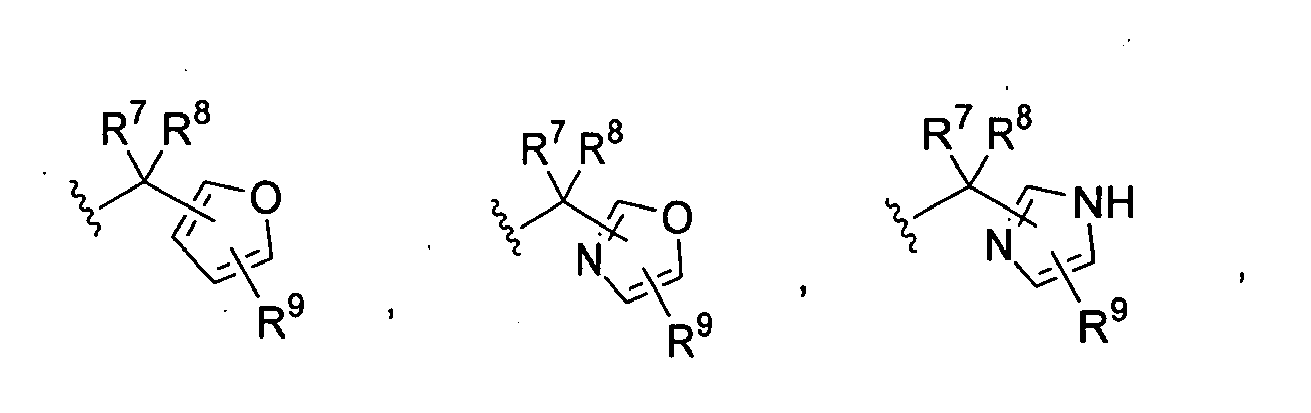


- B is selected from the group consisting of


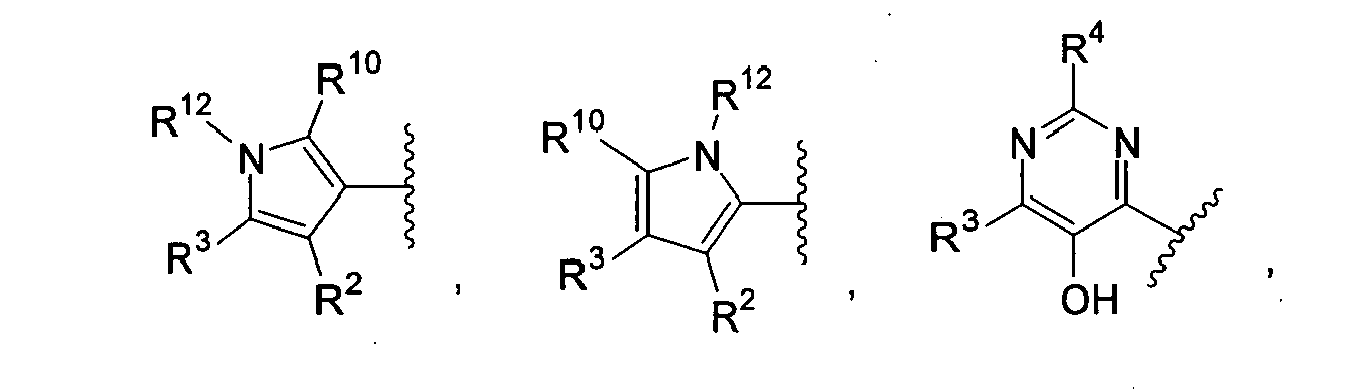


- R2 is hydrogen, OH, -C(O)OH, -SH, -SO2NR13R14, -NHC(O)R13, -NHSO2NR13R14, -NHSO2R13, -NR13R14, -C(O)NR13R14, -C(O)NHOR13, -C(O)NR13OH, - S(O2)OH, -OC(O)R13 or an unsubstituted or substituted heterocyclic acidic functional group,
- wherein the substituents on the substituted R2 groups are the same or different and independently selected from 1-6 R9 groups;
- R3 and R4 are the same or different and are independently selected from the group consisting of hydrogen, cyano, halogen, alkyl, alkoxy, -OH, -CF3, -OCF3, -NO2, -C(O)R13, -C(O)OR13, -C(O)NHR17, -C(O)NR13R14, -SO(t)NR13R14, -SO(t)R13, -C(O)NR13OR14,


- wherein the substituents on the substituted R3 and R4 groups are the same or different and independently selected from 1-6 R9 groups; .
- R5 and R6 are the same or different and are independently selected from the group consisting of hydrogen, halogen, alkyl, alkoxy, -CF3, -OCF3, -NO2, -C(O)R13 -C(O)OR13 -C(O)NR13R14 -SO(t)NR13R14, -C(O)NR13OR14. cyano, an unsubstituted or substituted aryl and unsubstituted or substituted heteroaryl group,
- wherein the substituents on the substituted R5 and R6 groups are the same or different and independently selected from 1-6 R9 groups;
- R7 and R8 are the same or different and are independently selected from the group consisting of H, unsubstituted or substituted alkyl, unsubstituted or substituted aryl, unsubstituted or substituted heteroaryl, unsubstituted or substituted arylalkyl, unsubstituted or substituted heteroarylalkyl, unsubstituted or substituted cycloalkyl, unsubstituted or substituted cycloalkylalkyl, -CO2R13, -CONR13R14, fluoroalkyl, alkynyl, alkynylalkyl, alkenyl, alkenylalkyl and cycloalkenyl,
- wherein the substituents on the substituted R7 and R8 groups are selected from the group consisting of
- a) H,
- b) halogen,
- c) -CF3,
- d) -COR13,
- e) -OR13,
- f) -NR13R14,
- g) -NO2,
- h) -CN,
- i) -SO2OR13,
- j) -Si(alkyl)3,
- k) -Si(aryl)3,
- l) -(R13)2R14Si,
- m) -CO2R13,
- n) -C(O)NR13R14,
- o) -SO2NR13R14,
- p) -SO2R13,
- q) -O(C=O)R13,
- r) -O(C=O)NR13R14,
- s) -NR13C(O)R14, and
- t) -NR13CO2R14;
- R8a is selected from the group consisting of hydrogen, alkyl, cycloalkyl and cycloalkylalkyl;
- R9 is independently selected from 1-6 of the group consisting of:
- a) -R13,
- b) halogen,
- c)-CF3,
- d)-COR13,
- e) -OR13,
- f)-NR13R14,
- g)-NO2,
- h)-CN,
- i) -SO2R13,
- j) -SO2NR13R14,
- k) -NR13COR14,
- l) -CONR13R14,
- m) -NR13CO2R14,
- n) -CO2R13, and

- R10 and R11 are the same or different and are independently selected from the group consisting of hydrogen, halogen, -CF3, -OCF3, -NR13R14, -NR13C(O)NR13R14, -OH, -C(O)OR13, -SH, -SO(t)NR13R14, -SO2R13, -NHC(O)R13, -NHSO2NR13R14, -NHSO2R13, -C(O)NR 13R14, -C(O)NR13OR14, -OC(O)R13 and cyano;
- R12 is hydrogen, -OC(O)R13, or an unsubstituted or substituted aryl, unsubstituted or substituted heteroaryl, unsubstituted or substituted arylalkyl, unsubstituted or substituted cycloalkyl, unsubstituted or substituted alkyl, unsubstituted or substituted cycloalkylalkyl or unsubstituted or substituted heteroarylalkyl group,
- wherein the substituents on the substituted R12 groups are the same or different and independently selected from 1-6 R9 groups;
- R13 and R14 are the same or different and are independently selected from the group consisting of H, unsubstituted or substituted alkyl, unsubstituted or substituted aryl, unsubstituted or substituted heteroaryl, unsubstituted or substituted arylalkyl, unsubstituted or substituted heteroarylalkyl, unsubstituted or substituted cycloalkyl, unsubstituted or substituted cycloalkylalkyl, and unsubstituted or substituted fluoroalkyl, or
- R13 and R14 can be taken together when both are attached to a nitrogen atom to form an unsubstituted or substituted 3 to 7 membered heterocylic ring containing one to two heteroatoms selected from oxygen, sulfur and nitrogen,
- wherein the substitutents on the substituted R13 and R14 groups are the same or different and independently selected from 1-6 of H, alkyl, aryl, arylalkyl, fluroalkyl, cycloalkyl, cycloalkylalkyl, heteroaryl, heteroarylalkyl, amino, -C(O)OR15, -C(O)NR15R16, -S(O)tNR15R16, -C(O)R15, -SO2R15, -NHC(O)NR13H14 and halogen;
- R15 and R16 are the same or different and are independently selected from the group consisting of H, alkyl, aryl, arylalkyl, cycloalkyl and heteroaryl;
- R17 is -SO2 alkyl, -SO2 aryl, -SO2 cycloalkyl or -SO2heteroaryl;
- R30 is alkyl, cycloalkyl, -CN, -NO2, or -SO2R15;
- R31 are the same or different and are independently selected from the group consisting of unsubstituted or substituted alkyl, unsubstituted or substituted aryl, unsubstituted or substituted heteroaryl and unsubstituted or substituted cycloalkyl;
- wherein the substituents on the substituted R31 groups are the same or different and independently selected from 1-6 R9 groups; and
- t is 0, 1 or 2.
- This invention provides compounds of the formula (1):

- Another aspect of the present invention is a pharmaceutical composition comprising the compound of formula (I) in combination or association with a pharmaceutically acceptable carrier or diluent.
- Another aspect of the present invention is a method of treating an α-chemokine mediated disease in a mammal which comprises administering to a patient in need thereof of a therapeutically effective amount of the compound of formula (I), or a pharmaceutically acceptable salt or solvate thereof.
- Examples of chemokine mediated diseases include psoriasis, atopic dermatitis, asthma, chronic obstructive pulmonary disease, adult respiratory distress syndrome, arthritis, inflammatory bowel disease, Crohn's disease, ulcerative colitis, septic shock, endotoxic shock, gram negative sepsis, toxic shock syndrome, stroke, cardiac and renal reperfusion injury, glomerulo-nephritis or thrombosis, alzheimer's disease, graft vs. host reaction, allograft rejections and malaria.
- Another aspect of the present invention is a method of treating cancer, comprising administering to a patient in need thereof, concurrently or sequentially, a therapeutically effective amount of (a) a compound of formula (I), and (b) a microtubule affecting agent or antineoplastic agent or anti-angiogenesis agent or VEGF receptor kinase inhibitor or antibodies against the VEGF receptor or interferon, and/or c) radiation.
- In further embodiments, a compound of formula (I) is combined with one of the following antineoplastic agents: gemcitabine, paclitaxel (Taxol®), 5-Fluorouracil (5-FU), cyclophosphamide (Cytoxan®), temozolomide, taxotere or Vincristine.
- In another embodiment, the present invention provides a method of treating cancer, comprising administering, concurrently or sequentially, an effective amount of (a) a compound of formula (I), and (b) a microtubule affecting agent (e.g., paclitaxel).
- Unless indicated otherwise, the following definitions apply throughout the present specification and claims. These definitions apply regardless of whether a term is used by itself or in combination with other terms. Hence the definition of "alkyl" applies to "alkyl" as well as to the "alkyl" portions of "alkoxy", etc.
- When any variable (e.g., aryl, R2) occurs more than one time in any constituent, its definition on each occurrence is independent of its definition at every other occurrence. Also, combinations of substituents and/or variables are permissible only if such combinations result in stable compounds.
- "Patient" includes both human and other mammals.
- "Mammal" means humans and other animals. Preferably, mammal means humans.
- "Alkyl" means a straight or branched saturated hydrocarbon chain having the designated number of carbon atoms. Where the number of carbon atoms is not specified, 1 to 20 carbons are intended. Preferred alkyl groups contain 1 to 12 carbon atoms in the chain. More preferred alkyl groups contain 1 to 6 carbon atoms in the chain.
- "Alkoxy" means an alkyl-O group in which alkyl is as previously defined. Non-limiting examples of alkoxy groups include methoxy, ethoxy, n-propoxy, iso-propoxy and n-butoxy. The bond to the parent moiety is through the ether oxygen.
- "Alkenyl" means an aliphatic hydrocarbon group containing at least one carbon-carbon double bond and which may be straight or branched. Where the number of carbon atoms is not specified, 2 to 20 carbons are intended. Preferred alkenyl groups have 2 to 12 carbon atoms in the chain; and more preferably 2 to 6 carbon atoms in the chain. Non-limiting examples of suitable alkenyl groups include ethenyl, propenyl, n-butenyl, 3-methylbut-2-enyl, n-pentenyl, octenyl and decenyl.
- "Alkynyl" means an aliphatic hydrocarbon group containing at least one carbon-carbon triple bond and which may be straight or branched. Where the number of carbon atoms is not specified, 2 to 15 carbons are intended. Preferred alkynyl groups have 2 to 12 carbon atoms in the chain; and more preferably 2 to 4 carbon atoms in the chain. Non-limiting examples of suitable alkynyl groups include ethynyl, propynyl, 2-butynyl, 3-methylbutynyl, n-pentynyl, and decynyl.
- "Aryl" means an aromatic monocyclic or multicyclic ring system comprising about 6 to about 14 carbon atoms, preferably about 6 to about 10 carbon atoms. Non-limiting examples of suitable aryl groups include phenyl, naphthyl, indenyl, tetrahydronaphthyl, indanyl, anthracenyl, fluorenyl and the like.
- "Arylalkyl" means an aryl-alkyl group in which the aryl and alkyl groups are as defined. Non-limiting examples of suitable arylalkyl groups include benzyl, phenethyl and naphthieneylmethyl. The bond to the parent moiety is through the alkyl group.
- "Cycloalkyl" means a non-aromatic ring system having 3 to 10 carbon atoms and one to three rings, preferably 5 to 10 carbon atoms. Preferred cycloalkyl rings contain 5 to 7 ring atoms. Non-limiting examples of cycloalkyl groups include cyclopropyl, cyclopentyl, cyclohexyl, cycloheptyl, norbornyl, adamantyl and the like.
- "Cycloalkylalkyl" means a cycloalkyl group attached to the parent moiety through an alkyl group. Non -limiting examples include cyclopropylmethyl, cyclohexylmethyl and the like.
- "Cycloalkenyl" means a non-aromatic mono or multicyclic ring system comprising 3 to 10 carbon atoms, preferably 5 to 10 carbon atoms which contains at least one carbon-carbon double bond. Preferred cycloalkenyl rings contain 5 to 7 ring atoms. Non-limiting examples of cycloalkyl groups include cyclopentenyl, cyclohexenyl, cycloheptenyl, norbornenyl and the like.
- "Cycloalkenyl" means a non-aromatic mono or multicyclic ring system comprising 3 to 10 carbon atoms, preferably 5 to 10 carbon atoms which contains at least one carbon-carbon double bond. Preferred cycloalkenyl rings contain 5 to 7 ring atoms. Non-limiting examples of cycloalkyl groups include cyclopentenyl, cyclohexenyl, cycloheptenyl, norbornenyl and the like.
- "Halo" means fluoro, chloro, bromo, or iodo groups. Preferred are fluoro, chloro or bromo, and more preferred are fluoro and chloro.
- "Halogen" means fluorine, chlorine, bromine, or iodine. Preferred are fluorine, chlorine or bromine, and more preferred are fluorine and chlorine.
- "Haloalkyl" means an alkyl group as defined above wherein one or more hydrogen atoms on the alkyl is replaced by a halo group defined above.
- "Heterocyclyl" or "heterocyclic" means a non-aromatic saturated monocyclic or multicyclic ring system comprising 3 to 10 ring atoms, preferably 5 to 10 ring atoms, in which one or more of the atoms in the ring system is an element other than carbon, for example nitrogen, oxygen or sulfur, alone or in combination. There are no adjacent oxygen and/or sulfur atoms present in the ring system. Preferred heterocyclyls contain 5 to 6 ring atoms. The prefix aza, oxa or thia before the heterocyclyl root name means that at least a nitrogen, oxygen or sulfur atom respectively is present as a ring atom.
- The nitrogen or sulfur atom of the heterocyclyl can be optionally oxidized to the corresponding N-oxide, S-oxide or S,S-dioxide. Non-limiting examples of suitable monocyclic heterocyclyl rings include piperidyl, pyrrolidinyl, piperazinyl, morpholinyl, thiomorpholinyl, thiazolidinyl, 1,3-dioxolanyl, 1,4-dioxanyl, tetrahydrofuranyl, tetrahydrothiophenyl, tetrahydrothiopyranyl, and the like.
- The term heterocyclic acidic functional group is intended to include groups such as, pyrrole, imidazole, triazole, tetrazole, and the like.
- "Heteroaryl" means an aromatic monocyclic or multicyclic ring system comprising 5 to 14 ring atoms, preferably 5 to 10 ring atoms, in which one or more of the ring atoms is an element other than carbon, for example nitrogen, oxygen or sulfur, alone or in combination. Preferred heteroaryls contain 5 to 6 ring atoms. The prefix aza, oxa or thia before the heteroaryl root name means that at least a nitrogen, oxygen or sulfur atom respectively, is present as a ring atom. A nitrogen atom of a heteroaryl can be optionally oxidized to the corresponding N-oxide. Non-limiting examples of suitable heteroaryls include pyridyl, pyrazinyl, furanyl, thienyl, pyrimidinyl, isoxazolyl, isothiazolyl, oxazolyl, thiazolyl, pyrazolyl, furazanyl, pyrrolyl, pyrazolyl, triazolyl, 1,2,4-thiadiazolyl, pyrazinyl, pyridazinyl, quinoxalinyl, phthalazinyl, imidazo[1,2-a]pyridinyl, imidazo[2,1-b]thiazolyl, benzofurazanyl, indolyl, azaindolyl, benzimidazolyl, benzothienyl, quinolinyl, imidazolyl, thienopyridyl, quinazolinyl, thienopyrimidyl, pyrrolopyridyl, imidazopyridyl, isoquinolinyl, benzoazaindolyl, 1,2,4-triazinyl, benzothiazolyl and the like.
- "Heteroarylalkyl" means a heteroaryl-alkyl group where the bond to the parent moiety is through an alkyl group.
- N-oxides can form on a tertiary nitrogen present in an R substituent, or on =N-in a heteroaryl ring substituent and are included in the compounds of formula I.
- The term "prodrug," as used herein, represents compounds which are rapidly transformed in vivo to the parent compound of the above formula, for example, by hydrolysis in blood. A thorough discussion is provided in T. Higuchi and V. Stella, Prodrugs as Novel Delivery Systems, Vol. 14 of the A.C.S. Symposium Series, and in Edward B. Roche, ed., Bioreversible Carriers in Drug Design, American Pharmaceutical Association and Pergamon Press, 1987, both of which are incorporated herein by reference.
- As used herein, the term "composition" is intended to encompass a product comprising the specified ingredients in the specified amounts, as well as any product which results, directly or indirectly, from combination of the specified ingredients in the specified amounts. Also, "Bn" represents benzyl.
- R13 and R14 when taken together with the nitrogen they are attached to in the groups -NR13R14, -C(O)NR13R14, -SO2NR13R14, -OC(O)NR13R14, -CONR13R14, -NR13C(O)NR13R14, -SOtNR13R14, -NHSO2NR13R14 preferably form an unsubstituted or substituted 3 to 7 membered, saturated heterocyclic ring optionally containing one or two additional heteroatoms each independently selected from O, S or NR18 wherein R18 is selected from H, alkyl, aryl, heteroaryl, -C(O)R19, -SO2R19 and -C(O)NR19R20 wherein R19 and R20 are the same or different and each is independently selected from alkyl, aryl and heteroaryl, wherein the substituents on the substituted cyclized R13 and R14 groups are the same or different and independently selected from 1 to 3 of alkyl, aryl, hydroxy, hydroxyalkyl, alkoxy, alkoxyalkyl, arylalkyl, fluoroalkyl, cycloalkyl, cycloalkylalkyl, heteroaryl, heteroarylalkyl, amino, -C(O)OR15, -C(O)NR15R16, -SOtNR15R16, -C(O)R15, -SO2R15, -NHC(O)NR15R16 and halogen, and wherein R15 and R16 are the same or different and are independently selected from the group consisting of H, alkyl, aryl, arylalkyl, cycloalkyl and heteroaryl.
- In a preferred group of compounds of formula (I),
- A is selected from the group consisting of:


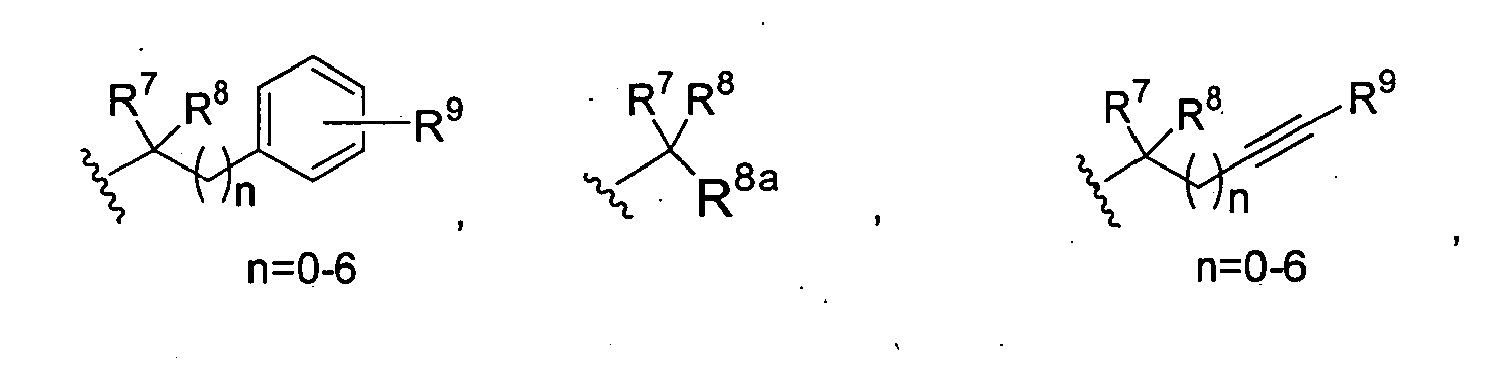


- R7 and R8 are the same or different and are independently selected from the group consisting of H, unsubstituted or substituted alkyl, unsubstituted or substituted aryl, unsubstituted or substituted heteroaryl, unsubstituted or substituted arylalkyl, unsubstituted or substituted heteroarylalkyl, unsubstituted or substituted cycloalkyl, unsubstituted or substituted cycloalkylalkyl, -CO2R13, -CONR13R14, fluoroalkyl, alkynyl, alkenyl, and cycloalkenyl,
- a) cyano, .
- b) -CO2R13,
- c) -C(O)NR13R14,
- d) -SO2NR13R14,
- e) -NO2,
- f) -CF3,
- g) -OR13,
- h) -NR13R14,
- i) -O(C=O)R13,
- j) -O(C=O)NR13R14,and
- k) halogen; and
- B is selected from the group consisting of:


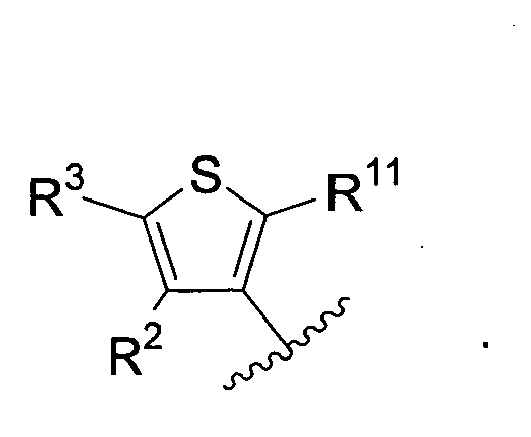
- More preferably,
- R7 and R8 are the same or different and are independently selected from H, alkyl, fluoroalkyl such as, -CF3 and -CF2CH3; cycloalkyl and cycloalkylalkyl such as, for example, methyl, ethyl, t-butyl, isopropyl, cyclopropyl, cyclopropylmethyl and cyclohexyl, and
- R9 is the same or different and is 1-3 moieties selected from the group consisting of H, halogen, alkyl, cycloalkyl, -CF3, cyano, -OCH3, and -NO2;
- B is selected from the group consisting of


- R2 is H, OH, -NHC(O)R13 or -NHSO2R13;
- R3 is -SO2NR13R14, -NO2, cyano, -C(O) NR13R14, -SO2R13; or -C(O)OR13;
- R4 is H, -NO2, cyano, -CH3, halogen, or -CF3;
- R5 is H, -CF3, -NO2, halogen or cyano;
- R6 is H, alkyl or -CF3;
- R10 and R11 are the same or different and are independently selected from the group consisting of hydrogen, halogen, -CF3, -NR13R14, -NR13C(O)NR13R14 -C(O)OR13, -SH, -SO(t)NR13R14, -SO2R13, -NHC(O)R13, -NHSO2NR13R14, -NHSO2R13, -C(O)NR13R14, -C(O)NR13OR14, -OC(O)R13, -COR13, -OR13, and cyano;
- R13 and R14 are the same or different and are independently selected from methyl, ethyl and isopropyl; or
- R13 and R14 when taken together with the nitrogen they are attached to in the groups -NR13R14, -C(O)NR13R14, -SO2NR13R14, -OC(O)NR13R14, -CONR13R14, -NR13C(O)NR13R14, -SOtNR13R14, -NHSO2NR13R14 preferably form an unsubstituted or substituted 3 to 7 membered, saturated heterocyclic ring optionally containing one additional heteroatom selected from O, S or NR18 wherein R18 is selected from H, alkyl, aryl, heteroaryl, -C(O)R19, -SO2R19 and -C(O)NR19R20, wherein R19 and R20 are the same or different and each is independently selected from alkyl, aryl and heteroaryl, wherein the substituents on the substituted cyclized R13 and R14 groups are the same or different and independently selected from 1 to 3 of alkyl, aryl, hydroxy, hydroxyalkyl, alkoxy, alkoxyalkyl, arylalkyl, fluoroalkyl, cycloalkyl, cycloalkylalkyl, heteroaryl, heteroarylalkyl, amino, -C(O)OR15, -C(O)NR15R16, -SOtNR15R16, -C(O)R15, -SO2R15, -NHC(O)NR15R16 and halogen, and wherein R15 and R16 are the same or different and are independently selected from the group consisting of H, alkyl, aryl, arylalkyl, cycloalkyl and heteroaryl;
- Even more preferably, A is selected from the group consisting of:

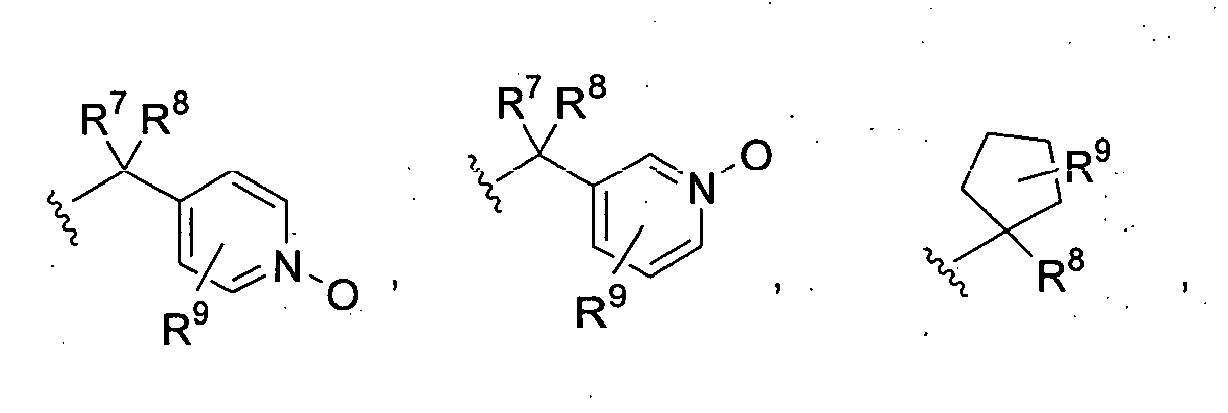


- R7 is H, fluoroalkyl, alkyl or cycloalkyl;
- R8 is H, alkyl, -CF2CH3 or -CF3;
- R9 is H, F; Cl, Br, alkyl or -CF3.
- Still even more preferably, A is selected from the group consisting of


- R7 is H, -CF3, -CF2CH3, methyl, ethyl, isopropyl, cyclopropyl or t-butyl;
- R8 is H;
- R9 is H, F, Cl, Br, alkyl or -CF3, and
- B is:

- R2 is H, OH, -NHC(O)R13 or -NHSO2R13;
- R3 is -SO2NR13R14, -NO2, cyano, -C(O) NR13R14 , -SO2R13; or -C(O)OR13;
- R4 is H, -NO2, cyano, -CH3 or -CF3;
- R5 is H, -CF3, -NO2, halogen or cyano; and
- R6 is H, alkyl or -CF3;
- R11 is H, halogen or alkyl; and
- R13 and R14 are the same or different and are independently methyl, ethyl or isopropyl; or
- R13 and R14 when taken together with the nitrogen they are attached to in the groups -NR13R14, -C(O)NR13R14, -SO2NR13R14, -OC(O)NR13R14, -CONR13R14, -NR13C(O)NR13R14, -SOtNR13R14, -NHSO2NR13R14 preferably form an unsubstituted or substituted 3 to 7 membered, saturated heterocyclic ring optionally containing one additional heteroatom selected from O, S or NR18 wherein R18 is selected from H, alkyl, aryl, heteroaryl, -C(O)R19, -SO2R19 and -C(O)NR19R20, wherein R19 and R20 are the same or different and each is independently selected from alkyl, aryl and heteroaryl, wherein the substituents on the substituted cyclized R13 and R14 groups are the same or different and independently selected from 1 to 3 of alkyl, aryl, hydroxy, hydroxyalkyl, alkoxy, alkoxyalkyl, arylalkyl, fluoroalkyl, cycloalkyl, cycloalkylalkyl, heteroaryl, heteroarylalkyl, amino, -C(O)OR15, -C(O)NR15R16, -SOtNR15R16, -C(O)R15, -SO2R15, -NHC(O)NR15R16 and halogen, and wherein R15 and R16 are the same or different and are independently selected from the group consisting of H, alkyl, aryl, arylalkyl, cycloalkyl and heteroaryl;
- Yet even still more preferred,
- A is selected from the group consisting of


- and B is:

- R2 is H, OH, -NHC(O)R13 or -NHSO2R13;
- R3 is -SO2NR13R14, -C(O)NR13R14, -SO2R13, -NO2 or cyano;
- R4 is H, -NO2, -CF3, -CH3 or cyano,
- R5 is H, halogen, -NO2, cyano or -CF3;
- R6 is H, -CF3 or alkyl,
- R7 is H, -CF3, -CF2CH3, methyl, ethyl, isopropyl, cyclopropyl or t-butyl;
- R8 is H;
- R9 is H, F, Cl, Br, alkyl, cycloalkyl or -CF3;
- R11 is H, halogen or alkyl; and
- R13 and R14 are independently methyl or ethyl.
- Most preferably,
- A is selected from the group consisting of


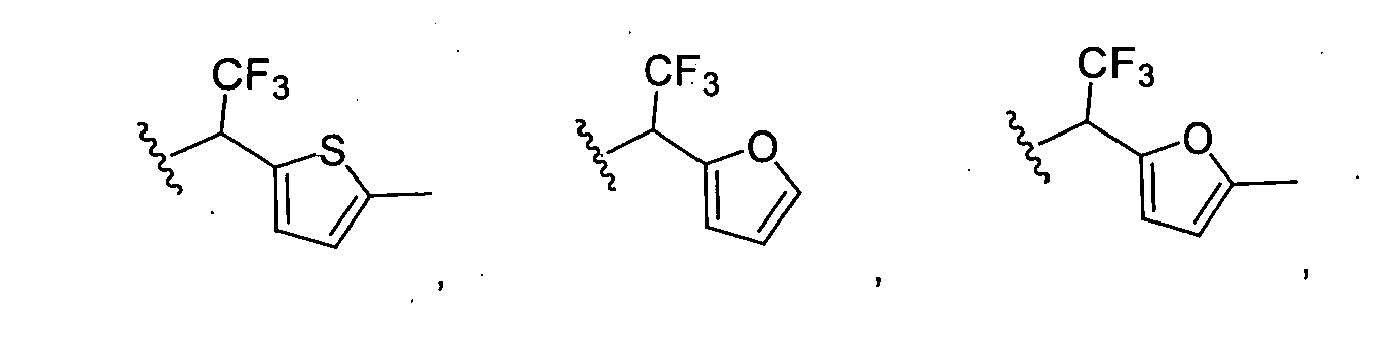


- and B is

- R 2 is -OH;
- R3 is -SO2NR13R14 or -CONR13R14;
- R4 is H, -CH3 or -CF3;
- R5 is H or cyano;
- R6 is H, -CH3 or -CF3;
- R11 is H, and
- R13 and R14 are methyl.
- Representative embodiments of this invention are described below. The embodiments have been numbered for purposes of reference thereto.
- Embodiment No. 1 is directed to the methods of treatment described above using formula I, except the compounds used are those of formula IA:

- A is selected from the group consisting of:
- (1)


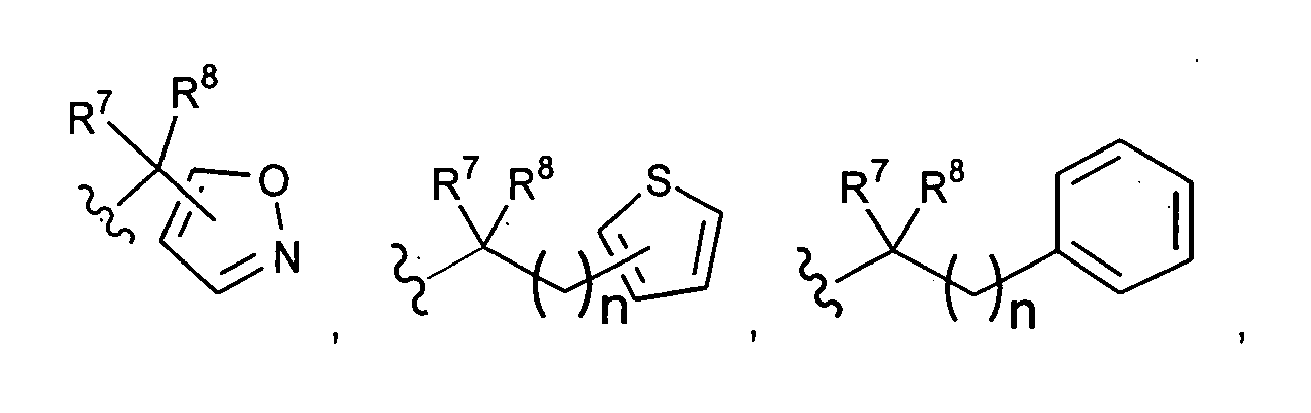


- (2)


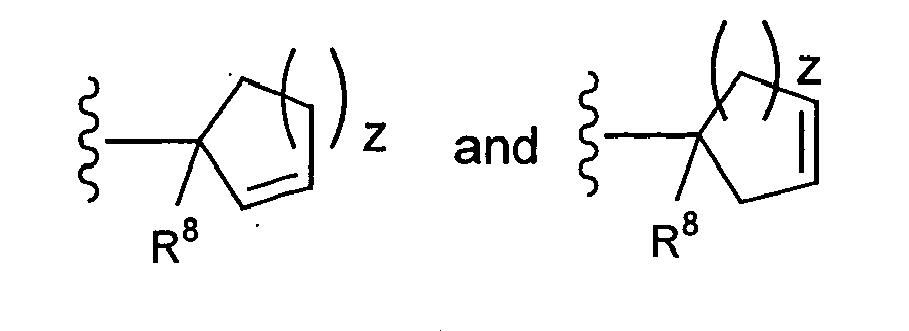
- (3)


- (4)

- (5)


- (1)
- B is selected from the group consisting of


- n is 0 to 6; p is 1 to 5; X is O, NH, or S; Z is 1 to 3;
- R2 is selected from the group consisting of: hydrogen, OH, -C(O)OH, -SH, -SO2NR13R14, -NHC(O)R13, -NHSO2NR13R14, -NHSO2R13 , -NR13R14, -C(O)NR13R14, -C(O)NHOR13, -C(O)NR13OH; - S(O2)OH, -OC(O)R13, an unsubstituted heterocyclic acidic functional group, and a substituted heterocyclic acidic functional group; wherein there are 1 to 6 substituents on said substituted heterocyclic acidic functional group each substituent being independently selected from the group consisting of: R9 groups;
- each R3 and R4 is independently selected from the group consisting of: hydrogen, cyano, halogen, alkyl, alkoxy, -OH, -CF3, -OCF3, -NO2, -C(O)R13, -C(O)OR13, -C(O)NHR17, -C(O)NR13R14, -SO(t)NR13R14, -SO(t)R13, -C(O)NR13OR14, unsubstituted or substituted aryl, unsubstituted or substituted heteroaryl,

- each R5 and R6 are the same or different and are independently selected from the group consisting of hydrogen, halogen, alkyl, alkoxy, -CF3, -OCF3, -NO2, -C(O)R13 -C(O)OR13 -C(O)NR13R14 -SO(t)NR13R14, -C(O)NR13OR14 cyano, unsubstituted or substituted aryl, and unsubstituted or substituted heteroaryl group; wherein there are 1 to 6 substituents on said substituted aryl group and each substitutent is independently selected from the group consisting of: R9. groups; and wherein there are 1 to 6 substituents on said substituted heteroaryl group and each substitutent is independently selected from the group consisting of: R9 groups;
- each R7 and R8 is independently selected from the group consisting of: H, unsubstituted or substituted alkyl, unsubstituted or substituted aryl, unsubstituted or substituted heteroaryl, unsubstituted or substituted arylalkyl, unsubstituted or substituted heteroarylalkyl, unsubstituted or substituted cycloalkyl, unsubstituted or substituted cycloalkylalkyl, -CO2R13, -CONR13R14, alkynyl, alkenyl, and cycloalkenyl; and wherein there are one or more (e.g., 1 to 6) substituents on said substituted R7 and R8 groups, wherein each substitutent is independently selected from the group consisting of:
- a) halogen,
- b) -CF3,
- c) -COR13,
- d) -OR13,
- e) -NR13R14,
- f) -NO2,
- g) -CN,
- h) -SO2OR13,
- i) -Si(alkyl)3, wherein each alkyl is independently selected,
- j) -Si(aryl)3, wherein each alkyl is independently selected,
- k) -(R13)2R14Si, wherein each R13 is independently selected,
- l) -CO2R13,
- m) -C(O)NR13R14,
- n) -SO2NR13R14,
- o) -SO2R13,
- p) -OC(O)R13,
- q) -OC(O)NR13R14,
- r) -NR13C(O)R14, and
- s) -NR13CO2R14;
- R8a is selected from the group consisting of: hydrogen, alkyl, cycloalkyl and cycloalkylalkyl;
- each R9 is independently selected from the group consisting of:
- a) -R13,
- b) halogen,
- c) -CF3,
- d) -COR13,
- e) -OR13,
- f) -NR13R14,
- g) -NO2,
- h) -CN,
- i) -SO2R13,
- j) -SO2NR13R14,
- k) -NR13COR14,
- l) -CONR13R14,
- m) -NR13CO2R14,
- n) -CO2R13,
- o)

- p) alkyl substituted with one or more (e.g., one) -OH groups (e.g., -(CH2)qOH, wherein q is 1-6, usually 1 to 2, and preferably 1),
- q) alkyl substituted with one or more (e.g., one) -NR13R14 group (e.g., -(CH2)qNR13R14, wherein q is 1-6, usually 1 to 2, and preferably 1), and
- r) -N(R13)SO2R14 (e.g., R13 is H and R14 is alkyl, such as methyl);
- each R10 and R11 is independently selected from the group consisting of hydrogen, alkyl (e.g., C1 to C6, such as methyl), halogen, -CF3, -OCF3, -NR13R14, -NR13C(O)NR13R14, -OH, -C(O)OR13, -SH, -SO(t)NR13R14, -SO2R13, -NHC(O)R13, -NHSO2NR13R14, -NHSO2R13, -C(O)NR13R14, -C(O)NR13OR14, -OC(O)R13 and cyano;
- R12 is selected from the group consisting of: hydrogen, -C(O)OR13, unsubstituted or substituted aryl, unsubstituted or substituted heteroaryl, unsubstituted or substituted arylalkyl, unsubstituted or substituted cycloalkyl, unsubstituted or substituted alkyl, unsubstituted or substituted cycloalkylalkyl, and unsubstituted or substituted heteroarylalkyl group; wherein there are 1 to 6 substituents on the substituted R12 groups and each substituent is independently selected from the group consisting of: R9 groups;
- each R13 and R14 is independently selected from the group consisting of: H, unsubstituted or substituted alkyl, unsubstituted or substituted aryl, unsubstituted or substituted heteroaryl, unsubstituted or substituted arylalkyl, unsubstituted or substituted heteroarylalkyl, unsubstituted or substituted cycloalkyl, unsubstituted or substituted cycloalkylalkyl, unsubstituted or substituted heterocyclic, unsubstituted or substituted fluoroalkyl, and unsubstituted or substituted heterocycloalkylalkyl (wherein "heterocyloalkyl" means heterocyclic); wherein there are 1 to 6 substituents on said substituted R13 and R14 groups and each substituent is independently selected from the group consisting of: alkyl, -CF3, -OH, alkoxy, aryl, arylalkyl, fluroalkyl, cycloalkyl, cycloalkylalkyl, heteroaryl, heteroarylalkyl, -N(R40)2, -C(O)OR15, -C(O)NR15R16, -S(O)tNR15R16, -C(O)R15, -SO2R15 provided that R15 is not H, halogen, and -NHC(O)NR15R16; or
- R13 and R14 taken together with the nitrogen they are attached to in the groups -NR13R14, -C(O)NR13R14, -SO2NR13R14, -OC(O)NR13R14, -CONR13R14, -NR13C(O)NR13R14, -SOtNR13R14, -NHSO2NR13R14 form an unsubstituted or substituted saturated heterocyclic ring (preferably a 3 to 7 membered heterocyclic ring), said ring optionally containing one additional heteroatom selected from the group consisting of: O, S and NR18; wherein there are 1 to 3 substituents on the substituted cyclized R13 and R14 groups (i.e., there is 1 to 3 substituents on the ring formed when the R13 and R14 groups are taken together with the nitrogen to which they are bound) and each substituent is independently selected from the group consisting of: alkyl, aryl, hydroxy, hydroxyalkyl, alkoxy, alkoxyalkyl, arylalkyl, fluoroalkyl, cycloalkyl, cycloalkylalkyl, heteroaryl, heteroarylalkyl, amino, -C(Q)OR15, -C(O)NR15R16, -SOtNR15R16, -C(O)R15, -SO2R15 provided that R15 is not H, -NHC(O)NR15R16, -NHC(O)OR15, halogen, and a heterocylcoalkenyl group (i.e., a heterocyclic group that has at least one, and preferably one, double bond in a ring, e.g.,

- each R15 and R16 is independently selected from the group consisting of: H, alkyl, aryl, arylalkyl, cycloalkyl and heteroaryl;
- R17 is selected from the group consisting of: -SO2alkyl, -SO2aryl, -SO2cycloalkyl, and -SO2heteroaryl;
- R18 is selected from the group consisting of: H, alkyl, aryl, heteroaryl, -C(O)R19, -SO2R19 and -C(O)NR19R20;
- each R19 and R20 is independently selected from the group consisting of: alkyl, aryl and heteroaryl;
- R30 is selected from the group consisting of: alkyl, cycloalkyl, -CN, -NO2, or -SO2R15 provided that R15 is not H;
- each R31 is independently selected from the group consisting of: unsubstituted or substituted alkyl, unsubstituted or substituted aryl, unsubstituted or substituted heteroaryl and unsubstituted or substituted cycloalkyl; wherein there are 1 to 6 substituents on said substituted R31 groups and each substituent is independently selected from the group consisting of: R9 groups;
- each R40 is independently selected from the group consisting of: H, alkyl and cycloalkyl; and
- t is 0, 1 or 2.
- In Embodiment No. 1, at least one (e.g., 1 to 3, and usually one) compound of formula IA are used.
- Embodiment No. 2 is directed to the use of at least one (e.g., 1 to 3, and usually 1) compound of formula IA for the manufacture of a medicament for the treatment of the diseases described above in the methods of treatment using formula I.
- Embodiment No. 3 is directed to compounds of formula IA wherein B is selected from the group consisting of:
- (1)


- (2)

- (3)

- (4)

- (5)

- (6)

- (7)

- Embodiment No. 4 is directed to compounds of formula IA wherein B is:


- Embodiment No. 5 is directed to compounds of formula IA wherein B is:

- Embodiment No. 6 is directed to compounds of formula IA wherein B is

- Embodiment No. 7 is directed to compounds of formula IA wherein B is

- Embodiment No. 8 is directed to compounds of formula IA wherein B is


- Embodiment No. 9 is directed to compounds of formula IA wherein B is


- Embodiment No. 10 is directed to compounds of formula IA wherein B is:
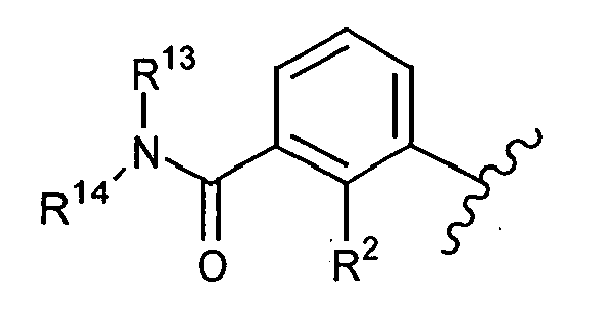
- Embodiment No. 11 is directed to compounds of formula IA wherein B is:

- Embodiment No. 12 is directed to compounds of formula IA wherein B is:

- Embodiment No. 13 is directed to compounds of formula IA wherein B is:
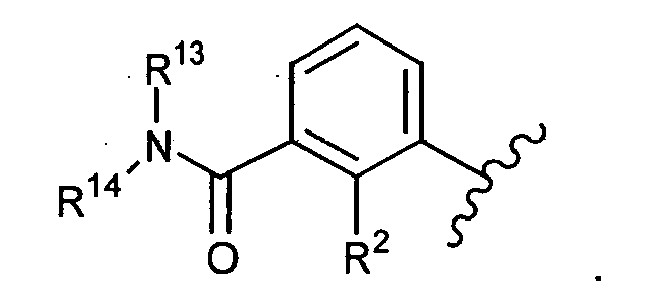
- Embodiment No. 14 is directed to compounds of formula IA wherein B is is as described in Embodiment No. 8, R4 is H, R5 is H, R6 is H, and all other substituents areas defined for compounds of formula I or IA.
- Embodiment No. 15 is directed to compounds of formula IA wherein B is is as described in Embodiment No. 9, R4 is H, R5 is H, R6 is H, and all other substituents areas defined for compounds of formula I or IA.
- Embodiment No. 16 is directed to compounds of formula IA wherein B is as described in Embodiments Nos. 6, 7, 10 and 11, except that R13 and R14 are each methyl, and all other substituents are as defined in formula I or IA.
- Embodiment No. 17 is directed to compounds of formula IA wherein B is selected from the group consisting of:


- Embodiment No. 18 of this invention is directed to compounds of formula IA wherein B is:

- Embodiment No. 19 is directed to compounds of formula IA wherein B is:

- Embodiment No. 20 is directed to compounds of formula IA wherein B is:

- Embodiment No. 21 is directed to compounds of formula IA wherein B is:
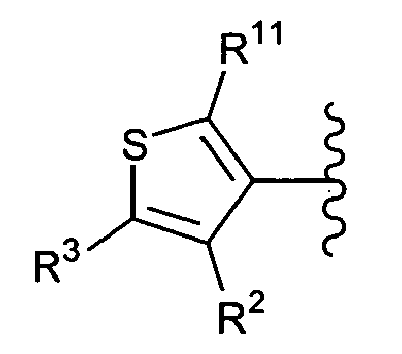
- Embodiment No. 22 is directed to compounds of formula IA wherein B is:

- Embodiment No. 23 is directed to compounds of formula IA wherein B is:

- Embodiment No. 24 of this invention is directed to compounds of formula IA wherein B is:
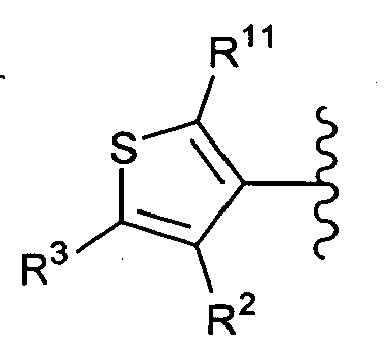
- Embodiment No. 25 is directed to compounds of formula IA wherein B is:

- Embodiment No. 26 is directed to compounds of formula IA wherein B is:

- Embodiment No. 27 is directed to compounds of formula IA wherein B is:
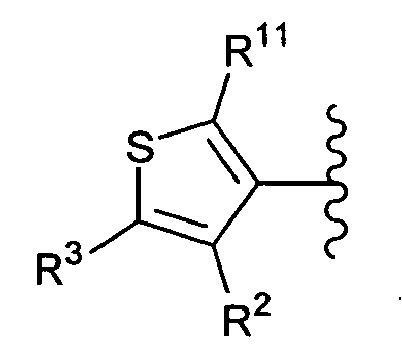

- Embodiment No. 28 is directed to compounds of formula IA wherein B is:

- Embodiment No. 29 is directed to compounds of formula IA wherein B is:
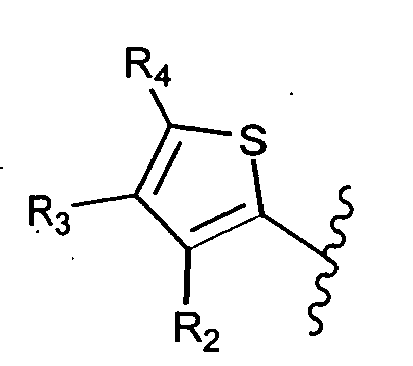
- Embodiment No. 30 is directed to compounds of formula IA wherein B is as described in any one of the Embodiment Nos. 3 to 29, and A is as defined in all of the preferred descriptions above for A in formula I, or A is as described for formula IA.
- Embodiment No. 31 is directed to compounds of formula IA wherein B is as described in any one of the Embodiment Nos. 3 to 29, and A is:

- Embodiment No. 32 is directed to compounds of formula IA wherein B is described in any one of the Embodiment Nos. 3 to 29, and A is

- Embodiment No. 33 is directed to compounds of formula IA wherein B is as described in any one of the Embodiment Nos. 3 to 29,and A is

- Embodiment No. 34 is directed to compounds of formula IA wherein B is as described in any one of the Embodiment Nos. 3 to 29, A is

- Embodiment No. 35 is directed to compounds of formula IA wherein B is as described in any one of the Embodiment Nos. 3 to 29, and A is
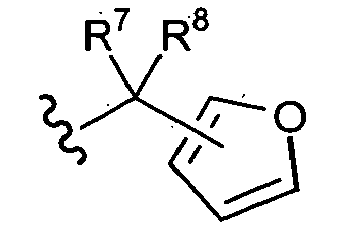
- Embodiment No. 36 is directed to compounds of formula IA wherein B is as described in any one of the Embodiment Nos. 3 to 29, and A is

- Embodiment No. 37 is directed to compounds of formula IA wherein B is as described in any one of the Embodiment Nos. 3 to 29, and A is

- Embodiment No. 38 is directed to any one of the Embodiment Nos. 3 to 37 wherein the compound of formula IA is a pharmaceutically acceptable salt.
- Embodiment No. 39 is directed to any one of the Embodiment Nos. 3 to 37 wherein the compound of formula IA is a sodium salt.
- Embodiment No. 40 is directed to any one of the Embodiment Nos. 3 to 37 wherein the compound of formula IA is a calcium salt.
- Embodiment No. 41 is directed to a pharmaceutically acceptable salt of any one of the representative compounds of this invention.
- Embodiment No. 42 is directed to a sodium salt of any one of the representative compounds of this invention.
- Embodiment No. 43 is directed to a calcium salt of any one of the representative compounds of this invention.
- Embodiment No. 44 is directed to a pharmaceutical composition comprising at least one (e.g., 1 to 3, usually 1) compound of formula IA as described in any one of the Embodiment Nos. 3 to 43 in combination with a pharmaceutically acceptable carrier.
- Embodiment No. 45 is directed to a method of treating any one of the diseases described above comprising administering to a patient in need of such treatment an effective amount (e.g., a therapeutically effective amount) of a compound of formula IA as described in any one of the Embodiment Nos. 3 to 43. The diseases referred to in this embodiment are those described in the methods of treatment using compounds of formula I.
- Embodiment No. 46 is directed to the use of a compound of formula IA as described in any one of the Embodiment Nos. 3 to 43 for the manufacture of a medicament for the treatment any one of the diseases described above. The diseases referred in this embodiment are those described in the methods of treatment using compounds of formula I.
- Representative compounds of the invention include but are not limited to:






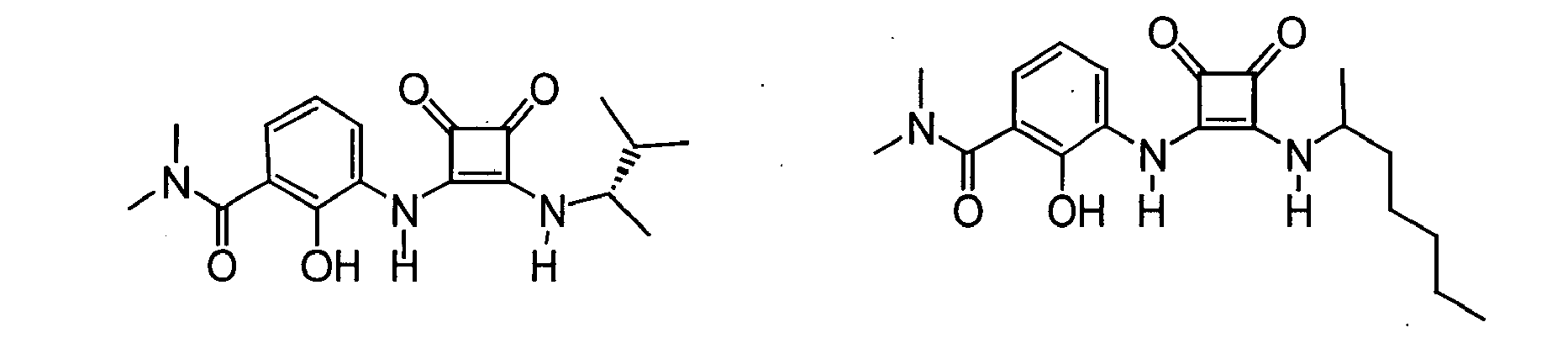















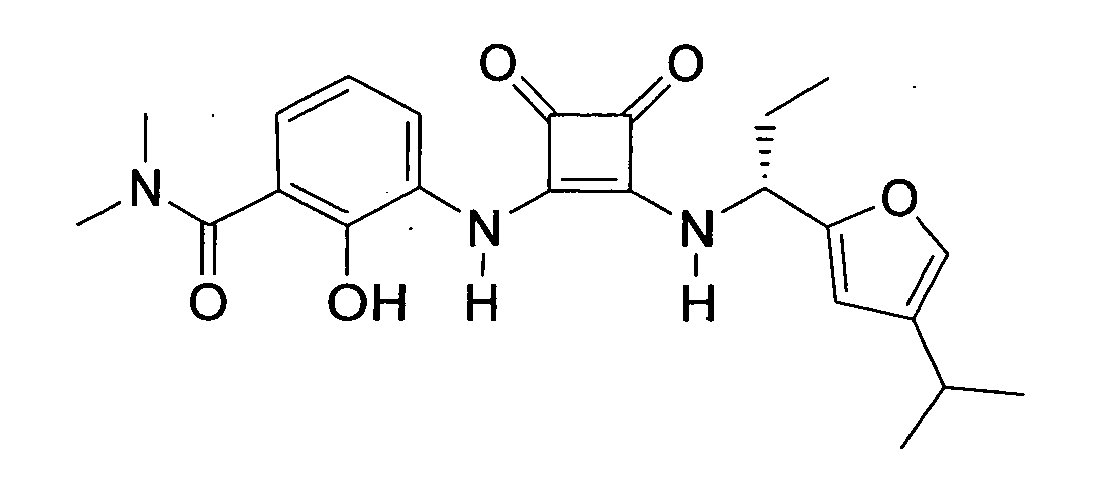

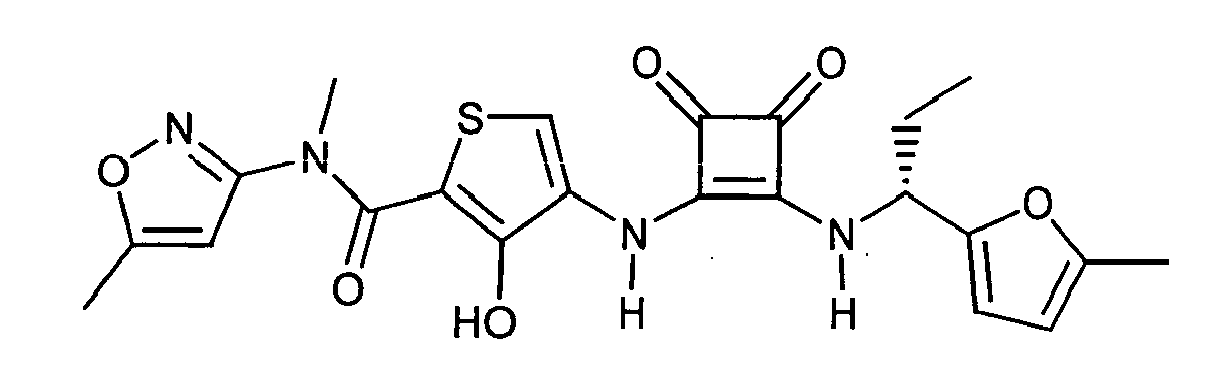


- Preferred compounds of the invention include:








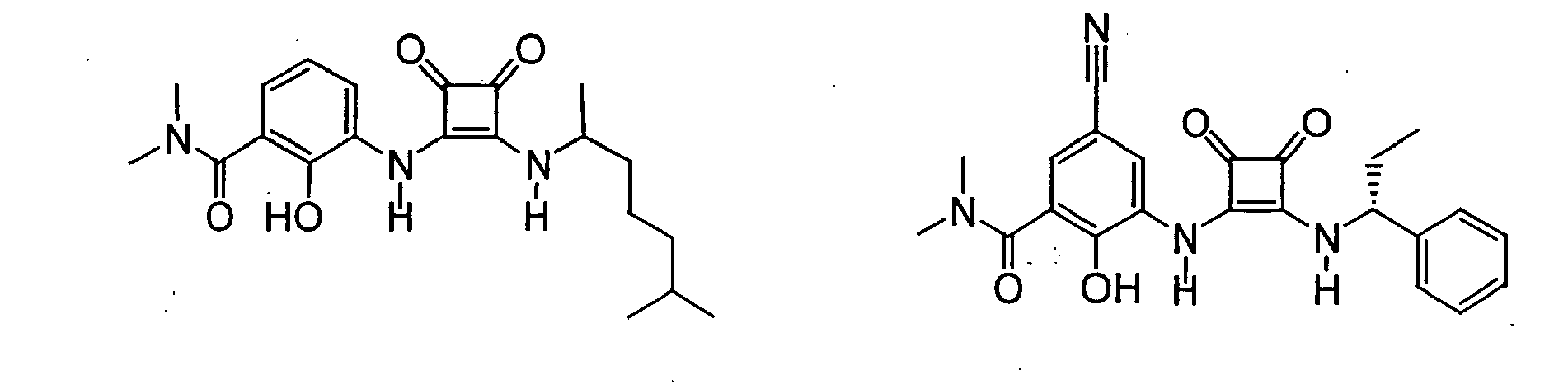


- A more preferred group of compounds includes:


- A most preferred group of compounds includes:


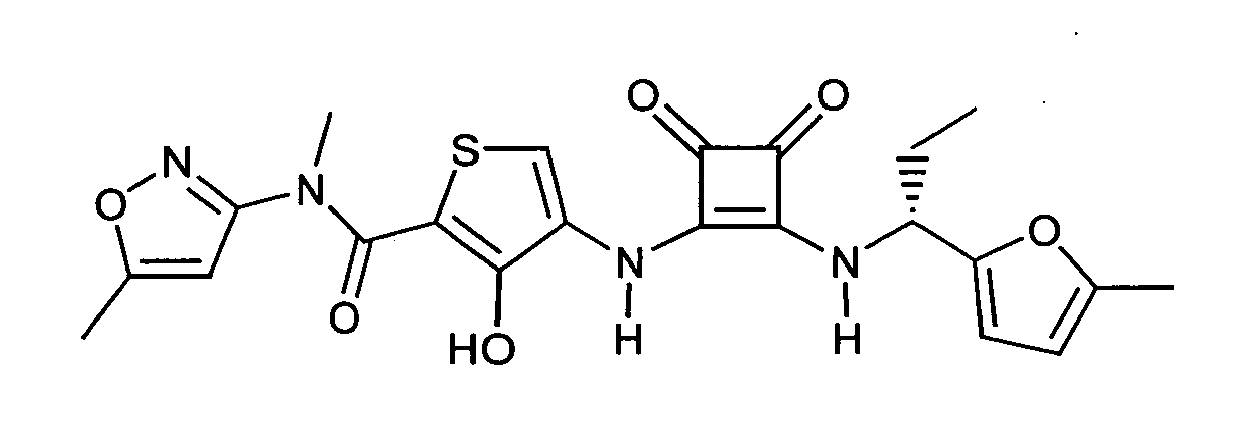
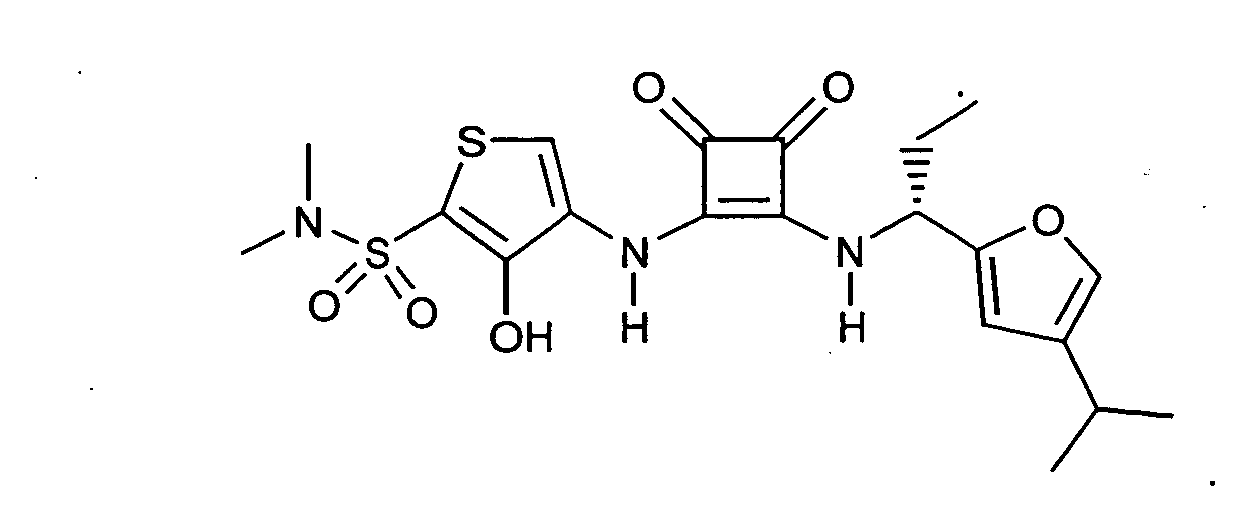
- Certain compounds of the invention may exist in different stereoisomeric forms (e.g., enantiomers, diastereoisomers and atropisomers). The invention contemplates all such stereoisomers both in pure form and in admixture, including racemic mixtures. Isomers can be prepared using conventional methods.
- Certain compounds will be acidic in nature, e.g. those compounds which possess a carboxyl or phenolic hydroxyl group. These compounds may form pharmaceutically acceptable salts. Examples of such salts may include sodium, potassium, calcium, aluminum, gold and silver salts. Also contemplated are salts formed with pharmaceutically acceptable amines such as ammonia, alkyl amines, hydroxyalkylamines, N-methylglucamine and the like.
- Certain basic compounds also form pharmaceutically acceptable salts, e.g., acid addition salts. For example, the pyrido-nitrogen atoms may form salts with strong acid, while compounds having basic substituents such as amino groups also form salts with weaker acids. Examples of suitable acids for salt formation are hydrochloric, sulfuric, phosphoric, acetic, citric, oxalic, malonic, salicylic, malic, fumaric, succinic, ascorbic, maleic, methanesulfonic and other mineral and carboxylic acids well known to those skilled in the art. The salts are prepared by contacting the free base form with a sufficient amount of the desired acid to produce a salt in the conventional manner. The free base forms may be regenerated by treating the salt with a suitable dilute aqueous base solution such as dilute aqueous NaOH, potassium carbonate, ammonia and sodium bicarbonate. The free base forms differ from their respective salt forms somewhat in certain physical properties, such as solubility in polar solvents, but the acid and base salts are otherwise equivalent to their respective free base forms for purposes of the invention.
- All such acid and base salts are intended to be pharmaceutically acceptable salts within the scope of the invention and all acid and base salts are considered equivalent to the free forms of the corresponding compounds for purposes of the invention.
- Compounds of formula I or IA can exist in unsolvated and solvated forms, including hydrated forms. In general, the solvated forms, with pharmaceutically acceptable solvents such as water, ethanol and the like, are equivalent to the unsolvated forms for the purposes of this invention.
- In a preferred embodiment, a compound of formula (1) or IA is combined with one of the following antineoplastic agents: gemcitabine, paclitaxel (Taxol®), 5-Fluorourcil (5-FU), cyclophosphamide (Cytoxan®), temozolomide, or Vincristine.
- In another preferred embodiment, the present invention provides a method of treating cancer, comprising administering, concurrently or sequentially, and effective amount of a.compound of formula (1) or IA and a microtubule affecting agent e.g., paclitaxel.
- For preparing pharmaceutical compositions from the compounds described by this invention, inert, pharmaceutically acceptable carriers can be either solid or liquid. Solid form preparations include powders, tablets, dispersible granules, capsules, cachets and suppositories. The powders and tablets may be comprised of from about 5 to about 95 percent active ingredient. Suitable solid carriers are known in the art, e.g., magnesium carbonate, magnesium stearate, talc, sugar or lactose. Tablets, powders, cachets and capsules can be used as solid dosage forms suitable for oral administration. Examples of pharmaceutically acceptable carriers and methods of manufacture for various compositions may be found in A: Gennaro (ed.), Remington's Pharmaceutical Sciences, 18th Edition, (1990), Mack Publishing Co., Easton, Pennsylvania.
- Liquid form preparations include solutions, suspensions and emulsions. As an example may be mentioned water or water-propylene glycol solutions for parenteral injection or addition of sweeteners and opacifiers for oral solutions, suspensions and emulsions. Liquid form preparations may also include solutions for intranasal administration.
- Aerosol preparations suitable for inhalation may include solutions and solids in powder form, which may be in combination with a pharmaceutically acceptable carrier, such as an inert compressed gas, e.g. nitrogen.
- Also included are solid form preparations which are intended to be converted, shortly before use, to liquid form preparations for either oral or parenteral administration. Such liquid forms include solutions, suspensions and emulsions.
- The compounds of the invention may also be deliverable transdermally. The transdermal composition can take the form of creams, lotions, aerosols and/or emulsions and can be included in a transdermal patch of the matrix or reservoir type as are conventional in the art for this purpose.
- Preferably the compound is administered orally.
- Preferably, the pharmaceutical preparation is in a unit dosage form. In such form, the preparation is subdivided into suitably sized unit doses containing appropriate quantities of the active component, e.g., an effective amount to achieve the desired purpose.
- The quantity of active compound in a unit dose of preparation may be varied or adjusted from about 0.01 mg to about 1000 mg, preferably from about 0.01 mg to about 750 mg, more preferably from about 0.01 mg to about 500 mg and most preferably from about 0.01 mg to about 250 mg, according to the particular application.
- The actual dosage employed may be varied depending upon the requirements of the patient and the severity of the condition being treated. Determination of the proper dosage regimen for a particular situation is within the skill of the art. For convenience, the total dosage may be divided and administered in portions during the day as required.
- The amount and frequency of administration of the compounds of the invention and/or the pharmaceutically acceptable salts thereof will be regulated according to the judgment of the attending clinician considering such factors as age, condition and size of the patient as well as severity of the symptoms being treated. A typical recommended daily dosage regimen for oral administration can range from about 0.04 mg/day to about 4000 mg/day, in two to four divided doses.
- Another aspect of the invention is a method treating cancer, comprising administering to a patient in need thereof, concurrently or sequentially, a therapeutically effective amount of (a) a compound of formula (I) or IA and (b) an atineoplastic agent, microtubule affecting agent or anti-angiogenesis agent.
- Classes of compounds that can be used as the chemotherapeutic agent (antineoplastic agent) include: alkylating agents, antimetabolites, natural products and their derivatives, hormones and steroids (including synthetic analogs), and synthetics. Examples of compounds within these classes are given below.
- Alkylating agents (including nitrogen mustards, ethylenimine derivatives, alkyl sulfonates, nitrosoureas and triazenes): Uracil mustard, Chlormethine, Cyclophosphamide (Cytoxan®), Ifosfamide, Melphalan, Chlorambucil, Pipobroman, Triethylene-melamine, Triethylenethiophosphoramine, Busulfan, Carmustine, Lomustine, Streptozocin, Dacarbazine, and Temozolomide:
- Antimetabolites (including folic acid antagonists, pyrimidine analogs, purine analogs and adenosine deaminase inhibitors): Methotrexate, 5-Fluorouracil, Floxuridine, Cytarabine, 6-Mercaptopurine, 6-Thioguanine, Fludarabine phosphate, Pentostatine, and Gemcitabine.
- Natural products and their derivatives (including vinca alkaloids, antitumor antibiotics, enzymes, lymphokines and epipodophyllotoxins): Vinblastine, Vincristine, Vindesine, Bleomycin, Dactinomycin, Daunorubicin, Doxorubicin, Epirubicin, Idarubicin, paclitaxel (paclitaxel is commercially available as Taxol® and is described in more detail below in the subsection entitled "Microtubule Affecting Agents"), Mithramycin, Deoxyco-formycin, Mitomycin-C, L-Asparaginase, Interferons (especially IFN-a), Etoposide, and Teniposide.
- Hormones and steroids (including synthetic analogs): 17α-Ethinylestradiol, Diethylstilbestrol, Testosterone, Prednisone, Fluoxymesterone, Dromostanolone propionate, Testolactone, Megestrolacetate, Tamoxifen, Methylprednisolone, Methyltestosterone, Prednisolone, Triamcinolone, Chlorotrianisene, Hydroxyprogesterone, Aminoglutethimide, Estramustine, Medroxyprogesteroneacetate, Leuprolide, Flutamide, Toremifene, Zoladex.
- Synthetics (including inorganic complexes such as platinum coordination complexes): Cisplatin, Carboplatin, Hydroxyurea, Amsacrihe, Procarbazine, Mitotane, Mitoxantrone, Levamisole, and Hexamethylmelamine.
- Methods for the safe and effective administration of most of these chemotherapeutic agents are known to those skilled in the art. In addition, their administration is described in the standard literature. For example, the administration of many of the chemotherapeutic agents is described in the "Physicians' Desk . Reference" (PDR), e.g., 2002 edition (Medical Economics Company, Montvale, NJ 07645-1742, USA); the disclosure of which is incorporated herein by reference thereto.
- As used herein, a microtubule affecting agent is a compound that interferes with cellular mitosis, i.e., having an anti-mitotic effect, by affecting microtubule formation and/or action. Such agents can be, for instance, microtubule stabilizing agents or agents that disrupt microtubule formation.
- Microtubule affecting agents useful in the invention are well known to those of skill in the art and include, but are not limited to allocolchicine (NSC 406042), Halichondrin B (NSC 609395), colchicine (NSC 757), colchicine derivatives (e.g., NSC 33410), dolastatin 10 (NSC 376128), maytansine (NSC 153858), rhizoxin (NSC 332598), paclitaxel (Taxol®, NSC 125973), Taxol® derivatives (e.g., derivatives (e.g., NSC 608832), thiocolchicine (NSC 361792), trityl cysteine (NSC 83265), vinblastine sulfate (NSC 49842), vincristine sulfate (NSC 67574), epothilone A, epothilone, and discodermolide (see Service, (1996) Science, 274:2009) estramustine, nocodazole, MAP4, and the like. Examples of such agents are also described in the scientific and patent literature, see, e.g., Bulinski (1997) J. Cell Sci. 110:3055-3064; Panda (1997) Proc. Natl. Acad. Sci. USA 94:10560-10564; Muhlradt (1997) Cancer Res. 57:3344-3346; Nicolaou (1997) Nature 387:268-272; Vasquez (1997) Mol. Biol. Cell. 8:973-985; Panda (1996) J. BioL Chem. 271:29807-29812.
- Particularly preferred agents are compounds with paclitaxel-like activity. These include, but are not limited to paclitaxel and paclitaxel derivatives (paclitaxel-like compounds) and analogues. Paclitaxel and its derivatives are available commercially. In addition, methods of making paclitaxel and paclitaxel derivatives and analogues are well known to those of skill in the art (see, e.g.,
U.S. Patent Nos: 5,569,729 ;5,565,478 ;5,530,020 ;5,527,924 ;5,508,447 ;5,489,589 ;5,488,116 ;5,484,809 ;5,478,854 ;5,478,736 ;5,475,120 ;5,468,769 ;5,461,169 ;5,440,057 ;5,422,364 ;5,411,984 ;5,405,972 ; and5,296,506 ). - More specifically, the term "paclitaxel" as used herein refers to the drug commercially available as Taxol® (NSC number: 125973). Taxol® inhibits eukaryotic cell replication by enhancing polymerization of tubulin moieties into stabilized microtubule bundles that are unable to reorganize into the proper structures for mitosis. Of the many available chemotherapeutic drugs, paclitaxel has generated interest because of its efficacy in clinical trials against drug-refractory tumors, including ovarian and mammary gland tumors (Hawkins (1992) Oncology, 6: 17-23, Horwitz (1992) Trends Pharmacol. Sci. 13: 134-146, Rowinsky (1990) J. Natl. Canc. Inst 82: 1247-1259).
- Additional microtubule affecting agents can be assessed using one of many such assays known in the art, e.g., a semiautomated assay which measures the tubulin-polymerizing activity of paclitaxel analogs in combination with a cellular assay to measure the potential of these compounds to block cells in mitosis (see Lopes (1997) Cancer Chemother. Pharmacol. 41:37-47).
- Generally, activity of a test compound is determined by contacting a cell with that compound and determining whether or not the cell cycle is disrupted, in particular, through the inhibition of a mitotic event. Such inhibition may be mediated by disruption of the mitotic apparatus, e.g., disruption of normal spindle formation. Cells in which mitosis is interrupted may be characterized by altered morphology (e.g., microtubule compaction, increased chromosome number, etc.).
- In a preferred embodiment, compounds with possible tubulin polymerization activity are screened in vitro. In a preferred embodiment, the compounds are screened against cultured WR21 cells (derived from line 69-2 wap-ras mice) for inhibition of proliferation and/or for altered cellular morphology, in particular for microtubule compaction. In vivo screening of positive-testing compounds can then be performed using nude mice bearing the WR21 tumor cells. Detailed protocols for this screening method are described by Porter (1995) Lab. Anim. Sci., 45(2):145-150.
- Other methods of screening compounds for desired activity are well known to those of skill in the art. Typically such assays involve assays for inhibition of microtubule assembly and/or disassembly. Assays for microtubule assembly are described, for example, by Gaskin et al. (1974) J. Molec. Biol., 89: 737-758.
U.S. Patent No. 5,569,720 also provides in vitro and in vivo assays for compounds with paclitaxel-like activity. - Methods for the safe and effective administration of the above-mentioned microtubule affecting agents are known to those skilled in the art. In addition, their administration is described in the standard literature. For example, the administration of many of the chemotherapeutic agents is described in the "Physicians' Desk Reference" (PDR), e.g., 1996 edition (Medical Economics Company, Montvale, NJ 07645-1742, USA); the disclosure of which is incorporated herein by reference thereto.
- The amount and frequency of administration of the compounds of formula (I) or IA and the chemotherapeutic agents and/or radiation therapy will be regulated according to the judgment of the attending clinician (physician) considering such factors as age, condition and size of the patient as well as severity of the disease being treated. A dosage regimen of the compound of formula (I) or IA can be oral administration of from 10 mg to 2000 mg/day, preferably 10 to 1000 mg/day, more preferably 50 to 600 mg/day, in two to four (preferably two) divided doses, to block tumor growth. Intermittant therapy (e.g., one week out of three weeks or three out of four weeks) may also be used.
- The chemotherapeutic agent and/or radiation therapy can be administered according to therapeutic protocols well known in the art. It will be apparent to those skilled in the art that the administration of the chemotherapeutic agent and/or radiation therapy can be varied depending on the disease being treated and the known effects of the chemotherapeutic agent and/or radiation therapy on that disease. Also, in accordance with the knowledge of the skilled clinician, the therapeutic protocols (e.g., dosage amounts and times of administration) can be varied in view of the observed effects of the administered therapeutic agents (i.e., antineoplastic agent or radiation) on the patient, and in view of the observed responses of the disease to the administered therapeutic agents.
- In the methods of this invention, a compound of formula (1) or IA is administered concurrently or sequentially with a chemotherapeutic agent and/or radiation. Thus, it is not necessary that, for example, the chemotherapeutic agent and the compound of formula (I) or IA, or the radiation and the compound of formula (I) or IA, should be administered simultaneously or essentially simultaneously. The advantage of a simultaneous or essentially simultaneous administration is well within the determination of the skilled clinician.
- Also, in general, the compound of formula (I) or IA and the chemotherapeutic agent do not have to be administered in the same pharmaceutical composition, and may, because of different physical and chemical characteristics, have to be administered by different routes. For example, the compound of formula (I) or IA may be administered orally to generate and maintain good blood levels thereof, while the chemotherapeutic agent may be administered intravenously. The determination of the mode of administration and the advisability of administration, where possible, in the same pharmaceutical composition, is well within the knowledge of the skilled clinician. The initial administration can be made according to established protocols known in the art, and then, based upon the observed effects, the dosage, modes of administration and times of administration can be modified by the skilled clinician .
- The particular choice of a compound of formula (I) or IA, and chemo-therapeutic agent and/or radiation will depend upon the diagnosis of the attending physicians and their judgement of the condition of the patient and the appropriate treatment protocol.
- The compound of formula (I) or IA, and chemotherapeutic agent and/or radiation may be administered concurrently (e.g., simultaneously, essentially simultaneously or within the same treatment protocol) or sequentially, depending upon the nature of the proliferative disease, the condition of the patient, and the actual choice of chemotherapeutic agent and/or radiation to be administered in conjunction (i.e., within a single treatment protocol) with the compound of formula (I) or IA .
- If the compound of formula (I) or IA, and the chemotherapeutic agent and/or radiation are not administered simultaneously or essentially simultaneously, then the initial order of administration of the compound of formula (I) and IA, and the chemotherapeutic agent and/or radiation, may not be important. Thus, the compound of formula (I) or IA may be administered first, followed by the administration of the chemotherapeutic agent and/or radiation; or the chemo-therapeutic agent and/or radiation may be administered first, followed by the administration of the compound of formula (I) or IA . This alternate administration may be repeated during a single treatment protocol. The determination of the order of administration, and the number of repetitions of administration of each therapeutic agent during a treatment protocol, is well within the knowledge of the skilled physician after evaluation of the disease being treated and the condition of the patient.
- For example, the chemotherapeutic agent and/or radiation may be administered first, especially if it is a cytotoxic agent, and then the treatment continued with the administration of the compound of formula (I) or IA followed, where determined advantageous, by the administration of the chemotherapeutic agent and/or radiation, and so on until the treatment protocol is complete.
- Thus, in accordance with experience and knowledge, the practicing physician can modify each protocol for the administration of a component (therapeutic agent-i.e., the compound of formula (I) or IA , chemotherapeutic agent or radiation) of the treatment according to the individual patient's needs, as the treatment proceeds.
- The attending clinician, in judging whether treatment is effective at the dosage administered, will consider the general well-being of the patient as well as more definite signs such as relief of disease-related symptoms, inhibition of tumor growth, actual shrinkage of the tumor, or inhibition of metastasis. Size of the tumor can be measured by standard methods such as radio-logical studies, e.g., CAT or MRI scan, and successive measurements can be used to judge whether or not growth of the tumor has been retarded or even reversed. Relief of disease-related symptoms such as pain, and improvement in overall condition can also be used to help judge effectiveness of treatment.
- In the following, further embodiments of the invention are described by numbered paragraphs.
- 1. A compound of the formula

- A is selected from the group consisting of


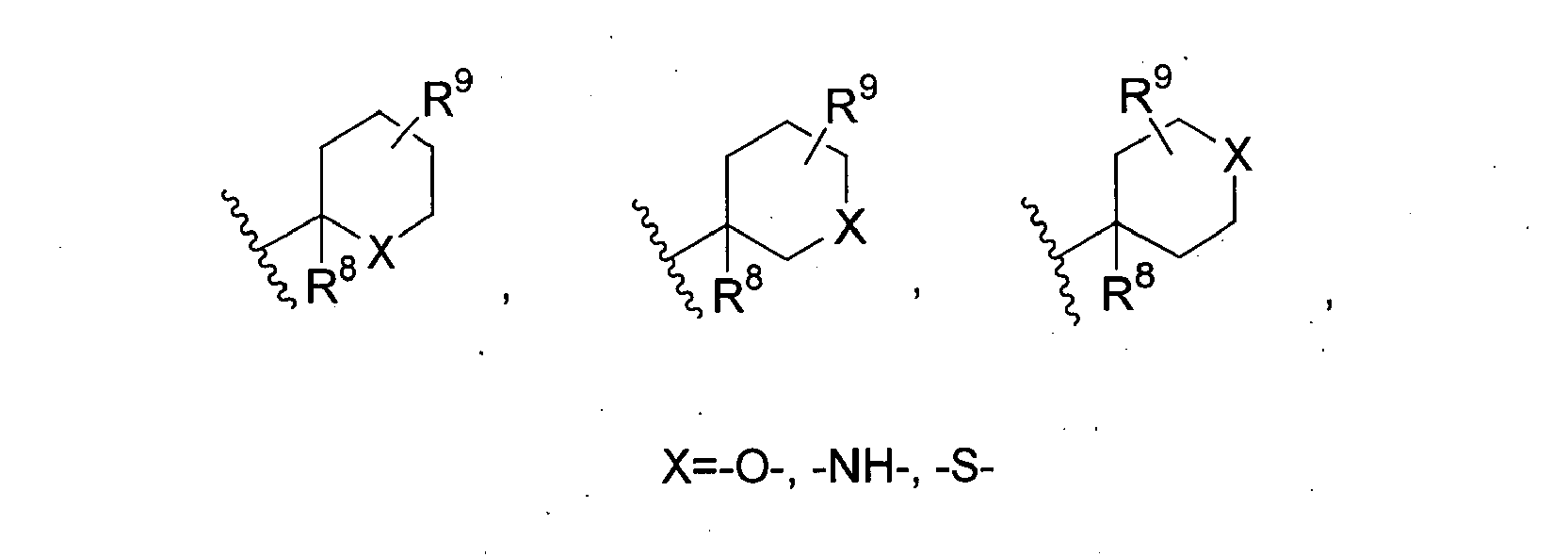


- B is selected from the group consisting of


- R2 is hydrogen, OH, -C(O)OH, -SH, -SO2NR13R14, -NHC(O)R13, -NHSO2NR13R14, -NHSO2R13 , -NR13R14, -C(O)NR13R14, -C(O)NHOR13, -C(O)NR13OH, - S(O2)OH, -OC(O)R13 or an unsubstituted or substituted heterocyclic acidic functional group,
- wherein the substituents on the substituted R2 groups are the same or different and independently selected from 1-6 R9 groups;
- R3 and R4 are the same or different and are independently selected from the group consisting of hydrogen, cyano, halogen, alkyl, alkoxy, -OH, -CF3, -OCF3, -NO2, -C(O)R13, -C(O)OR13, -C(O)NHR17, -C(O)NR13R14, -SO(t)NR13R14, -SO(t)R13, -C(O)NR13OR14,

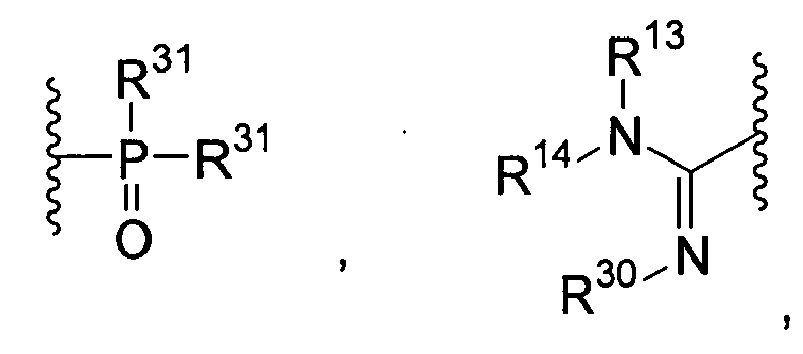
- wherein the substituents on the substituted R3 and R4 groups are the same or different and independently selected from 1-6 R9 groups;
- R5 and R6 are the same or different and are independently selected from the group consisting of hydrogen, halogen, alkyl, alkoxy, -CF3, -OCF3, -NO2, -C(O)R13, -C(O)OR13, -C(O)NR13R14, -SO(t)NR13R14, -C(O)NR13OR14, cyano, an unsubstituted or substituted aryl and unsubstituted or substituted heteroaryl group,
- wherein the substituents on the substituted R5 and R6 groups are the same or different and independently selected from 1-6 R9 groups;
- R7and R8 are the same or different and are independently selected from the group consisting of H, unsubstituted or substituted alkyl, unsubstituted or substituted aryl, unsubstituted or substituted heteroaryl, unsubstituted or substituted arylalkyl, unsubstituted or substituted heteroarylalkyl, unsubstituted or substituted cycloalkyl, unsubstituted or substituted cycloalkylalkyl, -CO2R13, -CONR13R14, fluoroalkyl, alkynyl, alkenyl and cycloalkenyl,
- wherein the substituents on the substituted R7 and R8 groups are selected from the group consisting of
- a) H,
- b) halogen,
- c) -CF3,
- d) -COR13,
- e) -OR13,
- f) -NR13R14,
- g) -NO2,
- h) -CN,
- i) -SO2OR13,
- j) -Si(alkyl)3,
- k) -Si(aryl)3,
- l) -(R13)2R14Si,
- m) -CO2R13,
- n) -C(O)NR13R14,
- o) -SO2NR13R14,
- p) -SO2R13,
- q) -O(C=O)R13,
- r) -O(C=O)NR13R14,
- s) -NR13C(O)R14, and
- t) -NR13CO2R14;
- R8a is selected from the group consisting of hydrogen, alkyl, cycloalkyl and cycloalkylalkyl;
- R9 is independently selected from 1-6 of the group consisting of:
- a)-R13,
- b) halogen,
- c)-CF3,
- d) -COR13,
- e)-OR13,
- f)-NR13R14,
- g)-NO2,
- h)-CN,
- i) -SO2R13,
- j) -SO2NR13R14,
- k) -NR13COR14,
- l) -CONR13R14,
- m) -NR13CO2R14,
- n) -CO2R13, and
- o)

- R10 and R11 are the same or different and are independently selected from the group consisting of hydrogen, halogen, -CF3, -OCF3, -NR13R14, -NR13C(O)NR13R14, -OH, -C(O)OR13, -SH, -SO(t)NR13R14, -SO2R13, -NHC(O)R13,-NHSO2NR13R14, -NHSO2R13, -C(O)NR13R14, -C(O)NR13OR14, -OC(O)R13 and cyano;
- R12 is hydrogen, -OC(O)R13, or an unsubstituted or substituted aryl, unsubstituted or substituted heteroaryl, unsubstituted or substituted arylalkyl, unsubstituted or substituted cycloalkyl, unsubstituted or substituted alkyl, unsubstituted or substituted cycloalkylalkyl or unsubstituted or substituted heteroarylalkyl group,
- wherein the substituents on the substituted R12 groups are the same or different and independently selected from 1-6 R9 groups;
- R13 and R14 are the same or different and are independently selected from the group consisting of H, unsubstituted or substituted alkyl, unsubstituted or substituted aryl, unsubstituted or substituted heteroaryl, unsubstituted or substituted arylalkyl, unsubstituted or substituted heteroarylalkyl, unsubstituted or substituted cycloalkyl, unsubstituted or substituted cycloalkylalkyl, and unsubstituted or substituted fluoroalkyl, or
- R13 and R14 can be taken together when both are attached to a nitrogen atom to form an unsubstituted or substituted 3 to 7 membered heterocylic ring containing one to two heteroatoms selected from oxygen, sulfur and nitrogen,
- wherein the substitutents on the substituted R13 and R14 groups are the same or different and independently selected from 1-6 of H, alkyl, aryl, arylalkyl, fluroalkyl, cycloalkyl, cycloalkylalkyl, heteroaryl, heteroarylalkyl, amino, -C(O)OR15, -C(O)NR15R16, -S(O)tNR15R16, -C(O)R15, -SO2R15, -NHC(O)NR13R14 and halogen;
- R15 and R16 are the same or different and are independently selected from the group consisting of H, alkyl, aryl, arylalkyl, cycloalkyl and heteroaryl;
- R17 is -SO2 alkyl, -SO2 aryl, -SO2 cycloalkyl or -SO2heteroaryl;
- R30 is alkyl, cycloalkyl, -CN, -NO2, or -SO2R15;
- R31 are the same or different and are independently selected from the group consisting of unsubstituted or substituted alkyl, unsubstituted or substituted aryl, unsubstituted or substituted heteroaryl and unsubstituted or substituted cycloalkyl;
- wherein the substituents on the substituted R31 groups are the same or different and independently selected from 1-6 R9 groups; and
- t is 0, 1 or 2.
- A is selected from the group consisting of
- 2. The use of a compound of formula IA for the manufacture of a medicament for the treatment of a disease described herein:

- A is selected from the group consisting of:
- (1)


- (2)


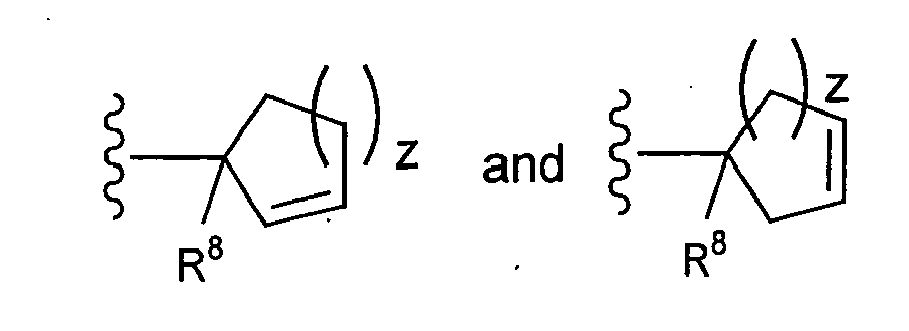
- (3)


- (4)

- (5)
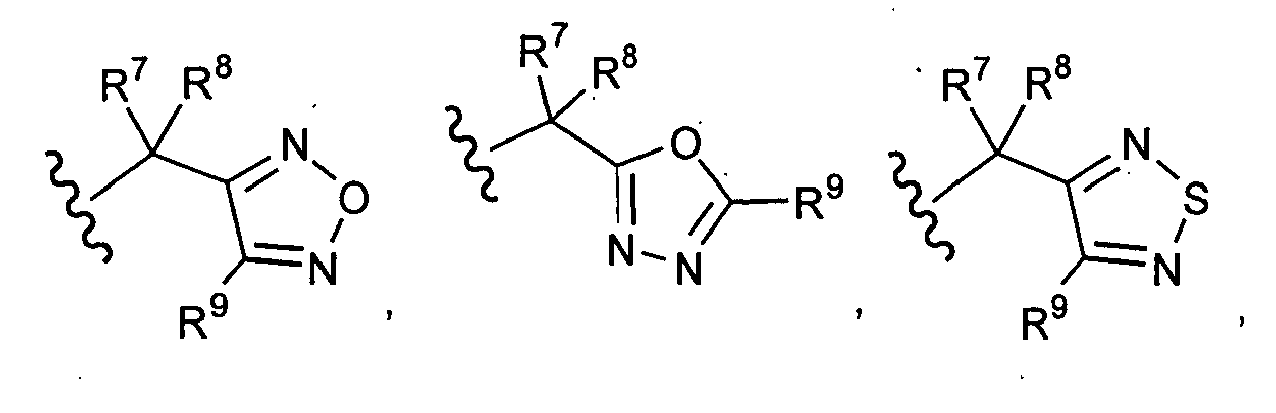


- (1)
- B is selected from the group consisting of


- n is 0 to 6; p is 1 to 5; X is O, NH, or S; Z is 1 to 3;
- R2 is selected from the group consisting of: hydrogen, OH, -C(O)OH, -SH, -SO2NR13R14, -NHC(O)R13, -NHSO2NR13R14, -NHSO2R13, -NR13R14, -C(O)NR13R14, -C(O)NHOR13, -C(O)NR13OH, - S(O2)OH, -OC(O)R13, an unsubstituted heterocyclic acidic functional group, and a substituted heterocyclic acidic functional group; wherein there are 1 to 6 substituents on said substituted heterocyclic acidic functional group each substituent being independently selected from the group consisting of: R9 groups;
- each R3 and R4 is independently selected from the group consisting of: hydrogen, cyano, halogen, alkyl, alkoxy, -OH, -CF3, -OCF3, -NO2, -C(O)R13, -C(O)OR13, -C(O)NHR17, -C(O)NR13R14, -SO(t)NR13R14, -SO(t)R13, -C(O)NR13OR14, unsubstituted or substituted aryl, unsubstituted or substituted heteroaryl,

- each R5 and R6 are the same or different and are independently selected from the group consisting of hydrogen, halogen, alkyl, alkoxy, -CF3, -OCF3, -NO2, -C(O)R13, -C(O)OR13, -C(O)NR13R14, -SO(t)NR13R14, -C(O)NR13OR14, cyano, unsubstituted or substituted aryl, and unsubstituted or substituted heteroaryl group; wherein there are 1 to 6 substituents on said substituted aryl group and each substitutent is independently selected from the group consisting of: R9 groups; and wherein there are 1 to 6 substituents on said substituted heteroaryl group and each substitutent is independently selected from the group consisting of: R9 groups;
- each R7 and R8 is independently selected from the group consisting of: H, unsubstituted or substituted alkyl, unsubstituted or substituted aryl, unsubstituted or substituted heteroaryl, unsubstituted or substituted arylalkyl, unsubstituted or substituted heteroarylalkyl, unsubstituted or substituted cycloalkyl, unsubstituted or substituted cycloalkylalkyl, -CO2R13, -CONR13R14, alkynyl, alkenyl, and cycloalkenyl; and wherein there are one or more substituents on said substituted R7 and R8 groups, wherein each substitutent is independently selected from the group consisting of:
- a) halogen,
- b) -CF3,
- c) -COR13,
- d) -OR13,
- e) -NR13R14,
- f) -NO2,
- g) -CN,
- h) -SO2OR13,
- i) -Si(alkyl)3, wherein each alkyl is independently selected,
- j) -Si(aryl)3, wherein each alkyl is independently selected,
- k) -(R13)2R14Si, wherein each R13 is independently selected,
- l) -CO2R13,
- m) -C(O)NR13R14,
- n) -SO2NR13R14,
- o) -SO2R13,
- p) -OC(O)R13,
- q) -OC(O)NR13R14,
- r) -NR13C(O)R14, and
- s) -NR13CO2R14;
- R8a is selected from the group consisting of: hydrogen, alkyl, cycloalkyl and cycloalkylalkyl;
- each R9 is independently selected from the group consisting of:
- a) -R13,
- b) halogen,
- c) -CF3,
- d) -COR13,
- e) -OR13,
- f) -NR13R14,
- g) -NO2,
- h) -CN,
- i) -SO2R13,
- j) -SO2NR13R14,
- k) -NR13COR14,
- l) -CONR13R14,
- m) -NR13CO2R14,
- n) -CO2R13,
- o)

- p) alkyl substituted with one or more (e.g., one)-OH groups (e.g., -(CH2)qOH, wherein q is 1-6, usually 1 to 2, and preferably 1),
- q) alkyl substituted with one or more (e.g., one) -NR13R14 group (e.g., -(CH2)qNR13R14, wherein q is 1-6, usually 1 to 2, and preferably 1), and
- r) -N(R13)SO2R14 (e.g., R13 is H and R14 is alkyl, such as methyl);
- each R10 and R11 is independently selected from the group consisting of hydrogen, alkyl (e.g., C1 to C6, such as methyl), halogen, -CF3, -OCF3, -NR13R14, -NR13C(O)NR13R14, -OH, -C(O)OR13, -SH, -SO(t)NR13R14, -SO2R13, -NHC(O)R13, -NHSO2NR13R14, -NHSO2R13, -C(O)NR 13R14, -C(O)NR13OR14, -OC(O)R13 and cyano;
- R12 is selected from the group consisting of: hydrogen, -C(O)OR13, unsubstituted or substituted aryl, unsubstituted or substituted heteroaryl, unsubstituted or substituted arylalkyl, unsubstituted or substituted cycloalkyl, unsubstituted or substituted alkyl, unsubstituted or substituted cycloalkylalkyl, and unsubstituted or substituted heteroarylalkyl group; wherein there are 1 to 6 substituents on the substituted R12 groups and each substituent is independently selected from the group consisting of: R9 groups;
- each R13 and R14 is independently selected from the group consisting of: H, unsubstituted or substituted alkyl, unsubstituted or substituted aryl, unsubstituted or substituted heteroaryl, unsubstituted or substituted arylalkyl, unsubstituted or substituted heteroarylalkyl, unsubstituted or substituted cycloalkyl, unsubstituted or substituted cycloalkylalkyl, unsubstituted or substituted heterocyclic, unsubstituted or substituted fluoroalkyl, and unsubstituted or substituted heterocycloalkylalkyl; wherein there are 1 to 6 substituents on said substituted R13 and R14 groups and each substituent is independently selected from the group consisting of: alkyl, -CF3, -OH, alkoxy, aryl, arylalkyl, fluroalkyl, cycloalkyl, cycloalkylalkyl, heteroaryl, heteroarylalkyl, -N(R40)2, -C(O)OR15, -C(O)NR15R16, -S(O)tNR15R16, -C(O)R15, -SO2R15 provided that R15 is not H, halogen, and -NHC(O)NR15R16; or
- R13 and R14 taken together with the nitrogen they are attached to in the groups -NR13R14, -C(O)NR13R14, -SO2NR13R14, -OC(O)NR13R14, -CONR13R14, -NR13C(O)NR13R14, -SOtNR13R14, -NHSO2NR13R14 form an unsubstituted or substituted saturated heterocyclic ring, said ring optionally containing one additional heteroatom selected from the group consisting of: O, S and NR18; wherein there are 1 to 3 substituents on the substituted cyclized R13 and R14 groups and each substituent is independently selected from the group consisting of: alkyl, aryl, hydroxy, hydroxyalkyl, alkoxy, alkoxyalkyl, arylalkyl, fluoroalkyl, cycloalkyl, cycloalkylalkyl, heteroaryl, heteroarylalkyl, amino, -C(O)OR15, -C(O)NR15R16, -SOtNR15R16, -C(O)R15, -SO2R15 provided that R15 is not H, -NHC(O)NR15R16, -NHC(O)OR15, halogen, and a heterocylcoalkenyl group;
- each R15 and R16 is independently selected from the group consisting of: H, alkyl, aryl, arylalkyl, cycloalkyl and heteroaryl;
- R17 is selected from the group consisting of: -SO2alkyl, -SO2aryl, -SO2cycloalkyl, and -SO2heteroaryl;
- R18 is selected from the group consisting of: H, alkyl, aryl, heteroaryl, -C(O)R19, -SO2R19 and -C(O)NR19R20;
- each R19 and R20 is independently selected from the group consisting of: alkyl, aryl and heteroaryl;
- R30 is selected from the group consisting of: alkyl, cycloalkyl, -CN, -NO2, or -SO2R15 provided that R15 is not H;
- each R31 is independently selected from the group consisting of: unsubstituted or substituted alkyl, unsubstituted or substituted aryl, unsubstituted or substituted heteroaryl and unsubstituted or substituted cycloalkyl; wherein there are 1 to 6 substituents on said substituted R3' groups and each substituent is independently selected from the group consisting of: R9 groups;
- each R40 is independently selected from the group consisting of: H, alkyl and cycloalkyl; and
- t is 0, 1 or 2.
- A is selected from the group consisting of:
- 3. A compound of formula IA as defined in Paragraph 2 wherein B is selected from the group consisting of:
- (1)


- (2)
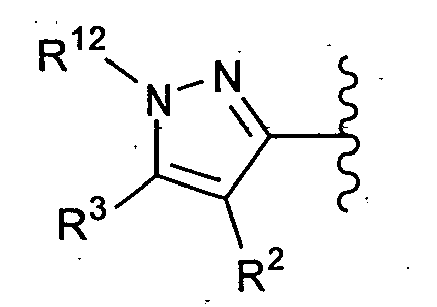
- (3)

- (4)

- (5)

- (6)

- (7)

- (8)

- (9)

- (10)

- (12)

- (13)

- (14)
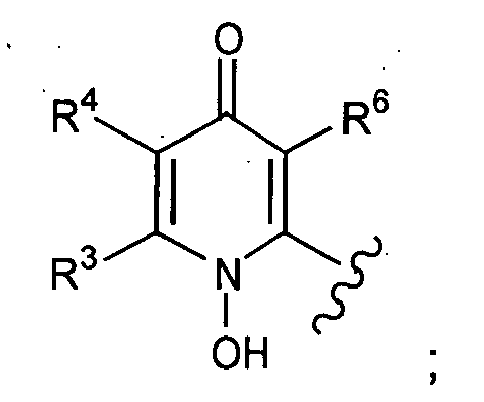
- (1)
- 4. The compound of Paragraph 3 wherein B is:


- 5. The compound of Paragraph 4 wherein the A group is

- 6. The compound of Paragraph 5 wherein said furan ring is substituted.
- 7. The compound of Paragraph 3 selected from the group consisting of:





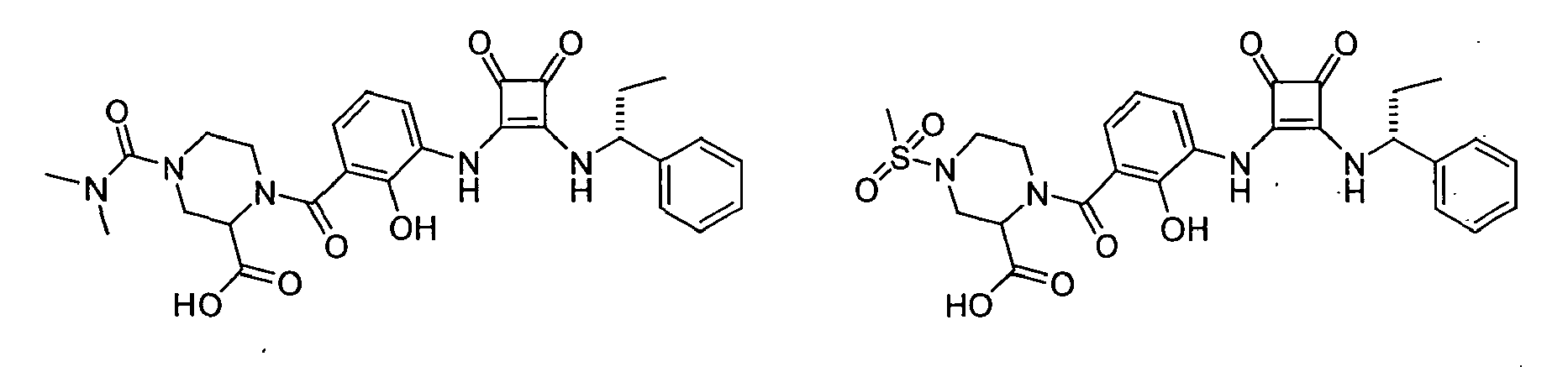











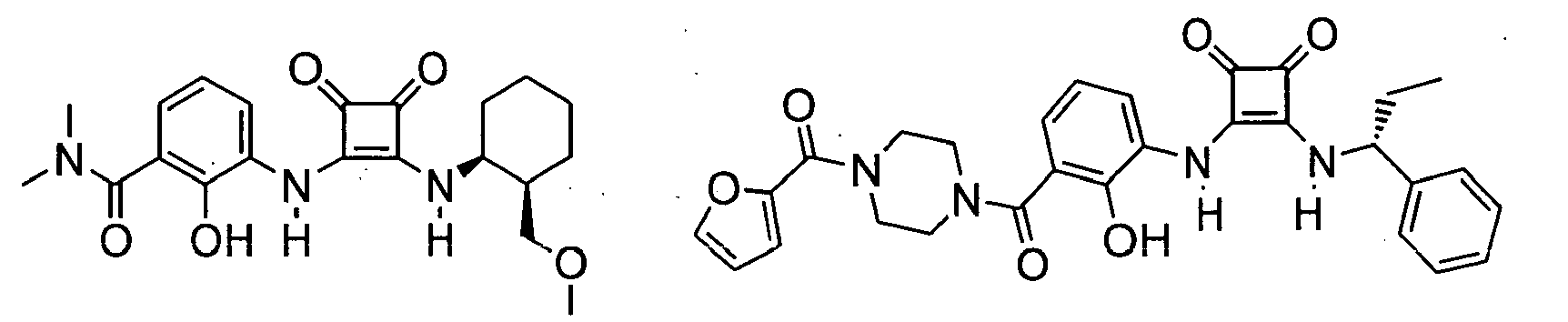





- 8. The compound of Paragraph 3 selected from the group consisting of

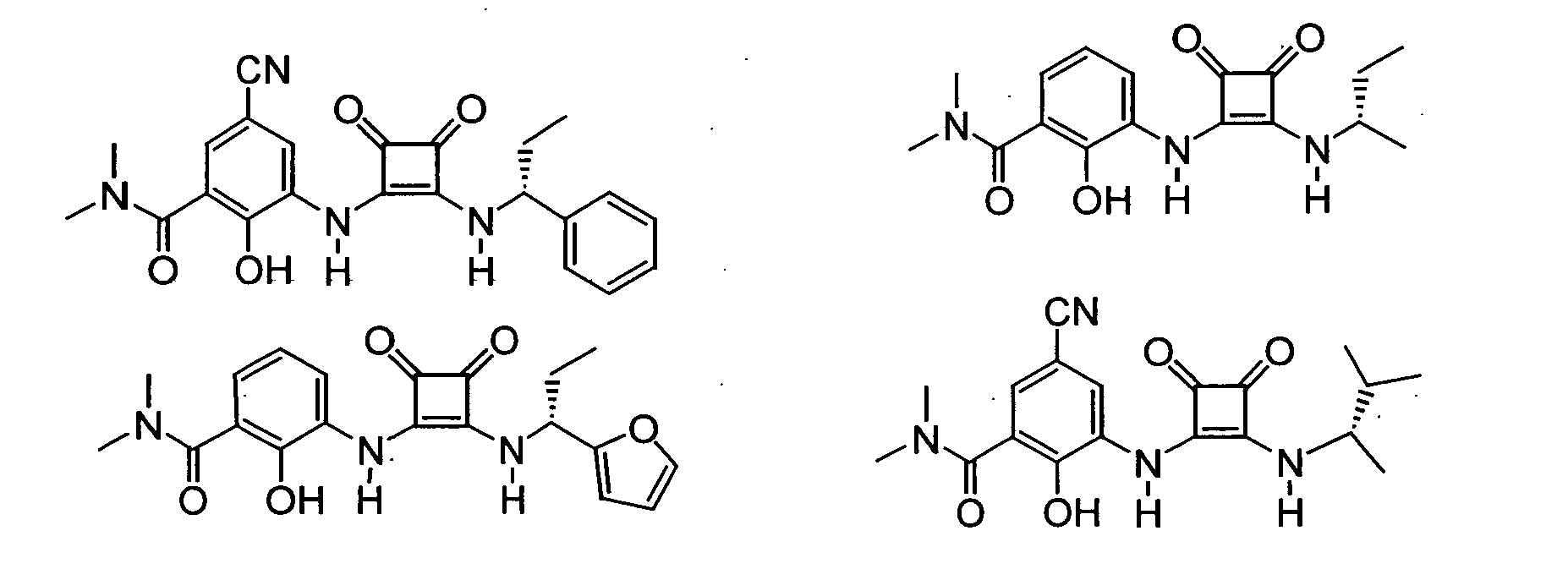


- 9. A compound of the formula

- 10. A compound of the formula

- 11. A compound of the formula

- 12. A compound of the formula

- 13. A compound of the formula

- 14. A compound of the formula

- 15. A compound of the formula

- 16. A compound of the formula

- 17. A compound of the formula

- 18. A compound of the formula

- 19. A compound of the formula

- 20. A compound of the formula

- 21. A compound of the formula

- 22. A compound of the formula

- 23. A compound of the formula

- 24. The use of a compound of any of Paragraphs 1 and 3 to 23 for the manufacture of a medicament for treating a chemokine-mediated disease wherein the chemokine binds to a CXCR2 and/or CXCR1 receptor in a mammal.
- 25. The use of a compound of any of Paragraphs 1 and 3 to 23 for the manufacture of a medicament for treating a chemokine-mediated disease wherein the chemokine binds to a CXC receptor in a mammal.
- 26. The use of Paragraph 24 wherein the chemokine mediated disease is selected from the group consisting of psoriasis, atopic dermatitis, acne, asthma, chronic obstructive pulmonary disease, adult respiratory disease, arthritis; inflammatory bowel disease, Crohn's disease, ulcerative colitis, septic shock, endotoxic shock, gram negative sepsis, toxic shock syndrome, stroke, cardiac and renal reperfusion injury, glomerulonephritis or thrombosis, Alzheimer's disease, graft vs. host reaction, allograft rejections, cystic fibrosis, malaria, acute respiratory distress syndrome, delayted type hypersensitivity reaction, atherosclerosis and cerebral and cardiac ischemia.
- 27. The use of a compound of any of Paragraphs 1, and 3 to 23 for the manufacture of a medicament for treating cancer.
- 28. The use of a compound of any of Paragraphs 1, and 3 to 23 for the manufacture of a medicament for treating cancer in combination with the use of an anticancer agent for the manufacture of a medicament for treating cancer.
- 29. The use of Paragraph 28, wherein the anti-cancer agent is selected from the group consisting of alkylating agents, antimetabolites, natural products and their derivatives, hormones, anti-hormones, anti-angiogenic agents and steroids, and synthetics.
- 30. The use of a compound of any of Paragraphs 1, and 3 to 23 for the manufacture of a medicament for inhibiting angiogenesis.
- 31. The use of a compound of any of Paragraphs 1, and 3 to 23 for the manufacture of a medicament for inhibiting angiogenisis in combination with the use of at least one anti-angiogenesis compound for the manufacture of a medicament for inhibiting angiogenesis.
- 32. The use of a compound of any of Paragraphs 1, and 3 to 23 for the manufacture of a medicament for treating a disease selected from the group consisting of gingivitis, respiratory viruses, herpes viruses, hepatitis viruses, HIV, kaposi's sarcoma associated virus and atherosclerosis.
- 33. The use of Paragraph 32 wherein the chemokine mediated disease is an angiogenic ocular disease.
- 34. The use of Paragraph 33 wherein the angiogenic ocular disease is selected from the group consisting of ocular inflammation, retinopathy of prematurity, diabetic retinopathy, macular degeneration with the wet type preferred and corneal neovascularization.
- 35. The use of Paragraph 27 wherein the cancer treated is melanoma, gastric carcinoma, or non-small cell lung carcinoma.
- 36. The use of Paragraph 28 wherein the cancer treated is melanoma, gastric carcinoma, or non-small cell lung carcinoma.
- 37. The use of Paragraph 29, wherein the wherein the cancer treated is melanoma, gastric carcinoma, or non-small cell lung carcinoma.
- 38. A pharmaceutical composition comprising an effective amount of a compound of any of Paragraphs 1, 2, and 3 to 23 in combination with a pharmaceutically acceptable carrier.
- 39. A sodium salt of any of the compound any of Paragraphs 1, 2, and 3 to 23.
- 40. A calcium salt of any of the compound any of Paragraphs 1, 2, and 3 to 23.
- 41. A pharmaceutical composition comprising an effective amount of a compound of any of Paragraphs 39 and 40 in combination with a pharmaceutically acceptable carrier.
- 42. A compound of the formula:
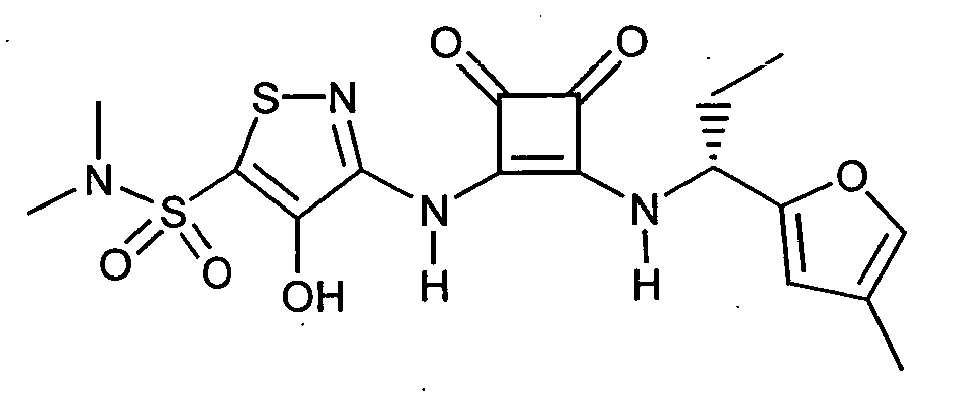
- 43. A compound of the formula

- A is selected from:


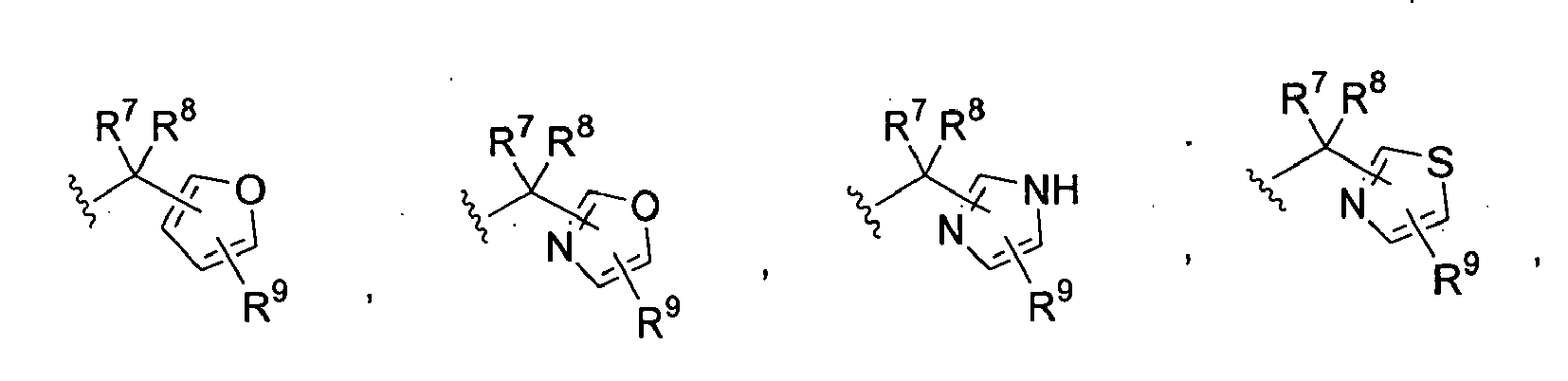


- R7 and R8 are the same or different and are independently selected from the group consisting of H; optionally substituted or unsubstituted alkyl, aryl, heteroaryl, arylalkyl, heteroarylalkyl, cycloalkyl, cycloalkylalkyl, CO2R13, CONR13R14, fluoroalkyl, alkynyl, alkenyl, alkynylalkyl, alkenylalkyl, and cycloalkenyl,
- wherein said substituents on said substituted groups are selected from the group consisting of:
- a) cyano;
- b) CO2R7;
- c) CONR7R8;
- d) SO2NR7R8,
- e) SO2R7;
- f) NO2;
- g) CF3;
- h) -OR7;
- i) -NR7R8;
- j) -O(C=O)R7;
- k) -O(C=O)NR7R8, and
- l) halogen;
- R9 is selected from one or more of the groups consisting of:
- a) R7;
- b) R8;
- c) halogen;
- d) -CF3;
- e) -COR7;
- f) -OR7;
- g) -NR7R8;
- h) -NO2;
- i) -CN;
- j) -SO2R7;
- k) -SO2NR7R8;
- l) -NR7COR8;
- m) -CONR7R8;
- n)-NR7CO2R8;
- o) CO2R7, and
- p)
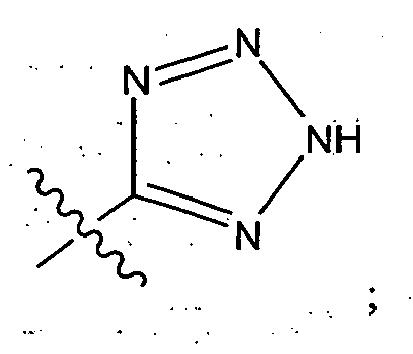
- B is an optionally substituted aryl or heteroaryl group selected from:


- R2 is hydrogen, OH, C(O)OH, SH, SO2NR13R14, NHC(O)R13, NHSO2NR13R14, NHSO2R13 C(O)NR13R14, C(O)NHOR13, C(O)NR13OH, OC(O)R13 or an optionally substituted cyclic or heterocyclic acidic functional group, with the proviso that if R2 is SO2NR13R14, at least one of R13 and R14 must be hydrogen;
- R3 and R4 are independently hydrogen, halogen, alkyl, alkoxy, OH, CF3, OCF3, NO2, C(O)R13, C(O)OR13, C(O)NR13R14, SO(t)NR13R14, SO(t)R13, C(O)NR13OR14,

- wherein the substituents on the optionally substituted groups may be selected from one or more R9 groups;
- R5 and R6 independently represent hydrogen, halogen, alkyl, alkoxy, CF3, OCF3, NO2, C(O)R13 C(O)OR13, C(O)NR13R14, SO(t)NR13R14, C(O)NR13OR14, cyano, or an optionally substituted aryl or heteroaryl group,
- wherein the substituents on the optionally substituted groups may be selected from one or more R9 groups;
- R10 and R11 independently represent hydrogen, halogen, CF3, OCF3, NR13R14, NR13C(O)NR13R14, OH, C(O)OR13, SH, SO(t)NR13R14,SO2R13, NHC(O)R13, NHSO2NR13R14, NHSO2R13, C(O)NR13R14, C(O)NR13OR14, OC(O)R13 or cyano.
- R12 is hydrogen, OC(O)R13, or an optionally substituted aryl, heteroaryl, arylalkyl, cycloalkyl, alkyl, cycloalkylalkyl or heteroarylalkyl group;
- R13 and R14 are the same or different and are independently selected from the group consisting of H; optionally substituted or unsubstituted alkyl, aryl, heteroaryl, arylalkyl, heteroarylalkyl, cycloalkyl, cycloalkylalkyl, and fluoroalkyl, or
- R13 and R14 when taken together form an optionally substituted 3 to 7 membered heterocyclic ring containing one to two heteroatoms selected from O, S and N, and
- wherein the substituents on the optionally substituted groups may be selected from one or more R9 groups, and
- t is 1 or 2.
- A is selected from:
- The compounds of the present invention are useful in the treatment of CXC-chemokine mediated conditions and diseases. This utility is manifested in their ability to inhibit IL-8 and GRO-α chemokine as demonstrated by the following in vitro assays.
- For each well of a 96 well plate, a reaction mixture of 10 µg hCXCR1-CHO overexpressing membranes (Biosignal) and 200 µg/well WGA-SPA beads (Amersham) in 100 µl was prepared in CXCR1 assay buffer (25 mM HEPES, pH 7.8, 2 mM CaCl2, 1mM MgCl2, 125 mM NaCl, 0.1 % BSA) (Sigma). A 0.4 nM stock of ligand, [1251]-IL-8 (NEN) was prepared in the CXCR1 assay buffer. 20X stock solutions of test compounds were prepared in DMSO (Sigma). A 6 X stock solution of IL-8 (R&D) was prepared in CXCR2 assay buffer. The above solutions were added to a 96-well assay plate (PerkinElmer) as follows: 10 µl test compound or DMSO, 40 µl CXCR1 assay buffer or IL-8 stock, 100 µl of reaction mixture, 50 µl of ligand stock (Final [Ligand] = 0.1 nM). The assay plates were shaken for 5 minutes on plate shaker, then incubated for 8 hours before cpm/well were determined in Microbeta Trilux counter (PerkinElmer). % Inhibition of Total binding-NSB (250 nM IL-8) was determined for IC50 values. Compounds of this invention had an IC50 of <20µM. The most preferred compounds had a Ki within the range of 3nM to 1120nM.
- For each well of a 96 well plate, a reaction mixture of 4 µg hCXCR2-CHO overexpressing membranes (Biosignal) and 200 µg/well WGA-SPA beads (Amersham) in 100 µl was prepared in CXCR2 assay buffer (25 mM HEPES, pH 7.4, 2 mM CaCl2, 1mM MgCl2). A 0.4 nM stock of ligand, [1251]-IL-8 (NEN), was prepared in the CXCR2 assay buffer. 20X stock solutions of test compounds were prepared in DMSO (Sigma). A 6 X stock solution of GRO-α (R&D) was prepared in CXCR2 assay buffer. The above solutions were added to a 96-well assay plate (PerkinElmer or Corning) as follows: 10 µl test compound or DMSO, 40 ul CXCR2 assay buffer or GRO-α stock, 100 µl of reaction mixture, 50 µl of ligand stock (Final [Ligand] = 0.1 nM). When 40 X stock solutions of test compounds in DMSO were prepared, then the above protocol was used except instead 5 µl test compound or DMSO and 45 µl CXCR2 assay buffer were used. The assay plates were shaken for 5 minutes on a plate shaker, then incubated for 2-8 hours before cpm/well were determined in Microbeta Trilux counter (PerkinElmer). % Inhibition of total binding minus non-specific binding (250 nM Gro-α or 50 µM antagonist) was determined and lC50 values calculated. Compounds of this invention had an lC50 of <5µM. The most preferred compounds had a Ki within the range of 0.8nM to 40nM.
- HEK 293 cells stably transfected with hCXCR2 and Gα/q were plated at 10,000 cells per well in a Poly-D-Lysine Black/Clear plate (Becton Dickinson) and incubated 48 hours at 5% CO2, 37°C. The cultures were then incubated with 4 mM fluo-4, AM (Molecular Probes) in Dye Loading Buffer (1 % FBS, HBSS w. Ca & Mg, 20 mM HEPES (Cellgro), 2.5 mM Probenicid (Sigma) for 1 hour. The cultures were washed with wash buffer (HBSS w Ca, & Mg, 20 mM HEPES, Probenicid (2.5 mM)) three times, then 100 µl/well wash buffer was added.

- During incubation, compounds were prepared as 4X stocks in 0.4% DMSO (Sigma) and wash buffer and added to their respective wells in the first addition plate. IL-8 or GRO-α (R&D Systems) concentrations were prepared 4X in wash buffer + 0.1 % BSA and added to their respective wells in second addition plate.
- Culture plate and both addition plates were then placed in the FLIPR imaging system to determine change in calcium fluorescence upon addition of compound and then ligand. Briefly, 50 µl of compound solutions or DMSO solution was added to respective wells and change in calcium fluorescence measured by the FLlPR for 1 minute. After a 3 minute incubation within the instrument, 50 µl of ligand was then added and the change in calcium fluorescence measured by the FLlPR instrument for I minute. The area under each stimulation curve was determined and values used to determine % Stimulation by compound (agonist) and % Inhibition of Total Calcium response to ligand (0.3 nM IL-8 or GRO-α) for IC50 values of the test compounds.
- A chemotaxis assay is setup using Fluorblok inserts (Falcon) for 293-CXCR2 cells (HEK-293 cells overexpressing human CXCR2). The standard protocol used at present is as follows:
- 1. Inserts are coated with collagenlV (2ug/ml) for 2 hrs at 37°C.
- 2. The collagen is removed and inserts are allowed to air dry overnight.
- 3. Cells are labeled with 10uM calcein AM (Molecular Probes) for 2 hrs. Labeling is done in complete media with 2% FBS.
- 4. Dilutions of compound are made in minimal media (0.1% BSA) and placed inside the insert which is positioned inside the well of a 24 well plate. Within the well is IL-8 at a concentration of 0.25nM in minimal media. Cells are washed and resuspended in minimal media and placed inside the insert at a concentration of 50,000 cells per insert.
- 5. Plate is incubated for 2hrs and inserts are removed and placed in a new 24 well. Fluorescence is detected at excitation=485 nM and emission=530 nM.
- A cytotoxicity assay for CXCR2 compounds is conducted on 293-CXCR2 cells. Concentrations of compounds are tested for toxicity at high concentrations to determine if they may be used for further evaluation in binding and cell based assays. The protocol is as follows:
- 1. 293-CXCR2 cells are plated overnight at a concentration of 5000 cells per well in complete media.
- 2. Dilutions of compound are made in minimal media w/0.1% BSA. Complete media is poured off and the dilutions of compound are added. Plates are incubated for 4, 24 and 48hrs. Cells are labeled with 10uM calcein AM for 15 minutes to determine cell viability. Detection method is the same as above.
- 10,000 SKMEL-5 cells/well are placed in a mixture of 1.2% agar and complete media with various dilutions of compound. Final concentration of agar is 0.6%. After 21 days viable cell colonies are stained with a solution of MTT (1mg/ml in PBS). Plates are then scanned to determine colony number and size. IC50 is determined by comparing total area vs. compound concentration.
- Compounds of formula (I) or IA may be produced by processes known to those skilled in the art in the following reaction schemes and in the preparations and examples below.
- A general procedure for the preparation of compounds of formula I or IA is as follows:


- An amine is condensed (Step A) with a nitrosalicylic acid under standard coupling conditions and the resulting nitrobenzamide is reduced (Step B) under hydrogen atmosphere in the presence of a suitable catalyst. The remaining partner required for the synthesis of the final target is prepared by condensing an aryl amine with the commercially available diethylsquarate to give the aminoethoxysquarate product. Subsequent condensation of this intermediate with the aminobenzamide prepared earlier provides the desired chemokine antagonist (Scheme 1).
- Alternatively, the aminobenzamide of Scheme 1 is first condensed with commercially available diethylsquarate to give an alternate monoethoxy intermediate. Condensation of this intermediate with an amine gives the desired chemokine antagonist.


- Benztriazole compounds of Formula (I) or IA are prepared by stirring nitrophenylenediamines with sodium nitrite in acetic acid at 60°C to afford the nitrobenzotriazole intermediate (Scheme 3). Reduction of the nitro group in the presence of palladium catalyst and hydrogen atmosphere provides the amine compound. Subsequent condensation of this intermediate with the aminooethoxysquarate prepared earlier (Scheme 1) provides the desired chemokine antagonist.
- Condensation of nitrophenylenediamines with anhydrides or activated acids at reflux (Scheme 4) affords benzimidazole intermediates which after reduction with hydrogen gas and palladium catalyst and condensation with the aminoethoxysquarate previously prepared (Scheme 1) affords benzimidazole chemokine antagonists.


- lndazole structures of Formula (I) or IA can be prepared according to Scheme 5 by reduction of nitroindazole A (J. Am. Chem Soc. 1943, 65, 1804-1805) to give aminoindazole B and subsequent condensation with the aminoethoxysquarate prepared earlier (Scheme 1).
- Indole structures of Formula (I) or IA can be prepared according to Scheme 6 by reduction of nitroindole A (J. Med. Chem. 1995,38, 1942-1954) to give aminoindole B and subsequent condensation with the aminoethoxysquarate prepared earlier (Scheme 1).
- The invention disclosed herein is exemplified by the following preparations and examples which should not be construed to limit the scope of the disclosure. Alternative mechanistic pathways and analogous structures may be apparent to those skilled in the art.
-

- 3-Nitrosalicylic acid (500 mg, 2.7 mmol), DCC (563 mg) and ethyl acetate (10 mL) were combined and stirred for 10 min. (R)-(-)-2-pyrrolidinemethanol (0.27 mL) was added and the resulting suspension was stirred at room temperature overnight. The solid was filtered and the filtrate washed with 1N NaOH. The aqueous phase was acidified and extracted with EtOAc. The resulting organic phase was dried over anhydrous MgSO4, filtered and concentrated in vacuo. Purification of the residue by preparative ptate chromatography (silica gel, 5% MeOH/CH2Cl2 saturated with AcOH) gave the product (338 mg, 46%, MH+ = 267).
-

- 3-Nitrosalicylic acid (9.2 g), bromotripyrrolidinophosphonium hexafluorophosphate (PyBroP, 23 g) and N,N-diisopropylethylamine (DIEA, 26 mL) in anhydrous CH2Cl2 (125 mL) were combined and stirred at 25°C for 30 min. (R)-(+)-3-pyrrolidinol (8.7 g) in CH2Cl2 (25 mL) was added over 25 min and the resulting suspension was stirred at room temperature overnight. The mixture was extracted with 1M NaOH (aq) and the organic phase was discarded. The aqueous phase was acidified with 1M HCl (aq), extracted with EtOAc, dried over anhydrous Na2SO4, filtered and concentrated in vacuo to afford the crude product (7 g) which was used without further purification.
- The crude product from Step A above was stirred with 10% Pd/C (0.7 g) in MeOH (100 mL) under a hydrogen gas atmosphere overnight. The reaction mixture was filtered through celite, the filtrate concentrated in vacuo, and the resulting residue purified by column chromatography (silica gel, 10% MeOH/CH2Cl2 saturated with NH4OH) to give the product (2.5 g, 41 %, MH+=223).
-

- To N-BOC-3-(amino)piperidine (0.5 g) dissolved in CH2Cl2 (10 mL)was added benzylisocyanate (3 mmol). After stirring for 2 hrs, amine scavenger resin (1.9 mmol) was added and the mixture was stirred overnight, filtered, the resin back-washed with CH2Cl2 and methanol, and the organics concentrated in vacuo. Stirring of the crude material in 4N HCl/dioxane (40 mL) for 2.5 hrs before concentrating in vacuo gave the title compound (41 %, MH+=369).
- Following the procedures set forth in Preparative Example 2.1 but using the isocyanate (or chloroformate) indicated in the Table below, the amines were obtained and used without further purification.
Prep Ex. Amine Isocyanate Amine 2.2 


2.3 


2.4 


2.5 


2.6 


-

- To N-BOC-3-(amino)piperidine (5 mmol) dissolved in CH2Cl2 (30 mL) was added trifluoromethanesulfonic anhydride (5 mmol) and the mixture was stirred overnight. The mixture was concentrated in vacuo, diluted with CH2Cl2 (10 mL) and treated with trifluoroacetic acid (10 mL). After stirring for 2 hr, the mixture was concentrated in vacuo to give the title compound (43%, MH+=233.1).
-

- 3-Nitrosalicylic acid (5 mmol) and N-hydroxysuccinimide (5 mmol) were added to a solution of 2% DMF/CH2Cl2, followed by DCC (5 mmol). After stirring for 2 hr, the mixture was filtered and concentrated in vacuo and the residue used directly in Step B.
- The product from Step A above was suspended in DMF and to this was added morpholino-2-carboxylic acid HCl (5 mmol) in CH2Cl2 (10 mL)/DMF (5 mL) and diisopropylethylamine (10 mmol). The mixture was stirred overnight, filtered, basified with 1N NaOH (50 mL), washed with CH2Cl2, acidified with 5N HCl and extracted with EtOAc. The organic phase was dried over Na2SO4, filtered and concentrated in vacuo to give the desired compound which was used directly in Step C (MH+=296).
- Following a similar procedure as in Preparative Example 2 Step B, but using the product from Step B above, the title compound was obtained (23%, MH+=267).
-

- 2-Piperazinecarboxylic acid and 2-chloro-1,3-pyrimidine were stirred with triethylamine and MeOH. After stirring overnight at reflux, the mixture was filtered and concentrated in vacuo to give the desired compound which was used directly in Step B (MH+ = 209).
- Following a similar procedure as Preparative Example 2.8, Step B except using the product from Preparative Example 2.9 Step A above, the desired compound was obtained (41%, MH+ = 374).
- Following a similar procedure as in Preparative Example 2, Step B, but using the product from Step B above, the desired compound was obtained (99%, MH+=344).
-

- Following a similar procedure as Preparative Example 2.8, Step A except using 3-nitrobenzoic acid, the desired compound was obtained and used directly in Step B.
- Following a similar procedure as Preparative Example 2.8, Step B except using the products from Preparative Example 2.9, Step A and Preparative Example 2.10, Step A, the desired compound was obtained (86%).
- Following a similar procedure as in Preparative Example 2, Step B, but using the product from Step B above, the desired compound was obtained (67%, MH+=331).
-

- N-Benzylpiperidone (2 g, HCl salt, hydrate) was stirred with THF (20 mL), concentrated to dryness, and placed under high vac. The residue was diluted in THF (20 mL), and methyllithium was added (2.5 eq of 1.6N in Et2O) via syringe. After stirring for 3 hr, the mixture was concentrated in vacuo, diluted with water, extracted with CH2Cl2, and dried over Na2SO4. Filtration and concentrating in vacuo gave the desired product (50%, MH+ = 205).
- Following a similar procedure as in Preparative Example 2, Step B, but using the product from Step A above, the title compound was obtained (95%, MH+=116).
-

- To N-benzyl-N-methylamine (20 mmol) dissolved in acetone (50 mL) was added concentrated HCl (20 mmol), paraformaldehyde (30 mmol) and 2-propanol (2 mL). After stirring at reflux overnight, the mixture was concentrated in vacuo, diluted with water, basified to pH 14 and extracted with ether. The organic phase was dried over Na2SO4, filtered and concentrated in vacuo to give the desired product (98%) which was used directly in Step B.
- The product from Step A above (500 mg) was dissolved in MeOH (20 mL) and to this was added NaBH4 (50 mg). After stirring for 10 min, the solution was concentrated in vacuo to give the desired compound which was used directly in Step C without purification.
- The product from Step B above was diluted with MeOH (20 mL) and to this was added AcOH (0.1 mL), a catalytic amount of Pd/C (10%) and the mixture stirred under H2 atmosphere (balloon) overnight. The mixture was filtered, 4N HCl in dioxane (1 mL) was added, and the mixture was concentrated in vacuo to give the desired compound that was used directly without purification.
-

- Following a similar procedure as Preparative Example 2, Step A except using methyl glycinate, the desired ester was obtained. The mixture was poured into 200 mL of 1N NaOH, then extracted with dichloromethane. The pH was adjusted to 1 and NaCl was added until saturation. After several hours, the resulting precipitate was filtered and washed with cold water to give the desired product (42%).
- Following a similar procedure as in Preparative Example 2 Step B, but using the product from Step A above, the title compound was obtained (95%).
-

- Following a similar procedure as in Preparative Example 2.13, Step A except using methyl N-methylglycinate, the desired product was obtained (18%).
- Following a similar procedure as in Preparative Example 2, Step B, but using the product from Step A above, the title compound was obtained (95%, MH+ = 225).
-

- The cyclobutenedione intermediate from Preparative Example 87 (200mg), DIEA (100ul), 3-aminosalicylic acid (120mg) and EtOH (4ml) were combined and heated to reflux overnight to give the title compound (90%, MH+=367).
-

- The above n-oxide (2g) was combined with H2NMe/H2O (15cm3) and heated to 140°C overnight. Potassium carbonate (1.3g) added and the mixture concentrated in vacuo. Extraction with EtOH and concentration of the filtrate in vacuo gave 1.56g of crude amine (MH+=125).
- Following the procedures set forth in Preparative Examples 1-2 but using the carboxylic acid, amine, and coupling agent [DCC (Prep. Ex. 1) or PyBrop (Prep. Ex. 2)] listed in the Table below, the indicated amide products were obtained and used without further purification.
Prep Ex. Carboxylic acid Amine Product 1. Coupling Agent
2. % Yield
3. MH+3 


1. PyBrop
2. 87%, 86%
3. 1814 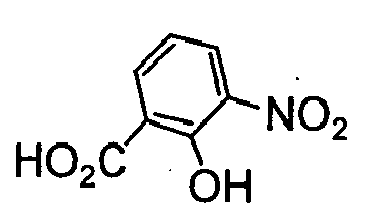

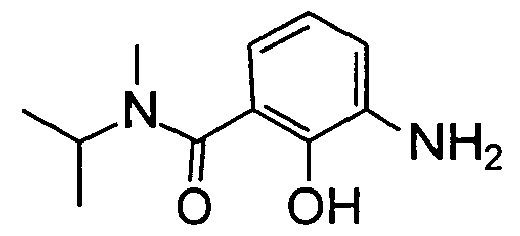
1. PyBroP
2. 49%
3. 2095 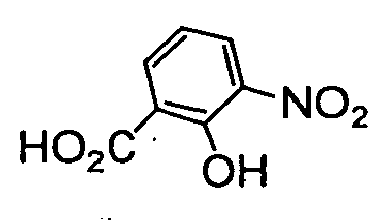
NH3 
1. PyBroP
2. 95%
3. 1536 
-NH2 
1. PyBroP
2. 83%
3 .1677 


1. PyBroP
2. 76%
3. 2238 


1. PyBroP
2. 65,53
3. 2099 


1. PyBroP
2. 59,69
3. 20710 


1. PyBroP
2. 49,86
3. 23710.1 


1. PyBroP
2. 30,88
3. 19310.2 


1. PyBroP
2. 26,87
3. 19510.3 


1. PyBroP
2. 38
3. 20910.4 


1. PyBroP
2. 29
3. 20910.5 


1. PyBroP
2. 38
3. 22310.6 


1. PyBroP
2. 32,99
3. 367.910.7 


1. PyBroP
2. 35,99
3. 23710.8 


1. DCC
2. 30,99
3. 26910.9 


1. PyBroP
2. 58,95
3. 233.110.10 


1. PyBroP
2. 42,95
3. 238.910.13 


1. PyBroP
2. 51,95
3. 30710.14 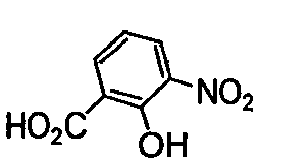


1. PyBroP
2. 55
3. 34710.15 


1. PyBroP
2. 41
3. 369.110.16 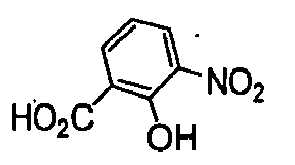


1. PyBroP
2. 56
3. 354.910.17 

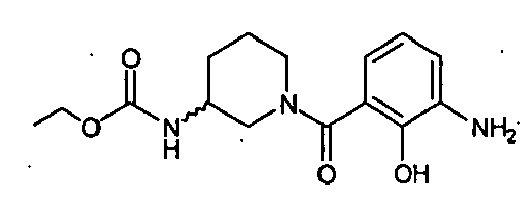
1. PyBroP
2. 56
3. 30810.18 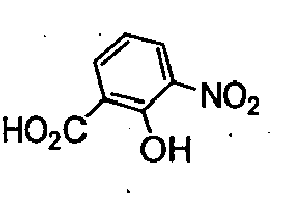


1. PyBroP
2. 10,95
3. 252.910.19 

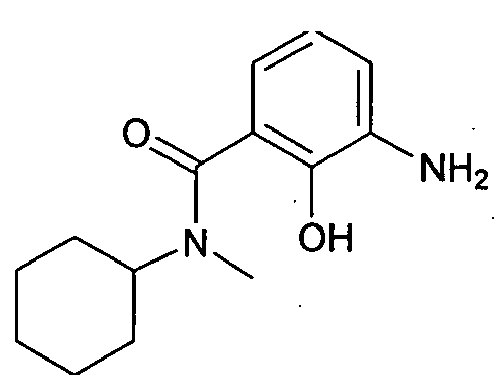
1. PyBroP
2. 42,95
3. 24910.20 


1. PyBroP
2. 15,95
3. 264.910.21 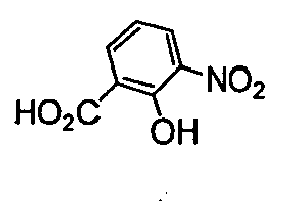


1. PyBroP
2. 64,95
3. 27310.22 


1. PyBroP
2. 45,95
3. 27310.23 


1. PyBroP
2. 44,95
3. 28110.24 


1. PyBroP
2. 41,95
3. 281.110.25 


1. PyBroP
2. 48,95
3. 25710.26 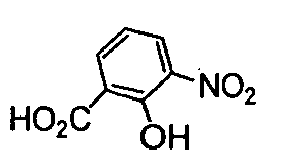


1. DCC
2. 15,99
3. 23510.28 


1. PyBroP
2. 52,95
3. 237.110.29 


1. PyBroP
2. 31,95
3. 259.110.30 


1. PyBroP
2. 54,95 ,
3. 250.910.31 
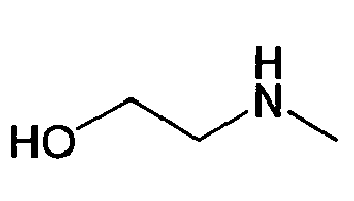
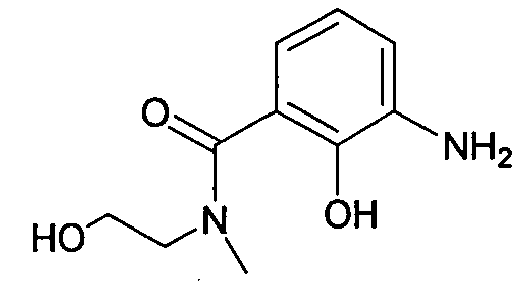
1. PyBroP
2. 64,95
3. 210.910.32 


1. PyBroP
2. 47,95
3. 19710.33 


1. PyBroP
2. 47,95
3. 27310.34 

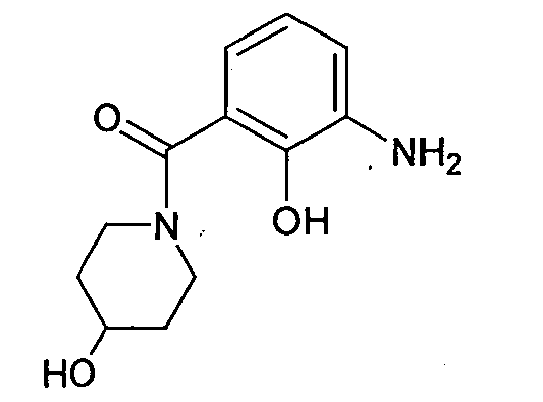
1. PyBroP
2. 51,95
3. 237.110.35 


1. PyBroP
2. 60,90
3. 22410.36 


1. PyBroP
2. 65,99
3. 25210.37 


1. PyBroP
2. 58,99
3. 23910.38 


1. PyBroP
2. 35,99
3. 221.110.39 


1. PyBroP
2. 42,99
3. 235.210.40 


1. DCC
2. 32,99
3. 293.110.41 


1. PyBroP
2. 45,99
3. 223.110.42 


1. PyBroP
2. 55,81
3. 251.110.43 


1. PyBroP
2. 68,66
3. 224.910.44 


1. PyBroP
2. 68,66
3. 241.110.45 

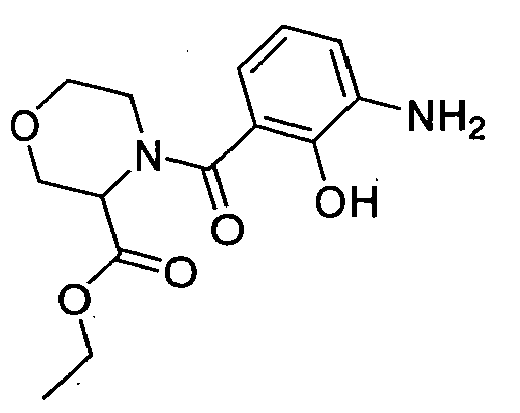
1. PyBroP
2. 44,40
3. 29510.46 


1. DCC
2. 37,81
3. 26510.47 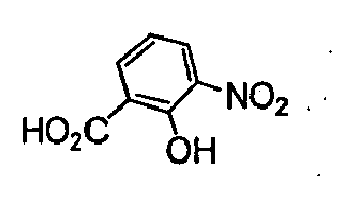

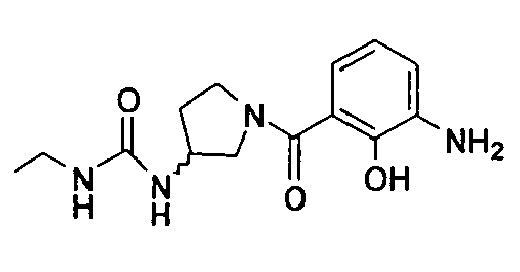
1. PyBroP
2. 71,95
3. 293.110.48 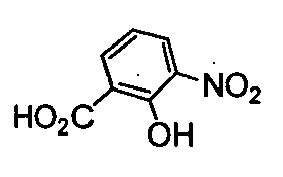


1. PyBroP
2. 35,99
3. 220.910.49 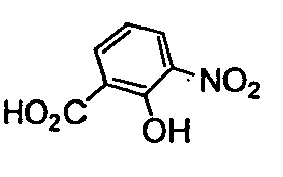

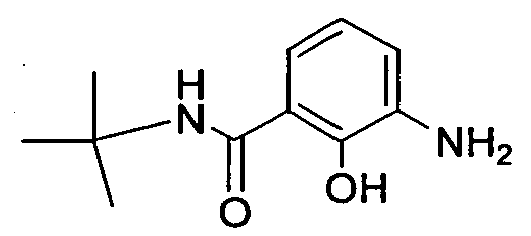
1. DCC
2. 16,99
3. 209.010.50 


1. DCC
2. 18,99
3. 264.0 -
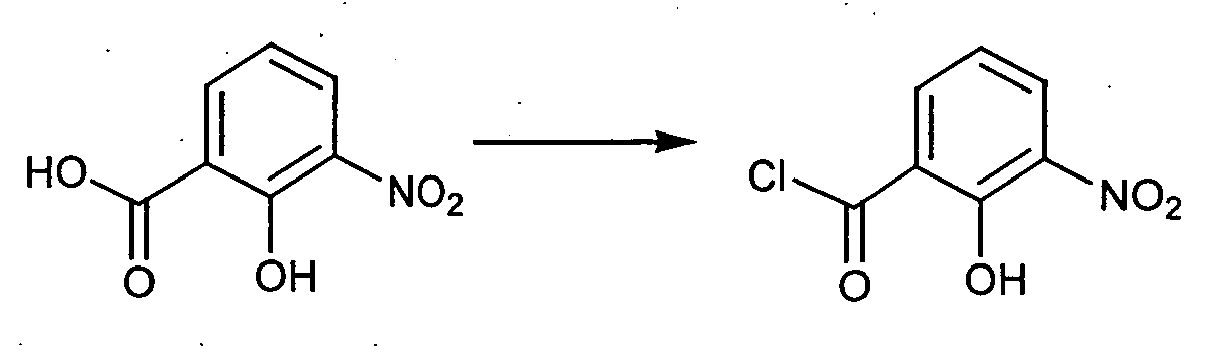
- To the nitrosalicylic acid (3 g) dissolved dichloromethane (150 mL) at room temperature was added oxalyl chloride (4.3 mL) and DMF (0.01 eq.). After stirring for one day the mixture was concentrated in a vacuum to give a semi solid which was used directly in step B.
-

- To the material from step A diluted in dichloromethane (50 mL) and cooled to 0° C was added dimethyl amine in THF (2N solution, 24.6 mL) and triethylamine (4 eq.). After stirring for 24 hours at room temperature the mixture was concentrated in vacuo, diluted with 1M sodium hydroxide (30 mL) and after a half hour was washed with dichloromethane. The aqueous phase was acidified with 6M HCl (aq), extracted with dichloromethane and the organic phase was washed with water, dried over Na2SO4 and concentrated to give the title compound (3.2 g, 93%).
-
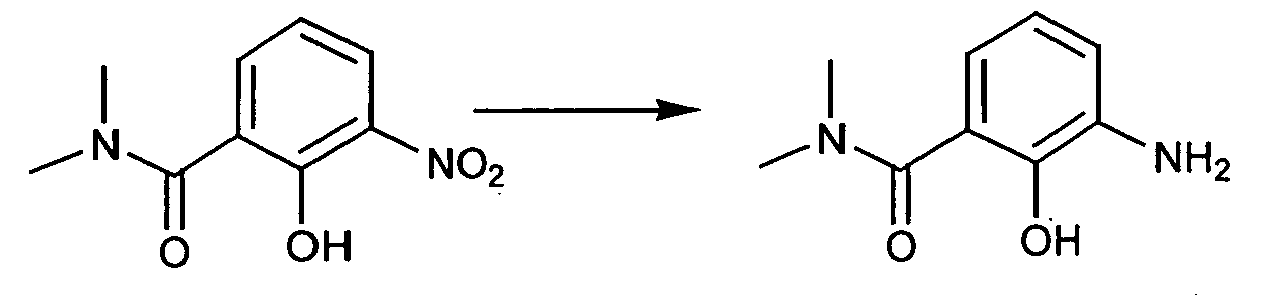
- A mixture of the product from step B above (6 g), 10% Pd/C (0.6 g), and EtOH (80 mL) was stirred in a parr shaker under hydrogen (40 psi) at room temperature for 2 days. Filtration through celite and concentration in vacuo afforded the title product (5.1 g, 99%, MH+ = 181).
-

- Following a similar procedure as in Preparative Example 1 except using dimethylamine. (2M in THF, 33 mL) and 5-methylsalicylic acid (5 g), the desired product was prepared (6.5 g).
- Nitric acid (0.8 mL) in H2SO4 was added to a cooled (-20°C) suspension of the product from Step A above (3 g) in H2SO4 (25 mL). The mixture was treated with 50% NaOH (aq) dropwise, extracted with CH2Cl2, dried over anhydrous MgSO4, filtered and concentrated in vacuo to give the product as a crude solid (2.1 g, 44%, .MH+ = 225).
- The product was prepared in the same manner as described in Step B of Preparative Example 2 (0.7 g, 99%, MH+ = 195).
-

- The above amine was reacted with the acid using the procedure set forth in Preparative Example 2, Step A to yield the desired amide (54%).
- Na2S2O4 (1.22g) was dissolved in water (4ml) followed by the addition of NH3/H2O (300ul). The solution ws then added to the product from Step A (200 mg) in dioxane (4ml) and stirred for 30min. The crude material was purified via flash column chromatography (CH2Cl2/MeOH, 20:1) to give 100mg of product (56%, MH+=251).
-

- Following the procedures set forth in Preparative Example 11.1, Steps A and B, but using N-methylmethoxylamine, the title compound was obtained (86%, MH+=181).
-

- Following the procedure set forth in Preparative Example 1, but using N-hydroxysuccinimide and 2% DMF in CH2Cl2, the desired amide was obtained (33%, MH+=297).
- Following the procedure set forth in Preparative Example 2, Step B, the amine was prepared (99%, MH+=267).
- Following the procedures set forth in Preparative Examples 11.11 but using the carboxylic acid, amine, and coupling agent DCC indicated, the indicated amide products were obtained and used without further purification.
Prep Ex. Carboxylic acid Amine Product 1. % Yield
2. MH+11.11 


1. 45,92
2. 310.011.12 


1. 45,95
2. 247.211.13 


1. 85, 85
2. 251.111.14 


1. 99,92
2. 211.111.15 


1. 48,84
2. 26511.16 


1. 78,91
2. 238.111.17 


1. 67, 90
2. 265.111.18 
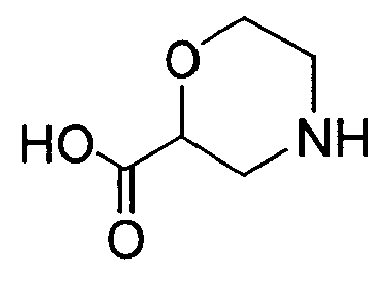

1. 28,99
2. 267 -

- Following a similar procedure as described in Preparative Example 2 Step A except using dimethylamine in place of R-(+)-3-pyrrolidinol, the desired product was prepared.
- The product from step A above (8 g) was combined with iodine (9.7 g), silver sulfate (11.9 g), EtOH (200 mL) and water (20 mL) and stirred overnight. Filtration, concentration of the filtrate, re-dissolution in CH2Cl2 and washing with 1M HCl (aq) gave an organic solution which was dried over anhydrous MgSO4, filtered and concentrated in vacuo to afford the product (7.3 g, 57%, MH+ = 337).
- The product from Step B above (3.1 g) was combined with DMF(50 mL) and Mel (0.6 mL). NaH (60% in mineral oil, 0.4 g) was added portionwise and the mixture was stirred overnight. Concentration in vacuo afforded a residue which was diluted with CH2Cl2, washed with 1M NaOH (aq), dried over anhydrous MgSO4, filtered and concentrated in vacuo. Purification through a silica gel column (EtOAc/Hex, 1:1) gave the desired compound (1.3 g, 41 %, MHt = 351).
- The product from Step D above (200 mg), Zn(CN)2 (132 mg), Pd(PPh3)4 (130 mg) and DMF (5 mL) were heated at 80°C for 48 hrs, then cooled to room temperature and diluted with EtOAc and 2M NH4OH. After shaking well, the organic extract was dried over anhydrous MgSO4, filtered, concentrated in vacuo and purified by preparative plate chromatography (Silica, EtOAc/Hex, 1:1) to give the desired compound (62 mg, 44%, MH+ = 250).
- BBr3 (1.3 mL, 1M in CH2Cl2) was added to a CH2Cl2 solution (5 mL) of the product from step D above (160 mg) and stirred for 30 min. The mixture was diluted with water, extracted with CH2Cl2, dried over anhydrous MgSO4, filtered, and concentrated in vacuo to give the desired compound (158 mg, MH+ = 236).
- A mixture of the product from step E above (160 mg), platinum oxide (83%, 19 mg), and EtOH (20 mL) was stirred under hydrogen (25-40 psi) for 1.5 hr. Filtration through celite and concentration in vacuo afforded the product (165 mg, MH+ = 206).
-

- Following a similar procedure as in Preparative Example 2, Step A except using 3-(methylaminomethyl)pyridine and 3-nitrosalicylic acid, the desired compound was prepared (41%).
- The compound from Step A above (0.3 g) was diluted with chloroform (15 mL) and stirred with mCPBA (0.4 g) for 2 hr. Purification by column chromatography (silica, 10% MeOH/CH2Cl2) gave the pyridyl N-oxide (0.32 g, 100%, MH+ = 303.9).
- Following a similar procedure as in Preparative Example 11.1, Step B, but using the product from Step B above, the desired compound was obtained (15%, MH+=274).
-

- 3-Nitrosalicylic acid (4 g) in MeOH (100 mL) and concentrated H2SO4 (1 mL) were stirred at reflux overnight, concentrated in vacuo, diluted with CH2Cl2, and dried over Na2SO4. Purification by column chromatography (silica, 5% MeOH/CH2Cl2) gave the methyl ester (2.8 g, 65%).
- Following a similar procedure as in Preparative Example 2, Step B, but using the product from Step A above, the desired compound was obtained (95%, MH+=167.9).
-
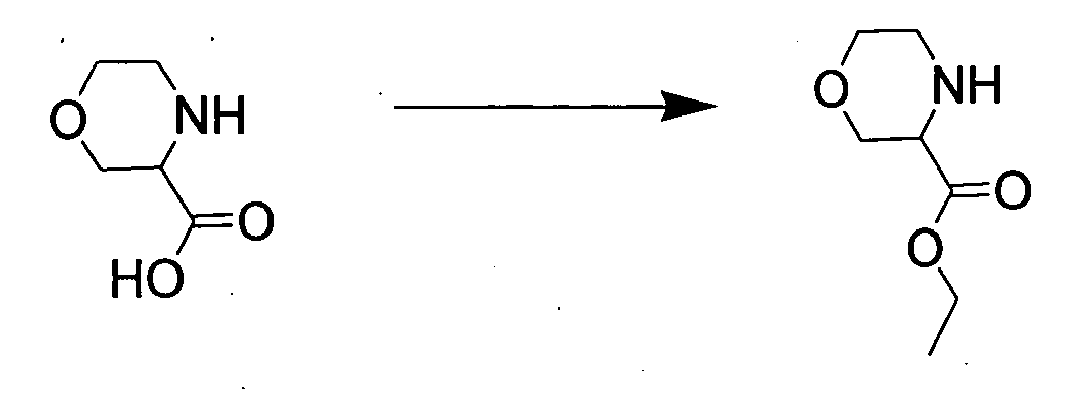
- To morpholine-2-carboxilic acid (200mg) in EtOH (40mL) at 0°C was added acetyl chloride (3mL) and the mixture was stirred at reflux overnight. Concentration in vacuo, dilution with CH2Cl2 and washing with NaHCO3 (aq) gave the title compound (99%, MH+ = 160.1).
-

- To N-Boc morpholine-2-carboxylic acid (2g) in THF (5ml) at 0°C was added a solution of borane.THF complex (1N, 10.38m1) and the mixture was stirred for 30min at 0°C, and for 2hr at room temperature. Water (200ml) was added to the reaction and the mixture extracted with CH2Cl2, dried with Na2SO4, and concentrated in vacuo to give 490mg of product (26%). The product was then stirred in 4N HCl/dioxane to give the amine salt.
-

- Following a similar procedure as in Preparative Example 1 except using dimethylamine (2M in THF, 50 mL) and 4-methylsalicylic acid (15 g), the desired compound was prepared (6.3 g, 35%).
- The product from step A above (1.5 g) was combined with iodine (2.1 g), NaHCO3 (1.1 g), EtOH (40 mL) and water (10 mL) and stirred overnight. Filtration, concentration of the filtrate, re-dissolution in CH2Cl2 and washing with 1M HCl (aq) gave an organic solution which was dried over anhydrous MgSO4, filtered and concentrated in vacuo. Purification by flash column chromatography (silica gel, 0.5-0.7% MeOH/CH2Cl2) gave the product (0.5 g, 20%, MH+ = 306).
- Nitric acid (3.8 mL) in AcOH (10 mL) was added to the product from Step B above (0.8 g) and the mixture was stirred for 40 min. The mixture was diluted with water and extracted with CH2Cl2, dried over anhydrous MgSO4, filtered and concentrated in vacuo to give the product as an orange solid (0.8 g, 92%, MH+ = 351).
- A mixture of the product from step C above (800 mg), 10% Pd/C (100 mg), and EtOH/MeOH (40 mL) was stirred in a parr shaker under hydrogen (45 psi) for 1.5 hr. Filtration through celite and concentration in vacuo afforded the title product after purification by preparative plate chromatography (Silica, 10% MeOH/CH2Cl2, saturated with NH4OH) to give the product (92 mg, 22%, MH+ = 195).
-

- Following a similar procedure as in Preparative Example 2, Step A except using dimethylamine (2M in THF, 23 ml) and 5-bromosalicylic acid (5g), the desired compound was prepared (4.2g, 75%, MH+=244).
- Nitric acid (10ml) in AcOH (100ml) was added to the product from Step A above (2g) and the mixture was stirred for 20 min. The mixture was diluted with water and extracted with CH2Cl2, dried over anhydrous MgSO4, filtered and concentrated in vacuo to give the product as a yellow solid (1.9g, 80%, MH+=289).
- The product from Step B above (1.9g) was partially dissolved in EtOH(50ml). Conc HCl in EtOH (5ml in 40ml), followed by SnCl2.2H2O (5.74g) was added and stirred at room temperature overnight. The crude reaction was concentrated in vacuo, diluted with CH2Cl2 and washed with NaHCO3, dried over anhydrous MgSO4, filtered and concentrated in vacuo to give the product as a solid (185mg, 9%, MH+=259).
-

- Following a similar procedure as in Preparative Example 2, Step A, except using dimethylamine (2M in THF, 29 ml) and 5-chlorosalicylic acid (5g), the desired compound was prepared (4.5g, 78%, MH+=200).
- Nitric acid (10ml) in AcOH (100m1) was added to the product from Step A above (2g) and the mixture was stirred for 20 min. The mixture was diluted with water and extracted with CH2Cl2, dried over anhydrous MgSO4, filtered and concentrated in vacuo to give the product as a solid (2.2g, 88%, MH+=245).
- The product from Step B above (2.2g) was partially dissolved in EtOH(50ml). Conc HCl in EtOH (5ml in 40ml), followed by SnCl2.2H2O (7.01g) was added and stirred at room temperature overnight. The crude reaction was concentrated in vacuo, diluted with CH2Cl2 and neutralized with NaOH. The entire emulsion was filtered though celite, the layers were separated and the organic layer was dried over anhydrous MgSO4, filtered and concentrated in vacuo to give a solid (540mg, 22%, MH+=215).
-
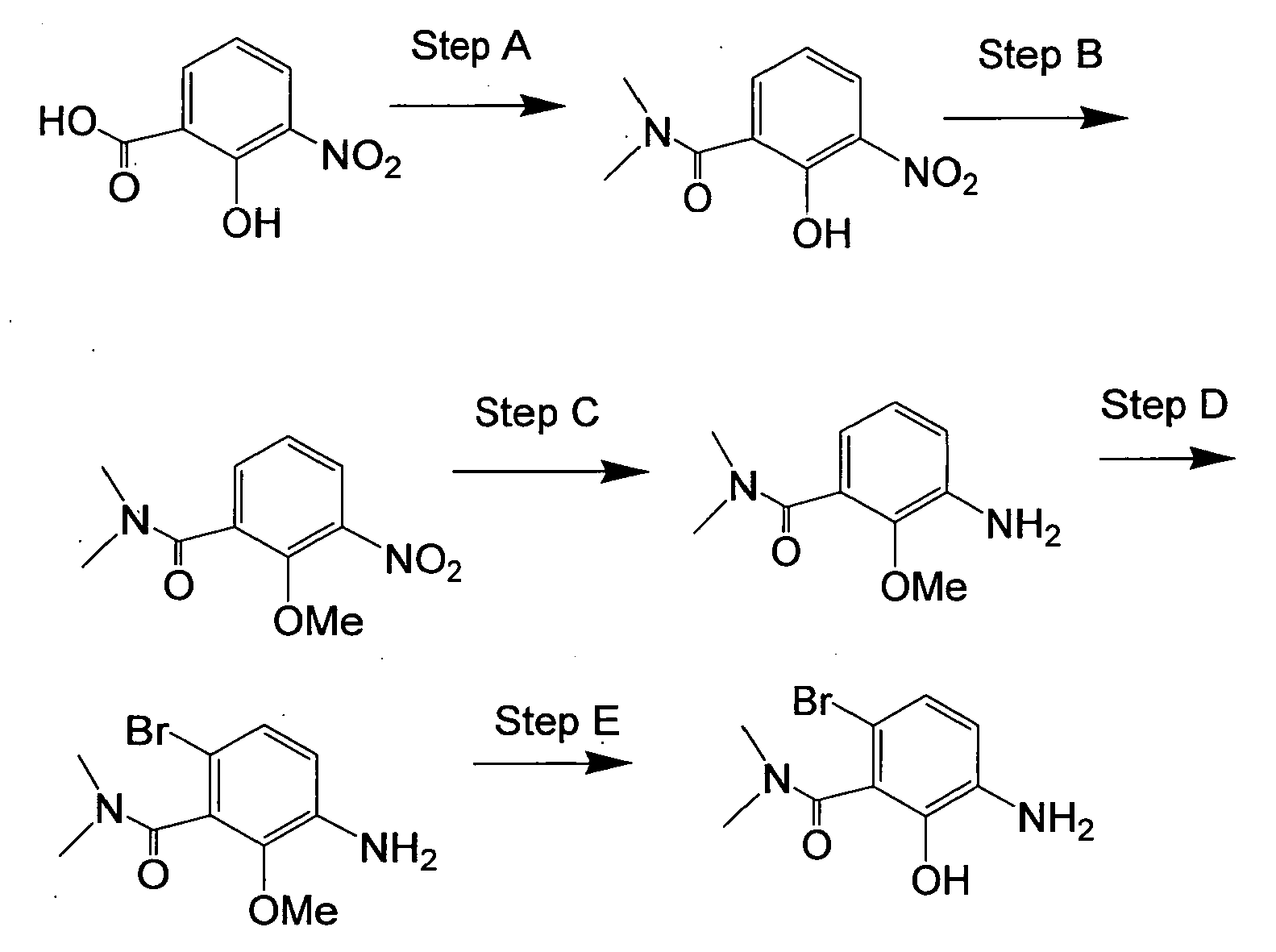
- 3-Nitrosalicylic acid (10g), PyBroP (20.52g), and DIEA (28ml) in anhydrous CH2CI2 (200ml) were combined and stirred at room temperature for 10 min. Dimethylamine (2M in THF, 55ml) was added and let the reaction stir over the weekend. The mixture was extracted with 1N NaOH (aq) and the organic phase was discarded. The aqueous phase was acidified with 1N HCl (aq), extracted with CH2Cl2, dried over anhydrous MgSO4, filtered and concentrated in vacuo. The oil was taken up in ether and a solid crashed out, triterated in ether to give 4.45g of a solid (39%, MH+=211).
- The product from Step A (2.99g), K2CO3 (9.82g), and iodomethane (8.84ml) were combined in acetone and heated to reflux overnight. The reaction was filtered and concentrated in vacuo. The oil was taken up in CH2Cl2 and washed with 1N NaOH, dried over anhydrous MgSO4, filtered and concentrated in vacuo to give 3.3g of an oil (99%, MH+=225).
- The crude product from Step B (3.3g) was stirred with 10% Pd/C (350mg) in EtOH (50ml) under a hydrogen gas atmosphere at 20psi overnight. The reaction mixture was filtered through celite and the filtrate was concentrated in vacuo to give 2.34 g of a solid (85%, MH+=195).
- The product from Step C (469mg) was dissolved in AcOH (6ml). 1.95M Br2 in AcOH (1.23ml) was added dropwise to the reaction and the mixture was stirred at room temperature for 1 hour. 50% NaOH was added to the reaction at 0°C and the mixture was extracted with CH2Cl2, dried over anhydrous MgSO4, filtered and concentrated in vacuo. The crude mixture was purified by preparative plate chromatography (Silica, 5% MeOH/ CH2Cl2) to give the desired product (298mg, 23%, MH+=273).
- BBr3 (2.14ml, 1M in CH2C12) was added to a CH2Cl2 Solution (8ml) of the product from Step D above (290mg) and stirred overnight. A solid formed and was filtered, taken up in MeOH/ CH2Cl2 and purified by preparative plate chromatography (Silica, 5% MeOH/ CH2Cl2) to give the desired product (137mg, 49%, MH+=259):
-

- To the product from Preparative Example 13.3 Step D (200mg) was added phenylboronic acid (98mg), PdCl2(PPh3)2 (51 mg), and Na2CO3 (155mg) in THF/H2O (4ml/1ml). The solution was heated at 80°C overnight. EtOAc was added to reaction and washed with 1N NaOH. The organic layer was dried over anhydrous MgSO4, filtered and concentrated in vacuo. The crude mixture was purified by preparative plate chromatography (5% MeOH/ CH2Cl2) to give 128mg of an oil (65%, MH+=271).
- Following a similar procedure as in Preparative Example 13.3 Step E and using the product from Step A above, the desired compound was prepared (0.1 g, 69%, MH+=257.1)
- Following the procedures set forth in Preparative Example13.4 but using the boronic acid from the Preparative Example indicated in the Table below, the amine products were obtained.
Prep Ex. Boronic Acid Product 1. Yield (%)
2. MH+13.5 

1. 15%
2. 25813.6 
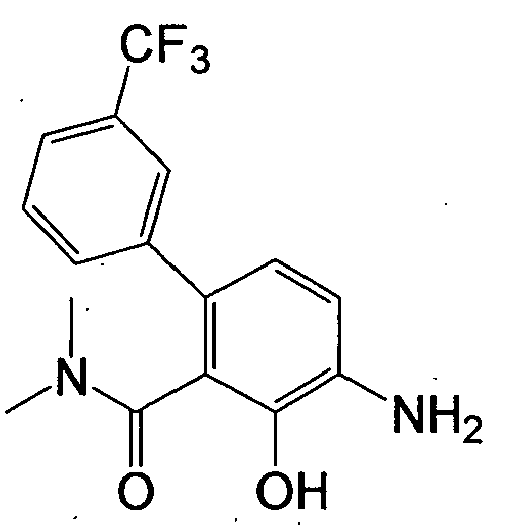
1. 32%
2. 32513.7 

1. 18%
2. 325 -

- 2-Cyanophenol (500mg), sodium azide (819mg), and triethylamine hydrochloride (1.73g) were combined in anhydrous toluene and heated to 99°C overnight. After the reaction cooled down, product was extracted with H2O. Aqueous layer was acidified with cone. HCl dropwise giving a precipitate, which was filtered to give the product (597mg, 87%, MH+=163).
- Nitric acid (0.034ml) in AcOH (5ml) was added to the product from Step A above (100mg) in AcOH and the mixture was allowed to stir for 1hr. CH2Cl2 and H2O were added to reaction. The organic layer was dried over anhydrous MgSO4, filtered and concentrated in vacuo to give an oil. Trituration in ether gave the product as a solid (12mg, 9%, MH+=208).
- The product from step C (56mg) was stirred with 10% Pd/C (20mg) in EtOH/MeOH (15ml) under a hydrogen gas atmosphere overnight. The reaction mixture was filtered through celite, the filtrate was concentrated in vacuo to give 29mg of a solid (62%, MH+=178).
-
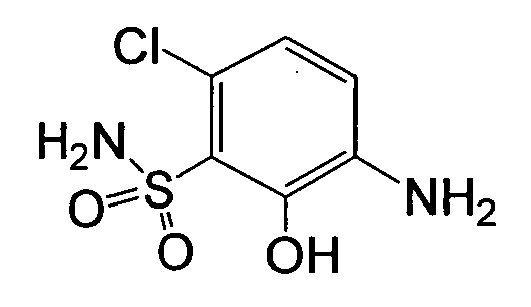
- The amine was prepared following the procedure disclosed in
WO Patent. Application 01/68570 -

- The amine was prepared following the procedure disclosed in
WO Patent Application 01/68570 -

- Following the procedure described in Preparative Example 88.2, Step A, the ketone was prepared (6.4g, 36%).
- To a solution of ketone (1g) and 2-R-methylbenzylamine (0.73ml) in anhydrous toluene (20ml) was added 1N TiCl4 in toluene (3ml) at room temperature for 1.5hrs. The precipitate was filtered and the filtrate was concentrated in vacuo and purified via flash column chromatography (Hex/EtOAc, 18/1) to give 800mg of product (71 %).
- The imine from above (760mg) and DBU (800ul) were stirred without solvent for 4hr. The crude reaction was concentrated in vacuo and purified via flash column chromatography (Hex/EtOAc, 8/1) to give 600mg of product (79%).
- The imine from Step C (560mg) was dissolved in ether (8ml). 3N HCl (5ml) added and let stir at room temperature overnight. The ether layer was separated and concentrated in vacuo to give 400mg of the amine hydrochloride product (93%).
-

- The title compound was prepared similarly as in Preparative Example 13.11, but using the 2-S-methylbenzylamine instead of 2-R-methylbenzylamine (69%).
-

- At room temperature, CsF (60mg) was added to a mixture of furfuraldehyde (1.3ml) and TMS-CF3 (2.5g) and stirred at room temperature (24 h) and refluxed for another 12h. 3N HCl (40ml) was added and after 4hr, the mixture was extracted with ether, washed with brine, dried over MgSO4, and concentrated in vacuo to give the product (2.6g, 100%).
- To a solution of alcohol from above (2.6g) in CH2Cl2 at room temperature was added Dess-Martin reagent (10g) portionwise and 1 drop of water. After stirring for 3hr at room temperature, 10% Na2S2O3 (60ml) was added and after stirring overnight, the solid was filtered off and the filtrate was extracted with CH2Cl2. The organic layer was washed with saturated sodium bicarbonate, dried with MgSO4, filtered and concentrated in vacuo. Ether/hexane (1:2; 30ml) was added to the residue, filtered, and filtrate concentrated in vacuo to give the product (2g, 78%).
- Following the procedures described in Preparative Example 13.11, Steps B, C and D, the amine salt was prepared.
- Following the procedure set forth in Preparative Example 13.13, but using.the prepared or commercially available aldehydes, the optically pure amine products in the Table below were obtained.
Prep Ex. Aldehyde Amine Product Yield (%) 13.15 


20% 13.16 

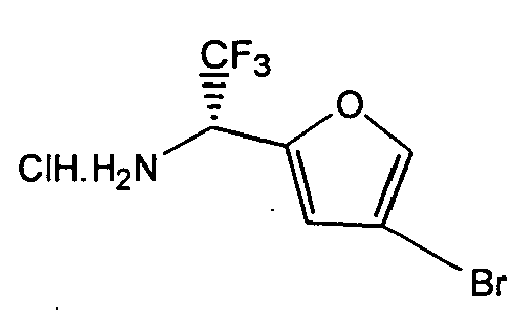
31% 13.17 


66% -

- The title compound was prepared from trifluorophenylketone according to the procedures described in Preparative Example 13.11, Steps B, C, and D (68%).
-

- Methyl-3-hydroxy-4-bromo-2-thiophenecarboxylate (10.0 g, 42.2 mmol) was dissolved in 250 mL of acetone. Potassium carbonate (30.0 g, 217.4 mmol) was added followed by a solution of iodomethane (14.5 mL, 233.0 mmol). The mixture was heated to reflux and continued for 6 h. After cooled to room temperature, the mixture was filtered, the solid material was rinsed with acetone (~200 mL). The filtrate and rinsing were concentrated under reduced pressure to a solid, further dried on high vacuum, yielding 13.7 g (100%) of methyl-3-methoxy-4-bromo-2-thiophenecarboxylate (MH+ = 251.0).
- Methyl-3-methoxy-4-bromo-2-thiophenecarboxylate (13.7 g), available from step A, was dissolved in 75 mL of THF, and added with a 1.0 M sodium hydroxide aqueous solution (65 mL, 65.0 mmol). The mixture was stirred at room temperature for 24 h. A 1.0 M hydrogen chloride aqueous solution was added dropwise to the mixture until pH was approximately 2. The acidic mixture was extracted with CH2Cl2 (100.mL x 2, 50 mL). The combined organic extracts were washed with brine (40 mL), dried with Na2SO4, and concentrated under reduced pressure to a solid, 10.0 g (100%, over two steps) of 3-methoxy-4-bromo-2-thiophenecarboxylic acid (MH+= 237.0).
- To a stirred solution of 3-methoxy-4-bromo-2-thiophenecarboxylic acid (6.5 g, 27.4 mmol) in 140 mL of CH2Cl2, obtained from step B, was added bromotripyrrolidinophosphonium hexafluorophosphate (PyBrop, 12.8 g, 27.5 mmol), a 2.0 M solution of dimethyl amine in THF (34.5mL, 69.0 mmol), and diisopropylethyl amine (12.0 mL, 68.7 mmol). After 3 d, the mixture was diluted with 100 mL of CH2Cl2, and washed with a 1.0 M sodium hydroxide aqueous solution (30 mL x 3) and brine (30 mL). The organic solution was dried with Na2SO4, filtered, and concentrated to an oil. This crude oil product was purified by flash column chromatography, eluting with CH2Cl2-hexanes (1:1, v/v). Removal of solvents afforded a solid, further dried on high vacuum, yielding 6.76 g (93 %) of N,N'-dimethyl-3-methoxy-4-bromo-2-thiophenecarboxamide (MH+ = 265.0, M+2 = 266.1).
- An oven dried three-neck round bottom flask was equipped with a refluxing condenser, charged sequentially with palladium acetate (95 mg, 0.42 mmol), (R)-BINAP (353 mg, 0.57 mmol), cesium carbonate (9.2 g, 28.33 mmol), and N,N'-dimethyl-3-methoxy-4-bromo-2-thiophenecarboxamide (3.74 g, 14.2 mmol, from step C). The solid mixture was flushed with nitrogen. Toluene (95 mL) was added to the solid mixture followed by benzophenone imine (3.6 mL, 21.5 mmol). The mixture was heated to reflux and continued for 10 h. A second batch of palladium acetate (95 mg, 0.42 mmol) and (R)-BINAP (353 mg, 0.57 mmol) in 5 mL of toluene was added. Refluxing was continued for 14 h. The third batch of palladium acetate (30 mg, 0.13 mmol) and (R)-BINAP (88 mg, 0.14 mmol) was added, and reaction continued at 110°C for 24 h. The mixture was cooled to room temperature, diluted with ether (50 mL), filtered through a layer of Celite, rinsing with ether. The filtrate and rinsing were concentrated under reduced pressure to an oil, which was purified twice by flash column chromatography using CH2Cl2 and CH2Cl2-MeOH (200:1) as eluents. Removal of solvents afforded 4.1 g (79 %) of the amido-thiophene diphenylimine product as a solid (MH+ = 365.1).
- To a stirred solution of thiophene imine (5.09 g, 13.97 mmol), obtained from step D, in 140 mL of CH2Cl2 at -78°C was added dropwise a 1.0 M solution of boron tribromide in CH2Cl2. The mixture was stirred for 3 h while the temperature of the cooling bath was increased slowly from -78°C to -15°C. 100 mL of H2O was added, the mixture was stirred at room temperature for 30 min, then the two layers were separated. The organic layer (as A) was extracted with H2O (30 mL x 2). The aqueous layer and aqueous extracts were combined, washed with CH2Cl2 (30 mL), and adjusted to pH ~ 8 using a saturated NaHCO3 aqueous solution. The neutralized aqueous solution was extracted with CH2Cl2 (100 mL x 3), the extracts were washed with brine, dried with Na2SO4, and concentrated under reduced pressure to a light yellow solid, 1.49 g of N,N'-dimethyl-3-hydroxy-4-amino-2-thiophenecarboxamide (first crop). The previous separated organic layer A and organic washing were combined, stirred with 30 mL of a 1.0 M HCl aqueous solution for 1 h. The two layers were separated, the aqueous layer was washed with CH2Cl2 (30 mL) and adjusted to pH ~8 using a saturated NaHCO3 aqueous solution, and the separated organic layer and organic washing were combined as organic layer B. The neutralized aqueous solution was extracted with CH2Cl2 (30 mL x 4), the extracts were washed with brine, dried by Na2SO4, and concentrated under reduced pressure to give 0.48g of a solid as the second crop of the titled product. Organic layer B from above was washed with brine, and concentrated to an oil, which was separated by preparative TLC (CH2Cl2-MeOH = 50:1) to afford 0.45 g of a solid as the third crop of the titled product. The overall yield of the product, N,N'-dimethyl-3-hydroxy-4-amino-2-thiophenecarboxamide, is 2.32 g (89%) (MH+ = 187.0).
-

- To the product from Preparative Example 13.19 Step D (1.56g) in CH2Cl2 (55ml) was added potassium carbonate (1.8g) followed by dropwise addition of bromine (0.45ml). After 5hr of mixing, water (100ml) was added to the reaction and the layers were separated. The aqueous layer was extracted with CH2Cl2, which was then washed with brine, saturated sodium bicarbonate, and brine again. The organic layer was dried with Na2SO4, and concentrated in vacuo. The residue was purified via flash column chromatography (CH2Cl2) to yield 1.6g of product (83%).
- The product from above was reacted in the procedure set forth in Preparative Example 13.19 Step C to give the amine.
-

- To the product from Preparative Example 13.20, Step A (300mg) in THF (7ml) at -78°C was added a solution of n-BuLi (1.6M in hexanes, 0.54ml). After 1 hr, iodomethane (0.42ml) was added dropwise. After 3 hrs of stirring at -78°C, the reaction was warmed to room temperature overnight. Saturated ammonium chloride and water were added to the reaction and extracted with CH2Cl2. The organic layer was washed with saturated sodium bicarbonate and brine, dried over Na2SO4, and concentrated in vacuo. The crude product was purified by preparative plate chromatography (CH2Cl2-MeOH = 70:1 to 50:1) to afford the product (111 mg, 43%).
- The product from above was reacted in the procedure set forth in Preparative Example 13.19, Step E to give the amine. PREPARATIVE EXAMPLE 13.22

- To the product from Preparative Example 13.19 (400mg), Step D in CH2Cl2-pyridine (14ml) was added N-chlorosuccinirriide (220mg). The mixture was stirred for 5hr and then diluted with CH2Cl2 and washed with water, saturated sodium bicarbonate and brine, and concentrated in vacuo. The crude product was purified via preparative plate chromatography (CH2Cl2-MeOH = 50:1) to give 180mg of product (64%).
- The product from above (274mg) was reacted in the procedure set forth in Preparative Example 13.19, Step E to give the amine (89mg, 58%).
-

- To a stirred solution of acid (630mg) from Preparative Example 13.19, Step B in CH2Cl2 (25ml) was added oxalyl chloride (235ul) followed by a catalytic amount of DMF (10ul). The mixture was stirred for 1hr, then potassium carbonate (1.8g) was added followed by 3-amino-5-methylisoxazole (443mg). The reaction stirred overnight and was quenched with water (25ml). Layers were separated and the organic layer was washed with brine, dried over Na2SO4, and concentrated in vacuo. The crude product was purified by preparative plate chromatography (CH2Cl2) to afford the product (580mg, 78%, MH+=317,319).
- The acid from the above (750mg) step was reacted following the procedure set forth in Preparative Example 13.3, Step B to yield 625mg of product (80%, MH+=331).
- The product from above was reacted following the procedure set forth in Preparative Example 13.19, Step D to yield 365mg of product (53%)
- The product from above was reacted following the procedure set forth in Preparative Example 13.19, Step E to give the amine product (MH+=254).
-

- To a solution of 2-methylfuran (1g) in ether (30ml) was added n-BuLi (5.32ml) at -78°C. The reaction was warmed to room temperature and then refluxed at 38 °C for 1hr. The reaction was cooled back down to -78°C where the furyl lithium was quenched with trifluorobutyraldehyde and let stir at room temperature overnight. Saturated ammonium chloride added and extracted with ether. Purified via flash column chromatography to yield pure product (2g, 80%)
- The azide was prepared using the procedure from Preparative Example 75.75, Step B and the alcohol (1 g) from above and carried on crude to Step C below.
- The amine was prepared using the procedure from Preparative Example 75.75, Step C to yield 400mg of an oil (53%).
-

- Perfluoroiodide (3.6ml) was condensed at -78°C. Ether (125ml) was added followed by the methyllithium.lithiumbromide complex (1.5M in ether, 18.4ml). After 15min, a solution of 5-methylfuraldehyde (2.5ml) in ether was added dropwise. The reaction was warmed to -45 °C and let stir for 2hr. Saturated ammonium chloride (30ml) and water (30ml) were added and let stir at room temperature for 1hr. The layers were separated and the aqueous layer was extracted with CH2Cl2. The organic layer was washed with brine, dried with Na2SO4, filtered and concentrated in vacuo to give 5.86g of product (100%).
- The alcohol from above was reacted to form the azide using the procedure set forth in Preparative Example 75.75 Step B.
- The azide from above was reacted to form the racemic amine using the procedure set forth in Preparative Example 75.75 Step C. PREPARATIVE EXAMPLE 13.27

- Following the procedure set forth in Preparative Example 13.26, Step A, the alcohol was prepared (100%).
- To a solution of the alcohol (500mg) from step A above in CH2Cl2 (20ml) was added N-methyl-morpholine monohydrate (575mg) and a catalytic amount of tetrapropyl ammonium perruthenate (76mg). After 3hr, the mixture was diluted with hexane (10ml) and filtered through a silica pad, rinsing with hexane: CH2Cl2 (200ml). The filtrate was concentrated in vacuo to give 350mg of product (70.7%)
- The ketone (1.19g) from Step B was dissolved in THF (9.5ml) and cooled to 0 °C. A solution of S-methyl oxazoborolidine (1M in toluene, 1ml) followed by a solution of borane complexed with dimethylsulfide (9.5ml, 2M in THF) was added to the solution. The mixture was stirred at 0 °C for 30min and continued at room temperature for 5hr. The mixture was cooled back down to 0°C and methanol (15ml) was added dropwise to the mixture. After 30min, the mixture was concentrated in vacuo to give an oily residue.
- The residue was dissolved in CH2Cl2 and washed with 1N HCl, water, and brine. Dried with Na2SO4, filtered and concentrated in vacuo. The crude material was purified via flash column chromatography (Hex/ CH2Cl2, 1:1) to afford 1.14g of an oil (67%).
- The alcohol (1.14g) from above was reacted to form the azide using the procedure set forth in Preparative Example 75.75 Step B.
- The azide (1.11g) from above was stirred with 10% Pd/C (280mg) in EtOH (40ml) under a hydrogen gas atmosphere overnight. The reaction was filtered through celite, the filtrate was concentrated in vacuo to give 700mg of product (70%).
-

- To a stirred solution of 1-(2-thienyl)-1-propanone (3g) in acetic anhydride (6ml) at 0°C was added dropwise a solution of fuming nitric acid in acetic acid (2ml in 10ml). After 30min, the reaction was warmed to room temperature and let stir for 5hrs where a solid precipitated out. Ice was added to the reaction and the solid was filtered. The solid was purified by flash column chromatography (Hex/ CH2Cl2, 3:1 and 2:1) to yield 800mg of desired product (20%).
- The above nitro-thiophene compound (278mg) was reduced using the procedure set forth in Preparative Example 2, Step B to give 54mg of product (23%).
- The above amine (395mg), TEA (1ml) and methanesulfonylchloride (0.5ml) were combined in CH2Cl2 (35ml) and stirred at room temperature for 1hr. The reaction was quenched with saturated sodium bicarbonate (15ml). The organic layer was washed with brine, dried over Na2SO4, filtered and concentrated in vacuo to afford product (854mg, 100%).
- To the above product (854mg) in THF (25ml) was added dropwise a solution of tetrabutylammonium fluoride (1M in THF, 2.8ml). The mixture was stirred overnight, then diluted with CH2Cl2 (30ml), washed with ammonium chloride and brine, dried over over Na2SO4, filtered and concentrated in vacuo to afford product (2.36g, >100%).
- The ketone (2.36g) above was reacted via the procedure set forth in Preparative Example 88.2, Step B to yield 547mg of product (86.6%).
- To the product from step E (310mg) in dimethoxyethane (12ml) was added dropwise a solution of LAH (1M in ether, 3.8ml). The mixture was heated to reflux overnight. The reaction was cooled to room temperature, SiO2 was added as well as water (1ml) dropwise and let stir for 15min. The mixture was filtered and the filtrate was concentratred in vacuo. The crude product was purified by preparative plate chromatography (MeOH/ CH2Cl2, 15:1) to give the amine product (40mg, 14%).
-

- 3-Nitro-1,2-phenylenediamine(10 g), sodium nitrite (5.4 g) and acetic acid (20 mL) were heated at 60°C overnight, then concentrated in vacuo, diluted with water and extracted with EtOAc. The product precipitated from the organic phase (5.7 g) as a solid and used directly in step B.
- The product from Step A above (2.8 g) was stirred with 10% Pd/C (0.3 g) in MeOH (75 mL) under a hydrogen gas atmosphere overnight. The reaction mixture was filtered through celite and the filtrate concentrated in vacuo, to give the product (2.2 g, MH+=135).
-

- N-methyl-4-bromopyrazole-3-carboxylic acid was prepared according to known methods, see: Yu. A. M.; Andreeva; M. A.; Perevalov, V. P.; Stepanov, V. I.; Dubrovskaya, V. A.; and Seraya, V. I. in Zh. Obs. Khim. (Journal of General Chemistry of the USSR) 1982, 52, 2592, and refs cited therein.
- To a solution of N-methyl-4-bromopyrazole-3-carboxylic acid (2.0 g), available from step A, in 65 mL of anhydrous DMF was added bromotripyrrolidinophosphonium hexafluorophosphate (PyBrop, 4.60 g), dimethyl amine (10 mL, 2.0 M in THF) and diisopropylethyl amine (5.2 mL) at 25 °C. The mixture was stirred for 26 h, and concentrated under reduced pressure to an oily residue. This residue was treated with a 1.0 M NaOH aqueous solution, and extracted with ethyl acetate (50 mL x 4). The organic extracts were combined, washed with brine, and dried with anhydrous Na2SO4. Removal of solvents yielded an oil, which was purified by preparative thin layer chromatography, eluting with CH2Cl2-MeOH (20:1), to give 1.09 g of the amide product (48%, MH+ = 232.0).
- To a solution of the amide (0.67 g), obtained from step B, in 8 mL of concentrated sulfuric acid at 0 °C was added potassium nitrate (1.16 g) in small portions. The cooling bath was removed and the mixture was heated at 110 °C for 6 h. After cooling to 25 °C, the mixture was poured into 80 mL of H2O, and an additional 20 mL of H2O was used as a rinse. The aqueous mixture was extracted with CH2Cl2 (100 mL x 4). The combined extracts were washed with brine (50 mL), sat. NaHCO3 aqueous solution (50 mL), brine (50 mL), and dried with Na2SO4. Evaporation of solvent gave an oil, which solidified on standing. The crude product was purified by flash column chromatography, eluting with CH2Cl2-MeOH (1:0, 50:1 and 40:1). Removal of solvents afforded 0.521 g (65%) of the product as a solid (MH+ =277.1)
- The product (61 mg) obtained from step C was dissolved in 3 mL of THF. To this solution at - 78 °C was added dropwise along the inside wall of the flask a 1.6 M solution of n-butyl lithium in hexane. After 45 min, a solution of methyl borate (0.1 mL) in THF (1.0 mL) was added. After 1.5 h, a solution of acetic acid in THF (0.25 mL, 1:10 v/v) was added to the cold mixture. Stirring was continued for 10 min, and a 30 wt % aqueous hydrogen peroxide solution (0.1 mL) was added. An additional portion of hydrogen peroxide aqueous solution (0.05 mL) was added 20 min later. The cooling bath was removed, and the mixture was stirred at 25 °C for 36 h. The mixture was poured into 30 mL of H2O, and the aqueous mixture was extracted with ethyl acetate (30 mL x 4). The extracts were combined, washed with brine (10 mL), 5% NaHCO3 aqueous solution (10 mL) and brine (10 mL). The organic layer was dried with Na2SO4 and concentrated under reduced pressure to a residue, which was then purified by preparative thin layer chromatography eluting with CH2Cl2-MeOH (20:1) to give the hydroxylated product (5 mg, 10%, MH+ = 215.3).
- By treating the hydroxylated product of Step E with H2 under the conditions of 10% palladium on carbon in ethanol, one would obtain the desired hydroxyl-amino compound.
-

- Following a similar procedure used in Preparative Example 13, Step C except using the known compound, 4-methyl-pyrimidin-5-ol, the product can be prepared.
- Following a similar oxidation procedure used in Preparative Example 15, Step A except using the compound from Step A above, the product can be prepared.
- Following a similar procedure used in Preparative Example 11, Step A except using the compound from Step B above, the product can be prepared.
- Following a similar procedure used in Preparative Example 12, Step F except using the compound from Step C above, the product can be prepared.
-

- Following a similar procedure used in Preparative Example 11, Step A except using the known 4-hydroxynicotinic acid, the product can be prepared.
- Following a similar procedure used in Preparative Example 13, Step C except using the compound from Step A above, the product can be prepared.
- Following a similar procedure used in Preparative Example 12, Step F except using the compound from Step C above, the product can be prepared.
-

- Following a similar procedure used in Preparative Example 13, Step C except using the compound from Step A above, the product can be prepared.
- Stirring the compound from Step A above, a suitable Pt or Pd catalyst and EtOH under hydrogen atmosphere (1-4 atm) the product can be prepared.
-

- The product from Preparative Example 3 (14.6 g) dissolved in absolute EtOH (100 mL) was added dropwise over 4 hours to a stirred ethanolic (100 mL) solution of diethylsquarate (19 mL, 128 mmol). After 5 days, the reaction mixture was concentrated in vacuo, and the resulting residue purified by column chromatography (silica gel, 0-5% MeOH/CH2Cl2) gave the product (65%, MH+ = 305, mp = 178.6°C).
-

- The amine from Prepartive Example 3 (5g) and dimethylsquarate (3.95g) in MeOH were stirred overnight. The precipitated product was filtered to give 6.32g of solid (78%, MH+=291.1)
- Following the procedures set forth in Preparative Example 19 but using the amine from the Preparative Example indicated in the Table below, the cyclobutenedione intermediates were obtained.
Prep Ex. Amine from Prep Ex. Product 1. Yield (%)
2. MH+20 4 
1. 85%
2. 33321 11 
1. 44%
2. 31921.1 6 
1. 9%
2. 29122 2 
1. 38%
2. 34723 14 
1. 51%
2. 25923.1 10.1 
1. 62%
2. 31723.2 10.2 
1. 61%
2. 31923.3 12 
1. 40%
2. 33023.4 10.3 
1. 42%
2. 33323.5 10.4 
1. 40%
2. 33323.6 10.5 
1. 37%
2. 34723.7 13.2 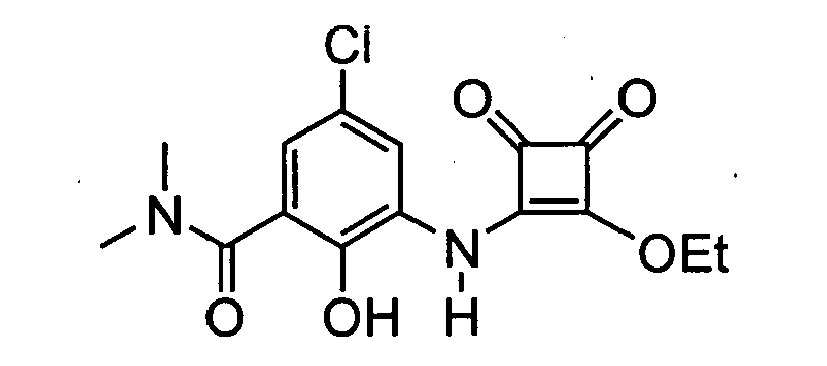
1. 39%
2. 33923.8 13.1 
1. 42%
2. 383/38523.9 13.19 
1. 51%
2. 31123.10 13.20 
1. 67%
2. 389.1,39023.11 13.3 
1. 52%
2. 383/38523.12 13.21 
1. 76%
2. 325.123.13 13.22 
1. 54% 23.14 13.23 
1. 62%
2. 378 - Following the procedures set forth in Preparative Example 19 but using the amine from the Preparative Example indicated in the Table below, the cyclobutenedione intermediate products were obtained.
Prep Ex. Amine from Prep Ex. Product Yield (%) 23.16 13.11 
91% 23.17 13.12 
81% 23.18 13.17 
47% 23.19 13.27 
21% 23.20 13.26 
10% 23.21 13.25 
49% 23.22 13.13 
80% 23.23 13.15 
63% 23.24 13.16 
64% -

- To a solution of N-protected amino acid (1.5 g, 6.9 mmol) in CH2Cl2 (25 mL) at room temperature was added DIPEA (3.6 mL, 20.7 mmol), and PyBrop (3.4 g, 6.9 mmol) followed by MeNH2 (6.9 mL, 13.8 mmol, 2.0 M in CH2Cl2). The resulting solution was stirred for 18 h at room temperature (until TLC analysis deemed the reaction to be complete). The resulting mixture was washed sequentially with 10% citric acid (3 x 20 mL), sat. aq. NaHCO3 (3 x 20 mL), and brine (3 x 20 mL). The organic layer was dried (Na2SO4), filtered, and concentrated under reduced pressure. The crude product was purified by flash chromatography eluting with CH2Cl2/MeOH (40:1) to afford 1.0 g (63% yield) of a solid.
- To a round bottom charged with the N-protected amide (1.0 g, 4.35 mmol) (from Step A) was added 4N HCl/dioxane (10 mL) and the mixture was stirred at room temperature for 2 h. The mixture was diluted with Et2O (20 mL) and concentrated under reduced pressure. The crude product was treated with Et2O (2 x 20 mL) and concentrated under reduced pressure to afford 0.72 g (~100 % yield) of crude product as the HCl salt. This material was taken on without further purification or characterization.
- Following the procedure set forth in Preparative Example 24 but using the commercially available N-protected amino acids and amines in the Table below, the amine hydrochloride products were obtained.
Prep Ex. Amino acid Amine Product 1. Yield (%) 25 
NH3 
1. 70% 26 

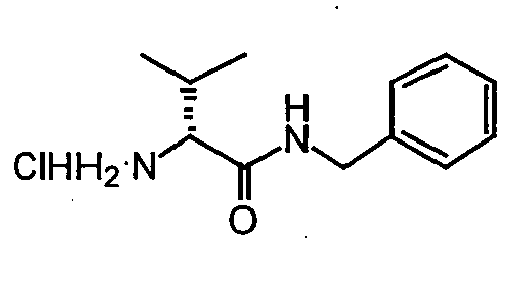
1. 71% 27 


1. 66% 28 


1.65% 29 


1. 90% 30 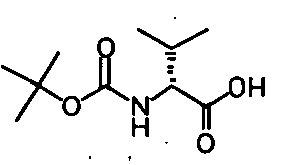


1. 68% 31 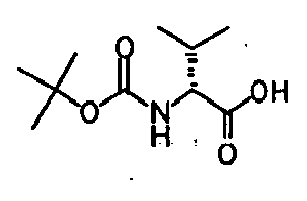

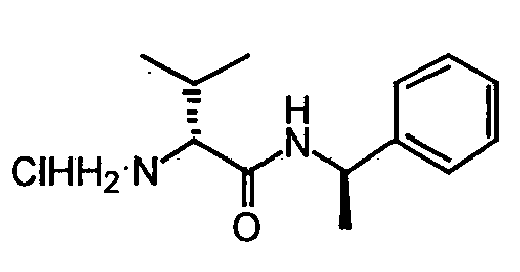
1. 68% 32 


1. 97% 33 


1. 97% 33.1 


1. 20% -

- BOC-valine (45mg) and PS-carbodiimide (200mg) were suspended in CH2Cl2 (4ml). After addition of the CH2Cl2-amine solution (0.138N, 1ml), the mixture was shaken overnight. The solution was filtered and the resin was washed with more CH2Cl2, and the filtrate was concentrated in vacuo to yield the product, which was carried on directly in Step B.
- The crude material from Step A was dissolved in 4N HCl/dioxane (2.5ml) and stirred for 2h. The reaction was concentrated in vacuo to yield the desired amine hydrochloride, which was used directly in the next step.
- Following the procedure set forth in Example 33.2 but using the commercially available N-protected amino acids in the Table below, the amine hydrochloride products were obtained.
Prep Ex. Amino acid Amine Product 33.3 

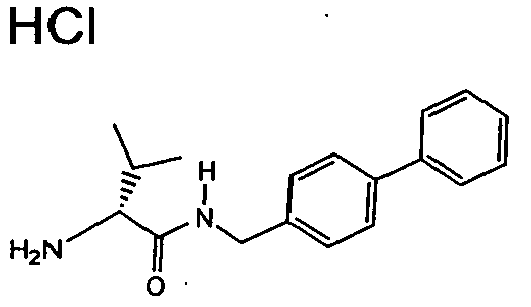
33.4 


33.5 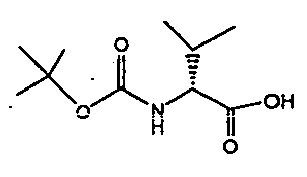

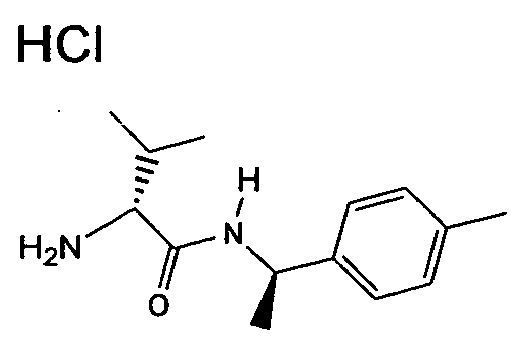
33.6 


33.7 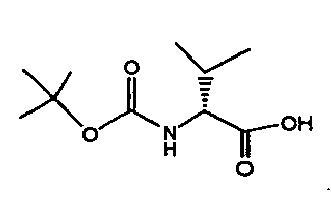


33.8 


33.9 


33.10 


33.11 

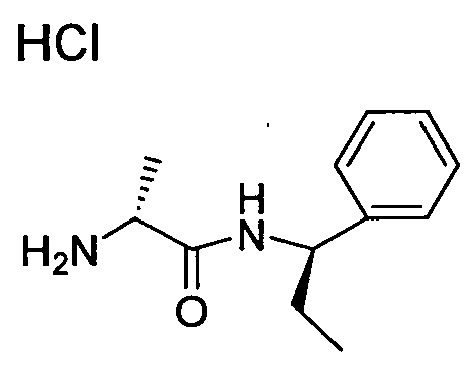
33.12 


33.13 


33.14 


33.15 
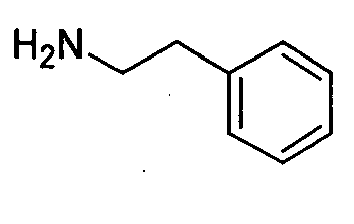

33.16 
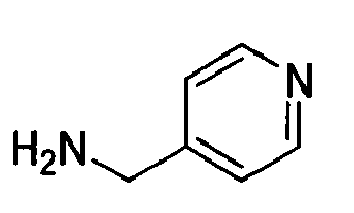

33.17 


33.18 


19 

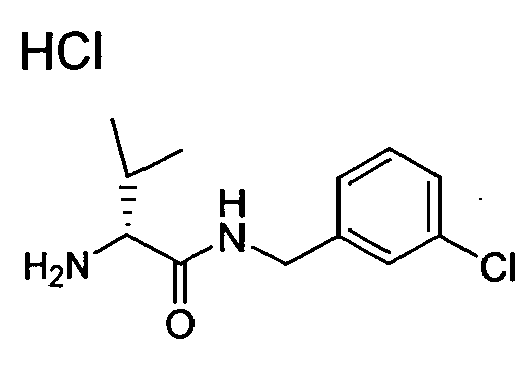
33.20 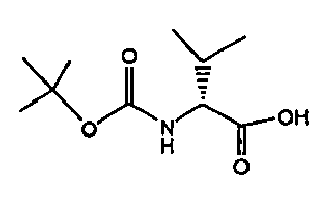


33.21 


33.22 


33.23 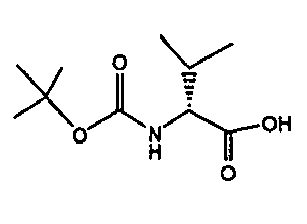


33.24 


33.25 


33.26 


33.27 


33.28 


33.29 


33.30 


33.31 


33.32 


33.33 


33.34 


33.35 


33.36 


33.37 


33.38 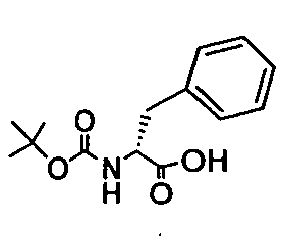


33.39 


33.40 


33.41 


33.42 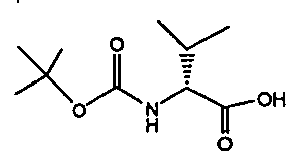
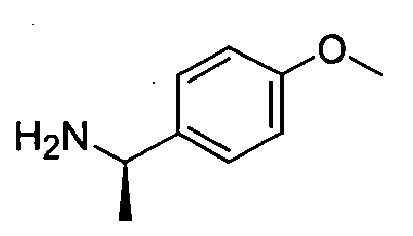

33.43 

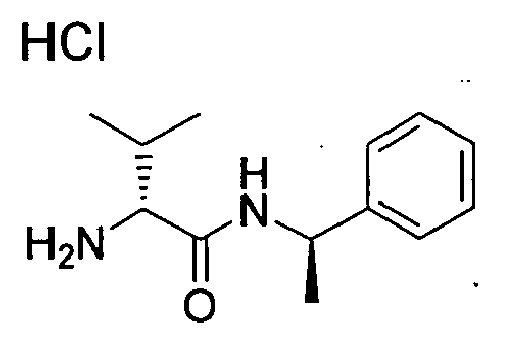
33.44 


33.45 
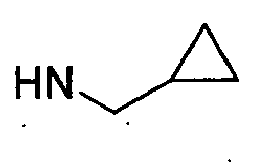

33.46 
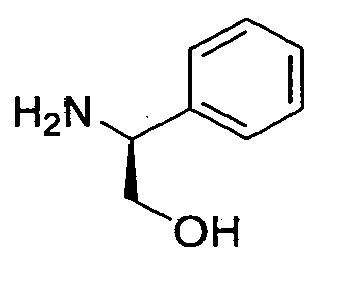

33.47 


-

- To a solution of 3- chlorobenzaldehyde (2.0 g, 14.2 mmol) in THF (5 mL) at 0 °C was added LiN(TMS)2 (17.0 ml, 1.0 M in THF) dropwise and the resulting solution was stirred for 20 min. EtMgBr (6.0 mL, 3.0 M in Et2O) was added dropwise and the mixture was refluxed for 24 h. The mixture was cooled to room temperature, poured into saturated aqueous NH4Cl (50 mL), and then extracted with CH2Cl2 (3 x 50 volumes). The organic layers were combined, concentrated under reduced pressure.
- The crude residue was stirred with 3 M HCl (25 mL) for 30 min and the aqueous layer was extracted with CH2Cl2 (3 x 15 mL) and the organic layers were discarded. The aqueous layer was cooled to 0 °C and treated with solid NaOH pellets until pH = 10 was attained. The aqueous layer was extracted with CH2Cl2 (3 x 15 mL) and the organic layers were combined. The organic layer was washed with brine (1 x 25 mL), dried (Na2SO4), and concentrated under reduced pressure to afford 1.6 g (66% yield) of the crude amine as an oil (MH+ 170). This material was determined to be >90% pure and was used without further purification.
-

- The aldehyde (3.5g) and conc. HCl (20ml) were combined and stirred overnight at 40°C. The reaction mixture was poured into cold water and extracted with ether, washed with satd. NaHCO3 and brine, dried over anhydrous MgSO4, filtered and concentrated in vacuo to give 1.76g of product (55%)
-

- Chlorine was bubbled into 100ml of CH2Cl2 at 10°C. The aldehyde (3.73ml) was charged with 50ml of CHCl3 and then cooled to 0°C. AlCl3 was added portionwise, followed by the chlorine solution and let stir at room temperature overnight. The reaction was poured into 150ml of ice and 50ml of 3N HCl and stirred for 30min. Organic layer was washed with brine, dried with Na2SO4 and concentrated in vacuo. The crude product was purified via flash column chromatography (Hex/EtOAc 40/1) to yield 1.5g of pure product.
-

- The ketone (3.25g) was reacted following the procedure set forth in Preparative Example 88.2, Step B to give the oxime (3.5g, 99%).
- The product from step A (1.2g) was stirred with AcOH (3ml) and Pd/C (10%, 300mg) in EtOH (40ml) under a hydrogen atmosphere overnight. The reaction mixture was filtered through celite and the filtrate was concentrated in vacuo. The crude material dissolved in ether and washed with 2N NaOH, organic washed with brine, dried with Na2SO4, and concentrated in vacuo to give product (960mg, 86%).
-

- To a suspension of NaH (1.45g) in DMF (25ml) under a nitrogen atmosphere was added p-bromophenol (5g) at 0°C. After stirring for 20min, BrCH2CH(OEt)2 (5.3ml) was added and the reaction was heated to reflux overnight. The solution was cooled and poured into ice water (80ml) and extracted with ether. The ether layer was washed with 1N NaOH and brine, dried with MgSO4, filtered and concentrated in vacuo to give 8.4g of crude product (100%)
- To a solution of the product from Step A (8.4g) in benzene (50ml) was added polyphosphoric acid (10g). The mixture was heated at reflux for 4 hrs. The reaction was cooled to 0°C and poured into ice water (80ml) and extracted with ether. The ether layer was washed with saturated sodium bicarbonate and brine, dried with MgSO4, filtered and concentrated in vacuo to give 4.9g of crude product (85%)
- To a solution of the product from Step B (2g) in ether (20ml) at -78°C was added t-BuLi dropwise. After stirring for 20min, DMF (950mg) was added dropwise and the mixture was stirred at -25°C for 3hrs and then warmed to room temperature overnight. Saturated ammonium chloride was added and the solution was extracted with ether. The ether layer was washed with brine, dried with MgSO4, filtered and concentrated in vacuo to give 980mg of crude product (67%).
- To a solution of aldehyde (400g) in ether (10ml) was added LiN(TMS)2 (1M in THF, 3.3ml) at 0°C dropwise. The solution was stirred at 0°C for 30min and EtMgBr (3M in THF, 1.83ml) was added dropwise. The reaction was refluxed overnight, cooed to 0°C, quenched with saturated ammonium chloride and extracted with ether. The ether was stirred with 3N HCl (20ml), then the aqueous layer was basified with NaOH pellets and extracted with ether. The ether layer was washed with brine, dried with MgSO4, filtered and concentrated in vacuo to give 220mg of product (46%).
-
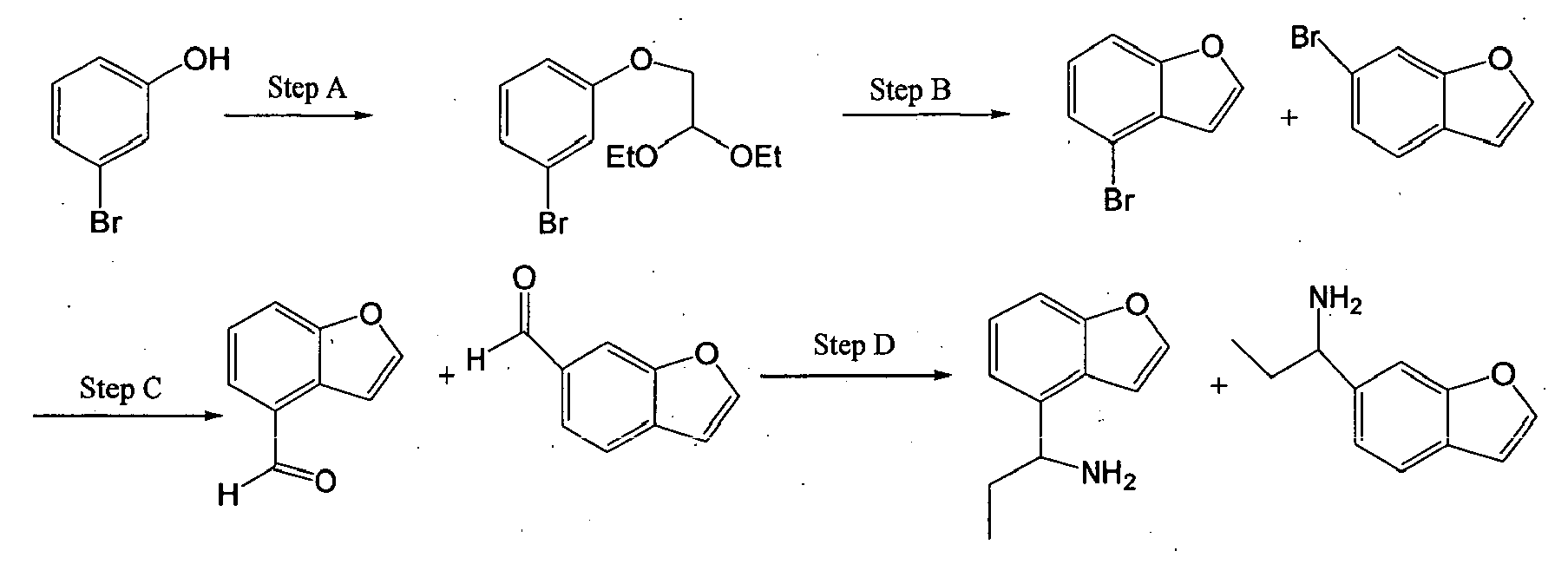
- Following the procedures set forth in Preparative Example 34.4 Steps A through D, but using m-bromophenol (8g), both amines were formed and separated by preparative plate chromatography (63-65%, MH+=175).
-

- To a solution of 3-methyl-thiophene (5g) in ether (50ml) was added dropwise a solution of n-BuLi (1.6M in hexane, 32ml). The mixture was stirred for 1.5hr at room temperature. DMF (5.1ml) was then added and let stir overnight. The mixture was poured into saturated ammonium chloride and extracted with ether. The ether layer was washed with brine, dried with Na2SO4, and concentrated in vacuo. The crude product was purified via flash column chromatography (EtOAc/Hex 20:1) to afford 5.27g of an oil (84%).
-

- To a solution of 4-bromo-2-furaldehyde (4g) in MeOH (75ml) was added trimethyl-orthoformate (3.8ml). A catalytic amount of p-toluene sulfonic acid (195mg) and the mixture was heated to reflux for 3.5hr. The reaction was cooled down and potassium carbonate was added. The mixture was filtered through a silica gel pad. The filtrate was concentrated in vacuo, dissolved in CH2Cl2 and filtered. The filtrate was again concentrated in vacuo to give 4.03g of product (80%).
- To a solution of the product from Step A (2.02g) in THF (80ml) at -78°C was added dropwise a solution of n-BuLi (2.5M in hexanes, 4.4ml) and stirred for 1.5hr. A solution of iodomethane (1.7ml) was added and let stir for 2.5hrs at -60°C. The cooling bath was removed and saturated ammonium chloride was added and let stir for 10min. The layers were separated and the organic layer was washed with brine, dried with Na2SO4, and concentrated in vacuo to afford 1.34g of crude product.
- The product from Step B (1.43g) was dissolved in acetone (50ml) and treated with a catalytic amount of p-toluene sulfonic acid (80mg). The mixture was heated to reflux for 2hr. The reaction was cooled down and solid potassium carbonate was added. The mixture was filtered through a silica gel pad and the filtrate was concentrated in vacuo to give 1.246g of crude product.
-

- To a stirred solution of potassium t-butoxide (2.5g) in HMPA (20ml) was added 2-nitropropane (2ml) dropwise. After 5min, a solution of methyl-5-nitro-2-furoate (3.2g) in HMPA (8ml) was added to the mixture and stirred for 16hr. Water was added and the aqueous mixture was extracted with EtOAc. The EtOAc layer was washed with water, dried with MgSO4, filtered and concentrated in vacuo. The crude material was purified by flash column chromatography (Hex/EtOAc, 6:1) to yield 3.6g of product (90%).
- To a solution of the product from Step A (3.6g) in toluene (16ml) was added tributyltin hydride (5.4ml) followed by AIBN (555mg). The mixture was heated to 85°C for 3.5hr. After cooling, the mixture was separated by flash column chromatography (Hex/EtOAc, 7:1) to afford 2.06g of product (73%).
- To a solution of product from Step B (2.05g) in THF (60ml) at 0°C was added a solution of LAH (1M in ether, 12.8ml). The reaction was stirred at room temperature for 30min. Water and 1M NaOH was added until a precipitate formed, diluted with EtOAc, stirred for 30min and then filtered through a celite pad. The organic filtrate was concentrated in vacuo to give 1.56g of product (93%).
- To a solution of product from Step C (2.15g) in CH2Cl2 (100ml) was added Dess-Martin oxidant (7.26g) in CH2Cl2 (45ml) and stirred for 30min. The mixture was diluted with ether (200ml). The organic layer was washed with 1N NaOH, water and brine, dried with MgSO4, filtered and concentrated in vacuo to give oil and solid. The material was extracted with ether and filtered. Some solid crystallized out from the filtrate, filtered again, and the filtrate was concentrated in vacuo to give 2.19g of product.
-

- To a solution of carboxylic acid (5g) in CH2Cl2 (400ml) at 0°C was added N(OCH3)CH3.HCl (11.5g), DEC (15.1g), HOBt (5.3g) and NMM (43ml) and stirred for 14hr. The mixture was diluted with CH2Cl2 (100ml) and the organic layer was washed with 10% HCl, saturated sodium bicarbonate and brine, dried with Na2SO4, and concentrated in vacuo to afford 5.74g of crude product (85%).
- To a solution of iodoethane (0.56ml) in ether (5ml) at -78°C was added a solution of t-BuLi (1.7M in pentane, 8.3ml) dropwise. The mixture was warmed to room temperature for 1hr and transferred to a 100ml round bottom charged with the product from Step A (1g) in THF (12ml) at -78°C. The mixture was stirred at -78°C for 1hr and at 0°C for an additional 2hr. 1M HCl was added dropwise followed by CH2Cl2. The layers were separated and the organic layer was washed with brine, dried with Na2SO4, and concentrated in vacuo to afford 620mg of product (76%).
- To a solution of the product from Step B (620mg) in THF/MeOH (10:1) at 0°C was added NaBH4 (250mg) in one portion. The mixture was stirred overnight at 0°C, concentrated in vacuo and the crude material was dissolved in CH2Cl2 and washed with 1N NaOH and brine, dried with Na2SO4, and concentrated in vacuo to afford 510mg of product.
- The above material was reacted in the procedures set forth in Preparative Example 75.75 Steps B and C to yield 170mg of amine product (28%).
-

- The above amine was made analogous to the procedures set forth in Patent
WO96/22997 -

- To the nitro compound (3.14g) and cyclohexylmethanol (1.14g) in THF (50ml) was added PPH3 (4.72g) and cooled to 0°C. Diisopropylazadicarboxylate (3.15ml) was added dropwise and let stir overnight. The reaction was concentrated in vacuo and purified via flash column chromatography (Hex/EtOAc, 30:1) to give product (3.3g), which was carried on directly to the next step.
- To the product from step A (3.3g) in EtOH (50ml) was added 10% Pd/C (1.7g) under a hydrogen atmosphere at 55psi and let stir overnight. The reaction was filtered through celite and concentrated in vacuo to give 3.2g of product. PREPARATIVE EXAMPLE 34.12

- A solution of acid (2g) in ether (20ml) was added dropwise to a suspension of LiAlH4 (350mg) in ether (15ml) at 0°C. The solution was refluxed for 3hr and stirred at room temperature ovenright. 5% KOH was added and reaction was filtered, extracted with ether, dried with MgSO4, filtered and concentrated in vacuo to give the product (1.46g, 79%, MH+=166).
- To a solution of alcohol from above (1.46g) in CH2Cl2 at room temperature was added Dess-Martin reagent (5.6g) portionwise and one drop of water and let stir over the weekend at room temperature. 10% Na2S2O3 was added and stirred for 20min, extracted with CH2Cl2, washed with saturated sodium bicarbonate, dried with Na2SO4, and concentrated in vacuo to afford 1.1 g of product (76%).
-

- The above compound was prepared in the procedure set forth in
EP Patent 0 555 153 A1 . -

- The aldehyde (500mg) from above was reacted following the procedure set forth in the Preparative Example 13.4, Step A to yield 372mg of product (76%).
- Following the procedure set forth in Preparative Example 34 but using the commercially available aldehydes and Grignard reagents listed in the Table below, the amine products below were obtained.
Prep Ex. Aldehyde Grignard Reagent Amine 1. Yield (%)
2. MH+35 
EtMgBr 
1. 65%
2. 15436 
EtMgBr 
1. 75%
2. 18037 
EtMgBr 
1. 78%
2. 17038 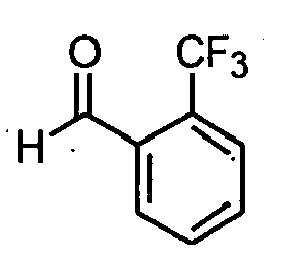
EtMgBr 
1. 34%
2. 20439 
EtMgBr 
1. 68%
2. 15040 
EtMgBr 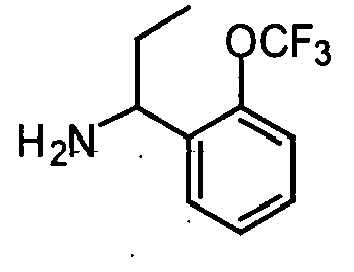
1. 40%
2. 22041 
EtMgBr 
1. 73%
2. 15442 
EtMgBr 
1. 52%
2. 22043 
EtMgBr 
1. 55%
2. 18044 
EtMgBr 
1. 20%
2. 20445 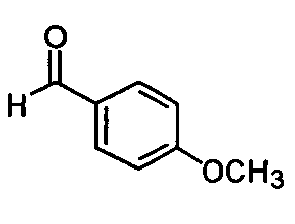
EtMgBr 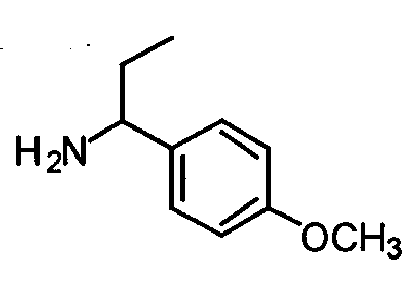
1. 80%
2. 16646 
EtMgBr 
1. 35%
2. 22047 
i-PrMgBr 
1. 20%
2. 15048 
EtMgBr 
1. 77%
2. [M-NH2]+ = 14949 
EtMgBr 
1. 77%
2. 17250 
EtMgBr 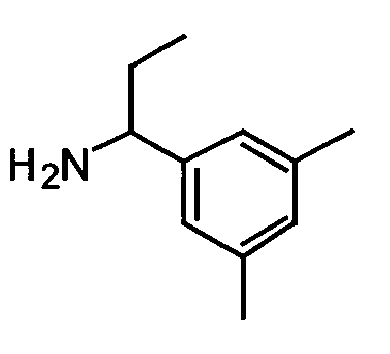
1. 78%
2. [M-NH2]+ = 14751 
EtLi 
1. 10%
2. 11651.2 
EtMgBr 
1. 37%
2. 16151.3 
EtMgBr 
1. 63%
2. 21651.4 
EtMgBr 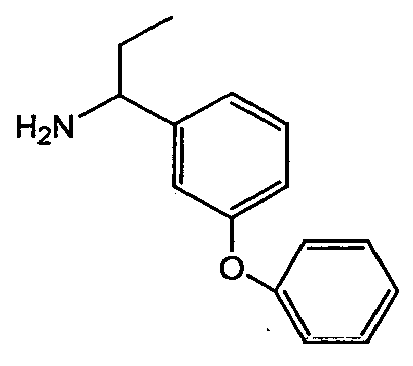
1. 71%
2. 22851.5 
EtMgBr 
1. 89%
2. 16851.6 
EtMgBr 
1. 20%
2. 22851.8 
EtMgBr 
1. 36%
2. 22251.10 


1. 95%
2. 152.151.11 
EtMgBr 
1. 61%
2. 138.1 MH+-H2O51.12 
EtMgBr 
1. 70%
2. 184.151.18 
EtMgBr 
1. 42%
2. 147 [M-NH2]+51.19 
EtMgBr 
1. 67%
2. 20451.20 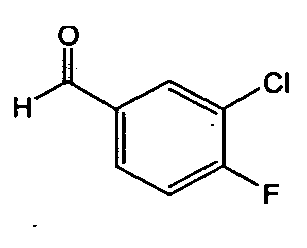
EtMg Br 
1. 33%
2. 188 - Following the procedure set forth in Example 34 but using the commercially available aldehydes and Grignard reagents listed in the Table below, the amine products were obtained.
Prep Ex. Aldehyde Grignard Reagent Amine Yield (%) 51.25 
EtMgBr 
20% 51.26 


77% 51.27 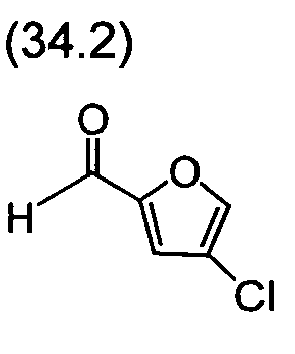
EtMgBr 
51% 51.28 


56% 51.29 


54% 51.30 
EtMgBr 
80% 51.31 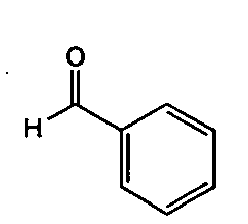


10% -

- A mixture of 2-(trifluoroacetyl)thiophene (2 mL, 15.6 mmol), hydroxylamine hydrochloride (2.2 g, 2 eq), diisopropylethylamine (5.5 mL, 2. eq) and MeOH (50 mL) was stirred at reflux for 48-72 hrs, then concentrated in vacuo. The residue was diluted with EtOAc, washed with 10% KH2PO4 and dried over Na2SO4 (anhydrous). Filtration and concentration afforded the desired oxime (2.9 g, 96%) which was used directly in Step B without further purification.
- To a mixture of the product from Step A above in TFA (20 mL) was added Zn powder (3 g, 3 eq) portionwise over 30 min and stirred at room temperature overnight. The solid was filtered and the mixture reduced in vacuo. Aqueous NaOH (2 M) was added and the mixture was extracted several times with CH2Cl2. The organic phase was dried over anhydrous Na2SO4, filtered and concentrated to afford the desired product (1.4 g, 50%).
- Following the procedure set forth in Preparative Example 52 but using the commercially available ketones listed in the Table below, the following amines were obtained.
Prep Example Ketone Amine 1. Yield (%)
2. MH+53 

1. 11%
2. 12854 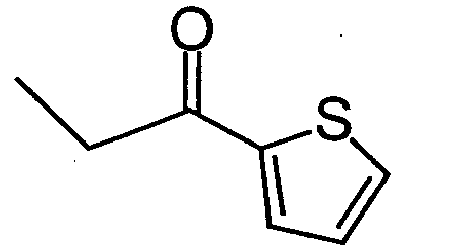
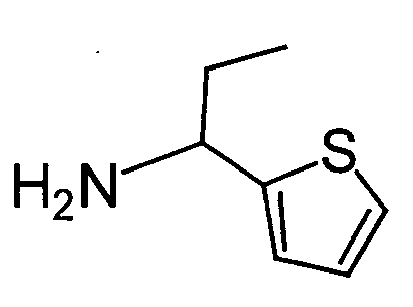
1. 33%
2. 14255 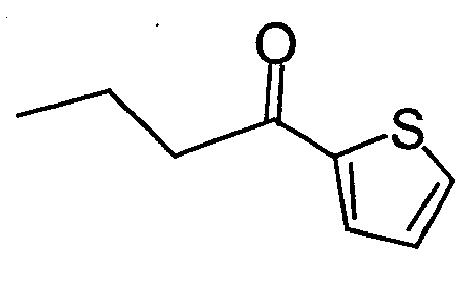

1. 49%
2. 15656 

1. 5%
2. 15457 

1. 47%
2. 17458 

1. 71%
2. 19059 

1. 78%
2. 19160 

1. 80%
2. 19061 

1. 9%
2. 156 -
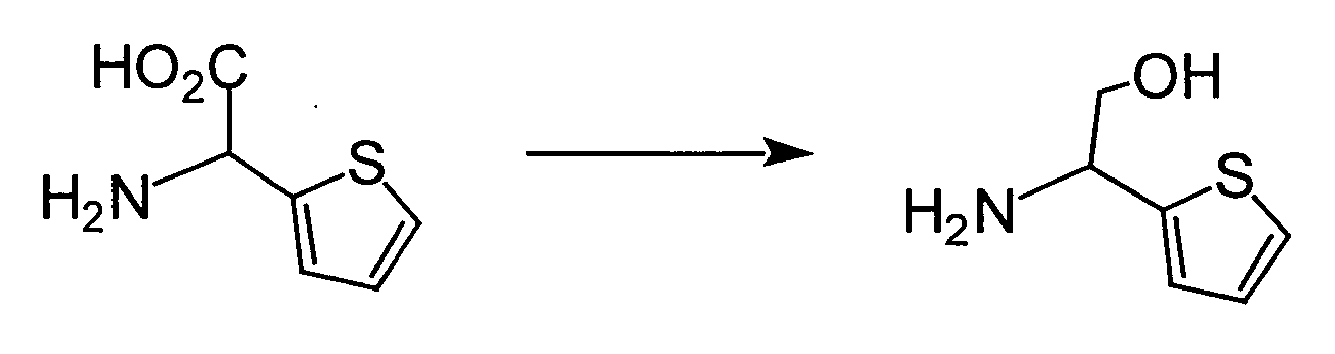
- To a cooled (0-5°C) suspension of L-α-(2-thienyl)glycine (0.5 g) and LiBH4 (2M in THF, 3.8 mL) in anhydrous THF (10 mL) was slowly added a THF (5 mL) solution of iodine (0.8 g). After stirring at room temperature for 15 min, the mixture was stirred at relux overnight. After cooling to room temperature, MeOH was added dropwise until gas evolution ceased and after 30 min, the mixture was evaporated. The oily residue was stirred in 20 mL KOH for 4 hrs, diluted with brine and extracted with EtOAc.
- The organic phase was dried over anhydrous MgSO4, filtered and concentrated in vacuo to afford a crude mixture. Purification by flash column chromatography (50% EtOAc/ CH2Cl2, silica) afforded the product (0.3 g, 63%, MH+ = 144).
-

- CeCl3-7H2O was dried at 140-150°C for 22 hr. To this solid was added THF (80 mL, anhydrous) and after stirring for 2 hr, the suspension was cooled to -78°C and to it was added methyl lithium over 30 min. After stirring for an additional 30 min 2-thiophenecarbonitrile dissolved in anhydrous THF (4.5 mL) was added and the resulting mixture stirred for an additional 4.5 hr at -78°C. Concentrated aqueous NH3 (25 mL) was added and the mixture was warmed to room temperature and filtered through celite. The filtrate was extracted with dichloromethane, dried over anhydrous Na2SO4, filtered and concentrated in vacuo to afford a crude mixture. Purification by flash column chromatography (5% MeOH, CH2Cl2, silica) afforded the desired product (1.2g,62%).
-

- To a solution of (D)-valinol (4.16 g, 40.3 mmol) in CH2Cl2 (60 mL) at 0 °C was added MgSO4 (20 g) followed by dropwise addition of 3-fluorobenzaldehyde (5.0 g, 40.3 mmol). The heterogenous solution was stirred at 0°C for 2h and was allowed to warm to room temperature and stir overnight (14h). The mixture was filtered and the drying agent was washed with CH2Cl2 (2 x 10 mL). The filtrate was concentrated under reduced pressure to afford 8.4 g (100%) of an oil which was taken onto the next step without further purification.
- To a solution of the imine (8.4 g, 40.2 mmol) from Step A in CH2Cl2 (60 mL) at room temperature was added Et3N (6.2 mL, 44.5 mmol) followed by dropwise addition of TMSCI (5.7 mL, 44.5 mmol). The mixture was stirred for 6h at room temperature whereupon the ppt that had formed was filtered off and washed with CH2Cl2 (2x10 mL). The combined filtrate was concentrated under reduced pressure and was taken up in Et2O/hexane (1:1/150 mL). The precipitate was filtered off and the filtrate was concentrated under reduced pressure to afford 10.1 g (89%) of the protected imine as an oil. This material was taken onto the next step without further purification.
- To a solution of Etl (4.0 g, 25.6 mmol) in Et2O (40 mL) at -78°C was added t-BuLi (30.1 mL, 51.2 mmol, 1.7 M in pentane) and the mixture was stirred for 10 min. The mixture was warmed to room temperature, stirred for 1 h, and was recooled to -40 °C. A solution of the imine (6.0 g, 21.4 mmol) from Step B in Et2O (30 mL) was added dropwise via addition funnel to afford a bright orange mixture. The reaction mixture was stirred for 1.5 h at -40 °C then 3M HCl (50 mL) was added and the mixture was allowed to warm to room temperature. Water (50 mL) was added and the layers were separated. The aqueous layer was extracted with Et2O (2 x 30 mL) and the organic layers were combined and discarded. The aqueous layer was cooled to 0 °C and carefully treated with solid NaOH pellets until pH = 12 was attained. The aqueous layer was extracted with Et2O (3 x 30 mL) and the combined layers were washed with brine (1 x 30 mL). The organic layer was dried (Na2SO4), filtered, and concentrated under reduced pressure to afford 4.8 g (94% yield) of the amine as an oil. This material was taken on crude to the next step without further purification.
- To a solution of amine (4.5 g, 18.8 mmol) from Step C in MeOH (80 mL) at room temperature was added MeNH2 (25 mL, 40% in water) followed by addition of a solution of H5IO6 (14.0 g, 61.4 mmol) in H2O (25 mL). The heterogenous mixture was stirred for 1.5 h (until the reaction was complete by TLC) and the precipitate was filtered off. The resulting filtrate was diluted with water (50 mL) and the mixture was extracted with Et2O (4 x 60 mL). The combined organic layers were concentrated to a volume of ~30 mL whereupon 3M HCl (75 mL) was added. The mixture was stirred overnight (12h at room temperature) after which the mixture was concentrated to remove the volatiles. The aqueous layer was extracted with Et2O (3 x 40 mL) and the organic layers were discarded. The aqueous layer was cooled to 0 °C and was carefully treated with solid NaOH pellets until pH ~12 was reached. The aqueous layer was extracted with Et2O (3 x 60 mL) and the combined organic layers were dried (MgSO4). The organic layer was concentrated under reduced pressure to afford 2.8 g (97% yield) of the desired amine as an oil [MH+ 154]. This compound was proven to be >85% pure by 1H NMR and was used crude in the subsequent coupling step.
- Following the procedure set forth in Preparative Example 64 but using the commercially available aldehydes, amino alcohols, and organolithium reagents in the Table below, the optically pure amine products in the Table below were obtained.
Prep Ex. Aldehyde Amino Alcohol Organo lithium Product 1. Yield (%)
2. MH+65 
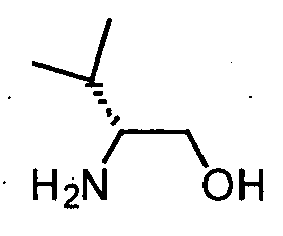
EtLi 
1. 62%
2. 15466 

EtLi 
1. 70%
2. 15467 
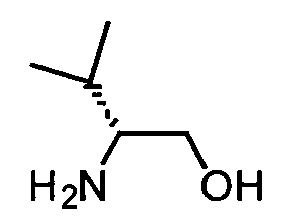


1. 54%
2. 16668 


1. 67%
2. 16669 

EtLi 
1. 67%
2. 15470 

EtLi 
1. 42%
2. 14271 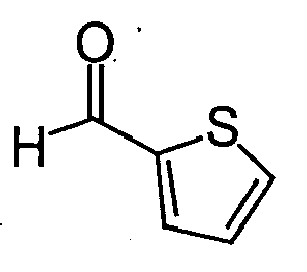

EtLi 
1. 36%
2. 14272 


1. 62%
2. 14873 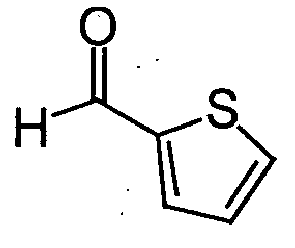

t-BuLi 
1. 27%
2. 25674 

t-BuLi 
1. 15%
2. 16475 
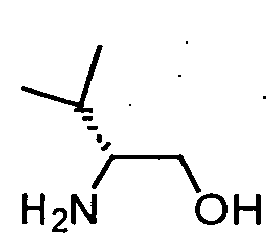


1. 7%
2. 20475.1 

EtLi 
1. 65%
2. 123 [M-NH2]+75.2 

EtLi 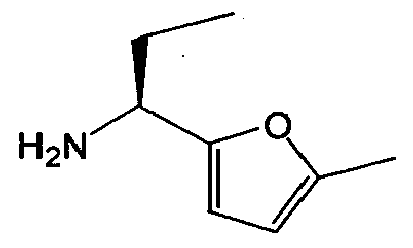
1. 62%
2. 123 [M-NH2]+75.3 

EtLi 
1. 93%
2. 139 [M-NH2]+75.4 

tBuLi 
1. 50%
2. 167 [M-NH2]+75.5 

tBuLi 
1. 48%
2. 167 [M-NH2]+75.6 

EtLi 
1. 97%
2. 139 [M-NH2]+75.7 

iPrLi 
1. 87%
2. 153 [M-NH2]+75.8 


1. 94%
2. 151 [M-NH2]+75.9 

EtLi 
1. 75%
2. 151 [M-NH2]+75.10 

tBuLi 
1. 30%
2. 179 [M-NH2]+ - Following the procedure set forth in Preparative Example 64 but using the prepared or commercially available aldehydes, amino alcohols, and organolithium reagents in the Table below and carrying the amine on crude, the optically pure amine products in the Table below were obtained.
Prep Ex. Aldehyde Amino Alcohol Organo lithium Product Yield (%) 75.11 


52% 75.12 


50% 75.13 

iPrLi 
57% 75.14 

iPrLi 
54% 75.15 

iPrLi 
58% 75.16 


61% 75.17 

EtLi 
72% 75.18 


68% 75.19 

iPrLi 
77% 75.20 

t-BuLi 
15% 75.21 

MeLi 
50% 75.22 

EtLi 
23% 75.24 

EtLi 
20% 75.27 

EtLi 
65% 75.28 

iPrLi 
61% 75.29 

EtLi 
90% 75.30 

iPrLi 
62% 75.31 

iPrLi 
43% 75.32 


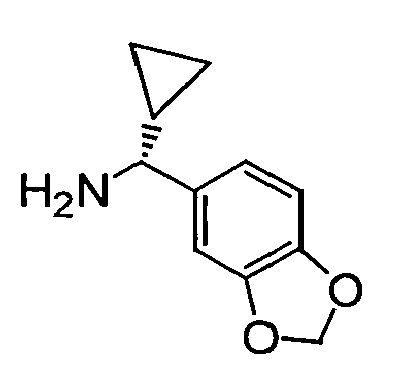
50% 75.33 


50% 75.34 

tBuLi 
51% 75.35 

MeLi 
51% 75.36 

tBuLi 
57% . 75.37 

tBuLi 
60% 75.38 

EtLi 
73% 75.39 

MeLi 
48% 75.41 


52% 75.42 

EtLi 
40% 75.43 

tBuLi 
20% 75.44 

t-BuLi 
79% 75.45 

iPrLi 
55% 75.46 

tBuLi 
39% 75.47 

iPrLi 
55% 75.48 


34% 75.49 

EtLi 
61% 75.50 

tBuLi 
25% 75.51 

iPrLi 
33% 75.52 
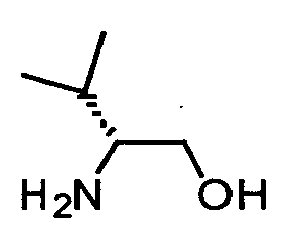
tBuLi 
30% 75.53 

EtLi 
39% 75.54 


38% 75.55 

EtLi 
64% 75.56 

EtLi 
46% 75.57 

EtLi 
62% 75.58 

iPrLi 
24% 75.59 

EtLi 
70% -

- To a solution of aldehyde (2.5g) in ether (50ml) at 0°C was added EtMgBr (4.56ml) dropwise. The heterogenous mixture was stirred for 2hr at 0°C and then poured into a beaker of saturated ammonium chloride (25ml), ice and CH2Cl2 (30ml). After the biphasic mixture stirred for 10min, the organic layer was separated, washed with brine, dried over Na2SO4, filtered, and concentrated in vacuo to afford the product (2.41g, 95%)
- To a solution of alcohol from Step A above (1g) in toluene at room temperature was added DPPA. The mixture was cooled to 0°C and DBU was added and let stir for 12hr at room temperature. The layers were separated and the organic layer was washed with water, 1N HCl and dried over Na2SO4, filtered, and concentrated in vacuo. Purified by preparative plate chromatography (hexane/EtOAc 20/1) to give the product (840mg, 75%).
- To a solution of azide (730mg) from Step B above in THF (7ml) was added PPh3 (1g). The heterogenous solution was stirred for 12hr, whereupon water (1.5ml) was added. The mixture was refluxed overnight, cooled to room temperature and concentrated in vacuo. Ether and 1N HCl were added to the residue. The aqueous layer was cooled to 0°C, basified with NaOH pellets and extracted with ether. The ether layer was dried over MgSO4, filtered, and concentrated in vacuo to afford the product (405mg, 62%).
- To a solution of azide in THF at -10°C was added LiAlH4 portionwise. The heterogenous solution was stirred at room temperature for 1hr and then refluxed for 4hr. The solution was cooled to 0°C and water, 2M NaOH and ether were added to the reaction. The mixture was filtered through a celite pad. The filtrate was treated with 3N HCl. The aqueous layer was cooled to 0°C, basified with NaOH pellots and extracted with ether. The ether layer was dried over MgSO4, filtered, and concentrated in vacuo to afford the product.
- Following a similar procedure set forth in Preparative Example 75.75, and using the reduction procedure indicated, the following amines were obtained.
Prep Ex. Aldehyde Reducing Step Product % Yield 75.76 
D 
43% 75.77 
C 
36% 75.78 
D 
32% 75.79 
C 
42% 75.80 
D 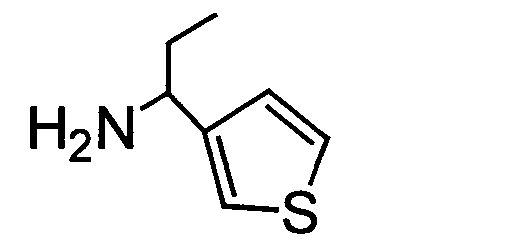
56% 75.81 
D 
35% 75.82 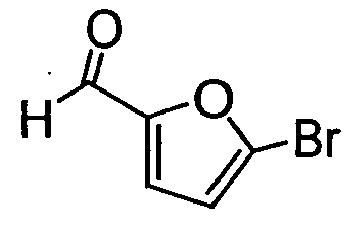
C 
13% 75.83 
C 
42% 75.84 
C 
39% 75.85 
C 
26% 75.86 
C 
25% 75.87 
C 
14% 75.88 
C 
49% 75.89 
C 
34% 75.90 
C 
44% -

- The desired compound was prepared according to methods previously described in J. Med. Chem. 1996, 39, 3319-3323.
-

- To a solution of amine from Preparative Example 75.90 (2.22g) in CH2Cl2 (50ml) at 0°C was added TEA (3.03ml) followed by BOC2O (2.85g). The heterogenous mixture was allowed to stir at room temperature overnight. 10% Citric acid was added to the reaction and the layers were separated. The organic layer was washed with saturated sodium bicarbonate, brine and dried with Na2SO4, filtered, and concentrated in vacuo. The crude material was purified by flash column chromatography (Hex/EtOAc 10:1) to afford 2.7g of an oil (81%)-.
- Following the procedure from Preparative Example 13.4, Step A, but using the product from Step A above (450mg) and 3-thiophene boronic acid (284mg), the product was prepared (325mg, 71 %).
- To the product from Step B (325g) was added 4M HCl in dioxane (1.31ml) and let stir for 1hr. The reaction was concentrated in vacuo and taken up in CH2Cl2 and concentrated in vacuo again. This procedure was repeated 5 times to afford a semisolid (89%).
- Following the procedures set forth in Preparative Example 76.1, but using the commercially available boronic acids, the indicated amines were prepared.
Prep Ex. Boronic Acid Product Yield (%) 76.2 

70% 76.3 

35% -

- The product from Preparative Example 75.75, Step A (2.5g) was reacted via the Preparative Example 13.11, Step B to give the ketone (1.93g, 78%).
- To a solution of ketone from Step A above (500mg) in THF (5ml) at 0°C was added S-2-methyl-CBS-oxazaborolidine (0.98ml) dropwise followed by BH3Me2S (1.48ml). The mixture was stirred at 0°C for 2hr and was allowed to warm to room temperature and stir overnight. The mixture was cooled to 0°C and treated with MeOH (10ml). After stirring for 20min, the reaction was concentrated in vacuo. The residue was dissolved in CH2Cl2 and washed with 1M HCl, saturated sodium bicarbonate, water and brine, dried over Na2SO4, filtered, and concentrated in vacuo. The crude material was purified by preparative plate chromatography (Hex/EtOAc 4:1) to afford 650mg of an oil (89%).
- The chiral alcohol from Step B above was reacted via the Preparative Example 75.75 Step B to give the azide.
- The azide from Step C above was reacted via the Preparative Example 75.75 Step C to give the amine product. PREPARATIVE EXAMPLE 76.11

- The desired compound was prepared as in Preparative Example 76.10, but using the R-2-methyl-CBS-oxazaborolidine in step B.
-

- The desired compound was prepared according to methods previously described in J. Med. Chem. 1996, 39, 3319-3323.
-

- The desired compound was prepared according to methods previously described in Chem. Pharm. Bull. 1991, 39, 181-183.
-
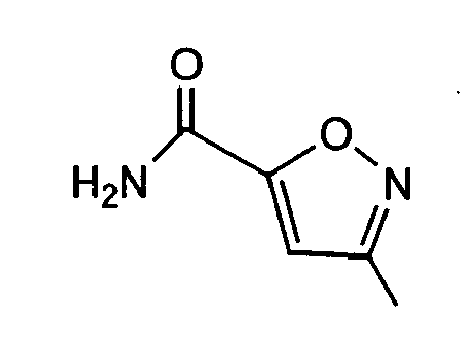
- The desired compound was prepared according to methods previously described in J. Organometallic Chem. 1998, 567, 31-37.
-

- The desired compound was prepared according to methods previously described in Chem. Pharm. Bull. 1991, 39,181-183.
-

- The desired compound was prepared according to methods previously described in a) Synthesis 1987, 998-1001, b) Synthesis 1996, 641-646 and c) J. Med. Chem. 1991, 34, 2176-2186.
-

- The desired compound was prepared according to methods previously described in a) Synthesis 1987, 998-1001, b) Synthesis 1996, 641-646 and c) J. Med. Chem. 1991, 34, 2176-2186.
-
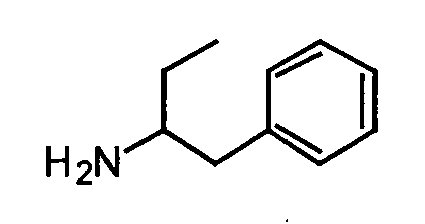
- The desired compound was prepared according to methods:previously described in J. Med. Chem. 1988, 31, 2176-2186.
-

- To a solution of carboxylic acid (1.5 g, 7.89 mmol) in H2O/acetone (1:10/12 mL total) at 0°C was added Et3N (1.43 mL, 10.3 mmol) followed by addition of ethyl chloroformate (0.83 mL, 8.68 mmol). The resulting mixture was stirred for 30 min after which a solution of NaN3 (0.77g, 11.8 mmol) in H2O (2 mL) was added dropwise. The resultant heterogenous mixture was stirred for 1 h at 0°C, then cold water (5 mL) and Et2O (10 mL) were added. The layers were separated and the aqueous layer was extracted with Et2O (2x10 mL). The organic layers were combined, toluene (20 mL) was added, and the organic layers were dried (MgSO4) and concentrated under reduced pressure to a volume of 20 mL. t-BuOH (5 mL) was added and the mixture was refluxed for 12h. The mixture was concentrated under reduced pressure and the crude residue was taken up in 3M HCl (30 mL) and was heated at reflux for 12h. The mixture was cooled to room temperature and extracted with Et2O (3 x 15 mL). The aqueous layer was cooled to 0 °C and solid NaOH pellets were added until pH ~12 was reached. The aqueous layer was extracted with Et2O (3 x 30 mL) and the combined organic layers were dried (MgSO4) and concentrated under reduced pressure to afford 0.78 g (61% yield) of an oil [MH+ 162]. This material was used without further purification.
-

- The corresponding cyclopropyl analog was prepared according to the procedure outlined in Preparative Example 83.
-

- The corresponding cyclohexyl analog was prepared according to the procedure outlined in Preparative Example 83.
-

- The desired compound was prepared according to methods previously described in J. Org. Chem. 1978, 43, 892-898.
-

- A mixture of (R)-(+)phenylpropanolamine (8.2 g), 3,4-diethoxy-3-cyclobutene-1,2-dione (10 g) and absolute EtOH (75 mL) was stirred at 0-25°C for 12 hrs. Filtration and concentration of the filtrate gave a syrup which was chilled in the freezer to give a solid. Trituration of the solid with diethyl ether gave the desired product (10.5 g, 71%, MH+ = 260).
-

- (R)-1-phenyl propylamine (4.82ml) and 3,4-dimethoxy-3-cylclobutene-1,2-dione (5.03g) were combined in MeOH (40ml) and stirred overnight. Reaction concentrated in vacuo and purified via flash column chromatography (MeOH/CH2Cl2, 1:40) to yield 2.75g of product (31 %, MH+=246).
-

- A mixture of (S)-(+)-3-methyl-2-butylamine (3.0 g), 3,4-diethoxy-3-cyclobutene-1,2-dione (5 g) and absolute EtOH (100 mL) was stirred at 0-25°C for 12 hrs. Filtration and concentration of the filtrate gave a syrup which solidified upon dilution with Et2O. Trituration of the solid with diethyl ether gave the desired product as a solid (4.4 g, 72%, MH+ = 212).
-

- A mixture of amine from Preparative Example 75.1 (370mg), 3,4-diethoxy-3-cyclobutene-1,2-dione (0.39ml) and absolute EtOH (5ml) was stirred at room temperature overnight. Purification by preparative plate chromatography (3% EtOH/CH2Cl2) afforded the desired product (263mg, 37%).
-

- 2-Methylthiophene (3g) was dissolved in THF and cooled to -40°C. N-butyllithium (2.5M in hexane,12.24ml) added dropwise and let stir at -40°C for 30min. CuBr.(CH3)2S (6.29g) added and let warm to -25°C where the trifluoroaceticanhydride (4.32ml) was added. The reaction was stirred at -15°C over the weekend. The reaction was quenched with saturated ammonium chloride and extracted with EtOAc. The organic layer washed with brine, dried with MgSO4, filtered and concentrated in vacuo to give 4.59g of an oil (78%).
- The product from Step A (4.58g), hydroxylamine hydrochloride (3g), sodium acetate (4.4g), EtOH (75ml) and H2O (7.5ml) were combined and heated to 75°C overnight. The reaction was concentrated in vacuo , taken up 1N HCl, extracted with ether, dried with MgSO4, filtered and concentrated in vacuo to give 4.58g of the product (93%, MH+=210).
- The product from Step B above (4.5g) was dissolved in TFA (40ml) and cooled to 0°C. Zn powder (4.2g) was added portionwise and let reaction warm to room temperature and stir overnight. The reaction was concentrated in vacuo, taken up in 1N NaOH, extracted with ether, dried with MgSO4, filtered and concentrated in vacuo to give 3.43g of the product (80%).
- The product from Step C (526mg), 3,4-diethoxy-3-cyclobutene-1,2-dione (0.4ml) and absolute EtOH (10ml) was stirred at room temperature overnight. Purification by preparative plate chromatography (10% EtOAc/Hex) to give 178mg of product (21%, MH+=320).
-

- Following a similar procedure as described in Preparative Example 88.2, but instead using 2-methylfuran, the above cyclobutenedione intermediate was prepared.
-

- The amine from Preparative Example 75.1 (973mg) and the dimethoxysquarate (870mg) were dissolved in MeOH (20ml) and stirred for 3 days. The reaction was concentrated in vacuo and purified via flash column chromatography (MeOH/CH2Cl2, 1 %) to yield 325mg of product (19%, MH+=249.8).
-

- The amine from Preparative Example 75.9 (323mg) and the dimethoxysquarate (426mg) were dissolved in MeOH (10ml) and stirred over the weekend. The reaction was concentrated in vacuo and purified via flash column chromatography (MeOH/CH2Cl2, 1:20) to yield 407mg of product (57%, MH+=235.8).
-

- To a solution of KH (0.45 g, 11.3 mmol) in THF (15 mL) at room temperature was added amine hydrochloride (0.85 g, 5.1 mmol) portionwise to afford a heterogenous reaction mixture. The mixture was allowed to stand overnight (12h) and Mel (0.32 mL, 5.1 mmol) was added dropwise. The mixture was stirred for 6h after which the mixture was carefully poured into cold brine (125 mL). The mixture was extracted with Et2O (3 x 25 mL) and the organic layers were combined. The organic layer was dried (Na2SO4), filtered, and concentrated under reduced pressure to afford the crude product as an oil. This material was carried on crude to the coupling step without further purification or characterization.
-

- To a solution of KH (1.1g) in THF (20ml) at room temperature was added (R)-2-amino-1-butanol 48ml) dropwise to afford a heterogenous mixture. The mixture was allowed to stand overnight (18hr) and then Mel (1.59ml) was added dropwise. The mixture was stirred for 4hr after which brine was added. Extracted with ether, dried with K2CO3, filtered and concentrated in vacuo to afford 1.75g of an oil.
-

- To a solution of KH (1.1g) in THF (20ml) at room temperature was added (S)-2-amino-l-butanol 48ml) dropwise to afford a heterogenous mixture. The mixture was allowed to stand overnight (18hr) and then Mel (1.59ml) was added dropwise. The mixture was stirred for 4hr after which brine was added. Extracted with ether, dried with K2CO3, filtered and concentrated in vacuo to afford 1.75g of an oil.
-

- The corresponding cis analog was prepared in an analogous fashion utilizing the procedure described in Preparative Example 89. This material was also used without further purification.
-

- The desired compound was prepared according to methods previously described in J. Org. Chem. 1987, 52, 4437-4444.
-

- The desired compound was prepared according to methods previously described in Bull. Chem. Soc. Jpn. 1962, 35, 11-16.
-

- The desired amine was prepared from the corresponding ketone according to standard methods previously described in a) Synthesis 1987, 998-1001, b) Synthesis 1996, 641-646 and c) J. Med. Chem. 1991, 34, 2176-2186.
-

- The desired amine was prepared from the corresponding ketone according to standard methods previously described in a) Synthesis 1987, 998-1001, b) Synthesis 1996, 641-646 and c) J. Med. Chem. 1991, 34, 2176-2186.
-

- Lithium hexamethyldisilylazide (34 mL, 1M in THF) was added dropwise to a -78°C THF (20 mL) solution of isobutyronitrile (2.8 mL). After 40 min, cyclopropylmethylbromide (5 g) was added and the mixture warmed to and stirred at 25°C overnight. After cooling to 0°C, 1M HCl (aq) was added and the mixture was extracted with diethyl ether, dried over anhydrous Na2SO4, filtered and concentrated in vacuo at 0°C to give the desired product (4.5 g).
- Methyl Lithium (17 mL, 1.4 M in Et2O) was added to the product from Step A above (1.5 g) in Et2O (anhydrous) at 0°C. The mixture was stirred at 0-25°C overnight, then diluted with 3M HCl (aq), extracted with CH2Cl2, dried over anhydrous Na2SO4, filtered, concentrated in vacuo at 0°C and used directly in Step C.
- The product from Step B above was added to a slurry of NaBH4 (1.4 g) in isopropanol (50 mL) at 0°C, then the mixture was stirred at reflux for 8 hr and at room temperature for 48 hrs. Water was added and the mixture was stirred for 30 min, then extracted with diethyl ether, dried over anhydrous Na2SO4, filtered and concentrated in vacuo. The residue was diluted with CH2Cl2 and extracted with 3M HCl. The organic phase was discarded and the aqueous phase was basified with NaOH (aq) and extracted with CH2Cl2. Drying over anhydrous Na2SO4, filtering, and concentration in vacuo gave the desired compound (0.5 g).
-
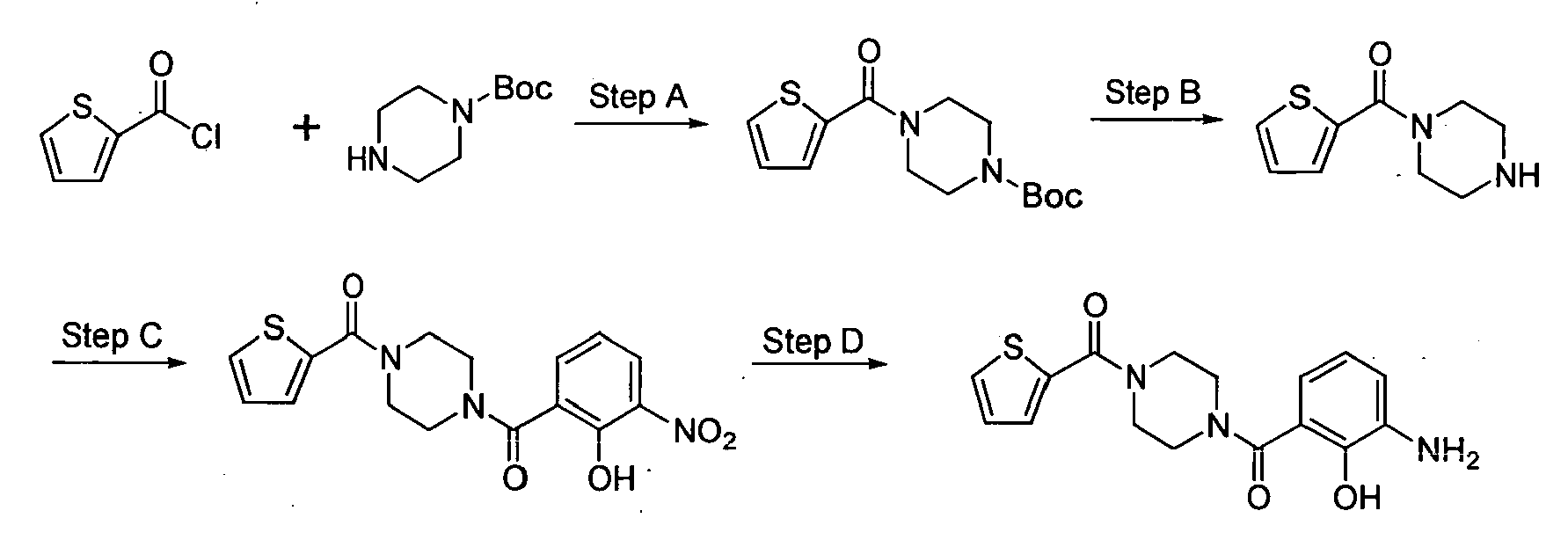
- 2-Thiophenecarbonyl chloride (2.0mL, 18.7mmol) was dissolved in 100mL dichloromethane. After addition of diisopropylethylamine (4.1mL, 23.4mmol) and Boc-piperazine (3.66g, 19.7mmol), the mixture was stirred for 4h at room temperature. The resulting mixture was put into water (500mL) and acidified with 3N HCl to pH~1. Extraction with dichloromethane (2x100mL) and drying over sodium sulfate resulted in sufficiently pure product that was used in the next step without any further purification. 1H NMR (300MHz, d6-DMSO) 1.60 (s, 9H), 3.29 (dd, 4H), 3.69 (dd, 4H), 7.23 (dd, 1H), 7.49 (d, 1H), 7.79 (d, 1H).
- The crude material from Step A was dissolved in trifluoroacetic acid/dichloromethane (75mL, 4/1). After stirring for 2h, the reaction mixture was put into 1N sodium hydroxide (400mL). Extraction with dichloromethane (2x100mL) and drying over sodium sulfate resulted in sufficiently pure product that was used in Step C without any further purification. 1H NMR (300MHz, d6-DMSO) 2.81 (dd, 4H), 3.63 (dd, 4H), 7.21 (dd, 1H), 7.46 (d, 1H), 7.82 (d, 1H).
- The crude material (3.50g, 17.8mmol) from Step B was dissolved in dichloromethane (100mL). After addition of diisopropylethylamine (18.7mL, 107mmol), 3-nitrosalicylic acid (3.3g, 18.0mmol), and PyBrOP (10.4g, 22.3mmol), the resulting mixture was stirred over night at room temperature before being put into 1N sodium hydroxide (200mL). Extraction with dichloromethane (2x200mL) removed all PyBrOP by-products. The aqueous phase was acidified with 3N HCl and subsequently extracted with dichloromethane (3x 100mL): The combined organic phases of the acidic extraction were dried over sodium sulfate, concentrated, and finally purified by column chromatography (dichloromethane/methanol = 10/1) to yield the desired product (2.31g, 34 % over 3 steps). 1H NMR (300MHz, d6-DMSO) 3.30-3.90 (m, 8H), 7.10-8.20 (m, double signals due to E/Z-isomers, 6H), 10.82 (s, 1H).
- The nitro-compound (2.3g, 6.4mmol) from Step C was dissolved in methanol (50mL) and stirred with 10% Pd/C under a hydrogen gas atmosphere over night. The reaction mixture was filtered through Celite and washed thoroughly with methanol. Finally, the filtrate was concentrated in vacuo and purified by column chromatography (dichloromethane/methanol = 10/1) to yield the desired product (1.78g, 84%). 1H NMR (300MHz, d6-DMSO) 3.30-3.90 (m, 8H), 7.22 (m, 2H), 7.55 (d, 1H), 7.71 (d,1H), 7.88 (d, 1H), 8.15 (d, 1H), 10.85 (bs, 1H).
-

- Picolinic acid (3.0g, 24.3mmol) was suspended in SOCl2 (15mL). After addition of dimethylformamide (5 drops), the reaction mixture was stirred for 4 hours. Evaporation of the solvent yielded the corresponding acid chloride as HCl-salt. Without any further purification, the solid was suspended in 120mL dichloromethane. After addition of diisopropylethylamine (12.7mL, 73mmol) and Boc-piparazine (4.8g, 25.5mmol), the reaction was stirred over night at room temperature. The resulting mixture was put into water (500mL) and extracted with dichloromethane (2x100mL). Drying over sodium sulfate resulted in sufficiently pure product that was used in Step B without any further purification. 1H NMR (300MHz, d6-DMSO) 1.63 (s, 9H), 3.21 (dd, 4H), 3.61 (dd, 4H), 7.57 (dd, 1H), 7.63 (d, 1H), 7.98 (dd, 1H), 8.70 (d, 1H).
- The crude material from Step A was dissolved in trifluoroacetic acid/dichloromethane (75mL, 4/1). After stirring for 2days, the reaction mixture was put into 1N sodium hydroxide (400mL). Extraction with dichloromethane (2x100mL) and drying over sodium sulfate resulted in sufficiently pure product that was used in Step C without any further purification. 1H NMR (300MHz, d6-DMSO) 2.77 (dd, 2H), 2.83 (dd, 1H), 3.38 (dd, 2H), 3.64 (dd, 1H), 7.58 (dd, 1H), 7.62 (d, 1H), 8:00 (dd, 1H), 8.67 (d, 1H).
- The crude material (1.35g, 7.06mmol) from Step B was dissolved in dichloromethane (50mL). After addition of diisopropylethylamine (3.7mL, 21.2mmol), 3-nitrosalicylic acid (1.36g, 7.41mmol), and PyBrOP (3.62g, 7.77mmol), the resulting mixture was stirred over night at room temperature before being put into 1N sodium hydroxide (300mL). Extraction with dichloromethane (2x100mL) removed any PyBrOP products. The aqueous phase was acidified with 3N HCl. Adjustment of the pH with saturated sodium carbonate solution to almost neutral crushed the desired compound out of solution. The aqueous phase was subsequently extracted with dichloromethane (3x 100mL).
The combined organic layers of the neutral extraction were dried over sodium sulfate, concentrated, and finally purified by column chromatography (dichloromethane/methanol = 20/1) to yield the desired product (1.35g, 16% over 3 steps). 1H NMR (300MHz, d6-DMSO) 3.30-3.95 (m, 8H), 7.22 (m, 1H), 7.61 (m, 1H), 7.73 (d, 2H), 8.03 (m, 1H), 8.17 (m, 1H), 8.69 (m, 1H), 10.82 (s, 1H). - The nitro-compound (1.35g, 3.79mmol) from Step C was dissolved in methanol (60mL) and stirred with 10% Pd/C under a hydrogen gas atmosphere over night. The reaction mixture was filtered through Celite and washed thoroughly with methanol. Finally, the filtrate was concentrated in vacuo and purified by column chromatography (dichloromethane/methanol = 20/1) to yield the desired product (1.10g, 89 %). 1H NMR (300MHz, d6-DMSO) 3.50-3.85 (m, 8H), 6.47 (dd 1H), 6.74 (m, 2H), 7.59 (dd, 1H), 7.71 (d, 1H), 8.04 (dd, 1H), 8.68 (d, 1H).
-

- 1-Methyl-2-pyrrolecarboxylic acid (2.5g, 20.0mmol) was dissolved in dichloromethane (50mL). After addition of PyBrOP (16.3g, 35.0mmol), diisopropylethylamine, (14.0mL, 73.0mmo) and Boc-piparazine (5.5g,30.0mmol), the reaction was stirred over night at room temperature before being put into 1N sodium hydroxide (200mL). Extraction with dichloromethane (2x100mL) removed all PyBrOP by-products. The aqueous phase was acidified with 3N HCl. Adjustment of the pH with saturated sodium carbonate solution to almost neutral precipitated the desired compound. The aqueous phase was subsequently extracted with dichloromethane (3x 100mL). The combined organic phases of the neutral extraction were dried over sodium sulfate. Removal of the solvent resulted in sufficiently pure product that was used in Step B without any further purification. 1H NMR (300MHz, d6-DMSO) 1.59 (s, 9H) 3.21 (dd, 4H), 3.61 (dd, 4H), 3.74 (s, 3H), 6.11 (dd, 1H), 6.33 (d, 1H), 7.01 (d, 1H).
- The crude material from Step A was dissolved in trifluoroacetic acid/dichloromethane (75mL, 4/1). After stirring for 3h, the reaction mixture was put into 1N sodium hydroxide (400mL). Extraction with dichloromethane (3x100mL) and drying over sodium sulfate resulted in sufficiently pure product that was used in Step C without any further purification. 1H NMR (300MHz, d6-DMSO) 2.79 (dd, 4H), 3.62 (dd, 4H), 3.76 (s, 3H), 6.11 (dd, 1H). 6.37 (d, 1H), 6.96 (d, 1H).
- The crude material (3.15g, 16.3mmol) from Step B was dissolved in dichloromethane (100mL). After addition of diisopropylethylamine (8.5mL, 49.0mmol), 3-nitrosalicylic acid (3.13g, 17.1mmol), and PyBrOP (9.11 g, 19.6mmol), the resulting mixture was stirred over night at room temperature before being put into 1N sodium hydroxide (400mL). Extraction with dichloromethane (2x100mL) removed all PyBrOP products. The aqueous phase was then carefully acidified with 3N HCl until the color of the solution changes from orange to yellow and the desired compound crashed out of solution.
The aqueous phase was subsequently extracted with dichloromethane (3x 100mL). The combined organic layers of the acidic extraction were dried over sodium sulfate and concentrated in vacuo to yield the desired product. 1H NMR (300MHz, d6-DMSO) 3.35-3.85 (m, 8H), 3.79 (s, 3H), 6.13 (dd, 1H), 6.45 (d, 1H), 7.01 (s, 1H), 7.22 (dd, 1H), 7.70 (d, 1H), 8.16 (d, 1H), 10.83 (s, 2H). - The crude nitro-compound from Step C was suspended in methanol (60mL) and stirred with 10% Pd/C under a hydrogen gas atmosphere over night. The reaction mixture was filtered through Celite and washed thoroughly with methanol. The filtrate was concentrated in vacuo and purified by column chromatography (dichloromethane/methanol = 10/1) to yield the desired product (2.61g, 40 % for 4 steps). 1H NMR (300MHz, d6-DMSO) 3.45-4.80 (m, 8H), 3.79 (s, 3H), 6.17 (dd, 1H), 6.45 (m, 2H), 6.78 (m, 2H), 7.01 (d, 1H).
-

- 2-Bromopyridine N-oxide hydrochloride (1.13g, 5.37mmol) and Boc-piperazine (1.50g, 8.06mmol) were heated to 80° C in pyridine (10mL) over night. The reaction mixture was put into water (300mL) and then extracted with dichloromethane (2x100mL). The combined organic phases were dried over sodium sulfate, concentrated, and finally purified by column chromatography (dichloromethane/methanol = 10/1) to yield the desired product (500mg, 33 %).
1H NMR (300MHz, d-CDCl3) 1.60 (s, 9H), 3.46 (dd, 4H), 3.78 (dd, 4H), 6.99 (m, 2H), 7.37 (dd, 1H), 8.33 (d, 1H). - The purified product (500mg, 1.79mmol) was stirred for 30 min with 4N HCl/dioxane (15mL). Evaporation of the solvent yielded the crude amine (465mg) as multiple HCl-salt which was used in Step C without any further purification.
1H NMR (300MHz, d6-DMSO) 3.38 (m, 4H), 4.81 (m, 4H), 7.34 (dd, 1H), 7.55 (d, 1H), 7.86 (dd, 1H), 8.55 (d, 1H). - The crude material (370mg, 1.48mmol) from Step B was suspended in dichloromethane (20mL). After addition of diisopropylethylamine (2.6mL, 14.8mmol), 3-nitrosalicylic acid (406mg, 2.22mmol), and PyBrOP (1.21 g, 2.59mmol), the mixture was stirred over night at room temperature before being put into 1N sodium hydroxide (50mL). Extraction with dichloromethane (2x50mL) removed all PyBrOP products. The aqueous phase was then carefully acidified (pH ~ 4-5) with 3N HCl and extracted with dichloromethane (3x 50mL). The combined organic layers of the acidic extraction were dried over sodium sulfate, concentrated in vacuo and purified by column chromatography (dichloromethane/methanol = 10/1) to yield the desired product (330mg, 65%).
LCMS calculated: 344.1, found: (M+1)+ 345.1 - Sodium hydrosulfite (1.05g) was dissolved in water (3.0mL) to yield a 1.5N solution. Addition of dioxane (3.0mL) was followed by injection of conc. ammonium hydroxide (0.60mL, yields a 1.0N concentration). After addition of the nitro-compound (100mg, 0.29mmol), the reaction mixture was stirred for 0.5h. Subsequently, the solvent was removed and the residue suspended in dichloromethane/methanol (10/1). Filtration through Celite removed most of the salts. Final purification by column chromatography (dichloromethane/methanol = 5/1) yielded the desired product (68mg, 75%).
LCMS calculated: 314.14, found: (M+1)+ 315.1 -

- 4-Bromopyridine hydrochloride (3.0g, 15.4mmol) was dissolved in water (15mL). After addition of N-benzylpiperazine (14.8mL, 85.0mmol) and 500mg copper sulfate, the reaction mixture was heated overnight to 140° C. The resulting product was extracted with ether (5x75mL), dried over sodium sulfate and concentrated. Final purification by column chromatography (dichloromethane/methanol/NH4OH = 10/1/0.1) yielded the desired product (2.16g, 55%). 1H NMR (300MHz, d-CDCl3) 2.68 (dd, 4H), 3.45 (dd, 4H), 6.76 (d, 2H), 7.40 (m, 5H), 8.38 (d, 2H).
- The benzylamine (2.16g, 8.54mmol) from Step A, ammonium formate (2.71g, 43.0mmol) and Pd(C) (10%, 1.0g) was suspended in methanol (50mL) and refluxed for 3h. The palladium was filtered off and the filtrate was concentrated. The sufficiently pure product was used in Step C without any further purification. 1H NMR (300MHz, d-CDCl3) 2.48 (bs, 1H), 3.13 (dd, 4H), 3.41 (dd, 4H), 7.78 (d, 2H), 8.39 (d, 2H).
- The crude material (1.15g, 7.06mmol) from Step B was dissolved in dichloromethane (50mL). After addition of diisopropylethylamine (4.7mL, 42.4mmol), 3-nitrosalicylic acid (1.94g, 10.6mmol), and PyBrOP (5.78g, 12.3mmol), the resulting mixture was stirred over night at room temperature before being put into 1N sodium hydroxide (300mL). Extraction with dichloromethane (2x100mL) removed all PyBrOP products. The aqueous phase was carefully acidified to pH ~ 5-6 with 3N HCl and extracted with dichloromethane (3x 100mL). The combined organic layers of the neutral extraction were dried over sodium sulfate, concentrated, and finally purified by column chromatography (dichloromethane/methanol/NH4OH = 10/1/0.1) to yield the desired product (850mg, 37% for 2 steps).
- The nitro-compound (850mg, 2.59mmol) from Step C was dissolved in methanol (40mL) and stirred with 10% Pd/C under a hydrogen gas atmosphere over night. The reaction mixture was filtered through Celite and washed thoroughly with methanol. Finally, the filtrate was concentrated in vacuo and purified by column chromatography (dichloromethane/methanol/NH4OH = 10/1/0.1) to yield the desired product (650g, 84 %). 1H NMR (300MHz, d6-DMSO) 3.40-3.75 (bm, 8H), 6.49 (dd, 1H), 6.76 (m, 2H), 6.93 (d, 2H), 8.28 (d, 2H).
-

- N,N'-Dibenzyl-ethane-1,2-diamine (20mL, 0.0813mol), triethylamine (22.66mL, 0.1626mol) and benzene (100mL) were combined in a round bottom flask. A solution of 2,3-dibromo-propionic acid ethyl ester (11.82mL, 0.0813mol) in benzene (50mL) was added dropwise. The solution was refluxed over night and monitored by TLC (20% ethyl acetate/hexane). The reaction was cooled to room temperature, then filtered and washed with benzene. The filtrate was concentrated then purified by column chromatography (15% ethyl acetate/hexane). The product was isolated as an oil (25.42g, 0.0752mol, 92%). MS: calculated: 338.20, found: 339.2
1H NMR (300 MHz, CDCl3) 1.23 (t, 3H), 2.48 (m, 3H), 2.62 (m, 1H), 2.73 (m, 1H), 3.07 (m, 1H), 3.30 (m, 1H), 3.42 (d, 1H), 3.56 (m, 2H), 3.91 (d, 1H), 4.17 (m, 2H), 7.27 (m, 10H). - In a Parr shaker vessel, the ester (25.43g, 0.075mol) and methanol (125mL) were combined. The vessel was purged with argon and palladium catalyst (5% on carbon, 2.5g) was added. The system was shaken under an atmosphere of hydrogen overnight. TLC (20% ethyl acetate/hexane) indicated that reaction was complete. The reaction mixture was filtered through a pad of Celite and washed with methanol. The filtrate was concentrated and the product isolated as a solid (11.7g, 0.074mol, 98%).
MS: calculated: 158.11, found:159.2 1H NMR (300 MHz, CDCl3) 1.27 (t, 3H), 2.70 (m, 4H), 2.96 (m, 1H), 3.13 (dd, 1H), 3.43 (dd, 1H), 4.18 (m, 2H). -

- Piperazine-2-carboxylic acid ethyl ester (3.11 g, 0.01 97mol), diisopropylethylamine (5.15mL, 0.0296mol) and methylene chloride (200mL) were combined in a round bottom flask. While stirring at room temperature, a solution of N,N-dimethylcarbamoyl chloride (1.81mL, 0.0197mo1) in methylene chloride (20mL) was added dropwise. The reaction was stirred for one hour. After this time the reaction was concentrated and carried on to the next step without further purification. (99% yield).
MS: calculated: 229.14, found:230.1
1H NMR (300 MHz, CDCl3) 1.30 (t, 3H), 2.85 (s, 6H), 3.10 (m, 3H), 3.31 (m, 2H), 3.60 (m, 2H), 4.21 (q, 2H). - Following the procedure described for Example 102, the Products listed in the table below were prepared using the commercially available chloride shown and piperazine-2-carboxylic acid ethyl ester from Preparative Example 101.
Example Chloride Product 1. Yield (%)
2. (M+1)+103 

1. 99%
2. 237.1104 

1. 62%
2. 253.1 -

- 3-Nitrosalicylic acid (3.61g, 0.0197g), DCC (2.03g, 0.0099mol) and ethyl acetate (130mL) were combined in a round bottom flask and stirred for 15min. 4-Dimethylcarbamoyl-piperazine-2-carboxylic acid ethyl ester (4.51g, 0.0197g) was added, and the reaction was stirred for 72 hours. The reaction mixture was concentrated then dissolved in dichloromethane. The organic phase was washed once with 0.1N sodium hydroxide. The aqueous phase was back extracted once with dichloromethane. The aqueous phase was acidified and wash three times with ethyl acetate. The aqueous phase was concentrated and purified by column chromatography (5% methanol/DCM).
MS: calculated: 394.15, found:395.0
1H NMR (300 MHz, CDCl3) 1.32 (t, 3H), 2.86 (m, 7H), 3.15 (m, 1H), 3.51 (m, 4H), 4.24 (m, 3H), 7.15 (m, 1H), 7.66 (m, 1H), 8.20 (m, 1H), 10.86 (bs, 1H). - 4-Dimethylcarbamoyl-1-(2-hydroxy-3-nitro-benzoyl)-piperazine-2-carboxylic acid ethyl ester (0.80g, 0.002mol) and methanol (50mL) were combined in a round bottom flask. The system was purged with argon. To the solution was added 5% palladium on carbon (~100mg). The flask was purged with hydrogen and stirred overnight. The reaction was filtered through a pad of celite and washed with methanol. The material was concentrated then purified by column chromatography (6% methanol/DCM). Isolated product (0.74g, 0.002mol, 100%).
MS: calculated: 364.17, found:365.1
1H NMR (300 MHz, CDCl3) 1.27 (t, 3H), 2.85 (m, 8H), 3.18 (1H), 3.45 (m, 3H), 4.19 (m, 3H), 3.90 (m, 3H) - 1-(3-Amino-2-hydroxy-benzoyl)-4-dimethylcarbamoyl-piperazine-2-carboxylic acid ethyl ester (0.74g, 0.002mol) was suspended in a solution of dioxane (10mL) and water (10mL). Lithium hydroxide (0.26g, 0.0061 mol) was added and the mixture stirred for two hours. The solution was acidified to pH=6 with 3N HCl then extracted with butanol. The extracts were combined, dried over sodium sulfate and concentrated.
MS: calculated: 336.14, found:337.1
1H NMR (300 MHz, CD3OD) 2.86 (m, 7H), 3.23 (m, 3H), 3.54(m, 3H), 6.92 (m, 2H), 7.23 (m, 1H). - Following the procedure described for Example 105, the Products listed in the table below were prepared using the amine from the Preparative Example indicated and 3-nitrosalacylic acid.
Example Aniline Product 1. Yield (%)
2. (M+1)+
3. Note106 103 
1. 91%
2. Not observed
3. Rainey nickel used in Step 2107 104 
1. 24%
2. 360.0
3. For Step 1 used PyBrop/ DIEA in DCM -

- 3-Nitrosalicylic acid (1.0g, 5.5mmol) was dissolved in ethyl acetate (20mL). 1,3-Dicyclohexylcarbodiimide (0.568g, 2.8mmol) was added and the mixture was stirred for approximately 10 minutes and cooled to 0°C. During this time a precipitate formed. Azetidine (0.39mL, 5.8mmol) was added and the reaction was stirred overnight and allowed to warm to room temperature. After this time the reaction was cooled to 0°C and filtered. The collected solid was washed with chilled ethyl acetate. The filtrate was concentrated and purified by column chromatography (80% EtOAc/Hex) to give the product (476mg, 39.0%).
1H NMR (300 MHz, CDCl3) δ2.40(m, 2H), 4.38(m, 4H), 6.97(m, 1H), 7.62(d, 1H), 8.12(d, 1H), 12.88(m, 1H) ppm. -

- The nitro compound (0.48g, 2.1mmol) from Preparative Example 32 Step A was dissolved in methanol (25ml) and stirred with 10% Pd/C under a hydrogen gas atmosphere overnight. The reaction mixture was filtered through celite, the filtrate concentrated in vacuo to give the product (344mg, 90%). 1H NMR (300 MHz, CDCl3) δ2.52(m, 2H), 4.57(bs, 4H), 6.75(m, 1H), 6.90(m, 2H), 12.71(bs, 1H) ppm.
-

- In essentially the same manner as described in Preparative Example 108 above, the morpholino-amine product was obtained.
-

- Piperazine (4.9g, 0.057mol) was dissolved in dichloromethane (100mL). N,N'-Dimethylcarbamoyl chloride (1.0mL, 0.011 mol) was added dropwise to the solution at room temperature. The reaction was stirred for one hour. After this time 1N potassium hydroxide (200mL) was added. The layers were separated and the aqueous layer was extracted three times with dichloromethane. The organic fractions were combined and dried over sodium sulfate. Filtration and concentration provided the product, without further purification, as an oil (1.16g, 13%).
1H NMR (CDCl3, 300 MHz) 1.95 (s, 1H), 2.83 (s, 6H), 2.86 (m, 4H), 3.20 (m, 4H). MS: calculated: 157.12, found: 158.1. -

- Piperazine (4.9g, 0.057mol) was dissolved in 1N HCl (100mL). A solution of phenylsulfonylchloride (1.45mL, 0.011mol) in acetonitrile (25mL) was added dropwise to the solution at room temperature. The reaction was stirred for 30 minutes. After this time the reaction was extracted two times with ethyl acetate. The solution was then made basic with 1N potassium hydroxide and extracted three times with dichloromethane. The dichloromethane fractions were combined and dried over magnesium sulfate. Filtration and concentration provided the product, without further purification, as a solid (1.22g, 9.4%).
1H NMR (CDCl3, 300 MHz) 2.94 (m, 8H), 7.56 (m, 3H), 7.76 (m, 2H).
MS: calculated: 226.08, found: 227.1. -

- Piperazine (4.9g, 0.057mol) was dissolved in dichloromethane (100mL). Methanesulfonyl chloride (0.85mL, 0.011 mol) was added dropwise to the solution at room temperature. The reaction was stirred for 30 minutes. After this time 1N potassium hydroxide (200mL) was added. The layers were separated and the aqueous layer was extracted three times with dichloromethane. The organic fractions were combined and dried over sodium sulfate. Filtration and concentration provided the product, without further purification, as a solid (1.07g, 11%).
1H NMR (CDCl3, 300 MHz) 1.75 (s, 1H), 2.78 (s, 3H), 2.97 (m, 4H), 3.20 (m, 4H). MS: calculated: 164.06, found: 165.1. -

- Boc-Piperazine (3.0g, 0.0161mol) was dissolved in dichloromethane (100mL). Propylisocyanate (1.51 mL, 0.0161 mol) was added to the solution at room temperature. The reaction was stirred for over night. After this time the reaction was diluted with 1N potassium hydroxide (200mL) and extracted six times with dichloromethane. The organic fractions were combined and dried over magnesium sulfate. Filtration and concentration provided the product as a solid.
- The product of Step A above, was dissolved in a 30% trifluoroacetic acid/dichloromethane solution and stirred overnight. After this time a 1N potassium hydroxide solution (200 mL) was added to the reaction. The aqueous layer was extracted a total of six times with dichloromethane. The organic fractions were combined and dried over sodium sulfate. Filtration and concentration provided the product (1.37g, 50%).
1H NMR (CDCl3, 300 MHz) 0.92 (t, 3H), 1.52 (m, 2H), 2.89 (m, 4H), 3.01 (s, 1H), 3.18 (m, 2H), 3.37 (m, 4H), 4.61 (bs, 1H).
MS: calculated: 171.14, found: 172.0. -

- Piperazine (4.9g, 0.0569mol) was dissolved in 1N HCl (70mL). A solution of phenylchloroformate (1.43mL, 0.0114mol) in acetonitrile (25mL) was added dropwise to the solution at room temperature. The reaction was stirred for 30 minutes. After this time the reaction was extracted two times with ethyl acetate. The solution was then made basic with 1N potassium hydroxide and extracted three times with dichloromethane. The dichloromethane fractions were combined and dried over magnesium sulfate. Filtration and concentration provided the product, without further purification, as a solid (2.12g, 18%).
1H NMR (CDCl3, 300 MHz) 1.78 (s, 1H), 2.91 (m, 4H), 3.59 (m, 4H), 7.11 (2H), 7.19 (m, 1H), 7.36 (m, 2H).
MS: calculated: 206.24, found: 207.1. - Following the procedure described for Example 112, the Products listed in the table below were prepared using the commercially available chloroformate shown and piperazine.
Example Chloroformate Product 1. Yield (%)
2. (M+1)+115 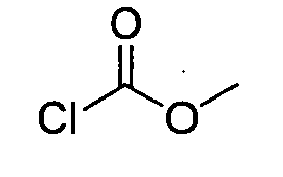

1. 54%
2. 144.9116 

1. 17%
2. 173.0117 

1. 69%
2. 173.0 -

- Boc-Piperazine (3.01g, 0.0161mol) was dissolved in dichloromethane (100mL) along with diisopropylethylamine (5.61 mL, 0.0322mol). Benzoylchloride (1.87mL, 0.0161mol) was added dropwise to the solution at room temperature. The reaction was stirred for several hours. After this time the reaction was concentrated and the product was purified by column chromatography (10% MeOH/DCM). Boc-Protected product was isolated as a solid (5.21g).
1H NMR (CDCl3, 300 MHz) 1.47 (s, 9H), 3.45 (m, 8H), 7.41 (m, 5H).
MS: calculated: 290.16, found: 290.8. - The product from Step A above, was dissolved in a 50% trifluoroacetic acid/dichloromethane solution and stirred overnight. After this time the reaction was diluted with 1N potassium hydroxide (200mL) and the organic layer was separated. The aqueous phase was then extracted six times with dichloromethane. The organic fractions were combined and dried over magnesium sulfate. Filtration and concentration provided product (2.93g).
1H NMR (CDCl3, 300 MHz) 1.92 (s, 1H), 2.87 (m, 4H), 3.52 (m, 4H), 7.39 (s, 5H).
MS: calculated: 190.11, found: 191.1. -

- Boc-Piperazine (3.0g, 0.0161mol) was dissolved in dichloromethane (100mL) along with diisopropylethylamine (3.1mL, 0.0177mol). N,N'-dimethylsulfamoyl chloride (1.73mL, 0.0161mol) was added dropwise to the solution at room temperature. The reaction was stirred for several hours. After this time the reaction was diluted with water (100mL). The layers were separated and the aqueous layer was extracted six times with dichloromethane. The organic fractions were combined and dried over magnesium sulfate. Filtration and concentration provided the product, without further purification, as a solid (4.53g).
1H NMR (CDCl3, 300 MHz) 1.47 (s, 9H), 2.84 (s, 6H), 3.21 (m, 4H), 3.48 (m, 4H).
MS: calculated: 293.14, found: 194.1 (M-Boc)+. - The product from Step A above, was dissolved in a 30% trifluoroacetic acid/dichloromethane solution and stirred overnight. After this time the reaction was diluted with water and 1N potassium hydroxide was used to make the aqueous layer slightly basic. The aqueous layer was extracted a total of seven times with dichloromethane. The organic fractions were combined and dried over sodium sulfate. Filtration and concentration provided the product (2.96g).
1H NMR (CDCl3, 300 MHz) 2.03 (s, 1H), 2.83 (s, 6H), 2.92 (m, 4H), 3.23 (m, 4H).
MS: calculated: 193.09, found: 194.1. -

- In essentially the same manner as that described in Preparative Example 105, Step 1, using 3-nitrobenzoic acid instead of 3-nitrosalicylic acid, the methyl ester product was prepared.
-

- The methyl ester (1.79g, 6.1mmol) from Step A above, was dissolved in dioxane/water (20mL/15mL) at room temperature. Lithium hydroxide (0.258g, 6.2mmol) was added to the solution. After a few hours more lithium hydroxide was added (0.128g, 3.0mmol) and the reaction was stirred for another hour. After this time the reaction was concentrated and then taken up in water. The solution was extracted two times with ether. The aqueous phase was then acidified and extracted three times with ethyl acetate. The organic fractions were then dried over sodium sulfate, filtered and concentrated. Product was isolated by column chromatography (95% EtOAc/Hex, 0.05% HOAc) to give the product (1.66 g, 98%)
1H NMR (300 MHz, CDCl3) 1.49(m, 2H), 1.68(m, 1H), 1.82(m, 2H), 2.44(m, 1H) 3.32(m, 1H), 3.58(m, 1H), 5.57(m, 1H), 7.65(m, 1H), 7.80(m, 1H), 8.32(m, 2H), 10.04(bs, 1Hppm). -

- The nitro compound was dissolved in an excess of methanol (20mL) and covered by a blanket of argon. 5% Palladium on carbon was added (catalytic) and a hydrogen balloon was attached to the flask. The atmosphere of the system was purged under vacuum and replaced with hydrogen. This step was repeated for a total of three times. The reaction was then stirred under hydrogen overnight. After this time the balloon was removed and the solution was filtered through celite followed by several rinses with methanol. The filtrate was concentrated and dried on the vacuum line to provide the desired aniline product (1.33 g, 90%).
1H NMR (300 MHz, CDCl3) 1.40(m, 2H), 1.50(m, 1H), 1.68(m, 2H), 2.33(m, 1H) 3.18(m, 1H), 3.62(m, 1H), 5.39(m, 1H), 6.12(bs, 2H), 6.75(m, 2H), 7.12(m, 1H)ppm. Mass Spectra, calculated: 248, found: 249.1 (M+1)+ - Following the procedure described in Preparative Example 120, but using the commercially available amine and benzoic acid indicated, the intermediate products in the table below were obtained.
Ex. Carboxylic Acid Amine Product 1. Yield (%)
2. (M+1)+
3. Note121 

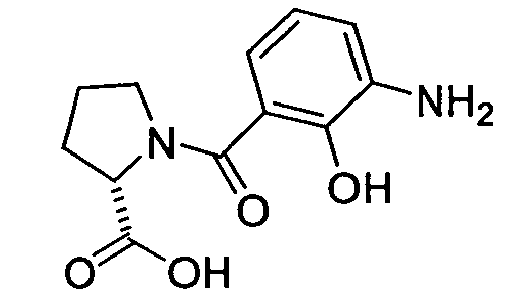
1. 21%
2. 251.0122 


1. 21%
2. 265.0
3. Skipped step B123 


1. 15%
2. 264.0
3. Skipped step B
- 3-Nitrosalicylic acid (500 mg, 2.7 mmol), 1,3-dicyclohexylcarbodiimide (DCC) (563 mg) and ethyl acetate (10 mL) were combined and stirred for 10 min. (R)-(-)-2-pyrrolidinemethanol (0.27 mL) was added and the resulting suspension was stirred at room temperature overnight. The solid was filtered off and the filtrate was either concentrated down and directly purified or washed with 1N NaOH. The aqueous phase was acidified and extracted with EtOAc. The resulting organic phase was dried over anhydrous MgSO4, filtered and concentrated in vacuo. Purification of the residue by preparative plate chromatography (silica gel, 5% MeOH/CH2Cl2 saturated with AcOH) gave the desired compound (338 mg, 46%, MH+ = 267).
- The product from Step A above was stirred with 10% Pd/C under a hydrogen gas atmosphere overnight. The reaction mixture was filtered through celite, the filtrate concentrated in vacuo, and the resulting residue purified by column chromatography (silica gel, 4% MeOH/CH2Cl2 saturated with NH4OH) to give the product (129mg, 43%, MH+=237).
- Following the procedure described for Preparative Example 124, but using the commercially available amine or the amine from the Preparative Example indicated and 3-nitrosalicylic acid, the products in the table below were obtained.
Ex. Amine Comm. Avail./From Prep.Ex. Product 1. Yield (%)
2. (M+1)+125 

1. 37%
2. 298.1126 

1. 31%
2. 310.1127 

1. 68%
2. 294.1128 

1. 54%
2. 365.9129 

1. 45%
2. 316.1130 110 
1. 59%
2. 293.1131 111 
1. 32%
2. 362.0132 114 
1. 36%
2. 342.0133 112 
1.65%
2. 300.0134 

1. 48%
2. 321.1135 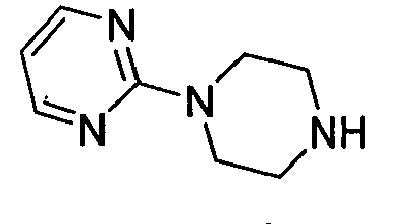

1. 50%
2. 300.1136 

1. 56%
2. 299.2137 115 
1. 79%
2. 280.1138 116 
1. 64%
2. 307.1139 

1. 73%
2. 304.2140 

1. 34%
2. 264.0141 117 
1. 40%
2. 307.1142 113 
1. 91%
2. 307.1143 118 
1. 9.0%
2. 326.0144 119 
1. 42%
2. 329.0145 

1. 6.5%
2. 236.1 -

- To a solution of tosylaziridine [J. Am. Chem. Soc. 1998, 120, 6844-6845) (0.5 g, 2.1 mmol) and Cu(acac)2 (55 mg, 0.21 mmol) in THF (5 mL) at 0 °C was added PhMgBr (3.5 ml, 3.0 M in THF) diluted with THF (8 mL) dropwise over 20 min. The resulting solution was allowed to gradually warm to rt and was stirred for 12h. Sat. aq. NH4Cl (5 mL), was added and the mixture was extracted with Et2O (3 x 15 mL). The organic layers were combined, washed with brine (1 x 10 mL), dried (MgSO4) and concentrated under reduced pressure. The crude residue was purified by preparative TLC eluting with hexane/EtOAc (4:1) to afford 0.57 g (86% yield) of a solid. The purified tosylamine was taken on directly to the next step.
- To a solution of tosylamine (0.55 g, 1.75 mmol) in NH3 (20 mL) at -78 °C was added sodium (0.40 g, 17.4 mmol). The resulting solution was stirred at -78 °C for 2 h whereupon the mixture was treated with solid NH4Cl and allowed to warm to rt. Once the NH3 had boiled off, the mixture was partitioned between water (10 mL) and CH2Cl2 (10 mL). The layers were separated and the aqueous layer was extracted with CH2Cl2 (2 x10 mL). The organic layers were combined,), dried (NaSO4), and concentrated under reduced pressure to a volume of ~20 mL. 4N HCl in dioxane (5 mL) was added and the mixture was stirred for 5 min. The mixture was concentrated under reduced pressure and the resultant crude residue was recrystallized from EtOH/Et2O to afford 0.30 g (87% yield) of a solid.
- Following the procedure set forth in Preparative Example 146 but using the requisite tosylaziridines and Grignard reagents listed in the Table below, the following racemic amine hydrochloride products were obtained.
Prep Ex. Tosyl aziridine Grignard Reagent Amine hydrochloride 1. Yield (%) 147 
MeMgBr 
1. 19% 148 
EtMgBr 
1. 56% 149 
n-PrMgBr 
1. 70% 150 
i-PrMgCl 
1. 41% 151 
BnMgCl 
1. 61% 152 
MeMgBr 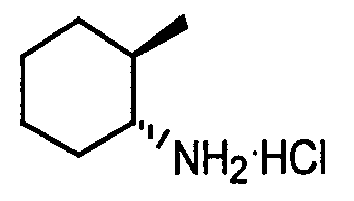
1. 61% 153 
EtMgBr 
1. 66% 154 
n-PrMgBr 
1. 80% 155 
i-PrMgBr 1. 27% 156 
BnMgCl 
1. 79% 156.1 


52% 156.2 
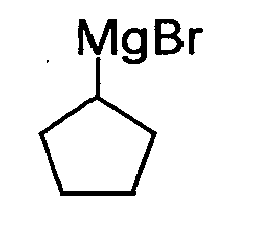

49% 156.3 


61% 156.4 


57% 156.5 


64% 156.6 


64% 156.7 


45% 156.8 


23% 156.9 


40% 156.10 


15% 
- To a solution of the amine (118mg) from Preparative Example 148 in CH2Cl2 (10ml) was added triethylamine (120ul), R-Mandelic Acid (164mg), DCC (213mg) and DMAP (8.8mg)and let stir for 40hr. The mixture was diluted with CH2Cl2 and washed with saturated ammonium chloride, dried over Na2SO4, filtered, and concentrated in vacuo. The crude material was purified by preparative plate chromatography (Hex/EtOAc 4:1) to afford both isomers (A, 86mg, 45%) (B, 90mg, 48%).
- To isomer B (90mg) from above in dioxane (5ml) was added 6M H2SO4 (5ml). , The reaction was heated to 80°C over the weekend. 2M NaOH added to basify the reaction and extracted with ether. Ether layer washed with brine, dried over Na2SO4, filtered, and concentrated in vacuo. The residue was stirred in 4N HCl in dioxane for 30min, concentrated in vacuo and recrystallized in EtOH/ether to afford 55mg of product (98%).
- Isomer A (86mg) was reacted following the procedure set forth in Step B above to give the amine salt.
-

- The above nitro compound was reduced following the Preparative Example 2, Step B.
-

- To a solution of 1,2-phenylenediame (1.5g) in CH2Cl2 (30ml) at 0°C was added TEA (2.91 ml), followed by dropwise addition of MeSO2Cl (1.07ml). The mixture was allowed to warm to room temperature and stir overnight. 1M HCl added and the layers were separated. The aqueous layer was adjusted to pH=11 with solid NaOH, extracted with CH2Cl2. The basified aqueous layer was then neutralized using 3N HCl and extracted with CH2Cl2, dried with Na2SO4, filtered, and concentrated in vacuo to give 1.8g of product (71%).
-

- The above compound was prepared using the procedure set forth in Preparative Example 156.13, but using PhSO2Cl.
-

- The nitro compound was reduced following a similar procedure as in Preparative Example 2, Step B.
-

- The known acid (410mg) above (J.Med.Chem. 1996, 34,4654.) was reacted following the procedure set forth in Preparative Example 2, Step A to yield 380mg of an oil (80%).
- The amide (200mg) from above was reacted following the procedure set forth in Preparative Example 2, Step B to yield 170mg of an oil (100%).
-

- To a solution of ketone (500mg) in EtOH/water (3:1, 4ml) at room temperature was added hydroxylamine hydrochloride (214mg) followed by NaOH to afford a heterogenous mixture. The reaction was not complete so another equivalent of hydroxylamine hydrochloride was added and refluxed overnight. The reaction was cooled to 0°C and treated with 3N HCl and extracted with CH2Cl2, washed with brine, dried over Na2SO4, filtered, and concentrated in vacuo to give 500mg of product (92%).
- To a solution of oxime (300mg) in THF (5ml) at 0°C was added LiAlH4 (266mg) portionwise. The heterogenous solution was stirred at room temperature for 14hr and then refluxed for 8hr. The solution was cooled to 0°C and water, 2M NaOH, water and ether were added to the reaction. The mixture was filtered through a celite pad. The filtrate was treated with 3N HCl. The aqueous layer was cooled to 0°C, basified with NaOH pellets and extracted with ether. The ether layer was dried over MgSO4, filtered, and concentrated in vacuo to afford the product (143mg, 69%).
-

- Methoxyacetic acid (14 mL) in CH2Cl2 (120 mL) and cooled in an ice-water bath was treated with DMF (0.9 mL) and oxalyl chloride (21 mL). After stirring at RT overnight, the mixture was concentrated in vacuo and redissolved in CH2Cl2 (120 mL). N-methyl-N-methoxylamine (20 g) was added and the mixture stirred at RT overnight. Filtration and concentration in vacuo afforded the desired amide (21 g, 89%).
- To a solution of the above amide (260mg) in THF (5ml) at -78°C was added a solution of 2-thienyllithium (1M in THF, 2.15ml). The solution was stirred for 2hr at -78 °C and warmed to -20°C for an additional 2hr. The reaction was quenched with saturated ammonium chloride and extracted with CH2Cl2, washed with brine, dried over Na2SO4, filtered, and concentrated in vacuo to give 250mg of product (82%).
- The ketone from above (250mg) was reacted via the procedure set forth in Preparative Example 156.17 Steps A and B to yield 176 mg of the amine (79%).
-

- To a solution of 3-chlorothiophene (1.16ml) in ether (20ml) at -10°C was added n-BuLi (2.5M in hexane, 5ml). After solution was stirred at -10°C for 20min, propionaldehyde (0.82ml) in ether (20ml) was added dropwise and let warm to room temperature slowly. The reaction was quenched with saturated ammonium chloride and extracted with CH2Cl2, washed with brine, dried over Na2SO4, filtered, and concentrated in vacuo to give 1.37g of product (62%).
- The alcohol from Step A above was reacted via the procedures set forth in Preparative Example 75.75, Steps B and C to give the amine.
-

- To a solution of magnesium metal (360mg) in THF (15ml) at 0°C was added 2-bromothiophene (1.45ml) in THF (10ml) dropwise over 20min. The solution was warmed to room temperature for 3hr, recooled to 0 °C whereupon a solution of cyclopropylacetonitrile (1g) in ether (30ml) was added dropwise via a syringe and let warm to room temperature and stir overnight. 3M HCl was added and washed with CH2Cl2. The aqueous layer was basified with NaOH pellets and extracted with ether, dried with Na2SO4, filtered, and concentrated in vacuo to give 625mg of product (68%).
- The ketone was reacted via the procedure set forth in Preparative Example 156.17 Step A to give the oxime.
- The oxime from above was reacted via the procedure set forth in Preparative Example 156.17 Step B to give the amine.
-

- To a solution of CH3ONHCH3.HCl (780mg) and acid chloride (1g) in CH2Cl2 at 0 °C was added dry pyridine (1.35ml) to afford a heterogenous mixture The solution was warmed to room temperature and stirred overnight. 1M HCl was added to the reaction and the organic layer was separated, washed with brine, dried with Na2SO4, filtered, and concentrated in vacuo to give 1g of product (85%).
- To a solution of Etl (614ul) in ether (5ml) at-78°C was added t-BuLi (1.7M in pentane, 9ml) dropwise. The mixture was warmed to room temperature for 1hr, cooled to -78°C where the amide (1g) from Step A in THF (4ml) was added and allowed to warm to 0°C for 2hr. 1M HCl was added to the reaction and extracted with CH2Cl2, washed with brine, dried with Na2SO4, filtered, and concentrated in vacuo to give 500mg of product (63%).
- To a solution of ketone (800mg) in THF/water (10:1, 20ml) at 0°C was added sodium borohydride (363mg) portionwise. The solution was stirred for 2hr at 0°C. The mixture was concentrated in vacuo, the residue was dissolved in CH2Cl2, washed with 1N NaOH and brine, dried with Na2SO4, filtered, and concentrated in vacuo to give 560mg of product (69%).
- The alcohol from above was reacted via the procedures set forth in Preparative Example 75.75, Steps B and C to give the amine (176mg, 59%).
-

- Cyclopropylacetonitrile (12 mmol) in Et2O (50 mL) at 0°C was treated with PhMgBr (14 mmol) and the mixture was stirred for 2 hrs at 0°C, then at RT overnight. Hydrochloric acid (3 M) was added, and after stirring for an additional 12 hrs, the mixture was extracted with CH2Cl2, washed with brine, dried over Na2SO4, filtered and concentrated in vacuo to give the desired ketone (1.34 g, 70%).
- Following the procedures set forth in Preparative Example 156.20 Steps B and C, the amine was prepared.
-

- The above amine was prepared using the procedures set forth in
WO Patent Publication 98/11064 -

- By taking the known carboxylic acid [J. Med. Chem. 1996, 39, 4654-4666] and subjecting it to the conditions outlined in Preparative Example 112, the product can be prepared.
- Following a similar procedure used in Preparative Example 2, Step A, except using dimethylamine and the compound from Step A above, the product can be prepared.
- Following a similar procedure used in Preparative Example 2, Step B, except using the compound from Step B above, the product can be prepared.
-

- Following a similar procedure used in Preparative Example 157, Steps A-C, except using trifluoromethylsulfonylchloride in Step A above, the product can be prepared.
-

- By using the nitro-amide from Preparative Example 13.3, Step A, the amidine structure can be prepared following a similar procedure to that in Tetrahedron Lett., 2000, 41 (11), 1677-1680.
- By using the product from Step A and the procedure set forth in Preparative Example 2, Step B, one could obtain the desired amine-amidine.
-

- By treating the nitro-amide from Preparative Example 13.3, Step B with POCl3 and subsequently MeNH2, according to procedures known in the art, one would obtain the desired compound.
- By treating the product from Step A according to the procedure set forth in Preparative Example 13.3, Step E, one could obtain the desired compound.
- By using the product from Step B and the procedure set forth in Preparative Example 2 Step B, one would obtain the desired compound.
-

- By following a similar procedure as that described in Zh. Obshch. Khim., 27, 1957, 754, 757., but instead using 2,4-dichlorophenol and dimethylphosphinic chloride, one would obtain the desired compound.
- By following a similar procedure as that described in J. Organomet. Chem.; 317, 1986, 11-22, one would obtain the desired compound.
- By following a similar procedure as that described in J. Amer. Chem. Soc., 77, 1955, 6221, one would obtain the desired compound.
- By following a similar procedure as that described in J. Med. Chem., 27, 1984, 654-659, one would obtain the desired compound.
-

- By following a similar procedure as that described in Phosphorous, Sulfur Silicon Relat. Elem.; EN; 61, 12, 1991, 119-129, but instead using 4-chlorophenol, one would obtain the desired compound.
- By using a similar procedure as that in Phosphorous, Sulfur Silicon Relat. Elem.; EN; 61, 12, 1991, 119-129, but instead using MeMgBr, the desired compound could be prepared.
- By following a similar procedure as that described in J. Amer. Chem. Soc., 77, 1955, 6221, one would obtain the desired compound.
- By following a similar procedure as that described in J.Med. Chem., 27, 1984, 654-659, one would obtain the desired compound.
-
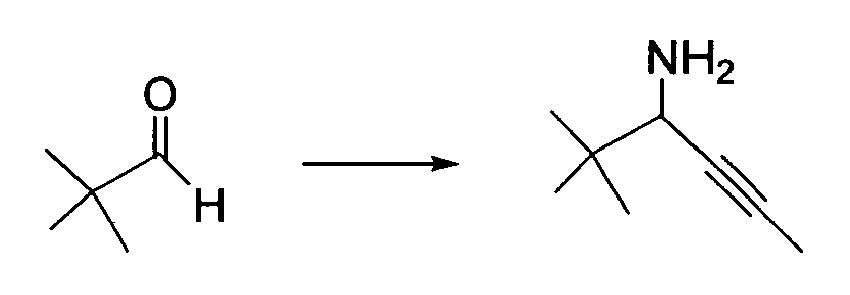
- By following a similar procedure as that set forth in J. Org. Chem. 1998, 63, 2824-2828, but using CH3CCMgBr, one could obtain the desired compound.
-

- By following the procedure set forth in Preparative Example 13.1, Step B using 3-methoxythiophene, one can obtain the desired product.
- By using the product from step A and following the procedure set forth in Preparative Example 13.19, Step E, the desired compound can be obtained.
- By using the product from Step B and following the procedure set forth in Preparative Example 13.20, Step A, one can obtain the desired compound.
- By using the product from Step C and following the procedure set forth in Preparative Example 13.3, Step B, the desired compound can be obtained.
- By treating the product from Step D with n-BuLi at -78°C in THF and quenching the resulting anion with CO2 according to standard literature procedure, one would obtain the desired compound following aqueous acid work up.
- By using the product from Step E and the procedure set forth in Prepartive Example 13.19, Step C, one could obtain the desired compound.
- By using the product from step F and following the procedure set forth in Preparative Example 13.19, Step E, the desired compound can be obtained.
- By using the product from Step G and following the procedure set forth in Preparative Example 2, Step B, the desired compound can be obtained.
- By using the product from Step H and following the procedure set forth in Preparative Example 19, the desired compound can be prepared.
-

- To a solution of the HCl salt product (83 mg, 0.50 mmol) from Preparative Example 24, in EtOH (3 mL) at room temperature was added Et3N (55 µL, 0.50 mmol) and the mixture was stirred for 10 min. The cyclobutenedione (100 mg, 0.33 mmol) from Preparative Example 19 in EtOH was then added in a single portion and the mixture was stirred for 12 h at room temperature.
The mixture was concentrated under reduced pressure and was purified by preparative TLC (4 x 1000 µM plates) eluting with CH2Cl2/MeOH (25: 1) to afford 116 mg (91 % yield) of the desired product as a solid [MH+ 389.1, mp 241-243 °C]. - Following the procedure set forth in Preparative Example 200 but using the appropriate amine hydrochlorides from Preparative Examples 25-33 as identified and the cyclobutenedione intermediate from Preparative Example 19, the cyclobutenedione products in the Table below were obtained.
Ex. (Prep Ex.) Amine Product 1. Yield (%)
2. MH+
3. mp (°C)201 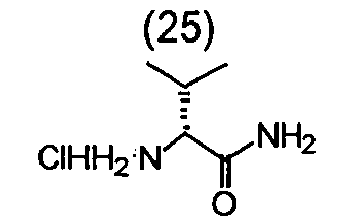

1. 89%
2. 375.1
3. 255.5-257.3202 

1. 92%
2. 465.1
3. 149.0-152.3203 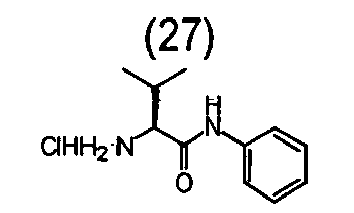

1. 68%
2. 451.1
3. 282-284204 

1. 74%
2. 493.1
3. 141205 
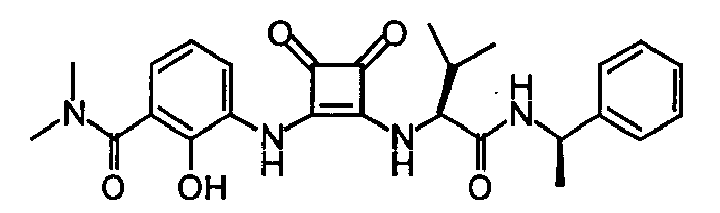
1. 48%
2. 479.1
3. 142206 

1. 41%
2. 479.1
3. 142207 

1. 59%
2. 479.1
3. 141208 

1. 34%
2. 493.1
3. 140209 

1. 40%
2. 493.1
3. 142209.1 (33.1) 
1. 59%
2. 143-145 -

- The crude amine product from Preparative Example 33.2 and the cyclobutendione component from Preparative Example 19.1 (36mg) were dissolved in MeOH/ DIEA (2.5ml/5/1) and irradiated via microwave (50W; 1hr). The reaction was concentrated in vacuo and purified by Gilson semi-prep. HPLC to give the final product (68%, MH+=485.2).
- Following the procedure set forth in Example 209.2, but using the prepared amine from the Preparative Example indicated in the Table below, the following cyclobutenedione products were obtained.
Ex. (Prep Ex.) Amine Product 1. Yield (%)
2. MH+209.3 (33.3) 
1. 50%
2. 541.2209.4 (33.4) 
1. 32%
2. 549.1209.5 (33.5) 
1. 65%
2. 493.1209.6 (33.6) 
1. 64%
2. 491.1209.10 (33.7) 
1. 90%
2. 457.2209.11 (33.8) 
1. 35%
2. 505.0209.12 (33.9) 
1. 70%
2. 493.1209.13 (33.10) 
1. 75%
2. 480.2209.14 (33.11) 
1. 74%
2. 465.1209.15 (33.12) 
1. 62%
2. 479.1209.16 (33.13) 
1. 31%
2. 466.2209.17 (33.14) 
1. 79%
2. 495.2209.18 (33.15) 
1. 99%
2. 479.2209.19 (33.16) 
1. 47%
2. 466.2209.20 (33.17) 
1. 72%
2. 479.1209.21 (33.18) 
1. 92%
2. 493.1209.22 (33.19) 
1. 47%
2. 499.1209.23 (33.20) 
1. 7%
2. 490.0209.24 (33.21) 
1. 15%
2. 533.1209.25 (33.22) 
1. 88%
2. 451.1209.26 (33.23) 
1. 26%
2. 523.0209.27 (33.24) 
1. 54%
2. 433.1209.28 (33.25) 
1. 59%
2. 466.2209.29 (33.26) 
1. 66%
2. 560.2209.30 (33.27) 
1. 98%
2. 495.1209.31 (33.28) 
1. 99%
2. 471.2209.32 (33.29) 
1. 99%
2. 471.2209.33 (33.30) 
1. 18%
2. 524.2209.34 (33.31) 
1. 78%
2. 479.2209.35 (33.32) 
1. 71%
2. 459.2209.36 (33.33) 
1. 5%
2. 491.0209.37 (33.34) 
1. 27%
2. 501.1209.38 (33.35) 
1. 26%
2. 533.1209.39 (33.36) 
1. 48%
2. 451.1209.40 (33.37) 
1. 99%
2. 455.1209.41 (33.38) 
1. 88%
2. 527.1209.42 (33.39) 
1. 74%
2. 485.2209.43 (33.40) 
1. 20%
2. 492.5209.44 (33.41) 
1. 68%
2. 541.1209.45 (33.42) 
1. 13%
2. 508.9209.46 (33.43) 
1. 86%
2. 479.1209.47 (33.44) 
1. 34%
2. 507.0209.48 (33.45) 
1. 56%
2. 429.1209.49 (33.46) 
1. 18%
2. 495.0209.50 .. (33.47) 
1. 22%
2. 501.0 -

- To a solution of amine (0.17 g, 1 mmol) from Preparative Example 34 in EtOH (3 mL) at room temperature was added the cyclobutenedione from Preparative Example 19 (100 mg, 0.33 mmol) in one portion. The resulting mixture was stirred for 5h (until TLC analysis revealed reaction complete) and was concentrated under reduced pressure. The crude residue was redissolved in CH2Cl2 (15 mL) and was washed sequentially with 10% KH2PO4 (2 x 15 mL) and brine (1 x 15 mL). The organic layer was dried (Na2SO4) and concentrated under reduced pressure to afford the crude adduct. The crude product was purified by prep TLC (4 x 1000 uM plates) eluting with CH2Cl2/MeOH (20:1) to afford 83 mg (59% yield) of the desired product as a solid.
- Following the procedure set forth in Example 210 but using the commercially available amine or the prepared amine from the Preparative Example indicated in the Table below, the following cyclobutenedione products were obtained.
Ex. (Prep Ex) Amine Product 1. Yield (%)
2. MH+
3. mp (°C)211 

1. 75%
2. 412.1
3. 126212 

1. 42%
2. 438.1
3. 106213 

1. 73%
2. 428.1
3. 139214 

1. 40%
2. 462.1
3. 160215 

1. 52%
2. 408.1
3. 126216 

1. 32%
2. 478.1
3: 176217 

1. 50%
2. 412.1
3. 126218 

1. 55%
2. 478.1
3. 110219 

1. 67%
2. 438.1
3. 122220 

1. 73%
2. 462.1
3. 118221 

1. 67%
2. 424.1
3. 100222 

1. 61%
2. 478.1
3. 114223 

1. 50%
2. 408.1
3. 157-159224 

1. 75%
2. 366.1
3. 110-112225 

1. 81%
2. 380.1
3. 118-120226 

1. 69%
2. 394.1
3. 123-125227 

1. 80%
2. 367.1
3. 122-125228 

1. 72%
2. 381.1
3. 133-135229 

1. 81%
2. 395.1
3. 141-143230 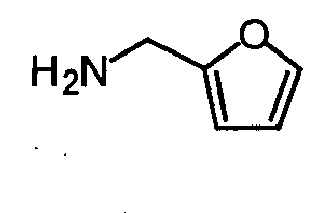

1. 75%
2. 356.1
3. 103-104231 

1. 24%
2. 370.1
3. 101232 

1. 16%
2. 384.1
3. 70233 

1. 72%
2. 373.4
3. 104-106234 

1. 34%
2. 387.1
3. 99235 

1. 48%
2. 380.1
3. 118-120236 

1. 72%
2. 380.1
3. 119-120237 

1. 72%
2. 398.1
3. 121-123238 

1. 44%
2. 398.1
3. 121-123239 

1. 60%
2. 394.1
3. 123-124240 

1. 52%
2. 394.1
3. 122-124241 

1. 34%
2. 428.4
3. 157-159242 

1. 70%
2. 412.1
3. 109-112243 

1. 69%
2. 412.1
3. 110-112244 

1. 89%
2. 412.1
3. 126245 

1. 81%
2. 412.1
3. 126246 

1. 65%
2. 424.1
3. 121-124247 

1. 73%
2. 424.1
3. 122-124248 

1. 29%
2. 372.1
3. 219-221249 

1. 66%
2. 394.1
3. 132-135250 

1. 72%
2. 332251 

1. 74%
2. 408.1
3. 121-123252 

1. 76%
2. 408.1
3. 102-104253 

1. 72%
2. 438.1
3. 75-77254 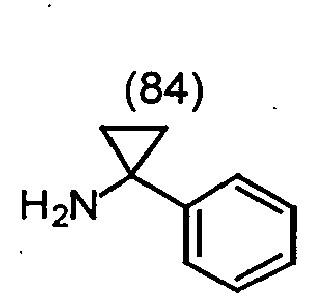

1. 80%
2. 392.1
3. 98-101255 

1. 72%
2. 420.1
3. 200-205256 

1. 75%
2. 434.1
3. 138-140257 

1. 67%
2. 410.1
3. 116-118258 

1. 76%
2. 424.1
3. 108-110259 

1. 72%
2. 430.1
3. 125260 

1. 78%
2. 422.1
3. 127260.1 

1. 74%
2. 426.1
3. 114 DEC260.2 
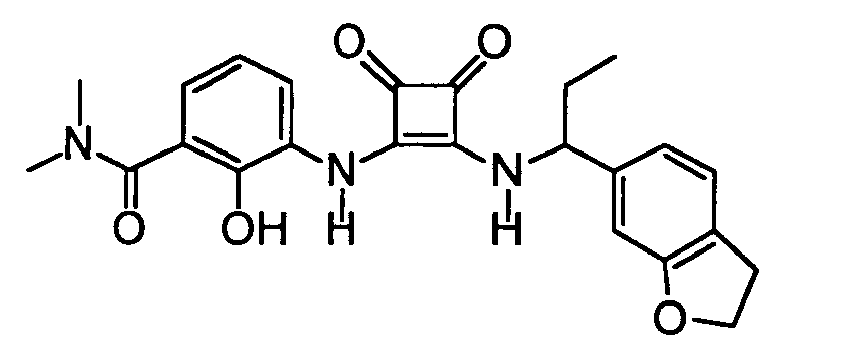
1. 85%
2. 436.1
3. 143 DEC260.3 

1. 56%
2. 474.1
3. 121-123260.4 

1. 71%
2. 500.1
3. 97(DEC)260.6 
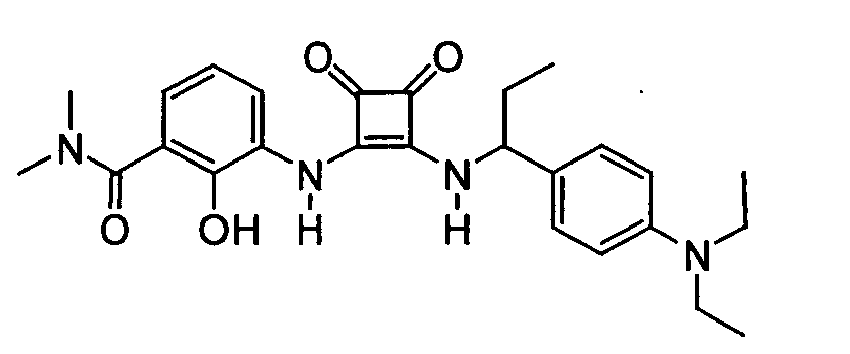
1. 61%
2. 465
3. 102-107260.7 

1. 78%
2. 422.1
3. 114 DEC260.8 

1. 35%
2. 486.1
3. 103-105260.9 
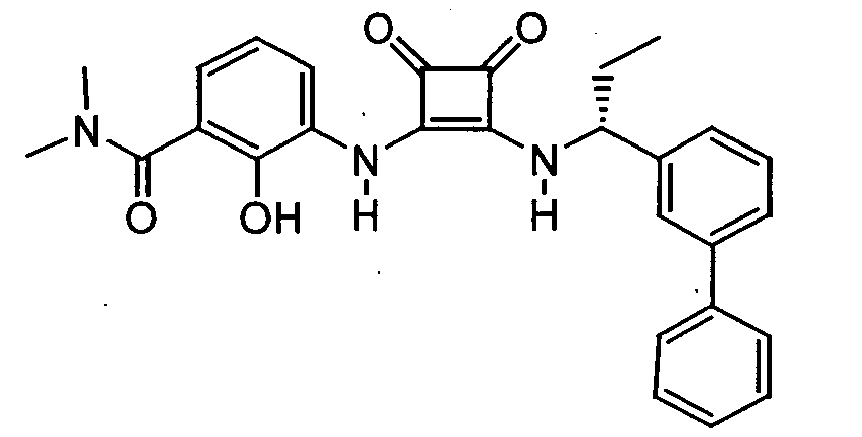
1. 79%
2. 470
3. 110-115260.10 

1. 62%
2. 462.1
3. 110 DEC260.11 

1. 61%
2. 446.1
3. 118 DEC260.12 

1. 58%
2. 480.1
3. 111 DEC260.13 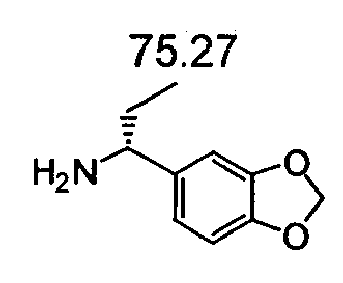

1. 87%
2. 438.1
3. 122260.14 

1. 74%
2. 408.1
3. 128-130260.15 

1. 78%
2. 430.1
3. 117 DEC260.16 

1. 81%
2. 452.1 3. 139260.17 
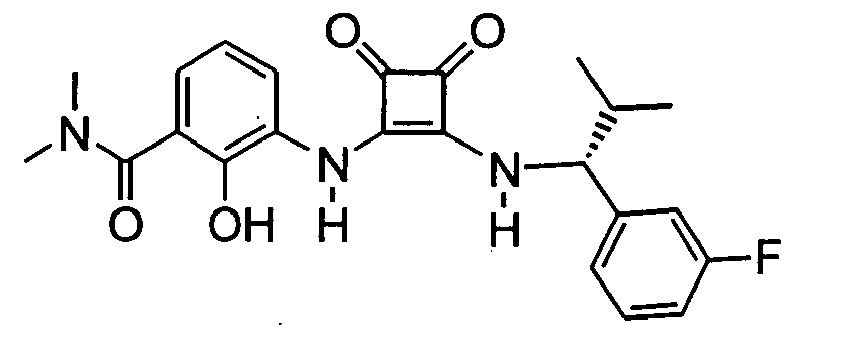
1. 85%
2. 426.1 3. 126260.18 

1. 50%
2. 482.1
3. 114-116260.19 
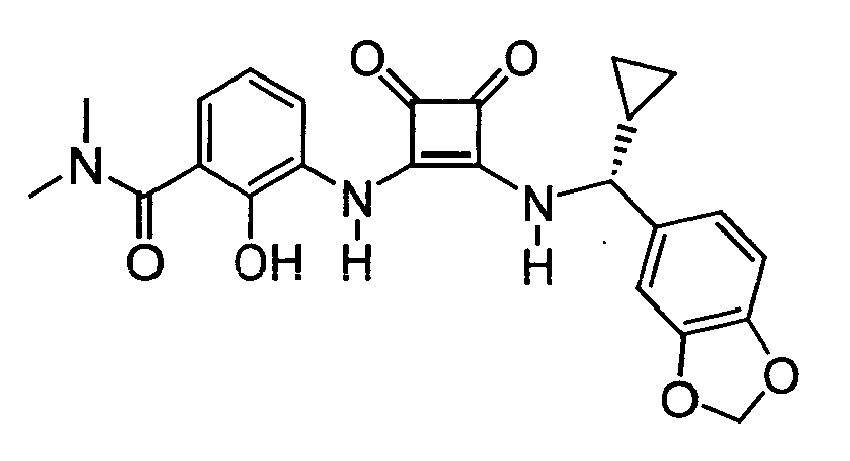
1. 64%
2. 450.1
3. 129260.20 

1. 72%
2. 424.1
3. 116260.21 

1. 35%
2. 434.1
3. 124260.22 

1. 58%
2. 420.1
3. 107-109260.23 

1. 69%
2. 440.1
3. 169260.24 

1. 15%
2. 404.1
3. 103-105260.25 

1. 92%
2. 434.1
3. 129260.26 

1. 77%
2. 434.1
3. 133260.27 

1. 73%
2. 434.1
3. 138260.28 

1. 37%
2. 434.1
3. 133 -

- To a solution of the amine (77 µL, 0.66 mmol) in EtOH (3 mL) at room temperature was added the product from Preparative Example 19 (100 mg, 0.33 mmol) in one portion. The resulting mixture was stirred for 5h (until TLC analysis revealed reaction complete) and was then concentrated under reduced pressure. The crude residue was redissolved in CH2Cl2 (15 mL) and was washed sequentially with 10% KH2PO4 (2 x 15 mL) and brine (1 x 15 mL). The organic layer was dried (Na2SO4) and concentrated under reduced pressure to afford the crude adduct. The crude product was purified by prep TLC (4 x 1000 uM plates) eluting with CH2Cl2/MeOH (20:1) to afford 82 mg (72% yield) of the desired product as a solid. (mp 126.0-128.0 °C, MH+ 346)
- Following the procedure set forth in Example 261 but using the commercially available amine or the prepared amine from the Preparative Example indicated in the table below, the following cyclobutenedione products were obtained.
Ex. Amine Product 1. Yield (%)
2. MH+
3. mp (°C)262 

1. 74%
2. 330.1
3. 112-115263 

1. 64%
2. 344.1
3. 120-122264 

1. 72%
2. 358.4
3. 129-132265 

1. 76%
2. 372.1
3. 141-143266 

1. 57%
2. 372.1
3. 102267 

1. 65%
2. 386.1
3. 146268 

1. 65%
2. 464.1
3. 110-112269 

1. 85%
2. 464.1
3. 111-113270 

1. 49%
2. 374.1
3. 146271 

1. 69%
2. 374.1
3. 158-162272 

1. 54%
2. 430.1
3. 108273 

1. 65%
2. 430.1
3. 110274 

1. 53%
2. 388.1
3. 136275 

1. 30%
2. 388.1
3. 114276 

1. 53%
2. 402.1
3. 126277 

1. 68%
2. 402.1
3. 116278 

1. 64%
2. 372.1
3. 106279 

1. 69%
2. 434.1
3. 141-143280 

1. 51%
2. 434.1
3. 148-150281 

1. 71%
2. 406.1
3. 146-148282 

1. 66%
2. 406.1
3. 141-144283 

1. 70%
2. 450.1
3. 97-99284 

1. 25%
2. 360.1
3. 139285 

1. 78%
2. 416.1
3. 94286 

1. 49%
2. 372.1
3. 139287 

1. 95%
2. 386.1
3. 139288 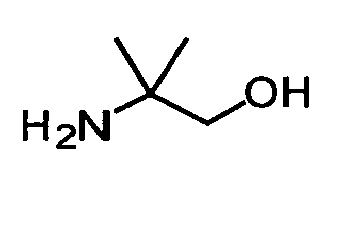

1. 32%
2. 348
3. 130-133289 

1. 72%
2. 410.1
3. 138290 

1. 72%
2. 410.1
3. 132-134291 

1. 75%
2. 318.1
3. 96-98292 

1. 72%
2. 430.1
3. 125293 

1. 51%
2. 348
3. 109-111294 

1. 84%
2. 374
3. 150.3295 

1. 56%
2. 386
3. 142.3296 

1. 38%
2. 382
3. 173.4297 

1. 13%
2. 370
3. 135.1298 

1. 47%
2. 424
3. 231.2-234.5299 

1. 34%
2. 316
3. 209.5300 

1. 92%
2. 392
3. 152.7301 

1. 52%
2. 346
3. 124.7302 

1. 51%
2. 346
3. 139.2303 

1. 29%
2. 408
3. 105304 

1. 24%
2. 372
3. 223.2305 

1. 25%
2. 442
3. 219.0306 

1. 83%
2. 386
3. 145307 

1. 58%
2. 400
3. 99.6308 

1. 60%
2. 414
3. 123.6309 

1. 44%
2. 412
3. 146.7310 

1. 39%
2. 432
3. 156.6311 

1. 65%
2. 448
3.162.8312 

1. 53%
2. 449
3. 139.7313 

1. 64%
2. 454
3. 143.2314 

1. 35%
2. 428
3. 146.8315 

1. 72%
2. 476
3. 139.4316 

1. 36%
2. 402
3. 89.6317 

1. 62%
2. 400
3. 130.2318 

1. 46%
2. 400
3. 123.6319 

1. 64%
2. 400
3. 132.5320 

1. 79%
2. 406
3. 123.3321 

1. 17%
2. 440
3. 157.6322 

1. 58%
2. 428
3. 167.9323 

1. 50%
2. 422
3. 150.2324 

1. 20%
2. 462
3. 113.9325 

1. 95%
2. 360
3. 129.2326 

1. 97%
2. 360
3. 131.5327 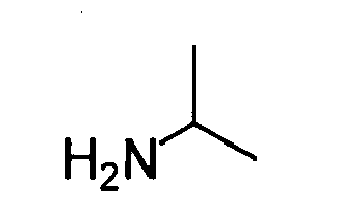

1. 39%
2. 318
3. 138.5328 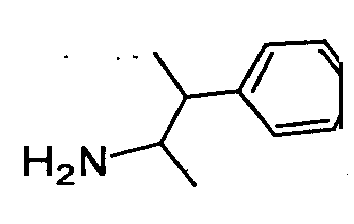

1. 54%
2. 408
3. 152.3329 

1. 62%
2. 346
3. 134.8330 

1. 55%
2. 346
3. 145.1331 

1. 61%
2. 400
3. 137.6332 

1. 42%
2. 374
3. 155.1333 

1. 45%
2. 348
3. 108-110334 

1. 29%
2. 424
3. 116335 

1. 15%
2. 414
3. 108-110336 

1. 75%
2. 408
3. 116337 
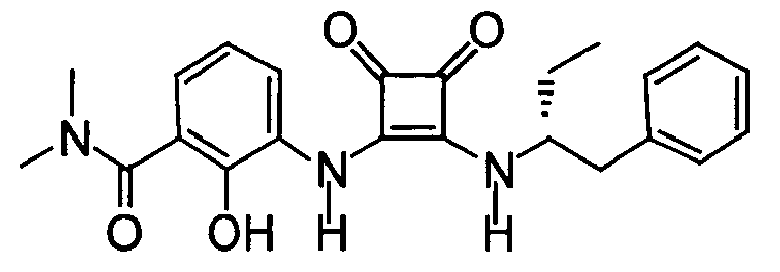
1. 75%
2. 408
3. 116338 

1. 59%
2. 424
3. 115-117339 

1. 72%
2. 424
3. 157-159340 

1. 19%
2. 332
3. 131341 

1. 86%
2. 360
3. 127342 

1. 98%
2. 346
3. 128343 

1. 80%
2. 374
3. 131.5344 

1. 46%
2. 374
3. 102345 

1. 75%
2. 388
3. 104346 

1. 76%
2. 438
3. 95347 

1. 72%
2. 424
3. 163-165348 

1. 73%
2. 438
3. 96-98349 

1. 53%
2. 362
3. 89-91350 

1. 59%
2. 362
3. 90-92351 

1. 61%
2. 362
3. 120-122352 

1. 70%
2. 362
3. 121-123353 

1. 23%
2. 371
3. 126354 

1. 79%
2. 370
3. 108355 

1. 80%
2. 370
3. 106356 

1. 56%
2. 450
3. 138-140357 

1. 76%
2. 398
3. 116358 

1. 85%
2. 384
3. 100359 

1. 59%
2. 332
3. 138.6360 

1. 47%
2. 332
3. 141.6360.1 

1. 89%
2. 356.1
3. 133-135360.2 

1. 65%
2. 334.1
3. 121-122360.3 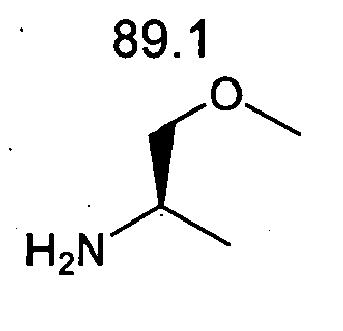

1. 60%
2. 348.1
3. 94-96360.4 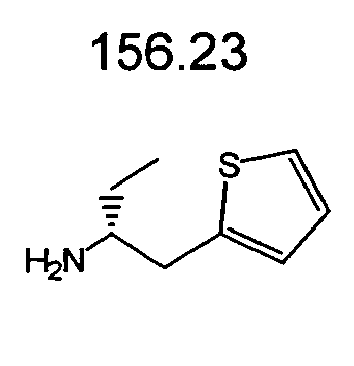

1. 29%
2. 414.1
3. 108-110360.5 

1. 67%
2. 348.1
3. 95-96360.6 

1. 62%
2. 414.1
3. 113-115360.7 

1. 68%
2. 414.1
3. 114-116360.8 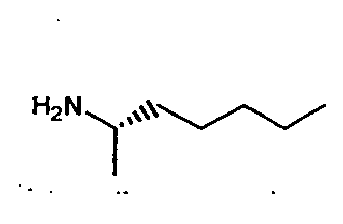

1. 74%
2. 374
3. 129.8360.9 

1. 61%
2. 388
3. 123.1360.10 

1. 53%
2. 388
3. 117.2360.11 

1. 37%
2. 388
3. 129.9360.12 

1. 62%
2. 374
3. 126.1360.13 

1. 71%
2. 400.1
3. 106-109360.14 

1. 66%
2. 400.1
3. 106-109360.15 

1. 69%
2. 372
3. 138.7360.16 

1. 54%
2. 346
3. 123.6360.17 

1. 53%
2. 388
3. 116.9360.18 

1. 87%
2. 384.1
3. 136360.19 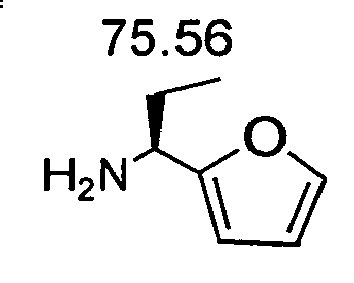

1. 92%
2. 384.1
3. 136360.20 

1. 27%
2. 386.1
3. 109-112360.21 

1. 31%
2. 400.1
3. 117-120360.22 

1. 61%
2. 396.1
3. 129360.23 

1. 69%
2. 396.1
3. 126360.24 

1. 74%
2. 398.1
3. 123360.25 

1. 76%
2. 398.1
3. 123360.26 

1. 60%
2. 384.1
3. 103-105360.27 

1. 67%
2. 384.1
3. 104-106360.28 

1. 70%
2. 386.1
3. 103-105360.29 

1. 64%
2. 400.1
3. 109-111360.30 

1. 63%
2. 398.1
3. 99-101360.31 

1. 57%
2. 398.1
3. 99-101360.32 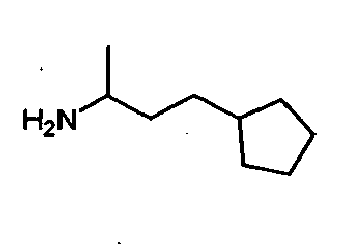

1. 45%
2. 400
3. 104.6360.33 

1. 44%
2. 386
3. 143360.34 

1. 73%
2. 356.1
3. 218-220360.35 

1. 97%
2. 406.1
3. 154360.36 

1. 77%
2. 414.1
3. 122-124360.37 

1. 70%
2. 412.1
3. 99-101360.38 
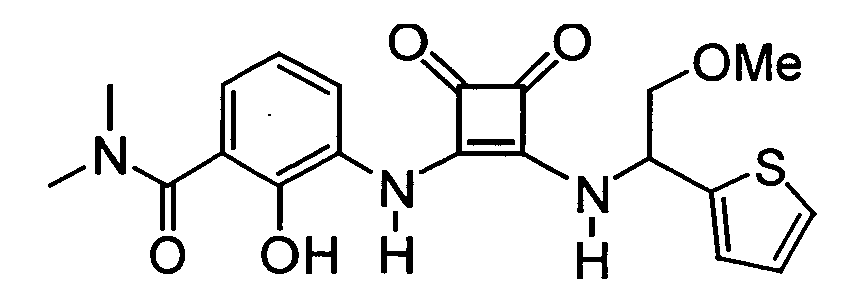
1. 69%
2. 416.1
3. 107-109360.39 

1. 43%
2. 454.1
3. 128-130360.40 

1. 40%
2. 374.1
3. 132-136360.41 

1. 60%
2. 345.1
3. 205-207360.42 

1. 96%
2. 412.1
3. 112360.43 

1. 30%
2. 434.1
3. 117-119360.44 
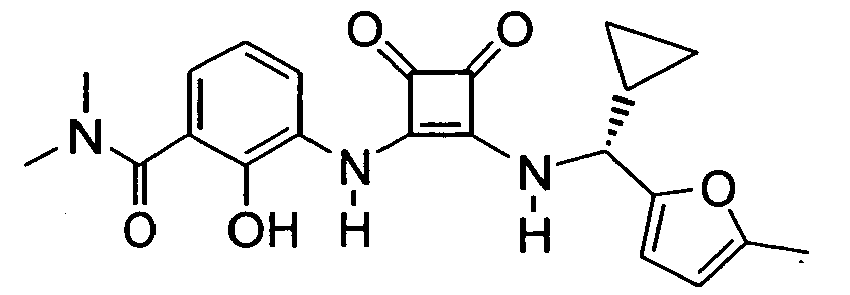
1. 96%
2. 410.1
3. 139360.45 

1. 65%
2. 384.1
3. 87-89360.46 

1. 50%
2. 434.1
3. 123-125360.47 

1. 74%
2. 412.1
3. 84-86360.48 

1. 73%
2. 400.1
3. 136-140360.49 

1. 74%
2. 412.1
3. 103-105360.50 

1. 63%
2. 434.1
3. 114-117360.51 
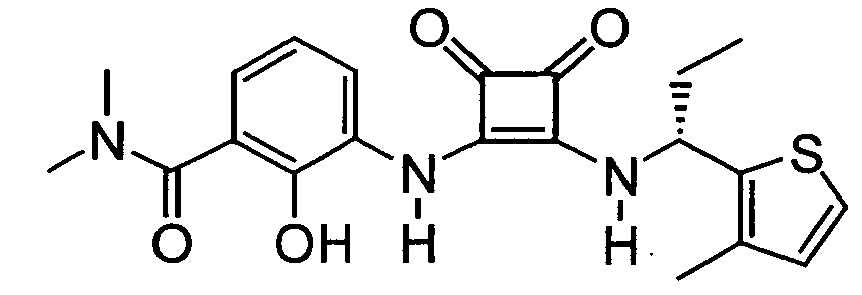
1. 74%
2. 414.1
3. 130-133360.52 

1. 71%
2. 426.1
3. 138360.53 
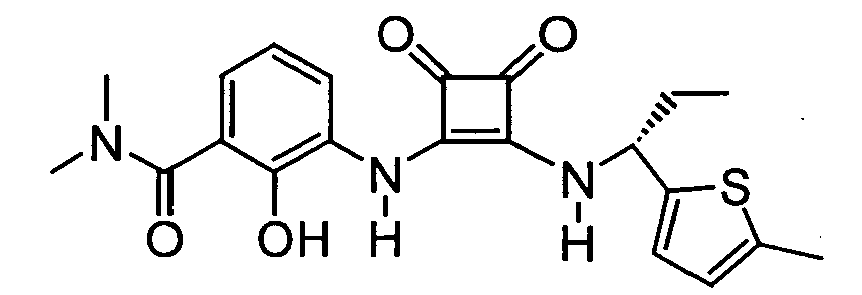
1. 41%
2. 414
3. 139-141360.54 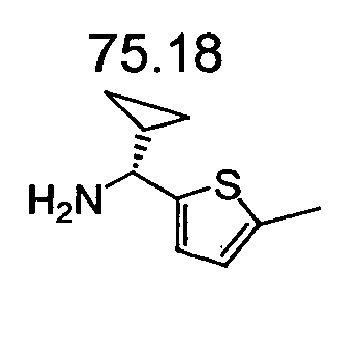

1. 32%
2. 426
3. 148-150360.55 

1. 57%
2. 428
3. 159-163360.56 

1. 44%
2. 464.1
3. 86-88360.57 

1. 37%
2. 442
3. 158-162360.58 

1. 53%
2. 494.1
3. 148-151360.59 

1. 63%
2. 528.1
3. 90-95360.60 

1. 73%
2. 438.1
3. 116360.61 

1. 55%
2. 494.1
3. 133-135360.62 

1. 83%
2. 412.1
3. 119360.63 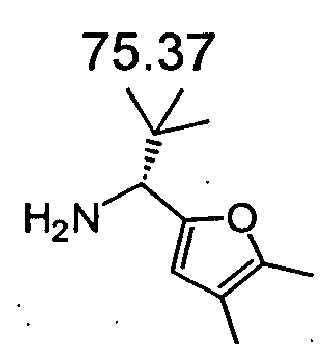

1. 66%
2. 440.1
3. 110360.64 

1. 49%
2. 410.1
3. 97360.65 

1. 40%
2. 442.1
3. 157-160360.66 

1. 75%
2: 400
3. 136-140360.67 

1. 63%
2. 528.1
3. 106-108360.68 

1. 10%
2. 401.1.
3. 111-113360.69 

1. 5%
2. 426.1360.70 

1. 56%
2. 442.1
3. 152-154360.71 

1. 46%
2. 414.1
3. 122-124360.72 
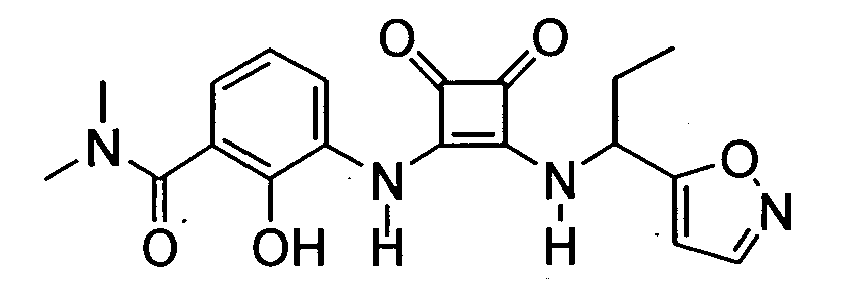
1. 62%
2. 385.1
3. 130-133360.73 

1. 41%
2. 399.1
3. 83-85360.74 

1. 70%
2. 414.1
3. 98-101360.75 

1. 62%
2. 441.1
3. 98-102360.76 

1. 79%
2. 464.1
3. 111360.77 

1. 79%
2. 418.1
3. 107360.78 

1. 65%
2. 400.1
3. 109-112360.79 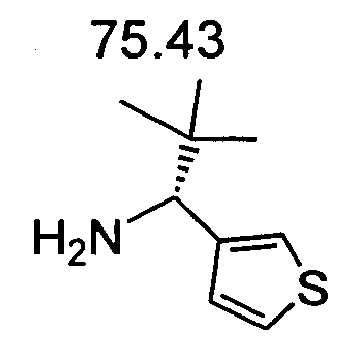

1. 21%
2. 428.1
3. 126360.80 

1. 55%
2. 493.1
3. 155-158360.81 

1. 67%
2. 428.1
3. 138-140360.82 

1. 68%
2. 426.1
3. 121-123360.83 

1. 25%
2. 427.1
3. 139360.84 

1. 62%
2. 413.1
3. 128360.85 

1. 49%
2. 460.1
3. 112-114360.86 

1. 71%
2. 434.1
3. 91-93360.87 

1. 57%
2. 411.1
3. 125360.88 

1. 12%
2. 400.1
3. 131-133360.89 
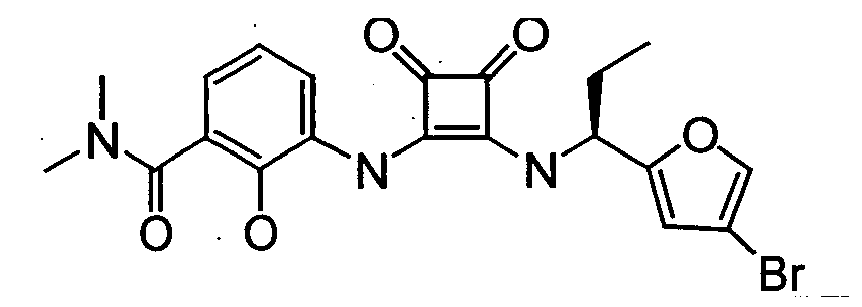
1. 60%
2. 464.1
3. 111-113360.90 

1. 60%
2. 418.1
3. 113360.91 

1. 55%
2. 415.1
3. 140-143360.92 

1. 55%
2. 429
3. 185-190360.93 

1. 3%
2. 447.1360.94 

1. 71%
2. 452.1
3. 106360.95 

1. 44%
2. 439.1
3. 112360.96 

1. 71%
2. 464.1
3. 111-113360.97 

1. 70%
2. 398.1
3. 106-108360.98 

1. 46%
2. 426.1
3. 140-142360.99 
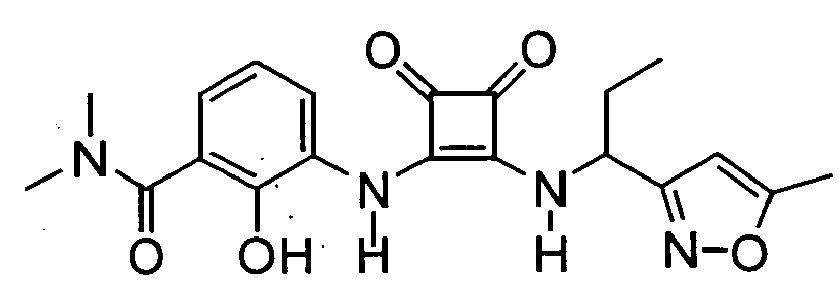
1. 62%
2. 399.1
3. 109-112360.100 

1. 60%
2. 466.1
3: 129-131360.101 

1. 49%
2. 446.1
3. 146360.102 

1. 48%
2. 432.1
3. 116360.103 

1. 62%
2. 418.1
3. 126360.104 

1. 47%
2. 430.1
3. 136360.105 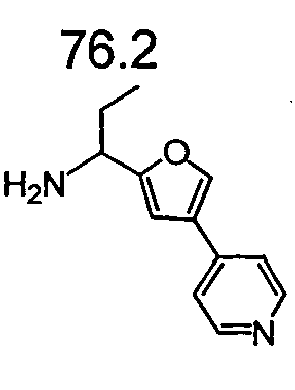

1. 42%
2. 461.1
3. 131-134360.106 

1. 93%
2. 426.1
3. 123-125360.107 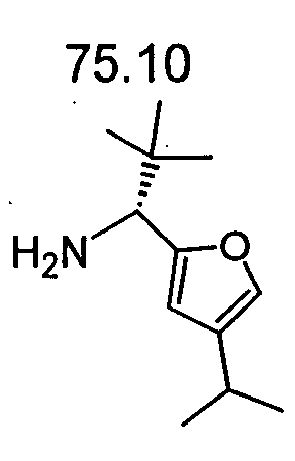

1. 26%
2. 454.1
3. 132-134360.108 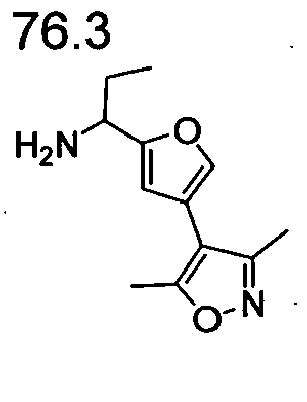
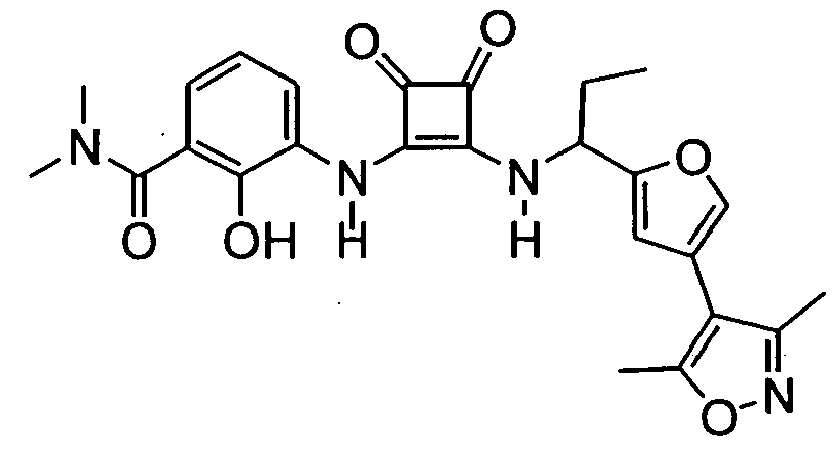
1. 12%
2. 479.1
3. 129-132 - Following the procedure set forth in Example 261 but using the commercially available amine in the table below and the cyclobutenedione intermediate from the Preparative Example indicated, the following cyclobutenedione products were obtained.
Ex. Amine Prep. Ex. Product 1. Yield (%)
2. MH+
3. mp (°C)361 
20 
1. 57%
2. 422
3. 172.4362 
21 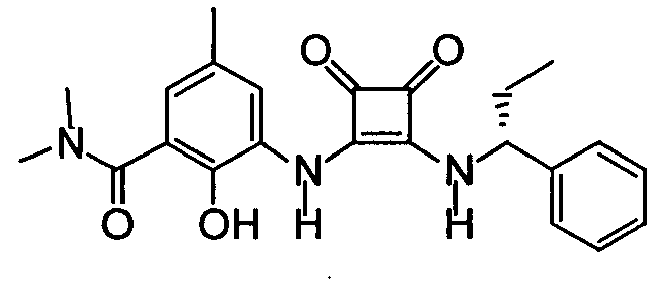
1. 53%
2. 408
3. 139.8363 
21 
1. 70%
2. 374
3. 167.8-170.1364 
23 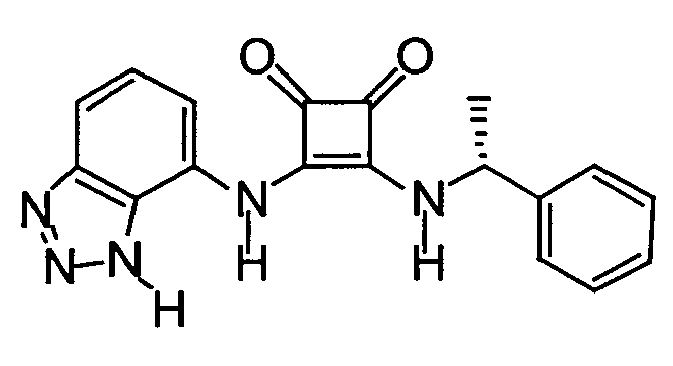
1. 21%
2. 334
3. 184.3365 
23 
1. 61%
2. 348
3. 205.6366 
21.1 
1. 75%
2. 344
3. 170-172367 
21.1 
1. 66%
2. 330
3. 160-162368 
22 
1. 31%
2. 436
3. 140-145368.1 
20 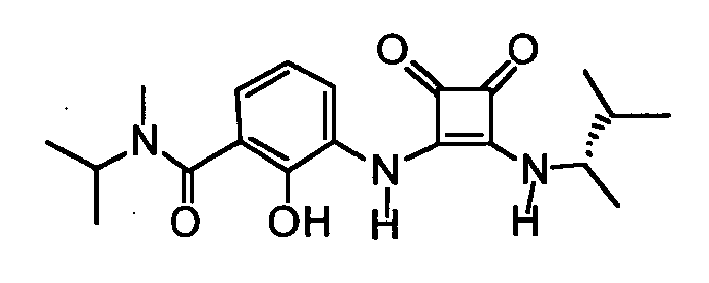
1. 8%
2. 374
3. 130-133368.2 
23.1 
1. 56%
2. 372
3. 188-191368.3 
23.1 
1. 67%
2. 406
3. 142-144368.4 
23.2 
1. 69%
2. 408
3. 147-150368.5 
23.2 
1. 67%
2. 374
3. 177-180368.6 
23.3 
1. 45%
2. 385
3. 236-240368.7 
23.3 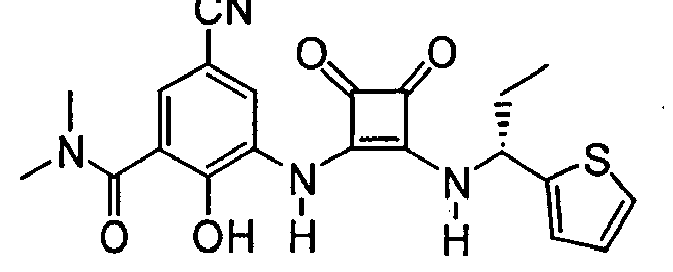
1. 35%
2. 425
3. 248-251368.8 
23.2 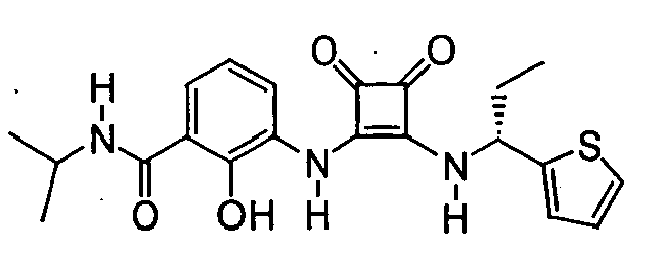
1. 66%
2. 414
3. 156-160368.9 
23.4 
1. 78%
2. 428
3. 138-140368.10 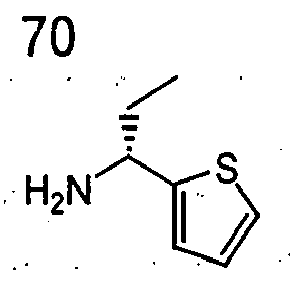
23.5 
1. 46%
2. 428
3. 149-153368.11 
23.6 
1. 54%
2. 412
3. 136-138368.12 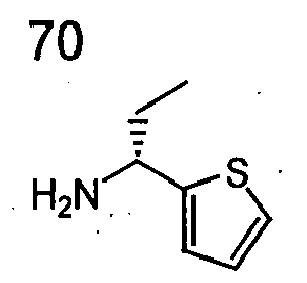
21 
1. 30%
2. 414
3. 164-167368.13 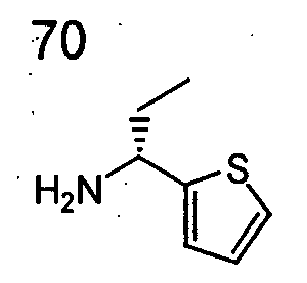
23.1 
1. 25%
2. 412
3. 172-177368.14 
23.7 
1. 21%
2. 434
3. 208-211368.15 
23.8 
1. 27%
2. 478
3. 216-219368.16 
23.9 
1. 63%
2. 400368.17 
23.9 
1. 61%
2. 406.1
3. 127 DEC368.18 
23.9 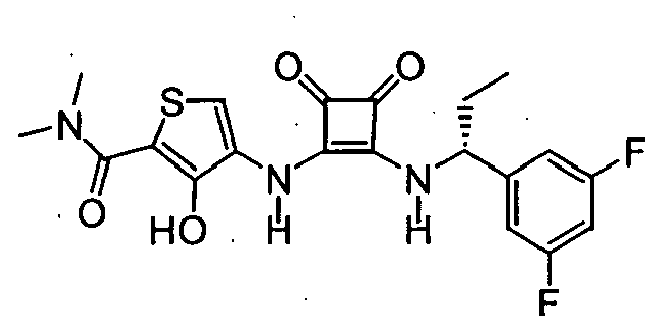
1. 68%
2. 436.1 3. 128 DEC368.19 
23.9 
1. 72%
2. 404.1
3. 126 DEC368.20 
23.10 
1. 8.4%
2. 478368.21 
23.9 
1. 39%
2. 432.1
3. 151-153368.22 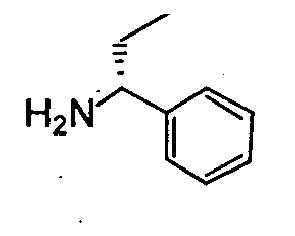
23.12 
1. 78%
2. 414.1
3. 210 DEC368.23 
23.11 
1. 4%
2. 504368.24 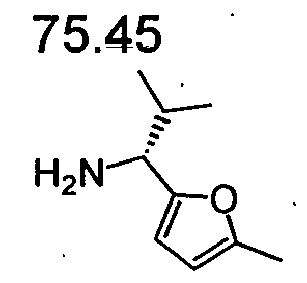
23.11 
1. 31%
2. 490
3. 241-245368.25 
23.9 
1. 81%
2. 420.1
3. 126-128368.26 
23.11 
1. 8%
2. 476
3. 193-198368.27 
23.9 
1. 70%
2. 434.1
3. 130 DEC368.28 
23.11 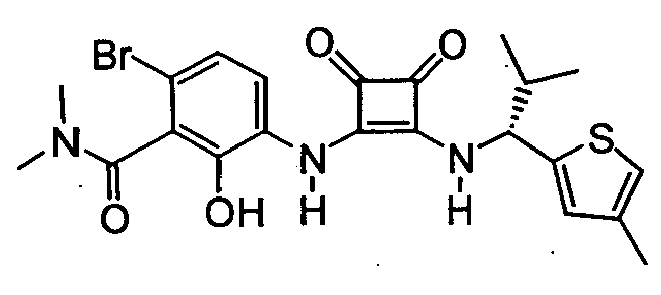
1. 83%
2. 506
3. 222-227368.29 
23.11 
1. 17%
2. 464
3. 183-190368.30 
23.13 
1. 6.5%
2. 438.1368.31 
23.14 
1. 71%
2. 471.1
3. 149-151 - Following the procedure set forth in Example 210 but using the cyclobutenedione intermediate from Preparative Example indicated and the amine from the Preparative Example indicated in the Table below, the following cyclobutenedione products were obtained.
Ex. Prep Ex of Amine Prep Ex of Cyclobutene intermediate Product 1. Yield (%)
2. MH+
3. mp (°C)369 8 87 
1. 41%
2. 422
3. 135-140370 9 87 
1. 60%
2. 420
3. 120-125371 10 87 
1. 59%
2. 450
3. 162-167372 12 87 
1. 34%
2. 419
3. 157.2-168.2373 12 88 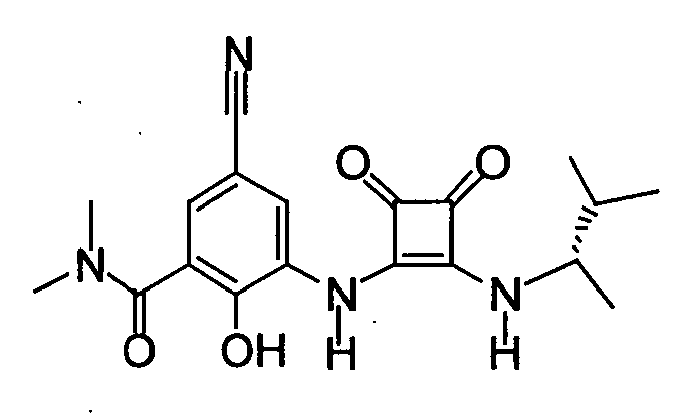
1. 18%
2. 371
3. 142.3-144.6374 13 87 
1. 41%
2. 408
3. 245.3-247.8375 5 87 
1. 32%
2. 366
3. 165.7376 6 87 
1. 17%
2. 380
3. 173.5377 7 87 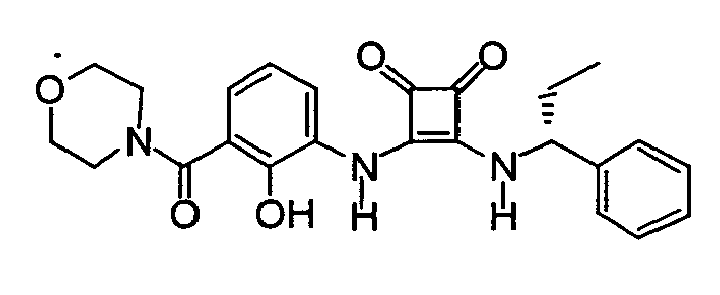
1. 48%
2. 436
3. 175.6378 
87 
1. 62%
2. 364
3. 155-160378.1 3 88.3 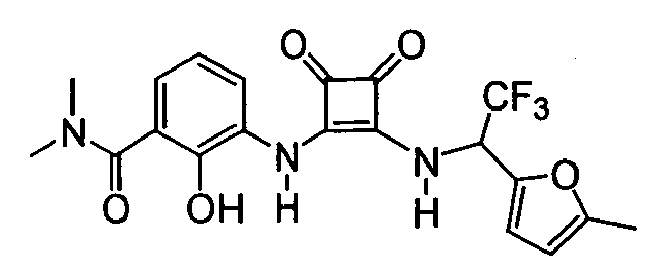
1. 73%
2. 438.1
3. 116378.2 3 88.2 
1. 58%
2. 454
3. 140-142378.3 13.3 87 
1. 43%
2. 472
3. 206-209378.4 3 23.16 
1. 69%
2. 438.1
3. 116378.5 3 23.17 
1. 73%
2. 438.1
3. 116378.6 13.4 87 
1. 10%
2. 470
3. 198-201 DEC378.7 13.5 87 
1. 16%
2. 471
3. 246-248378.8 13.3 23.16 
1. 30%
2. 516/518
3. 234-240 DEC378.9 13.19 23.16 
1. 65%
2. 444.1378.10 3 23.20 
1. 78%
2. 488
3. 137-140378.11 
88.1 
1. 24 %
2. 371
3. 254-260 DEC378.12 13.6 88.1 
1. 3%
2. 542378.13 13.7 88.1 
1. 9%
2. 542378.14 
88.1 
1. 48%
2. 434
3. 150-152378.15 3 23.19 
1. 71%
2. 488
3. 136-138378.16 3 23.22 
1. 35%
2. 424.1
3. 132378.17 13.9 88.1 
1. 13%
2. 440
3. 219-223378.18 13.10 88.1 
1. 26%
2. 406
3. 242-249 DEC378.19 13.8 88.1 
1. 18%
2. 395378.20 3 23.18 
1. 53%
2. 478.1
3. 126378.21 3 23.21 
1. 66%
2. 466
3. 106378.22 3 23.24 
1.73%
2. 502.1
3.121378.23 3 23.23 
1. 57%
2. 458.1
3. 129 - Following the procedure set forth in Example 210 but using the cyclobutenedione intermediate from Preparative Example indicated and the amine from the Preparative Example indicated in the Table below, the following cyclobutenedione products were obtained.
Ex. Prep Ex of Amine Prep Ex of Cyclobutene intermediate Product 1. Yield (%)
2. MH+378.25 11.10 87.1 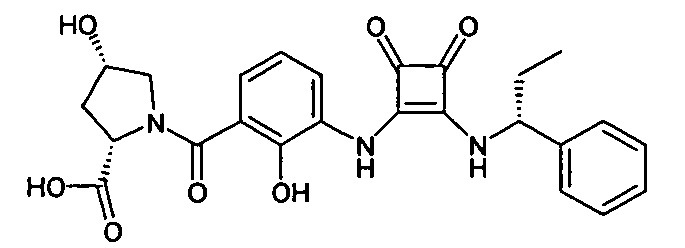
1. 71%
2. 480.0378.26 10.28 87.1 
1. 60%
2. 449.9378.27 11.11 88.4 
1. 25%
2. 540.1 [M+Na+]378.28 10.36 87.1 
1. 16%
2. 465.0378.29 10.7 88.5 
1. 46%
2. 440.4378.30 10.9 88.4 
1. 43%
2. 934.9 [dimer+1]+378.31 11.12 88.4 
1. 48%
2. 464.0378.32 10.35 87.1 
1. 17%
2. 437378.33 10.8 87.1 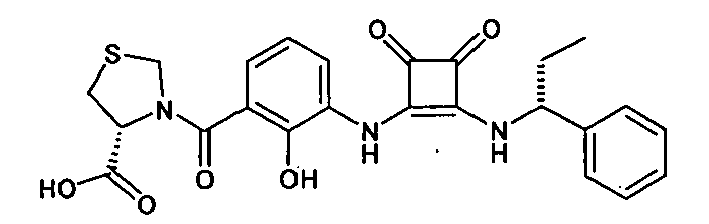
1. 10%
2. 481.9378.34 11.13 87.1 
1. 55%
2. 463.9378.35 10.29 87.1 
1. 34%
2. 471.9378.36 10.48 87.1 
1. 4%
2. 433.9378.36 10.10 87.1 
1. 85%
2. 451.9378.37 10.31 87.1 
1. 36%
2. 423.8378.38 10.17 87.1 
1. 85%
2. 521.1378.39 10.32 87.1 
1. 63%
2. 409.9378.40 
87.1 
1. 44%
2. 323.1378.41 10.33 87.1 
1. 20%
2. 486.0378.42 10.13 87.1 
1. 47%
2. 520.1378.43 10.34 87.1 
1. 18%
2. 449.9378.44 11.14 87.1 
1. 13%
2. 424.0378.45 2.13 87.1 
1. 13%
2. 423.8378.46 12.1 87.1 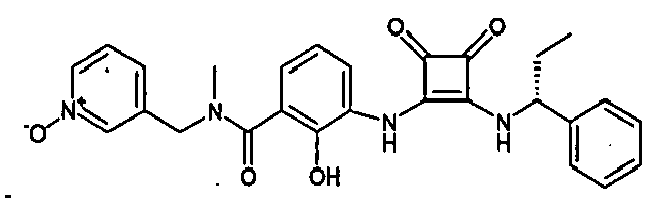
1. 51%
2. 487.1378.47 10.38 88.4 
1. 72%
2. 437.7378.48 11.15 87.1 
1. 29%
2. 477.9378.49 10.14 87.1 
1. 61%
2. 560.2378.50 11.18 87.1 
1. 25%
2. 480.0378.51 10.18 87.1 
1. 51%
2. 466.0378.52 12.2 87.1 
1. 32%
2. 380.9378.53 10.19 87.1 
1. 14%
2. 461.4378.54 11.1 87.1 
1. 41%
2. 463.9378.55 11.2 87.1 
1. 5%
2. 409.9378.56 10.20 87.1 
1. 70%
2. 478.1378.57 10.49 87.1 
1. 17%
2. 421.9378.58 10.15 87.1 
1. 51%
2. 582.1378.59 10.46 87.1 
1. 18%
2. 477.9378.60 11.16 88.4 
1. 54%
2. 455.1378.61 10.21 87.1 
1. 84%
2. 485.9378.62 10.40 87.1 
1. 4%
2. 506.1378.65 2.8 87.1 
1. 34%
2. 480378.66 10.22 87.1 
1. 16%
2. 486.0378.67 2.10 87.1 
1. 44%
2. 545378.68 10.23 87.1 
1. 26%
2. 493.9378.69 2.14 87.1 
1. 60%
2. 437.9378.70 10.24 87.1 
1. 64%
2. 469.9378.71 10.18 88.4 
1. 64%
2. 471.1378.72 10.39 88.4 
1. 41%
2. 451.7378.73 10.30 87.1 
1. 60%
2. 464.0378.74 10.25 87.1 
1. 63%
2. 470.1378.75 10.26 87.1 
1. 10%
2. 448.0378.76 10.50 87.1 
1. 5%
2. 477.0378.77 10.42 88.4 
1. 57%
2. 467.7378.78 11.17 87.1 
1. 75%
2. 478.0378.79 2.9 87.1 
1. 21%
2. 561378.80 10:43 87.1 
1. 69%
2. 437.9378.81. 10.41 87.1 
1. 3%
2. 436.0378.82 10.44 87.1 
1. 90%
2. 454.0378.83 10.13 88.4 
1. 29%
2. 524.1378.84 10.45 88.4 
1. 46%
2. 511.7378.86 10.37 87.1 
1. 53%
2. 452.0378.88 10.47 87.1 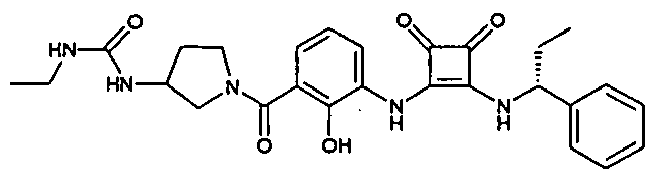
1. 61%
2. 506.1378.89 10.16 87.1 
1. 30%
2. 568.1 -

- The above compound from Preparative Example 378.68 was stirred with 4N HCl/dioxane to yield the product (23%, MH+=437.9).
-

- Using the procedure set forth in Preparative Example 2, Step A, but using Preparative Example 2.16 and Preparative Example 2.15, the title compound was prepared (20%, MH+=472.9).
- Following the procedure set forth in Example 210 but using the amine from the Preparative Example indicated and the ethoxy squarate intermediate from Preparative Example 87, the following cyclobutenedione products were obtained.
Ex. Aniline Product 1. Yield(%) 2. (MH+) 379 109 
1. 29%
2. 436.0380 105 
1. 6.3%
2. 550.0381 106 
1. 12%
2. 557.0382 107 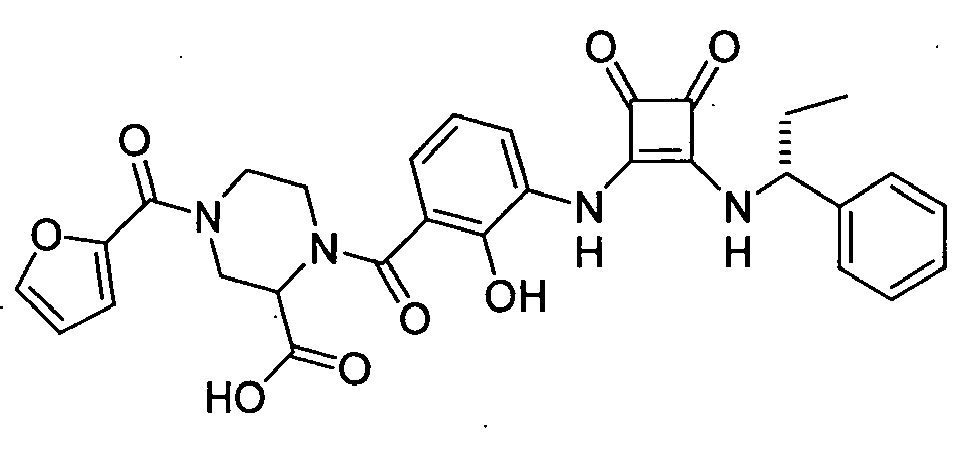
1. 8.6%
2. 573.0383 143 
1. 3.2%
2. 497.0384 135 
1. 36%
2. 529.0385 130 
1. 33%
2. 506.1387 145 
1. 27%
2. 449.1388 140 
1. 25%
2. 477.0389 98 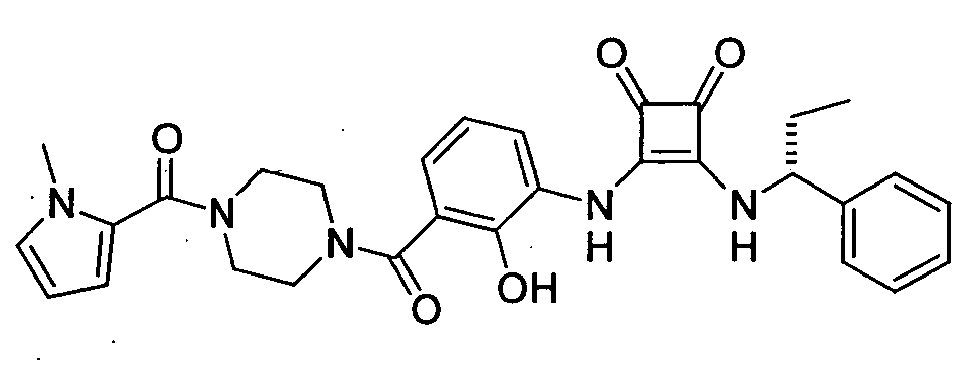
1. 66%
2. 542.1390 96 
1. 60%
2. 545.0391 97 
1. 66%
2. 540.1392 100 
1. 47%
2. 512.1393 99 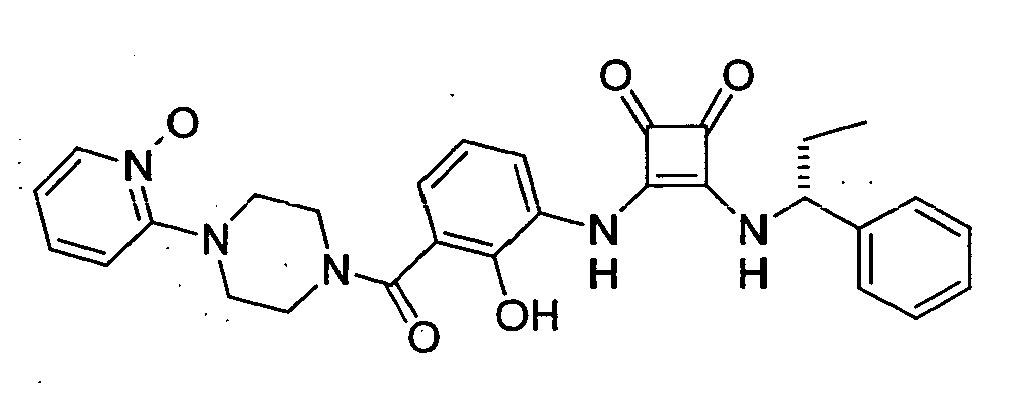
1. 60%
2. 528.1 - Following the procedure set forth in Example 261 but using the amines from the Preparative Examples indicated in the table below and the cyclobutenedione derivative from Preparative Example 19, the following cyclobutenedione products were obtained as racemic mixtures.
Ex. Prep Ex. of Amine Product 1. Yield (%)
2. MH+
3. mp (°C)394 147 
1. 64%
2. 358.1
3. 137395 148 
1. 23%
2. 372.1
3. 126396 149 
1. 94%
2. 386.1
3. 108397 150 
1. 86%
2. 386.1
3. 134398 146 
1. 87%
2. 420.1
3. 136399 151 
1. 84%
2. 434.1
3. 129400 152 
1. 90%
2. 372.1
3. 154401 153 
1. 86%
2. 386.1
3. 156402 154 
1. 90%
2. 400.1
3. 153403 155 
1. 91
2. 400.1
3. 153404 156 
1. 83%
2. 448.1
3. 138404.1 

1. 30%
2. 426.1
3. 132404.2 

1. 74%
2. 412.1
3. 127404.3 

1. 73.4%
2. 372.1
3. 128404.4 

1. 72%
2. 372.1
3. 128 -

- To a solution of the amine from Preparative Example 75.1 (11.3 g) in EtOH (100 mL) at room temperature was added the product from Preparative Example 19 (16.4 g) in one portion. The resulting mixture was stirred at reflux overnight and then concentrated under reduced pressure. The crude residue was redissolved in CH2Cl2 (80 mL) and was washed with 10% KH2PO4 (120 mL). The solid precipitate that was generated was filtered, washed with water and dried under vacuo. The residue was recrystallized from methanol-methylene chloride to give a cream colored solid (16 g, 75% yield). (mp 105-108 °C, MH+ 398.1).
- If one were to follow the procedure set forth in Example 210 but using the ethoxysquarate from the Preparative Example indicated and the amines from the Preparative Example indicated in the Table below, the following cyclobutenedione products can be obtained.
Ex. Prep Ex of Amine Prep Ex of Squarate Product 1101 15 87 
1102 15 88 
1103 16 87 
1104 16 88 
1105 17 87 
1106 17 88 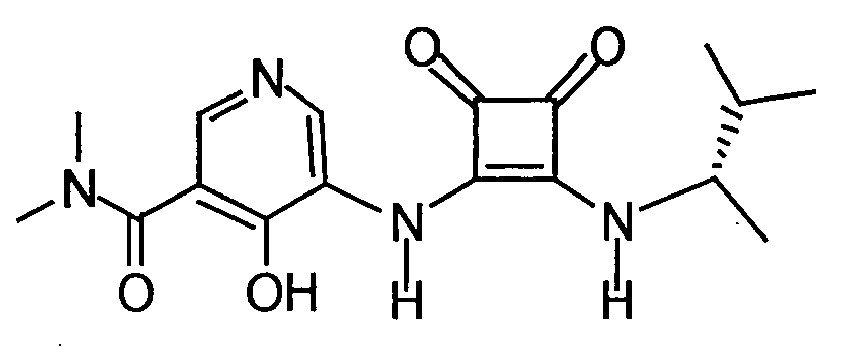
1107 18 87 
1108 18 88 
1109 157 87 
1110 157 88 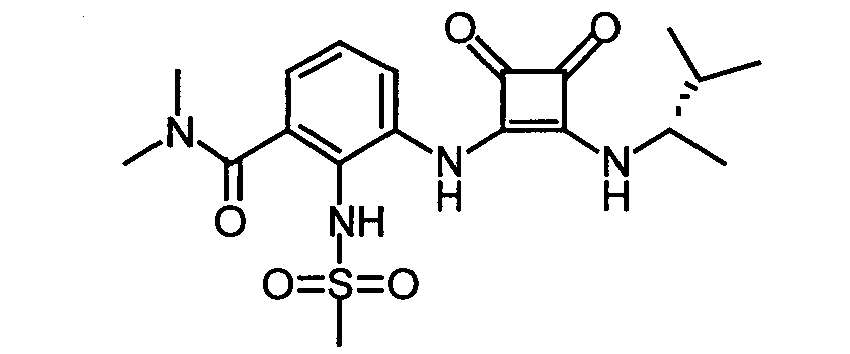
1111 158 87 
1112 158 88 
1112.1 500.3 or 500.4 88.1 
1112.2 500.1 or 500.2 88.1 
1112.3 500.5 19 
1112.4 75.9 23.11 
1112.5 10.19 88.4 
1112.6 75.44 23.14 
1112.7 75.49 23.14 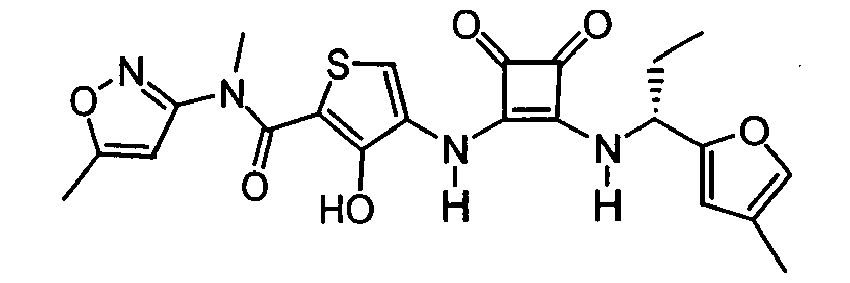
1112.8 75.50 23.14 
1112.9 75.44 500.6 
1112.10 75.49 500.6 
- Following the procedure set forth in Example 210 but using the amine from the Preparative Example indicated and the ethoxy squarate intermediate from the Preparative Example indicated, the following cyclobutenedione products were obtained.
Ex. Prep Ex of Amine Prep Ex of Squarate Product 1. Yield (%)
2. MH+
3. mp (°C)1120.1 156.16 87 
1. 9%
2. 393.1
3. 154-1581120.2 
88.1 
1. 55%
2 355.1
3. 199-2011120.3 156.12 88.1 
1. 37%
2. 355.1
3. 210-2131120.4 
88.1 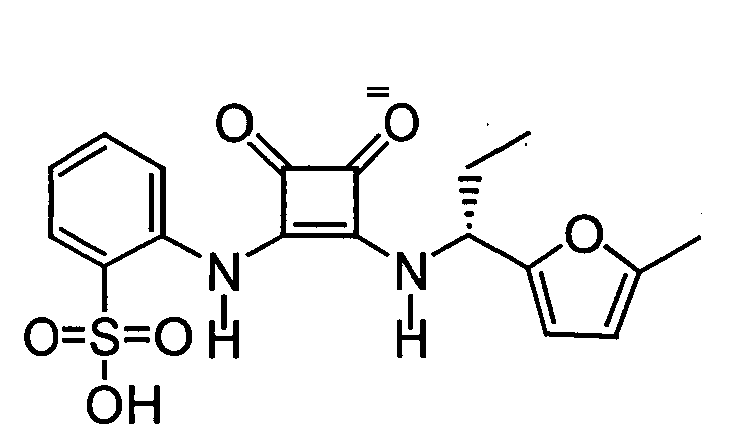
1. 30%
2. 391.1
3. 70-731120.5 156.14 88.1 
1. 73%
2. 466
3. 105-1081120.6 
88.1 
1. 21%
2. 391
3. 79-821120.7 
88.1 
1. 15%
2. 369
3. 167-1701120.8 
88.1 
1. 47%
2. 354
3. 121-1241120.9 
88.1 
1. 15%
2. 356
3. 200-2021120.10 
88.1 
1. 25%
2. 468
3. 154-1561120.11 156.13 88.1 
1. 57%
2. 404
3. 92-941120.12 156.15 88.1 
1. 61%
2. 351
3. 155-157 -
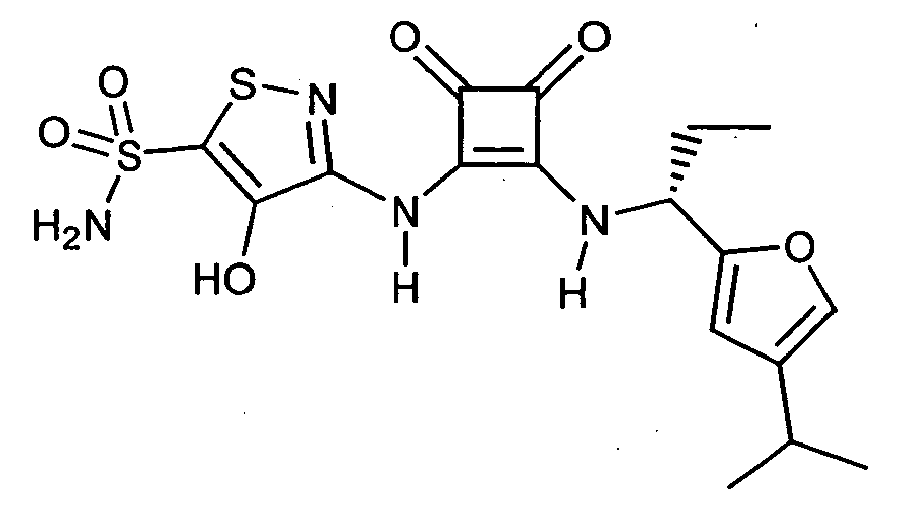

- If one were to use a similar procedure to that used in Preparative Example 13.3 Step B, except using the hydroxy acid from Bioorg. Med. Chem. Lett. 6(9), 1996, 1043, one would obtain the desired methoxy compound.
- If one were to use a similar procedure to that used in Preparative Example 13.19 Step B, except using the product from Step A above, one would obtain the desired compound.
- If one were to use a similar procedure to that used in Synth. Commun. 1980, 10, p. 107, except using the product from Step B above and t-butanol, one would obtain the desired compound.
- If one were to use a similar procedure to that used in Synthesis, 1986, 1031, except using the product from Step C above, one would obtain the desired sulfonamide compound.
- If one were to use a similar procedure to that used in Preparative Example 13.19 Step E, except using the product from Step D above, one would obtain the desired compound.
- If one were to use a similar procedure to that used in Preparative Example 19, except using the product from Step E above and adding potassium carbonate as base, one would obtain the desired compound.
- If one were to follow the procedure set forth in Example 210, except using the product from Step F above and the amine from Preparative Example 75.9, then one would obtain the title compound.
-

- If one were to treat the product from Step C of Example 1125 with BuLi (2.2 eq.) in THF followed by quenching of the reaction mixture with N,N,-dimethylsulfamoyl chloride (1.1 eq.) then one would obtain

- If one were to use the product of Step A above and one were to follow Steps E, F and G of Example 1125, except using the amine from Preparative Example 75.49 in Step G, then one would obtain the title compound.
-


- To a solution of 3-methoxythiophene (3 g) in dichloromethane (175 mL) at-78°C was added chlorosulfonic acid (8.5 mL) dropwise. The mixture was stirred for 15 min at-78°C and 1.5 h at room temp. Afterwards, the mixture was poured carefully into crushed ice, and extracted with dichloromethane. The extracts were washed with brine, dried over magnesium sulfate, filtered through a 1-in silica gel pad. The filtrate was concentrated in vacuo to give the desired compound (4.2 g).
- The product from Step A above (4.5 g) was dissolved in dichloromethane (140 mL) and added with triethylamine (8.8 mL) followed by diethyl amine in THF (2M, 21 mL). The resulting mixture was stirred at room temperature overnight. The mixture was washed with brine and saturated bicarbonate (aq) and brine again, dried over sodium sulfate, filtered through a 1-in silica gel pad. The filtrate was concentrated in vacuo to give the desired compound (4.4 g).
- The product from Step B above (4.3 g) was dissolved in dichloromethane (125 mL) and cooled in a -78°C bath. A solution of boron tribromide (1.0 M in dichloromethane, 24.3 mL) was added. The mixture was stirred for 4 h while the temperature was increased slowly from -78°C to 10°C. H2O was added, the two layers were separated, and the aqueous layer was extracted with dichloro- methane. The combined organic layer and extracts were wahed with brine, dried over magnesium sulfate, filtered, and concentrated in vacuo to give 3.96 g of the desired hydroxy-compound.
- The product from step C above (3.96 g) was dissolved in 125 mL of dichloromethane, and added with potassium carbonate (6.6 g) followed by bromine (2 mL). The mixture was stirred for 5 h at room temperature, quenched with 100 mL of H2O. The aqueous mixture was addjusted to pH ~5 using a 0.5N hydrogen chloride aqueous solution, and extracted with dichloromethane. The extracts were washed with brine, dried over sodium sulfate, and filtered through a celite pad. The filtrate was concentrated in vacuo to afford 4.2 g of the desired bromo-compound.
- The product from Step D (4.2 g) was dissolved in 100 mL of acetone and added with potassium carbonate (10 g) followed by iodomethane (9 mL). The mixture was heated to reflux and continued for 3.5 h. After cooled to room temperature, the mixture was filtered through a Celite pad. The filtrate was concentrated in vacuo to a dark brown residue, which was purified by flash column chromatography eluting with dichloromethane-hexanes (1:1, v/v) to give 2.7 g of the desired product.
- The product from step E (2.7 g) was converted to the desired imine compound (3 g), following the similar procedure to that of Preparative Example 13.19 step D.
- The imine product from step F (3 g) was dissolved in 80 mL of dichloromethane and cooled in a -78°C bath. A solution of boron tribromide (1.0 M in dichloromethane, 9.2 mL) was added dropwise. The mixture was stirred for 4.25 h from -78°C to 5°C. H2O (50 mL) was added, and the layers were separated. The aqueous layer was extracted with dichloromethane. The organic layer and extracts were combined, washed with brine, and concentrated to an oily residue. The residue was dissolved in 80 mL of methanol, stirred with sodium acetate (1.5 g) and hydroxyamine hydrochloride (0.95 g) at room temperature for 2 h. The mixture was poured into an aqueous mixture of sodium hydroxide (1,0 M aq, 50 mL) and ether (1-00 mL). The two layers were separated. The aqueous layer was washed with ether three times. The combined ether washings were re-extracted with H2O once. The aqueous layers were combined, washed once with dichloromethane, adjusted to pH ~ 6 using 3.0 M and 0.5 M hydrogen chloride aqueous solutions, and extracted with dichloromethane. The organic extracts were combined, washed with brine, dried over sodium sulfate, and concentrated in vacuo to give 1.2 g of desired amine compound.
- The product from step F (122 mg) was stirred with diethyoxysquarate (0.25 mL) and potassium carbonate (75 mg) in 5 mL of ethanol at room temperature for 5 h. The mixture was diluted with dichloromethane, filtered through a Celite pad, and concentrated to an oily residue, which was separated by preparative TLC (CH2Cl2-MeOH= 15:1, v/v) to give 91 mg of the desired product.
- Following the procedure set forth in Example 210, and using the amine from Preparative Example 75.9, the product (43 mg) from Step H was converted to the desired compound (20 mg).
- The invention provides novel compounds of the formula (I):

wherein - A is selected from:

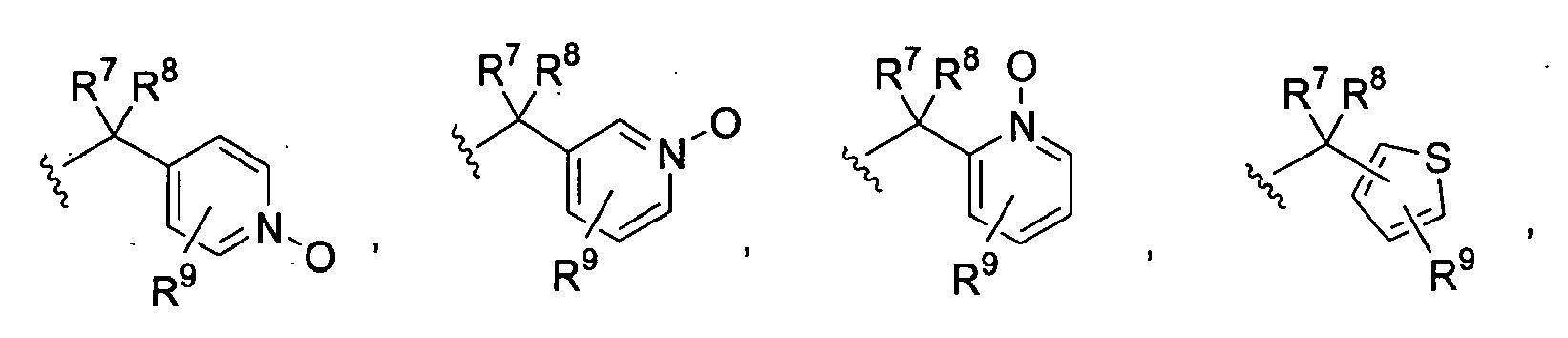


- R7 and R8 are the same or different and are independently selected from the group consisting of H; optionally substituted or unsubstituted alkyl, aryl, heteroaryl, arylalkyl, heteroarylalkyl, cycloalkyl, cycloalkylalkyl, CO2R13, CONR13R14, fluoroalkyl, alkynyl, alkenyl, alkynylalkyl, alkenylalkyl, and cycloalkenyl,
- wherein said substituents on said substituted groups are selected from the group consisting of:
- a) cyano;
- b) CO2R7;
- c) CONR7R8;
- d) SO2NR7R8,
- e) SO2R7;
- f) NO2;
- g) CF3;
- h)-OR7;
- i) -NR7R8;
- j) -O(C=O)R7;
- k) -O(C=O)NR7R8, and
- l) halogen;
- R9 is selected from one or more of the groups consisting of:
- a) R7;
- b) R8;
- c) halogen;
- d) -CF3;
- e) -COR7;
- f) -OR7;
- g) -NR7R8;
- h) -NO2;
- i) -CN;
- j) -SO2R7;
- k) -SO2NR7R8;
- l) -NR7COR8;
- m) -CONR7R8 ;
- n) -NR7CO2R8;
- o) CO2R7, and
- p)

- B is an optionally substituted aryl or heteroaryl group selected from:


- R2 is hydrogen, OH, C(O)OH, SH, SO2NR13R14, NHC(O)R13, NHSO2NR13R14, NHSO2R13 C(O)NR13R14, C(O)NHOR13, C(O)NR13OH, OC(O)R13 or an optionally substituted cyclic or heterocyclic acidic functional group, with the proviso that if R2 is SO2NR13R14, at least one of R13 and R14 must be hydrogen;
- R3 and R4 are independently hydrogen, halogen, alkyl, alkoxy, OH, CF3, OCF3, NO2, C(O)R13 C(O)OR13, C(O)NR13R14 SO(t)NR13R14, SO(t)R13, C(O)NR13OR14,

- wherein the substituents on the optionally substituted groups may be selected from one or more R9 groups.
- R5 and R6 independently represent hydrogen, halogen, alkyl, alkoxy, CF3, OCF3, NO2, C(O)R13, C(O)OR13, C(O)NR13R14, SO(t)NR13R14, C(O)NR13OR14, cyano, or an optionally substituted aryl or heteroaryl group,
- wherein the substituents on the optionally substituted groups may be selected from one or more R9 groups.
- R10 and R11 independently represent hydrogen, halogen, CF3, OCF3, NR13R14, NR13C(O)NR13R14, OH, C(O)OR13, SH, SO(t)NR13R14,SO2R13, NHC(O)R13, NHSO2NR13R14, NHSO2R13, C(O)NR13R14, C(O)NR13OR14, OC(O)R13 or cyano.
- R12 is hydrogen, OC(O)R13, or an optionally substituted aryl, heteroaryl, arylalkyl, cycloalkyl, alkyl, cycloalkylalkyl or heteroarylalkyl group;
- R13 and R14 are the same or different and are independently selected from the group consisting of H; optionally substituted or unsubstituted alkyl, aryl, heteroaryl, arylalkyl, heteroarylalkyl, cycloalkyl, cycloalkylalkyl, and fluoroalkyl, or
- R13 and R14 when taken together form an optionally substituted 3 to 7 membered heterocyclic ring containing one to two heteroatoms selected from O, S and N, and
- The definitions below refer to the formula I that directly precedes these definitions.
- These definitions apply regardless of whether a term is used by itself or in combination with other terms. Hence the definition of "alkyl" applies to "alkyl" as well as to the "alkyl" portions of "alkoxy", etc.
- When any variable (e.g., aryl, R2) occurs more than one time in any constituent, its definition on each occurrence is independent of its definition at every other occurrence. Also, combinations of substituents and/or variables are permissible only if such combinations result in stable compounds.
- Alkyl represents a straight or branched saturated hydrocarbon chain having the designated number of carbon atoms. Where the number of carbon atoms is not specified, 1 to 20 carbons are intended.
- The term halogen or Halo is intended to include fluorine, chlorine, bromine or iodine.
- The term fluoroalkyl represents a straight or branched saturated hydrocarbon chain having the designated number of carbon atoms, substituted with one or more fluorine atoms. Where the number of carbon atoms is not specified, 1 to 20 carbons are intended
- Aryl refers to a mono- or bicyclic ring system having one or two aromatic rings including, but not limited to, phenyl, naphthyl, indenyl, tetrahydronaphthyl, indanyl, anthracenyl, fluorenyl and the like. The aryl group can be unsubstituted or substituted with one, two, or three substituents independently selected from lower alkyl, halo, cyano, nitro, haloalkyl, hydroxy, alkoxy, carboxy, carboxyalkyl, carboxamide, mercapto, sulfhydryl, amino, alkylamino, dialkylamino, sulfonyl, sulfonamido, aryl and heteroaryl.
- The term heterocycle or heterocyclic ring is defined by all non-aromatic, heterocyclic rings of 3-7 atoms containing 1-3 heteroatoms selected from N, O and S, such as oxirane, oxetane, tetrahydrofuran, tetrahydropyran, pyrrolidine, piperidine, piperazine, tetrahydropyridine, tetrahydropyrimidine, tetrahydrothiophene, tetrahydrothiopyran, morpholine, hydantoin, valerolactam, pyrrolidinone, and the like.
- The term heterocyclic acidic functional group is intended to include groups such as, pyrrole, imidazole, triazole, tetrazole, and the like.
- Heteroaryl refers to 5- or 10-membered single or benzofused aromatic rings consisting of 1 to 3 heteroatoms independently selected from the group consisting of-O-, -S, and -N=, provided that the rings do not possess adjacent oxygen and/or sulfur atoms. The heteroaryl group can be unsubstituted or substituted with one, two, or three substituents independently selected from lower alkyl, halo, cyano, nitro, haloalkyl, hydroxy, alkoxy, carboxy, carboxyalkyl, carboxamide, sulfhydryl, amino, alkylamino and dialkylamino.
- N-oxides can form on a tertiary nitrogen present in an R substituent, or on =N-in a heteroaryl ring substituent and are included in the compounds of formula I.
- The preferred groups described below refer to the formula I that directly precedes these preferred groups.
- in a preferred group of compounds of formula I, A is selected from the group consisting of:

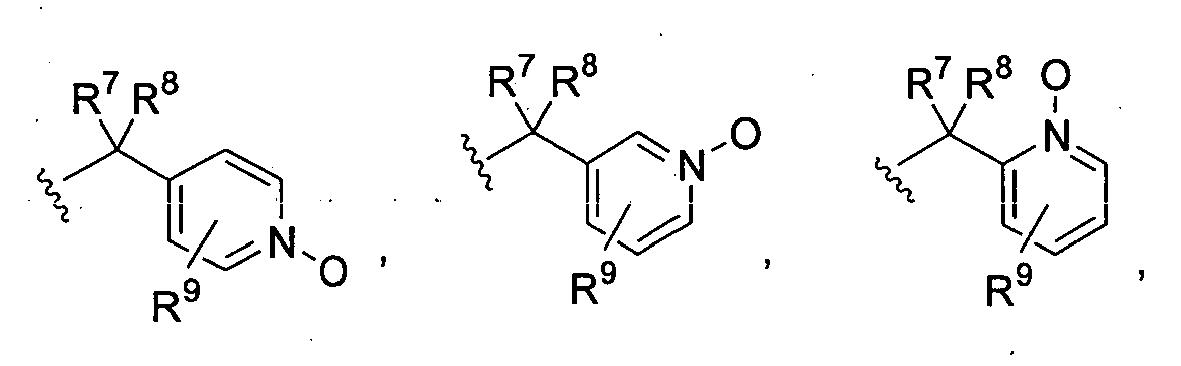


- R7 and R8 are the same or different and are independently selected from alkyl and cycloalkyl such as, for example, methyl, ethyl, t-butyl, isopropyl and cyclohexyl with methyl, ethyl, t-butyl and isopropyl being most preferred and,
- R9 is selected from one or more moieties selected from the group halogen (e.g. Bromine, Fluorine or Chlorine), CH3, CF3, cyano, -OCH3, and NO2 , and
- n = 0-6.
- R2 is selected from the group consisting of OH, NHC(O)R13 and NHSO2R13;
- R3 is selected from the group consisting of SO2NR13R14, NO2, cyano, C(O) NR13R14 SO2R13; and C(O)OR13;
- R4 is selected from the group consisting of H; NO2, cyano and CF3;
- R5 is selected from the group consisting of H, CF3, NO2, halogen and cyano; and
- R6 is selected from the group consisting of H, alkyl and CF3.
- R13 and R14 are independently selected from methyl, ethyl and isopropyl or when taken together R13 and R14 form a 3 to 7 membered heterocyclic ring containing one to two heteroatoms selected from O, S and N, optionally substituted with one or more R9 groups.
- More preferably, A is selected from:


- Most preferably, A is selected from:


- Most Preferably, for compounds of the present invention,
- R2 is -OH;
- R3 is CONR13R14;
- R4 is H;
- R5 is H or cyano;
- R6is H or alkyl;
- R7, R8 are independently selected from H, methyl, ethyl, isopropyl and t-butyl;
- R13 and R14 are independently selected from methyl and ethyl.
- In one embodiment of the methods of treatment of this invention using compounds of formula IA, or in the use for manufacture of a medicament using compounds of formula IA, B is selected from the group consisting of:


- Additional representative embodiments of the novel compounds of this invention are described below. The embodiments have been numbered for purposes of reference thereto.
- Embodiment No. 47 is directed to compounds of formula IA wherein B is selected from the group consisting of:
- (1)


- (2)

- (3)

- (4)

- (5)

- (6)

- (7)

- (8)

- (9)

- (10)

- (12)

- (13)

- (14)

- Embodiment No. 48 is directed to compounds of formula IA wherein B is selected from the group consisting of:
- (1)

- (2)

- (3)

- (4)

- (5)

- Embodiment No. 49 is directed to compounds of formula IA wherein B is selected from the group consisting of:

- Embodiment No. 50 is directed to compounds of formula IA wherein B is selected from the group consisting of:

- Embodiment No. 51 is directed to compounds of formula IA wherein B is selected from the group consisting of:

- Embodiment No. 52 is directed to compounds of formula IA wherein B is selected from the group consisting of:

- Embodiment No. 53 is directed to compounds of formula IA wherein B is selected from the group consisting of:

- Embodiment No. 54 is directed to any one of the Embodiment Nos. 48 to 53 wherein the compound of formula IA is a pharmaceutically acceptable salt.
- Embodiment No. 55 is directed to any one of the Embodiment Nos. 48 to 53 wherein the compound of formula IA is a sodium salt.
- Embodiment No. 56 is directed to any one of the Embodiment Nos. 48 to 53 wherein the compound of formula IA is a calcium salt.
- Embodiment No. 57 is directed to a pharmaceutical composition comprising at least one (e.g., 1 to 3, usually 1) compound of formula IA as described in any one of the Embodiment Nos. 48 to 53 in combination with a pharmaceutically acceptable carrier.
- Embodiment No. 58 is directed to a method of treating any one of the diseases described above comprising administering to a patient in need of such treatment an effective amount (e.g., a therapeutically effective amount) of a compound of formula IA as described in any one of the Embodiment Nos. 48 to 53. The diseases referred to in this embodiment are those described in the methods of treatment using compounds of formula I.
- Embodiment No. 59 is directed to the use of a compound of formula IA as described in any one of the Embodiment Nos. 48 to 53 for the manufacture of a medicament for the treatment any one of the diseases described above. The diseases referred in this embodiment are those described in the methods of treatment using compounds of formula I.

Claims (8)
- A compound of the formula
 A is selected from the group consisting of:wherein,


 R7and R8 are the same or different and are independently selected from H, alkyl, fluoroalkyl such as, -CF3 and -CF2CH3; cycloalkyl and cycloalkylalkyl such as, for example, methyl, ethyl, t-butyl, isopropyl, cyclopropyl, cyclopropylmethyl and cyclohexyl, andR9 is the same or different and is 1-3 moieties selected from the group consisting of H, halogen, alkyl, cycloalkyl, -CF3, cyano, -OCH3, and -NO2;B is selected from the group consisting ofwherein

 R2 is H, OH, -NHC(O)R13 or -NHSO2R13;R3 is -SO2NR13R14 or -SO2R13;R4 is H, -NO2 cyano, -CH3, halogen, or -CF3;R5 is H, -CF3, -NO2, halogen or cyano;R6 is H, alkyl or -CF3;R10 and R11 are the same or different and are independently selected from the group consisting of hydrogen, halogen, -CF3, -NR13R14, -NR13C(O)NR13R14, -C(O)OR13, -SH, -SO(t)NR13R14,-SO2R13, -NHC(O)R13, -NHSO2NR13R14, -NHSO2R13, -C(O)NR13R14, -C(O)NR13OR14, -OC(O)R13, -COR13, -OR13, and cyano;R13 and R14 are the same or different and are independently selected from methyl, ethyl and isopropyl; orR13 and R14 when taken together with the nitrogen they are attached to in the groups -NR13R14, -C(O)NR13R14, -SO2NR13R14, -OC(O)NR13R14, -CONR13R14, -NR13C(O)NR13R14, -SOtNR13R14, -NHSO2NR13R14 preferably form an unsubstituted or substituted 3 to 7 membered, saturated heterocyclic ring optionally containing one additional heteroatom selected from O, S or NR18 wherein R18 is selected from H, alkyl, aryl, heteroaryl, -C(O)R19, -SO2R19 and -C(O)NR19R20, wherein R19 and R20 are the same or different and each is independently selected from alkyl, aryl and heteroaryl, wherein the substituents on the substituted cyclized R13 and R14 groups are the same or different and independently selected from 1 to 3 of alkyl, aryl, hydroxy, hydroxyalkyl, alkoxy, alkoxyalkyl, arylalkyl, fluoroalkyl, cycloalkyl, cycloalkylalkyl, heteroaryl, heteroarylalkyl, amino, -C(O)OR15, -C(O)NR15R16, -SOtNR15R16, -C(O)R15, -SO2R15, -NHC(O)NR15R16 and halogen, and wherein R15 and R16 are the same or different and are independently selected from the group consisting of H, alkyl, aryl, arylalkyl, cycloalkyl and heteroaryl;R8a is selected from the group consisting of hydrogen, alkyl, cycloalkyl and cycloalkylalkyl;R12 is hydrogen, -OC(O)R13, or an unsubstituted or substituted aryl, unsubstituted or substituted heteroaryl, unsubstituted or substituted arylalkyl, unsubstituted or substituted cycloalkyl, unsubstituted or substituted alkyl, unsubstituted or substituted cycloalkylalkyl or unsubstituted or substituted heteroarylalkyl group,wherein the substituents on the substituted R12 groups are the same or different and independently selected from 1-6 R9 groups; andt is 0, 1 or 2.
 - A compound of the formula
 A is selected from the group consisting of
 R7 is H, -CF3, -CF2CH3, methyl, ethyl, isopropyl, cyclopropyl or t-butyl;R8 is H;R9 is H, F, Cl, Br, alkyl or -CF3,R8a is selected from the group consisting of hydrogen, alkyl, cycloalkyl and cycloalkylalkyl; andB is:wherein:
 R2 is H, OH, -NHC(O)R13 or -NHSO2R13;R3 is -SO2NR13R14 or -SO2R13;R4 is H, -NO2, cyano, -CH3 or -CF3;R5 is H, -CF3, -NO2, halogen or cyano; andR6 is H, alkyl or -CF3;R11 is H, halogen or alkyl;R13 and R14 are the same or different and are independently methyl, ethyl or isopropyl; orR13 and R14 when taken together with the nitrogen they are attached to in the groups -NR13R14, -C(O)NR13R14, -SO2NR13R14, -OC(O)NR13R14, -CONR13R14, -NR13C(O)NR13R14, -SOtNR13R14, -NHSO2NR13R14 preferably form an unsubstituted or substituted 3 to 7 membered, saturated heterocyclic ring optionally containing one additional heteroatom selected from O, S or NR18 wherein R18 is selected from H, alkyl, aryl, heteroaryl, -C(O)R19, -SO2R19 and -C(O)NR19R20, wherein R19 and R20 are the same or different and each is independently selected from alkyl, aryl and heteroaryl, wherein the substituents on the substituted cyclized R13 and R14 groups are the same or different and independently selected from 1 to 3 of alkyl, aryl, hydroxy, hydroxyalkyl, alkoxy, alkoxyalkyl, arylalkyl, fluoroalkyl, cycloalkyl, cycloalkylalkyl, heteroaryl, heteroarylalkyl, amino, -C(O)OR15, -C(O)NR15R16, -SOtNR15R16, -C(O)R15, -SO2R15, -NHC(O)NR15R16 and halogen, and wherein R15 and R16 are the same or different and are independently selected from the group consisting of H, alkyl, aryl, arylalkyl, cycloalkyl and heteroaryl; andt is 0, 1 or 2.
 - A compound of the formula
 A is selected from the group consisting of
 and B is:wherein:
 R2 is H, OH, -NHC(O)R13 or -NHSO2R13;R3 is -SO2NR13R14 or -SO2R13;R4 is H, -NO2, -CF3, -CH3 or cyano,R5 is H, halogen, -NO2, cyano or -CF3;R6 is H, -CF3 or alkyl,R7 is H, -CF3, -CF2CH3, methyl, ethyl, isopropyl, cyclopropyl or t-butyl;R8 is H;R9 is H, F, Cl, Br, alkyl, cycloalkyl or -CF3;R11 is H, halogen or alkyl;R13 and R14 are independently methyl or ethyl; andR8a is selected from the group consisting of hydrogen, alkyl, cycloalkyl and cycloalkylalkyl;
 - The compound of any one of claims 1 to 3, whereinA is selected from the group consisting of


 and B is
 R2 is -OH;R3 is -SO2NR13R14;R4 is H, -CH3 or -CF3;R5 is H or cyano;R6 is H, -CH3 or -CF3;R11 is H, andR13 and R14 are methyl.
 - A compound of the formula
 A is selected from the group consisting of:(1)


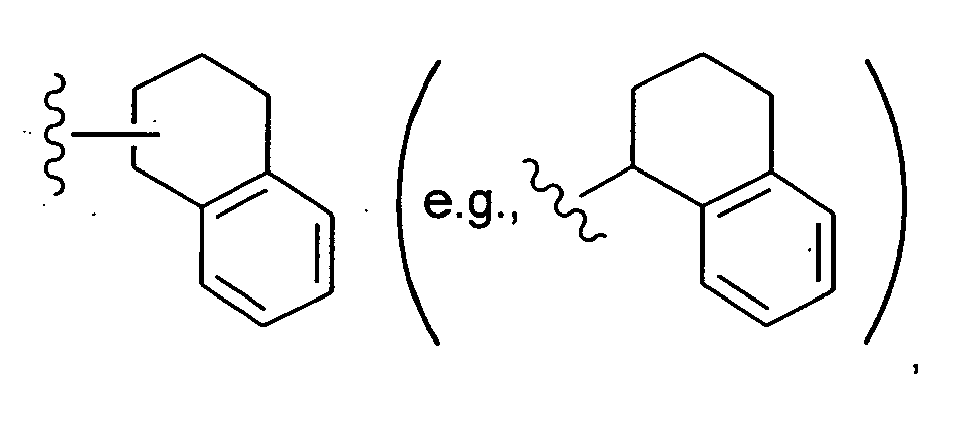


 (2)
(2)


 (3)
(3)


 (4)
(4) (5)
(5)

 B is
B is n is 0 to 6; p is 1 to 5; X is O, NH, or S; z is 1 to 3;R2 is selected from the group consisting of: hydrogen, OH, -C(O)OH, -SH, -SO2NR13R14 -NHC(O)R13, -NHSO2NR13R14 -NHSO2R13, -NR13R14, -C(O)NR13R14, -C(O)NHOR13, -C(O)NR13OH, - S(O2)OH, -OC(O)R13, an unsubstituted heterocyclic , acidic functional group, and a substituted heterocyclic acidic functional group; wherein there are 1 to 6 substituents on said substituted heterocyclic acidic functional group each substituent being independently selected from the group consisting of: R9 groups;R3 is-SO(t)NR13R14,each R7 and R8 is independently selected from the group consisting of: H, unsubstituted or substituted alkyl, unsubstituted or substituted aryl, unsubstituted or substituted heteroaryl, unsubstituted or substituted arylalkyl, unsubstituted or substituted heteroarylalkyl, unsubstituted or substituted cycloalkyl, unsubstituted or substituted cycloalkylalkyl, -CO2R13, -CONR13R14, alkynyl, alkenyl, and cycloalkenyl; and wherein there are one or more (e.g., 1 to 6) substituents on said substituted R7 and R8 groups, wherein each substitutent is independently selected from the group consisting of:a) halogen,b) -CF3,c) -COR13,d) -OR13,e) -NR13R14,f) -NO2,g) -CN,h) -SO2OR13,i) -Si(alkyl)3, wherein each alkyl is independently selected,j) -Si(aryl)3, wherein each alkyl is independently selected,k) -(R13)2R14Si, wherein each R13 is independently selected,l) -CO2R13,m) -C(O)NR13R14,n) -SO2NR13R14,o) -SO2R13,p) -OC(O)R13,q) -OC(O)NR13R14,r) -NR13C(O)R14,ands) -NR13CO2R14;(fluoroalkyl is one non-limiting example of an alkyl group that is subsituted with halogen);R8a is selected from the group consisting of: hydrogen, alkyl, cycloalkyl and cycloalkylalkyl;each R9 is independently selected from the group consisting of:a) -R13,b) halogen,c) -CF3,d) -COR13,e) -OR13,f) -NR13R14,g) -NO2,h) -CN,i) -SO2R13,j) -SO2NR13R14,k) -NR13COR14,l) -CONR13R14,m) -NR13CO2R14,n) -CO2R13,o)
 p) alkyl substituted with one or more (e.g., one) -OH groups (e.g., -(CH2)qOH, wherein q is 1-6, usually 1 to 2, and preferably 1),q) alkyl substituted with one or more (e.g., one) -NR13R14 group (e.g., -(CH2)qNR13R14, wherein q is 1-6, usually 1 to 2, and preferably 1), andr) -N(R13)SO2R14 (e.g., R13 is H and R14 is alkyl, such as methyl); R11 is independently selected from the group consisting of hydrogen, alkyl (e.g., C1 to C6, such as methyl), halogen, -CF3, -OCF3, -NR13R14, -NR13C(O)NR13R14, -OH, -C(O)OR13, -SH, -SO(t)NR13R14, -SO2R13, -NHC(O)R13, -NHSO2NR13R14, -NHSO2R13, -C(O)NR13R14, -C(O)NR13OR14, -OC(O)R13 and cyano;each R13 and R14 is independently selected from the group consisting of: H, unsubstituted or substituted alkyl, unsubstituted or substituted aryl, unsubstituted or substituted heteroaryl, unsubstituted or substituted arylalkyl, unsubstituted or substituted heteroarylalkyl, unsubstituted or substituted cycloalkyl, unsubstituted or substituted cycloalkylalkyl, unsubstituted or substituted heterocyclic, unsubstituted or substituted fluoroalkyl, and unsubstituted or substituted heterocycloalkylalkyl (wherein "heterocyloalkyl" means heterocyclic); wherein there are 1 to 6 substituents on said substituted R13 and R14 groups and each substituent is independently selected from the group consisting of: alkyl, -CF3, -OH, alkoxy, aryl, arylalkyl, fluroalkyl, cycloalkyl, cycloalkylalkyl, heteroaryl, heteroarylalkyl, -N(R40)2, -C(O)OR15, -C(O)NR15R16, -S(O)tNR15R16, -C(O)R15, -SO2R15 provided that R15 is not H, halogen, and -NHC(O)NR15R16; orR13 and R14 taken together with the nitrogen they are attached to in the groups -NR13R14, -C(O)NR13R14, -SO2NR13R14, -OC(O)NR13R14, -CONR13R14, -NR13C(O)NR13R14, -SOtNR13R14, -NHSO2NR13R14 form an unsubstituted or substituted saturated heterocyclic ring (preferably a 3 to 7 membered heterocyclic ring), said ring optionally containing one additional heteroatom selected from the group consisting of: 0, S and NR18; wherein there are 1 to 3 substituents on the substituted cyclized R13 and R14 groups (i.e., there is 1 to 3 substituents on the ring formed when the R13 and R14 groups are taken together with the nitrogen to which they are bound) and each substituent is independently selected from the group consisting of: alkyl, aryl, hydroxy, hydroxyalkyl, alkoxy, alkoxyalkyl, arylalkyl, fluoroalkyl, cycloalkyl, cycloalkylalkyl, heteroaryl, heteroarylalkyl, amino, -C(O)OR15, -C(O)NR15R16, -SOtNR15R16, -C(O)R15, -SO2R15 provided that R15 is not H, -NHC(O)NR15R16, -NHC(O)OR15, halogen, and a heterocylcoalkenyl group (i.e., a heterocyclic group that has at least one, and preferably one, double bond in a ring, e.g.,
 each R15 and R16 is independently selected from the group consisting of: H, alkyl, aryl, arylalkyl, cycloalkyl and heteroaryl;R18 is selected from the group consisting of: H, alkyl, aryl, heteroaryl,-C(O)R19, -SO2R19 and -C(O)NR19R20;each R19 and R20 is independently selected from the group consisting of: alkyl, aryl and heteroaryl;each R40 is independently selected from the group consisting of: H, alkyl and cycloalkyl; andt is 0, 1 or 2.
 - The compound of claim 5, wherein R2 is -OH.
- The compound of claim 6, wherein R11 is H.
- The compound of claim 7, wherein R13 and R14 are the same or different alkyl group.
Priority Applications (2)
| Application Number | Priority Date | Filing Date | Title |
|---|---|---|---|
| SI200230898T SI1818325T1 (en) | 2001-04-16 | 2002-04-15 | 3,4-DI-substituted cyclobutene-1,2-diones as CXC-chemokine receptor ligands |
| CY20101100380T CY1109989T1 (en) | 2001-04-16 | 2010-04-29 | 3,4-DI-Substituted CYCLOBUTENE-1,2-DIONES AS CONNECTORS OF THE CXC-CHEMICAL RECEPTOR |
Applications Claiming Priority (2)
| Application Number | Priority Date | Filing Date | Title |
|---|---|---|---|
| US28402601P | 2001-04-16 | 2001-04-16 | |
| EP02739172A EP1381590B1 (en) | 2001-04-16 | 2002-04-15 | 3,4-di-substituted cyclobutene-1,2-diones as cxc-chemokine receptor ligands |
Related Parent Applications (2)
| Application Number | Title | Priority Date | Filing Date |
|---|---|---|---|
| EP02739172A Division EP1381590B1 (en) | 2001-04-16 | 2002-04-15 | 3,4-di-substituted cyclobutene-1,2-diones as cxc-chemokine receptor ligands |
| EP02739172.1 Division | 2002-04-15 |
Publications (3)
| Publication Number | Publication Date |
|---|---|
| EP1818325A2 true EP1818325A2 (en) | 2007-08-15 |
| EP1818325A3 EP1818325A3 (en) | 2008-02-13 |
| EP1818325B1 EP1818325B1 (en) | 2010-02-24 |
Family
ID=23088576
Family Applications (2)
| Application Number | Title | Priority Date | Filing Date |
|---|---|---|---|
| EP07010711A Expired - Lifetime EP1818325B1 (en) | 2001-04-16 | 2002-04-15 | 3,4-DI-substituted cyclobutene-1,2-diones as CXC-chemokine receptor ligands |
| EP02739172A Expired - Lifetime EP1381590B1 (en) | 2001-04-16 | 2002-04-15 | 3,4-di-substituted cyclobutene-1,2-diones as cxc-chemokine receptor ligands |
Family Applications After (1)
| Application Number | Title | Priority Date | Filing Date |
|---|---|---|---|
| EP02739172A Expired - Lifetime EP1381590B1 (en) | 2001-04-16 | 2002-04-15 | 3,4-di-substituted cyclobutene-1,2-diones as cxc-chemokine receptor ligands |
Country Status (30)
| Country | Link |
|---|---|
| EP (2) | EP1818325B1 (en) |
| JP (3) | JP4499993B2 (en) |
| KR (2) | KR100952531B1 (en) |
| CN (2) | CN1990457A (en) |
| AR (1) | AR035825A1 (en) |
| AT (2) | ATE458715T1 (en) |
| AU (3) | AU2002311841B2 (en) |
| BR (1) | BRPI0208957B8 (en) |
| CA (1) | CA2444031C (en) |
| CY (2) | CY1109908T1 (en) |
| CZ (1) | CZ20032831A3 (en) |
| DE (2) | DE60220778T2 (en) |
| DK (2) | DK1381590T3 (en) |
| EC (1) | ECSP034809A (en) |
| ES (2) | ES2340207T3 (en) |
| HU (1) | HUP0401783A3 (en) |
| IL (3) | IL158262A0 (en) |
| MX (1) | MXPA03009441A (en) |
| MY (2) | MY149050A (en) |
| NO (2) | NO330790B1 (en) |
| NZ (3) | NZ529551A (en) |
| PE (1) | PE20021084A1 (en) |
| PL (2) | PL208928B1 (en) |
| PT (2) | PT1381590E (en) |
| RU (1) | RU2344123C9 (en) |
| SI (2) | SI1381590T1 (en) |
| SK (1) | SK287598B6 (en) |
| TW (2) | TWI316930B (en) |
| WO (1) | WO2002083624A1 (en) |
| ZA (1) | ZA200307905B (en) |
Families Citing this family (76)
| Publication number | Priority date | Publication date | Assignee | Title |
|---|---|---|---|---|
| US20040106794A1 (en) | 2001-04-16 | 2004-06-03 | Schering Corporation | 3,4-Di-substituted cyclobutene-1,2-diones as CXC-chemokine receptor ligands |
| US7132445B2 (en) | 2001-04-16 | 2006-11-07 | Schering Corporation | 3,4-Di-substituted cyclobutene-1,2-diones as CXC-chemokine receptor ligands |
| MXPA04003439A (en) | 2001-10-12 | 2004-07-08 | Schering Corp | 3,4-di-substituted maleimide compounds as cxc-chemokine receptor antagonists. |
| US8246969B2 (en) | 2001-11-16 | 2012-08-21 | Skinmedica, Inc. | Compositions containing aromatic aldehydes and their use in treatments |
| US6878709B2 (en) | 2002-01-04 | 2005-04-12 | Schering Corporation | 3,4-di-substituted pyridazinediones as CXC chemokine receptor antagonists |
| EP1485089B1 (en) * | 2002-03-18 | 2013-04-17 | Merck Sharp & Dohme Corp. | Combination treatments for chemokine-mediated diseases |
| GB0218326D0 (en) * | 2002-08-07 | 2002-09-11 | Glaxo Group Ltd | Compounds |
| PE20040570A1 (en) | 2002-10-09 | 2004-08-30 | Pharmacopeia Drug Discovery | THIADIAZOLDIOXIDES AND THIADIAZOLOXIDES AS LIGANDS OF THE CXC- AND CC-CHEMOKIN RECEPTOR |
| GB0302094D0 (en) | 2003-01-29 | 2003-02-26 | Pharmagene Lab Ltd | EP4 receptor antagonists |
| EP2258365B1 (en) * | 2003-03-28 | 2013-05-29 | Novartis Vaccines and Diagnostics, Inc. | Use of organic compounds for immunopotentiation |
| MXPA05010444A (en) * | 2003-04-03 | 2005-11-04 | Merck Patent Gmbh | Pyrrolidino-1, 2-dicarboxy -1-(phenylamide) -2-(4-(3-oxo- morpholino -4-yl)- phenylamide) derivatives and related compounds for use as inhibitors of coagulation factor xa in the treatment of thrombo-embolic diseases. |
| ATE457307T1 (en) | 2003-04-18 | 2010-02-15 | Schering Corp | SYNTHESIS OF 2-HYDROXY-N,N-DIMETHYL-3-[[2-[1(R)-(5-METHYL-2-FURANYL)PROPYL AMINO -3,4-DIOXO-1-CYCLOBUTEN-1-YL AMINO BENZAMIDE |
| WO2005012256A1 (en) | 2003-07-22 | 2005-02-10 | Astex Therapeutics Limited | 3, 4-disubstituted 1h-pyrazole compounds and their use as cyclin dependent kinases (cdk) and glycogen synthase kinase-3 (gsk-3) modulators |
| GB0320983D0 (en) * | 2003-09-08 | 2003-10-08 | Biofocus Plc | Compound libraries |
| WO2005028458A1 (en) * | 2003-09-23 | 2005-03-31 | Fermion Oy | Preparation of quetiapine |
| GB0324269D0 (en) | 2003-10-16 | 2003-11-19 | Pharmagene Lab Ltd | EP4 receptor antagonists |
| EP1694659B8 (en) | 2003-12-19 | 2008-10-08 | Schering Corporation | Thiadiazoles as cxc- and cc- chemokine receptor ligands |
| CA2550540A1 (en) | 2003-12-22 | 2005-07-28 | Schering Corporation | Isothiazole dioxides as cxc- and cc- chemokine receptor ligands |
| CA2554709C (en) * | 2004-01-30 | 2011-11-15 | Schering Corporation | Crystalline polymorphs of a cxc-chemokine receptor ligand |
| CN1946690A (en) * | 2004-02-27 | 2007-04-11 | 先灵公司 | Cyclobutenedione groups-containing compounds as inhibitors of hepatitis C virus NS3 serine protease |
| EP1634573A1 (en) * | 2004-08-16 | 2006-03-15 | The Procter and Gamble Company | 2-(Amino or substituted Amino)-5,6-substituted Phenol compounds, dyeing compositions containing them, and use thereof |
| CA2576170A1 (en) * | 2004-08-16 | 2006-03-02 | The Procter & Gamble Company | 2-(amino or substituted amino)-5, 6-substituted phenol compounds, dyeing compositions containing them, and use thereof |
| MX2007003319A (en) | 2004-09-20 | 2007-06-05 | Xenon Pharmaceuticals Inc | Pyridazine derivatives for inhibiting human stearoyl-coa- desaturase. |
| MX2007003332A (en) | 2004-09-20 | 2007-06-05 | Xenon Pharmaceuticals Inc | Heterocyclic derivatives and their use as stearoyl-coa desaturase inhibitors. |
| EP2289510A1 (en) | 2004-09-20 | 2011-03-02 | Xenon Pharmaceuticals Inc. | Heterocyclic derivatives for the treatment of diseases mediated by stearoyl-coa desaturase enzymes |
| EP2269610A3 (en) | 2004-09-20 | 2011-03-09 | Xenon Pharmaceuticals Inc. | Heterocyclic derivatives and their use as stearoyl-coa desaturase inhibitors |
| EP1799667B1 (en) | 2004-09-20 | 2013-03-20 | Xenon Pharmaceuticals Inc. | Heterocyclic derivatives and their use as therapeutic agents |
| JP4958786B2 (en) | 2004-09-20 | 2012-06-20 | ゼノン・ファーマシューティカルズ・インコーポレイテッド | Heterocyclic derivatives and their use as therapeutic agents |
| MX2007003327A (en) | 2004-09-20 | 2007-06-05 | Xenon Pharmaceuticals Inc | Heterocyclic derivatives and their use as mediators of stearoyl-coa desaturase. |
| ES2327840T3 (en) | 2004-12-23 | 2009-11-04 | Gpc Biotech Ag | DERIVATIVES OF ESCUARIC ACID WITH ANTIPROLIFERATIVE ACTIVITY. |
| AR054425A1 (en) | 2005-01-21 | 2007-06-27 | Astex Therapeutics Ltd | PIPERIDIN ADDITION SALTS 4-IL-ACID AMID 4- (2,6-DICLORO-BENZOILAMINO) 1H-PIRAZOL-3-CARBOXILICO. |
| US8404718B2 (en) | 2005-01-21 | 2013-03-26 | Astex Therapeutics Limited | Combinations of pyrazole kinase inhibitors |
| BRPI0611187A2 (en) | 2005-06-03 | 2010-08-24 | Xenon Pharmaceuticals Inc | amino thiazide derivatives as inhibitors of human stearoyl coa desaturase |
| WO2007005403A1 (en) | 2005-06-29 | 2007-01-11 | Schering Corporation | 5,6-di-substituted oxadiazolopyrazines and thiadiazolopyrazines as cxc-chemokine receptor ligands |
| MX2008000366A (en) | 2005-06-29 | 2008-03-07 | Schering Corp | Di-substituted oxadiazoles as cxc-chemokine receptor ligands. |
| DE102005035742A1 (en) * | 2005-07-29 | 2007-02-01 | Merck Patent Gmbh | New cyclobut-3-ene-1,2-dione derivatives are kinase inhibitors useful for treating e.g. cancer, hypertension, diabetes, glaucoma and bacterial infections |
| RS55192B1 (en) * | 2005-11-24 | 2017-01-31 | Dompé Farm S P A | (R) -ARYLKYLAMINE DERIVATIVES AND PHARMACEUTICAL COMPOSITIONS CONTAINING THEM |
| WO2007140233A1 (en) * | 2006-05-26 | 2007-12-06 | Abbott Laboratories | Inhibitors of polo-like kinases |
| US8183287B2 (en) | 2006-06-12 | 2012-05-22 | Schering Corporation | Pharmaceutical formulations and compositions of a selective antagonist of either CXCR2 or both CXCR1 and CXCR2 and methods of using the same for treating inflammatory disorders |
| CN101511809A (en) * | 2006-07-07 | 2009-08-19 | 先灵公司 | 3,4-di-substituted cyclobutene-1,2-diones as CXC-chemokine receptor ligands |
| US8450348B2 (en) | 2007-02-21 | 2013-05-28 | Forma Tm, Llc | Derivatives of squaric acid with anti-proliferative activity |
| US8183281B2 (en) | 2007-06-06 | 2012-05-22 | Novartis Ag | CXC-chemokine receptor ligands |
| CA2692269A1 (en) * | 2007-07-03 | 2009-01-08 | Schering Corporation | Process and intermediates for the synthesis of 1,2-substituted 3,4-dioxo-1-cyclobutene compounds |
| MX2010014310A (en) * | 2008-06-24 | 2011-02-15 | Topotarget As | Squaric acid derivatives as inhibitors of the nicotinamide. |
| UA103198C2 (en) | 2008-08-04 | 2013-09-25 | Новартис Аг | Squaramide derivatives as cxcr2 antagonists |
| WO2010063802A1 (en) * | 2008-12-05 | 2010-06-10 | Novartis Ag | 3, 4-di-substituted cyclobutene- 1, 2 -diones as cxcr2 receptor antagonists |
| CN102958927A (en) | 2010-05-12 | 2013-03-06 | Abbvie公司 | Indazole inhibitors of kinase |
| FR2961695B1 (en) | 2010-06-29 | 2012-07-06 | Galderma Res & Dev | USE OF COMPOUNDS IN THE TREATMENT OR PREVENTION OF SKIN DISORDERS |
| SG10202009963PA (en) | 2011-01-07 | 2020-11-27 | Allergan Inc | Melanin modification compositions and methods of use |
| EP2760821B1 (en) | 2011-09-02 | 2017-10-11 | Novartis AG | Choline salt of an anti-inflammatory substituted cyclobutenedione compound |
| FR2981934B1 (en) * | 2011-10-28 | 2013-12-20 | Galderma Res & Dev | NOVEL DI-SUBSTITUTED DIAMINO-3,4-CYCLOBUTENE-3-DIONE-1,2 COMPOUNDS USEFUL IN THE TREATMENT OF CHEMOKINE MEDIATED PATHOLOGIES. |
| FR2981936B1 (en) | 2011-10-28 | 2013-12-20 | Galderma Res & Dev | NOVEL DI-SUBSTITUTED DIAMINO-3,4-CYCLOBUTENE-3-DIONE-1,2 COMPOUNDS USEFUL IN THE TREATMENT OF CHEMOKINE MEDIATED PATHOLOGIES. |
| FR2981935B1 (en) | 2011-10-28 | 2015-08-07 | Galderma Res & Dev | NOVEL DI-SUBSTITUTED DIAMINO-3,4-CYCLOBUTENE-3-DIONE-1,2 COMPOUNDS USEFUL IN THE TREATMENT OF CHEMOKINE MEDIATED PATHOLOGIES. |
| CN103242210B (en) * | 2012-02-09 | 2014-09-24 | 北京艾百诺科技有限公司 | Mullinyl acetate containing substituted squaraine and its application |
| TW201341367A (en) | 2012-03-16 | 2013-10-16 | Axikin Pharmaceuticals Inc | 3,5-diaminopyrazole kinase inhibitors |
| US8889730B2 (en) | 2012-04-10 | 2014-11-18 | Pfizer Inc. | Indole and indazole compounds that activate AMPK |
| CN103382192A (en) * | 2012-05-04 | 2013-11-06 | 同创医药(苏州)有限公司 | Preparation of N-monosubstituted piperazine derivatives |
| EP2970177A1 (en) | 2013-03-15 | 2016-01-20 | Pfizer Inc. | Indole compounds that activate ampk |
| CN103214327A (en) * | 2013-03-22 | 2013-07-24 | 郑州泰基鸿诺药物科技有限公司 | An aromatic ring or aromatic heterocyclic trifluoromethyl ketone compound and its preparation method |
| US10046002B2 (en) | 2013-08-02 | 2018-08-14 | Syntrix Biosystems Inc. | Method for treating cancer using chemokine antagonists |
| US10561676B2 (en) * | 2013-08-02 | 2020-02-18 | Syntrix Biosystems Inc. | Method for treating cancer using dual antagonists of CXCR1 and CXCR2 |
| NZ631142A (en) | 2013-09-18 | 2016-03-31 | Axikin Pharmaceuticals Inc | Pharmaceutically acceptable salts of 3,5-diaminopyrazole kinase inhibitors |
| FR3030515B1 (en) | 2014-12-23 | 2017-01-20 | Galderma Res & Dev | NOVEL ANTAGONIST COMPOUNDS FOR CHEMOKINE CXCR1 AND CXCR2 RECEPTORS AND THEIR USE IN THE TREATMENT OF CHEMOKINE MEDIATED PATHOLOGIES |
| HUE049801T2 (en) | 2014-12-23 | 2020-10-28 | Sma Therapeutics Inc | 3,5-diaminopyrazole kinase inhibitors |
| TWI734715B (en) * | 2015-11-19 | 2021-08-01 | 美商卡默森屈有限公司 | Modulators of chemokine receptors |
| TWI724056B (en) | 2015-11-19 | 2021-04-11 | 美商卡默森屈有限公司 | Inhibitors of cxcr2 |
| WO2018073248A1 (en) | 2016-10-17 | 2018-04-26 | Icm (Institut Du Cerveau Et De La Moelle Épinière) | Prognosis of demyelinating diseases patients and treatment thereof |
| AU2018318075B2 (en) | 2017-08-14 | 2023-04-13 | Allergan, Inc. | 3,4-disubstituted 3-cyclobutene-1,2-diones and use thereof |
| US11052065B2 (en) | 2017-09-27 | 2021-07-06 | Merck Sharp & Dohme Corp. | Compositions and methods for treating cancer with a combination of programmed death receptor (PD-1) antibodies and a CXCR2 antagonist |
| US11207294B2 (en) | 2018-01-08 | 2021-12-28 | Chemocentryx, Inc. | Methods of treating generalized pustular psoriasis with an antagonist of CCR6 or CXCR2 |
| GEP20237476B (en) | 2018-09-21 | 2023-03-27 | Pfizer | N-substituted-dioxocyclobutenylamino-3-hydroxypicolinamides useful as ccr6 inhibitors |
| CN110041309B (en) * | 2019-04-04 | 2022-01-28 | 广东工业大学 | 2-carboxypiperazine-linked tacrine-8-amino (hydroxy) quinoline derivative and preparation and application thereof |
| MX2022004145A (en) * | 2019-10-07 | 2022-06-14 | De Shaw Res Llc | HETEROCYCLIC ARYLMETHYLENE COMPOUNDS AS BLOCKERS OF THE SHAKER TYPE KV1.3 POTASSIUM CHANNEL. |
| KR102710925B1 (en) * | 2021-06-01 | 2024-09-27 | 부산대학교 산학협력단 | Novel squaramide derivatives and use thereof |
| CN118339161B (en) * | 2021-12-10 | 2025-12-09 | 正大天晴药业集团股份有限公司 | Preparation method of isothiazolo [5,4-d ] pyrimidine IRAK4 inhibitor |
| EP4686469A1 (en) * | 2024-07-31 | 2026-02-04 | Dompé farmaceutici SpA | Cxcl8 inhibitors for use in the treatment of diabetes-associated comorbidities |
Family Cites Families (18)
| Publication number | Priority date | Publication date | Assignee | Title |
|---|---|---|---|---|
| JPH0692915A (en) * | 1992-07-28 | 1994-04-05 | Sumitomo Metal Ind Ltd | 1,2-diaminocyclobutene-3,4-dione derivative and its use |
| GB9312210D0 (en) * | 1993-06-14 | 1993-07-28 | Smithkline Beecham Plc | Chemical compounds |
| GB9316111D0 (en) * | 1993-08-04 | 1993-09-22 | Pfizer Ltd | Benzopyrans |
| US5354763A (en) * | 1993-11-17 | 1994-10-11 | American Home Products Corporation | Substituted N-heteroaryl and N-aryl-1,2-diaminocyclobutene-3,4-diones |
| US5466712A (en) * | 1994-11-04 | 1995-11-14 | American Home Products Corporation | Substituted n-aryl-1,2-diaminocyclobutene-3,4-diones |
| AU686896B2 (en) * | 1994-11-16 | 1998-02-12 | American Home Products Corporation | Diaminocyclobutene-3,4-diones |
| PL330849A1 (en) * | 1996-06-27 | 1999-06-07 | Smithkline Beecham Corp | Antagonists of il-8 receptors |
| WO1998033763A1 (en) * | 1997-01-30 | 1998-08-06 | American Home Products Corporation | Substituted hydroxy-anilino derivatives of cyclobutene-3,4-diones |
| US5840764A (en) * | 1997-01-30 | 1998-11-24 | American Home Products Corporation | Substituted hydroxy-anilino derivatives of cyclobutene-3,4-diones |
| US6211220B1 (en) * | 1998-11-23 | 2001-04-03 | Cell Pathways, Inc. | Method for treating neoplasia with amino or pyridylamino cyclobutene derivatives |
| WO2000035855A1 (en) * | 1998-12-14 | 2000-06-22 | American Home Products Corporation | 3,4-diamino-3-cyclobutene-1,2-dione derivatives which inhibit leukocyte adhesion mediated by vla-4 |
| NZ512339A (en) * | 1998-12-16 | 2003-03-28 | Bayer Ag | New biphenyl and biphenyl-analogous compounds as integrin antagonists |
| US6518283B1 (en) * | 1999-05-28 | 2003-02-11 | Celltech R&D Limited | Squaric acid derivatives |
| AR033803A1 (en) * | 2000-03-01 | 2004-01-07 | Smithkline Beecham Corp | DIANILINO ESCUARANO COMPOUNDS, PHARMACEUTICAL COMPOSITIONS THAT UNDERSTAND THEM, AND THE USE OF THE SAME IN THE MANUFACTURE OF MEDICINES TO TREAT CHEMIOQUINE MEDIUM-RELATED DISEASES |
| CN1454204A (en) * | 2000-05-30 | 2003-11-05 | 史密丝克莱恩比彻姆公司 | IL-8 receptor antagonists |
| AR032398A1 (en) * | 2001-01-16 | 2003-11-05 | Smithkline Beecham Corp | SULFONAMIDE ESCUARAMIDE COMPOUND, PHARMACEUTICAL COMPOSITION THAT INCLUDES IT AND USE OF THIS COMPOUND TO PREPARE SUCH COMPOSITION |
| US20040110954A1 (en) * | 2001-03-30 | 2004-06-10 | Palovich Michael R. | Methods of synthesizing phenol-contining compounds |
| EP1485089B1 (en) * | 2002-03-18 | 2013-04-17 | Merck Sharp & Dohme Corp. | Combination treatments for chemokine-mediated diseases |
-
2002
- 2002-04-15 RU RU2003133448/04A patent/RU2344123C9/en not_active IP Right Cessation
- 2002-04-15 AT AT07010711T patent/ATE458715T1/en active
- 2002-04-15 PT PT02739172T patent/PT1381590E/en unknown
- 2002-04-15 MX MXPA03009441A patent/MXPA03009441A/en active IP Right Grant
- 2002-04-15 EP EP07010711A patent/EP1818325B1/en not_active Expired - Lifetime
- 2002-04-15 CN CNA2006101374093A patent/CN1990457A/en active Pending
- 2002-04-15 NZ NZ529551A patent/NZ529551A/en not_active IP Right Cessation
- 2002-04-15 DE DE60220778T patent/DE60220778T2/en not_active Expired - Lifetime
- 2002-04-15 AR ARP020101371A patent/AR035825A1/en not_active Application Discontinuation
- 2002-04-15 KR KR1020037013527A patent/KR100952531B1/en not_active Expired - Fee Related
- 2002-04-15 EP EP02739172A patent/EP1381590B1/en not_active Expired - Lifetime
- 2002-04-15 PL PL390082A patent/PL208928B1/en unknown
- 2002-04-15 SI SI200230572T patent/SI1381590T1/en unknown
- 2002-04-15 NZ NZ543869A patent/NZ543869A/en not_active IP Right Cessation
- 2002-04-15 MY MYPI20070922A patent/MY149050A/en unknown
- 2002-04-15 ES ES07010711T patent/ES2340207T3/en not_active Expired - Lifetime
- 2002-04-15 NZ NZ560453A patent/NZ560453A/en unknown
- 2002-04-15 PL PL367129A patent/PL207255B1/en unknown
- 2002-04-15 JP JP2002581381A patent/JP4499993B2/en not_active Expired - Lifetime
- 2002-04-15 IL IL15826202A patent/IL158262A0/en unknown
- 2002-04-15 SI SI200230898T patent/SI1818325T1/en unknown
- 2002-04-15 AU AU2002311841A patent/AU2002311841B2/en not_active Expired
- 2002-04-15 WO PCT/US2002/012681 patent/WO2002083624A1/en not_active Ceased
- 2002-04-15 HU HU0401783A patent/HUP0401783A3/en unknown
- 2002-04-15 DK DK02739172T patent/DK1381590T3/en active
- 2002-04-15 SK SK1288-2003A patent/SK287598B6/en not_active IP Right Cessation
- 2002-04-15 CZ CZ20032831A patent/CZ20032831A3/en unknown
- 2002-04-15 CN CNB028119797A patent/CN1289471C/en not_active Expired - Fee Related
- 2002-04-15 DK DK07010711.5T patent/DK1818325T3/en active
- 2002-04-15 CA CA2444031A patent/CA2444031C/en not_active Expired - Lifetime
- 2002-04-15 DE DE60235507T patent/DE60235507D1/en not_active Expired - Lifetime
- 2002-04-15 MY MYPI20021372A patent/MY138202A/en unknown
- 2002-04-15 BR BR0208957-2 patent/BRPI0208957B8/en not_active IP Right Cessation
- 2002-04-15 ES ES02739172T patent/ES2287284T3/en not_active Expired - Lifetime
- 2002-04-15 KR KR1020097026265A patent/KR20100008794A/en not_active Ceased
- 2002-04-15 PT PT07010711T patent/PT1818325E/en unknown
- 2002-04-15 AT AT02739172T patent/ATE365154T1/en active
- 2002-04-16 TW TW091107670A patent/TWI316930B/en active
- 2002-04-16 PE PE2002000318A patent/PE20021084A1/en not_active Application Discontinuation
- 2002-04-16 TW TW096102669A patent/TW200736196A/en unknown
-
2003
- 2003-10-02 IL IL158262A patent/IL158262A/en not_active IP Right Cessation
- 2003-10-09 ZA ZA2003/07905A patent/ZA200307905B/en unknown
- 2003-10-15 NO NO20034612A patent/NO330790B1/en not_active IP Right Cessation
- 2003-10-16 EC EC2003004809A patent/ECSP034809A/en unknown
-
2006
- 2006-08-24 AU AU2006203679A patent/AU2006203679A1/en not_active Abandoned
-
2007
- 2007-08-07 CY CY20071101059T patent/CY1109908T1/en unknown
-
2009
- 2009-05-20 JP JP2009122594A patent/JP2009179641A/en active Pending
- 2009-10-25 IL IL201754A patent/IL201754A0/en unknown
- 2009-12-08 JP JP2009278869A patent/JP5294418B2/en not_active Expired - Lifetime
-
2010
- 2010-04-29 CY CY20101100380T patent/CY1109989T1/en unknown
- 2010-08-20 AU AU2010212484A patent/AU2010212484B2/en not_active Expired
-
2011
- 2011-01-12 NO NO20110050A patent/NO20110050L/en not_active Application Discontinuation
Non-Patent Citations (5)
| Title |
|---|
| "Bioreversible Carriers in Drug Design", 1987, AMERICAN PHARMACEUTICAL ASSOCIATION AND PERGAMON PRESS |
| "Remington's Pharmaceutical Sciences", 1990, MACK PUBLISHING CO |
| J AM CHEM SOC., vol. 65, 1943, pages 1804 - 1805 |
| J. MED. CHEM., vol. 38, 1995, pages 1942 - 1954 |
| T HIGUCHI; V, STELLA: "Prodrugs as Novel Delivery Systems", vol. 14, A.C S. SYMPOSIUM SERIES |
Also Published As
Similar Documents
| Publication | Publication Date | Title |
|---|---|---|
| EP1381590B1 (en) | 3,4-di-substituted cyclobutene-1,2-diones as cxc-chemokine receptor ligands | |
| US7947720B2 (en) | 3,4-di-substituted cyclobutene-1,2-diones as CXC-chemokine receptor ligands | |
| AU2002311841A1 (en) | 3,4-di-substituted cyclobutene-1,2-diones as cxc-chemokine receptor ligands | |
| US7132445B2 (en) | 3,4-Di-substituted cyclobutene-1,2-diones as CXC-chemokine receptor ligands | |
| EP1551818B1 (en) | Thiadiazoledioxides and thiadiazoleoxides as cxc- and cc-chemokine receptor ligands | |
| EP1694659B1 (en) | Thiadiazoles as cxc- and cc- chemokine receptor ligands | |
| US20040097547A1 (en) | 3,4-Di-substituted cyclobutene-1,2-diones as CXC-chemokine receptor ligands | |
| HK1057538B (en) | 3,4-di-substituted cyclobutene-1,2-diones as cxc-chemokine receptor ligands | |
| HK1107818B (en) | 3,4-di-substituted cyclobutene-1,2-diones as cxc-chemokine receptor ligands | |
| HK1072432B (en) | Thiadiazoledioxides and thiadiazoleoxides as cxc- and cc-chemokine receptor ligands | |
| HK1087711B (en) | Thiadiazoles as cxc- and cc- chemokine receptor ligands |
Legal Events
| Date | Code | Title | Description |
|---|---|---|---|
| PUAI | Public reference made under article 153(3) epc to a published international application that has entered the european phase |
Free format text: ORIGINAL CODE: 0009012 |
|
| 17P | Request for examination filed |
Effective date: 20070530 |
|
| AC | Divisional application: reference to earlier application |
Ref document number: 1381590 Country of ref document: EP Kind code of ref document: P |
|
| AK | Designated contracting states |
Kind code of ref document: A2 Designated state(s): AT BE CH CY DE DK ES FI FR GB GR IE IT LI LU MC NL PT SE TR |
|
| AX | Request for extension of the european patent |
Extension state: AL LT LV MK RO SI |
|
| RIC1 | Information provided on ipc code assigned before grant |
Ipc: C07C 237/30 20060101AFI20070710BHEP Ipc: C07D 307/52 20060101ALI20070914BHEP Ipc: C07D 213/74 20060101ALI20070914BHEP Ipc: C07C 225/20 20060101ALI20070914BHEP Ipc: C07D 231/38 20060101ALI20070914BHEP Ipc: C07C 255/59 20060101ALI20070914BHEP Ipc: C07D 333/36 20060101ALI20070914BHEP Ipc: C07D 207/36 20060101ALI20070914BHEP Ipc: C07D 249/18 20060101ALI20070914BHEP |
|
| PUAL | Search report despatched |
Free format text: ORIGINAL CODE: 0009013 |
|
| AK | Designated contracting states |
Kind code of ref document: A3 Designated state(s): AT BE CH CY DE DK ES FI FR GB GR IE IT LI LU MC NL PT SE TR |
|
| AX | Request for extension of the european patent |
Extension state: AL LT LV MK RO SI |
|
| REG | Reference to a national code |
Ref country code: HK Ref legal event code: DE Ref document number: 1107818 Country of ref document: HK |
|
| RAP1 | Party data changed (applicant data changed or rights of an application transferred) |
Owner name: SCHERING CORPORATION Owner name: PHARMACOPEIA, INC. |
|
| 17Q | First examination report despatched |
Effective date: 20080728 |
|
| AKX | Designation fees paid |
Designated state(s): AT BE CH CY DE DK ES FI FR GB GR IE IT LI LU MC NL PT SE TR |
|
| AXX | Extension fees paid |
Extension state: MK Payment date: 20070530 Extension state: LT Payment date: 20070530 Extension state: AL Payment date: 20070530 Extension state: RO Payment date: 20070530 Extension state: LV Payment date: 20070530 Extension state: SI Payment date: 20070530 |
|
| GRAP | Despatch of communication of intention to grant a patent |
Free format text: ORIGINAL CODE: EPIDOSNIGR1 |
|
| RAP1 | Party data changed (applicant data changed or rights of an application transferred) |
Owner name: PHARMACOPEIA, LLC Owner name: SCHERING CORPORATION |
|
| GRAS | Grant fee paid |
Free format text: ORIGINAL CODE: EPIDOSNIGR3 |
|
| GRAA | (expected) grant |
Free format text: ORIGINAL CODE: 0009210 |
|
| RIN1 | Information on inventor provided before grant (corrected) |
Inventor name: CHAO, JIANHUA Inventor name: LI, GE Inventor name: KAISER, BERND Inventor name: CHAO, JIANPING Inventor name: TAVERAS, ARTHUR G. Inventor name: NELSON, KINGSLEY H. Inventor name: ROKOSZ, LAURA L. Inventor name: BOND, RICHARD W. Inventor name: YU, YOUNONG Inventor name: FERREIRA, JOHAN A. Inventor name: DWYER, MICHAEL Inventor name: AKI, CYNTHIA J. Inventor name: MERRITT, ROBERT J. Inventor name: BALDWIN, JOHN J. |
|
| AC | Divisional application: reference to earlier application |
Ref document number: 1381590 Country of ref document: EP Kind code of ref document: P |
|
| AK | Designated contracting states |
Kind code of ref document: B1 Designated state(s): AT BE CH CY DE DK ES FI FR GB GR IE IT LI LU MC NL PT SE TR |
|
| AX | Request for extension of the european patent |
Extension state: AL LT LV MK RO SI |
|
| REG | Reference to a national code |
Ref country code: GB Ref legal event code: FG4D |
|
| REG | Reference to a national code |
Ref country code: CH Ref legal event code: EP |
|
| REG | Reference to a national code |
Ref country code: IE Ref legal event code: FG4D |
|
| REF | Corresponds to: |
Ref document number: 60235507 Country of ref document: DE Date of ref document: 20100408 Kind code of ref document: P |
|
| REG | Reference to a national code |
Ref country code: CH Ref legal event code: NV Representative=s name: ISLER & PEDRAZZINI AG |
|
| REG | Reference to a national code |
Ref country code: NL Ref legal event code: T3 |
|
| REG | Reference to a national code |
Ref country code: HK Ref legal event code: GR Ref document number: 1107818 Country of ref document: HK |
|
| REG | Reference to a national code |
Ref country code: SE Ref legal event code: TRGR |
|
| REG | Reference to a national code |
Ref country code: PT Ref legal event code: SC4A Free format text: AVAILABILITY OF NATIONAL TRANSLATION Effective date: 20100506 |
|
| REG | Reference to a national code |
Ref country code: DK Ref legal event code: T3 Ref country code: ES Ref legal event code: FG2A Ref document number: 2340207 Country of ref document: ES Kind code of ref document: T3 |
|
| REG | Reference to a national code |
Ref country code: GR Ref legal event code: EP Ref document number: 20100401147 Country of ref document: GR |
|
| PLBE | No opposition filed within time limit |
Free format text: ORIGINAL CODE: 0009261 |
|
| STAA | Information on the status of an ep patent application or granted ep patent |
Free format text: STATUS: NO OPPOSITION FILED WITHIN TIME LIMIT |
|
| 26N | No opposition filed |
Effective date: 20101125 |
|
| REG | Reference to a national code |
Ref country code: CH Ref legal event code: PFA Owner name: PHARMACOPEIA, LLC Free format text: SCHERING CORPORATION#2000 GALLOPING HILL ROAD#KENILWORTH, NJ 07033-0530 (US) $ PHARMACOPEIA, LLC#10275 SCIENCE CENTER DRIVE#SAN DIEGO, CA 92121 (US) -TRANSFER TO- PHARMACOPEIA, LLC#10275 SCIENCE CENTER DRIVE#SAN DIEGO, CA 92121 (US) $ MERCK SHARP & DOHME CORP.#126 EAST LINCOLN AVENUE#RAHWAY, NEW JERSEY 07065 (US) |
|
| REG | Reference to a national code |
Ref country code: NL Ref legal event code: TD Effective date: 20120924 |
|
| REG | Reference to a national code |
Ref country code: ES Ref legal event code: PC2A Owner name: MERCK SHARP & DOHME CORP. Effective date: 20121024 |
|
| REG | Reference to a national code |
Ref country code: SI Ref legal event code: SP73 Owner name: MERCK SHARP & DOHME CORP.; US Effective date: 20130111 |
|
| REG | Reference to a national code |
Ref country code: AT Ref legal event code: HC Ref document number: 458715 Country of ref document: AT Kind code of ref document: T Owner name: PHARMACOPEIA, LLC, US Effective date: 20130117 Ref country code: AT Ref legal event code: HC Ref document number: 458715 Country of ref document: AT Kind code of ref document: T Owner name: MERCK SHARP & DOHME CORP., US Effective date: 20130117 |
|
| REG | Reference to a national code |
Ref country code: FR Ref legal event code: CD Owner name: PHARMACOPEIA, LLC, US Effective date: 20130319 Ref country code: FR Ref legal event code: CD Owner name: SCHERING CORPORATION, US Effective date: 20130319 |
|
| REG | Reference to a national code |
Ref country code: DE Ref legal event code: R081 Ref document number: 60235507 Country of ref document: DE Owner name: PHARMACOPEIA, LLC, US Free format text: FORMER OWNER: PHARMACOPEIA, LLC, SCHERING CORP., , US Effective date: 20130516 Ref country code: DE Ref legal event code: R082 Ref document number: 60235507 Country of ref document: DE Representative=s name: UEXKUELL & STOLBERG, DE Effective date: 20130516 Ref country code: DE Ref legal event code: R081 Ref document number: 60235507 Country of ref document: DE Owner name: MERCK SHARP & DOHME CORP., US Free format text: FORMER OWNER: PHARMACOPEIA, LLC, SCHERING CORP., , US Effective date: 20130516 Ref country code: DE Ref legal event code: R081 Ref document number: 60235507 Country of ref document: DE Owner name: MERCK SHARP & DOHME CORP., RAHWAY, US Free format text: FORMER OWNER: PHARMACOPEIA, LLC, SCHERING CORP., , US Effective date: 20130516 Ref country code: DE Ref legal event code: R081 Ref document number: 60235507 Country of ref document: DE Owner name: PHARMACOPEIA, LLC, SAN DIEGO, US Free format text: FORMER OWNER: PHARMACOPEIA, LLC, SCHERING CORP., , US Effective date: 20130516 Ref country code: DE Ref legal event code: R082 Ref document number: 60235507 Country of ref document: DE Representative=s name: UEXKUELL & STOLBERG PARTNERSCHAFT VON PATENT- , DE Effective date: 20130516 Ref country code: DE Ref legal event code: R081 Ref document number: 60235507 Country of ref document: DE Owner name: MERCK SHARP & DOHME CORP., RAHWAY, US Free format text: FORMER OWNERS: PHARMACOPEIA, LLC, SAN DIEGO, CALIF., US; SCHERING CORP., 07033-0530 KENILWORTH, NEW JERSEY, US Effective date: 20130516 Ref country code: DE Ref legal event code: R081 Ref document number: 60235507 Country of ref document: DE Owner name: PHARMACOPEIA, LLC, SAN DIEGO, US Free format text: FORMER OWNERS: PHARMACOPEIA, LLC, SAN DIEGO, CALIF., US; SCHERING CORP., 07033-0530 KENILWORTH, NEW JERSEY, US Effective date: 20130516 |
|
| PGFP | Annual fee paid to national office [announced via postgrant information from national office to epo] |
Ref country code: DK Payment date: 20140325 Year of fee payment: 13 Ref country code: MC Payment date: 20140327 Year of fee payment: 13 Ref country code: IE Payment date: 20140326 Year of fee payment: 13 |
|
| PGFP | Annual fee paid to national office [announced via postgrant information from national office to epo] |
Ref country code: GR Payment date: 20140327 Year of fee payment: 13 Ref country code: TR Payment date: 20140328 Year of fee payment: 13 |
|
| PGFP | Annual fee paid to national office [announced via postgrant information from national office to epo] |
Ref country code: LU Payment date: 20140507 Year of fee payment: 13 Ref country code: PT Payment date: 20140326 Year of fee payment: 13 |
|
| PGFP | Annual fee paid to national office [announced via postgrant information from national office to epo] |
Ref country code: SE Payment date: 20140408 Year of fee payment: 13 Ref country code: AT Payment date: 20140325 Year of fee payment: 13 Ref country code: CH Payment date: 20140425 Year of fee payment: 13 Ref country code: NL Payment date: 20140410 Year of fee payment: 13 Ref country code: FI Payment date: 20140403 Year of fee payment: 13 |
|
| PGFP | Annual fee paid to national office [announced via postgrant information from national office to epo] |
Ref country code: BE Payment date: 20140509 Year of fee payment: 13 |
|
| PGFP | Annual fee paid to national office [announced via postgrant information from national office to epo] |
Ref country code: CY Payment date: 20140318 Year of fee payment: 13 |
|
| REG | Reference to a national code |
Ref country code: PT Ref legal event code: MM4A Free format text: LAPSE DUE TO NON-PAYMENT OF FEES Effective date: 20151015 |
|
| REG | Reference to a national code |
Ref country code: DK Ref legal event code: EBP Effective date: 20150430 |
|
| REG | Reference to a national code |
Ref country code: LT Ref legal event code: MM9D Effective date: 20150415 |
|
| PG25 | Lapsed in a contracting state [announced via postgrant information from national office to epo] |
Ref country code: LU Free format text: LAPSE BECAUSE OF NON-PAYMENT OF DUE FEES Effective date: 20150415 Ref country code: MC Free format text: LAPSE BECAUSE OF NON-PAYMENT OF DUE FEES Effective date: 20150430 |
|
| REG | Reference to a national code |
Ref country code: CH Ref legal event code: PL |
|
| REG | Reference to a national code |
Ref country code: SE Ref legal event code: EUG Ref country code: AT Ref legal event code: MM01 Ref document number: 458715 Country of ref document: AT Kind code of ref document: T Effective date: 20150415 |
|
| REG | Reference to a national code |
Ref country code: NL Ref legal event code: MM Effective date: 20150501 |
|
| PG25 | Lapsed in a contracting state [announced via postgrant information from national office to epo] |
Ref country code: FI Free format text: LAPSE BECAUSE OF NON-PAYMENT OF DUE FEES Effective date: 20150415 Ref country code: GR Free format text: LAPSE BECAUSE OF NON-PAYMENT OF DUE FEES Effective date: 20151106 Ref country code: CH Free format text: LAPSE BECAUSE OF NON-PAYMENT OF DUE FEES Effective date: 20150430 Ref country code: LI Free format text: LAPSE BECAUSE OF NON-PAYMENT OF DUE FEES Effective date: 20150430 |
|
| REG | Reference to a national code |
Ref country code: SI Ref legal event code: KO00 Effective date: 20151215 |
|
| REG | Reference to a national code |
Ref country code: GR Ref legal event code: ML Ref document number: 20100401147 Country of ref document: GR Effective date: 20151106 |
|
| PG25 | Lapsed in a contracting state [announced via postgrant information from national office to epo] |
Ref country code: CY Free format text: LAPSE BECAUSE OF NON-PAYMENT OF DUE FEES Effective date: 20150415 Ref country code: SE Free format text: LAPSE BECAUSE OF NON-PAYMENT OF DUE FEES Effective date: 20150416 Ref country code: PT Free format text: LAPSE BECAUSE OF NON-PAYMENT OF DUE FEES Effective date: 20151015 Ref country code: AT Free format text: LAPSE BECAUSE OF NON-PAYMENT OF DUE FEES Effective date: 20150415 |
|
| PG25 | Lapsed in a contracting state [announced via postgrant information from national office to epo] |
Ref country code: NL Free format text: LAPSE BECAUSE OF NON-PAYMENT OF DUE FEES Effective date: 20150501 |
|
| REG | Reference to a national code |
Ref country code: FR Ref legal event code: PLFP Year of fee payment: 15 |
|
| PG25 | Lapsed in a contracting state [announced via postgrant information from national office to epo] |
Ref country code: DK Free format text: LAPSE BECAUSE OF NON-PAYMENT OF DUE FEES Effective date: 20150430 Ref country code: IE Free format text: LAPSE BECAUSE OF NON-PAYMENT OF DUE FEES Effective date: 20150415 |
|
| REG | Reference to a national code |
Ref country code: FR Ref legal event code: PLFP Year of fee payment: 16 |
|
| PG25 | Lapsed in a contracting state [announced via postgrant information from national office to epo] |
Ref country code: BE Free format text: LAPSE BECAUSE OF NON-PAYMENT OF DUE FEES Effective date: 20150430 |
|
| PG25 | Lapsed in a contracting state [announced via postgrant information from national office to epo] |
Ref country code: TR Free format text: LAPSE BECAUSE OF NON-PAYMENT OF DUE FEES Effective date: 20150415 |
|
| REG | Reference to a national code |
Ref country code: FR Ref legal event code: PLFP Year of fee payment: 17 |
|
| PGFP | Annual fee paid to national office [announced via postgrant information from national office to epo] |
Ref country code: FR Payment date: 20210324 Year of fee payment: 20 |
|
| PGFP | Annual fee paid to national office [announced via postgrant information from national office to epo] |
Ref country code: GB Payment date: 20210331 Year of fee payment: 20 |
|
| PGFP | Annual fee paid to national office [announced via postgrant information from national office to epo] |
Ref country code: DE Payment date: 20210318 Year of fee payment: 20 Ref country code: IT Payment date: 20210415 Year of fee payment: 20 |
|
| PGFP | Annual fee paid to national office [announced via postgrant information from national office to epo] |
Ref country code: ES Payment date: 20210505 Year of fee payment: 20 |
|
| REG | Reference to a national code |
Ref country code: DE Ref legal event code: R071 Ref document number: 60235507 Country of ref document: DE |
|
| REG | Reference to a national code |
Ref country code: GB Ref legal event code: PE20 Expiry date: 20220414 |
|
| PG25 | Lapsed in a contracting state [announced via postgrant information from national office to epo] |
Ref country code: GB Free format text: LAPSE BECAUSE OF EXPIRATION OF PROTECTION Effective date: 20220414 |
|
| REG | Reference to a national code |
Ref country code: ES Ref legal event code: FD2A Effective date: 20220803 |
|
| PG25 | Lapsed in a contracting state [announced via postgrant information from national office to epo] |
Ref country code: ES Free format text: LAPSE BECAUSE OF EXPIRATION OF PROTECTION Effective date: 20220416 |