EP1816839A1 - Procédé d'établissement d'une confèrence téléphonique dans un réseau de télécommunication utilisant le protocole SIP - Google Patents
Procédé d'établissement d'une confèrence téléphonique dans un réseau de télécommunication utilisant le protocole SIP Download PDFInfo
- Publication number
- EP1816839A1 EP1816839A1 EP06300112A EP06300112A EP1816839A1 EP 1816839 A1 EP1816839 A1 EP 1816839A1 EP 06300112 A EP06300112 A EP 06300112A EP 06300112 A EP06300112 A EP 06300112A EP 1816839 A1 EP1816839 A1 EP 1816839A1
- Authority
- EP
- European Patent Office
- Prior art keywords
- terminal
- communication
- signal
- conference
- bridge
- Prior art date
- Legal status (The legal status is an assumption and is not a legal conclusion. Google has not performed a legal analysis and makes no representation as to the accuracy of the status listed.)
- Granted
Links
Images

Classifications
-
- H—ELECTRICITY
- H04—ELECTRIC COMMUNICATION TECHNIQUE
- H04M—TELEPHONIC COMMUNICATION
- H04M3/00—Automatic or semi-automatic exchanges
- H04M3/42—Systems providing special services or facilities to subscribers
- H04M3/56—Arrangements for connecting several subscribers to a common circuit, i.e. affording conference facilities
-
- H—ELECTRICITY
- H04—ELECTRIC COMMUNICATION TECHNIQUE
- H04L—TRANSMISSION OF DIGITAL INFORMATION, e.g. TELEGRAPHIC COMMUNICATION
- H04L65/00—Network arrangements, protocols or services for supporting real-time applications in data packet communication
- H04L65/1066—Session management
- H04L65/1101—Session protocols
- H04L65/1104—Session initiation protocol [SIP]
-
- H—ELECTRICITY
- H04—ELECTRIC COMMUNICATION TECHNIQUE
- H04M—TELEPHONIC COMMUNICATION
- H04M7/00—Arrangements for interconnection between switching centres
- H04M7/006—Networks other than PSTN/ISDN providing telephone service, e.g. Voice over Internet Protocol (VoIP), including next generation networks with a packet-switched transport layer
-
- H—ELECTRICITY
- H04—ELECTRIC COMMUNICATION TECHNIQUE
- H04M—TELEPHONIC COMMUNICATION
- H04M2203/00—Aspects of automatic or semi-automatic exchanges
- H04M2203/50—Aspects of automatic or semi-automatic exchanges related to audio conference
- H04M2203/5018—Initiating a conference during a two-party conversation, i.e. three-party service or three-way call
Definitions
- the present invention relates to a method for establishing a conference call in a telecommunications network using the SIP protocol and a server for implementing such a method.
- a telecommunication network can perform communications transmission using the Internet Protocol or 'IP' protocol for 'Internet Protocol' in English. When this transmission concerns a telephone communication, this transmission can also be called 'voice over IP'.
- a conference call is implemented between terminals 10, 12, 14 and 16 by establishing all the communications originating from these terminals by means of an 18 pc server, subsequently called a conference bridge. , which includes software and physical resources, such as connectors, to establish a conference call between these different terminals.
- the user of the terminal 10 Considering that the user of the terminal 10 wishes to establish a communication with the user of the terminal 12, the user of the terminal 10 informs the deck 18 pc with an application 19 of this request. The conference bridge 18 pc then transmits a first signal 100 inviting the terminal 10 to a communication with the terminal 12.
- the conference bridge 18 pc transmits a signal 103 inviting the terminal 12 to a communication with the terminal 10 so that when the terminal 12 accepts this communication (signal 104), the 18- pc conference bridge can establish and manage communication between these terminals 10 and 12.
- the communication between the terminals 10 and 12 being managed by a conference bridge 18 pc , terminals 14 or 16 can join the existing communication between these terminals 10 and 12.
- a simple procedure of invitation and acceptance with the 18 pc conference bridge is required for each of these terminals 14 and 16, this invitation and acceptance procedure being similar to the procedure described for the establishment of the communications between the conference bridge 18 pc and each of the terminals 10 and 12.
- This first method has the disadvantage of implementing a conference bridge 18 pc for any communication established from each of these terminals 10, 12, 14 and 16. Therefore, the resources of this bridge 18 pc conference are required even when two terminals 10 and 12 wish to perform a simple communication without the participation of a third terminal, thereby blocking the resources of the conference bridge 18 pc with respect to other terminals wishing to possibly establish a conference call.
- the signals relating to the establishment and management of a communication between two terminals 20 and 22 are transmitted by servers 26 ca20 and 26 ca22 of a different nature to that of a 28 pc conference bridge.
- the servers 26 ca20 and 26 ca22 perform a simple relay of the communication control signals and are referred to hereafter as call controllers 26 ca20 or 26ca22 or, more simply, controllers 26 ca20 or 26ca22 .
- the establishment of a communication between the terminal 20 and the terminal 22 via these controllers 26 ca20 and 26 ca22 implements a method according to the SIP protocol in which the conference bridge is not required. Thus, the resources of the conference bridge are not solicited for a simple communication between these two terminals 20 and 22.
- the user of a terminal may require the establishment of a conference call using an application 219.
- the communication between the terminal 20 and the terminal 22 must be established via the 28 pc conference bridge so that, for example, at least one third terminal can participate in a communication with the terminals 20 and 22 by also establishing a communication with the bridge 28 pc of conference.
- a signal 201 from an application 219 is transmitted to the controller 26 ca20 ' this signal 201 indicating that the communication between the terminals 20 and 22 must now be managed via the conference bridge 28 pc to allow others terminals to participate in this communication.
- the controller 26 ca20 transmits a signal 202 to the bridge 28 pc of conference so that the latter command (signal 203) to physical means 29 conference, also referred to as Mediagateway, the implementation of such communication.
- the bridge 28 pc of conference transmits a signal 205 to the controller 26 ca20 which can then request from the terminal 20 (signal 206) the interruption of its ongoing communication with the terminal 22, this interruption to allow the establishment of communication with the conference bridge.
- the bridge 28pc conference can control its physical means 29 (signal 210) implementation of the conference.
- these means confirm such an implementation (signal 210b)
- the bridge 28 pc carries out a communication procedure (signal 210c) with the call controller 26 CA20 .
- each of the terminals 20 and 22 establishes a communication with the bridge 28 pc of conference to result in the establishment of a conference call.
- the present invention results from a finding peculiar to the invention that such a method is not satisfactory given the nature of the interruption of the communication between the terminals 20 and 22. Indeed, the interruption of the communication is virtually imperceptible to the user of the terminal 20 since the abandonment of communication with the terminal 22 is substantially simultaneous with the establishment of communication with the bridge 28 pc .
- the user of the terminal 22 who does not take the initiative to establish a conference must abandon his current communication with the terminal 20 and wait to be invited to a new communication by the conference bridge 28 pc so during this wait, its user may have the impression of losing communication with the terminal 20 and perform undesirable operations such as attempting to establish a communication with the terminal 20 or another terminal.
- the present invention aims to provide a method for establishing a conference call from a simple communication between two terminals controlled according to the SIP protocol and which has none of the disadvantages related to the methods described above, namely neither constant use of resources specific to a conference call (first method) nor the implementation of a waiting without communication for one of the terminals (second method).
- Such a method has many advantages. In particular, it allows the establishment of a telephone call between two terminals without making use of the conference bridge in an abusive manner, unlike the first method according to the prior art, since a simple communication between two terminals can be carried out via call controllers and without requiring a conference bridge.
- a method according to the invention does not cause the printing of a communication loss for the user of a terminal, when his communication with another terminal is interrupted and he remains waiting for be required by a conference bridge, unlike the second method according to the prior art.
- the two terminals interrupt their communication, real or simulated, substantially simultaneously with the establishment of a communication with the conference bridge.
- the method comprises the additional step of inhibiting an interrupt signal transmitted by the first terminal to the second terminal during the interruption of its communication with this second terminal.
- the method comprises the additional step of inhibiting an interrupt signal transmitted by the second terminal to the first terminal during the simulation of the interruption of its communication with the first terminal.
- the method includes the further step of generating a signal confirming correct transmission of an inhibited signal to simulate the transmission of that inhibited signal.
- the establishment of a communication between the first terminal and the conference bridge being effected from an acceptance signal transmitted by this first terminal to the bridge comprises the additional step of transmitting this acceptance signal substantially simultaneously to the transmission of a signal by the first terminal to interrupt communication with the second terminal.
- the method comprises the additional step of transmitting this acceptance signal substantially simultaneously to the transmission of a signal by this second terminal to simulate the interruption of its communication with the first terminal.
- the invention also relates to a server transmitting signals in a telecommunications network using the SIP protocol to establish a communication between a first terminal and a second terminal, characterized in that it comprises means for simulating with respect to the second terminal maintaining its communication with the first terminal when the latter substantially simultaneously establishes a communication with a conference bridge, and means for simulating vis-à-vis the second terminal an interruption of its communication with the first terminal in order to establish a communication between this second terminal and the conference bridge.
- the establishment of a conference call between two terminals in communication can be done by minimizing the resources required by this communication and without imposing the user of the second terminal the impression of having lost communication with the first terminal.
- the server comprises means for inhibiting an interrupt signal transmitted by the first terminal to the second terminal during the interruption of its communication with the second terminal.
- the server comprises means for inhibiting an interrupt signal transmitted by the second terminal to the first terminal during the interruption of its communication with the second terminal.
- the server comprises means for generating a signal confirming a correct transmission of an inhibited signal and thus simulating the transmission of this inhibited signal.
- the server comprises means for initiating the implementation of a conference call from a control signal transmitted by an application distinct from the terminals.
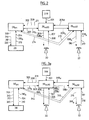
- FIG. 3a describes a method of establishing a conference call from an existing communication between a first terminal 30 and a second terminal 32, call controllers 36 ca30 and 36 ca32 relaying control signals relating to the communications of these terminals 30 and 32 according to the SIP protocol.
- the user of the terminal 30 may require the establishment of a conference call using an application 319.
- a signal 301 from this application 319 is transmitted to the controller 36 ca30 , this signal 301 indicating that a communication between the terminals 30 and 32 must be managed by the conference bridge 38 pc to establish a conference call between these terminals. two terminals 30 and 32.
- the controller 36 ca30 transmits a signal 302 to the conference 38PC bridge issues a request (signal 303) to the physical means 39, or "Mediagateway" of the bridge 38 pc conference to implement a communication with the terminal 30.
- the bridge 38 pc of conference transmits a signal 305 to the controller 36 ca30 which can then request from the terminal 30 (signal 306) the abandonment of the communication. course with the terminal 32.
- the call controller 36 ca30 comprises means to inhibit or block the signal 308a so that the terminal 32 does not know that its communication with the terminal 30 is dropped.
- the maintenance of its communication with the terminal 30 is simulated vis-à-vis the terminal 32 while allowing the call controller 36 ca30 to issue a confirmation 308e to the terminal 30 concerning the transmission of the signal 308a to respect the SIP protocol.
- a series of signals 310, 310b, 310c, 311, 312 and 313 having a function similar to the signal series 210, 210b, 210c, 211, 212 and 213 is used to implement the communication with the terminal 30 and transmit an invitation signal 314 to the controller 36 ca32 .
- the call controller 36 ca30 comprises means for inhibiting or blocking this signal 318a and means for transforming this signal 318a into an internal signal 318b which causes transmission by the call controller 36 ca30 ' without soliciting the terminal 30, a signal 318c for the call controller 36 ca32 to confirm the interruption of the simulated communication between the terminals 30 and 32.
- the signal 318c thus allows the terminal 32 to establish a communication with the bridge 38 pc of conference by abandoning the communication with the terminal 30.
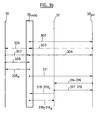
- Figure 3b illustrates the timing of the exchanges of some of the signals mentioned above.
- FIG. 3b are shown the terminals 30 and 32, the controller 36 ca30 and the conference bridge 28pc by columns from which are located different signals described below.
- Such a representation makes it possible to illustrate in detail the blocking or inhibition effected by the call controller 36 ca30 with respect to the signal 308 transmitted by the terminal 30 and with respect to the signal 31 8a emitted by the terminal 32.
- This representation also makes it possible to illustrate the practical simultaneity between the transmission of the interruption signals of the communication between terminals (signal 308 for the terminal 30 and 318 for the terminal 32) and the transmission of the establishment signals of a terminal. communication with the bridge 38 pc of conference (signal 307 for the terminal 30 and 317 for the terminal 32).
- Figure 3b shows the means specific to the invention in the 36ca30 controller.
- the invention can be implemented by locating the inhibiting means 308a of the disconnection of the terminal 30 and / or the inhibiting means of the signal 318a disconnecting the terminal 32 vis-à-vis the terminal 30 in one or more other servers such as the 36ca30 controller or, in general, in any server interposed between these two terminals.
Landscapes
- Engineering & Computer Science (AREA)
- Signal Processing (AREA)
- Multimedia (AREA)
- Computer Networks & Wireless Communication (AREA)
- Business, Economics & Management (AREA)
- General Business, Economics & Management (AREA)
- Telephonic Communication Services (AREA)
- Telephone Function (AREA)
- Data Exchanges In Wide-Area Networks (AREA)
Abstract
- l'étape d'interrompre la communication du premier terminal (30) avec le second terminal (32) pour établir une communication entre ce premier terminal (30) et un pont de conférence (38pc),
- l'étape de simuler vis-à-vis du second terminal (32) le maintien de sa communication avec le premier terminal (30) à l'aide d'au moins un des contrôleurs d'appel (36ca30, 36ca32), et
- l'étape de simuler vis-à-vis du second terminal (32) une interruption de sa communication avec le premier terminal (30) pour établir une communication entre ce second terminal et le pont de conférence (38pc).
Description
- La présente invention concerne un procédé d'établissement d'une conférence téléphonique dans un réseau de télécommunication utilisant le protocole SIP et un serveur destiné à la mise en oeuvre d'un tel procédé.
- Un réseau de télécommunication peut effectuer la transmission de communications en utilisant le protocole du réseau Internet ou protocole 'IP' pour 'Internet Protocol' en anglais. Lorsque cette transmission concerne une communication téléphonique, cette transmission peut aussi être dénommée 'voix sur IP'.
- Pour établir et gérer une telle communication téléphonique 'voix sur IP', il est connu de faire appel au protocole SIP pour 'Session Initiation Protocol' en anglais, ce protocole étant défini par la norme RFC 3261 de l'organisme Internet Engineering Task Force.
- Dans le cadre de ce protocole SIP, il est possible d'établir une conférence téléphonique, c'est-à-dire une communication du type 'voix sur IP' à laquelle peuvent participer plus de deux terminaux distincts. Deux procédés, décrits en détail ci-dessous à l'aide des figures 1 et 2, sont actuellement mis en oeuvre pour établir une telle conférence téléphonique à partir d'une communication existante entre deux terminaux.
- Selon un premier procédé illustré par la figure 1, une conférence téléphonique est mise en oeuvre entre des terminaux 10, 12, 14 et 16 en établissant toutes les communications issues de ces terminaux grâce à un serveur 18pc, dénommé pont de conférence par la suite, qui comprend les ressources logicielles et physiques, tels que des connecteurs, pour établir une conférence téléphonique entre ces différents terminaux.
- En considérant que l'utilisateur du terminal 10 souhaite établir une communication avec l'utilisateur du terminal 12, l'utilisateur du terminal 10 informe le pont 18pc à l'aide d'une application 19 de cette requête. Le pont de conférence 18pc transmet alors un premier signal 100 invitant le terminal 10 à une communication avec le terminal 12.
- Lorsque le terminal 10 donne son accord (signal 102) à cette communication, le pont de conférence 18pc transmet un signal 103 invitant le terminal 12 à une communication avec le terminal 10 de telle sorte que, lorsque ce terminal 12 accepte cette communication (signal 104), le pont 18pc de conférence peut établir et gérer une communication entre ces terminaux 10 et 12.
- La communication entre les terminaux 10 et 12 étant gérée par un pont de conférence 18pc, des terminaux 14 ou 16 peuvent joindre la communication existante entre ces terminaux 10 et 12. A cet effet, une simple procédure d'invitation et d'acceptation avec le pont de conférence 18pc est requise pour chacun de ces terminaux 14 et 16, cette procédure d'invitation et d'acceptation étant similaire à la procédure décrite pour l'établissement des communications entre le pont de conférence 18pc et chacun des terminaux 10 et 12.
- Ce premier procédé présente l'inconvénient de mettre en oeuvre un pont de conférence 18pc pour toute communication établie à partir de chacun de ces terminaux 10, 12, 14 et 16. Dès lors, des ressources de ce pont 18pc de conférence sont requises même lorsque deux terminaux 10 et 12 souhaitent effectuer une simple communication sans la participation d'un troisième terminal, bloquant ainsi des ressources du pont de conférence 18pc à l'égard d'autres terminaux souhaitant éventuellement établir une conférence téléphonique.
- Pour remédier à ce problème et optimiser l'utilisation des ressources d'un pont de conférence en allouant ces dernières aux seules communications requérant une conférence téléphonique, il est connu d'utiliser un second procédé décrit en détail ci-dessous à l'aide de la figure 2 où, pour des raisons de clarté, différents signaux transmis entre un même émetteur et un même destinataire sont représentés par un même lien.
- Dans ce second procédé, les signaux relatifs à l'établissement et à la gestion d'une communication entre deux terminaux 20 et 22 sont transmis par des serveurs 26ca20 et 26ca22 de nature distincte à celle d'un pont 28pc de conférence. De fait, les serveurs 26ca20 et 26ca22 effectuent un simple relais des signaux de contrôle de la communication et sont dénommés par la suite contrôleurs d'appel 26ca20 ou 26ca22 ou, plus simplement, contrôleurs 26ca20 ou 26ca22.
- L'établissement d'une communication entre le terminal 20 et le terminal 22 via ces contrôleur 26ca20 et 26ca22 met en oeuvre un procédé conforme au protocole SIP au cours duquel le pont de conférence n'est pas requis. Ainsi, les ressources du pont de conférence ne sont pas sollicitées pour une simple communication entre ces deux terminaux 20 et 22.
- Lorsque la communication entre les deux terminaux est établie, l'utilisateur d'un terminal, par exemple le terminal 20, peut requérir l'établissement d'une conférence téléphonique à l'aide d'une application 219.
- Dans ce cas, la communication entre le terminal 20 et le terminal 22 doit être établie via le pont 28pc de conférence afin que, par exemple, au moins un troisième terminal puisse participer à une communication avec les terminaux 20 et 22 en établissant également une communication avec le pont 28pc de conférence.
- A cet effet, un signal 201 issu d'une application 219 est transmis au contrôleur 26ca20' ce signal 201 indiquant que la communication entre les terminaux 20 et 22 doit être désormais gérée via le pont de conférence 28pc pour permettre à d'autres terminaux de participer à cette communication.
- A la suite de ce signal 201, le contrôleur 26ca20 transmet un signal 202 au pont 28pc de conférence afin que ce dernier commande (signal 203) aux moyens physiques 29 de conférence, également dénommés Mediagateway, la mise en oeuvre d'une telle communication.
- Lorsque ces moyens physiques 29 confirment la possibilité d'établir une communication (signal 204) avec le terminal 20, le pont 28pc de conférence transmet un signal 205 au contrôleur 26ca20 qui peut alors requérir auprès du terminal 20 (signal 206) l'interruption de sa communication en cours avec le terminal 22, cette interruption visant à permettre l'établissement de la communication avec le pont de conférence.
- Lorsque le terminal 20 confirme la mise en oeuvre d'une communication à travers le pont 28pc de conférence (signal 207) et son accord pour abandonner la communication en cours avec le terminal 22 (signal 208), le contrôleur d'appel 26ca20 génère deux signaux :
- Un premier signal 208a destiné au contrôleur 26ca22 du second terminal 22 pour que ce dernier gère l'interruption de sa communication avec le terminal 20.
- A la suite de ce premier signal 208a, le contrôleur 26ca22 transmet un signal 208b requérant au terminal 22 d'abandonner sa communication avec le terminal 20. Le terminal 22 confirme cet abandon par un signal 208c qui est relayé par les contrôleurs 26ca22 et 26ca20 vers le terminal 20 (signaux 208d et 208e).
- Un second signal 209 pour informer le pont 28pc de conférence de la disponibilité du terminal 20 pour établir une communication via ce pont 28pc.
- A la suite de ce second signal 209, le pont 28pc de conférence peut commander à ses moyens physiques 29 (signal 210) la mise en oeuvre de la conférence. Lorsque ces moyens confirment une telle mise en oeuvre (signal 210b), le pont 28pc effectue une procédure de mise en communication (signal 210c) avec le contrôleur d'appel 26CA20.
- Lorsque l'acceptation du contrôleur d'appel 26CA20 (signal 211) est transmise aux moyens physiques 29 (signal 212), ces derniers peuvent requérir (signal 213) la mise en oeuvre de la communication avec le terminal 22 au moyen d'une procédure d'invitation et d'acceptation conformément au protocole SIP et telle que déjà décrite (signaux 214, 216, 217, 219 et 220).
- Il apparaît donc que chacun des terminaux 20 et 22 établit une communication avec le pont 28pc de conférence pour aboutir à l'établissement d'une conférence téléphonique.
- La présente invention résulte d'une constatation propre à l'invention selon laquelle un tel procédé n'est pas satisfaisant compte tenu de la nature de l'interruption de la communication entre les terminaux 20 et 22. En effet, l'interruption de la communication est pratiquement imperceptible pour l'utilisateur du terminal 20 puisque l'abandon de la communication avec le terminal 22 est pratiquement simultané avec l'établissement de la communication avec le pont 28pc.
- Mais l'utilisateur du terminal 22, qui ne prend pas l'initiative d'établir une conférence doit abandonner sa communication en cours avec le terminal 20 et attendre d'être invité à une nouvelle communication par le pont de conférence 28pc de telle sorte que, pendant cette attente, son utilisateur peut avoir l'impression de perdre la communication avec le terminal 20 et effectuer des opérations indésirables telles que tenter d'établir une communication avec le terminal 20 ou un autre terminal.
- La présente invention vise à fournir un procédé d'établissement d'une conférence téléphonique à partir d'une simple communication entre deux terminaux contrôlée selon le protocole SIP et qui ne présente aucun des inconvénients liés aux procédés décrits ci-dessus, à savoir ni l'utilisation constante de ressources propres à une conférence téléphonique (premier procédé) ni la mise en oeuvre d'une attente sans communication pour un des terminaux (second procédé).
- C'est pourquoi, l'invention concerne un procédé d'établissement d'une conférence téléphonique dans un réseau de télécommunications utilisant le protocole SIP pour établir une communication entre un premier terminal et un second terminal, des contrôleurs d'appels relayant des signaux de cette communication, caractérisé en ce qu'il comprend les étapes suivantes :
- l'étape d'interrompre la communication du premier terminal avec le second terminal pour établir une communication entre ce premier terminal et un pont de conférence,
- l'étape de simuler vis-à-vis du second terminal le maintien de sa communication avec le premier terminal à l'aide d'au moins un des contrôleurs d'appel, et
- l'étape de simuler vis-à-vis du second terminal une interruption de sa communication avec le premier terminal pour établir une communication entre ce second terminal et le pont de conférence.
- Un tel procédé présente de nombreux avantages. Notamment, il permet l'établissement d'une communication téléphonique entre deux terminaux sans faire usage du pont de conférence de façon abusif, contrairement au premier procédé selon l'art antérieur, puisqu'une simple communication entre deux terminaux peut s'effectuer via des contrôleurs d'appels et sans requérir un pont de conférence.
- De plus, un procédé conforme à l'invention n'entraîne pas l'impression d'une perte de communication pour l'utilisateur d'un terminal, lorsque sa communication avec un autre terminal est interrompue et qu'il reste en attente d'être requis par un pont de conférence, contrairement au second procédé selon l'art antérieur. En effet, dans un procédé conforme à l'invention, les deux terminaux interrompent leur communication, de façon réelle ou simulée, pratiquement simultanément avec l'établissement d'une communication avec le pont de conférence.
- Dans une réalisation, le procédé comprend l'étape supplémentaire d'inhiber un signal d'interruption émis par le premier terminal vers le second terminal lors de l'interruption de sa communication avec ce second terminal.
- Selon une réalisation, le procédé comprend l'étape supplémentaire d'inhiber un signal d'interruption émis par le second terminal vers le premier terminal lors de la simulation de l'interruption de sa communication avec le premier terminal.
- Dans une réalisation, le procédé comprend l'étape supplémentaire de générer un signal confirmant une transmission correcte d'un signal inhibé afin de simuler la transmission de ce signal inhibé.
- Selon une réalisation, l'établissement d'une communication entre le premier terminal et le pont de conférence s'effectuant à partir d'un signal d'acceptation émis par ce premier terminal vers le pont, le procédé comprend l'étape supplémentaire d'émettre ce signal d'acceptation de façon pratiquement simultanée à l'émission d'un signal par le premier terminal pour interrompre sa communication avec le second terminal.
- Dans une réalisation, l'établissement d'une communication entre le second terminal et le pont de conférence s'effectuant à partir d'un signal d'acceptation émis par ce second terminal vers le pont, le procédé comprend l'étape supplémentaire d'émettre ce signal d'acceptation de façon pratiquement simultanée à l'émission d'un signal par ce second terminal pour simuler l'interruption de sa communication avec le premier terminal.
- Finalement, l'invention concerne également un serveur transmettant des signaux dans un réseau de télécommunications utilisant le protocole SIP pour établir une communication entre un premier terminal et un second terminal caractérisé en ce qu'il comprend des moyens pour simuler vis-à-vis du second terminal le maintien de sa communication avec le premier terminal lorsque ce dernier établit de façon pratiquement simultanée une communication avec un pont de conférence, et des moyens pour simuler vis-à-vis du second terminal une interruption de sa communication avec le premier terminal afin d'établir une communication entre ce second terminal et le pont de conférence.
- Grâce à un tel serveur, l'établissement d'une conférence téléphonique entre deux terminaux en communication peut s'effectuer en minimisant les ressources requises par cette communication et sans imposer à l'utilisateur de second terminal l'impression d'avoir perdu la communication avec le premier terminal.
- Dans une réalisation, le serveur comprend des moyens pour inhiber un signal d'interruption émis par le premier terminal vers le second terminal lors de l'interruption de sa communication avec le second terminal.
- Selon une réalisation, le serveur comprend des moyens pour inhiber un signal d'interruption émis par le second terminal vers le premier terminal lors de l'interruption de sa communication avec le second terminal.
- Dans une réalisation, le serveur comprend des moyens pour générer un signal confirmant une transmission correcte d'un signal inhibé et simuler ainsi la transmission de ce signal inhibé.
- Dans une réalisation, le serveur comprend des moyens pour déclencher la mise en oeuvre d'une conférence téléphonique à partir d'un signal de commande transmis par une application distincte des terminaux.
- D'autres caractéristiques et avantages de l'invention apparaîtront à la lumière de la description effectuée ci-dessous, à titre illustratif et non limitatif, de réalisations de cette invention faisant référence aux figures ci-jointes sur lesquelles :
- les figures 1 et 2, déjà décrites, illustrent des procédés de mise en oeuvre d'une conférence téléphonique conformément à l'art antérieur,
- les figures 3a et 3b illustrent un procédé établissant une conférence téléphonique conformément à l'invention.
- Conformément à l'invention, la figure 3a décrit un procédé d'établissement d'une conférence téléphonique à partir d'une communication existante entre un premier terminal 30 et un second terminal 32, des contrôleurs d'appels 36ca30 et 36ca32 relayant des signaux de contrôle relatifs aux communications de ces terminaux 30 et 32 selon le protocole SIP.
- Pour des raisons de clarté, les différents signaux transmis entre un même émetteur et un même destinataire sont représentés par un même lien.
- L'établissement et la gestion de cette communication existante entre le terminal 30 et le terminal 32 selon le protocole SIP, via ces contrôleur 36ca30 et 36ca32, ne requiert pas l'utilisation d'un pont de conférence 38pc, ce qui permet d'optimiser les ressources de ce dernier en les attribuant aux seules communications entre au moins trois terminaux.
- Par la suite, l'utilisateur du terminal 30 peut requérir l'établissement d'une conférence téléphonique à l'aide d'une application 319.
- Dans ce cas, un signal 301 issu de cette application 319 est transmis au contrôleur 36ca30, ce signal 301 indiquant qu'une communication entre les terminaux 30 et 32 doit être gérée par le pont de conférence 38pc pour établir une conférence téléphonique entre ces deux terminaux 30 et 32.
- A la suite de ce signal 301, le contrôleur 36ca30 transmet un signal 302 au pont 38pc de conférence qui émet une requête (signal 303) vers les moyens physiques 39, ou « Mediagateway », du pont 38pc de conférence pour mettre en oeuvre une communication avec le terminal 30.
- Lorsque ces moyens physiques confirment la possibilité d'une telle communication (signal 304), le pont 38pc de conférence transmet un signal 305 au contrôleur 36ca30 qui peut alors requérir auprès du terminal 30 (signal 306) l'abandon de la communication en cours avec le terminal 32.
- Lorsque le terminal 30 confirme la mise en oeuvre d'une communication à travers le pont 38pc de conférence (signal 307) et son accord pour abandonner la communication en cours avec le terminal 32 (signal 308), le contrôleur d'appel 36ca30 génère deux signaux conformément à l'art antérieur, à savoir :
- Un premier signal 309 vers le pont 38pc de conférence pour donner son accord à l'établissement d'une communication à travers ce pont de conférence, et
- Un second signal 308a destiné au terminal 32 pour que ce dernier abandonne sa communication en cours avec le terminal 30.
- Toutefois, conformément à l'invention, ce contrôleur d'appel 36ca30 comprend des moyens pour inhiber ou bloquer le signal 308a de telle sorte que le terminal 32 ignore que sa communication avec le terminal 30 est abandonné. En d'autres termes, le maintien de sa communication avec le terminal 30 est simulé vis-à-vis du terminal 32 tout en permettant au contrôleur d'appel 36ca30 d'émettre une confirmation 308e vers le terminal 30 concernant la transmission du signal 308a afin de respecter le protocole SIP.
- Lorsque le contrôleur d'appel 36ca30 émet le signal 309, une série de signaux 310, 310b, 310c, 311, 312 et 313 ayant une fonction similaire à la série de signaux 210, 210b, 210c, 211, 212 et 213 intervient pour mettre oeuvre la communication avec le terminal 30 et transmettre un signal 314 d'invitation au contrôleur 36ca32.
- Ce dernier requiert alors auprès du terminal 32 (signal 316) l'établissement d'une communication avec le pont de conférence et l'abandon de sa communication simulée avec le terminal 30, ce dernier confirmant la mise en oeuvre d'une telle communication à travers le pont 38pc de conférence (signal 317) tout en transmettant son accord pour abandonner la communication simulée avec le terminal 30 (signal 318). C'est pourquoi, le contrôleur d'appel 36ca32 transmet deux signaux, à savoir :
- Un premier signal 319 vers le pont 38pc de conférence pour donner son accord à l'établissement d'une communication à travers ce pont 38pc de conférence, communication mise en oeuvre par les moyens physiques 39 à la suite du signal 320, et
- Un second signal 318a destiné au contrôleur 36ca30 du premier terminal 30 pour interrompre la communication simulée.
- Le contrôleur d'appel 36ca30 comprend des moyens pour inhiber ou bloquer ce signal 318a et des moyens pour transformer ce signal 318a en un signal 318b interne qui entraîne l'émission par le contrôleur d'appel 36ca30' sans solliciter le terminal 30, d'un signal 318c destiné au contrôleur d'appel 36ca32 pour confirmer l'interruption de la communication simulée entre les terminaux 30 et 32.
- Le signal 318c permet ainsi au terminal 32 d'établir une communication avec le pont 38pc de conférence en abandonnant la communication avec le terminal 30.
- Grâce à un procédé conforme à l'invention, il apparaît que la communication en cours entre les terminaux 30 et 32, directement gérée par des contrôleurs d'appel 36ca30 et 36ca32, a été transformée en une communication gérée à travers le pont 38pc de conférence en évitant une atteinte au terminal 32 entre l'interruption de sa communication avec le terminal 30 et l'établissement de sa communication avec le pont 38pc de conférence.
- De fait, l'interruption de la communication pour chacun des terminaux 30 et 32 s'effectue de façon pratiquement simultanée à l'établissement de leur communication respective avec le pont 38pc de conférence de telle sorte que les utilisateurs de ces terminaux ne peuvent ressentir l'impression de perdre la communication en cours lors de l'établissement de la conférence téléphonique.
- De façon schématique, la figure 3b illustre la chronologie des échanges de certains des signaux mentionnés ci-dessus.
- Ainsi, sur la figure 3b sont représentés les terminaux 30 et 32, le contrôleur 36ca30 et le pont de conférence 28pc par des colonnes à partir desquelles sont situés différents signaux décrits ci-dessous.
- Une telle représentation permet d'illustrer en détail le blocage ou l'inhibition effectué par le contrôleur d'appel 36ca30 vis-à-vis du signal 308 émis par le terminal 30 et vis-à-vis du signal 31 8a émis par le terminal 32.
- Cette représentation permet également d'illustrer la simultanéité pratique entre l'émission des signaux d'interruption de la communication entre terminaux (signal 308 pour le terminal 30 et 318 pour le terminal 32) et l'émission des signaux d'établissement d'une communication avec le pont 38pc de conférence (signal 307 pour le terminal 30 et 317 pour le terminal 32).
- La figure 3b représente les moyens propres à l'invention dans le contrôleur 36ca30. Toutefois, il est clair que l'invention peut être mise en oeuvre en localisant les moyens inhibiteurs du signal 308a de déconnexion du terminal 30 et/ou les moyens inhibiteurs du signal 318a de déconnexion du terminal 32 vis-à-vis du terminal 30 dans un ou plusieurs autres serveurs tels que le contrôleur 36ca30 ou, d'une façon générale, dans tout serveur interposé entre ces deux terminaux.
Claims (11)
- Procédé d'établissement d'une conférence téléphonique dans un réseau de télécommunications utilisant le protocole SIP pour établir une communication entre un premier terminal (30) et un second terminal (32), des contrôleurs d'appels (36ca30, 36ca32) relayant des signaux de cette communication, caractérisé en ce qu'il comprend les étapes suivantes :- l'étape (30) d'interrompre la communication du premier terminal avec le second terminal (32) pour établir une communication entre ce premier terminal et un pont de conférence (38pc),- l'étape de simuler vis-à-vis du second terminal (32) le maintien de sa communication avec le premier terminal (30) à l'aide d'au moins un des contrôleurs d'appel (36ca30, 36ca32), et- l'étape de simuler vis-à-vis du second terminal (32) une interruption de sa communication avec le premier terminal (30) pour établir une communication entre ce second terminal et le pont de conférence (38pc).
- Procédé selon la revendication 1 caractérisé en ce qu'il comprend l'étape supplémentaire d'inhiber un signal (308a) d'interruption émis par le premier terminal (30) vers le second terminal (32) lors de l'interruption de sa communication avec le second terminal (32).
- Procédé selon la revendication 1 ou 2 caractérisé en ce qu'il comprend l'étape supplémentaire d'inhiber un signal (318a) d'interruption émis par le second terminal (32) vers le premier terminal (30) lors de la simulation de l'interruption de sa communication avec le premier terminal.
- Procédé selon la revendication 2 ou 3 caractérisé en ce qu'il comprend l'étape supplémentaire de générer un signal (318b, 318c) confirmant une transmission correcte d'un signal inhibé (318a) afin de simuler la transmission de ce signal inhibé (318a).
- Procédé selon la revendication 1, 2, 3 ou 4 caractérisé en ce que, l'établissement d'une communication entre le premier terminal (30) et le pont de conférence (38pc) s'effectuant à partir d'un signal d'acceptation (307) émis par ce premier terminal (30) vers le pont (38pc), il comprend l'étape supplémentaire d'émettre ce signal d'acceptation (307) de façon pratiquement simultanée à l'émission d'un signal (308) par le premier terminal (30) pour interrompre sa communication avec le second terminal (32).
- Procédé selon l'une des revendications précédentes caractérisé en ce que, l'établissement d'une communication entre le second terminal (32) et le pont de conférence (38pc) s'effectuant à partir d'un signal d'acceptation (317) émis par ce second terminal (32) vers le pont (38pc), il comprend l'étape supplémentaire d'émettre ce signal d'acceptation (317) de façon pratiquement simultanée à l'émission d'un signal (318) par ce second terminal (32) pour simuler l'interruption de sa communication avec le premier terminal (30).
- Serveur (36ca30) transmettant des signaux dans un réseau de télécommunications utilisant le protocole SIP pour établir une communication entre un premier terminal (30) et un second terminal (32) caractérisé en ce qu'il comprend :- des moyens pour simuler vis-à-vis du second terminal (32) le maintien de sa communication avec le premier terminal (30) lorsque ce dernier établit de façon pratiquement simultanée une communication avec un pont de conférence (38pc), et- des moyens pour simuler vis-à-vis du second terminal (32) une interruption de sa communication avec le premier terminal (30) afin d'établir une communication entre ce second terminal et le pont de conférence (38pc).
- Serveur (36ca30) selon la revendication 7 caractérisé en ce qu'il comprend des moyens pour inhiber un signal (308a) d'interruption émis par le premier terminal (30) vers le second terminal lors de l'interruption de sa communication avec le second terminal.
- Serveur (36ca30) selon la revendication 7 ou 8 caractérisé en ce qu'il comprend des moyens pour inhiber un signal (318a) d'interruption émis par le second terminal (32) vers le premier terminal (30) lors de la simulation de l'interruption de sa communication avec ce premier terminal (30).
- Serveur (36ca30) selon la revendication 9 caractérisé en ce qu'il comprend des moyens pour générer un signal (318b, 318c) confirmant une transmission correcte d'un signal inhibé (308a) et simuler ainsi la transmission de ce signal inhibé.
- Serveur (36ca30) selon l'une des revendications 7 à 10 caractérisé en ce qu'il comprend des moyens pour déclencher la mise en oeuvre d'une conférence téléphonique à partir d'un signal de commande transmis par une application (319) distincte des terminaux (30, 32).
Priority Applications (5)
| Application Number | Priority Date | Filing Date | Title |
|---|---|---|---|
| EP06300112A EP1816839B1 (fr) | 2006-02-06 | 2006-02-06 | Procédé d'établissement d'une confèrence téléphonique dans un réseau de télécommunication utilisant le protocole SIP |
| AT06300112T ATE450976T1 (de) | 2006-02-06 | 2006-02-06 | Verfahren zur herstellung einer telefonkonferenz in einem sip-protokoll benutzenden fernmeldenetz |
| DE602006010803T DE602006010803D1 (de) | 2006-02-06 | 2006-02-06 | Verfahren zur Herstellung einer Telefonkonferenz in einem SIP-Protokoll benutzenden Fernmeldenetz |
| CNB200710006542XA CN100518075C (zh) | 2006-02-06 | 2007-02-02 | 在电信网络中利用会话启动协议建立会议呼叫的方法 |
| US11/670,863 US8406404B2 (en) | 2006-02-06 | 2007-02-02 | Method for setting up a conference call in telecommunications network using the SIP protocol |
Applications Claiming Priority (1)
| Application Number | Priority Date | Filing Date | Title |
|---|---|---|---|
| EP06300112A EP1816839B1 (fr) | 2006-02-06 | 2006-02-06 | Procédé d'établissement d'une confèrence téléphonique dans un réseau de télécommunication utilisant le protocole SIP |
Publications (2)
| Publication Number | Publication Date |
|---|---|
| EP1816839A1 true EP1816839A1 (fr) | 2007-08-08 |
| EP1816839B1 EP1816839B1 (fr) | 2009-12-02 |
Family
ID=36499360
Family Applications (1)
| Application Number | Title | Priority Date | Filing Date |
|---|---|---|---|
| EP06300112A Expired - Lifetime EP1816839B1 (fr) | 2006-02-06 | 2006-02-06 | Procédé d'établissement d'une confèrence téléphonique dans un réseau de télécommunication utilisant le protocole SIP |
Country Status (5)
| Country | Link |
|---|---|
| US (1) | US8406404B2 (fr) |
| EP (1) | EP1816839B1 (fr) |
| CN (1) | CN100518075C (fr) |
| AT (1) | ATE450976T1 (fr) |
| DE (1) | DE602006010803D1 (fr) |
Families Citing this family (3)
| Publication number | Priority date | Publication date | Assignee | Title |
|---|---|---|---|---|
| CN101860716B (zh) | 2010-06-04 | 2013-09-11 | 中兴通讯股份有限公司 | 一种无线会议电视终端重接入的系统及方法 |
| CN102404541A (zh) * | 2010-09-10 | 2012-04-04 | 中华电信股份有限公司 | 智能型视频会议启动方法 |
| WO2018113992A1 (fr) * | 2016-12-23 | 2018-06-28 | Telecom Italia S.P.A. | Résolution de collision d'appel dans un réseau de communication |
Citations (1)
| Publication number | Priority date | Publication date | Assignee | Title |
|---|---|---|---|---|
| US6018360A (en) * | 1998-09-09 | 2000-01-25 | Motorola, Inc. | Method of switching a call to a multipoint conference call in a H.323 communication compliant environment |
Family Cites Families (5)
| Publication number | Priority date | Publication date | Assignee | Title |
|---|---|---|---|---|
| FI20030448A0 (fi) * | 2003-03-25 | 2003-03-25 | Nokia Corp | Puhelinneuvottelun alkaminen |
| US7885208B2 (en) * | 2003-09-11 | 2011-02-08 | Nokia Corporation | IP-based services for circuit-switched networks |
| US8924464B2 (en) * | 2003-09-19 | 2014-12-30 | Polycom, Inc. | Method and system for improving establishing of a multimedia session |
| US7392300B2 (en) * | 2004-01-08 | 2008-06-24 | Hewlett-Packard Development Company, L.P. | Method and system for modelling a communications network |
| US7738432B2 (en) * | 2004-09-28 | 2010-06-15 | Intel Corporation | Dynamic network activation apparatus, systems, and methods |
-
2006
- 2006-02-06 DE DE602006010803T patent/DE602006010803D1/de not_active Expired - Lifetime
- 2006-02-06 EP EP06300112A patent/EP1816839B1/fr not_active Expired - Lifetime
- 2006-02-06 AT AT06300112T patent/ATE450976T1/de not_active IP Right Cessation
-
2007
- 2007-02-02 CN CNB200710006542XA patent/CN100518075C/zh active Active
- 2007-02-02 US US11/670,863 patent/US8406404B2/en active Active
Patent Citations (1)
| Publication number | Priority date | Publication date | Assignee | Title |
|---|---|---|---|---|
| US6018360A (en) * | 1998-09-09 | 2000-01-25 | Motorola, Inc. | Method of switching a call to a multipoint conference call in a H.323 communication compliant environment |
Non-Patent Citations (2)
| Title |
|---|
| FTW I MILADINOVIC ET AL: "SIP Extension for Multiparty Conferencing; draft-miladinovic-sip-mult iparty-ext-00.txt", IETF STANDARD-WORKING-DRAFT, INTERNET ENGINEERING TASK FORCE, IETF, CH, 6 February 2001 (2001-02-06), XP015004409, ISSN: 0000-0004 * |
| SIPPING WG J ROSENBERG ET AL: "Models for Multi Party Conferencing in SIP; draft-rosenberg-sip-confe rencing-models-01.txt;", IETF STANDARD-WORKING-DRAFT, INTERNET ENGINEERING TASK FORCE, IETF, CH, no. 1, 20 July 2001 (2001-07-20), XP015034694, ISSN: 0000-0004 * |
Also Published As
| Publication number | Publication date |
|---|---|
| US20070200924A1 (en) | 2007-08-30 |
| EP1816839B1 (fr) | 2009-12-02 |
| ATE450976T1 (de) | 2009-12-15 |
| CN100518075C (zh) | 2009-07-22 |
| DE602006010803D1 (de) | 2010-01-14 |
| CN101018142A (zh) | 2007-08-15 |
| US8406404B2 (en) | 2013-03-26 |
Similar Documents
| Publication | Publication Date | Title |
|---|---|---|
| CN101088273B (zh) | 用于启动会议呼叫的系统和方法 | |
| EP1599987B1 (fr) | Dispositif de gestion de communications multimedia via un reseau asynchrone et un reseau de telephone, a compensation de delai de transmission | |
| US8245043B2 (en) | Audio start service for Ad-hoc meetings | |
| FR2753862A1 (fr) | Procede et systeme de communication interactive entre deux appareils telephoniques via le reseau internet | |
| EP1816839B1 (fr) | Procédé d'établissement d'une confèrence téléphonique dans un réseau de télécommunication utilisant le protocole SIP | |
| EP2606626A1 (fr) | Traitement de transfert de communication en mode sip | |
| EP1389863B1 (fr) | Procédé pour optimiser des communications établies dans un réseau privé de télécommunication comportant deux sous-réseaux utilisant respectivement les protocoles QSIG et SIP | |
| EP1755305A1 (fr) | Dispositif de gestion de jonction de sessions multimedia paralleles a des sessions multimedia principales dans un reseau de communication | |
| FR2890270A1 (fr) | Unite de serveur, unite de client, procede d'exploitation d'une unite de serveur et procede d'exploitation d'une unite de client | |
| WO2001005130A1 (fr) | Procede de rappel d'ordinateur a telephone ou d'ordinateur a ordinateur | |
| EP1517471A1 (fr) | Procédé de gestion d'un jeton dans un reseau de telecommunication | |
| CA2593870A1 (fr) | Enregistrement de communications dans un reseau de telecommunications | |
| US20070127494A1 (en) | Method for providing quality of service to a SIP-based device over a communication network | |
| EP1676412B1 (fr) | Procédé pour etablir un liaison directe de coordination entre un premier et un secnd centres de commande d'execution de services | |
| EP1755313A1 (fr) | Dispositif de contrôle de mise en oeuvre de fonctions au sein d'un équipement de service d'un coeur de réseau de communication internet | |
| FR2860373A1 (fr) | Procede d'acces automatique a une conference telephonique et systeme pour sa mise en oeuvre. | |
| EP1936934A1 (fr) | Procédé de diffusion d'un flux depuis une plate-forme de service, produit programme d'ordinateur et plate-forme de service correspondants | |
| EP4207824A1 (fr) | Procédé d'initiation de communication au sein d'un regroupement de groupes de communication dans un réseau 3gpp mcs | |
| EP2252034A1 (fr) | Refus d'une demande de service contenu par un message de signalisation SIP "UPDATE" | |
| FR2816789A1 (fr) | Systeme de telecommunications avec controleur d'appels, utilisant un coupleur de gestion de reseau | |
| HK1178002A (en) | Automated session admission | |
| WO2007063211A1 (fr) | Declenchement automatique de communications | |
| WO2006131448A1 (fr) | Procede de communication entre un point de commande de services d'un reseau intelligent et un serveur externe, point de commande, serveur externe, systeme et programmes d'ordinateur associes | |
| FR2888694A1 (fr) | Procede et systeme de mise en relation d'un poste d'un utilisateur requerant et d'un poste d'un utilisateur expert via un reseau de telecommunications | |
| WO2007045802A1 (fr) | Procede de telecommunication pour un reseau du type ims, serfeur et terminal implementant un tel procede |
Legal Events
| Date | Code | Title | Description |
|---|---|---|---|
| PUAI | Public reference made under article 153(3) epc to a published international application that has entered the european phase |
Free format text: ORIGINAL CODE: 0009012 |
|
| AK | Designated contracting states |
Kind code of ref document: A1 Designated state(s): AT BE BG CH CY CZ DE DK EE ES FI FR GB GR HU IE IS IT LI LT LU LV MC NL PL PT RO SE SI SK TR |
|
| AX | Request for extension of the european patent |
Extension state: AL BA HR MK YU |
|
| 17P | Request for examination filed |
Effective date: 20080208 |
|
| 17Q | First examination report despatched |
Effective date: 20080313 |
|
| AKX | Designation fees paid |
Designated state(s): AT BE BG CH CY CZ DE DK EE ES FI FR GB GR HU IE IS IT LI LT LU LV MC NL PL PT RO SE SI SK TR |
|
| GRAP | Despatch of communication of intention to grant a patent |
Free format text: ORIGINAL CODE: EPIDOSNIGR1 |
|
| RIN1 | Information on inventor provided before grant (corrected) |
Inventor name: TRAN, NHUT QUAN Inventor name: REMTOULA, KARIMKHAN |
|
| GRAS | Grant fee paid |
Free format text: ORIGINAL CODE: EPIDOSNIGR3 |
|
| GRAA | (expected) grant |
Free format text: ORIGINAL CODE: 0009210 |
|
| AK | Designated contracting states |
Kind code of ref document: B1 Designated state(s): AT BE BG CH CY CZ DE DK EE ES FI FR GB GR HU IE IS IT LI LT LU LV MC NL PL PT RO SE SI SK TR |
|
| REG | Reference to a national code |
Ref country code: GB Ref legal event code: FG4D Free format text: NOT ENGLISH |
|
| REG | Reference to a national code |
Ref country code: CH Ref legal event code: EP |
|
| REG | Reference to a national code |
Ref country code: IE Ref legal event code: FG4D |
|
| REF | Corresponds to: |
Ref document number: 602006010803 Country of ref document: DE Date of ref document: 20100114 Kind code of ref document: P |
|
| REG | Reference to a national code |
Ref country code: NL Ref legal event code: VDEP Effective date: 20091202 |
|
| PG25 | Lapsed in a contracting state [announced via postgrant information from national office to epo] |
Ref country code: SE Free format text: LAPSE BECAUSE OF FAILURE TO SUBMIT A TRANSLATION OF THE DESCRIPTION OR TO PAY THE FEE WITHIN THE PRESCRIBED TIME-LIMIT Effective date: 20091202 Ref country code: LT Free format text: LAPSE BECAUSE OF FAILURE TO SUBMIT A TRANSLATION OF THE DESCRIPTION OR TO PAY THE FEE WITHIN THE PRESCRIBED TIME-LIMIT Effective date: 20091202 Ref country code: FI Free format text: LAPSE BECAUSE OF FAILURE TO SUBMIT A TRANSLATION OF THE DESCRIPTION OR TO PAY THE FEE WITHIN THE PRESCRIBED TIME-LIMIT Effective date: 20091202 |
|
| LTIE | Lt: invalidation of european patent or patent extension |
Effective date: 20091202 |
|
| PG25 | Lapsed in a contracting state [announced via postgrant information from national office to epo] |
Ref country code: PL Free format text: LAPSE BECAUSE OF FAILURE TO SUBMIT A TRANSLATION OF THE DESCRIPTION OR TO PAY THE FEE WITHIN THE PRESCRIBED TIME-LIMIT Effective date: 20091202 Ref country code: LV Free format text: LAPSE BECAUSE OF FAILURE TO SUBMIT A TRANSLATION OF THE DESCRIPTION OR TO PAY THE FEE WITHIN THE PRESCRIBED TIME-LIMIT Effective date: 20091202 Ref country code: CY Free format text: LAPSE BECAUSE OF FAILURE TO SUBMIT A TRANSLATION OF THE DESCRIPTION OR TO PAY THE FEE WITHIN THE PRESCRIBED TIME-LIMIT Effective date: 20091202 Ref country code: SI Free format text: LAPSE BECAUSE OF FAILURE TO SUBMIT A TRANSLATION OF THE DESCRIPTION OR TO PAY THE FEE WITHIN THE PRESCRIBED TIME-LIMIT Effective date: 20091202 |
|
| PG25 | Lapsed in a contracting state [announced via postgrant information from national office to epo] |
Ref country code: AT Free format text: LAPSE BECAUSE OF FAILURE TO SUBMIT A TRANSLATION OF THE DESCRIPTION OR TO PAY THE FEE WITHIN THE PRESCRIBED TIME-LIMIT Effective date: 20091202 |
|
| REG | Reference to a national code |
Ref country code: IE Ref legal event code: FD4D |
|
| PG25 | Lapsed in a contracting state [announced via postgrant information from national office to epo] |
Ref country code: PT Free format text: LAPSE BECAUSE OF FAILURE TO SUBMIT A TRANSLATION OF THE DESCRIPTION OR TO PAY THE FEE WITHIN THE PRESCRIBED TIME-LIMIT Effective date: 20100402 Ref country code: IS Free format text: LAPSE BECAUSE OF FAILURE TO SUBMIT A TRANSLATION OF THE DESCRIPTION OR TO PAY THE FEE WITHIN THE PRESCRIBED TIME-LIMIT Effective date: 20100402 Ref country code: ES Free format text: LAPSE BECAUSE OF FAILURE TO SUBMIT A TRANSLATION OF THE DESCRIPTION OR TO PAY THE FEE WITHIN THE PRESCRIBED TIME-LIMIT Effective date: 20100313 Ref country code: EE Free format text: LAPSE BECAUSE OF FAILURE TO SUBMIT A TRANSLATION OF THE DESCRIPTION OR TO PAY THE FEE WITHIN THE PRESCRIBED TIME-LIMIT Effective date: 20091202 Ref country code: RO Free format text: LAPSE BECAUSE OF FAILURE TO SUBMIT A TRANSLATION OF THE DESCRIPTION OR TO PAY THE FEE WITHIN THE PRESCRIBED TIME-LIMIT Effective date: 20091202 Ref country code: BG Free format text: LAPSE BECAUSE OF FAILURE TO SUBMIT A TRANSLATION OF THE DESCRIPTION OR TO PAY THE FEE WITHIN THE PRESCRIBED TIME-LIMIT Effective date: 20100302 Ref country code: IE Free format text: LAPSE BECAUSE OF FAILURE TO SUBMIT A TRANSLATION OF THE DESCRIPTION OR TO PAY THE FEE WITHIN THE PRESCRIBED TIME-LIMIT Effective date: 20091202 Ref country code: NL Free format text: LAPSE BECAUSE OF FAILURE TO SUBMIT A TRANSLATION OF THE DESCRIPTION OR TO PAY THE FEE WITHIN THE PRESCRIBED TIME-LIMIT Effective date: 20091202 |
|
| BERE | Be: lapsed |
Owner name: ALCATEL LUCENT Effective date: 20100228 |
|
| PG25 | Lapsed in a contracting state [announced via postgrant information from national office to epo] |
Ref country code: CZ Free format text: LAPSE BECAUSE OF FAILURE TO SUBMIT A TRANSLATION OF THE DESCRIPTION OR TO PAY THE FEE WITHIN THE PRESCRIBED TIME-LIMIT Effective date: 20091202 Ref country code: SK Free format text: LAPSE BECAUSE OF FAILURE TO SUBMIT A TRANSLATION OF THE DESCRIPTION OR TO PAY THE FEE WITHIN THE PRESCRIBED TIME-LIMIT Effective date: 20091202 |
|
| REG | Reference to a national code |
Ref country code: CH Ref legal event code: PL |
|
| PLBE | No opposition filed within time limit |
Free format text: ORIGINAL CODE: 0009261 |
|
| STAA | Information on the status of an ep patent application or granted ep patent |
Free format text: STATUS: NO OPPOSITION FILED WITHIN TIME LIMIT |
|
| PG25 | Lapsed in a contracting state [announced via postgrant information from national office to epo] |
Ref country code: CH Free format text: LAPSE BECAUSE OF NON-PAYMENT OF DUE FEES Effective date: 20100228 Ref country code: MC Free format text: LAPSE BECAUSE OF NON-PAYMENT OF DUE FEES Effective date: 20100301 Ref country code: LI Free format text: LAPSE BECAUSE OF NON-PAYMENT OF DUE FEES Effective date: 20100228 Ref country code: GR Free format text: LAPSE BECAUSE OF FAILURE TO SUBMIT A TRANSLATION OF THE DESCRIPTION OR TO PAY THE FEE WITHIN THE PRESCRIBED TIME-LIMIT Effective date: 20100303 |
|
| 26N | No opposition filed |
Effective date: 20100903 |
|
| PG25 | Lapsed in a contracting state [announced via postgrant information from national office to epo] |
Ref country code: DK Free format text: LAPSE BECAUSE OF FAILURE TO SUBMIT A TRANSLATION OF THE DESCRIPTION OR TO PAY THE FEE WITHIN THE PRESCRIBED TIME-LIMIT Effective date: 20091202 |
|
| PG25 | Lapsed in a contracting state [announced via postgrant information from national office to epo] |
Ref country code: BE Free format text: LAPSE BECAUSE OF NON-PAYMENT OF DUE FEES Effective date: 20100228 |
|
| PG25 | Lapsed in a contracting state [announced via postgrant information from national office to epo] |
Ref country code: IT Free format text: LAPSE BECAUSE OF FAILURE TO SUBMIT A TRANSLATION OF THE DESCRIPTION OR TO PAY THE FEE WITHIN THE PRESCRIBED TIME-LIMIT Effective date: 20091202 |
|
| PG25 | Lapsed in a contracting state [announced via postgrant information from national office to epo] |
Ref country code: HU Free format text: LAPSE BECAUSE OF FAILURE TO SUBMIT A TRANSLATION OF THE DESCRIPTION OR TO PAY THE FEE WITHIN THE PRESCRIBED TIME-LIMIT Effective date: 20100603 Ref country code: LU Free format text: LAPSE BECAUSE OF NON-PAYMENT OF DUE FEES Effective date: 20100206 |
|
| PG25 | Lapsed in a contracting state [announced via postgrant information from national office to epo] |
Ref country code: TR Free format text: LAPSE BECAUSE OF FAILURE TO SUBMIT A TRANSLATION OF THE DESCRIPTION OR TO PAY THE FEE WITHIN THE PRESCRIBED TIME-LIMIT Effective date: 20091202 |
|
| REG | Reference to a national code |
Ref country code: FR Ref legal event code: GC Effective date: 20131018 |
|
| REG | Reference to a national code |
Ref country code: FR Ref legal event code: RG Effective date: 20141016 |
|
| REG | Reference to a national code |
Ref country code: FR Ref legal event code: PLFP Year of fee payment: 10 |
|
| REG | Reference to a national code |
Ref country code: FR Ref legal event code: CA Effective date: 20150521 |
|
| REG | Reference to a national code |
Ref country code: FR Ref legal event code: CA Effective date: 20150521 |
|
| REG | Reference to a national code |
Ref country code: FR Ref legal event code: PLFP Year of fee payment: 11 |
|
| REG | Reference to a national code |
Ref country code: FR Ref legal event code: PLFP Year of fee payment: 12 |
|
| PGFP | Annual fee paid to national office [announced via postgrant information from national office to epo] |
Ref country code: FR Payment date: 20170217 Year of fee payment: 12 |
|
| PGFP | Annual fee paid to national office [announced via postgrant information from national office to epo] |
Ref country code: GB Payment date: 20170216 Year of fee payment: 12 |
|
| REG | Reference to a national code |
Ref country code: DE Ref legal event code: R082 Ref document number: 602006010803 Country of ref document: DE Representative=s name: DOMPATENT VON KREISLER SELTING WERNER - PARTNE, DE Ref country code: DE Ref legal event code: R081 Ref document number: 602006010803 Country of ref document: DE Owner name: BEIJING XIAOMI MOBILE SOFTWARE CO., LTD., CN Free format text: FORMER OWNER: ALCATEL LUCENT, PARIS, FR |
|
| GBPC | Gb: european patent ceased through non-payment of renewal fee |
Effective date: 20180206 |
|
| REG | Reference to a national code |
Ref country code: FR Ref legal event code: ST Effective date: 20181031 |
|
| PG25 | Lapsed in a contracting state [announced via postgrant information from national office to epo] |
Ref country code: FR Free format text: LAPSE BECAUSE OF NON-PAYMENT OF DUE FEES Effective date: 20180228 Ref country code: GB Free format text: LAPSE BECAUSE OF NON-PAYMENT OF DUE FEES Effective date: 20180206 |
|
| P01 | Opt-out of the competence of the unified patent court (upc) registered |
Effective date: 20230530 |
|
| PGFP | Annual fee paid to national office [announced via postgrant information from national office to epo] |
Ref country code: DE Payment date: 20250218 Year of fee payment: 20 |
|
| REG | Reference to a national code |
Ref country code: DE Ref legal event code: R071 Ref document number: 602006010803 Country of ref document: DE |