EP1816196A1 - La1 - The genome of a Lactobacillus strain - Google Patents
La1 - The genome of a Lactobacillus strain Download PDFInfo
- Publication number
- EP1816196A1 EP1816196A1 EP07104120A EP07104120A EP1816196A1 EP 1816196 A1 EP1816196 A1 EP 1816196A1 EP 07104120 A EP07104120 A EP 07104120A EP 07104120 A EP07104120 A EP 07104120A EP 1816196 A1 EP1816196 A1 EP 1816196A1
- Authority
- EP
- European Patent Office
- Prior art keywords
- seq
- sequence
- sample
- protein
- identified
- Prior art date
- Legal status (The legal status is an assumption and is not a legal conclusion. Google has not performed a legal analysis and makes no representation as to the accuracy of the status listed.)
- Withdrawn
Links
- 241000186660 Lactobacillus Species 0.000 title claims abstract description 28
- 229940039696 lactobacillus Drugs 0.000 title claims description 19
- 108090000765 processed proteins & peptides Proteins 0.000 claims abstract description 59
- 229920001184 polypeptide Polymers 0.000 claims abstract description 58
- 102000004196 processed proteins & peptides Human genes 0.000 claims abstract description 57
- 238000000034 method Methods 0.000 claims abstract description 37
- 150000007523 nucleic acids Chemical class 0.000 claims abstract description 26
- 108091028043 Nucleic acid sequence Proteins 0.000 claims abstract description 23
- 241001468157 Lactobacillus johnsonii Species 0.000 claims abstract description 21
- 230000003993 interaction Effects 0.000 claims abstract description 7
- 230000000529 probiotic effect Effects 0.000 claims abstract description 6
- 230000000295 complement effect Effects 0.000 claims description 53
- 125000003729 nucleotide group Chemical group 0.000 claims description 39
- 239000002773 nucleotide Substances 0.000 claims description 37
- 239000000523 sample Substances 0.000 claims description 34
- 239000012634 fragment Substances 0.000 claims description 21
- 241000894006 Bacteria Species 0.000 claims description 18
- 238000001514 detection method Methods 0.000 claims description 18
- 108020004414 DNA Proteins 0.000 claims description 16
- 108700026244 Open Reading Frames Proteins 0.000 claims description 15
- 238000009396 hybridization Methods 0.000 claims description 15
- 108091033319 polynucleotide Proteins 0.000 claims description 12
- 102000040430 polynucleotide Human genes 0.000 claims description 12
- 239000002157 polynucleotide Substances 0.000 claims description 12
- 239000012472 biological sample Substances 0.000 claims description 9
- 150000001875 compounds Chemical class 0.000 claims description 7
- 230000001580 bacterial effect Effects 0.000 claims description 6
- 230000027455 binding Effects 0.000 claims description 5
- 230000015572 biosynthetic process Effects 0.000 claims description 5
- 238000012360 testing method Methods 0.000 claims description 5
- 210000000987 immune system Anatomy 0.000 claims description 3
- 238000007423 screening assay Methods 0.000 claims 3
- 238000013500 data storage Methods 0.000 claims 2
- 102000004190 Enzymes Human genes 0.000 claims 1
- 108090000790 Enzymes Proteins 0.000 claims 1
- 230000001775 anti-pathogenic effect Effects 0.000 claims 1
- 230000000840 anti-viral effect Effects 0.000 claims 1
- 238000003498 protein array Methods 0.000 claims 1
- 230000004936 stimulating effect Effects 0.000 claims 1
- 239000001226 triphosphate Substances 0.000 claims 1
- 235000011178 triphosphate Nutrition 0.000 claims 1
- 125000002264 triphosphate group Chemical class [H]OP(=O)(O[H])OP(=O)(O[H])OP(=O)(O[H])O* 0.000 claims 1
- 108020004707 nucleic acids Proteins 0.000 abstract description 18
- 102000039446 nucleic acids Human genes 0.000 abstract description 18
- 244000005700 microbiome Species 0.000 abstract description 16
- 241000894007 species Species 0.000 abstract description 8
- 108090000623 proteins and genes Proteins 0.000 description 70
- 102000004169 proteins and genes Human genes 0.000 description 60
- 210000004027 cell Anatomy 0.000 description 20
- JVTAAEKCZFNVCJ-UHFFFAOYSA-N lactic acid Chemical compound CC(O)C(O)=O JVTAAEKCZFNVCJ-UHFFFAOYSA-N 0.000 description 16
- 239000013598 vector Substances 0.000 description 14
- 230000014509 gene expression Effects 0.000 description 11
- 238000004458 analytical method Methods 0.000 description 9
- 230000003321 amplification Effects 0.000 description 8
- 235000014655 lactic acid Nutrition 0.000 description 8
- 239000004310 lactic acid Substances 0.000 description 8
- 238000003199 nucleic acid amplification method Methods 0.000 description 8
- 108091032973 (ribonucleotides)n+m Proteins 0.000 description 6
- 241001465754 Metazoa Species 0.000 description 6
- 150000001413 amino acids Chemical class 0.000 description 6
- 230000006798 recombination Effects 0.000 description 6
- 238000012163 sequencing technique Methods 0.000 description 6
- 241000186000 Bifidobacterium Species 0.000 description 5
- 238000003491 array Methods 0.000 description 5
- 230000000694 effects Effects 0.000 description 5
- 238000005215 recombination Methods 0.000 description 5
- 238000013518 transcription Methods 0.000 description 5
- 230000035897 transcription Effects 0.000 description 5
- 108010000231 Choloylglycine hydrolase Proteins 0.000 description 4
- 108020004705 Codon Proteins 0.000 description 4
- WQZGKKKJIJFFOK-QTVWNMPRSA-N D-mannopyranose Chemical compound OC[C@H]1OC(O)[C@@H](O)[C@@H](O)[C@@H]1O WQZGKKKJIJFFOK-QTVWNMPRSA-N 0.000 description 4
- 108090000626 DNA-directed RNA polymerases Proteins 0.000 description 4
- 102000004163 DNA-directed RNA polymerases Human genes 0.000 description 4
- 239000003153 chemical reaction reagent Substances 0.000 description 4
- 210000001035 gastrointestinal tract Anatomy 0.000 description 4
- 230000036541 health Effects 0.000 description 4
- 238000001727 in vivo Methods 0.000 description 4
- 230000035772 mutation Effects 0.000 description 4
- 238000013519 translation Methods 0.000 description 4
- 108010078791 Carrier Proteins Proteins 0.000 description 3
- 238000000018 DNA microarray Methods 0.000 description 3
- 102100030801 Elongation factor 1-alpha 1 Human genes 0.000 description 3
- 108091005804 Peptidases Proteins 0.000 description 3
- 102000035195 Peptidases Human genes 0.000 description 3
- 108010049977 Peptide Elongation Factor Tu Proteins 0.000 description 3
- 102000012288 Phosphopyruvate Hydratase Human genes 0.000 description 3
- 108010022181 Phosphopyruvate Hydratase Proteins 0.000 description 3
- 238000006243 chemical reaction Methods 0.000 description 3
- 239000002299 complementary DNA Substances 0.000 description 3
- 230000006870 function Effects 0.000 description 3
- 102000005396 glutamine synthetase Human genes 0.000 description 3
- 108020002326 glutamine synthetase Proteins 0.000 description 3
- 235000013336 milk Nutrition 0.000 description 3
- 239000008267 milk Substances 0.000 description 3
- 210000004080 milk Anatomy 0.000 description 3
- 230000010076 replication Effects 0.000 description 3
- 239000007787 solid Substances 0.000 description 3
- 239000000126 substance Substances 0.000 description 3
- 238000003786 synthesis reaction Methods 0.000 description 3
- 238000005406 washing Methods 0.000 description 3
- 108010034869 6-phospho-beta-glucosidase Proteins 0.000 description 2
- 101710183434 ATPase Proteins 0.000 description 2
- 102000003924 Asparagine-tRNA ligases Human genes 0.000 description 2
- 108090000314 Asparagine-tRNA ligases Proteins 0.000 description 2
- 108010062877 Bacteriocins Proteins 0.000 description 2
- 102100026189 Beta-galactosidase Human genes 0.000 description 2
- 108010025544 Bleomycin hydrolase Proteins 0.000 description 2
- 108010001539 D-lactate dehydrogenase Proteins 0.000 description 2
- 102000053602 DNA Human genes 0.000 description 2
- 102100029588 Deoxycytidine kinase Human genes 0.000 description 2
- 108010033174 Deoxycytidine kinase Proteins 0.000 description 2
- 108010058222 Deoxyguanosine kinase Proteins 0.000 description 2
- 108700034291 EC 2.7.1.69 Proteins 0.000 description 2
- 102100033452 GMP synthase [glutamine-hydrolyzing] Human genes 0.000 description 2
- 102000048120 Galactokinases Human genes 0.000 description 2
- 108700023157 Galactokinases Proteins 0.000 description 2
- 102000005731 Glucose-6-phosphate isomerase Human genes 0.000 description 2
- 108010070600 Glucose-6-phosphate isomerase Proteins 0.000 description 2
- 108010015514 Glutamate-tRNA ligase Proteins 0.000 description 2
- 102100031181 Glyceraldehyde-3-phosphate dehydrogenase Human genes 0.000 description 2
- 108010030948 Glycerol-3-phosphate cytidylyltransferase Proteins 0.000 description 2
- 108010051724 Glycine-tRNA Ligase Proteins 0.000 description 2
- 102000003855 L-lactate dehydrogenase Human genes 0.000 description 2
- 108700023483 L-lactate dehydrogenases Proteins 0.000 description 2
- 101000621099 Lactococcus phage SK1 Probable portal protein Proteins 0.000 description 2
- 108010007784 Methionine adenosyltransferase Proteins 0.000 description 2
- 108091034117 Oligonucleotide Proteins 0.000 description 2
- 102000010562 Peptide Elongation Factor G Human genes 0.000 description 2
- 108010077742 Peptide Elongation Factor G Proteins 0.000 description 2
- 102000011755 Phosphoglycerate Kinase Human genes 0.000 description 2
- 102100026126 Proline-tRNA ligase Human genes 0.000 description 2
- 239000004365 Protease Substances 0.000 description 2
- 108090000919 Pyroglutamyl-Peptidase I Proteins 0.000 description 2
- 102100031108 Pyroglutamyl-peptidase 1 Human genes 0.000 description 2
- 108020005115 Pyruvate Kinase Proteins 0.000 description 2
- 102000013009 Pyruvate Kinase Human genes 0.000 description 2
- 102100026115 S-adenosylmethionine synthase isoform type-1 Human genes 0.000 description 2
- FAPWRFPIFSIZLT-UHFFFAOYSA-M Sodium chloride Chemical compound [Na+].[Cl-] FAPWRFPIFSIZLT-UHFFFAOYSA-M 0.000 description 2
- 108020000005 Sucrose phosphorylase Proteins 0.000 description 2
- 101710177717 Terminase small subunit Proteins 0.000 description 2
- 108010022394 Threonine synthase Proteins 0.000 description 2
- 102000005497 Thymidylate Synthase Human genes 0.000 description 2
- 102000005924 Triose-Phosphate Isomerase Human genes 0.000 description 2
- 108700015934 Triose-phosphate isomerases Proteins 0.000 description 2
- 101710091588 Tripartite terminase subunit 3 Proteins 0.000 description 2
- 108010070926 Tripeptide aminopeptidase Proteins 0.000 description 2
- 208000025865 Ulcer Diseases 0.000 description 2
- 102100039662 Xaa-Pro dipeptidase Human genes 0.000 description 2
- 108030005913 Xaa-Pro dipeptidyl-peptidases Proteins 0.000 description 2
- JLCPHMBAVCMARE-UHFFFAOYSA-N [3-[[3-[[3-[[3-[[3-[[3-[[3-[[3-[[3-[[3-[[3-[[5-(2-amino-6-oxo-1H-purin-9-yl)-3-[[3-[[3-[[3-[[3-[[3-[[5-(2-amino-6-oxo-1H-purin-9-yl)-3-[[5-(2-amino-6-oxo-1H-purin-9-yl)-3-hydroxyoxolan-2-yl]methoxy-hydroxyphosphoryl]oxyoxolan-2-yl]methoxy-hydroxyphosphoryl]oxy-5-(5-methyl-2,4-dioxopyrimidin-1-yl)oxolan-2-yl]methoxy-hydroxyphosphoryl]oxy-5-(6-aminopurin-9-yl)oxolan-2-yl]methoxy-hydroxyphosphoryl]oxy-5-(6-aminopurin-9-yl)oxolan-2-yl]methoxy-hydroxyphosphoryl]oxy-5-(6-aminopurin-9-yl)oxolan-2-yl]methoxy-hydroxyphosphoryl]oxy-5-(6-aminopurin-9-yl)oxolan-2-yl]methoxy-hydroxyphosphoryl]oxyoxolan-2-yl]methoxy-hydroxyphosphoryl]oxy-5-(5-methyl-2,4-dioxopyrimidin-1-yl)oxolan-2-yl]methoxy-hydroxyphosphoryl]oxy-5-(4-amino-2-oxopyrimidin-1-yl)oxolan-2-yl]methoxy-hydroxyphosphoryl]oxy-5-(5-methyl-2,4-dioxopyrimidin-1-yl)oxolan-2-yl]methoxy-hydroxyphosphoryl]oxy-5-(5-methyl-2,4-dioxopyrimidin-1-yl)oxolan-2-yl]methoxy-hydroxyphosphoryl]oxy-5-(6-aminopurin-9-yl)oxolan-2-yl]methoxy-hydroxyphosphoryl]oxy-5-(6-aminopurin-9-yl)oxolan-2-yl]methoxy-hydroxyphosphoryl]oxy-5-(4-amino-2-oxopyrimidin-1-yl)oxolan-2-yl]methoxy-hydroxyphosphoryl]oxy-5-(4-amino-2-oxopyrimidin-1-yl)oxolan-2-yl]methoxy-hydroxyphosphoryl]oxy-5-(4-amino-2-oxopyrimidin-1-yl)oxolan-2-yl]methoxy-hydroxyphosphoryl]oxy-5-(6-aminopurin-9-yl)oxolan-2-yl]methoxy-hydroxyphosphoryl]oxy-5-(4-amino-2-oxopyrimidin-1-yl)oxolan-2-yl]methyl [5-(6-aminopurin-9-yl)-2-(hydroxymethyl)oxolan-3-yl] hydrogen phosphate Polymers Cc1cn(C2CC(OP(O)(=O)OCC3OC(CC3OP(O)(=O)OCC3OC(CC3O)n3cnc4c3nc(N)[nH]c4=O)n3cnc4c3nc(N)[nH]c4=O)C(COP(O)(=O)OC3CC(OC3COP(O)(=O)OC3CC(OC3COP(O)(=O)OC3CC(OC3COP(O)(=O)OC3CC(OC3COP(O)(=O)OC3CC(OC3COP(O)(=O)OC3CC(OC3COP(O)(=O)OC3CC(OC3COP(O)(=O)OC3CC(OC3COP(O)(=O)OC3CC(OC3COP(O)(=O)OC3CC(OC3COP(O)(=O)OC3CC(OC3COP(O)(=O)OC3CC(OC3COP(O)(=O)OC3CC(OC3COP(O)(=O)OC3CC(OC3COP(O)(=O)OC3CC(OC3COP(O)(=O)OC3CC(OC3COP(O)(=O)OC3CC(OC3CO)n3cnc4c(N)ncnc34)n3ccc(N)nc3=O)n3cnc4c(N)ncnc34)n3ccc(N)nc3=O)n3ccc(N)nc3=O)n3ccc(N)nc3=O)n3cnc4c(N)ncnc34)n3cnc4c(N)ncnc34)n3cc(C)c(=O)[nH]c3=O)n3cc(C)c(=O)[nH]c3=O)n3ccc(N)nc3=O)n3cc(C)c(=O)[nH]c3=O)n3cnc4c3nc(N)[nH]c4=O)n3cnc4c(N)ncnc34)n3cnc4c(N)ncnc34)n3cnc4c(N)ncnc34)n3cnc4c(N)ncnc34)O2)c(=O)[nH]c1=O JLCPHMBAVCMARE-UHFFFAOYSA-N 0.000 description 2
- 230000000692 anti-sense effect Effects 0.000 description 2
- 101150099875 atpE gene Proteins 0.000 description 2
- 244000052616 bacterial pathogen Species 0.000 description 2
- 230000009286 beneficial effect Effects 0.000 description 2
- 230000008901 benefit Effects 0.000 description 2
- 108010005774 beta-Galactosidase Proteins 0.000 description 2
- 239000003833 bile salt Substances 0.000 description 2
- 210000002421 cell wall Anatomy 0.000 description 2
- 238000012258 culturing Methods 0.000 description 2
- 108010007340 deoxyadenosine kinase Proteins 0.000 description 2
- 230000001419 dependent effect Effects 0.000 description 2
- 239000013604 expression vector Substances 0.000 description 2
- 235000013305 food Nutrition 0.000 description 2
- 230000002068 genetic effect Effects 0.000 description 2
- 108020004445 glyceraldehyde-3-phosphate dehydrogenase Proteins 0.000 description 2
- 238000000338 in vitro Methods 0.000 description 2
- 230000000968 intestinal effect Effects 0.000 description 2
- 238000007834 ligase chain reaction Methods 0.000 description 2
- 108020004999 messenger RNA Proteins 0.000 description 2
- 230000004048 modification Effects 0.000 description 2
- 238000012986 modification Methods 0.000 description 2
- 239000003068 molecular probe Substances 0.000 description 2
- 239000013612 plasmid Substances 0.000 description 2
- 238000003752 polymerase chain reaction Methods 0.000 description 2
- 239000002243 precursor Substances 0.000 description 2
- 239000006041 probiotic Substances 0.000 description 2
- 235000018291 probiotics Nutrition 0.000 description 2
- 238000012545 processing Methods 0.000 description 2
- 108010017378 prolyl aminopeptidase Proteins 0.000 description 2
- 230000001737 promoting effect Effects 0.000 description 2
- NGVDGCNFYWLIFO-UHFFFAOYSA-N pyridoxal 5'-phosphate Chemical compound CC1=NC=C(COP(O)(O)=O)C(C=O)=C1O NGVDGCNFYWLIFO-UHFFFAOYSA-N 0.000 description 2
- 230000001105 regulatory effect Effects 0.000 description 2
- 230000004044 response Effects 0.000 description 2
- 210000003705 ribosome Anatomy 0.000 description 2
- 230000028327 secretion Effects 0.000 description 2
- 230000002103 transcriptional effect Effects 0.000 description 2
- 231100000397 ulcer Toxicity 0.000 description 2
- 108091000036 uracil phosphoribosyltransferase Proteins 0.000 description 2
- 101710171221 30S ribosomal protein S11 Proteins 0.000 description 1
- 101710171217 30S ribosomal protein S15 Proteins 0.000 description 1
- 108050001922 30S ribosomal protein S17 Proteins 0.000 description 1
- 101710171175 30S ribosomal protein S19 Proteins 0.000 description 1
- 101710192508 30S ribosomal protein S2 Proteins 0.000 description 1
- 101710192511 30S ribosomal protein S3 Proteins 0.000 description 1
- 101710192510 30S ribosomal protein S7 Proteins 0.000 description 1
- 101710192522 30S ribosomal protein S8 Proteins 0.000 description 1
- 101710192523 30S ribosomal protein S9 Proteins 0.000 description 1
- 102100023912 40S ribosomal protein S12 Human genes 0.000 description 1
- 101710190958 50S ribosomal protein L1 Proteins 0.000 description 1
- 101710135889 50S ribosomal protein L17 Proteins 0.000 description 1
- 101710135888 50S ribosomal protein L18 Proteins 0.000 description 1
- 101710135884 50S ribosomal protein L19 Proteins 0.000 description 1
- 101710190951 50S ribosomal protein L2 Proteins 0.000 description 1
- 101710135890 50S ribosomal protein L20 Proteins 0.000 description 1
- 101710135912 50S ribosomal protein L28 Proteins 0.000 description 1
- 101710190950 50S ribosomal protein L3 Proteins 0.000 description 1
- 108030003650 6-phosphofructokinases Proteins 0.000 description 1
- 102100037685 60S ribosomal protein L22 Human genes 0.000 description 1
- 101710187788 60S ribosomal protein L22 Proteins 0.000 description 1
- 102000021527 ATP binding proteins Human genes 0.000 description 1
- 108091011108 ATP binding proteins Proteins 0.000 description 1
- 108010006533 ATP-Binding Cassette Transporters Proteins 0.000 description 1
- 102000005416 ATP-Binding Cassette Transporters Human genes 0.000 description 1
- 102100033094 ATP-binding cassette sub-family G member 4 Human genes 0.000 description 1
- 102100025514 ATP-dependent 6-phosphofructokinase, platelet type Human genes 0.000 description 1
- 102000011251 ATP-dependent Clp protease proteolytic subunit Human genes 0.000 description 1
- 108050001496 ATP-dependent Clp protease proteolytic subunit Proteins 0.000 description 1
- 101710099465 Aminopeptidase G Proteins 0.000 description 1
- 108020005544 Antisense RNA Proteins 0.000 description 1
- 101100427060 Bacillus spizizenii (strain ATCC 23059 / NRRL B-14472 / W23) thyA1 gene Proteins 0.000 description 1
- 101710154858 Beta-galactosidase large subunit Proteins 0.000 description 1
- 101710193957 Beta-galactosidase small subunit Proteins 0.000 description 1
- 101710167800 Capsid assembly scaffolding protein Proteins 0.000 description 1
- 108700001249 Cell division protein FtsZ Proteins 0.000 description 1
- 108010059013 Chaperonin 10 Proteins 0.000 description 1
- 108010058432 Chaperonin 60 Proteins 0.000 description 1
- 101100039285 Clostridium perfringens (strain 13 / Type A) rpsM gene Proteins 0.000 description 1
- 108020004635 Complementary DNA Proteins 0.000 description 1
- 102100034560 Cytosol aminopeptidase Human genes 0.000 description 1
- 108010071840 Cytosol nonspecific dipeptidase Proteins 0.000 description 1
- 108010041052 DNA Topoisomerase IV Proteins 0.000 description 1
- 238000001712 DNA sequencing Methods 0.000 description 1
- 101710195723 DNA-binding protein HU Proteins 0.000 description 1
- 101100447432 Danio rerio gapdh-2 gene Proteins 0.000 description 1
- 102100036853 Deoxyguanosine kinase, mitochondrial Human genes 0.000 description 1
- 102100023319 Dihydrolipoyl dehydrogenase, mitochondrial Human genes 0.000 description 1
- 108090000204 Dipeptidase 1 Proteins 0.000 description 1
- 101710169340 Dipeptidase A Proteins 0.000 description 1
- 108090000860 Endopeptidase Clp Proteins 0.000 description 1
- 241000588724 Escherichia coli Species 0.000 description 1
- 101100153154 Escherichia phage T5 thy gene Proteins 0.000 description 1
- 102100039466 Eukaryotic translation initiation factor 5B Human genes 0.000 description 1
- 241000192125 Firmicutes Species 0.000 description 1
- 108010013942 GMP Reductase Proteins 0.000 description 1
- 102000017179 GMP reductase Human genes 0.000 description 1
- 108090000926 GMP synthase (glutamine-hydrolyzing) Proteins 0.000 description 1
- 101710071060 GMPS Proteins 0.000 description 1
- 102100037777 Galactokinase Human genes 0.000 description 1
- 101710090046 Galactose-1-phosphate uridylyltransferase Proteins 0.000 description 1
- 102100036291 Galactose-1-phosphate uridylyltransferase Human genes 0.000 description 1
- 101150112014 Gapdh gene Proteins 0.000 description 1
- 108700028146 Genetic Enhancer Elements Proteins 0.000 description 1
- 108700039691 Genetic Promoter Regions Proteins 0.000 description 1
- 102100036589 Glycine-tRNA ligase Human genes 0.000 description 1
- 102000019220 Glycyl-tRNA synthetases Human genes 0.000 description 1
- 101100484521 Haloferax volcanii (strain ATCC 29605 / DSM 3757 / JCM 8879 / NBRC 14742 / NCIMB 2012 / VKM B-1768 / DS2) atpF gene Proteins 0.000 description 1
- 108010004889 Heat-Shock Proteins Proteins 0.000 description 1
- 102000002812 Heat-Shock Proteins Human genes 0.000 description 1
- 241000589989 Helicobacter Species 0.000 description 1
- 241000238631 Hexapoda Species 0.000 description 1
- 108010072039 Histidine kinase Proteins 0.000 description 1
- 101700012268 Holin Proteins 0.000 description 1
- 101000800393 Homo sapiens ATP-binding cassette sub-family G member 4 Proteins 0.000 description 1
- 101001036496 Homo sapiens Eukaryotic translation initiation factor 5B Proteins 0.000 description 1
- 101150017040 I gene Proteins 0.000 description 1
- XQFRJNBWHJMXHO-RRKCRQDMSA-N IDUR Chemical compound C1[C@H](O)[C@@H](CO)O[C@H]1N1C(=O)NC(=O)C(I)=C1 XQFRJNBWHJMXHO-RRKCRQDMSA-N 0.000 description 1
- 101100519490 Idiomarina loihiensis (strain ATCC BAA-735 / DSM 15497 / L2-TR) pepQ1 gene Proteins 0.000 description 1
- 101710116034 Immunity protein Proteins 0.000 description 1
- 102100021602 Inosine-5'-monophosphate dehydrogenase 1 Human genes 0.000 description 1
- 102000016600 Inosine-5'-monophosphate dehydrogenases Human genes 0.000 description 1
- 108050006182 Inosine-5'-monophosphate dehydrogenases Proteins 0.000 description 1
- KDXKERNSBIXSRK-YFKPBYRVSA-N L-lysine Chemical compound NCCCC[C@H](N)C(O)=O KDXKERNSBIXSRK-YFKPBYRVSA-N 0.000 description 1
- 101100463438 Lactobacillus delbrueckii subsp. lactis pepV gene Proteins 0.000 description 1
- 101100074186 Lactobacillus johnsonii (strain CNCM I-12250 / La1 / NCC 533) lafX gene Proteins 0.000 description 1
- 241000194036 Lactococcus Species 0.000 description 1
- 101710133652 Lectin-like protein Proteins 0.000 description 1
- 101100529965 Leptospira borgpetersenii serovar Hardjo-bovis (strain L550) rpsK2 gene Proteins 0.000 description 1
- KDXKERNSBIXSRK-UHFFFAOYSA-N Lysine Natural products NCCCCC(N)C(O)=O KDXKERNSBIXSRK-UHFFFAOYSA-N 0.000 description 1
- 101710125418 Major capsid protein Proteins 0.000 description 1
- 108010052285 Membrane Proteins Proteins 0.000 description 1
- 102000018697 Membrane Proteins Human genes 0.000 description 1
- 108090000157 Metallothionein Proteins 0.000 description 1
- 101100038261 Methanococcus vannielii (strain ATCC 35089 / DSM 1224 / JCM 13029 / OCM 148 / SB) rpo2C gene Proteins 0.000 description 1
- 101100200099 Methanopyrus kandleri (strain AV19 / DSM 6324 / JCM 9639 / NBRC 100938) rps13 gene Proteins 0.000 description 1
- 101100253930 Methanopyrus kandleri (strain AV19 / DSM 6324 / JCM 9639 / NBRC 100938) rps15 gene Proteins 0.000 description 1
- 101100023016 Methanothermobacter marburgensis (strain ATCC BAA-927 / DSM 2133 / JCM 14651 / NBRC 100331 / OCM 82 / Marburg) mat gene Proteins 0.000 description 1
- 108700040132 Mevalonate kinases Proteins 0.000 description 1
- 101710157639 Minor capsid protein Proteins 0.000 description 1
- 101710167711 Minor tail protein Proteins 0.000 description 1
- 101710179677 Multiple sugar-binding transport ATP-binding protein MsmK Proteins 0.000 description 1
- 101100323420 Mycobacterium leprae (strain TN) apeB gene Proteins 0.000 description 1
- 101100278084 Nostoc sp. (strain PCC 7120 / SAG 25.82 / UTEX 2576) dnaK1 gene Proteins 0.000 description 1
- 241000192001 Pediococcus Species 0.000 description 1
- 101000744422 Pediococcus pentosaceus Putative phosphotransferase enzyme EIIA component Proteins 0.000 description 1
- 108010068563 PepT tripeptidase Proteins 0.000 description 1
- 101710175752 Peptide chain release factor 2 Proteins 0.000 description 1
- 102000012435 Phosphofructokinase-1 Human genes 0.000 description 1
- 108010022684 Phosphofructokinase-1 Proteins 0.000 description 1
- 108700023219 Phosphoglycerate kinases Proteins 0.000 description 1
- 102100024279 Phosphomevalonate kinase Human genes 0.000 description 1
- 108091000080 Phosphotransferase Proteins 0.000 description 1
- 101100091878 Plasmodium falciparum (isolate 3D7) rpoC2 gene Proteins 0.000 description 1
- 101710130420 Probable capsid assembly scaffolding protein Proteins 0.000 description 1
- 101100145480 Prochlorococcus marinus (strain SARG / CCMP1375 / SS120) rpoC2 gene Proteins 0.000 description 1
- 101710193739 Protein RecA Proteins 0.000 description 1
- 101710167959 Putative UTP-glucose-1-phosphate uridylyltransferase Proteins 0.000 description 1
- 108010066717 Q beta Replicase Proteins 0.000 description 1
- 101710097340 RNA polymerase sigma factor RpoD Proteins 0.000 description 1
- 101710198277 RNA polymerase sigma factor sigA Proteins 0.000 description 1
- 101710139360 Raffinose permease Proteins 0.000 description 1
- 108020004511 Recombinant DNA Proteins 0.000 description 1
- 102000004387 Ribosomal protein L14 Human genes 0.000 description 1
- 108090000985 Ribosomal protein L14 Proteins 0.000 description 1
- 102000004209 Ribosomal protein L5 Human genes 0.000 description 1
- 108090000776 Ribosomal protein L5 Proteins 0.000 description 1
- 102000010983 Ribosomal protein S13 Human genes 0.000 description 1
- 108050001197 Ribosomal protein S13 Proteins 0.000 description 1
- 101100313751 Rickettsia conorii (strain ATCC VR-613 / Malish 7) thyX gene Proteins 0.000 description 1
- 206010039231 Rotaviral infections Diseases 0.000 description 1
- 241000714474 Rous sarcoma virus Species 0.000 description 1
- 101150034081 Rpl18 gene Proteins 0.000 description 1
- 240000004808 Saccharomyces cerevisiae Species 0.000 description 1
- 101710204410 Scaffold protein Proteins 0.000 description 1
- 108091003202 SecA Proteins Proteins 0.000 description 1
- 108020004682 Single-Stranded DNA Proteins 0.000 description 1
- 108010052160 Site-specific recombinase Proteins 0.000 description 1
- 101000891118 Staphylococcus phage phiMR25 Putative tail protein Proteins 0.000 description 1
- 241000194017 Streptococcus Species 0.000 description 1
- 101100110710 Streptococcus mutans serotype c (strain ATCC 700610 / UA159) atpH gene Proteins 0.000 description 1
- NINIDFKCEFEMDL-UHFFFAOYSA-N Sulfur Chemical compound [S] NINIDFKCEFEMDL-UHFFFAOYSA-N 0.000 description 1
- 239000005864 Sulphur Substances 0.000 description 1
- 101100117145 Synechocystis sp. (strain PCC 6803 / Kazusa) dnaK2 gene Proteins 0.000 description 1
- 101001099217 Thermotoga maritima (strain ATCC 43589 / DSM 3109 / JCM 10099 / NBRC 100826 / MSB8) Triosephosphate isomerase Proteins 0.000 description 1
- 102000013090 Thioredoxin-Disulfide Reductase Human genes 0.000 description 1
- 108010079911 Thioredoxin-disulfide reductase Proteins 0.000 description 1
- 102000006601 Thymidine Kinase Human genes 0.000 description 1
- 108020004440 Thymidine kinase Proteins 0.000 description 1
- 102000003929 Transaminases Human genes 0.000 description 1
- 108090000340 Transaminases Proteins 0.000 description 1
- 101710198305 Translation initiation factor IF-1 Proteins 0.000 description 1
- 108010020764 Transposases Proteins 0.000 description 1
- 102000008579 Transposases Human genes 0.000 description 1
- 101001066237 Treponema pallidum (strain Nichols) Putative galactokinase Proteins 0.000 description 1
- 101100187081 Trichormus variabilis (strain ATCC 29413 / PCC 7937) nifS1 gene Proteins 0.000 description 1
- 108020000553 UMP kinase Proteins 0.000 description 1
- 102100038834 UTP-glucose-1-phosphate uridylyltransferase Human genes 0.000 description 1
- 102000048175 UTP-glucose-1-phosphate uridylyltransferases Human genes 0.000 description 1
- 108700023183 UTP-glucose-1-phosphate uridylyltransferases Proteins 0.000 description 1
- 108010058532 UTP-hexose-1-phosphate uridylyltransferase Proteins 0.000 description 1
- 101710173815 UvrABC system protein B Proteins 0.000 description 1
- 108030005221 Xaa-Pro dipeptidases Proteins 0.000 description 1
- 235000020167 acidified milk Nutrition 0.000 description 1
- 230000009471 action Effects 0.000 description 1
- 238000007792 addition Methods 0.000 description 1
- 210000004102 animal cell Anatomy 0.000 description 1
- 239000000427 antigen Substances 0.000 description 1
- 102000036639 antigens Human genes 0.000 description 1
- 108091007433 antigens Proteins 0.000 description 1
- 210000001106 artificial yeast chromosome Anatomy 0.000 description 1
- 101150108874 asna-1 gene Proteins 0.000 description 1
- 101150088806 atpA gene Proteins 0.000 description 1
- 101150026213 atpB gene Proteins 0.000 description 1
- 101150090348 atpC gene Proteins 0.000 description 1
- 101150035600 atpD gene Proteins 0.000 description 1
- 101150038923 atpF gene Proteins 0.000 description 1
- 101150105110 atpF2 gene Proteins 0.000 description 1
- 101150018639 atpFH gene Proteins 0.000 description 1
- 101150048329 atpH gene Proteins 0.000 description 1
- 238000002869 basic local alignment search tool Methods 0.000 description 1
- 102000006635 beta-lactamase Human genes 0.000 description 1
- 210000000941 bile Anatomy 0.000 description 1
- 230000008827 biological function Effects 0.000 description 1
- 230000000903 blocking effect Effects 0.000 description 1
- 210000004899 c-terminal region Anatomy 0.000 description 1
- 238000010804 cDNA synthesis Methods 0.000 description 1
- 230000015556 catabolic process Effects 0.000 description 1
- 230000001413 cellular effect Effects 0.000 description 1
- 235000013351 cheese Nutrition 0.000 description 1
- 239000003795 chemical substances by application Substances 0.000 description 1
- 230000002759 chromosomal effect Effects 0.000 description 1
- 210000000349 chromosome Anatomy 0.000 description 1
- 238000010367 cloning Methods 0.000 description 1
- 101150074451 clpP gene Proteins 0.000 description 1
- 101150043719 clpP1 gene Proteins 0.000 description 1
- 101150102296 clpP2 gene Proteins 0.000 description 1
- 101150054715 clpY gene Proteins 0.000 description 1
- 238000010835 comparative analysis Methods 0.000 description 1
- 230000000052 comparative effect Effects 0.000 description 1
- 239000003184 complementary RNA Substances 0.000 description 1
- 230000021615 conjugation Effects 0.000 description 1
- 239000000470 constituent Substances 0.000 description 1
- 230000001351 cycling effect Effects 0.000 description 1
- 230000007123 defense Effects 0.000 description 1
- 238000006731 degradation reaction Methods 0.000 description 1
- 238000012217 deletion Methods 0.000 description 1
- 230000037430 deletion Effects 0.000 description 1
- 238000013461 design Methods 0.000 description 1
- 230000029087 digestion Effects 0.000 description 1
- 201000010099 disease Diseases 0.000 description 1
- 208000037265 diseases, disorders, signs and symptoms Diseases 0.000 description 1
- 238000006073 displacement reaction Methods 0.000 description 1
- 101150052825 dnaK gene Proteins 0.000 description 1
- 238000001962 electrophoresis Methods 0.000 description 1
- 230000007613 environmental effect Effects 0.000 description 1
- 230000001747 exhibiting effect Effects 0.000 description 1
- 230000002349 favourable effect Effects 0.000 description 1
- 235000021001 fermented dairy product Nutrition 0.000 description 1
- 239000012530 fluid Substances 0.000 description 1
- 230000037406 food intake Effects 0.000 description 1
- 230000004927 fusion Effects 0.000 description 1
- 230000005021 gait Effects 0.000 description 1
- 101150045500 galK gene Proteins 0.000 description 1
- 101150041954 galU gene Proteins 0.000 description 1
- 101150055337 glyQ gene Proteins 0.000 description 1
- 101150071168 glyQS gene Proteins 0.000 description 1
- 230000012010 growth Effects 0.000 description 1
- 101150096208 gtaB gene Proteins 0.000 description 1
- 244000005709 gut microbiome Species 0.000 description 1
- 101150115543 hslU gene Proteins 0.000 description 1
- 230000002519 immonomodulatory effect Effects 0.000 description 1
- 230000001900 immune effect Effects 0.000 description 1
- 230000008105 immune reaction Effects 0.000 description 1
- 238000011065 in-situ storage Methods 0.000 description 1
- 230000000977 initiatory effect Effects 0.000 description 1
- 210000004347 intestinal mucosa Anatomy 0.000 description 1
- 210000000936 intestine Anatomy 0.000 description 1
- 101150021879 iscS gene Proteins 0.000 description 1
- 101150056134 lacL gene Proteins 0.000 description 1
- 101150090507 lacM gene Proteins 0.000 description 1
- 108010093128 lactacin F Proteins 0.000 description 1
- 101150012019 lafA gene Proteins 0.000 description 1
- 238000012423 maintenance Methods 0.000 description 1
- 230000007246 mechanism Effects 0.000 description 1
- 230000001404 mediated effect Effects 0.000 description 1
- 101150095438 metK gene Proteins 0.000 description 1
- 108010020410 methionine sulfoxide reductase Proteins 0.000 description 1
- 102000002678 mevalonate kinase Human genes 0.000 description 1
- 235000020124 milk-based beverage Nutrition 0.000 description 1
- 239000000203 mixture Substances 0.000 description 1
- 210000004877 mucosa Anatomy 0.000 description 1
- 238000002703 mutagenesis Methods 0.000 description 1
- 231100000350 mutagenesis Toxicity 0.000 description 1
- 239000013642 negative control Substances 0.000 description 1
- 101150082753 nifS gene Proteins 0.000 description 1
- 108010000247 nucleoside deoxyribosyltransferase II Proteins 0.000 description 1
- 230000003287 optical effect Effects 0.000 description 1
- 244000052769 pathogen Species 0.000 description 1
- 101150017363 pepQ gene Proteins 0.000 description 1
- 101150095025 pepX gene Proteins 0.000 description 1
- 108010055837 phosphocarrier protein HPr Proteins 0.000 description 1
- 108091000116 phosphomevalonate kinase Proteins 0.000 description 1
- 102000020233 phosphotransferase Human genes 0.000 description 1
- 239000013641 positive control Substances 0.000 description 1
- 230000008092 positive effect Effects 0.000 description 1
- 238000004321 preservation Methods 0.000 description 1
- 230000008569 process Effects 0.000 description 1
- 210000001236 prokaryotic cell Anatomy 0.000 description 1
- 230000009465 prokaryotic expression Effects 0.000 description 1
- 108010066823 proline dipeptidase Proteins 0.000 description 1
- 108010017314 prolyl dipeptidase Proteins 0.000 description 1
- 235000019833 protease Nutrition 0.000 description 1
- 235000019419 proteases Nutrition 0.000 description 1
- 101150006862 pyrH gene Proteins 0.000 description 1
- 235000007682 pyridoxal 5'-phosphate Nutrition 0.000 description 1
- 239000011589 pyridoxal 5'-phosphate Substances 0.000 description 1
- 229960001327 pyridoxal phosphate Drugs 0.000 description 1
- 238000003753 real-time PCR Methods 0.000 description 1
- 101150079601 recA gene Proteins 0.000 description 1
- 230000037425 regulation of transcription Effects 0.000 description 1
- 230000008439 repair process Effects 0.000 description 1
- 230000003362 replicative effect Effects 0.000 description 1
- 238000011160 research Methods 0.000 description 1
- 108091008146 restriction endonucleases Proteins 0.000 description 1
- 108010025591 ribosomal protein L16 Proteins 0.000 description 1
- 108010092841 ribosomal protein S12 Proteins 0.000 description 1
- 102000004296 ribosomal protein S18 Human genes 0.000 description 1
- 108090000842 ribosomal protein S18 Proteins 0.000 description 1
- 101150043079 rpl22 gene Proteins 0.000 description 1
- 101150015255 rplB gene Proteins 0.000 description 1
- 101150077293 rplC gene Proteins 0.000 description 1
- 101150047850 rplN gene Proteins 0.000 description 1
- 101150003798 rplQ gene Proteins 0.000 description 1
- 101150066158 rplR gene Proteins 0.000 description 1
- 101150070580 rplV gene Proteins 0.000 description 1
- 101150109946 rpo1C gene Proteins 0.000 description 1
- 101150085857 rpo2 gene Proteins 0.000 description 1
- 101150029016 rpo3 gene Proteins 0.000 description 1
- 101150090202 rpoB gene Proteins 0.000 description 1
- 101150042391 rpoC gene Proteins 0.000 description 1
- 101150103066 rpoC1 gene Proteins 0.000 description 1
- 101150102864 rpoD gene Proteins 0.000 description 1
- 101150094975 rpsH gene Proteins 0.000 description 1
- 101150039612 rpsK gene Proteins 0.000 description 1
- 101150049069 rpsM gene Proteins 0.000 description 1
- 101150058136 rpsO gene Proteins 0.000 description 1
- 101150061587 rpsS gene Proteins 0.000 description 1
- 238000000926 separation method Methods 0.000 description 1
- 230000035939 shock Effects 0.000 description 1
- 101150117326 sigA gene Proteins 0.000 description 1
- 239000011780 sodium chloride Substances 0.000 description 1
- 238000010561 standard procedure Methods 0.000 description 1
- 210000002784 stomach Anatomy 0.000 description 1
- 238000006467 substitution reaction Methods 0.000 description 1
- 230000008093 supporting effect Effects 0.000 description 1
- 230000002459 sustained effect Effects 0.000 description 1
- 101150049453 tagD gene Proteins 0.000 description 1
- 101150072314 thyA gene Proteins 0.000 description 1
- 210000001519 tissue Anatomy 0.000 description 1
- 101150007587 tpx gene Proteins 0.000 description 1
- 238000001890 transfection Methods 0.000 description 1
- 230000009466 transformation Effects 0.000 description 1
- 230000001131 transforming effect Effects 0.000 description 1
- 230000017105 transposition Effects 0.000 description 1
- 101150057627 trxB gene Proteins 0.000 description 1
- 101150060445 uvrB gene Proteins 0.000 description 1
- 239000013603 viral vector Substances 0.000 description 1
- 210000005253 yeast cell Anatomy 0.000 description 1
- 235000013618 yogurt Nutrition 0.000 description 1
Classifications
-
- C—CHEMISTRY; METALLURGY
- C07—ORGANIC CHEMISTRY
- C07K—PEPTIDES
- C07K14/00—Peptides having more than 20 amino acids; Gastrins; Somatostatins; Melanotropins; Derivatives thereof
- C07K14/195—Peptides having more than 20 amino acids; Gastrins; Somatostatins; Melanotropins; Derivatives thereof from bacteria
- C07K14/335—Peptides having more than 20 amino acids; Gastrins; Somatostatins; Melanotropins; Derivatives thereof from bacteria from Lactobacillus (G)
-
- A—HUMAN NECESSITIES
- A61—MEDICAL OR VETERINARY SCIENCE; HYGIENE
- A61P—SPECIFIC THERAPEUTIC ACTIVITY OF CHEMICAL COMPOUNDS OR MEDICINAL PREPARATIONS
- A61P43/00—Drugs for specific purposes, not provided for in groups A61P1/00-A61P41/00
Definitions
- the present invention pertains to the use of the DNA sequence of a Lactobacillus johnsonii strain, in particular to its genomic sequence for elucidating interactions of micro-organism with hosts they colonize, and moreover for elucidating the basis of probiotic properties exhibited by such strain.
- the present invention also relates to methods of detecting nucleic acids or polypeptides of Lactobacilli and related species, respectively.
- a data carrier is provided comprising nucleotide sequences and/or polypeptide sequences of La1.
- Lactic acid bacteria i.e. micro-organisms that produce lactic acid during their (fermentative) activity
- micro-organisms that produce lactic acid during their (fermentative) activity
- lactic acid bacteria i.e. micro-organisms that produce lactic acid during their (fermentative) activity
- These bacteria are usually prominent in milk and also in milk processing factories, respectively, living or decaying plants and represent a constituent of the intestinal micro-flora in mankind and animals.
- Lactic acid bacteria have been utilized as agents for the preservation of food taking benefit of a lowering of the pH and the action of products generated during the fermentative activity thereof to e.g. inhibit the growth of spoilage bacteria.
- lactic acid bacteria have also been used for preparing a variety of different foodstuff such as cheese, yogurt and other fermented dairy products from milk.
- lactic acid bacteria have attracted a great deal of attention in that some strains have been found to exhibit valuable properties to man and animals upon ingestion.
- specific strains of the genus Lactobacillus and Bifidobacterium have been found to pass the gastrointestinal tract in a viable and live form without getting destroyed in the upper part thereof, especially by the impact of the low pH prevailing in the stomach.
- they were found to be able to colonize the intestinal mucosa, with their temporary or sustained presence in the gut being postulated to bring about numerous positive effects on the health of the living beings.
- probiotics are generically termed probiotics.
- EP 0 768 375 discloses such a specific strain of the genus Bifidobacterium, that is capable to become implanted in the intestinal flora. This Bifidobacterium strain is reported to assist in immuno-modulation, being capable to competitively exclude adhesion of pathogenic bacteria to intestinal cells, thus supporting the maintenance of the individual's health.
- a problem of the present invention is to provide substantial data about bacterial strains that exhibit properties beneficial for man and/or animals.
- the present invention relates to the use of a nucleotide sequence of the lactic acid bacterium Lactobacillus johnsonii Lal genome having the sequence SEQ. ID. NO. 1, parts thereof or sequences homologous thereto for elucidating interactions between bacteria and a host, preferably lactic acid bacteria and a host, more preferably lactobacilli and a host, in particular for determining factors accounting for the probiotic properties of such strains.
- genome or genomic sequence shall be understood to mean the sequence of the chromosome of Lactobacillus johnsonii.
- nucleotide sequence, polynucleotide or nucleic acid shall designate a double-stranded DNA, a single-stranded DNA or transcriptional products of the said DNAs of various length including oligo-nucleotides of about 5 to 200, preferably 10 to 100 nucleotides in length.
- a homologous nucleotide sequence is understood to mean a nucleotide sequence having a percentual identity with the sequence of SEQ ID. No. 1 (or selected parts thereof) of at least 90 %, preferably at least 95 %, more preferably 96 % and even more preferably at least 98%.
- the said homologous may comprise, e.g., sequences corresponding to the genomic sequence or to the sequences of fragments thereof belonging to the species Lactobacillus, more preferably to the species Lactobacillus johnsonii, as well as the sequences corresponding to the genomic sequence or to the sequences of its representative fragments of a bacterium belonging to related species.
- the terms species and genus are mutually interchangeable.
- homologous sequences may thus correspond to variations linked to mutations within the same species or between species and may correspond in particular to truncations, substitutions, deletions and/or additions of at least one nucleotide.
- the said homologous sequences may also correspond to variations linked to the degeneracy of the genetic code or to a bias in the genetic code which is specific to the family, to the species or to the variant and which are likely to be present in Lactobacillus.
- Protein and/or nucleic acid sequence homologies may be evaluated using any of the variety of sequence comparison algorithms and programs known in the art. Such algorithms and programs include, but are by no means limited to, TBLASTN, BLASTP, FASTA, TFASTA, and CLUSTALW (see e.g. Pearson and Lipman, 1988, Proc. Natl. Acad. Sci. USA 85 (8): 2444-2448 ; Altschul et al., 1990, J. Mol. Biol. 215 (3) : 403-410 ; Thompson et al., 1994, Nucleic Acids Res. 22 (2): 4673-4680 ; Higgins et al., 1996, Methods Enzymol. 266: 383-402 ; Altschul et al., 1990, J. Mol. Biol: 215 (3) : 403 - 410 ; Altschul et al., 1993, Nature Genetics 3: 266-272 ).
- sequence comparison algorithms and programs include, but are by no means limited to, TB
- protein and nucleic acid sequence homologies are evaluated using the Basic Local Alignment Search Tool ("BLAST") which is well known in the art (supra).
- BLAST Basic Local Alignment Search Tool
- four specific BLAST programs have been used to perform the following task:
- Hybridization under stringent conditions means that the temperature and ionic strength conditions are chosen such that they allow hybridization to be maintained between two complementary DNA fragments.
- Such conditions of high stringency may e.g. be achieved by carrying out the hybridisation at a preferred temperature of 65 °C in the presence of SSC buffer, e.g. 1 x SSC corresponding to 0.15 M NaCl and 0.05 M Na-citrate.
- the washing steps may be, for example, the following: 2 x SSC, 0.1% SDS at room temperature followed by three washes with 1 x SSC, 0.1% SDS; 0.5 x SSC, 0.1% SDS; 0.1 x SSC, 0.1% SDS at 68 C for 15 minutes.
- the nucleotide sequences SEQ. ID. NO. 1 has been obtained by sequencing the genome of Lactobacillus johnsonii Lal by the method of directed sequencing after fluorescent automated sequencing of the inserts of clones and assembling of these sequences of nucleotide fragments (inserts) by means of softwares. To this end, fragments of the genome were created, ligated into suitable vectors for amplification and propagation and the corresponding fragments were sequenced. Overlaps and the final arrangement of the fragments, the nucleotide sequence thereof, were assessed by the aid of appropriate softwares.
- Clones for sequencing also included 10'000 bp plus fragments as BAC clones that were used to provide a larger scale framework to the assembly. Due to the presence of several repeated regions a correct assembly proved extremely difficult. These included especially the repeated regions such as IS elements, the ribosomal operons and specifically the genes for two large cell surface proteins that contain between 100 and 200 almost perfect 10 amino acid repeats. In this case the exact sequence of these regions could not be determined due to the inability of current DNA sequencing techniques to cover the region in one run. Internal sequencing primers are excluded as they prime at multiple sites within the gene. Also, the relative orientation of these two genes, their long and very high sequence similarity makes them potential targets for host recombination.
- fragments of the nucleic acid sequence as identified by SEQ. ID. No. 1 are from 1 - 54596, from 56070 - 77430, from 81302- 308537, from 309588 - 342757, from 378458 - 389217, from 389779 - 404510, from 405561 - 501116, from 503873 - 558194, from 563262 - 696518, from 697569 - 721736, from 722787 - 756845, from 761682 - 860446, from 860723 - 865550, from 867260 - 867490, from 868541 - 1448288, from 1463851 - 1526077, from 1527278 - 1552024, from 1563147 - 1809115, from 1810166 - 1858190, from 1863258 - 1872871, from 1877939 - 1930430, from 1932063 - 1983043, based on the
- the present invention may also be utilized for producing polypeptides by using the knowledge of open reading frames (ORFs) as derived from SEQ. ID. NO. 1 and expressing the polypeptide desired according to well known techniques.
- ORFs open reading frames
- a nucleic acid corresponding to an open reading frame may be selected and inserted into an expression vector.
- the vector may then be introduced into a host, that enables transcription and translation of the open reading frame into the polypeptide under suitable conditions.
- Nucleic acid molecules derived from the genomic sequence as identified by SEQ. ID. NO. 1 may easily be obtained, by e.g. specific amplification of the corresponding sequence using the polymerase chain reaction. Due to the sequence information provided herein the skilled person may design and synthesize any suitable primer nucleotide and amplify a fragment of interest using the polymerase chain reaction. Therefore, the present invention also comprises nucleotide sequences selected from sequence SEQ. ID. NO. 1 which can be used as a primer for the amplification of nucleic acid sequences. Other techniques for amplifying the target nucleic acid may of course also be used, such as e.g.
- TAS Transcription-based Amplification System
- 3SR Self-Sustained Sequence Replication
- NASBA Nucleic Acid Sequence Based Amplification
- SDA String Displacement Amplification
- TMA Transcription Mediated Amplification
- the (poly)nucleotides may be used as probes and techniques for amplifying or modifying a nucleic acid serving as a probe, such as e.g. the LCR (Ligase Chain Reaction) technique, the RCR (Repair Chain Reaction) technique, the CPR (Cycling Probe Reaction) technique or the Q-beta-replicase amplification technique may well be applied.
- LCR Liigase Chain Reaction
- RCR Repair Chain Reaction
- CPR Cycling Probe Reaction
- Q-beta-replicase amplification technique may well be applied.
- the present invention envisages both hybridization (detection) probes and primers for detecting a nucleotide sequence (target nucleotide) of the present invention.
- a nucleotide sequence target nucleotide
- the target being a RNA molecule, e.g. a mRNA
- said mRNA may be directly detected or transformed to a cDNA prior to detection.
- the Lactobacillus johnsonii genomic DNA may be subjected to digestion with selected restriction enzymes, with the fragments being separated by e.g. electrophoresis or another suitable separation technique.
- electrophoresis or another suitable separation technique.
- Such techniques are well known in the art and are inter alia disclosed in Sambrook et al. A Laboratory Manual, Cold Spring Harbor, 1992 .
- Such fragments may easily be obtained by isolating the genomic DNA of Lactobacillus johnsonii Lal and performing the necessary steps.
- nucleic acids may also be obtained by chemical synthesis when they are not too large in size according to methods well known to a person skilled in the art.
- Modified nucleotide sequences shall be understood to mean any nucleotide sequence obtained by mutagenesis according to techniques well known to a skilled person and exhibiting modifications in relation to the normal sequences, for example mutations in the regulatory and/or promoter sequences for the expression of a polypeptide, in particular leading to a modification of the level of expression of the said polypeptide or to a modulation of the replicative cycle.
- Modified nucleotide sequence will also be understood to mean any nucleotide sequence encoding a modified polypeptide as defined below.
- LJ_0229 (517 aa) 264155 265708 75,2 GMP synthase [glutamine-hydrolyzing] (EC 6.3.5.2)
- Raffinose carrier protein (RAFFINOSE PERMEASE) LJ_0262(480 aa) 294170 295612 71,6 sucrose phosphorylase (EC 2.4.1.7)
- ORF 169a (prophage protein) LJ_0307(284 aa) 343364 344218 100 terminase small sub
- LJ_1442 (241 aa) 1568288 1569013 complement 70,5 pyrH; UMP-kinase (EC 2.7.4.-) LJ_1444 (261 aa) 1570186 1570971 complement 75,6 RS2; 30S ribosomal protein S2.
- LJ_1446 (125 aa) 1581060 1581437 complement 76,1 RL19; 50S ribosomal protein L19.
- LJ_1447 (84 aa) 1605746 1606000 80 RL28; 50S ribosomal protein L28.
- LJ_1429 (794 aa) 1656725 1659109 71,5 pepX; Xaa-Pro dipeptidyl-peptidase (EC 3.4.14.11) LJ_1537 (301 aa) 1666162 1667067 complement 71,2 galU; UDP-glucose pyrophosphorylase, (EC 2.7.7.9) LJ_1558 (445 aa) 1686863 1688200 complement 72,8 Glutamine synthetase (EC 6.3.1.2) (Glutamate--ammonia ligase) LJ_1584 (118 aa) 1713330 1713686 complement 70,7 RL20; 50S ribosomal protein L20 LJ_1681 (128 aa) 1826901 1827287 72,6 tagD; Glycerol-3-phosphate cytidylyltransferase (EC 2.7.7.39) LJ_1741 (215 aa) 1902945
- ORFs corresponding to various poplypeptides are shown in table 1, supra, and are represented by their position in the genomic sequence as identified by SEQ. ID. NO. 1.
- each identified ORF comprises a nucleotide sequence that spans the contiguous nucleotide sequence from the codon immediately 3' to the stop codon of the preceding ORF and through the 5' codon to the next stop codon of SEQ. ID. NO. 1 in frame to the ORF nucleotide sequence.
- Table 1 also depicts the results of homology searches that compared the sequences of the polypeptides encoded by each of the ORFs to sequences present in databases.
- sequence information disclosed in the present application may be utilized for selecting a polynucleotide of interest, i.e. a nucleic acid containing an open reading frame encoding a known or an unknown, putative polypeptide and transforming micro-organisms with the selected polynucleotide.
- a polynucleotide of interest i.e. a nucleic acid containing an open reading frame encoding a known or an unknown, putative polypeptide and transforming micro-organisms with the selected polynucleotide.
- transformation vehicles the well known plasmids, phage vectors (transfection) or F-vectors (conjugation) may be utilized.
- the nucleic acid introduced into the micro-organism selected may be expressed and its biological function may be either utilized as such, if known, or elucidated, in case a so far unknown polypeptide is expressed.
- the micro-organism selected may be a Lactobacillus itself or other well
- polypeptides may be expressed as such or as a fusion polypeptide.
- the skilled person is well aquatinted with techniques performing such a ligation and expressing the corresponding fusion-polypeptide in an appropriate cell.
- vectors for the cloning and/or the expression of a nucleotide sequence according to the present invention comprise elements necessary to enable expression and/or secretion of the nucleotide sequences in a given host cell, such as a promoter, signals for initiation and for termination of translation, as well as appropriate regions for regulation of transcription.
- expression of a protein or peptide may be controlled by any promoter/enhancer element known in the art.
- Exemplary promotors are the CMV promoter, the SV40 early promoter region, the promoter contained in the 3' long terminal repeat of the rous sarcoma virus, the herpes thymidine kinase promoter, the regulatory sequences of the metallothionein gene, or, for prokaryotic expression systems, the ⁇ -lactamase promoter, the tac promoter or the T7 promoter.
- the vector should be capable of being stably maintained in the host cell and may optionally possess particular signals specifying the secretion of the translated protein. These different elements are chosen according to the host cell utilized. To this effect the nucleotide sequences according to the invention may be inserted into autonomously-replicating vectors within the chosen host, or integrative vectors in the chosen host, such as e.g. yeast artificial chromosomes, plasmids or viral vectors.
- Any of the standard methods known to those skilled in the art for inserting DNA fragments into a vector may be used to construct expression vectors containing a chimeric gene consisting of appropriate transcriptional/translational control signals and the protein coding sequences. These methods may include in vitro recombinant DNA and synthetic techniques and in vivo recombinants (genetic recombination).
- the vector may be used for transcription and/or translation of a nucleic acid comprised in SEQ. ID. NO.1, to produce RNA or antisense RNA, respectively.
- a vector can remain episomal or become chromosomally integrated, as long as it can be transcribed to produce the desired transcript.
- the antisense nucleic acids of the invention comprise a sequence complementary to at least a portion of a RNA transcript of a polynucleotide sequence in SEQ. ID. NO. 1, designating a sequence having sufficient complementarity to be able to hybridize with the RNA, forming a stable duplex.
- a single strand of the duplex DNA may thus be tested, or triplex formation may be assayed.
- host cells may be obtained transformed with a nucleic acid or a vector according described herein. These cells may be attained by introducing into an appropriate cell a nucleotide sequence or a vector as defined above, and then culturing the said cell under conditions allowing the replication and/or the expression of the transformed/transfected nucleotide sequence.
- the host cell may be chosen from eukaryotic or prokaryotic system, such as for example bacterial cells, yeast cells, animal cells as well as plant cells.
- a cell shall be understood to comprise higher biological systems. Such as animals, whole plants or parts thereof.
- a host cell strain may be chosen which modulates the expression of the inserted sequences, or modifies and processes the gene product in the specific fashion desired.
- a preferred host cell for the expression of the proteins of the invention consists of prokaryotic cells, such as gram negative or gram positive bacteria.
- a further preferred host cell according to the invention is a bacterium belonging to the Lactobacillus family, more preferably belonging to the species Lactobacillus johnsonii or chosen from a microorganism associated with the species Lactobacillus.
- the transformed/transfected cells according to the invention may advantageously serve as a model and may be used in methods for studying, identifying and/or selecting compounds capable of being responsible for any of the beneficial effects brought about by the present Lactobacillus strain.
- the invention further enables the synthesis of polypeptides encoded by the Lactobacillus johnsonii ORFs, in particular those listed in table 1.
- the terms polypeptide, peptide and protein are used interchangeably.
- the present invention also enables to carry out method for preparing such polypeptides by recombinant means comprising the steps of (a) culturing a host cell according to the present invention under conditions suitable to produce the polypeptide encoded by the polynucleotide; and (b) recovering the polypeptide from the culture.
- polypeptides may also be obtained using combinatory chemistry, wherein the polypeptide is modified at some locations before testing them in model systems, so as to select the compounds which are the most active or which exhibit the desired properties.
- chemical synthesis has the advantage of being able to use non-natural amino acids or non-peptide bonds. Accordingly, in order to e.g. extend the life of the polypeptides according to the invention, it may be advantageous to use such non-natural amino acids, for example in the D form, or alternatively amino acid analogues, preferably sulphur-containing forms.
- polypeptides according to the invention may be integrated into chemical structures of the polypeptide type and the like. Accordingly, in order to preserve the polypeptide in an in vivo environment it will be preferred to provide at the N- and C-terminal ends compounds which convey a resistance to degradation to proteases.
- the different polypeptides according to the present invention and produced by the above method may represent antigens to the immune system of a host animal, so that antibodies may be produced directed against said polypeptides.
- These antibodies may be used for the detection of a polypeptide of interest in a mixture or generically of a strain of Lactobacillus in a sample.
- they may be used as research tools by e.g. producing antibodies against cellular surface epitopes and determining the effect of blocking certain polypeptides on the bacterial cell wall.
- the present invention also provides a method for the detection and/or identification of Lactobacilli, preferably Lactobacillus johnsonii in a biological sample.
- This method may comprise several techniques known in the art, such as PCR or simply hybridization with a suitable probe.
- an antibody raised against a cell wall epitope of Lactobacillus, preferably Lactobacillus johnsonii may be used for said purpose. It will be appreciated that the above method may also be reversed and the presence of antibodies against Lactobacillus may be determined by contacting the sample to be tested with a polypeptide of Lactobacillus under conditions to allow formation of immune complexes.
- polypeptides and antibodies obtainable in knowledge of the present invention and the nucleotide sequences described herein may be used in in vitro and/or in vivo methods for the detection and/or the identification of bacteria belonging to the species Lactobacillus in a biological sample (biological tissue or fluid) which is likely to contain them
- biological sample biological tissue or fluid
- these methods may detect and/or identify the bacterial variants belonging to the species Lactobacillus as well as associated microorganisms capable of being detected by the polypeptides, the antibodies and the nucleotide sequences according to the invention which will be chosen.
- a polypeptide, an antibody or a nucleotide sequence according to the invention which is capable of detecting any bacterium of the Lactobacillus family by choosing a polypeptide, an antibody and/or a nucleotide sequence according to the invention which is specific to the family.
- SEQ ID. NO. 1 The sequences referred to herein SEQ ID. NO. 1 is listed in the attached sequence listings which is to be considered as part of the specification.
- the invention also comprises, the nucleotide sequences or polypeptides according to the invention covalently or non-covalently immobilized on a solid support.
- a solid support may serve to capture, through specific hybridization, the target nucleic acid obtained from a biological sample to be tested. If necessary, the solid support is separated from the sample and the hybridization complex formed between the capture probe and the target nucleic acid is then detected by means of a second probe, called detection probe, labeled with an easily detectable element.
- Such support may take the form of so-called DNA array or DNA chips, a multitude of molecular probes precisely organized or arrayed on a solid support, which will allow sequencing genes, studies of mutations contained therein and the expression of genes, and which are currently of interest given their very small size and their high capacity in terms of number of analyses.
- the function of these arrays/chips is based on molecular probes, mainly oligonucleotides which are attached to a carrier having a size of generally a few square centimetres or more as desired.
- the carrier (DNA array/chip) is coated with probes that are arranged at a predetermined location of the carrier.
- a sample containing fragments of a target nucleic acid to be analyzed for example DNA or RNA or cDNA, that has been labeled beforehand, is subsequently contacted with the DNA array/chip leading to the formation, through hybridization, of a duplex.
- analysis of the surface of the chip allows the effective hybridization to be located by means of the signals emitted by the labels tagging the target.
- a hybridization fingerprint results from this analysis which, by appropriate computer processing, allows to retrieve information such as the expression of genes, the presence of specific fragments in the sample, the determination of sequences and the presence of mutations.
- the hybridization between the probes of the invention, deposited or synthesized in situ on the DNA chips, and the sample to be analyzed may, e.g. be determined by means of fluorescence, radioactivity or by electronic detection.
- the nucleotide sequences according to the invention may be used in DNA arrays/chips to carry out analyses of the expression of the Lactobacillus genes. This analysis is based on DNA arrays/chips on which probes, chosen for their specificity to characterize a given gene, are present.
- the target sequences to be analyzed are labeled before being hybridized onto the chip. After washing the labeled compounds are detected and quantified, with the hybridization being carried out at least in duplicate. Comparative analyses of the signal intensities obtained with respect to the same probe for different samples and/or for different probes with the same sample, determine a differential transcription of RNA derived from the sample.
- the DNA arrays/chips according to the present invention may also contain nucleotide probes specific for other microorganisms, which will enable a serial testing allowing rapid identification of the presence of a microorganism in a sample.
- the principle of the DNA chip may also be used to produce protein chips on which the support has been coated with a polypeptide or an antibody according to the invention, or arrays thereof, in place of the DNA.
- These protein chips make it possible to analyze the biomolecular interactions (BIA) induced by the affinity capture of target analytes onto a support coated e.g. with proteins, by surface plasma resonance (SPR).
- the polypeptides or antibodies according to the invention capable of specifically binding antibodies or polypeptides derived from the sample to be analyzed, may thus be used in protein chips for the detection and/or the identification of proteins in samples.
- the present invention also relates to a computer readable medium having recorded thereon one or more nucleotide and/or a polypeptide sequences according to the invention.
- This medium may also comprise additional information extracted from the present invention, such as e.g. analogies with already known sequences and/or information relating to the nucleotide and/or polypeptide sequences of other microorganisms so as to facilitate the comparative analysis and the exploitation of the results obtained.
- Preferred media are e.g. magnetic, optical, electrical and hybrid media such as, for example, floppy disks, CD-ROMs or recording cassettes.
- the invention also relates to kits or sets for the detection and/or the identification of bacteria belonging to the species Lactobacillus johnsonii or to associated microorganisms, which comprises, a polypeptide according to the invention, where appropriate, the reagents for constituting the medium appropriate for the immunological or specific reaction, the reagents allowing the detection of the antigen-antibody complexes produced by the immunological reaction between the polypeptide (s) of the invention and the antibodies which may be present in the biological sample, it being possible for these reagents also to carry a label, or to be capable of being recognized in turn by a labeled reagent, more particularly in the case where the polypeptide according to the invention is not labeled, a reference biological sample (negative control) free of antibodies recognized by a polypeptide according to the invention, a reference biological sample (positive control) containing a predetermined quantity of antibodies recognized by a polypeptide according to the invention.
- the invention also relates to a kit or set for the detection and/or the identification of bacteria belonging to the species Lactobacillus johnsonii or to an associated microorganism, or for the detection and/or the identification of a microorganism, wherein the kit comprises a protein chip according to the invention.
Landscapes
- Chemical & Material Sciences (AREA)
- Health & Medical Sciences (AREA)
- Organic Chemistry (AREA)
- General Health & Medical Sciences (AREA)
- Medicinal Chemistry (AREA)
- Life Sciences & Earth Sciences (AREA)
- Proteomics, Peptides & Aminoacids (AREA)
- Molecular Biology (AREA)
- Genetics & Genomics (AREA)
- Biophysics (AREA)
- Biochemistry (AREA)
- Gastroenterology & Hepatology (AREA)
- Veterinary Medicine (AREA)
- Public Health (AREA)
- Engineering & Computer Science (AREA)
- Animal Behavior & Ethology (AREA)
- Pharmacology & Pharmacy (AREA)
- Nuclear Medicine, Radiotherapy & Molecular Imaging (AREA)
- General Chemical & Material Sciences (AREA)
- Chemical Kinetics & Catalysis (AREA)
- Bioinformatics & Cheminformatics (AREA)
- Measuring Or Testing Involving Enzymes Or Micro-Organisms (AREA)
- Micro-Organisms Or Cultivation Processes Thereof (AREA)
- Medicines Containing Material From Animals Or Micro-Organisms (AREA)
- Peptides Or Proteins (AREA)
- Food Preservation Except Freezing, Refrigeration, And Drying (AREA)
- Bakery Products And Manufacturing Methods Therefor (AREA)
- Apparatus Associated With Microorganisms And Enzymes (AREA)
- Enzymes And Modification Thereof (AREA)
- Coloring Foods And Improving Nutritive Qualities (AREA)
Abstract
Description
- The present invention pertains to the use of the DNA sequence of a Lactobacillus johnsonii strain, in particular to its genomic sequence for elucidating interactions of micro-organism with hosts they colonize, and moreover for elucidating the basis of probiotic properties exhibited by such strain. In addition, the present invention also relates to methods of detecting nucleic acids or polypeptides of Lactobacilli and related species, respectively. A data carrier is provided comprising nucleotide sequences and/or polypeptide sequences of La1.
- Lactic acid bacteria, i.e. micro-organisms that produce lactic acid during their (fermentative) activity, are known for a long time and comprise e.g. the genera Lactococcus, Lactobacillus, Streptococcus, Bifidobacterium and Pediococcus. These bacteria are usually prominent in milk and also in milk processing factories, respectively, living or decaying plants and represent a constituent of the intestinal micro-flora in mankind and animals.
- Lactic acid bacteria have been utilized as agents for the preservation of food taking benefit of a lowering of the pH and the action of products generated during the fermentative activity thereof to e.g. inhibit the growth of spoilage bacteria. In addition, lactic acid bacteria have also been used for preparing a variety of different foodstuff such as cheese, yogurt and other fermented dairy products from milk.
- Lately, lactic acid bacteria have attracted a great deal of attention in that some strains have been found to exhibit valuable properties to man and animals upon ingestion. In particular, specific strains of the genus Lactobacillus and Bifidobacterium have been found to pass the gastrointestinal tract in a viable and live form without getting destroyed in the upper part thereof, especially by the impact of the low pH prevailing in the stomach. Moreover, they were found to be able to colonize the intestinal mucosa, with their temporary or sustained presence in the gut being postulated to bring about numerous positive effects on the health of the living beings. These strains are generically termed probiotics.
-
EP 0 768 375 discloses such a specific strain of the genus Bifidobacterium, that is capable to become implanted in the intestinal flora. This Bifidobacterium strain is reported to assist in immuno-modulation, being capable to competitively exclude adhesion of pathogenic bacteria to intestinal cells, thus supporting the maintenance of the individual's health. - Apart from Bifidobacteria, also some strains of Lactobacilli have been found to exert favourable properties to humans, such as preventing colonization of the gut by pathogenic bacteria or obstructing rotaviral infection. In particular,
PCT/EP02/00958 discloses such a strain having both of said properties. - In the last few years the food industry has applied such strains in products, such as milk drinks or fermented acidified milk products. Clinical studies performed with these products and/or the bacterial strains confirmed the notion that these kind of bacteria account for health promoting traits in vivo and may even be utilized for contending diseases, such as ulcers. In particular, a strain of the genus Lactobacillus johnsonii has proven to be capable to combat Helicobacter, an acknowledged cause of ulcer in man.
- In view of these valuable properties particular strains of lactic acid bacteria may provide, there is a strong desire in the art for elucidating the molecular basics of these health promoting properties. In particular it would be of great interest to determine the substance or substances responsible for these effect(s). To this end, tools are required to study these micro-organisms in more detail, so as to clarify the molecular principles underlying the probiotic properties, such as interaction with the hosts, the phenomena of passing (survive in) different environmental conditions in the gut as well as having the capability to adhere to the intestine's mucosa and eventually the involvement in the enhancement of the immune system and defense against pathogens, which information will allow a better understanding of these mechanisms.
- Consequently, a problem of the present invention is to provide substantial data about bacterial strains that exhibit properties beneficial for man and/or animals.
- The above problem has been solved by providing the DNA sequence making up the probiotic strain Lactobacillus johnsonii Lal.
- In one aspect the present invention relates to the use of a nucleotide sequence of the lactic acid bacterium Lactobacillus johnsonii Lal genome having the sequence SEQ. ID. NO. 1, parts thereof or sequences homologous thereto for elucidating interactions between bacteria and a host, preferably lactic acid bacteria and a host, more preferably lactobacilli and a host, in particular for determining factors accounting for the probiotic properties of such strains.
- In the context of this application the terms genome or genomic sequence shall be understood to mean the sequence of the chromosome of Lactobacillus johnsonii. The terms nucleotide sequence, polynucleotide or nucleic acid shall designate a double-stranded DNA, a single-stranded DNA or transcriptional products of the said DNAs of various length including oligo-nucleotides of about 5 to 200, preferably 10 to 100 nucleotides in length.
- According to the present invention a homologous nucleotide sequence is understood to mean a nucleotide sequence having a percentual identity with the sequence of SEQ ID. No. 1 (or selected parts thereof) of at least 90 %, preferably at least 95 %, more preferably 96 % and even more preferably at least 98%. The said homologous may comprise, e.g., sequences corresponding to the genomic sequence or to the sequences of fragments thereof belonging to the species Lactobacillus, more preferably to the species Lactobacillus johnsonii, as well as the sequences corresponding to the genomic sequence or to the sequences of its representative fragments of a bacterium belonging to related species. In the present invention, the terms species and genus are mutually interchangeable.
- These homologous sequences may thus correspond to variations linked to mutations within the same species or between species and may correspond in particular to truncations, substitutions, deletions and/or additions of at least one nucleotide. The said homologous sequences may also correspond to variations linked to the degeneracy of the genetic code or to a bias in the genetic code which is specific to the family, to the species or to the variant and which are likely to be present in Lactobacillus.
- Protein and/or nucleic acid sequence homologies may be evaluated using any of the variety of sequence comparison algorithms and programs known in the art. Such algorithms and programs include, but are by no means limited to, TBLASTN, BLASTP, FASTA, TFASTA, and CLUSTALW (see e.g. Pearson and Lipman, 1988, Proc. Natl. Acad. Sci. USA 85 (8): 2444-2448; Altschul et al., 1990, J. Mol. Biol. 215 (3) : 403-410; Thompson et al., 1994, Nucleic Acids Res. 22 (2): 4673-4680; Higgins et al., 1996, Methods Enzymol. 266: 383-402; Altschul et al., 1990, J. Mol. Biol: 215 (3) : 403 - 410; Altschul et al., 1993, Nature Genetics 3: 266-272).
- In a particularly preferred embodiment, protein and nucleic acid sequence homologies are evaluated using the Basic Local Alignment Search Tool ("BLAST") which is well known in the art (supra). In particular, four specific BLAST programs have been used to perform the following task:
- (1) BLASTP:
- Compares an amino acid query sequence against a protein sequence database
- (2) BLASTN:
- Compares a nucleotide query sequence against a nucleotide sequence database
- (3) BLASTX:
- Compares a nucleotide query sequence translated in all reading frames against a protein sequence database
- (4) TBLASTN:
- Compares a protein query sequence against a nucleotide sequence database dynamically translated in all reading frames
- Among these representative fragments, those capable of hybridizing under stringent conditions with a nucleotide sequence disclosed in the present invention are preferred. Hybridization under stringent conditions means that the temperature and ionic strength conditions are chosen such that they allow hybridization to be maintained between two complementary DNA fragments. Such conditions of high stringency may e.g. be achieved by carrying out the hybridisation at a preferred temperature of 65 °C in the presence of SSC buffer, e.g. 1 x SSC corresponding to 0.15 M NaCl and 0.05 M Na-citrate. The washing steps may be, for example, the following: 2 x SSC, 0.1% SDS at room temperature followed by three washes with 1 x SSC, 0.1% SDS; 0.5 x SSC, 0.1% SDS; 0.1 x SSC, 0.1% SDS at 68 C for 15 minutes.
- The nucleotide sequences SEQ. ID. NO. 1 has been obtained by sequencing the genome of Lactobacillus johnsonii Lal by the method of directed sequencing after fluorescent automated sequencing of the inserts of clones and assembling of these sequences of nucleotide fragments (inserts) by means of softwares. To this end, fragments of the genome were created, ligated into suitable vectors for amplification and propagation and the corresponding fragments were sequenced. Overlaps and the final arrangement of the fragments, the nucleotide sequence thereof, were assessed by the aid of appropriate softwares.
- Clones for sequencing also included 10'000 bp plus fragments as BAC clones that were used to provide a larger scale framework to the assembly. Due to the presence of several repeated regions a correct assembly proved extremely difficult. These included especially the repeated regions such as IS elements, the ribosomal operons and specifically the genes for two large cell surface proteins that contain between 100 and 200 almost perfect 10 amino acid repeats. In this case the exact sequence of these regions could not be determined due to the inability of current DNA sequencing techniques to cover the region in one run. Internal sequencing primers are excluded as they prime at multiple sites within the gene. Also, the relative orientation of these two genes, their long and very high sequence similarity makes them potential targets for host recombination. While the topology presented here has been confirmed by PCR with appropriate primers, the genome is very probably a product of such a recombination event as implied by the relative positions of the origin and termination of replication. A second problem encountered with the ribosomal operon repeats is that the presence of 6 operons at only 4 loci had been identified, and the exact location of their positions of the extra loci was noly difficult to achieve. Finally, two of the IS elements are present in multiple copies, and depending on their replative orientations, they may be targets for host recombination. Such an event has been identified by studying the sequences flanking the IS element, and specifically the chromosomal target sequence that is duplicated on transposition, and hence each IS element should be flanked by identical direct repeats. We have identified two IS elements where the direct repeats have been switched due to host recombination within the IS elements. This produces an approximately 600'000 bp inversion that has been confirmed by PCR with specific primers. This IS element specific recombination may be a dynamic event that is taking place within a growing culture, leading to a major species plus a small presence of the recombined genome (seen as a faint PCR band). Finally we have the case of the prophage L771 (approximately 40'000 bp) that is constantly being excissed by a site-specific recombinase. We have developed a quantitative PCR technique to detect the presence and measure the relative abundance of each variant. No pure cultures have been prepared to date.
- Particularly preferred fragments of the nucleic acid sequence as identified by SEQ. ID. No. 1 are from 1 - 54596, from 56070 - 77430, from 81302- 308537, from 309588 - 342757, from 378458 - 389217, from 389779 - 404510, from 405561 - 501116, from 503873 - 558194, from 563262 - 696518, from 697569 - 721736, from 722787 - 756845, from 761682 - 860446, from 860723 - 865550, from 867260 - 867490, from 868541 - 1448288, from 1463851 - 1526077, from 1527278 - 1552024, from 1563147 - 1809115, from 1810166 - 1858190, from 1863258 - 1872871, from 1877939 - 1930430, from 1932063 - 1983043, based on the numbering of SEQ ID. No. 1, each.
- The present invention may also be utilized for producing polypeptides by using the knowledge of open reading frames (ORFs) as derived from SEQ. ID. NO. 1 and expressing the polypeptide desired according to well known techniques. In this respect, a nucleic acid corresponding to an open reading frame may be selected and inserted into an expression vector. The vector may then be introduced into a host, that enables transcription and translation of the open reading frame into the polypeptide under suitable conditions.
- Nucleic acid molecules derived from the genomic sequence as identified by SEQ. ID. NO. 1 may easily be obtained, by e.g. specific amplification of the corresponding sequence using the polymerase chain reaction. Due to the sequence information provided herein the skilled person may design and synthesize any suitable primer nucleotide and amplify a fragment of interest using the polymerase chain reaction. Therefore, the present invention also comprises nucleotide sequences selected from sequence SEQ. ID. NO. 1 which can be used as a primer for the amplification of nucleic acid sequences. Other techniques for amplifying the target nucleic acid may of course also be used, such as e.g. the TAS (Transcription-based Amplification System) technique, the 3SR (Self-Sustained Sequence Replication) technique, the NASBA (Nucleic Acid Sequence Based Amplification) technique, the SDA (Strand Displacement Amplification) technique or the TMA (Transcription Mediated Amplification) technique etc..
- The (poly)nucleotides may be used as probes and techniques for amplifying or modifying a nucleic acid serving as a probe, such as e.g. the LCR (Ligase Chain Reaction) technique, the RCR (Repair Chain Reaction) technique, the CPR (Cycling Probe Reaction) technique or the Q-beta-replicase amplification technique may well be applied.
- The present invention, therefore, envisages both hybridization (detection) probes and primers for detecting a nucleotide sequence (target nucleotide) of the present invention. In the case of the target being a RNA molecule, e.g. a mRNA, said mRNA may be directly detected or transformed to a cDNA prior to detection.
- Alternatively, in order to obtain fragments of the nucleic acid represented by SEQ. ID. NO.1 the Lactobacillus johnsonii genomic DNA may be subjected to digestion with selected restriction enzymes, with the fragments being separated by e.g. electrophoresis or another suitable separation technique. Such techniques are well known in the art and are inter alia disclosed in Sambrook et al. A Laboratory Manual, Cold Spring Harbor, 1992. Such fragments may easily be obtained by isolating the genomic DNA of Lactobacillus johnsonii Lal and performing the necessary steps.
- In an alternative form the nucleic acids may also be obtained by chemical synthesis when they are not too large in size according to methods well known to a person skilled in the art.
- Modified nucleotide sequences shall be understood to mean any nucleotide sequence obtained by mutagenesis according to techniques well known to a skilled person and exhibiting modifications in relation to the normal sequences, for example mutations in the regulatory and/or promoter sequences for the expression of a polypeptide, in particular leading to a modification of the level of expression of the said polypeptide or to a modulation of the replicative cycle. Modified nucleotide sequence will also be understood to mean any nucleotide sequence encoding a modified polypeptide as defined below.
- During the study of the Lactobacillus johnsonii genome the following open reading frames could be determined with an annotation of the function of the resulting polypeptide being possible on the basis of homology to known proteins.
Table I Gene Start Stop Complement* % ID Function LJ_0008 (78 aa*) 9756 9992 84,8 Ribosomal protein S18 LJ_0043 (384 aa) 52848 54002 complement 76,4 INOSINE-5'-MONOPHOSPHATE DEHYDROGENASE (EC 1.1.1.205) LJ_0045 (337 aa) 54728 55741 complement 96,7 D-lactate dehydrogenase (EC 1.1.1.28) LJ_0054(304 aa) 75671 76585 93 Prolinase prolyl aminopeptidase (EC 3.4.11.5) LJ_0056(316 aa) 77465 78415 complement 99 Conjugated bile salt hydrolase (EC 3.5.1.24) LJ_0057 (451 aa) 78431 79786 complement 88 Putative bile salt transporter LJ_0058(452 aa) 79810 81168 complement 81,4 Putative bile salt transporter LJ_0065 (235 aa) 87816 88523 74,6 Response regulator LJ_0124(149 aa) 146032 146481 complement 80,4 Nucleoside deoxyribosyltransferase-II (EC 2.4.2.6) LJ_0178 (436 aa) 211269 212579 complement 71,1 Aminopeptidase G (EC 3.4.22.-) LJ_0182 (482 aa) 214451 215899 complement 98,7 6-PHOSPHO-BETA-GLUCOSIDASE (EC 3.2.1.86) LJ_0215 (367 aa) 248929 250032 70,2 Multiple sugar-binding transport ATP-binding protein msmK. (EC 2.7.1.69) LJ_0229 (517 aa) 264155 265708 75,2 GMP synthase [glutamine-hydrolyzing] (EC 6.3.5.2) LJ_0258(471 aa) 287474 288889 complement 85,9 Dipeptidase A (EC 3.4.*.*) LJ_0260(653 aa) 290018 291979 75 Raffinose carrier protein (RAFFINOSE PERMEASE) LJ_0262(480 aa) 294170 295612 71,6 sucrose phosphorylase (EC 2.4.1.7) LJ_0274(323 aa) 307454 308425 complement 84,4 L-lactate dehydrogenase (EC 1.1.1.27) LJ_0295(249 aa) 332973 333722 79,7 ORF 169a (prophage protein) LJ_0307(284 aa) 343364 344218 100 terminase small subunit (prophage protein) LJ_0308(424 aa) 344205 345479 100 orf345; terminase large subunit (prophage protein) LJ_0309(499 aa) 345495 346994 99,7 orf500; putative portal protein (prophage protein) LJ_0311(360 aa) 347218 348300 100 orf360; putative minor head protein (prophage protein) LJ_0312(214 aa) 348455 349099 100 orf214; scaffold protein (prophage protein) LJ_0313(121 aa) 349112 349477, 100 Orf121 (prophage protein) LJ_0314 (349 aa) 349498 350547 100 orf349; major head protein (prophage protein) LJ_0315 (105 aa) 350557 350874 99 Orf105 (prophage protein) LJ_0316 (117 aa) 350871 351224 100 Orf117 (prophage protein) LJ_0317 (182 aa) 351217 351765 99 Orf106 (prophage protein) LJ_0318(122 aa) 351766 352134 100 Orf122 (prophage protein) LJ_0319 (159 aa) 352137 352616 100 Orf159; putative major tail protein (prophage protein) LJ_0320(136 aa) 352694 353104 93,3 Orf136 (prophage protein) LJ_0321 (97 aa) 353197 353490 100 Orf109 (prophage protein) LJ_0322 (2021 aa) 353490 359555 92,6 orf1434; putative minor tail protein (prophage protein) LJ_0323 (118 aa) 359573 359929 99 Orf109a (prophage protein) LJ_0324 (1624 aa) 359943 364817 100 Orf977 (prophage protein) LJ_0325 (86 aa) 364949 365209 100 Orf86 (prophage protein) LJ_0326 (135 aa) 365209 365616 100 Orf135 (prophage protein) LJ_0327 (85 aa) 365626 365883 88,2 Orf85 (prophage protein) LJ_0328 (115 aa) 365876 366223 100 orf115; putative holin (prophage protein) LJ_0329 (310 aa) 366216 367148 99,6 orf376; lysin (prophage protein) LJ_0332(1209 aa) 370820 374449 70,9 rpoB; RNA polymerase (beta subunit) (EC 2.7.7.6) LJ_0333(1224 aa) 374470 378144 70 rpoC; RNA polymerase (beta subunit) (EC 2.7.7.6) LJ_0335(135 aa) 379054 379461 85,8 RS 12; ribosomal protein S12 LJ_0336(156 aa) 379485 379955 76,7 RS7; 30S ribosomal protein S7 LJ_0337 (698 aa) 379985 382081 70,7 translation elongation factor G, EF-G LJ_0339(209 aa) 382686 383315 73,4 rplC; 50S ribosomal protein L3 LJ_0342 (278 aa) 384263 385099 75,1 rplB; 50S ribosomal protein L2 LJ_0343 (95 aa) 385121 385408 81,1 rpsS; 30S ribosomal protein S19 LJ_0344 (117 aa) 385429 385782 75,4 rplV; ribosomal protein L22 LJ_0345(222 aa) 385800 386468 70 30S ribosomal protein S3 LJ_0346 (145 aa) 386468 386905 84,8 ribosomal protein L16 LJ_0347 (88 aa) 387118 387384 72 30S RIBOSOMAL PROTEIN S17 LJ_0348 (122 aa) 387415 387783 72;9 rplN; ribosomal protein L14 LJ_0350(180aa) 388058 388600 79,7 RL5; ribosomal protein L5 (BL6) LJ_0351 (132 aa) 388825 389223 70,4 rpsH; 30S Ribosomal protein S8 LJ_0352 (176 aa) 389248 389778 98,2 lecLA2-20; lectin-like protein LA2-20 LJ_0353 (119 aa) 389806 390165 72,2 rplR; 50S ribosomal protein L18 LJ_0358 (73 aa) 393402 393623 84,5 Translation initiation factor IF-1 LJ_0359 (115 aa) 393788 394135 73,6 rpsM; ribosomal protein S13 LJ_0360(129 aa) 394160 394549 73 rpsK; 30S Ribosomal protein S11 LJ_0362 (127 aa) 395560 395943 73,2 rplQ; 50S Ribosomal protein L17 LJ_0368 (131 aa) 399970 400365 70 30S RIBOSOMAL PROTEIN S9 LJ_0395 (449 aa) 441168 442517 complement 81,5 Aminopeptidase C (EC 3.4.22.40) LJ_0399 (499 aa) 445878 447377 73,5 Glutamyl-tRNA synthetase (EC 6.1.1.17) LJ_0410 458506 458931 77 50S ribosomal protein L1 LJ_0441 (330 aa) 483735 484727 complement 70,6 GMP reductase (EC 1.6.6.8) LJ_0460 (94 aa) 501772 502056 99 GroES chaperone LJ_0461 (543 aa) 502087 503718 99 GroEL chaperone LJ_0490 (368 aa) 543751 544857 complement 75,2 pepQ; Xaa-Pro dipeptidase (EC 3.4.13.9) LJ_0493 (465 aa) 548984 550381 complement 71,6 pepV; Xaa-His dipeptidase (PC 3.4.13.3) LJ_0505 (309 aa) 565393 566322 73,1 Mannose-specific phosphotransferase system comp. IID (EC 2.7.1.69) LJ_0521(536 aa) 583645 585255 79 Putative ABC transporter LJ_0563 (228 aa) 623532 624218 83,7 putative response regulator LJ_0631 (158 aa) 705767 706243 complement 74 Autoinducer protein luxs LJ_0677(402 aa) 762315 763523 70 metK; S-adenosylmethionine synthetase (EC 2.5.1.6) LJ_0764(435 aa) 859739 861046 100 putative sensor histidine kinase LJ_0767 (719 aa) 863354 865513 77,9 Sequence from patent LJ_0768 (197 aa) 865524 866117 91,4 Lacticin F transporter accesory protein LJ_0769 (75 aa) 866244 866471 98,6 Bacteriocin lactacin F, subunit lafA precursor LJ_770 (62 aa) 866485 866671 100 Bacteriocin lacticin F, subunit lafX precursor LJ_0771 (124 aa) 866757 867131 90,3 Bacteriocin lacticin F immunity protein, lafI LJ_0775 (719 aa) 869095 871254 77,9 Sequence from patent LJ_0776 (197 aa) 871265 871858 77,1 Hypothetical protein LJ_0817(88 aa) 910392 910658 79,5 Phosphocarrier protein HPr LJ_0827 (591 aa) 918499 920274 71 Sequence from patent LJ_0840 (360 aa) 932899 933981 72 recA; Recombinase A LJ_0846 (181 aa) 939718 940263 80,1 Hypothetical protein LJ_0847 (799 aa) 940421 942820 81,9 preprotein translocase SecA subunit LJ_0848 (332 aa) 943020 944018 72,5 peptide chain release factor 2 LJ_0853 (311 aa) 947228 948163 71,8 trxB; THIOREDOXIN REDUCTASE (EC 1.6.4.5) LJ_0855(317 aa) 949277 950230 complement 71 lacM; Beta-galactosidase small subunit (EC 3.2.1.23) LJ_0856 (626 aa) 950211 952091 complement 75,2 lacL; Beta-galactosidase large subunit (EC 3.2.1.23) LJ_0860(389 aa) 957611 958780 76,8 galK; Galactokinase (EC 2.7.1.6) (Galactose kinase) LJ_0861 (495 aa) 958799 960286 74,7 gaIT; Galactose-1-phosphate uridylyltransferase (EC 2.7.7.10) LJ_0864 (671 aa) 963226 965241 76,9 uvrB; EXCINUCLEASE ABC SUBUNIT B LJ_0870 (195 aa) 971745 972332 complement 70 clpP, ATP-dependent Clp protease proteolytic subunit (EC 3.4.21.92) LJ_0873(338 aa) 975442 976458 87,8 gapdh; Glyceraldehyde 3-phosphate dehydrogenase (EC 1.2.1.12) LJ_0874(403 aa) 976565 977776 84,3 pgk; Phosphoglycerate kinase (EC 2.7.2.3) LJ_0875(251 aa) 977795 978550 84,8 tim; Triosephosphate isomerase (EC 5.3.1.1) LJ_0876 978600 979898 71 Enolase (EC 4.2.1.11) (2-phosphoglycerate dehydratase) LJ_0925(447 aa) 1023089 1024432 72,5 Glucose-6-phosphate isomerase (EC 5.3.1.9) LJ_0934 (203 aa) 1032968 1033579 73,7 uracil phosphoribosyltransferase (EC 2.4.2.9) LJ_0936(70 aa) 1034425 1034637 73,9 atpE; F1F0-ATPase subunit c (EC 3.6.1.34) LJ_0937 (166 aa) 1034690 1035190 70 atpF; F1F0-ATPase subunit b (EC 3.6.1.34) LJ_0939 (503 aa) 1035750 1037261 84,8 atpA; F1F0-ATPase subunit alpha (EC 3.6.1.34) LJ_0941 (480 aa) 1038258 1039700 84,7 atpD; F1F0-ATPase subunit beta (EC 3.6.1.34) LJ_0954 (384 aa) 1049212 1050366 70,8 nifS; pyridoxal-phosphate dependent aminotransferase (EC 4.4.1.-) LJ_0976(458 aa) 1074934 1076310 73 CELL DIVISION PROTEIN FTSZ LJ_0996(618 aa) 1093985 1095841 70 elongation factor Tu family protein LJ_1007 (89 aa) 1103999 1104268 71,9 rpsO; 30S ribosomal protein S15 LJ_1010 (396 aa) 1107239 1108429 74 EF-Tu; Elongation factor Tu LJ_1033 (372 aa) 1129276 1130394 85,8 Sequence from patent LJ_1079 (319 aa) 1181384 1182343 76,1 K6PF; 6-phosphofructokinase (EC 2.7.1.11) LJ_1080 (589 aa) 1182378 1184147 83 pyk; Pyruvate kinase (EC 2.7.1.40) LJ_1092 (91 aa) 1193710 1193985 77,5 hu; DNA-binding protein II LJ_1111(174 aa) 1215382 1215906 83,9 hs1U; heat shock induced protein HtpI LJ_1112 (464 aa) 1215917 1217311 76,1 HSLU; ATP-dependent hsl protease ATP-binding subunit hslU. LJ_1138 264 aa) 1255582 1256376 70 ABC transporter ATP-binding protein LJ_1170 (661 aa) 1287817 1289802 71 topoisomerase IV B subunit (EC 5.99.1.*) LJ_1200 (432 aa) 1324275 1325573 complement 83,5 asnA1; Asparaginyl-tRNA synthetase (EC 6.1.1.22) LJ_1207(357 aa) 1338065 1339138 70,1 pmk; phosphomevalonate kinase (EC 2.7.1.36) LJ_1298(75 aa) 1425244 1425471 71,8 tpnA; transposase, fragment only LJ_I303(415 aa) 1428575 1429822 complement 85,4 pepT, PEPTIDASE T (EC 3.4.11:) (aminotripeptidase) (tripeptidase) LJ_1304 (265 aa) 1429834 1430631 complement 81,1 Hypothetical protein LJ_1317 (372 aa) 1441016 1442134 complement 81,4 rpoD; RNA polymerase sigma factor rpoD (Sigma-42) LJ_1320 (305 aa) 1446050 1446967 complement 70,4 glyQ; Glycyl-tRNA synthetase alpha chain (EC 6.1.1.14) LJ_1389(142 aa) 1457128 1457556 complement 71,7 Peptide methionine sulfoxide reductase (EC 1.8.4.6) LJ_1356 (326 aa) 1484903 1485883 complement 99 conjugated bile salt hydrolase bile (EC 3.5.1.24) LJ_1384 (470 aa) 1510322 1511734 complement 100 orf338; putative portal protein (prophage protein) LJ_1385 (422 aa) 1511746 1513014 complement 100 orf42; terminase large subunit (prophage protein) LJ_1386 (151 aa) 1513007 1513462 complement 100 orf155; terminase small subunit (prophage protein) LJ_1387(218 aa) 1513519 1514175 complement 100 Orf221 (prophage protein) LJ_1388(174 aa) 1514357 1514881 complement 90,5 Orf174 (prophage protein) LJ_1389 (146 aa) 1515925 1516365 complement 100 Orf154 (prophage protein) LJ_1390 (73 aa) 1516454 1516675 complement 100 Orf85 (prophage protein) LJ_1391 (184 aa) 1516695 1517249 complement 93,4 Orf197 (prophage protein) LJ_1392 (132 aa) 1517251 1517649 complement 82,6 Orf79 (prophage protein) LJ_1393 (71 aa) 1517650 1517865 complement 96,5 Orf78a (prophage protein) LJ_1394 (296 aa) 1518025 1518915 complement 98,1 Orf212 (prophage protein) LJ_1395 (261 aa) 1518928 1519713 complement 93,9 Orf223 (prophage protein) LJ_1396 (297 aa) 1519715 1520608 complement 100 Orf309 (prophage protein) LJ_1397 (71 aa) 1521285 1521500 complement 100 Orf73 (prophage protein) LJ_1415 (318 aa) 1534064 1535020 complement 71,4 thyA; thymidylate synthase (EC 2.1.1.45) LJ_1423 (624 aa) 1545410 1547284 complement 85,3 dnaK; heat shock protein DnaK LJ_1431 (880 aa) 1553796 1556438 complement 70,3 IF2; Translation initiation factor IF-2. LJ_1442 (241 aa) 1568288 1569013 complement 70,5 pyrH; UMP-kinase (EC 2.7.4.-) LJ_1444 (261 aa) 1570186 1570971 complement 75,6 RS2; 30S ribosomal protein S2. LJ_1446 (125 aa) 1581060 1581437 complement 76,1 RL19; 50S ribosomal protein L19. LJ_1447 (84 aa) 1605746 1606000 80 RL28; 50S ribosomal protein L28. LJ_1429 (794 aa) 1656725 1659109 71,5 pepX; Xaa-Pro dipeptidyl-peptidase (EC 3.4.14.11) LJ_1537 (301 aa) 1666162 1667067 complement 71,2 galU; UDP-glucose pyrophosphorylase, (EC 2.7.7.9) LJ_1558 (445 aa) 1686863 1688200 complement 72,8 Glutamine synthetase (EC 6.3.1.2) (Glutamate--ammonia ligase) LJ_1584 (118 aa) 1713330 1713686 complement 70,7 RL20; 50S ribosomal protein L20 LJ_1681 (128 aa) 1826901 1827287 72,6 tagD; Glycerol-3-phosphate cytidylyltransferase (EC 2.7.7.39) LJ_1741 (215 aa) 1902945 1903592 complement 72,5 Pyrrolidone-carboxylate peptidase (EC 3.4.19.3) LJ_1767 (215 aa) 1930610 1931257 100 deoxyadenosine kinase (EC 2.7.1.76) LJ_1768 (224 aa) 1931279 1931953 99,1 deoxyguanosine kinase (EC 2.7.1.113) * complement = on the reverse strand
* aa = amino acids - The ORFs corresponding to various poplypeptides are shown in table 1, supra, and are represented by their position in the genomic sequence as identified by SEQ. ID. NO. 1.
- The open reading frames have been identified via homology analyses as well as via analyses of potential ORF start sites. It is to be understood that each identified ORF comprises a nucleotide sequence that spans the contiguous nucleotide sequence from the codon immediately 3' to the stop codon of the preceding ORF and through the 5' codon to the next stop codon of SEQ. ID. NO. 1 in frame to the ORF nucleotide sequence.
- Table 1 also depicts the results of homology searches that compared the sequences of the polypeptides encoded by each of the ORFs to sequences present in databases.
- The sequence information disclosed in the present application may be utilized for selecting a polynucleotide of interest, i.e. a nucleic acid containing an open reading frame encoding a known or an unknown, putative polypeptide and transforming micro-organisms with the selected polynucleotide. As transformation vehicles the well known plasmids, phage vectors (transfection) or F-vectors (conjugation) may be utilized. The nucleic acid introduced into the micro-organism selected may be expressed and its biological function may be either utilized as such, if known, or elucidated, in case a so far unknown polypeptide is expressed. The micro-organism selected may be a Lactobacillus itself or other well known micro-organisms, such as bacteria, e.g. E.coli, Streptococci or yeast, insect cells or even animal and plant cells.
- It will be understood that the polypeptides may be expressed as such or as a fusion polypeptide. The skilled person is well aquatinted with techniques performing such a ligation and expressing the corresponding fusion-polypeptide in an appropriate cell.
- In view of the present invention also new recombinant vectors for the cloning and/or the expression of a nucleotide sequence according to the present invention may be devised. The vectors comprise elements necessary to enable expression and/or secretion of the nucleotide sequences in a given host cell, such as a promoter, signals for initiation and for termination of translation, as well as appropriate regions for regulation of transcription. For example, expression of a protein or peptide may be controlled by any promoter/enhancer element known in the art. Exemplary promotors are the CMV promoter, the SV40 early promoter region, the promoter contained in the 3' long terminal repeat of the rous sarcoma virus, the herpes thymidine kinase promoter, the regulatory sequences of the metallothionein gene, or, for prokaryotic expression systems, the β-lactamase promoter, the tac promoter or the T7 promoter.
- The vector should be capable of being stably maintained in the host cell and may optionally possess particular signals specifying the secretion of the translated protein. These different elements are chosen according to the host cell utilized. To this effect the nucleotide sequences according to the invention may be inserted into autonomously-replicating vectors within the chosen host, or integrative vectors in the chosen host, such as e.g. yeast artificial chromosomes, plasmids or viral vectors.
- Any of the standard methods known to those skilled in the art for inserting DNA fragments into a vector may be used to construct expression vectors containing a chimeric gene consisting of appropriate transcriptional/translational control signals and the protein coding sequences. These methods may include in vitro recombinant DNA and synthetic techniques and in vivo recombinants (genetic recombination).
- The vector may be used for transcription and/or translation of a nucleic acid comprised in SEQ. ID. NO.1, to produce RNA or antisense RNA, respectively. Such a vector can remain episomal or become chromosomally integrated, as long as it can be transcribed to produce the desired transcript.
- The antisense nucleic acids of the invention comprise a sequence complementary to at least a portion of a RNA transcript of a polynucleotide sequence in SEQ. ID. NO. 1, designating a sequence having sufficient complementarity to be able to hybridize with the RNA, forming a stable duplex. In the case of double-stranded antisense nucleic acid sequence, a single strand of the duplex DNA may thus be tested, or triplex formation may be assayed.
- In knowledge of the present invention also host cells may be obtained transformed with a nucleic acid or a vector according described herein. These cells may be attained by introducing into an appropriate cell a nucleotide sequence or a vector as defined above, and then culturing the said cell under conditions allowing the replication and/or the expression of the transformed/transfected nucleotide sequence.
- The host cell may be chosen from eukaryotic or prokaryotic system, such as for example bacterial cells, yeast cells, animal cells as well as plant cells. In the context of this invention a cell shall be understood to comprise higher biological systems. Such as animals, whole plants or parts thereof. Furthermore, a host cell strain may be chosen which modulates the expression of the inserted sequences, or modifies and processes the gene product in the specific fashion desired.
- A preferred host cell for the expression of the proteins of the invention consists of prokaryotic cells, such as gram negative or gram positive bacteria. A further preferred host cell according to the invention is a bacterium belonging to the Lactobacillus family, more preferably belonging to the species Lactobacillus johnsonii or chosen from a microorganism associated with the species Lactobacillus.
- The transformed/transfected cells according to the invention may advantageously serve as a model and may be used in methods for studying, identifying and/or selecting compounds capable of being responsible for any of the beneficial effects brought about by the present Lactobacillus strain.
- The invention further enables the synthesis of polypeptides encoded by the Lactobacillus johnsonii ORFs, in particular those listed in table 1. In the present description, the terms polypeptide, peptide and protein are used interchangeably. Furthermore the present invention also enables to carry out method for preparing such polypeptides by recombinant means comprising the steps of (a) culturing a host cell according to the present invention under conditions suitable to produce the polypeptide encoded by the polynucleotide; and (b) recovering the polypeptide from the culture.
- It will be appreciated that the above polypeptides may also be obtained using combinatory chemistry, wherein the polypeptide is modified at some locations before testing them in model systems, so as to select the compounds which are the most active or which exhibit the desired properties.
- In this context, chemical synthesis has the advantage of being able to use non-natural amino acids or non-peptide bonds. Accordingly, in order to e.g. extend the life of the polypeptides according to the invention, it may be advantageous to use such non-natural amino acids, for example in the D form, or alternatively amino acid analogues, preferably sulphur-containing forms.
- Finally, the structure of the polypeptides according to the invention, its homologous or modified forms, as well as the corresponding fragments may be integrated into chemical structures of the polypeptide type and the like. Accordingly, in order to preserve the polypeptide in an in vivo environment it will be preferred to provide at the N- and C-terminal ends compounds which convey a resistance to degradation to proteases.
- It will also be appreciated that the different polypeptides according to the present invention and produced by the above method may represent antigens to the immune system of a host animal, so that antibodies may be produced directed against said polypeptides. These antibodies may be used for the detection of a polypeptide of interest in a mixture or generically of a strain of Lactobacillus in a sample. In addition they may be used as research tools by e.g. producing antibodies against cellular surface epitopes and determining the effect of blocking certain polypeptides on the bacterial cell wall.
- According to another aspect the present invention also provides a method for the detection and/or identification of Lactobacilli, preferably Lactobacillus johnsonii in a biological sample. This method may comprise several techniques known in the art, such as PCR or simply hybridization with a suitable probe. Alternatively, an antibody raised against a cell wall epitope of Lactobacillus, preferably Lactobacillus johnsonii may be used for said purpose. It will be appreciated that the above method may also be reversed and the presence of antibodies against Lactobacillus may be determined by contacting the sample to be tested with a polypeptide of Lactobacillus under conditions to allow formation of immune complexes.
- The polypeptides and antibodies obtainable in knowledge of the present invention and the nucleotide sequences described herein may be used in in vitro and/or in vivo methods for the detection and/or the identification of bacteria belonging to the species Lactobacillus in a biological sample (biological tissue or fluid) which is likely to contain them These methods, depending on the specificity of the polypeptides, of the antibodies and of the nucleotide sequences described herein, which will be used, may detect and/or identify the bacterial variants belonging to the species Lactobacillus as well as associated microorganisms capable of being detected by the polypeptides, the antibodies and the nucleotide sequences according to the invention which will be chosen. It may, for example, be advantageous to choose a polypeptide, an antibody or a nucleotide sequence according to the invention, which is capable of detecting any bacterium of the Lactobacillus family by choosing a polypeptide, an antibody and/or a nucleotide sequence according to the invention which is specific to the family.
- The sequences referred to herein SEQ ID. NO. 1 is listed in the attached sequence listings which is to be considered as part of the specification.
- The invention also comprises, the nucleotide sequences or polypeptides according to the invention covalently or non-covalently immobilized on a solid support. In the first case such a support may serve to capture, through specific hybridization, the target nucleic acid obtained from a biological sample to be tested. If necessary, the solid support is separated from the sample and the hybridization complex formed between the capture probe and the target nucleic acid is then detected by means of a second probe, called detection probe, labeled with an easily detectable element.
- Such support may take the form of so-called DNA array or DNA chips, a multitude of molecular probes precisely organized or arrayed on a solid support, which will allow sequencing genes, studies of mutations contained therein and the expression of genes, and which are currently of interest given their very small size and their high capacity in terms of number of analyses.
- The function of these arrays/chips is based on molecular probes, mainly oligonucleotides which are attached to a carrier having a size of generally a few square centimetres or more as desired. For an analysis the carrier (DNA array/chip) is coated with probes that are arranged at a predetermined location of the carrier. A sample containing fragments of a target nucleic acid to be analyzed, for example DNA or RNA or cDNA, that has been labeled beforehand, is subsequently contacted with the DNA array/chip leading to the formation, through hybridization, of a duplex. After a washing step, analysis of the surface of the chip allows the effective hybridization to be located by means of the signals emitted by the labels tagging the target. A hybridization fingerprint results from this analysis which, by appropriate computer processing, allows to retrieve information such as the expression of genes, the presence of specific fragments in the sample, the determination of sequences and the presence of mutations.
- The hybridization between the probes of the invention, deposited or synthesized in situ on the DNA chips, and the sample to be analyzed, may, e.g. be determined by means of fluorescence, radioactivity or by electronic detection.
- The nucleotide sequences according to the invention may be used in DNA arrays/chips to carry out analyses of the expression of the Lactobacillus genes. This analysis is based on DNA arrays/chips on which probes, chosen for their specificity to characterize a given gene, are present. The target sequences to be analyzed are labeled before being hybridized onto the chip. After washing the labeled compounds are detected and quantified, with the hybridization being carried out at least in duplicate. Comparative analyses of the signal intensities obtained with respect to the same probe for different samples and/or for different probes with the same sample,
determine a differential transcription of RNA derived from the sample. - The DNA arrays/chips according to the present invention may also contain nucleotide probes specific for other microorganisms, which will enable a serial testing allowing rapid identification of the presence of a microorganism in a sample.
- The principle of the DNA chip, as detailed above may also be used to produce protein chips on which the support has been coated with a polypeptide or an antibody according to the invention, or arrays thereof, in place of the DNA. These protein chips make it possible to analyze the biomolecular interactions (BIA) induced by the affinity capture of target analytes onto a support coated e.g. with proteins, by surface plasma resonance (SPR). The polypeptides or antibodies according to the invention, capable of specifically binding antibodies or polypeptides derived from the sample to be analyzed, may thus be used in protein chips for the detection and/or the identification of proteins in samples.
- The present invention also relates to a computer readable medium having recorded thereon one or more nucleotide and/or a polypeptide sequences according to the invention. This medium may also comprise additional information extracted from the present invention, such as e.g. analogies with already known sequences and/or information relating to the nucleotide and/or polypeptide sequences of other microorganisms so as to facilitate the comparative analysis and the exploitation of the results obtained. Preferred media are e.g. magnetic, optical, electrical and hybrid media such as, for example, floppy disks, CD-ROMs or recording cassettes.
- The invention also relates to kits or sets for the detection and/or the identification of bacteria belonging to the species Lactobacillus johnsonii or to associated microorganisms, which comprises, a polypeptide according to the invention, where appropriate, the reagents for constituting the medium appropriate for the immunological or specific reaction, the reagents allowing the detection of the antigen-antibody complexes produced by the immunological reaction between the polypeptide (s) of the invention and the antibodies which may be present in the biological sample, it being possible for these reagents also to carry a label, or to be capable of being recognized in turn by a labeled reagent, more particularly in the case where the polypeptide according to the invention is not labeled, a reference biological sample (negative control) free of antibodies recognized by a polypeptide according to the invention, a reference biological sample (positive control) containing a predetermined quantity of antibodies recognized by a polypeptide according to the invention.
- The invention also relates to a kit or set for the detection and/or the identification of bacteria belonging to the species Lactobacillus johnsonii or to an associated microorganism, or for the detection and/or the identification of a microorganism, wherein the kit comprises a protein chip according to the invention.


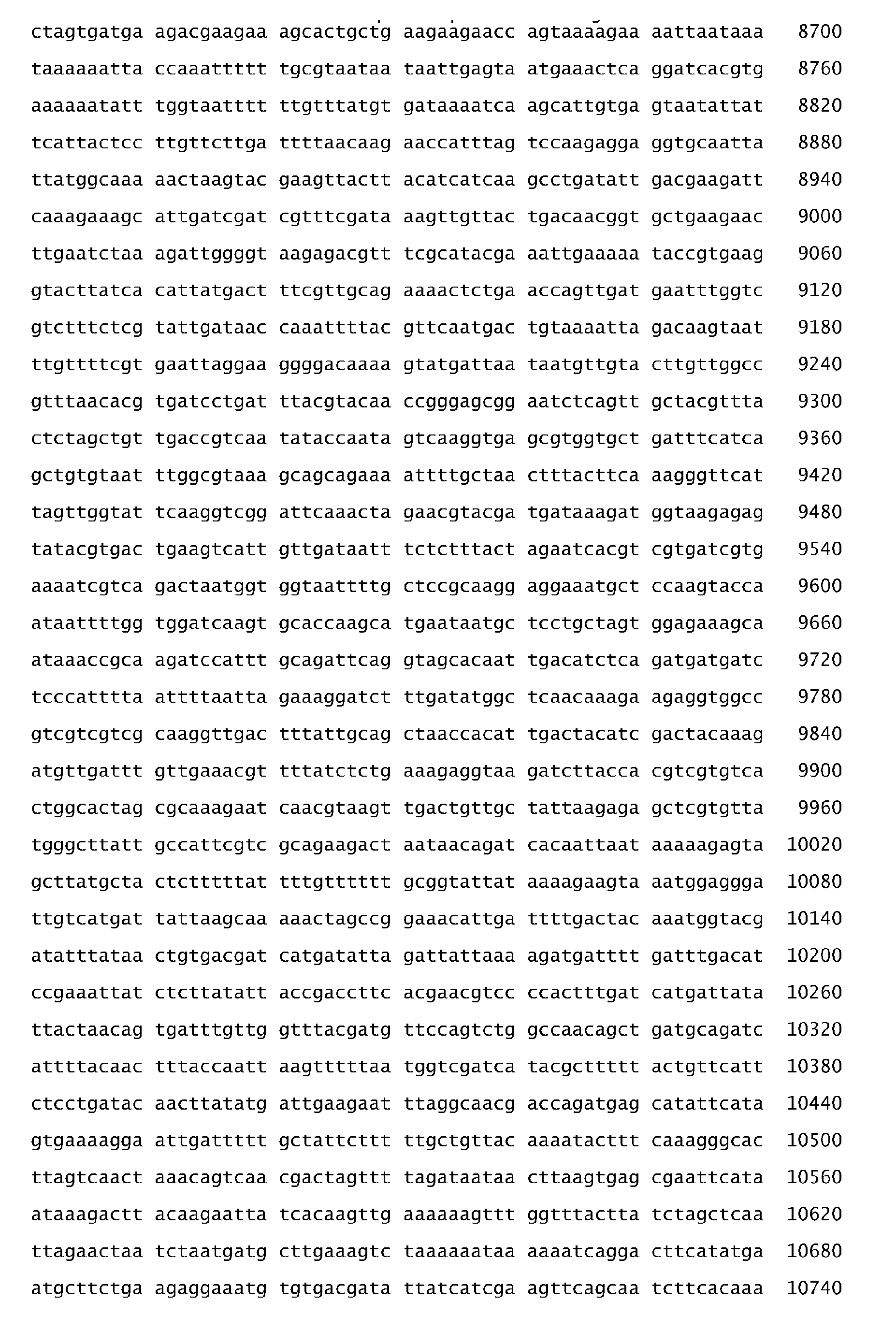

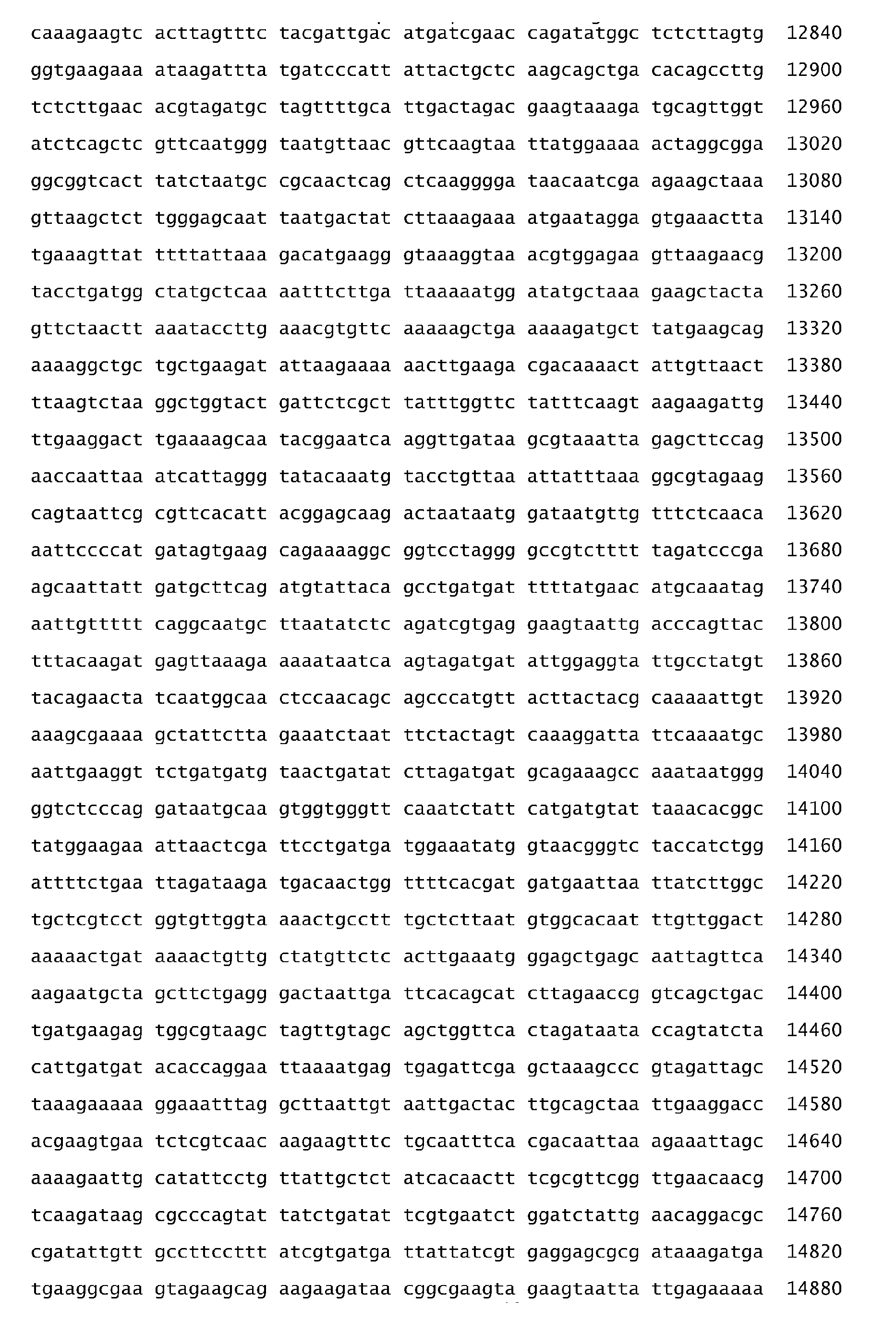


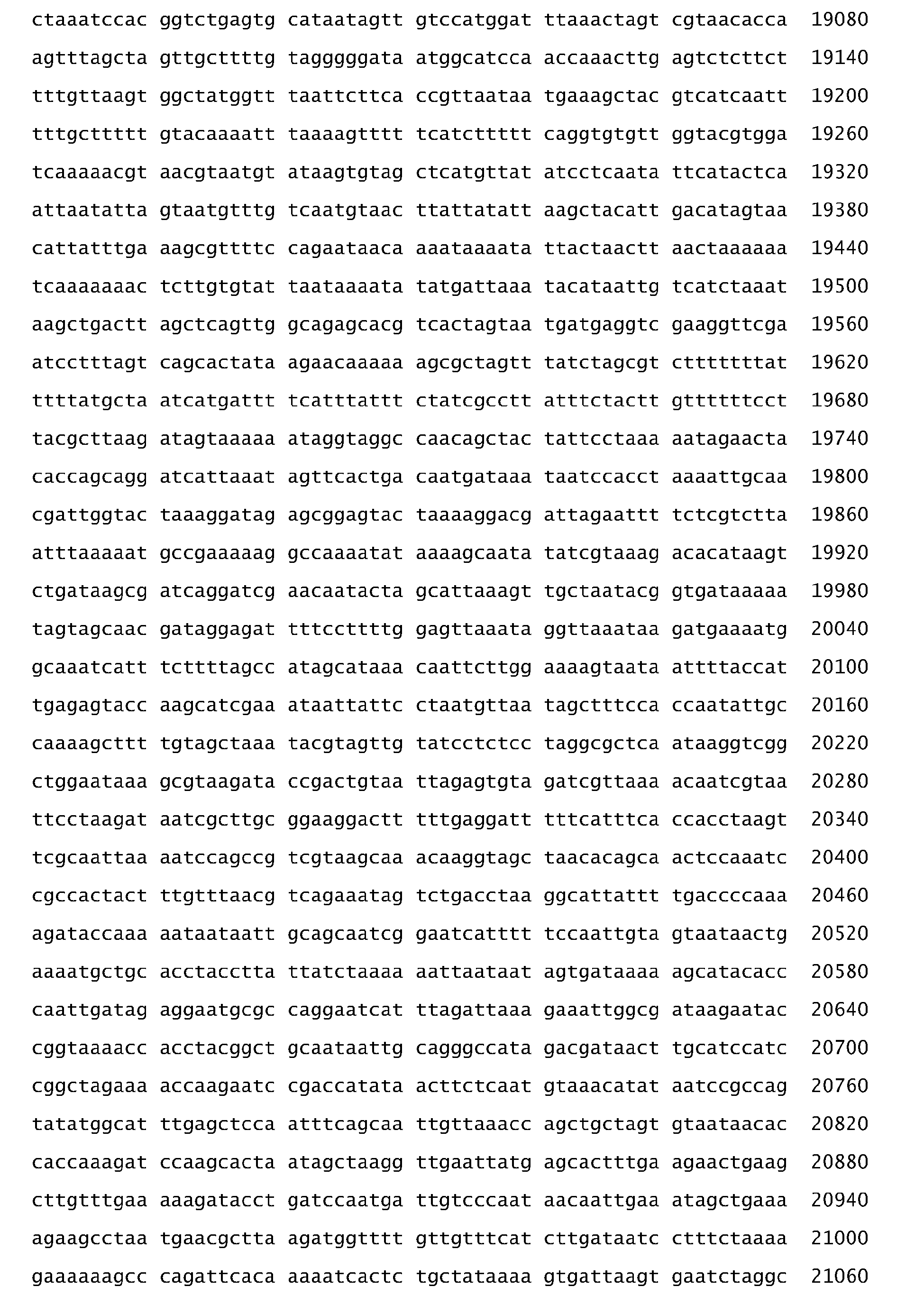


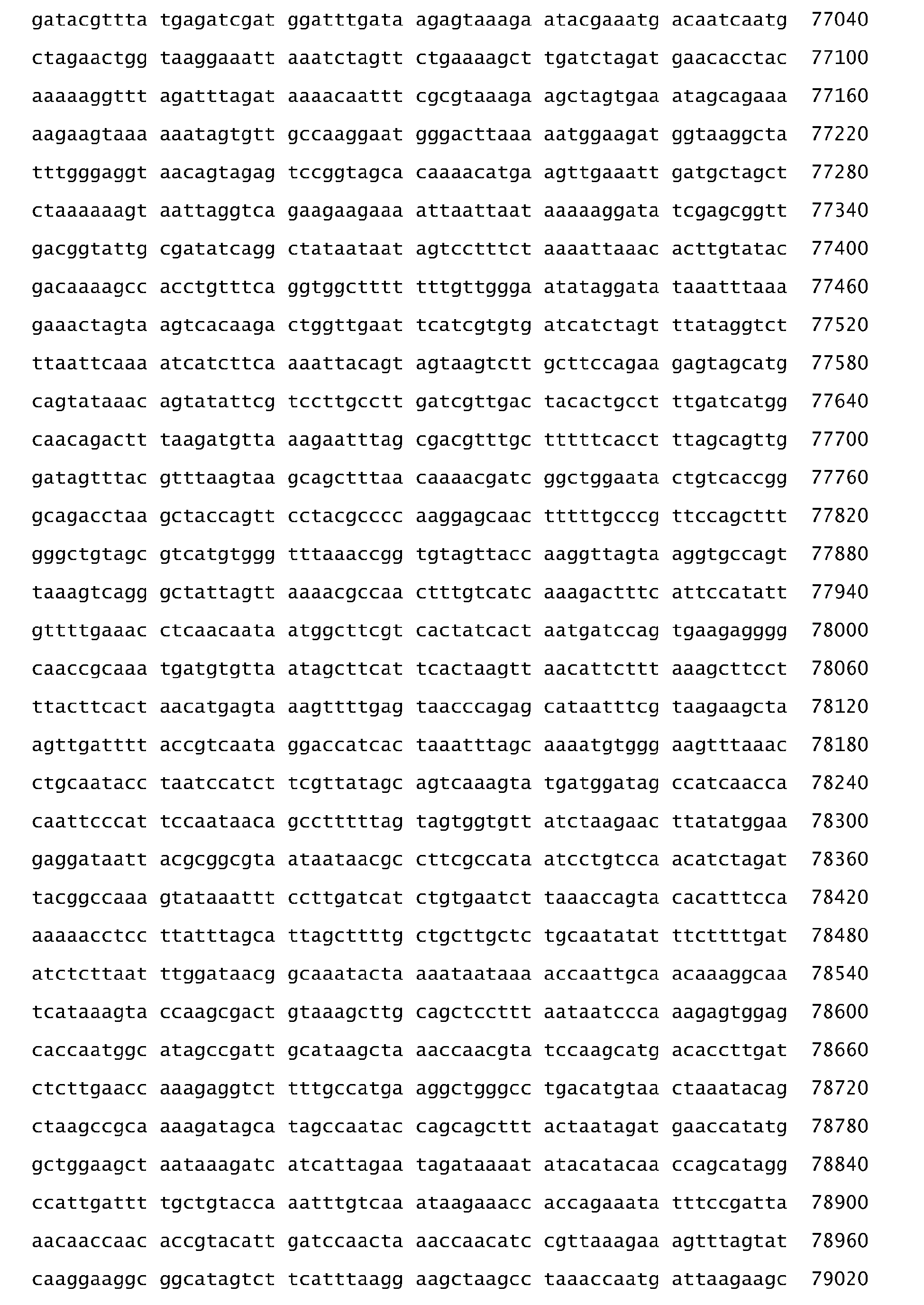


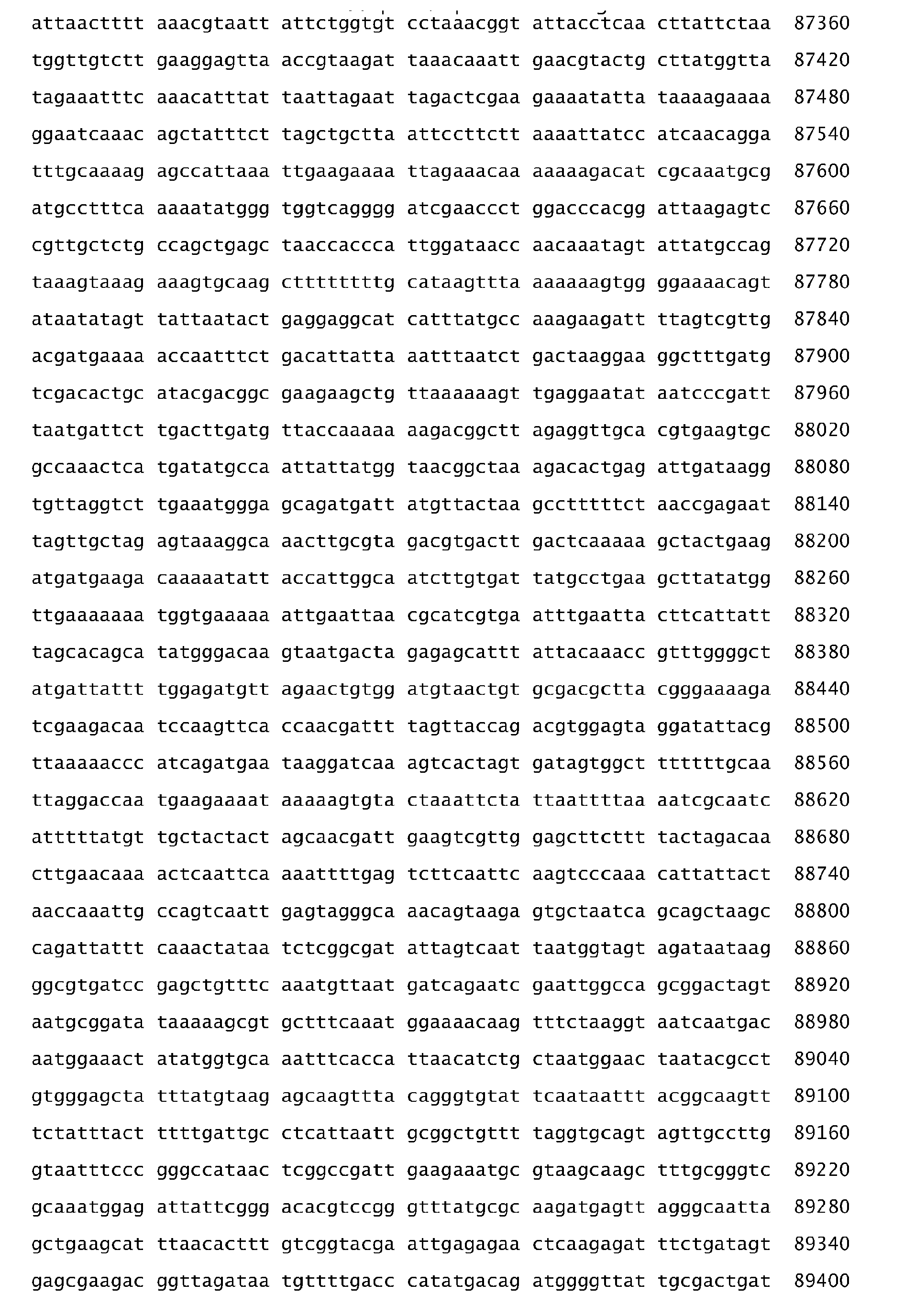


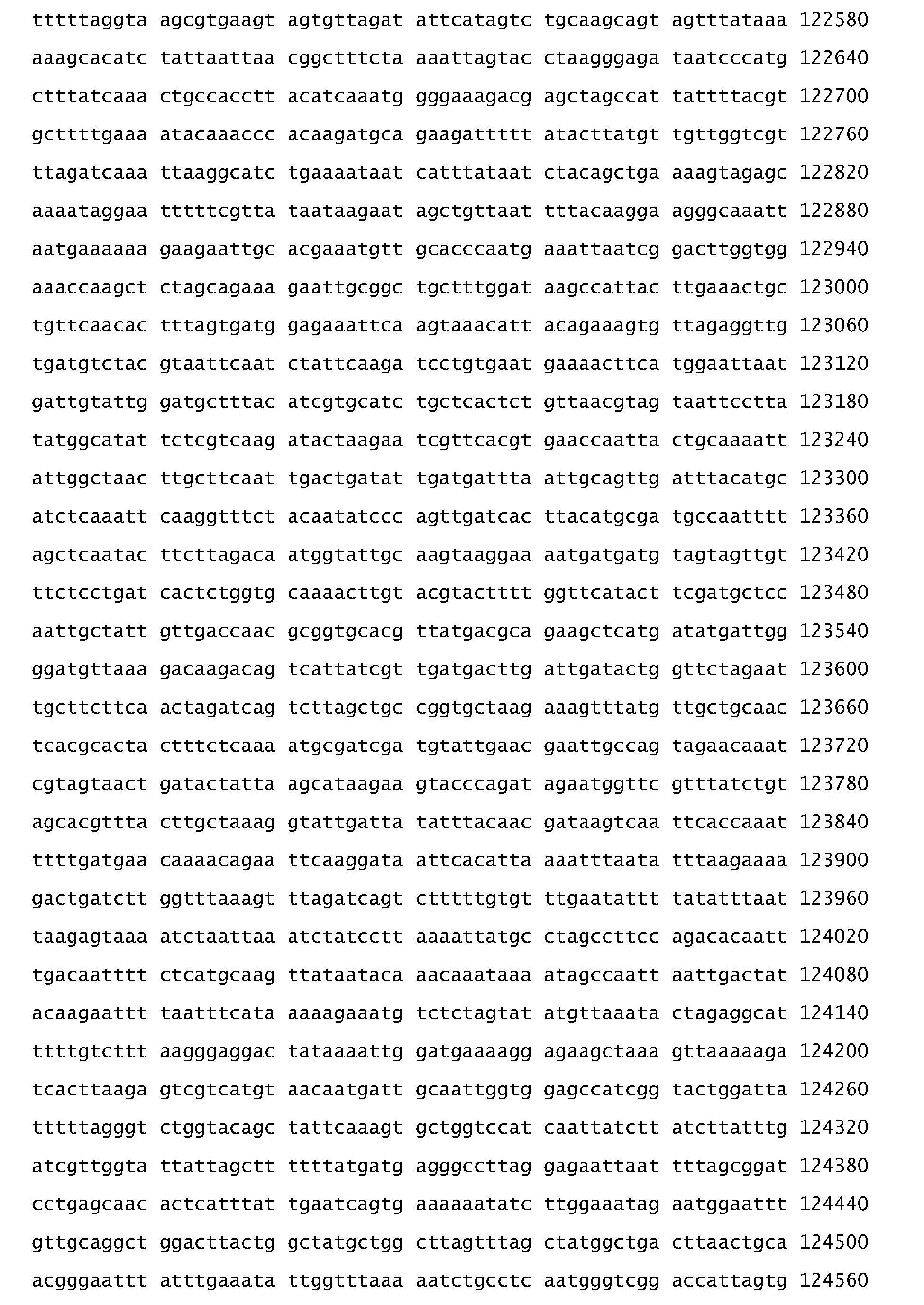


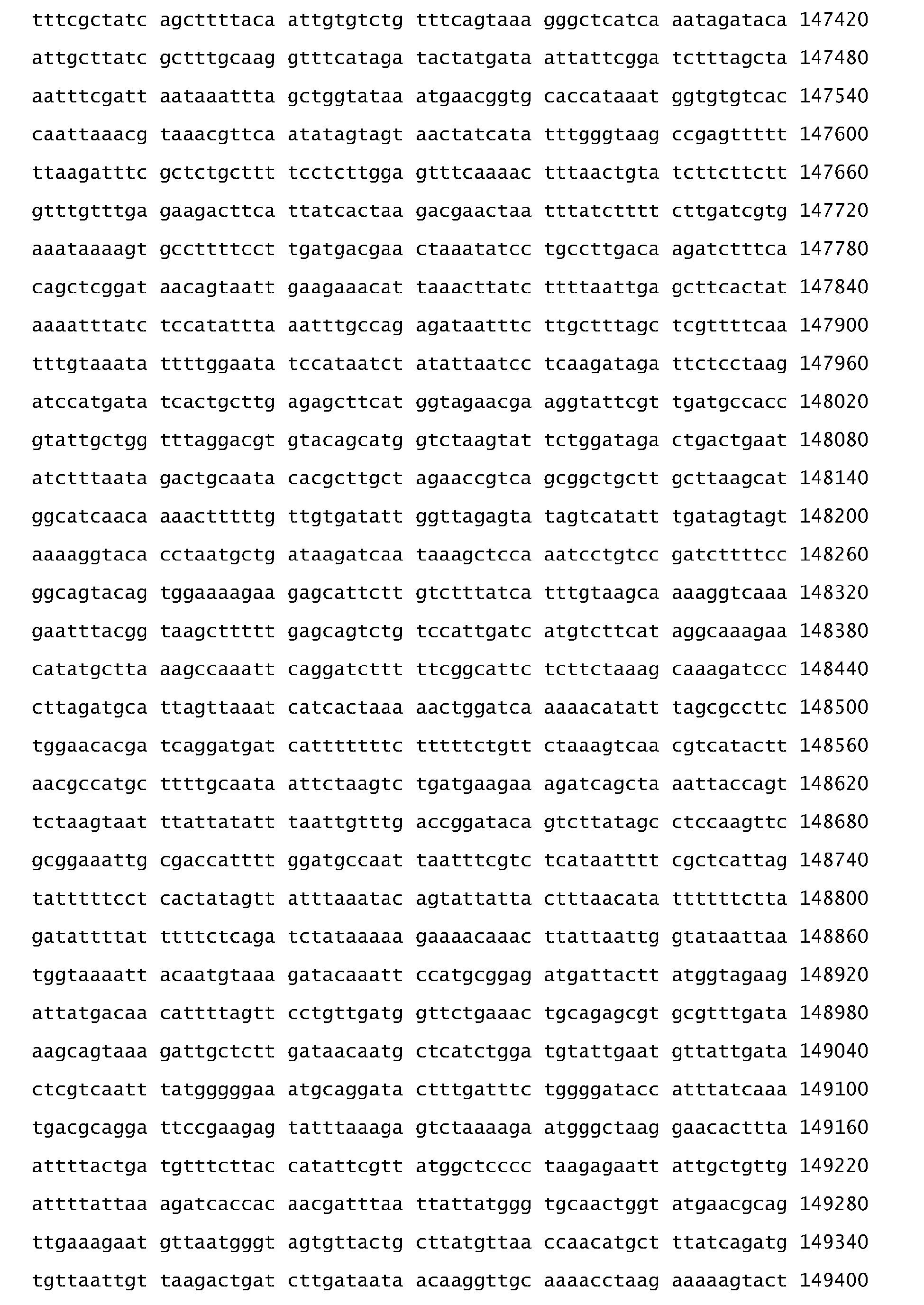


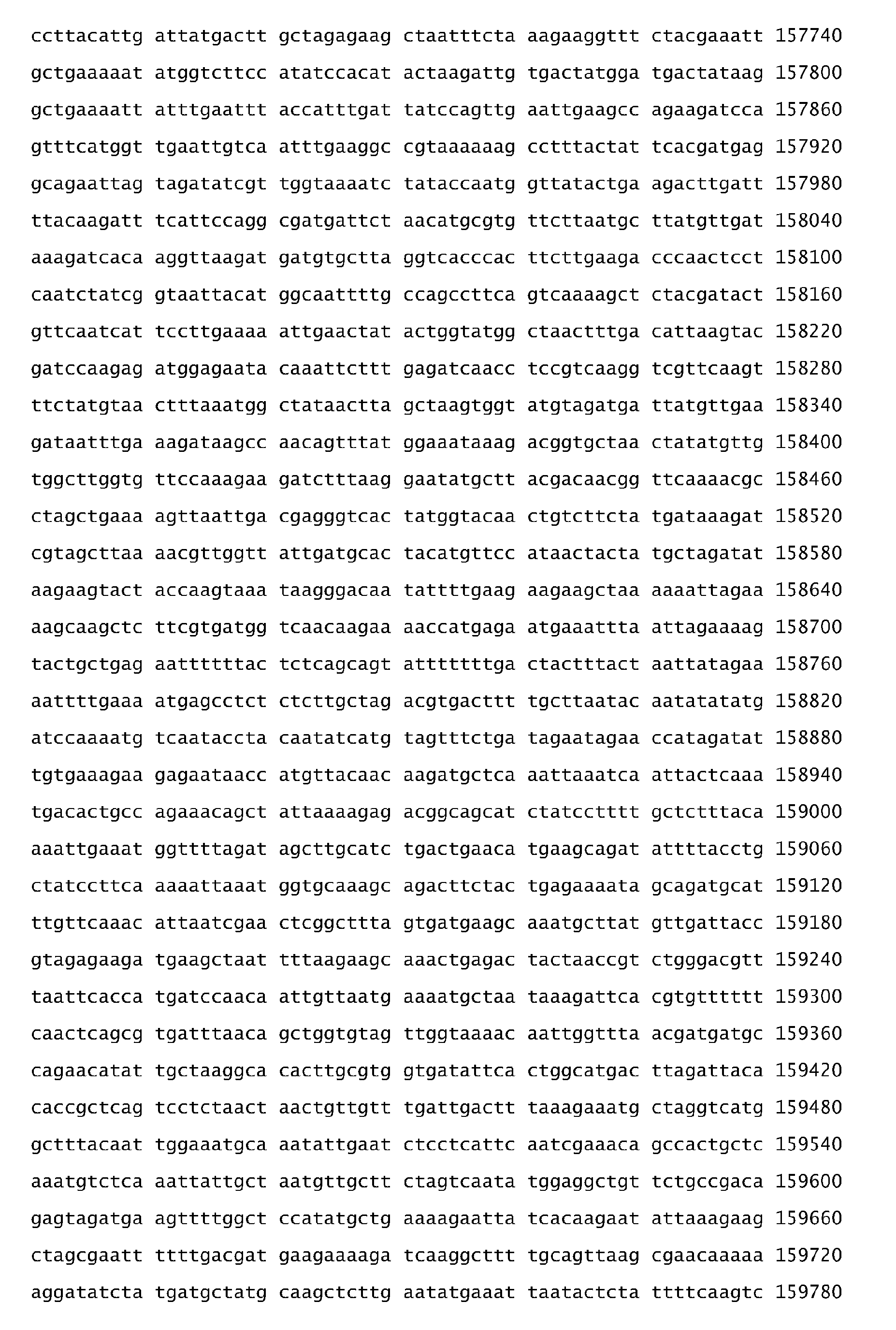


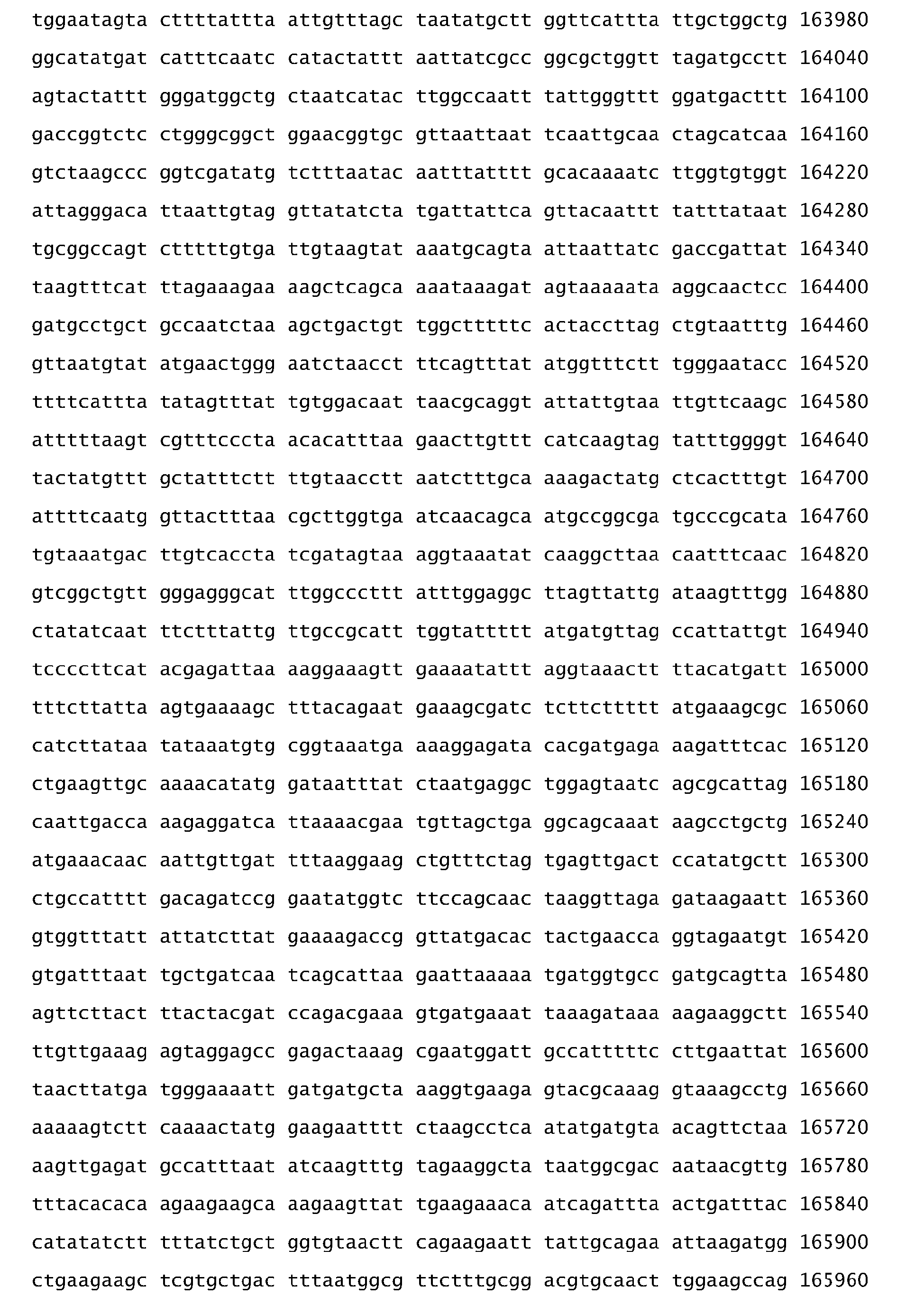


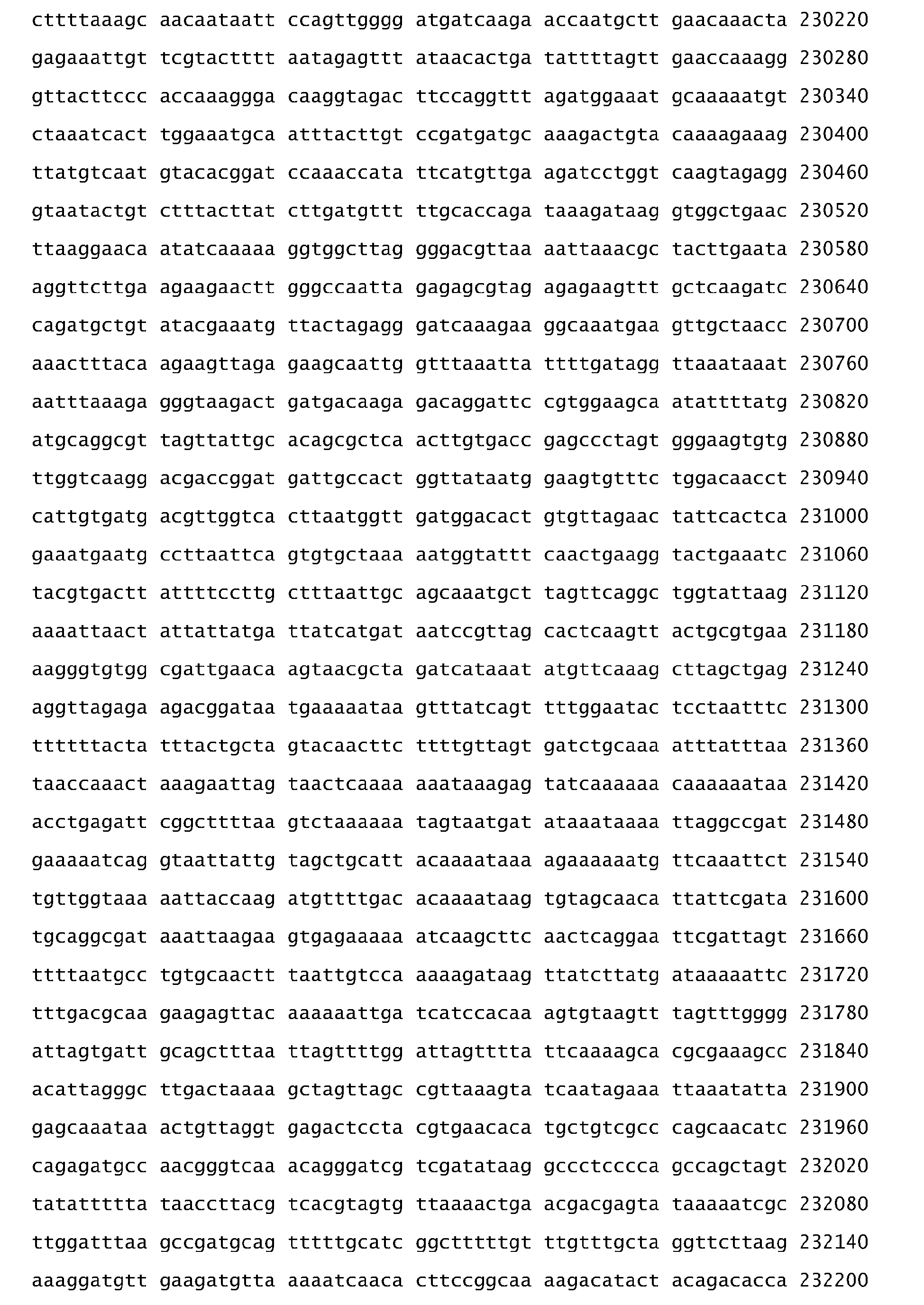


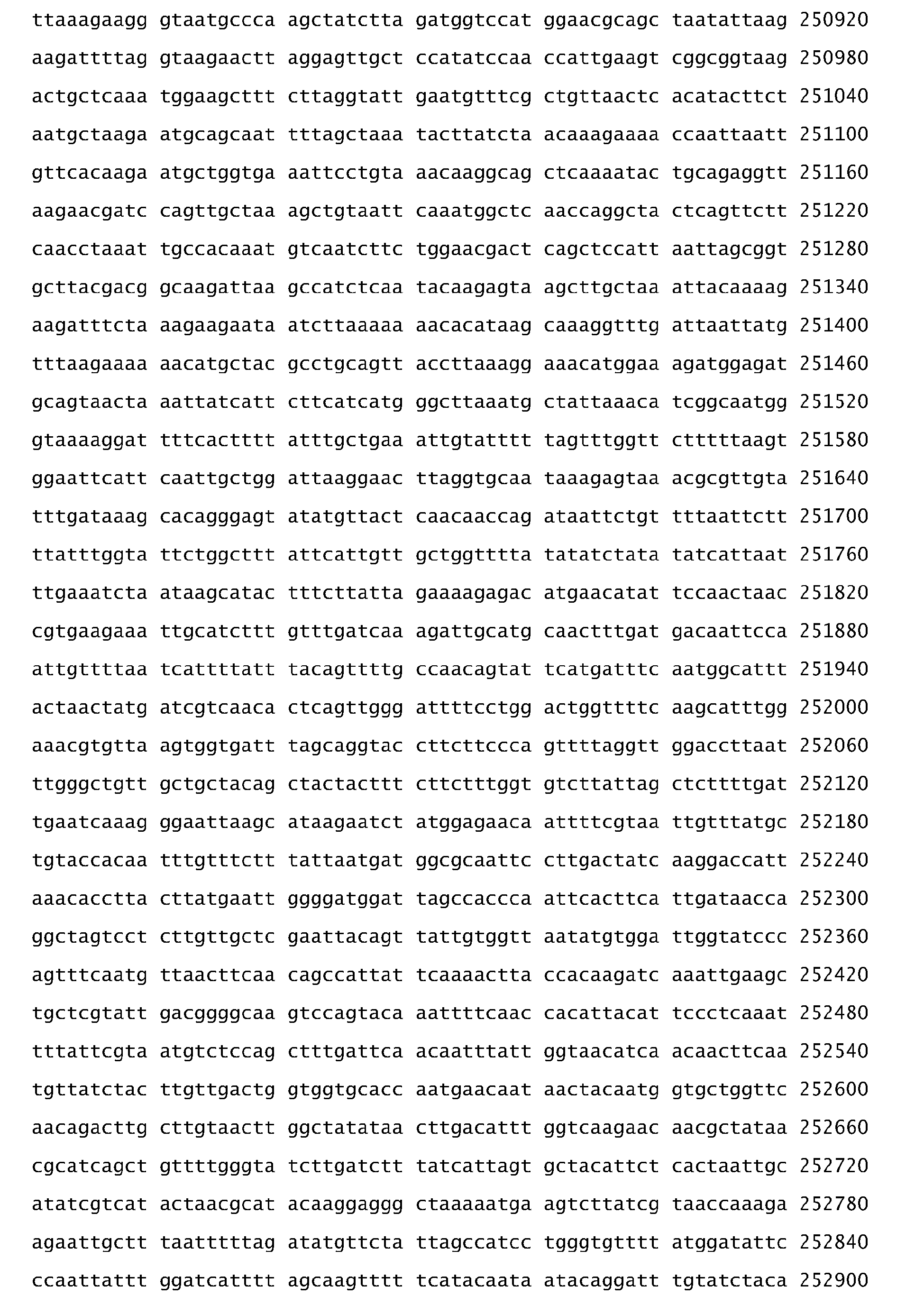


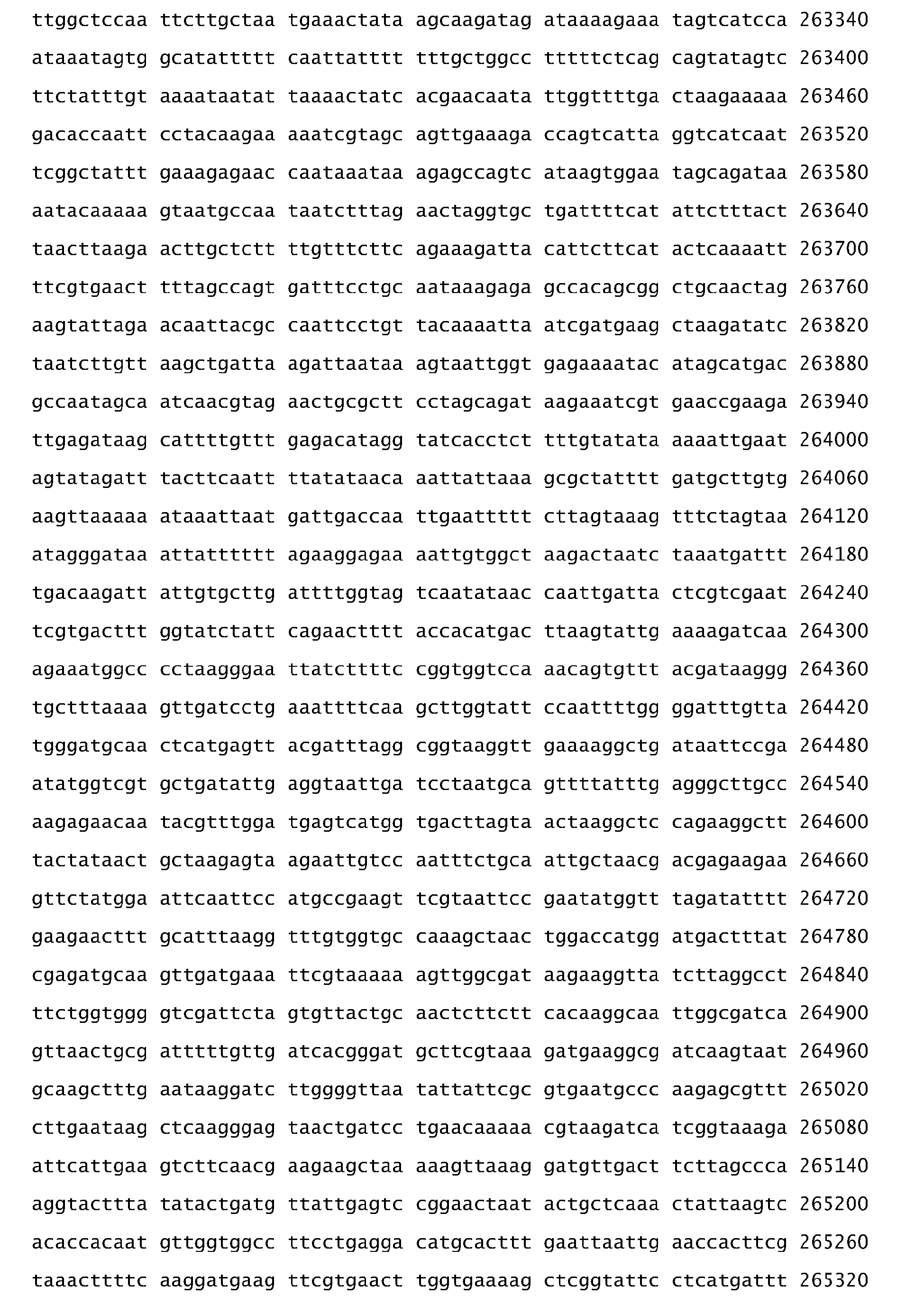


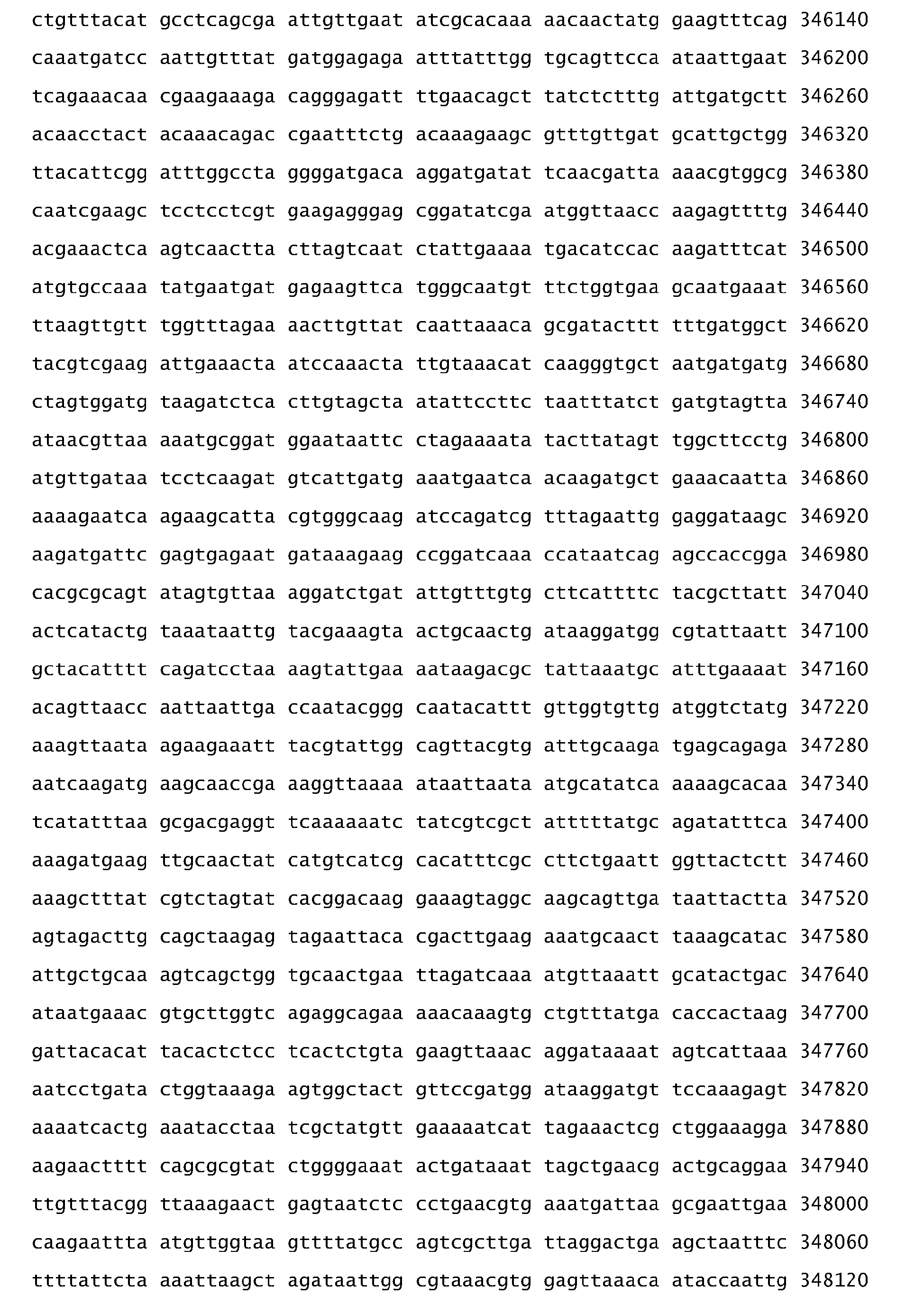


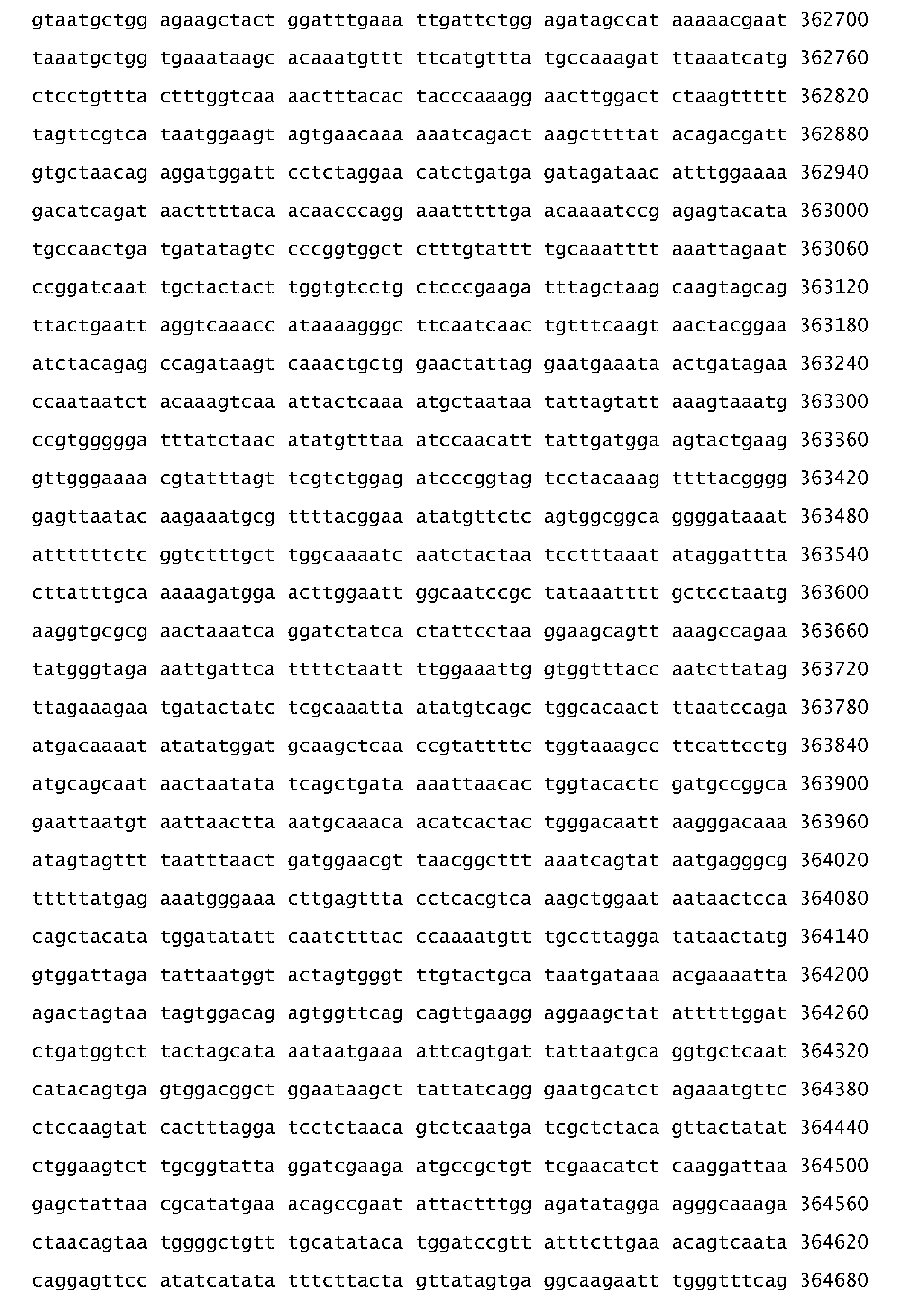


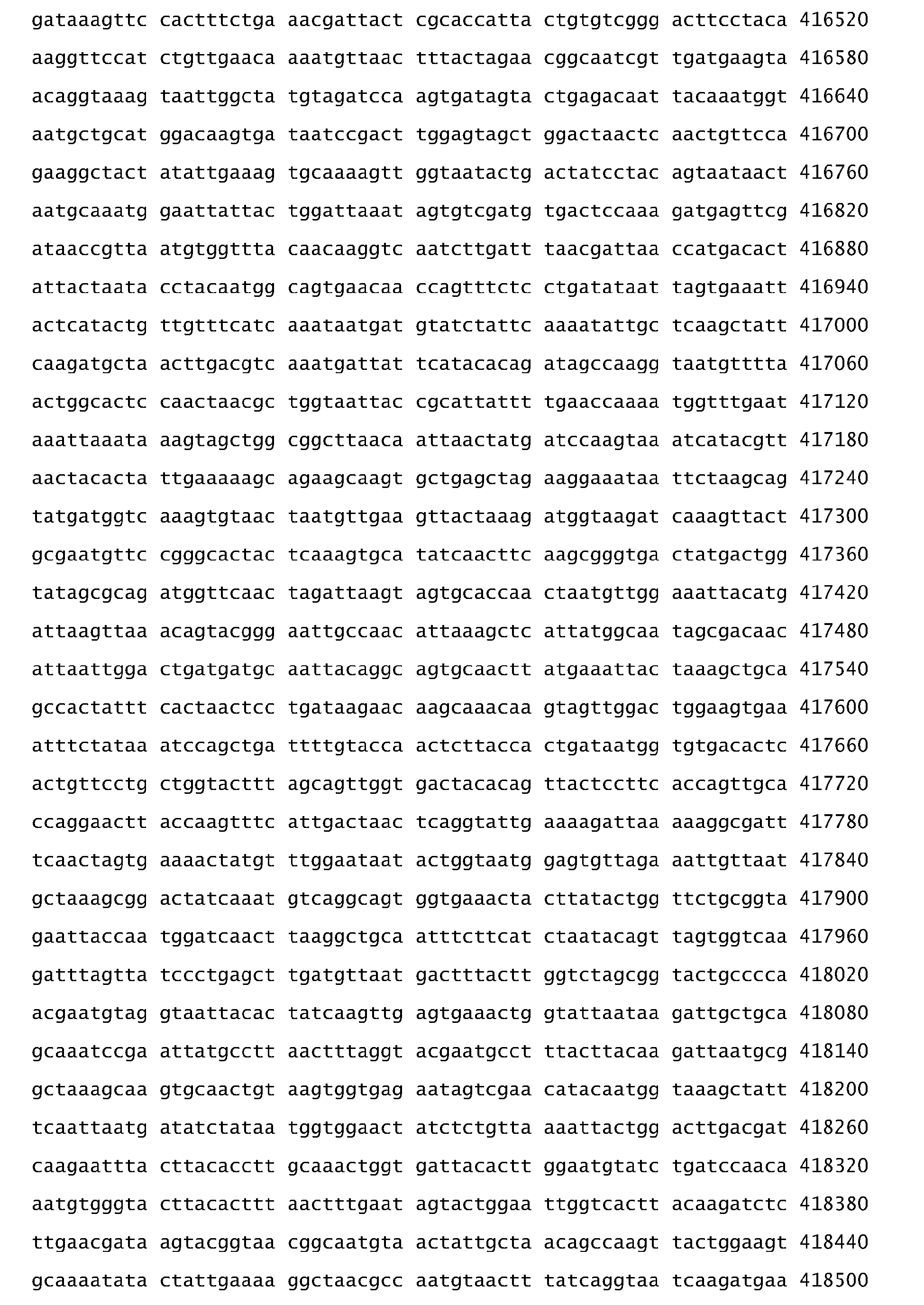


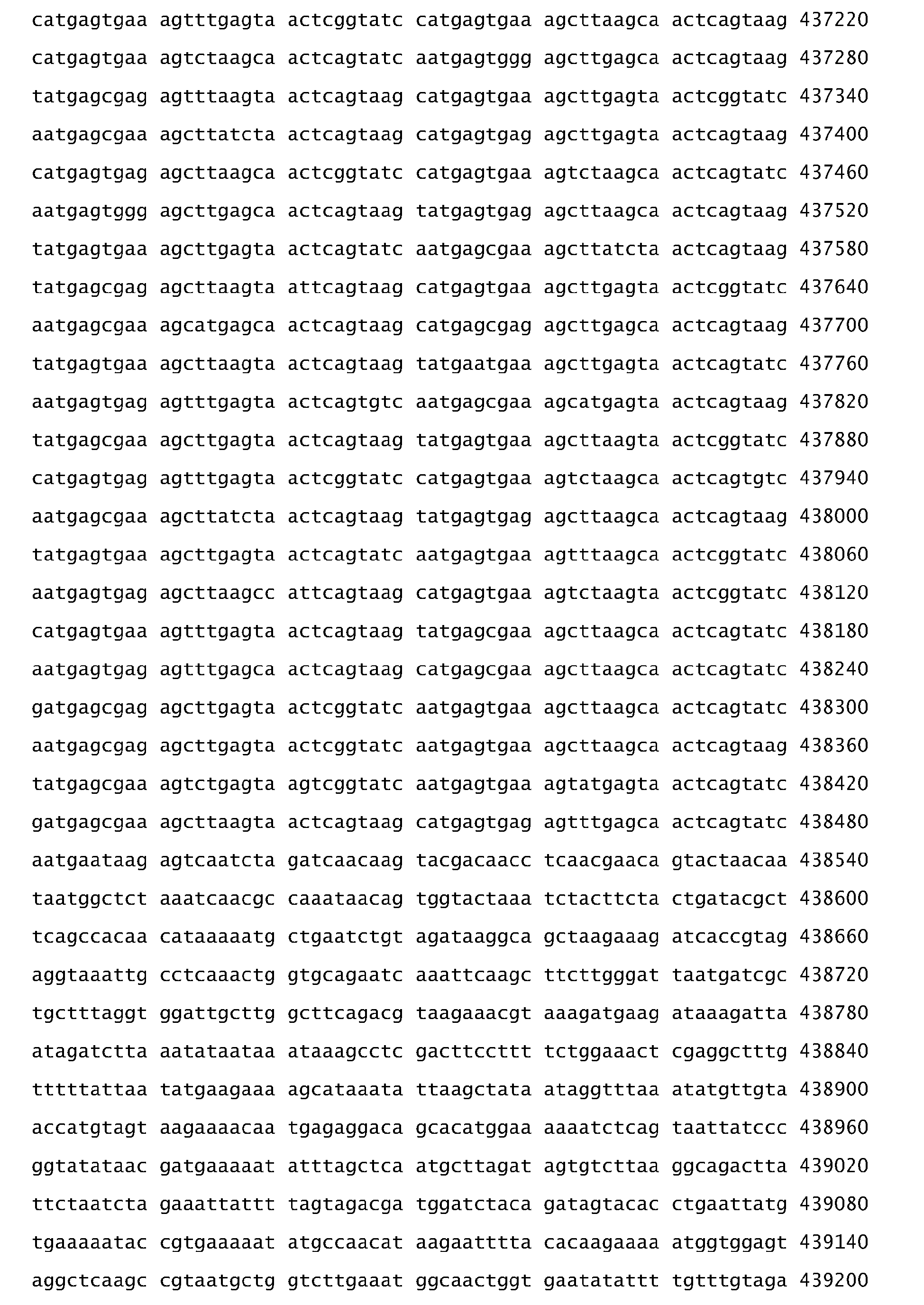


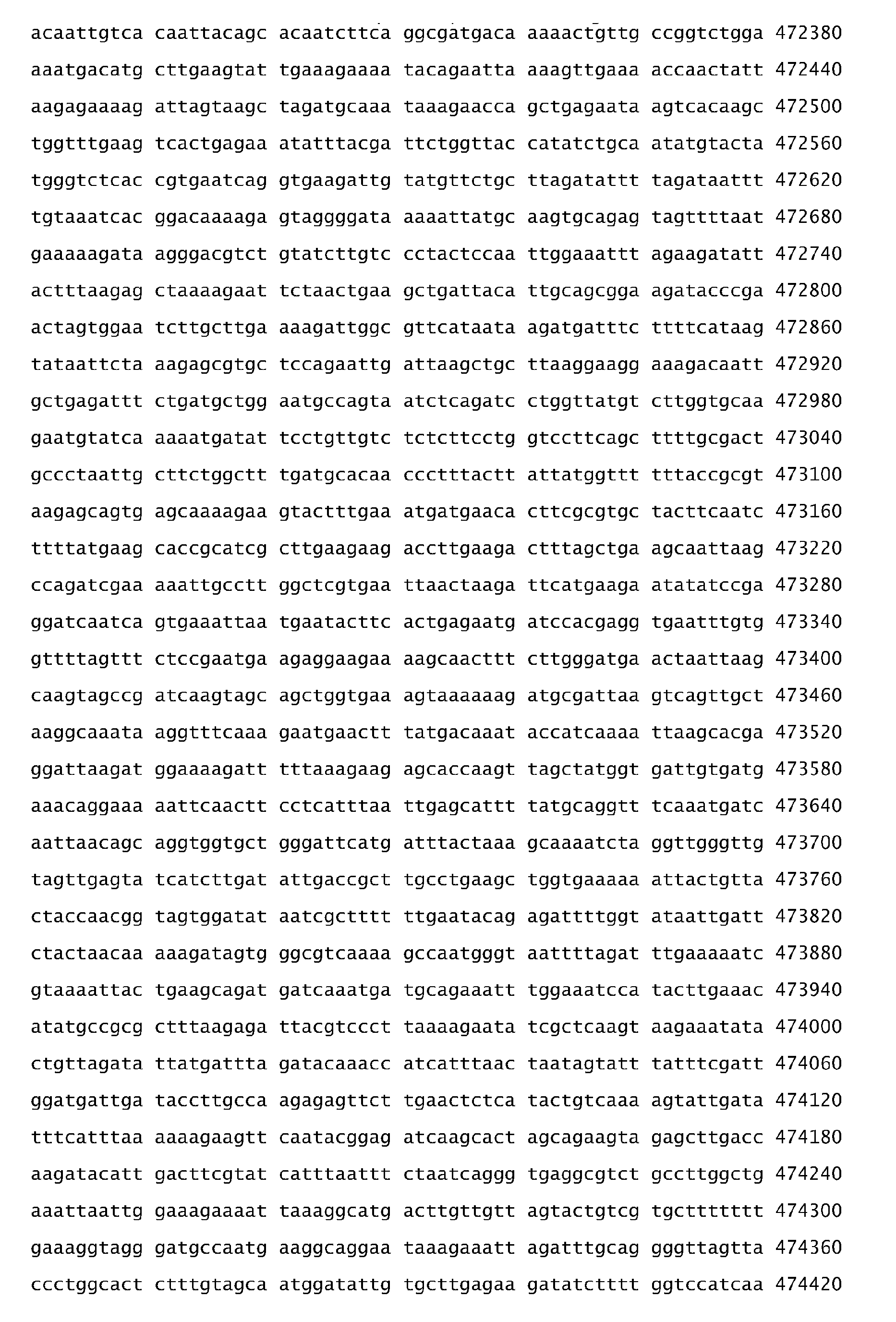


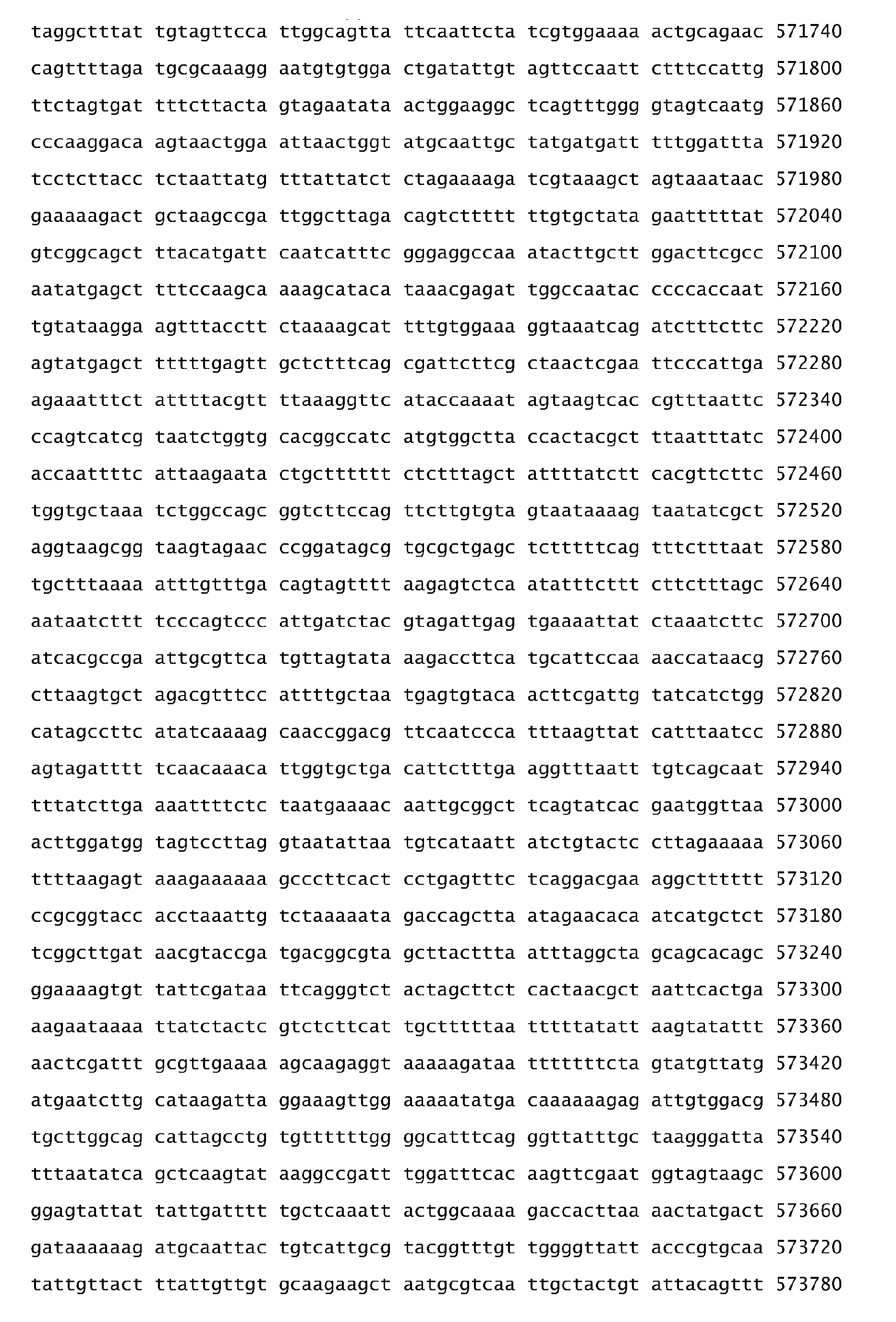


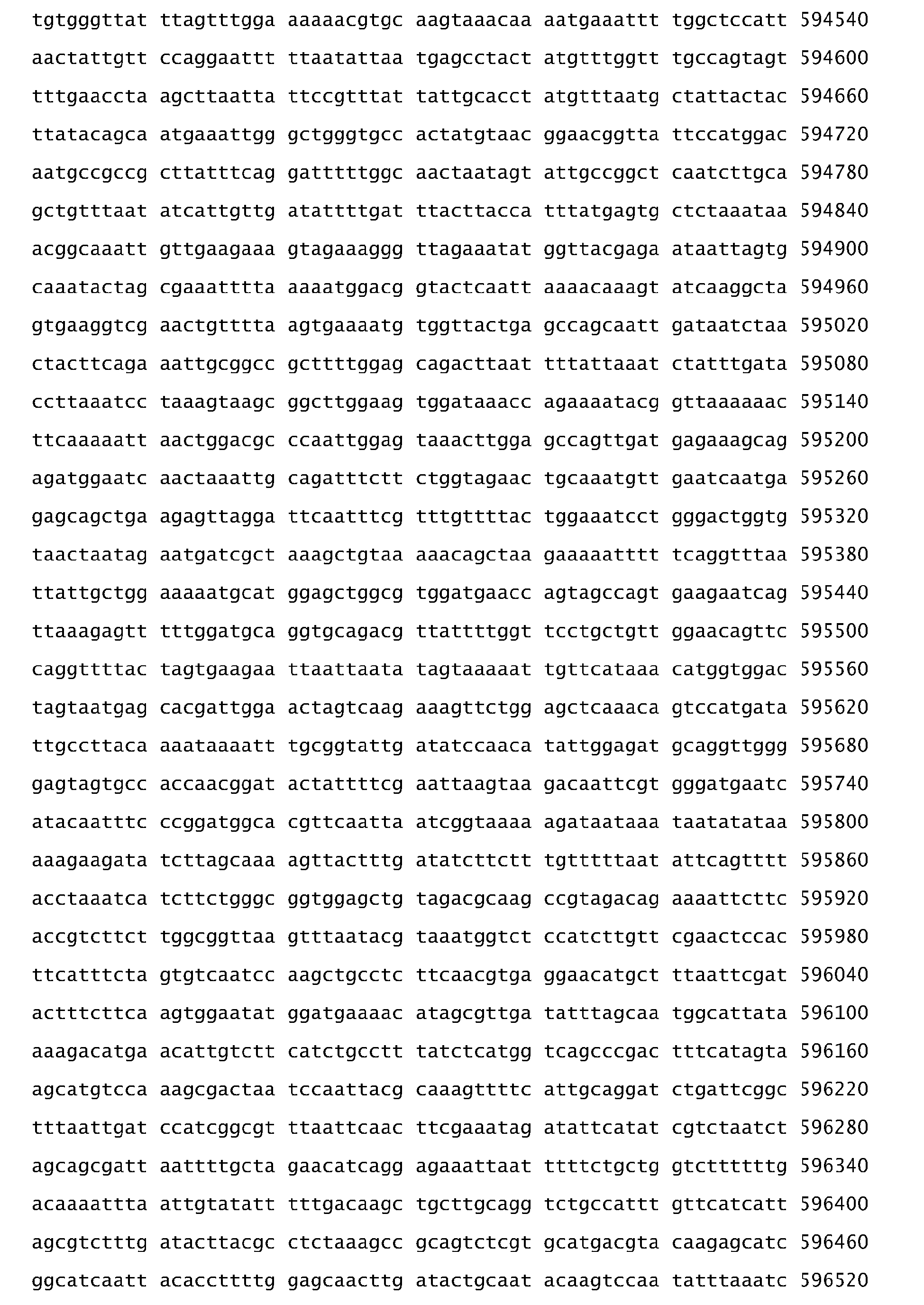


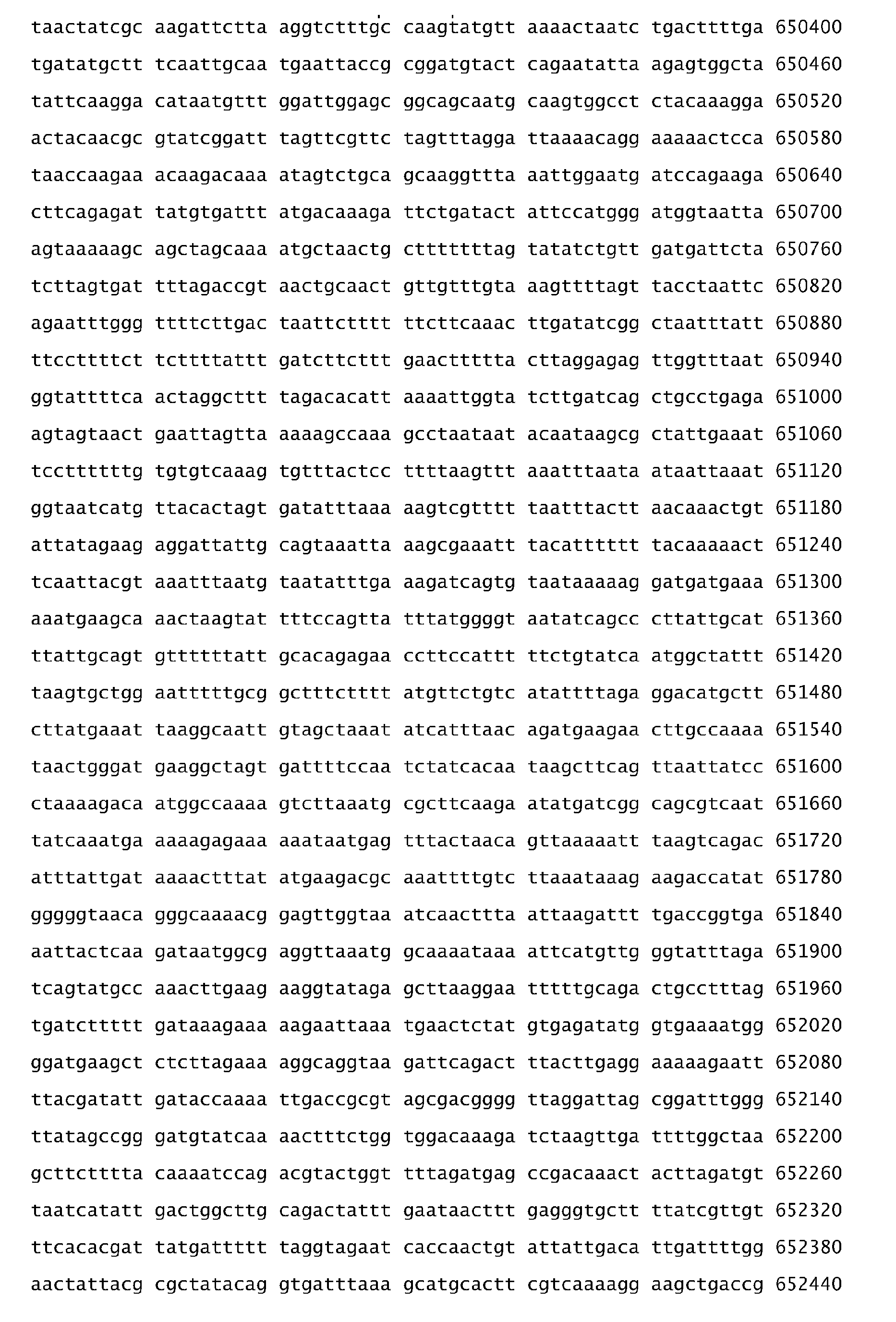


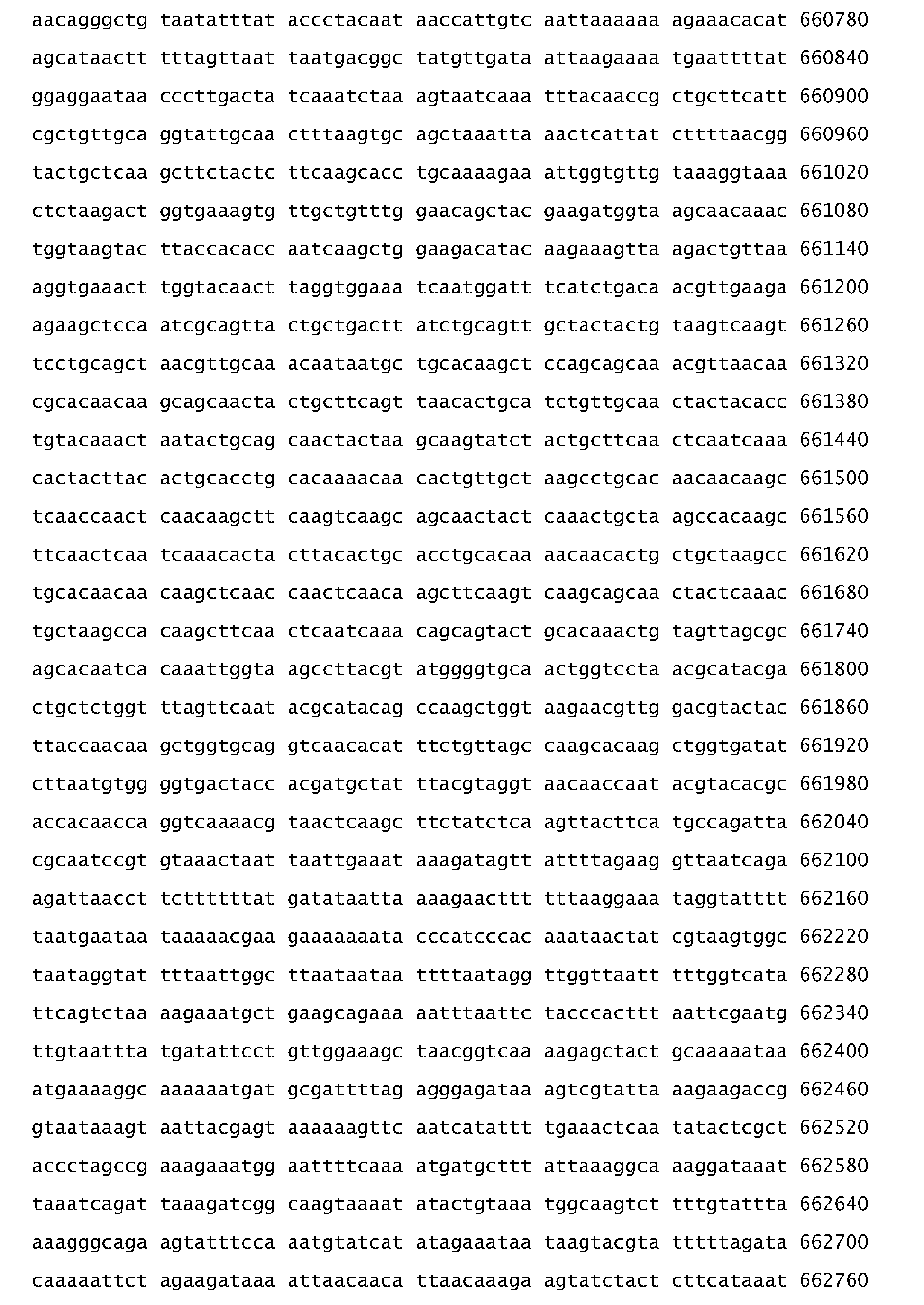


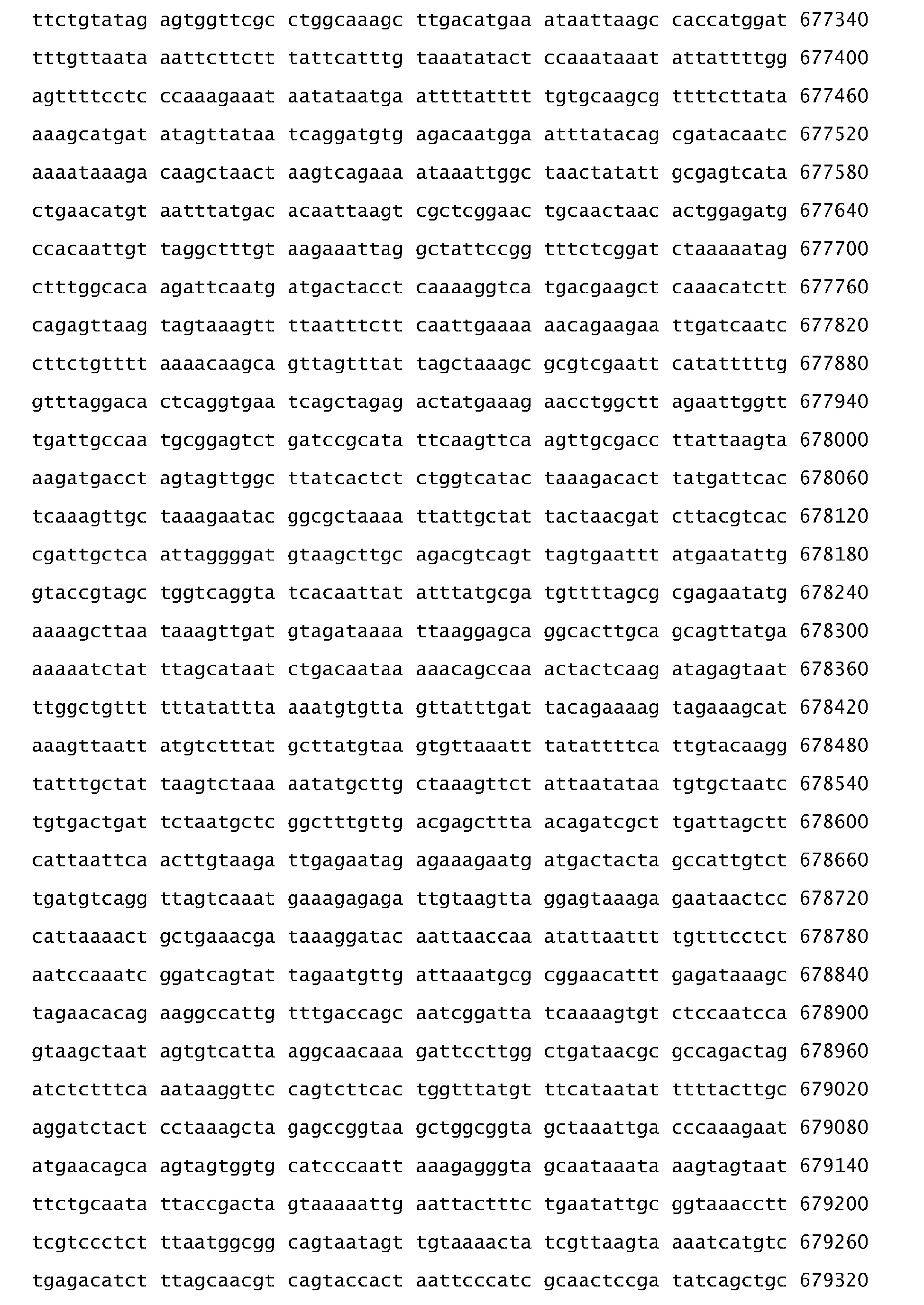


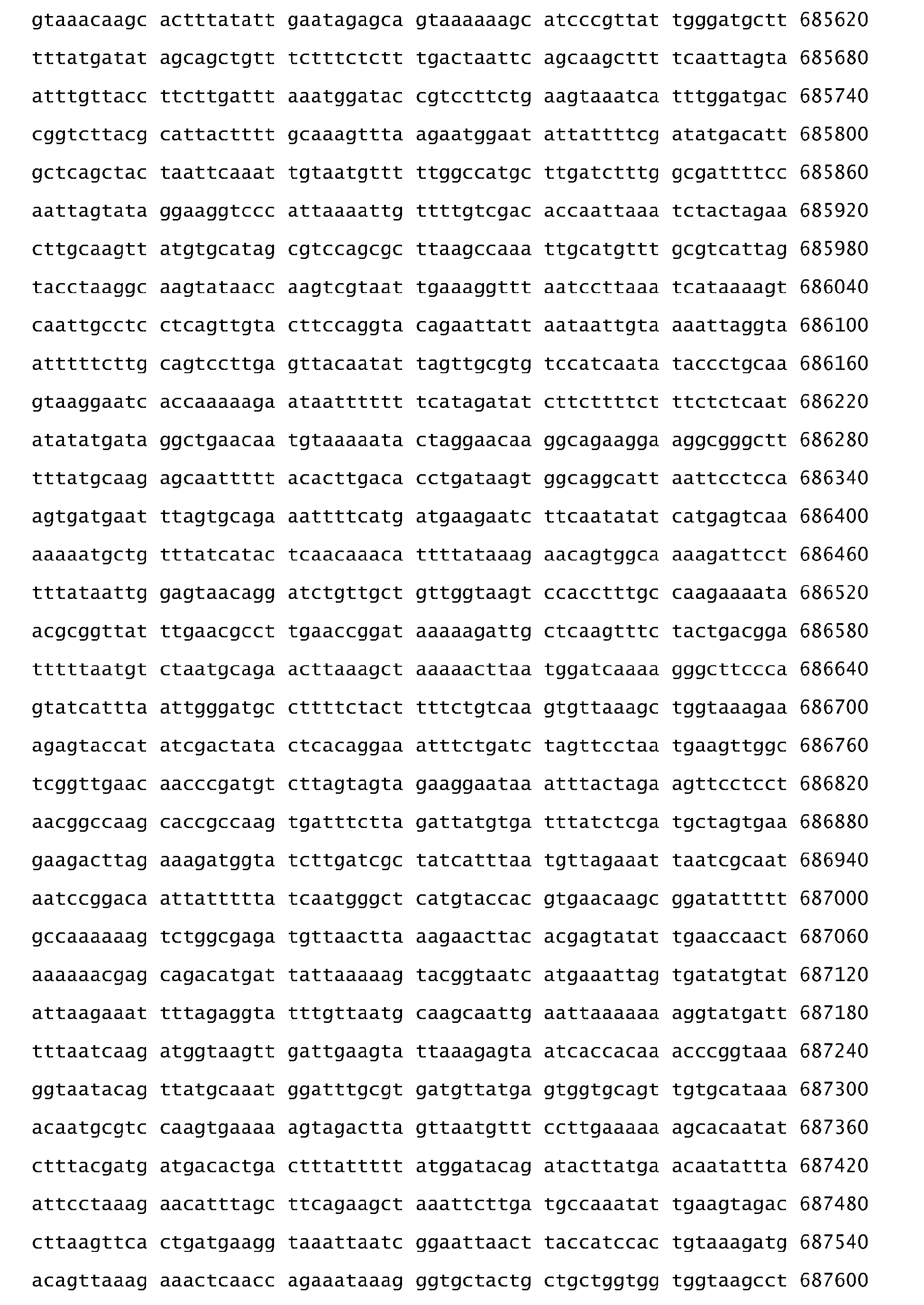

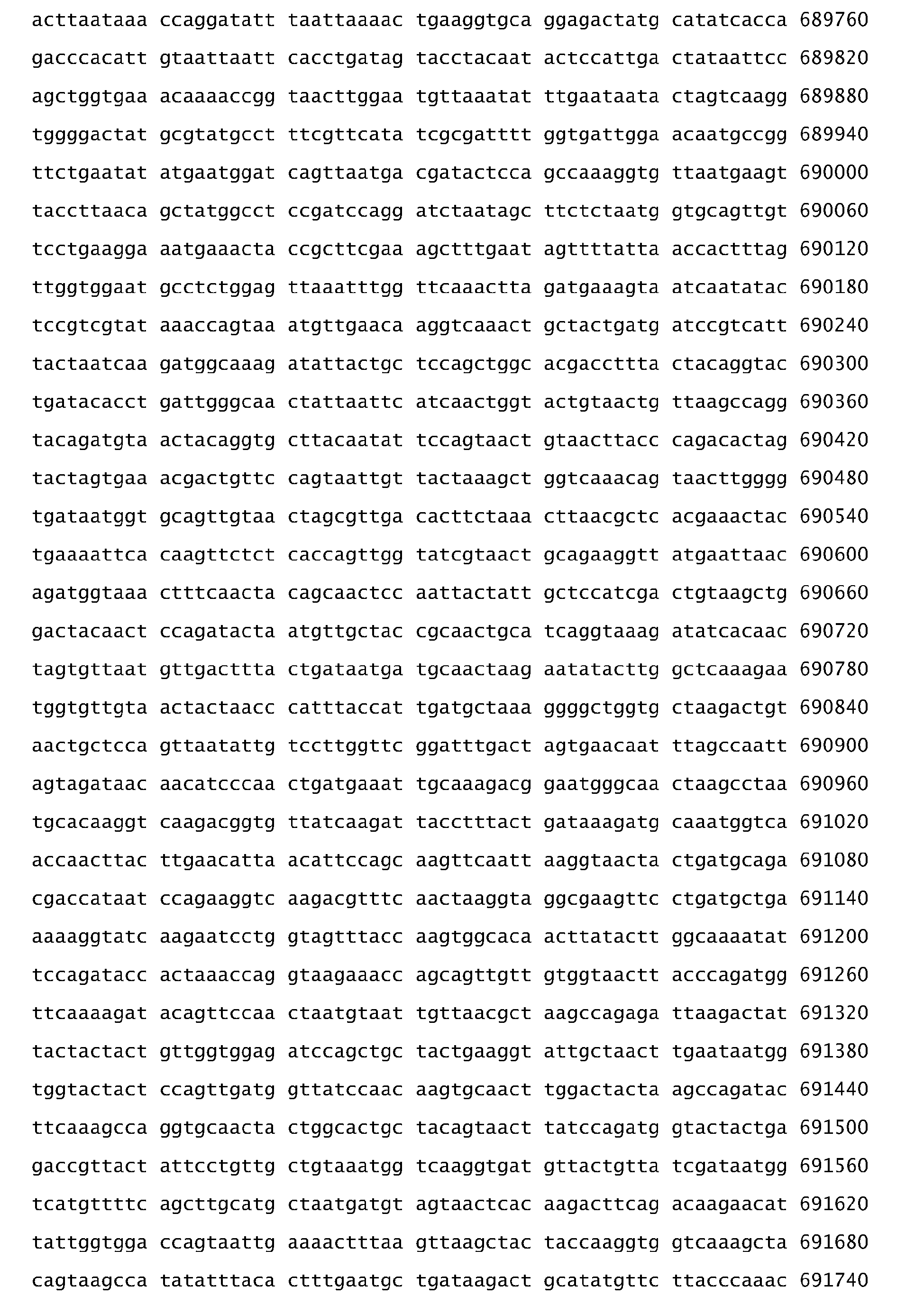

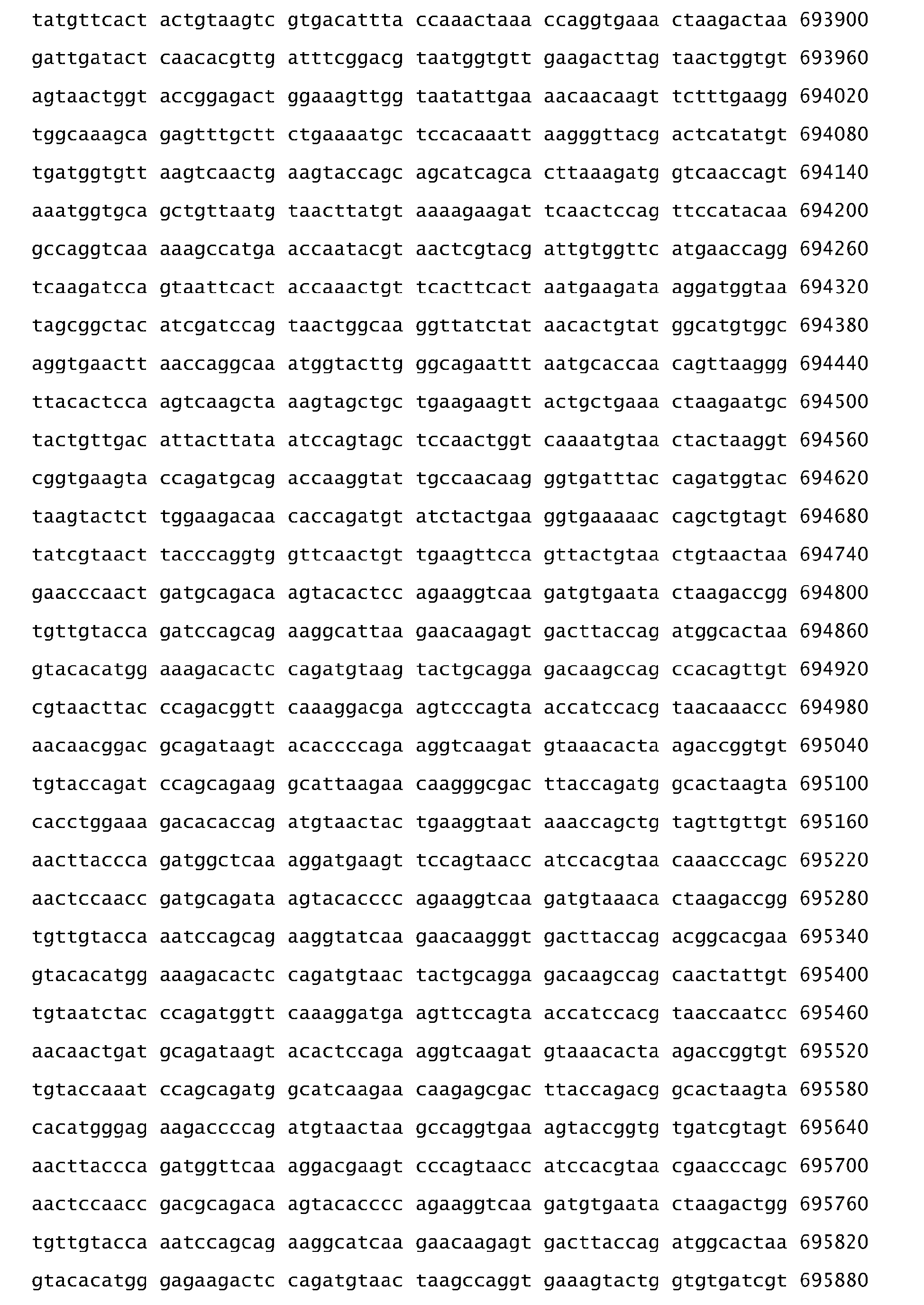


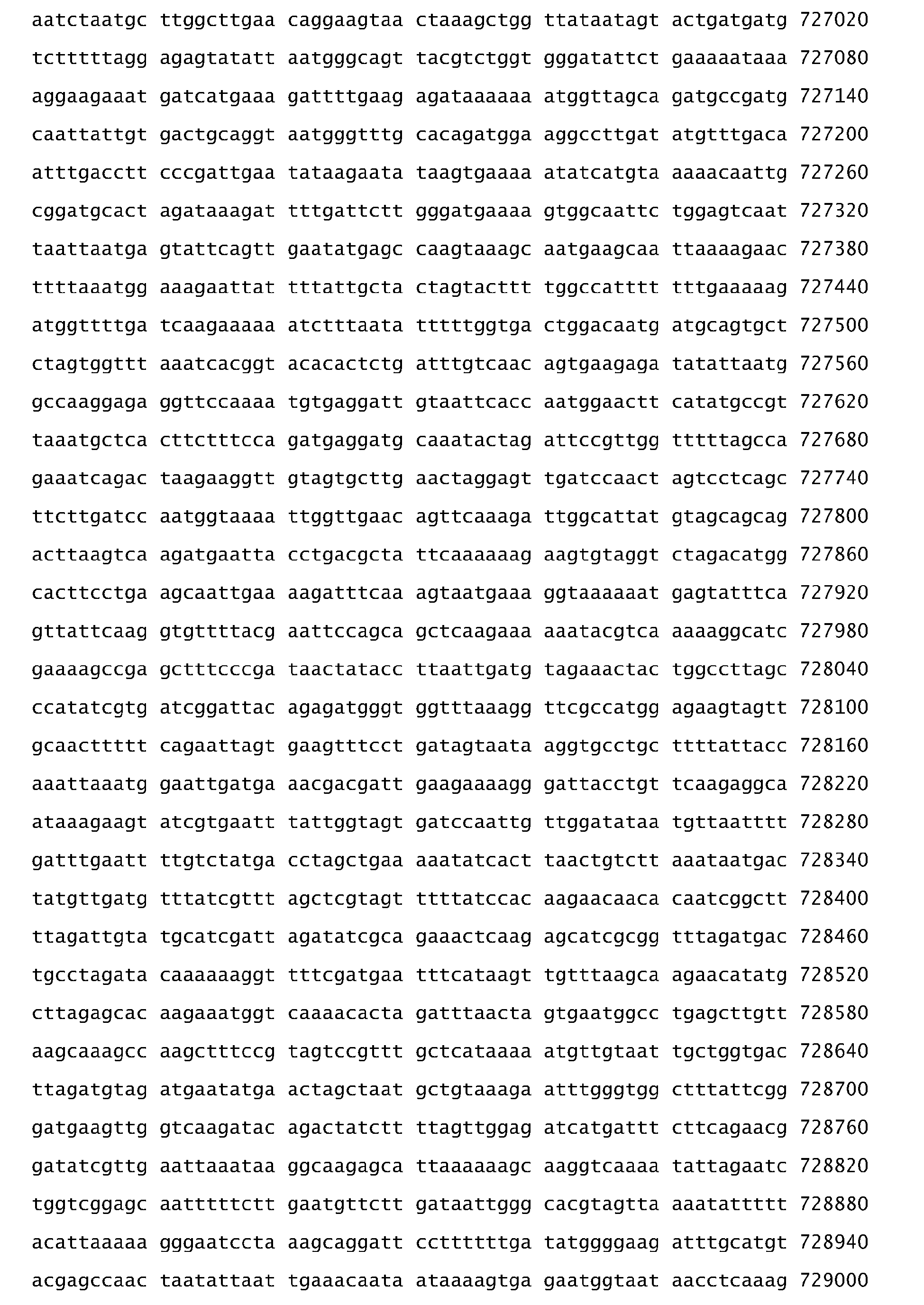


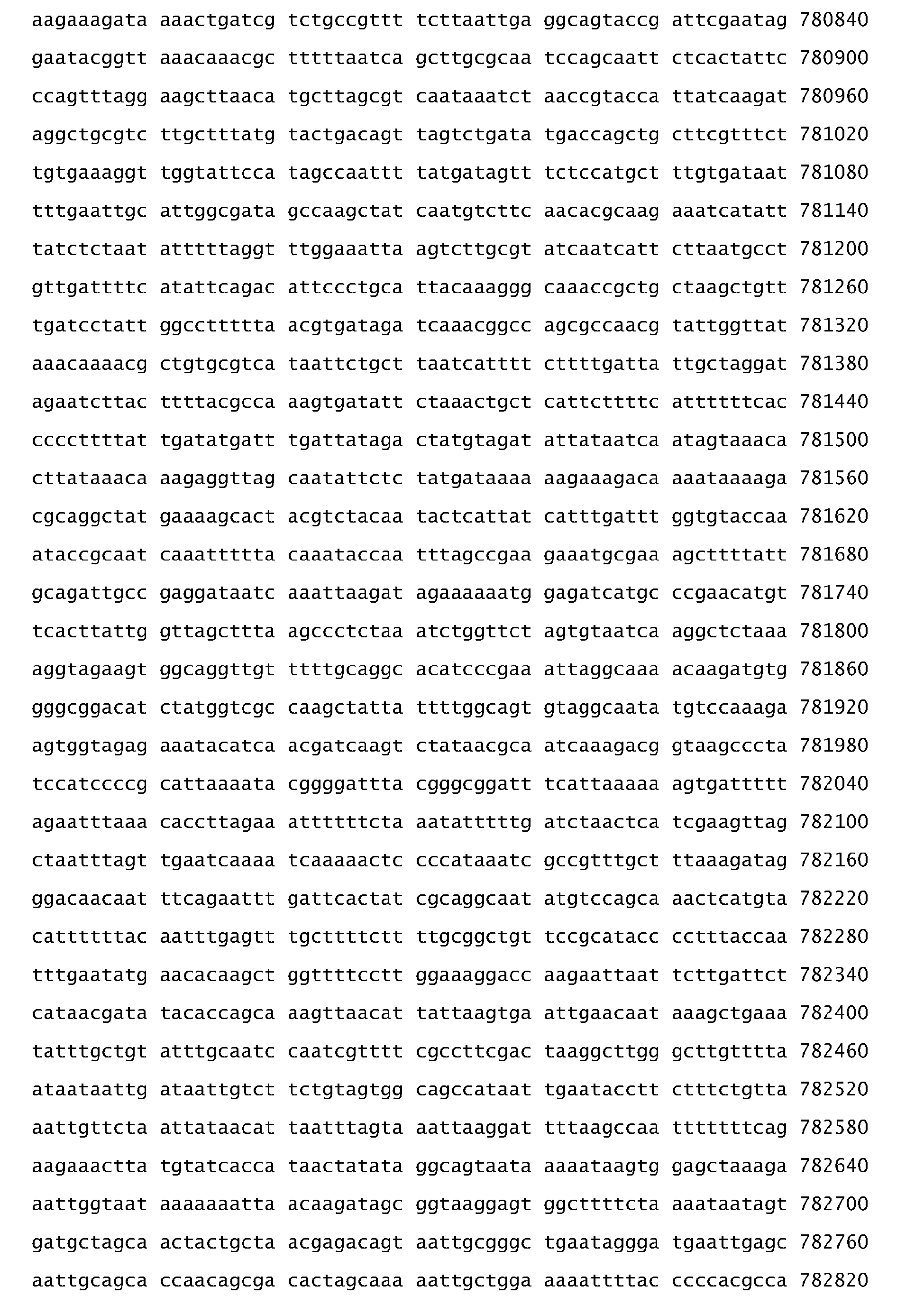
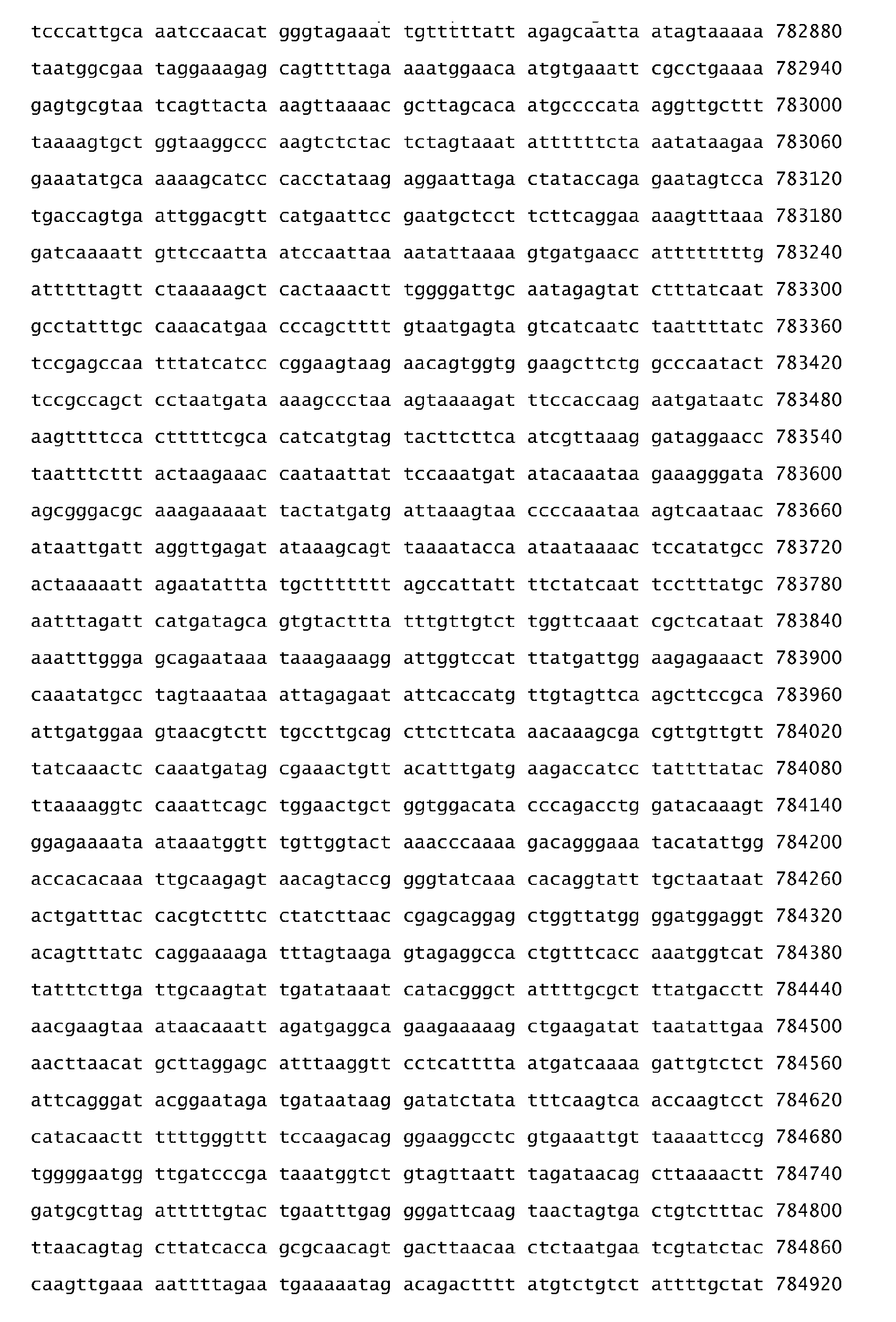


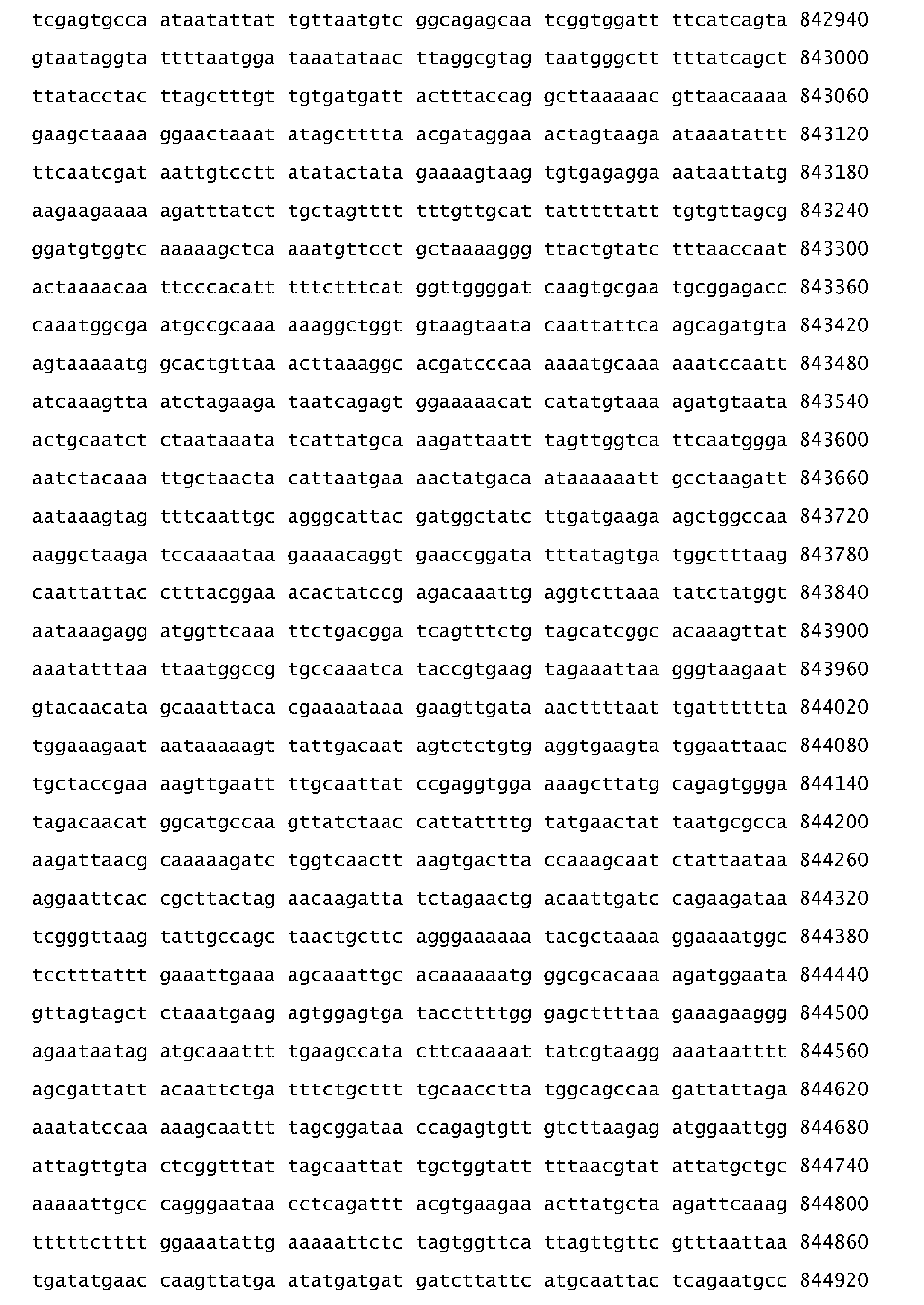


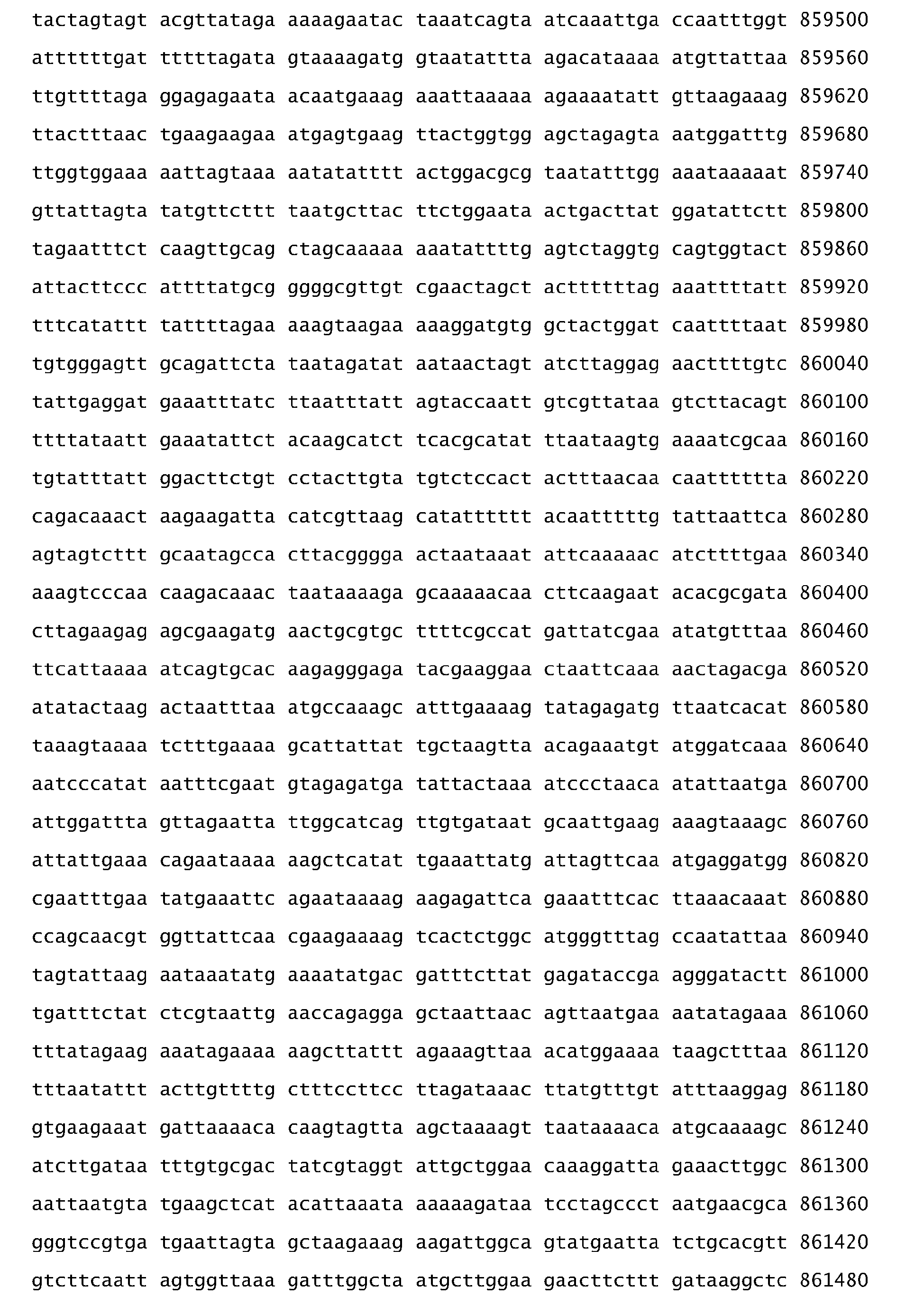

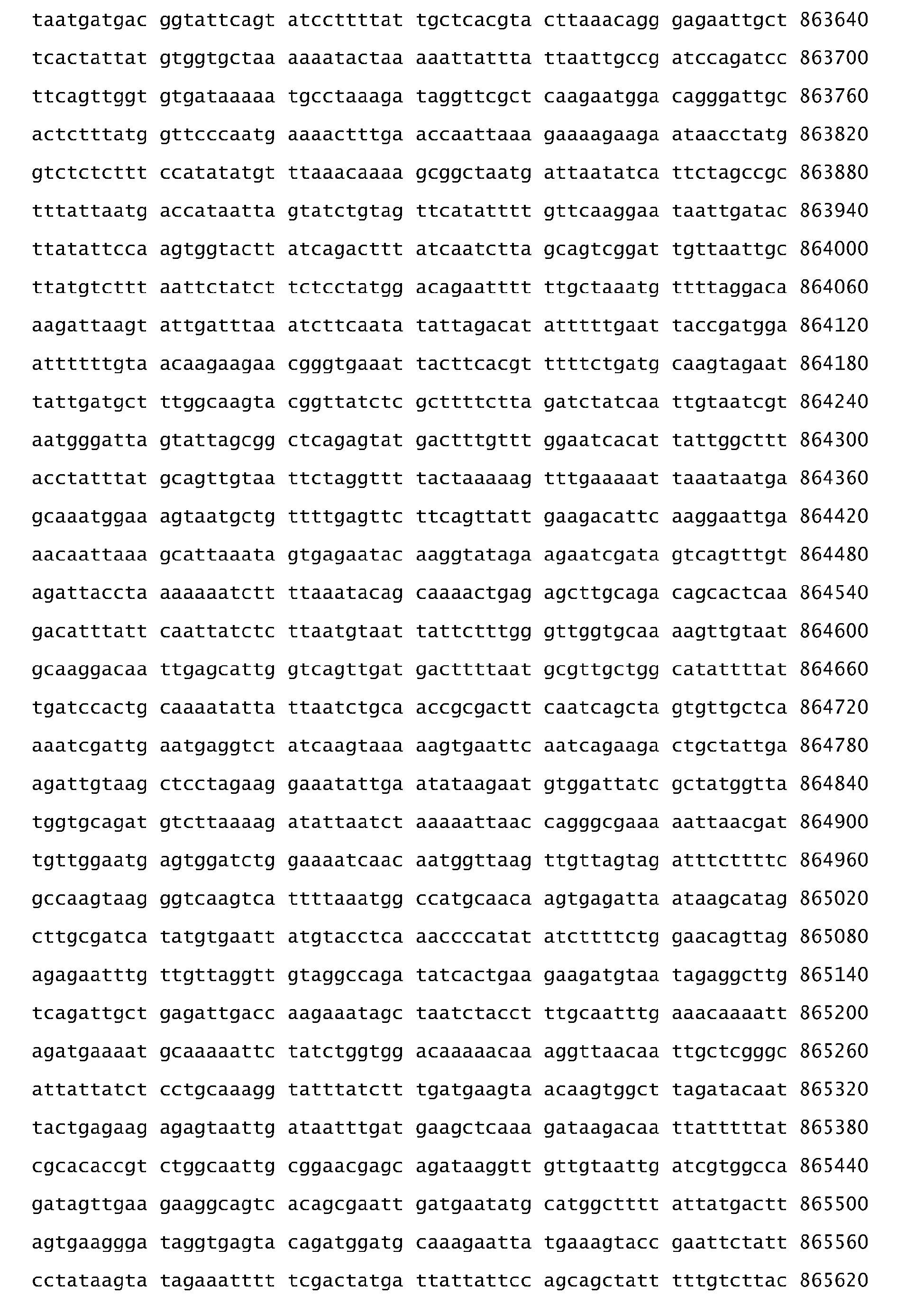


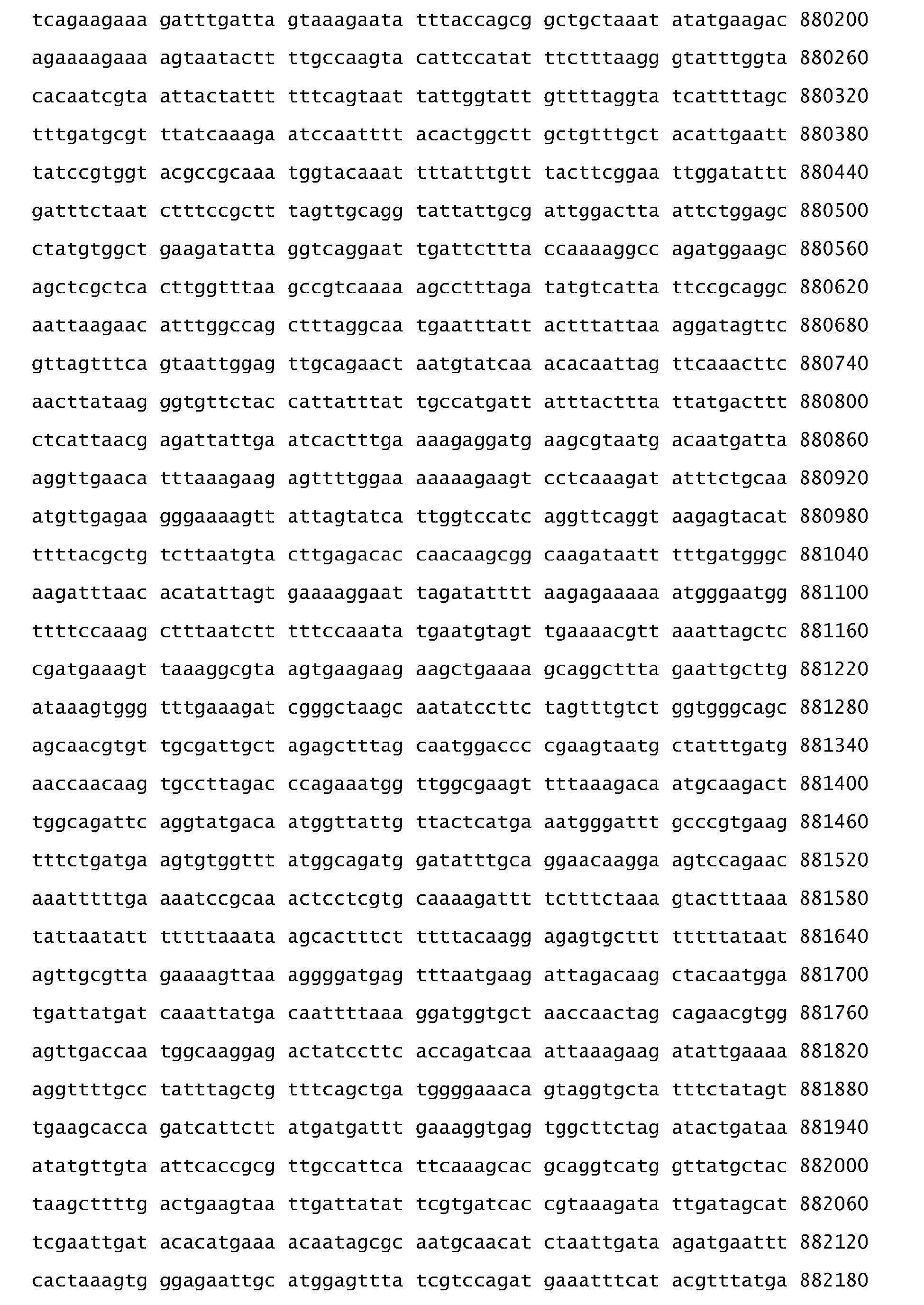


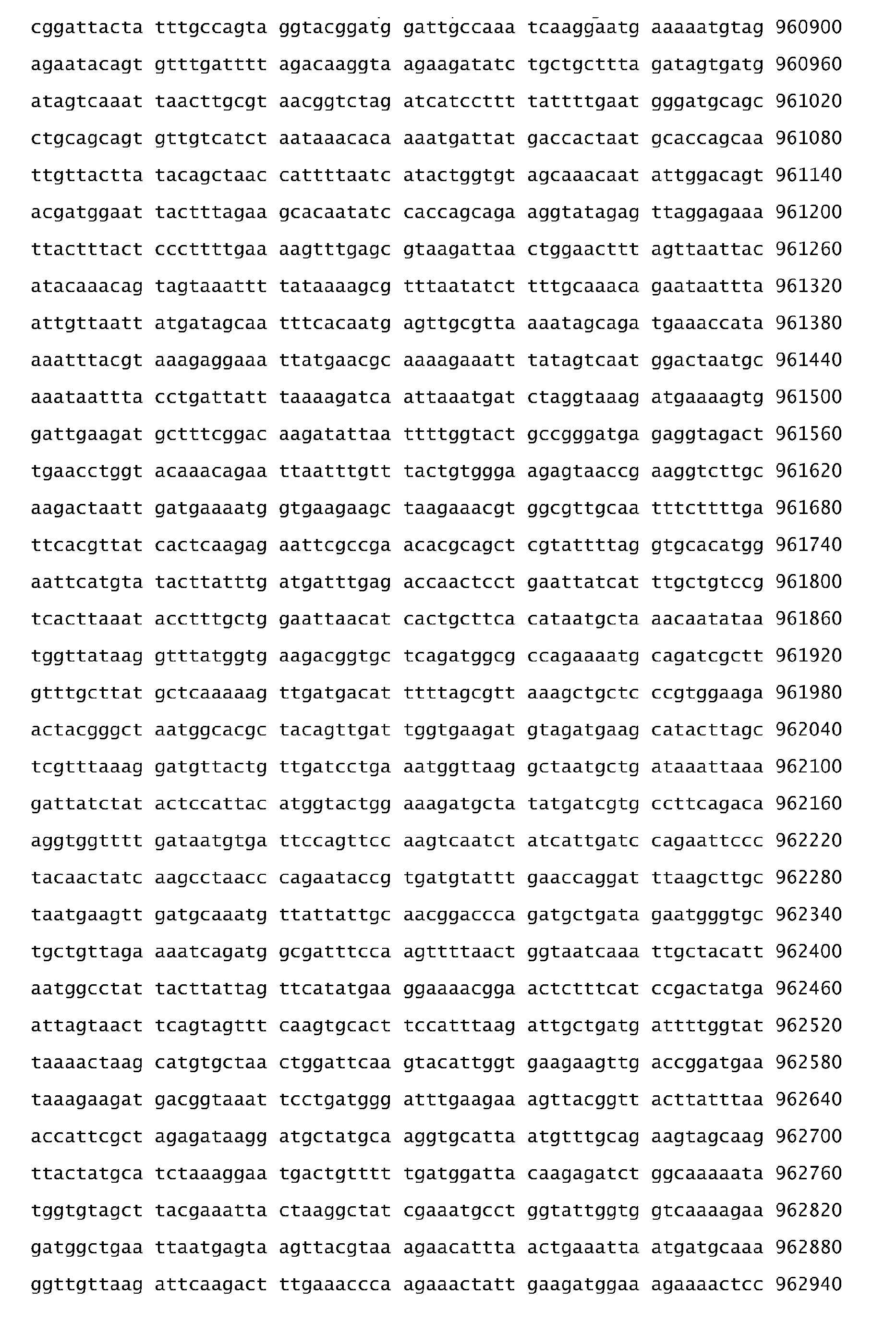


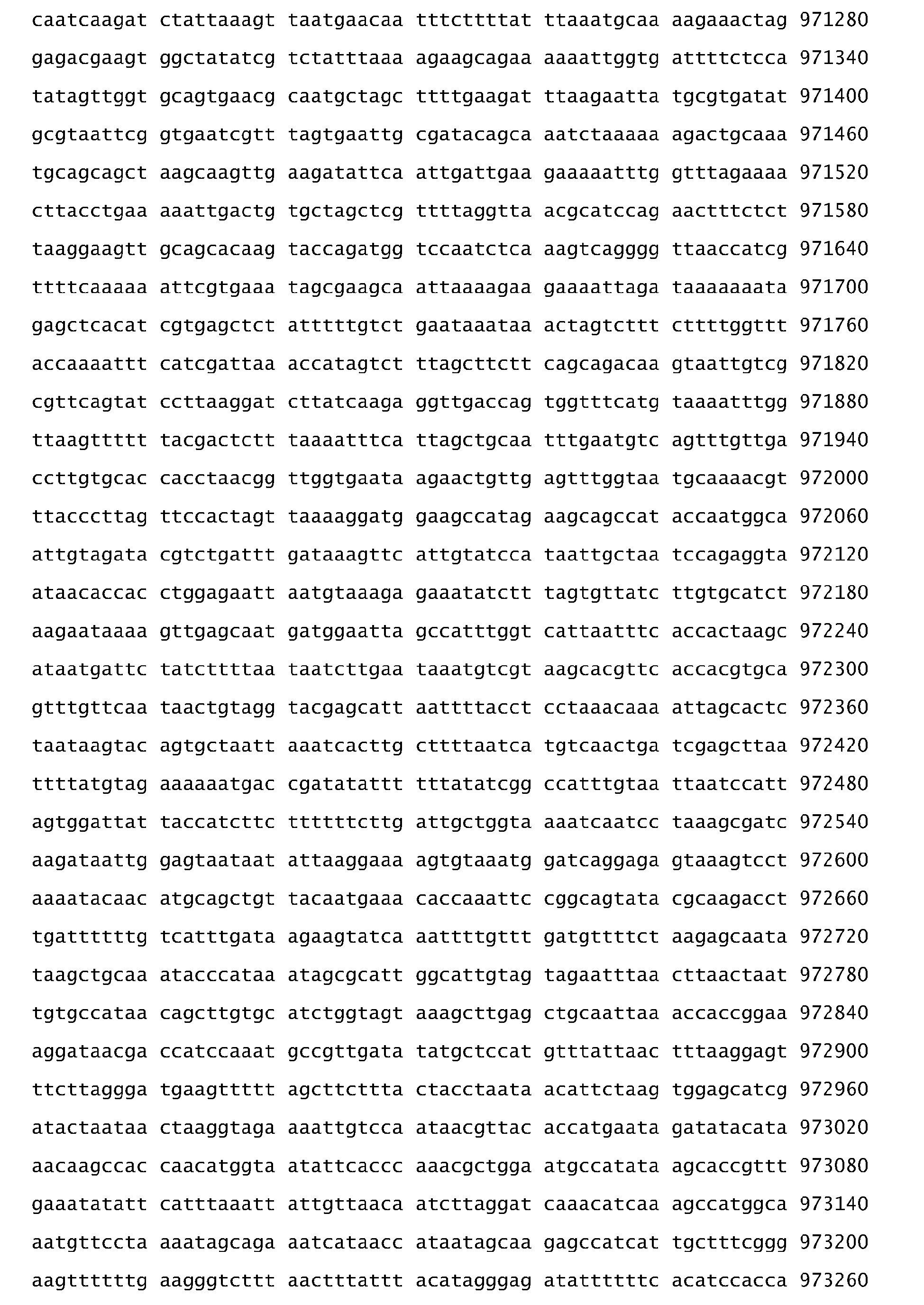


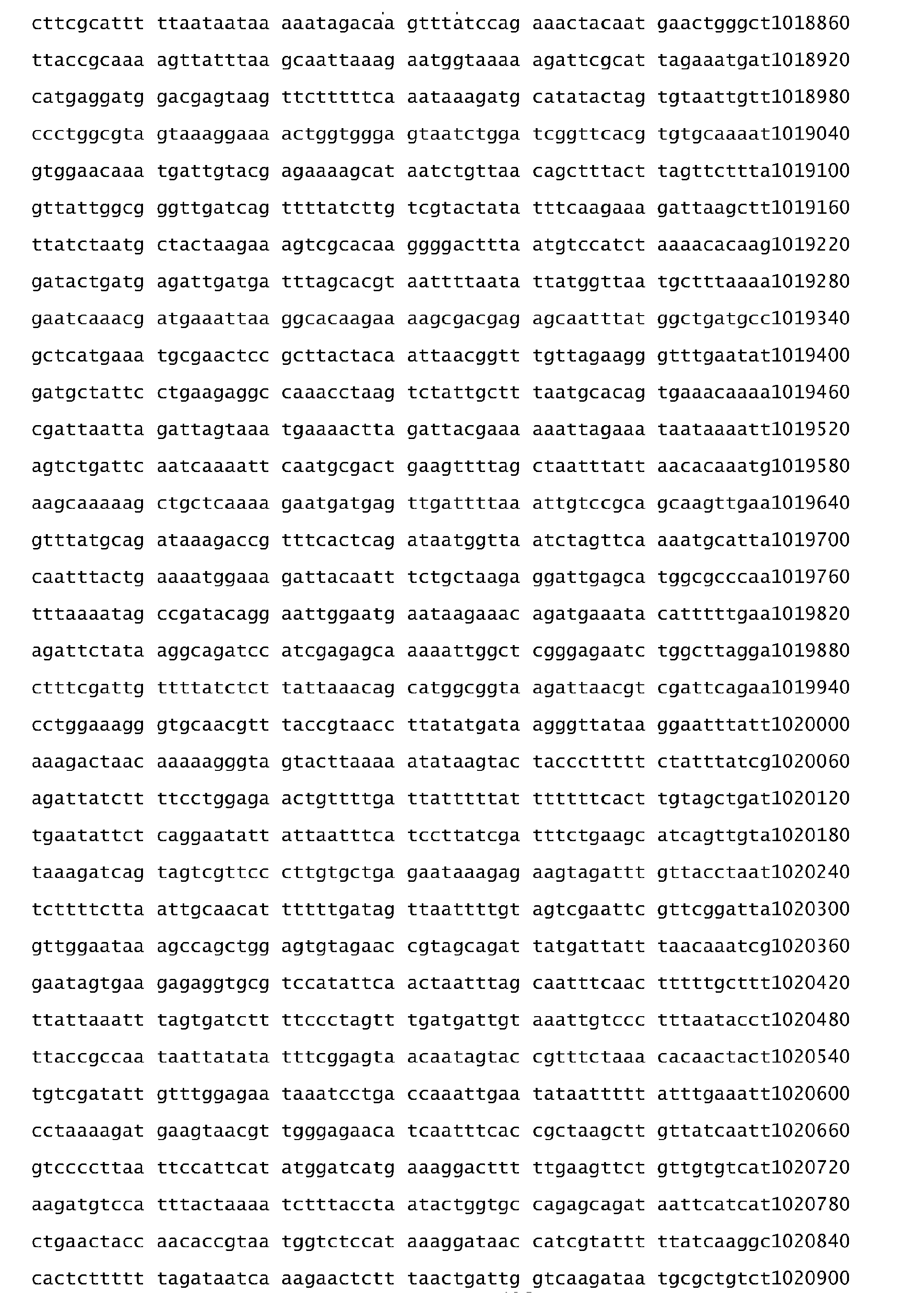


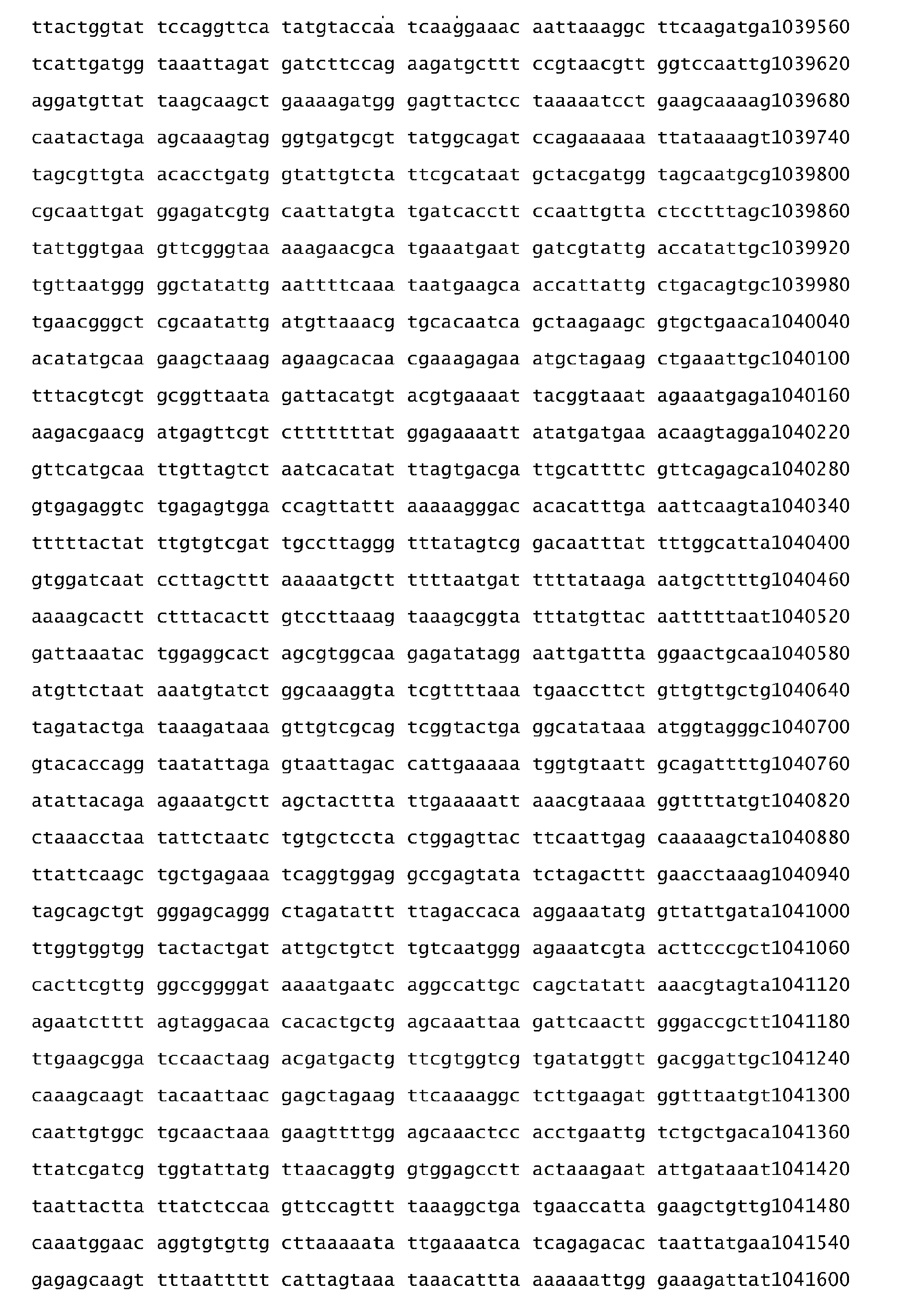


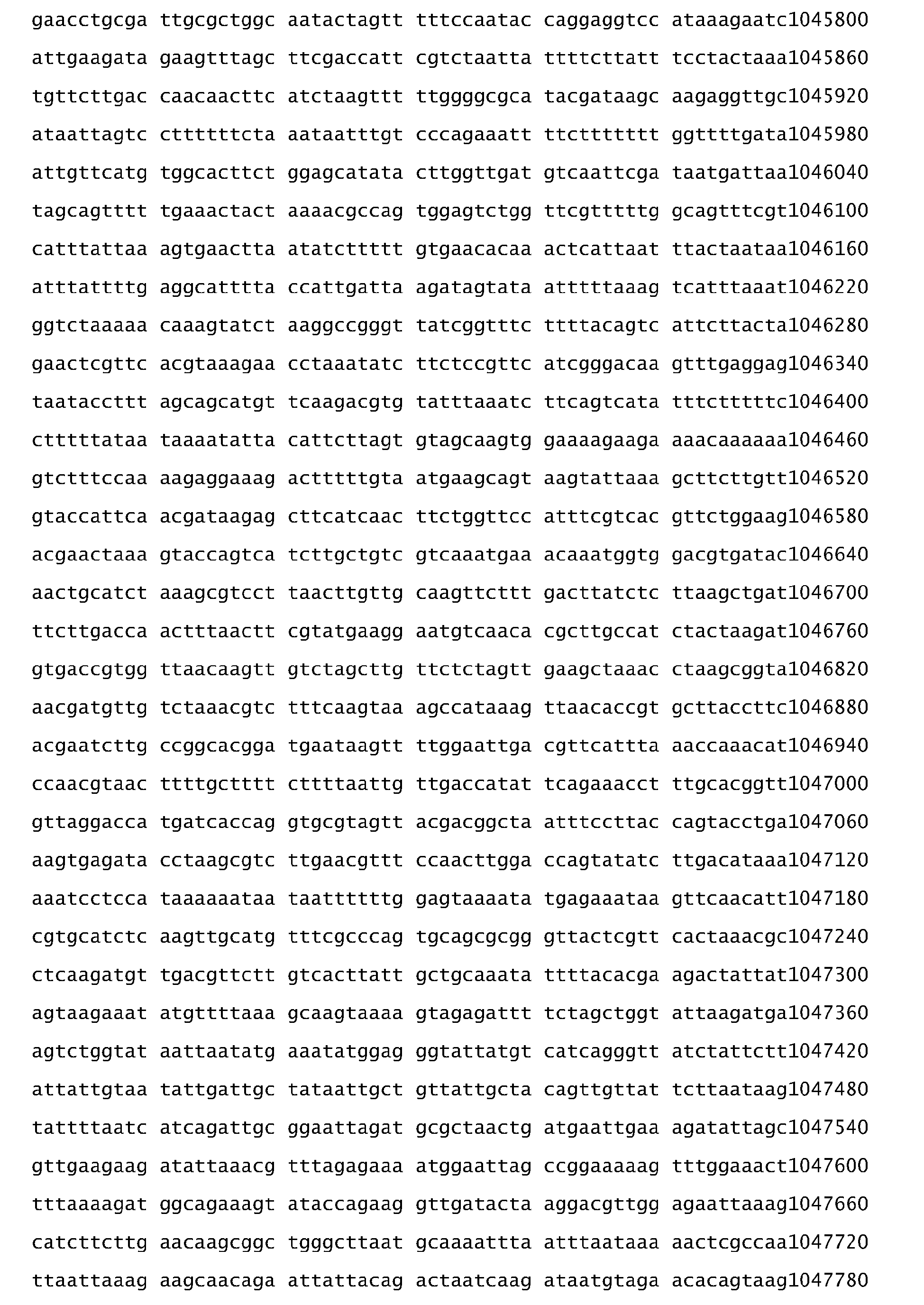


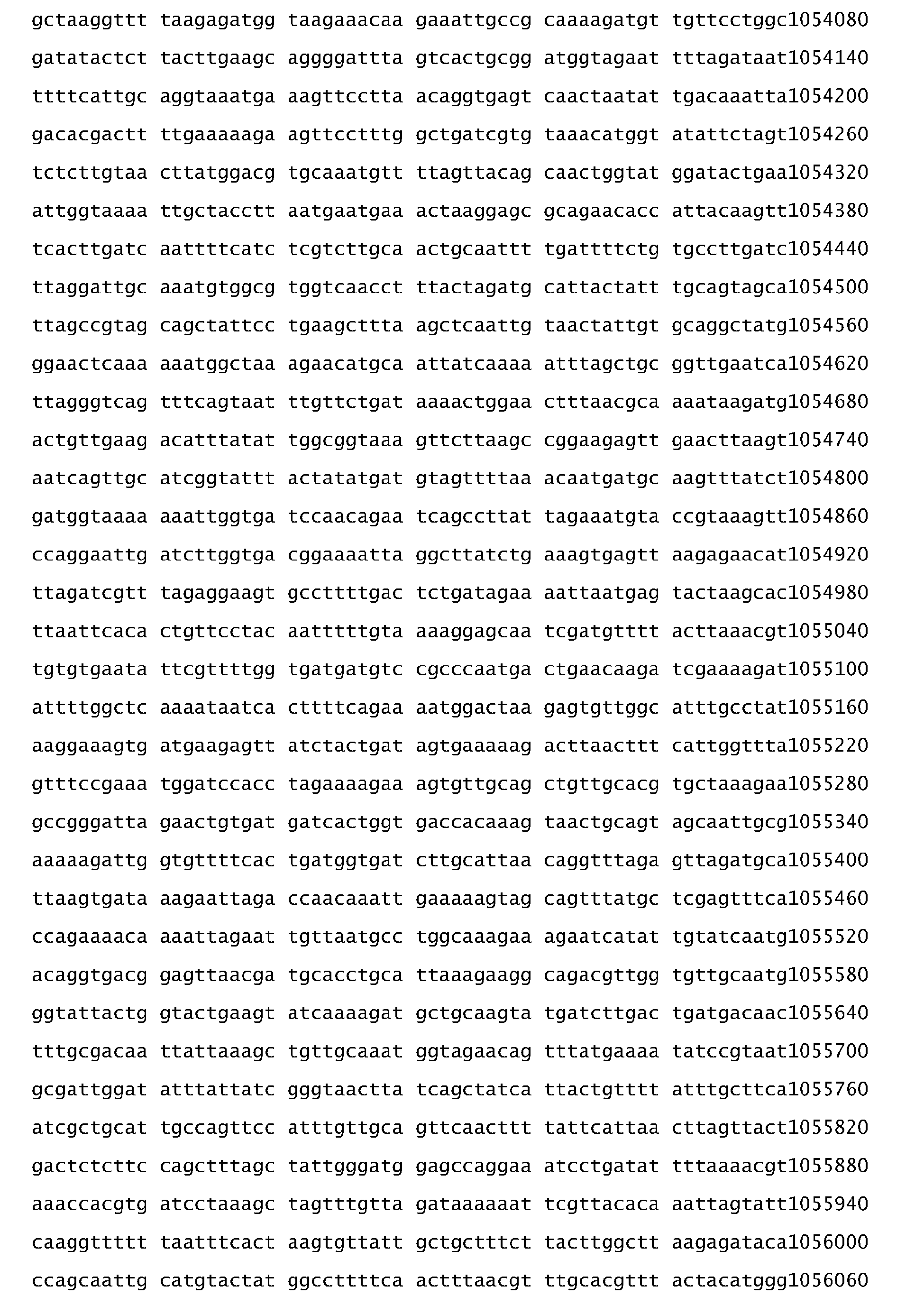


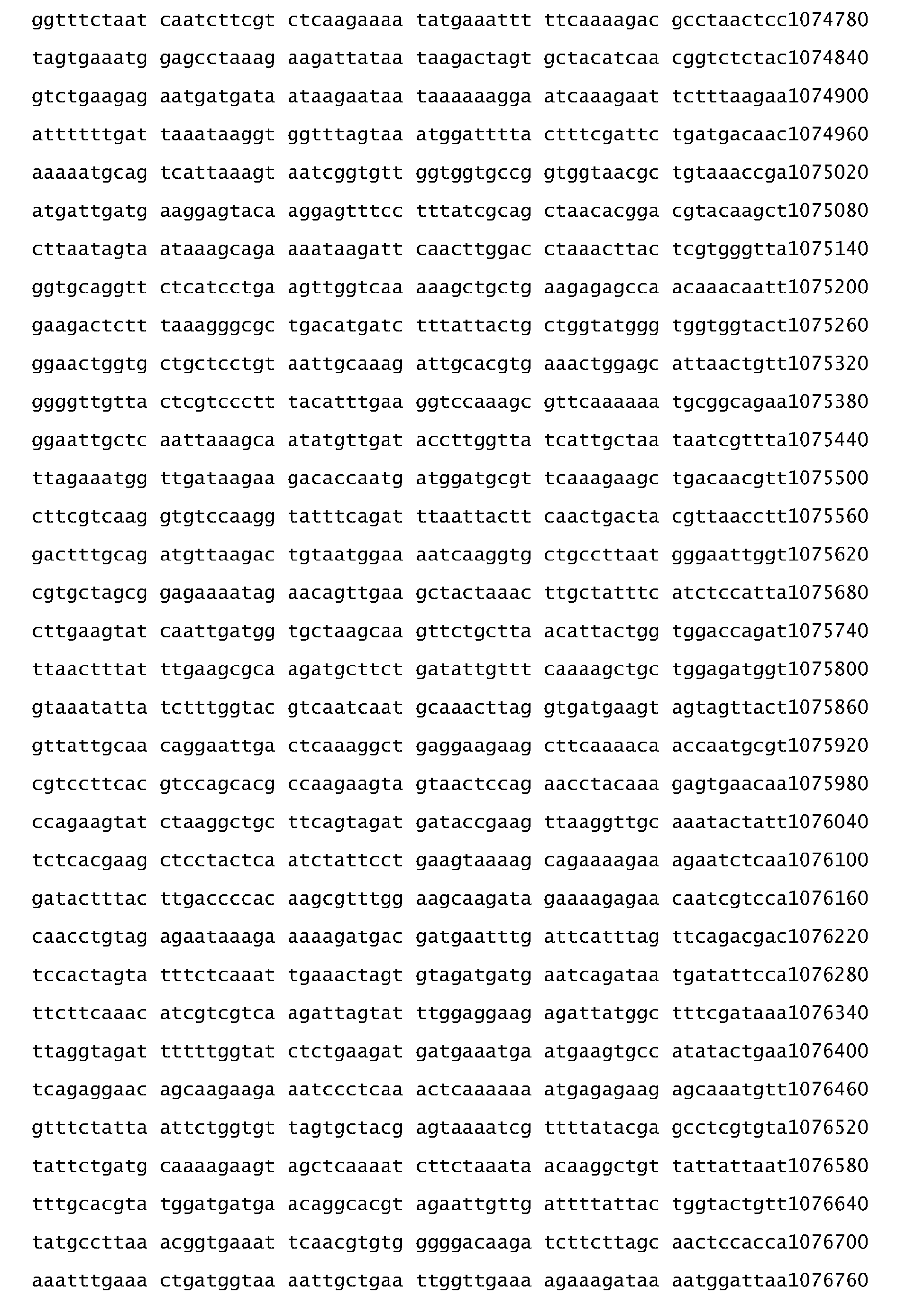


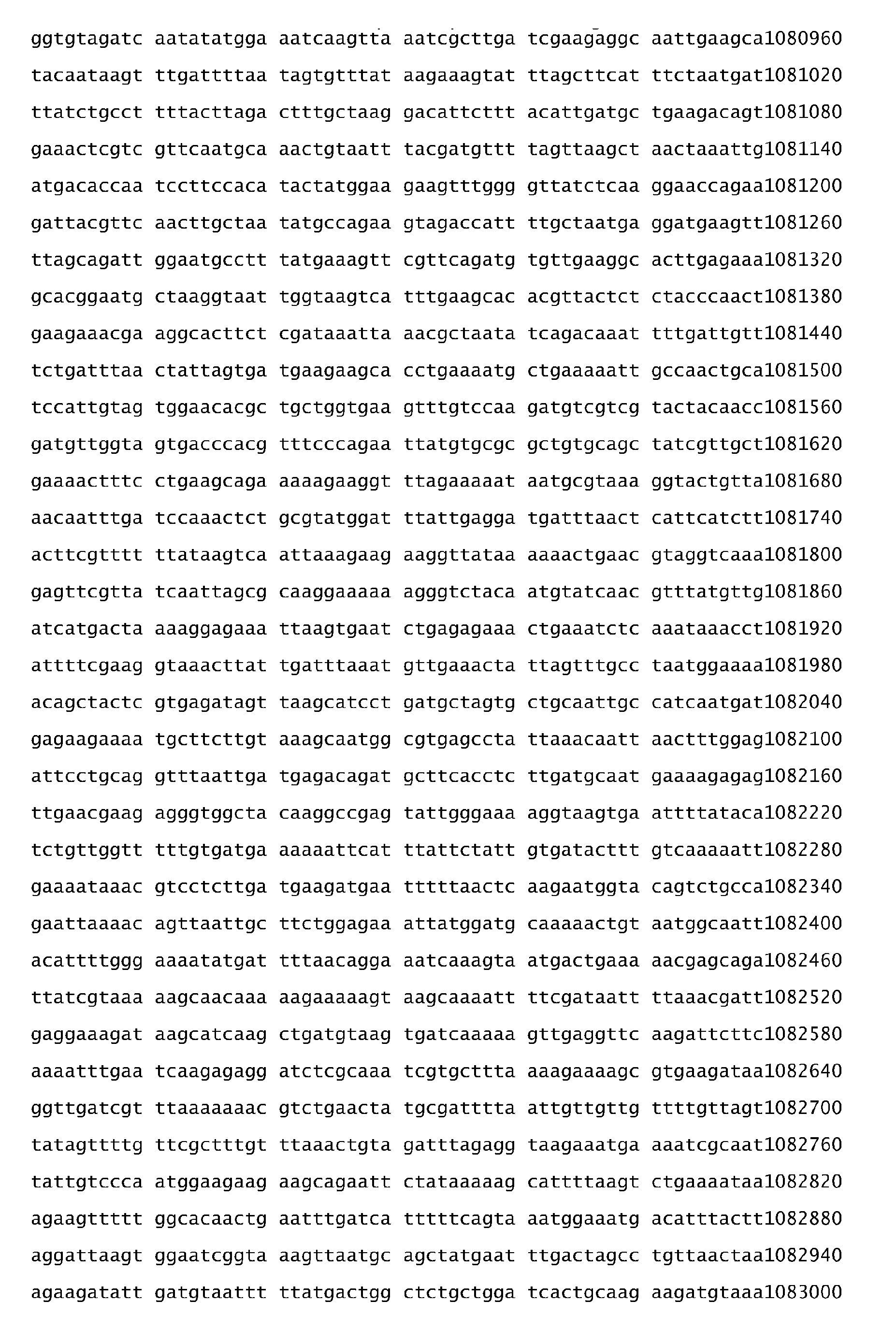


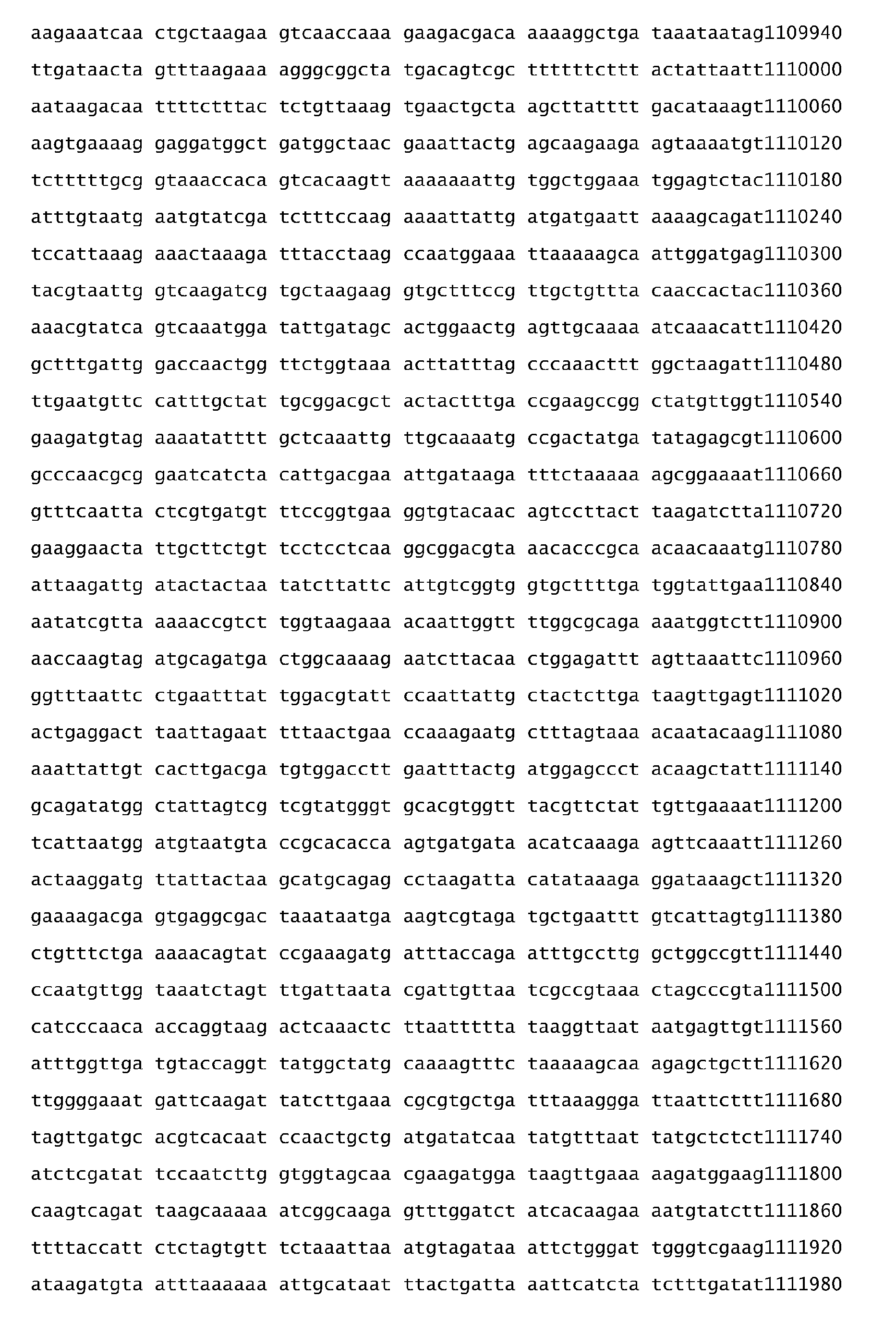


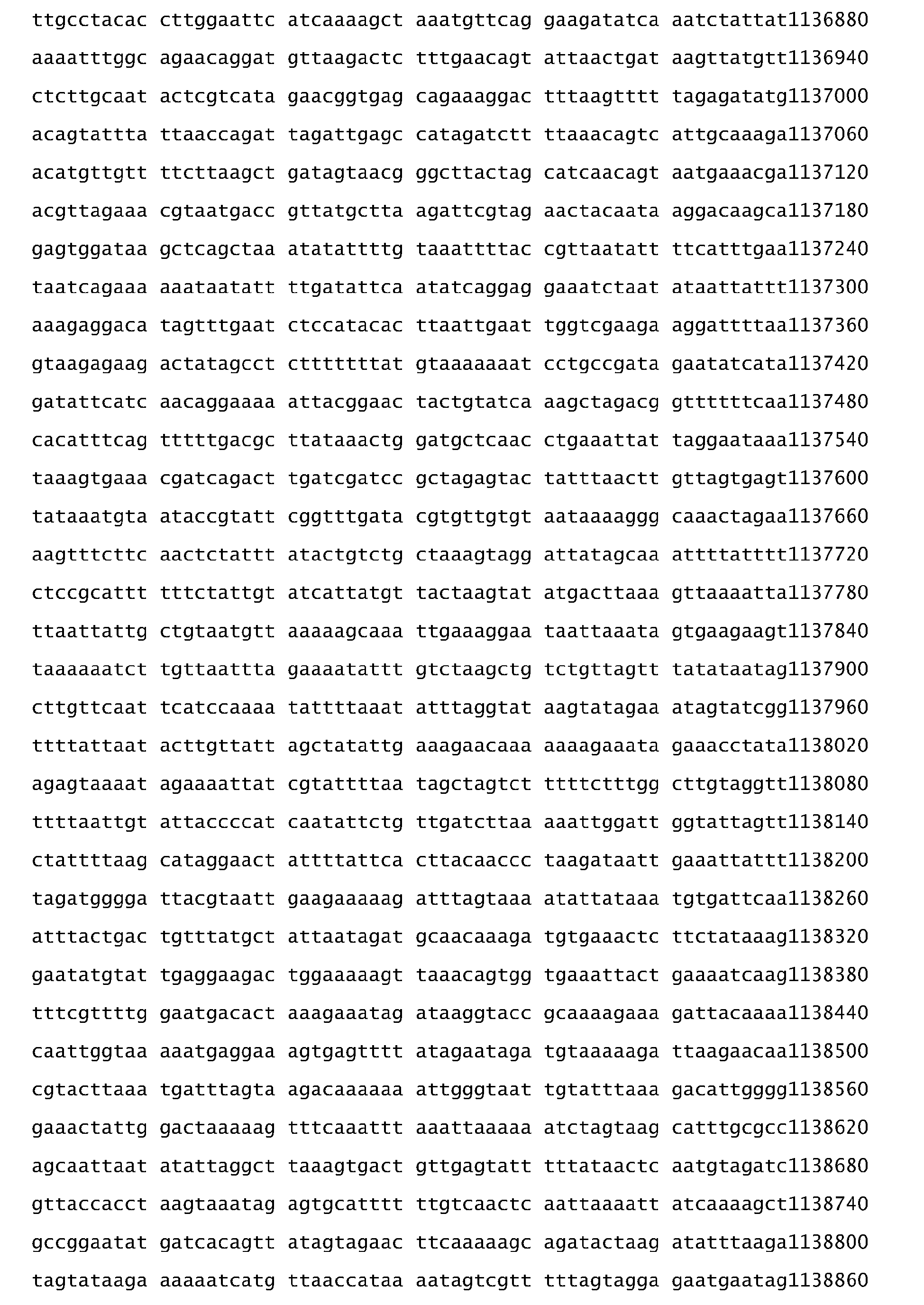


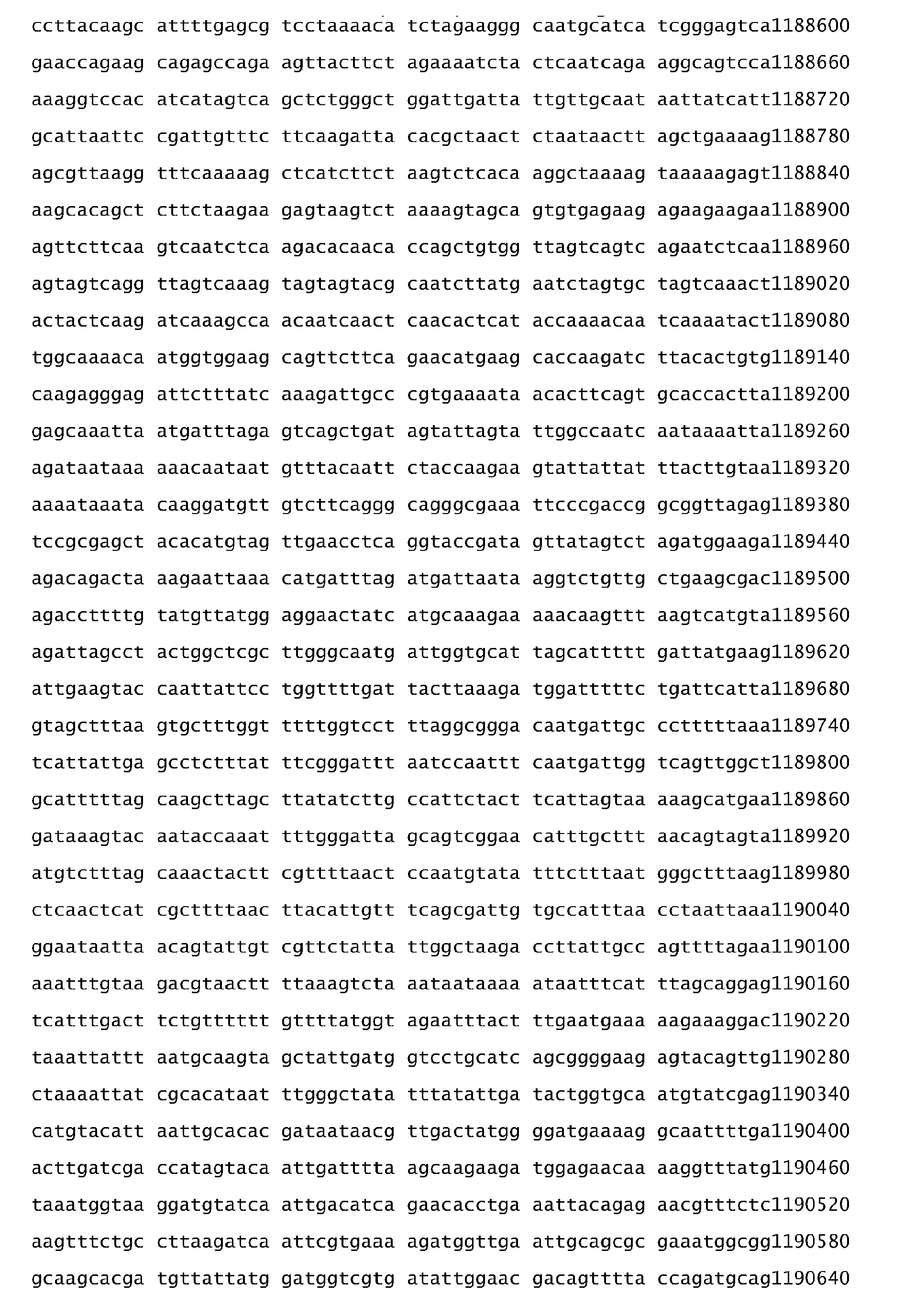


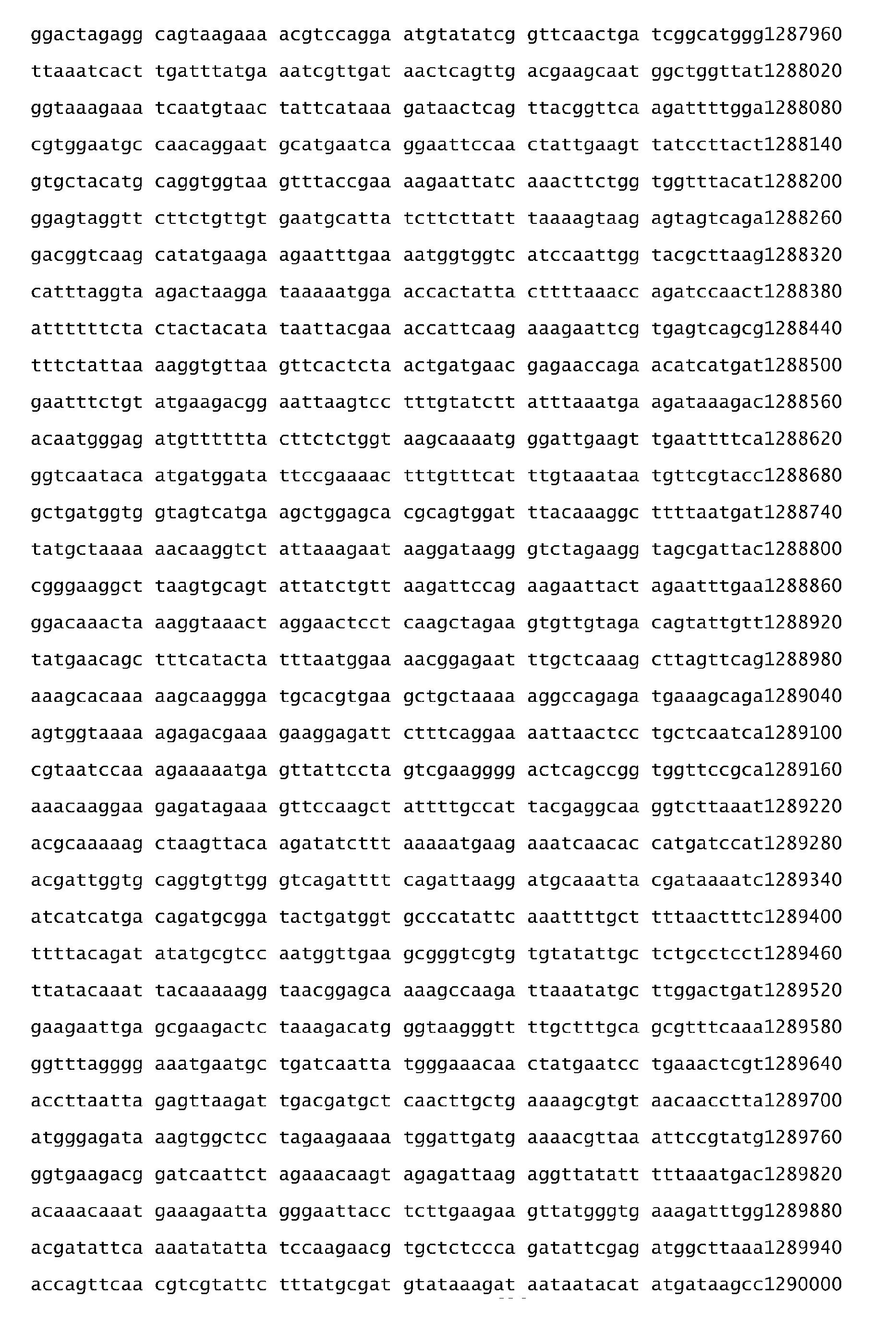


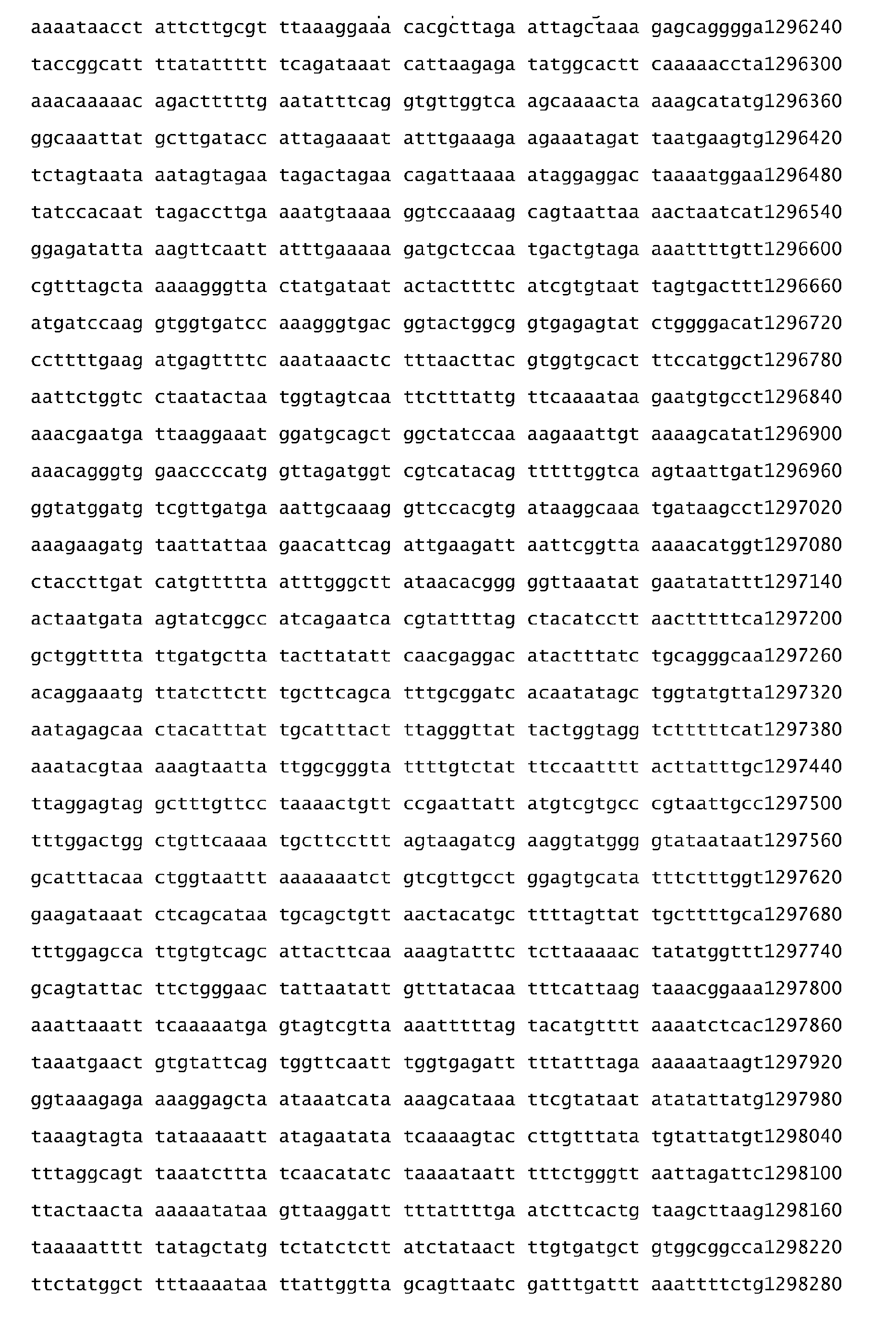


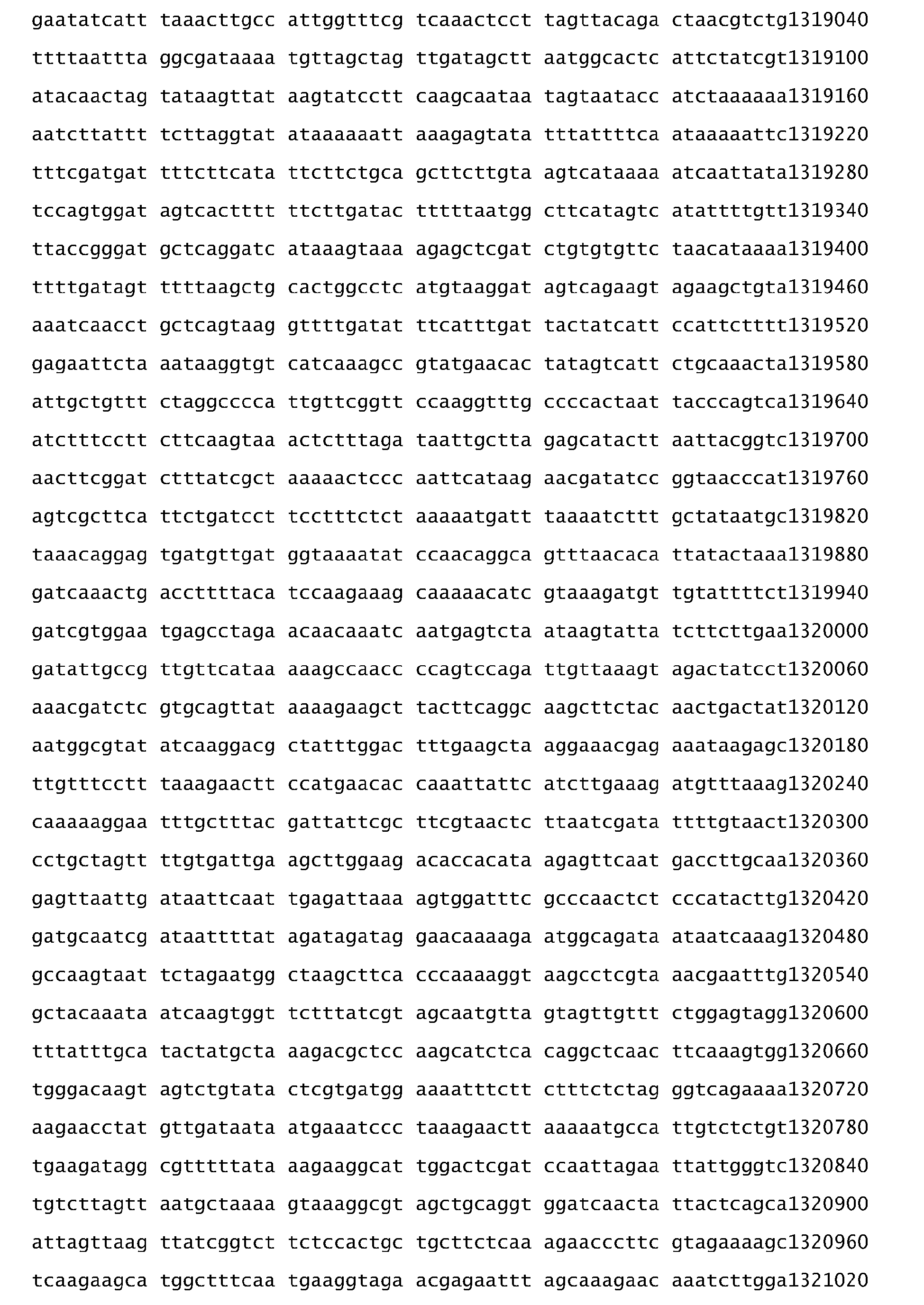


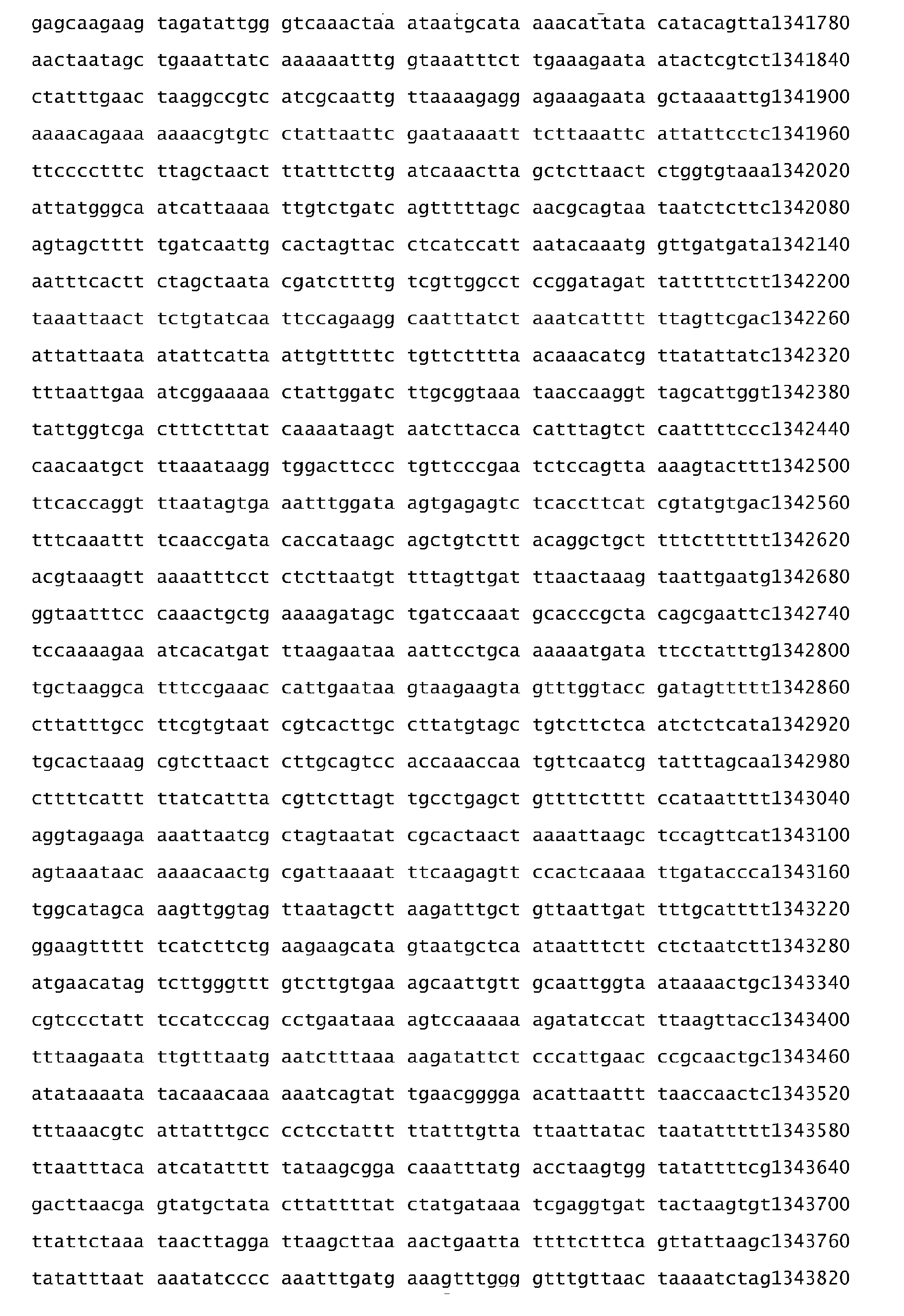


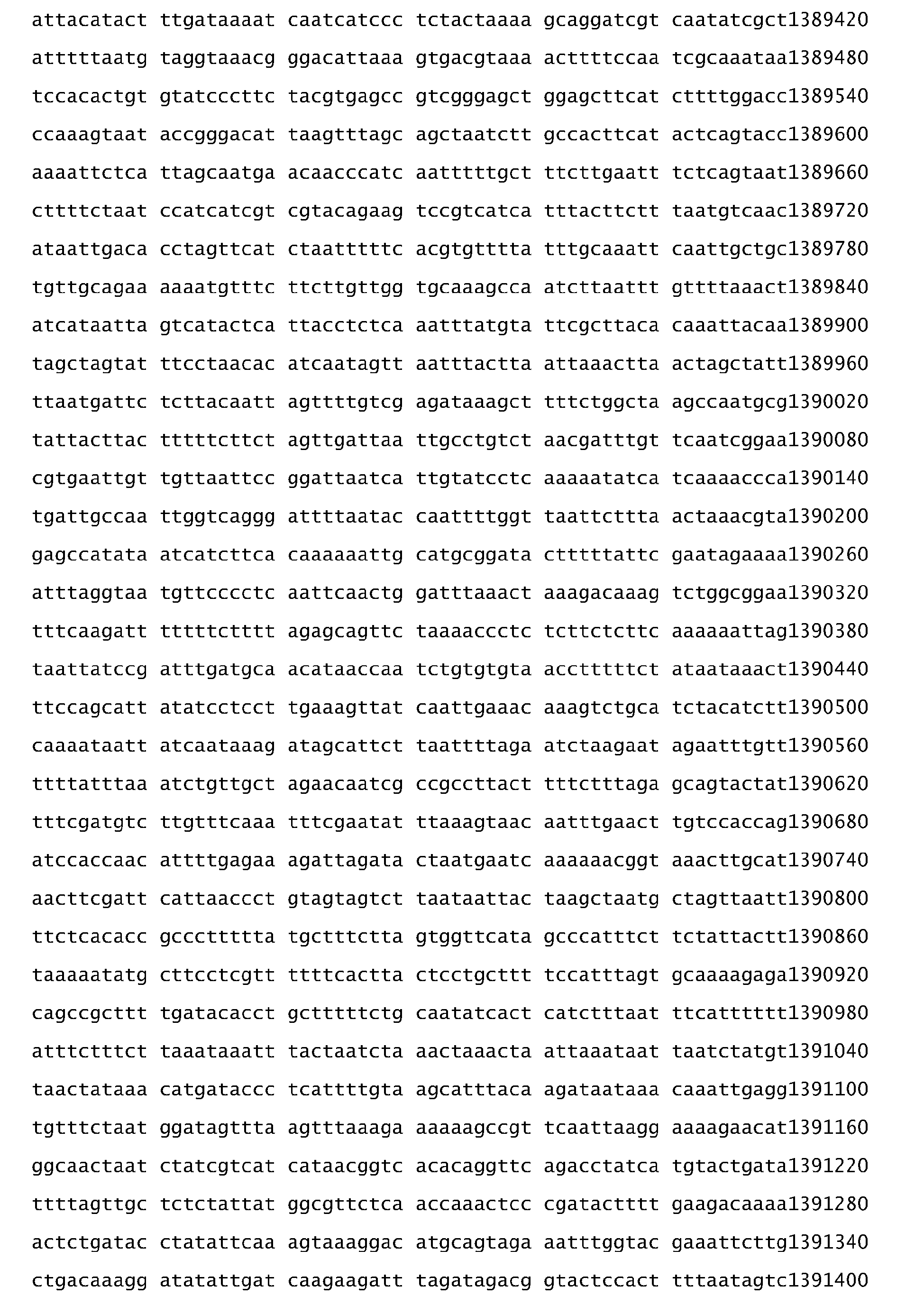


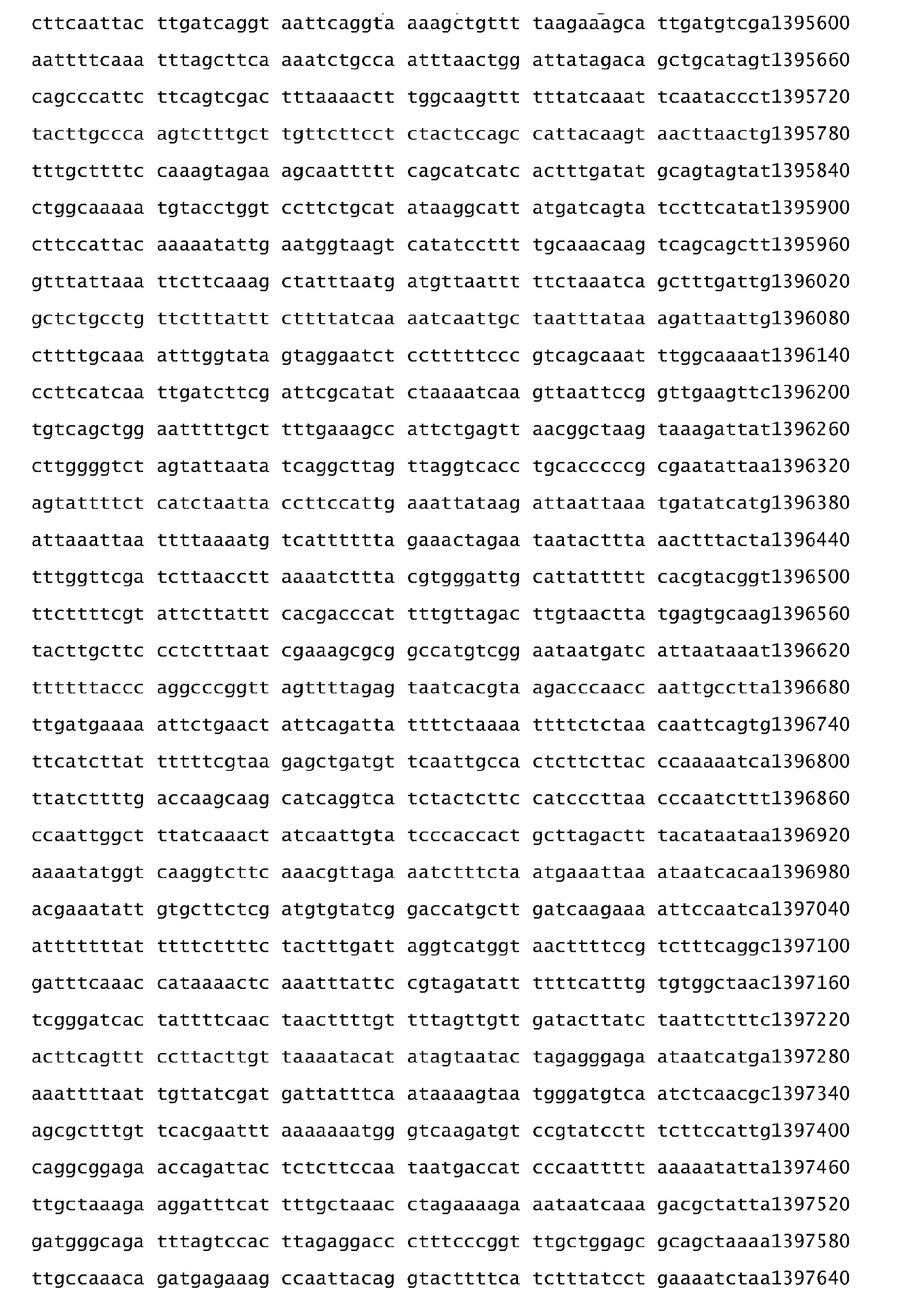


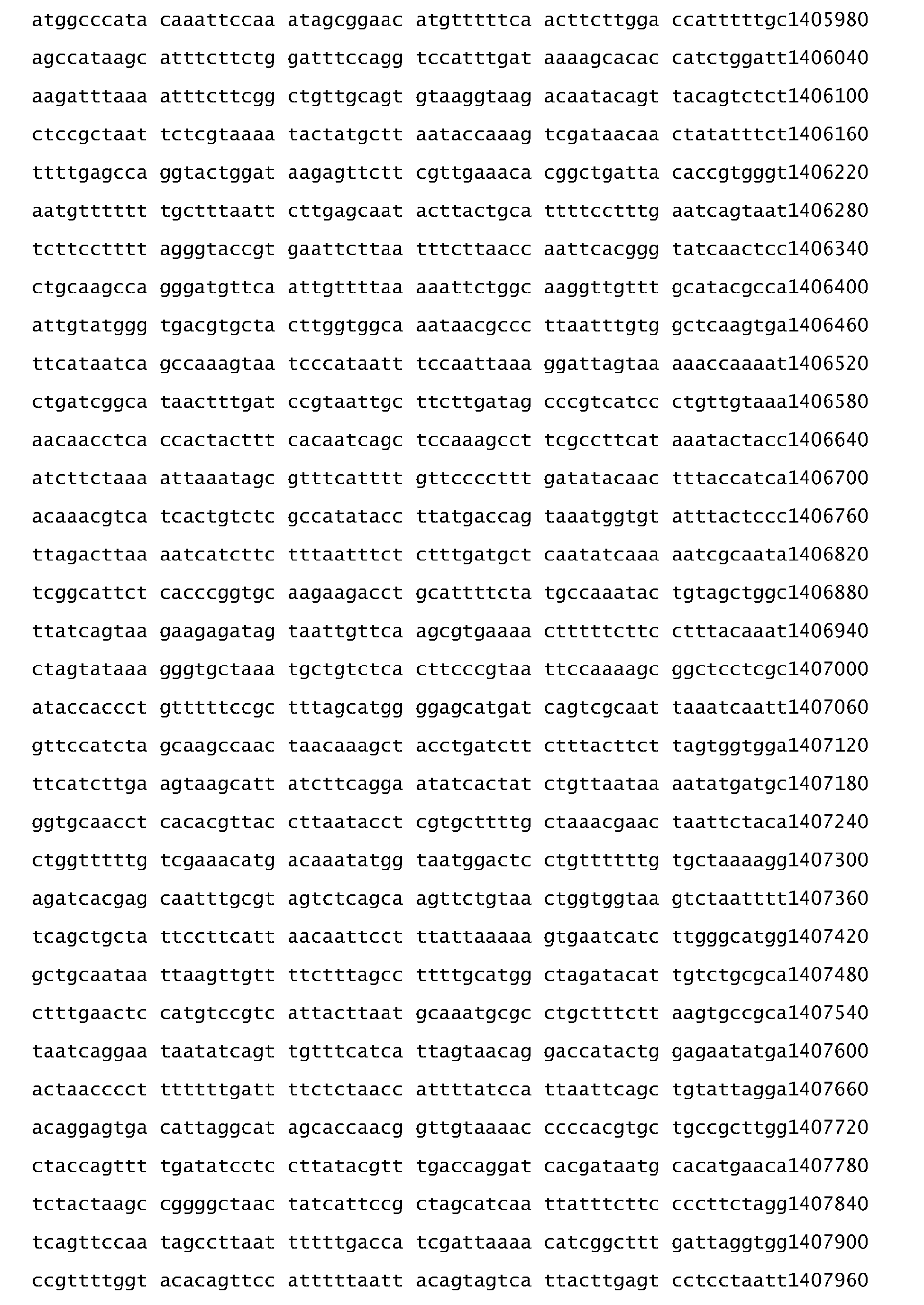


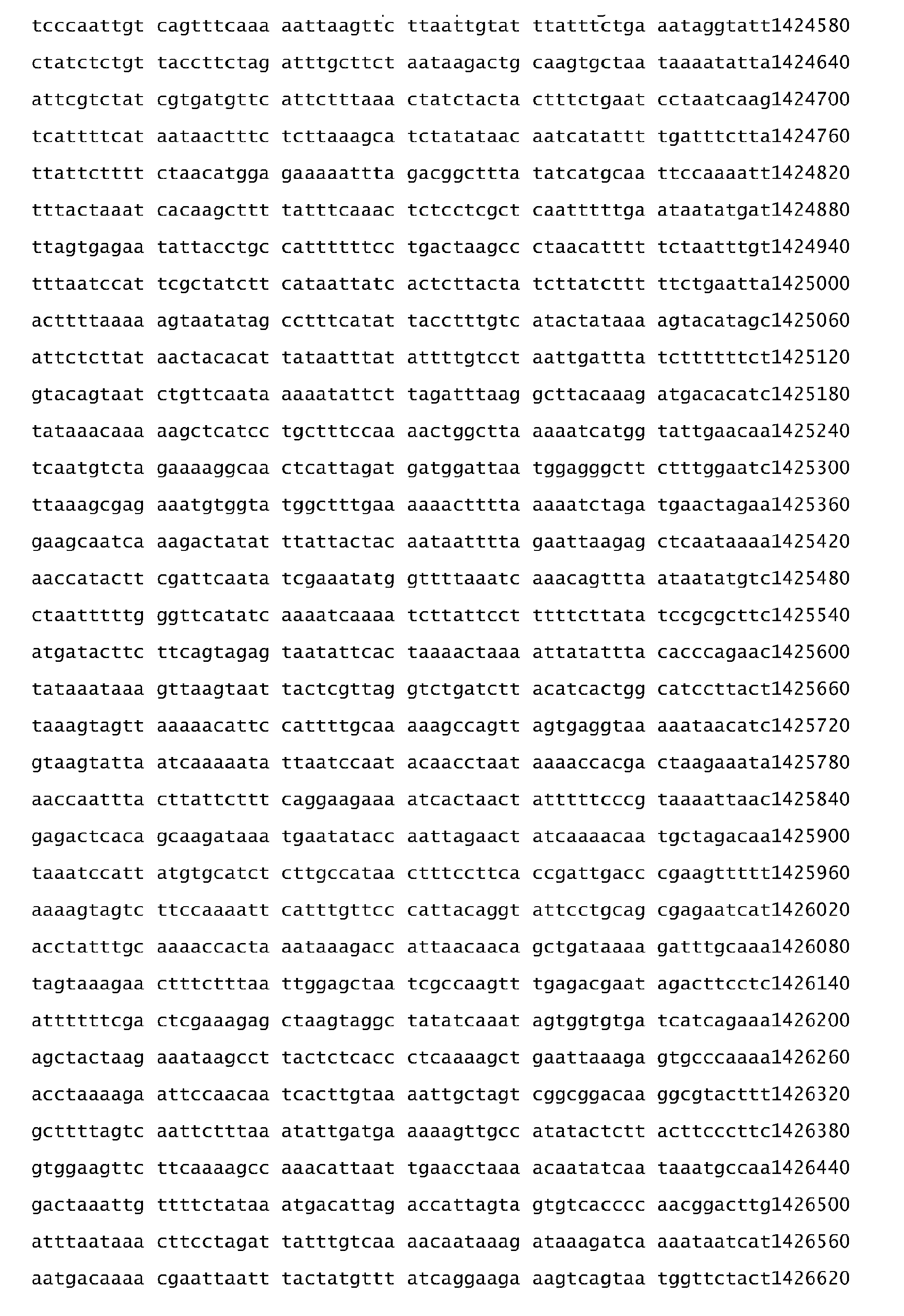


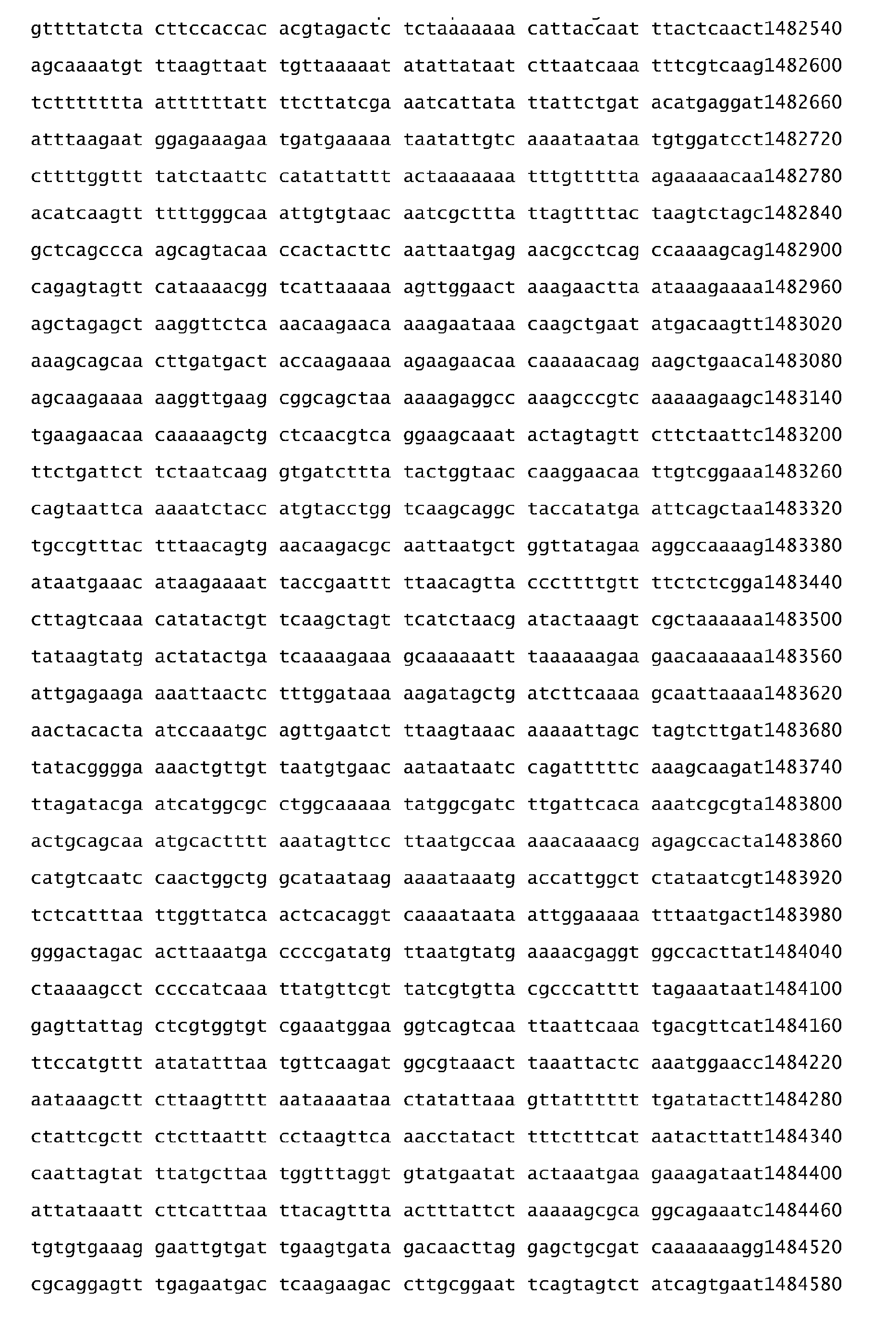


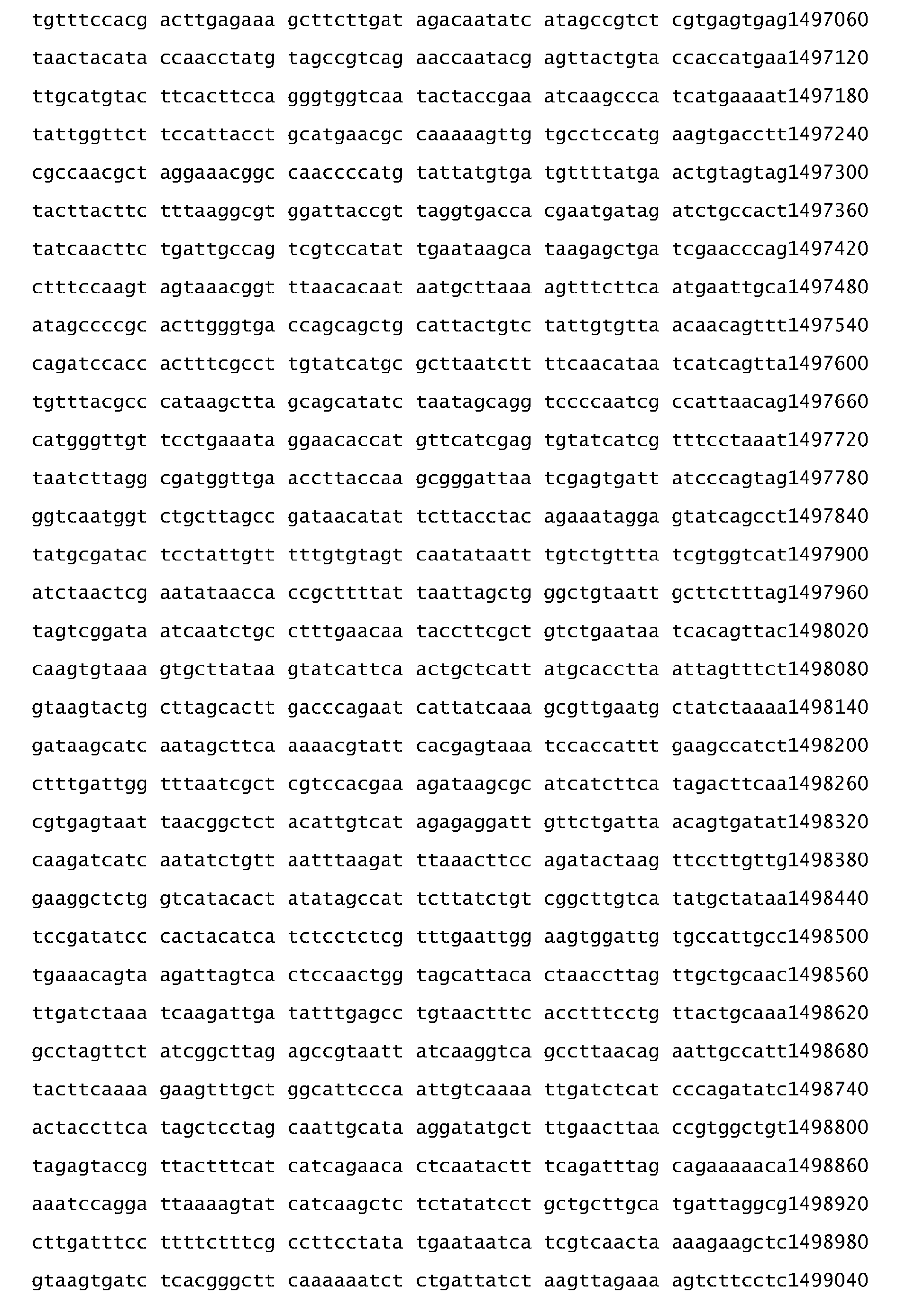


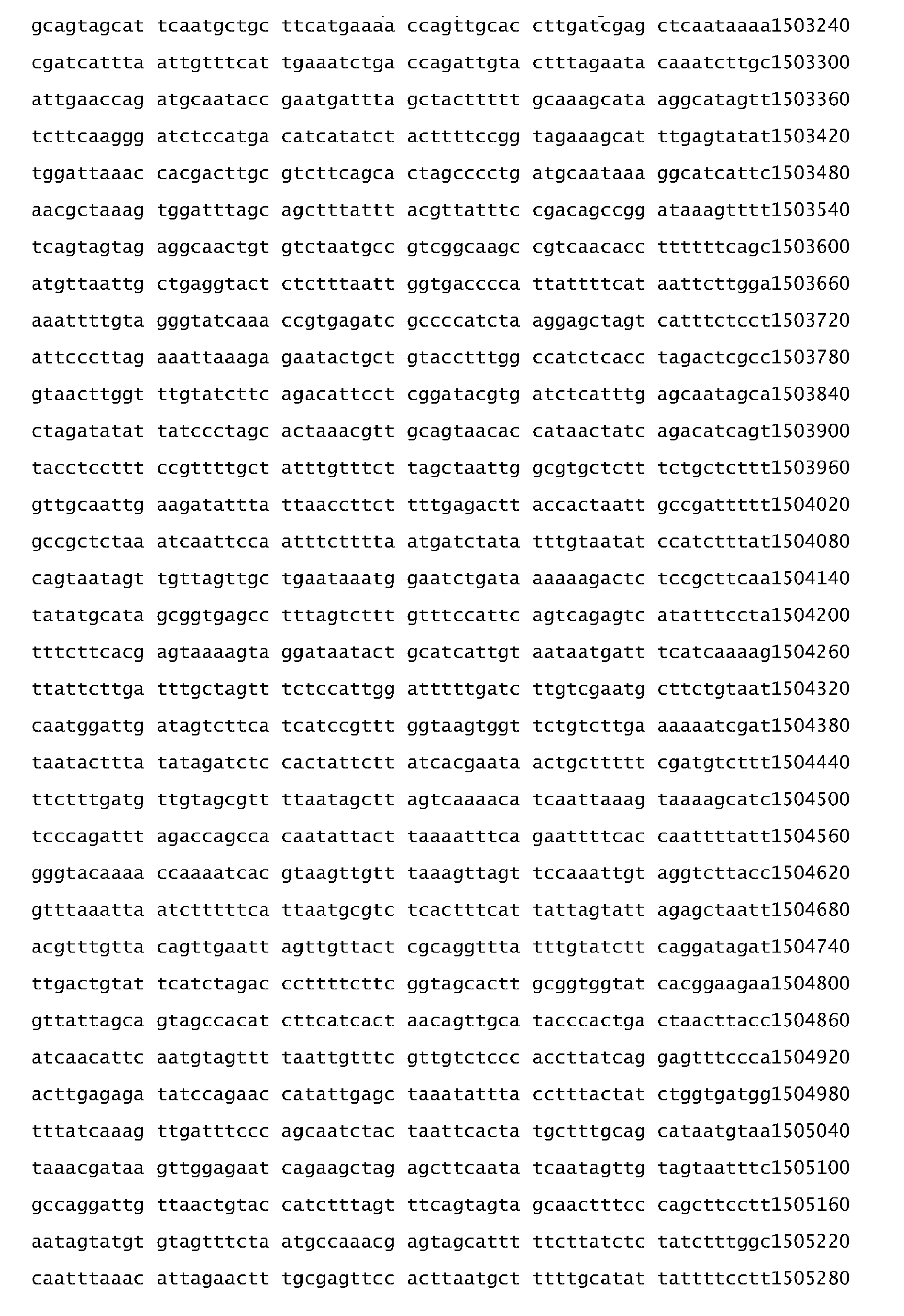

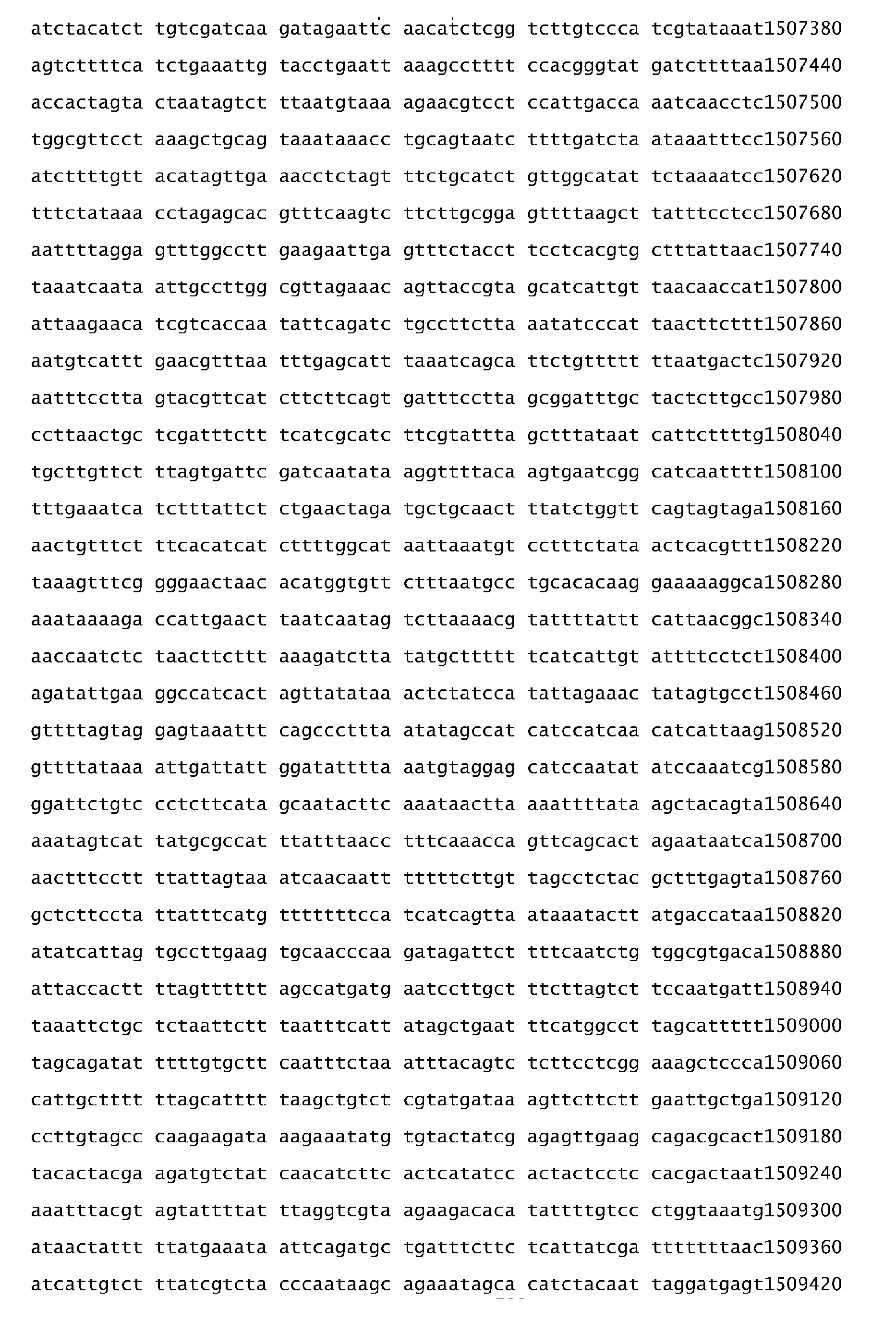


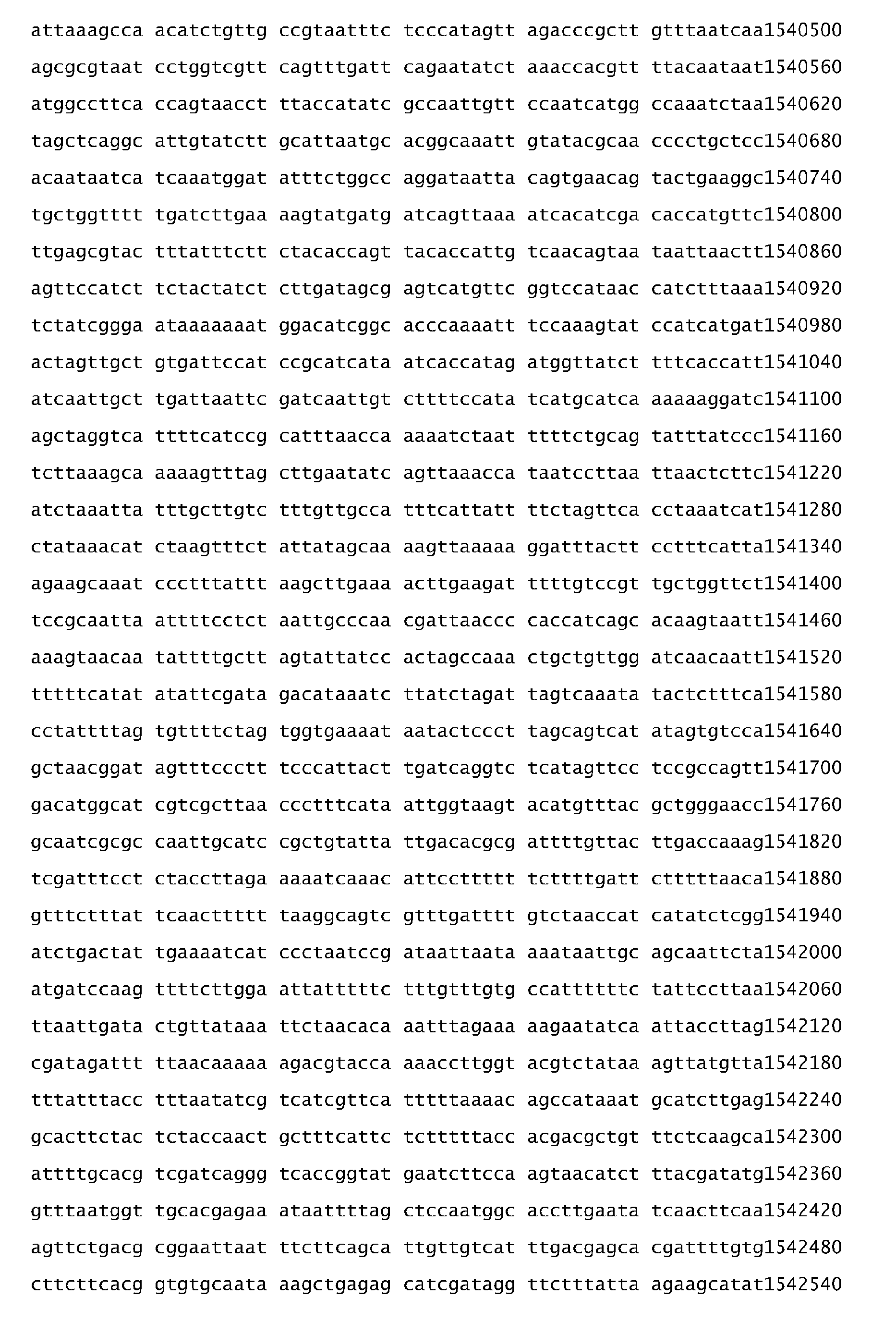


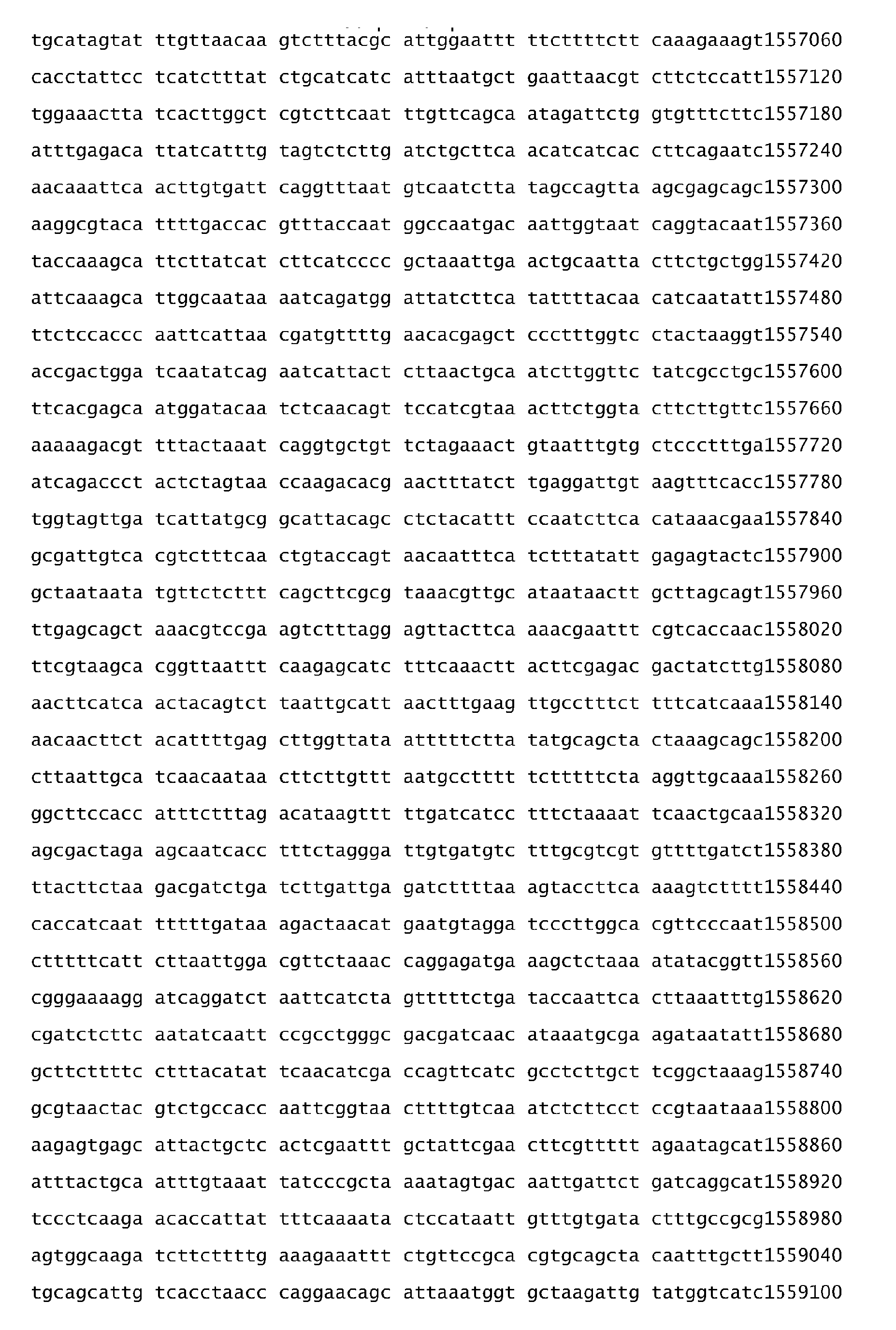


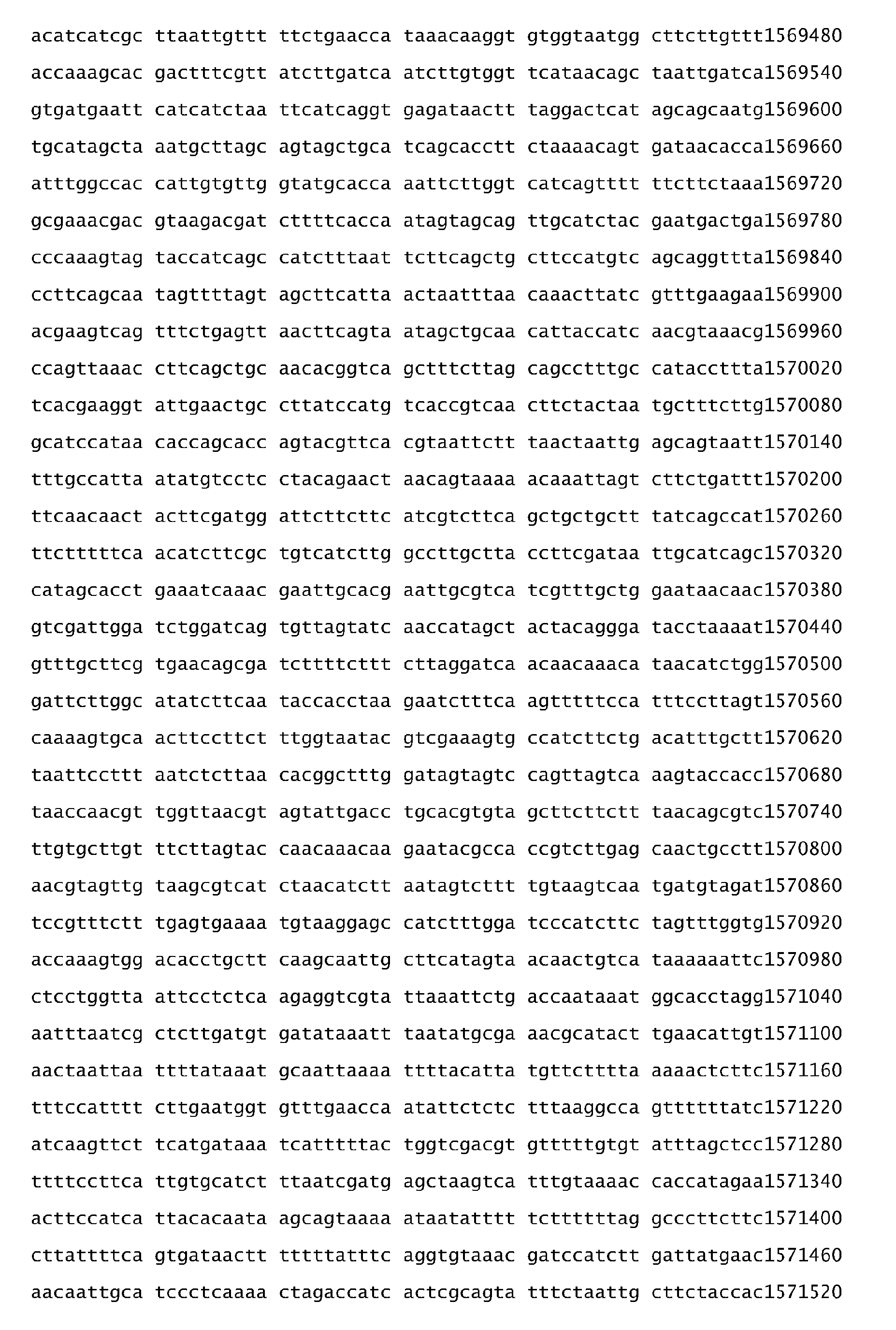


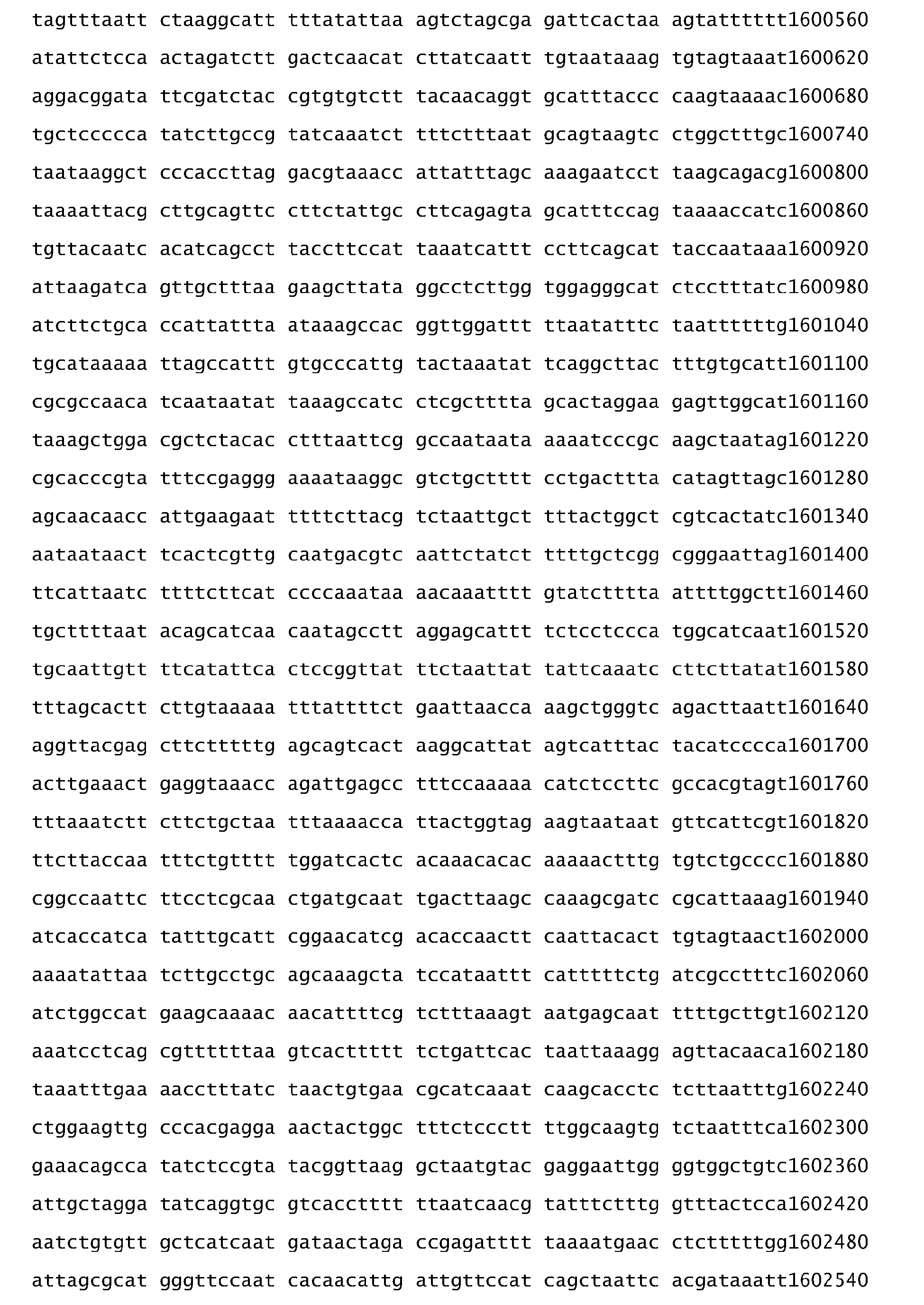


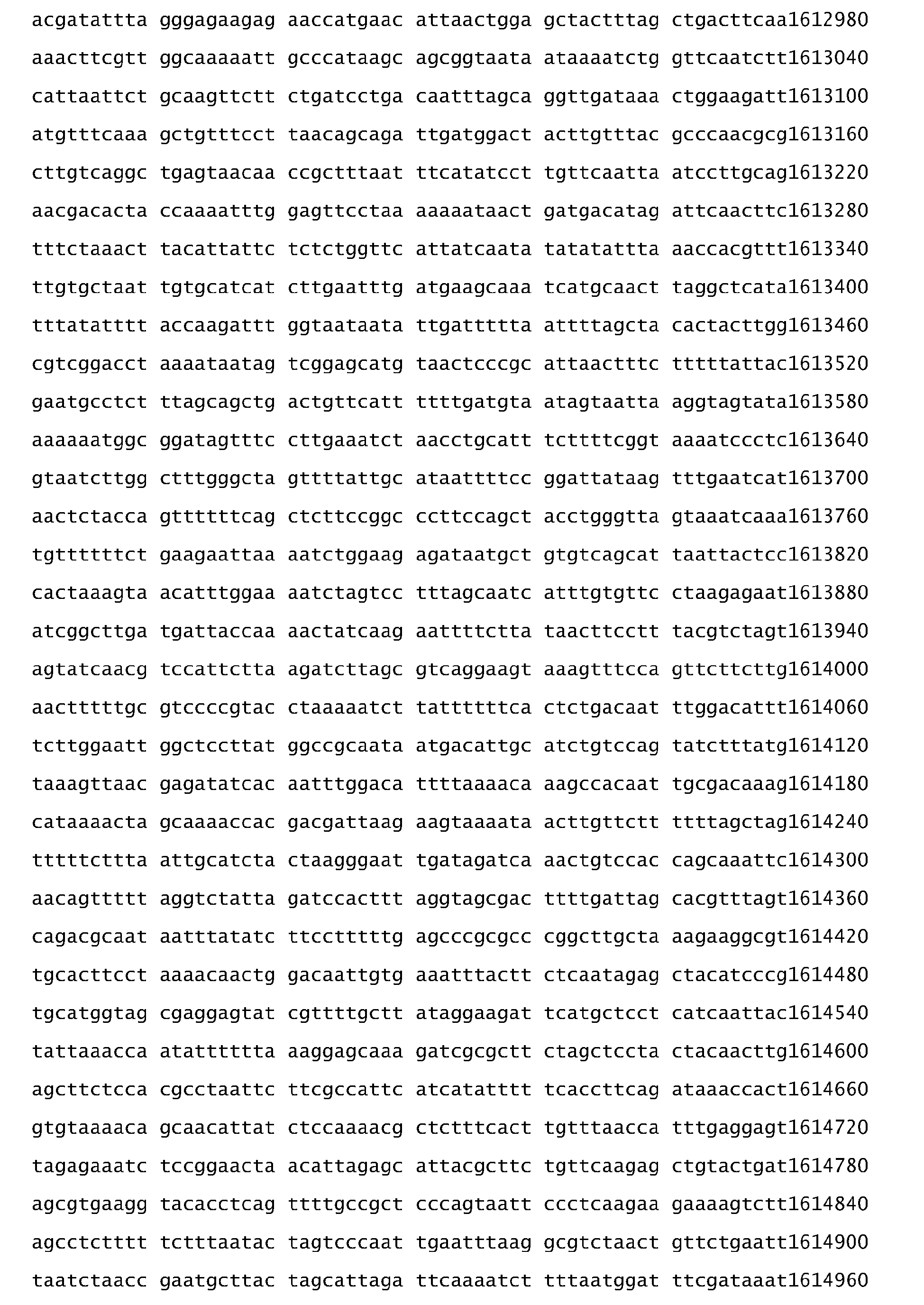


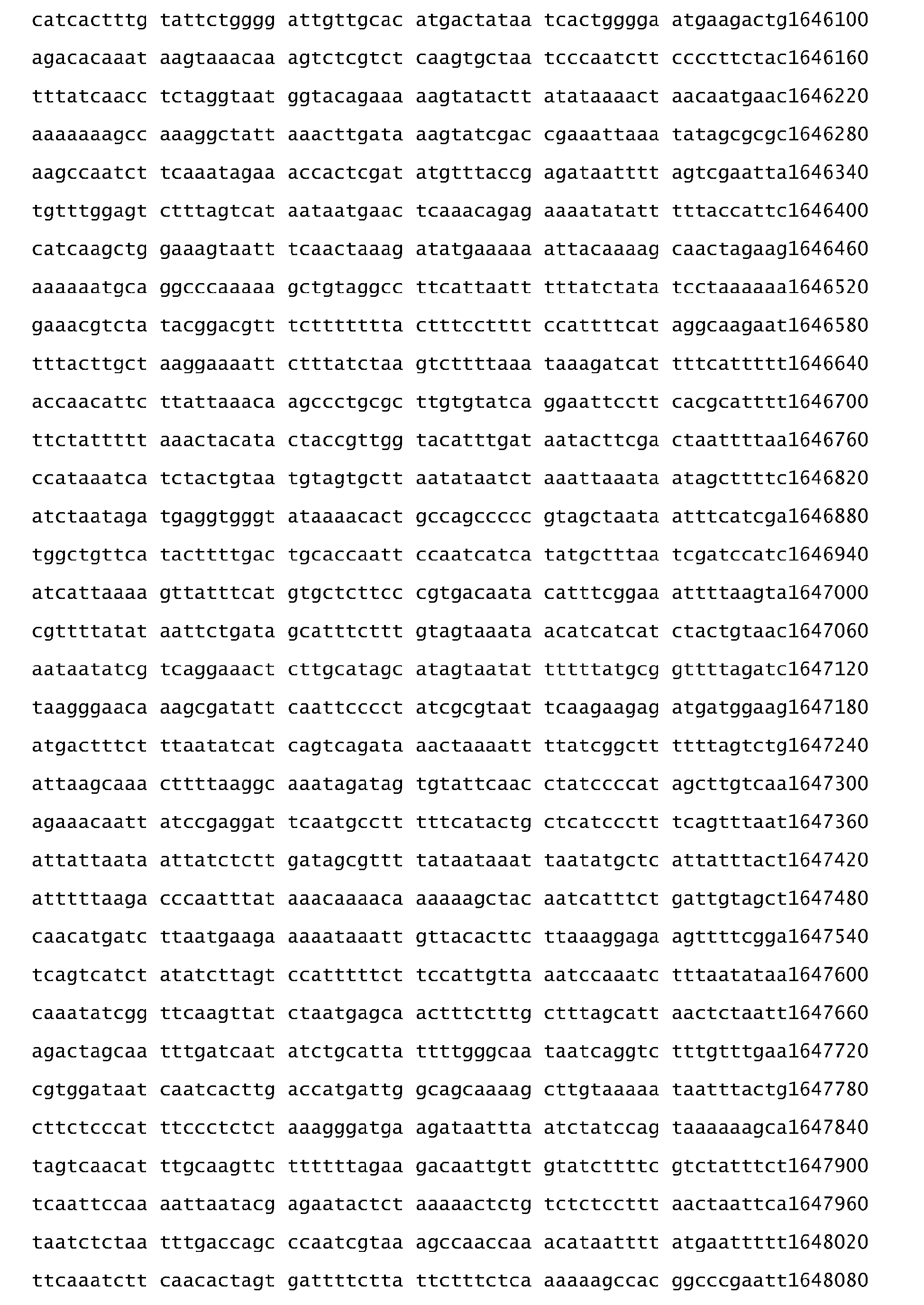


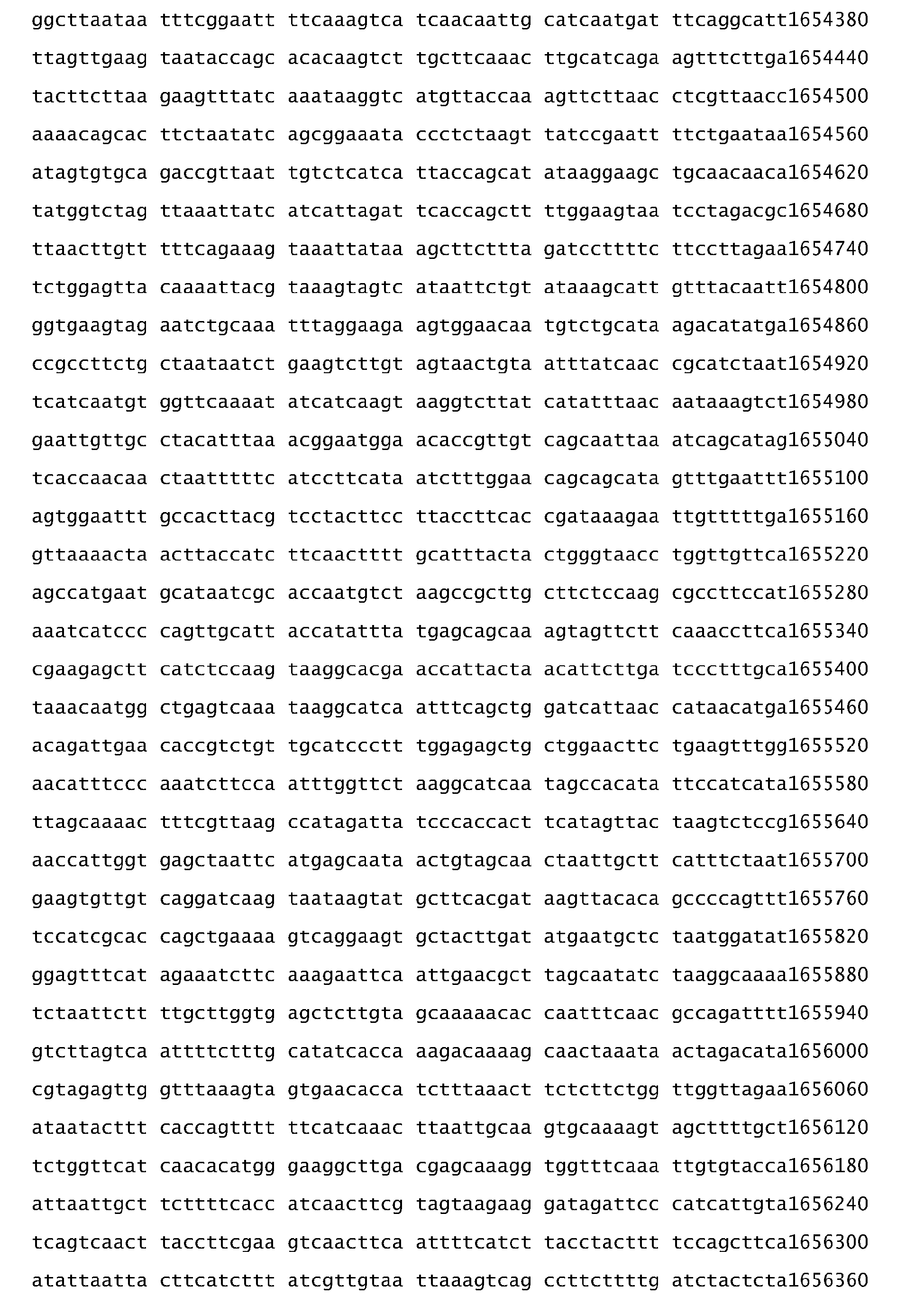
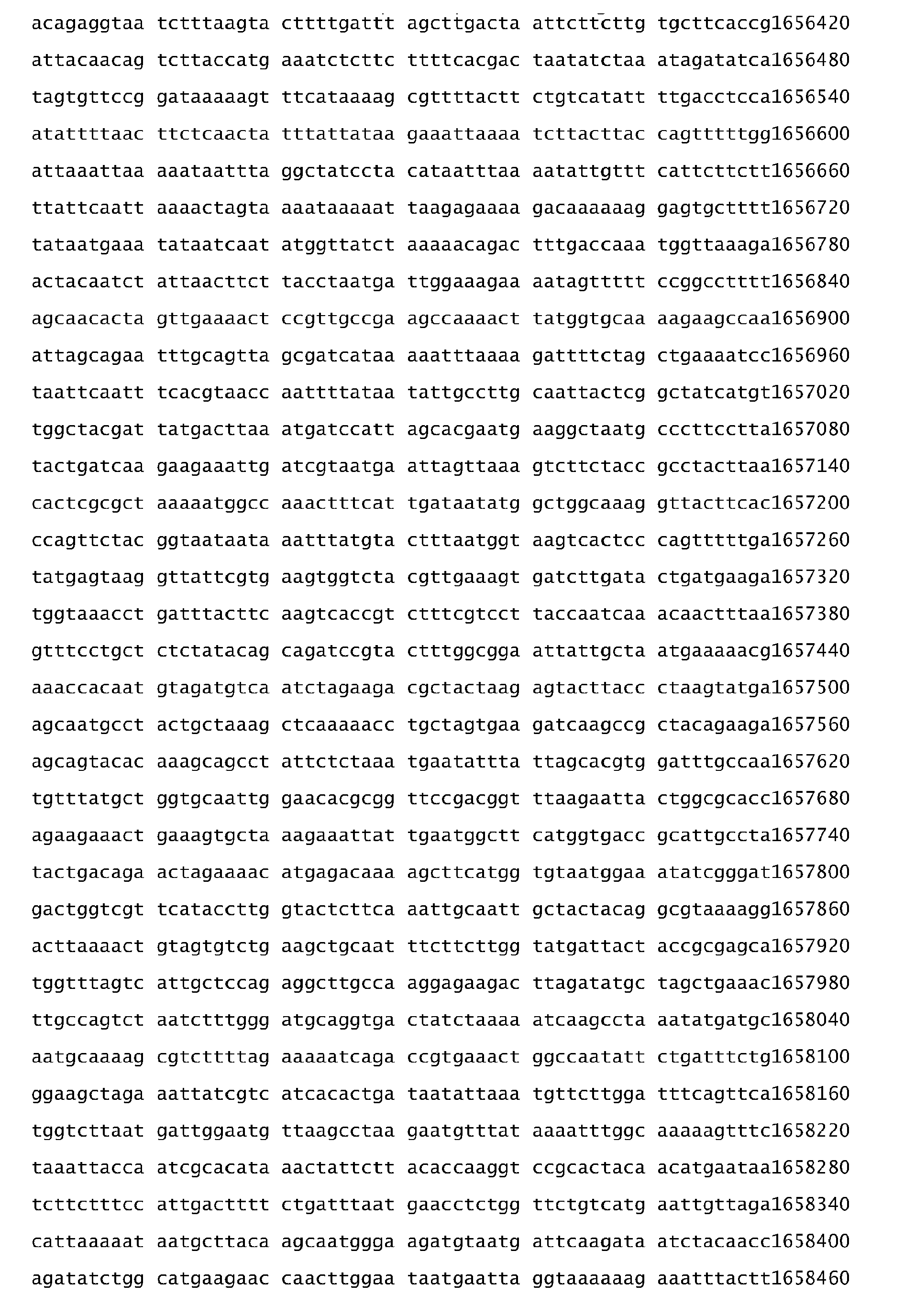


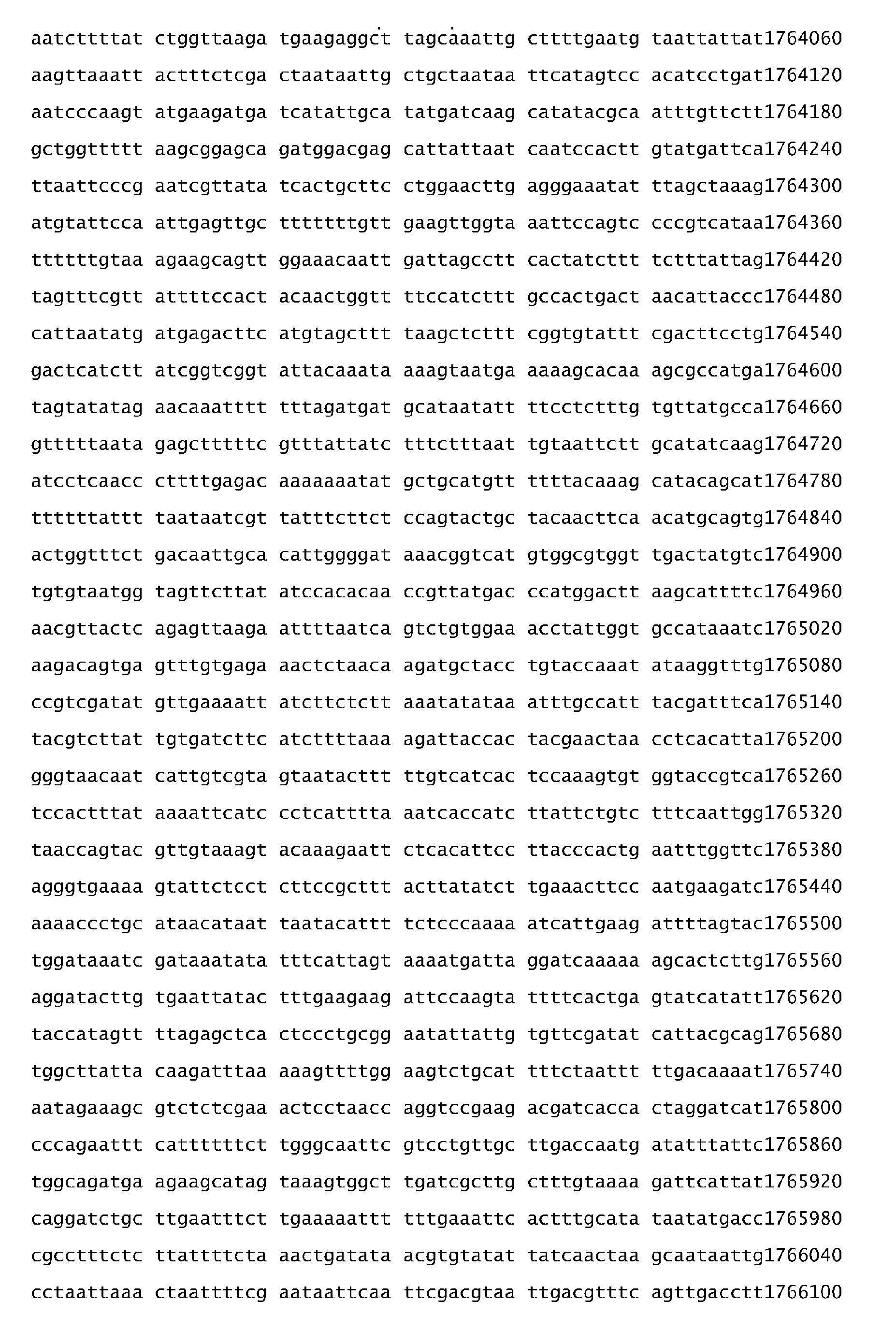


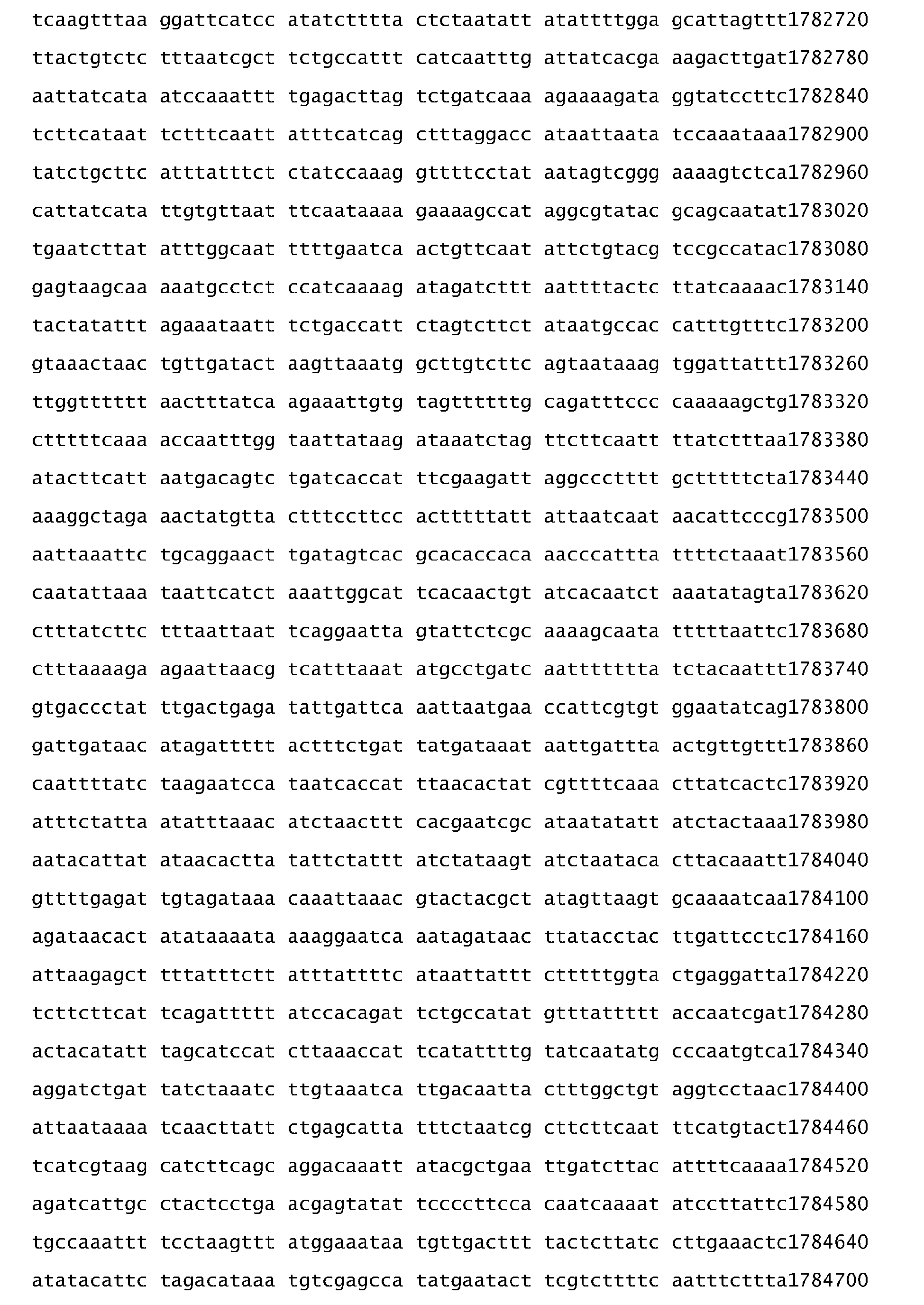


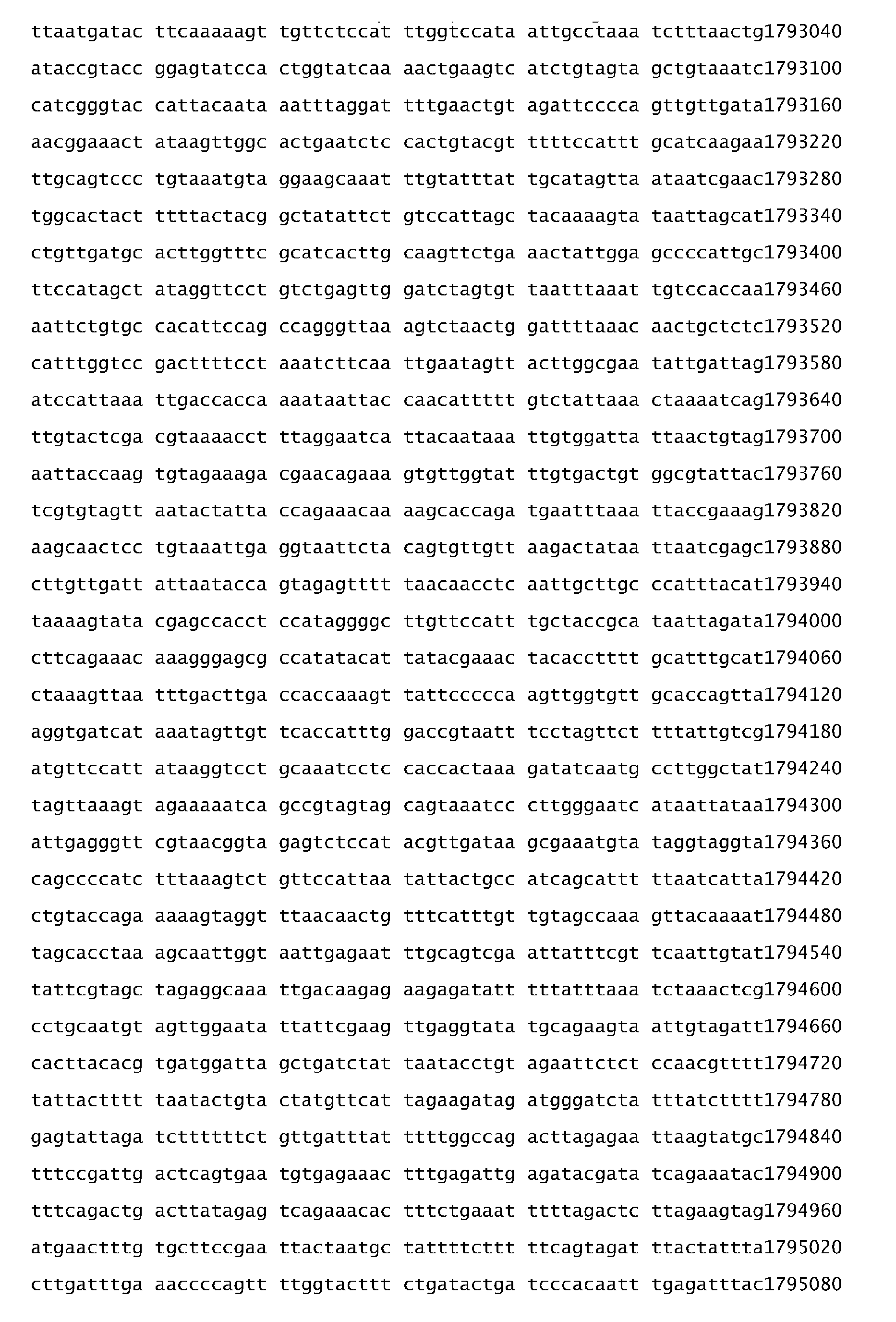


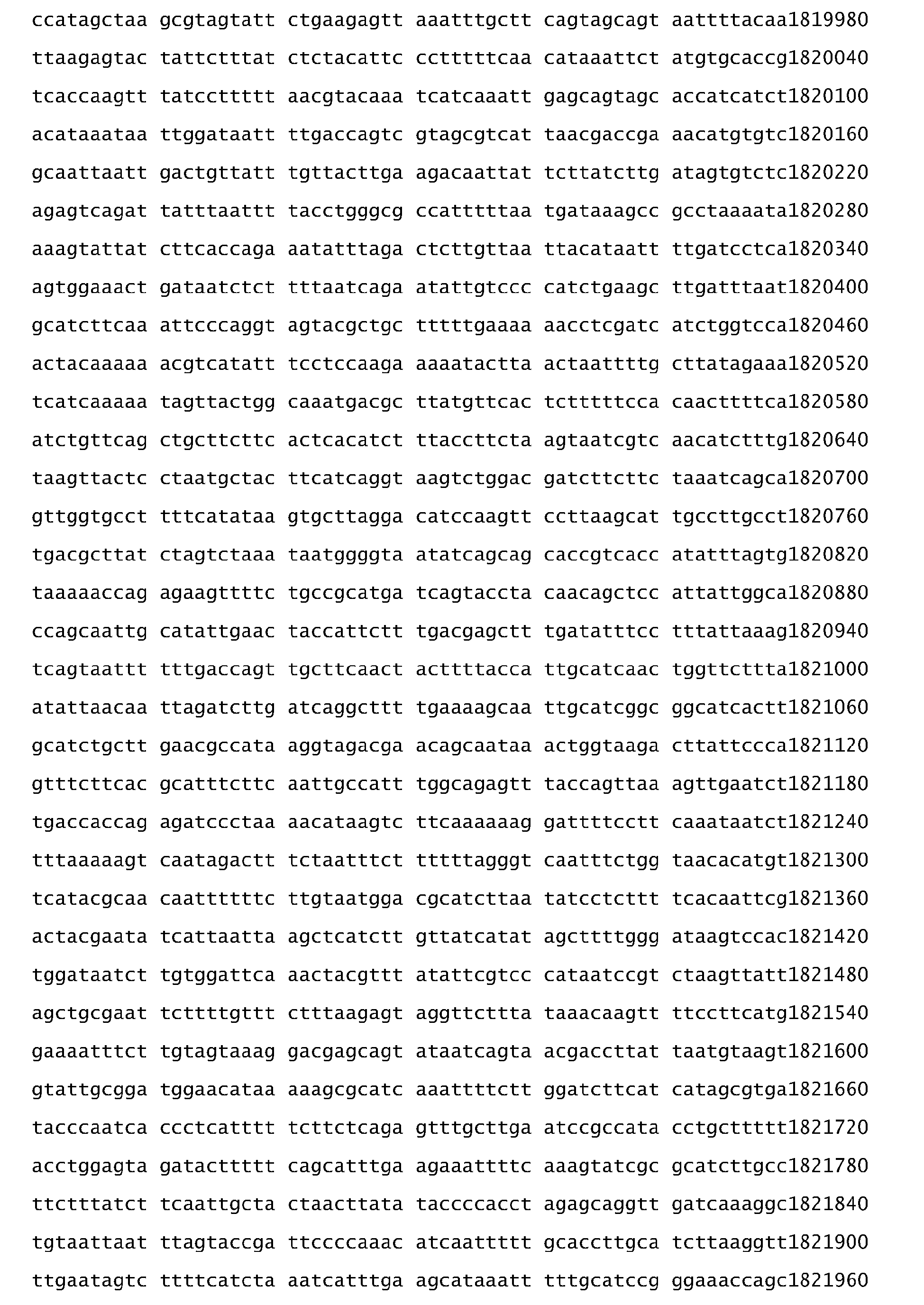


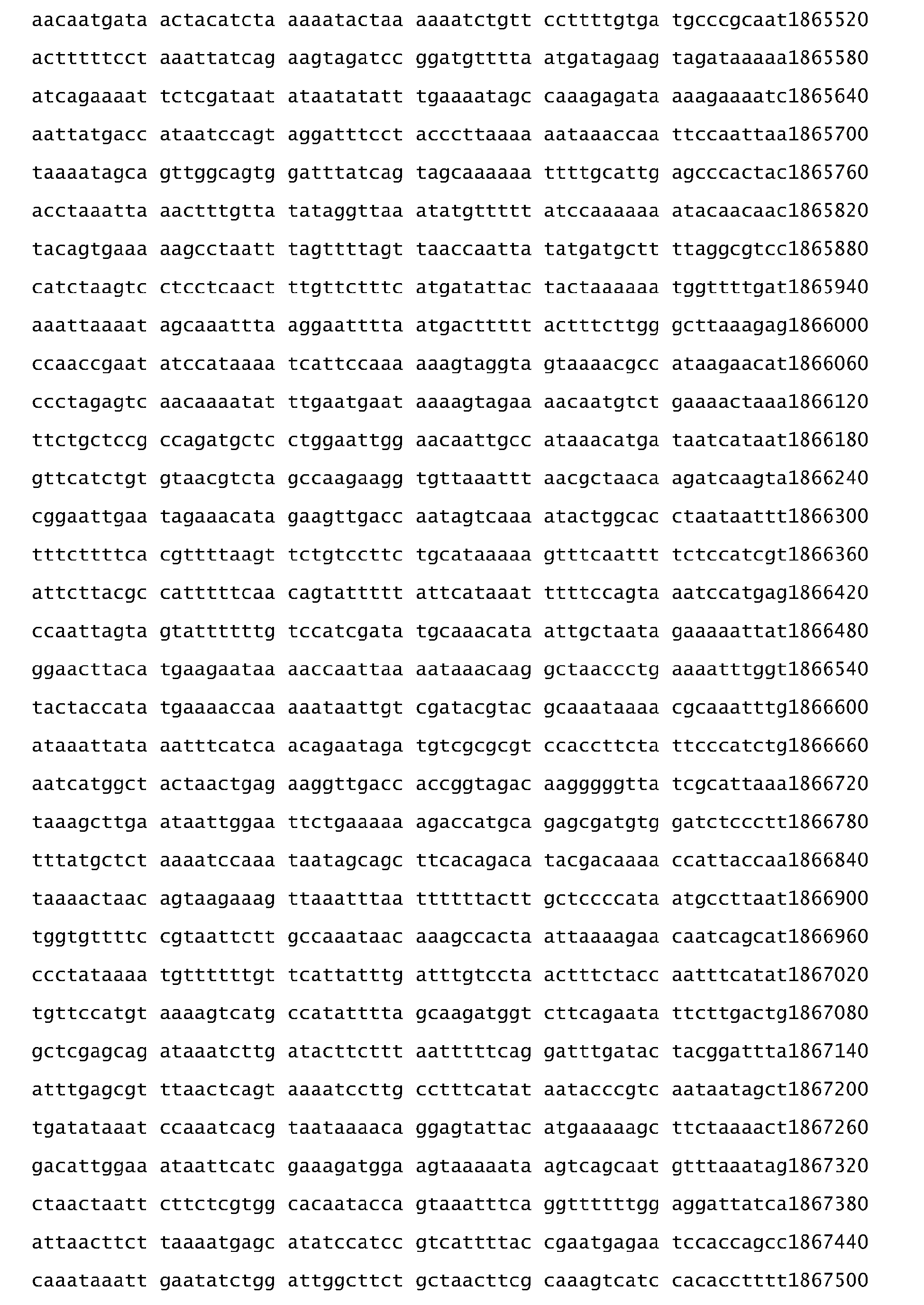


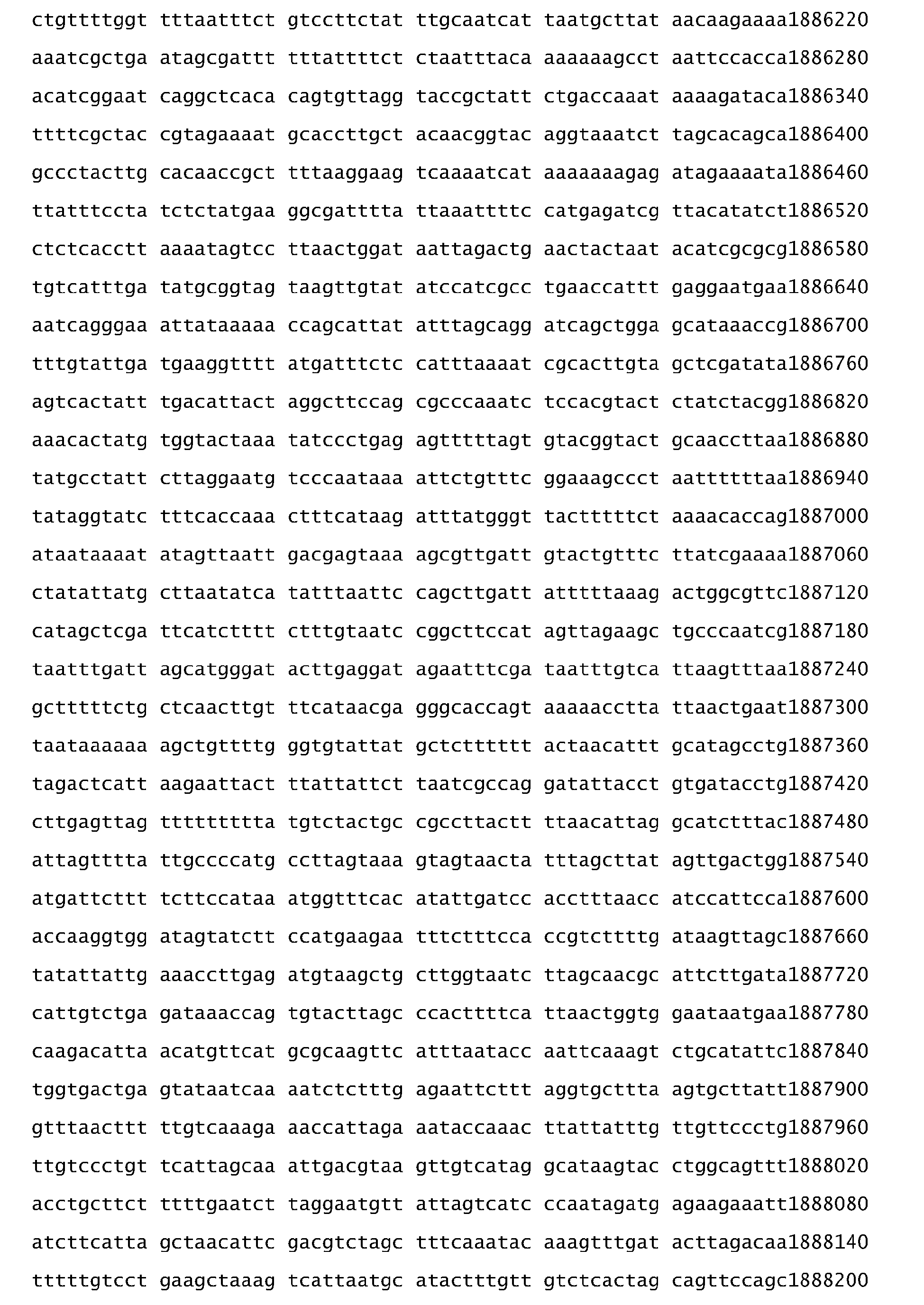


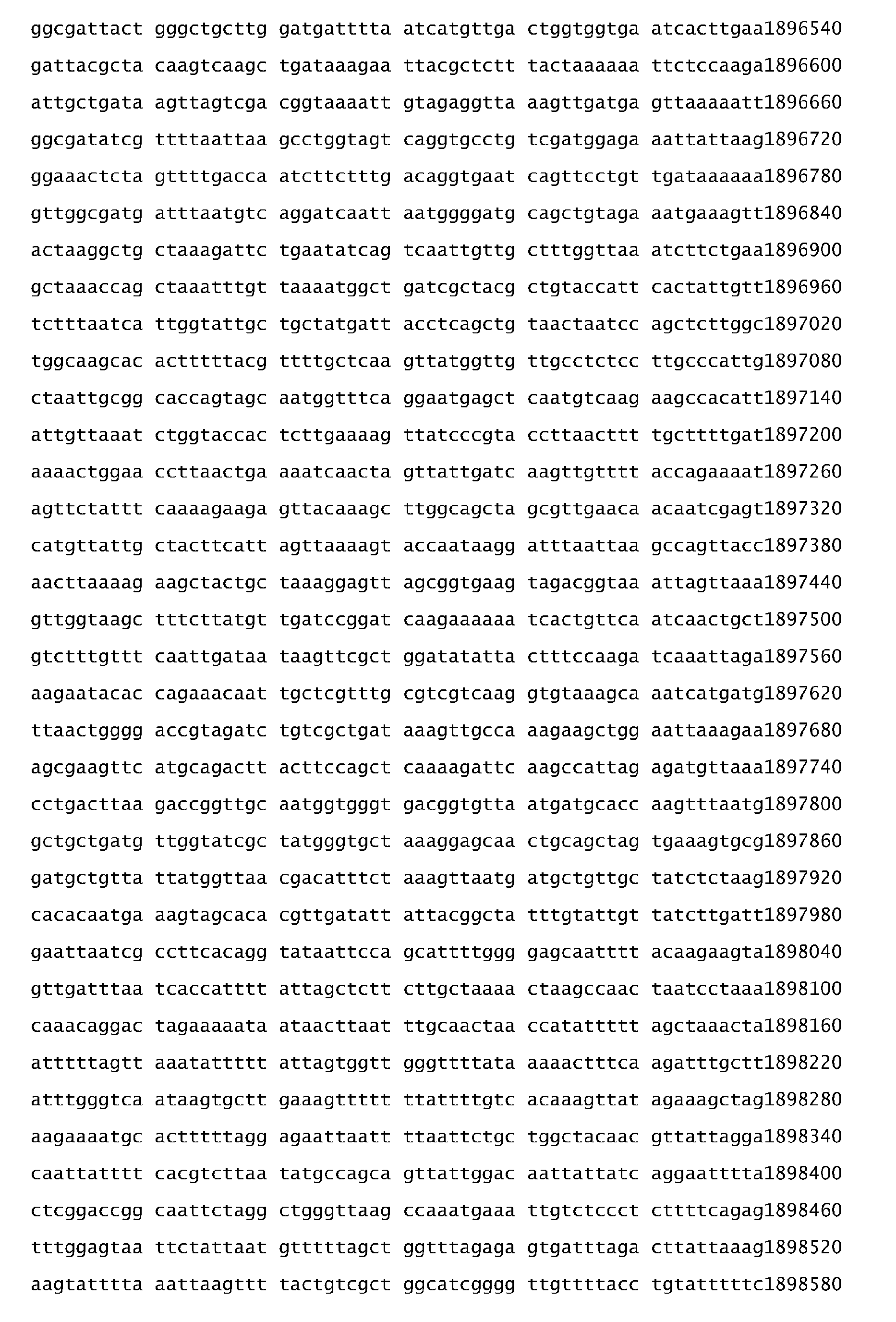


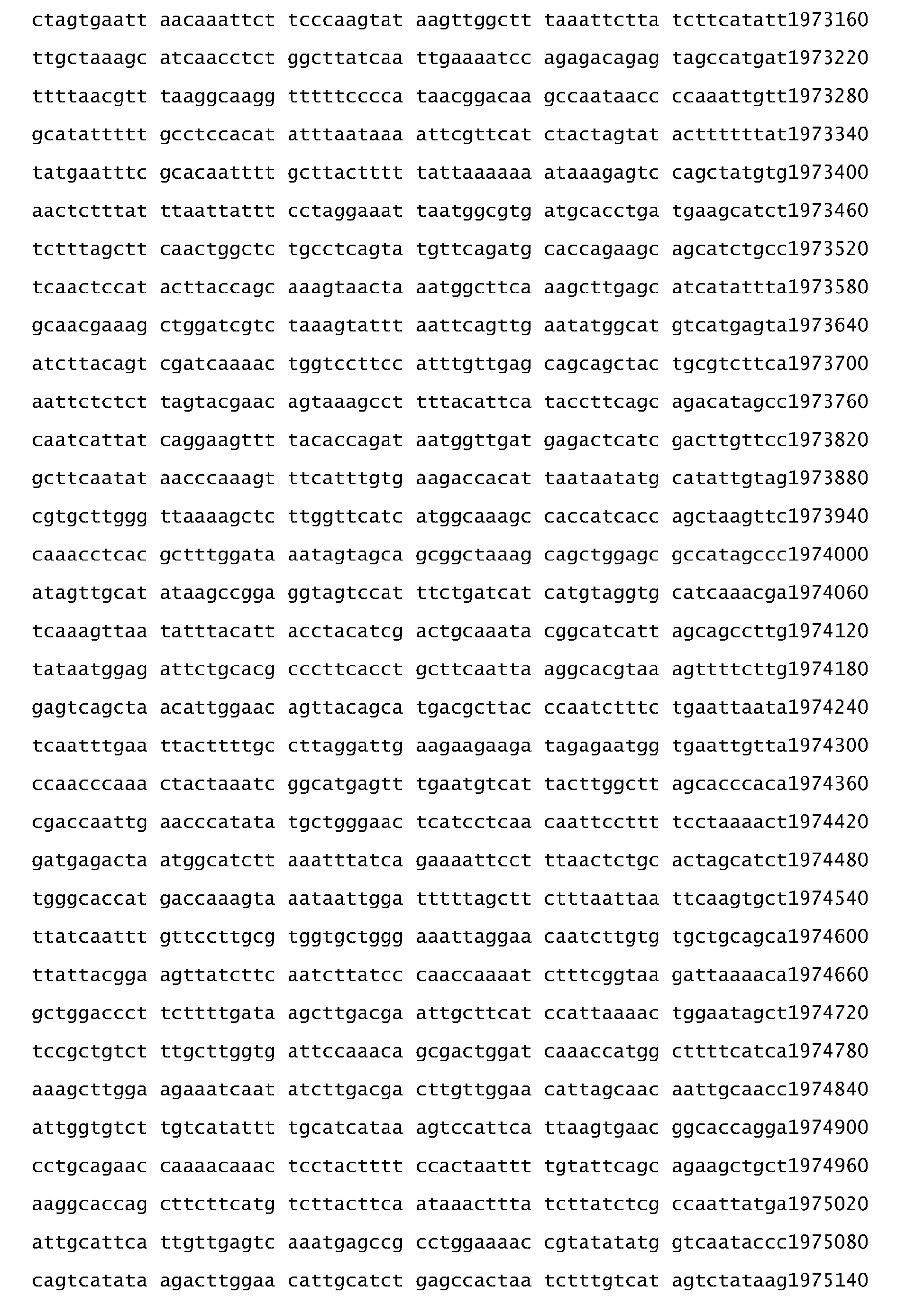


Claims (18)
- Use of a DNA sequence as identified by SEQ ID. No. 1 or part thereof or sequences homologous thereto for elucidating interactions between a host and bacteria.
- The use according to claim 1, wherein the interaction is based on probiotic properties of bacterial strains, preferably on stimulating the immune system, on anti-pathogenic properties and/or anti-viral properties.
- The use according to any of the claims 1 or 2, wherein the sequence is a fragment of SEQ. ID. No. 1 selected from the group consisting of from nucleotide 1 - 54596, from 56070 77430, from 81302- 308537, from 309588 - 342757, from 378458 - 389217, from 389779 - 404510, from 405561 - 501116, from 503873 - 558194, from 563262 - 696518, from 697569 - 721736, from 722787 - 756845, from 761682 - 860446, from 860723 - 865550, from 867260 - 867490, from 868541 - 1448288, from 1463851 - 1526077, from 1527278 - 1552024, from 1563147 - 1809115, from 1810166 - 1858190, from 1863258 - 1872871, from 1877939 - 1930430, from 1932063 - 1983043, based on the numbering of SEQ ID. No. 1.
- A method for the detection, identification and/or selection of a Lactobacillus strain, preferably Lactobacillus johnsonii in a biological sample, comprising:(a) contacting the sample with a nucleotide sequence derived from a polynucleotide sequence as identified by SEQ ID. No. 1 in the presence of a polymerase enzyme and nucleotides under conditions which permit extension of the nucleotide; and(b) detecting the presence of extension products in the sample in which the detection of primer extension products indicates the presence of a Lactobacillus strain in the sample.
- A method for the detection, identification and/or selection of a Lactobacillus strain, preferably Lactobacillus johnsonii in a biological sample, comprising:(a) contacting the sample with a nucleotide sequence derived from a polynucleotide sequence as identified by SEQ ID. NO. 1 under conditions which permit hybridization of complementary base pairs; and(b) detecting the presence of hybridization complexes in the sample in which the detection of hybridization complexes indicates the presence of a Lactobacillus strain in the sample.
- A method for the detection, identification and/or selection of a Lactobacillus strain, preferably Lactobacillus johnsonii in a biological sample, comprising:(a) contacting the sample with an antibody raised against a polypeptide derived from SEQ ID. No. 1 under conditions suitable for the formation of immune complexes; and(b) detecting the presence of immune complexes in the sample, in which the detection of immune complexes indicates the presence of a Lactobacillus strain in the sample.
- A DNA array/chip containing an array of polynucleotides comprising at least a polynucleotide derived from SEQ ID. No. 1.
- A protein array/chip containing an array of polypeptides comprising at least one of the polypeptides obtainable by expressing a polypeptide as identified by an open reading frame derived from SEQ. ID. No. 1.
- An antibody chip containing an array of antibodies comprising at least one antibody directed to a polypeptide obtainable by expressing an open reading frame in SEQ ID. No. 1.
- A screening assay, comprising:(a) contacting a test compound with a polynucleotide as identified by SEQ ID. No. 1 or with a part thereof; and(b) detecting whether binding occurs.
- A screening assay, comprising:(a) contacting a test compound with a polypeptide obtainable by expressing an open reading frame derived from SEQ ID. No. 1; and(b) detecting whether binding occurs.
- A screening assay, comprising:(a) contacting a test compound with an antibody raised against a polypeptide obtainable by expressing an open reading frame derived from SEQ ID. No. 1; and(b) detecting whether binding occurs.
- A kit comprising a polynucleotide as identified by SEQ. ID. No. 1 parts thereof.
- The kit according to claim 13, wherein the polynucleotide is a primer or a probe and wherein the kit optionally contains a polymerase and deoxynucleotide triphosphates.
- A kit comprising containing an antibody raised against a polypeptide obtainable by expressing an open reading frame in SEQ ID. No. 1.
- A computer readable medium having recorded thereon a nucleic acid sequence as identified by SEQ ID. No. 1 or parts thereof or a polypeptide sequence derived from the nucleotide sequence as identified by SQE ID. No. 1.
- The computer readable medium according to claim 16, wherein said medium is selected from the group consisting of:(a) a floppy disc;(b) a hard disc;(c) random access memory (RAM);(d) read only memory (ROM); and(e) CD-ROM.
- A computer-based system for identifying fragments of the Lactobacillus johnsonii genome comprising the following elements:(a) a data storage means comprising a nucleic acid sequence as identified by SEQ ID. No. 1;(b) search means for comparing a target sequence to the nucleotide sequence of the data storage means of step (a) to identify homologous sequence (s); and(c) retrieval means for obtaining said homologous sequence (s) of step (b).
Priority Applications (1)
| Application Number | Priority Date | Filing Date | Title |
|---|---|---|---|
| EP07104120A EP1816196A1 (en) | 2002-04-09 | 2003-03-19 | La1 - The genome of a Lactobacillus strain |
Applications Claiming Priority (3)
| Application Number | Priority Date | Filing Date | Title |
|---|---|---|---|
| EP02007932 | 2002-04-09 | ||
| EP07104120A EP1816196A1 (en) | 2002-04-09 | 2003-03-19 | La1 - The genome of a Lactobacillus strain |
| EP03720340A EP1497422B1 (en) | 2002-04-09 | 2003-03-19 | La1 - the genome of a lactobacillus strain |
Related Parent Applications (1)
| Application Number | Title | Priority Date | Filing Date |
|---|---|---|---|
| EP03720340A Division EP1497422B1 (en) | 2002-04-09 | 2003-03-19 | La1 - the genome of a lactobacillus strain |
Publications (1)
| Publication Number | Publication Date |
|---|---|
| EP1816196A1 true EP1816196A1 (en) | 2007-08-08 |
Family
ID=28685848
Family Applications (2)
| Application Number | Title | Priority Date | Filing Date |
|---|---|---|---|
| EP03720340A Expired - Lifetime EP1497422B1 (en) | 2002-04-09 | 2003-03-19 | La1 - the genome of a lactobacillus strain |
| EP07104120A Withdrawn EP1816196A1 (en) | 2002-04-09 | 2003-03-19 | La1 - The genome of a Lactobacillus strain |
Family Applications Before (1)
| Application Number | Title | Priority Date | Filing Date |
|---|---|---|---|
| EP03720340A Expired - Lifetime EP1497422B1 (en) | 2002-04-09 | 2003-03-19 | La1 - the genome of a lactobacillus strain |
Country Status (11)
| Country | Link |
|---|---|
| US (2) | US20080044820A1 (en) |
| EP (2) | EP1497422B1 (en) |
| JP (1) | JP2006506042A (en) |
| CN (1) | CN1659280A (en) |
| AT (1) | ATE403718T1 (en) |
| AU (1) | AU2003223971A1 (en) |
| CA (1) | CA2482138C (en) |
| DE (1) | DE60322689D1 (en) |
| DK (1) | DK1497422T3 (en) |
| ES (1) | ES2311700T3 (en) |
| WO (1) | WO2003084989A2 (en) |
Cited By (1)
| Publication number | Priority date | Publication date | Assignee | Title |
|---|---|---|---|---|
| CN108315402A (en) * | 2018-04-28 | 2018-07-24 | 内蒙古农业大学 | A kind of amplimer pair and sequencing approach being sequenced for Bifidobacterium in enteron aisle |
Families Citing this family (14)
| Publication number | Priority date | Publication date | Assignee | Title |
|---|---|---|---|---|
| EP2228379A1 (en) | 2003-04-25 | 2010-09-15 | North Carolina State University | Lactobacillus acidophilus nucleic acid sequences encoding cell surface protein homologues and uses therefore |
| US7407787B2 (en) | 2003-06-23 | 2008-08-05 | North Carolina State University | Lactobacillus acidophilus nucleic acids encoding fructo-oligosaccharide utilization compounds and uses thereof |
| US7455992B2 (en) | 2004-02-23 | 2008-11-25 | North Carolina State University | Lactobacillus acidophilus nucleic acid sequences encoding protease homologues and uses therefore |
| US7459289B2 (en) | 2004-03-08 | 2008-12-02 | North Carolina State University | Lactobacillus acidophilus nucleic acid sequences encoding carbohydrate utilization-related proteins and uses therefor |
| US7608700B2 (en) | 2004-03-08 | 2009-10-27 | North Carolina State University | Lactobacillus acidophilus nucleic acid sequences encoding stress-related proteins and uses therefor |
| US7919277B2 (en) | 2004-04-28 | 2011-04-05 | Danisco A/S | Detection and typing of bacterial strains |
| US7550576B2 (en) | 2004-08-09 | 2009-06-23 | North Carolina State University | Nucleic acid sequences encoding two-component sensing and regulatory proteins, antimicrobial proteins and uses therefor |
| WO2006047680A2 (en) | 2004-10-27 | 2006-05-04 | North Carolina State University | Lactobacillus acidophilus nucleic acids and uses thereof |
| US7495092B2 (en) * | 2005-01-14 | 2009-02-24 | North Carolina State University | Compositions comprising promoter sequences and methods of use |
| JP5138197B2 (en) * | 2006-10-04 | 2013-02-06 | 茂 藤村 | LG21 strain primer and detection method using the primer |
| JP4457364B2 (en) | 2007-04-27 | 2010-04-28 | 勇志 相場 | New lactic acid bacteria and various products processed using the lactic acid bacteria |
| US20120021418A1 (en) * | 2008-06-13 | 2012-01-26 | Kabushiki Kaisha Yakult Honsha | Gene that imparts oxygen resistance and application thereof |
| GB0914878D0 (en) * | 2009-08-26 | 2009-09-30 | Plant Bioscience Ltd | Competetive exclusion compositions and methods |
| EP3011966A1 (en) | 2014-08-08 | 2016-04-27 | Institut National De La Recherche Agronomique | Compositions for the inhibition of Giardia Lamblia |
Citations (1)
| Publication number | Priority date | Publication date | Assignee | Title |
|---|---|---|---|---|
| EP0875579A1 (en) * | 1997-05-03 | 1998-11-04 | Societe Des Produits Nestle S.A. | Production of L(+)lactate |
Family Cites Families (9)
| Publication number | Priority date | Publication date | Assignee | Title |
|---|---|---|---|---|
| ATE172245T1 (en) | 1992-07-06 | 1998-10-15 | Nestle Sa | MILK BACTERIA |
| JPH08185676A (en) * | 1994-12-28 | 1996-07-16 | Sony Corp | Magnetic disk and disk device |
| CA2218741A1 (en) | 1995-04-21 | 1996-10-24 | Johns Hopkins University | Nucleotide sequence of the haemophilus influenzae rd genome, fragments thereof, and uses thereof |
| KR0159441B1 (en) * | 1995-08-28 | 1999-01-15 | 김광호 | Disc recording medium and its servo controlling method for high quantity hard disc driver |
| US5652838A (en) * | 1996-05-20 | 1997-07-29 | Lovett; Donna M. | Smart disc cd-rom |
| JP3028214B2 (en) * | 1997-06-03 | 2000-04-04 | カルピス株式会社 | How to administer live birds |
| EP1110555A1 (en) * | 1999-12-22 | 2001-06-27 | Societe Des Produits Nestle S.A. | Antiadhesive agent for the pathogen flora of the skin |
| CA2416982A1 (en) * | 2000-08-08 | 2002-02-14 | Genesis Research And Development Corporation Limited | Lactobacillus rhamnosus polynucleotides, polypeptides and methods for using them |
| GB0027761D0 (en) * | 2000-11-14 | 2000-12-27 | Nestle Sa | Nutritional composition for an immune condition |
-
2003
- 2003-03-19 AT AT03720340T patent/ATE403718T1/en active
- 2003-03-19 CN CN038128209A patent/CN1659280A/en active Pending
- 2003-03-19 ES ES03720340T patent/ES2311700T3/en not_active Expired - Lifetime
- 2003-03-19 WO PCT/EP2003/002882 patent/WO2003084989A2/en not_active Ceased
- 2003-03-19 JP JP2003582184A patent/JP2006506042A/en active Pending
- 2003-03-19 DK DK03720340T patent/DK1497422T3/en active
- 2003-03-19 EP EP03720340A patent/EP1497422B1/en not_active Expired - Lifetime
- 2003-03-19 EP EP07104120A patent/EP1816196A1/en not_active Withdrawn
- 2003-03-19 CA CA2482138A patent/CA2482138C/en not_active Expired - Fee Related
- 2003-03-19 DE DE60322689T patent/DE60322689D1/en not_active Expired - Lifetime
- 2003-03-19 AU AU2003223971A patent/AU2003223971A1/en not_active Abandoned
-
2004
- 2004-10-08 US US10/961,644 patent/US20080044820A1/en not_active Abandoned
-
2008
- 2008-10-02 US US12/244,581 patent/US7875421B2/en not_active Expired - Fee Related
Patent Citations (1)
| Publication number | Priority date | Publication date | Assignee | Title |
|---|---|---|---|---|
| EP0875579A1 (en) * | 1997-05-03 | 1998-11-04 | Societe Des Produits Nestle S.A. | Production of L(+)lactate |
Non-Patent Citations (4)
| Title |
|---|
| 42nd Nestle Nutrition Workshop;Beijing, China; May 11-15, 1997, factors, and intestinal microflora. 1999 Lippincott-Raven Publishers; Nestec Ltd. 227 East Washington Square, Philadelphia, Pennsylvania 19106, USA; Vevey, Switzerland * |
| KIM WOOJIN S ET AL: "Conservation of the major cold shock protein in lactic acid bacteria.", CURRENT MICROBIOLOGY, vol. 37, no. 5, November 1998 (1998-11-01), pages 333 - 336, XP002211929, ISSN: 0343-8651 * |
| PFEIFER ANDREA ET AL: "Probiotics in alimentation: Clinical evidence for their enhancement of the natural immunity of the gut.", NESTLE NUTRITION WORKSHOP SERIES, vol. 42, 1999, pages 243 - 257, XP001104004, ISBN: 0-7817-1829-5 * |
| WALKER D C ET AL: "IS elements are associated with the lactacin F operon of Lactobacillus johnsonii NCC533, one of which disrupts a two-component signaling system and bacteriocin production.", ABSTRACTS OF THE GENERAL MEETING OF THE AMERICAN SOCIETY FOR, vol. 100, 2000, 100th General Meeting of the American Society for Microbiology;Los Angeles, California, USA; May 21-25, 2000, 2000, pages 361, XP008007077, ISSN: 1060-2011 * |
Cited By (2)
| Publication number | Priority date | Publication date | Assignee | Title |
|---|---|---|---|---|
| CN108315402A (en) * | 2018-04-28 | 2018-07-24 | 内蒙古农业大学 | A kind of amplimer pair and sequencing approach being sequenced for Bifidobacterium in enteron aisle |
| CN108315402B (en) * | 2018-04-28 | 2021-02-12 | 内蒙古农业大学 | Amplification primer pair for sequencing bifidobacterium in intestinal tract and sequencing method |
Also Published As
| Publication number | Publication date |
|---|---|
| ATE403718T1 (en) | 2008-08-15 |
| DK1497422T3 (en) | 2008-12-15 |
| ES2311700T3 (en) | 2009-02-16 |
| EP1497422B1 (en) | 2008-08-06 |
| AU2003223971A8 (en) | 2003-10-20 |
| CA2482138A1 (en) | 2003-10-16 |
| CA2482138C (en) | 2014-05-27 |
| AU2003223971A1 (en) | 2003-10-20 |
| CN1659280A (en) | 2005-08-24 |
| DE60322689D1 (en) | 2008-09-18 |
| WO2003084989A3 (en) | 2004-02-05 |
| US20080044820A1 (en) | 2008-02-21 |
| WO2003084989A2 (en) | 2003-10-16 |
| US20090098053A1 (en) | 2009-04-16 |
| EP1497422A2 (en) | 2005-01-19 |
| JP2006506042A (en) | 2006-02-23 |
| US7875421B2 (en) | 2011-01-25 |
Similar Documents
| Publication | Publication Date | Title |
|---|---|---|
| US7875421B2 (en) | La1—the genome of a lactobacillus strain | |
| US7183101B2 (en) | NCC2705—the genome of a bifidobacterium | |
| Blum et al. | Excision of large DNA regions termed pathogenicity islands from tRNA-specific loci in the chromosome of an Escherichia coli wild-type pathogen | |
| JP2008220376A (en) | Nucleic acid sequences derived from the genome of Salmonella Typhi and its use for i0nvitro diagnosis of the presence of Salmonella bacteria, especially in foodstuffs | |
| US20060078901A1 (en) | Listeria monocytogenes genome, polypeptides and uses | |
| JP3570737B2 (en) | Methods and reagents for Listeria detection | |
| CA2252372A1 (en) | Pathogenic escherichia coli associated protein | |
| US7026463B2 (en) | Polynucleotides and polypeptides, materials incorporating them and methods for using them | |
| CN1914322B (en) | Detection of cytolethal swelling toxin and Campylobacter bacteria that target it | |
| Mujahid et al. | Improved solubilization of surface proteins from Listeria monocytogenes for 2‐DE | |
| JP2001522605A5 (en) | ||
| EP1394176A1 (en) | Novel mucin binding polypeptides derived from Lactobacillus johnsonii | |
| US20030165870A1 (en) | Novel sequences of E. coli CFT073 | |
| US6673538B1 (en) | Methods and compositions for designing vaccines | |
| US6905865B1 (en) | Detection of a gene, vatE, encoding an acetyltransferase inactivating streptogramin | |
| US20080076672A1 (en) | Methods for Identifying Genes Essential to the Growth of an Organism | |
| WO2002059320A2 (en) | Dna sequences of escherichia coli cft073 | |
| Bensaid et al. | Some properties of HU are modified after the infection of Escherichia coli by bacteriophage T4 | |
| WO2005056801A1 (en) | Polynucleotides and polypeptides isolated from lactobacillus rhamnosus hn001 materials incorporating them and methods for using them | |
| Yarwood | Environmental regulation of virulence gene expression in Staphylococcus aureus | |
| ROUVIERE-YANIV | Some Properties of HU Are Modified after the Infection of Escherichia coli by Bacteriophage T4 | |
| KR20120025938A (en) | Dna chip using random genomic dna fragments of yersinia enterocolitica | |
| JP2003512818A (en) | Prophage DNA sequences and their use in measuring instability in Lactobacillus cultures |
Legal Events
| Date | Code | Title | Description |
|---|---|---|---|
| PUAI | Public reference made under article 153(3) epc to a published international application that has entered the european phase |
Free format text: ORIGINAL CODE: 0009012 |
|
| AC | Divisional application: reference to earlier application |
Ref document number: 1497422 Country of ref document: EP Kind code of ref document: P |
|
| AK | Designated contracting states |
Kind code of ref document: A1 Designated state(s): AT BE BG CH CY CZ DE DK EE ES FI FR GB GR HU IE IT LI LU MC NL PT RO SE SI SK TR |
|
| RIN1 | Information on inventor provided before grant (corrected) |
Inventor name: PRIDMORE, RAYMOND - DAVID Inventor name: HERMANNS, JOSEF Inventor name: MOLLET, BEAT Inventor name: ARIGONI, FABRIZIO |
|
| 17P | Request for examination filed |
Effective date: 20080208 |
|
| AKX | Designation fees paid |
Designated state(s): AT BE BG CH CY CZ DE DK EE ES FI FR GB GR HU IE IT LI LU MC NL PT RO SE SI SK TR |
|
| 17Q | First examination report despatched |
Effective date: 20080704 |
|
| STAA | Information on the status of an ep patent application or granted ep patent |
Free format text: STATUS: THE APPLICATION IS DEEMED TO BE WITHDRAWN |
|
| 18D | Application deemed to be withdrawn |
Effective date: 20090115 |