EP1812467B1 - PEPTIDES ABLE TO DISRUPT THE m-p53/p63, m-p53/ p73 AND m-p53/RESPECTIVE ISOFORM PROTEIN COMPLEXES FORMED IN TUMOR CELLS AND USES THEREOF IN PHARMACOLOGY - Google Patents
PEPTIDES ABLE TO DISRUPT THE m-p53/p63, m-p53/ p73 AND m-p53/RESPECTIVE ISOFORM PROTEIN COMPLEXES FORMED IN TUMOR CELLS AND USES THEREOF IN PHARMACOLOGY Download PDFInfo
- Publication number
- EP1812467B1 EP1812467B1 EP05818849A EP05818849A EP1812467B1 EP 1812467 B1 EP1812467 B1 EP 1812467B1 EP 05818849 A EP05818849 A EP 05818849A EP 05818849 A EP05818849 A EP 05818849A EP 1812467 B1 EP1812467 B1 EP 1812467B1
- Authority
- EP
- European Patent Office
- Prior art keywords
- peptides
- peptide
- isoforms
- proteinic
- tumor
- Prior art date
- Legal status (The legal status is an assumption and is not a legal conclusion. Google has not performed a legal analysis and makes no representation as to the accuracy of the status listed.)
- Expired - Lifetime
Links
Images
Classifications
-
- C—CHEMISTRY; METALLURGY
- C07—ORGANIC CHEMISTRY
- C07K—PEPTIDES
- C07K14/00—Peptides having more than 20 amino acids; Gastrins; Somatostatins; Melanotropins; Derivatives thereof
- C07K14/435—Peptides having more than 20 amino acids; Gastrins; Somatostatins; Melanotropins; Derivatives thereof from animals; from humans
- C07K14/46—Peptides having more than 20 amino acids; Gastrins; Somatostatins; Melanotropins; Derivatives thereof from animals; from humans from vertebrates
- C07K14/47—Peptides having more than 20 amino acids; Gastrins; Somatostatins; Melanotropins; Derivatives thereof from animals; from humans from vertebrates from mammals
- C07K14/4701—Peptides having more than 20 amino acids; Gastrins; Somatostatins; Melanotropins; Derivatives thereof from animals; from humans from vertebrates from mammals not used
- C07K14/4746—Peptides having more than 20 amino acids; Gastrins; Somatostatins; Melanotropins; Derivatives thereof from animals; from humans from vertebrates from mammals not used p53
-
- A—HUMAN NECESSITIES
- A61—MEDICAL OR VETERINARY SCIENCE; HYGIENE
- A61P—SPECIFIC THERAPEUTIC ACTIVITY OF CHEMICAL COMPOUNDS OR MEDICINAL PREPARATIONS
- A61P35/00—Antineoplastic agents
-
- A—HUMAN NECESSITIES
- A61—MEDICAL OR VETERINARY SCIENCE; HYGIENE
- A61P—SPECIFIC THERAPEUTIC ACTIVITY OF CHEMICAL COMPOUNDS OR MEDICINAL PREPARATIONS
- A61P43/00—Drugs for specific purposes, not provided for in groups A61P1/00-A61P41/00
-
- A—HUMAN NECESSITIES
- A61—MEDICAL OR VETERINARY SCIENCE; HYGIENE
- A61K—PREPARATIONS FOR MEDICAL, DENTAL OR TOILETRY PURPOSES
- A61K38/00—Medicinal preparations containing peptides
Definitions
- the object of the present invention is the identification of a group of peptides able to break the interaction between the mutated protein p53 (hereinafter m-p53) and the proteins p63, p73 and the respective isoform proteins (hereinafter p63, p73 and p-isoforms) in the m-p53/p63, m-p53/p73 and m-p53/p-isoforms proteinic complex being formed in the nucleus of tumor cells. Furthermore, the present invention relates to a method for causing the breakage of said proteinic complexes existing in the tumor cell lines in vitro . The present invention further relates to the use of said peptides for the preparation of a pharmaceutical composition for the treatment of human tumors.
- proteins p53 includes the following proteins: p53, p63, p73 and the respective isoforms. All these proteins are involved in the oncosuppression processes through the induction of cell proliferation stopping (apoptosis), differentiation and senescence.
- WO-A-03025010 (Eirx Therapeutics Ltd.), WO-A-9966946 (Pennsylvania University) and WO-A-9851350 (Dana-Farber Cancer Institute) show derivatives of p73 endowed with apoptosis regulating properties and therefore useful in the preparation of medicaments against cancer.
- the "core domain" of the m-p53 represents that portion of the molecule where the 90% of the mutations found in the human tumors reside. The result of these mutations is that the m-p53 is not longer able to specifically bind to DNA, which is a required function for performing the antitumor activities specifically carried out from the same protein p53 (hereinafter p53) in a wild configuration (wild type).
- the p53 if it does not show mutations (and therefore it is in a wild type configuration) plays an activity as an antitumor oncosuppressor. On the contrary, if the p53 shows mutations, 90% of which are present in its core domain, the p53 loses its activity as an oncosuppressor (loss of function) and gains additional activities (gain of function), which promote the transformation and the maintainance of the transformed phenotype of a cell.
- the core domain of the m-p53 represents a platform of protein-protein interaction, which could account for some tumoral properties of the same m-p53.
- the binding of the m-p53 with the p73, p63 or the relative isoforms, to form the m-p53/p73, m-p53/p63 or m-p53/p-isoforms complex prevents the correct positioning of the p73, p63 or p-isoforms on the regulatory regions of the target genes, that is on those genes which are mediators of the antitumor activities of the p73 and p63.
- the reason of this missed or inefficient positioning of the p73 and p63 can be justified in that the surface of specific bonding to the DNA is engaged in the formation of the m-p53/p73 and m-p53/p63 proteinic complex.
- the m-p53 has a remarkably increased half-life parameter (from 2 to 24 hours of increase) with respect to that of the wild type p53 (from 6 to 20 minutes). Such half-life is predominant with respect to that of the p73.
- the main object of the present invention is to select specific peptides, expressly studied, capable of interacting with the m-p53/p73, m-p53/p63 and m-p53/p-isoforms proteinic complexes by causing the breakage of the relative complexes.
- the breakage of the proteinic complexes will allow to obtain two effects: the first relating to the increase of the free quota of the proteins p63, p73 and relative isoforms, having antitumor activities; the second relating to the neutralization of the m-p53 released from the complex through the formation of a stable binding between m-p53 and the used peptides.
- the Applicant has selected a group of peptides among those representing the whole sequence of the domain of specific binding to the DNA of p73, as it is emerged that the interaction surface of the p73 with the p53 corresponds to the domain of specific binding to the DNA of p73.
- the selected peptides are able to compete with the p73, p63 and relative isoforms in the interaction with the m-p53 in the formation of the proteinic complexes.
- the peptides have been selected among those which can be drawn on the surface of p73 and not on the surface of m-p53.
- the peptides which can be drawn on the surface of m-p53 would be peptides able to interact with the proteinic complex. From such interaction, the m-p53 would be released, as said peptides would bind with the p73, p63 and the relative isoforms.
- the peptides have been selected from those having a minimum and sufficient domain of the protein p73 in the binding with the m-p53.
- the protein p73 consists of 636 amino acids (hereinafter shown by aa) which form 4 regions.
- a N-terminal region which represents the domain of transcriptional activation from 1 to 54.
- a central region which represents the domain of specific binding to the DNA from 131 to 310.
- a region called C-terminal domain which includes the oligomerization domain from 345 to 390.
- the peptides selected by the Applicant are selected from the group consisting of:
- the length of the peptide has been established as a function of their pharmacological application.
- the peptides having a length between 8 and 10 aa are able to permeate the membrane of the cells by allowing the same peptide to reach the action site in the nucleus.
- the peptide must be able to cross the cytoplasmatic membrane and the nuclear membrane.
- the peptides have been assayed with co-precipitation experiments. Such experiments allow to check the presence of proteinic complexes in vivo in tumor cell lines.
- H 175 mutation present in the m-p53 plays a key role in the binding between m-p53 and p73, by producing a gain of function in the tumoral oncogenic activity.
- the 13 peptides have been assayed in a single pool.
- the lysates derived from the SKBr3 cells have been incubated with the peptides-pool.
- the lysates of SKBr3 above mentioned have been immunoprecipitated through specific antibodies fo the protein p73 and have been analyzed with the help of the Western-blot technique with antibodies which specifically revealed the presence of the mutated protein p53.
- the 13 peptides have been divided in three subsets.
- the logic followed for creating the three subsets has been that of topographically dividing the specific binding domain of p73 in three subdomains: N-terminal, central and C-terminal.
- Such subset includes some peptides selected from the group including: 5) VVKRCPNHE, 6) GQRDFNEGQSAPA, 7) IRVEGNNLS and 8) DDPVTGRQSVVV.
- Said peptides can hinder the formation of the dimer/s mt-p53/p63 and/or mt-p53/p73 in the region of the domain DNA binding of the human tumor protein p73, that is p53-like transcription factor (NiceProt View of Swiss-Prot:015350).
- the selected peptides are similar therebetween both with respect to the composition in aa (they consist of acid, basic, hydrophobic and polar aa) and for the molecular weight, all these 4 being formed by a number of aa between 9 to 13 aa.
- the peptide corresponds to the 190-198 sequence of the protein.
- VVP hydrophobic
- KRH basic
- E acid
- CN polar
- the peptide corresponds to the 200-211 sequence of the protein, except for the addition of Q at 2 position for synthesis reasons.
- the peptide corresponds to the 215-223 sequence of the protein.
- the peptide corresponds to the 227-238 sequence of the protein.
- All the peptides of the present invention are able to inhibit the mt-p53/p63 and/or mt-p53/p73 binding in co-precipitation experiments.
- the column 1 represents the total cell lysate derived from the SKBr3 cells which is analyzed through western blot using a specific antibody for the protein m-p53. The analysis reveals the presence of good endogenous levels of such protein in the SKBr3 cells.
- the column 2 represents the total cell lysate derived from the SKBr3 cells which is immunoprecipitated with a specific antibody for the protein p73. The sample is subsequently analyzed through western blot by using the specific antibody for the protein m-p53. The analysis shows, in such a cell context, a good endogenous interaction between the protein p73 and the protein m-p53.
- the column 3 represents the total cell lysate derived from the SKBr3 cells which is incubated with the pool of peptides, and subsequently is immunoprecipitated with the specific antibody for the protein p73.
- the sample is then analyzed with western blot with the specific antibody for the protein m-p53.
- the analysis shows that in the presence of peptides there is a clear increase of protein p53 in respect to the control (column 2). This confirms the ability of the peptides of interacting with the protein m-p53 and the p73 specific antibody.
- Column 4 represents the total cell lysate derived from the SKBr3 cells which is immunoprecipitated with a mixture constituded by the specific antibody for the protein p73 and the pool of 13 peptides.
- the sample is subsequently analyzed by western blot by using the specific antibody for the protein m-p53.
- the analysis shows the ability of the peptides of saturating the antibody for the protein p73 by masking the binding site for the antigen p73.
- the synthesis of the peptides has been carried out in solid phase on a Pioneer peptide synthesis system by using the Fmoc technique in order to assemble the chain.
- the amino ⁇ -group (N ⁇ ) is provisionally protected by the 9-fluorenilmethoxycarbonyl group (Fmoc).
- the Fmoc group is an unstable base which can be rapidly removed by a secondary amine, as well as the 20% piperidine in N,N-dimethylformamide.
- the peptide chain is assembled by reacting the N-terminal unblocked group of an amino acid bound to the solid support with the activated C-terminal carboxy group of the following amino acid through the formation of an amide bond.
- the activation of the carboxy group alters the electron density around the carboxylated carbon by allowing the nucleophile addition of the N-terminal of the increasing chain on the solid support.
- HOBt 1-hydroxybenzotriazole
- the unblocking process of the N-terminal group, the activation of the carboxy group and the formation of the binding with the following amino acid is repeated until the peptide of interest is completed.
- the peptide is detached from the support and deprotected with a mixture of trifluoroacetic acid/anisole/mercaptoethanol, precipitated with cold ether and recovered through centrifugation.
- the peptide obtained is then purified in HPLC, on a sephasil C8 column, using a linear gradient of water-acetonitrile at pH 3. An aliquote of the obtained sample is hydrolized at 108°C for at least 24 hours with 6N HCl and analyzed for checking the proper amino acids composition in HPLC with a fluorescence detector.
Landscapes
- Health & Medical Sciences (AREA)
- Chemical & Material Sciences (AREA)
- Life Sciences & Earth Sciences (AREA)
- Organic Chemistry (AREA)
- General Health & Medical Sciences (AREA)
- Medicinal Chemistry (AREA)
- Proteomics, Peptides & Aminoacids (AREA)
- General Chemical & Material Sciences (AREA)
- Biochemistry (AREA)
- Genetics & Genomics (AREA)
- Gastroenterology & Hepatology (AREA)
- Molecular Biology (AREA)
- Zoology (AREA)
- Toxicology (AREA)
- Chemical Kinetics & Catalysis (AREA)
- Biophysics (AREA)
- Nuclear Medicine, Radiotherapy & Molecular Imaging (AREA)
- Pharmacology & Pharmacy (AREA)
- Animal Behavior & Ethology (AREA)
- Public Health (AREA)
- Veterinary Medicine (AREA)
- Engineering & Computer Science (AREA)
- Bioinformatics & Cheminformatics (AREA)
- Medicines That Contain Protein Lipid Enzymes And Other Medicines (AREA)
- Peptides Or Proteins (AREA)
- Measuring Or Testing Involving Enzymes Or Micro-Organisms (AREA)
Abstract
Description
- The object of the present invention is the identification of a group of peptides able to break the interaction between the mutated protein p53 (hereinafter m-p53) and the proteins p63, p73 and the respective isoform proteins (hereinafter p63, p73 and p-isoforms) in the m-p53/p63, m-p53/p73 and m-p53/p-isoforms proteinic complex being formed in the nucleus of tumor cells. Furthermore, the present invention relates to a method for causing the breakage of said proteinic complexes existing in the tumor cell lines in vitro. The present invention further relates to the use of said peptides for the preparation of a pharmaceutical composition for the treatment of human tumors.
- It is known that the family of the proteins p53 includes the following proteins: p53, p63, p73 and the respective isoforms. All these proteins are involved in the oncosuppression processes through the induction of cell proliferation stopping (apoptosis), differentiation and senescence.
-
WO-A-03025010 WO-A-9966946 WO-A-9851350 - It is known the existence, in tumor cell lines, of m-p53/73 and m-p53/p63 proteinic complexes which involve the proteins m-p53, p73 and p63 and the respective isoforms. The formation of such complexes inhibits the transcriptional and apoptotic activity of the p73, p63 and the respective isoforms, that is it weakens and makes ineffective the antitumor activity of the p73, p63 and the relative isoforms.
- Subsequently, it has been shown that the residue at 72 position of the protein m-p53 is determining in the binding to the p73.
- Subsequently, the domains involved in the interaction between the m-p53 and the p73 have been investigated. The investigation has shown that the two contact surfaces between the m-p53 and the p73 are the "core domain" of the m-p53 and the domain of specific binding to the DNA of p73.
- The "core domain" of the m-p53 represents that portion of the molecule where the 90% of the mutations found in the human tumors reside. The result of these mutations is that the m-p53 is not longer able to specifically bind to DNA, which is a required function for performing the antitumor activities specifically carried out from the same protein p53 (hereinafter p53) in a wild configuration (wild type).
- Indeed, the p53, if it does not show mutations (and therefore it is in a wild type configuration) plays an activity as an antitumor oncosuppressor. On the contrary, if the p53 shows mutations, 90% of which are present in its core domain, the p53 loses its activity as an oncosuppressor (loss of function) and gains additional activities (gain of function), which promote the transformation and the maintainance of the transformed phenotype of a cell.
- The core domain of the m-p53 represents a platform of protein-protein interaction, which could account for some tumoral properties of the same m-p53.
- The binding of the m-p53 with the p73, p63 or the relative isoforms, to form the m-p53/p73, m-p53/p63 or m-p53/p-isoforms complex, prevents the correct positioning of the p73, p63 or p-isoforms on the regulatory regions of the target genes, that is on those genes which are mediators of the antitumor activities of the p73 and p63.'
- The reason of this missed or inefficient positioning of the p73 and p63 can be justified in that the surface of specific bonding to the DNA is engaged in the formation of the m-p53/p73 and m-p53/p63 proteinic complex. In a tumor cell, the m-p53 has a remarkably increased half-life parameter (from 2 to 24 hours of increase) with respect to that of the wild type p53 (from 6 to 20 minutes). Such half-life is predominant with respect to that of the p73.
- Therefore, there is the need of neutralizing the oncogenic activity exerted by the m-p53. In particular, there is the need of inhibiting the m-p53 from its ability of binding and sequestering the p73 or the p63 with the consequent augmentation/increase of the free quota of p73 and p63. The increase of the free quota of p73 and p63 involves an increase of the antitumor activity exerted by the same proteins p73 and p63.
- Moreover, the need of being able to determine the role of the m-p53/p73, m-p53/p63 and m-p53/respective isoforms proteinic complex in the formation, maintaining and in the response to the conventional chemotherapeutic treatments of a tumor remains.
- In effect, it is a question of adjusting an experimental technique which allows to interfere in the formation of said complexes and measure its effect and its impact on the chemotherapeutic response of a tumor.
- The main object of the present invention is to select specific peptides, expressly studied, capable of interacting with the m-p53/p73, m-p53/p63 and m-p53/p-isoforms proteinic complexes by causing the breakage of the relative complexes. The breakage of the proteinic complexes will allow to obtain two effects: the first relating to the increase of the free quota of the proteins p63, p73 and relative isoforms, having antitumor activities; the second relating to the neutralization of the m-p53 released from the complex through the formation of a stable binding between m-p53 and the used peptides.
- The Applicant has selected a group of peptides among those representing the whole sequence of the domain of specific binding to the DNA of p73, as it is emerged that the interaction surface of the p73 with the p53 corresponds to the domain of specific binding to the DNA of p73.
- The selected peptides are able to compete with the p73, p63 and relative isoforms in the interaction with the m-p53 in the formation of the proteinic complexes. The peptides have been selected among those which can be drawn on the surface of p73 and not on the surface of m-p53.
- In fact, the peptides which can be drawn on the surface of m-p53 would be peptides able to interact with the proteinic complex. From such interaction, the m-p53 would be released, as said peptides would bind with the p73, p63 and the relative isoforms.
- Consequently, the released m-p53 would increase its oncogenic activity.
- On the contrary, the Applicant has drawn the peptides on the contact surface of the p73, as the p73 is not subjected to point mutations and therefore maintains unchanged its conformation.
- The peptides have been selected from those having a minimum and sufficient domain of the protein p73 in the binding with the m-p53.
- The protein p73 consists of 636 amino acids (hereinafter shown by aa) which form 4 regions.
- A N-terminal region, which represents the domain of transcriptional activation from 1 to 54.
- A central region, which represents the domain of specific binding to the DNA from 131 to 310.
- A region called C-terminal domain, which includes the oligomerization domain from 345 to 390.
- A region called end portion, whose function is not yet completely known, from 390 to 636.
- In order to cover all the central region, which represents the domain of specific binding to the DNA, a group including 13 peptides has been designed. Such peptides have allowed to identify the minimum regions, that is the minimum sequences of amino acids (aa) directly involved in the binding with the m-p53.
- The peptides selected by the Applicant are selected from the group consisting of:
- 1) FQQSSTAKSATW
- 2) PLLKKLYCQI
- 3) CPIQIKVSTPPP
- 4) IRAMPEH
- 5) VVKRCPNHE
- 6) GQRDFNEGQSAPA
- 7) IRVEGNNLS
- 8) DDPVTGRQSVVV
- 9) GQVGTEFTTIL
- 10) MNCNSSCVGGMNRR
- 11) IITTLEMRDGQ
- 12) RRSFEGRICAC
- 13) DRKADEDHYR
- The length of the peptide has been established as a function of their pharmacological application. In fact, the peptides having a length between 8 and 10 aa are able to permeate the membrane of the cells by allowing the same peptide to reach the action site in the nucleus.
- The peptide must be able to cross the cytoplasmatic membrane and the nuclear membrane.
- The peptides have been assayed with co-precipitation experiments. Such experiments allow to check the presence of proteinic complexes in vivo in tumor cell lines.
- In order to assay the ability of the peptides of breaking the interaction between the m-p53 and the p73, co-precipitation experiments have been carried out using, as a cell model, the cells SKBr3 (Human Breast Cancer) which show good endogenous levels of p73 and of a particular form of m-p53 (p53-HIS 175).
- It is known that the H 175 mutation present in the m-p53 plays a key role in the binding between m-p53 and p73, by producing a gain of function in the tumoral oncogenic activity.
- In the first step, the 13 peptides have been assayed in a single pool. The lysates derived from the SKBr3 cells have been incubated with the peptides-pool.
- The lysates of SKBr3 above mentioned have been immunoprecipitated through specific antibodies fo the protein p73 and have been analyzed with the help of the Western-blot technique with antibodies which specifically revealed the presence of the mutated protein p53.
- From the results, it is emerged that all the peptides are able to effectively weaken the interaction of the m-p53/p73, m-p53/p63 and m-p53/respective isoforms proteinic complexes.
- For the purpose of individuating the minimum region involved or engaged in the interaction between the protein p73 and the m-p53, the 13 peptides have been divided in three subsets.
- The logic followed for creating the three subsets has been that of topographically dividing the specific binding domain of p73 in three subdomains: N-terminal, central and C-terminal.
- The three subsets have been again assayed with the co-precipitation technique.
- At the end of this experiment, it is emerged that the subset representing th central subdomain is able to break the m-p53/p73 proteinic complex.
- Such subset includes some peptides selected from the group including: 5) VVKRCPNHE, 6) GQRDFNEGQSAPA, 7) IRVEGNNLS and 8) DDPVTGRQSVVV.
- Said peptides can hinder the formation of the dimer/s mt-p53/p63 and/or mt-p53/p73 in the region of the domain DNA binding of the human tumor protein p73, that is p53-like transcription factor (NiceProt View of Swiss-Prot:015350).
- The selected peptides, called with the numbers 5), 6), 7) and 8) are similar therebetween both with respect to the composition in aa (they consist of acid, basic, hydrophobic and polar aa) and for the molecular weight, all these 4 being formed by a number of aa between 9 to 13 aa.
- Peptide n. 5): VVKRCPNHE, MW = 1081.26, pI = 8.20.
- The peptide corresponds to the 190-198 sequence of the protein.
- It is a peptide formed by 9 aa, three of which (VVP) are hydrophobic, three are basic (KRH), one is acid (E) and two are polar (CN).
- Peptide n. 6): GQRDFNEGQSAPA, MW = 1376.4, pI = 4.37.
- The peptide corresponds to the 200-211 sequence of the protein, except for the addition of Q at 2 position for synthesis reasons.
- It is a peptide formed by 13 aa, four of which (FAPA) are hydrophobic, one is basic (R), two are acid (DE) and six are polar (GQNGQS).
- Peptide n. 7): IRVEGNNLS, MW = 1000.1, pI = 6.00.
- The peptide corresponds to the 215-223 sequence of the protein.
- It is a peptide formed by 9 aa, three of which (IVL) are hydrophobic, one is basic (R), one is acid (E) and four are polar (GNNS).
- Peptide n. 8): DDPVTGRQSVVV, MW = 1271.3, pI = 4.21.
- The peptide corresponds to the 227-238 sequence of the protein.
- It is a peptide formed by 12 aa, 5 of which (PVVVV) are hydrophobic, one is basic (R), two are acid (DD) and four are polar (TGQS).
- All the peptides of the present invention are able to inhibit the mt-p53/p63 and/or mt-p53/p73 binding in co-precipitation experiments.
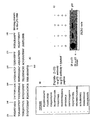
- The data obtained from these experiments are summarized in figure 1, where it is summarized with: A) the binding domain to the DNA of the protein p73, B) the synthetized peptides object of the present invention and C) a Western blot experiment.
- In fig. 1 C), the
column 1 represents the total cell lysate derived from the SKBr3 cells which is analyzed through western blot using a specific antibody for the protein m-p53. The analysis reveals the presence of good endogenous levels of such protein in the SKBr3 cells. The column 2 represents the total cell lysate derived from the SKBr3 cells which is immunoprecipitated with a specific antibody for the protein p73. The sample is subsequently analyzed through western blot by using the specific antibody for the protein m-p53. The analysis shows, in such a cell context, a good endogenous interaction between the protein p73 and the protein m-p53. The column 3 represents the total cell lysate derived from the SKBr3 cells which is incubated with the pool of peptides, and subsequently is immunoprecipitated with the specific antibody for the protein p73. The sample is then analyzed with western blot with the specific antibody for the protein m-p53. The analysis shows that in the presence of peptides there is a clear increase of protein p53 in respect to the control (column 2). This confirms the ability of the peptides of interacting with the protein m-p53 and the p73 specific antibody. Column 4 represents the total cell lysate derived from the SKBr3 cells which is immunoprecipitated with a mixture constituded by the specific antibody for the protein p73 and the pool of 13 peptides. The sample is subsequently analyzed by western blot by using the specific antibody for the protein m-p53. The analysis shows the ability of the peptides of saturating the antibody for the protein p73 by masking the binding site for the antigen p73. - The synthesis of the peptides has been carried out in solid phase on a Pioneer peptide synthesis system by using the Fmoc technique in order to assemble the chain. In this method, the amino α-group (Nα) is provisionally protected by the 9-fluorenilmethoxycarbonyl group (Fmoc). The Fmoc group is an unstable base which can be rapidly removed by a secondary amine, as well as the 20% piperidine in N,N-dimethylformamide. The peptide chain is assembled by reacting the N-terminal unblocked group of an amino acid bound to the solid support with the activated C-terminal carboxy group of the following amino acid through the formation of an amide bond. The activation of the carboxy group alters the electron density around the carboxylated carbon by allowing the nucleophile addition of the N-terminal of the increasing chain on the solid support. There are many chemical activators and the choice depends on different factors; we used 1-hydroxybenzotriazole (HOBt). The unblocking process of the N-terminal group, the activation of the carboxy group and the formation of the binding with the following amino acid is repeated until the peptide of interest is completed. At the end of the synthesis the peptide is detached from the support and deprotected with a mixture of trifluoroacetic acid/anisole/mercaptoethanol, precipitated with cold ether and recovered through centrifugation. The peptide obtained is then purified in HPLC, on a sephasil C8 column, using a linear gradient of water-acetonitrile at pH 3. An aliquote of the obtained sample is hydrolized at 108°C for at least 24 hours with 6N HCl and analyzed for checking the proper amino acids composition in HPLC with a fluorescence detector.
-
- <110> ISTITUTI FISIOTERAPICI OSPITALIERI
- <120> Peptide able to break the m-p53/p63, m-p53/p73 and m-p53/respective isoform proteins complex formed in the tumor cells and use thereof in the pharmacological field
- <130> 21.I0178.12.wo.2
- <150> MI 2004A002227
<151> 2004-11-19 - <160> 13
- <170> PatentIn version 3.1
- <210> 1
<211> 12
<212> PRT
<213> Artificial Sequence - <220>
<221> PEPTIDE
<222> (1)..(12)
<223> Peptide 1) for use as oncosuppressor (disclosed at: page 6 and claim 1) - <400> 1

- <210> 2
<211> 10
<212> PRT
<213> Artificial sequence - <220>
<221> PEPTIDE
<222> (1)..(10)
<223> Peptide 2) for use as oncosuppressor (disclosed at: page 6 and claim 1) - <400> 2

- <210> 3
<211> 12
<212> PRT
<213> Artificial sequence - <220>
<221> PEPTIDE
<222> (1)..(12)
<223> Peptide 3) for use as oncosuppressor (disclosed at: page 6 and claim 1) - <400> 3

- <210> 4
<211> 12
<212> PRT
<213> Artificial sequence - <220>
<221> PEPTIDE
<222> (1)..(12)
<223> Peptide 4) for use as oncosuppressor (disclosed at: page 6 and claim 1) - <400> 4

- <210> 5
<211> 9
<212> PRT
<213> Artificial Sequence - <220>
<221> PEPTIDE
<222> (1)..(9)
<223> Peptide 5) for use as oncosuppressor (disclosed at: page 6 and claim 1) - <400> 5

- <210> 6
<211> 13
<212> PRT
<213> Artificial sequence - <220>
<221> PEPTIDE
<222> (1)..(13)
<223> Peptide 6) for use as oncosuppressor (disclosed at: page 7 and claim 1) - <400> 6

- <210> 7
<211> 9
<212> PRT
<213> Artificial sequence - <220>
<221> PEPTIDE
<222> (1)..(9)
<223> Peptide 7) for use as oncosuppressor (disclosed at: page 7 and Claim 1) - <400> 7

- <210> 8
<211> 12
<212> PRT
<213> Artificial sequence - <220>
<221> PEPTIDE
<222> (1)..(12)
<223> Peptide 8) for use as oncosuppressor (disclosed at: page 7 and claim 1) - <400> 8

- <210> 9
<211> 11
<212> PRT
<213> Artificial Sequence - <220>
<221> PEPTIDE
<222> (1)..(11)
<223> Peptide 9) for use as oncosuppressor (disclosed at: page 7 and claim 1) - <400> 9

- <210> 10
<211> 14
<212> PRT
<213> Artificial sequence - <220>
<221> PEPTIDE
<222> (1) .. (14)
<223> Peptide 10) for use as oncosuppressor (disclosed at: page 7 and claim 1) - <400> 10

- <210> 11
<211> 11
<212> PRT
<213> Artificial sequence - <220>
<221> PEPTIDE
<222> (1)..(11)
<223> Peptide 11) for use as oncosuppressor (disclosed at: page 7 and claim 1) - <400> 11

- <210> 12
<211> 10
<212> PRT
<213> Artificial sequence - <220>
<221> PEPTIDE
<222> (1)..(10)
<223> Peptide 12) for use as oncosuppressor (disclosed at: page 7 and claim 1) - <400> 12

- <210> 13
<211> 10
<212> PRT
<213> Artificial sequence - <220>
<221> PEPTIDE
<222> (1)..(10)
<223> Peptide 13) for use as oncosuppressor (disclosed at: page 7 and claim 1) - <400> 13

Claims (6)
- Peptide selected from the group consisting of: FQQSSTAKSATW, PLLKKLYCQI, CPIQIKVSTPPP, IRAMPVYKKAEH, VVKRCPNHE, GQRDFNEGQSAPA, IRVEGNNLS, DDPVTGRQSVVV, GQVGTEFTTIL, MNCNSSCVGGMNRR, IIITLEMRDGQ, RRSFEGRICA and DRKADEDHYR, which able to cause the breakage of the m-p53/p63, m-p53/p73 and m-p53/p-isoforms proteinic complex that has formed in the nucleus of tumor cells, for use as an oncosuppressor.
- Peptide according to claim 1, selected from the group including: VVKRCPNHE, GQRDFNEGQSAPA, IRVEGNNLS and DDPVTGRQSVVV.
- Use of the peptides according to claim 1 or 2 for the preparation of an antitumor formulation for the treatment of human tumors.
- Use according to claim 3, wherein the human tumor shows, at a cell level, the m-p53/p63, m-p53/p73 and/or m-p53/p-isoforms proteinic complex.
- Use according to claim 4, wherein the tumor is the lung tumor.
- Methode for causing the breakage of the the m-p53/p63, m-p53/p73 and/or m-p53/p-isoforms proteinic complex, said complex being formed in the nucleos of tumor cells of human tumors in vitro, including the following steps:- arranging a tumor cell line containing the m-p53/p63, m-p53/p73 and/or m-p53/p-isoforms complex in a culture medium;- adding to said culture medium at least one of the peptides according to claim 1 or 2;- lysing the cells treated with the peptides and subjecting the same to the co-precipitation;- checking that the breakage of said proteinic complexes has took place.
Applications Claiming Priority (2)
| Application Number | Priority Date | Filing Date | Title |
|---|---|---|---|
| IT002227A ITMI20042227A1 (en) | 2004-11-19 | 2004-11-19 | PEPTIDE ABLE TO BREAK THE COMPLEX M-P53-P63, M-P53-P73 AND M-P53-RELATIVE ISO-FORMS PROTEINS FORMED IN TUMOR CELLS AND RELATIVE USES IN THE PHARMACOLOGICAL FIELD |
| PCT/IB2005/003395 WO2006054138A1 (en) | 2004-11-19 | 2005-11-14 | PEPTIDE ABLE TO BREAK THE m-p53/p63, m-p53/ p73 AND m-p53/RESPECTIVE ISOFORM PROTEINS COMPLEX FORMED IN THE TUMOR CELLS AND USES THEREOF IN THE PHARMACOLOGICAL FIELD |
Publications (2)
| Publication Number | Publication Date |
|---|---|
| EP1812467A1 EP1812467A1 (en) | 2007-08-01 |
| EP1812467B1 true EP1812467B1 (en) | 2008-05-07 |
Family
ID=36051431
Family Applications (1)
| Application Number | Title | Priority Date | Filing Date |
|---|---|---|---|
| EP05818849A Expired - Lifetime EP1812467B1 (en) | 2004-11-19 | 2005-11-14 | PEPTIDES ABLE TO DISRUPT THE m-p53/p63, m-p53/ p73 AND m-p53/RESPECTIVE ISOFORM PROTEIN COMPLEXES FORMED IN TUMOR CELLS AND USES THEREOF IN PHARMACOLOGY |
Country Status (8)
| Country | Link |
|---|---|
| US (1) | US7939624B2 (en) |
| EP (1) | EP1812467B1 (en) |
| JP (1) | JP4664984B2 (en) |
| AT (1) | ATE394421T1 (en) |
| DE (1) | DE602005006607D1 (en) |
| IL (1) | IL183045A (en) |
| IT (1) | ITMI20042227A1 (en) |
| WO (1) | WO2006054138A1 (en) |
Families Citing this family (1)
| Publication number | Priority date | Publication date | Assignee | Title |
|---|---|---|---|---|
| IT1393985B1 (en) * | 2009-05-11 | 2012-05-17 | Ist Fisioterap Ospitalroma | PEPTIDE IS ABLE TO DISASSEMBLE THE PROTEIN COMPLEXES BETWEEN PROTEIN P53 MUTATA HIS 273 AND P73 ONCOSOPPRESSIVE PROTEIN IN TUMORAL CELLS AND ITS USES IN MEDICAL FIELD. |
Family Cites Families (5)
| Publication number | Priority date | Publication date | Assignee | Title |
|---|---|---|---|---|
| FR2744455B1 (en) * | 1996-02-02 | 1998-04-24 | Sanofi Sa | NOVEL NUCLEIC ACID SEQUENCES OF THE FAMILY OF TUMOR SUPPRESSOR FACTORS, CORRESPONDING EXPRESSION PRODUCTS AND THEIR APPLICATIONS |
| US6451979B1 (en) * | 1997-05-12 | 2002-09-17 | Dana-Farber Cancer Institute, Inc. | Methods of treatment using NBS-1, antibodies and proteins thereto, and uses of the antibodies |
| AU3208699A (en) * | 1998-03-27 | 1999-10-18 | Johns Hopkins University, The | P40 protein acts as an oncogene |
| WO1999066946A1 (en) * | 1998-06-24 | 1999-12-29 | Trustees Of The University Of Pennsylvania | Compositions and methods for inducing apoptosis in e6-expressing cells |
| WO2003025010A2 (en) * | 2001-09-17 | 2003-03-27 | Eirx Therapeutics Limited | Human delta-n p73 molecules and uses thereof |
-
2004
- 2004-11-19 IT IT002227A patent/ITMI20042227A1/en unknown
-
2005
- 2005-11-14 US US11/719,169 patent/US7939624B2/en not_active Expired - Fee Related
- 2005-11-14 WO PCT/IB2005/003395 patent/WO2006054138A1/en not_active Ceased
- 2005-11-14 JP JP2007542144A patent/JP4664984B2/en not_active Expired - Fee Related
- 2005-11-14 DE DE602005006607T patent/DE602005006607D1/en not_active Expired - Lifetime
- 2005-11-14 EP EP05818849A patent/EP1812467B1/en not_active Expired - Lifetime
- 2005-11-14 AT AT05818849T patent/ATE394421T1/en not_active IP Right Cessation
-
2007
- 2007-05-07 IL IL183045A patent/IL183045A/en not_active IP Right Cessation
Also Published As
| Publication number | Publication date |
|---|---|
| JP2008520641A (en) | 2008-06-19 |
| JP4664984B2 (en) | 2011-04-06 |
| WO2006054138A1 (en) | 2006-05-26 |
| US7939624B2 (en) | 2011-05-10 |
| DE602005006607D1 (en) | 2008-06-19 |
| ITMI20042227A1 (en) | 2005-02-19 |
| EP1812467A1 (en) | 2007-08-01 |
| IL183045A0 (en) | 2007-09-20 |
| US20090181418A1 (en) | 2009-07-16 |
| ATE394421T1 (en) | 2008-05-15 |
| IL183045A (en) | 2011-06-30 |
Similar Documents
| Publication | Publication Date | Title |
|---|---|---|
| Duan et al. | Inhibition of transcription elongation by the VHL tumor suppressor protein | |
| Rodriguez et al. | Functional characterization of human nucleosome assembly protein-2 (NAP1L4) suggests a role as a histone chaperone | |
| US5656595A (en) | Peptides having GDP exchange factor activity, nucleic acid sequences coding for these peptides, preparation and use | |
| US20130102542A1 (en) | Cancer related isoforms of components of transcription factor complexes as biomarkers and drug targets | |
| Götz et al. | Protein kinase CK2 interacts with a multi-protein binding domain of p53 | |
| US7371835B2 (en) | p53-dependent apoptosis-inducing protein and method of screening for apoptosis regulator | |
| KR101848147B1 (en) | HOXA9 cell-permeable fusion protein and composition comprising the same for preventing or treating of lung cancer | |
| JP2003532405A (en) | Protein complexes and assays for screening anticancer drugs | |
| US7939624B2 (en) | Peptide able to break the m-p53/p63, m-p53/p73 and m-p53/respective isoform proteins complex formed in the tumor cells and uses thereof in the pharmacological field | |
| WO1996031534A1 (en) | ISOLATED NUCLEIC ACID MOLECULES ENCODING p57KIP2 AND USES OF SAME | |
| WO2003016343A2 (en) | USE OF αCP1, αCP2, AND HUR FOR MODULATING GENE EXPRESSION AND INDUCING ANGIOGENESIS | |
| Ying et al. | Cloning and characterization of F-LANa, upregulated in human liver cancer | |
| CN108341862B (en) | A kind of polypeptide and its application | |
| US6593098B1 (en) | Genes encoding proteins involved in mitotic checkpoint control and methods of use thereof | |
| WO1998022585A1 (en) | HUMAN POLYHOMEOTIC 2(hph2) ACTS AS AN ONCOGENE | |
| CA2592351A1 (en) | Transcriptional inhibitor for human k-ras gene | |
| US20040006210A1 (en) | Human polyhomeotic 2 (hph2) acts as an oncogene | |
| Tang | Functional studies of the initiator element and the initiator-binding protein in the transcriptional regulation of human metallothionein IIA gene expression | |
| Chau et al. | The HMG I Proteins | |
| KR100423549B1 (en) | Novel nuclear proteins, IMUP-2 upregulated by SV40 and cDNAs encoding the proteins | |
| EP1123418A2 (en) | Isolated nucleic acid molecules which encode scp proteins, and uses thereof | |
| Levenson et al. | The molecular biology of the Na, K-ATPase and other genes involved in the ouabain-resistant phenotype | |
| Maldonado | Analysis of the factors required for RNA polymerase II transcription initiation | |
| Hermanson-Miller | Determination of strand specific binding by the damage recognition proteins XPA and RPA | |
| Lin | Identification of UBF phosphorylation sites required for rRNA transcription |
Legal Events
| Date | Code | Title | Description |
|---|---|---|---|
| PUAI | Public reference made under article 153(3) epc to a published international application that has entered the european phase |
Free format text: ORIGINAL CODE: 0009012 |
|
| 17P | Request for examination filed |
Effective date: 20070507 |
|
| AK | Designated contracting states |
Kind code of ref document: A1 Designated state(s): AT BE BG CH CY CZ DE DK EE ES FI FR GB GR HU IE IS IT LI LT LU LV MC NL PL PT RO SE SI SK TR |
|
| DAX | Request for extension of the european patent (deleted) | ||
| GRAP | Despatch of communication of intention to grant a patent |
Free format text: ORIGINAL CODE: EPIDOSNIGR1 |
|
| RTI1 | Title (correction) |
Free format text: PEPTIDES ABLE TO DISRUPT THE M-P53/P63, M-P53/ P73 AND M-P53/RESPECTIVE ISOFORM PROTEIN COMPLEXES FORMED IN TUMOR CELLS AND USES THEREOF IN PHARMACOLOGY |
|
| GRAS | Grant fee paid |
Free format text: ORIGINAL CODE: EPIDOSNIGR3 |
|
| GRAA | (expected) grant |
Free format text: ORIGINAL CODE: 0009210 |
|
| AK | Designated contracting states |
Kind code of ref document: B1 Designated state(s): AT BE BG CH CY CZ DE DK EE ES FI FR GB GR HU IE IS IT LI LT LU LV MC NL PL PT RO SE SI SK TR |
|
| REG | Reference to a national code |
Ref country code: GB Ref legal event code: FG4D |
|
| REG | Reference to a national code |
Ref country code: CH Ref legal event code: EP |
|
| REG | Reference to a national code |
Ref country code: IE Ref legal event code: FG4D Free format text: LANGUAGE OF EP DOCUMENT: FRENCH |
|
| REF | Corresponds to: |
Ref document number: 602005006607 Country of ref document: DE Date of ref document: 20080619 Kind code of ref document: P |
|
| REG | Reference to a national code |
Ref country code: CH Ref legal event code: NV Representative=s name: BUGNION S.A. |
|
| PG25 | Lapsed in a contracting state [announced via postgrant information from national office to epo] |
Ref country code: SI Free format text: LAPSE BECAUSE OF FAILURE TO SUBMIT A TRANSLATION OF THE DESCRIPTION OR TO PAY THE FEE WITHIN THE PRESCRIBED TIME-LIMIT Effective date: 20080507 |
|
| PG25 | Lapsed in a contracting state [announced via postgrant information from national office to epo] |
Ref country code: FI Free format text: LAPSE BECAUSE OF FAILURE TO SUBMIT A TRANSLATION OF THE DESCRIPTION OR TO PAY THE FEE WITHIN THE PRESCRIBED TIME-LIMIT Effective date: 20080507 Ref country code: NL Free format text: LAPSE BECAUSE OF FAILURE TO SUBMIT A TRANSLATION OF THE DESCRIPTION OR TO PAY THE FEE WITHIN THE PRESCRIBED TIME-LIMIT Effective date: 20080507 Ref country code: ES Free format text: LAPSE BECAUSE OF FAILURE TO SUBMIT A TRANSLATION OF THE DESCRIPTION OR TO PAY THE FEE WITHIN THE PRESCRIBED TIME-LIMIT Effective date: 20080818 |
|
| NLV1 | Nl: lapsed or annulled due to failure to fulfill the requirements of art. 29p and 29m of the patents act | ||
| PG25 | Lapsed in a contracting state [announced via postgrant information from national office to epo] |
Ref country code: LV Free format text: LAPSE BECAUSE OF FAILURE TO SUBMIT A TRANSLATION OF THE DESCRIPTION OR TO PAY THE FEE WITHIN THE PRESCRIBED TIME-LIMIT Effective date: 20080507 Ref country code: AT Free format text: LAPSE BECAUSE OF FAILURE TO SUBMIT A TRANSLATION OF THE DESCRIPTION OR TO PAY THE FEE WITHIN THE PRESCRIBED TIME-LIMIT Effective date: 20080507 Ref country code: PL Free format text: LAPSE BECAUSE OF FAILURE TO SUBMIT A TRANSLATION OF THE DESCRIPTION OR TO PAY THE FEE WITHIN THE PRESCRIBED TIME-LIMIT Effective date: 20080507 |
|
| PG25 | Lapsed in a contracting state [announced via postgrant information from national office to epo] |
Ref country code: IS Free format text: LAPSE BECAUSE OF FAILURE TO SUBMIT A TRANSLATION OF THE DESCRIPTION OR TO PAY THE FEE WITHIN THE PRESCRIBED TIME-LIMIT Effective date: 20080907 |
|
| PG25 | Lapsed in a contracting state [announced via postgrant information from national office to epo] |
Ref country code: CZ Free format text: LAPSE BECAUSE OF FAILURE TO SUBMIT A TRANSLATION OF THE DESCRIPTION OR TO PAY THE FEE WITHIN THE PRESCRIBED TIME-LIMIT Effective date: 20080507 Ref country code: LT Free format text: LAPSE BECAUSE OF FAILURE TO SUBMIT A TRANSLATION OF THE DESCRIPTION OR TO PAY THE FEE WITHIN THE PRESCRIBED TIME-LIMIT Effective date: 20080507 Ref country code: DK Free format text: LAPSE BECAUSE OF FAILURE TO SUBMIT A TRANSLATION OF THE DESCRIPTION OR TO PAY THE FEE WITHIN THE PRESCRIBED TIME-LIMIT Effective date: 20080507 Ref country code: SE Free format text: LAPSE BECAUSE OF FAILURE TO SUBMIT A TRANSLATION OF THE DESCRIPTION OR TO PAY THE FEE WITHIN THE PRESCRIBED TIME-LIMIT Effective date: 20080807 |
|
| PG25 | Lapsed in a contracting state [announced via postgrant information from national office to epo] |
Ref country code: PT Free format text: LAPSE BECAUSE OF FAILURE TO SUBMIT A TRANSLATION OF THE DESCRIPTION OR TO PAY THE FEE WITHIN THE PRESCRIBED TIME-LIMIT Effective date: 20081007 Ref country code: BE Free format text: LAPSE BECAUSE OF FAILURE TO SUBMIT A TRANSLATION OF THE DESCRIPTION OR TO PAY THE FEE WITHIN THE PRESCRIBED TIME-LIMIT Effective date: 20080507 Ref country code: SK Free format text: LAPSE BECAUSE OF FAILURE TO SUBMIT A TRANSLATION OF THE DESCRIPTION OR TO PAY THE FEE WITHIN THE PRESCRIBED TIME-LIMIT Effective date: 20080507 Ref country code: RO Free format text: LAPSE BECAUSE OF FAILURE TO SUBMIT A TRANSLATION OF THE DESCRIPTION OR TO PAY THE FEE WITHIN THE PRESCRIBED TIME-LIMIT Effective date: 20080507 |
|
| PLBE | No opposition filed within time limit |
Free format text: ORIGINAL CODE: 0009261 |
|
| STAA | Information on the status of an ep patent application or granted ep patent |
Free format text: STATUS: NO OPPOSITION FILED WITHIN TIME LIMIT |
|
| 26N | No opposition filed |
Effective date: 20090210 |
|
| PG25 | Lapsed in a contracting state [announced via postgrant information from national office to epo] |
Ref country code: BG Free format text: LAPSE BECAUSE OF FAILURE TO SUBMIT A TRANSLATION OF THE DESCRIPTION OR TO PAY THE FEE WITHIN THE PRESCRIBED TIME-LIMIT Effective date: 20080807 Ref country code: EE Free format text: LAPSE BECAUSE OF FAILURE TO SUBMIT A TRANSLATION OF THE DESCRIPTION OR TO PAY THE FEE WITHIN THE PRESCRIBED TIME-LIMIT Effective date: 20080507 |
|
| PG25 | Lapsed in a contracting state [announced via postgrant information from national office to epo] |
Ref country code: MC Free format text: LAPSE BECAUSE OF NON-PAYMENT OF DUE FEES Effective date: 20081130 |
|
| REG | Reference to a national code |
Ref country code: IE Ref legal event code: MM4A |
|
| PG25 | Lapsed in a contracting state [announced via postgrant information from national office to epo] |
Ref country code: IE Free format text: LAPSE BECAUSE OF NON-PAYMENT OF DUE FEES Effective date: 20081114 |
|
| PG25 | Lapsed in a contracting state [announced via postgrant information from national office to epo] |
Ref country code: LU Free format text: LAPSE BECAUSE OF NON-PAYMENT OF DUE FEES Effective date: 20081114 Ref country code: CY Free format text: LAPSE BECAUSE OF FAILURE TO SUBMIT A TRANSLATION OF THE DESCRIPTION OR TO PAY THE FEE WITHIN THE PRESCRIBED TIME-LIMIT Effective date: 20080507 Ref country code: HU Free format text: LAPSE BECAUSE OF FAILURE TO SUBMIT A TRANSLATION OF THE DESCRIPTION OR TO PAY THE FEE WITHIN THE PRESCRIBED TIME-LIMIT Effective date: 20081108 |
|
| PG25 | Lapsed in a contracting state [announced via postgrant information from national office to epo] |
Ref country code: TR Free format text: LAPSE BECAUSE OF FAILURE TO SUBMIT A TRANSLATION OF THE DESCRIPTION OR TO PAY THE FEE WITHIN THE PRESCRIBED TIME-LIMIT Effective date: 20080507 |
|
| PG25 | Lapsed in a contracting state [announced via postgrant information from national office to epo] |
Ref country code: GR Free format text: LAPSE BECAUSE OF FAILURE TO SUBMIT A TRANSLATION OF THE DESCRIPTION OR TO PAY THE FEE WITHIN THE PRESCRIBED TIME-LIMIT Effective date: 20080808 |
|
| PGFP | Annual fee paid to national office [announced via postgrant information from national office to epo] |
Ref country code: CH Payment date: 20121127 Year of fee payment: 8 |
|
| PGFP | Annual fee paid to national office [announced via postgrant information from national office to epo] |
Ref country code: GB Payment date: 20121130 Year of fee payment: 8 Ref country code: IT Payment date: 20121128 Year of fee payment: 8 |
|
| PGFP | Annual fee paid to national office [announced via postgrant information from national office to epo] |
Ref country code: FR Payment date: 20121219 Year of fee payment: 8 |
|
| PGFP | Annual fee paid to national office [announced via postgrant information from national office to epo] |
Ref country code: DE Payment date: 20130131 Year of fee payment: 8 |
|
| REG | Reference to a national code |
Ref country code: CH Ref legal event code: PL |
|
| GBPC | Gb: european patent ceased through non-payment of renewal fee |
Effective date: 20131114 |
|
| PG25 | Lapsed in a contracting state [announced via postgrant information from national office to epo] |
Ref country code: CH Free format text: LAPSE BECAUSE OF NON-PAYMENT OF DUE FEES Effective date: 20131130 Ref country code: LI Free format text: LAPSE BECAUSE OF NON-PAYMENT OF DUE FEES Effective date: 20131130 |
|
| REG | Reference to a national code |
Ref country code: FR Ref legal event code: ST Effective date: 20140731 |
|
| PG25 | Lapsed in a contracting state [announced via postgrant information from national office to epo] |
Ref country code: IT Free format text: LAPSE BECAUSE OF NON-PAYMENT OF DUE FEES Effective date: 20131114 Ref country code: DE Free format text: LAPSE BECAUSE OF NON-PAYMENT OF DUE FEES Effective date: 20140603 |
|
| REG | Reference to a national code |
Ref country code: DE Ref legal event code: R119 Ref document number: 602005006607 Country of ref document: DE Effective date: 20140603 |
|
| PG25 | Lapsed in a contracting state [announced via postgrant information from national office to epo] |
Ref country code: FR Free format text: LAPSE BECAUSE OF NON-PAYMENT OF DUE FEES Effective date: 20131202 Ref country code: GB Free format text: LAPSE BECAUSE OF NON-PAYMENT OF DUE FEES Effective date: 20131114 |