EP1812007B1 - Pyridazine compounds and methods - Google Patents
Pyridazine compounds and methods Download PDFInfo
- Publication number
- EP1812007B1 EP1812007B1 EP05823123A EP05823123A EP1812007B1 EP 1812007 B1 EP1812007 B1 EP 1812007B1 EP 05823123 A EP05823123 A EP 05823123A EP 05823123 A EP05823123 A EP 05823123A EP 1812007 B1 EP1812007 B1 EP 1812007B1
- Authority
- EP
- European Patent Office
- Prior art keywords
- compound
- disease
- compounds
- formula
- alzheimer
- Prior art date
- Legal status (The legal status is an assumption and is not a legal conclusion. Google has not performed a legal analysis and makes no representation as to the accuracy of the status listed.)
- Expired - Lifetime
Links
- AWCLLRQTVFHVBY-UHFFFAOYSA-N Clc1cc(CCc2c-3cccc2)c-3nn1 Chemical compound Clc1cc(CCc2c-3cccc2)c-3nn1 AWCLLRQTVFHVBY-UHFFFAOYSA-N 0.000 description 1
- OIKWDQCQKHLXLI-UHFFFAOYSA-N O=C(CC1CC2)NN=C1c1c2cccc1 Chemical compound O=C(CC1CC2)NN=C1c1c2cccc1 OIKWDQCQKHLXLI-UHFFFAOYSA-N 0.000 description 1
- DGSJGLOZIUGZSF-UHFFFAOYSA-M O=C1[N-]N=C2c3ccccc3CCC2=C1 Chemical compound O=C1[N-]N=C2c3ccccc3CCC2=C1 DGSJGLOZIUGZSF-UHFFFAOYSA-M 0.000 description 1
- XHLHPRDBBAGVEG-UHFFFAOYSA-N O=C1c2ccccc2CCC1 Chemical compound O=C1c2ccccc2CCC1 XHLHPRDBBAGVEG-UHFFFAOYSA-N 0.000 description 1
- XUCFJOMJARRPNH-CLFYSBASSA-N OC(/C=C(/CCc1ccccc11)\C1=O)=O Chemical compound OC(/C=C(/CCc1ccccc11)\C1=O)=O XUCFJOMJARRPNH-CLFYSBASSA-N 0.000 description 1
- DRYXTNBSASTONM-UHFFFAOYSA-N OC(CC(CCc1ccccc11)C1=O)=O Chemical compound OC(CC(CCc1ccccc11)C1=O)=O DRYXTNBSASTONM-UHFFFAOYSA-N 0.000 description 1
Images


Classifications
-
- C—CHEMISTRY; METALLURGY
- C07—ORGANIC CHEMISTRY
- C07D—HETEROCYCLIC COMPOUNDS
- C07D403/00—Heterocyclic compounds containing two or more hetero rings, having nitrogen atoms as the only ring hetero atoms, not provided for by group C07D401/00
- C07D403/02—Heterocyclic compounds containing two or more hetero rings, having nitrogen atoms as the only ring hetero atoms, not provided for by group C07D401/00 containing two hetero rings
- C07D403/12—Heterocyclic compounds containing two or more hetero rings, having nitrogen atoms as the only ring hetero atoms, not provided for by group C07D401/00 containing two hetero rings linked by a chain containing hetero atoms as chain links
-
- A—HUMAN NECESSITIES
- A61—MEDICAL OR VETERINARY SCIENCE; HYGIENE
- A61P—SPECIFIC THERAPEUTIC ACTIVITY OF CHEMICAL COMPOUNDS OR MEDICINAL PREPARATIONS
- A61P25/00—Drugs for disorders of the nervous system
-
- A—HUMAN NECESSITIES
- A61—MEDICAL OR VETERINARY SCIENCE; HYGIENE
- A61P—SPECIFIC THERAPEUTIC ACTIVITY OF CHEMICAL COMPOUNDS OR MEDICINAL PREPARATIONS
- A61P25/00—Drugs for disorders of the nervous system
- A61P25/04—Centrally acting analgesics, e.g. opioids
-
- A—HUMAN NECESSITIES
- A61—MEDICAL OR VETERINARY SCIENCE; HYGIENE
- A61P—SPECIFIC THERAPEUTIC ACTIVITY OF CHEMICAL COMPOUNDS OR MEDICINAL PREPARATIONS
- A61P25/00—Drugs for disorders of the nervous system
- A61P25/14—Drugs for disorders of the nervous system for treating abnormal movements, e.g. chorea, dyskinesia
- A61P25/16—Anti-Parkinson drugs
-
- A—HUMAN NECESSITIES
- A61—MEDICAL OR VETERINARY SCIENCE; HYGIENE
- A61P—SPECIFIC THERAPEUTIC ACTIVITY OF CHEMICAL COMPOUNDS OR MEDICINAL PREPARATIONS
- A61P25/00—Drugs for disorders of the nervous system
- A61P25/18—Antipsychotics, i.e. neuroleptics; Drugs for mania or schizophrenia
-
- A—HUMAN NECESSITIES
- A61—MEDICAL OR VETERINARY SCIENCE; HYGIENE
- A61P—SPECIFIC THERAPEUTIC ACTIVITY OF CHEMICAL COMPOUNDS OR MEDICINAL PREPARATIONS
- A61P25/00—Drugs for disorders of the nervous system
- A61P25/24—Antidepressants
-
- A—HUMAN NECESSITIES
- A61—MEDICAL OR VETERINARY SCIENCE; HYGIENE
- A61P—SPECIFIC THERAPEUTIC ACTIVITY OF CHEMICAL COMPOUNDS OR MEDICINAL PREPARATIONS
- A61P25/00—Drugs for disorders of the nervous system
- A61P25/28—Drugs for disorders of the nervous system for treating neurodegenerative disorders of the central nervous system, e.g. nootropic agents, cognition enhancers, drugs for treating Alzheimer's disease or other forms of dementia
-
- A—HUMAN NECESSITIES
- A61—MEDICAL OR VETERINARY SCIENCE; HYGIENE
- A61P—SPECIFIC THERAPEUTIC ACTIVITY OF CHEMICAL COMPOUNDS OR MEDICINAL PREPARATIONS
- A61P29/00—Non-central analgesic, antipyretic or antiinflammatory agents, e.g. antirheumatic agents; Non-steroidal antiinflammatory drugs [NSAID]
-
- A—HUMAN NECESSITIES
- A61—MEDICAL OR VETERINARY SCIENCE; HYGIENE
- A61P—SPECIFIC THERAPEUTIC ACTIVITY OF CHEMICAL COMPOUNDS OR MEDICINAL PREPARATIONS
- A61P43/00—Drugs for specific purposes, not provided for in groups A61P1/00-A61P41/00
-
- C—CHEMISTRY; METALLURGY
- C07—ORGANIC CHEMISTRY
- C07D—HETEROCYCLIC COMPOUNDS
- C07D237/00—Heterocyclic compounds containing 1,2-diazine or hydrogenated 1,2-diazine rings
- C07D237/26—Heterocyclic compounds containing 1,2-diazine or hydrogenated 1,2-diazine rings condensed with carbocyclic rings or ring systems
- C07D237/36—Benzo-cinnolines
-
- C—CHEMISTRY; METALLURGY
- C07—ORGANIC CHEMISTRY
- C07D—HETEROCYCLIC COMPOUNDS
- C07D401/00—Heterocyclic compounds containing two or more hetero rings, having nitrogen atoms as the only ring hetero atoms, at least one ring being a six-membered ring with only one nitrogen atom
- C07D401/02—Heterocyclic compounds containing two or more hetero rings, having nitrogen atoms as the only ring hetero atoms, at least one ring being a six-membered ring with only one nitrogen atom containing two hetero rings
- C07D401/12—Heterocyclic compounds containing two or more hetero rings, having nitrogen atoms as the only ring hetero atoms, at least one ring being a six-membered ring with only one nitrogen atom containing two hetero rings linked by a chain containing hetero atoms as chain links
-
- C—CHEMISTRY; METALLURGY
- C07—ORGANIC CHEMISTRY
- C07D—HETEROCYCLIC COMPOUNDS
- C07D401/00—Heterocyclic compounds containing two or more hetero rings, having nitrogen atoms as the only ring hetero atoms, at least one ring being a six-membered ring with only one nitrogen atom
- C07D401/14—Heterocyclic compounds containing two or more hetero rings, having nitrogen atoms as the only ring hetero atoms, at least one ring being a six-membered ring with only one nitrogen atom containing three or more hetero rings
-
- C—CHEMISTRY; METALLURGY
- C07—ORGANIC CHEMISTRY
- C07D—HETEROCYCLIC COMPOUNDS
- C07D498/00—Heterocyclic compounds containing in the condensed system at least one hetero ring having nitrogen and oxygen atoms as the only ring hetero atoms
- C07D498/02—Heterocyclic compounds containing in the condensed system at least one hetero ring having nitrogen and oxygen atoms as the only ring hetero atoms in which the condensed system contains two hetero rings
- C07D498/06—Peri-condensed systems
Definitions
- the invention relates to novel chemical compounds and methods of making and using the same.
- the invention provides pyridazine compounds and/or related heterocyclic derivatives, in particular cinnoline compounds, compositions comprising the same, and methods of using pyridazine compounds and/or related heterocyclic derivatives, in particular cinnoline compounds, and compositions comprising the same, for modulation of cellular pathways (e.g., signal transduction pathways), for treatment or prevention of inflammatory diseases (e.g., Alzheimer's disease), for research, drug screening, and therapeutic applications.
- cellular pathways e.g., signal transduction pathways
- inflammatory diseases e.g., Alzheimer's disease
- inflammatory conditions and diseases result from a disruption in the homeostatic balance between beneficial and detrimental responses of the organism. For example, there may be a decrease in the production of trophic molecules that mediate cell survival and other beneficial cellular processes, or there may be an overproduction of pro-inflammatory or other detrimental molecules that mediate toxic cellular responses. Disregulation of signal transduction pathways involving protein kinases are often involved in the generation or progression of these diseases.
- neuroinflammation is a process that results primarily from an abnormally high or chronic activation of glia (microglia and astrocytes). This overactive state of glia results in increased levels of inflammatory and oxidative stress molecules, which can lead to neuron damage or death. Neuronal damage/death can also induce glial activation, facilitating the propagation of a localized, detrimental cycle of neuroinflammation [7].
- the inflammation (e.g., neuroinflammation) cycle has been proposed as a potential therapeutic target in the development of new approaches to treat inflammatory disease (e.g., Alzheimer's disease).
- inflammatory disease e.g., Alzheimer's disease
- efficacy and lexicological profile of compounds that focus only on classical non-steroidal anti-inflammatory drug targets have been disappointing to date, for example, most anti-inflammatory therapeutics are palliative, providing minimal, short-lived, symptomatic relief with limited effects on inflammatory disease (e.g., neuroinflammatory diseases such as Alzheimer's disease) progression.
- the present invention relates to novel chemical compounds and therapeutic applications thereof.
- the invention provides a compound of the formula 1: wherein X and Y are each independently N or CH; or a pharmaceutically acceptable salt or solvate thereof.
- the invention also provides a compound of formula 1 wherein X and Y are N; a compound of formula 1 wherein X and Y are CH; and a compound of formula 1 wherein X is N and Y is CH.
- the invention also provides a pharmaceutical composition
- a pharmaceutical composition comprising such a compound and a pharmaceutically acceptable carrier, excipient or vehicle.
- the invention also provides such a compound for use as a medicament.
- the invention also provides the use of such a compound for the preparation of a medicament for treating a condition associated with neuroinflammation; or for the preparation of a medicament for treating a neurodegenerative disorder, an autoimmune disorder, vascular inflammatory disease, or an acute inflammatory disease.
- the invention also provides such a compound for use in treating a condition associated with neuroinflammation; or for use in treating a neurodegenerative disorder, an autoimmune disorder, vascular inflammatory disease, or an acute inflammatory disease.
- the invention also provides such a compound for use in treating asthma, chronic inflammation, atherosclerosis, angiopathy, myocarditis, nephritis, Crohn's disease, arthritis or type I and II diabetes; or a disorder selected from the group consisting of Alzheimer's disease, amyotrophic lateral sclerosis, prion diseases, stroke and traumatic brain injury.
- the compound may be selected from the following group MW01-2-151 WH, MW01-3-202WH and MW01-3-173WH.
- the common precursor, 3-chloro-3,6-dihydrobeozo[ h ]cinnoline ( Figure 1 compound 7) may be used in the synthesis of MW01-2-151WH, MW01-3-202WH, and/or MW01-3-173WH.
- the invention also provides a pharmaceutical composition
- a pharmaceutical composition comprising one or more compound of the Formula I a pharmaceutically acceptable salt or solvate thereof. After the composition is prepared, it can be placed in an appropriate container and labeled for treatment of an indicated disease. For administration of a composition ofthe invention, such labeling would include amount, frequency, and method of administration.
- the invention provides methods to make commercially available pills, tablets, caplets, soft and hard gelatin capsules, lozenges, sachets, cachets, vegicaps, liquid drops, elixirs, suspensions, emulsions, solutions, syrups, aerosols (as a solid or in a liquid medium) suppositories, sterile injectable solutions, and/or sterile packaged powders, which contain a compound of the Formula I of the invention.
- compounds and compositions of the invention may be administered therapeutically or prophylactically to treat a disease disclosed herein. While not wishing to be bound by any particular theory, the compounds and compositions may act to ameliorate the course of a disease using without limitation one or more of the following mechanisms: preventing, reducing and/or inhibiting inflammation (e.g.
- neuroinflammation activation of signaling pathways involved in inflammation (e.g., neuroinflammation), cell signaling molecule production, activation of glia or glial activation pathways and responses, proinflammatory cytokines or chemokines [e.g., interleukin (IL) or tumor necrosis factor (TNF)], oxidative stress-related responses such as nitric oxide synthase production and nitric oxide accumulation, acute phase proteins, components of the complement cascade, protein kinase activity (e.g., death associated protein kinase activity), cell damage (e.g., neuronal cell damage), and/or cell death (e.g., neuronal cell death).
- IL interleukin
- TNF tumor necrosis factor
- the invention relates to the use of a composition comprising at least one compound of the Formula I or a pharmaceutically acceptable salt or solvate thereof, for the preparation of a medicament for treating a disease disclosed herein.
- the invention additionally relates to use of a pharmaceutical composition of the invention in the preparation of a medicament for the prevention and/or treatment of a disease disclosed herein.
- the medicament may be in a form suitable for consumption by a subject, for example, a pill, tablet, caplet, soft and hard gelatin capsule, lozenge, sachet, cachet, vegicap, liquid drop, elixir, suspension, emulsion, solution, syrup, aerosol (as a solid or in a liquid medium) suppository, sterile injectable solution, and/or sterile packaged powder.
- a subject for example, a pill, tablet, caplet, soft and hard gelatin capsule, lozenge, sachet, cachet, vegicap, liquid drop, elixir, suspension, emulsion, solution, syrup, aerosol (as a solid or in a liquid medium) suppository, sterile injectable solution, and/or sterile packaged powder.
- administering and “administration” refer to a process by which a therapeutically effective amount of a compound or composition contemplated herein is delivered to a subject for prevention and/or treatment purposes.
- Compositions are administered in accordance with good medical practices taking into account the subject's clinical condition, the site and method of administration, dosage, patient age, sex, body weight, and other factors known to physicians.
- co-administration refers to the administration of at least two compounds or agent(s) (e.g., compound of the Formula I or pyridazines) or therapies to a subject. In some embodiments, the co-administration of two or more agents/therapies is concurrent. In other embodiments, a first agent/therapy is administered prior to a second agent/therapy.
- a first agent/therapy is administered prior to a second agent/therapy.
- the appropriate dosage for co-administration can be readily determined by one skilled in the art In some embodiments, when agents/therapies are to-adtninistered, the respective agents/therapies are administered at lower dosages than appropriate for their administration alone. Thus, co-administration is especially desirable in embodiments where the co-administration of the agents/therapies lowers the requisite dosage of a known potentially harmful (e.g., toxic) agent(s).
- treating refers to reversing, alleviating, or inhibiting the progress of a disease, or one or more symptoms of such disease, to which such term applies.
- the term also refers to preventing a disease, and includes preventing the onset of a disease, or preventing the symptoms associated with a disease.
- a treatment maybe either performed in an acute or chronic way.
- the term also refers to reducing the severity of a disease or symptoms associated with such disease prior to affliction with the disease.
- Such prevention or reduction of the severity of a disease prior to affliction refers to administration of a compound or composition of the present invention to a subject that is not at the time of administration afflicted with the disease.
- Preventing also refers to preventing the recurrence of a disease or of one or more symptoms associated with such disease.
- Treatment and “therapeutically,” refer to the act of treating, as “treading” is defined above.
- subject refers to an animal preferably a warm-blooded animal such as a mammal.
- Mammal includes without limitation any members of the Mammalia. In general, the terms refer to a human.
- domestic animals bred for food or as pets including equines, bovines, sheep, poultry, fish, porcines, canines, felines, and zoo animals, goats, apes (e.g. gorilla or chimpanzee), and rodents such as rats and mice.
- the terms refer to organisms to be treated by the methods of the present invention.
- Such organisms preferably include, but are not limited to, mammals (e.g., murines, simians, equines, bovines, porcines, canines, felines, and the like), and most preferably includes humans.
- the term "subject,” generally refers to an individual who will receive or who has received treatment (e.g., administration of a compound of the Formula I or a pyridazine compound(s), and optionally one or more other agents) for a conditions characterized by inflammation, the dysregulation of protein kinase activity, and/or dysregulation of apototic processes.
- Typical subjects for treatment include persons afflicted with or suspected of having or being pre-disposed to a disease disclosed herein, or persons susceptible to, suffering from or that have suffered a disease disclosed herein.
- a subject may or may not have a genetic predisposition for a disease disclosed herein such as Alzheimer's disease.
- a subject shows signs of cognitive deficits and Alzheimer's disease neuropathology.
- the subjects are suspectible to, or suffer from Alzheimer's disease.
- the term "healthy subject” means a subject, in particular a mammal, having no diagnosed disease, disorder, infirmity, or ailment, more particularly a disease, disorder, infirmity or ailment known to impair or otherwise diminish memory.
- diagnosis refers to the recognition of a disease by its signs and symptoms (e.g., resistance to conventional therapies), or genetic analysis, pathological analysis, histological analysis, and the like.
- the term “modulate” refers to the activity of a compound (e.g., a compound of the Formula I, or a pyridazine compound herein) to affect (e.g., to promote or retard) an aspect of cellular function, including, but not limited to, cell growth, proliferation, apoptosis, and the like.
- a compound e.g., a compound of the Formula I, or a pyridazine compound herein
- affect e.g., to promote or retard
- an aspect of cellular function including, but not limited to, cell growth, proliferation, apoptosis, and the like.
- a “beneficial effect” refers to an effect of a compound of the invention or composition thereof in certain aspects of the invention, including favorable pharmacological and/or therapeutic effects, and improved biological activity.
- the beneficial effects include without limitation prevention, reduction, reversal, or inhibition of one or more of the following: inflammation (e.g.
- a beneficial effect is a favourable characteristic of a composition comprising a compound of the Formula I including without limitation enhanced stability, a longer half life, and/or enhanced uptake and transport across the blood brain barrier.
- the beneficial effect can be a statistically significant effect in terms of statistical analysis of an effect of a compound of the Formula I versus the effects without the compound or compound that is not within the scope of the invention.
- Statistically significant" or “significantly different” effects or levels may represent levels that are higher or lower than a standard. In aspects of the invention, the difference may be 1.5, 2, 3, 4, 5, or 6 times higher or lower compared with the effect obtained without a compound of the Formula I.
- pharmaceutically acceptable carrier, excipient, or vehicle refers to a medium which does not interfere with the effectiveness or activity of an active ingredient and which is not toxic to the hosts to which it is administered.
- a carrier, excipient, or vehicle includes diluents, binders, adhesives, lubricants, disintegrates, bulking agents, wetting or emulsifying agents, pH buffering agents, and miscellaneous materials such as absorbants that may be needed in order to prepare a particular composition.
- carriers etc. include but are not limited to saline, buffered saline, dextrose, water, glycerol, ethanol, and combinations thereof. The use of such media and agents for an active substance is well known in the art.
- the compounds of the formula I disclosed herein also include "pharmaceutically acceptable salt(s)".
- pharmaceutically acceptable salts are meant those salts which are suitable for use in contact with the tissues of a subject or patient without undue toxicity, irritation, allergic response and the like, and are commensurate with a reasonable benefit/risk ratio.
- Pharmaceutically acceptable salts are described for example, in S. M. Berge, et al., J. Pharmaceutical Sciences, 1977, 66:1
- a compound of the Formula I can contain one or more asymmetric centers and may give rise to enantiomers, diasteriomers, and other stereoisomeric forms which may be defined in terms of absolute stereochemistry as (R)- or (S)-.
- compounds of the formula I include all possible diasteriomers and enantiomers as well as their racemic and optically pure forms.
- Optically active (R)- and (S)-isomers may be prepared using chiral synthons or chiral reagents, or resolved using conventional techniques.
- a compound of the Formula I can exist in unsolvated as well as solvated forms with pharmaceutically acceptable solvents such as water, ethanol, and the like.
- the solvated forms may be considered equivalent to the unsolvated forms for the purposes of the present invention.
- “Therapeutically effective amount” relates to the amount or dose ofan active compound of the Formula I or composition comprising the same, that will lead to one or more desired effects, in particular, one or more therapeutic effects, more particularly beneficial effects.
- a therapeutically effective amount of a substance can vary according to factors such as the disease state, age, sex, and weight of the subject, and the ability of the substance to elicit a desired response in the subject.
- a dosage regimen may be adjusted to provide the optimum therapeutic response (e.g. sustained beneficial effects). For example, several divided doses maybe administered daily or the dose may be proportionally reduced as indicated by the exigencies of the therapeutic situation.
- a "disease” that can be treated and/or prevented using a compound, or composition of the invention includes a condition associated with or requiring modulation of one or more of inflammation (e.g. neuroinflammation), signaling pathways involved in inflammation (e.g., neuroinflammation), cell signaling molecule production, activation of glia or glial activation pathways and responses, proinflammatory cytokines or chemokines (e.g., interleukin (IL) or tumor necrosis factor (TNF), oxidative stress-related responses such as nitric oxide synthase production and nitric oxide accumulation, acute phase proteins, components of the complement cascade, protein kinase activity (e.g., death associated protein kinase (DAPK) activity), cell damage (e.g., neuronal cell damage), and cell death (e.g., neuronal cell death).
- a disease is a dementing disorder, a neurodegenerative disorder, a CNS demyelinating disorder, an autoimmune disorder
- a disease may be characterized by an inflammatory process due to the presence of macrophages activated by an amyloidogenic protein or peptide.
- a method of the invention may involve inhibiting macrophage activation and/or inhibiting an inflammatory process.
- a method may comprise decreasing, slowing, ameliorating, or reversing the course or degree of macrophage invasion or inflammation in a patient.
- diseases that can be treated and/or prevented using the compounds, compositions and methods of the invention include Alzheimer's disease and related disorders, presenile and senile forms; amyloid angiopathy; mild cognitive impairment; Alzheimer's disease-related dementia (e.g., vascular dementia or Alzheimer dementia); AIDS related dementia, tauopathies (e.g., argyrophilic grain dementia, corticobasal degeneration, dementia pugilistica, diffuse neurofibrillary tangles with calcification, frontotemporal dementia with parkinsonism, Prion-related disease, Hallervorden-Spatz disease, myotonic dystrophy, Niemann-Pick disease type C, non-Guamanian Motor Neuron disease with neurofibrillary tangles, Pick's disease, postencephalitic parkinsonism, cerebral amyloid angiopathy, progressive subcortical gliosis, progressive supranuclear palsy, subacute sclerosing panencephalitis, and tangle
- a compound composition, or method disclosed herein maybe utilized to prevent and/or treat a disease involving neuroinflammation (i.e., neuroinflammatory disease).
- neuroinflammation is a characteristic feature of disease pathology and progression in a diverse array of neurodegenerative disorders that are increasing in their societal impact (for a recent review, see, e.g., Prusiner, S. B. (2001) New Engl. J. Med. 344,1516-1526 ).
- These neuroinflammation-related disorders include Alzheimer's disease (AD), amyotrophic lateral sclerosis, autoimmune disorders, priori diseases, stroke and traumatic brain injury.
- Neuroinflammation is brought about by glial cell (e.g., astrocytes and microglia) activation, which normally serves a beneficial role as part of an organism's homeostatic response to injury or developmental change.
- glial cell e.g., astrocytes and microglia
- disregulation of this process through chronic or excessive activation of glia contributes to the disease process through the increased production of proinflammatory cytokines and chemokines, oxidative stress related enzymes, acute phase proteins, and various components of the complement cascades.
- AD Alzheimer's disease
- a ⁇ ⁇ -amyloid
- neurofibrillary tangles are associated with glial activation, neuronal loss and cognitive decline.
- a ⁇ ⁇ -amyloid
- iNOS nitric oxide synthase
- iNOS nitric oxide synthase
- IL-1 ⁇ The pro-inflammatory cytokine IL-1 ⁇ is also overexpressed in activated glia in AD brain and polymorphisms in IL-1 ⁇ genes are associated with an increased risk of early onset sporadic AD (See, e.g., Duet al., (2000) Neurology 55,480-483 ). IL-1 ⁇ can also influence amyloid plaque development and is involved in additional glial inflammatory and neuronal dysfunction responses (See, e.g., Griffin, etal., (1998) Brain Pathol, 8, 65-72 ; and Sheng, et al., (1996) Neurobiol.
- glial activation and specific glial produces are associated with neurodegenerative disorders (e.g., Alzheimer's disease)
- the compounds and compositions disclosed herein that are capable of modulating cell signaling pathways e.g., glial activation pathways
- a compound, or composition disclosed herein may be utilized to prevent and/or treat a disease involving disregulation of protein kinase signaling.
- Disregulation of protein kinase signaling often accompanies disregulation ofcell signaling pathways (e.g., glial cell activation pathways).
- Protein kinases are a large family of proteins that play a central role in regulating a number of cellular functions including cell growth, differentiation and death. There are thought to be more than 500 protein kinase and 130 protein phosphatases exerting tight control on protein phosphorylation. Each protein kinase transfers the ⁇ -phosphate of ATP to a specific residue(s) of a protein substrate.
- Protein kinases can be further categorized as tyrosine, serine/threonine or dual specific based on acceptor residue.
- serine/threonine kinases include MAP kinase, MARK kinase (MEK), Akt/PKB, Jun kinase (INK), CDKs, protein kinase A (PRA), protein kinase C (PKC), and calmodulin (CaM)-dependent kinases (CaMKs).
- MEK MARK kinase
- Akt/PKB Jun kinase
- CDKs CDKs
- PRA protein kinase A
- PKC protein kinase C
- CaMKs calmodulin-dependent kinases
- Disregulated protein kinase activity e.
- the invention provides a compound of the Formula 1, wherein X and Y are each independently N or CH; or a pharmaceutically acceptable salt or solvate thereof.
- a compound of the Formula. I may comprise a carrier, such as one or more of a polymer, carbohydrate, peptide or derivative thereof, which may be directly or indirectly covalently attached to the compound.
- a carrier may be substituted with substituents described herein including without limitation one or more alkyl, amino, nitro, halogen, thiol, thioalkyl, sulfate, sulfonyl, sulfinyl, sulfoxide, hydroxyl groups.
- the carrier is an amino acid including alanine, glycine, proline, methionine, serine, threonine, asparagine, alanyl-alanyl, prolyl-methionyl, or glycyl-glycyl.
- a carrier can also include a molecule that targets a compound of the formula I to a particular tissue or organ.
- a carrier may facilitate or enhance transport of a compound of the formula I to the brain.
- the starting materials, intermediates, and compounds of the formula I may be isolated and purified using conventional techniques, such as precipitation, filtration, distillation, crystallization, chromatography, and the like.
- the compounds of the formula I may be characterized using conventional methods, including physical constants and spectroscopic methods, in particular HPLC.
- the compounds of the Formula I which are basic in nature can form a wide variety of different salts with various inorganic and organic acids.
- a compound of the Formula I in practice is it desirable to first isolate a compound of the Formula I from the reaction mixture as a pharmaceutically unacceptable salt and then convert the latter to the free base compound by treatment with an alkaline reagent and subsequently convert the free base to a pharmaceutically acceptable acid addition salt.
- the acid addition salts of the base compounds of the Formula I are readily prepared by treating the base compound with a substantially equivalent amount of the chosen mineral or organic acid in an aqueous solvent medium or in a suitable organic solvent such as methanol or ethanol. Upon careful evaporation of the solvent, the desired solid salt is obtained.
- Compounds of the Formula I which are acidic in nature are capable of forming base salts with various pharmacologically acceptable cations.
- These salts may be prepared by conventional techniques by treating the corresponding acidic compounds with an aqueous solution containing the desired pharmacologically acceptable cations and then evaporating the resulting solution to dryness, preferably under reduced pressure.
- they may be prepared by mixing lower alkanolic solutions of the acidic compounds and the desired alkali metal alkoxide together and then evaporating the resulting solution to dryness in the same manner as before. In either case, stoichiometric quantities of reagents are typically employed to ensure completeness of reaction and maximum product yields.
- Therapeutic efficacy and toxicity ofcompounds, compositions and methods ofthe invention may be determined by standard pharmaceutical procedures in cell cultures or with experimental animals such as by calculating a statistical parameter such as the ED 50 (the dose that is therapeutically effective in 50% of the population) or LD 50 (the dose lethal to 50% of the population) statistics.
- the therapeutic index is the dose ratio of therapeutic to toxic effects and it can be expressed as the ED 50 /LD 50 ratio.
- Pharmaceutical compositions which exhibit large therapeutic indices are preferred.
- one or more of the therapeutic effects, in particular beneficial effects disclosed herein can be demonstrated in a subject or disease model, for example, a TgCRND8 mouse with symptoms of Alzheimer's disease.
- the compounds disclosed herein can be tested for liver toxicity which is an important initial consideration for orally administered compounds since the liver is the major site of initial drug metabolism and is critical to overall metabolism and homeostasis of an animal.
- Compounds disclosed herein may also be tested for cardiac safety by testing for hERG channel inhibition.
- a compound of the Formula I of the invention may be formulated into a pharmaceutical composition for administration to a subject.
- Pharmaceutical compositions of the present invention or fractions thereof comprise suitable pharmaceutically-acceptable carriers, excipient, and vehicles selected based on the intended form of administration, and consistent with conventional pharmaceutical practices. Suitable pharmaceutical carriers, excipients, and vehicles are described in the standard text, Remington's Pharmaceutical Sciences, Mack Publishing Company ( Remington's Pharmaceutical Sciences, Mack Publishing Company, Easton, Pa., USA 1985 ).
- the active components can be combined with an oral, non-toxic pharmaceutically acceptable inert carrier such as lactose, starch, sucrose, methyl cellulose, magnesium stearate, glucose, calcium sulfate, dicalcium phosphate, mannitol, sorbital, and the like.
- an oral, non-toxic pharmaceutically acceptable inert carrier such as lactose, starch, sucrose, methyl cellulose, magnesium stearate, glucose, calcium sulfate, dicalcium phosphate, mannitol, sorbital, and the like.
- the drug components may be combined with any oral, non-toxic, pharmaceutically acceptable inert carrier such as ethanol, glycerol, water, and the like.
- Suitable binders e.g. gelatin, starch, corn sweeteners, natural sugars including glucose; natural and synthetic gums, and waxes
- lubricants e.g.
- compositions as described herein can further comprise wetting or emulsifying agents, or pH buffering agents.
- a composition of the invention can be a liquid solution, suspension, emulsion, tablet, pill, capsule, sustained release formulation, or powder.
- the compositions can be formulated as a suppository, with traditional binders and carriers such as triglycerides.
- Oral formulations can include standard carriers such as pharmaceutical grades of mannitol, lactose, starch, magnesium stearate, sodium saccharine, cellulose, magnesium carbonate, etc.
- Various delivery systems are known and can be used to administer a composition of the invention, e.g. encapsulation in liposomes, microparticles, microcapsules, and the like.
- Formulations for parenteral administration may include aqueous solutions, syrups, aqueous or oil suspensions and emulsions with edible oil such as cottonseed oil, coconut oil or peanut oil.
- Dispersing or suspending agents that can be used for aqueous suspensions include synthetic or natural gums, such as tragacanth, alginate, acacia, dextran, sodium carboxymethylcellulose, gelatin, methylcellulose, and polyvinylpyrrolidone.
- compositions for parenteral administration may include sterile aqueous or non-aqueous solvents, such as water, isotonic saline, isotonic glucose solution, buffer solution, or other solvents conveniently used for parenteral administration of therapeutically active agents.
- a composition intended for parenteral administration may also include conventional additives such as stabilizers, buffers, or preservatives, e.g. antioxidants such as methylhydroxybenzoate or similar additives.
- compositions of the invention can be formulated as pharmaceutically acceptable salts as described herein.
- a composition of the invention may be sterilized by, for example, filtration through a bacteria retaining filter, addition of sterilizing agents to the composition, irradiation of the composition, or heating the composition.
- the compounds or compositions of the present invention may be provided as sterile solid preparations e.g. lyophilized powder, which are readily dissolved in sterile solvent immediately prior to use.
- compositions After pharmaceutical compositions have been prepared, they can be placed in an appropriate container and labeled for treatment of an indicated condition.
- labeling would include amount, frequency, and method of administration.
- composition of the invention maybe provided in the form of a pharmaceutical pack or kit comprising one or more containers filled with one or more of the ingredients of a pharmaceutical composition of the invention to provide a beneficial effect, in particular a sustained beneficial effect.
- container(s) can be various written materials such as instructions for use, or a notice in the form prescribed by a governmental agency regulating the labeling, manufacture, use or sale of pharmaceuticals or biological products, which notice reflects approval by the agency of manufacture, use, or sale for human administration.
- the composition of the invention may be provided in the form of a kit.
- the kit can be a package which houses a container which contains a composition of the invention and also houses instructions for administering the composition to a subject.
- the invention contemplates the use of compounds of the Formula I and compositions comprising the same for treating a disease disclosed herein, in particular preventing, and/or ameliorating disease severity, disease symptoms, and/or periodicity of recurrence of a disease disclosed herein.
- the invention also contemplates treating in mammals, diseases using the compounds, compositions or treatments of the invention.
- the present invention in embodiments may provide a composition comprising a compound that provides beneficial effects including greater solubility, stability, efficacy, potency, and/or utility, in particular greater solubility and stability.
- chronic and acute inflammatory conditions form the basis for diseases affecting all organ systems including, but not limited to, asthma, acute inflammatory diseases, vascular inflammatory disease, chronic inflammation, atherosclerosis, angiopathy, myocarditis, nephritis, Crohn's disease, arthritis, type I and II diabetes and associated vascular pathologies.
- asthma chronic and acute inflammatory diseases
- vascular inflammatory disease chronic inflammation
- atherosclerosis angiopathy
- myocarditis nephritis
- Crohn's disease nephritis
- arthritis type I and II diabetes and associated vascular pathologies.
- type I and II diabetes and associated vascular pathologies The incidence of these inflammatory conditions is on the rise and the expense is large.
- Alzheimer's disease For just one form of inflammatory disease, Alzheimer's disease, the direct costs (such as medications, doctors'fees, and nursing home care) and indirect costs (loss of productivity of those suffering Alzheimer's disease and loss of productivity of those caring for these individuals) are estimated to exceed one-hundred billion dollars per year.
- the present invention provides compounds for use in various methods relating to the modulation of inflammation, glial activation or phosphorylation pathways and/or new therapeutic routes relating thereto.
- such methods include but are not limited to use of the compounds and compositions of this invention, preferably in a dose dependent fashion, to selectively inhibit protein kinase activity, glial activation response, oxidative stress-related responses such as nitric oxide synthase production and nitric oxide accumulation, cellular apoptosis and/or death associated protein kinase activity, and/or proinflammatory cytokine responses such as interleukin or tumor necrosis factor production.
- Such methods can include the preparation and/or formulation of a composition with subsequent administration and/or delivery to activated glial cells, tissue, culture or a related physiological system or medium, such administration/delivery in a dose or at a compositional concentration sufficient to effect the desired regulation and/or inhibition, without substantially inhibiting other desired endogenous anti-inflammatory responses.
- Compounds and compositions of the present invention may be used to reduce or inhibit A ⁇ -induced neuronal cell death and in particular to reduce or inhibit calmodulin regulated protein kineses, such as death associated protein kinase (DAPK).
- DAPK death associated protein kinase
- the present invention provides methods of inhibiting cell signaling molecule production (e.g., IL-1 ⁇ and TNF ⁇ ), comprising administering compositions comprising one or more of the compounds of the Formula I, in particular one or more compounds depicted in the Figures and Tables herein, in particular the compounds depicted in Table 4, or derivatives of these compounds.
- cell signaling molecule production e.g., IL-1 ⁇ and TNF ⁇
- the present invention also provides compounds (e.g., compounds listed in the Figures and Tables for use in 1) lowering amounts of pro-inflammatory cytokines (e.g., TNFa or IL-1p) and/or 2) maintaining normal levels or preventing reduction of presynaptic proteins (e.g. synaptophysin) and/or postsynaptic proteins (e.g., PSD-95).
- pro-inflammatory cytokines e.g., TNFa or IL-1p
- presynaptic proteins e.g. synaptophysin
- postsynaptic proteins e.g., PSD-95.
- the reduction of pro-inflammatory cytokines is to levels found in a normal, healthy individual.
- the compounds are provided to an individual displaying characteristics of an inflammatory disease (e.g., Alzheimer's disease), such that treatment with the compounds reduces aberrantly high pro-inflammatory cytokine production caused by the disease (e.g., A ⁇ - induced increase in pro-inflammatory cytokines).
- an inflammatory disease e.g., Alzheimer's disease
- the compounds reduces aberrantly high pro-inflammatory cytokine production caused by the disease (e.g., A ⁇ - induced increase in pro-inflammatory cytokines).
- selected compounds and compositions of the invention may be used to modulate cytokine-mediated neuronal cell death, in particular modulate cytokine-induced generation of NO, TNF ⁇ signaling through the Fas/TNFR family of death receptors, and/or DAPK, in Alzheimer's disease and other neurodegenerative disorders, and brain injury, and stroke.
- cytokine-mediated neuronal cell death in particular modulate cytokine-induced generation of NO, TNF ⁇ signaling through the Fas/TNFR family of death receptors, and/or DAPK, in Alzheimer's disease and other neurodegenerative disorders, and brain injury, and stroke.
- cytokine-mediated neuronal cell death in particular modulate cytokine-induced generation of NO, TNF ⁇ signaling through the Fas/TNFR family of death receptors, and/or DAPK, in Alzheimer's disease and other neurodegenerative disorders, and brain injury, and stroke.
- DAPK cytokine-induced generation of NO, TNF ⁇ signaling through the Fas/TNFR family
- the present invention also relates to compounds for use in the inhibition of cell death or tissue loss and cell activation in addition to brain glia and neurons.
- cell activation and tissue damage is a characteristic of other diseases such as acute lung injury (ALI).
- ALI acute lung injury
- ALI due to sepsis, trauma or mechanical ventilation is associated with high mortality and morbidity, yet there are few effective therapies for the treatment of ALI.
- ALI is common during sepsis, which itself has an annual mortality equal to acute myocardial infarction.
- Endothelial cell (EC) dysfunction and activation has been implicated in the in vivo responses linked to ALI, and EC protein kineses, such as myosin light chain kinase (MLCK), have been shown to be critical to EC barrier function and activation.
- MLCK myosin light chain kinase
- compounds of the Formula I can be used to reduce injury from hypoxia-ischemia, acute lung injury and/or endothelial cell dysfunction in lung or vascular tissue.
- a compound for use in a method for treating in a subject a disease or condition involving or characterized by inflammation, in particular neuroinflammation.
- a therapeutic compound of the formula I, or a pharmaceutically acceptable salt thereof, or a composition comprising a compound of the formula I, and a pharmaceutically acceptable carrier, excipient, or vehicle may be used in a method to inhibit or reduce neuroflammation, activation of glia, proimflammatory cytokines, oxidative stress-related enzymes, acute phase proteins and/or components of the complement cascade.
- a therapeutically effective amount of a compound of the formula I, a pharmaceutically acceptable salt thereof, or a composition comprising a compound of the formula I and a pharmaceutically acceptable carrier, excipient, or vehicle may be used in a method for treating in a subject a disease associated with neuroinflammation that can be decreased or inhibited with a compound disclosed herein.
- a therapeutically effective amount of a compound of the formula I a pharmaceutically acceptable salt thereof, or a composition comprising a compound of the formula I and a pharmaceutically acceptable carrier, excipient, or vehicle may be used in a method for preventing or inhibiting activation of protein kinases, in particular DAPK, in a subject.
- a therapeutically effective amount of a compound of the formula I, a pharmaceutically acceptable salt thereof, or a composition comprising a compound of the formula I and a pharmaceutically acceptable carrier, excipient, or vehicle may be used in a method for reducing or inhibiting kinase activity, glial activation, neuronal cell damage, and/or neuronal cell death in a subject.
- the compound may be used in methods of inhibiting cell signaling molecule production (e.g., IL-1 ⁇ and TNF ⁇ ).
- one or more of the compounds are co-administered with other recognized therapeutics to treat inflammatory disease (e.g., neuroinflammatory disease, in particular Alzheimer's disease).
- the invention provides compounds for use in 1) lowering amounts of pro-inflammatory cytokines (e.g., TNF ⁇ or IL-1 ⁇ ) and/or 2) maintaining normal levels of presynaptic proteins(e.g., synaptophysin) or postsynaptic proteins (e,g., PSD-95) for research, drug screening, or therapeutic purposes.
- the reduction of pro-inflammatory cytokines reduces cytokines to levels found in a normal, healthy individual.
- the compounds are provided to an individual displaying characteristics of an inflammatory disease (e.g., neuroinflammatory disease, in particular Alzheimer's disease), such that treatment with the compounds reduces aberrantly high pro-inflammatory cytokine production caused by the disease (e.g., A ⁇ -induced increase in pro-inflammatory cytokines).
- the compounds may be used in a method for amelioriating progression of a disease or obtaining a less severe stage of a disease in a subject suffering from such disease (e.g., neuroinflammatory disease, in particular a neurodegenerative disease, more particularly Alzheimer's disease).
- a disease e.g., neuroinflammatory disease, in particular a neurodegenerative disease, more particularly Alzheimer's disease.
- the compounds may be used in a method of delaying the progression of a disease (e.g. neuroinflammatory disease, in particular a neurodegenerative disease, more particularly Alzheimer's disease).
- a disease e.g. neuroinflammatory disease, in particular a neurodegenerative disease, more particularly Alzheimer's disease.
- the compounds may be used in a method of increasing survival of a subject suffering from a disease (e.g. neuroinflammatory disease, in particular a neurodegenerative disease, more particularly Alzheimer's disease).
- a disease e.g. neuroinflammatory disease, in particular a neurodegenerative disease, more particularly Alzheimer's disease.
- the invention has particular applications in treating or preventing a neurodegenerative disease, in particular Alzheimer's disease.
- a compound of the Formula I is utilized in the treatment of Alzheimer's disease.
- Alzheimer's disease may be treated by administering a therapeutically effective amount of a compound of the Formula I.
- Such treatment may be effective for retarding the degenerative effects of Alzheimer's disease, including specifically, but not exclusively, neuroinflammation, deterioration of the central nervous system, loss of mental facilities, loss of short term memory, and disorientation.
- the compounds may be used in a method for treating Alzheimer's disease which method comprises the step of providing a composition comprising a compound of the invention in an amount sufficient to reverse or inhibit neuroinflammation, activation of signaling pathways involved in inflammation (e.g., neuroinflammation), cell signaling molecule production, activation of glia or glial activation pathways and responses, proinflammatory cytokines or chemokines (e.g., interleukin (IL) or tumor necrosis factor (TNF), oxidative stress-related responses such as nitric oxide synthase production and nitric oxide accumulation acute phase proteins, components of the complement cascade, protein kinase activity (e.g., death associated protein kinase activity), neuronal cell damage, and/or neuronal cell death for a prolonged period following administration.
- IL interleukin
- TNF tumor necrosis factor
- oxidative stress-related responses such as nitric oxide synthase production and nitric oxide accumulation acute phase proteins,
- the compounds may be used in a method for treating Alzheimer's disease in a patient in need thereof which method includes administering to the individual a composition that provides a compound of the invention in a dose sufficient to reverse or inhibit neuroinflammation, activation of signaling pathways involved in inflammation (e.g., neuroinflammation), cell signaling molecule production, activation of glia or glial activation pathways and responses, proinflammatory cytokines or chemokines (e.g., interleukin (IL) or tumor necrosis factor (TNF), oxidative stress-related responses such as nitric oxide synthase production and nitric oxide accumulation, acute phase proteins, components of the complement cascade, protein kinase activity (e.g., death associated protein kinase activity), neuronal cell damage, and/or neuronal cell death for a prolonged period following administration.
- IL interleukin
- TNF tumor necrosis factor
- oxidative stress-related responses such as nitric oxide synthase production and
- the compounds may be used in a method for treating Alzheimer's disease, the method comprising administering to a mammal in need thereof a composition comprising a compound of the invention in an amount sufficient to reduce cognitive decline for a prolonged period following administration, thereby treating the Alzheimer's disease.
- a therapeutically effective amount of one or more compound of the Formula I, a pharmaceutically acceptable salt thereof, or a composition comprising a compound of the Formula I and a pharmaceutically acceptable carrier, excipient, or vehicle may be used in a method of treatment which upon administration to a subject with symptoms of a neurodegenerative disease, in particular Alzheimer's disease, produces one or more therapeutic effect, in particular a beneficial effect, more particularly a sustained beneficial effect.
- a beneficial effect is evidenced by a decrease or inhibition of one or more of the following: inflammation (e.g.
- neuroinflammation activation of signaling pathways involved in inflammation (e.g., neuroinflammation), cell signaling molecule production, activation of glia or glial activation pathways and responses, proinflammatory cytokines or chemokines (e.g., interleukin (IL) or tumor necrosis factor (TNF), oxidative stress-related responses such as nitric oxide synthase production and nitric oxide accumulation, acute phase proteins, components of the complement cascade, protein kinase activity (e.g., death associated protein kinase activity), cell damage (e.g., neuronal cell damage), and/or cell death (e.g., neuronal cell death).
- IL interleukin
- TNF tumor necrosis factor
- beneficial effects of a compound or composition or treatment of the invention can manifest as one, two, three, four, five, six, seven, eight, or all of the following, in particular five or more, more particularly 7 or more of the following:
- beneficial effects of compounds, compositions or treatments of the invention can manifest as (a) and (b); (a), (b) and (c); (a) through (d); (a) through (e); (a) through, (f); (a) through (g); (a) through (h); (a) through (i), or (a) through (j).
- compositions and methods of the invention can be selected that have sustained beneficial effects.
- a pharmaceutical composition with statistically significant sustained beneficial effects is provided comprising a therapeutically effective amount of a compound of the invention.
- a therapeutically effective amount of a compound of the Formula I, a pharmaceutically acceptable salt thereof, or a composition comprising a compound of the Formula I and a pharmaceutically acceptable carrier, excipient, or vehicle may be used in a method for treating mild cognitive impairment (MCI).
- MCI mild cognitive impairment
- a therapeutically effective amount of a compound of the Formula I, a pharmaceutically acceptable salt thereof, or a composition comprising a compound of the Formula I and a pharmaceutically acceptable carrier, excipient, or vehicle may be used in a method of reversing or inhibiting neuroinflammation, activation of signaling pathways involved in inflammation (e.g., neuroinflammation), cell signaling molecule production, activation of glia or glial activation pathways and responses, proinflammatory cytokines or chemokines (e.g., interleukin (IL) or tumor necrosis factor (TNF), oxidative stress-related responses such as nitric oxide synthase production and nitric oxide accumulation, acute phase proteins, components of the complement cascade, protein kinase activity (e.g., death associated protein kinase activity), neuronal cell damage, and/or neuronal cell death, after the onset of cognitive deficits and Alzheimer's disease neuropathology in a subject.
- IL interleukin
- An effective amount of a compound of the Formula I, or a pharmaceutically acceptable salt thereof, or a composition comprising a compound of the Formula I and a pharmaceutically acceptable carrier, excipient, or vehicle may be used in a method of preventing a disease disclosed herein in a subject with a genetic predisposition to such disease.
- An effective amount of a compound of the Formula I, or a pharmaceutically acceptable salt thereof, or a composition comprising a compound of the Formula I and a pharmaceutically acceptable carrier, excipient, or vehicle may be used in a method of improving memory of a healthy subject or the memory of a subject with age impaired memory.
- An effective amount of a compound of the Formula I, or a pharmaceutically acceptable salt thereof, or a composition comprising a compound of the Formula I and a pharmaceutically acceptable carrier, excipient, or vehicle may be used in a method for improving memory, especially short-term memory and other mental dysfunction associated with the aging process.
- An effective memory-improving amount of a compound of the Formula I, a pharmaceutically acceptable salt thereof, or a composition comprising a compound of the Formula I and a pharmaceutically acceptable carrier, excipient, or vehicle may be used in a method for treating a mammal in need of improved memory, wherein the mammal has no diagnosed disease, disorder, infirmity or ailment known to impair or otherwise diminish memory.
- a therapeutically effective amount of a compound of the Formula I, a pharmaceutically acceptable salt thereof, or a composition comprising a compound of the Formula I and a pharmaceutically acceptable carrier, excipient, or vehicle may be used in a method of improving the lifespan of a subject suffering from Alzheimer's disease.
- greater efficacy and potency of a treatment may improve the therapeutic ratio of treatment, reducing untoward side effects and toxicity. Selected methods may also improve long-standing disease even when treatment is begun long after the appearance of symptoms.
- compositions and methods described herein are indicated as therapeutic agents or methods either alone or in conjunction with other therapeutic agents or other forms of treatment. They may be combined or formulated with one or more therapies or agents used to treat a condition described herein. Compositions of the invention maybe administered concurrently, separately, or sequentially with other therapeutic agents or therapies. Therefore, the compounds of the Formula I may be co-administered with one or more additional therapeutic agents including without limitation beta-secretase inhibitors, alpha-secretase inhibitors, and epsilon-secretase inhibitors, agents that are used for the treatment of complications resulting from or associated with a disease, or general medications that treat or prevent side effects.
- additional therapeutic agents including without limitation beta-secretase inhibitors, alpha-secretase inhibitors, and epsilon-secretase inhibitors, agents that are used for the treatment of complications resulting from or associated with a disease, or general medications that treat or prevent side effects.
- the invention also contemplates the use of a composition comprising at least one compound of the invention for the preparation of a medicament in treating a disease disclosed herein.
- the invention relates to the use of a therapeutically effective amount of at least one compound of the invention for preparation of a medicament for providing therapeutic effects, in particular beneficial effects, more particularly sustained beneficial effects, in treating a disorder or disease.
- the invention provides the use of a compound of the invention for the preparation of a medicament for prolonged or sustained treatment of a disease.
- Compounds and compositions of the present invention can be administered by any means that produce contact of the active agent(s) with the agent's sites of action in the body of a subject or patient to produce a therapeutic effect, in particular a beneficial effect, in particular a sustained beneficial effect.
- the active ingredients can be administered simultaneously or sequentially and in any order at different points in time to provide the desired beneficial effects.
- a compound and composition of the invention can be formulated for sustained release, for delivery locally or systemically. It lies within the capability of a skilled physician or veterinarian to select a form and route of administration that optimizes the effects of the compositions and treatments of the present invention to provide therapeutic effects, in particular beneficial effects, more particularly sustained beneficial effects.
- compositions maybe administered in oral dosage forms such as tablets, capsules (each of which includes sustained release or timed release formulations), pills, powders, granules, elixirs, tinctures, suspensions; syrups, and emulsions. They may also be administered in intravenous (bolus or infusion), intraperitoneal, subcutaneous, or intramuscular forms, all utilizing dosage forms well known to those of ordinary skill in the pharmaceutical arts.
- the compositions of the invention may be administered by intranasal route via topical use of suitable intranasal vehicles, or via a transdermal route, for example using conventional transdermal skin patches.
- a dosage protocol for administration using a transdermal delivery system may be continuous rather than intermittent throughout the dosage regimen.
- a sustained release formulation can also be used for the therapeutic agents.
- An amount of a therapeutic of the invention which will be effective in the treatment of a particular disorder or disease to provide effects, in particular beneficial effects, more particularly sustained beneficial effects, will depend on the nature of the condition or disorder, and can be determined by standard clinical techniques.
- the precise dose to be employed in the formulation will also depend on the route of administration, and the seriousness of the disease, and should be decided according to the judgement of the practitioner and each patient's circumstances.
- the dosage regimen of the invention will vary depending upon known factors such as the pharmacodynamic characteristics of the agents and their mode and route of administration; the species, age, sex, health, medical condition and weight of the patient, the nature and extent of the symptoms, the kind of concurrent treatment, the frequency of treatment, the route of administration, the renal and hepatic function of the patient and the desired effect.
- Suitable dosage ranges for administration are particularly selected to provide therapeutic effects, in particular beneficial effects, more particularly sustained beneficial effects.
- a dosage range is generally effective for triggering the desired biological responses.
- the dosage ranges are generally about .5 mg to about 2 g per kg, about 1 mg to about 1 g per kg, about 1 mg to about 200 mg per kg, about 1 mg to about 100 mg per kg, about 1 mg to about 50 mg per kg, about 10 mg to about 100 mg per kg, or about 30 mg to 70 mg per kg of the weight of a subject.
- a composition or treatment of the invention may comprise a unit dosage of at least one compound of the invention to provide beneficial effects.
- a "unit dosage” or “dosage unit” refers to a unitary i.e. a single dose which is capable of being administered to a patient, and which may be readily handled and packed, remaining as a physically and chemically stable unit dose comprising either the active agents as such or a mixture with one or more solid or liquid pharmaceutical excipients, carriers, or vehicles.
- a subject may be treated with a compound of the Formula I or composition or formulation thereof on substantially any desired schedule.
- a composition of the invention may be administered one or more times per day, in particular 1 or 2 times per day, once per week, once a month or continuously. However, a subject may be treated less frequently, such as every other day or once a week, or more frequently.
- a compound, composition or formulation of the invention may be administered to a subject for about or at least about 1 week, 2 weeks to 4 weeks, 2 weeks to 6 weeks, 2 weeks to 8 weeks, 2 weeks to 10 weeks, 2 weeks to 12 weeks, 2 weeks to 14 weeks, 2 weeks to 16 weeks, 2 weeks to 6 months, 2 weeks to 12 months, 2 weeks to 18 months, or 2 weeks to 24 months, periodically or continuously.
- BV-2 mouse microglial cells (5x10³ cells/well in a 48-well plate) were cultured and treated for 16 hrs with the standard glial activating stimulus lipopolysaccharide (LPS, from Salmonella typhimurium; 100 ng/ml final concentration) in the presence or absence of aminopyridazine compounds, as described previously [4,17].
- LPS standard glial activating stimulus lipopolysaccharide
- EL-1/3 and TNFa levels in cell lysates were determined by electrochemiluminescent detection in a Meso-Scale Discovery(MSD) kit, as per the manufacturer's instructions.
- MSD Meso-Scale Discovery
- oligomeric A/31-42 was infused ICV for 28 days with a micro-osmotic pump. At post-opsrative day 21 and continuing for 14 days thereafter, mice were injected intraperitoneally once daily with either MW01-2-151 WH (2.5 mg/kg per day) or solvent control (10% DMSO in saline). At post-operative day 60, mice were perfused and sacrificed, and hippocampal endpoints measured as previously described [5].
- Endpoint assays included immunohistochemical detection of activated astrocytes and microglia by glial fibrillary acidic protein (GFAP) and F4/80 staining, measurement of the levels of the pro-inflammatory cytokines IL-1 ⁇ , TNFa, and S100B by ELISA, and determination of synaptic damage by analysis of the levels of postsynaptic density protein-95 (PSD-95).
- GFAP glial fibrillary acidic protein
- F4/80 staining F4/80 staining
- PSD-95 postsynaptic density protein-95
- mice MW01-2-151WH was administered to mice (25-30g) by oral gavage using 2.5 mg/kg compound in 0.5% carboxymethylcellulose vehicle.
- mice were sacrificed, blood removed by cardiac puncture, and brains immediately harvested, weighed, quick-frozen in liquid nitrogen, and stored at -80°C until assayed.
- Brain tissue was homogenized in 1.5 ml of 0.1 M perchloric acid. After centrifugation (12,000 x g for 10 min), the supernatant was neutralized with 1 M NaOH and then extracted three times with 2 ml of dichloromethane by centrifugation at 3,000 x g for 5 min.
- the organic phases from the three successive extractions were pooled and then vaporated to dryness under reduced pressure.
- the dried sample was reconstituted in 100 ⁇ l of HPLC mobile phase (80% acetonitrile, 0.08% formic acid, 20% H 2 O), and 20 ⁇ l of the reconstituted material was injected into the HPLC system.
- HPLC system for detection of MWO1-2-151 WH was a Luna 5 ⁇ mCIS, 250 mm x 2 mm internal diameter column together with a guard column (Phenomenex, Torrance, CA, USA), with HPLC solvent delivered at 0.2 ml/min (Dionex, model P680 pump) and absorbance monitored at 282 run (Dionex, model UVD 170U detector).
- the retention time of the MW01-2-151WH compound was 15.3 min.
- a standard curve of MWO 1-2-151 WH was prepared by adding increasing concentrations of the compound to brain tissue from untreated mice, then extracting the brains and performing HPLC analysis as described above. The area under the curve increased linearly with MW01-2-151WH concentration over the range of concentrations investigated, with a correlation coefficient of 0.99. Under our experimental conditions, the compound was extracted reproducibly, with mean recoveries of 29 +/- 2%.
- mice were anesthetized with pentobarbital, intubated and the lungs were inflated with an aircontaining syringe. The mice were perfused through the right ventricle and the lungs, liver and kidneys were then harvested and fixed in 4% paraformaldehyde for histology. Paraffin embedded hematoxylin & eosin stained sections of each organ were prepared by standard techniques. A pathologist blinded to the treatments groups performed microscopic assessment of the tissue for injury.
- MW01-2-151 WH suppressed both IL-1 ⁇ and TNF ⁇ production in a concentration dependent manner, whereas the closely related analogs MW01-3-202WH and MW01-3-173WH showed somewhat less suppressive activity (See, e.g., Figure 2 ).
- NW01-2-151 WH was tested in a recently developed animal model [5,6].
- Mice infused ICV with A ⁇ -42 and administered MW01-2-151 WH peripherally (intraperitoneal injection) showed significant inhibition of A ⁇ -induced neuroinflammation in the hippocampus (See, e.g., Figure 3 ).
- MW01-2-151 WH treatment blocked the A ⁇ -induced increase in the pro-inflammatory cytokines IL-1 ⁇ , TNF ⁇ , and S100B, and suppressed a number of activated GFAP-positive astrocytes and F4/80 positive microglia (See, e.g., Figure 3 ).
- MW01-2-151WH treatment also showed some neuroprotection, in that it partially prevented the A ⁇ -induced reduction of the postsynaptic protein, PSD-95 (See, e.g., Figure 3 ).
- MW01-2-1551WH An important aspect to consider in lead compound development for inflammatory diseases (e.g., Alzheimer's disease) is to address questions of bioavailability and toxicity. Therefore, the ability of MW01-2-1551WH to be taken up into brain after oral gavage administration to mice was analyzed. The compound was rapidly detected in brain tissue, reaching a maximum within 5 minutes after administration (See, e.g., Figure 5 ). MW01-2-151WH induced tissue toxicity was also examined by testing a series of escalating doses in an acute toxicity paradigm.
- MW01-2-151WH Three different doses of MW01-2-151WH (3.1,12.5, or 50 mg/kg) were administered by oral gavage once daily for 3 days, mice were sacrificed on day 4, and liver, lungs, and kidney were analyzed for histological evidence of toxicity. No tissue toxicity was observed, even at the highest dose tested (See, e.g., Figure 5 ).
- the high dose of 50 mg/kg represents a dose 20-fold higher than the therapeutic dose used in Figure 3 .
- No evidence of tissue toxicity was observed under the chronic administration conditions of the Alzheimer's disease relevant mouse model used for the studies in Figure 3 .
- compound MW01-2-151WH is bioavailable and rapidly taken up into brain, and is non-toxic under both acute and chronic conditions of administration.
- Table 1 provides examples depicting differences in computed molecular properties between MW01-2-151WH and MW01-070C.
- MW01-070C descried in U.S. Patent Application No. 20030176437 (herein incorporated by reference in its entirety for all purposes) was developed as a bioavailable inhibitor of glial activation and used for in vivo proof of concept pathway validation studies [2,5,6].
- MW01-2-151 WH serves as a minimalist pyridazine derivative from the focused libraries that represent diversifications of the inactive pyridazine fragment
- the physical properties of MWOI-2-151WH allow further medicinal chemistry refinement that are contemplated to produce compounds well within the parameters recently identified as characteristic of orally bioavailable and safe drugs [11].
- MW01-2-151WH. and related compounds provide compounds with desired in vivo effects. Furthermore, these compounds can be developed by the de novo focused library synthesis and iterative screen protocol that starts with a privileged core Segment (Sec, e.g., Figure 1 , and U.S. Patent Application No. 20030176437 ).
- the focused compound libraries of the present invention provide discrete chemical diversifications that generate compounds with desired molecular properties, in vivo efficacy, and promising safely profiles.
- Liver toxicity is an especially important initial consideration for orally administered compounds, as the liver is the major site of initial drug metabolism and is critical to overall metabolism and homeostasis of an animal. Liver injury is also a component of idiopathic tissue injury seen in certain chronically administered drugs. Therefore, it is important to do initial assessments of liver toxicity after oral administration of compounds to mice.
- mice For the escalating-dose, acute toxicity assays, mice (5 per experimental group) will be administered either test compound or vehicle in 0.5% carboxymethylcellulose (alternatively, castor oil or sesame oil can be used) by oral gavage once daily for 3 days. Standard test compound doses will be 3.1, 12.5, and 50 mg/kg; the highest dose will be 20X a therapeutic dose. On the 4 th day, mice will be sacrificed and the liver harvested and fixed for histology.
- carboxymethylcellulose alternatively, castor oil or sesame oil can be used
- Paraffin-embedded, hematoxylin & eosin (H&E)-stained sections of liver tissue will be analyzed microscopically for injury by two individuals blinded to the treatment groups.
- a semi-quantitative histological scoring system from 0 (best) to 9 (worst) will be applied that considers architecture features (normal to extensive fibrosis), cellular features (normal to extensive edema and widespread necrosis), and degree of inflammatory infiltrate (normal to extensive infiltrate). For each acute toxicity assay, 15 mg of compound will be required.
- mice For the therapeutic dose, chronic toxicity assays, mice (5 per experimental group) will be administered either compound or vehicle in 0.5% carboxymethylcellulose by oral gavage once daily for 2 weeks at a therapeutic dose of 2.5 mg/kg/day. After two weeks of treatment, mice will be sacrificed and liver toxicity analyzed as described above. For each chronic toxicity assay, 5 mg of test compound will be required.
- hERG human ether-a-go-go
- the hERG channel conducts rapidly activating delayed rectifier potassium currents that critically contribute to cardiac repolarization. Mutations in the hERG channel gene and drug-induced blockade of the currents have been linked to delayed repolarization of action potentials resulting in prolonged QT interval (Finlayson et al., 2004; Recanatini et al., 2005; Roden, 2004). QT prolongation is considered a significant risk factor against cardiac safety of new drugs.
- the initial assay is a radioligand binding assay that tests the ability of the test compound to compete with 3 H-astemizole (a reference standard that binds to hERG channels with nM affinity) for binding to recombinant hERG channels stably expressed on human HEK-293 cells.
- 3 H-astemizole a reference standard that binds to hERG channels with nM affinity
- This cell line was chosen because it is of human origin, has been fully characterized with regard to hERG electrophysiology and pharmacology and displays the expected characteristics of I Kr current as well as expected pharmacological sensitivities, and is easy to maintain in culture (Zhou et al., 1998).
- a single concentration (10 ⁇ M) of test compound will be assayed, and % inhibition of 3 H-astemizole binding will be calculated.
- any compounds that show >50% inhibition will be tested further in the hERG channel activity assay. This is usual for medium throughout screens but is not re
- the hERG channel activity inhibition assay provides whole cell electrophysiological data about compound effects on the hERG K + channel function.
- Whole cell patch clamp methodology is generally considered to be the gold-standard determination of ion channel activity, rather than simply measuring channel binding.
- the standard testing procedure will be to use 3 to 5 concentrations of compound at log dilutions with each concentration tested in triplicate (three cells). This allows a balance between achieving a reasonably accurate IC 50 measurement against a broad concentration range, and reducing cell attrition that would occur during more protracted experiment durations.
- a known hERG channel inhibitor such as astemizole, will be applied as a positive control.
- hERG channel activity assay can give false positives and false negatives
- the QT interval studies will be performed by evaluating compounds for effects on QT interval in Lead II electrocardiograms measured in anesthetized guinea pigs (Hirohashi et al., 1991), one of the species recommended in the FDA white paper. Vehicle or compound will be administered orally at 15 mg/kg (dosing volume of 10 ml/kg) to groups of male guinea pigs (weighing 330-350g), with 5 animals per group.
- This dose corresponds approximately to 20-fold the therapeutic dose by taking into account the body surface area of the animals.
- Heart rate, arterial blood pressure, and QT intervals will be measured at baseline, and at 15, 3G, 45, and 60 min after compound administration. Sotalol administered iv at 0.3 mg/kg will serve as the positive control compound.
- the QT intervals will be corrected for changes in heart rate using both Bazett's and Fridericia's formulae. Any increase in QT interval values over baseline values exceeding the upper 95% confidence limit of the mean changes at the corresponding time point in the vehicle-treated control group for two consecutive observation times indicates significant QT interval prolongation in the individually treated animals.
- This functional testing in early discovery provides a rapid and cost-effective method to better anticipate and eliminate compounds that may have adverse QT prolongation potential in humans.
- a mixture of comprising about 0.01 mol of 3-chloro-5,6-dihydrobenzo[ h ]cinnoline, about 0.05 mol of 1-(2-pyrimidyl)piperazine and about 0.01 mol of ammonium hydrochloride was prepared in about 15ml of 1-BuOH. The mixture was stirred at 130°C for 48h, and then the solvent was removed under reduced pressure. The retaining residue was then extracted with ethyl acetate, washed with water and brine, dried over anhydrous Na 2 SO 4 .
- a mixture comprising about 0.01 mol of 3-chloro-5,6-dihydrobenzo[ h ]cinnoline, about 0.05 mol of 1-phenylpiperazine and about 0.01 mol of ammonium hydrochloride was prepared in about 15ml of 1-BuOH. The mixture was stirred at 130°C for 48h, and then the solvent was removed under reduced pressure. The remaining residue was then extracted with ethyl acetate, washed with water and brine, dried over anhydrous Na 2 SO 4 .
- a mixture of comprising about 0.01 mol of 3-chloro-5,6-dihydrobenzo[ h ]cinnoline, about 0.05 mol of 1-(pyridin-2-yl)piperazine and about 0.01 mol of ammonium hydrochloride was prepared in about 15ml of 1-BuQH. The mixture was stirred at 130°C for 48h, and then the solvent was removed under reduced pressure. The remaining residue was then extracted with ethyl acetate, washed with water and brine, dried over anhydrous Na 2 SO 4 .
- NaOH solution (2M) was made by dissolving 2g of NaOH solid in 25ml of anhydrous EtOH. 207mg of MW01-5-149WH was dissolved in 20ml of anhydrous EtOH, then 20ml of 2N of NaOH/EtOH solution was added. The reaction mixture was stirred at room temperature for 4h, then the solvent was removed by evaporation. The residue was treated with water and acidified to ph 5.0 with dilute HCI. The mixture was extracted with CH 2 Cl 2 . The organic layer was separated, dried over Na 2 SO 4, then recrystallized from 90% ethanol. Yield 90%. ESI-MS: m/z 387.2 (M+H + ).
Landscapes
- Chemical & Material Sciences (AREA)
- Organic Chemistry (AREA)
- Health & Medical Sciences (AREA)
- Engineering & Computer Science (AREA)
- Bioinformatics & Cheminformatics (AREA)
- Pharmacology & Pharmacy (AREA)
- Public Health (AREA)
- Neurosurgery (AREA)
- Chemical Kinetics & Catalysis (AREA)
- General Chemical & Material Sciences (AREA)
- Medicinal Chemistry (AREA)
- Nuclear Medicine, Radiotherapy & Molecular Imaging (AREA)
- Biomedical Technology (AREA)
- Life Sciences & Earth Sciences (AREA)
- Animal Behavior & Ethology (AREA)
- General Health & Medical Sciences (AREA)
- Neurology (AREA)
- Veterinary Medicine (AREA)
- Pain & Pain Management (AREA)
- Psychiatry (AREA)
- Psychology (AREA)
- Hospice & Palliative Care (AREA)
- Rheumatology (AREA)
- Pharmaceuticals Containing Other Organic And Inorganic Compounds (AREA)
- Nitrogen Condensed Heterocyclic Rings (AREA)
- Plural Heterocyclic Compounds (AREA)
Abstract
Description
- This invention was funded, in part, under NIH grants PO1AG21184 and R01NS47586, The U.S. government may have certain rights in the invention.
- The invention relates to novel chemical compounds and methods of making and using the same. In particular, the invention provides pyridazine compounds and/or related heterocyclic derivatives, in particular cinnoline compounds, compositions comprising the same, and methods of using pyridazine compounds and/or related heterocyclic derivatives, in particular cinnoline compounds, and compositions comprising the same, for modulation of cellular pathways (e.g., signal transduction pathways), for treatment or prevention of inflammatory diseases (e.g., Alzheimer's disease), for research, drug screening, and therapeutic applications.
- The majority of inflammatory conditions and diseases result from a disruption in the homeostatic balance between beneficial and detrimental responses of the organism. For example, there may be a decrease in the production of trophic molecules that mediate cell survival and other beneficial cellular processes, or there may be an overproduction of pro-inflammatory or other detrimental molecules that mediate toxic cellular responses. Disregulation of signal transduction pathways involving protein kinases are often involved in the generation or progression of these diseases. For example, neuroinflammation is a process that results primarily from an abnormally high or chronic activation of glia (microglia and astrocytes). This overactive state of glia results in increased levels of inflammatory and oxidative stress molecules, which can lead to neuron damage or death. Neuronal damage/death can also induce glial activation, facilitating the propagation of a localized, detrimental cycle of neuroinflammation [7].
- The inflammation (e.g., neuroinflammation) cycle has been proposed as a potential therapeutic target in the development of new approaches to treat inflammatory disease (e.g., Alzheimer's disease). However, the efficacy and lexicological profile of compounds that focus only on classical non-steroidal anti-inflammatory drug targets have been disappointing to date, for example, most anti-inflammatory therapeutics are palliative, providing minimal, short-lived, symptomatic relief with limited effects on inflammatory disease (e.g., neuroinflammatory diseases such as Alzheimer's disease) progression. Because the major societal impact from inflammatory diseases (e.g., neuroinflammatory diseases such as Alzheimer's disease) is expected to increase greatly in coming decades, there is an urgent need for anti-inflammatory therapeutics that impact disease progression when administered soon after diagnosis (e.g., diagnosis of cognitive decline), or in a chemo-preventive paradigm as combinations of risk factors with prognostic value are identified. In either therapeutic paradigm, new drugs must have a good therapeutic index, especially in regard to potential toxicology in the elderly.
- Despite an overwhelming need, and the presence of well-defined molecular targets, the current anti-inflammatory drug development pipeline is lacking chemically diverse compounds that work within the relevant therapeutic window and treatment paradigm needed for altering disease progression, an area of comparative neglect that fits this therapeutic window is neuroinflammation [1]. Thus, the development of new classes of anti-inflammatory compounds that can modulate inflammatory disease-relevant pathways is urgently needed.
- The present invention relates to novel chemical compounds and therapeutic applications thereof.
- Broadly stated, the invention provides a compound of the formula 1:
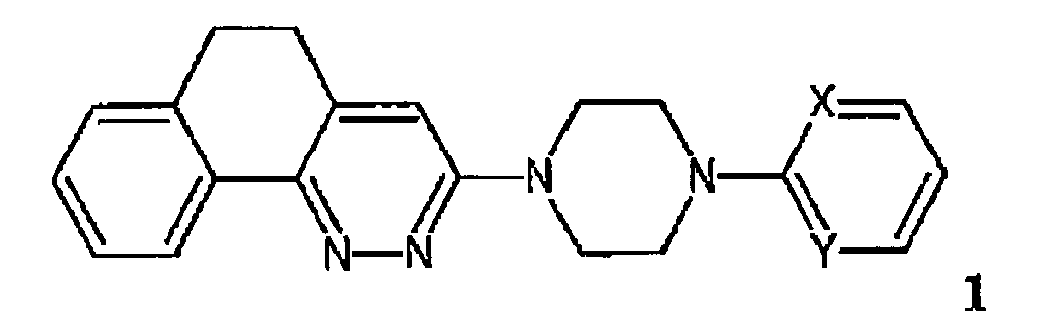
- The invention also provides a compound of
formula 1 wherein X and Y are N; a compound offormula 1 wherein X and Y are CH; and a compound offormula 1 wherein X is N and Y is CH. - The invention also provides a pharmaceutical composition comprising such a compound and a pharmaceutically acceptable carrier, excipient or vehicle.
- The invention also provides such a compound for use as a medicament.
- The invention also provides the use of such a compound for the preparation of a medicament for treating a condition associated with neuroinflammation; or for the preparation of a medicament for treating a neurodegenerative disorder, an autoimmune disorder, vascular inflammatory disease, or an acute inflammatory disease.
- The invention also provides such a compound for use in treating a condition associated with neuroinflammation; or for use in treating a neurodegenerative disorder, an autoimmune disorder, vascular inflammatory disease, or an acute inflammatory disease.
- The invention also provides such a compound for use in treating asthma, chronic inflammation, atherosclerosis, angiopathy, myocarditis, nephritis, Crohn's disease, arthritis or type I and II diabetes; or a disorder selected from the group consisting of Alzheimer's disease, amyotrophic lateral sclerosis, prion diseases, stroke and traumatic brain injury.
- The compound may be selected from the following group MW01-2-151 WH, MW01-3-202WH and MW01-3-173WH.
- The common precursor, 3-chloro-3,6-dihydrobeozo[h]cinnoline (
Figure 1 compound 7) may be used in the synthesis of MW01-2-151WH, MW01-3-202WH, and/or MW01-3-173WH. - The invention also provides a pharmaceutical composition comprising one or more compound of the Formula I a pharmaceutically acceptable salt or solvate thereof. After the composition is prepared, it can be placed in an appropriate container and labeled for treatment of an indicated disease. For administration of a composition ofthe invention, such labeling would include amount, frequency, and method of administration.
- In some aspects the invention provides methods to make commercially available pills, tablets, caplets, soft and hard gelatin capsules, lozenges, sachets, cachets, vegicaps, liquid drops, elixirs, suspensions, emulsions, solutions, syrups, aerosols (as a solid or in a liquid medium) suppositories, sterile injectable solutions, and/or sterile packaged powders, which contain a compound of the Formula I of the invention.
- In an aspect, compounds and compositions of the invention may be administered therapeutically or prophylactically to treat a disease disclosed herein. While not wishing to be bound by any particular theory, the compounds and compositions may act to ameliorate the course of a disease using without limitation one or more of the following mechanisms: preventing, reducing and/or inhibiting inflammation (e.g. neuroinflammation), activation of signaling pathways involved in inflammation (e.g., neuroinflammation), cell signaling molecule production, activation of glia or glial activation pathways and responses, proinflammatory cytokines or chemokines [e.g., interleukin (IL) or tumor necrosis factor (TNF)], oxidative stress-related responses such as nitric oxide synthase production and nitric oxide accumulation, acute phase proteins, components of the complement cascade, protein kinase activity (e.g., death associated protein kinase activity), cell damage (e.g., neuronal cell damage), and/or cell death (e.g., neuronal cell death).
- The invention relates to the use of a composition comprising at least one compound of the Formula I or a pharmaceutically acceptable salt or solvate thereof, for the preparation of a medicament for treating a disease disclosed herein. The invention additionally relates to use of a pharmaceutical composition of the invention in the preparation of a medicament for the prevention and/or treatment of a disease disclosed herein. The medicament may be in a form suitable for consumption by a subject, for example, a pill, tablet, caplet, soft and hard gelatin capsule, lozenge, sachet, cachet, vegicap, liquid drop, elixir, suspension, emulsion, solution, syrup, aerosol (as a solid or in a liquid medium) suppository, sterile injectable solution, and/or sterile packaged powder.
- These and other aspects, features, and advantages of the present invention should be apparent to those skilled in the art from the following detailed description.
-
-
Figure 1 depicts a synthetic scheme for synthesis of MW01-2-151 WH and analogs withposition 5 of the pyridazine ring linked to the aromatic ring atposition 6. Reactions and conditions: (a) Glyoxylic acid, NaOH solution, EtOH, reflux; (b) Zn, HOAc, 110° C; (c) NrfcNHi, EtOH, reflux; (d) CuCk, CH3CN, reflux; (e) POCl3, 95°C; (f) 1-BuOH, NFL,C1, 2-substituted-piperazine. 30 -
Figures 2A-C are graphs of concentration dependent inhibition of proinflammatory cytokine production by MW01-2-151WH and related compounds. BV-2 cells were treated with LPS (100 ng/ml) in the absence or presence of increasing concentrations of MW01-2-151WH or three structurally related analogs (MW01-3-202WH and MW01-3-173WH) for 16 hrs with levels of IL-1β and TNFα in cell lysates measured by the Meso-Scale Discovery electrochemiluminescent detection assay (See, e.g., Example 1, Materials and Methods). Data are the mean +/- SEM of triplicate determinations. -
Figure 3A-F are graphs of MW01-2-151WH suppression of Aβ-induced neuroinflammation and synaptic damage. Hippocampal sections or extracts from vehicle-infused mice (control), Aβ-infused mice injected with solvent, and Aβ-infused mice injected with MW01-2-151 WH were evaluated for neuroinflammation by measurement of the levels of the pro-inflammatory cytokines IL-1β (A), TNFα(B), and S100B (C), and the number of GPAP-positive astrocytes, (D) and F4/80-positive microglia, (E), and evaluated for synaptic damage by analysis of the levels of the postsynaptic density protein 95 (PSD-95) (F). Data are from one of two independent experiments, and are the mean + SEM for 4-5 mice per experimental group. -
Figure 4 A-C are graphs ofthe cell-based activity of NW01-2-151WH in BV-2 microglial cells. MW01-2-151WH is a concentration-dependent and selective inhibitor of proinflammatory cytokine production by activated glia. Concentration-dependent inhibition by MW01-2-151WH of LPS-induced increases in (A)IL-1β and (B) TNFα levels by the BV2 microglial cell line. (C) Accumulation of the NO metabolite, nitrite, was not inhibited at concentrations up to 50 µM. -
Figure 5 is a graph of rapid brain uptake of an orally administered, therapeutic dose of MW01-2-20 151WH. Oral gavage administration of a 2.5 mg/kg dose of MW01-2-151WH to mice was followed by sacrifice, rapid removal of brain, and tissue processing at different times after administration (described in Materials and Methods). Tissue samples were processed by perchloric acid treatment followed by extraction into dichloromethane. Analysis and quantification was done by HPLC, using external calibration by addition of known concentrations of MW01-2-151WH to naive brain homogenates and processing as above. Data are the mean± SEM for four mice. -
Figure 6 A-F shows micrographs showing lack of tissue toxicity by orally administered MW01-2-151 WH at increasing doses up to 20-fold higher than a therapeuticaily effective dose. Vehicle (panels A,C,E) or MW10-2-151 WH (panels B,D,F) was orally administered (gavage) to mice daily for three days at 50 mg/kg (20-fold greater than a therapeutic dose, described in Materials and Methods). There was no histological evidence of toxicity in liver (A,B), lung (C,D), or kidney (E,F). -
Figure 7 is a synthetic scheme for the preparation of MW01-5-184WH. - For convenience, certain terms employed in the specification, examples, and appended claims are collected here.
- Numerical ranges recited herein by endpoints include all numbers and tractions subsumed within that range (e.g. 1 to 5 includes 1,1.5, 2, 2.75, 3, 3.90,4, and 5). It is also to be understood that all numbers and fractions thereof are presumed to be modified by the term "about." The term "about" means plus or minus 0.1 to 50%, 5-50%, or 10-40%, preferably 10-20%, more preferably 10% or 15%, of the number to which reference is being made. Further, it is to be understood that "a," "an," and "the" include plural referents unless the content clearly dictates otherwise. Thus, for example, reference to a composition comprising "a compound" includes a mixture of two or more compounds.
- As used herein the terms "administering" and "administration" refer to a process by which a therapeutically effective amount of a compound or composition contemplated herein is delivered to a subject for prevention and/or treatment purposes. Compositions are administered in accordance with good medical practices taking into account the subject's clinical condition, the site and method of administration, dosage, patient age, sex, body weight, and other factors known to physicians.
- As used herein, the term "co-administration" refers to the administration of at least two compounds or agent(s) (e.g., compound of the Formula I or pyridazines) or therapies to a subject. In some embodiments, the co-administration of two or more agents/therapies is concurrent. In other embodiments, a first agent/therapy is administered prior to a second agent/therapy. Those of skill in the art understand that the formulations and/or routes of administration of the various agents/therapies used may vary. The appropriate dosage for co-administration can be readily determined by one skilled in the art In some embodiments, when agents/therapies are to-adtninistered, the respective agents/therapies are administered at lower dosages than appropriate for their administration alone. Thus, co-administration is especially desirable in embodiments where the co-administration of the agents/therapies lowers the requisite dosage of a known potentially harmful (e.g., toxic) agent(s).
- The term "treating" refers to reversing, alleviating, or inhibiting the progress of a disease, or one or more symptoms of such disease, to which such term applies. Depending on the condition of the subject, the term also refers to preventing a disease, and includes preventing the onset of a disease, or preventing the symptoms associated with a disease. A treatment maybe either performed in an acute or chronic way. The term also refers to reducing the severity of a disease or symptoms associated with such disease prior to affliction with the disease. Such prevention or reduction of the severity of a disease prior to affliction refers to administration of a compound or composition of the present invention to a subject that is not at the time of administration afflicted with the disease. "Preventing" also refers to preventing the recurrence of a disease or of one or more symptoms associated with such disease. "Treatment" and "therapeutically," refer to the act of treating, as "treading" is defined above.
- The terms "subject", "individual", or "patient" are used interchangeably herein and refer to an animal preferably a warm-blooded animal such as a mammal. Mammal includes without limitation any members of the Mammalia. In general, the terms refer to a human. The terms also include domestic animals bred for food or as pets, including equines, bovines, sheep, poultry, fish, porcines, canines, felines, and zoo animals, goats, apes (e.g. gorilla or chimpanzee), and rodents such as rats and mice.
- In aspects of the invention, the terms refer to organisms to be treated by the methods of the present invention. Such organisms preferably include, but are not limited to, mammals (e.g., murines, simians, equines, bovines, porcines, canines, felines, and the like), and most preferably includes humans. In the context of particular aspects ofthe invention, the term "subject," generally refers to an individual who will receive or who has received treatment (e.g., administration of a compound of the Formula I or a pyridazine compound(s), and optionally one or more other agents) for a conditions characterized by inflammation, the dysregulation of protein kinase activity, and/or dysregulation of apototic processes.
- Typical subjects for treatment include persons afflicted with or suspected of having or being pre-disposed to a disease disclosed herein, or persons susceptible to, suffering from or that have suffered a disease disclosed herein. A subject may or may not have a genetic predisposition for a disease disclosed herein such as Alzheimer's disease. In particular aspects, a subject shows signs of cognitive deficits and Alzheimer's disease neuropathology. In embodiments of the invention the subjects are suspectible to, or suffer from Alzheimer's disease.
- As utilized herein, the term "healthy subject" means a subject, in particular a mammal, having no diagnosed disease, disorder, infirmity, or ailment, more particularly a disease, disorder, infirmity or ailment known to impair or otherwise diminish memory.
- The term "diagnosed," as used herein, refers to the recognition of a disease by its signs and symptoms (e.g., resistance to conventional therapies), or genetic analysis, pathological analysis, histological analysis, and the like.
- As used herein, the term "modulate" refers to the activity of a compound (e.g., a compound of the Formula I, or a pyridazine compound herein) to affect (e.g., to promote or retard) an aspect of cellular function, including, but not limited to, cell growth, proliferation, apoptosis, and the like.
- A "beneficial effect" refers to an effect of a compound of the invention or composition thereof in certain aspects of the invention, including favorable pharmacological and/or therapeutic effects, and improved biological activity. In aspects of the invention, the beneficial effects include without limitation prevention, reduction, reversal, or inhibition of one or more of the following: inflammation (e.g. neuroinflammation), activation of signaling pathways involved in inflammation (e.g., neuroinflammation), cell signaling molecule production, activation of glia or glial activation pathways and responses, proinflammatory cytokines or chemokines (e.g., interleukin (IL) or tumor necrosis factor (TNF), oxidative stress-related responses such as nitric oxide synthase production and nitric oxide accumulation, acute phase proteins, components of the complement cascade, protein kinase activity (e.g., death associated protein kinase activity), cell damage (e.g., neuronal cell damage), and/or cell death (e.g., neuronal cell death). In some aspects, a beneficial effect is a favourable characteristic of a composition comprising a compound of the Formula I including without limitation enhanced stability, a longer half life, and/or enhanced uptake and transport across the blood brain barrier.
- The beneficial effect can be a statistically significant effect in terms of statistical analysis of an effect of a compound of the Formula I versus the effects without the compound or compound that is not within the scope of the invention. Statistically significant" or "significantly different" effects or levels may represent levels that are higher or lower than a standard. In aspects of the invention, the difference may be 1.5, 2, 3, 4, 5, or 6 times higher or lower compared with the effect obtained without a compound of the Formula I.
- The term "pharmaceutically acceptable carrier, excipient, or vehicle" refers to a medium which does not interfere with the effectiveness or activity of an active ingredient and which is not toxic to the hosts to which it is administered. A carrier, excipient, or vehicle includes diluents, binders, adhesives, lubricants, disintegrates, bulking agents, wetting or emulsifying agents, pH buffering agents, and miscellaneous materials such as absorbants that may be needed in order to prepare a particular composition. Examples of carriers etc. include but are not limited to saline, buffered saline, dextrose, water, glycerol, ethanol, and combinations thereof. The use of such media and agents for an active substance is well known in the art.
- The compounds of the formula I disclosed herein also include "pharmaceutically acceptable salt(s)". By pharmaceutically acceptable salts is meant those salts which are suitable for use in contact with the tissues of a subject or patient without undue toxicity, irritation, allergic response and the like, and are commensurate with a reasonable benefit/risk ratio. Pharmaceutically acceptable salts are described for example, in S. M. Berge, et al., J. Pharmaceutical Sciences, 1977, 66:1
- A compound of the Formula I can contain one or more asymmetric centers and may give rise to enantiomers, diasteriomers, and other stereoisomeric forms which may be defined in terms of absolute stereochemistry as (R)- or (S)-. Thus, compounds of the formula I include all possible diasteriomers and enantiomers as well as their racemic and optically pure forms. Optically active (R)- and (S)-isomers may be prepared using chiral synthons or chiral reagents, or resolved using conventional techniques.
- When a compound of the formula I contains centers of geometric asymmetry, and unless specified otherwise, it is intended that the compounds include both E and A geometric isomers.
- All tautomeric forms are also included within the scope of a compound of the Formula I.
- A compound of the Formula I can exist in unsolvated as well as solvated forms with pharmaceutically acceptable solvents such as water, ethanol, and the like. The solvated forms may be considered equivalent to the unsolvated forms for the purposes of the present invention.
- "Therapeutically effective amount" relates to the amount or dose ofan active compound of the Formula I or composition comprising the same, that will lead to one or more desired effects, in particular, one or more therapeutic effects, more particularly beneficial effects. A therapeutically effective amount of a substance can vary according to factors such as the disease state, age, sex, and weight of the subject, and the ability of the substance to elicit a desired response in the subject. A dosage regimen may be adjusted to provide the optimum therapeutic response (e.g. sustained beneficial effects). For example, several divided doses maybe administered daily or the dose may be proportionally reduced as indicated by the exigencies of the therapeutic situation.
- A "disease" that can be treated and/or prevented using a compound, or composition of the invention includes a condition associated with or requiring modulation of one or more of inflammation (e.g. neuroinflammation), signaling pathways involved in inflammation (e.g., neuroinflammation), cell signaling molecule production, activation of glia or glial activation pathways and responses, proinflammatory cytokines or chemokines (e.g., interleukin (IL) or tumor necrosis factor (TNF), oxidative stress-related responses such as nitric oxide synthase production and nitric oxide accumulation, acute phase proteins, components of the complement cascade, protein kinase activity (e.g., death associated protein kinase (DAPK) activity), cell damage (e.g., neuronal cell damage), and cell death (e.g., neuronal cell death). In particular a disease is a dementing disorder, a neurodegenerative disorder, a CNS demyelinating disorder, an autoimmune disorder, or a peripheral inflammatory disease.
- A disease may be characterized by an inflammatory process due to the presence of macrophages activated by an amyloidogenic protein or peptide. Thus, a method of the invention may involve inhibiting macrophage activation and/or inhibiting an inflammatory process. A method may comprise decreasing, slowing, ameliorating, or reversing the course or degree of macrophage invasion or inflammation in a patient.
- Examples of diseases that can be treated and/or prevented using the compounds, compositions and methods of the invention include Alzheimer's disease and related disorders, presenile and senile forms; amyloid angiopathy; mild cognitive impairment; Alzheimer's disease-related dementia (e.g., vascular dementia or Alzheimer dementia); AIDS related dementia, tauopathies (e.g., argyrophilic grain dementia, corticobasal degeneration, dementia pugilistica, diffuse neurofibrillary tangles with calcification, frontotemporal dementia with parkinsonism, Prion-related disease, Hallervorden-Spatz disease, myotonic dystrophy, Niemann-Pick disease type C, non-Guamanian Motor Neuron disease with neurofibrillary tangles, Pick's disease, postencephalitic parkinsonism, cerebral amyloid angiopathy, progressive subcortical gliosis, progressive supranuclear palsy, subacute sclerosing panencephalitis, and tangle only dementia), alpha-synucleinopathy (e.g., dementia with Lewy bodies, multiple system atrophy with glial cytoplasmic inclusions), multiple system atrophies, Shy-Drager syndrome, spinocerebellar ataxia (e.g., DRPLA or Machado-Joseph Disease); striatonigral degeneration, olivopontocerebellar atrophy, neurodegeneration with brain iron accumulation type I, olfactory dysfunction, and amyotrophic lateral sclerosis); Parkinson's disease (e.g., familial or non-familial); Amyotrophic Lateral Sclerosis; Spastic paraplegia (e.g., associated with defective function of chaperones and/or triple A proteins); Huntington's Disease, spinocerebellar ataxia, Freidrich's Ataxia; cerebrovascular diseases including stroke, hypoxia, ischemia, infarction, intracerebral hemorrhage; traumatic brain injury; Down's syndrome; head trauma with post-traumatic accumulation of amyloid beta peptide; Familial British Dementia; Familial Danish Dementia; Presenile Dementia with Spastic Ataxia; Cerebral Amyloid Angiopathy, British Type; Presenile Dementia With Spastic Ataxia Cerebral Amyloid Angiopathy, Danish Type; Familial encephalopathy with neuroserpin inclusion bodies (FENIB); Amyloid Polyneuropathy (e.g., senile amyloid polyneuropathy or systemic Amyloidosis); Inclusion Body myositis due to amyloid beta peptide; Familial and Finnish Type Amyloidosis; Systemic amyloidosis associated with multiple myeloma; Familial Mediterranean Fever; multiple sclerosis; optic neuritis; Guillain-Barre Syndrome; chronic inflammatory demyelinating polyneuropathy; chronic infections and inflammations; acute disseminated encephalomyelitis (ADEM); autoimmune inner ear disease (AIED); diabetes; myocardial ischemia and other cardiovascular disorders; pancreatitis; gout; inflammatory bowel disease; ulcerative colitis; Crohn's disease; rheumatoid arthritis; osteoarthritis; artheriosclerosis; inflammatory aortic aneurysm; asthma; adult respiratory distress syndrome; restenosis; ischemia/reperfusion injury, glomerulonephritis; sacoidosis cancer; restenosis; rheumatic fever, systemic lupus exythematosus; Reiter's syndrome; psoriatic arthritis; ankylosing spondylitis; coxarthritis; pelvic inflammatory disease; osteomyelitis; adhesive capsulitis; oligoarthritis; periarthritis; polyarthritis; psoriasis; Still's disease; synovitis; inflammatory dermatosis; and, wound healing.
- In aspects ofthe invention, a compound composition, or method disclosed herein maybe utilized to prevent and/or treat a disease involving neuroinflammation (i.e., neuroinflammatory disease). Neuroinflammation is a characteristic feature of disease pathology and progression in a diverse array of neurodegenerative disorders that are increasing in their societal impact (for a recent review, see, e.g., Prusiner, S. B. (2001) New Engl. J. Med. 344,1516-1526). These neuroinflammation-related disorders include Alzheimer's disease (AD), amyotrophic lateral sclerosis, autoimmune disorders, priori diseases, stroke and traumatic brain injury. Neuroinflammation is brought about by glial cell (e.g., astrocytes and microglia) activation, which normally serves a beneficial role as part of an organism's homeostatic response to injury or developmental change. However, disregulation of this process through chronic or excessive activation of glia contributes to the disease process through the increased production of proinflammatory cytokines and chemokines, oxidative stress related enzymes, acute phase proteins, and various components of the complement cascades. (See, e.g., Akiyama et al., (2000) Neurobiol. Aging 21,3 83-421). The direct linkage of glial activation to pathology that is a hallmark of disease underscores the importance of understanding the signal transduction pathways that mediate these critical glial cellular responses and the discovery of cell permeable ligands that can modulate these disease relevant pathways.
- For Alzheimer's disease (AD) in particular, the deposition of β-amyloid (Aβ) and neurofibrillary tangles are associated with glial activation, neuronal loss and cognitive decline. On a molecular level, Alzheimer's disease is characterized by; increased expression of nitric oxide synthase (NOS) in glial cells surrounding amyloid plaques; neuropathological evidence of peroxynitrite-mediated neuronal damage; and nitric oxide (NO) overproduction involved in Aβ-induced brain dysfunction. NOS (iNOS) is induced as part of the glial activation response and is an oxidative stress-related enzyme that generates NO. When NO is present in high levels along with superoxide, the highly reactive NO-derived molecule peroxynitrite is generated, leading to neuronal cell death. The pro-inflammatory cytokine IL-1β is also overexpressed in activated glia in AD brain and polymorphisms in IL-1β genes are associated with an increased risk of early onset sporadic AD (See, e.g., Duet al., (2000) Neurology 55,480-483). IL-1β can also influence amyloid plaque development and is involved in additional glial inflammatory and neuronal dysfunction responses (See, e.g., Griffin, etal., (1998) Brain Pathol, 8, 65-72; and Sheng, et al., (1996) Neurobiol. Aging 17, 761-766). Therefore, because glial activation and specific glial produces are associated with neurodegenerative disorders (e.g., Alzheimer's disease), the compounds and compositions disclosed herein that are capable of modulating cell signaling pathways (e.g., glial activation pathways) will have particular application in the treatment and prevention of inflammatory disease.
- In aspects of the invention, a compound, or composition disclosed herein may be utilized to prevent and/or treat a disease involving disregulation of protein kinase signaling. Disregulation of protein kinase signaling often accompanies disregulation ofcell signaling pathways (e.g., glial cell activation pathways). Protein kinases are a large family of proteins that play a central role in regulating a number of cellular functions including cell growth, differentiation and death. There are thought to be more than 500 protein kinase and 130 protein phosphatases exerting tight control on protein phosphorylation. Each protein kinase transfers the γ-phosphate of ATP to a specific residue(s) of a protein substrate. Protein kinases can be further categorized as tyrosine, serine/threonine or dual specific based on acceptor residue. Examples of serine/threonine kinases include MAP kinase, MARK kinase (MEK), Akt/PKB, Jun kinase (INK), CDKs, protein kinase A (PRA), protein kinase C (PKC), and calmodulin (CaM)-dependent kinases (CaMKs). Disregulated protein kinase activity (e. g., hyper- or hypo-active) leads to abnormal protein phosphorylation, underling a great number of diseases including diabetes, rheumatoid arthritis, inflammation, hypertension, and proliferative diseases such as cancer. Therefore, because aberrant kinase activity is associated with inflammatory disease (e.g., neurodegenerative disorders like Alzheimer's disease), the compounds and compositions that are disclosed herein that are capable of modulating kinases involved in cell signaling pathways will have particular application for treatment and prevention of inflammatory disease.
- The invention provides a compound of the
Formula 1,
- A compound of the Formula. I may comprise a carrier, such as one or more of a polymer, carbohydrate, peptide or derivative thereof, which may be directly or indirectly covalently attached to the compound. A carrier may be substituted with substituents described herein including without limitation one or more alkyl, amino, nitro, halogen, thiol, thioalkyl, sulfate, sulfonyl, sulfinyl, sulfoxide, hydroxyl groups. In aspects of the invention the carrier is an amino acid including alanine, glycine, proline, methionine, serine, threonine, asparagine, alanyl-alanyl, prolyl-methionyl, or glycyl-glycyl. A carrier can also include a molecule that targets a compound of the formula I to a particular tissue or organ. Thus, a carrier may facilitate or enhance transport of a compound of the formula I to the brain.
- Compounds of the formula I can be prepared using reactions and methods generally known to the person of ordinary skill in the art, having regard to that knowledge and the disclosure of this application including the Examples. The reactions are performed in a solvent appropriate to the reagents and materials used and suitable for the reactions being effected. It will be understood by those skilled in the art of organic synthesis that the functionality present on the compounds should be consistent with the proposed reaction steps. This will sometimes require modification of the order of the synthetic steps or selection of one particular process scheme over another in order to obtain a desired compound of the invention. It will also be recognized that another major consideration in the development of a synthetic route is the selection of the protecting group used for protection of the reactive functional groups present in the compounds described in this invention. An authoritative account describing the many alternatives to the skilled artisan is Greene and Wuts (Protective Groups In Organic Synthesis, Wiley and Sons, 1991).
- The starting materials and reagents used in preparing compounds or the invention are either available from commercial suppliers or are prepared by methods well known to a person of ordinary skill in the art, following procedures described in such references as Fieser and Fieser's Reagents for Organic Synthesis, vols. 1-17, John Wiley and Sons, New York, N.Y., 1991; Rodd's Chemistry of Carbon Compounds, vols. 1-5 and supps., Elsevier Science Publishers, 1989; Organic Reactions, vols.1-40, John Wiley and Sons, New York, N.Y.,1991; March J.: Advanced Organic Chemistry, 4th ed., John Wiley and Sons, New York, N.Y.; and Larock: Comprehensive Organic Transformations, VCH Publishers, New York, 1989.
- The starting materials, intermediates, and compounds of the formula I may be isolated and purified using conventional techniques, such as precipitation, filtration, distillation, crystallization, chromatography, and the like. The compounds of the formula I may be characterized using conventional methods, including physical constants and spectroscopic methods, in particular HPLC.
- The compounds of the Formula I which are basic in nature can form a wide variety of different salts with various inorganic and organic acids. In practice is it desirable to first isolate a compound of the Formula I from the reaction mixture as a pharmaceutically unacceptable salt and then convert the latter to the free base compound by treatment with an alkaline reagent and subsequently convert the free base to a pharmaceutically acceptable acid addition salt. The acid addition salts of the base compounds of the Formula I are readily prepared by treating the base compound with a substantially equivalent amount of the chosen mineral or organic acid in an aqueous solvent medium or in a suitable organic solvent such as methanol or ethanol. Upon careful evaporation of the solvent, the desired solid salt is obtained.
- Compounds of the Formula I which are acidic in nature are capable of forming base salts with various pharmacologically acceptable cations. These salts may be prepared by conventional techniques by treating the corresponding acidic compounds with an aqueous solution containing the desired pharmacologically acceptable cations and then evaporating the resulting solution to dryness, preferably under reduced pressure. Alternatively, they may be prepared by mixing lower alkanolic solutions of the acidic compounds and the desired alkali metal alkoxide together and then evaporating the resulting solution to dryness in the same manner as before. In either case, stoichiometric quantities of reagents are typically employed to ensure completeness of reaction and maximum product yields.
- Methods of making the compounds depicted in the Table 2, comprising the steps provided are shown, for example, in
Figure 1 and in Materials and Methods. - As part of the synthetic scheme used to generate the compounds of the formula I, diversification of
position 3 of the pyridazine ring was done by reaction of common halogenated pyridazine precursor. The common precursor, 3-chloro-5,6-dibydrobenzo[h]cinnoline (Figure 1 , compound 7), prepared using a combination of previously reported methods [12-16], was used to make multiple compounds (See, e.g., MW01-2-151 WH, MW01-3-202WH, and MW01-3-173WH). As detailed in Materials and Methods below, compounds were synthesized with yields of 81 - 96%. All purified compounds were characterized by HPLC, mass spectrometry and NMR in order to confirm syntheses. - Therapeutic efficacy and toxicity ofcompounds, compositions and methods ofthe invention may be determined by standard pharmaceutical procedures in cell cultures or with experimental animals such as by calculating a statistical parameter such as the ED50 (the dose that is therapeutically effective in 50% of the population) or LD50 (the dose lethal to 50% of the population) statistics. The therapeutic index is the dose ratio of therapeutic to toxic effects and it can be expressed as the ED50/LD50 ratio. Pharmaceutical compositions which exhibit large therapeutic indices are preferred. By way of example, one or more of the therapeutic effects, in particular beneficial effects disclosed herein, can be demonstrated in a subject or disease model, for example, a TgCRND8 mouse with symptoms of Alzheimer's disease.
- Biological investigations were done with compounds disclosed herein that were >95% homogenous as determined by HPLC/MS analysis. As part of a hierarchal, cell-based screening protocol, the compounds were screened for their ability to block IL-1β and TNFα production by BV-2 mouse microglial cells stimulated with LPS. The data for MWO1-2-1-151WH and the three structurally related analogs (MW01-3-202WH and MW01-3-173WH,) is shown(See, e.g.,
Figure 2 ). Derivative groups that may be used to modify the compounds ofthe present invention can be found inU.S. Patent Application No. 20030176437 (herein incorporated by reference in its entirety for all purposes), - The compounds disclosed herein can be tested for liver toxicity which is an important initial consideration for orally administered compounds since the liver is the major site of initial drug metabolism and is critical to overall metabolism and homeostasis of an animal. Compounds disclosed herein may also be tested for cardiac safety by testing for hERG channel inhibition.
- A compound of the Formula I of the invention may be formulated into a pharmaceutical composition for administration to a subject. Pharmaceutical compositions of the present invention or fractions thereof comprise suitable pharmaceutically-acceptable carriers, excipient, and vehicles selected based on the intended form of administration, and consistent with conventional pharmaceutical practices. Suitable pharmaceutical carriers, excipients, and vehicles are described in the standard text, Remington's Pharmaceutical Sciences, Mack Publishing Company (Remington's Pharmaceutical Sciences, Mack Publishing Company, Easton, Pa., USA 1985). By way of example for oral administration in the form of a capsule or tablet, the active components can be combined with an oral, non-toxic pharmaceutically acceptable inert carrier such as lactose, starch, sucrose, methyl cellulose, magnesium stearate, glucose, calcium sulfate, dicalcium phosphate, mannitol, sorbital, and the like. For oral administration in a liquid form, the drug components may be combined with any oral, non-toxic, pharmaceutically acceptable inert carrier such as ethanol, glycerol, water, and the like. Suitable binders (e.g. gelatin, starch, corn sweeteners, natural sugars including glucose; natural and synthetic gums, and waxes), lubricants (e.g. sodium oleate, sodium stearate, magnesium stearate, sodium benzoate, sodium acetate, and sodium chloride), disintegrating agents (e.g. starch, methyl cellulose, agar, bentonite, and xanthan gum), flavoring agents, and coloring agents may also be combined in the compositions or components thereof. Compositions as described herein can further comprise wetting or emulsifying agents, or pH buffering agents.
- A composition of the invention can be a liquid solution, suspension, emulsion, tablet, pill, capsule, sustained release formulation, or powder. The compositions can be formulated as a suppository, with traditional binders and carriers such as triglycerides. Oral formulations can include standard carriers such as pharmaceutical grades of mannitol, lactose, starch, magnesium stearate, sodium saccharine, cellulose, magnesium carbonate, etc. Various delivery systems are known and can be used to administer a composition of the invention, e.g. encapsulation in liposomes, microparticles, microcapsules, and the like.
- Formulations for parenteral administration may include aqueous solutions, syrups, aqueous or oil suspensions and emulsions with edible oil such as cottonseed oil, coconut oil or peanut oil. Dispersing or suspending agents that can be used for aqueous suspensions include synthetic or natural gums, such as tragacanth, alginate, acacia, dextran, sodium carboxymethylcellulose, gelatin, methylcellulose, and polyvinylpyrrolidone.
- Compositions for parenteral administration may include sterile aqueous or non-aqueous solvents, such as water, isotonic saline, isotonic glucose solution, buffer solution, or other solvents conveniently used for parenteral administration of therapeutically active agents. A composition intended for parenteral administration may also include conventional additives such as stabilizers, buffers, or preservatives, e.g. antioxidants such as methylhydroxybenzoate or similar additives.
- Compositions of the invention can be formulated as pharmaceutically acceptable salts as described herein.
- A composition of the invention may be sterilized by, for example, filtration through a bacteria retaining filter, addition of sterilizing agents to the composition, irradiation of the composition, or heating the composition. Alternatively, the compounds or compositions of the present invention may be provided as sterile solid preparations e.g. lyophilized powder, which are readily dissolved in sterile solvent immediately prior to use.
- After pharmaceutical compositions have been prepared, they can be placed in an appropriate container and labeled for treatment of an indicated condition. For administration of a composition of the invention, such labeling would include amount, frequency, and method of administration.
- The composition of the invention maybe provided in the form of a pharmaceutical pack or kit comprising one or more containers filled with one or more of the ingredients of a pharmaceutical composition of the invention to provide a beneficial effect, in particular a sustained beneficial effect. Associated with such container(s) can be various written materials such as instructions for use, or a notice in the form prescribed by a governmental agency regulating the labeling, manufacture, use or sale of pharmaceuticals or biological products, which notice reflects approval by the agency of manufacture, use, or sale for human administration.
- The composition of the invention may be provided in the form of a kit. The kit can be a package which houses a container which contains a composition of the invention and also houses instructions for administering the composition to a subject.
- The invention contemplates the use of compounds of the Formula I and compositions comprising the same for treating a disease disclosed herein, in particular preventing, and/or ameliorating disease severity, disease symptoms, and/or periodicity of recurrence of a disease disclosed herein. The invention also contemplates treating in mammals, diseases using the compounds, compositions or treatments of the invention. The present invention in embodiments may provide a composition comprising a compound that provides beneficial effects including greater solubility, stability, efficacy, potency, and/or utility, in particular greater solubility and stability.
- Novel compounds and methods for new therapeutic interventions are needed for many areas of medicine and disease treatment. For example, chronic and acute inflammatory conditions form the basis for diseases affecting all organ systems including, but not limited to, asthma, acute inflammatory diseases, vascular inflammatory disease, chronic inflammation, atherosclerosis, angiopathy, myocarditis, nephritis, Crohn's disease, arthritis, type I and II diabetes and associated vascular pathologies. The incidence of these inflammatory conditions is on the rise and the expense is large. For example, for just one form of inflammatory disease, Alzheimer's disease, the direct costs (such as medications, doctors'fees, and nursing home care) and indirect costs (loss of productivity of those suffering Alzheimer's disease and loss of productivity of those caring for these individuals) are estimated to exceed one-hundred billion dollars per year.
- With reference to the following examples and related discussions, the present invention provides compounds for use in various methods relating to the modulation of inflammation, glial activation or phosphorylation pathways and/or new therapeutic routes relating thereto. As illustrated more fully elsewhere herein, such methods include but are not limited to use of the compounds and compositions of this invention, preferably in a dose dependent fashion, to selectively inhibit protein kinase activity, glial activation response, oxidative stress-related responses such as nitric oxide synthase production and nitric oxide accumulation, cellular apoptosis and/or death associated protein kinase activity, and/or proinflammatory cytokine responses such as interleukin or tumor necrosis factor production. Such methods can include the preparation and/or formulation of a composition with subsequent administration and/or delivery to activated glial cells, tissue, culture or a related physiological system or medium, such administration/delivery in a dose or at a compositional concentration sufficient to effect the desired regulation and/or inhibition, without substantially inhibiting other desired endogenous anti-inflammatory responses.
- Compounds and compositions of the present invention may be used to reduce or inhibit Aβ-induced neuronal cell death and in particular to reduce or inhibit calmodulin regulated protein kineses, such as death associated protein kinase (DAPK).
- In some embodiments, the present invention provides methods of inhibiting cell signaling molecule production (e.g., IL-1β and TNFα), comprising administering compositions comprising one or more of the compounds of the Formula I, in particular one or more compounds depicted in the Figures and Tables herein, in particular the compounds depicted in Table 4, or derivatives of these compounds.
- The present invention also provides compounds (e.g., compounds listed in the Figures and Tables for use in 1) lowering amounts of pro-inflammatory cytokines (e.g., TNFa or IL-1p) and/or 2) maintaining normal levels or preventing reduction of presynaptic proteins (e.g. synaptophysin) and/or postsynaptic proteins (e.g., PSD-95). In some embodiments, the reduction of pro-inflammatory cytokines is to levels found in a normal, healthy individual. In some embodiments, the compounds are provided to an individual displaying characteristics of an inflammatory disease (e.g., Alzheimer's disease), such that treatment with the compounds reduces aberrantly high pro-inflammatory cytokine production caused by the disease (e.g., Aβ- induced increase in pro-inflammatory cytokines).
- In another aspect, selected compounds and compositions of the invention may be used to modulate cytokine-mediated neuronal cell death, in particular modulate cytokine-induced generation of NO, TNFα signaling through the Fas/TNFR family of death receptors, and/or DAPK, in Alzheimer's disease and other neurodegenerative disorders, and brain injury, and stroke. The evidence for the involvement of pro-inflammatory cytokines and NO in neuronal cell death has been reviewed in Akiyama, H., et al., (2000) Neurobiol. Agir g 21, 383-421; Prusiner, S.B. (2001) New Engl. J. Med. 344, 15 16-1526). Cytokine-induced neuronal death could involve DAPK.
- In part the present invention also relates to compounds for use in the inhibition of cell death or tissue loss and cell activation in addition to brain glia and neurons. For example, cell activation and tissue damage is a characteristic of other diseases such as acute lung injury (ALI). ALI due to sepsis, trauma or mechanical ventilation is associated with high mortality and morbidity, yet there are few effective therapies for the treatment of ALI. ALI is common during sepsis, which itself has an annual mortality equal to acute myocardial infarction. Endothelial cell (EC) dysfunction and activation has been implicated in the in vivo responses linked to ALI, and EC protein kineses, such as myosin light chain kinase (MLCK), have been shown to be critical to EC barrier function and activation. Similarly, the response of the heart to stress and acute injury results in acute and chronic injuries in which protein phosphorylation regulated pathways and cell activation has been linked to cell death and tissue damage. MLCK and related enzymes such as Rho kinase have been implicated in these processes and may be targets for new therapeutics. Accordingly, compounds of the Formula I can be used to reduce injury from hypoxia-ischemia, acute lung injury and/or endothelial cell dysfunction in lung or vascular tissue.
- In another aspect of the invention, a compound is provided for use in a method for treating in a subject a disease or condition involving or characterized by inflammation, in particular neuroinflammation.
- A therapeutic compound of the formula I, or a pharmaceutically acceptable salt thereof, or a composition comprising a compound of the formula I, and a pharmaceutically acceptable carrier, excipient, or vehicle may be used in a method to inhibit or reduce neuroflammation, activation of glia, proimflammatory cytokines, oxidative stress-related enzymes, acute phase proteins and/or components of the complement cascade.
- A therapeutically effective amount of a compound of the formula I, a pharmaceutically acceptable salt thereof, or a composition comprising a compound of the formula I and a pharmaceutically acceptable carrier, excipient, or vehicle may be used in a method for treating in a subject a disease associated with neuroinflammation that can be decreased or inhibited with a compound disclosed herein.
- A therapeutically effective amount of a compound of the formula I a pharmaceutically acceptable salt thereof, or a composition comprising a compound of the formula I and a pharmaceutically acceptable carrier, excipient, or vehicle may be used in a method for preventing or inhibiting activation of protein kinases, in particular DAPK, in a subject.
- A therapeutically effective amount of a compound of the formula I, a pharmaceutically acceptable salt thereof, or a composition comprising a compound of the formula I and a pharmaceutically acceptable carrier, excipient, or vehicle may be used in a method for reducing or inhibiting kinase activity, glial activation, neuronal cell damage, and/or neuronal cell death in a subject.
- In some embodiments, the compound may be used in methods of inhibiting cell signaling molecule production (e.g., IL-1β and TNFα). In some embodiments, one or more of the compounds are co-administered with other recognized therapeutics to treat inflammatory disease (e.g., neuroinflammatory disease, in particular Alzheimer's disease). In some embodiments, the invention provides compounds for use in 1) lowering amounts of pro-inflammatory cytokines (e.g., TNFα or IL-1β) and/or 2) maintaining normal levels of presynaptic proteins(e.g., synaptophysin) or postsynaptic proteins (e,g., PSD-95) for research, drug screening, or therapeutic purposes. In some embodiments, the reduction of pro-inflammatory cytokines reduces cytokines to levels found in a normal, healthy individual. In some embodiments, the compounds are provided to an individual displaying characteristics of an inflammatory disease (e.g., neuroinflammatory disease, in particular Alzheimer's disease), such that treatment with the compounds reduces aberrantly high pro-inflammatory cytokine production caused by the disease (e.g., Aβ-induced increase in pro-inflammatory cytokines).
- The compounds may be used in a method for amelioriating progression of a disease or obtaining a less severe stage of a disease in a subject suffering from such disease (e.g., neuroinflammatory disease, in particular a neurodegenerative disease, more particularly Alzheimer's disease).
- The compounds may be used in a method of delaying the progression of a disease (e.g. neuroinflammatory disease, in particular a neurodegenerative disease, more particularly Alzheimer's disease).
- The compounds may be used in a method of increasing survival of a subject suffering from a disease (e.g. neuroinflammatory disease, in particular a neurodegenerative disease, more particularly Alzheimer's disease).
- The invention has particular applications in treating or preventing a neurodegenerative disease, in particular Alzheimer's disease. In an aspect of the invention a compound of the Formula I is utilized in the treatment of Alzheimer's disease. Alzheimer's disease may be treated by administering a therapeutically effective amount of a compound of the Formula I. Such treatment may be effective for retarding the degenerative effects of Alzheimer's disease, including specifically, but not exclusively, neuroinflammation, deterioration of the central nervous system, loss of mental facilities, loss of short term memory, and disorientation.
- The compounds may be used in a method for treating Alzheimer's disease which method comprises the step of providing a composition comprising a compound of the invention in an amount sufficient to reverse or inhibit neuroinflammation, activation of signaling pathways involved in inflammation (e.g., neuroinflammation), cell signaling molecule production, activation of glia or glial activation pathways and responses, proinflammatory cytokines or chemokines (e.g., interleukin (IL) or tumor necrosis factor (TNF), oxidative stress-related responses such as nitric oxide synthase production and nitric oxide accumulation acute phase proteins, components of the complement cascade, protein kinase activity (e.g., death associated protein kinase activity), neuronal cell damage, and/or neuronal cell death for a prolonged period following administration.
- The compounds may be used in a method for treating Alzheimer's disease in a patient in need thereof which method includes administering to the individual a composition that provides a compound of the invention in a dose sufficient to reverse or inhibit neuroinflammation, activation of signaling pathways involved in inflammation (e.g., neuroinflammation), cell signaling molecule production, activation of glia or glial activation pathways and responses, proinflammatory cytokines or chemokines (e.g., interleukin (IL) or tumor necrosis factor (TNF), oxidative stress-related responses such as nitric oxide synthase production and nitric oxide accumulation, acute phase proteins, components of the complement cascade, protein kinase activity (e.g., death associated protein kinase activity), neuronal cell damage, and/or neuronal cell death for a prolonged period following administration.
- The compounds may be used in a method for treating Alzheimer's disease, the method comprising administering to a mammal in need thereof a composition comprising a compound of the invention in an amount sufficient to reduce cognitive decline for a prolonged period following administration, thereby treating the Alzheimer's disease.
- A therapeutically effective amount of one or more compound of the Formula I, a pharmaceutically acceptable salt thereof, or a composition comprising a compound of the Formula I and a pharmaceutically acceptable carrier, excipient, or vehicle, may be used in a method of treatment which upon administration to a subject with symptoms of a neurodegenerative disease, in particular Alzheimer's disease, produces one or more therapeutic effect, in particular a beneficial effect, more particularly a sustained beneficial effect. In an embodiment, a beneficial effect is evidenced by a decrease or inhibition of one or more of the following: inflammation (e.g. neuroinflammation), activation of signaling pathways involved in inflammation (e.g., neuroinflammation), cell signaling molecule production, activation of glia or glial activation pathways and responses, proinflammatory cytokines or chemokines (e.g., interleukin (IL) or tumor necrosis factor (TNF), oxidative stress-related responses such as nitric oxide synthase production and nitric oxide accumulation, acute phase proteins, components of the complement cascade, protein kinase activity (e.g., death associated protein kinase activity), cell damage (e.g., neuronal cell damage), and/or cell death (e.g., neuronal cell death).
- In an embodiment, where the disease is Alzheimer's disease, beneficial effects of a compound or composition or treatment of the invention can manifest as one, two, three, four, five, six, seven, eight, or all of the following, in particular five or more, more particularly 7 or more of the following:
- a) A reduction in protein kinase activity (e.g. DAPK), in particular at least about a 0.05%, 0.1%, 0.5%, 1%, 2%, 5%, 10%, 15%, 20%, 30%, 33%, 35%, 40%, 45%, 50%, 60%, 70%, 80%, 90%, 95%, or 99% decrease in protein kinase activity.
- b) A reduction in glial activation response, in particular, at least about a 0.05%, 0.1%, 0.5%, 1%, 2%, 5%, 10%, 15%, 20%, 30%, 33%, 35%, 40%, 45%, 50%, 60%, 70%, 80%, 90%, 95%, or 99% reduction in glial activation.
- c) A reduction in glial activity in the brain, relative to the levels determined in the absence of a compound of the Formula I in subjects with symptoms of Alzheimer's disease. In particular, the compounds induce at least about a 2%, 5%, 10%, 15%, 20%, 30%, 40%, 50%, 60%, 70%, 80%, or 90% decrease in glial activity
- d) A reduction in oxidative stress-related responses (e.g., nitric oxide synthase production and/or nitric oxide accumulation), in particular at least about a 0.05%, 0.1%, 0.5%, 1%, 2%, 5%, 10%, 15%, 20%, 30%, 33%, 35%, 40%, 45%, 50%, 60%, 70%, 80%, 90%, 95%, or 99% reduction in oxidative stress-related responses such as nitric oxide synthase production and nitric oxide accumulation.
- e) A reduction in cellular apoptosis and/or death associated protein kinase activity, in particular a 0.05%, 0.1%, 0.5%, 1%, 2%, 3%, 10%, 15%, 20%, 30%, 33%, 35%, 40%, 45%, 50%, 60%, 70%, 80%, 90%, 95%, or 99% reduction in cellular apoptosis and/or death associated protein kinase activity.
- f) A reduction in proinflammatory cytokine responses in particular a 0.05%, 0.1%, 0.5%, 1%, 2%, 5%,10%,15%, 20%, 30%, 33%, 35%, 40%, 45%, 50%, 60%, 70%, 80%, 90%, 95%, or 99% reduction in proinflammatory cytokine responses.
- g) A reduction in interleukin-1β and/or tumor necrosis factorα production in particular a 0.05%, 0.1%, 0.5%, %, 2%, 5%,10%, 15%, 20%, 30%, 33%, 35%, 40%, 45%, 50%, 60%, 70%, 80%, 90%, 95%, or 99% reduction in interleukin-1β and/or tumor necrosis factorα production.
- h) Preventing loss of presynaptic proteins (e.g., synaptophysin) and/or postsynaptic proteins.
- i) A slowing of the rate of disease progression in a subject with Alzheimer's disease.
- j) Increase in survival in a subject with symptoms of Alzheimer's disease.
- In particular aspects of the invention beneficial effects of compounds, compositions or treatments of the invention can manifest as (a) and (b); (a), (b) and (c); (a) through (d); (a) through (e); (a) through, (f); (a) through (g); (a) through (h); (a) through (i), or (a) through (j).
- Compounds, pharmaceutical compositions and methods of the invention can be selected that have sustained beneficial effects. In an embodiments, a pharmaceutical composition with statistically significant sustained beneficial effects is provided comprising a therapeutically effective amount of a compound of the invention.
- A therapeutically effective amount of a compound of the Formula I, a pharmaceutically acceptable salt thereof, or a composition comprising a compound of the Formula I and a pharmaceutically acceptable carrier, excipient, or vehicle may be used in a method for treating mild cognitive impairment (MCI).
- A therapeutically effective amount of a compound of the Formula I, a pharmaceutically acceptable salt thereof, or a composition comprising a compound of the Formula I and a pharmaceutically acceptable carrier, excipient, or vehicle may be used in a method of reversing or inhibiting neuroinflammation, activation of signaling pathways involved in inflammation (e.g., neuroinflammation), cell signaling molecule production, activation of glia or glial activation pathways and responses, proinflammatory cytokines or chemokines (e.g., interleukin (IL) or tumor necrosis factor (TNF), oxidative stress-related responses such as nitric oxide synthase production and nitric oxide accumulation, acute phase proteins, components of the complement cascade, protein kinase activity (e.g., death associated protein kinase activity), neuronal cell damage, and/or neuronal cell death, after the onset of cognitive deficits and Alzheimer's disease neuropathology in a subject.
- An effective amount of a compound of the Formula I, or a pharmaceutically acceptable salt thereof, or a composition comprising a compound of the Formula I and a pharmaceutically acceptable carrier, excipient, or vehicle may be used in a method of preventing a disease disclosed herein in a subject with a genetic predisposition to such disease.
- An effective amount of a compound of the Formula I, or a pharmaceutically acceptable salt thereof, or a composition comprising a compound of the Formula I and a pharmaceutically acceptable carrier, excipient, or vehicle may be used in a method of improving memory of a healthy subject or the memory of a subject with age impaired memory.
- An effective amount of a compound of the Formula I, or a pharmaceutically acceptable salt thereof, or a composition comprising a compound of the Formula I and a pharmaceutically acceptable carrier, excipient, or vehicle may be used in a method for improving memory, especially short-term memory and other mental dysfunction associated with the aging process.
- An effective memory-improving amount of a compound of the Formula I, a pharmaceutically acceptable salt thereof, or a composition comprising a compound of the Formula I and a pharmaceutically acceptable carrier, excipient, or vehicle may be used in a method for treating a mammal in need of improved memory, wherein the mammal has no diagnosed disease, disorder, infirmity or ailment known to impair or otherwise diminish memory.
- A therapeutically effective amount of a compound of the Formula I, a pharmaceutically acceptable salt thereof, or a composition comprising a compound of the Formula I and a pharmaceutically acceptable carrier, excipient, or vehicle may be used in a method of improving the lifespan of a subject suffering from Alzheimer's disease.
- In some aspects, greater efficacy and potency of a treatment may improve the therapeutic ratio of treatment, reducing untoward side effects and toxicity. Selected methods may also improve long-standing disease even when treatment is begun long after the appearance of symptoms.
- The compositions and methods described herein are indicated as therapeutic agents or methods either alone or in conjunction with other therapeutic agents or other forms of treatment. They may be combined or formulated with one or more therapies or agents used to treat a condition described herein. Compositions of the invention maybe administered concurrently, separately, or sequentially with other therapeutic agents or therapies.Therefore, the compounds of the Formula I may be co-administered with one or more additional therapeutic agents including without limitation beta-secretase inhibitors, alpha-secretase inhibitors, and epsilon-secretase inhibitors, agents that are used for the treatment of complications resulting from or associated with a disease, or general medications that treat or prevent side effects.
- The invention also contemplates the use of a composition comprising at least one compound of the invention for the preparation of a medicament in treating a disease disclosed herein. In an embodiment, the invention relates to the use of a therapeutically effective amount of at least one compound of the invention for preparation of a medicament for providing therapeutic effects, in particular beneficial effects, more particularly sustained beneficial effects, in treating a disorder or disease. In a still further embodiment the invention provides the use of a compound of the invention for the preparation of a medicament for prolonged or sustained treatment of a disease.
- Compounds and compositions of the present invention can be administered by any means that produce contact of the active agent(s) with the agent's sites of action in the body of a subject or patient to produce a therapeutic effect, in particular a beneficial effect, in particular a sustained beneficial effect. The active ingredients can be administered simultaneously or sequentially and in any order at different points in time to provide the desired beneficial effects. A compound and composition of the invention can be formulated for sustained release, for delivery locally or systemically. It lies within the capability of a skilled physician or veterinarian to select a form and route of administration that optimizes the effects of the compositions and treatments of the present invention to provide therapeutic effects, in particular beneficial effects, more particularly sustained beneficial effects.
- The compositions maybe administered in oral dosage forms such as tablets, capsules (each of which includes sustained release or timed release formulations), pills, powders, granules, elixirs, tinctures, suspensions; syrups, and emulsions. They may also be administered in intravenous (bolus or infusion), intraperitoneal, subcutaneous, or intramuscular forms, all utilizing dosage forms well known to those of ordinary skill in the pharmaceutical arts. The compositions of the invention may be administered by intranasal route via topical use of suitable intranasal vehicles, or via a transdermal route, for example using conventional transdermal skin patches. A dosage protocol for administration using a transdermal delivery system may be continuous rather than intermittent throughout the dosage regimen. A sustained release formulation can also be used for the therapeutic agents.
- An amount of a therapeutic of the invention which will be effective in the treatment of a particular disorder or disease to provide effects, in particular beneficial effects, more particularly sustained beneficial effects, will depend on the nature of the condition or disorder, and can be determined by standard clinical techniques. The precise dose to be employed in the formulation will also depend on the route of administration, and the seriousness of the disease, and should be decided according to the judgement of the practitioner and each patient's circumstances.
- Thus, the dosage regimen of the invention will vary depending upon known factors such as the pharmacodynamic characteristics of the agents and their mode and route of administration; the species, age, sex, health, medical condition and weight of the patient, the nature and extent of the symptoms, the kind of concurrent treatment, the frequency of treatment, the route of administration, the renal and hepatic function of the patient and the desired effect.
- Suitable dosage ranges for administration are particularly selected to provide therapeutic effects, in particular beneficial effects, more particularly sustained beneficial effects. A dosage range is generally effective for triggering the desired biological responses. The dosage ranges are generally about .5 mg to about 2 g per kg, about 1 mg to about 1 g per kg, about 1 mg to about 200 mg per kg, about 1 mg to about 100 mg per kg, about 1 mg to about 50 mg per kg, about 10 mg to about 100 mg per kg, or about 30 mg to 70 mg per kg of the weight of a subject.
- A composition or treatment of the invention may comprise a unit dosage of at least one compound of the invention to provide beneficial effects. A "unit dosage" or "dosage unit" refers to a unitary i.e. a single dose which is capable of being administered to a patient, and which may be readily handled and packed, remaining as a physically and chemically stable unit dose comprising either the active agents as such or a mixture with one or more solid or liquid pharmaceutical excipients, carriers, or vehicles.
- A subject may be treated with a compound of the Formula I or composition or formulation thereof on substantially any desired schedule. A composition of the invention may be administered one or more times per day, in particular 1 or 2 times per day, once per week, once a month or continuously. However, a subject may be treated less frequently, such as every other day or once a week, or more frequently. A compound, composition or formulation of the invention may be administered to a subject for about or at least about 1 week, 2 weeks to 4 weeks, 2 weeks to 6 weeks, 2 weeks to 8 weeks, 2 weeks to 10 weeks, 2 weeks to 12 weeks, 2 weeks to 14 weeks, 2 weeks to 16 weeks, 2 weeks to 6 months, 2 weeks to 12 months, 2 weeks to 18 months, or 2 weeks to 24 months, periodically or continuously.
- The invention will be described in greater detail by way of specific examples. The following examples are offered for illustrative purposes, and are not intended to limit the invention in any manner.
- Synthetic Chemistry. All reagents and solvents were used as purchased without further purification. Syntheses were done using variations of established methods and in-parallel synthetic schemes. Removal of solvent was followed by recrystallization from 95% ethanol. Reactions were monitored by analytical HPLC (Rainin Instruments System Woburn, MA), done on a reverse phase column CIS (25 cm x 4.6 mm, 5 urn, Supelco, Bellefbnte, PA) with two different UV wavelengths (X=260 nm and X=220 mn or 300 nm). Eluents were (A): 0.1 % (v/v) TFA in water and (B) 80% (v/v) acetonitrile/water containing 0.08% TFA. A linear gradient of 100/0 to 0/100 A/B over 34 min at ImL/min was used. 1H-NMR spectra were obtained using Varian INOVA (500 MHz) spectrometer. High resolution mass spectra were obtained on a VG70-250SE mass Spectrometer.
- Cell Vulture Assays. BV-2 mouse microglial cells (5x10³ cells/well in a 48-well plate) were cultured and treated for 16 hrs with the standard glial activating stimulus lipopolysaccharide (LPS, from Salmonella typhimurium; 100 ng/ml final concentration) in the presence or absence of aminopyridazine compounds, as described previously [4,17]. EL-1/3 and TNFa levels in cell lysates were determined by electrochemiluminescent detection in a Meso-Scale Discovery(MSD) kit, as per the manufacturer's instructions. In vivo Assays. Aβ-42 infusions and treatment of C57B1/6 mice with MW01-2-151WH were performed as previously described [5]. Briefly, oligomeric A/31-42 was infused ICV for 28 days with a micro-osmotic pump. At post-opsrative day 21 and continuing for 14 days thereafter, mice were injected intraperitoneally once daily with either MW01-2-151 WH (2.5 mg/kg per day) or solvent control (10% DMSO in saline). At
post-operative day 60, mice were perfused and sacrificed, and hippocampal endpoints measured as previously described [5]. Endpoint assays included immunohistochemical detection of activated astrocytes and microglia by glial fibrillary acidic protein (GFAP) and F4/80 staining, measurement of the levels of the pro-inflammatory cytokines IL-1β, TNFa, and S100B by ELISA, and determination of synaptic damage by analysis of the levels of postsynaptic density protein-95 (PSD-95). - Brain Uptake Assays. MW01-2-151WH was administered to mice (25-30g) by oral gavage using 2.5 mg/kg compound in 0.5% carboxymethylcellulose vehicle. At various times (0-60 min) after administration, mice were sacrificed, blood removed by cardiac puncture, and brains immediately harvested, weighed, quick-frozen in liquid nitrogen, and stored at -80°C until assayed. Brain tissue was homogenized in 1.5 ml of 0.1 M perchloric acid. After centrifugation (12,000 x g for 10 min), the supernatant was neutralized with 1 M NaOH and then extracted three times with 2 ml of dichloromethane by centrifugation at 3,000 x g for 5 min. The organic phases from the three successive extractions were pooled and then vaporated to dryness under reduced pressure. The dried sample was reconstituted in 100 µl of HPLC mobile phase (80% acetonitrile, 0.08% formic acid, 20% H2O), and 20 µl of the reconstituted material was injected into the HPLC system. The HPLC system for detection of MWO1-2-151 WH was a
Luna 5 µmCIS, 250 mm x 2 mm internal diameter column together with a guard column (Phenomenex, Torrance, CA, USA), with HPLC solvent delivered at 0.2 ml/min (Dionex, model P680 pump) and absorbance monitored at 282 run (Dionex, model UVD 170U detector). Under these experimental conditions, the retention time of the MW01-2-151WH compound was 15.3 min. A standard curve of MWO 1-2-151 WH was prepared by adding increasing concentrations of the compound to brain tissue from untreated mice, then extracting the brains and performing HPLC analysis as described above. The area under the curve increased linearly with MW01-2-151WH concentration over the range of concentrations investigated, with a correlation coefficient of 0.99. Under our experimental conditions, the compound was extracted reproducibly, with mean recoveries of 29 +/- 2%. - Graded dose, acute toxicity assays Vehicle (30% DMSO) or MW01-2-151WH (3.1, 12.5 or 50 mg/kg) in 0.5% carboxymethylcellulose was administered by oral gavage once daily for 3 days. On the 4th day, mice were anesthetized with pentobarbital, intubated and the lungs were inflated with an aircontaining syringe. The mice were perfused through the right ventricle and the lungs, liver and kidneys were then harvested and fixed in 4% paraformaldehyde for histology. Paraffin embedded hematoxylin & eosin stained sections of each organ were prepared by standard techniques. A pathologist blinded to the treatments groups performed microscopic assessment of the tissue for injury.
- MW01-2-151 WH suppressed both IL-1β and TNFα production in a concentration dependent manner, whereas the closely related analogs MW01-3-202WH and MW01-3-173WH showed somewhat less suppressive activity (See, e.g.,
Figure 2 ). - Based on the concentration-dependent suppression of neuroinflammation in the cell-based assay, NW01-2-151 WH was tested in a recently developed animal model [5,6]. Mice infused ICV with Aβ-42 and administered MW01-2-151 WH peripherally (intraperitoneal injection) showed significant inhibition of Aβ-induced neuroinflammation in the hippocampus (See, e.g.,
Figure 3 ). MW01-2-151 WH treatment blocked the Aβ-induced increase in the pro-inflammatory cytokines IL-1β, TNFα, and S100B, and suppressed a number of activated GFAP-positive astrocytes and F4/80 positive microglia (See, e.g.,Figure 3 ). MW01-2-151WH treatment also showed some neuroprotection, in that it partially prevented the Aβ-induced reduction of the postsynaptic protein, PSD-95 (See, e.g.,Figure 3 ). - An important aspect to consider in lead compound development for inflammatory diseases (e.g., Alzheimer's disease) is to address questions of bioavailability and toxicity. Therefore, the ability of MW01-2-1551WH to be taken up into brain after oral gavage administration to mice was analyzed. The compound was rapidly detected in brain tissue, reaching a maximum within 5 minutes after administration (See, e.g.,
Figure 5 ). MW01-2-151WH induced tissue toxicity was also examined by testing a series of escalating doses in an acute toxicity paradigm. Three different doses of MW01-2-151WH (3.1,12.5, or 50 mg/kg) were administered by oral gavage once daily for 3 days, mice were sacrificed onday 4, and liver, lungs, and kidney were analyzed for histological evidence of toxicity. No tissue toxicity was observed, even at the highest dose tested (See, e.g.,Figure 5 ). The high dose of 50 mg/kg represents a dose 20-fold higher than the therapeutic dose used inFigure 3 . No evidence of tissue toxicity was observed under the chronic administration conditions of the Alzheimer's disease relevant mouse model used for the studies inFigure 3 . Thus, compound MW01-2-151WH is bioavailable and rapidly taken up into brain, and is non-toxic under both acute and chronic conditions of administration. - Table 1 provides examples depicting differences in computed molecular properties between MW01-2-151WH and MW01-070C. MW01-070C, descried in
U.S. Patent Application No. 20030176437 (herein incorporated by reference in its entirety for all purposes) was developed as a bioavailable inhibitor of glial activation and used for in vivo proof of concept pathway validation studies [2,5,6]. MW01-2-151 WH serves as a minimalist pyridazine derivative from the focused libraries that represent diversifications of the inactive pyridazine fragment The physical properties of MWOI-2-151WH allow further medicinal chemistry refinement that are contemplated to produce compounds well within the parameters recently identified as characteristic of orally bioavailable and safe drugs [11]. - The information hereinprovided adds to the accumulating body ofevidence that documents the benefits of targeting inflammation cycles (e.g, neuroinflammation cycle) in drug discovery (e.g., Alzheimer's disease drug discovery). MW01-2-151WH. and related compounds (e.g., see Figures and Tables) provide compounds with desired in vivo effects. Furthermore, these compounds can be developed by the de novo focused library synthesis and iterative screen protocol that starts with a privileged core Segment (Sec, e.g.,
Figure 1 , andU.S. Patent Application No. 20030176437 ). The focused compound libraries of the present invention provide discrete chemical diversifications that generate compounds with desired molecular properties, in vivo efficacy, and promising safely profiles. These minimalist pyridazine structures have in vivo function but are well below the maximal desired molecular weight and are still amenable to further medicinal chemistry refinement in future drug development (e.g., addition of hydrogen, alkyl, substituted alkyl, phenyl, substituted phenyl, arylalkyl, substituted arylalkyl, halogen, amino, heterocyclic, substituted hetercyclic, cycloalkyls, hydroxy, amine, substituted amine, arylamine, heteroarylamine, arylalkylamine, hydrazinyl, substituted hydrazinyl, pyrimidinyl and substituted pyrimidinyl, pyridinyl and substituted pyridinyl, pyrazinyl and substituted pyrazinyl, thienyl and substituted thienyl, thiazolyl and substituted thiazolyl, pyrazolyl and substituted pyrazolyl, stilbenyl and substituted stilbenyl, imidazolyl and substituted imidazolyl, phthalazine and substituted phthalazine, piperazinyl and/or substituted piperazinyl moieties). - Liver toxicity is an especially important initial consideration for orally administered compounds, as the liver is the major site of initial drug metabolism and is critical to overall metabolism and homeostasis of an animal. Liver injury is also a component of idiopathic tissue injury seen in certain chronically administered drugs. Therefore, it is important to do initial assessments of liver toxicity after oral administration of compounds to mice.
- A standard approach is to test compounds in two initial in vivo toxicity assays: an acute, escalating-dose paradigm and a chronic, therapeutic dose regimen. For the escalating-dose, acute toxicity assays, mice (5 per experimental group) will be administered either test compound or vehicle in 0.5% carboxymethylcellulose (alternatively, castor oil or sesame oil can be used) by oral gavage once daily for 3 days. Standard test compound doses will be 3.1, 12.5, and 50 mg/kg; the highest dose will be 20X a therapeutic dose. On the 4th day, mice will be sacrificed and the liver harvested and fixed for histology. Paraffin-embedded, hematoxylin & eosin (H&E)-stained sections of liver tissue will be analyzed microscopically for injury by two individuals blinded to the treatment groups. A semi-quantitative histological scoring system from 0 (best) to 9 (worst) will be applied that considers architecture features (normal to extensive fibrosis), cellular features (normal to extensive edema and widespread necrosis), and degree of inflammatory infiltrate (normal to extensive infiltrate). For each acute toxicity assay, 15 mg of compound will be required.
- For the therapeutic dose, chronic toxicity assays, mice (5 per experimental group) will be administered either compound or vehicle in 0.5% carboxymethylcellulose by oral gavage once daily for 2 weeks at a therapeutic dose of 2.5 mg/kg/day. After two weeks of treatment, mice will be sacrificed and liver toxicity analyzed as described above. For each chronic toxicity assay, 5 mg of test compound will be required.
- Compounds are screened for hERG (human ether-a-go-go) potassium ion channel binding and inhibition in order to eliminate early in the process any compounds with high potential to induce prolongation of cardiac QT interval in later studies due to off-target toxicities. The hERG channel conducts rapidly activating delayed rectifier potassium currents that critically contribute to cardiac repolarization. Mutations in the hERG channel gene and drug-induced blockade of the currents have been linked to delayed repolarization of action potentials resulting in prolonged QT interval (Finlayson et al., 2004; Recanatini et al., 2005; Roden, 2004). QT prolongation is considered a significant risk factor against cardiac safety of new drugs. Therefore, consideration of cardiac safety early in the development process by testing for hERG channel inhibition provides an efficient and predictive means to assess potential compound cardiac safety liabilities. In addition, the FDA (USA) is considering this as an approval criteria in the future and has specific recommendations at this time. The assays may be conducted using a commercial service (MDS PharmaService).
- The initial assay is a radioligand binding assay that tests the ability of the test compound to compete with 3H-astemizole (a reference standard that binds to hERG channels with nM affinity) for binding to recombinant hERG channels stably expressed on human HEK-293 cells. This cell line was chosen because it is of human origin, has been fully characterized with regard to hERG electrophysiology and pharmacology and displays the expected characteristics of IKr current as well as expected pharmacological sensitivities, and is easy to maintain in culture (Zhou et al., 1998). A single concentration (10 µM) of test compound will be assayed, and % inhibition of 3H-astemizole binding will be calculated. Generally, any compounds that show >50% inhibition will be tested further in the hERG channel activity assay. This is usual for medium throughout screens but is not recommenced in the FDA, document and tends to give false positives.
- The hERG channel activity inhibition assay provides whole cell electrophysiological data about compound effects on the hERG K+ channel function. Whole cell patch clamp methodology is generally considered to be the gold-standard determination of ion channel activity, rather than simply measuring channel binding. The standard testing procedure will be to use 3 to 5 concentrations of compound at log dilutions with each concentration tested in triplicate (three cells). This allows a balance between achieving a reasonably accurate IC50 measurement against a broad concentration range, and reducing cell attrition that would occur during more protracted experiment durations. After completion of compound dose-response procedures, a known hERG channel inhibitor, such as astemizole, will be applied as a positive control.
- Compounds which exhibit inhibition of hERG channel activity will be verified as positives (the hERG channel activity assay can give false positives and false negatives) by testing in vivo for prolongation of cardiac QT interval. The QT interval studies will be performed by evaluating compounds for effects on QT interval in Lead II electrocardiograms measured in anesthetized guinea pigs (Hirohashi et al., 1991), one of the species recommended in the FDA white paper. Vehicle or compound will be administered orally at 15 mg/kg (dosing volume of 10 ml/kg) to groups of male guinea pigs (weighing 330-350g), with 5 animals per group. This dose corresponds approximately to 20-fold the therapeutic dose by taking into account the body surface area of the animals. Heart rate, arterial blood pressure, and QT intervals will be measured at baseline, and at 15, 3G, 45, and 60 min after compound administration. Sotalol administered iv at 0.3 mg/kg will serve as the positive control compound The QT intervals will be corrected for changes in heart rate using both Bazett's and Fridericia's formulae. Any increase in QT interval values over baseline values exceeding the upper 95% confidence limit of the mean changes at the corresponding time point in the vehicle-treated control group for two consecutive observation times indicates significant QT interval prolongation in the individually treated animals. This functional testing in early discovery provides a rapid and cost-effective method to better anticipate and eliminate compounds that may have adverse QT prolongation potential in humans.
- A common precusor, 3-chloro-5,6-dihydrobenzo[h]cinnoline (7;
Figure 1 ), was used to make compounds MW01-2-151 WH, MW01-3-202WH, and MW01-3-173WH. This key precursor 7 was prepared using a combination of previously reported methods [12-16]. Condensation of glyoxylic acid with the α-tetralone (CAS 529-34-0) 2 gave theunsaturated acid 3, which was reduced to the corresponding saturatedacid 4. Cyclization of the intermediate 4 with hydrazine hydrate provided 4,4a,5,6-tetrahydrobenzo[A]cinnolin-3 (2H)-one (5) which was dehydrogenated efficiently by anhydrous copper (II) chloride in acetonitrile to givepyridazinone 6. The common cliloropyridazine 7 precursor was then obtained by the chlorination ofpyriazinone 6 with phosphorus oxychloride. Specifically, a mixture of 5,6-dihydrobenzo[A]cinnolin-3(2H)-one (6,19.8 g, 0.1 mol) in 100 mL of phosphorus oxychloride was stirred at 95°C for 2 h. Most of the solvent was removed by distillation under reduced pressure. The residue was then cooled to room temperature, poured onto crushed ice, neutralized with NaOH solution. The precipitation was filtered off and washed with water, dried over filter funnel to give dark green solid. The crude product was decolored by dissolving it in dichloromethane and filtering through a short silica gel column to give a yellow solution. Removal of solvent followed by recrystallization from 95% ethanol gave golden yellow crystals (18.0 g, yield 82.9%). HRMS calculated 216.0449, found 216.0442; 1HNMR (CDCl3): 6 8.529 (dd, Jut=5.0, J=3.5, 1H), 7.423(dd, r=5.5, J=3.5, 2H), 7.353 (s, 1H), 7.274 (t, J=3.5, J=5.0,1H), 2.992 (s, 4H). The final compounds MW01-3-173WH, MW01-3-202WH and MW01-2-151WH were then synthesized by the amination reaction of compound 7 with the corresponding piperazines, as indicated inFigure 1 . - A mixture of comprising about 0.01 mol of 3-chloro-5,6-dihydrobenzo[h]cinnoline, about 0.05 mol of 1-(2-pyrimidyl)piperazine and about 0.01 mol of ammonium hydrochloride was prepared in about 15ml of 1-BuOH. The mixture was stirred at 130°C for 48h, and then the solvent was removed under reduced pressure. The retaining residue was then extracted with ethyl acetate, washed with water and brine, dried over anhydrous Na2SO4. Removal of solvent followed by recrystallization from 95% ethanol yielded golden yellow crystals, yield 87.0%; HPLC: 96.6% purity; HRMS calculated 344.1744, found 344.1738; 1HNMR (CDCl3): d 8.452 (d, J=7.5, 1H), 8.346 (d, J=4.5, 2H), 7.200-7.364 (m, 3H), 6.794 (S, 1H), 6.542 (t, J=4.5, 1H), 3.999 (t, J=5.0, 4H), 3.808 (t, J=5.0, 4H), 2.909 (s, 4H).
- A mixture comprising about 0.01 mol of 3-chloro-5,6-dihydrobenzo[h]cinnoline, about 0.05 mol of 1-phenylpiperazine and about 0.01 mol of ammonium hydrochloride was prepared in about 15ml of 1-BuOH. The mixture was stirred at 130°C for 48h, and then the solvent was removed under reduced pressure. The remaining residue was then extracted with ethyl acetate, washed with water and brine, dried over anhydrous Na2SO4. Removal of solvent followed by recrystallization from 95% ethanol yielded bright yellow crystals, yield 88.1 %; HPLC: 96.0% purity; HRMS calculated 342.1839, found 342.1831; 1H NMR (CDCl3): 8 8.474 (d,J=7.5,1H), 7.222-7.400 (m, 4H), 7.012 (d, J=10,2H), 6.925 (t, J=6.5,3=7.5,1H), 6.824 (S, 1H), 3,900 (s, 4H), 3.370 (d, J=4.5, 4H), 2.932 (s, 4H).
- A mixture of comprising about 0.01 mol of 3-chloro-5,6-dihydrobenzo[h]cinnoline, about 0.05 mol of 1-(pyridin-2-yl)piperazine and about 0.01 mol of ammonium hydrochloride was prepared in about 15ml of 1-BuQH. The mixture was stirred at 130°C for 48h, and then the solvent was removed under reduced pressure. The remaining residue was then extracted with ethyl acetate, washed with water and brine, dried over anhydrous Na2SO4. Removal of solvent followed by recrystallization from 95% ethanol yielded light yellow crystals, yield 81.1%; HPLC: 96.4% purity, HRMS calculated 343.1791, found 343.1787; 1H NMR (CDCl3): 5 8.452 (d, J=7.5,1H), 8.232 (s, 1H), 7.211-7.534 (m, 4H), 6.794 (s,1H), 6.678-6.731 (m, 2H), 3.862 (d, J=4.0, 4H), 3.745 (d, J=4.0, 4H), 2.918 (s, 4H).
- A general synthetic scheme is depicted in
Figure 7 , and the various steps were carried out as described herein. - Diethyl 2-(1,2,3,4-tetrahydro-1-oxonaphthalen-2-yl)-2-hydroxymalonate (MW01-1-007WH) A mixture of the required tetralone (0.01 mol) and diethyl mesoxalate (0.014 mol) was heated at 100°C for 12h. After cooling, the reaction mixture was purified by silica gel chromatography, eluting with cyclohexane/ethyl acetate (8/2), to give the white crystals. Yield 70.4%. ESI-MS: m/z 321.1 (M+H+).
- A mixture of the required diester MW01-1-007WH (0.01 mol) and hydrazine dihydrochloride (0.01 mol) in ethanol (60 ml) was refluxed for 24 h. After cooling, the solvent was evaporated and the residue brought to pH 7 with 5% sodium bicarbonate and extracted with dichloromethane (3 x 30 mL). After drying with anhydrous Na2SO4 and evaporation of the solvent, the product was isolated by silica gel chromatography, eluting with dichloromethane/methanol (95/5). Yield 12.2%. ESI-MS; m/z 271.1 (M+H+).
- 0.01mol of the substituted pyridazinone MW01-1-020B-WH was suspended in 20mL of phosphorus oxychloride. The suspension was heated at about 90° for 2h, then cooled to room temperature and poured onto 400g of ice. The mixture was stirred for 20min while green yellow solid was precipitated. The solid was filtered off and washed with water, dried over filter funnel in vacuo. The solid was then purified by crystallization from 95% ethanol to give white crystals. Yield 87.0%.ESI-MS: m/z 289.1 (M+H+).
- A mixture of 1.0 equiv. of MW01-5-149WH, 2-5 equiv. of 2-(piperidin-4-yloxy)pyrimidine Dihydrochloride, 2.5 equiv. of triethylamine and 1.0 equiv. of the ammonium hydrochloride in 10 ml of 1-BuOH was heated at 130°C under argon with magnetic stirring for 48h. The solvent was removed under reduced pressure. The residue was then extracted with ethyl acetate, washed with water and brine, and dried over MgSO4. After solvent was evaporated, the product was crystallized from the 95% ethanol to give gold yellow crystals.Yield 75%. ESI-MS: m/z 415.2 (M+H+).
- NaOH solution (2M) was made by dissolving 2g of NaOH solid in 25ml of anhydrous EtOH. 207mg of MW01-5-149WH was dissolved in 20ml of anhydrous EtOH, then 20ml of 2N of NaOH/EtOH solution was added. The reaction mixture was stirred at room temperature for 4h, then the solvent was removed by evaporation. The residue was treated with water and acidified to ph 5.0 with dilute HCI. The mixture was extracted with CH2Cl2. The organic layer was separated, dried over Na2SO4, then recrystallized from 90% ethanol. Yield 90%. ESI-MS: m/z 387.2 (M+H+).
- 50mg of MW01-5-169WH was dissolved in 1ml of anhydrous CH2Cl2, 200µl of thionyl chloride was then added. The mixture was refluxed for 5 hours. The solvent was then removed by distillation, the residue was used directly in the next step. The residue thus obtained was dissolved in 2 ml of anhydrous THF, to which 38 mg of isopropylamine was added The reaction vessel was then purged with argon and then sealed tightly. The mixture was stirred until the reaction was complete, generally about 1-4 hours. The completeness of the reaction was monitored by HPLC. The reaction mixture was then concentrated to dryness, treated with water and extracted with ethyl acetate. Removal of solvent was followed by recrystallization from 95% ethanol which yielded a yellow solid. Yield 81%. ESI-MS: m/z 428.2 (M+H+)
- The present invention is not to be limited in scope by the specific embodiments described herein, since such embodiments are intended as but single illustrations of one aspect of the invention and any functionally equivalent embodiments are within the scope of this invention. Indeed, various modifications of the invention in addition to those shown and described herein will become apparent to those skilled in the art from the foregoing description and accompanying drawings. Such modifications are intended to fall within the scope of the appended claims.
Table 1. Improve Computed Molecular Properties of Second-Generation Anti-Neuroinflammatory Compound MW01-2-15 WH Molecular Property MW01-151WH MW01-070C Molecular Weight 344.4 527.7 H-bond donors
(sum of OHs and NHs)0 1 H-bond acceptors
(sum ofNs and Os)6 8 Polar surface area (PSA)
value (Å2)58.04 88.78 Rotable Bonds 2 12 LogP 3.06±0.51 5.22±0.81 Table 2 Compound Structure Synthesis ID 
MW01-2-151WH 
MW01-3-173WH 
MW01-2-202WH
Claims (12)
- A compound of the formula 1:

- A compound of claim 1 wherein X and Y are N.
- A compound of claim 1 wherein X and Y are CH.
- A compound of claim 1 wherein X is N and Y is CH.
- A pharmaceutical composition comprising a compound of any one of claims 1 to 4 and a pharmaceutically acceptable carrier, excipient or vehicle.
- A compound of any one of claims 1 to 4 for use as a medicament.
- Use of a compound of any one of claims 1 to 4 for the preparation of a medicament for treating a condition associated with neuroinflammation.
- Use of a compound of any one of claims 1 to 4 for the preparation of a medicament for treating a neurodegenerative disorder, an autoimmune disorder, vascular inflammatory disease, or an acute inflammatory disease.
- A compound of any one of claims 1 to 4 for use in treating a condition associated with neuroinflammation.
- A compound of any one of claims 1 to 4 for use in treating a neurodegenerative disorder, an autoimmune disorder, vascular inflammatory disease, or an acute inflammatory disease.
- A compound of any one of claims 1 to 4 for use in treating asthma, chronic inflammation, atherosclerosis, angiopathy, myocarditis, nephritis, Crohn's disease, arthritis or type I and II diabetes.
- A compound of any one of claims 1 to 4 for use in treating a disorder selected from the group consisting of Alzheimer's disease, amyotrophic lateral sclerosis, prion diseases, stroke and traumatic brain injury.
Applications Claiming Priority (3)
| Application Number | Priority Date | Filing Date | Title |
|---|---|---|---|
| US62434604P | 2004-11-02 | 2004-11-02 | |
| US72337605P | 2005-10-04 | 2005-10-04 | |
| PCT/US2005/039476 WO2006050359A2 (en) | 2004-11-02 | 2005-11-02 | Pyridazine compounds and methods |
Publications (3)
| Publication Number | Publication Date |
|---|---|
| EP1812007A2 EP1812007A2 (en) | 2007-08-01 |
| EP1812007A4 EP1812007A4 (en) | 2009-04-01 |
| EP1812007B1 true EP1812007B1 (en) | 2011-09-07 |
Family
ID=36319764
Family Applications (1)
| Application Number | Title | Priority Date | Filing Date |
|---|---|---|---|
| EP05823123A Expired - Lifetime EP1812007B1 (en) | 2004-11-02 | 2005-11-02 | Pyridazine compounds and methods |
Country Status (6)
| Country | Link |
|---|---|
| US (1) | US8063047B2 (en) |
| EP (1) | EP1812007B1 (en) |
| JP (1) | JP2008518955A (en) |
| AT (1) | ATE523199T1 (en) |
| CA (1) | CA2589102C (en) |
| WO (1) | WO2006050359A2 (en) |
Families Citing this family (8)
| Publication number | Priority date | Publication date | Assignee | Title |
|---|---|---|---|---|
| US20100210590A1 (en) * | 1995-09-27 | 2010-08-19 | Northwestern University | Compositions and treatments for seizure-related disorders |
| US20030176437A1 (en) | 2001-08-31 | 2003-09-18 | D.M. Watterson | Anti-inflammatory and protein kinase inhibitor compositions and related methods for downregulation of detrimental cellular responses and inhibition of cell death |
| EP1812408B1 (en) | 2004-11-02 | 2013-10-09 | Northwestern University | Pyridazine compounds, compositions and methods |
| WO2006050359A2 (en) | 2004-11-02 | 2006-05-11 | Northwestern University | Pyridazine compounds and methods |
| WO2007127474A2 (en) | 2006-04-28 | 2007-11-08 | Northwestern University | Compositions and treatments using pyridazine compounds and cholinesterase inhibitors |
| BRPI0710938A2 (en) * | 2006-04-28 | 2012-06-26 | Univ Northwestern | Formulations containing pyridazine compounds for the treatment of neuroinflammatory diseases |
| WO2007127448A2 (en) * | 2006-04-28 | 2007-11-08 | Northwestern University | Salts of pyridazine compounds |
| EP3521284B1 (en) | 2013-03-15 | 2020-12-02 | The Trustees of Columbia University in the City of New York | Pyrazine compounds as map kinase modulators and uses thereof |
Family Cites Families (63)
| Publication number | Priority date | Publication date | Assignee | Title |
|---|---|---|---|---|
| US39000A (en) * | 1863-06-23 | Improved paint composition | ||
| NL92451C (en) | 1955-08-19 | |||
| US3464988A (en) * | 1968-01-11 | 1969-09-02 | Bristol Myers Co | 3-hydrazinobenzo(h)cinnolines and 3 - hydrazinobenzocyclohepta-(5,6-c)pyridazines |
| GB1345880A (en) | 1971-06-18 | 1974-02-06 | Cepbepe | Pyridazine derivatives |
| FR2510998B1 (en) | 1981-08-07 | 1986-01-10 | Sanofi Sa | NOVEL AMINO DERIVATIVES OF PYRIDAZINE, PROCESS FOR THEIR PREPARATION AND DRINKING ACTS THEREOF |
| FR2511366A1 (en) | 1981-08-11 | 1983-02-18 | Sanofi Sa | NOVEL DERIVATIVES OF PYRIDAZINE, PROCESS FOR THEIR PREPARATION AND MEDICAMENTS ACTIVE ON THE CENTRAL NERVOUS SYSTEM CONTAINING THE SAME |
| DE3217325A1 (en) | 1982-05-08 | 1983-11-10 | Hoechst Ag, 6230 Frankfurt | 3-AMINO-6-ARYL-1,2,4-TRIAZOLO (4,3-B) -PYRIDAZINE, THEIR PRODUCTION AND USE |
| FR2540113A1 (en) | 1983-01-27 | 1984-08-03 | Sanofi Sa | PYRIDAZINE DERIVATIVE ACIDS ACTIVE ON THE CENTRAL NERVOUS SYSTEM |
| US4562196A (en) | 1984-04-06 | 1985-12-31 | Nelson Research & Development | 2,4-Diaminopyridine as a pharmacologic agent |
| US4754050A (en) | 1984-10-25 | 1988-06-28 | Hoechst-Roussel Pharmaceuticals, Inc. | 9-amino-1,2,3,4-tetrahydroacridin-1-ol and related compounds |
| US4835275A (en) | 1984-10-25 | 1989-05-30 | Hoechst-Roussel Pharmaceuticals, Inc. | Method of preparing 9-amino-1,2,3,4,-tetrahydroacridin-1-ones and related compounds |
| US4631286A (en) | 1984-10-25 | 1986-12-23 | Hoechst-Roussel Pharmaceuticals Inc. | 9-amino-1,2,3,4-tetrahydroacridin-1-ol and related compounds |
| DE3582995D1 (en) | 1984-10-25 | 1991-07-04 | Hoechst Roussel Pharma | 9-AMINO-1,2,3,4-TETRAHYDROACRIDIN-1-OL AND RELATED COMPOUNDS, METHOD FOR THE PRODUCTION AND USE THEREOF AS A MEDICINAL PRODUCT. |
| AU578496B2 (en) * | 1984-11-01 | 1988-10-27 | Smith Kline & French Laboratories Limited | Tricyclic heterocyclic compounds |
| IL74497A (en) | 1985-03-05 | 1990-02-09 | Proterra Ag | Pharmaceutical compositions containing phenyl carbamate derivatives and certain phenyl carbamate derivatives |
| ES8802151A1 (en) | 1985-07-31 | 1988-04-01 | Janssen Pharmaceutica Nv | Novel (4-substituted-piperazinyl)pyridazines. |
| JPH0650381B2 (en) | 1985-08-05 | 1994-06-29 | 富士写真フイルム株式会社 | Processing method of silver halide color photosensitive material |
| US4654343A (en) | 1985-10-31 | 1987-03-31 | American Cyanamid Company | N-substituted-N[3-(1,2,4-triazolo[4,3-b]pyridazin-6-yl)phenyl]alkanamides, carbamates and ureas |
| FR2601011B1 (en) * | 1986-07-03 | 1988-10-28 | Sanofi Sa | NOVEL TRICYCLIC DERIVATIVES AGONISING CHOLINERGIC RECEPTORS AND MEDICAMENTS CONTAINING THEM |
| US4816456A (en) | 1986-10-01 | 1989-03-28 | Summers William K | Administration of monoamine acridines in cholinergic neuronal deficit states |
| JP2531678B2 (en) * | 1987-05-27 | 1996-09-04 | 吉富製薬株式会社 | Triazolopyridazine derivative |
| FI95572C (en) | 1987-06-22 | 1996-02-26 | Eisai Co Ltd | Process for the preparation of a medicament useful as a piperidine derivative or its pharmaceutical salt |
| EP0351435B1 (en) * | 1987-11-02 | 1993-08-04 | Yoshitomi Pharmaceutical Industries, Ltd. | Fused pyridazine compounds and their medicinal uses |
| PT93060B (en) | 1989-02-07 | 1995-12-29 | Sanofi Sa | METHOD FOR OBTAINING PYRIDAZINE DERIVATIVES AND PHARMACEUTICAL COMPOSITIONS CONTAINING THEM |
| US5693668A (en) | 1989-06-22 | 1997-12-02 | Merrell Pharmaceuticals Inc. | Acetylcholinesterase inhibitors |
| JP3075566B2 (en) | 1990-05-15 | 2000-08-14 | エーザイ株式会社 | Optically active indanone derivative |
| JP2965675B2 (en) | 1990-11-21 | 1999-10-18 | エーザイ株式会社 | Method for producing (-)-1-benzyl-4-[(5,6-dimethoxy-1-indanone) -2-yl] methylpiperidine |
| US5104880A (en) | 1991-05-01 | 1992-04-14 | Mayo Foundation For Medical Education And Research | Huperzine a analogs as acetylcholinesterase inhibitors |
| JP3424180B2 (en) | 1993-02-23 | 2003-07-07 | 独立行政法人物質・材料研究機構 | P-type thermoelectric material |
| ES2114654T3 (en) | 1993-06-08 | 1998-06-01 | Vertex Pharma | PIRIDAZINES AS INHIBITORS OF THE INTERLEUKIN-1BETA CONVERSION ENZYME. |
| US5554780A (en) | 1994-05-05 | 1996-09-10 | Merrell Pharmaceuticals Inc. | Process for the preparation of 1-(3-trialkylsilylphenyl)-2,2,2-trifluoromethyl ethanone derivatives |
| CN1125725A (en) | 1994-12-28 | 1996-07-03 | 中国科学院上海药物研究所 | A kind of hycolin base derivative and its application |
| EP0749972A1 (en) | 1995-06-21 | 1996-12-27 | Merrell Pharmaceuticals Inc. | A process for preparing 1-(3-trialkylsilylphenyl)-2,2,2-trifluoromethyl ethanone derivatives |
| DK0971713T3 (en) | 1997-03-03 | 2003-09-22 | Eisai Co Ltd | Use of cholinesterase inhibitors to treat attention disorders |
| GB9707693D0 (en) | 1997-04-16 | 1997-06-04 | Smithkline Beecham Plc | Novel method of treatment |
| TWI241295B (en) | 1998-03-02 | 2005-10-11 | Kowa Co | Pyridazine derivative and medicine containing the same as effect component |
| US6194403B1 (en) | 1999-09-09 | 2001-02-27 | Unitech Pharmaceuticals, Inc. | Tacrine derivatives for treating Alzheimer's disease |
| US6602872B1 (en) | 1999-12-13 | 2003-08-05 | Merck & Co., Inc. | Substituted pyridazines having cytokine inhibitory activity |
| ES2266258T3 (en) | 2000-09-15 | 2007-03-01 | Vertex Pharmaceuticals Incorporated | PIRAZOL COMPOUNDS USED AS PROTEIN KINASES INHIBITORS. |
| US20030176437A1 (en) | 2001-08-31 | 2003-09-18 | D.M. Watterson | Anti-inflammatory and protein kinase inhibitor compositions and related methods for downregulation of detrimental cellular responses and inhibition of cell death |
| GB0129260D0 (en) | 2001-12-06 | 2002-01-23 | Eisai London Res Lab Ltd | Pharmaceutical compositions and their uses |
| JP2004096485A (en) * | 2002-08-30 | 2004-03-25 | Sharp Corp | Telephone control system |
| FR2847253B1 (en) | 2002-11-19 | 2007-05-18 | Aventis Pharma Sa | NOVEL DERIVATIVES OF PYRIDAZINONES AS MEDICAMENTS AND PHARMACEUTICAL COMPOSITIONS COMPRISING THEM |
| WO2004052348A2 (en) | 2002-12-11 | 2004-06-24 | Pharmacia & Upjohn Company Llc | Treatment of diseases with combinations of alpha 7 nicotinic acetylcholine receptor agonists and other compounds |
| FR2848452B1 (en) | 2002-12-12 | 2007-04-06 | Aventis Pharma Sa | APPLICATION OF INTESTINAL BILIARY ACID RECAPTURE INHIBITORS FOR THE PREVENTION AND TREATMENT OF ALZHEIMER'S DISEASE |
| KR20060013404A (en) | 2003-05-16 | 2006-02-09 | 머크 샤프 앤드 돔 리미티드 | Cyclic sulfonamides for inhibiting γ-secretase |
| US7060698B2 (en) | 2003-05-19 | 2006-06-13 | Hoffmann-La Roche Inc. | Benzoxazepinone derivatives |
| CA2532236C (en) | 2003-07-29 | 2011-08-23 | Novo Nordisk A/S | Pyridazinyl- piperazines and their use as histamine h3 receptor ligands |
| WO2005030731A1 (en) | 2003-09-24 | 2005-04-07 | Merck Sharp & Dohme Limited | Gamma-secretase inhibitors |
| TW200530246A (en) | 2003-12-19 | 2005-09-16 | Bristol Myers Squibb Co | Azabicyclic heterocycles as cannabinoid receptor modulators |
| HRP20070241T3 (en) | 2003-12-19 | 2007-07-31 | Bristol-Myers Squibb Company | AZABICYCLIC HETEROCYCLES AS CANABINOID RECEPTOR MODULATORS |
| US7220858B2 (en) | 2003-12-23 | 2007-05-22 | Barbeau Pharma, Inc. | Synthesis of hydrazine and chlorinated derivatives of bicyclic pyridazines |
| MY145822A (en) | 2004-08-13 | 2012-04-30 | Neurogen Corp | Substituted biaryl piperazinyl-pyridine analogues |
| WO2006050359A2 (en) | 2004-11-02 | 2006-05-11 | Northwestern University | Pyridazine compounds and methods |
| EP1812408B1 (en) | 2004-11-02 | 2013-10-09 | Northwestern University | Pyridazine compounds, compositions and methods |
| US20100021519A1 (en) | 2006-04-27 | 2010-01-28 | Narmada Shenoy | Compositions and Methods for Treating or Preventing Diseases of Body Passageways |
| WO2007127448A2 (en) | 2006-04-28 | 2007-11-08 | Northwestern University | Salts of pyridazine compounds |
| WO2007127474A2 (en) | 2006-04-28 | 2007-11-08 | Northwestern University | Compositions and treatments using pyridazine compounds and cholinesterase inhibitors |
| WO2007130383A2 (en) | 2006-04-28 | 2007-11-15 | Northwestern University | Compositions and treatments using pyridazine compounds and secretases |
| WO2007127475A2 (en) | 2006-04-28 | 2007-11-08 | Northwestern University | Pyridazines for demyelinating diseases and neuropathic pain |
| BRPI0710938A2 (en) | 2006-04-28 | 2012-06-26 | Univ Northwestern | Formulations containing pyridazine compounds for the treatment of neuroinflammatory diseases |
| WO2008011176A2 (en) | 2006-07-21 | 2008-01-24 | Northwestern University | Myosin light chain kinase inhibitor compounds, compositions and related methods of use |
| AU2008223066A1 (en) | 2007-03-02 | 2008-09-12 | Northwestern University | Compositions comprising derivatives of 3 -phenylpyridazine for treating seizure-related disorders |
-
2005
- 2005-11-02 WO PCT/US2005/039476 patent/WO2006050359A2/en not_active Ceased
- 2005-11-02 EP EP05823123A patent/EP1812007B1/en not_active Expired - Lifetime
- 2005-11-02 AT AT05823123T patent/ATE523199T1/en not_active IP Right Cessation
- 2005-11-02 CA CA2589102A patent/CA2589102C/en not_active Expired - Lifetime
- 2005-11-02 JP JP2007539297A patent/JP2008518955A/en active Pending
-
2008
- 2008-05-12 US US12/119,208 patent/US8063047B2/en active Active
Also Published As
| Publication number | Publication date |
|---|---|
| WO2006050359A2 (en) | 2006-05-11 |
| EP1812007A2 (en) | 2007-08-01 |
| JP2008518955A (en) | 2008-06-05 |
| CA2589102A1 (en) | 2006-05-11 |
| ATE523199T1 (en) | 2011-09-15 |
| CA2589102C (en) | 2013-08-13 |
| US8063047B2 (en) | 2011-11-22 |
| WO2006050359A3 (en) | 2006-08-10 |
| EP1812007A4 (en) | 2009-04-01 |
| US20090029985A1 (en) | 2009-01-29 |
Similar Documents
| Publication | Publication Date | Title |
|---|---|---|
| US9663493B2 (en) | Pyridazine compounds, compositions and methods | |
| US8063047B2 (en) | Pyridazine compounds and methods | |
| EP4496795A1 (en) | Piperazine substituted indazole compounds as inhibitors of parg | |
| JP2020509004A (en) | [1,2,4] -Triazolo [1,5-A] -pyrimidinyl derivatives substituted with piperidine, morpholine or piperazine as OGA inhibitors | |
| WO2007127375A2 (en) | Formulations containing pyridazine compounds for treating neuroinflammatory diseases | |
| CA2650711A1 (en) | Compositions and treatments using pyridazine compounds and cholinesterase inhibitors | |
| Jin et al. | Synthesis and anti-tumor activity of EF24 analogues as IKKβ inhibitors | |
| KR20220118484A (en) | OGA inhibitor compounds | |
| CN106632191B (en) | Homoisoflavone Mannich alkaloid compound, preparation method and use | |
| CN117751107A (en) | Organic pyridine-pyrazole compounds and uses thereof | |
| JP2021527668A (en) | OGA inhibitor compound | |
| AU2016203312B2 (en) | Pyridazine compounds, compositions and methods | |
| CN110003034A (en) | A kind of hydroxyl Flurbiprofen Mannich alkaloid compound, preparation method and use | |
| AU2012216322A1 (en) | Pyridazine compounds, compositions and methods | |
| US20110306631A1 (en) | Triple substituted phenanthroline derivatives for the treatment of neurodegenerative or haematological diseases or conditions, or cancer |
Legal Events
| Date | Code | Title | Description |
|---|---|---|---|
| PUAI | Public reference made under article 153(3) epc to a published international application that has entered the european phase |
Free format text: ORIGINAL CODE: 0009012 |
|
| 17P | Request for examination filed |
Effective date: 20070531 |
|
| AK | Designated contracting states |
Kind code of ref document: A2 Designated state(s): AT BE BG CH CY CZ DE DK EE ES FI FR GB GR HU IE IS IT LI LT LU LV MC NL PL PT RO SE SI SK TR |
|
| RIN1 | Information on inventor provided before grant (corrected) |
Inventor name: WATTERSON, D. MARTIN Inventor name: HAIECH, JACQUES Inventor name: BOURGUIGNON, JEAN-JACQUES Inventor name: HU, WENHUI Inventor name: VELENTZA, ANASTASIA Inventor name: ZASADZKI, MAGDELENA Inventor name: HIBERT, MARCEL Inventor name: VAN ELDIK, LINDA |
|
| DAX | Request for extension of the european patent (deleted) | ||
| A4 | Supplementary search report drawn up and despatched |
Effective date: 20090302 |
|
| 17Q | First examination report despatched |
Effective date: 20090602 |
|
| RAP1 | Party data changed (applicant data changed or rights of an application transferred) |
Owner name: UNIVERSITE DE STRASBOURG Owner name: CENTRE NATIONAL DE LA RECHERCHE SCIENTIFIQUE Owner name: NORTHWESTERN UNIVERSITY |
|
| GRAP | Despatch of communication of intention to grant a patent |
Free format text: ORIGINAL CODE: EPIDOSNIGR1 |
|
| GRAC | Information related to communication of intention to grant a patent modified |
Free format text: ORIGINAL CODE: EPIDOSCIGR1 |
|
| GRAS | Grant fee paid |
Free format text: ORIGINAL CODE: EPIDOSNIGR3 |
|
| GRAA | (expected) grant |
Free format text: ORIGINAL CODE: 0009210 |
|
| REG | Reference to a national code |
Ref country code: GB Ref legal event code: FG4D |
|
| REG | Reference to a national code |
Ref country code: CH Ref legal event code: EP |
|
| REG | Reference to a national code |
Ref country code: IE Ref legal event code: FG4D |
|
| REG | Reference to a national code |
Ref country code: DE Ref legal event code: R096 Ref document number: 602005029948 Country of ref document: DE Effective date: 20111110 |
|
| REG | Reference to a national code |
Ref country code: NL Ref legal event code: VDEP Effective date: 20110907 |
|
| PG25 | Lapsed in a contracting state [announced via postgrant information from national office to epo] |
Ref country code: FI Free format text: LAPSE BECAUSE OF FAILURE TO SUBMIT A TRANSLATION OF THE DESCRIPTION OR TO PAY THE FEE WITHIN THE PRESCRIBED TIME-LIMIT Effective date: 20110907 Ref country code: SE Free format text: LAPSE BECAUSE OF FAILURE TO SUBMIT A TRANSLATION OF THE DESCRIPTION OR TO PAY THE FEE WITHIN THE PRESCRIBED TIME-LIMIT Effective date: 20110907 Ref country code: LT Free format text: LAPSE BECAUSE OF FAILURE TO SUBMIT A TRANSLATION OF THE DESCRIPTION OR TO PAY THE FEE WITHIN THE PRESCRIBED TIME-LIMIT Effective date: 20110907 |
|
| LTIE | Lt: invalidation of european patent or patent extension |
Effective date: 20110907 |
|
| PG25 | Lapsed in a contracting state [announced via postgrant information from national office to epo] |
Ref country code: SI Free format text: LAPSE BECAUSE OF FAILURE TO SUBMIT A TRANSLATION OF THE DESCRIPTION OR TO PAY THE FEE WITHIN THE PRESCRIBED TIME-LIMIT Effective date: 20110907 Ref country code: LV Free format text: LAPSE BECAUSE OF FAILURE TO SUBMIT A TRANSLATION OF THE DESCRIPTION OR TO PAY THE FEE WITHIN THE PRESCRIBED TIME-LIMIT Effective date: 20110907 Ref country code: GR Free format text: LAPSE BECAUSE OF FAILURE TO SUBMIT A TRANSLATION OF THE DESCRIPTION OR TO PAY THE FEE WITHIN THE PRESCRIBED TIME-LIMIT Effective date: 20111208 Ref country code: CY Free format text: LAPSE BECAUSE OF FAILURE TO SUBMIT A TRANSLATION OF THE DESCRIPTION OR TO PAY THE FEE WITHIN THE PRESCRIBED TIME-LIMIT Effective date: 20110907 Ref country code: AT Free format text: LAPSE BECAUSE OF FAILURE TO SUBMIT A TRANSLATION OF THE DESCRIPTION OR TO PAY THE FEE WITHIN THE PRESCRIBED TIME-LIMIT Effective date: 20110907 |
|
| REG | Reference to a national code |
Ref country code: AT Ref legal event code: MK05 Ref document number: 523199 Country of ref document: AT Kind code of ref document: T Effective date: 20110907 |
|
| PG25 | Lapsed in a contracting state [announced via postgrant information from national office to epo] |
Ref country code: BE Free format text: LAPSE BECAUSE OF FAILURE TO SUBMIT A TRANSLATION OF THE DESCRIPTION OR TO PAY THE FEE WITHIN THE PRESCRIBED TIME-LIMIT Effective date: 20110907 |
|
| PG25 | Lapsed in a contracting state [announced via postgrant information from national office to epo] |
Ref country code: CZ Free format text: LAPSE BECAUSE OF FAILURE TO SUBMIT A TRANSLATION OF THE DESCRIPTION OR TO PAY THE FEE WITHIN THE PRESCRIBED TIME-LIMIT Effective date: 20110907 Ref country code: IS Free format text: LAPSE BECAUSE OF FAILURE TO SUBMIT A TRANSLATION OF THE DESCRIPTION OR TO PAY THE FEE WITHIN THE PRESCRIBED TIME-LIMIT Effective date: 20120107 Ref country code: SK Free format text: LAPSE BECAUSE OF FAILURE TO SUBMIT A TRANSLATION OF THE DESCRIPTION OR TO PAY THE FEE WITHIN THE PRESCRIBED TIME-LIMIT Effective date: 20110907 |
|
| PG25 | Lapsed in a contracting state [announced via postgrant information from national office to epo] |
Ref country code: NL Free format text: LAPSE BECAUSE OF FAILURE TO SUBMIT A TRANSLATION OF THE DESCRIPTION OR TO PAY THE FEE WITHIN THE PRESCRIBED TIME-LIMIT Effective date: 20110907 Ref country code: PL Free format text: LAPSE BECAUSE OF FAILURE TO SUBMIT A TRANSLATION OF THE DESCRIPTION OR TO PAY THE FEE WITHIN THE PRESCRIBED TIME-LIMIT Effective date: 20110907 Ref country code: IT Free format text: LAPSE BECAUSE OF FAILURE TO SUBMIT A TRANSLATION OF THE DESCRIPTION OR TO PAY THE FEE WITHIN THE PRESCRIBED TIME-LIMIT Effective date: 20110907 Ref country code: RO Free format text: LAPSE BECAUSE OF FAILURE TO SUBMIT A TRANSLATION OF THE DESCRIPTION OR TO PAY THE FEE WITHIN THE PRESCRIBED TIME-LIMIT Effective date: 20110907 Ref country code: EE Free format text: LAPSE BECAUSE OF FAILURE TO SUBMIT A TRANSLATION OF THE DESCRIPTION OR TO PAY THE FEE WITHIN THE PRESCRIBED TIME-LIMIT Effective date: 20110907 Ref country code: PT Free format text: LAPSE BECAUSE OF FAILURE TO SUBMIT A TRANSLATION OF THE DESCRIPTION OR TO PAY THE FEE WITHIN THE PRESCRIBED TIME-LIMIT Effective date: 20120109 |
|
| PG25 | Lapsed in a contracting state [announced via postgrant information from national office to epo] |
Ref country code: MC Free format text: LAPSE BECAUSE OF NON-PAYMENT OF DUE FEES Effective date: 20111130 |
|
| REG | Reference to a national code |
Ref country code: CH Ref legal event code: PL |
|
| PLBE | No opposition filed within time limit |
Free format text: ORIGINAL CODE: 0009261 |
|
| STAA | Information on the status of an ep patent application or granted ep patent |
Free format text: STATUS: NO OPPOSITION FILED WITHIN TIME LIMIT |
|
| PG25 | Lapsed in a contracting state [announced via postgrant information from national office to epo] |
Ref country code: CH Free format text: LAPSE BECAUSE OF NON-PAYMENT OF DUE FEES Effective date: 20111130 Ref country code: DK Free format text: LAPSE BECAUSE OF FAILURE TO SUBMIT A TRANSLATION OF THE DESCRIPTION OR TO PAY THE FEE WITHIN THE PRESCRIBED TIME-LIMIT Effective date: 20110907 Ref country code: LI Free format text: LAPSE BECAUSE OF NON-PAYMENT OF DUE FEES Effective date: 20111130 |
|
| 26N | No opposition filed |
Effective date: 20120611 |
|
| REG | Reference to a national code |
Ref country code: FR Ref legal event code: ST Effective date: 20120731 |
|
| REG | Reference to a national code |
Ref country code: IE Ref legal event code: MM4A |
|
| REG | Reference to a national code |
Ref country code: DE Ref legal event code: R119 Ref document number: 602005029948 Country of ref document: DE Effective date: 20120601 |
|
| PG25 | Lapsed in a contracting state [announced via postgrant information from national office to epo] |
Ref country code: IE Free format text: LAPSE BECAUSE OF NON-PAYMENT OF DUE FEES Effective date: 20111102 |
|
| PG25 | Lapsed in a contracting state [announced via postgrant information from national office to epo] |
Ref country code: FR Free format text: LAPSE BECAUSE OF NON-PAYMENT OF DUE FEES Effective date: 20111130 |
|
| PG25 | Lapsed in a contracting state [announced via postgrant information from national office to epo] |
Ref country code: ES Free format text: LAPSE BECAUSE OF FAILURE TO SUBMIT A TRANSLATION OF THE DESCRIPTION OR TO PAY THE FEE WITHIN THE PRESCRIBED TIME-LIMIT Effective date: 20111218 |
|
| PG25 | Lapsed in a contracting state [announced via postgrant information from national office to epo] |
Ref country code: LU Free format text: LAPSE BECAUSE OF NON-PAYMENT OF DUE FEES Effective date: 20111102 |
|
| PG25 | Lapsed in a contracting state [announced via postgrant information from national office to epo] |
Ref country code: DE Free format text: LAPSE BECAUSE OF NON-PAYMENT OF DUE FEES Effective date: 20120601 Ref country code: BG Free format text: LAPSE BECAUSE OF FAILURE TO SUBMIT A TRANSLATION OF THE DESCRIPTION OR TO PAY THE FEE WITHIN THE PRESCRIBED TIME-LIMIT Effective date: 20111207 |
|
| PG25 | Lapsed in a contracting state [announced via postgrant information from national office to epo] |
Ref country code: TR Free format text: LAPSE BECAUSE OF FAILURE TO SUBMIT A TRANSLATION OF THE DESCRIPTION OR TO PAY THE FEE WITHIN THE PRESCRIBED TIME-LIMIT Effective date: 20110907 |
|
| PG25 | Lapsed in a contracting state [announced via postgrant information from national office to epo] |
Ref country code: HU Free format text: LAPSE BECAUSE OF FAILURE TO SUBMIT A TRANSLATION OF THE DESCRIPTION OR TO PAY THE FEE WITHIN THE PRESCRIBED TIME-LIMIT Effective date: 20110907 |
|
| PGFP | Annual fee paid to national office [announced via postgrant information from national office to epo] |
Ref country code: GB Payment date: 20191127 Year of fee payment: 15 |
|
| GBPC | Gb: european patent ceased through non-payment of renewal fee |
Effective date: 20201102 |
|
| PG25 | Lapsed in a contracting state [announced via postgrant information from national office to epo] |
Ref country code: GB Free format text: LAPSE BECAUSE OF NON-PAYMENT OF DUE FEES Effective date: 20201102 |