EP1811702A1 - Packet transmission control apparatus and packet transmission control method - Google Patents
Packet transmission control apparatus and packet transmission control method Download PDFInfo
- Publication number
- EP1811702A1 EP1811702A1 EP20050793441 EP05793441A EP1811702A1 EP 1811702 A1 EP1811702 A1 EP 1811702A1 EP 20050793441 EP20050793441 EP 20050793441 EP 05793441 A EP05793441 A EP 05793441A EP 1811702 A1 EP1811702 A1 EP 1811702A1
- Authority
- EP
- European Patent Office
- Prior art keywords
- transmission
- packet
- unit
- transport block
- downlink
- Prior art date
- Legal status (The legal status is an assumption and is not a legal conclusion. Google has not performed a legal analysis and makes no representation as to the accuracy of the status listed.)
- Withdrawn
Links
Images



Classifications
-
- H—ELECTRICITY
- H04—ELECTRIC COMMUNICATION TECHNIQUE
- H04W—WIRELESS COMMUNICATION NETWORKS
- H04W52/00—Power management, e.g. Transmission Power Control [TPC] or power classes
- H04W52/04—Transmission power control [TPC]
- H04W52/18—TPC being performed according to specific parameters
- H04W52/28—TPC being performed according to specific parameters using user profile, e.g. mobile speed, priority or network state, e.g. standby, idle or non-transmission
- H04W52/286—TPC being performed according to specific parameters using user profile, e.g. mobile speed, priority or network state, e.g. standby, idle or non-transmission during data packet transmission, e.g. high speed packet access [HSPA]
-
- H—ELECTRICITY
- H04—ELECTRIC COMMUNICATION TECHNIQUE
- H04W—WIRELESS COMMUNICATION NETWORKS
- H04W52/00—Power management, e.g. Transmission Power Control [TPC] or power classes
- H04W52/04—Transmission power control [TPC]
- H04W52/30—Transmission power control [TPC] using constraints in the total amount of available transmission power
- H04W52/36—Transmission power control [TPC] using constraints in the total amount of available transmission power with a discrete range or set of values, e.g. step size, ramping or offsets
- H04W52/367—Power values between minimum and maximum limits, e.g. dynamic range
-
- H—ELECTRICITY
- H04—ELECTRIC COMMUNICATION TECHNIQUE
- H04W—WIRELESS COMMUNICATION NETWORKS
- H04W72/00—Local resource management
- H04W72/50—Allocation or scheduling criteria for wireless resources
- H04W72/54—Allocation or scheduling criteria for wireless resources based on quality criteria
- H04W72/542—Allocation or scheduling criteria for wireless resources based on quality criteria using measured or perceived quality
-
- H—ELECTRICITY
- H04—ELECTRIC COMMUNICATION TECHNIQUE
- H04J—MULTIPLEX COMMUNICATION
- H04J13/00—Code division multiplex systems
- H04J13/16—Code allocation
-
- H—ELECTRICITY
- H04—ELECTRIC COMMUNICATION TECHNIQUE
- H04W—WIRELESS COMMUNICATION NETWORKS
- H04W28/00—Network traffic management; Network resource management
- H04W28/02—Traffic management, e.g. flow control or congestion control
- H04W28/06—Optimizing the usage of the radio link, e.g. header compression, information sizing, discarding information
-
- H—ELECTRICITY
- H04—ELECTRIC COMMUNICATION TECHNIQUE
- H04W—WIRELESS COMMUNICATION NETWORKS
- H04W52/00—Power management, e.g. Transmission Power Control [TPC] or power classes
- H04W52/04—Transmission power control [TPC]
- H04W52/06—TPC algorithms
- H04W52/16—Deriving transmission power values from another channel
-
- H—ELECTRICITY
- H04—ELECTRIC COMMUNICATION TECHNIQUE
- H04W—WIRELESS COMMUNICATION NETWORKS
- H04W52/00—Power management, e.g. Transmission Power Control [TPC] or power classes
- H04W52/04—Transmission power control [TPC]
- H04W52/30—Transmission power control [TPC] using constraints in the total amount of available transmission power
- H04W52/34—TPC management, i.e. sharing limited amount of power among users or channels or data types, e.g. cell loading
- H04W52/346—TPC management, i.e. sharing limited amount of power among users or channels or data types, e.g. cell loading distributing total power among users or channels
Definitions
- the present invention relates to a packet transmission control apparatus and a packet transmission control method for controlling transmission of downlink packets to a plurality of mobile stations.
- AMC adaptive modulation and coding
- the mobile station is configured to monitor the radio state of the downlink, and to notify the radio base station of the monitored radio state of the downlink by using an uplink.
- the radio state of the downlink includes an SIR, a CIR, received power and the like.
- the radio base station is configured to determine the transmission method of the downlink packets (for example, the transmission format and the like, such as the modulation scheme and the coding rate), on the basis of the radio state of the downlink which is notified by the mobile station, and also on the basis of transmission resources (radio resources) usable for transmission of the downlink packets, and thereby to transmit the downlink packets with the determined transmission method.
- the transmission method of the downlink packets for example, the transmission format and the like, such as the modulation scheme and the coding rate
- the mobile communication system to which the AMC scheme is applied is configured to transmit the downlink packets with a transmission method which enables communication at a higher transmission rate, when the radio state of the downlink allows the radio base station to communicate with the mobile station, in other words, when the radio state of the downlink is in good conditions such as the case where the mobile station is positioned near the radio base station or where the mobile station moves slowly.
- the mobile communication system to which the AMC scheme is applied is configured to transmit the downlink packets with a transmission method which enables communication at a lower transmission rate, when the radio state of the downlink is in poor conditions such as the case where the mobile station is positioned at a cell edge or where the mobile station moves fast.
- the mobile communication system to which the AMC scheme is applied enables efficient communication in response to a change in a propagation environment.
- IMT-2000 Third-generation mobile communication system
- 3GPP/3GPP2 Third-Generation Partnership Project 2
- 3GPP2 Third-Generation Partnership Project 2
- the 3GPP is standardizing a high speed downlink packet access (HSDPA) scheme, which is a high-speed downward packet transmission scheme, based on a prediction that high-speed and high-capacity traffic used for downloads and the like from databases and Web sites, particularly in a downlink, would increase along with the recent rapid spread of the Internet.
- HSDPA high speed downlink packet access
- the 3GPP2 is also standardizing high-speed downward packet transmission scheme "1x-EV DO.” Note that, in “1x-EV DO” of the cdma 2000 scheme, “DO” stands for "Data Only.”
- the AMC scheme is used for controlling a modulation scheme and a coding rate for a radio channel thereof according to a radio state between a mobile station and a radio base station.
- the mobile station is configured to notify the radio base station of a radio state of a downlink by transmitting control information (radio state information) called a channel quality indicator (CQI) through an uplink.
- control information radio state information
- CQI channel quality indicator
- the CQI is mapped into a dedicated physical control channel (HS-DPCCH) for the HSDPA on the uplink.
- the mobile station is configured to calculate the CQI described above, based on an SIR figured out from a common pilot channel (CPICH) of the downlink. For example, the mobile station is configured to calculate the CQI so as to set an error rate of the received packet to 10%.
- CPICH common pilot channel
- the radio base station is configured to transmit a high speed-downlink shared channel (HS-DSCH) with a certain transmission format determined on the basis of the CQI reported from the mobile station or a certain transmission format having required SIR equal to that of the transmission format.
- HS-DSCH high speed-downlink shared channel
- the transmission format includes a transport block size, a modulation scheme, a code resource amount, a power resource amount and the like, which are used for transmission of packets on the HS-DSCH.
- a packet is formed of one transport block. Note that a size of the transport block is equal to a transport block size.
- the transport block includes a protocol data unit called "MAC-d PDU" and a header.
- MAC-d PDU protocol data unit
- the following information and the like are attached to the header. Specifically, attached are a queue ID for allowing a priority queue of the radio base station side and a reordering queue of the mobile station side to correspond to each other one-to-one, a size of the "MAC-d PDU" and the number thereof used for separating a plurality of the "MAC-d PDUs" from each other.
- the transport block size is defined as follows for each number of codes (code resource amount) and each modulation scheme (QPSK or 16QAM), which are used for transmission of packets, with a "TFRI” that is an integer from 0 to 62.
- k o,i is given as described below.
- MODURATION SCHEMA CODE NUMBER K o,i 1 1 2 40 3 63 QPSK 4 79 5 92 6 102 7 111 8 118 9 125 10 131 11 136 12 141 13 145 14 150 15 153 1 40 2 79 16QAM 3 102 4 118 5 131 6 141 7 150 8 157 9 164 10 169 11 175 12 180 13 184 14 188 15 192
- the number of "MAC-d PDUs" described above is an integer.
- the number of the transport block sizes that can be signaled by the radio base station to the mobile station is only 254, and this may generate a space in the transport block. Accordingly, in order to fill up the space, it is required to pack data having no meaning therein.
- the header and three "MAC-d PDUs" are contained in one transport block, and, it is required to pack data having no meaning in a remaining space. As described above, packing of data having no meaning is called “padding,” and a portion packed with the data having no meaning is called a “padding portion.”
- An object of the present invention is to provide a packet transmission control apparatus and a packet transmission control method, which enable transmission of downlink packets by efficiently utilizing transmission resources (radio resources).
- a first aspect of the present invention is summarized as a packet transmission control apparatus for controlling transmission of a packet of a downlink to a plurality of mobile stations.
- the packet transmission control apparatus includes: a storage unit configured to store a transmission resource usable for transmission of the packet, channel quality information on the downlink, and a transmission method used for transmission of the packet in association with each other; a determination unit configured to determine the transmission method used for transmission of the packet with reference to the storage unit based on the channel quality information on the downlink reported from a mobile station and the transmission resource usable for transmission of the packet; a redetermination unit configured to redetermine the transmission method used for transmission of the packet so as to minimize a padding portion in a transport block that forms the packet; and a packet transmission unit configured to transmit the packet with the redetermined transmission method.
- the determination unit may be configured to determine, as the transmission method, a transport block size used for transmission of the packet, and the redetermination unit may be configured to reduce the transport block size determined by the determination unit until the padding portion in the transport block is minimized.
- the determination unit may be configured to determine, as the transmission method, a modulation scheme used for transmission of the packet, and the redetermination unit may be configured to change the modulation scheme from a 16QAM scheme to a QPSK scheme in the case where the modulation scheme determined by the determination unit is the 16QAM scheme and at the same time, in the case where a coding rate becomes smaller than a predetermined value when the transport block size is reduced.
- the determination unit may be configured to determine, as the transmission method, a transport block size, a modulation scheme and a code resource amount, which are used for transmission of the packet, and the redetermination unit may be configured to reduce the code resource amount in the case where the modulation scheme determined by the determination unit is a QPSK scheme and at the same time, in the case where the transport block size determined by the determination unit is the same as a transmittable minimum transport block size with the code resource amount determined by the determination unit.
- the packet transmission control apparatus may be configured to include a power resource changing unit configured to change a power resource used for transmission of the packet, in accordance with the transmission method determined by the determination unit and with the transmission method redetermined by the redetermination unit.
- a second aspect of the present invention is summarized as a packet transmission control method for controlling transmission of a packet of a downlink to a plurality of mobile stations, including the steps of: storing a transmission resource usable for transmission of the packet, channel quality information on the downlink, and a transmission method used for transmission of the packet in association with each other; determining the transmission method used for transmission of the packet with reference to the storage unit, based on the channel quality information on the downlink reported from a mobile station and the transmission resource usable for transmission of the packet; redetermining the transmission method used for transmission of the packet so as to minimize a padding portion in a transport block that forms the packet; and transmitting the packet with the redetermined transmission method.
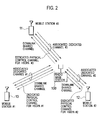
- FIG. 2 is a diagram showing a configuration example of the mobile communication system, to which a packet transmission control method is applied, according to the first embodiment of the present invention.
- the mobile communication system according to this embodiment includes a radio base station 100 and a plurality of mobile stations (#1 to #3) 10 to 12. Moreover, the HSDPA scheme is applied to the mobile communication system according to this embodiment.
- a downlink shared channel such as a downlink shared channel HS-DSCH and a downlink shared control channel HS-SCCH (Shared Control Channel), which is shared among the mobile stations (#1 to #3) 10 to 12, associated dedicated channels #1 to #3 (two-way channels) associated with physical channels individually allocated to the mobile stations (#1 to #3) 10 to 12, and the like are used.
- HS-DSCH downlink shared channel
- HS-SCCH Shared Control Channel
- a pilot symbol and a power control command (TPC command) for transmitting downlink associated dedicated channels are transmitted in addition to user data.
- a transmission power control command for transmitting the uplink associated dedicated channels, and the like are transmitted, through the downlink associated dedicated channels #1 to #3.
- dedicated physical control channels for the HSDPA are used in addition to the associated dedicated channels.
- CQI channel quality information
- ACK/NACK delivery acknowledgement information
- the respective mobile stations (#1 to #3) 10 to 12 have the same configuration and functions.
- the radio base station is required to determine a transmission method (a transmission format and transmission resources) of downlink packets for each of the plurality of mobile stations. Therefore, a mobile station N arbitrarily selected from the plurality of mobile stations will be described below, unless otherwise noted.
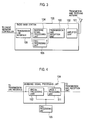
- Fig. 3 is a functional block diagram showing a configuration example of the radio base station 100 according to this embodiment.
- the radio base station 100 includes a transmitting and receiving antenna 101, an amplifier unit 102, a transmission and reception unit 103, a baseband signal processing unit 104, a call processing unit 105 and a transmission line interface 106.
- the transmitting and receiving antenna 101 transmits and receives radio frequency signals to and from the plurality of mobile stations (#1 to #3) 10 to 12.
- the amplifier unit 102 amplifies an uplink radio frequency signal received by the transmitting and receiving antenna 101 and outputs the signal to the transmission and reception unit 103. Moreover, the amplifier unit 102 amplifies a downlink radio frequency signal outputted from the transmission and reception unit 103 and outputs the signal to the transmitting and receiving antenna 101.
- the transmission and reception unit 103 provides a baseband signal, outputted from the baseband signal processing unit 104, with frequency conversion processing for converting the baseband signal into a radio frequency signal, and outputs the radio frequency signal to the amplifier unit 102. Moreover, the transmission and reception unit 103 provides a radio frequency signal, outputted from the amplifier unit 102, with frequency conversion processing for converting the radio frequency signal into a baseband signal, and then outputs the baseband signal to the baseband signal processing unit 104.
- the baseband signal processing unit 104 generates a baseband signal by providing a downlink packet, outputted from the transmission line interface 106, with retransmission control (H-ARQ control) processing, scheduling processing, transmission method determination processing, channel coding processing, spreading processing and the like, and then outputs the generated baseband signal to the transmission and reception unit 103.
- H-ARQ control retransmission control
- the baseband signal processing unit 104 provides a baseband signal, outputted from the transmission and reception unit 103, with despreading processing, RAKE combining processing, error correction decoding processing and the like, and then outputs the signal to the transmission line interface 106.
- the baseband signal includes channel quality information (CQI) on each mobile station, which is used for MAC-hs (Media Access Control-HSDPA) processing that will be described later, delivery acknowledgement information (ACK/NACK/DTX) in H-ARQ processing, and the like.
- CQI channel quality information
- MAC-hs Media Access Control-HSDPA
- ACK/NACK/DTX delivery acknowledgement information
- H-ARQ processing and the like.
- the information described above is decoded by a layer 1 processing unit 111 in the baseband signal processing unit 104 and is used by a MAC-hs processing unit 112 in the baseband signal processing unit 104.
- the call processing unit 105 controls a state of the radio base station 100 and allocates resources by transmitting and receiving, through the transmission line interface 106, a call processing control signal to and from a radio controller positioned above the radio base station 100.
- the transmission line interface 106 transmits and receives information to and from the radio controller.
- the baseband signal processing unit 104 includes the layer 1 processing unit 111 and the MAC-hs processing unit 112. Note that each of the layer 1 processing unit 111 and the MAC-hs processing unit 112 is connected to the call processing unit 105.
- the layer 1 processing unit 111 is configured to provide downlink channel coding processing, uplink channel decoding processing, transmission power control processing for uplink and downlink dedicated physical control channels, the RAKE combining processing, and spreading and despreading processing.
- the layer 1 processing unit 111 is configured to receive information (channel quality information CQI) indicating a radio state of the downlink, which is reported with the uplink dedicated physical channel (HS-DPCCH) from each of the mobile stations, and the delivery acknowledgement information (ACK/NACK/DTX) in the H-ARQ control and then to output the information to the MAC-hs processing unit 112.
- information channel quality information CQI
- HS-DPCCH uplink dedicated physical channel
- ACK/NACK/DTX delivery acknowledgement information
- the MAC-hs processing unit 112 is configured to provide H-ARQ control processing for the downlink shared channel in the HSDPA scheme, scheduling processing for packets waiting for transmission, and determination processing of a transmission method (a transmission format and transmission resources) used for transmission of downlink packets.
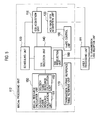
- the MAC-hs processing unit 112 includes a CQI acquisition unit 110, a ACK/NACK/DTX acquisition unit 120, a scheduling unit 130, a TFR (Transport Format Resource) selection unit 140, a MAC-hs resource calculation unit 150, a H-ARQ control unit 160, a transmission format reference table retention unit 170 and a TBS (Transport Block Size) reselection unit 180.
- a CQI acquisition unit 110 the ACK/NACK/DTX acquisition unit 120
- a scheduling unit 130 a TFR (Transport Format Resource) selection unit 140
- a MAC-hs resource calculation unit 150 a H-ARQ control unit 160
- a transmission format reference table retention unit 170 and a TBS (Transport Block Size) reselection unit 180.
- TBS Transport Block Size
- the MAC-hs processing unit 112 includes various functions, such as a function of executing a flow control, besides the functions described above. However, since the various functions are not directly related to the present invention, description and explanation thereof will be omitted.
- the CQI acquisition unit 110 is configured to acquire the channel quality information (CQI) decoded by the layer 1 processing unit 111 and then to output the information to the scheduling unit 130 and the TFR selection unit 140.
- CQI channel quality information
- the ACK/NACK/DTX acquisition unit 120 is configured to acquire the delivery acknowledgement information (ACK/NACK/DTX) in the H-ARQ control, which is decoded by the layer 1 processing unit 111, and then to output the information to the H-ARQ control unit 160.
- ACK/NACK/DTX delivery acknowledgement information
- the scheduling unit 130 is configured to determine a mobile station to which the HS-DSCH is to be allocated (a mobile station to which a downlink packet is to be transmitted) in each TTI (Transmission Time Interval) with an arbitrary scheduling algorithm, and then to notify the TFR selection unit 140 of a mobile station ID for identifying the mobile station described above.
- TTI Transmission Time Interval
- the scheduling unit 130 is configured to notify the TFR selection unit 140 of a plurality of mobile station IDs having priority information added thereto.
- the TFR selection unit 140 is configured to receive from the CQI acquisition unit 110 the CQI (channel quality information on the downlink) reported from each of the mobile stations, to receive retransmission information from the H-ARQ control unit 160, and to receive radio resource information from the MAC-hs resource calculation unit 150.
- the retransmission information is a piece of information indicating whether the packet to be transmitted in the TTI is in a first transmission in the H-ARQ control or in a retransmission.
- the radio resource information is a piece of information indicating transmission resources (a code resource amount and a power resource amount) which can be used for transmission of the packets in the TTI.
- the TFR selection unit 140 is connected to the transmission format reference table retention unit 170 and is configured to determine a transmission method (a transmission format and transmission resources) used for transmission of the packet (HS-DSCH) with reference to a transmission format reference table retained in the transmission format reference table retention unit 170 based on the received CQI and radio resource information.
- a transmission method a transmission format and transmission resources used for transmission of the packet (HS-DSCH) with reference to a transmission format reference table retained in the transmission format reference table retention unit 170 based on the received CQI and radio resource information.
- the TFR selection unit 140 determines, as the transmission method, a transport block size used for transmission of the packet, a modulation scheme used for transmission of the packet, a code resource amount used for transmission of the packet, a power resource amount used for transmission of the packet, and the like.
- the determination processing of the transmission method (the transmission format and the transmission resources) by the TFR selection unit 140 will be described in detail later.
- the MAC-hs resource calculation unit 150 includes a HS-DSCH power resource calculation unit 151 and a HS-DSCH code resource calculation unit 152.
- the MAC-hs resource calculation unit 150 calculates transmission resources (for example, radio resources such as power resources and code resources) available for transmission of the packet (HS-DSCH) by using the HS-DSCH power resource calculation unit 151, the HS-DSCH code resource calculation unit 152 and the like, and notifies the TFR selection unit 140 of the transmission resources (for example, the radio resources such as the power resources and the code resources) which can be used for transmission of the packet in the TTI.
- transmission resources for example, radio resources such as power resources and code resources
- the TFR selection unit 140 sequentially determines the transmission format and the transmission resources from a high priority mobile station.
- the MAC-hs resource calculation unit 150 notifies the TFR selection unit 140 of the power resources and the code resources usable for the respective mobile stations, when the TFR selection unit 140 determines the transmission format and the transmission resources.
- the MAC-hs resource calculation unit 150 notifies the TFR selection unit 140 of the amounts of all the power resources and code resources which can be used in the TTI.
- the MAC-hs resource calculation unit 150 notifies the TFR selection unit 140 of values obtained by subtracting the amounts of power resources and code resources used in the highest priority mobile station from the amounts of all the power resources and code resources which can be used in the TTI, respectively, as the amounts of power resources and code resources which can be used in the second highest priority mobile station.
- the MAC-hs resource calculation unit 150 notifies the TFR selection unit 140 of values obtained by subtracting the amounts of power resources and code resources used in a mobile station having a priority higher than that of the relevant mobile station from the amounts of power resources and code resources which can be used in the TTI, respectively, as the amounts of power resources and code resources which can be used in the relevant mobile station, as in the case of the second highest priority mobile station.
- the H-ARQ control unit 160 is configured to perform H-ARQ retransmission control based on feedback of delivery acknowledgement information (Ack/Nack/DTX) on the uplink.
- Ack/Nack/DTX delivery acknowledgement information
- Fig. 6 shows an operation example of a stop-and-wait protocol performed by the H-ARQ control unit 160.
- a reception side (the mobile station side) is configured to send back the delivery acknowledgement information (Ack/Nack/DTX) with the HS-DPCCH upon receipt of a downlink packet from a transmission side (the radio base station side).
- Ack/Nack/DTX delivery acknowledgement information
- the reception side cannot correctly receive a packet #1 and consequently sends a negative acknowledgement (Nack) back to the transmission side. Moreover, the reception side can correctly receive a packet #2 and consequently sends a positive acknowledgement (Ack) back to the transmission side. After the packet #2, the reception side repeats the operation of sending the positive acknowledgement (Ack) or the negative acknowledgement (Nack) back to the transmission side in the order of received packets.
- the H-ARQ control unit 160 notifies the TFR selection unit 140 of information (retransmission information) indicating whether the packet to be transmitted in the TTI is in a first transmission in the H-ARQ control or in a retransmission (transmission for the second time or more).
- the transmission format reference table retention unit 170 retains a transmission format reference table in which the transmission resources usable for transmission of the packet, the channel quality information (CQI) on the downlink and the transmission method (the transmission format and the transmission resources) used for transmission of the packet are associated with each other.
- CQI channel quality information
- the transmission format reference table is a table showing a relationship, for every code resource amount usable for transmission of a packet in the TTI, between the channel quality information (CQI) on the downlink, a transport block size used for transmission of the packet, the code resource amount used for transmission of the packet, a modulation scheme used for transmission of the packet, and a power offset of power resources used for transmission of the packet.
- CQI channel quality information
- Figs. 7 (a) and 7 (b) show examples of the transmission format reference table.
- Fig. 7 (a) shows a table in which the channel quality information (CQI) on the downlink, a transport block size used for transmission of the packet, a code resource amount used for transmission of the packet, a modulation scheme used for transmission of the packet, and a power offset of power resources used for transmission of the packet are associated with each other when the code resource amount that can be used for transmission of the packet in the TTI is "4."
- CQI channel quality information
- Fig. 7 (b) shows a table in which the channel quality information (CQI) on the downlink, a transport block size used for transmission of the packet, a code resource amount used for transmission of the packet, a modulation scheme used for transmission of the packet, and a power offset of power resources used for transmission of the packet are associated with each other when the code resource amount that can be used for transmission of the packet in the TTI is "5.”
- CQI channel quality information
- the transmission format reference table retention unit 170 retains 15 tables for every usable code resource amount.
- the transmission format reference table retention unit 170 can output the transport block size used for transmission of the packet in the TTI to the TFR selection unit 140 through a function TF_Related_TBS (the code resource amount, the CQI).
- the transmission format reference table retention unit 170 can output the code resource amount used for transmission of the packet in the TTI to the TFR selection unit 140 through a function TF_Related_Code (the code resource amount, the CQI).
- the transmission format reference table retention unit 170 can output the modulation scheme used for transmission of the packet in the TTI to the TFR selection unit 140 through a function TF_Related_Mod (the code resource amount, the CQI).
- the transmission format reference table retention unit 170 can output an offset value of the power resource amount used for transmission of the packet in the TTI to the TFR selection unit 140 through a function TF_Related_Offset (the code resource amount, the CQI).
- the transmission format reference table retention unit 170 can output the CQI corresponding to the transmission method used for transmission of the packet in the TTI to the TFR selection unit 140 through a function TF_Related_CQI (the code resource amount, the transport block size).
- CQI corresponding to the transmission method used for transmission of the packet in the TTI means "minimum CQI which enables transmission of the transport block size used for transmission of the packet in the TTI.”
- the transmission format reference table retention unit 170 may be configured to retain transmission format reference tables including only the QPSK in order to support mobile stations having the ability to respond to only the QPSK.
- the TBS reselection unit 180 acquires the transmission method (the transmission format and the transmission resources) determined by the TFR selection unit 140, and redetermines the transmission method (the transport block size) used for transmission of the packet so as to minimize a padding portion in the transport block which forms the packet to be transmitted.
- the redetermination processing of the transmission method will be described in detail later.
- the TBS reselection unit 180 notifies the layer 1 processing unit 111 of the redetermined transport block size and the transmission method other than the transport block size.
- the TBS reselection unit 180 is configured, as described later, to reduce the transport block size determined by the TFR selection unit 140 until the padding portion in the transport block is minimized.
- the TBS reselection unit 180 is configured, as described later, to change the modulation scheme from the 16QAM scheme to the QPSK scheme in the case where the modulation scheme determined by the TFR selection unit 140 is the 16QAM scheme and at the same time, in the case where a coding rate becomes smaller than a predetermined value when the transport block size is reduced.
- the TBS reselection unit 180 is configured, as described later, to reduce the code resource amount in the case where the modulation scheme determined by the TFR selection unit 140 is the QPSK scheme and at the same time, in the case where the transport block size determined by the TFR selection unit 140 is the same as the transmittable minimum transport block size with the code resource amount determined by the TFR selection unit 140.
- the downlink packet is transmitted to a predetermined mobile station with the redetermined transmission method.
- the transport block size is set to "TBS 1
- the code resource amount is set to “Code 1
- the modulation scheme is set to “Mod 1”
- the power resource amount is set to "Power 1”
- the CQI corresponding to the determined transmission method is set to "CQI 1 .”
- the transport block size is set to "TBS 2 ”
- the code resource amount is set to “Code 2 ”
- the modulation scheme is set to “Mod 2”
- the CQI and the power resource amount are calculated in a region of "dB".
- Step S1 the TFR selection unit 140 acquires, from the CQI acquisition unit 110, CQI reported from each of the mobile stations. Moreover, the TFR selection unit 140 acquires a code resource amount and a power resource amount, which can be used in the TTI, from the MAC-hs resource calculation unit 150.
- the acquired CQI is set to "CQI 0 ”
- the acquired code resource amount is set to "Code 0 ”
- the acquired power resource amount is set to "Powero".
- Step S2 if "Code 0 " is larger than a code resource amount that can be received by the mobile station, the operation advances to Step S3, and, if not, the operation advances to Step S4.
- Step S3 the TFR selection unit 140 sets the code resource amount that can be received by the mobile station to "Code 0 ".
- the CQI is calculated by assuming that all transmission power of a downlink shared channel is "Power Default " in the mobile station. Consequently, in Step S4, the TFR selection unit 140 substitutes "CQI 0 " for a value based on "Powero". Specifically, the TFR selection unit 140 sets a value calculated by "CQI 0 +Power 0 -Power Default " to "CQI 0 ".
- Step S5 the TFR selection unit 140 calculates a transport block size "TBS 0 " that can be used in the TTI with reference to a transmission format reference table, based on the code resource amount "Code 0 " that can be used in the TTI and the channel quality information "CQI 0 " on the downlink.
- the TFR selection unit 140 sets a transport block size outputted from the transmission format reference table retention unit 170 based on a function TF_Related_TBS (Code 0 , CQI 0 ) to the transport block size "TBS 0 ".
- Step S6 if a data amount of a packet to be transmitted to the mobile station in the TTI is larger than "TBS 0, " the operation advances to Step S7, and, if not, the operation advances to Step S8.
- Step S7 the TFR selection unit 140 calculates a transmission method to be used for transmission of the packet in the TTI, with reference to the transmission format reference table, based on the power resource amount "Power 0 " that can be used in the TTI and "CQI 0 ".
- the TFR selection unit 140 calculates a power resource amount "Power 1 " as a transmission method used for transmission of the packet in the TTI, with reference to the transmission format reference table, based on the power resource amount "Power 0 " and the code resource amount "Code 0 ,” which can be used in the TTI, and "CQI 0 ".
- the TFR selection unit 140 calculates a modulation scheme "Mod 1 " and a code resource amount "Code 1 " as the transmission method used for transmission of the packet in the TTI, with reference to the transmission format reference table, based on the code resource amount "Code 0 " which can be used in the TTI and "CQI 0 ".
- the TFR selection unit 140 calculates the modulation scheme "Mod 1 " and the code resource amount "Code 1 " by using the following equations.
- Mod 1 TF_Related_Mod Code 0 ⁇ CQI 0
- Code 1 TF_Related_Code Code 0 ⁇ CQI 0
- the TFR selection unit 140 sets "TBS 0 " to a transport block size "TBS 1 " as the transmission method used for transmission of the packet in the TTI.
- Step S8 the TFR selection unit 140 calculates "CQI 1 " that is minimum CQI which enables transmission of the packet to be transmitted, with reference to the transmission format reference table, based on the code resource amount that can be used in the TTI and a data amount (size) of the packet to be transmitted.
- the TFR selection unit 140 calculates "CQI 1 " that is the minimum CQI which enables transmission of the packet to be transmitted, by using the following equation.
- CQI 1 TF_Related_CQI Code 0 ⁇ minimum transport block size which enables transmission of the packet to be transmitted
- Step S9 the TFR selection unit 140 calculates the power resource amount "Power 1 " used for transmission of the packet, with the power resource amount "Power 0 " that can be used in the TTI, "CQI 0 " and "CQI 1 ".
- ⁇ is a predetermined constant.
- the TFR selection unit 140 calculates the modulation scheme "Mod 1 " and the code resource amount "Code 1 " as the transmission method used for transmission of the packet in the TTI, with reference to the transmission format reference table, based on the code resource amount "Code 0 " which can be used in the TTI and "CQI 1 ".
- the TFR selection unit 140 calculates the modulation scheme "Mod 1 " and the code resource amount "Code 1 " by using the following equations.
- Mod 1 TF_Related_Mod Code 0 ⁇ CQI 1
- Code 1 TF_Related_Code Code 0 ⁇ CQI 1
- the TFR selection unit 140 sets "TBS 0 " to be the transport block size "TBS 1 " as the transmission method used for transmission of the packet in the TTI.
- the TBS reselection unit 180 acquires the transport block size "TBS 1 ,” the code resource amount “Code 1 " and the modulation scheme "Mod 1 " from the transmission method (the transmission format and the transmission resources) determined by the TFR selection unit 140.
- Step S12 the TBS reselection unit 180 sets values of "TBS 1 ,” “Code 1 " and “Mod 1 " to values of "TBS 2 ,” “Code 2 " and “Mod 2 ,” respectively.
- Step S13 if "Mod 1 " is "16QAM,” the operation advances to Step S14, and, if not, the operation advances to Step S21.
- Step S14 the TBS reselection unit 180 calculates TFRI based on "TBS 1, " "Code 1 " and “Mod 1 ". Note that a relationship between the transport block size, the number of codes (the code resource amount), the modulation scheme and TFRI is defined in "3GPP TS25.321" as described above.
- Step S15 if TFRI is not "0" and at the same time, a coding rate is larger than a predetermined threshold CR 16QAM , the operation advances to Step S16, and, if not, the operation advances to Step S20.
- the coding rate means a ratio between the number of bits of a physical channel, which is obtained from the code resource amount (the number of codes) and the modulation scheme, and the transport block size. For example, when the transport block size is “TBS 1 ", the code resource amount (the number of codes) is “Code 1 " and the modulation scheme is "16QAM", the coding rate becomes "(TBS 1 +24)/(Code 1 ⁇ 1920)".
- “24” is a size of CRC bits
- “1920” is the number of bits per 1 code in one TTI (3 slots) when a spreading ratio is "16” and the modulation scheme is "16QAM”.
- Step S16 if "TBS 1 " is not less than the number of bits (data amount) obtained by adding the number of bits (data amount) in a header to the number of bits (data amount) in the packet (data) to be transmitted, the operation advances to Step S17, and, if not, the operation is finished.
- the packet to be transmitted is a packet formed of one MAC-d PDU or more.
- Step S17 the TBS reselection unit 180 sets the value of "TBS 1 " to be the value of "TBS 2 ,” and calculates TFRI based on “TBS 1 ,” “Code 1 " and “Mod 1 ".
- Step S18 if the TFRI is not "0" and at the same time, the coding rate is larger than the predetermined threshold CR 16QAM , the operation advances to Step S19, and, if not, the operation advances to Step S20.
- Step S19 the TBS reselection unit 180 calculates a transport block size based on "Code 1 ,” “Mod 1 " and a value obtained by subtracting "1" from the TFRI, and sets the calculated transport block size to "TBS 1 ".
- the relationship between the transport block size, the number of codes (the code resource amount), the modulation scheme and the TFRI is defined in "3GPP TS25.321" as described above.
- Step S20 the TBS reselection unit 180 sets "QPSK” to "Mod 2 ".
- Step S21 the TBS reselection unit 180 calculates TFRI based on "Code 1 ,” “Mod 2 " and "TBS 2 ".
- Step S22 if the TFRI is not "0,” the operation advances to Step S23, and, if not, the operation advances to Step S24.
- Step S23 the TBS reselection unit 180 calculates a transport block size based on "Code 1 ,” “Mod 2 " and a value obtained by subtracting "1" from the TFRI, and sets the calculated transport block size to "TBS 1 ".
- Step S24 the TBS reselection unit 180 subtracts "1" from the value of "Code 1 ".
- Step S25 the TBS reselection unit 180 calculates TFRI based on "Code 1 ,” “Mod 2 " and “TBS 2 ". Moreover, the TBS reselection unit 180 calculates a transport block size based on "Code 1 ,” “Mod 2 " and a value obtained by subtracting "1" from the TFRI, and sets the calculated transport block size to "TBS 1 ".
- Step S26 if "TBS 1 " is not less than the number of bits (data amount) obtained by adding the number of bits (data amount) in a header to the number of bits (data amount) in the packet (data) to be transmitted, the operation advances to Step S27, and, if not, the operation is finished.
- the packet to be transmitted is a packet formed of one MAC-d PDU or more.
- Step S27 the TBS reselection unit 180 sets values of "Code 1 " and "TBS 1 " to values of "Code 2 " and “TBS 2 ,” respectively, and calculates TFRI based on “Code 2 ,” “Mod 2 " and “TBS 2 ".
- Step S28 if the TFRI is not "0,” the operation advances to Step S29, and, if not, the operation advances to Step S30.
- Step S29 the TBS reselection unit 180 calculates a transport block size based on "Code 1 ,” “Mod 2 " and a value obtained by subtracting "1" from the TFRI, and sets the calculated transport block size to "TBS 1 ".
- Step S30 the TBS reselection unit 180 subtracts "1" from the value of "Code 1 ".
- Step S31 the TBS reselection unit 180 calculates TFRI based on "Code 1 ,” “Mod 2 " and “TBS 2 ". Moreover, the TBS reselection unit 180 calculates a transport block size based on “Code 1 ,” “Mod 2 " and a value obtained by subtracting "1" from the TFRI, and sets the calculated transport block size to "TBS 1 ".
- the mobile communication system enables to redetermine a transmission method so as to minimize a padding portion in a transport block, after the transmission method is determined as in the case of the mobile communication system according to the conventional technology.
- transmission of an unnecessary padding portion can be prevented, and a SIR for satisfying a required error rate is reduced.
- an error rate of downlink packets can be reduced.
- a mobile communication system according to modified example 1 is the same as the mobile communication system according to the first embodiment described above, except that a power resource recalculation unit 190 is provided in the MAC-hs processing unit 104 in the baseband signal processing unit 104 in the radio base station 100.
- the power resource recalculation unit 190 is configured to change (reduce) power resources used for transmission of a packet, based on the transmission method (the transmission format and the transmission resources), which is determined by the TFR selection unit 140 and is used for transmission of a downlink packet, and the transmission method (the transmission format and the transmission resources), which is redetermined by the TBS reselection unit 180 and is used for transmission of the downlink packet.
- the power resource recalculation unit 190 obtains CQI corresponding to the transmission method (the transmission format and the transmission resources) which is redetermined by the TBS reselection unit 180, with a transmission format reference table retained by the transmission format reference table retention unit 170, after the redetermination processing by the TBS reselection unit 180.
- the power resource recalculation unit 190 obtains minimum CQI which enables transmission of "TBS 2 ,” with a function TF_Related_CQI (a code resource amount, a transport block size), based on "Code 2 " and "TBS 2 " obtained by the TBS reselection unit 180. Moreover, the power resource recalculation unit 190 sets a value of the obtained CQI to "CQI 2 ".
- TF_Related_CQI a code resource amount, a transport block size
- ⁇ is a predetermined constant.
- CQI 2 may be outputted not as an integer but as a real number.
- the function TF_Related_CQI (the code resource amount, the transport block size) may output an intermediate value between “18” and “19” as the value of "CQI 2 " with reference to Fig. 7 (a)
- the mobile communication system according to modified example 1 can increase transmission resources (radio resources) by reducing the power resources for the SIR for satisfying the reduced required error rate.
- the MAC-hs processing unit 112 may be formed of, for example, a CPU, a digital signal processor (DSP) or a programmable device capable of rewriting a program, such as a FPGA. Furthermore, a program for executing the processing described above may be stored in a predetermined memory area, and parameters ( ⁇ and CR 16QAM ) may be rewritten by downloading.
- DSP digital signal processor
- a program for executing the processing described above may be stored in a predetermined memory area, and parameters ( ⁇ and CR 16QAM ) may be rewritten by downloading.
- the MAC-hs processing unit 112 may be configured to download the parameters described above from an upper node of the radio base station 100.
- the MAC-hs processing unit 112 may be configured to read the parameters or the functions described above directly from a terminal I/F (an external interface function) provided in each of the TFR selection unit 140 and the TBS reselection unit 180.
- the respective functional blocks in the MAC-hs processing unit 112 may be divided with hardware or may be divided as software with programs on a processor.
- the present invention is not only limited to the HSDPA scheme but is also applicable to other high-speed packet transmission schemes for performing transmission control of downlink packets (particularly, the AMC scheme) in the mobile communication system.
- a high-speed packet transmission scheme such as a 1xEV-DO scheme of the cdma 2000 scheme or a TDD scheme in the 3GPP2, and the like are cited.
Landscapes
- Engineering & Computer Science (AREA)
- Computer Networks & Wireless Communication (AREA)
- Signal Processing (AREA)
- Quality & Reliability (AREA)
- Mobile Radio Communication Systems (AREA)
- Small-Scale Networks (AREA)
- Communication Control (AREA)
Abstract
A packet transmission control apparatus comprising a storage unit configured to store a transmission resource usable for transmission of the packet, channel quality information on the downlink, and a transmission method used for transmission of the packet in association with each other; a determination unit configured to determine the transmission method used for transmission of the packet with reference to the storage unit based on the channel quality information on the downlink reported from a mobile station and the transmission resource usable for transmission of the packet; a redetermination unit configured to redetermine the transmission method used for transmission of the packet so as to minimize a padding portion in a transport block that forms the packet; and a packet transmission unit configured to transmit the packet with the redetermined transmission method.
Description
- The present invention relates to a packet transmission control apparatus and a packet transmission control method for controlling transmission of downlink packets to a plurality of mobile stations.
- There has heretofore been known a mobile communication system in which a radio base station controls transmission of downlink packets by adaptively changing a transmission method of the downlink packets (for example, a transmission format and the like, such as a modulation scheme and a coding rate) according to a radio state of a downlink in communication with a mobile station belonging to the radio base station. Such a control scheme is called an adaptive modulation and coding (AMC) scheme.
- In the mobile communication system to which the AMC scheme is applied, the mobile station is configured to monitor the radio state of the downlink, and to notify the radio base station of the monitored radio state of the downlink by using an uplink. Here, the radio state of the downlink includes an SIR, a CIR, received power and the like.
- Moreover, the radio base station is configured to determine the transmission method of the downlink packets (for example, the transmission format and the like, such as the modulation scheme and the coding rate), on the basis of the radio state of the downlink which is notified by the mobile station, and also on the basis of transmission resources (radio resources) usable for transmission of the downlink packets, and thereby to transmit the downlink packets with the determined transmission method.
- In this case, the mobile communication system to which the AMC scheme is applied is configured to transmit the downlink packets with a transmission method which enables communication at a higher transmission rate, when the radio state of the downlink allows the radio base station to communicate with the mobile station, in other words, when the radio state of the downlink is in good conditions such as the case where the mobile station is positioned near the radio base station or where the mobile station moves slowly.
- Meanwhile, the mobile communication system to which the AMC scheme is applied is configured to transmit the downlink packets with a transmission method which enables communication at a lower transmission rate, when the radio state of the downlink is in poor conditions such as the case where the mobile station is positioned at a cell edge or where the mobile station moves fast.
- Thus, the mobile communication system to which the AMC scheme is applied enables efficient communication in response to a change in a propagation environment.
- Meanwhile, the standardization of the third-generation mobile communication system, what is termed "IMT-2000," has been in progress in 3GPP/3GPP2 (Third-Generation Partnership Project/ Third-Generation Partnership Project 2) which are organized by a regional standardization organization and the like. The 3GPP is developing the standard specifications of the "W-CDMA scheme," and the 3GPP2 is developing standard specifications of the "cdma 2000 scheme."
- The 3GPP is standardizing a high speed downlink packet access (HSDPA) scheme, which is a high-speed downward packet transmission scheme, based on a prediction that high-speed and high-capacity traffic used for downloads and the like from databases and Web sites, particularly in a downlink, would increase along with the recent rapid spread of the Internet.
- Moreover, from the same point of view, the 3GPP2 is also standardizing high-speed downward packet transmission scheme "1x-EV DO." Note that, in "1x-EV DO" of the cdma 2000 scheme, "DO" stands for "Data Only."
- For example, in the HSDPA scheme, the AMC scheme is used for controlling a modulation scheme and a coding rate for a radio channel thereof according to a radio state between a mobile station and a radio base station. Here, the mobile station is configured to notify the radio base station of a radio state of a downlink by transmitting control information (radio state information) called a channel quality indicator (CQI) through an uplink. Note that the CQI is mapped into a dedicated physical control channel (HS-DPCCH) for the HSDPA on the uplink.
- Moreover, the mobile station is configured to calculate the CQI described above, based on an SIR figured out from a common pilot channel (CPICH) of the downlink. For example, the mobile station is configured to calculate the CQI so as to set an error rate of the received packet to 10%.
- Moreover, the radio base station is configured to transmit a high speed-downlink shared channel (HS-DSCH) with a certain transmission format determined on the basis of the CQI reported from the mobile station or a certain transmission format having required SIR equal to that of the transmission format.
- Here, the transmission format includes a transport block size, a modulation scheme, a code resource amount, a power resource amount and the like, which are used for transmission of packets on the HS-DSCH.
- Meanwhile, in the HSDPA scheme, a packet is formed of one transport block. Note that a size of the transport block is equal to a transport block size.
- Furthermore, as shown in Fig. 1, the transport block includes a protocol data unit called "MAC-d PDU" and a header.
- Here, the following information and the like are attached to the header. Specifically, attached are a queue ID for allowing a priority queue of the radio base station side and a reordering queue of the mobile station side to correspond to each other one-to-one, a size of the "MAC-d PDU" and the number thereof used for separating a plurality of the "MAC-d PDUs" from each other.
- Moreover, the transport block size is defined as follows for each number of codes (code resource amount) and each modulation scheme (QPSK or 16QAM), which are used for transmission of packets, with a "TFRI" that is an integer from 0 to 62.
- The transport block size, when kt= (TFRI) + ko,i, is set to "L(kt)."
- Here, when kt<40, the transport block size is calculated by L(kt)= 125+12·kt.
- Meanwhile, when kt>40, the transport block size is calculated by the following formulae.


- Note that ko,i is given as described below.
MODURATION SCHEMA CODE NUMBER K o,i 1 1 2 40 3 63 QPSK 4 79 5 92 6 102 7 111 8 118 9 125 10 131 11 136 12 141 13 145 14 150 15 153 1 40 2 79 16QAM 3 102 4 118 5 131 6 141 7 150 8 157 9 164 10 169 11 175 12 180 13 184 14 188 15 192 - Moreover, the number of "MAC-d PDUs" described above is an integer. Meanwhile, the number of the transport block sizes that can be signaled by the radio base station to the mobile station is only 254, and this may generate a space in the transport block. Accordingly, in order to fill up the space, it is required to pack data having no meaning therein.
- For example, in the example of Fig. 1, the header and three "MAC-d PDUs" are contained in one transport block, and, it is required to pack data having no meaning in a remaining space. As described above, packing of data having no meaning is called "padding," and a portion packed with the data having no meaning is called a "padding portion."
- However, in a physical layer, communication is performed with both of the padding portion and the "MAC-d PDU" (a significant data portion) as significant information without distinguishing between the two. Thus, extra power resources and code resources are required for the padding portion. As a result, there is a problem that a system capacity is reduced.
- The present invention has been made in the light of the foregoing problems. An object of the present invention is to provide a packet transmission control apparatus and a packet transmission control method, which enable transmission of downlink packets by efficiently utilizing transmission resources (radio resources).
- A first aspect of the present invention is summarized as a packet transmission control apparatus for controlling transmission of a packet of a downlink to a plurality of mobile stations. The packet transmission control apparatus includes: a storage unit configured to store a transmission resource usable for transmission of the packet, channel quality information on the downlink, and a transmission method used for transmission of the packet in association with each other; a determination unit configured to determine the transmission method used for transmission of the packet with reference to the storage unit based on the channel quality information on the downlink reported from a mobile station and the transmission resource usable for transmission of the packet; a redetermination unit configured to redetermine the transmission method used for transmission of the packet so as to minimize a padding portion in a transport block that forms the packet; and a packet transmission unit configured to transmit the packet with the redetermined transmission method.
- In the first aspect of the present invention, the determination unit may be configured to determine, as the transmission method, a transport block size used for transmission of the packet, and the redetermination unit may be configured to reduce the transport block size determined by the determination unit until the padding portion in the transport block is minimized.
- In the first aspect of the present invention, the determination unit may be configured to determine, as the transmission method, a modulation scheme used for transmission of the packet, and the redetermination unit may be configured to change the modulation scheme from a 16QAM scheme to a QPSK scheme in the case where the modulation scheme determined by the determination unit is the 16QAM scheme and at the same time, in the case where a coding rate becomes smaller than a predetermined value when the transport block size is reduced.
- In the first aspect of the present invention, the determination unit may be configured to determine, as the transmission method, a transport block size, a modulation scheme and a code resource amount, which are used for transmission of the packet, and the redetermination unit may be configured to reduce the code resource amount in the case where the modulation scheme determined by the determination unit is a QPSK scheme and at the same time, in the case where the transport block size determined by the determination unit is the same as a transmittable minimum transport block size with the code resource amount determined by the determination unit.
- In the first aspect of the present invention, the packet transmission control apparatus may be configured to include a power resource changing unit configured to change a power resource used for transmission of the packet, in accordance with the transmission method determined by the determination unit and with the transmission method redetermined by the redetermination unit.
- A second aspect of the present invention is summarized as a packet transmission control method for controlling transmission of a packet of a downlink to a plurality of mobile stations, including the steps of: storing a transmission resource usable for transmission of the packet, channel quality information on the downlink, and a transmission method used for transmission of the packet in association with each other; determining the transmission method used for transmission of the packet with reference to the storage unit, based on the channel quality information on the downlink reported from a mobile station and the transmission resource usable for transmission of the packet; redetermining the transmission method used for transmission of the packet so as to minimize a padding portion in a transport block that forms the packet; and transmitting the packet with the redetermined transmission method.
-
- Fig. 1 is a diagram showing a configuration of a packet in a mobile communication system to which an HSDPA scheme is applied.
- Fig. 2 is a schematic diagram showing the entire mobile communication system according to an embodiment of the present invention.
- Fig. 3 is a functional block diagram of a radio base station in the mobile communication system according to the embodiment of the present invention.
- Fig. 4 is a functional block diagram of a baseband signal processing unit in the radio base station in the mobile communication system according to the embodiment of the present invention.
- Fig. 5 is a functional block diagram of a MAC-hs processing unit in the baseband signal processing unit in the radio base station in the mobile communication system according to a first embodiment of the present invention.
- Fig. 6 is a diagram showing an example of a stop-and-wait protocol operation performed by an H-ARQ control unit in the MAC-hs processing unit in the baseband signal processing unit in the radio base station in the mobile communication system according to the first embodiment of the present invention.
- Figs. 7 (a) and 7 (b) are diagrams showing examples of a transmission format reference table retained by a transmission format reference table retention unit in the MAC-hs processing unit in the baseband signal processing unit in the radio base station in the mobile communication system according to the first embodiment of the present invention.
- Fig. 8 is a flowchart showing an operation of determining a downlink packet transmission method by a TFR selection unit in the MAC-hs processing unit in the baseband signal processing unit in the radio base station in the mobile communication system according to the first embodiment of the present invention.
- Fig. 9 is a flowchart showing an operation of redetermining a downlink packet transmission method by a TBS reselection unit in the MAC-hs processing unit in the baseband signal processing unit in the radio base station in the mobile communication system according to the first embodiment of the present invention.
- Fig. 10 is a functional block diagram of a MAC-hs processing unit in a baseband signal processing unit in a radio base station in a mobile communication system according to modified example 1 of the present invention.
- With reference to Figs. 2 to 7, a configuration of a mobile communication system according to a first embodiment of the present invention will be described. Fig. 2 is a diagram showing a configuration example of the mobile communication system, to which a packet transmission control method is applied, according to the first embodiment of the present invention.
- As shown in Fig. 2, the mobile communication system according to this embodiment includes a
radio base station 100 and a plurality of mobile stations (#1 to #3) 10 to 12. Moreover, the HSDPA scheme is applied to the mobile communication system according to this embodiment. - On downlinks in the HSDPA scheme, a downlink shared channel, such as a downlink shared channel HS-DSCH and a downlink shared control channel HS-SCCH (Shared Control Channel), which is shared among the mobile stations (#1 to #3) 10 to 12, associated
dedicated channels # 1 to #3 (two-way channels) associated with physical channels individually allocated to the mobile stations (#1 to #3) 10 to 12, and the like are used. Note that, in the example shown in Fig. 2, since the downlink shared channel to themobile station # 2 is indicated by a solid line, the downlink shared channel is assumed to be allocated to themobile station # 2. - Through uplink associated
dedicated channels # 1 to #3, a pilot symbol and a power control command (TPC command) for transmitting downlink associated dedicated channels are transmitted in addition to user data. - Meanwhile, a transmission power control command for transmitting the uplink associated dedicated channels, and the like are transmitted, through the downlink associated
dedicated channels # 1 to #3. - Moreover, on the uplinks, dedicated physical control channels (HS-DPCCH) for the HSDPA are used in addition to the associated dedicated channels. Note that, through the dedicated physical control channels (HS-DPCCH) for the HSDPA, scheduling processing of the shared channels, channel quality information (CQI) on the downlink used in the AMC scheme, delivery acknowledgement information (ACK/NACK) for reporting delivery acknowledgement in H-ARQ (Hybrid-ARQ) control, and the like are transmitted.
- In this embodiment, the respective mobile stations (#1 to #3) 10 to 12 have the same configuration and functions. Moreover, in this embodiment, the radio base station is required to determine a transmission method (a transmission format and transmission resources) of downlink packets for each of the plurality of mobile stations. Therefore, a mobile station N arbitrarily selected from the plurality of mobile stations will be described below, unless otherwise noted.
- Fig. 3 is a functional block diagram showing a configuration example of the
radio base station 100 according to this embodiment. As shown in Fig. 3, theradio base station 100 according to this embodiment includes a transmitting and receivingantenna 101, anamplifier unit 102, a transmission andreception unit 103, a basebandsignal processing unit 104, acall processing unit 105 and atransmission line interface 106. - The transmitting and receiving
antenna 101 transmits and receives radio frequency signals to and from the plurality of mobile stations (#1 to #3) 10 to 12. - The
amplifier unit 102 amplifies an uplink radio frequency signal received by the transmitting and receivingantenna 101 and outputs the signal to the transmission andreception unit 103. Moreover, theamplifier unit 102 amplifies a downlink radio frequency signal outputted from the transmission andreception unit 103 and outputs the signal to the transmitting and receivingantenna 101. - The transmission and
reception unit 103 provides a baseband signal, outputted from the basebandsignal processing unit 104, with frequency conversion processing for converting the baseband signal into a radio frequency signal, and outputs the radio frequency signal to theamplifier unit 102. Moreover, the transmission andreception unit 103 provides a radio frequency signal, outputted from theamplifier unit 102, with frequency conversion processing for converting the radio frequency signal into a baseband signal, and then outputs the baseband signal to the basebandsignal processing unit 104. - The baseband
signal processing unit 104 generates a baseband signal by providing a downlink packet, outputted from thetransmission line interface 106, with retransmission control (H-ARQ control) processing, scheduling processing, transmission method determination processing, channel coding processing, spreading processing and the like, and then outputs the generated baseband signal to the transmission andreception unit 103. - Moreover, the baseband
signal processing unit 104 provides a baseband signal, outputted from the transmission andreception unit 103, with despreading processing, RAKE combining processing, error correction decoding processing and the like, and then outputs the signal to thetransmission line interface 106. - Here, the baseband signal includes channel quality information (CQI) on each mobile station, which is used for MAC-hs (Media Access Control-HSDPA) processing that will be described later, delivery acknowledgement information (ACK/NACK/DTX) in H-ARQ processing, and the like. As described later, the information described above is decoded by a
layer 1processing unit 111 in the basebandsignal processing unit 104 and is used by a MAC-hs processing unit 112 in the basebandsignal processing unit 104. - The
call processing unit 105 controls a state of theradio base station 100 and allocates resources by transmitting and receiving, through thetransmission line interface 106, a call processing control signal to and from a radio controller positioned above theradio base station 100. Thetransmission line interface 106 transmits and receives information to and from the radio controller. - With reference to Fig. 4, a configuration of the baseband
signal processing unit 104 described above will be described in detail. As shown in Fig. 4, the basebandsignal processing unit 104 includes thelayer 1processing unit 111 and the MAC-hs processing unit 112. Note that each of thelayer 1processing unit 111 and the MAC-hs processing unit 112 is connected to thecall processing unit 105. - The
layer 1processing unit 111 is configured to provide downlink channel coding processing, uplink channel decoding processing, transmission power control processing for uplink and downlink dedicated physical control channels, the RAKE combining processing, and spreading and despreading processing. - Moreover, the
layer 1processing unit 111 is configured to receive information (channel quality information CQI) indicating a radio state of the downlink, which is reported with the uplink dedicated physical channel (HS-DPCCH) from each of the mobile stations, and the delivery acknowledgement information (ACK/NACK/DTX) in the H-ARQ control and then to output the information to the MAC-hs processing unit 112. - The MAC-
hs processing unit 112 is configured to provide H-ARQ control processing for the downlink shared channel in the HSDPA scheme, scheduling processing for packets waiting for transmission, and determination processing of a transmission method (a transmission format and transmission resources) used for transmission of downlink packets. - With reference to Fig. 5, a configuration of the MAC-
hs processing unit 112 mentioned above will be described in detail. As shown in Fig. 5, the MAC-hs processing unit 112 includes aCQI acquisition unit 110, a ACK/NACK/DTX acquisition unit 120, ascheduling unit 130, a TFR (Transport Format Resource)selection unit 140, a MAC-hsresource calculation unit 150, a H-ARQ control unit 160, a transmission format referencetable retention unit 170 and a TBS (Transport Block Size)reselection unit 180. - Note that the MAC-
hs processing unit 112 includes various functions, such as a function of executing a flow control, besides the functions described above. However, since the various functions are not directly related to the present invention, description and explanation thereof will be omitted. - The
CQI acquisition unit 110 is configured to acquire the channel quality information (CQI) decoded by thelayer 1processing unit 111 and then to output the information to thescheduling unit 130 and theTFR selection unit 140. - The ACK/NACK/
DTX acquisition unit 120 is configured to acquire the delivery acknowledgement information (ACK/NACK/DTX) in the H-ARQ control, which is decoded by thelayer 1processing unit 111, and then to output the information to the H-ARQ control unit 160. - The
scheduling unit 130 is configured to determine a mobile station to which the HS-DSCH is to be allocated (a mobile station to which a downlink packet is to be transmitted) in each TTI (Transmission Time Interval) with an arbitrary scheduling algorithm, and then to notify theTFR selection unit 140 of a mobile station ID for identifying the mobile station described above. - Here, in the case where scheduling is done so as to transmit the downlink packets to the plurality of mobile stations in the TTI, the
scheduling unit 130 is configured to notify theTFR selection unit 140 of a plurality of mobile station IDs having priority information added thereto. - The
TFR selection unit 140 is configured to receive from theCQI acquisition unit 110 the CQI (channel quality information on the downlink) reported from each of the mobile stations, to receive retransmission information from the H-ARQ control unit 160, and to receive radio resource information from the MAC-hsresource calculation unit 150. Here, the retransmission information is a piece of information indicating whether the packet to be transmitted in the TTI is in a first transmission in the H-ARQ control or in a retransmission. Moreover, the radio resource information is a piece of information indicating transmission resources (a code resource amount and a power resource amount) which can be used for transmission of the packets in the TTI. - Moreover, the
TFR selection unit 140 is connected to the transmission format referencetable retention unit 170 and is configured to determine a transmission method (a transmission format and transmission resources) used for transmission of the packet (HS-DSCH) with reference to a transmission format reference table retained in the transmission format referencetable retention unit 170 based on the received CQI and radio resource information. - Here, the
TFR selection unit 140 determines, as the transmission method, a transport block size used for transmission of the packet, a modulation scheme used for transmission of the packet, a code resource amount used for transmission of the packet, a power resource amount used for transmission of the packet, and the like. - Moreover, the determination processing of the transmission method (the transmission format and the transmission resources) by the
TFR selection unit 140 will be described in detail later. - The MAC-hs
resource calculation unit 150 includes a HS-DSCH powerresource calculation unit 151 and a HS-DSCH coderesource calculation unit 152. The MAC-hsresource calculation unit 150 calculates transmission resources (for example, radio resources such as power resources and code resources) available for transmission of the packet (HS-DSCH) by using the HS-DSCH powerresource calculation unit 151, the HS-DSCH coderesource calculation unit 152 and the like, and notifies theTFR selection unit 140 of the transmission resources (for example, the radio resources such as the power resources and the code resources) which can be used for transmission of the packet in the TTI. - Here, in the case where the downlink packets are transmitted to the plurality of mobile stations in the TTI, the
TFR selection unit 140 sequentially determines the transmission format and the transmission resources from a high priority mobile station. Thus, the MAC-hsresource calculation unit 150 notifies theTFR selection unit 140 of the power resources and the code resources usable for the respective mobile stations, when theTFR selection unit 140 determines the transmission format and the transmission resources. - To be more specific, for a highest priority mobile station, the MAC-hs
resource calculation unit 150 notifies theTFR selection unit 140 of the amounts of all the power resources and code resources which can be used in the TTI. - Moreover, for a second highest priority mobile station, the MAC-hs
resource calculation unit 150 notifies theTFR selection unit 140 of values obtained by subtracting the amounts of power resources and code resources used in the highest priority mobile station from the amounts of all the power resources and code resources which can be used in the TTI, respectively, as the amounts of power resources and code resources which can be used in the second highest priority mobile station. - Moreover, also for a third highest priority mobile station and those subsequent thereto, the MAC-hs
resource calculation unit 150 notifies theTFR selection unit 140 of values obtained by subtracting the amounts of power resources and code resources used in a mobile station having a priority higher than that of the relevant mobile station from the amounts of power resources and code resources which can be used in the TTI, respectively, as the amounts of power resources and code resources which can be used in the relevant mobile station, as in the case of the second highest priority mobile station. - As to respective data queues of the respective mobile stations, the H-
ARQ control unit 160 is configured to perform H-ARQ retransmission control based on feedback of delivery acknowledgement information (Ack/Nack/DTX) on the uplink. - Fig. 6 shows an operation example of a stop-and-wait protocol performed by the H-
ARQ control unit 160. In the stop-and-wait protocol (ARQ), a reception side (the mobile station side) is configured to send back the delivery acknowledgement information (Ack/Nack/DTX) with the HS-DPCCH upon receipt of a downlink packet from a transmission side (the radio base station side). - In the example of Fig. 6, the reception side cannot correctly receive a
packet # 1 and consequently sends a negative acknowledgement (Nack) back to the transmission side. Moreover, the reception side can correctly receive apacket # 2 and consequently sends a positive acknowledgement (Ack) back to the transmission side. After thepacket # 2, the reception side repeats the operation of sending the positive acknowledgement (Ack) or the negative acknowledgement (Nack) back to the transmission side in the order of received packets. - Moreover, the H-
ARQ control unit 160 notifies theTFR selection unit 140 of information (retransmission information) indicating whether the packet to be transmitted in the TTI is in a first transmission in the H-ARQ control or in a retransmission (transmission for the second time or more). - The transmission format reference
table retention unit 170 retains a transmission format reference table in which the transmission resources usable for transmission of the packet, the channel quality information (CQI) on the downlink and the transmission method (the transmission format and the transmission resources) used for transmission of the packet are associated with each other. - To be more specific, the transmission format reference table is a table showing a relationship, for every code resource amount usable for transmission of a packet in the TTI, between the channel quality information (CQI) on the downlink, a transport block size used for transmission of the packet, the code resource amount used for transmission of the packet, a modulation scheme used for transmission of the packet, and a power offset of power resources used for transmission of the packet.
- Figs. 7 (a) and 7 (b) show examples of the transmission format reference table.
- Fig. 7 (a) shows a table in which the channel quality information (CQI) on the downlink, a transport block size used for transmission of the packet, a code resource amount used for transmission of the packet, a modulation scheme used for transmission of the packet, and a power offset of power resources used for transmission of the packet are associated with each other when the code resource amount that can be used for transmission of the packet in the TTI is "4."
- Moreover, Fig. 7 (b) shows a table in which the channel quality information (CQI) on the downlink, a transport block size used for transmission of the packet, a code resource amount used for transmission of the packet, a modulation scheme used for transmission of the packet, and a power offset of power resources used for transmission of the packet are associated with each other when the code resource amount that can be used for transmission of the packet in the TTI is "5."
- In reality, since the number of codes usable in the HS-PDSCH is "1 to 15," the transmission format reference
table retention unit 170 retains 15 tables for every usable code resource amount. - In the case where arguments are the "code resource amount that can be used in the TTI" and the "CQI," the transmission format reference
table retention unit 170 can output the transport block size used for transmission of the packet in the TTI to theTFR selection unit 140 through a function TF_Related_TBS (the code resource amount, the CQI). - Alternatively, in the case where the arguments are the "code resource amount that can be used in the TTI" and the "CQI," the transmission format reference
table retention unit 170 can output the code resource amount used for transmission of the packet in the TTI to theTFR selection unit 140 through a function TF_Related_Code (the code resource amount, the CQI). - Alternatively, in the case where the arguments are the "code resource amount that can be used in the TTI" and the "CQI," the transmission format reference
table retention unit 170 can output the modulation scheme used for transmission of the packet in the TTI to theTFR selection unit 140 through a function TF_Related_Mod (the code resource amount, the CQI). - Alternatively, in the case where the arguments are the "code resource amount that can be used in the TTI" and the "CQI," the transmission format reference
table retention unit 170 can output an offset value of the power resource amount used for transmission of the packet in the TTI to theTFR selection unit 140 through a function TF_Related_Offset (the code resource amount, the CQI). - Alternatively, in the case where the arguments are the "code resource amount that can be used in the TTI" and the "transport block size used in the TTI," the transmission format reference
table retention unit 170 can output the CQI corresponding to the transmission method used for transmission of the packet in the TTI to theTFR selection unit 140 through a function TF_Related_CQI (the code resource amount, the transport block size). - Here, the "CQI corresponding to the transmission method used for transmission of the packet in the TTI" means "minimum CQI which enables transmission of the transport block size used for transmission of the packet in the TTI."
- A concrete method for referring to the transmission format reference table will be described in detail below.
- For example, in the case where the code resource amount that can be used in the TTI is "4" and the CQI is "15," the transmission format reference
table retention unit 170 outputs the "transport block size TBS = 2876" through the function TF_Related_TBS (the code resource amount, the CQI) with reference to Fig. 7 (a). - Moreover, in the case where the code resource amount that can be used in the TTI is "5" and the CQI is "10," the transmission format reference
table retention unit 170 outputs the "code resource amount used for transmission of the packet = 4" through the function TF_Related_Code (the code resource amount, the CQI) with reference to Fig. 7 (b). - Moreover, in the case where the code resource amount that can be used in the TTI is "4" and the CQI is "20," the transmission format reference
table retention unit 170 outputs the "modulation scheme used for transmission of the packet = 16QAM" through the function TF_Related_Mod (the code resource amount, the CQI) with reference to Fig. 7 (a). - Furthermore, in the case where the code resource amount that can be used in the TTI is "5" and the CQI is "28," the transmission format reference
table retention unit 170 outputs the "offset value of the power resource amount used for transmission of the packet = -6" through the function TF_Related_Offset (the code resource amount, the CQI) with reference to Fig. 7 (b). - Moreover, in the case where the code resource amount that can be used in the TTI is "4" and the transport block size is "4265," the transmission format reference
table retention unit 170 outputs the "CQI corresponding to the transmission method used for transmission of the packet = 18" through the function TF_Related_CQI (the code resource amount, the transport block size) with reference to Fig. 7 (a). - Moreover, in the case where the transport block size is "4581," the transmission format reference
table retention unit 170 determines that the "CQI = 19" is "minimum CQI which enables transmission of the transport block" through the function TF_Related_CQI (the code resource amount, the transport block size) with reference to Fig. 7 (a), and outputs the "CQI corresponding to the transmission method used for transmission of the packet = 19." - Note that, in the transmission format reference tables shown in Figs. 7 (a) and 7 (b), QPSK and 16QAM are mixed as the modulation scheme. However, the transmission format reference
table retention unit 170 may be configured to retain transmission format reference tables including only the QPSK in order to support mobile stations having the ability to respond to only the QPSK. - The
TBS reselection unit 180 acquires the transmission method (the transmission format and the transmission resources) determined by theTFR selection unit 140, and redetermines the transmission method (the transport block size) used for transmission of the packet so as to minimize a padding portion in the transport block which forms the packet to be transmitted. The redetermination processing of the transmission method will be described in detail later. - The
TBS reselection unit 180 notifies thelayer 1processing unit 111 of the redetermined transport block size and the transmission method other than the transport block size. - To be more specific, the
TBS reselection unit 180 is configured, as described later, to reduce the transport block size determined by theTFR selection unit 140 until the padding portion in the transport block is minimized. - Moreover, the
TBS reselection unit 180 is configured, as described later, to change the modulation scheme from the 16QAM scheme to the QPSK scheme in the case where the modulation scheme determined by theTFR selection unit 140 is the 16QAM scheme and at the same time, in the case where a coding rate becomes smaller than a predetermined value when the transport block size is reduced. - Moreover, the
TBS reselection unit 180 is configured, as described later, to reduce the code resource amount in the case where the modulation scheme determined by theTFR selection unit 140 is the QPSK scheme and at the same time, in the case where the transport block size determined by theTFR selection unit 140 is the same as the transmittable minimum transport block size with the code resource amount determined by theTFR selection unit 140. - As a result, in the TTI, the downlink packet is transmitted to a predetermined mobile station with the redetermined transmission method.
- With reference to Figs. 8 and 9, description will be given of an operation of determining a transmission method (a transmission format and transmission resources) used for transmission of a packet in the TTI by the MAC-
hs processing unit 112 in the mobile communication system according to this embodiment. - To be more specific, with reference to Fig. 8, description will be given of an operation of determining (selecting) the transmission method (the transmission format and the transmission resources) used for transmission of the packet in the TTI by the
TFR selection unit 140. Moreover, with reference to Fig. 9, description will be given of an operation of redetermining (reselecting) the transmission method (the transmission format and the transmission resources) used for transmission of the packet in the TTI by theTBS reselection unit 180. - In this embodiment, only operations in a first transmission in the H-ARQ control will be described. Moreover, in this embodiment, description will be given of an operation of determining a transmission method (a transmission format and transmission resources) used for transmission of a downlink packet to a mobile station (hereinafter referred to as the mobile station) determined by the
scheduling unit 130. Moreover, in this embodiment, when downlink packets are transmitted to a plurality of mobile stations in the TTI, the operation described above is applied sequentially from a high priority mobile station. - Here, among the transmission method (the transmission format and the transmission resources) determined by the
TFR selection unit 140, the transport block size is set to "TBS1," the code resource amount is set to "Code1," the modulation scheme is set to "Mod1," the power resource amount is set to "Power1" and the CQI corresponding to the determined transmission method (the transmission format and the transmission resources) is set to "CQI1." - Moreover, among the transmission method (the transmission format and the transmission resources) redetermined by the
TBS reselection unit 180, the transport block size is set to "TBS2," the code resource amount is set to "Code2," the modulation scheme is set to "Mod2" and the power resource amount is set to "Power2". Note that, in this embodiment, since theTBS reselection unit 180 does not change the power resources, Power1 = Power2 is established. - Moreover, in this embodiment, the CQI and the power resource amount are calculated in a region of "dB".
- As shown in Fig. 8, in Step S1, the
TFR selection unit 140 acquires, from theCQI acquisition unit 110, CQI reported from each of the mobile stations. Moreover, theTFR selection unit 140 acquires a code resource amount and a power resource amount, which can be used in the TTI, from the MAC-hsresource calculation unit 150. Here, the acquired CQI is set to "CQI0," the acquired code resource amount is set to "Code0," and the acquired power resource amount is set to "Powero". - In Step S2, if "Code0" is larger than a code resource amount that can be received by the mobile station, the operation advances to Step S3, and, if not, the operation advances to Step S4.
- In Step S3, the
TFR selection unit 140 sets the code resource amount that can be received by the mobile station to "Code0". - The CQI is calculated by assuming that all transmission power of a downlink shared channel is "PowerDefault" in the mobile station. Consequently, in Step S4, the
TFR selection unit 140 substitutes "CQI0" for a value based on "Powero". Specifically, theTFR selection unit 140 sets a value calculated by "CQI0+Power0-PowerDefault" to "CQI0". - In Step S5, the
TFR selection unit 140 calculates a transport block size "TBS0" that can be used in the TTI with reference to a transmission format reference table, based on the code resource amount "Code0" that can be used in the TTI and the channel quality information "CQI0" on the downlink. - To be more specific, the
TFR selection unit 140 sets a transport block size outputted from the transmission format referencetable retention unit 170 based on a function TF_Related_TBS (Code0, CQI0) to the transport block size "TBS0". - In Step S6, if a data amount of a packet to be transmitted to the mobile station in the TTI is larger than "TBS0," the operation advances to Step S7, and, if not, the operation advances to Step S8.
- In Step S7, the
TFR selection unit 140 calculates a transmission method to be used for transmission of the packet in the TTI, with reference to the transmission format reference table, based on the power resource amount "Power0" that can be used in the TTI and "CQI0". - First, the
TFR selection unit 140 calculates a power resource amount "Power1" as a transmission method used for transmission of the packet in the TTI, with reference to the transmission format reference table, based on the power resource amount "Power0" and the code resource amount "Code0," which can be used in the TTI, and "CQI0". - To be more specific, the
TFR selection unit 140 calculates the power resource amount "Power1" by using the following equation.
- Secondly, the
TFR selection unit 140 calculates a modulation scheme "Mod1" and a code resource amount "Code1" as the transmission method used for transmission of the packet in the TTI, with reference to the transmission format reference table, based on the code resource amount "Code0" which can be used in the TTI and "CQI0". - To be more specific, the
TFR selection unit 140 calculates the modulation scheme "Mod1" and the code resource amount "Code1" by using the following equations.

- Third, the
TFR selection unit 140 sets "TBS0" to a transport block size "TBS1" as the transmission method used for transmission of the packet in the TTI. - In Step S8, the
TFR selection unit 140 calculates "CQI1" that is minimum CQI which enables transmission of the packet to be transmitted, with reference to the transmission format reference table, based on the code resource amount that can be used in the TTI and a data amount (size) of the packet to be transmitted. - To be more specific, the
TFR selection unit 140 calculates "CQI1" that is the minimum CQI which enables transmission of the packet to be transmitted, by using the following equation.
- In Step S9, the
TFR selection unit 140 calculates the power resource amount "Power1" used for transmission of the packet, with the power resource amount "Power0" that can be used in the TTI, "CQI0" and "CQI1". - To be more specific, the
TFR selection unit 140 calculates the power resource amount "Power1" by using the following equation.
- Here, α is a predetermined constant.
- In Step 510, the
TFR selection unit 140 calculates the modulation scheme "Mod1" and the code resource amount "Code1" as the transmission method used for transmission of the packet in the TTI, with reference to the transmission format reference table, based on the code resource amount "Code0" which can be used in the TTI and "CQI1". - To be more specific, the
TFR selection unit 140 calculates the modulation scheme "Mod1" and the code resource amount "Code1" by using the following equations.

- Furthermore, the
TFR selection unit 140 sets "TBS0" to be the transport block size "TBS1" as the transmission method used for transmission of the packet in the TTI. - Next, as shown in Fig. 9, in Step 511, the
TBS reselection unit 180 acquires the transport block size "TBS1," the code resource amount "Code1" and the modulation scheme "Mod1" from the transmission method (the transmission format and the transmission resources) determined by theTFR selection unit 140. - In Step S12, the
TBS reselection unit 180 sets values of "TBS1," "Code1" and "Mod1" to values of "TBS2," "Code2" and "Mod2," respectively. - In Step S13, if "Mod1" is "16QAM," the operation advances to Step S14, and, if not, the operation advances to Step S21.
- In Step S14, the
TBS reselection unit 180 calculates TFRI based on "TBS1," "Code1" and "Mod1". Note that a relationship between the transport block size, the number of codes (the code resource amount), the modulation scheme and TFRI is defined in "3GPP TS25.321" as described above. - In Step S15, if TFRI is not "0" and at the same time, a coding rate is larger than a predetermined threshold CR16QAM, the operation advances to Step S16, and, if not, the operation advances to Step S20.
- Here, the coding rate means a ratio between the number of bits of a physical channel, which is obtained from the code resource amount (the number of codes) and the modulation scheme, and the transport block size. For example, when the transport block size is "TBS1", the code resource amount (the number of codes) is "Code1" and the modulation scheme is "16QAM", the coding rate becomes "(TBS1+24)/(Code1×1920)". Here, "24" is a size of CRC bits, and "1920" is the number of bits per 1 code in one TTI (3 slots) when a spreading ratio is "16" and the modulation scheme is "16QAM".
- In Step S16, if "TBS1" is not less than the number of bits (data amount) obtained by adding the number of bits (data amount) in a header to the number of bits (data amount) in the packet (data) to be transmitted, the operation advances to Step S17, and, if not, the operation is finished. Here, the packet to be transmitted is a packet formed of one MAC-d PDU or more.
- In Step S17, the
TBS reselection unit 180 sets the value of "TBS1" to be the value of "TBS2," and calculates TFRI based on "TBS1," "Code1" and "Mod1". - In Step S18, if the TFRI is not "0" and at the same time, the coding rate is larger than the predetermined threshold CR16QAM, the operation advances to Step S19, and, if not, the operation advances to Step S20.
- In Step S19, the
TBS reselection unit 180 calculates a transport block size based on "Code1," "Mod1" and a value obtained by subtracting "1" from the TFRI, and sets the calculated transport block size to "TBS1". Note that the relationship between the transport block size, the number of codes (the code resource amount), the modulation scheme and the TFRI is defined in "3GPP TS25.321" as described above. - In Step S20, the
TBS reselection unit 180 sets "QPSK" to "Mod2". - In Step S21, the
TBS reselection unit 180 calculates TFRI based on "Code1," "Mod2" and "TBS2". - In Step S22, if the TFRI is not "0," the operation advances to Step S23, and, if not, the operation advances to Step S24.
- In Step S23, the
TBS reselection unit 180 calculates a transport block size based on "Code1," "Mod2" and a value obtained by subtracting "1" from the TFRI, and sets the calculated transport block size to "TBS1". - In Step S24, the
TBS reselection unit 180 subtracts "1" from the value of "Code1". - In Step S25, the
TBS reselection unit 180 calculates TFRI based on "Code1," "Mod2" and "TBS2". Moreover, theTBS reselection unit 180 calculates a transport block size based on "Code1," "Mod2" and a value obtained by subtracting "1" from the TFRI, and sets the calculated transport block size to "TBS1". - In Step S26, if "TBS1" is not less than the number of bits (data amount) obtained by adding the number of bits (data amount) in a header to the number of bits (data amount) in the packet (data) to be transmitted, the operation advances to Step S27, and, if not, the operation is finished. Here, the packet to be transmitted is a packet formed of one MAC-d PDU or more.
- In Step S27, the
TBS reselection unit 180 sets values of "Code1" and "TBS1" to values of "Code2" and "TBS2," respectively, and calculates TFRI based on "Code2," "Mod2" and "TBS2". - In Step S28, if the TFRI is not "0," the operation advances to Step S29, and, if not, the operation advances to Step S30.
- In Step S29, the
TBS reselection unit 180 calculates a transport block size based on "Code1," "Mod2" and a value obtained by subtracting "1" from the TFRI, and sets the calculated transport block size to "TBS1". - In Step S30, the
TBS reselection unit 180 subtracts "1" from the value of "Code1". - In Step S31, the
TBS reselection unit 180 calculates TFRI based on "Code1," "Mod2" and "TBS2". Moreover, theTBS reselection unit 180 calculates a transport block size based on "Code1," "Mod2" and a value obtained by subtracting "1" from the TFRI, and sets the calculated transport block size to "TBS1". - The mobile communication system according to the first embodiment of the present invention enables to redetermine a transmission method so as to minimize a padding portion in a transport block, after the transmission method is determined as in the case of the mobile communication system according to the conventional technology. Thus, transmission of an unnecessary padding portion can be prevented, and a SIR for satisfying a required error rate is reduced. As a result, an error rate of downlink packets can be reduced.
- With reference to Fig. 10, modified example 1 of the present invention will be described. A mobile communication system according to modified example 1 is the same as the mobile communication system according to the first embodiment described above, except that a power
resource recalculation unit 190 is provided in the MAC-hs processing unit 104 in the basebandsignal processing unit 104 in theradio base station 100. - The power
resource recalculation unit 190 is configured to change (reduce) power resources used for transmission of a packet, based on the transmission method (the transmission format and the transmission resources), which is determined by theTFR selection unit 140 and is used for transmission of a downlink packet, and the transmission method (the transmission format and the transmission resources), which is redetermined by theTBS reselection unit 180 and is used for transmission of the downlink packet. - Specifically, the power
resource recalculation unit 190 obtains CQI corresponding to the transmission method (the transmission format and the transmission resources) which is redetermined by theTBS reselection unit 180, with a transmission format reference table retained by the transmission format referencetable retention unit 170, after the redetermination processing by theTBS reselection unit 180. - To be more specific, the power
resource recalculation unit 190 obtains minimum CQI which enables transmission of "TBS2," with a function TF_Related_CQI (a code resource amount, a transport block size), based on "Code2" and "TBS2" obtained by theTBS reselection unit 180. Moreover, the powerresource recalculation unit 190 sets a value of the obtained CQI to "CQI2". - Thereafter, the power
resource recalculation unit 190 calculates a power resource amount "Power2" used for transmission of the downlink packet, according to the equation "Power2= Power2+(CQI2-CQI1)×β". Here, β is a predetermined constant. - Note that "CQI2" may be outputted not as an integer but as a real number. For example, when "Code2= 4" and "TBS2= 4581," the function TF_Related_CQI (the code resource amount, the transport block size) may output an intermediate value between "18" and "19" as the value of "CQI2" with reference to Fig. 7 (a)
- As a method for calculating the intermediate value, for example, a method for performing linear interpolation with an equation "CQI2= 18+(4581-4265)/(4748-4265)×(19-18)" is cited.
- As described above, when the value of "CQI2" is set not to an integer but to a real number, the power resources can be more finely changed (reduced).
- The mobile communication system according to modified example 1 can increase transmission resources (radio resources) by reducing the power resources for the SIR for satisfying the reduced required error rate.
- Moreover, the MAC-
hs processing unit 112 may be formed of, for example, a CPU, a digital signal processor (DSP) or a programmable device capable of rewriting a program, such as a FPGA. Furthermore, a program for executing the processing described above may be stored in a predetermined memory area, and parameters (α and CR16QAM) may be rewritten by downloading. - In this case, the MAC-
hs processing unit 112 may be configured to download the parameters described above from an upper node of theradio base station 100. Alternatively, the MAC-hs processing unit 112 may be configured to read the parameters or the functions described above directly from a terminal I/F (an external interface function) provided in each of theTFR selection unit 140 and theTBS reselection unit 180. - Moreover, the respective functional blocks in the MAC-
hs processing unit 112 may be divided with hardware or may be divided as software with programs on a processor. - Moreover, in the embodiment described above, the description was given of the HSDPA scheme that is a high-speed packet transmission scheme in the 3GPP. The present invention is not only limited to the HSDPA scheme but is also applicable to other high-speed packet transmission schemes for performing transmission control of downlink packets (particularly, the AMC scheme) in the mobile communication system.
- For example, as the other high-speed packet transmission scheme, a high-speed packet transmission scheme, such as a 1xEV-DO scheme of the cdma 2000 scheme or a TDD scheme in the 3GPP2, and the like are cited.
- Although the present invention has been described in detail above with the embodiment, it is apparent to those skilled in the art that the present invention is not limited to the embodiment described in the present application. The present invention can be implemented as altered and modified embodiments without departing from the spirit and scope of the present invention as defined by the description of claims. Therefore, the description of the present application is for illustrative purposes and is not intended to limit the present invention in any way.
- As described above, according to the present invention, it is possible to provide a packet transmission control apparatus and a packet transmission control method, which enable transmission of downlink packets by efficiently using transmission resources (radio resources).
Claims (6)
- A packet transmission control apparatus for controlling transmission of a packet of a downlink to a plurality of mobile stations, comprising:a storage unit configured to store a transmission resource usable for transmission of the packet, channel quality information on the downlink, and a transmission method used for transmission of the packet in association with each other;a determination unit configured to determine the transmission method used for transmission of the packet with reference to the storage unit based on the channel quality information on the downlink reported from a mobile station and the transmission resource usable for transmission of the packet;a redetermination unit configured to redetermine the transmission method used for transmission of the packet so as to minimize a padding portion in a transport block that forms the packet; anda packet transmission unit configured to transmit the packet with the redetermined transmission method.
- The packet transmission control apparatus according to claim 1, wherein
the determination unit is configured to determine, as the transmission method, a transport block size used for transmission of the packet, and
the redetermination unit is configured to reduce the transport block size determined by the determination unit until the padding portion in the transport block is minimized. - The packet transmission control apparatus according to claim 1, wherein
the determination unit is configured to determine, as the transmission method, a modulation scheme used for transmission of the packet, and
the redetermination unit is configured to change the modulation scheme from a 16QAM scheme to a QPSK scheme in the case where the modulation scheme determined by the determination unit is the 16QAM scheme and at the same time, in the case where a coding rate becomes smaller than a predetermined value when the transport block size is reduced. - The packet transmission control apparatus according to claim 1, wherein
the determination unit is configured to determine, as the transmission method, a transport block size, a modulation scheme and a code resource amount, which are used for transmission of the packet, and
the redetermination unit is configured to reduce the code resource amount in the case where the modulation scheme determined by the determination unit is a QPSK scheme and at the same time, in the case where the transport block size determined by the determination unit is the same as a transmittable minimum transport block size with the code resource amount determined by the determination unit. - The packet transmission control apparatus according to claim 1, further comprising:a power resource changing unit configured to change a power resource used for transmission of the packet, in accordance with the transmission method determined by the determination unit and with the transmission method redetermined by the redetermination unit.
- A packet transmission control method for controlling transmission of a packet of a downlink to a plurality of mobile stations, comprising the steps of:storing a transmission resource usable for transmission of the packet, channel quality information on the downlink, and a transmission method used for transmission of the packet in association with each other;determining the transmission method used for transmission of the packet with reference to the storage unit, based on the channel quality information on the downlink reported from a mobile station and the transmission resource usable for transmission of the packet;redetermining the transmission method used for transmission of the packet so as to minimize a padding portion in a transport block that forms the packet; andtransmitting the packet with the redetermined transmission method.
Applications Claiming Priority (2)
| Application Number | Priority Date | Filing Date | Title |
|---|---|---|---|
| JP2004302294A JP2006115358A (en) | 2004-10-15 | 2004-10-15 | Packet transmission control apparatus and packet transmission control method |
| PCT/JP2005/019017 WO2006041181A1 (en) | 2004-10-15 | 2005-10-17 | Packet transmission control apparatus and packet transmission control method |
Publications (1)
| Publication Number | Publication Date |
|---|---|
| EP1811702A1 true EP1811702A1 (en) | 2007-07-25 |
Family
ID=36148466
Family Applications (1)
| Application Number | Title | Priority Date | Filing Date |
|---|---|---|---|
| EP20050793441 Withdrawn EP1811702A1 (en) | 2004-10-15 | 2005-10-17 | Packet transmission control apparatus and packet transmission control method |
Country Status (5)
| Country | Link |
|---|---|
| US (1) | US20080117843A1 (en) |
| EP (1) | EP1811702A1 (en) |
| JP (1) | JP2006115358A (en) |
| CN (1) | CN101044706A (en) |
| WO (1) | WO2006041181A1 (en) |
Cited By (3)
| Publication number | Priority date | Publication date | Assignee | Title |
|---|---|---|---|---|
| CN101953096A (en) * | 2008-02-20 | 2011-01-19 | Lg电子株式会社 | Apparatus and method for constructing a data unit containing a buffer status report |
| GB2496733A (en) * | 2012-10-31 | 2013-05-22 | Renesas Mobile Corp | Determining maximum useful data to be transmitted within a transport block |
| AU2013207662B2 (en) * | 2007-08-10 | 2015-09-03 | Fujitsu Limited | Radio base station and mobile station |
Families Citing this family (15)
| Publication number | Priority date | Publication date | Assignee | Title |
|---|---|---|---|---|
| US20070104224A1 (en) * | 2005-11-04 | 2007-05-10 | Conner Keith F | Differentiated quality of service transport protocols |
| US8345706B2 (en) | 2006-06-19 | 2013-01-01 | Ntt Docomo, Inc. | Base station and method |
| CN101114851B (en) | 2006-07-24 | 2010-10-20 | 大唐移动通信设备有限公司 | Power control method and device for HSDPA |
| PL2087630T3 (en) * | 2006-10-02 | 2017-04-28 | Nokia Technologies Oy | A device, method and product of a computer program that provides hybrid ARQ feedback for HSDPA MIMO |
| EP2890183B1 (en) * | 2006-10-31 | 2019-05-08 | InterDigital Technology Corporation | Determining channel quality indicators (cqis) and transmission time intervals (ttis) to send cqis |
| KR100972405B1 (en) | 2007-03-14 | 2010-07-26 | 이노베이티브 소닉 리미티드 | Method and apparatus for improving MIC function |
| JP5063255B2 (en) * | 2007-08-22 | 2012-10-31 | 日本電信電話株式会社 | Transmission rate selection method and radio communication system |
| EP2279576A4 (en) * | 2008-04-24 | 2012-02-01 | Ericsson Telefon Ab L M | Error rate management |
| EP2274855B1 (en) * | 2008-05-05 | 2017-10-11 | Telefonaktiebolaget LM Ericsson (publ) | Support for retransmitting a transport block with a different number of layers than a previous transmission attempt |
| US8130667B2 (en) * | 2008-09-19 | 2012-03-06 | Texas Instruments Incorporated | Preamble group selection in random access of wireless networks |
| CN101772145B (en) * | 2008-12-31 | 2012-05-23 | 华为技术有限公司 | Method and device for allocating code word number and power |
| WO2010093006A1 (en) * | 2009-02-16 | 2010-08-19 | シャープ株式会社 | Wireless communication system, base station device, mobile station device, wireless transmission method, wireless reception method and program |
| WO2010116453A1 (en) * | 2009-03-30 | 2010-10-14 | 富士通株式会社 | Control method for transmission apparatus, transmission apparatus, reception apparatus and communication system |
| US9112691B2 (en) | 2010-08-13 | 2015-08-18 | Qualcomm Incorporated | Methods and systems for downlink flow control in a wireless communication system |
| CA2877000C (en) | 2012-06-22 | 2019-08-06 | Huawei Technologies Co., Ltd. | System and method for uplink mimo transmission |
Family Cites Families (3)
| Publication number | Priority date | Publication date | Assignee | Title |
|---|---|---|---|---|
| FI108902B (en) * | 1997-12-19 | 2002-04-15 | Nokia Corp | Procedure and systems for packet-mediated data transmission |
| JP3796212B2 (en) * | 2002-11-20 | 2006-07-12 | 松下電器産業株式会社 | Base station apparatus and transmission allocation control method |
| JP4015939B2 (en) * | 2002-12-17 | 2007-11-28 | 株式会社エヌ・ティ・ティ・ドコモ | Packet communication method, base station, mobile station, and packet communication program |
-
2004
- 2004-10-15 JP JP2004302294A patent/JP2006115358A/en active Pending
-
2005
- 2005-10-17 CN CNA200580035289XA patent/CN101044706A/en active Pending
- 2005-10-17 US US11/577,263 patent/US20080117843A1/en not_active Abandoned
- 2005-10-17 EP EP20050793441 patent/EP1811702A1/en not_active Withdrawn
- 2005-10-17 WO PCT/JP2005/019017 patent/WO2006041181A1/en not_active Ceased
Non-Patent Citations (1)
| Title |
|---|
| See references of WO2006041181A1 * |
Cited By (6)
| Publication number | Priority date | Publication date | Assignee | Title |
|---|---|---|---|---|
| AU2013207662B2 (en) * | 2007-08-10 | 2015-09-03 | Fujitsu Limited | Radio base station and mobile station |
| AU2013207662C1 (en) * | 2007-08-10 | 2016-03-31 | Fujitsu Limited | Radio base station and mobile station |
| CN101953096A (en) * | 2008-02-20 | 2011-01-19 | Lg电子株式会社 | Apparatus and method for constructing a data unit containing a buffer status report |
| CN101953096B (en) * | 2008-02-20 | 2013-02-27 | Lg电子株式会社 | Apparatus and method for constructing a data unit containing a buffer status report |
| GB2496733A (en) * | 2012-10-31 | 2013-05-22 | Renesas Mobile Corp | Determining maximum useful data to be transmitted within a transport block |
| GB2496733B (en) * | 2012-10-31 | 2013-11-13 | Renesas Mobile Corp | Apparatus and method for determining whether useful data can be transmitted without exceeding a maximum power |
Also Published As
| Publication number | Publication date |
|---|---|
| US20080117843A1 (en) | 2008-05-22 |
| JP2006115358A (en) | 2006-04-27 |
| WO2006041181A1 (en) | 2006-04-20 |
| CN101044706A (en) | 2007-09-26 |
Similar Documents
| Publication | Publication Date | Title |
|---|---|---|
| JP4568575B2 (en) | Packet transmission control apparatus and packet transmission control method | |
| US10952191B2 (en) | Fixed HS-DSCH or E-DCH allocation for VoIP (or HS-DSCH without HS-SCCH/E-DCH without E-DPCCH) | |
| US20080117843A1 (en) | Packet Transmission Control Apparatus And Packet Transmission Control | |
| AU2009245825B2 (en) | Transport format combination selection in a wireless transmit/receive unit | |
| KR100804114B1 (en) | Transmission rate control method, transmission power control method, transmission power ratio control method, mobile communication system, mobile station and wireless base station | |
| JP4737553B2 (en) | Wireless communication system, mobile station, base station, wireless communication system control method used therefor, and program thereof | |
| EP1956728B1 (en) | Method for controlling communication of radio terminal, and radio terminal | |
| EP1662688A2 (en) | Mobile communicaton system with adaptive modulation | |
| US20080039145A1 (en) | Wireless base station apparatus and wireless communication control method | |
| EP2292059A1 (en) | Distribution of downlink e-dch power usage | |
| US8238345B2 (en) | Packet transmission control device, and packet transmission control method | |
| KR100762384B1 (en) | Transmission rate control method and mobile station | |
| JP4595587B2 (en) | Mobile communication system, radio base station, and downlink control channel power control method used therefor | |
| KR20090011117A (en) | Method for tracking block error rate at base station of mobile communication system using high speed forward packet access method | |
| JP2006203375A (en) | Transmission rate control method and mobile station |
Legal Events
| Date | Code | Title | Description |
|---|---|---|---|
| PUAI | Public reference made under article 153(3) epc to a published international application that has entered the european phase |
Free format text: ORIGINAL CODE: 0009012 |
|
| 17P | Request for examination filed |
Effective date: 20070510 |
|
| AK | Designated contracting states |
Kind code of ref document: A1 Designated state(s): DE GB |
|
| DAX | Request for extension of the european patent (deleted) | ||
| RBV | Designated contracting states (corrected) |
Designated state(s): DE GB |
|
| STAA | Information on the status of an ep patent application or granted ep patent |
Free format text: STATUS: THE APPLICATION IS DEEMED TO BE WITHDRAWN |
|
| 18D | Application deemed to be withdrawn |
Effective date: 20110502 |