EP1811032A1 - C-terminal exon 5.4 of RUNX1/AML1 - Google Patents
C-terminal exon 5.4 of RUNX1/AML1 Download PDFInfo
- Publication number
- EP1811032A1 EP1811032A1 EP06075148A EP06075148A EP1811032A1 EP 1811032 A1 EP1811032 A1 EP 1811032A1 EP 06075148 A EP06075148 A EP 06075148A EP 06075148 A EP06075148 A EP 06075148A EP 1811032 A1 EP1811032 A1 EP 1811032A1
- Authority
- EP
- European Patent Office
- Prior art keywords
- runx1
- aml1
- seq
- acid sequence
- nucleic acid
- Prior art date
- Legal status (The legal status is an assumption and is not a legal conclusion. Google has not performed a legal analysis and makes no representation as to the accuracy of the status listed.)
- Withdrawn
Links
- 102100025373 Runt-related transcription factor 1 Human genes 0.000 title claims abstract description 221
- 108010043471 Core Binding Factor Alpha 2 Subunit Proteins 0.000 title claims abstract description 113
- 101000719121 Arabidopsis thaliana Protein MEI2-like 1 Proteins 0.000 title claims abstract description 112
- 101000857677 Homo sapiens Runt-related transcription factor 1 Proteins 0.000 title claims abstract description 112
- 210000004899 c-terminal region Anatomy 0.000 title claims abstract description 55
- 108090000765 processed proteins & peptides Proteins 0.000 claims abstract description 38
- 150000007523 nucleic acids Chemical group 0.000 claims abstract description 37
- 108091028043 Nucleic acid sequence Proteins 0.000 claims abstract description 36
- 208000037265 diseases, disorders, signs and symptoms Diseases 0.000 claims abstract description 36
- 201000010099 disease Diseases 0.000 claims abstract description 34
- 206010028980 Neoplasm Diseases 0.000 claims abstract description 26
- 238000000034 method Methods 0.000 claims abstract description 8
- 239000003814 drug Substances 0.000 claims abstract description 7
- 230000005764 inhibitory process Effects 0.000 claims abstract description 6
- 239000008194 pharmaceutical composition Substances 0.000 claims abstract description 6
- 230000006882 induction of apoptosis Effects 0.000 claims abstract description 5
- 230000010261 cell growth Effects 0.000 claims abstract description 4
- 238000004519 manufacturing process Methods 0.000 claims abstract description 4
- 125000003275 alpha amino acid group Chemical group 0.000 claims abstract 2
- 108090000623 proteins and genes Proteins 0.000 claims description 25
- 108010069196 Neural Cell Adhesion Molecules Proteins 0.000 claims description 21
- 102000001068 Neural Cell Adhesion Molecules Human genes 0.000 claims description 20
- 230000001225 therapeutic effect Effects 0.000 claims description 18
- 108091023045 Untranslated Region Proteins 0.000 claims description 10
- 238000011321 prophylaxis Methods 0.000 claims description 9
- 239000000203 mixture Substances 0.000 claims description 8
- 208000023275 Autoimmune disease Diseases 0.000 claims description 7
- 208000032839 leukemia Diseases 0.000 claims description 7
- 108010017213 Granulocyte-Macrophage Colony-Stimulating Factor Proteins 0.000 claims description 6
- 206010025323 Lymphomas Diseases 0.000 claims description 6
- 230000003412 degenerative effect Effects 0.000 claims description 6
- 102000017420 CD3 protein, epsilon/gamma/delta subunit Human genes 0.000 claims description 5
- 108050005493 CD3 protein, epsilon/gamma/delta subunit Proteins 0.000 claims description 5
- 208000012239 Developmental disease Diseases 0.000 claims description 5
- 108060005986 Granzyme Proteins 0.000 claims description 5
- 102000001398 Granzyme Human genes 0.000 claims description 5
- 201000003793 Myelodysplastic syndrome Diseases 0.000 claims description 5
- 208000007452 Plasmacytoma Diseases 0.000 claims description 5
- 210000001541 thymus gland Anatomy 0.000 claims description 5
- 208000009525 Myocarditis Diseases 0.000 claims description 4
- 210000003169 central nervous system Anatomy 0.000 claims description 4
- 210000001035 gastrointestinal tract Anatomy 0.000 claims description 4
- 206010020871 hypertrophic cardiomyopathy Diseases 0.000 claims description 4
- 230000001096 hypoplastic effect Effects 0.000 claims description 4
- 201000001441 melanoma Diseases 0.000 claims description 4
- 210000004165 myocardium Anatomy 0.000 claims description 4
- 210000001428 peripheral nervous system Anatomy 0.000 claims description 4
- 239000000523 sample Substances 0.000 claims description 4
- 201000000306 sarcoidosis Diseases 0.000 claims description 4
- 210000002027 skeletal muscle Anatomy 0.000 claims description 4
- 230000002792 vascular Effects 0.000 claims description 4
- 101000716102 Homo sapiens T-cell surface glycoprotein CD4 Proteins 0.000 claims description 3
- 206010028289 Muscle atrophy Diseases 0.000 claims description 3
- 206010035226 Plasma cell myeloma Diseases 0.000 claims description 3
- 206010060862 Prostate cancer Diseases 0.000 claims description 3
- 208000000236 Prostatic Neoplasms Diseases 0.000 claims description 3
- 102100036011 T-cell surface glycoprotein CD4 Human genes 0.000 claims description 3
- 210000000481 breast Anatomy 0.000 claims description 3
- 239000013068 control sample Substances 0.000 claims description 3
- 210000001198 duodenum Anatomy 0.000 claims description 3
- 208000030533 eye disease Diseases 0.000 claims description 3
- 210000003734 kidney Anatomy 0.000 claims description 3
- 210000001165 lymph node Anatomy 0.000 claims description 3
- 230000020763 muscle atrophy Effects 0.000 claims description 3
- 201000000585 muscular atrophy Diseases 0.000 claims description 3
- 201000000050 myeloid neoplasm Diseases 0.000 claims description 3
- 210000001550 testis Anatomy 0.000 claims description 3
- 230000000472 traumatic effect Effects 0.000 claims description 3
- 206010006187 Breast cancer Diseases 0.000 claims description 2
- 208000026310 Breast neoplasm Diseases 0.000 claims description 2
- 102000049320 CD36 Human genes 0.000 claims description 2
- 108010045374 CD36 Antigens Proteins 0.000 claims description 2
- 206010056370 Congestive cardiomyopathy Diseases 0.000 claims description 2
- 101001033279 Homo sapiens Interleukin-3 Proteins 0.000 claims description 2
- 101000980823 Homo sapiens Leukocyte surface antigen CD53 Proteins 0.000 claims description 2
- 102100039064 Interleukin-3 Human genes 0.000 claims description 2
- 102100024221 Leukocyte surface antigen CD53 Human genes 0.000 claims description 2
- 108010058398 Macrophage Colony-Stimulating Factor Receptor Proteins 0.000 claims description 2
- 208000009956 adenocarcinoma Diseases 0.000 claims description 2
- 201000011304 dilated cardiomyopathy 1A Diseases 0.000 claims description 2
- 230000001613 neoplastic effect Effects 0.000 claims description 2
- 230000002093 peripheral effect Effects 0.000 claims description 2
- 201000009410 rhabdomyosarcoma Diseases 0.000 claims description 2
- -1 CD11a Proteins 0.000 claims 1
- 102000004457 Granulocyte-Macrophage Colony-Stimulating Factor Human genes 0.000 claims 1
- 108010047230 Member 1 Subfamily B ATP Binding Cassette Transporter Proteins 0.000 claims 1
- 101100208706 Mus musculus Usp18 gene Proteins 0.000 claims 1
- 102100030306 TBC1 domain family member 9 Human genes 0.000 claims 1
- 208000014951 hematologic disease Diseases 0.000 claims 1
- 208000018706 hematopoietic system disease Diseases 0.000 claims 1
- 238000011282 treatment Methods 0.000 abstract description 7
- 108010029485 Protein Isoforms Proteins 0.000 description 61
- 102000001708 Protein Isoforms Human genes 0.000 description 61
- 101000581981 Homo sapiens Neural cell adhesion molecule 1 Proteins 0.000 description 20
- 102100027347 Neural cell adhesion molecule 1 Human genes 0.000 description 19
- 210000004027 cell Anatomy 0.000 description 19
- 238000001890 transfection Methods 0.000 description 14
- 230000018109 developmental process Effects 0.000 description 13
- 230000014509 gene expression Effects 0.000 description 13
- 238000011161 development Methods 0.000 description 12
- 230000006870 function Effects 0.000 description 10
- 238000002560 therapeutic procedure Methods 0.000 description 10
- 210000002216 heart Anatomy 0.000 description 8
- 102000004169 proteins and genes Human genes 0.000 description 8
- 238000003757 reverse transcription PCR Methods 0.000 description 8
- 206010048858 Ischaemic cardiomyopathy Diseases 0.000 description 7
- 230000002018 overexpression Effects 0.000 description 7
- 239000013598 vector Substances 0.000 description 7
- 150000001413 amino acids Chemical group 0.000 description 6
- 210000001519 tissue Anatomy 0.000 description 6
- 102100039620 Granulocyte-macrophage colony-stimulating factor Human genes 0.000 description 5
- 238000002474 experimental method Methods 0.000 description 5
- 230000000302 ischemic effect Effects 0.000 description 5
- 239000002773 nucleotide Substances 0.000 description 5
- 125000003729 nucleotide group Chemical group 0.000 description 5
- 238000001262 western blot Methods 0.000 description 5
- 101000891649 Homo sapiens Transcription elongation factor A protein-like 1 Proteins 0.000 description 4
- 108060001084 Luciferase Proteins 0.000 description 4
- 239000005089 Luciferase Substances 0.000 description 4
- 101000596402 Mus musculus Neuronal vesicle trafficking-associated protein 1 Proteins 0.000 description 4
- 101000800539 Mus musculus Translationally-controlled tumor protein Proteins 0.000 description 4
- 101000781972 Schizosaccharomyces pombe (strain 972 / ATCC 24843) Protein wos2 Proteins 0.000 description 4
- 101001009610 Toxoplasma gondii Dense granule protein 5 Proteins 0.000 description 4
- 102100040250 Transcription elongation factor A protein-like 1 Human genes 0.000 description 4
- 238000013459 approach Methods 0.000 description 4
- 239000002299 complementary DNA Substances 0.000 description 4
- 238000001514 detection method Methods 0.000 description 4
- 238000003745 diagnosis Methods 0.000 description 4
- 239000000284 extract Substances 0.000 description 4
- 230000003394 haemopoietic effect Effects 0.000 description 4
- 230000001105 regulatory effect Effects 0.000 description 4
- 108700026244 Open Reading Frames Proteins 0.000 description 3
- 230000008901 benefit Effects 0.000 description 3
- 230000027455 binding Effects 0.000 description 3
- 230000008859 change Effects 0.000 description 3
- 238000010586 diagram Methods 0.000 description 3
- 210000005003 heart tissue Anatomy 0.000 description 3
- 230000001965 increasing effect Effects 0.000 description 3
- 238000002955 isolation Methods 0.000 description 3
- 230000023603 positive regulation of transcription initiation, DNA-dependent Effects 0.000 description 3
- 102000004196 processed proteins & peptides Human genes 0.000 description 3
- 231100000241 scar Toxicity 0.000 description 3
- 210000000130 stem cell Anatomy 0.000 description 3
- 101800001288 Atrial natriuretic factor Proteins 0.000 description 2
- 102400001282 Atrial natriuretic peptide Human genes 0.000 description 2
- 101800001890 Atrial natriuretic peptide Proteins 0.000 description 2
- 206010007558 Cardiac failure chronic Diseases 0.000 description 2
- 208000031229 Cardiomyopathies Diseases 0.000 description 2
- 208000032544 Cicatrix Diseases 0.000 description 2
- 108020004705 Codon Proteins 0.000 description 2
- 102000012666 Core Binding Factor Alpha 3 Subunit Human genes 0.000 description 2
- 108010079362 Core Binding Factor Alpha 3 Subunit Proteins 0.000 description 2
- 206010016654 Fibrosis Diseases 0.000 description 2
- 206010019280 Heart failures Diseases 0.000 description 2
- 101000572820 Homo sapiens MICOS complex subunit MIC60 Proteins 0.000 description 2
- 241000699670 Mus sp. Species 0.000 description 2
- 102000003896 Myeloperoxidases Human genes 0.000 description 2
- 108090000235 Myeloperoxidases Proteins 0.000 description 2
- 241000283973 Oryctolagus cuniculus Species 0.000 description 2
- 108700008625 Reporter Genes Proteins 0.000 description 2
- 108091008874 T cell receptors Proteins 0.000 description 2
- 102000016266 T-Cell Antigen Receptors Human genes 0.000 description 2
- 210000001744 T-lymphocyte Anatomy 0.000 description 2
- 206010067584 Type 1 diabetes mellitus Diseases 0.000 description 2
- 102100033177 Vascular endothelial growth factor receptor 2 Human genes 0.000 description 2
- 230000004075 alteration Effects 0.000 description 2
- 230000003321 amplification Effects 0.000 description 2
- 238000003556 assay Methods 0.000 description 2
- 210000003719 b-lymphocyte Anatomy 0.000 description 2
- NSQLIUXCMFBZME-MPVJKSABSA-N carperitide Chemical compound C([C@H]1C(=O)NCC(=O)NCC(=O)N[C@@H](CCCNC(N)=N)C(=O)N[C@@H](CCSC)C(=O)N[C@@H](CC(O)=O)C(=O)N[C@@H](CCCNC(N)=N)C(=O)N[C@H](C(NCC(=O)N[C@@H](C)C(=O)N[C@@H](CCC(N)=O)C(=O)N[C@@H](CO)C(=O)NCC(=O)N[C@@H](CC(C)C)C(=O)NCC(=O)N[C@@H](CSSC[C@@H](C(=O)N1)NC(=O)[C@H](CO)NC(=O)[C@H](CO)NC(=O)[C@H](CCCNC(N)=N)NC(=O)[C@H](CCCNC(N)=N)NC(=O)[C@H](CC(C)C)NC(=O)[C@@H](N)CO)C(=O)N[C@@H](CC(N)=O)C(=O)N[C@@H](CO)C(=O)N[C@@H](CC=1C=CC=CC=1)C(=O)N[C@@H](CCCNC(N)=N)C(=O)N[C@@H](CC=1C=CC(O)=CC=1)C(O)=O)=O)[C@@H](C)CC)C1=CC=CC=C1 NSQLIUXCMFBZME-MPVJKSABSA-N 0.000 description 2
- 230000001684 chronic effect Effects 0.000 description 2
- 208000019425 cirrhosis of liver Diseases 0.000 description 2
- 208000029078 coronary artery disease Diseases 0.000 description 2
- 230000001419 dependent effect Effects 0.000 description 2
- 208000035475 disorder Diseases 0.000 description 2
- 230000000694 effects Effects 0.000 description 2
- 230000004761 fibrosis Effects 0.000 description 2
- 102000046079 human IMMT Human genes 0.000 description 2
- 238000010166 immunofluorescence Methods 0.000 description 2
- 230000002401 inhibitory effect Effects 0.000 description 2
- 230000001537 neural effect Effects 0.000 description 2
- 208000015122 neurodegenerative disease Diseases 0.000 description 2
- 238000003199 nucleic acid amplification method Methods 0.000 description 2
- 210000000056 organ Anatomy 0.000 description 2
- 229920001184 polypeptide Polymers 0.000 description 2
- 230000002265 prevention Effects 0.000 description 2
- 230000000069 prophylactic effect Effects 0.000 description 2
- 230000002829 reductive effect Effects 0.000 description 2
- 230000037387 scars Effects 0.000 description 2
- 102000019485 ubiquitin binding proteins Human genes 0.000 description 2
- 108091016210 ubiquitin binding proteins Proteins 0.000 description 2
- KIWODJBCHRADND-UHFFFAOYSA-N 3-anilino-4-[1-[3-(1-imidazolyl)propyl]-3-indolyl]pyrrole-2,5-dione Chemical compound O=C1NC(=O)C(C=2C3=CC=CC=C3N(CCCN3C=NC=C3)C=2)=C1NC1=CC=CC=C1 KIWODJBCHRADND-UHFFFAOYSA-N 0.000 description 1
- QHRCVGXBBIRPTE-UHFFFAOYSA-N 5-ethyl-4-(4-methoxyphenyl)-1,3-thiazol-2-amine Chemical compound S1C(N)=NC(C=2C=CC(OC)=CC=2)=C1CC QHRCVGXBBIRPTE-UHFFFAOYSA-N 0.000 description 1
- 208000032467 Aplastic anaemia Diseases 0.000 description 1
- 241000283707 Capra Species 0.000 description 1
- 201000009030 Carcinoma Diseases 0.000 description 1
- 108091026890 Coding region Proteins 0.000 description 1
- 102100037313 Core-binding factor subunit beta Human genes 0.000 description 1
- 101710145030 Core-binding factor subunit beta Proteins 0.000 description 1
- 102000004127 Cytokines Human genes 0.000 description 1
- 108090000695 Cytokines Proteins 0.000 description 1
- 230000004568 DNA-binding Effects 0.000 description 1
- 108050009340 Endothelin Proteins 0.000 description 1
- 102000002045 Endothelin Human genes 0.000 description 1
- 108700024394 Exon Proteins 0.000 description 1
- 102000002812 Heat-Shock Proteins Human genes 0.000 description 1
- 108010004889 Heat-Shock Proteins Proteins 0.000 description 1
- 241000282412 Homo Species 0.000 description 1
- 101000669513 Homo sapiens Metalloproteinase inhibitor 1 Proteins 0.000 description 1
- 101000819111 Homo sapiens Trans-acting T-cell-specific transcription factor GATA-3 Proteins 0.000 description 1
- 101000851007 Homo sapiens Vascular endothelial growth factor receptor 2 Proteins 0.000 description 1
- 206010061598 Immunodeficiency Diseases 0.000 description 1
- 208000029462 Immunodeficiency disease Diseases 0.000 description 1
- 108010002352 Interleukin-1 Proteins 0.000 description 1
- 102000000589 Interleukin-1 Human genes 0.000 description 1
- 108090001005 Interleukin-6 Proteins 0.000 description 1
- 102000004889 Interleukin-6 Human genes 0.000 description 1
- 208000002260 Keloid Diseases 0.000 description 1
- 206010049694 Left Ventricular Dysfunction Diseases 0.000 description 1
- 229940124761 MMP inhibitor Drugs 0.000 description 1
- 102100039364 Metalloproteinase inhibitor 1 Human genes 0.000 description 1
- 206010027476 Metastases Diseases 0.000 description 1
- 206010028594 Myocardial fibrosis Diseases 0.000 description 1
- 206010061309 Neoplasm progression Diseases 0.000 description 1
- 102100023616 Neural cell adhesion molecule L1-like protein Human genes 0.000 description 1
- 206010052399 Neuroendocrine tumour Diseases 0.000 description 1
- 108020004711 Nucleic Acid Probes Proteins 0.000 description 1
- 206010033661 Pancytopenia Diseases 0.000 description 1
- 102100024923 Protein kinase C beta type Human genes 0.000 description 1
- 101710094033 Protein kinase C beta type Proteins 0.000 description 1
- 201000004681 Psoriasis Diseases 0.000 description 1
- 206010039491 Sarcoma Diseases 0.000 description 1
- 206010042971 T-cell lymphoma Diseases 0.000 description 1
- 208000027585 T-cell non-Hodgkin lymphoma Diseases 0.000 description 1
- 102100021386 Trans-acting T-cell-specific transcription factor GATA-3 Human genes 0.000 description 1
- 102000004887 Transforming Growth Factor beta Human genes 0.000 description 1
- 108090001012 Transforming Growth Factor beta Proteins 0.000 description 1
- 102000009270 Tumour necrosis factor alpha Human genes 0.000 description 1
- 108050000101 Tumour necrosis factor alpha Proteins 0.000 description 1
- 108010053099 Vascular Endothelial Growth Factor Receptor-2 Proteins 0.000 description 1
- 208000009982 Ventricular Dysfunction Diseases 0.000 description 1
- 230000002159 abnormal effect Effects 0.000 description 1
- 230000009471 action Effects 0.000 description 1
- 230000003213 activating effect Effects 0.000 description 1
- 239000000654 additive Substances 0.000 description 1
- 230000000996 additive effect Effects 0.000 description 1
- 230000033115 angiogenesis Effects 0.000 description 1
- 238000010171 animal model Methods 0.000 description 1
- 230000003527 anti-angiogenesis Effects 0.000 description 1
- 239000003963 antioxidant agent Substances 0.000 description 1
- 235000006708 antioxidants Nutrition 0.000 description 1
- 238000003782 apoptosis assay Methods 0.000 description 1
- 230000006907 apoptotic process Effects 0.000 description 1
- 210000004369 blood Anatomy 0.000 description 1
- 239000008280 blood Substances 0.000 description 1
- 210000000988 bone and bone Anatomy 0.000 description 1
- 210000001185 bone marrow Anatomy 0.000 description 1
- 210000004556 brain Anatomy 0.000 description 1
- 230000003683 cardiac damage Effects 0.000 description 1
- 210000004413 cardiac myocyte Anatomy 0.000 description 1
- 230000037198 cardiovascular physiology Effects 0.000 description 1
- 210000000845 cartilage Anatomy 0.000 description 1
- 238000004113 cell culture Methods 0.000 description 1
- 230000009134 cell regulation Effects 0.000 description 1
- 239000003795 chemical substances by application Substances 0.000 description 1
- 230000001713 cholinergic effect Effects 0.000 description 1
- 210000001612 chondrocyte Anatomy 0.000 description 1
- 230000002860 competitive effect Effects 0.000 description 1
- 230000000295 complement effect Effects 0.000 description 1
- 150000001875 compounds Chemical class 0.000 description 1
- 208000024389 cytopenia Diseases 0.000 description 1
- 210000001151 cytotoxic T lymphocyte Anatomy 0.000 description 1
- 230000002638 denervation Effects 0.000 description 1
- 206010012601 diabetes mellitus Diseases 0.000 description 1
- 230000004069 differentiation Effects 0.000 description 1
- 238000010790 dilution Methods 0.000 description 1
- 239000012895 dilution Substances 0.000 description 1
- 229940079593 drug Drugs 0.000 description 1
- 239000003937 drug carrier Substances 0.000 description 1
- 230000003511 endothelial effect Effects 0.000 description 1
- ZUBDGKVDJUIMQQ-UBFCDGJISA-N endothelin-1 Chemical compound C([C@@H](C(=O)N[C@@H](CC(C)C)C(=O)N[C@@H](CC(O)=O)C(=O)N[C@@H]([C@@H](C)CC)C(=O)N[C@@H]([C@@H](C)CC)C(=O)N[C@@H](CC=1C2=CC=CC=C2NC=1)C(O)=O)NC(=O)[C@H]1NC(=O)[C@H](CC=2C=CC=CC=2)NC(=O)[C@@H](CC=2C=CC(O)=CC=2)NC(=O)[C@H](C(C)C)NC(=O)[C@H]2CSSC[C@@H](C(N[C@H](CO)C(=O)N[C@@H](CO)C(=O)N[C@H](CC(C)C)C(=O)N[C@@H](CCSC)C(=O)N[C@H](CC(O)=O)C(=O)N[C@@H](CCCCN)C(=O)N[C@@H](CCC(O)=O)C(=O)N2)=O)NC(=O)[C@@H](CO)NC(=O)[C@H](N)CSSC1)C1=CNC=N1 ZUBDGKVDJUIMQQ-UBFCDGJISA-N 0.000 description 1
- 210000002919 epithelial cell Anatomy 0.000 description 1
- 239000013604 expression vector Substances 0.000 description 1
- 210000003414 extremity Anatomy 0.000 description 1
- 238000009472 formulation Methods 0.000 description 1
- 238000001415 gene therapy Methods 0.000 description 1
- 230000012010 growth Effects 0.000 description 1
- 208000019622 heart disease Diseases 0.000 description 1
- 238000009396 hybridization Methods 0.000 description 1
- 230000001969 hypertrophic effect Effects 0.000 description 1
- 230000007813 immunodeficiency Effects 0.000 description 1
- 230000000415 inactivating effect Effects 0.000 description 1
- 230000002779 inactivation Effects 0.000 description 1
- 208000015181 infectious disease Diseases 0.000 description 1
- 208000027866 inflammatory disease Diseases 0.000 description 1
- 230000002757 inflammatory effect Effects 0.000 description 1
- 230000003993 interaction Effects 0.000 description 1
- 230000003871 intestinal function Effects 0.000 description 1
- 208000028867 ischemia Diseases 0.000 description 1
- 210000001503 joint Anatomy 0.000 description 1
- 210000001117 keloid Anatomy 0.000 description 1
- 231100000518 lethal Toxicity 0.000 description 1
- 230000001665 lethal effect Effects 0.000 description 1
- 230000003908 liver function Effects 0.000 description 1
- 210000004072 lung Anatomy 0.000 description 1
- 239000003550 marker Substances 0.000 description 1
- 239000011159 matrix material Substances 0.000 description 1
- 210000003593 megakaryocyte Anatomy 0.000 description 1
- 230000002503 metabolic effect Effects 0.000 description 1
- 230000004060 metabolic process Effects 0.000 description 1
- 230000009401 metastasis Effects 0.000 description 1
- 230000011987 methylation Effects 0.000 description 1
- 238000007069 methylation reaction Methods 0.000 description 1
- 230000004048 modification Effects 0.000 description 1
- 238000012986 modification Methods 0.000 description 1
- 239000003068 molecular probe Substances 0.000 description 1
- 230000004660 morphological change Effects 0.000 description 1
- 210000002161 motor neuron Anatomy 0.000 description 1
- 230000035772 mutation Effects 0.000 description 1
- 208000031225 myocardial ischemia Diseases 0.000 description 1
- 210000004897 n-terminal region Anatomy 0.000 description 1
- 230000014399 negative regulation of angiogenesis Effects 0.000 description 1
- 230000017066 negative regulation of growth Effects 0.000 description 1
- 230000009826 neoplastic cell growth Effects 0.000 description 1
- 210000005036 nerve Anatomy 0.000 description 1
- 230000004770 neurodegeneration Effects 0.000 description 1
- 210000002569 neuron Anatomy 0.000 description 1
- 239000002853 nucleic acid probe Substances 0.000 description 1
- 210000004789 organ system Anatomy 0.000 description 1
- 230000011164 ossification Effects 0.000 description 1
- 210000000963 osteoblast Anatomy 0.000 description 1
- 230000007170 pathology Effects 0.000 description 1
- 230000008488 polyadenylation Effects 0.000 description 1
- 230000005522 programmed cell death Effects 0.000 description 1
- 230000002062 proliferating effect Effects 0.000 description 1
- 208000005069 pulmonary fibrosis Diseases 0.000 description 1
- 238000011552 rat model Methods 0.000 description 1
- 230000036454 renin-angiotensin system Effects 0.000 description 1
- 230000004044 response Effects 0.000 description 1
- 210000001525 retina Anatomy 0.000 description 1
- 206010039073 rheumatoid arthritis Diseases 0.000 description 1
- 230000028327 secretion Effects 0.000 description 1
- 230000009870 specific binding Effects 0.000 description 1
- 238000011699 spontaneously hypertensive rat Methods 0.000 description 1
- 238000006467 substitution reaction Methods 0.000 description 1
- 210000000225 synapse Anatomy 0.000 description 1
- 238000012360 testing method Methods 0.000 description 1
- ZRKFYGHZFMAOKI-QMGMOQQFSA-N tgfbeta Chemical compound C([C@H](NC(=O)[C@H](C(C)C)NC(=O)CNC(=O)[C@H](CCC(O)=O)NC(=O)[C@H](CCCNC(N)=N)NC(=O)[C@H](CC(N)=O)NC(=O)[C@H](CC(C)C)NC(=O)[C@H]([C@@H](C)O)NC(=O)[C@H](CCC(O)=O)NC(=O)[C@H]([C@@H](C)O)NC(=O)[C@H](CC(C)C)NC(=O)CNC(=O)[C@H](C)NC(=O)[C@H](CO)NC(=O)[C@H](CCC(N)=O)NC(=O)[C@@H](NC(=O)[C@H](C)NC(=O)[C@H](C)NC(=O)[C@@H](NC(=O)[C@H](CC(C)C)NC(=O)[C@@H](N)CCSC)C(C)C)[C@@H](C)CC)C(=O)N[C@@H]([C@@H](C)O)C(=O)N[C@@H](C(C)C)C(=O)N[C@@H](CC=1C=CC=CC=1)C(=O)N[C@@H](C)C(=O)N1[C@@H](CCC1)C(=O)N[C@@H]([C@@H](C)O)C(=O)N[C@@H](CC(N)=O)C(=O)N[C@@H](CCC(O)=O)C(=O)N[C@@H](C)C(=O)N[C@@H](CC=1C=CC=CC=1)C(=O)N[C@@H](CCCNC(N)=N)C(=O)N[C@@H](C)C(=O)N[C@@H](CC(C)C)C(=O)N1[C@@H](CCC1)C(=O)N1[C@@H](CCC1)C(=O)N[C@@H](CCCNC(N)=N)C(=O)N[C@@H](CCC(O)=O)C(=O)N[C@@H](CCCNC(N)=N)C(=O)N[C@@H](CO)C(=O)N[C@@H](CCCNC(N)=N)C(=O)N[C@@H](CC(C)C)C(=O)N[C@@H](CC(C)C)C(O)=O)C1=CC=C(O)C=C1 ZRKFYGHZFMAOKI-QMGMOQQFSA-N 0.000 description 1
- 229940124597 therapeutic agent Drugs 0.000 description 1
- 231100001274 therapeutic index Toxicity 0.000 description 1
- 206010043554 thrombocytopenia Diseases 0.000 description 1
- 210000001685 thyroid gland Anatomy 0.000 description 1
- 210000000515 tooth Anatomy 0.000 description 1
- 231100000331 toxic Toxicity 0.000 description 1
- 231100000816 toxic dose Toxicity 0.000 description 1
- 230000002588 toxic effect Effects 0.000 description 1
- 231100000419 toxicity Toxicity 0.000 description 1
- 230000001988 toxicity Effects 0.000 description 1
- 210000003437 trachea Anatomy 0.000 description 1
- 238000013518 transcription Methods 0.000 description 1
- 230000035897 transcription Effects 0.000 description 1
- 230000005945 translocation Effects 0.000 description 1
- 210000004881 tumor cell Anatomy 0.000 description 1
- 230000029069 type 2 immune response Effects 0.000 description 1
- 230000006815 ventricular dysfunction Effects 0.000 description 1
- 230000007998 vessel formation Effects 0.000 description 1
Images



Classifications
-
- C—CHEMISTRY; METALLURGY
- C07—ORGANIC CHEMISTRY
- C07K—PEPTIDES
- C07K14/00—Peptides having more than 20 amino acids; Gastrins; Somatostatins; Melanotropins; Derivatives thereof
- C07K14/435—Peptides having more than 20 amino acids; Gastrins; Somatostatins; Melanotropins; Derivatives thereof from animals; from humans
- C07K14/46—Peptides having more than 20 amino acids; Gastrins; Somatostatins; Melanotropins; Derivatives thereof from animals; from humans from vertebrates
- C07K14/47—Peptides having more than 20 amino acids; Gastrins; Somatostatins; Melanotropins; Derivatives thereof from animals; from humans from vertebrates from mammals
- C07K14/4701—Peptides having more than 20 amino acids; Gastrins; Somatostatins; Melanotropins; Derivatives thereof from animals; from humans from vertebrates from mammals not used
- C07K14/4702—Regulators; Modulating activity
-
- A—HUMAN NECESSITIES
- A61—MEDICAL OR VETERINARY SCIENCE; HYGIENE
- A61P—SPECIFIC THERAPEUTIC ACTIVITY OF CHEMICAL COMPOUNDS OR MEDICINAL PREPARATIONS
- A61P1/00—Drugs for disorders of the alimentary tract or the digestive system
-
- A—HUMAN NECESSITIES
- A61—MEDICAL OR VETERINARY SCIENCE; HYGIENE
- A61P—SPECIFIC THERAPEUTIC ACTIVITY OF CHEMICAL COMPOUNDS OR MEDICINAL PREPARATIONS
- A61P19/00—Drugs for skeletal disorders
-
- A—HUMAN NECESSITIES
- A61—MEDICAL OR VETERINARY SCIENCE; HYGIENE
- A61P—SPECIFIC THERAPEUTIC ACTIVITY OF CHEMICAL COMPOUNDS OR MEDICINAL PREPARATIONS
- A61P25/00—Drugs for disorders of the nervous system
-
- A—HUMAN NECESSITIES
- A61—MEDICAL OR VETERINARY SCIENCE; HYGIENE
- A61P—SPECIFIC THERAPEUTIC ACTIVITY OF CHEMICAL COMPOUNDS OR MEDICINAL PREPARATIONS
- A61P27/00—Drugs for disorders of the senses
- A61P27/02—Ophthalmic agents
-
- A—HUMAN NECESSITIES
- A61—MEDICAL OR VETERINARY SCIENCE; HYGIENE
- A61P—SPECIFIC THERAPEUTIC ACTIVITY OF CHEMICAL COMPOUNDS OR MEDICINAL PREPARATIONS
- A61P35/00—Antineoplastic agents
-
- A—HUMAN NECESSITIES
- A61—MEDICAL OR VETERINARY SCIENCE; HYGIENE
- A61P—SPECIFIC THERAPEUTIC ACTIVITY OF CHEMICAL COMPOUNDS OR MEDICINAL PREPARATIONS
- A61P35/00—Antineoplastic agents
- A61P35/02—Antineoplastic agents specific for leukemia
-
- A—HUMAN NECESSITIES
- A61—MEDICAL OR VETERINARY SCIENCE; HYGIENE
- A61P—SPECIFIC THERAPEUTIC ACTIVITY OF CHEMICAL COMPOUNDS OR MEDICINAL PREPARATIONS
- A61P9/00—Drugs for disorders of the cardiovascular system
-
- A—HUMAN NECESSITIES
- A61—MEDICAL OR VETERINARY SCIENCE; HYGIENE
- A61K—PREPARATIONS FOR MEDICAL, DENTAL OR TOILETRY PURPOSES
- A61K38/00—Medicinal preparations containing peptides
Definitions
- the present invention relates to the technical field of tumour therapy, in particular to the diagnosis, prophylaxis and therapy of RUNX1/AML1 related diseases by applying a novel C-terminal exon of the transcription factor RUNX1/AML1.
- ICM ischemic cardiomyopathy
- renin-angiotensin system and secretion of atrial natriuretic peptide (ANP) are activated.
- ABP atrial natriuretic peptide
- cytokines such as IL-1, IL-6, and tumour necrosis factor- ⁇ , stress-proteins, and anti-oxidants change their expression pattern.
- these changes generally are not characteristic for ICM.
- RUNX1/AML1 is essential for normal embryonal and foetal development. In contrast, stem cells in bone marrow do not, or only in part, depend on RUNX1/AML1. In adults, RUNX1/AML1 is important for the T-cell, B-cell and megakaryocyte development (Yamaguchi et al., 2004).
- RUNX1/AML1 expression is different in stem cells with an exclusive haematopoietic potential of (RUNX1+FLK1(-)) and stem cells with haematopoietic and endothelial potential (RUNX1 (-), FLK-1+), the later ones also being called haemangioblasts.
- RUNX1/AML1 is expressed in normal thymus cortex, while RUNX3 is expressed in the medulla (Woolf et al., 2003). It has been shown that RUNX1/AML1 and RUNX3 are repressors of CD4 expression in intrathymic T-cell development, and they are important for the establishment of CD8+ T-cells. Therefore, they might be important for a physiological immunodeficiency in elderly patients (Woolf et al., 2003, Telfer et al., 2004; Taniuchi et al., 2002).
- RUNX1/AML1 is essential for the early B-cell development.
- RUNX1/AML1 is expressed in proliferative chondrocytes, in osteoblasts in bone formation, in the thyroid gland, in the lung, in the skin and in normal epithelial cells of the trachea.
- RUNX1/AML1 is also important for the early development of the skeleton (Lian et al., 2003; Lian et al., 2003a; 2003b; 2003c).
- RUNX1/AML1 is important for the development of cholinergic motor neurones in the afterbrain.
- RUNX genes are target genes of TGF- ⁇ and BMPs (Ito et al., 2003).
- RUNX1/AML1 regulates TIMP1 (MMP inhibitor) and plays an important role in fibrosis, e.g. in the development of chronic liver cirrhosis (Bertrand-Philippe et al., 2004).
- RUNX1/AML1 regulates the expression of PKC- ⁇ and GATA3 and thereby influences the development of a TH 2 immune response.
- RUNX1/AML1 is co-regulated with mSin3A and CBF- ⁇ .
- RUNX1/AML1 has been shown to play an important role in various neoplasia and tumours.
- RUNX1/AML1 is associated with translocations, point mutations and amplifications in various kinds of leukaemia, and RUNX1/AML1 is involved in about 25 % of all human leukaemia (Yamaguchi et al., 2004).
- RUNX1/AML1 seems to play a role in lymphoma and in plasmocytomas, since T-cell lymphoma in mice express RUNX1/AML1 (Wotton et al., 2002).
- RUNX1/AML1 is also expressed in melanoma (Perry et al., 2002a; 2002b), breast (Dairkee et al., 2004) and prostate cancer (Fowler et al., 2006).
- RUNX1/AML1 and dependent genes can be regarded as risk factors for autoimmune diseases like rheumatoid arthritis, psoriasis and diabetes mellitus (type 1 diabetes) (Tokuhiro et al., 2003; Yamada et al., 2004; Nielsen et al., 2003).
- CD56/NCAM is a downstream target of RUNX1/AML1.
- CD56/NCAM regulates the growth of neurons and the flexibility of neuronal synapses (Panicker et al., 2003; Berezin et al., 2004).
- CD56/NCAM plays a role in the regulation of cell matrix interaction, in particular in the metastasis of primary tumours (Christofori et al., 2003; Cavallaro et al., 2001).
- CD56/NCAM overexpression is typical for the loss of nerves in skeletal muscles or scar development after heart diseases (Gattenlohner et al., 2003).
- the present invention is directed to a C-terminal exon of RUNX1/AML1, wherein the exon is defined by the nucleic acid sequence of AAC AGT TGT GAT TAC TTC AGG TTT CAC CAG ATG CCT TGA (SEQ ID NO:1) and/or functional variants thereof.
- the present invention relates to a peptide of a C-terminal exon of RUNX1/AML1, wherein the peptide is defined by the amino acid sequence of NSCDYFRFHQMP (SEQ ID NO:2) and/or functional variants thereof.
- the present invention comprises a nucleic acid sequence comprising an untranslated region (UTR) and a C-terminal exon of RUNX1/AML1, wherein the nucleic acid sequence is defined by SEQ ID NO:3.
- the present invention also comprises an antibody which is directed against a peptide sequence of the C-terminal exon of RUNX1/AML1 of SEQ ID NO:2 and/or functional variants thereof.
- It is a further object of the present invention to provide a pharmaceutical composition comprising a nucleic acid sequence and/or a peptide sequence of the C-terminal exon of RUNX1/AML1 of SEQ ID NO:1, 2, 3, an antibody against SEQ ID NO:2 and/or functional variants thereof.
- the present invention is also directed to the use of a nucleic acid sequence and/or a peptide sequence of the C-terminal exon of RUNX1/AML1 of SEQ ID NO:1, 2, 3, an antibody against SEQ ID NO:2 and/or functional variants thereof for the manufacture of a medicament and the use of a nucleic acid sequence and/or a peptide sequence of the C-terminal exon of RUNX1/AML1 of SEQ ID NO:1, 2, 3, an antibody against SEQ ID NO:2 and/or functional variants thereof for inhibition of cellular growth and/or induction of apoptosis.
- the present invention relates to a method for diagnosing a disease in a subject comprising: a) assaying a sample from the subject for a nucleic acid sequence and/or a peptide sequence of the C-terminal exon of RUNX1/AML1 of SEQ ID NO:1, 2, 3, an antibody against SEQ ID NO:2 and/or functional variants thereof; and b) determining the level of the nucleic acid sequence and/or a peptide sequence of the C-terminal exon of RUNX1/AML1 of SEQ ID NO:1, 2, 3, an antibody against SEQ ID NO:2 and/or functional variants thereof, wherein an altered level compared to a control sample indicates the presence of the disease.
- the present invention also concerns a kit for diagnosing a disease comprising a nucleic acid sequence and/or a peptide sequence of the C-terminal exon of RUNX1/AML1 of SEQ ID NO:1, 2, 3, an antibody against SEQ ID NO:2 and/or functional variants thereof.
- the present invention relates to a C-terminal exon of RUNX1/AML1, wherein the exon is defined by the nucleic acid sequence of AAC AGT TGT GAT TAC TTC AGG TTT CAC CAG ATG CCT TGA (SEQ ID NO:1) and/or functional variants thereof and a peptide of a C-terminal exon of RUNX1/AML1, wherein the peptide is defined by the amino acid sequence of NSCDYFRFHQMP (SEQ ID NO:2) and/or functional variants thereof.
- the inventors have demonstrated that CD56/NCAM, a neural cell adhesion molecule and a member of the immunoglobuline super family is overexpressed in chronic ischemic heart failure compared to normal hearts. While searching for the factors which are responsible for the overexpression of CD56/NCAM, the inventors identified the transcription factor RUNX1/AML1 by its specific binding to the CD56/NCAM promoter in an electro mobility shift assay. In a Western Blot assay with a commercially available antibody against the N-terminal region of RUNX1/AML1 a 30 kd protein signal was surprisingly detected in addition to the expected signal at around 50 kd. The identity of the 30 kd polypeptide was unknown.
- the inventors successfully isolated the corresponding cDNA by a rapid amplification of cDNA ends (RACE-PCR).
- RACE-PCR rapid amplification of cDNA ends
- a subsequent radioactively labelled colony hybridisation of a cDNA gene bank of a human heart with a known RUNX1/AML1 probe led to the isolation of three novel, so far unknown isoforms of RUNX1/AML1.
- the different isoforms are characterised by exchanges at the C-terminal exon of RUNX1/AML1.
- the novel isoform of the protein RUNX1/AML1 confers a new function in comparison to the prior art isoform of RUNX1/AML1.
- the novel isoforms comprising the novel exon 5.4 at the C-terminus show a dominant negative transactivating function since this isoform is significantly down regulated in human ischemic cardiomyopathy (ICM) in comparison to normal heart tissue.
- ICM human ischemic cardiomyopathy
- novel exon 5.4 The dominant negative function of the novel exon 5.4 is a particular advantage of the present invention, since the novel exon can be used for the therapeutic and/or prophylactic treatment of diseases associated with RUNX1/AML1 target genes, and the novel C-terminal exon 5.4 is particularly useful for the therapy of various diseases indicated further below.
- the term "functional variants" of the nucleic acid sequence coding for the novel C-terminal exon of RUNX1/AML1 refers to any nucleic acid sequence which is at least 95 % identical to SEQ ID NO:1. Also encompassed is the complementary nucleic acid sequence. In particular, nucleotide exchanges which do not lead to a change of the respective amino acid (silent exchanges) are also encompassed. As used herein, the term “functional variants" of a peptide of the novel C-terminal exon of RUNX1/AML1 refers to a polypeptide sequence which is at least 95 % identical to SEQ ID NO:1. In particular, conservative amino acid exchanges are enclosed. Furthermore, modifications like methylation etc. can be done without leaving the scope of the term "functional variants”.
- the invention further comprises a nucleic acid sequence comprising an untranslated region (UTR) and a C-terminal exon of RUNX1/AML1, wherein the nucleic acid sequence is defined by SEQ ID NO:3.
- the natural context of the C-terminal exon 5.4 is indicated in diagram 1 below.
- the first 36 nucleotides of the open reading frame are the coding sequence of the novel exon RUNX1/AML1 (indicated in bold letters), followed by a stop codon (TAG in italic).
- An untranslated region (UTR) of approximately 670 to 700 nucleotides follows the stop codon.
- a polyadenylation site (TAAATAA underlined) and a further stretch of a 40 nucleotide A-rich region form the end of SEQ ID NO:3.
- the present invention also provides an antibody which is directed against a peptide sequence of the C-terminal exon of RUNX1/AML1 of SEQ ID NO:2 and/or functional variants thereof.
- the antibody may be a monoclonal or a polyclonal antibody.
- It is another aspect of the present invention to provide a pharmaceutical composition comprising a nucleic acid sequence and/or a peptide sequence of the C-terminal exon of RUNX1/AML1 of SEQ ID N0:1, 2, 3, an antibody against SEQ ID NO:2 and/or functional variants thereof.
- the pharmaceutical composition may further comprise a pharmaceutically acceptable carrier and/or additive.
- the appropriate concentration of the therapeutic agent, in particular the nucleic acid sequence and/or the peptide sequence of the C-terminal exon of RUNX1/AML1 might be dependent on the particular agent.
- the therapeutically effective dose has to be compared with the toxic concentrations; the clearance rate, the metabolic products, the solubility and the formulation may play an important role.
- Therapeutic efficiency and toxicity of compounds can be determined by standard pharmaceutical procedures in cell cultures or experimental animals e.g. ED50 (the dose therapeutically effective in 50 % of the population) and LD50 (the dose lethal to 50 % of the population).
- ED50 the dose therapeutically effective in 50 % of the population
- LD50 the dose lethal to 50 % of the population.
- the dose ratio between therapeutic and toxic effects is the therapeutic index, and it can be expressed as the ratio of LD50/ED50.
- the composition is used for the therapeutic and or prophylactic treatment of diseases associated with RUNX1/AML1 target genes.
- RUNX1/AML1 target genes are MDR1 (multi drug resistant 1), CD4, CD3, GM-CSF (granulocyte macrophage colony stimulating factor), TCR (T cell receptor) ⁇ chain, TCR- ⁇ chain, TCR- ⁇ chain, TCR- ⁇ chain, IL3, Granzyme B, M-CSF receptor, MPO (myeloperoxidase), p14, p21, CD11a, CD36, CD53, UBP43 (ubiquitin binding protein) and/or CD56/NCAM.
- MDR1 multi drug resistant 1
- CD4, CD3, GM-CSF granulocyte macrophage colony stimulating factor
- TCR T cell receptor
- TCR- ⁇ chain TCR- ⁇ chain
- TCR- ⁇ chain TCR- ⁇ chain
- IL3 Granzyme B
- M-CSF receptor MPO
- MPO myeloperoxidase
- the disease which can be advantageously therapeutically and/or prophylactically addressed is selected from the group consisting of congestive cardiomyopathy, hypertrophic obstructive cardiomyopathy, myocarditis, sarcoidosis, hypoplastic haematopoietic disease, autoimmune diseases, degenerative and neoplastic diseases of the central and peripheral nervous system, diseases of the vascular system, developmental diseases of the gut, degenerative, traumatic and developmental diseases of the skeletal system, skeletal and heart muscle atrophy and eye diseases.
- congestive cardiomyopathy hypertrophic obstructive cardiomyopathy
- myocarditis myocarditis
- sarcoidosis hypoplastic haematopoietic disease
- autoimmune diseases degenerative and neoplastic diseases of the central and peripheral nervous system
- diseases of the vascular system developmental diseases of the gut, degenerative, traumatic and developmental diseases of the skeletal system, skeletal and heart muscle atrophy and eye diseases.
- a hypoplastic haematopoietic disease may be an aplastic anaemia or single or multiple cytopenias.
- Diabetes type 1 is a particularly preferred autoimmune disease to be treated by the novel exon 5.4 of RUNX1/AML1.
- PML i.e. a factor interacting with RUNX1/AML1
- Diseases of the vascular system include the therapeutic promotion or inhibition of angiogenesis.
- ischemic alterations concerning the brain, heart, gut or limbs, implying the therapeutic aim to promote angiogenesis, or the inhibition of vessel formation, which is a conceptual aim in anti-angiogenesis for the treatment of virtually all tumours with a prominent vascular structure
- degenerative, traumatic and developmental diseases of the skeletal system include bones, joints, cartilage and teeth.
- the skeletal or heart muscle atrophy also involves states of denervation, inactivation, inflammatory disease or a consequence of a tumour or an infection.
- Eye diseases include, in particular, diseases of the retina.
- the composition of the present invention is particularly useful for the therapeutic and/or prophylactic treatment of a tumour. Therefore, in a preferred embodiment of the present invention the tumour is selected from the group consisting of lymphoma, leukaemia, rhabdomyosarcoma, adenocarcinoma, tumour of the duodenum, testis, lymph node, kidney, thymus, primary and secondary myelodysplastic syndromes, myeloma, plasmacytoma, melanoma, tumours of the peripheral and central nervous system and breast and prostate cancer.
- the primary and secondary myelodysplastic syndromes relate, in particular, to therapy-related myelodysplastic syndromes.
- the use of a nucleic acid sequence and/or a peptide sequence of the C-terminal exon of RUNX1/AML1 of SEQ ID NO:1, 2, 3, an antibody against SEQ ID NO:2 and/or functional variants thereof for the manufacture of a medicament is provided.
- the medicament is particularly useful for the therapeutic and/or prophylactic treatment of diseases associated with RUNX1/AML1 target genes.
- diseases associated with RUNX1/AML1 target genes Such genes have been exemplarily described in this application and it is referred to the respective paragraphs in the above specification.
- preferred diseases have already been described and, as the invention is particularly useful for the therapeutic and/or prophylactic treatment of a tumour, reference is made to the above examples for particularly useful tumours.
- Another embodiment of the present invention relates to the use of a nucleic acid sequence and/or a peptide sequence of the C-terminal exon of RUNX1/AML1 of SEQ ID N0:1, 2, 3, an antibody against SEQ ID NO:2 and/or functional variants thereof for inhibition of cellular growth and/or induction of apoptosis.
- Apoptosis or programmed cell death is a well known instrument of organisms to eliminate specific cells.
- nucleic acid sequence and/or a peptide sequence of the C-terminal exon of RUNX1/AML1 of SEQ ID NO:1, 2, 3, an antibody against SEQ ID NO:2 and/or functional variants for the elucidation of changes of the cell states in terms of differentiation and trans-differentiation is encompassed.
- a method for diagnosing a disease in a subject comprising: a) assaying a sample from the subject for a nucleic acid sequence and/or a peptide sequence of the C-terminal exon of RUNX1/AML1 of SEQ ID NO:1, 2, 3, an antibody against SEQ ID NO:2 and/or functional variants thereof; and b) determining the level of the nucleic acid sequence and/or a peptide sequence of the C-terminal exon of RUNX1/AML1 of SEQ ID NO:1, 2, 3, an antibody against SEQ ID NO:2 and/or functional variants thereof, wherein an altered level compared to a control sample, indicates the presence of the disease.
- diseases are indicated above.
- the invention relates to a kit for diagnosing a disease comprising a nucleic acid sequence and/or a peptide sequence of the C-terminal exon of RUNX1/AML1 of SEQ ID N0:1, 2, 3, an antibody against SEQ ID NO:2 and/or functional variants thereof. Specific examples of diseases are indicated above.
- the invention provides a method for the treatment of a disease comprising administering to a subject in need thereof a therapeutically effective amount of a nucleic acid sequence and/or a peptide sequence of the C-terminal exon of RUNX1/AML1 of SEQ ID NO:1, 2, 3, an antibody against SEQ ID NO:2 and/or functional variants thereof.
- a disease comprising administering to a subject in need thereof a therapeutically effective amount of a nucleic acid sequence and/or a peptide sequence of the C-terminal exon of RUNX1/AML1 of SEQ ID NO:1, 2, 3, an antibody against SEQ ID NO:2 and/or functional variants thereof.
- Specific examples of diseases are indicated above.
- Figure 1 is referred to in the following which shows a schematic representation of the RUNX1/AML1 isoform 1 of the prior art (1) and the novel isoforms 2, 3 and 4, (2), (3) and (4), respectively. All isoforms share the DNA binding domain (DBD) which also comprises the RUNX domain.
- DBD DNA binding domain
- the C-terminal exon of isoforms 1 and 2 is different to the C-terminal exon of isoforms 3 and 4, and the novel exon in isoforms 3 and 4 is indicated as exon 5.4 (EX 5.4 new).
- the prior art C-terminal exon is called exon 6.
- isoforms 2 and 4 do not harbour the penultimate exon, so called exon 5a, of isoforms 1 and 3.
- Isoforms 2 and 4 are also called splice variants.
- the splice variant isoform is known from mice but before the invention, it has not been identified in humans.
- Isoforms 2 and 4 due to the lack of the transactivation domain TAD2 in exon 5a, show a dominant negative influence on the CD56/NCAM promoter, which is the main promoter of an important RUNX1/AML1 target gene.
- isoform 4 which harbours the novel exon 5.4, has an unexpected function.
- Exon 5.4 comprises a nucleic acid sequence of approximately 760 base pairs with an open reading frame (ORF) of 36 base pairs, coding for 12 amino acids and an untranslated region (UTR) of approximately 724 base pairs.
- ORF open reading frame
- UTR untranslated region
- anti-RUNX1 C-ter EX5.4 a specific polyclonal antibody, named anti-RUNX1 C-ter EX5.4, which detects a prominent 30 kd signal in recombinant control extracts as well as in whole protein extracts of various samples of human heart muscles. This signal is successfully suppressed by homologue recombinant bacterially expressed protein.
- FIG. 2 a Western Blot analysis with the novel polyclonal antibody anti-RUNX1 C-ter EX5.4 is shown.
- panel 2a a whole cell extract of human heart muscle tissue was used for the detection of a specific signal (30 kd) with the monoclonal antibody. A more prominent expression was shown in normal heart tissue (lanes 1 to 5) in comparison to reduced expression in ischemic heart tissue (lanes 6 to 10).
- panels 2b and 2c a specific and unspecific competition of the antibody binding with homologue recombinant bacterially expressed protein is shown, respectively.
- the polyclonal antibody anti-RUNX1 C-ter EX5.4 was incubated with a specific (2b) and an unspecific (2c) competitor which was recombinant GST/RUNX1 EX5.4-fusion protein and GST-protein alone, respectively.
- the polyclonal antibody anti-RUNX1 C-ter EX5.4 was pre-incubated with increasing concentrations of competitors (lanes 1/2: 0 mg; lanes 3/4: 50 mg; lanes 5/6: 100 mg; lanes 7/8: 250 mg and lanes 9/10: 500 mg) and subsequently used for the detection of a total protein extract of human heart muscle tissue.
- the competition was specific and prominent with respect to antibody binding with increasing concentrations of the competitor while the unspecific competitor in panel 2c did not lead to any significant change in antibody binding.
- FIG 3 the results of experiments with different RUNX1/AML1 isoforms are shown.
- the prior art isoform 1 (No. 3) of RUNX1/AML1 shows a significant transactivating function, while the novel isoforms 2 and 4, both harbouring the novel exon 5.4 (No. 4 and No. 6, respectively), show a dominant negative action which is demonstrated by the drop in luciferase activity below the background level.
- isoform 3 (No. 5) shows a low transactivation function, and isoform 3 is able to inhibit the activating function of isoform 1, when co-incubated with isoform 1 (No. 8).
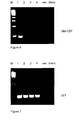
- FIG. 4 shows a semi quantitative RT-PCR for CD56/NCAM in which isoforms 1 and 3 show a prominent signal, while isoforms 2 and 4, both being devoid of the transactivating domain 2 (TAD2), show, at best, a very weak signal.
- TAD2 transactivating domain 2
- the inventors describe here, for the first time, a novel and, up to now, unknown C-terminal exon of RUNX1/AML1 which is expressed as a 30 kd isoform in Western Blots.
- This novel isoform is the decisive regulating factor of the expression of CD56/NCAM because the 30 kd isoform can successfully inhibit the well known 50 kd isoform of RUNX1/AML1.
- the novel exon is relevant for the transcription of additional, functionally relevant genes, as demonstrated in the examples with CD56/NCAM, Granzyme, GM-CSF, p21 and CD3/gamma.
- novel exon and the novel "inactivating" isoform of RUNX1/AML1 is relevant for the function of various genes, which play an important role in the normal and disturbed developmental processes in organ systems, e.g. developmental and neural biology, haematology and immunology, cardiovascular physiology and pathology, gut and liver functions, general metabolism and endocrinology as well as in tumour development and tumour progression and the development of autoimmune diseases. Therefore, the novel exon, its nucleotide sequence, the peptide, and the antibody as well as designed molecules based thereon show a broad variety of diagnostic and therapeutic applications.
- the novel exon is expressed in various organs, like testis, lymph nodes, kidney, thymus and duodenum. Additionally, it shows a differential expression in various tumours, which are derived from these organs. Of particular advantage is such a differential expression in various lymphoma and leukaemia, but also in plasmocytoma and solid tumours like carcinoma.
- the novel isoform is the dominant isoform in hearts, in particular human hearts.
- the inventors have successfully shown in cell transfection assays that the novel 30 kd RUNX1/AML1 isoform has a constitutive and in comparison to the prior art 50 kd isoform only minor transactivating function. Additionally, the novel 30 kd isoform is much stronger than the 50 kd isoform of the prior art, since the strong transactivating function of the 50 kd isoform is completely abolished and inhibited by the 30 kd isoform.
- the CD56/NCAM promoter was used as a test system ( Figure 3). The inventors have additionally demonstrated in cell biological experiments, that the transfection of tumour cell lines with the novel RUNX1/AML1 isoform leads to an inhibition of growth and to the induction of apoptosis.
- a promising diagnostic approach comprises the detection of normal or increased quantities of the exons by way of antibodies and/or molecular/nucleic acid probes. Also, the detection of low or lacking expression of the novel exon in virtually any tissue, including degenerative or inflammatory tissues and tumours is of particular advantage.
- a very useful therapeutic approach comprises the substitution of an absolute or relative lack of the novel exon or the protein in tissues or tumours by targeted molecular manipulation or gene therapy. Furthermore, a relevant overexpression of activated RUNX1/AML1 isoforms may be compensated by therapy with the inhibitory, novel isoform of exon 5.4.
- Another therapeutic approach comprises the inhibition of abnormal, relative or absolute overexpression of the new isoform of the RUNX1/AML1 gene product by a gene therapeutic intervention with inhibitory or competitive nucleic acid sequences or peptides.
- Examples of successful diagnostic, prophylactic and/or therapeutic approaches include the diagnosis and therapy of leukaemia, myelodysplastic syndromes, lymphoma and plasmocytoma or myeloma and other tumours with overexpression of the well known RUNX1/AML1 isoforms of the prior art, reduced expression of the novel RUNX1/AML1 isoform and the imbalance between the known and the new isoforms.
- diagnosis and therapy of disorders of blood development e.g. hypoplastic or aplastic disorders or thrombocytopenia is possible.
- the prevention and therapy of fibrosis e.g. hypertrophic scars, keloids, liver cirrhosis, lung fibrosis and myocardial fibrosis is possible.
- the inventors also envisage the diagnostic, prophylactic and/or therapeutic treatment of autoimmune diseases, the prevention of ischemic myocardial diseases after heart failure and the diagnosis and therapy of neurodegenerative disorders, in which RUNX1/AML1 is involved.
- the novel exon/protein is useful in all applications, which are based on the manipulation of the RUNX1/AML1 target gene CD56/NCAM.
- the best example is the successful treatment of neurodegenerative diseases, the manipulation of CD56/NCAM expression in tumours with a CD56 hyperexpression (e.g. plastocytoma, melanoma, neuroendocrine tumours, many sarcoma, leukaemia and lymphoma).
Landscapes
- Health & Medical Sciences (AREA)
- Chemical & Material Sciences (AREA)
- Life Sciences & Earth Sciences (AREA)
- Organic Chemistry (AREA)
- Medicinal Chemistry (AREA)
- General Health & Medical Sciences (AREA)
- Chemical Kinetics & Catalysis (AREA)
- General Chemical & Material Sciences (AREA)
- Public Health (AREA)
- Nuclear Medicine, Radiotherapy & Molecular Imaging (AREA)
- Veterinary Medicine (AREA)
- Pharmacology & Pharmacy (AREA)
- Animal Behavior & Ethology (AREA)
- Bioinformatics & Cheminformatics (AREA)
- Engineering & Computer Science (AREA)
- Biochemistry (AREA)
- Proteomics, Peptides & Aminoacids (AREA)
- Molecular Biology (AREA)
- Genetics & Genomics (AREA)
- Biophysics (AREA)
- Gastroenterology & Hepatology (AREA)
- Zoology (AREA)
- Toxicology (AREA)
- Oncology (AREA)
- Ophthalmology & Optometry (AREA)
- Neurosurgery (AREA)
- Neurology (AREA)
- Cardiology (AREA)
- Biomedical Technology (AREA)
- Physical Education & Sports Medicine (AREA)
- Hematology (AREA)
- Heart & Thoracic Surgery (AREA)
- Medicines That Contain Protein Lipid Enzymes And Other Medicines (AREA)
- Peptides Or Proteins (AREA)
- Micro-Organisms Or Cultivation Processes Thereof (AREA)
- Pharmaceuticals Containing Other Organic And Inorganic Compounds (AREA)
Abstract
The present invention relates to a novel C-terminal exon of RUNX1/AML1, its nucleic acid sequence, its peptide and a full length amino acid sequence comprising the novel C-terminal exon. Furthermore, the invention is directed to an antibody against the C-terminal exon of RUNX1/AML1, a pharmaceutical composition for the treatment of various diseases, among others various tumours and the use of the C-terminal exon for the manufacture of a medicament. The C-terminal exon may also be used for the inhibition of cellular growth and/or induction of apoptosis. Furthermore, the invention relates to a method and a kit for diagnosing a disease, both using the C-terminal exon.
Description
- The present invention relates to the technical field of tumour therapy, in particular to the diagnosis, prophylaxis and therapy of RUNX1/AML1 related diseases by applying a novel C-terminal exon of the transcription factor RUNX1/AML1.
- The most common cause of chronic heart failure is coronary artery disease, which results in left ventricular dysfunction. The morphological changes of the heart in chronic heart failure due to coronary artery disease have been termed ischemic cardiomyopathy (ICM).
- Among the earliest events during ischemia induced ventricular dysfunction, the renin-angiotensin system and secretion of atrial natriuretic peptide (ANP) are activated. In addition, in the endothelin system, cytokines such as IL-1, IL-6, and tumour necrosis factor-α, stress-proteins, and anti-oxidants change their expression pattern. However, these changes generally are not characteristic for ICM.
- To identify differentially overexpressed genes in ICM compared to normal hearts, in previous studies the inventors used a PCR-based technique to construct a subtracted cDNA library. It was shown that strong overexpression of CD56/NCAM and the transcription factor RUNX1/AML1 is a highly sensitive and characteristic marker of cardiomyocytes within or adjacent to scars in ICM compared to normal hearts, while at most slight overexpression is observed in CCM, hypertrophic obstructive cardiomyopathy (HOCM), and myocarditis, including sarcoidosis. This molecular response to ischemic heart damage appears to be phylogenetically conserved, because analogous alterations occurred in an experimental rat model of ischemic heart disease compared to normal and spontaneously hypertensive rats (Gattenlohner et al., 2003, 2004).
- RUNX1/AML1 is essential for normal embryonal and foetal development. In contrast, stem cells in bone marrow do not, or only in part, depend on RUNX1/AML1. In adults, RUNX1/AML1 is important for the T-cell, B-cell and megakaryocyte development (Yamaguchi et al., 2004).
- RUNX1/AML1 expression is different in stem cells with an exclusive haematopoietic potential of (RUNX1+FLK1(-)) and stem cells with haematopoietic and endothelial potential (RUNX1 (-), FLK-1+), the later ones also being called haemangioblasts.
- RUNX1/AML1 is expressed in normal thymus cortex, while RUNX3 is expressed in the medulla (Woolf et al., 2003). It has been shown that RUNX1/AML1 and RUNX3 are repressors of CD4 expression in intrathymic T-cell development, and they are important for the establishment of CD8+ T-cells. Therefore, they might be important for a physiological immunodeficiency in elderly patients (Woolf et al., 2003, Telfer et al., 2004; Taniuchi et al., 2002).
- Additionally, RUNX1/AML1 is essential for the early B-cell development. RUNX1/AML1 is expressed in proliferative chondrocytes, in osteoblasts in bone formation, in the thyroid gland, in the lung, in the skin and in normal epithelial cells of the trachea. RUNX1/AML1 is also important for the early development of the skeleton (Lian et al., 2003; Lian et al., 2003a; 2003b; 2003c).
- RUNX1/AML1 is important for the development of cholinergic motor neurones in the afterbrain. RUNX genes are target genes of TGF-β and BMPs (Ito et al., 2003). RUNX1/AML1 regulates TIMP1 (MMP inhibitor) and plays an important role in fibrosis, e.g. in the development of chronic liver cirrhosis (Bertrand-Philippe et al., 2004). Additionally, RUNX1/AML1 regulates the expression of PKC-β and GATA3 and thereby influences the development of a TH2 immune response. Finally, RUNX1/AML1 is co-regulated with mSin3A and CBF-β.
- RUNX1/AML1 has been shown to play an important role in various neoplasia and tumours. RUNX1/AML1 is associated with translocations, point mutations and amplifications in various kinds of leukaemia, and RUNX1/AML1 is involved in about 25 % of all human leukaemia (Yamaguchi et al., 2004). RUNX1/AML1 seems to play a role in lymphoma and in plasmocytomas, since T-cell lymphoma in mice express RUNX1/AML1 (Wotton et al., 2002). RUNX1/AML1 is also expressed in melanoma (Perry et al., 2002a; 2002b), breast (Dairkee et al., 2004) and prostate cancer (Fowler et al., 2006).
- Additionally, RUNX1/AML1 and dependent genes can be regarded as risk factors for autoimmune diseases like rheumatoid arthritis, psoriasis and diabetes mellitus (
type 1 diabetes) (Tokuhiro et al., 2003; Yamada et al., 2004; Nielsen et al., 2003). - CD56/NCAM is a downstream target of RUNX1/AML1. CD56/NCAM regulates the growth of neurons and the flexibility of neuronal synapses (Panicker et al., 2003; Berezin et al., 2004). CD56/NCAM plays a role in the regulation of cell matrix interaction, in particular in the metastasis of primary tumours (Christofori et al., 2003; Cavallaro et al., 2001). CD56/NCAM overexpression is typical for the loss of nerves in skeletal muscles or scar development after heart diseases (Gattenlohner et al., 2003).
- Even though many correlations between various kinds of tumours and genes overexpressed in certain tissues have been demonstrated during the last decade, there is still a need for a pharmaceutical composition for the efficient treatment and/or prophylaxis of certain kinds of tumours, cardiomyopathy, myocarditis, sarcoidosis and and autoimmune diseases.
- The present invention is directed to a C-terminal exon of RUNX1/AML1, wherein the exon is defined by the nucleic acid sequence of AAC AGT TGT GAT TAC TTC AGG TTT CAC CAG ATG CCT TGA (SEQ ID NO:1) and/or functional variants thereof.
- Furthermore, the present invention relates to a peptide of a C-terminal exon of RUNX1/AML1, wherein the peptide is defined by the amino acid sequence of NSCDYFRFHQMP (SEQ ID NO:2) and/or functional variants thereof.
- Moreover, the present invention comprises a nucleic acid sequence comprising an untranslated region (UTR) and a C-terminal exon of RUNX1/AML1, wherein the nucleic acid sequence is defined by SEQ ID NO:3.
- The present invention also comprises an antibody which is directed against a peptide sequence of the C-terminal exon of RUNX1/AML1 of SEQ ID NO:2 and/or functional variants thereof.
- It is a further object of the present invention to provide a pharmaceutical composition comprising a nucleic acid sequence and/or a peptide sequence of the C-terminal exon of RUNX1/AML1 of SEQ ID NO:1, 2, 3, an antibody against SEQ ID NO:2 and/or functional variants thereof.
- The present invention is also directed to the use of a nucleic acid sequence and/or a peptide sequence of the C-terminal exon of RUNX1/AML1 of SEQ ID NO:1, 2, 3, an antibody against SEQ ID NO:2 and/or functional variants thereof for the manufacture of a medicament and the use of a nucleic acid sequence and/or a peptide sequence of the C-terminal exon of RUNX1/AML1 of SEQ ID NO:1, 2, 3, an antibody against SEQ ID NO:2 and/or functional variants thereof for inhibition of cellular growth and/or induction of apoptosis.
- Furthermore, the present invention relates to a method for diagnosing a disease in a subject comprising: a) assaying a sample from the subject for a nucleic acid sequence and/or a peptide sequence of the C-terminal exon of RUNX1/AML1 of SEQ ID NO:1, 2, 3, an antibody against SEQ ID NO:2 and/or functional variants thereof; and b) determining the level of the nucleic acid sequence and/or a peptide sequence of the C-terminal exon of RUNX1/AML1 of SEQ ID NO:1, 2, 3, an antibody against SEQ ID NO:2 and/or functional variants thereof, wherein an altered level compared to a control sample indicates the presence of the disease.
- The present invention also concerns a kit for diagnosing a disease comprising a nucleic acid sequence and/or a peptide sequence of the C-terminal exon of RUNX1/AML1 of SEQ ID NO:1, 2, 3, an antibody against SEQ ID NO:2 and/or functional variants thereof.
- Finally, it is also an object of the present invention to provide a method for treatment of a disease, comprising administering to a subject in need thereof a therapeutically effective amount of a nucleic acid sequence and/or a peptide sequence of the C-terminal exon of RUNX1/AML1 of SEQ ID NO:1, 2, 3, an antibody against SEQ ID NO:2 and/or functional variants thereof.
- Preferred diseases are indicated in the section "detailed description of the invention".
-
- Figure 1 shows a diagram with RUNX1/
AML1 isoform 1 of the prior art and threenew isoforms - Figure 2 shows a Western Blot analysis of the novel C-terminal exon 5.4 probed with the monoclonal antibody anti-RUNX1 C-ter EX 5.4.
- Figure 3 shows the results of transfection experiments with different RUNX1/AML1 isoforms and luciferase as reporter gene expressed from the CD56/NCAM promoter.
- Figure 4 shows a semi quantitative RT-PCR for CD56/NCAM after transfection of the cell line K562 with RUNX1/
AML1 isoforms - Figure 5 shows a semi quantitative RT-PCR for Granzyme after transfection of the cell line K562 with RUNX1/
AML1 isoforms - Figure 6 shows a semi quantitative RT-PCR for GM-CSF after transfection of the cell line K562 with RUNX1/
AML1 isoforms - Figure 7 shows a semi quantitative RT-PCR for p21 after transfection of the cell line K562 with RUNX1/
AML1 isoforms - Figure 8 shows a semi quantitative RT-PCR for CD3/gamma after transfection of the cell line K562 with RUNX1/
AML1 isoforms - Figure 9 shows an immunofluorescence (Cy3) of K562 cells after transfection with RUNX1/
AML1 isoform 1. - The present invention relates to a C-terminal exon of RUNX1/AML1, wherein the exon is defined by the nucleic acid sequence of AAC AGT TGT GAT TAC TTC AGG TTT CAC CAG ATG CCT TGA (SEQ ID NO:1) and/or functional variants thereof and a peptide of a C-terminal exon of RUNX1/AML1, wherein the peptide is defined by the amino acid sequence of NSCDYFRFHQMP (SEQ ID NO:2) and/or functional variants thereof.
- The inventors have demonstrated that CD56/NCAM, a neural cell adhesion molecule and a member of the immunoglobuline super family is overexpressed in chronic ischemic heart failure compared to normal hearts. While searching for the factors which are responsible for the overexpression of CD56/NCAM, the inventors identified the transcription factor RUNX1/AML1 by its specific binding to the CD56/NCAM promoter in an electro mobility shift assay. In a Western Blot assay with a commercially available antibody against the N-terminal region of RUNX1/AML1 a 30 kd protein signal was surprisingly detected in addition to the expected signal at around 50 kd. The identity of the 30 kd polypeptide was unknown. The inventors successfully isolated the corresponding cDNA by a rapid amplification of cDNA ends (RACE-PCR). A subsequent radioactively labelled colony hybridisation of a cDNA gene bank of a human heart with a known RUNX1/AML1 probe led to the isolation of three novel, so far unknown isoforms of RUNX1/AML1. The different isoforms are characterised by exchanges at the C-terminal exon of RUNX1/AML1. The novel exon was designated as the C-terminal exon 5.4 of RUNX1/AML1 = C-ter EX 5.4.
- The isolation of this novel exon led to the isolation of new RUNX1/AML1 isoforms, for which the novel exon 5.4 is required. The novel isoform of the protein RUNX1/AML1 confers a new function in comparison to the prior art isoform of RUNX1/AML1. The novel isoforms comprising the novel exon 5.4 at the C-terminus show a dominant negative transactivating function since this isoform is significantly down regulated in human ischemic cardiomyopathy (ICM) in comparison to normal heart tissue.
- The dominant negative function of the novel exon 5.4 is a particular advantage of the present invention, since the novel exon can be used for the therapeutic and/or prophylactic treatment of diseases associated with RUNX1/AML1 target genes, and the novel C-terminal exon 5.4 is particularly useful for the therapy of various diseases indicated further below.
- As used herein, the term "functional variants" of the nucleic acid sequence coding for the novel C-terminal exon of RUNX1/AML1 refers to any nucleic acid sequence which is at least 95 % identical to SEQ ID NO:1. Also encompassed is the complementary nucleic acid sequence. In particular, nucleotide exchanges which do not lead to a change of the respective amino acid (silent exchanges) are also encompassed. As used herein, the term "functional variants" of a peptide of the novel C-terminal exon of RUNX1/AML1 refers to a polypeptide sequence which is at least 95 % identical to SEQ ID NO:1. In particular, conservative amino acid exchanges are enclosed. Furthermore, modifications like methylation etc. can be done without leaving the scope of the term "functional variants".
- The invention further comprises a nucleic acid sequence comprising an untranslated region (UTR) and a C-terminal exon of RUNX1/AML1, wherein the nucleic acid sequence is defined by SEQ ID NO:3. The natural context of the C-terminal exon 5.4 is indicated in diagram 1 below. The first 36 nucleotides of the open reading frame are the coding sequence of the novel exon RUNX1/AML1 (indicated in bold letters), followed by a stop codon (TAG in italic). An untranslated region (UTR) of approximately 670 to 700 nucleotides follows the stop codon. A polyadenylation site (TAAATAA underlined) and a further stretch of a 40 nucleotide A-rich region form the end of SEQ ID NO:3.
-


- The inventors successfully developed an anti-RUNX1/AML1 C-terminal exon 5.4 polyclonal antibody in a rabbit, which was used for Western Blots (see Figure 2). Thus, the present invention also provides an antibody which is directed against a peptide sequence of the C-terminal exon of RUNX1/AML1 of SEQ ID NO:2 and/or functional variants thereof. The antibody may be a monoclonal or a polyclonal antibody.
- It is another aspect of the present invention to provide a pharmaceutical composition comprising a nucleic acid sequence and/or a peptide sequence of the C-terminal exon of RUNX1/AML1 of SEQ ID N0:1, 2, 3, an antibody against SEQ ID NO:2 and/or functional variants thereof. The pharmaceutical composition may further comprise a pharmaceutically acceptable carrier and/or additive. The appropriate concentration of the therapeutic agent, in particular the nucleic acid sequence and/or the peptide sequence of the C-terminal exon of RUNX1/AML1 might be dependent on the particular agent. The therapeutically effective dose has to be compared with the toxic concentrations; the clearance rate, the metabolic products, the solubility and the formulation may play an important role. Therapeutic efficiency and toxicity of compounds can be determined by standard pharmaceutical procedures in cell cultures or experimental animals e.g. ED50 (the dose therapeutically effective in 50 % of the population) and LD50 (the dose lethal to 50 % of the population). The dose ratio between therapeutic and toxic effects is the therapeutic index, and it can be expressed as the ratio of LD50/ED50.
- In a particularly preferred embodiment of the present invention the composition is used for the therapeutic and or prophylactic treatment of diseases associated with RUNX1/AML1 target genes. Examples of RUNX1/AML1 target genes are MDR1 (multi drug resistant 1), CD4, CD3, GM-CSF (granulocyte macrophage colony stimulating factor), TCR (T cell receptor) α chain, TCR-β chain, TCR-γ chain, TCR-δ chain, IL3, Granzyme B, M-CSF receptor, MPO (myeloperoxidase), p14, p21, CD11a, CD36, CD53, UBP43 (ubiquitin binding protein) and/or CD56/NCAM. The disease, which can be advantageously therapeutically and/or prophylactically addressed is selected from the group consisting of congestive cardiomyopathy, hypertrophic obstructive cardiomyopathy, myocarditis, sarcoidosis, hypoplastic haematopoietic disease, autoimmune diseases, degenerative and neoplastic diseases of the central and peripheral nervous system, diseases of the vascular system, developmental diseases of the gut, degenerative, traumatic and developmental diseases of the skeletal system, skeletal and heart muscle atrophy and eye diseases.
- A hypoplastic haematopoietic disease may be an aplastic anaemia or single or multiple cytopenias.
Diabetes type 1 is a particularly preferred autoimmune disease to be treated by the novel exon 5.4 of RUNX1/AML1. The inventors have further shown that PML, i.e. a factor interacting with RUNX1/AML1, is most important for central tolerance based on regulating gene expression in the thymus. Diseases of the vascular system include the therapeutic promotion or inhibition of angiogenesis. Particular examples are the therapy of ischemic alterations concerning the brain, heart, gut or limbs, implying the therapeutic aim to promote angiogenesis, or the inhibition of vessel formation, which is a conceptual aim in anti-angiogenesis for the treatment of virtually all tumours with a prominent vascular structure, degenerative, traumatic and developmental diseases of the skeletal system include bones, joints, cartilage and teeth. The skeletal or heart muscle atrophy also involves states of denervation, inactivation, inflammatory disease or a consequence of a tumour or an infection. Eye diseases include, in particular, diseases of the retina. - The composition of the present invention is particularly useful for the therapeutic and/or prophylactic treatment of a tumour. Therefore, in a preferred embodiment of the present invention the tumour is selected from the group consisting of lymphoma, leukaemia, rhabdomyosarcoma, adenocarcinoma, tumour of the duodenum, testis, lymph node, kidney, thymus, primary and secondary myelodysplastic syndromes, myeloma, plasmacytoma, melanoma, tumours of the peripheral and central nervous system and breast and prostate cancer. The primary and secondary myelodysplastic syndromes relate, in particular, to therapy-related myelodysplastic syndromes.
- In yet another embodiment of the present invention the use of a nucleic acid sequence and/or a peptide sequence of the C-terminal exon of RUNX1/AML1 of SEQ ID NO:1, 2, 3, an antibody against SEQ ID NO:2 and/or functional variants thereof for the manufacture of a medicament is provided. The medicament is particularly useful for the therapeutic and/or prophylactic treatment of diseases associated with RUNX1/AML1 target genes. Such genes have been exemplarily described in this application and it is referred to the respective paragraphs in the above specification. Additionally, preferred diseases have already been described and, as the invention is particularly useful for the therapeutic and/or prophylactic treatment of a tumour, reference is made to the above examples for particularly useful tumours.
- Another embodiment of the present invention relates to the use of a nucleic acid sequence and/or a peptide sequence of the C-terminal exon of RUNX1/AML1 of SEQ ID N0:1, 2, 3, an antibody against SEQ ID NO:2 and/or functional variants thereof for inhibition of cellular growth and/or induction of apoptosis. Apoptosis or programmed cell death is a well known instrument of organisms to eliminate specific cells. Further, the use of a nucleic acid sequence and/or a peptide sequence of the C-terminal exon of RUNX1/AML1 of SEQ ID NO:1, 2, 3, an antibody against SEQ ID NO:2 and/or functional variants for the elucidation of changes of the cell states in terms of differentiation and trans-differentiation is encompassed.
- In a particularly preferred embodiment of the present invention a method is provided for diagnosing a disease in a subject comprising: a) assaying a sample from the subject for a nucleic acid sequence and/or a peptide sequence of the C-terminal exon of RUNX1/AML1 of SEQ ID NO:1, 2, 3, an antibody against SEQ ID NO:2 and/or functional variants thereof; and b) determining the level of the nucleic acid sequence and/or a peptide sequence of the C-terminal exon of RUNX1/AML1 of SEQ ID NO:1, 2, 3, an antibody against SEQ ID NO:2 and/or functional variants thereof, wherein an altered level compared to a control sample, indicates the presence of the disease. Specific examples of diseases are indicated above.
- Additionally, the invention relates to a kit for diagnosing a disease comprising a nucleic acid sequence and/or a peptide sequence of the C-terminal exon of RUNX1/AML1 of SEQ ID N0:1, 2, 3, an antibody against SEQ ID NO:2 and/or functional variants thereof. Specific examples of diseases are indicated above.
- Finally, the invention provides a method for the treatment of a disease comprising administering to a subject in need thereof a therapeutically effective amount of a nucleic acid sequence and/or a peptide sequence of the C-terminal exon of RUNX1/AML1 of SEQ ID NO:1, 2, 3, an antibody against SEQ ID NO:2 and/or functional variants thereof. Specific examples of diseases are indicated above.
- Figure 1 is referred to in the following which shows a schematic representation of the RUNX1/
AML1 isoform 1 of the prior art (1) and thenovel isoforms isoforms isoforms isoforms exon 6. Additionally,isoforms exon 5a, ofisoforms exon 5a, show a dominant negative influence on the CD56/NCAM promoter, which is the main promoter of an important RUNX1/AML1 target gene. In this respect,isoform 4, which harbours the novel exon 5.4, has an unexpected function. - The novel exon 5.4 is situated between the known exon 5.3 and the
last exon 6. Due to this position, the inventors suggested naming the novel exon "exon 5.4". Exon 5.4 comprises a nucleic acid sequence of approximately 760 base pairs with an open reading frame (ORF) of 36 base pairs, coding for 12 amino acids and an untranslated region (UTR) of approximately 724 base pairs. - Using these 12 amino acids which code for the novel exon peptide 5.4, the inventors successfully developed a specific polyclonal antibody, named anti-RUNX1 C-ter EX5.4, which detects a prominent 30 kd signal in recombinant control extracts as well as in whole protein extracts of various samples of human heart muscles. This signal is successfully suppressed by homologue recombinant bacterially expressed protein.
- In Figure 2 a Western Blot analysis with the novel polyclonal antibody anti-RUNX1 C-ter EX5.4 is shown. In
panel 2a a whole cell extract of human heart muscle tissue was used for the detection of a specific signal (30 kd) with the monoclonal antibody. A more prominent expression was shown in normal heart tissue (lanes 1 to 5) in comparison to reduced expression in ischemic heart tissue (lanes 6 to 10). Inpanels lanes 1/2: 0 mg;lanes 3/4: 50 mg;lanes 5/6: 100 mg;lanes 7/8: 250 mg andlanes 9/10: 500 mg) and subsequently used for the detection of a total protein extract of human heart muscle tissue. As can be derived frompanel 2b, the competition was specific and prominent with respect to antibody binding with increasing concentrations of the competitor while the unspecific competitor inpanel 2c did not lead to any significant change in antibody binding. - In Figure 3 the results of experiments with different RUNX1/AML1 isoforms are shown. RUNX1/
AML1 isoforms 1 to 4 were coupled with luciferase as a reporter gene, which was expressed from the CD56/NCAM promoter. Control transfections merely show a very low luciferase activity (1 = vector construct; 2 = expression vector pRSV without insert). The prior art isoform 1 (No. 3) of RUNX1/AML1 shows a significant transactivating function, while thenovel isoforms isoform 3 is able to inhibit the activating function ofisoform 1, when co-incubated with isoform 1 (No. 8). - The inventors also tested several downstream targets of RUNX1/AML1, for which semi quantitative RT-PCRs after transfection of the cell line K562 with RUNX1/
AML1 isoforms isoforms - For the following experiments, the same semi quantitative RT-PCR conditions were employed for Granzyme (Figure 5), GM-CSF (Figure 6), p21 (Figure 7) and CD3/gamma (Figure 8).
- In Figure 9 immunofluorescence (Cy3) of K562 cells after transfection with RUNX1/
AML1 isoform 1 is shown. A polyclonal rabbit anti-RUNX1/AML1 antibody was used in a 1:100 dilution. As a secondary antibody, a Cy3 labelled goat antirabbit secondary antibody was used. The magnification is 400 fold. Almost the same transfection efficiencies were obtained whenisoforms - The inventors describe here, for the first time, a novel and, up to now, unknown C-terminal exon of RUNX1/AML1 which is expressed as a 30 kd isoform in Western Blots. This novel isoform is the decisive regulating factor of the expression of CD56/NCAM because the 30 kd isoform can successfully inhibit the well known 50 kd isoform of RUNX1/AML1. The novel exon is relevant for the transcription of additional, functionally relevant genes, as demonstrated in the examples with CD56/NCAM, Granzyme, GM-CSF, p21 and CD3/gamma. The novel exon and the novel "inactivating" isoform of RUNX1/AML1 is relevant for the function of various genes, which play an important role in the normal and disturbed developmental processes in organ systems, e.g. developmental and neural biology, haematology and immunology, cardiovascular physiology and pathology, gut and liver functions, general metabolism and endocrinology as well as in tumour development and tumour progression and the development of autoimmune diseases. Therefore, the novel exon, its nucleotide sequence, the peptide, and the antibody as well as designed molecules based thereon show a broad variety of diagnostic and therapeutic applications.
- In particular, the novel exon is expressed in various organs, like testis, lymph nodes, kidney, thymus and duodenum. Additionally, it shows a differential expression in various tumours, which are derived from these organs. Of particular advantage is such a differential expression in various lymphoma and leukaemia, but also in plasmocytoma and solid tumours like carcinoma.
- Additionally, the novel isoform is the dominant isoform in hearts, in particular human hearts. The inventors have successfully shown in cell transfection assays that the novel 30 kd RUNX1/AML1 isoform has a constitutive and in comparison to the prior art 50 kd isoform only minor transactivating function. Additionally, the novel 30 kd isoform is much stronger than the 50 kd isoform of the prior art, since the strong transactivating function of the 50 kd isoform is completely abolished and inhibited by the 30 kd isoform. For these experiments the CD56/NCAM promoter was used as a test system (Figure 3). The inventors have additionally demonstrated in cell biological experiments, that the transfection of tumour cell lines with the novel RUNX1/AML1 isoform leads to an inhibition of growth and to the induction of apoptosis.
- A promising diagnostic approach comprises the detection of normal or increased quantities of the exons by way of antibodies and/or molecular/nucleic acid probes. Also, the detection of low or lacking expression of the novel exon in virtually any tissue, including degenerative or inflammatory tissues and tumours is of particular advantage.
- A very useful therapeutic approach comprises the substitution of an absolute or relative lack of the novel exon or the protein in tissues or tumours by targeted molecular manipulation or gene therapy. Furthermore, a relevant overexpression of activated RUNX1/AML1 isoforms may be compensated by therapy with the inhibitory, novel isoform of exon 5.4. Another therapeutic approach comprises the inhibition of abnormal, relative or absolute overexpression of the new isoform of the RUNX1/AML1 gene product by a gene therapeutic intervention with inhibitory or competitive nucleic acid sequences or peptides.
- Examples of successful diagnostic, prophylactic and/or therapeutic approaches include the diagnosis and therapy of leukaemia, myelodysplastic syndromes, lymphoma and plasmocytoma or myeloma and other tumours with overexpression of the well known RUNX1/AML1 isoforms of the prior art, reduced expression of the novel RUNX1/AML1 isoform and the imbalance between the known and the new isoforms.
- Additionally, diagnosis and therapy of disorders of blood development, e.g. hypoplastic or aplastic disorders or thrombocytopenia is possible. Furthermore, the prevention and therapy of fibrosis, e.g. hypertrophic scars, keloids, liver cirrhosis, lung fibrosis and myocardial fibrosis is possible. The inventors also envisage the diagnostic, prophylactic and/or therapeutic treatment of autoimmune diseases, the prevention of ischemic myocardial diseases after heart failure and the diagnosis and therapy of neurodegenerative disorders, in which RUNX1/AML1 is involved.
- In particular, the novel exon/protein is useful in all applications, which are based on the manipulation of the RUNX1/AML1 target gene CD56/NCAM. The best example is the successful treatment of neurodegenerative diseases, the manipulation of CD56/NCAM expression in tumours with a CD56 hyperexpression (e.g. plastocytoma, melanoma, neuroendocrine tumours, many sarcoma, leukaemia and lymphoma).
-
- 1.
- Berezin, V. and E. Bock, NCAM mimetic peptides: Pharmacological and therapeutic potential. J Mol Neurosci, 2004. 22(1-2): p. 33-39.
- 2.
- Bertrand-Philippe, M., et al., Regulation of tissue inhibitor of .
- 3.
- Cavallaro, U., et al., N-CAM modulates tumour-cell adhesion to matrix by inducing FGF-receptor signalling. Nat Cell Biol, 2001. 3(7): p. 650-7.
- 4.
- Christofori, G., Changing neighbours, changing behaviour: cell adhesion molecule-mediated signalling during tumour progression. EMBO J, 2003. 22(10): p. 2318-23.
- 5.
- Dairkee, SH. et al., A molecular 'signature' of primary breast cancer cultures; patterns resembling tumor tissue. BMC Genomics, 2004; 5(1):47.
- 6.
- Fowler, M. et al., RUNX1 (AML-1) and RUNX2 (AML-3) cooperate with prostate-derived Ets factor to activate transcription from the PSA upstream regulatory region. J Cell Biochem. 2006; 97(1):1-17.
- 7.
- Gattenlöhner S , W.C., Ertl G, Bültmann BD, and M.-H.H.-K.a.M. A, The overexpression of NCAM(CD56) in human hearts is specific for ischemic damage. 3. Posterpreis, Verhandlungsband der Deutschen Gesellschaft für Pathologie, 2004.
- 8.
- Gattenlohner, S., et al., NCAM(CD56) and RUNX1(AML1) are up-regulated in human ischemic cardiomyopathy and a rat model of chronic cardiac ischemia. Am J Pathol, 2003. 163(3): p. 1081-90.
- 9.
- Ito, Y. and K. Miyazono, RUNX transcription factors as key targets of TGF-beta superfamily signaling. Curr Opin Genet Dev, 2003. 13(1): p. 43-7.
- 10.
- Lian, J.B., et al., Runx1/AML1 hematopoietic transcription factor contributes to skeletal development in vivo. J Cell Physiol, 2003a. 196(2): p. 301-11.
- 11.
- Lian, J.B., et al., Runx2/Cbfa1 functions: diverse regulation of gene transcription by chromatin remodeling and co-regulatory protein interactions. Connect Tissue Res, 2003b. 44 Suppl 1: p. 141-8.
- 12.
- Lian, J.B. and G.S. Stein, Runx2/Cbfa1: a multifunctional regulator of bone formation. Curr Pharm Des, 2003c. 9(32): p. 2677-85.
- 13.
- Nielsen, C., et al., Association of a putative regulatory polymorphism in the PD-1 gene with susceptibility to type 1 diabetes. Tissue Antigens, 2003. 62(6): p. 492-7.
- 14.
- Panicker, A.K., et al., Cellular signalling mechanisms of neural cell adhesion molecules. Front Biosci, 2003. 8: p. d900-11.
- 15.
- Perry, C., A. Eldor, and H. Soreq, Runx1/AML1 in leukemia: disrupted association with diverse protein partners. Leuk Res, 2002a. 26(3): p. 221-8.
- 16.
- Perry, C., et al., Complex regulation of acetylcholinesterase gene expression in human brain tumors. Oncogene, 2002b. 21 (55): p. 8428-41.
- 17.
- Taniuchi, I., et al., Differential requirements for Runx proteins in CD4 repression and epigenetic silencing during T lymphocyte development. Cell, 2002. 111(5): p. 621-33.
- 18.
- Telfer, J.C., et al., Localization of the domains in Runx transcription factors required for the repression of CD4 in thymocytes. J Immunol, 2004. 172(7): p. 4359-70.
- 19.
- Tokuhiro, S., et al., An intronic SNP in a RUNX1 binding site of SLC22A4, encoding an organic cation transporter, is associated with rheumatoid arthritis. Nat Genet, 2003. 35(4): p. 341-8.
- 20.
- Woolf, E., et al., Runx3 and Runx1 are required for CD8 T cell development during thymopoiesis. Proc Natl Acad Sci U S A, 2003. 100(13): p. 7731-6.
- 21.
- Wotton, S., et al., Proviral insertion indicates a dominant oncogenic role for Runx1/AML-1 in T-cell lymphoma. Cancer Res, 2002. 62(24): p. 7181-5.
- 22.
- Yamada, R., et al., SLC22A4 and RUNX1: identification of RA susceptible genes. J Mol Med, 2004. 82(9): p. 558-64.
- 23.
- Yamaguchi, Y., et al., AML1 is functionally regulated through p300-mediated acetylation on specific lysine residues. J Biol Chem, 2004. 279(15): p. 15630-8.

Claims (14)
- A C-terminal exon of RUNX1/AML1, wherein the exon is defined by the nucleic acid sequence of AAC AGT TGT GAT TAC TTC AGG TTT CAC CAG ATG CCT TGA (SEQ ID NO:1) and/or functional variants thereof.
- A peptide of a C-terminal exon of RUNX1/AML1, wherein the peptide is defined by the amino acid sequence of NSCDYFRFHQMP (SEQ ID NO:2) and/or functional variants thereof.
- A nucleic acid sequence comprising an untranslated region (UTR) and a C-terminal exon of RUNX1/AML1, wherein the nucleic acid sequence is defined by SEQ ID NO:3.
- An antibody which is directed against a peptide sequence of the C-terminal exon of RUNX1/AML1 of SEQ ID NO:2 and/or functional variants thereof.
- A pharmaceutical composition comprising a nucleic acid sequence and/or a peptide sequence of the C-terminal exon of RUNX1/AML1 of SEQ ID NO:1, 2, 3, an antibody against SEQ ID NO:2 and/or functional variants thereof.
- The composition of claim 5 for the therapeutic and/or prophylactic treatment of diseases associated with RUNX1/AML1 target genes.
- The composition of claim 5 or 6, wherein the RUNX1/AML1 target genes are selected from the group consisting of MDR1, CD4, CD3, GM-CSF, TCR-α chain, TCR-β chain, TCR-γ chain, TCR-δ chain, IL3, Granzyme B, M-CSF receptor, MPO, p14, p21, CD11a, CD36, CD53, UBP43 and CD 56/NCAM.
- The composition of any of claims 5 to 7, wherein the disease is selected from the group consisting of congestive cardiomyopathy, hypertrophic obstructive cardiomyopathy, myocarditis, sarcoidosis, hypoplastic hematopoietic disease, autoimmune diseases, degenerative and neoplastic diseases of the central and peripheral nervous system, diseases of the vascular system, developmental diseases of the gut, degenerative, traumatic and developmental diseases of the skeletal system, skeletal and heart muscle atrophy and eye diseases.
- The composition of any of claims 5 to 8 for the therapeutic and/or prophylactic treatment of a tumour.
- The composition of claim 9, wherein the tumour is selected from the group consisting of lymphoma, leukaemia, rhabdomyosarcoma, adenocarcinoma, tumour of the duodenum, testis, lymph node, kidney, thymus, primary and secondary myelodysplastic syndromes, myeloma, plasmacytoma, melanoma, breast and prostate cancer and tumours of the peripheral and central nervous system.
- Use of a nucleic acid sequence and/or a peptide sequence of the C-terminal exon of RUNX1/AML1 of SEQ ID NO:1, 2, 3, an antibody against SEQ ID NO:2 and/or functional variants thereof for the manufacture of a medicament.
- Use of a nucleic acid sequence and/or a peptide sequence of the C-terminal exon of RUNX1/AML1 of SEQ ID NO:1, 2, 3, an antibody against SEQ ID NO:2 and/or functional variants thereof for inhibition of cellular growth and/or induction of apoptosis.
- A method for diagnosing a disease as defined in any one of claims 6 to 10 in a subject comprising:a) assaying a sample from the subject for a nucleic acid sequence and/or a peptide sequence of the C-terminal exon of RUNX1/AML1 of SEQ ID NO:1, 2, 3, an antibody against SEQ ID NO:2 and/or functional variants thereof; andb) determining the level of the nucleic acid sequence and/or a peptide sequence of the C-terminal exon of RUNX1/AML1 of SEQ ID NO:1, 2, 3, an antibody against SEQ ID NO:2 and/or functional variants thereof, wherein an altered level compared to a control sample indicates the presence of the disease.
- A kit for diagnosing a disease as defined in any one of claims 6 to 10, comprising a nucleic acid sequence and/or a peptide sequence of the C-terminal exon of RUNX1/AML1 of SEQ ID NO:1, 2, 3, an antibody against SEQ ID NO:2 and/or functional variants thereof.
Priority Applications (5)
| Application Number | Priority Date | Filing Date | Title |
|---|---|---|---|
| EP06075148A EP1811032A1 (en) | 2006-01-23 | 2006-01-23 | C-terminal exon 5.4 of RUNX1/AML1 |
| US12/161,777 US20110217306A1 (en) | 2006-01-23 | 2007-01-23 | C-terminal exon 5.4 of runx1/aml1 |
| PCT/EP2007/000562 WO2007082777A1 (en) | 2006-01-23 | 2007-01-23 | C-terminal exon 5.4 of runx1/aml1 |
| EP07702971A EP1976988A1 (en) | 2006-01-23 | 2007-01-23 | C-terminal exon 5.4 of runx1/aml1 |
| CA002637719A CA2637719A1 (en) | 2006-01-23 | 2007-01-23 | C-terminal exon 5.4 of runx1/aml1 |
Applications Claiming Priority (1)
| Application Number | Priority Date | Filing Date | Title |
|---|---|---|---|
| EP06075148A EP1811032A1 (en) | 2006-01-23 | 2006-01-23 | C-terminal exon 5.4 of RUNX1/AML1 |
Publications (1)
| Publication Number | Publication Date |
|---|---|
| EP1811032A1 true EP1811032A1 (en) | 2007-07-25 |
Family
ID=36570734
Family Applications (2)
| Application Number | Title | Priority Date | Filing Date |
|---|---|---|---|
| EP06075148A Withdrawn EP1811032A1 (en) | 2006-01-23 | 2006-01-23 | C-terminal exon 5.4 of RUNX1/AML1 |
| EP07702971A Withdrawn EP1976988A1 (en) | 2006-01-23 | 2007-01-23 | C-terminal exon 5.4 of runx1/aml1 |
Family Applications After (1)
| Application Number | Title | Priority Date | Filing Date |
|---|---|---|---|
| EP07702971A Withdrawn EP1976988A1 (en) | 2006-01-23 | 2007-01-23 | C-terminal exon 5.4 of runx1/aml1 |
Country Status (4)
| Country | Link |
|---|---|
| US (1) | US20110217306A1 (en) |
| EP (2) | EP1811032A1 (en) |
| CA (1) | CA2637719A1 (en) |
| WO (1) | WO2007082777A1 (en) |
Cited By (1)
| Publication number | Priority date | Publication date | Assignee | Title |
|---|---|---|---|---|
| WO2020030019A1 (en) * | 2018-08-08 | 2020-02-13 | 上海市东方医院(同济大学附属东方医院) | Therapeutic pharmaceutical composition for treating neurogenic muscle atrophy, and preparation method and application thereof |
Citations (1)
| Publication number | Priority date | Publication date | Assignee | Title |
|---|---|---|---|---|
| US6153729A (en) * | 1997-06-20 | 2000-11-28 | St. Jude's Children's Research Hospital | Isolated nuclear matrix targeting peptide |
-
2006
- 2006-01-23 EP EP06075148A patent/EP1811032A1/en not_active Withdrawn
-
2007
- 2007-01-23 US US12/161,777 patent/US20110217306A1/en not_active Abandoned
- 2007-01-23 WO PCT/EP2007/000562 patent/WO2007082777A1/en not_active Ceased
- 2007-01-23 CA CA002637719A patent/CA2637719A1/en not_active Abandoned
- 2007-01-23 EP EP07702971A patent/EP1976988A1/en not_active Withdrawn
Patent Citations (1)
| Publication number | Priority date | Publication date | Assignee | Title |
|---|---|---|---|---|
| US6153729A (en) * | 1997-06-20 | 2000-11-28 | St. Jude's Children's Research Hospital | Isolated nuclear matrix targeting peptide |
Non-Patent Citations (28)
Cited By (1)
| Publication number | Priority date | Publication date | Assignee | Title |
|---|---|---|---|---|
| WO2020030019A1 (en) * | 2018-08-08 | 2020-02-13 | 上海市东方医院(同济大学附属东方医院) | Therapeutic pharmaceutical composition for treating neurogenic muscle atrophy, and preparation method and application thereof |
Also Published As
| Publication number | Publication date |
|---|---|
| CA2637719A1 (en) | 2007-07-26 |
| US20110217306A1 (en) | 2011-09-08 |
| EP1976988A1 (en) | 2008-10-08 |
| WO2007082777A1 (en) | 2007-07-26 |
Similar Documents
| Publication | Publication Date | Title |
|---|---|---|
| Hastie | Wilms' tumour 1 (WT1) in development, homeostasis and disease | |
| Bhattacharyya et al. | Egr‐1: new conductor for the tissue repair orchestra directs harmony (regeneration) or cacophony (fibrosis) | |
| ES2397441T3 (en) | Polynucleotide and polypeptide sequences involved in the bone remodeling process | |
| Davies et al. | Multiple roles for the Wilms' tumor suppressor, WT1 | |
| US8785373B2 (en) | Agents capable of downregulating an MSF-A-dependent HIF-1alpha and use thereof in cancer treatment | |
| Takahata et al. | SKI and MEL1 cooperate to inhibit transforming growth factor-β signal in gastric cancer cells | |
| Yoshida et al. | Role of Krüppel-like factor 4 and its binding proteins in vascular disease | |
| Rensen et al. | Expression of the smoothelin gene is mediated by alternative promoters | |
| Grimm et al. | Isolation and embryonic expression of the novel mouse gene Hic1, the homologue of HIC1, a candidate gene for the Miller-Dieker syndrome | |
| Xu et al. | Discovery of PRDM16‐Mediated TRPA1 induction as the mechanism for low tubulo‐interstitial fibrosis in diabetic kidney disease | |
| Piscopo et al. | Identification of the GATA factor TRPS1 as a repressor of the osteocalcin promoter | |
| Boengler et al. | The ankyrin repeat containing SOCS box protein 5: a novel protein associated with arteriogenesis | |
| Ellisen | Regulation of gene expression by WT1 in development and tumorigenesis | |
| KR20050085448A (en) | Regulatory zinc finger proteins | |
| Hollington et al. | Expression and localization of homeodomain proteins DLX4, HB9 and HB24 in malignant and benign human colorectal tissues | |
| US20110217306A1 (en) | C-terminal exon 5.4 of runx1/aml1 | |
| ES2318910T3 (en) | NEW MHC CLASS II GENES TRANSCRIPTION FACTOR; SUBSTANCES ABLE TO INHIBIT THIS NEW TRANSCRIPTION FACTOR AND MEDICAL USES OF THESE SUBSTANCES. | |
| Sasaki et al. | Functional analysis of a dominant-negative ΔETS TEL/ETV6 isoform | |
| Chang et al. | Molecular characterization of a novel nucleolar protein, pNO40 | |
| Ng et al. | cDNA cloning of Runx family genes from the pufferfish (Fugu rubripes) | |
| AU2006248177A1 (en) | Nucleic acids and polypeptides that are useful in controlling neuronal regeneration | |
| Takyo et al. | Oligoarginine-conjugated peptide foldamers inhibiting vitamin D receptor-mediated transcription | |
| Bekpen et al. | Functional characterization of the morpheus gene family | |
| Yang et al. | Cardiac fibroblasts-specific USP7 drives post-infarction cardiac fibrosis by deubiquitinating Krüppel-like factor 7 to promote myofibroblast activation | |
| Matis et al. | Identification of Lmo1 as part of a Hox‐dependent regulatory network for hindbrain patterning |
Legal Events
| Date | Code | Title | Description |
|---|---|---|---|
| PUAI | Public reference made under article 153(3) epc to a published international application that has entered the european phase |
Free format text: ORIGINAL CODE: 0009012 |
|
| AK | Designated contracting states |
Kind code of ref document: A1 Designated state(s): AT BE BG CH CY CZ DE DK EE ES FI FR GB GR HU IE IS IT LI LT LU LV MC NL PL PT RO SE SI SK TR |
|
| AX | Request for extension of the european patent |
Extension state: AL BA HR MK YU |
|
| AKX | Designation fees paid | ||
| STAA | Information on the status of an ep patent application or granted ep patent |
Free format text: STATUS: THE APPLICATION IS DEEMED TO BE WITHDRAWN |
|
| 18D | Application deemed to be withdrawn |
Effective date: 20080126 |
|
| REG | Reference to a national code |
Ref country code: DE Ref legal event code: 8566 |