EP1809601B1 - Compounds for alzheimer's disease - Google Patents
Compounds for alzheimer's disease Download PDFInfo
- Publication number
- EP1809601B1 EP1809601B1 EP05802834.1A EP05802834A EP1809601B1 EP 1809601 B1 EP1809601 B1 EP 1809601B1 EP 05802834 A EP05802834 A EP 05802834A EP 1809601 B1 EP1809601 B1 EP 1809601B1
- Authority
- EP
- European Patent Office
- Prior art keywords
- alkyl
- phenyl
- chosen
- benzo
- indol
- Prior art date
- Legal status (The legal status is an assumption and is not a legal conclusion. Google has not performed a legal analysis and makes no representation as to the accuracy of the status listed.)
- Expired - Lifetime
Links
- 0 Cc1c(*)c(I[n](c([*+]2)c3*)c4c3-c3c(*)c(*)c(*)c(*)c3C(*)C4*)c2c(*)c1* Chemical compound Cc1c(*)c(I[n](c([*+]2)c3*)c4c3-c3c(*)c(*)c(*)c(*)c3C(*)C4*)c2c(*)c1* 0.000 description 33
- XFDUHJPVQKIXHO-UHFFFAOYSA-N Nc1cc(C(O)=O)ccc1 Chemical compound Nc1cc(C(O)=O)ccc1 XFDUHJPVQKIXHO-UHFFFAOYSA-N 0.000 description 10
- SBHFVSXLYOBZKD-UHFFFAOYSA-N Nc1cc(CCC(O)=O)ccc1 Chemical compound Nc1cc(CCC(O)=O)ccc1 SBHFVSXLYOBZKD-UHFFFAOYSA-N 0.000 description 2
- FLAYZKKEOIAALB-UHFFFAOYSA-N O=C(CBr)c(cc1)ccc1Cl Chemical compound O=C(CBr)c(cc1)ccc1Cl FLAYZKKEOIAALB-UHFFFAOYSA-N 0.000 description 2
- HEMROKPXTCOASZ-UHFFFAOYSA-N O=C(CBr)c1ccc(C(F)(F)F)cc1 Chemical compound O=C(CBr)c1ccc(C(F)(F)F)cc1 HEMROKPXTCOASZ-UHFFFAOYSA-N 0.000 description 2
- SMISCODISFXDSI-DOOMQHEUSA-N C/C=C(\C=C/[IH]C=C)/c1cc(-c2c(CC3)cccc2)c3[n]1-c(cc1C(O)O)ccc1O Chemical compound C/C=C(\C=C/[IH]C=C)/c1cc(-c2c(CC3)cccc2)c3[n]1-c(cc1C(O)O)ccc1O SMISCODISFXDSI-DOOMQHEUSA-N 0.000 description 1
- HXKBGMNGSYGPRB-UHFFFAOYSA-N CC(C)(C)[Si](C)(C)OC(CC1)CCC1=O Chemical compound CC(C)(C)[Si](C)(C)OC(CC1)CCC1=O HXKBGMNGSYGPRB-UHFFFAOYSA-N 0.000 description 1
- JDAVYVKBKBILQY-UHFFFAOYSA-N CC(C)C(C)(CC1)Cc2c1cc(-c1ccccc1)[n]2-c1cc(C(O)=O)ccc1 Chemical compound CC(C)C(C)(CC1)Cc2c1cc(-c1ccccc1)[n]2-c1cc(C(O)=O)ccc1 JDAVYVKBKBILQY-UHFFFAOYSA-N 0.000 description 1
- FNWXFVYMUNXPSC-ORIPQNMZSA-N CC(C1C(c2cc(-c3cc(c(cccc4)c4cc4)c4[n]3-c3cc4ccc3)cc(C(F)(F)F)c2)(F)F)/C1=C4\O Chemical compound CC(C1C(c2cc(-c3cc(c(cccc4)c4cc4)c4[n]3-c3cc4ccc3)cc(C(F)(F)F)c2)(F)F)/C1=C4\O FNWXFVYMUNXPSC-ORIPQNMZSA-N 0.000 description 1
- UDPBAUAQCPRKCR-UHFFFAOYSA-N CCC(C)(C)C(CC1)Cc(cc2-c3ccccc3)c1[n]2-c(cc1C(O)=O)ccc1Cl Chemical compound CCC(C)(C)C(CC1)Cc(cc2-c3ccccc3)c1[n]2-c(cc1C(O)=O)ccc1Cl UDPBAUAQCPRKCR-UHFFFAOYSA-N 0.000 description 1
- IJWJKRTYWMDISW-UHFFFAOYSA-N CCN(C)c1nc(C(O)=O)ccc1 Chemical compound CCN(C)c1nc(C(O)=O)ccc1 IJWJKRTYWMDISW-UHFFFAOYSA-N 0.000 description 1
- CSAYTNKUIPQFJF-UHFFFAOYSA-N CNC(c1cc(N)cnc1)=O Chemical compound CNC(c1cc(N)cnc1)=O CSAYTNKUIPQFJF-UHFFFAOYSA-N 0.000 description 1
- KLGAXCQZBKVEAX-UHFFFAOYSA-N COc(cc1)ccc1-c1cc(-c2ccccc2CC2)c2[n]1-c1cc(C(O)=O)ccc1 Chemical compound COc(cc1)ccc1-c1cc(-c2ccccc2CC2)c2[n]1-c1cc(C(O)=O)ccc1 KLGAXCQZBKVEAX-UHFFFAOYSA-N 0.000 description 1
- XQJAHBHCLXUGEP-UHFFFAOYSA-N COc(cc1)ccc1C(CBr)=O Chemical compound COc(cc1)ccc1C(CBr)=O XQJAHBHCLXUGEP-UHFFFAOYSA-N 0.000 description 1
- CLVJXMZBIQEVMG-UHFFFAOYSA-N COc(ccc(-c1cc(CC(CC2)C(F)(F)F)c2[n]1-c1cc(C(O)=O)ccc1)c1OC)c1OC Chemical compound COc(ccc(-c1cc(CC(CC2)C(F)(F)F)c2[n]1-c1cc(C(O)=O)ccc1)c1OC)c1OC CLVJXMZBIQEVMG-UHFFFAOYSA-N 0.000 description 1
- AEZOVWWAUSEQOV-UHFFFAOYSA-N COc1cccc(-c2cc3c(cccc4)c4ccc3[n]2-c2cc(C(O)=O)ccc2)c1 Chemical compound COc1cccc(-c2cc3c(cccc4)c4ccc3[n]2-c2cc(C(O)=O)ccc2)c1 AEZOVWWAUSEQOV-UHFFFAOYSA-N 0.000 description 1
- KNHFGDMRWKUYQP-UHFFFAOYSA-N Cc1cc([n](c(-c2ccccc2)c2)-c3cc(CCC(O)=O)ccc3)c2cc1 Chemical compound Cc1cc([n](c(-c2ccccc2)c2)-c3cc(CCC(O)=O)ccc3)c2cc1 KNHFGDMRWKUYQP-UHFFFAOYSA-N 0.000 description 1
- WHXPQJVGELOCCX-UHFFFAOYSA-N NC(C1)=CC=CC1C(O)=O Chemical compound NC(C1)=CC=CC1C(O)=O WHXPQJVGELOCCX-UHFFFAOYSA-N 0.000 description 1
- HCECZXZHXZYFFI-UHFFFAOYSA-N NC(CC=C1)C=C1C(O)=O Chemical compound NC(CC=C1)C=C1C(O)=O HCECZXZHXZYFFI-UHFFFAOYSA-N 0.000 description 1
- KBQBULPSHKTBCL-UHFFFAOYSA-N NC1C=C(C(CO)O)C=CC1 Chemical compound NC1C=C(C(CO)O)C=CC1 KBQBULPSHKTBCL-UHFFFAOYSA-N 0.000 description 1
- LGJXKVYCXJFRAN-UHFFFAOYSA-N NC1OC(C(O)=O)=CC1 Chemical compound NC1OC(C(O)=O)=CC1 LGJXKVYCXJFRAN-UHFFFAOYSA-N 0.000 description 1
- IASBMUIXBJNMDW-UHFFFAOYSA-N Nc(ccnc1)c1C(O)=O Chemical compound Nc(ccnc1)c1C(O)=O IASBMUIXBJNMDW-UHFFFAOYSA-N 0.000 description 1
- LAOMDZFORKFNPV-UHFFFAOYSA-N Nc1c(CCC(O)=O)cccc1 Chemical compound Nc1c(CCC(O)=O)cccc1 LAOMDZFORKFNPV-UHFFFAOYSA-N 0.000 description 1
- BYUYBQSOTYTLMK-UHFFFAOYSA-N Nc1cc(C(O)=O)cc(-[n]2c(-c3ccccc3)cc(C3)c2CCC3C(F)(F)[F]C2=CC=C2)c1 Chemical compound Nc1cc(C(O)=O)cc(-[n]2c(-c3ccccc3)cc(C3)c2CCC3C(F)(F)[F]C2=CC=C2)c1 BYUYBQSOTYTLMK-UHFFFAOYSA-N 0.000 description 1
- QMKZZQPPJRWDED-UHFFFAOYSA-N Nc1cc(C(O)=O)ccn1 Chemical compound Nc1cc(C(O)=O)ccn1 QMKZZQPPJRWDED-UHFFFAOYSA-N 0.000 description 1
- DBPHKIKAFYSWRY-UHFFFAOYSA-N Nc1cc(C2=N[NH+](C3CCC3)[N-]N2)ccc1 Chemical compound Nc1cc(C2=N[NH+](C3CCC3)[N-]N2)ccc1 DBPHKIKAFYSWRY-UHFFFAOYSA-N 0.000 description 1
- PLSJUPJPGZELRU-UHFFFAOYSA-N Nc1cccc(-c2cc3c(cccc4)c4ccc3[n]2-c2cc(C(O)=O)ccc2)c1 Chemical compound Nc1cccc(-c2cc3c(cccc4)c4ccc3[n]2-c2cc(C(O)=O)ccc2)c1 PLSJUPJPGZELRU-UHFFFAOYSA-N 0.000 description 1
- RFFVEVKGZGRRCP-UHFFFAOYSA-N Nc1cccc(C(N2CCOCC2)=O)c1 Chemical compound Nc1cccc(C(N2CCOCC2)=O)c1 RFFVEVKGZGRRCP-UHFFFAOYSA-N 0.000 description 1
- DYCLHZPOADTVKK-UHFFFAOYSA-N Nc1nc(CC(O)=O)c[s]1 Chemical compound Nc1nc(CC(O)=O)c[s]1 DYCLHZPOADTVKK-UHFFFAOYSA-N 0.000 description 1
- ZEKBFXJTIAEUOF-UHFFFAOYSA-N O=C(CBr)c1cc(C(F)(F)F)cc(C(F)(F)F)c1 Chemical compound O=C(CBr)c1cc(C(F)(F)F)cc(C(F)(F)F)c1 ZEKBFXJTIAEUOF-UHFFFAOYSA-N 0.000 description 1
- IQMGXSROJBYCLS-UHFFFAOYSA-N O=C(CBr)c1cccnc1 Chemical compound O=C(CBr)c1cccnc1 IQMGXSROJBYCLS-UHFFFAOYSA-N 0.000 description 1
- IPQDZFUZVJKAKZ-UHFFFAOYSA-N O=C(CC1)CCC1C(F)(F)F Chemical compound O=C(CC1)CCC1C(F)(F)F IPQDZFUZVJKAKZ-UHFFFAOYSA-N 0.000 description 1
- YHADNJOEQWBXAR-UHFFFAOYSA-N O=C(CCC1)CC1C(F)(F)F Chemical compound O=C(CCC1)CC1C(F)(F)F YHADNJOEQWBXAR-UHFFFAOYSA-N 0.000 description 1
- VGVNOKPLDOTTAN-UHFFFAOYSA-N O=C(c1cccc(-[n](c(-c2cccc(C(F)(F)F)c2)c2)c3c2c(cccc2)c2cc3)c1)N=O Chemical compound O=C(c1cccc(-[n](c(-c2cccc(C(F)(F)F)c2)c2)c3c2c(cccc2)c2cc3)c1)N=O VGVNOKPLDOTTAN-UHFFFAOYSA-N 0.000 description 1
- FTDFJNZMLMTART-UHFFFAOYSA-N OC(CCCc(c1c2cccc1)c(-c1ccccc1)[n]2-c1cnccc1)=O Chemical compound OC(CCCc(c1c2cccc1)c(-c1ccccc1)[n]2-c1cnccc1)=O FTDFJNZMLMTART-UHFFFAOYSA-N 0.000 description 1
- YTNRESZGNQDCTQ-UHFFFAOYSA-N OC(CCCc(cc1)ccc1-[n](c(-c1ccccc1)c1)c2c1c(cccc1)c1cc2)=O Chemical compound OC(CCCc(cc1)ccc1-[n](c(-c1ccccc1)c1)c2c1c(cccc1)c1cc2)=O YTNRESZGNQDCTQ-UHFFFAOYSA-N 0.000 description 1
- GVVYVLCPBMFBEV-UHFFFAOYSA-N OC(c(cc1)ccc1-c1cc2c(cccc3)c3ccc2[nH]1)=O Chemical compound OC(c(cc1)ccc1-c1cc2c(cccc3)c3ccc2[nH]1)=O GVVYVLCPBMFBEV-UHFFFAOYSA-N 0.000 description 1
- LAEYVKVXDDEYTQ-UHFFFAOYSA-N OC(c(cc1)ccc1-c1cc2cc(C3CCC3)ccc2[n]1-c1cccnc1)=O Chemical compound OC(c(cc1)ccc1-c1cc2cc(C3CCC3)ccc2[n]1-c1cccnc1)=O LAEYVKVXDDEYTQ-UHFFFAOYSA-N 0.000 description 1
- ZMHLKKVZTJBBHK-UHFFFAOYSA-O OC(c(cc1)ccc1C(CBr)=[OH+])=O Chemical compound OC(c(cc1)ccc1C(CBr)=[OH+])=O ZMHLKKVZTJBBHK-UHFFFAOYSA-O 0.000 description 1
- NYYHKLYJPDQTIF-UHFFFAOYSA-N OC(c(cccc1)c1-c1cc(c(cccc2)c2cc2)c2[n]1-c1ccccc1)=O Chemical compound OC(c(cccc1)c1-c1cc(c(cccc2)c2cc2)c2[n]1-c1ccccc1)=O NYYHKLYJPDQTIF-UHFFFAOYSA-N 0.000 description 1
- CXIIHLUVNGQZRZ-UHFFFAOYSA-N OC(c1c(cc(-c2ccccc2)[n]2-c3cccnc3)c2ccc1)=O Chemical compound OC(c1c(cc(-c2ccccc2)[n]2-c3cccnc3)c2ccc1)=O CXIIHLUVNGQZRZ-UHFFFAOYSA-N 0.000 description 1
- XOQWEZPCUYSXLP-UHFFFAOYSA-N OC(c1cc(-[n]2c(-c3ccccc3)cc(C3)c2CCC3N(CC2)CC[O]2C2=CC=C2)ccc1)=O Chemical compound OC(c1cc(-[n]2c(-c3ccccc3)cc(C3)c2CCC3N(CC2)CC[O]2C2=CC=C2)ccc1)=O XOQWEZPCUYSXLP-UHFFFAOYSA-N 0.000 description 1
- ADTCYPIGHQQYTJ-UHFFFAOYSA-N OC(c1cc(-[n]2c(-c3ccccc3)cc-3c2CCc2c-3cccn2)ccc1O)=O Chemical compound OC(c1cc(-[n]2c(-c3ccccc3)cc-3c2CCc2c-3cccn2)ccc1O)=O ADTCYPIGHQQYTJ-UHFFFAOYSA-N 0.000 description 1
- COKJKZAVWRUJCX-UHFFFAOYSA-N OC(c1cc(-[n]2c(-c3ccccc3)cc-3c2CCc2c-3ccnc2)ccc1O)=O Chemical compound OC(c1cc(-[n]2c(-c3ccccc3)cc-3c2CCc2c-3ccnc2)ccc1O)=O COKJKZAVWRUJCX-UHFFFAOYSA-N 0.000 description 1
- MVLMVDXMUHXESX-UHFFFAOYSA-N OC(c1cc(-[n]2c(-c3ccccc3)cc-3c2CCc2c-3cncc2)ccc1O)=O Chemical compound OC(c1cc(-[n]2c(-c3ccccc3)cc-3c2CCc2c-3cncc2)ccc1O)=O MVLMVDXMUHXESX-UHFFFAOYSA-N 0.000 description 1
- FCWKAPSNDJOXTF-UHFFFAOYSA-N OC(c1cc(-[n]2c(-c3ccccc3)cc-3c2CCc2cccnc-32)ccc1O)=O Chemical compound OC(c1cc(-[n]2c(-c3ccccc3)cc-3c2CCc2cccnc-32)ccc1O)=O FCWKAPSNDJOXTF-UHFFFAOYSA-N 0.000 description 1
- SZBGOFQTHGRWEF-UHFFFAOYSA-N OC(c1cc(-[n]2c(-c3cccnc3)cc-3c2CCc2c-3cccc2)ccc1O)=O Chemical compound OC(c1cc(-[n]2c(-c3cccnc3)cc-3c2CCc2c-3cccc2)ccc1O)=O SZBGOFQTHGRWEF-UHFFFAOYSA-N 0.000 description 1
- AXXFRTHOPFZZBK-UHFFFAOYSA-N OC(c1cc(-[n]2c(-c3ncccc3)cc-3c2CCc2c-3cccc2)ccc1O)=O Chemical compound OC(c1cc(-[n]2c(-c3ncccc3)cc-3c2CCc2c-3cccc2)ccc1O)=O AXXFRTHOPFZZBK-UHFFFAOYSA-N 0.000 description 1
- UCRZPNLPCRVFCG-UHFFFAOYSA-N OC(c1cc(-[n]2c3ccc(C4CCC4)cc3cc2-c2ccccc2)ccn1)=O Chemical compound OC(c1cc(-[n]2c3ccc(C4CCC4)cc3cc2-c2ccccc2)ccn1)=O UCRZPNLPCRVFCG-UHFFFAOYSA-N 0.000 description 1
- HZATUPUUXCSRQH-UHFFFAOYSA-N OC(c1cc([n](c(-c2cccc(C3CCC3)c2)c2)-c3cccnc3)c2cc1)=O Chemical compound OC(c1cc([n](c(-c2cccc(C3CCC3)c2)c2)-c3cccnc3)c2cc1)=O HZATUPUUXCSRQH-UHFFFAOYSA-N 0.000 description 1
- GHZJDEVUNOCNHU-UHFFFAOYSA-N OC(c1ccc(-[n]2c(-c(cc3Cl)ccc3Cl)cc(C3)c2CCC3C(F)(F)F)[o]1)=O Chemical compound OC(c1ccc(-[n]2c(-c(cc3Cl)ccc3Cl)cc(C3)c2CCC3C(F)(F)F)[o]1)=O GHZJDEVUNOCNHU-UHFFFAOYSA-N 0.000 description 1
- LFHCTMQWJWLGLL-UHFFFAOYSA-N OC(c1ccc(-[n]2c(-c3ccccc3)cc(CC3)c2CC3C(F)(F)F)[o]1)=O Chemical compound OC(c1ccc(-[n]2c(-c3ccccc3)cc(CC3)c2CC3C(F)(F)F)[o]1)=O LFHCTMQWJWLGLL-UHFFFAOYSA-N 0.000 description 1
- WSSSYVLRCWAUDI-UHFFFAOYSA-N OC(c1cccc(-[n](c(-c(cc2)ccc2OC(F)(F)F)c2)c3c2c2ccccc2cc3)c1)=O Chemical compound OC(c1cccc(-[n](c(-c(cc2)ccc2OC(F)(F)F)c2)c3c2c2ccccc2cc3)c1)=O WSSSYVLRCWAUDI-UHFFFAOYSA-N 0.000 description 1
- CSGSYCRYVIMBGH-UHFFFAOYSA-N OC(c1cccc(-[n](c(-c2ncccc2)c2)c3c2c(cccc2)c2cc3)c1)=O Chemical compound OC(c1cccc(-[n](c(-c2ncccc2)c2)c3c2c(cccc2)c2cc3)c1)=O CSGSYCRYVIMBGH-UHFFFAOYSA-N 0.000 description 1
- NIMUJCTYDAHYLH-UHFFFAOYSA-N OC(c1cccc(-[n]2c3ccc(cccc4)c4c3cc2-c2ccccc2)c1)=O Chemical compound OC(c1cccc(-[n]2c3ccc(cccc4)c4c3cc2-c2ccccc2)c1)=O NIMUJCTYDAHYLH-UHFFFAOYSA-N 0.000 description 1
- UXEVWAYXEAWKBX-UHFFFAOYSA-N OC(c1nc(-[n]2c(-c3ccccc3)cc(C3)c2CCC3C2CCC2)ccc1)=O Chemical compound OC(c1nc(-[n]2c(-c3ccccc3)cc(C3)c2CCC3C2CCC2)ccc1)=O UXEVWAYXEAWKBX-UHFFFAOYSA-N 0.000 description 1
- MBUPVGIGAMCMBT-UHFFFAOYSA-N [O-][N+](c(cc1)ccc1C(CBr)=O)=O Chemical compound [O-][N+](c(cc1)ccc1C(CBr)=O)=O MBUPVGIGAMCMBT-UHFFFAOYSA-N 0.000 description 1
- FXSTYMOVBRZPBX-UHFFFAOYSA-O [OH2+]C(c1cccc(-[n]2c(-c3ccncc3)cc-3c2CCc2c-3cccc2)c1)=O Chemical compound [OH2+]C(c1cccc(-[n]2c(-c3ccncc3)cc-3c2CCc2c-3cccc2)c1)=O FXSTYMOVBRZPBX-UHFFFAOYSA-O 0.000 description 1
Classifications
-
- C—CHEMISTRY; METALLURGY
- C07—ORGANIC CHEMISTRY
- C07D—HETEROCYCLIC COMPOUNDS
- C07D209/00—Heterocyclic compounds containing five-membered rings, condensed with other rings, with one nitrogen atom as the only ring hetero atom
- C07D209/02—Heterocyclic compounds containing five-membered rings, condensed with other rings, with one nitrogen atom as the only ring hetero atom condensed with one carbocyclic ring
- C07D209/04—Indoles; Hydrogenated indoles
- C07D209/08—Indoles; Hydrogenated indoles with only hydrogen atoms or radicals containing only hydrogen and carbon atoms, directly attached to carbon atoms of the hetero ring
-
- C—CHEMISTRY; METALLURGY
- C07—ORGANIC CHEMISTRY
- C07D—HETEROCYCLIC COMPOUNDS
- C07D401/00—Heterocyclic compounds containing two or more hetero rings, having nitrogen atoms as the only ring hetero atoms, at least one ring being a six-membered ring with only one nitrogen atom
- C07D401/02—Heterocyclic compounds containing two or more hetero rings, having nitrogen atoms as the only ring hetero atoms, at least one ring being a six-membered ring with only one nitrogen atom containing two hetero rings
- C07D401/04—Heterocyclic compounds containing two or more hetero rings, having nitrogen atoms as the only ring hetero atoms, at least one ring being a six-membered ring with only one nitrogen atom containing two hetero rings directly linked by a ring-member-to-ring-member bond
-
- A—HUMAN NECESSITIES
- A61—MEDICAL OR VETERINARY SCIENCE; HYGIENE
- A61P—SPECIFIC THERAPEUTIC ACTIVITY OF CHEMICAL COMPOUNDS OR MEDICINAL PREPARATIONS
- A61P25/00—Drugs for disorders of the nervous system
- A61P25/28—Drugs for disorders of the nervous system for treating neurodegenerative disorders of the central nervous system, e.g. nootropic agents, cognition enhancers, drugs for treating Alzheimer's disease or other forms of dementia
-
- C—CHEMISTRY; METALLURGY
- C07—ORGANIC CHEMISTRY
- C07D—HETEROCYCLIC COMPOUNDS
- C07D401/00—Heterocyclic compounds containing two or more hetero rings, having nitrogen atoms as the only ring hetero atoms, at least one ring being a six-membered ring with only one nitrogen atom
- C07D401/14—Heterocyclic compounds containing two or more hetero rings, having nitrogen atoms as the only ring hetero atoms, at least one ring being a six-membered ring with only one nitrogen atom containing three or more hetero rings
-
- C—CHEMISTRY; METALLURGY
- C07—ORGANIC CHEMISTRY
- C07D—HETEROCYCLIC COMPOUNDS
- C07D403/00—Heterocyclic compounds containing two or more hetero rings, having nitrogen atoms as the only ring hetero atoms, not provided for by group C07D401/00
- C07D403/02—Heterocyclic compounds containing two or more hetero rings, having nitrogen atoms as the only ring hetero atoms, not provided for by group C07D401/00 containing two hetero rings
- C07D403/04—Heterocyclic compounds containing two or more hetero rings, having nitrogen atoms as the only ring hetero atoms, not provided for by group C07D401/00 containing two hetero rings directly linked by a ring-member-to-ring-member bond
-
- C—CHEMISTRY; METALLURGY
- C07—ORGANIC CHEMISTRY
- C07D—HETEROCYCLIC COMPOUNDS
- C07D405/00—Heterocyclic compounds containing both one or more hetero rings having oxygen atoms as the only ring hetero atoms, and one or more rings having nitrogen as the only ring hetero atom
- C07D405/02—Heterocyclic compounds containing both one or more hetero rings having oxygen atoms as the only ring hetero atoms, and one or more rings having nitrogen as the only ring hetero atom containing two hetero rings
- C07D405/04—Heterocyclic compounds containing both one or more hetero rings having oxygen atoms as the only ring hetero atoms, and one or more rings having nitrogen as the only ring hetero atom containing two hetero rings directly linked by a ring-member-to-ring-member bond
-
- C—CHEMISTRY; METALLURGY
- C07—ORGANIC CHEMISTRY
- C07D—HETEROCYCLIC COMPOUNDS
- C07D405/00—Heterocyclic compounds containing both one or more hetero rings having oxygen atoms as the only ring hetero atoms, and one or more rings having nitrogen as the only ring hetero atom
- C07D405/14—Heterocyclic compounds containing both one or more hetero rings having oxygen atoms as the only ring hetero atoms, and one or more rings having nitrogen as the only ring hetero atom containing three or more hetero rings
-
- C—CHEMISTRY; METALLURGY
- C07—ORGANIC CHEMISTRY
- C07D—HETEROCYCLIC COMPOUNDS
- C07D417/00—Heterocyclic compounds containing two or more hetero rings, at least one ring having nitrogen and sulfur atoms as the only ring hetero atoms, not provided for by group C07D415/00
- C07D417/02—Heterocyclic compounds containing two or more hetero rings, at least one ring having nitrogen and sulfur atoms as the only ring hetero atoms, not provided for by group C07D415/00 containing two hetero rings
- C07D417/04—Heterocyclic compounds containing two or more hetero rings, at least one ring having nitrogen and sulfur atoms as the only ring hetero atoms, not provided for by group C07D415/00 containing two hetero rings directly linked by a ring-member-to-ring-member bond
Definitions
- the present invention relates to compounds and pharmaceutically-acceptable salts thereof, and pharmaceutical compositions comprising such compounds or pharmaceutically-acceptable salts thereof, for use in the treatment and prophylaxis of neurodegenerative disorders.
- the invention has utility for treating and preventing neurodegenerative disorders such as Alzheimer's disease, dementia, and mild cognitive impairment.
- AD Alzheimer's disease
- Dementia is a brain disorder that seriously affects a person's ability to carry out normal daily activities.
- AD Alzheimer's disease
- the causes of AD are still unknown and there is no cure.
- AD most commonly begins after the age of 60 with the risk increasing with age. Younger people can also get AD, but it is much less common. It is estimated that 3 percent of men and women ages 65 to 74 have AD. Almost half of those ages 85 and older may have the disease.
- AD is not a normal part of aging.
- Alzheimer's disease is a complex disease that can be caused by genetic and environmental factors.
- AD Alzheimer's disease
- Dr. Alois Alzheimer noticed changes in the brain tissue of a woman who had died of an unusual mental illness. In her brain tissue, he found abnormal clumps (now known as amyloid plaques) and tangled bundles of fibers (now known as neurofibrillary tangles) which, today, are considered the pathological hallmarks of AD. Other brain changes in people with AD have been discovered. For example, with AD, there is a loss of nerve cells in areas of the brain that are vital to memory and other mental abilities. Scientists have also found that there are lower levels of chemicals in the brain that carry complex messages back and forth between nerve cells. AD may disrupt normal thinking and memory by blocking these messages between nerve cells.
- Plaques and tangles are found in the same brain regions that are affected by neuronal and synaptic loss. Neuronal and synaptic loss is universally recognized as the primary cause in decline of cognitive function. The number of tangles is more highly correlated with the cognitive decline than amyloid load in patients with AD ( Albert Proc. Natl. Acad. Sci. U.S.A. 93:13547-13551 (1996 )). The cellular, biochemical, and molecular events responsible for neuronal and synaptic loss in AD are not known. A number of studies have demonstrated that amyloid can be directly toxic to neurons ( Iversen et al. Biochem. J. 311:1-16 (1995 ); Weiss et al. J. Neurochem.
- amyloid ⁇ protein (A ⁇ ) deposition causes some forms of AD was provided by genetic and molecular studies of some familial forms of AD (FAD). ( See, e.g., Ii Drugs Aging 7(2):97-109 (1995 ); Hardy Proc. Natl. Acad. Sci. U.S.A. 94(6):2095-7 (1997 ); Selkoe J. Biol. Chem. 271(31):18295-8 (1996 )).
- the amyloid plaque buildup in AD patients suggests that abnormal processing of A ⁇ may be a cause of AD.
- a ⁇ is a peptide of 39 to 42 amino acids and forms the core of senile plaques observed in all Alzheimer cases.
- FAD familial Alzheimer's disease
- the first of the 3 FAD genes codes for the A ⁇ precursor, amyloid precursor protein (APP) ( Selkoe J. Biol. Chem. 271(31):18295-8 (1996 )). Mutations in the APP gene are very rare, but all of them cause AD with 100% penetrance and result in elevated production of either total A ⁇ or A ⁇ 42 , both in model transfected cells and transgenic animals.
- the other two FAD genes code for presenilin 1 and 2 (PS1, PS2) ( Hardy Proc. Natl. Acad. Sci. U.S.A. 94(6):2095-7 (1997 )).
- PS1, PS2 Hardy Proc. Natl. Acad. Sci. U.S.A. 94(6):2095-7 (1997 )
- the presenilins contain 8 transmembrane domains and several lines of evidence suggest that they are involved in intracellular protein trafficking.
- Cyclooxygenases are major Alzheimer's disease drug targets due to the epidemiological association of NSAID use, whose primary target are cycloxygenases, with a reduced risk of developing Alzheimer's disease (see , e.g., Hoozemans et al. Curr. Drug Targets 4(6):461-8 (2003 ) and Pasinetti et al. J. Neurosci. Res. 54(1):1-6 (1998 )).
- the epidemiological studies have indicated that chronic NSAID use appears to reduce the risk of acquiring Alzheimer's disease and/or delay the onset of the disease (see e.g., McGeer et al. Neurology 47(2):425-432 (1996 ); and Etminan et al. BMJ.
- COX-2 selective inhibitors are attractive candidates for long-term drug use since they do not inhibit COX-1 and appear to be less toxic.
- COX-2 overexpression was related to the neuropathology of AD ( Xiang et al. Neurobiol. Aging 23:327-34 (2002 )).
- recent clinical trials of specific NSAIDs have called into question the hypothesis that anti-inflammatory drugs are useful for the treatment or prevention of Alzheimer's disease. It was reported that rofecoxib, a COX-2 selective NSAID, at 25 mg daily, failed to show efficacy for treating AD.
- Naproxen another NSAID, in the same trial failed to show efficacy in Alzheimer's treatment. See Aisen et al. JAMA 289:2819-26 (2003 ) and Reines et al. Neurology 62(1):66-71 (2004 ). These authors concluded that the results with naproxen and rofecoxib do not support the use of NSAIDs for the treatment of AD. Celecoxib, a COX-2-selective NSAID, failed to show efficacy in several recent clinical trials for the treatment of AD.
- rofecoxib in a large prevention clinical trial, failed to prevent the development of Alzheimer's disease in patients having mild cognitive impairment. In fact, the results of this trial showed that 6.4% of patients taking rofecoxib developed AD as compared to 4.5% for those taking placebo ( see e.g., Visser et al., abstract from Annual meeting of the American College of Neuropsychopharmacology San Juan, Puerto Rico, 2003 ; and Landers, Wall Street Journal 10 Dec. 2003 ). Thus, clinical trials have indicated that NSAIDs, as a general class of drugs, are not likely to be useful for treating and/or preventing Alzheimer's disease.
- NSAIDs non-steroidal anti-inflammatory drugs
- aspirin for arthritis decreases the risk of developing Alzheimer's disease by unknown mechanisms.
- Aspirin prevented enhanced A ⁇ aggregation by aluminum, an environmental risk factor for AD This report indicates that some specific NSAIDs can have a beneficial effect on amyloid aggregation and that other anti-inflammatory drugs had no detectable effect thereon.
- the drugs currently used for treating AD including memantine and the acetylcholine esterase inhibitors, are marginally efficacious and have undesirable side-effects. Thus, there is a large unmet need for better and safer drugs.
- the present invention relates to a compound selected from: 2-benzofuran-2-yl-3-[3-(2H-tetrazol-5-yl)-phenyl]-4,5-dihydro-3H-benzo[e]indole; 2-(3-phenylisoxazol-5-yl)-3-[3-(2H-tetrazol-5-yl)-phenyl]-4,5-dihydro-3H-benzo[e]indole; 3-(2-phenylisoxazol-5-yl)-4,5-dihydrobenzo[e]indol-3-yl] benzoic acid; 3-(2-pyridin-3-yl-benzo[e]indol-3-yl) benzoic acid; 3-(2-pyridin-3-yl-4,5-dihydrobenzo[e]indol-3-yl) benzoic acid; 3-(2-pyridin-2-yl-benzo[e]indol-3-
- the present invention also relates to the above compounds for use in the treatment or prophylaxis of a neurodegenerative disorder.
- the neurodegenerative disorder includes a disease characterized by abnormal amyloid precursor protein processing. Furthermore, the neurodegenerative disorder includes mild cognitive impairment, dementia, and Alzheimer's disease.
- the present invention relates to a pharmaceutical composition
- a pharmaceutical composition comprising a compound as mentioned above for use in the treatment or prophylaxis of a neurodegenerative disorder.
- the neurodegenerative disorder includes a disease characterized by abnormal amyloid precursor protein processing.
- the neurodegenerative disorder includes mild cognitive impairment, dementia, and Alzheimer's disease.
- the present description describes, in a first aspect, compounds of Formula I and II, pharmaceutically acceptable salts thereof, and pharmaceutical compositions having such compounds.
- the first aspect described herein also includes compounds of Formula II.
- R8 and R9 in the compounds of Formula I are taken together to form a 6 member aryl ring as in Formula III.
- R8 and R9 in the compounds of Formula II are taken together to form a 6 member aryl ring as in Formula IV.
- R8 and R9 in the compound of Formula V are taken together to form a 6 member aryl ring as in Formula VII.
- R8 and R9 in the compounds of Formula VI are taken together to form a 6 member aryl ring as in Formula VIII.
- R8 and R9 in the compounds of Formula IX are taken together to form a 6 member aryl ring as in Formula XVI
- R8 and R9 in the compounds of Formula X are taken together to form a 6 member aryl ring as in Formula XII.
- R8 and R9 in the compounds of Formula XI are taken together to form a 6 member aryl ring as in Formula XIII.
- R8 and R9 in the compounds of Formula XII are taken together to form a 6 member aryl ring as in Formula XIV.
- One embodiment of this twenty-first aspect includes analogs where the ring to which R1-R5 are attached is a 4-7 member heterocyclic ring instead a phenyl ring.
- one or more of the carbon atoms of the indole core are replaced by a heteroatom independenly -N-, -O-, and -S-.
- R o is independently chosen from methyl or ethyl.
- derivatives or analog of the compounds defined in first through twenty-first aspects where the derivative or analog is chosen from an ester (e.g., methyl or ethyl ester), an amide, a carbamate, a urea, an amadine, or a combination thereof.
- an ester e.g., methyl or ethyl ester
- Methods for generating an ester, an amide, a carbamate, a urea, an amadine, or a combination thereof, of the compounds of the first aspect through the twenty-first aspects are known to an ordinary artisan skilled in organic chemical synthesis.
- some of the compounds can have more than one -L-group, each of which is independent chosen.
- the present description also describes, in a twenty-second aspect, a method of treating a neurodegenerative disorder, by identifying a patient in need of such treatment, and administering to the patient a therapeutically effective amount of a pharmaceutical composition having one or more compounds of Formulae I-XVI.
- Administration of a compound of Formulae I-XVI for at least 4 weeks, preferably at least 4 months, and more desirably at least 8 months, can provide an improvement or lessening in decline of cognitive function as characterized by cognition tests, biochemical disease marker progression, and/or plaque pathology.
- Cognition tests are those which are capable of measuring cognitive decline in a patient or group of patients.
- cognition tests include the ADAS-cog (Alzheimer's Disease Assessment Scale, cognitive subscale) NPI (Neuropsychiatric Inventory), ADCS-ADL (Alzheimer's Disease Cooperative Study-Activities of Daily Living), CIBIC-plus (Clinician Interview Based Impression of Change), and CDR sum of boxes (Clinical Dementia Rating). It is preferred that the lessening in decline in cognitive function is at least 25 % as compared to individuals treated with placebo, more preferably at least 40 %, and even more desirably at least 60 %.
- ADAS-cog Alzheimer's Disease Assessment Scale, cognitive subscale
- NPI Neuropsychiatric Inventory
- ADCS-ADL Alzheimer's Disease Cooperative Study-Activities of Daily Living
- CIBIC-plus Clinician Interview Based Impression of Change
- CDR sum of boxes Clinical Dementia Rating
- an individual treated with placebo having probable mild-to-moderate Alzheimer's disease is expected to score approximately 5.5 points worse on the ADAS-cog test after a specified period of time of treatment (e.g., 1 year) whereas an individual treated with the composition of this aspect of the invention for the same period of time will score approximately 2.2 points worse on the ADAS-cog scale with a 60% decrease in decline or 3.3 points worse with a 40% decrease in decline in cognitive function when treated with the composition for the same specified period of time.
- the oral dose is provided in capsule or tablet form.
- the pharmaceutical composition for use in the invention is formulated with one or more pharmaceutically acceptable excipients, salts, or carriers.
- the pharmaceutical composition for use in the invention is delivered orally, preferably in a tablet or capsule dosage form.
- the present description also describes, in a twenty-third aspect, a method for prophylaxis against a neurodegenerative disorder, by identifying a patient in need of or desiring such treatment, and administering to the patient a prophylactically effective amount of a pharmaceutical composition having one or more compounds of Formulae I-XVI.
- Administration of a compound of Formulae I-XVI for at least 4 weeks, preferably at least 4 months, and more desirably at least 8 months, can delay the onset of the neurodegenerative disorder or slow the rate of onset of symptoms of the disorder.
- Patients having a predisposition to a neurodegenerative disorder or suspected of needing prophylaxis can be identified by any method known to the skilled artisan for diagnosis such neurodegenerative disorders.
- the present description also describes, in a twenty-fourth aspect, a method of treating a disease characterized by abnormal amyloid precursor protein processing by (1) identifying a patient in need of such treatment, and (2) administering to the patient a therapeutically effective amount of a pharmaceutical composition having one or more compounds of Formulae I-XVI.
- Oral administration of the pharmaceutical composition for use in the method of this aspect for at least 4 weeks, preferably at least 4 months, and more desirably at least 8 months provides an improvement or lessening in decline of cognitive function as characterized by cognition tests, biochemical disease marker progression, and/or plaque pathology.
- biochemical disease markers include, for example, amyloid beta peptide (A ⁇ ), A ⁇ 42 , and tau.
- the lessening in decline in biochemical disease marker progression is at least 10 % as compared to individuals treated with placebo, more preferably at least 20 %, and more desirably at least 40 %. It is preferred that the lessening in decline in cognitive function is at least 25 % as compared to individuals treated with placebo, more preferably at least 40 %, and even more desirably at least 60 %.
- the composition is provided as an oral dose, preferably in capsule or tablet form.
- the present description also describes, in a twenty-fifth aspect, a method of prophylaxis or delaying the onset of a disease (or one or more symptoms thereof) characterized by abnormal amyloid precursor protein processing, by identifying a patient in need of such treatment and administering to the patient a prophylactically effective amount of a pharmaceutical composition having one or more compounds of Formulae I-XVI.
- the present description also describes, in a twenty-sixth aspect, a method of treating Alzheimer's disease comprising administering to a patient in need of such treatment, a pharmaceutical composition having one or more compounds of Formulae I-XVI.
- Oral administration of the pharmaceutical composition for use in the method of this aspect for at least 4 weeks, preferably at least 4 months, and more desirably at least 8 months, provides an improvement or lessening in decline of cognitive function as characterized by cognition tests, biochemical disease marker progression, and/or plaque pathology.
- the oral dose is provided in capsule or tablet form.
- a patient in need of treatment is administered an Alzheimer's disease treating effective amount of a pharmaceutical composition having one or more compounds of Formulae I-XVI and one or more pharmaceutically acceptable salts, excipients and carriers.
- the method of this aspect involves identifying an individual likely to have mild-to-moderate Alzheimer's disease.
- An individual having probable mild-to-moderate Alzheimer's disease can be diagnosed by any method available to the ordinary artisan skilled in such diagnoses. For example, diagnosis can be according to DSM IV (TR) and/or meets NINCDS-ADRDA criteria for probable AD.
- individuals with probable mild-to-moderate AD take an oral dose of a pharmaceutical composition for a specified period of time.
- a lessening in decline in cognitive function can be assessed using a test of cognitive function like the ADAS-cog. For example, an individual treated with placebo having probable mild-to-moderate Alzheimer's disease is expected to score approximately 5.5 points worse on the ADAS-cog test after a specified period of time of treatment (e.g.
- the method involves identifying a patient having moderate-to-severe AD and administering to the patient an Alzheimer's disease treating effective amount of a compound of Formulae I-XVI.
- the present description also describes, in a twenty-seventh aspect, a method of preventing the onset of Alzheimer's disease comprising administering to a patient in need of or desiring such treatment, a pharmaceutical composition having one or more compounds of Formulae I-XVI.
- an individual desiring or needing preventative treatment against the onset of AD is administered a pharmaceutical composition having one or more compounds of Formulae I-XVI.
- the oral dose is provided in capsule or tablet form.
- the preventive treatment is preferably maintained as long as the individual continues to desire or need the treatment.
- Individuals needing or desiring preventative treatment against AD can be those having risk factors for developing AD.
- risk factors for developing AD can be genetic factors or environmental factors.
- the risk factor is age.
- Genetic risk factors can be assessed in a variety of ways, such as ascertaining the family medical history of the individual, or performing a genetic test to identify genes that confer a predisposition for developing AD. Additionally, risk factors can be assessed by monitoring genetic and biochemical markers.
- the invention relates to pharmaceutical compositions having one or more compounds of Formula I or II as the active ingredient, for use in treating neurodegenerative disorders, according to claim 6.
- the pharmaceutical composition is administered, according to the treatment regimens of the invention, to an individual desiring or needing such treatment, it provides an improvement or lessening in decline of cognitive function, biochemical disease marker progression, and/or plaque pathology associated with neurodegenerative disorders such as AD.
- the composition of the invention is formulated with one or more pharmaceutically acceptable excipients, salts, or carriers.
- the pharmaceutical composition of the invention is delivered orally, preferably in a tablet or capsule dosage form.
- the pharmaceutical compositions can be used in methods for treating, preventing, and prophylaxis against neurodegenerative disorders such as Alzheimer's disease, and disease characterized by abnormal amyloid precursor protein processing.
- the present description also describes compounds of Formulae I-XVI as described in the Summary of the Invention (and in more detail below) and pharmaceutical composition having such compounds.
- the compounds can be used for the treatment and/or prophylaxis of neurodegenerative disorders.
- the inventors have found that compounds of Formulae I-XVI as described in the summary have an A ⁇ 42 lowering effect in cell based assays.
- Some of the compounds of Formulae I-XVI, for use herein may exist as single stereoisomers (i.e ., essentially free of other stereoisomers), racemates, and/or mixtures of enantiomers and/or diastereomers. All such single stereoisomers, racemates and mixtures thereof are intended to be within the scope of the present invention.
- the compounds that are optically active are used in optically pure form.
- some of the compound for use in the invention can exist as cis and trans geometric isomers; all such isomers and mixtures thereof are intended to be within the scope of the present invention.
- Formulae I-XVI includes compounds of the indicated structure in both hydrated and non-hydrated forms.
- Other examples of solvates include the structures in combination with isopropanol, ethanol, methanol, DMSO, ethyl acetate, acetic acid, or ethanolamine.
- Prodrugs and active metabolites of compound may be identified using routine techniques known in the art. See, e.g., Bertolini, G et al., J. Med. Chem., 40, 2011-2016 (1997 ); Shan, D. et al., J. Pharm. Sci., 86 (7), 756-767 ; Bagshawe K., Drug Dev. Res., 34, 220-230 (1995 ); Bodor N;, Advance in Drug Res., 13, 224-331 (1984 ); Bundgaard, H., Design of Prodrugs (Elsevier Press 1985 ); and Larsen, I. K., Design and Application of Prodrugs, Drug Design and Development (Krogsgaard-Larsen et al., eds., Harwood Academic Publishers, 1991 ).
- the present description describes, in general, compounds of Formulae I-XIV, pharmaceutically acceptable salts thereof, and pharmaceutical compositions containing the compounds and salts.
- the compounds can be used for the treatment and prophylaxis of neurodegenerative disorders, including Alzheimer's disease.
- the present description describes, in a first aspect, compounds of Formula I and II, pharmaceutically acceptable salts thereof, and pharmaceutical compositions having such compounds.
- the compound is not 1-[4-(methylsulfonyl)phenyl]-2-phenyl-1H-indole.
- R3 is not hydroxyl
- the compound is not 4-(4,5-dihydro-2-phenyl-3H-benz[e]indol-3-yl)-2-hydroxy-benzoic acid, 4-(4,5-dihydro-2-phenyl-3H-benz[e]indol-3-yl)-benzoic acid, 4-(7-chloro-4,5-dihydro-2-phenyl-3H-benz[e]indol-3-yl)-2-hydroxy-benzoic acid, 2-hydroxy-4-(4,5,6,7-tetrahydro-2-phenyl-1H-indol-1-yl)-benzoic acid, 4-(4,5,6,7-tetrahydro-2-phenyl-1H-indol-1-yl)-benzoic acid, 3-(4,5-dihydro-2-phenyl-3H-benz[e]indol-3-yl)-benzamide, 4-(4,5-dihydro-2-phenyl-3H-benz[e]indol-3-y
- R3 is not-OH or ifR3 is -OH then one or more R1 and R4-R9 has a substituent which is not hydro or a carbon
- R6 and R7 cannot be taken together to form a 6 member unsubstituted aryl ring
- R8 and R9 cannot be taken together to form a 6 member unsubstituted aryl ring
- R11 is not para-bromo substituted phenyl.
- R8 and R9 in the compounds of Formula I are taken together to form a 6 member aryl ring as in Formula III.
- R8 and R9 in the compounds of Formula II are taken together to form a 6 member aryl ring as in Formula IV.
- the compound is not, 1,2-diphenyl-indole-4-acetic acid.
- R8 and R9 in the compounds of Formula I are taken together to form a 6 member aryl ring as in Formula III.
- R8 and R9 in the compounds of Formula II are taken together to form a 6 member aryl ring as in Formula IV.
- the compound is not 1-(O-carboxyphenyl)-2-phenyl-indole-3-carboxylic acid, or the methyl or ethyl ester thereof.
- R1-R9 are independently chosen from hydro, hydroxyl, halo, alkyl, alkoxy, haloalkyl, haloalkoxy, -N(C 1-3 alkyl) 2 , -NH(
- R11 is an optionally substituted phenyl.
- R8 and R9 in the compounds of Formula I are taken together to form a 6 member aryl ring as in Formula III.
- R8 and R9 in the compounds of Formula II are taken together to form a 6 member aryl ring as in Formula IV
- the compound is not 5-(4,5-dihydro-3-phenyl-3H-benz[e]indol-2-yl)-2-hydroxy-benzoic acid or 2-hydroxy-5-(4,5,6,7-tetrahydro-l-phenyl-1H-indol-2-yl)-benzoic acid.
- R8 and R9 in the compounds of Formula I are taken together to form a 6 member aryl ring as in Formula III.
- R8 and R9 in the compounds of Formula II are taken together to form a 6 member aryl ring as in Formula IV.
- R8 and R9 in the compounds of Formula I are taken together to form a 6 member aryl ring as in Formula III.
- R8 and R9 in the compounds of Formula II are taken together to form a 6 member aryl ring as in Formula IV.
- R8 and R9 in the compounds of Formula I are taken together to form a 6 member aryl ring as in Formula III.
- R8 and R9 in the compounds of Formula II are taken together to form a 6 member aryl ring as in Formula IV.
- R8 and R9 in the compounds of Formula I are taken together to form a 6 member aryl ring as in Formula III
- R8 and R9 in the compounds of Formula II are taken together to form a 6 member aryl ring as in Formula IV.
- R8 and R9 in the compounds of Formula I are taken together to form a 6 member aryl ring as in Formula III.
- R8 and R9 in the compounds of Formula II are taken together to form a 6 member aryl ring as in Formula IV.
- R3 is not hydroxyl
- L is a bond
- R8 and R9 in the compound of Formula V are taken together to form a 6 member aryl ring as in Formula VII.
- R8 and R9 in the compounds of Formula VI are taken together to form a 6 member aryl ring as in Formula VIII.
- L is a bond
- R8 and R9 in the compounds of Formula IX are taken together to form a 6 member aryl ring as in Formula XI
- R8 and R9 in the compounds of Formula X are taken together to form a 6 member aryl ring as in Formula XII.
- R8 and R9 in the compounds of Formula XIII are taken together to form a 6 member aryl ring as in Formula XV.
- R8 and R9 in the compounds of Formula XIV are taken together to form a 6 member aryl ring as in Formula XVI.
- the heterocyclic group is chosen from thienyl (thiophenyl), benzo[b]thienyl, naphtho[2,3-b]thienyl, thianthrenyl, furyl (furanyl), isobenzofuranyl, chromenyl, xanthenyl, phenoxanthiinyl, pyrrolyl, 2H-pyrrolyl, imidazolyl, pyrazolyl, pyridyl (pyridinyl), 2-pyridyl, 3-pyridyl, 4-pyridyl, pyrazinyl, pyrimidinyl, pyridazinyl, tetrahydrofuranyl, pyranyl, piperidinyl, piperazinyl, indolizinyl, isoindolyl, 3H-indolyl, indolyl, indazolyl, purinyl, 4H-quinolizinyl
- the heterocyclic group is chosen from pyridinyl, isoxazolyl, furanyl, thiazolyl, pyrimidinyl, pyrrolyl, thiophenyl, triazolyl, benzo[1,3]dioxolyl, andbenzofuranyl.
- the heterocyclic group is chosen from thienyl (thiophenyl), benzo[b]thienyl, naphtho[2,3-b]thienyl, thianthrenyl, furyl (furanyl), isobenzofuranyl, chromenyl, xanthenyl, phenoxanthiinyl, pyrrolyl, 2H-pyrrolyl, imidazolyl, pyrazolyl, pyridyl (pyridinyl), 2-pyridyl, 3-pyridyl, 4-pyridyl, pyrazinyl, pyrimidinyl, pyridazinyl, tetrahydrofuranyl, pyranyl, piperidinyl, piperazinyl, indolizinyl, isoindolyl, 3H-indolyl, indolyl, indazolyl, purinyl, 4H-quinolizinyl
- the heterocyclic group is chosen from pyridinyl, isoxazolyl, furanyl, thiazolyl, pyrimidinyl, pyrrolyl, thiophenyl, triazolyl, benzo[1,3]dioxolyl, and benzofuranyl.
- the heterocyclic group is chosen from thienyl (thiophenyl), benzo[b]thienyl, naphtho[2,3-b]thienyl, thianthrenyl, furyl (furanyl), isobenzofuranyl, chromenyl, xanthenyl, phenoxanthiinyl, pyrrolyl, 2H-pyrrolyl, imidazolyl, pyrazolyl, pyridyl (pyridinyl), 2-pyridyl, 3-pyridyl, 4-pyridyl, pyrazinyl, pyrimidinyl, pyridazinyl, tetrahydrofuranyl, pyranyl, piperidinyl, piperazinyl, indolizinyl, isoindolyl, 3H-indolyl, indolyl, indazolyl, purinyl, 4H-quinolizinyl
- the heterocyclic group is chosen from pyridinyl, isoxazolyl, furanyl, thiazolyl, pyrimidinyl, pyrrolyl, thiophenyl, triazolyl, benzo[1,3]dioxolyl, and benzofuranyl.
- the heterocyclic group is chosen from thienyl (thiophenyl), benzo[b]thienyl, naphtho[2,3-b]thienyl, thianthrenyl, furyl (furanyl), isobenzofuranyl, chromenyl, xanthenyl, phenoxanthiinyl, pyrrolyl, 2H-pyrrolyl, imidazolyl, pyrazolyl, pyridyl (pyridinyl), 2-pyridyl, 3-pyridyl, 4-pyridyl, pyrazinyl, pyrimidinyl, pyridazinyl, tetrahydrofuranyl, pyranyl, piperidinyl, piperazinyl, indolizinyl, isoindolyl, 3H-indolyl, indolyl, indazolyl, purinyl, 4H-quinolizinyl
- the heterocyclic group is chosen from pyridinyl, isoxazolyl, furanyl, thiazolyl, pyrimidinyl, pyrrolyl, thiophenyl, triazolyl, benzo[1,3]dioxolyl, and benzofuranyl.
- the heterocyclic group is chosen from thienyl (thiophenyl), benzo[b]thienyl, naphtho[2,3-b]thienyl, thianthrenyl, furyl (furanyl), isobenzofuranyl, chromenyl, xanthenyl, phenoxanthiinyl, pyrrolyl, 2H-pyrrolyl, imidazolyl, pyrazolyl, pyridyl (pyridinyl), 2-pyridyl, 3-pyridyl, 4-pyridyl, pyrazinyl, pyrimidinyl, pyridazinyl, tetrahydrofuranyl, pyranyl, piperidinyl, piperazinyl, indolizinyl, isoindolyl, 3H-indolyl, indolyl, indazolyl, purinyl, 4H-quinolizinyl
- the heterocyclic group is chosen from pyridinyl, isoxazolyl, furanyl, thiazolyl, pyrimidinyl, pyrrolyl, thiophenyl, triazolyl, benzo[1,3]dioxolyl, and benzofuranyl.
- the heterocyclic group is chosen from thienyl (thiophenyl), benzo[b]thienyl, naphtho[2,3-b]thienyl, thianthrenyl, furyl (furanyl), isobenzofuranyl, chromenyl, xanthenyl, phenoxanthiinyl, pyrrolyl, 2H-pyrrolyl, imidazolyl, pyrazolyl, pyridyl (pyridinyl), 2-pyridyl, 3-pyridyl, 4-pyridyl, pyrazinyl, pyrimidinyl, pyridazinyl, tetrahydrofuranyl, pyranyl, piperidinyl, piperazinyl, indolizinyl, isoindolyl, 3H-indolyl, indolyl, indazolyl, purinyl, 4H-quinolizinyl
- the heterocyclic group is chosen from pyridinyl, isoxazolyl, furanyl, thiazolyl, pyrimidinyl, pyrrolyl, thiophenyl, triazolyl, benzo[1,3]dioxolyl, and benzofuranyl.
- the heterocyclic group is chosen from thienyl (thiophenyl), benzo[b]thienyl, naphtho[2,3-b]thienyl, thianthrenyl, furyl (furanyl), isobenzofuranyl, chromenyl, xanthenyl, phenoxanthiinyl, pyrrolyl, 2H-pyirolyl, imidazolyl, pyrazolyl, pyridyl (pyridinyl), 2-pyridyl, 3-pyridyl, 4-pyridyl, pyrazinyl, pyrimidinyl, pyridazinyl, tetrahydrofuranyl, pyranyl, piperidinyl, piperazinyl, indolizinyl, isoindolyl, 3H-indolyl, indolyl, indazolyl, purinyl, 4H-quinolizin
- the heterocyclic group is chosen from pyridinyl, isoxazolyl, furanyl, thiazolyl, pyrimidinyl, pyrrolyl, thiophenyl, triazolyl, benzo[1,3]dioxolyl, and benzofuranyl.
- the heterocyclic group is chosen from thienyl (thiophenyl), benzo[b]thienyl, naphtho[2,3-b]thienyl, thianthrenyl, furyl (furanyl), isobenzofuranyl, chromenyl, xanthenyl, phenoxanthiinyl, pyrrolyl, 2H-pyrrolyl, imidazolyl, pyrazolyl, pyridyl (pyridinyl), 2-pyridyl, 3-pyridyl, 4-pyridyl, pyrazinyl, pyrimidinyl, pyridazinyl, tetrahydrofuranyl, pyranyl, piperidinyl, piperazinyl, indolizinyl, isoindolyl, 3H-indolyl, indolyl, indazolyl, purinyl, 4H-quinolizinyl
- the heterocyclic group is chosen from pyridinyl, isoxazolyl, furanyl, thiazolyl, pyrimidinyl, pyrrolyl, thiophenyl, triazolyl, benzo[1,3]dioxolyl, and benzofuranyl.
- L is a bond
- the heterocyclic group is chosen from thienyl (thiophenyl), benzo[b]thienyl, naphtho[2,3-b]thienyl, thianthrenyl, furyl (furanyl), isobenzofuranyl, chromenyl, xanthenyl, phenoxanthiinyl, pyrrolyl, 2H-pyrrolyl, imidazolyl, pyrazolyl, pyridyl (pyridinyl), 2-pyridyl, 3-pyridyl, 4-pyridyl, pyrazinyl, pyrimidinyl, pyridazinyl, tetrahydrofuranyl, pyranyl, piperidinyl, piperazinyl, indolizinyl, isoindolyl, 3H-indolyl, indolyl, indazolyl, purinyl, 4H-quinolizinyl
- the heterocyclic group is chosen from pyridinyl, isoxazolyl, furanyl, thiazolyl, pyrimidinyl, pyrrolyl, thiophenyl, triazolyl, benzo[1,3]dioxolyl, and benzofuranyl.
- L is a bond
- One embodiment of this twenty-first aspect includes analogs where the ring to which R1-R5 are attached is a 4-7 member heterocyclic ring instead a phenyl ring.
- the heterocyclic group is chosen from thienyl (thiophenyl), benzo[b]thienyl, naphtho[2,3-b]thienyl, thianthrenyl, furyl (furanyl), isobenzofuranyl, chromenyl, xanthenyl, phenoxanthiinyl, pyrrolyl, 2H-pyrrolyl, imidazolyl, pyrazolyl, pyridyl (pyridinyl), 2-pyridyl, 3-pyridyl, 4-pyridyl, pyrazinyl, pyrimidinyl, pyridazinyl, tetrahydrofuranyl, pyranyl, piperidinyl, piperazinyl, indolizinyl, isoindolyl, 3H-indolyl, indolyl, indazolyl, purinyl, 4H-quinolizinyl
- the heterocyclic group is chosen from pyridinyl, isoxazolyl, furanyl, thiazolyl, pyrimidinyl, pyrrolyl, thiophenyl, triazolyl, benzo[1,3]dioxolyl, and benzofuranyl.
- one or more of the carbon atoms of the indole core are replaced by a heteroatom independenly N-, -0-, and -S-.
- the substituents are as in any one of the other aspects and/or sub-embodiments.
- the core indole group is replace with a group chosen from 5,7-Dihydro-6H-pyrrolo[2,3-h]cinnoline; 5,7-Dihydro-6H-pyrrolo[2,3-h]quinazoline; 4,5-Dihydro-3H-3,6,7-triaza-cyclopenta[a]naphthalene; 5,7-Dihydro-6H-pyrrolo[3,2-f]quinoxaline; 5,7-Dihydro-6H-pyrrolo[3,2-f]phthalazine; 5,7-Dihydro-6H-pyrrolo[2,3-h]quinoline; 5,7-Dihydro-6H-pyrrolo[3,2-f]quinazoline; 4,5-Dihydro-3H-pyrrolo[3,2-f]isoquinoline; 4,5-Dihydro-3H-pyrrolo[3,2-f]quinoline; and 5,7-Dihydro-6H-pyrrolo[2,3-h]iso
- a position in Formulae I-XVI if a position in Formulae I-XVI is not specified then it can be specified as in one of the other embodiments of that aspect.
- the position can be substituted with one or more substituents independently chosen from the list of optional substituents below.
- the description includes derivatives or analog of the compounds defined in first through twenty-first aspects, where the derivative or analog is chosen from an ester (e.g., methyl or ethyl ester), an amide, a carbamate, a urea, an amadine, or a combination thereof.
- an ester e.g., methyl or ethyl ester
- an amide, a carbamate, a urea, an amadine, or a combination thereof are known to an ordinary artisan skilled in organic chemical synthesis.
- some of the compounds can have more than one -L-group, each of which is independent chosen.
- the present invention relates to a compound of Formula I or II, or a pharmaceutically-acceptable salt thereof, and a pharmaceutical composition comprising such a compound for use in the treatment and prophylaxis of neurodegenerative disorders, as described in the claims.
- a composition described herein a composition described herein
- diseases characterized by increased levels of A ⁇ 42 can be treated or prevented with the methods described herein which are designed to lower A ⁇ 42 , prevent an increase in A ⁇ 42 , and/or reduce the rate of increase of A ⁇ 42 .
- the invention is based on the fact that the inventors have discovered that compounds of Formulae I-XVI lower A ⁇ 42 levels in in vitro APP processing assays. Furthermore, compounds of Formulae I-XVI, in general, have negligible levels of COX inhibition and therefore are thought to essentially be devoid of the deleterious side-effects associated with COX inhibition. Thus, a preferred embodiment is the use of a pharmaceutical composition having one or more compounds of Formulae I-XVI, where the compound lowers A ⁇ 42 levels and does not substantial inhibit the cyclooxygenases.
- Preferred compounds of Formulae I-XVI for use herein are those that have little or negligible COX-1 and/or COX-2 inhibition at 1 ⁇ M, more preferred are those that little or negligible COX-1 and/or COX-2 inhibition at 10 ⁇ M, and more preferred are those that little or negligible COX-1 and/or COX-2 inhibition at 100 ⁇ M compound.
- COX-1 and COX-2 inhibition can be determined with a COX inhibitor screening kit from e.g., Cayman Chemical, Ann Arbor, MI (Cat. # 560131).
- the present description describes one embodiment, wherein a method for lowering A ⁇ 42 protein levels, in an individual in need of such treatment, is provided that includes the step of administering an effective amount of a compound of Formulae I-XVI as described above.
- Amyloid ⁇ polypeptides are derived from amyloid precursor proteins (APPs).
- APPs amyloid precursor proteins
- a variety of amyloid ⁇ polypeptides are known including A ⁇ 42 , A ⁇ 37 , A ⁇ 38 , A ⁇ 39 , and A ⁇ 40 .
- Increased A ⁇ 42 levels are associated with Alzheimer's disease and MCI.
- a treatment is provided for combating Alzheimer's disease and/or MCI.
- the present description describes another embodiment, which relates to a method of preventing Alzheimer's disease.
- a method for preventing Alzheimer's disease is provided which comprises administering, to an individual in need of such treatment, a composition comprising a compound having Formulae I-XVI.
- the method of this embodiment is useful for preventing the symptoms of Alzheimer's disease, the onset of Alzheimer's disease, and/or the progression of the disease.
- the present description describes another embodiment, which provides a method of treating a neurodegenerative disorder, by identifying a patient in need of such treatment, and administering to the patient a therapeutically effective amount of a pharmaceutical composition having one or more compounds of Formulae I-XVI.
- Administration of a compound of Formulae I-XVI for at least 4 weeks, preferably at least 4 months, and more desirably at least 8 months, can provide an improvement or lessening in decline of cognitive function as characterized by cognition tests, biochemical disease marker progression, and/or plaque pathology. It is preferred that the lessening in decline in cognitive function is at least 25 % as compared to individuals treated with placebo, more preferably at least 40 %, and even more desirably at least 60 %.
- an individual treated with placebo having probable mild-to-moderate Alzheimer's disease is expected to score approximately 5.5 points worse on the ADAS-cog test after a specified period of time of treatment (e.g. , 1 year) whereas an individual treated with the composition of this aspect for the same period of time will score approximately 2.2 points worse on the ADAS-cog scale with a 60% decrease in decline or 3.3 points worse with a 40% decrease in decline in cognitive function when treated with the composition for the same specified period of time.
- the pharmaceutical composition for use is formulated with one or more pharmaceutically acceptable excipients, salts, or carriers.
- the pharmaceutical composition for use is delivered orally, preferably in a tablet or capsule dosage form.
- the present description describes yet another embodiment, which provides a method for prophylaxis against a neurodegenerative disorder, by identifying a patient in need of or desiring such treatment, and administering to the patient a prophylactically effective amount of a pharmaceutical composition having one or more compounds of Formulae I-XVI.
- Preferred compounds for use in this embodiment include those in Tables 1-6.
- Administration of a compound of Formulae I-XVI for at least 4 weeks, preferably at least 4 months, and more desirably at least 8 months, can delay the onset of the neurodegenerative disorder or slow the rate of onset of symptoms of the disorder.
- Patients having a predisposition to a neurodegenerative disorder or suspected of needing prophylaxis can be identified by any method known to the skilled artisan for diagnosis of such neurodegenerative disorders.
- the present description describes still another embodiment, which provides a method of treating a disease characterized by abnormal amyloid precursor protein processing by (1) identifying a patient in need of such treatment, and (2) administering to the patient a therapeutically effective amount of a pharmaceutical composition having one or more compounds of Formulae I-XVI.
- biochemical disease markers include, for example, amyloid beta peptide (A ⁇ ), A ⁇ 42 , and tau.
- the present description describes another embodiment, which provides a method of prophylaxis or delaying the onset of a disease (or one or more symptoms thereof) characterized by abnormal amyloid precursor protein processing, by identifying a patient in need of such treatment and administering to the patient a prophylactically effective amount of a pharmaceutical composition having one or more compounds of Formulae I-XVI.
- the present description describes another embodiment, which provides a method of treating Alzheimer's disease comprising administering to a patient in need of such treatment, a pharmaceutical composition having one or more compounds of Formulae I-XVI.
- the oral dose is provided in capsule or tablet form.
- a patient in need of treatment is administered an Alzheimer's disease treating effective amount of a pharmaceutical composition having one or more compounds of Formulae I-XVI and one or more pharmaceutically acceptable salts, excipients and carriers.
- the method of this aspect involves identifying an individual likely to have mild-to-moderate Alzheimer's disease.
- An individual having probable mild-to-moderate Alzheimer's disease can be diagnosed by any method available to the ordinary artisan skilled in such diagnoses. For example, diagnosis can be according to DSM IV (TR) and/or meets NINCDS-ADRDA criteria for probable AD.
- individuals with probable mild-to-moderate AD take an oral dose of a pharmaceutical composition for a specified period of time. Individuals undergoing such treatment are likely to see an improvement or lessening in decline of cognitive function, an improvement or lessening in decline in biochemical disease marker progression, and/or an improvement or lessening of decline in plaque pathology.
- a lessening in decline in cognitive function can be assessed using tests of cognitive function like the ADAS-cog.
- an individual treated with placebo having probable mild-to-moderate Alzheimer's disease is expected to score approximately 5.5 points worse on the ADAS-cog test after a specified period of time of treatment ( e.g. , 1 year) whereas an individual treated with the composition of this aspect for the same period of time will score approximately 2.2 points worse on the ADAS-cog scale with a 60% decrease in decline or 3.3 points worse with a 40% decrease in decline in cognitive function when treated with the composition for the same specified period of time.
- the method involves identifying a patient having moderate-to-severe AD and administering to the patient an Alzheimer's disease treating effective amount of a compound of Formulae I-XVI.
- the present description describes another embodiment, which provides a method of preventing the onset of Alzheimer's disease comprising administering to a patient in need of or desiring such treatment, a pharmaceutical composition having one or more compounds of Formulae I-XVL Administration of the pharmaceutical composition for use in the method of this aspect for at least 4 weeks, preferably at least 4 months, and more desirably at least 8 months, delays the onset of decline of cognitive function, biochemical disease marker progression, and/or plaque pathology.
- an individual desiring or needing preventative treatment against the onset of AD is administered a pharmaceutical composition having one or more compounds of Formulae I-XVI.
- the preventative treatment is preferably maintained as long as the individual continues to desire or need the treatment.
- risk factors for developing AD can be genetic factors or environmental factors.
- the risk factor is age.
- Genetic risk factors can be assessed in a variety of ways, such as ascertaining the family medical history of the individual, or performing a genetic test to identify genes that confer a predisposition for developing AD. Additionally, risk factors can be assessed by monitoring genetic and biochemical markers. The method of this embodiment involves evaluating risk factors for cognitive decline. Evaluation of risk factors can include genetic testing for predisposing genes, alleles, and polymorphisms. Risk factors also refer to environmental factors like stroke, brain injury, age, and diet.
- a particular treatment regimen is selected for treating cognitive decline. For example, mutations in a Familial Alzheimer's disease gene are a risk factor. Another risk factor for cognitive decline is age. Head trauma is another risk factor for cognitive decline. Based on the patient's risk factors, a physician will prescribe a particular therapeutic treatment or prophylactic treatment suitable for the patient
- the present description describes still another embodiment, which provides a method of lowering A ⁇ 42 levels to a greater extent than inhibiting COX-1, COX-2, or a combination thereof.
- the method of this embodiment comprises administering to a patient in need of treatment an effective amount of one or more compounds of Formulae I-XVI.
- the method of this embodiment involves the lowering of A ⁇ 42 levels while not substantial affecting the activity of COX-1, COX-2, or both COX-1, and COX-2.
- the amount of the composition administered is effective for lowering A ⁇ 42 levels and does not substantially inhibit COX-1, COX-2, or both COX-1 and COX-2.
- the effective amount can be above the ED50 (the dose therapeutically effective in 50% of the population) for A ⁇ 42 lowering, and below the ED50 for COX inhibition.
- Another example is a sufficiently small amount of compound so that inhibition of at least one COX activity is negligible and A ⁇ 42 levels are reduced.
- the method of this embodiment can be used to treat and/or prevent Alzheimer's disease.
- the method of this embodiment can also be used to treat and/or prevent MCI and other neurodegenerative disorders.
- a preferred embodiment provides a method of lowering A ⁇ 42 levels to a greater extent than inhibiting COX-1, COX-2, or a combination thereof.
- the method of this embodiment comprises administering, to a patient in need of treatment, an effective amount of one or more compounds of Formulae I-XVI, wherein the effective amount of compound is capable of lowering A ⁇ 42 , while not substantially affecting or inhibiting the activity of at least one isoform of COX.
- the method of this embodiment involves the lowering of A ⁇ 42 levels while not substantially inhibiting the activity of COX-1, COX-2, or both COX-1 and COX-2.
- the method of this embodiment can be used to treat and/or prevent Alzheimer's disease, MCI, and/or other neurodegenerative disorders.
- the effective amount of compound having Formulae I-XVI reduce A ⁇ 42 levels or production of A ⁇ 42 by at least 1, 2, 5, 10, 15, 20, 25, 30, 40, or 50 or more percent while inhibiting COX-1, COX-2, or both COX-1 and COX-2 by less than 1, 2, 5, 10, 15, 20, 25, 30, 40, 50, 60, 70, 80, or 90 percent.
- the effective amount of compound according to Formulae I-XVI lower A ⁇ 42 by at least 5 percent while not substantially inhibiting COX-1, COX-2, or both COX-1 and COX-2 activity or levels.
- the effective amount of the compound having Formulae I-XVI that is administered to an individual is such that it lowers A ⁇ 42 levels, and does not inhibit COX activity to a significant extent, e.g., the amount administered is below the in vivo IC50 value for COX-1, COX-2 or both COX-1 and COX-2 and above the in vivo IC50 value for A ⁇ 42 lowering activity.
- IC50 refers to the amount of compound sufficient to inhibit COX activity by 50% (COX-1, COX-2, or both COX-1 and COX-2) or reduce A ⁇ 42 levels by 50%.
- an "effective amount” can also be viewed in terms of ED50 parameters, binding constants, dissociation constants, and other pharmacological parameters, e.g., the amount administered is below the ED50 value for COX-1, COX-2 or both COX-1 and COX-2 and above the ED50 value for A ⁇ 42 . It is noted that the effective amount of the compound does not necessarily have to be above an IC50 or ED50 for A ⁇ 42 lowering and below the IC50 or ED50 for COX inhibition. That is, the "effective amount” can be at some intermediate value such that A ⁇ 42 levels are lowered to a greater extent than inhibition of Cox-1, COX-2 or both COX-1 and COX-2.
- any individual having, or suspected of having, a neurodegenerative disorder, such as Alzheimer's disease may be treated using the compositions for use of the present invention.
- Individuals who would particularly benefit from the compositions for use of the invention include those individuals diagnosed as having mild to moderate Alzheimer's disease according to a medically-accepted diagnosis, such as, for example the NINCDS-ADRDA criteria. Progression of the disease may be followed by medically accepted measure of cognitive function, such as, for example, the Mini-Mental State Exam (MMSE; see Mohs et al. Int. Psychogeriatr. 8:195-203 (1996 )); ADAS-Cog (Alzheimer Disease Assessment Scale-Cognitive; see Galasko et al.
- MMSE Mini-Mental State Exam
- ADAS-Cog Alzheimer Disease Assessment Scale-Cognitive
- Alzheimer Dis Assoc Disord 11 suppl 2:S33-9 (1997 )); Behavioral Pathology in Alzheimer's Disease Rating Scale (BEHAVE-AD); Face Test; CANTAB - Cambridge Neuropsychological Test Automated Battery; CERAD (The Consortium to Establish a Registry for Alzheimer's Disease) Clinical and Neuropsychological Tests (includes MMSE); Clock Draw Test; Cornell Scale for Depression in Dementia (CSDD); Geriatric Depression Scale (GDS); Neuropsychiatric Inventory (NPI); the 7 Minute Screen; the Alzheimer's Disease Cooperative Study Activities of Daily Living scale (ADCS-ADL; see McKhann et al.
- DSM-IV Diagnostic and Statistical Manual of Mental Disorders - Fourth Edition (DSM-IV), published by the American Psychiatric Association, Washington D.C., 1994 ); or the NINCDS-ADRDA criteria ( see Folstein et al. J. Psychiatr. Res. 12:189-198 (1975 )).
- Individuals diagnosed as having probable AD can be identified as having a mild-to-moderate form of the disease by an accepted measure of cognitive function such as the MMSE.
- methods that allow for evaluating different regions of the brain and estimating plaque and tangle frequencies can be used. These methods are described by Braak et al.
- the severity of AD is generally determined by one of the initial tests provided above. For example, MMSE scores of 26-19 indicate mild AD, while scores from 18-10 indicate moderate AD.
- diagnoses of Alzheimer's disease based on these tests are recorded as presumptive or probable, and may optionally be supported by one or more additional criteria.
- a diagnosis of Alzheimer's disease may be supported by evidence of a family history of AD; non-specific changes in EEG, such as increased slow-wave activity; evidence of cerebral atrophy on CT with progression documented by serial observation; associated symptoms such as depression, insomnia, incontinence, delusions, illusions, hallucinations, catastrophic verbal, emotional or physical outbursts, sexual disorders, weight loss, and/or attendant neurologic abnormalities, such as increased muscle tone, myoclonus or gait disorder, etc.
- amyloid deposits may be detected through the use of positron emission tomography (PET) using an amyloid-specific tracer such as Pittsburgh Compound-B (PIB).
- PET positron emission tomography
- PIB Pittsburgh Compound-B
- PIB Pittsburgh Compound-B
- the invention encompasses the treatment of an individual preferably having mild to moderate AD, to the extent that individual has AD, whether or not one or more non-AD neurodegenerative diseases or conditions are previously, concurrently or subsequently diagnosed.
- the compounds for use of the present invention are useful for individuals who have received prior medication for AD, as well as individuals who have received no prior medication for AD, and are useful for individuals currently receiving medication for AD other than a compound of Formulae I-XVI, and for individuals not receiving medication for AD other than a compound of Formulae I-XVI.
- individuals of any age may be treated by the methods described herein, with the pharmaceutical compositions for use of the invention; however, the invention encompasses a preferred embodiment for treating or preventing Alzheimer's disease in individuals between the ages of 45 and 105.
- individuals treated by the therapeutic or prophylactic methods may be from 55 to 70 years of age, 60 to 80 years of age, 55 to 65 years of age, 60 to 75 years of age, 65 to 80 years of age, 55 to 60 years of age, 60 to 65 years of age, 65 to 70 years of age, 70 to 75 years of age, 75 to 80 years of age, or 80 years old and older.
- the present description describes yet another embodiment, which provides a method of slowing cognitive decline in an individual suspected of having mild cognitive impairment (MCI) comprising administering to the individual an effective amount of a compound of Formulae I-XVI.
- Mild cognitive impairment is a clinical condition between normal aging and Alzheimer's disease characterized by memory loss greater than expected for the particular age of the individual yet the individual does not meet the currently accepted definition for probable Alzheimer's disease. See, e.g., Petersen et al. Arch. Neurol. 58:1985-1992 (2001 ); Petersen Nature Rev. 2:646-653 (2003 ); and Morris et al. J Mol. Neuro. 17:101-118 (2001 ).
- an individual suspected of having or diagnosed with MCI is treated twice daily with a composition having a compound of Formulae I-XVI per dose for at least 4 weeks, at least 4 months, preferably at least 8 months, and more desirably at least 1 year.
- patients having MCI first complain of or have a loss of memory.
- an individual associated with the patient can corroborate the memory deficit.
- general cognition is not sufficiently impaired to cause concern about more widespread cognitive disorder and although daily living activities may be affected that are not significantly impaired and the patients are not demented.
- Individuals having or suspected of having MCI that are treated according to this embodiment can expect to slow cognitive decline and/or progression to probable AD.
- the present description describes one embodiment, which provides a method of treating an individual known or suspected of having Alzheimer's disease comprising administering an effective amount of a compound of Formulae I-XVI.
- the individual is diagnosed as having mild to moderate Alzheimer's disease.
- the individual is diagnosed by a cognitive test as having mild to moderate AD.
- the cognitive test is the Mini-Mental State Exam (MMSE).
- MMSE Mini-Mental State Exam
- the individual has a score on the MMSE of from 26 to 19, inclusive.
- the individual has a score on the MMSE of from 18 to 10, inclusive.
- the individual has a score on the MMSE of 26 to 10, inclusive.
- the present description describes other embodiments, which provide a method of treating an individual known or suspected of having Alzheimer's disease comprising administering an effective amount of a compound of Formulae I-XVI, wherein the individual is concurrently taking a second drug for the treatment of Alzheimer's disease.
- the individual has been diagnosed as having mild to moderate Alzheimer's disease.
- said second drug is an acetylcholinesterase (AChE) inhibitor.
- said AChE inhibitor is Galanthamine (galantamine, Reminyl); E2020 (Donepezil, Aricept); Physostigmine; Tacrine (tetrahydroaminoacridine, THA); Rivastigmine; Phenserine; Metrifonate (Promem); or Huperazine, or a combination of any of the foregoing.
- the second drug is a drug other than an acetylcholinesterase inhibitor.
- the method or compositions are used in patients or individuals undergoing therapy with Aricept. The description also encompasses methods of treating patients refractory to, or who no longer show improvement with, conventional AD therapy.
- the individual is concurrently taking a non-drug substance for the treatment of Alzheimer's disease.
- said non-drug substance is an anti-oxidant.
- said anti-oxidant is vitamin C or vitamin E.
- svitamin C is taken in a dose of 500-1000 mg per dose of a compound of Formulae I-XVI.
- vitamin E is taken in a dose of 400-800 IU per dose of a compound of Formulae I-XVI.
- the description encompasses the use of one or more such anti-oxidants as an adjunct to therapy for Alzheimer's disease, and not primarily as a nutritional supplement.
- the present description describes another embodiment, which provides a method of treating an individual diagnosed as having mild to moderate Alzheimer's disease comprising administering an effective amount of a compound of Formulae I-XVI, wherein the individual has, prior to taking a compound of Formulae I-XVI, taken a second drug for the treatment of Alzheimer's disease.
- the second drug is an acetylcholinesterase (AChE) inhibitor.
- the ACE inhibitor is Galanthamine (galantamine, Reminyl); E2020 (Donepezil, Aricept); Physostigmine; Tacrine (tetrahydroaminoacridine, THA); Rivastigmine; Phenserine; Metrifonate (Promem); or Huperazine, or a combination of any of the foregoing.
- the second drug is a drug other than an acetylcholinesterase inhibitor.
- the individual has, prior to taking a compound of Formulae I-XVI, taken a non-drug substance for the treatment of Alzheimer's disease.
- said non-drug substance is an anti-oxidant.
- the anti-oxidant is vitamin C or vitamin E.
- the vitamin C is taken in a dose of 500-1000 mg per dose.
- the vitamin E is taken in a dose of 400-800 IU per dose.
- the description encompasses the use of one or more such anti-oxidants as an adjunct to therapy for Alzheimer's disease, and not primarily as a nutritional supplement
- the present description describes further a combination therapy strategy for preventing Alzheimer's disease and MCI.
- an individual in need of treatment is administered a compound of Formulae I-XVI, and a compound chosen from NSAIDs (non-steroidal anti-inflammatory drugs), COX-2 inhibitors (cyclooxygenase-2), ⁇ -secretase inhibitors, R-flurbiprofen, ⁇ -secretase inhibitors, acetylcholine esterase inhibitors, and NMDA antagonists.
- NSAIDs non-steroidal anti-inflammatory drugs
- COX-2 inhibitors cyclooxygenase-2
- ⁇ -secretase inhibitors cyclooxygenase-2
- R-flurbiprofen ⁇ -secretase inhibitors
- acetylcholine esterase inhibitors acetylcholine esterase inhibitors
- NMDA receptor antagonists acetylcholine esterase inhibitors
- Preferred acetylcholine esterase inhibitors for combination therapy are tacrine, donepezil, rivastigmine, and galantamine.
- Preferred NMDA receptor antagonists for combination therapy are memantine, adamantane, amantadine, an adamantane derivative, dextromethorphan, dextrorphan, dizocilpine, ibogaine, ketamine, and remacemide.
- the acetylcholine esterase inhibitor or NMDA receptor antagonists is preferably formulated in a combination dosage form with a compound of Formulae I-XVI.
- the treatment regime used in the combination therapy can involve administration of a composition comprising the combination of active ingredients, the concomitant administration of separate compositions, each comprising at least one active ingredient.
- the administration of the active ingredients can be performed at different times and/or different routes. For example, a composition comprising at least one active ingredient can be administered in the morning, and a composition comprising at least one different active ingredient can be administered in the evening. Another example would involve the administration of a composition having at least one active ingredient orally while the second composition is administered intravenously.
- the compounds of Formulae I-XVI are capable of slowing the rate of death of neurons. Accordingly, it is also believed that the compounds of Formulae I-XVI acts in vivo to treat and/or prevent Alzheimer's disease and MCI by slowing the rate of death of neurons that is present or would be present in the absence of such treatment.
- alkyl refers to a saturated aliphatic hydrocarbon including straight chain and branched chain groups.
- the alkyl group has 1 to 20 carbon atoms (whenever it appears herein, a numerical range such as “1 to 20" refers to each integer in the given range; e.g., "1 to 20 carbon atoms” means that the alkyl group may consist of 1 carbon atom, 2 carbon atoms, 3 carbon atoms, etc. up to and including 20 carbon atoms). More preferably, it is a medium size alkyl having 1 to 10 carbon atoms. Even more preferably, it is a lower alkyl having 1 to 6 carbon atoms, and even more preferably 1 to 4 carbon atoms.
- the alkyl group may be substituted or unsubstituted.
- the substituent group(s) is preferably one or more individually selected from cycloalkyl, aryl, heteroaryl, heteroalicyclic, hydroxy, alkoxy, aryloxy, mercapto, alkylthio, arylthio, cyano, halo, carbonyl, thiocarbonyl, O-carbamyl, N-carbamyl, O-thiocarbamyl, N-thiocarbamyl, C-amido, N-amido, C-carboxy, O-carboxy, cyanato, isocyanato, thiocyanato, isothiocyanato, nitro, silyl, and amino.
- halo refers to chloro, fluoro, bromo, and iodo.
- hydro refers to a hydrogen atom (-H group).
- hydroxy refers to an -OH group.
- alkoxy refers to both an -O-alkyl and an -O-cycloalkyl group, as defined herein.
- Lower alkoxy refers to -O-lower alkyl groups.
- aryloxy refers to both an -O-aryl and an -O-heteroaryl group, as defined herein.
- mercapto refers to an -SH group.
- alkylthio refers to both an S-alkyl and an -S-cycloalkyl group, as defined herein.
- arylthio refers to both an -S-aryl and an -S-heteroaryl group, as defined herein.
- aldehyde refers to a carbonyl group where R" is hydro.
- esters is a C-carboxy group, as defined herein, wherein R" is any of the listed groups other than hydro.
- carboxylic acid refers to a C-carboxy group in which R" is hydro.
- haloalkyl refers to an alkyl group substituted with 1 to 6 halo groups, preferably haloalkyl is a -CX 3 group wherein X is a halo group.
- the halo groups can be independently selected.
- cyano refers to a -C ⁇ N group.
- cyanato refers to a -CNO group.
- isocyanato refers to a -NCO group.
- thiocyanato refers to a -CNS group.
- isothiocyanato refers to a -NCS group.
- amino refers to an -NR 17 R 18 group, with R 17 and R 18 both being hydro.
- nitro refers to a -NO 2 group.
- quaternary ammonium refers to a - + NR 17 R 18 R 19 group wherein R 17 , R 18 , and R 19 are independently selected from the group consisting of hydro and unsubstituted lower alkyl.
- methylenedioxy, ethylenedioxy refers to a -OCH 2 O-group wherein the oxygen atoms are bonded to adjacent ring carbon atoms.
- ethylenedioxy refers to a -OCH 2 CH 2 O- group wherein the oxygen atoms are bonded to adjacent ring carbon atoms.
- cycloalkyl refers to an all-carbon monocyclic or fused ring (i.e., rings which share an adjacent pair of carbon atoms) group wherein one or more of the rings does not have a completely conjugated pi-electron system.
- examples, without limitation, of cycloalkyl groups are cyclopropane, cyclobutane, cyclopentane, cyclopentene, cyclohexane, adamantane, cyclohexadiene, cycloheptane and, cycloheptatriene.
- a cycloalkyl group may be substituted or unsubstituted.
- the substituent group(s) is preferably one or more individually selected from alkyl, aryl, heteroaryl, heterocyclic, hydroxy, alkoxy, aryloxy, mercapto, alkylthio, arylthio, cyano, halo, carbonyl, thiocarbonyl, carboxy, O-carbamyl, N-carbamyl, C-amido, N-amido, nitro, and amino.
- heterocycle refers to a saturated or partially saturated 3-7 membered monocyclic, or 7-10 membered bicyclic ring system, which consists of carbon atoms and from one to four heteroatoms independently selected from the group consisting of O, N, and S, wherein the nitrogen and sulfur heteroatoms can be optionally oxidized, the nitrogen can be optionally quaternized, and including any bicyclic group in which any of the above-defined heterocyclic rings is fused to a benzene ring, and wherein the heterocyclic ring can be substituted on carbon or on a nitrogen atom if the resulting compound is stable.
- Non-limiting saturated or partially saturated heterocyclic groups include tetrahydrofuranyl, pyranyl, piperidinyl, piperazinyl, pyrrolidinyl, imidazolidinyl, imidazolinyl, indolinyl, isoindolinyl, quinuclidinyl, morpholinyl, isochromanyl, chromanyl, pyrazolidinyl, pyrazolinyl, tetronoyl and tetramoyl groups.
- heterocycles or “heterocyclic” rings also include, but are not limited to, morpholino, piperidyl, piperazinyl, pyrrolidinyl, thiomorpholino, homopiperazinyl, imidazolyl, imidazolidinyl, pyrazolidinyl, dioxanyl and dioxolanyl.
- Heterocycle can include heteroaryls when the pi-electron system of a heterocycle is completely conjugated.
- aryl refers to an all-carbon monocyclic or fused-ring polycyclic (i.e., rings which share adjacent pairs of carbon atoms) groups having a completely conjugated pi-electron system. Examples, without limitation, of aryl groups are phenyl, naphthalenyl and anthracenyl. The aryl group may be substituted or unsubstituted.
- the substituted group(s) is preferably one or more selected from halo, trihalomethyl, alkyl, hydroxy, alkoxy, aryloxy, mercapto, alkylthio, arylthio, cyano, nitro, carbonyl, thiocarbonyl, C-carboxy, O-carboxy, O-carbamyl, N-carbamyl, O-thiocarbamyl, N-thiocarbamyl, C-amido, N-amido, sulfinyl, sulfonyl, S-sulfonamido, N-sulfonamido, trihalo-methanesulfonamido, and amino.
- heteroaryl refers to groups having 5 to 14 ring atoms; 6, 10 or 14 pi electrons shared in a cyclic array; and containing carbon atoms and 1, 2 or 3 oxygen, nitrogen or sulfur heteroatoms.
- Non-limiting heteroaryl groups include thienyl (thiophenyl), benzo[b]thienyl, naphtho[2,3-b]thienyl, thianthrenyl, furyl (furanyl), isobenzofuranyl, chromenyl, xanthenyl, phenoxanthiinyl, pyrrolyl, including without limitation 2H-pyrrolyl, imidazolyl, pyrazolyl, pyridyl (pyridinyl), including without limitation 2-pyridyl, 3-pyridyl, and 4-pyridyl, pyrazinyl, pyrimidinyl, pyridazinyl, indolizinyl, isoindolyl, 3H-indolyl, indolyl, indazolyl, purinyl, 4H-quinolizinyl, isoquinolyl, quinolyl, phthalzinyl, naphthyridinyl
- heteroaryl group contains a nitrogen atom in a ring
- nitrogen atom may be in the form of an N-oxide, e.g., a pyridyl N oxide, pyrazinyl N-oxide and pyrimidinyl N-oxide.
- the substituted group(s) is preferably one or more selected from alkyl, cycloalkyl, halo, trihalomethyl, hydroxy, alkoxy, aryloxy, mercapto, alkylthio, arylthio, cyano, nitro, carbonyl, thiocarbonyl, sulfonamido, carboxy, sulfinyl, sulfonyl, 0-carbamyl, N-carbamyl, O-thiocarbamyl, N-thiocarbamyl, C-amido, N-amido, and amino.
- preventing an increase in a symptom refers to both not allowing a symptom to increase or worsen, as well as reducing the rate of increase in the symptom.
- a symptom can be measured as the amount of particular disease marker, i.e., a protein.
- the symptom can be cognitive decline.
- Preventing an increase means that the amount of symptom (e.g. , protein or cognitive decline) does not increase or that the rate at which it increases is reduced.
- treating Alzheimer's disease refers to a slowing of or a reversal of the progress of the disease. Treating Alzheimer's disease includes treating a symptom and/or reducing the symptoms of the disease.
- preventing Alzheimer's disease refers to a slowing of the disease or of the onset of the disease or the symptoms thereof. Preventing Alzheimer's disease can include stopping the onset of the disease or symptoms thereof.
- a ⁇ 42 lowering refers to the capability to reduce the amount of A ⁇ 42 present and/or being produced.
- Levels of A ⁇ 42 can be determined with an ELISA assay configured to detect A ⁇ 42 . Methods of determining A ⁇ 42 levels are described in the examples and references cited therein.
- unit dosage form refers to a physically discrete unit, such as a capsule or tablet suitable as a unitary dosage for a human patient.
- Each unit contains a predetermined quantity of a compound of Formulae I-XVI, which was discovered or believed to produce the desired pharmacokinetic profile which yields the desired therapeutic effect.
- the dosage unit is composed of a compound of Formulae I-XVI in association with at least one pharmaceutically acceptable carrier, salt, excipient, or combination thereof.
- an 800 mg dose of a compound of Formulae I-XVI refers to, in the case of a twice-daily dosage regimen, a situation where the individual takes 800 mg of a compound of Formulae I-XVI twice a day, e.g., 800 mg in the morning and 800 mg in the evening.
- the 800 mg of a compound of Formulae I-XVI dose can be divided into two or more dosage units, e.g., two 400 mg dosage units of a compound of Formulae I-XVI in tablet form or two 400 mg dosage units of a compound of Formulae I-XVI in capsule form.
- a pharmaceutically acceptable prodrug is a compound that may be converted under physiological conditions or by solvolysis to the specified compound or to a pharmaceutically acceptable salt of such compound.
- a pharmaceutically active metabolite is intended to mean a pharmacologically active product produced through metabolism in the body of a specified compound or salt thereof. Metabolites of a compound may be identified using routine techniques know in the art and their activities determined using tests such as those described herein.
- a pharmaceutically acceptable salt is intended to mean a salt that retains the biological effectiveness of the free acids and bases of the specified compound and that is not biologically or otherwise undesirable.
- a compound for use in the invention may possess a sufficiently acidic, a sufficiently basic, or both functional groups, and accordingly react with any of a number of inorganic or organic bases, and inorganic and organic acids, to form a pharmaceutically acceptable salt
- Exemplary pharmaceutically acceptable salts include those salts prepared by reaction of the compounds with a mineral or organic acid or an inorganic base, such as salts including sulfates, pyrosulfates, bisulfates, sulfites, bisulfites, phosphates, monohydrophosphates, dihydrophosphates, metaphosphates, pyrophosphates, chlorides, bromides, iodides, acetates, propionates, decanoates, caprylates, acrylates, formates, isobutyrates, caproates, heptanoates,
- the active compounds for use in this invention are typically administered in combination with a pharmaceutically acceptable carrier through any appropriate routes such as parenteral, oral, or topical administration, in a therapeutically (or prophylactically) effective amount according to the methods set forth above.
- a preferred route of administration for use in the invention is oral administration.
- the toxicity profile and therapeutic efficacy of the therapeutic agents can be determined by standard pharmaceutical procedures in suitable cell models or animal models.
- the LD50 represents the dose lethal to about 50% of a tested population.
- the ED50 is a parameter indicating the dose therapeutically effective in about 50% of a tested population.
- Both LD50 and ED50 can be determined in cell models and animal models.
- the IC50 may also be obtained in cell models and animal models, which stands for the circulating plasma concentration that is effective in achieving about 50% of the maximal inhibition of the symptoms of a disease or disorder.
- Such data may be used in designing a dosage range for clinical trials in humans.
- the dosage range for human use should be designed such that the range centers around the ED50 and/or IC50, but remains significantly below the LD50 dosage level, as determined from cell or animal models.
- the compounds and compositions for use in the invention can be effective at an amount of from about 0.05 mg to about 4000 mg per day, preferably from about 0.1 mg to about 2000 mg per day.
- the amount can vary with the body weight of the patient treated and the state of disease conditions.
- the active ingredient may be administered at once, or may be divided into a number of smaller doses to be administered at predetermined intervals of time.
- a therapeutically effective amount of another therapeutic compound can be administered in a separate pharmaceutical composition, or alternatively included in the pharmaceutical composition according to the present invention.
- the pharmacology and toxicology of other therapeutic compositions are known in the art. See e.g., Physicians Desk Reference, Medical Economics, Montvale, NJ; and The Merck Index, Merck & Co., Rahway, NJ.
- the therapeutically effective amounts and suitable unit dosage ranges of such compounds used in the art can be equally applicable in the present invention.
- the therapeutically effective amount for each active compound can vary with factors including but not limited to the activity of the compound used, stability of the active compound in the patient's body, the severity of the conditions to be alleviated, the total weight of the patient treated, the route of administration, the ease of absorption, distribution, and excretion of the active compound by the body, the age and sensitivity of the patient to be treated, and the like, as will be apparent to a skilled artisan.
- the amount of administration can also be adjusted as the various factors change over time.
- the active compounds can also be administered parenterally in the form of solution or suspension, or in lyophilized form capable of conversion into a solution or suspension form before use.
- diluents or pharmaceutically acceptable carriers such as sterile water and physiological saline buffer can be used.
- Other conventional solvents, pH buffers, stabilizers, anti-bacterial agents, surfactants, and antioxidants can all be included.
- useful components include sodium chloride, acetate, citrate or phosphate buffers, glycerin, dextrose, fixed oils, methyl parabens, polyethylene glycol, propylene glycol, sodium bisulfate, benzyl alcohol, ascorbic acid, and the like.
- the parenteral formulations can be stored in any conventional containers such as vials and ampules.
- Topical administration examples include nasal, bucal, mucosal, rectal, or vaginal applications.
- the active compounds can be formulated into lotions, creams, ointments, gels, powders, pastes, sprays, suspensions, drops and aerosols.
- one or more thickening agents, humectants, and stabilizing agents can be included in the formulations. Examples of such agents include, but are not limited to, polyethylene glycol, sorbitol, xanthan gum, petrolatum, beeswax, or mineral oil, lanolin, squalene, and the like.
- a special form of topical administration is delivery by a transdermal patch. Methods for preparing transdermal patches are disclosed, e.g., in Brown, et al., Annual Review of Medicine, 39:221-229 (1988 ), which is incorporated herein by reference.
- Subcutaneous implantation for sustained release of the active compounds may also be a suitable route of administration. This entails surgical procedures for implanting an active compound in any suitable formulation into a subcutaneous space, e.g., beneath the anterior abdominal wall. See, e.g., Wilson et al., J. Clin. Psych. 45:242-247 (1984 ).
- Hydrogels can be used as a carrier for the sustained release of the active compounds. Hydrogels are generally known in the art. They are typically made by crosslinking high molecular weight biocompatible polymers into a network that swells in water to form a gel like material. Preferably, hydrogels are biodegradable or biosorbable.
- hydrogels made of polyethylene glycols, collagen, or poly(glycolic-co-L-lactic acid) may be useful. See, e.g., Phillips et al., J. Pharmaceut. Sci. 73:1718-1720 (1984 ).
- the tablets, pills, capsules, troches and the like can contain any of the following ingredients, or compounds of a similar nature: a binder such as microcrystalline cellulose, gum tragacanth or gelatin; an excipient such as starch or lactose, a disintegrating agent such as alginic acid, Primogel, or corn starch; a lubricant such as magnesium stearate or Sterotes; a glidant such as colloidal silicon dioxide; a sweetening agent such as sucrose or saccharin; or a flavoring agent such as peppermint, methyl salicylate, or orange flavoring.
- a binder such as microcrystalline cellulose, gum tragacanth or gelatin
- an excipient such as starch or lactose, a disintegrating agent such as alginic acid, Primogel, or corn starch
- a lubricant such as magnesium stearate or Sterotes
- a glidant such as colloidal silicon dioxide
- Soft gelatin capsules can be prepared in which capsules contain a mixture of the active ingredient and vegetable oil or non-aqueous, water miscible materials such as, for example, polyethylene glycol and the like.
- Hard gelatin capsules may contain granules of the active ingredient in combination with a solid, pulverulent carrier, such as, for example, lactose, saccharose, sorbitol, mannitol, potato starch, corn starch, amylopectin, cellulose derivatives, or gelatin.
- Tablets for oral use are typically prepared in the following manner, although other techniques may be employed.
- the solid substances are ground or sieved to a desired particle size, and the binding agent is homogenized and suspended in a suitable solvent.
- the active ingredient and auxiliary agents are mixed with the binding agent solution.
- the resulting mixture is moistened to form a uniform suspension.
- the moistening typically causes the particles to aggregate slightly, and the resulting mass is gently pressed through a stainless steel sieve having a desired size.
- the layers of the mixture are then dried in controlled drying units for determined length of time to achieve a desired particle size and consistency.
- the granules of the dried mixture are gently sieved to remove any powder.
- disintegrating, anti-friction, and anti-adhesive agents are added.
- the mixture is pressed into tablets using a machine with the appropriate punches and dies to obtain the desired tablet size.
- the operating parameters of the machine may be selected by the skilled artisan.
- the desired pharmaceutically acceptable salt may be prepared by any suitable method available in the art, for example, treatment of the free base with an inorganic acid, such as hydrochloric acid, hydrobromic acid, sulfuric acid, nitric acid, phosphoric acid and the like, or with an organic acid, such as acetic acid, maleic acid, succinic acid, mandelic acid, fumaric acid, malonic acid, pyruvic acid, oxalic acid, glycolic acid, salicylic acid, a pyranosidyl acid, such as glucuronic acid or galacturonic acid, an alpha-hydroxy acid, such as citric acid or tartaric acid, an amino acid, such as aspartic acid or glutamic acid, an aromatic acid, such as benzoic acid or cinnamic acid, a sulfonic acid, such as p-toluenesulfonic acid or ethanesulfonic acid, or the like.
- an inorganic acid such as hydrochloric acid
- the desired pharmaceutically acceptable salt may be prepared by any suitable method, for example, treatment of the free acid with an inorganic or organic base, such as an amine (primary, secondary or tertiary), an alkali metal hydroxide or alkaline earth metal hydroxide, or the like.
- suitable salts include organic salts derived from amino acids, such as glycine and arginine, ammonia, primary, secondary, and tertiary amines, and cyclic amines, such as piperidine, morpholine and piperazine, and inorganic salts derived from sodium, calcium, potassium, magnesium, manganese, iron, copper, zinc, aluminum and lithium. These substituents may optionally be further substituted with a substituent selected from such groups.
- the tablets are prepared using art known procedures.
- coated tablets are produced using art known procedures.
- the capsules are produced using art known procedures.
- Example 5 Treatment of Alzheimer's disease with a compound of Formulae I-XVI
- the compounds of Formulae I-XVI can be administered twice daily as tablets containing 400 mg of active ingredient or as a capsule containing 400 mg of the active ingredient.
- a higher dose can be administered to the patient in need of such treatment which can involve the patient taking e.g., a 800 mg dose of a compound of Formulae I-XVI in the morning and a 800 mg dose of a compound of Formulae I-XVI in the evening.
- a 800 mg dose of a compound of Formulae I-XVI in the morning e.g., a 800 mg dose of a compound of Formulae I-XVI in the evening.
- an individual is diagnosed by a doctor as having the disease using a suitable combination of observations.
- One criterion indicating a likelihood of mild-to-moderate Alzheimer's disease is a score of about 15 to about 26 on the MMSE test.
- Compounds of Formulae I-XVI can also be administered in liquid dosage forms (or any other appropriate route of administration).
- the dosages can also be divided or modified, and taken with or without food.
- the 400 mg dose can be divided into two 200 mg tablets or capsules.
- the compound i.e. , Formulae I-XVI
- the compound can also be administered twice daily in liquid, capsule, or tablet dosage forms where the dose has various amounts (i.e., 850 mg, 750 mg, 700 mg, 650 mg, 600 mg, 550 mg, 500 mg, 450 mg, 350 mg, 300 mg, 250 mg, 200 mg, 150 mg, and 100 mg).
- the dosages can also be divided or modified, and taken with or without food.
- the doses can be taken during treatment with other medications for treating Alzheimer's disease or symptoms thereof.
- the compound can be administered in the morning as a tablet containing 400 mg of active ingredient (i.e.
- a compound of Formulae I-XVI a compound of Formulae I-XVI) and an acetylcholine esterase inhibitor (i.e. , tacrine (Cognex®), donepezil (Aricept®), rivastigmine (Exelon®), and galantamine (Reminyl®)), and/or an NMDA antagonist (i.e., memantine). It may be desirable to lower the amount of acetylcholine esterase inhibitor (and/or NMDA antagonist) and/or the compound of Formulae I-XVI to avoid adverse side effects associated with higher doses of these compounds. Alternatively, the acetylcholine esterase inhibitor (and/or NMDA antagonist) and compound of Formulae I-XVI can be co-formulated into a single dosage form, i.e., liquid, tablet, capsule, etc.
- Patients having mild-to-moderate Alzheimer's disease undergoing the treatment regimen of this example with a compound of Formulae I-XVI in doses of about 20 mg to 1600 mg per day can experience a lessening in decline of cognitive function (as measured by the ADAS-cog or CDR sum of boxes), plaque pathology, and/or biochemical disease marker progression.
- the present description provides compositions and methods for lowering A ⁇ 42 levels.
- a sandwich enzyme-linked immunosorbent assay (ELISA) is employed to measure secreted A ⁇ (A ⁇ 42 and/or A ⁇ 40) levels.
- ELISA sandwich enzyme-linked immunosorbent assay
- H4 cells expressing wide type APP695 are seeded at 200,000 cells/ per well in 6 well plates, and incubated at 37 degree C with 5% CO 2 overnight Cells are treated with 1.5 ml medium containing vehicle (DMSO) or a test compound at 1.25 ⁇ M, 2.5 ⁇ M, 5.0 ⁇ M and 10.0 ⁇ M (as well as other concentration if desirable) concentration for 24 hours or 48 hours.
- DMSO medium containing vehicle
- test compound 1.25 ⁇ M, 2.5 ⁇ M, 5.0 ⁇ M and 10.0 ⁇ M (as well as other concentration if desirable) concentration for 24 hours or 48 hours.
- the supernatant from treated cells is collected into eppendorf tubes and frozen at -80 degree C for future analysis.
- the amyloid peptide standard is reconstituted and frozen samples are thawed.
- the samples and standards are diluted with appropriate diluents and the plate is washed 4 times with Working Wash Buffer and patted dry on a paper towel.
- 100 ⁇ L per well of peptide standards, controls, and dilutions of samples to be analyzed is added.
- the plate is incubated for 2 hours while shaking on an orbital plate shaker at RT.
- the plate is then washed 4 times with Working Wash Buffer and patted dry on a paper towel.
- Detection Antibody Solution is poured into a reservoir and 100 ⁇ L /well of Detection Antibody Solution is immediately added to the plate.
- the plate is incubated at RT for 2 hours while shaking and then washed four times with Working Wash Buffer and patted dry on a paper towel. Secondary Antibody Solution is then poured into a reservoir and 100 ⁇ L /well of Secondary Antibody Solution is immediately added to the plate. The plate is incubated at RT for 2 hours with shaking, washed 5 times with Working Wash Buffer, and patted dry on a paper towel.
- 100 ⁇ L of stabilized chromogen is added to each well and the liquid in the wells begins to turn blue.
- the plate is incubated for 30 minutes at room temperature and in the dark.
- 100 ⁇ L of stop solution is added to each well and the plate is tapped gently to mix resulting in a change of solution color from blue to yellow.
- the absorbance of each well is read at 450 nm having blanked the plate reader against a chromogen blank composed of 100 ⁇ L each of stabilized chromogen and stop solution.
- the plate is read within 2 hours of adding the stop solution.
- the absorbance of the standards is plotted against the standard concentration and the concentrations of unknown samples and controls are calculated.
- Mass spectra were obtained on a Thermo Finnigan LCQ-Deca (injection volume 5 uL, XTerra MS-C 18 3.5 ⁇ m 2.1 x 50mm column, XTerra MS-C 18 5 ⁇ m 2.1 x 20mm guard column), ESI source, analytical HPLC was performed on an HP1050 (injection volume 5 ⁇ l, XTerra RP-C 18 5 ⁇ m 4.6 x 250 mm column, with an XTerra MS-C 18 5 ⁇ m 2.1 x 20mm guard column), and preparative HPLC was performed on an Agilent 1100 Prep-LC with various columns and conditions depending on the compound. GCMS was performed on either an Agilent Technology 6890N or Shimadzu QP5000/17A instrument. Yields are unoptimized.
- Route A Allen, et al, J. Med. Chem. 1976, 19(2), 318-325 .
- Route B Murakami, et al, Chem. Pharm. Bull. 1995, 43(8), 1281-1286 .
- Route C Allen, et al, J. Med. Chem. 1976, 19(2), 318-325 .
- 1-(4-tert-butyleyelohex-1-enyl) pyrrolidine A 50 mL round-bottomed flask containing 4-tert-butylcyclohexanone (6.01 gm) in anhydrous toluene (20 mL) was fitted with a Dean-Stark trap containing 3A molecular sieves, reflux condenser and a heating mantle. Pyrrolidine (6.00 mL) was added, and the solution heated to reflux for 18 hr. The solvent was evaporated and the crude product was used directly for the next reaction.
- the solution was then extracted twice with ethyl acetate and water, the organic layers combined and further washed with water (3x), dried over sodium sulfate, filtered and rotovapped down to give a yellow oil.
- the oil was purified by MPLC using 10% ethyl acetate/hexanes.
- Example 10 Analytical data for compounds of Formulae I and II. These compounds were synthesized via the indicated synthetic route.
- Ab42 IC50 (uM) refers to IC50 value for Ab42 lowering in e.g., the assay described in Example 6.
- Table 2 Compound Number product structure 1H NMR, ⁇ MS name Syn. route used Ab42 IC50 (uM) 17 CDCl3; 8.1 (m, 2H); 7.7 (m, 1H); 7.5 (t, 1H); 7.4 (m, 1H); 7.2 - 7.3 (m, 8H, ArH); 6.8 (s, 1H).
- pos. mode 314 (M + H) neg.
- mode 312 3-(2-phenylindol-1-yl) benzoic acid A, C 55 34 CDCl3/d3-MeOD; 8.0 (m, 2H); 7.4 (t, 1H); 7.2 (m, 1H); 7.0 - 7.2 (m, 5H, ArH); 6.2 (s, 1H); 2.7 (m, 1H); 2.5 (s, 1H); 2.4 (m, 2H); 2.0 (m, 1H); 1.5 (m, 1H); 1.4 (m, 1H); 0.9 (s, 9H).
- pos. mode 374 (M + H); neg.
- mode 364 (M-1) 4-(3-phenyl-4,5-dihydro-3H-benzo[e]indo 1-2-yl) benzoic acid A I 45 86 CDCl3; 7.0-7.2 (m, 9H, ArH); 6.2 (s, 1H); 2.6 (m, 4H); 2.4 (m, 4H); 2.0 (m, 3H); 1.8 (s, 3H).
- neg. mode 358 (M - H) 4-[4-(2-phenyl-4,5,6,7-tetrahydroin dol-1-yl)-phenyl] butyric acid A 30 87 DMSO- d6; 7.2-8.4 (16H, ArH).
- pos. mode 364 (M + 1); neg.
- mode 362 (M-1) 3-(2-phenylbenzo [e]indol-3-yl) benzoic acid A, C 12 88 CDCl3; 7.3 (t, 1H); 6.9-7.1 (m, 8H, ArH); 6.2 (s, 1H); 2.9 (t, 2H); 2.7 (m, 1H); 2.5 (m, 3H); 2.4 (m, 1H); 2.2 (m, 1H); 1.9 (m, 2H); 1.4 (m, 1H); 1.0 (d, 3H).
- pos. mode 360 (M + H); neg.
- Heteroaromatic N-alkylated analogs (R at C4, C5, C6, C7 of indole) (R at C4, C5, C6, C7 of indole) (COOH at both ortho and meta) (COOH at all 4 other sites) (more than one N in lower ring) also, all of the above with a partially saturated ring (4,5,6,7-tetrahydoindoles): rearranging the acid group placement: placing the heterocycle at the indole C-1 or C-2 position: changing the acid group moiety:
- Compounds of Formulae I-XVI include, but are not limited to ("*" designates compounds for use in the present invention as described in the claims) : Table 3: Exemplary Compounds product structure SM ketone alpha-bromo ketone aniline synthetic route 93 A 94 A, C 95 A 96 A, C 97 A 98 A, C 99 A 100 A, C 101 A 102 A, C 103 A 104 A, C 105 A 106 A, C 107 A 108 A, C 109 A, C 110 A,C 111 A, C 112 A, C 113 A, C 114 A, C 115 A, C 116 A, C 117 A, C 118 A, C 119 A, C 120 * A, C, B 121 * A,C,B 122* A, C, B 123 A, C 124 A, C 125 A, C 126 A, C 127 A, C 128 A, C 129 A, C 130 A, C 131 A, C 132 A, C ( " *
- pos. mode 378 (M + H). 5-(5-tertButyl-2-phenyl-4,5,6,7-tetrahydroindol-1-yl) furan-2-carboxylic acid methyl ester A 134 DMSO - d6; 6.6 - 8.4(14H, ArH), pos. mode 370 (M + 1) 3-(2-thiophen-3-yl-benzo[e]indol-3-yl) benzoic acid A, C 135 DMSO - d6; 6.6 - 8.4(13H, ArH), 2.9(2H, CH2), 2.6(2H,CH2) pos. mode 396 (M + 1); 394 (M - 1).
- pos. mode 365 (M + 1). 3-(2-pyridin-3-yl-benzo[e]indol-3-yl) benzoic acid A, C 141* DMSO - d6; 7.0 - 8.6 (13H, ArH), 2.9 (2H, CH2), 2.6 (2H, CH2). pos. mode 367(M + 1). 3-(2-pyridin-3-yl-4,5-dihydrobenzo[e]indol-3-yl) benzoic acid A 142* DMSO - d6; 7.2 - 8.5(15H, ArH). pos. mode 365 (M + 1).
- Compounds of Formulae I and II are capable of modulating APP processing and lower Ab42 in the cell based assay described in Example 6.
- Compounds 138 and 139 have an Ab42 lowering IC50 of 10 ⁇ M and 2 ⁇ M, respectively.
- Example 12 More Compounds ("*" designates compounds for use in the present invention as described in the claims)
- pos. mode 388 (M + H). 3-[5-(1,1-dimethylpropyl)-2-phenyl-4,5,6,7-tetrahydroindol-1-yl] benzoic acid CDCl3; 8.03 (dt, 1H), 7.93 (br s, 1H), 7.43 (t, 1H), 7.26 - 7.30 (m, 1H), 7.08 - 7.20 (m, 3H), 7.04 - 7.06 (m, 2H), 6.28 (s, 1H), 2.91 (dd, 1H), 2.55 - 2.74 (m, 2H), 2.45 - 2.55 (m, 2H), 2.15 - 2.25 (m, 1H), 1.75 (qd, 1H). pos.
- pos. mode 346 (M + H). 3-(5-ethyl-2-phenyl-4,5,6,7-tetrahydroindol-1-yl) benzoic acid CDCl3; 8.06 (dt, 1H), 7.90 (br s, 1H), 7.50 (t, 1H), 7.10 - 7.20 (m, 6H), 6.29 (s, 1H), 2.76 (dd, 1H), 2.60 - 2.75 (m, 2H), 2.53 (br dd, 2H), 2.21 (br d, 1H), 1.74 (qd, 1H).
- pos. mode 410 (M + H).
- pos. mode 448 (M + H); neg. mode 446 (M-H).
- pos. mode 396 (M + H).
- mode 384 (M - H). 3-(2-phenyl-4-trifluoromethyl-4,5,6,7-tetrahydroindol-1-yl) benzoic acid CDCl3; 8.06 (d, 1H), 7.92 (br s, 1H), 7.46 (t, 1H), 7.33 (brs, 1H), 7.08 - 7.20 (m, 3H), 7.02 - 7.08 (m, 2H), 6.27 (s, 1H), 2.80 (dd, 1H), 2.40 - 2.74 (m, 4H), 2.21 (br d, 1H), 1.75 (qd, 1H).
- pos. mode 386 (M + H); neg. mode 384 (M-H).
- pos. mode 466 (M + H); neg. mode 464 (M - H).
- neg. mode 362 (M - H).
- mode 431 (M + 1), neg. mode 429 (M - 1).
- pos. mode 432 (M + 1), neg. mode 430 (M - 1).
- pos. mode 454 (M + H); neg. mode 452 (M-H).
- pos. mode 433 (M + 1), neg. mode 431 (M - 1).
- pos. mode 454 (M + H). 3-[2-(3,4-dichlorophenyl)-4-trifluoromethyl-4,5,6,7-tetrahydroindol-1-yl] benzoic acid CDCl3; 8.11 (dt, 1H), 7.88 (br s, 1H), 7.52 (t, 1H), 7.33 (br s, 1H), 7.15 (d, 1H), 7.17 (d, 1H), 6.59 (dd, 1H), 6.29 (s, 1H), 2.78 (dd, 1H), 2.40 - 2.70 (m, 4H), 2.15 - 2.25 (m, 1H), 1.73 (qd, 1H). pos. mode 454 (M + H).
- mode 389 M + mode 389 + 3-[2-(4-cyanophenyl)-benzo[e]indol-3-yl] benzoic acid DMSO-d6; 7.1 - 8.4 (m, 15H), 5.8 (s, 1H), 2.7 (t, 2H), 2.06 (t, 2H), 1.8 (t, 2H).
- pos. mode 446 M + 1), neg. mode 444 (M - 1).
- pos. mode 404 (M + H); neg. mode 402 (M - H).
- pos. mode 346 (M + H); neg. mode 344 (M - H).
- 3-(6-ethyl-2-phenyl-4,5,6,7-tetrahydroindol-1-yl) benzoic acid product structure 1HNMR,d MS name DMSO-d6; 7.1 - 8.4 (m, 13H), 7.05 (s, 1H), 1.5 (dd, 4H), 1.21 (s, 6H), 0.93 (s, 6H).
- pos. mode 474 (M + 1).
- pos. mode 424 (M + H); neg. mode 422 (M - H).
- pos. mode 542 (M + H); neg. mode 540 (M - H).
- mode 446 (M + H); neg. mode 444 (M - H).
- pos. mode 426 (M + H); neg. mode 424 (M - H).
- pos. mode 476 (M + H); neg. mode 474 (M - H).
- mode 422 (M + H), neg. mode 420 (M-1).
- pos. mode 456 (M + H), neg.
- pos. mode 406 (M + H), neg. mode 404 (M-1). 3-[5-(1,1-dimethylpropyl)-2-(4-fluoropheny)-4,5,6,7-tetrahydroindol-1-yl] benzoic acid CDCl 3 ; 8.05-7.95 (m, 2H), 7.44 (t, 1H); 7.33-7.13 (m, 5H), 6.34 (s, 1H); 2.67-2.53 (m, 2H), 2.45-2.35 (m, 2H); 2.0-1.97 (m, 1H); 1.66-1.59 (m, 1H) 1.43-1.35 (m, 3H); 0.90-0.84 (m, 9H).
- pos. mode 456 (M + H), neg.
- mode 454 (M-1). 3-[5-(1,1-dimethylpropyl)-2-(4-trifluoromethyl-phenyl)-4,5,6,7-tetrahydro-indol-1-yl] benzoic acid CDCl3; 7.27 - 7.38 (m, 3H), 7.01 - 7.18 (m, 7H), 6.25 (s, 1H), 3.72 - 3.80 (m, 4H), 2.75 - 2.90 (m, 2H), 2.46 - 2.74 (m, 7H), 2.07 - 2.17 (m, 1H), 1.70 (qd, 1H).
- pos. mode 359 (M + H).
- pos. mode 457 (M + H). 3-[2-(3,4-dichlorophenyl)-5-(1,1-dimethylpropyl)-4,5,6,7-tetrahydroindol-1-yl] benzoic acid CDCl3; 8.16-8.14; (m, 1H); 8.05 (m, 1H), 7.55-7.52 (m, 2H); 5.90 (s, 1H); 2.43-2.39 (m, 2H); 2.06-2.01 (m, 1H); 1.59-1.43 (m, 2H); 1.34-1.29 (m, 5H); 1.13 (s, 9H); 0.87-0.79 (m, 9H). pos. mode 368 (M + H).
- pos mode 431 (M + H) 3-[2-(4-nitrophenyl)-5-trifluoromethyl-4,5,6,7-tetrahydroindol-1-yl] benzoic acid 7.95 (tt, 1H), 7.7 (t, 1H), 7.62 (t, 1H), 7.58-7.46 (m, 2H), 7.22 (d, 2H), 7.08- 7.04 (m, 3H), 6.86 - 6.82 (m, 2H), 6.75 (s, 1H), 3.70 (s, 3H), 2.93 (t, 2H), 2.62 (t, 2H).
- pos. mode 396 (M + H); neg. mode 394 (M - H).
- mode 401 (M + H) 3-[2-(4-aminophenyl)-5-trifluoromethyl-4,5,6,7-tetrahydroindol-1-yl] benzoic acid DMSO-d6; 7.95 (tt, 1H), 7.7 (t, 1H), 7.59 (t, 1H), 7.51-7.44 (m, 2H), 7.18 (d, 2H), 7.05-7.0 (m, 3H), 6.8 (m, 1H), 6.7 (s, 1H), 3.7 (s, 3H), 3.3 (s, 3H), 2.9 (t, 2H), 2.6 (t, 2H).
- pos. mode 426 (M + H).
- neg. mode 424 (M - H).
- mode 312 3-(2-phenylindol-1-yl) benzoic acid CDCl3/d3-MeOD; 8.0 (m, 2H); 7.4 (t, 1H); 7.2 (m, 1H); 7.0 - 7.2 (m, 5H, ArH); 6.2 (s, 1H); 2.7 (m, 1H); 2.5 (s, 1H); 2.4 (m, 2H); 2.0 (m, 1H); 1.5 (m, 1 H); 1.4 (m, 1H); 0.9 (s, 9H).
- pos. mode 374 (M + H); neg.
- mode 372 (M - H) 3-(5-tert-Butyl-2-phenyl-4,5,6,7-tetrahydroindol-1-yl) benzoic acid CDCI3; 7.2 (m, 1H); 6.9 - 7.1 (m, 8H, ArH); 6.2 (s, 1H); 2.9 (t, 2H); 2.7 (m, 1H); 2.5 (m, 3H); 2.4 (m, 2H); 2.0 (m, 1H); 1.5 (m, 1H); 1.4 (m, 1H); 0.9 (s, 9H).
- pos. mode 402 (M + H); neg.
- mode 362 (M - 1) 3-(2-phenylbenzo[e]indol-3-yl) benzoic acid CDCl3; 7.3 (t, 1H); 6.9 - 7.1 (m, 8H, ArH); 6.2 (s, 1H); 2.9 (t, 2H); 2.7 (m, 1H); 2.5 (m, 3H); 2.4 (m, 1H); 2.2 (m, 1H); 1.9 (m, 2H); 1.4 (m, 1H); 1.0 (d, 3H).
- pos. mode 360 (M + H); neg.
- pos. mode 418 (M + H). 5-[2-benzofuran-2-yl-5-(1,1-dimethylpropyl)-4,5,6,7-tetrahydroindol-1-yl]-furan-2-carboxylic acid 18 CDCl3; 7.15 - 7.28 (m, 6H), 6.20 (s, 1H), 5.97 (d, 1H), 2.54-2.60 (m, 2H), 2.20 - 2.40 (m 1H), 1.80-2.00 (m, 1H), 1.35 - 1.85 (m, 8H), 0.95 - 1.35 (m, 6H). pos. mode 390 (M + H).
- pos. mode 409 (M + H); neg. mode 407 (M - H).
- pos. mode 541 (M + 1), neg.mode 539 (M - 1).
- pos. mode 443 (M + 1). ⁇ 2-[2-(3-chlorophenyl)-5-(1,1-dimethylpropyl)-4,5,6,7-tetrahydroindol-1-yl]-thiazol-4-yl ⁇ acetic acid na CDCl3; 7.1 - 7.3 (m, 6H, ArH); 6.2 (s, 1H); 6.0 (d, 1H); 3.9 (s, 3H); 2.6 (m, 3H); 2.3 (m, 1H); 2.o (m, 1H); 1.3 -1.5 (m, 2H); 1.0 (s, 9H). pos. mode 378 (M + H).
Landscapes
- Chemical & Material Sciences (AREA)
- Organic Chemistry (AREA)
- Health & Medical Sciences (AREA)
- Engineering & Computer Science (AREA)
- Bioinformatics & Cheminformatics (AREA)
- Biomedical Technology (AREA)
- Neurology (AREA)
- Neurosurgery (AREA)
- Nuclear Medicine, Radiotherapy & Molecular Imaging (AREA)
- Life Sciences & Earth Sciences (AREA)
- General Chemical & Material Sciences (AREA)
- Medicinal Chemistry (AREA)
- Psychiatry (AREA)
- Hospice & Palliative Care (AREA)
- Pharmacology & Pharmacy (AREA)
- Chemical Kinetics & Catalysis (AREA)
- Animal Behavior & Ethology (AREA)
- General Health & Medical Sciences (AREA)
- Public Health (AREA)
- Veterinary Medicine (AREA)
- Pharmaceuticals Containing Other Organic And Inorganic Compounds (AREA)
- Plural Heterocyclic Compounds (AREA)
- Indole Compounds (AREA)
- Organic Low-Molecular-Weight Compounds And Preparation Thereof (AREA)
Description
- The present invention relates to compounds and pharmaceutically-acceptable salts thereof, and pharmaceutical compositions comprising such compounds or pharmaceutically-acceptable salts thereof, for use in the treatment and prophylaxis of neurodegenerative disorders.
- The invention has utility for treating and preventing neurodegenerative disorders such as Alzheimer's disease, dementia, and mild cognitive impairment.
- Dementia is a brain disorder that seriously affects a person's ability to carry out normal daily activities. Among older people, Alzheimer's disease (AD) is the most common form of dementia and involves parts of the brain that control thought, memory, and language. Despite intensive research throughout the world, the causes of AD are still unknown and there is no cure. AD most commonly begins after the age of 60 with the risk increasing with age. Younger people can also get AD, but it is much less common. It is estimated that 3 percent of men and women ages 65 to 74 have AD. Almost half of those ages 85 and older may have the disease. AD is not a normal part of aging. Alzheimer's disease is a complex disease that can be caused by genetic and environmental factors. In the United States alone, four million adults suffer from Alzheimer's disease (AD). Not only does Alzheimer's disease significantly impact the lives of countless families today, it threatens to become even more of a problem as the baby boom generation matures. The economic burden of AD in the United States is estimated to cost over $100 billion a year and the average lifetime cost per patient is estimated to be $174,000. Unfortunately, there is no cure available for AD.
- In 1906, Dr. Alois Alzheimer, noticed changes in the brain tissue of a woman who had died of an unusual mental illness. In her brain tissue, he found abnormal clumps (now known as amyloid plaques) and tangled bundles of fibers (now known as neurofibrillary tangles) which, today, are considered the pathological hallmarks of AD. Other brain changes in people with AD have been discovered. For example, with AD, there is a loss of nerve cells in areas of the brain that are vital to memory and other mental abilities. Scientists have also found that there are lower levels of chemicals in the brain that carry complex messages back and forth between nerve cells. AD may disrupt normal thinking and memory by blocking these messages between nerve cells.
- Plaques and tangles are found in the same brain regions that are affected by neuronal and synaptic loss. Neuronal and synaptic loss is universally recognized as the primary cause in decline of cognitive function. The number of tangles is more highly correlated with the cognitive decline than amyloid load in patients with AD (Albert Proc. Natl. Acad. Sci. U.S.A. 93:13547-13551 (1996)). The cellular, biochemical, and molecular events responsible for neuronal and synaptic loss in AD are not known. A number of studies have demonstrated that amyloid can be directly toxic to neurons (Iversen et al. Biochem. J. 311:1-16 (1995); Weiss et al. J. Neurochem. 62:372-375 (1994); Lorenzo et al. Ann. N. Y. Acad. Sci. 777:89-95 (1996); Storey et al. Neuropathol. Appl. Neurobiol. 2:81-97 (1999), resulting in behavioral impairment. The toxicity of amyloid or tangles is potentially aggravated by activation of the complement cascade (Rogers et al. Proc. Natl. Acad. Sci. U.S.A. 21:10016-10020 (1992); Rozemuller et al. Res. Immunol. 6:646-9 (1992); Rogers et al. Res. Immunol. 6:624-30 (1992); Webster et al. J. Neurochem. 69(1):388-98 (1997)). This suggests involvement of an inflammatory process in AD and neuronal death seen in AD (Fagarasan et al. Brain Res. 723(1-2):231-4. (1996); Kalaria et al. Neurodegeneration 5(4):497-503 (1996); Kalaria et al. Neurobiol Aging.17(5):687-93 (1996); Farlow Am. J. Health Syst. Pharm. 55 Suppl. 2:S5-10 (1998).
- Evidence that amyloid β protein (Aβ) deposition causes some forms of AD was provided by genetic and molecular studies of some familial forms of AD (FAD). (See, e.g., Ii Drugs Aging 7(2):97-109 (1995); Hardy Proc. Natl. Acad. Sci. U.S.A. 94(6):2095-7 (1997); Selkoe J. Biol. Chem. 271(31):18295-8 (1996)). The amyloid plaque buildup in AD patients suggests that abnormal processing of Aβ may be a cause of AD. Aβ is a peptide of 39 to 42 amino acids and forms the core of senile plaques observed in all Alzheimer cases. If abnormal processing is the primary cause of AD, then familial Alzheimer's disease (FAD) mutations that are linked (genetically) to FAD may induce changes that, in one way or another, foster Aβ deposition. There are 3 FAD genes known so far (Hardy et al. Science 282:1075-9 (1998); Ray et al. (1998)). Mutations in these FAD genes can result in increased Aβ deposition.
- The first of the 3 FAD genes codes for the Aβ precursor, amyloid precursor protein (APP) (Selkoe J. Biol. Chem. 271(31):18295-8 (1996)). Mutations in the APP gene are very rare, but all of them cause AD with 100% penetrance and result in elevated production of either total Aβ or Aβ42, both in model transfected cells and transgenic animals. The other two FAD genes code for presenilin 1 and 2 (PS1, PS2) (Hardy Proc. Natl. Acad. Sci. U.S.A. 94(6):2095-7 (1997)). The presenilins contain 8 transmembrane domains and several lines of evidence suggest that they are involved in intracellular protein trafficking. Other studies suggest that the presenilins function as proteases. Mutations in the presenilin genes are more common than in the APP gene, and all of them also cause FAD with 100% penetrance. Similar to APP mutants, studies have demonstrated that PS1 and PS2 mutations shift APP metabolism, resulting in elevated Aβ42 production (in vitro and in vivo).
- Cyclooxygenases (COX) are major Alzheimer's disease drug targets due to the epidemiological association of NSAID use, whose primary target are cycloxygenases, with a reduced risk of developing Alzheimer's disease (see, e.g., Hoozemans et al. Curr. Drug Targets 4(6):461-8 (2003) and Pasinetti et al. J. Neurosci. Res. 54(1):1-6 (1998)). The epidemiological studies have indicated that chronic NSAID use appears to reduce the risk of acquiring Alzheimer's disease and/or delay the onset of the disease (see e.g., McGeer et al. Neurology 47(2):425-432 (1996); and Etminan et al. BMJ. 327(7407):128 (2003)). COX-2 selective inhibitors are attractive candidates for long-term drug use since they do not inhibit COX-1 and appear to be less toxic. In support of COX-2 as a target for the treatment for AD, a recent study was published reporting that in mouse models of AD, COX-2 overexpression was related to the neuropathology of AD (Xiang et al. Neurobiol. Aging 23:327-34 (2002)). However, recent clinical trials of specific NSAIDs have called into question the hypothesis that anti-inflammatory drugs are useful for the treatment or prevention of Alzheimer's disease. It was reported that rofecoxib, a COX-2 selective NSAID, at 25 mg daily, failed to show efficacy for treating AD. Naproxen, another NSAID, in the same trial failed to show efficacy in Alzheimer's treatment. See Aisen et al. JAMA 289:2819-26 (2003) and Reines et al. Neurology 62(1):66-71 (2004). These authors concluded that the results with naproxen and rofecoxib do not support the use of NSAIDs for the treatment of AD. Celecoxib, a COX-2-selective NSAID, failed to show efficacy in several recent clinical trials for the treatment of AD. See Jhee et al., "A Double-Blind, Placebo-Controlled Pharmacokinetic (PK), Pharmacodynamic (PD) and Safety Study of Celecoxib Treatment for Four Weeks in Patients with Alzheimer's Disease (AD)," Abstract from 7th International Geneva/Springfield Symposium on Advances in Alzheimer's Therapy (2002); also published in Clinical Research and Regulatory Affairs 21(1): 49-66 (2004)) and Sainati et al. (Abstract from 6th International Stockholm/Springfield Symposium on Advances on Alzheimer's Therapy, Abstract Book 2000; 180). Conversely, it was reported recently that rofecoxib provides neuroprotection in an in vivo Alzheimer's disease excitotoxic model system (Scali et al. Neuroscience 117:909-919 (2003). However, rofecoxib, in a large prevention clinical trial, failed to prevent the development of Alzheimer's disease in patients having mild cognitive impairment. In fact, the results of this trial showed that 6.4% of patients taking rofecoxib developed AD as compared to 4.5% for those taking placebo (see e.g., Visser et al., abstract from Annual meeting of the American College of Neuropsychopharmacology San Juan, Puerto Rico, 2003; and Landers, Wall Street Journal 10 Dec. 2003). Thus, clinical trials have indicated that NSAIDs, as a general class of drugs, are not likely to be useful for treating and/or preventing Alzheimer's disease.
- Thomas T. et al, NeuroReport, Vol. 12, No. 15, 2001, 3263-3267, entitled "Aspirin and non-steroidal anti-inflammatory drugs inhibit amyloid-β aggregation", reports that the neurotoxic and proinflammatory actions of the Alzheimer peptide amyloid-β (Aβ) are dependent on its aggregation and β-sheet conformation. Chronic use of non-steroidal anti-inflammatory drugs (NSAIDs) such as aspirin for arthritis decreases the risk of developing Alzheimer's disease by unknown mechanisms. They report that Aspirin prevented enhanced Aβ aggregation by aluminum, an environmental risk factor for AD. This report indicates that some specific NSAIDs can have a beneficial effect on amyloid aggregation and that other anti-inflammatory drugs had no detectable effect thereon.
- Weggen S. et al, Nature, Vol. 114, 2001, 212-216, indicates that it has been proposed that NSAIDs exert their beneficial effects in part by reducing neurotoxic inflammatory responses in the brain, although this mechanism has not been proved. They report that the NSAIDs ibuprofen, indomethacin and sulindac sulphide decrease the highly amyloidogenic Aβ42 peptide produced from a variety of cultured cells, that this effect was not seen in all NSAIDs and seems not to be mediated by inhibition of cyclooxygenase (COX) activity, the principle pharmacological target of NSAIDs.
- Sastre M., et al., The Journal of Neuroscience, Vol. 23, No. 30, 2003, 9796-9804 indicates that long-term treatment with NSAIDs reduces the risk of Alzheimer's disease (AD). The tests and the discussion therein are mainly based on ibuprofen and pioglitazone.
- Eriksen J. et al, J. Clin. Invest., 112(3), 2003, 440-449, entitled "NSAIDs and enantiomers of flurbiprofen target γ-secretase and lower Aβ42 in vivo", reports about tests of 20 NSAIDs regarding Aβ42 lowering effects. The abstract indicates that of the compounds tested, meclofenamic acid and flurbiprofen lowered Aβ42 levels to the greatest extend. Furthermore, R-flurbiprofen has reduced side effects related to inhibition of cyclooxygenase (COX) and, therefore, is an excellent candidate for clinical testing.
- Of the five drugs currently being used in the US for the treatment of AD, four of them--tacrine (Cognex®), donepezil (Aricept®), rivastigmine (Exelon®), and galantamine (Reminyl®)-are inhibitors of acetylcholinesterase. Another drug, memantine, was recently approved for treating moderate-to-severe AD. More recently it was reported that memantine showed efficacy in treating mild-to-moderate AD. Memantine is a NMDA receptor antagonist.
- The drugs currently used for treating AD, including memantine and the acetylcholine esterase inhibitors, are marginally efficacious and have undesirable side-effects. Thus, there is a large unmet need for better and safer drugs.
- The present invention relates to a compound of Formula I or Formula II,

one of R1-R5 is chosen from -L-C(=O)OH, -L-CH=CHC(=O)OH, -L-C(=O)NH2, -L-C(=O)NE(C1-3 alkyl), -L-C(=O)N(C1-3 alkyl)2,-L-S(=O)2(C1-3 alkyl), -L-S(=O)2NH2, -L-S(=O)2N(C1-3 alkyl)2, -L-S(=O)2NH(C1-3 alkyl), and -L-tetrazolyl, and
the others of R1-R5, independent of one another, are chosen from hydro, hydroxyl, halo, alkyl, alkoxy, haloalkyl, haloalkoxy, -N(C1-3 alkyl)2, -NH(C1-3 alkyl), -C(=O)NH2, -C(=O)NH(C1-3 alkyl), -C(=O)N(C1-3 alkyl)2, -S(-O)2(C1-3alkyl), -S(=O)2NH2, -S(=O)2N(C1-3 alkyl)2, -S(=O)2NH(C1-3 alkyl), -CHF2, -OCF3, -OCHF2, -SCF3, -CF3, -CN, -NH2, and -NO2;
R6-R10, independent of one another, are chosen from hydro, hydroxyl, halo, alkyl,
alkoxy, haloalkyl, haloalkoxy, -N(C1-3 alkyl)2, -NH(C1-3 alkyl), -C(=O)NH2, -C(=O)NH(C1-3 alkyl), -C(=O)N(C1-3 alkyl)2, -S(=O)2(C1-3alkyl), -S(=O)2NH2, -S(=O)2N(C1-3 alkyl)2, -S(=O)2NH(C1-3 alkyl), -CHF2, -OCF3, -OCHF2, -SCF3, -CF3, -CN, -NH2, -NO2, -C(=O)-N-morpholino, -cyclohexyl, -morpholino, -pyrrolidinyl, -piperazinyl, -(N-methyl)-piperazinyl, -OCH2-phenyl, -pyridinyl, methylenedioxy, ethylenedioxy, -C(=O)OCH2CH3 substituted furanyl, para-(C(=O)OCH2CH3)-phenyl, and -O-Si(CH3)2(C(CH3)3), or two adjacent of R6-R9 can be taken together to form a phenyl ring which may be substituted or unsubstituted;
R11 is an optionally substituted heterocyclic group, wherein the heterocyclic group is chosen from thianthrenyl, furyl (furanyl), isobenzofuranyl, chromenyl, xanthenyl, phenoxanthiinyl, pyrrolyl, 2H-pyrrolyl, imidazolyl, pyrazolyl, pyridyl (pyridinyl), 2-pyridyl, 3-pyridyl, 4-pyridyl, pyrazinyl, pyrimidinyl, pyridazinyl, tetrahydrofuranyl, pyranyl, piperidinyl, piperazinyl, indolizinyl, isoindolyl, 3H-indolyl, indolyl, indazolyl, purinyl, 4H-quinolizinyl, isoquinolyl, quinolyl, phthalzinyl, naphthyridinyl, quinozalinyl, quinuclidinyl, morpholinyl, cinnolinyl, pteridinyl, carbazolyl, beta-carbolinyl, phenanthridinyl, acrindinyl, perimidinyl, phenanthrolinyl, phenazinyl, isothiazolyl, phenothiazinyl, oxazolyl, isoxazolyl, furazanyl, phenoxazinyl, 1,4-dihydroquinoxaline-2,3-dione, 7-aminoisocoumarin, pyrido[1,2-a]pyrimidin-4-one, pyrazolo[1,5-a]pyrimidinyl, pyrazolo[1,5-a]pyrimidin-3-yl, 1,2-benzoisoxazol-3-yl, benzimidazolyl, 2-oxindolyl and 2-oxobenzimidazolyl, or from pyridinyl, isoxazolyl, furanyl, thiazolyl, pyrimidinyl, pyrrolyl, triazolyl, benzo[1,3]dioxolyl, and benzofuranyl; and
L is -(CH2)n-(CH2)n-, wherein each n is independently chosen from 0, 1,2, 3, 4, 5, 6, 7, and 8, wherein each carbon can be optionally substituted with one or more C1-3 alkyl or C3-6 -cycloalkyl. - Furthermore, the present invention relates to a compound selected from:

2-(3-phenylisoxazol-5-yl)-3-[3-(2H-tetrazol-5-yl)-phenyl]-4,5-dihydro-3H-benzo[e]indole;
3-(2-phenylisoxazol-5-yl)-4,5-dihydrobenzo[e]indol-3-yl] benzoic acid;
3-(2-pyridin-3-yl-benzo[e]indol-3-yl) benzoic acid;
3-(2-pyridin-3-yl-4,5-dihydrobenzo[e]indol-3-yl) benzoic acid;
3-(2-pyridin-2-yl-benzo[e]indol-3-yl) benzoic acid;
3-(2-pyridin-2-yl-4,5-dihydrobenzo[e]indol-3-yl) benzoic acid;
2-pyridin-2-yl-3-[3-(2H-tetrazol-5-yl)-phenyl]-4,5-dihydro-3H-benzo[e]indole;
2-pyridin-3-yl-3-[3-(2H-tetrazol-5-yl)-phenyl]-3H-benzo[e]indole;
2-pyridin-2-yl-3-[3-(2H-tetrazol-5-yl)-phenyl]-3H-benzo[e]indole;
3-[2-(3-phenylisoxazol-5-yl)-benzo[e]indol-3-yl] benzoic acid;
3-[3-(2-benzofuran-2-yl-benzo[e]indol-3-yl)-phenyl] propionic acid;
3-(2-benzofuran-2-yl-5-trifluoromethyl-4,5,6,7-tetrahydroindol-1-yl) benzoic acid;
3-[2-(3-phenylisoxazol-5-yl)-4,5-dihydrobenzo[e]indol-3-yl] benzoic acid;
4-[4-(2-benzofuran-2-ylbenzo[e]indol-3-yl)-phenyl] butyric acid;
5-(2-benzofuran-2-ylbenzo[e]indol-3-yl) 2-chlorobenzoic acid;
3-(2-benzofuran-2-ylbenzo[e]indol-3-yl) 4-hydroxybenzoic acid;
2-benzofuran-2-yl-3-[3-(2H-tetrazol-5-yl)-phenyl]-4,5-dihydro-3H-benzo[e]indole;
2-(3-phenylisoxazol-5-yl)-3-[3-(2H-tetrazol-5-yl)-phenyl]-4,5-dihydro-3H-benzo[e]indole;
3-(2-phenylisoxazol-5-yl)-4,5-dihydrobenzo[e]indol-3-yl] benzoic acid;
2-pyridin-4-yl-3-[3-(2H-tetrazol-5-yl)-phenyl]-4,5-dihydro-3H-benzo[e]indole;
2-benzo[1,3]dioxol-5-yl-3-[3-(2H-tetrazol-5-yl)-phenyl]-3H-benzo[e]indole;
2-pyridin-3-yl-3-[3-(2H-tetrazol-5-yl)-phenyl]-4,5-dihydro-3H-benzo[e]indole;
3-(2-benzo[1,3]dioxol-5-yl-4,5-dihydrobenzo[e]indol-3-yl) benzoic acid;
3-(2-benzo[1,3]dioxol-5-yl-benzo[e]indol-3-yl) benzoic acid;
4-[4-(2-benzo[1,3]dioxol-5-yl-benzo[e]indol-3-yl)-phenyl] butyric acid;
4-[4-(2-benzo[1,3]dioxol-5-yl-4,5-dihydrobenzo[e]indol-3-yl)-phenyl] butyric acid;
4-{4-[2-(5-methyl-3-phenylisoxazol-4-yl)-4,5-dihydrobenzo[e]indol-3-yl]-phenyl} butyric acid;
4-{4-[2-(5-methyl-3-phenylisoxazol-4-yl)-benzo[e]indol-3-yl]-phenyl} butyric acid;
3-(2-pyridin-4-yl-4,5-dihydrobenzo[e]indol-3-yl) benzoic acid;
3-(2-pyridin-4-yl-benzo[e]indol-3-yl) benzoic acid;
3-[2-(5-methyl-3-phenylisoxazol-4-yl)-benzo[e]indol-3-yl] benzoic acid;
2-(5-methyl-3-phenylisoxazol-4-yl)-3-[3-(2H-tetrazol-5-yl)-phenyl] 3H-benzo[e]indole;
4-{4-[2-(3-phenylisoxazol-5-yl)-benzo[e]indol-3-yl]-phenyl} butyric acid;
3-[2-benzofuran-2-yl-5-(1,1-dimethylpropyl)-4,5,6,7-tetrahydroindol-1-yl] benzoic acid;
4-(4-{2-[5-(2,4-dichlorophenyl)-furan-2-yl]-benzo[e]indol-3-yl}-phenyl) butyric acid;
3-{2-[5-(2,4-dichlorophenyl)-furan-2-yl]-benzo[e]indol-3-yl} benzoic acid;
2-benzofuran-2-yl-3-[3-(2H-tetrazol-5-yl)-phenyl]-4,5-dihydro-3H-benzo[e]indole;
2-(3-phenylisoxazol-5-yl)-3-[3-(2H-tetrazol-5-yl)-phenyl]-4,5-dihydro-3H-benzo[e]indole;
3-(2-phenylisoxazol-5-yl)-4,5-dihydrobenzo[e]indol-3-yl] benzoic acid;
3-(2-pyridin-3-yl-benzo[e]indol-3-yl) benzoic acid;
3-(2-pyridin-3-yl-4,5-dihydrobenzo[e]indol-3-yl) benzoic acid;
3-(2-pyridin-2-yl-benzo[e]indol-3-yl) benzoic acid;
3-(2-pyridin-2-yl-4,5-dihydrobenzo[e]indol-3-yl) benzoic acid;
3-(2-benzofuran-2-yl-benzo[e]indol-3-yl) benzoic acid;
3-(2-benzofuran-2-yl-4,5-dihydrobenzo[e]indol-3-yl) benzoic acid;
2-pyridin-2-yl-3-[3-(2H-tetrazol-5-yl)-phenyl]-4,5-dihydro-3H-benzo[e]indole;
2-pyridin-3-yl-3-[3-(2H-tetrazol-5-yl)-phenyl]-3H-benzo[e]indole;
2-pyridin-2-yl-3-[3-(2H-tetrazol-5-yl)-phenyl]-3H-benzo[e]indole;
and pharmaceutically-acceptable salts of any of the foregoing. The present invention also relates to the above compounds for use in the treatment or prophylaxis of a neurodegenerative disorder. The neurodegenerative disorder includes a disease characterized by abnormal amyloid precursor protein processing. Furthermore, the neurodegenerative disorder includes mild cognitive impairment, dementia, and Alzheimer's disease. - Moreover, the present invention relates to a pharmaceutical composition comprising a compound as mentioned above for use in the treatment or prophylaxis of a neurodegenerative disorder. The neurodegenerative disorder includes a disease characterized by abnormal amyloid precursor protein processing. Furthermore, the neurodegenerative disorder includes mild cognitive impairment, dementia, and Alzheimer's disease.
- The present description describes, in a first aspect, compounds of Formula I and II, pharmaceutically acceptable salts thereof, and pharmaceutical compositions having such compounds.

- According to the first aspect, compounds of Formula I have one or more of R1-R5 independently chosen from -L-C(=O)OH, -L-CH=CHC(=O)OH, -L-C(=O)NH2, -L-C(=O)NH(C1-3 alkyl), -L-C(=O)N(C1-3 alkyl)2, -L-S(=O)2(C1-3alkyl), -L-S(=O)2NH2, -L-S(=O)2N(C1-3 alkyl)2, -L-S(=O)2NH(C1-3 alkyl), -L-C(=O)NHOH, -L-C(=O)CH2NH2, -L-C(=O)CH2OH, -L-C(=O)CH2SH, -L-C(=O)NHCN, -L-NHC(=O)ORo, -L-C(=O)NHRo, -L-NH(C=O)NHRo, -L-C(=O)N(Ro)2, -L-NH(C=O)N(Ro)2, -L-sulfo, -L-(2,6 difluorophenol), -L-phosphono, and -L-tetrazolyl, and the others of R1-R5, independent of one another, are chosen from hydro, hydroxyl, halo, alkyl, alkoxy, haloalkyl, haloalkoxy, -N(C1-3 alkyl)2, -NH(C1-3 alkyl), -C(=O)NH2, - C(=O)NH(C1-3 alkyl), -C(=O)N(C1-3 alkyl)2, -S(=O)2(C1-3alkyl), -S(=O)2NH2, - S(=O)2N(C1-3 alkyl)2, -S(=O)2NH(C1-3 alkyl), CHF2, -OCF3, -OCHF2, -SCF3, -CF3, -CN, - NH2, and -NO2;
R6-R10, independent of one another, are chosen from hydro, hydroxyl, halo, alkyl, alkoxy, haloalkyl, haloalkoxy, -N(C1-3 alkyl)2, -NH(C1-3 alkyl), -C(=O)NH2, - C(=O)NH(C1-3 alkyl), -C(=O)N(C1-3 alkyl)2, -S(=O)2(C1-3alkyl), -S(=O)2NH2, - S(=O)2N(C1-3 alkyl)2, -S(=O)2NH(C1-3 alkyl), -CHF2, -OCF3, -OCHF2, -SCF3, -CF3, -CN, NH2, -NO2, -C(=O)-N-morpholino, -cyclohexyl, -morpholino, -pyrrolidinyl, -piperazinyl, -(N-methyl)-piperazinyl, -OCH2-phenyl, -pyridinyl, methylenedioxy, ethylenedioxy, ethylenedioxy, -C(=O)OCH2CH3 substituted furanyl, para-(C(=O)OCH2CH3)-phenyl, and -O-Si(CH3)2(C(CH3)3); two adjacent of R6-R9 can be taken together to form a 4-7 member optionally substituted aryl or cycloalkyl ring;
R11 is an optionally substituted phenyl group;
Ro is chosen from alkyl and haloalkyl; and
L can be saturated, partially saturated, or unsaturated, and is chosen from -(CH2)n-(CH2)n-, -(CH2)nC(=O)(CH2)n-, -(CH2)nNH(CH2)n-, -(CH2)nO(CH2)n-, and -(CH2)nS(CH2)n-, where each n is independently chosen from 0, 1, 2, 3, 4, 5, 6, 7, and 8, and wherein each carbon can be optionally substituted with one or more C1-3 alkyl or C3-6 cycloalkyl. - The first aspect described herein also includes compounds of Formula II.

- In the first aspect described herein, compounds of Formula II are provided having one or more of R1-R5 independently chosen from -L-C(=O)OH, -L-CH=CHC(=O)OH, - L-C(=O)NH2, -L-C(=O)NH(C1-3 alkyl), -L-C(=O)N(C1-3 alkyl)2, -L-S(=O)2NH2, -L-S(=O)2N(C1-3 alkyl)2, -L-S(=O)2NH(C1-3 alkyl), -L-C(=O)NHOH, -L-C(=O)CH2NH2, - LC(=O)CH2OH, -L-C(=O)CH2SH, -L-C(=O)NHCN, -L-NHC(=O)ORo, -L-C(=O)NHRo, -L-NH(C=O)NHRo, -L-C(=O)N(Ro)2, -L-NH(C=O)N(Ro)2, -L-sulfo, -L-(2,6 difluorophenol), -L-phosphono, and -L-tetrazolyl, and the others of R1-R5, independent of one another, are chosen from hydro, hydroxyl, halo, alkyl, alkoxy, haloalkyl, haloalkoxy, -N(C1-3 alkyl)2, -NH(C1-3 alkyl), -C(=O)NH2, -C(=O)NH(C1-3 alkyl), - C(=O)N(C1-3 alkyl)2, -S(=0)2(C1-3alkyl), -S(=O)2NH2, -S(=O)2N(C1-3 alkyl)2, - S(=O)2NH(C1-3 alkyl), -CHF2, -OCF3, -OCHF2, -SCF3, -CF3, -CN, NH2, and -NO2; with the provision when R2 is -C(=O)OH, then R3 is not hydroxyl (or-O-C(=O)CH3), -SH, - Cl, -NH2, methoxy, and -NHC(=O)CH3;
L can be saturated, partially saturated, or unsaturated, and is chosen from -(CH2)n (CH2)n-, -(CH2)nC(=O)(CH2)n-, -(CH2)nNH(CH2)n-, -(CH2)nO(CH2)n-, and - (CH2)nS(CH2)n-, where each n is independently selected from 0, 1, 2, 3, 4, 5, 6, 7, and 8, wherein each carbon can be optionally substituted with one or more C1-3 alkyl or C3-6 cycloalkyl;
R6-R10, independent of one another, are chosen from hydro, hydroxyl, halo, alkyl, alkoxy, haloalkyl, haloalkoxy, -N(C1-3 alkyl)2, -NH(C1-3 alkyl), -C(=O)NHz, - C(=O)NH(C1-3 alkyl), -C(=O)N(C1-3 alkyl)2, -S(=O)2(C1-3alkyl), -S(=O)2NH2, -
< described herein > S(=O)2N(C1-3 alkyl)2, -S(=O)2NH(C1-3alkyl), -CHF2, -OCF3, -OCHF2, -SCF3, -CF3, -CN, - NH2, -NO2, -C(=O)-N-morpholino, -cyclohexyl, -morpholino, -pyrrolidinyl, -piperazinyl, -(N-methyl)-piperazinyl, -OCH2-phenyl, -pyridinyl, methylenedioxy, ethylenedioxy, ethylenedioxy, -C(=O)OCH2CH3 substituted furanyl, para-(C(=O)OCH2CH3)-phenyl, and -O-Si(CH3)2(C(CH3)3); two adjacent of R6-R9 can be taken together to form a 4-7 member optionally substituted aryl or cycloalkyl ring;
R11 is an optionally substituted phenyl group; and
Ro is chosen from haloalkyl and alkyl. - According to one embodiment of the first aspect, R8 and R9 in the compounds of Formula I are taken together to form a 6 member aryl ring as in Formula III.

- According to one embodiment of the first aspect, compounds of Formula III are provided wherein Ra, Rb, Rc, and Rd are independently chosen from hydro, hydroxyl, halo, alkyl, alkoxy, haloalkyl, haloalkoxy, -N(C1-3 alkyl, NH(C1-3 alkyl), -C(=O)NH2, -C(=O)NH(C1-3 alkyl), -C(=O)N(C1-3 alkyl)2, -S(=O)2(C1-3alkyl), - S(=O)2NH2, -S(=O)2N(C1-3 alkyl)2, -S(=O)2NH(C1-3 alkyl), -CHF2, -OCF3, -OCHF2, - SCF3, -CF3, -CN, -NH2, -NO2, -C(=O)-N-morpholino, -cyclohexyl, -morpholino, - pyrrolidinyl, -piperazinyl, -(N-methyl)-piperazinyl, -OCH2-phenyl, -pyridinyl, methylenedioxy, ethylenedioxy, ethylenedioxy, -C(=O)OCH2CH3 substituted furanyl, para-(C(=O)OCH2CH3)-phenyl, and -O-Si(CH3)2(C(CH3)3); and the other variables can be defined as in one of the other embodiments of the first aspect.
- According to one embodiment of the first aspect, R8 and R9 in the compounds of Formula II are taken together to form a 6 member aryl ring as in Formula IV.

- According to one embodiment of the first aspect, compounds of Formula IV are provided wherein Ra, Rb, Rc, and Rd are independently chosen from hydro, hydroxyl, halo, alkyl, alkoxy, haloalkyl, haloalkoxy, -N(C1-3 alkyl)2, -NH(C1-3 alkyl), -C(=O)NH2, -C(=O)NH(C1-3 alkyl), -C(=O)N(C1-3 alkyl)2, -S(=O)2(C1-3alkyl), - S(=O)2NH2, -S(=O)2N(C1-3 alkyl)2, -S(=O)2NH(C1-3 alkyl), -CHF2, -OCF3, -OCHF2, - SCF3, -CF3, -CN, -NH2, -NO2, -C(=O)-N-morpholino, -cyclohexyl, -morpholino, - pyrrolidinyl, -piperazinyl, -(N-methyl)-piperazinyl, -OCH2-phenyl, -pyridinyl, methylenedioxy, ethylenedioxy, -C(=O)OCH2CH3 substituted furanyl, para-(C(=O)OCH2CH3)-phenyl, and -O-Si(CH3)2(C(CH3)3); and the other variables can be defined as in one of the other embodiments of the first aspect.
- The present description also describes, in a second aspect, compounds of Formula I and II, wherein R1-R5 are independently chosen from hydro, hydroxyl, halo, alkyl, alkoxy, haloalkyl, haloalkoxy, N(C1-3 alkyl)2, -NH(C1-3 alkyl), -C(=O)NH2, - C(=O)NH(C1-3 alkyl), -C(=O)N(C1-3 alkyl)2, -S(=O)2(C1-3alkyl), -S(=O)2NH2, - S(=O)2N(C1-3 alkyl)2, -S(=O)2NH(C1-3 alkyl),-CHF2, -OCF3, -OCHF2, -SCF3, -CF3, -CN, - NH2, and -NO2;
- one or more of R6-R9 are chosen from -L-C(=O)OH, -L-CH=CHC(=O)OH, -L-C(=O)NH2, -L-C(=O)NH(C1-3 alkyl), -L-C(=O)N(C1-3 alkyl)2, -L-S(=O)2(C1-3alkyl), -L-S(=O)2NH2, -L-S(=O)2N(C1-3 alkyl)2, -L-S(=O)2NH(C1-3 alkyl), -L-C(=O)NHOH, -L-C(=O)CH2NH2, -L-C(=O)CH2OH, -L-C(=O)CH2SH, -L-C(=O)NHCN, -L-NHC(=O)ORo, -L-C(=O)NHRo, -L-NH(C=O)NHRo, -L-C(=O)N(Ro)2, -L-NH(C=O)N(Ro)2, -L-sulfo, -L-(2,6 difluorophenol), -L-phosphono, and -L-tetrazolyl; or two adjacent of R6-R9 can be taken together to form a 4-7 member substituted aryl or cycloalkyl ring wherein the substituent is chosen from -L-C(=O)OH, -L-CH=CHC(=O)OH, -L-C(=O)NH2, -L-C(=O)NH(C1-3 alkyl), -L-C(=O)N(C1-3 alkyl)2, L-S(=O)2(C1-3alkyl), -L-S(=O)2NH2, -L-S(=O)2N(C1-3 alkyl)2, -L-S(=O)2NH(C1-3 alkyl), -L-C(=O)NHOH, -L-C(=O)CH2NH2, -L-C(=O)CH2OH, -L-C(-O)CH2SH, -L-C(=O)NHCN, -L-NHC(=O)ORo, -L-C(=O)NBR., -L-NH(C=O)NHRo, -L-C(=O)N(Ro)2, -L-NH(C=O)N(Ro)2, -L-sulfo, -L-(2,6 difluorophenol), -L-phosphono, and -L-tetrazolyl; and the others of R6-R9, independent of one another, are chosen from hydro, hydroxyl, halo, alkyl, alkoxy, haloalkyl, haloalkoxy, -N(C1-3 alkyl)2, -NH(C1-3 alkyl), -C(=O)NH2, - C(=O)NH(C1-3 alkyl), -C(=O)N(C1-3 alkyl)2, -S(=O)2(C1-3alkyl), -S(=O)2NH2, - S(=O)2N(C1-3 alkyl)2, -S(=O)2NH(C1-3 alkyl), -CHF2, -OCF3, -OCHF2, -SCF3, -CF3, -CN, - NH2, and -NO2;
R10 is chosen from hydro, hydroxyl, halo, alkyl, alkoxy, haloalkyl, haloalkoxy, - N(C1-3 alkyl)2, -NH(C1-3 alkyl), -C(=O)NH2, -C(=O)NH(C1-3 alkyl), -C(=O)N(C1-3 alkyl)2, -S(=O)2(C1-3alkyl), -S(=O)2NH2, -S(=O)2N(C1-3 alkyl)2, -S(=O)2NH(C1-3 alkyl), -CHF2, - OCF3, -OCHF2, -SCF3, -CF3, -CN, NH2, and -NO2;
Ro is chosen from alkyl and haloalkyl;
R11 is an optionally substituted phenyl group; and
L is as defined above. - The present description also describes, in a third aspect, compounds of Formula I and II, wherein R1-R9 are independently chosen from hydro, hydroxyl, halo, alkyl, alkoxy, haloalkyl, haloalkoxy, -N(C1-3 alkyl)2, -NH(C1-3 alkyl), -C(=O)NH2, -C(=O)NH(C1-3 alkyl), -C(=O)N(C1-3 alkyl)2, -S(=O)2(C1-3alkyl), -S(=O)2NH2, -S(=O)2N(C1-3 alkyl)2, - S(=O)2NH(C1-3 alkyl), -CHF2, -OCF3, -OCHF2, -SCF3, -CF3, -CN, -NH2, -NO2, -C(=O)-N-morpholino, -cyclohexyl, -morpholino, -pyrrolidinyl, -piperazinyl, -(N-methyl)-piperazinyl, -OCH2-phenyl, -pyridinyl, methylenedioxy, ethylenedioxy, - C(=O)OCH2CH3 substituted furanyl, para-(C(=O)OCH2CH3)-phenyl, and -0-Si(CH3)2(C(CH3)3); two adjacent of R6-R9 can be taken together to form a 4-7 member optionally substituted aryl or cycloalkyl ring;
R10 is chosen from -L-C(=O)OH, -L-CH=CHC(=O)OH, -L-C(=O)NH2, L-C(=O)NH(C1-3 alkyl), -L-C(=O)N(C1-3 alkyl)2, -L-S(=O)2(C1-3alkyl), -L-S(=O)2NHa, -L-S(=O)2N(C1-3 alkyl)2, -L-S(=O)2NH(C1-3 alkyl), -L-C(=O)NHOH, -L-C(=O)CH2NH2, -L-C(=O)CH2OH, -L-C(=O)CH2SH, -L-C(=O)NHCN, -L-NHC(=O)ORo, -L-C(=O)NHRo, - L-NH(C=O)NHRo, -L-C(=O)N(Ro)2, -L-NH(C=O)N(Ro)2, -L-sulfo, -L-(2,6 difluorophenol), -L-phosphono, and -L-tetrazolyl;
Ro is chosen from alkyl and haloalkyl; and
L is as defined above. - The present description also describes, in a fourth aspect, compounds of Formula I and II, wherein R1-R10 are independently chosen from hydro, hydroxyl, halo, alkyl, alkoxy, haloalkyl, haloalkoxy, -N(C1-3 alkyl)2, NH(C1-3 alkyl), -C(=O)NH2, -C(=O)NH(C1-3 alkyl), -C(=O)N(C1-3 alkyl)2, -S(=O)2(C1-3alkyl), -S(=O)2NH2, -S(=O)2N(C1-3 alkyl)2, - S(=O)2NH(C1-3 alkyl), -CHF2, -OCF3, -OCHF2, -SCF3, -CF3, -CN, -NH2, -NO2, -C(=O)-N-morpholino, -cyclohexyl, -morpholino, -pyrrolidinyl, -piperazinyl, -(N-methyl)-piperazinyl, -OCH2-phenyl, -pyridinyl, methylenedioxy, ethylenedioxy, - C(=O)OCH2CH3 substituted furanyl, para-(C(=O)OCH2CH3)-phenyl, and -O-Si(CH3)2(C(CH3)3); two adjacent of R6-R9 can be taken together to form a 4-7 member optionally substituted aryl or cycloalkyl ring;
R11 is a phenyl ring substituted with one or more substituents independently chosen from-L-C(=O)OH, -L-CH=CHC(=O)OH, -L-C(=O)NH2, -L-C(=O)NH(C1-3 alkyl), -L-C(=O)N(C1-3 alkyl)2, -L-S(=O)2(C1-3alkyl), -L-S(=O)2NH2, -L-S(=O)2N(C1-3 alkyl)2, -L-S(=O)2NH(C1-3 alkyl), -L-C(=O)NHOH, -L-C(=O)CH2NH2, -L-C(=O)CH2OH, -L-C(=O)CH2SH, -L-C(=O)NHCN, -L-NHC(=O)ORo, -L-C(=O)NHRo, - L-NH(C=O)NHRo, -L-C(=O)N(Ro)2, -L-NH(C=O)N(Ro)2, -L-sulfo, -L-(2,6 difluorophenol), -L-phosphono, and -L-tetrazolyl and the others are chosen from hydro, hydroxyl, halo, alkyl, alkoxy, haloalkyl, haloalkoxy, -N(C1-3 alkyl)2, -NH(C1-3 alkyl), - C(=O)NH2, -C(=O)NH(C1-3 alkyl), -C(=O)N(C1-3 alkyl)2, -S(=O)2(C1-3alkyl), - S(=O)2NH2, -S(=O)2N(C1-3 alkyl)2, -S(=O)2NH(C1-3 alkyl), -CHF2, -OCF3, -OCHF2, - SCF3, -CF3, -CN, -NH2, and -NO2;
Ro is chosen from alkyl and haloalkyl; and
L is as defined above. - The present description also describes, in a fifth aspect, compounds of Formula I and II, wherein R1-R9 and R11 are independently chosen from hydro, hydroxyl, halo, alkyl, alkoxy, haloalkyl, haloalkoxy, -N(C1-3 alkyl)2, -NH(C1-3 alkyl), -C(=O)NH2, - C(=O)NH(C1-3 alkyl), -C(=O)N(C1-3 alkyl)2, -S(=O)2(C1-3alkyl), -S(=O)2NH2, - S(=O)2N(C1-3 alkyl)2, -S(=O)2NH(C1-3 alkyl), -CHF2, -OCF3, -OCHF2, -SCF3, -CF3, -CN, - NH2, -NO2, -C(=O)-N-morpholino, -cyclohexyl, -morpholino, -pyrrolidinyl, -piperazinyl, -(N-methyl)-piperazinyl, -OCH2-phenyl, -pyridinyl, methylenedioxy, ethylenedioxy, - C(=O)OCH2CH3 substituted furanyl, para-(C(=O)OCH2CH3)-phenyl, and -O-Si(CH3)2(C(CH3)3); two adjacent of R6-R9 can be taken together to form a 4-7 member optionally substituted aryl or cycloalkyl ring;
R10 is a phenyl ring substituted with one or more substituents independently chosen from -L-C(=O)OH, -L-CH=CHC(=O)OH, -L-C(=O)NH2, -L-C(=O)NH(C1-3 alkyl), -L-C(=O)N(C1-3 alkyl)2, -L-S(=O)2(C1-3alkyl), -L-S(=O)2NH2, -L-S(=O)2N(C1-3 alkyl)2, -L-S(=O)2NH(C1-3 alkyl), -L-C(=O)NHOH, -L-C(=O)CH2NH2, -L-C(=O)CH2OH, -L-C(=O)CH2SH, -L-C(=O)NHCN, -L-NHC(=O)ORo, -L-C(=O)NHRo, - L-NH(C=O)NHRo, -L-C(=O)N(Ro)2, -L-NH(C=O)No)2, -L-sulfo, -L-(2,6 difluorophenol), -L-phosphono, and -L-tetrazolyl;
Ro is chosen from alkyl and haloalkyl; and
L is as defined above. - The present description also describes, in a sixth aspect, compounds of Formula I and II, wherein R1-R9 and R11 are independently chosen from hydro, hydroxyl, halo, alkyl, alkoxy, haloalkyl, haloalkoxy, -N(C1-3 alkyl)2, -NH(C1-3 alkyl), -C(=O)NH2, - C(=O)NH(C1-3 alkyl), -C(=O)N(C1-3 alkyl)2, -S(=O)2(C1-3alkyl), -S(=O)2NH2, - S(=O)N(C1-3 alkyl)2, -S(=O)2NH(C1-3 alkyl), -CHF2, -OCF3, -OCHF2, -SCF3, -CF3, -CN, - NH2, -NO2, -C(=O)-N-morpholino, -cyclohexyl, -morpholino, -pyrrolidinyl, -piperazinyl, -(N-methyl)-piperazinyl, -OCH2-phenyl, -pyridinyl, methylenedioxy, ethylenedioxy, - C(=O)OCH2CH3 substituted furanyl, para-(C(=O)OCH2CH3)-phenyl, and -0-Si(CH3)2(C(CH3)3); two adjacent of R6-R9 can be taken together to form a 4-7 member optionally substituted aryl or cycloalkyl ring;
R10 is -L-R12 wherein L is as defined above; and
R12 is a phenyl ring substituted with one or more substituents independently chosen from of-L-C(-O)OH, -L-CH=CHC(=O)OH, L-C(=O)NH2, -L-C(=O)NH(C1-3 alkyl), -L-C(=O)N(C1-3 alkyl)2, -L-S(=O)2(C1-3alkyl), -L-S(=O)2NH2, -L-S(=O)2N(C1-3 alkyl)2, -L-S(=O)2NH(C1-3 alkyl), -L-C(=O)NHOH, -L-C(=O)CH2NH2, -L-C(=O)CH2OH, -L-C(=O)CH2SH, -L-C(=O)NHCN, -L-NHC(=O)ORo, -L-C(=O)NHRo, -L-NH(C=O)NERo, -L-C(=O)N(Ro)2, -L-NH(C=O)N(Ro)2, -L-sulfo, -L-(2,6 difluorophenol), -L-phosphono, and -L-tetrazolyl;
Ro is chosen from alkyl and haloalkyl; and
L is as defined above. - The present description also describes, in a seventh embodiment, compounds of Formula I and II, wherein R1-R10 are independently chosen from hydro, hydroxyl, halo, alkyl, alkoxy, haloalkyl, haloalkoxy, -N(C1-3 alkyl)2, -NH(C1-3 alkyl), -C(=O)NH2, -C(=O)NH(C1-3 alkyl), -C(=O)N(C1-3 alkyl)2, -S(=O)2(C1-3alkyl), -S(=O)2NH2, -S(=O)2N(C1-3 alkyl)2, - S(=O)2NH(C1-3 alkyl), -CHF2) -OCF3, -OCHF2, -SCF3, -CF3, -CN, -NH2, -NO2, -C(=O)-N-morpholino, -cyclohexyl, -morpholino, -pyrrolidinyl, -piperazinyl, -(N-methyl)-piperaziriyl, -OCH2-phenyl, -pyridinyl, methylenedioxy, ethylenedioxy, - C(=O)OCH2CH3 substituted furanyl, para-(C(=O)OCH2CH3)-phenyl, and -O-Si(CH3)2(C(CH3)3); two adjacent of R6-R9 can be taken together to form a 4-7 member optionally substituted aryl or cycloalkyl ring;
R11 is -L-R12 wherein L is as defined above; and
R12 is a phenyl ring substituted with one or more substituents independently chosen from -L-C(=O)OH, -L-CH=CHC(=O)OH, -L-C(=O)NH2, -L-C(=O)NH(C1-3 alkyl), -L-C(=O)N(C1-3 alkyl)2, -L-S(=O)2(C1-3alkyl), -L-S(=O)2NH2, -L-S(=O)2N(C1-3 alkyl)2, -L-S(=O)2NH(C1-3 alkyl), -L-C(=O)NHOH, -L-C(=O)CH2NH2, -L-C(=O)CH2OH, -L-C(=O)CH2SH, -L-C(=O)NHCN, -L-NHC(=O)ORo, -L-C(=O)NHRo, -L-NH(CO)NHRo, -L-C(=O)N(Ro)2, -L-NH(C=O)N(Ro)2, -L-sulfo, -L-(2,6 difluorophenol), -L-phosphono, and -L-tetrazolyl, and the others are independently chosen from hydro, hydroxyl, halo, alkyl, alkoxy, haloalkyl, haloalkoxy, -N(C1-3 alkyl)2, -NH(C1-3 alkyl), -C(=O)NH2, C(=O)NH(C1-3alkyl), -C(=O)N(C1-3alkyl)2, -S(=O)2(C1-3alkyl), -S(=O)2NH2, - S(=O)2N(C1-3 alkyl)2, -S(=O)2NH(C1-3alkyl), -CHF2, -OCF3, -OCHF2, -SCF3, -CF3, -CN, - NH2, and -NO2;
Ro is chosen from alkyl and haloalkyl; and
L is as defined above. - The present description also describes, in an eighth embodiment, compounds of Formula I and II, wherein R1-R9 are independently chosen from hydro, hydroxyl, halo, alkyl, alkoxy, haloalkyl, haloalkoxy, -N(C1-3alkyl)2, -NH(C1-3 alkyl), -C(=O)NH2, -C(=O)NH(C1-3 alkyl), -C(=O)N(C1-3 alkyl)2, -S(=O)2(C1-3alkyl), -S(=O)2NH2, -S(=O)2N(C1-3 alkyl)2, - S(=O)2NH(C1-3 alkyl),-CHF2, -OCF3, -OCHF2, -SCF3, -CF3, -CN, -NH2, -NO2, -C(=O)-N-morpholino, -cyclohexyl, -morpholino, -pyrrolidinyl, -piperazinyl, -(N-methyl)-piperazinyl, -OCH2-phenyl, -pyridinyl, methylenedioxy, ethylenedioxy, - C(=O)OCH2CH3 substituted furanyl, para-(C(=O)OCH2CH3)-phenyl, and -O-Si(CH3)2(C(CH3)3); two adjacent of R6-R9 can be taken together to form a 4-7 member optionally substituted aryl ring;
R10 and R11 1 are independently chosen from hydro, hydroxyl, halo, alkyl, alkoxy, haloalkyl, haloalkoxy, -N(C1-3alkyl)2, -NH(C1-3 alkyl), -S(=O)2(C1-3alkyl), -S(=O)2NH2, - S(=O)2N(C1-3alkyl)2, -S(=O)2NH(C1-3 alkyl), -CHF2, -OCF3, -OCHF2, -SCF3, -CF3,-CN, - NH2, -NO2, and -L-R12; and
R12 is a phenyl ring substituted with one or more substituents independently chosen from -L-C(=O)OH, -L-CH=CHC(=O)OH, -L-C(=O)NH2, -L-C(=O)NH(C1-3 alkyl), -L-C(=O)N(C1-3 alkyl)2, -L-S(=O)2(C1-3alkyl), -L-S(=O)2NH2, -L-S(=O)2N(C1-3 alkyl)2, -L-S(=O)2NH(C1-3alkyl), -L-C(=O)NHOH, -L-C(=O)CH2NH2, -L-C(=O)CH2OH, -L-C(=O)CH2SH, -L-C(=O)NHCN, -L-NHC(=O)ORo, -L-C(=O)NHRo, - L-NH(C=O)NHRo, -L-C(=O)N(Ro)2, -L-NH(C=O)N(Ro)2, -L-sulfo, -L-(2,6 difluorophenol), -L-phosphono, and -L-tetrazolyl;
Ro is chosen from alkyl and haloalkyl; and
L is as defined above. - The present description also describes, in a ninth aspect, compounds of Formula V and VI,


Ro is chosen from alkyl and haloalkyl;
L is as defined above;
R6-R10, independent of one another, are chosen from hydro, hydroxyl, halo, alkyl, alkoxy, haloalkyl, haloalkoxy, -N(C1-3alkyl)2, -NH(C1-3alkyl), -C(=O)NH2, - C(=O)NH(C1-3alkyl), -C(=O)N(C1-3 alkyl)2, -S(=O)2(C1-3alkyl), -S(=O)2NH2, - S(=O)2N(C1-3alkyl)2, -S(=O)2NH(C1-3alkyl), -CHF2, -OCF3, -OCHF2, -SCF3, -CF3,-CN, - NH2, -NO2, -C(=O)-N-morpholino, -cyclohexyl, -morpholino, -pyrrolidinyl, -piperazinyl, -(N-methyl)-piperazinyl, -OCH2-phenyl, -pyridinyl, methylenedioxy, ethylenedioxy, - C(=O)OCH2CH3 substituted furanyl, para-(C(=O)OCH2CH3)-phenyl, and -O-Si(CH3)2(C(CH3)3); two adjacent of R6-R9 can be taken together to form a 4-7 member optionally substituted aryl or cycloalkyl ring; and
R11 is an optionally substituted phenyl group. - In one embodiment of the ninth aspect, R8 and R9 in the compound of Formula V are taken together to form a 6 member aryl ring as in Formula VII.

- According to one embodiment of the ninth aspect, compounds of Formula VII are provided wherein Ra, Rb, Rc, and Rd are independently chosen from hydro, hydroxyl, halo, alkyl, alkoxy, haloalkyl, haloalkoxy, -N(C1-3 alkyl)2, -NH(C1-3 alkyl), -C(=O)NH2, -C(=O)NH(C1-3alkyl), -C(=O)N(C1-3alkyl)2, -S(=O)2(C1-3alkyl), - S(=O)2NH2, -S(=O)2N(C1-3alkyl)2, -S(=O)2NH(C1-3alkyl),-CHF2, -OCF3, -OCHF2, - SCF3, -CF3, -CN, -NH2, -NO2, -C(=O)-N-morpholino, -cyclohexyl, -morpholino, - pyrrolidinyl, -piperazinyl, -(N-methyl)-piperazinyl, -OCH2-phenyl, -pyridinyl, methylenedioxy, ethylenedioxy, -C(=O)OCH2CH3 substituted furanyl, para-(C(=O)OCH2CH3)-phenyl, and -O-Si(CH3)2(C(CH3)3); and the other variables can be defined as in one of the other embodiments of the ninth aspect.
- In one embodiment of the ninth aspect, R8 and R9 in the compounds of Formula VI are taken together to form a 6 member aryl ring as in Formula VIII.

- According to one embodiment of the ninth aspect, compounds of Formula VIII are provided wherein Ra, Rb, Rc, and Rd are independently chosen from hydro, hydroxyl, halo, alkyl, alkoxy, haloalkyl, haloalkoxy, -N(C1-3 alkyl)2, -NH(C1-3 alkyl), -C(=O)NH2, -C(=O)NH(C1-3alkyl), -C(=O)N(C1-3alkyl)2, -S(=O)2(C1-3alkyl), - S(=O)2NH2, -S(=O)2N(C1-3alkyl)2, -S(=O)2NH(C1-3alkyl), -CHF2, -OCF3, -OCHF2, - SCF3, -CF3, -CN, -NH2, -NO2, -C(=O)-N-morpholino, -cyclohexyl, -morpholino, - pyrrolidinyl, -piperazinyl, -(N-methyl)-piperazinyl, -OCH2-phenyl, -pyridinyl, methylenedioxy, ethylenedioxy, -C(=O)OCH2CH3 substituted furanyl, para-(C(=O)OCH2CH3)-phenyl, and -O-Si(CH3)2(C(CH3)3); and the other variables can be defined as in one of the other embodiments of the ninth aspect. (10)
- The present description also describes, in a tenth aspect, compounds of Formula IX and X:


Ro is chosen from alkyl and haloalkyl;
L is as defined above; and the others of R1-R11 are independently chosen from hydro, hydroxyl, halo, alkyl, alkoxy, haloalkyl, haloalkoxy, -N(C1-3alkyl)2, -NH(C1-3 alkyl), -C(=O)NH2, -C(=O)NH(C1-3 alkyl), -C(=O)N(C1-3 alkyl)2, -S(-O)2(C1-3alkyl), - S(=O)2NH2, -S(=O)2N(C1-3alkyl)2, -S(=O)2NH(C1-3alkyl), -CHF2, -OCF3, -OCHF2, - SCF3, -CF3, -CN, -NH2, and -NO2; and two adjacent of R6-R9 can be taken together to form a 4-7 member optionally substituted aryl or cycloalkyl ring. - In one embodiment of the tenth aspect, R8 and R9 in the compounds of Formula IX are taken together to form a 6 member aryl ring as in Formula XVI

- According to one embodiment of the tenth aspect, compounds of Formula XI are provided wherein Ra, Rb, Rc, and Rd are independently chosen from hydro, hydroxyl, halo, alkyl, alkoxy, haloalkyl, haloalkoxy, -N(C1-3alkyl)2, -NH(C1-3 alkyl), -C(=O)NH2, -C(=O)NH(C1-3alkyl), -C(=O)N(C1-3alkyl)2, -S(=O)2(C1-3alkyl), - S(=O)2NH2, -S(=O)2N(C1-3alkyl)2, -S(=O)2NH(C1-3alkyl), -CHF2, -OCF3, -OCHF2, - SCF3, -CF3, -CN, -NH2, -NO2, -C(=O)-N-morpholino, -cyclohexyl, -morpholino, - pyrrolidinyl, -piperazinyl, -(N-methyl)-piperazinyl, -OCH2-phenyl, -pyridinyl, methylenedioxy, ethylenedioxy, -C(=O)OCH2CH3 substituted furanyl, para-(C(=O)OCH2CH3)-phenyl, and -O-Si(CH3)2(C(CH3)3); and the other variables can be defined as in one of the other embodiments of the tenth aspect.
- In one embodiment of the tenth aspect, R8 and R9 in the compounds of Formula X are taken together to form a 6 member aryl ring as in Formula XII.

- According to one embodiment of the tenth aspect, compounds of Formula XII are provided wherein Ra, Rb, Rc, and Rd are independently chosen from hydro, hydroxyl, halo, alkyl, alkoxy, haloalkyl, haloalkoxy, -N(C1-3 alkyl)2, -NH(C1-3 alkyl), -C(=O)NH2, -C(=O)NH(C1-3alkyl), -C(=O)N(C1-3alkyl, -S(=O)2(C1-3alkyl), - S(=O)2NH2, -S(=O)2N(C1-3alkyl)2, -S(=)2NH(C1-3alkyl), -CHF2, -OCF3, -OCHF2, - SCF3, -CF3, -CN, -NH2, -NO2, -C(=O)-N-morpholino, -cyclohexyl, -morpholino, - pyrrolidinyl, -piperazinyl, -(N-methyl)-piperazinyl, -OCH2-phenyl, -pyridinyl, methylenedioxy, ethylenedioxy, -C(=O)OCH2CH3 substituted furanyl, para-(C(=O)OCH2CH3)-phenyl, and -O-Si(CH3)2(C(CH3)3); and the other variables can be defined as in one of the other embodiments of the tenth aspect.
- The present description also describes, in an eleventh aspect, compounds of Formula XIII and XIV:
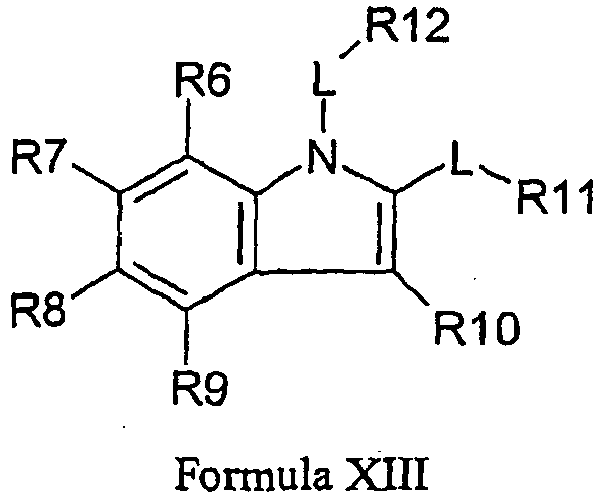

R1-R10, independent of one another, are chosen from hydro, hydroxyl, halo, alkyl, alkoxy, haloalkyl, haloalkoxy, -N(C1-3alkyl)2, -NH(C1-3alkyl), -C(=O)NH2, - C(=O)NH(C1-3alkyl), -C(=O)N(C1-3alkyl)2, -S(=O)2(C1-3alkyl), -S(=O)2NH2, - S(=O)2N(C1-3alkyl)2, -S(=O)2NH(C1-3alkyl), -CHF2, -OCF3, -OCHF2, -SCF3, -CF3, -CN, - NH2, -NO2, -C(=O)-N-morpholino, -cyclohexyl, -morpholino, -pyrrolidinyl, -piperazinyl, -(N-methyl)-piperazinyl, -OCH2-phenyl, -pyridinyl, methylenedioxy, ethylenedioxy, - C(=O)OCH2CH3 substituted furanyl, para-(C(=O)OCH2CH3)-phenyl, and -O- Si(CH3)2(C(CH3)3); two adjacent of R6-R9 can be taken together to form a 4-7 member optionally substituted aryl or cycloalkyl ring;
R11 is chosen from -L-C(=O)OH, -L-CH=CHC(=O)OH, -L-C(=O)NH2, -L- C(=O)NH(C1-3alkyl), -L-C(=O)N(C1-3alkyl)2, -L-S(=O)2(C1-3alkyl), -L-S(=O)2NH2, -L-S(=O)2N(C1-3alkyl)2, -L-S(=O)2NH(C1-3alkyl), -L-C(=O)NHOH, -L-C(=O)CH2NH2, -L-C(=O)CH2OH, -L-C(=O)CH2SH, -L-C(=O)NHCN, -L-NHC(=O)ORo, -L-C(=O)NHRo, - L-NH(C=O)NHRo, -L-C(=O)N(Ro)2, -L-NH(O=O)N(Ro)2, -L-sulfo, -L-(2,6 difluorophenol), -L-phosphono, and -L-tetrazolyl;
Ro is chosen from alkyl and haloalkyl; and
R12 is chosen from optionally substituted C1-12 alkyl, phenyl, and C3-7 cycloalkyl. - In one embodiment of the eleventh aspect, R8 and R9 in the compounds of Formula XI are taken together to form a 6 member aryl ring as in Formula XIII.

- According to one embodiment of the eleventh aspect, compounds of Formula XIII are provided wherein Ra, Rb, Rc, and Rd are independently chosen from hydro, hydroxyl, halo, alkyl, alkoxy, haloalkyl, haloalkoxy, -N(C1-3alkyl)2, -NH(C1-3 alkyl), -C(=O)NH2, -C(=O)NH(C1-3alkyl), -C(O)N(C1-3alkyl)2, -S(=O)2(C1-3alkyl), - S(=O)2NH2, -S(=O)2N(C1-3alkyl)2, -S(=O)2NH(C1-3alkyl), -CHF2, -OCF3, -OCHF2, - SCF3, -CF3, -CN, -NH2, NO2, -C(=O)-N-morpholino, -cyclohexyl, -morpholino, - pyrrolidinyl, -piperazinyl, -(N-methyl)-piperazinyl, -OCH2-phenyl, -pyridinyl, methylenedioxy, ethylenedioxy, -C(=O)OCH2CH3 substituted furanyl, para-(C(=O)OCH2CH3)-phenyl, and -O-Si(CH3)2(C(CH3)3); and the other variables can be defined as in one of the other embodiments of the eleventh aspect.
- In one embodiment of the eleventh aspect, R8 and R9 in the compounds of Formula XII are taken together to form a 6 member aryl ring as in Formula XIV.

- According to one embodiment of the eleventh aspect, compounds of Formula XIV are provided wherein Ra, Rb, Rc, and Rd are independently chosen from hydro, hydroxyl, halo, alkyl, alkoxy, haloalkyl, haloalkoxy, -N(C1-3 alkyl)2, -NH(C1-3 alkyl), -C(=O)NH2, -C(=O)NH(C1-3alkyl), -C(=O)N(C1-3alkyl)2, -S(=O)2(C1-3alkyl), - S(=O)2NH2, -S(=O)2N(C1-3alkyl)2, -S(=O)2NH(C1-3alkyl), -CHF2, -OCF3, -OCHF2, - SCF3, -CF3, -CN, -NH2, -NO2, -C(=O)-N-morpholino, -cyclohexyl, -morpholino, - pyrrolidinyl, -piperazinyl, -(N-methyl)-piperazinyl, -OCH2-phenyl, -pyridinyl, methylenedioxy, ethylenedioxy, -C(=O)OCH2CH3 substituted furanyl, para-(C(=O)OCH2CH3)-phenyl, and -O-Si(CH3)2(C(CH3)3); and the other variables can be defined as in one of the other embodiments of the eleventh aspect.
- The present description also describes, in a twelfth aspect, compounds of Formula I and II, wherein one or more of R1-R5 is chosen from -L-C(=O)OH, -L-CH=CHC(=O)OH, -L-C(=O)NH2, -L-C(=O)NH(C1-3alkyl), -L-C(=O)N(C1-3alkyl)2, -L-S(=o)2(C1-3alkyl), -L-S(=O)2NH2, -L-S(=O)2N(C1-3alkyl)2, -L-S(=O)2NH(C1-3alkyl), -L-C(=O)NHOH, -L-C(=O)CH2NH2, -L-C(=O)CH2OH, -L-C(=O)CH2SH, -L-C(=O)NHCN, -L-NHC(=O)ORo, -L-C(=O)NHRo, -L-NH(C=O)NHRo, -L-C(=O)N(Ro)2, -L-NH(C=O)N(Ro)2, -L-sulfo, -L-(2,6 difluorophenol), -L-phosphono, and -L-tetrazolyl, and the others of R1-R5, independent of one another, are chosen hydro, hydroxyl, halo, alkyl, alkoxy, haloalkyl, haloalkoxy, -N(C1-3alkyl)2, -NH(C1-3alkyl), -C(=O)NH2, - C(=O)NH(C1-3alkyl), -C(=O)N(C1-3alkyl)2, -S(=C)2(C1-3alkyl), -S(=O)2NH2, - S(=O)2N(C1-3alkyl)2, -S(=O)2NH(C1-3alkyl), -CHF2, -OCF3, -OCHF2, -SCF3, -CF3, -CN,-NH2, and -NO2;
Ro is chosen from alkyl and haloalkyl;
R6-R10, independent of one another, are chosen from hydro, hydroxyl, halo, alkyl, alkoxy, haloalkyl, haloalkoxy, -N(C1-3 alkyl)2, -NH(C1-3alkyl), -C(=O)NH2, - C(=O)NH(C1-3alkyl), -C(=O)N(C1-3alkyl)2, -S(=O)2(C1-3alkyl), -S(=O)2NH2, - S(=O)2N(C1-3alkyl)2, -S(=O)2NH(C1-3alkyl), -CHF2, -OCF3, -OCHF2, -SCF3, -CF3, -CN,-NH2, NO2, -C(=O)-N-morpholino, -cyclohexyl, -morpholino, -pyrrolidinyl, -piperazinyl, -(N-methyl)-piperazinyl, -OCH2-phenyl, -pyridinyl, methylenedioxy, ethylenedioxy,-C(=O)OCH2CH3 substituted furanyl, para-(C(=O)OCH2CH3)-phenyl, and -O-Si(CH3)2(C(CH3)3); two adjacent of R6-R9 can be taken together to form a 4-7 member optionally substituted aryl, heterocyclic, or cycloalkyl ring;
R11 is an optionally substituted heterocyclic group; and
L can be saturated, partially saturated, or unsaturated, and is chosen from -(CH2)n-(CH2)n-, -(CH2)nC(=O)(CH2)n-, -(CH2)n(CH2)n-, -(CH2)nO(CH2)n-, and - (CH2)nS(CH2)n-, where each n is independently chosen from 0, 1, 2, 3, 4, 5, 6, 7, and 8, wherein each carbon can be optionally substituted with one or more C1-3 alkyl or C3-6 cycloalkyl. Compounds of this twelfth aspect are used in the present invention as described in the claims. - The present description also describes, in a thirteenth aspect, compounds of Formula I and II, wherein R1-R5, independent of one another, are chosen from hydro, hydroxyl, halo, alkyl, alkoxy, haloalkyl, haloalkoxy, -N(C1-3alkyl)2, NH(C1-3alkyl), -C(=O)NH2, - C(=O)NH(C1-3alkyl), -C(=O)N(C1-3alkyl)2, -S(=O)2NH2, -S(=O)2(C1-3alkyl), - S(=O)2N(C1-3alkyl)2, -S(=O)2NH(C1-3alkyl), -CHF2, -OCF3, -OCHF2, -SCF3, -CF3, -CN,-NH2, and -NO2;
one or more of R6-R9 is independently chosen from -L-C(=O)OH, -L-CH=CHC(=O)OH, -L-C(=O)NH2, -L-C(=O)NH(C1-3alkyl), -L-C(=O)N(C1-3alkyl)2, - L-S(O)2(C1-3alkyl), -L-S(=O)2NH2, -L-S(=O)2N(C1-3alkyl)2, -L-S(=O)2NH(C1-3alkyl), -L-C(=O)NHOH, -L-C(=O)CH2NH2, -L-C(=O)CH2OH, -L-C(=O)CH2SH, -L-C(=O)NHCN, -L-NHC(=O)ORo, -L-C(=O)NHRo, -L-NH(C=O)NHRo, -L-C(=O)N(Ro)2, -L-NH(C=O)N(Ro)2, -L-sulfo, -L-(2,6 difluorophenol), -L-phosphono, and -L-tetrazolyl; or two adjacent of R6-R9 can be taken together to form an optionally substituted 4-7 member aryl, heterocyclic, or cycloalkyl ring substituted with one or more substituents independently chosen from L-C(=O)OH, -L-CH=CHC(=O)OH, -L-C(=O)NH2, -L-C(=O)NH(C1-3alkyl), -L-C(=O)N(C1-3alkyl)2, -L-S(=O)2(C1-3alkyl), -L-S(=O)2NH2, -L-S(=O)2N(C1-3alkyl)2, -L-S(=O)2NH(C1-3alkyl), -L-C(=O)NHOH, -L-C(=O)CH2NH2, -L-C(=O)CH2OH, -L-C(=O)CH2SH, -L-C(=O)NHCN, -L-NHC(=O)ORo, -L-C(=O)NHRo, - L-NH(C=O)NHRo, -L-C(=O)N(Ro)2, -L-NH(C=O)N(Ro)2, -L-sulfo, -L-(2,6 difluorophenol), -L-phosphono, and -L-tetrazolyl; and the others of R6-R9, independent of one another, are chosen from hydro, hydroxyl, halo, alkyl, alkoxy, haloalkyl, haloalkoxy, N(C1-3alkyl, -NH(C1-3alkyl), -C(=O)NH2, -C(+o)NH(C1-3alkyl), - C(=O)N(C1-3alkyl)2, -S(=O)2(C1-3alkyl), -S(=O)2NH2, -S(=O)2N(C1-3alkyl)2, S(=O)2NH(C1-3alkyl), -CHF2, -OCF3, -OCHF2, -SCF3, -CF3, -CN, -NH2, and -NO2;
Ro is chosen from alkyl and haloalkyl;
R11 is an optionally substituted heterocyclic group; and
L can be saturated, partially saturated, or unsaturated, and is chosen from -(CH2)n-(CH2)n-, -(CH2)nC(=O)(CH2)n-, -(CH2)nNH(CH2)n-, -(CH2)nO(CH2)n-, and - (CH2)nS(CH2)n-, where each n is independently selected from 0, 1, 2, 3, 4, 5, 6, 7, and 8, wherein each carbon can be optionally substituted with one or more C1-3alkyl or C3-6 cycloalkyl. - The present description also describes, in a fourteenth aspect, compounds of Formula I and II, wherein R1-R9 are independently chosen hydro, hydroxyl, halo, alkyl, alkoxy, haloalkyl, haloalkoxy, -N(C1-3alkyl)2, NH(C1-3alkyl), -C(=O)NH2, -C(=O)NH(C1-3alkyl), - C(=O)N(C1-3alkyl)2, -S(=O)2(C1-3alkyl), -S(=O)2NH2, -S(=O)2N(C1-3alkyl)2, - S(=O)2NH(C1-3alkyl), -CHF2, -OCF3, -OCHF2, -SCF3, -CF3, -CN, -NH2, -NO2, -C(=O)-N-morpholino, -cyclohexyl, -morpholino, -pyrrolidinyl, piperazinyl, -(N-methyl)-piperazinyl, -OCH2-phenyl, -pyridinyl, methylenedioxy, ethylenedioxy, - C(=O)OCH2CH3 substituted furanyl, para-(C(=O)OCH2CH3)-phenyl, and -O-Si(CH3)2(C(CH3)3); two adjacent of R6-R9 can be taken together to form an optionally substituted C4-7 member aryl, heterocyclic, or cycloalkyl ring;
R10 is chosen from -L-C(=O)OH, -L-CH=CHC(=O)OH, -L-C(=O)NH2, -L-C(-O)NH(C1-3alkyl), -L-C(=O)N(C1-3alkyl)2, -L-S(=O)2(C1-3alkyl), -L-S(=O)2NH2, -L-S(=O)2N(C1-3alkyl)2, -L-S(=O)2NH(C1-3alkyl), -L-C(=O)NHOH, -L-C(=O)CH2NH2, -L-C(=O)CH2OH, -L-C(=O)CH2SH, -L-C(=O)NHCN, -L-NHC(=O)ORo, -L-C(=O)NHRo, - L-NH(C=O)NHRo, -L-C(=O)N(Ro)2, -L-NH(C=O)N(Ro)2, -L-sulfo, -L-(2,6 difluorophenol), -L-phosphono, and -L-tetrazolyl;
Ro is chosen from alkyl and haloalkyl;
R11 is an optionally substituted heterocyclic group; and
L can be saturated, partially saturated, or unsaturated, and is chosen from -(CH2)n-(CH2)n-, -(CH2)nC(=O)(CH2)n-, -(CH2)nNH(CH2)n-, -(CH2)nO(CH2)n-, and-(CH2)nS(CH2)n-, where each n is independently chosen from 0, 1, 2, 3, 4, 5, 6, 7, and 8, wherein each carbon can be optionally substituted with one or more C1-3 alkyl or C3-6 cycloalkyl. - The present description also describes, in a fifteenth aspect, compounds of Formula I and II, wherein R1-R10, independent of one another, are chosen from hydro, hydroxyl, halo, alkyl, alkoxy, haloalkyl, haloalkoxy, -N(C1-3alkyl)2, -NH(C1-3alkyl), -C(=O)NH2, - C(=O)NH(C1-3alkyl), -C(=O)N(C1-3alkyl)2, -S(=O)2(C1-3alkyl), -S(=O)2NH2, - S(=O)2N(C1-3alkyl)2, -S(=O)2NH(C1-3alkyl), -CHF2, -OCF3, -OCHF2, -SCF3, -CF3, -CN, - NH2, -NO2, -C(=O)-N-morpholino, -cyclohexyl, -morpholino, -pyrrolidinyl, -piperazinyl, -(N-methyl)-piperazinyl, -OCH2-phenyl, -pyridinyl, methylenedioxy, ethylenedioxy, - C(=O)OCH2CH3 substituted furanyl, para-(C(=O)OCH2CH3)-phenyl, and -O-Si(CH3)2(C(CH3)3); two adjacent of R6-R9 can be taken together to form a 4-7 member optionally substituted aryl, heterocyclic, or cycloalkyl ring;
R11 is a heterocyclic group with one or more substituents independently chosen from -L-C(=O)OH, -L-CH=CHC(=O)OH, -L-C(=O)NH2, -L-C(=O)NH(C1-3 alkyl), -L-C(=O)N(C1-3alkyl)2, -L-S(=O)2(C1-3alkyl), -L-S(=O)2NH2, -L-S(=O)2N(C1-3alkyl)2, -L-S(=O)2NH(C1-3alkyl), -L-C(=O)NHOH, -L-C(=O)CH2NH2, -L-C(=O)CH2OH, -L-C(=O)CH2SH, -L-C(=O)NHCN, -L-NHC(=O)ORo, -L-C(=O)NHRo, -L-NH(C=O)NHRo, -L-C(=O)N(Ro)2, -L-NH(C=O)N(Ro)2, -L-sulfo, -L-(2,6 difluorophenol), -L-phosphono, and -L-tetrazolyl;
Ro is chosen from alkyl and haloalkyl; and
L can be saturated, partially saturated, or unsaturated, and is chosen from -(CH2)n-(CH2)n-, -(CH2)nC(=O)(CH2)n-, -(CH2)nNH(CH2)n-, -(CH2)nO(CH2)n-, and - (CH2)nS(CH2)n-, where each n is independently chosen from 0, 1, 2, 3, 4, 5, 6, 7, and 8, wherein each carbon can be optionally substituted with one or more C1-3 alkyl or C3-6 cycloalkyl. - The present description also describes, in a sixteenth aspect, compounds of Formula I and II, wherein R1-R9 and R11 independent of one another, are chosen from hydro, hydroxyl, halo, alkyl, alkoxy, haloalkyl, haloalkoxy, N(C1-3alkyl)2, -NH(C1-3alkyl), -C(=O)NH2, - C(=O)NH(C1-3alkyl), -C(=O)N(C1-3alkyl)2, -S(=O)2(C1-3alkyl), -S(=O)2NH2, - S(=O)2N(C1-3alkyl)2, -S(=O)2NH(C1-3alkyl), -CHF2, -OCF3, -OCHF2, -SCF3, -CF3,-CN, - NH2, -NO2, -C(=O)-N-morpholino, -cyclohexyl, -morpholino, -pyrrolidinyl, -piperazinyl, -(N-methyl)-piperazinyl, -OCH2-phenyl, -pyridinyl, methylenedioxy, ethylenedioxy, - C(=O)OCH2CH3 substituted furanyl, para-(C(=O)OCH2CH3)-phenyl, and -O-Si(CH3)2(C(CH3)3); two adjacent of R6-R9 can be taken together to form a 4-7 member optionally substituted aryl, heterocyclic, or cycloalkyl ring;
R10 is a heterocyclic group with one or more substituents independently chosen - L-C(=O)OH, -L-CH=CHC(=O)OH, -L-C(=O)NH2, -L-C(=O)NH(C1-3alkyl), -L-C(=O)N(C1-3alkyl)2, -L-S(=O)2(C1-3alkyl), -L-S(=O)2NH2, -L-S(=O)2N(C1-3alkyl)2, -L-S(=O)2NH(C1-3alkyl), -L-C(=O)NHOH, -L-C(=O)CH2NH2, -L-C(=O)CH2OH, -L-C(=O)CH2SH, -L-C(=O)NHCN, -L-NHC(=O)ORo, -L-C(=O)NHRo, -L-NH(C=O)NHRo, -L-C(=O)N(Ro)2, -L-NH(C=O)N(Ro)2, -L-sulfo, -L-(2,6 difluorophenol), -L-phosphono, and -L-tetrazolyl;
Ro is chosen from alkyl and haloalkyl; and
L can be saturated, partially saturated, or unsaturated, and is chosen from -(CH2)n-(CH2)n-, -(CH2)nC(=O)(CH2)n-, -(CH2)nNH(CH2)n-, -(CH2)nO(CH2)n-, and - (CH2)nS(CH2)n-, where each n is independently chosen from 0, 1, 2, 3, 4, 5, 6, 7, and 8, wherein each carbon can be optionally substituted with one or more C1-3alkyl or C3-6 cycloalkyl. - The present description also describes, in a seventeenth aspect, compounds of Formula I and II, wherein R1-R9 and R11 independent of one another, are chosen from hydro, hydroxyl, halo, alkyl, alkoxy, haloalkyl, haloalkoxy, -N(C1-3alkyl)2, NH(C1-3alkyl), -C(=O)NH2, - C(=O)MH(C1-3alkyl), -C(=O)N(C1-3alkyl)2, -S(=O)2(C1-3alkyl), -S(=O)2NH2, - S(=O)2N(C1-3alkyl)2, -S(=O)2NH(C1-3alkyl), -CHF2, -OCF3, -OCHF2, -SCF3, -CF3, -CN, - NH2, -NO2, -C(=O)-N-morpholino, -cyclohexyl, -morpholino, -pyrrolidinyl, -piperazinyl, -(N-methyl)-piperazinyl, -OCH2-phenyl, -pyridinyl, methylenedioxy, ethylenedioxy, - C(=O)OCH2CH3 substituted furanyl, para-(C(=O)OCH2CH3)-phenyl, and -O-Si(CH3)2(C(CH3)3); two adjacent ofR6-R9 can be taken together to form a 4-7 member optionally substituted aryl, heterocyclic, or cycloalkyl ring;
R10 is -L-R12;
R12 is a heterocyclic group with one or more substituents chosen from-L-C(=O)OH, -L-CH=CHC(=O)OH, -L-C(=O)NH2, -L-C(=O)NH(C1-3 alkyl), -L-C(=O)N(C1-3 alkyl)2, -L-S(=O)2(C1-3alkyl), -L-S(=O)2NH2, -L-S(=O)2N(C1-3 alkyl)2, -L-S(=O)2NH(C1-3 alkyl), -L-C(=O)NHOH, -L-C(=O)CH2NH2, -L-C(=O)CH2OH, -L-C(=O)CH2SH, -L-C()O)NHCN, -L-NHC(=O)ORo, -L-C(=O)NHRo, -L-NH(C=O)NHRo, -L-C(=O)N(Ro)2, -L-NH(C=O)N(Ro)2, -L-sulfo, -L-(2,6 difluorophenol), -L-phosphono, and -L-tetrazolyl;
Ro is chosen from alkyl and haloalkyl; and
L can be saturated, partially saturated, or unsaturated, and is chosen from -(CH2)n-(CH2)n-, -(CH2)nC(=O)(CH2)n-, -(CH2)nNH(CH2)n-, -(CH2)nO(CH2)n-, and - (CH2)nS(CH2)n-, where each n is independently chosen from 0, 1, 2, 3, 4, 5, 6, 7, and 8, wherein each carbon can be optionally substituted with one or more C1-3 alkyl or C3-6 cycloalkyl. - The present description also describes, in an eighteenth embodiment, compounds of Formula I and II, wherein R1-R9 and R11 independent of one another, are chosen from hydro, hydroxyl, halo, alkyl, alkoxy, haloalkyl, haloalkoxy, -N(C1-3 alkyl)2, -NH(C1-3 alkyl), -C(=O)NH2, C(=O)NH(C1-3 alkyl), -C(=O)N(C1-3 alkyl)2, -S(=O)2(C1-3alkyl), -S(=O)2NH2, - S(=O)2N(C1-3 alkyl)2, -S(=O)2NH(C1-3 alkyl), -CHF2, -OCF3, -OCHF2, -SCF3, -CF3, -CN, - NH2, -NO2, -C(=O)-N-morpholino, -cyclohexyl, -morpholino, -pyrrolidinyl, -piperazinyl, -(N-methyl)-piperazinyl, -OCH2-phenyl, -pyridinyl, methylenedioxy, ethylenedioxy, - C(=O)OCH2CH3 substituted furanyl, para-(C(=O)OCH2CH3)-phenyl, and -O-Si(CH3)2(C(CH3)3); two adjacent of R6-R9 can be taken together to form a 4-7 member optionally substituted acryl, heterocyclic, or cycloalkyl ring;
R10 is a heterocyclic group with one or more substituents independently chosen from -L-C(=O)OH, -L-CH=CHC(=O)OH, -L-C(=O)NH2, -L-C(=O)NH(C1-3 alkyl), -L-C(=O)N(C1-3 alkyl)2, -L-S(=O)2(C1-3alkyl), -L-S(=O)2NH2, -L-S(=O)2N(C1-3 alkyl)2, -L-S(=O)2NH(C1-3 alkyl), -L-C(=O)NHOH, -L-C(=O)CH2NH2, -L-C(=O)CH2OH, -L-C(=O)CH2SH, -L-C(=O)NHCN, -L-NHC(=O)ORo, -L-C(=O)NHRo, -L-NH(C=O)NHRo, -L-C(=O)N(Ro)2, -L-NH(C=O)N(Ro)2, -L-sulfo, -L-(2,6 difluorophenol), -L-phosphono, and -L-tetrazolyl;
Ro is chosen from alkyl and haloalkyl; and
L can be saturated, partially saturated, or unsaturated, and is chosen from -(CH2)n-(CH2)n-, -(CH2)nC(=O)(CH2)n-, -(CH2)nNH(CH2)n-, -(CH2)nO(CH2)n-, and -
(CH2)nS(CH2)n-, where each n is independently chosen from 0, 1,2, 3,4, 5, 6, 7, and 8, wherein each carbon can be optionally substituted with one or more C1-3 alkyl or C3-6 cycloalkyl. - The present description also describes, in a nineteenth aspect, compounds of Formula I and II, wherein R1-R9, independent of one another, are chosen from hydro, hydroxyl, halo, alkyl, alkoxy, haloalkyl, haloalkoxy, -N(C1-3 alkyl)2, -NH(C1-3 alkyl), -C(=O)NH2, - C(=O)NH(C1-3 alkyl), -C(=O)N(C1-3 alkyl)2, -S(=O)2(C1-3alkyl), -S(=O)2NH2, - S(=O)2N(C1-3 alkyl)2, -S(=O)2NH(C1-3 alkyl), -CHF2, -OCF3, -OCHF2, -SCF3, -CF3, -CN, - NH2, -NO2, -C(=O)-N-morpholino, -cyclohexyl, -morpholino, -pyrrolidinyl, -piperazinyl, -(N-methyl)-piperazinyl, -OCH2-phenyl, -pyridinyl, methylenedioxy, ethylenedioxy, - C(=O)OCH2CH3 substituted furanyl, para-(C(=O)OCH2CH3)-phenyl, and -O-Si(CH3)2(C(CH3)3); two adjacent of R6-R9 can be taken together to form a 4-7 member optionally substituted aryl, heterocyclic, or cycloalkyl ring;
R10 and R11 are independently chosen from hydro, hydroxyl, halo, alkyl, alkoxy, haloalkyl, haloalkoxy, -N(C1-3 alkyl)2, NH(C1-3 alkyl), -C(=O)NH2, -C(=O)NH(C1-3 alkyl), -C(=O)N(C1-3 alkyl)2, -S(=O)2NH2, -S(=O)2(C1-3alkyl), -S(=O)2N(C1-3 alkyl)2, - S(=O)2NH(C1-3 alkyl), -CHF2, -OCF3, -OCHF2, -SCF3, -CF3, -CN, -NH2, -NO2, and -L-R12;
R12 is a heterocyclic group with one or more substituents independently chosen from -L-C(=O)OH, -L-CH=CHC(=O)OH, -L-C(=O)NH2, -L-C(=O)NH(C1-3 alkyl), - L-C(=O)N(C1-3 alkyl)2, -L-S(=O)2(C1-3alkyl), -L-S(=O)2NH2, -L-S(=O)2N(C1-3 alkyl)2, - L-S(=O)2NH(C1-3 alkyl), -L-C(=O)NHOH, -L-C(=O)CH2NH2, -L-C(=O)CH2OH, -L-C(=O)CH2SH, -L-C(=O)NHCN, -L-NHC(=O)ORo, -L-C(=O)NHRo, -L-NH(C=O)NHRo, -L-C(=O)N(Ro)2, -L-NH(C=O)N(Ro)2, -L-sulfo, -L-(2,6 difluorophenol), -L-phosphono, and -L-tetrazolyl;
Ro is chosen from alkyl and haloalkyl; and
L can be saturated, partially saturated, or unsaturated, and is chosen from - (CH2)n-(CH2)n-, -(CH2)nC(=O)(CH2)n-, -(CH2)nNH(CH2)n-, -(CH2)nO(CH2)n-, and - (CH2)nS(CH2)n-, where each n is independently chosen from 0, 1, 2, 3, 4, 5, 6, 7, and 8, wherein each carbon can be optionally substituted with one or more C1-3 alkyl or C3-6 cycloalkyl. - The present description also describes, in a twentieth aspect, compounds of Formula V and VI,


Ro is chosen from alkyl and haloalkyl;
R6-R10, independent of one another, are chosen from hydro, hydroxyl, halo, alkyl, alkoxy, haloalkyl, haloalkoxy, -N(C1-3 alkyl)2, -NH(C1-3 alkyl), -C(=O)NH2, - C(=O)NH(C1-3 alkyl), -C(=O)N(C1-3 alkyl)2, -S(=O)2(C1-3alkyl), -S(=O)2NH2, - S(=O)2N(C1-3alkyl)2, -S(=O)2NH(C1-3 alkyl), -CHF2) -OCF3, -OCHF2, -SCF3, -CF3, -CN, - NH2, -NO2, -C(=O)-N-morpholino, -cyclohexyl, -morpholino, -pyrrolidinyl, -piperazinyl, -(N-methyl)-piperazinyl, -OCH2-phenyl, -pyridinyl, methylenedioxy, ethylenedioxy, - C(=O)OCH2CH3 substituted furanyl, para-(C(=O)OCH2CH3)-phenyl, and -O-Si(CH3)2(C(CH3)3); two adjacent of R6-R9 can be taken together to form a 4-7 member optionally substituted aryl, heterocyclic, or cycloalkyl ring;
R11 is an optionally substituted heterocyclic group; and
L can be saturated, partially saturated, or unsaturated, and is chosen from -(CH2)n-(CH2)n-, -(CH2)nC(=O)(CH2)n-, -(CH2)nNH(CH2)n-, -(CH2)nO(CH2)n-, and - (CH2)nS(CH2)n-, where each n is independently chosen from 0, 1, 2, 3, 4, 5, 6, 7, and 8, wherein each carbon can be optionally substituted with one or more C1-3 alkyl or C3-6 cycloalkyl. - The present description also describes, in a twenty-first aspect, compounds of Formula V and VI,


Ro is chosen from alkyl and haloalkyl;
R12 is a heterocyclic group with one or more substituents independently chosen - L-C(=O)OH, -L-CH=CHC(=O)OH, -L-C(=O)NH2, -L-C(=O)NH(C1-3 alkyl), -L-C(=O)N(C1-3 alkyl)2, -L-S(=O)2(C1-3alkyl), -L-S(=O)2NH2, -L-S(=O)2N(C1-3 alkyl)2, -L-S(=O)2NH(C1-3 alkyl), -L-C(=O)NHOH, -L-C(=O)CH2NH2, -L-C(=O)CH2OH, -L-C(=O)CH2SH, -L-C(=O)NHCN, -L-NHC(=O)ORo, -L-C(=O)NHRo, -L-NH(C=O)NHRo, -L-C(=O)N(Ro)2, -L-NH(C=O)N(Ro)2, -L-sulfo, -L-(2,6 difluorophenol), -L-phosphono, and -L-tetrazolyl; and
the others of R1-R11 are independently chosen from hydro, hydroxyl, halo, alkyl, alkoxy, haloalkyl, haloalkoxy, -N(C1-3 alkyl)2, -NH(C1-3 alkyl), -C(=O)NH2, - C(=O)NH(C1-3 alkyl), -C(=O)N(C1-3 alkyl)1, -S(-O)2(C1-3alkyl), -S(=O)2NH2, - S(=O)2N(C1-3 alkyl)2, -S(=O)2NH(C1-3 alkyl), -CHF2, -OCF3, -OCHF2, -SCF3, -CF3, -CN, - NH2, -NO2, -C(=O)-N-morpholino, -cyclohexyl, -morpholino, -pyrrolidinyl, -piperazinyl, -(N-methyl)-piperazinyl, -OCH2-phenyl, -pyridinyl, methylenedioxy, ethylenedioxy, - C(=O)OCH2CH3 substituted furanyl, para-(C(=O)OCH2CH3)-phenyl, and -O-Si(CH3)2(C(CH3)3); two adjacent of R6-R9 can be taken together to form a 4-7 member optionally substituted aryl, heterocyclic, or cycloalkyl ring; and
L can be saturated, partially saturated, or unsaturated, and is chosen from -(CH2)n-(CH2)n-, -(CH2)nC(=O)(CH2)n-, -(CH2)nNH(CH2)n-, -(CH2)nO(CH2)n-, and - (CH2)nS(CH2)n-, where each n is independently chosen from 0, 1, 2, 3, 4, 5, 6, 7, and 8, wherein each carbon can be optionally substituted with one or more C1-3 alkyl or C3-6 cycloalkyl. - One embodiment of this twenty-first aspect includes analogs where the ring to which R1-R5 are attached is a 4-7 member heterocyclic ring instead a phenyl ring.
- In another aspect, one or more of the carbon atoms of the indole core are replaced by a heteroatom independenly -N-, -O-, and -S-.
- In some emdoments, Ro is independently chosen from methyl or ethyl.
- Optionally substituted, when used herein without reference to further definition, refers to a substituent independently chosen from the group consisting of hydro, hydroxyl, halo, alkyl, alkoxy, haloalkyl, haloalkoxy, -N(C1-3 alkyl)2, -NH(C1-3 alkyl),-C(=O)NH2, -C(=O)NH(C1-3 alkyl), -C(=O)N(C1-3 alkyl)2, -S(=O)2(C1-3alkyl), - S(=O)2NH2, -S(=O)2N(C1-3 alkyl)2, -S(=O)2NH(C1-3 alkyl), -CHF2, -OCF3, -OCHF2,-SCF3, -CF3, -CN, -NH2, and -NO2.
- Furthermore, herein also described are derivatives or analog of the compounds defined in first through twenty-first aspects, where the derivative or analog is chosen from an ester (e.g., methyl or ethyl ester), an amide, a carbamate, a urea, an amadine, or a combination thereof. Methods for generating an ester, an amide, a carbamate, a urea, an amadine, or a combination thereof, of the compounds of the first aspect through the twenty-first aspects are known to an ordinary artisan skilled in organic chemical synthesis.
- As the skilled artisan readily recognizes, in some of the embodiments of the first twenty-one aspects, some of the compounds can have more than one -L-group, each of which is independent chosen.
- The present description also describes, in a twenty-second aspect, a method of treating a neurodegenerative disorder, by identifying a patient in need of such treatment, and administering to the patient a therapeutically effective amount of a pharmaceutical composition having one or more compounds of Formulae I-XVI. Administration of a compound of Formulae I-XVI for at least 4 weeks, preferably at least 4 months, and more desirably at least 8 months, can provide an improvement or lessening in decline of cognitive function as characterized by cognition tests, biochemical disease marker progression, and/or plaque pathology. Cognition tests are those which are capable of measuring cognitive decline in a patient or group of patients. Examples of such cognition tests include the ADAS-cog (Alzheimer's Disease Assessment Scale, cognitive subscale) NPI (Neuropsychiatric Inventory), ADCS-ADL (Alzheimer's Disease Cooperative Study-Activities of Daily Living), CIBIC-plus (Clinician Interview Based Impression of Change), and CDR sum of boxes (Clinical Dementia Rating). It is preferred that the lessening in decline in cognitive function is at least 25 % as compared to individuals treated with placebo, more preferably at least 40 %, and even more desirably at least 60 %. For example, an individual treated with placebo having probable mild-to-moderate Alzheimer's disease is expected to score approximately 5.5 points worse on the ADAS-cog test after a specified period of time of treatment (e.g., 1 year) whereas an individual treated with the composition of this aspect of the invention for the same period of time will score approximately 2.2 points worse on the ADAS-cog scale with a 60% decrease in decline or 3.3 points worse with a 40% decrease in decline in cognitive function when treated with the composition for the same specified period of time. Desirably, the oral dose is provided in capsule or tablet form. The pharmaceutical composition for use in the invention is formulated with one or more pharmaceutically acceptable excipients, salts, or carriers. The pharmaceutical composition for use in the invention is delivered orally, preferably in a tablet or capsule dosage form.
- The present description also describes, in a twenty-third aspect, a method for prophylaxis against a neurodegenerative disorder, by identifying a patient in need of or desiring such treatment, and administering to the patient a prophylactically effective amount of a pharmaceutical composition having one or more compounds of Formulae I-XVI. Administration of a compound of Formulae I-XVI for at least 4 weeks, preferably at least 4 months, and more desirably at least 8 months, can delay the onset of the neurodegenerative disorder or slow the rate of onset of symptoms of the disorder. Patients having a predisposition to a neurodegenerative disorder or suspected of needing prophylaxis can be identified by any method known to the skilled artisan for diagnosis such neurodegenerative disorders.
- The present description also describes, in a twenty-fourth aspect, a method of treating a disease characterized by abnormal amyloid precursor protein processing by (1) identifying a patient in need of such treatment, and (2) administering to the patient a therapeutically effective amount of a pharmaceutical composition having one or more compounds of Formulae I-XVI. Oral administration of the pharmaceutical composition for use in the method of this aspect for at least 4 weeks, preferably at least 4 months, and more desirably at least 8 months, provides an improvement or lessening in decline of cognitive function as characterized by cognition tests, biochemical disease marker progression, and/or plaque pathology. Examples of biochemical disease markers include, for example, amyloid beta peptide (Aβ), Aβ42, and tau. It is preferred that the lessening in decline in biochemical disease marker progression is at least 10 % as compared to individuals treated with placebo, more preferably at least 20 %, and more desirably at least 40 %. It is preferred that the lessening in decline in cognitive function is at least 25 % as compared to individuals treated with placebo, more preferably at least 40 %, and even more desirably at least 60 %. Desirably, the composition is provided as an oral dose, preferably in capsule or tablet form.
- The present description also describes, in a twenty-fifth aspect, a method of prophylaxis or delaying the onset of a disease (or one or more symptoms thereof) characterized by abnormal amyloid precursor protein processing, by identifying a patient in need of such treatment and administering to the patient a prophylactically effective amount of a pharmaceutical composition having one or more compounds of Formulae I-XVI. Oral administration of the pharmaceutical composition for use in the method of this aspect for at least 4 weeks, preferably at least 4 months, and more desirably at least 8 months, prevents or delays the onset of the disease (or symptoms thereof) characterized by abnormal amyloid precursor protein processing.
- The present description also describes, in a twenty-sixth aspect, a method of treating Alzheimer's disease comprising administering to a patient in need of such treatment, a pharmaceutical composition having one or more compounds of Formulae I-XVI. Oral administration of the pharmaceutical composition for use in the method of this aspect for at least 4 weeks, preferably at least 4 months, and more desirably at least 8 months, provides an improvement or lessening in decline of cognitive function as characterized by cognition tests, biochemical disease marker progression, and/or plaque pathology. Desirably, the oral dose is provided in capsule or tablet form. According to this aspect, a patient in need of treatment is administered an Alzheimer's disease treating effective amount of a pharmaceutical composition having one or more compounds of Formulae I-XVI and one or more pharmaceutically acceptable salts, excipients and carriers. The method of this aspect involves identifying an individual likely to have mild-to-moderate Alzheimer's disease. An individual having probable mild-to-moderate Alzheimer's disease can be diagnosed by any method available to the ordinary artisan skilled in such diagnoses. For example, diagnosis can be according to DSM IV (TR) and/or meets NINCDS-ADRDA criteria for probable AD. According to this aspect, individuals with probable mild-to-moderate AD take an oral dose of a pharmaceutical composition for a specified period of time. Individuals undergoing such treatment are likely to see an improvement or lessening in decline of cognitive function, an improvement or lessening in decline in biochemical disease marker progression, and/or an improvement or lessening decline in plaque pathology. A lessening in decline in cognitive function can be assessed using a test of cognitive function like the ADAS-cog. For example, an individual treated with placebo having probable mild-to-moderate Alzheimer's disease is expected to score approximately 5.5 points worse on the ADAS-cog test after a specified period of time of treatment (e.g., 1 year) whereas an individual treated with the composition of this aspect for the same period of time will score approximately 2.2 points worse on the ADAS-cog scale with a 60% decrease in decline or 3.3 points worse with a 40% decrease in decline in cognitive function when treated with the composition for the same specified period of time. In a related aspect, the method involves identifying a patient having moderate-to-severe AD and administering to the patient an Alzheimer's disease treating effective amount of a compound of Formulae I-XVI.
- The present description also describes, in a twenty-seventh aspect, a method of preventing the onset of Alzheimer's disease comprising administering to a patient in need of or desiring such treatment, a pharmaceutical composition having one or more compounds of Formulae I-XVI. Oral administration of the pharmaceutical composition for use in the method of this aspect of the invention for at least 4 weeks, preferably at least 4 months, and more desirably at least 8 months, delays the onset of decline of cognitive function, biochemical disease marker progression, and/or plaque pathology. According to this embodiment, an individual desiring or needing preventative treatment against the onset of AD is administered a pharmaceutical composition having one or more compounds of Formulae I-XVI. Desirably, the oral dose is provided in capsule or tablet form. The preventive treatment is preferably maintained as long as the individual continues to desire or need the treatment. Individuals needing or desiring preventative treatment against AD can be those having risk factors for developing AD. For example, risk factors for developing AD can be genetic factors or environmental factors. In one embodiment, the risk factor is age. Genetic risk factors can be assessed in a variety of ways, such as ascertaining the family medical history of the individual, or performing a genetic test to identify genes that confer a predisposition for developing AD. Additionally, risk factors can be assessed by monitoring genetic and biochemical markers.
- The foregoing and other advantages and features of the invention, and the manner in which the same are accomplished, will become more readily apparent upon consideration of the following detailed description of the invention taken in conjunction with the accompanying examples, which illustrate preferred and exemplary embodiments.
- In general, the invention relates to pharmaceutical compositions having one or more compounds of Formula I or II as the active ingredient, for use in treating neurodegenerative disorders, according to claim 6. When the pharmaceutical composition is administered, according to the treatment regimens of the invention, to an individual desiring or needing such treatment, it provides an improvement or lessening in decline of cognitive function, biochemical disease marker progression, and/or plaque pathology associated with neurodegenerative disorders such as AD. The composition of the invention is formulated with one or more pharmaceutically acceptable excipients, salts, or carriers. The pharmaceutical composition of the invention is delivered orally, preferably in a tablet or capsule dosage form. The pharmaceutical compositions can be used in methods for treating, preventing, and prophylaxis against neurodegenerative disorders such as Alzheimer's disease, and disease characterized by abnormal amyloid precursor protein processing.
- The present description also describes compounds of Formulae I-XVI as described in the Summary of the Invention (and in more detail below) and pharmaceutical composition having such compounds. In one specific use, the compounds can be used for the treatment and/or prophylaxis of neurodegenerative disorders. The inventors have found that compounds of Formulae I-XVI as described in the summary have an Aβ42 lowering effect in cell based assays.
- Some of the compounds of Formulae I-XVI, for use herein may exist as single stereoisomers (i.e., essentially free of other stereoisomers), racemates, and/or mixtures of enantiomers and/or diastereomers. All such single stereoisomers, racemates and mixtures thereof are intended to be within the scope of the present invention. Preferably, the compounds that are optically active are used in optically pure form. Furthermore, some of the compound for use in the invention can exist as cis and trans geometric isomers; all such isomers and mixtures thereof are intended to be within the scope of the present invention.
- Additionally, the formulas are intended to cover solvated as well as unsolvated forms of the identified structures. For example, Formulae I-XVI includes compounds of the indicated structure in both hydrated and non-hydrated forms. Other examples of solvates include the structures in combination with isopropanol, ethanol, methanol, DMSO, ethyl acetate, acetic acid, or ethanolamine.
- In addition to compounds of Formulae I-XVI, included are pharmaceutically acceptable prodrugs, pharmaceutically active metabolites, and pharmaceutically acceptable salts of such compounds.
- Prodrugs and active metabolites of compound may be identified using routine techniques known in the art. See, e.g., Bertolini, G et al., J. Med. Chem., 40, 2011-2016 (1997); Shan, D. et al., J. Pharm. Sci., 86 (7), 756-767; Bagshawe K., Drug Dev. Res., 34, 220-230 (1995); Bodor N;, Advance in Drug Res., 13, 224-331 (1984); Bundgaard, H., Design of Prodrugs (Elsevier Press 1985); and Larsen, I. K., Design and Application of Prodrugs, Drug Design and Development (Krogsgaard-Larsen et al., eds., Harwood Academic Publishers, 1991).
- The present description describes, in general, compounds of Formulae I-XIV, pharmaceutically acceptable salts thereof, and pharmaceutical compositions containing the compounds and salts. The compounds can be used for the treatment and prophylaxis of neurodegenerative disorders, including Alzheimer's disease.
- The present description describes, in a first aspect, compounds of Formula I and II, pharmaceutically acceptable salts thereof, and pharmaceutical compositions having such compounds.

- According to the first aspect, compounds of Formula I have one or more of R1-R5 independently chosen from -L-C(=O)OH, -L-CH=CHC(=O)OH, L-C(=O)NH2, L-C(=O)NH(C1-3 alkyl), -L-C(=O)N(C1-3 alkyl)2, -L-S(=O)2(C1-3alkyl), -L-S(=O)2NH2, -L-S(=O)2N(C1-3 alkyl)2, -L-S(=O)2NH(C1-3 alkyl), -L-C(=O)NHOH, -L-C(=O)CH2NH2, -L-C(=O)CH2OH, -L-C(=O)CH2SH, -L-C(=O)NHCN, -L-NHC(=O)ORo, -L-C(=O)NHRo, -L-NH(C=O)NHRo, -L-C(=O)N(Ro)2, -L-NH(C=O)N(Ro)2, -L-sulfo, -L-(2,6 difluorophenol), -L-phosphono, and -L-tetrazolyl, and the others of R1-R5, independent of one another, are chosen from hydro, hydroxyl, halo, alkyl, alkoxy, haloalkyl, haloalkoxy, N(C1-3 alkyl)2, -NH(C1-3 alkyl), -C(=O)NH2, - C(=O)NH(C1-3 alkyl), -C(=O)N(C1-3 alkyl)2, -S(=O)2(C1-3alkyl), -S(=O)2NH2, - S(=O)2N(C1-3 alkyl)2, -S(=O)2NH(C1-3 alkyl), -CHF2, -OCF3, -OCHF2, -SCF3, -CF3, -CN,-NH2, and -NO2, with the provision that R3 is not hydroxyl;
R6-R10, independent of one another, are chosen from hydro, hydroxyl, halo, alkyl, alkoxy, haloalkyl, haloalkoxy, -N(C2-3 alkyl)2, -NH(C1-3 alkyl), -C(=O)NH2, - C(=O)NH(C1-3 alkyl), -C(=O)N(C1-3 alkyl)2, -S(=O)2(C1-3alkyl), -S(=O)2NH2, - S(=O)2N(C1-3 alkyl)2, -S(=O)2NH(C1-3 alkyl), -CHF2, -OCF3, -OCHF2, -SCF3, -CF3, -CN,-NH2, -NO2, -C(=O)-N-morpholino, -cyclohexyl, -morpholino, -pyrrolidinyl, -piperazinyl, -(N-methyl)-piperazinyl, -OCH2-phenyl, -pyridinyl, methylenedioxy, ethylenedioxy, - C(=O)OCH2CH3 substituted furanyl, para-(C(=O)OCH2CH3)-phenyl, and -O- Si(CH3)2(C(CH3)3); two adjacent of R6-R9 can be taken together to form a 4-7 member optionally substituted aryl or cycloalkyl ring;
R11 is an optionally substituted phenyl group;
Ro is chosen from alkyl and haloalkyl; and
L can be saturated, partially saturated, or unsaturated, and is chosen from -(CH2)n-(CH2)n-, -(CH2)nC(=O)(CH2)n-, -(CH2)nNH(CH2)n-, -(CH2)nO(CH2)n-, and - (CH2)nS(CH2)n-, where each n is independently chosen from 0, 1, 2, 3, 4, 5, 6, 7, and 8, and wherein each carbon can be optionally substituted with one or more C1-3 alkyl or C3-6 cycloalkyl. - In one sub-embodiment, the compound is not 1-[4-(methylsulfonyl)phenyl]-2-phenyl-1H-indole.
- According to one embodiment of the first aspect, one or more of R1-R5 in the compounds of Formula I, are independently chosen from -C(=O)OH,-CH=CHC(=O)OH, -CH2CH2C(=O)OH, -CH2CH2CH2C(=O)OH, -C(CH2CH2)C(=O)OH, -CH(CH3)C(=O)OH, -CH(CH2CH3)C(=O)OH, -C(CH3)(CH2CH3)C(=O)OH,-CH=C(CH3)C(=O)OH, -C(CH2CH3)2C(=O)OH, -CH2C(=O)OH, -C(CH3)2C(=O)OH,-C(=O)NH2, -C(=O)NHCH3, -C(=O)N(CH3)2, -S(=O)2(C1-3alkyl), -S(=O)2NH2, - S(=O)2NHCH3, -S(=O)2N(CH3)2, -C(=O)NH(C1-3alkyl), -C(=O)N(C1-3alkyl)2, - S(=O)2NH2, -S(=O)2N(C1-3alkyl)2, and the others of R1-R5, independent of one another, are chosen from hydro, hydroxyl, halo, alkyl, alkoxy, haloalkyl, haloalkoxy, -N(C1-3 alkyl)2, -NH(C1-3 alkyl), -C(=O)NH2, -C(=O)NH(C1-3 alkyl), -C(=O)N(C1-3 alkyl)2, - S(=O)2(C1-3alkyl), -S(=O)2NH2, -S(=O)2N(C1-3 alkyl)2, -S(=O)2NH(C1-3 alkyl), -CHF2, - OCF3, -OCHF2, -SCF3, -CF3, -CN, -NH2, and -NO2;
R6-R10, independent of one another, are chosen from hydro, hydroxyl, halo, alkyl, alkoxy, haloalkyl, haloalkoxy, N(C1-3 alkyl)2, -NH(C1-3 alkyl), -C(=O)NH2, - C(=O)NH(C1-3 alkyl), -C(=O)N(C1-3 alkyl)2, -S(=O)2(C1-3alkyl), -S(=O)2NH2, - S(=O)2N(C1-3 alkyl)2, -S(=O)2NH(C1-3 alkyl), -CHF2, -OCF3, -OCHF2, -SCF3, -CF3, -CN, - NH2, and -NO2; two adjacent of R6-R9 can be taken together to form a 4-7 member optionally substituted aryl or cycloalkyl ring;
L is as defined above; and
R11 is an optionally substituted phenyl group. - In one sub-embodiment R3 is not hydroxyl.
- According to another embodiment of this first aspect, in the compounds of Formula I, one of R1-R5 is chosen from -C(=O)OH, -CH=CHC(=O)OH, - CH2CH2C(=O)OH, -CH2CH2CH2C(=O)OH, -C(CH2CH2)C(=O)OH, - CH(CH3)C(=O)OH, -CH(CH2CH3)C(=O)OH, -C(CH3)(CH2CH3)C(=O)OH, - CH=C(CH3)C(=O)OH, -C(CH2CH3)2C(=O)OH, -CH2C(=O)OH, and -C(CH3)2C(=O)OH; and the others of R1-R5 independently are chosen from hydro, hydroxyl, halo, alkyl, alkoxy, haloalkyl, haloalkoxy, -N(C1-3 alkyl, -NH(C1-3 alkyl), -C(=O)NH2, - C(=O)NH(C1-3 alkyl), -C(=O)N(C1-3 alkyl)2, -S(=O)2(C1-3alkyl), -S(=O)2NH2, - S(=O)2N(C1-3 alkyl)2, -S(=O)2NH(C1-3 alkyl), -CHF2, -OCF3, -OCHF2, -SCF3, -CF3, -CN, - NH2, and -NO2;
R6-R10, independent of one another, are chosen from hydro, hydroxyl, halo, alkyl, alkoxy, haloalkyl, haloalkoxy, -N(C1-3 alkyl)2, -NH(C1-3 alkyl), -C(=O)NH2, - C(=O)NH(C1-3 alkyl), -C(=O)N(C1-3 alkyl)2, -S(=O)2(C1-3alkyl), -S(=O)2NH2, - S(=O)2N(C1-3 alkyl)2, -S(=O)2NH(C1-3 alkyl), -CHF2, -OCF3, -OCHF2, -SCF3, -CF3, -CN, - NH2, and NO2; two of R6-R9 can be taken together to form an optionally substituted C47 aryl or cycloalkyl ring; and
R11 is an optionally substituted phenyl. - According to one embodiment of the first aspect, in the compounds of Formula I, R1 is chosen from -C(=O)OH, -CH=CHC(=O)OH, - CH2CH2C(=O)OH, -CH2CH2CH2C(=O)OH, -C(CH2CH2)C(=O)OH, - CH(CH3)C(=O)OH, -CH(CH2CH3)C(=O)OH, -C(CH3)(CH2CH3)C(=O)OH, - CH=C(CH3)C(=O)OH, -C(CH2CH3)2C(=O)OH, -CH2C(=O)OH, -C(CH3)2C(=O)OH, - C(=O)NH2, -C(=O)NHCH3, -C(=O)N(CH3)2, -S(=O)2(C1-3alkyl), -S(=O)2NH2, - S(=O)2NHCH3, -S(=O)2N(CH3)2, -C(=O)NH(C1-3alkyl), -C(=O)N(C1-3alkyl)2, - S(=O)2NH2, and -S(=O)2N(C1-3alkyl)2.
- According to one embodiment of the first aspect, in the compounds of Formula I, R1 is chosen from -CH=CHC(=O)OH, -CH2CH2C(=O)OH, - CH2CH2CH2C(=O)OH, -C(CH2CH2)C(=O)OH, -CH(CH3)C(=O)OH, - CH(CH2CH3)C(=O)OH, -C(CH3)(CH2CH3)C(=O)OH, -CH=C(CH3)C(O)OH, - C(CH2CH3)2C(=O)OH, -CH2C(=O)OH, -C(CH3)2C(=O)OH, -C(=O)NH2, - C(=O)NHCH3, -C(=O)N(CH3)2, -S(=O)2(C1-3alkyl), -S(=O)2NH2, -S(=O)2NHCH3, - S(=O)2N(CH3)2, -C(=O)NH(C1-3alkyl), -C(=O)N(C1-3alkyl)2, -S(=O)2NH2, and - S(=O)2N(C1-3alkyl)2.
- According to another embodiment of the first aspect, in the compounds of Formula I, R1 is chosen from -L-C(=O)OH, -L-CH=CHC(=O)OH, -L-CH2CH2C(=O)OH, -L-CH2CH2CH2C(=O)OH, -L- C(CH2CH2)C(=O)OH, -L-CH(CH3)C(=O)OH, -L-CH(CH2CH3)C(-O)OH, -L- C(CH3)(CH2CH3)C(=O)OH, -L-CH=C(CH3)C(=O)OH, -L-C(CH2CH3)2C(=O)OH, -L CH2C(=O)OH, -L-C(CH3)2C(=O)OH, -L-C(=O)NH2, -L-C(=O)NHCH3, -L-C(=O)N(CH3)2, -L-S(=O)2(C13alkyl), -L-S(=O)2NH2, -L-S(=O)2NHCH3, -L- S(=O)2N(CH3)2, -L-C(=O)NH(C1-3alkyl), -L-C(=O)N(C1-3alkyl)2, -L-S(=O)2NH2, and -L -S(=O)2N(C1-3alkyl)2, with the provision that if R1 is -COOH ,or an ester thereof, then R10 is not -COOH, or an ester thereof
- According to one embodiment of the first aspect, in the compounds of Formula I, R2 is chosen from -C(=O)OH, -CH=CHC(=O)OH, - CH2CH2C(=O)OH, -CH2CH2CH2C(=O)OH, -C(CH2CH2)C(=O)OH, - CH(CH3)C(=O)OH, -CH(CH2CH3)C(=O)OH, -C(CH3)(CH2CH3)C(=O)OH, - CH=C(CH3)C(=O)OH, -C(CH2CH3)2C(=O)OH, -CH2C(=O)OH, -C(CH3)2C(=O)OH, - C(=O)NH2, -C(=O)NHCH3, -C(=O)N(CH3)2, -S(=O)2(C1-3alkyl), -S(=O)2NH2, - S(=O)2NHCH3, -S(=O)2N(CH3)2, -C(=O)NH(C1-3alkyl), -C(=O)N(C1-3alkyl)2, - S(=O)2NH2, and -S(=O)2N(C1-3alkyl)2.
- According to yet another embodiment of the first aspect, in the compounds of Formula I, R2 is chosen from -CH=CHC(=O)OH, -CH2CH2C(=O)OH, - CH2CH2CH2C(=O)OH, -C(CH2CH2)C(=O)OH, -CH(CH3)C(=O)OH, - CH(CH2CH3)C(=O)OH, -C(CH3)(CH2CH3)C(=O)OH, -CH=C(CH3)C(=O)OH, - C(CH2CH3)2C(=O)OH, -CH2C(=O)OH, -C(CH3)2C(=O)OH, -C(=O)NH2, - C(=O)NHCH3, -C(=O)N(CH3)2, -S(=O)2(C1-3alkyl), -S(=O)2NH2, -S(=O)2NHCH3, - S(=O)2N(CH3)2, -C(=O)NH(C1-3alkyl), -C(=O)N(C1-3alkyl)2, -S(=O)2NH2, and - S(=O)2N(C1-3alkyl)2.
- According to another embodiment of the first aspect, in the compounds of Formula I, R2 is chosen from -L-C(=O)OH, -L-CH=CHC(=O)OH, -L-CH2CH2C(=O)OH, -L-CH2CH2CH2C(=O)OH, -L- C(CH2CH2)C(=O)OH, -L-CH(CH3)C(=O)OH, -L-CH(CH2CH3)C(=O)OH, -L- C(CH3)(CH2CH3)C(=O)OH, -L-CH=C(CH3)C(=O)OH, -L-C(CH2CH3)2C(=O)OH, -L CH2C(=O)OH, -L-C(CH3)2C(=O)OH, -L-C(=O)NH2, -L-C(=O)NHCH3, -L-C(=O)N(CH3)2, -L-S(=O)2(C13alkyl), -L-S(=O)2NH2, -L-S(=O)2NHCH3, -L- S(=O)2N(CH3)2, -L-C(=O)NH(C1-3alkyl), -L-C(=O)N(C1-3alkyl)2, -L-S(=O)2NH2, and -L -S(=O)2N(C1-3alkyl)2, with the provision that when R2 is -C(=O)OH, R3 is not -OH or -OC(=O)CH3.
- According to another embodiment of the first aspect, in the compounds of Formula I, R3 is chosen from -C(=O)OH, -CH=CHC(=O)OH, - CH2CH2C(=O)OH, -CH2CH2CH2C(=O)OH, -C(CH2CH2)C(=O)OH, - CH(CH3)C(=O)OH, -CH(CH2CH3)C(=O)OH, -C(CH3)(CH2CH3)C(=O)OH, - CH=C(CH3)C(=O)OH, -C(CH2CH3)2C(=O)OH, -CH2C(=O)OH, -C(CH3)2C(=O)OH, - C(=O)NH2, -C(=O)NHCH3, -C(=O)N(CH3)2, -S(=O)2(C1-3alkyl), -S(=O)2NH2, - S(=O)2NHCH3, -S(=O)2N(CH3)2, -C(=O)NH(C1-3alkyl), -C(=O)N(C1-3alkyl)2, - S(=O)2NH2, and -S(=O)2N(C1-3alkyl)2.
- According to still another embodiment of the first aspect, in the compounds of Formula I, R3 is chosen from -L-C(=O)OH, -L-CH=CHC(=O)OH, -L-CH2CH2C(=O)OH, -L-CH2CH2CH2C(=O)OH, -L- C(CH2CH2)C(=O)OH, -L-CH(CH3)C(=O)OH, -L-CH(CH2CH3)C(=O)OH, -L- C(CH3)(CH2CH3)C(=O)OH, -L-CH=C(CH3)C(=O)OH, -L-C(CH2CH3)2C(=O)OH, -L CH2C(=O)OH, -L-C(CH3)2C(=O)OH, -L-C(=O)NH2, -L-C(=O)NHCH3, -L-C(=O)N(CH3)2, -L-S(=O)2(C1-3alkyl), -L-S(=O)2NH2, -L-S(=O)2NHCH3, -L- S(=O)2N(CH3)2, -L-C(=O)NH(C1-3alkyl), -L-C(=O)N(C1-3alkyl)2), -L-S(=O)2NH2, and -L -S(=O)2N(C1-3alkyl)2.
- The present description describes, in the first aspect, also compounds of Formula II.

- In the first aspect, compounds of Formula II are provided having one or more of R1-R5 independently chosen from -L-C(=O)OH, -L-CH=CHC(=O)OH,-L-C(=O)NH2, -L-C(=O)NH(C1-3 alkyl), -L-C(=O)N(C1-3 alkyl)2, -L-S(=O)2NH2, -L-S(=O)2N(C1-3 alkyl)2, -L-S(=O)2NH(C1-3 alkyl), -L-C(=O)NHOH, -L-C(=O)CH2NH2, - LC(=O)CH2OH, -L-C(=O)CH2SH, -L-C(=O)NHCN, -L-NHC(=O)ORo, -L-C(=O)NHRo, -L-NH(C=O)NHRo, -L-C(=O)N(Ro)2, -L-NH(C=O)N(Ro)2, -L-sulfo, -L-(2,6 difluorophenol), -L-phosphono, and -L-tetrazolyl, and the others of R1-R5, independent of one another, are chosen from hydro, hydroxyl, halo, alkyl, alkoxy, haloalkyl, haloalkoxy, -N(C1-3 alkyl)2, -NH(C1-3 alkyl), -C(=O)NH2, -C(=O)NH(C1-3 alkyl),-C(=O)N(C1-3alkyl)2, -S(=O)2(C1-3alkyl), -S(=O)2NH2, -S(=O)2N(C1-3 alkyl)2, - S(=O)2NH(C1-3 alkyl), -CHF2, -OCF3, -OCHF2, -SCF3, -CF3,-CN, -NH2, and-NO2;
- L can be saturated, partially saturated, or unsaturated, and is chosen from -(CH2)n-(CH2)n-, -(CH2)nC(=O)(CH2)n-, -(CH2)nNH(CH2)n-, -(CH2)nO(CH2)n-, and-(CH2)nS(CH2)n-, where each n is independently selected from 0, 1, 2, 3, 4, 5, 6, 7, and 8, wherein each carbon can be optionally substituted with one or more C1-3 alkyl or C3-6 cycloalkyl;
R6-R10, independent of one another, are chosen from hydro, hydroxyl, halo, alkyl, alkoxy, haloalkyl, haloalkoxy, N(C1-3 alkyl)2, NH(C1-3 alkyl), -C(=O)NH2, - C(=O)NH(C1-3 alkyl), -C(=O)N(C1-3 alkyl)2, -S(=O)2(C1-3alkyl), -S(=O)2NH2, S(=O)2N(C1-3 alkyl)2, -S(=O)2NH(C1-3 alkyl), -CHF2, -OCF3, -OCHF2, -SCF3, -CF3, -CN, _ NH2, -NO2, -C(=O)-N-morpholino, -cyclohexyl, -morpholino, -pyrrolidinyl, -piperazinyl, -(N-methyl)-piperazinyl, -OCH2-phenyl, -pyridinyl, methylenedioxy, ethylenedioxy,-C(=O)OCH2CH3 substituted furanyl, para-(C(=O)OCH2CH3)-phenyl, and -O-Si(CH3)2(C(CH3)3); two adjacent of R6-R9 can be taken together to form a 4-7 member optionally substituted aryl or cycloalkyl ring;
R11 is an optionally substituted phenyl group; and
Ro is chosen from haloalkyl and alkyl. - In one sub-embodiment, when R2 is -C(=O)OH, then R3 is not hydroxyl (or-O-C(=O)CH3), -SH, -Cl, -NH2, methoxy, and -NHC(=O)CH3;
- In one sub-embodiment, the compound is not
4-(4,5-dihydro-2-phenyl-3H-benz[e]indol-3-yl)-2-hydroxy-benzoic acid,
4-(4,5-dihydro-2-phenyl-3H-benz[e]indol-3-yl)-benzoic acid,
4-(7-chloro-4,5-dihydro-2-phenyl-3H-benz[e]indol-3-yl)-2-hydroxy-benzoic acid,
2-hydroxy-4-(4,5,6,7-tetrahydro-2-phenyl-1H-indol-1-yl)-benzoic acid,
4-(4,5,6,7-tetrahydro-2-phenyl-1H-indol-1-yl)-benzoic acid,
3-(4,5-dihydro-2-phenyl-3H-benz[e]indol-3-yl)-benzamide,
4-(4,5-dihydro-2-phenyl-3H-benz[e]indol-3-yl)-benzamide,
3-(4,5-dihydro-2-phenyl-1H-benz[g]indol-1-yl) -benzoic acid,
2-(4,5-dihydro-2-phenyl-1H-benz[g]indol-1-yl)-benzoic acid, or
3-[2-(4-bromophenyl)-4,5,6,7-tetrahydro-1H-indol-1-yl]-benzoic acid. - In one embodiment of the first aspect, one of R1-R5 in the compounds of Formula II is chosen from -C(=O)OH, -CH=CHC(=O)OH,-CH2CH2C(=O)OH, -CH2CH2CH2C(=O)OH, -C(CH2CH2)C(=O)OH,-CH(CH3)C(=O)OH, -CH(CH2CH3)C(=O)OH, -C(CH3)(CH2CH3)C(=O)OH,-CH=C(CH3)C(=O)OH, -C(CH2CH3)2C(=O)OH, -CH2C(=O)OH, -C(CH3)2C(=O)OH, - C(=O)NH2, -C(=O)NHCH3, -C(=O)N(CH3)2, -S(=O)2NH2, -S(=O)2NHCH3, - S(=O)2N(CH3)2, -C(=O)NH(C1-3alkyl), -C(=O)N(C1-3alkyl)2, -S(=O)2NH2, and - S(=O)2N(C1-3alkyl)2, and the others of R1-R5, independent of one another, are chosen from hydro, hydroxyl, halo, alkyl, alkoxy, haloalkyl, haloalkoxy, -N(C1-3 alkyl)2, -NH(C13 alkyl), -C(=O)NH2, -C(=O)NH(C1-3 alkyl), -C(=O)N(C1-3 alkyl)2, -S(=O)2(C1-3alkyl), - S(=O)2NH2, -S(=O)2N(C1-3alkyl)2, -S(=O)2NH(C1-3 alkyl), -CHF2, -OCF3, -OCHF2,-SCF3, -CF3,-CN, -NH2, and -NO2;
R6-R10, independent of one another, are chosen from hydro, hydroxyl, halo, alkyl, alkoxy, haloalkyl, haloalkoxy, -N(C1-3 alkyl)2, -NH(C1-3 alkyl), -C(=O)NH2, - C(-O)NH(C1-3 alkyl), -C(=O)N(C1-3 alkyl)2, -S(=O)2(C1-3alkyl), -S(=O)2NH2, - S(=o)2N(C1-3 alkyl)2, -S(=O)2NH(C1-3 alkyl), -CHF2, -OCF3, -OCHF2, -SCF3, -CF3, -CN,-NH2, and -NO2; two adjacent of R6-R9 can be taken together to form a 4-7 member optionally substituted aryl or cycloalkyl ring;
L is as defined above; and
R11 is an optionally substituted phenyl. - According to another embodiment of this first aspect, in the compounds of Formula II, one of R1-R5 is chosen from -C(=O)OH, -CH=CHC(=O)OH, -CH2CH2C(=O)OH, -CH2CH2CH2C(=O)OH, -C(CH2CH2)C(=O)OH,-CH(CH3)C(=O)OH, -CH(CH2CH3)C(=O)OH, -C(CH3)(CH2CH3)C(=O)OH,-CH=C(CH3)C(=O)OH, -C(CH2CH3)2C(=O)OH, -CH2C(=O)OH, and -C(CH3)2C(=O)OH; and the others of R1-R5 are independently chosen from hydro, hydroxyl, halo, alkyl, alkoxy, haloalkyl, haloalkoxy, -N(C1-3 alkyl)2, -NH(C1-3-alkyl), -C(=O)NH2, - C(=O)NH(C1-3 alkyl), -C(=O)N(C1-3 alkyl)2, -S(=O)2(C1-3alkyl), -S(=O)2NH2, - S(=O)2N(C1-3 alkyl)2, -S(=O)2NH(C1-3 alkyl), -CHF2, -OCF3, -OCHF2, -SCF3, -CF3, -CN,-NH2, and NO2;
R6-R10, independent of one another, are chosen from hydro, hydroxyl, halo, alkyl, alkoxy, haloalkyl, haloalkoxy, -N(C1-3 alkyl)2, -NH(C1-3 alkyl), -C(=O)NH2, - C(=O)NH(C1-3 alkyl), -C(=O)N(C1-3 alkyl)2, -S(=O)2(C1-3alkyl), -S(=O)2NH2,-S(=O)2N(C1-3 alkyl)2, -S(=O)2NH(C1-3 alkyl), -CHF2, -OCF3, -OCHF2, -SCF3, -CF3, -CN,-NH2, and -NO2; two adjacent of R6-R9 can be taken together to form a 4-7 member optionally substituted aryl or cycloalkyl ring; and
R11 is an optionally substituted phenyl. - According to another embodiment of the first aspect, in the compounds of Formula II, R1 is chosen from -L-C(=O)OH, -L-CH=CHC(=O)OH, -L-CH2CH2C(=O)OH, -L-CH2CH2CH2C(=O)OH, -L-C(CH2CH2)C(=O)OH, -L-CH(CH3)C(=O)OH, -L-CH(CH2CH3)C(=O)OH, -L-C(CH3)(CH2CH3)C(=O)OH, -L-CH=C(CH3)C(=O)OH, -L-C(CH2CH3)2C(=O)OH, -L CH2C(=O)OH, -L-C(CH3)2C(=O)OH, -L-C(=O)NH2, -L-C(=O)NHCH3, -L-C(=O)N(CH3)2, -L-S(=O)2(C1-3alkyl), -L-S(=O)2NH2, -L-S(=O)2NHCH3, -L- S(=O)2N(CH3)2, -L-C(=O)NH(C1-3alkyl), -L-C(=O)N(C1-3alkyl)2, -L-S(=O)2NH2, and -L -S(=O)2N(C1-3alkyl)2- In one sub-embodiment, the compound is not 2-(4,5-dihydro-2-phenyl-1H-benz[g]indol-1-yl) benzoic acid (CAS No. 54670-19-8).
- According to yet another embodiment of the first aspect, in the compounds of Formula II, R1 is chosen from -CH=CHC(=O)OH, -CH2CH2C(=O)OH,-CH2CH2CH2C(=O)OH, -C(CH2CH2)C(=O)OH, -CH(CH3)C(=O)OH,-CH(CH2CH3)C(=O)OH, -C(CH3)(CH2CH3)C(=O)OH, -CH=C(CH3)C(=O)OH,-C(CH2CH3)2C(=O)OH, -CH2C(=O)OH, -C(CH3)2C(=O)OH, -C(=O)NH2,-C(=O)NHCH3, -C(=O)N(CH3)2, -S(=O)2(C1-3alkyl), -S(=O)2NH2, -S(=O)2NHCH3, - S(=O)2N(CH3)2, -C(=O)NH(C1-3alkyl), -C(=O)N(C1-3alkyl)2, -S(=O)2NH2, and - S(=O)2N(C1-3alkyl)2.
- According to still another embodiment of the first aspect, in the compounds of Formula II, R2 is chosen from -L-C(=O)OH, -L-CH=CHC(=O)OH, -L-CH2CH2C(=O)OH, -L-CH2CH2CH2C(=O)OH, -L- C(CH2CH2)C(=O)OH, -L-CH(CH3)C(=O)OH, -L-CH(CH2CH3)C(=O)OH, -L- C(CH3)(CH2CH3)C(=O)OH, -L-CH=C(CH3)C(=O)OH, -L-C(CH2CH3)2C(=O)OH, -L CH2C(=O)OH, -L-C(CH3)2C(=O)OH, -L-C(=O)NH2, -L-C(=O)NHCH3, -L-C(=O)N(CH3)2, -L-S(=O)2(C13alkyl), -L-S(=O)2NH2, -L-S(=O)2NHCH3, -L- S(=O)2N(CH3)2, -L-C(=O)NH(C1-3alkyl), -L-C(=O)N(C1-3alkyl)2, -L-S(=O)2NH2, and -L -S(=O)2N(C1-3alkyl)2. In one sub-embodiment, (1) if R2 is -C(=O)NH2, -C(=O)NH(CH2CH3), -C(=O)N(CH2CH3)2, then R3 is not-OH or ifR3 is -OH then one or more R1 and R4-R9 has a substituent which is not hydro or a carbon, (2), if R2 is -C(=O)OH, then R3 is not -OH, -SH, -Cl, -NH2,-OCH3, -NHC(=O)CH3, (3) R6 and R7 cannot be taken together to form a 6 member unsubstituted aryl ring, (4) R8 and R9 cannot be taken together to form a 6 member unsubstituted aryl ring, and/or (5) R11 is not para-bromo substituted phenyl.
- According to another embodiment of the first aspect, in the compounds of Formula II, R2 is chosen from -CH=CHC(=O)OH, -CH2CH2C(=O)OH, - CH2CH2CH2C(=O)OH, -C(CH2CH2)C(=O)OH, -CH(CH3)C(=O)OH,-CH(CH2CH3)C(=O)OH, -C(CH3)(CH2CH3)C(=O)OH, -CH=C(CH3)C(=O)OH,-C(CH2CH3)2C(=O)OH, -CH2C(=O)OH, -C(CH3)2C(=O)OH, -C(=O)NH2, - C(=O)NHCH3, -C(=O)N(CH3)2, -S(=O)2(C1-3alkyl), -S(=O)2NH2, -S(=O)2NHCH3, - S(=O)2N(CH3)2, -C(=O)NH(C1-3alkyl), -C(=O)N(C1-3alkyl)2, -S(=O)2NH2, and - S(=O)2N(C1-3alkyl)2.
- According to still another embodiment of the first aspect, in the compounds of Formula II, R3 is chosen from -L-C(=O)OH, -L-CH=CHC(=O)OH, -L-CH2CH2C(=O)OH, -L-CH2CH2CH2C(=O)OH, -L- C(CH2CH2)C(=O)OH, -L-CH(CH3)C(=O)OH, -L-CH(CH2CH3)C(=O)OH, -L-C(CH3)(CH2CH3)C(=O)OH, -L-CH=C(CH3)C(=O)OH, -L-C(CH2CH3)2C(=O)OH, -L CH2C(=O)OH, -L-C(CH3)2C(=O)OH, -L-C(=O)NH2, -L-C(=O)NHCH3, -L-C(=O)N(CH3)2, -L-S(=O)2(C1-3alkyl), -L-S(=O)2NH2, -L-S(=O)2NHCH3, -L- S(=O)2N(CH3)2, -L-C(=O)NH(C1-3alkyl), -L-C(=O)N(C1-3alkyl)2, -L-S(=O)2NH2, and -L -S(=O)2N(C1-3alkyl)2. In one sub-embodiment, if R3 is -C(=O)OH then R2 is not hydroxyl or if R3 is -C(=O)NH2 or-C(=O)OH, then one or more of a 4-7 member aryl or cycloalkyl formed from two adjacent of R6-R9, R2, R3, R4, R5, R6, R7, R8, R9, R10 and R11, is substituted with one or more non-hydrogen substituents excluding R6-R9 attachments to form another ring system.
- According to another embodiment of the first aspect, in the compounds of Formula II, R3 is chosen from -CH=CHC(=O)OH, -CH2CH2C(=O)OH, - CH2CH2CH2C(=O)OH, -C(CH2CH2)C(=O)OH, -CH(CH3)C(=O)OH,-CH(CH2CH3)C(=O)OH, -C(CH3)(CH2CH3)C(=O)OH, -CH=C(CH3)C(=O)OH,-C(CH2CH3)2C(=O)OH, -CH2C(=O)OH, -C(CH3)2C(=O)OH, -C(=O)NH2, - C(=O)NHCH3, -C(=O)N(CH3)2, -S(=O)2(C1-3alkyl), -S(=O)2NH2, -S(=O)2NHCH3, - S(=O)2N(CH3)2, -C(=O)NH(C1-3alkyl), -C(=O)N(C1-3alkyl)2, -S(=O)2NH2, and-S(=O)2N(C1-3alkyl)2.
- According to another embodiment of the first aspect, in the compounds of Formula II, R4 is chosen from -C(=O)OH, -CH=CHC(=O)OH,-CH2CH2C(=O)OH, -CH2CH2CH2C(=O)OH, -C(CH2CH2)C(=O)OH,-CH(CH3)C(=O)OH, -CH(CH2CH3)C(=O)OH, -C(CH3)(CH2CH3)C(=O)OH,-CH=C(CH3)C(=O)OH, -C(CH2CH3)2C(=O)OH, -CH2C(=O)OH, -C(CH3)2C(=O)OH,-C(=O)NH2, -C(=O)NHCH3, -C(=O)N(CH3)2, -S(=O)2(C1-3alkyl), -S(=O)2NH2, - S(=(O)2NHCH3, -S(=O)2N(CH3)2, -C(=O)NH(C1-3alkyl), -C(=O)N(C1-3alkyl)2, - S(=O)2NH2, and -S(=O)2N(C1-3alkyl)2·
- According to yet another embodiment of the first aspect, in the compounds of Formula II, R5 is chosen from -C(=O)OH, -CH=CHC(=O)OH,-CH2CH2C(=O)OH, -CH2CH2CH2C(=O)OH, -C(CH2CH2)C(=O)OH,-CH(CH3)C(=O)OH, -CH(CH2CH3)C(=O)OH, -C(CH3)(CH2CH3)C(=O)OH,-CH=C(CH3)C(=O)OH, -C(CH2CH3)2C(=O)OH, -CH2C(=O)OH, -C(CH3)2C(=O)OH, - C(=O)NH2, -C(=O)NHCH3, -C(=O)N(CH3)2, -S(=O)2(C1-3alkyl), -S(=O)2NH2, - S(=O)2NHCH3, -S(=O)2N(CH3)2, -C(=O)NH(C1-3alkyl), -C(=O)N(C1-3alkyl)2, - S(=O)2NH2, and -S(=O)2N(C1-3alkyl)2.
- According to one embodiment of the first aspect, R8 and R9 in the compounds of Formula I are taken together to form a 6 member aryl ring as in Formula III.


- According to one embodiment of the first aspect, compounds of Formula III are provided wherein Ra, Rb, Rc, and Rd are independently chosen from hydro, hydroxyl, halo, alkyl, alkoxy, haloalkyl, haloalkoxy, -N(C1-3 alkyl)2, -NH(C1-3 alkyl), -C(=O)NH2, -C(=O)NH(C1-3 alkyl), -C(=O)N(C1-3 alkyl)2, -S(=O)2(C1-3alkyl), - S(=O)2NH2, -S(=O)2N(C1-3alkyl)2, -S(=O)2NH(C1-3 alkyl), -CHF2, -OCF3, -OCHF2,-SCF3, -CF3, -CN, -NH2, -NO2, -C(=O)-N-morpholino, -cyclohexyl, -morpholino, - pyrrolidinyl, -piperazinyl, -(N-methyl)-piperazinyl, -OCH2-phenyl, -pyridinyl, methylenedioxy, ethylenedioxy, -C(=O)OCH2CH3 substituted furanyl, para-(C(=O)OCH2CH3)-phenyl, and -O-Si(CH3)2(C(CH3)3); and the other variables can be defined as in one of the other embodiments of the first aspect.
- According to one embodiment of the first aspect, R8 and R9 in the compounds of Formula II are taken together to form a 6 member aryl ring as in Formula IV.

- According to one embodiment of the first aspect, compounds of Formula IV are provided wherein Ra, Rb, Rc, and Rd are independently chosen from hydro, hydroxyl, halo, alkyl, alkoxy, haloalkyl, haloalkoxy, -N(C1-3 alkyl)2, -NH(C1-3 alkyl), -C(=O)NH2, -C(=O)NH(C1-3 alkyl), -C(=O)N(C1-3 alkyl)2, -S(=O)2(C1-3alkyl), - S(=O)2NH2, -S(=O)2N(C1-3alkyl)2, -S(=O)2NH(C1-3 alkyl), -CHF2, -OCF3, -OCHF2,-SCF3, -CF3, -CN, NH2, -NO2, -C(=O)-N-morpholino, -cyclohexyl, -morpholino, - ' pyrrolidinyl, -piperazinyl, -(N-methyl)-piperazinyl, -OCH2-phenyl, -pyridinyl, methylenedioxy, ethylenedioxy, -C(=O)OCH2CH3 substituted furanyl, para-(C(=O)OCH2CH3)-phenyl, and -O-Si(CH3)2(C(CH3)3); and the other variables can be defined as in one of the other embodiments of the first aspect.
- The present description describes, in a second aspect, compounds of Formula I and II:

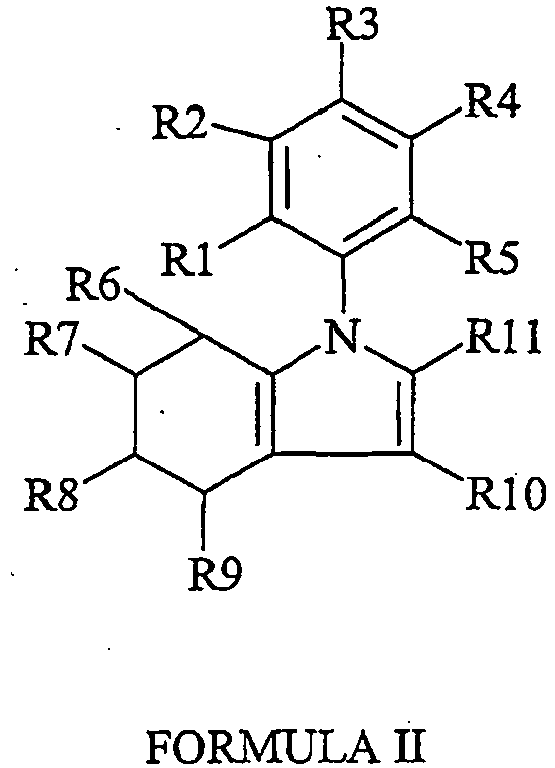
one or more of R6-R9 are chosen from -L-C(=O)OH, -L-CH=CHC(=O)OH, -L-C(=O)NH2, L-C(=O)NH(C1-3 alkyl), -L-C(=O)N(C1-3 alkyl)2, -L-S(=O)2(C1-3alkyl), -L-S(=O)2NH2, -L-S(=O)2N(C1-3 alkyl)2, -L-S(=O)2NH(C1-3 alkyl), -L-C(=O)NHOH, -L-C(=O)CH2NH2, -L-C(=O)CH2OH, -L-C(=O)CH2SH, -L-C(=O)NHCN, -L-NHC(=O)ORo, -L-C(=O)NHRo, -L-NH(C=O)NHRo, -L-C(=O)N(Ro)2, -L-NH(C=O)N(Ro)2, -L-sulfo, -L-(2,6 difluorophenol), -L-phosphono, and -L-tetrazolyl; or two adjacent of R6-R9 can be taken together to form a 4-7 member substituted aryl or cycloalkyl ring wherein the substituent is chosen from -L-C(=O)OH, -L-CH=CHC(=O)OH, -L-C(=O)NH2, -L-C(=O)NH(C1-3 alkyl), -L-C(=O)N(C1-3 alkyl)2, - L-S(=O)2(C1-3alkyl), -L-S(=O)2NH2, -L-S(=O)2N(C1-3 alkyl)2, -L-S(=O)2NH(C1-3 alkyl), -L-C(=O)NHOH, -L-C(=O)CH2NH2, -L-C(=O)CH2OH, -L-C(=O)CH2SH, -L-C(=O)NHCN, -L-NHC(=O)ORo, -L-C(=O)NHRo, -L-NH(C=O)NHRo, -L-C(=O)N(Ro)2, -L-NH(C=O)N(Ro)2, -L-sulfo, -L-(2,6 difluorophenol), -L-phosphono, and -L-tetrazolyl; and the others of R6-R9, independent of one another, are chosen from hydro, hydroxyl, halo, alkyl, alkoxy, haloalkyl, haloalkoxy, N(C1-3 alkyl)2, -NH(C1-3 alkyl), -C(=O)NH2, - C(=O)NH(C1-3 alkyl), -C(=O)N(C1-3 alkyl)2, -S(=O)2(C1-3alkyl), -S(=O)2NH2, - S(=O)2N(C1-3 alkyl)2, -S(=O)2NH(C1-3 alkyl), -CHF2, -OCF3, -OCHF2, -SCF3, -CF3, -CN,-NH2, and -NO2;
R10 is chosen from hydro, hydroxyl, halo, alkyl, alkoxy, haloalkyl, haloalkoxy, - N(C1-3 alkyl)2, -NH(C1-3alkyl), -C(=O)NH2, -C(=O)NH(C1-3 alkyl), -C(=O)N(C1-3 alkyl)2, -S(=O)2(C1-3alkyl), -S(=O)2NH2, -S(=O)2N(C1-3 alkyl)2, -S(=O)2NHC1-3 alkyl), -CHF2,-OCF3, -OCHF2, -SCF3, -CF3, -CN, -NH2, and -NO2;
Ro is chosen from alkyl and haloalkyl;
R11 is an optionally substituted phenyl group; and
L is as defined above. - In one sub-embodiment, the compound is not, 1,2-diphenyl-indole-4-acetic acid.
- According to one embodiment of the second aspect, one of R6-R9 is chosen from -C(=O)OH, -CH=CHC(=O)OH, -CH2CH2C(=O)OH,-CH2CH2CH2C(=O)OH, -C(CH2CH2)C(=O)OH, -CH(CH3)C(=O)OH,-CH(CH2CH3)C(=O)OH, -C(CH3)(CH2CH3)C(=O)OH, -CH=C(CH3)C(O)OH,-C(CH2CH3)2C(=O)OH, -CH2C(=O)OH, -C(CH3)2C(=O)OH, -C(=O)NH2,-C(=O)NHCH3, -C(=O)N(CH3)2, -S(=O)2(C1-3alkyl), -S(=O)2NH2, -S(=O)2NHCH3, - S(=O)2N(CH3)2, -C(=O)NH(C1-3alkyl), -C(=O)N(C1-3alkyl)2, -S(=O)2NH2, and - S(=O)2N(C1-3alkyl)2.
- In another embodiment of this second aspect, one of R6-R9 is chosen from -C(=O)OH, -CH=CHC(=O)OH, -CH2CH2C(=O)OH,-CH2CH2CH2C(=O)OH, -C(CH2CH2)C(=O)OH, -CH(CH3)C(=O)OH,-CH(CH2CH3)C(=O)OH, -C(CH3)(CH2CH3)C(=O)OH, -CH=C(CH3)C(=O)OH,-C(CH2CH3)2C(=O)OH, -CH2C(=O)OH, and -C(CH3)2C(=O)OH; or two adjacent of R6-R9 can be taken together to form a 4-7 member aryl or cycloalkyl ring substituted with one or more substituents chosen from -C(=O)OH, -CH=CHC(=O)OH,-CH2CH2C(=O)OH, -CH2CH2CH2C(=O)OH, -C(CH2CH2)C(=O)OH,-CH(CH3)C(=O)OH, -CH(CH2CH3)C(=O)OH, -C(CH3)(CH2CH3)C(=O)OH, - CH=C(CH3)C(=O)OH, -C(CH2CH3)2C(=O)OH, -CH2C(=O)OH, and -C(CH3)2C(=O)OH; and the others of R6-R9 are independently chosen from hydro, hydroxyl, halo, alkyl, alkoxy, haloalkyl, haloalkoxy, -N(C1-3 alkyl)2, -NH(C1-3 alkyl), -C(=O)NH2, - C(=O)NH(C1-3 alkyl), -C(=O)N(C1-3 alkyl)2, -S(=O)2(C1-3alkyl), -S(=O)2NH2, - S(=O)2N(C1-3alkyl)2, -S(=O)2NH(C1-3 alkyl), -CHF2, -OCF3, -OCHF2, -SCF3, -CF3,-CN,-NH2, and -NO2;
R1-R5 and R10, independent of one another, are chosen from hydro, hydroxyl, halo, alkyl, alkoxy, haloalkyl, haloalkoxy, -N(C1-3 alkyl)2, -NH(C1-3 alkyl), -C(=O)NH2, - C(=O)NH(C1-3 alkyl), -C(=O)N(C1-3 alkyl)2, -S(=O)2(C1-3alkyl), -S(=O)2NH2, - S(=O)2N(C1-3 alkyl)2, -S(=O)2NH(C1-3 alkyl), -CHF2, -OCF3, -OCHF2, -SCF3, -CF3, -CN,-NH2, and -NO2; and
R11 is an optionally substituted phenyl. - In one embodiment of the second aspect, R6 is chosen from -L-C(=O)OH, -L-CH=CHC(=O)OH, -L-CH2CH2C(=O)OH, -L-CH2CH2CH2C(=O)OH, -L-C(CH2CH2)C(=O)OH, -LCH(CH3)C(=O)OH, -L-CH(CH2CH3)C(=O)OH, -L-C(CH3)(CH2CH3)C(=O)OH, -L-CH=C(CH3)C(=O)OH, -L-C(CH2CH3)2C(=O)OH, -L CH2C(=O)OH, -L-C(CH3)2C(O)OH, -L-C(=O)NH2, -L-C(=O)NHCH3, -L-C(=O)N(CH3)2, -L-S(=O)2(C1-3alkyl), -L-S(=O)2NH2, -L-S(=O)2NHCH3, -L-S(=O)2N(CH3)2, -L-C(=O)NH(C1-3alkyl), -L-C(=O)N(C1-3alkyl)2, -L-S(=O)2NH2, and -L -S(=O)2N(C1-3alkyl)2.
- In one embodiment of the second aspect, R6 is chosen from-C(=O)OH, -CH=CHC(=O)OH, -CH2CH2C(=O)OH, -CH2CH2CH2C(=O)OH,-C(CH2CH2)C(=O)OH, -CH(CH3)C(=O)OH, -CH(CH2CH3)C(=O)OH,-C(CH3)(CH2CH3)C(=O)OH, -CH=C(CH3)C(=O)OH, -C(CH2CH3)2C(=O)OH, - CH2C(=O)OH, -C(CH3)2C(=O)OH, -C(=O)NH2, -C(=O)NHCH3, -C(=O)N(CH3)2, - S(-O)2(C1-3alkyl), -S(=O)2NH2, -S(=O)2NHCH3, -S(=O)2N(CH3)2, -C(=O)NH(C1-3alkyl), -C(=O)N(C1-3alkyl)2, -S(=O)2NH2, and -S(=O)2N(C1-3alkyl)2.
- In one embodiment of the second aspect, R7 is chosen from -L-C(=O)OH, -L-CH=CHC(=O)OH, -L-CH2CH2C(=O)OH, -L-CH2CH2CH2C(=O)OH, -L-C(CH2CH2)C(=O)OH, -L-CH(CH3)C(=O)OH, -L-CH(CH2CH3)C(=O)OH, -L-C(CH3)(CH2CH3)C(=O)OH, -L-CH=C(CH3)C(=O)OH, -L-C(CH2CH3)2C(=O)OH, -L CH2C(=O)OH, -L-C(CH3)2C(=O)OH, -L-C(=O)NH2, -L-C(=O)NHCH3, -L-C(=O)N(CH3)2, -L-S(=O)2(C1-3alkyl), -L-S(=O)2NH2, -L-S(=O)2NHCH3, -L-S(=O)2N(CH3)2, -L-C(=O)NH(C1-3alkyl), -L-C(=O)N(C1-3alkyl)2, -L-S(=O)2NH2, and -L -S(=O)2N(C1-3alkyl)2.
- In one embodiment of the second aspect, R7 is chosen from-C(=O)OH, -CH=CHC(=O)OH, -CH2CH2C(=O)OH, -CH2CH2CH2C(=O)OH,-C(CH2CH2)C(=O)OH, -CH(CH3)C(=O)OH, -CH(CH2CH3)C(=O)OH,-C(CH3)(CH2CH3)C(=O)OH, -CH=C(CH3)C(=O)OH, -C(CH2CH3)2C(=O)OH, - CH2C(=O)OH, -C(CH3)2C(=O)OH, -C(=O)NH2, -C(=O)NHCH3, -C(=O)N(CH3)2, - S(=O)2(C1-3alkyl), -S(=O)2NH2, -S(=O)2NHCH3, -S(=O)2N(CH3)2, -C(=O)NH(C1-3alkyl), -C(=O)N(C1-3alkyl)2, -S(=O)2NH2, and -S(=O)2N(C1-3alkyl)2.
- In one embodiment of the second aspect, R8 is chosen from -L-C(=O)OH, -L-CH=CHC(=O)OH, -L-CH2CH2C(=O)OH, -L-CH2CH2CH2C(=O)OH, -L-C(CH2CH2)C(=O)OH, -L-CH(CH3)C(=O)OH, -L-CH(CH2CH3)C(=O)OH, -L-C(CH3)(CH2CH3)C(=O)OH, -L-CH=C(CH3)C(=O)OH, -L-C(CH2CH3)2C(=O)OH, -L CH2C(=O)OH, -L-C(CH3)2C(=O)OH, -L-C(=O)NH2, -L-C(=O)NHCH3, -L-C(=O)N(CH3)2, -L-S(=O)2(C1-3alkyl), -L-S(=O)2NH2, -L-S(=O)2NHCH3, -L-S(=O)2N(CH3)2, -L-C(=O)NH(C1-3alkyl), -L-C(=O)N(C1-3alkyl)2, -L-S(=O)2NH2, and -L -S(=O)2N(C1-3alkyl)2.
- In one embodiment of the second aspect, R8 is chosen from-C(=O)OH, -CH=CHC(=O)OH, -CH2CH2C(=O)OH, -CH2CH2CH2C(=O)OH, - C(CH2CH2)C(=O)OH, -CH(CH3)C(=O)OH, -CH(CH2CH3)C(=O)OH,-C(CH3)(CH2CH3)C(=O)OH, -CH=C(CH3)C(=O)OH, -C(CH2CH3)2C(=O)OH,-CH2C(=O)OH, -C(CH3)2C(=O)OH, -C(-O)NH2, -C(=O)NHCH3, -C(=O)N(CH3)2, - S(=O)2(C1-3alkyl), -S(=O)2NH2, -S(=O)2NHCH3, -S(=O)2N(CH3)2, -C(=O)NH(C1-3alkyl), -C(=O)N(C1-3alkyl)2, -S(=O)2NH2, and -S(=O)2N(C1-3alkyl)2.
- In one embodiment of the second aspect, R9 is chosen from -L-C(=O)OH, -L-CH=CHC(=O)OH, -L-CH2CH2C(=O)OH, -L-CH2CH2CH2C(=O)OH, -L-C(CH2CH2)C(=O)OH, -L-CH(CH3)C(=O)OH, -L-CH(CH2CH3)C(=O)OH, -L-C(CH3)(CH2CH3)C(=O)OH, -L-CH=C(CH3)C(=O)OH, -L-C(CH2CH3)2C(=O)OH, -L CH2C(=O)OH, -L-C(CH3)3C(=O)OH, -L-C(=O)NH2, -L-C(=O)NHCH3, -L-C(=O)N(CH3)2, -L-S(=O)2(C1-3alkyl), -L-S(=O)2NH2, -L-S(=O)2NHCH3, -L-S(=O)2N(CH3)2, -L-C(=O)NH(C1-3alkyl), -L-C(=O)N(C1-3alkyl)2, -L-S(=O)2NH2, and-L -S(=O)2N(C1-3alkyl)2.
- In one embodiment of the second aspect, R9 is chosen from-C(=O)OH, -CH=CHC(=O)OH, -CH2CH2C(=O)OH, -CH2CH2CH2C(=O)OH,-C(CH2CH2)C(=O)OH, -CH(CH3)C(=O)OH, -CH(CH2CH3)C(=O)OH,-C(CH3)(CH2CH3)C(=O)OH, -CH=C(CH3)C(=O)OH, -C(CH2CH3)2C(=O)OH,-C(CH3)2C(=O)OH, -C(=O)NH2, -C(=O)NHCH3, -C(=O)N(CH3)2, -S(=O)2(C1-3alkyl),-S(=O)2NH2, -S(=O)2NHCH3, -S(=O)2N(CH3)2, -C(=O)NH(C1-3alkyl), -C(=O)N(C13alkyl)2, -S(=O)2NH2, and -S(=O)2N(C1-3alkyl)2.
- In one embodiment of the second aspect, R8 and R9 in the compounds of Formula I are taken together to form a 6 member aryl ring as in Formula III.


- According to one embodiment of the second aspect, compounds of Formula III are provided wherein Ra, Rb, Rc, and Rd are independently chosen from hydro, hydroxyl, halo, alkyl, alkoxy, haloalkyl, haloalkoxy, -N(C1-3 alkyl)2, -NH(C1-3 alkyl), -C(=O)NH2, -C(=O)NH(C1-3 alkyl), -C(=O)N(C1-3 alkyl)2, -S(=O)2(C1-3alkyl), S(=O)2NH2, -S(=O)2N(C1-3 alkyl)2, -S(=O)2NH(C1-3 alkyl), -CHF2, -OCF3, -OCHF2, - SCF3, -CF3, -CN, -NH2, -NO2, -C(=O)-N-morpholino, -cyclohexyl, -morpholino, - pyrrolidinyl, -piperazinyl, -(N-methyl)-piperazinyl, -OCH2-phenyl, -pyridinyl, methylenedioxy, ethylenedioxy, -C(=O)OCH2CH3 substituted furanyl, para(C(=O)OCH2CH3)-phenyl, and -O-Si(CH3)2(C(CH3)3); and the other variables can be defined as in one of the other embodiments of the second aspect.
- In one embodiment of the second aspect, R8 and R9 in the compounds of Formula II are taken together to form a 6 member aryl ring as in Formula IV.
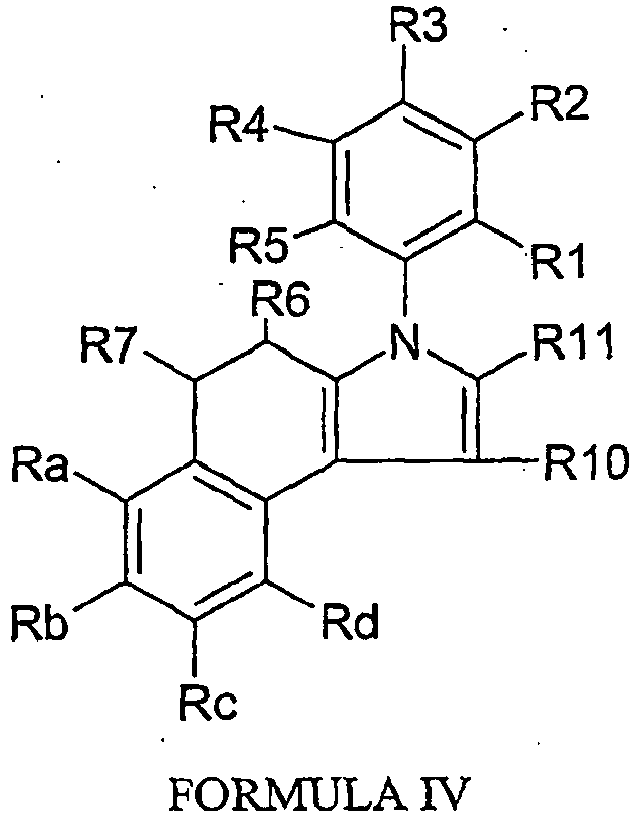
- According to one embodiment of the second aspect, compounds of Formula IV are provided wherein Ra, Rb, Rc, and Rd are independently chosen from hydro, hydroxyl, halo, alkyl, alkoxy, haloalkyl, haloalkoxy, -N(C1-3 alkyl)2, -NH(C1-3 alkyl), -C(=O)NH2, -C(=O)NH(C1-3 alkyl), -C(=O)N(C1-3 alkyl)2, -S(=O)2(C1-3alkyl), - S(=O)2NH2, -S(=O)2N(C1-3 alkyl)2, -S(=O)2NH(C1-3 alkyl), -CHF2, -OCF3, -OCHF2, - SCF3, -CF3, -CN, -NH2, -NO2, -C(=O)-N-morpholino, -cyclohexyl, -morpholino, - pyrrolidinyl, -piperazinyl, -(N-methyl)-piperazinyl, -OCH2-phenyl, -pyridinyl, methylenedioxy, ethylenedioxy, -C(=O)OCH2CH3 substituted furanyl, para-(C(=O)OCH2CH3)-phenyl, and -O-Si(CH3)2(C(CH3)3); and the other variables can be defined as in one of the other embodiments of the second aspect.
- The present description describes, in a third aspect, compounds of Formula I and II:


Ro is chosen from alkyl and haloalkyl; and
L is as defined above. - In one sub-embodiment, the compound is not 1-(O-carboxyphenyl)-2-phenyl-indole-3-carboxylic acid, or the methyl or ethyl ester thereof.
- According to one embodiment of this aspect, R10 is chosen from -C(=O)OH, -CH=CHC(=O)OH, -CH2CH2C(=O)OH, -CH2CH2CH2C(=O)OH, - C(CH2CH2)C(=O)OH, -CH(CH3)C(=O)OH, -CH(CH2CH3)C(=O)OH, - C(CH3)(CH2CH3)C(=O)OH, -CH=C(CH3)C(=O)OH, -C(CH2CH3)2C(=O)OH, - CH2C(=O)OH, -C(CH3)2C(=O)OH, -C(=O)NH2, -C(=O)NHCH3, -C(=O)N(CH3)2, - S(=O)2(C1-3alkyl), -S(=O)2NH2, -S(=O)2NHCH3, -S(=O)2N(CH3)2, -C(=O)NH(C1-3alkyl), -C(=O)N(C1-3alkyl)2, -S(=O)2NH2, and -S(=O)2N(C1-3alkyl)2.
- In another embodiment of this third aspect, R10 is chosen from - C(=O)OH, -CH=CHC(=O)OH, -CH2CH2C(=O)OH, -CH2CH2CH2C(=O)OH, - C(CH2CH2)C(=O)OH, -CH(CH3)C(=O)OH, -CH(CH2CH3)C(=O)OH, - C(CH3)(CH2CH3)C(=O)OH, -CH=C(CH3)C(=O)OH, -C(CH2CH3)2C(=O)OH, - CH2C(=O)OH, and -C(CH3)2C(=O)OH; R1-R9 are independently chosen from hydro, hydroxyl, halo, alkyl, alkoxy, haloalkyl, haloalkoxy, -N(C1-3 alkyl)2, -NH(C1-3 alkyl), - C(=O)NH2, -C(=O)NH(C1-3 alkyl), -C(=O)N(C1-3 alkyl, -S(=O)2(C1-3alkyl), - S(=O)2NH2, -S(=O)2N(C1-3 alkyl)2, -S(=O)2NH(C1-3 alkyl), -CHF2, -OCF3, -OCHF2, - SCF3, -CF3, -CN, -NH2, and -NO2; two adjacent of R6-R9 can be taken together to form a 4-7 member optionally substituted aryl or cycloalkyl ring; and
- R11 is an optionally substituted phenyl.
- In one embodiment of the third aspect, R8 and R9 in the compounds of Formula I are taken together to form a 6 member aryl ring as in Formula III.

- According to one embodiment of the third aspect, compounds of Formula III are provided wherein Ra, Rb, Rc, and Rd are independently chosen from hydro, hydroxyl, halo, alkyl, alkoxy, haloalkyl, haloalkoxy, -N(C1-3 alkyl)2, -NH(C1-3 alkyl), -C(=O)NH2, -C(=O)NH(C1-3 alkyl), -C(=O)N(C1-3 alkyl, -S(=O)2(C1-3alkyl), - S(=O)2NH2, -S(=O)2N(C1-3 alkyl)2, -S(=O)2NH(C1-3 alkyl), -CHF2, -OCF3, -OCHF2, - SCF3, -CF3, -CN, -NH2, -NO2, -C(=O)-N-morpholino, -cyclohexyl, -morpholino, - pyrrolidinyl, -piperazinyl, -(N-methyl)-piperazinyl, -OCH2-phenyl, -pyridinyl, methylenedioxy, ethylenedioxy, -C(=O)OCH2CH3 substituted furanyl, para(C(=O)OCH2CH3)-phenyl, and -O-Si(CH3)2(C(CH3)3); and the other variables can be defined as in the other embodiments of the third aspect.
- In one embodiment of the third aspect, R8 and R9 in the compounds of Formula II are taken together to form a 6 member aryl ring as in Formula IV

- According to one embodiment of the third aspect, compounds of Formula IV are provided wherein Ra, Rb, Rc, and Rd are independently chosen from hydro, hydroxyl, halo, alkyl, alkoxy, haloalkyl, haloalkoxy, -N(C1-3 alkyl)2, -NH(C1-3 alkyl), -C(=O)NH2, -C(=O)NH(C1-3 alkyl), -C(=O)N(C1-3 alkyl)2, -S(=O)2(C1-3alkyl), - S(=O)2NH2, -S(=O)2N(C1-3 alkyl)2, -S(=O)2NH(C1-3 alkyl), -CHF2, OCF3, -OCHF2, - SCF3, -CF3, -CN, -NH2, -NO2, -C(=O)-N-morpholino, -cyclohexyl, -morpholino, - pyrrolidinyl, -piperazinyl, -(N-methyl)-piperazinyl, -OCH2-phenyl, -pyridinyl, methylenedioxy, ethylenedioxy, -C(=O)OCH2CH3 substituted furanyl, para(C(=O)OCH2CH3)-phenyl, and -O-Si(CH3)2(C(CH3)3); and the other variables can be defined as in one of the other embodiments of the third aspect.
- The present description describes, in a fourth aspect, compounds of Formula I and II:


R11 is a phenyl ring substituted with one or more substituents independently chosen from -L-C(=O)OH, -L-CH=CHC(=O)OH, -L-C(=O)NH2, -L-C(=O)NH(C1-3 alkyl), -L-C(=O)N(C1-3 alkyl)2, -L-S(=O)2(C1-3alkyl), -L-S(-O)2NH2, -L-S(=O)2N(C1-3 alkyl)2, -L-S(=O)2NH(C1-3 alkyl), -L-C(=O)NHOH, -L-C(=O)CH2NH2, -L-C(=O)CH2OH, -L-C(=O)CH2SH, -L-C(=O)NHCN, -L-NHC(=O)ORo, -L-C(=O)NHRo, - L-NH(C=O)NHRo, -L-C(=O)N(Ro)2, -L-NH(C=O)N(Ro)2, -L-sulfo, -L-(2,6 difluorophenol), -L-phosphono, and -L-tetrazolyl and the others are chosen from hydro, hydroxyl, halo, alkyl, alkoxy, haloalkyl, haloalkoxy, -N(C1-3 alkyl)2, -NH(C1-3 alkyl), - C(=O)NH2, -C(=O)NH(C1-3 alkyl), -C(=O)N(C1-3 alkyl)2, -S(=O)2(C1-3alkyl), - S(=O)2NH2, -S(=O)2N(C1-3 alkyl)2, -S(=O)2NH(C1-3 alkyl), -CHF2, -OCF3, -OCHF2, - SCF3, -CF3, -CN, -NH2, and NO2;
Ro is chosen from alkyl and haloalkyl; and
L is as defined above. - In one sub-embodiment, the compound is not 5-(4,5-dihydro-3-phenyl-3H-benz[e]indol-2-yl)-2-hydroxy-benzoic acid or 2-hydroxy-5-(4,5,6,7-tetrahydro-l-phenyl-1H-indol-2-yl)-benzoic acid.
- According to one embodiment of the fourth aspect, one substituent on the phenyl of R11 is chosen from -C(=O)OH, -CH=CHC(=O)OH, - CH2CH2C(=O)OH, -CH2CH2CH2C(=O)OH, -C(CH2CH2)C(=O)OH, - CH(CH3)C(=O)OH, -CH(CH2CH3)C(=O)OH, -C(CH3)(CH2CH3)C(=O)OH, - CH=C(CH3)C(=O)OH, -C(CH2CH3)2C(=O)OH, -CH2C(=O)OH, -C(CH3)2C(=O)OH, - C(=O)NH2, -C(=O)NHCH3, -C(=O)N(CH3)2, -S(=O)2(C1-3alkyl), -S(=O)2NH2, - S(=O)2NHCH3, -S(=O)2N(CH3)2, -C(=O)NH(C1-3alkyl), -C(=O)N(C1-3alkyl)2, - S(=O)2NH2, and -S(=O)2N(C1-3alkyl)2.
- In another embodiment of fourth aspect, R11 is a phenyl ring substituted with a substituent chosen from -C(=O)OH, -CH=CHC(=O)OH, - CH2CH2C(=O)OH, -CH2CH2CH2C(=O)OH, -C(CH2CH2)C(=O)OH, - CH(CH3)C(=O)OH, -CH(CH2CH3)C(=O)OH, -C(CH3)(CH2CH3)C(=O)OH, - CH=C(CH3)C(=O)OH, -C(CH2CH3)2C(=O)OH, -CH2C(=O)OH, and -C(CH3)2C(=O)OH; and the other substituents on the phenyl are independently chosen from hydro, hydroxyl, halo, alkyl, alkoxy, haloalkyl, haloalkoxy, -N(C1-3 alkyl)2, -NH(C1-3 alkyl), -C(=O)NH2, - C(=O)NH(C1-3 alkyl), -C(=O)N(C1-3 alkyl)2, -S(=O)2(C1-3alkyl), -S(=O)2NH2, - S(=O)2N(C1-3 alkyl)2, -S(=O)2NH(C1-3 alkyl), -CHF2, -OCF3, -OCHF2, -SCF3, -CF3, -CN, - NH2, and -NO2;
- R1-R10, independent of one another, are chosen from hydro, hydroxyl, halo, alkyl, alkoxy, haloalkyl, haloalkoxy, -N(C1-3 alkyl)2, -NH(C1-3 alkyl), -C(=O)NH2, - C(=O)NH(C1-3 alkyl), -C(=O)N(C1-3 alkyl)2, -S(=O)2(C1-3alkyl), -S(=O)2NH2, - S(=O)2N(C1-3 alkyl)2, -S(=O)2NH(C1-3 alkyl), -CHF2, -OCF3, -OCHF2, -SCF3, -CF3, -CN, - NH2, and -NO2; and two adjacent of R6-R9 can be taken together to form an optionally substituted 4-7 member aryl or cycloalkyl ring.
- In one embodiment of the fourth aspect, R8 and R9 in the compounds of Formula I are taken together to form a 6 member aryl ring as in Formula III.

- According to one embodiment of the fourth aspect, compounds of Formula III are provided wherein Ra, Rb, Rc, and Rd are independently chosen from hydro, hydroxyl, halo, alkyl, alkoxy, haloalkyl, haloalkoxy, -N(C1-3 alkyl)2, -NH(C1-3 alkyl), -C(=O)NH2, -C(=O)NH(C1-3 alkyl), -C(=O)N(C1-3 alkyl)2, -S(=O)2(C1-3alkyl), - S(=O)2NH2, -S(=O)2N(C1-3 alkyl)2, -S(=O)2NH(C1-3 alkyl), -CHF2, -OCF3, -OCHF2, SCF3, -CF3, -CN, -NH2, NO2, -C(=O)-N-morpholino, -cyclohexyl, -morpholino, - pyrrolidinyl, -piperazinyl, -(N-methyl)-piperazinyl, -OCH2-phenyl, -pyridinyl, methylenedioxy, ethylenedioxy, -C(=O)OCH2CH3 substituted furanyl, para-(C(=O)OCH2CH3)-phenyl, and -O-Si(CH3)2(C(CH3)3); and the other variables can be defined as in one of the other embodiments of the fourth aspect.
- In one embodiment of the fourth aspect, R8 and R9 in the compounds of Formula II are taken together to form a 6 member aryl ring as in Formula IV.

- According to one embodiment of the fourth aspect, compounds of Formula IV are provided wherein Ra, Rb, Rc, and Rd are independently chosen from hydro, hydroxyl, halo, alkyl, alkoxy, haloalkyl, haloalkoxy, -N(C1-3 alkyl)2, -NH(C1-3 alkyl), -C(=O)NH2, -C(O)NH(C1-3 alkyl), -C(=O)N(C1-3 alkyl)2, -S(=O)2(C1-3alkyl), - S(=O)2NH2, -S(=O)2N(C1-3alkyl)2, -S(=O)2NH(C1-3 alkyl), -CHF2) -OCF3, -OCHF2, - SCF3, -CF3, -CN, -NH2, -NO2, -C(=O)-N-morpholino, -cyclohexyl, -morpholino, - pyrrolidinyl, -piperazinyl, -(N-methyl)-piperazinyl, -OCH2-phenyl, -pyridinyl, methylenedioxy, ethylenedioxy, -C(=O)OCH2CH3 substituted furanyl, para-(C(=O)OCH2CH3)-phenyl, and -O-Si(CH3)2(C(CH3)3); and the other variables can be defined as in the other embodiments of the fourth aspect.
- The present description describes, in a fifth aspect, compounds of Formula I and II:


R10 is a phenyl ring substituted with one or more substituents independently chosen from -L-C(=O)OH, -L-CH=CHC(=O)OH, -L-C(=O)N-H2, -L-C(=O)NH(C1-3 alkyl), -L-C(=O)N(C1-3 alkyl)2, -L-S(=O)2(C1-3alkyl), -L-S(=O)2NH2, -L-S(=O)2N(C1-3 alkyl)2, -L-S(=O)2NH(C1-3 alkyl), -L-C(=O)NHOH, -L-C(=O)CH2NH2, -L-C(=O)CH2OH, -L-C(=O)CH2SH, -L-C(=O)NHCN, -L-NHC(=O)ORo, -L-C(=O)NHRo, - L-NH(C=O)NHRo, -L-C(=O)N(Ro)2, -L-NH(C=O)N(Ro)2, -L-sulfo, -L-(2,6 difluorophenol), -L-phosphono, and -L-tetrazolyl;
Ro is chosen from alkyl and haloalkyl; and
L is as defined above. - According to one embodiment of this fifth aspect, one substituent on the phenyl of R10 is chosen from -C(=O)OH, -CH=CHC(=O)OH, - CH2CH2C(=O)OH, -CH2CH2CH2C(=O)OH, -C(CH2CH2)C(=O)OH, - CH(CH3)C(=O)OH, -CH(CH2CH3)C(=O)OH, -C(CH3)(CH2CH3)C(=O)OH, - CH=C(CH3)C(=O)OH, -C(CH2CH3)2C(=O)OH, -CH2C(=O)OH, -C(CH3)2C(=O)OH, - C(=O)NH2, -C(=O)NHCH3, -C(=O)N(CH3)2, -S(=O)2NH2, -S(=O)2NHCH3, - S(=O)2N(CH3)2, -C(=O)NH(C1-3alkyl), -C(=O)N(C1-3alkyl)2) -S(=O)2(C1-3alkyl), - S(=O)2NH2, -S(=O)2NH(C1-3alkyl), and -S(=O)2N(C1-3alkyl)2, and the others are independently chosen from hydro, hydroxyl, halo, alkyl, alkoxy, haloalkyl, haloalkoxy, - N(C1-3 alkyl)2, NH(C1-3 alkyl), -C(=O)NH2, -C(=O)NH(C1-3 alkyl), -C(=O)N(C1-3 alkyl)2, -S(=O)2(C1-3alkyl), -S(=O)2NH2, -S(=O)2N(C1-3 alkyl)2, -S(=O)2NH(C1-3 alkyl), -CHF2, - OCF3, -OCHF2, -SCF3, -CF3, -CN, -NH2, and -NO2.
- In another embodiment of this fifth aspect, the phenyl group of R10 has a substituent chosen from -C(=O)OH, -CH=CHC(=O)OH, -CH2CH2C(=O)OH, - CH2CH2CH2C(=O)OH, -C(CH2CH2)C(=O)OH, -CH(CH3)C(=O)OH, - CH(CH2CH3)C(=O)OH, -C(CH3)(CH2CH3)C(=O)OH, -CH=C(CH3)C(=O)OH, - C(CH2CH3)2C(=O)OH, -CH2C(=O)OH, and -C(CH3)2C(=O)OH; and the other substituents are independently chosen from hydro, hydroxyl, halo, alkyl, alkoxy, haloalkyl, haloalkoxy, -N(C1-3 alkyl)2, -NH(C1-3 alkyl), -C(=O)NH2, -C(=O)NH(C1-3 alkyl), -C(=O)N(C1-3 alkyl)2, -S(=O)2(C1-3alkyl), -S(=O)2NH2, -S(=O)2N(C1-3 alkyl)2, - S(=O)2NH(C1-3 alkyl),-CHF2, -OCF3, -OCHF2, -SCF3, -CF3,-CN, -NH2, and -NO2;
R1-R9, independent of one another, are chosen from hydro, hydroxyl, halo, alkyl, alkoxy, haloalkyl, haloalkoxy, -N(C1-3 alkyl)2, -NH(C1-3 alkyl), -C(=O)NH2, - C(=O)NH(C1-3 alkyl), -C(=O)N(C1-3 alkyl)2, -S(=O)2(C1-3alkyl), -S(=O)2NH2, - S(=O)2N(C1-3 alkyl)2, -S(=O)2NH(C1-3 alkyl), -CHF2, -OCF3, -OCHF2, -SCF3, -CF3, -CN, - NH2, and -NO2; two adjacent of R6-R9 can be taken together to form an optionally substituted 4-7 member aryl or cycloalkyl ring; and
R11 is an optionally substituted phenyl. - In one embodiment of the fifth aspect, R8 and R9 in the compounds of Formula I are taken together to form a 6 member aryl ring as in Formula III.

- According to one embodiment of the fifth aspect, compounds of Formula III are provided wherein Ra, Rb, Rc, and Rd are independently chosen from hydro, hydroxyl, halo, alkyl, alkoxy, haloalkyl, haloalkoxy, -N(C1-3 alkyl)2, -NH(C1-3 alkyl), -C(=O)NH2, -C(=O)NH(C1-3 alkyl), -C(=O)N(C1-3 alkyl)2, -S(=O)2(C1-3alkyl), - S(=O)2NH2, -S(=O)2N(C1-3 alkyl)2, -S(=O)2NH(C1-3 alkyl), -CHF2, -OCF3, -OCHF2, - SCF3, -CF3, -CN, -NH2, -NO2, -C(=O)-N-morpholino, -cyclohexyl, -morpholino, - pyrrolidinyl, -piperazinyl, -(N-methyl)-piperazinyl, -OCH2-phenyl, -pyridinyl, methylenedioxy, ethylenedioxy, -C(=O)OCH2CH3 substituted furanyl, para-(C(=O)OCH2CH3)-phenyl, and -O-Si(CH3)2(C(CH3)3); and the other variables can be defined as in one of the other embodiments of the fifth aspect.
- In one embodiment of the fifth aspect, R8 and R9 in the compounds of Formula II are taken together to form a 6 member aryl ring as in Formula IV.
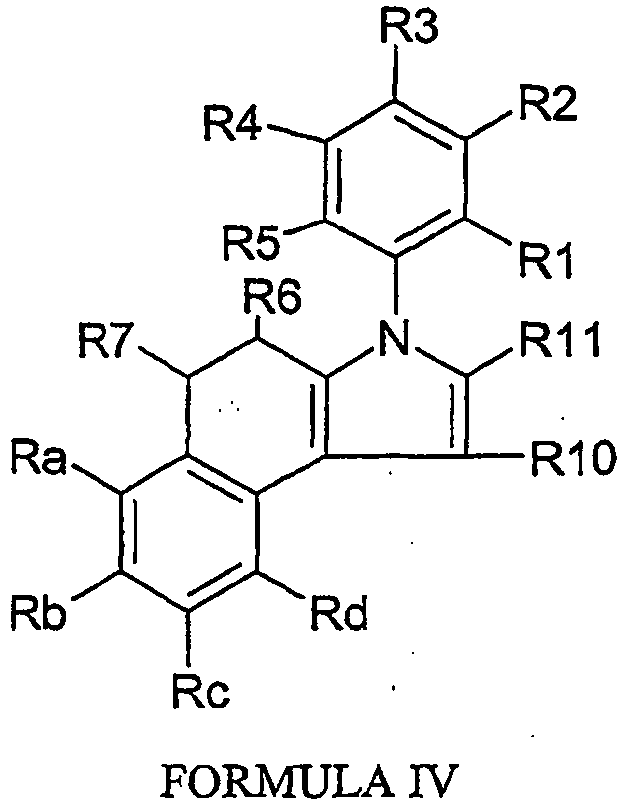
- According to one embodiment of the fifth aspect, compounds of Formula IV are provided wherein Ra, Rb, Rc, and Rd are independently chosen from hydro, hydroxyl, halo, alkyl, alkoxy, haloalkyl, haloalkoxy, -N(C1-3 alkyl)2, -NH(C1-3 alkyl), -C(=O)NH2, -C(=O)NH(C1-3 alkyl), -C(=O)N(C1-3 alkyl)2, -S(=O)2(C1-3alkyl), - S(=O)2NH2, -S(=O)2N(C1-3 alkyl)2, -S(=O)2NH(C1-3 alkyl), -CHF2, -OCF3, -OCHF2, - SCF3, -CF3, -CN, -NH2, -NO2, -C(=O)-N-morpholino, -cyclohexyl, -morpholino, - pyrrolidinyl, -piperazinyl, -(N-methyl)-piperazinyl, -OCH2-phenyl, -pyridinyl, methylenedioxy, ethylenedioxy, -C(-O)OCH2CH3 substituted furanyl, para-(C(=O)OCH2CH3)-phenyl, and -O-Si(CH3)2(C(CH3)3); and the other variables can be defined as in one of the other embodiments of the fifth aspect.
- The present description describes, in a sixth aspect, compounds of Formula I and II:
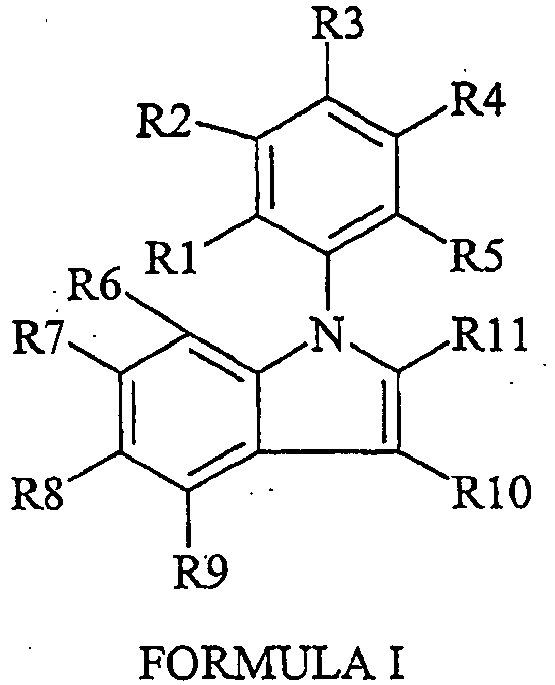

R10 is -L-R12 wherein L is as defined above; and
R12 is a phenyl ring substituted with one or more substituents independently chosen from of -L-C(=O)OH, -L-CH=CHC(=O)OH, -L-C(=O)NH2, -L-C(=O)NH(C1-3 alkyl), -L-C(=O)N(C1-3 alkyl)2, -L-S(=O)2(C1-3alkyl), -L-S(=O)2NH2, -L-S(=O)2N(C1-3 alkyl)2, -L-S(=O)2NH(C1-3 alkyl), -L-C(=O)NHOH, =L-C(=O)CH2NH2, -L-C(=O)CH2OH, -L-C(=O)CH2SH, -L-C(=O)NHCN, -L-NHC(=O)ORo, -L-C(=O)NHRo, -L-NH(C=O)NHRo, -L-C(=O)N(Ro)2, -L-NH(C=O)N(Ro)2, -L-sulfo, -L-(2,6 difluorophenol), -L-phosphono, and -L-tetrazolyl;
Ro is chosen from alkyl and haloalkyl; and
L is as defined above. - According to one embodiment of the sixth aspect, one substituent on the phenyl of R12 is chosen from -C(=O)OH, -CH=CHC(=O)OH, - CH2CH2C(=O)OH, -CH2CH2CH2C(=O)OH, -C(CH2CH2)C(=O)OH, - CH(CH3)C(=O)OH, -CH(CH2CH3)C(=O)OH, -C(CH3)(CH2CH3)C(=O)OH, - CH=C(CH3)C(=O)OH, -C(CH2CH3)2C(=O)OH, -CH2C(=O)OH, -C(CH3)2C(=O)OH, - C(=O)NH2, -C(=O)NHCH3, -C(=O)N(CH3)2, -S(=O)2NH2, -S(=O)2NHCH3) - S(=O)2N(CH3)2, -C(=O)NH(C1-3alkyl), -C(=O)N(C1-3alkyl)2, -S(=O)2(C1-3alkyl), - S(=O)2NH2, -S(=O)2N(C1-3alkyl), and -S(=O)2N(C1-3alkyl)2, and the others are independently chosen from hydro, hydroxyl, halo, alkyl, alkoxy, haloalkyl, haloalkoxy, - N(C1-3 alkyl, -NH(C1-3 alkyl), -C(=O)NH2, -C(=O)NH(C1-3 alkyl), -C(=O)N(C1-3 alkyl)2, -S(=O)2(C1-3alkyl), -S(=O)2NH2, -S(=O)2N(C1-3 alkyl)2, -S(=O)2NH(C1-3 alkyl), -CHF2, - OCF3, -OCHF2, -SCF3, -CF3, -CN, -NH2, and -NO2.
- In another embodiment of this sixth aspect, one of the substituents of R12 is chosen from -C(=O)OH, -CH=CHC(=O)OH, -CH2CH2C(=O)OH, - CH2CH2CH2C(=O)OH, -C(CH2CH2)C(=O)OH, -CH(CH3)C(=O)OH, - CH(CH2CH3)C(=O)OH, -C(CH3)(CH2CH3)C(=O)OH, -CH=C(CH3)C(=O)OH, - C(CH2CH3)2C(=O)OH, -CH2C(=O)OH, and -C(CH3)2C(=O)OH; and the others are independently chosen from hydro, hydroxyl, halo, alkyl, alkoxy, haloalkyl, haloalkoxy, - N(C1-3 alkyl)2, -NH(C1-3 alkyl), -C(=O)NH2, -C(=O)NH(C1-3 alkyl), -C(=O)N(C1-3 alkyl)2, -S(=O)2(C1-3alkyl), -S(=O)2NH2, -S(=O)2N(C1-3 alkyl)2, -S(=O)2NH(C1-3 alkyl), -CHF2, - OCF3, -OCHF2, -SCF3, -CF3, -CN, -NH2, and -NO2;
R1-R9, and R11, independent of one another, are chosen from hydro, hydroxyl, halo, alkyl, alkoxy, haloalkyl, haloalkoxy, -N(C1-3 alkyl)2, -NH(C1-3 alkyl), -C(=O)NH2, - C(=O)NH(C1-3 alkyl), -C(=O)N(C1-3 alkyl)2, -S(=O)2(C1-3alkyl), -S(=O)2NH2, - S(=O)2N(C1-3alkyl)2, -S(=O)2NH(C1-3 alkyl), -CHF2, -OCF3, -OCHF2, -SCF3, -CF3, -CN, - NH2, and -NO2; and two adjacent of R6-R9 can be taken together to form an optionally substituted 4-7 member aryl or cycloalkyl ring. - In one embodiment of the sixth aspect, R8 and R9 in the compounds of Formula I are taken together to form a 6 member aryl ring as in Formula III.

- According to one embodiment of the sixth aspect, compounds of Formula III are provided wherein Ra, Rb, Rc, and Rd are independently chosen from hydro, hydroxyl, halo, alkyl, alkoxy, haloalkyl, haloalkoxy, -N(C1-3 alkyl)2, -NH(C1-3 alkyl), -C(=O)NH2, -C(=O)NH(C1-3 alkyl), -C(=O)N(C1-3 alkyl)2, -S(=O)2(C1-3alkyl), - S(=O)2NH2, -S(=O)2N(C1-3 alkyl)2, -S(=O)2NH(C1-3 alkyl), -CHF2, -OCF3, -OCHF2, - SCF3, -CF3,-CN, -NH2, -NO2, -C(=O)-N-morpholino, -cyclohexyl, -morpholino, - pyrrolidinyl, -piperazinyl, -(N-methyl)-piperazinyl, -OCH2-phenyl, -pyridinyl, methylenedioxy, ethylenedioxy, -C(=O)OCH2CH3 substituted furanyl, para-(C(=O)OCH2CH3)-phenyl, and -O-Si(CH3)2(C(CH3)3); and the other variables can be defined as in one of the other embodiments of the sixth aspect.
- In one embodiment of the sixth aspect, R8 and R9 in the compounds of Formula II are taken together to form a 6 member aryl ring as in Formula IV.

- According to one embodiment of the sixth aspect, compounds of Formula IV are provided wherein Ra, Rb, Rc, and Rd are independently chosen from hydro, hydroxyl, halo, alkyl, alkoxy, haloalkyl, haloalkoxy, -N(C1-3 alkyl)2, -NH(C1-3 alkyl), -C(=O)NH2, -C(=O)NH(C1-3 alkyl), -C(=O)N(C1-3 alkyl)2, -S(=O)2(C1-3alkyl), - S(=O)2NH2, -S(=O)2N(C1-3 alkyl)2, -S(=O)2(C1-3 alkyl), -CHF2, -OCF3, -OCHF2, - SCF3, -CF3, -CN, -NH2, -NO2, -C(=O)-N-morpholino, -cyclohexyl, -morpholino, - pyrrolidinyl, -piperazinyl, -(N-methyl)-piperazinyl, -OCH2-phenyl, -pyridinyl, methylenedioxy, ethylenedioxy, -C(=O)OCH2CH3 substituted furanyl, para-(C(=O)OCH2CH3)-phenyl, and -O-Si(CH3)2(C(CH3)3); and the other variables can be defined as in one of the other embodiments of the sixth aspect.
- The present description describes, in a seventh embodiment, compounds of Formula I and II:


R11 is -L-R12 wherein L is as defined above; and R12 is a phenyl ring substituted with one or more substituents independently chosen from -L-C(=O)OH, -L-CH=CHC(=O)OH, -L-C(=O)NH2, -L-C(=O)NH(C1-3 alkyl), -L-C(=O)N(C1-3 alkyl)2, -L-S(=O)2(C1-3alkyl), -L-S(=O)2NH2, -L-S(=O)2N(C1-3alkyl)2, -L-S(=O)2NH(C1-3 alkyl), -L-C(=O)NHOH, -L-C(=O)CH2NH2, -L-C(=O)CH2OH, -L-C(=O)CH2SH, -L-C(=O)NHCN, -L-NHC(=O)ORo, -L-C(=O)NHRo, -L-NH(C=O)NHRo, -L-C(=O)N(Ro)2, -L-NH(C=O)N(Ro)2, -L-sulfo, -L-(2,6 difluorophenol), -L-phosphono, and -L-tetrazolyl, and the others are independently chosen from hydro, hydroxyl, halo, alkyl, alkoxy, haloalkyl, haloalkoxy, -N(C1-3 alkyl)2, -NH(C1-3 alkyl), -C(=O)NH2, - C(=O)NH(C1-3 alkyl), -C(=O)N(C1-3 alkyl)2, -S(=O)2(C1-3alkyl), -S(=O)2NH2, - S(=O)2N(C1-3alkyl)2, -S(=O)2NH(C1-3 alkyl), -CHF2, -OCF3, -OCHF2, -SCF3, -CF3, -CN, - NH2, and -NO2;
Ro is chosen from alkyl and haloalkyl; and
L is as defined above. - According to one embodiment of this seventh aspect, one substituent on the phenyl of R12 is chosen from -C(=O)OH, -CH=CHC(=O)OH, -CH2CH2C(=O)OH, -CH2CH2CH2C(=O)OH, - C(CH2CH2)C(=O)OH, -CH(CH3)C(=O)OH, -CH(CH2CH3)C(=O)OH, - C(CH3)(CH2CH3)C(=O)OH, -CH=C(CH3)C(=O)OH, -C(CH2CH3)2C(=O)OH, - CH2C(=O)OH, -C(CH3)2C(=O)OH, -C(=O)NH2, -C(=O)NHCH3, -C(=O)N(CH3)2, - S(=O)2(C1-3alkyl), -S(=O)2NH2, -S(=O)2NHCH3, -S(=O)2N(CH3)2, -C(=O)NH(C1-3alkyl), -C(=O)N(C1-3alkyl)2, -S(=O)2NH2, -and -S(=C))2N(C1-3alkyl)2, and the others are independently chosen from hydro, hydroxyl, halo, alkyl, alkoxy, haloalkyl, haloalkoxy, - N(C1-3alkyl)2, -NH(C1-3alkyl), -C(=O)NH2, -C(=O)NH(C1-3 alkyl), -C(=O)N(C1-3 alkyl)2, -S(=O)2(C1-3alkyl), -S(=O)2NH2, -S(=O)2N(C1-3 alkyl)2, -S(=O)2NH(C1-3 alkyl), -CHF2, - OCF3, -OCHF2, -SCF3, -CF3, -CN, -NH2, and -NO2.
- In another embodiment of this seventh aspect, one substituent on the phenyl of R12 is chosen from -C(=O)OH, -CH=CHC(=O)OH, -CH2CH2C(=O)OH, - CH2CH2CH2C(=O)OH, -C(CH2CH2)C(=O)OH, -CH(CH3)C(=O)OH, - CH(CH2CH3)C(=O)OH, -C(CH3)(CH2CH3)C(=O)OH, -CH=C(CH3)C(=O)OH, - C(CH2CH3)2C(=O)OH, -CH2C(=O)OH, and -C(CH3)2C(=O)OH; and the others are independently chosen from hydro, hydroxyl, halo, alkyl, alkoxy, haloalkyl, haloalkoxy, - N(C1-3 alkyl)2, -NH(C1-3 alkyl), -C(=O)NH2, -C(=O)NH(C1-3 alkyl), -C(=O)N(C1-3 alkyl)2, -S(=O)2(C1-3alkyl), -S(=O)2NH2, -S(=O)2N(C1-3alkyl)2, -S(=O)2NH(C1-3 alkyl), -CHF2, - OCF3, -OCHF2, -SCF3, -CF3, -CN, -NH2, and NO2;
R1-R10, independent of one another, are chosen from hydro, hydroxyl, halo, alkyl, alkoxy, haloalkyl, haloalkoxy, N(C1-3 alkyl)2, -NH(C1-3 alkyl), -C(=O)NH2, - C(=O)NH(C1-3 alkyl), -C(=O)N(C1-3 alkyl)2, -S(=O)2(C1-3alkyl), -S(=O)2NH2, - S(=O)2N(C1-3alkyl)2, -S(=O)2NH(C1-3 alkyl), -CHF2, -OCF3, -OCHF2, -SCF3, -CF3, -CN, - NH2, and NO2; two adjacent of R6-R9 can be taken together to form an optionally substituted 4-7 member aryl or cycloalkyl ring; and
R11 is an optionally substituted phenyl. - In one embodiment of the seventh aspect, R8 and R9 in the compounds of Formula I are taken together to form a 6 member aryl ring as in Formula III

- According to one embodiment of the seventh aspect, compounds of Formula III are provided wherein Ra, Rb, Rc, and Rd are independently chosen from hydro, hydroxyl, halo, alkyl, alkoxy, haloalkyl, haloalkoxy, -N(C1-3 alkyl)2, NH(C1-3 alkyl), -C(=O)NH2, -C(=O)NH(C1-3 alkyl), -C(=O)N(C1-3 alkyl)2, -S(=O)2(C1-3alkyl), - S(=O)2NH2, -S(=O)2N(C1-3 alkyl)2, -S(=O)2NH(C1-3 alkyl), -CHF2, -OCF3, -OCHF2, - SCF3, -CF3, -CN, -NH2, -NO2, -C(=O)-N-morpholino, -cyclohexyl, -morpholino, - pyrrolidinyl, -piperazinyl, -(N-methyl)-piperazinyl, -OCH2-phenyl, -pyridinyl, methylenedioxy, ethylenedioxy, -C(=O)OCH2CH3 substituted furanyl, para-(C(=O)OCH2CH3)-phenyl, and -O-Si(CH3)3(C(CH3)3); and the other variables can be defined as in one of the other embodiments of the seventh aspect.
- In one embodiment of the seventh aspect, R8 and R9 in the compounds of Formula II are taken together to form a 6 member aryl ring as in Formula IV.

- According to one embodiment of the seventh aspect, compounds of Formula IV are provided wherein Ra, Rb, Rc, and Rd are independently chosen from hydro, hydroxyl, halo, alkyl, alkoxy, haloalkyl, haloalkoxy, -N(C1-3 alkyl)2, NH(C1-3 alkyl), -C(=O)NH2, -C(=O)NH(C1-3 alkyl), -C(=O)N(C1-3alkyl)2, -S(=O)2(C1-3alkyl), - S(=O)2NH2, -S(=O)2N(C1-3 alkyl)2, -S(=O)2NH(C1-3 alkyl), -CHF2, -OCF3, -OCHF2, - SCF3, -CF3,-CN, -NH2, -NO2, -C(=O)-N-morpholino, -cyclohexyl, -morpholino, - pyrrolidinyl, -piperazinyl, -(N-methyl)-piperazinyl, -OCH2-phenyl, -pyridinyl, methylenedioxy, ethylenedioxy, -C(=O)OCH2CH3 substituted furanyl, para-(C(=O)OCH2CH3)-phenyl, and -O-Si(CH3)2(C(CH3)3); and the other variables can be defined as in one of the other embodiments of the seventh aspect.
- The present description describes, in an eighth embodiment, compounds of Formula I and II:


R10 and R11 are independently chosen from hydro, hydroxyl, halo, alkyl, alkoxy, haloalkyl, haloalkoxy, -N(C1-3 alkyl)2, -NH(C1-3 alkyl), -S(=O)2(C1-3alkyl), -S(=O)2NH2, - S(=O)2N(C1-3 alkyl)2, -S(=O)2NH(C1-3 alkyl), -CHF2, -OCF3, -OCHF2, -SCF3, -CF3, -CN, - NH2, -NO2, and-L-R12; and
R12 is a phenyl ring substituted with one or more substituents independently chosen from -L-C(=O)OH, -L-CH=CHC(=O)OH, -L-C(=O)NH2, -L-C(=O)NH(C1-3 alkyl), L-C(-O)N(C1-3 alkyl, -L-S(=O)2(C1-3alkyl), -L-S(=O)2NH2, -L-S(=O)2N(C1-3 alkyl)2, -L-S(=O)2NH(C1-3 alkyl), -L-C(=O)NHOH, -L-C(=O)CH2NH2, -L-C(=O)CH2OH, -L-C(=O)CH2SH, -L-C(=O)NHCN, -L-NHC(=O)ORo, -L-C(=O)NHRo, - L-NH(C=O)NHRo, -L-C(=O)N(Ro)2, -L-NH(C=O)N(Ro)2, -L-sulfo, -L-(2,6 difluorophenol), -L-phosphono, and -L-tetrazolyl;
Ro is chosen from alkyl and haloalkyl; and
L is as defined above. - According to one embodiment of the eighth, R12 is present and one substituent on the phenyl of R12 is chosen from -C(=O)OH, -CH=CHC(=O)OH, - CH2CH2C(=O)OH, -CH2CH2CH2C(=O)OH, -C(CH2CH2)C(=O)OH, - CH(CH3)C(=O)OH, -CH(CH2CH3)C(=O)OH, -C(CH3)(CH2CH3)C(=O)OH, - CH=C(CH3)C(=O)OH, -C(CH2CH3)2C(=O)OH, -CH2C(=O)OH, -C(CH3)2C(=O)OH, - C(=O)NH2, -C(=O)NHCH3, -C(=O)N(CH3)2, -S(=O)2NH2, -S(=O)2NHCH3, - S(=O)2N(CH3)2, -C(=O)NH(C1-3alkyl), -C(=O)N(C1-3alkyl)2, -S(=O)2(C1-3alkyl), - S(=O)2NH2, -S(=O)2NH(C1-3alkyl), and -S(=O)2N(C1-3alkyl)2, and the others are independently chosen from hydro, hydroxyl, halo, alkyl, alkoxy, haloalkyl, haloalkoxy, - N(C1-3 alkyl)2, -NH(C1-3 alkyl), -C(=O)NH2, -C(=O)NH(C1-3 alkyl), -C(=O)N(C1-3 alkyl)2, -S(=O)2(C1-3alkyl), -S(=O)2NH2, -S(=O)2N(C1-3 alkyl)2, -S(=O)2NH(C1-3 alkyl), -CHF2, - OCF3, -OCHF2, -SCF3, -CF3, -CN, -NH2, and -NO2.
- In another embodiment of the eighth aspect, R12 is present and one substituent on the phenyl of R12 is chosen from -C(=O)OH, -CH=CHC(=O)OH, - CH2CH2C(=O)OH, -CH2CH2CH2C(=O)OH, -C(CH2CH2)C(=O)OH, - CH(CH3)C(=O)OH, -CH(CH2CH3)C(=O)OH, -C(CH3)(CH2CH3)C(=O)OH, - CH=C(CH3)C(=O)OH, -C(CH2CH3)2C(=O)OH, -CH2C(=O)OH, and -C(CH3)2C(=O)OH; and the others are independently chosen from hydro, hydroxyl, halo, alkyl, alkoxy, haloalkyl, haloalkoxy, -N(C1-3 alkyl, -NH(C1-3 alkyl), -C(=O)NH2, -C(=O)NH(C1-3 alkyl), -C(=O)N(C1-3 alkyl)2, -S(=O)2(C1-3alkyl), -S(=O)2NH2, -S(=O)2N(C1-3 alkyl)2, - S(=O)2NH(C1-3 alkyl), -CHF2, -OCF3, -OCHF2, -SCF3, -CF3, -CN, -NH2, and -NO2;
- R1-R9, independent of one another, are chosen from hydro, hydroxyl, halo, alkyl, alkoxy, haloalkyl, haloalkoxy, -N(C1-3 alkyl)2, -NH(C1-3 alkyl), -C(=O)NH2, - C(=O)NH(C1-3 alkyl), -C(=O)N(C1-3 alkyl)2, -S(=O)2(C1-3alkyl), -S(=O)2NH2, - S(=O)2N(C1-3 alkyl)2, -S(=O)2NH(C1-3 alkyl), -CHF2, -OCF3, -OCHF2, -SCF3, -CF3,-CN, - NH2, and -NO2; two adjacent of R6-R9 can be taken together to form an optionally substituted 4-7 member aryl or cycloalkyl ring.
- In one embodiment of the eighth aspect, R8 and R9 in the compounds of Formula I are taken together to form a 6 member aryl ring as in Formula III.
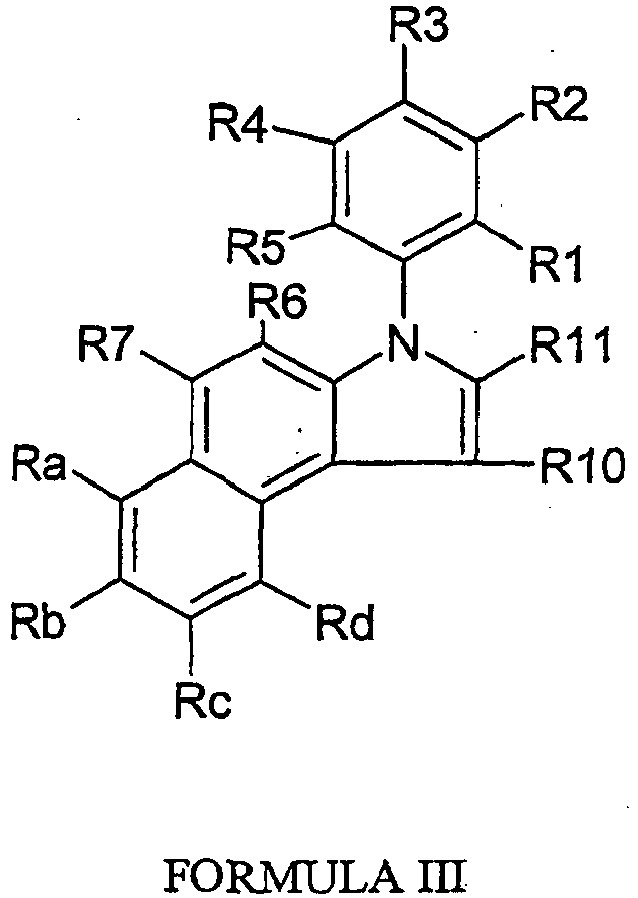
- According to one embodiment of the eighth aspect, compounds of Formula III are provided wherein Ra, Rb, Rc, and Rd are independently chosen from hydro, hydroxyl, halo, alkyl, alkoxy, haloalkyl, haloalkoxy, -N(C1-3 alkyl)2, -NH(C1-3 alkyl), -C(=O)NH2, -C(=O)NH(C1-3 alkyl), -C(=O)N(C1-3 alkyl)2, -S(=O)2(C1-3alkyl), - S(=O)2NH2, -S(=O)2N(C1-3alkyl)2, -S(=O)2NH(C1-3 alkyl),-CHF2, -OCF3, -OCHF2, SCF3, -CF3, -CN, -NH2, -NO2, -C(=O)-N-morpholino, -cyclohexyl, -morpholino, - pyrrolidinyl, -piperazinyl, -(N-methyl)-piperazinyl, -OCH2-phenyl, -pyridinyl, methylenedioxy, ethylenedioxy, -C(=O)OCH2CH3 substituted furanyl, para-(C(=O)OCH2CH3)-phenyl, and -O-Si(CH3)2(C(CH3)3); and the other variables can be defined as in one of the other embodiments of the eighth aspect.
- In one embodiment of the eighth aspect, R8 and R9 in the compounds of Formula II are taken together to form a 6 member aryl ring as in Formula IV.

- According to one embodiment of the eighth aspect, compounds of Formula IV are provided wherein Ra, Rb, Rc, and Rd are independently chosen from hydro, hydroxyl, halo, alkyl, alkoxy, haloalkyl, haloalkoxy, -N(C1-3 alkyl)2, -NH(C1-3 alkyl), -C(=O)NH2, -C(=O)NH(C1-3 alkyl), -C(=O)N(C1-3 alkyl)2, -S(=O)2(C1-3alkyl), - S(=O)2NH2, -S(=O)2N(C1-3 alkyl)2, -S(=O)2NH(C1-3 alkyl), -CHF2, -OCF3, -OCHF2, - SCF3, -CF3, -CN, -NH2, -NO2, -C(=O)-N-morpholino, -cyclohexyl, -morpholino, - pyrrolidinyl, -piperazinyl, -(N-methyl)-piperazinyl, -OCH2-phenyl, -pyridinyl, methylenedioxy, ethylenedioxy, -C(=O)OCH2CH3 substituted furanyl, para-(C(=O)OCH2CH3)-phenyl, and -O-Si(CH3)2(C(CH3)3); and the other variables can be defined as in one of the other embodiments of the eighth aspect.
- The present description describes, in a ninth aspect, compounds of Formula V and VI:


Ro is chosen from alkyl and haloalkyl;
L is as defined above;
R6-R10, independent of one another, are chosen from hydro, hydroxyl, halo, alkyl, alkoxy, haloalkyl, haloalkoxy, -N(C1-3 alkyl)2, -NH(C1-3 alkyl), -C(=O)NH2, - C(=O)NH(C1-3 alkyl), -C(=O)N(C1-3 alkyl)2, -S(=O)2(C1-3alkyl), -S(=O)2NH2, - S(=O)2N(C1-3alkyl)2, -S(=O)2NH(C1-3 alkyl), -CHF2, -OCF3, -OCHF2, -SCF3, -CF3, -CN, - NH2, -NO2, -C(=O)-N-morpholino, -cyclohexyl, -morpholino, -pyrrolidinyl, -piperazinyl, -(N-methyl)-piperazinyl, -OCH2-phenyl, -pyridinyl, methylenedioxy, ethylenedioxy, - C(=O)OCH2CH3 substituted furanyl, para-(C(=O)OCH2CH3)-phenyl, and -O-Si(CH3)2(C(CH3)3); two adjacent of R6-R9 can be taken together to form a 4-7 member optionally substituted aryl or cycloalkyl ring; and
R11 is an optionally substituted phenyl group. - In one sub-embodiment, R3 is not hydroxyl
- According to one embodiment of this ninth aspect, one of R1-R5 is chosen from -C(=O)OH, -CH2CH2C(=O)OH, -CH2CH2C(=O)OH, -CH2CH2CH2C(=O)OH, -C(CH2CH2)C(=O)OH, -CH(CH3)C(=O)OH, -CH(CH2CH3)C(=O)OH, -C(CH3)(CH2CH3)C(=O)OH, - CH=C(CH3)C(=O)OH, -C(CH2CH3)2C(=O)OH, -CH2C(=O)OH, -C(CH3)2C(=O)OH, - C(=O)NH2, -C(=O)NHCH3, -C(=O)N(CH3)2, -S(=O)2(C1-3alkyl), -S(=O)2NH2, - S(=O)2NHCH3, -S(=O)2N(CH3)2, -C(=O)NH(C1-3alkyl), -C(=O)N(C1-3alkyl)2, - S(=O)2NH2, -S(=O)2NH(C1-3alkyl), and -S(=O)2N(C1-3alkyl)2., and the others are independently chosen from hydro, hydroxyl, halo, alkyl, alkoxy, haloalkyl, haloalkoxy, - N(C1-3 alkyl)2, -NH(C1-3 alkyl), -C(=O)NH2, -C(=O)NH(C1-3 alkyl), -C(=O)N(C1-3 alkyl)2, -S(=O)2(C1-3alkyl), -S(=O)2NH2, -S(=O)2N(C1-3 alkyl)2, -S(=O)2NH(C1-3 alkyl), -CHF2, - OCF3, -OCHF2, -SCF3, -CF3, -CN, -NH2, and -NO2.
- In another embodiment of this ninth aspect, L is a bond, one of R1-R5 is chosen from -C(=O)OH, -CH=CHC(=O)OH, -CH2CH2C(=O)OH, - CH2CH2CH2C(=O)OH, -C(CH2CH2)C(=O)OH, -CH(CH3)C(=O)OH, - CH(CH2CH3)C(=O)OH, -C(CH3)(CH2CH3)C(=O)OH, -CH=C(CH3)C(=O)OH, - C(CH2CH3)2(=O)OH, -CH2C(=O)OH, and -C(CH3)2C(=O)OH; and the others are independently chosen from hydro, hydroxyl, halo, alkyl, alkoxy, haloalkyl, haloalkoxy, - N(C1-3 alkyl)2, -NH(C1-3 alkyl), -C(=O)NH2, -C(=O)NH(C1-3 alkyl), -C(=O)N(C1-3 alkyl)2, -S(=O)2(C1-3alkyl), -S(=O)2NH2, -S(=O)2N(C1-3 alkyl)2, -S(=O)2NH(C1-3 alkyl), -CHF2, - OCF3, -OCHF2, -SCF3, -CF3, -CN, -NH2, and -NO2;
R6-R9, independent of one another, are chosen from hydro, hydroxyl, halo, alkyl, alkoxy, haloalkyl, haloalkoxy, -N(C1-3alkyl)2, -NH(C1-3 alkyl), -C(=O)NH2, - C(=C)NH(C1-3 alkyl), -C(=O)N(C1-3 alkyl)2, -S(=O)2(C1-3alkyl), -S(=O)2NH2, - S(=O)2N(C1-3alkyl)2, -S(=O)2NH(C1-3 alkyl), -CHF2, -OCF3, -OCHF2, -SCF3, -CF3, -CN, - NH2, and -NO2; or two adjacent of R6-R9 can be taken together to form an optionally substituted 4-7 member aryl or cycloalkyl ring. - In one embodiment of the ninth aspect, R8 and R9 in the compound of Formula V are taken together to form a 6 member aryl ring as in Formula VII.

- According to one embodiment of the ninth aspect, compounds of Formula VII are provided wherein Ra, Rb, Rc, and Rd are independently chosen from hydro, hydroxyl, halo, alkyl, alkoxy, haloalkyl, haloalkoxy, -N(C1-3 alkyl)2, -NH(C1-3 alkyl), -C(=O)NH2, -C(=O)NH(C1-3 alkyl), -C(=O)N(C1-3 alkyl)2, -S(=O)2(C1-3alkyl), - S(=O)2NH2, -S(=O)2N(C1-3alkyl)2, -S(=O)2NH(C1-3 alkyl), -CHF2, -OCF3, -OCHF2, - SCF3, -CF3,-CN, -NH2, -NO2, -C(=O)-N-morpholino, -cyclohexyl, -morpholino, - pyrrolidinyl, -piperazinyl, -(N-methyl)-piperazinyl, -OCH2-phenyl, -pyridinyl, methylenedioxy, ethylenedioxy, -C(=O)OCH2CH3 substituted furanyl, para-(C(=O)OCH2CH3)-phenyl, and -O-Si(CH3)2(C(CH3)3); and the other variables can be defined as in one of the other embodiments of the ninth aspect.
- In one embodiment of the ninth aspect, R8 and R9 in the compounds of Formula VI are taken together to form a 6 member aryl ring as in Formula VIII.

- According to one embodiment of the ninth aspect, compounds of Formula VIII are provided wherein Ra, Rb, Rc, and Rd are independently chosen from hydro, hydroxyl, halo, alkyl, alkoxy, haloalkyl, haloalkoxy, -N(C1-3 alkyl)2, -NH(C1-3 alkyl), -C(=O)NH2, -C(=O)NH(C1-3 alkyl), -C(=O)N(C1-3alkyl)2, -S(=O)2(C1-3alkyl), - S(=O)2NH2, -S(=O)2N(C1-3alkyl)2, -S(=O)2NH(C1-3 alkyl),-CHF2, -OCF3, -OCHF2, - SCF3, -CF3, -CN, -NH2, -NO2, -C(=O)-N-morpholino, -cyclohexyl, -morpholino, - pyrrolidinyl, -piperazinyl, -(N-methyl)-piperazinyl, -OCH2-phenyl, -pyridinyl, methylenedioxy, ethylenedioxy, -C(=O)OCH2CH3 substituted furanyl, para-(C(=O)OCH2CH3)-phenyl, and -O-Si(CH3)2(C(CH3)3); and the other variables can be defined as in one of the other embodiments of the ninth aspect. The present description describes, in a tenth aspect, compounds of Formula IX and X:
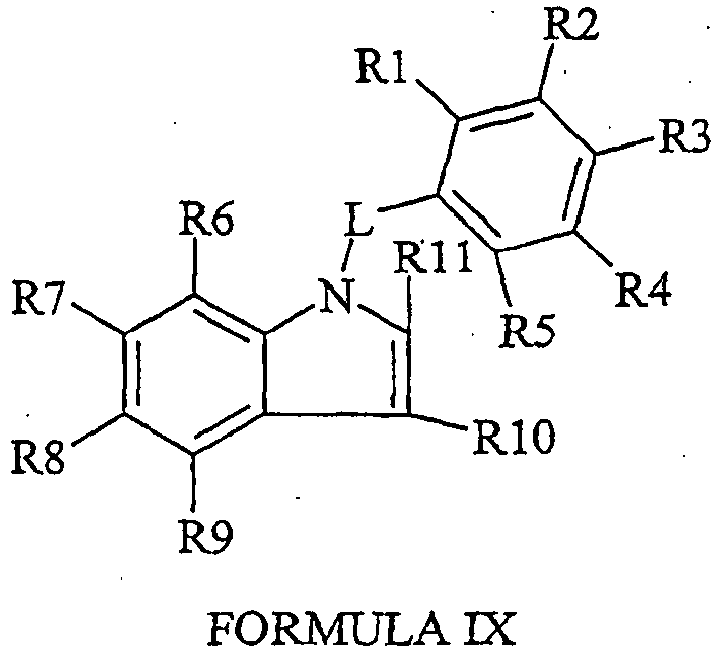

Ro is chosen from alkyl and haloalkyl;
L is as defined above; and the others of R1-R11 are independently chosen from hydro, hydroxyl, halo, alkyl, alkoxy, haloalkyl, haloalkoxy, -N(C1-3 alkyl)2, -NH(C1-3 alkyl), -C(=O)NH2, -C(=O)NH(C1-3 alkyl), -C(=O)N(C1-3 alkyl)2, -S(=O)2(C1-3alkyl), - S(=O)2NH2, -S(=O)2N(C1-3 alkyl)2, -S(=O)2NH(C1-3 alkyl), -CHF2, -OCF3, -OCHF2, - SCF3, -CF3, -CN, -NH2, and -NO2; and two adjacent of R6-R9 can be taken together to form a 4-7 member optionally substituted aryl or cycloalkyl ring. - In another embodiment of this tenth aspect, L is a bond, R12 is present and one substituents on the phenyl of R12 is chosen from -C(=O)OH, - CH=CHC(=O)OH, -CH2CH2C(=O)OH, -CH2CH2CH2C(=O)OH, -C(CH2CH2)C(=O)OH, -CH(CH3)C(=O)OH, -CH(CH2CH3)C(=O)OH, -C(CH3)(CH2CH3)C(=O)OH, - CH=C(CH3)C(=O)OH, -C(CH2CH3)2C(=O)OH, -CH2C(=O)OH, and -C(CH3)2C(=O)OH; and the others are independently chosen from hydro, hydroxyl, halo, alkyl, alkoxy, haloalkyl, haloalkoxy, -N(C1-3 alkyl)2, -NH(C1-3 alkyl), -C(=O)NH2, -C(=O)NH(C1-3 alkyl), -C(=O)N(C1-3 alkyl)2, -S(=O)2(C1-3alkyl), -S(=O)2NH2, -S(=O)2N(C1-3 alkyl)2, - S(=O)2NH(C1-3 alkyl), -CHF2, -OCF3, -OCHF2, -SCF3, -CF3, -CN, -NH2, and -NO2;
R1-R9, independent of one another, are chosen from hydro, hydroxyl, halo, alkyl, alkoxy, haloalkyl, haloalkoxy, -N(C1-3 alkyl)2, -NH(C1-3 alkyl), -C(=O)NH2, - C(=O)NH(C1-3 alkyl), -C(=O)N(C1-3 alkyl)2, -S(=O)2(C1-3alkyl), -S(=O)2NH2, - S(=O)2N(C1-3 alkyl)2, -S(=O)2NH(C1-3 alkyl) -CHF2, -OCF3, -OCHF2, -SCF3, -CF3, -CN, - NH2, and -NO2; and two adjacent of R6-R9 can be taken together to form an optionally substituted 4-7 member aryl or cycloalkyl ring. - In one embodiment of the tenth aspect, R8 and R9 in the compounds of Formula IX are taken together to form a 6 member aryl ring as in Formula XI

- According to one embodiment of the tenth aspect, compounds of Formula XI are provided wherein Ra, Rb, Rc, and Rd are independently chosen from hydro, hydroxyl, halo, alkyl, alkoxy, haloalkyl, haloalkoxy, -N(C1-3alkyl)2, -NH(C1-3 alkyl), -C(=O)NH2, -C(=O)NH(C1-3 alkyl), -C(=O)N(C1-3 alkyl)2, -S(=O)2(C1-3alkyl),-S(=O)2NH2, -S(=O)2N(C1-3 alkyl)2, -S(=O)2NH(C1-3 alkyl), -CHF2, -OCF3, -OCHF2, - SCF3, -CF3, -CN, -NH2, -NO2, -C(=O)-N-morpholino, -cyclohexyl, -morpholino, - pyrrolidinyl, -piperazinyl, -(N-methyl)-piperazinyl, -OCH2-phenyl, -pyridinyl, methylenedioxy, ethylenedioxy, -C(=O)OCH2CH3 substituted furanyl, para-(C(=O)OCH2CH3)-phenyl, and -O-Si(CH3)2(C(CH3)3); and the other variables can be defined as in one of the other embodiments of the tenth aspect.
- In one embodiment of the tenth aspect, R8 and R9 in the compounds of Formula X are taken together to form a 6 member aryl ring as in Formula XII.
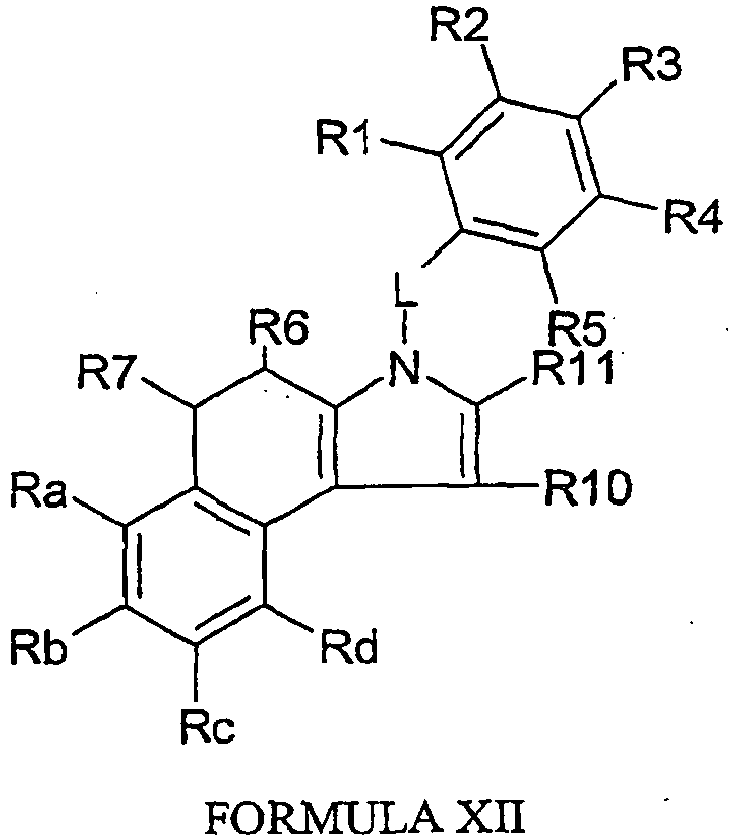
- According to one embodiment of the tenth aspect, compounds of Formula XII are provided wherein Ra, Rb, Rc, and Rd are independently chosen from hydro, hydroxyl, halo, alkyl, alkoxy, haloalkyl, haloalkoxy, -N(C1-3 alkyl)2, -NH(C1-3 alkyl), -C(=O)NH2, -C(=O)NH(C1-3 alkyl), -C(=O)N(C1-3 alkyl)2, -S(=O)2(C1-3alkyl), - S(=O)2NH2, -S(=O)2N(C1-3 alkyl)2, -S(=O)2NH(C1-3 alkyl), -CHF2, -OCF3, -OCHF2, - SCF3, -CF3, -CN, -NH2, -NO2, -C(=O)-N-morpholino, -cyclohexyl, -morpholino, - pyrrolidinyl, -piperazinyl, -(N-methyl)-piperazinyl, -OCH2-phenyl, -pyridinyl, methylenedioxy, ethylenedioxy, -C(=O)OCH2CH3 substituted furanyl, para-(C(=O)OCH2CH3)-phenyl, and -O-Si(CH3)2(C(CH3)3); and the other variables can be defined as in one of the other embodiments of the tenth aspect.
- The present description describes, in an eleventh aspect, compounds of Formula XIII and XIV:


R1-R10, independent of one another, are chosen from hydro, hydroxyl, halo, alkyl, alkoxy, haloalkyl, haloalkoxy, -N(C1-3 alkyl)2, -NH(C1-3 alkyl), -C(=O)NH2, - C(=O)NH(C1-3 alkyl), -C(=O)N(C1-3 alkyl)2, -S(=O)2(C1-3alkyl), -S(=O)2NH2, - S(=O)2N(C1-3 alkyl)2, -S(=O)2NH(C1-3 alkyl), -CHF2, -OCF3, -OCHF2, -SCF3, -CF3, -CN, - NH2, -NO2, -C(=O)-N-morpholino, -cyclohexyl, -morpholino, -pyrrolidinyl, -piperazinyl, -(N-methyl)-piperazinyl, -OCH2-phenyl, -pyridinyl, methylenedioxy, ethylenedioxy, - C(=O)OCH2CH3 substituted furanyl, para-(C(=O)OCH2CH3)-phenyl, and -O-Si(CH3)2(C(CH3)3); two adjacent of R6-R9 can be taken together to form a 4-7 member optionally substituted aryl or cycloalkyl ring;
R11 is chosen from -L-C(=O)OH, -L-CH=CHC(=O)OH, -L-C(=O)NH2, -L-C(=O)NH(C1-3 alkyl), -L-C(=O)N(C1-3 alkyl)2, -L-S(=O)2(C1-3alkyl), -L-S(=O)2NH2, -L-S(=O)2N(C1-3 alkyl, -L-S(=O)2NH(C1-3 alkyl), -L-C(=O)NHOH, -L-C(=O)CH2NH2, -L-C(=O)CH2OH, -L-C(=O)CH2SH, -L-C(=O)NHCN, -L-NHC(=O)ORo, -L-C(=O)NHRo, - L-NH(C=O)NHRo, -L-C(=O)N(Ro)2, -L-NH(C=O)N(Ro)2, -L-sulfo, -L-(2,6 difluorophenol), -L-phosphono, and -L-tetrazolyl;
Ro is chosen from alkyl and haloalkyl; and
R12 is chosen from optionally substituted C1-12 alkyl, phenyl, and C3-7 cycloalkyl. - In one embodiment of the eleventh aspect, R8 and R9 in the compounds of Formula XIII are taken together to form a 6 member aryl ring as in Formula XV.

- According to one embodiment of the eleventh aspect, compounds of Formula XV are provided wherein Ra, Rb, Rc, and Rd are independently chosen from hydro, hydroxyl, halo, alkyl, alkoxy, haloalkyl, haloalkoxy, -N(C1-3alkyl)2, -NH(C1-3 alkyl), -C(=O)NH2, -C(=O)NH(C1-3 alkyl), -C(=O)N(C1-3 alkyl)2, -S(=O)2(C1-3alkyl), - S(=O)2NH2, -S(=O)2N(C1-3 alkyl)2, -S(=O)2NH(C1-3 alkyl), -CHF2, -OCF3, -OCHF2, - SCF3, -CF3, -CN, -NH2, -NO2, -C(=O)-N-morpholino, -cyclohexyl, -morpholino, - pyrrolidinyl, -piperazinyl, -(N-methyl)-piperazinyl, -OCH2-phenyl, -pyridinyl, methylenedioxy, ethylenedioxy, -C(=O)OCH2CH3 substituted furanyl, para-(C(=O)OCH2CH3)-phenyl, and -O-Si(CH3)2(C(CH3)3); and the other variables can be defined as in one of the other embodiments of the eleventh aspect.
- In one embodiment of the eleventh aspect, R8 and R9 in the compounds of Formula XIV are taken together to form a 6 member aryl ring as in Formula XVI.

- According to one embodiment of the eleventh aspect, compounds of Formula XVI are provided wherein Ra, Rb, Rc, and Rd are independently chosen from hydro, hydroxyl, halo, alkyl, alkoxy, haloalkyl, haloalkoxy, -N(C1-3 alkyl)2, NH(C1-3 alkyl), -C(=O)NH2, -C(=O)NH(C1-3 alkyl), -C(=O)N(C1-3 alkyl)2, -S(=O)2(C1-3alkyl), - S(=O)2NH2, -S(=O)2N(C1-3 alkyl)2, -S(=O)2NH(C1-3 alkyl), -CHF2, -OCF3, -OCHF2, - SCF3, -CF3, -CN, -NH2, -NO2, -C(=O)-N-morpholino, -cyclohexyl, -morpholino, - pyrrolidinyl, -piperazinyl, -(N-methyl)-piperazinyl, -OCH2-phenyl, -pyridinyl, methylenedioxy, ethylenedioxy, -C(=O)OCH2CH3 substituted furanyl, para-(C(=O)OCH2CH3)-phenyl, and -O-Si(CH3)2(C(CH3)3); and the other variables can be defined as in one of the other embodiments of the eleventh aspect.
- The present description describes, in a twelfth aspect, compounds of Formula I and II, pharmaceutically acceptable salts thereof, and pharmaceutical compositions having such compounds:


Ro is chosen from alkyl and haloalkyl;
R6-R10, independent of one another, are chosen from hydro, hydroxyl, halo, alkyl, alkoxy, haloalkyl, haloalkoxy, N(C1-3 alkyl)2, -NH(C1-3 alkyl), -C(=O)NH2, - C(=O)NH(C1-3 alkyl), -C(=O)N(C1-3 alkyl)2, -S(=O)2(C1-3alkyl), -S(=O)2NH2,-S(=C)2N(C1-3 alkyl)2, -S(=O)2NH(C1-3 alkyl),-CHF2, -OCF3, -OCHF2, -SCF3, -CF3,-CN, - NH2, -NO2, -C(=O)-N-morpholino, -cyclohexyl, -morpholino, -pyrrolidinyl, -piperazinyl, -(N-methyl)-piperazinyl, -OCH2-phenyl, -pyridinyl, methylenedioxy, ethylenedioxy, - C(=O)OCH2CH3 substituted furanyl, para-(C(=O)OCH2CH3)-phenyl, and -O-Si(CH3)2(C(CH3)3); two adjacent of R6-R9 can be taken together to form a 4-7 member optionally substituted aryl, heterocyclic, or cycloalkyl ring;
R11 is an optionally substituted heterocyclic group; and
L can be saturated, partially saturated, or unsaturated, and is chosen from -(CH2)n-(CH2)n-, -(CH2)nC(=O)(CH2)n-, -(CH2)nNH(CH2)n-, -(CH2)nO(CH2)n-, and-(CH2)nS(CH2)n-, where each n is independently chosen from 0, 1, 2, 3, 4, 5, 6, 7, and 8, wherein each carbon can be optionally substituted with one or more C1-3 alkyl or C3-6 cycloalkyl. - In one embodiment of the twelfth aspect, one of R1-R5 in the compounds of Formulae I and II, is chosen from -C(=O)OH, -CH=CHC(=O)OH, - CH2CH2C(=O)OH, -CH2CH2CH2C(=O)OH, -C(CH2CH2)C(=O)OH, - CH(CH3)C(=O)OH, -CH(CH2CH3)C(=O)OH, -C(CH3)(CH2CH3)C(=O)OH, - CH=C(CH3)C(=O)OH, -C(CH2CH3)2C(=O)OH, -CH2C(=O)OH, -C(CH3)2C(=O)OH, - C(=O)NH2, -C(=O)NHCH3, -C(=O)N(CH3)2, -S(=O)2(C1-3alkyl), -S(=O)2NH2, - S(=O)2NHCH3, -S(=O)2N(CH3)2, -C(=O)NH(C1-3alkyl), -C(=O)N(C1-3alkyl)2, - S(=O)2NH2, -S(=O)2N(C1-3alkyl)2, and the others of R1-R5, independent of one another, are chosen from hydro, hydroxyl, halo, alkyl, alkoxy, haloalkyl, haloalkoxy, -N(C1-3 alkyl)2, -NH(C1-3 alkyl), -C(=O)NH2, -C(=O)NH(C1-3 alkyl), -C(=O)N(C1-3 alkyl)2, - S(=O)2(C1-3alkyl), -S(=O)2NH2, -S(=O)2N(C1-3 alkyl)2, -S(=O)2NH(C1-3 alkyl), -CHF2, - OCF3, -OCHF2, -SCF3, -CF3, -CN, -NH2, and -NO2;
R6-R10, independent of one another, are chosen hydro, hydroxyl, halo, alkyl, alkoxy, haloalkyl, haloalkoxy, -N(C1-3 alkyl)2, -NH(C1-3 alkyl), -C(=O)NH2, - C(=O)NH(C1-3 alkyl), -C(=O)N(C1-3 alkyl)2, -S(=O)2(C1-3alkyl), -S(=O)2NH2, - S(=O)2N(C1-3 alkyl, -S(=O)2NH(C1-3 alkyl), -CHF2, -OCF3, -OCHF2, -SCF3, -CF3,-CN, - NH2, and -NO2; two adjacent of R6-R9 can be taken together to form a 4-7 member optionally substituted aryl or cycloalkyl ring;
L is -(CH2)n-(CH2)n-, with n independently 0,1,2, or 3; and
R11 is an optionally substituted heterocyclic group. - In another embodiment of this twelfth aspect, one of R1-R5 is chosen from -C(=O)OH, -CH=CHC(=O)OH, -CH2CH2C(=O)OH, - CH2CH2CH2C(=O)OH, -C(CH2CH2)C(=O)OH, -CH(CH3)C(=O)OH, - CH(CH2CH3)C(=O)OH, -C(CH3)(CH2CH3)C(=O)OH, -CH=C(CH3)C(=O)OH, - C(CH2CH3)2C(=O)OH, -CH2C(=O)OH, and -C(CH3)2C(=O)OH; and the others of R1-R5 are independently chosen from hydro, hydroxyl, halo, alkyl, alkoxy, haloalkyl, haloalkoxy, -N(C1-3 alkyl)2, -NH(C1-3 alkyl), -C(=O)NH2, -C(=O)NH(C1-3 alkyl), - C(=O)N(C1-3 alkyl)2, -S(=O)2(C1-3alkyl), -S(=O)2NH2, -S(=O)2N(C1-3 alkyl)2, - S(=O)2NH(C1-3 alkyl), -CHF2, -OCF3, -OCHF2, -SCF3, -CF3, -CN, -NH2, and -NO2;
R6-R10 are independently chosen from hydro, hydroxyl, halo, alkyl, alkoxy, haloalkyl, haloalkoxy, -N(C1-3 alkyl)2, -NH(C1-3 alkyl), -C(=O)NH2, -C(=O)NH(C1-3 alkyl), -C(=O)N(C1-3 alkyl)2, -S(=O)2(C1-3alkyl), -S(=O)2NH2, -S(=O)2N(C1-3 alkyl)2, - S(=O)3NH(C1-3 alkyl), -CHF2, -OCF3, -OCHF2, -SCF3, -CF3, -CN, -NH2, and -NO2; two adjacent of R6-R9 can be taken together to form an optionally substituted C4-7 member aryl, heterocyclic, or cycloalkyl ring; and
R11 is an optionally substituted heterocyclic group. - In one embodiment of this aspect, the heterocyclic group is chosen from thienyl (thiophenyl), benzo[b]thienyl, naphtho[2,3-b]thienyl, thianthrenyl, furyl (furanyl), isobenzofuranyl, chromenyl, xanthenyl, phenoxanthiinyl, pyrrolyl, 2H-pyrrolyl, imidazolyl, pyrazolyl, pyridyl (pyridinyl), 2-pyridyl, 3-pyridyl, 4-pyridyl, pyrazinyl, pyrimidinyl, pyridazinyl, tetrahydrofuranyl, pyranyl, piperidinyl, piperazinyl, indolizinyl, isoindolyl, 3H-indolyl, indolyl, indazolyl, purinyl, 4H-quinolizinyl, isoquinolyl, quinolyl, phthalzinyl, naphthyridinyl, quinozalinyl, quinuclidinyl, morpholinyl, cinnolinyl, pteridinyl, carbazolyl, beta-carbolinyl, phenanthridinyl, acrindinyl, perimidinyl, phenanthrolinyl, phenazinyl, isothiazolyl, phenothiazinyl, oxazolyl, isoxazolyl, furazanyl, phenoxazinyl, 1,4-dihydroquinoxaline-2,3-dione, 7 aminoisocoumarin, pyrido[1,2-a]pyrimidin-4-one, pyrazolo[1,5-a]pyrimidinyl, pyrazolo[1,5-a]pyrimidin-3-yl, 1,2-benzoisoxazol-3-yl, benzimidazolyl, 2-oxindolyl and 2 oxobenzimidazolyl. In one sub-embodiment of this embodiment, the heterocyclic group is chosen from pyridinyl, isoxazolyl, furanyl, thiazolyl, pyrimidinyl, pyrrolyl, thiophenyl, triazolyl, benzo[1,3]dioxolyl, andbenzofuranyl. Compounds of this twelfth aspect are used in the present invention as described in the claims.
- The present description describes, in a thirteenth aspect, compounds of Formula I and II:


one or more of R6-R9 is independently chosen from -L-C(=O)OH, -L- CH=CHC(=O)OH, -L-C(=O)NH2, -L-C(=O)NH(C1-3 alkyl), -L-C(=O)N(C1-3 alkyl)2, L-S(=O)2(C1-3alkyl), -L-S(=O)2NH2, L-S(=O)2N(C1-3 alkyl)2, -L-S(=O)2NH(C1-3 alkyl), -L-C(=O)NHOH, -L-C(=O)CH2NH2, -L-C(=O)CH2OH, -L-C(=O)CH2SH, -L-C(=O)NHCN, -L-NHC(=O)ORo, -L-C(=O)NHRo, -L-NH(C=O)NHRo, -L-C(=O)N(Ro)2, -L-NH(C=O)N(Ro)2, -L-sulfo, -L-(2,6 difluorophenol), -L-phosphono, and -L-tetrazolyl; or two adjacent of R6-R9 can be taken together to form an optionally substituted 4-7 member aryl, heterocyclic, or cycloalkyl ring substituted with one or more substituents independently chosen from -L-C(=O)OH, -L-CH=CHC(=O)OH, -L-C(=O)NH2, -L-C(=O)NH(C1-3 alkyl), -L-C(=O)N(C1-3 alkyl)2, -L-S(=O)2(C1-3alkyl), -L-S(=O)2NH2) -L-S(=O)2N(C1-3 alkyl)2, -L-S(=O)2NH(C1-3 alkyl), -L-C(=O)NHOH, -L-C(=O)CH2NH2, -L-C(=O)CH2OH, -L-C(=O)CH2SH, -L-C(=O)NHCN, -L-NHC(=O)ORo, -L-C(=O)NHRo, - L-NH(C=O)NHRo, -L-C(=O)N(Ro)2, -L-NH(C=O)N(Ro)2, -L-sulfo, -L-(2,6 difluorophenol), -L-phosphono, and -L-tetrazolyl; and the others of R6-R9, independent of one another, are chosen from hydro, hydroxyl, halo, alkyl, alkoxy, haloalkyl, haloalkoxy, -N(C1-3 alkyl)2, -NH(C1-3 alkyl), -C(=O)NH2, -C(=O)NH(C1-3 alkyl), - C(=O)N(C1-3 alkyl)2, -S(=O)2(C1-3alkyl), -S(=O)2NH2, -S(=O)2N(C1-3 alkyl)2, - S(=O)2NH(C1-3 alkyl), -CHF2, -OCF3, -OCHF2, -SCF3, -CF3, -CN, -NH2, and NO2;
Ro is chosen from alkyl and haloalkyl;
R11 is an optionally substituted heterocyclic group; and
L can be saturated, partially saturated, or unsaturated, and is chosen from -(CH2)n-(CH2)n-, -(CH2)nC(=O)(CH2)n-, -(CH2)nNH(CH2)n-, -(CH2)nO(CH2)n-, and-(CH2)nS(CH2)n-, where each n is independently selected from 0, 1, 2, 3, 4, 5, 6, 7, and 8, wherein each carbon can be optionally substituted with one or more C1-3 alkyl or C3-6 cycloalkyl. - In one embodiment of the thirteenth aspect, one of R6-R9 is chosen from -C(=O)OH, -CH=CHC(=O)OH, -CH2CH2C(=O)OH, - CH2CH2CH2C(=O)OH, -C(CH2CH2)C(=O)OH, -CH(CH3)C(=O)OH, - CH(CH2CH3)C(=O)OH, -C(CH3)(CH2CH3)C(=O)OH, -CH=C(CH3)C(=O)OH, - C(CH2CH3)2C(=O)OH, -CH2C(=O)OH, -C(CH3)2C(=O)OH, -C(=O)NH2, - C(=O)NHCH3, -C(=O)N(CH3)2, -S(=O)2(C1-3alkyl), -S(=O)2NH2, -S(=O)2NHCH3, - S(=O)2N(CH3)2, -C(=O)NH(C1-3alkyl), -C(=O)N(C1-3alkyl)2, -S(=O)2NH2, and - S(=O)2N(C1-3alkyl)2; or two adjacent of R6-R9 can be taken together to form an optionally substituted 4-7 member aryl, heterocyclic, or cycloalkyl ring substituted with one or more substituents chosen from -C(=O)OH, -CH=CHC(=O)OH, - CH2CH2C(=O)OH, -CH2CH2CH2C(=O)OH, -C(CH2CH2)C(=O)OH, - CH(CH3)C(=O)OH, -CH(CH2CH3)C(=O)OH, -C(CH3)(CH2CH3)C(=O)OH, - CH=C(CH3)C(=O)OH, -C(CH2CH3)2C(=O)OH, -CH2C(=O)OH, -C(CH3)2C(=O)OH, - C(=O)NH2, -C(=O)NHCH3, -C(=O)N(CH3)2, -S(=O)2(C1-3alkyl), -S(=O)2NH2, - S(=O)2NHCH3, -S(=(O)2N(CH3)2, -C(=O)NH(C1-3alkyl), -C(=O)N(C1-3alkyl)2, - S(=O)2NH2, and -S(=O)2N(C1-3alkyl)2; and the others of R6-R9, independent of one another, are chosen from hydro, hydroxyl, halo, alkyl, alkoxy, haloalkyl, haloalkoxy, - N(C1-3 alkyl)2, -NH(C1-3 alkyl), -C(=O)NH2, -C(=O)NH(C1-3 alkyl), -C(=O)N(C1-3 alkyl)2, -S(=O)2(C1-3alkyl), -S(=O)2NH2, -S(=O)2N(C1-3 alkyl)2, -S(=O)2NH(C1-3 alkyl), -CHF2, - OCF3, -OCHF2, -SCF3, -CF3, -CN, -NH2, and -NO2;
R1-R5, and R10, independent of one another, are chosen from hydro, hydroxyl, halo, alkyl, alkoxy, haloalkyl, haloalkoxy, -N(C1-3 alkyl)2, -NH(C1-3 alkyl), -C(=O)NH2, - C(=O)NH(C1-3 alkyl), -C(=O)N(C1-3 alkyl)2, -S(=O)2(C1-3alkyl), -S(=O)2NH2, - S(=O)2N(C1-3 alkyl)2, -S(=O)2NH(C1-3 alkyl), -CHF2, -OCF3, -OCHF2, -SCF3, -CF3,-CN, - NH2, and -NO2;
R11 is an optionally substituted heterocyclic group. - In another embodiment of this thirteenth aspect, one of R6-R9 is chosen from -C(=O)OH, -CH=CHC(=O)OH, -CH2CH2C(=O)OH, - CH2CH2CH2C(=O)OH, -C(CH2CH2)C(=O)OH, -CH(CH3)C(=O)OH, - CH(CH2CH3)C(=O)OH, -C(CH3)(CH2CH3)C(=O)OH, -CH=C(CH3)C(-O)OH, - C(CH2CH3)2C(=O)OH, -CH2C(=O)OH, and -C(CH3)2C(=O)OH; or two adjacent of R6-R9 can be taken together to form an optionally substituted 4-7 member aryl, heterocyclic, or cycloalkyl ring substituted with one or more substituents chosen from -C(=O)OH, - CH=CHC(=O)OH, -CH2CH2C(=O)OH, -CH2CH2CH2C(=O)OH, -C(CH2CH2)C(=O)OH, -CH(CH3)C(=O)OH, -CH(CH2CH3)C(=O)OH, -C(CH3)(CH2CH3)C(=O)OH, - CH=C(CH3)C(=O)OH, -C(CH2CH3)2C(=O)OH, -CH2C(=O)OH, and -C(CH3)2C(=O)OH; and the others of R6-R9 independently are chosen from hydro, hydroxyl, halo, alkyl, alkoxy, haloalkyl, haloalkoxy, -N(C1-3 alkyl)2, -NH(C1-3 alkyl), -C(=O)NH2, - C(=O)NH(C1-3 alkyl), -C(=O)N(C1-3 alkyl)2, -S(=O)2(C1-3alkyl), -S(=O)2NH2, - S(=O)2N(C1-3alkyl)2, -S(=O)2NH(C1-3 alkyl), -CHF2, -OCF3, -OCHF2, -SCF3, -CF3, -CN, - NH2, and -NO2;
R1-R5, and R10, independent of one another, are chosen from hydro, hydroxyl, halo, alkyl, alkoxy, haloalkyl, haloalkoxy, N(C1-3 alkyl)2, -NH(C1-3 alkyl), -C(=O)NH2, - C(=O)NH(C1-3 alkyl), -C(=O)N(C1-3 alkyl)2, -S(=O)2(C1-3alkyl), -S(=O)2NH2, - S(=O)2N(C1-3 alkyl)2, -S(=O)2NH(C1-3 alkyl), -CHF2, -OCF3, -OCHF2, -SCF3, -CF3, -CN, - NH2, and -NO2; and
R11 is an optionally substituted heterocyclic group. - In one embodiment of this aspect, the heterocyclic group is chosen from thienyl (thiophenyl), benzo[b]thienyl, naphtho[2,3-b]thienyl, thianthrenyl, furyl (furanyl), isobenzofuranyl, chromenyl, xanthenyl, phenoxanthiinyl, pyrrolyl, 2H-pyrrolyl, imidazolyl, pyrazolyl, pyridyl (pyridinyl), 2-pyridyl, 3-pyridyl, 4-pyridyl, pyrazinyl, pyrimidinyl, pyridazinyl, tetrahydrofuranyl, pyranyl, piperidinyl, piperazinyl, indolizinyl, isoindolyl, 3H-indolyl, indolyl, indazolyl, purinyl, 4H-quinolizinyl, isoquinolyl, quinolyl, phthalzinyl, naphthyridinyl, quinozalinyl, quinuclidinyl, morpholinyl, cinnolinyl, pteridinyl, carbazolyl, beta-carbolinyl, phenanthridinyl, acrindinyl, perimidinyl, phenanthrolinyl, phenazinyl, isothiazolyl, phenothiazinyl, oxazolyl, isoxazolyl, furazanyl, phenoxazinyl, 1,4-dihydroquinoxaline-2,3-dione, 7 aminoisocoumarin, pyrido[1,2-a]pyrimidin-4-one, pyrazolo[1,5-a]pyrimidinyl, pyrazolo[1,5-a]pyrimidin-3-yl, 1,2-benzoisoxazol-3-yl, benzimidazolyl, 2-oxindolyl and 2 oxobenzimidazolyl. In one sub-embodiment of this embodiment, the heterocyclic group is chosen from pyridinyl, isoxazolyl, furanyl, thiazolyl, pyrimidinyl, pyrrolyl, thiophenyl, triazolyl, benzo[1,3]dioxolyl, and benzofuranyl.
- The present description describes, in a fourteenth aspect, compounds of Formula I and II:


R10 is chosen from -L-C(=O)OH, -L-CH=CHC(=O)OH, -L-C(=O)NH2, -L- C(=O)NH(C1-3 alkyl), -L-C(=O)N(C1-3 alkyl)2, -L-S(=O)2(C1-3alkyl), -L-S(=O)2NH2, -L- S(=O)2N(C1-3 alkyl)2, -L-S(=O)2NH(C1-3 alkyl), -L-C(=O)NHOH, -L-C(=O)CH2NH2, -L-C(=O)CH2OH, -L-C(=O)CH2SH, -L-C(=O)NHCN, -L-NHC(=O)ORo, -L-C(=O)NHRo, - L-NH(C=O)NHRo, -L-C(=O)N(Ro)2, -L-NH(CO)N(Ro)2, -L-sulfo, -L-(2,6 difluorophenol), -L-phosphono, and -L-tetrazolyl;
Ro is chosen from alkyl and haloalkyl;
R11 is an optionally substituted heterocyclic group; and
L can be saturated, partially saturated, or unsaturated, and is chosen from -(CH2)n- (CH2)n-, -(CH2)nC(=O)(CH2)n-, -(CH2)nNH(CH2)n-, -(CH2)nO(CH2)n-, and - (CH2)nS(CH2)n-, where each n is independently chosen from 0, 1, 2, 3, 4, 5, 6, 7, and 8, wherein each carbon can be optionally substituted with one or more C1-3 alkyl or C3-6 cycloalkyl; - In one embodiment of the fourteenth aspect, R10 is chosen from - C(=O)OH, -CH=CHC(=O)OH, -CH2CH2C(=O)OH, -CH2CH2CH2C(=O)OH, - C(CH2CH2)C(=O)OH, -CH(CH3)C(=O)OH, -CH(CH2CH3)C(=O)OH, - C(CH3)(CH2CH3)C(=O)OH, -CH=C(CH3)C(=O)OH, -C(CH2CH3)2C(=O)OH, - CH2C(=O)OH, -C(CH3)2C(=O)OH, -C(=O)NH2, -C(=O)NHCH3, -C(=O)N(CH3)2, - S(=O)2(C1-3alkyl), -S(=O)2NH2, -S(=O)2NHCH3, -S(=O)2N(CH3)2, -C(=O)NH(C1-3alkyl), -C(=O)N(C1-3alkyl)2, -S(=O)2NH2, and -S(=O)2N(C1-3alkyl)2; and
R11 is an optionally substituted heterocyclic group. - In another embodiment of this aspect, R10 is chosen from - C(=O)OH, -CH=CHC(=O)OH, -CH2CH2C(=O)OH, -CH2CH2CH2C(=O)OH, - C(CH2CH2)C(=O)OH, -CH(CH3)C(=O)OH, -CH(CH2CH3)C(=O)OH, - C(CH3)(CH2CH3)C(=O)OH, -CH=C(CH3)C(=O)OH, -C(CH2CH3)2C(=O)OH, - CH2C(=O)OH, and -C(CH3)2C(=O)OH; and
R11 is an optionally substituted heterocyclic group. - In one embodiment of this aspect, the heterocyclic group is chosen from thienyl (thiophenyl), benzo[b]thienyl, naphtho[2,3-b]thienyl, thianthrenyl, furyl (furanyl), isobenzofuranyl, chromenyl, xanthenyl, phenoxanthiinyl, pyrrolyl, 2H-pyrrolyl, imidazolyl, pyrazolyl, pyridyl (pyridinyl), 2-pyridyl, 3-pyridyl, 4-pyridyl, pyrazinyl, pyrimidinyl, pyridazinyl, tetrahydrofuranyl, pyranyl, piperidinyl, piperazinyl, indolizinyl, isoindolyl, 3H-indolyl, indolyl, indazolyl, purinyl, 4H-quinolizinyl, isoquinolyl, quinolyl, phthalzinyl, naphthyridinyl, quinozalinyl, quinuclidinyl, morpholinyl, cinnolinyl, pteridinyl, carbazolyl, beta-carbolinyl, phenanthridinyl, acrindinyl, perimidinyl, phenanthrolinyl, phenazinyl, isothiazolyl, phenothiazinyl, oxazolyl, isoxazolyl, furazanyl, phenoxazinyl, 1,4-dihydroquinoxaline-2,3-dione, 7 aminoisocoumarin, pyrido[1,2-a]pyrimidin-4-one, pyrazolo[1,5-a]pyrimidinyl, pyrazolo[1,5-a]pyrimidin-3-yl, 1,2-benzoisoxazol-3-yl, benzimidazolyl, 2-oxindolyl and 2 oxobenzimidazolyl. In one sub-embodiment of this embodiment, the heterocyclic group is chosen from pyridinyl, isoxazolyl, furanyl, thiazolyl, pyrimidinyl, pyrrolyl, thiophenyl, triazolyl, benzo[1,3]dioxolyl, and benzofuranyl.
- The present description describes, in a fifteenth aspect, compounds of Formula I and II:


R11 its a heterocyclic group with one or more substituents independently chosen from -L-C(=O)OH, -L-CH=CHC(=O)OH, -L-C(=O)NH2, -L-C(=O)NH(C1-3 alkyl), -L-C(=O)N(C1-3 alkyl)2, -L-S(=O)2(C1-3alkyl), -L-S(=O)2NH2, -L-S(=O)2N(C1-3 alkyl)2, -L-S(=O)2NH(C1-3 alkyl), -L-C(=O)NHOH, -L-C(=O)CH2NH2, -L-C(=O)CH2OH, -L-C(=O)CH2SH, -L-C(=O)NHCN, -L-NHC(=O)ORo, -L-C(=O)NHRo, -L-NH(C=O)NHRo, -L-C(=O)N(Ro)2, -L-NH(C=O)N(Ro)2, -L-sulfo, -L-(2,6 difluorophenol), -L-phosphono, and -L-tetrazolyl;
Ro is chosen from alkyl and haloalkyl; and
L can be saturated, partially saturated, or unsaturated, and is chosen from -(CH2)n-(CH2)n-, -(CH2)nC(=O)(CH2)n-, -(CH2)nNH(CH2)n-, -(CH2)nO(CH2)n-, and - (CH2)nS(CH2)n-, where each n is independently chosen from 0, 1, 2, 3, 4, 5, 6, 7, and 8, wherein each carbon can be optionally substituted with one or more C1-3 alkyl or C3-6 cycloalkyl. - In one embodiment of the fifteenth aspect, one substituent on the heterocyclic group of R11 is chosen from -C(=O)OH, -CH=CHC(=O)OH, - CH2CH2C(=O)OH, -CH2CH2CH2C(=O)OH, -C(CH2CH2)C(=O)OH, - CH(CH3)C(=O)OH, -CH(CH2CH3)C(=O)OH, -C(CH3)(CH2CH3)C(=O)OH, - CH=C(CH3)C(=O)OH, -C(CH2CH3)2C(=O)OH, -CH2C(=O)OH, -C(CH3)2C(=O)OH,-C(=O)NH2, -C(=O)NHCH3, -C(=O)N(CH3)2, -S(=O)2(C1-3alkyl), -S(=O)2NH2, - S(=O)2NHCH3, -S(=O)2N(CH3)2, -C(=O)NH(C1-3alkyl), -C(=O)N(C1-3alkyl)2, - S(=O)2NH2, and -S(=O)2N(C1-3alkyl)2.
- In another embodiment of this fifteenth aspect, one of the substituents on the heterocyclic group of R11 is chosen from -C(=O)OH, - CH=CHC(=O)OH, -CH2CH2C(=O)OH, -CH2CH2CH2C(=O)OH, -C(CH2CH2)C(=O)OH, -CH(CH3)C(=O)OH, -CH(CH2CH3)C(=O)OH, -C(CH3)(CH2CH3)C(=O)OH, - CH=C(CH3)C(=O)OH, -C(CH2CH3)2C(=O)OH, -CH2C(=O)OH, and -C(CH3)2C(=O)OH.
- In one embodiment of this aspect, the heterocyclic group is chosen from thienyl (thiophenyl), benzo[b]thienyl, naphtho[2,3-b]thienyl, thianthrenyl, furyl (furanyl), isobenzofuranyl, chromenyl, xanthenyl, phenoxanthiinyl, pyrrolyl, 2H-pyrrolyl, imidazolyl, pyrazolyl, pyridyl (pyridinyl), 2-pyridyl, 3-pyridyl, 4-pyridyl, pyrazinyl, pyrimidinyl, pyridazinyl, tetrahydrofuranyl, pyranyl, piperidinyl, piperazinyl, indolizinyl, isoindolyl, 3H-indolyl, indolyl, indazolyl, purinyl, 4H-quinolizinyl, isoquinolyl, quinolyl, phthalzinyl, naphthyridinyl, quinozalinyl, quinuclidinyl, morpholinyl, cinnolinyl, pteridinyl, carbazolyl, beta-carbolinyl, phenanthridinyl, acrindinyl, perimidinyl, phenanthrolinyl, phenazinyl, isothiazolyl, phenothiazinyl, oxazolyl, isoxazolyl, furazanyl, phenoxazinyl, 1,4-dihydroquinoxaline-2,3-dione, 7 aminoisocoumarin, pyrido[1,2-a]pyrimidin-4-one, pyrazolo[1,5-a]pyrimidinyl, pyrazolo[1,5-a]pyrimidin-3-yl, 1,2-benzoisoxazol-3-yl, benzimidazolyl, 2-oxindolyl and 2 oxobenzimidazolyl. In one sub-embodiment of this embodiment, the heterocyclic group is chosen from pyridinyl, isoxazolyl, furanyl, thiazolyl, pyrimidinyl, pyrrolyl, thiophenyl, triazolyl, benzo[1,3]dioxolyl, and benzofuranyl.
- The present description describes, in a sixteenth aspect, compounds of Formula I and II:


R10 is a heterocyclic group with one or more substituents independently chosen-L-C(=O)OH, -L-CH=CHC(=O)OH, -L-C(=O)NH2, -L-C(=O)NH(C1-3 alkyl), -L-C(=O)N(C1-3 alkyl)2, -L-S(=O)2(C1-3alkyl), -L-S(=O)2NH2, -L-S(=O)2N(C1-3 alkyl)2, -L-S(=O)2NH(C1-3 alkyl), -L-C(=O)NHOH, -L-C(=O)CH2NH2, -L-C(=O)CH2OH, -L-C(=O)CH2SH, -L-C(=O)NHCN, -L-NHC(=O)ORo, -L-C(=O)NHRo, -L-NH(C=O)NHRo, -L-C(=O)N(Ro)2, -L-NH(C=O)N(Ro)2, -L-sulfo, -L-(2,6 difluorophenol), -L-phosphono, and -L-tetrazolyl;
Ro is chosen from alkyl and haloalkyl; and
L can be saturated, partially saturated, or unsaturated, and is chosen from -(CH2)n-(CH2)n-, -(CH2)nC(=O)(CH2)n-, -(CH2)nNH(CH2)n-, -(CH2)nO(CH2)n-, and-(CH2)nS(CH2)n-, where each n is independently chosen from 0, 1, 2, 3, 4, 5, 6, 7, and 8, wherein each carbon can be optionally substituted with one or more C1-3 alkyl or C3-6 cycloalkyl. - In one embodiment of the sixteenth aspect, one substituent on the heterocyclic group of R10 is chosen from -C(=O)OH, -CH=CHC(=O)OH,-CH2CH2C(=O)OH, -CH2CH2CH2C(=O)OH, -C(CH2CH2)C(=O)OH,-CH(CH3)C(=O)OH, -CH(CH2CH3)C(=O)OH, -C(CH3)(CH2CH3)C(=O)OH,-CH=C(CH3)C(=O)OH, -C(CH2CH3)2C(=O)OH, -CH2C(=O)OH, -C(CH3)2C(=O)OH,-C(=O)NH2, -C(=O)NHCH3, -C(=O)N(CH3)2, -S(=O)2(C1-3alkyl), -S(=O)2NH2, - S(=O)2NHCH3, -S(=O)2N(CH3)2, -C(=O)NH(C1-3alkyl), -C(=O)N(C1-3alkyl)2, - S(=O)2NH2, and -S(=O)2N(C1-3alkyl)2.
- In another embodiment of this sixteenth aspect, one substituent on the heterocyclic group of R10 is chosen from -C(=O)OH, -CH=CHC(=O)OH,-CH2CH2C(=O)OH, -CH2CH2CH2C(=O)OH, -C(CH2CH2)C(=O)OH,-CH(CH3)C(=O)OH, -CH(CH2CH3)C(=O)OH, -C(CH3)(CH2CH3)C(=O)OH,-CH-C(CH3)C(=O)OH, -C(CH2CH3)2C(=O)OH, -CH2C(=O)OH, and -C(CH3)2C(=O)OH.
- In one embodiment of this aspect, the heterocyclic group is chosen from thienyl (thiophenyl), benzo[b]thienyl, naphtho[2,3-b]thienyl, thianthrenyl, furyl (furanyl), isobenzofuranyl, chromenyl, xanthenyl, phenoxanthiinyl, pyrrolyl, 2H-pyrrolyl, imidazolyl, pyrazolyl, pyridyl (pyridinyl), 2-pyridyl, 3-pyridyl, 4-pyridyl, pyrazinyl, pyrimidinyl, pyridazinyl, tetrahydrofuranyl, pyranyl, piperidinyl, piperazinyl, indolizinyl, isoindolyl, 3H-indolyl, indolyl, indazolyl, purinyl, 4H-quinolizinyl, isoquinolyl, quinolyl, phthalzinyl, naphthyridinyl, quinozalinyl, quinuclidinyl, morpholinyl, cinnolinyl, pteridinyl, carbazolyl, beta-carbolinyl, phenanthridinyl, acrindinyl, perimidinyl, phenanthrolinyl, phenazinyl, isothiazolyl, phenothiazinyl, oxazolyl, isoxazolyl, furazanyl, phenoxazinyl, 1,4-dihydroquinoxaline-2,3-dione, 7 aminoisocoumarin, pyrido[1,2-a]pyrimidin-4-one, pyrazolo[1,5-a]pyrimidinyl, pyrazolo[1,5-a]pyrimidin-3-yl, 1,2-benzoisoxazol-3-yl, benzimidazolyl, 2-oxindolyl and 2 oxobenzimidazolyl. In one sub-embodiment of this embodiment, the heterocyclic group is chosen from pyridinyl, isoxazolyl, furanyl, thiazolyl, pyrimidinyl, pyrrolyl, thiophenyl, triazolyl, benzo[1,3]dioxolyl, and benzofuranyl.
- The present description describes, in a seventeenth aspect, compounds of Formula I and II:
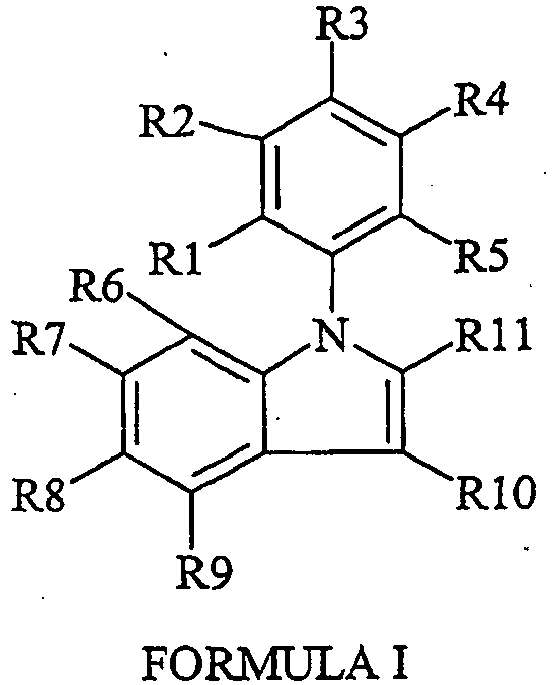

R10 is -L-R12;
R12 is a heterocyclic group with one or more substituents chosen from-L-C(=O)OH, -L-CH=CHC(=O)OH, -L-C(=O)NH2, -L-C(=O)NH(C1-3 alkyl), -L-C(=O)N(C1-3 alkyl)2,-L-S(=O)2(C1-3alkyl), -L-S(=O)2NH2, -L-S(=O)2N(C1-3 alkyl)2, -L-S(=O)2NH(C1-3 alkyl), -L-C(=O)NHOH, -L-C(=O)CH2NH2, -L-C(=O)CH2OH, -L-C(=O)CH2SH, -L-C(=O)NHCN, -L-NHC(=O)ORo, -L-C(=O)NHRo, -L-NH(C=O)NHRo, -L-C(=O)N(Ro)2, -L-NH(C=O)N(Ro)2, -L-sulfo, -L-(2,6 difluorophenol), -L-phosphono, and -L-tetrazolyl;
Ro is chosen from alkyl and haloalkyl; and
L can be saturated, partially saturated, or unsaturated, and is chosen from -(CH2)n-(CH2)n-, -(CH2)nC(=O)(CH2)n-, -(CH2)nNH(CH2)n-, -(CH2)nO(CH2)n-, and-(CH2)nS(CH2)n-, where each n is independently chosen from 0, 1, 2, 3, 4, 5, 6, 7, and 8, wherein each carbon can be optionally substituted with one or more C1-3 alkyl or C3-6 cycloalkyl. - In one embodiment of the seventeenth aspect, one substituent on the heterocyclic group of R12 is chosen from -C(=O)OH, -CH=CHC(=O)OH,-CH2CH2C(=O)OH, -CH2CH2CH2C(=O)OH, -C(CH2CH2)C(=O)OH,-CH(CH3)C(=O)OH, -CH(CH2CH3)C(=O)OH, -C(CH3)(CH2CH3)C(=O)OH,-CH=C(CH3)C(=O)OH, -C(CH2CH3)2C(=O)OH, -CH2C(=O)OH, -C(CH3)2C(=O)OH, - C(=O)NH2, -C(=O)NHCH3, -C(=O)N(CH3)2, -S(=O)2(C1-3alkyl), -S(=O)2NH2, - S(=O)2NHCH3, -S(=O)2N(CH3)2, -C(=O)NH(C1-3alkyl), -C(=O)N(C1-3alkyl)2, - S(=O)2NH2, and -S(=O)2N(C1-3alkyl)2.
- In another embodiment of this seventeenth aspect, one of the substituent on the heterocyclic group of R12 is chosen from -C(=O)OH,-CH=CHC(=O)OH, -CH2CH2C(=O)OH, -CH2CH2CH2C(=O)OH, -C(CH2CH2)C(=O)OH, -CH(CH3)C(=O)OH, -CH(CH2CH3)C(=O)OH, -C(CH3)(CH2CH3)C(=O)OH,-CH=C(CH3)C(=O)OH, -C(CH2CH3)2C(=O)OH, -CH2C(=O)OH, and -C(CH3)2C(=O)OH.
- In one embodiment of this aspect, the heterocyclic group is chosen from thienyl (thiophenyl), benzo[b]thienyl, naphtho[2,3-b]thienyl, thianthrenyl, furyl (furanyl), isobenzofuranyl, chromenyl, xanthenyl, phenoxanthiinyl, pyrrolyl, 2H-pyrrolyl, imidazolyl, pyrazolyl, pyridyl (pyridinyl), 2-pyridyl, 3-pyridyl, 4-pyridyl, pyrazinyl, pyrimidinyl, pyridazinyl, tetrahydrofuranyl, pyranyl, piperidinyl, piperazinyl, indolizinyl, isoindolyl, 3H-indolyl, indolyl, indazolyl, purinyl, 4H-quinolizinyl, isoquinolyl, quinolyl, phthalzinyl, naphthyridinyl, quinozalinyl, quinuclidinyl, morpholinyl, cinnolinyl, pteridinyl, carbazolyl, beta-carbolinyl, phenanthridinyl, acrindinyl, perimidinyl, phenanthrolinyl, phenazinyl, isothiazolyl, phenothiazinyl, oxazolyl, isoxazolyl, furazanyl, phenoxazinyl, 1,4-dihydroquinoxaline-2,3-dione, 7 aminoisocoumarin, pyrido[1,2-a]pyrimidin-4-one, pyrazolo[1,5-a]pyrimidinyl, pyrazolo[1,5-a]pyrimidin-3-yl, 1,2-benzoisoxazol-3-yl, benzimidazolyl, 2-oxindolyl and 2 oxobenzimidazolyl. In one sub-embodiment of this embodiment, the heterocyclic group is chosen from pyridinyl, isoxazolyl, furanyl, thiazolyl, pyrimidinyl, pyrrolyl, thiophenyl, triazolyl, benzo[1,3]dioxolyl, and benzofuranyl.
- The present description describes, in an eighteenth embodiment, compounds of Formula I and II:


R10 is a heterocyclic group with one or more substituents independently chosen from -L-C(=O)OH, -L-CH=CHC(=O)OH, -L-C(=O)NH2, -L-C(=O)NH(C1-3 alkyl), -L-C(=O)N(C1-3 alkyl -L-S(=O)2(C1-3alkyl), -L-S(=O)2NH2, -L-S(=O)2N(C1-3 alkyl)2, -L-. S(=O)2NH(C1-3 alkyl), -L-C(=O)NHOH, -L-C(=O)CH2NH2, -L-C(=O)CH2OH, -L-C(=O)CH2SH, -L-C(=O)NHCN, -L-NHC(=O)ORo, -L-C(=O)NHRo, -L-NH(C=O)NHRo, -L-C(=O)N(Ro)2, -L-NH(C=O)N(Ro)2, -L-sulfo, -L-(2,6 difluorophenol), -L-phosphono, and -L-tetrazolyl;
Ro is chosen from alkyl and haloalkyl; and
L can be saturated, partially saturated, or unsaturated, and is chosen from -(CH2)n-(CH2)n-, -(CH2)nC(=O)(CH2)n-, -(CH2)nNH(CH2)n-, -(CH2)nO(CH2)n-, and-(CH2)nS(CH2)n-, where each n is independently chosen from 0, 1, 2, 3, 4, 3, 6, 7, and 8, wherein each carbon can be optionally substituted with one or more C1-3 alkyl or C3-6 cycloalkyl. - In one embodiment of the eighteenth aspect, one substituent on the heterocyclic group of R10 is chosen from -C(=O)OH, -CH=CHC(=O)OH,-CH2CH2C(=O)OH, -CH2CH2CH2C(=O)OH, -C(CH2CH2)C(=O)OH,-CH(CH3)C(=O)OH, -CH(CH2CH3)C(=O)OH, -C(CH3)(CH2CH3)C(=O)OH,-CH=C(CH3)C(=O)OH, -C(CH2CH3)2C(=O)OH, -CH2C(=O)OH, -C(CH3)2C(=O)OH, - C(=O)NH2, -C(=O)NHCH3, -C(=O)N(CH3)2, -S(=O)2(C1-3alkyl), -S(=O)2NH2, - S(=O)2NHCH3, -S(=O)2N(CH3)2, -C(=O)NH(C1-3alkyl), -C(=O)N(C1-3alkyl)2, - S(=O)2NH2, and -S(=O)2N(C1-3alkyl)2.
- In another embodiment of the eighteenth aspect, one substituent on the heterocyclic group of R10 is chosen from -C(=O)OH, -CH=CHC(=O)OH,-CH2CH2C(=O)OH, -CH2CH2CH2C(=O)OH, -C(CH2CH2)C(=O)OH,-CH(CH3)C(=O)OH, -CH(CH2CH3)C(=O)OH, -C(CH3)(CH2CH3)C(=O)OH, - CH=C(CH3)C(=O)OH, -C(CH2CH3)2C(=O)OH, -CH2C(=O)OH, and -C(CH3)2C(=O)OH.
- In one embodiment of this aspect, the heterocyclic group is chosen from thienyl (thiophenyl), benzo[b]thienyl, naphtho[2,3-b]thienyl, thianthrenyl, furyl (furanyl), isobenzofuranyl, chromenyl, xanthenyl, phenoxanthiinyl, pyrrolyl, 2H-pyirolyl, imidazolyl, pyrazolyl, pyridyl (pyridinyl), 2-pyridyl, 3-pyridyl, 4-pyridyl, pyrazinyl, pyrimidinyl, pyridazinyl, tetrahydrofuranyl, pyranyl, piperidinyl, piperazinyl, indolizinyl, isoindolyl, 3H-indolyl, indolyl, indazolyl, purinyl, 4H-quinolizinyl, isoquinolyl, quinolyl, phthalzinyl, naphthyridinyl, quinozalinyl, quinuclidinyl, morpholinyl, cinnolinyl, pteridinyl, carbazolyl, beta-carbolinyl, phenanthridinyl, acrindinyl, perimidinyl, phenanthrolinyl, phenazinyl, isothiazolyl, phenothiazinyl, oxazolyl, isoxazolyl, furazanyl, phenoxazinyl, 1,4-dihydroquinoxaline-2,3-dione, 7 aminoisocoumarin, pyrido[1,2-a]pyrimidin-4-one, pyrazolo[1,5-a]pyrimidinyl, pyrazolo[1,5-a]pyrimidin-3-yl, 1,2-benzoisoxazol-3-yl, benzimidazolyl, 2-oxindolyl and 2 oxobenzimidazolyl. In one sub-embodiment of this embodiment, the heterocyclic group is chosen from pyridinyl, isoxazolyl, furanyl, thiazolyl, pyrimidinyl, pyrrolyl, thiophenyl, triazolyl, benzo[1,3]dioxolyl, and benzofuranyl.
- The present description describes, in a nineteenth aspect, compounds of Formula I and II:


R10 and R11 are independently chosen from hydro, hydroxyl, halo, alkyl, alkoxy, haloalkyl, haloalkoxy, -N(C1-3 alkyl)2, -N-H(C1-3 alkyl), -C(=O)NH2, -C(=O)NH(C1-3 alkyl), -C(=O)N(C1-3 alkyl)2, -S(=O)2NH2, -S(=O)2(C1-3alkyl), -S(=O)2N(C1-3 alkyl)2,-S(=O)2NH(C1-3 alkyl), -CHF2, -OCF3, -OCHF2, -SCF3, -CF3, -CN, -NH2, -NO2, and -L-R12;
R12 is a heterocyclic group with one or more substituents independently chosen from -L-C(=O)OH, -L-CH=CHC(=O)OH, -L-C(=O)NH2, -L-C(=O)NH(C1-3 alkyl),-L-C(=O)N(C1-3 alkyl)2, -L-S(=O)2(C1-3alkyl), -L-S(=O)2NH2, -L-S(=O)2N(C1-3 alkyl)2, - L-S(=O)2NH(C1-3 alkyl), -L-C(=O)NHOH, -L-C(=O)CH2NH2, -L-C(=O)CH2OH, -L-C(=O)CH2SH, -L-C(=O)NHCN, -L-NHC(=O)ORo, -L-C(=O)NHRo, -L-NH(C=O)NHRo, -L-C(=O)N(Ro)2, -L-NH(C=O)N(Ro)2, -L-sulfo, -L-(2,6 difluorophenol), -L-phosphono, and -L-tetrazolyl;
Ro is chosen from alkyl and haloalkyl; and
L can be saturated, partially saturated, or unsaturated, and is chosen from - (CH2)n-(CH2)n-, -(CH2)nC(=O)(CH2)n-, -(CH2)nNH(CH2)n-, -(CH2)nO(CH2)n-, and-(CH2)nS(CH2)n-, where each n is independently chosen from 0, 1, 2, 3, 4, 5, 6, 7, and 8, wherein each carbon can be optionally substituted with one or more C1-3 alkyl or C3-6 cycloalkyl. - In one embodiment of the nineteenth aspect, R12 is present and has one or more substituents independently chosen from -C(=O)OH, -CH=CHC(=O)OH, -CH2CH2C(=O)OH, -CH2CH2CH2C(=O)OH, -C(CH2CH2)C(=O)OH,-CH(CH3)C(=O)OH, -CH(CH2CH3)C(=O)OH, -C(CH3)(CH2CH3)C(=O)OH,-CH=C(CH3)C(=O)OH, -C(CH2CH3)2C(=O)OH, -CH2C(=O)OH, -C(CH3)2C(=O)OH, - C(=O)NH2, -C(=O)NHCH3, -C(=O)N(CH3)2, -S(=O)2(C1-3alkyl), -S(=O)2NH2, - S(=O)2NHCH3, -S(=O)2N(CH3)2, -C(=O)NH(C1-3alkyl), -C(=O)N(C1-3alkyl)2, - S(=O)2NH2, and -S(=O)2N(C1-3alkyl)2.
- In another embodiment of this nineteenth aspect, R12 is present and has one substituent chosen from -C(=O)OH, -CH=CHC(=O)OH, - CH2CH2C(=O)OH, -CH2CH2CH2C(=O)OH, -C(CH2CH2)C(=O)OH,-CH(CH3)C(=O)OH, -CH(CH2CH3)C(=O)OH, -C(CH3)(CH2CH3)C(=O)OH,-CH=C(CH3)C(=O)OH, -C(CH2CH3)2C(=O)OH, -CH2C(=O)OH, and -C(CH3)2C(=O)OH.
- In one embodiment of this aspect, the heterocyclic group is chosen from thienyl (thiophenyl), benzo[b]thienyl, naphtho[2,3-b]thienyl, thianthrenyl, furyl (furanyl), isobenzofuranyl, chromenyl, xanthenyl, phenoxanthiinyl, pyrrolyl, 2H-pyrrolyl, imidazolyl, pyrazolyl, pyridyl (pyridinyl), 2-pyridyl, 3-pyridyl, 4-pyridyl, pyrazinyl, pyrimidinyl, pyridazinyl, tetrahydrofuranyl, pyranyl, piperidinyl, piperazinyl, indolizinyl, isoindolyl, 3H-indolyl, indolyl, indazolyl, purinyl, 4H-quinolizinyl, isoquinolyl, quinolyl, phthalzinyl, naphthyridinyl, quinozalinyl, quinuclidinyl, morpholinyl, cinnolinyl, pteridinyl, carbazolyl, beta-carbolinyl, phenanthridinyl, acrindinyl, perimidinyl, phenanthrolinyl, phenazinyl, isothiazolyl, phenothiazinyl, oxazolyl, isoxazolyl, furazanyl, phenoxazinyl, 1,4-dihydroquinoxaline-2,3-dione, 7 aminoisocoumarin, pyrido[1,2-a]pyrimidin-4-one, pyrazolo[1,5-a]pyrimidinyl, pyrazolo[1,5-a]pyrimidin-3-yl, 1,2-benzoisoxazol-3-yl, benzimidazolyl, 2-oxindolyl and 2 oxobenzimidazolyl. In one sub-embodiment of this embodiment, the heterocyclic group is chosen from pyridinyl, isoxazolyl, furanyl, thiazolyl, pyrimidinyl, pyrrolyl, thiophenyl, triazolyl, benzo[1,3]dioxolyl, and benzofuranyl.
- The present description describes, in a twentieth aspect, compounds of Formula V and VI:


Ro is chosen from alkyl and haloalkyl;
R6-R10, independent of one another, are chosen from hydro, hydroxyl, halo, alkyl, alkoxy, haloalkyl, haloalkoxy, -N(C1-3 alkyl)2, -NH(C1-3 alkyl), -C(=O)NH2,-C(=O)NH(C1-3 alkyl), -C(=O)N(C1-3 alkyl)2, -S(=O)2(C1-3alkyl), -S(=O)2NH2, - S(=O)2N(C1-3 alkyl)2, -S(=O)2NH(C1-3 alkyl), -CHF2, -OCF3, -OCHF2, -SCF3, -CF3, -CN,-NH2, -NO2, -C(=O)-N-morpholino, -cyclohexyl, -morpholino, -pyrrolidinyl, -piperazinyl, -(N-methyl)-piperazinyl, -OCH2-phenyl, -pyridinyl, methylenedioxy, ethylenedioxy,-C(=O)OCH2CH3 substituted furanyl, para-(C(=O)OCH2CH3)-phenyl, and -O-Si(CH3)2(C(CH3)3); two adjacent of R6-R9 can be taken together to form a 4-7 member optionally substituted aryl, heterocyclic, or cycloalkyl ring;
R11 is an optionally substituted heterocyclic group; and
L can be saturated, partially saturated, or unsaturated, and is chosen from -(CH2)n-(CH2)n-, -(CH2)nC(=O)(CH2)n-, -(CH2)nNH(CH2)n-, -(CH2)nO(CH2)n-, and-(CH2)nS(CH2)n-) where each n is independently chosen from 0, 1, 2, 3, 4, 5, 6, 7, and 8, wherein each carbon can be optionally substituted with one or more C1-3 alkyl or C3-6 cycloalkyl, - In one embodiment of the twentieth aspect, one of R1-R5 in the compounds of Formulae I and II, is chosen from -C(=O)OH, -CH=CHC(=O)OH,-CH2CH2C(=O)OH, -CH2CH2CH2C(=O)OH, -C(CH2CH2)C(=O)OH,-CH(CH3)C(=O)OH, -CH(CH2CH3)C(=O)OH, -C(CH3)(CH2CH3)C(=O)OH,-CH=C(CH3)C(=O)OH, -C(CH2CH3)2C(=O)OH, -CH2C(=O)OH, -C(CH3)2C(=O)OH,-C(=O)NH2, -C(=O)NHCH3, -C(=O)N(CH3)2, -S(=O)2(C1-3alkyl), -S(=O)2NH2, - S(=O)2NHCH3, -S(=O)2N(CH3)2, -C(=O)NH(C1-3alkyl), -C(=O)N(C1-3alkyl)2, - S(=O)2NH2, and -S(=O)2N(C1-3alkyl)2, and the others of R1-R5, independent of one another, are chosen from hydro, hydroxyl, halo, alkyl, alkoxy, haloalkyl, haloalkoxy, - N(C1-3 alkyl)2, -NH(C1-3 alkyl), -C(=O)NH2, -C(=O)NH(C1-3 alkyl), -C(=O)N(C1-3 alkyl)2, -S(=O)2(C1-3alkyl), -S(=O)2NH2, -S(=O)2N(C1-3 alkyl)2, -S(=O)2NH(C1-3 alkyl), -CHF2,-OCF3, -OCHF2, -SCF3, -CF3, -CN, -NH2, and -NO2;
R6-R10, independent of one another, are chosen from hydro, hydroxyl, halo, alkyl, alkoxy, haloalkyl, haloalkoxy, -N(C1-3 alkyl)2, -NH(C1-3 alkyl), -C(=O)NH2, - C(=O)NH(C1-3 alkyl), -C(=O)N(C1-3alkyl)2, -S(=O)2(C1-3alkyl), -S(=O)2NH2, - S(=O)2N(C1-3 alkyl)2, -S(=O)2NH(C1-3 alkyl), -CHF2, -OCF3, -OCHF2, -SCF3, -CF3, -CN,-NH2, and NO2; two adjacent of R6-R9 can be taken together to form a 4-7 member optionally substituted aryl or cycloalkyl ring;
L is -(CH2)n-(CH2)n-, with n independently 0, 1, 2, or 3; and
R11 is an optionally substituted heterocyclic group. - In another embodiment of this twentieth aspect, L is a bond, one of R1-R5 is chosen from -C(=O)OH, -CH=CHC(=O)OH, -CH2CH2C(=O)OH,-CH2CH2CH2C(=O)OH, -C(CH2CH2)C(=O)OH, -CH(CH3)C(=O)OH, - CH(CH2CH3)C(=O)OH, -C(CH3)(CH2CH3)C(=O)OH, -CH=C(CH3)C(=O)OH,-C(CH2CH3)2C(=O)OH, -CH2C(=O)OH, and -C(CH3)2C(=O)OH; and the others of R1-R5 independently are chosen from hydro, hydroxyl, halo, alkyl, alkoxy, haloalkyl, haloalkoxy, -N(C1-3 alkyl, -NH(C1-3 alkyl), -C(=O)NH2, -C(=O)NH(C1-3 alkyl), - C(=O)N(C1-3 alkyl)2, -S(=O)2(C1-3alkyl), -S(=O)2NH2, -S(=O)2N(C1-3 alkyl)2, - S(=O)2NH(C1-3 alkyl), -CHF2, -OCF3, -OCHF2, -SCF3, -CF3, -CN, -NN2, and -NO2;
R6-R10, independent of one another, are chosen from hydro, hydroxyl, halo, alkyl, alkoxy, haloalkyl, haloalkoxy, -N(C1-3 alkyl)2, -NH(C1-3 alkyl), -C(=O)NH2,-C(=O)NH(C1-3 alkyl), -C(=O)N(C1-3 alkyl)2, -S(=O)2(C1-3alkyl), -S(=O)2NH2, - S(=O)2N(C1-3 alkyl)2, -S(=O)2NH(C1-3 alkyl), -CHF2, -OCF3, -OCHF2, -SCF3, -CF3, -CN,-NH2, and -NO2; two of R6-R9 can be taken together to form an optionally substituted 4-7 member aryl, heterocyclic, or cycloalkyl ring; and
R11 is an optionally substituted heterocyclic group. - In one embodiment of this aspect, the heterocyclic group is chosen from thienyl (thiophenyl), benzo[b]thienyl, naphtho[2,3-b]thienyl, thianthrenyl, furyl (furanyl), isobenzofuranyl, chromenyl, xanthenyl, phenoxanthiinyl, pyrrolyl, 2H-pyrrolyl, imidazolyl, pyrazolyl, pyridyl (pyridinyl), 2-pyridyl, 3-pyridyl, 4-pyridyl, pyrazinyl, pyrimidinyl, pyridazinyl, tetrahydrofuranyl, pyranyl, piperidinyl, piperazinyl, indolizinyl, isoindolyl, 3H-indolyl, indolyl, indazolyl, purinyl, 4H-quinolizinyl, isoquinolyl, quinolyl, phthalzinyl, naphthyridinyl, quinozalinyl, quinuclidinyl, morpholinyl, cinnolinyl, pteridinyl, carbazolyl, beta-carbolinyl, phenanthridinyl, acrindinyl, perimidinyl, phenanthrolinyl, phenazinyl, isothiazolyl, phenothiazinyl, oxazolyl, isoxazolyl, furazanyl, phenoxazinyl, 1,4-dihydroquinoxaline-2,3-dione, 7 aminoisocoumarin, pyrido[1,2-a]pyrimidin-4-one, pyrazolo[1,5-a]pyrimidinyl, pyrazolo[1,5-a]pyrimidin-3-yl, 1,2-benzoisoxazol-3-yl, benzimidazolyl, 2-oxindolyl and 2 oxobenzimidazolyl. In one sub-embodiment of this embodiment, the heterocyclic group is chosen from pyridinyl, isoxazolyl, furanyl, thiazolyl, pyrimidinyl, pyrrolyl, thiophenyl, triazolyl, benzo[1,3]dioxolyl, and benzofuranyl.
- The present description describes, in a twenty-first aspect, compounds of Formula V and VI:


Ro is chosen from alkyl and haloalkyl;
R12 is a heterocyclic group with one or more substituents independently chosen-L-C(=O)OH, -L-CH=CHC(=O)OH, -L-C(=O)NH2, -L-C(=O)NH(C1-3 alkyl), -L-C(=O)N(C1-3 alkyl)2, -L-S(=O)2(C1-3alkyl), -L-S(=O)2NHz, -L-S(=O)2N(C1-3 alkyl, -L-S(=O)2NH(C1-3 alkyl), -L-C(=O)NHOH, -L-C(=O)CH2NH2, -L-C(=O)CH2OH, -L-C(=O)CH2SH, -L-C(=O)NHCN, -L-NHC(=O)ORo, -L-C(=O)NHRo, -L-NH(C=O)NHRo, -L-C(=O)N(Ro)2, -L-NH(C=O)N(Ro)2, -L-sulfo, -L-(2,6 difluorophenol), -L-phosphono, and -L-tetrazolyl; and
the others of R1-R11 are independently chosen from hydro, hydroxyl, halo, alkyl, alkoxy, haloalkyl, haloalkoxy, -N(C1-3 alkyl, -NH(C1-3 alkyl), -C(=O)NH2,-C(=O)NH(C1-3 alkyl), -C(=O)N(C1-3alkyl)2, -S(=O)2(C1-3alkyl), -S(=O)2NH2, - S(=O)2N(C1-3 alkyl)2, -S(=O)2NH(C1-3 alkyl), -CHF2, -OCF3, -OCHF2, -SCF3, -CF3, -CN,-NH2, -NO2, -C(=O)-N-morpholino, -cyclohexyl, -morpholino, -pyrrolidinyl, -piperazinyl, -(N-methyl)-piperazinyl, -OCH2-phenyl, -pyridinyl, methylenedioxy, ethylenedioxy, - C(=O)OCH2CH3 substituted furanyl, para-(C(=O)OCH2CH3)-phenyl, and -O-Si(CH3)2(C(CH3)3); two adjacent of R6-R9 can be taken together to form a 4-7 member optionally substituted aryl, heterocyclic, or cycloalkyl ring; and
L can be saturated, partially saturated, or unsaturated, and is chosen from -(CH2)n-(CH2)n-, -(CH2)nC(=O)(CH2)n-, -(CH2)nNH(CH2)n-, -(CH2)nO(CH2)n-, and-(CH2)nS(CH2)n-, where each n is independently chosen from 0, 1, 2, 3, 4, 5, 6, 7, and 8, wherein each carbon can be optionally substituted with one or more C1-3 alkyl or C3-6 cycloalkyl. - In one embodiment of the twenty-first aspect, R12 is present and has one or more substituents independently chosen from -C(=O)OH, -CH=CHC(=O)OH, -CH2CH2C(=O)OH, -CH2CH2CH2C(=O)OH, -C(CH2CH2)C(=O)OH,-CH(CH3)C(=O)OH, -CH(CH2CH3)C(=O)OH, -C(CH3)(CH2CH3)C(=O)OH,-CH=C(CH3)C(=O)OH, -C(CH2CH3)2C(=O)OH, -CH2C(=O)OH, -C(CH3)2C(=O)OH, - C(=O)NH2, -C(=O)NHCH3, -C(=O)N(CH3)2, -S(=O)2(C1-3alkyl), -S(=O)2NH2, - S(=O)2NHCH3, -S(=O)2N(CH3)2, -C(=O)NH(C1-3alkyl), -C(=O)N(C1-3alkyl)2, - S(=O)2NH2, and -S(=O)2N(C1-3alkyl)2.
- In another embodiment of this twenty-first aspect, L is a bond, R12 is present and has one substituent chosen from -C(=O)OH, -CH=CHC(=O)OH,-CH2CH2C(=O)OH, -CH2CH2CH2C(=O)OH, -C(CH2CH2)C(=O)OH,-CH(CH3)C(=O)OH, -CH(CH2CH3)C(=O)OH, -C(CH3)(CH2CH3)C(=O)OH,-CH=C(CH3)C(=O)OH, -C(CH2CH3)2C(=O)OH, -CH2C(=O)OH, and -C(CH3)2C(=O)OH.
- One embodiment of this twenty-first aspect includes analogs where the ring to which R1-R5 are attached is a 4-7 member heterocyclic ring instead a phenyl ring.
- In one embodiment of this aspect, the heterocyclic group is chosen from thienyl (thiophenyl), benzo[b]thienyl, naphtho[2,3-b]thienyl, thianthrenyl, furyl (furanyl), isobenzofuranyl, chromenyl, xanthenyl, phenoxanthiinyl, pyrrolyl, 2H-pyrrolyl, imidazolyl, pyrazolyl, pyridyl (pyridinyl), 2-pyridyl, 3-pyridyl, 4-pyridyl, pyrazinyl, pyrimidinyl, pyridazinyl, tetrahydrofuranyl, pyranyl, piperidinyl, piperazinyl, indolizinyl, isoindolyl, 3H-indolyl, indolyl, indazolyl, purinyl, 4H-quinolizinyl, isoquinolyl, quinolyl, phthalzinyl, naphthyridinyl, quinozalinyl, quinuclidinyl, morpholinyl, cinnolinyl, pteridinyl, carbazolyl, beta-carbolinyl, phenanthridinyl, acrindinyl, perimidinyl, phenanthrolinyl, phenazinyl, isothiazolyl, phenothiazinyl, oxazolyl, isoxazolyl, furazanyl, phenoxazinyl, 1,4-dihydroquinoxaline-2,3-dione, 7 aminoisocoumarin, pyrido[1,2-a]pyrimidin-4-one, pyrazolo[1,5-a]pyrimidinyl, pyrazolo[1,5-a]pyrimidin-3-yl, 1,2-benzoisoxazol-3-yl, benzimidazolyl, 2-oxindolyl and 2 oxobenzimidazolyl. In one sub-embodiment of this embodiment, the heterocyclic group is chosen from pyridinyl, isoxazolyl, furanyl, thiazolyl, pyrimidinyl, pyrrolyl, thiophenyl, triazolyl, benzo[1,3]dioxolyl, and benzofuranyl.
- In another aspect, one or more of the carbon atoms of the indole core are replaced by a heteroatom independenly N-, -0-, and -S-. In one embodiment, the substituents are as in any one of the other aspects and/or sub-embodiments.
- In another aspect, the core indole group is replace with a group chosen from 5,7-Dihydro-6H-pyrrolo[2,3-h]cinnoline; 5,7-Dihydro-6H-pyrrolo[2,3-h]quinazoline; 4,5-Dihydro-3H-3,6,7-triaza-cyclopenta[a]naphthalene; 5,7-Dihydro-6H-pyrrolo[3,2-f]quinoxaline; 5,7-Dihydro-6H-pyrrolo[3,2-f]phthalazine; 5,7-Dihydro-6H-pyrrolo[2,3-h]quinoline; 5,7-Dihydro-6H-pyrrolo[3,2-f]quinazoline; 4,5-Dihydro-3H-pyrrolo[3,2-f]isoquinoline; 4,5-Dihydro-3H-pyrrolo[3,2-f]quinoline; and 5,7-Dihydro-6H-pyrrolo[2,3-h]isoquinoline. In one embodiment, the substituents are as in any one of the other aspects and/or sub-embodiments.
- In some aspects, L is substituted with one or more substituents independently chosen from -C(=O)OH, -CH=CHC(=O)OH, -CH2CH2C(=O)OH,-CH2CH2CH2C(=O)OH, -C(CH2CH2)C(=O)OH, -CH(CH3)C(=O)OH,-CH(CH2CH3)C(=O)OH, -C(CH3)(CH2CH3)C(=O)OH, -CH=C(CH3)C(=O)OH,-C(CH2CH3)2C(=O)OH, -CH2C(=O)OH, and -C(CH3)2C(=O)OH, in lieu of having one of said substituents elsewhere in the compounds of Formulae I-XVI.
- In some embodiments of the first through twenty-first aspects, if a position in Formulae I-XVI is not specified then it can be specified as in one of the other embodiments of that aspect. Alternatively, the position can be substituted with one or more substituents independently chosen from the list of optional substituents below.
- Optionally substituted, when used herein without reference to further definition, refers to a substituent independently chosen from the group consisting of hydro, hydroxyl, halo, alkyl, alkoxy, haloalkyl, haloalkoxy, -N(C1-3 alkyl)2, -NH(C1-3 alkyl),-C(=O)NH2, -C(=O)NH(C1-3 alkyl), -C(=O)N(C1-3 alkyl)2, -S(=O)2(C1-3alkyl), - S(=O)2NH2, -S(=O)2N(C1-3alkyl)2, -S(=O)2NH(C1-3 alkyl), -CHF2, -OCF3, -OCHF2,-SCF3, -CF3, -CN, -NH2, and -NO2.
- Furthermore, the description includes derivatives or analog of the compounds defined in first through twenty-first aspects, where the derivative or analog is chosen from an ester (e.g., methyl or ethyl ester), an amide, a carbamate, a urea, an amadine, or a combination thereof. Methods for generating an ester, an amide, a carbamate, a urea, an amadine, or a combination thereof, of the compounds of the first aspect through the twenty-first aspects are known to an ordinary artisan skilled in organic chemical synthesis.
- As the skilled artisan readily recognizes, in some of the embodiments of the first twenty-one aspects, some of the compounds can have more than one -L-group, each of which is independent chosen.
- The present invention relates to a compound of Formula I or II, or a pharmaceutically-acceptable salt thereof, and a pharmaceutical composition comprising such a compound for use in the treatment and prophylaxis of neurodegenerative disorders, as described in the claims.
- In some aspects, there are provided methods for treating and/or preventing neurodegenerative disorders like AD and MCI, and lowering Aβ42 in an individual in need of such treatment. It is believed that by lowering the amounts of Aβ42 in an individual by administering an Aβ42 lowering effective amount of a composition described herein, that Alzheimer's disease and mild cognitive impairment can be treated or prevented. Generally, the invention relates to the idea that compounds of Formulae I-XVI can be used to lower Aβ42 levels. Thus, diseases characterized by increased levels of Aβ42, can be treated or prevented with the methods described herein which are designed to lower Aβ42, prevent an increase in Aβ42, and/or reduce the rate of increase of Aβ42.
- The invention is based on the fact that the inventors have discovered that compounds of Formulae I-XVI lower Aβ42 levels in in vitro APP processing assays. Furthermore, compounds of Formulae I-XVI, in general, have negligible levels of COX inhibition and therefore are thought to essentially be devoid of the deleterious side-effects associated with COX inhibition. Thus, a preferred embodiment is the use of a pharmaceutical composition having one or more compounds of Formulae I-XVI, where the compound lowers Aβ42 levels and does not substantial inhibit the cyclooxygenases. Preferred compounds of Formulae I-XVI for use herein are those that have little or negligible COX-1 and/or COX-2 inhibition at 1 µM, more preferred are those that little or negligible COX-1 and/or COX-2 inhibition at 10 µM, and more preferred are those that little or negligible COX-1 and/or COX-2 inhibition at 100 µM compound. COX-1 and COX-2 inhibition can be determined with a COX inhibitor screening kit from e.g., Cayman Chemical, Ann Arbor, MI (Cat. # 560131).
- The present description describes one embodiment, wherein a method for lowering Aβ42 protein levels, in an individual in need of such treatment, is provided that includes the step of administering an effective amount of a compound of Formulae I-XVI as described above.
- While not wishing to be bound by theory, it is believed that the compound of Formulae I-XVI acts in vivo to treat and/or prevent Alzheimer's disease and MCI by lowering the amount of Aβ42 that is present or would be present in the absence of such treatment. Amyloid β polypeptides are derived from amyloid precursor proteins (APPs). A variety of amyloid β polypeptides are known including Aβ42, Aβ37, Aβ38, Aβ39, and Aβ40. Increased Aβ42 levels are associated with Alzheimer's disease and MCI. Thus, by lowering the amounts of Aβ42, a treatment is provided for combating Alzheimer's disease and/or MCI.
- The present description describes another embodiment, which relates to a method of preventing Alzheimer's disease. According to this embodiment, a method for preventing Alzheimer's disease is provided which comprises administering, to an individual in need of such treatment, a composition comprising a compound having Formulae I-XVI. The method of this embodiment is useful for preventing the symptoms of Alzheimer's disease, the onset of Alzheimer's disease, and/or the progression of the disease.
- The present description describes another embodiment, which provides a method of treating a neurodegenerative disorder, by identifying a patient in need of such treatment, and administering to the patient a therapeutically effective amount of a pharmaceutical composition having one or more compounds of Formulae I-XVI. Administration of a compound of Formulae I-XVI for at least 4 weeks, preferably at least 4 months, and more desirably at least 8 months, can provide an improvement or lessening in decline of cognitive function as characterized by cognition tests, biochemical disease marker progression, and/or plaque pathology. It is preferred that the lessening in decline in cognitive function is at least 25 % as compared to individuals treated with placebo, more preferably at least 40 %, and even more desirably at least 60 %. For example, an individual treated with placebo having probable mild-to-moderate Alzheimer's disease is expected to score approximately 5.5 points worse on the ADAS-cog test after a specified period of time of treatment (e.g., 1 year) whereas an individual treated with the composition of this aspect for the same period of time will score approximately 2.2 points worse on the ADAS-cog scale with a 60% decrease in decline or 3.3 points worse with a 40% decrease in decline in cognitive function when treated with the composition for the same specified period of time. The pharmaceutical composition for use is formulated with one or more pharmaceutically acceptable excipients, salts, or carriers. The pharmaceutical composition for use is delivered orally, preferably in a tablet or capsule dosage form.
- The present description describes yet another embodiment, which provides a method for prophylaxis against a neurodegenerative disorder, by identifying a patient in need of or desiring such treatment, and administering to the patient a prophylactically effective amount of a pharmaceutical composition having one or more compounds of Formulae I-XVI. Preferred compounds for use in this embodiment include those in Tables 1-6. Administration of a compound of Formulae I-XVI for at least 4 weeks, preferably at least 4 months, and more desirably at least 8 months, can delay the onset of the neurodegenerative disorder or slow the rate of onset of symptoms of the disorder. Patients having a predisposition to a neurodegenerative disorder or suspected of needing prophylaxis can be identified by any method known to the skilled artisan for diagnosis of such neurodegenerative disorders.
- The present description describes still another embodiment, which provides a method of treating a disease characterized by abnormal amyloid precursor protein processing by (1) identifying a patient in need of such treatment, and (2) administering to the patient a therapeutically effective amount of a pharmaceutical composition having one or more compounds of Formulae I-XVI. Examples of biochemical disease markers include, for example, amyloid beta peptide (Aβ), Aβ42, and tau.
- The present description describes another embodiment, which provides a method of prophylaxis or delaying the onset of a disease (or one or more symptoms thereof) characterized by abnormal amyloid precursor protein processing, by identifying a patient in need of such treatment and administering to the patient a prophylactically effective amount of a pharmaceutical composition having one or more compounds of Formulae I-XVI. Oral administration of the pharmaceutical composition for use in the method of this aspect for at least 4 weeks, preferably at least 4 months, and more desirably at least 8 months, prevents or delays the onset of the disease (or symptoms thereof) characterized by abnormal amyloid precursor protein processing.
- The present description describes another embodiment, which provides a method of treating Alzheimer's disease comprising administering to a patient in need of such treatment, a pharmaceutical composition having one or more compounds of Formulae I-XVI. Oral administration of the pharmaceutical composition for use in the method of this aspect for at least 4 weeks, preferably at least 4 months, and more desirably at least 8 months, provides an improvement or lessening in decline of cognitive function as characterized by cognition tests, biochemical disease marker progression, and/or plaque pathology. Desirably, the oral dose is provided in capsule or tablet form. According to this aspect, a patient in need of treatment is administered an Alzheimer's disease treating effective amount of a pharmaceutical composition having one or more compounds of Formulae I-XVI and one or more pharmaceutically acceptable salts, excipients and carriers. The method of this aspect involves identifying an individual likely to have mild-to-moderate Alzheimer's disease. An individual having probable mild-to-moderate Alzheimer's disease can be diagnosed by any method available to the ordinary artisan skilled in such diagnoses. For example, diagnosis can be according to DSM IV (TR) and/or meets NINCDS-ADRDA criteria for probable AD. According to this aspect, individuals with probable mild-to-moderate AD take an oral dose of a pharmaceutical composition for a specified period of time. Individuals undergoing such treatment are likely to see an improvement or lessening in decline of cognitive function, an improvement or lessening in decline in biochemical disease marker progression, and/or an improvement or lessening of decline in plaque pathology. A lessening in decline in cognitive function can be assessed using tests of cognitive function like the ADAS-cog. For example, an individual treated with placebo having probable mild-to-moderate Alzheimer's disease is expected to score approximately 5.5 points worse on the ADAS-cog test after a specified period of time of treatment (e.g., 1 year) whereas an individual treated with the composition of this aspect for the same period of time will score approximately 2.2 points worse on the ADAS-cog scale with a 60% decrease in decline or 3.3 points worse with a 40% decrease in decline in cognitive function when treated with the composition for the same specified period of time. In a related aspect, the method involves identifying a patient having moderate-to-severe AD and administering to the patient an Alzheimer's disease treating effective amount of a compound of Formulae I-XVI.
- The present description describes another embodiment, which provides a method of preventing the onset of Alzheimer's disease comprising administering to a patient in need of or desiring such treatment, a pharmaceutical composition having one or more compounds of Formulae I-XVL Administration of the pharmaceutical composition for use in the method of this aspect for at least 4 weeks, preferably at least 4 months, and more desirably at least 8 months, delays the onset of decline of cognitive function, biochemical disease marker progression, and/or plaque pathology. According to this embodiment, an individual desiring or needing preventative treatment against the onset of AD is administered a pharmaceutical composition having one or more compounds of Formulae I-XVI. The preventative treatment is preferably maintained as long as the individual continues to desire or need the treatment. Individuals needing or desiring preventative treatment against AD can be those having risk factors for developing AD. For example, risk factors for developing AD can be genetic factors or environmental factors. In one embodiment, the risk factor is age. Genetic risk factors can be assessed in a variety of ways, such as ascertaining the family medical history of the individual, or performing a genetic test to identify genes that confer a predisposition for developing AD. Additionally, risk factors can be assessed by monitoring genetic and biochemical markers. The method of this embodiment involves evaluating risk factors for cognitive decline. Evaluation of risk factors can include genetic testing for predisposing genes, alleles, and polymorphisms. Risk factors also refer to environmental factors like stroke, brain injury, age, and diet. Depending on the risk factor or factors associated with a particular patient a particular treatment regimen is selected for treating cognitive decline. For example, mutations in a Familial Alzheimer's disease gene are a risk factor. Another risk factor for cognitive decline is age. Head trauma is another risk factor for cognitive decline. Based on the patient's risk factors, a physician will prescribe a particular therapeutic treatment or prophylactic treatment suitable for the patient
- The present description describes still another embodiment, which provides a method of lowering Aβ42 levels to a greater extent than inhibiting COX-1, COX-2, or a combination thereof. In particular, the method of this embodiment comprises administering to a patient in need of treatment an effective amount of one or more compounds of Formulae I-XVI. The method of this embodiment involves the lowering of Aβ42 levels while not substantial affecting the activity of COX-1, COX-2, or both COX-1, and COX-2. Thus, the amount of the composition administered is effective for lowering Aβ42 levels and does not substantially inhibit COX-1, COX-2, or both COX-1 and COX-2. For example, the effective amount can be above the ED50 (the dose therapeutically effective in 50% of the population) for Aβ42 lowering, and below the ED50 for COX inhibition. Another example is a sufficiently small amount of compound so that inhibition of at least one COX activity is negligible and Aβ42 levels are reduced. The method of this embodiment can be used to treat and/or prevent Alzheimer's disease. The method of this embodiment can also be used to treat and/or prevent MCI and other neurodegenerative disorders.
- A preferred embodiment provides a method of lowering Aβ42 levels to a greater extent than inhibiting COX-1, COX-2, or a combination thereof. In particular, the method of this embodiment comprises administering, to a patient in need of treatment, an effective amount of one or more compounds of Formulae I-XVI, wherein the effective amount of compound is capable of lowering Aβ42, while not substantially affecting or inhibiting the activity of at least one isoform of COX. Thus, the method of this embodiment involves the lowering of Aβ42 levels while not substantially inhibiting the activity of COX-1, COX-2, or both COX-1 and COX-2. The method of this embodiment can be used to treat and/or prevent Alzheimer's disease, MCI, and/or other neurodegenerative disorders. In one aspect of this embodiment, the effective amount of compound having Formulae I-XVI reduce Aβ42 levels or production of Aβ42 by at least 1, 2, 5, 10, 15, 20, 25, 30, 40, or 50 or more percent while inhibiting COX-1, COX-2, or both COX-1 and COX-2 by less than 1, 2, 5, 10, 15, 20, 25, 30, 40, 50, 60, 70, 80, or 90 percent. In a preferred aspect of this embodiment, the effective amount of compound according to Formulae I-XVI lower Aβ42 by at least 5 percent while not substantially inhibiting COX-1, COX-2, or both COX-1 and COX-2 activity or levels. In another preferred aspect of this embodiment, the effective amount of the compound having Formulae I-XVI that is administered to an individual is such that it lowers Aβ42 levels, and does not inhibit COX activity to a significant extent, e.g., the amount administered is below the in vivo IC50 value for COX-1, COX-2 or both COX-1 and COX-2 and above the in vivo IC50 value for Aβ42 lowering activity. As used in this context, IC50 refers to the amount of compound sufficient to inhibit COX activity by 50% (COX-1, COX-2, or both COX-1 and COX-2) or reduce Aβ42 levels by 50%. An "effective amount" according to this preferred aspect of this embodiment, can also be viewed in terms of ED50 parameters, binding constants, dissociation constants, and other pharmacological parameters, e.g., the amount administered is below the ED50 value for COX-1, COX-2 or both COX-1 and COX-2 and above the ED50 value for Aβ42. It is noted that the effective amount of the compound does not necessarily have to be above an IC50 or ED50 for Aβ42 lowering and below the IC50 or ED50 for COX inhibition. That is, the "effective amount" can be at some intermediate value such that Aβ42 levels are lowered to a greater extent than inhibition of Cox-1, COX-2 or both COX-1 and COX-2.
- The skilled artisan readily recognizes that the compounds and pharmaceutical compositions can be used to treat other disease besides those listed herein.
- In one aspect of the invention, any individual having, or suspected of having, a neurodegenerative disorder, such as Alzheimer's disease, may be treated using the compositions for use of the present invention. Individuals who would particularly benefit from the compositions for use of the invention include those individuals diagnosed as having mild to moderate Alzheimer's disease according to a medically-accepted diagnosis, such as, for example the NINCDS-ADRDA criteria. Progression of the disease may be followed by medically accepted measure of cognitive function, such as, for example, the Mini-Mental State Exam (MMSE; see Mohs et al. Int. Psychogeriatr. 8:195-203 (1996)); ADAS-Cog (Alzheimer Disease Assessment Scale-Cognitive; see Galasko et al. Alzheimer Dis Assoc Disord, 11 suppl 2:S33-9 (1997)); Behavioral Pathology in Alzheimer's Disease Rating Scale (BEHAVE-AD); Blessed Test; CANTAB - Cambridge Neuropsychological Test Automated Battery; CERAD (The Consortium to Establish a Registry for Alzheimer's Disease) Clinical and Neuropsychological Tests (includes MMSE); Clock Draw Test; Cornell Scale for Depression in Dementia (CSDD); Geriatric Depression Scale (GDS); Neuropsychiatric Inventory (NPI); the 7 Minute Screen; the Alzheimer's Disease Cooperative Study Activities of Daily Living scale (ADCS-ADL; see McKhann et al. Neurology 34:939-944 (1984)); the DSM-IV (Diagnostic and Statistical Manual of Mental Disorders - Fourth Edition (DSM-IV), published by the American Psychiatric Association, Washington D.C., 1994); or the NINCDS-ADRDA criteria (see Folstein et al. J. Psychiatr. Res. 12:189-198 (1975)). Individuals diagnosed as having probable AD can be identified as having a mild-to-moderate form of the disease by an accepted measure of cognitive function such as the MMSE. In addition, methods that allow for evaluating different regions of the brain and estimating plaque and tangle frequencies can be used. These methods are described by Braak et al. Acta Neuropathol 82:239-259 (1991); Khachaturian Arch. Neuro. 42:1097-1105 (1985); Mirra et al. (1991) Neurology 41:479-486; and Mirra et al. Arch Pathol Lab Med 117:132-144 (1993). The severity of AD is generally determined by one of the initial tests provided above. For example, MMSE scores of 26-19 indicate mild AD, while scores from 18-10 indicate moderate AD.
- Diagnoses of Alzheimer's disease based on these tests are recorded as presumptive or probable, and may optionally be supported by one or more additional criteria. For example, a diagnosis of Alzheimer's disease may be supported by evidence of a family history of AD; non-specific changes in EEG, such as increased slow-wave activity; evidence of cerebral atrophy on CT with progression documented by serial observation; associated symptoms such as depression, insomnia, incontinence, delusions, illusions, hallucinations, catastrophic verbal, emotional or physical outbursts, sexual disorders, weight loss, and/or attendant neurologic abnormalities, such as increased muscle tone, myoclonus or gait disorder, etc.
- Additionally, amyloid deposits, generally associated with AD, maybe detected through the use of positron emission tomography (PET) using an amyloid-specific tracer such as Pittsburgh Compound-B (PIB). See Klunk et al., Ann. Neurol. 55(3):306-309 (2004). Increased amyloid deposits in the frontal, parietal, temporal and occipital cortices, and in the striatum, relative to normal brain tissue, as visualized, for example by PIB, support a diagnosis of AD. Generally, a greater number and density of amyloid deposits indicates more advanced AD.
- The invention encompasses the treatment of an individual preferably having mild to moderate AD, to the extent that individual has AD, whether or not one or more non-AD neurodegenerative diseases or conditions are previously, concurrently or subsequently diagnosed.
- The compounds for use of the present invention are useful for individuals who have received prior medication for AD, as well as individuals who have received no prior medication for AD, and are useful for individuals currently receiving medication for AD other than a compound of Formulae I-XVI, and for individuals not receiving medication for AD other than a compound of Formulae I-XVI.
- Individuals of any age may be treated by the methods described herein, with the pharmaceutical compositions for use of the invention; however, the invention encompasses a preferred embodiment for treating or preventing Alzheimer's disease in individuals between the ages of 45 and 105. In various embodiments, individuals treated by the therapeutic or prophylactic methods may be from 55 to 70 years of age, 60 to 80 years of age, 55 to 65 years of age, 60 to 75 years of age, 65 to 80 years of age, 55 to 60 years of age, 60 to 65 years of age, 65 to 70 years of age, 70 to 75 years of age, 75 to 80 years of age, or 80 years old and older.
- The present description describes yet another embodiment, which provides a method of slowing cognitive decline in an individual suspected of having mild cognitive impairment (MCI) comprising administering to the individual an effective amount of a compound of Formulae I-XVI. Mild cognitive impairment is a clinical condition between normal aging and Alzheimer's disease characterized by memory loss greater than expected for the particular age of the individual yet the individual does not meet the currently accepted definition for probable Alzheimer's disease. See, e.g., Petersen et al. Arch. Neurol. 58:1985-1992 (2001); Petersen Nature Rev. 2:646-653 (2003); and Morris et al. J Mol. Neuro. 17:101-118 (2001). Thus, according to this embodiment an individual suspected of having or diagnosed with MCI is treated twice daily with a composition having a compound of Formulae I-XVI per dose for at least 4 weeks, at least 4 months, preferably at least 8 months, and more desirably at least 1 year. Typically, patients having MCI first complain of or have a loss of memory. Preferably an individual associated with the patient can corroborate the memory deficit. Furthermore, general cognition is not sufficiently impaired to cause concern about more widespread cognitive disorder and although daily living activities may be affected that are not significantly impaired and the patients are not demented. Individuals having or suspected of having MCI that are treated according to this embodiment can expect to slow cognitive decline and/or progression to probable AD.
- The present description describes one embodiment, which provides a method of treating an individual known or suspected of having Alzheimer's disease comprising administering an effective amount of a compound of Formulae I-XVI. In a specific embodiment, the individual is diagnosed as having mild to moderate Alzheimer's disease. In another specific embodiment, the individual is diagnosed by a cognitive test as having mild to moderate AD. In another specific embodiment, the cognitive test is the Mini-Mental State Exam (MMSE). In another specific embodiment, the individual has a score on the MMSE of from 26 to 19, inclusive. In another specific embodiment, the individual has a score on the MMSE of from 18 to 10, inclusive. In another specific embodiment, the individual has a score on the MMSE of 26 to 10, inclusive.
- The present description describes other embodiments, which provide a method of treating an individual known or suspected of having Alzheimer's disease comprising administering an effective amount of a compound of Formulae I-XVI, wherein the individual is concurrently taking a second drug for the treatment of Alzheimer's disease. In a further embodiment, the individual has been diagnosed as having mild to moderate Alzheimer's disease. In a specific embodiment, said second drug is an acetylcholinesterase (AChE) inhibitor. In a more specific embodiment, said AChE inhibitor is Galanthamine (galantamine, Reminyl); E2020 (Donepezil, Aricept); Physostigmine; Tacrine (tetrahydroaminoacridine, THA); Rivastigmine; Phenserine; Metrifonate (Promem); or Huperazine, or a combination of any of the foregoing. In another embodiment, the second drug is a drug other than an acetylcholinesterase inhibitor. In a preferred embodiment, the method or compositions are used in patients or individuals undergoing therapy with Aricept. The description also encompasses methods of treating patients refractory to, or who no longer show improvement with, conventional AD therapy.
- In another embodiment, the individual is concurrently taking a non-drug substance for the treatment of Alzheimer's disease. In a specific embodiment, said non-drug substance is an anti-oxidant. In another specific example, said anti-oxidant is vitamin C or vitamin E. In another specific embodiment, svitamin C is taken in a dose of 500-1000 mg per dose of a compound of Formulae I-XVI. In another specific embodiment, vitamin E is taken in a dose of 400-800 IU per dose of a compound of Formulae I-XVI. In this regard, the description encompasses the use of one or more such anti-oxidants as an adjunct to therapy for Alzheimer's disease, and not primarily as a nutritional supplement.
- The present description describes another embodiment, which provides a method of treating an individual diagnosed as having mild to moderate Alzheimer's disease comprising administering an effective amount of a compound of Formulae I-XVI, wherein the individual has, prior to taking a compound of Formulae I-XVI, taken a second drug for the treatment of Alzheimer's disease. In a specific embodiment, the second drug is an acetylcholinesterase (AChE) inhibitor. In a more specific embodiment, the ACE inhibitor is Galanthamine (galantamine, Reminyl); E2020 (Donepezil, Aricept); Physostigmine; Tacrine (tetrahydroaminoacridine, THA); Rivastigmine; Phenserine; Metrifonate (Promem); or Huperazine, or a combination of any of the foregoing. In another embodiment, the second drug is a drug other than an acetylcholinesterase inhibitor.
- In another embodiment, the individual has, prior to taking a compound of Formulae I-XVI, taken a non-drug substance for the treatment of Alzheimer's disease. In a specific embodiment, said non-drug substance is an anti-oxidant. In a specific example, the anti-oxidant is vitamin C or vitamin E. In another specific embodiment, the vitamin C is taken in a dose of 500-1000 mg per dose. In another specific embodiment, the vitamin E is taken in a dose of 400-800 IU per dose. In this regard, the description encompasses the use of one or more such anti-oxidants as an adjunct to therapy for Alzheimer's disease, and not primarily as a nutritional supplement
- The present description describes further a combination therapy strategy for preventing Alzheimer's disease and MCI. According to this aspect, an individual in need of treatment is administered a compound of Formulae I-XVI, and a compound chosen from NSAIDs (non-steroidal anti-inflammatory drugs), COX-2 inhibitors (cyclooxygenase-2), β-secretase inhibitors, R-flurbiprofen, γ-secretase inhibitors, acetylcholine esterase inhibitors, and NMDA antagonists. Preferably the combination therapy involves treating the individual in need of treatment with a compound of Formulae I-XVI in combination with an acetylcholine esterase inhibitor or an NMDA receptor antagonist. Preferred acetylcholine esterase inhibitors for combination therapy are tacrine, donepezil, rivastigmine, and galantamine. Preferred NMDA receptor antagonists for combination therapy are memantine, adamantane, amantadine, an adamantane derivative, dextromethorphan, dextrorphan, dizocilpine, ibogaine, ketamine, and remacemide. The acetylcholine esterase inhibitor or NMDA receptor antagonists is preferably formulated in a combination dosage form with a compound of Formulae I-XVI.
- The treatment regime used in the combination therapy can involve administration of a composition comprising the combination of active ingredients, the concomitant administration of separate compositions, each comprising at least one active ingredient. Furthermore, the administration of the active ingredients can be performed at different times and/or different routes. For example, a composition comprising at least one active ingredient can be administered in the morning, and a composition comprising at least one different active ingredient can be administered in the evening. Another example would involve the administration of a composition having at least one active ingredient orally while the second composition is administered intravenously.
- While not wishing to be bound by theory, it is believed that the compounds of Formulae I-XVI are capable of slowing the rate of death of neurons. Accordingly, it is also believed that the compounds of Formulae I-XVI acts in vivo to treat and/or prevent Alzheimer's disease and MCI by slowing the rate of death of neurons that is present or would be present in the absence of such treatment.
- The skilled artisan readily recognizes that the description includes the use of compounds of Formulae I-XVI, pharmaceutically acceptable salts, metabolites and prodrugs thereof in each of the described embodiments.
- As used herein, the term "alkyl" refers to a saturated aliphatic hydrocarbon including straight chain and branched chain groups. Preferably, the alkyl group has 1 to 20 carbon atoms (whenever it appears herein, a numerical range such as "1 to 20" refers to each integer in the given range; e.g., "1 to 20 carbon atoms" means that the alkyl group may consist of 1 carbon atom, 2 carbon atoms, 3 carbon atoms, etc. up to and including 20 carbon atoms). More preferably, it is a medium size alkyl having 1 to 10 carbon atoms. Even more preferably, it is a lower alkyl having 1 to 6 carbon atoms, and even more preferably 1 to 4 carbon atoms. The alkyl group may be substituted or unsubstituted. When substituted, the substituent group(s) is preferably one or more individually selected from cycloalkyl, aryl, heteroaryl, heteroalicyclic, hydroxy, alkoxy, aryloxy, mercapto, alkylthio, arylthio, cyano, halo, carbonyl, thiocarbonyl, O-carbamyl, N-carbamyl, O-thiocarbamyl, N-thiocarbamyl, C-amido, N-amido, C-carboxy, O-carboxy, cyanato, isocyanato, thiocyanato, isothiocyanato, nitro, silyl, and amino.
- As used herein, the term "halo" refers to chloro, fluoro, bromo, and iodo.
- As used herein, the term "hydro" refers to a hydrogen atom (-H group).
- As used herein, the term "hydroxy" refers to an -OH group.
- As used herein, the term "alkoxy" refers to both an -O-alkyl and an -O-cycloalkyl group, as defined herein. Lower alkoxy refers to -O-lower alkyl groups.
- As used herein, the term "aryloxy" refers to both an -O-aryl and an -O-heteroaryl group, as defined herein.
- As used herein, the term "mercapto" group refers to an -SH group.
- As used herein, the term "alkylthio" group refers to both an S-alkyl and an -S-cycloalkyl group, as defined herein.
- As used herein, the term "arylthio" group refers to both an -S-aryl and an -S-heteroaryl group, as defined herein.
- As used herein, the term "carbonyl" group refers to a -C(=O)R" group, where R" is selected from the group consisting of hydro, alkyl, cycloalkyl, aryl, heteroaryl (bonded through a ring carbon) and heterocyclic (bonded through a ring carbon), as defined herein.
- As used herein, the term "aldehyde" group refers to a carbonyl group where R" is hydro.
- As used herein, the term "cycloketone" refer to a cycloalkyl group in which one of the carbon atoms which form the ring has a "=O" bonded to it; i.e. one of the ring carbon atoms is a -C(=O)-group.
- As used herein, the term "thiocarbonyl" group refers to a -C(=S)R" group, with R" as defined herein.
- As used herein, the term "O-carboxy" group refers to a R"C(=O)O-group, with R" as defined herein.
- As used herein, the term "C-carboxy" group refers to a -C(=O)OR" groups with R" as defined herein.
- As used herein, the term "ester" is a C-carboxy group, as defined herein, wherein R" is any of the listed groups other than hydro.
- As used herein, the term "C-carboxy salt" refers to a -C(=O)O- M+ group wherein M+ is selected from the group consisting of lithium, sodium, magnesium, calcium, potassium, barium, iron, zinc and quaternary ammonium.
- As used herein, the term "acetyl" group refers to a -C(=O)CH3 group.
- As used herein, the term "carboxyalkyl" refers to -(CH2)rC(=O)OR" wherein r is 1-6 and R" is as defined above.
- As used herein, the term "carboxyalkyl salt" refers to a -(CH2)rC(=O)O-M+ wherein M+ is selected from the group consisting of lithium, sodium, potassium, calcium, magnesium, barium, iron, zinc and quaternary ammonium.
- As used herein, the term "carboxylic acid" refers to a C-carboxy group in which R" is hydro.
- As used herein, the term "haloalkyl" refers to an alkyl group substituted with 1 to 6 halo groups, preferably haloalkyl is a -CX3 group wherein X is a halo group. The halo groups can be independently selected.
- As used herein, the term "trihalomethanesulfonyl" refers to a X3 CS(=O)2- group with X as defined above.
- As used herein, the term "cyano" refers to a -C ≡N group.
- As used herein, the term "cyanato" refers to a -CNO group.
- As used herein, the term "isocyanato" refers to a -NCO group.
- As used herein, the term "thiocyanato" refers to a -CNS group.
- As used herein, the term "isothiocyanato" refers to a -NCS group.
- As used herein, the term "sulfinyl" refers to a -S(=O)R" group, with R" as defined herein.
- As used herein, the term "sulfonyl" refers to a -S(=O)2 R" group, with R" as defined herein.
- As used herein, the term "sulfonamido" refers to a -S(=O)2 NR17R18, with R17 and R18 as defined herein.
- As used herein, the term "trihalomethanesulfonamido" refers to a X3CS(=O)2 NR17 -group with X and R17 as defined herein.
- As used herein, the term "O-carbamyl" refers to a -OC(=O)NR17 R18 group with R17 and R18 as defined herein.
- As used herein, the term "N-carbamyl" refers to a R18 OC(=O)NR17- group, with R17 and R18 as defined herein.
- As used herein, the term "O-thiocarbamyl" refers to a -OC(=S)NR17 R18 group with R17 and R18 as defined herein.
- As used herein, the term "N-thiocarbamyl" refers to a R170C(=S)NR18- group, with R17 and R18 as defined herein.
- As used herein, the term "amino" refers to an -NR17 R18 group, with R17 and R18 both being hydro.
- As used herein, the term "C-amido" refers to a -C(=O)NR17R18 group with R17 and R18 as defined herein. An "N-amido" refers to a R17 C(=O)NR18- group with R17 and R18 as defined herein.
- As used herein, the term "nitro" refers to a -NO2 group.
- As used herein, the term "quaternary ammonium" refers to a -+NR17 R18 R19 group wherein R17, R18, and R19 are independently selected from the group consisting of hydro and unsubstituted lower alkyl.
- As used herein, the term "methylenedioxy, ethylenedioxy" refers to a -OCH2O-group wherein the oxygen atoms are bonded to adjacent ring carbon atoms.
- As used herein, the term "ethylenedioxy" refers to a -OCH2CH2O- group wherein the oxygen atoms are bonded to adjacent ring carbon atoms.
- As used herein, the term "cycloalkyl" refers to an all-carbon monocyclic or fused ring (i.e., rings which share an adjacent pair of carbon atoms) group wherein one or more of the rings does not have a completely conjugated pi-electron system. Examples, without limitation, of cycloalkyl groups are cyclopropane, cyclobutane, cyclopentane, cyclopentene, cyclohexane, adamantane, cyclohexadiene, cycloheptane and, cycloheptatriene. A cycloalkyl group may be substituted or unsubstituted. When substituted, the substituent group(s) is preferably one or more individually selected from alkyl, aryl, heteroaryl, heterocyclic, hydroxy, alkoxy, aryloxy, mercapto, alkylthio, arylthio, cyano, halo, carbonyl, thiocarbonyl, carboxy, O-carbamyl, N-carbamyl, C-amido, N-amido, nitro, and amino.
- As used herein, the term "heterocycle" or heterocyclic" refers to a saturated or partially saturated 3-7 membered monocyclic, or 7-10 membered bicyclic ring system, which consists of carbon atoms and from one to four heteroatoms independently selected from the group consisting of O, N, and S, wherein the nitrogen and sulfur heteroatoms can be optionally oxidized, the nitrogen can be optionally quaternized, and including any bicyclic group in which any of the above-defined heterocyclic rings is fused to a benzene ring, and wherein the heterocyclic ring can be substituted on carbon or on a nitrogen atom if the resulting compound is stable. Non-limiting saturated or partially saturated heterocyclic groups include tetrahydrofuranyl, pyranyl, piperidinyl, piperazinyl, pyrrolidinyl, imidazolidinyl, imidazolinyl, indolinyl, isoindolinyl, quinuclidinyl, morpholinyl, isochromanyl, chromanyl, pyrazolidinyl, pyrazolinyl, tetronoyl and tetramoyl groups.. Example of "heterocycles" or "heterocyclic" rings also include, but are not limited to, morpholino, piperidyl, piperazinyl, pyrrolidinyl, thiomorpholino, homopiperazinyl, imidazolyl, imidazolidinyl, pyrazolidinyl, dioxanyl and dioxolanyl. "Heterocycle" can include heteroaryls when the pi-electron system of a heterocycle is completely conjugated.
- As used herein, the term "aryl" refers to an all-carbon monocyclic or fused-ring polycyclic (i.e., rings which share adjacent pairs of carbon atoms) groups having a completely conjugated pi-electron system. Examples, without limitation, of aryl groups are phenyl, naphthalenyl and anthracenyl. The aryl group may be substituted or unsubstituted. When substituted, the substituted group(s) is preferably one or more selected from halo, trihalomethyl, alkyl, hydroxy, alkoxy, aryloxy, mercapto, alkylthio, arylthio, cyano, nitro, carbonyl, thiocarbonyl, C-carboxy, O-carboxy, O-carbamyl, N-carbamyl, O-thiocarbamyl, N-thiocarbamyl, C-amido, N-amido, sulfinyl, sulfonyl, S-sulfonamido, N-sulfonamido, trihalo-methanesulfonamido, and amino.
- As used herein, the term "heteroaryl" refers to groups having 5 to 14 ring atoms; 6, 10 or 14 pi electrons shared in a cyclic array; and containing carbon atoms and 1, 2 or 3 oxygen, nitrogen or sulfur heteroatoms. Non-limiting heteroaryl groups include thienyl (thiophenyl), benzo[b]thienyl, naphtho[2,3-b]thienyl, thianthrenyl, furyl (furanyl), isobenzofuranyl, chromenyl, xanthenyl, phenoxanthiinyl, pyrrolyl, including without limitation 2H-pyrrolyl, imidazolyl, pyrazolyl, pyridyl (pyridinyl), including without limitation 2-pyridyl, 3-pyridyl, and 4-pyridyl, pyrazinyl, pyrimidinyl, pyridazinyl, indolizinyl, isoindolyl, 3H-indolyl, indolyl, indazolyl, purinyl, 4H-quinolizinyl, isoquinolyl, quinolyl, phthalzinyl, naphthyridinyl, quinozalinyl, cinnolinyl, pteridinyl, carbazolyl, beta-carbolinyl, phenanthridinyl, acrindinyl, perimidinyl, phenanthrolinyl, phenazinyl, isothiazolyl, phenothiazinyl, isoxazolyl, furazanyl, phenoxazinyl, 1,4-dihydroquinoxaline-2,3-dione, 7 aminoisocoumarin, pyrido[l,2-a]pyrimidin-4-one, pyrazolo[1,5-a]pyrimidinyl, including without limitation pyrazolo[1,5-a]pyrimidin-3-yl, 1,2-benzoisoxazol-3-yl, benzimidazolyl, 2-oxindolyl and 2 oxobenzimidazolyl. Where the heteroaryl group contains a nitrogen atom in a ring, such nitrogen atom may be in the form of an N-oxide, e.g., a pyridyl N oxide, pyrazinyl N-oxide and pyrimidinyl N-oxide. When substituted, the substituted group(s) is preferably one or more selected from alkyl, cycloalkyl, halo, trihalomethyl, hydroxy, alkoxy, aryloxy, mercapto, alkylthio, arylthio, cyano, nitro, carbonyl, thiocarbonyl, sulfonamido, carboxy, sulfinyl, sulfonyl, 0-carbamyl, N-carbamyl, O-thiocarbamyl, N-thiocarbamyl, C-amido, N-amido, and amino.
- As used herein, the term "preventing an increase in a symptom" refers to both not allowing a symptom to increase or worsen, as well as reducing the rate of increase in the symptom. For example, a symptom can be measured as the amount of particular disease marker, i.e., a protein. In another example the symptom can be cognitive decline. Preventing an increase, according to the definition provided herein, means that the amount of symptom (e.g., protein or cognitive decline) does not increase or that the rate at which it increases is reduced.
- As used herein, the term "treating Alzheimer's disease" refers to a slowing of or a reversal of the progress of the disease. Treating Alzheimer's disease includes treating a symptom and/or reducing the symptoms of the disease.
- As used herein, the term "preventing Alzheimer's disease" refers to a slowing of the disease or of the onset of the disease or the symptoms thereof. Preventing Alzheimer's disease can include stopping the onset of the disease or symptoms thereof.
- As used herein, the term "Aβ42 lowering" refers to the capability to reduce the amount of Aβ42 present and/or being produced. Levels of Aβ42 can be determined with an ELISA assay configured to detect Aβ42. Methods of determining Aβ42 levels are described in the examples and references cited therein.
- As used herein, the term "unit dosage form" refers to a physically discrete unit, such as a capsule or tablet suitable as a unitary dosage for a human patient. Each unit contains a predetermined quantity of a compound of Formulae I-XVI, which was discovered or believed to produce the desired pharmacokinetic profile which yields the desired therapeutic effect. The dosage unit is composed of a compound of Formulae I-XVI in association with at least one pharmaceutically acceptable carrier, salt, excipient, or combination thereof.
- As used herein, the term "dose" or "dosage" refers the amount of active ingredient that an individual takes or is administered at one time. For example, an 800 mg dose of a compound of Formulae I-XVI refers to, in the case of a twice-daily dosage regimen, a situation where the individual takes 800 mg of a compound of Formulae I-XVI twice a day, e.g., 800 mg in the morning and 800 mg in the evening. The 800 mg of a compound of Formulae I-XVI dose can be divided into two or more dosage units, e.g., two 400 mg dosage units of a compound of Formulae I-XVI in tablet form or two 400 mg dosage units of a compound of Formulae I-XVI in capsule form.
- "A pharmaceutically acceptable prodrug" is a compound that may be converted under physiological conditions or by solvolysis to the specified compound or to a pharmaceutically acceptable salt of such compound.
- "A pharmaceutically active metabolite" is intended to mean a pharmacologically active product produced through metabolism in the body of a specified compound or salt thereof. Metabolites of a compound may be identified using routine techniques know in the art and their activities determined using tests such as those described herein.
- "A pharmaceutically acceptable salt" is intended to mean a salt that retains the biological effectiveness of the free acids and bases of the specified compound and that is not biologically or otherwise undesirable. A compound for use in the invention may possess a sufficiently acidic, a sufficiently basic, or both functional groups, and accordingly react with any of a number of inorganic or organic bases, and inorganic and organic acids, to form a pharmaceutically acceptable salt Exemplary pharmaceutically acceptable salts include those salts prepared by reaction of the compounds with a mineral or organic acid or an inorganic base, such as salts including sulfates, pyrosulfates, bisulfates, sulfites, bisulfites, phosphates, monohydrophosphates, dihydrophosphates, metaphosphates, pyrophosphates, chlorides, bromides, iodides, acetates, propionates, decanoates, caprylates, acrylates, formates, isobutyrates, caproates, heptanoates, propiolates, oxalates, malonates, succinates, suberates, sebacates, fumarates, maleates, butyne-1,4 dioates, hexyne-1,6-dioates, benzoates, chlorobenzoates, methylbenzoates, dinitrobenzoates, hydroxybenzoates, methoxybenzoates, phthalates, sulfonates, xylenesulfonates, phenylacetates, phenylpropionates, phenylbutyrates, citrates, lactates, gamma-hydroxybutyrates, glycollates, tartrates, methane-sulfonates, propanesulfonates, naphthalene-1-sulfonates, naphthalene-2-sulfonates, and mandelates.
- Representative synthetic schemes and experimental descriptions for the compounds of Formulae I-XVI for use in the methods described herein are given in the Examples below.
- The active compounds for use in this invention are typically administered in combination with a pharmaceutically acceptable carrier through any appropriate routes such as parenteral, oral, or topical administration, in a therapeutically (or prophylactically) effective amount according to the methods set forth above. A preferred route of administration for use in the invention is oral administration.
- Generally, the toxicity profile and therapeutic efficacy of the therapeutic agents can be determined by standard pharmaceutical procedures in suitable cell models or animal models. As is known in the art, the LD50 represents the dose lethal to about 50% of a tested population. The ED50 is a parameter indicating the dose therapeutically effective in about 50% of a tested population. Both LD50 and ED50 can be determined in cell models and animal models. In addition, the IC50 may also be obtained in cell models and animal models, which stands for the circulating plasma concentration that is effective in achieving about 50% of the maximal inhibition of the symptoms of a disease or disorder. Such data may be used in designing a dosage range for clinical trials in humans. Typically, as will be apparent to skilled artisans, the dosage range for human use should be designed such that the range centers around the ED50 and/or IC50, but remains significantly below the LD50 dosage level, as determined from cell or animal models.
- Typically, the compounds and compositions for use in the invention can be effective at an amount of from about 0.05 mg to about 4000 mg per day, preferably from about 0.1 mg to about 2000 mg per day. However, the amount can vary with the body weight of the patient treated and the state of disease conditions. The active ingredient may be administered at once, or may be divided into a number of smaller doses to be administered at predetermined intervals of time.
- In the case of combination therapy, a therapeutically effective amount of another therapeutic compound can be administered in a separate pharmaceutical composition, or alternatively included in the pharmaceutical composition according to the present invention. The pharmacology and toxicology of other therapeutic compositions are known in the art. See e.g., Physicians Desk Reference, Medical Economics, Montvale, NJ; and The Merck Index, Merck & Co., Rahway, NJ. The therapeutically effective amounts and suitable unit dosage ranges of such compounds used in the art can be equally applicable in the present invention.
- It should be understood that the dosage ranges set forth above are exemplary only and are not intended to limit the scope of this invention. The therapeutically effective amount for each active compound can vary with factors including but not limited to the activity of the compound used, stability of the active compound in the patient's body, the severity of the conditions to be alleviated, the total weight of the patient treated, the route of administration, the ease of absorption, distribution, and excretion of the active compound by the body, the age and sensitivity of the patient to be treated, and the like, as will be apparent to a skilled artisan. The amount of administration can also be adjusted as the various factors change over time.
- The active compounds can also be administered parenterally in the form of solution or suspension, or in lyophilized form capable of conversion into a solution or suspension form before use. In such formulations, diluents or pharmaceutically acceptable carriers such as sterile water and physiological saline buffer can be used. Other conventional solvents, pH buffers, stabilizers, anti-bacterial agents, surfactants, and antioxidants can all be included. For example, useful components include sodium chloride, acetate, citrate or phosphate buffers, glycerin, dextrose, fixed oils, methyl parabens, polyethylene glycol, propylene glycol, sodium bisulfate, benzyl alcohol, ascorbic acid, and the like. The parenteral formulations can be stored in any conventional containers such as vials and ampules.
- Routes of topical administration include nasal, bucal, mucosal, rectal, or vaginal applications. For topical administration, the active compounds can be formulated into lotions, creams, ointments, gels, powders, pastes, sprays, suspensions, drops and aerosols. Thus, one or more thickening agents, humectants, and stabilizing agents can be included in the formulations. Examples of such agents include, but are not limited to, polyethylene glycol, sorbitol, xanthan gum, petrolatum, beeswax, or mineral oil, lanolin, squalene, and the like. A special form of topical administration is delivery by a transdermal patch. Methods for preparing transdermal patches are disclosed, e.g., in Brown, et al., Annual Review of Medicine, 39:221-229 (1988), which is incorporated herein by reference.
- Subcutaneous implantation for sustained release of the active compounds may also be a suitable route of administration. This entails surgical procedures for implanting an active compound in any suitable formulation into a subcutaneous space, e.g., beneath the anterior abdominal wall. See, e.g., Wilson et al., J. Clin. Psych. 45:242-247 (1984). Hydrogels can be used as a carrier for the sustained release of the active compounds. Hydrogels are generally known in the art. They are typically made by crosslinking high molecular weight biocompatible polymers into a network that swells in water to form a gel like material. Preferably, hydrogels are biodegradable or biosorbable. For purposes of this invention, hydrogels made of polyethylene glycols, collagen, or poly(glycolic-co-L-lactic acid) may be useful. See, e.g., Phillips et al., J. Pharmaceut. Sci. 73:1718-1720 (1984).
- The tablets, pills, capsules, troches and the like can contain any of the following ingredients, or compounds of a similar nature: a binder such as microcrystalline cellulose, gum tragacanth or gelatin; an excipient such as starch or lactose, a disintegrating agent such as alginic acid, Primogel, or corn starch; a lubricant such as magnesium stearate or Sterotes; a glidant such as colloidal silicon dioxide; a sweetening agent such as sucrose or saccharin; or a flavoring agent such as peppermint, methyl salicylate, or orange flavoring. When the dosage unit form is a capsule, it can contain, in addition to material of the above type, a liquid carrier such as a fatty oil. In addition, dosage unit forms can contain various other materials which modify the physical form of the dosage unit, for example, coatings of sugar, shellac, or other enteric agents.
- Soft gelatin capsules can be prepared in which capsules contain a mixture of the active ingredient and vegetable oil or non-aqueous, water miscible materials such as, for example, polyethylene glycol and the like. Hard gelatin capsules may contain granules of the active ingredient in combination with a solid, pulverulent carrier, such as, for example, lactose, saccharose, sorbitol, mannitol, potato starch, corn starch, amylopectin, cellulose derivatives, or gelatin.
- Tablets for oral use are typically prepared in the following manner, although other techniques may be employed. The solid substances are ground or sieved to a desired particle size, and the binding agent is homogenized and suspended in a suitable solvent. The active ingredient and auxiliary agents are mixed with the binding agent solution. The resulting mixture is moistened to form a uniform suspension. The moistening typically causes the particles to aggregate slightly, and the resulting mass is gently pressed through a stainless steel sieve having a desired size. The layers of the mixture are then dried in controlled drying units for determined length of time to achieve a desired particle size and consistency. The granules of the dried mixture are gently sieved to remove any powder. To this mixture, disintegrating, anti-friction, and anti-adhesive agents are added. Finally, the mixture is pressed into tablets using a machine with the appropriate punches and dies to obtain the desired tablet size. The operating parameters of the machine may be selected by the skilled artisan.
- If the compound for use in the invention is a base, the desired pharmaceutically acceptable salt may be prepared by any suitable method available in the art, for example, treatment of the free base with an inorganic acid, such as hydrochloric acid, hydrobromic acid, sulfuric acid, nitric acid, phosphoric acid and the like, or with an organic acid, such as acetic acid, maleic acid, succinic acid, mandelic acid, fumaric acid, malonic acid, pyruvic acid, oxalic acid, glycolic acid, salicylic acid, a pyranosidyl acid, such as glucuronic acid or galacturonic acid, an alpha-hydroxy acid, such as citric acid or tartaric acid, an amino acid, such as aspartic acid or glutamic acid, an aromatic acid, such as benzoic acid or cinnamic acid, a sulfonic acid, such as p-toluenesulfonic acid or ethanesulfonic acid, or the like.
- If the compound for use in the invention is an acid, the desired pharmaceutically acceptable salt may be prepared by any suitable method, for example, treatment of the free acid with an inorganic or organic base, such as an amine (primary, secondary or tertiary), an alkali metal hydroxide or alkaline earth metal hydroxide, or the like. Illustrative examples of suitable salts include organic salts derived from amino acids, such as glycine and arginine, ammonia, primary, secondary, and tertiary amines, and cyclic amines, such as piperidine, morpholine and piperazine, and inorganic salts derived from sodium, calcium, potassium, magnesium, manganese, iron, copper, zinc, aluminum and lithium. These substituents may optionally be further substituted with a substituent selected from such groups.
-
Ingredient Amount Preferred Ranges Compound of Formulae I-XVI 400 mg + 50% to -50% Microcrystalline Cellulose 392 mg + 50% to -50% Colloidal Silicon Dioxide 4 mg + 50% to -50% Magnesium Stearate 4 mg + 50% to -50% - The tablets are prepared using art known procedures.
-
Ingredient Amount Preferred Ranges Compound of Formulae I-XVI 400 mg + 50% to -50% Microcrystalline Cellulose 392 mg + 50% to -50% Colloidal Silicon Dioxide 4 mg + 50% to -50% Magnesium Stearate 4 mg + 50% to -50% Coated with Lactose monohydrate Hydroxyl propyl methyl cellulose Titanium dioxide Tracetin/glycerol triacetate Iron oxide - The coated tablets are produced using art known procedures.
-
Ingredient Amount Preferred Ranges Compound of Formulae I-XVI 400 mg + 50% to -50% Microcrystalline Cellulose 392 mg + 50% to -50% Colloidal Silicon Dioxide 4 mg + 50% to -50% Magnesium Stearate 4 mg + 50% to -50% Encapsulated in gelatin - The capsules are produced using art known procedures.
-
Ingredient Amount Preferred Ranges Compound of Formulae I-XVI 200 mg + 50% to -50% Microcrystalline Cellulose 196 mg + 50% to -50% Colloidal Silicon Dioxide 2 mg + 50% to -50% Magnesium Stearate 2 mg + 50% to -50% - The compounds of Formulae I-XVI can be administered twice daily as tablets containing 400 mg of active ingredient or as a capsule containing 400 mg of the active ingredient. A higher dose can be administered to the patient in need of such treatment which can involve the patient taking e.g., a 800 mg dose of a compound of Formulae I-XVI in the morning and a 800 mg dose of a compound of Formulae I-XVI in the evening. Typically, for the treatment of mild-to-moderate Alzheimer's disease, an individual is diagnosed by a doctor as having the disease using a suitable combination of observations. One criterion indicating a likelihood of mild-to-moderate Alzheimer's disease is a score of about 15 to about 26 on the MMSE test. Another criteria indicating mild-to-moderate Alzheimer's disease is a decline in cognitive function. Compounds of Formulae I-XVI can also be administered in liquid dosage forms (or any other appropriate route of administration). The dosages can also be divided or modified, and taken with or without food. For example, the 400 mg dose can be divided into two 200 mg tablets or capsules.
- Depending on the stage of the disease, the compound (i.e., Formulae I-XVI) can also be administered twice daily in liquid, capsule, or tablet dosage forms where the dose has various amounts (i.e., 850 mg, 750 mg, 700 mg, 650 mg, 600 mg, 550 mg, 500 mg, 450 mg, 350 mg, 300 mg, 250 mg, 200 mg, 150 mg, and 100 mg). Again, the dosages can also be divided or modified, and taken with or without food. The doses can be taken during treatment with other medications for treating Alzheimer's disease or symptoms thereof. For example, the compound can be administered in the morning as a tablet containing 400 mg of active ingredient (i.e., a compound of Formulae I-XVI) and an acetylcholine esterase inhibitor (i.e., tacrine (Cognex®), donepezil (Aricept®), rivastigmine (Exelon®), and galantamine (Reminyl®)), and/or an NMDA antagonist (i.e., memantine). It may be desirable to lower the amount of acetylcholine esterase inhibitor (and/or NMDA antagonist) and/or the compound of Formulae I-XVI to avoid adverse side effects associated with higher doses of these compounds. Alternatively, the acetylcholine esterase inhibitor (and/or NMDA antagonist) and compound of Formulae I-XVI can be co-formulated into a single dosage form, i.e., liquid, tablet, capsule, etc.
- Patients having mild-to-moderate Alzheimer's disease undergoing the treatment regimen of this example with a compound of Formulae I-XVI in doses of about 20 mg to 1600 mg per day can experience a lessening in decline of cognitive function (as measured by the ADAS-cog or CDR sum of boxes), plaque pathology, and/or biochemical disease marker progression.
- The present description provides compositions and methods for lowering Aβ42 levels. To test whether compounds and compositions are capable of modulating Aβ levels, a sandwich enzyme-linked immunosorbent assay (ELISA) is employed to measure secreted Aβ (Aβ42 and/or Aβ40) levels. In this example, H4 cells expressing wide type APP695 are seeded at 200,000 cells/ per well in 6 well plates, and incubated at 37 degree C with 5% CO2 overnight Cells are treated with 1.5 ml medium containing vehicle (DMSO) or a test compound at 1.25µM, 2.5µM, 5.0µM and 10.0µM (as well as other concentration if desirable) concentration for 24 hours or 48 hours. The supernatant from treated cells is collected into eppendorf tubes and frozen at -80 degree C for future analysis.
- The amyloid peptide standard is reconstituted and frozen samples are thawed. The samples and standards are diluted with appropriate diluents and the plate is washed 4 times with Working Wash Buffer and patted dry on a paper towel. 100 µL per well of peptide standards, controls, and dilutions of samples to be analyzed is added. The plate is incubated for 2 hours while shaking on an orbital plate shaker at RT. The plate is then washed 4 times with Working Wash Buffer and patted dry on a paper towel. Detection Antibody Solution is poured into a reservoir and 100 µL /well of Detection Antibody Solution is immediately added to the plate. The plate is incubated at RT for 2 hours while shaking and then washed four times with Working Wash Buffer and patted dry on a paper towel. Secondary Antibody Solution is then poured into a reservoir and 100 µL /well of Secondary Antibody Solution is immediately added to the plate. The plate is incubated at RT for 2 hours with shaking, washed 5 times with Working Wash Buffer, and patted dry on a paper towel.
- 100 µL of stabilized chromogen is added to each well and the liquid in the wells begins to turn blue. The plate is incubated for 30 minutes at room temperature and in the dark. 100 µL of stop solution is added to each well and the plate is tapped gently to mix resulting in a change of solution color from blue to yellow. The absorbance of each well is read at 450 nm having blanked the plate reader against a chromogen blank composed of 100 µL each of stabilized chromogen and stop solution. The plate is read within 2 hours of adding the stop solution. The absorbance of the standards is plotted against the standard concentration and the concentrations of unknown samples and controls are calculated.
- General: Chemicals were purchased from standard commercial vendors and used as received unless otherwise noted. "Degassed" means reduced pressure then nitrogen gas for three cycles. Abbreviations are consistent with those in the ACS Style Guide., plus: satd (saturated), DCM (dichloromethane), pRPLC (preparative HPLC), "dry" glassware means oven/desiccator dried. Solvents were ACS grade unless otherwise noted. Analytical TLC plates (Silica Gel 60 F254, EM Science, Gibbstown, NJ, or Merck # 5715) were used to follow the course of reactions, and the MPLC system used for purifications was from Isco (Foxy Jr fraction collector, UA-6 detector), using Isco silica gel flash columns (10 or 40 g). 1H NMR spectra in CDCl3, CD3OD, and/or d6-DMSO were recorded on either a Varian Mercury 400 MHz or Brucker ARX-300 MHz instrument and chemical shifts are expressed in parts per million (ppm, δ) relative to TMS as the internal standard. Mass spectra were obtained on a Thermo Finnigan LCQ-Deca (injection volume 5 uL, XTerra MS-C18 3.5 µm 2.1 x 50mm column, XTerra MS-C18 5 µm 2.1 x 20mm guard column), ESI source, analytical HPLC was performed on an HP1050 (injection volume 5 µl, XTerra RP-C18 5 µm 4.6 x 250 mm column, with an XTerra MS-C18 5 µm 2.1 x 20mm guard column), and preparative HPLC was performed on an Agilent 1100 Prep-LC with various columns and conditions depending on the compound. GCMS was performed on either an Agilent Technology 6890N or Shimadzu QP5000/17A instrument. Yields are unoptimized.
- A solution of phenacylbromide (5.21 g, 26.1 mmol) in toluene (16 mL) was added over 15 minutes to a boiling, stirred solution of 1-(3,4-dihydro-2-naphthyl)pyrrolidine (5.21 g, 26.2 mmol) in toluene (17 mL). The reaction was refluxed 3 hours, diluted with water (15 mL) and refluxed for 4 hours then cooled. The layers were separated and the aqueous phase was extracted with toluene and dried over MgSO4 and concentrated. The material was purified by MPLC using a gradient from 0 to 20% ethyl acetate/hexanes to afford 4.85 g (70% yield) title product as a yellow oil.


- Compounds 4-14 were prepared in the same way. Compound 4 is given as an example.
- A mixture of 3 (2.41 g, 9.1 mmol), 5-aminosalicylic acid (1.40 g, 9.1 mmol) and glacial acetic acid (9 mL) was heated under reflux for 2 hours. After cooling, the precipitate was filtered and washed with acetic acid and water. The solid was recrystallized from acetic acid to afford 1.75 g (50% yield) title product as a yellow solid; MS m/z 380 (M- -H) 9.92 min; 1H NMR (DMSO-d6) δ 2.63 (t, 2 H), 2.94 (t, 2 H), 4.89 (s, 1 H), 7.16 (m, 13 H).
- 3-[4-(2-Phenyl-4,5-dihydro-benzo[e]indol-3-yl)-phenyl]-propionic acid (5).
MS m/z 392 (M- -H) 6.99 min; 1H NMR (CDCl3) δ 2.7 (d, 8 H), 7.18 (m, 15 H). - [4-((2-Phenyl-4,5-dihydro-benzo[e]indol-3-yl)-phenyl]-acetic acid (6).
MS m/z 380 (M++H) 6.90 min; 1H NMR (CDCl3) δ 2.75 (d, 2 H), 3.74 (d, 2 H), 7.40 (m, 17 H). - 3-((2-Phenyl-4,5-dihydro-benzo[e]indol-3-yl)-phenol (7).
MS m/z 336 (M- -H), 6.97 min, 338 (M++H) 6.95 min; 1H NMR (CDCl3) δ 2.75 (d, 4 H), 7.08 (m, 15 H). - 4-((2-Phenyl-4,5-dihydro-benzo[e]indol-3-yl)-phenol (8).
MS m/z 336 (M- -H) 6.85 min, 338 (M+ +H) 6.86 min; 1H NMR (CDCl3) δ 2.60 (s, 2 H), 2.87 (s, 2H), 3.89 (s, 2H), 6.91 (m, 13H). - 3-((2-Phenyl-4,5-dihydro-benzo[e]indol-3-yl)-benzoic acid (9).
MS m/z 364 (M- -H) 6.97 min, 366 (M+ +H) 6.97 min; 1H NMR (CDCl3) δ 2.66 (t, 2H), 2.94 (t, 2 H), 7.12 (m, 15 H). - [3-((2-Phenyl-4,5-dihydro-benzo[e]indol-3-yl)-phenyl]-acetic acid (10).
MS m/z 378 (M- -H) 6.92 min; 1H NMR (DMSO-d6) δ 2.50 (s, 1H), 3.29 (s, 4H), 3.68 (s, 2H), 7.35 (m, 14 H). - 3-[3-(2-Phenyl-4,5-dihydro-benzo[e]indol-3-yl)-phenyl]-propionic acid (11).
MS m/z 392 (M- -H) 7.33 min; 1H NMR (CDCl3) δ 2.12 (t, 3H), 2.47 (t, 4H) 2.80 (t, 2H), 7.08 (m, 14 H). - 4-[4-(2-Phenyl-4,5-dihydro-benzo[e]indol-3-yl)-phenyl]-butyric acid (12).
MS m/z 406 (M- -H) 8.22 min; 1H NMR (C6D6) δ 1.99 (m, 10H), 7.07 (m, 15H). - 4-((2-Phenyl-4,5-dihydro-benzo[e]indol-3-ylmethyl)-benzoic acid (13).
MS m/z 378 (M- -H) 6.81 min, 380 (M+ +H) 6.81 min; δ 2.66 (t, 2H), 2.98 (t, 2H), 6.61 (s, 2H), 7.22 (m, 15 H). - 4-((2-Phenyl-4,5-dihydro-benzo[e]indol-3-ylmethyl)-phenol (14).
MS m/z 352 (M+ +H) 6.83 min; 1H NMR (CDCl3) δ 2.68 (t, 2 H), 2.97 (t, 2H), 5.09 (s, 2H), 7.21 (m, 15H). - 3-[3-(2-Phenyl-benzo[e]indol-3-yl)-phenyl]-propionic acid (15).
MS m/z 390 (M- -H) 7.45 min; 1H NMR (CDCl3) δ 2.15 (m, 4H), 7.07 (m, 15 H).
- Example 8:
- The following synthetic routes can be employed to make the compounds of Formulae I-XVI (e.g., those in the Tables below).
Route A: Allen, et al, J. Med. Chem. 1976, 19(2), 318-325.


- Compounds 16-90 below in Table 1, can be prepared in a similar manner as described for Compounds 4-14.
Table 1 product structure SM ketone alpha-bromo ketone aniline synthetic route 16 


A 17 


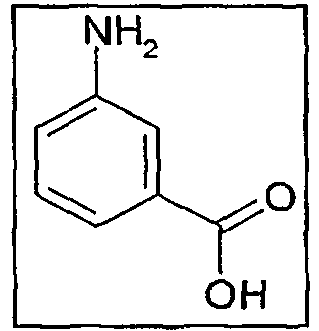
A, C 18 


A 19 


A, C 20 
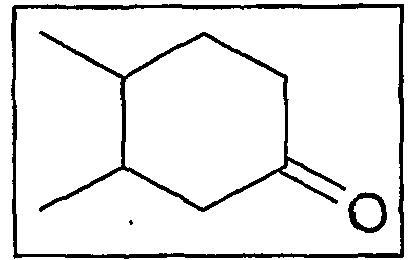


A 21 


A, C 22 


A 23 


A,C 24 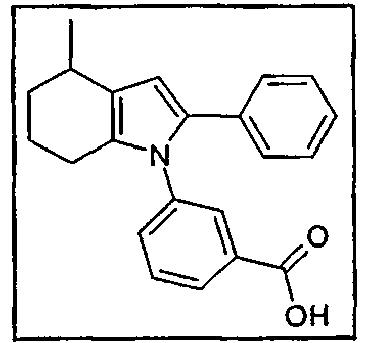


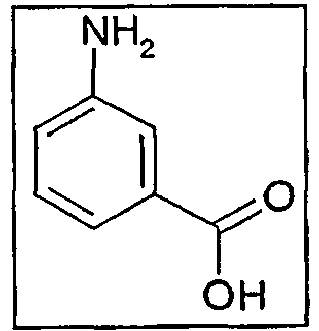
A 25 


A, C 26 


A 27 


A, C 28 


A 29 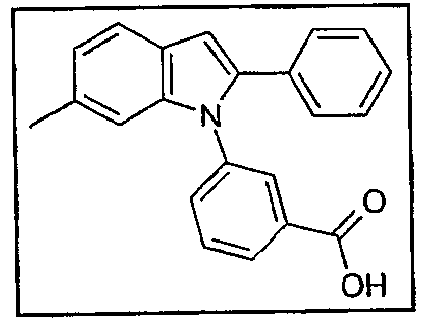


A, C 30 


A 31 


A, C 32 


A 33 


A, C 34 

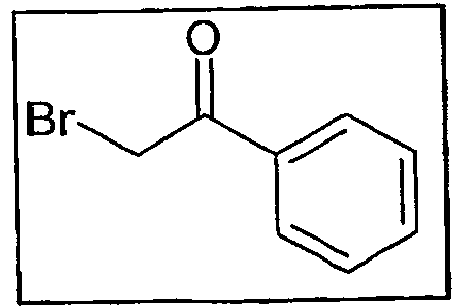

A 35 


A, C 36 


A 37 


A, C 38 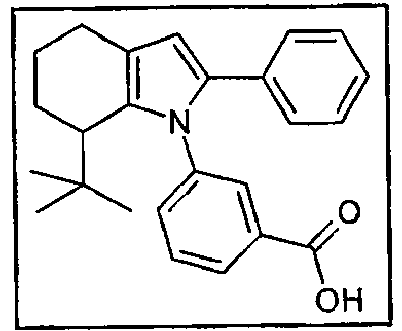


A 39 


A, C 40 


A,C,B 41 


A,C,B 42 


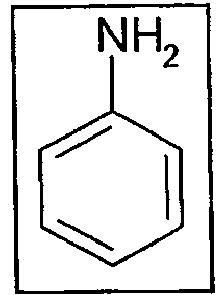
A,C,B 43 


A,C,B 44 

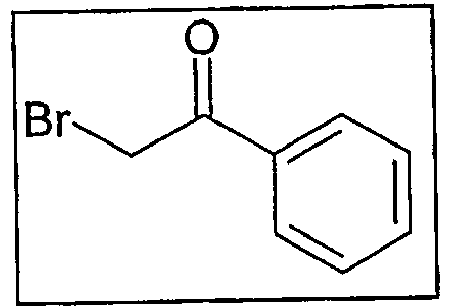

A,C,B 46 


A,C,B 47 


A, C, B 48 


A,C,B 49 


A, C 50 


A, C 51 

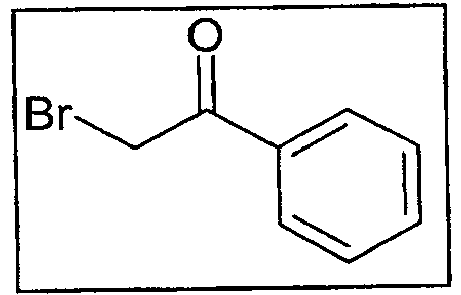

A, C 52 


A,C 53 


A, C 54 


A, C 55 


A, C 56 


A,C product structure SM ketone/enamine alpha-bromo ketone aniline synthetic route 57 


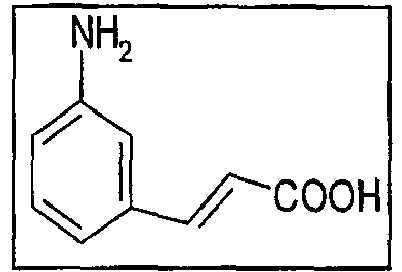
A 58 


A,C 59 


A 60 


A, C 61 


A, C 62 
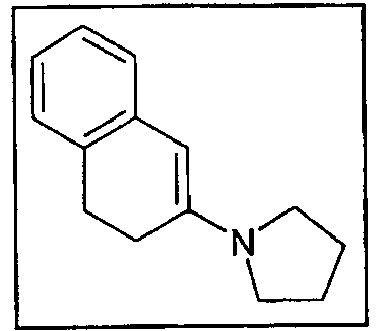
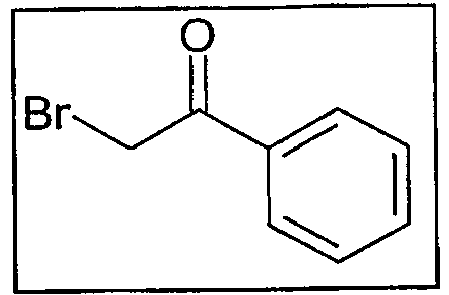

A, C 63 

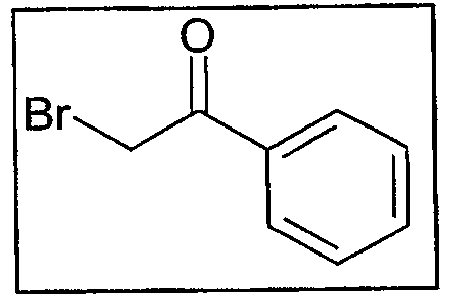

A 64 


A, C 65 


A 66 


A, C 67 


A 68 


A, C 69 


A 70 


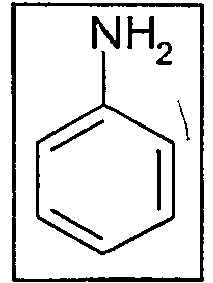
A, C 71 


A 72 


A, C 19 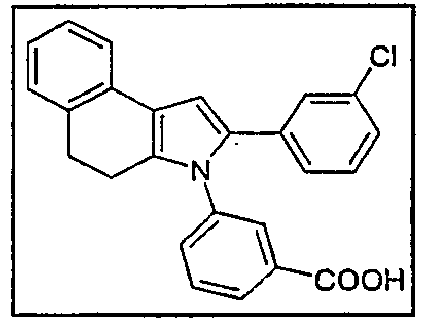


A 73 


A, C 74 


A 75 


A, C 76 
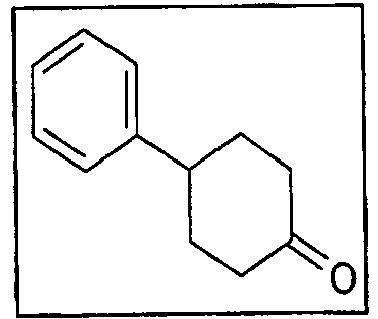


A 77 


A, C 78 


A 79 


A,C 80 


A 81 


A, C 82 


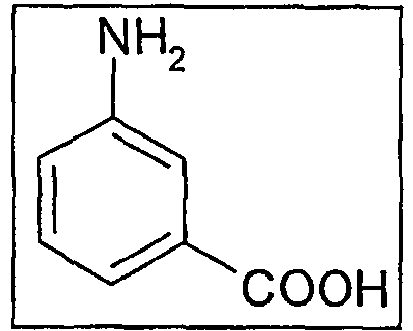
A 83 
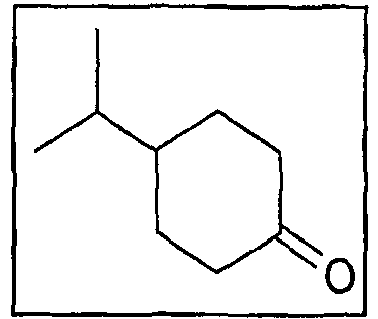


A, C -

- 1-(4-tert-butyleyelohex-1-enyl) pyrrolidine: A 50 mL round-bottomed flask containing 4-tert-butylcyclohexanone (6.01 gm) in anhydrous toluene (20 mL) was fitted with a Dean-Stark trap containing 3A molecular sieves, reflux condenser and a heating mantle. Pyrrolidine (6.00 mL) was added, and the solution heated to reflux for 18 hr. The solvent was evaporated and the crude product was used directly for the next reaction.

- 4-tert-butyl-2-(2-oxo-2-phenylethyl)-cyclohexanone: To a 250-mL round-bottomed flask containing 3.3 mL of 1-(4-tert-butylcyclohex-1-enyl) pynolidine was added 100 mL anhydrous DMF, under nitrogen. The flask was fitted with an addition funnel containing 2-bromoacetophenone (4.12 gm) in 35 mL anhydrous DMF, which was dripped into the enamine solution over 60 min. This solution was stirred at ambient temperature for 10 hr, then 90 mL water was added to the solution and it was stirred for another 11 hr, under nitrogen. The solution was then extracted twice with ethyl acetate and water, the organic layers combined and further washed with water (3x), dried over sodium sulfate, filtered and rotovapped down to give a yellow oil. The oil was purified by MPLC using 10% ethyl acetate/hexanes.

- (Compound 34): A solution of 4-tert-butyl-2-(2-oxo-2-phenylethyl)-cyclohexanone (0.219 gm) in glacial acetic acid (3.0 mL) in a 25-mL round-bottomed flask, under nitrogen, was fitted with a heating mantle and reflux condenser. To this solution was added 3-aminobenzoic acid (0.138 gm), which was then heated at 110C for 3 hr. The solution was cooled to ambient temperature, 8 mL water was added, and the suspension was stirred 18 hr under nitrogen. The solid was filtered, washed with water, and recrystallized in acetonitrile to provide 0.123 gm of the pure product.
- Example 10: Analytical data for compounds of Formulae I and II. These compounds were synthesized via the indicated synthetic route. Ab42 IC50 (uM) refers to IC50 value for Ab42 lowering in e.g., the assay described in Example 6.
Table 2 Compound Number product structure 1H NMR, δ MS name Syn. route used Ab42 IC50 (uM) 17 
CDCl3; 8.1 (m, 2H); 7.7 (m, 1H); 7.5 (t, 1H); 7.4 (m, 1H); 7.2 - 7.3 (m, 8H, ArH); 6.8 (s, 1H). pos. mode 314 (M + H); neg. mode 312 (M-H) 3-(2-phenylindol-1-yl) benzoic acid A, C 55 34 
CDCl3/d3-MeOD; 8.0 (m, 2H); 7.4 (t, 1H); 7.2 (m, 1H); 7.0 - 7.2 (m, 5H, ArH); 6.2 (s, 1H); 2.7 (m, 1H); 2.5 (s, 1H); 2.4 (m, 2H); 2.0 (m, 1H); 1.5 (m, 1H); 1.4 (m, 1H); 0.9 (s, 9H). pos. mode 374 (M + H); neg. mode 372 (M - H) 3-(5-tert-Butyl-2-phenyl-4,5,6,7-tetrahydroin dol-1-yl) benzoic acid A 8 85 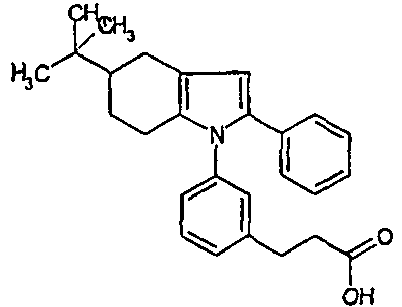
CDCl3; 7.2 (m, 1H); 6.9 - 7.1 (m, 8H, ArH); 6.2 (s, 1H); 2.9 (t, 2H); 2.7 (m, 1H); 2.5 (m, 3H); 2.4 (m, 2H); 2.0 (m, 1H); 1.5 (m, 1H); 1.4 (m, 1H); 0.9 (s, 9H). pos. mode 402 (M + H); neg. mode 400 (M - H) 3-[3-(5-tert-Butyl-2-phenyl-4,5,6,7-tetrahydroin dol-1-yl-phenyl] propionic acid A 20 63 
DMSO-d6; 7.0-8.4 (13H, ArH); 6.9 (1 H), 2.9 (2H, CH2), 2.5 (2H, CH2). pos. mode 342 (M + H); neg. mode 340 (M - H) 2-phenyl-3-[3-(2H-tetrazol-5-yl)-phenyl]-4,5-dihydro-3H-benzo[e]indo le A 24 69 
DMSO-d6; 6.8-7.9 (14H, ArH), 3.0 (2H, CH2) 2.7 (2H, CH2). neg. mode 364 (M-1) 4-(3-phenyl-4,5-dihydro-3H-benzo[e]indo 1-2-yl) benzoic acid A I 45 86 
CDCl3; 7.0-7.2 (m, 9H, ArH); 6.2 (s, 1H); 2.6 (m, 4H); 2.4 (m, 4H); 2.0 (m, 3H); 1.8 (s, 3H). neg. mode 358 (M - H) 4-[4-(2-phenyl-4,5,6,7-tetrahydroin dol-1-yl)-phenyl] butyric acid A 30 87 
DMSO- d6; 7.2-8.4 (16H, ArH). pos. mode 364 (M + 1); neg. mode 362 (M-1) 3-(2-phenylbenzo [e]indol-3-yl) benzoic acid A, C 12 88 
CDCl3; 7.3 (t, 1H); 6.9-7.1 (m, 8H, ArH); 6.2 (s, 1H); 2.9 (t, 2H); 2.7 (m, 1H); 2.5 (m, 3H); 2.4 (m, 1H); 2.2 (m, 1H); 1.9 (m, 2H); 1.4 (m, 1H); 1.0 (d, 3H). pos. mode 360 (M + H); neg. mode 358 (M-H) 3-[3-(5-methyl-2-phenyl-4,5,6,7-tetrahydroin dol-1-yl)-phenyl] propionic acid A 27 89 
DMSO - d6; 7.2 - 8.4 (16H, ArH); 2.7 (2H, CH2); 2.3 (2H, CH2); 1.9 (2H, CH2). pos. mode 406 (M + 1 ); neg. mode 404 (M-1) 4-[4-(2-phenyl-benzo[e]indo l-3-yl)-phenyl] butyric acid A, C 8 90 
CDCl3; 7.3 (t, 1H); 6.9-7.2 (m, 8H, ArH); 6.2 (s, 1H); 2.9 (t, 2H); 2.6 (br. s, 2H); 2.5 (t, 2H); 2.4 (br. s, 2H); 1.8 (br. s, 4H). pos. mode 346 (M + H) 3-[3-(2-phenyl-4,5,6,7-tetrahydroin dol-1-yl)-phenyl] propionic acid A 54 66 
CDCl3; 7.1-8.4 (11H, ArH), 6.4 (1H, ArH), 4.4 (1H, CH) 1.4-2.7 (9H, CH2). pos. mode 372 (M+1) 3-(2-phenylbenzo [e]indol-3-yl) cyclohexane carboxylic acid A, C 54 67 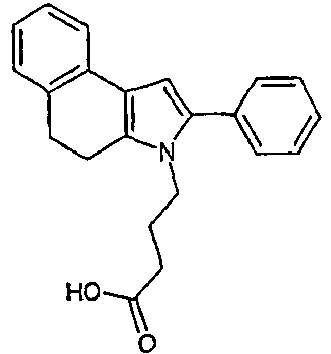
CD30D-d4; 7.1-8.2 (10H, ArH), 4.0 (2H, CH2), 3.0 (2H, CH2), 2.9 (2H, CH2), 2.1 (2H, CH2), 1.9 (2H, CH2). pos. mode 332 (M+1) 4-(2-phenyl-4,5-dihydrobenz o[e]indol-3-yl) butyric acid A 35 68 
CD30D-d4; 7.1-8.2 (12H, ArH) 4.4 (2H, CH2) 2.1 (2H, CH2) 1.9 (2H, CH2). pos. mode 330 (M+1) 4-(2-phenyl-benzo[e]indo 1-3-yl) butyric acid A, C 31 71 
DMSO-d6; 7.0-7.9(14H, ArH), 6.3 (1H, ArH), 3.0 (1H, CH), 2.8 (1H, CH2), 2.7 (2H, CH2), 2.4 (1H, CH2), 1.9 (2H, CH2). pos. mode 394 (M+1) 3-(2,5-diphenyl-4,5,6,7-tetrahydroin dol-1-yl) benzoic acid A 50 91 
CDCl3; 8.0 (m, 1H); 7.9 (m, 1H); 7.4 (t, 1H); 7.0 - 7.3 (m, 6H, ArH); 6.2 (s, 1H); 2.6 (m, 1H); 2.5 (br. s, 1H); 2.4 (m, 1H); 2.1 (m, 1H); 1.9 (m, 2H); 1.4 (m, 1H); 1.0 (d, 3H). pos. mode 332 (M + H) 3-(4-methyl-2-phenyl-4,5,6,7-tetrahydroin dol-1-yl) benzoic acid A 3 92 
acetone-d6; 7.5 (m, 5H); 7.2 (m, 7H); 7.0 (t, 1H); 6.8 (s, 1H); 3.2 (s, 2H, CH2); 2.9 (m, 2H); 2.6 (m, 1H); 2.4 (m, 1H). pos. mode 380 (M + H) [2-(2-phenyl-4,5-dihydrobenz o[e]indol-3-yl)-phenyl] acetic acid A 27 - The following synthetic routes can be used to make the compounds of Formulae I-XVI.
-
- Route A: Allen, et al, J. Med. Chem. 1976, 19(2), 318-325.

- Route B: Murakami, et al, Chem. Pharm. Bull. 1995, 43(8), 1281-1286.

- Route C: Allen, et al, J. Med. Chem. 1976, 9(2), 318-325.

- Heteroaromatic N-alkylated analogs:

(COOH at both ortho and meta) (COOH at all 4 other sites)
also, all of the above with a partially saturated ring (4,5,6,7-tetrahydoindoles):


- Compounds of Formulae I-XVI include, but are not limited to ("*" designates compounds for use in the present invention as described in the claims) :


Table 3: Exemplary Compounds product structure SM ketone alpha-bromo ketone aniline synthetic route 93 


A 94 


A, C 95 


A 96 


A, C 97 


A 98 


A, C 99 


A 100 


A, C 101 


A 102 


A, C 103 


A 104 
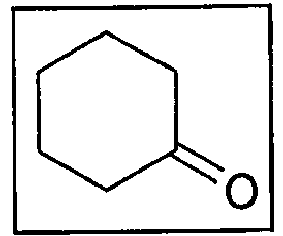
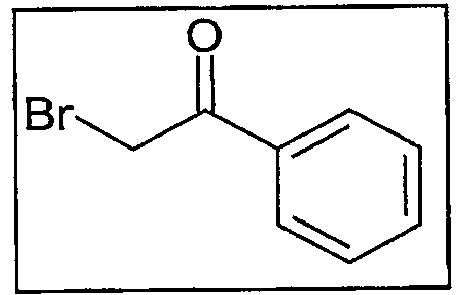

A, C 105 


A 106 


A, C 107 


A 108 


A, C 109 


A, C 110 


A,C 111 


A, C 112 


A, C 113 


A, C 114 


A, C 115 


A, C 116 


A, C 117 


A, C 118 


A, C 119 


A, C 120 * 


A, C, B 121 * 
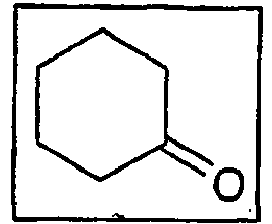


A,C,B 122* 


A, C, B 123 


A, C 124 


A, C 125 


A, C 126 


A, C 127 


A, C 128 


A, C 129 


A, C 130 


A, C 131 


A, C 132 


A, C ( " * " designates compounds for use in the present invention as described in the claims) Table 4: Exemplary Compounds Compound Number product structure ketone/diketone SM a-bromo ketone SM aniline 133 


134 


135 


136 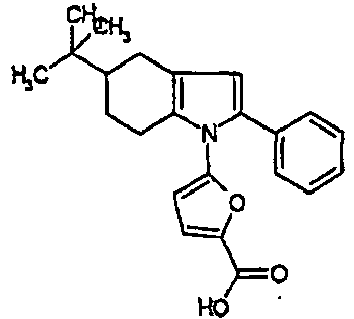
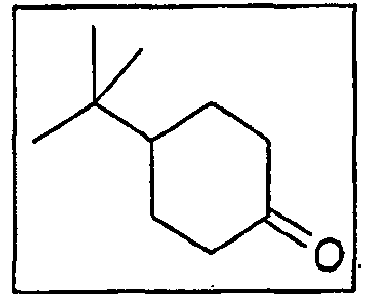


137 * 


138 * 


139 * 


140 * 


141 * 
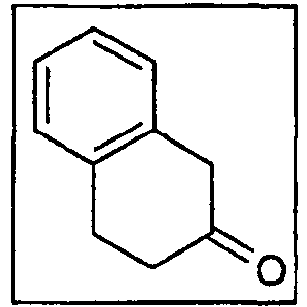


142 * 


143 * 


144 * 


145 * 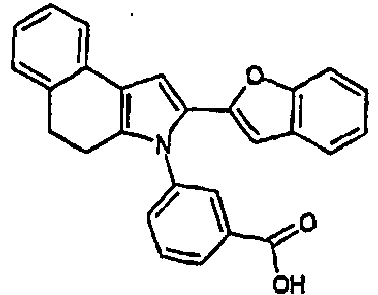


146 * 
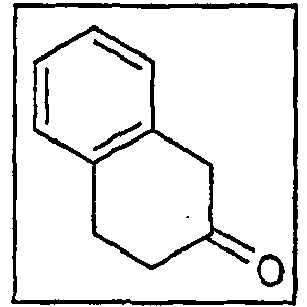


147 * 


148 * 


( "*" designates compounds for use in the present invention as described in the claims) Table 5 Analytical data for the Compounds in Table 4 Compound Number 1H NMR, δ MS Name Synthetic route used 133 CDCl3; 7.1 - 7.3 (m, 6H, ArH); 6.2 (s, 1H); 6.0 (d, 1H); 3.9 (s, 3H); 2.6 (m, 3H); 2.3 (m,1H);2.o(m, 1H); 1.3 -1.5 (m, 2H); 1.0 (s, 9H). pos. mode 378 (M + H). 5-(5-tertButyl-2-phenyl-4,5,6,7-tetrahydroindol-1-yl) furan-2-carboxylic acid methyl ester A 134 DMSO - d6; 6.6 - 8.4(14H, ArH), pos. mode 370 (M + 1) 3-(2-thiophen-3-yl-benzo[e]indol-3-yl) benzoic acid A, C 135 DMSO - d6; 6.6 - 8.4(13H, ArH), 2.9(2H, CH2), 2.6(2H,CH2) pos. mode 396 (M + 1); 394 (M - 1). 3-[3-(2H-tetrazol-5-yl)-phenyl]-2-thiophen-3-yl-3H benzo[e]indole A, C 136 CDCl3; 7.1 - 7.3 (m, 6H, ArH); 6.2 (s, 1H); 6.0 (d, 1H); 2.6 (m, 2H); 2.4 -2.5 (m, 2H); 2.0 (m, 1H); 1.5 (m, 2H); 1.0 (s, 9H). pos. mode 364 (M + H); neg. mode 362 (M-H) 5-(5-tertButyl-2-phenyl-4,5,6,7-tetrahydroindol-1-yi) furan-2-carboxylic acid A 137 * DMSO - d6; 7.1-8.5 (14H, ArH/NH); 5.8 (1H); 2.9 (2H, CH2); 2.6 (2H, CH2). pos.mode 430 (M+1); neg. mode 429 (M-1). 2-benzofuran-2-yl-3-[3-(2H-tetrazol-5-yl)-phenyl]-4,5-dlhydro-3H-benzo[e]indole A 138 * DMSO - d6; 7.0 - 8.2 (15H, ArH/NH); 6.3 (1H); 2.9 (2H, CH2); 2.6 (2H, CH2). pos. mode 457 (M + 1); neg mode 455 (M - 1). 2-(3-phenylisoxazol-5-yl)-3-[3-(2H-tetrazol-5-yl)-phenyl]-4,5-dihydro-3H-benzo[e]indole A 139* DMSO d6; 7.0 -8.1 (14H, ArH); 6.2 (1H); 2.9 (2H, CH2); 2.6 (2H, CH2). pos.mode 433 (M + 1); heg.mode 431 (M - 1). 3-(2-phenylisoxazol-5-yl)-4,5-dihydrobenzo[e]indol-3-yl] benzoic acid A 140* DMSO - d6; 7.3 - 8.8 (15H, ArH). pos. mode 365 (M + 1). 3-(2-pyridin-3-yl-benzo[e]indol-3-yl) benzoic acid A, C 141* DMSO - d6; 7.0 - 8.6 (13H, ArH), 2.9 (2H, CH2), 2.6 (2H, CH2). pos. mode 367(M + 1). 3-(2-pyridin-3-yl-4,5-dihydrobenzo[e]indol-3-yl) benzoic acid A 142* DMSO - d6; 7.2 - 8.5(15H, ArH). pos. mode 365 (M + 1). 3-(2-pyridin-2-yl-benzo[e]indol-3-yl) benzoic acid A, C 143* DMSO - d6; 6.9 - 8.5 (13H, ArH), 2.9 (2H, CH2), 2.6 (2H, CH2). pos. mode 367 (M + 1); 365 (M + 1). 3-(2-pyridin-2-yl-4,5-dihydrobenzo[e]indol-3-yl) benzoic acid A 144* DMSO - d6; 7.1 - 8.2 (16H, ArH). pos. mode 404 (M + 1). 3-(2-benzofuran-2-yl-benzo[e]indol-3-yl) benzoic acid A, C 145* DMSO - d6; 7.0 - 8.1 (14H, ArH), 2.9 (2H, CH2), 2.6 (2H, CH2). pos. mode 406 (M + 1). 3-(2-benzofuran-2-yl-4,5-dihydrobenzo[e]indol-3-yl) benzoic acid A 146* DMSO - d6; 7.0 - 8.6 (14H, ArH), 2.9 (2H, CH2), 2.6 (2H, CH2). pos. mode 391 (M + 2-pyridin-2-yl-3-[3-(2H-tetrazol-5-yl)-phenyl]-4,5-dihydro-3H-benzo[e]indole A 147* DMSO - d6; 7.4 - 8.6(16H, ArH). pos. mode 389 (M + 1). 2-pyridin-3-yl-3-[3-(2H-tetrazol-5-yl)-phenyl]-3H-benzo[e]indole A, C 148* DMSO - d6; 7.2 - 8.4 (16H, ArH). pos. mode 389 (M + 1). 2-pyridin-2-yl-3-[3-(2H-tetrazol-5-yl)-phenyl]-3H-benzo[e]indole A, C ("*" designates compounds for use in the present invention as described in the claims) - Compounds of Formulae I and II, e.g., those disclosed in Table 4 and 5, are capable of modulating APP processing and lower Ab42 in the cell based assay described in Example 6. Compounds 138 and 139 have an Ab42 lowering IC50 of 10µM and 2µM, respectively.
- Additional compounds, synthesized according to the above described routes are given below along with relevant characterization data. These compounds exemplify the compounds including those of aspects 1-21.
Table 6 Compounds and Starting Materials product structure ketone SM α-bromo ketone SM aniline/amine 


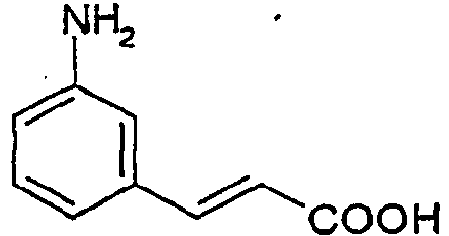


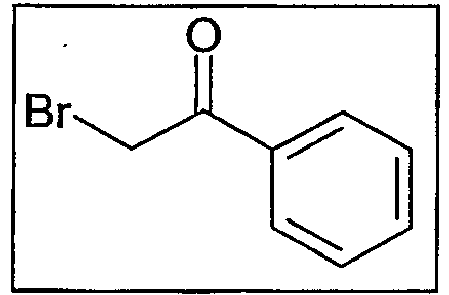


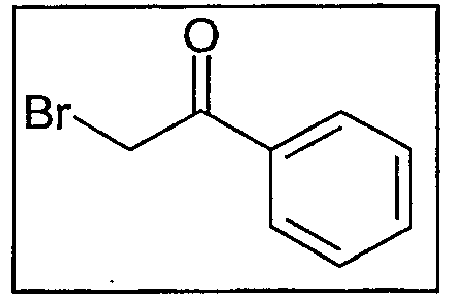


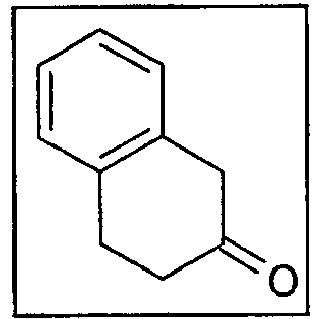


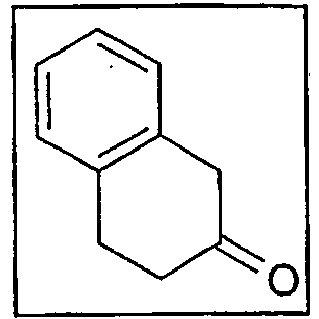


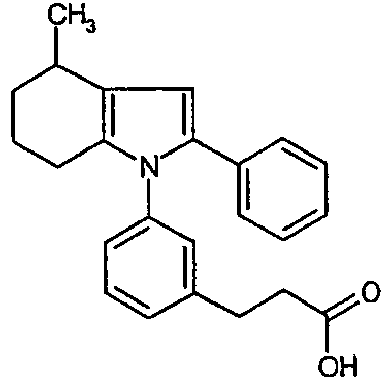


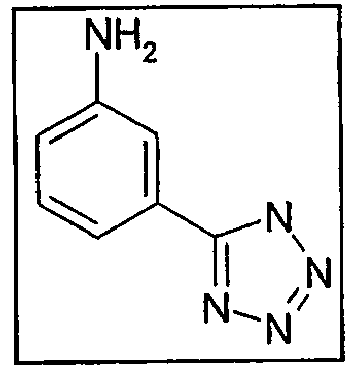


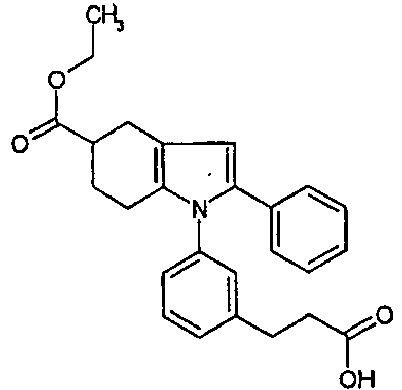


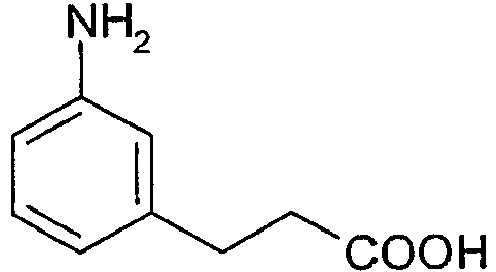


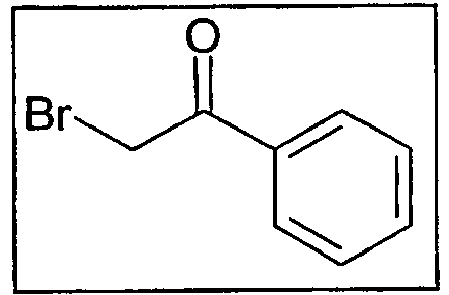


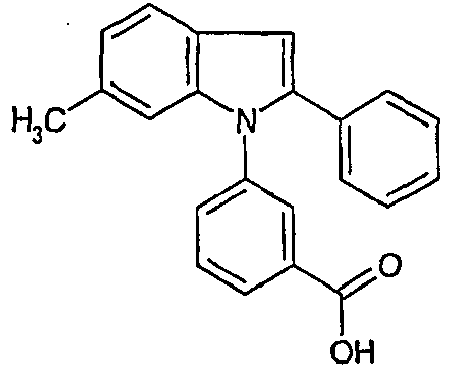


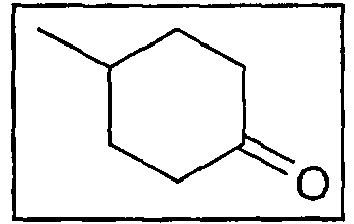
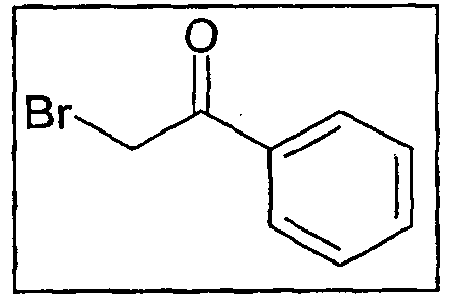
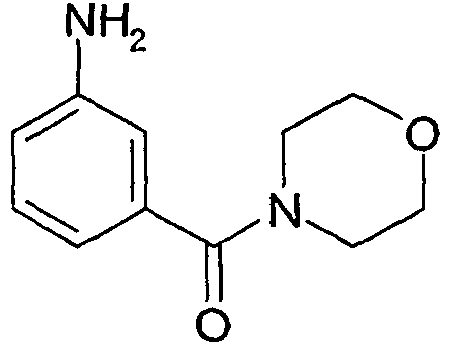


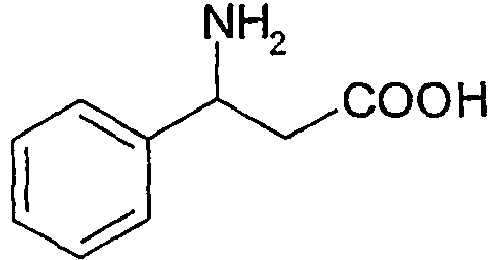


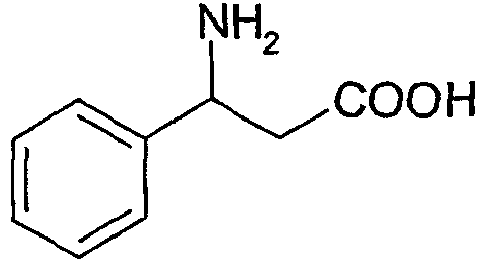


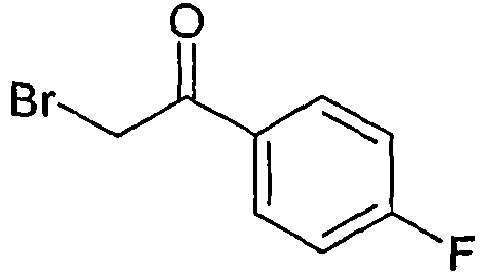


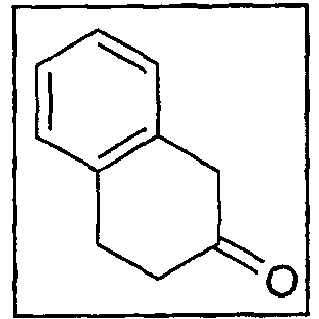


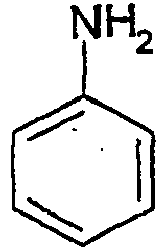


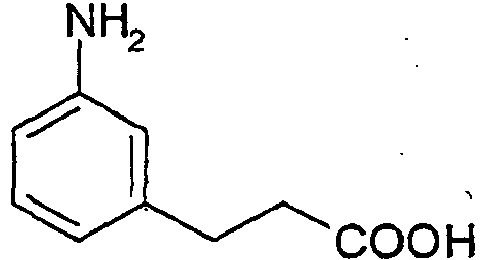


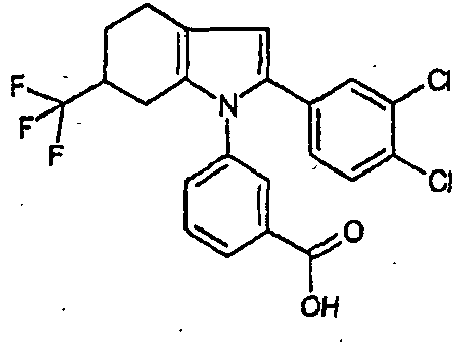


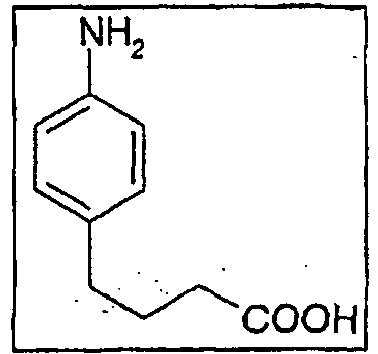
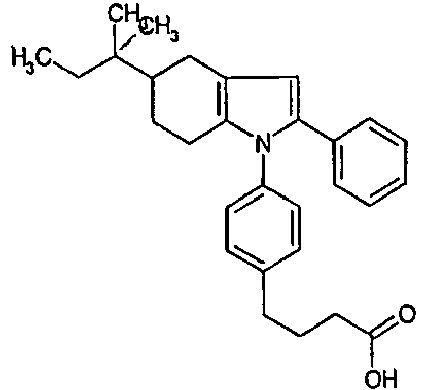


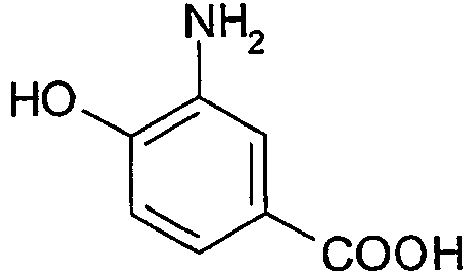


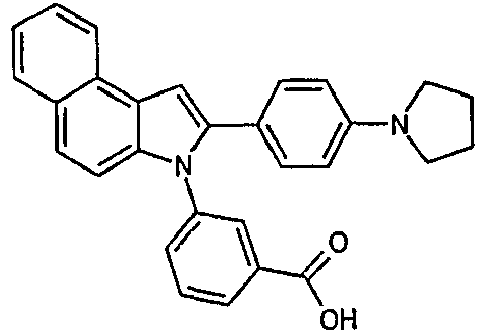


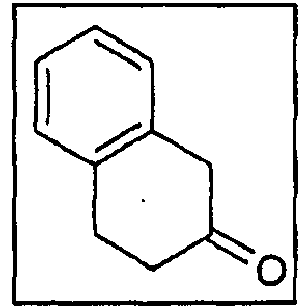


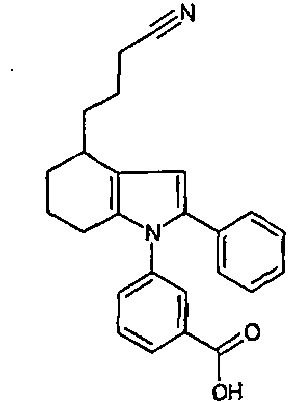


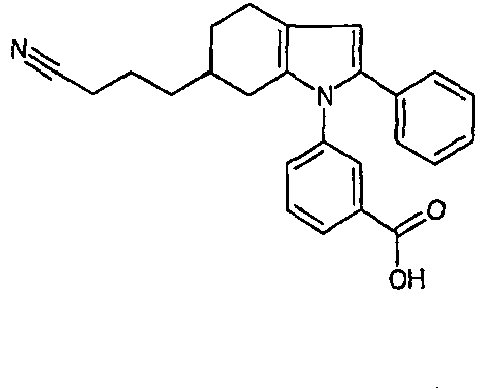


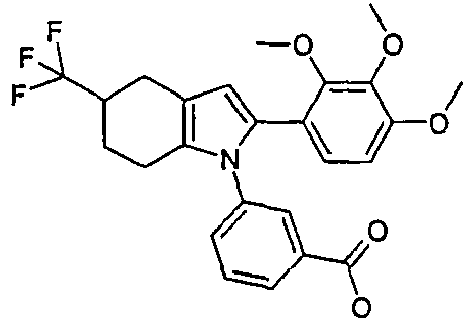


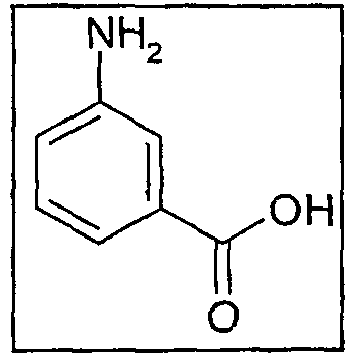


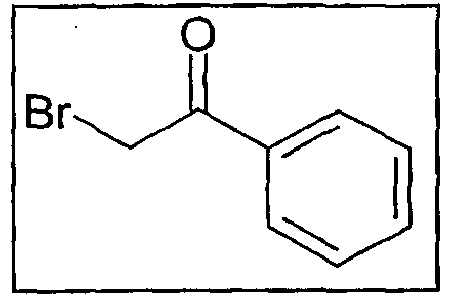


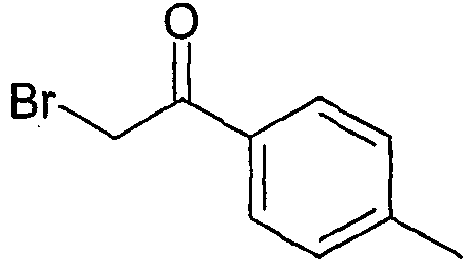


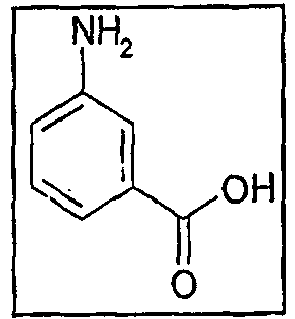


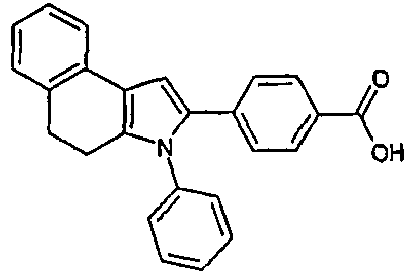


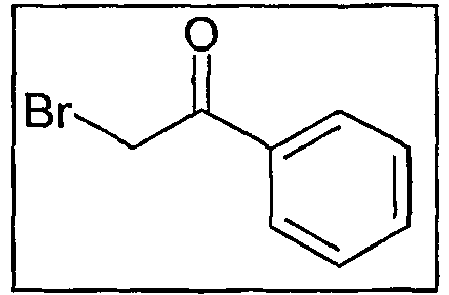

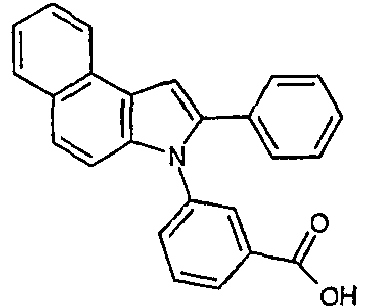


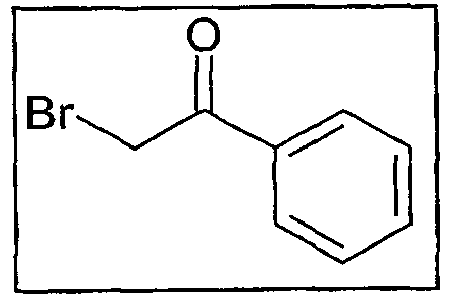


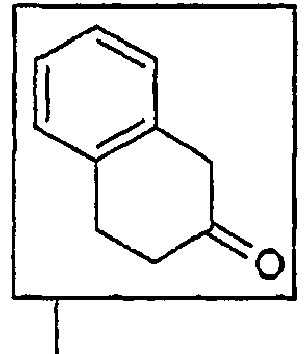


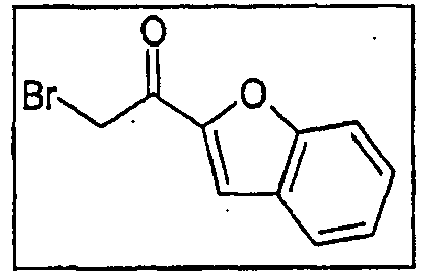


( "*" designates compounds for use in the present invention as described in the claims) Table 7 Compounds from Table 6 and Characterization Data product structure 1H NMR, d MS name 
DMSO-d6; 7.1 - 7.3 (m, 16H); 6.8 (s, 1H); 2.9 (t, 2H); 2.6 (t, 2H). pos. mode 392 (M + H), neg. mode 390 (M-1). 3-[3-(2-phenyl-4,5-dihydrobenzo[e]indol-3-yl)-phenyl] acrylic acid 
DMSO-d6; 8.03 (d, 1H), 7.82 - 7.73 (m, 3H), 7.68 - 7.52 (m, 3H), 7.26 - 7.19 (m, 4H), 7.12 - 7.07 (m, 2H), 2.98 (t, 2H), 2.70 (t, 2H). pos. mode 410 (M + H); neg. mode 408 (M - H). 3-[2-(4-carboxyphenyl)-4,5-dihydrobenzo[e]indol-3-yl] benzoic acid 
CDCl3; 8.02 (tt, 1H), 7.93 (t, 1H); 7.46 (d, 1H), 7.42 (t, 1H), 7.28 (d, 1H); 7.24 (m, 1 H), 7.21 - 7.05 (m, 7H), 6.74 (s, 1H), 3.92 (s, 3H), 3.0 (t, 2H), 2.72 (t, 2H). pos. mode 380 (M + H). methyl 3-(2-phenyl-4,5-dihydrobenzo[e]indol-3-yl) benzoate 
MeOH-d4; 7.75 (t, 1H), 7.42 - 7.36 (m, 3H), 7.32 - 7.14 (m, 5H), 7.0 (t, 1H), 6.91 (t, 1H), 6.73 (d, 1H), 6.5 (s, 1H 3.33 (s, 3H) 2.96 (t, 2H), 2.71 (t, 2H). pos. mode 396 (M + H). 3-[2-(2-methoxyphenyl)-4,5-dihydrobenzo[e]indol-3-yl] benzoic acid 
MeOH-d4; 8.3 (d, 1H); 7.99 - 7.94 (m, 2H); 7.88 (d, 1H); 7.59 - 7.38 (m, 7H); 7.33 - 7.28 (m, 1H); 7.21 (s, 1H); 6.99 (t, 1H); 6.81 (s, 1H); 3.38 (s, 3H). pos. mode 394 (M + H). 3-[2-(2-methoxyphenyl)-benzo[e]indol-3-yl] benzoic acid 
CDCl3: 8.0 (d, 1H); 7.9 (br. s, 1H); 7.5 (t, 1H); 7.2 (m, 1H); 7.1 (m, 5H); 6.3 (s, 1H); 2.7 (m, 1H); 2.5 (m, 1H); 2.3 - 2.4 (m, 2H); 2.0 (m, 1H); 1.5 (m, 1H); 1.4 (m, 1H); 1.0 (s, 9H). pos. mode 398 (M + H). 5-tButyl-2-phenyl-1-[3-(1H-tetrazol-5-yl) phenyl]-4,5,6,7-tetrahydro-1H-indole 
DMSO-d6; 7.2 - 8.4 (m, 16H). pos. mode 388 (M + H). 2-phenyl-3-[3-(2H-tetrazol-5-yl)-phenyl] 3H-benzo[e]indole 
CDCl3: 7.7 (dm, 1H); 7.5 (br. s, 1H); 7.4 (t, 1H); 7.3 (m, 1H); 7.0 - 7.2 (m, 5H); 6.2 (s, 1H); 2.7 (m, 1H); 2.6 (m, 1H); 2.4 (m, 1H); 2.2 (m, 1H); 1.9 (m, 2H); 1.4 (m, 1H); 1.1 (d, 3H). pos. mode 331 (M + H). 3-(5-methyl-2-phenyl-4,5,6,7-tetrahydroindol-1-yl) benzamide 
CDCl3: 7.0 - 7.2 (m, 9H); 6.2 (s, 1H); 2.7 (m, 3H); 2.5 (m,1H); 2.4 (m, 3H); 2.2 (m, 1H); 2.0 (m, 2H); 1.9 (m, 2H); 1.4 (m, 1H); 1.0 (d, 3H). pos. mode 374 (M + H). 4-[4-(5-methyl-2-phenyl-4,5,6,7-tetrahydroindol-1-yl) phenyl] butyric acid 
CDCl3: 7.8 (dm, 1H); 7.7 (br. s, 1H); 7.5 (t, 1H); 7.3 (m, 1H); 7.0 - 7.2 (m, 5H); 6.2 (s, 1H); 2.7 (m, 1H); 2.6 (m, 1H); 2.4 (m, 1H); 2.2 (t, 1H); 1.9 (m, 2H); 1.4 (m, 1H); 1.1 (d, 3H). pos. mode 367 (M + H). 3-(5-methyl-2-phenyl-4,5,6,7-tetrahydroindol-1-yl) benzenesulfonamide 
CD3OD: 7.44 (m, 1H), 7.41 - 7.36 (m, 3H), 7.30 (m, 1H), 7.20 - 7.08 (m, 7H), 7.00 (m, 1H), 6.77 (s, 1H), 2.97 - 2.92 (m, 2H), 2.67 - 2.48 (m, 2H), 2.44 - 2.34 (m, 2H), 2.25 (m, 1H), 2.04 (m, 1H). neg. mode 392 (M - H) 3-[2-(2-phenyl-4,5-dihydro-benzo[e]indol-3-yl)-phenyl] propionic acid 
CD30D: 8.34 (m, 1H), 7.88 (m, 1H), 7.58 - 7.52 (m, 2H), 7.50 - 7.34 (m, 8H), 7.26 - 7.20 (m, 3H), 7.04 (m, 1H), 2.44 (m, 1H), 2.37 (m, 1H), 2.09 (m, 1H), 1.98 (m, 1H). neg. mode 390 (M - H) 3-[2-(2-phenyl-benzo[e]indol-3-yl)-phenyl] propionic acid 
CDCl3: 7.7 (dm, 1H); 7.5 (br. s, 1H); 7.4 (t, 1H); 7.2 (m, 1H); 7.0 - 7.1 (m, 5H); 6.2 (s, 1H); 5.9 (br. s, 1H); 3.0 (d, 3H); 2.7 (d, 1H); 2.6 (m, 1H); 2.4 (m, 2H); 2.0 (m, 1H); 1.5 (m, 1H); 1.4 (m, 1H); 1.0 (s, 9H). pos. mode 387 (M + H). 3-(5-tButyl-2-phenyl-4,5,6,7-tetrahydroindol-1-yl) N-methyl benzamide 
CDCl3: 7.0 - 7.2 (m, 9H); 6.2 (s, 1H); 2.5 (m, 3H); 2.4 - 2.5 (m, 4H); 2.0 (m, 3H); 1.5 (m, 2H); 1.4 (m, 1H); 0.9 (s, 9H). pos. mode 416 (M + H). 4-[4-(5-tButyl-2-phenyl-4,5,6,7-tetrahydroindol-1-yl) phenyl] butyric acid 
CDCl3: 8.0 (d, 1H); 7.9 (br. s, 1H); 7.4 (m, 2H); 7.0 - 7.2 (m, 6H); 6.2 (s, 1H); 2.6 (m, 1H); 2.5 (m, 1H); 2.2 (m, 2H); 1.9 (m, 1H); 1.4 (m, 2H); 1.0 (d, 3H). pos. mode 356 (M + H); neg. mode 354 (M - H). 4-methyl-2-phenyl-1-[3-(1 H-tetrazol-5-yl) phenyl]-4,5,6,7-tetrahydro-1H-indole 
CDCl3; 8.00 (dt, 1H), 7.94 (br s, 1H), 7.39 (t, 1H), 7.26 - 7.28 (m, 1H), 7.05 - 7.18 (m, 5H), 6.27 (s, 1H), 2.50 - 2.70 (m, 2H), 2.30 - 2.45 (m, 2H), 1.95 - 2.05 (m, 1H), 1.55 - 1.70 (m, 1H), 1.30-1.45 (m, 3H), 0.90 (s, 3H), 0.89 (s, 3H), 0.85 (t, 3H). pos. mode 388 (M + H). 3-[5-(1,1-dimethylpropyl)-2-phenyl-4,5,6,7-tetrahydroindol-1-yl] benzoic acid 
CDCl3; 8.03 (dt, 1H), 7.93 (br s, 1H), 7.43 (t, 1H), 7.26 - 7.30 (m, 1H), 7.08 - 7.20 (m, 3H), 7.04 - 7.06 (m, 2H), 6.28 (s, 1H), 2.91 (dd, 1H), 2.55 - 2.74 (m, 2H), 2.45 - 2.55 (m, 2H), 2.15 - 2.25 (m, 1H), 1.75 (qd, 1H). pos. mode 386 (M + H). 3-(2-phenyl-5-trifluoromethyl-4,5,6,7-tetrahydroindol-1-yl) benzoic acid 
CDCl3; 8.02 (d, 1H), 7.84 (br s, 1H), 7.50 (t, 1H), 7.05 - 7.20 (m, 6H), 6.28 (s, 1H), 2.76 (dd, 1H), 2.52 - 2.64 (m, 1H), 2.40 - 2.50 (m, 1H), 2.17 - 2.27 (m, 1H), 1.88-1.98 (m, 1H), 1.67 (br s, 1H), 1.32 - 1.50 (m, 3H), 0.99 (t, 3H). pos. mode 370 (M + H). 5-ethyl-2-phenyl-1-[3-(1 H-tetrazol-5-yl)-phenyl]-4,5,6,7-tetrahydro-1H-indole 
CDCl3; 8.01 (dt, 1H), 7.97 (br s, 1H), 7.40 (t, 1H), 7.28 (br d, 1H), 7.03 - 7.19 (m, 5H), 6.26 (s, 1H), 3.51 (dd, 1H), 2.54 (br s, 1H), 2.41 (br d, 1H), 2.22 (dd, 1H), 1.93 (br d, 1H), 1.67 (br s, 1H), 1.33 - 1.49 (m, 3H), 0.99 (t, 3H). pos. mode 346 (M + H). 3-(5-ethyl-2-phenyl-4,5,6,7-tetrahydroindol-1-yl) benzoic acid 
CDCl3; 8.06 (dt, 1H), 7.90 (br s, 1H), 7.50 (t, 1H), 7.10 - 7.20 (m, 6H), 6.29 (s, 1H), 2.76 (dd, 1H), 2.60 - 2.75 (m, 2H), 2.53 (br dd, 2H), 2.21 (br d, 1H), 1.74 (qd, 1H). pos. mode 410 (M + H). 2-phenyl-1-[3-(1H-tetrazol-5-yl)-phenyl]-5-trifluoromethyl-4,5,6,7-tetrahydro-1H-indole 
CDCl3; 7.26 (t, 1H), 6.95 - 7.20 (m, 7H), 6.93 (br s, 1H), 6.23 (s, 1H), 2.88 (t, 2H), 2.75 (dd, 1H), 2.48-2.59 (m, 3H), 2.41 (br d, 1H), 2.22 (dd, 1H), 1.91 (br d, 1H), 1.65 (br s, 1H), 1.35 - 1.50 (m, 3H), 0.98 (t, 3H). pos. mode 374 (M + H). 3-[3-(5-ethyl-2-phenyl-4,5,6,7-tetrahydroindol-1-yl)-phenyl] propionic acid 
CDCl3; 8.03 (d, 1H), 7.95 (br s, 1H), 7.42 (t, 1H), 7.28 (d, 1H), 7.05-7.20 (m, 5H), 6.28 (s, 1H), 4.19 (q, 2H), 2.94 (dd, 1H), 2.85 (d, 1H), 2.72 - 2.81 (m, 1H), 2.59 (br s, 1H), 2.48 (br d, 1H), 2.23 (br d, 1H), 1.82 - 1.90 (m, 1H), 1.30 (t, 3H). pos. mode 390 (M + H). 3-(5-ethoxycarbonyl-2-phenyl-4,5,6,7-tetrahydroindol-1-yl) benzoic acid 
CDCl3; 8.01 (dt, 1H), 7.97 (br s, 1H), 7.41 (t, 1H), 7.25 - 7.30 (m, 1H), 7.08 - 7.18 (m, 3H), 7.02 - 7.06 (m, 2H), 6.23 (s, 1H), 2.87 (dd, 1H), 2.46-2.64 (m, 3H), 1.92 - 2.02 (m, 1H), 1.78 -1.88 (m, 2H), 0.93 (s, 9H), 0.12 (s, 3H), 0.11 (s, 3H). pos. mode 448 (M + H); neg. mode 446 (M-H). 3-[5-(tButyldimethylsilyl)-2-phenyl-4,5,6,7-tetrahydroindol-1-yl] benzoic acid 
MeOH-d4; 7.95 (t, 1H), 7.67 (t, 1H), 7.58 (t, 1H), 7.51 - 7.44 (m, 2H), 7.18 (d, 2H), 7.01 (d, 3H), 6.8 (d, 2H), 6.74 (s, 1H), 3.35 (s, 3H), 2.92 (t, 2H), 2.62 (t, 2H). pos. mode 396 (M + H). 3-[2-(4-methoxyphenyl)-4,5-dihydrobenzo[e]indol-3-yl] benzoic acid 
MeOH-d4; 8.4 (d, 1H), 8.03 (tt, 1H), 7.95(d, 1H), 7.84 (t, 1H), 7.7 - 7.58 (m, 4H), 7.49 - 7.43 (m, 2H), 7.32 - 7.24 (m, 3H), 6.9 (m, 2H), 3.74 (s, 3H). pos. mode 394 (M + H). 3-[2-(4-methoxyphenyl)-benzo[e]indol-3-yl] benzoic acid 
CDCl3; 8.35 (d, 1H), 7.96 - 7.92 (m, 2H), 7.79 (t, 1H), 7.63 - 7.56 (m, 3H), 7.50 - 7.35 (m, 4H), 7.27 (s, 1H), 6.59 (dd, 1H), 6.43 (d, 1H), 3.76 (s, 3H), 3.34 (s, 3H). pos. mode 424 (M + H). neg. mode 422 (M - H). 3-[2-(2,4-dimethoxyphenyl)-benzo[e]indol-3-yl] benzoic acid 
MeOH-d4; 7.96 (dt, 1H), 7.75 (br s, 1H), 7.46 (t, 1H), 7.27-7.33 (m, 1H), 7.09 - 7.15 (m, 2H), 7.01 - 7.09 (m, 3H), 6.22 (s, 1H), 2.80 - 2.90 (m, 1H), 2.70 - 2.80 (m, 2H), 2.40 - 2.60 (m, 2H), 2.15-2.25 (m, 1H), 1.80 - 1.90 (m, 1H). pos. mode 362 (M + H); neg. mode 360 (M-H). 3-(5-carboxy-2-phenyl-4,5,6,7-tetrahydroindol-1-yl) benzoic acid 
DMSO-d6; 7.99 (tt, 1H), 7.70 (t, 1H), 7.61 (t, 1H), 7.54 - 7.47 (m, 2H), 7.29 (d, 2H), 7.19 (d, 2H), 7.11 - 7.05 (m, 3H), 6.92 (s, 1H), 2.94 (t, 2H), 2.64 (t, 2H). pos. mode 400 (M + H). 3-[2-(4-chlorophenyl)-4,5-dihydrobenzo[e]indol-3-yl] benzoic acid 
DMSO-d6; 7.71 - 7.48 (m, 5H), 7.22 - 7.18 (m, 5H), 7.07 - 6.95 (m, 3H), 2.94 (t, 2H), 2.64 (t, 2H). pos. mode 400 (M + H). 3-[2-(3-chlorophenyl)-4,5-dihydrobenzo[e]indol-3-yl] benzoic acid 
DMSO-d6; 6.9 - 7.4 (m, 9H), 6.3 (s, 1H), 4.4 (t, 1H), 2.9 (t, 2H), 2.6 (t, 2H), 3.3 (t, 2H), 1.8 - 0.4 (m, 10H). pos. mode 400 (M + H); neg. mode. 398 (M-1). 3-cyclohexyl-3-(2-phenyl-4,5-dihydrobenzo[e]indol-3-yl) propionic acid 
DMSO-d6; 7.4 - 8.2 (m, 11H), 7.0 (s, 1H), 4.6 (s, 1H), 3.3 (t, 2H), 2.1 - 0.3 (m, 10H). pos. mode 398 (M + H), neg. mode. 396 (M-1). 3-cyclohexyl-3-(2-phenylbenzo[e]indol-3-yl) propionic acid 
CDCl3: 7.3 (m, 1H); 7.0-7.2 (m, 7H); 6.9 (br. s, 1H); 6.2 (s, 1H); 2.9 (t, 2H); 2.6 (m, 2H); 2.5 (m, 2H); 2.4 (m, 1H); 2.1 (m, 1H); 1.9 (m, 2H); 1.4 (m, 1H); 1.0 (d, 3H). pos. mode 360 (M + H). 3-[3-(4-methyl-2-phenyl-4,5,6,7-tetrahydroindol-1-yl) phenyl] propionic acid 
CDCl3; 8.03 (d, 1H), 7.93 (br s, 1H), 7.42 (t, 1H), 7.29 (d, 1H), 7.00-7.17 (m, 5H), 6.27 (s, 1H), 2.61 (br s, 2H), 2.21 (br s, 2H), 1.56 (t, 2H), 1.00 (s, 6H). pos. mode 346 (M + H); neg. mode 344 (M - H). 3-(6,6-dimethyl-2-phenyl-4,5,6,7-tetrahydroindol-1-yl) benzoic acid 
CDCl3; 7.27 (t, 1H), 7.10 - 7.16 (m, 3H), 7.02-7.10 (m, 4H), 6.92 (br s, 1H), 6.25 (s, 1H), 2.88 (t, 2H), 2.60 - 2.70 (m, 2H), 2.53 (t, 2H), 2.43 (dd, 1H), 2.05 2.20 (m, 1H), 1.80-1.90 (m, 2H), 1.35 - 1.50 (m, 1H), 1.04 (d, 3H). pos. mode 360 (M + H); neg. mode 358 (M - H). 3-[3-((R)-6-methyl-2-phenyl-4,5,6,7-tetrahydroindol-1-yl) phenyl] propionic acid 
CDCl3; 8.03 (d, 1H), 7.96 (br s, 1H), 7.42 (t, 1H), 7.29 (br d, 1H), 7.00 - 7.20 (m, 5H), 6.27 (s, 1H), 2.60 - 2.70 (m, 2H), 2.42 (dd, 1H), 2.14 (t, 1H), 1.88 (br d, 2H), 1.40 - 1.50 (m, 1H), 1.05 (d, 3H). pos. mode 332 (M + H); neg. mode 330 (M - H). 3-((R)-6-methyl-2-phenyl-4,5,6,7-tetrahydroindol-1-yl) benzoic acid 
CDCl3; 7.28 (t, 1H), 7.10 - 7.16 (m, 3H), 6.99 - 7.09 (m, 4H), 6.90 (t, 1H), 6.25 (s, 1H), 2.88 (t, 2H), 2.60 (t, 2H), 2.52 (t, 2H), 2.22 (s, 2H), 1.55 (t, 2H), 0.99 (s, 6H). pos. mode 374 (M + H); neg. mode 372 (M - H). 3-[3-(6,6-dimethyl-2-phenyl-4,5,6,7-tetrahydroindol-1-yl) phenyl] propionic acid 
DMSO-d6; 7.2 - 8.2 (m, 17H), 6.6 (s, 1H). pos. mode 390 (M + H), neg. mode. 388 (M - 1). 3-[3-(2-phenylbenzo[e]indol-3-yl)-phenyl] acrylic acid 
CDCl3: 8.0 (d, 1H); 7.9 (br. s, 1H); 7.4 (t, 2H); 7.0 - 7.2 (m, 6H); 6.2 (s, 1H); 2.7 (m, 1H); 2.5 (m, 1H); 2.4 (m, 1H); 2.2 (m, 1H); 1.8 (m, 2H); 1.4 (m, 1H); 1.0 (d, 3H). pos. mode 356 (M + H); neg. mode 354 (M - H). 5-methyl-2-phenyl-1-[3-(1H-tetrazol-5-yl) phenyl]-4,5,6,7-tetrahydro-1H-indole 
CDCl3: 7.7 (dm, 1H); 7.5 (br. s, 1H); 7.4 (t, 1H); 7.2 (m, 1H); 7.0 - 7.1 (m, 5H); 6.2 (s, 1H); 5.9 (br. s, 1H); 3.0 (d, 3H); 2.7 (dd, 1H); 2.5 (m, 1H); 2.4 (m, 1H); 2.2 (m, 1H); 1.9 (m, 2H); 1.4 (m, 1H); 1.1 (d, 3H). pos. mode 345 (M + H). N-methyl-3-(5-methyl-2-phenyl-4,5,6,7-tetrahydroindol-1-yl) benzamide 
CDCl3; 8.07 (d, 1H), 7.82 (br s, 1H), 7.50 (t, 1H), 7.05 - 7.18 (m, 6H), 6.25 (s, 1H), 4.20 (q, 2H), 2.75 - 2.95 (m, 3H), 2.45 - 2.65 (m, 2H), 2.15 - 2.25 (m, 1H), 1.85 - 1.95 (m, 1H), 1.30 (t, 3H). neg. mode 412 (M-H). 3-[3-(5-ethoxycarbonyl-2-phenyl-4,5,6,7-tetrahydroindol-1-yl)-phenyl) propionic acid 
CDCl3; 7.24 - 7.30 (m, 1H), 7.00 - 7.20 (m, 7H), 6.93 (br s, 1H), 6.26 (s, 1H), 4.19 (q, 2H), 2.79-3.00 (m, 4H), 2.68 - 2.78 (m, 1H), 2.20 - 2.45 (m, 5H), 2.15 - 2.25 (m, 1H), 1.29 (t, 3H). pos. mode 418 (M + H); neg. mode 416 (M - H). 1-[3-(2-carboxy-ethyl)-phenyl]-2-phenyl-4,5,6,7-tetrahydro-1H-indole-5-carboxylic acid ethyl ester 
DMSO-d6; 7.2 - 8.2 (m, 11H), 6.6 (s, 1H), 4.6 (s, 2H), 2.2 (s, 2H), 1.2 - 1.1 (m, 10H). EM 397. [1-(2-phenylbenzo[e]indol-3-ylmethyl)-cyclohexyl] acetic acid 
DMSO-d6; 7.2 - 8.3 (m, 10H), 5.5 (s, 1H), 2.9 (t, 2H), 2.6 (t, 2H), 2.5 (br. s, 2H). pos. mode 361 (M + 1), neg. mode 359 (M - 1). 2-(2-phenyl-4,5-dihydrobenzo[e]indol-3-yl) succinamic acid 
CDCl3; 8.01 (dt, 1H), 7.96 (br s, 1H), 7.40 (t, 1H), 7.28 (br d, 1H), 7.05 - 7.20 (m, 5H), 6.25 (s, 1H), 2.74 (dd, 1H), 2.50 - 2.60 (m, 1H), 2.41 (br d, 1H), 2.22 (dd, 1H), 1.92 (br d, 1H), 1.77 (br s, 1H), 1.30-1.50 (m, 5H), 0.94 (t, 3H). neg. mode 358 (M - H). 3-(2-phenyl-5-propyl-4,5,6,7-tetrahydroindol-1-yl) benzoic acid 
CDCl3; 7.26 (t, 1H), 6.98 - 7.18 (m, 7H), 6.93 (br s, 1H), 6.23 (s, 1H), 2.88 (t, 2H), 2.74 (dd, 1H), 2.45 - 2.60 (m, 3H), 2.41 (br d, 1H), 2.21 (dd, 1H), 1.91 (brd, 1H), 1.72 (br s, 1H), 1.30 - 1.50 (m, 5H), 0.93 (t, 3H). pos. mode 388 (M + H); neg. mode 386 (M - H). 3-[3-(2-phenyl-5-propyl-4,5,6,7-tetrahydroindol-1-yl) phenyl] propionic acid 
acetone-d6: 8.41 (m, 1H), 7.94 (m, 1H), 7.62 - 7.37 (m, 10H), 7.31 - 7.22 (m, 3H), 7.11 (m, 1H), 3.33 (s, 2H). pos. mode 378 (M + H) [2-(2-phenyl-benzo[e]indol-3-yl)-phenyl] acetic acid 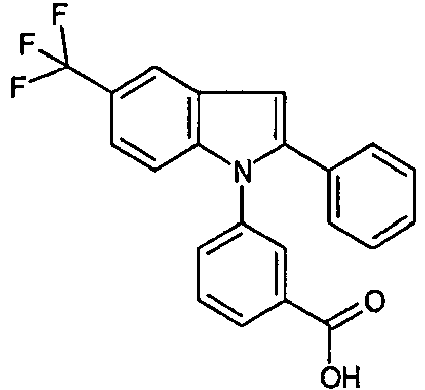
CDCl3; 8.14 (dt, 1H), 8.09 (t, 1H), 8.00 (t, 1H), 7.54 (t, 1H), 7.37 - 7.46 (m, 2H), 7.33 (d, 1H), 7.20 - 7.32 (m, 5H), 6.89 (d, 1H). neg. mode 380 (M - H). 3-(2-phenyl-5-trifluoromethyl-indol-1-yl) benzoic acid 
CDCl3; 8.10 (s, 1H), 8.08 (t, 1H), 7.51 (s, 1H), 7.48 (t, 1H), 7.37 (d, 1H), 7.18 - 7.28 (m, 6H), 7.07 (dd, 1H), 6.77 (s, 1H), 2.77 (t, 2H), 1.31 (t, 3H). pos. mode 342 (M + H); neg. mode 340 (M - H). 3-(5-ethyl-2-phenyl-indol-1-yl) benzoic acid 
MeOH-d4; 8.02 (dt, 1H), 7.86 - 7.92 (m, 1H), 7.48 - 7.57 (m, 2H), 7.36 - 7.45 (m, 1H), 7.20 - 7.30 (m, 5H), 6.98 - 7.05 (m, 2H), 6.75 (d, 1H), 2.39 (s, 3H). pos. mode 328 (M + H); neg. mode 326 (M - H). 3-(6-methyl-2-phenyl-indol-1-yl) benzoic acid 
MeOH-d4; 7.48 (d, 1H), 7.36 (t, 1H), 7.18 - 7.29 (m, 6H), 7.11 (t, 1H), 7.00 - 7.08 (m, 2H), 6.95 (ddd, 1H), 6.71 (d, 1H), 2.90 (t, 2H), 2.51 (t, 2H), 2.39 (s, 3H). pos. mode 356 (M + H); neg. mode 354 (M - H). 3-[3-(6-methyl-2-phenyl-indol-1-yl)-phenyl] propionic acid 
CDCl3; 8.03 (dt, 1H), 7.97 (t, 1H), 7.42 (t, 1H), 7.28 (ddd, 1H), 7.07 - 7.18 (m, 3H), 7.01 - 7.06 (m, 2H), 6.26 (s, 1H), 4.30 - 4.40 (m 1H), 3.00 (dd, 1H), 2.50- 2.70 (m, 3H), 1.85 - 2.05 (m, 2H). pos. mode 334 (M + H); neg. mode 332 (M - H). 3-(5-hydroxy-2-phenyl-4,5,6,7-tetrahydroindol-1-yl) benzoic acid 
CDCl3: 7.5 (m, 1H); 7.4 (m, 2H); 7.0 - 7.2 (m, 5H); 6.8 (br. s, 1H); 6.2 (s, 1H); 3.6 (br. s, 4H); 3.2 (br. s, 2H); 2.8 (br. s, 2H); 2.7 (m, 1H); 2.5 (m, 2H); 2.2 (m, 1H); 1.9 (m, 2H); 1.4 (m, 1H); 1.1 (d, 3H). pos. mode 401 (M + H). [3-(5-methyl-2-phenyl-4,5,6,7-tetrahydroindol-1-yl) phenyl] morpholin-4-yl-methanone 
DMSO-d6; 7.2 - 8.3 (m, 15H), 5.6 (s, 1H), 3.8 (dd, 2H), 2.9 (t, 2H), 2.6 (t, 2H). neg. mode 392 (M - 1). 3-phenyl-3-(2-phenyl-4,5-dihydrobenzo[e]indol-3-yl) propionic acid 
DMSO-d6; 7.1 - 8.3 (m, 17H), 6.1 (s, 1H), 3.8 - 3.4 (dd, 2H). neg. mode 390 (M - 1). 3-phenyl-3-(2-phenylbenzo[e]indol-3-yl) propionic acid 
MeOH-d4; 8.3 (d, 1H), 8.08 - 8.06 (tt, 1H), 7.96 (d, 1H), 7.87 (m, 1H), 7.6 - 7.2 (m, 9H), 6.82 (m, 2H), 3.75 (s, 3H). pos. mode 394 (M + H); neg. mode 392 (M - H). 3-[2-(3-methoxyphenyl)-benzo[e]indol-3-yl] benzoic acid 
MeOH-d4; 8.3 (d, 1H), 8.01 - 7.97 (m, 2H), 7.88 (d, 1H), 7.58 - 7.37 (m, 6H), 7.26 - 7.24 (m, 2H), 7.15 - 7.11 (t, 1H), 6.81 (t, 1H), 6.71 (d, 1H). pos. mode 380 (M + H); neg. mode 378 (M - H). 3-[2-(3-hydroxyphenyl)-benzo[e]indol-3-yl] benzoic acid 
DMSO-d6; 7.56 (d, 1H), 7.32 (d, 1H), 7.2 (s, 1H), 7.13 (d, 1H), 6.8 - 6.5 (m, 10H), 6.28 - 6.23 (m, 1H). pos. mode 382 (M + H); neg. mode 380 (M - H). 3-[2-(4-fluorophenyl)-benzo[e]indol-3-yl] benzoic acid 
DMSO-d6; 8.48 (d, 1H), 8.1 (tt, 1H), 8.08 (s, 1H), 8.04 - 8.02 (m, 2H), 7.97 - 7.93 (m, 3H). 7.77 - 7.67 (m, 4H), 7.55 - 7.51 (m, 1H), 7.40 (d, 1H). pos. mode 500 (M + H); neg. mode 498 (M - H). 3-[2-(3,5-bistrifluoromethylphenyl)-benzo[e]indol-3-yl] benzoic acid 
DMSO-d6; 8.4 (d, 1H), 8.07 (d, 1H), 8.0 (d, 1H), 7.87 (s, 1H), 7.72 - 7.60 (m, 5H), 7.5 - 7.44 (m, 2H), 7.4 - 7.33 (d, 3H), 7.2 (s, 1H). pos. mode 398 (M + H); neg. mode 396 (M-H). 3-[2-(3-chlorophenyl)-benzo[e]indol-3-yl] benzoic acid 
DMSO-d6; 8.45 (d, 1H), 8.07 (tt, 1H), 8.0 (d, 1H), 7.9 (t, 1H), 7.8 (s, 1H), 7.7 - 7.6 (m, 6H), 7.54 - 7.47 (m, 3H), 7.35 (d, 1H). pos. mode 432 (M + H); neg. mode 430 (M - H). 3-[2-(4-trifluoromethylphenyl)-benzo[e]indol-3-yl] benzoic acid 
CDCl3; 8.05 (dt, 1H), 7.98 (br s, 1H), 7.44 (t, 1H), 7.37 (br d, 1H), 7.10 - 7.20 (m, 3H), 7.05 - 7.10 (m, 2H), 6.45 (s, 1H), 3.50 (sext, 1H), 2.45 - 2.60 (m, 1H), 2.35 - 2.45 (m, 1H), 1.95 - 2.15 (m, 2H), 1.85 - 1.95 (m, 1H), 1.68 - 1.80 (m, 1H). pos. mode 386 (M + H); neg. mode 384 (M - H). 3-(2-phenyl-4-trifluoromethyl-4,5,6,7-tetrahydroindol-1-yl) benzoic acid 
CDCl3; 8.06 (d, 1H), 7.92 (br s, 1H), 7.46 (t, 1H), 7.33 (brs, 1H), 7.08 - 7.20 (m, 3H), 7.02 - 7.08 (m, 2H), 6.27 (s, 1H), 2.80 (dd, 1H), 2.40 - 2.74 (m, 4H), 2.21 (br d, 1H), 1.75 (qd, 1H). pos. mode 386 (M + H); neg. mode 384 (M-H). 3-(2-phenyl-6-trifluoromethyl-4,5,6,7-tetrahydroindol-1-yl) benzoic acid 
CDCl3; 7.95 - 8.10 (m, 4H), 7.45 (t, 1H), 7.27 - 7.42 (m, 3H), 7.05 - 7.18 (m, 3H), 6.95 - 7.05 (m, 2H), 6.01 (s, 1H), 4.38 (q, 2H), 4.07 - 4.14 (m, 1H), 2.64 (br s, 1H), 2.45 (br d, 1H), 2.10 - 2.23 (m, 1H), 1.90 - 2.00 (m, 1H), 1.70 - 1.85 (m, 2H), 1.39 (t, 3H). pos. mode 466 (M + H); neg. mode 464 (M - H). 3-{4-[4-(ethoxycarbonyl)phenyl]-2-phenyl-4,5,6,7-tetrahydroindol-1-yl} benzoic acid 
CDCl3; 7.95 - 8.05 (m, 3H), 7.92 (s, 1H), 7.40 (t, 1H), 7.25 - 7.35 (m, 3H), 7.05 - 7.20 (m, 5H), 6.32 (s, 1H), 4.35 (q, 2H), 3.00 - 3.13 (m, 1H), 2.79 (br s, 2H), 2.62 (br s, 2H), 1.95 - 2.20 (m, 2H), 1.37 (t, 3H). pos. mode 466 (M + H); neg. mode 464 (M - H). 3-{6-[4-(ethoxycarbonyl)phenyl]-2-phenyl-4,5,6,7-tetrahydroindol-1-yl} benzoic acid 
MeOH-d4; 8.3 (d, 1H), 7.9 (d, 1H), 7.75 (d, 1H), 7.56 - 7.26 (d, 12H), 7.18 (s, 1H). neg. mode 362 (M - H). 2-(3-phenyl-3H-benzo[e]indol-2-yl) benzoic acid 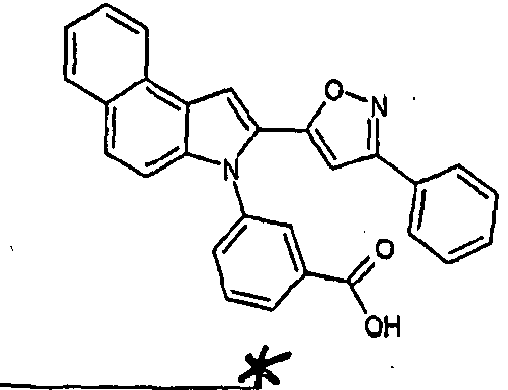
DMSO-d6; 7.1 - 8.3 (m, 16H), 6.1 (s, 1H). pos. mode 431 (M + 1), neg. mode 429 (M - 1). 3-[2-(3-phenylisoxazol-5-yl)-benzo[e]indol-3-yl] benzoic acid 
DMSO-d6; 7.1 - 8.4 (m, . 15H), 6.1 (s, 1H), 3.1 (t, 2H), 2.7 (t, 2H). pos. mode 432 (M + 1), neg. mode 430 (M - 1). 3-[3-(2-benzofuran-2-yl-benzo[e]indol-3-yl)-phenyl] propionic acid 
CDCl3; 8.22 (dt, 1H), 8.07 (t, 1H), 7.61 (t, 1H), 7.55 (ddd, 1H), 7.33-7.37 (m, 1H), 7.28 - 7.31 (m, 1H), 7.07 - 7.19 (m, 2H), 6.68 (s, 1H), 5.60 (s, 1H), 2.93 (dd, 1H), 2.65 - 2.75 (m, 1H), 2.40 - 2.58 (m, 3H), 2.19 (br d, 1H), 1.76 (qd, 1H). neg. mode 424 (M - H). 3-(2-benzofuran-2-yl-5-trifluoromethyl-4,5,6,7-tetrahydroindol-1-yl) benzoic acid 
DSMO-d6; 12.9 (br s, 1H), 7.97 (dt, 1H), 7.67 (br s, 1H), 7.59 (t, 1H), 7.42 (d, 1H), 7.40 - 7.50 (m, 1H), 7.25 (d, 1H), 6.89 (dd, 1H), 6.48 (s, 1H), 2.81 (dd, 1H), 2.65-2.78 (m, 1H), 2.50 - 2.65 (m, 2H), 2.38 (dd, 1H), 2.10 (brd, 1H), 1.63 (qd, 1H). pos. mode 454 (M + H); neg. mode 452 (M-H). 3-[2-(3,4-dichlorophenyl)-5-trifluoromethyl-4,5,6,7-tetrahydroindol-1-yl] benzoic acid 
DMSO-d6; 7.1 - 8.3 (m, 13H), 6.2 (s, 1H), 2.9 (t, 2H), 2.6 (t, 2H). pos. mode 433 (M + 1), neg. mode 431 (M - 1). 3-[2-(3-phenylisoxazol-5-yl)-4,5-dihydrobenzo[e]indol-3-yl] benzoic acid 
CDCl3: 7.7 (m, 1H); 7.1 - 7.3 (m, 11H); 6.8 (s, 1H); 2.7 (t, 2H); 2.4 (t, 2H); 2.0 (m, 2H); 1.4 (m, 9H). pos. mode 412 (M + H); neg. mode 410 (M - H). 4-[4-(5-tButyl-2-phenyl-indol-1-yl) phenyl] butyric acid 
DMSO-d6; 8.4 (d, 1H), - 8.1 (tt, 1H), 8.0 (d, 1H), 7.9 (t, 1H), 7.8 (s, 1H), 7.7 - 7.57 (m, 6H), 7.50-7.46 (t, 1H), 7.3 (d, 1H), 7.2 (dd, 1H). pos. mode 433 (M + H); neg. mode 431 (M - H). 3-[2-(3,4-dichlorophenyl)-benzo[e]indol-3-yl] benzoic acid 
DMSO-d6; 6.6 - 8.2 (m, 16H), 4.6 (dd, 2H), 3.3 (dd, 2H), 2.07 (s, 1H). pos. mode 430 M + pos. 1). (M + 1) 3-(4-chlorophenyl)-4-(2-phenylbenzo[e]indol-3-yl) butyric acid 
CDCl3; 8.05 (d, 1H), 7.94 (s, 1H), 7.45 (t, 1H), 7.31 (d, 1H), 7.12 - 7.20 (m, 3H), 7.04 - 7.10 (m, 2H), 6.27 (s, 1H), 3.53 (s, 2H), 2.88 (t, 2H), 2.70 (t, 2H). 331.8 (M dot) 3-(5-oxo-2-phenyl-4,5,6,7-tetrahydroindol-1-yl) benzoic acid 
CDCl3; 8.02 (d, 1H), 7.99 (s, 1H), 7.40 (t, 1H), 7.29 (t, 1H), 7.08-7.25 (m, 3H), 7.00 - 7.06 (m, 2H), 6.24 (s, 1H), 4.03 - 4.10 (m, 4H), 2.89 (s, 2H), 2.70 - 2.60 (m, 2H), 2.02 - 1.95 (m, 2H). pos. mode 376 (M + H). 3-[2'-phenyl-4',5',6',7'-tetrahydrospiro(1,3-dioxolane-2,5'-indol)-1'-yl] benzoic acid 
MeOH-d4; 8.3 (d, 1H), 8.04 (t, 1H), 7.88 (m, 2H), 7.6 - 7.3 (m, 12H). 363 (M dot). 3-(3-phenyl-3H-benzo[e]indol-2-yl) benzoic acid 
DMSO-d6; 8.41 (d, 1H), 8.06 (tt, 1H), 7.97 (d, 1H), 7.86 (t, 1H), 7.71 - 7.6 (m, 5H), 7.5 - 7.46 (m, 1H), 7.43 - 7.40 (m, 2H), 7.32 - 7.35 (m, 3H). 397 (M dot). 3-[2-(4-chlorophenyl)-benzo[e]indol-3-yl] benzoic acid 
CDCl3: 8.1 (m, 2H); 7.7 (s, 1H); 7.5 (t, 1H); 7.2 - 7.3 (m, 9H); 6.8 (s, 1H); 0.9 (m, 9H). pos. mode 394 (M + H). 5-tButyl-2-phenyl-1-[3-(1H-tetrazol-5-yl) phenyl]-1H-indole 
DMSO-d6; 8.4 (d, 1H), 8.0 - 7.91 (m, 2H), 7.78 (s, 1H), 7.68 - 7.38 (m, 11H), 3.37 (s, 3H). pos. mode 422 (M + H). 3-[2-(2-carbomethoxyphenyl)-benzo[e]indol-3-yl] benzoic acid 
DMSO-d6; 8.3 (d, 1H), 8.1 (m, 1H), 8.04 (m, 1H), 7.92 (m, 1H), 7.6 (m, 2H), 7.46 (m, 5H), 7.3 (m, 3H), 6.8 (s, 1H). neg. mode 396 (M - H). 3-[2-(2-chlorophenyl)-benzo[e]indol-3-yl] benzoic acid 
CDCl3; 8.01 (dt, 1H), 7.96 (br s, 1H), 7.40 (t, 1H), 7.27 (d, 1H), 7.12-7.18 (m, 2H), 7.03 - 7.12 (m, 3H), 6.26 (s, 1H), 2.67 (dd, 1H), 2.50 - 2.62 (m, 1H), 2.32 - 2.46 (m, 2H), 1.96 (br d, 1H), 1.72 - 1.84 (m, 4H), 1.68 (br d, 1H), 1.55 - 1.63 (m, 1H), 1.45 (quint.,d, 1H), 1.00-1.36 (m, 6H). 399 (M Dot) 3-(5-cyclohexyl-2-phenyl-4,5,6,7-tetrahydroindol-1-yl) benzoic acid 
CDCl3; 8.05 (dt, 1H), 8.00 (br s, 1H), 7.44 (t, 1H), 7.32 (br d, 1H), 7.00 - 7.17 (m, 6H), 6.31 (s, 1H), 6.21 (dd, 1H), 4.37 (qd, 2H), 4.22 (br t, 1H), 2.50 - 2.60 (m, 1H), 2.37 - 2.48 (m, 1H), 2.15 - 2.27 (m, 1H), 1.96 - 2.07 (m, 1H), 1.85 - 1.95 (m, 1H), 1.72 - 1.85 (m, 1H), 1.38 (t, 3H) pos. mode 456 (M + H). 5-[1-(3-carboxyphenyl)-2-phenyl-4,5,6,7-tetrahydro-1 H-indol-4-yl]-furan-2-carboxylic acid ethyl ester 
CDCl3; 8.03 (dt, 1H), 7.93 (br s, 1H), 7.43 (t, 1H), 7.32 (brd, 1H), 7.03 - 7.20 (m, 6H), 6.28 (s, 1H), 6.14 (dd, 1H), 4.33 (q, 2H), 3.15 - 3.27 (m, 1H), 2.63 - 2.85 (m, 4H), 2.28 - 2.35 (m, 1H), 1.88 -2.03 (m, 1H), 1.35 (t, 3H). pos. mode 456 (M + H). 5-[1-(3-carboxyphenyl)-2-phenyl-4,5,6,7-tetrahydro-1 H-indol-6-yl]-furan-2-carboxylic acid ethyl ester 
CDCl3; 8.10 (dt, 1H), 7.94 (br s, 1H), 7.50 (t, 1H), 7.27 - 7.37 (m, 1H), 7.22 (d, 1H), 7.18 (d, 1H), 6.76 (dd, 1H), 6.47 (s, 1H), 3.40 - 3.60 (m, 1H), 2.43 - 2.60 (m, 1H), 2.30 - 2.43 (m, 1H), 1.95 - 2.15 (m, 2H), 1.82 - 1.95 (m, 1H), 1.65 -1.80 (m, 1H). pos. mode 454 (M + H). 3-[2-(3,4-dichlorophenyl)-4-trifluoromethyl-4,5,6,7-tetrahydroindol-1-yl] benzoic acid 
CDCl3; 8.11 (dt, 1H), 7.88 (br s, 1H), 7.52 (t, 1H), 7.33 (br s, 1H), 7.15 (d, 1H), 7.17 (d, 1H), 6.59 (dd, 1H), 6.29 (s, 1H), 2.78 (dd, 1H), 2.40 - 2.70 (m, 4H), 2.15 - 2.25 (m, 1H), 1.73 (qd, 1H). pos. mode 454 (M + H). 3-[2-(3,4-dichlorophenyl)-6-trifluoromethyl-4,5,6,7-tetrahydroindol-1-yl] benzoic acid 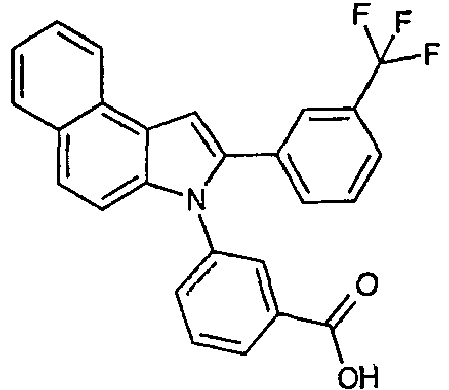
DMSO-d6; 8.45 (d, 1H), 8.1 - 7.9 (m, 8H), 7.74 - 7.63 (m, 4H), 7.5 (t, 1H), 7.37 (d, 1H). pos. mode 432 (M + H). 3-[2-(3-trifluoromethylphenyl)-benzo[e]indol-3-yl] benzoic acid 
DMSO-d6; 8.5 (d, 1H), 8.1 (tt, 1H), 8.0 (d, 1H), 7.9 (t, 1H), 7.74 - 7.64 (m, 5H), 7.53 - 7.46 (m, 3H), 7.3 (m, 3H). pos. mode 448 (M + H). 3-[2-(4-trifluoromethoxyphenyl)-benzo[e]indol-3-yl] benzoic acid 
DMSO-d6; 8.45 (d, 1H), 8.10 (tt, 1H), 8.01 (d, 1H), 7.92 (t, 1H), 7.86 - 7.83 (m, 3H), 7.76 - 7.72 (m, 2H), 7.70 - 7.65 (m, 2H), 7.54 - 7.5 (m, 3H), 7.38 (d, 1H). pos. mode 389 (M + mode 389 + 3-[2-(4-cyanophenyl)-benzo[e]indol-3-yl] benzoic acid 
DMSO-d6; 7.1 - 8.4 (m, 15H), 5.8 (s, 1H), 2.7 (t, 2H), 2.06 (t, 2H), 1.8 (t, 2H). pos. mode 446 (M + 1), neg. mode 444 (M - 1). 4-[4-(2-benzofuran-2-ylbenzo[e]indol-3-yl)-phenyl] butyric acid 
CDCl3; 7.10 - 7.17 (m, 4 H), 7.01 - 7.09 (m, 5H), 6.24 (s,1H), 2.58 - 2.72 (m, 3H), 2.47 - 2.58 (m, 1H), 2.30 - 2.46 (m, 4H), 1.90 - 2.05 (m, 3H), 1.62 (td, 1H), 1.23 - 1.45 (m, 3H), 0.89 (s, 3H), 0.88 (s, 3H), 0.84 (t, 3H). neg. mode 428 (M - H). 4-{4-[5-(1,1-dimethylpropyl)-2-phenyl-4,5,6,7-tetrahydroindol-1-yl]-phenyl} butyric acid 
CDCl3: 7.0 - 7.2 (m, 9H); 6.2 (s, 1H); 2.7 (m, 3H); 2.4 (m, 3H); 2.1 (m, 1H); 2.0 (m, 2H); 1.9 (m, 2H); 1.4 (m, 2H); 1.0 (d, 3H). pos. mode 374 (M + H); neg. mode 372 (M - H). 4-[4-(6-methyl-2-phenyl-4,5,6,7-tetrahydroindol-1-yl) phenyl] butyric acid 
CDCl3; 8.02 (dt, 1H), 7.97 (t, 1H), 7.40 (t, 1H), 7.28 (ddd, 1H), 7.07-7.18 (m, 3H), 7.01 - 7.06 (m, 2H), 6.26 (s, 1H), 3.45 - 3.80 (m, 1H), 3.46 (s, 3H), 2.99 (dd, 1H), 2.65 (dd, 1H), 2.40 - 2.65 (m, 2H), 2.00 - 2.15 (m, 1H), 1.80-2.00 (m, 1H). pos. mode 348 (M + H); neg. mode 346 (M - H). 3-(5-methoxy-2-phenyl-4,5,6,7-tetrahydroindol-1-yl) benzoic acid 
2 rotamers, 1:1, MeOH-d4; 7.87 (dd, 0.5H), 7.85 (dd, 0.5H), 7.55 (d, 0.5H), 7.44 (d, 0.5H), 7.10 (s, 2H), 7.09 (s, 2H), 7.00 - 7.03 (m, 1H), 6.98 (d, 0.5H), 6.95 (d, 0.5H), 6.18 (s, 0.5 H), 6.17 (s, 0.5H), 2.59 (dt, 1H), 2.20 - 2.50 (m, 3H), 1.85 - 2.00 (m, 1H), 1.45 - 1.62 (m, 1H), 1.25 -1.45 (m, 3H), 0.92 (s, 3H), 0.91 (s, 3H), 0.87 (t, 3H). pos. mode 404 (M + H); neg. mode 402 (M - H). 3-[5-(1,1-dimethylpropyl)-2-phenyl-4,5,6,7-tetrahydroindol-1-yl] 4-hydroxybenzoic acid 
CDCl3; 7.87 (d, 1H), 7.39 (d, 1H), 7.16-7.23 (m, 2H), 7.09 - 7.16 (m, 2H), 7.04 - 7.09 (m, 2H), 6.26 (s, 1H), 2.63 (dd, 1H), 2.55 (br d, 1H), 2.32 - 2.48 (m, 2H), 1.99 (br d, 1H), 1.63 (td, 1H), 1.26 - 1.46 (m, 3H), 0.90 (s, 3H), 0.89 (s, 3H), 0.86 (t, 3H) pos. mode 422 (M + H); neg. mode 420 (M - H). 2-chloro-5-[5-(1,1-dimethylpropyl)-2-phenyl-4,5,6,7-tetrahydroindol-1-yl] benzoic acid 
DMSO-d6; 7.0 - 8.3 (m, 14H), 6.4 (s, 1H), 3.1 (q, 4H,) 2.6 (t, 2H), 2.04 (t, 2H), 1.9 (q, 4H), 1.8 (t, 2H). pos. mode 475 (M + 1), neg. mode 473 (M -1). 4-{4-[2-(4-pyrrolidin-1-ylphenyl)-benzo[e]indol-3-yl]-phenyl} butyric acid 
CDCl3; 8.02 (dt, 1H), 7.94 (br s, 1H), 7.42 (t, 1H), 7.30 (br d, 1H), 7.11 - 7.18 (m, 2H), 7.02 - 7.11 (m, 3H), 6.26 (s, 1H), 2.54 - 2.74 (m, 2H), 2.44 (dd, 1H), 2.10 - 2.20 (m, 1H), 1.94 (br d, 1H), 1.65 (br s, 1H), 1.30 - 1.50 (m, 3H), 0.91 (t, 3H). pos. mode 346 (M + H); neg. mode 344 (M - H). 3-(6-ethyl-2-phenyl-4,5,6,7-tetrahydroindol-1-yl) benzoic acid product structure 1HNMR,d MS name 
DMSO-d6; 7.1 - 8.4 (m, 13H), 7.05 (s, 1H), 1.5 (dd, 4H), 1.21 (s, 6H), 0.93 (s, 6H). pos. mode 474 (M + 1). 3-[2-(5,5,8,8-tetramethyl-5,6,7,8-tetrahydronaphthalen-2-yl)-benzo[e]indol-3-yl] benzoic acid 
DMSO-d6; 7.2 - 8.3 (m, 13H), 6.9 (s, 1H), 2.6 (t, 2H), 1.9 (t, 2H), 1.7 (t, 2H), 1.5 (q, 4H), 1.21 (s, 6H), 0.9 (s, 6H). pos. mode 516 (M + 1). 4-{4-[2-(5,5,8,8-tetramethyl-5,6,7,8-tetrahydronaphthalen-2-yl)-benzo[e]indol-3-yl]-phenyl} butyric acid 
DMSO-d6; 7.1 - 8.3 (m, 14H), 6.4 (s, 1H), 3.2 (q, 4H), 1.9 (q, 4H). pos. mode 433 (M + 1), neg. mode 431 (M -1). 3-[2-(4-pyrrolidin-1-ylphenyl)-benzo[e]indol-3-yl] benzoic acid 
CDCl3: 8.0 (d, 1H); 7.9 (br. s, 1H); 7.4 (t, 1H); 7.2 (m, 2H); 7.1 (d, 1H); 6.7 (dd, 1H); 6.2 (s, 1H); 2.7 (m, 1H); 2.5 (m, 1H); 2.3 - 2.4 (m, 2H); 2.0 (m, 1H); 1.4 (m, 1H); 1.3 (m, 1H); 1.0 (s, 9H). pos. mode 442 (M + H); neg. mode 440 (M - H). 3-[5-tButyl-2-(3,4-dichlorophenyl)-4,5,6,7-tetrahydroindol-1-yl] benzoic acid 
DMSO-d6; 8.38 (d, 1H), 7.98 - 7.92 (m, 2H), 7.84 (m, 1H), 7.7 - 7.66 (m, 2H), 7.62 - 7.56 (m, 3H), 7.51 (s, 1H), 7.48 - 7.4 (m, 4H). neg. mode 430 (M - H). 3-[2-(2,5-dichlorophenyl)-benzo[e]indol-3-yl] benzoic acid 
DMSO-d6; 7.1 - 8.4 (m, 14H), 6.09 (s, 1H). pos. mode 438 (M + 1). 5-(2-benzofuran-2-ylbenzo[e]indol-3-yl) 2-chlorobenzoic acid 
DMSO-d6; 7.1 - 8.4 (m, 14H), 5.9 (s, 1H). pos. mode 420 (M + 1). 3-(2-benzofuran-2-ylbenzo[e]indol-3-yl) 4-hydroxybenzoic acid 
DMSO-d6; 8.4 (d, 1H), 7.96 (d, 1H), 7.73 (s, 1H), 7.66 - 7.56 (m, 3H), 7.5-7.44 (m, 2H), 7.4 (d, 2H), 7.34 - 7.28 (m, 3H), 7.26 (dd, 1H), 2.65 (t, 2H), 2.3 (t, 2H), 1.9 (t, 2H). pos. mode 474 (M + H). 4-{4-[2-(3,4-dichlorophenyl)-benzo[e]indol-3-yl]-phenyl} butyric acid 
CDCl3: 8.0 (d, 1H); 7.9 (br. s, 1H); 7.4 (m, 3H); 7.2 (m, 1H); 7.1 (d, 2H); 6.4 (s, 1H); 2.7 (m, 1H); 2.5 (m, 1H); 2.3 - 2.4 (m, 2H); 2.0 (m, 1H); 1.5 (m, 1H); 1.4 (m, 1H); 1.0 (s, 9H). TOF pos. mode 442 (M + H), EM 442.1994. 3-[5-tButyl-2-(4-trifluoromethylphenyl)-4,5,6,7-tetrahydroindol-1-yl] benzoic acid 
CDCl3; 8.02 (d, 1H), 7.96 (s, 1H), 7.33 - 7.45 (m, 5H), 7.25 - 7.32 (m, 2H), 7.08 - 7.18 (m, 3H), 7.00 - 7.08 (m, 2H), 6.25 (s, 1H), 4.67 (s, 2H), 3.86 - 3.92 (m, 1H), 3.02 (dd, 1H), 2.71 (dd, 1H); 2.48 - 2.58 (m, 2H), 2.05 - 2.18 (m, 1H), 1.88 - 2.04 (m, 1H). pos. mode 424 (M + H); neg. mode 422 (M - H). 3-(5-benzyloxy-2-phenyl-4,5,6,7-tetrahydroindol-1- -yl) benzoic acid 
DMSO-d6; 8.43 (d, 1H), 7.99 - 7.95 (m, 2H), 7.87 (s, 2H), 7.69 (d, 1H), 7.64 (t, 1H 7.49 (t, 1H), 7.43 - 7.34 (m, 6H), 2.7 (t, 2H), 2.25 (t, 2H), 1.84 (t, 2H). pos. mode 542 (M + H); neg. mode 540 (M - H). 4-{4-[2-(3.5-bistrifluoromethylphenyl)-benzo[e]indol-3-yl]-phenyl} butyric acid 
CDCl3; 8.32 (d, 1H), 7.91 (d, 1H), 7.6 - 7.2 (m, 13H), 2.8 (t, 2H); 2.4 (t, 2H); 2.0 (t, 2H). pos. mode 474 (M + H); neg. mode 472 (M - H). 4-{4-[2-(4-trifludromethylphenyl)-benzo[e]indol-3-yl]-phenyl} butyric acid 
DMSO-d6; 6.8 - 8.7 (m, 15H), 3.9 (s, 2H), 2.27 (s, 6H). neg. mode 459 (M - 1), 3-(2-benzofuran-2-yl-1-dimethylaminomethylben zo[e]indol-3-yl) benzoic acid 
CDCl3; 8.03 (d, 1H), 7.96 (s, 1H), 7.42 (t, 1H), 7.30 (d, 1H), 7.00 - 7.20 (m, 5H), 6.31 (s, 1H), 2.70 - 2.85 (m, 1H), 2.30 - 2.58 (m, 4H), 1.75-2.05 (m, 5H), 1.60 - 1.85 (m, 2H), 1.40 - 1.50 (m, 1H). pos. mode 385 (M + H). 3-[4-(3-cyanopropyl)-2-phenyl-4,5,6,7-tetrahydroindol-1-yl] benzoic acid 
CDCl3; 8.04 (dt, 1H), 7.94 (brs, 1H), 7.43 (t, 1H), 7.29 (brd, 1H), 7.08 - 7.20 (m, 3H), 7.02 - 7.08 (m, 2H), 6.26 (s, 1H), 2.56 - 2.74 (m, 2H), 2.45 (dd, 1H), 2.33 (t, 2H), 2.12-2.23 (m, 1H), 1.90 - 1.98 (m, 1H), 1.75 - 1.85 (m, 1H), 1.62 - 1.75 (m, 2H), 1.40 - 1.61 (m, 3H) pos. mode 385 (M + H). 3-[6-(3-cyanopropyl)-2-phenyl-4,5,6,7-tetrahydroindol-1-yl]-benzoic acid 
DMSO-d6; 7.8 (d, 1H), 7.56 (s, 1H), 7.42 (t, 1H), 7.24 (d, 1H), 7.09 (d, 1H), 6.46 (d, 1H), 6.32 (s, 1H), 5.99 (s, 1H), 3.7 (s, 3H), 3.3 (s, 3H), 2.8 - 2.55 (m, 4H), 2.39 (d, 1H), 2.10 (d, 1H), 1.66-1.61 (m, 1H). pos. mode 446 (M + H); neg. mode 444 (M - H). 3-[2-(3,4-dimethoxyphenyl)-5-trifluoromethyl-4,5,6,7-tetrahydroindol-1-yl]-benzoic acid 
DMSO-d6; 7.91 (d, 1H), 7.63 (s, 1H), 7.56 (t, 1H), 7.44 (d, 1H), 6.78 (d, 1H), 6.57 (d, 1H), 6.51 (s, 1H), 6.24 (s, 1H), 3.67 (s, 3H), 3.35 (s, 3H), 2.81 - 2.55 (m, 4H), 2.36 (d, 1H), 2.10 (m, 1H), 1.66-1.61 (m, 1H). pos. mode 446 (M + H); neg. mode 444 (M - H). 3-[2-(2,4-dimethoxyphenyl)-5-trifluoromethyl-4,5,6,7-tetrahydroindol-1-yl] benzoic acid 
DMSO-d6; 8.38 (d, 1H), 7.96 (d, 1H), 7.64 - 7.3 (m, 12H), 7.1 - 7.07 (tt, 1H), 2.89 (t, 2H), 2.55 (t, 2H). pos. mode 426 (M + H); neg. mode 424 (M - H). 3-{3-[2-(4-chlorophenyl)-benzo[e]indol-3-yl]-phenyl} propionic acid 
DMSO-d6; 8.39 (d, 1H), 7.97 (d, 1H), 7.73 (s, 1H), 7.67 - 7.33 (m, 9H); 7.19 - 7.12 (m, 2H); 2.9 (t, 2H); 2.55 (t, 2H). pos. mode 460 (M + H). 3-{3-[2-(3,4-dichlorophenyl)-benzo[e]indol-3-yl]-phenyl} propionic acid 
DMSO-d6; 7.92 - 7.89 (tt, 1H), 7.62 (s, 1H), 7.54 (t, 1H), 7.4 (d, 1H), 6.87 (d, 2H), 6.75 (d, 2H), 6.16 (s, 1H), 3.68 (t, 4H), 3.34 (s, 2H), 3.01 (t, 4H), 2.8 - 2.76 (dd, 1H), 2.6 (dd, 1H), 2.34 (m, 1H), 2.1 (m, 1H), 1.63 (m, 1H). pos. mode 471 (M + H); neg. mode 469 (M - H). 3-[2-(4-morpholin-4-yl-phenyl)-5-trifluoromethyl-4,5,6,7-tetrahydroindol-1-yl] benzoic acid product structure 1H NMR, d MS name 
CDCl3; 7.95 - 7.88 (m, 2H), 7.34 (t, 1H), 7.22 (d, 1H), 6.87 (d, 1H), 6.56 (d, 1H), 6.15 (s, 1H); 3.83 (s, 3H) 3.65 (s, 3H); 3.51 (s, 3H); 2.93 - 2.88 (dd, 1H); 2.71 (t, 2H); 2.54 - 2.51 (m, 2H); 2.21 (m, 1H) 1.77 - 1.72 (m, 1H). pos. mode 476 (M + H); neg. mode 474 (M - H). 3-[5-trifluoromethyl-2-(2,3,4-trimethoxyphenyl)-4,5,6,7-tetrahydroindol-1-yl] benzoic acid 
DMSO-d6; 6.9 - 7.8 (m, 9H), 3.4 (s, 2H), 2.2 (s, 3H), 1.9 (s, 3H), 1.4 - 1.5 (m, 2H), 0.9 (s, 9H). neg. mode 429 (M - 1). 3-(5-tButyl-3-dimethylaminomethyl-2-phenyl-4,5,6,7-tetrahydroindol-1-yl) benzoic acid 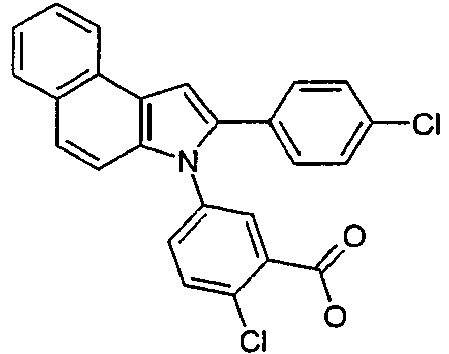
DMSO-d6; 8.4 (d, 1H); 7.97 (d, 1H); 7.85 (d, 1H); 7.76 - 7.46 (m, 9H); 7.39 -7.33 (dd, 1H); 7.2 - 7.15 (td, 1H). pos. mode 432 (M + H). 2-chloro-5-[2-(4-chlorophenyl)-benzo[e]indol-3-yl] benzoic acid 
MeOH-d4; 7.99 (d, 1H), 7.77 (s, 1H), 7.48 (t, 1H), 7.28 - 7.33 (m, 1H), 7.10 - 7.20 (m, 3H), 7.00 - 7.10 (m, 2H), 6.28 (s, 1H), 3.75 - 3.88 (m, 1H), 3.37 - 3.50 (m, 2H), 3.23 - 3.35 (m, 2H), 3.07 (dd, 1H), 2.93 (dd, 1H), 2.65 - 2.82 (m, 1H), 2.59 (br d, 1H), 2.27 (br d, 1H), 2.03 (qd, 1H), 1.40 (t, 6H). pos. mode 389 (M + H); neg. mode 387 (M - H) 3-(5-diethylamino-2-phenyl-4,5,6,7-tetrahydroindol-1-yl) benzoic acid 
MeOH-d4; 7.99 (dt, 1H), 7.77 (br s, 1H), 7.48 (t, 1H), 7.31 (br d, 1H), 7.08 - 7.20 (m, 3H), 7.00 - 7.06 (m, 2H), 6.27 (s, 1H), 3.75 - 4.12 (m, 4H), 3.58 - 3.72 (m, 1H), 3.20 - 3.57 (m, 4H), 3.10 - 3.20 (m, 1H), 2.82 - 2.95 (m, 1H), 2.68 - 2.79 (m, 1H), 2.61 (br d, 1H), 2.40 (br d, 1H), 1.98 (qd, 1H). pos. mode 403 (M + H); neg. mode 401 (M-H). 3-(5-morpholin-4-yl-2-phenyl-4,5,6,7-tetrahydroindol-1-yl) benzoic acid 
DMSO-d6; 7.87 (d, 1H), 7.59 (brs, 1H), 7.47 (t, 1H), 7.32 (br d, 1H), 7.11 - 7.20 (m, 2H), 7.03 - 7.10 (m, 1H), 6.94 - 7.02 (m, 2H), 6.23 (s, 1H), 2.55 - 2.90 (m, 6H), 2.30 - 2.40 (m, 2H), 2.05 - 2.18 (m, 2H), 1.75 (brs, 4H), 1.57 - 1.70 (m, 1H). pos. mode 387 (M + H); neg. mode 385 (M - H). 3-(2-phenyl-5-pyrrolidin-1-yl-4,5,6,7-tetrahydroindol-1-yl) benzoic acid 
DMSO-d6; 7.91 (d, 1H), 7.60-7.41 (m, 3H); 7.25-7.21 (m, 2H); 7.0-6.96 (m, 2H); 6.27 (s, 1H); 2.54-2.44 (m, 1H), 2.31-2.25 (m, 2H); 1.91 (m, 1H); 1.56-1.50 (m, 1H) 1.37-1.24 (m, 4H); 0.86-0.80 (m, 9H). pos. mode 422 (M + H), neg. mode 420 (M-1). 3-[2-(4-chlorophenyl)-5-(1,1-dimethylpropyl)-4,5,6,7-tetrahydroindol-1-yl] benzoic acid 
DMSO-d6; 7.94-7.92 (dt, 1H), 7.65-7.38 (m, 5H); 7.17 (d, 2H); 6.42 (s, 1H); 2.51-2.48 (m, 1H), 2.31-2.21 (m, 2H); 1.95-1.90 (m, 1H); 1.59-1.51 (m, 1H) 1.39-1.23 (m, 4H); 0.87-0.81 (m, 9H). pos. mode 456 (M + H), neg. mode 454 (M - 1). 3-[5-(1,1-dimethylpropyl)-2-(3-trifluoromethylphenyl)-4,5,6,7-tetrahydro-indol-1-yl] benzoic acid 
CDCl3; 8.02-7.93 (m, 2H), 7.41 (t, 1H); 7.23 (m, 1H); 7.03-6.99 (m, 2H), 6.87-6.83 (m, 2H) 6.22 (s, 1H); 2.66-2.53 (m, 2H), 2.42-2.35 (m, 2H); 1.99-1.96 (m, 1H); 1.66-1.60 (m, 1H) 1.43-1.33 (m, 3H); 0.90-0.83 (m, 9H). pos. mode 406 (M + H), neg. mode 404 (M-1). 3-[5-(1,1-dimethylpropyl)-2-(4-fluoropheny)-4,5,6,7-tetrahydroindol-1-yl] benzoic acid 
CDCl3; 8.05-7.95 (m, 2H), 7.44 (t, 1H); 7.33-7.13 (m, 5H), 6.34 (s, 1H); 2.67-2.53 (m, 2H), 2.45-2.35 (m, 2H); 2.0-1.97 (m, 1H); 1.66-1.59 (m, 1H) 1.43-1.35 (m, 3H); 0.90-0.84 (m, 9H). pos. mode 456 (M + H), neg. mode 454 (M-1). 3-[5-(1,1-dimethylpropyl)-2-(4-trifluoromethyl-phenyl)-4,5,6,7-tetrahydro-indol-1-yl] benzoic acid 
CDCl3; 7.27 - 7.38 (m, 3H), 7.01 - 7.18 (m, 7H), 6.25 (s, 1H), 3.72 - 3.80 (m, 4H), 2.75 - 2.90 (m, 2H), 2.46 - 2.74 (m, 7H), 2.07 - 2.17 (m, 1H), 1.70 (qd, 1H). pos. mode 359 (M + H). 5-morpholin-4.-yl-1,2-diphenyl-4,5,6,7-tetrahydro-1H-indole 
CDCl3; 8.04 (dd, 1H), 7.94 (br s, 1 H), 7.44 (t, 1H), 7.25 - 7.30 (m, 1H), 7.08 - 7.15 (m, 1H), 6.98 - 7.06 (m, 2H), 6.81 (dt, 1H), 6.29 (s, 1H), 2.63 (dd, 1 H), 2.48 - 2.58 (m, 1H), 2.30 - 2.46 (m, 2H), 1.98 - 2.20 (m, 1H), 1.56 - 1.68 (m, 1H), 1.30-1.44 (m, 3H), 0.90 (s, 3H), 0.89 (s, 3H), 0.85 (t, 3H). pos. mode 422 (M + H). 3-[2-(3-chlorophenyl)-5-(1,1-dimethylpropyl)-4,5,6,7-tetrahydroindol-1-yl] benzoic acid 
CDCl3; 8.08-8.05; (dt, 1H); 7.94 (s, 1H), 7.46 (t, 1H); 7.29-7.27 (m, 1H), 7.21-7.15 (m, 2H); 6.76-6.73 (dd, 1H), 6.29 (s, 1H), 2.65-2.60 (m, 1H), 2.44-2.32 (m, 2H), 1.98 (m, 1H), 1.66-1.56 (m, 1H), 1.42-1.33 (m, 4H), 0..89-0.83 (m, 9H). pos. mode 457 (M + H). 3-[2-(3,4-dichlorophenyl)-5-(1,1-dimethylpropyl)-4,5,6,7-tetrahydroindol-1-yl] benzoic acid 
CDCl3; 8.16-8.14; (m, 1H); 8.05 (m, 1H), 7.55-7.52 (m, 2H); 5.90 (s, 1H); 2.43-2.39 (m, 2H); 2.06-2.01 (m, 1H); 1.59-1.43 (m, 2H); 1.34-1.29 (m, 5H); 1.13 (s, 9H); 0.87-0.79 (m, 9H). pos. mode 368 (M + H). 3-[2-tert-butyl-5-(1,1-dimethylpropyl)-4,5,6,7-tetrahydroindol-1-yl] benzoic acid CDCl3; 8.03 - 8.09 (m, 2H), 7.42 - 7.52 (m, 3H), 7.30 - 7.42 (m, 4H), 7.17 - 7.29 (m, 7H), 6.94 (dd, 1H), 6.74 (d, 1H), 5.15 (s, 2H). pos. mode 420 (M + H) 3-(5-benzyloxy-2-phenylindol-1-yl) benzoic acid CDCl3; 8.11 (d, 1 H), 8.01 (d, 2H), 7.93 (brs, 1H), 7.52 (t, 1H), 7.34 (br s, 1H), 7.14 (d, 2H), 6.48 (s, 1H), 2.92 (dd, 1H), 2.40 - 2.78 (m, 4H), 2.16 - 2.24 (m, 1H), 1.64 - 1.82 (m, 1H). pos mode 431 (M + H) 3-[2-(4-nitrophenyl)-5-trifluoromethyl-4,5,6,7-tetrahydroindol-1-yl] benzoic acid 
7.95 (tt, 1H), 7.7 (t, 1H), 7.62 (t, 1H), 7.58-7.46 (m, 2H), 7.22 (d, 2H), 7.08- 7.04 (m, 3H), 6.86 - 6.82 (m, 2H), 6.75 (s, 1H), 3.70 (s, 3H), 2.93 (t, 2H), 2.62 (t, 2H). pos. mode 396 (M + H); neg. mode 394 (M - H). 3-[2-(3-methoxyphenyl)-4,5-dihydrobenzo[e]indol-3-yl] benzoic acid 
DMSO-d6; 8.3 (d, 1H), 7.9 (d, 1H), 7.75 (d, 1H), 7.56-7.26 (m, 11H), 7.18 (s, 1H). pos. mode 382 (M + H); neg. mode 380 (M - H). 3-[2-(4-hydroxyphenyl)-benzo[e]indol-3-yl] benzoic acid 
CDCl3; 7.63 (s, 1H), 7.51 (s, 1H), 7.03-7.20 (m, 5H), 6.94 (s, 1H), 6.27 (s, 1H), 2.90 (dd, 1h), 2.38 - 2.78 (m, 4H), 2.20 (d, 1H), 1.74 (qd, 1H). pos. mode 401 (M + H) 3-amino-5-(2-phenyl-5-trifluoromethyl-4,5,6,7-tetrahydroindol-1-yl) benzoic acid 
CDCl3; 8.02 (d, 1H), 7.93 (s, 1H), 7.41 (t, 1H), 7.25 - 7.30 (m, 1H), 6.80 - 6.90 (m, 2H), 6.44 - 6.52 (m, 2H), 6.16 (s, 1H), 2.89 (dd, 1H), 2.58 - 2.76 (m, 2H), 2.42 - 2.52 (m, 2H), 2.19 (br d, 1H), 1.64 (qd, 1H). pos. mode 401 (M + H) 3-[2-(4-aminophenyl)-5-trifluoromethyl-4,5,6,7-tetrahydroindol-1-yl] benzoic acid 
DMSO-d6; 7.95 (tt, 1H), 7.7 (t, 1H), 7.59 (t, 1H), 7.51-7.44 (m, 2H), 7.18 (d, 2H), 7.05-7.0 (m, 3H), 6.8 (m, 1H), 6.7 (s, 1H), 3.7 (s, 3H), 3.3 (s, 3H), 2.9 (t, 2H), 2.6 (t, 2H). pos. mode 426 (M + H). neg. mode 424 (M - H). 3-[2-(2,4-dimethoxyphenyl)-4,5-dihydrobenzo[e]indol-3-yl] benzoic acid 
MeOH-d4 (mixture 55%:45% saturated:unsaturated); 8.22 (d, 2H); 7.94 (d, 2H), 7.85-7.83 (d, 2H), 7.75-7.67 (m, 4H), 7.60-7.56 (m, 4H), 7.49-7.45 (m, 1H), 7.35-7.28 (m, 4H), 7.20-7.17 (m, 5H), 7.1-7.07 (m, 2H), 7.0 (s, 2H), 3.1 (t, 2H), 2.93 (t, 2H), 2.4 (s, 3H), 2.33 (s, 3H). neg. mode 378 (M - H). 3-(2-p-tolyl-4,5-dihydrobenzo[e]indol-3-yl) benzoic acid 
CDCl3; 8.1 (m, 2H); 7.7 (m, 1H); 7.5 (t, 1H); 7.4 (m, 1H); 7.2 - 7.3 (m, 8H, ArH); 6.8 (s, 1H). pos. mode 314 (M + H); neg. mode 312 (M-H) 3-(2-phenylindol-1-yl) benzoic acid 
CDCl3/d3-MeOD; 8.0 (m, 2H); 7.4 (t, 1H); 7.2 (m, 1H); 7.0 - 7.2 (m, 5H, ArH); 6.2 (s, 1H); 2.7 (m, 1H); 2.5 (s, 1H); 2.4 (m, 2H); 2.0 (m, 1H); 1.5 (m, 1 H); 1.4 (m, 1H); 0.9 (s, 9H). pos. mode 374 (M + H); neg. mode 372 (M - H) 3-(5-tert-Butyl-2-phenyl-4,5,6,7-tetrahydroindol-1-yl) benzoic acid 
CDCI3; 7.2 (m, 1H); 6.9 - 7.1 (m, 8H, ArH); 6.2 (s, 1H); 2.9 (t, 2H); 2.7 (m, 1H); 2.5 (m, 3H); 2.4 (m, 2H); 2.0 (m, 1H); 1.5 (m, 1H); 1.4 (m, 1H); 0.9 (s, 9H). pos. mode 402 (M + H); neg. mode 400 (M-H) 3-[3-(5-tert-Butyl-2-phenyl-4,5,6,7-tetrahydroindol-1-yl)-phenyl] propionic acid 
DMSO-d6; 7.0 - 8.4 (13H, ArH); 6.9 (1H), 2.9 (2H, CH2), 2.5 (2H, CH2). pos. mode 342 (M + H); neg. mode 340 (M-H) 2-phenyl-3-[3-(2H-tetrazol-5-yl)-phenyl]-4,5-dihydro-3H-benzo[e]indole 
DMSO-d6; 6.8-7.9 (14H, ArH), 3.0 (2H, CH2) 2.7 (2H, CH2). neg. mode 364 (M-1) 4-(3-phenyl-4,5-dihydro-3H-benzo[e]indol-2-yl) benzoic acid 
CDCl3; 7.0 - 7.2 (m, 9H, ArH); 6.2 (s, 1H); 2.6 (m, 4H); 2.4 (m, 4H); 2.0 (m, 3H); 1.8 (s, 3H). neg. mode 358 (M - H) 4-[4-(2-phenyl-4,5,6,7-tetrahydroindol-1-yl)-phenyl] butyric acid 
DMSO- d6; 7.2 - 8.4 (16H, ArH). pos. mode 364 (M + 1); neg. mode 362 (M - 1) 3-(2-phenylbenzo[e]indol-3-yl) benzoic acid 
CDCl3; 7.3 (t, 1H); 6.9 - 7.1 (m, 8H, ArH); 6.2 (s, 1H); 2.9 (t, 2H); 2.7 (m, 1H); 2.5 (m, 3H); 2.4 (m, 1H); 2.2 (m, 1H); 1.9 (m, 2H); 1.4 (m, 1H); 1.0 (d, 3H). pos. mode 360 (M + H); neg. mode 358 (M - H) 3-[3-(5-methyl-2-phenyl-4,5,6,7-tetrahydroindol-1-yl)-phenyl] propionic acid 
DMSO - d6; 7.2 - 8.4 (16H, ArH); 2.7 (2H, CH2); 2.3 (2H, CH2); 1.9 (2H, CH2). pos. mode 406 (M + 1); neg. mode 404 (M - 1) 4-[4-(2-phenyl-benzo[e]indol-3-yl)-phenyl] butyric acid 
CDCl3; 7.3 (t, 1H); 6.9 - 7.2 (m, 8H, ArH); 6.2 (s, 1H); 2.9 (t, 2H); 2.6 (br. s, 2H); 2.5 (t, 2H); 2.4 (br. s, 2H); 1.8 (br. s, 4H). pos. mode 346 (M + H) 3-[3-(2-phenyl-4,5,6,7-tetrahydroindol-1-yl)-phenyl] propionic acid 
CDCl3; 7.1-8.4 (11H, ArH), 6.4 (1H, ArH), 4.4 (1H, CH) 1.4-2.7 (9H, CH2). pos. mode 372 (M+1) 3-(2-phenylbenzo[e]indol-3-yl) cyclohexanecarboxylic acid 
CD30D-d4; 7.1-8.2 (10H, ArH), 4.0 (2H, CH2), 3.0 (2H, CH22), 2.9 (2H, CH2), 2.1 (2H, CH2), 1.9 (2H, CH2). pos. mode 332 (M+1) 4-(2-phenyl-4,5-dihydrobenzo[e]indol-3-yl) butyric acid 
CD30D-d4; 7.1-8.2 (12H, ArH) 4.4 (2H, CH2) 2.1 (2H, CH2) 1.9 (2H, CH2). pos. mode 330 (M+1) 4-(2-phenyl-benzo[e]indol-3-yl) butyric acid 
DMSO-d6; 7.0-7.9(14H, ArH), 6.3 (1H, ArH), 3.0 (1H, CH), 2.8 (1H, CH2), 2.7 (2H, CH2), 2.4 (1H, CH2), 1.9 (2H, CH2). pos. mode 394 (M+1) 3-(2,5-diphenyl-4,5,6,7-tetrahydroindol-1-yl) benzoic acid 
CDCl3; 8.0 (m, 1H); 7.9 (m, 1H); 7.4 (t, 1H); 7.0 - 7.3 (m, 6H, ArH); 6.2 (s, 1H); 2.6 (m, 1H); 2.5 (br. s, 1H); 2.4 (m, 1H); 2.1 (m, 1H); 1.9 (m, 2H); 1.4 (m, 1H); 1.0 (d, 3H). pos. mode 332 (M + H) 3-(4-methyl-2-phenyl-4,5,6,7-tetrahydroindol-1-yl) benzoic acid 
CDCl3; 7.1 - 7.3 (m, 6H, ArH); 6.2 (s, 1H); 6.0 (d, 1H); 2.6 (m, 2H); 2.4 -2.5 (m, 2H); 2.0 (m, 1H); 1.5 (m, 2H); 1.0 (s, 9H). pos. mode 364 (M + H); neg. mode 362 (M - H) 5-(5-tertButyl-2-phenyl-4,5,6,7-tetrahydroindol-1-yl) furan-2-carboxylic acid 
acetone-d6; 7.5 (m, 5H); 7.2 (m, 7H); 7.0 (t, 1H); 6.8 (s, 1H); 3.2 (s, 2H, CH2); 2.9 (m, 2H); 2.6 (m, 1H); 2.4 (m, 1H). pos. mode 380 (M + H) [2-(2-phenyl-4,5-dihydrobenzo[e]indol-3-yl)-phenyl] acetic acid 
DMSO - d6; 7.1- 8.5 (14H, ArH/NH); 5.8 (1H); 2.9 (2H, CH2); 2.6 CH2). pos.mode 430 (M +1); neg. mode 429 (M - 1). 2-benzofuran-2-yl-3-[3-(2H-tetrazol-5-yl)-phenyl]-4,5-dihydro-3H-benzo[e]indole 
DMSO - d6; 7.0 - 8.2 (15H, ArH/NH); 6.3 (1H); 2.9 (2H, CH2); 2.6 (2H, CH2). pos. mode 457 (M + 1); neg mode 455 (M - 1). 2-(3-phenylisoxazol-5-yl)-3-[3-(2H-tetrazol-5-yl)-phenyl]-4,5-dihydro-3H-benzo[e]indole 
DMSO d6; 7.0 -8.1 (14H, ArH); 6.2 (1H); 2.9 (2H, CH2); 2.6 (2H, CH2). pos.mode 433 (M + 1); heg.mode 431 (M - 1). 3-(2-phenylisoxazol-5-yl)-4,5-dihydrobenzo[e]indol-3-yl] benzoic acid Table 8 Compounds and Starting Materials product structure ketone/enamine SM α-bromo ketone SM aniline 


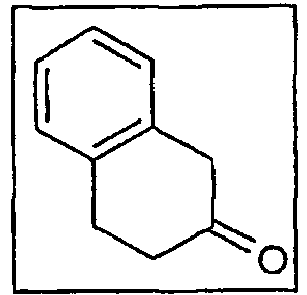


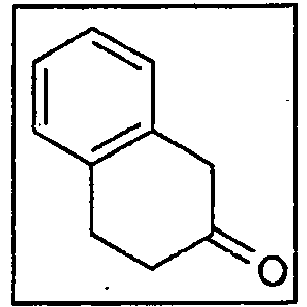
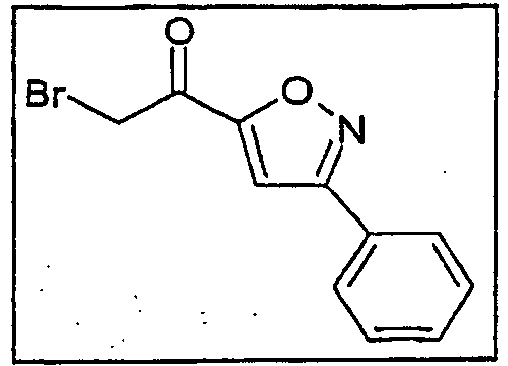


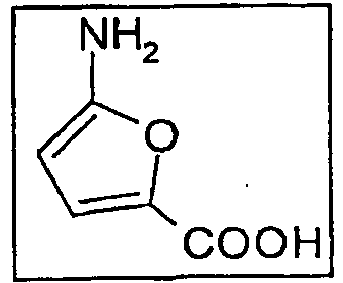


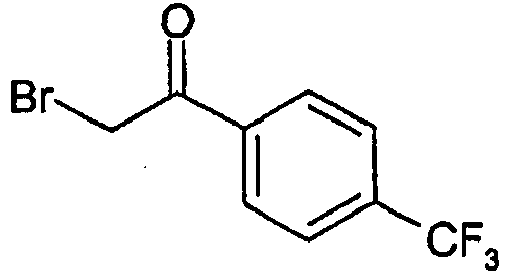


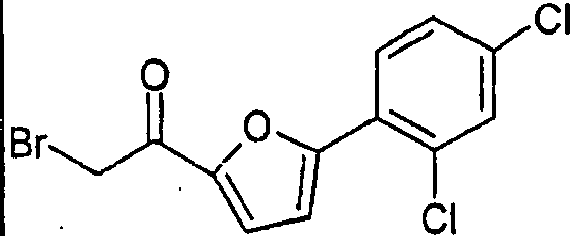


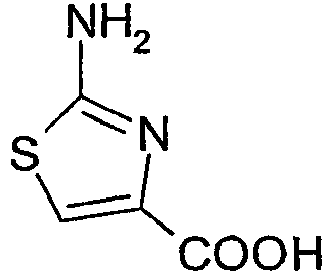


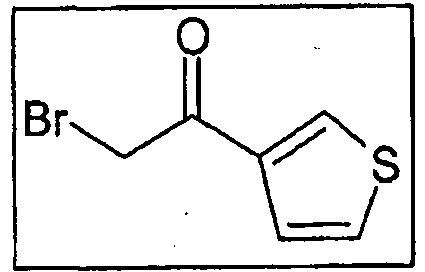


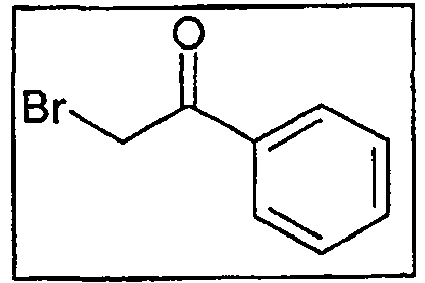


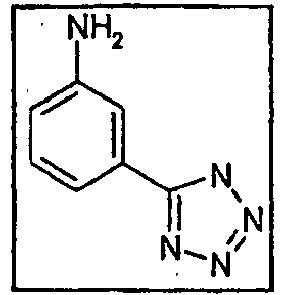


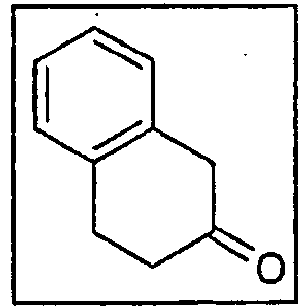


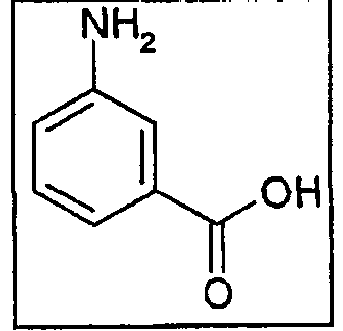

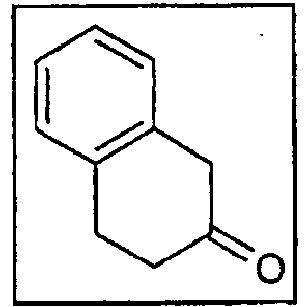


none 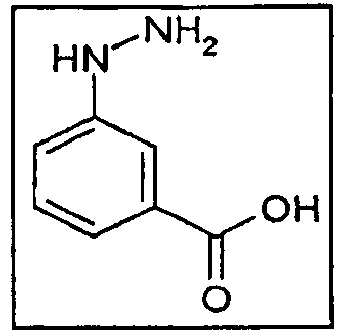


Table 9 Compounds from Table 8 and Characterization Data product structure 1H NMR, d MS name Ab42 IC50 (uM) 
DMSO-d6; 7.1 - 8.6 (m, 14H), 6.2 (t, 2H), 2.9 (t, 2H). pos. mode 391 (M + 1), neg. mode 389 (M - 1). 2-pyridin-4-yl-3-[3-(2H-tetrazol-5-yl)-phenyl]-4,5-dihydro-3H-benzo[e]indole 73 
DMSO-d6; 6.5 - 8.4 (m, 13H), 5.9 (s, 2H), 2.9 (t, 2H), 2.6 (t, 2H). pos. mode 434 (M + 1), neg. mode 432 (M - 1). 2-benzo[1,3]dioxol-5-yl-3-[3-(2H-tetrazol-5-yl)-phenyl]-3H-benzo[e]indole 56 
DMSO-d6; 7.3 - 8.6 (m, 14H), 2.9 (t, 2H), 2.7 (t, 2H). pos. mode 391 (M + 1), neg. mode 389 (M - 1). 2-pyridin-3-yl-3-[3-(2H-tetrazol-5-yl)-phenyl]-4,5-dihydro-3H-benzo[e]indole >100 
DMSO-d6; 6.7 - 8.3 (m, 12H), 6.2 (s, 2H), 2.9 (t, 2H), 2.6 (t, 2H). pos. mode 410 (M + 1). 3-(2-benzo[1,3]dioxol-5-yl-4,5-dihydrobenzo[e]indol-3-yl)benzoic acid 18 
DMSO-d6; 6.7 - 8.3 (m, 14H), 6.2 (s, 2H). pos. mode 408 (M+1). 3-(2-benzo[1,3]dioxol-5-yl-benzo[e]indol-3-yl)benzoic acid 20 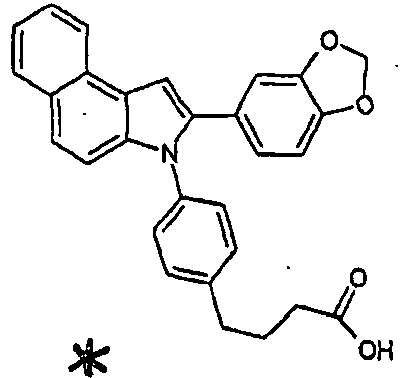
DMSO-d6; 6.7 - 8.3 (m, 14H), 5.9 (s, 2H), 2.6 (t, 2H), 2.0 (t, 2H), 1.8 (t, 2H). pos. mode 450 (M + 1). 4-[4-(2-benzo[1,3]dioxol-5-yl-benzo[e]indol-3-yl)-phenyl] butyric acid 8.9 
DMSO-d6; 6.5 - 7.5 (m, 12H), 5.9 (s, 2H), 2.8 (t, 2H), 2.66 (t, 2H), 2.6 (t, 2H), 2.04 (t, 2H), 1.8 (t, 2H). pos. mode 452 (M + 1). 4-[4-(2-benzo[1,3]dioxol-5-yl-4,5-dihydrobenzo[e]indol-3-yl)-phenyl] butyric acid 8.8 
DMSO-d6; 7.0 - 6.7 (m, 14H), 2.9 (t, 2H), 2.6 (t, 2H), 2.43 (s, 3H), 2.5 (t, 2H), 2.1 (t, 2H), 1.73 (t, 2H). pos. mode 489 (M + 1), neg. mode 487 (M - 1). 4-{4-[2-(5-methyl-3-phenylisoxazol-4-yl)-4,5-dihydrobenzo[e]indol-3-yl]-phenyl} butyric acid 1.5 
DMSO-d6; 7.0 - 6.7 (m, 16H), 2.56 (t, 2H), 2.43 (s, 3H), 2.17 (t, 2H), 1.7 (t, 2H). pos. mode 487 (M + 1). 4-{4-[2-(5-methyl-3-phenylisoxazol-4-yl)-benzo[e]indol-3-yl]-phenyl} butyric acid 1 product structure 1H NMR, d MS name Ab42 (C50 (uM) 
DMSO; 7.1 - 8.5 (m, 13H), 2.9 (t, 2H), 2.6 (t, 2H). pos. mode 367 (M + 1). 3-(2-pyridin-4-yl-4,5-dihydrobenzo[e]Indol-3-yl) benzoic acid 65 
DMSO-d6; 7.1 - 8.5 (m, 15H). pos. mode 365 (M + 1). 3-(2-pyridin-4-yl-benzo[e]indol-3-yl) benzoic acid 81 
DMSO-d6; 7.1 - 6.8 (m, 16H), 2.41 (s, 3H). pos. mode 445 (M+1), neg. mode 443 (M - 1). 3-[2-(5-methyl-3-phenylisoxazol-4-yl)-benzo[e]indol-3-yl] benzoic acid 40 
DMSO-d6; 6.6 - 7.4 (m, 16H), 2.50 (s, 3H). pos. mode 469 (M+1). 2-(5-methyl-3-phenylisoxazol-4-yl)-3-[3-(2H-tetrazol-5-yi)- ' phenyl] 3H-benzo[e]indole 31 
DMSO-d6; 8.6(d, 1H), 8.5 (s, 1H), 7.8 (d, 3H), 7.59 - 7.53 (m, 2H), 7.27 - 7.21 (m, 4H), 7.12 - 7.08 (m, 2H), 3.0 (t, 2H), 2.7 (t, 2H). pos. mode 367 (M + H). 4-(3-pyridin-3-yl-4,5-dihydro-3H-benzo[e]indol-2-yl) benzoic acid >100 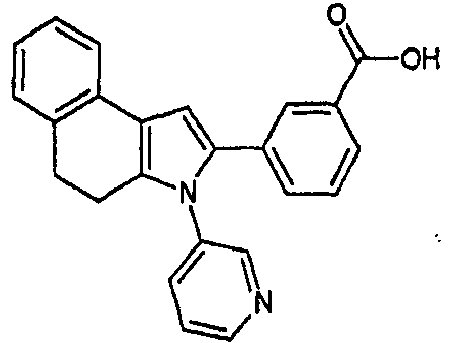
DMSO-d6; 8.4 (s, 1H), 7.84 - 7.74 (m, 4H), 7.6 - 7.55 (m, 2H), 7.4 (t, 1H), 7.3 (d, 1H), 7.25 (d, 2H), 7.1 (t, 1H), 7.0 (s, 1H), 2.99 (t, 2H), 2.71 (t, 2H). pos. mode 367 (M + H); neg. mode 365 (M - H). 3-(3-pyridin-3-yl-4,5-dihydro-3H-benzo[e]indol-2-yl) benzoic acid >100 
DMSO=d6; 7.1 - 8.3 (m, 15H), 5.5 (s, 2H). pos. mode 435 (M + 1), neg. mode 433 (M - 1). 5-[2-(3-phenylisoxazol-5-yl)-benzo[e]indol-3-ylmethyl] furan-3-carboxylic acid >100 
DMSO-d6; 7.1 - 8.3 (m, 13H), 5.5 (s, 2H), 2.9 (t, 2H), 2.6 (t, 2H). pos. mode 437 (M + 1), neg. mode 435 (M - 1). 5-[2-(3-phenylisoxazol-5-yl)-4,5-dihydrobenzo[e]indol-3-ylmethyl] furan-3-carboxylic acid >100 
DMSO-d6; 6.8 - 8.5 (m, 15H). pos. mode 421 (M+1), neg.mode 419 (M -1). 5-[2-(3-phenylisoxazol-5-yl)-benzo[e]indol-3-yl] furan-2-carboxylic acid 33 
DMSO-d6; 7.2 - 8.4 (m, 16H), 6.1 (s, 1H), 2.7 (t, 2H), 2.08 (t, 2H), 1.8 (t, 2H). pos. mode 473 (M + 1), neg.mode 471 (M - 1). 4-{4-[2-(3-phenylisoxazol-5-yl)-benzo[e]indol-3-yl]-phenyl} butyric acid 4.5 
CDCl3; 7.10 - 7.30 (m, 6H), 6.21 (s, 1H), 5.95 (d, 1H), 2.56-2.64 (m, 2H), 2.54 (d, 1H), 2.32 (t, 1H), 2.00 (br d, 1H), 1.59 (td, 1H), 1.30 - 1.48 (m, 3H), 0.89 (s, 3H), 0.86 (s, 3H), 0.84 (t, 3H). pos. mode 378 (M + H); neg. mode 376 (M - H). 5-[5-(1,1-dimethylpropyl)-2-phenyl-4,5,6,7-tetrahydroindol-1-yl]-furan-2-carboxylic acid 5.1 
CDCl3; 7.20 - 7.32 (m, 4H), 7.14 (d, 2H), 6.23 (s, 1H), 5.99 (d, 1H), 2.84 (dd, 1H), 2.58 - 2.73 (m, 3H), 2.46 (br s, 1H), 2.20 - 2.38 (m, 1H), 1.70-1.85 (m, 1H). pos. mode 376 (M + H). 5-(2-phenyl-5-trifluoromethyl-4,5,6,7-tetrahydroindol-1-yl)-furan-2-carboxylic acid 16.5 
DMSO-d6; 9.2 (s, 1H), 8.8 (s, 1H), 8.4 (d, 1 H), 8.1 - 7.4 (m, 9H), 6.92 (s, 1H), 6.6 (s, 1H). pos. mode 354 (M + H). 3-(3-furan-3-yl-3H-benzo[e]indol-2-yl) benzoic acid >100 
DMSO-d6; 8.8 (s, 1H), 8.4 (d, 1H), 8.0-7.92 (m, 3H), 7.78 - 7.67 (m, 3H), 7.62 - 7.49 (m, 4H), 6.9 (s, 1H), 6.6 (s, 1H). pos. mode 354 (M+H). 4-(3-furan-3-yl-3H-benzo[e]indol-2-yl) benzoic acid >100 
DMSO-d6; 6.7 - 8.4 (m, 13H), 6.5 (s, 1H). 353 (M dot). 5-(2-phenylbenzo[e]indol-3-yl) furan-2-carboxylic acid 22 
CDCl3; 7.40 - 7.48 (m, 2H), 7.38 (d, 1H), 7.12 - 7.24 (m, 2H), 6.62 (s, 1H), 6.49 (d, 1H), 5.97 (s, 1H), 2.45 - 2.82 (m, 5H), 2.15 - 2.30 (m, 1H), 1.72 (qd, 1H). pos. mode 416 (M + H). 5-(2-benzofuran-2-yl-6-trifluoromethyl-4,5,6,7-tetrahydroindol-1-yl)-furan-2-carboxylic acid 23 
CDCl3; 7.19 - 7.32 (m, 4H), 7.05 - 7.18 (m, 2H), 6.22 (s, 1H), 6.07 (d, 1H), 2.45 - 2.80 (m, 5H), 2.20 (br d, 1H), 1.72 (qd, 1H), pos. mode 376 (M + H). 5-(2-phenyl-6-trifluoromethyl-4,5,6,7-tetrahydroindol-1-yl)-furan-2-carboxylic acid 25 
CDCl3; 8.20 (dt, 1H), 8.09 (t, 1H), 7.52-7.62 (m, 2H), 7.32 - 7.36 (m, 1H), 7.26 - 7.30 (m, 1H), 6.60 - 7.17 (m, 2H), 6.66 (s, 1H), 5.60 (s, 1H), 2.65 (dd 1H), 2.25-2.45 (m, 3H), 1.96 (br d, 1H), 1.60 (td, 1H), 1.22 - 1.44 (m, 3H), 0.90 (s, 6H), 0.85 (t, 3H). pos. mode 428 (M + H). 3-[2-benzofuran-2-yl-5-(1,1-dimethylpropyl)-4,5,6,7-tetrahydroindoi-1-yl] benzoic acid 3.7 
CDCl3; 7.35 - 7.44 (m, 3H), 7.12 - 7.22 (m, 2H), 6.60 (s, 1H), 6.41 (d, 1H), 5.97 (d, 1H), 2.58 (dd, 1H), 2.51 (br d, 2H), 2.27 - 2.35 (m, 1H), 1.99 (br d, 1H), 1.58 (td, 1H), 1.25 - 1.47 (m, 3H), 0.90 (s, 3H), 0.89 (s, 3H), 0.84 (t, 3H). pos. mode 418 (M + H). 5-[2-benzofuran-2-yl-5-(1,1-dimethylpropyl)-4,5,6,7-tetrahydroindol-1-yl]-furan-2-carboxylic acid 18 
CDCl3; 7.15 - 7.28 (m, 6H), 6.20 (s, 1H), 5.97 (d, 1H), 2.54-2.60 (m, 2H), 2.20 - 2.40 (m 1H), 1.80-2.00 (m, 1H), 1.35 - 1.85 (m, 8H), 0.95 - 1.35 (m, 6H). pos. mode 390 (M + H). 5-(5-cyclohexyl-2-phenyl-4,5,6,7-tetrahydroindol-1-yl)-furan-2-carboxylic acid 40 
CDCl3; 7.24 - 7.33 (m, 3H), 6.89 (dd, 1H), 6.26 (s, 1H), 6.10 (d, 1H), 2.83 (dd, 1H), 2.55 - 2.70 (m, 3H), 2.37 - 2.53 (m, 1H), 2.23 (br d, 1H), 1.70 - 1.83 (m, 1H) pos. mode 444 (M + H). 5-[2-(3,4-dichlorophenyl)-5-trifluoromethyl-4,5,6,7-tetrahydroindol-1-yl]-furan-2-carboxylic acid 1.6 
DMSO-d6; 8.44 (d, 1H), 8.03 (d, 1H), 7.98 (tt, 1H), 7.9 (t, 1H), 7.76 - 7.74 (m, 2H), 7.66 - 7.61 (m, 3H), 7.57 (s, 1H), 7.52 (m, 2H), 7.46 (d, 1H). 421 (M dot). 5-[2-(4-trifluoramethylphenyl)-benzo[e]indol-3-yl]-furan-2-carboxylic acid 21 
CDCl3; 7.36 - 7.47 (m, 3H), 7.13 - 7.24 (m, 2H), 6.63 (s, 1H), 6.45 (d, 1H), 6.00 (d, 1H), 2.86 (dd, 1H), 2.55 - 2.70 (m, 3H), 2.40 - 2.55 (br s, 1H), 2.23 (br d, 1H), 1.70-1.85 (m, 1H). pos. mode 416 (M+H). 5-(2-benzofuran-2-yl-5-trifluoromethyl-4,5,6,7-tetrahydroindol-1-yl)-furan-2-carboxylic acid 44 
CDCl3: 7.1 - 7.3 (m, 6H); 6.2 (s, 1H); 6.0 (d, 1H); 2.5 - 2.6 (m, 3H); 2.2 (m, 1H); 1.9 (m, 2H); 1.4 (m, 1H); 1.1 (d, 3H). pos. mode 322 (M + H), TOF EM 322.1449 (M + H). 5-(6-methyl-2-phenyl-4,5,6,7-tetrahydroindol-1-yl) furan-2-carboxylic acid >100 
DMSO-d6; 7.2 - 8.5 (m, 13H), 6.0 (s, 1H). pos. mode 394 (M + 1), neg.mode 392 (M -1). 5-(2-benzofuran-2-yl-benzo[e]indol-3-yl) furan-2-carboxylic acid 22 
CDCl3; 7.22 - 7.30 (m, 3H), 7.16 - 7.22 (m, 2H), 6.96 (X of ABX, 1H), 6.22 (s, 1H), 3.83 (A of ABX, 1H), 3.81 (B of ABX, 1H), 2.64 - 2.74 (m, 2H), 2.57 (dd, 1H), 2.28 - 2.38 (m, 1H), 1.98 - 2.06 (m, 1H), 1.60 (tdd, 1H), 1.30-1.46 (m, 3H), 0.89 (s, 3H), 0.89 (s, 3H), 0.84 (t, 3H). pos. mode 409 (M + H); neg. mode 407 (M - H). {2-[5-(1,1-dimethylpropyl)-2-phenyl-4,5,6,7-tetrahydroindol-1-yl]-thiazol-4-yl} acetic acid 6.5 
61DMSO-d6; 7.1 - 8.4 (m, 15H), 6.0 (s, 1H), 2.7 (t, 2H), 2.03 (t, 2H), 1.8 (t, 2H). pos. mode 541 (M + 1), neg.mode 539 (M - 1). 4-(4-{2-[5-(2,4-dichlorophenyl)-furan-2-yl]-benzo[e]indol-3-yl}-phenyl) butyric acid 17 
DMSO-d6; 7.1 - 8.4 (m, 15H), 6.0 (s, 1H). pos. mode 499 (M + 1), neg.mode 497 (M -1). 3-{2-[5-(2,4-dichlorophenyl)-furan-2-yl]-benzo[e]indol-3-yl} benzoic acid 33 
MeOH-d4; 8.32 (d, 1H), 7.92 (d,1H), 7.7 (d, 1H), 7.62 - 7.44 (m, 6H), 7.38 (d, 1H), 7.3 (dd, 1H), 6.55 (d, 1H). pos. mode 422 (M + H). 5-[2-(3,4-dichlorophenyl)-benzo[e]indol-3-yl]-furan-2-carboxylic acid 7 
CDCl3: 7.3 (m, 2H); 6.9 (dd, 2H); 6.2 (s, 1H); 6.0 (d, 1H); 2.5 - (M + H); TOF EM 2.6 (m, 4H); 2.3 (m, 1H); 2.0 (m, 1H); 1.4 (m, 1H); 1.0 (s, 9H). pos. mode 432 (M + H); TOF EM 432.1122 (M + H). 5-[5-tButyl-2-(3,4-dichlorophenyl)-4,5,6,7-tetrahydroindol-1-yl] furan-2-carboxylic acid 11.7 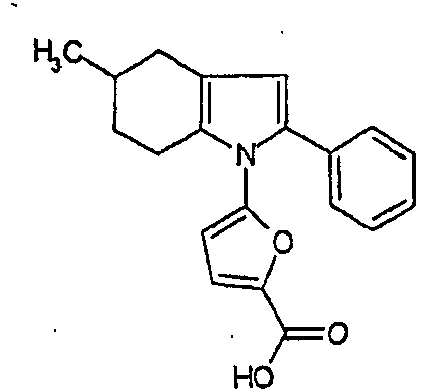
CDCl3: 7.1 - 7.3 (m, 6H); 6.1 (s, 1H); 6.0 (d, 1H); 2.5 - 2.7 (m, 3H); 2.1 (m, 1H); 1.9 (m, 2H); 1.4 (m, 1H); 1.0 (d, 3H). pos. mode 322 (M + H); TOF EM 322.1476 (M + H). 5-(5-methyl-2-phenyl-4,5,6,7-tetrahydroindol-1-yl) furan-2-carboxyiic acid >100 product structure 1H NMR, d MS name Ab42 IC50 (uM) 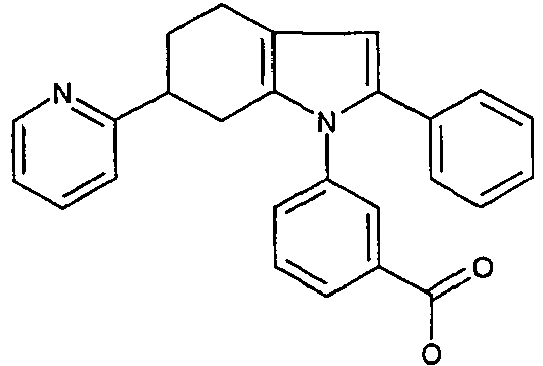
CDCI3; 8.86 - 8.92 (m, 1H), 8.15 - 8.22 (m, 1H), 7.75 - 8.10 (m, 3H), 7.55 - 7.68 (m, 2H), 7.35 (t, 1H), 7.02 - 7.23 (m, 5H), 6.28 (s, 1H), 3.60 - 3.73 (m, 1H), 2.65-3.03 (m, 4H), 2.20 - 2.30 (m, 1H), 2.05-2.20 (m, 1H). pos. mode 395 (M+H). 3-(2-phenyl-6-pyridin-2-yl-4,5,6,7-tetrahydroindol-1-yl) benzoic acid 70.8 
CDCl3; 7.26 - 7.34 (m, 3H), 6.90 (dd, 1H), 6.43 (s, 1 H), 6.17 (d, 1H), 3.40 - 3.50 (m, 1H), 2.45 - 2.65 (m, 2H), 1.95 - 2.15 (m, 2H), 1.70-1.95 (m, 2H). pos. mode 444 (M + H). 5-[2-(3,4-dichlorophenyl)-4-trifluoromethyl-4,5,6,7-tetrahydroindol-1-yl]-furan-2-carboxylic acid 7.36 
DMSO-d6; 13.4 (br s, 1H), 7.54 (d, 1H), 7.30 - 7.38 (m, 2H), 7.02 (dd, 1H), 6.73 (d, 1H), 6.56 (s, 1H), 2.81 (br s, 1H), 2.45-2.70 (m, 4H), 2.05 - 2.15 (m, 1H), 1.63 (qd, 1H) pos. mode 444 (M + H). 5-[2-(3,4-dichlorophenyl)-6-trifluoromethyl-4,5,6,7-tetrahydroindol-1-yl]-furan-2-carboxylic acid 8.9 
CDCl3: 8.0 (s, 1H); 7.2 - 7.3 (m, 5H); 6.2 (s, 1H); 2.7 (m, 2H); 2.6 (m, 1H); 2.2 (m, 1H); 1.9 (m, 2H); 1.5 (m, 1H); 1.0 (d, 3H). TOF pos. mode 339 (M + H); EM 339.1175 (M + H). 2-(5-methyl-2-phenyl-4,5,6,7-tetrahydroindol-1-yl) thiazole-4-carboxylic acid >100 
CDCl3: 7.5 (d, 2H); 7.1 - 7.3 (m, 3H); 6.3 (s, 1H); 6.0 (d, 1H); 2.5 - 2.6 (m, 3H); 2.3 (m, 1H); 2.0 (m, 1H); 1.4 (m, 1H); 1.0 (s, 9H). TOF pos. mode 432 (M + H); EM 432.1783 (M + H). 5-[5-tButyl-2-(4-trifluoromethylphenyl)-4,5,6,7-tetrahydroindol-1-yl] furan-2-carboxylic acid 14 
CDCl3: 8.1 (br. s., 1H); 8.0 (m, 0.4H); 7.7 (tt, 0.2H); 7.5 (tt, 0.3H); 7.1 - 7.2 (m, 5H); 6.2 (s, 1H); 2.5 - 2.6 (m, 3H); 2.3 (m, 1H); 2.0 (m, 1H); 1.4 - 1.5 (m, 2H); 1.0 (d, 9H). pos. mode 321 (M + H); neg. mode 319 (M - H). 5-tButyl-2-phenyl-1-(4H-[1,2,4]triazol-3-yl)-4,5,6,7-tetrahydro-1H-indole 63 
DMSO-d6; 7.27 (s, 1H), 6.87 (d, 1H), 6.68 (m, 2H), 6.25 (s, 1H), 3.7 (s, 3H), 3.6 (s, 3H), 2.79 - 2.55 (m, 5H), 2.36 (s, 1H), 2.12 (d, 1H). neg mode 452 (M dot). 2-[2-(2,4-dimethoxyphenyl)-5-trifluoromethyl-4,5,6,7-tetrahydroindol-1-yl]-thiazole-4-carboxylic acid >100 
CDCl3; 7.18 (d, 1H), 6.54 (d, 1H); 6.48 (dd, 1H), 6.35 (d, 1H), 6.1 (s, 1H), 3.82 (s, 3H), 3.5 (s, 3H), 2.96 - 2.8 (m, 4H), 2.68 - 2.60 (m, 1H), 2.24 - 2.18 (m, 1H), 1.8 - 1.68 (m, 1H). pos. mode 423 (M + H - OMe) 2-[2-(3,4-dimethoxyphenyl)-5-trifluoromethyl-4,5,6,7-tetrahydroindol-1-yl]-thiazole-4-carboxylic acid >100 
DMSO-d6; 7.27 (s, 1H); 6.97 (d, 2H); 6.84 (d, 2H); 6.51 (s, 1H); 6.22 (s, 1H); 3.7 (t, 4H); 3.1 (t, 4H); 2.73 (m, 2H); 2.5 (m, 3H); 2.12 (m, 1H); 1.64 (m, 1H). pos. mode 461 (M + H); neg. mode 459 (M - H). 5-[2-(4-morpholin-4-yl-phenyl)-5-trifluoromethyl-4,5,6,7-tetrahydroindol-1-yl]-furan-2-carboxylic acid 68 
CDCl3; 7.10 - 7.22 (m, 3H), 7.02 (s, 1H), 6.60 - 7.01 (m, 1H), 6.24 (s, 1H), 3.83 (s, 2H), 2.60 - 2.70 (m, 2H), 2.54 (dd, 1H), 2.20 - 2.38 (m, 1H), 1.96 - 2.08 (m, 1H), 1.55 - 1.65 (m, 1H), 1.32 - 1.46 (m, 3H), 0.89 (s, 3H), 0.88 (s, 3H), 0.84 (t, 3H). pos. mode 443 (M + 1). {2-[2-(3-chlorophenyl)-5-(1,1-dimethylpropyl)-4,5,6,7-tetrahydroindol-1-yl]-thiazol-4-yl} acetic acid na 
CDCl3; 7.1 - 7.3 (m, 6H, ArH); 6.2 (s, 1H); 6.0 (d, 1H); 3.9 (s, 3H); 2.6 (m, 3H); 2.3 (m, 1H); 2.o (m, 1H); 1.3 -1.5 (m, 2H); 1.0 (s, 9H). pos. mode 378 (M + H). 5-(5-tertButyl-2-phenyl-4,5,6,7-tetrahydroindol-1-yl) furan-2-carboxylic acid methyl ester >100 
DMSO - d6; 6.6 - 8.4(14H, ArH), pos. mode 370 (M+1) 3-(2-thiophen-3-yl-benzo[e]indol-3-yl) benzoic acid 13.2 
DMSO - d6; 6.6 - 8.4(13H, ArH), 2.9(2H, CH2), 2.6(2H,CH2) pos. mode 396 (M + 1); 394 (M - 1). 3-[3-(2H-tetrazol-5-yl)-phenyl]-2-thiophen-3-yl-3H benzo[e]indole 31 
CDCl3; 7.1 - 7.3 (m, 6H, ArH); 6.2 (s, 1H); 6.0 (d, 1H); 2.6 (m, 2H); 2.4 -2.5 (m, 2H); 2.0 (m, 1H); 1.5 (m, 2H); 1.0 (s, 9H). pos. mode 364 (M + H); neg. mode 362 (M - H) 5-(5-tertButyl-2-phenyl-4,5,6,7-tetrahydroindol-1-yl) furan-2-carboxylic acid 3.7 
DMSO - d6; 7.1- 8.5 (14H, ArH/NH); 5.8 (1H); 2.9 (2H, CH2); 2.6 (2H, CH2). pos.mode 430 (M +1); neg. mode 429 (M-1). 2-benzofuran-2-yl-3-[3-(2H-tetrazol-5-yl)-phenyl]-4,5-dihydro-3H-benzo[e]indole 9.3 
DMSO - d6; 7.0 - 8.2 (15H, ArH/NH); 6.3 (1H); 2.9 (2H, CH2); 2.6 (2H, CH2). pos. mode 457 (M + 1); neg mode 455 (M - 1). 2-(3-phenylisoxazol-5-yl)-3-[3-(2H-tetrazol-5-yl)-phenyl]-4,5-dihydro-3H-benzo[e]indole 9.6 
DMSO d6; 7.0 -8.1 (14H, ArH); 6.2 (1H); 2.9 (2H, CH2); 2.6 (2H, CH2). pos.mode 433 (M + 1); heg.mode 431 (M - 1). 3-(2-phenylisoxazol-5-yl)-4,5-dihydrobenzo[e]indol-3-yl] benzoic acid 2.2 
DMSO - d6; 7.3 - 8.8 (15H, ArH). pos. mode 365 (M + 1). 3-(2-pyridin-3-yi-benzo[e]indol-3-yl) benzoic acid >100 
DMSO - d6; 7.0 - 8.6 (13H, ArH), 2.9 (2H, CH2), 2.6 (2H, CH2). pos. mode 367 (M+1). 3-(2-pyridin-3-yl-4,5-dihydrobenzo[e]indol-3-yl) benzoic acid >100 
DMSO - d6; 7.2-8.5(15H, ArH). pos. mode 365 (M + 1). 3-(2-pyridin-2-yl-benzo[e]indol-3-yl) benzoic acid 79 
DMSO - d6; 6.9 - 8.5 (13H, ArH), 2.9 (2H, CH2), 2.6 (2H, CH2). pos. mode 367 (M + 1); 365 (M + 1). 3-(2-pyridin-2-yl-4,5-dihydrobenzo[e]indol-3-yl) benzoic acid 70 
DMSO - d6; 7.1 - 8.2 (16H, ArH). pos. mode 404 (M+1). 3-(2-benzofuran-2-yl-benzo[e]indol-3-yl) benzoic acid 1.17 
DMSO - d6; 7.0 - 8.1 (14H, ArH), 2.9 (2H, CH2), 2.6 (2H, CH2). pos. mode 406 (M+1). 3-(2-benzofuran-2-yl-4,5-dihydrobenzo[e]indol-3-yl) benzoic acid 0.56 
DMSO - d6; 7.0 - 8.6 (14H, ArH), 2.9 (2H, CH2), 2.6 (2H, CH2). pos. mode 391 (M + 1). 2-pyridin-2-yl-3-[3-(2H-tetrazol-5-yl)-phenyl]-4,5-dihydro-3H-benzo[e]indole 43 
DMSO - d6; 7.4 - 8.6(16H, ArH). pos. mode 389 (M + 1). 2-pyridin-3-yl-3-[3-(2H-tetrazol-5-yl)-phenyl]-3H-benzo[e]indole 46 
DMSO - d6; 7.2 - 8.4 (16H, ArH). pos. mode 389 (M+1). 2-pyridin-2-yl-3-[3-(2H-tetrazol-5-yl)-phenyl]-3H-benzo[e]indole 32 
DMSO - d6; 13.27 (s(br), C02H), 7.98 - 7.90 (m, 4H, Ar-H), 7.58 - 7.50 (m, 2H, Ar-H), 7.47 (m, 2H, Ar-H), 7.44 - 7.31 (m, 6H, Ar-H), 7.23 (s, 1H, pyr-H). pos. mode 341 (M + H); neg. mode 339 (M - H) 3-(3,5-diphenyl-pyrazol-1-yl)-benzoic acid >100 
DMSO-d6; 7.0 - 8.4 (13H, ArH); 6.9 (1H), 2.9 (2H, CH2), 2.52 (2H, CH2). neg. mode 388 (M - H) 2-phenyl-3-[3-(2H-tetrazol-5-yl)-phenyl]-4,5-dihydro-3H-benzo[e]Indole 24 
CDCl3; 8.0 (d, 1H); 7.9 (s, 1H); 7.5 (t, 1H); 7.0 - 7.3 (7H, ArH); 6.3 (1H), 2.6 (2H, CH2), 2.5 (2H, CH2); 1.5 -1.9 (4H). pos. mode 342 (M + H); neg. mode 340 (M - H) 2-phenyl-1-[3-(1H-tetrazol-5-yl)-phenyl]-4,5,6,7-tetrahydro-1H-indole 100 - Although the foregoing invention has been described in some detail by way of illustration and example for purposes of clarity of understanding, it will be obvious that certain changes and modifications may be practiced within the scope of the appended claims.
Claims (8)
- A compound of Formula I or Formula II,

wherein
one of R1-R5 is chosen from -L-C(=O)OH, -L-CH=CHC(=O)OH, -L-C(=O)NH2, -L-C(=O)NH(C1-3 alkyl), -L-C(=O)N(C1-3 alkyl)2,-L-S(=O)2(C1-3 alkyl), -L-S(=O)2NH2, -L-S(=O)2N(C1-3 alkyl)2, -L-S(=O)2NH(C1-3 alkyl), and -L-tetrazolyl, and
the others of R1-R5, independent of one another, are chosen from hydro, hydroxyl, halo, alkyl, alkoxy, haloalkyl, haloalkoxy, -N(C1-3 alkyl)2, -NH(C1-3 alkyl), -C(=O)NH2, -C(-O)NH(C1-3 alkyl), -C(=O)N(C1-3 alkyl)2, -S(=O)2(C1-3alkyl), -S(=O)2NH2, -S(=O)2N(C1-3 alkyl)2, -S(=O)2NH(C1-3 alkyl), -CHF2, -OCF3, -OCHF2, -SCF3, -CF3, -CN, -NH2, and -NO2;
R6-R10, independent of one another, are chosen from hydro, hydroxyl, halo, alkyl, alkoxy, haloalkyl, haloalkoxy, -N(C1-3 alkyl)2, -NH(C1-3 alkyl), -C(=O)NH2, -C(=O)NH(C1-3 alkyl), -C(=O)N(C1-3 alkyl)2, -S(=O)2(C1-3alkyl), -S(=O)2NH2, -S(=O)2N(C1-3 alkyl)2, -S(=O)2NH(C1-3 alkyl), -CHF2, -OCF3, -OCHF2, -SCF3, -CF3, -CN, -NH2, -NO2, -C(=O)-N-morpholino, cyclohexyl, -morpholino, -pyrrolidinyl, -piperazinyl, -(N-methyl)-piperazinyl, -OCH2-phenyl, -pyridinyl, methylenedioxy, ethylenedioxy, -C(=O)OCH2CH3 substituted furanyl, para-(C(=O)OCH2CH3)-phenyl, and -O-Si(CH3)2(C(CH3)3), or two adjacent of R6-R9 can be taken together to form a phenyl ring which may be substituted or unsubstituted;
R11 is an optionally substituted heterocyclic group, wherein the heterocyclic group is chosen from thianthrenyl, furyl (furanyl), isobenzofuranyl, chromenyl, xanthenyl, phenoxanthiinyl, pyrrolyl, 2H-pyrrolyl, imidazolyl, pyrazolyl, pyridyl (pyridinyl), 2-pyridyl, 3-pyridyl, 4-pyridyl, pyrazinyl, pyrimidinyl, pyridazinyl, tetrahydrofuranyl, pyranyl, piperidinyl, piperazinyl, indolizinyl, isoindolyl, 3H-inddlyl, indolyl, indazolyl, purinyl, 4H-quinolizinyl, isoquinolyl, quinolyl, phthalzinyl, naphthyridinyl, quinozalinyl, quinuclidinyl, morpholinyl, cinnolinyl, pteridinyl, carbazolyl, bein-carbolinyl, phenanthridinyl, acrindinyl, perimidinyl, phenanthrolinyl, phenazinyl, isothiazolyl, phenothiazinyl, oxazolyl, isoxazolyl, furazanyl, phenoxazinyl, 1,4-dihydroquinoxaline-2,3-dione, 7-aminoisocoumarin, pyrido[1,2-a]pyrimidin-4-one, pyrazolo[1,5-a]pyrimidinyl, pyrazolo[1,5-a]pyrimidin-3-yl, 1,2-benzoisoxazol-3-yl, benzimidazolyl, 2-oxindolyl and 2-oxobenzimidazolyl, or from pyridinyl, isoxazolyl, furanyl, thiazolyl, pyrimidinyl, pyrrolyl, triazolyl, benzo[1,3]dioxolyl, and benzofuranyl; and
L is -(CH2)n-(CH2)n-, wherein each n is independently chosen from 0, 1, 2, 3, 4, 5, 6, 7, and 8, wherein each carbon can be optionally substituted with one or more C1-3 alkyl or C3-6 -cycloalkyl. - The compound for use of claim 1, wherein
one of R1-R5 in the compounds of Formulae I and II is chosen from -C(=O)OH, -CH=CHC(=O)OH, -CH2CH2C(=O)OH, -CH2CH2CH2C(=O)OH, -CH(CH3)C(=O)OH, -CH(CH2CH3)C(=O)OH, -C(CH3)(CH2CH3)C(=O)OH, -C(CH2CH3)2C(=O)OH, -CH2C(=O)OH, -C(CH3)2C(=O)OH, -C(=O)NH2, -C(=O)NHCH3, -C(=O)N(CH3)2, -S(=O)2(C1-3 alkyl), -S(=O)2NH2, -S(=O)2NHCH3, -S(=O)2N(CH3)2, -C(=O)NH(C1-3-alkyl), -C(=O)N(C1-3alkyl)2, -S(=O)2N(C1-3alkyl)2, and
the others of R1-R5, independent of one another, are chosen from hydro, hydroxyl, halo, alkyl, alkoxy, haloalkyl, haloalkoxy, -N(C1-3 alkyl)2, -NH(C1-3 alkyl), -C(-O)NH2, -C(=O)NH(C1-3-alkyl), -C(=O)N(C1-3 alkyl)2, -S(=O)2(C1-3alkyl), -S(=O)2NH2, -S(=O)2N(C1-3 alkyl)2, -S(=O)2NH(C1-3 alkyl), -CHF2, -OCF3, -OCHF2, -SCF3, -CF3, -CN, -NH2, and -NO2; and
R6-R10, independent of one another, are chosen from hydro, hydroxyl, halo, alkyl, alkoxy, haloalkyl, haloalkoxy, -N(C1-3 alkyl)2, -NH(C1-3 alkyl), -C(=O)NH2, -C(=O)NH(C1-3 alkyl), -C(=O)N(C1-3 alkyl)2, -S(=O)2(C1-3alkyl), -S(=O)2NH2, -S(=O)2N(C1-3 alkyl)2, -S(=O)2NH(C1-3 alkyl), -CHF2, -OCF3, -OCHF2, -SCF3, -CF3, -CN, -NH2, and -NO2, or two adjacent of R6-R9 can be taken together to form a phenyl ring which may be substituted or unsubstituted. - The compound for use of claim 1 or 2, wherein the heterocyclic group is chosen from pyridinyl, isoxazolyl, furanyl, thiazolyl, pyrimidinyl, pyrrolyl, triazolyl, benzo[1,3]dioxolyl, and benzofuranyl.
- A compound selected from;

2-(3-phenylisoxazol-5-yl)-3-[3-(2H-tetrazol-5-yl)-phenyl]-4,5-dihydro-3H-benzo[e]indole;
3-(2-phenylisoxazol-5-yl)-4,5-dihydrobenzo[e]indol-3-yl] benzoic acid;
3-(2-pyridin-3-yl-benzo[e]indol-3-yl) benzoic acid;
3-(2-pyridin-3-yl-4,5-dihydrobenzo[e]indol-3-yl) benzoic acid;
3-(2-pyridin-2-yl-benzo[e]indol-3-yl) benzoic acid;
3-(2-pyridin-2-yl-4,5-dihydrobenzo[e]indol-3-yl) benzoic acid;
2-pyridin-2-yl-3-[3-(2H-tetrazol-5-yl)-phenyl]-4,5-dihydro-3H-benzo[e]indole;
2-pyridin-3-yl-3-[3-(2H-tetrazol-5-yl)-phenyl]-3H-benzo[e]indole;
2-pyridin-2-yl-3-[3-(2H-tetrazol-5-yl)-phenyl]-3H-benzo[e]indole;
3-[2-(3-phenylisoxazol-5-yl)-benzo[e]indol-3-yl] benzoic acid;
3-[3-(2-benzofuran-2-yl-benzo[e]indol-3-yl)-phenyl] propionic acid;
3-(2-benzofuran-2-yl-5-trifluoromethyl-4,5,6,7-tetrahydroindol-1-yl) benzoic acid;
3-[2-(3-phenylisoxazol-5-yl)-4,5-dihydrobenzo[e]indol-3-yl] benzoic acid;
4-[4-(2-benzofuran-2-ylbenzo[e]indol-3-yl)-phenyl] butyric acid;
5-(2-benzofuran-2-ylbenzo[e]indol-3-yl) 2-chlorobenzoic acid;
3-(2-benzofuran-2-ylbenzo[e]indol-3-yl) 4-hydroxybenzoic acid;
2-benzofuran-2-yl-3-[3-(2H-tetrazol-5-yl)-phenyl]-4,5-dihydro-3H-benzo[e]indole;
2-(3-phenylisoxazol-5-yl)-3-[3-(2H-tetrazol-5-yl)-phenyl]-4,5-dihydro-3H-benzo[e]indole;
3-(2-phenylisoxazol-5-yl)-4,5-dihydrobenzo[e]indol-3-yl] benzoic acid;
2-pyridin-4-yl-3-[3-(2H-tetrazol-5-yl)-phenyl]-4,5-dihydro-3H-benzo[e]indole;
2-benzo[1,3]dioxol-5-yl-3-[3-(2H-tetrazol-5-yl)-phenyl]-3H-benzo[e]indole;
2-pyridin-3-yl-3-[3-(2H-tetrazol-5-yl)-phenyl]-4,5-dihydro-3H-benzo[e]indole;
3-(2-benzo[1,3]dioxol-5-yl-4,5-dihydrobenzo[e]indol-3-yl) benzoic acid;
3-(2-benzo[1,3]dioxol-5-yl-benzo[e]indol-3-yl) benzoic acid;
4-[4-(2-benzo[1,3]dioxol-5-yl-benzo[e]indol-3-yl)-phenyl] butyric acid;
4-[4-(2-benzo[1,3]dioxol-5-yl-4,5-dihydrobenzo[e]indol-3-yl)-phenyl] butyric acid;
4-{4-[2-(5-methyl-3-phenylisoxazol-4-yl)-4,5-dihydrobenzo[e]indol-3-yl]-phenyl} butyric acid;
4-{4-[2-(5-methyl-3-phenylisoxazol-4-yl)-benzo[e]indol-3-yl]-phenyl} butyric acid;
3-(2-pyridin-4-yl-4,5-dihydrobenzo[e]indol-3-yl) benzoic acid;
3-(2-pyridin-4-yl-benzo[e]indol-3-yl) benzoic acid;
3-[2-(5-methyl-3-phenylisoxazol-4-yl)-benzo[e]indol-3-yl] benzoic acid;
2-(5-methyl-3-phenylisoxazol-4-yl)-3-[3-(2H-tetrazol-5-yl)-phenyl] 3H-benzo[e]indole;
4-{4-[2-(3-phenylisoxazol-5-yl)-benzo[e]indol-3-yl]-phenyl} butyric acid;
3-[2-benzofuran-2-yl-5-(1,1-dimethylpropyl)-4,5,6,7-tetrahydroindol-1-yl] benzoic acid;
4-(4-{2-[5-(2,4-dichlorophenyl)-furan-2-yl]-benzo[e]indol-3-yl}-phenyl) butyric acid;
3-{2-[5-(2,4-dichlorophenyl)-furan-2-yl]-benzo[e]indol-3-yl} benzoic acid;
2-benzofuran-2-yl-3-[3-(2H-tetrazol-5-yl)-phenyl]-4,5-dihydro-3H-benzo[e]indole;
2-(3-phenylisoxazol-5-yl)-3-[3-(2H-tetrazol-5-yl)-phenyl]-4,5-dihydro-3H-benzo[e]indole;
3-(2-phenylisoxazol-5-yl)-4,5-dihydrobenzo[e]indol-3-yl] benzoic acid;
3-(2-pyridin-3-yl-benzo[e]indol-3-yl) benzoic acid;
3-(2-pyridin-3-yl-4,5-dihydrobenzo[e]indol-3-yl) benzoic acid;
3-(2-pyridin-2-yl-benzo[e]indol-3-yl) benzoic acid;
3-(2-pyridin-2-yl-4,5-dihydrobenzo[e]indol-3-yl) benzoic acid;
3-(2-benzofuran-2-yl-benzo[e]indol-3-yl) benzoic acid;
3-(2-benzofuran-2-yl-4,5-dihydrobenzo[e]indol-3-yl) benzoic acid;
2-pyridin-2-yl-3-[3-(2H-tetrazol-5-yl)-phenyl]-4,5-dihydro-3H-henzo[e]indole;
2-pyridin-3-yl-3-[3-(2H-tetrazol-5-yl)-phenyl]-3H-benzo[e]indole;
2-pyridin-2-yl-3-[3-(2H-tetrazol-5-yl)-phenyl]-3H-benzo[e]indole;
and pharmaceutically-acceptable salts of any of the foregoing. - A compound according to claim 4 for use in the treatment or prophylaxis of a neurodegenerative disorder.
- A pharmaceutical composition comprising a compound according to any one of claims 1 to 5 for use in the treatment or prophylaxis of a neurodegenerative disorder.
- The compound for use according to any one of claims 1 to 3 or 5, or the pharmaceutical composition for use according to claim 6, wherein the neurodegenerative disorder is a disease characterized by abnormal amyloid precursor protein processing.
- The compound for use according to any one of claims 1 to 3 or 5, or the pharmaceutical composition for use according to claim 6, wherein the neurodegenerative disorder is mild cognitive impairment, dementia, or Alzheimer's disease.
Priority Applications (1)
| Application Number | Priority Date | Filing Date | Title |
|---|---|---|---|
| EP14183974.6A EP2813498B1 (en) | 2004-10-04 | 2005-10-04 | Compounds for Alzheimer's disease |
Applications Claiming Priority (5)
| Application Number | Priority Date | Filing Date | Title |
|---|---|---|---|
| US61591404P | 2004-10-04 | 2004-10-04 | |
| US61616204P | 2004-10-04 | 2004-10-04 | |
| US66047905P | 2005-03-09 | 2005-03-09 | |
| US66027805P | 2005-03-10 | 2005-03-10 | |
| PCT/US2005/035747 WO2006041874A2 (en) | 2004-10-04 | 2005-10-04 | Compounds for alzheimer's disease |
Related Child Applications (1)
| Application Number | Title | Priority Date | Filing Date |
|---|---|---|---|
| EP14183974.6A Division EP2813498B1 (en) | 2004-10-04 | 2005-10-04 | Compounds for Alzheimer's disease |
Publications (3)
| Publication Number | Publication Date |
|---|---|
| EP1809601A2 EP1809601A2 (en) | 2007-07-25 |
| EP1809601A4 EP1809601A4 (en) | 2010-11-17 |
| EP1809601B1 true EP1809601B1 (en) | 2014-09-10 |
Family
ID=36148852
Family Applications (2)
| Application Number | Title | Priority Date | Filing Date |
|---|---|---|---|
| EP05802834.1A Expired - Lifetime EP1809601B1 (en) | 2004-10-04 | 2005-10-04 | Compounds for alzheimer's disease |
| EP14183974.6A Expired - Lifetime EP2813498B1 (en) | 2004-10-04 | 2005-10-04 | Compounds for Alzheimer's disease |
Family Applications After (1)
| Application Number | Title | Priority Date | Filing Date |
|---|---|---|---|
| EP14183974.6A Expired - Lifetime EP2813498B1 (en) | 2004-10-04 | 2005-10-04 | Compounds for Alzheimer's disease |
Country Status (7)
| Country | Link |
|---|---|
| EP (2) | EP1809601B1 (en) |
| JP (1) | JP2008515805A (en) |
| KR (1) | KR20070060156A (en) |
| CN (1) | CN101068781B (en) |
| AU (1) | AU2005294404A1 (en) |
| CA (1) | CA2582674A1 (en) |
| WO (1) | WO2006041874A2 (en) |
Families Citing this family (27)
| Publication number | Priority date | Publication date | Assignee | Title |
|---|---|---|---|---|
| US7781478B2 (en) | 2004-07-14 | 2010-08-24 | Ptc Therapeutics, Inc. | Methods for treating hepatitis C |
| EP1771169A1 (en) | 2004-07-14 | 2007-04-11 | PTC Therapeutics, Inc. | Methods for treating hepatitis c |
| US9216966B2 (en) | 2004-10-04 | 2015-12-22 | John Manfredi | Compounds for Alzheimer's disease |
| JP2009532501A (en) * | 2006-04-04 | 2009-09-10 | ミリアド ジェネティクス, インコーポレイテッド | Compounds for diseases and disorders |
| AU2007305269A1 (en) * | 2006-10-04 | 2008-04-10 | Schering Corporation | Bicyclic and tricyclic derivatives as thrombin receptor antagonists |
| EP2134683A2 (en) * | 2007-02-12 | 2009-12-23 | Intermune, Inc. | Novel inhibitors hepatitis c virus replication |
| EP2002835A1 (en) | 2007-06-04 | 2008-12-17 | GenKyo Tex | Pyrazolo pyridine derivatives as NADPH oxidase inhibitors |
| EP2000176A1 (en) * | 2007-06-04 | 2008-12-10 | GenKyo Tex | Tetrahydroindole derivatives as NADPH Oxidase inhibitors |
| CA2694216A1 (en) | 2007-07-24 | 2009-01-29 | Astellas Pharma Inc. | Benzimidazole derivative |
| RU2527177C2 (en) | 2007-12-20 | 2014-08-27 | Энвиво Фармасьютикалз, Инк. | Tetrasubstituted benzenes |
| JPWO2010007943A1 (en) | 2008-07-17 | 2012-01-05 | 旭化成ファーマ株式会社 | Nitrogen-containing heterocyclic compounds |
| JPWO2010007944A1 (en) * | 2008-07-17 | 2012-01-05 | 旭化成ファーマ株式会社 | Nitrogenous bicyclic heterocyclic compounds |
| EP2166008A1 (en) | 2008-09-23 | 2010-03-24 | Genkyo Tex Sa | Pyrazolo pyridine derivatives as NADPH oxidase inhibitors |
| EP2166009A1 (en) | 2008-09-23 | 2010-03-24 | Genkyo Tex Sa | Pyrazolo pyridine derivatives as nadph oxidase inhibitors |
| EP2165707A1 (en) | 2008-09-23 | 2010-03-24 | Genkyo Tex Sa | Pyrazolo pyridine derivatives as NADPH oxidase inhibitors |
| EP2166010A1 (en) | 2008-09-23 | 2010-03-24 | Genkyo Tex Sa | Pyrazolo pyridine derivatives as NADPH oxidase inhibitors |
| JPWO2010087319A1 (en) | 2009-01-27 | 2012-08-02 | アステラス製薬株式会社 | Screening method of substances effective as therapeutic agents for prostate cancer |
| TW201107315A (en) | 2009-07-27 | 2011-03-01 | Kissei Pharmaceutical | Indole derivatives, or the pharmaceutically acceptable salts |
| EP2305679A1 (en) | 2009-09-28 | 2011-04-06 | GenKyoTex SA | Pyrazoline dione derivatives as nadph oxidase inhibitors |
| KR101213495B1 (en) * | 2010-06-03 | 2013-01-14 | 삼성디스플레이 주식회사 | Organic light emitting device |
| US20120225846A1 (en) * | 2011-03-02 | 2012-09-06 | Bioenergenix | Heterocyclic compounds for the inhibition of pask |
| GB2516949A (en) * | 2013-03-13 | 2015-02-11 | John Manfredi | Compounds for the treatment of neurological disorders |
| WO2016201168A1 (en) | 2015-06-10 | 2016-12-15 | Forum Pharmceuticals Inc. | Oxadiazine compounds and methods of use thereof |
| EP3479843A1 (en) | 2017-11-01 | 2019-05-08 | GenKyoTex Suisse SA | Use of nox inhibitors for treatment of cancer |
| CN109678788B (en) * | 2019-01-19 | 2021-05-04 | 湘潭大学 | A kind of 1,2-diaryl indole, derivative and synthetic method thereof |
| CN115335057A (en) * | 2020-03-27 | 2022-11-11 | 北京原基华毅生物科技有限公司 | Method for inhibiting casein kinase |
| EP4313031A4 (en) * | 2021-03-30 | 2025-03-12 | Carmel-Haifa University Economic Corporation Ltd. | NEW SULFONAMIDE SERIES OF QR2 INHIBITORS FOR REVERSING OXIDATIVE STRESS AND COGNITIVE DECLINE |
Family Cites Families (13)
| Publication number | Priority date | Publication date | Assignee | Title |
|---|---|---|---|---|
| US3189617A (en) * | 1961-02-03 | 1965-06-15 | Sterling Drug Inc | 1-aryloxindoles and their preparation |
| US3878225A (en) * | 1973-03-01 | 1975-04-15 | Hoechst Co American | Condensed pyrroles bearing an N-phenyl substituent |
| US3931407A (en) * | 1973-03-01 | 1976-01-06 | American Hoechst Corporation | Method of treatment with and compositions containing condensed pyrroles bearing an N-phenyl substituent |
| US4537902A (en) * | 1979-06-11 | 1985-08-27 | Merck & Co., Inc. | 4-Substituted-3-hydroxy-3-pyrroline-2,5-dione inhibitors of glycolic acid oxidase |
| FR2751966B1 (en) * | 1996-08-01 | 1998-10-30 | Union Pharma Scient Appl | NOVEL 1,2-DIARYLINDOLES, DERIVATIVES THEREOF, AND THERAPEUTIC USES THEREOF |
| ITMI962356A1 (en) * | 1996-11-13 | 1998-05-13 | Uni Degli Studi Di Brescia D I | USE OF COMPOUNDS DERIVED FROM MOLECULES WITH NON-STEROID ANTI-INFLAMMATORY ACTIVITY FOR THE PREVENTION AND TREATMENT OF |
| WO1998037068A1 (en) * | 1997-02-21 | 1998-08-27 | Bristol-Myers Squibb Company | Benzoic acid derivatives and related compounds as antiarrhythmic agents |
| US6323218B1 (en) * | 1998-03-11 | 2001-11-27 | The General Hospital Corporation | Agents for use in the treatment of Alzheimer's disease |
| GB9914371D0 (en) * | 1999-06-18 | 1999-08-18 | Smithkline Beecham Plc | Novel compounds |
| DE10015939A1 (en) * | 2000-03-30 | 2001-10-04 | Boehringer Ingelheim Pharma | Thrombolytic agent useful e.g. for treating or preventing deep vein leg thrombosis, pulmonary embolism or restenosis comprises new or known 3-phenyl-4,5-dihydro-2-phenylbenz(e)indole derivatives |
| WO2003073999A2 (en) * | 2002-03-01 | 2003-09-12 | Pintex Pharmaceuticals, Inc. | Pini-modulating compounds and methods of use thereof |
| US7358370B2 (en) * | 2005-02-25 | 2008-04-15 | Serenex, Inc. | Benzene, pyridine, and pyridazine derivatives |
| JP2006290791A (en) * | 2005-04-11 | 2006-10-26 | Astellas Pharma Inc | Azole-substituted sulfonylbenzene derivatives |
-
2005
- 2005-10-04 KR KR1020077010297A patent/KR20070060156A/en not_active Withdrawn
- 2005-10-04 WO PCT/US2005/035747 patent/WO2006041874A2/en not_active Ceased
- 2005-10-04 EP EP05802834.1A patent/EP1809601B1/en not_active Expired - Lifetime
- 2005-10-04 CA CA002582674A patent/CA2582674A1/en not_active Abandoned
- 2005-10-04 CN CN2005800413164A patent/CN101068781B/en not_active Expired - Fee Related
- 2005-10-04 AU AU2005294404A patent/AU2005294404A1/en not_active Abandoned
- 2005-10-04 EP EP14183974.6A patent/EP2813498B1/en not_active Expired - Lifetime
- 2005-10-04 JP JP2007534899A patent/JP2008515805A/en active Pending
Non-Patent Citations (4)
| Title |
|---|
| ERIKSEN ET. AL., J CLIN INVEST. 2003 AUGUST 1; 112(3):, 2003, pages 440-449 * |
| SASTRE ET AL, THE JOURNAL OF NEUROSCIENCE, vol. 23, no. 3, 2003, pages 9796 - 99804 * |
| THOMAS T ET AL: "ASPIRIN AND NON-STEROIDAL ANTI-INFLAMMATORY DRUGS INHIBIT AMYLOID-BETA AGGREGATION", NEUROREPORT, LIPPINCOTT WILLIAMS & WILKINS, US, vol. 12, no. 15, 29 October 2001 (2001-10-29), pages 3263 - 3267, XP009023260, ISSN: 0959-4965, DOI: 10.1097/00001756-200110290-00024 * |
| WEGGEN S ET AL: "A SUBSET OF NSAIDS LOWER AMYLOIDOGENIC ABETA42 INDEPENDENTLY OF CYCLOOXYGENASE ACTIVITY", NATURE, NATURE PUBLISHING GROUP, LONDON, GB, vol. 414, no. 6860, 1 November 2001 (2001-11-01), pages 212 - 216, XP001206225, ISSN: 0028-0836, DOI: 10.1038/35102591 * |
Also Published As
| Publication number | Publication date |
|---|---|
| CA2582674A1 (en) | 2006-04-20 |
| JP2008515805A (en) | 2008-05-15 |
| EP1809601A2 (en) | 2007-07-25 |
| KR20070060156A (en) | 2007-06-12 |
| CN101068781A (en) | 2007-11-07 |
| CN101068781B (en) | 2012-02-01 |
| WO2006041874A3 (en) | 2007-01-25 |
| WO2006041874A2 (en) | 2006-04-20 |
| AU2005294404A1 (en) | 2006-04-20 |
| EP2813498A1 (en) | 2014-12-17 |
| EP1809601A4 (en) | 2010-11-17 |
| EP2813498B1 (en) | 2016-04-20 |
Similar Documents
| Publication | Publication Date | Title |
|---|---|---|
| US9034871B2 (en) | Compounds for Alzheimer's disease | |
| EP2813498B1 (en) | Compounds for Alzheimer's disease | |
| US20120225845A1 (en) | Compounds for diseases and disorders | |
| US10329256B2 (en) | (Hetero)aryl cyclopropylamine compounds as LSD1 inhibitors | |
| JP5387997B2 (en) | Disease treatment by vasoconstriction or dilation | |
| US20070293538A1 (en) | Pharmaceutical Composition And Methods For Treating Neurodegenerative Disorders | |
| US20090155903A1 (en) | Pharmaceutical composition and method | |
| US9216966B2 (en) | Compounds for Alzheimer's disease | |
| CN103958484B (en) | Oxazolidinone derivatives, their preparation method and their application in medicine | |
| JPH04282379A (en) | 4-(4-or6-(trifluoromethyl-2- pyridinyl))-1-piperazinylalkyl substituted lactam | |
| WO2006025471A1 (en) | Piperidine derivative or pharmaceutically acceptable salt thereof | |
| EP2970118B1 (en) | Compounds for the treatment of neurological disorders |
Legal Events
| Date | Code | Title | Description |
|---|---|---|---|
| PUAI | Public reference made under article 153(3) epc to a published international application that has entered the european phase |
Free format text: ORIGINAL CODE: 0009012 |
|
| 17P | Request for examination filed |
Effective date: 20070430 |
|
| AK | Designated contracting states |
Kind code of ref document: A2 Designated state(s): AT BE BG CH CY CZ DE DK EE ES FI FR GB GR HU IE IS IT LI LT LU LV MC NL PL PT RO SE SI SK TR |
|
| AX | Request for extension of the european patent |
Extension state: AL BA HR MK YU |
|
| RIN1 | Information on inventor provided before grant (corrected) |
Inventor name: ZAVITZ, KENTON Inventor name: HALTER, ROBERT J. Inventor name: ANDERSON, MARK B. Inventor name: SLADE, RACHEL Inventor name: YUNGAI, ASHANTAI J. Inventor name: WILLARDSEN, JON ADAM Inventor name: KLIMOVA, YEVGENIYA Inventor name: WEINER, WARREN S. Inventor name: WALTON, RUTH J. |
|
| DAX | Request for extension of the european patent (deleted) | ||
| A4 | Supplementary search report drawn up and despatched |
Effective date: 20101018 |
|
| 17Q | First examination report despatched |
Effective date: 20110715 |
|
| RAP1 | Party data changed (applicant data changed or rights of an application transferred) |
Owner name: MYREXIS, INC. |
|
| RAP1 | Party data changed (applicant data changed or rights of an application transferred) |
Owner name: MANFREDI, JOHN |
|
| GRAP | Despatch of communication of intention to grant a patent |
Free format text: ORIGINAL CODE: EPIDOSNIGR1 |
|
| INTG | Intention to grant announced |
Effective date: 20140313 |
|
| GRAS | Grant fee paid |
Free format text: ORIGINAL CODE: EPIDOSNIGR3 |
|
| GRAA | (expected) grant |
Free format text: ORIGINAL CODE: 0009210 |
|
| AK | Designated contracting states |
Kind code of ref document: B1 Designated state(s): AT BE BG CH CY CZ DE DK EE ES FI FR GB GR HU IE IS IT LI LT LU LV MC NL PL PT RO SE SI SK TR |
|
| REG | Reference to a national code |
Ref country code: GB Ref legal event code: FG4D |
|
| REG | Reference to a national code |
Ref country code: CH Ref legal event code: EP |
|
| REG | Reference to a national code |
Ref country code: IE Ref legal event code: FG4D |
|
| REG | Reference to a national code |
Ref country code: AT Ref legal event code: REF Ref document number: 686600 Country of ref document: AT Kind code of ref document: T Effective date: 20141015 |
|
| REG | Reference to a national code |
Ref country code: DE Ref legal event code: R096 Ref document number: 602005044711 Country of ref document: DE Effective date: 20141023 |
|
| PG25 | Lapsed in a contracting state [announced via postgrant information from national office to epo] |
Ref country code: GR Free format text: LAPSE BECAUSE OF FAILURE TO SUBMIT A TRANSLATION OF THE DESCRIPTION OR TO PAY THE FEE WITHIN THE PRESCRIBED TIME-LIMIT Effective date: 20141211 Ref country code: LT Free format text: LAPSE BECAUSE OF FAILURE TO SUBMIT A TRANSLATION OF THE DESCRIPTION OR TO PAY THE FEE WITHIN THE PRESCRIBED TIME-LIMIT Effective date: 20140910 Ref country code: ES Free format text: LAPSE BECAUSE OF FAILURE TO SUBMIT A TRANSLATION OF THE DESCRIPTION OR TO PAY THE FEE WITHIN THE PRESCRIBED TIME-LIMIT Effective date: 20140910 Ref country code: SE Free format text: LAPSE BECAUSE OF FAILURE TO SUBMIT A TRANSLATION OF THE DESCRIPTION OR TO PAY THE FEE WITHIN THE PRESCRIBED TIME-LIMIT Effective date: 20140910 Ref country code: FI Free format text: LAPSE BECAUSE OF FAILURE TO SUBMIT A TRANSLATION OF THE DESCRIPTION OR TO PAY THE FEE WITHIN THE PRESCRIBED TIME-LIMIT Effective date: 20140910 |
|
| REG | Reference to a national code |
Ref country code: NL Ref legal event code: VDEP Effective date: 20140910 |
|
| REG | Reference to a national code |
Ref country code: LT Ref legal event code: MG4D |
|
| PG25 | Lapsed in a contracting state [announced via postgrant information from national office to epo] |
Ref country code: LV Free format text: LAPSE BECAUSE OF FAILURE TO SUBMIT A TRANSLATION OF THE DESCRIPTION OR TO PAY THE FEE WITHIN THE PRESCRIBED TIME-LIMIT Effective date: 20140910 Ref country code: CY Free format text: LAPSE BECAUSE OF FAILURE TO SUBMIT A TRANSLATION OF THE DESCRIPTION OR TO PAY THE FEE WITHIN THE PRESCRIBED TIME-LIMIT Effective date: 20140910 |
|
| REG | Reference to a national code |
Ref country code: AT Ref legal event code: MK05 Ref document number: 686600 Country of ref document: AT Kind code of ref document: T Effective date: 20140910 |
|
| PG25 | Lapsed in a contracting state [announced via postgrant information from national office to epo] |
Ref country code: NL Free format text: LAPSE BECAUSE OF FAILURE TO SUBMIT A TRANSLATION OF THE DESCRIPTION OR TO PAY THE FEE WITHIN THE PRESCRIBED TIME-LIMIT Effective date: 20140910 |
|
| PG25 | Lapsed in a contracting state [announced via postgrant information from national office to epo] |
Ref country code: EE Free format text: LAPSE BECAUSE OF FAILURE TO SUBMIT A TRANSLATION OF THE DESCRIPTION OR TO PAY THE FEE WITHIN THE PRESCRIBED TIME-LIMIT Effective date: 20140910 Ref country code: RO Free format text: LAPSE BECAUSE OF FAILURE TO SUBMIT A TRANSLATION OF THE DESCRIPTION OR TO PAY THE FEE WITHIN THE PRESCRIBED TIME-LIMIT Effective date: 20140910 Ref country code: CZ Free format text: LAPSE BECAUSE OF FAILURE TO SUBMIT A TRANSLATION OF THE DESCRIPTION OR TO PAY THE FEE WITHIN THE PRESCRIBED TIME-LIMIT Effective date: 20140910 Ref country code: SK Free format text: LAPSE BECAUSE OF FAILURE TO SUBMIT A TRANSLATION OF THE DESCRIPTION OR TO PAY THE FEE WITHIN THE PRESCRIBED TIME-LIMIT Effective date: 20140910 Ref country code: IS Free format text: LAPSE BECAUSE OF FAILURE TO SUBMIT A TRANSLATION OF THE DESCRIPTION OR TO PAY THE FEE WITHIN THE PRESCRIBED TIME-LIMIT Effective date: 20150110 |
|
| PG25 | Lapsed in a contracting state [announced via postgrant information from national office to epo] |
Ref country code: AT Free format text: LAPSE BECAUSE OF FAILURE TO SUBMIT A TRANSLATION OF THE DESCRIPTION OR TO PAY THE FEE WITHIN THE PRESCRIBED TIME-LIMIT Effective date: 20140910 Ref country code: PL Free format text: LAPSE BECAUSE OF FAILURE TO SUBMIT A TRANSLATION OF THE DESCRIPTION OR TO PAY THE FEE WITHIN THE PRESCRIBED TIME-LIMIT Effective date: 20140910 |
|
| REG | Reference to a national code |
Ref country code: CH Ref legal event code: PL |
|
| REG | Reference to a national code |
Ref country code: DE Ref legal event code: R097 Ref document number: 602005044711 Country of ref document: DE |
|
| PG25 | Lapsed in a contracting state [announced via postgrant information from national office to epo] |
Ref country code: MC Free format text: LAPSE BECAUSE OF FAILURE TO SUBMIT A TRANSLATION OF THE DESCRIPTION OR TO PAY THE FEE WITHIN THE PRESCRIBED TIME-LIMIT Effective date: 20140910 Ref country code: BE Free format text: LAPSE BECAUSE OF NON-PAYMENT OF DUE FEES Effective date: 20141031 |
|
| PLBE | No opposition filed within time limit |
Free format text: ORIGINAL CODE: 0009261 |
|
| STAA | Information on the status of an ep patent application or granted ep patent |
Free format text: STATUS: NO OPPOSITION FILED WITHIN TIME LIMIT |
|
| REG | Reference to a national code |
Ref country code: IE Ref legal event code: MM4A |
|
| PG25 | Lapsed in a contracting state [announced via postgrant information from national office to epo] |
Ref country code: LI Free format text: LAPSE BECAUSE OF NON-PAYMENT OF DUE FEES Effective date: 20141031 Ref country code: DK Free format text: LAPSE BECAUSE OF FAILURE TO SUBMIT A TRANSLATION OF THE DESCRIPTION OR TO PAY THE FEE WITHIN THE PRESCRIBED TIME-LIMIT Effective date: 20140910 Ref country code: CH Free format text: LAPSE BECAUSE OF NON-PAYMENT OF DUE FEES Effective date: 20141031 |
|
| 26N | No opposition filed |
Effective date: 20150611 |
|
| PG25 | Lapsed in a contracting state [announced via postgrant information from national office to epo] |
Ref country code: IT Free format text: LAPSE BECAUSE OF FAILURE TO SUBMIT A TRANSLATION OF THE DESCRIPTION OR TO PAY THE FEE WITHIN THE PRESCRIBED TIME-LIMIT Effective date: 20140910 |
|
| REG | Reference to a national code |
Ref country code: FR Ref legal event code: PLFP Year of fee payment: 11 |
|
| PG25 | Lapsed in a contracting state [announced via postgrant information from national office to epo] |
Ref country code: IE Free format text: LAPSE BECAUSE OF NON-PAYMENT OF DUE FEES Effective date: 20141004 |
|
| PG25 | Lapsed in a contracting state [announced via postgrant information from national office to epo] |
Ref country code: SI Free format text: LAPSE BECAUSE OF FAILURE TO SUBMIT A TRANSLATION OF THE DESCRIPTION OR TO PAY THE FEE WITHIN THE PRESCRIBED TIME-LIMIT Effective date: 20140910 |
|
| PG25 | Lapsed in a contracting state [announced via postgrant information from national office to epo] |
Ref country code: BG Free format text: LAPSE BECAUSE OF FAILURE TO SUBMIT A TRANSLATION OF THE DESCRIPTION OR TO PAY THE FEE WITHIN THE PRESCRIBED TIME-LIMIT Effective date: 20140910 |
|
| PG25 | Lapsed in a contracting state [announced via postgrant information from national office to epo] |
Ref country code: PT Free format text: LAPSE BECAUSE OF FAILURE TO SUBMIT A TRANSLATION OF THE DESCRIPTION OR TO PAY THE FEE WITHIN THE PRESCRIBED TIME-LIMIT Effective date: 20140910 |
|
| PG25 | Lapsed in a contracting state [announced via postgrant information from national office to epo] |
Ref country code: HU Free format text: LAPSE BECAUSE OF FAILURE TO SUBMIT A TRANSLATION OF THE DESCRIPTION OR TO PAY THE FEE WITHIN THE PRESCRIBED TIME-LIMIT; INVALID AB INITIO Effective date: 20051004 Ref country code: BE Free format text: LAPSE BECAUSE OF FAILURE TO SUBMIT A TRANSLATION OF THE DESCRIPTION OR TO PAY THE FEE WITHIN THE PRESCRIBED TIME-LIMIT Effective date: 20140910 Ref country code: LU Free format text: LAPSE BECAUSE OF NON-PAYMENT OF DUE FEES Effective date: 20141004 Ref country code: TR Free format text: LAPSE BECAUSE OF FAILURE TO SUBMIT A TRANSLATION OF THE DESCRIPTION OR TO PAY THE FEE WITHIN THE PRESCRIBED TIME-LIMIT Effective date: 20140910 |
|
| REG | Reference to a national code |
Ref country code: FR Ref legal event code: PLFP Year of fee payment: 12 |
|
| REG | Reference to a national code |
Ref country code: FR Ref legal event code: PLFP Year of fee payment: 13 |
|
| REG | Reference to a national code |
Ref country code: FR Ref legal event code: PLFP Year of fee payment: 14 |
|
| PGFP | Annual fee paid to national office [announced via postgrant information from national office to epo] |
Ref country code: DE Payment date: 20191024 Year of fee payment: 15 |
|
| PGFP | Annual fee paid to national office [announced via postgrant information from national office to epo] |
Ref country code: FR Payment date: 20191028 Year of fee payment: 15 |
|
| PGFP | Annual fee paid to national office [announced via postgrant information from national office to epo] |
Ref country code: GB Payment date: 20191025 Year of fee payment: 15 |
|
| REG | Reference to a national code |
Ref country code: DE Ref legal event code: R119 Ref document number: 602005044711 Country of ref document: DE |
|
| GBPC | Gb: european patent ceased through non-payment of renewal fee |
Effective date: 20201004 |
|
| PG25 | Lapsed in a contracting state [announced via postgrant information from national office to epo] |
Ref country code: DE Free format text: LAPSE BECAUSE OF NON-PAYMENT OF DUE FEES Effective date: 20210501 Ref country code: FR Free format text: LAPSE BECAUSE OF NON-PAYMENT OF DUE FEES Effective date: 20201031 |
|
| PG25 | Lapsed in a contracting state [announced via postgrant information from national office to epo] |
Ref country code: GB Free format text: LAPSE BECAUSE OF NON-PAYMENT OF DUE FEES Effective date: 20201004 |