EP1808165A1 - Dry formulations of aripiprazole - Google Patents
Dry formulations of aripiprazole Download PDFInfo
- Publication number
- EP1808165A1 EP1808165A1 EP06251325A EP06251325A EP1808165A1 EP 1808165 A1 EP1808165 A1 EP 1808165A1 EP 06251325 A EP06251325 A EP 06251325A EP 06251325 A EP06251325 A EP 06251325A EP 1808165 A1 EP1808165 A1 EP 1808165A1
- Authority
- EP
- European Patent Office
- Prior art keywords
- tablet
- aripiprazole
- mixture
- starch
- magnesium stearate
- Prior art date
- Legal status (The legal status is an assumption and is not a legal conclusion. Google has not performed a legal analysis and makes no representation as to the accuracy of the status listed.)
- Granted
Links
Images
Classifications
-
- A—HUMAN NECESSITIES
- A61—MEDICAL OR VETERINARY SCIENCE; HYGIENE
- A61K—PREPARATIONS FOR MEDICAL, DENTAL OR TOILETRY PURPOSES
- A61K9/00—Medicinal preparations characterised by special physical form
- A61K9/20—Pills, tablets, discs, rods
- A61K9/2004—Excipients; Inactive ingredients
- A61K9/2022—Organic macromolecular compounds
- A61K9/205—Polysaccharides, e.g. alginate, gums; Cyclodextrin
- A61K9/2059—Starch, including chemically or physically modified derivatives; Amylose; Amylopectin; Dextrin
-
- A—HUMAN NECESSITIES
- A61—MEDICAL OR VETERINARY SCIENCE; HYGIENE
- A61K—PREPARATIONS FOR MEDICAL, DENTAL OR TOILETRY PURPOSES
- A61K31/00—Medicinal preparations containing organic active ingredients
- A61K31/33—Heterocyclic compounds
- A61K31/395—Heterocyclic compounds having nitrogen as a ring hetero atom, e.g. guanethidine or rifamycins
- A61K31/495—Heterocyclic compounds having nitrogen as a ring hetero atom, e.g. guanethidine or rifamycins having six-membered rings with two or more nitrogen atoms as the only ring heteroatoms, e.g. piperazine or tetrazines
- A61K31/496—Non-condensed piperazines containing further heterocyclic rings, e.g. rifampin, thiothixene or sparfloxacin
-
- A—HUMAN NECESSITIES
- A61—MEDICAL OR VETERINARY SCIENCE; HYGIENE
- A61K—PREPARATIONS FOR MEDICAL, DENTAL OR TOILETRY PURPOSES
- A61K9/00—Medicinal preparations characterised by special physical form
- A61K9/14—Particulate form, e.g. powders, Processes for size reducing of pure drugs or the resulting products, Pure drug nanoparticles
- A61K9/16—Agglomerates; Granulates; Microbeadlets ; Microspheres; Pellets; Solid products obtained by spray drying, spray freeze drying, spray congealing,(multiple) emulsion solvent evaporation or extraction
- A61K9/1605—Excipients; Inactive ingredients
- A61K9/1617—Organic compounds, e.g. phospholipids, fats
- A61K9/1623—Sugars or sugar alcohols, e.g. lactose; Derivatives thereof; Homeopathic globules
-
- A—HUMAN NECESSITIES
- A61—MEDICAL OR VETERINARY SCIENCE; HYGIENE
- A61K—PREPARATIONS FOR MEDICAL, DENTAL OR TOILETRY PURPOSES
- A61K9/00—Medicinal preparations characterised by special physical form
- A61K9/14—Particulate form, e.g. powders, Processes for size reducing of pure drugs or the resulting products, Pure drug nanoparticles
- A61K9/16—Agglomerates; Granulates; Microbeadlets ; Microspheres; Pellets; Solid products obtained by spray drying, spray freeze drying, spray congealing,(multiple) emulsion solvent evaporation or extraction
- A61K9/1605—Excipients; Inactive ingredients
- A61K9/1629—Organic macromolecular compounds
- A61K9/1652—Polysaccharides, e.g. alginate, cellulose derivatives; Cyclodextrin
-
- A—HUMAN NECESSITIES
- A61—MEDICAL OR VETERINARY SCIENCE; HYGIENE
- A61K—PREPARATIONS FOR MEDICAL, DENTAL OR TOILETRY PURPOSES
- A61K9/00—Medicinal preparations characterised by special physical form
- A61K9/20—Pills, tablets, discs, rods
- A61K9/2004—Excipients; Inactive ingredients
- A61K9/2013—Organic compounds, e.g. phospholipids, fats
- A61K9/2018—Sugars, or sugar alcohols, e.g. lactose, mannitol; Derivatives thereof, e.g. polysorbates
-
- A—HUMAN NECESSITIES
- A61—MEDICAL OR VETERINARY SCIENCE; HYGIENE
- A61K—PREPARATIONS FOR MEDICAL, DENTAL OR TOILETRY PURPOSES
- A61K9/00—Medicinal preparations characterised by special physical form
- A61K9/20—Pills, tablets, discs, rods
- A61K9/2004—Excipients; Inactive ingredients
- A61K9/2022—Organic macromolecular compounds
- A61K9/205—Polysaccharides, e.g. alginate, gums; Cyclodextrin
- A61K9/2054—Cellulose; Cellulose derivatives, e.g. hydroxypropyl methylcellulose
-
- A—HUMAN NECESSITIES
- A61—MEDICAL OR VETERINARY SCIENCE; HYGIENE
- A61K—PREPARATIONS FOR MEDICAL, DENTAL OR TOILETRY PURPOSES
- A61K9/00—Medicinal preparations characterised by special physical form
- A61K9/20—Pills, tablets, discs, rods
- A61K9/2072—Pills, tablets, discs, rods characterised by shape, structure or size; Tablets with holes, special break lines or identification marks; Partially coated tablets; Disintegrating flat shaped forms
- A61K9/2077—Tablets comprising drug-containing microparticles in a substantial amount of supporting matrix; Multiparticulate tablets
-
- A—HUMAN NECESSITIES
- A61—MEDICAL OR VETERINARY SCIENCE; HYGIENE
- A61K—PREPARATIONS FOR MEDICAL, DENTAL OR TOILETRY PURPOSES
- A61K9/00—Medicinal preparations characterised by special physical form
- A61K9/20—Pills, tablets, discs, rods
- A61K9/2095—Tabletting processes
Definitions
- the invention encompasses dry compression pharmaceutical compositions of aripiprazole, methods of making tablets from the compositions, and tablets of the dry compression pharmaceutical composition.
- Aripiprazole can exist in multiple crystal forms.
- PCT publication WO 03/026659 describes at least nine crystal forms, including an hydrate and anhydrous forms, such as Type-I and Type-II.
- the procedures disclosed in Proceedings of the 4th Japanese-Korean Symposium on Separation Technology (October 6-8, 1996) yield significantly hydroscopic crystalline forms.
- the procedures disclosed in the Proceedings yield Type-I crystals of aripiprazole anhydride, prepared by recrystallizing from an ethanol solution of aripiprazole, or by heating aripiprazole hydrate at 80°C.
- Type-II crystals of aripiprazole anhydride can be prepared by heating Type-I crystals of aripiprazole anhydride at 130°C to 140°C for 15 hours.
- additional anhydrous crystal forms are known.
- PCT publication WO 03/026659 discloses anhydride crystals Form B, C, D, E, F, or G and a hydrate form denominated Form A.
- WO 03/026659 discloses that if the anhydrous form is exposed to moisture, then it may take on water and convert into a hydrous form. As stated in WO 03/026659 , this presents several disadvantages, for instance the compound may be less bioavailable and less soluble. The hygroscopicity of aripiprazole crystals makes them difficult to handle since costly and burdensome measures must be taken to ensure that the crystals are not exposed to moisture during process and formulation. Despite these concerns, WO 03/026659 discloses a wet granulation process for preparing pharmaceutical compositions using aripiprazole anhydride and various carriers.
- Polymorphic transformations may be undesirable during pharmaceutical composition preparation or formulation. Hydration or manipulation of polymorphs may induce such unwanted polymorphic transformations. Also, the use of some aripiprazole polymorphs in pharmaceutical tablets may potentially induce unwanted polymorphic transformations, which in turn may reduce the bioavailability of the drug. Therefore, it would be desirable to develop aripiprazole formulations in which there is no potential of hydration and/or possible polymorphic interconversions.
- One embodiment of the invention encompasses a method of making an aripiprazole formulation comprising providing a mixture of aripiprazole, at least one diluent, at least one tablet binder, and at least one tablet disintegrant; blending the mixture to obtain a homogeneous mixture; optionally adding at least one tablet lubricant to the homogeneous mixture; and dry compressing the homogeneous mixture into the formulation.
- the formulation may be tablets, slugs or a compact.
- the method may further comprise milling the slug or compact into a granulate, adding at least one tablet lubricant to the granulate, and dry compressing the granulate into a tablet.
- the mixture may further comprise a colorant.
- the aripiprazole may be at least one of anhydrous aripiprazole Type-I, Type-II, or Form II.
- the aripiprazole may have a particle size distribution where d(0.9) is about 300 ⁇ m or less.
- the tablet may have a dissolution rate where not less than 80% of the initial aripiprazole is dissolved after about 30 minutes.
- the tablet may have a dissolution rate where not less than 85% of the initial aripiprazole is dissolved after about 30 minutes, and more preferably not less than 90%, as tested under the conditions described below.
- the diluent is calcium carbonate, calcium phosphate (dibasic and/or tribasic), calcium sulfate, powdered cellulose, dextrates, dextrin, fructose, kaolin, lactitol, anhydrous lactose, lactose monohydrate, maltose, mannitol, microcrystalline cellulose, sorbitol, sucrose, or starch.
- the diluent is lactose monohydrate, microcrystalline cellulose, or starch.
- the diluent is present in an amount of about 35% to about 85% by weight of the tablet.
- the binder is acacia, alginic acid, carbomer, sodium carboxymethylcellulose, dextrin, ethylcellulose, gelatin, glucose, guar gum, hydroxypropyl cellulose, maltose, methylcellulose, polyethylene oxide, or povidone.
- the binder is hydroxypropyl cellulose.
- the binder is present in an amount of about 0.5% to about 5% by weight of the tablet.
- the disintegrant is alginic acid, sodium croscarmellose, crospovidone, maltose, microcrystalline cellulose, potassium polacrilin, sodium starch glycolate, or starch.
- the disintegrant is crospovidone, sodium starch glycolate or sodium croscarmellose.
- the disintegrant is present in an amount of about 3% to about 15% by weight of the tablet.
- the lubricant is calcium stearate, glyceryl behenate, magnesium stearate, mineral oil, polyethylene glycol, sodium stearyl fumarate, stearic acid, talc, or zinc stearate.
- the lubricant is magnesium stearate.
- the lubricant is present in an amount of about 0.5% to about 2% by weight of the tablet.
- the invention encompasses a tablet comprising: aripiprazole Type-I, lactose monohydrate, starch, microcrystalline cellulose, hydroxypropyl cellulose, and magnesium stearate.
- the invention encompasses a tablet comprising aripiprazole Type-II, lactose monohydrate, starch, microcrystalline cellulose, hydroxypropyl cellulose, color red, and magnesium stearate.
- the invention encompasses a tablet comprising aripiprazole Form II, lactose monohydrate, starch, microcrystalline cellulose, hydroxypropyl cellulose, sodium starch glycolate, color red, and magnesium stearate.
- the problems associated with the hydration of aripiprazole during formulation or storage have focused research into developing stable anhydrous forms of aripiprazole. These forms would be less or non-hygroscopic, and thus resistant to hydration and the accompanying possible polymorphic transformation.
- the present invention provides an alternative to the development of stable anhydrous forms of aripiprazole.
- the present invention encompasses dry formulations of aripiprazole and methods of making tablets using the dry formulations in direct compression or dry granulation via dry compaction. These dry formulations and the methodology associated with such dry formulations prevent or reduce hydration and the associated subsequent polymorphic transformations.
- the present invention encompasses methods of making tablets by compression of dry formulations and tablets made using dry compression methodology.
- dry compression offers fewer unit operations. Using less equipment, lower power consumption, less space, less time, and less labor are a few examples of how the methodology reduces production cost of tablets.
- dry compression avoids the use of organic solvents during the preparation of the formulations. Organic solvents may be either toxic or difficult to dispose of because of environmental concerns.
- Dry compression is generally limited to those circumstances in which the active ingredient has physical characteristics suitable for forming pharmaceutically acceptable tablets. These physical characteristics include, but are not limited to, good flowing properties, compressibility, and compactability.
- aripiprazole dry compression formulations comprising aripiprazole were developed, because it was found that aripiprazole crystals were suitable for dry compression formulations. In particular, it was found that anhydrous aripiprazole crystals were suitable for dry compression formulations.
- anhydrous aripiprazole crystals were suitable for dry compression formulations.
- aripiprazole the term “anhydrous” means aripiprazole is crystallized in a form, which does not contain solvent of crystallization or water incorporated within the crystal lattice, but may include water outside the crystal lattice.
- the method of making an aripiprazole formulation comprises providing a mixture of aripiprazole, at least one diluent, at least one tablet binder, and at least one tablet disintegrant; blending the mixture to obtain a homogeneous mixture; optionally adding at least one tablet lubricant to the homogeneous mixture; and dry compressing the homogeneous mixture into the formulation.
- the formulation can be in the shape of a tablet, a slug, or a compact.
- the method may further comprise milling the slug or compact into a granulate, adding at least one tablet lubricant to the milled granulate, and dry compressing the milled granulate into a tablet.
- at least one colorant may be added to the mixture to provide any desired colored tablet.
- the blending step is carried out to substantially homogeneous mixture.
- Factors that may influence the blending step include, but are not limited to, the amount of materials, the physical characteristics of the materials, the equipment, and the speed of mixing.
- the dry compressing step includes compressing the homogeneous mixture into a formulation.
- the formulation may be shaped as tablets, ribbons or blocks of solid material, or slugs.
- the ribbons or blocks of solid material, or slugs are milled. Thereafter, the milled material or granulate is blended with extragranular excipients and compressed into tablets.
- the compressing step may be carried out using a tablet compression apparatus commonly used in tableting or other suitable equipment to make slugs, ribbons, or blocks of solid material.
- a Kilian tableting press may be used to form the tablets.
- any aripiprazole may be used in the formulation and method of the invention.
- anhydrous aripiprazole may be used in the dry compression or dry granulation formulation.
- the anhydrous aripiprazole is at least one of Type-I, Type-II, or Form II.
- Type-I aripiprazole may be prepared by crystallization in ethanol and drying according to method described in WO 2005/058835 .
- Type-I aripiprazole may be made according to the Reference Examples of WO 03/026659 and as described in the Proceedings of the 4 th Japanese-Korean Symposium on Separation Technology (October 6-8, 1996), both references hereby incorporated by reference.
- Type-II may be obtained by heating Type-I crystals of aripiprazole anhydride at 140°C for 15 hours, according to the Reference Examples disclosed WO 03/026659 .
- Form II aripiprazole may be prepared as disclosed in WO 05/058835 .
- Type-I aripiprazole is characterized by x-ray diffraction peaks at 8.8, 10.6, 11.1, 12.1, 15.0, 15.8, 17.7, 20.4, 22.1, and 29.8 ⁇ 0.2 degrees 2-theta.
- Type-II aripiprazole is characterized by x-ray diffraction peaks at 10.1, 11.7, 13.9, 15.1, 18.2, 20.8, 21.8, 23.5, 23.8, and 28.9 ⁇ 0.2 degrees 2-theta.
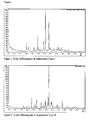
- the XRD diffractograms of aripiprazole Type-I and Type-II are shown in figures 1 and 2, respectively.
- Form II aripiprazole is characterized by x-ray diffraction peaks at 16.5, 18.7, 21.9, 22.4, and 23.5 ⁇ 0.2 degrees 2-theta.
- the crystal form of aripiprazole within the pharmaceutical compositions may be monitored using known state of the art techniques. For example, techniques such as X-ray powder diffraction (XRD) or solid-state NMR of carbon-13, nitrogen-14, or chlorine, among others, may be used. Generally, any instrumentation of X-Ray powder diffraction or solid-state NMR normally available in laboratories is suitable for monitoring the crystal forms of aripiprazole in pharmaceutical compositions. Typical methods for obtaining X-ray diffractions of aripiprazole may be found in WO 03/026659 or WO 05/058835 .
- the aripiprazole may have a particle shape.
- the particle size distribution d(0.9) is about 300 ⁇ m or less. If aripiprazole Type-I or Type-II is used, the particle size distribution d(0.9) is about 180 ⁇ m to about 270 ⁇ m. If aripiprazole Form II is used, the particle size distribution d(0.9) is about 25 ⁇ m.
- the single dose of the active ingredient is small, and an inert substance may be added to increase the bulk and make the tablet a practical size for compression.
- Diluents are used for this purpose.
- Diluents used in the mixture include diluents commonly used for tablet preparation.
- diluents include, but are not limited to, calcium carbonate, calcium phosphate (dibasic and/or tribasic), calcium sulfate, powdered cellulose, dextrates, dextrin, fructose, kaolin, lactitol, anhydrous lactose, lactose monohydrate, maltose, mannitol, microcrystalline cellulose, sorbitol, sucrose, or starch.
- the diluent is lactose monohydrate, microcrystalline cellulose, or starch.
- the diluent is present in an amount of about 35% to about 85% by weight of the tablet.
- the diluent is present in an amount of about 40% to about 80% by weight of the tablet.
- Binders are agents used to impart cohesive qualities to the powdered material. Binders impart a cohesiveness to the tablet formulation that ensures that the tablet remains intact after compression.
- Tablet binders used in the mixture include tablet binders commonly used for tablet preparation. Tablet binders include, but are not limited to, acacia, alginic acid, carbomer, sodium carboxymethylcellulose, dextrin, ethylcellulose, gelatin, glucose, guar gum, hydroxypropyl cellulose, maltose, methylcellulose, polyethylene oxide, or povidone.
- the tablet binder is hydroxypropyl cellulose.
- the tablet binder is present in an amount of about 0.5% to about 5% by weight of the tablet.
- the tablet binder is present in an amount of about 0.7% to about 3% by weight of the tablet.
- a disintegrant is a substance or mixture of substances added to a tablet formulation to facilitate a tablet's breakup or disintegration after tablet administration.
- the aripiprazole should be released from the tablet as efficiently as possible to allow dissolution.
- Tablet disintegrants used in the mixture include, but are not limited to, alginic acid, sodium croscarmellose, crospovidone, maltose, microcrystalline cellulose, potassium polacrilin, sodium starch glycolate, or starch.
- the tablet disintegrant is a "super-disintegrant:" crospovidone, sodium starch glycolate or sodium croscarmellose.
- the tablet disintegrant is present in an amount of about 3% to about 15% by weight of the tablet.
- the tablet disintegrant is present in an amount of about 5% to about 10% by weight of the tablet.
- Lubricants have a number of functions in tablet manufacturing. For example, lubricants prevent adhesion of the tablet material to equipment, reduce interparticle friction, and facilitate the ejection of the tablet from the die cavity, among others.
- Tablet lubricants added to the homogeneous mixture include those typically used in tablet formulations. Tablet lubricants include, but are not limited to, calcium stearate, glyceryl behenate, magnesium stearate, mineral oil, polyethylene glycol, sodium stearyl fumarate, stearic acid, talc, or zinc stearate.
- the tablet lubricant is magnesium stearate.
- the tablet lubricant is present in an amount of about 0.5 to about 2 percent by weight of the tablet.
- the tablet lubricant is present in an amount of about 0.7 to about 1 percent by weight of the tablet.
- the dry compression pharmaceutical formulation of the invention has a dissolution rate where not less than 80% of the initial aripiprazole is dissolved after about 30 minutes.
- the tablet may have a dissolution rate where not less than 85% of the initial aripiprazole is dissolved after about 30 minutes, and more preferably not less than 90%.
- the x-ray diffraction pattern of the aripiprazole within the pharmaceutical composition made in Example 1 had peaks at 8.8, 10.6, 11.1, 12.1, 15.0, 15.8, 17.7, 22.1, and 29.8 ⁇ 0.2 degrees 2-theta.
- the x-ray diffraction pattern of the aripiprazole within the pharmaceutical composition made in Example 2 had peaks at 10.1, 11.7, 14.0, 15.1, and 21.9 ⁇ 0.2 degrees 2-theta.
- the invention also encompasses tablets made using the methodology described above.
- the tablet comprises aripiprazole, lactose monohydrate, starch, microcrystalline cellulose, hydroxypropyl cellulose, and magnesium stearate.
- the tablet may further comprise a colorant.
- the tablet comprises aripiprazole Type-I, lactose monohydrate, starch, microcrystalline cellulose, hydroxypropyl cellulose, and magnesium stearate.
- the tablet comprises aripiprazole Type-I (30 mg/tablet), lactose monohydrate (120 mg/tablet), starch (60 mg/tablet), microcrystalline cellulose (60 mg/tablet), hydroxypropyl cellulose (8 mg/tablet), and magnesium stearate (2 mg/tablet).
- the invention encompasses a tablet comprising aripiprazole Type-II, lactose monohydrate, starch, microcrystalline cellulose, hydroxypropyl cellulose, color red, and magnesium stearate.
- the invention encompasses a tablet comprising aripiprazole Type-II (30 mg/tablet), lactose monohydrate (120 mg/tablet), starch (60 mg/tablet), microcrystalline cellulose (60 mg/tablet), hydroxypropyl cellulose (8 mg/tablet), color red (0.06 mg/tablet), and magnesium stearate (2 mg/tablet).
- the invention encompasses a tablet comprising aripiprazole Form II, lactose monohydrate, starch, microcrystalline cellulose, hydroxypropyl cellulose, sodium starch glycolate, color red, and magnesium stearate.
- the tablet comprises aripiprazole Form II (30 mg/tablet), lactose monohydrate (112 mg/tablet), starch (60 mg/tablet), microcrystalline cellulose (94 mg/tablet), hydroxypropyl cellulose (2 mg/tablet), sodium starch glycolate (10 mg/tablet), color red (0.06 mg/tablet), and magnesium stearate (2 mg/tablet).
- the method comprises blending aripiprazole Type-I, lactose monohydrate, starch, color red, hydroxypropyl cellulose, and magnesium stearate into a mixture; dry granulating the mixture and compressing the granulated mixture into slugs; milling the slugs and blending the milled slugs with microcrystalline cellulose and magnesium stearate into a second mixture; compressing the second mixture into tablets, wherein the tablets have a hardness range of about 9 to 15 Strong-Cobb units and a friability of less than about 1%.
- the aripiprazole Type-I has a d(0.9) value of about 186 ⁇ m.
- excipient materials can function as both diluent and binder, or filler and disintegrant, and that some materials may exist that can fulfill all three roles.
- materials may exist that can fulfill all three roles.
- the invention is directed to materials fulfilling these functions.
- the material that is the "at least one diluent” also might be the same as the material fulfilling the role of "at least one tablet binder" as long as the material is present in sufficient amount to fulfill both functions.
- the invention encompasses a tablet comprising aripiprazole Type I, lactose monohydrate, starch, microcrystalline cellulose, hydroxypropyl cellulose, color red, and magnesium stearate.
- the tablet comprises aripiprazole Type I (30 mg/tablet), lactose monohydrate (106.44 mg/tablet), starch (60 mg/tablet), microcrystalline cellulose (81 mg/tablet), hydroxypropyl cellulose (3 mg/tablet), color red (0.06 mg/tablet), and magnesium stearate (4.5 mg/tablet).
- Example 1 Preparation of 30 mg Tablets Containing Aripiprazole Type-I Using Dry Compression
- a mixture was made of aripiprazole Type-I (105 g), lactose monohydrate NF (420 g), starch NF (210 g), microcrystalline cellulose NF (210 g), and hydroxypropyl cellulose NF (28 g).
- the aripiprazole Type-I had a D(0,9) value of about 245 ⁇ m.
- the mixture was blended for 20 minutes.
- Magnesium stearate NF (7 g) was sieved and added to the blended mixture and blended for an additional 5 minutes. Thereafter, the mixture was compressed into tablets using a Kilian tableting press to have a hardness range of about 12 to 22 Strong-Cobb units and a friability of less than 1%.
- a mixture was made of aripiprazole Type-II (120 mg), lactose monohydrate NF (479.76 g), starch NF (240 g), microcrystalline cellulose NF (240 g), hydroxypropyl cellulose NF (32 g), and color red (0.24 g).
- the aripiprazole Type-II had a D(0,9) value of about 270 ⁇ m.
- the mixture was blended for 20 minutes.
- Magnesium stearate NF (8 g) was sieved and added to the blended mixture and blended for an additional 5 minutes. Thereafter, the mixture was compressed into tablets using a Kilian tableting press to have a hardness range of about 8 to 21 Strong-Cobb units and a friability of less than 1%.
- a mixture was made of aripiprazole Form II (150 g), lactose monohydrate NF (559.7 g), starch NF (150 g), microcrystalline cellulose NF (470 g), hydroxypropyl cellulose NF (10 g), sodium starch glycolate (50 g), and color red (0.3 g).
- the mixture was blended for 20 minutes.
- Magnesium stearate NF (10 g) was sieved and added to the blended mixture and blended for an additional 5 minutes. Thereafter, the mixture was compressed into tablets using a Kilian tableting press to have a hardness range of about 5 to 25 Strong-Cobb units and a friability of less than 1%.
- the mixture was compressed into slugs, the slugs were milled and blended with extragranular excipients: microcrystalline cellulose NF (567 g) and magnesium stearate NF (15.75 g). Thereafter, the mixture was compressed into tablets using a Kilian tableting press to have a hardness range of about 9 to 15 Strong-Cobb units and a friability of less than 1%.
- Example 5 Dissolution Measurements of Tablets Made in Examples 1-4
Landscapes
- Health & Medical Sciences (AREA)
- Life Sciences & Earth Sciences (AREA)
- Animal Behavior & Ethology (AREA)
- General Health & Medical Sciences (AREA)
- Chemical & Material Sciences (AREA)
- Medicinal Chemistry (AREA)
- Pharmacology & Pharmacy (AREA)
- Epidemiology (AREA)
- Veterinary Medicine (AREA)
- Public Health (AREA)
- Engineering & Computer Science (AREA)
- Bioinformatics & Cheminformatics (AREA)
- Molecular Biology (AREA)
- Biophysics (AREA)
- Medicinal Preparation (AREA)
- Pharmaceuticals Containing Other Organic And Inorganic Compounds (AREA)
Abstract
Description
- The invention encompasses dry compression pharmaceutical compositions of aripiprazole, methods of making tablets from the compositions, and tablets of the dry compression pharmaceutical composition.
- Aripiprazole, as reported in the literature, can exist in multiple crystal forms. For example, PCT publication
WO 03/026659 WO 03/026659 WO 03/026659 - As reported in
WO 03/026659 WO 03/026659 WO 03/026659 WO 03/026659 - Other novel crystal aripiprazole forms are disclosed in PCT publication
WO 05/058835 - Polymorphic transformations may be undesirable during pharmaceutical composition preparation or formulation. Hydration or manipulation of polymorphs may induce such unwanted polymorphic transformations. Also, the use of some aripiprazole polymorphs in pharmaceutical tablets may potentially induce unwanted polymorphic transformations, which in turn may reduce the bioavailability of the drug. Therefore, it would be desirable to develop aripiprazole formulations in which there is no potential of hydration and/or possible polymorphic interconversions.
- One embodiment of the invention encompasses a method of making an aripiprazole formulation comprising providing a mixture of aripiprazole, at least one diluent, at least one tablet binder, and at least one tablet disintegrant; blending the mixture to obtain a homogeneous mixture; optionally adding at least one tablet lubricant to the homogeneous mixture; and dry compressing the homogeneous mixture into the formulation. The formulation may be tablets, slugs or a compact. The method may further comprise milling the slug or compact into a granulate, adding at least one tablet lubricant to the granulate, and dry compressing the granulate into a tablet. The mixture may further comprise a colorant.
- Preferably, the aripiprazole may be at least one of anhydrous aripiprazole Type-I, Type-II, or Form II. In one particular embodiment, the aripiprazole may have a particle size distribution where d(0.9) is about 300 µm or less. The tablet may have a dissolution rate where not less than 80% of the initial aripiprazole is dissolved after about 30 minutes. Preferably, the tablet may have a dissolution rate where not less than 85% of the initial aripiprazole is dissolved after about 30 minutes, and more preferably not less than 90%, as tested under the conditions described below.
- In another embodiment, the diluent is calcium carbonate, calcium phosphate (dibasic and/or tribasic), calcium sulfate, powdered cellulose, dextrates, dextrin, fructose, kaolin, lactitol, anhydrous lactose, lactose monohydrate, maltose, mannitol, microcrystalline cellulose, sorbitol, sucrose, or starch. Preferably, the diluent is lactose monohydrate, microcrystalline cellulose, or starch. In one particular embodiment, the diluent is present in an amount of about 35% to about 85% by weight of the tablet.
- In another embodiment, the binder is acacia, alginic acid, carbomer, sodium carboxymethylcellulose, dextrin, ethylcellulose, gelatin, glucose, guar gum, hydroxypropyl cellulose, maltose, methylcellulose, polyethylene oxide, or povidone. Preferably, the binder is hydroxypropyl cellulose. In one particular embodiment, the binder is present in an amount of about 0.5% to about 5% by weight of the tablet.
- In yet another embodiment, the disintegrant is alginic acid, sodium croscarmellose, crospovidone, maltose, microcrystalline cellulose, potassium polacrilin, sodium starch glycolate, or starch. Preferably, the disintegrant is crospovidone, sodium starch glycolate or sodium croscarmellose. In one particular embodiment, the disintegrant is present in an amount of about 3% to about 15% by weight of the tablet.
- In yet another embodiment, the lubricant is calcium stearate, glyceryl behenate, magnesium stearate, mineral oil, polyethylene glycol, sodium stearyl fumarate, stearic acid, talc, or zinc stearate. Preferably, the lubricant is magnesium stearate. In one particular embodiment, the lubricant is present in an amount of about 0.5% to about 2% by weight of the tablet.
- In one embodiment, the invention encompasses a tablet comprising: aripiprazole Type-I, lactose monohydrate, starch, microcrystalline cellulose, hydroxypropyl cellulose, and magnesium stearate.
- In another embodiment, the invention encompasses a tablet comprising aripiprazole Type-II, lactose monohydrate, starch, microcrystalline cellulose, hydroxypropyl cellulose, color red, and magnesium stearate.
- In yet another embodiment, the invention encompasses a tablet comprising aripiprazole Form II, lactose monohydrate, starch, microcrystalline cellulose, hydroxypropyl cellulose, sodium starch glycolate, color red, and magnesium stearate.
-
- Figure 1 illustrates the x-ray diffraction pattern of aripiprazole Type-I.
- Figure 2 illustrates the x-ray diffraction pattern of aripiprazole Type-II.
- The problems associated with the hydration of aripiprazole during formulation or storage have focused research into developing stable anhydrous forms of aripiprazole. These forms would be less or non-hygroscopic, and thus resistant to hydration and the accompanying possible polymorphic transformation. The present invention provides an alternative to the development of stable anhydrous forms of aripiprazole. The present invention encompasses dry formulations of aripiprazole and methods of making tablets using the dry formulations in direct compression or dry granulation via dry compaction. These dry formulations and the methodology associated with such dry formulations prevent or reduce hydration and the associated subsequent polymorphic transformations.
- Thus, the present invention encompasses methods of making tablets by compression of dry formulations and tablets made using dry compression methodology. There are economic advantages in the dry compression of formulations over wet granulation, because the dry compression requires fewer unit operations. Using less equipment, lower power consumption, less space, less time, and less labor are a few examples of how the methodology reduces production cost of tablets. Also, dry compression avoids the use of organic solvents during the preparation of the formulations. Organic solvents may be either toxic or difficult to dispose of because of environmental concerns.
- Dry compression, however, is generally limited to those circumstances in which the active ingredient has physical characteristics suitable for forming pharmaceutically acceptable tablets. These physical characteristics include, but are not limited to, good flowing properties, compressibility, and compactability.
- Dry compression formulations comprising aripiprazole were developed, because it was found that aripiprazole crystals were suitable for dry compression formulations. In particular, it was found that anhydrous aripiprazole crystals were suitable for dry compression formulations. As used herein with the term "aripiprazole," the term "anhydrous" means aripiprazole is crystallized in a form, which does not contain solvent of crystallization or water incorporated within the crystal lattice, but may include water outside the crystal lattice.
- The method of making an aripiprazole formulation comprises providing a mixture of aripiprazole, at least one diluent, at least one tablet binder, and at least one tablet disintegrant; blending the mixture to obtain a homogeneous mixture; optionally adding at least one tablet lubricant to the homogeneous mixture; and dry compressing the homogeneous mixture into the formulation. The formulation can be in the shape of a tablet, a slug, or a compact. The method may further comprise milling the slug or compact into a granulate, adding at least one tablet lubricant to the milled granulate, and dry compressing the milled granulate into a tablet. Optionally, at least one colorant may be added to the mixture to provide any desired colored tablet.
- The blending step is carried out to substantially homogeneous mixture. The skilled artisan with little or no experimentation can easily determine the equipment and conditions necessary for the blending steps. Factors that may influence the blending step include, but are not limited to, the amount of materials, the physical characteristics of the materials, the equipment, and the speed of mixing.
- The dry compressing step includes compressing the homogeneous mixture into a formulation. The formulation may be shaped as tablets, ribbons or blocks of solid material, or slugs. When the formulation is shaped as ribbons or blocks of solid material, or slugs, the ribbons or blocks of solid material, or slugs are milled. Thereafter, the milled material or granulate is blended with extragranular excipients and compressed into tablets. The compressing step may be carried out using a tablet compression apparatus commonly used in tableting or other suitable equipment to make slugs, ribbons, or blocks of solid material. For example, a Kilian tableting press may be used to form the tablets.
- Any aripiprazole may be used in the formulation and method of the invention. Typically, anhydrous aripiprazole may be used in the dry compression or dry granulation formulation. Preferably, the anhydrous aripiprazole is at least one of Type-I, Type-II, or Form II. Type-I aripiprazole may be prepared by crystallization in ethanol and drying according to method described in
WO 2005/058835 . Alternatively, Type-I aripiprazole may be made according to the Reference Examples ofWO 03/026659 WO 03/026659 WO 05/058835 - Type-I aripiprazole is characterized by x-ray diffraction peaks at 8.8, 10.6, 11.1, 12.1, 15.0, 15.8, 17.7, 20.4, 22.1, and 29.8 ± 0.2 degrees 2-theta. Type-II aripiprazole is characterized by x-ray diffraction peaks at 10.1, 11.7, 13.9, 15.1, 18.2, 20.8, 21.8, 23.5, 23.8, and 28.9 ± 0.2 degrees 2-theta. The XRD diffractograms of aripiprazole Type-I and Type-II are shown in figures 1 and 2, respectively. Form II aripiprazole is characterized by x-ray diffraction peaks at 16.5, 18.7, 21.9, 22.4, and 23.5 ± 0.2 degrees 2-theta.
- The crystal form of aripiprazole within the pharmaceutical compositions may be monitored using known state of the art techniques. For example, techniques such as X-ray powder diffraction (XRD) or solid-state NMR of carbon-13, nitrogen-14, or chlorine, among others, may be used. Generally, any instrumentation of X-Ray powder diffraction or solid-state NMR normally available in laboratories is suitable for monitoring the crystal forms of aripiprazole in pharmaceutical compositions. Typical methods for obtaining X-ray diffractions of aripiprazole may be found in
WO 03/026659 WO 05/058835 - Optionally, the aripiprazole may have a particle shape. Typically, the particle size distribution d(0.9) is about 300 µm or less. If aripiprazole Type-I or Type-II is used, the particle size distribution d(0.9) is about 180 µm to about 270 µm. If aripiprazole Form II is used, the particle size distribution d(0.9) is about 25 µm.
- The single dose of the active ingredient is small, and an inert substance may be added to increase the bulk and make the tablet a practical size for compression. Diluents are used for this purpose. Diluents used in the mixture include diluents commonly used for tablet preparation. For example, diluents include, but are not limited to, calcium carbonate, calcium phosphate (dibasic and/or tribasic), calcium sulfate, powdered cellulose, dextrates, dextrin, fructose, kaolin, lactitol, anhydrous lactose, lactose monohydrate, maltose, mannitol, microcrystalline cellulose, sorbitol, sucrose, or starch. Preferably, the diluent is lactose monohydrate, microcrystalline cellulose, or starch. Typically, the diluent is present in an amount of about 35% to about 85% by weight of the tablet. Preferably, the diluent is present in an amount of about 40% to about 80% by weight of the tablet.
- Binders are agents used to impart cohesive qualities to the powdered material. Binders impart a cohesiveness to the tablet formulation that ensures that the tablet remains intact after compression. Tablet binders used in the mixture include tablet binders commonly used for tablet preparation. Tablet binders include, but are not limited to, acacia, alginic acid, carbomer, sodium carboxymethylcellulose, dextrin, ethylcellulose, gelatin, glucose, guar gum, hydroxypropyl cellulose, maltose, methylcellulose, polyethylene oxide, or povidone. Preferably, the tablet binder is hydroxypropyl cellulose. Typically, the tablet binder is present in an amount of about 0.5% to about 5% by weight of the tablet. Preferably, the tablet binder is present in an amount of about 0.7% to about 3% by weight of the tablet.
- A disintegrant is a substance or mixture of substances added to a tablet formulation to facilitate a tablet's breakup or disintegration after tablet administration. The aripiprazole should be released from the tablet as efficiently as possible to allow dissolution. Tablet disintegrants used in the mixture include, but are not limited to, alginic acid, sodium croscarmellose, crospovidone, maltose, microcrystalline cellulose, potassium polacrilin, sodium starch glycolate, or starch. Preferably, the tablet disintegrant is a "super-disintegrant:" crospovidone, sodium starch glycolate or sodium croscarmellose. Typically, the tablet disintegrant is present in an amount of about 3% to about 15% by weight of the tablet. Preferably, the tablet disintegrant is present in an amount of about 5% to about 10% by weight of the tablet.
- Lubricants have a number of functions in tablet manufacturing. For example, lubricants prevent adhesion of the tablet material to equipment, reduce interparticle friction, and facilitate the ejection of the tablet from the die cavity, among others. Tablet lubricants added to the homogeneous mixture include those typically used in tablet formulations. Tablet lubricants include, but are not limited to, calcium stearate, glyceryl behenate, magnesium stearate, mineral oil, polyethylene glycol, sodium stearyl fumarate, stearic acid, talc, or zinc stearate. Preferably, the tablet lubricant is magnesium stearate. Typically, the tablet lubricant is present in an amount of about 0.5 to about 2 percent by weight of the tablet. Preferably, the tablet lubricant is present in an amount of about 0.7 to about 1 percent by weight of the tablet.
- In one embodiment, the dry compression pharmaceutical formulation of the invention has a dissolution rate where not less than 80% of the initial aripiprazole is dissolved after about 30 minutes. Preferably, the tablet may have a dissolution rate where not less than 85% of the initial aripiprazole is dissolved after about 30 minutes, and more preferably not less than 90%.
- Once a tablet was made using the methodology described above, the aripiprazole was tested to determine whether a polymorphic transformation had occurred. The x-ray diffraction pattern of the aripiprazole within the pharmaceutical composition made in Example 1 had peaks at 8.8, 10.6, 11.1, 12.1, 15.0, 15.8, 17.7, 22.1, and 29.8 ± 0.2 degrees 2-theta. The x-ray diffraction pattern of the aripiprazole within the pharmaceutical composition made in Example 2 had peaks at 10.1, 11.7, 14.0, 15.1, and 21.9 ± 0.2 degrees 2-theta. A comparison of the x-ray diffraction patterns of the aripiprazole of Examples 1 and 2 with the x-ray diffraction patterns with aripiprazole Type-I and Type-II, respectively, demonstrated that the tablet obtained by dry compression of the dry aripiprazole formulation did not include other polymorphic aripiprazole forms, including hydrates.
- The invention also encompasses tablets made using the methodology described above. In one embodiment the tablet comprises aripiprazole, lactose monohydrate, starch, microcrystalline cellulose, hydroxypropyl cellulose, and magnesium stearate. Optionally, the tablet may further comprise a colorant. In another embodiment the tablet comprises aripiprazole Type-I, lactose monohydrate, starch, microcrystalline cellulose, hydroxypropyl cellulose, and magnesium stearate. In a preferred embodiment the tablet comprises aripiprazole Type-I (30 mg/tablet), lactose monohydrate (120 mg/tablet), starch (60 mg/tablet), microcrystalline cellulose (60 mg/tablet), hydroxypropyl cellulose (8 mg/tablet), and magnesium stearate (2 mg/tablet).
- In yet another embodiment the invention encompasses a tablet comprising aripiprazole Type-II, lactose monohydrate, starch, microcrystalline cellulose, hydroxypropyl cellulose, color red, and magnesium stearate. In a preferred embodiment, the invention encompasses a tablet comprising aripiprazole Type-II (30 mg/tablet), lactose monohydrate (120 mg/tablet), starch (60 mg/tablet), microcrystalline cellulose (60 mg/tablet), hydroxypropyl cellulose (8 mg/tablet), color red (0.06 mg/tablet), and magnesium stearate (2 mg/tablet).
- Another embodiment the invention encompasses a tablet comprising aripiprazole Form II, lactose monohydrate, starch, microcrystalline cellulose, hydroxypropyl cellulose, sodium starch glycolate, color red, and magnesium stearate. Preferably, the tablet comprises aripiprazole Form II (30 mg/tablet), lactose monohydrate (112 mg/tablet), starch (60 mg/tablet), microcrystalline cellulose (94 mg/tablet), hydroxypropyl cellulose (2 mg/tablet), sodium starch glycolate (10 mg/tablet), color red (0.06 mg/tablet), and magnesium stearate (2 mg/tablet).
- In a preferred embodiment, the method comprises blending aripiprazole Type-I, lactose monohydrate, starch, color red, hydroxypropyl cellulose, and magnesium stearate into a mixture; dry granulating the mixture and compressing the granulated mixture into slugs; milling the slugs and blending the milled slugs with microcrystalline cellulose and magnesium stearate into a second mixture; compressing the second mixture into tablets, wherein the tablets have a hardness range of about 9 to 15 Strong-Cobb units and a friability of less than about 1%. Optionally, the aripiprazole Type-I has a d(0.9) value of about 186 µm.
- It is understood, of course, that some excipient materials can function as both diluent and binder, or filler and disintegrant, and that some materials may exist that can fulfill all three roles. There is no intention to limit the invention to methods only using three distinct excipient materials "diluent," "tablet binder," and "tablet disintegrant," but rather the invention is directed to materials fulfilling these functions. For example the material that is the "at least one diluent" also might be the same as the material fulfilling the role of "at least one tablet binder" as long as the material is present in sufficient amount to fulfill both functions.
- Another embodiment the invention encompasses a tablet comprising aripiprazole Type I, lactose monohydrate, starch, microcrystalline cellulose, hydroxypropyl cellulose, color red, and magnesium stearate. Preferably, the tablet comprises aripiprazole Type I (30 mg/tablet), lactose monohydrate (106.44 mg/tablet), starch (60 mg/tablet), microcrystalline cellulose (81 mg/tablet), hydroxypropyl cellulose (3 mg/tablet), color red (0.06 mg/tablet), and magnesium stearate (4.5 mg/tablet).
- Having described the invention with reference to certain preferred embodiments, other embodiments will become apparent to one skilled in the art from consideration of the specification. The invention is further defined by reference to the following examples describing in detail the formation of dry compression pharmaceutical formulations of aripiprazole and the dissolution of the tablets made using the dry compression pharmaceutical formulations. It will be apparent to those skilled in the art that many modifications, both to materials and methods, may be practiced without departing from the scope of the invention.
- A mixture was made of aripiprazole Type-I (105 g), lactose monohydrate NF (420 g), starch NF (210 g), microcrystalline cellulose NF (210 g), and hydroxypropyl cellulose NF (28 g). The aripiprazole Type-I had a D(0,9) value of about 245 µm. The mixture was blended for 20 minutes. Magnesium stearate NF (7 g) was sieved and added to the blended mixture and blended for an additional 5 minutes. Thereafter, the mixture was compressed into tablets using a Kilian tableting press to have a hardness range of about 12 to 22 Strong-Cobb units and a friability of less than 1%.
- A mixture was made of aripiprazole Type-II (120 mg), lactose monohydrate NF (479.76 g), starch NF (240 g), microcrystalline cellulose NF (240 g), hydroxypropyl cellulose NF (32 g), and color red (0.24 g). The aripiprazole Type-II had a D(0,9) value of about 270 µm. The mixture was blended for 20 minutes. Magnesium stearate NF (8 g) was sieved and added to the blended mixture and blended for an additional 5 minutes. Thereafter, the mixture was compressed into tablets using a Kilian tableting press to have a hardness range of about 8 to 21 Strong-Cobb units and a friability of less than 1%.
- A mixture was made of aripiprazole Form II (150 g), lactose monohydrate NF (559.7 g), starch NF (150 g), microcrystalline cellulose NF (470 g), hydroxypropyl cellulose NF (10 g), sodium starch glycolate (50 g), and color red (0.3 g). The mixture was blended for 20 minutes. Magnesium stearate NF (10 g) was sieved and added to the blended mixture and blended for an additional 5 minutes. Thereafter, the mixture was compressed into tablets using a Kilian tableting press to have a hardness range of about 5 to 25 Strong-Cobb units and a friability of less than 1%.
- A mixture of aripiprazole Type-I (210 g), lactose monohydrate NF (745.08 g), starch NF (420 g), color red (0.42 g), hydroxypropyl cellulose NF (21 g) and magnesium stearate NF (15.75 g) was dry granulated. The aripiprazole Type-I had a D(0,9) value of about 186 µm. The mixture was compressed into slugs, the slugs were milled and blended with extragranular excipients: microcrystalline cellulose NF (567 g) and magnesium stearate NF (15.75 g). Thereafter, the mixture was compressed into tablets using a Kilian tableting press to have a hardness range of about 9 to 15 Strong-Cobb units and a friability of less than 1%.
- The dissolution for tablets from each of the above-described examples was studied. Typically, a the dissolution rate was measured for each batch after 30 minutes. The dissolution was carried out using an USP apparatus II (paddle) at 60 rpm with 900 ml of 0.1 N HCl at a temperature of 37°C. The results are summarized in Table 1.
Table 1, Dissolution Measurement of Tablets from Examples 1-4 Example No. Time (minutes) Average Dissolution* Minimum Dissolution* 1 30 95 90 2 30 85 80 3 30 87 81 4 30 98 96 * Average dissolution and minimum dissolution are reported as a percent by weight of the labeled amount.
Claims (30)
- A method of making an aripiprazole formulation comprising:providing a mixture of aripiprazole, at least one diluent, at least one tablet binder, and at least one tablet disintegrant;blending the mixture to obtain a homogeneous mixture;optionally adding at least one tablet lubricant to the homogeneous mixture; anddry compressing the homogeneous mixture into the formulation.
- The method according to claim 1, wherein the formulation is a tablet.
- The method according to claim 1, the formulation is a slug or a compact.
- The method according to claim 3, further comprising milling the slug or compact into a granulate, adding at least one tablet lubricant to the granulate, and dry compressing the granulate into a tablet.
- The method according to any one of the preceding claims, wherein the mixture further comprises a colorant.
- The method according to any one of the preceding claims, wherein the aripiprazole is at least one of anhydrous aripiprazole Type-I, Type-II, or Form II.
- The method according to any one of the preceding claims, wherein the aripiprazole has a particle size distribution d(0.9) of about 300 µm or less.
- The method according to any one of the preceding claims, wherein the diluent is calcium carbonate, calcium phosphate (dibasic and/or tribasic), calcium sulfate, powdered cellulose, dextrates, dextrin, fructose, kaolin, lactitol, anhydrous lactose, lactose monohydrate, maltose, mannitol, microcrystalline cellulose, sorbitol, sucrose, or starch.
- The method according to claim 8, wherein the diluent is lactose monohydrate, microcrystalline cellulose, or starch.
- The method according to any one of the preceding claims, wherein the diluent is present in an amount of about 35 to about 85 percent by weight of the tablet.
- The method according to any one of the preceding claims, wherein the binders is acacia, alginic acid, carbomer, sodium carboxymethylcellulose, dextrin, ethylcellulose, gelatin, glucose, guar gum, hydroxypropyl cellulose, maltose, methylcellulose, polyethylene oxide, or povidone.
- The method according to claim 11, wherein the binder is hydroxypropyl cellulose.
- The method according to any one of the preceding claims, wherein the binder is present in an amount of about 0.5 to about 5 percent by weight of the tablet.
- The method according to any one of the preceding claims, wherein the disintegrant is alginic acid, sodium croscarmellose, crospovidone, maltose, microcrystalline cellulose, potassium polacrilin, sodium starch glycolate, or starch.
- The method according to claim 14, wherein the disintegrant is crospovidone, sodium starch glycolate or sodium croscarmellose.
- The method according to any one of the preceding claims, wherein the disintegrant is present in an amount of about 3 to about 15 percent by weight of the tablet.
- The method according to any one of the preceding claims, wherein the lubricant is calcium stearate, glyceryl behenate, magnesium stearate, mineral oil, polyethylene glycol, sodium stearyl fumarate, stearic acid, talc, or zinc stearate.
- The method according to claim 17, wherein the lubricant is magnesium stearate.
- The method according to any one of the preceding claims, wherein the lubricant is present in an amount of about 0.5 to about 2 percent by weight of the tablet.
- The method according to any one of the preceding claims, wherein the tablet has a dissolution rate where not less than 85% of the aripiprazole is dissolved after about 30 minutes.
- The method according to claim 20, wherein the tablet has a dissolution rate where not less than 85% of the initial aripiprazole is dissolved after about 30 minutes.
- The method according to claim 21, wherein the tablet has a dissolution rate where not less than 90% of the initial aripiprazole is dissolved after about 30 minutes.
- A method of making an aripiprazole formulations comprising;
blending aripiprazole Type-I, lactose monohydrate, starch, color red, hydroxypropyl cellulose, and magnesium stearate into a mixture;
dry granulating the mixture and compressing the granulated mixture into slugs;
milling the slugs and blending the milled slugs with microcrystalline cellulose and magnesium stearate into a second mixture; and
compressing the second mixture into tablets,
wherein the tablets have a hardness range of about 9 to 15 Strong-Cobb units and a friability of less than about 1%. - The method according to claim 23, wherein the aripiprazole Type-I has a d(0.9) value of about 186 µm.
- A tablet comprising: aripiprazole Type-I, lactose monohydrate, starch, microcrystalline cellulose, hydroxypropyl cellulose, and magnesium stearate.
- A tablet comprising aripiprazole Type-II, lactose monohydrate, starch, microcrystalline cellulose, hydroxypropyl cellulose, color red, and magnesium stearate.
- A tablet comprising aripiprazole Form II, lactose monohydrate, starch, microcrystalline cellulose, hydroxypropyl cellulose, sodium starch glycolate, color red, and magnesium stearate.
- A dry formulation tablet containing aripiprazole.
- The dry formulation tablet according to claim 28, wherein the tablet has a dissolution rate where not less than 90% of the initial aripiprazole is dissolved after about 30 minutes.
- A dry formulation tablet containing anhydrous aripiprazole.
Priority Applications (1)
| Application Number | Priority Date | Filing Date | Title |
|---|---|---|---|
| PL06251325T PL1808165T3 (en) | 2006-01-05 | 2006-03-14 | Dry formulations of aripiprazole |
Applications Claiming Priority (1)
| Application Number | Priority Date | Filing Date | Title |
|---|---|---|---|
| US75670706P | 2006-01-05 | 2006-01-05 |
Publications (2)
| Publication Number | Publication Date |
|---|---|
| EP1808165A1 true EP1808165A1 (en) | 2007-07-18 |
| EP1808165B1 EP1808165B1 (en) | 2009-04-29 |
Family
ID=36617397
Family Applications (1)
| Application Number | Title | Priority Date | Filing Date |
|---|---|---|---|
| EP06251325A Revoked EP1808165B1 (en) | 2006-01-05 | 2006-03-14 | Dry formulations of aripiprazole |
Country Status (13)
| Country | Link |
|---|---|
| US (2) | US20070154545A1 (en) |
| EP (1) | EP1808165B1 (en) |
| JP (1) | JP2008531738A (en) |
| CN (1) | CN101351193A (en) |
| AT (1) | ATE429906T1 (en) |
| CA (1) | CA2627695A1 (en) |
| DE (1) | DE602006006536D1 (en) |
| DK (1) | DK1808165T3 (en) |
| ES (1) | ES2325219T3 (en) |
| IL (1) | IL190915A0 (en) |
| PL (1) | PL1808165T3 (en) |
| PT (1) | PT1808165E (en) |
| WO (1) | WO2007081367A1 (en) |
Cited By (4)
| Publication number | Priority date | Publication date | Assignee | Title |
|---|---|---|---|---|
| WO2008020820A3 (en) * | 2006-08-15 | 2008-05-29 | Nobel Ilac Sanayii Ve Ticaret | Pharmaceutical compositions comprising aripiprazole |
| WO2011032882A1 (en) | 2009-09-15 | 2011-03-24 | Ratiopharm Gmbh | Orally disintegrating pharmaceutical dosage form containing aripiprazole |
| TR201000948A1 (en) * | 2010-02-09 | 2011-08-22 | Sanovel İlaç San.Ve Ti̇c.A.Ş. | Aripiprazole formulations. |
| EP2666464A1 (en) | 2012-05-24 | 2013-11-27 | Substipharm Developpement | Stable pharmaceutical composition comprising aripirazole |
Families Citing this family (11)
| Publication number | Priority date | Publication date | Assignee | Title |
|---|---|---|---|---|
| GB0618879D0 (en) | 2006-09-26 | 2006-11-01 | Zysis Ltd | Pharmaceutical compositions |
| WO2010079506A2 (en) * | 2008-06-23 | 2010-07-15 | Torrent Pharmaceuticals Ltd. | Pharmaceutical composition of aripiprazole |
| ES2655492T3 (en) * | 2010-11-30 | 2018-02-20 | Wista Laboratories Ltd. | Formulations comprising methylthioninium chloride |
| CN102850268B (en) * | 2011-06-27 | 2015-07-15 | 上海中西制药有限公司 | Aripiprazole I-type crystallite, aripiprazole solid preparation and preparation methods thereof |
| US9051268B2 (en) | 2013-04-30 | 2015-06-09 | Otsuka Pharmaceutical Co., Ltd. | Oral solid preparation comprising aripiprazole and method for producing oral solid preparation comprising aripiprazole |
| JP2016204260A (en) * | 2013-10-04 | 2016-12-08 | 日本曹達株式会社 | Production method of tablet |
| WO2015067313A1 (en) * | 2013-11-07 | 2015-05-14 | Synthon B.V. | Orodispersible pharmaceutical compositions comprising aripiprazole |
| CN106943405B (en) * | 2016-01-06 | 2021-04-06 | 上海中西制药有限公司 | Aripiprazole preparation and preparation method thereof |
| WO2017204582A1 (en) * | 2016-05-27 | 2017-11-30 | Hanmi Pharm. Co., Ltd. | Pharmaceutical composition comprising an amide derivative or a pharmaceutically acceptable salt thereof inhibiting growth of cancer cells and a stabilizer having low melting point |
| CN108014343A (en) * | 2017-12-21 | 2018-05-11 | 孟斯琴 | A kind of pharmaceutical composition for treating breast cancer and preparation method thereof |
| CN111213650A (en) * | 2020-02-25 | 2020-06-02 | 晋江市老君日化有限责任公司 | Preparation process of mosquito-repellent incense |
Citations (5)
| Publication number | Priority date | Publication date | Assignee | Title |
|---|---|---|---|---|
| WO2003026659A1 (en) * | 2001-09-25 | 2003-04-03 | Otsuka Pharmaceutical Co., Ltd. | Low hygroscopic aripiprazole drug substance and processes for the preparation thereof |
| EP1475084A1 (en) * | 2002-02-15 | 2004-11-10 | Otsuka Pharmaceutical Co., Ltd. | Tablets having improved tabletting characteristics and process for producing the same |
| US20050019398A1 (en) * | 2000-04-12 | 2005-01-27 | Sanjeev Kotharl | Flashmelt oral dosage formulation |
| WO2005058835A2 (en) * | 2003-12-16 | 2005-06-30 | Teva Pharmaceutical Industries Ltd. | Methods of preparing aripiprazole crystalline forms |
| US20050202088A1 (en) * | 2002-05-31 | 2005-09-15 | Franke Hanshermann | Pharmaceutical composition having a delayed active substance release, and method for the preparation thereof |
Family Cites Families (18)
| Publication number | Priority date | Publication date | Assignee | Title |
|---|---|---|---|---|
| CA2311734C (en) * | 2000-04-12 | 2011-03-08 | Bristol-Myers Squibb Company | Flash-melt oral dosage formulation |
| MY129350A (en) * | 2001-04-25 | 2007-03-30 | Bristol Myers Squibb Co | Aripiprazole oral solution |
| WO2004083183A1 (en) * | 2003-03-21 | 2004-09-30 | Hetero Drugs Limited | Novel crystalline forms of aripiprazole |
| WO2004106322A2 (en) * | 2003-04-25 | 2004-12-09 | Cadila Healthcare Limited | Polymorphs of aripiprazole |
| BRPI0415531B8 (en) * | 2003-10-23 | 2021-05-25 | Otsuka Pharma Co Ltd | formulation of sterile injectable controlled-release aripiprazole and method for its preparation |
| US7507823B2 (en) * | 2004-05-06 | 2009-03-24 | Bristol-Myers Squibb Company | Process of making aripiprazole particles |
| CN101087760B (en) * | 2004-11-18 | 2011-09-28 | 斯索恩有限公司 | Crystalline Aripiprazole Solvate |
| WO2006053781A1 (en) * | 2004-11-18 | 2006-05-26 | Synthon B.V. | Process of making crystalline aripiprazole |
| EP1686117A1 (en) * | 2005-01-27 | 2006-08-02 | Sandoz AG | Polymorph and solvates of aripiprazole |
| EP1858514B1 (en) * | 2005-03-17 | 2014-11-26 | Synthon B.V. | Pharmaceutical tablets of crystalline type ii aripiprazole |
| CN101193635A (en) * | 2005-05-13 | 2008-06-04 | 莱西肯医药有限公司 | Multicyclic compounds and methods of their use |
| US20070014864A1 (en) * | 2005-07-15 | 2007-01-18 | Teva Pharmaceutical Industries, Ltd. | Novel pharmaceutical granulate |
| US20070014853A1 (en) * | 2005-07-15 | 2007-01-18 | Ilan Zalit | Pharmaceutical dosage form containing novel pharmaceutical granulate |
| US20070014854A1 (en) * | 2005-07-15 | 2007-01-18 | Ilan Zalit | Novel granulation process |
| WO2007035348A2 (en) * | 2005-09-15 | 2007-03-29 | Elan Pharma International, Limited | Nanoparticulate aripiprazole formulations |
| WO2007075871A2 (en) * | 2005-12-22 | 2007-07-05 | Teva Pharmaceutical Industries Ltd. | Processes for reducing particle size of aripiprazole |
| US20070148245A1 (en) * | 2005-12-22 | 2007-06-28 | Ilan Zalit | Compressed solid dosage forms with drugs of low solubility and process for making the same |
| EP1880714A1 (en) * | 2006-07-20 | 2008-01-23 | Helm AG | Amorphous Aripiprazole and Process for the Preparation thereof |
-
2006
- 2006-03-14 WO PCT/US2006/009280 patent/WO2007081367A1/en not_active Ceased
- 2006-03-14 PL PL06251325T patent/PL1808165T3/en unknown
- 2006-03-14 CA CA002627695A patent/CA2627695A1/en not_active Abandoned
- 2006-03-14 AT AT06251325T patent/ATE429906T1/en not_active IP Right Cessation
- 2006-03-14 ES ES06251325T patent/ES2325219T3/en not_active Expired - Lifetime
- 2006-03-14 EP EP06251325A patent/EP1808165B1/en not_active Revoked
- 2006-03-14 DE DE602006006536T patent/DE602006006536D1/en not_active Expired - Lifetime
- 2006-03-14 CN CNA200680050282XA patent/CN101351193A/en active Pending
- 2006-03-14 JP JP2007558353A patent/JP2008531738A/en active Pending
- 2006-03-14 PT PT06251325T patent/PT1808165E/en unknown
- 2006-03-14 US US11/376,472 patent/US20070154545A1/en not_active Abandoned
- 2006-03-14 DK DK06251325T patent/DK1808165T3/en active
-
2008
- 2008-04-16 IL IL190915A patent/IL190915A0/en unknown
-
2013
- 2013-06-19 US US13/921,713 patent/US20130344146A1/en not_active Abandoned
Patent Citations (5)
| Publication number | Priority date | Publication date | Assignee | Title |
|---|---|---|---|---|
| US20050019398A1 (en) * | 2000-04-12 | 2005-01-27 | Sanjeev Kotharl | Flashmelt oral dosage formulation |
| WO2003026659A1 (en) * | 2001-09-25 | 2003-04-03 | Otsuka Pharmaceutical Co., Ltd. | Low hygroscopic aripiprazole drug substance and processes for the preparation thereof |
| EP1475084A1 (en) * | 2002-02-15 | 2004-11-10 | Otsuka Pharmaceutical Co., Ltd. | Tablets having improved tabletting characteristics and process for producing the same |
| US20050202088A1 (en) * | 2002-05-31 | 2005-09-15 | Franke Hanshermann | Pharmaceutical composition having a delayed active substance release, and method for the preparation thereof |
| WO2005058835A2 (en) * | 2003-12-16 | 2005-06-30 | Teva Pharmaceutical Industries Ltd. | Methods of preparing aripiprazole crystalline forms |
Cited By (6)
| Publication number | Priority date | Publication date | Assignee | Title |
|---|---|---|---|---|
| WO2008020820A3 (en) * | 2006-08-15 | 2008-05-29 | Nobel Ilac Sanayii Ve Ticaret | Pharmaceutical compositions comprising aripiprazole |
| EP2051694B1 (en) | 2006-08-15 | 2017-10-18 | Nobel Ilaç Sanayii Ve Ticaret A.S. | Pharmaceutical compositions comprising aripiprazole |
| WO2011032882A1 (en) | 2009-09-15 | 2011-03-24 | Ratiopharm Gmbh | Orally disintegrating pharmaceutical dosage form containing aripiprazole |
| TR201000948A1 (en) * | 2010-02-09 | 2011-08-22 | Sanovel İlaç San.Ve Ti̇c.A.Ş. | Aripiprazole formulations. |
| EP2359816A1 (en) * | 2010-02-09 | 2011-08-24 | Sanovel Ilac Sanayi ve Ticaret A.S. | Aripiprazole formulations |
| EP2666464A1 (en) | 2012-05-24 | 2013-11-27 | Substipharm Developpement | Stable pharmaceutical composition comprising aripirazole |
Also Published As
| Publication number | Publication date |
|---|---|
| PT1808165E (en) | 2009-06-09 |
| EP1808165B1 (en) | 2009-04-29 |
| DE602006006536D1 (en) | 2009-06-10 |
| HK1104795A1 (en) | 2008-01-25 |
| US20070154545A1 (en) | 2007-07-05 |
| US20130344146A1 (en) | 2013-12-26 |
| ATE429906T1 (en) | 2009-05-15 |
| CN101351193A (en) | 2009-01-21 |
| PL1808165T3 (en) | 2009-09-30 |
| ES2325219T3 (en) | 2009-08-28 |
| JP2008531738A (en) | 2008-08-14 |
| DK1808165T3 (en) | 2009-08-03 |
| IL190915A0 (en) | 2008-11-03 |
| WO2007081367A1 (en) | 2007-07-19 |
| CA2627695A1 (en) | 2007-07-19 |
Similar Documents
| Publication | Publication Date | Title |
|---|---|---|
| US20130344146A1 (en) | Dry formulations of aripiprazole | |
| EP1808164B1 (en) | Wet granulation method for preparing pharmaceutical compositions of aripiprazole | |
| EP2263655B1 (en) | Pharmaceutical formulation comprising atorvastatin calcium | |
| EP1814527B2 (en) | Bilayer tablet comprising telmisartan and amlodipine | |
| KR20090016611A (en) | Pharmaceutical composition of memantine | |
| HK1248224A1 (en) | Solid salt form of alpha-6-mpeg6-o-hydroxycodone as opioid agonists and uses thereof | |
| WO2012029074A2 (en) | Pharmaceutical compositions of linezolid | |
| EP2065035B1 (en) | Pharmaceutical formulations containing irbesartan | |
| EP4497434A1 (en) | A film coated tablet formulation comprising empagliflozin | |
| HK1104795B (en) | Dry formulations of aripiprazole | |
| HK1104797A (en) | Wet granulation pharmaceutical compositions of aripiprazole | |
| EP4260848A1 (en) | Pharmaceutical composition for solid dosage form containing nilotinib and process for its preparation | |
| KR101375290B1 (en) | Method for preparing solid oral formulation comprising valsartan | |
| EP4442252A1 (en) | A tablet formulation of a solid dispersion comprising empagliflozin | |
| WO2024115680A1 (en) | Ribociclib salts and formulations thereof | |
| EP4491176A1 (en) | A film coated tablet comprising brivaracetam | |
| EP4491177A1 (en) | Film coated tablets of brivaracetam | |
| EP4527378A1 (en) | A film coated tablet of brivaracetam | |
| WO2025018960A1 (en) | A film coated tablet of brivaracetam | |
| EP4442253A1 (en) | A film coated tablet comprising empagliflozin and surfactant | |
| US20030022921A1 (en) | Stable pharmaceutical formulation comprising torsemide modification II | |
| EP2882425B1 (en) | A novel pharmaceutical composition of linezolid | |
| TR202022612A2 (en) | PHARMACEUTICAL CAPSULE COMPOSITIONS OF ALOGLIPTINE | |
| EP2813216A1 (en) | Stabilized amorphous ticagrelor | |
| WO2006092732A2 (en) | Stable solid dosage form of antihypertensive agent |
Legal Events
| Date | Code | Title | Description |
|---|---|---|---|
| PUAI | Public reference made under article 153(3) epc to a published international application that has entered the european phase |
Free format text: ORIGINAL CODE: 0009012 |
|
| 17P | Request for examination filed |
Effective date: 20060324 |
|
| AK | Designated contracting states |
Kind code of ref document: A1 Designated state(s): AT BE BG CH CY CZ DE DK EE ES FI FR GB GR HU IE IS IT LI LT LU LV MC NL PL PT RO SE SI SK TR |
|
| AX | Request for extension of the european patent |
Extension state: AL BA HR MK YU |
|
| REG | Reference to a national code |
Ref country code: HK Ref legal event code: DE Ref document number: 1104795 Country of ref document: HK |
|
| AKX | Designation fees paid |
Designated state(s): AT BE BG CH CY CZ DE DK EE ES FI FR GB GR HU IE IS IT LI LT LU LV MC NL PL PT RO SE SI SK TR |
|
| AXX | Extension fees paid |
Extension state: BA Payment date: 20060324 Extension state: MK Payment date: 20060324 Extension state: AL Payment date: 20060324 Extension state: HR Payment date: 20060324 Extension state: YU Payment date: 20060324 |
|
| GRAP | Despatch of communication of intention to grant a patent |
Free format text: ORIGINAL CODE: EPIDOSNIGR1 |
|
| GRAS | Grant fee paid |
Free format text: ORIGINAL CODE: EPIDOSNIGR3 |
|
| GRAA | (expected) grant |
Free format text: ORIGINAL CODE: 0009210 |
|
| AK | Designated contracting states |
Kind code of ref document: B1 Designated state(s): AT BE BG CH CY CZ DE DK EE ES FI FR GB GR HU IE IS IT LI LT LU LV MC NL PL PT RO SE SI SK TR |
|
| AX | Request for extension of the european patent |
Extension state: AL BA HR MK YU |
|
| REG | Reference to a national code |
Ref country code: GB Ref legal event code: FG4D |
|
| REG | Reference to a national code |
Ref country code: CH Ref legal event code: EP |
|
| REG | Reference to a national code |
Ref country code: CH Ref legal event code: NV Representative=s name: MICHELI & CIE SA |
|
| REG | Reference to a national code |
Ref country code: RO Ref legal event code: EPE |
|
| REG | Reference to a national code |
Ref country code: PT Ref legal event code: SC4A Free format text: AVAILABILITY OF NATIONAL TRANSLATION Effective date: 20090601 |
|
| REF | Corresponds to: |
Ref document number: 602006006536 Country of ref document: DE Date of ref document: 20090610 Kind code of ref document: P |
|
| REG | Reference to a national code |
Ref country code: IE Ref legal event code: FG4D |
|
| REG | Reference to a national code |
Ref country code: SE Ref legal event code: TRGR |
|
| REG | Reference to a national code |
Ref country code: HK Ref legal event code: GR Ref document number: 1104795 Country of ref document: HK |
|
| REG | Reference to a national code |
Ref country code: DK Ref legal event code: T3 |
|
| REG | Reference to a national code |
Ref country code: ES Ref legal event code: FG2A Ref document number: 2325219 Country of ref document: ES Kind code of ref document: T3 |
|
| REG | Reference to a national code |
Ref country code: PL Ref legal event code: T3 |
|
| PG25 | Lapsed in a contracting state [announced via postgrant information from national office to epo] |
Ref country code: LT Free format text: LAPSE BECAUSE OF FAILURE TO SUBMIT A TRANSLATION OF THE DESCRIPTION OR TO PAY THE FEE WITHIN THE PRESCRIBED TIME-LIMIT Effective date: 20090429 Ref country code: AT Free format text: LAPSE BECAUSE OF FAILURE TO SUBMIT A TRANSLATION OF THE DESCRIPTION OR TO PAY THE FEE WITHIN THE PRESCRIBED TIME-LIMIT Effective date: 20090429 |
|
| PG25 | Lapsed in a contracting state [announced via postgrant information from national office to epo] |
Ref country code: SI Free format text: LAPSE BECAUSE OF FAILURE TO SUBMIT A TRANSLATION OF THE DESCRIPTION OR TO PAY THE FEE WITHIN THE PRESCRIBED TIME-LIMIT Effective date: 20090429 Ref country code: LV Free format text: LAPSE BECAUSE OF FAILURE TO SUBMIT A TRANSLATION OF THE DESCRIPTION OR TO PAY THE FEE WITHIN THE PRESCRIBED TIME-LIMIT Effective date: 20090429 |
|
| REG | Reference to a national code |
Ref country code: HU Ref legal event code: AG4A Ref document number: E006289 Country of ref document: HU |
|
| PG25 | Lapsed in a contracting state [announced via postgrant information from national office to epo] |
Ref country code: EE Free format text: LAPSE BECAUSE OF FAILURE TO SUBMIT A TRANSLATION OF THE DESCRIPTION OR TO PAY THE FEE WITHIN THE PRESCRIBED TIME-LIMIT Effective date: 20090429 |
|
| PLBI | Opposition filed |
Free format text: ORIGINAL CODE: 0009260 |
|
| PLAZ | Examination of admissibility of opposition: despatch of communication + time limit |
Free format text: ORIGINAL CODE: EPIDOSNOPE2 |
|
| PLBI | Opposition filed |
Free format text: ORIGINAL CODE: 0009260 |
|
| PG25 | Lapsed in a contracting state [announced via postgrant information from national office to epo] |
Ref country code: SK Free format text: LAPSE BECAUSE OF FAILURE TO SUBMIT A TRANSLATION OF THE DESCRIPTION OR TO PAY THE FEE WITHIN THE PRESCRIBED TIME-LIMIT Effective date: 20090429 Ref country code: BE Free format text: LAPSE BECAUSE OF FAILURE TO SUBMIT A TRANSLATION OF THE DESCRIPTION OR TO PAY THE FEE WITHIN THE PRESCRIBED TIME-LIMIT Effective date: 20090429 |
|
| 26 | Opposition filed |
Opponent name: LABORATORIOS LESVI, S.L. Effective date: 20100126 |
|
| 26 | Opposition filed |
Opponent name: BREUER, MARKUS Effective date: 20100127 Opponent name: LABORATORIOS LESVI, S.L. Effective date: 20100126 |
|
| PLAX | Notice of opposition and request to file observation + time limit sent |
Free format text: ORIGINAL CODE: EPIDOSNOBS2 |
|
| PLBA | Examination of admissibility of opposition: reply received |
Free format text: ORIGINAL CODE: EPIDOSNOPE4 |
|
| PG25 | Lapsed in a contracting state [announced via postgrant information from national office to epo] |
Ref country code: BG Free format text: LAPSE BECAUSE OF FAILURE TO SUBMIT A TRANSLATION OF THE DESCRIPTION OR TO PAY THE FEE WITHIN THE PRESCRIBED TIME-LIMIT Effective date: 20090729 |
|
| PLAF | Information modified related to communication of a notice of opposition and request to file observations + time limit |
Free format text: ORIGINAL CODE: EPIDOSCOBS2 |
|
| PLAF | Information modified related to communication of a notice of opposition and request to file observations + time limit |
Free format text: ORIGINAL CODE: EPIDOSCOBS2 |
|
| PG25 | Lapsed in a contracting state [announced via postgrant information from national office to epo] |
Ref country code: MC Free format text: LAPSE BECAUSE OF NON-PAYMENT OF DUE FEES Effective date: 20100331 Ref country code: GR Free format text: LAPSE BECAUSE OF FAILURE TO SUBMIT A TRANSLATION OF THE DESCRIPTION OR TO PAY THE FEE WITHIN THE PRESCRIBED TIME-LIMIT Effective date: 20090730 |
|
| PLBB | Reply of patent proprietor to notice(s) of opposition received |
Free format text: ORIGINAL CODE: EPIDOSNOBS3 |
|
| PGFP | Annual fee paid to national office [announced via postgrant information from national office to epo] |
Ref country code: TR Payment date: 20110228 Year of fee payment: 3 Ref country code: PL Payment date: 20110223 Year of fee payment: 6 Ref country code: CZ Payment date: 20110310 Year of fee payment: 6 Ref country code: IS Payment date: 20110218 Year of fee payment: 6 |
|
| PLAB | Opposition data, opponent's data or that of the opponent's representative modified |
Free format text: ORIGINAL CODE: 0009299OPPO |
|
| R26 | Opposition filed (corrected) |
Opponent name: BREUER, MARKUS Effective date: 20100127 Opponent name: LABORATORIOS LESVI, S.L. Effective date: 20100126 |
|
| REG | Reference to a national code |
Ref country code: DE Ref legal event code: R103 Ref document number: 602006006536 Country of ref document: DE Ref country code: DE Ref legal event code: R064 Ref document number: 602006006536 Country of ref document: DE |
|
| RDAF | Communication despatched that patent is revoked |
Free format text: ORIGINAL CODE: EPIDOSNREV1 |
|
| PGFP | Annual fee paid to national office [announced via postgrant information from national office to epo] |
Ref country code: HU Payment date: 20120329 Year of fee payment: 7 Ref country code: IE Payment date: 20120322 Year of fee payment: 7 Ref country code: FR Payment date: 20120403 Year of fee payment: 7 Ref country code: CH Payment date: 20120326 Year of fee payment: 7 |
|
| PGFP | Annual fee paid to national office [announced via postgrant information from national office to epo] |
Ref country code: DE Payment date: 20120323 Year of fee payment: 7 Ref country code: PT Payment date: 20120309 Year of fee payment: 7 |
|
| PGFP | Annual fee paid to national office [announced via postgrant information from national office to epo] |
Ref country code: FI Payment date: 20120313 Year of fee payment: 7 Ref country code: DK Payment date: 20120322 Year of fee payment: 7 Ref country code: GB Payment date: 20120322 Year of fee payment: 7 Ref country code: SE Payment date: 20120322 Year of fee payment: 7 Ref country code: IT Payment date: 20120326 Year of fee payment: 7 Ref country code: RO Payment date: 20120301 Year of fee payment: 7 |
|
| RDAG | Patent revoked |
Free format text: ORIGINAL CODE: 0009271 |
|
| STAA | Information on the status of an ep patent application or granted ep patent |
Free format text: STATUS: PATENT REVOKED |
|
| PGFP | Annual fee paid to national office [announced via postgrant information from national office to epo] |
Ref country code: NL Payment date: 20120327 Year of fee payment: 7 |
|
| REG | Reference to a national code |
Ref country code: CH Ref legal event code: PL |
|
| 27W | Patent revoked |
Effective date: 20120131 |
|
| GBPR | Gb: patent revoked under art. 102 of the ep convention designating the uk as contracting state |
Effective date: 20120131 |
|
| REG | Reference to a national code |
Ref country code: PT Ref legal event code: MP4A Effective date: 20120808 |
|
| PG25 | Lapsed in a contracting state [announced via postgrant information from national office to epo] |
Ref country code: CY Free format text: LAPSE BECAUSE OF FAILURE TO SUBMIT A TRANSLATION OF THE DESCRIPTION OR TO PAY THE FEE WITHIN THE PRESCRIBED TIME-LIMIT Effective date: 20090429 |
|
| REG | Reference to a national code |
Ref country code: DE Ref legal event code: R107 Ref document number: 602006006536 Country of ref document: DE Effective date: 20120927 |
|
| PG25 | Lapsed in a contracting state [announced via postgrant information from national office to epo] |
Ref country code: LU Free format text: LAPSE BECAUSE OF REVOCATION BY EPO Effective date: 20100314 |
|
| PG25 | Lapsed in a contracting state [announced via postgrant information from national office to epo] |
Ref country code: CH Free format text: LAPSE BECAUSE OF THE APPLICANT RENOUNCES Effective date: 20090429 Ref country code: LI Free format text: LAPSE BECAUSE OF THE APPLICANT RENOUNCES Effective date: 20090429 |
|
| REG | Reference to a national code |
Ref country code: SE Ref legal event code: ECNC |
|
| REG | Reference to a national code |
Ref country code: SE Ref legal event code: ECNC |
|
| PLAB | Opposition data, opponent's data or that of the opponent's representative modified |
Free format text: ORIGINAL CODE: 0009299OPPO |
|
| REG | Reference to a national code |
Ref country code: SE Ref legal event code: ECNC |
|
| R26 | Opposition filed (corrected) |
Opponent name: LABORATORIOS LESVI, S.L. Effective date: 20100126 |
|
| PGFP | Annual fee paid to national office [announced via postgrant information from national office to epo] |
Ref country code: ES Payment date: 20120316 Year of fee payment: 7 |
|
| REG | Reference to a national code |
Ref country code: SE Ref legal event code: ECNC |
|
| REG | Reference to a national code |
Ref country code: SE Ref legal event code: ECNC |