EP1806688A1 - Decentralised audit system in collaborative workflow environment - Google Patents
Decentralised audit system in collaborative workflow environment Download PDFInfo
- Publication number
- EP1806688A1 EP1806688A1 EP20050292603 EP05292603A EP1806688A1 EP 1806688 A1 EP1806688 A1 EP 1806688A1 EP 20050292603 EP20050292603 EP 20050292603 EP 05292603 A EP05292603 A EP 05292603A EP 1806688 A1 EP1806688 A1 EP 1806688A1
- Authority
- EP
- European Patent Office
- Prior art keywords
- workflow
- audit
- information
- audit information
- model
- Prior art date
- Legal status (The legal status is an assumption and is not a legal conclusion. Google has not performed a legal analysis and makes no representation as to the accuracy of the status listed.)
- Ceased
Links
Images


Classifications
-
- G—PHYSICS
- G06—COMPUTING OR CALCULATING; COUNTING
- G06Q—INFORMATION AND COMMUNICATION TECHNOLOGY [ICT] SPECIALLY ADAPTED FOR ADMINISTRATIVE, COMMERCIAL, FINANCIAL, MANAGERIAL OR SUPERVISORY PURPOSES; SYSTEMS OR METHODS SPECIALLY ADAPTED FOR ADMINISTRATIVE, COMMERCIAL, FINANCIAL, MANAGERIAL OR SUPERVISORY PURPOSES, NOT OTHERWISE PROVIDED FOR
- G06Q10/00—Administration; Management
- G06Q10/06—Resources, workflows, human or project management; Enterprise or organisation planning; Enterprise or organisation modelling
-
- G—PHYSICS
- G06—COMPUTING OR CALCULATING; COUNTING
- G06Q—INFORMATION AND COMMUNICATION TECHNOLOGY [ICT] SPECIALLY ADAPTED FOR ADMINISTRATIVE, COMMERCIAL, FINANCIAL, MANAGERIAL OR SUPERVISORY PURPOSES; SYSTEMS OR METHODS SPECIALLY ADAPTED FOR ADMINISTRATIVE, COMMERCIAL, FINANCIAL, MANAGERIAL OR SUPERVISORY PURPOSES, NOT OTHERWISE PROVIDED FOR
- G06Q10/00—Administration; Management
- G06Q10/06—Resources, workflows, human or project management; Enterprise or organisation planning; Enterprise or organisation modelling
- G06Q10/063—Operations research, analysis or management
-
- G—PHYSICS
- G06—COMPUTING OR CALCULATING; COUNTING
- G06Q—INFORMATION AND COMMUNICATION TECHNOLOGY [ICT] SPECIALLY ADAPTED FOR ADMINISTRATIVE, COMMERCIAL, FINANCIAL, MANAGERIAL OR SUPERVISORY PURPOSES; SYSTEMS OR METHODS SPECIALLY ADAPTED FOR ADMINISTRATIVE, COMMERCIAL, FINANCIAL, MANAGERIAL OR SUPERVISORY PURPOSES, NOT OTHERWISE PROVIDED FOR
- G06Q10/00—Administration; Management
- G06Q10/06—Resources, workflows, human or project management; Enterprise or organisation planning; Enterprise or organisation modelling
- G06Q10/063—Operations research, analysis or management
- G06Q10/0633—Workflow analysis
-
- G—PHYSICS
- G06—COMPUTING OR CALCULATING; COUNTING
- G06Q—INFORMATION AND COMMUNICATION TECHNOLOGY [ICT] SPECIALLY ADAPTED FOR ADMINISTRATIVE, COMMERCIAL, FINANCIAL, MANAGERIAL OR SUPERVISORY PURPOSES; SYSTEMS OR METHODS SPECIALLY ADAPTED FOR ADMINISTRATIVE, COMMERCIAL, FINANCIAL, MANAGERIAL OR SUPERVISORY PURPOSES, NOT OTHERWISE PROVIDED FOR
- G06Q50/00—Information and communication technology [ICT] specially adapted for implementation of business processes of specific business sectors, e.g. utilities or tourism
- G06Q50/10—Services
- G06Q50/18—Legal services
- G06Q50/188—Electronic negotiation
Definitions
- This application relates to a method and system to manage a collaborative workflow environment and, in one example embodiment, to a decentralised audit system for deployment in such a collaborative workflow environment.
- a system to manage a workflow includes a workflow model having at least one version, which is executable by an execution engine as a specific workflow instance.
- the system further includes a workflow data monitor to receive context information pertaining to a workflow model, to receive execution information pertaining to execution by the execution engine of the specific instance of the workflow model, and to associate the context and execution information as audit information with an object processed by an execution engine in terms of the specific instance of the workflow model.
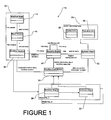
- Figure 1 is a UML diagram illustrating components of an audit system, according to an example embodiment, to facilitate audit functions in a collaborative workflow environment.
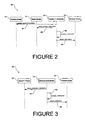
- Figure 2 is an interaction diagram illustrating a method, according to an example embodiment, to generate and attach context information to a business object.
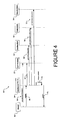
- Figure 3 is an interaction diagram illustrating a method, according to an example embodiment, to generate and attach execution information to a business object.
- Figure 4 is an interaction diagram illustrating a method, according to an example embodiment, to retrieve context and execution information associated with a business object and to compare the associated context and execution information with context and execution information retrieved from the workflow model and an execution engine.
- Figure 5 is a diagram illustrating multiple example use scenarios in which the example embodiments may be utilised to provide audit functionality.
- Figure 6 shows a diagrammatic representation of machine in the example form of a computer system within which instructions, for causing the machine to perform any one or more of the methodologies discussed herein, may be executed.
- a workflow management system may enable collaboration between organizationally (or technically) distinct business partners by assuming responsibility for the definition and execution of collaborative workflows between such distinct business partners.
- Example embodiments of a workflow management system described below seek, inter alia, to address issues that may arise with respect to collaborative and/or distributed workflow systems that may span organizational and technical boundaries.
- distributed workflow systems that span multiple entities e.g., organizational and technical entities
- such a shared database may aggregate information about private processes of a particular entity (e.g., a business partner), and it may be technically difficult to specify and enforce required access control, as well as satisfying other possible privacy concerns.
- workflow audit data may be stored and made accessible to multiple entities (e.g., principals) that collaborate with respect to a workflow system.
- Example embodiments also seek to provide audit information to a principal regarding which version of a workflow model was applied in the manipulation of a business object, and also allow a principal to observe whether there was a deviation in an execution (or process) route with respect to manipulation of a business object.
- principals may not necessarily have access to the specific internal workflows of their partners.
- a principal may not have knowledge concerning a workflow model, or a specific instance of an execution path leading to manipulation of a business object in the workflow of a partner, a principal may be able to pose questions regarding how, and according to which version of a workflow model, a business object was manipulated.
- FIG. 1 is a Unified Modeling Language (UML) diagram illustrating an audit system 10, according to an example embodiment.
- the audit system 10 may, in one example embodiment, be responsible for the definition and execution of collaborative workflows between distinct entities (e.g., organizationally and/or technically independent business partners). In other embodiments, the audit system 10 may of course be responsible for the definition and execution of workflows by a single entity, or entities having various degrees of integration.
- the audit system 10 may operate with a set of execution engines that execute specific instances of a version of a workflow model.
- the audit system 10 is shown in Figure 1 to include a workflow system 12 defining a general workflow model 14 that describes an overall process (e.g., an overall business process such as a loan origination process or a process for issuing life insurance).
- the general workflow model 14 may be subject to changes, which may be expressed in the form of a versioning relationship between the general workflow model 14 and one or more model versions 16.
- a specific workflow model version 16 may reflect the changing of certain parameters of the workflow model 14 over an overall life-time of the model 14.
- required health checks for the issuing of life insurance may change due to changes in legislation, while the overall process still remains that of issuing a life insurance.
- Such changes over time in the required health checks may be reflected in one or more model versions 16 associated with the general workflow model 14.
- a specific workflow model version 16 may in turn have one or more workflow instances 18, each workflow instance 18 representing a concrete instantiation of the general workflow model 14, and may involve specific entities (e.g., principals) and objects.
- entities e.g., principals
- the principal “Smith” may be a responsible clerk for the life insurance case of "Miller”.
- a workflow instance 18 may be executed (or processed) based on one or more workflow execution engines 20. As such, each execution engine 20 may follow a specific execution path, subset of a workflow instance 18, in the processing of one or more objects 22 (e.g., business objects).
- objects 22 e.g., business objects
- a business object may be an electronic representation of an entity used and manipulated within business processes (e.g., the processes of issuing of insurance, designing a machine component etc.).
- a business object may be an electronic component of a real-world object (e.g., a file pointing to a hard copy of a contract, or a completely virtual or electronic object (e.g., an electronic drawing of a component of a machine)).
- an execution engine 20 may trigger manipulation of one or more objects 22 when implementing a specific workflow instance 18.
- workflow instances 18 may be processes that are controlled by an execution engine 20 at run time of the audit system 10, and may cause interaction with a user.
- the audit system 10 further includes a workflow audit monitor 24 that is responsible for obtaining audit information from the workflow system 12, and the execution engine 20.
- the workflow audit monitor 24 requests and receives context information, in the example form of workflow model information identifying a workflow model 14 and version information identifying one or more model versions 16 from the workflow system 12.
- context information in the example form of workflow model information identifying a workflow model 14 and version information identifying one or more model versions 16 from the workflow system 12.
- other workflow context information identifying specific parameters, identifying context pertaining to the manipulation, processing and/or execution of an object may be obtained by the workflow audit monitor 24.
- the workflow audit monitor 24 further requests and receives audit information in the form of execution information from one or more execution engines 20 responsible for the execution of a specific workflow instance 18.
- the execution information identifies an execution path, specified in terms of a specific workflow instance 18, followed by an execution engine 20 in the processing of an object 22.
- An execution path may include a particular subset of tasks that are followed from the beginning to the end of processing a workflow model instance.
- the workflow audit monitor 24 is responsible for the association of audit information 25 with an object 22 processed by an execution engine 20 in terms of a specific workflow instance 18.
- the audit information 25 includes context information 26 and execution information 28, gathered from the workflow system 12 and one or more execution engines 20, respectively.
- the association of the audit information 25 may be achieved by attaching the audit information 25 to the object 22 so that the audit information 25 is stored as part of the object 22.
- the attaching of the audit information 25 is performed such that the audit information 25 is stored in a decentralized fashion with respect to business objects, and not in a centralized database. This decentralized storage of audit information 25, in a manner so that it is attached to a business object, enables various entities that have access to an object 22 to utilize the attached audit information 25 for various auditing functions, examples of which are discussed in further detail below.
- a workflow audit monitor 24 may communicate with multiple execution engines 30, potentially operated by other principals participating in a workflow model 14. As such, the workflow audit monitor 24 may be configured to communicate with a set of execution engines, each set working on one or more objects 22. In a distributed and collaborative environment, each of the multiple execution engines may be operated by a different entity (e.g., principal) that are operationally and/or technically independent and/or distinct from each other, but nonetheless collaborate with respect to the workflow system 12.
- principal e.g., principal
- Figure 2 is an interaction diagram illustrating a method 40, according to an example embodiment, to gather context information pertaining to a business object, to process the context information and attach the context information 26 to an object.
- the method 40 commences with the workflow audit monitor 24 requesting and receiving, at operation 42, model information from a workflow model 14.
- model information may include the ordering of tasks, but possibly also other information such as associated roles, organizational units, associated applications, data sinks etc.
- the workflow audit monitor 24, at operation 44 further requests and receives version information from one or more model versions 16.
- version information may be, for example, time of version change, person or system doing the change and model specific parameters that were changed (e.g. branching condition values).
- the workflow audit monitor 24 then proceeds to process the received context information at operation 46.
- the processing of the context information may include creating a hash value of the received model information and/or the received version information.
- the hash may be a number generated from a file containing the model and version information, and may be substantially smaller than the file itself. Further, the generated hash may be generated utilizing a formula in such a way that it is unlikely that some other file will produce the same hash value. Accordingly, the hash value generated at operation 46 may, in one example embodiment, serve as a unique fmgerprint for the received model and version information.
- the workflow audit monitor 24 then proceeds to attach audit information to the business object 22 at operation 48.
- the attached audit information may comprise the model and version information itself.
- the attached audit information may be derived from the model and version information (e.g., may comprise the above described processed information).
- Figure 3 is an interaction diagram illustrating a method 50, according to an example embodiment, to collect execution information associated with an object 22 (e.g., a business object).
- the workflow audit monitor 24 may, at operation 52, request and receive execution information, pertaining to a particular business object 22, from one or more execution engines 20.
- Execution information may relate to a chosen execution path, as well as values and user interaction that led to the determination of the execution path.
- an execution engine 20 may record that certain operations [a, b, d] were performed and that operation [c] was not necessary as some monetary amount (e.g., a credit value) was below a certain threshold.
- An execution engine 20 may also record which role or concrete identity performed a task.
- the workflow audit monitor 24 may then process the received execution information to thereby generate further audit information.
- the processing of the execution information at operation 52 may include generating a hash value based on a file including the execution information received at operation 52.
- the attached audit information may comprise the execution information received at operation 52, or the audit information derived from the execution information via the processing operation described above has been performed at operation 54.
- the attaching of audit information, by the workflow audit monitor 24, to a business object 22 has been described as being performed at operations 48 and 56 above.
- the attaching of this audit information to a business object 22 may be achieved in a number of ways.
- the workflow audit monitor 24 may store the audit information such that it is attached to, or incorporated within, a respective business object 22.
- the audit information may be included within a metadata pertaining to the business object 22.
- the audit information may be included as header information with respect to a business object 22, or may be included within a common digital container (or wrapper) in which the business object 22 is contained.
- Figure 4 is an interaction diagram illustrating a method 60, according to an example embodiment, to retrieve context and execution information associated with the business object responsive to an audit request, to compare the associated context and execution information with context and execution information retrieved from a workflow system and an execution engine, and to return an audit answer to a principal of a workflow (e.g., a collaborative workflow).
- a principal of a workflow e.g., a collaborative workflow.
- the method 60 described below with reference to Figure 4, is a description of a general flow. A number of example and more specific scenarios will then be discussed subsequent to the discussion of Figure 4 with reference to Figure 5.
- the method 60 commences at operation 64, with the retrieval, by a principal 62 involved in a workflow (e.g. a collaborative workflow) of audit information 25, in the example form of context and execution information, that is attached to (or associated with) a business object. Principals may be authorised to retrieve the information (e.g., the business object and associated audit information 25) in order to protect against random querying.
- a workflow e.g. a collaborative workflow
- Principals may be authorised to retrieve the information (e.g., the business object and associated audit information 25) in order to protect against random querying.
- the principal 62 issues an audit request to a workflow audit monitor 24.
- the audit request may be for a simple YES/NO determination as to whether the business object 22 had been processed, by one or more execution engines 20, in accordance with certain expectations or standards.
- these expectations may be that the business object 22 was processed based on a specific workflow model 14, and a specific model version 16.
- the expectation may be that a specific workflow instance 18 was utilized, leading to a concrete execution path by an execution engine 20 and subsequent processing of the business object 22.
- the audit request may further indicate whether a simple YES/NO audit response or answer is requested, or whether the audit answer should be more comprehensive and provide specifics regarding deviations from, or compliance with, any expectations or standards in connection with processing of the business object 22.
- the audit answer returned by the workflow audit monitor 24 is based on internal processes and/or confidential information of a further entity (e.g. a further principal)
- the audit answer returned by the workflow audit monitor 24 may be restricted to a simple YES/NO answer.
- the audit request may itself include the associated audit information 25 retrieved by the principal 62 from the business object 22 at operation 64.
- the audit request may not include the associated audit information, in which case, at operation 67, the workflow audit monitor 24 may itself issue a request to the business object 22 for the associated audit information 25 which may comprise one or more hash values, as described above with reference to Figures 2 and Figure 3
- the workflow audit monitor 24 may then issue requests to a number of entities in an audit system 10, for appropriate information.
- a first request 68 may be issued by the workflow audit monitor 24 to a workflow system 12 for workflow model information specific to a workflow model.
- a second request 70 may be issued by the workflow audit monitor 24 to a workflow system 12 for model version information pertaining to a particular model version 16 involved in processing of the relevant business object 22.
- a further request 72 may be issued by the workflow audit monitor 24 to one or more execution engines 20 for execution information that identifies an execution path subset of a specific workflow instance, followed by the relevant execution engine 20 when processing of the business object 22.
- the workflow audit monitor 24 compares the audit information attached to business object 22 with retrieved audit information, which comprises (or is derived from) information returned responsive to the requests 68, 70 and 72.
- the comparison of the associated and retrieved audit information may include generating a hash value from the retrieved audit information, received responsive to the requests 68, 70 and 72, and comparing the generated hash value to a hash value that comprises the associated audit information of the business object 22.
- the workflow audit monitor 24 then returns an audit answer to the principal 62.
- the audit answer may be based on the comparison of the associated and retrieved audit information performed at operation 74.
- the audit answer returned by the workflow audit monitor 24 to the principal 62 at operation 76 may comprise a simple YES/NO answer, indicating whether or not the associated and retrieved audit information correspond or not.
- the returned audit answer 76 may be more detailed information, including specifics regarding whether an entity (e.g., a business partner) complied with, or deviated from certain expectations or standards.
- an auditor 80 may wish to know about changes to a workflow model 14 regarding the manipulation of a specific business object 22.
- the auditor 80 queries the workflow audit monitor 24 regarding changes to object types, or specific workflow instances 18, and expects an audit answer in the form of a YES/NO answer.
- the auditor 80 may be required to trace supporting change documents and sign offs.
- the auditor 80 does not need be exposed to the full internal structure of a workflow system 12.
- the workflow system 12 may, in a collaborative workflow, embody certain sensitive information of one or more principals.
- the auditor 80 may, utilizing audit system 10, be screened from such sensitive information.
- the audit request received by the workflow audit monitor 24 from the auditor 80 includes a query regarding changes to a workflow model 14, with respect to business object type, or a workflow instance 18.
- the audit answer, returned by the workflow audit monitor 24 to the auditor 80 is a YES/NO answer, including model version information.
- a second scenario (scenario 1b), assume a deviation at run time from a prescribed workflow model 14, but not a change in the workflow model 14 itself.
- This second scenario is based on an observation that it is sometimes not realistic to expect a workflow to be followed step by step in every instance, and that it may be necessary allow for exceptions in certain instances. For example, a responsible employee involved in the execution of a workflow model 14 may be ill. In such a scenario, it may be desirable to accommodate a deviation from the process route/execution path as described by the workflow model 14, without changing the model itself. However, such a deviation should be noted and attached as audit information to the relevant business object 22.
- an auditor 80 may pose a query (in the form of an audit request) regarding any such changes, with respect to a set of business objects 22, and may expect to receive an audit answer indicating whether or not there had been deviations. Accordingly, in this scenario, the audit request that is issued from the auditor 80 to the workflow audit monitor 24 may be specifically directed towards determining whether any changes to an execution path, as specified in terms of a workflow instance 18, have occurred in the processing of a business object 22.
- the audit answer returned by the workflow audit monitor 24 to the auditor 80, may comprise a simple YES/NO answer.
- a principal 82 involved in a collaborative workflow may wish to determine or not whether there have been any changes to a workflow model 14 in connection with the manipulation of a specific business object 22. Further, the principal 82 may wish to know what such changes entailed.
- This scenario differs from scenario la in that the principal 82 may already have information about the workflow model 14, and may be looking to the workflow audit monitor 24 to provide more detailed information regarding any changes to the workflow model 14.
- the audit request issued from the principal 82 may be specifically regarding a workflow model 14 (with respect to a business object type) or a workflow instance 18 (with respect to the processing of a specific business object 22).
- the audit answer provided by the workflow audit monitor 24, in scenario 2 may include a YES/NO answer, as well as version information regarding particular model version 16, and a detailed description of changes in connection with a business object type and exhibited in that particular workflow instance 18.
- scenario 3a assume that two partners collaborating in a workflow wish to verify that the other partner has followed certain procedures in the manipulation of a business object.
- the nature of the collaborative workflows between the entities may distinguish between a global workflow, and private sub-workflows.
- Each principal may have information concerning only a certain part of a whole collaborative workflow system 12, but not know how other partners arrange and execute their work.
- such a collaborative workflow system 12 may be deployed in the production of pharmaceuticals, or in complex engineering projects.
- principal 84 may wish to ensure that the recipe was approved by principal 82 following a set of procedures.
- principal 84 may wish to ensure that a set of clinical tests have been adhered to.
- Such tests and the general approval process may change, subject to strict legal regulations (e.g. by the Food and Drug Administration (FDA)).
- FDA Food and Drug Administration
- principal 84 may take information concerning an execution path followed by an execution engine 20 (e.g., the execution information discussed above with reference to Figures 2-4 ) from a relevant business obj ect 22, and communicate this execution information to a workflow audit monitor 24.
- the workflow audit monitor 24 will then verify to principal 84, by way of an audit answer, that the execution path followed by principal 82 was as described by a specific workflow model 14. This verification may be done without revealing to principal 84 how the particular execution path was followed by principal 82.
- the audit request provided by the principal 84 to the workflow audit monitor 24, may comprise execution information in the example form of a hash of an execution path stored as audit information in association with the relevant business object 22.
- the audit answer returned by the workflow audit monitor 24 to the principal 84 may comprise a YES/NO answer only.
- scenario 3b assuming that two partners (e.g., principal 82 and principal 84) are collaborating in a workflow system 12, and that they wish to verify that they have both followed the same model version 16 in the manipulation of business object 22.
- the principal 82 may receive a contract from principal 84, and wish to verify that he and principal 84 followed the same workflow model version 16 in the manipulation of this business object 22.
- both the principal 82 and the principal 84 may send context information (e.g., workflow model and version information) attached to, or associated with, a relevant business object 22 to the workflow audit monitor 24.
- the workflow audit monitor 24 may compare this context information in order to generate an audit answer.
- the audit request may include requests from each of the principals 82 and 84, and comprise a hash of a workflow model and workflow version information, and the audit answer may comprise a simple YES/NO answer.
- Figure 6 shows a diagrammatic representation of machine in the example form of a computer system 100 within which a set of instructions, for causing the machine to perform any one or more of the methodologies discussed herein, may be executed.
- the machine operates as a standalone device or may be connected (e.g., networked) to other machines.
- the machine may operate in the capacity of a server or a client machine in server-client network environment, or as a peer machine in a peer-to-peer (or distributed) network environment.
- the machine may be a personal computer (PC), a tablet PC, a set-top box (STB), a Personal Digital Assistant (PDA), a cellular telephone, a web appliance, a network router, switch or bridge, or any machine capable of executing a set of instructions (sequential or otherwise) that specify actions to be taken by that machine.
- PC personal computer
- PDA Personal Digital Assistant
- STB set-top box
- WPA Personal Digital Assistant
- the example computer system 100 includes a processor 102 (e.g., a central processing unit (CPU), a graphics processing unit (CPU) or both), a main memory 104 and a static memory 106, which communicate with each other via a bus 108.
- the computer system 100 may further include a video display unit 110 (e.g., a liquid crystal display (LCD) or a cathode ray tube (CRT)).
- the computer system 100 also includes an alphanumeric input device 112 (e.g., a keyboard), a user interface (UI) navigation device 114 (e.g., a mouse), a disk drive unit 116, a signal generation device 118 (e.g., a speaker) and a network interface device 120.
- a processor 102 e.g., a central processing unit (CPU), a graphics processing unit (CPU) or both
- main memory 104 e.g., RAM
- static memory 106 e.g., RAM
- the disk drive unit 116 includes a machine-readable medium 122 on which is stored one or more sets of instructions and data structures (e.g., software 124) embodying or utilized by any one or more of the methodologies or functions described herein.
- the software 124 may also reside, completely or at least partially, within the main memory 104 and/or within the processor 102 during execution thereof by the computer system 100, the main memory 104 and the processor 102 also constituting machine-readable media.
- the software 124 may further be transmitted or received over a network 126 via the network interface device 120 utilizing any one of a number of well-known transfer protocols (e.g., HTTP).
- HTTP transfer protocol
- machine-readable medium 122 is shown in an example embodiment to be a single medium, the term “machine-readable medium” should be taken to include a single medium or multiple media (e.g., a centralized or distributed database, and/or associated caches and servers) that store the one or more sets of instructions.
- the term “machine-readable medium” shall also be taken to include any medium that is capable of storing, encoding or carrying a set of instructions for execution by the machine and that cause the machine to perform any one or more of the methodologies of the present invention, or that is capable of storing, encoding or carrying data structures utilized by or associated with such a set of instructions.
- the term “machine-readable medium” shall accordingly be taken to include, but not be limited to, solid-state memories, optical and magnetic media, and carrier wave signals.
Landscapes
- Business, Economics & Management (AREA)
- Engineering & Computer Science (AREA)
- Human Resources & Organizations (AREA)
- Economics (AREA)
- Strategic Management (AREA)
- Entrepreneurship & Innovation (AREA)
- Tourism & Hospitality (AREA)
- General Physics & Mathematics (AREA)
- Physics & Mathematics (AREA)
- Marketing (AREA)
- Theoretical Computer Science (AREA)
- General Business, Economics & Management (AREA)
- Quality & Reliability (AREA)
- Educational Administration (AREA)
- Game Theory and Decision Science (AREA)
- Development Economics (AREA)
- Operations Research (AREA)
- Technology Law (AREA)
- Health & Medical Sciences (AREA)
- General Health & Medical Sciences (AREA)
- Primary Health Care (AREA)
- Management, Administration, Business Operations System, And Electronic Commerce (AREA)
Abstract
Description
- This application relates to a method and system to manage a collaborative workflow environment and, in one example embodiment, to a decentralised audit system for deployment in such a collaborative workflow environment.
- The provisioning of auditing data is an increasing requirement in the business world, partially as a result of new legal guidelines (e.g., the Sarbanes-Oxley Act, Basel II and the Health Insurance Portability and Accountability Act (HIPAA)). While many current Enterprise Resource Planning (ERP Systems (e.g., SAP, IBM MQ Workflow or BEA Systems)) make it possible to monitor activities with respect to a workflow, a number of restrictions exist with respect to collaborative and distributed workflow systems that span organizational and technical boundaries.
- According to an aspect of the invention, there is provided a system to manage a workflow. The system includes a workflow model having at least one version, which is executable by an execution engine as a specific workflow instance. The system further includes a workflow data monitor to receive context information pertaining to a workflow model, to receive execution information pertaining to execution by the execution engine of the specific instance of the workflow model, and to associate the context and execution information as audit information with an object processed by an execution engine in terms of the specific instance of the workflow model.
- Other features will be apparent from the accompanying drawings and from the detailed description that follows.
- Embodiments are illustrated by way of example and not limitation in the figures of the accompanying drawings, in which like references indicate similar elements and in which:
- Figure 1 is a UML diagram illustrating components of an audit system, according to an example embodiment, to facilitate audit functions in a collaborative workflow environment.
- Figure 2 is an interaction diagram illustrating a method, according to an example embodiment, to generate and attach context information to a business object.
- Figure 3 is an interaction diagram illustrating a method, according to an example embodiment, to generate and attach execution information to a business object.
- Figure 4 is an interaction diagram illustrating a method, according to an example embodiment, to retrieve context and execution information associated with a business object and to compare the associated context and execution information with context and execution information retrieved from the workflow model and an execution engine.
- Figure 5 is a diagram illustrating multiple example use scenarios in which the example embodiments may be utilised to provide audit functionality.
- Figure 6 shows a diagrammatic representation of machine in the example form of a computer system within which instructions, for causing the machine to perform any one or more of the methodologies discussed herein, may be executed.
- In the following description, for purposes of explanation, numerous specific details are set forth in order to provide a thorough understanding of an embodiment of the present invention. It will be evident, however, to one skilled in the art that embodiments of the present invention may be practiced without these specific details.
- A workflow management system, according to an example embodiment, may enable collaboration between organizationally (or technically) distinct business partners by assuming responsibility for the definition and execution of collaborative workflows between such distinct business partners. Example embodiments of a workflow management system described below seek, inter alia, to address issues that may arise with respect to collaborative and/or distributed workflow systems that may span organizational and technical boundaries. Typically, distributed workflow systems that span multiple entities (e.g., organizational and technical entities) may not share a workflow history database. This may be because the set up of such a workflow history database, and the joint administration thereof, may not be efficient with respect to a relatively short life-time of collaboration. In addition, such a shared database may aggregate information about private processes of a particular entity (e.g., a business partner), and it may be technically difficult to specify and enforce required access control, as well as satisfying other possible privacy concerns.
- Without limiting environments in which embodiments may be employed, it is useful to consider certain example issues that may arise within a collaborative and distributed workflow system. However, the below discussion should in no way be interpreted as requiring that embodiments be limited to a collaborative and distributed workflow system. Indeed, embodiments of the present invention may be deployed in a central and non-collaborative workflow system to provide audit functionality.
- Returning to an example collaborative and distributed workflow system, workflow audit data may be stored and made accessible to multiple entities (e.g., principals) that collaborate with respect to a workflow system.
- Example embodiments also seek to provide audit information to a principal regarding which version of a workflow model was applied in the manipulation of a business object, and also allow a principal to observe whether there was a deviation in an execution (or process) route with respect to manipulation of a business object.
- In a collaborative workflow system, it will also be appreciated that principals may not necessarily have access to the specific internal workflows of their partners. In one example embodiment, while a principal may not have knowledge concerning a workflow model, or a specific instance of an execution path leading to manipulation of a business object in the workflow of a partner, a principal may be able to pose questions regarding how, and according to which version of a workflow model, a business object was manipulated.
- Figure 1 is a Unified Modeling Language (UML) diagram illustrating an
audit system 10, according to an example embodiment. Theaudit system 10 may, in one example embodiment, be responsible for the definition and execution of collaborative workflows between distinct entities (e.g., organizationally and/or technically independent business partners). In other embodiments, theaudit system 10 may of course be responsible for the definition and execution of workflows by a single entity, or entities having various degrees of integration. - For the purposes of illustration, consider an environment in which there exist a number of organizational independent entities. In such an environment, the
audit system 10 may operate with a set of execution engines that execute specific instances of a version of a workflow model. Specifically, theaudit system 10 is shown in Figure 1 to include aworkflow system 12 defining ageneral workflow model 14 that describes an overall process (e.g., an overall business process such as a loan origination process or a process for issuing life insurance). Thegeneral workflow model 14 may be subject to changes, which may be expressed in the form of a versioning relationship between thegeneral workflow model 14 and one ormore model versions 16. For example, a specificworkflow model version 16 may reflect the changing of certain parameters of theworkflow model 14 over an overall life-time of themodel 14. Consider for example that required health checks for the issuing of life insurance may change due to changes in legislation, while the overall process still remains that of issuing a life insurance. Such changes over time in the required health checks may be reflected in one ormore model versions 16 associated with thegeneral workflow model 14. - A specific
workflow model version 16 may in turn have one ormore workflow instances 18, eachworkflow instance 18 representing a concrete instantiation of thegeneral workflow model 14, and may involve specific entities (e.g., principals) and objects. For example, the principal "Smith" may be a responsible clerk for the life insurance case of "Miller". - A
workflow instance 18 may be executed (or processed) based on one or moreworkflow execution engines 20. As such, eachexecution engine 20 may follow a specific execution path, subset of aworkflow instance 18, in the processing of one or more objects 22 (e.g., business objects). For example, a business object may be an electronic representation of an entity used and manipulated within business processes (e.g., the processes of issuing of insurance, designing a machine component etc.). In example embodiments, a business object may be an electronic component of a real-world object (e.g., a file pointing to a hard copy of a contract, or a completely virtual or electronic object (e.g., an electronic drawing of a component of a machine)). As such, anexecution engine 20 may trigger manipulation of one ormore objects 22 when implementing aspecific workflow instance 18. - In summary, within the
example audit system 10, a distinction is made between aworkflow model 14 andversions 16 thereof.Workflow instances 18 may be processes that are controlled by anexecution engine 20 at run time of theaudit system 10, and may cause interaction with a user. - The
audit system 10 further includes aworkflow audit monitor 24 that is responsible for obtaining audit information from theworkflow system 12, and theexecution engine 20. In one example embodiment, the workflow audit monitor 24 requests and receives context information, in the example form of workflow model information identifying aworkflow model 14 and version information identifying one ormore model versions 16 from theworkflow system 12. In other embodiments, other workflow context information identifying specific parameters, identifying context pertaining to the manipulation, processing and/or execution of an object may be obtained by theworkflow audit monitor 24. - The workflow audit monitor 24 further requests and receives audit information in the form of execution information from one or
more execution engines 20 responsible for the execution of aspecific workflow instance 18. In an example embodiment, the execution information identifies an execution path, specified in terms of aspecific workflow instance 18, followed by anexecution engine 20 in the processing of anobject 22. An execution path may include a particular subset of tasks that are followed from the beginning to the end of processing a workflow model instance. - Further, as shown in Figure 1, the
workflow audit monitor 24 is responsible for the association ofaudit information 25 with anobject 22 processed by anexecution engine 20 in terms of aspecific workflow instance 18. In one example embodiment, theaudit information 25 includescontext information 26 andexecution information 28, gathered from theworkflow system 12 and one ormore execution engines 20, respectively. The association of theaudit information 25 may be achieved by attaching theaudit information 25 to theobject 22 so that theaudit information 25 is stored as part of theobject 22. In any event, in one embodiment, the attaching of theaudit information 25 is performed such that theaudit information 25 is stored in a decentralized fashion with respect to business objects, and not in a centralized database. This decentralized storage ofaudit information 25, in a manner so that it is attached to a business object, enables various entities that have access to anobject 22 to utilize the attachedaudit information 25 for various auditing functions, examples of which are discussed in further detail below. - It will furthermore be noted from Figure 1 that, in one example embodiment, a
workflow audit monitor 24 may communicate withmultiple execution engines 30, potentially operated by other principals participating in aworkflow model 14. As such, theworkflow audit monitor 24 may be configured to communicate with a set of execution engines, each set working on one ormore objects 22. In a distributed and collaborative environment, each of the multiple execution engines may be operated by a different entity (e.g., principal) that are operationally and/or technically independent and/or distinct from each other, but nonetheless collaborate with respect to theworkflow system 12. - Figure 2 is an interaction diagram illustrating a
method 40, according to an example embodiment, to gather context information pertaining to a business object, to process the context information and attach thecontext information 26 to an object. Themethod 40 commences with the workflow audit monitor 24 requesting and receiving, atoperation 42, model information from aworkflow model 14. Such model information may include the ordering of tasks, but possibly also other information such as associated roles, organizational units, associated applications, data sinks etc. - The workflow audit monitor 24, at
operation 44 further requests and receives version information from one ormore model versions 16. Such version information may be, for example, time of version change, person or system doing the change and model specific parameters that were changed (e.g. branching condition values). - The workflow audit monitor 24 then proceeds to process the received context information at
operation 46. In one embodiment, the processing of the context information may include creating a hash value of the received model information and/or the received version information. The hash may be a number generated from a file containing the model and version information, and may be substantially smaller than the file itself. Further, the generated hash may be generated utilizing a formula in such a way that it is unlikely that some other file will produce the same hash value. Accordingly, the hash value generated atoperation 46 may, in one example embodiment, serve as a unique fmgerprint for the received model and version information. - Having processed the received model and version information, the workflow audit monitor 24 then proceeds to attach audit information to the
business object 22 atoperation 48. In one embodiment, the attached audit information may comprise the model and version information itself. In a further embodiment, the attached audit information may be derived from the model and version information (e.g., may comprise the above described processed information). - Figure 3 is an interaction diagram illustrating a
method 50, according to an example embodiment, to collect execution information associated with an object 22 (e.g., a business object). In a manner similar to themethod 40 described above with reference to Figure 2, the workflow audit monitor 24 may, atoperation 52, request and receive execution information, pertaining to aparticular business object 22, from one ormore execution engines 20. Execution information may relate to a chosen execution path, as well as values and user interaction that led to the determination of the execution path. For example, anexecution engine 20 may record that certain operations [a, b, d] were performed and that operation [c] was not necessary as some monetary amount (e.g., a credit value) was below a certain threshold. Anexecution engine 20 may also record which role or concrete identity performed a task. - At operation 54, the workflow audit monitor 24 may then process the received execution information to thereby generate further audit information. Again, the processing of the execution information at
operation 52 may include generating a hash value based on a file including the execution information received atoperation 52. - The workflow audit monitor 24, at
operation 56, then proceeds to attach theaudit information 25 to thebusiness object 22. Again, the attached audit information may comprise the execution information received atoperation 52, or the audit information derived from the execution information via the processing operation described above has been performed at operation 54. - The attaching of audit information, by the workflow audit monitor 24, to a
business object 22 has been described as being performed atoperations business object 22 may be achieved in a number of ways. In one embodiment, the workflow audit monitor 24 may store the audit information such that it is attached to, or incorporated within, arespective business object 22. For example, the audit information may be included within a metadata pertaining to thebusiness object 22. Further, the audit information may be included as header information with respect to abusiness object 22, or may be included within a common digital container (or wrapper) in which thebusiness object 22 is contained. - Figure 4 is an interaction diagram illustrating a
method 60, according to an example embodiment, to retrieve context and execution information associated with the business object responsive to an audit request, to compare the associated context and execution information with context and execution information retrieved from a workflow system and an execution engine, and to return an audit answer to a principal of a workflow (e.g., a collaborative workflow). It will be appreciated that, in different scenarios, different information may be requested from, and provided to, the various entities involved in a workflow. The information may, for example, depend on the principal (or principals) involved and the specific interests of such principals. Themethod 60, described below with reference to Figure 4, is a description of a general flow. A number of example and more specific scenarios will then be discussed subsequent to the discussion of Figure 4 with reference to Figure 5. - The
method 60 commences atoperation 64, with the retrieval, by a principal 62 involved in a workflow (e.g. a collaborative workflow) ofaudit information 25, in the example form of context and execution information, that is attached to (or associated with) a business object. Principals may be authorised to retrieve the information (e.g., the business object and associated audit information 25) in order to protect against random querying. - At
operation 66, the principal 62 issues an audit request to a workflow audit monitor 24. In one example embodiment, the audit request may be for a simple YES/NO determination as to whether thebusiness object 22 had been processed, by one ormore execution engines 20, in accordance with certain expectations or standards. For example, these expectations may be that thebusiness object 22 was processed based on aspecific workflow model 14, and aspecific model version 16. The expectation may be that aspecific workflow instance 18 was utilized, leading to a concrete execution path by anexecution engine 20 and subsequent processing of thebusiness object 22. The audit request, issued atoperation 66, may further indicate whether a simple YES/NO audit response or answer is requested, or whether the audit answer should be more comprehensive and provide specifics regarding deviations from, or compliance with, any expectations or standards in connection with processing of thebusiness object 22. Where the audit answer returned by the workflow audit monitor 24 is based on internal processes and/or confidential information of a further entity (e.g. a further principal), the audit answer returned by the workflow audit monitor 24 may be restricted to a simple YES/NO answer. - In any event, the audit request may itself include the associated
audit information 25 retrieved by the principal 62 from thebusiness object 22 atoperation 64. In an alternative embodiment, the audit request may not include the associated audit information, in which case, atoperation 67, the workflow audit monitor 24 may itself issue a request to thebusiness object 22 for the associatedaudit information 25 which may comprise one or more hash values, as described above with reference to Figures 2 and Figure 3 - Responsive to the audit request at
operation 66, the workflow audit monitor 24 may then issue requests to a number of entities in anaudit system 10, for appropriate information. For example, afirst request 68 may be issued by the workflow audit monitor 24 to aworkflow system 12 for workflow model information specific to a workflow model. Asecond request 70 may be issued by the workflow audit monitor 24 to aworkflow system 12 for model version information pertaining to aparticular model version 16 involved in processing of therelevant business object 22. Afurther request 72 may be issued by the workflow audit monitor 24 to one ormore execution engines 20 for execution information that identifies an execution path subset of a specific workflow instance, followed by therelevant execution engine 20 when processing of thebusiness object 22. - At
operation 74, the workflow audit monitor 24 then compares the audit information attached tobusiness object 22 with retrieved audit information, which comprises (or is derived from) information returned responsive to therequests requests business object 22. - At
operation 76, the workflow audit monitor 24 then returns an audit answer to the principal 62. The audit answer may be based on the comparison of the associated and retrieved audit information performed atoperation 74. In various example embodiments, the audit answer returned by the workflow audit monitor 24 to the principal 62 atoperation 76 may comprise a simple YES/NO answer, indicating whether or not the associated and retrieved audit information correspond or not. In alternative embodiments, the returnedaudit answer 76 may be more detailed information, including specifics regarding whether an entity (e.g., a business partner) complied with, or deviated from certain expectations or standards. - Three example use case scenarios will be now be described, each of the described use case scenarios representing specific examples of the
general method 60 described above with reference to Figure 4. Each of these example scenarios are discussed with reference to Figure 5. - In a first scenario (scenario la), an
auditor 80 may wish to know about changes to aworkflow model 14 regarding the manipulation of aspecific business object 22. To this end, theauditor 80 queries the workflow audit monitor 24 regarding changes to object types, orspecific workflow instances 18, and expects an audit answer in the form of a YES/NO answer. In the scenario, if there had been changes to either the object types or therelevant workflow instances 18 that guided one ormore execution engines 20, then theauditor 80 may be required to trace supporting change documents and sign offs. However, utilizing theaudit system 10, theauditor 80 does not need be exposed to the full internal structure of aworkflow system 12. As described below, theworkflow system 12 may, in a collaborative workflow, embody certain sensitive information of one or more principals. Accordingly, theauditor 80 may, utilizingaudit system 10, be screened from such sensitive information. Accordingly, in the above described scenario (scenario 1a), the audit request received by the workflow audit monitor 24 from theauditor 80 includes a query regarding changes to aworkflow model 14, with respect to business object type, or aworkflow instance 18. The audit answer, returned by the workflow audit monitor 24 to theauditor 80, is a YES/NO answer, including model version information. - Turning now to a second scenario (
scenario 1b), assume a deviation at run time from a prescribedworkflow model 14, but not a change in theworkflow model 14 itself. This second scenario is based on an observation that it is sometimes not realistic to expect a workflow to be followed step by step in every instance, and that it may be necessary allow for exceptions in certain instances. For example, a responsible employee involved in the execution of aworkflow model 14 may be ill. In such a scenario, it may be desirable to accommodate a deviation from the process route/execution path as described by theworkflow model 14, without changing the model itself. However, such a deviation should be noted and attached as audit information to therelevant business object 22. - In the second scenario (
scenario 1b), anauditor 80 may pose a query (in the form of an audit request) regarding any such changes, with respect to a set of business objects 22, and may expect to receive an audit answer indicating whether or not there had been deviations. Accordingly, in this scenario, the audit request that is issued from theauditor 80 to the workflow audit monitor 24 may be specifically directed towards determining whether any changes to an execution path, as specified in terms of aworkflow instance 18, have occurred in the processing of abusiness object 22. - The audit answer, returned by the workflow audit monitor 24 to the
auditor 80, may comprise a simple YES/NO answer. - In a further scenario (scenario 2), a principal 82 involved in a collaborative workflow may wish to determine or not whether there have been any changes to a
workflow model 14 in connection with the manipulation of aspecific business object 22. Further, the principal 82 may wish to know what such changes entailed. This scenario differs from scenario la in that the principal 82 may already have information about theworkflow model 14, and may be looking to the workflow audit monitor 24 to provide more detailed information regarding any changes to theworkflow model 14. - Accordingly, in
scenario 2, the audit request issued from the principal 82 may be specifically regarding a workflow model 14 (with respect to a business object type) or a workflow instance 18 (with respect to the processing of a specific business object 22). The audit answer provided by the workflow audit monitor 24, inscenario 2, may include a YES/NO answer, as well as version information regardingparticular model version 16, and a detailed description of changes in connection with a business object type and exhibited in thatparticular workflow instance 18. - Turning now to a further scenario,
scenario 3a, assume that two partners collaborating in a workflow wish to verify that the other partner has followed certain procedures in the manipulation of a business object. In this example embodiment, the nature of the collaborative workflows between the entities (e.g.,principal 82 and principal 84) may distinguish between a global workflow, and private sub-workflows. Each principal may have information concerning only a certain part of a wholecollaborative workflow system 12, but not know how other partners arrange and execute their work. For example, such acollaborative workflow system 12 may be deployed in the production of pharmaceuticals, or in complex engineering projects. - In the example scenario, assuming that principal 84 receives a recipe from business partner, namely
principal 82.Principal 84 may wish to ensure that the recipe was approved byprincipal 82 following a set of procedures. For example, in the production of pharmaceuticals, principal 84 may wish to ensure that a set of clinical tests have been adhered to. Such tests and the general approval process may change, subject to strict legal regulations (e.g. by the Food and Drug Administration (FDA)). - In this example scenario, principal 84 may take information concerning an execution path followed by an execution engine 20 (e.g., the execution information discussed above with reference to Figures 2-4) from a relevant
business obj ect 22, and communicate this execution information to a workflow audit monitor 24. The workflow audit monitor 24 will then verify toprincipal 84, by way of an audit answer, that the execution path followed byprincipal 82 was as described by aspecific workflow model 14. This verification may be done without revealing to principal 84 how the particular execution path was followed byprincipal 82. - Accordingly, in this example scenario, the audit request, provided by the principal 84 to the workflow audit monitor 24, may comprise execution information in the example form of a hash of an execution path stored as audit information in association with the
relevant business object 22. The audit answer returned by the workflow audit monitor 24 to the principal 84 may comprise a YES/NO answer only. - Considering now a further scenario,
scenario 3b, assuming that two partners (e.g.,principal 82 and principal 84) are collaborating in aworkflow system 12, and that they wish to verify that they have both followed thesame model version 16 in the manipulation ofbusiness object 22. For example, the principal 82 may receive a contract fromprincipal 84, and wish to verify that he and principal 84 followed the sameworkflow model version 16 in the manipulation of thisbusiness object 22. - In this scenario, both the principal 82 and the principal 84 may send context information (e.g., workflow model and version information) attached to, or associated with, a
relevant business object 22 to the workflow audit monitor 24. The workflow audit monitor 24 may compare this context information in order to generate an audit answer. In summary, the audit request may include requests from each of theprincipals - From the above example scenarios, it will be appreciated that the storage of audit information and association thereof with a business object, and the provision of independent workflow audit monitor 24 responsible for attaching, retrieving and comparing such audit information, may allow organisationally independent entities to issue queries regarding a
collaborative workflow system 12, and receive assurances regarding such a collaborative workflow system, in a manner that may not expose confidential information regarding other entities. - Figure 6 shows a diagrammatic representation of machine in the example form of a
computer system 100 within which a set of instructions, for causing the machine to perform any one or more of the methodologies discussed herein, may be executed. In alternative embodiments, the machine operates as a standalone device or may be connected (e.g., networked) to other machines. In a networked deployment, the machine may operate in the capacity of a server or a client machine in server-client network environment, or as a peer machine in a peer-to-peer (or distributed) network environment. The machine may be a personal computer (PC), a tablet PC, a set-top box (STB), a Personal Digital Assistant (PDA), a cellular telephone, a web appliance, a network router, switch or bridge, or any machine capable of executing a set of instructions (sequential or otherwise) that specify actions to be taken by that machine. Further, while only a single machine is illustrated, the term "machine" shall also be taken to include any collection of machines that individually or jointly execute a set (or multiple sets) of instructions to perform any one or more of the methodologies discussed herein. - The
example computer system 100 includes a processor 102 (e.g., a central processing unit (CPU), a graphics processing unit (CPU) or both), amain memory 104 and astatic memory 106, which communicate with each other via abus 108. Thecomputer system 100 may further include a video display unit 110 (e.g., a liquid crystal display (LCD) or a cathode ray tube (CRT)). Thecomputer system 100 also includes an alphanumeric input device 112 (e.g., a keyboard), a user interface (UI) navigation device 114 (e.g., a mouse), adisk drive unit 116, a signal generation device 118 (e.g., a speaker) and anetwork interface device 120. - The
disk drive unit 116 includes a machine-readable medium 122 on which is stored one or more sets of instructions and data structures (e.g., software 124) embodying or utilized by any one or more of the methodologies or functions described herein. Thesoftware 124 may also reside, completely or at least partially, within themain memory 104 and/or within theprocessor 102 during execution thereof by thecomputer system 100, themain memory 104 and theprocessor 102 also constituting machine-readable media. - The
software 124 may further be transmitted or received over anetwork 126 via thenetwork interface device 120 utilizing any one of a number of well-known transfer protocols (e.g., HTTP). - While the machine-
readable medium 122 is shown in an example embodiment to be a single medium, the term "machine-readable medium" should be taken to include a single medium or multiple media (e.g., a centralized or distributed database, and/or associated caches and servers) that store the one or more sets of instructions. The term "machine-readable medium" shall also be taken to include any medium that is capable of storing, encoding or carrying a set of instructions for execution by the machine and that cause the machine to perform any one or more of the methodologies of the present invention, or that is capable of storing, encoding or carrying data structures utilized by or associated with such a set of instructions. The term "machine-readable medium" shall accordingly be taken to include, but not be limited to, solid-state memories, optical and magnetic media, and carrier wave signals. - Although an embodiment of the present invention has been described with reference to specific example embodiments, it will be evident that various modifications and changes may be made to these embodiments without departing from the broader spirit and scope of the invention. Accordingly, the specification and drawings are to be regarded in an illustrative rather than a restrictive sense.
Claims (30)
- A system including:a workflow model having at least one version, the at least one version being executable by an execution engine as a specific workflow instance; anda workflow data monitor to receive and associate audit information with an object processed by an execution engine in terms of the specific instance of the workflow model.
- The system of claim 1, wherein the workflow data monitor is to store the audit information such that it is attached to the object.
- The system of claim 1, wherein the receiving of the audit information includes receiving context information pertaining to the workflow model.
- The system of claim 3, wherein the context information includes model information identifying the workflow model.
- The system of claim 3, wherein the context information includes version information identifying the at least one version of the workflow model.
- The system of claim 1, wherein the receiving of the audit information includes receiving execution information pertaining to execution by the execution engine of the specific instance of the workflow model.
- The system of claim 6, wherein the execution information identifies an execution path, specified by the specific workflow instance, followed by the execution engine in processing of the object.
- The system of claim 1, wherein the specific workflow instance is characterized by at least one principle and at least one object.
- The system of claim 1, wherein the workflow data monitor is to process the audit information prior to associating the audit information with the object.
- The system of claim 9, wherein the workflow data monitor is to process the audit information by creating a hash value based on the audit information.
- The system of claim 1, wherein the workflow data monitor is to receive an audit request with respect to the object processed in terms of the specific workflow instance.
- The system of claim 11, wherein the workflow data monitor, responsive to receipt of the audit request with respect to the object, is to:retrieve the associated audit information associated with the object;retrieve further audit information from at least one of the workflow model and the execution engine; andcompare the associated audit information with the further audit information.
- The system of claim 12, wherein the workflow data monitor is to generate an audit result based on the comparison of the associated audit information with the further audit information.
- The system of claim 13, wherein the audit result indicates whether or not the associated audit information corresponds to the further audit information.
- A method including:receiving, as a workflow monitor, audit information generated in connection with processing of an object by an execution engine in terms of a specific instance of a workflow model ; andassociating the audit information with an object such that the audit information is stored in a decentralized manner in association with the object.
- The method of claim 15, wherein the associating of the audit information with the object includes storing the audit information such that it is attached to the object.
- The method of claim 15, wherein the receiving of the audit information includes receiving, at a workflow data monitor, context information pertaining to the workflow model.
- The method of claim 17, wherein the context information includes model information identifying the workflow model.
- The method of claim 17, wherein the context information includes version information identifying a version of the workflow model.
- The method of claim 15, wherein the receiving of the audit information includes receiving, at the workflow for data monitor, execution information pertaining to execution of the specific instance of the workflow model.
- The method of claim 20, wherein the execution information identifies an execution path, within the specific instance of the workflow model, followed by the execution engine in processing of the object.
- The method of claim 15, wherein the specific instance of the workflow model is characterized by at least one principle and at least one object.
- The method of claim 15, including processing the audit information prior to associating the audit information with the object.
- The method of claim 23, wherein the processing of the audit information includes creating a hash value based on the audit information.
- The method of claim 15, including receiving, at the workflow data monitor, an audit request with respect to the object processed in terms of the specific instance of the workflow model.
- The method of claim 25, including, at the workflow data monitor and responsive to receipt of the audit request with respect to the object,retrieving the associated audit information associated with the object;retrieving further audit information from at least one of the workflow model and the execution engine; andcomparing the associated audit information with the further audit information.
- The method of claim 26, including generating an audit result based on the comparison of the associated audit information with the further audit information.
- The method of claim 27, wherein the audit result indicates whether or not the associated audit information corresponds to the further audit information.
- A system including:a workflow model having at least one version, the at least one version being executable by an execution engine as a specific workflow instance; anda workflow means for receiving and associating audit information with an object processed by an execution engine in terms of the specific instance of the workflow model.
- A machine-readable medium including instructions that, when executed by a machine, cause the machine to:receiving, as a workflow monitor, audit information generated in connection with processing of an object by an execution engine in terms of a specific instance of a workflow model ; andassociating the audit information with an object such that the audit information is stored in a decentralized manner in association with the object.
Priority Applications (2)
| Application Number | Priority Date | Filing Date | Title |
|---|---|---|---|
| EP20050292603 EP1806688A1 (en) | 2005-12-05 | 2005-12-05 | Decentralised audit system in collaborative workflow environment |
| US11/335,488 US8788313B2 (en) | 2005-12-05 | 2006-01-18 | Decentralised audit system in collaborative workflow environment |
Applications Claiming Priority (1)
| Application Number | Priority Date | Filing Date | Title |
|---|---|---|---|
| EP20050292603 EP1806688A1 (en) | 2005-12-05 | 2005-12-05 | Decentralised audit system in collaborative workflow environment |
Publications (1)
| Publication Number | Publication Date |
|---|---|
| EP1806688A1 true EP1806688A1 (en) | 2007-07-11 |
Family
ID=35789195
Family Applications (1)
| Application Number | Title | Priority Date | Filing Date |
|---|---|---|---|
| EP20050292603 Ceased EP1806688A1 (en) | 2005-12-05 | 2005-12-05 | Decentralised audit system in collaborative workflow environment |
Country Status (2)
| Country | Link |
|---|---|
| US (1) | US8788313B2 (en) |
| EP (1) | EP1806688A1 (en) |
Families Citing this family (9)
| Publication number | Priority date | Publication date | Assignee | Title |
|---|---|---|---|---|
| US9081987B2 (en) * | 2007-03-28 | 2015-07-14 | Ricoh Co., Ltd. | Document image authenticating server |
| US20120095585A1 (en) * | 2010-10-15 | 2012-04-19 | Invensys Systems Inc. | System and Method for Workflow Integration |
| CN102467411B (en) * | 2010-11-19 | 2013-11-27 | 金蝶软件(中国)有限公司 | Workflow processing and workflow agent method, device and system |
| US8600792B2 (en) * | 2010-12-23 | 2013-12-03 | Sap Ag | Business process visibility at real time |
| CN103076791A (en) * | 2013-01-23 | 2013-05-01 | 浙江纪超自动化技术有限公司 | Comprehensive industrial real-time data monitoring system and method thereof |
| US20140343982A1 (en) * | 2013-05-14 | 2014-11-20 | Landmark Graphics Corporation | Methods and systems related to workflow mentoring |
| US9606840B2 (en) | 2013-06-27 | 2017-03-28 | Sap Se | Enterprise data-driven system for predictive resource provisioning in cloud environments |
| US9495545B2 (en) | 2014-11-13 | 2016-11-15 | Sap Se | Automatically generate attributes and access policies for securely processing outsourced audit data using attribute-based encryption |
| US20200111080A1 (en) * | 2018-10-08 | 2020-04-09 | BitGo Holdings, Inc. | Security Secret Interface and Token Wrap Structure Apparatuses, Methods and Systems |
Family Cites Families (11)
| Publication number | Priority date | Publication date | Assignee | Title |
|---|---|---|---|---|
| US5870545A (en) * | 1996-12-05 | 1999-02-09 | Hewlett-Packard Company | System and method for performing flexible workflow process compensation in a distributed workflow management system |
| US20020038228A1 (en) * | 2000-03-28 | 2002-03-28 | Waldorf Jerry A. | Systems and methods for analyzing business processes |
| US7236939B2 (en) * | 2001-03-31 | 2007-06-26 | Hewlett-Packard Development Company, L.P. | Peer-to-peer inter-enterprise collaborative process management method and system |
| US20030097286A1 (en) * | 2001-10-18 | 2003-05-22 | Vitria Technologies, Inc. | Model driven collaborative business application development environment and collaborative applications developed therewith |
| US7627631B2 (en) * | 2002-05-02 | 2009-12-01 | Bea Systems, Inc. | Systems and methods for collaborative business plug-ins |
| US7272816B2 (en) * | 2002-07-31 | 2007-09-18 | Sap Aktiengesellschaft | Transformations between private and shared workflows |
| US7653562B2 (en) * | 2002-07-31 | 2010-01-26 | Sap Aktiengesellschaft | Workflow management architecture |
| US7610575B2 (en) * | 2003-01-08 | 2009-10-27 | Consona Crm Inc. | System and method for the composition, generation, integration and execution of business processes over a network |
| GB0413034D0 (en) * | 2004-06-10 | 2004-07-14 | Scient Generics Ltd | Secure workflow engine |
| US7917467B2 (en) * | 2004-06-18 | 2011-03-29 | Sap Ag | Processing of data sets in a computer network |
| US7383267B2 (en) * | 2005-03-30 | 2008-06-03 | Sap Ag | Standardized integration model for distributed business processes |
-
2005
- 2005-12-05 EP EP20050292603 patent/EP1806688A1/en not_active Ceased
-
2006
- 2006-01-18 US US11/335,488 patent/US8788313B2/en active Active
Non-Patent Citations (1)
| Title |
|---|
| No Search * |
Also Published As
| Publication number | Publication date |
|---|---|
| US20070129982A1 (en) | 2007-06-07 |
| US8788313B2 (en) | 2014-07-22 |
Similar Documents
| Publication | Publication Date | Title |
|---|---|---|
| US8775940B2 (en) | Situational workspaces | |
| Hurwitz et al. | Big data for dummies | |
| US20200042738A1 (en) | Data processing systems for generating and populating a data inventory | |
| US8051380B2 (en) | Communicating shared electronic calendar modifications | |
| RU2400814C2 (en) | Hierarchical projects in system and method of project control supported by computer | |
| US10558505B2 (en) | System and method for implementing enterprise operations management trigger event handling | |
| US8719217B1 (en) | Systems, devices, and methods for generation of contextual objects mapped by dimensional data to data measures | |
| US9021392B2 (en) | Managing extension projects with repository based tagging | |
| Chessell et al. | Governing and managing big data for analytics and decision makers | |
| US20140278663A1 (en) | Electronic discovery systems and workflow management method | |
| US8892585B2 (en) | Metadata driven flexible user interface for business applications | |
| US20120173297A1 (en) | Method and system for task tracking and allocation | |
| CN101990659B (en) | System and method for associating metadata model representation and asset logic model representation | |
| US20090182770A1 (en) | Personalization of contextually relevant computer content | |
| KR20140097157A (en) | Techniques to provide enterprise resource planning functions from an e-mail client application | |
| US20080313536A1 (en) | Situation Sharing and Viewing | |
| US20150081744A1 (en) | Metadata model repository | |
| US12541507B2 (en) | Systems and methods for intelligent database report generation | |
| Evermann et al. | Workflow management on proof-of-work blockchains: Implications and recommendations | |
| US8788313B2 (en) | Decentralised audit system in collaborative workflow environment | |
| US12314903B2 (en) | Data processing system and method for managing enterprise information | |
| US20060271384A1 (en) | Reference data aggregate service population | |
| Akram et al. | A Change Management Framework for Service Oriented Enterprises. | |
| US7653661B2 (en) | Monitoring connection between computer system layers | |
| JP2017509940A (en) | Systems, devices and methods for exchanging and processing data scales and objects |
Legal Events
| Date | Code | Title | Description |
|---|---|---|---|
| PUAI | Public reference made under article 153(3) epc to a published international application that has entered the european phase |
Free format text: ORIGINAL CODE: 0009012 |
|
| AK | Designated contracting states |
Kind code of ref document: A1 Designated state(s): AT BE BG CH CY CZ DE DK EE ES FI FR GB GR HU IE IS IT LI LT LU LV MC NL PL PT RO SE SI SK TR |
|
| AX | Request for extension of the european patent |
Extension state: AL BA HR MK YU |
|
| 17P | Request for examination filed |
Effective date: 20080111 |
|
| AKX | Designation fees paid |
Designated state(s): AT BE BG CH CY CZ DE DK EE ES FI FR GB GR HU IE IS IT LI LT LU LV MC NL PL PT RO SE SI SK TR |
|
| 17Q | First examination report despatched |
Effective date: 20080506 |
|
| RAP1 | Party data changed (applicant data changed or rights of an application transferred) |
Owner name: SAP SE |
|
| STAA | Information on the status of an ep patent application or granted ep patent |
Free format text: STATUS: THE APPLICATION HAS BEEN REFUSED |
|
| 18R | Application refused |
Effective date: 20140929 |