EP1806404A1 - Isolated nucleic acid molecules which encode T cell inducible factors, or interleukin-21, the proteins encoded, and uses thereof - Google Patents
Isolated nucleic acid molecules which encode T cell inducible factors, or interleukin-21, the proteins encoded, and uses thereof Download PDFInfo
- Publication number
- EP1806404A1 EP1806404A1 EP07002409A EP07002409A EP1806404A1 EP 1806404 A1 EP1806404 A1 EP 1806404A1 EP 07002409 A EP07002409 A EP 07002409A EP 07002409 A EP07002409 A EP 07002409A EP 1806404 A1 EP1806404 A1 EP 1806404A1
- Authority
- EP
- European Patent Office
- Prior art keywords
- tif
- seq
- cells
- cell
- molecules
- Prior art date
- Legal status (The legal status is an assumption and is not a legal conclusion. Google has not performed a legal analysis and makes no representation as to the accuracy of the status listed.)
- Granted
Links
- 230000001939 inductive effect Effects 0.000 title claims abstract description 6
- 108010074108 interleukin-21 Proteins 0.000 title claims description 40
- 108090000623 proteins and genes Proteins 0.000 title abstract description 50
- 102000004169 proteins and genes Human genes 0.000 title abstract description 45
- 102000039446 nucleic acids Human genes 0.000 title abstract description 24
- 108020004707 nucleic acids Proteins 0.000 title abstract description 24
- 150000007523 nucleic acids Chemical class 0.000 title abstract description 24
- 210000001744 T-lymphocyte Anatomy 0.000 title abstract description 11
- 102100030704 Interleukin-21 Human genes 0.000 title description 34
- 230000014509 gene expression Effects 0.000 claims abstract description 41
- 102000011767 Acute-Phase Proteins Human genes 0.000 claims abstract description 16
- 108010062271 Acute-Phase Proteins Proteins 0.000 claims abstract description 16
- 210000004027 cell Anatomy 0.000 claims description 95
- 238000000034 method Methods 0.000 claims description 56
- 102100030703 Interleukin-22 Human genes 0.000 claims description 47
- 108010054016 IL-TIF IL-10-related T cell-derived inducible factor Proteins 0.000 claims description 36
- 230000000694 effects Effects 0.000 claims description 36
- 108010074109 interleukin-22 Proteins 0.000 claims description 36
- 238000004519 manufacturing process Methods 0.000 claims description 12
- 239000000126 substance Substances 0.000 claims description 8
- 101001010626 Homo sapiens Interleukin-22 Proteins 0.000 claims description 6
- 101001010621 Homo sapiens Interleukin-21 Proteins 0.000 claims description 5
- 230000002757 inflammatory effect Effects 0.000 claims description 5
- 102000014702 Haptoglobin Human genes 0.000 claims description 4
- 108050005077 Haptoglobin Proteins 0.000 claims description 3
- 108700028909 Serum Amyloid A Proteins 0.000 claims description 3
- 102000054727 Serum Amyloid A Human genes 0.000 claims description 3
- 229960002376 chymotrypsin Drugs 0.000 claims description 3
- 108090000317 Chymotrypsin Proteins 0.000 claims description 2
- 210000005229 liver cell Anatomy 0.000 claims description 2
- 108010002335 Interleukin-9 Proteins 0.000 abstract description 60
- 102000000585 Interleukin-9 Human genes 0.000 abstract description 59
- 102000004127 Cytokines Human genes 0.000 abstract description 32
- 108090000695 Cytokines Proteins 0.000 abstract description 32
- 230000004913 activation Effects 0.000 abstract description 8
- 238000002955 isolation Methods 0.000 abstract description 5
- 230000004054 inflammatory process Effects 0.000 abstract description 3
- 206010061218 Inflammation Diseases 0.000 abstract description 2
- 230000001105 regulatory effect Effects 0.000 abstract description 2
- 125000003275 alpha amino acid group Chemical group 0.000 abstract 1
- 229940118526 interleukin-9 Drugs 0.000 abstract 1
- 239000002299 complementary DNA Substances 0.000 description 36
- 108091032973 (ribonucleotides)n+m Proteins 0.000 description 31
- 239000000047 product Substances 0.000 description 30
- 238000002474 experimental method Methods 0.000 description 25
- 230000003321 amplification Effects 0.000 description 23
- 238000003199 nucleic acid amplification method Methods 0.000 description 23
- 150000001413 amino acids Chemical class 0.000 description 22
- 239000000523 sample Substances 0.000 description 18
- 241001529936 Murinae Species 0.000 description 17
- 101000617830 Homo sapiens Sterol O-acyltransferase 1 Proteins 0.000 description 16
- 102100021993 Sterol O-acyltransferase 1 Human genes 0.000 description 16
- 101000697584 Streptomyces lavendulae Streptothricin acetyltransferase Proteins 0.000 description 16
- LFQSCWFLJHTTHZ-UHFFFAOYSA-N Ethanol Chemical compound CCO LFQSCWFLJHTTHZ-UHFFFAOYSA-N 0.000 description 14
- TWRXJAOTZQYOKJ-UHFFFAOYSA-L Magnesium chloride Chemical compound [Mg+2].[Cl-].[Cl-] TWRXJAOTZQYOKJ-UHFFFAOYSA-L 0.000 description 14
- 108020004999 messenger RNA Proteins 0.000 description 14
- 239000000872 buffer Substances 0.000 description 12
- 238000010561 standard procedure Methods 0.000 description 12
- 108020004414 DNA Proteins 0.000 description 11
- 239000005557 antagonist Substances 0.000 description 11
- 239000012634 fragment Substances 0.000 description 10
- PEDCQBHIVMGVHV-UHFFFAOYSA-N Glycerine Chemical compound OCC(O)CO PEDCQBHIVMGVHV-UHFFFAOYSA-N 0.000 description 9
- 102000000588 Interleukin-2 Human genes 0.000 description 9
- 108010002350 Interleukin-2 Proteins 0.000 description 9
- 230000000692 anti-sense effect Effects 0.000 description 9
- 208000006673 asthma Diseases 0.000 description 9
- 206010073071 hepatocellular carcinoma Diseases 0.000 description 9
- 238000009396 hybridization Methods 0.000 description 9
- 230000006698 induction Effects 0.000 description 9
- 239000006228 supernatant Substances 0.000 description 9
- 102000004889 Interleukin-6 Human genes 0.000 description 8
- 108090001005 Interleukin-6 Proteins 0.000 description 8
- 239000011543 agarose gel Substances 0.000 description 8
- 239000000556 agonist Substances 0.000 description 8
- AIYUHDOJVYHVIT-UHFFFAOYSA-M caesium chloride Chemical compound [Cl-].[Cs+] AIYUHDOJVYHVIT-UHFFFAOYSA-M 0.000 description 8
- 239000002609 medium Substances 0.000 description 8
- 239000000203 mixture Substances 0.000 description 8
- 239000002773 nucleotide Substances 0.000 description 8
- 125000003729 nucleotide group Chemical group 0.000 description 8
- 108040006870 interleukin-10 receptor activity proteins Proteins 0.000 description 7
- 229910001629 magnesium chloride Inorganic materials 0.000 description 7
- 239000013612 plasmid Substances 0.000 description 7
- 230000000638 stimulation Effects 0.000 description 7
- 210000001519 tissue Anatomy 0.000 description 7
- KCXVZYZYPLLWCC-UHFFFAOYSA-N EDTA Chemical compound OC(=O)CN(CC(O)=O)CCN(CC(O)=O)CC(O)=O KCXVZYZYPLLWCC-UHFFFAOYSA-N 0.000 description 6
- WSFSSNUMVMOOMR-UHFFFAOYSA-N Formaldehyde Chemical compound O=C WSFSSNUMVMOOMR-UHFFFAOYSA-N 0.000 description 6
- 206010020751 Hypersensitivity Diseases 0.000 description 6
- 108090000978 Interleukin-4 Proteins 0.000 description 6
- 102000004388 Interleukin-4 Human genes 0.000 description 6
- 241000699670 Mus sp. Species 0.000 description 6
- 108010017324 STAT3 Transcription Factor Proteins 0.000 description 6
- 102100024040 Signal transducer and activator of transcription 3 Human genes 0.000 description 6
- 230000007815 allergy Effects 0.000 description 6
- 238000006243 chemical reaction Methods 0.000 description 6
- YPHMISFOHDHNIV-FSZOTQKASA-N cycloheximide Chemical compound C1[C@@H](C)C[C@H](C)C(=O)[C@@H]1[C@H](O)CC1CC(=O)NC(=O)C1 YPHMISFOHDHNIV-FSZOTQKASA-N 0.000 description 6
- 239000002158 endotoxin Substances 0.000 description 6
- 210000004989 spleen cell Anatomy 0.000 description 6
- QKNYBSVHEMOAJP-UHFFFAOYSA-N 2-amino-2-(hydroxymethyl)propane-1,3-diol;hydron;chloride Chemical compound Cl.OCC(N)(CO)CO QKNYBSVHEMOAJP-UHFFFAOYSA-N 0.000 description 5
- 241000588724 Escherichia coli Species 0.000 description 5
- 108060001084 Luciferase Proteins 0.000 description 5
- 241000699666 Mus <mouse, genus> Species 0.000 description 5
- ISWSIDIOOBJBQZ-UHFFFAOYSA-N Phenol Chemical compound OC1=CC=CC=C1 ISWSIDIOOBJBQZ-UHFFFAOYSA-N 0.000 description 5
- 102000001712 STAT5 Transcription Factor Human genes 0.000 description 5
- 108010029477 STAT5 Transcription Factor Proteins 0.000 description 5
- 102000000887 Transcription factor STAT Human genes 0.000 description 5
- 108050007918 Transcription factor STAT Proteins 0.000 description 5
- 102100039127 Tyrosine-protein kinase receptor TYRO3 Human genes 0.000 description 5
- 101100367103 Zea mays TIF gene Proteins 0.000 description 5
- 230000004075 alteration Effects 0.000 description 5
- 210000004369 blood Anatomy 0.000 description 5
- 239000008280 blood Substances 0.000 description 5
- 210000002443 helper t lymphocyte Anatomy 0.000 description 5
- 238000002347 injection Methods 0.000 description 5
- 239000007924 injection Substances 0.000 description 5
- 229920006008 lipopolysaccharide Polymers 0.000 description 5
- 210000004185 liver Anatomy 0.000 description 5
- 230000001404 mediated effect Effects 0.000 description 5
- 238000010839 reverse transcription Methods 0.000 description 5
- 238000003757 reverse transcription PCR Methods 0.000 description 5
- 238000002415 sodium dodecyl sulfate polyacrylamide gel electrophoresis Methods 0.000 description 5
- 230000014616 translation Effects 0.000 description 5
- IJGRMHOSHXDMSA-UHFFFAOYSA-N Atomic nitrogen Chemical compound N#N IJGRMHOSHXDMSA-UHFFFAOYSA-N 0.000 description 4
- 108700024394 Exon Proteins 0.000 description 4
- 102100034343 Integrase Human genes 0.000 description 4
- 102000003814 Interleukin-10 Human genes 0.000 description 4
- 108090000174 Interleukin-10 Proteins 0.000 description 4
- 102000015696 Interleukins Human genes 0.000 description 4
- 108010063738 Interleukins Proteins 0.000 description 4
- FFEARJCKVFRZRR-BYPYZUCNSA-N L-methionine Chemical compound CSCC[C@H](N)C(O)=O FFEARJCKVFRZRR-BYPYZUCNSA-N 0.000 description 4
- 108091034117 Oligonucleotide Proteins 0.000 description 4
- 102000007078 STAT Transcription Factors Human genes 0.000 description 4
- 108010072819 STAT Transcription Factors Proteins 0.000 description 4
- 108010044012 STAT1 Transcription Factor Proteins 0.000 description 4
- 102000006381 STAT1 Transcription Factor Human genes 0.000 description 4
- FAPWRFPIFSIZLT-UHFFFAOYSA-M Sodium chloride Chemical compound [Na+].[Cl-] FAPWRFPIFSIZLT-UHFFFAOYSA-M 0.000 description 4
- 102000040945 Transcription factor Human genes 0.000 description 4
- 108091023040 Transcription factor Proteins 0.000 description 4
- 239000002671 adjuvant Substances 0.000 description 4
- 238000003556 assay Methods 0.000 description 4
- 230000027455 binding Effects 0.000 description 4
- 230000033228 biological regulation Effects 0.000 description 4
- 230000015572 biosynthetic process Effects 0.000 description 4
- 230000008859 change Effects 0.000 description 4
- 210000000349 chromosome Anatomy 0.000 description 4
- 239000000499 gel Substances 0.000 description 4
- 210000003630 histaminocyte Anatomy 0.000 description 4
- 201000001441 melanoma Diseases 0.000 description 4
- 229930182817 methionine Natural products 0.000 description 4
- 210000000056 organ Anatomy 0.000 description 4
- 238000002360 preparation method Methods 0.000 description 4
- 238000001243 protein synthesis Methods 0.000 description 4
- 108020003175 receptors Proteins 0.000 description 4
- 102000005962 receptors Human genes 0.000 description 4
- 230000008929 regeneration Effects 0.000 description 4
- 238000011069 regeneration method Methods 0.000 description 4
- 239000013598 vector Substances 0.000 description 4
- JKMHFZQWWAIEOD-UHFFFAOYSA-N 2-[4-(2-hydroxyethyl)piperazin-1-yl]ethanesulfonic acid Chemical compound OCC[NH+]1CCN(CCS([O-])(=O)=O)CC1 JKMHFZQWWAIEOD-UHFFFAOYSA-N 0.000 description 3
- FWMNVWWHGCHHJJ-SKKKGAJSSA-N 4-amino-1-[(2r)-6-amino-2-[[(2r)-2-[[(2r)-2-[[(2r)-2-amino-3-phenylpropanoyl]amino]-3-phenylpropanoyl]amino]-4-methylpentanoyl]amino]hexanoyl]piperidine-4-carboxylic acid Chemical compound C([C@H](C(=O)N[C@H](CC(C)C)C(=O)N[C@H](CCCCN)C(=O)N1CCC(N)(CC1)C(O)=O)NC(=O)[C@H](N)CC=1C=CC=CC=1)C1=CC=CC=C1 FWMNVWWHGCHHJJ-SKKKGAJSSA-N 0.000 description 3
- 102000007469 Actins Human genes 0.000 description 3
- 108010085238 Actins Proteins 0.000 description 3
- 102100033215 DNA nucleotidylexotransferase Human genes 0.000 description 3
- 239000007995 HEPES buffer Substances 0.000 description 3
- 108010002352 Interleukin-1 Proteins 0.000 description 3
- 102000000589 Interleukin-1 Human genes 0.000 description 3
- 108010002386 Interleukin-3 Proteins 0.000 description 3
- 239000005089 Luciferase Substances 0.000 description 3
- 206010025323 Lymphomas Diseases 0.000 description 3
- 108700026244 Open Reading Frames Proteins 0.000 description 3
- 108010092799 RNA-directed DNA polymerase Proteins 0.000 description 3
- 101150055292 TIF gene Proteins 0.000 description 3
- JLCPHMBAVCMARE-UHFFFAOYSA-N [3-[[3-[[3-[[3-[[3-[[3-[[3-[[3-[[3-[[3-[[3-[[5-(2-amino-6-oxo-1H-purin-9-yl)-3-[[3-[[3-[[3-[[3-[[3-[[5-(2-amino-6-oxo-1H-purin-9-yl)-3-[[5-(2-amino-6-oxo-1H-purin-9-yl)-3-hydroxyoxolan-2-yl]methoxy-hydroxyphosphoryl]oxyoxolan-2-yl]methoxy-hydroxyphosphoryl]oxy-5-(5-methyl-2,4-dioxopyrimidin-1-yl)oxolan-2-yl]methoxy-hydroxyphosphoryl]oxy-5-(6-aminopurin-9-yl)oxolan-2-yl]methoxy-hydroxyphosphoryl]oxy-5-(6-aminopurin-9-yl)oxolan-2-yl]methoxy-hydroxyphosphoryl]oxy-5-(6-aminopurin-9-yl)oxolan-2-yl]methoxy-hydroxyphosphoryl]oxy-5-(6-aminopurin-9-yl)oxolan-2-yl]methoxy-hydroxyphosphoryl]oxyoxolan-2-yl]methoxy-hydroxyphosphoryl]oxy-5-(5-methyl-2,4-dioxopyrimidin-1-yl)oxolan-2-yl]methoxy-hydroxyphosphoryl]oxy-5-(4-amino-2-oxopyrimidin-1-yl)oxolan-2-yl]methoxy-hydroxyphosphoryl]oxy-5-(5-methyl-2,4-dioxopyrimidin-1-yl)oxolan-2-yl]methoxy-hydroxyphosphoryl]oxy-5-(5-methyl-2,4-dioxopyrimidin-1-yl)oxolan-2-yl]methoxy-hydroxyphosphoryl]oxy-5-(6-aminopurin-9-yl)oxolan-2-yl]methoxy-hydroxyphosphoryl]oxy-5-(6-aminopurin-9-yl)oxolan-2-yl]methoxy-hydroxyphosphoryl]oxy-5-(4-amino-2-oxopyrimidin-1-yl)oxolan-2-yl]methoxy-hydroxyphosphoryl]oxy-5-(4-amino-2-oxopyrimidin-1-yl)oxolan-2-yl]methoxy-hydroxyphosphoryl]oxy-5-(4-amino-2-oxopyrimidin-1-yl)oxolan-2-yl]methoxy-hydroxyphosphoryl]oxy-5-(6-aminopurin-9-yl)oxolan-2-yl]methoxy-hydroxyphosphoryl]oxy-5-(4-amino-2-oxopyrimidin-1-yl)oxolan-2-yl]methyl [5-(6-aminopurin-9-yl)-2-(hydroxymethyl)oxolan-3-yl] hydrogen phosphate Polymers Cc1cn(C2CC(OP(O)(=O)OCC3OC(CC3OP(O)(=O)OCC3OC(CC3O)n3cnc4c3nc(N)[nH]c4=O)n3cnc4c3nc(N)[nH]c4=O)C(COP(O)(=O)OC3CC(OC3COP(O)(=O)OC3CC(OC3COP(O)(=O)OC3CC(OC3COP(O)(=O)OC3CC(OC3COP(O)(=O)OC3CC(OC3COP(O)(=O)OC3CC(OC3COP(O)(=O)OC3CC(OC3COP(O)(=O)OC3CC(OC3COP(O)(=O)OC3CC(OC3COP(O)(=O)OC3CC(OC3COP(O)(=O)OC3CC(OC3COP(O)(=O)OC3CC(OC3COP(O)(=O)OC3CC(OC3COP(O)(=O)OC3CC(OC3COP(O)(=O)OC3CC(OC3COP(O)(=O)OC3CC(OC3COP(O)(=O)OC3CC(OC3CO)n3cnc4c(N)ncnc34)n3ccc(N)nc3=O)n3cnc4c(N)ncnc34)n3ccc(N)nc3=O)n3ccc(N)nc3=O)n3ccc(N)nc3=O)n3cnc4c(N)ncnc34)n3cnc4c(N)ncnc34)n3cc(C)c(=O)[nH]c3=O)n3cc(C)c(=O)[nH]c3=O)n3ccc(N)nc3=O)n3cc(C)c(=O)[nH]c3=O)n3cnc4c3nc(N)[nH]c4=O)n3cnc4c(N)ncnc34)n3cnc4c(N)ncnc34)n3cnc4c(N)ncnc34)n3cnc4c(N)ncnc34)O2)c(=O)[nH]c1=O JLCPHMBAVCMARE-UHFFFAOYSA-N 0.000 description 3
- 238000004458 analytical method Methods 0.000 description 3
- 238000013459 approach Methods 0.000 description 3
- 210000003719 b-lymphocyte Anatomy 0.000 description 3
- 238000005119 centrifugation Methods 0.000 description 3
- 230000004069 differentiation Effects 0.000 description 3
- VHJLVAABSRFDPM-QWWZWVQMSA-N dithiothreitol Chemical compound SC[C@@H](O)[C@H](O)CS VHJLVAABSRFDPM-QWWZWVQMSA-N 0.000 description 3
- 238000001962 electrophoresis Methods 0.000 description 3
- ZMMJGEGLRURXTF-UHFFFAOYSA-N ethidium bromide Chemical compound [Br-].C12=CC(N)=CC=C2C2=CC=C(N)C=C2[N+](CC)=C1C1=CC=CC=C1 ZMMJGEGLRURXTF-UHFFFAOYSA-N 0.000 description 3
- 229960005542 ethidium bromide Drugs 0.000 description 3
- 239000013604 expression vector Substances 0.000 description 3
- 239000000284 extract Substances 0.000 description 3
- 238000000338 in vitro Methods 0.000 description 3
- 238000001727 in vivo Methods 0.000 description 3
- 238000011534 incubation Methods 0.000 description 3
- 229940047122 interleukins Drugs 0.000 description 3
- 150000002540 isothiocyanates Chemical class 0.000 description 3
- 239000012528 membrane Substances 0.000 description 3
- 230000035772 mutation Effects 0.000 description 3
- 210000004940 nucleus Anatomy 0.000 description 3
- 108090000765 processed proteins & peptides Proteins 0.000 description 3
- 210000002966 serum Anatomy 0.000 description 3
- 238000003786 synthesis reaction Methods 0.000 description 3
- 238000001890 transfection Methods 0.000 description 3
- 206010048998 Acute phase reaction Diseases 0.000 description 2
- 101100401092 Arabidopsis thaliana MES13 gene Proteins 0.000 description 2
- 210000004366 CD4-positive T-lymphocyte Anatomy 0.000 description 2
- 102000014914 Carrier Proteins Human genes 0.000 description 2
- 108010078791 Carrier Proteins Proteins 0.000 description 2
- 108020004635 Complementary DNA Proteins 0.000 description 2
- 102000053602 DNA Human genes 0.000 description 2
- 102000012410 DNA Ligases Human genes 0.000 description 2
- 108010061982 DNA Ligases Proteins 0.000 description 2
- 102000004190 Enzymes Human genes 0.000 description 2
- 108090000790 Enzymes Proteins 0.000 description 2
- 101000678026 Homo sapiens Alpha-1-antichymotrypsin Proteins 0.000 description 2
- 101001078385 Homo sapiens Haptoglobin Proteins 0.000 description 2
- 102000004551 Interleukin-10 Receptors Human genes 0.000 description 2
- 108010017550 Interleukin-10 Receptors Proteins 0.000 description 2
- 108091026898 Leader sequence (mRNA) Proteins 0.000 description 2
- 241001465754 Metazoa Species 0.000 description 2
- 206010028980 Neoplasm Diseases 0.000 description 2
- 239000000020 Nitrocellulose Substances 0.000 description 2
- 108091028043 Nucleic acid sequence Proteins 0.000 description 2
- 229940123573 Protein synthesis inhibitor Drugs 0.000 description 2
- 238000010240 RT-PCR analysis Methods 0.000 description 2
- 108010006785 Taq Polymerase Proteins 0.000 description 2
- 230000004658 acute-phase response Effects 0.000 description 2
- BFNBIHQBYMNNAN-UHFFFAOYSA-N ammonium sulfate Chemical compound N.N.OS(O)(=O)=O BFNBIHQBYMNNAN-UHFFFAOYSA-N 0.000 description 2
- 229910052921 ammonium sulfate Inorganic materials 0.000 description 2
- 239000000427 antigen Substances 0.000 description 2
- 108091007433 antigens Proteins 0.000 description 2
- 102000036639 antigens Human genes 0.000 description 2
- 230000006907 apoptotic process Effects 0.000 description 2
- 230000000903 blocking effect Effects 0.000 description 2
- 210000001185 bone marrow Anatomy 0.000 description 2
- 230000010083 bronchial hyperresponsiveness Effects 0.000 description 2
- 238000010804 cDNA synthesis Methods 0.000 description 2
- 201000011510 cancer Diseases 0.000 description 2
- YTRQFSDWAXHJCC-UHFFFAOYSA-N chloroform;phenol Chemical compound ClC(Cl)Cl.OC1=CC=CC=C1 YTRQFSDWAXHJCC-UHFFFAOYSA-N 0.000 description 2
- 238000010367 cloning Methods 0.000 description 2
- 230000029087 digestion Effects 0.000 description 2
- 238000010790 dilution Methods 0.000 description 2
- 239000012895 dilution Substances 0.000 description 2
- 239000000539 dimer Substances 0.000 description 2
- 201000010099 disease Diseases 0.000 description 2
- 208000037265 diseases, disorders, signs and symptoms Diseases 0.000 description 2
- 229940088598 enzyme Drugs 0.000 description 2
- 230000000925 erythroid effect Effects 0.000 description 2
- 230000004927 fusion Effects 0.000 description 2
- 108020001507 fusion proteins Proteins 0.000 description 2
- 102000037865 fusion proteins Human genes 0.000 description 2
- 230000002068 genetic effect Effects 0.000 description 2
- 238000010438 heat treatment Methods 0.000 description 2
- JYGXADMDTFJGBT-VWUMJDOOSA-N hydrocortisone Chemical compound O=C1CC[C@]2(C)[C@H]3[C@@H](O)C[C@](C)([C@@](CC4)(O)C(=O)CO)[C@@H]4[C@@H]3CCC2=C1 JYGXADMDTFJGBT-VWUMJDOOSA-N 0.000 description 2
- 210000000987 immune system Anatomy 0.000 description 2
- 230000002163 immunogen Effects 0.000 description 2
- 230000028709 inflammatory response Effects 0.000 description 2
- 230000002401 inhibitory effect Effects 0.000 description 2
- 239000007788 liquid Substances 0.000 description 2
- 210000004072 lung Anatomy 0.000 description 2
- 239000000463 material Substances 0.000 description 2
- 210000003584 mesangial cell Anatomy 0.000 description 2
- 229920001220 nitrocellulos Polymers 0.000 description 2
- 229910052757 nitrogen Inorganic materials 0.000 description 2
- 210000003819 peripheral blood mononuclear cell Anatomy 0.000 description 2
- 230000008569 process Effects 0.000 description 2
- 230000000770 proinflammatory effect Effects 0.000 description 2
- 230000035755 proliferation Effects 0.000 description 2
- 239000000007 protein synthesis inhibitor Substances 0.000 description 2
- 230000002285 radioactive effect Effects 0.000 description 2
- 239000011541 reaction mixture Substances 0.000 description 2
- 238000011160 research Methods 0.000 description 2
- 230000000284 resting effect Effects 0.000 description 2
- 239000011780 sodium chloride Substances 0.000 description 2
- 238000012360 testing method Methods 0.000 description 2
- 210000001541 thymus gland Anatomy 0.000 description 2
- 239000001226 triphosphate Substances 0.000 description 2
- 235000011178 triphosphate Nutrition 0.000 description 2
- 125000002264 triphosphate group Chemical class [H]OP(=O)(O[H])OP(=O)(O[H])OP(=O)(O[H])O* 0.000 description 2
- 238000003260 vortexing Methods 0.000 description 2
- 238000001262 western blot Methods 0.000 description 2
- MZOFCQQQCNRIBI-VMXHOPILSA-N (3s)-4-[[(2s)-1-[[(2s)-1-[[(1s)-1-carboxy-2-hydroxyethyl]amino]-4-methyl-1-oxopentan-2-yl]amino]-5-(diaminomethylideneamino)-1-oxopentan-2-yl]amino]-3-[[2-[[(2s)-2,6-diaminohexanoyl]amino]acetyl]amino]-4-oxobutanoic acid Chemical compound OC[C@@H](C(O)=O)NC(=O)[C@H](CC(C)C)NC(=O)[C@H](CCCN=C(N)N)NC(=O)[C@H](CC(O)=O)NC(=O)CNC(=O)[C@@H](N)CCCCN MZOFCQQQCNRIBI-VMXHOPILSA-N 0.000 description 1
- 108020005029 5' Flanking Region Proteins 0.000 description 1
- WRDABNWSWOHGMS-UHFFFAOYSA-N AEBSF hydrochloride Chemical compound Cl.NCCC1=CC=C(S(F)(=O)=O)C=C1 WRDABNWSWOHGMS-UHFFFAOYSA-N 0.000 description 1
- 208000030507 AIDS Diseases 0.000 description 1
- HRPVXLWXLXDGHG-UHFFFAOYSA-N Acrylamide Chemical compound NC(=O)C=C HRPVXLWXLXDGHG-UHFFFAOYSA-N 0.000 description 1
- 206010027654 Allergic conditions Diseases 0.000 description 1
- 206010003445 Ascites Diseases 0.000 description 1
- 208000004736 B-Cell Leukemia Diseases 0.000 description 1
- 102000052666 B-Cell Lymphoma 3 Human genes 0.000 description 1
- 238000011725 BALB/c mouse Methods 0.000 description 1
- 102100026189 Beta-galactosidase Human genes 0.000 description 1
- 108091003079 Bovine Serum Albumin Proteins 0.000 description 1
- 108010074051 C-Reactive Protein Proteins 0.000 description 1
- 102100032752 C-reactive protein Human genes 0.000 description 1
- 108091026890 Coding region Proteins 0.000 description 1
- 108020004705 Codon Proteins 0.000 description 1
- 108020004394 Complementary RNA Proteins 0.000 description 1
- 241000557626 Corvus corax Species 0.000 description 1
- 108010017826 DNA Polymerase I Proteins 0.000 description 1
- 102000004594 DNA Polymerase I Human genes 0.000 description 1
- 108020003215 DNA Probes Proteins 0.000 description 1
- 108010008286 DNA nucleotidylexotransferase Proteins 0.000 description 1
- 239000003298 DNA probe Substances 0.000 description 1
- 230000004568 DNA-binding Effects 0.000 description 1
- 206010014950 Eosinophilia Diseases 0.000 description 1
- 102100038195 Exonuclease mut-7 homolog Human genes 0.000 description 1
- XZWYTXMRWQJBGX-VXBMVYAYSA-N FLAG peptide Chemical compound NCCCC[C@@H](C(O)=O)NC(=O)[C@H](CC(O)=O)NC(=O)[C@H](CC(O)=O)NC(=O)[C@H](CC(O)=O)NC(=O)[C@H](CC(O)=O)NC(=O)[C@H](CCCCN)NC(=O)[C@@H](NC(=O)[C@@H](N)CC(O)=O)CC1=CC=C(O)C=C1 XZWYTXMRWQJBGX-VXBMVYAYSA-N 0.000 description 1
- 108010020195 FLAG peptide Proteins 0.000 description 1
- 238000011771 FVB mouse Methods 0.000 description 1
- 229920001917 Ficoll Polymers 0.000 description 1
- 102100024165 G1/S-specific cyclin-D1 Human genes 0.000 description 1
- 108010036162 GATC-specific type II deoxyribonucleases Proteins 0.000 description 1
- 101100175482 Glycine max CG-3 gene Proteins 0.000 description 1
- 102000003886 Glycoproteins Human genes 0.000 description 1
- 108090000288 Glycoproteins Proteins 0.000 description 1
- OWXMKDGYPWMGEB-UHFFFAOYSA-N HEPPS Chemical compound OCCN1CCN(CCCS(O)(=O)=O)CC1 OWXMKDGYPWMGEB-UHFFFAOYSA-N 0.000 description 1
- 208000030836 Hashimoto thyroiditis Diseases 0.000 description 1
- 208000017604 Hodgkin disease Diseases 0.000 description 1
- 208000010747 Hodgkins lymphoma Diseases 0.000 description 1
- 101000756632 Homo sapiens Actin, cytoplasmic 1 Proteins 0.000 description 1
- 101000958030 Homo sapiens Exonuclease mut-7 homolog Proteins 0.000 description 1
- 101000980756 Homo sapiens G1/S-specific cyclin-D1 Proteins 0.000 description 1
- 101001076408 Homo sapiens Interleukin-6 Proteins 0.000 description 1
- 101001055216 Homo sapiens Interleukin-9 Proteins 0.000 description 1
- 101001055219 Homo sapiens Interleukin-9 receptor Proteins 0.000 description 1
- 108090000144 Human Proteins Proteins 0.000 description 1
- 102000003839 Human Proteins Human genes 0.000 description 1
- 101150103227 IFN gene Proteins 0.000 description 1
- 101710203526 Integrase Proteins 0.000 description 1
- 108010002586 Interleukin-7 Proteins 0.000 description 1
- 108010038414 Interleukin-9 Receptors Proteins 0.000 description 1
- 102100026244 Interleukin-9 receptor Human genes 0.000 description 1
- 108091092195 Intron Proteins 0.000 description 1
- 208000032004 Large-Cell Anaplastic Lymphoma Diseases 0.000 description 1
- 241000124008 Mammalia Species 0.000 description 1
- 102000009112 Mannose-Binding Lectin Human genes 0.000 description 1
- 108010087870 Mannose-Binding Lectin Proteins 0.000 description 1
- 108010086093 Mung Bean Nuclease Proteins 0.000 description 1
- 241000699660 Mus musculus Species 0.000 description 1
- 101000971179 Mus musculus B-cell lymphoma 3 protein homolog Proteins 0.000 description 1
- BAWFJGJZGIEFAR-NNYOXOHSSA-N NAD zwitterion Chemical compound NC(=O)C1=CC=C[N+]([C@H]2[C@@H]([C@H](O)[C@@H](COP([O-])(=O)OP(O)(=O)OC[C@@H]3[C@H]([C@@H](O)[C@@H](O3)N3C4=NC=NC(N)=C4N=C3)O)O2)O)=C1 BAWFJGJZGIEFAR-NNYOXOHSSA-N 0.000 description 1
- 238000000636 Northern blotting Methods 0.000 description 1
- 239000004677 Nylon Substances 0.000 description 1
- 102000043276 Oncogene Human genes 0.000 description 1
- 108700020796 Oncogene Proteins 0.000 description 1
- 241000283973 Oryctolagus cuniculus Species 0.000 description 1
- 239000002033 PVDF binder Substances 0.000 description 1
- 102000010292 Peptide Elongation Factor 1 Human genes 0.000 description 1
- 108010077524 Peptide Elongation Factor 1 Proteins 0.000 description 1
- 108700008625 Reporter Genes Proteins 0.000 description 1
- 108020004682 Single-Stranded DNA Proteins 0.000 description 1
- 238000002105 Southern blotting Methods 0.000 description 1
- 108091081024 Start codon Proteins 0.000 description 1
- 229940126530 T cell activator Drugs 0.000 description 1
- 206010042971 T-cell lymphoma Diseases 0.000 description 1
- 208000027585 T-cell non-Hodgkin lymphoma Diseases 0.000 description 1
- 239000007984 Tris EDTA buffer Substances 0.000 description 1
- 108060008682 Tumor Necrosis Factor Proteins 0.000 description 1
- 102000000852 Tumor Necrosis Factor-alpha Human genes 0.000 description 1
- 206010067584 Type 1 diabetes mellitus Diseases 0.000 description 1
- 230000003213 activating effect Effects 0.000 description 1
- 230000001154 acute effect Effects 0.000 description 1
- 238000007792 addition Methods 0.000 description 1
- 238000000246 agarose gel electrophoresis Methods 0.000 description 1
- 208000026935 allergic disease Diseases 0.000 description 1
- 229940121363 anti-inflammatory agent Drugs 0.000 description 1
- 239000002260 anti-inflammatory agent Substances 0.000 description 1
- 238000000376 autoradiography Methods 0.000 description 1
- 108010005774 beta-Galactosidase Proteins 0.000 description 1
- 210000002960 bfu-e Anatomy 0.000 description 1
- 239000012148 binding buffer Substances 0.000 description 1
- 229940098773 bovine serum albumin Drugs 0.000 description 1
- 210000004556 brain Anatomy 0.000 description 1
- 210000005013 brain tissue Anatomy 0.000 description 1
- 230000010261 cell growth Effects 0.000 description 1
- 229920002678 cellulose Polymers 0.000 description 1
- 239000001913 cellulose Substances 0.000 description 1
- 239000003153 chemical reaction reagent Substances 0.000 description 1
- 210000004978 chinese hamster ovary cell Anatomy 0.000 description 1
- 230000005757 colony formation Effects 0.000 description 1
- 238000004891 communication Methods 0.000 description 1
- 230000000295 complement effect Effects 0.000 description 1
- 239000003184 complementary RNA Substances 0.000 description 1
- 238000001816 cooling Methods 0.000 description 1
- 230000009089 cytolysis Effects 0.000 description 1
- 210000000805 cytoplasm Anatomy 0.000 description 1
- RGWHQCVHVJXOKC-SHYZEUOFSA-J dCTP(4-) Chemical compound O=C1N=C(N)C=CN1[C@@H]1O[C@H](COP([O-])(=O)OP([O-])(=O)OP([O-])([O-])=O)[C@@H](O)C1 RGWHQCVHVJXOKC-SHYZEUOFSA-J 0.000 description 1
- 230000007423 decrease Effects 0.000 description 1
- 230000003247 decreasing effect Effects 0.000 description 1
- 238000012217 deletion Methods 0.000 description 1
- 230000037430 deletion Effects 0.000 description 1
- 238000000432 density-gradient centrifugation Methods 0.000 description 1
- 238000001514 detection method Methods 0.000 description 1
- 238000011161 development Methods 0.000 description 1
- 230000018109 developmental process Effects 0.000 description 1
- 238000006471 dimerization reaction Methods 0.000 description 1
- 210000002472 endoplasmic reticulum Anatomy 0.000 description 1
- 230000002708 enhancing effect Effects 0.000 description 1
- DEFVIWRASFVYLL-UHFFFAOYSA-N ethylene glycol bis(2-aminoethyl)tetraacetic acid Chemical compound OC(=O)CN(CC(O)=O)CCOCCOCCN(CC(O)=O)CC(O)=O DEFVIWRASFVYLL-UHFFFAOYSA-N 0.000 description 1
- 238000000605 extraction Methods 0.000 description 1
- 230000001605 fetal effect Effects 0.000 description 1
- 239000012530 fluid Substances 0.000 description 1
- 230000006870 function Effects 0.000 description 1
- 238000012252 genetic analysis Methods 0.000 description 1
- 230000013595 glycosylation Effects 0.000 description 1
- 238000006206 glycosylation reaction Methods 0.000 description 1
- 230000012010 growth Effects 0.000 description 1
- 239000001963 growth medium Substances 0.000 description 1
- YQOKLYTXVFAUCW-UHFFFAOYSA-N guanidine;isothiocyanic acid Chemical compound N=C=S.NC(N)=N YQOKLYTXVFAUCW-UHFFFAOYSA-N 0.000 description 1
- 210000002216 heart Anatomy 0.000 description 1
- 210000003494 hepatocyte Anatomy 0.000 description 1
- 102000050796 human HP Human genes 0.000 description 1
- 102000052611 human IL6 Human genes 0.000 description 1
- 102000052627 human IL9 Human genes 0.000 description 1
- 229960000890 hydrocortisone Drugs 0.000 description 1
- 230000002209 hydrophobic effect Effects 0.000 description 1
- 208000026278 immune system disease Diseases 0.000 description 1
- 230000036039 immunity Effects 0.000 description 1
- 238000007901 in situ hybridization Methods 0.000 description 1
- 208000027866 inflammatory disease Diseases 0.000 description 1
- 239000003112 inhibitor Substances 0.000 description 1
- 230000005703 interleukin-21 production Effects 0.000 description 1
- 230000017076 interleukin-9 production Effects 0.000 description 1
- 108040006862 interleukin-9 receptor activity proteins Proteins 0.000 description 1
- 210000000936 intestine Anatomy 0.000 description 1
- 238000005304 joining Methods 0.000 description 1
- 108010045069 keyhole-limpet hemocyanin Proteins 0.000 description 1
- 210000003734 kidney Anatomy 0.000 description 1
- 210000003292 kidney cell Anatomy 0.000 description 1
- 238000002372 labelling Methods 0.000 description 1
- 208000032839 leukemia Diseases 0.000 description 1
- 238000011068 loading method Methods 0.000 description 1
- 210000002540 macrophage Anatomy 0.000 description 1
- 208000008585 mastocytosis Diseases 0.000 description 1
- 230000035800 maturation Effects 0.000 description 1
- 238000013508 migration Methods 0.000 description 1
- 230000005012 migration Effects 0.000 description 1
- 239000002480 mineral oil Substances 0.000 description 1
- 235000010446 mineral oil Nutrition 0.000 description 1
- 230000004048 modification Effects 0.000 description 1
- 238000012986 modification Methods 0.000 description 1
- 210000003205 muscle Anatomy 0.000 description 1
- 230000001537 neural effect Effects 0.000 description 1
- 210000002569 neuron Anatomy 0.000 description 1
- 229920001778 nylon Polymers 0.000 description 1
- 230000036961 partial effect Effects 0.000 description 1
- 230000001575 pathological effect Effects 0.000 description 1
- 230000007170 pathology Effects 0.000 description 1
- 208000028591 pheochromocytoma Diseases 0.000 description 1
- 229920002401 polyacrylamide Polymers 0.000 description 1
- 102000054765 polymorphisms of proteins Human genes 0.000 description 1
- 229920002981 polyvinylidene fluoride Polymers 0.000 description 1
- 229920000036 polyvinylpyrrolidone Polymers 0.000 description 1
- 239000001267 polyvinylpyrrolidone Substances 0.000 description 1
- 235000013855 polyvinylpyrrolidone Nutrition 0.000 description 1
- 230000009696 proliferative response Effects 0.000 description 1
- 238000000746 purification Methods 0.000 description 1
- 230000004044 response Effects 0.000 description 1
- 108091008146 restriction endonucleases Proteins 0.000 description 1
- 230000002441 reversible effect Effects 0.000 description 1
- 238000012552 review Methods 0.000 description 1
- AJPJDKMHJJGVTQ-UHFFFAOYSA-M sodium dihydrogen phosphate Chemical compound [Na+].OP(O)([O-])=O AJPJDKMHJJGVTQ-UHFFFAOYSA-M 0.000 description 1
- 229910000162 sodium phosphate Inorganic materials 0.000 description 1
- 239000000243 solution Substances 0.000 description 1
- 210000000952 spleen Anatomy 0.000 description 1
- 230000004936 stimulating effect Effects 0.000 description 1
- 230000002459 sustained effect Effects 0.000 description 1
- 208000011580 syndromic disease Diseases 0.000 description 1
- 230000002103 transcriptional effect Effects 0.000 description 1
- 238000011830 transgenic mouse model Methods 0.000 description 1
- 239000013638 trimer Substances 0.000 description 1
- 238000005199 ultracentrifugation Methods 0.000 description 1
- 238000011144 upstream manufacturing Methods 0.000 description 1
Classifications
-
- G—PHYSICS
- G01—MEASURING; TESTING
- G01N—INVESTIGATING OR ANALYSING MATERIALS BY DETERMINING THEIR CHEMICAL OR PHYSICAL PROPERTIES
- G01N33/00—Investigating or analysing materials by specific methods not covered by groups G01N1/00 - G01N31/00
- G01N33/48—Biological material, e.g. blood, urine; Haemocytometers
- G01N33/50—Chemical analysis of biological material, e.g. blood, urine; Testing involving biospecific ligand binding methods; Immunological testing
- G01N33/68—Chemical analysis of biological material, e.g. blood, urine; Testing involving biospecific ligand binding methods; Immunological testing involving proteins, peptides or amino acids
- G01N33/6863—Cytokines, i.e. immune system proteins modifying a biological response such as cell growth proliferation or differentiation, e.g. TNF, CNF, GM-CSF, lymphotoxin, MIF or their receptors
- G01N33/6869—Interleukin
-
- A—HUMAN NECESSITIES
- A61—MEDICAL OR VETERINARY SCIENCE; HYGIENE
- A61P—SPECIFIC THERAPEUTIC ACTIVITY OF CHEMICAL COMPOUNDS OR MEDICINAL PREPARATIONS
- A61P11/00—Drugs for disorders of the respiratory system
- A61P11/06—Antiasthmatics
-
- A—HUMAN NECESSITIES
- A61—MEDICAL OR VETERINARY SCIENCE; HYGIENE
- A61P—SPECIFIC THERAPEUTIC ACTIVITY OF CHEMICAL COMPOUNDS OR MEDICINAL PREPARATIONS
- A61P3/00—Drugs for disorders of the metabolism
- A61P3/08—Drugs for disorders of the metabolism for glucose homeostasis
- A61P3/10—Drugs for disorders of the metabolism for glucose homeostasis for hyperglycaemia, e.g. antidiabetics
-
- A—HUMAN NECESSITIES
- A61—MEDICAL OR VETERINARY SCIENCE; HYGIENE
- A61P—SPECIFIC THERAPEUTIC ACTIVITY OF CHEMICAL COMPOUNDS OR MEDICINAL PREPARATIONS
- A61P31/00—Antiinfectives, i.e. antibiotics, antiseptics, chemotherapeutics
- A61P31/12—Antivirals
- A61P31/14—Antivirals for RNA viruses
- A61P31/18—Antivirals for RNA viruses for HIV
-
- A—HUMAN NECESSITIES
- A61—MEDICAL OR VETERINARY SCIENCE; HYGIENE
- A61P—SPECIFIC THERAPEUTIC ACTIVITY OF CHEMICAL COMPOUNDS OR MEDICINAL PREPARATIONS
- A61P35/00—Antineoplastic agents
-
- A—HUMAN NECESSITIES
- A61—MEDICAL OR VETERINARY SCIENCE; HYGIENE
- A61P—SPECIFIC THERAPEUTIC ACTIVITY OF CHEMICAL COMPOUNDS OR MEDICINAL PREPARATIONS
- A61P37/00—Drugs for immunological or allergic disorders
-
- A—HUMAN NECESSITIES
- A61—MEDICAL OR VETERINARY SCIENCE; HYGIENE
- A61P—SPECIFIC THERAPEUTIC ACTIVITY OF CHEMICAL COMPOUNDS OR MEDICINAL PREPARATIONS
- A61P37/00—Drugs for immunological or allergic disorders
- A61P37/08—Antiallergic agents
-
- A—HUMAN NECESSITIES
- A61—MEDICAL OR VETERINARY SCIENCE; HYGIENE
- A61P—SPECIFIC THERAPEUTIC ACTIVITY OF CHEMICAL COMPOUNDS OR MEDICINAL PREPARATIONS
- A61P5/00—Drugs for disorders of the endocrine system
- A61P5/14—Drugs for disorders of the endocrine system of the thyroid hormones, e.g. T3, T4
-
- C—CHEMISTRY; METALLURGY
- C07—ORGANIC CHEMISTRY
- C07K—PEPTIDES
- C07K14/00—Peptides having more than 20 amino acids; Gastrins; Somatostatins; Melanotropins; Derivatives thereof
- C07K14/435—Peptides having more than 20 amino acids; Gastrins; Somatostatins; Melanotropins; Derivatives thereof from animals; from humans
- C07K14/52—Cytokines; Lymphokines; Interferons
- C07K14/54—Interleukins [IL]
-
- G—PHYSICS
- G01—MEASURING; TESTING
- G01N—INVESTIGATING OR ANALYSING MATERIALS BY DETERMINING THEIR CHEMICAL OR PHYSICAL PROPERTIES
- G01N33/00—Investigating or analysing materials by specific methods not covered by groups G01N1/00 - G01N31/00
- G01N33/48—Biological material, e.g. blood, urine; Haemocytometers
- G01N33/50—Chemical analysis of biological material, e.g. blood, urine; Testing involving biospecific ligand binding methods; Immunological testing
- G01N33/5005—Chemical analysis of biological material, e.g. blood, urine; Testing involving biospecific ligand binding methods; Immunological testing involving human or animal cells
- G01N33/5008—Chemical analysis of biological material, e.g. blood, urine; Testing involving biospecific ligand binding methods; Immunological testing involving human or animal cells for testing or evaluating the effect of chemical or biological compounds, e.g. drugs, cosmetics
- G01N33/5044—Chemical analysis of biological material, e.g. blood, urine; Testing involving biospecific ligand binding methods; Immunological testing involving human or animal cells for testing or evaluating the effect of chemical or biological compounds, e.g. drugs, cosmetics involving specific cell types
- G01N33/5047—Cells of the immune system
- G01N33/505—Cells of the immune system involving T-cells
-
- A—HUMAN NECESSITIES
- A61—MEDICAL OR VETERINARY SCIENCE; HYGIENE
- A61K—PREPARATIONS FOR MEDICAL, DENTAL OR TOILETRY PURPOSES
- A61K38/00—Medicinal preparations containing peptides
Definitions
- This invention relates to newly isolated nucleic acid molecules and their uses.
- the nucleic acid molecules are shown to be upregulated by the cytokine interleukin-9 ("IL-9"). Also disclosed are the proteins encoded thereby. These molecules have been described as “T Cell Derived Inducible Factors” or “TIFs”; however, as of now, they are known as “interleukin-21” or “IL-21”, as well as “IL-TIF.” For this reason, the terms will be used interchangeable herein.
- TNFs T Cell Derived Inducible Factors
- IL-21 interleukin-21
- IL-TIF interleukin-21
- these nucleic acid molecules encode proteins which induce STAT activation in cells. They can be used, for example, in the stimulation of regeneration of targeted tissues. Further, their inhibitors or antagonists can be used to retard, prevent or inhibit differentiation of other tissues.
- cytokines are molecules which are involved in the "communication" of cells with each other.
- the individual members of the cytokine family have been found to be involved in a wide variety of pathological conditions, such as cancer and allergies. Whereas sometimes the cytokines are involved in the pathology of the condition, they are also known as being therapeutically useful.
- Interleukins are one type of cytokine.
- the literature on interleukins is vast. An exemplary, but by no means exhaustive listing of the patents in this area includes U.S. Patent No. 4,778,879 to Mertelsmann et al. ; U.S. Patent No. 4,490,289 to Stern ; U.S. Patent No. 4,518,584 to Mark et al. ; and U.S. Patent No. 4,851,512 to Miyaji et al. , all of which involve interleukin-2 or "IL-2.” Additional patents have issued which relate to interleukin-1 ("IL-1”), such as U.S. Patent No. 4,808,611 to Cosman .
- IL-1 interleukin-1
- cytokines The relationships between various cytokines are complex. As will be seen from the references cited herein, as the level of a particular cytokine increases or decreases, this can affect the levels of other molecules produced by a subject, either directly or indirectly. Among the affected molecules are other cytokines.
- the lymphokine IL-9 is a T cell derived molecule which was originally identified as a factor which sustained permanent antigen independent growth of T4 cell lines. See, e.g., Uyttenhove et al., Proc. Natl. Acad. Sci. 85: 6934 (1988 ), and Van Snick et al., J. Exp. Med. 169: 363 (1989 ), the disclosures of which are incorporated by reference, as is that of Simpson et al., Eur. J. Biochem. 183: 715 (1989 ).
- IL-9 The activity of IL-9 was at first observed on restricted T4 cell lines, failing to show activity on CTLs or freshly isolated T cells. See, e.g., Uyttenhove et al ., supra , and Schmitt et al., Eur. J. Immunol. 19: 2167 (1989 ). This range of activity was expanded when experiments showed that IL-9 and the molecule referred to as T cell growth Factor III ("TCGF III”) are identical to MEA (Mast Cell Growth Enhancing Activity), a factor which potentiates the proliferative response of bone marrow derived mast cells to IL-3, as is described by Hültner et al., Eur. J. Immunol. and in U.S. Patent No.
- TCGF III T cell growth Factor III
- IL-9 has shown that it also supports erythroid colony formation ( Donahue et al., Blood 75(12): 2271-2275 (6-15-90 )); promotes the proliferation of myeloid erythroid burst formation ( Williams et al., Blood 76: 306-311 (9-1-90 ); and supports clonal maturation of BFU-E's of adult and fetal origin ( Holbrook et al., Blood 77(10): 2129-2134 (5-15-91 )). Expression of IL-9 has also been implicated in Hodgkins's disease and large cell anaplastic lymphoma ( Merz et al., Blood 78(8): 1311-1317 (9-1-90 ).
- mice that were susceptible or resistant to the development of bronchial hyperresponsiveness have unraveled a linkage with the IL-9 gene as well as a correlation between IL-9 production and susceptibility in this model ( Nicolaides et al., Proc. Natl. Acad. Sci. USA, 94, 13175-13180, 1997 ).
- Human genetic studies also point to the IL-9 and IL-9R genes as candidates for asthma ( Doull et al., Am. J. Respir. Crit. Care Med., 153, 1280-1284, 1996 ; Holroyd et al., Genomics 52, 233-235, 1998 ).
- IL-9 transgenic mice allowed for the demonstration that increased IL-9 expression result in lung mastocytosis, hypereosinophilia, bronchial hyperresponsiveness and high levels of IgE ( Temann et al., J. Exp. Med. 188, 1307-1320, 1998 ; Godfraind et al., J. Immunol. 160, 3989-3996, 1998 ; McLane et al., Am. J. Resp. Cell. Mol. 19:713-720 (1999) .
- these observations strongly suggest that IL-9 plays a major role in this disease Additional work has implicated IL-9 and muteins of this cytokine in asthma and allergies. See, e.g. PCT Application US96/12757 (Levitt, et al ), and PCT US97/21992 (Levitt, et al ), both of which are incorporated by reference..
- IL-9 is known to affect the levels of other molecules in subjects. See Louahed et al., J. Immunol. 154: 5061-5070 (1995 ; Demoulin et al., Mol. Cell. Biol. 16: 4710-4716 (1996 ), both incorporated by reference. It will be recognized that the molecules affected have their own functions in biological systems. For example, Demoulin et al. show that many of the known activities of IL-9 are mediated by activation of STAT transcription factors. As such, there is continued interest in trying to identify molecules whose presence and/or level is affected by other molecules, such as cytokines.
- the murine lymphoma cell line BW5147 is well known as a cell line which can be grown in vitro , without the need to add any cytokines to its culture medium.
- samples of BW5147 were cultured either with (200 U/ml), or without IL-9, for 24 hours.
- total RNA was isolated, using guanidium isothiocyanate lysis, and CsCl gradient centrifugation. These techniques are well known in the art.
- polyadenylated RNA was purified from the total RNA, by using an oligo(dT) cellulose column. The isolated, polyA RNA was then used to generate double stranded cDNA.
- oligo(dT) primer was used. Anywhere from 3-5 ⁇ g of polyA RNA were heated to 70°C for 10 minutes with 1 ⁇ g of oligo (dT), and then incubated with 5x first strand buffer (250 mM HCl (pH 8.3), 375 mM KCl, 15 mM MgCl 2 ), 10 mM dithiothreitol, 500 ⁇ M of deoxynucleotide triphosphates, and 800 U of reverse transcriptase. Total volume of the reaction mixture was 20 ⁇ l, and the reaction was allowed to proceed at 37 ° C for one hour. This resulted in synthesis of the first strand of cDNA.
- 5x first strand buffer 250 mM HCl (pH 8.3), 375 mM KCl, 15 mM MgCl 2
- 10 mM dithiothreitol 500 ⁇ M of deoxynucleotide triphosphates
- Second strand synthesis was accomplished by adding 30 ⁇ l of 5 second strand buffer (100mM Tris-HCl (pH 6.9)), 450mM KCl, 23mM MgCl 2 , 0.75mM ⁇ -NAD + , 50mM (NH 4 ) 2 SO 4 , together with 60U of E. coli derived DNA polymerase I, 2U of E. coli RNase H, 10 U of E. coli DNA ligase, and 250 ⁇ M of deoxynucleotide triphosphates, and brought to a final volume of 150 ⁇ l. The mixture was incubated for two hours, at 16°C.
- the product was extracted using phenol-chloroform, and was precipitated with ethanol.
- the final cDNA product was then resuspended in 200 ⁇ l of TE.
- test the stimulated BW5147 cells
- driver parallel, unstimulated BW5147 cells
- Example 2 The cDNA prepared in Example 1 was then subjected to subtraction cloning in accordance with well known methods. To do this, six oligonucleotides were prepared:
- the representation was then prepared for subtractive hybridization by removing SEQ ID NO: 1 therefrom by digestion with Dpn II.
- the resulting digest was phenol extracted and ethanol precipitated.
- Portions of tester (20 ⁇ g) were gel purified on a 1.2 % agarose gel and isolated. Samples (2 ⁇ g), were ligated to SEQ ID NOS: 3 and 4, in the same way that SEQ ID NOS: 1 and 2 were ligated, as described, supra.
- the samples were incubated for three minutes at 72°C to melt away SEQ ID NO: 4, and then four PCR reactions (200 ⁇ l) were prepared. These included 20 ⁇ l of diluted hybridization mix without primer, to fill in the ends of the reannealed tester, followed by 10 cycles of amplification after adding samples of SEQ ID NO: 3 (1 cycle:1minute at 95°C, three minutes at 70°C) after which products were combined, phenol extracted, ethanol precipitated, and resuspended in 40 ⁇ l of 0.2XTE buffer. Single stranded DNA was degraded by a 30 minute treatment of 20 ⁇ l of this material with 20U of mung bean nuclease, at a total volume of 40 ⁇ l.
- Samples was diluted (1:5), in 50 mM Tris-HCl, at pH 8.9, followed by five minutes of heating at 98°C to inactivate the enzyme.
- a second PCR was carried out, using 20 ⁇ l of the product described supra , 2 ⁇ l of SEQ ID NO: 3 (1 mg/ml), and 1 ⁇ l (5 U) of Taq DNA polymerase. A total of 18 cycles (1 cycle:1 minute at 95°C, three minutes at 70°C) were carried out. Products were combined, phenol extracted, ethanol precipitated, and resuspended at 0.5-1 ⁇ g/ ⁇ l. The product is referred to hereafter as "DP1", or the first difference product.
- DP1 was then digested with endonuclease DpnII, as described above, and was ligated to SEQ ID NOS: 5 and 6, following the same processes described for SEQ ID NOS: 1, 2, 3 and 4.
- Subtractive hybridization and selective amplification, as described in example 4 was repeated, and second difference product, or "DP2", was generated.
- 50 ng of DP1 was the tester.
- the driver 40 ⁇ g
- the process was repeated to generate a third difference product, using SEQ ID NOS: 3 and 4 as adapters.
- 100 pg of tester were mixed with 40 ⁇ g of driver. All steps of the protocols supra were repeated, except the final amplification was carried out for 22 cycles, where one cycle was one minute at 95 ° C, and three minutes at 70°C. This yielded the final difference product.
- the final difference products were digested with DpnII, and then cloned into the BamHI site of a commercially available vector, i.e., pTZ19R. Double stranded DNA plasmids were prepared, and then sequenced, using standard methods. The sequences were compared to known sequences in the GenBank and EMBL data bases, using a BLAST search program.
- a short cDNA fragment was identified, i.e., a fragment about 200 base pairs long. This fragment was used to screen a cDNA library from BW 5147 cells. The largest clone was sequenced. It is discussed infra. It does not correspond to any known sequence.
- the nucelotide sequence (SEQ ID NO: 7), is 1119 bases long, including a 537 base pair open reading frame, which encodes a protein 179 amino acids long.
- the predicted molecular weight of the protein is 20,093.
- There are two additional ATG codons which, if they acted as start codons, would produce proteins 172 and 167 amino acids in length, with molecular weights of 19,335 and 18,770 daltons, respectively.
- Each form of the protein is characterized by a sequence of hydrophobic amino acids which would be cleaved off of the molecule via the endoplasmic reticulum to provide a mature protein.
- TTATTTAT AT rich motifs
- a genomic library prepared from mouse strain 129 was screened with SEQ ID NO: 7, following standard methods. An EcoRI fragment from a positive clone was subcloned into plasmid pZERO and partially sequenced. The partial sequence is presented as SEQ ID NO: 8.
- the 5' untranslated regions are 92 % identical.
- the first exon for TIF ⁇ is split into exon 1 ⁇ and exon 1 ⁇ .
- the first coding exon (which is exon 1b for TIF ⁇ and exon 1 for TIF ⁇ ) are 99.5% identical, while the second exons are 100% identical, the third exons 97% identical, the fourth exons 98.5% identical, and 96 % for the fifth exon.
- homology is 96%.
- a cDNA sequence for the second clone, designated TIF ⁇ was deduced, and is set forth as SEQ ID NO: 9.
- the genomic DNA sequence was also ascertained, in the same manner as is described, supra , and is set forth as SEQ ID NO: 42.
- the amino acid sequence is SEQ ID NO: 41.
- TIF ⁇ As compared to the coding region for TIF ⁇ , that of TIF ⁇ has six silent changes. There are two changes which result in an inconsequential amino acid change (at both of positions 36 and 103, Val in TIF ⁇ becomes Ile in TIF ⁇ ). There is also a more significant change, at position 112, where Gln becomes Arg.
- BW 5147 cells were stimulated with recombinant murine IL-9 (200U/ml), for varying periods of time (0.2, 0.5, 1, 2 & 24 hours).
- Total RNA was then isolated, using standard methods and reagents. Reverse transcription was then carried out, using 5 ⁇ g total RNA and an oligo (dT) primer. Samples of cDNA corresponding to 20ng of total RNA were then amplified for 25 cycles using different primers. (One cycle was 4 minutes at 94 °C, 1 minute at 57°C, and 2 minutes at 72°C).
- the TIF primers were: 5'-CTGCCTGCTT CTCATTGCCC T-3' (SEQ ID NO: 10) and 5-CAAGTCTACC TCTGGTCTCA T-3' (SEQ ID NO: 11) (sense and antisense, respectively).
- ⁇ -actin was amplified as well, for 18 cycles (first cycle: 4 minutes at 94°C, 1 minute at 60°C, 2 minutes at 72°C. Succeeding cycles were 1 minute at 94°C, 1 minute at 60°C, 2 minutes at 72°C).
- the probe for TIF was: 5'-GACGCAAGCA TTTCTCAGAG-3' (SEQ ID NO: 12) the conditions and probes set forth were not specific for one or the other of the forms of TIF; however, the amplification product of TIF ⁇ contains a KpnI restriction site, while the restriction site for TIF ⁇ does not. Digestion of the amplification products with KpnI indicated that most, if not all, of the TIF mRNA induced by IL-9 was TIF ⁇ , suggesting that the TIF ⁇ expression was induced rapidly via the IL-9. The mRNA for TIF ⁇ was detectable after 30 minutes of stimulation, and reached a plateau over a 1-24 hour time period.
- the first line, BWh9R expresses wild type human IL-9 receptors.
- the line BW-Phe116 is a transfectant with a single mutation (at position 116), which renders the receptor unable to activate STAT transcription factors.
- BW-mut6 has a mutation which renders the receptor unable to activate STAT5, while retaining the ability to activate STAT1 and STAT3.
- cell line BW-mut7 has a single mutation which renders the IL-9 receptor unable to activate STAT1 and STAT3, but which retains the ability to activate STAT5.
- RNA stimulation isolation of total RNA, reverse transcription and amplification of cDNA were all carried out as described in example 10 (Cells were stimulated for 24 hours. Both human and murine recombinant IL-9 were used).
- the PCR products were analyzed on an ethidium bromide stained, 1 % agarose gel, as describe supra.
- TIF mRNA The expression of TIF mRNA in normal mouse spleen cells was then studied.
- RNA Spleen cells from 10-12 week old Balb/c mice were cultured for 24 hours in control medium or the control medium supplemented with 20 ⁇ g/ml of LPS (which activates B lymphocytes and macrophages), or ConA (which activates T cells), or ConA plus 1 % of a blocking antiserum against murine IL-9, with P actin being used as a control.
- LPS which activates B lymphocytes and macrophages
- ConA which activates T cells
- ConA ConA plus 1 % of a blocking antiserum against murine IL-9, with P actin being used as a control.
- Purification of RNA, RT-PCR analysis were carried out as described supra.
- TIF is, at best, very weakly expressed in resting spleen cells, not induced by LPS, but strongly induced by ConA.
- Anti IL-9 antiserum did not affect induction by ConA, suggesting that its effect is not mediated by IL-9, or is mediated by other cytokines.
- Spleen cells from 5 week old FVB mice were enriched for T cells, using a nylon wool column. Then, the cells were stimulated for 24 hours in medium supplemented with ConA (a T cell activator), or PMA (which activates PKC in most cells), either with or without IL-9.
- ConA a T cell activator
- PMA which activates PKC in most cells
- TIF mRNA The expression of TIF mRNA in various cell lines was tested.
- murine cell lines were stimulated for at least one day, with a particular cytokine.
- 9T7 is a T cell lymphoma, which responds to IL-2, IL-4 or IL-9.
- Cell lines TS3 and TS6 are derived from T helper cell clones, and proliferate in the presence of either IL-2 or IL-9.
- MC9 and LI38 are mast cell lines, which proliferate in the presence of either IL-3 or IL-9.
- RNA was prepared using standard guanidium isothiocyanate lyses, and CsCl gradient centrifugation.
- the 9T7 line was then analyzed by Northern blotting, as described in example 14, while the other lines were assayed using RT-PCR analysis, as described supra.
- TIF mRNA in B cell lines was then studied.
- the cell lines A20, 70Z/3, and BCL-1 are B cell leukemia cell lines which grow, in vitro , without cytokines. These cells were stimulated for 24 hours with IL-4 and IL-9 and total RNA was isolated, using standard methods. Expression was analyzed by RT-PCR which was carried out for 35 cycles, followed by blotting and hybridization, as described supra.
- TIF expression is detectable in B cells, but is weakly upregulated at best in the presence of IL-9 and IL-4.
- TS2 and TS1 are known T helper cell lines, derived from T helper cell clones, which proliferate in the presence of either IL-9 or IL-2 (TS2), and either IL-9 or IL-4 (TS1).
- TS1 or TS2 cells were grown in the presence of the listed cytokines for at least 10 days, after which RNA was extracted using known methods. Expression of the molecules was studied via RT-PCR (35 cycles), using the protocols described supra . In TS1 cells both IL-4 and IL-9 induce TIF expression, but IL-2 does not do so in TS2 cells.
- TIF ⁇ Complementary DNA for TIF ⁇ was described supra . It was subcloned into a commercially available expression vector pCEP-4, in operable linkage with a CMV promoter. The resulting plasmids were transfected into 293-EBNA cells, using standard lipofectamine methods. Following transfection, the cells were incubated in a methionine free medium, supplemented with 35 S labeled methionine, for 24 hours. Supernatant was harvested, and run on an acrylamide gel, followed by electrophoresis. The gel was then dried and exposed to autoradiography for 1 day. A control was then run by transfecting cells with the same plasmid, in which the cDNA was cloned in the antisense direction.
- a heterogenous band of about 25-30 kilodaltons was found from the cells transfected with TIF in the sense direction. Any discrepancies between the predicted molecular weight, the actual molecular weight in the system, and the heterogeneity, can be attributed to glycosylation.
- cDNA encoding human TIF was expressed in the same way as the murine cDNA was expressed. With the exception of the change of the cDNA, all experimental parameters were the same.
- TIF ⁇ cDNA was subcloned into the plasmid pEF-BOS.puro described by Demoulin et al., supra , in operable linkage with the EF-1 ⁇ promoter.
- the plasmid cDNA was transfected into COS cells, using the same lipofectamine method described supra .
- the cells were incubated in methionine free medium, supplemented with 35 S methionine for 24 hours, after which supernatant was treated as described in example 19, supra . Again, a heterogenous band of 25-30 kilodaltons was observed, as well as an 18 kilodalton band, which probably represents a non-glycosylated form of the molecule.
- TIF induces STAT activation in mesangial, neuronal melanoma, and hepatoma cells. It is known that when cytokines activate STAT factors, the factors dimerize, move from cytoplasm to the nucleus, and bind to target sequences in promoters. The details of the experiments follow.
- Transfected 293-EBNA cells as described supra were used following incubation in normal medium for 48 hours, as were supernatant from the controls, also described supra .
- Samples of a mouse kidney mesangial cell line, ("MES13” hereafter), a rat pheochromocytoma cell line, (“PC12” hereafter), four different human melanomas (SK23, AUMA, NA-8mel and MULL), human hepatoma (HepG3) and rat hepatoma (H-4-II-K) were used.
- Cell samples (0.5x10 6 ) were stimulated for 5-10 minutes in the presence of 1 % of supernatant. Nuclear extracts were then prepared, in accordance with Demoulin et al., Mol. Cell.
- GRR 32 P labeled double stranded oligonucleotide
- 5'ATGTATTTCC CAGAAA-3' SEQ ID NO: 13
- 5'-CCTTTTCTGG GAAATAC-3' SEQ ID NO: 14
- 5 ⁇ l volume of nuclear extracts were incubated in binding buffer (12mM HEPES, pH 7.6, 10mM KCl, 0.5mM EDTA, 2.5% glycerol, 0.1mg of poly(dI-dC) per ml) for 5 minutes.
- Radiolabeled GRR probe (10 5 cpm; approximately 0.5ng) was added, and incubation was continued for 25 minutes before loading onto a non-denaturing polyacrylamide gel.
- This example details the isolation and cloning of a nucleic acid molecule which encodes human TIF.
- human peripheral blood mononuclear cells were prepared via standard density gradient centrifugation. Following this preparation, samples were cultured for 24 hours, at 3 x 10 6 cells/ml, either with or without anti-CD3 monoclonal antibody (The antibody was the commercially available OKT3 mAb, used in the form of ascites fluid at 1/500 dilution). This antibody was used because T cell derived cytokines are generally expressed only upon activation by e.g., CD3 specific antibodies.
- samples which corresponded to 100ng of total RNA were amplified, via PCR, using the following primers: 5' - AGGTGCTGAA CTTCACCCTG GA - 3' (SEQ ID NO: 15) 5' - CCACTCTCTC CAAGCTTTTT CA - 3' (SEQ ID NO: 16) which are based upon a murine cDNA sequence, (i.e., SEQ ID NO: 7).
- the PCR conditions involved 30 cycles of amplification, with one cycle defined as 1 minute at 94 ° C, followed by 1 minute at 42°C, and then 2 minutes at 72°C. Amplification product was separated on an agarose gel, using standard methods, and then sequenced.
- first strand cDNA was prepared by using SEQ ID NO: 19 as a primer, i.e.: 5' - TGGCCAGGAA GGGCACCACC T - 3' This primer was based upon the sequence information obtained in accordance with example 22.
- the 5' - RACE method was carried out by combining 1 ⁇ g of total RNA, prepared as described supra , 2.5 pmoles of SEQ ID NO: 19, reverse transcriptase, reverse transcriptase buffer, 2.5 ⁇ l of dNTP mix (10 mM), 2.5 ⁇ l of MgCl 2 (25mM), and 2.5 ⁇ l of dithiothreitol (0.1 M).
- the reaction was carried out and, after completion, original RNA was removed via adding RnaseH, and Rnase TI. Any unincorporated dNTPs, as well as primer and proteins, were removed.
- the cDNA was tailed using terminal transferase, or "TdT.” This enzyme creates a 3'-binding site for the abridged anchor primer, as described infra .
- Tailing was carried out by combining the purified, first strand cDNA, TdT, buffer (10 mM Tris-HC1, 25 mM KCl, 1.5 mM MgCl 2 ), and 200 ⁇ M of dCTP.
- PCR was carried out using: 5' -CCTATCAGAT TGAGGGAACA G - 3' (SEQ ID NO: 20) and 5' - RACE abridged anchor primer: 5' - GGCCACGCGT CGACTAGTAC GGGIIGGGIIGGGIIG - 3' (SEQ ID NO: 21).
- the amplification involved 35 cycles (1 cycle defined as 1 minute at 94°C, 1 minute at 56°C, and 2 minutes at 72°C).
- nested amplification was performed on 5 ⁇ l of a 1/100 dilution of the amplification product, using SEQ ID NO: 20 and the abridged universal amplification primer: 5' - GGCCACGCGT CGACTAGTAC - 3' (SEQ ID NO: 22).
- Amplification involved 30 cycles (1 cycle being defined as 1 minute at 94°C, 1 minute at 56°C, and 2 minutes at 72°C).
- the resulting PCR product was cloned, following standard procedures, and sequenced.
- oligonucleotides were generated which flanked the deduced open reading frame, i.e.: 5' - CCTTCCCCAG TCACCAGTTG - 3' (SEQ ID NO: 23) and 5' - TAATTGTTAT TCTTAGCAGG - 3' (SEQ ID NO: 24). These primers were used to amplify the entire open reading frame, using mRNA from CD3 specific mAb stimulated cells, as described supra . For amplification, 25 cycles (1 cycle being defined as 1 minute at 94°C, 1 minute at 56°C, and 2 minutes at 72°C).
- the complete sequence of the human cDNA is set forth at SEQ ID NO: 25. It contains a 537 base pair ORF which encodes a 179 amino acid protein. This is the same length as the murine protein.
- the human protein has 79 % amino acid homology with the murine protein, and 25 % homology with IL-10.
- Human and murine proteins are set out as SEQ ID NOS:43 and 40, respectively.
- primers were developed which correspond to nucleotides 51-70 and the complement of nucleotides 631-650 of SEQ ID NO: 25.
- PCR was carried out, using standard methodologies. Specifically, 100ng of genomic DNA taken from CESS cells (an EBV- transformed, lymphoblastoid cell line) was used as a template, and 33 cycles of amplification were carried out (one cycle of amplification being defined as 94° C for 30 seconds, 50° C for 30 seconds, and 72° C for 5 minutes). Once a sequence was isolated, it was sequenced, and this is set forth as SEQ ID NO: 26.
- the sequence is about 4.8 kilobases in length, and is believed to contain the entire genomic sequence encoding the TIF molecule, lacking only the 5' flanking region, the promoter, and the 3' end. Analysis indicates that it contains 6 exons and 5 introns, as does the murine genomic sequence.
- a panel of radioactive hybrid clones were screened using the probe consisting of nucleotides 51-70 of SEQ ID NO: 25, and 5'-ATCAGATGGA TTACTGAATG-3' (SEQ ID NO:27).
- PCR was carried out using 25 ng of genomic DNA as a template, for 35 cycles, where one cycle is defined as 94°C for 1 minute, 55° C for 1 minute and 72 °C for 2 minutes.
- TIF TIF protein derived from chromosome 12q15.
- accesion No: AC007458; 191,111 base pairs, BAC RDCI11-444B24 The identification of the last exon on this clone suggests that the TIF gene is located about 90 kilobases from the IFN gene, and less than 30 kilobases from a gene referred to as AK155, which is an IL-10 related cytokine ( Knappe, et al, J. Virol 74:3881-3887 (2000) ).
- a first bleed was performed one month after the last injection, and serum was prepared, following known methods.
- the serum was then tested in a standard Western Blot.
- 10 ⁇ l of supernatant from cells transfected with either SEQ ID NO: 7 or SEQ ID NO:25 were separated via SDS-PAGE electrophoresis, and then blotted onto PVDF membranes.
- Antiserum was diluted to 1:500, and used in a standard Western Blot protocol, together with anti-rabbit antibody as the secondary antibody, and a commercially available detection kit.
- HEK293-EBNA human embryonic kidney cells described supra , were seeded in 6 well plates, at 3 x 10 5 cells/well one day before transfection. They were transfected with 2 ⁇ g of pCEP-4 plasmid which contained cDNA for human TIF, under control of the CMV promoter. Cells were incubated after transfection, in 1.5 ml normal medium, for 3 days, in order to maximize production of recombinant human TIF.
- a TIF induced bandshift was observed when the hepatoma cell line HepG2 was used.
- the antibodies described supra were used to characterize the response further.
- Anti-STAT-3 antibodies shifted most of the retardation complexes, while the weak, remaining complexes were supershifted by anti-STAT-1 antibodies.
- the anti-STAT-5 antibodies had no effect. This indicates that STAT-3 and, to a lesser extent, STAT-1 are the major transcription factors activated by TIF.
- This example describes experiments designed to measure STAT activation by means of a reporter gene.
- the reporter was "pGRR5.” This contains 5 copies of the sequence set out in example 21, upstream of a luciferase gene under control of the TK promoter.
- the control was vector pRL-TK, which contains the remilla luciferase gene, under control of the TK promoter.
- the assay was carried out by combining 10 6 HepG2 cells with 15 ⁇ g pGRR5, and 1 ⁇ g of Pr1-TK (250V, 74 ⁇ , 1,200 ⁇ F). The pool of transfectants was divided into 24-well plates (42,000 cells/well).
- Activation of STAT-3 by cytokines like IL-6 is known to result in acute phase protein induction in hepatoma cells.
- 5x10 6 HepG2 cells were stimulated for 2, 13, or 24 hours, with 1 % supernatant from transiently infected HEK293-EBNA cells.
- protein synthesis inhibitor cycloheximide was used at 10 ⁇ g/ml, and combined with the cells and supernatants.
- total RNA was isolated using standard methodologies, and reverse transcription was performed on 10 ⁇ g samples of total RNA, using an oligo(dT) primer.
- RNA corresponding to 20 ng of RNA was amplified, for 18 cycles, with primers specific for human serum amyloid A ("SAA"), i.e.: agctcagcta cagcacagat (sense, SEQ ID NO: 28) cctgccccat ttattggcag (antisense, SEQ ID NO: 29)
- SAA human serum amyloid A
- Human ⁇ 1 antichymotrypsin tgtcctctgc caccctaaca (sense, SEQ ID NO: 30) taattcacca ggaccatcat (antisense, SEQ ID NO: 31) for human haptoglobin: gtggactcag gcaatgatgt (sense, SEQ ID NO: 32) acatagagtgt taaagtggg (antisense, SEQ ID NO: 33) and for human ⁇ -actin: gctggaaggt
- Tm was 54°C, while it was 52°C for human ⁇ 1 - antichymotrypsin and haptoglobin, and 56°C for ⁇ -actin.
- PCR products were analyzed, in ethidium bromide stained agarose gels, using standard methods.
- TIF strongly induced SAA and ⁇ 1-chymotrypsin and, to a lesser extent, haptoglobin.
- HEPG2 cells were stimulated, as described, in the presence of cycloheximide. SAA expression was not affected, indicating that protein synthesis was not required for TIF activity.
- HepG2 cells were transfected with a luciferase reporter, as described, supra, and were then stimulated with either TIF or IL-6, in the presence of polyclonal, anti-gp 130 antibodies which had been determined previously to block the activity of gp 130 interacting cytokines.
- Varying amounts of recombinant murine TIF (50, 12.5, 3.2, 0.8 or 0.2 ⁇ g) were injected, intraperitoneally, into endotoxin resistant C3H/HeJ female mice (10-12 weeks old). Six hours after injection, the mice were killed, with the exception of the mice who received 50 ⁇ g of TIF, which were killed after 1, 3, 6, 12, or 24 hours. Livers were removed and directly frozen in liquid nitrogen. Total RNA was then extracted, using standard methodologies, after which 10 ⁇ g samples of total RNA were fractionated on a 1.3% agarose gel which contained 2.2 ml/liter formaldehyde. Samples were then transferred to nitrocellulose membranes.
- Murine SAA probes were manufactured, using a commercial labelling kit.
- the hybridization assay was carried out in accordance with Van Snick, et al, J. Exp. Med 169:363-368 (1989) , incorporated by reference.
- the probe itself was obtained via PCR, as described supra , using cDNA from murine liver, isolated as described supra.
- the primers used to manufacture the probe were: tctgctccct gctcctggga (sense, SEQ ID NO: 36) and tccaggaggt ctgtagtaat (antisense, SEQ ID NO: 37)
- TIF was identified as a T cell derived cytokine. Most cytokines that regulate the liver acute phase are produced mainly during inflammation. In order to determine if TIF could be produced via inflammatory stimulation, in vivo , 2 ⁇ g of E.coli lipopolysaccharide antigen were injected, intraperitoneally into 12 week old, female BALB/c mice. Mice were killed two hours later, and organs were frozen in liquid nitrogen. Total RNA was isolated following standard protocols, and reverse transcription was performed on 10 ⁇ g total RNA, using oligo (dT) primers.
- dT oligo
- cDNA corresponding to 20 ng of total RNA was amplified for 25 cycles, using primers specific for TIF, i.e.: ctgcctgctt ctcattgccc t (sense, SEQ ID NO: 38) and caagtctacc tctggtctca t (antisense, SEQ ID NO: 39), which had a Tm of 55°C.
- PCR products were analyzed via agarose gel electrophoresis.
- nucleic acid molecules which encode TIF proteins such as those with the amino acid sequence of the protein encoded by the nucleotide sequence of SEQ ID NO: 7, 25 or 26.
- TIF proteins such as those with the amino acid sequence of the protein encoded by the nucleotide sequence of SEQ ID NO: 7, 25 or 26.
- SEQ ID NOS: 7, 25 and 26 are preferred embodiments of this invention, but other embodiments are also a part of the invention.
- Genomic DNA, complementary DNA, and RNA, such as messenger RNA, are all to be included therein.
- Isolated nucleic acid molecules from other animal species, including other mammals, are also a part of the invention.
- a preferred aspect of the invention are isolated nucleic acid molecules whose complements hybridize to SEQ ID NO: 7, SEQ ID NO: 8, SEQ ID NO: 9, or SEQ ID NO: 25 or SEQ ID NO: 26 under stringent conditions.
- Stringent conditions refer, for example, to hybridization at 65°C in buffer (3.5xSSC), 0.02% Ficoll, 0.02% polyvinylpyrrolidone, 0.02% bovine serum albumin, 25mM NaH 2 PO 4 (pH 7), 0.1% SDS, 2mM EDTA, followed by a final wash at 2xSSC, room temperature and then 0.1xSSC/0.2xSDS at temperatures as high as, e.g., about 65°C. More stringent conditions, such as 0.1xSSC, can also be used. These nucleic acid molecules encode proteins of about 17-22 kD as determined by SDS - PAGE, which activates STAT proteins, such as STAT 1, STAT3 and/or STAT5.
- these proteins can range from about 17 to about 30 kilodaltons, as determined by SDS - PAGE.
- a port of the invention are isolated nucleic acid molecules which encode proteins having at least 30 % , preferably at least 45%, more preferably at least 60 % , and most preferably 90 % amino acid identity with an amino acid sequence of a protein encoded by SEQ ID No: 7, 25 or 26, e.g., SEQ ID NO: 42.
- expression vectors which include the nucleic acid molecules of the invention, operably linked to a promoter, so as to facilitate expression of the DNA. It is well within the skill of the artisan to prepare such vectors.
- the vectors, as well as the nucleic acid molecules per se, can be used to prepare recombinant cells, be these eukaryotic or prokaryotic, wherein either an expression vector or the nucleic acid molecule itself is incorporated therein.
- E. coli cells, COS cells, CHO cells, etc. are all examples of types of cells which may be used in accordance with this aspect of the invention.
- Proteins encoded by the above referenced nucleic acid molecules are another feature of this invention.
- protein is meant both the immediate product of expression of the nucleic acid molecules, glycosylated forms of it, as well as multimeric forms, such as dimers, trimers, and so forth.
- multimers such as dimers, which contain at least one protein molecule of the invention, and at least one, different protein molecule.
- this different protein molecule is a cytokine, such as IL-10.
- constructs such as fusion proteins, where all or a part of the proteins described supra are linked in some fashion, such as in a fusion protein, to at least one additional protein or peptide, or amino acid sequence.
- the "fusion partner” may be, for example, a molecule which provides a recognizable signal, either directly or indirectly, such as a FLAG peptide, ⁇ -galactosidase, luciferase, and so forth.
- fusion partners are preferably joined to the molecule which is described supra at the N- and/or C- terminus of the protein; however, it is to be understood that there are many techniques known for joining molecules to amino acids, and any and all of these methodologies can produce constructs which are a part of the invention.
- the individual protein molecules of the invention will preferably have a molecular weight of from about 17 to about 30 kilodaltons, as determined by SDS-PAGE.
- the molecular weight of the complex will, of course, vary, but the TIF molecules contained therein will each have a molecular weight of about 17 to 30 kilodaltons, as determined by SDS-PAGE.
- the proteins preferably consist of at least about 120 and no more than about 200 amino acids.
- the amino acids sequences consists of or comprises all or part of the amino acid sequences encoded by SEQ ID NOS: 7, 8, 9, 25 or 26. More preferably, the amino acid sequence contains all but about the first 40 amino acids encoded by said SEQ ID's. Even more preferably, it contains all but about the first 20 amino acids encoded by these sequences.
- the protein comprises amino acids set forth at SEQ ID NO: 40 or 41, as well as proteins defined by the amino acid identities set out supra.
- the proteins encoded by the above recited nucleic acid molecules are a feature of the invention, and may be used to produce antibodies, in accordance with standard protocols. Such antibodies, in monoclonal and polyclonal form, constitute a further feature of the invention as do fragments of said antibodies, chimeric forms, humanized forms, recombinant forms, and so forth.
- immunogens comprising all or a part of the amino acid sequence protein molecules of the invention, preferably combined with an adjuvant, such as Complete or Incomplete Freund's Adjuvant. Portions of the protein sequences may be linked to other molecules, such as keyhole limpet hemocyanin, to render them more immunogenic.
- a further feature of the invention is a method to determine if IL-9 is or has been present, wherein one detects either the proteins of the invention, using antibodies for example, or mRNA using the nucleic acid molecules of the invention, as probes.
- the mRNA can be determined directly, or in the form of cDNA. Such probes may or may not be labeled, as a matter of choice for the user.
- This type of assay can be adapted, for quantitative studies, wherein one determines, for example, either if a cell is sensitive to IL-9, and if so, how sensitive it is.
- IL-9 agonists or antagonists when administered to a subject, such as a subject suffering from lymphoma, an immune system disorder such as an allergy, acquired immune deficiency syndrome, autoimmune diabetes, thyroiditis, or any of the other conditions described in, e.g, U.S. Patent No. 5,830,454 ; 5,824,551 , and pending application Serial No. 08/925,348, filed on September 8, 1997 now allowed, all of which are incorporated by reference.
- the molecules can also be used to mediate the role of IL-9 in these and other conditions.
- the TIFs are useful as IL-9 activity mediators.
- a further aspect of the invention is a method to determine activity of endogenous IL-9, such as in situations where excess IL-9 activity is implicated, such as asthmas, allergies, and lymphomas.
- TIF or TIF activity e.g., antisense molecules, antibodies which bind to TIF, or other antagonists of these molecules.
- muteins of TIF which bind to the TIF receptor but do not activate it, thereby inhibiting IL-9 induced activity, are a feature of the invention. Examples of conditions which can be treated by the use of such TIF muteins are allergies, asthma, and so forth.
- Muteins in accordance with the invention can be made in accordance with, e.g., Weigel, et al, Eur. J. Biochem 180(2):295-300(1989) and Epps, et al, Cytokine 9(3):149-156(1997) , both of which are incorporated by reference. Such muteins can be used in the treatment of asthma, allergies, or both. Further, it will be clear to the skilled artisan that the models set forth, supra , can also be used to screen for appropriate muteins.
- Antibodies refers to any portion of an antibody which binds to TIF, including chimeric and humanized antibodies.
- TIF type molecules of the invention target various cancer and normal cell lines (i.e., mesangial and neuronal cells, as well as melanoma and hepatoma cells).
- the TIF molecules target various cancer and normal cell lines (i.e., mesangial and neuronal cells, as well as melanoma and hepatoma cells).
- This approach can be used both in vitro , and in vivo .
- antagonists of TIF may be added when the situation is one where the aim is to inhibit differentiation of a particular type of tissue, such as melanoma or hepatoma.
- a further embodiment of the invention is a method for determining susceptibility to conditions such as, or related to asthma, by determining if aberrations, such as polymorphisms, deletions, additions, etc., are present at the site of the TIF gene.
- aberrations may be an indicia of susceptibility to, or of the presence of, asthma, an allergic condition, or one or more related conditions.
- the ability to detect aberrations in a DNA sequence is well known in the art, and such methods need not be set forth herein.
- the aberration or aberrations is detected via standard techniques, such as PCR, using the methodologies and primers referred to supra.
- IL-TIF/IL-21 can regulate the inflammatory response.
- a preferred aspect of this regulation is the modulation of the acute phase response by organs, such as the liver, by administering either IL-TIF/IL-21, or an antagonist thereof. See, e.g., Janeway, et al., Immunobiology (4th editi on), incorporated by reference.
- cytokines such as IL-1, IL-6 and TNF- ⁇ activate hepatocytes to synthesize acute phase proteins, such as c-reactive protein, and mannan binding lectin, as well as those described in the examples, supra.
- IL-TIF/IL-21 The role of IL-TIF/IL-21 in activating acute phase proteins also leads to a method for identifying agonists and antagonists of IL-TIF/IL-21, by determining if acute phase protein production changes in the presence of the putative agonist or antagonist, and IL-TIF/IL-21. An increase in production should be taken as an indicia that the test molecule is an agonist, and vice versa.
- IL-TIF/IL-21 Also a part of the invention are methods for regulating activity of IL-TIF/IL-21 in view of its relationships to interleukin-10 receptors.
- IL-10R ⁇ antagonists such as antibodies, inhibit IL-TIF/IL-21 activity.
- agonists and antagonists of IL-10 receptors such as IL-10R ⁇ agonists, and antagonists, to regulate IL-TIF/IL-21 production.
Landscapes
- Health & Medical Sciences (AREA)
- Life Sciences & Earth Sciences (AREA)
- Chemical & Material Sciences (AREA)
- Engineering & Computer Science (AREA)
- Immunology (AREA)
- General Health & Medical Sciences (AREA)
- Medicinal Chemistry (AREA)
- Organic Chemistry (AREA)
- Veterinary Medicine (AREA)
- Animal Behavior & Ethology (AREA)
- General Chemical & Material Sciences (AREA)
- Molecular Biology (AREA)
- Nuclear Medicine, Radiotherapy & Molecular Imaging (AREA)
- Public Health (AREA)
- Pharmacology & Pharmacy (AREA)
- Chemical Kinetics & Catalysis (AREA)
- Bioinformatics & Cheminformatics (AREA)
- Biomedical Technology (AREA)
- Cell Biology (AREA)
- Hematology (AREA)
- Urology & Nephrology (AREA)
- Diabetes (AREA)
- Biochemistry (AREA)
- Pulmonology (AREA)
- Analytical Chemistry (AREA)
- Virology (AREA)
- Pathology (AREA)
- General Physics & Mathematics (AREA)
- Toxicology (AREA)
- Physics & Mathematics (AREA)
- Food Science & Technology (AREA)
- Tropical Medicine & Parasitology (AREA)
- Endocrinology (AREA)
- Microbiology (AREA)
- Proteomics, Peptides & Aminoacids (AREA)
- Biotechnology (AREA)
- Biophysics (AREA)
- Genetics & Genomics (AREA)
- Oncology (AREA)
- Gastroenterology & Hepatology (AREA)
Abstract
Description
- This application is a continuation in part of Serial
No. 09/419,568, filed October 18, 1999 No. 09/354,243, filed on July 16, 1999 No. 09/178,973, filed October 26, 1998 - This invention relates to newly isolated nucleic acid molecules and their uses. The nucleic acid molecules are shown to be upregulated by the cytokine interleukin-9 ("IL-9"). Also disclosed are the proteins encoded thereby. These molecules have been described as "T Cell Derived Inducible Factors" or "TIFs"; however, as of now, they are known as "interleukin-21" or "IL-21", as well as "IL-TIF." For this reason, the terms will be used interchangeable herein. These nucleic acid molecules encode proteins which induce STAT activation in cells. They can be used, for example, in the stimulation of regeneration of targeted tissues. Further, their inhibitors or antagonists can be used to retard, prevent or inhibit differentiation of other tissues.
- The last decade has seen knowledge of the immune system and its regulation expand tremendously. One area of particular interest has been that of research on the proteins and glycoproteins which regulate the immune system. One of the best known families of these molecules are the cytokines. These are molecules which are involved in the "communication" of cells with each other. The individual members of the cytokine family have been found to be involved in a wide variety of pathological conditions, such as cancer and allergies. Whereas sometimes the cytokines are involved in the pathology of the condition, they are also known as being therapeutically useful.
- Interleukins are one type of cytokine. The literature on interleukins is vast. An exemplary, but by no means exhaustive listing of the patents in this area includes
U.S. Patent No. 4,778,879 to Mertelsmann et al. ;U.S. Patent No. 4,490,289 to Stern ;U.S. Patent No. 4,518,584 to Mark et al. ; andU.S. Patent No. 4,851,512 to Miyaji et al. , all of which involve interleukin-2 or "IL-2." Additional patents have issued which relate to interleukin-1 ("IL-1"), such asU.S. Patent No. 4,808,611 to Cosman . The disclosure of all of these patents are incorporated by reference herein. More recent patents on different interleukins includeU.S. Patent Nos. 5,694,234 (IL-13);5,650,492 (IL-12);5,700,664 ,5,371,193 and5,215,895 (IL-11);5,728,377 ,5,710,251 ,5,328,989 (IL-10);5,580,753 ,5,587,302 ,5,157,112 ,5,208,218 (IL-9);5,194,375 ,4,965,195 (IL-7);5,723,120 ,5,178,856 (IL-6), and5,017,691 (IL-4). Even a cursory review of this patent literature shows the diversity of the properties of the members of the interleukin family. One can assume that the larger cytokine family shows even more diversity. See, e.g., Aggarwal et al., ed., Human Cytokines: Handbook For Basic And Clinical Research (Blackwell Scientific Publications, 1992), Paul, ed., Fundamental Immunology (Raven Press, 1993), pg 763-836, "T-Cell Derived Cytokines And Their Receptors", and "Proinflammatory Cytokines and Immunity." All cited references are incorporated by reference. - The relationships between various cytokines are complex. As will be seen from the references cited herein, as the level of a particular cytokine increases or decreases, this can affect the levels of other molecules produced by a subject, either directly or indirectly. Among the affected molecules are other cytokines.
- The lymphokine IL-9, previously referred to as "P40," is a T cell derived molecule which was originally identified as a factor which sustained permanent antigen independent growth of T4 cell lines. See, e.g., Uyttenhove et al., Proc. Natl. Acad. Sci. 85: 6934 (1988), and Van Snick et al., J. Exp. Med. 169: 363 (1989), the disclosures of which are incorporated by reference, as is that of Simpson et al., Eur. J. Biochem. 183: 715 (1989).
- The activity of IL-9 was at first observed on restricted T4 cell lines, failing to show activity on CTLs or freshly isolated T cells. See, e.g., Uyttenhove et al., supra, and Schmitt et al., Eur. J. Immunol. 19: 2167 (1989). This range of activity was expanded when experiments showed that IL-9 and the molecule referred to as T cell growth Factor III ("TCGF III") are identical to MEA (Mast Cell Growth Enhancing Activity), a factor which potentiates the proliferative response of bone marrow derived mast cells to IL-3, as is described by Hültner et al., Eur. J. Immunol. and in
U.S. Patent No. 5,164,317 , the disclosures of both being incorporated by reference herein. It was also found that the human form of IL-9 stimulates proliferation of megakaryoblastic leukemia. See Yang et al., Blood 74: 1880 (1989). Work on IL-9 has shown that it also supports erythroid colony formation (Donahue et al., Blood 75(12): 2271-2275 (6-15-90)); promotes the proliferation of myeloid erythroid burst formation (Williams et al., Blood 76: 306-311 (9-1-90); and supports clonal maturation of BFU-E's of adult and fetal origin (Holbrook et al., Blood 77(10): 2129-2134 (5-15-91)). Expression of IL-9 has also been implicated in Hodgkins's disease and large cell anaplastic lymphoma (Merz et al., Blood 78(8): 1311-1317 (9-1-90). Genetic analyses of mice that were susceptible or resistant to the development of bronchial hyperresponsiveness have unraveled a linkage with the IL-9 gene as well as a correlation between IL-9 production and susceptibility in this model (Nicolaides et al., Proc. Natl. Acad. Sci. USA, 94, 13175-13180, 1997). Human genetic studies also point to the IL-9 and IL-9R genes as candidates for asthma (Doull et al., Am. J. Respir. Crit. Care Med., 153, 1280-1284, 1996; Holroyd et al., Genomics 52, 233-235, 1998). Also, IL-9 transgenic mice allowed for the demonstration that increased IL-9 expression result in lung mastocytosis, hypereosinophilia, bronchial hyperresponsiveness and high levels of IgE (Temann et al., J. Exp. Med. 188, 1307-1320, 1998; Godfraind et al., J. Immunol. 160, 3989-3996, 1998; McLane et al., Am. J. Resp. Cell. Mol. 19:713-720 (1999). Taken together, these observations strongly suggest that IL-9 plays a major role in this disease Additional work has implicated IL-9 and muteins of this cytokine in asthma and allergies. See, e.g.PCT Application US96/12757 (Levitt, et al PCT US97/21992 (Levitt, et al - IL-9 is known to affect the levels of other molecules in subjects. See Louahed et al., J. Immunol. 154: 5061-5070 (1995; Demoulin et al., Mol. Cell. Biol. 16: 4710-4716 (1996), both incorporated by reference. It will be recognized that the molecules affected have their own functions in biological systems. For example, Demoulin et al. show that many of the known activities of IL-9 are mediated by activation of STAT transcription factors. As such, there is continued interest in trying to identify molecules whose presence and/or level is affected by other molecules, such as cytokines.
- The disclosure which follows describes such molecules. It was found that nucleic acid molecules encoding the proteins of the invention were expressed in the presence of IL-9, but not in its absence. Hence, these molecules are, inter alia, "markers" for the expression or effect of IL-9 in a subject. The molecules once referred to as T Cell Derived Inducible Factors or "TIFs" have now been referred to as interleukin-21, or "IL-21." These and other features of the invention will be seen in the disclosure which follows.
- The murine lymphoma cell line BW5147 is well known as a cell line which can be grown in vitro, without the need to add any cytokines to its culture medium. In order to identify genes induced by IL-9, samples of BW5147 were cultured either with (200 U/ml), or without IL-9, for 24 hours. Then, total RNA was isolated, using guanidium isothiocyanate lysis, and CsCl gradient centrifugation. These techniques are well known in the art. Following this, polyadenylated RNA was purified from the total RNA, by using an oligo(dT) cellulose column. The isolated, polyA RNA was then used to generate double stranded cDNA. A commercially available oligo(dT) primer was used. Anywhere from 3-5 µg of polyA RNA were heated to 70°C for 10 minutes with 1µg of oligo (dT), and then incubated with 5x first strand buffer (250 mM HCl (pH 8.3), 375 mM KCl, 15 mM MgCl2), 10 mM dithiothreitol, 500 µM of deoxynucleotide triphosphates, and 800 U of reverse transcriptase. Total volume of the reaction mixture was 20 µl, and the reaction was allowed to proceed at 37 ° C for one hour. This resulted in synthesis of the first strand of cDNA. Second strand synthesis was accomplished by adding 30µl of 5 second strand buffer (100mM Tris-HCl (pH 6.9)), 450mM KCl, 23mM MgCl2, 0.75mM β-NAD+, 50mM (NH4)2SO4, together with 60U of E. coli derived DNA polymerase I, 2U of E. coli RNase H, 10 U of E. coli DNA ligase, and 250 µM of deoxynucleotide triphosphates, and brought to a final volume of 150 µl. The mixture was incubated for two hours, at 16°C.
- The product was extracted using phenol-chloroform, and was precipitated with ethanol. The final cDNA product was then resuspended in 200 µl of TE.
- These steps were carried out for both the stimulated BW5147 cells ("tester" hereafter), and for parallel, unstimulated BW5147 cells ("driver" hereafter).
- The cDNA prepared in Example 1 was then subjected to subtraction cloning in accordance with well known methods. To do this, six oligonucleotides were prepared:
- 5'-AGCACTCTCC AGCCTCTCAC CGCA-3 (SEQ ID NO: 1);
- 5'-GATCTGCGGT GA-3' (SEQ ID NO: 2);
- 5'-ACCGACGTCG ACTATCCATG AACA-3' (SEQ ID NO: 3);
- 5'-GATCTGTTCA TG-3' (SEQ ID NO: 4);
- 5'-AGGCAACTGT GCTATCCGAG GGAA-3' (SEQ ID NO: 5); and
- 5'-GATCTTCCCT CG-3' (SEQ ID NO: 6).
- To carry out PCR, 200 µl samples containing 2 µl of the ligation product in a buffer of 66 mM Tris-HCl, pH 8.8, 4 mM MgCl2, 16 mM (NH4)2SO4, 33 µg/ml BSA, 0.3 mM of each dNTP (concentration: 500 µM), and 2 µg of SEQ ID NO: 1 were first heated at 72°C for three minutes to remove any of SEQ ID NO: 2 which was hybridized to the product of Example 2. The 3' ends were then filled in by using 5U of Taq polymerase (5 minutes, 72°C). Twenty cycles of amplification were carried out (1 cycle:1 minute at 95°C, and three minutes at 72°C), after which products were combined, phenol extracted, ethanol precipitated, and resuspended in TE buffer, at a concentration of 0.5 µg/µl. Hereinafter, this is referred to as the representation.
- The representation was then prepared for subtractive hybridization by removing SEQ ID NO: 1 therefrom by digestion with Dpn II. The resulting digest was phenol extracted and ethanol precipitated. In the case of the unstimulated sample, this resulted in the driver, while the stimulated sample resulted in the tester. Portions of tester (20 µg) were gel purified on a 1.2 % agarose gel and isolated. Samples (2 µg), were ligated to SEQ ID NOS: 3 and 4, in the same way that SEQ ID NOS: 1 and 2 were ligated, as described, supra.
- In a first cycle of subtractive hybridization, 0.4 µg samples of tester with SEQ ID NOS: 3 and 4 ligated thereto were mixed with 40 µg of driver cDNA. The mixture was phenol extracted, ethanol precipitated, dissolved in 2 µl of 3XEE buffer (30mM EPPS pH 8.0), 3mM EDTA; pH 8.0, 3 mM EDTA. This was overlaid with 30 µl of mineral oil, and denatured for five minutes at 98°C. A 5M NaCl solution (0.5 µl) was added, and DNA was hybridized for 20 hours, at 67°C. The reaction mixture was diluted to 200 µl with TE, and tRNA carrier. The samples were incubated for three minutes at 72°C to melt away SEQ ID NO: 4, and then four PCR reactions (200 µl) were prepared. These included 20 µl of diluted hybridization mix without primer, to fill in the ends of the reannealed tester, followed by 10 cycles of amplification after adding samples of SEQ ID NO: 3 (1 cycle:1minute at 95°C, three minutes at 70°C) after which products were combined, phenol extracted, ethanol precipitated, and resuspended in 40 µl of 0.2XTE buffer. Single stranded DNA was degraded by a 30 minute treatment of 20 µl of this material with 20U of mung bean nuclease, at a total volume of 40 µl. Samples was diluted (1:5), in 50 mM Tris-HCl, at pH 8.9, followed by five minutes of heating at 98°C to inactivate the enzyme. A second PCR was carried out, using 20 µl of the product described supra, 2 µl of SEQ ID NO: 3 (1 mg/ml), and 1 µl (5 U) of Taq DNA polymerase. A total of 18 cycles (1 cycle:1 minute at 95°C, three minutes at 70°C) were carried out. Products were combined, phenol extracted, ethanol precipitated, and resuspended at 0.5-1 µg/µl. The product is referred to hereafter as "DP1", or the first difference product.
- DP1 was then digested with endonuclease DpnII, as described above, and was ligated to SEQ ID NOS: 5 and 6, following the same processes described for SEQ ID NOS: 1, 2, 3 and 4. Subtractive hybridization and selective amplification, as described in example 4, was repeated, and second difference product, or "DP2", was generated. In these experiments, 50 ng of DP1 was the tester. The driver (40 µg), was as described supra. The process was repeated to generate a third difference product, using SEQ ID NOS: 3 and 4 as adapters. To generate the third product, 100 pg of tester were mixed with 40 µg of driver. All steps of the protocols supra were repeated, except the final amplification was carried out for 22 cycles, where one cycle was one minute at 95 ° C, and three minutes at 70°C. This yielded the final difference product.
- The final difference products were digested with DpnII, and then cloned into the BamHI site of a commercially available vector, i.e., pTZ19R. Double stranded DNA plasmids were prepared, and then sequenced, using standard methods. The sequences were compared to known sequences in the GenBank and EMBL data bases, using a BLAST search program.
- At the end of this subtraction procedure, a short cDNA fragment was identified, i.e., a fragment about 200 base pairs long. This fragment was used to screen a cDNA library from BW 5147 cells. The largest clone was sequenced. It is discussed infra. It does not correspond to any known sequence.
- The nucelotide sequence (SEQ ID NO: 7), is 1119 bases long, including a 537 base pair open reading frame, which encodes a protein 179 amino acids long. The predicted molecular weight of the protein is 20,093. There are two additional ATG codons which, if they acted as start codons, would produce proteins 172 and 167 amino acids in length, with molecular weights of 19,335 and 18,770 daltons, respectively. Each form of the protein is characterized by a sequence of hydrophobic amino acids which would be cleaved off of the molecule via the endoplasmic reticulum to provide a mature protein.
- Analysis of the sequence shows three AT rich motifs (TTATTTAT). These motifs are often found in 5'- untranslated regions of cytokines and oncogenes. Kruys, et al., Science 245: 852 (1989), have shown that these repeats modulate stability of mRNA.
- The cDNA isolated and analyzed in example 6, supra, was then used as a probe to identify genomic DNA for TIFα.
- A genomic library prepared from mouse strain 129 was screened with SEQ ID NO: 7, following standard methods. An EcoRI fragment from a positive clone was subcloned into plasmid pZERO and partially sequenced. The partial sequence is presented as SEQ ID NO: 8.
- A second EcoRI fragment from the positive clone described in Example 7, supra, was also subcloned. There was a great deal of homology, but the sequences were not identical. To be specific, intron 1 of this sequence was 98 % identical to SEQ ID NO: 8, intron 2 was 100 % identical and intron 3 was 92 % identical.
- What is striking about the sequences is that the promoters are not at all homologous, suggesting independent regulation. The 5' untranslated regions are 92 % identical. The first exon for TIFα is split into exon 1α and exon 1β. The first coding exon (which is exon 1b for TIFα and exon 1 for TIFβ) are 99.5% identical, while the second exons are 100% identical, the third exons 97% identical, the fourth exons 98.5% identical, and 96 % for the fifth exon. In the untranslated 3' - region, homology is 96%.
- Using the information described in example 8, supra, a cDNA sequence for the second clone, designated TIFβ was deduced, and is set forth as SEQ ID NO: 9. The genomic DNA sequence was also ascertained, in the same manner as is described, supra, and is set forth as SEQ ID NO: 42. The amino acid sequence is SEQ ID NO: 41.
- As compared to the coding region for TIFα, that of TIFβ has six silent changes. There are two changes which result in an inconsequential amino acid change (at both of positions 36 and 103, Val in TIFα becomes Ile in TIFβ). There is also a more significant change, at position 112, where Gln becomes Arg.
- Experiments were undertaken to study expression of the TIFs. BW 5147 cells were stimulated with recombinant murine IL-9 (200U/ml), for varying periods of time (0.2, 0.5, 1, 2 & 24 hours). Total RNA was then isolated, using standard methods and reagents. Reverse transcription was then carried out, using 5µg total RNA and an oligo (dT) primer. Samples of cDNA corresponding to 20ng of total RNA were then amplified for 25 cycles using different primers. (One cycle was 4 minutes at 94 °C, 1 minute at 57°C, and 2 minutes at 72°C). The TIF primers were:
5'-CTGCCTGCTT CTCATTGCCC T-3' (SEQ ID NO: 10)
and
5-CAAGTCTACC TCTGGTCTCA T-3' (SEQ ID NO: 11)
(sense and antisense, respectively). - These correspond to nucleotides 107-127, and 766-786 of SEQ ID NO: 7, respectively. As a control, β-actin was amplified as well, for 18 cycles (first cycle: 4 minutes at 94°C, 1 minute at 60°C, 2 minutes at 72°C. Succeeding cycles were 1 minute at 94°C, 1 minute at 60°C, 2 minutes at 72°C).
- Following amplification, post PCR products were analyzed on a 1 % agarose gel, and specific amplification was confirmed, following blotting, using internal radioactive probes. The probe for TIF was:
5'-GACGCAAGCA TTTCTCAGAG-3' (SEQ ID NO: 12)
the conditions and probes set forth were not specific for one or the other of the forms of TIF; however, the amplification product of TIFα contains a KpnI restriction site, while the restriction site for TIFβ does not. Digestion of the amplification products with KpnI indicated that most, if not all, of the TIF mRNA induced by IL-9 was TIFα, suggesting that the TIFα expression was induced rapidly via the IL-9. The mRNA for TIFα was detectable after 30 minutes of stimulation, and reached a plateau over a 1-24 hour time period. - Experiments were then carried out which showed that the induction of TIF mRNA by IL-9, described supra, does not require protein synthesis. In these experiments, total RNA was extracted from cells stimulated for 24 hours, as described in example 10, but with or without 10µg/ml of a protein synthesis inhibitor, cycloheximide, for 4.5 hours. In a parallel set of experiments, cells were not stimulated. The total RNA was extracted, and RT-PCR amplification was carried out as described in example 10. Post-PCR products were analyzed on an ethidium bromide-stained, 1 % agarose gel. What was seen was that the induction by IL-9 still occurred when protein synthesis was blocked. Hence, the effect of IL-9 is a direct effect, not requiring the synthesis of a protein mediator.
- In these experiments, the role of STAT proteins in induction of TIF mRNA was studied on derivatives of the cell line BW5147. The first line, BWh9R, expresses wild type human IL-9 receptors. The line BW-Phe116 is a transfectant with a single mutation (at position 116), which renders the receptor unable to activate STAT transcription factors. Still another cell line, BW-mut6, has a mutation which renders the receptor unable to activate STAT5, while retaining the ability to activate STAT1 and STAT3. Finally, cell line BW-mut7 has a single mutation which renders the IL-9 receptor unable to activate STAT1 and STAT3, but which retains the ability to activate STAT5.
- Cell stimulation, isolation of total RNA, reverse transcription and amplification of cDNA were all carried out as described in example 10 (Cells were stimulated for 24 hours. Both human and murine recombinant IL-9 were used). The PCR products were analyzed on an ethidium bromide stained, 1 % agarose gel, as describe supra.
- The analysis revealed that human IL-9 did not induce expression in BW-Phe116, suggesting that STAT transcription factors are implicated. It was found that IL-9 induced TIF expression in the BW-mut6 mutant, but not the mut7 variant, suggesting that STAT1 or STAT3 are involved, but not STAT5.
- The expression of TIF mRNA in normal mouse spleen cells was then studied.
- Spleen cells from 10-12 week old Balb/c mice were cultured for 24 hours in control medium or the control medium supplemented with 20µg/ml of LPS (which activates B lymphocytes and macrophages), or ConA (which activates T cells), or ConA plus 1 % of a blocking antiserum against murine IL-9, with P actin being used as a control. Purification of RNA, RT-PCR analysis were carried out as described supra.
- The data indicated that TIF is, at best, very weakly expressed in resting spleen cells, not induced by LPS, but strongly induced by ConA. Anti IL-9 antiserum did not affect induction by ConA, suggesting that its effect is not mediated by IL-9, or is mediated by other cytokines.
- When the ConA activated spleen cells were analyzed using sequences of RT-PCR products, it was found that these cells were expressing TIFα predominantly, or exclusively.
- Further experiments showed that TIF mRNA was expressed even in the absence of IL-9 induction.
- Spleen cells from 5 week old FVB mice were enriched for T cells, using a nylon wool column. Then, the cells were stimulated for 24 hours in medium supplemented with ConA (a T cell activator), or PMA (which activates PKC in most cells), either with or without IL-9.
- Total RNA was isolated using standard techniques, and then ten microgram samples were fractionated via electrophoresis on a 1.3 % agarose gel containing 2.2M formaldehyde. The fractions were then transferred to a nitrocellulose membrane, labeled, and assayed in a hybridization assay following Van Snick, et al, J. Exp. Med. 169: 363 (1989), incorporated by reference.
- The results indicated that the induction of TIF by ConA was not modified, and that IL-9 did not induce TIF RNA in PMA activated spleen cells.
- The expression of TIF mRNA in various cell lines was tested. In these experiments, murine cell lines were stimulated for at least one day, with a particular cytokine. Specifically, 9T7 is a T cell lymphoma, which responds to IL-2, IL-4 or IL-9. Cell lines TS3 and TS6 are derived from T helper cell clones, and proliferate in the presence of either IL-2 or IL-9. MC9 and LI38 are mast cell lines, which proliferate in the presence of either IL-3 or IL-9.
- Following stimulation, total RNA was prepared using standard guanidium isothiocyanate lyses, and CsCl gradient centrifugation.
- The 9T7 line was then analyzed by Northern blotting, as described in example 14, while the other lines were assayed using RT-PCR analysis, as described supra.
- It was found that IL-9 upregulated TIF expression in T helper cells and mast cells, while IL-2 and IL-3 did not. The 9T7 cell line, however, showed roughly the same level of expression, regardless of the cytokine, indicating that IL-9 is not mandatory for TIF expression.
- The expression of TIF mRNA in B cell lines was then studied. The cell lines A20, 70Z/3, and BCL-1 are B cell leukemia cell lines which grow, in vitro, without cytokines. These cells were stimulated for 24 hours with IL-4 and IL-9 and total RNA was isolated, using standard methods. Expression was analyzed by RT-PCR which was carried out for 35 cycles, followed by blotting and hybridization, as described supra.
- The results indicated that TIF expression is detectable in B cells, but is weakly upregulated at best in the presence of IL-9 and IL-4.
- Experiments were then carried out to study expression of the inventive molecules in T helper cell lines. TS2 and TS1 are known T helper cell lines, derived from T helper cell clones, which proliferate in the presence of either IL-9 or IL-2 (TS2), and either IL-9 or IL-4 (TS1). Specifically, TS1 or TS2 cells were grown in the presence of the listed cytokines for at least 10 days, after which RNA was extracted using known methods. Expression of the molecules was studied via RT-PCR (35 cycles), using the protocols described supra. In TS1 cells both IL-4 and IL-9 induce TIF expression, but IL-2 does not do so in TS2 cells.
- Expression of TIF mRNA in various mouse organs were studied. Total RNA was prepared from liver, kidney, heart, brain, intestine, spleen, thymus, lung, muscle and bone marrow, using standard guanidium isothiocyanate methodologies and CsCl gradient centrifugation. Forty cycles of RT-PCR were carried out, using the protocols described supra. Strongest expression was found in thymus tissue, while less intense signals were found in brain tissue, and weaker expression in the remaining tissues.
- The following experiments describe production of TIFα in 293-EBNA cells.
- Complementary DNA for TIFα was described supra. It was subcloned into a commercially available expression vector pCEP-4, in operable linkage with a CMV promoter. The resulting plasmids were transfected into 293-EBNA cells, using standard lipofectamine methods. Following transfection, the cells were incubated in a methionine free medium, supplemented with 35S labeled methionine, for 24 hours. Supernatant was harvested, and run on an acrylamide gel, followed by electrophoresis. The gel was then dried and exposed to autoradiography for 1 day. A control was then run by transfecting cells with the same plasmid, in which the cDNA was cloned in the antisense direction.
- A heterogenous band of about 25-30 kilodaltons was found from the cells transfected with TIF in the sense direction. Any discrepancies between the predicted molecular weight, the actual molecular weight in the system, and the heterogeneity, can be attributed to glycosylation. In a series of parallel experiments, cDNA encoding human TIF was expressed in the same way as the murine cDNA was expressed. With the exception of the change of the cDNA, all experimental parameters were the same.
- Further experiments were carried out to study production of TIFα in COS cells. Specifically, TIFα cDNA was subcloned into the plasmid pEF-BOS.puro described by Demoulin et al., supra, in operable linkage with the EF-1α promoter. The plasmid cDNA was transfected into COS cells, using the same lipofectamine method described supra. The cells were incubated in methionine free medium, supplemented with 35S methionine for 24 hours, after which supernatant was treated as described in example 19, supra. Again, a heterogenous band of 25-30 kilodaltons was observed, as well as an 18 kilodalton band, which probably represents a non-glycosylated form of the molecule.
- In these experiments, it was discovered that TIF induces STAT activation in mesangial, neuronal melanoma, and hepatoma cells. It is known that when cytokines activate STAT factors, the factors dimerize, move from cytoplasm to the nucleus, and bind to target sequences in promoters. The details of the experiments follow.
- Transfected 293-EBNA cells as described supra were used following incubation in normal medium for 48 hours, as were supernatant from the controls, also described supra. Samples of a mouse kidney mesangial cell line, ("MES13" hereafter), a rat pheochromocytoma cell line, ("PC12" hereafter), four different human melanomas (SK23, AUMA, NA-8mel and MULL), human hepatoma (HepG3) and rat hepatoma (H-4-II-K) were used. Cell samples (0.5x10⁶) were stimulated for 5-10 minutes in the presence of 1 % of supernatant. Nuclear extracts were then prepared, in accordance with Demoulin et al., Mol. Cell. Biol. 16: 4710 (1996), incorporated by reference. In brief, cells were washed with PBS and then resuspended in 1 ml of ice cold hypotonic buffer for 15 minutes. (Buffer was 10mM HEPES buffer, pH 7.5, with 10mM KCl, 1mM MgCl2, 5% glycerol, 0.5 mM EDTA, 0.1mM EGTA, 0.5mM dithiothreitol, and 1mM Pefabloc, 1mm Na3V4, and 5mM NaF). Cells were then lysed by adding 65 µl of NP-40, followed by vortexing. Nuclei were pelleted, by vortexing for 30 seconds at 14,000 rpm, followed by extraction in buffer supplemented with HEPES (20mM), glycerol (20%), and NaCl (420mM). Nuclear debris was removed by centrifuging for 2 minutes. DNA binding activity was determined in accordance with Demoulin et al., supra, using a 32P labeled double stranded oligonucleotide called "GRR," which contains the STAT binding site of the PcγRI gene promoter, i.e.:
5'ATGTATTTCC CAGAAA-3' (SEQ ID NO: 13)
and
5'-CCTTTTCTGG GAAATAC-3' (SEQ ID NO: 14)
corresponding to the upper and lower strands of the binding sites in the GRR probe. Briefly, 5µl volume of nuclear extracts were incubated in binding buffer (12mM HEPES, pH 7.6, 10mM KCl, 0.5mM EDTA, 2.5% glycerol, 0.1mg of poly(dI-dC) per ml) for 5 minutes. Radiolabeled GRR probe (105cpm; approximately 0.5ng) was added, and incubation was continued for 25 minutes before loading onto a non-denaturing polyacrylamide gel. - It was also noted that the complexes observed in MES13 cells, described supra, were partially overshifted by both anti-STAT5 and anti-STAT3 antibodies, showing that (i) the cells under examination were targets for TIF, and (ii) that STAT3 and STAT5 are major components of the complex activated by TIF. The difference in STAT profile, as compared to the profile in Example 12, supra, is attributable to the difference in cell source (human versus mouse). It was also observed that human TIF works on murine cells, and vice versa.
- This example details the isolation and cloning of a nucleic acid molecule which encodes human TIF. First, human peripheral blood mononuclear cells were prepared via standard density gradient centrifugation. Following this preparation, samples were cultured for 24 hours, at 3 x 10⁶ cells/ml, either with or without anti-CD3 monoclonal antibody (The antibody was the commercially available OKT3 mAb, used in the form of ascites fluid at 1/500 dilution). This antibody was used because T cell derived cytokines are generally expressed only upon activation by e.g., CD3 specific antibodies.
- Total RNA was isolated from these cells, using standard guanidine-isothiocyanate / CsCl ultra-centrifugation techniques. Following isolation, 10µg samples of the RNA were reverse transcribed using an oligo (dT)15 primer.
- Following preparation of cDNA, as outlined supra, samples which corresponded to 100ng of total RNA were amplified, via PCR, using the following primers:
5' - AGGTGCTGAA CTTCACCCTG GA - 3' (SEQ ID NO: 15)
5' - CCACTCTCTC CAAGCTTTTT CA - 3' (SEQ ID NO: 16)
which are based upon a murine cDNA sequence, (i.e., SEQ ID NO: 7). The PCR conditions involved 30 cycles of amplification, with one cycle defined as 1 minute at 94 ° C, followed by 1 minute at 42°C, and then 2 minutes at 72°C. Amplification product was separated on an agarose gel, using standard methods, and then sequenced. The result indicated that fragments of the cDNA had been amplified. Hence, a second reaction was carried but, using the same materials except SEQ ID NO: 16 was replaced by SEQ ID NO: 17, i.e.:
5' -CAAGTCTACC TCTGGTCTCA T- 3'
This second PCR reaction was carried out for 25 cycles, with one cycle being defined as 1 minute at 94°C, followed by 1 minute at 45°C, and then 2 minutes at 72°C. The amplification product was subjected to the same steps as the first one. A fragment of 418 nucleotides was amplified, which was found in anti-CD3 stimulated cells, but not resting PBMCs. This fragment's nucleotides sequences is set forth at SEQ. ID NO: 18. - Following preparation of amplification product, the 5' end of cDNA was isolated by using standard, 5' - RACE techniques. In brief, first strand cDNA was prepared by using SEQ ID NO: 19 as a primer, i.e.:
5' - TGGCCAGGAA GGGCACCACC T - 3'
This primer was based upon the sequence information obtained in accordance with example 22. In brief, the 5' - RACE method was carried out by combining 1 µg of total RNA, prepared as described supra, 2.5 pmoles of SEQ ID NO: 19, reverse transcriptase, reverse transcriptase buffer, 2.5 µl of dNTP mix (10 mM), 2.5 µl of MgCl2 (25mM), and 2.5 µl of dithiothreitol (0.1 M). The reaction was carried out and, after completion, original RNA was removed via adding RnaseH, and Rnase TI. Any unincorporated dNTPs, as well as primer and proteins, were removed. The cDNA was tailed using terminal transferase, or "TdT." This enzyme creates a 3'-binding site for the abridged anchor primer, as described infra. Tailing was carried out by combining the purified, first strand cDNA, TdT, buffer (10 mM Tris-HC1, 25 mM KCl, 1.5 mM MgCl2), and 200 µM of dCTP. - Following the tailing reaction, PCR was carried out using:
5' -CCTATCAGAT TGAGGGAACA G - 3' (SEQ ID NO: 20)
and 5' - RACE abridged anchor primer:
5' - GGCCACGCGT CGACTAGTAC GGGIIGGGIIGGGIIG - 3' (SEQ ID NO: 21).
The amplification involved 35 cycles (1 cycle defined as 1 minute at 94°C, 1 minute at 56°C, and 2 minutes at 72°C). Following this, nested amplification was performed on 5 µl of a 1/100 dilution of the amplification product, using SEQ ID NO: 20 and the abridged universal amplification primer:
5' - GGCCACGCGT CGACTAGTAC - 3' (SEQ ID NO: 22).
Amplification involved 30 cycles (1 cycle being defined as 1 minute at 94°C, 1 minute at 56°C, and 2 minutes at 72°C). The resulting PCR product was cloned, following standard procedures, and sequenced. - These three protocols, i.e., the two experiments described supra which generated fragments, and the 5' - RACE PCR, also described supra, permitted alignment of the sequenced amplification product, to generate the complete sequence.
- Following the alignment, oligonucleotides were generated which flanked the deduced open reading frame, i.e.:
5' - CCTTCCCCAG TCACCAGTTG - 3' (SEQ ID NO: 23)
and
5' - TAATTGTTAT TCTTAGCAGG - 3' (SEQ ID NO: 24).
These primers were used to amplify the entire open reading frame, using mRNA from CD3 specific mAb stimulated cells, as described supra. For amplification, 25 cycles (1 cycle being defined as 1 minute at 94°C, 1 minute at 56°C, and 2 minutes at 72°C). - The complete sequence of the human cDNA is set forth at SEQ ID NO: 25. It contains a 537 base pair ORF which encodes a 179 amino acid protein. This is the same length as the murine protein. The human protein has 79 % amino acid homology with the murine protein, and 25 % homology with IL-10. Human and murine proteins are set out as SEQ ID NOS:43 and 40, respectively.
- These experiments detail work on the isolation of human genomic DNA corresponding to the cDNA discussed supra.
- Based upon the cDNA sequences, primers were developed which correspond to nucleotides 51-70 and the complement of nucleotides 631-650 of SEQ ID NO: 25. PCR was carried out, using standard methodologies. Specifically, 100ng of genomic DNA taken from CESS cells (an EBV- transformed, lymphoblastoid cell line) was used as a template, and 33 cycles of amplification were carried out (one cycle of amplification being defined as 94° C for 30 seconds, 50° C for 30 seconds, and 72° C for 5 minutes). Once a sequence was isolated, it was sequenced, and this is set forth as SEQ ID NO: 26. The sequence is about 4.8 kilobases in length, and is believed to contain the entire genomic sequence encoding the TIF molecule, lacking only the 5' flanking region, the promoter, and the 3' end. Analysis indicates that it contains 6 exons and 5 introns, as does the murine genomic sequence.
- Southern blot hybridization was carried out, using standard methods. It showed that the genome contains only a single copy of the TIF gene.
- It was of interest to identify where the genomic DNA discussed supra was located in the human genome. In order to do this, two different approaches were taken. In the first, the sequence discussed supra, i.e., SEQ ID NO: 26, was labeled with a flourescent label, and then was used to probe the human genome via fluorescent, in situ hybridization ("FISH") using standard methods.
- In a second approach, a panel of radioactive hybrid clones were screened using the probe consisting of nucleotides 51-70 of SEQ ID NO: 25, and 5'-ATCAGATGGA TTACTGAATG-3' (SEQ ID NO:27). PCR was carried out using 25 ng of genomic DNA as a template, for 35 cycles, where one cycle is defined as 94°C for 1 minute, 55° C for 1 minute and 72 °C for 2 minutes.
- Both methodologies indicated that the gene is located at chromosome 12q15. Some work links diseases associated with asthma at this site. See, e.g. Nat. Genet. 15:389-392 (1997); Ober, et al, Hum. Mol Genet. 7(9):1393-1398(1998); Nickel, et al, Genomic 46(1):159-162(1997); Takahashi, et al, Genomics 44(1):150-2(1997); Barnes, et al, Genomics 37(1):41-50(1996), all incorporated by reference.
- Public databases were consulted to determine if any part of the sequences were presented therein. The last exon of TIF was found on a BAC clone, derived from chromosome 12q15. (Accession No: AC007458; 191,111 base pairs, BAC RDCI11-444B24). The identification of the last exon on this clone suggests that the TIF gene is located about 90 kilobases from the IFN gene, and less than 30 kilobases from a gene referred to as AK155, which is an IL-10 related cytokine (Knappe, et al, J. Virol 74:3881-3887 (2000)).
- These experiments describe the manufacture of antibodies which bind to the TIF protein. To make these, a peptide consisting of amino acids 40-61 encoded by SEQ ID NO: 7 was coupled to KLH carrier protein, using standard methods and a ratio of 1 mg peptide to 1 mg carrier protein. Subject animals (rabbits), were immunized 3 times, at 2 week intervals, with 150 µg of the complex. The immunogen was emulsified in Complete Freund's Adjuvant for the first injection, and then Incomplete Freund's Adjuvant for the next two.
- A first bleed was performed one month after the last injection, and serum was prepared, following known methods.
- The serum was then tested in a standard Western Blot. In brief, 10 µl of supernatant from cells transfected with either SEQ ID NO: 7 or SEQ ID NO:25 were separated via SDS-PAGE electrophoresis, and then blotted onto PVDF membranes. Antiserum was diluted to 1:500, and used in a standard Western Blot protocol, together with anti-rabbit antibody as the secondary antibody, and a commercially available detection kit.
- It was found that the serum did, in fact, recognize the TIF protein.
- This example describes experiments carried out to identify cell lines which are responsive to human TIF. HEK293-EBNA human embryonic kidney cells, described supra, were seeded in 6 well plates, at 3 x 10⁵ cells/well one day before transfection. They were transfected with 2 µg of pCEP-4 plasmid which contained cDNA for human TIF, under control of the CMV promoter. Cells were incubated after transfection, in 1.5 ml normal medium, for 3 days, in order to maximize production of recombinant human TIF.
- It was hypothesized that human TIF would induce activation of STAT transcription factors in the same way the murine factor did. The protocol of example 21, supra was followed. Supershifts were performed by adding anti-STAT antibodies (0.75µg anti STAT 1, 1 µg of anti-STAT 3, or 1 µg of anti-STAT 5b), to mixtures of nuclear extracts and labeled DNA probe, and incubated.
- A TIF induced bandshift was observed when the hepatoma cell line HepG2 was used. The antibodies described supra were used to characterize the response further. Anti-STAT-3 antibodies shifted most of the retardation complexes, while the weak, remaining complexes were supershifted by anti-STAT-1 antibodies. The anti-STAT-5 antibodies had no effect. This indicates that STAT-3 and, to a lesser extent, STAT-1 are the major transcription factors activated by TIF. These results were also obtained using human hepatoma cell line HepG3, and also hepatoma cell line H4IIE.
- This example describes experiments designed to measure STAT activation by means of a reporter gene. The reporter was "pGRR5." This contains 5 copies of the sequence set out in example 21, upstream of a luciferase gene under control of the TK promoter. The control was vector pRL-TK, which contains the remilla luciferase gene, under control of the TK promoter.
- The assay was carried out by combining 106 HepG2 cells with 15 µg pGRR5, and 1µg of Pr1-TK (250V, 74Ω, 1,200 µF). The pool of transfectants was divided into 24-well plates (42,000 cells/well).
- After 1 hour, cells were stimulated with either human TIF (1% HEK293 cell supernatant) with 300U/ml of human IL-6, 1% supernatant from mock transfected HEK293 cells, or medium alone.
- After two hours, cells were pelleted, and lysed. Luciferase activity was monitored using standard methodologies. The results indicated that stimulation with the molecule of the invention increases transcriptional activity of a promoter that includes STAT-binding sites.
- Activation of STAT-3 by cytokines like IL-6 is known to result in acute phase protein induction in hepatoma cells. To determine if TIF exerted the same activity, 5x10⁶ HepG2 cells were stimulated for 2, 13, or 24 hours, with 1 % supernatant from transiently infected HEK293-EBNA cells. In some experiments protein synthesis inhibitor cycloheximide was used at 10 µg/ml, and combined with the cells and supernatants. Following stimulation, total RNA was isolated using standard methodologies, and reverse transcription was performed on 10 µg samples of total RNA, using an oligo(dT) primer. Then, cDNA corresponding to 20 ng of RNA was amplified, for 18 cycles, with primers specific for human serum amyloid A ("SAA"), i.e.:
agctcagcta cagcacagat
(sense, SEQ ID NO: 28)
cctgccccat ttattggcag
(antisense, SEQ ID NO: 29)
Human α1 antichymotrypsin:
tgtcctctgc caccctaaca
(sense, SEQ ID NO: 30)
taattcacca ggaccatcat
(antisense, SEQ ID NO: 31)
for human haptoglobin:
gtggactcag gcaatgatgt
(sense, SEQ ID NO: 32)
acatagagtgt taaagtggg
(antisense, SEQ ID NO: 33)
and for human β-actin:
gctggaaggt ggacagcgag
(sense, SEQ ID NO: 34)
tggcatcgtg atggactccg
(antisense, SEQ ID NO: 35).
For SAA, Tm was 54°C, while it was 52°C for human α1 - antichymotrypsin and haptoglobin, and 56°C for β-actin. PCR products were analyzed, in ethidium bromide stained agarose gels, using standard methods. - The results indicated that TIF strongly induced SAA and α1-chymotrypsin and, to a lesser extent, haptoglobin. In order to determine if TIF directly upregulates SAA, or whether protein synthesis is required, HEPG2 cells were stimulated, as described, in the presence of cycloheximide. SAA expression was not affected, indicating that protein synthesis was not required for TIF activity.
- The results, supra, show that TIF and IL-6 appear to have similar activities on acute phase reactants. As IL-6 activity is mediated through gp 130, experiments were carried out to determine if TIF activity is mediated through gp 130 as well.
- To determine if this was the case, HepG2 cells were transfected with a luciferase reporter, as described, supra, and were then stimulated with either TIF or IL-6, in the presence of polyclonal, anti-gp 130 antibodies which had been determined previously to block the activity of gp 130 interacting cytokines.
- The results indicated that the polyclonals blocked only IL-6 activity.
- Parallel experiments were carried out to determine if the IL-10R β chain was involved. In the presence of anti - IL-10R β antibodies, TIF activity was blocked completely while IL-6 activity was unaffected. The same affect was observed upon assaying for SAA expression.
- These experiments were designed to determine the ability of TIF to regulate acute phase proteins in vivo.
- Varying amounts of recombinant murine TIF (50, 12.5, 3.2, 0.8 or 0.2 µg) were injected, intraperitoneally, into endotoxin resistant C3H/HeJ female mice (10-12 weeks old). Six hours after injection, the mice were killed, with the exception of the mice who received 50 µg of TIF, which were killed after 1, 3, 6, 12, or 24 hours. Livers were removed and directly frozen in liquid nitrogen. Total RNA was then extracted, using standard methodologies, after which 10 µg samples of total RNA were fractionated on a 1.3% agarose gel which contained 2.2 ml/liter formaldehyde. Samples were then transferred to nitrocellulose membranes.
- Murine SAA probes were manufactured, using a commercial labelling kit. The hybridization assay was carried out in accordance with Van Snick, et al, J. Exp. Med 169:363-368 (1989), incorporated by reference. The probe itself was obtained via PCR, as described supra, using cDNA from murine liver, isolated as described supra. The primers used to manufacture the probe were:
tctgctccct gctcctggga
(sense, SEQ ID NO: 36)
and
tccaggaggt ctgtagtaat
(antisense, SEQ ID NO: 37)
The results indicated that the highest dose of the murine TIF (50 µg), induced SAA expression in as little as 1 hour post i.p. injection. Maximal effect was reached after 6 hours. The expression level for SAA decreased at 24 hours past injection. - The data generated from the experiments using varying doses of TIF indicated that maximal induction of SAA still resulted when 3.2 µg dosages were used. SAA message was still detectable when as little as 0.8 µg were used.
- Initially, TIF was identified as a T cell derived cytokine. Most cytokines that regulate the liver acute phase are produced mainly during inflammation. In order to determine if TIF could be produced via inflammatory stimulation, in vivo, 2 µg of E.coli lipopolysaccharide antigen were injected, intraperitoneally into 12 week old, female BALB/c mice. Mice were killed two hours later, and organs were frozen in liquid nitrogen. Total RNA was isolated following standard protocols, and reverse transcription was performed on 10 µg total RNA, using oligo (dT) primers. Following the reverse transcription, cDNA corresponding to 20 ng of total RNA was amplified for 25 cycles, using primers specific for TIF, i.e.:
ctgcctgctt ctcattgccc t
(sense, SEQ ID NO: 38)
and
caagtctacc tctggtctca t
(antisense, SEQ ID NO: 39),
which had a Tm of 55°C. PCR products were analyzed via agarose gel electrophoresis. - The results indicated that LPS induced expression of TIF in all organs examined, indicating that TIF is involved in inflammatory processes.
- The foregoing examples describe the invention, one aspect of which are isolated nucleic acid molecules, which encode TIF proteins such as those with the amino acid sequence of the protein encoded by the nucleotide sequence of SEQ ID NO: 7, 25 or 26. It will be appreciated by one of ordinary skill that the degeneracy of the genetic code facilitates the preparation of nucleic acid molecules which may not be identical to the nucleotide sequence of SEQ ID NO: 7, 25 or 26, but which encode the same protein. Of course, SEQ ID NOS: 7, 25 and 26 are preferred embodiments of this invention, but other embodiments are also a part of the invention. Genomic DNA, complementary DNA, and RNA, such as messenger RNA, are all to be included therein. Isolated nucleic acid molecules from other animal species, including other mammals, are also a part of the invention. A preferred aspect of the invention are isolated nucleic acid molecules whose complements hybridize to SEQ ID NO: 7, SEQ ID NO: 8, SEQ ID NO: 9, or SEQ ID NO: 25 or SEQ ID NO: 26 under stringent conditions. "Stringent conditions," as used herein, refer, for example, to hybridization at 65°C in buffer (3.5xSSC), 0.02% Ficoll, 0.02% polyvinylpyrrolidone, 0.02% bovine serum albumin, 25mM NaH2PO4 (pH 7), 0.1% SDS, 2mM EDTA, followed by a final wash at 2xSSC, room temperature and then 0.1xSSC/0.2xSDS at temperatures as high as, e.g., about 65°C. More stringent conditions, such as 0.1xSSC, can also be used. These nucleic acid molecules encode proteins of about 17-22 kD as determined by SDS - PAGE, which activates STAT proteins, such as STAT 1, STAT3 and/or STAT5. In glycosylated form, these proteins can range from about 17 to about 30 kilodaltons, as determined by SDS - PAGE. Also a port of the invention are isolated nucleic acid molecules which encode proteins having at least 30 % , preferably at least 45%, more preferably at least 60 % , and most preferably 90 % amino acid identity with an amino acid sequence of a protein encoded by SEQ ID No: 7, 25 or 26, e.g., SEQ ID NO: 42.
- Also a part of the invention are expression vectors which include the nucleic acid molecules of the invention, operably linked to a promoter, so as to facilitate expression of the DNA. It is well within the skill of the artisan to prepare such vectors.
- The vectors, as well as the nucleic acid molecules per se, can be used to prepare recombinant cells, be these eukaryotic or prokaryotic, wherein either an expression vector or the nucleic acid molecule itself is incorporated therein. E. coli cells, COS cells, CHO cells, etc., are all examples of types of cells which may be used in accordance with this aspect of the invention.
- Proteins encoded by the above referenced nucleic acid molecules, preferably in isolated form, are another feature of this invention. By "protein" is meant both the immediate product of expression of the nucleic acid molecules, glycosylated forms of it, as well as multimeric forms, such as dimers, trimers, and so forth. Also a part of the invention are multimers, such as dimers, which contain at least one protein molecule of the invention, and at least one, different protein molecule. Preferably, this different protein molecule is a cytokine, such as IL-10. Also included as a feature of the inventions are constructs, such as fusion proteins, where all or a part of the proteins described supra are linked in some fashion, such as in a fusion protein, to at least one additional protein or peptide, or amino acid sequence. The "fusion partner" may be, for example, a molecule which provides a recognizable signal, either directly or indirectly, such as a FLAG peptide, β-galactosidase, luciferase, and so forth. These fusion partners are preferably joined to the molecule which is described supra at the N- and/or C- terminus of the protein; however, it is to be understood that there are many techniques known for joining molecules to amino acids, and any and all of these methodologies can produce constructs which are a part of the invention.
- The individual protein molecules of the invention, as noted supra, will preferably have a molecular weight of from about 17 to about 30 kilodaltons, as determined by SDS-PAGE. In multimeric forms, the molecular weight of the complex will, of course, vary, but the TIF molecules contained therein will each have a molecular weight of about 17 to 30 kilodaltons, as determined by SDS-PAGE.
- The proteins preferably consist of at least about 120 and no more than about 200 amino acids. Preferably, the amino acids sequences consists of or comprises all or part of the amino acid sequences encoded by SEQ ID NOS: 7, 8, 9, 25 or 26. More preferably, the amino acid sequence contains all but about the first 40 amino acids encoded by said SEQ ID's. Even more preferably, it contains all but about the first 20 amino acids encoded by these sequences. Most preferably, the protein comprises amino acids set forth at SEQ ID NO: 40 or 41, as well as proteins defined by the amino acid identities set out supra.
- It will be appreciated by the skilled artisan that the proteins encoded by the above recited nucleic acid molecules are a feature of the invention, and may be used to produce antibodies, in accordance with standard protocols. Such antibodies, in monoclonal and polyclonal form, constitute a further feature of the invention as do fragments of said antibodies, chimeric forms, humanized forms, recombinant forms, and so forth. Also a feature of the invention are immunogens, comprising all or a part of the amino acid sequence protein molecules of the invention, preferably combined with an adjuvant, such as Complete or Incomplete Freund's Adjuvant. Portions of the protein sequences may be linked to other molecules, such as keyhole limpet hemocyanin, to render them more immunogenic. These antibodies can be used, e.g., to determine if the proteins of the invention are present. This is a further feature of the invention, as is now explained. It has been shown, in the examples, that the nucleic acid molecules of the invention were expressed in the presence of the IL-9. Hence, a further feature of the invention is a method to determine if IL-9 is or has been present, wherein one detects either the proteins of the invention, using antibodies for example, or mRNA using the nucleic acid molecules of the invention, as probes. The mRNA can be determined directly, or in the form of cDNA. Such probes may or may not be labeled, as a matter of choice for the user. Hence, one can determine, for example, if, following administration of IL-9, the cytokine is still efficacious, by determining if the nucleic acid molecule of the invention is present. This type of assay can be adapted, for quantitative studies, wherein one determines, for example, either if a cell is sensitive to IL-9, and if so, how sensitive it is. One can also use the proteins of the invention to phosphorylate STAT proteins such as STAT1, STAT3 and/or STAT 5. This in turn results in dimerization of the STAT protein, followed by migration to the nucleus to provoke the effect that these STAT proteins have on cells.
- One could also use these molecules to test the efficacy of IL-9 agonists or antagonists when administered to a subject, such as a subject suffering from lymphoma, an immune system disorder such as an allergy, acquired immune deficiency syndrome, autoimmune diabetes, thyroiditis, or any of the other conditions described in, e.g,
U.S. Patent No. 5,830,454 ;5,824,551 , and pending application SerialNo. 08/925,348, filed on September 8, 1997 now allowed, all of which are incorporated by reference. The molecules can also be used to mediate the role of IL-9 in these and other conditions. To elaborate, since IL-9 induces TIFs, the TIFs are useful as IL-9 activity mediators. Thus, a further aspect of the invention is a method to determine activity of endogenous IL-9, such as in situations where excess IL-9 activity is implicated, such as asthmas, allergies, and lymphomas. One can also block or inhibit IL-9 activity by blocking or inhibiting TIF or TIF activity, using, e.g., antisense molecules, antibodies which bind to TIF, or other antagonists of these molecules. For example, muteins of TIF, which bind to the TIF receptor but do not activate it, thereby inhibiting IL-9 induced activity, are a feature of the invention. Examples of conditions which can be treated by the use of such TIF muteins are allergies, asthma, and so forth. Muteins in accordance with the invention can be made in accordance with, e.g., Weigel, et al, Eur. J. Biochem 180(2):295-300(1989) and Epps, et al, Cytokine 9(3):149-156(1997), both of which are incorporated by reference. Such muteins can be used in the treatment of asthma, allergies, or both. Further, it will be clear to the skilled artisan that the models set forth, supra, can also be used to screen for appropriate muteins. The ability to regulate IL-9 activity is important in conditions such as those listed supra, as well as conditions such as apoptosis, including cortisol induced apoptosis, conditions involving the nuclear expression of BCL-3, since IL-9 is known to induce such expression, and so forth. "Antibodies," as used herein, refers to any portion of an antibody which binds to TIF, including chimeric and humanized antibodies. - Another feature of the invention relates to the ability of the TIF type molecules of the invention to either promote regeneration or inhibit differentiation of tissue types on which the molecules are active. As was shown, supra, the TIF molecules target various cancer and normal cell lines (i.e., mesangial and neuronal cells, as well as melanoma and hepatoma cells). Hence, one can stimulate regeneration of tissue via, e.g., adding an amount of a TIF type molecule to a sample in need of regeneration of a tissue acted on by the TIF molecule. This approach can be used both in vitro, and in vivo. Similarly, antagonists of TIF may be added when the situation is one where the aim is to inhibit differentiation of a particular type of tissue, such as melanoma or hepatoma.
- The genes which encode TIF, as noted in Example 25, supra, are located on chromosome 12. This chromosome is associated with asthma, as is known in the art. It is also known that region 12q15 is associated with other inflammatory disease. Hence, a further embodiment of the invention is a method for determining susceptibility to conditions such as, or related to asthma, by determining if aberrations, such as polymorphisms, deletions, additions, etc., are present at the site of the TIF gene. Such aberrations may be an indicia of susceptibility to, or of the presence of, asthma, an allergic condition, or one or more related conditions. The ability to detect aberrations in a DNA sequence is well known in the art, and such methods need not be set forth herein. Preferably, the aberration or aberrations is detected via standard techniques, such as PCR, using the methodologies and primers referred to supra.
- The data set forth supra, in particular the induction of expression of the molecule of the invention by LPS, and the regulation of the acute phase response by this molecule, indicate that the molecules of the invention are actively involved in the inflammatory response. Hence a further feature of this invention relates to identification of proinflammatory and anti-inflammatory agents via use of IL-TIF/IL-21. It will be clear to the skilled artisan that IL-TIF/ IL-21 can regulate the inflammatory response. A preferred aspect of this regulation is the modulation of the acute phase response by organs, such as the liver, by administering either IL-TIF/IL-21, or an antagonist thereof. See, e.g., Janeway, et al., Immunobiology (4th edition), incorporated by reference. Janeway explains that various cytokines such as IL-1, IL-6 and TNF-α activate hepatocytes to synthesize acute phase proteins, such as c-reactive protein, and mannan binding lectin, as well as those described in the examples, supra.
- The role of IL-TIF/IL-21 in activating acute phase proteins also leads to a method for identifying agonists and antagonists of IL-TIF/IL-21, by determining if acute phase protein production changes in the presence of the putative agonist or antagonist, and IL-TIF/IL-21. An increase in production should be taken as an indicia that the test molecule is an agonist, and vice versa.
- Also a part of the invention are methods for regulating activity of IL-TIF/IL-21 in view of its relationships to interleukin-10 receptors. As was shown, supra, the use of IL-10Rβ antagonists, such as antibodies, inhibit IL-TIF/IL-21 activity. Hence, another feature of the invention is the use of agonists and antagonists of IL-10 receptors, such as IL-10Rβ agonists, and antagonists, to regulate IL-TIF/IL-21 production.
- Other features of the invention will be clear to the artisan and need not be discussed further.
- The terms and expressions which have been employed are used as terms of description and not of limitation, and there is no intention in the use of such terms and expressions of excluding any equivalents of the features shown and described or portions thereof, it being recognized that various modifications are possible within the scope of the invention.
- The following paragraphs define embodiments of the invention.
- 1. A method for stimulating expression of a STAT transcription factor, comprising contacting a cell capable of said expression with an amount of an IL-TIF/IL-21 to said cell sufficient to stimulate said expression.
- 2. The method of para 1, wherein said STAT transcription factor is STAT 3 or STAT 1.
- 3. The method of para 2, wherein said STAT transcription factor is STAT 3.
- 4. The method of para 1, wherein said IL-TIF/IL-21 is a mammalian IL-TIF/IL-21.
- 5. The method of para 4, wherein said mammalian IL-TIF/IL-21, IL-TIF/IL-21 is human IL-TIF/IL21.
- 6. The method of para 5, wherein said human IL-TIF/IL-21 is encoded by SEQ ID NO: 25 or SEQ ID NO: 26.
- 7. A method for inducing production of an acute phase protein in a cell, comprising contacting said cell with an amount of an IL-TIF/IL-21 sufficient to induce production of said acute phase protein.
- 8. The method of para 7, wherein said cell is a liver cell.
- 9. The method of para 7, wherein said acute phase protein is human serum amyloid A, α1 chymotrypsin, or haptoglobin.
- 10. The method of para 7, wherein said IL-TIF/IL-21 is a mammalian IL-TIF/IL-21.
- 11. The method of para 10, wherein said mammalian IL-TIF/IL-21 is human IL-TIF/IL-21.
- 12. The method of para 11, wherein said human IL-TIF/IL-21 is encoded by SEQ ID NO: 25 or SEQ ID NO: 26.
- 13. A method for modulating activity of an IL-TIF/IL-21 molecule, comprising contacting a cell susceptible to IL-TIF/IL-21 activity with an IL-TIF-IL-21 modulator, in an amount sufficient to modulate IL-TIF/IL-21 activity.
- 14. The method of para 13, wherein said modulator is a substance which binds to IL-10Rβ molecules.
- 15. The method of para 14, wherein said modulator is an antibody which binds specifically to an IL-10Rβ molecule.
- 16. The method of para 16, wherein said modulator is an antagonist of an IL-10R molecule.
- 17. The method of para 16, wherein said IL-10R molecule is an agonist of an IL-10R molecule
- 18. The method of para 14, wherein said molecule is an agonist of an IL-10R molecule.
- 19. The method of para 18, wherein said IL-10R molecule is IL-10Rβ.
- 20. A method for determining exposure to an inflammatory substance, comprising assaying a sample taken from a subject believed to have been exposed thereto for expression of IL-TIF/IL-21 wherein expression of TIF is indicative of exposure to an inflammatory substance.
- 21. A method for identifying a modulator of IL-TIF/IL-21, comprising contacting a substance believed to be a modulator of IL-TIF/IL-21 to a source of IL-TIF/IL-21 and a cell which expresses an acute phase protein, and determining acute phase protein produced by said cell, wherein a change in production of said acute phase protein relative to production by said cell in the absence of said substance is indicative of said substance being an IL-TIF/IL-21 modulator.
-


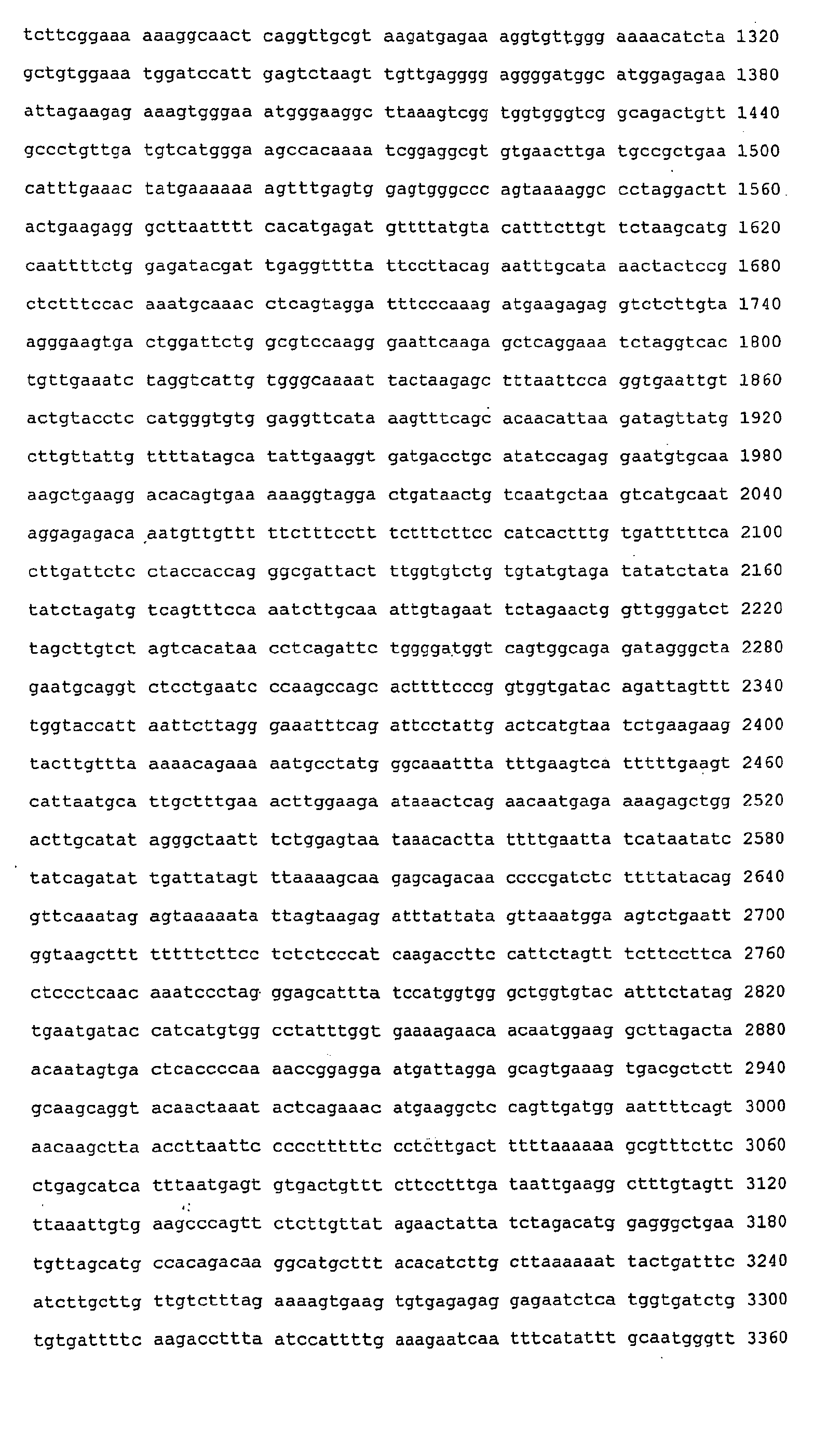


Claims (9)
- A method for inducing production of an acute phase protein in a cell, comprising contacting said cell with an amount of an IL-TIF/IL-21 sufficient to induce production of said acute phase protein.
- The method of claim 1 wherein said cell is a liver cell.
- The method of claim 1 wherein said acute phase protein is human serum amyloid A, α1 chymotrypsin or haptoglobin.
- The method of claim 1 wherein said IL-TIF/IL-21 is a mammalian IL-TIF/IL-21.
- The method of claim 4 wherein said mammalian IL-TIF/IL-21 is human IL-TIF/IL-21.
- The method of claim 5 wherein said human IL-TIF/IL-21 is encoded by SEQ ID NO: 25 or SEQ ID NO: 26.
- A method for modulating activity of an IL-TIF/IL-21 molecule, comprising contacting a cell susceptible to IL-TIF/IL-21 activity with an IL-TIF/IL-21 modulator, in an amount sufficient to modulate IL-TIF/IL-21 activity.
- A method according to claim 7 wherein said modulator is an antibody which binds specifically to an IL-10Rβ molecule.
- A method for determining exposure to an inflammatory substance comprising assaying a sample taken from a subject believed to have been exposed thereto for expression of IL-TIF/IL-21, wherein expression of TIF is indicative of exposure to an inflammatory substance.
Applications Claiming Priority (2)
| Application Number | Priority Date | Filing Date | Title |
|---|---|---|---|
| US62661700A | 2000-07-27 | 2000-07-27 | |
| EP01952260A EP1305419B1 (en) | 2000-07-27 | 2001-06-27 | Modulation by il-tif/interleukin-21 |
Related Parent Applications (2)
| Application Number | Title | Priority Date | Filing Date |
|---|---|---|---|
| EP01952260A Division EP1305419B1 (en) | 2000-07-27 | 2001-06-27 | Modulation by il-tif/interleukin-21 |
| EP01952260.6 Division | 2001-06-27 |
Publications (2)
| Publication Number | Publication Date |
|---|---|
| EP1806404A1 true EP1806404A1 (en) | 2007-07-11 |
| EP1806404B1 EP1806404B1 (en) | 2010-08-18 |
Family
ID=24511131
Family Applications (2)
| Application Number | Title | Priority Date | Filing Date |
|---|---|---|---|
| EP01952260A Expired - Lifetime EP1305419B1 (en) | 2000-07-27 | 2001-06-27 | Modulation by il-tif/interleukin-21 |
| EP07002409A Expired - Lifetime EP1806404B1 (en) | 2000-07-27 | 2001-06-27 | Use of IL-10 receptor beta antagonistic antibodies for inhibiting IL-TIF/IL-21 induction of acute phase proteins |
Family Applications Before (1)
| Application Number | Title | Priority Date | Filing Date |
|---|---|---|---|
| EP01952260A Expired - Lifetime EP1305419B1 (en) | 2000-07-27 | 2001-06-27 | Modulation by il-tif/interleukin-21 |
Country Status (9)
| Country | Link |
|---|---|
| EP (2) | EP1305419B1 (en) |
| JP (1) | JP4113773B2 (en) |
| CN (3) | CN100448994C (en) |
| AT (2) | ATE365801T1 (en) |
| AU (1) | AU7303301A (en) |
| CA (1) | CA2416820A1 (en) |
| DE (2) | DE60142861D1 (en) |
| ES (1) | ES2349312T3 (en) |
| WO (1) | WO2002010393A2 (en) |
Cited By (1)
| Publication number | Priority date | Publication date | Assignee | Title |
|---|---|---|---|---|
| WO2012114246A1 (en) | 2011-02-21 | 2012-08-30 | Politecnico Di Milano | Antiseismic support |
Families Citing this family (17)
| Publication number | Priority date | Publication date | Assignee | Title |
|---|---|---|---|---|
| US6939545B2 (en) | 1999-04-28 | 2005-09-06 | Genetics Institute, Llc | Composition and method for treating inflammatory disorders |
| US7307161B1 (en) | 1999-04-28 | 2007-12-11 | Genetics Institute, Llc | Human Gil-19/AE289 polynucleotides |
| US20030170823A1 (en) | 1999-12-23 | 2003-09-11 | Presnell Scott R. | Novel cytokine ZCYTO18 |
| US20030023033A1 (en) * | 2001-07-26 | 2003-01-30 | Laure Dumoutier | Novel class II cytokine receptors and uses thereof |
| US20030012788A1 (en) | 2000-07-27 | 2003-01-16 | Jean-Christophe Renauld | Method for influencing kinase pathways with IL-22 |
| EP1326974B1 (en) * | 2000-10-13 | 2006-12-27 | Eli Lilly And Company | Methods of using a human il-17-related polypeptide to treat disease |
| US7638604B2 (en) | 2001-02-23 | 2009-12-29 | Genetics Institute, Llc | Monoclonal antibodies against interleukin-22 |
| EP1546358A4 (en) | 2002-03-22 | 2006-06-07 | Zymogenetics Inc | Anti-il-tif antibodies and methods of using in inflammation |
| WO2004003156A2 (en) | 2002-07-01 | 2004-01-08 | The Government Of The United States Of America As Represented By The Secretary Of The Department Of Health And Human Services | Il-21 as a regulator of immunoglobin production |
| WO2004024076A2 (en) * | 2002-09-11 | 2004-03-25 | Genentech, Inc. | Novel compositions and methods for the treatment of immune related diseases |
| EP1731163A2 (en) * | 2002-10-11 | 2006-12-13 | Novo Nordisk A/S | Treatment of allergic conditions by use of IL 21 |
| WO2004032953A1 (en) * | 2002-10-11 | 2004-04-22 | Novo Nordisk A/S | Treatment of allergic conditions by use of il 21 |
| KR20060022289A (en) * | 2003-06-23 | 2006-03-09 | 제네틱스 인스티튜트, 엘엘씨 | Antibodies to Interleukin-22 and Uses thereof |
| JP2009518314A (en) | 2005-12-02 | 2009-05-07 | ジェネンテック・インコーポレーテッド | Compositions and methods for the treatment of diseases and disorders associated with cytokine signaling comprising antibodies that bind IL-22 and antibodies that bind IL-22R |
| TWI417301B (en) | 2006-02-21 | 2013-12-01 | Wyeth Corp | Antibodies against human il-22 and uses therefor |
| TW200744634A (en) | 2006-02-21 | 2007-12-16 | Wyeth Corp | Methods of using antibodies against human IL-22 |
| KR20230061392A (en) * | 2020-08-05 | 2023-05-08 | 신테카인, 인크. | Compositions and methods related to receptor pairing |
Citations (6)
| Publication number | Priority date | Publication date | Assignee | Title |
|---|---|---|---|---|
| US5843697A (en) | 1996-07-17 | 1998-12-01 | University Of Medicine And Dentistry Of New Jersey | Cells expressing IL-10 receptor and the CRFB4 gene product, an IL-10 receptor accessory protein |
| WO2000024758A1 (en) * | 1998-10-26 | 2000-05-04 | Ludwig Institute For Cancer Research | ISOLATED NUCLEIC ACID MOLECULES WHICH ENCODE T CELL INDUCIBLE FACTORS (TIFs), THE PROTEINS ENCODED, AND USES THEREOF |
| WO2000024578A1 (en) | 1998-10-22 | 2000-05-04 | Basf Aktiengesellschaft | Composite layer plate or film |
| WO2000065027A2 (en) * | 1999-04-28 | 2000-11-02 | Genetics Institute, Inc. | Human gil-19/ae289 proteins and polynucleotides encoding same |
| WO2000073457A1 (en) * | 1999-05-27 | 2000-12-07 | Schering-Corporation | Mammalian interleukin-10 homologs: il-d110 and il-d210 |
| WO2001040467A1 (en) * | 1999-12-03 | 2001-06-07 | Zymogenetics, Inc. | Human cytokine receptor |
-
2001
- 2001-06-27 CA CA002416820A patent/CA2416820A1/en not_active Abandoned
- 2001-06-27 EP EP01952260A patent/EP1305419B1/en not_active Expired - Lifetime
- 2001-06-27 AU AU7303301A patent/AU7303301A/en not_active Withdrawn
- 2001-06-27 AT AT01952260T patent/ATE365801T1/en not_active IP Right Cessation
- 2001-06-27 DE DE60142861T patent/DE60142861D1/en not_active Expired - Lifetime
- 2001-06-27 CN CNB018131255A patent/CN100448994C/en not_active Expired - Fee Related
- 2001-06-27 DE DE60129137T patent/DE60129137D1/en not_active Expired - Lifetime
- 2001-06-27 AT AT07002409T patent/ATE478148T1/en not_active IP Right Cessation
- 2001-06-27 ES ES07002409T patent/ES2349312T3/en not_active Expired - Lifetime
- 2001-06-27 EP EP07002409A patent/EP1806404B1/en not_active Expired - Lifetime
- 2001-06-27 WO PCT/US2001/020485 patent/WO2002010393A2/en not_active Ceased
- 2001-06-27 CN CNB2005101169978A patent/CN100497628C/en not_active Expired - Fee Related
- 2001-06-27 JP JP2002516309A patent/JP4113773B2/en not_active Expired - Fee Related
- 2001-06-27 CN CNA2008101764854A patent/CN101423551A/en active Pending
Patent Citations (6)
| Publication number | Priority date | Publication date | Assignee | Title |
|---|---|---|---|---|
| US5843697A (en) | 1996-07-17 | 1998-12-01 | University Of Medicine And Dentistry Of New Jersey | Cells expressing IL-10 receptor and the CRFB4 gene product, an IL-10 receptor accessory protein |
| WO2000024578A1 (en) | 1998-10-22 | 2000-05-04 | Basf Aktiengesellschaft | Composite layer plate or film |
| WO2000024758A1 (en) * | 1998-10-26 | 2000-05-04 | Ludwig Institute For Cancer Research | ISOLATED NUCLEIC ACID MOLECULES WHICH ENCODE T CELL INDUCIBLE FACTORS (TIFs), THE PROTEINS ENCODED, AND USES THEREOF |
| WO2000065027A2 (en) * | 1999-04-28 | 2000-11-02 | Genetics Institute, Inc. | Human gil-19/ae289 proteins and polynucleotides encoding same |
| WO2000073457A1 (en) * | 1999-05-27 | 2000-12-07 | Schering-Corporation | Mammalian interleukin-10 homologs: il-d110 and il-d210 |
| WO2001040467A1 (en) * | 1999-12-03 | 2001-06-07 | Zymogenetics, Inc. | Human cytokine receptor |
Non-Patent Citations (13)
| Title |
|---|
| DISANTO ET AL., NEUROIMMUNOMODULATION, vol. 2, 1995, pages 149 - 154 |
| DUMOUTIER ET AL., J. IMMUNOLOGY, vol. 164, 2000, pages 1814 - 1819 |
| DUMOUTIER L ET AL: "CLONING AND CHARACTERIZATION OF IL-10-RELATED T CELL-DERIVED INDUCIBLE FACTOR (IL-TIF), A NOVEL CYTOKINE STRUCTURALLY RELATED TO IL-10 AND INDUCIBLE BY IL-9", JOURNAL OF IMMUNOLOGY, THE WILLIAMS AND WILKINS CO. BALTIMORE, US, vol. 164, February 2000 (2000-02-01), pages 1814 - 1819, XP002147210, ISSN: 0022-1767 * |
| DUMOUTIER L ET AL: "HUMAN INTERLEUKIN-10-RELATED T CELL-DERIVED INDUCIBLE FACTOR: MOLECULAR CLONING AND FUNCTIONAL CHARACTERIZATION AS AN HEPATOCYTE-STIMULATING FACTOR", PROCEEDINGS OF THE NATIONAL ACADEMY OF SCIENCES OF USA, NATIONAL ACADEMY OF SCIENCE. WASHINGTON, US, vol. 97, no. 18, 29 August 2000 (2000-08-29), pages 10144 - 10149, XP000946025, ISSN: 0027-8424 * |
| DUMOUTIER L ET AL: "IL-TIF/IL-22: GENOMIC ORGANIZATION AND MAPPING OF THE HUMAN AND MOUSE GENES", GENES AND IMMUNITY, NATURE PUBLISHING GROUP, GB, vol. 1, 2000, pages 488 - 494, XP008003465, ISSN: 1466-4879 * |
| GABAY ET AL., NEW ENGLAND J. MED., vol. 340, no. 6, 1999, pages 448 - 454 |
| KOTENKO ET AL., EMBO J., vol. 16, no. 19, 1997, pages 5894 - 5903 |
| KOTENKO S V ET AL: "IDENTIFICATION AND FUNCTIONAL CHARACTERIZATION OF A SECOND CHAIN OF THE INTERLEUKIN-10 RECEPTOR COMPLEX", EMBO JOURNAL, OXFORD UNIVERSITY PRESS, SURREY, GB, vol. 16, no. 19, 1997, pages 5894 - 5903, XP002046438, ISSN: 0261-4189 * |
| KOTENKO SERGEI V ET AL: "Identification of the functional interleukin-22 (IL-22) receptor complex. The IL-10R2 chain (IL-10Rbeta) is a common chain of both the IL-10 and IL-22 (IL-10-related T cell-derived inducible factor, IL-TIF) receptor complexes", JOURNAL OF BIOLOGICAL CHEMISTRY, AMERICAN SOCIETY OF BIOLOGICAL CHEMISTS, BALTIMORE, MD, US, vol. 276, no. 4, 26 January 2001 (2001-01-26), pages 2725 - 2732, XP002186669, ISSN: 0021-9258 * |
| LACKI ET AL., ARCHIVUM IMMUNOLOGIAE ET THERAPIAC EXPERIMENTALIS, vol. 43, 1995, pages 11 - 14 |
| LAI C-F ET AL: "STAT3 AND STAT5B ARE TARGETS OF TWO DIFFERENT SIGNAL PATHWAYS ACTIVATED BY HEATOPOIETIN RECEPTORS AND CONTROL TRANSCRIPTION VIA SEPARATE CYTOKINE RESPONSE ELEMENTS", JOURNAL OF BIOLOGICAL CHEMISTRY, AMERICAN SOCIETY OF BIOLOGICAL CHEMISTS, BALTIMORE, MD, US, vol. 270, no. 40, 6 October 1995 (1995-10-06), pages 23254 - 23257, XP001064408, ISSN: 0021-9258 * |
| SPENCER S D ET AL: "The orphan receptor CRF2-4 is an essential subunit of the interleukin 10 receptor", JOURNAL OF EXPERIMENTAL MEDICINE, TOKYO, JP, vol. 187, no. 4, 16 February 1998 (1998-02-16), pages 571 - 578, XP002235139, ISSN: 0022-1007 * |
| XIE M-H ET AL: "Interleukin (IL)-22, a novel human cytokine that signals through the interferon receptor-related proteins CRF2-4 and IL-22R", JOURNAL OF BIOLOGICAL CHEMISTRY, AMERICAN SOCIETY OF BIOLOGICAL CHEMISTS, BALTIMORE, MD, US, vol. 275, no. 40, 6 October 2000 (2000-10-06), pages 31335 - 31339, XP002164307, ISSN: 0021-9258 * |
Cited By (1)
| Publication number | Priority date | Publication date | Assignee | Title |
|---|---|---|---|---|
| WO2012114246A1 (en) | 2011-02-21 | 2012-08-30 | Politecnico Di Milano | Antiseismic support |
Also Published As
| Publication number | Publication date |
|---|---|
| CN100497628C (en) | 2009-06-10 |
| EP1806404B1 (en) | 2010-08-18 |
| CN100448994C (en) | 2009-01-07 |
| CA2416820A1 (en) | 2002-02-07 |
| EP1305419B1 (en) | 2007-06-27 |
| WO2002010393A3 (en) | 2003-01-30 |
| CN1796558A (en) | 2006-07-05 |
| ES2349312T3 (en) | 2010-12-29 |
| DE60129137D1 (en) | 2007-08-09 |
| ATE478148T1 (en) | 2010-09-15 |
| JP4113773B2 (en) | 2008-07-09 |
| EP1305419A2 (en) | 2003-05-02 |
| DE60142861D1 (en) | 2010-09-30 |
| CN1443241A (en) | 2003-09-17 |
| AU7303301A (en) | 2002-02-13 |
| CN101423551A (en) | 2009-05-06 |
| WO2002010393A2 (en) | 2002-02-07 |
| JP2004504842A (en) | 2004-02-19 |
| ATE365801T1 (en) | 2007-07-15 |
Similar Documents
| Publication | Publication Date | Title |
|---|---|---|
| EP1131333B1 (en) | ISOLATED NUCLEIC ACID MOLECULES WHICH ENCODE T CELL INDUCIBLE FACTORS (TIFs), THE PROTEINS ENCODED, AND USES THEREOF | |
| US7972833B2 (en) | Isolated nucleic acid molecules which encode T cell inducible factors (TIFs), the proteins encoded, and uses thereof | |
| EP1305419B1 (en) | Modulation by il-tif/interleukin-21 | |
| Novick et al. | Interleukin-18 binding protein: a novel modulator of the Th1 cytokine response | |
| AU743490B2 (en) | NTN-2 member of TNF ligand family | |
| JP2007267750A (en) | Isolated nucleic acid molecules which encode soluble il-tif/il-22 receptor or binding protein which binds to il-tif/il-22, and uses thereof | |
| US7081528B2 (en) | Isolated nucleic acid molecules encoding T cell derived inducible factors | |
| US7094570B2 (en) | Isolated nucleic acid molecules which encode a soluble IL-TIF/IL-22 receptor or binding protein which binds to IL-TIF/IL-22, and uses thereof | |
| KR100270348B1 (en) | Transcription factor AFP | |
| Oki et al. | Stat6 activation and Th2 cell proliferation driven by CD28 signals | |
| US20050271619A1 (en) | Isolated nucleic acid molecules which encode T cell inducible factors, or interleukin-21, the proteins encoded, and uses thereof | |
| AU2001273033B2 (en) | Isolated nucleic acid molecules which encode T cell inducible factors, or interleukin-21, the proteins encoded, and uses thereof | |
| Herold et al. | Activation of lymphokine genes during stimulation of cloned T cells | |
| AU697246B2 (en) | Method for identifying individuals suffering from a cellular abnormality | |
| HK1106792A (en) | Isolated nucleic acid molecules which encode t cell inducible factors, or interleukin-21, the proteins encoded, and uses thereof | |
| AU2001273033A1 (en) | Isolated nucleic acid molecules which encode T cell inducible factors, or interleukin-21, the proteins encoded, and uses thereof | |
| AU2001292918B2 (en) | Isolated nucleic acid molecules which encode a soluble IL-TIF/IL-22 receptor or binding protein which binds to IL-TIF/IL-22, and uses thereof | |
| AU2007203336A1 (en) | Isolated nucleic acid molecules which encode T cell inducible factors, or interleukin-21, the proteins encoded, and uses thereof | |
| US20050084916A1 (en) | Identification of the IkappaBNS protein and its products | |
| AU2001292918A1 (en) | Isolated nucleic acid molecules which encode a soluble IL-TIF/IL-22 receptor or binding protein which binds to IL-TIF/IL-22, and uses thereof |
Legal Events
| Date | Code | Title | Description |
|---|---|---|---|
| PUAI | Public reference made under article 153(3) epc to a published international application that has entered the european phase |
Free format text: ORIGINAL CODE: 0009012 |
|
| 17P | Request for examination filed |
Effective date: 20070219 |
|
| AC | Divisional application: reference to earlier application |
Ref document number: 1305419 Country of ref document: EP Kind code of ref document: P |
|
| AK | Designated contracting states |
Kind code of ref document: A1 Designated state(s): AT BE CH CY DE DK ES FI FR GB GR IE IT LI LU MC NL PT SE TR |
|
| AKX | Designation fees paid |
Designated state(s): AT BE CH CY DE DK ES FI FR GB GR IE IT LI LU MC NL PT SE TR |
|
| REG | Reference to a national code |
Ref country code: HK Ref legal event code: DE Ref document number: 1106792 Country of ref document: HK |
|
| 17Q | First examination report despatched |
Effective date: 20080225 |
|
| GRAP | Despatch of communication of intention to grant a patent |
Free format text: ORIGINAL CODE: EPIDOSNIGR1 |
|
| RTI1 | Title (correction) |
Free format text: USE OF IL-10 RECEPTOR BETA ANTAGONISTIC ANTIBODIES FOR INHIBITING IL-TIF/IL-21 INDUCTION OF ACUTE PHASE PROTEINS |
|
| RAP1 | Party data changed (applicant data changed or rights of an application transferred) |
Owner name: WYETH LLC |
|
| GRAS | Grant fee paid |
Free format text: ORIGINAL CODE: EPIDOSNIGR3 |
|
| GRAA | (expected) grant |
Free format text: ORIGINAL CODE: 0009210 |
|
| AC | Divisional application: reference to earlier application |
Ref document number: 1305419 Country of ref document: EP Kind code of ref document: P |
|
| AK | Designated contracting states |
Kind code of ref document: B1 Designated state(s): AT BE CH CY DE DK ES FI FR GB GR IE IT LI LU MC NL PT SE TR |
|
| REG | Reference to a national code |
Ref country code: GB Ref legal event code: FG4D |
|
| REG | Reference to a national code |
Ref country code: CH Ref legal event code: EP |
|
| REG | Reference to a national code |
Ref country code: IE Ref legal event code: FG4D |
|
| REF | Corresponds to: |
Ref document number: 60142861 Country of ref document: DE Date of ref document: 20100930 Kind code of ref document: P |
|
| REG | Reference to a national code |
Ref country code: NL Ref legal event code: VDEP Effective date: 20100818 |
|
| REG | Reference to a national code |
Ref country code: ES Ref legal event code: FG2A Effective date: 20101216 |
|
| PG25 | Lapsed in a contracting state [announced via postgrant information from national office to epo] |
Ref country code: AT Free format text: LAPSE BECAUSE OF FAILURE TO SUBMIT A TRANSLATION OF THE DESCRIPTION OR TO PAY THE FEE WITHIN THE PRESCRIBED TIME-LIMIT Effective date: 20100818 Ref country code: FI Free format text: LAPSE BECAUSE OF FAILURE TO SUBMIT A TRANSLATION OF THE DESCRIPTION OR TO PAY THE FEE WITHIN THE PRESCRIBED TIME-LIMIT Effective date: 20100818 |
|
| PG25 | Lapsed in a contracting state [announced via postgrant information from national office to epo] |
Ref country code: PT Free format text: LAPSE BECAUSE OF FAILURE TO SUBMIT A TRANSLATION OF THE DESCRIPTION OR TO PAY THE FEE WITHIN THE PRESCRIBED TIME-LIMIT Effective date: 20101220 Ref country code: CY Free format text: LAPSE BECAUSE OF FAILURE TO SUBMIT A TRANSLATION OF THE DESCRIPTION OR TO PAY THE FEE WITHIN THE PRESCRIBED TIME-LIMIT Effective date: 20100818 |
|
| PG25 | Lapsed in a contracting state [announced via postgrant information from national office to epo] |
Ref country code: SE Free format text: LAPSE BECAUSE OF FAILURE TO SUBMIT A TRANSLATION OF THE DESCRIPTION OR TO PAY THE FEE WITHIN THE PRESCRIBED TIME-LIMIT Effective date: 20100818 Ref country code: NL Free format text: LAPSE BECAUSE OF FAILURE TO SUBMIT A TRANSLATION OF THE DESCRIPTION OR TO PAY THE FEE WITHIN THE PRESCRIBED TIME-LIMIT Effective date: 20100818 Ref country code: BE Free format text: LAPSE BECAUSE OF FAILURE TO SUBMIT A TRANSLATION OF THE DESCRIPTION OR TO PAY THE FEE WITHIN THE PRESCRIBED TIME-LIMIT Effective date: 20100818 Ref country code: GR Free format text: LAPSE BECAUSE OF FAILURE TO SUBMIT A TRANSLATION OF THE DESCRIPTION OR TO PAY THE FEE WITHIN THE PRESCRIBED TIME-LIMIT Effective date: 20101119 |
|
| PG25 | Lapsed in a contracting state [announced via postgrant information from national office to epo] |
Ref country code: DK Free format text: LAPSE BECAUSE OF FAILURE TO SUBMIT A TRANSLATION OF THE DESCRIPTION OR TO PAY THE FEE WITHIN THE PRESCRIBED TIME-LIMIT Effective date: 20100818 |
|
| PLBE | No opposition filed within time limit |
Free format text: ORIGINAL CODE: 0009261 |
|
| STAA | Information on the status of an ep patent application or granted ep patent |
Free format text: STATUS: NO OPPOSITION FILED WITHIN TIME LIMIT |
|
| 26N | No opposition filed |
Effective date: 20110519 |
|
| PGFP | Annual fee paid to national office [announced via postgrant information from national office to epo] |
Ref country code: IE Payment date: 20110525 Year of fee payment: 11 Ref country code: ES Payment date: 20110617 Year of fee payment: 11 Ref country code: FR Payment date: 20110603 Year of fee payment: 11 |
|
| PGFP | Annual fee paid to national office [announced via postgrant information from national office to epo] |
Ref country code: GB Payment date: 20110523 Year of fee payment: 11 |
|
| REG | Reference to a national code |
Ref country code: DE Ref legal event code: R097 Ref document number: 60142861 Country of ref document: DE Effective date: 20110519 |
|
| PGFP | Annual fee paid to national office [announced via postgrant information from national office to epo] |
Ref country code: IT Payment date: 20110614 Year of fee payment: 11 |
|
| PGFP | Annual fee paid to national office [announced via postgrant information from national office to epo] |
Ref country code: DE Payment date: 20110630 Year of fee payment: 11 |
|
| REG | Reference to a national code |
Ref country code: CH Ref legal event code: PL |
|
| PG25 | Lapsed in a contracting state [announced via postgrant information from national office to epo] |
Ref country code: LI Free format text: LAPSE BECAUSE OF NON-PAYMENT OF DUE FEES Effective date: 20110630 Ref country code: CH Free format text: LAPSE BECAUSE OF NON-PAYMENT OF DUE FEES Effective date: 20110630 |
|
| GBPC | Gb: european patent ceased through non-payment of renewal fee |
Effective date: 20120627 |
|
| PG25 | Lapsed in a contracting state [announced via postgrant information from national office to epo] |
Ref country code: IT Free format text: LAPSE BECAUSE OF NON-PAYMENT OF DUE FEES Effective date: 20120627 |
|
| REG | Reference to a national code |
Ref country code: IE Ref legal event code: MM4A |
|
| REG | Reference to a national code |
Ref country code: FR Ref legal event code: ST Effective date: 20130228 |
|
| REG | Reference to a national code |
Ref country code: DE Ref legal event code: R119 Ref document number: 60142861 Country of ref document: DE Effective date: 20130101 |
|
| PG25 | Lapsed in a contracting state [announced via postgrant information from national office to epo] |
Ref country code: MC Free format text: LAPSE BECAUSE OF NON-PAYMENT OF DUE FEES Effective date: 20110630 Ref country code: FR Free format text: LAPSE BECAUSE OF NON-PAYMENT OF DUE FEES Effective date: 20120702 Ref country code: DE Free format text: LAPSE BECAUSE OF NON-PAYMENT OF DUE FEES Effective date: 20130101 Ref country code: GB Free format text: LAPSE BECAUSE OF NON-PAYMENT OF DUE FEES Effective date: 20120627 Ref country code: IE Free format text: LAPSE BECAUSE OF NON-PAYMENT OF DUE FEES Effective date: 20120627 |
|
| PG25 | Lapsed in a contracting state [announced via postgrant information from national office to epo] |
Ref country code: LU Free format text: LAPSE BECAUSE OF NON-PAYMENT OF DUE FEES Effective date: 20110627 |
|
| PG25 | Lapsed in a contracting state [announced via postgrant information from national office to epo] |
Ref country code: TR Free format text: LAPSE BECAUSE OF FAILURE TO SUBMIT A TRANSLATION OF THE DESCRIPTION OR TO PAY THE FEE WITHIN THE PRESCRIBED TIME-LIMIT Effective date: 20100818 |
|
| REG | Reference to a national code |
Ref country code: ES Ref legal event code: FD2A Effective date: 20131018 |
|
| PG25 | Lapsed in a contracting state [announced via postgrant information from national office to epo] |
Ref country code: ES Free format text: LAPSE BECAUSE OF NON-PAYMENT OF DUE FEES Effective date: 20120628 |
|
| REG | Reference to a national code |
Ref country code: HK Ref legal event code: WD Ref document number: 1106792 Country of ref document: HK |