EP1803812A1 - Method of gene screening with yeast having ergosterol synthase undergoing inducible expression - Google Patents
Method of gene screening with yeast having ergosterol synthase undergoing inducible expression Download PDFInfo
- Publication number
- EP1803812A1 EP1803812A1 EP05799379A EP05799379A EP1803812A1 EP 1803812 A1 EP1803812 A1 EP 1803812A1 EP 05799379 A EP05799379 A EP 05799379A EP 05799379 A EP05799379 A EP 05799379A EP 1803812 A1 EP1803812 A1 EP 1803812A1
- Authority
- EP
- European Patent Office
- Prior art keywords
- yeast
- compound
- enzyme
- gene
- protein
- Prior art date
- Legal status (The legal status is an assumption and is not a legal conclusion. Google has not performed a legal analysis and makes no representation as to the accuracy of the status listed.)
- Withdrawn
Links
- OILXMJHPFNGGTO-UHFFFAOYSA-N (22E)-(24xi)-24-methylcholesta-5,22-dien-3beta-ol Natural products C1C=C2CC(O)CCC2(C)C2C1C1CCC(C(C)C=CC(C)C(C)C)C1(C)CC2 OILXMJHPFNGGTO-UHFFFAOYSA-N 0.000 title claims abstract description 59
- RQOCXCFLRBRBCS-UHFFFAOYSA-N (22E)-cholesta-5,7,22-trien-3beta-ol Natural products C1C(O)CCC2(C)C(CCC3(C(C(C)C=CCC(C)C)CCC33)C)C3=CC=C21 RQOCXCFLRBRBCS-UHFFFAOYSA-N 0.000 title claims abstract description 59
- OQMZNAMGEHIHNN-UHFFFAOYSA-N 7-Dehydrostigmasterol Natural products C1C(O)CCC2(C)C(CCC3(C(C(C)C=CC(CC)C(C)C)CCC33)C)C3=CC=C21 OQMZNAMGEHIHNN-UHFFFAOYSA-N 0.000 title claims abstract description 59
- DNVPQKQSNYMLRS-NXVQYWJNSA-N Ergosterol Natural products CC(C)[C@@H](C)C=C[C@H](C)[C@H]1CC[C@H]2C3=CC=C4C[C@@H](O)CC[C@]4(C)[C@@H]3CC[C@]12C DNVPQKQSNYMLRS-NXVQYWJNSA-N 0.000 title claims abstract description 59
- DNVPQKQSNYMLRS-SOWFXMKYSA-N ergosterol Chemical compound C1[C@@H](O)CC[C@]2(C)[C@H](CC[C@]3([C@H]([C@H](C)/C=C/[C@@H](C)C(C)C)CC[C@H]33)C)C3=CC=C21 DNVPQKQSNYMLRS-SOWFXMKYSA-N 0.000 title claims abstract description 59
- 230000014509 gene expression Effects 0.000 title claims abstract description 46
- 108090000623 proteins and genes Proteins 0.000 title claims description 116
- 240000004808 Saccharomyces cerevisiae Species 0.000 title claims description 103
- 238000000034 method Methods 0.000 title claims description 42
- 230000001939 inductive effect Effects 0.000 title abstract description 14
- 238000012216 screening Methods 0.000 title abstract description 9
- 102000004190 Enzymes Human genes 0.000 claims abstract description 69
- 108090000790 Enzymes Proteins 0.000 claims abstract description 69
- 101150050623 erg-6 gene Proteins 0.000 claims abstract description 23
- 101001077420 Homo sapiens Potassium voltage-gated channel subfamily H member 7 Proteins 0.000 claims abstract description 5
- 102100025133 Potassium voltage-gated channel subfamily H member 7 Human genes 0.000 claims abstract description 5
- 150000001875 compounds Chemical class 0.000 claims description 62
- 230000006696 biosynthetic metabolic pathway Effects 0.000 claims description 51
- 102000004169 proteins and genes Human genes 0.000 claims description 39
- 101150038242 GAL10 gene Proteins 0.000 claims description 17
- 102100024637 Galectin-10 Human genes 0.000 claims description 16
- 231100000225 lethality Toxicity 0.000 claims description 7
- 210000005253 yeast cell Anatomy 0.000 claims description 7
- 230000009036 growth inhibition Effects 0.000 claims description 6
- 230000003993 interaction Effects 0.000 claims description 6
- 230000022532 regulation of transcription, DNA-dependent Effects 0.000 claims description 6
- 101150094690 GAL1 gene Proteins 0.000 claims description 5
- 102100028501 Galanin peptides Human genes 0.000 claims description 4
- 101100121078 Homo sapiens GAL gene Proteins 0.000 claims description 4
- 230000006698 induction Effects 0.000 claims description 4
- 229940079593 drug Drugs 0.000 abstract description 22
- 239000003814 drug Substances 0.000 abstract description 22
- 230000009466 transformation Effects 0.000 abstract description 16
- 230000001105 regulatory effect Effects 0.000 abstract description 10
- 230000001851 biosynthetic effect Effects 0.000 abstract description 3
- 238000003556 assay Methods 0.000 abstract description 2
- 235000014680 Saccharomyces cerevisiae Nutrition 0.000 description 92
- 239000002609 medium Substances 0.000 description 22
- 229930182830 galactose Natural products 0.000 description 14
- 239000013612 plasmid Substances 0.000 description 13
- 210000004027 cell Anatomy 0.000 description 10
- 108700039691 Genetic Promoter Regions Proteins 0.000 description 8
- FBOZXECLQNJBKD-ZDUSSCGKSA-N L-methotrexate Chemical compound C=1N=C2N=C(N)N=C(N)C2=NC=1CN(C)C1=CC=C(C(=O)N[C@@H](CCC(O)=O)C(O)=O)C=C1 FBOZXECLQNJBKD-ZDUSSCGKSA-N 0.000 description 8
- 239000003550 marker Substances 0.000 description 8
- 229960000485 methotrexate Drugs 0.000 description 8
- 230000035945 sensitivity Effects 0.000 description 8
- 239000013598 vector Substances 0.000 description 8
- 108700008625 Reporter Genes Proteins 0.000 description 7
- 108010022394 Threonine synthase Proteins 0.000 description 6
- 239000003596 drug target Substances 0.000 description 6
- 239000012634 fragment Substances 0.000 description 6
- 230000035699 permeability Effects 0.000 description 6
- 239000004098 Tetracycline Substances 0.000 description 5
- 102000004419 dihydrofolate reductase Human genes 0.000 description 5
- XIXADJRWDQXREU-UHFFFAOYSA-M lithium acetate Chemical compound [Li+].CC([O-])=O XIXADJRWDQXREU-UHFFFAOYSA-M 0.000 description 5
- 229930101283 tetracycline Natural products 0.000 description 5
- 229960002180 tetracycline Drugs 0.000 description 5
- 235000019364 tetracycline Nutrition 0.000 description 5
- 150000003522 tetracyclines Chemical class 0.000 description 5
- 101100327917 Caenorhabditis elegans chup-1 gene Proteins 0.000 description 4
- 101710173438 Late L2 mu core protein Proteins 0.000 description 4
- 101150012394 PHO5 gene Proteins 0.000 description 4
- 101710188315 Protein X Proteins 0.000 description 4
- 101100400877 Trichophyton rubrum (strain ATCC MYA-4607 / CBS 118892) MDR1 gene Proteins 0.000 description 4
- 125000003275 alpha amino acid group Chemical group 0.000 description 4
- 210000000349 chromosome Anatomy 0.000 description 4
- 239000002299 complementary DNA Substances 0.000 description 4
- YPHMISFOHDHNIV-FSZOTQKASA-N cycloheximide Chemical compound C1[C@@H](C)C[C@H](C)C(=O)[C@@H]1[C@H](O)CC1CC(=O)NC(=O)C1 YPHMISFOHDHNIV-FSZOTQKASA-N 0.000 description 4
- 238000012217 deletion Methods 0.000 description 4
- 230000037430 deletion Effects 0.000 description 4
- 230000000694 effects Effects 0.000 description 4
- 239000006481 glucose medium Substances 0.000 description 4
- 108700020534 tetracycline resistance-encoding transposon repressor Proteins 0.000 description 4
- 238000010399 three-hybrid screening Methods 0.000 description 4
- 238000013518 transcription Methods 0.000 description 4
- 230000035897 transcription Effects 0.000 description 4
- 108020004414 DNA Proteins 0.000 description 3
- 101710188306 Protein Y Proteins 0.000 description 3
- 241000235347 Schizosaccharomyces pombe Species 0.000 description 3
- 108091023040 Transcription factor Proteins 0.000 description 3
- 102000040945 Transcription factor Human genes 0.000 description 3
- 230000008859 change Effects 0.000 description 3
- 238000010367 cloning Methods 0.000 description 3
- 238000003780 insertion Methods 0.000 description 3
- 230000037431 insertion Effects 0.000 description 3
- 239000002773 nucleotide Substances 0.000 description 3
- 125000003729 nucleotide group Chemical group 0.000 description 3
- 230000029279 positive regulation of transcription, DNA-dependent Effects 0.000 description 3
- 108091008146 restriction endonucleases Proteins 0.000 description 3
- 101150024821 tetO gene Proteins 0.000 description 3
- 229920001817 Agar Polymers 0.000 description 2
- 101100433746 Arabidopsis thaliana ABCG29 gene Proteins 0.000 description 2
- 101100433755 Arabidopsis thaliana ABCG31 gene Proteins 0.000 description 2
- 229940126062 Compound A Drugs 0.000 description 2
- 230000004568 DNA-binding Effects 0.000 description 2
- 206010059866 Drug resistance Diseases 0.000 description 2
- 101100240657 Emericella nidulans (strain FGSC A4 / ATCC 38163 / CBS 112.46 / NRRL 194 / M139) swoF gene Proteins 0.000 description 2
- WQZGKKKJIJFFOK-GASJEMHNSA-N Glucose Natural products OC[C@H]1OC(O)[C@H](O)[C@@H](O)[C@@H]1O WQZGKKKJIJFFOK-GASJEMHNSA-N 0.000 description 2
- 102100031181 Glyceraldehyde-3-phosphate dehydrogenase Human genes 0.000 description 2
- NLDMNSXOCDLTTB-UHFFFAOYSA-N Heterophylliin A Natural products O1C2COC(=O)C3=CC(O)=C(O)C(O)=C3C3=C(O)C(O)=C(O)C=C3C(=O)OC2C(OC(=O)C=2C=C(O)C(O)=C(O)C=2)C(O)C1OC(=O)C1=CC(O)=C(O)C(O)=C1 NLDMNSXOCDLTTB-UHFFFAOYSA-N 0.000 description 2
- 239000007836 KH2PO4 Substances 0.000 description 2
- 101100536883 Legionella pneumophila subsp. pneumophila (strain Philadelphia 1 / ATCC 33152 / DSM 7513) thi5 gene Proteins 0.000 description 2
- 101100240662 Neurospora crassa (strain ATCC 24698 / 74-OR23-1A / CBS 708.71 / DSM 1257 / FGSC 987) gtt-1 gene Proteins 0.000 description 2
- 101150043338 Nmt1 gene Proteins 0.000 description 2
- 101100054289 Oryza sativa subsp. japonica ABCG34 gene Proteins 0.000 description 2
- 101100054294 Oryza sativa subsp. japonica ABCG36 gene Proteins 0.000 description 2
- 101100107601 Oryza sativa subsp. japonica ABCG45 gene Proteins 0.000 description 2
- 101100107604 Oryza sativa subsp. japonica ABCG48 gene Proteins 0.000 description 2
- 101150088582 PDR1 gene Proteins 0.000 description 2
- 101150078988 PDR3 gene Proteins 0.000 description 2
- 229910019142 PO4 Inorganic materials 0.000 description 2
- JZRWCGZRTZMZEH-UHFFFAOYSA-N Thiamine Natural products CC1=C(CCO)SC=[N+]1CC1=CN=C(C)N=C1N JZRWCGZRTZMZEH-UHFFFAOYSA-N 0.000 description 2
- 238000007792 addition Methods 0.000 description 2
- 239000008272 agar Substances 0.000 description 2
- 150000001413 amino acids Chemical class 0.000 description 2
- 230000027455 binding Effects 0.000 description 2
- 238000003776 cleavage reaction Methods 0.000 description 2
- ARUVKPQLZAKDPS-UHFFFAOYSA-L copper(II) sulfate Chemical compound [Cu+2].[O-][S+2]([O-])([O-])[O-] ARUVKPQLZAKDPS-UHFFFAOYSA-L 0.000 description 2
- 229910000366 copper(II) sulfate Inorganic materials 0.000 description 2
- 230000008686 ergosterol biosynthesis Effects 0.000 description 2
- 238000002474 experimental method Methods 0.000 description 2
- OVBPIULPVIDEAO-LBPRGKRZSA-N folic acid Chemical compound C=1N=C2NC(N)=NC(=O)C2=NC=1CNC1=CC=C(C(=O)N[C@@H](CCC(O)=O)C(O)=O)C=C1 OVBPIULPVIDEAO-LBPRGKRZSA-N 0.000 description 2
- 108020001507 fusion proteins Proteins 0.000 description 2
- 102000037865 fusion proteins Human genes 0.000 description 2
- BRZYSWJRSDMWLG-CAXSIQPQSA-N geneticin Chemical compound O1C[C@@](O)(C)[C@H](NC)[C@@H](O)[C@H]1O[C@@H]1[C@@H](O)[C@H](O[C@@H]2[C@@H]([C@@H](O)[C@H](O)[C@@H](C(C)O)O2)N)[C@@H](N)C[C@H]1N BRZYSWJRSDMWLG-CAXSIQPQSA-N 0.000 description 2
- 239000008103 glucose Substances 0.000 description 2
- 108020004445 glyceraldehyde-3-phosphate dehydrogenase Proteins 0.000 description 2
- 239000007788 liquid Substances 0.000 description 2
- 229910000402 monopotassium phosphate Inorganic materials 0.000 description 2
- 108020004707 nucleic acids Proteins 0.000 description 2
- 102000039446 nucleic acids Human genes 0.000 description 2
- 150000007523 nucleic acids Chemical class 0.000 description 2
- 239000010452 phosphate Substances 0.000 description 2
- 239000013600 plasmid vector Substances 0.000 description 2
- GNSKLFRGEWLPPA-UHFFFAOYSA-M potassium dihydrogen phosphate Chemical compound [K+].OP(O)([O-])=O GNSKLFRGEWLPPA-UHFFFAOYSA-M 0.000 description 2
- 230000007017 scission Effects 0.000 description 2
- 238000006467 substitution reaction Methods 0.000 description 2
- KYMBYSLLVAOCFI-UHFFFAOYSA-N thiamine Chemical compound CC1=C(CCO)SCN1CC1=CN=C(C)N=C1N KYMBYSLLVAOCFI-UHFFFAOYSA-N 0.000 description 2
- 229960003495 thiamine Drugs 0.000 description 2
- 235000019157 thiamine Nutrition 0.000 description 2
- 239000011721 thiamine Substances 0.000 description 2
- FWMNVWWHGCHHJJ-SKKKGAJSSA-N 4-amino-1-[(2r)-6-amino-2-[[(2r)-2-[[(2r)-2-[[(2r)-2-amino-3-phenylpropanoyl]amino]-3-phenylpropanoyl]amino]-4-methylpentanoyl]amino]hexanoyl]piperidine-4-carboxylic acid Chemical compound C([C@H](C(=O)N[C@H](CC(C)C)C(=O)N[C@H](CCCCN)C(=O)N1CCC(N)(CC1)C(O)=O)NC(=O)[C@H](N)CC=1C=CC=CC=1)C1=CC=CC=C1 FWMNVWWHGCHHJJ-SKKKGAJSSA-N 0.000 description 1
- 108700028369 Alleles Proteins 0.000 description 1
- 101150002963 DFR1 gene Proteins 0.000 description 1
- 241000588724 Escherichia coli Species 0.000 description 1
- 241000206602 Eukaryota Species 0.000 description 1
- 102100039556 Galectin-4 Human genes 0.000 description 1
- 101150009006 HIS3 gene Proteins 0.000 description 1
- 101000608765 Homo sapiens Galectin-4 Proteins 0.000 description 1
- 241000124008 Mammalia Species 0.000 description 1
- OVBPIULPVIDEAO-UHFFFAOYSA-N N-Pteroyl-L-glutaminsaeure Natural products C=1N=C2NC(N)=NC(=O)C2=NC=1CNC1=CC=C(C(=O)NC(CCC(O)=O)C(O)=O)C=C1 OVBPIULPVIDEAO-UHFFFAOYSA-N 0.000 description 1
- 238000000636 Northern blotting Methods 0.000 description 1
- 108091028043 Nucleic acid sequence Proteins 0.000 description 1
- 108010002747 Pfu DNA polymerase Proteins 0.000 description 1
- 101100394989 Rhodopseudomonas palustris (strain ATCC BAA-98 / CGA009) hisI gene Proteins 0.000 description 1
- 241000235070 Saccharomyces Species 0.000 description 1
- 241000235343 Saccharomycetales Species 0.000 description 1
- 101100445505 Schizosaccharomyces pombe (strain 972 / ATCC 24843) erg31 gene Proteins 0.000 description 1
- 101100389670 Schizosaccharomyces pombe (strain 972 / ATCC 24843) erg6 gene Proteins 0.000 description 1
- 239000002253 acid Substances 0.000 description 1
- 239000000556 agonist Substances 0.000 description 1
- 230000003321 amplification Effects 0.000 description 1
- 239000005557 antagonist Substances 0.000 description 1
- 230000033228 biological regulation Effects 0.000 description 1
- 230000015572 biosynthetic process Effects 0.000 description 1
- 210000002421 cell wall Anatomy 0.000 description 1
- 238000010276 construction Methods 0.000 description 1
- 230000003247 decreasing effect Effects 0.000 description 1
- 230000007812 deficiency Effects 0.000 description 1
- 230000002950 deficient Effects 0.000 description 1
- OZRNSSUDZOLUSN-LBPRGKRZSA-N dihydrofolic acid Chemical class N=1C=2C(=O)NC(N)=NC=2NCC=1CNC1=CC=C(C(=O)N[C@@H](CCC(O)=O)C(O)=O)C=C1 OZRNSSUDZOLUSN-LBPRGKRZSA-N 0.000 description 1
- 238000004520 electroporation Methods 0.000 description 1
- 229960000304 folic acid Drugs 0.000 description 1
- 235000019152 folic acid Nutrition 0.000 description 1
- 239000011724 folic acid Substances 0.000 description 1
- HNDVDQJCIGZPNO-UHFFFAOYSA-N histidine Natural products OC(=O)C(N)CC1=CN=CN1 HNDVDQJCIGZPNO-UHFFFAOYSA-N 0.000 description 1
- 230000002401 inhibitory effect Effects 0.000 description 1
- 238000010369 molecular cloning Methods 0.000 description 1
- 238000003199 nucleic acid amplification method Methods 0.000 description 1
- 102000004196 processed proteins & peptides Human genes 0.000 description 1
- 108090000765 processed proteins & peptides Proteins 0.000 description 1
- 230000000754 repressing effect Effects 0.000 description 1
- 238000003757 reverse transcription PCR Methods 0.000 description 1
- 238000012163 sequencing technique Methods 0.000 description 1
- 238000003786 synthesis reaction Methods 0.000 description 1
- 101150061166 tetR gene Proteins 0.000 description 1
- 231100000167 toxic agent Toxicity 0.000 description 1
- 239000003440 toxic substance Substances 0.000 description 1
- 108091006106 transcriptional activators Proteins 0.000 description 1
- 238000010396 two-hybrid screening Methods 0.000 description 1
- 238000011144 upstream manufacturing Methods 0.000 description 1
Images

Classifications
-
- C—CHEMISTRY; METALLURGY
- C12—BIOCHEMISTRY; BEER; SPIRITS; WINE; VINEGAR; MICROBIOLOGY; ENZYMOLOGY; MUTATION OR GENETIC ENGINEERING
- C12Q—MEASURING OR TESTING PROCESSES INVOLVING ENZYMES, NUCLEIC ACIDS OR MICROORGANISMS; COMPOSITIONS OR TEST PAPERS THEREFOR; PROCESSES OF PREPARING SUCH COMPOSITIONS; CONDITION-RESPONSIVE CONTROL IN MICROBIOLOGICAL OR ENZYMOLOGICAL PROCESSES
- C12Q1/00—Measuring or testing processes involving enzymes, nucleic acids or microorganisms; Compositions therefor; Processes of preparing such compositions
- C12Q1/02—Measuring or testing processes involving enzymes, nucleic acids or microorganisms; Compositions therefor; Processes of preparing such compositions involving viable microorganisms
- C12Q1/025—Measuring or testing processes involving enzymes, nucleic acids or microorganisms; Compositions therefor; Processes of preparing such compositions involving viable microorganisms for testing or evaluating the effect of chemical or biological compounds, e.g. drugs, cosmetics
Definitions
- the present invention relates to a method of screening a drug target gene using yeast that inducibly expresses ergosterol biosynthetic enzyme.
- the multicopy suppressor method is known as a method of screening a drug target gene using yeast.
- the gene when expression of a phenotype caused by a drug is suppressed by a gene introduced in multiple copies, the gene is selected as a candidate for a target gene of the drug.
- yeast exhibits a phenotype such as lethality or growth inhibition against a drug
- yeast into which a gene has been introduced is cultured in the presence of the drug, and the target gene of the drug is identified from yeast that can grow.
- a drug is often ineffective due to the function of a drug efflux pump and the drug permeability is low due to specific cell walls of yeast, which makes it difficult to search a drug target gene using yeast.
- Non-Patent Document 1 With regard to a drug efflux pump, it has been reported that drug sensitivity can be increased by deleting transcription factors Pdr1p and Pdr3p, which induce expression of a drug efflux pump such as Pdr5p (Non-Patent Document 1).
- Pdr1p and Pdr3p transcription factors
- Pdr5p a drug efflux pump
- an enzyme in the ergosterol biosynthetic pathway which is a component of yeast cell walls is known to increase drug permeability and to further increase drug sensitivity.
- an erg6-disrupted strain in which the enzyme is deleted has low transformation efficiency, resulting in difficulty in the introduction of a gene library (Non-Patent Document 2).
- Non-Patent Document 1 Delaria T., et. al., Mol Gen Genet., 244(5), 501-511, 1994
- Non-Patent Document 2 Gaber RF. et. al., Mol Cell Biol., 9(8), 3447-3456, 1989
- An object of the present invention is to develop yeast in which an enzyme in the ergosterol biosynthetic pathway, in particular, ERG6 is disrupted and which has both properties of high drug permeability and high transformation efficiency and is suitable for screening of a drug target gene.
- the inventors of the present invention considered that it is necessary to improve transformation efficiency to use a strain in which a gene of an enzyme in the ergosterol biosynthetic pathway is disrupted and has high sensitivity to a drug for screening of a drug target gene. Deficiency of an enzyme in the ergosterol biosynthetic pathway results in low transformation efficiency, so that the inventors considered that, if expression of the enzyme in the ergosterol biosynthetic pathway is induced only during transformation, high transformation efficiency could be maintained.
- the inventors of the present invention have created yeast having higher drug permeability by: regulating expression of an enzyme in the ergosterol biosynthetic pathway using an inducible promoter; maintaining high transformation efficiency by inducing expression of the enzyme in the ergosterol biosynthetic pathway during transformation; and repressing expression of the enzyme in the ergosterol biosynthetic pathway during screening or assay of drug-resistant colonies. That is, the present invention is as follows.
- An object of the present invention is to provide a method comprising: introducing a gene into yeast in the state where expression of an enzyme in the ergosterol biosynthetic pathway is induced to express a protein; and adding a compound to the yeast in the state where expression of an enzyme in the ergosterol biosynthetic pathway is repressed so that permeability of the compound to yeast cell is high, to thereby allow the compound to interact with the product of the introduced gene.
- Yeast that can be used in the present invention is not particularly limited as long as it can be introduced with a gene and can incorporate a compound, and examples thereof include Saccharomyces cerevisiae and Schizosaccharomyces pombe.
- Yeast that can be used in the present invention is preferably one that inducibly expresses an enzyme in the ergosterol biosynthetic pathway.
- the enzyme in the ergosterol biosynthetic pathway can be selected from any enzymes as long as the absence of its expression does not lead to lethality.
- Saccharomyces cerevisiae is used as yeast, the enzyme is preferably Erg3p or Erg6p, more preferably ERG6p.
- An example of the ERG6p includes one having the amino acid sequence of SEQ ID NO: 5 (GenBank Accession No. CAA89944).
- the enzyme may be one having an amino acid sequence of SEQ ID NO: 5 including substitution, deletion, or addition of one or several amino acids as long as it has the activity of the enzyme.
- the term “several” refers to, for example, 2 to 20, preferably 2 to 10, more preferably 2 to 5.
- an example of the Erg3p includes one having the amino acid sequence of SEQ ID NO: 6 (GenBank Accession No. CAA97586).
- the enzyme may be one having an amino acid sequence of SEQ ID NO: 6 including substitution, deletion, or addition of one or several amino acids as long as it has the activity of the enzyme.
- the term “several” refers to, for example, 2 to 20, preferably 2 to 10, more preferably 2 to 5.
- the yeast that can be used in the present invention may be one which inducibly expresses an enzyme in the ergosterol biosynthetic pathway and in which genes encoding Pdr1p and Pdr3p are disrupted.
- SPAC1687.16c GenBank: CAA22610
- SPBC16E9.05 GenBank: CAB 16897
- inducibly express means that an expression-repressed state and an expression-induced state can be regulated.
- expression-repressed state the synthesis of ergosterol may be repressed to such an extent that the drug sensitivity is increased, and for example, preferable is a state in which the expression level of the enzyme is decreased to not more than 10% as compared with that of a wild-type strain or an unmodified strain.
- the synthesis of ergosterol may be induced to such an extent that efficiency of gene introduction is increased, and for example, preferable is a state in which the expression level of the enzyme is induced to a level equal to that of a wild-type strain or an unmodified strain, more preferably is a state in which the expression level of the enzyme is induced to 80% or more as compared with that of a wild-type strain or an unmodified strain.
- the expression level of ergosterol biosynthetic enzyme can be determined by Northern blotting or RT-PCR, for example.
- Examples of a method of regulating expression of an enzyme in the ergosterol biosynthetic pathway include methods of regulating transcription of a gene encoding the enzyme.
- Examples of the method of regulating transcription include a method using a tetracycline-regulated gene expression system (Tet System) and a method of ligating a gene encoding an enzyme in the ergosterol biosynthetic pathway to an inducible promoter to express the enzyme.
- Tet System tetracycline-regulated gene expression system
- the Tet System has been developed as a transcription regulatory system in a eukaryote based on properties of a Tet repressor (TetR protein) and a Tet operator sequence (tetO sequence: a DNA sequence upstream of a Tet operon), which act on transcription regulation of an Escherichia coli tetracycline-resistant operon.
- TetR protein Tet repressor
- tetO sequence a DNA sequence upstream of a Tet operon
- the Tet repressor is a tetR gene product and binds to the tetO sequence only in the absence of tetracycline, and when tetracycline directly binds to the Tet repressor, the Tet repressor cannot bind to the tetO sequence.
- the expression level of a target gene integrated downstream of a TRE promoter (a promoter having a Tet responsive element comprising seven repeats of a TetO sequence) can be quantitatively regulated by using a transcriptional activator that is obtained by fusing TetR and a transcriptional activation domain, and by regulating the concentration of tetracycline in a medium, and the system can be applied to yeast ( Belli G, et. al., Nucleic Acids Res. 26(4): 942-7. 1998 ).
- examples of the inducible promoter include GAL10 promoter ( Johnston M and Davis RW. Mol Cell Biol. 4(8): 1440-1448, 1984 ), GAL1 promoter: ( Johnston M and Davis RW. Mol Cell Biol. 4(8): 1440-1448, 1984 ), CUP1 promoter ( Macreadie IG et. al., Plasmid. 21(2): 147-150, 1989 ), and PHO5 promoter ( Meyhack B, et. al., EMBO J. 1(6): 675-680. 1982 ).
- an example of the inducible promoter includes nmt1 promoter ( Maundrell K., J Biol Chem. 1990 Jul 5; 265(19): 10857-64 .).
- an inducible promoter that functions in yeast is as follows.
- the nucleotide sequence information of the above-described promoters which are known to be inducible is available from Saccharomyces Genome Database (http://www.yeastgenome.org/). Based on GAL10 promoter ( Johnston M and Davis RW. Mol Cell Biol. 4(8): 1440-1448, 1984 ), GAL1 promoter ( Johnston M and Davis RW. Mol Cell Biol. 4(8): 1440-1448, 1984 ), CUP1 promoter ( Macreadie et. al., Plasmid. 21(2): 147-150, 1989 ), and PHO5 promoter ( Meyhack B, et. al., EMBO J.
- primers are designed so that the promoter regions are sandwiched, and amplification is performed by PCR using yeast genomic DNA as a template. Restriction enzyme sites are preliminarily added to the primers, and a restriction enzyme treatment is performed after PCR to ligate the resultant product to a vector based on the restriction enzyme sites. If a marker gene, for example, KanMx6 gene, his5 (S. pombe) gene, or the like is preliminarily connected adjacent to the promoters, it can be used as a phenotypic marker when the promoters are introduced into yeast ( Butt TR, et. al., Proc Natl Acad Sci USA.
- YEp352 and pRS315 are available from ATCC (The American Type Culture Collection, 10801 University Boulevard, Manassas, VA 20110, United States of America) as ATCC 37673 and ATCC 77144, respectively.
- a plasmid containing a promoter region connected to the above-described marker gene is used as a template, and primers are designed at each end of a region containing the promoter and marker gene, and about 50 bp of sequences of the both ends of a promoter region of an enzyme in the ergosterol biosynthetic pathway that is to be inducibly expressed is added to the both ends of the primers.
- PCR is performed using these primers and a template plasmid, and the resultant PCR fragment is used to transform yeast by the lithium acetate method.
- Selection is performed based on the marker gene trait to select yeast in which the inducible promoter and marker gene have been integrated into a promoter region of the enzyme in the ergosterol biosynthetic pathway on a chromosome. Insertion of the inducible promoter into a predetermined position can be confirmed by PCR using a primer designed in the inserted fragment and a primer designed in a region of a gene of the enzyme in the ergosterol biosynthetic pathway or adjacent region on a chromosome in combination.
- a gene is introduced into yeast in the state where expression of an enzyme in the ergosterol biosynthetic pathway is induced.
- introduction of a gene into yeast in the state where expression of the enzyme in the ergosterol biosynthetic pathway is induced can be performed as follows.
- the yeast in the case of yeast strain that expresses an enzyme in the ergosterol biosynthetic pathway by an inducible promoter, the yeast is cultured under a condition in which expression of an enzyme in the ergosterol biosynthetic pathway is induced, for example, in the case of GAL10 promoter, in a medium containing 2% galactose, to thereby induce expression of the enzyme in the ergosterol biosynthetic pathway.
- the yeast is cultured in a medium containing 0.5 mM CuSO 4 , to thereby induce expression of the enzyme in the ergosterol biosynthetic pathway
- the yeast is cultured in a low-phosphate medium containing 0.03 g/L KH 2 PO 4 , to thereby induce expression of the enzyme in the ergosterol biosynthetic pathway.
- the yeast is cultured in a medium containing no thiamine, to thereby induce expression of the enzyme in the ergosterol biosynthetic pathway.
- Introduction of a gene can be performed using a plasmid vector replicable in yeast cell. Introduction of a plasmid vector can be performed by the electroporation method or the lithium acetate method.
- the type of a gene to be introduced is not particularly limited, and a gene library such as a cDNA library is preferably introduced.
- a compound is added to the yeast in the state where expression of the enzyme in the ergosterol biosynthetic pathway is repressed to allow the compound to interact with a protein expressed from the above-described introduced gene.
- the type of the compound is not particularly limited, and there may be used low-molecular compounds, peptides, naturally-occurring compounds, and the like, as well as drugs and toxicants.
- the interaction of the compound in the state where expression of an enzyme in the ergosterol biosynthetic pathway is repressed may be performed as follows.
- yeast is cultured under a condition which does not cause expression of an enzyme in the ergosterol biosynthetic pathway, for example, in the case of GAL10 promoter, in a medium containing no galactose, and the yeast is brought into contact with a compound under a condition in which expression of the enzyme in the ergosterol biosynthetic pathway is repressed to allow the compound to interact with a gene product of the introduced gene.
- the yeast is cultured in a medium containing no CuSO 4 , or in the case of PHO5 promoter, the yeast is cultured in a high-phosphate medium containing 0.3 g/L KH 2 PO 4 , and the yeast is brought into contact with the compound under a condition in which expression of the enzyme in the ergosterol biosynthetic pathway is repressed to allow the compound to interact with a gene product of the introduced gene.
- the yeast is cultured in a medium containing 5 mg/ml thiamine, and the yeast is brought into contact with the compound under a condition in which expression of the enzyme in the ergosterol biosynthetic pathway is repressed to allow the compound to interact with a gene product of the introduced gene.
- Identification of a gene encoding a protein that reacts with a compound can be performed as follows: yeast whose phenotype has been altered by the interaction of the compound with a protein is selected from yeasts to which the compound is added, and a gene that has been introduced into the selected yeast is identified.
- allowing a compound to interact with a protein includes allowing the compound to bind the protein, allowing the compound to interact with the protein to alter the activity of the protein, and allowing the binding to interact with the protein to cause a structural change of the compound. For example, it includes allowing a compound that serves as an antagonist or agonist of the protein to interact with a protein to alter the activity of the protein.
- a phenotype of yeast is not limited as long as it is identifiable phenotype, and examples thereof include size, shape, color, etc. of a colony, and growth inhibition and lethality are preferable.
- the growth inhibition can be confirmed by the size of the colony, while the lethality can be confirmed by the presence or absence of growth.
- a compound to be used is one that causes growth inhibition or lethality of yeast
- yeast that can grow after allowing the compound to interact with a protein is selected.
- three-hybrid system as described below is used to select yeast that exhibits a phenotype indicated by a reporter gene based on the binding of the protein and the compound.
- yeast that exhibits blue color is selected, while, when the reporter gene is HIS3, yeast that grows in a histidine-deficient medium is selected.
- yeast is selected based on a phenotype accompanied by the structural change of the compound.
- the introduced gene is isolated from the yeast that has been selected. If the gene has been introduced as a plasmid, plasmids are isolated, and the nucleotide sequence is determined, to thereby identify a gene encoding a protein that has interacted with the compound.
- One embodiment is application of the method of the present invention to the multicopy suppressor method. That is, the method is intended to select a gene encoding a protein that interacts with a compound in a gene library by: introducing a gene library into yeast in the state where an enzyme in the ergosterol biosynthetic pathway is expressed; allowing a compound to interact in the state where an enzyme in the ergosterol biosynthetic pathway is not expressed; selecting yeast whose phenotype caused by the compound is repressed; and identifying a gene that is introduced into the yeast.
- This embodiment may be applied to the three-hybrid system ( Edward J. Licitra and Jun O. Liu, Proc. Natl. Acad. Sci. USA, 93(23), 12817-12821, 1996 ) that is used for detecting an interaction between a compound and a protein based on the two-hybrid system that is used for detecting an interaction between two types of proteins.
- a fusion protein of a transcriptional activation domain of a transcription factor such as GAL4 with a protein X that is a target of a compound B to be detected, and a fusion protein of a DNA-binding domain of the transcription factor with a protein Y are expressed in a cell, while a DNA comprising a nucleotide sequence/promoter region to which the DNA-binding domain binds that is followed by a reporter gene is introduced.
- the method is intended to select a gene encoding a protein X that is a target of the compound by: introducing a gene library of the three-hybrid system into yeast in the state where an enzyme in the ergosterol biosynthetic pathway is expressed; allowing a compound to interact in the state where an enzyme in the ergosterol biosynthetic pathway is not expressed; selecting yeast that expresses a reporter gene product; and identifying a gene that is introduced into the yeast.
- another embodiment of the present invention is application of the method of the present invention to the bioconversion system. That is, the method is intended to obtain a derivative of a compound by: introducing a gene into yeast in the state where an enzyme in the ergosterol biosynthetic pathway is expressed; allowing a compound to interact in the state where an enzyme in the ergosterol biosynthetic pathway is not expressed; and converting the compound by a gene product of the introduced gene.
- yeast that has an enzyme in the ergosterol biosynthetic pathway, preferably Erg3p and Erg6p in an inducible state.
- a kanMx6 gene as a phenotypic marker was connected to GAL10 promoter that had been amplified by PCR, to thereby construct a GAL10 promoter template plasmid.
- GAL10 promoter was amplified by PCR using yeast genomic DNA as a template, primers (SEQ ID NOS: 1 and 2) designed by adding a BamHI cleavage site to a region between GAL10 gene and GAL1 gene adjacent thereto, and Pfu DNA Polymerase (Promega).
- NotI-digested fragment (containing kanMX6 gene) of pFA6a-kanMX6 ( Wach A, et al., Yeast, 13(11): 1065-1075, 1997 ) was ligated to a NotI cleavage site in a pRS315 vector, and then, the obtained vector was cleaved with BamHI and Bg1II. Then, the above-described PCR-amplified GAL10 promoter fragment was treated with BamHI and inserted into the vector.
- GAL10 promoter was inserted into an ERG6 promoter region in yeast (Saccharomyces cerevisiae) in which PDR1 and PDR3 are disrupted in accordance with a method of efficiently creating a gene-disrupted allele by PCR ( Baudin A. et. al. Nucl. Acid Res. 21: 3329-3330, 1993 ).
- Primers (SEQ ID NOS: 3 and 4) comprising about 50 bp of the sequence of the respective end of the ERG6 promoter region that is added to the sequence of the end of the GAL10 promoter or kanMx6 gene of the above-described template plasmid were designed.
- the following experiments were performed to confirm a difference in drug resistance of yeast that inducibly expresses ergosterol depending on presence or absence of induction.
- the strain that inducibly expresses ERG6 that had been prepared in Example 1 was cultured at 30°C for 2 days in a glucose medium as well as in a galactose medium both of which contained cycloheximide in various concentrations, and the cycloheximide sensitivity of the strain that inducibly expresses ERG6 was determined.
- the sensitivity in the galactose medium was found to be equal to that of a pdr1 pdr3-disrupted stain (ERG6 strain), while the sensitivity in the glucose medium was found to be equal to that of a pdr1 pdr3 erg6-disrupted strain (Fig. 1). It was confirmed that the drug sensitivity was increased by turning off the expression of ergosterol.
- the following experiments were performed to confirm a difference in the transformation efficiency of yeast that inducibly expresses ergosterol depending on presence or absence of induction.
- the transformation was performed using YEp352GAPII, which was created by inserting GAPDH promoter and GAPDH terminator derived from pKT10 ( Tanaka et al, Mol. Cell Biol., 10:4303-4313, 1990 ) into a multi-cloning site of YEp352 and then replacing the multi-cloning site with a pUC18 multi-cloning site.
- the strain that inducibly expresses ERG6 that had been prepared in Example 1 was cultured in a liquid medium containing glucose or a liquid medium containing galactose, followed by transformation with the YEp352GAPII vector by the lithium acetate method.
- the YEp352GAPII vector has URA3 as a selection marker, so that yeast into which the YEp352GAPII vector has been introduced forms a colony on SD(-ura) agar medium.
- the strain was cultured at 30°C for 2 days, and the colonies were counted. As a result, the number of colonies obtained in the medium containing galactose was found to be 700 times or more greater than that obtained on the medium containing glucose (Fig. 2). It was confirmed that the transformation efficiency was increased by expressing ergosterol.
- Methotrexate is an analogue of dihydrofolic acid, and is known to interact with dihydrofolate reductase (DHFR) to inhibit synthesis of folic acid and has a growth inhibitory action against yeast. It was examined whether the multicopy suppressor method using yeast that inducibly expresses ERG6 can identify a dihydrofolate reductase gene as a target gene of MTX.
- a library prepared from HeLa cDNA was used as a human cDNA library.
- the human cDNA library was used to transform the strain that inducibly expresses ERG6 that had been prepared in Example 1 by the lithium acetate method, and the resultant transformants (about 4.5 x 10 6 cells) were collected.
- the cells (5 x 10 7 cells) were inoculated on an agar medium containing 25 ⁇ M MTX and cultured at 30°C for 3 days, to thereby form MTX-resistant colonies. Plasmids were collected from the resistant colonies, and sequencing was performed to determine sequences in the plasmids and revealed that the plasmids contained a target gene of MTX, i.e., the ORF of DHFR. It has been reported that DHFR (DFR1 in budding yeast) imparts MTX-resistance ( Lagosky PA. et. al. Nucleic Acids Res. 15(24): 10355-10371, 1987 ), and it was proved that DHFR is isolated by the multicopy suppressor screening using the strain that inducibly expresses ERG6, like the report.
- DHFR DFR1 in budding yeast
- yeast that has high drug permeability and maintains high transformation efficiency was obtained, thereby, the yeast has made it easy to search a drug target gene.
Landscapes
- Chemical & Material Sciences (AREA)
- Engineering & Computer Science (AREA)
- Organic Chemistry (AREA)
- Life Sciences & Earth Sciences (AREA)
- Health & Medical Sciences (AREA)
- Proteomics, Peptides & Aminoacids (AREA)
- Bioinformatics & Cheminformatics (AREA)
- Zoology (AREA)
- Wood Science & Technology (AREA)
- Immunology (AREA)
- Toxicology (AREA)
- Biotechnology (AREA)
- Analytical Chemistry (AREA)
- Microbiology (AREA)
- Molecular Biology (AREA)
- Physics & Mathematics (AREA)
- Biophysics (AREA)
- Medicinal Chemistry (AREA)
- Biochemistry (AREA)
- General Engineering & Computer Science (AREA)
- General Health & Medical Sciences (AREA)
- Genetics & Genomics (AREA)
- Measuring Or Testing Involving Enzymes Or Micro-Organisms (AREA)
- Micro-Organisms Or Cultivation Processes Thereof (AREA)
Abstract
An expression of an ergosterol biosynthetic enzyme such as ERG6 and ERG3 is regulated with an inducible promoter, and transformation is performed in a state where the enzyme is expressed, and then screening or assay of drug-resistant colonies is performed in a state where the expression of the enzyme is repressed.
Description
- The present invention relates to a method of screening a drug target gene using yeast that inducibly expresses ergosterol biosynthetic enzyme.
- The multicopy suppressor method is known as a method of screening a drug target gene using yeast. In the multicopy suppressor method, when expression of a phenotype caused by a drug is suppressed by a gene introduced in multiple copies, the gene is selected as a candidate for a target gene of the drug. When yeast exhibits a phenotype such as lethality or growth inhibition against a drug, yeast into which a gene has been introduced is cultured in the presence of the drug, and the target gene of the drug is identified from yeast that can grow.
However, a drug is often ineffective due to the function of a drug efflux pump and the drug permeability is low due to specific cell walls of yeast, which makes it difficult to search a drug target gene using yeast.
With regard to a drug efflux pump, it has been reported that drug sensitivity can be increased by deleting transcription factors Pdr1p and Pdr3p, which induce expression of a drug efflux pump such as Pdr5p (Non-Patent Document 1). In addition to the deletion of PDR1 and PDR3, deletion of ERG6, an enzyme in the ergosterol biosynthetic pathway, which is a component of yeast cell walls is known to increase drug permeability and to further increase drug sensitivity. However, an erg6-disrupted strain in which the enzyme is deleted has low transformation efficiency, resulting in difficulty in the introduction of a gene library (Non-Patent Document 2). In particular, in the case of introducing a library comprising many genes such as a mammal gene library into the erg6-disrupted strain, at least millions of transformants would be necessary. However, the procedure is substantially impossible because it is expected that yeast should be cultured in several hundred liters of medium, so that the erg6-disrupted strain is considered to be unsuitable for the multicopy suppressor method.
Non-Patent Document 1: Delaveau T., et. al., Mol Gen Genet., 244(5), 501-511, 1994
Non-Patent Document 2: Gaber RF. et. al., Mol Cell Biol., 9(8), 3447-3456, 1989 - An object of the present invention is to develop yeast in which an enzyme in the ergosterol biosynthetic pathway, in particular, ERG6 is disrupted and which has both properties of high drug permeability and high transformation efficiency and is suitable for screening of a drug target gene.
- The inventors of the present invention considered that it is necessary to improve transformation efficiency to use a strain in which a gene of an enzyme in the ergosterol biosynthetic pathway is disrupted and has high sensitivity to a drug for screening of a drug target gene. Deficiency of an enzyme in the ergosterol biosynthetic pathway results in low transformation efficiency, so that the inventors considered that, if expression of the enzyme in the ergosterol biosynthetic pathway is induced only during transformation, high transformation efficiency could be maintained.
The inventors of the present invention have created yeast having higher drug permeability by: regulating expression of an enzyme in the ergosterol biosynthetic pathway using an inducible promoter; maintaining high transformation efficiency by inducing expression of the enzyme in the ergosterol biosynthetic pathway during transformation; and repressing expression of the enzyme in the ergosterol biosynthetic pathway during screening or assay of drug-resistant colonies.
That is, the present invention is as follows. - (1) A method of allowing a compound to interact with a protein in yeast cell, comprising the steps of:
- (i) introducing a gene encoding the protein into yeast to express the protein in a state where expression of an enzyme involved in the ergosterol biosynthetic pathway is induced; and
- (ii) adding the compound to the yeast into which the gene has been introduced to allow the compound to interact with the protein in yeast cell in a state where expression of the enzyme in the ergosterol biosynthetic pathway is repressed.
- (2) A method of identifying a gene encoding a protein that interacts with a compound by contacting the compound with the protein expressed in yeast, comprising the steps of:
- (i) introducing a gene library into yeast to express proteins in a state where expression of an enzyme in the ergosterol biosynthetic pathway is induced;
- (ii) adding the compound to the yeast where the gene library has been introduced to contact the compound with the protein in a state where expression of the enzyme in the ergosterol biosynthetic pathway is repressed;
- (iii) selecting yeast whose phenotype has been altered by the interaction between the compound and the protein; and
- (iv) identifying a gene that has been introduced into the selected yeast.
- (3) The method according to (2), wherein the phenotype of yeast caused by the compound is lethality or growth inhibition.
- (4) The method according to any one of (1) to (3), wherein the induction and the repression of expression of the enzyme in the ergosterol biosynthetic pathway is controlled by transcriptional regulation in the yeast.
- (5) The method according to (4), wherein the transcriptional regulation is transcriptional regulation by GAL10 promoter or GAL1 promoter.
- (6) The method according to any one of (1) to (5), wherein the enzyme in the ergosterol biosynthetic pathway is selected from ERG6 and ERG3.
- (7) Yeast which inducibly expresses ERG6 or ERG3.
-
- Fig. 1 shows comparison of cycloheximide-sensitivity of the yeast having ERG6 to be inducibly expressed by galactose in the presence of galactose (B: galactose medium) and in the absence of galactose (A: glucose medium).
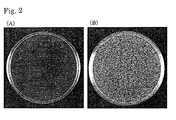
- Fig. 2 shows comparison of transformation of the yeast having ERG6 to be inducibly expressed by galactose in the presence of galactose (B: galactose medium) and in the absence of galactose (A: glucose medium).
- An object of the present invention is to provide a method comprising: introducing a gene into yeast in the state where expression of an enzyme in the ergosterol biosynthetic pathway is induced to express a protein; and adding a compound to the yeast in the state where expression of an enzyme in the ergosterol biosynthetic pathway is repressed so that permeability of the compound to yeast cell is high, to thereby allow the compound to interact with the product of the introduced gene.
- Yeast that can be used in the present invention is not particularly limited as long as it can be introduced with a gene and can incorporate a compound, and examples thereof include Saccharomyces cerevisiae and Schizosaccharomyces pombe.
- Yeast that can be used in the present invention is preferably one that inducibly expresses an enzyme in the ergosterol biosynthetic pathway.
The enzyme in the ergosterol biosynthetic pathway can be selected from any enzymes as long as the absence of its expression does not lead to lethality. When Saccharomyces cerevisiae is used as yeast, the enzyme is preferably Erg3p or Erg6p, more preferably ERG6p. An example of the ERG6p includes one having the amino acid sequence of SEQ ID NO: 5 (GenBank Accession No. CAA89944). Meanwhile, the enzyme may be one having an amino acid sequence of SEQ ID NO: 5 including substitution, deletion, or addition of one or several amino acids as long as it has the activity of the enzyme. In this case, the term "several" refers to, for example, 2 to 20, preferably 2 to 10, more preferably 2 to 5. On the other hand, an example of the Erg3p includes one having the amino acid sequence of SEQ ID NO: 6 (GenBank Accession No. CAA97586). Meanwhile, the enzyme may be one having an amino acid sequence of SEQ ID NO: 6 including substitution, deletion, or addition of one or several amino acids as long as it has the activity of the enzyme. In this case, the term "several" refers to, for example, 2 to 20, preferably 2 to 10, more preferably 2 to 5.
The yeast that can be used in the present invention may be one which inducibly expresses an enzyme in the ergosterol biosynthetic pathway and in which genes encoding Pdr1p and Pdr3p are disrupted.
When Schizosaccharomyces pombe is used as yeast, SPAC1687.16c (GenBank: CAA22610) and SPBC16E9.05 (GenBank: CAB 16897) are known as enzymes corresponding to Erg3p and Erg6p, respectively. - The phrase "inducibly express" means that an expression-repressed state and an expression-induced state can be regulated. In the "expression-repressed state", the synthesis of ergosterol may be repressed to such an extent that the drug sensitivity is increased, and for example, preferable is a state in which the expression level of the enzyme is decreased to not more than 10% as compared with that of a wild-type strain or an unmodified strain. On the other hand, in the "expression-induced state", the synthesis of ergosterol may be induced to such an extent that efficiency of gene introduction is increased, and for example, preferable is a state in which the expression level of the enzyme is induced to a level equal to that of a wild-type strain or an unmodified strain, more preferably is a state in which the expression level of the enzyme is induced to 80% or more as compared with that of a wild-type strain or an unmodified strain. The expression level of ergosterol biosynthetic enzyme can be determined by Northern blotting or RT-PCR, for example.
- The operations described below can be performed in accordance with an appropriate manual, for example, the methods described in Molecular Cloning: A Laboratory Manual, Cold Spring Harbor, NY, etc.
- Examples of a method of regulating expression of an enzyme in the ergosterol biosynthetic pathway include methods of regulating transcription of a gene encoding the enzyme.
Examples of the method of regulating transcription include a method using a tetracycline-regulated gene expression system (Tet System) and a method of ligating a gene encoding an enzyme in the ergosterol biosynthetic pathway to an inducible promoter to express the enzyme. - The Tet System has been developed as a transcription regulatory system in a eukaryote based on properties of a Tet repressor (TetR protein) and a Tet operator sequence (tetO sequence: a DNA sequence upstream of a Tet operon), which act on transcription regulation of an Escherichia coli tetracycline-resistant operon. The Tet repressor is a tetR gene product and binds to the tetO sequence only in the absence of tetracycline, and when tetracycline directly binds to the Tet repressor, the Tet repressor cannot bind to the tetO sequence. In the Tet System, the expression level of a target gene integrated downstream of a TRE promoter (a promoter having a Tet responsive element comprising seven repeats of a TetO sequence) can be quantitatively regulated by using a transcriptional activator that is obtained by fusing TetR and a transcriptional activation domain, and by regulating the concentration of tetracycline in a medium, and the system can be applied to yeast (Belli G, et. al., Nucleic Acids Res. 26(4): 942-7. 1998).
- When Saccharomyces cerevisiae is used as yeast, examples of the inducible promoter include GAL10 promoter (Johnston M and Davis RW. Mol Cell Biol. 4(8): 1440-1448, 1984), GAL1 promoter: (Johnston M and Davis RW. Mol Cell Biol. 4(8): 1440-1448, 1984), CUP1 promoter (Macreadie IG et. al., Plasmid. 21(2): 147-150, 1989), and PHO5 promoter (Meyhack B, et. al., EMBO J. 1(6): 675-680. 1982). Meanwhile, when Schizosaccharomyces pombe is used as yeast, an example of the inducible promoter includes nmt1 promoter (Maundrell K., J Biol Chem. 1990 Jul 5; 265(19): 10857-64.).
- An example of a specific method to obtain an inducible promoter that functions in yeast is as follows. The nucleotide sequence information of the above-described promoters which are known to be inducible is available from Saccharomyces Genome Database (http://www.yeastgenome.org/). Based on GAL10 promoter (Johnston M and Davis RW. Mol Cell Biol. 4(8): 1440-1448, 1984), GAL1 promoter (Johnston M and Davis RW. Mol Cell Biol. 4(8): 1440-1448, 1984), CUP1 promoter (Macreadie et. al., Plasmid. 21(2): 147-150, 1989), and PHO5 promoter (Meyhack B, et. al., EMBO J. 1(6): 675-680. 1982), primers are designed so that the promoter regions are sandwiched, and amplification is performed by PCR using yeast genomic DNA as a template. Restriction enzyme sites are preliminarily added to the primers, and a restriction enzyme treatment is performed after PCR to ligate the resultant product to a vector based on the restriction enzyme sites. If a marker gene, for example, KanMx6 gene, his5 (S. pombe) gene, or the like is preliminarily connected adjacent to the promoters, it can be used as a phenotypic marker when the promoters are introduced into yeast (Butt TR, et. al., Proc Natl Acad Sci USA. 81(11): 3332-3336, 1984).
As a vector that can be used in yeast, YEp352 and pRS315 are available from ATCC (The American Type Culture Collection, 10801 University Boulevard, Manassas, VA 20110, United States of America) as ATCC 37673 and ATCC 77144, respectively. - Introduction of an inducible promoter into yeast can be performed as follows. A plasmid containing a promoter region connected to the above-described marker gene is used as a template, and primers are designed at each end of a region containing the promoter and marker gene, and about 50 bp of sequences of the both ends of a promoter region of an enzyme in the ergosterol biosynthetic pathway that is to be inducibly expressed is added to the both ends of the primers. PCR is performed using these primers and a template plasmid, and the resultant PCR fragment is used to transform yeast by the lithium acetate method. Selection is performed based on the marker gene trait to select yeast in which the inducible promoter and marker gene have been integrated into a promoter region of the enzyme in the ergosterol biosynthetic pathway on a chromosome. Insertion of the inducible promoter into a predetermined position can be confirmed by PCR using a primer designed in the inserted fragment and a primer designed in a region of a gene of the enzyme in the ergosterol biosynthetic pathway or adjacent region on a chromosome in combination.
- In a method of the present invention, first, a gene is introduced into yeast in the state where expression of an enzyme in the ergosterol biosynthetic pathway is induced.
For example, introduction of a gene into yeast in the state where expression of the enzyme in the ergosterol biosynthetic pathway is induced can be performed as follows. That is, in the case of yeast strain that expresses an enzyme in the ergosterol biosynthetic pathway by an inducible promoter, the yeast is cultured under a condition in which expression of an enzyme in the ergosterol biosynthetic pathway is induced, for example, in the case of GAL10 promoter, in a medium containing 2% galactose, to thereby induce expression of the enzyme in the ergosterol biosynthetic pathway. Alternatively, in the case of CUP 1 promoter, the yeast is cultured in a medium containing 0.5 mM CuSO4, to thereby induce expression of the enzyme in the ergosterol biosynthetic pathway, or in the case of PHO5 promoter, the yeast is cultured in a low-phosphate medium containing 0.03 g/L KH2PO4, to thereby induce expression of the enzyme in the ergosterol biosynthetic pathway. Meanwhile, in the case of nmtl promoter, the yeast is cultured in a medium containing no thiamine, to thereby induce expression of the enzyme in the ergosterol biosynthetic pathway. - Introduction of a gene can be performed using a plasmid vector replicable in yeast cell. Introduction of a plasmid vector can be performed by the electroporation method or the lithium acetate method.
The type of a gene to be introduced is not particularly limited, and a gene library such as a cDNA library is preferably introduced. - Next, a compound is added to the yeast in the state where expression of the enzyme in the ergosterol biosynthetic pathway is repressed to allow the compound to interact with a protein expressed from the above-described introduced gene. The type of the compound is not particularly limited, and there may be used low-molecular compounds, peptides, naturally-occurring compounds, and the like, as well as drugs and toxicants.
The interaction of the compound in the state where expression of an enzyme in the ergosterol biosynthetic pathway is repressed may be performed as follows. That is, yeast is cultured under a condition which does not cause expression of an enzyme in the ergosterol biosynthetic pathway, for example, in the case of GAL10 promoter, in a medium containing no galactose, and the yeast is brought into contact with a compound under a condition in which expression of the enzyme in the ergosterol biosynthetic pathway is repressed to allow the compound to interact with a gene product of the introduced gene. In the case of CUP1 promoter, the yeast is cultured in a medium containing no CuSO4, or in the case of PHO5 promoter, the yeast is cultured in a high-phosphate medium containing 0.3 g/L KH2PO4, and the yeast is brought into contact with the compound under a condition in which expression of the enzyme in the ergosterol biosynthetic pathway is repressed to allow the compound to interact with a gene product of the introduced gene. Meanwhile, in the case of nmt1 promoter, the yeast is cultured in a medium containing 5 mg/ml thiamine, and the yeast is brought into contact with the compound under a condition in which expression of the enzyme in the ergosterol biosynthetic pathway is repressed to allow the compound to interact with a gene product of the introduced gene. - Identification of a gene encoding a protein that reacts with a compound can be performed as follows: yeast whose phenotype has been altered by the interaction of the compound with a protein is selected from yeasts to which the compound is added, and a gene that has been introduced into the selected yeast is identified.
- The phrase "allowing a compound to interact with a protein" includes allowing the compound to bind the protein, allowing the compound to interact with the protein to alter the activity of the protein, and allowing the binding to interact with the protein to cause a structural change of the compound. For example, it includes allowing a compound that serves as an antagonist or agonist of the protein to interact with a protein to alter the activity of the protein.
- A phenotype of yeast is not limited as long as it is identifiable phenotype, and examples thereof include size, shape, color, etc. of a colony, and growth inhibition and lethality are preferable. The growth inhibition can be confirmed by the size of the colony, while the lethality can be confirmed by the presence or absence of growth.
For example, when a compound to be used is one that causes growth inhibition or lethality of yeast, yeast that can grow after allowing the compound to interact with a protein is selected.
Meanwhile, in the case of identifying a protein that binds to a compound, three-hybrid system as described below is used to select yeast that exhibits a phenotype indicated by a reporter gene based on the binding of the protein and the compound. More specifically, when the reporter gene is LacZ, yeast that exhibits blue color is selected, while, when the reporter gene is HIS3, yeast that grows in a histidine-deficient medium is selected.
In the case of identifying a protein that causes a structural change of a compound, yeast is selected based on a phenotype accompanied by the structural change of the compound.
Subsequently, the introduced gene is isolated from the yeast that has been selected. If the gene has been introduced as a plasmid, plasmids are isolated, and the nucleotide sequence is determined, to thereby identify a gene encoding a protein that has interacted with the compound. - One embodiment is application of the method of the present invention to the multicopy suppressor method. That is, the method is intended to select a gene encoding a protein that interacts with a compound in a gene library by: introducing a gene library into yeast in the state where an enzyme in the ergosterol biosynthetic pathway is expressed; allowing a compound to interact in the state where an enzyme in the ergosterol biosynthetic pathway is not expressed; selecting yeast whose phenotype caused by the compound is repressed; and identifying a gene that is introduced into the yeast.
- This embodiment may be applied to the three-hybrid system (Edward J. Licitra and Jun O. Liu, Proc. Natl. Acad. Sci. USA, 93(23), 12817-12821, 1996) that is used for detecting an interaction between a compound and a protein based on the two-hybrid system that is used for detecting an interaction between two types of proteins. In the three-hybrid system, a fusion protein of a transcriptional activation domain of a transcription factor such as GAL4 with a protein X that is a target of a compound B to be detected, and a fusion protein of a DNA-binding domain of the transcription factor with a protein Y are expressed in a cell, while a DNA comprising a nucleotide sequence/promoter region to which the DNA-binding domain binds that is followed by a reporter gene is introduced. When a compound prepared by covalently linking a compound A that interacts with the protein Y with a compound B to be detected is allowed to interact, the protein Y and the compound A, and the protein X and the compound B are linked to each other, to thereby shift the transcriptional activation domain fused with the protein X to the neighborhood of the reporter gene, resulting in increase in expression of the reporter gene product. That is, the method is intended to select a gene encoding a protein X that is a target of the compound by: introducing a gene library of the three-hybrid system into yeast in the state where an enzyme in the ergosterol biosynthetic pathway is expressed; allowing a compound to interact in the state where an enzyme in the ergosterol biosynthetic pathway is not expressed; selecting yeast that expresses a reporter gene product; and identifying a gene that is introduced into the yeast.
- Meanwhile, another embodiment of the present invention is application of the method of the present invention to the bioconversion system. That is, the method is intended to obtain a derivative of a compound by: introducing a gene into yeast in the state where an enzyme in the ergosterol biosynthetic pathway is expressed; allowing a compound to interact in the state where an enzyme in the ergosterol biosynthetic pathway is not expressed; and converting the compound by a gene product of the introduced gene.
- Another embodiment is yeast that has an enzyme in the ergosterol biosynthetic pathway, preferably Erg3p and Erg6p in an inducible state.
- Hereinafter, the present invention will be described by referring to specific examples, but it is not limited thereto.
- A kanMx6 gene as a phenotypic marker was connected to GAL10 promoter that had been amplified by PCR, to thereby construct a GAL10 promoter template plasmid.
GAL10 promoter was amplified by PCR using yeast genomic DNA as a template, primers (SEQ ID NOS: 1 and 2) designed by adding a BamHI cleavage site to a region between GAL10 gene and GAL1 gene adjacent thereto, and Pfu DNA Polymerase (Promega).
NotI-digested fragment (containing kanMX6 gene) of pFA6a-kanMX6 (Wach A, et al., Yeast, 13(11): 1065-1075, 1997) was ligated to a NotI cleavage site in a pRS315 vector, and then, the obtained vector was cleaved with BamHI and Bg1II. Then, the above-described PCR-amplified GAL10 promoter fragment was treated with BamHI and inserted into the vector. - SEQ ID NO: 1: CGGGATCCCG TATAGTTTTT TCTCCTTGAC
- SEQ ID NO: 2: CGGGATCCCG TTATATTGAATTTTCAAAAATT
- GAL10 promoter was inserted into an ERG6 promoter region in yeast (Saccharomyces cerevisiae) in which PDR1 and PDR3 are disrupted in accordance with a method of efficiently creating a gene-disrupted allele by PCR (Baudin A. et. al. Nucl. Acid Res. 21: 3329-3330, 1993).
Primers (SEQ ID NOS: 3 and 4) comprising about 50 bp of the sequence of the respective end of the ERG6 promoter region that is added to the sequence of the end of the GAL10 promoter or kanMx6 gene of the above-described template plasmid were designed. These primers and the template plasmid were used to perform PCR using TaKaRa Ex Taq, and the resultant PCR fragment was used to transform yeast by the lithium acetate method, followed by selection in a medium containing Geneticin (manufactured by Sigma), to thereby select yeast in which GAL10 promoter and KanMx6 gene had been integrated into an ERG6 promoter region on a chromosome.
Insertion of GAL10 promoter into a predetermined position was confirmed by PCR using a primer designed in the inserted fragment and a primer designed in the region of ERG6 gene or adjacent region on a chromosome, in combination.

- The following experiments were performed to confirm a difference in drug resistance of yeast that inducibly expresses ergosterol depending on presence or absence of induction.
The strain that inducibly expresses ERG6 that had been prepared in Example 1 was cultured at 30°C for 2 days in a glucose medium as well as in a galactose medium both of which contained cycloheximide in various concentrations, and the cycloheximide sensitivity of the strain that inducibly expresses ERG6 was determined. As a result, the sensitivity in the galactose medium was found to be equal to that of a pdr1 pdr3-disrupted stain (ERG6 strain), while the sensitivity in the glucose medium was found to be equal to that of a pdr1 pdr3 erg6-disrupted strain (Fig. 1). It was confirmed that the drug sensitivity was increased by turning off the expression of ergosterol. - The following experiments were performed to confirm a difference in the transformation efficiency of yeast that inducibly expresses ergosterol depending on presence or absence of induction. The transformation was performed using YEp352GAPII, which was created by inserting GAPDH promoter and GAPDH terminator derived from pKT10 (Tanaka et al, Mol. Cell Biol., 10:4303-4313, 1990) into a multi-cloning site of YEp352 and then replacing the multi-cloning site with a pUC18 multi-cloning site.
The strain that inducibly expresses ERG6 that had been prepared in Example 1 was cultured in a liquid medium containing glucose or a liquid medium containing galactose, followed by transformation with the YEp352GAPII vector by the lithium acetate method.
The YEp352GAPII vector has URA3 as a selection marker, so that yeast into which the YEp352GAPII vector has been introduced forms a colony on SD(-ura) agar medium. The strain was cultured at 30°C for 2 days, and the colonies were counted. As a result, the number of colonies obtained in the medium containing galactose was found to be 700 times or more greater than that obtained on the medium containing glucose (Fig. 2). It was confirmed that the transformation efficiency was increased by expressing ergosterol. - Methotrexate (MTX) is an analogue of dihydrofolic acid, and is known to interact with dihydrofolate reductase (DHFR) to inhibit synthesis of folic acid and has a growth inhibitory action against yeast. It was examined whether the multicopy suppressor method using yeast that inducibly expresses ERG6 can identify a dihydrofolate reductase gene as a target gene of MTX. A library prepared from HeLa cDNA was used as a human cDNA library.
The human cDNA library was used to transform the strain that inducibly expresses ERG6 that had been prepared in Example 1 by the lithium acetate method, and the resultant transformants (about 4.5 x 10⁶ cells) were collected. Then, the cells (5 x 10⁷ cells) were inoculated on an agar medium containing 25 µM MTX and cultured at 30°C for 3 days, to thereby form MTX-resistant colonies. Plasmids were collected from the resistant colonies, and sequencing was performed to determine sequences in the plasmids and revealed that the plasmids contained a target gene of MTX, i.e., the ORF of DHFR.
It has been reported that DHFR (DFR1 in budding yeast) imparts MTX-resistance (Lagosky PA. et. al. Nucleic Acids Res. 15(24): 10355-10371, 1987), and it was proved that DHFR is isolated by the multicopy suppressor screening using the strain that inducibly expresses ERG6, like the report. - Yeast that has high drug permeability and maintains high transformation efficiency was obtained, thereby, the yeast has made it easy to search a drug target gene.

Claims (7)
- A method of allowing a compound to interact with a protein in yeast cell, comprising the steps of:(1) introducing a gene encoding the protein into yeast to express the protein in a state where expression of an enzyme involved in the ergosterol biosynthetic pathway is induced; and(2) adding the compound to the yeast into which the gene has been introduced to allow the compound to interact with the protein in yeast cell in a state where expression of the enzyme in the ergosterol biosynthetic pathway is repressed.
- A method of identifying a gene encoding a protein that interacts with a compound by contacting the compound with the protein expressed in yeast, comprising the steps of:(1) introducing a gene library into yeast to express proteins in a state where expression of an enzyme in the ergosterol biosynthetic pathway is induced;(2) adding the compound to the yeast where the gene library has been introduced to contact the compound with the protein in a state where expression of the enzyme in the ergosterol biosynthetic pathway is repressed;(3) selecting yeast whose phenotype has been altered by the interaction between the compound and the protein; and(4) identifying a gene that has been introduced into the selected yeast.
- The method according to Claim 2, wherein the phenotype of yeast caused by the compound is lethality or growth inhibition.
- The method according to any one of Claims 1 to 3, wherein the induction and the repression of expression of the enzyme in the ergosterol biosynthetic pathway is controlled by transcriptional regulation in the yeast.
- The method according to Claim 4, wherein the transcriptional regulation is transcriptional regulation by GAL10 promoter or GAL1 promoter.
- The method according to any one of Claims 1 to 5, wherein the enzyme in the ergosterol biosynthetic pathway is selected from ERG6 and ERG3.
- Yeast which inducibly expresses ERG6 or ERG3.
Applications Claiming Priority (2)
| Application Number | Priority Date | Filing Date | Title |
|---|---|---|---|
| JP2004315611 | 2004-10-29 | ||
| PCT/JP2005/019895 WO2006046694A1 (en) | 2004-10-29 | 2005-10-28 | Method of gene screening with yeast having ergosterol synthase undergoing inducible expression |
Publications (2)
| Publication Number | Publication Date |
|---|---|
| EP1803812A1 true EP1803812A1 (en) | 2007-07-04 |
| EP1803812A4 EP1803812A4 (en) | 2009-01-28 |
Family
ID=36227933
Family Applications (1)
| Application Number | Title | Priority Date | Filing Date |
|---|---|---|---|
| EP05799379A Withdrawn EP1803812A4 (en) | 2004-10-29 | 2005-10-28 | Method of gene screening with yeast having ergosterol synthase undergoing inducible expression |
Country Status (5)
| Country | Link |
|---|---|
| US (1) | US20090011951A1 (en) |
| EP (1) | EP1803812A4 (en) |
| JP (1) | JPWO2006046694A1 (en) |
| CA (1) | CA2586182A1 (en) |
| WO (1) | WO2006046694A1 (en) |
Families Citing this family (5)
| Publication number | Priority date | Publication date | Assignee | Title |
|---|---|---|---|---|
| JP2008092911A (en) * | 2006-10-16 | 2008-04-24 | Univ Of Tokyo | Protein binding detection method |
| JPWO2008156048A1 (en) | 2007-06-18 | 2010-08-26 | エーザイ・アール・アンド・ディー・マネジメント株式会社 | Yeast cell set, target candidate molecule identification method, action mechanism analysis method and screening method |
| US20100209931A1 (en) * | 2009-02-13 | 2010-08-19 | Yolanda Sanchez | Compositions for Identifying Novel Compositions for the Treatment of Disease and Methods of Using Same |
| CN105099923B (en) * | 2012-10-22 | 2019-04-05 | 华为技术有限公司 | Message transmission method and device |
| JP2015015939A (en) * | 2013-07-12 | 2015-01-29 | 国立大学法人 筑波大学 | Multidrug sensitivity yeast |
Family Cites Families (2)
| Publication number | Priority date | Publication date | Assignee | Title |
|---|---|---|---|---|
| CA2252886C (en) * | 1996-04-26 | 2008-02-12 | Massachusetts Institute Of Technology | Three-hybrid screening assay |
| GB9915399D0 (en) * | 1999-07-02 | 1999-09-01 | Zeneca Ltd | Method |
-
2005
- 2005-10-28 CA CA002586182A patent/CA2586182A1/en not_active Abandoned
- 2005-10-28 US US11/718,282 patent/US20090011951A1/en not_active Abandoned
- 2005-10-28 EP EP05799379A patent/EP1803812A4/en not_active Withdrawn
- 2005-10-28 JP JP2006542339A patent/JPWO2006046694A1/en not_active Withdrawn
- 2005-10-28 WO PCT/JP2005/019895 patent/WO2006046694A1/en not_active Ceased
Also Published As
| Publication number | Publication date |
|---|---|
| CA2586182A1 (en) | 2006-05-04 |
| WO2006046694A1 (en) | 2006-05-04 |
| US20090011951A1 (en) | 2009-01-08 |
| JPWO2006046694A1 (en) | 2008-05-22 |
| EP1803812A4 (en) | 2009-01-28 |
Similar Documents
| Publication | Publication Date | Title |
|---|---|---|
| US5885779A (en) | Repressed trans-activator system for characterization of protein-protein interactions | |
| Hirschhorn et al. | A new class of histone H2A mutations in Saccharomyces cerevisiae causes specific transcriptional defects in vivo | |
| Le et al. | Two new S‐phase‐specific genes from Saccharomyces cerevisiae | |
| Buck et al. | Action of a RAP1 carboxy-terminal silencing domain reveals an underlying competition between HMR and telomeres in yeast. | |
| Dobi et al. | Analysis of transcriptional activation at a distance in Saccharomyces cerevisiae | |
| Singer et al. | Identification of high-copy disruptors of telomeric silencing in Saccharomyces cerevisiae | |
| Leeds et al. | The product of the yeast UPF1 gene is required for rapid turnover of mRNAs containing a premature translational termination codon. | |
| Zhang et al. | Identification and characterization of upstream open reading frames (uORF) in the 5′ untranslated regions (UTR) of genes in Saccharomyces cerevisiae | |
| Castelli et al. | The 4E-BP Caf20p mediates both eIF4E-dependent and independent repression of translation | |
| Kennedy et al. | Positive and negative regulation of squalene synthase (ERG9), an ergosterol biosynthetic gene, in Saccharomyces cerevisiae | |
| JP4630067B2 (en) | Method for producing genetically modified organisms for screening active substances | |
| Niedenthal et al. | Systematic analysis of S. cerevisiae chromosome VIII genes | |
| Xiao et al. | Expression of yeast high mobility group protein HMO1 is regulated by TOR signaling | |
| US20090011951A1 (en) | Method of Gene Screening With Yeast Having Ergosterol Synthase Undergoing Inducible Expression | |
| Selvam et al. | Evidence that moderate eviction of Spt5 and promotion of error-free transcriptional bypass by Rad26 facilitates transcription coupled nucleotide excision repair | |
| JPWO2008156048A1 (en) | Yeast cell set, target candidate molecule identification method, action mechanism analysis method and screening method | |
| JPH10512447A (en) | Nonsense-mediated production of heterologous polypeptides in the absence of mRNA decay function | |
| US7932030B2 (en) | System for pulling out regulatory elements using yeast | |
| Raychaudhuri et al. | Zuotin, a DnaJ molecular chaperone, stimulates cap-independent translation in yeast | |
| Reavey | Analysis of Transcription Activation Distance as a Polygenic Trait in Saccharomyces cerevisiae | |
| JP5713286B2 (en) | Method for producing double-stranded nucleic acid | |
| Vandenbol et al. | Mass-murder deletion of 19 ORFs from Saccharomyces cerevisiae chromosome XI | |
| Verkhova | From in vitro screens to telomeric phenotypes: identification and initial characterisation of two novel telomere-associated proteins in saccharomyces cerevisiae | |
| Maria | Role of a Non-Duplicated DNA Replication Protein in Origin Specification and Epigenetic Gene Silencing in Budding Yeast Species | |
| Yukawa et al. | The Rpd3/HDAC complex is present at the URS1 cis-element with hyperacetylated histone H3 |
Legal Events
| Date | Code | Title | Description |
|---|---|---|---|
| PUAI | Public reference made under article 153(3) epc to a published international application that has entered the european phase |
Free format text: ORIGINAL CODE: 0009012 |
|
| 17P | Request for examination filed |
Effective date: 20070410 |
|
| AK | Designated contracting states |
Kind code of ref document: A1 Designated state(s): AT BE BG CH CY CZ DE DK EE ES FI FR GB GR HU IE IS IT LI LT LU LV MC NL PL PT RO SE SI SK TR |
|
| DAX | Request for extension of the european patent (deleted) | ||
| A4 | Supplementary search report drawn up and despatched |
Effective date: 20090107 |
|
| 17Q | First examination report despatched |
Effective date: 20090424 |
|
| STAA | Information on the status of an ep patent application or granted ep patent |
Free format text: STATUS: THE APPLICATION IS DEEMED TO BE WITHDRAWN |
|
| 18D | Application deemed to be withdrawn |
Effective date: 20090905 |