EP1802080A1 - System and method for providing an information service to users via a presence system - Google Patents
System and method for providing an information service to users via a presence system Download PDFInfo
- Publication number
- EP1802080A1 EP1802080A1 EP06024692A EP06024692A EP1802080A1 EP 1802080 A1 EP1802080 A1 EP 1802080A1 EP 06024692 A EP06024692 A EP 06024692A EP 06024692 A EP06024692 A EP 06024692A EP 1802080 A1 EP1802080 A1 EP 1802080A1
- Authority
- EP
- European Patent Office
- Prior art keywords
- information
- users
- real
- time service
- server
- Prior art date
- Legal status (The legal status is an assumption and is not a legal conclusion. Google has not performed a legal analysis and makes no representation as to the accuracy of the status listed.)
- Withdrawn
Links
- 238000000034 method Methods 0.000 title claims description 26
- 238000004891 communication Methods 0.000 description 37
- 230000003993 interaction Effects 0.000 description 17
- 230000008569 process Effects 0.000 description 15
- 239000003795 chemical substances by application Substances 0.000 description 5
- 230000000977 initiatory effect Effects 0.000 description 3
- 238000012545 processing Methods 0.000 description 3
- 230000008901 benefit Effects 0.000 description 2
- 230000000694 effects Effects 0.000 description 2
- 235000006508 Nelumbo nucifera Nutrition 0.000 description 1
- 240000002853 Nelumbo nucifera Species 0.000 description 1
- 235000006510 Nelumbo pentapetala Nutrition 0.000 description 1
- 230000004931 aggregating effect Effects 0.000 description 1
- 238000003491 array Methods 0.000 description 1
- 230000005540 biological transmission Effects 0.000 description 1
- 230000008859 change Effects 0.000 description 1
- 238000012790 confirmation Methods 0.000 description 1
- 230000001934 delay Effects 0.000 description 1
- 239000003999 initiator Substances 0.000 description 1
- 230000002452 interceptive effect Effects 0.000 description 1
- 238000013507 mapping Methods 0.000 description 1
- 230000015654 memory Effects 0.000 description 1
- 238000012913 prioritisation Methods 0.000 description 1
- 230000004044 response Effects 0.000 description 1
Images


Classifications
-
- H—ELECTRICITY
- H04—ELECTRIC COMMUNICATION TECHNIQUE
- H04L—TRANSMISSION OF DIGITAL INFORMATION, e.g. TELEGRAPHIC COMMUNICATION
- H04L65/00—Network arrangements, protocols or services for supporting real-time applications in data packet communication
- H04L65/1066—Session management
- H04L65/1101—Session protocols
- H04L65/1104—Session initiation protocol [SIP]
-
- H—ELECTRICITY
- H04—ELECTRIC COMMUNICATION TECHNIQUE
- H04L—TRANSMISSION OF DIGITAL INFORMATION, e.g. TELEGRAPHIC COMMUNICATION
- H04L65/00—Network arrangements, protocols or services for supporting real-time applications in data packet communication
- H04L65/1066—Session management
- H04L65/1083—In-session procedures
-
- H—ELECTRICITY
- H04—ELECTRIC COMMUNICATION TECHNIQUE
- H04L—TRANSMISSION OF DIGITAL INFORMATION, e.g. TELEGRAPHIC COMMUNICATION
- H04L65/00—Network arrangements, protocols or services for supporting real-time applications in data packet communication
- H04L65/1066—Session management
- H04L65/1083—In-session procedures
- H04L65/1094—Inter-user-equipment sessions transfer or sharing
-
- H—ELECTRICITY
- H04—ELECTRIC COMMUNICATION TECHNIQUE
- H04L—TRANSMISSION OF DIGITAL INFORMATION, e.g. TELEGRAPHIC COMMUNICATION
- H04L67/00—Network arrangements or protocols for supporting network services or applications
- H04L67/14—Session management
-
- H—ELECTRICITY
- H04—ELECTRIC COMMUNICATION TECHNIQUE
- H04L—TRANSMISSION OF DIGITAL INFORMATION, e.g. TELEGRAPHIC COMMUNICATION
- H04L67/00—Network arrangements or protocols for supporting network services or applications
- H04L67/50—Network services
- H04L67/54—Presence management, e.g. monitoring or registration for receipt of user log-on information, or the connection status of the users
Definitions
- the present invention relates in general to a presence-based communication system, and in particular, to providing an information service to users via the presence system.
- Presence-based interactive communication systems enable callees (presentities) to publish, in real-time, their presence information, such as the availability and current status of the callee devices/applications, to callers (presence watchers).
- Presence systems typically incorporate presence servers to manage the presence information for a plurality of presentities.
- Presence servers currently automatically receive updated presence information from various presence sources, such as telephone applications or instant messaging applications, and aggregate the received presence information to reflect the presence status of the presentities. For example, when a presentity initiates or receives a voice call on his or her desktop phone, the presence server is notified and changes the presence status of the presentity to "On the Phone.”
- Presence servers further provide the current presence status of presentities to watchers of the presentities to assist the watchers in establishing real-time voice, text and/or multimedia communication sessions with the presentities.
- Presence systems facilitate more efficient and effective communication sessions between watchers and presentities.
- users In order to receive the real-time service information, users typically must subscribe to an information provider that provides the real-time service information to users. In addition, the user must provide a cell phone number or e-mail address to which the real-time service information can be routed. Whenever updates occur to information for which the user has requested notification, the information provider automatically generates an instant message, e-mail or voice call to the user to provide the updated real-time service information to the user. However, if the user does not provide multiple phone numbers and/or e-mail addresses to which the real-time service information may be routed, the user may not timely receive the updated information.
- the user may not read the updated information until it is too late.
- the information provider may simultaneously route the updated information to all provided phone numbers and/or e-mail accounts, which unnecessarily increases the traffic on the network.
- the information provider may sequentially route the updated information to the user's phone numbers and/or e-mail accounts until the information provider receives confirmation that the user received the real-time update, which also unnecessarily increases the traffic on the network and may delay the delivery of the real-time service information to the user.
- Embodiments of the present invention provide a presence system for providing an information service to users.
- the presence system includes a presence server for collecting and storing presence information on a plurality of presentities and providing presence information to watchers of the presentities.
- one of the presentities is an information provider capable of providing an information service to users and the watchers of the information provider include one or more users.
- the presence server is operable to receive updated presence information from the information provider, in which the updated presence information includes real-time service information enabling the information provider to provide the information service to said users.
- the presence server is further operable to provide the real-time service information to the users.
- the real-time service information includes, for example, lottery information, stock quote information, entertainment information, travel information or delivery information.
- the presence server forwards a subscription request from one of the users to the information provider. In another embodiment, the presence server forwards a subscription request from the information provider to one of the users. Upon receiving notification of acceptance of the subscription request from the information provider or user, the presence server adds that user to a list of watchers of the information provider.
- the real-time service information includes custom information for custom users.
- the presence server identifies the custom users and provides the custom information to the custom users.
- the presence server maintains watcher groups for the information provider, in which each of the watcher groups includes one or more watchers of the information provider.
- the presence server identifies the custom users by determining the watcher group that subscribes to the custom information.
- Embodiments of the present invention further provide a method for providing an information service to distribute real-time service information to users via a presence system.
- the method includes subscribing users to presence information of an information provider to enable the information provider to provide the information service to the users.
- the method further includes receiving updated presence information from the information provider, in which the updated presence information includes real-time service information associated with the information service, and providing the real-time service information to the users.
- the presence system 100 includes one or more presentities (one of which is shown for convenience) 110 and one or more terminals 120 associated with the presentity 110.
- the presentity 110 represents the callee and provides presence information on the callee's presence status to the presence system 100.
- Each terminal 120 is a physical communications device capable of sending and/or receiving communications over a communications network 130. Examples of such terminals 120 include, but are not limited to, a desktop phone 120a, a laptop computer 120b, a personal computer 120c, a cell phone 120d and a personal digital assistant (PDA) 120e.
- PDA personal digital assistant
- the communications network 130 represents any type of network over which media (e.g., circuit-switched or packet-switched voice or data) may be sent.
- the communications network 130 can include the Public Switched Telephone Network (PSTN), Public Land Mobile Network (PLMN), one or more private local area networks (LANs), the Internet and/or any other type or combination of networks.
- PSTN Public Switched Telephone Network
- PLMN Public Land Mobile Network
- LANs local area networks
- the Internet any other type or combination of networks.
- the presence system 100 further includes one or more presence user agents 140 (PUAs), a presence agent (PA) 150, a presence server 160 and one or more watchers 170 of the presentity 110.
- PUAs 140 are capable of manipulating and providing presence information for the presentity 110.
- a separate PUA 140 is shown for each terminal 120.
- the number of PUAs 140 can vary based on the number and type of terminals 120, the applications supported by the terminals 120 and the system configuration.
- Each PUA 140 represents a telephony application that independently generates a component of the overall presence information for a presentity 110.
- PUA 140 generates presence information when a change in presence status occurs.
- Examples of changes in presence status include, but are not limited to, turning on and off a terminal 120, modifying the registration from a terminal 120 and changing the instant messaging status on a terminal 120.
- the telephone application notifies the presence server to set the presentity's presence status to "On the Phone.”
- the presence information from each of the PUAs 140 is collected by one or more presence agents (PAs) 150.
- PAs presence agents
- FIGURE 1 only one PA 150 is shown for simplicity. However, it should be understood that in other embodiments, there can be multiple PAs 150 for a presentity 110, each of which is responsible for a subset of the total subscriptions (requests for presence information from watchers 170) currently active for the presentity 110.
- the PA 150 collects presence information from one or more calendar/scheduler applications 50 (e.g., Microsoft Exchange Server®, IBM Lotus Notes®, Meeting Maker® or other similar application) and other sources 60 of presence information (e.g., an instant messaging application). For example, if a presentity has a meeting scheduled on his or her calendar from 10:00 a.m. to 12:00 p.m., at 10:00 a.m., the calendar/scheduler application 50 notifies the PA 150 to set the presentity's presence status to "In a Meeting.”
- calendar/scheduler applications 50 e.g., Microsoft Exchange Server®, IBM Lotus Notes®, Meeting Maker® or other similar application
- other sources 60 of presence information e.g., an instant messaging application
- the PA 150 aggregates the presence information from each of the sources (e.g., PUA's 140, calendar 50 and other sources 60) and maintains the current complete presence information for the presentity 110.
- the presence information 180 indicates, for example, the availability of the presentity, the current activity of the presentity, the local time where the presentity is located, the current location of the presentity and the current status of the active terminals and/or applications running on active terminals.
- the PA 150 is further operable to provide the presence information to one or more watchers 170 (callers or communication session initiators) who have subscribed to the presence service of the presentity 110.
- the presence server 160 further stores preference information 190 (e.g., terminal preferences) for the presentities 110 and watchers 170 of the presence system 100.
- preference information 190 can include both presentity preference information (e.g., privacy filters) set by the presentity 110 for each watcher 170 and watcher preference information (e.g., watcher filters) set by each watcher 170 for presentities 110.
- presentity preference information e.g., privacy filters
- watcher preference information e.g., watcher filters
- the presence server 160 is a physical entity that can operate as either the PA 150 or as a proxy server for routing requests from watchers 170 to the PA 150.
- the presence server 160 stores the presence information 180 and preference information 190 for a plurality of presentities 110 and watchers 170.
- the PA 150 in combination with the presence server 160, is operable to receive presence information of the presentity 110 from the PUAs 140, receive requests from watchers 170 for the presence information and provide the presence information to the watcher(s) 170.
- the presence server 160 can also be co-located with a PUA 140.
- the presence system 100 uses a presence protocol to provide presence services to presentities 110 and watchers 170.
- a presence protocol that can be used in the presence system 100 is the Session Initiation Protocol (SIP), as described in J. Rosenberg, et al., "SIP: Session Initiation Protocol” RFC: 3261, June 2002 and in A. Roach, et al., "Session Initiation Protocol (SIP) - Specific Event Notification," RFC: 3265, June 2002 , each of which are hereby incorporated by reference.
- SIP Session Initiation Protocol
- SIP Session Initiation Protocol
- SIP can be used with other protocols, such as the Real-time Transport Protocol (RTP), the Real-Time Streaming Protocol (RTSP), the Session Description Protocol (SDP), the International Telecommunication Union - Telecommunications ("ITU-T") H.263 standard (video CODEC), the G.711 and G.729 standards (audio CODECs), and other or additional standards or protocols.
- RTP Real-time Transport Protocol
- RTSP Real-Time Streaming Protocol
- SDP Session Description Protocol
- ITU-T International Telecommunication Union - Telecommunications
- video CODEC video CODEC
- G.711 and G.729 standards audio CODECs
- other or additional protocols and configurations may be used.
- SIP networks are capable of routing requests from any user on the network to the server that maintains the registration state for a user.
- SIP networks enable a caller (watcher) to transmit a SUBSCRIBE request for presence information relating to a particular callee (presentity 110) to be routed to the presence server 160 that maintains the presence information for the presentity 110.
- the presence server 160 and PA 150 may be co-located with the SIP proxy/registrar for efficiency purposes.
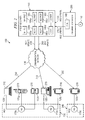
- FIGURE 2 illustrates an exemplary presence system 100 for providing an information service to distribute real-time service information users, in accordance with embodiments of the present invention.
- the presentity 110 is an information provider and the watchers 170a, 170b and 170c include users who have subscribed to receive real-time service information from the information provider.
- the information provider has an information server 200 associated therewith that generates and/or receives the real-time service information.
- such real-time service information can include stock quotes, travel information (e.g., flight status or other travel-related information), delivery information (e.g., the status of a package being delivered), lottery information (e.g., winning lottery or Keno numbers, prize size, next drawing date or Keno game time, etc.) and entertainment information.
- travel information e.g., flight status or other travel-related information
- delivery information e.g., the status of a package being delivered
- lottery information e.g., winning lottery or Keno numbers, prize size, next drawing date or Keno game time, etc.
- entertainment information include a notification that a radio station is playing a particular song, a notification that a particular television program or movie is currently running on a particular television channel and a notification that a particular movie is showing in a local theatre or has been released on DVD.
- the information service is enabled in the presence system 100 using a presence server 160 that maintains presence information 180 and preference information 190 on the information provider and users.
- the presence server 160 maintains presence information 180a and preference information 190a on user 170a, presence information 180b and preference information 190b on user 170b, presence information 180c and preference information 190c on user 170c and presence information 180d and preference information 190d on information server 200.
- the information server 200 includes a presence user agent (PUA) 140 that provides updated presence information (e.g., updated presence information 210 or 220) to the presence server 160.
- the PUA 140 is configured to detect the generation or receipt of real-time service information (e.g., real-time service information 250 or 260) and to automatically generate updated presence information including the real-time service information to the presence server 160.
- real-time service information e.g., real-time service information 250
- the PUA 140 encapsulates the real-time service information 250 within an updated presence information 210 message sent to the presence server 160.
- real-time service information can be distributed to users 170a, 170b and 170c via standard presence distribution protocols (e.g., SIP/SIMPLE NOTIFY messages).
- the real-time service information is generic real-time service information provided to all users 170a, 170b and 170c.
- the PUA 140 can include the identities of all users to receive the generic real-time service information in the updated presence information or the presence server can identify the users based on preference information 190 stored in the presence server 160.
- the presence server 160 can store the identity of all users 170a-170c who have subscribed to the information provider to receive the generic real-time service information in a list of watchers for the information provider.
- the presence server accesses the list of watchers for the information provider and routes the generic real-time service information to all watchers on the list.
- the real-time service information is custom information provided to select ones of the users 170a, 170b and 170c.
- the PUA 140 provides first updated presence information 210 including first real-time service information 250 to the presence server 160 and second updated presence information 220 including second real-time service information 260 to the presence server 160.
- the first real-time service information 250 is routed to users 170a and 170b, while the second real-time service information 260 is routed to user 170c.
- the PUA 140 can include the identities of users 170a and 170b within the first updated presence information 210 or the presence server 160 can determine the identities of users 170a and 170b based on preference information 190 stored in the presence server 160.
- the presence server 160 can maintain one or more watcher groups 230 and 240 for a particular presentity 110.
- the term "watcher group” refers to one or more watchers 170 of a particular presentity 110.
- users/watchers 170a and 170b form watcher group WG1 230 while user/watcher 170c forms watcher group WG2 240.
- the PUA 140 can identify the particular watcher group 230 or 240 to receive the real-time service information 250 or 260 in the updated presence information 210 or 220, respectively.
- the information provider can define its preference information 190d such that the presence server 160 is able to identify the watcher group 230 or 240 for the real-time service information 250 or 260.
- the preference information 190d can include "key words" or other identifiers that the presence server 160 can use to match against the real-time service information 250 or 260 to determine which watcher group 230 or 240 is to receive the real-time service information 250 or 260.
- the presence server 160 determines the current presence state of each of the watchers 170a and 170b and each terminal associated with each of the watchers 170a and 170b to determine which terminals to route the real-time service information 250 to.
- the presence server 160 first determines the media status and availability of the watcher 170a associated with terminal 120f to receive the real-time service information 250 in one or more media types (e.g., text or voice).
- the real-time service information 250 is sent in only a single media type. In other embodiments, the real-time service information 250 is sent in multiple media types, or can be converted between media types by the presence server 160.
- the presence server 160 determines the media status and availability of the particular terminal 120f for the real-time service information 250 in the particular media type.
- media status refers to one and only one of the following states at any particular time instance: INACTIVE, ACTIVE, IN USE, BUSY.
- availability refers to one and only one of the following states at any particular time instance: AVAILABLE, UNAVAILABLE.
- the presence information 180a and preference information 190a of the watcher 170a is used to obtain the availability and media status of the watcher 170a and terminal 120f.
- preference information 190a can include information identifying the media types supported by each terminal associated with the watcher 170a, including terminal 120f, and information identifying the media types supported by each application running on each terminal associated with the watcher.
- the presence information 180a of the watcher 170a can include, for example, a current number of real-time voice communication sessions engaged in by the watcher 170a, a current number of real-time multimedia communication sessions engaged in by the watcher 170a and a current number of real-time text communication sessions engaged in by the watcher 170a.
- the presence information 180a of the watcher 170a can include an activity-media status mapping to update the media status of media types upon the start / termination of a scheduled activity, such as a meeting, out-to-lunch, steering a car, engaged in voice communication session etc.
- the watcher 170a associated with terminal 120f may enter preference information 190a specifying that no media types or only certain media types are available on any terminal of the watcher 170a or particular terminals of the watcher 170a (e.g., terminal 120f) when the watcher's calendar indicates that the watcher 170a is in a meeting.
- the presence server 160 compares the current media status of the watcher 170a associated with terminal 120f in the one or more media types with watcher preference information 190a specifying a maximum number of interactions per media type supported by the watcher 170a.
- the maximum number of interactions for a particular media type indicates the maximum number of real-time interactions the watcher 170a can handle before the particular media status enters the BUSY state.
- the maximum number of interactions is specified by the user/watcher as part of his/her preference rules.
- the maximum number of interactions specified in the preference information 190a may not be the same as the actual maximum number of interactions that the watcher is capable of supporting.
- the watcher may have two terminals, each capable of supporting three IM communication sessions, two voice communication sessions and one multimedia communication session.
- the watcher 170a may set the preference information 190a to limit the number of concurrent IM communication sessions to two (one for each terminal), and to prevent any multimedia communication sessions from being routed to any terminal of the watcher 170a while the watcher 170a is engaged in a voice communication session on either terminal.
- the presence server 160 determines the media status (INACTIVE, ACTIVE, IN USE or BUSY) and availability (AVAILABILE or UNAVAILABLE) of the watcher 170a to receive the real-time service information 250 in one or more media types.
- INACTIVE signifies that the user/watcher is not ready to process interactions with this specific media type.
- the INACTIVE state applies when the watcher 170a is not logged onto the network using any device capable of supporting that specific media type.
- the INACTIVE state might be caused by a conclusion that there are currently no active devices of the watcher 170a that both support the particular media type and meet any other criteria specified by the information provider.
- the ACTIVE state indicates that the user/watcher is ready to process interactions with this specific media type.
- the ACTIVE state applies when at least one terminal of the watcher that supports the specific media type is logged onto the network.
- the IN USE state indicates that the watcher 170a is involved in one or more communication sessions using this specific media type. However, the watcher 170a is still capable of processing additional interactions with the same media type on one or more terminals.
- the BUSY state indicates that the watcher 170a is not capable of engaging in any communication sessions with that media type on any terminal.
- the BUSY state might be caused by limitations of resources (e.g., communication channels), by limitations of the watcher's capability (e.g., the maximum number of interactions for the specific media type has been reached) or by preferences specifying that the particular media type is unavailable when the watcher's calendar indicates that the watcher is in a meeting, traveling, off-site, etc.
- the presence server 160 determines that any terminal associated with that watcher 170a is UNAVAILABLE to receive the real-time service information 250. Therefore, terminal 120f and any other terminal associated with that watcher 170a would be deemed UNAVAILABLE to receive the real-time service information 250. In one embodiment, when the watcher 170a is UNAVAILABLE, the presence server 160 stores the real-time service information 250 for the watcher 170a until the presence server 160 receives updated presence information 180a indicating that the watcher 170 is now AVAILABLE.
- the presence server 160 determines that the watcher 170a is currently AVAILABLE for the communication session. If the presence server 160 determines that the watcher 170a is AVAILABLE, the presence server 160 next determines the media status and availability of each terminal 120f, 120g and 120h associated with the watcher 170a.
- the presence server 160 can compare the current media status of a particular terminal 120f of the watcher 170a in a particular media type with preference information 190a specifying a maximum number of interactions per media type supported by the terminal 120f.
- terminal 120f may be capable of simultaneously supporting unlimited text (e.g., IM) communication sessions, two voice communication session and one multimedia communication session, but the watcher 170a may set his/her preference information 190a to limit the number of IM communication sessions to two, the number of voice communication sessions to one, and prevent any multimedia communication sessions while engaged in a voice communication on terminal 120f.
- unlimited text e.g., IM
- the presence server 160 determines the media status (INACTIVE, ACTIVE, IN USE or BUSY) and availability (AVAILABILE or UNAVAILABLE) of the terminal 120f to receive the real-time service information in one or more media types.
- INACTIVE signifies that the terminal 120f is not capable of or ready to process interactions with this specific media type.
- the ACTIVE state indicates that the terminal 120f is capable of and ready to process interactions with this specific media type.
- the IN USE state indicates that the terminal 120f is involved in one or more communication sessions using this specific media type.
- the terminal 120f is still capable of processing additional interactions with the same media type (i.e., there are additional communication channels to this terminal 120f in the particular media type), and the preference information 190a does not preclude additional interactions of this media type.
- the BUSY state indicates that the terminal 120f is not able to engage in any additional communication sessions with that media type (i.e., there are no more available communication channels to this terminal 120f in the particular media type).
- the presence server 160 determines that terminal 120f is UNAVAILABLE to receive the real-time service information 250. However, if the media status of the terminal 120f is "ACTIVE” or "IN USE,” the presence server 160 determines that terminal 210 is AVAILABLE for the communication session.
- the presence server 160 includes terminal 120f in a list of available terminals for the watcher 170a. If the watcher 170a specified an order of preference for terminals to receive the real-time service information 250 from the information server 200 or information in a particular media type, the presence server 160 routes the real-time service information 250 to the most preferred terminal (e.g., terminal 120f) that is currently AVAILABLE. For example, in FIGURE 2, the presence server 160 routes the real-time service information 250 to terminal 120f of watcher 170a.
- the most preferred terminal e.g., terminal 120f
- each terminal 120f-120k includes a presence user client 270.
- the presence user client 270 includes any hardware, software, firmware, or combination thereof for interfacing with the presence server 160.
- the presence user client 270 could include one or more processors that execute instructions and one or more memories that store instructions and data used by the processors.
- the processor is generally understood to be a device that drives a general-purpose computer. It is noted, however, that other processor devices such as microcontrollers, Field Programmable Gate Arrays (FPGAs), or Application Specific Integrated Circuits (ASICs), or a combination thereof, can be used as well and achieve the benefits and advantages described herein.
- the presence user client 270 is operable to receive the real-time service information 250 or 260 from the presence server 160 and interfaces with the terminal 120 on which the presence user client 270 is running to provide the real-time service information 250 or 260 to the user.
- the presence user client 270 can include a graphical user interface for displaying the real-time service information 250 or 260 on the terminal 120.
- the presence user client 270 further communicates with the presence server 160 to receive traditional presence information 180.
- the presence user client 270 can maintain a list of presentities for whom the user is a watcher, display the presence status of the presentities on the list and display the real-time service information 250 of the information provider presentity.
- the presence user client 270 can add the information provider name to a contact list or "Buddy List" and display in real-time the presence status of the information provider and any real-time service information 250 or 260 sent from the information provider.
- the presence user client 270 can display a respective icon for each presentity and any real-time service information 250 or 260 next to the information provider icon.
- the presence user client 270 also enables the user to contact the information provider using instant message, voice or multimedia. For example, the user can click on the icon to bring up a menu of available options, such as "Send an Instant Message to this Presentity", “Call this Presentity” and "E-mail this Presentity.”
- the options available to the user depend on the information provider contact information the presence user client 270 has access to and the presence status of that contact information.
- the contact information can be entered into a contacts application (e.g., "Buddy List"), calendar application or other application that is capable of interfacing with the presence user client 270.
- the contact information may also be downloaded by the presence user client 270 from the presence server 160, depending upon the configurations of the presence server 160 and preferences 190d of the information provider.
- the presence user client 270 communicates with the presence server 160 to determine the presence status of each option. If one or more options are available, the user can select (e.g., "click on”) one of the options to contact the information provider.
- the user can send an IM or e-mail or initiate a voice call to the lottery provider to buy more lottery tickets, inquire about historical results, request a link to a web page or register a specific lottery ticket number so that custom real-time service information can be presented to the user.
- the custom real-time lottery information can include "Not a winner, try again," or "Congratulations, you have won $3.00.”
- FIGURE 3 is a flowchart illustrating an exemplary process 300 for subscribing to an information provider via the presence system, in accordance with embodiments of the present invention.
- the process begins at block 305 where a user sends a subscription request to subscribe to receive real-time service information from a particular information provider to the presence server.
- the presence server forwards the subscription request to the information provider for processing.
- the presence server determines whether the information provider has granted the subscription of the user. If not, at block 320, the presence server notifies the user. If so, at block 325, a determination is made whether the subscription for the user is a custom subscription. If so, at block 330, the information provider requests custom subscription information from the user via the presence server to establish the parameters of the custom subscription. In response, at block 335, the user provides the requested custom subscription information to the information provider via the presence server.
- the presence server adds the user to a watcher list for the information provider. For example, in one embodiment, the presence server adds the user to a generic watcher list to receive generic real-time service information from the information provider. In another embodiment, the presence server adds the user to a watcher group to receive custom information in accordance with the custom subscription with the information provider. In addition, at block 345, the presence server interfaces with the presence user clients of the user to add the information provider to a "Buddy List" or other list of presentities for the user.
- FIGURE 4 illustrates another exemplary process 400 for subscribing to an information provider via the presence system, in accordance with embodiments of the present invention.
- the process begins at block 410 where an information provider sends a subscription request to subscribe to receive real-time service information from the information provider to one or more presence users via the presence server.
- the subscription request is received at a particular user.
- the presence server determines whether the particular user has accepted the subscription. If so, at block 440, the presence server adds the user to a watcher list for the information provider, as described above. In addition, at block 450, the presence server interfaces with the presence user clients of the user to add the information provider to a "Buddy List" or other list of presentities for the user. At block 360, this process is repeated for each user to whom the information provider sent the subscription request. Thereafter, at block 470, presence updates including the subscribed real-time service information are sent to the subscribed users.
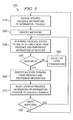
- FIGURE 5 is a flowchart illustrating an exemplary process 500 for providing an information service to distribute real-time service information to users via the presence system, in accordance with embodiments of the present invention.
- the process begins at block 510 where updated presence information including real-time service information is sent from a presence user agent of the information provider to a presence server.
- the presence server identifies one or more watchers of the information provider that are to receive the real-time service information.
- the updated presence information identifies one or more watchers or watcher groups to which the real-time service information is to be distributed.
- the real-time service information is generic information to be sent to generic watchers of the information provider.
- the updated presence information and/or real-time service information includes a "key word" or other identifier used by the presence server to determine the watchers and/or watcher groups to which the real-time service information is to be distributed.
- the presence server determines the presence status of one of the watchers to which the real-time service information is to be distributed using presence information and preference information associated with the watcher. From the presence status, the presence server determines at block 540 whether the watcher is currently available to receive the real-time service information. If not, at block 550, the real-time service information is queued for later transmission to the watcher. If so, at block 560, the presence server identifies a watcher terminal to receive the real-time service information from the presence and preference information of the watcher, and at block 570, the presence server routes the real-time service information sent by the information provider to the identified watcher terminal. At block 580, this process is repeated for all watchers to whom the current real-time service information and all future real-time service information is to be distributed.
Landscapes
- Engineering & Computer Science (AREA)
- Computer Networks & Wireless Communication (AREA)
- Signal Processing (AREA)
- Business, Economics & Management (AREA)
- General Business, Economics & Management (AREA)
- Multimedia (AREA)
- Information Transfer Between Computers (AREA)
Abstract
A presence system (100) provides information services, such as lottery information, stock quotes, entertainment information, travel information and delivery information, to users (170). The presence system (100) includes a presence server (160) for collecting and storing presence information (180) on an information provider that provides an information service to users (170). The presence information (180) includes real-time service information (250) enabling the information provider to provide the information service to the users (170). Upon receiving updated presence information (210) including the real-time service information (250) from the information provider, the presence server (160) provides the real-time service information (250) to the users (170).
Description
- The present invention relates in general to a presence-based communication system, and in particular, to providing an information service to users via the presence system.
- Presence-based interactive communication systems enable callees (presentities) to publish, in real-time, their presence information, such as the availability and current status of the callee devices/applications, to callers (presence watchers). Presence systems typically incorporate presence servers to manage the presence information for a plurality of presentities. Presence servers currently automatically receive updated presence information from various presence sources, such as telephone applications or instant messaging applications, and aggregate the received presence information to reflect the presence status of the presentities. For example, when a presentity initiates or receives a voice call on his or her desktop phone, the presence server is notified and changes the presence status of the presentity to "On the Phone."
- Presence servers further provide the current presence status of presentities to watchers of the presentities to assist the watchers in establishing real-time voice, text and/or multimedia communication sessions with the presentities. As a result, presence systems facilitate more efficient and effective communication sessions between watchers and presentities.
- However, current presence systems are only capable of aggregating and distributing traditional presence information that indicates the availability of a presentity. There are a number of other real-time applications that distribute other types of information to subscribers. For example, users can receive real-time updates on stock quotes, real-time updates on the status of a package being delivered, real-time updates on travel arrangements, such as flight delays and gate changes, and other types of real-time service information. The real-time service information can be displayed as an instant message on their cell phone or PDA, viewed using an e-mail account or provided to them in the form of a voice call or voice message.
- In order to receive the real-time service information, users typically must subscribe to an information provider that provides the real-time service information to users. In addition, the user must provide a cell phone number or e-mail address to which the real-time service information can be routed. Whenever updates occur to information for which the user has requested notification, the information provider automatically generates an instant message, e-mail or voice call to the user to provide the updated real-time service information to the user. However, if the user does not provide multiple phone numbers and/or e-mail addresses to which the real-time service information may be routed, the user may not timely receive the updated information. For example, if the updated information is sent via e-mail and the user is not currently on-line, or if the updated information is sent via instant message to the user's cell phone and the user's cell phone is turned off, the user may not read the updated information until it is too late.
- Even if the user does provide multiple phone numbers and/or e-mail addresses to the information provider, the information provider may simultaneously route the updated information to all provided phone numbers and/or e-mail accounts, which unnecessarily increases the traffic on the network. In other real-time applications, the information provider may sequentially route the updated information to the user's phone numbers and/or e-mail accounts until the information provider receives confirmation that the user received the real-time update, which also unnecessarily increases the traffic on the network and may delay the delivery of the real-time service information to the user.
- In addition, there are also a number of other types of information for which users would like to receive real-time updates, but there is currently no infrastructure established for distributing that real-time service information. Therefore, what is needed is a presence system capable of providing information services to users to distribute real-time service information.
- Embodiments of the present invention provide a presence system for providing an information service to users. The presence system includes a presence server for collecting and storing presence information on a plurality of presentities and providing presence information to watchers of the presentities. In accordance with embodiments of the present invention, one of the presentities is an information provider capable of providing an information service to users and the watchers of the information provider include one or more users. The presence server is operable to receive updated presence information from the information provider, in which the updated presence information includes real-time service information enabling the information provider to provide the information service to said users. The presence server is further operable to provide the real-time service information to the users. The real-time service information includes, for example, lottery information, stock quote information, entertainment information, travel information or delivery information.
- In one embodiment, the presence server forwards a subscription request from one of the users to the information provider. In another embodiment, the presence server forwards a subscription request from the information provider to one of the users. Upon receiving notification of acceptance of the subscription request from the information provider or user, the presence server adds that user to a list of watchers of the information provider.
- In a further embodiment, the real-time service information includes custom information for custom users. The presence server identifies the custom users and provides the custom information to the custom users. For example, in an exemplary embodiment, the presence server maintains watcher groups for the information provider, in which each of the watcher groups includes one or more watchers of the information provider. The presence server identifies the custom users by determining the watcher group that subscribes to the custom information.
- Embodiments of the present invention further provide a method for providing an information service to distribute real-time service information to users via a presence system. The method includes subscribing users to presence information of an information provider to enable the information provider to provide the information service to the users. The method further includes receiving updated presence information from the information provider, in which the updated presence information includes real-time service information associated with the information service, and providing the real-time service information to the users.
- A more complete understanding of the present invention may be obtained by reference to the following detailed description when taken in conjunction with the accompanying drawings wherein:
- FIGURE 1 illustrates an exemplary presence system in accordance with embodiments of the present invention;
- FIGURE 2 illustrates an exemplary presence system for providing an information service to distribute real-time service information to users, in accordance with embodiments of the present invention;
- FIGURE 3 is a flowchart illustrating an exemplary process for subscribing to an information provider via the presence system, in accordance with embodiments of the present invention;
- FIGURE 4 illustrates another exemplary process for subscribing to an information provider via the presence system, in accordance with embodiments of the present invention; and
- FIGURE 5 is a flowchart illustrating an exemplary process for providing an information service to distribute real-time service information to users via the presence system, in accordance with embodiments of the present invention.
- Referring to FIGURE 1, there is illustrated an
exemplary presence system 100 capable of implementing various embodiments of the present invention. Thepresence system 100 includes one or more presentities (one of which is shown for convenience) 110 and one ormore terminals 120 associated with thepresentity 110. Thepresentity 110 represents the callee and provides presence information on the callee's presence status to thepresence system 100. Eachterminal 120 is a physical communications device capable of sending and/or receiving communications over acommunications network 130. Examples ofsuch terminals 120 include, but are not limited to, adesktop phone 120a, alaptop computer 120b, apersonal computer 120c, acell phone 120d and a personal digital assistant (PDA) 120e. In FIGURE 1, thecommunications network 130 represents any type of network over which media (e.g., circuit-switched or packet-switched voice or data) may be sent. For example, thecommunications network 130 can include the Public Switched Telephone Network (PSTN), Public Land Mobile Network (PLMN), one or more private local area networks (LANs), the Internet and/or any other type or combination of networks. - The
presence system 100 further includes one or more presence user agents 140 (PUAs), a presence agent (PA) 150, apresence server 160 and one ormore watchers 170 of thepresentity 110. ThePUAs 140 are capable of manipulating and providing presence information for thepresentity 110. In FIGURE 1, aseparate PUA 140 is shown for eachterminal 120. However, it should be understood that in other embodiments, the number ofPUAs 140 can vary based on the number and type ofterminals 120, the applications supported by theterminals 120 and the system configuration. EachPUA 140 represents a telephony application that independently generates a component of the overall presence information for apresentity 110. Typically,PUA 140 generates presence information when a change in presence status occurs. Examples of changes in presence status include, but are not limited to, turning on and off aterminal 120, modifying the registration from aterminal 120 and changing the instant messaging status on aterminal 120. As an example, when a presentity initiates or answers a phone call, the telephone application notifies the presence server to set the presentity's presence status to "On the Phone." - The presence information from each of the
PUAs 140 is collected by one or more presence agents (PAs) 150. In FIGURE 1, only onePA 150 is shown for simplicity. However, it should be understood that in other embodiments, there can bemultiple PAs 150 for apresentity 110, each of which is responsible for a subset of the total subscriptions (requests for presence information from watchers 170) currently active for thepresentity 110. - In addition, the
PA 150 collects presence information from one or more calendar/scheduler applications 50 (e.g., Microsoft Exchange Server®, IBM Lotus Notes®, Meeting Maker® or other similar application) andother sources 60 of presence information (e.g., an instant messaging application). For example, if a presentity has a meeting scheduled on his or her calendar from 10:00 a.m. to 12:00 p.m., at 10:00 a.m., the calendar/scheduler application 50 notifies thePA 150 to set the presentity's presence status to "In a Meeting." - The
PA 150 aggregates the presence information from each of the sources (e.g., PUA's 140,calendar 50 and other sources 60) and maintains the current complete presence information for thepresentity 110. Thepresence information 180 indicates, for example, the availability of the presentity, the current activity of the presentity, the local time where the presentity is located, the current location of the presentity and the current status of the active terminals and/or applications running on active terminals. ThePA 150 is further operable to provide the presence information to one or more watchers 170 (callers or communication session initiators) who have subscribed to the presence service of thepresentity 110. - The
presence server 160 further stores preference information 190 (e.g., terminal preferences) for thepresentities 110 andwatchers 170 of thepresence system 100. For example, thepreference information 190 can include both presentity preference information (e.g., privacy filters) set by thepresentity 110 for eachwatcher 170 and watcher preference information (e.g., watcher filters) set by eachwatcher 170 forpresentities 110. Thepreference information 190 operates to filter thepresence information 180 of apresentity 110 provided to awatcher 170 to accommodate privacy concerns, prioritization requirements, administrator policies and security considerations. - The
presence server 160 is a physical entity that can operate as either thePA 150 or as a proxy server for routing requests fromwatchers 170 to thePA 150. Thepresence server 160 stores thepresence information 180 andpreference information 190 for a plurality ofpresentities 110 andwatchers 170. Thus, thePA 150, in combination with thepresence server 160, is operable to receive presence information of thepresentity 110 from thePUAs 140, receive requests fromwatchers 170 for the presence information and provide the presence information to the watcher(s) 170. When acting as aPA 150, thepresence server 160 can also be co-located with aPUA 140. - The
presence system 100 uses a presence protocol to provide presence services to presentities 110 andwatchers 170. An example of a presence protocol that can be used in thepresence system 100 is the Session Initiation Protocol (SIP), as described in J. Rosenberg, et al., "SIP: Session Initiation Protocol" RFC: 3261, June 2002 and in A. Roach, et al., "Session Initiation Protocol (SIP) - Specific Event Notification," RFC: 3265, June 2002, each of which are hereby incorporated by reference. SIP is an application-layer control protocol used to create, modify and terminate communication (voice, text and/or multimedia) sessions. SIP can be used with other protocols, such as the Real-time Transport Protocol (RTP), the Real-Time Streaming Protocol (RTSP), the Session Description Protocol (SDP), the International Telecommunication Union - Telecommunications ("ITU-T") H.263 standard (video CODEC), the G.711 and G.729 standards (audio CODECs), and other or additional standards or protocols. As will be appreciated, other or additional protocols and configurations may be used. - SIP networks are capable of routing requests from any user on the network to the server that maintains the registration state for a user. Thus, SIP networks enable a caller (watcher) to transmit a SUBSCRIBE request for presence information relating to a particular callee (presentity 110) to be routed to the
presence server 160 that maintains the presence information for thepresentity 110. In operation, thepresence server 160 andPA 150 may be co-located with the SIP proxy/registrar for efficiency purposes. - FIGURE 2 illustrates an
exemplary presence system 100 for providing an information service to distribute real-time service information users, in accordance with embodiments of the present invention. In FIGURE 2, thepresentity 110 is an information provider and thewatchers information server 200 associated therewith that generates and/or receives the real-time service information. - By way of example, but not limitation, such real-time service information can include stock quotes, travel information (e.g., flight status or other travel-related information), delivery information (e.g., the status of a package being delivered), lottery information (e.g., winning lottery or Keno numbers, prize size, next drawing date or Keno game time, etc.) and entertainment information. Examples of entertainment information include a notification that a radio station is playing a particular song, a notification that a particular television program or movie is currently running on a particular television channel and a notification that a particular movie is showing in a local theatre or has been released on DVD.
- The information service is enabled in the
presence system 100 using apresence server 160 that maintainspresence information 180 andpreference information 190 on the information provider and users. Thus, thepresence server 160 maintainspresence information 180a andpreference information 190a onuser 170a,presence information 180b andpreference information 190b onuser 170b,presence information 180c andpreference information 190c onuser 170c andpresence information 180d andpreference information 190d oninformation server 200. - The
information server 200 includes a presence user agent (PUA) 140 that provides updated presence information (e.g., updatedpresence information 210 or 220) to thepresence server 160. In accordance with embodiments of the present invention, thePUA 140 is configured to detect the generation or receipt of real-time service information (e.g., real-time service information 250 or 260) and to automatically generate updated presence information including the real-time service information to thepresence server 160. Specifically, upon receiving real-time service information (e.g., real-time service information 250), thePUA 140 encapsulates the real-time service information 250 within an updatedpresence information 210 message sent to thepresence server 160. Thus, real-time service information can be distributed tousers - In one embodiment, the real-time service information is generic real-time service information provided to all
users PUA 140 can include the identities of all users to receive the generic real-time service information in the updated presence information or the presence server can identify the users based onpreference information 190 stored in thepresence server 160. For example, thepresence server 160 can store the identity of allusers 170a-170c who have subscribed to the information provider to receive the generic real-time service information in a list of watchers for the information provider. Upon receipt of the updated presence information containing the generic real-time service information, the presence server accesses the list of watchers for the information provider and routes the generic real-time service information to all watchers on the list. - In another embodiment, the real-time service information is custom information provided to select ones of the
users PUA 140 provides first updatedpresence information 210 including first real-time service information 250 to thepresence server 160 and second updatedpresence information 220 including second real-time service information 260 to thepresence server 160. The first real-time service information 250 is routed tousers time service information 260 is routed touser 170c. ThePUA 140 can include the identities ofusers presence information 210 or thepresence server 160 can determine the identities ofusers preference information 190 stored in thepresence server 160. - For example, the
presence server 160 can maintain one ormore watcher groups particular presentity 110. As used herein, the term "watcher group" refers to one ormore watchers 170 of aparticular presentity 110. In FIGURE 2, users/watchers watcher group WG1 230 while user/watcher 170c formswatcher group WG2 240. In one embodiment, thePUA 140 can identify theparticular watcher group time service information presence information preference information 190d such that thepresence server 160 is able to identify thewatcher group time service information preference information 190d can include "key words" or other identifiers that thepresence server 160 can use to match against the real-time service information watcher group time service information - Once the
presence server 160 identifies the watchers (e.g.,watchers presence server 160 will route the real-time service information 250, in accordance with further embodiments of the present invention, thepresence server 160 determines the current presence state of each of thewatchers watchers time service information 250 to. - The current presence state of each
watcher 170a-170c and terminal 120f, 120g, 120h, 120i, 120j and 120k associated therewith is determined similarly, and therefore, only the determination of the presence state of terminal 120f andwatcher 170a associated with terminal 120f will be discussed herein. To determine the current presence state of thewatcher 170a associated with terminal 120f, thepresence server 160 first determines the media status and availability of thewatcher 170a associated with terminal 120f to receive the real-time service information 250 in one or more media types (e.g., text or voice). In some embodiments, the real-time service information 250 is sent in only a single media type. In other embodiments, the real-time service information 250 is sent in multiple media types, or can be converted between media types by thepresence server 160. - If the
watcher 170a is available to receive the real-time service information 250 in a particular media type, thepresence server 160 then determines the media status and availability of theparticular terminal 120f for the real-time service information 250 in the particular media type. As used herein, the term "media status" refers to one and only one of the following states at any particular time instance: INACTIVE, ACTIVE, IN USE, BUSY. In addition, as used herein, the term "availability" refers to one and only one of the following states at any particular time instance: AVAILABLE, UNAVAILABLE. - More specifically, the
presence information 180a andpreference information 190a of thewatcher 170a is used to obtain the availability and media status of thewatcher 170a and terminal 120f.Such preference information 190a can include information identifying the media types supported by each terminal associated with thewatcher 170a, including terminal 120f, and information identifying the media types supported by each application running on each terminal associated with the watcher. Thepresence information 180a of thewatcher 170a can include, for example, a current number of real-time voice communication sessions engaged in by thewatcher 170a, a current number of real-time multimedia communication sessions engaged in by thewatcher 170a and a current number of real-time text communication sessions engaged in by thewatcher 170a. Furthermore, in other embodiments, thepresence information 180a of thewatcher 170a can include an activity-media status mapping to update the media status of media types upon the start / termination of a scheduled activity, such as a meeting, out-to-lunch, steering a car, engaged in voice communication session etc. For example, thewatcher 170a associated withterminal 120f may enterpreference information 190a specifying that no media types or only certain media types are available on any terminal of thewatcher 170a or particular terminals of thewatcher 170a (e.g., terminal 120f) when the watcher's calendar indicates that thewatcher 170a is in a meeting. - In exemplary embodiments, the
presence server 160 compares the current media status of thewatcher 170a associated with terminal 120f in the one or more media types withwatcher preference information 190a specifying a maximum number of interactions per media type supported by thewatcher 170a. The maximum number of interactions for a particular media type indicates the maximum number of real-time interactions thewatcher 170a can handle before the particular media status enters the BUSY state. The maximum number of interactions is specified by the user/watcher as part of his/her preference rules. The maximum number of interactions specified in thepreference information 190a may not be the same as the actual maximum number of interactions that the watcher is capable of supporting. For example, the watcher may have two terminals, each capable of supporting three IM communication sessions, two voice communication sessions and one multimedia communication session. However, thewatcher 170a may set thepreference information 190a to limit the number of concurrent IM communication sessions to two (one for each terminal), and to prevent any multimedia communication sessions from being routed to any terminal of thewatcher 170a while thewatcher 170a is engaged in a voice communication session on either terminal. - From the maximum number of interactions in the
preference information 190a and thepresence information 180a, thepresence server 160 determines the media status (INACTIVE, ACTIVE, IN USE or BUSY) and availability (AVAILABILE or UNAVAILABLE) of thewatcher 170a to receive the real-time service information 250 in one or more media types. For each media type, INACTIVE signifies that the user/watcher is not ready to process interactions with this specific media type. For example, the INACTIVE state applies when thewatcher 170a is not logged onto the network using any device capable of supporting that specific media type. In addition, the INACTIVE state might be caused by a conclusion that there are currently no active devices of thewatcher 170a that both support the particular media type and meet any other criteria specified by the information provider. The ACTIVE state indicates that the user/watcher is ready to process interactions with this specific media type. For example, the ACTIVE state applies when at least one terminal of the watcher that supports the specific media type is logged onto the network. - For each media type, the IN USE state indicates that the
watcher 170a is involved in one or more communication sessions using this specific media type. However, thewatcher 170a is still capable of processing additional interactions with the same media type on one or more terminals. For each media type, the BUSY state indicates that thewatcher 170a is not capable of engaging in any communication sessions with that media type on any terminal. For example, the BUSY state might be caused by limitations of resources (e.g., communication channels), by limitations of the watcher's capability (e.g., the maximum number of interactions for the specific media type has been reached) or by preferences specifying that the particular media type is unavailable when the watcher's calendar indicates that the watcher is in a meeting, traveling, off-site, etc. - If the watcher's media status in a particular media type is "INACTIVE" or "BUSY," the
presence server 160 determines that any terminal associated with thatwatcher 170a is UNAVAILABLE to receive the real-time service information 250. Therefore, terminal 120f and any other terminal associated with thatwatcher 170a would be deemed UNAVAILABLE to receive the real-time service information 250. In one embodiment, when thewatcher 170a is UNAVAILABLE, thepresence server 160 stores the real-time service information 250 for thewatcher 170a until thepresence server 160 receives updatedpresence information 180a indicating that thewatcher 170 is now AVAILABLE. - However, if the media status of the
watcher 170a is "ACTIVE" or "IN USE," thepresence server 160 determines that thewatcher 170a is currently AVAILABLE for the communication session. If thepresence server 160 determines that thewatcher 170a is AVAILABLE, thepresence server 160 next determines the media status and availability of each terminal 120f, 120g and 120h associated with thewatcher 170a. - Again, the
presence server 160 can compare the current media status of a particular terminal 120f of thewatcher 170a in a particular media type withpreference information 190a specifying a maximum number of interactions per media type supported by the terminal 120f. For example, terminal 120f may be capable of simultaneously supporting unlimited text (e.g., IM) communication sessions, two voice communication session and one multimedia communication session, but thewatcher 170a may set his/herpreference information 190a to limit the number of IM communication sessions to two, the number of voice communication sessions to one, and prevent any multimedia communication sessions while engaged in a voice communication onterminal 120f. - From the maximum number of interactions in the
preference information 190a and thepresence information 180a, thepresence server 160 determines the media status (INACTIVE, ACTIVE, IN USE or BUSY) and availability (AVAILABILE or UNAVAILABLE) of the terminal 120f to receive the real-time service information in one or more media types. For each media type, INACTIVE signifies that the terminal 120f is not capable of or ready to process interactions with this specific media type. The ACTIVE state indicates that the terminal 120f is capable of and ready to process interactions with this specific media type. The IN USE state indicates that the terminal 120f is involved in one or more communication sessions using this specific media type. However, the terminal 120f is still capable of processing additional interactions with the same media type (i.e., there are additional communication channels to this terminal 120f in the particular media type), and thepreference information 190a does not preclude additional interactions of this media type. The BUSY state indicates that the terminal 120f is not able to engage in any additional communication sessions with that media type (i.e., there are no more available communication channels to this terminal 120f in the particular media type). - If the media status of the terminal 120f in the particular media type is "INACTIVE" or "BUSY," the
presence server 160 determines that terminal 120f is UNAVAILABLE to receive the real-time service information 250. However, if the media status of the terminal 120f is "ACTIVE" or "IN USE," thepresence server 160 determines thatterminal 210 is AVAILABLE for the communication session. - Thus, if the
presence server 160 indicates that both thewatcher 170a associated with terminal 120f and terminal 120f are currently AVAILABLE to receive the real-time service information, thepresence server 160 includes terminal 120f in a list of available terminals for thewatcher 170a. If thewatcher 170a specified an order of preference for terminals to receive the real-time service information 250 from theinformation server 200 or information in a particular media type, thepresence server 160 routes the real-time service information 250 to the most preferred terminal (e.g., terminal 120f) that is currently AVAILABLE. For example, in FIGURE 2, thepresence server 160 routes the real-time service information 250 to terminal 120f ofwatcher 170a. - In embodiments in which the real-
time service information time service information 250, each terminal 120f-120k includes apresence user client 270. Thepresence user client 270 includes any hardware, software, firmware, or combination thereof for interfacing with thepresence server 160. As an example, thepresence user client 270 could include one or more processors that execute instructions and one or more memories that store instructions and data used by the processors. The processor is generally understood to be a device that drives a general-purpose computer. It is noted, however, that other processor devices such as microcontrollers, Field Programmable Gate Arrays (FPGAs), or Application Specific Integrated Circuits (ASICs), or a combination thereof, can be used as well and achieve the benefits and advantages described herein. - The
presence user client 270 is operable to receive the real-time service information presence server 160 and interfaces with the terminal 120 on which thepresence user client 270 is running to provide the real-time service information presence user client 270 can include a graphical user interface for displaying the real-time service information terminal 120. - In addition, the
presence user client 270 further communicates with thepresence server 160 to receivetraditional presence information 180. For example, thepresence user client 270 can maintain a list of presentities for whom the user is a watcher, display the presence status of the presentities on the list and display the real-time service information 250 of the information provider presentity. As an example, thepresence user client 270 can add the information provider name to a contact list or "Buddy List" and display in real-time the presence status of the information provider and any real-time service information presence user client 270 can display a respective icon for each presentity and any real-time service information - In further embodiments, the
presence user client 270 also enables the user to contact the information provider using instant message, voice or multimedia. For example, the user can click on the icon to bring up a menu of available options, such as "Send an Instant Message to this Presentity", "Call this Presentity" and "E-mail this Presentity." The options available to the user depend on the information provider contact information thepresence user client 270 has access to and the presence status of that contact information. The contact information can be entered into a contacts application (e.g., "Buddy List"), calendar application or other application that is capable of interfacing with thepresence user client 270. The contact information may also be downloaded by thepresence user client 270 from thepresence server 160, depending upon the configurations of thepresence server 160 andpreferences 190d of the information provider. Thepresence user client 270 communicates with thepresence server 160 to determine the presence status of each option. If one or more options are available, the user can select (e.g., "click on") one of the options to contact the information provider. - For example, in lottery applications, the user can send an IM or e-mail or initiate a voice call to the lottery provider to buy more lottery tickets, inquire about historical results, request a link to a web page or register a specific lottery ticket number so that custom real-time service information can be presented to the user. As an example, the custom real-time lottery information can include "Not a winner, try again," or "Congratulations, you have won $3.00."
- FIGURE 3 is a flowchart illustrating an
exemplary process 300 for subscribing to an information provider via the presence system, in accordance with embodiments of the present invention. The process begins atblock 305 where a user sends a subscription request to subscribe to receive real-time service information from a particular information provider to the presence server. Atblock 310, the presence server forwards the subscription request to the information provider for processing. - At
block 315, the presence server determines whether the information provider has granted the subscription of the user. If not, atblock 320, the presence server notifies the user. If so, atblock 325, a determination is made whether the subscription for the user is a custom subscription. If so, atblock 330, the information provider requests custom subscription information from the user via the presence server to establish the parameters of the custom subscription. In response, atblock 335, the user provides the requested custom subscription information to the information provider via the presence server. - Thereafter, at
block 340, once the subscription is granted and/or the custom subscription information is received, the presence server adds the user to a watcher list for the information provider. For example, in one embodiment, the presence server adds the user to a generic watcher list to receive generic real-time service information from the information provider. In another embodiment, the presence server adds the user to a watcher group to receive custom information in accordance with the custom subscription with the information provider. In addition, atblock 345, the presence server interfaces with the presence user clients of the user to add the information provider to a "Buddy List" or other list of presentities for the user. - FIGURE 4 illustrates another
exemplary process 400 for subscribing to an information provider via the presence system, in accordance with embodiments of the present invention. The process begins atblock 410 where an information provider sends a subscription request to subscribe to receive real-time service information from the information provider to one or more presence users via the presence server. Atblock 420, the subscription request is received at a particular user. - At
block 430, the presence server determines whether the particular user has accepted the subscription. If so, atblock 440, the presence server adds the user to a watcher list for the information provider, as described above. In addition, atblock 450, the presence server interfaces with the presence user clients of the user to add the information provider to a "Buddy List" or other list of presentities for the user. At block 360, this process is repeated for each user to whom the information provider sent the subscription request. Thereafter, atblock 470, presence updates including the subscribed real-time service information are sent to the subscribed users. - FIGURE 5 is a flowchart illustrating an
exemplary process 500 for providing an information service to distribute real-time service information to users via the presence system, in accordance with embodiments of the present invention. The process begins atblock 510 where updated presence information including real-time service information is sent from a presence user agent of the information provider to a presence server. Atblock 520, upon receiving the updated presence information, the presence server identifies one or more watchers of the information provider that are to receive the real-time service information. For example, in one embodiment, the updated presence information identifies one or more watchers or watcher groups to which the real-time service information is to be distributed. In another embodiment, the real-time service information is generic information to be sent to generic watchers of the information provider. In yet another embodiment, the updated presence information and/or real-time service information includes a "key word" or other identifier used by the presence server to determine the watchers and/or watcher groups to which the real-time service information is to be distributed. - Thereafter, at
block 530, the presence server determines the presence status of one of the watchers to which the real-time service information is to be distributed using presence information and preference information associated with the watcher. From the presence status, the presence server determines atblock 540 whether the watcher is currently available to receive the real-time service information. If not, atblock 550, the real-time service information is queued for later transmission to the watcher. If so, atblock 560, the presence server identifies a watcher terminal to receive the real-time service information from the presence and preference information of the watcher, and atblock 570, the presence server routes the real-time service information sent by the information provider to the identified watcher terminal. Atblock 580, this process is repeated for all watchers to whom the current real-time service information and all future real-time service information is to be distributed. - The following features, separately or in any combination, may also constitute advantageous embodiments of the described or claimed invention:
- The claimed and/or described presence system, wherein said presence user client further maintains a list of said presentities for whom said select user is a watcher, and enables said select user to contact said presentities on said list.
- The claimed and/or described method, wherein said subscribing further includes: forwarding a subscription request from a select one of said users to said information provider; receiving notification of acceptance of said subscription request from said information provider; and adding said select user to a list of watchers of said information provider.
- The claimed and/or described method, wherein said subscribing further includes: forwarding a subscription request from said information provider to a select one of said users; receiving notification of acceptance of said subscription request from said select user; and adding said select user to a list of watchers of said information provider.
- The claimed and/or described method, wherein said real-time service information includes custom information for custom ones of said users, and said providing further includes: identifying said custom users associated with said custom information; and providing said custom information to said custom users.
- The claimed and/or described method, wherein said identifying further includes: maintaining watcher groups for said information provider, each of said watcher groups including one or more of said users, one of said watcher groups subscribing to said custom information.
- The claimed and/or described method, wherein said providing further includes: determining a presence status of a select one of said users, said presence status indicating the availability of said select user; queuing said updated presence information until said presence status indicates said select user is available; and upon determining said presence status indicates said select user is available, identifying a terminal associated with said select user to which said updated presence information is routed.
- The claimed and/or described method, wherein said real-time service information includes one or more of lottery information, stock quote information, entertainment information, travel information and delivery information.
- As will be recognized by those skilled in the art, the innovative concepts described in the present application can be modified and varied over a wide rage of applications. Accordingly, the scope of patents subject matter should not be limited to any of the specific exemplary teachings discussed, but is instead defined by the following claims.
Claims (10)
- A presence system for providing an information service to users, said presence system including a presence server (160) for collecting and storing presence information (180) on a plurality of presentities (110) and providing said presence information (180) to watchers (170) of said presentities (110), said presence system being characterized by:one of said presentities (110) is an information provider capable of providing said information service to users and said watchers (170) of said information provider include said users;said presence server (160) is operable to receive updated presence information (210) from said information provider, said updated presence information (210) including real-time service information (250) enabling said information provider to provide said information service to said users; andsaid presence server (160) is further operable to provide said real-time service information (250) to said users.
- The presence system of Claim 1, wherein said presence server (160) is further operable to forward a subscription request from a select one of said users to said information provider, and upon receiving notification of acceptance of said subscription request from said information provider, said presence server (160) is further operable to add said select user to a list of said watchers of said information provider.
- The presence system of Claim 1, wherein said presence server (160) is further operable to forward a subscription request from said information provider to a select one of said users, and upon receiving notification of acceptance of said subscription request from said select user, said presence server (160) is further operable to add said select user to a list of said watchers of said information provider.
- The presence system of Claim 1, further comprising:a presence user client (270) associated with a select one of said users operable to receive said real-time service information (250) from said presence server (160);a terminal (120) on which said presence user client (270) is running, said terminal (120) providing said real-time service information (250) to said select user.
- The presence system of Claim 1, wherein said real-time service information includes custom information (260) for custom ones of said users, and said presence server (160) is further operable to identify said custom users and provide said custom information (260) to said custom users.
- The presence system of Claim 5, wherein said presence server (160) is further operable to maintain watcher groups (230 and 240) for said information provider, each of said watcher groups (230 and 240) including one or more of said watchers (170) of said information provider, one of said watcher groups (240) subscribing to said custom information (260).
- The presence system of Claim 1, wherein said presence server (160) is further operable to maintain preference information (190d) associated with said information provider, and to provide said updated presence information (210) to said users based on said preference information (190d), and wherein said presence server (160) is further operable to maintain preference information (190a) associated with a select one of said users (170a) and to provide said updated presence information (210) to said select user (170a) based on said preference information (190a).
- The presence system of Claim 1, wherein said presence server (160) is further operable to determine a presence status of a select one of said users, said presence status indicating the availability of said select user, and wherein said presence server (160) is additionally operable to queue said updated presence information (210) until said presence status indicates said select user is available, and wherein, upon determining said presence status indicates said select user is available, said presence server (160) is further operable to identify a terminal (120) associated with said select user to which said presence server (160) routes said updated presence information (210).
- The presence system of Claim 1, wherein said real-time service information (250) includes one or more of lottery information, stock quote information, entertainment information, travel information and delivery information.
- A method for providing an information service to distribute real-time service information (250) to users via a presence system (100), characterized by the steps of:subscribing users (170) to presence information (180) of an information provider to enable said information provider to provide said information service to said users (170);receiving updated presence information (210) from said information provider, said updated presence information (210) including real-time service information (250) associated with said information service; andproviding said real-time service information (250) to said users (170).
Applications Claiming Priority (1)
| Application Number | Priority Date | Filing Date | Title |
|---|---|---|---|
| US11/314,402 US8452852B2 (en) | 2005-12-21 | 2005-12-21 | System and method for providing an information service to distribute real-time information to users via a presence system |
Publications (1)
| Publication Number | Publication Date |
|---|---|
| EP1802080A1 true EP1802080A1 (en) | 2007-06-27 |
Family
ID=37668026
Family Applications (1)
| Application Number | Title | Priority Date | Filing Date |
|---|---|---|---|
| EP06024692A Withdrawn EP1802080A1 (en) | 2005-12-21 | 2006-11-29 | System and method for providing an information service to users via a presence system |
Country Status (3)
| Country | Link |
|---|---|
| US (1) | US8452852B2 (en) |
| EP (1) | EP1802080A1 (en) |
| CN (1) | CN1996864A (en) |
Cited By (6)
| Publication number | Priority date | Publication date | Assignee | Title |
|---|---|---|---|---|
| EP1962473A1 (en) * | 2007-02-21 | 2008-08-27 | Research In Motion Limited | Efficient transmission of presence update information to presence service clients |
| EP2081358A1 (en) | 2008-01-15 | 2009-07-22 | Research In Motion Limited | Apparatus and associated method for providing network based address book and sharing and synchronizing address book information at multiple communication devices |
| CN102111570A (en) * | 2009-12-28 | 2011-06-29 | 新奥特(北京)视频技术有限公司 | Method and device for safely collecting stock information |
| US8095603B2 (en) | 2007-02-21 | 2012-01-10 | Research In Motion Limited | Efficient transmission of presence update information to presence service clients |
| EP2335430A4 (en) * | 2008-10-15 | 2013-08-07 | Research In Motion Ltd | USE OF PERSISTENT SESSIONS WITH A PRESENCE ACCESS LAYER |
| US8527355B2 (en) | 2007-03-28 | 2013-09-03 | Article One Partners Holdings, Llc | Method and system for requesting prior art from the public in exchange for a reward |
Families Citing this family (13)
| Publication number | Priority date | Publication date | Assignee | Title |
|---|---|---|---|---|
| US9781071B2 (en) * | 2006-06-28 | 2017-10-03 | Nokia Technologies Oy | Method, apparatus and computer program product for providing automatic delivery of information to a terminal |
| US10225389B2 (en) * | 2007-06-29 | 2019-03-05 | Nokia Technologies Oy | Communication channel indicators |
| WO2009050620A2 (en) * | 2007-10-16 | 2009-04-23 | Nokia Corporation | System and method for providing presence notifications based upon watcher status |
| US9037647B2 (en) * | 2008-03-14 | 2015-05-19 | T-Mobile Usa, Inc. | System and method for the distribution and use of presence |
| US8745088B2 (en) * | 2009-03-27 | 2014-06-03 | Sap Ag | System and method of performing risk analysis using a portal |
| CN101645856A (en) * | 2009-08-19 | 2010-02-10 | 深圳华为通信技术有限公司 | Contact information processing method and mobile terminal |
| US9047590B2 (en) * | 2011-01-25 | 2015-06-02 | Bank Of America Corporation | Single identifiable entry point for accessing contact information via a computer network |
| CA2834522A1 (en) * | 2012-11-22 | 2014-05-22 | Perch Communications Inc. | System and method for automatically triggered synchronous and asynchronous video and audio communications betwwen users at different endpoints |
| US20140181687A1 (en) * | 2012-12-25 | 2014-06-26 | Huawei Technologies Co., Ltd. | Method and Apparatus for Processing Contact Information |
| US20180123999A1 (en) * | 2016-10-27 | 2018-05-03 | International Business Machines Corporation | Tracking client location using buckets |
| US12218900B2 (en) * | 2022-01-24 | 2025-02-04 | OneSky Flight LLC | Systems and methods of electronic notifications |
| CN117342074B (en) | 2022-07-05 | 2026-03-03 | 信诺工业集团有限责任公司 | Case sealer configurable to avoid configuration |
| US12452093B2 (en) * | 2024-03-07 | 2025-10-21 | Microsoft Technology Licensing, Llc | Communications management leveraging status information from shared resources |
Citations (3)
| Publication number | Priority date | Publication date | Assignee | Title |
|---|---|---|---|---|
| US20020147000A1 (en) * | 2001-04-04 | 2002-10-10 | Holmes-Kinsella David A. | System and method for real-time addition of devices to a subscriber account |
| US20040122896A1 (en) * | 2002-12-24 | 2004-06-24 | Christophe Gourraud | Transmission of application information and commands using presence technology |
| EP1486889A1 (en) * | 2003-06-09 | 2004-12-15 | Microsoft Corporation | Mobile information services |
Family Cites Families (12)
| Publication number | Priority date | Publication date | Assignee | Title |
|---|---|---|---|---|
| US5740549A (en) * | 1995-06-12 | 1998-04-14 | Pointcast, Inc. | Information and advertising distribution system and method |
| US20020021307A1 (en) * | 2000-04-24 | 2002-02-21 | Steve Glenn | Method and apparatus for utilizing online presence information |
| US20020040374A1 (en) * | 2000-10-04 | 2002-04-04 | Kent Donald A. | Method for personalizing and customizing publications and customized publications produced thereby |
| US7302634B2 (en) * | 2001-03-14 | 2007-11-27 | Microsoft Corporation | Schema-based services for identity-based data access |
| US20030023690A1 (en) * | 2001-07-26 | 2003-01-30 | Sunit Lohtia | Method and apparatus for providing selective delivery of notifications to users of multiple devices over a network |
| US20030110228A1 (en) * | 2001-12-12 | 2003-06-12 | Ziqiang Xu | Method and apparatus for monitoring activity and presence to optimize collaborative issue resolution |
| US7698276B2 (en) * | 2002-06-26 | 2010-04-13 | Microsoft Corporation | Framework for providing a subscription based notification system |
| GB0215620D0 (en) * | 2002-07-05 | 2002-08-14 | Nokia Corp | Updating presence information |
| GB0218707D0 (en) * | 2002-08-12 | 2002-09-18 | Mitel Knowledge Corp | Role-based presence enabled service for communication system |
| GB0218711D0 (en) * | 2002-08-12 | 2002-09-18 | Mitel Knowledge Corp | System and method for facilitating communication using presence and communication services |
| US20040098491A1 (en) * | 2002-11-14 | 2004-05-20 | Jose Costa-Requena | Accessing presence information |
| US20040127215A1 (en) * | 2002-12-31 | 2004-07-01 | Shaw Venson M. | Delivery of network services |
-
2005
- 2005-12-21 US US11/314,402 patent/US8452852B2/en not_active Expired - Fee Related
-
2006
- 2006-11-29 EP EP06024692A patent/EP1802080A1/en not_active Withdrawn
- 2006-12-20 CN CNA200610168790XA patent/CN1996864A/en active Pending
Patent Citations (3)
| Publication number | Priority date | Publication date | Assignee | Title |
|---|---|---|---|---|
| US20020147000A1 (en) * | 2001-04-04 | 2002-10-10 | Holmes-Kinsella David A. | System and method for real-time addition of devices to a subscriber account |
| US20040122896A1 (en) * | 2002-12-24 | 2004-06-24 | Christophe Gourraud | Transmission of application information and commands using presence technology |
| EP1486889A1 (en) * | 2003-06-09 | 2004-12-15 | Microsoft Corporation | Mobile information services |
Cited By (6)
| Publication number | Priority date | Publication date | Assignee | Title |
|---|---|---|---|---|
| EP1962473A1 (en) * | 2007-02-21 | 2008-08-27 | Research In Motion Limited | Efficient transmission of presence update information to presence service clients |
| US8095603B2 (en) | 2007-02-21 | 2012-01-10 | Research In Motion Limited | Efficient transmission of presence update information to presence service clients |
| US8527355B2 (en) | 2007-03-28 | 2013-09-03 | Article One Partners Holdings, Llc | Method and system for requesting prior art from the public in exchange for a reward |
| EP2081358A1 (en) | 2008-01-15 | 2009-07-22 | Research In Motion Limited | Apparatus and associated method for providing network based address book and sharing and synchronizing address book information at multiple communication devices |
| EP2335430A4 (en) * | 2008-10-15 | 2013-08-07 | Research In Motion Ltd | USE OF PERSISTENT SESSIONS WITH A PRESENCE ACCESS LAYER |
| CN102111570A (en) * | 2009-12-28 | 2011-06-29 | 新奥特(北京)视频技术有限公司 | Method and device for safely collecting stock information |
Also Published As
| Publication number | Publication date |
|---|---|
| CN1996864A (en) | 2007-07-11 |
| US8452852B2 (en) | 2013-05-28 |
| US20070150544A1 (en) | 2007-06-28 |
Similar Documents
| Publication | Publication Date | Title |
|---|---|---|
| US8452852B2 (en) | System and method for providing an information service to distribute real-time information to users via a presence system | |
| EP1713234B1 (en) | System and method for routing communication sessions based on priority, presence and preference information | |
| EP1672896B1 (en) | Providing customized messages to callers of unavailable called subscribers | |
| EP1675370B1 (en) | Presence system and method for event-driven presence subscription | |
| EP1806903B1 (en) | Custom presence icons | |
| EP1718030B1 (en) | System and method for managing user groups in presence systems | |
| US7257218B2 (en) | Presence enabled queue management | |
| US20100077082A1 (en) | Method of Operating A Contact Center | |
| US7684356B2 (en) | System and method for providing hotline and preemption features in real-time communications using presence and preference information | |
| EP1720124A1 (en) | Communication system and method for determining next joint availability using presence information | |
| US7856478B2 (en) | Presence system and method for providing access to web services | |
| US20060252444A1 (en) | Presence enabled call hunting group | |
| KR101298956B1 (en) | A method and apparatus for providing enhanced features to multicast content services and multiplayer gaming services | |
| EP1675371A1 (en) | Providing presence information of callers and/or senders of messages | |
| KR20090018316A (en) | Presence service system and method for updating the presence status information | |
| EP1672892A1 (en) | Presence system and method for computing the status of real-time communications applications |
Legal Events
| Date | Code | Title | Description |
|---|---|---|---|
| PUAI | Public reference made under article 153(3) epc to a published international application that has entered the european phase |
Free format text: ORIGINAL CODE: 0009012 |
|
| AK | Designated contracting states |
Kind code of ref document: A1 Designated state(s): AT BE BG CH CY CZ DE DK EE ES FI FR GB GR HU IE IS IT LI LT LU LV MC NL PL PT RO SE SI SK TR |
|
| AX | Request for extension of the european patent |
Extension state: AL BA HR MK YU |
|
| AKX | Designation fees paid | ||
| STAA | Information on the status of an ep patent application or granted ep patent |
Free format text: STATUS: THE APPLICATION IS DEEMED TO BE WITHDRAWN |
|
| 18D | Application deemed to be withdrawn |
Effective date: 20071228 |
|
| REG | Reference to a national code |
Ref country code: DE Ref legal event code: 8566 |