EP1801231A1 - Method of screening baff suppressor or inhibitor - Google Patents
Method of screening baff suppressor or inhibitor Download PDFInfo
- Publication number
- EP1801231A1 EP1801231A1 EP05783483A EP05783483A EP1801231A1 EP 1801231 A1 EP1801231 A1 EP 1801231A1 EP 05783483 A EP05783483 A EP 05783483A EP 05783483 A EP05783483 A EP 05783483A EP 1801231 A1 EP1801231 A1 EP 1801231A1
- Authority
- EP
- European Patent Office
- Prior art keywords
- baff
- cell
- ionomycin
- antibody
- tpa
- Prior art date
- Legal status (The legal status is an assumption and is not a legal conclusion. Google has not performed a legal analysis and makes no representation as to the accuracy of the status listed.)
- Granted
Links
Images



Classifications
-
- C—CHEMISTRY; METALLURGY
- C07—ORGANIC CHEMISTRY
- C07K—PEPTIDES
- C07K16/00—Immunoglobulins [IG], e.g. monoclonal or polyclonal antibodies
- C07K16/18—Immunoglobulins [IG], e.g. monoclonal or polyclonal antibodies against material from animals or humans
- C07K16/28—Immunoglobulins [IG], e.g. monoclonal or polyclonal antibodies against material from animals or humans against receptors, cell surface antigens or cell surface determinants
- C07K16/2875—Immunoglobulins [IG], e.g. monoclonal or polyclonal antibodies against material from animals or humans against receptors, cell surface antigens or cell surface determinants against the NGF/TNF superfamily, e.g. CD70, CD95L, CD153, CD154
-
- A—HUMAN NECESSITIES
- A61—MEDICAL OR VETERINARY SCIENCE; HYGIENE
- A61K—PREPARATIONS FOR MEDICAL, DENTAL OR TOILETRY PURPOSES
- A61K31/00—Medicinal preparations containing organic active ingredients
- A61K31/33—Heterocyclic compounds
- A61K31/335—Heterocyclic compounds having oxygen as the only ring hetero atom, e.g. fungichromin
- A61K31/34—Heterocyclic compounds having oxygen as the only ring hetero atom, e.g. fungichromin having five-membered rings with one oxygen as the only ring hetero atom, e.g. isosorbide
- A61K31/341—Heterocyclic compounds having oxygen as the only ring hetero atom, e.g. fungichromin having five-membered rings with one oxygen as the only ring hetero atom, e.g. isosorbide not condensed with another ring, e.g. ranitidine, furosemide, bufetolol, muscarine
-
- A—HUMAN NECESSITIES
- A61—MEDICAL OR VETERINARY SCIENCE; HYGIENE
- A61P—SPECIFIC THERAPEUTIC ACTIVITY OF CHEMICAL COMPOUNDS OR MEDICINAL PREPARATIONS
- A61P29/00—Non-central analgesic, antipyretic or antiinflammatory agents, e.g. antirheumatic agents; Non-steroidal antiinflammatory drugs [NSAID]
-
- A—HUMAN NECESSITIES
- A61—MEDICAL OR VETERINARY SCIENCE; HYGIENE
- A61P—SPECIFIC THERAPEUTIC ACTIVITY OF CHEMICAL COMPOUNDS OR MEDICINAL PREPARATIONS
- A61P3/00—Drugs for disorders of the metabolism
- A61P3/08—Drugs for disorders of the metabolism for glucose homeostasis
- A61P3/10—Drugs for disorders of the metabolism for glucose homeostasis for hyperglycaemia, e.g. antidiabetics
-
- A—HUMAN NECESSITIES
- A61—MEDICAL OR VETERINARY SCIENCE; HYGIENE
- A61P—SPECIFIC THERAPEUTIC ACTIVITY OF CHEMICAL COMPOUNDS OR MEDICINAL PREPARATIONS
- A61P37/00—Drugs for immunological or allergic disorders
- A61P37/02—Immunomodulators
-
- A—HUMAN NECESSITIES
- A61—MEDICAL OR VETERINARY SCIENCE; HYGIENE
- A61P—SPECIFIC THERAPEUTIC ACTIVITY OF CHEMICAL COMPOUNDS OR MEDICINAL PREPARATIONS
- A61P37/00—Drugs for immunological or allergic disorders
- A61P37/02—Immunomodulators
- A61P37/04—Immunostimulants
-
- A—HUMAN NECESSITIES
- A61—MEDICAL OR VETERINARY SCIENCE; HYGIENE
- A61P—SPECIFIC THERAPEUTIC ACTIVITY OF CHEMICAL COMPOUNDS OR MEDICINAL PREPARATIONS
- A61P37/00—Drugs for immunological or allergic disorders
- A61P37/02—Immunomodulators
- A61P37/06—Immunosuppressants, e.g. drugs for graft rejection
-
- A—HUMAN NECESSITIES
- A61—MEDICAL OR VETERINARY SCIENCE; HYGIENE
- A61P—SPECIFIC THERAPEUTIC ACTIVITY OF CHEMICAL COMPOUNDS OR MEDICINAL PREPARATIONS
- A61P43/00—Drugs for specific purposes, not provided for in groups A61P1/00-A61P41/00
-
- G—PHYSICS
- G01—MEASURING; TESTING
- G01N—INVESTIGATING OR ANALYSING MATERIALS BY DETERMINING THEIR CHEMICAL OR PHYSICAL PROPERTIES
- G01N33/00—Investigating or analysing materials by specific methods not covered by groups G01N1/00 - G01N31/00
- G01N33/48—Biological material, e.g. blood, urine; Haemocytometers
- G01N33/50—Chemical analysis of biological material, e.g. blood, urine; Testing involving biospecific ligand binding methods; Immunological testing
- G01N33/5005—Chemical analysis of biological material, e.g. blood, urine; Testing involving biospecific ligand binding methods; Immunological testing involving human or animal cells
- G01N33/5008—Chemical analysis of biological material, e.g. blood, urine; Testing involving biospecific ligand binding methods; Immunological testing involving human or animal cells for testing or evaluating the effect of chemical or biological compounds, e.g. drugs, cosmetics
-
- G—PHYSICS
- G01—MEASURING; TESTING
- G01N—INVESTIGATING OR ANALYSING MATERIALS BY DETERMINING THEIR CHEMICAL OR PHYSICAL PROPERTIES
- G01N33/00—Investigating or analysing materials by specific methods not covered by groups G01N1/00 - G01N31/00
- G01N33/48—Biological material, e.g. blood, urine; Haemocytometers
- G01N33/50—Chemical analysis of biological material, e.g. blood, urine; Testing involving biospecific ligand binding methods; Immunological testing
- G01N33/5005—Chemical analysis of biological material, e.g. blood, urine; Testing involving biospecific ligand binding methods; Immunological testing involving human or animal cells
- G01N33/5008—Chemical analysis of biological material, e.g. blood, urine; Testing involving biospecific ligand binding methods; Immunological testing involving human or animal cells for testing or evaluating the effect of chemical or biological compounds, e.g. drugs, cosmetics
- G01N33/502—Chemical analysis of biological material, e.g. blood, urine; Testing involving biospecific ligand binding methods; Immunological testing involving human or animal cells for testing or evaluating the effect of chemical or biological compounds, e.g. drugs, cosmetics for testing non-proliferative effects
- G01N33/5023—Chemical analysis of biological material, e.g. blood, urine; Testing involving biospecific ligand binding methods; Immunological testing involving human or animal cells for testing or evaluating the effect of chemical or biological compounds, e.g. drugs, cosmetics for testing non-proliferative effects on expression patterns
-
- G—PHYSICS
- G01—MEASURING; TESTING
- G01N—INVESTIGATING OR ANALYSING MATERIALS BY DETERMINING THEIR CHEMICAL OR PHYSICAL PROPERTIES
- G01N33/00—Investigating or analysing materials by specific methods not covered by groups G01N1/00 - G01N31/00
- G01N33/48—Biological material, e.g. blood, urine; Haemocytometers
- G01N33/50—Chemical analysis of biological material, e.g. blood, urine; Testing involving biospecific ligand binding methods; Immunological testing
- G01N33/5005—Chemical analysis of biological material, e.g. blood, urine; Testing involving biospecific ligand binding methods; Immunological testing involving human or animal cells
- G01N33/5008—Chemical analysis of biological material, e.g. blood, urine; Testing involving biospecific ligand binding methods; Immunological testing involving human or animal cells for testing or evaluating the effect of chemical or biological compounds, e.g. drugs, cosmetics
- G01N33/5044—Chemical analysis of biological material, e.g. blood, urine; Testing involving biospecific ligand binding methods; Immunological testing involving human or animal cells for testing or evaluating the effect of chemical or biological compounds, e.g. drugs, cosmetics involving specific cell types
- G01N33/5047—Cells of the immune system
- G01N33/505—Cells of the immune system involving T-cells
-
- G—PHYSICS
- G01—MEASURING; TESTING
- G01N—INVESTIGATING OR ANALYSING MATERIALS BY DETERMINING THEIR CHEMICAL OR PHYSICAL PROPERTIES
- G01N33/00—Investigating or analysing materials by specific methods not covered by groups G01N1/00 - G01N31/00
- G01N33/48—Biological material, e.g. blood, urine; Haemocytometers
- G01N33/50—Chemical analysis of biological material, e.g. blood, urine; Testing involving biospecific ligand binding methods; Immunological testing
- G01N33/5005—Chemical analysis of biological material, e.g. blood, urine; Testing involving biospecific ligand binding methods; Immunological testing involving human or animal cells
- G01N33/5008—Chemical analysis of biological material, e.g. blood, urine; Testing involving biospecific ligand binding methods; Immunological testing involving human or animal cells for testing or evaluating the effect of chemical or biological compounds, e.g. drugs, cosmetics
- G01N33/5044—Chemical analysis of biological material, e.g. blood, urine; Testing involving biospecific ligand binding methods; Immunological testing involving human or animal cells for testing or evaluating the effect of chemical or biological compounds, e.g. drugs, cosmetics involving specific cell types
- G01N33/5047—Cells of the immune system
- G01N33/5052—Cells of the immune system involving B-cells
-
- G—PHYSICS
- G01—MEASURING; TESTING
- G01N—INVESTIGATING OR ANALYSING MATERIALS BY DETERMINING THEIR CHEMICAL OR PHYSICAL PROPERTIES
- G01N33/00—Investigating or analysing materials by specific methods not covered by groups G01N1/00 - G01N31/00
- G01N33/48—Biological material, e.g. blood, urine; Haemocytometers
- G01N33/50—Chemical analysis of biological material, e.g. blood, urine; Testing involving biospecific ligand binding methods; Immunological testing
- G01N33/68—Chemical analysis of biological material, e.g. blood, urine; Testing involving biospecific ligand binding methods; Immunological testing involving proteins, peptides or amino acids
- G01N33/6863—Cytokines, i.e. immune system proteins modifying a biological response such as cell growth proliferation or differentiation, e.g. TNF, CNF, GM-CSF, lymphotoxin, MIF or their receptors
-
- G—PHYSICS
- G01—MEASURING; TESTING
- G01N—INVESTIGATING OR ANALYSING MATERIALS BY DETERMINING THEIR CHEMICAL OR PHYSICAL PROPERTIES
- G01N2500/00—Screening for compounds of potential therapeutic value
Definitions
- the present invention relates to a method of screening a novel BAFF suppressor or inhibitor.
- the present invention relates particularly to a method of screening a substance suppressing or inhibiting the expression or production of BAFF by constructing a system wherein a detectable sufficient amount of BAFF is stably released extracellularly by subjecting a commercial cell strain to suitable stimulating conditions.
- the present invention relates to a method of inducing the production of BAFF in a cultured human T cell by adding a combination of TPA with ionomycin and/or an anti-CD3 antibody to the cell, a method of screening a substance capable of regulating the expression or activity of BAFF, which includes adding a test substance to a BAFF production system in which a combination of TPA with ionomycin and/or an anti-CD3 antibody are/is added to a cultured human T cell and then measuring the expression level and/or activity level of BAFF in the BAFF production system, and a BAFF production inducer for a BAFF-producing cell, which comprises a combination of TPA with ionomycin and/or an anti-CD3 antibody.
- BAFF B cell activating factor belonging to the TNF family
- Human BAFF is a transmembrane form protein comprising 285 amino acids. There is a structural characteristic of trimer formation such as the presence of a cytoplasmic domain of 46 amino acids, an extracellular domain of 218 amino acids, and two N-glycosylation sites in its amino acid sequence. It is estimated that an extracellular domain of 152 amino acids from C-terminal is cleaved with a protease of Furin family and released in a soluble form.
- the amino acid sequence of human BAFF initially named neutrokine ⁇ was disclosed as SEQ ID NO: 1 or 2 in publication of International Patent Application WO98/18921 .
- Other names of human BAFF such as Kay, TNFSF13B, Blys, TALL-1, THANK and zTNF4 are also known.
- BAFF-R BAFF-R
- TACI transmembrane activator and calcium modulator and cyclophilin ligand interactor
- BCMA B cell maturation antigen
- BAFF The physiological action of BAFF lies in regulation of B-cell differentiation, activation, survival rate and the like as described above, and is increasingly revealed in recent years to participate in pathologic condition. That is, it is reported that a mouse expressing BAFF in excess shows SLE-like symptoms such as increase in peripheral blood B cells, enlargement of lymph nodes and spleen, increase in IgG level in serum, antinuclear antibody production, deposition of immune complex in the kidney, albuminuria and nephritis ( Mackay et al., J. Exp. Med., 190, 1697-1710, (1999) , and Khare et al., Proc. Natl. Acad. Sci. USA 97, 3370-3375, (2000) ).
- the object of the present invention is to provide a method of screening a substance suppressing or inhibiting the expression or production of BAFF by constructing a system wherein a detectable sufficient amount of BAFF is stably released extracellularly by subjecting a commercial cell strain to suitable stimulating conditions.
- a prophylactic/therapeutic agent for autoimmune diseases such as systemic lupus erythematosus (SLE), chronic rheumatoid arthritis (RA), Sjogren's syndrome (SS), autoimmune diabetes, AIDS, and an autoimmune disease accompanied by B-cell activation.
- the present inventors made extensive study on selection of a cell strain and a method of stimulating the cell, and as a result, found that when a Loucy cell or Jurkat cell that is a commercial human T cell strain highly expressing CD3 is stimulated with an anti-CD3 antibody and/or a combination of TPA (12-0-tetradecanoylphorbol 13-acetate, or Phorbol 12-myristate 13-acetate, also expressed as PMA) with ionomycin, the induction of stable BAFF expression in the cell is recognized and simultaneously a detectable sufficient amount of BAFF can be stably released into a culture, and the present invention was thereby completed.
- TPA 1-2-0-tetradecanoylphorbol 13-acetate, or Phorbol 12-myristate 13-acetate, also expressed as PMA
- the present invention provides a BAFF production system wherein a cultured human T cell is stimulated by adding a combination of TPA with ionomycin and/or an anti-CD3 antibody to the cell.
- the present invention provides a BAFF production system wherein a cultured human T cell such as Loucy cell or Jurkat cell is stimulated by adding a combination of TPA with ionomycin and/or an anti-CD3 antibody to the cell.
- the present invention also relates to a method of inducing the production of BAFF in a cultured human T cell, by adding a combination of TPA with ionomycin and/or an anti-CD3 antibody to the cell.
- the present invention relates to a method of inducing the production of BAFF in a cultured human T cell such as Loucy cell or Jurkat cell, by adding a combination of TPA with ionomycin and/or an anti-CD3 antibody to the cell.
- the present invention also provides a method of screening a substance capable of regulating the expression or activity of BAFF in a BAFF production system wherein a cultured human T cell is stimulated by adding a combination of TPA with ionomycin and/or an anti-CD3 antibody to the cell.
- the present invention provides a method of screening a substance capable of suppressing or inhibiting the expression or activity of BAFF in a BAFF production system wherein a cultured human T cell is stimulated by adding a combination of TPA with ionomycin and/or an anti-CD3 antibody to the cell.
- the present invention provides a method of screening a substance capable of regulating, preferably suppressing or inhibiting the expression or activity of BAFF in a BAFFproduction system wherein a cultured human T cell such as Loucy cell or Jurkat cell is stimulated by adding a combination of TPA with ionomycin and/or an anti-CD3 antibody to the cell.
- a cultured human T cell such as Loucy cell or Jurkat cell is stimulated by adding a combination of TPA with ionomycin and/or an anti-CD3 antibody to the cell.
- the screening method of the present invention relates particularly to a method of screening a substance capable of regulating the expression or activity of BAFF, which includes adding a test substance to a BAFF production system in which a combination of TPA with ionomycin and/or an anti-CD3 antibody are/is added to a cultured human T cell and then measuring the expression level and/or activity level of BAFF in the BAFF production system.
- the present invention relates to a method of screening a substance capable of regulating the expression or activity of BAFF, which includes adding a test substance to a BAFF production system in which a combination of TPA with ionomycin and/or an anti-CD3 antibody are/is added to a cultured human T cell such as Loucy cell or Jurkat cell and then measuring the expression level and/or activity level of BAFF in the BAFF production system.
- the present invention relates to a method of screening a substance capable of suppressing or inhibiting the expression or activity of BAFF, which includes adding a test substance to a BAFF production system in which a combination of TPA with ionomycin and/or an anti-CD3 antibody are/is added to a cultured human T cell such as Loucy cell or Jurkat cell and then measuring the expression level and/or activity level of BAFF in the BAFF production system.
- the present invention provides a method of screening a prophylactic/therapeutic agent for autoimmune diseases such as systemic lupus erythematosus (SLE), chronic rheumatoid arthritis (RA), Sjogren's syndrome (SS), autoimmune diabetes, AIDS, and an autoimmune disease accompanied by B-cell activation, in a BAFF production system wherein a cultured human T cell is stimulated by adding a combination of TPA with ionomycin and/or an anti-CD3 antibody to the cell.
- SLE systemic lupus erythematosus
- RA chronic rheumatoid arthritis
- SS Sjogren's syndrome
- autoimmune diabetes AIDS
- AIDS an autoimmune disease accompanied by B-cell activation
- the present invention provides a method of screening a prophylactic/therapeutic agent for autoimmune diseases such as systemic lupus erythematosus (SLE), chronic rheumatoid arthritis (RA), Sjogren's syndrome (SS), autoimmune diabetes, AIDS, and an autoimmune disease accompanied by B-cell activation, in a BAFF production system wherein a cultured human T cell such as Loucy cell or Jurkat cell is stimulated by adding an anti-CD3 antibody and/or a combination of TPA with ionomycin to the cell.
- SLE systemic lupus erythematosus
- RA chronic rheumatoid arthritis
- SS Sjogren's syndrome
- autoimmune diabetes AIDS
- AIDS an autoimmune disease accompanied by B-cell activation
- the present invention provides a method of screening a prophylactic/therapeutic agent for autoimmune diseases such as systemic lupus erythematosus (SLE), chronic rheumatoid arthritis (RA) , Sjogren's syndrome (SS) , autoimmune diabetes, AIDS, and an autoimmune disease accompanied by B-cell activation, which includes adding a test substance to a BAFF production system in which a combination of TPA with ionomycin and/or an anti-CD3 antibody are/is added to a cultured human T cell such as Loucy cell or Jurkat cell and then measuring the expression level and/or activity of BAFF in the BAFF production system.
- SLE systemic lupus erythematosus
- RA chronic rheumatoid arthritis
- SS Sjogren's syndrome
- autoimmune diabetes AIDS
- an autoimmune disease accompanied by B-cell activation which includes adding a test substance to a BAFF production system in which a combination of TPA with i
- the present invention relates to a BAFF production inducer for a BAFF-producing cell, which contains a combination of TPA wi th ionomycin and/or an anti-CD3 antibody.
- the present invention relates to a BAFF production inducer for a cultured human T cell, which contains a combination of TPA with ionomycin and/or an anti-CD3 antibody.
- the present invention relates to a BAFF production inducer for a cultured human T cell such as Loucy cell or Jurkat cell, which contains a combination of TPA with ionomycin and/or an anti-CD3 antibody.
- a method of screening with a cultured cell strain, a substance capable of suppressing or inhibiting the production of BAFF as well as a method of screening a prophylactic/therapeutic agent for diseases involved in production or activity of BAFF, such as systemic lupus erythematosus (SLE), chronic rheumatoid arthritis (RA), Sjogren' s syndrome (SS), autoimmune diabetes, AIDS, and an autoimmune disease accompanied by B-cell activation.
- SLE systemic lupus erythematosus
- RA chronic rheumatoid arthritis
- SS Sjogren' s syndrome
- autoimmune diabetes AIDS
- AIDS an autoimmune disease accompanied by B-cell activation.
- the inventors examined the expression of BAFF upon stimulation of a Loucy cell or Jurkat cell with various substances. As a result, the inventors found that when a Loucy cell or Jurkat cell is stimulated with an anti-CD3 antibody or a combination of TPA with ionomycin, the induction of stable BAFF expression in the cell is recognized and simultaneously a detectable sufficient amount of BAFF can be stably released into a culture, as shown later in the Examples.
- the method of screening a substance capable of regulating, preferably suppressing or inhibiting the expression or activity of BAFF can be constituted as follows. That is, commercial human T cells are suspended at a suitable density in a suitable medium, then seeded in a culture plate or the like, and stimulated by adding TPA (final concentration of 0.001 to 1.0 ⁇ g/mL, preferably 0.005 to 0.1 ⁇ g/mL) and ionomycin (final concentration of 0.01 to 10.0 ⁇ g/mL, preferably 0.05 to 1.0 ⁇ g/mL), and a test substance (any concentration gradients at a final concentration of 10 -15 to 10 -3 M) is added as necessary, and culture of the cells is initiated.
- TPA final concentration of 0.001 to 1.0 ⁇ g/mL, preferably 0.005 to 0.1 ⁇ g/mL
- ionomycin final concentration of 0.01 to 10.0 ⁇ g/mL, preferably 0.05 to 1.0 ⁇ g/mL
- a test substance
- the culture supernatant is recovered 1 hour to 7 days, preferably 3 hours to 5 days, after the culture is initiated, and the concentration of BAFF in the supernatant can be measured and compared with the control, thereby measuring the activity of the test substance to suppress or inhibit BAFF in this screening system.
- a culture plate coated previously with an anti-CD3 antibody diluted with PBS or the like (final concentration of 0.01 to 1000 ⁇ g/mL, preferably 0.1 to 100 ⁇ g/mL) may be used.
- the culture plate or the like coated with an anti-CD3 antibody can be used to detect a sufficient amount of BAFF without using TPA and ionomycin and is useful as an easier screening system.
- the human T cell strain used in the present invention is preferably a commercial cell, and examples include a Loucy cell (ATCC Cat. No. CRL-2629) , a Jurkat cell (ATCC Cat. No. TIB-152) and a TALL-1 cell (JCRB 0086) , among which the Loucy cell (ATCC Cat. No. CRL-2629) or Jurkat cell (ATCC Cat. No. TIB-152) highly expressing CD3 and expected to be activated via a T-cell receptor is more preferable.
- a Loucy cell ATCC Cat. No. CRL-2629
- a Jurkat cell ATCC Cat. No. TIB-152
- TALL-1 cell JCRB 0086
- the anti-CD3 antibody used in the present invention includes an antihuman CD3 monoclonal antibody and antihuman CD3 polyclonal antibody produced by methods known by those skilled in the art, among which an antihuman CD3 monoclonal antibody is preferable, and a mouse antihuman CD3 monoclonal antibody (BD Pharmingen Cat No. 555336, or the like) is more preferable.
- TPA used in the present invention which is an abbreviation of 12-O-tetradecanoylphorbol 13-acetate, is a phorbol ester also known as phorbol 12-myristate 13-acetate (abbreviated sometimes as PMA), and TPA used in the present invention may be any of compounds given such names and also includes stereoisomers.
- Preferable commercial TPA includes, for example, 4-a-phorbol 12-myristate 13-acetate (SIGMA Cat. No. P-148).
- Ionomycin used in the present invention is a polyether antibiotic derived from Streptomyces conglobatus and is known to act as calcium ionophore, and ionomycin used in the present invention also includes pharmaceutically acceptable salts.
- ionomycin includes, for example, ionomycin, calcium salt (SIGMA Cat. No. 10634).
- BAFF production inducer of the present invention contains a combination of TPA with ionomycin and/or an anti-CD3 antibody as active ingredients for inducing the production of BAFF.
- the BAFF production inducer of the present invention can comprise, in addition to the above active ingredients, a carrier such as a buffer solution which can be added to a cell system, and together with the carrier which can be added to a cell system, can be formed into a composition for inducing the production of BAFF.
- the BAFF production inducer of the present invention can be applied to a BAFF-producing cell, preferably a cultured cell, and preferable examples of the cell include a cultured human T cell, specifically a Loucy cell and Jurkat cell.
- the BAFF production inducer of the present invention includes a combination of TPA with ionomycin as the active ingredients
- the respective active ingredients are used by adding them to a cell system in such amounts that the final concentration of TPA becomes 0.001 to 1.0 ⁇ g/mL, preferably 0.005 to 0.1 ⁇ g/mL, while the final concentration of ionomycin becomes 0.01 ⁇ g/mL to 10 ⁇ g/mL, preferably 0.05 ⁇ g/mL to 1 ⁇ g/mL.
- the active ingredient when the active ingredient is an anti-CD3 antibody, the active ingredient can be put to a culture plate at a concentration of 0.1 ⁇ g/mL to 100 ⁇ g/mL, preferably 1 ⁇ g/mL to 30 ⁇ g/mL in a buffer solution.
- the thus obtained BAFF production system of the present invention has a surprising feature that a detectable sufficient amount of BAFF can be stably released into a culture as shown later in the Examples, and thus it is possible to realize not only a method of screening a substance capable of regulating, preferably suppressing or inhibiting the expression or activity of BAFF, but also a method of screening a prophylactic/therapeutic agent for autoimmune diseases such as systemic lupus erythematosus (SLE), chronic rheumatoid arthritis (RA), Sjogren's syndrome (SS), autoimmune diabetes, AIDS, and an autoimmune disease accompanied by B-cell activation.
- SLE systemic lupus erythematosus
- RA chronic rheumatoid arthritis
- SS Sjogren's syndrome
- autoimmune diabetes AIDS
- AIDS an autoimmune disease accompanied by B-cell activation.
- Loucy cells or Jurkat cells purchased from ATCC were suspended in RPMI1640 medium containing 10% FBS (Fetal bovine serum), 0.45% D-glucose, 1 mM sodium pyruvate and 1 mM HEPES and seeded at a density of 1 ⁇ 10 6 cells/well on a 6-well culture plate.
- TPA and ionomycin were added respectively to a final concentration of 0.05 ⁇ g/mL, 0.5 ⁇ g/mL or 0.1 ⁇ g/mL, and the cells were recovered 5 hours, 24 hours, 48 hours and 72 hours (Loucy cells) or 48 hours, 120 hours and 168 hours (Jurkat cells) after the culture was initiated.
- ReverTra Dash kit TOYOBO Cat. No. PCR-401
- the sample was subjected to reverse transcription reaction at 30°C for 10 minutes, at 42°C for 20 minutes and at 99°C for 5 minutes to give cDNA.
- Advantage 2 PCR Enzyme system BD Biosciences Cat. No.
- this cDNA was reacted at 94°C for 1 minute, then subjected to 35 reaction cycles each at 94°C for 30 seconds and at 66°C for 1.5 minutes and reacted at 66°C for 5 minutes, and the DNA thus acquired was separated by 1.5% agarose gel electrophoresis, and an objective band was recognized at a position of 975 bp.
- the primer sequences used in the PCR reaction are as follows:
- this cDNA was reacted at 94°C for 1 minute, then subjected to 35 reaction cycles each at 94°C for 30 seconds and at 66°C for 1.5 minutes and reacted at 66°C for 5 minutes, and the acquired DNA was separated by 1.5% agarose gel electrophoresis, and an objective band was recognized at a position of 975 bp.
- two-phase expression was made evident as shown in anti-CD3 in the right in FIG. l(a), wherein the expression of BAFF mRNA is recognized from 5 hours after stimulation, thereafter the expression is attenuated, and the mRNA is expressed again 72 hours after the culture is initiated.
- An anti-CD3 antibody diluted at 10 ⁇ g/mL with PBS was put to a 6-well plate and adsorbed onto the bottom at 4°C overnight, and then Loucy cells suspended in the same manner as in Example 1 were seeded at a density of 1 ⁇ 10 6 cells/well. The cells were recovered 24 hours, 48 hours, 72 hours and 96 hours after the culture was initiated. These recovered cells were used and examined for expression of BAFFprotein by a conventional Western blotting method.
- a rabbit antihuman BAFF polyclonal antibody (AB16530, manufactured by Chemicon) was used as an antibody for detection of BAFF protein. The results are shown in FIG. 2. A control not stimulated is shown in (-) in the left in FIG. 2, and CD3 stimulation in FIG.
- FIG. 2 shows stimulation with anti-CD3 antibody
- TPA + Ionomycin shows stimulation with TPA and ionomycin
- ⁇ -actin in the lower profile in FIG. 2 shows a positive control.
- Loucy cells stimulated with an anti-CD3 antibody a 34-kDa band corresponding to human BAFF was confirmed from 24 hours after stimulation, and this evident expression induction was continuously recognized over 96 hours after the culture was initiated.
- Loucy cells were suspended in RPMI1640 medium containing 10% FBS (fetal bovine serum), 0.45% D-glucose, 1 mM sodium pyruvate and 1 mM HEPES and seeded at a density of 1 ⁇ 10 6 cells/well on a 6-well culture plate, and at the same time, simultaneously TPA and ionomycin were added to final concentrations of 0.05 ⁇ g/mL and 0.5 ⁇ g/mL respectively, and the cells were recovered 24 hours, 48 hours, 72 hours and 96 hours after the culture was initiated. These recovered cells were used and examined for expression of BAFF protein by a conventional Western blotting method.
- FBS fetal bovine serum
- the antihuman BAFF monoclonal antibody (4H4) used in Example 3 was prepared in the following manner. That is, 13 amino acids (SEQ ID NO: 4) corresponding to a region, in the vicinity of a membrane, of an extracellular domain in 285 amino acids of BAFF shown in SEQ NO: 3 in the Sequence Listing were selected, then conjugated with KLH by the MBS method, and used as antigen. 100 ⁇ L of 1 mg/ml aqueous solution of the antigen peptide in physiological saline and Freund's complete adjuvant were formed into an emulsion and then used in intraperitoneally immunizing a mouse (Balb/c, 6-week-old).
- the hybridoma cells were suspended in a feeder cell-containing HAT medium, pipetted to a 96-well plate (Greiner) and cultured for 15 days. A culture supernatant was recovered from the wells in which the hybridoma cells had been cultured, and antibody-producing cells reactive with the antigen peptide were selected by ELISA (enzyme-linked immunosorbent assay). That is, first, 50 ⁇ L of 10 ⁇ g/mL antigen peptide was put to each well of the 96-well plate, adsorbed onto the bottom at 4°C overnight and blocked with 100 ⁇ L of 2% BSA/PBS at 37°C for 2 hours.
- ELISA enzyme-linked immunosorbent assay
- each well was reacted at 4°C overnight with 100 ⁇ l supernatant of the hybridoma cells and then reacted at 37°C for 1 hour with a 1000-fold dilution of HRP-labeled anti-mouse IgG and colored with orthophenylene diamine as substrate. After the reaction was terminated with 50 ⁇ L of 2 N sulfuric acid, each well was measured for absorption at 492 nm, and hybridomas showing an absorption of 1.0 or more were selected and cloned by limiting dilution.
- the selected hybridoma cells were injected intraperitoneally to a mouse (Balb/c) to which 0.5 mL pristane had been intraperitoneally administered before 7 days and before 3 days, and about 10 days later, the ascites fluid was collected.
- the recovered ascites fluid was left at room temperature for 30 minutes, then left at 4°C overnight, centrifuged at 15 Krpm for 10 minutes to recover a supernatant from which a mouse IgG fraction was separated and purified through a protein A-Sepharose column.
- a hybridoma cell strain producing the antihuman BAFF antibody (4H4 whose isotype is IgG1), as well as the antibody (4H4) was obtained.
- Example 2 Loucy cells or Jurkat cells suspended in the same manner as in Example 1 were seeded to a 6-well culture plate at a density of 1 ⁇ 10 6 cells/well. At the same time, TPA and ionomycin were added to final concentrations of 0.05 ⁇ g/mL and 0.5 ⁇ g/mL respectively, and the culture supernatant was recovered 5 hours, 24 hours, 48 hours, 72 hours (Loucy cells) or 1, 4 and 7 days (Jurkat cells) after the culture was initiated. BAFF produced by the cells contained in these culture supernatants was measured by an ELISA method using a commercial rabbit antihuman BAFF polyclonal antibody (Cat No.
- AB16530 manufactured by Chemicon
- the mouse antihuman BAFF monoclonal antibody (4H4) prepared in Reference Example 1.
- the ELISA method was carried out in the following manner. That is, a 96-well plate was coated at 4°C overnight with 1 ⁇ g/well rabbit antihuman BAFF polyclonal antibody (Cat. No. AB16530, manufactured by Chemicon) as primary antibody. Each well was washed 3 times with PBS containing 0.05% Tween 20, and then BlockAce (Dainippon Pharmaceutical Co. , Ltd.) was added in a volume of 150 ⁇ L/well and reacted at 37°C for 2 hours.
- BlockAce Dainippon Pharmaceutical Co. , Ltd.
- FIG. 4 A graph showing the result where the Loucy cells were used is shown in FIG. 4, and a graph showing the result where the Jurkat cells were used is shown in FIG. 5.
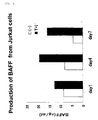
- the concentration of BAFF (ng/mL) is shown on the ordinate in each graph, and each left bar graph shows, as control, the concentration of BAFF without stimulation with TPA and ionomycin.
- FIGS. 4 and 5 The results indicated, as shown in FIGS. 4 and 5, that in the Loucy cells or Jurkat cells stimulated with TPA and ionomycin, BAFF in the culture supernatant can be detected from 5 hours or 1 day after stimulation and is continuously detected over 72 hours or 7 days after the culture was initiated.
- the present invention provides a method of inducing, in a cultured human T cell, the production of BAFF revealed to be related to autoimmune diseases such as systemic lupus erythematosus (SLE), chronic rheumatoid arthritis (RA), Sjogren's syndrome (SS), autoimmune diabetes, AIDS, and an autoimmune disease accompanied by B-cell activation, and provides a technique of screening a new substance useful for treatment and prevention of autoimmune diseases, and is industrially applicable.
- SLE systemic lupus erythematosus
- RA chronic rheumatoid arthritis
- SS Sjogren's syndrome
- autoimmune diabetes erythematosus
- AIDS AIDS
- an autoimmune disease accompanied by B-cell activation an autoimmune disease accompanied by B-cell activation
Landscapes
- Health & Medical Sciences (AREA)
- Life Sciences & Earth Sciences (AREA)
- Immunology (AREA)
- Engineering & Computer Science (AREA)
- Chemical & Material Sciences (AREA)
- Biomedical Technology (AREA)
- Molecular Biology (AREA)
- Hematology (AREA)
- General Health & Medical Sciences (AREA)
- Medicinal Chemistry (AREA)
- Urology & Nephrology (AREA)
- Cell Biology (AREA)
- Bioinformatics & Cheminformatics (AREA)
- Biochemistry (AREA)
- Pathology (AREA)
- Biotechnology (AREA)
- General Physics & Mathematics (AREA)
- Physics & Mathematics (AREA)
- Analytical Chemistry (AREA)
- Organic Chemistry (AREA)
- Microbiology (AREA)
- Food Science & Technology (AREA)
- Toxicology (AREA)
- Tropical Medicine & Parasitology (AREA)
- Pharmacology & Pharmacy (AREA)
- Animal Behavior & Ethology (AREA)
- Public Health (AREA)
- Veterinary Medicine (AREA)
- General Chemical & Material Sciences (AREA)
- Chemical Kinetics & Catalysis (AREA)
- Nuclear Medicine, Radiotherapy & Molecular Imaging (AREA)
- Proteomics, Peptides & Aminoacids (AREA)
- Diabetes (AREA)
- Genetics & Genomics (AREA)
- Epidemiology (AREA)
- Biophysics (AREA)
- Endocrinology (AREA)
- Transplantation (AREA)
- Obesity (AREA)
- Emergency Medicine (AREA)
Abstract
Description
- The present invention relates to a method of screening a novel BAFF suppressor or inhibitor. The present invention relates particularly to a method of screening a substance suppressing or inhibiting the expression or production of BAFF by constructing a system wherein a detectable sufficient amount of BAFF is stably released extracellularly by subjecting a commercial cell strain to suitable stimulating conditions. Specifically, the present invention relates to a method of inducing the production of BAFF in a cultured human T cell by adding a combination of TPA with ionomycin and/or an anti-CD3 antibody to the cell, a method of screening a substance capable of regulating the expression or activity of BAFF, which includes adding a test substance to a BAFF production system in which a combination of TPA with ionomycin and/or an anti-CD3 antibody are/is added to a cultured human T cell and then measuring the expression level and/or activity level of BAFF in the BAFF production system, and a BAFF production inducer for a BAFF-producing cell, which comprises a combination of TPA with ionomycin and/or an anti-CD3 antibody.
- It is known that BAFF (B cell activating factor belonging to the TNF family) is produced and secreted from T cells, monocytes/macrophages, dendritic cells and the like and regulates such as B-cell differentiation, activation, survival rate via 3 types of receptors on B cells (Moore et al., Science, 285, 260-263 (1999)).
- Human BAFF is a transmembrane form protein comprising 285 amino acids. There is a structural characteristic of trimer formation such as the presence of a cytoplasmic domain of 46 amino acids, an extracellular domain of 218 amino acids, and two N-glycosylation sites in its amino acid sequence. It is estimated that an extracellular domain of 152 amino acids from C-terminal is cleaved with a protease of Furin family and released in a soluble form. The amino acid sequence of human BAFF initially named neutrokine α was disclosed as SEQ ID NO: 1 or 2 in publication of
International Patent Application WO98/18921 - BAFF-R, TACI (transmembrane activator and calcium modulator and cyclophilin ligand interactor), and BCMA (B cell maturation antigen) are known as BAFF receptors. BAFF-R and BCMA are expressed mainly in B cells, and TACI is expressed in B cells and activated T cells.
- The physiological action of BAFF lies in regulation of B-cell differentiation, activation, survival rate and the like as described above, and is increasingly revealed in recent years to participate in pathologic condition. That is, it is reported that a mouse expressing BAFF in excess shows SLE-like symptoms such as increase in peripheral blood B cells, enlargement of lymph nodes and spleen, increase in IgG level in serum, antinuclear antibody production, deposition of immune complex in the kidney, albuminuria and nephritis (Mackay et al., J. Exp. Med., 190, 1697-1710, (1999), and Khare et al., Proc. Natl. Acad. Sci. USA 97, 3370-3375, (2000)). It was further reveled that this mouse also shows SS-like symptoms such as inflammation of salivary gland and destruction of salivary gland with advancing age (Groom et al., J. Clin. Invest., 109, 59-68, (2002)). An increase of BAFF level in serum in patients suffering from SLE, RA and SS is also reported (Zhang et al. , J. Immunol. , 166, 6-10, (2001); Cheema et al., Arthritis Rheum., 44, 1313-1319, (2001); and Groom et al., J. Clin. Invest., 109, 59-68, (2002)), and there are also many reports such as higher BAFF level in synovial fluid than in serum in patients suffering from RA (Cheema et al., Arthritis Rheum., 44, 1313-1319, (2001)), expression of BAFF in salivary gland-infiltrating leukocytes in patients suffering from SS (Groom et al., J. Clin. Invest. 109, 59-68, (2002)), correlation between serum BAFF level in patients suffering from SLE and immunoglobulin or anti-ds DNA antibody (Zhang et al., J. Immunol. 166, 6-10, (2001)) and correlation between BAFF in patients suffering from RA and rheumatoid factor (Cheema et al., Arthritis Rheum., 44, 1313-1319, (2001)).
- From these facts, it can be said that the suppression or inhibition of expression or production of BAFF leads to prevention and treatment of autoimmune diseases such as SLE, RA and SS, and thus there is demand for establishment of a system for accurately screening the suppression or inhibition of expression or production of BAFF.
For establishment of such screening system, it is possible to anticipate, for example, a method of obtaining a cell expressing BAFF stably by transforming a cultured cell with a gene vector constructed so as to express BAFF by recombinant DNA techniques. There is however a problem that even if BAFF could be expressed, BAFF would not always released extracellularly in a secretory form and would be uncertain as to whether the cultured cell can be a cell strain stable for expression and production of BAFF. Accordingly, none of such system has been reported. For example, if it would be possible to construct a system wherein the induction of intracellular expression of BAFF and the extracellular release of a detectable sufficient amount of BAFF can be recognized when a commercial cell strain is subjected to suitable stimulating conditions, the problem described above could be solved. - The object of the present invention is to provide a method of screening a substance suppressing or inhibiting the expression or production of BAFF by constructing a system wherein a detectable sufficient amount of BAFF is stably released extracellularly by subjecting a commercial cell strain to suitable stimulating conditions. By constructing such system, there can also be provided a method of screening a prophylactic/therapeutic agent for autoimmune diseases such as systemic lupus erythematosus (SLE), chronic rheumatoid arthritis (RA), Sjogren's syndrome (SS), autoimmune diabetes, AIDS, and an autoimmune disease accompanied by B-cell activation.
- Accordingly, the present inventors made extensive study on selection of a cell strain and a method of stimulating the cell, and as a result, found that when a Loucy cell or Jurkat cell that is a commercial human T cell strain highly expressing CD3 is stimulated with an anti-CD3 antibody and/or a combination of TPA (12-0-tetradecanoylphorbol 13-acetate, or Phorbol 12-myristate 13-acetate, also expressed as PMA) with ionomycin, the induction of stable BAFF expression in the cell is recognized and simultaneously a detectable sufficient amount of BAFF can be stably released into a culture, and the present invention was thereby completed.
- That is, the present invention provides a BAFF production system wherein a cultured human T cell is stimulated by adding a combination of TPA with ionomycin and/or an anti-CD3 antibody to the cell. Specifically, the present invention provides a BAFF production system wherein a cultured human T cell such as Loucy cell or Jurkat cell is stimulated by adding a combination of TPA with ionomycin and/or an anti-CD3 antibody to the cell.
- The present invention also relates to a method of inducing the production of BAFF in a cultured human T cell, by adding a combination of TPA with ionomycin and/or an anti-CD3 antibody to the cell. Specifically, the present invention relates to a method of inducing the production of BAFF in a cultured human T cell such as Loucy cell or Jurkat cell, by adding a combination of TPA with ionomycin and/or an anti-CD3 antibody to the cell.
- The present invention also provides a method of screening a substance capable of regulating the expression or activity of BAFF in a BAFF production system wherein a cultured human T cell is stimulated by adding a combination of TPA with ionomycin and/or an anti-CD3 antibody to the cell. Specifically, the present invention provides a method of screening a substance capable of suppressing or inhibiting the expression or activity of BAFF in a BAFF production system wherein a cultured human T cell is stimulated by adding a combination of TPA with ionomycin and/or an anti-CD3 antibody to the cell. More specifically, the present invention provides a method of screening a substance capable of regulating, preferably suppressing or inhibiting the expression or activity of BAFF in a BAFFproduction system wherein a cultured human T cell such as Loucy cell or Jurkat cell is stimulated by adding a combination of TPA with ionomycin and/or an anti-CD3 antibody to the cell.
- The screening method of the present invention relates particularly to a method of screening a substance capable of regulating the expression or activity of BAFF, which includes adding a test substance to a BAFF production system in which a combination of TPA with ionomycin and/or an anti-CD3 antibody are/is added to a cultured human T cell and then measuring the expression level and/or activity level of BAFF in the BAFF production system. Specifically, the present invention relates to a method of screening a substance capable of regulating the expression or activity of BAFF, which includes adding a test substance to a BAFF production system in which a combination of TPA with ionomycin and/or an anti-CD3 antibody are/is added to a cultured human T cell such as Loucy cell or Jurkat cell and then measuring the expression level and/or activity level of BAFF in the BAFF production system. More specifically, the present invention relates to a method of screening a substance capable of suppressing or inhibiting the expression or activity of BAFF, which includes adding a test substance to a BAFF production system in which a combination of TPA with ionomycin and/or an anti-CD3 antibody are/is added to a cultured human T cell such as Loucy cell or Jurkat cell and then measuring the expression level and/or activity level of BAFF in the BAFF production system.
- Further, the present invention provides a method of screening a prophylactic/therapeutic agent for autoimmune diseases such as systemic lupus erythematosus (SLE), chronic rheumatoid arthritis (RA), Sjogren's syndrome (SS), autoimmune diabetes, AIDS, and an autoimmune disease accompanied by B-cell activation, in a BAFF production system wherein a cultured human T cell is stimulated by adding a combination of TPA with ionomycin and/or an anti-CD3 antibody to the cell. Specifically, the present invention provides a method of screening a prophylactic/therapeutic agent for autoimmune diseases such as systemic lupus erythematosus (SLE), chronic rheumatoid arthritis (RA), Sjogren's syndrome (SS), autoimmune diabetes, AIDS, and an autoimmune disease accompanied by B-cell activation, in a BAFF production system wherein a cultured human T cell such as Loucy cell or Jurkat cell is stimulated by adding an anti-CD3 antibody and/or a combination of TPA with ionomycin to the cell. More specifically, the present invention provides a method of screening a prophylactic/therapeutic agent for autoimmune diseases such as systemic lupus erythematosus (SLE), chronic rheumatoid arthritis (RA) , Sjogren's syndrome (SS) , autoimmune diabetes, AIDS, and an autoimmune disease accompanied by B-cell activation, which includes adding a test substance to a BAFF production system in which a combination of TPA with ionomycin and/or an anti-CD3 antibody are/is added to a cultured human T cell such as Loucy cell or Jurkat cell and then measuring the expression level and/or activity of BAFF in the BAFF production system.
- Further, the present invention relates to a BAFF production inducer for a BAFF-producing cell, which contains a combination of TPA wi th ionomycin and/or an anti-CD3 antibody. Specifically, the present invention relates to a BAFF production inducer for a cultured human T cell, which contains a combination of TPA with ionomycin and/or an anti-CD3 antibody. More specifically, the present invention relates to a BAFF production inducer for a cultured human T cell such as Loucy cell or Jurkat cell, which contains a combination of TPA with ionomycin and/or an anti-CD3 antibody.
- According to the present invention, there can be provided a method of screening, with a cultured cell strain, a substance capable of suppressing or inhibiting the production of BAFF as well as a method of screening a prophylactic/therapeutic agent for diseases involved in production or activity of BAFF, such as systemic lupus erythematosus (SLE), chronic rheumatoid arthritis (RA), Sjogren' s syndrome (SS), autoimmune diabetes, AIDS, and an autoimmune disease accompanied by B-cell activation.
-
- FIG. 1 is a drawing showing the expression of BAFF upon stimulation of a Loucy cell or Jurkat cell with an anti-CD3 antibody or both TPA and ionomycin.
- FIG. 2 is a drawing showing the expression of BAFF protein upon stimulation of a Loucy cell with an anti-CD3 antibody or both TPA and ionomycin.
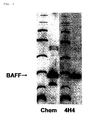
- FIG. 3 is a drawing in which recombinant human BAFF (manufactured by Chemicon) was detected by conventional Western blotting method with an antihuman BAFF monoclonal antibody (4H4) and a control rabbit antihuman BAFF polyclonal antibody (Chem) manufactured by Chemicon.
- FIG. 4 is a graph showing the production of BAFF upon stimulation of a Loucy cell with TPA and ionomycin.
- FIG. 5 is a graph showing the production of BAFF upon stimulation of a Jurkat cell with TPA and ionomycin.
- The inventors examined the expression of BAFF upon stimulation of a Loucy cell or Jurkat cell with various substances. As a result, the inventors found that when a Loucy cell or Jurkat cell is stimulated with an anti-CD3 antibody or a combination of TPA with ionomycin, the induction of stable BAFF expression in the cell is recognized and simultaneously a detectable sufficient amount of BAFF can be stably released into a culture, as shown later in the Examples.
- Accordingly, the method of screening a substance capable of regulating, preferably suppressing or inhibiting the expression or activity of BAFF can be constituted as follows.
That is, commercial human T cells are suspended at a suitable density in a suitable medium, then seeded in a culture plate or the like, and stimulated by adding TPA (final concentration of 0.001 to 1.0 µg/mL, preferably 0.005 to 0.1 µg/mL) and ionomycin (final concentration of 0.01 to 10.0 µg/mL, preferably 0.05 to 1.0 µg/mL), and a test substance (any concentration gradients at a final concentration of 10-15 to 10-3 M) is added as necessary, and culture of the cells is initiated. The culture supernatant is recovered 1 hour to 7 days, preferably 3 hours to 5 days, after the culture is initiated, and the concentration of BAFF in the supernatant can be measured and compared with the control, thereby measuring the activity of the test substance to suppress or inhibit BAFF in this screening system. For carrying out the above-described system, a culture plate coated previously with an anti-CD3 antibody diluted with PBS or the like (final concentration of 0.01 to 1000 µg/mL, preferably 0.1 to 100 µg/mL) may be used. The culture plate or the like coated with an anti-CD3 antibody can be used to detect a sufficient amount of BAFF without using TPA and ionomycin and is useful as an easier screening system. - The human T cell strain used in the present invention is preferably a commercial cell, and examples include a Loucy cell (ATCC Cat. No. CRL-2629) , a Jurkat cell (ATCC Cat. No. TIB-152) and a TALL-1 cell (JCRB 0086) , among which the Loucy cell (ATCC Cat. No. CRL-2629) or Jurkat cell (ATCC Cat. No. TIB-152) highly expressing CD3 and expected to be activated via a T-cell receptor is more preferable.
- The anti-CD3 antibody used in the present invention includes an antihuman CD3 monoclonal antibody and antihuman CD3 polyclonal antibody produced by methods known by those skilled in the art, among which an antihuman CD3 monoclonal antibody is preferable, and a mouse antihuman CD3 monoclonal antibody (BD Pharmingen Cat No. 555336, or the like) is more preferable.
- TPA used in the present invention, which is an abbreviation of 12-O-tetradecanoylphorbol 13-acetate, is a phorbol ester also known as phorbol 12-myristate 13-acetate (abbreviated sometimes as PMA), and TPA used in the present invention may be any of compounds given such names and also includes stereoisomers. Preferable commercial TPA includes, for example, 4-a-phorbol 12-myristate 13-acetate (SIGMA Cat. No. P-148).
- Ionomycin used in the present invention is a polyether antibiotic derived from Streptomyces conglobatus and is known to act as calcium ionophore, and ionomycin used in the present invention also includes pharmaceutically acceptable salts. Preferable commercially available ionomycin includes, for example, ionomycin, calcium salt (SIGMA Cat. No. 10634).
- There is a characteristic that BAFF production inducer of the present invention contains a combination of TPA with ionomycin and/or an anti-CD3 antibody as active ingredients for inducing the production of BAFF. The BAFF production inducer of the present invention can comprise, in addition to the above active ingredients, a carrier such as a buffer solution which can be added to a cell system, and together with the carrier which can be added to a cell system, can be formed into a composition for inducing the production of BAFF.
- The BAFF production inducer of the present invention can be applied to a BAFF-producing cell, preferably a cultured cell, and preferable examples of the cell include a cultured human T cell, specifically a Loucy cell and Jurkat cell.
- When the BAFF production inducer of the present invention includes a combination of TPA with ionomycin as the active ingredients, the respective active ingredients are used by adding them to a cell system in such amounts that the final concentration of TPA becomes 0.001 to 1.0 µg/mL, preferably 0.005 to 0.1 µg/mL, while the final concentration of ionomycin becomes 0.01 µg/mL to 10 µg/mL, preferably 0.05 µg/mL to 1 µg/mL. When the active ingredient is an anti-CD3 antibody, the active ingredient can be put to a culture plate at a concentration of 0.1 µg/mL to 100 µg/mL, preferably 1 µg/mL to 30 µg/mL in a buffer solution.
- The thus obtained BAFF production system of the present invention has a surprising feature that a detectable sufficient amount of BAFF can be stably released into a culture as shown later in the Examples, and thus it is possible to realize not only a method of screening a substance capable of regulating, preferably suppressing or inhibiting the expression or activity of BAFF, but also a method of screening a prophylactic/therapeutic agent for autoimmune diseases such as systemic lupus erythematosus (SLE), chronic rheumatoid arthritis (RA), Sjogren's syndrome (SS), autoimmune diabetes, AIDS, and an autoimmune disease accompanied by B-cell activation.
- Hereinafter, the present invention is described in more detail by reference to the Examples, but the technical scope of the present invention is not limited by the Examples.
- Loucy cells or Jurkat cells purchased from ATCC (American Type Culture Collection) were suspended in RPMI1640 medium containing 10% FBS (Fetal bovine serum), 0.45% D-glucose, 1 mM sodium pyruvate and 1 mM HEPES and seeded at a density of 1×10⁶ cells/well on a 6-well culture plate. At the same time, TPA and ionomycin were added respectively to a final concentration of 0.05 µg/mL, 0.5 µg/mL or 0.1 µg/mL, and the cells were recovered 5 hours, 24 hours, 48 hours and 72 hours (Loucy cells) or 48 hours, 120 hours and 168 hours (Jurkat cells) after the culture was initiated. Total RNA was extracted from these recovered cells, and BAFF mRNA was analyzed by the RT-PCR method under the following conditions. Using ReverTra Dash kit (TOYOBO Cat. No. PCR-401) , the sample was subjected to reverse transcription reaction at 30°C for 10 minutes, at 42°C for 20 minutes and at 99°C for 5 minutes to give cDNA. Using
Advantage 2 PCR Enzyme system (BD Biosciences Cat. No. PT3281-1), this cDNA was reacted at 94°C for 1 minute, then subjected to 35 reaction cycles each at 94°C for 30 seconds and at 66°C for 1.5 minutes and reacted at 66°C for 5 minutes, and the DNA thus acquired was separated by 1.5% agarose gel electrophoresis, and an objective band was recognized at a position of 975 bp. The primer sequences used in the PCR reaction are as follows: - Forward: 5'-aggccccaaccttcaaagttcaag (SEQ ID NO: 1)
- Reverse: 5'-cttagaggtacagagaaagggagg (SEQ ID NO: 2)
- An anti-CD3 antibody diluted at 10 µg/mL with PBS was put to a 6-well plate and adsorbed onto the bottom at 4°C overnight, and then Loucy cells suspended in the same manner as in (a) were seeded at a density of 1×10⁶ cells/well. The cells were recovered 5 hours, 24 hours, 48 hours and 72 hours after the culture was initiated. Total RNA was extracted from these recovered cells, and BAFF mRNA was analyzed by the RT- PCRmethod under the following conditions. Using ReverTra Dash kit (TOYOBO Cat. No. PCR-401), the sample was subjected to reverse transcription reaction at 30°C for 10 minutes, at 42°C for 20 minutes and at 99°C for 5 minutes to give CDNA. Using
Advantage 2 PCR Enzyme system (BD Biosciences Cat. No. PT3281-1), this cDNA was reacted at 94°C for 1 minute, then subjected to 35 reaction cycles each at 94°C for 30 seconds and at 66°C for 1.5 minutes and reacted at 66°C for 5 minutes, and the acquired DNA was separated by 1.5% agarose gel electrophoresis, and an objective band was recognized at a position of 975 bp. As a result, two-phase expression was made evident as shown in anti-CD3 in the right in FIG. l(a), wherein the expression of BAFF mRNA is recognized from 5 hours after stimulation, thereafter the expression is attenuated, and the mRNA is expressed again 72 hours after the culture is initiated. There would be a possibility that such expression modes are different in biological meaning, and it is considered that the expression of BAFF induced by culturing Loucy cells under stimulation with an anti-CD3 antibody can be used in screening a substance suppressing or inhibiting the unique expression of BAFF. - An anti-CD3 antibody diluted at 10 µg/mL with PBS was put to a 6-well plate and adsorbed onto the bottom at 4°C overnight, and then Loucy cells suspended in the same manner as in Example 1 were seeded at a density of 1 × 10⁶ cells/well. The cells were recovered 24 hours, 48 hours, 72 hours and 96 hours after the culture was initiated. These recovered cells were used and examined for expression of BAFFprotein by a conventional Western blotting method. As an antibody for detection of BAFF protein, a rabbit antihuman BAFF polyclonal antibody (AB16530, manufactured by Chemicon) was used. The results are shown in FIG. 2. A control not stimulated is shown in (-) in the left in FIG. 2, and CD3 stimulation in FIG. 2 shows stimulation with anti-CD3 antibody, and TPA + Ionomycin shows stimulation with TPA and ionomycin. β-actin in the lower profile in FIG. 2 shows a positive control. In the Loucy cells stimulated with an anti-CD3 antibody, a 34-kDa band corresponding to human BAFF was confirmed from 24 hours after stimulation, and this evident expression induction was continuously recognized over 96 hours after the culture was initiated. Separately, Loucy cells were suspended in RPMI1640 medium containing 10% FBS (fetal bovine serum), 0.45% D-glucose, 1 mM sodium pyruvate and 1 mM HEPES and seeded at a density of 1×10⁶ cells/well on a 6-well culture plate, and at the same time, simultaneously TPA and ionomycin were added to final concentrations of 0.05 µg/mL and 0.5 µg/mL respectively, and the cells were recovered 24 hours, 48 hours, 72 hours and 96 hours after the culture was initiated. These recovered cells were used and examined for expression of BAFF protein by a conventional Western blotting method. In the Loucy cells stimulated with TPA and ionomycin, a 34-kDa band corresponding to human BAFF was recognized from 24 hours after stimulation, and this evident expression induction was continuously recognized over 96 hours after the culture was initiated, as shown in FIG. 2. In these results, the induction of stable expression of BAFF protein by culturing Loucy cells under stimulation with an anti-CD3 antibody or both TPA and ionomycin was recognized over 96 hours after the culture was initiated, and this culture system can be used in screening a substance suppressing or inhibiting the expression of BAFF protein.
- The antihuman BAFF monoclonal antibody (4H4) used in Example 3 was prepared in the following manner. That is, 13 amino acids (SEQ ID NO: 4) corresponding to a region, in the vicinity of a membrane, of an extracellular domain in 285 amino acids of BAFF shown in SEQ NO: 3 in the Sequence Listing were selected, then conjugated with KLH by the MBS method, and used as antigen. 100 µL of 1 mg/ml aqueous solution of the antigen peptide in physiological saline and Freund's complete adjuvant were formed into an emulsion and then used in intraperitoneally immunizing a mouse (Balb/c, 6-week-old). After 2 weeks, 100 µL of 1 mg/ml of an aqueous solution of the antigen peptide in physiological saline and Freund's complete adjuvant, which had been emulsified by sonication, were used as booster for additional immunization, followed by additional immunization twice at 2-week intervals. Two months after the first immunization, the spleen was excised, and lymphocytes were separated in RPMI 1640 medium (containing penicillin and streptomycin). The separated lymphocytes were fused with mouse bone marrow-derived myeloma cell P3U1 strain by the polyethylene glycol (PEG) method to prepare hybridoma cells. The hybridoma cells were suspended in a feeder cell-containing HAT medium, pipetted to a 96-well plate (Greiner) and cultured for 15 days. A culture supernatant was recovered from the wells in which the hybridoma cells had been cultured, and antibody-producing cells reactive with the antigen peptide were selected by ELISA (enzyme-linked immunosorbent assay). That is, first, 50 µL of 10 µg/mL antigen peptide was put to each well of the 96-well plate, adsorbed onto the bottom at 4°C overnight and blocked with 100 µL of 2% BSA/PBS at 37°C for 2 hours. Each well was reacted at 4°C overnight with 100 µl supernatant of the hybridoma cells and then reacted at 37°C for 1 hour with a 1000-fold dilution of HRP-labeled anti-mouse IgG and colored with orthophenylene diamine as substrate. After the reaction was terminated with 50 µL of 2 N sulfuric acid, each well was measured for absorption at 492 nm, and hybridomas showing an absorption of 1.0 or more were selected and cloned by limiting dilution.
- The selected hybridoma cells were injected intraperitoneally to a mouse (Balb/c) to which 0.5 mL pristane had been intraperitoneally administered before 7 days and before 3 days, and about 10 days later, the ascites fluid was collected. The recovered ascites fluid was left at room temperature for 30 minutes, then left at 4°C overnight, centrifuged at 15 Krpm for 10 minutes to recover a supernatant from which a mouse IgG fraction was separated and purified through a protein A-Sepharose column.
By the method described above, a hybridoma cell strain producing the antihuman BAFF antibody (4H4 whose isotype is IgG1), as well as the antibody (4H4), was obtained. The resulting 4H4, and a control rabbit antihuman BAFF polyclonal antibody (AB16530: shown as Chem in FIG. 3) manufactured by Chemicon, were used in detection of recombinant human BAFF (manufactured by Chemicon) by the conventional Western blotting method. As a result, a 17-KDa band corresponding to the soluble human BAFF was confirmed as shown in FIG. 3. - Loucy cells or Jurkat cells suspended in the same manner as in Example 1 were seeded to a 6-well culture plate at a density of 1 × 10⁶ cells/well. At the same time, TPA and ionomycin were added to final concentrations of 0.05 µg/mL and 0.5 µg/mL respectively, and the culture supernatant was recovered 5 hours, 24 hours, 48 hours, 72 hours (Loucy cells) or 1, 4 and 7 days (Jurkat cells) after the culture was initiated. BAFF produced by the cells contained in these culture supernatants was measured by an ELISA method using a commercial rabbit antihuman BAFF polyclonal antibody (Cat No. AB16530, manufactured by Chemicon) and the mouse antihuman BAFF monoclonal antibody (4H4) prepared in Reference Example 1. The ELISA method was carried out in the following manner. That is, a 96-well plate was coated at 4°C overnight with 1 µg/well rabbit antihuman BAFF polyclonal antibody (Cat. No. AB16530, manufactured by Chemicon) as primary antibody. Each well was washed 3 times with PBS containing 0.05
% Tween 20, and then BlockAce (Dainippon Pharmaceutical Co. , Ltd.) was added in a volume of 150 µL/well and reacted at 37°C for 2 hours. Each well was washed 3 times with PBS containing 0.05% Tween 20, and 50 µL sample and 50 µl (8 ng/mL) of biotin-labeled 4H4 were added and reacted at room temperature for 2 hours. Each well was washed 3 times with PBS containing 0.05% Tween 20, and 50 µL of a 1000-fold dilution of streptoavidin-labeled HRP (Horse Radish peroxide) diluted with PBS containing 0.05% Tween 20 was added and reacted at room temperature for 30 minutes. Each well was washed 5 times with PBS containing 0.05% Tween 20, and then 50 µL of TMB One Solution (manufactured by Clonetech) was added and reacted for 5 minutes at room temperature, then 50 µL of 1 N HCl was added, and the each well was measured for absorbance at 450 nm with a plate reader (manufactured by Perkin Elmer). As a standard substance, recombinant human BAFF (Cat No. GF119, manufactured by Chemicon) was used to prepare a standard curve, from which the concentration of BAFF in the sample was measured. - A graph showing the result where the Loucy cells were used is shown in FIG. 4, and a graph showing the result where the Jurkat cells were used is shown in FIG. 5. The concentration of BAFF (ng/mL) is shown on the ordinate in each graph, and each left bar graph shows, as control, the concentration of BAFF without stimulation with TPA and ionomycin. The results indicated, as shown in FIGS. 4 and 5, that in the Loucy cells or Jurkat cells stimulated with TPA and ionomycin, BAFF in the culture supernatant can be detected from 5 hours or 1 day after stimulation and is continuously detected over 72 hours or 7 days after the culture was initiated. From these results, it was revealed that the induction of stable expression of BAFF was recognized by culturing Loucy cells or Jurkat cells under stimulation with TPA and ionomycin, and this culture system can be used in screening a substance suppressing or inhibiting the production of BAFF.
- The present invention provides a method of inducing, in a cultured human T cell, the production of BAFF revealed to be related to autoimmune diseases such as systemic lupus erythematosus (SLE), chronic rheumatoid arthritis (RA), Sjogren's syndrome (SS), autoimmune diabetes, AIDS, and an autoimmune disease accompanied by B-cell activation, and provides a technique of screening a new substance useful for treatment and prevention of autoimmune diseases, and is industrially applicable.
Claims (14)
- A method of inducing the production of BAFF in a cultured human T cell, which comprises adding a combination of TPA with ionomycin and/or an anti-CD antibody to the cell.
- The method according to claim 1,
wherein the cultured human T cell is a Loucy cell. - The method according to claim 1,
wherein the cultured human T cell is a Jurkat cell. - A method of screening a substance capable of regulating the expression or activity of BAFF, which comprises adding a test substance to a BAFF production system in which a combination of TPA with ionomycin and/or an anti-CD3 antibody are/is added to a cultured human T cell and then measuring the expression level and/or activity level of BAFF in the BAFFproduction system.
- The method according to claim 4,
wherein the regulation of expression or activity of BAFF is the suppression or inhibition of expression or activity of BAFF. - The method according to claim 4,
wherein the cultured human T cell is a Loucy cell. - The method according to claim 4,
wherein the cultured human T cell is a Jurkat cell. - A method of screening a prophylactic/therapeutic agent for autoimmune diseases such as systemic lupus erythematosus (SLE), chronic rheumatoid arthritis (RA), Sjogren's syndrome (SS), autoimmune diabetes, AIDS, and an autoimmune disease accompanied by B-cell activation, which comprises adding a test substance to a BAFF production system in which a combination of TPA with ionomycin and/or an anti-CD3 antibody are/is added to a cultured human T cell and then measuring the expression level and/or activity of BAFF in the BAFF production system.
- The method according to claim 8,
wherein the cultured human T cell is a Loucy cell. - The method according to claim 8,
wherein the cultured human T cell is a Jurkat cell. - A BAFF production inducer for a BAFF-producing cell, which contains a combination of TPA with ionomycin and/or an anti-CD3 antibody.
- The BAFF production inducer according to claim 11,
wherein the BAFF-producing cell is a cultured human T cell. - The production inducer according to claim 12,
wherein the cultured human T cell is a Loucy cell. - The production inducer according to claim 12,
wherein the cultured human T cell is a Jurkat cell.
Applications Claiming Priority (2)
| Application Number | Priority Date | Filing Date | Title |
|---|---|---|---|
| US60982604P | 2004-09-15 | 2004-09-15 | |
| PCT/JP2005/016888 WO2006030802A1 (en) | 2004-09-15 | 2005-09-14 | Method of screening baff suppressor or inhibitor |
Publications (3)
| Publication Number | Publication Date |
|---|---|
| EP1801231A1 true EP1801231A1 (en) | 2007-06-27 |
| EP1801231A4 EP1801231A4 (en) | 2008-05-21 |
| EP1801231B1 EP1801231B1 (en) | 2011-11-30 |
Family
ID=36060054
Family Applications (1)
| Application Number | Title | Priority Date | Filing Date |
|---|---|---|---|
| EP05783483A Expired - Lifetime EP1801231B1 (en) | 2004-09-15 | 2005-09-14 | Method of screening baff suppressor or inhibitor |
Country Status (5)
| Country | Link |
|---|---|
| US (2) | US7846662B2 (en) |
| EP (1) | EP1801231B1 (en) |
| JP (1) | JP4907353B2 (en) |
| AT (1) | ATE535611T1 (en) |
| WO (1) | WO2006030802A1 (en) |
Families Citing this family (2)
| Publication number | Priority date | Publication date | Assignee | Title |
|---|---|---|---|---|
| EA033604B1 (en) | 2014-01-31 | 2019-11-08 | Boehringer Ingelheim Int | Anti-baff antibody molecule, pharmaceutical composition comprising this molecule, methods of using same and isolated polynucleotide encoding same |
| CN118515767B (en) * | 2024-07-23 | 2024-10-18 | 江苏双全生物医药科技有限公司 | TNFSF13b antibody and application thereof |
Family Cites Families (1)
| Publication number | Priority date | Publication date | Assignee | Title |
|---|---|---|---|---|
| PT939804E (en) | 1996-10-25 | 2005-11-30 | Human Genome Sciences Inc | ALPHA NEUTROQUIN |
-
2005
- 2005-09-14 JP JP2006535161A patent/JP4907353B2/en not_active Expired - Lifetime
- 2005-09-14 EP EP05783483A patent/EP1801231B1/en not_active Expired - Lifetime
- 2005-09-14 US US11/662,795 patent/US7846662B2/en active Active
- 2005-09-14 AT AT05783483T patent/ATE535611T1/en active
- 2005-09-14 WO PCT/JP2005/016888 patent/WO2006030802A1/en not_active Ceased
-
2010
- 2010-03-31 US US12/751,307 patent/US8017329B2/en not_active Expired - Lifetime
Non-Patent Citations (5)
| Title |
|---|
| LAVIE FRÉDÉRIC ET AL: "Expression of BAFF (BLyS) in T cells infiltrating labial salivary glands from patients with Sjögren's syndrome." THE JOURNAL OF PATHOLOGY APR 2004, vol. 202, no. 4, April 2004 (2004-04), pages 496-502, XP002475876 ISSN: 0022-3417 * |
| MARIENFELD RALF ET AL: "Signal-specific and phosphorylation-dependent RelB degradation: A potential mechanism of NF-kappaB control" ONCOGENE, vol. 20, no. 56, 6 December 2001 (2001-12-06), pages 8142-8147, XP002475875 ISSN: 0950-9232 * |
| SCHNEIDER P ET AL: "BAFF, A NOVEL LIGAND OF THE TUMOR NECROSIS FACTOR FAMILY, STIMULATES B CELL GROWTH" JOURNAL OF EXPERIMENTAL MEDICINE, TOKYO, JP, vol. 189, no. 11, 7 June 1999 (1999-06-07), pages 1747-1756, XP000915409 ISSN: 0022-1007 * |
| See also references of WO2006030802A1 * |
| YOSHIMOTO KEIKO ET AL: "Aberrant expression of BAFF in T cells of systemic lupus erythematosus, which is recapitulated by a human T cell line, Loucy" INTERNATIONAL IMMUNOLOGY, vol. 18, no. 7, July 2006 (2006-07), pages 1189-1196, XP002475877 ISSN: 0953-8178 * |
Also Published As
| Publication number | Publication date |
|---|---|
| JP4907353B2 (en) | 2012-03-28 |
| EP1801231B1 (en) | 2011-11-30 |
| US8017329B2 (en) | 2011-09-13 |
| ATE535611T1 (en) | 2011-12-15 |
| WO2006030802A1 (en) | 2006-03-23 |
| EP1801231A4 (en) | 2008-05-21 |
| US20080305502A1 (en) | 2008-12-11 |
| US7846662B2 (en) | 2010-12-07 |
| JPWO2006030802A1 (en) | 2008-05-15 |
| US20100196948A1 (en) | 2010-08-05 |
Similar Documents
| Publication | Publication Date | Title |
|---|---|---|
| US20250060370A1 (en) | Method of treating an autoimmune disease by administering an anti-human baff antibody | |
| KR100496063B1 (en) | Novel protein and process for producing the same | |
| Cifone et al. | Apoptotic signaling through CD95 (Fas/Apo-1) activates an acidic sphingomyelinase. | |
| Kowalczyk-Quintas et al. | Inhibition of membrane-bound BAFF by the anti-BAFF antibody belimumab | |
| Mitchell et al. | LILRA5 is expressed by synovial tissue macrophages in rheumatoid arthritis, selectively induces pro‐inflammatory cytokines and IL‐10 and is regulated by TNF‐α, IL‐10 and IFN‐γ | |
| JP2007532549A (en) | Regulation of NKG2D | |
| US8017329B2 (en) | Method of screening baff suppressor or inhibitor | |
| US7217800B2 (en) | Peptide leukotriene receptor | |
| US20160289331A1 (en) | Immune regulating agent | |
| EP1939288B1 (en) | T-cell adhesion molecule and antibody directed against the molecule | |
| EP4246143A1 (en) | In-vitro method for diagnosis of pemphigus vulgaris and/or of determining disease activity in a pemphigus vulgaris patient | |
| WO2002096452A1 (en) | Siglec-12 polypeptides, polynucleotides, and methods of use thereof | |
| WO2006068133A1 (en) | Method of suppressing expression of nfat2 | |
| WO2004048574A1 (en) | Immunoreceptor proteins | |
| HK1119448B (en) | T-cell adhesion molecule and antibody directed against the molecule | |
| KR20000016598A (en) | Novel protein and process for producing the same |
Legal Events
| Date | Code | Title | Description |
|---|---|---|---|
| PUAI | Public reference made under article 153(3) epc to a published international application that has entered the european phase |
Free format text: ORIGINAL CODE: 0009012 |
|
| 17P | Request for examination filed |
Effective date: 20070330 |
|
| AK | Designated contracting states |
Kind code of ref document: A1 Designated state(s): AT BE BG CH CY CZ DE DK EE ES FI FR GB GR HU IE IS IT LI LT LU LV MC NL PL PT RO SE SI SK TR |
|
| RIN1 | Information on inventor provided before grant (corrected) |
Inventor name: YOSHIMOTO, KEIKO Inventor name: TAKEUCHI, TSUTOMU Inventor name: TSUZAKA, KENSEI |
|
| DAX | Request for extension of the european patent (deleted) | ||
| A4 | Supplementary search report drawn up and despatched |
Effective date: 20080423 |
|
| 17Q | First examination report despatched |
Effective date: 20080625 |
|
| GRAP | Despatch of communication of intention to grant a patent |
Free format text: ORIGINAL CODE: EPIDOSNIGR1 |
|
| GRAS | Grant fee paid |
Free format text: ORIGINAL CODE: EPIDOSNIGR3 |
|
| GRAA | (expected) grant |
Free format text: ORIGINAL CODE: 0009210 |
|
| AK | Designated contracting states |
Kind code of ref document: B1 Designated state(s): AT BE BG CH CY CZ DE DK EE ES FI FR GB GR HU IE IS IT LI LT LU LV MC NL PL PT RO SE SI SK TR |
|
| REG | Reference to a national code |
Ref country code: CH Ref legal event code: EP Ref country code: GB Ref legal event code: FG4D |
|
| REG | Reference to a national code |
Ref country code: IE Ref legal event code: FG4D |
|
| REG | Reference to a national code |
Ref country code: CH Ref legal event code: NV Representative=s name: RENTSCH PARTNER AG |
|
| REG | Reference to a national code |
Ref country code: DE Ref legal event code: R096 Ref document number: 602005031494 Country of ref document: DE Effective date: 20120202 |
|
| REG | Reference to a national code |
Ref country code: NL Ref legal event code: VDEP Effective date: 20111130 |
|
| LTIE | Lt: invalidation of european patent or patent extension |
Effective date: 20111130 |
|
| PG25 | Lapsed in a contracting state [announced via postgrant information from national office to epo] |
Ref country code: IS Free format text: LAPSE BECAUSE OF FAILURE TO SUBMIT A TRANSLATION OF THE DESCRIPTION OR TO PAY THE FEE WITHIN THE PRESCRIBED TIME-LIMIT Effective date: 20120330 Ref country code: LT Free format text: LAPSE BECAUSE OF FAILURE TO SUBMIT A TRANSLATION OF THE DESCRIPTION OR TO PAY THE FEE WITHIN THE PRESCRIBED TIME-LIMIT Effective date: 20111130 |
|
| PG25 | Lapsed in a contracting state [announced via postgrant information from national office to epo] |
Ref country code: PT Free format text: LAPSE BECAUSE OF FAILURE TO SUBMIT A TRANSLATION OF THE DESCRIPTION OR TO PAY THE FEE WITHIN THE PRESCRIBED TIME-LIMIT Effective date: 20120330 Ref country code: NL Free format text: LAPSE BECAUSE OF FAILURE TO SUBMIT A TRANSLATION OF THE DESCRIPTION OR TO PAY THE FEE WITHIN THE PRESCRIBED TIME-LIMIT Effective date: 20111130 Ref country code: SE Free format text: LAPSE BECAUSE OF FAILURE TO SUBMIT A TRANSLATION OF THE DESCRIPTION OR TO PAY THE FEE WITHIN THE PRESCRIBED TIME-LIMIT Effective date: 20111130 Ref country code: BE Free format text: LAPSE BECAUSE OF FAILURE TO SUBMIT A TRANSLATION OF THE DESCRIPTION OR TO PAY THE FEE WITHIN THE PRESCRIBED TIME-LIMIT Effective date: 20111130 Ref country code: SI Free format text: LAPSE BECAUSE OF FAILURE TO SUBMIT A TRANSLATION OF THE DESCRIPTION OR TO PAY THE FEE WITHIN THE PRESCRIBED TIME-LIMIT Effective date: 20111130 Ref country code: LV Free format text: LAPSE BECAUSE OF FAILURE TO SUBMIT A TRANSLATION OF THE DESCRIPTION OR TO PAY THE FEE WITHIN THE PRESCRIBED TIME-LIMIT Effective date: 20111130 Ref country code: GR Free format text: LAPSE BECAUSE OF FAILURE TO SUBMIT A TRANSLATION OF THE DESCRIPTION OR TO PAY THE FEE WITHIN THE PRESCRIBED TIME-LIMIT Effective date: 20120301 |
|
| PG25 | Lapsed in a contracting state [announced via postgrant information from national office to epo] |
Ref country code: CY Free format text: LAPSE BECAUSE OF FAILURE TO SUBMIT A TRANSLATION OF THE DESCRIPTION OR TO PAY THE FEE WITHIN THE PRESCRIBED TIME-LIMIT Effective date: 20111130 |
|
| PG25 | Lapsed in a contracting state [announced via postgrant information from national office to epo] |
Ref country code: DK Free format text: LAPSE BECAUSE OF FAILURE TO SUBMIT A TRANSLATION OF THE DESCRIPTION OR TO PAY THE FEE WITHIN THE PRESCRIBED TIME-LIMIT Effective date: 20111130 Ref country code: BG Free format text: LAPSE BECAUSE OF FAILURE TO SUBMIT A TRANSLATION OF THE DESCRIPTION OR TO PAY THE FEE WITHIN THE PRESCRIBED TIME-LIMIT Effective date: 20120229 Ref country code: SK Free format text: LAPSE BECAUSE OF FAILURE TO SUBMIT A TRANSLATION OF THE DESCRIPTION OR TO PAY THE FEE WITHIN THE PRESCRIBED TIME-LIMIT Effective date: 20111130 Ref country code: CZ Free format text: LAPSE BECAUSE OF FAILURE TO SUBMIT A TRANSLATION OF THE DESCRIPTION OR TO PAY THE FEE WITHIN THE PRESCRIBED TIME-LIMIT Effective date: 20111130 Ref country code: EE Free format text: LAPSE BECAUSE OF FAILURE TO SUBMIT A TRANSLATION OF THE DESCRIPTION OR TO PAY THE FEE WITHIN THE PRESCRIBED TIME-LIMIT Effective date: 20111130 |
|
| PG25 | Lapsed in a contracting state [announced via postgrant information from national office to epo] |
Ref country code: RO Free format text: LAPSE BECAUSE OF FAILURE TO SUBMIT A TRANSLATION OF THE DESCRIPTION OR TO PAY THE FEE WITHIN THE PRESCRIBED TIME-LIMIT Effective date: 20111130 Ref country code: PL Free format text: LAPSE BECAUSE OF FAILURE TO SUBMIT A TRANSLATION OF THE DESCRIPTION OR TO PAY THE FEE WITHIN THE PRESCRIBED TIME-LIMIT Effective date: 20111130 |
|
| REG | Reference to a national code |
Ref country code: AT Ref legal event code: MK05 Ref document number: 535611 Country of ref document: AT Kind code of ref document: T Effective date: 20111130 |
|
| PLBE | No opposition filed within time limit |
Free format text: ORIGINAL CODE: 0009261 |
|
| STAA | Information on the status of an ep patent application or granted ep patent |
Free format text: STATUS: NO OPPOSITION FILED WITHIN TIME LIMIT |
|
| 26N | No opposition filed |
Effective date: 20120831 |
|
| REG | Reference to a national code |
Ref country code: DE Ref legal event code: R097 Ref document number: 602005031494 Country of ref document: DE Effective date: 20120831 |
|
| PG25 | Lapsed in a contracting state [announced via postgrant information from national office to epo] |
Ref country code: AT Free format text: LAPSE BECAUSE OF FAILURE TO SUBMIT A TRANSLATION OF THE DESCRIPTION OR TO PAY THE FEE WITHIN THE PRESCRIBED TIME-LIMIT Effective date: 20111130 |
|
| PG25 | Lapsed in a contracting state [announced via postgrant information from national office to epo] |
Ref country code: ES Free format text: LAPSE BECAUSE OF FAILURE TO SUBMIT A TRANSLATION OF THE DESCRIPTION OR TO PAY THE FEE WITHIN THE PRESCRIBED TIME-LIMIT Effective date: 20120311 Ref country code: MC Free format text: LAPSE BECAUSE OF NON-PAYMENT OF DUE FEES Effective date: 20120930 |
|
| REG | Reference to a national code |
Ref country code: IE Ref legal event code: MM4A |
|
| PG25 | Lapsed in a contracting state [announced via postgrant information from national office to epo] |
Ref country code: FI Free format text: LAPSE BECAUSE OF FAILURE TO SUBMIT A TRANSLATION OF THE DESCRIPTION OR TO PAY THE FEE WITHIN THE PRESCRIBED TIME-LIMIT Effective date: 20111130 |
|
| PG25 | Lapsed in a contracting state [announced via postgrant information from national office to epo] |
Ref country code: IE Free format text: LAPSE BECAUSE OF NON-PAYMENT OF DUE FEES Effective date: 20120914 |
|
| REG | Reference to a national code |
Ref country code: CH Ref legal event code: PCOW Free format text: NEW ADDRESS: 6-29, NISHIKI 3-CHOME NAKA-KU, NAGOYA-SHI, AICHI 460-8625 (JP) $ TAKEUCHI, TSUTOMU, 2-20-7, AKATSUTSUMI SETAGAYA-KU, TOKYO 156-0044 (JP) $ TSUZAKA, KENSEI, 3-9-10-736 TAKAIDOHIGASHI, SUGINAMI-KU TOKYO 168-0072 (JP) $ KEIKO YOSHIMOTO, 1-67-2-303, YAMATOCHO,, NAKANO-KU, TOKYO 165-0034 (JP) |
|
| REG | Reference to a national code |
Ref country code: DE Ref legal event code: R082 Ref document number: 602005031494 Country of ref document: DE Representative=s name: PATENT- UND RECHTSANWAELTE KRAUS & WEISERT, DE |
|
| REG | Reference to a national code |
Ref country code: FR Ref legal event code: CA Effective date: 20131018 |
|
| REG | Reference to a national code |
Ref country code: DE Ref legal event code: R081 Ref document number: 602005031494 Country of ref document: DE Owner name: YOSHIMOTO, KEIKO, JP Free format text: FORMER OWNER: KOWA CO., LTD.,TSUTOMU TAKEUCHI,KENSEI TSUZAKA,KEIKO YOSHIMOTO, , JP Effective date: 20111214 Ref country code: DE Ref legal event code: R081 Ref document number: 602005031494 Country of ref document: DE Owner name: KOWA CO., LTD., JP Free format text: FORMER OWNER: KOWA CO., LTD.,TSUTOMU TAKEUCHI,KENSEI TSUZAKA,KEIKO YOSHIMOTO, , JP Effective date: 20111214 Ref country code: DE Ref legal event code: R081 Ref document number: 602005031494 Country of ref document: DE Owner name: YOSHIMOTO, KEIKO, JP Free format text: FORMER OWNER: KOWA CO., LTD.,TSUTOMU TAKEUCHI,KENSEI TSUZAKA,KEIKO YOSHIMOTO, , JP Effective date: 20131017 Ref country code: DE Ref legal event code: R081 Ref document number: 602005031494 Country of ref document: DE Owner name: KOWA CO., LTD., JP Free format text: FORMER OWNER: KOWA CO., LTD.,TSUTOMU TAKEUCHI,KENSEI TSUZAKA,KEIKO YOSHIMOTO, , JP Effective date: 20131017 Ref country code: DE Ref legal event code: R081 Ref document number: 602005031494 Country of ref document: DE Owner name: TSUZAKA, KENSEI, JP Free format text: FORMER OWNER: KOWA CO., LTD.,TSUTOMU TAKEUCHI,KENSEI TSUZAKA,KEIKO YOSHIMOTO, , JP Effective date: 20131017 Ref country code: DE Ref legal event code: R082 Ref document number: 602005031494 Country of ref document: DE Representative=s name: PATENT- UND RECHTSANWAELTE KRAUS & WEISERT, DE Effective date: 20131017 Ref country code: DE Ref legal event code: R081 Ref document number: 602005031494 Country of ref document: DE Owner name: TAKEUCHI, TSUTOMU, JP Free format text: FORMER OWNER: KOWA CO., LTD.,TSUTOMU TAKEUCHI,KENSEI TSUZAKA,KEIKO YOSHIMOTO, , JP Effective date: 20111214 Ref country code: DE Ref legal event code: R081 Ref document number: 602005031494 Country of ref document: DE Owner name: TSUZAKA, KENSEI, JP Free format text: FORMER OWNER: KOWA CO., LTD.,TSUTOMU TAKEUCHI,KENSEI TSUZAKA,KEIKO YOSHIMOTO, , JP Effective date: 20111214 Ref country code: DE Ref legal event code: R081 Ref document number: 602005031494 Country of ref document: DE Owner name: TAKEUCHI, TSUTOMU, JP Free format text: FORMER OWNER: KOWA CO., LTD.,TSUTOMU TAKEUCHI,KENSEI TSUZAKA,KEIKO YOSHIMOTO, , JP Effective date: 20131017 Ref country code: DE Ref legal event code: R082 Ref document number: 602005031494 Country of ref document: DE Representative=s name: KRAUS & WEISERT PATENTANWAELTE PARTGMBB, DE Effective date: 20131017 Ref country code: DE Ref legal event code: R081 Ref document number: 602005031494 Country of ref document: DE Owner name: KOWA CO., LTD., NAGOYA, JP Free format text: FORMER OWNER: KOWA CO., LTD.,TSUTOMU TAKEUCHI,KENSEI TSUZAKA,KEIKO YOSHIMOTO, , JP Effective date: 20111214 Ref country code: DE Ref legal event code: R081 Ref document number: 602005031494 Country of ref document: DE Owner name: KOWA CO., LTD., NAGOYA, JP Free format text: FORMER OWNER: KOWA CO., LTD.,TSUTOMU TAKEUCHI,KENSEI TSUZAKA,KEIKO YOSHIMOTO, , JP Effective date: 20131017 Ref country code: DE Ref legal event code: R081 Ref document number: 602005031494 Country of ref document: DE Owner name: KOWA CO., LTD., NAGOYA, JP Free format text: FORMER OWNERS: KOWA CO., LTD., NAGOYA, AICHI, JP; TAKEUCHI, TSUTOMU, TOKIO/TOKYO, JP; TSUZAKA, KENSEI, TOKYO, JP; YOSHIMOTO, KEIKO, KOKUBUNJI, TOKYO, JP Effective date: 20131017 Ref country code: DE Ref legal event code: R081 Ref document number: 602005031494 Country of ref document: DE Owner name: TAKEUCHI, TSUTOMU, JP Free format text: FORMER OWNERS: KOWA CO., LTD., NAGOYA, AICHI, JP; TAKEUCHI, TSUTOMU, TOKIO/TOKYO, JP; TSUZAKA, KENSEI, TOKYO, JP; YOSHIMOTO, KEIKO, KOKUBUNJI, TOKYO, JP Effective date: 20131017 Ref country code: DE Ref legal event code: R081 Ref document number: 602005031494 Country of ref document: DE Owner name: TAKEUCHI, TSUTOMU, JP Free format text: FORMER OWNERS: KOWA CO., LTD., NAGOYA, AICHI, JP; TAKEUCHI, TSUTOMU, TOKIO/TOKYO, JP; TSUZAKA, KENSEI, TOKYO, JP; YOSHIMOTO, KEIKO, KOKUBUNJI, TOKYO, JP Effective date: 20111214 Ref country code: DE Ref legal event code: R081 Ref document number: 602005031494 Country of ref document: DE Owner name: TSUZAKA, KENSEI, JP Free format text: FORMER OWNERS: KOWA CO., LTD., NAGOYA, AICHI, JP; TAKEUCHI, TSUTOMU, TOKIO/TOKYO, JP; TSUZAKA, KENSEI, TOKYO, JP; YOSHIMOTO, KEIKO, KOKUBUNJI, TOKYO, JP Effective date: 20111214 Ref country code: DE Ref legal event code: R081 Ref document number: 602005031494 Country of ref document: DE Owner name: YOSHIMOTO, KEIKO, JP Free format text: FORMER OWNERS: KOWA CO., LTD., NAGOYA, AICHI, JP; TAKEUCHI, TSUTOMU, TOKIO/TOKYO, JP; TSUZAKA, KENSEI, TOKYO, JP; YOSHIMOTO, KEIKO, KOKUBUNJI, TOKYO, JP Effective date: 20111214 Ref country code: DE Ref legal event code: R081 Ref document number: 602005031494 Country of ref document: DE Owner name: KOWA CO., LTD., NAGOYA, JP Free format text: FORMER OWNERS: KOWA CO., LTD., NAGOYA, AICHI, JP; TAKEUCHI, TSUTOMU, TOKIO/TOKYO, JP; TSUZAKA, KENSEI, TOKYO, JP; YOSHIMOTO, KEIKO, KOKUBUNJI, TOKYO, JP Effective date: 20111214 Ref country code: DE Ref legal event code: R081 Ref document number: 602005031494 Country of ref document: DE Owner name: YOSHIMOTO, KEIKO, JP Free format text: FORMER OWNERS: KOWA CO., LTD., NAGOYA, AICHI, JP; TAKEUCHI, TSUTOMU, TOKIO/TOKYO, JP; TSUZAKA, KENSEI, TOKYO, JP; YOSHIMOTO, KEIKO, KOKUBUNJI, TOKYO, JP Effective date: 20131017 Ref country code: DE Ref legal event code: R081 Ref document number: 602005031494 Country of ref document: DE Owner name: TSUZAKA, KENSEI, JP Free format text: FORMER OWNERS: KOWA CO., LTD., NAGOYA, AICHI, JP; TAKEUCHI, TSUTOMU, TOKIO/TOKYO, JP; TSUZAKA, KENSEI, TOKYO, JP; YOSHIMOTO, KEIKO, KOKUBUNJI, TOKYO, JP Effective date: 20131017 |
|
| PG25 | Lapsed in a contracting state [announced via postgrant information from national office to epo] |
Ref country code: TR Free format text: LAPSE BECAUSE OF FAILURE TO SUBMIT A TRANSLATION OF THE DESCRIPTION OR TO PAY THE FEE WITHIN THE PRESCRIBED TIME-LIMIT Effective date: 20111130 |
|
| PG25 | Lapsed in a contracting state [announced via postgrant information from national office to epo] |
Ref country code: LU Free format text: LAPSE BECAUSE OF NON-PAYMENT OF DUE FEES Effective date: 20120914 |
|
| PG25 | Lapsed in a contracting state [announced via postgrant information from national office to epo] |
Ref country code: HU Free format text: LAPSE BECAUSE OF FAILURE TO SUBMIT A TRANSLATION OF THE DESCRIPTION OR TO PAY THE FEE WITHIN THE PRESCRIBED TIME-LIMIT Effective date: 20050914 |
|
| REG | Reference to a national code |
Ref country code: FR Ref legal event code: PLFP Year of fee payment: 12 |
|
| PGFP | Annual fee paid to national office [announced via postgrant information from national office to epo] |
Ref country code: IT Payment date: 20160921 Year of fee payment: 12 Ref country code: CH Payment date: 20160914 Year of fee payment: 12 |
|
| REG | Reference to a national code |
Ref country code: FR Ref legal event code: PLFP Year of fee payment: 13 |
|
| REG | Reference to a national code |
Ref country code: CH Ref legal event code: PCAR Free format text: NEW ADDRESS: BELLERIVESTRASSE 203 POSTFACH, 8034 ZUERICH (CH) |
|
| REG | Reference to a national code |
Ref country code: CH Ref legal event code: PL |
|
| PG25 | Lapsed in a contracting state [announced via postgrant information from national office to epo] |
Ref country code: LI Free format text: LAPSE BECAUSE OF NON-PAYMENT OF DUE FEES Effective date: 20170930 Ref country code: CH Free format text: LAPSE BECAUSE OF NON-PAYMENT OF DUE FEES Effective date: 20170930 |
|
| REG | Reference to a national code |
Ref country code: FR Ref legal event code: PLFP Year of fee payment: 14 |
|
| PG25 | Lapsed in a contracting state [announced via postgrant information from national office to epo] |
Ref country code: IT Free format text: LAPSE BECAUSE OF NON-PAYMENT OF DUE FEES Effective date: 20170914 |
|
| PGFP | Annual fee paid to national office [announced via postgrant information from national office to epo] |
Ref country code: DE Payment date: 20240730 Year of fee payment: 20 |
|
| PGFP | Annual fee paid to national office [announced via postgrant information from national office to epo] |
Ref country code: GB Payment date: 20240801 Year of fee payment: 20 |
|
| PGFP | Annual fee paid to national office [announced via postgrant information from national office to epo] |
Ref country code: FR Payment date: 20240808 Year of fee payment: 20 |
|
| REG | Reference to a national code |
Ref country code: DE Ref legal event code: R071 Ref document number: 602005031494 Country of ref document: DE |
|
| REG | Reference to a national code |
Ref country code: GB Ref legal event code: PE20 Expiry date: 20250913 |